Category: Activity / Sport / Recreation
Browse outdoor recreation legal research by activity and sport, including skiing, cycling, climbing, paddlesports, rafting, camps, zip lines, equine activities and recreation facilities. Explore case summaries, liability issues and risk-management topics.
-
To Celebrate Park and Recreation month NRPA is having a flash mob contest.
Park Rangers dancing in a group……….
Park and Recreation Month is Here. Let’s Get the Party Started!
Today is the official start of Park and Recreation Month—are you ready to “Rock Your Park?” One way to kick off the month is to demonstrate the power of parks and recreation through NRPA’s “Rock Your Park” Flash Mob Contest!
It’s simple… any group (minimum of 10 participants) can visit a park or recreation facility and demonstrate the “power of parks” through an activity including music, physical activity, exercise, dance, chanting, etc. Then, post your Flash Mob video on YouTube and complete NRPA’s official entry form. NRPA will choose one park and recreation agency and one non-agency group as winners, and announce the results on August 12, 2011!
So polish off your dancing feet and get your park dance on—enter the NRPA “Rock Your Park” Flash Mob Contest today!Click Here for Official Flash Mob Contest Rules
What do you think? Leave a comment.
Copyright 2011 Recreation Law (720) Edit Law, Recreation.Law@Gmail.com
Twitter: RecreationLaw
Facebook: Rec.Law.Now
Facebook Page: Outdoor Recreation & Adventure Travel Law
Blog: www.recreation-law.com
Keywords: #recreationlaw, #@recreationlaw, #cycling.law #fitness.law, #ski.law, #outside.law, #recreation.law, #recreation-law.com, #outdoor law, #recreation law, #outdoor recreation law, #adventure travel law, #law, #travel law, #Jim Moss, #James H. Moss, #attorney at law, #tourism, #adventure tourism, #rec-law, #rec-law blog, #recreation law, #recreation law blog, #risk management, #Human Powered, #human powered recreation,# cycling law, #bicycling law, #fitness law, #recreation-law.com, #backpacking, #hiking, #Mountaineering, #ice climbing, #rock climbing, #ropes course, #challenge course, #summer camp, #camps, #youth camps, #skiing, #ski areas, #negligence, #NRPA, #flash mob, #Park, #recreation,
Technorati Tags: Celebrate,Park,Recreation,NRPA,Rangers,Place,Month,Rock,parks,Flash,Contest,participants,music,agency,winners,August,feet,Click,Official,Rules,Leave,Edit,Gmail,Twitter,RecreationLaw,Facebook,Page,Outdoor,Adventure,Travel,Blog,Keywords,Moss,James,attorney,tourism,management,Human,youth,areas,negligence
Windows Live Tags: Celebrate,Park,Recreation,NRPA,Rangers,Place,Month,Rock,parks,Flash,Contest,participants,music,agency,winners,August,feet,Click,Official,Rules,Leave,Edit,Gmail,Twitter,RecreationLaw,Facebook,Page,Outdoor,Adventure,Travel,Blog,Keywords,Moss,James,attorney,tourism,management,Human,youth,areas,negligence
WordPress Tags: Celebrate,Park,Recreation,NRPA,Rangers,Place,Month,Rock,parks,Flash,Contest,participants,music,agency,winners,August,feet,Click,Official,Rules,Leave,Edit,Gmail,Twitter,RecreationLaw,Facebook,Page,Outdoor,Adventure,Travel,Blog,Keywords,Moss,James,attorney,tourism,management,Human,youth,areas,negligence -
Your choice either an Apple a day or a Bike Ride a day to keep the doctor away
Or do both and live forever.
Study shows that about an equal amount in health care costs will be recovered if Portland, OR invests in bike infrastructure. A $600 million investment will return $594 million in health care savings over the next 30 years.
The study was published in the Journal of Physical Activity and Health and is titled Costs and Benefits of Bicycling Investments in Portland, Oregon by Thomas Gotschi.
See Will a bike ride a day keep the doctor away?
What do you think? Leave a comment.
Copyright 2011 Recreation Law (720) Edit Law, Recreation.Law@Gmail.com
Twitter: RecreationLaw
Facebook: Rec.Law.Now
Facebook Page: Outdoor Recreation & Adventure Travel LawBlog: www.recreation-law.com
Keywords: #recreationlaw, #@recreationlaw, #cycling.law #fitness.law, #ski.law, #outside.law, #recreation.law, #recreation-law.com, #outdoor law, #recreation law, #outdoor recreation law, #adventure travel law, #law, #travel law, #Jim Moss, #James H. Moss, #attorney at law, #tourism, #adventure tourism, #rec-law, #rec-law blog, #recreation law, #recreation law blog, #risk management, #Human Powered, #human powered recreation,# cycling law, #bicycling law, #fitness law, #recreation-law.com, #backpacking, #hiking, #Mountaineering, #ice climbing, #rock climbing, #ropes course, #challenge course, #summer camp, #camps, #youth camps, #skiing, #ski areas, #negligence, #Thomas, #Gotschi, #Portland, #Oregon, #cycling, #health, #health care, #health care costs,
Technorati Tags: Apple,Bike,Ride,Study,health,Portland,infrastructure,million,investment,savings,Journal,Physical,Costs,Benefits,Investments,Oregon,Thomas,Gotschi,Leave,Recreation,Edit,Gmail,Twitter,RecreationLaw,Facebook,Page,Outdoor,Adventure,Travel,Blog,Keywords,Moss,James,attorney,tourism,management,Human,youth,areas,negligence
Windows Live Tags: Apple,Bike,Ride,Study,health,Portland,infrastructure,million,investment,savings,Journal,Physical,Costs,Benefits,Investments,Oregon,Thomas,Gotschi,Leave,Recreation,Edit,Gmail,Twitter,RecreationLaw,Facebook,Page,Outdoor,Adventure,Travel,Blog,Keywords,Moss,James,attorney,tourism,management,Human,youth,areas,negligence
WordPress Tags: Apple,Bike,Ride,Study,health,Portland,infrastructure,million,investment,savings,Journal,Physical,Costs,Benefits,Investments,Oregon,Thomas,Gotschi,Leave,Recreation,Edit,Gmail,Twitter,RecreationLaw,Facebook,Page,Outdoor,Adventure,Travel,Blog,Keywords,Moss,James,attorney,tourism,management,Human,youth,areas,negligence
Blogger Labels: Apple,Bike,Ride,Study,health,Portland,infrastructure,million,investment,savings,Journal,Physical,Costs,Benefits,Investments,Oregon,Thomas,Gotschi,Leave,Recreation,Edit,Gmail,Twitter,RecreationLaw,Facebook,Page,Outdoor,Adventure,Travel,Blog,Keywords,Moss,James,attorney,tourism,management,Human,youth,areas,negligence -
USA PRO CYCLING is coming!
USA PRO CYCLING CHALLENGE INAUGURAL ROUTE TO SHOWCASE AMERICA’S TOUGHEST CLIMBS, DAILY DRAMA
DENVER — The USA Pro Cycling Challenge, a free event to the public taking place in Colorado August 22-28, 2011, has announced the specifics of the route that 128 of the world’s best professional cyclists will take when they compete for seven days in this inaugural year. From climbing two 12,000-foot mountain passes in one day, to sprint lines in some of the most scenic locations on earth, the USA Pro Cycling Challenge promises to be the most challenging race in America.
Beginning with an extraordinarily fast Prologue time trial in Colorado Springs, to the Queen Stage between Gunnison and Aspen where athletes will test their endurance and altitude adjustment when they have to climb both Independence Pass and Cottonwood Pass in one day, to the final stage drama over Lookout Mountain and into downtown Denver, cyclists will be tested like never before, and spectators will have ample opportunity to view what they love most about professional cycling races.
“The Tour de France has Col du Galibier which crests at 8,600 feet, the Giro d’Italia has Passo Giau which crests at 7,300 feet, but the USA Pro Cycling Challenge has Cottonwood Pass and Independence Pass both cresting at 12,000 feet. What’s really remarkable is that the athletes will ride both these passes in one stage,” said Shawn Hunter, co-chairman of the USA Pro Cycling Challenge. “There is no better place in the world for athletes to test their endurance and pure athleticism than Colorado, and there is no better place to watch a professional cycling race than in the Colorado Rockies.”
The announcement today comes just weeks before a new Web site is launched, packed with details of who to watch each day, insider information on the expected strategies of the cyclists, exact locations of King of the Mountain lines and sprint lines, and suggested spots for viewing the best action. Even now, you can find details about the 11 host cities, specific route maps and elevations, and a video highlighting the route at http://www.usaprocyclingchallenge.com.
“This course is exceptionally designed to appeal to all cyclists,” said Jim Birrell of Medalist Sports, the producer of the USA Pro Cycling Challenge and other professional cycling events. “We’ll have incredible climbs and many unique opportunities for sprinters to show what they’re worth. But no other race in the world puts riders through the challenges and drama of constant altitude for seven days.”
Stage Details
Prologue: Colorado Springs – August 22
With riders released at one minute intervals, they will descend out of Garden of the Gods at an incredibly fast pace, reaching speeds up to 50 miles per hour or more. This is a great spectator stage, because the riding will be very fast, with many dramatic turns on the downhill for viewing, and one viewing spot will allow you opportunity to see each individual rider and their personal strategy for negotiating fast turns and high speeds. This stage will also bring out the best of the best technology – teams will be breaking out their ultimate speed vehicles in their quest to wear the yellow jersey during the first road stage. The Prologue takes the cyclists 5.2 miles out of Garden of the Gods, through Old Town Colorado Springs and into downtown for the finish at Cascade and Colorado.
Stage 1: Salida to Crested Butte/Mt. Crested Butte – August 23
Starting in downtown Salida at F Street and Sackett, racers will take a circuit through downtown before heading on their way on this 100 mile course to Mt. Crested Butte. The first climb up 11,315-foot Monarch Pass forces the riders to gain 3,250 feet in elevation over 13 miles, and will be their first taste of the oxygen-deprived Colorado high altitude as well as the first King of the Mountain line. After this challenge, the cyclists will have two sprint lines to compete for – one in Gunnison and one near the finish line in Crested Butte. With a sprint line so close to the finish, competitors will have to decide which line to expend their energy racing for – because both will be impossible in a finish like this one. In this unique finish equation, the competitors in Stage 1 will close out the day on an uphill climb, from the lower area of Crested Butte to the finish line on Mt. Crested Butte – the USA Pro Cycling Challenge’s only mountain top finish.
Stage 2: Gunnison to Aspen – August 24
The Queen Stage is the crown jewel of the seven stages. The journey from Gunnison to Aspen will be the hardest, longest and highest of the race, summiting two 12,000-foot peaks in one day. This promises to be the toughest stage in America, and the toughest day of racing of the entire year. Starting at Main Street and Virginia Street in the authentic Western town of Gunnison, the cyclists will travel through Gunnison National Forest and then ascend 2,740 feet over 13.7 miles to reach the first King of the Mountain line of the day on top of 12,126-foot-high Cottonwood Pass, the highest point during this seven-day race. In a unique twist, the ascent up Cottonwood Pass is on a dirt road, an extra challenge for these racers’ thin road tires. After a tough climb and a fast descent comes another beautiful but grueling climb up Independence Pass. The road is narrow and steep with a 6.5% gradient and numerous switchbacks. This second King of the Mountain line will certainly separate the true competitors from the peloton. At 12,095 feet, the oxygen level is only 60 percent that of what athletes inhale at sea level. After 131 miles, this take-no-prisoners stage ends in downtown Aspen on Main Street at Galena, in the shadow of the Maroon Bells, Colorado’s most photographed mountain peaks.
Stage 3: Vail Time Trial – August 25
Starting in the heart of Vail Village at Meadow Drive and Willow Bridge, this individual time trial offers a completely different challenge from the Prologue – this one goes uphill. With prime viewing spots at the start line in this quintessential alpine village and on the last three miles of the climb up Vail Pass, this 10 mile course offers excitement and beauty the whole way. Competitors will finish going uphill toward Vail Pass, three miles from the summit.
Stage 4: Avon to Steamboat Springs – August 26
After a punishing Queen Stage and an uphill time trial, these cyclists will be longing for an easier day. But the rolling terrain of Stage 4, with a net elevation change of 5000 feet from start to finish, will provide spectators with one of the more interesting and dramatic days of racing. Without significant climbs or high-speed descents, cyclists have numerous opportunities for breakaways, fighting for every mile of pavement and risking everything for King of the Mountain and sprint line points. The day starts in Avon at Benchmark and Lake Street, travels along Colorado Route 131 through Wolcott and Oak Creek, following 83 miles of scenery to the finish line in downtown Steamboat Springs at 6th and Lincoln.
Stage 5: Steamboat Springs to Breckenridge – August 27
The celebration in Steamboat moves to Werner Mountain, where the cyclists will take off under the watchful eye of Steamboat’s primary ski hill. This will be another opportunistic stage with ample opportunities for breakaways and aggressive racing, but this time with a true mountain pass. Following US 40 south and east out of town, the double-summit Rabbit Ears Pass will host a King of the Mountain line and ample viewing opportunities. A sprint line in Kremmling will then lead to more breakways alongside the scenic Green Mountain Reservoir along Colorado Route 9 and fights for the finish line in Breckenridge, ending 106 miles of racing in what may prove to be the fastest road race finish during the seven day tour. After winding through Dillon, Keystone and the final KOM on Swan Mountain the cyclists will enter Breckenridge and race to the finish line downtown at Main and Wellington Street.
Stage 6: Golden to Denver – August 28
The final stage takes us along another highly anticipated route – the climb up and the descent down the treacherous Lookout Mountain, where the overall King of the Mountain winner will be decided. Racers will start under Golden’s famous “Howdy Folks” welcome arch, take a northern loop out of town, ride past the start line a second time, and then make the challenging ride up Lookout Mountain. At an average 6.1 percent grade and 1300 feet of elevation gain over 4.8 miles, this section provides an intense challenge on the tour’s final day. After a treacherous descent down the winding roads of Lookout Mountain, the cyclists are back again for a third time past the start line in Golden. With three opportunities to see the cyclists test their strength and strategy, the Golden start line will be one of the most coveted viewing spots of the entire race. The racers then speed toward Denver, where they take six laps of a five-mile circuit along Speer Boulevard before heading past the original Quiznos store at 13th and Grant to reach the finish line in Civic Center Park. An exciting five-mile circuit, the monumental finish line, and the most-watched day of the race will leave nothing to be desired as the first winner of the USA Pro Cycling Challenge is crowned in the Mile High City on August 28.
About the USA Pro Cycling Challenge
The USA Pro Cycling Challenge is expected to be the largest spectator event in Colorado history and one of the largest sporting events to ever take place in the United States. For seven consecutive days, 128 of the world’s top athletes will race across more than 500 miles through the majestic Rockies, reaching higher altitudes than they’ve ever had to endure, more than two miles in elevation. It’s the best of the best in professional cycling, competing on a challenging course through some of America’s most beautiful scenery.
Spectators of this race will see Olympians, World Champions and Tour de France competitors. Fans worldwide will have access to the competition and riders like never before with the most advanced, interactive online, smartphone and broadcast television experience presented to date in professional cycling. The USA Pro Cycling Challenge is expected to be one of the biggest and best races worldwide… America’s answer to the Tour de France.The inaugural USA Pro Cycling Challenge will take place August 22-28, 2011, starting in Colorado Springs and traveling to Salida, Crested Butte/Mt. Crested Butte, Gunnison, Aspen, Vail, Avon, Steamboat Springs, Breckenridge and Golden, with the final finish in Denver. With more than one million spectators expected at the event, as well as national television exposure on NBC and the cable network VERSUS, the USA Pro Cycling Challenge will be the race to celebrate in America. Visit www.usaprocyclingchallenge.com for all the details on who is competing and how you can watch, or catch us on Facebook or Twitter @USAProChallenge.
What do you think? Leave a comment.
Copyright 2011 Recreation Law (720) Edit Law, Recreation.Law@Gmail.com
Twitter: RecreationLaw
Facebook: Rec.Law.Now
Facebook Page: Outdoor Recreation & Adventure Travel Law
Blog: www.recreation-law.comKeywords: #recreationlaw, #@recreationlaw, #cycling.law #fitness.law, #ski.law, #outside.law, #recreation.law, #recreation-law.com, #outdoor law, #recreation law, #outdoor recreation law, #adventure travel law, #law, #travel law, #Jim Moss, #James H. Moss, #attorney at law, #tourism, #adventure tourism, #rec-law, #rec-law blog, #recreation law, #recreation law blog, #risk management, #Human Powered, #human powered recreation,# cycling law, #bicycling law, #fitness law, #recreation-law.com, #backpacking, #hiking, #Mountaineering, #ice climbing, #rock climbing, #ropes course, #challenge course, #summer camp, #camps, #youth camps, #skiing, #ski areas, #negligence, #,
-
Petzl Recall for Replacement: GRIGRI 2
Concerns all GRIGRI 2’s (D14 2O, D14 2G, D14 2B) with the first five digits of the serial number between 10326 and 11136


Background
Petzl has discovered that exerting excessive force on the fully extended handle of the GRIGRI 2 can cause internal damage, such that the GRIGRI 2 handle may become stuck in the open position, as pictured in Figure 1 below.
Petzl Response
Because the safety of our users is our primary concern, as a precautionary measure Petzl has decided to take the following actions:
-Ask users to immediately stop using all GRIGRI 2’s with the first five digits of the serial number between 10326 and 11136.
–Recall all affected GRIGRI 2’s and replace with new, revised versions. Petzl will pay for all shipping costs to complete this replacement.
-Increase the mechanical strength of the handle on all GRIGRI 2’s from serial number 11137 onward.
-Begin shipping replacement GRIGRI 2’s immediately. Users will receive replacements in the same order they return their old units to Petzl.Every one of us here at Petzl is committed to resolving this issue as quickly and efficiently as possible. Thank you for your cooperation and support.
Visit http://www.petzl.com for complete and updated information.

 Figure 1
When the handle is stuck in the position shown in Figure 1, the assisted braking function is disabled. A damaged GRIGRI 2 in this configuration will function similarly to a manual belay device (e.g. tube-style device).
When using a damaged GRIGRI 2 with the handle stuck in the open position, failure to control the braking side of the rope will dramatically increase the risk of an uncontrolled descent, possibly resulting in injury or death. A GRIGRI 2 with a damaged handle must be immediately retired from service.
Please note that failure to control the braking side of the rope is a misuse of the GRIGRI 2 under any circumstance (See the GRIGRI 2 Technical Notice).
As of June 20, 2011, seven damaged GRIGRI 2 units have been returned to Petzl through our worldwide distribution network. Petzl has no knowledge of any accidents resulting from a damaged GRIGRI 2 handle.The previous generation GRIGRI is NOT affected by this recall


If you have a GRIGRI 2 (D14 2O, D14 2G, D14 2B) with the first five digits of the serial number between 10326 and 11136, stop use immediately and contact Petzl America to initiate an exchange.
Contact Petzl America in one of two ways:– By phone: 1 (800) 932-2978 (toll free)– By email: grigri2recall@petzl.comPetzl will pay all shipping costs associated with this exchange
What do you think? Leave a comment.
Copyright 2011 Recreation Law (720) Edit Law, Recreation.Law@Gmail.comTwitter: RecreationLaw
Facebook: Rec.Law.Now
Facebook Page: Outdoor Recreation & Adventure Travel Law
Blog: http://www.recreation-law.comKeywords: #recreationlaw, #@recreationlaw, #cycling.law #fitness.law, #ski.law, #outside.law, #recreation.law, #recreation-law.com, #outdoor law, #recreation law, #outdoor recreation law, #adventure travel law, #law, #travel law, #Jim Moss, #James H. Moss, #attorney at law, #tourism, #adventure tourism, #rec-law, #rec-law blog, #recreation law, #recreation law blog, #risk management, #Human Powered, #human powered recreation,# cycling law, #bicycling law, #fitness law, #recreation-law.com, #backpacking, #hiking, #Mountaineering, #ice climbing, #rock climbing, #ropes course, #challenge course, #summer camp, #camps, #youth camps, #skiing, #ski areas, #negligence, #,Technorati Tags: Petzl,Recall,Replacement,GRIGRI,Concerns,Background,Figure,Response,users,versions,Increase,strength,Begin,replacements,units,Thank,cooperation,Visit,information,configuration,device,tube,failure,descent,injury,death,circumstance,Technical,Notice,June,distribution,knowledge,accidents,generation,America,Contact,Leave,Recreation,Edit,Gmail,Twitter,RecreationLaw,Facebook,Page,Outdoor,Adventure,Travel,Blog,Keywords,Moss,James,attorney,tourism,management,Human,youth,areas,negligence,Place,text,fiveWindows Live Tags: Petzl,Recall,Replacement,GRIGRI,Concerns,Background,Figure,Response,users,versions,Increase,strength,Begin,replacements,units,Thank,cooperation,Visit,information,configuration,device,tube,failure,descent,injury,death,circumstance,Technical,Notice,June,distribution,knowledge,accidents,generation,America,Contact,Leave,Recreation,Edit,Gmail,Twitter,RecreationLaw,Facebook,Page,Outdoor,Adventure,Travel,Blog,Keywords,Moss,James,attorney,tourism,management,Human,youth,areas,negligence,Place,text,fiveWordPress Tags: Petzl,Recall,Replacement,GRIGRI,Concerns,Background,Figure,Response,users,versions,Increase,strength,Begin,replacements,units,Thank,cooperation,Visit,information,configuration,device,tube,failure,descent,injury,death,circumstance,Technical,Notice,June,distribution,knowledge,accidents,generation,America,Contact,Leave,Recreation,Edit,Gmail,Twitter,RecreationLaw,Facebook,Page,Outdoor,Adventure,Travel,Blog,Keywords,Moss,James,attorney,tourism,management,Human,youth,areas,negligence,Place,text,five -
Eldorado Climbing Walls is hiring!
Eldorado Climbing Walls is Hiring again- this time for Trublue Auto Belays. We are looking for 3 positions:
-Manufacturing Manager/Industrial Designer
-Mechanical Engineer
-Customer Service
Descriptions can be viewed at: http://eldowalls.com/contact-us-2/careers/
Technorati Tags: Eldorado,Walls,Trublue,Auto,Belays,Manager,Industrial,Designer,Mechanical,Engineer,Customer,Service,Descriptions
Windows Live Tags: Eldorado,Walls,Trublue,Auto,Belays,Manager,Industrial,Designer,Mechanical,Engineer,Customer,Service,DescriptionsWordPress Tags: Eldorado,Walls,Trublue,Auto,Belays,Manager,Industrial,Designer,Mechanical,Engineer,Customer,Service,Descriptions -
There is a test to determine if you are a thrill seeker.
I have an easier test. Have you ever said “Watch this!”
The Zuckerman-Kuhlman Personality Questionnaire was created to determine if you are a sensation seeker.
The test questions are:I like to have new and exciting experiences and sensations even if they are a little frightening.
I like doing things just for the thrill of it.
I sometimes do “crazy” things just for fun.
I sometimes like to do things that are a little frightening.
I enjoy getting into new situations where you can’t predict how things will turn out.
I’ll try anything once.
I prefer friends who are excitingly unpredictable.
I like “wild” uninhibited parties.
I would like the kind of life where one is on the move and traveling a lot, with lots of change and excitement.
I am an impulsive person.
I like to explore a strange city or section of town by myself, even if it means getting lost.
I would like to take off on a trip with no preplanned or definite routes or timetables.
Before I begin a complicated job, I make careful plans.
I very seldom spend much time on the details of planning ahead.
I tend to begin a new job without much advance planning on how I will do it.
I usually think about what I am going to do before doing it.
I often do things on impulse.
I often get so carried away by new and exciting things and ideas that I never think of possible complications.
I tend to change interests frequently.Go Here to take the test and see if you area sensation seeker.
What do you think? Leave a comment.
Copyright 2010 Recreation Law (720) Edit Law, Recreation.Law@Gmail.com
Twitter: RecreationLaw
Facebook: Rec.Law.Now
Facebook Page: Outdoor Recreation & Adventure Travel LawBlog: www.recreation-law.com
Keywords: #recreationlaw, #@recreationlaw, #cycling.law #fitness.law, #ski.law, #outside.law, #recreation.law, #recreation-law.com, #outdoor law, #recreation law, #outdoor recreation law, #adventure travel law, #law, #travel law, #Jim Moss, #James H. Moss, #attorney at law, #tourism, #adventure tourism, #rec-law, #rec-law blog, #recreation law, #recreation law blog, #risk management, #Human Powered, #human powered recreation,# cycling law, #bicycling law, #fitness law, #recreation-law.com, #backpacking, #hiking, #Mountaineering, #ice climbing, #rock climbing, #ropes course, #challenge course, #summer camp, #camps, #youth camps, #skiing, #ski areas, #negligence, #,
Technorati Tags: seeker,Watch,Zuckerman,Kuhlman,Questionnaire,True,False,situations,life,excitement,person,impulse,complications,Here,area,Leave,Recreation,Edit,Gmail,Twitter,RecreationLaw,Facebook,Page,Outdoor,Adventure,Travel,Blog,Keywords,Moss,James,attorney,tourism,management,Human,youth,areas,negligence
Windows Live Tags: seeker,Watch,Zuckerman,Kuhlman,Questionnaire,True,False,situations,life,excitement,person,impulse,complications,Here,area,Leave,Recreation,Edit,Gmail,Twitter,RecreationLaw,Facebook,Page,Outdoor,Adventure,Travel,Blog,Keywords,Moss,James,attorney,tourism,management,Human,youth,areas,negligence
WordPress Tags: seeker,Watch,Zuckerman,Kuhlman,Questionnaire,True,False,situations,life,excitement,person,impulse,complications,Here,area,Leave,Recreation,Edit,Gmail,Twitter,RecreationLaw,Facebook,Page,Outdoor,Adventure,Travel,Blog,Keywords,Moss,James,attorney,tourism,management,Human,youth,areas,negligence
Blogger Labels: seeker,Watch,Zuckerman,Kuhlman,Questionnaire,True,False,situations,life,excitement,person,impulse,complications,Here,area,Leave,Recreation,Edit,Gmail,Twitter,RecreationLaw,Facebook,Page,Outdoor,Adventure,Travel,Blog,Keywords,Moss,James,attorney,tourism,management,Human,youth,areas,negligence -
Recent UK poll shows that 10% of cyclists would quite biking if there was a compulsory helmet law.
30% would ignore the rule and keep riding without a helmet.
See Compulsory helmets would make one in ten cyclists quit riding
The study was conducted by the Institute of Advanced Motorists which surveyed over 4,000 people for the pollOne interesting component of the survey showed that cyclists did not think that helmets were as important as conspicuous clothing and lights.
I may look bad when I ride, but you can’t miss bright red, yellow and several flashing lights!
The survey showed that people are not anti-helmet, the just believe it should be a personal choice, although 10% of those polled fell helmets did not work.What do you think? Leave a comment.
Copyright 2011 Recreation Law (720) Edit Law, Recreation.Law@Gmail.com
Twitter: RecreationLaw
Facebook: Rec.Law.Now
Facebook Page: Outdoor Recreation & Adventure Travel Law
Blog: www.recreation-law.com
Keywords: #recreationlaw, #@recreationlaw, #cycling.law #fitness.law, #ski.law, #outside.law, #recreation.law, #recreation-law.com, #outdoor law, #recreation law, #outdoor recreation law, #adventure travel law, #law, #travel law, #Jim Moss, #James H. Moss, #attorney at law, #tourism, #adventure tourism, #rec-law, #rec-law blog, #recreation law, #recreation law blog, #risk management, #Human Powered, #human powered recreation,# cycling law, #bicycling law, #fitness law, #recreation-law.com, #backpacking, #hiking, #Mountaineering, #ice climbing, #rock climbing, #ropes course, #challenge course, #summer camp, #camps, #youth camps, #skiing, #ski areas, #negligence, #UK, #great Britain, #helmet, #cyclists, #laws,
Technorati Tags: Recent,helmet,Compulsory,helmets,Institute,Motorists,component,Leave,Recreation,Edit,Gmail,Twitter,RecreationLaw,Facebook,Page,Outdoor,Adventure,Travel,Blog,Keywords,Moss,James,attorney,tourism,management,Human,youth,areas,negligence,Britain,laws,cyclists
Windows Live Tags: Recent,helmet,Compulsory,helmets,Institute,Motorists,component,Leave,Recreation,Edit,Gmail,Twitter,RecreationLaw,Facebook,Page,Outdoor,Adventure,Travel,Blog,Keywords,Moss,James,attorney,tourism,management,Human,youth,areas,negligence,Britain,laws,cyclists
WordPress Tags: Recent,helmet,Compulsory,helmets,Institute,Motorists,component,Leave,Recreation,Edit,Gmail,Twitter,RecreationLaw,Facebook,Page,Outdoor,Adventure,Travel,Blog,Keywords,Moss,James,attorney,tourism,management,Human,youth,areas,negligence,Britain,laws,cyclists
Blogger Labels: Recent,helmet,Compulsory,helmets,Institute,Motorists,component,Leave,Recreation,Edit,Gmail,Twitter,RecreationLaw,Facebook,Page,Outdoor,Adventure,Travel,Blog,Keywords,Moss,James,attorney,tourism,management,Human,youth,areas,negligence,Britain,laws,cyclists -
Letter to the Editor Bicycling Magazine
My letters rarely get published…
Bicycling
400 S. Tenth St.
Emmaus, PA 18098Via Email: bicycling@rodale.com
Re: Signing Your Life Away?, page 35
Volume LII Number 4, May 2011Dear Mr. Flax:
I thought I should clarify some of the statements in your article Signing Your Life Away?
(May 2011 issue of Bicycling Magazine). Three states do not allow anyone to use a release; Louisiana,1 Montana2 and Virginia.3 4 Several states limit how and when a release can be used; Arizona5, New Mexico6 and West Virginia7, Hawaii8, New York9. There are three states where the use of a release is very restricted or unknown; Connecticut, Wisconsin and Vermont. At present, no states that restrict the use of a release do so for cycling events except, perhaps, New York.Your article did have one inaccuracy. Ten states allow a parent to sign away a minor’s right to sue;10 Alaska11, Arizona12, Colorado13, Florida14, California, Massachusetts15, North1 Dakota16, Ohio17 and possibly Wisconsin18. At present, more than twenty states have not ruled on whether a parent can sign away a minor’s right to sue. In those states that have ruled that a parent cannot sign away a minor’s right to sue there still maybe the option to compel the minor and the parent to binding arbitration of the claims. This may reduce the overall recovery of the claimant. In these courts and the rest of the states releases are worth their weight in gold. A release is an agreement that states in advance you will be responsible for your injuries. If you are worried about signing a release to enter an event or race, instead of rolling the dice to see if the release may be thrown out of court, purchase adequate health, life or disability insurance. This is probably a good idea for any cyclists riding on the streets.
Your readership needs to know that a release will more than likely stop their lawsuit for any injuries, so they can be prepared for that in advance rather than hoping they can win, not knowing their chances are slim. The one thing that a cyclist may want to investigate, (read) in a release is whether or not they are protected from a lawsuit by another injured rider. Either the term co-participant or other participants (riders, cyclists, etc.) should be in the release as a person protected by the release or the rider may be sued for the injuries of another participant. Negligence of a race or event organizer is difficult to prove and most riders are unsuccessful. Proving negligence of another ride has been proven quite easily. A rider’s condo, apartment or homeowner’s insurance is the company that will step up to defend if a cyclist is sued.
Sincerely,
James H. Moss, JD
a member of The Spokesmen Cycling PodcastWI App 1
C.C. Art. 2004 (2005)
2 MCA § 27-1-701
3 Johnson’s Adm’x v. Richmond and Danville R.R. Co., 86 Va. 975, 11 S.E. 829 (1890)
4 States that do not Support the Use of a Release
5 Phelps v. Firebird Raceway, Inc., 2005 Ariz. LEXIS 53
6 Berlangieri v. Running Elk Corporation, 132 N.M. 332;2002 NMCA 60;48
P.3d 70;2002 N.M. App. 39;41 N.M. St. B. Bull. 25
7 Kyriazis v. University of West Virginia; 192 W. Va. 60; 450 S.E.2d 649;
1994 W. Va. LEXIS 161
8 King v. CJM Country Stables, 315 F. Supp. 2d 1061, 2004 U.S. Dist. LEXIS 7511 (D. Haw. 2004)
9 General Obligation Law § 5-326
10 States that allow a parent to sign away a minor’s right to sue
11 Alaska: Sec. 09.65.292
12 ARS § 12-553
13 C.R.S. §§13-22-107
14 Florida Statute § 744.301 (3)
15 Sharon v. City of Newton, 437 Mass. 99; 769 N.E.2d 738; 2002 Mass. LEXIS 384
16 McPhail v. Bismarck Park District, 2003 ND 4; 655 N.W.2d 411; 2003 N.D. LEXIS 3
17 Zivich v. Mentor Soccer Club, Inc., 696 N.E.2d 201, 82 Ohio St.3d 367 (1998)
18 Osborn v. Cascade Mountain, Inc., 655 N.W.2d 546, 259 Wis. 2d 481, 2002 Wisc. App. LEXIS 1216, 2003What do you think? Leave a comment.
Copyright 2010 Recreation Law (720) Edit Law, Recreation.Law@Gmail.com
Twitter: RecreationLaw
Facebook: Rec.Law.Now
Facebook Page: Outdoor Recreation & Adventure Travel Law
Blog: http://www.recreation-law.com
Keywords: #recreationlaw, #@recreationlaw, #cycling.law #fitness.law, #ski.law, #outside.law, #recreation.law, #recreation-law.com, #outdoor law, #recreation law, #outdoor recreation law, #adventure travel law, #law, #travel law, #Jim Moss, #James H. Moss, #attorney at law, #tourism, #adventure tourism, #rec-law, #rec-law blog, #recreation law, #recreation law blog, #risk management, #Human Powered, #human powered recreation,# cycling law, #bicycling law, #fitness law, #recreation-law.com, #backpacking, #hiking, #Mountaineering, #ice climbing, #rock climbing, #ropes course, #challenge course, #summer camp, #camps, #youth camps, #skiing, #ski areas, #negligence, #cycling, #bicycling, #magazine, #release, #releases, -
Alabama follows the majority of states and does not allow a parent to sign away a minor’s right to sue.
J.T., Jr., a minor v. Monster Mountain, Llc, 2010 U.S. Dist. LEXIS 130407; 78 Fed. R. Serv. 3d (Callaghan) 182
This is an interesting case based on who actually signed the release on behalf of and in an attempt to bind the minor.
The minor traveled from Indiana to Alabama to ride at the defendant’s motocross facility. The parents of the minor signed a power of attorney giving the
Image via Wikipedia coach the authority to sign on their behalf “all release of liability and registration forms and to give consent for medical treatment” for the minor while on the trip. This was a proper power of attorney, signed by the parents and notarized.
The coach then registered the plaintiff each day and signed the release on the plaintiff’s behalf.
While riding on the third day the minor went over a jump. While airborne he saw a tractor that had been parked on the track which he collided with. The minor sued in Federal District Court for his injuries claiming the act of leaving the tractor on the track was negligent.
Summary of the case
Under Alabama law, like in most jurisdictions a minor cannot contract. That is done so that adults will not take advantage of minors. The exception to the rule is a minor can contract for necessities. Necessities are food, utilities, etc., those things necessary to live.
Also under Alabama law, and most other states, a parent cannot sign away a minor’s right in advance except in with regard to insurance. A parent can sign away a minor’s right in an insurance policy with regard to the subrogation right in the insurance policy. The court reasoned the minor cannot have the benefits of the insurance without the responsibility also.
So Alabama is like the majority of states. A parent cannot sign away a minor’s right to sue and a minor cannot contract or sign a release.
So Now What?
In most states, the only real defense available to stop a lawsuit by a minor is assumption of the risk. Because a minor cannot contract, the minor cannot agree to assume the risk in writing. You the outdoor business or program must be able to show that you gave the minor the information so the minor knew the risks and accepted them. It is up to the trier of fact to determine if the minor understood those risks.
1. Make your website an information resource. Any and every question about the activity should be there including what the risks are and how to deal with them. Put in pictures, FAQ’s and videos. Show the good and the bad.
2. Provide a bonus or a benefit for completing watching and reviewing the website. If a minor collects the bonus or benefit then you have proof the minor know of the risks.
3. Review the bigger risks and the common ones with all minors before they are allowed to participate in the activity.
4. Still have the parents sign a release. Remember the parents have a right to sue for the minor’s injuries. A release will stop the parent’s suit. Put in the release that the parent has reviewed the website with the minor to make sure the minor understands the risks of the activity.What do you think? Leave a comment.
Copyright 2011 Recreation Law (720) Edit Law, Recreation.Law@Gmail.com
Twitter: RecreationLaw
Facebook: Rec.Law.Now
Facebook Page: Outdoor Recreation & Adventure Travel LawBlog: www.recreation-law.com
Keywords: #recreationlaw, #@recreationlaw, #cycling.law #fitness.law, #ski.law, #outside.law, #recreation.law, #recreation-law.com, #outdoor law, #recreation law, #outdoor recreation law, #adventure travel law, #law, #travel law, #Jim Moss, #James H. Moss, #attorney at law, #tourism, #adventure tourism, #rec-law, #rec-law blog, #recreation law, #recreation law blog, #risk management, #Human Powered, #human powered recreation,# cycling law, #bicycling law, #fitness law, #recreation-law.com, #backpacking, #hiking, #Mountaineering, #ice climbing, #rock climbing, #ropes course, #challenge course, #summer camp, #camps, #youth camps, #skiing, #ski areas, #negligence, #minor, #Alabama, #motocross, #parent, #contract,
Technorati Tags: Alabama,Monster,Mountain,Dist,LEXIS,Serv,Callaghan,Indiana,defendant,motocross,parents,attorney,registration,treatment,plaintiff,Federal,District,Court,injuries,Summary,Under,jurisdictions,adults,advantage,minors,exception,necessities,food,utilities,Also,insurance,policy,lawsuit,assumption,information,trier,fact,Make,resource,Provide,bonus,Review,Still,Remember,Leave,Recreation,Edit,Gmail,Twitter,RecreationLaw,Facebook,Page,Outdoor,Adventure,Travel,Blog,Keywords,Moss,James,tourism,management,Human,youth,areas,negligence,behalf,tractor,website
Windows Live Tags: Alabama,Monster,Mountain,Dist,LEXIS,Serv,Callaghan,Indiana,defendant,motocross,parents,attorney,registration,treatment,plaintiff,Federal,District,Court,injuries,Summary,Under,jurisdictions,adults,advantage,minors,exception,necessities,food,utilities,Also,insurance,policy,lawsuit,assumption,information,trier,fact,Make,resource,Provide,bonus,Review,Still,Remember,Leave,Recreation,Edit,Gmail,Twitter,RecreationLaw,Facebook,Page,Outdoor,Adventure,Travel,Blog,Keywords,Moss,James,tourism,management,Human,youth,areas,negligence,behalf,tractor,website
WordPress Tags: Alabama,Monster,Mountain,Dist,LEXIS,Serv,Callaghan,Indiana,defendant,motocross,parents,attorney,registration,treatment,plaintiff,Federal,District,Court,injuries,Summary,Under,jurisdictions,adults,advantage,minors,exception,necessities,food,utilities,Also,insurance,policy,lawsuit,assumption,information,trier,fact,Make,resource,Provide,bonus,Review,Still,Remember,Leave,Recreation,Edit,Gmail,Twitter,RecreationLaw,Facebook,Page,Outdoor,Adventure,Travel,Blog,Keywords,Moss,James,tourism,management,Human,youth,areas,negligence,behalf,tractor,website
Blogger Labels: Alabama,Monster,Mountain,Dist,LEXIS,Serv,Callaghan,Indiana,defendant,motocross,parents,attorney,registration,treatment,plaintiff,Federal,District,Court,injuries,Summary,Under,jurisdictions,adults,advantage,minors,exception,necessities,food,utilities,Also,insurance,policy,lawsuit,assumption,information,trier,fact,Make,resource,Provide,bonus,Review,Still,Remember,Leave,Recreation,Edit,Gmail,Twitter,RecreationLaw,Facebook,Page,Outdoor,Adventure,Travel,Blog,Keywords,Moss,James,tourism,management,Human,youth,areas,negligence,behalf,tractor,website -
J.T., Jr., a minor v. Monster Mountain, Llc, 2010 U.S. Dist. LEXIS 130407; 78 Fed. R. Serv. 3d (Callaghan) 182
J.T., Jr., a minor v. Monster Mountain, Llc, 2010 U.S. Dist. LEXIS 130407; 78 Fed. R. Serv. 3d (Callaghan) 182
J.T., Jr., a minor who sues by and through SUSAN THODE, his mother and next of friend, Plaintiff, v. MONSTER MOUNTAIN, LLC, D/B/A MONSTER MOUNTAIN MX PARK; DOUBLE AA ENTERPRISES, LLC; PRECISION CYCLES, LLC, D/B/A TRACK SIDE PERFORMANCE PRO SHOP; WILLIAM ANDERSON, III; and MILAN HARRIS, Defendants.
CIVIL ACTION NO. 2:09cv643-WHA-TFM (WO)
UNITED STATES DISTRICT COURT FOR THE MIDDLE DISTRICT OF ALABAMA, NORTHERN DIVISION
2010 U.S. Dist. LEXIS 130407; 78 Fed. R. Serv. 3d (Callaghan) 182
December 9, 2010, Decided
December 9, 2010, Filed
COUNSEL: [*1] For J.T., Jr., a minor who sues by and through Susan Thode, his mother and next of friend, Plaintiff: Benjamin E. Baker , Jr., LEAD ATTORNEY, Dana Claire Taunton, Beasley Allen Crown Methvin Portis & Miles PC, Montgomery, AL; Michael J. Crow, LEAD ATTORNEY, Beasley Allen Crow Methvin Portis & Miles PC, Montgomery, AL.
For Monster Mountain, LLC, doing business as Monster Mountain MX Park, Double AA Enterprises, LLC, William Anderson, III, Defendants: Richard Brett Garrett, LEAD ATTORNEY, Rushton Stakely Johnston & Garrett PC, Montgomery, AL; Thomas Grant Sexton , Jr., Rushton, Stakely, Johnston & Garrett, P.A., Montgomery, AL.
For Precision Cycles, LLC, doing business as Track Side Performance Pro Shop, Milan Harris, Defendants: Joseph William Warren, LEAD ATTORNEY, Joseph W. Warren, P.C., Montgomery, AL.
JUDGES: W. HAROLD ALBRITTON, SENIOR UNITED STATES DISTRICT JUDGE.
OPINION BY: W. HAROLD ALBRITTON
OPINION
MEMORANDUM OPINION AND ORDER
I.INTRODUCTION
This cause is before the court on a Motion for Summary Judgment filed by Monster Mountain, LLC (“Monster Mountain”); Double AA Enterprises, LLC (“Double AA”); and William Anderson, III (“Anderson,” collectively, the “Monster Mountain Defendants”) (Doc. #30). The Plaintiff, [*2] J.T., Jr. (“J.T.”) filed a Complaint in this case alleging that Monster Mountain, Double AA, Anderson, Precision Cycles, LLC, and Milan Harris (collectively, the “Defendants”) are liable to him on the basis of premises liability, negligence, and wantonness. The Monster Mountain Defendants moved for summary judgment on the negligence cause of action, asserting that a contractual exculpatory clause bars J.T.’s claim. For the reasons to be discussed, the Motion for Summary Judgment is due to be DENIED.
II.SUMMARY JUDGMENT STANDARD
[HN1] Summary judgment is proper “if there is no genuine issue as to any material fact and . . . the moving party is entitled to a judgment as a matter of law.” Celotex Corp. v. Catrett, 477 U.S. 317, 322, 106 S. Ct. 2548, 91 L. Ed. 2d 265 (1986).
The party asking for summary judgment “always bears the initial responsibility of informing the district court of the basis for its motion,” relying on submissions “which it believes demonstrate the absence of a genuine issue of material fact.” Id. at 323. Once the moving party has met its burden, the nonmoving party must “go beyond the pleadings” and show that there is a genuine issue for trial. Id. at 324.
[HN2] Both the party “asserting that a fact cannot be,” and [*3] a party asserting that a fact is genuinely disputed, must support their assertions by “citing to particular parts of materials in the record,” or by “showing that the materials cited do not establish the absence or presence of a genuine dispute, or that an adverse party cannot produce admissible evidence to support the fact.” Fed. R. Civ. P. 56(c)(1)(A), (B). Acceptable materials under Rule 56(c)(1)(A) include “depositions, documents, electronically stored information, affidavits or declarations, stipulations (including those made for purposes of the motion only), admissions, interrogatory answers, or other materials.”
[HN3] To avoid summary judgment, the nonmoving party “must do more than show that there is some metaphysical doubt as to the material facts.” Matsushita Elec. Indus. Co. v. Zenith Radio Corp., 475 U.S. 574, 586, 106 S. Ct. 1348, 89 L. Ed. 2d 538 (1986). On the other hand, the evidence of the nonmovant must be believed and all justifiable inferences must be drawn in its favor. See Anderson v. Liberty Lobby, 477 U.S. 242, 255, 106 S. Ct. 2505, 91 L. Ed. 2d 202 (1986).
After the nonmoving party has responded to the motion for summary judgment, the court shall grant summary judgment if the movant shows that there is no genuine dispute as to any material [*4] fact and the movant is entitled to judgment as a matter of law. Fed. R. Civ. P. 56(a).
III.FACTS
The submissions of the parties establish the following facts, viewed in a light most favorable to the non-movant:
J.T. is a minor from the state of Indiana and a competitive motocross rider. On January 29, 2009, J.T. traveled to Monster Mountain MX Park in Alabama, a motocross park owned by Double AA. He was accompanied by several friends and his coach, James Tyler Thompson (“Thompson”). Prior to departing, J.T.’s parents signed a notarized document authorizing Thompson to “act as our son’s legal guardian in our absence for the purpose of signing all release of liability and registration forms and to give consent for medical treatment.” (Doc. #30-1.)
To ride at Monster Mountain, all riders must pay an entry fee and execute a Release and Waiver of Liability and Indemnity Agreement (the “Release”). The Release reads in pertinent part:
IN CONSIDERATION of being permitted to enter . . . EACH OF THE UNDERSIGNED, for himself, his personal representatives, heirs, and next of kin, acknowledges, agrees and represents that he has, or will immediately upon entering . . . [inspect the premises] . . .
[and] [*5] HEREBY RELEASES, WAIVES, DISCHARGES, AND COVENANTS NOT TO SUE the . . . track operator [or] track owner . . . from all liability to the undersigned, his personal representatives, assigns, heirs, and next of kin for any and all loss or damage . . . whether caused by the negligence of the releasees or otherwise while the undersigned is in or upon the restricted area . . .
[and] HEREBY AGREES TO INDEMNIFY AND SAVE AND HOLD HARMLESS the releasees and each of them from any loss, liability, damage, or cost they may incur due to the presence of the undersigned in or upon the restricted area . . .
[and] HEREBY ASSUMES FULL RESPONSIBILITY FOR AND RISK OF BODILY INJURY, DEATH OR PROPERTY DAMAGE due to the negligence of releasees or otherwise . . . .
THE UNDERSIGNED HAS READ AND VOLUNTARILY SIGNS THE RELEASE AND WAIVER . . . and further agrees that no oral representations, statements or inducements apart from the foregoing written agreement have been made.
(Doc. #30-2.)
During his first three days at Monster Mountain, J.T. rode without incident. On the morning of February 1, 2009, J.T., Thompson, and the other riders who traveled with them, arrived at Monster Mountain for another day of riding.
After [*6] J.T. and Thompson signed the Release, with Thompson signing on J.T.’s behalf, Thompson paid J.T.’s entry fee, and J.T. entered Monster Mountain and began riding around the track. Subsequently, J.T. rode over a blind jump, became airborne, and crashed into a tractor on the track that he did not see until he was airborne. J.T. alleges, among other causes of action, that Defendants’ failure to remove the tractor from the track constituted negligence.
IV.DISCUSSION
The issue before the court is whether J.T.’s negligence claims against the Monster Mountain Defendants are barred by the Release. The Monster Mountain Defendants contend that they are entitled to summary judgment because J.T. signed the Release and Thompson “signed [the Release] on [J.T.’s] behalf,” thus binding J.T. to a contract that exculpates the Monster Mountain Defendants from liability for J.T.’s injuries. (Br. in Supp. of Mot. for Summ. J. at 3.)
J.T. responds that, under Alabama law, a contract made with a minor is voidable. Young v. Weaver, 883 So. 2d 234, 236-37 (Ala. Civ. App. 2003). 1 J.T. argues that because the Release is effectively a contract with a minor, whether signed on his behalf or not, the Release is not [*7] binding on him.
1 One exception to the rule that a contract with an infant is voidable at the election of the infant is that “when an infant executes a contract, the infant is liable only on his implied promise to pay for necessaries.” Ex parte Odem, 537 So. 2d 919, 920 (Ala. 1988).
The Monster Mountain Defendants concede that J.T.’s signature on the contract cannot make it binding, due to the rule that a contract with a minor is voidable. However, they attempt to overcome J.T.’s argument by asserting that Thompson, an adult who was acting on behalf of J.T.’s parents, signed the Release on J.T.’s behalf. Thus, the Monster Mountain Defendants contend that if a child’s parents, acting through an agent, sign an exculpatory contract on their child’s behalf, the contract is binding on the child and not voidable.
As the following discussion indicates, the court agrees with J.T., and therefore, summary judgment is due to be denied.
A. Alabama Law
The parties agree that Alabama law applies in this case. They also agree that Alabama courts have not addressed the specific factual situation presented by this case. However, Alabama courts have dealt with three relevant legal principles.
First, [HN4] Alabama, [*8] like virtually all jurisdictions, applies the longstanding common law rule that, except for a contract for necessaries, “a minor is not liable on any contract he makes and that he may disaffirm the same.” See, e.g., Young, 883 So. 2d at 236 (internal punctuation omitted). This rule exists to protect minors from being taken advantage of by others due to minors’ “improvidence and incapacity.” Bell v. Burkhalter, 176 Ala. 62, 57 So. 460 (Ala. 1912) (citing Am. Freehold Land Mortg. Co. v. Dykes, 18 So. 292, 294, 111 Ala. 178 (Ala. 1895)). This rule is firmly entrenched in the common law and has existed at least since the year 1292. 5 Richard A. Lord, Williston on Contracts § 9:2 (4th ed. 1993).
Second, while Alabama courts have noted an exception to this rule, that exception is narrow. In Peck v. Dill, the Alabama Supreme Court held that a parent could sign a binding contract on behalf of a child, pursuant to a health care plan, that required the child to subrogate the health insurer for injuries caused by third parties. 581 So. 2d 800, 802 (Ala. 1991), overruled on other grounds by Ex Parte State Farm Fire & Cas. Co., 764 So. 2d 543, 544, 546 (Ala. 2000)). The court noted that contracts involving minors are generally [*9] voidable, yet carved out an exception to this default rule due to the following policy considerations (1) “the availability of medical insurance to minors depends on whether parents” can bind their children to these subrogation clauses; (2) “a minor cannot take the benefits of a contract while disaffirming the burdens;” and (3) a minor not bound to this subrogation clause would receive a windfall by recovering from both an insurer and a tortfeasor for the same injury. Id. at 804 (quoting Hamrick v. Hosp. Serv. Corp., 110 R.I. 634, 296 A.2d 15, 17-18 (R.I. 1972)).
Third, [HN5] Alabama courts have restricted the right of a parent or guardian to release a minor’s post-injury claims. Abernathy v. Colbert Cnty. Hosp. Bd., 388 So. 2d 1207, 1209 (Ala. 1980). Specifically, a parent or guardian cannot bind a minor to a settlement that releases the minor’s post-injury claims without express court approval. Id. The rationale behind the need for express court approval, similar to the voidable contract rule for minors, is to protect the minor’s “best interest[s].” Id.
The teaching of these cases is that, in Alabama, the default rule is that contracts with minors are voidable. While the Alabama Supreme Court has shown [*10] willingness to make a narrow exception to this rule in the unique factual scenario from Peck v. Dill, that case serves as an exception, not a change in, the default rule.
B. Law from Other Jurisdictions
Because no Alabama case or statute directly addresses the issue of the case at bar, the court turns to the law of other jurisdictions for persuasive guidance. There are three important conclusions to be drawn from the law of other jurisdictions.
First, [HN6] the majority rule in the United States is that parents may not bind their children to pre-injury liability waivers by signing the waivers on their children’s behalf. See, e.g., Galloway v. Iowa, 790 N.W.2d 252, 2010 WL 4365953, at *4 (Iowa 2010) (listing cases and stating that “the majority of state courts who have examined the issue . . . have concluded public policy precludes enforcement of a parent’s preinjury waiver of her child’s cause of action for injuries caused by negligence”); Kirton v. Fields, 997 So. 2d 349, 356 (Fla. 2008) (listing cases, and stating that “[i]n holding that pre-injury releases executed by parents on behalf of minor children are unenforceable for participation in commercial activities, we are in agreement [*11] with the majority of other jurisdictions.”).
Second, many courts rejecting parents’ right to bind children to pre-injury releases have relied on legal principles recognized by Alabama, as discussed above. For example, courts have relied in part on the principle that parents may not bind a child to a settlement releasing post-injury claims without court approval. Galloway, 790 N.W.2d 252, 2010 WL 4365953, at *6 (“As the Washington Supreme Court has noted, if a parent lacks authority without court approval to compromise and settle her minor child’s personal injury claim after an injury has occurred, ‘it makes little, if any, sense to conclude a parent has the authority to release a child’s cause of action prior to an injury.’”) (quoting Scott v. Pac. W. Mountain Resort, 119 Wn.2d 484, 834 P. 2d 6, 11-12 (Wash. 1992)); accord Hojnowski v. Vans Skate Park, 187 N.J. 323, 901 A.2d 381, 386 (N.J. 2006); Meyer v. Naperville Manner, Inc., 262 Ill. App. 3d 141, 634 N.E.2d 411, 414-15, 199 Ill. Dec. 572 (Ill. App. Ct. 1994). Courts have also relied on the policy, also recognized in Alabama, of the state’s role of protecting minors from harm. See, e.g., Kirton, 997 So. 2d at 357-58; Hojnowski, 901 A.2d at 386; Meyer, 634 N.E.2d at 414-15.
Third, the only published decisions from [*12] other jurisdictions that have bound children to pre-injury releases executed by a parent or guardian on the child’s behalf have done so in the context of a “minor’s participation in school-run or community-sponsored activities.” Kirton, 997 So. 2d at 356 (citing Hohe v. San Diego Unified Sch. Dist., 224 Cal. App. 3d 1559, 274 Cal. Rptr. 647 (1990); Sharon v. City of Newton, 437 Mass. 99, 769 N.E. 2d 738 (2002); Zivich v. Mentor Soccer Club, Inc., 82 Ohio St. 3d 367, 1998 Ohio 389, 696 N.E. 2d 201, 205 (1998). By contrast, this court is not aware of a single case, that has not been overturned, that has held these clauses to be binding in the context of a for-profit activity. 2
2 In Cooper v. Aspen Skiing Co., the Colorado Supreme Court reversed a Colorado appellate court’s holding that a parent’s waiver on behalf of a minor was binding in favor of a for-profit ski company. 48 P.3d 1229, 1230-31 (Colo. 2002). That case was subsequently superseded by a statute that stated that “[a] parent of a child may, on behalf of the child, release or waive the child’s prospective claim for negligence.” Colo. Rev. Stat. § 13-22-107(3). The fact that Colorado’s legislature, not courts, modified the default rule that a contract with a minor is voidable suggests that changing [*13] this default rule should be a legislative choice.
C. Application to the Case at Bar
The court concludes, based on the law of Alabama as well as persuasive authority from other jurisdictions, that the Release signed by Thompson on J.T.’s behalf is not binding on J.T.
First, J.T. is a minor, so the applicable default rule under Alabama law is that any contract made with J.T. is voidable.
Second, there is no exception under current Alabama law that requires that this court apply a different rule under the facts of this case. For example, the policy considerations that the Alabama Supreme Court discussed in Peck, of ensuring that minors receive medical care and do not receive windfalls, do not apply to the facts of this case. This is not a case about a child receiving medical care, rather, it is a case about a child participating in a recreational event.
Third, under Alabama law, a parent may not bind a child to a settlement releasing the child’s post-injury claims without express court approval. This court agrees with the rationale of other jurisdictions that it would be completely illogical if, despite this rule, a parent could bind a child, before any injury occurs, to an exculpatory clause [*14] releasing parties from any liability for injuries which might be caused in the future, simply by signing a contract on the child’s behalf.
Fourth, the weight of authority in other jurisdictions suggests that the release in this case is not binding. The majority rule in jurisdictions throughout the United States is that a parent may not bind a child to a liability waiver. Moreover, and more significantly, no published decision that has not been overturned holds that a parent may bind a child to a liability waiver in favor of a for-profit entity, such as the Monster Mountain Defendants in this case. The few cases that have upheld a pre-injury waiver have made a point of emphasizing that the policy reasons for doing so are based on the fact of the defendant being a non-profit sponsor of the activity involved, such as with school extra-curriculars.
Based on all of the above considerations, the court concludes that, [HN7] under Alabama law, a parent may not bind a child to a pre-injury liability waiver in favor of a for-profit activity sponsor by signing the liability waiver on the child’s behalf. Accordingly, the Release Thompson signed on J.T.’s behalf, based on authority given by J.T.’s parents, [*15] does not bar J.T. from asserting a negligence claim against the Monster Mountain Defendants. Summary judgment on this issue in favor of the Monster Mountain Defendants, therefore, is due to be DENIED. 3
3 The court does not hold that an indemnity agreement, such as that contained in another clause of the Release, signed by parents in order for their child to be allowed to participate in a dangerous activity, would not be enforceable against the parties. That issue is not presented.
V.CONCLUSION
For the foregoing reasons, the Motion for Summary Judgment (Doc. #30) is ORDERED DENIED.
Done this 9th day of December, 2010.
/s/ W. Harold Albritton
W. HAROLD ALBRITTON
SENIOR UNITED STATES DISTRICT JUDGE -
Moss Quote 6/17/11
The only thing most rules and regulations do is give you a way to measure failure.
-
Study shows 87000 jobs in recreation in Arizona
Probably all of them are in Flagstaff and Prescott…

The Access Fund generated this study showing the economic impact of recreation in Arizona.
The study found:38 percent of human-powered recreation outings result in an overnight stay.
Human-powered recreation produces $5.3 billion in annual retail sales in Arizona and generates nearly $371 million in state tax revenue.
Spending on human-powered recreation activities is responsible for 12 percent of Arizona’s total retail economy.
Human-powered recreation directly supports nearly 87,000 Arizona jobs, and indirectly supports another 100,000 jobs.Do Something
Let your congressman know that the Land and Water Conversation Fund should be funded to provide jobs.
See Human -powered Recreation Generates 87,000 Jobs in ArizonaWhat do you think? Leave a comment.
Copyright 2010 Recreation Law (720) Edit Law, Recreation.Law@Gmail.com
Twitter: RecreationLaw
Facebook: Rec.Law.Now
Facebook Page: Outdoor Recreation & Adventure Travel Law
Blog: www.recreation-law.comKeywords: #recreationlaw, #@recreationlaw, #cycling.law #fitness.law, #ski.law, #outside.law, #recreation.law, #recreation-law.com, #outdoor law, #recreation law, #outdoor recreation law, #adventure travel law, #law, #travel law, #Jim Moss, #James H. Moss, #attorney at law, #tourism, #adventure tourism, #rec-law, #rec-law blog, #recreation law, #recreation law blog, #risk management, #Human Powered, #human powered recreation,# cycling law, #bicycling law, #fitness law, #recreation-law.com, #backpacking, #hiking, #Mountaineering, #ice climbing, #rock climbing, #ropes course, #challenge course, #summer camp, #camps, #youth camps, #skiing, #ski areas, #negligence, #Access Fund, #LWCF, #Land and Water Conservation Fund, #Arizona,
Technorati Tags: Study,jobs,recreation,Arizona,Flagstaff,Prescott,Fund,impact,outings,Human,sales,million,revenue,Land,Water,Conversation,Generates,Leave,Edit,Gmail,Twitter,RecreationLaw,Facebook,Page,Outdoor,Adventure,Travel,Blog,Keywords,Moss,James,attorney,tourism,management,youth,areas,negligence,LWCF,Conservation
Windows Live Tags: Study,jobs,recreation,Arizona,Flagstaff,Prescott,Fund,impact,outings,Human,sales,million,revenue,Land,Water,Conversation,Generates,Leave,Edit,Gmail,Twitter,RecreationLaw,Facebook,Page,Outdoor,Adventure,Travel,Blog,Keywords,Moss,James,attorney,tourism,management,youth,areas,negligence,LWCF,Conservation
WordPress Tags: Study,jobs,recreation,Arizona,Flagstaff,Prescott,Fund,impact,outings,Human,sales,million,revenue,Land,Water,Conversation,Generates,Leave,Edit,Gmail,Twitter,RecreationLaw,Facebook,Page,Outdoor,Adventure,Travel,Blog,Keywords,Moss,James,attorney,tourism,management,youth,areas,negligence,LWCF,Conservation
Blogger Labels: Study,jobs,recreation,Arizona,Flagstaff,Prescott,Fund,impact,outings,Human,sales,million,revenue,Land,Water,Conversation,Generates,Leave,Edit,Gmail,Twitter,RecreationLaw,Facebook,Page,Outdoor,Adventure,Travel,Blog,Keywords,Moss,James,attorney,tourism,management,youth,areas,negligence,LWCF,Conservation -
As long as there are laws, there will be people trying to get around them.
Personal responsibility cannot be replaced by a law. If you are going to put your kid in day care or a summer camp, check it out.
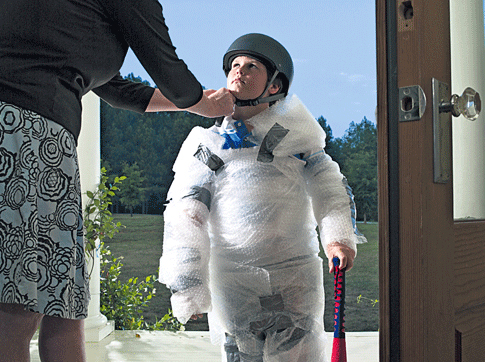
An article titled Classic kid’s games like kickball deemed unsafe by state in an effort to increase summer camp regulation had the greatest photograph so far this year. A mother sending a kid out to play with a helmet and wrapped in bubble wrap. The article described a new law aimed at getting day care centers to register in New York.
The summer camps were avoiding registration because they claimed they were day care centers. So the state made a list of risk recreational activities. If you allow the kids in your charge to play two games, one of which is on the list then you must register. The list of risk recreational games includes:
Freeze tag Wiffle Ball Kickball Red Rover Kickball Dodgeball Capture the Flag Steal the Bacon This is the hilarious part. Frisbee, tug of war and sack races are safe.
It makes Colorado’s problems with mountain boarding look minor.
Response
The overall effect is the state is saying we can do a better job of protecting your kids then you can, so you don’t have to. Instead of investigating whether the place you are dropping off your kid is well staffed, has a medical plan and is registered, we are doing that for you. Instead of finding out if the place is a disaster and a pit, we will do that for you.
Of course the state won’t, and kids will get hurt and parents will scream and the people who tried to get around the law will get away with the money.
See Classic kids games like kickball deemed unsafe by state in effort to increase summer camp regulation
What do you think? Leave a comment.
Copyright 2011 Recreation Law (720) Edit Law, Recreation.Law@Gmail.com
Twitter: RecreationLaw
Facebook: Rec.Law.Now
Facebook Page: Outdoor Recreation & Adventure Travel LawBlog: www.recreation-law.com
Keywords: #recreationlaw, #@recreationlaw, #cycling.law #fitness.law, #ski.law, #outside.law, #recreation.law, #recreation-law.com, #outdoor law, #recreation law, #outdoor recreation law, #adventure travel law, #law, #travel law, #Jim Moss, #James H. Moss, #attorney at law, #tourism, #adventure tourism, #rec-law, #rec-law blog, #recreation law, #recreation law blog, #risk management, #Human Powered, #human powered recreation,# cycling law, #bicycling law, #fitness law, #recreation-law.com, #backpacking, #hiking, #Mountaineering, #ice climbing, #rock climbing, #ropes course, #challenge course, #summer camp, #camps, #youth camps, #skiing, #ski areas, #negligence, #summer camp, #New York #NY, #kids, #games, #kickball, #summer, #day care, #,
Technorati Tags: laws,Personal,article,Classic,effort,regulation,helmet,York,registration,Freeze,Wiffle,Ball,Kickball,Rover,Dodgeball,Capture,Flag,Steal,Bacon,Frisbee,Colorado,mountain,Response,Instead,disaster,parents,money,Leave,Recreation,Edit,Gmail,Twitter,RecreationLaw,Facebook,Page,Outdoor,Adventure,Travel,Blog,Keywords,Moss,James,attorney,tourism,management,Human,youth,areas,negligence
Windows Live Tags: laws,Personal,article,Classic,effort,regulation,helmet,York,registration,Freeze,Wiffle,Ball,Kickball,Rover,Dodgeball,Capture,Flag,Steal,Bacon,Frisbee,Colorado,mountain,Response,Instead,disaster,parents,money,Leave,Recreation,Edit,Gmail,Twitter,RecreationLaw,Facebook,Page,Outdoor,Adventure,Travel,Blog,Keywords,Moss,James,attorney,tourism,management,Human,youth,areas,negligence
WordPress Tags: laws,Personal,article,Classic,effort,regulation,helmet,York,registration,Freeze,Wiffle,Ball,Kickball,Rover,Dodgeball,Capture,Flag,Steal,Bacon,Frisbee,Colorado,mountain,Response,Instead,disaster,parents,money,Leave,Recreation,Edit,Gmail,Twitter,RecreationLaw,Facebook,Page,Outdoor,Adventure,Travel,Blog,Keywords,Moss,James,attorney,tourism,management,Human,youth,areas,negligence
Blogger Labels: laws,Personal,article,Classic,effort,regulation,helmet,York,registration,Freeze,Wiffle,Ball,Kickball,Rover,Dodgeball,Capture,Flag,Steal,Bacon,Frisbee,Colorado,mountain,Response,Instead,disaster,parents,money,Leave,Recreation,Edit,Gmail,Twitter,RecreationLaw,Facebook,Page,Outdoor,Adventure,Travel,Blog,Keywords,Moss,James,attorney,tourism,management,Human,youth,areas,negligence -
Yeah! Tax credit for Adventure Tourism businesses
Tennessee has it going!
A bill is in the Tennessee legislature to give business a $4500 tax credit for each job created in the Adventure Tourism industry. The purpose of the bill is to encourage tourism in rural counties.
See Lawmakers want tax credits for ‘adventure tourism’
What do you think? Leave a comment.
Copyright 2010 Recreation Law (720) Edit Law, Recreation.Law@Gmail.com
Twitter: RecreationLaw
Facebook: Rec.Law.Now
Facebook Page: Outdoor Recreation & Adventure Travel LawBlog: www.recreation-law.com
Keywords: #recreationlaw, #@recreationlaw, #cycling.law #fitness.law, #ski.law, #outside.law, #recreation.law, #recreation-law.com, #outdoor law, #recreation law, #outdoor recreation law, #adventure travel law, #law, #travel law, #Jim Moss, #James H. Moss, #attorney at law, #tourism, #adventure tourism, #rec-law, #rec-law blog, #recreation law, #recreation law blog, #risk management, #Human Powered, #human powered recreation,# cycling law, #bicycling law, #fitness law, #recreation-law.com, #backpacking, #hiking, #Mountaineering, #ice climbing, #rock climbing, #ropes course, #challenge course, #summer camp, #camps, #youth camps, #skiing, #ski areas, #negligence, # Tennessee, #adventure, #tourism, #rural
Technorati Tags: Yeah,Adventure,Tourism,Tennessee,legislature,industry,purpose,counties,Lawmakers,Leave,Recreation,Edit,Gmail,Twitter,RecreationLaw,Facebook,Page,Outdoor,Travel,Blog,Keywords,Moss,James,attorney,management,Human,youth,areas,negligence
Windows Live Tags: Yeah,Adventure,Tourism,Tennessee,legislature,industry,purpose,counties,Lawmakers,Leave,Recreation,Edit,Gmail,Twitter,RecreationLaw,Facebook,Page,Outdoor,Travel,Blog,Keywords,Moss,James,attorney,management,Human,youth,areas,negligence
WordPress Tags: Yeah,Adventure,Tourism,Tennessee,legislature,industry,purpose,counties,Lawmakers,Leave,Recreation,Edit,Gmail,Twitter,RecreationLaw,Facebook,Page,Outdoor,Travel,Blog,Keywords,Moss,James,attorney,management,Human,youth,areas,negligence
Blogger Labels: Yeah,Adventure,Tourism,Tennessee,legislature,industry,purpose,counties,Lawmakers,Leave,Recreation,Edit,Gmail,Twitter,RecreationLaw,Facebook,Page,Outdoor,Travel,Blog,Keywords,Moss,James,attorney,management,Human,youth,areas,negligence -
Texas follows majority with appellate court decision holding a parent cannot sign away a minor’s right to sue.
Paz v. Life Time Fitness, Inc., et al., 2010 U.S. Dist. LEXIS 133058
Texas requires that a release be clear and conspicuous to anyone signing it. The release must inform the signor that they are giving up their legal rights.
The plaintiff, an injured child, was attending a summer day camp at a fitness center. She and her parents sued the fitness center for her injuries. The defendant filed a motion for summary judgment based on a participation agreement signed by the mother when she enrolled her daughter in the program. The participation agreement included a section entitled “Assumption of the Risk” and another section labeled “Release of Liability.”
The plaintiff’s sued for negligence, gross negligence and premises liability. Premises liability is a claim that the defendant failed to keep the premises (land or building or both) safe for the plaintiff. As the owner of land, each state sets for the requirements for what a landowner must do to keep his or her land safe for people coming upon their land. The amount of protection a person coming on the land deserves is also dependent upon their status when they enter the land and their relationship to the land owner.
The suit was brought in the Federal District Court. In the Federal Court System this is the trial court level. This level of courts, because it is in the Federal System publishes the opinions of the trial court. This is not done in most state court decisions. So in this case, we have an opinion by the trial court that is published.
The issue at the time was not one that had been decided by the Texas Supreme Court. The law of Texas applies to the parties in a Federal Court when the issue is a state issue between parties of two different states. (Confusing? I know.) The federal court system was set up to handle two major types of lawsuits; those against the federal government or concerning federal law and suits between parties of different states or countries. Here, there was no issue of federal law and neither of the parties were federal agencies so the case must be based on the parties being from different state. The case itself is silent on that issue.
Consequently the Federal Court was to decide a State Court legal issue. The court then looked at the Texas decisions and made its ruling on how the Federal Court thought the Texas Supreme Court would decide. This is really no different than how any legal decision is made; how will the court at the next level decide, it is just in this case the issue was discussed in the decision.
So? Summary of the case
The court discussed two major issues in making its decision. The first is Texas’ fair notice requirements for releases. The fair notice provision requires the person signing the release must know what they are signing. That means the release must be conspicuous. As the court stated, fair notice requires:
(1) a party seeking to enforce a release provision comply with the express negligence doctrine
(2) that the provision be conspicuous.
The first part requires part of the test requires the release must express the intent (to release or waive claims in advance of an injury) unambiguously. That means very clearly within the document the parties must be able to see that this is a release. The conspicuous part means that the release language must be so conspicuously written so that a reasonable person would notice it.
In short, you have to identify the document as a release and the release language must be pointed out and understandable. This requirement can be met if the person signing the document, the releaser knows they are signing a release.
The court then looked at whether Texas allowed a parent to sign away a minor’s right to sue and surmised that Texas would follow the majority and not allow a parent to sign away a minor’s right to sue.
So Now What?
This case is short and sweet and clearly outlines the requirements for a release under Texas law. The information contained here should be used by everyone writing a release because it is a very good format for making sure you prevent people from suing you if they are injured.
That means, you want to write a document that shows people when they sign it they can’t sue. That way, your release will not be tested in court. I always get a kick out of releases that when I read them I realize it is just waiting to be tested. The release language and the type of document are so hidden in the release or so obscure that there is no way that anyone would understand what they are signing.
Tell people in advance that they are signing a release. Make sure the release language in your document is clear and in the document in a way that any person reading the document can clearly and easily see they are signing a release.
Never give anyone a reason in your release to test it.
As far as minors in a program in Texas you are going to have to rely on the doctrine of assumption of the risk. You need to educate the parents and their children on the risks of the activity and do that in a way that you can prove to a jury that the child knew what they were doing was going to injure them. If they are too young to train and/or educate, then you must keep the children safe.
What do you think? Leave a comment.
Copyright 2011 Recreation Law (720) Edit Law, Recreation.Law@Gmail.com
Twitter: RecreationLaw
Facebook: Rec.Law.Now
Facebook Page: Outdoor Recreation & Adventure Travel LawBlog: www.recreation-law.com
Keywords: #recreationlaw, #@recreationlaw, #cycling.law #fitness.law, #ski.law, #outside.law, #recreation.law, #recreation-law.com, #outdoor law, #recreation law, #outdoor recreation law, #adventure travel law, #law, #travel law, #Jim Moss, #James H. Moss, #attorney at law, #tourism, #adventure tourism, #rec-law, #rec-law blog, #recreation law, #recreation law blog, #risk management, #Human Powered, #human powered recreation,# cycling law, #bicycling law, #fitness law, #recreation-law.com, #backpacking, #hiking, #Mountaineering, #ice climbing, #rock climbing, #ropes course, #challenge course, #summer camp, #camps, #youth camps, #skiing, #ski areas, #negligence, #Texas, #minor, #,
Technorati Tags: Texas,decision,Life,Time,Dist,LEXIS,plaintiff,parents,injuries,defendant,judgment,participation,agreement,daughter,Assumption,Risk,Release,negligence,premises,owner,requirements,landowner,protection,person,status,relationship,Federal,District,Court,System,opinions,decisions,opinion,Supreme,lawsuits,government,Here,agencies,State,Summary,provision,doctrine,injury,requirement,information,Tell,Make,minors,jury,Leave,Recreation,Edit,Gmail,Twitter,RecreationLaw,Facebook,Page,Outdoor,Adventure,Travel,Blog,Keywords,Moss,James,attorney,tourism,management,Human,youth,areas,upon
Windows Live Tags: Texas,decision,Life,Time,Dist,LEXIS,plaintiff,parents,injuries,defendant,judgment,participation,agreement,daughter,Assumption,Risk,Release,negligence,premises,owner,requirements,landowner,protection,person,status,relationship,Federal,District,Court,System,opinions,decisions,opinion,Supreme,lawsuits,government,Here,agencies,State,Summary,provision,doctrine,injury,requirement,information,Tell,Make,minors,jury,Leave,Recreation,Edit,Gmail,Twitter,RecreationLaw,Facebook,Page,Outdoor,Adventure,Travel,Blog,Keywords,Moss,James,attorney,tourism,management,Human,youth,areas,upon
WordPress Tags: Texas,decision,Life,Time,Dist,LEXIS,plaintiff,parents,injuries,defendant,judgment,participation,agreement,daughter,Assumption,Risk,Release,negligence,premises,owner,requirements,landowner,protection,person,status,relationship,Federal,District,Court,System,opinions,decisions,opinion,Supreme,lawsuits,government,Here,agencies,State,Summary,provision,doctrine,injury,requirement,information,Tell,Make,minors,jury,Leave,Recreation,Edit,Gmail,Twitter,RecreationLaw,Facebook,Page,Outdoor,Adventure,Travel,Blog,Keywords,Moss,James,attorney,tourism,management,Human,youth,areas,upon
Blogger Labels: Texas,decision,Life,Time,Dist,LEXIS,plaintiff,parents,injuries,defendant,judgment,participation,agreement,daughter,Assumption,Risk,Release,negligence,premises,owner,requirements,landowner,protection,person,status,relationship,Federal,District,Court,System,opinions,decisions,opinion,Supreme,lawsuits,government,Here,agencies,State,Summary,provision,doctrine,injury,requirement,information,Tell,Make,minors,jury,Leave,Recreation,Edit,Gmail,Twitter,RecreationLaw,Facebook,Page,Outdoor,Adventure,Travel,Blog,Keywords,Moss,James,attorney,tourism,management,Human,youth,areas,upon
-
Paz v. Life Time Fitness, Inc., et al., 2010 U.S. Dist. LEXIS 133058
Paz v. Life Time Fitness, Inc., et al., 2010 U.S. Dist. LEXIS 133058
Pablo Paz, et al., Plaintiffs, vs. Life Time Fitness, Inc., et al., Defendants.
CIVIL ACTION NO. H-09-2804
UNITED STATES DISTRICT COURT FOR THE SOUTHERN DISTRICT OF TEXAS, HOUSTON DIVISION
2010 U.S. Dist. LEXIS 133058
December 16, 2010, Decided
December 16, 2010, Filed
COUNSEL: [*1] For Pablo Paz, Individually and A/N/F of Jane Doe, Ruth Paz, Plaintiffs: Casey Michael Brown, Michael Stephen Callahan, LEAD ATTORNEYS, The Callahan Law Firm, Houston, TX.
For LIFE TIME FITNESS, INC., LTF CMBS I, L.L.C., LTF CLUB MANAGEMENT COMPANY, L.L.C., LTF CLUB OPERATIONS COMPANY, INC., GENE SMITH, Defendants: Marc A Sheiness, LEAD ATTORNEY, Sheiness Scott et al, Houston, TX.
For LTF CLUB OPERATIONS COMPANY, INC., LTF CMBS I, L.L.C., LIFE TIME FITNESS, INC., GENE SMITH, LTF CLUB MANAGEMENT COMPANY, L.L.C., LIFE TIME FITNESS, INC., GENE SMITH, LTF CLUB MANAGEMENT COMPANY, L.L.C., LTF CMBS I, L.L.C., LTF CLUB OPERATIONS COMPANY, INC., ThirdParty Plaintiffs: Marc A Sheiness, LEAD ATTORNEY, Sheiness Scott et al, Houston, TX.
JUDGES: Lee H. Rosenthal, United States District Judge.
OPINION BY: Lee H. Rosenthal
OPINION
MEMORANDUM AND OPINION
This is a personal injury suit brought by parents individually and on behalf of their minor daughter. The child was injured in June 2008 while attending a summer day camp at a fitness center in Sugarland, Texas. The defendants have moved for summary judgment on the basis of their affirmative defense of release. (Docket Entry No. 22). The defense is based on a “participation agreement” [*2] the mother signed when she enrolled the child in the program. The agreement includes one section labeled “ASSUMPTION OF RISK” and another labeled “RELEASE OF LIABILITY.” The defendants assert that the agreement is an enforceable preinjury waiver and move to dismiss the plaintiffs’ claims for premises liability, negligence, and gross negligence. The plaintiffs respond that under Texas law, a parent’s signature on a preinjury release is not enforceable as a waiver of the minor’s rights. Based on the pleadings, the motion and response, the parties’ submissions, and the applicable law, this court denies the summary judgment motion. The reasons are explained below.
I. The Participation Agreement
The Participation Agreement contained two sections with titles in bolded all capital letters labeled, “ASSUMPTION OF RISK” and “RELEASE OF LIABILITY,” which read in pertinent part:
ASSUMPTION OF RISK
The undersigned understands that there is an inherent risk of injury, whether caused by Participant or someone else, in the use of or presence at a Life Time Fitness center, the use of equipment and services at Life Time Fitness center, and participation in Life Time Fitness’ programs. This includes but [*3] is not limited to, indoor and outdoor pool areas with water slides, a climbing wall area, ball and racquet courts, cardiovascular, and resistance training equipment, personal training and nutrition classes and services, member programs, a child center, and spa and café products and services. The risk includes, but is not limited to:
1) Injuries arising from the use of any of Life Time Fitness’ centers or equipment, including any accidental or “slip and fall” injuries;
2) Injuries arising from participation in supervised or unsupervised activities and programs within a Life Time Fitness center or outside a Life Time Fitness center, to the extent sponsored or endorsed by Life Time Fitness;
3) Injuries or medical disorders, including, but not limited, to heart attacks, strokes, heart stress, sprains, broken bones and torn muscles or ligaments, resulting from my use of or presence at a Life Time Fitness center, Participant’s use of equipment or services at a Life Time Fitness center, or my participation in Life Fitness’ programs; and
4) Injuries resulting from the actions taken or decisions made regarding medical survival procedures.
The undersigned understands and voluntarily accepts this [*4] risk on behalf of Participant. The undersigned agrees to specifically assume all risk of loss, theft or damage of personal property for Participant while he or she is using or present at any Life Time Fitness center, using any lockers, equipment or services at any Life Time Fitness center or participating in Life Time Fitness’ programs whether such programs take place inside of or outside of a Life Time Fitness center.
RELEASE OF LIABILITY
The undersigned waives any and all actions that may arise against Life Time Fitness as well as its owners, directors, or volunteers, as a result of any such injury, loss, theft, or damage to any such person, including and without limitation, personal bodily or internal injury, economic loss or any damage to Participant including but not limited to the injuries described above, resulting from the negligence of Life Time Fitness or anyone else using a Life Time Fitness Center. The undersigned agrees to defend, indemnify, and hold Life Time Fitness harmless against any claims arising out of the negligence or willful acts or omissions of me or Participant.
The agreement also contained a clause in bold typeface above the signature line stating in part:
I [*5] hereby certify that I have read and understand this entire Agreement and agree to and accept the terms and conditions of this entire application . . . .
II. The Applicable Legal Standards
A. Summary Judgment
Summary judgment is appropriate if no genuine issue of material fact exists and the moving party is entitled to judgment as a matter of law. Fed. R. Civ. P. 56(c). “The movant bears the burden of identifying those portions of the record it believes demonstrate the absence of a genuine issue of material fact.” Triple Tee Golf, Inc. v. Nike, Inc., 485 F.3d 253, 261 (5th Cir. 2007) (citing Celotex Corp. v. Catrett, 477 U.S. 317, 322–25, 106 S. Ct. 2548, 91 L. Ed. 2d 265 (1986)).
If the burden of proof at trial lies with the nonmoving party, the movant may satisfy its initial burden by “‘showing’ — that is, pointing out to the district court — that there is an absence of evidence to support the nonmoving party’s case.” See Celotex, 477 U.S. at 325. While the party moving for summary judgment must demonstrate the absence of a genuine issue of material fact, it does not need to negate the elements of the nonmovant’s case. Boudreaux v. Swift Transp. Co., 402 F.3d 536, 540 (5th Cir. 2005) (citation omitted). “A fact is ‘material’ [*6] if its resolution in favor of one party might affect the outcome of the lawsuit under governing law.” Sossamon v. Lone Star State of Tex., 560 F.3d 316, 326 (5th Cir. 2009) (quotation omitted). “If the moving party fails to meet [its] initial burden, the motion [for summary judgment] must be denied, regardless of the nonmovant’s response.” United States v. $92,203.00 in U.S. Currency, 537 F.3d 504, 507 (5th Cir. 2008) (quoting Little v. Liquid Air Corp., 37 F.3d 1069, 1075 (5th Cir. 1994) (en banc)).
When the moving party has met its Rule 56(c) burden, the nonmoving party cannot survive a summary judgment motion by resting on the mere allegations of its pleadings. The nonmovant must identify specific evidence in the record and articulate how that evidence supports that party’s claim. Baranowski v. Hart, 486 F.3d 112, 119 (5th Cir. 2007). “This burden will not be satisfied by ‘some metaphysical doubt as to the material facts, by conclusory allegations, by unsubstantiated assertions, or by only a scintilla of evidence.’” Boudreaux, 402 F.3d at 540 (quoting Little, 37 F.3d at 1075). In deciding a summary judgment motion, the court draws all reasonable inferences in the light most favorable [*7] to the nonmoving party. Connors v. Graves, 538 F.3d 373, 376 (5th Cir. 2008).
B. Texas Law on Preinjury Releases
Texas imposes fair notice requirements on preinjury releases. See Dresser Indus., Inc. v. Page Petroleum, Inc., 853 S.W.2d 505, 508–09 (Tex. 1993). A release that fails to satisfy the state’s fair notice requirements is unenforceable as a matter of law. Storage & Processors, Inc. v. Reyes, 134 S.W.3d 190, 192 (Tex. 2004). Fair notice requires that (1) a party seeking to enforce a release provision comply with the express negligence doctrine and (2) that the provision be conspicuous. Id. The express negligence doctrine provides a party seeking to release potential claims against another party for the other party’s negligence must express that intent in unambiguous terms within the four corners of the agreement. Reyes, 134 S.W.3d at 192. The conspicuousness requirement provides that the releasing language must be conspicuously written so that a reasonable person against whom it is to operate should notice it. Id. at 192; Dresser, 853 S.W.2d at 508. Texas courts have consistently held that whether an agreement provides fair notice of a release provision is immaterial if the releaser [*8] had actual knowledge of the existence of the release provision. Dresser, 853 S.W.2d at 508 n.2; Cate v. Dover Corp., 790 S.W.2d 559, 561 (Tex. 1990) (a party who, before entering into contract, has actual knowledge of its terms cannot escape enforcement of those terms on the ground that the terms are inconspicuous); Coastal Transp. Co. v. Crown Cent. Petroleum Corp., 20 S.W.3d 119, 126 (Tex.App.–Houston [14th Dist.] 2000, pet. denied) (holding an indemnity agreement read by indemnitor conspicuous and rejecting indemnitor’s argument that the indemnitee must show that the indemnitor actually noticed the indemnity language when reading the agreement).
The plaintiffs rely on an additional aspect of the law governing preinjury releases. Texas and other courts have held that when a parent signs a document that releases a defendant of any liability for injuries suffered by a minor, that release is unenforceable on the basis of public policy.
The leading case in Texas appears to be Munoz v. II Jaz Inc., 863 S.W.2d 207 (Tex. App. — Houston [14th Dist.] 1993, no writ). In that case, the parents sued an amusement park for damages resulting from personal injuries their daughter incurred on a ride. [*9] The trial court granted summary judgment based on a “Waiver of Liability” form (“waiver”) signed by the child’s older sister who accompanied her to the park. The appellate court reversed, holding that § 12.04(7) of the Texas Family Code, (the predecessor to § 151.001(a)(7)), which empowers a parent to make legal decisions concerning their child, does not give parents the power to waive a child’s cause of action for personal injuries. The court stated that it based its decision “on what our supreme court has described as a ‘strong, long-standing policy of this state to protect the interests of its children.’” Id. at 210 (quoting Williams v. Patton, 821 S.W.2d 141, 145 (Tex. 1991) (holding that parents could not agree to reduce the amount of child support because it is a benefit of the child, not the custodial parent, based on a public policy to protect children)).
Other states and federal courts have also addressed the propriety of a parent or guardian’s execution of a preinjury release on behalf of a minor child. Most have held that preinjury releases executed by parents on behalf of minor children are unenforceable for participation in commercial activities. See, e.g., Johnson v. New River Scenic Whitewater Tours, Inc., 313 F. Supp. 2d 621, 629–32 (S.D. W.Va. 2004) [*10] (finding that a parent could not waive liability on behalf of a minor child and also could not indemnify a third party against the parent’s minor child for liability for conduct that violated a safety statute such as the Whitewater Responsibility Act); In re Complaint of Royal Caribbean Cruises Ltd., 459 F. Supp. 2d 1275, 1279–81 (S.D. Fla. 2006) (under Florida law, parent’s preinjury release of liability on behalf of minor child was unenforceable to exonerate the commercial lessor of personal watercraft from liability for injuries sustained by child in accident that occurred while the minor was a passenger on watercraft operated by the parent/lessee); Meyer v. Naperville Manner, Inc., 262 Ill. App. 3d 141, 146–47 199 Ill. Dec. 572, 634 N.E.2d 411 (1994) (finding a parental preinjury waiver unenforceable in a case involving a minor child injured after falling off a horse at a horseback riding school); Doyle v. Bowdoin Coll., 403 A.2d 1206, 1208 n.3 (Me. 1979) (stating in dicta that a parent cannot release a child’s cause of action); Smith v. YMCA of Benton Harbor/St. Joseph, 216 Mich. App. 552, 550 N.W.2d 262, 263 (1996) (“It is well settled in Michigan that, as a general rule, a parent [*11] has no authority, merely by virtue of being a parent, to waive, release, or compromise claims by or against the parent’s child.”); Hojnowski v. Vans Skate Park, 187 N.J. 323, 901 A.2d 381, 383 (2006) (finding in a case involving a child injured while skateboarding at a skate park facility, “a parent may not bind a minor child to a pre-injury release of a minor’s prospective tort claims resulting from the minor’s use of a commercial recreational facility”); Childress v. Madison County, 777 S.W.2d 1, 6–7 (Tenn. Ct. App.1989) (extending the law that a parent could not execute a preinjury release on behalf of a minor child to a mentally handicapped 20-year-old student who was injured while training for the Special Olympics at a YMCA swimming pool); Hawkins v. Peart, 2001 UT 94, 37 P.3d 1062, 1066 (Utah 2001) (concluding in a case involving a child injured by falling off a horse provided by a commercial business that “a parent does not have the authority to release a child’s claims before an injury”); Scott v. Pac. W. Mountain Resort, 119 Wash. 2d 484, 492–93, 834 P.2d 6 (1992) (holding that the enforcement of an exculpatory agreement signed by a parent on behalf of a minor child participating in a [*12] ski school is contrary to public policy).
There are cases enforcing preinjury releases executed by parents on behalf of minor children. Most of these cases involve a minor’s participation in school-run or community-sponsored activities. See, e.g., Hohe v. San Diego Unified Sch. Dist., 224 Cal. App. 3d 1559, 1564–65, 274 Cal. Rptr. 647 (Cal. Ct. App. 1990) (finding the preinjury release executed by a father on behalf of his minor child enforceable against any claims resulting from the child’s participation in a school-sponsored event); Sharon v. City of Newton, 437 Mass. 99, 112, 769 N.E.2d 738 (2002) (holding that a parent has the authority to bind a minor child to a waiver of liability as a condition of a child’s participation in public school extracurricular sports activities); Zivich v. Mentor Soccer Club, Inc., 82 Ohio St. 3d 367, 1998 Ohio 389, 696 N.E.2d 201, 205 (1998) (concluding that a parent may bind a minor child to a release of volunteers and sponsors of a nonprofit sports activity from liability for negligence because the threat of liability would strongly deter “many individuals from volunteering for nonprofit organizations”). As the Ohio Supreme Court explained in Zivich, in community [*13] and volunteer-run activities, the providers cannot afford to carry liability insurance because “volunteers offer their services without receiving any financial return.” 696 N.E.2d at 205.
III. Analysis
The parties have not cited a Texas Supreme Court case addressing the enforceability of a parent’s preinjury release of liability against a minor child. The guidance provided by the Texas appellate court case law and the underlying statutes provides a reliable basis for making an Erie prediction about how the highest Texas state court would rule if confronted with the question. “When making an Erie-guess in the absence of explicit guidance from the state courts, [this court] must attempt to predict state law, not to create or modify it.” Assoc. Inter. Ins. Co. v. Blythe, 286 F.3d 780, 783 (5th Cir. 2002) (citation omitted).
Based on the case law in Texas and in other jurisdictions, this court holds that the preinjury release executed by the minor’s mother in this case is not enforceable to release the defendants from all liability for the minor’s injuries. The record does not suggest that the defendants were operating a nonprofit community or school program. Under the majority approach, [*14] the release of a commercial enterprise from liability for the child’s injuries is not enforceable.
The motion for summary judgment is denied.
SIGNED on December 16, 2010, at Houston, Texas.
/s/ Lee H. Rosenthal
Lee H. Rosenthal
United States District Judge -
It’s time for my Annual Working vacation
Rowing a Grand Canyon River trip for OARS!
I’ll be disappearing from the communication and electronic community June 4 for 16 days. No doubt the Grand Canyon and Grand Canyon National Park are some of the most beautiful places on the earth. The work is hard however the people I work with and customers of OARS are the greatest in the world.
Consequently if you post a comment, it will be a while before it appears. I hate to do that, but it is amazing the amount of crap (spam) that gets posted if I do not moderate the comments.
As much as I’ll be having fun, I sometimes think that I enjoy the trip because I can’t be found, I don’t have a keyboard and there is no phone in my ear. J

My Office for the next 17 days!
What do you think? Don’t even think about Leaving a comment.
Copyright 2011 Recreation Law (720) Edit Law, Recreation.Law@Gmail.com
Twitter: RecreationLaw
Facebook: Rec.Law.Now
Facebook Page: Outdoor Recreation & Adventure Travel Law
Blog: http://www.recreation-law.comKeywords: #recreationlaw, #@recreationlaw, #cycling.law #fitness.law, #ski.law, #outside.law, #recreation.law, #recreation-law.com, #outdoor law, #recreation law, #outdoor recreation law, #adventure travel law, #law, #travel law, #Jim Moss, #James H. Moss, #attorney at law, #tourism, #adventure tourism, #rec-law, #rec-law blog, #recreation law, #recreation law blog, #risk management, #Human Powered, #human powered recreation,# cycling law, #bicycling law, #fitness law, #recreation-law.com, #backpacking, #hiking, #Mountaineering, #ice climbing, #rock climbing, #ropes course, #challenge course, #summer camp, #camps, #youth camps, #skiing, #ski areas, #negligence, #NPS, #Grand Canyon, #OARS, #whitewater, #rafting,
Technorati Tags: Annual,vacation,Grand,Canyon,River,OARS,communication,June,National,Park,earth,customers,spam,Office,Recreation,Edit,Gmail,Twitter,RecreationLaw,Facebook,Page,Outdoor,Adventure,Travel,Blog,Keywords,Moss,James,attorney,tourism,management,Human,youth,areas,negligence,whitewater
Windows Live Tags: Annual,vacation,Grand,Canyon,River,OARS,communication,June,National,Park,earth,customers,spam,Office,Recreation,Edit,Gmail,Twitter,RecreationLaw,Facebook,Page,Outdoor,Adventure,Travel,Blog,Keywords,Moss,James,attorney,tourism,management,Human,youth,areas,negligence,whitewater
WordPress Tags: Annual,vacation,Grand,Canyon,River,OARS,communication,June,National,Park,earth,customers,spam,Office,Recreation,Edit,Gmail,Twitter,RecreationLaw,Facebook,Page,Outdoor,Adventure,Travel,Blog,Keywords,Moss,James,attorney,tourism,management,Human,youth,areas,negligence,whitewater -
If you have an accident or injury you are closed down!
You beat the government bureaucrat, and they get mad and basically promise to get back at you.
Remember the article I wrote about the State of Colorado trying to tell a camp, they could not mountainboard? Supreme Court says if Parents OK it kids can do it, except in Colorado were bureaucrats know more than parents or the rest of us! Well, the state has gone ahead and allowed the camp to have mountainboarding with a few caveats.
First some history: The State of Colorado said mountainboarding was too dangerous of an activity for kids. The state used pictures of mountain boarding on its tourism website and promoted the activity to tourists, but it was too dangerous for kids.
Educo Leadership Adventures appealed against the ruling and got it overturned. The letter granting him the right to mountain board stated that he would lose that right if he had any injuries due to negligence or lack of supervision. If an injury occurs the permission would be withdrawn.
The entire letter is below.
Now, first of all, how is the state going to determine if something was unsupervised let alone negligent?
However, here is the kicker.
The bureaucrat responsible for this operation told my friend verbally that “if they had any accidents or injuries” the letter allowing mountainboarding would be revoked. That is a major difference from the letter. The letter says one thing, but you are verbally threatened with another. This act reminds me of the mob as portrayed in movies. You and the mobster are smiling for the camera, but there is a gun in the back of your head.
As Brian, of Educo said “That said, if that same logic applied to tag or basketball or even lanyards and kumbayah, no camp in the country would have any activity left to do!”
An angry bureaucrat wants to run your life and everyone else’s, so when they lose, they threaten you.
Response
It was always amazing how IRS audits would change when a tape recorder was on the table. Digital recorders are cheap and most smartphones have a recording feature. In many states only one person of the two on the phone has to know the call is being recorded. Several stores offer gadgets to allow your phone calls on land lines to be recorded.

When dealing with the state in this situation, record the conversations.
Scary when we have to resort to this type of activity, but this bureaucrat needs fired. The state’s position is in the letter. This article will document the bureaucrat’s actions and hopefully protect the camp.
I have to applaud the state for listening to Brian Sense and Educo Leadership Adventures and allowing mountain boarding. However, any good that has been accomplished is tainted by the petty acts of the bureaucrat involved.
I’m starting to sound like an anti-government person, even scares me.
So protect yourself from people who want to sue you and those who want to make you kids play in bubblewrap!
What do you think? Leave a comment.

Copyright 2011 Recreation Law (720) Edit Law, Recreation.Law@Gmail.com
Twitter: RecreationLaw
Facebook: Rec.Law.Now
Facebook Page: Outdoor Recreation & Adventure Travel LawBlog: www.recreation-law.com
Keywords: #recreationlaw, #@recreationlaw, #cycling.law #fitness.law, #ski.law, #outside.law, #recreation.law, #recreation-law.com, #outdoor law, #recreation law, #outdoor recreation law, #adventure travel law, #law, #travel law, #Jim Moss, #James H. Moss, #attorney at law, #tourism, #adventure tourism, #rec-law, #rec-law blog, #recreation law, #recreation law blog, #risk management, #Human Powered, #human powered recreation,# cycling law, #bicycling law, #fitness law, #recreation-law.com, #backpacking, #hiking, #Mountaineering, #ice climbing, #rock climbing, #ropes course, #challenge course, #summer camp, #camps, #youth camps, #skiing, #ski areas, #negligence, #mountainboarding, #mountain board, #camp, #summer camp, #Colorado, #Educo Leadership Adventures,
Technorati Tags: accident,injury,government,bureaucrat,Remember,article,State,Colorado,Supreme,Court,Parents,bureaucrats,caveats,history,mountain,tourism,tourists,Educo,Leadership,Adventures,letter,injuries,negligence,supervision,permission,friend,accidents,difference,movies,mobster,Brian,logic,lanyards,life,Response,recorder,Digital,recorders,person,Several,gadgets,situation,conversations,Scary,resort,Sense,Leave,Recreation,Edit,Gmail,Twitter,RecreationLaw,Facebook,Page,Outdoor,Adventure,Travel,Blog,Keywords,Moss,James,attorney,management,Human,youth,areas
Windows Live Tags: accident,injury,government,bureaucrat,Remember,article,State,Colorado,Supreme,Court,Parents,bureaucrats,caveats,history,mountain,tourism,tourists,Educo,Leadership,Adventures,letter,injuries,negligence,supervision,permission,friend,accidents,difference,movies,mobster,Brian,logic,lanyards,life,Response,recorder,Digital,recorders,person,Several,gadgets,situation,conversations,Scary,resort,Sense,Leave,Recreation,Edit,Gmail,Twitter,RecreationLaw,Facebook,Page,Outdoor,Adventure,Travel,Blog,Keywords,Moss,James,attorney,management,Human,youth,areas
WordPress Tags: accident,injury,government,bureaucrat,Remember,article,State,Colorado,Supreme,Court,Parents,bureaucrats,caveats,history,mountain,tourism,tourists,Educo,Leadership,Adventures,letter,injuries,negligence,supervision,permission,friend,accidents,difference,movies,mobster,Brian,logic,lanyards,life,Response,recorder,Digital,recorders,person,Several,gadgets,situation,conversations,Scary,resort,Sense,Leave,Recreation,Edit,Gmail,Twitter,RecreationLaw,Facebook,Page,Outdoor,Adventure,Travel,Blog,Keywords,Moss,James,attorney,management,Human,youth,areas
Blogger Labels: accident,injury,government,bureaucrat,Remember,article,State,Colorado,Supreme,Court,Parents,bureaucrats,caveats,history,mountain,tourism,tourists,Educo,Leadership,Adventures,letter,injuries,negligence,supervision,permission,friend,accidents,difference,movies,mobster,Brian,logic,lanyards,life,Response,recorder,Digital,recorders,person,Several,gadgets,situation,conversations,Scary,resort,Sense,Leave,Recreation,Edit,Gmail,Twitter,RecreationLaw,Facebook,Page,Outdoor,Adventure,Travel,Blog,Keywords,Moss,James,attorney,management,Human,youth,areas -
Letter to the Editor Bicycling Magazine
 April 6, 2011
Bicycling
400 S. Tenth St.
Emmaus, PA 18098Via Email: bicycling@rodale.com
Re: Signing Your Life Away?, page 35
Volume LII Number 4, May 2011Dear Mr. Flax:
I thought I should clarify some of the statements in your article Signing Your Life Away? (May 2011 issue of Bicycling Magazine).
Three states do not allow anyone to use a release; Louisiana,[i] Montana[ii] and Virginia.[iii] [iv] Several states limit how and when a release can be used; Arizona[v], New Mexico[vi] and West Virginia[vii], Hawaii[viii], New York[ix]. There are three states where the use of a release is very restricted or unknown; Connecticut, Wisconsin and Vermont. At present, no states that restrict the use of a release do so for cycling events except, perhaps, New York.
Your article did have one inaccuracy. Ten states allow a parent to sign away a minor’s right to sue;[x] Alaska[xi], Arizona[xii], Colorado[xiii], Florida[xiv], California, Massachusetts[xv], North Dakota[xvi], Ohio[xvii] and possibly Wisconsin[xviii]. At present, more than twenty states have not ruled on whether a parent can sign away a minor’s right to sue. In those states that have ruled that a parent cannot sign away a minor’s right to sue there still maybe the option to compel the minor and the parent to binding arbitration of the claims. This may reduce the overall recovery of the claimant.
In these courts and the rest of the states releases are worth their weight in gold. A release is an agreement that states in advance you will be responsible for your injuries. If you are worried about signing a release to enter an event or race, instead of rolling the dice to see if the release may be thrown out of court, purchase adequate health, life or disability insurance. This is probably a good idea for any cyclists riding on the streets.
Your readership needs to know that a release will more than likely stop their lawsuit for any injuries, so they can be prepared for that in advance rather than hoping they can win, not knowing their chances are slim.The one thing that a cyclist may want to investigate, (read) in a release is whether or not they are protected from a lawsuit by another injured rider. Either the term co-participant or other participants (riders, cyclists, etc.) should be in the release as a person protected by the release or the rider may be sued for the injuries of another participant. Negligence of a race or event organizer is difficult to prove and most riders are unsuccessful. Proving negligence of another ride has been proven quite easily. A rider’s condo, apartment or homeowner’s insurance is the company that will step up to defend if a cyclist is sued.
Sincerely,
James H. Moss, JD
a member of The Spokesmen Cycling Podcast
[i] C.C. Art. 2004 (2005)
[ii] MCA § 27-1-701
[iii] Johnson’s Adm’x v. Richmond and Danville R.R. Co., 86 Va. 975, 11 S.E. 829 (1890)
[iv] States that do not Support the Use of a Release
[v] Phelps v. Firebird Raceway, Inc., 2005 Ariz. LEXIS 53
[vi] Berlangieri v. Running Elk Corporation, 132 N.M. 332;2002 NMCA 60;48
P.3d 70;2002 N.M. App. 39;41 N.M. St. B. Bull. 25
[vii] Kyriazis v. University of West Virginia; 192 W. Va. 60; 450 S.E.2d 649;
1994 W. Va. LEXIS 161
[viii] King v. CJM Country Stables, 315 F. Supp. 2d 1061, 2004 U.S. Dist. LEXIS 7511 (D. Haw. 2004)
[ix] General Obligation Law § 5-326
[x] States that allow a parent to sign away a minor’s right to sue
[xi] Alaska: Sec. 09.65.292
[xii] ARS § 12-553
[xiii] C.R.S. §§13-22-107
[xiv] Florida Statute § 744.301 (3)
[xv] Sharon v. City of Newton, 437 Mass. 99; 769 N.E.2d 738; 2002 Mass. LEXIS 384
[xvi] McPhail v. Bismarck Park District, 2003 ND 4; 655 N.W.2d 411; 2003 N.D. LEXIS 3
[xvii] Zivich v. Mentor Soccer Club, Inc., 696 N.E.2d 201, 82 Ohio St.3d 367 (1998)
[xviii] Osborn v. Cascade Mountain, Inc., 655 N.W.2d 546, 259 Wis. 2d 481, 2002 Wisc. App. LEXIS 1216, 2003 WI App 1What do you think? Leave a comment.
Copyright 2010 Recreation Law (720) Edit Law, Recreation.Law@Gmail.com
Twitter: RecreationLaw
Facebook: Rec.Law.Now
Facebook Page: Outdoor Recreation & Adventure Travel LawBlog: www.recreation-law.com
Keywords: #recreationlaw, #@recreationlaw, #cycling.law #fitness.law, #ski.law, #outside.law, #recreation.law, #recreation-law.com, #outdoor law, #recreation law, #outdoor recreation law, #adventure travel law, #law, #travel law, #Jim Moss, #James H. Moss, #attorney at law, #tourism, #adventure tourism, #rec-law, #rec-law blog, #recreation law, #recreation law blog, #risk management, #Human Powered, #human powered recreation,# cycling law, #bicycling law, #fitness law, #recreation-law.com, #backpacking, #hiking, #Mountaineering, #ice climbing, #rock climbing, #ropes course, #challenge course, #summer camp, #camps, #youth camps, #skiing, #ski areas, #negligence, #,
Technorati Tags: Letter,Editor,Magazine,April,Tenth,Emmaus,Email,Life,Away,Volume,Number,Dear,Flax,statements,article,Three,Louisiana,Montana,Virginia,Several,Arizona,Mexico,West,Hawaii,York,Connecticut,Wisconsin,Vermont,events,inaccuracy,Alaska,Colorado,Florida,California,Massachusetts,North,Dakota,Ohio,option,arbitration,recovery,claimant,worth,agreement,injuries,event,health,insurance,streets,readership,lawsuit,rider,Either,participant,participants,riders,person,Negligence,organizer,apartment,homeowner,James,Moss,member,Spokesmen,Podcast,Johnson,Richmond,Danville,States,Support,Release,Phelps,Firebird,Raceway,Ariz,LEXIS,Berlangieri,Corporation,NMCA,Bull,Kyriazis,Country,Stables,Supp,Dist,General,Obligation,Statute,Sharon,Newton,Mass,McPhail,Bismarck,Park,District,Zivich,Mentor,Soccer,Club,Osborn,Cascade,Mountain,Wisc,Leave,Recreation,Edit,Gmail,Twitter,RecreationLaw,Facebook,Page,Outdoor,Adventure,Travel,Blog,Keywords,attorney,tourism,management,Human,youth,areas,viii,xiii,xvii,xviii,whether,cyclists,cyclist
Windows Live Tags: Letter,Editor,Magazine,April,Tenth,Emmaus,Email,Life,Away,Volume,Number,Dear,Flax,statements,article,Three,Louisiana,Montana,Virginia,Several,Arizona,Mexico,West,Hawaii,York,Connecticut,Wisconsin,Vermont,events,inaccuracy,Alaska,Colorado,Florida,California,Massachusetts,North,Dakota,Ohio,option,arbitration,recovery,claimant,worth,agreement,injuries,event,health,insurance,streets,readership,lawsuit,rider,Either,participant,participants,riders,person,Negligence,organizer,apartment,homeowner,James,Moss,member,Spokesmen,Podcast,Johnson,Richmond,Danville,States,Support,Release,Phelps,Firebird,Raceway,Ariz,LEXIS,Berlangieri,Corporation,NMCA,Bull,Kyriazis,Country,Stables,Supp,Dist,General,Obligation,Statute,Sharon,Newton,Mass,McPhail,Bismarck,Park,District,Zivich,Mentor,Soccer,Club,Osborn,Cascade,Mountain,Wisc,Leave,Recreation,Edit,Gmail,Twitter,RecreationLaw,Facebook,Page,Outdoor,Adventure,Travel,Blog,Keywords,attorney,tourism,management,Human,youth,areas,Technorati,Tags,viii,xiii,xvii,xviii,whether,cyclists,cyclist
WordPress Tags: Letter,Editor,Magazine,April,Tenth,Emmaus,Email,Life,Away,Volume,Number,Dear,Flax,statements,article,Three,Louisiana,Montana,Virginia,Several,Arizona,Mexico,West,Hawaii,York,Connecticut,Wisconsin,Vermont,events,inaccuracy,Alaska,Colorado,Florida,California,Massachusetts,North,Dakota,Ohio,option,arbitration,recovery,claimant,worth,agreement,injuries,event,health,insurance,streets,readership,lawsuit,rider,Either,participant,participants,riders,person,Negligence,organizer,apartment,homeowner,James,Moss,member,Spokesmen,Podcast,Johnson,Richmond,Danville,States,Support,Release,Phelps,Firebird,Raceway,Ariz,LEXIS,Berlangieri,Corporation,NMCA,Bull,Kyriazis,Country,Stables,Supp,Dist,General,Obligation,Statute,Sharon,Newton,Mass,McPhail,Bismarck,Park,District,Zivich,Mentor,Soccer,Club,Osborn,Cascade,Mountain,Wisc,Leave,Recreation,Edit,Gmail,Twitter,RecreationLaw,Facebook,Page,Outdoor,Adventure,Travel,Blog,Keywords,attorney,tourism,management,Human,youth,areas,Technorati,Tags,Windows,Live,viii,xiii,xvii,xviii,whether,cyclists,cyclist -
A specific statute, a badly written release and an equine liability statute sink instructors and business in horse riding accident.
Powers v. Mukpo et al., 12 Mass. L. Rep. 517; 2000 Mass. Super. LEXIS 566
This case could have been easily beaten if just one of the arguments could have been won. Rely on a Good Release not a bad statute!
This is a very confusing decision with the court first throwing out defenses, then allowing them then throwing them out again.
In Powers v. Mukpo et al., the plaintiff sued everyone involved in his accident. The parties and their relationship create a complicated case to understand the facts. The decision covers every aspect of the case from start to finish and creates a very confusing decision. I’ll start by explaining the parties and the facts of the case and then get into the legal discussion.
Parties
The Plaintiff Powers took horseback riding lessons from Windhorse Dressage Academy. Windhorse was using property and the accident took place on property known as Woodlock Farm. Windhorse was owned by Mukpo. Whitman was the instructor teaching Powers who was employed by Windhorse. Woodlock is owned by DeCicco’s.
DeCicco’s were dismissed from the suit by an earlier motion for summary judgment.
Facts
The plaintiff, a novice rider, was hurt when the horse he was riding reared and fell over on him. This had occurred once before and Mukpo knew of that incident. Supposedly this had something to do with arthritis the horse had.
Massachusetts has a statute ALM GL ch. 128, § 2B Operation of Riding Schools and of Certain Stables Licensed and Regulated. That requires all riding schools and instructors to be licensed. Whitman, Mukpo and Windhorse were not licensed at the time of the accident.
Summary of the legal arguments.
Release
The first issue the court addressed was the release. The release only referenced “Woodlock Farm, its instructors, and agents.” Based on this language, the court held that only Mukpo could be protected by the release. Mukpo was an agent of Woodlock in this case. Whitman and Windhorse were not covered in the release.
Under Massachusetts law, a release is void if the defendant fails to follow the statute affected by the release. Basically this is similar to a negligence per se argument. If you don’t follow the law, you can’t avail yourself of the defenses that may be available. Whitman was excluded from the benefit of the release, if she had been protected by the release. (Why this argument was necessary I’ve not determined. However it does lead to good educational information.)
Al although Whitman was not protected by the release because she was not a named party covered in the release, she was also not protected by the release because she had violated a state statute affecting her profession.
In other words, since Whitman’s professional judgment was involved, and because regulations are generally tailored to ensure that decisions such as this are made only by qualified instructors, Whitman’s violation of her statutory duty precludes enforcement of the release to shield her from liability.
Mukpo, Whitman and Windhorse did not have a release. They relied upon the release created by the owner of the stable and land, Woodlock. Because the language of the release was not broad enough and because Windhorse was operating on the land under a contract Windhorse was not an agent of Woodlock. Mukpo and Whitman where employees of Windhorse so thus they could not be agents or employees of Woodlock also. So now, under a different argument, none of the defendants in this motion could be protected by the release.
The court then stated, Whitman could be considered an agent of Woodlock, however because she was not licensed, she could not be protected by the release.
Equine Statute
The court finally looked at whether the Massachusetts Equine Statute provided protection to any of the defendants. G.L.c. 128, § 2D(b) Equine Activities; Sponsors; Liability; Required Warnings; Definitions. The court stated the statute protected equine professional from suits over injuries resulting from the inherent risks of equine activity.
However, the statute also has a section that excludes protection if the equine professional did not determine if the ability of the student was sufficient to ride the horse involved. The statute required the instructors to determine if the student’s skills matched the horse. Here the court found the defendants had not done their diligence, had not met the statute. The relevant statute section states:
Nothing in subsection (b) shall prevent or limit the liability of an equine activity sponsor, an equine professional, or any other person if the equine activity sponsor, equine professional, or person:
…..
(ii) provided the equine and failed to make reasonable and prudent efforts to determine the ability of the participant to engage safely in the equine activity, and determine the ability of the participant to safely manage the particular equine based on the participant’s representations of his ability;The plaintiff was a beginning or novice rider and the horse had a known propensity to rear. The earlier time the horse had reared an experienced rider had been able to jump off the horse and avoid being crushed by the horse when it fell over backwards. Here the rider was a beginner without the necessary experience to know what to do or how to escape from the situation.
Because the defendants had not met the requirements of the Massachusetts Equine Liability Act they could not be protected by the act.
The court held that the defendants’ motion for summary judgment was denied.
So Now What?
This case is very confusing to read, however it does provide some insight, most of which I’ve covered several times in the past.
1. Equine liability Acts have very limited value. No matter how they are written the acts of the horse can always be attributed to the acts of a human and a lawsuit can be made by an injured plaintiff. In this case, the defendants failed to meet the requirements of the act.
I’ve said it several times before. Equine Liability Acts are 100% effective; no horse had been sued since they were enacted. However suits against horse owners and trainers, stables and riding schools are still going up.
2. No matter who you are, make sure you are covered by a release. Make sure when you go to work for someone that very specifically in the release you or your class of people are protected. Make sure that if you are part of a class of people that your class is directly named in the release also.
By class I mean if you are an employee; make sure the release says your employers name and all employees. If you are an independent contractor the release must name the person who has hired you and contractors and/or agents.
3. Have your release written by a professional. This release might have been, however it was written for people who had very little to do the lawsuit and could not be used to protect them. The release protected the people named in the release.
Hire an attorney who understands your operation the risks of your operation and what needs to be covered and protected. If Mukpo or Windhorse had hired a knowledgeable attorney to review this release she would have known to be licensed and would have a release that protects her and her employees.4. Never ever, never, ever, never ever violate a statute. Never violate a statute that was designed to cover you or protect the people you work with.
In Short.
A. Buy a good insurance policy that will protect you and your employees and any agents or contractors you hire.
B. Make sure you meet or surpass any state laws.
C. Have a professional release written to protect you and your employees.
D. Make sure you understand the laws of the state you operate in so that understand what you can and cannot do.
E. Never rely on Equine Statutes.What do you think? Leave a comment.
Copyright 2011 Recreation Law (720) Edit Law, Recreation.Law@Gmail.com
Twitter: RecreationLaw
Facebook: Rec.Law.Now
Facebook Page: Outdoor Recreation & Adventure Travel Law
Blog: www.recreation-law.com
Keywords: #recreationlaw, #@recreationlaw, #cycling.law #fitness.law, #ski.law, #outside.law, #recreation.law, #recreation-law.com, #outdoor law, #recreation law, #outdoor recreation law, #adventure travel law, #law, #travel law, #Jim Moss, #James H. Moss, #attorney at law, #tourism, #adventure tourism, #rec-law, #rec-law blog, #recreation law, #recreation law blog, #risk management, #Human Powered, #human powered recreation,# cycling law, #bicycling law, #fitness law, #recreation-law.com, #backpacking, #hiking, #Mountaineering, #ice climbing, #rock climbing, #ropes course, #challenge course, #summer camp, #camps, #youth camps, #skiing, #ski areas, #negligence, #equine, #stable, #horse, #Massachusetts, #Statute, #rear,del.icio.us Tags: #recreationlaw,#@recreationlaw,#cycling.law #fitness.law,#ski.law,#outside.law,#recreation.law,#recreation-law.com,#outdoor law,#recreation law,#outdoor recreation law,#adventure travel law,#law,#travel law,#Jim Moss,#James H. Moss,#attorney at law,#tourism,#adventure tourism,#rec-law,#rec-law blog,#recreation law blog,#risk management,#Human Powered,#human powered recreation,# cycling law,#bicycling law,#fitness law,#backpacking,#hiking,#Mountaineering,#ice climbing,#rock climbing,#ropes course,#challenge course,#summer camp,#camps,#youth camps,#skiing,#ski areas,#negligence,#equine,#stable,#horse,#Massachusetts,#Statute,#rearTechnorati Tags: #recreationlaw,#@recreationlaw,#cycling.law #fitness.law,#ski.law,#outside.law,#recreation.law,#recreation-law.com,#outdoor law,#recreation law,#outdoor recreation law,#adventure travel law,#law,#travel law,#Jim Moss,#James H. Moss,#attorney at law,#tourism,#adventure tourism,#rec-law,#rec-law blog,#recreation law blog,#risk management,#Human Powered,#human powered recreation,# cycling law,#bicycling law,#fitness law,#backpacking,#hiking,#Mountaineering,#ice climbing,#rock climbing,#ropes course,#challenge course,#summer camp,#camps,#youth camps,#skiing,#ski areas,#negligence,#equine,#stable,#horse,#Massachusetts,#Statute,#rear -
Powers v. Mukpo et al., 12 Mass. L. Rep. 517; 2000 Mass. Super. LEXIS 566
Powers v. Mukpo et al., 12 Mass. L. Rep. 517; 2000 Mass. Super. LEXIS 566
Robert Douglas Powers v. Diana Mukpo et al. 1
1 Juanita Whitman, Arlyn Lampie DeCicco, and Alfred DeCicco. The DeCiccos, however, are no longer parties to this suit; summary judgment was allowed in their favor last year. See Powers v. Mukpo, Memorandum of Decision and Order on Defendants’ Motion for Summary Judgment, (Botsford, J.) September 22, 1999 [10 Mass. L. Rptr. 535].
97-4891
SUPERIOR COURT OF MASSACHUSETTS, AT MIDDLESEX
12 Mass. L. Rep. 517; 2000 Mass. Super. LEXIS 566
September 29, 2000, Decided
October 2, 2000, Filed
DISPOSITION: [*1] Defendants’ motion for summary judgment DENIED.
JUDGES: Julian T. Houston, Justice of the Superior Court.
OPINION BY: Julian T. Houston
OPINION
MEMORANDUM OF DECISION AND ORDER ON DEFENDANTS’ MOTION FOR SUMMARY JUDGMENT
This action concerns personal injuries sustained by the plaintiff, Robert Douglas Powers (“Powers”), when the horse he was riding reared and fell backwards on top of him. At the time, Powers was receiving horseback riding lessons from Windhorse Dressage Academy (“WDA”) on a property in Sherborn, Massachusetts known as Woodlock Farm. Powers has brought negligence claims against Juanita Whitman (“Whitman”), a former WDA instructor, and Diana Mukpo (“Mukpo”), owner of the WDA. On June 8, 2000, the defendants filed a motion for summary judgment pursuant to Mass.R.Civ.P. 56, contending that they are shielded from liability because Powers signed a release, and because they are protected by G.L.c. 128, § 2D (1991 ed. & Supp. 2000), the Massachusetts Equine Statute. For the reasons set forth below, the defendants’ motion for summary judgment is DENIED.
BACKGROUND
The summary judgment record reveals the following facts; any factual disputes that exist have been resolved in the [*2] light most favorable to Powers. The WDA is a business involved in training dressage horses, teaching horseback riding, and importing horses for sale in the United States. At all times relevant to this case, WDA was located at Woodlock Farm, a fifteen-acre property in Sherborn, Massachusetts that is owned by Arlyn and Alfred DeCicco. On the property is a large horse barn with thirty stalls, an indoor riding arena, two outdoor arenas, fifteen turn-out paddocks, and a residence where the DeCiccos live. The DeCiccos operate a licensed riding school at Woodlock Farm, and lease portions of the barn to persons who conduct their own horse-related businesses from the space they lease; WDA was one of those businesses.
WDA and the DeCiccos entered into a written lease agreement on or about May 1, 1996. The agreement provides for the lease of individual stalls by WDA for $ 500 per month per stall; the fee covers bedding, shavings, hay, grain, and the use of paddocks. Under the lease, however, WDA is responsible for maintenance of the stalls and care of the horses boarding in them. The lease states that Woodlock Farm will make available “arena time” and indoor as well as outdoor areas to accommodate [*3] the lesson and training requirements of the WDA, but goes on to state that Woodlock Farm “shall not charge WDA teachers a percentage of income from lessons or training.” Thus, aside from sharing the same location, Woodlock Farm and the WDA riding schools operate completely independently of each other.
In 1996, the riding school operated by the DeCiccos was licensed by the Commonwealth, as were the riding instructors they employed. WDA, however, at least as of September 1996, was not licensed as a riding school, and neither Whitman nor Mukpo were licensed as a riding teachers. Whitman and Mukpo did not become licensed until the spring of 1997.
The horse involved in this incident, Take-A-Chance, was originally brought to Woodlock Farm by his owner, Rachel Williams, in or about August or September 1996. Williams made an arrangement with Mukpo and Whitman pursuant to which they would stable the horse at Woodlock Farm, Whitman would give riding lessons to Williams, and Whitman and Mukpo could use the horse for instructional purposes with other students.
Take-A-Chance had thrown a rider on at least one prior occasion. On July 28, 1996, while Take-A-Chance was being ridden by an experienced [*4] riding instructor, the horse reared up sharply on his hind legs and fell over backwards. Fortunately, the instructor’s horsemanship skills enabled her to jump off safely before the horse landed on top of her. Mukpo learned of the mishap shortly afterwards.
Several veterinary examinations of the horse conducted since 1995 revealed that the horse had arthritis in both hocks–joints in the animal’s hind legs that correspond loosely to the human ankle. The condition caused stiffness, pain, and lameness in the horse. The horse was treated periodically for the condition with injections. In August 1996, Whitman suggested a hock injection might be in order because she believed the horse was experiencing pain and stiffness. On September 12, 1996, a veterinary examination revealed lameness on the horse’s right side. As a result, a veterinarian injected the horse’s right hock and prescribed anti-inflammatory medication for stiffness.
Beginning in June or July 1996, Powers, a novice, began taking horseback riding lessons from Whitman. Powers paid Whitman directly for the lessons. Powers separately paid Mukpo for the lease of the horse used in his lessons; the lease cost was $ 630 per month.
[*5] On June 22, 1996, Powers signed a release in connection with his receiving instruction at Woodlock Farm. The form Powers signed bore a logo of Woodlock Farm and referenced only Woodlock Farm in its text. The form states in relevant part as follows:
RELEASE FORM
PLEASE READ THIS DOCUMENT CAREFULLY AND DO NOT SIGN IT UNLESS YOU FULLY UNDERSTAND IT.
Student’s Name
I recognize the inherent risks of injury involved in horseback riding generally and in learning to ride in particular. In taking lessons at Woodlock Farm, I assume any such risk of injury and further, I voluntarily release Woodlock Farm, its instructors, and agents from any responsibility on account of any injury I or my child or ward may sustain while receiving instruction or while riding in connection therewith, and I agree to indemnify and hold harmless Woodlock Farm, its instructors, and agents on account of any such claim.
-WARNING-
Under Massachusetts Law, an equine professional is not liable for an injury to, or the death of, a participant in equine activities resulting from the inherent risks of equine activities, pursuant to Chapter 128, [*6] Section 2D of the General Laws.
Student Date
Powers printed his name on the top line of the release form after “Student’s Name,” and signed the release on the bottom line after “Student.” On the copy of the release form in the summary judgment record, the initials “WDA” and “JW” have been handwritten near the top of the form. Powers testified in his deposition that he did not know if these initials were on the form at the time he signed it.
On September 20, 1996, Powers came to Woodlock Farm for a riding lesson with Whitman. At Whitman’s direction, he mounted Take-A-Chance. Moments after Powers mounted, the horse reared on his hind legs and fell back on top of Powers, causing him very serious hip and back injuries.
DISCUSSION
[HN1] Summary judgment is appropriate when no material facts are in dispute and the moving party is entitled to judgment as a matter of law. Mass.R.Civ.P. 56(c); Highlands Ins. Co. v. Aerovox Inc., 424 Mass. 226, 232, 676 N.E.2d 801 (1997). [HN2] A moving party which does not bear the burden of proof at trial is entitled to summary judgment if it submits affirmative evidence, unmet by countervailing [*7] materials, that either negates an essential element of the nonmoving party’s case or demonstrates that the nonmoving party has no reasonable expectation of proving an essential element of its case. See Kourouvacilis v. General Motors Corp., 410 Mass. 706, 716, 575 N.E.2d 734 (1991).
The court first turns its attention to the validity of the release in light of Whitman and Mukpo’s failure to obtain licenses. Concluding that only Mukpo may benefit from the release, the court then considers Mukpo’s claim that she is shielded from liability under its terms. Determining that the release language does not protect Mukpo, the court next considers Whitman’s and Mukpo’s claim of immunity under the Massachusetts Equine Statute, finally concluding that a genuine factual issue exists requiring the denial of Whitman’s and Mukpo’s motion for summary judgment.
I. Enforceability of the Release Against Unlicensed Instructors
A. Juanita Whitman
Since Whitman did not obtain a license to give horseback riding lessons, she cannot benefit from the release signed by Powers. [HN3] “No person shall hold himself out to be a horse riding instructor for hire without being licensed for [*8] such purpose by the commissioner.” G.L.c. 128, § 2D (1991). [HN4] A release may not shield a defendant from liability where the defendant has violated a statutory duty to obtain a license. See Henry v. Mansfield Beauty Academy, Inc., 353 Mass. 507, 511, 233 N.E.2d 22 (1968). In Henry, the plaintiff, who had signed a release form, sustained injuries when receiving services at a beauty school. Henry, 353 Mass. at 510. The Supreme Judicial Court ruled that the beauty school lost the protection of the release due to its violation of a statute requiring the registration of all students. Id. at 511.
Whitman contends, however, that she is an experienced instructor who has worked for many years outside of Massachusetts. Whitman contends, in essence, that her failure to obtain a license does not causally relate to Power’s injury; that he would have been injured whether or not she had obtained a license. Whitman cites to Vallone v. Donna, 49 Mass. App. Ct. 330, 729 N.E.2d 648 (2000), to support her position. However, Vallone is inapposite as applied to Whitman. In Vallone, an ice skater who signed a release sustained injuries [*9] in a fall caused by a soft spot in the ice of a skating rink. 729 N.E.2d at 650. The skater sued the rink owners and claimed that the release was invalid because the owners had violated a state building code. 729 N.E.2d at 649. The Appeals Court, nonetheless, ruled that since the code in question did not relate to the maintenance of the surface of the skating rink, the release was enforceable. 729 N.E.2d at 650. The Appeals Court held that [HN5] “violation . . . of a regulation is relevant to the question of negligence only if the risk that materialized was within the contemplation of the regulation.” Id. (quoting Matteo v. Livingstone, 40 Mass. App. Ct. 658, 661, 666 N.E.2d 1309 (1996)).
In this case, the risk that materialized was Powers’ injury after being thrown from a horse during a lesson conducted by Whitman. Whitman made a decision to put Powers on Take-A-Chance knowing the horse suffered from a painful medical condition. Since licensing regulations contemplate, inter alia, that the public receive safe and competent riding instruction, 2 under the reasoning in Henry and Vallone, Whitman cannot claim the protection of the release; the risk that materialized [*10] was within the contemplation of licensing regulations. In other words, since Whitman’s professional judgment was involved, and because regulations are generally tailored to ensure that decisions such as this are made only by qualified instructors, Whitman’s violation of her statutory duty precludes enforcement of the release to shield her from liability.
2 State licensing requirements for instructors in effect in 1996 clearly contemplated protecting the public. Massachusetts regulations required applicants to furnish three references who can attest to the knowledge and skill of the applicant. See 330 Code Mass. Regs. § 16.01(2)(1993). Regulations also delineate three licensing skill levels dependent on the ability of the applicant. See 330 Code Mass. Regs. at 16.01(3). Finally, applicant’s names must be published in a trade journal and comments on their qualifications solicited from the public. See 330 Code Mass. Regs. at 16.01(6). Contrast these regulations with more stringent ones currently in effect. See, e.g., 330 Code Mass. Regs. § 16.02(3)(b), (c) (1997) (requiring applicants to undergo a six month apprenticeship with a licensed riding instructor and to pass a Written examination).
[*11] B. Diana Mukpo
Mukpo stands on a different footing than Whitman. As an owner of a horseback riding school, she was obligated under G.L.c. 128, § 2B to obtain a license. [HN6] However, the regulations in effect in 1996 for riding school operators related exclusively to ensuring the proper care of horses; the regulations do not place any responsibilities on operators to hire licensed instructors. 330 Code Mass. Regs. 16.02 (1993). Only in 1997, the year following Power’s accident, did the regulations change to require that only licensed instructors could provide riding instruction on a riding school’s premises. 330 Code Mass. Regs. 16.03(5)(b) (1997). Therefore, under Vallone, the risk that materialized was not within the contemplation of 1996 regulations pertaining to riding schools, so Mukpo, unlike Whitman, is entitled to receive any benefits afforded by the release.
II. Enforceability of the Release According to Its Terms
Originally, Powers named the DeCiccos, the owners of Woodlock Farm, as defendants in this case. However, this court allowed the DeCiccos’ motion for summary judgment on September 22, 1999. See Powers v. Mukpo, Memorandum of Decision and Order [*12] on Defendants’ Motion for Summary Judgment, (Botsford, J.) September 22, 1999 [1999 Mass. Super. LEXIS 372, 10 Mass. L. Rptr. 535]. The court determined that the release was unambiguous in its protection of the DeCiccos and that they were shielded from all liability under its terms. 1999 Mass. Super. LEXIS 372 at 7, 10. The court also commented, without fully exploring the issue, that the release might be ambiguous in its protection of Whitman and Mukpo because of the circumstances of its execution (Whitman gave Powers the release to sign, instead of a representative of Woodlock Farm), and because its language explicitly refers only to Woodlock Farm. 1999 Mass. Super. LEXIS 372 at *9 & n.9. The release explicitly extends protection to “Woodlock Farm, its instructors, and agents.” Nonetheless, neither Whitman, Mukpo, nor the WDA qualify as instructors or agents of Woodlock Farm.
[HN7] Interpretation of this release, as does any contract, presents a question of law for the court to decide. See Freelander v. G & K Realty Corp., 357 Mass. 512, 516, 258 N.E.2d 786 (1970) (citing Governor Apartments, Inc. v. Carney, 342 Mass. 351, 173 N.E.2d 287 (1961)). Powers contends that the release language is clear and unambiguous; that [*13] it protects only Woodlock Farm; and that the release should be interpreted according to its plain meaning. [HN8] An unambiguous contract must be enforced according to its terms. Freelander, 357 Mass. at 516. Mukpo contends that application of the release, given the circumstances under which it was executed, creates an ambiguity, and that she is entitled to summary judgment because extrinsic evidence shows that Powers intended to release Mukpo. 3 [HN9] When an agreement contains ambiguous language, the court must construe it in a manner that effectuates the parties’ probable intent. See Massachusetts Mun. Wholesale Elect. Co., 411 Mass. 39, 45-46, 577 N.E.2d 283 (1991); J.A. Sullivan Corp. v. Commonwealth, 397 Mass. 789, 795, 494 N.E.2d 374 (1986). This intent can be determined by the circumstances surrounding the creation of the agreement. See Merrimack Valley Nat’l Bank v. Baird, 372 Mass. 721, 723-24, 363 N.E.2d 688 (1977). Furthermore:
[HN10] When the written agreement, as applied to the subject matter, is in any respect uncertain or equivocal in meaning, all the circumstances of the parties leading to its execution may be [*14] shown for the purpose of elucidating, but not of contradicting or changing its terms . . . Expressions in our cases to the effect that evidence of circumstances can be admitted only after an ambiguity has been found on the face of the written instrument have reference to evidence offered to contradict written terms.
Keating v. Stadium Management Corp., 24 Mass. App. Ct. 246, 249-50, 508 N.E.2d 121 (1987) (quoting Robert Industries, Inc. v. Spence, 362 Mass. 751, 753-54, 291 N.E.2d 407 (1973)).
3 When Powers was asked in his deposition whether he knew who he was releasing by signing the form, he responded “I guess I don’t know. I really don’t know.” When pressed, however, Powers responded, “I guess I believed I was releasing maybe almost anybody from something but not releasing them from–not completely releasing them [sic].”
Using these principles, the first thing for the court to determine is whether an ambiguity arises when the language of the release is applied to [*15] the subject matter of this case. Once again, the release states:
In taking lessons at Woodlock Farm, I assume such risk of injury and further, I voluntarily release Woodlock Farm, its instructors, and agents from any responsibility on account of any injury I . . . may sustain while receiving instruction or while riding in connection therewith, and I agree to indemnify and hold harmless Woodlock Farm, its instructors, and agents on account of any such claim.
Applying this language to Power’s riding mishap, an ambiguity arguably arises as to whether Whitman is covered because she was an “instructor” giving lessons at Woodlock Farm, although not an actual employee of the Farm. Thus, in a broad sense, Whitman could be considered one of Woodlock Farm’s “instructors” because she gave lessons at that location. Nevertheless, this is irrelevant because, as already discussed, Whitman cannot benefit from the release because she was not licensed.
By contrast, Woodlock Farm and WDA were completely distinct; Mukpo was merely a lessee of Woodlock Farm. Neither Mukpo nor WDA was an “agent” of Woodlock Farms, even in a broad sense; thus, the release language is clear and unequivocal [*16] on this point. [HN11] A contract is not ambiguous simply because litigants disagree about its interpretation. Alison H. v. Byard, 163 F.3d 2, 6 (1st Cir. 1998). Nor does the existence of the initials “WDA,” handwritten in the upper right hand corner of the document, create any ambiguity in the release’s interpretation, even if placed there prior to Power’s signing. While “Woodlock Farms, its instructors, and agents” are released under the operative text, the WDA is simply not covered. Hence, since there is no ambiguity in the release as to its coverage of Mukpo, it must be construed according to its plain meaning. Freelander, 357 Mass. at 516; Alison H. v. Byard, 163 F.3d at 6 ( [HN12] “Under Massachusetts law, ‘where the wording of the contract is unambiguous, the contract must be enforced according to its terms’ ” (citations omitted)). Therefore, resort to extrinsic evidence is inappropriate and the contract must be construed as not including Mukpo within its terms.
Alternately, Mukpo contends that if she is not protected under the release as an actual agent of Woodlock Farms, she is protected under the doctrine of apparent authority. This contention [*17] is without merit. [HN13] Under apparent authority, a principal may be held liable for the acts of another party if the principal creates an appearance that the other party is its agent. Linkage Corp. v. Trustees of Boston University, 425 Mass. 1, 16, 679 N.E.2d 191 (1997). Conversely, Mukpo argues, as an apparent agent, she should be entitled to the protection of Woodlock Farm’s release. Mukpo argues that because she is an apparent agent, she qualifies as an “agent” under the release terms and is shielded from liability. Nonetheless, even if Mukpo can be considered an apparent agent of Woodlock Farms, she cites to no case where the doctrine of apparent authority is applied in this manner. [HN14] The doctrine is used to create liability on the part of a principal, not to protect an agent. See, e.g., Linkage Corp., 425 Mass. at 17. Therefore, the court declines to apply the doctrine in the fashion urged by Mukpo.
III. Whitman and Mukpo’s Potential Immunity under the Massachusetts Equine Statute
Thus far, the court has determined that Whitman is not protected by the release because she was not licensed, and that Mukpo is not protected by the release because [*18] she does not come within its terms. Whitman and Mukpo, however, look to one further source for protection: G.L.c. 128, § 2D(b) (1991 ed. & Supp. 2000), the Massachusetts Equine Statute, which states in relevant part:
[HN15] an equine activity sponsor, an equine professional, or any other person, which shall include a corporation or partnership, shall not be liable for an injury to or the death of a participant resulting from the inherent risks of equine activity and, except as provided in subsection (c), no participant or participant’s representative shall make any claim against, maintain an action against, or recover from an equine activity sponsor, an equine professional, or any other person for injury, loss, damage, or death of the participant resulting from any of the inherent risks of equine activities.
[HN16] Thus, the statute protects “equine professionals” from suit over injuries resulting from the “inherent risks of equine activity.” An “equine professional” is defined, inter alia as “a person engaged for compensation in instructing a participant . . . for the purpose of riding.” G.L.c. 128, § 2D. “Inherent risks of equine activity” include injuries resulting from the [*19] “propensity of equines to behave in ways that may result in injury, harm, or death to persons on or around them.” Id.
Although Whitman and Mukpo fall squarely within the language of this statute, their motion for summary judgment must still be denied. [HN17] An exception to the statute provides that it shall not limit the liability of an equine professional, if such person “provided the equine and failed to make reasonable and prudent efforts to determine the ability of the participant to engage safely in the equine activity, and determine the ability of the participant to safely manage the particular equine based on the participant’s representations of his ability.” G.L.c. 128, § 2D(c)(1)(ii). In this case, Whitman and Mukpo provided Powers, an apparent novice, an arthritic horse which had thrown a rider several months earlier. Thus, a genuine issue of material fact exists as to whether Whitman and Mukpo made “reasonable and prudent” efforts to provide Powers with an appropriate horse, based on his riding ability.
ORDER
For the reasons stated above, it is hereby ORDERED that the defendants’ motion for summary judgment is DENIED.
[*20] Julian T. Houston
Justice of the Superior Court
Date: September 29, 2000 -
Application Deadline Reminder: Mountain and Wilderness Writing

Literary Arts
Application Deadline Reminder:
Mountain and Wilderness Writing
Financial aid up to 100 per cent is available
Mountain and Wilderness Writing
Program dates: October 28, 2011 – November 18, 2011
Application deadline: June 15, 2011
In this unique residency program, six writers delve into their own writing projects (essay, memoir, biography, feature article, poetry, or work of fiction) on a topic in the area of mountain or wilderness culture. This includes writing with a focus on adventure, history, or the environment.
Within the spectacular environs of Banff National Park, this residency offers participants individual consultation with faculty editors Marni Jackson and Tony Whittome, regular workshop discussions, and work space in the Leighton Artists’ Colony studios.
To receive updates on all other Banff Centre writing programs, please join our contact list.
More information
A Place for Artists
The Banff Centre puts the needs of artists above all else, providing time and space for inspired creativity and intense productivity (plus bacon and dessert every day!) Watch the Video

Leighton Artists’ Colony for Independent Residencies
Set in a quiet and secluded wooded setting with a spectacular backdrop of the Canadian Rockies,
the Leighton Artists’ Colony Studios offer professional artists the opportunity for concentrated work in an exceptional environment.See the Leighton Artists’ Colony
For more information please contact:
1-403-762-6180 or 1-800-565-9989
arts_info@banffcentre.ca
www.banffcentre.ca/writing/
To unsubscribe, please send a blank email.
Contact the Centre Feedback Privacy Policy
The Banff Centre, 107 Tunnel Mountain Drive, Box 1020, Banff, Alberta T1L 1H5, Canada


