
So I do not plan to die, but I am stupid so the law says I have to spend $500 so you can find my body…..
Posted: March 30, 2010 Filed under: Avalanche, Search and Rescue (SAR) Leave a comment
The new legislative season is about to start so we are going to get many stupid ideas. (Season is probably wrong; if it truly were a season, we would have a limit on whatever is being hunted such as votes.)
It is being reported that an argument is being made that climbers on Mt. Hood should be required to carry avalanche beacons to that SAR can find the lost climber’s bodies quickly.
1. They are called Avalanche Beacons not locator beacons. They are used to find live people in an avalanche.
2. Their range is limited. You cannot fly over with a helicopter and find beacon signals. You have to get on the ground and stomp around, just as SAR does now.
3. Consequently, you will not save a dime if you are responsible for SAR and worried about the cost of finding a body.
See Mount Hood deaths raise questions about locator beacons.
The new Yuppie 911 devices (including the Spot and other 911 button beacons(personal locator beacons)) have not been studied enough to know if the theory is true, but many SAR people think ideas like this encourage idiots to go into the woods. The box will keep me safe; therefore, I can go be stupid.
The reporter who wrote the article and the legislator who is proposing the bill do not know how beacons work, how should we expect the rest of the public to know? The people commenting on the article are confused. Some believe an avalanche beacon works like a spot and some believe a spot works like an avalanche beacon.
A spot and other genre are an electronic box that when you press the button sends a message to a satellite that says you are in trouble and this is where you are. It is hard to activate a spot in an avalanche, or after you are dead.
An avalanche beacon continually sends out signals with your location, whether you are in trouble or not. You do not have to do anything, the beacon is always in the come find you mode. However, it only signals satellites, they do not really talk to satellites.
Recco Avalanche System are “strips” or reflectors that are implanted in clothing or attached to you that when used with a Recco locator or Detector finds the strips, even from a helicopter. Requiring Recco strips helps find bodies. Recco strips are free, all ready in most clothing and work well.
Keywords: Mt. Hood, Avalanche Beacons, Personal Locator Beacons, Recco Avalanche System, Recco, SAR, Search and Rescue,
Well they found him. He thought his PLB was an avalanche beacon.
Posted: March 14, 2010 Filed under: Avalanche 1 CommentThis is the ultimate proof that men do not read instructions.
In prior posts, (This is starting to become stupid and Alpine Rescue Team needs your help – PLB false alerts in Berthoud Pass (Colorado) area), I had talked about a PLB (personal locator beacon) that was repeatedly going off in the backcountry near Berthoud Pass. Members of the Rocky Mountain Rescue Group had been using special direction finding equipment to locate the owner of the PLB and see what was wrong. This had been going on for two months.
The reason why the PLB was going off? The owner had received the PLB as a gift. He thought the PLB was an avalanche beacon. Every time he went into the backcountry, he had turned his PLB on thinking he was protected if in an avalanche.
Personally, if I would’ve found the owner of the PLB, I would’ve instructed him on where to locate the beacon so the beacon would never be damaged, and he would never lose it. However, the great people of Rocky Mountain Rescue Group simply laughed at the situation. (People who volunteer to be part of a SAR team are unbelievable! Thank you SAR volunteers!)
I am not sure who is at fault for this. The retailer who sold the PLB did not either understanding what he or she was selling or did not understand what the person buying the gift wanted. The person buying the gift obviously did not understand what they were attempting to purchase. The person who used it never had taken an avalanche course, never had done a study on avalanches, and had never tested the beacon to see if he knew how to use it. I guess all three people share some of the responsibility.
Why would you take a person like this out in the backcountry? Who are this guy’s friends, they are also not real bright if they did not check their buddy’s equipment.
If you are going to go out in the backcountry where you are at risk for avalanches you must do several things:
1. Carry a beacon, probe, and shovel.
2. Know how to use your beacon, probe and shovel.
3. Make sure all the other people going out with you have a beacon probe and shovel.
4. Know how to use the other beacon’s probes and shovels that your friends have with them.
5. You have taken an avalanche course.
If you do not do these five things, it is not who is the biggest !d!@t, you will just be in a group of them. The real issue will be what kind of ceremony you want for your funeral.
Furthermore, it is pretty obvious that this guy doesn’t read the news media or anything else with the amount of attention it got in Colorado.
See Rescue group finds ignorant owner who triggered false alarms.
For prior articles about this is that in see Alpine Rescue Team needs your help – PLB false alerts in Berthoud Pass (Colorado) area and This is starting to become stupid
See Rescue group finds ignorant owner who triggered false alarms
What do you think? Leave a comment.
Copyright 2010 Recreation Law (720) Edit Law, Recreaton.Law@Gmail.com
Keywords: outdoor law, recreation law, outdoor recreation law, adventure travel law, PLB, SAR Personal Locator Beacon, Avalanche Beacon, Search and Rescue, Rocky Mountain Rescue Group,
Dozens of great Avalanche training videos on the web
Posted: January 11, 2010 Filed under: Avalanche 1 CommentWatching videos at home is not enough to think you can wander into the backcountry. This is especially true if you are from a state with no mountains or snow and talk funny!
The first step in proper avalanche awareness is always do not go outside if conditions are bad! If you are an idiot, have no idea what you are doing, have just read books or watched YouTube videos you have no clue what you are getting into. Instead of getting into a mess take an avalanche course from a respectable instructor and donate to your local search and rescue group.
Step two is become a member of your local avalanche forecasting organizations so you can access their database of information and receive their updates. If you don’t know your center or are going to explore a new area start at http://www.avalanche.org/
If you have taken a course or want to prepare for one the internet has produced many great videos. Most of the videos are produced byproduct manufactures, and consequently, you are getting some advertising in the video, but it the videos are well done you won’t care.
The group leading off with great videos is Backcountry Access (BAC). BAC is known as the distributor of the Tracker avalanche beacon. BAC videos include:
www.skinets.com has a few videos online.
Mountain Equipment Co-op has a video on testing snowpack.
Avalanche Safety | How to Techniques for a Compression Test
There are several great videos to keep you fresh and bring new techniques to a knowledge and skill set, I hope you never use.
For other posts about avalanches see:
Ortovox CheckandRide
Good article on Avoiding Avalanches…….don’t go where there are Avalanches
Great Articles in the latest WMS Journal
Avalanche Beacons and other electronic items
Italy make avalanche safety gear mandatory
Another Man Made Snow Avalanche
Avalanche: Man-Made Snow to the Ground
Copyright 2010 Recreation Law 720 Edit Law, Recreaton.Law@Gmail.com
Nevada family settles lawsuit over death of son swept off Nevada chair lift by Avalanche
Posted: July 23, 2009 Filed under: Avalanche, Skiing / Snow Boarding Leave a comment
A Las Vegas Nevada family settled their lawsuit against the Las Vegas Ski and Snowboard Resort. Other defendants named in the suit were Lee Canyon Ski Lifts, Lee Canyon Ski Corp. (the corporate entities that owns the resort) and several employees of the resort. No information has been released on the amount paid or other issues in the settlement.
The victim was 13 years old and sitting on a ski lift at the resort when he was swept away by the avalanche. It took 6 hours to recover his body. The US Forest Service investigated the death and found several safety violations on the part of the resort. The resort has hired avalanche experts, located a weather station at the top of the mountain and purchased a 40 mm canon for control work.
For more information about the settlement see Las Vegas family, resort settle avalanche death suit
Ortovox CheckandRide
Posted: June 17, 2009 Filed under: Avalanche Leave a comment
I have an Ortovox
CheckandRide. I’ve spent hours looking at it trying to “figure it out.” Like a lot of life, why it is a valuable piece of winter backcountry equipment and how it works was a lot easier to understand when I quit working to understand it and just started to use it.
The CheckandRide is a cylinder. The cylinder has different sections that twist or rotate. By following the components starting at the first one you spin the risk factors for an avalanche for the day and terrain you are getting ready to hike or ride. At the end by scanning the entire cylinder you have a good idea of the risk, for that day, sort of.
When I would work my way through the cylinder I kept waiting for it to say, go or don’t go or give me a reading on a scale, 1 is low risk 5 means you are going to die. It doesn’t do that. Day after day I worked the CheckandRide and did not get an answer.
But the CheckandRide works beautifully! It works in two ways. First to make the Ortovox
CheckandRide work it makes you check all of the factors to determine if you are going into Avalanche terrain. It needs information and you have to find the information for that day and that trip. It is a checklist that makes you check every factor. How often have you gone to terrain that you have hiked and ridden in the past, looked it over and made a mental decision based on past experience and what things “look like” today? The CheckandRide makes you look at all of the factors every time you go out, not just making a guess based on the last trip, a sunny day and desire.
The second way is the CheckandRide does give you a final evaluation. By using the CheckandRide, when you are done you know whether you should go or not go. It makes you think about every factor and makes you understand what you are doing so you know what you need to know. You can’t gauge an avalanche based on a scale. You need to factor in several other things. What is your risk scale? How much risk are you willing to take on? What about your friends you are riding with that day? Or maybe you are riding alone that day? All of that has to be factored into your day and the CheckandRide makes you do that.
I attached the Ortovox
CheckandRide to my ski pack with a small carabiner in a way that makes it swing and rattle when I grab the pack. Right away I’m reminded to work through every factor. It continues to rattle and thunk on things until I take it off and work through the eleven risk until I know where I am going and what I am getting into. The Ortovox
CheckandRide will safe your life because you have to understand the risk factors of your trip. The CheckandRide makes you find them before you go out the door.
Thanks Ortovox.
Good article on Avoiding Avalanches…….don’t go where there are Avalanches
Posted: May 7, 2009 Filed under: Avalanche Leave a comment
I sometimes wonder if the numerous articles and products that are designed to increase your chances of surviving an avalanche are creating more avalanche situations. Sort of like a Risk Homeostasis issue. (For more on Risk Homeostasis see Target Risk.) By that I mean when avalanche beacons were very difficult to use and required hours of training people avoided the backcountry because they knew they did not have the skills needed. Avalanche beacons still require hours of training, however they are advertised as easy to use so consequently, are we sending more idiots out in the backcountry?
Don’t get me wrong, a beacon that is easier to use, more efficient in its search is needed. But idiots abound.
People who move to Colorado always ask what they need to know to enjoy Colorado. I have always told them to take an Avalanche course. This seems to catch them off guard, but since I have lived here I-70 has been buried twice in two sections less than 70 miles from Denver.
The writer of the article quotes an avalanche instructor at the end of a course saying “”Remember,” Mr. Matous said, “you’re not any more safe than you were last week.”” The same instructor also says that you would not be on the slope if you thought there would be an avalanche.
Where am I going? The article basically says if you want to survive an avalanche, don’t go where there are avalanches. Surviving an avalanche has nothing to do with what you know, what you have, how you are trained unless you put that all together and DON’T GO WHERE THERE ARE AVALANCHES!
See How to Survive an Avalanche.
Great article in my opinion.
Avalanche Beacons and other electronic items
Posted: March 19, 2009 Filed under: Avalanche, Skiing / Snow Boarding Leave a comment
The website Pistehors.com is reporting that a study has been conducted after a fatality as to whether avalanche beacons are affected by cell phones. See Avalanche beacons and household appliances.
The study showed that first generation digital beacons could be affected by electromagnetic interference.
An article on the Outside Blog titled The Wonk: Avalanche Transceiver Advisory states that Ortovox has issued a press release that states beacons with mechanical switches are safer than one with magnetic switches.
The National Ski Patrol issued a warning about the PIEPS DSP beacon on its website in an article National Ski Patrol Warns of Beacon and Radio Use. Supposedly Motorola radios which are used almost exclusively at ski resorts can switch the beacon to search when it should be in transmit mode.
When you get the National Ski Patrol, a respected European blog and a manufacture posting various items about avalanche beacons it might seem to be a good day to stay indoors. But that sucks. Ortovox is an extremely well respected beacon manufacture; however the beacon wars of late could have their own show on late night cable television. That is not to discount the facts, just a statement that it is hard to discern facts from reality from manufactures of late.
Read the articles and do your research. Leave your cell phone at home, maybe your MP3 player also or anything else that might interfere with your beacon. Or at least leave them turned off when you are in avalanche country.
If you are a manager of a commercial operation, ski area, find out quickly what the real story is and keep your people safe. Call your radio manufacture and your beacon manufactures and get their opinion. More importantly do your own tests and find out yourself.
Italy make avalanche safety gear mandatory
Posted: February 21, 2009 Filed under: Avalanche Leave a commentItaly has decided to make avalanche safety gear (avalanche beacon, shovel and probe) mandatory for all winter sports enthusiasts heading out of marked and secured ski runs. The law will also apply to off piste skiers.
The law covers to the Piemont region in the north of Italy and supersedes the national law (L. 24 December 2003, n.363) which obliged ski tourers to use avalanche beacons if there was a clear risk of avalanche (this probably means risk 3 or above). Fines are up to 250 euros.
British skiers should take careful note of this law as they may find that their insurance is invalid if they ski off piste or tour in the Piemont without the appropriate gear required by Italian law.
Reported at PisteHors.come, Italy make avalanche safety gear mandatory
Extremely interesting and indicative of what we really know about avalanches…nothing! But having the gear and knowing how to use it are two separate things.
Another Man Made Snow Avalanche
Posted: November 25, 2008 Filed under: Avalanche Leave a commentIt is being reported at TGR that Wish had a man made snow avalanche. To see the info go to: http://www.tetongravity.com/forums/showthread.php?t=141084
Photos of the avalanche are near the bottom of the page.
I reported on this at Great North Slope last year in
Avalanche: Man-Made Snow to the Ground
Interesting! man made snow avalanching is a fairly new phenomenon.
Mother Nature is fickle, beautiful, cruel and creates lawsuits
Posted: September 11, 2008 Filed under: Avalanche, Ski Area Leave a comment
The Canyons Resort is being sued for the death of a patron from an inbounds avalanche. The Canyons had just opened up a new run for the day and Jesse Williams, 30, from Grand Junction Colorado was skiing the run. An 11 year old boy, Max Zilvitis, was also skiing the run. Both were caught in the avalanche Max survived. See Canyons Resort Avalanche Tragedy
Consequently the mother and wife of the deceased skier, Williams have sued a broad group of people over Williams’s death. See Lawsuits filed in slide death at The Canyons. Just recently the plaintiffs, survivors of the deceased added the new owner of the resort to the list of defendants. See Talisker added to case.
There are several issues that warrant discussion here.
The claims outlined in the plaintiff’s complaint are allegedly that the resort failed to hire ski patrollers “capable of keeping the mountain safe.”
Someone is an idiot here. No mountain is safe. Unless the resort said or marketed itself as safe this claim is just stupid. More importantly one of the greatest groups of people who walk on the earth are ski patrollers. They study hard, they train hard and they work even harder. No one can predict avalanches and too say that the patrollers did not do their job is an insult. The good news is that any “expert witness” the plaintiff’s find to support their theory will easily be proved a liar. No mountain is safe and no one can keep a mountain safe from an avalanche.
The complaint reportedly goes on to state:
“Defendants failed to properly and adequately train personnel responsible for avalanche forecasting and avalanche control,”
“Defendants owed the duty to deny public access to the ski run if the run was unsafe for skiing,”
Again this falls into the category that man knows everything and man can control Mother Nature. These are very stupid ideas at the least. What they plaintiffs may be playing is the financial condition of American Skiing Co. ASC owned the resort when the avalanche occurred. They had been operating all of their resorts with little money and running on the edge. Finally this last year all of their resorts were sold and ASC no longer exists. See American Skiing to Sell Last Remaining Resort: The Canyons
This may also answer why the plaintiff’s have added the new owner of the resort as a defendant. Talisker added to case. ASC has no money, no longer exists except to defend claims and the plaintiff’s argument is that Talisker bought the liabilities as well as the resorts. Allegedly Talisker is obligated to indemnify ASC for any claims brought after the sale. Ten individuals were also added as defendants also.
The land under part of the resort is also privately owned and leased to the resort. The land holder is a defendant. The landowner was all ready in a lawsuit against ASC over the land. By bringing in feuding defendants the plaintiff has strengthened its chances of winning because the defendants can never get together to raise an effective defense.
The individuals were added probably to guaranty that someone would be left holding the bag. The individuals would be protected, as employees, by their employer. Dependent upon the paperwork someone will step up to defend the employees. This is another effective ploy by the plaintiffs.
Feuding defendants make the best lawsuit for the plaintiffs. This is a common tactic used in product liability cases to weaken the defendants, prevent them from creating a solid defense and making the suit much easier to win. See Sports Authority artfully disentangles itself from a product liability lawsuit (Subscription).
This is not going to be a good case. It might be easily winnable because experts can prove that no amount of avalanche work can make a run safe. But whether the defendants can field an effective defense will be the real issue behind the scenes and the big reason why the case will be won or lost by the defendants.
Avalanche: Man-Made Snow to the Ground
Posted: February 10, 2008 Filed under: Avalanche, Indiana, Ski Area | Tags: avalanche, backcountry, Indiana, Ski Resort, skiing, Snow, winter sports Leave a comment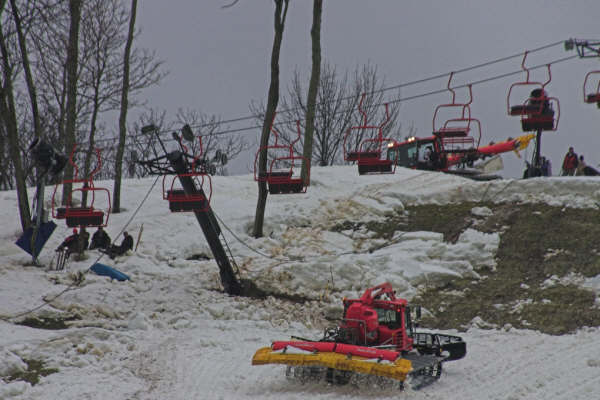
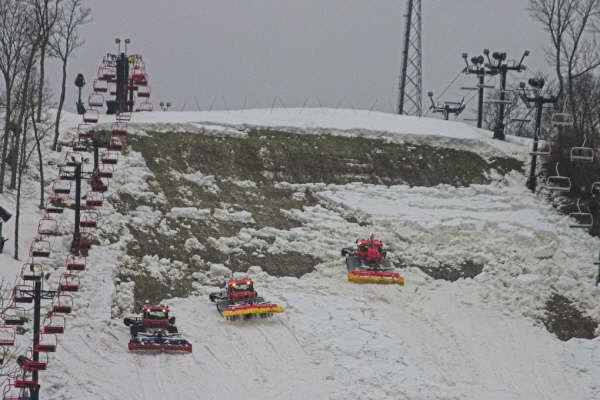
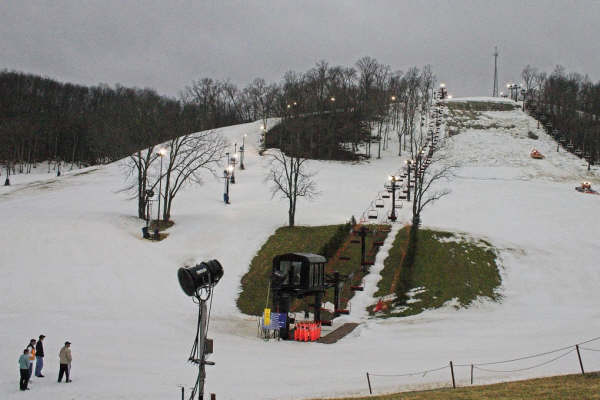
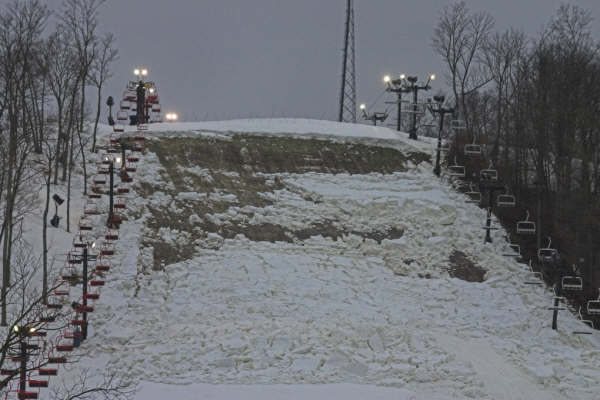
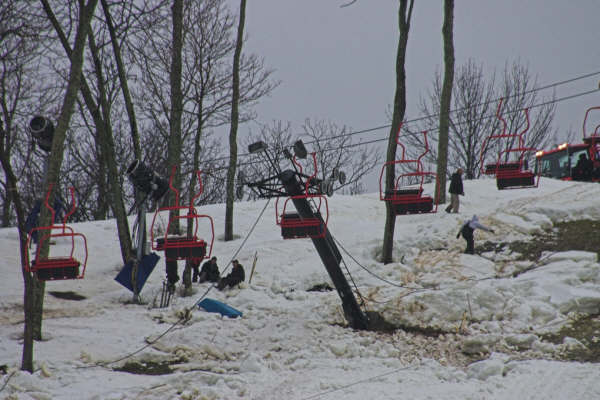
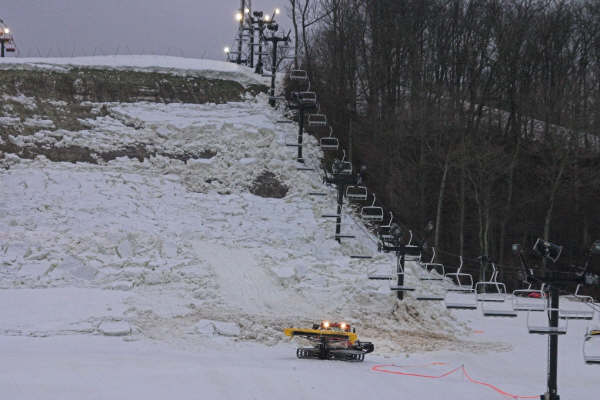
In one of the most bizarre occurrences an avalanche occurred in the Midwest. During the fall of 2006 at the Indiana ski resort Perfect North Slope. This central Indiana resort was making snow on bare ground, as is common at most resorts. After a night of snow making the staff arrived to see the slope had avalanched.
Not enough research was done on this avalanche but several firsts or at least extremely unusual things occurred during this avalanche
- ·An avalanche occurred in the Midwest
- ·The avalanche was composed of 100% man made snow
- ·The avalanche slid on bare ground with no snow layer below


 Recreation Law