
Lawsuit filed to stop required overtime payments for outdoor Guide Companies
Posted: December 17, 2021 Filed under: Colorado, Paddlesports | Tags: Arkansas River, Concessionaire; Overtime, Lawsuit, Litigation, Permittee, Wage & Hour Laws, Wage & Hour Regulations 11 CommentsState: Federal
Three Arkansas River Rafting Company owners have sued the federal government over new hourly wage laws. On any outdoor trip, rafting, mountaineering, even mountain biking a guide works long hours. Most guides work 12 and some days a lot more hours in a day. The new regulations would require those guides to be paid time & ½ for every hour after eight hours.
For an outfitter working under a federal permit or concession agreement, as a federal sub-contractor, they must now pay a guide for those extra hours. Since employee costs are the biggest expenses for most outfitters, that this going to price a lot of trips out of 90% of their customers’ ability to pay.
Guides also get fed while on trips, so there are some deductions for those costs in some cases, but not much. Guides are also usually paid a flat fee for the day. A guide paid $100 for an 8-hour day is now going to get a pay raise to the minimum wage at 1.5 times per hour. If a state’s minimum wage is $12 per hour, the guide for each hour after eight will be getting $18 an hour. And that will usually be another 4 or more hours. On a five-day trip that could be as much as another days pay at time and a half, if not more.
Probably, instead of helping guides, it will put a lot of them out of business. The cost of a trip will be so high; the number of trips will decrease, putting guides out of work.
With fewer trips, a lot of outfitters will also struggle. Multi day trip numbers have been declining over the years. Fewer people take the time to have a 3-5-day trip away from phones.
Mistake 1: For the three outfitters starting this lawsuit, they and their fellow permittees pushed so hard to have the Arkansas River become a National Monument, thinking it would increase the value of their permits; it has not, and has come back to haunt them, as many people predicted.
Why Is This Interesting?
Honestly, other than a few rivers such as the Grand Canyon that are only taking the upper class as guests anyway, this will destroy guided trips across the board. Outfitters do not make enough money on a trip to pay wages this high.
@RecreationLaw #RecLaw #RecreationLaw #OutdoorRecreationLaw #OutdoorLaw #OutdoorIndustry
What do you think? Leave a comment below.
Copyright 2021 Recreation Law (720) 334 8529
If you like this let your friends know or post it on FB, Twitter or LinkedIn


 Author: Outdoor Recreation Insurance, Risk Management and Law
Facebook Page: Outdoor Recreation & Adventure Travel Law
Email: Jim@Rec-Law.US
By Recreation Law Rec-law@recreation-law.com James H. Moss
#AdventureTourism, #AdventureTravelLaw, #AdventureTravelLawyer, #AttorneyatLaw, #Backpacking, #BicyclingLaw, #Camps, #ChallengeCourse, #ChallengeCourseLaw, #ChallengeCourseLawyer, #CyclingLaw, #FitnessLaw, #FitnessLawyer, #Hiking, #HumanPowered, #HumanPoweredRecreation, #IceClimbing, #JamesHMoss, #JimMoss, #Law, #Mountaineering, #Negligence, #OutdoorLaw, #OutdoorRecreationLaw, #OutsideLaw, #OutsideLawyer, #RecLaw, #Rec-Law, #RecLawBlog, #Rec-LawBlog, #RecLawyer, #RecreationalLawyer, #RecreationLaw, #RecreationLawBlog, #RecreationLawcom, #Recreation-Lawcom, #Recreation-Law.com, #RiskManagement, #RockClimbing, #RockClimbingLawyer, #RopesCourse, #RopesCourseLawyer, #SkiAreas, #Skiing, #SkiLaw, #Snowboarding, #SummerCamp, #Tourism, #TravelLaw, #YouthCamps, #ZipLineLawyer, #RecreationLaw, #OutdoorLaw, #OutdoorRecreationLaw, #SkiLaw, Outdoor Recreation Insurance Risk Management and Law, Jim Moss, James H. Moss, James Moss,
10th Circuit Court of Appeals upholds Colorado law concerning releases in a whitewater rafting fatality.
Posted: January 25, 2016 Filed under: Colorado, Paddlesports, Release (pre-injury contract not to sue) | Tags: 10th Circuit, 10th Circuit Court of Appeals, Arkansas River, Brown’s Canyon, fatality, Release, Seidel’s Suck Hole, Strainer, Tenth Circuit Court of Appeals, Waiver, Whitewater Rafting 9 CommentsPlaintiff’s approach was a unique way of attempting to circumvent the legal protection afforded by the release. Claims of negligence per se and fraud were pled to beat the release.
Citation: Espinoza, Jr., v. Arkansas Valley Adventures, LLC, 2016 U.S. App. LEXIS 39
State: Colorado, United States Court of Appeals for the Tenth Circuit
Plaintiff: Jesus Espinoza, Jr.
Defendant: Arkansas Valley Adventures, LLC
Plaintiff Claims: Negligence per se and fraud
Defendant Defenses: release
Holding: Defendant
Year: 2016
There is a quasi-third party in this case, the Colorado Trial Lawyers Association (CTLA). The CTLA filed an Amicus Curiae brief with the appellate court. An amicus curiae brief is a written argument with legal support saying there are issues in this case that may or may not be brought out by one of the parties that are important to people other than the named parties.
In this case, the CTLA probably wanted to influence the court in favor of the plaintiff.
The plaintiff’s mother went whitewater rafting with the defendant raft company. Upon arrival the plaintiff received “the usual guidance,” signed a release and headed down the river. “The next day(?)” while rafting through Seidel’s Suck Hole the raft flipped. Everyone was “fished out of the river” except the deceased who was swept into a “log jam” (a strainer).
Brown’s Canyon, including Seidel’s Suck Hole is an all-day river trip. However, a few companies run two-day trips on the river stopping mid-way and camping for the night. That is the confusion on what day, relative to the date the deceased signed the release the fatality occurred. 99.9% of the trips are just one-day trips.
Her son brought suit against the raft company for negligence per se and fraud. The trial court agreed with the defendant and granted its motion for summary judgment. The appeal to the Tenth Circuit and this decision followed.
Analysis: making sense of the law based on these facts.
The court distilled the plaintiff’s major argument down to one sentence. “…whether Colorado law permits private parties to enforce a contract like this.”
The court first looked at the requirements for a release to be valid in Colorado as set out by the Colorado Supreme Court.
…the Colorado Supreme Court has instructed courts to weigh four factors when deciding whether to give effect to agreements along these lines: “(1) the existence [or nonexistence] of a duty to the public; (2) the nature of the service performed; (3) whether the contract was fairly entered into; and (4) whether the intention of the parties is expressed in clear and unambiguous language.
The court then analyzed the four different factors breaking them down into sub-groups. The first two factors the court found to be public policy questions.
…asking whether “[t]he party seeking exculpation is engaged in performing a service of great importance to the public, which is often a matter of practical necessity [and] . . . [a]s a result of the essential nature of the service . . . the party invoking exculpation possesses a decisive advantage of bargaining strength against any member of the public who seeks his services.”
The last two questions of the four focus on whether the release, as a contract met the requirements to be a contact:
…whether the release was fairly obtained and clearly and unambiguously expressed. If the release satisfies both sets of questions — the more general and the more particular — it may be enforced.”
Generally, the Colorado Supreme Court has held that businesses that perform recreational services are not engaged in essential public services. Essential public services or referred to by other courts as necessities are those are you cannot live without. “So while businesses providing, say, water, electricity, or sanitary services usually may not shield themselves from claims of negligence; recreational service providers often can.”
Under Colorado law, private parties are free to assume the risks associated with recreational activities.
The court then looked at how this test applied to the plaintiff’s argument that the raft company was liable because it was negligent per se. However, the court rejected the negligence per se argument finding that creation of a statute covering a particular business does not therefore create negligence per se actions on all aspects of the statute.
And because whitewater rafting is a recreational activity, a statute could not turn a recreational activity into a necessity.
And the distinction the Jones factors draw between essential and recreational services would break down pretty quickly if the presence of some state regulation were enough to convert an otherwise obviously “recreational” service into a “practically necessary” one.
On top of that, Colorado law has always allowed parties to contract away negligence claims and there is almost no difference between the common law of negligence, and the duty required of a negligence per se claim.
Colorado law has long permitted parties to contract away negligence claims in the recreational context. And negligence per se claims often differ very little from their common law cousins: they usually just substitute a common law duty or standard of care with one prescribed by statute, and all other elements remain the same. In fact, in the case before us, it’s not even clear what duty of care CROA adds to the common law.
Nor did the plaintiff point out how the statute created a new duty that was violated by the defendant. And the court cannot create a new duty. “Indeed, courts generally will not assume that the General Assembly means to displace background common law principles absent some clear legislative expression of that intent.”
He contends that the rafting company misrepresented the nature of the trip to Ms. Apolinar. He points for support to testimony suggesting that, when Ms. Apolinar first made her reservation, she was told by company representatives and read on its website that the trip was appropriate for beginners and involved at most only class III rapids.
However, the court found the deceased was provided information on the risks of the rafting trip.
Whatever the rafting company said about the trip earlier on, when Ms. Apolinar arrived at the outfitter’s office she received a vivid description of the risks she could face. The rafting company provided — and Ms. Apolinar signed — a document titled in part “RAFTING WARNING” explaining that rafting can be “HAZARDOUS AND INVOLVES THE RISK OF PHYSICAL INJURY AND/OR DEATH.”
The release also had a clause that voided all other statements or sales pitches and stated only the representations in the release were valid. “The document provided, too, that its representations and warnings about the trip superseded any prior “communications or representations…”
The court then restated that in Colorado, courts had consistently upheld releases signed by “competent and reasonably educated” people.
Colorado courts have repeatedly emphasized that individuals engaged in recreational activities are generally expected to read materials like these, and because recreational businesses do not provide “essential” services of “practical necessity” individuals are generally free to walk away if they do not wish to assume the risks described.
Nor would the court allow the claim for fraud to proceed.
To make out a claim for fraud in Colorado, a plaintiff must establish actual and reasonable reliance on a false statement; a party cannot — as a matter of law — continue to rely on a previously expressed false statement after the truth is aired. And, of course, we have just found that the rafting company’s written warnings accomplished just that — adequately airing the truth about the nature of the risks Ms. Apolinar faced.
Here again, the court could not find a false statement that was in the documents, and any false statement made prior to the signing of the release was null and void based on the superseding statement clause in the release.
The court upheld the release and the dismissal of the lawsuit by the trial court.
So Now What?
The issue with the most concern is the dispute between the American Whitewater Association whitewater difficulty rating of the section of river (International Scale of River Difficulty). For decades, the Arkansas River running through Brown’s Canyon was considered a Class III section.
Outfitters believing they could receive one of two benefits; either could receive some marketing value or lawsuit protection, started advertising the section as Class IV yet still marketed it as a beginner section.
A couple of books were published about the river and those books in an effort to protect someone (First Amendment is pretty strong though) also rated the river as a Class IV section.
Now an outfitter almost loses a decision because there is enough contention over the rating of the river that one judge thinks it should go to trial.
THINK people. Your actions today may come back to bite you somewhere in the future.
You can’t say something is a beginner run and then give it a Class IV rating to cover your legal butt. An AWA Class IV rating is advanced. Advanced is not Beginner.
The second issue is how hard the plaintiff’s and the plaintiff’s bar worked to overcome the release. Your release must be written correctly (See Think your release will survive a lawsuit? Test your Release and Find out.) If you stole your release from a competitor, cut and pasted yours from the web or was there when you bought the place you are going to lose a lawsuit.
Releases must fit the experience you are attempting to provide your guests. Your release must not be contradicted by your marketing or your website. Your release must be understood by you and your staff so you don’t void your release by your actions. Finally, your release must meet the legal requirements for a release for your industry and pursuant to your state law.
You then must make sure the information you provide to your guests before during and after their experience does no invalidate your release. Finally deal with the issues a disaster creates, just don’t hide.
Finally, the release was relied upon not only as a release, but as proof of the risks of the activity, for a superseding statement clause to eliminate fraud claims and failure to inform claims.
A well written release work.
Remember!
Marketing makes promises Risk Management must pay for.
Here the marketing was it was a beginner raft trip; however, someone died on it and there was enough controversy over whether the trip was really for beginners that this case was a close call.
What do you think? Leave a comment.
 James H. “Jim” Moss |
Jim Moss is an attorney specializing in the legal issues of the outdoor recreation community. He represents guides, guide services, and outfitters both as businesses and individuals and the products they use for their business. He has defended Mt. Everest guide services, summer camps, climbing rope manufacturers; avalanche beacon manufacturers, and many more manufacturers and outdoor industries. Contact Jim at Jim@Rec-Law.us |
Jim is the author or co-author of eight books about legal issues in the outdoor recreation world; the latest is Outdoor Recreation Insurance, Risk Management,
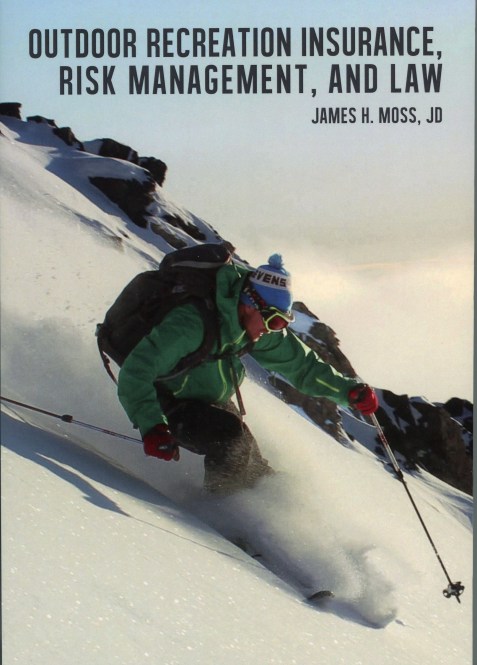
Outdoor Recreation Insurance, Risk Management, and Law
To see Jim’s complete bio go here and to see his CV you can find it here. To find out the purpose of this website go here.
If you are interested in having me write your release, download the form and return it to me.
Connect
If you like this let your friends know or post it on FB, Twitter, or LinkedIn
 Threads |
 Facebook Logo |
 X, Formerly Twitter |
 Recreation Law |
By Recreation Law Rec-law@recreation-law.com James H. Moss
@2016-2023 Summit Magic Publishing, LLC
G-YQ06K3L262
#AdventureTourism, #AdventureTravelLaw, #AdventureTravelLawyer, #AttorneyatLaw, #Backpacking, #BicyclingLaw, #Camps, #ChallengeCourse, #ChallengeCourseLaw, #ChallengeCourseLawyer, #CyclingLaw, #FitnessLaw, #FitnessLawyer, #Hiking, #HumanPowered, #HumanPoweredRecreation, #IceClimbing, #JamesHMoss, #JimMoss, #Law, #Mountaineering, #Negligence, #OutdoorLaw, #OutdoorRecreationLaw, #OutsideLaw, #OutsideLawyer, #RecLaw, #Rec-Law, #RecLawBlog, #Rec-LawBlog, #RecLawyer, #RecreationalLawyer, #RecreationLaw, #RecreationLawBlog, #RecreationLawcom, #Recreation-Lawcom, #Recreation-Law.com, #RiskManagement, #RockClimbing, #RockClimbingLawyer, #RopesCourse, #RopesCourseLawyer, #SkiAreas, #Skiing, #SkiLaw, #Snowboarding, #SummerCamp, #Tourism, #TravelLaw, #YouthCamps, #ZipLineLawyer, Tenth Circuit Court of Appeals, 10th Circuit Court of Appeals, 10th Circuit, Whitewater Rafting, Arkansas River, Brown’s Canyon, Strainer, Seidel’s Suck Hole, Fatality
Espinoza, Jr., v. Arkansas Valley Adventures, LLC, 2016 U.S. App. LEXIS 39
Posted: January 21, 2016 Filed under: Colorado, Legal Case, Paddlesports, Release (pre-injury contract not to sue) | Tags: 10th Circuit, 10th Circuit Court of Appeals, Arkansas River, Brown’s Canyon, fatality, Seidel’s Suck Hole, Strainer, Tenth Circuit Court of Appeals, Whitewater Rafting Leave a commentTo Read an Analysis of this decision see
10th Circuit Court of Appeals upholds Colorado law concerning releases in a whitewater rafting fatality.
Espinoza, Jr., v. Arkansas Valley Adventures, LLC, 2016 U.S. App. LEXIS 39
Jesus Espinoza, Jr., Plaintiff – Appellant, v. Arkansas Valley Adventures, LLC, Defendant – Appellee. Colorado Trial Lawyers Association, Amicus Curiae.
No. 14-1444
UNITED STATES COURT OF APPEALS FOR THE TENTH CIRCUIT
2016 U.S. App. LEXIS 39
January 5, 2016, Filed
PRIOR HISTORY: [*1] Appeal from the United States District Court for the District of Colorado. (D.C. No. 1:13-CV-01421-MSK-BNB).
Espinoza v. Ark. Valley Adventures, LLC, 2014 U.S. Dist. LEXIS 136102 (D. Colo., Sept. 26, 2014)
CASE SUMMARY:
OVERVIEW: HOLDINGS: [1]-The deceased’s son unsuccessfully argued that, while his mother signed a release, it should be still be held to violate state public policy as it ran afoul of the first two Jones factors because his is claim was one for negligence per se rather than common law negligence; [2]-The argument mistook the nature of the inquiry called for by the first two Jones factors; [3]-His argument suggested a firmer analytical line could be drawn between claims of negligence and negligence per se than the circumstances in the case would fairly allow; [4]-His interpretation of the Colorado River Outfitters Act would require the court to read into that statute a good deal more than it said; [5]-The disclosure and release sufficed to satisfy the third and fourth Jones factors.
OUTCOME: Judgment affirmed.
CORE TERMS: rafting, recreational, common law, trip, claim of negligence, warning, negligence per se, public policy, equine, river, common law, private parties, recreational activities, misdemeanor, outfitter’s, provider, Colo Law, civil liability, purporting, raft, ski, matter of law, negligence claims, matter of practical necessity, public services, great importance, mean to suggest, horseback riding, standard of care, civil claims
COUNSEL: William J. Hansen of McDermott & McDermott, LLP, Denver, CO (George E. McLaughlin of Warshauer McLaughlin Law Group, P.C., Denver, CO, with him on the briefs), for Plaintiff-Appellant.
Alan Epstein (Ryan L. Winter and Conor P. Boyle, with him on the brief), of Hall & Evans, L.L.C., Denver, CO, for Defendant-Appellee.
Russell R. Hatten and Evan P. Banker of Chalat Hatten Koupal & Banker PC, Denver, CO, on the brief for amicus curiae Colorado Trial Lawyers Association, in support of Plaintiff-Appellant.
JUDGES: Before KELLY, HARTZ, and GORSUCH, Circuit Judges.
OPINION BY: GORSUCH
OPINION
GORSUCH, Circuit Judge.
This case arises from a summer rafting trip gone tragically wrong. It began when Sue Ann Apolinar hired a guide for a family adventure in the Colorado Rockies: an overnight rafting and camping excursion on a popular stretch of the Arkansas River running through Brown’s Canyon. After she arrived at the outfitter’s office, Ms. Apolinar and the other rafters received the usual guidance, made the usual preparations, and signed the usual release before heading down river. The next day, while maneuvering around [*2] a rapid known locally as Seidel’s Suck Hole, the raft capsized. Everyone else was fished out of the water soon enough. But in a heartbreaking turn of events, the current swept Ms. Apolinar into a logjam where, despite repeated efforts to save her, she drowned. Eventually, Ms. Apolinar’s son, Jesus Espinoza, Jr., brought a lawsuit against the rafting company alleging negligence per se and fraud (and other claims no longer in dispute). In reply, the company sought summary judgment, arguing that the release Ms. Apolinar signed shielded it from liability. With this the district court agreed and proceeded to enter judgment for the company. It’s the propriety of this ruling that we’re asked to assess in this appeal.
No one before us doubts that Ms. Apolinar signed a release. Or that the release purported to absolve the rafting company from any claim of negligence. The only question in this appeal is whether Colorado law permits private parties to enforce a contract like this. [HN1] Under Colorado common law, it’s long settled that courts will not give effect to contracts purporting to release claims for intentional, knowing, or reckless misconduct. See, e.g., Boles v. Sun Ergoline, Inc., 223 P.3d 724, 726 (Colo. 2010). But claims of negligence are a different [*3] matter. Colorado common law does not categorically prohibit the enforcement of contracts seeking to release claims of negligence. Instead, and at the most general level, the Colorado Supreme Court has instructed courts to weigh four factors when deciding whether to give effect to agreements along these lines: “(1) the existence [or nonexistence] of a duty to the public; (2) the nature of the service performed; (3) whether the contract was fairly entered into; and (4) whether the intention of the parties is expressed in clear and unambiguous language.” Jones v. Dressel, 623 P.2d 370, 376 (Colo. 1981).
Even more specifically, [HN2] the Colorado Supreme Court has explained that the first two Jones factors focus on public policy questions — asking whether “[t]he party seeking exculpation is engaged in performing a service of great importance to the public, which is often a matter of practical necessity [and] . . . [a]s a result of the essential nature of the service . . . the party invoking exculpation possesses a decisive advantage of bargaining strength against any member of the public who seeks his services.” Id. (quoting Tunkl v. Regents of Univ. of Cal., 60 Cal. 2d 92, 32 Cal. Rptr. 33, 383 P.2d 441, 444 (Cal. 1963)). Meanwhile, the latter two factors focus on more party- and contract-specific questions — asking whether the release was fairly [*4] obtained and clearly and unambiguously expressed. Id. at 378. If the release satisfies both sets of questions — the more general and the more particular — it may be enforced. (Provided, of course, that it is otherwise a valid contract, involving, for example, mutual assent and consideration, matters not in dispute here).
[HN3] When it comes to the first two Jones factors, the Colorado Supreme Court has offered even more specific guidance yet. Though some businesses perform essential public services and owe special duties to the public, the court has held that “businesses engaged in recreational activities” generally do not. Chadwick v. Colt Ross Outfitters, Inc., 100 P.3d 465, 467 (Colo. 2004); see also Boles, 223 P.3d at 726 (“More than a quarter century ago, this court rejected the assertion that any agreement purporting to shield a party from liability for its own tortious conduct” in the provision of recreational services “would violate . . . public policy . . . .”). So while businesses providing, say, water, electricity, or sanitary services usually may not shield themselves from claims of negligence, recreational service providers often can. Though, of course, they must still face and satisfy the latter two case-specific Jones factors.
This relatively permissive public policy toward [*5] recreational releases may not be unique to Colorado common law but it does seem to be one of its distinguishing features. We don’t doubt other states may rationally choose to pursue different lines when it comes to recreational releases: certainly the parties before us cite an array of cases from other jurisdictions taking an array of views. But [HN4] in our federal system, states are usually permitted (and encouraged) to pursue their own paths on policy matters like these. And it’s clear enough that Colorado allows private parties to assume some of the risks associated with their recreational pursuits. It’s a policy choice that, no doubt, means some losses go uncompensated but one that also promotes the output and diversity of recreational services consumers may enjoy. Of course, the Colorado Supreme Court and the Colorado General Assembly may change their judgment on this score at any time. And maybe someday they will prefer a policy that shifts the burden of loss to the service provider, ensuring compensation in cases like this even if also impairing to some degree individual choice and output. But that decision is their decision to make, not ours, and their current policy is clear. Indeed, [*6] following the Colorado Supreme Court’s guidance in this area, this court and many Colorado courts have upheld many releases in many recreational activities over many years. Only some examples of which we include in the margin.1
1 See, e.g., Lahey v. Covington, 964 F. Supp. 1440, 1444-46 (D. Colo. 1996) (whitewater rafting), aff’d sub nom. Lahey v. Twin Lakes Expeditions, Inc., 113 F.3d 1246 (10th Cir. 1997); Forman v. Brown, 944 P.2d 559, 563-64 (Colo. App. 1996) (same); Robinette v. Aspen Skiing Co., No. 08-cv-00052-MSK-MJW, 2009 U.S. Dist. LEXIS 34873, 2009 WL 1108093, at *3-5 (D. Colo. Apr. 23, 2009) (skiing), aff’d, 363 F. App’x 547 (10th Cir. 2010); Fullick v. Breckenridge Ski Corp., No. 90-1377, 1992 U.S. App. LEXIS 9988, 1992 WL 95421, at *3 (10th Cir. Apr. 29, 1992) (same); Potter v. Nat’l. Handicapped Sports, 849 F. Supp. 1407, 1409-11 (D. Colo. 1994) (same); Bauer v. Aspen Highlands Skiing Corp., 788 F. Supp. 472, 474-75 (D. Colo. 1992) (same); Mincin v. Vail Holdings, Inc., 308 F.3d 1105, 1113 (10th Cir. 2002) (mountain biking); Chadwick, 100 P.3d at 468-70 (horseback riding); B & B Livery, Inc. v. Riehl, 960 P.2d 134, 137-38 (Colo. 1998) (same); see also William R. Rapson & Stephen A. Bain, Recreational Waivers in Colorado: Playing at Your Own Risk, 32 Colo. Law. 77, 77 (2003) (noting that “Colorado law generally supports waivers of liability in connection with recreational activities”); James H. Chalat, Colorado Ski Law, 27 Colo. Law. 5, 14 (1998) (noting that “courts generally hold [ski racing] waivers to be enforceable”); Jordan Lipp, Horse Law — A Look at the Equine Statute and Liability Law, 41 Colo. Law. 95, 99 (2012) (“Releases have been upheld in a number of horseback riding cases.”).
Still, Mr. Espinoza submits, his case is categorically different. Yes, Ms. Apolinar signed a document purporting to release the rafting company from all claims of negligence. Yes, Colorado public policy generally permits the release of claims of negligence in recreational pursuits like the one here. But, Mr. Espinoza argues, the release Ms. Apolinar signed should still be held to violate state public policy — it should [*7] still be held to run afoul of the first two Jones factors — because his claim is one for negligence per se rather than common law negligence. He observes that the Colorado River Outfitters Act (CROA) makes it a misdemeanor for rafting companies to operate any raft in a “careless or imprudent manner.” Colo. Rev. Stat. § 33-32-107(2)(b). And from this, he reasons, negligence by rafting companies has become a matter of public concern and a public service within the meaning of the first two Jones factors.
We find ourselves unable to agree for a number of related reasons.
First, we think this argument mistakes the nature of the inquiry called for by the first two Jones factors. [HN5] By their terms, those factors don’t ask whether the activity in question is the subject of some sort of state regulation. Instead, they ask whether the service provided is of “great importance to the public,” a matter of “practical necessity” as opposed to (among other things) a “recreational” one. 623 P.2d at 376-77. And the distinction the Jones factors draw between essential and recreational services would break down pretty quickly if the presence of some state regulation were enough to convert an otherwise obviously “recreational” service into a “practically necessary” [*8] one. After all, state law imposes various rules and regulations on service providers in most every field these days — including on service providers who operate in a variety of clearly recreational fields. See, e.g., Colo. Rev. Stat. § 33-14-116 (snowmobiling); id. § 33-44-104(2) (skiing); id. § 13-21-119(4)(b)(I) (equine activities).
Second, Mr. Espinoza’s argument suggests a firmer analytical line can be drawn between claims of negligence and negligence per se than we think the circumstances here will fairly allow. As we’ve seen, [HN6] Colorado law has long permitted parties to contract away negligence claims in the recreational context. And negligence per se claims often differ very little from their common law cousins: they usually just substitute a common law duty or standard of care with one prescribed by statute and all other elements remain the same. See Lombard v. Colo. Outdoor Educ. Ctr., Inc., 187 P.3d 565, 573 (Colo. 2008). In fact, in the case before us it’s not even clear what duty of care CROA adds to the common law. Mr. Espinoza says the rafting company violated the statutory duty to avoid operating a raft in a “careless or imprudent manner.” Mr. Espinoza points as well to implementing regulations that suggest a company should offer things like a “basic orientation” for rafters and help when accidents occur. [*9] But Mr. Espinoza does not suggest how these provisions create any distinctly new duty of care. Indeed, they appear to be more or less coextensive with [HN7] the preexisting common law standard of care, which requires parties to act with “reasonable care . . . i.e., that which a person of common prudence would use under the circumstances.” Christensen v. Hoover, 643 P.2d 525, 529 (Colo. 1982). And given this it seems hard to see a rational basis on which the law might treat such similar (identical?) claims so differently based merely on how they are pleaded, rewarding the crafty but penalizing the pedestrian pleader.2
2 Though we do not rely on the fact in our analysis above, Colorado authorities did conduct an investigation of the accident in this case pursuant to CROA and ultimately decided not to pursue any sanction.
Third, Mr. Espinoza’s interpretation of CROA would require us to read into that statute a good deal more than it says. [HN8] CROA imposes criminal misdemeanor sanctions for violating the duties it prescribes. It does not speak, one way or the other, to the question of civil liability — let alone suggest that private parties are forbidden from contractually releasing potential negligence claims. Neither [HN9] is it obviously irrational that the [*10] General Assembly might choose to pass legislation about public (criminal) liability but leave private (civil) liability to preexisting common law principles. Indeed, courts generally will not assume that the General Assembly means to displace background common law principles absent some clear legislative expression of that intent. See Robbins v. People, 107 P.3d 384, 387 (Colo. 2005). The General Assembly, too, has shown that — when it wishes — it well knows how to displace background common law norms and preclude the release of civil claims. See, e.g., Stanley v. Creighton Co., 911 P.2d 705, 707-09 (Colo. App. 1996). Given all this, we do not think it our place to adorn the General Assembly’s handiwork with revisions to the common law that it easily could have but declined to undertake for itself.
Finally, we find it noteworthy that Colorado courts faced with similar challenges seem to have resolved them much as we resolve this one today. For example, the General Assembly has adopted a statute holding that “equine professional[s]” may not be held civilly liable for “the inherent risks of equine activities.” Colo. Rev. Stat. § 13-21-119(3). But that statute goes on to state that the immunity it provides does not extinguish civil liability in cases where the equine professional supplied equipment or tack it should have known was faulty or [*11] failed to make reasonable efforts to determine the ability of the rider before the excursion began. Id. § 13-21-119(4)(b)(I). And despite the General Assembly’s express solicitude toward these latter classes of claims, the Colorado Supreme Court has allowed private parties to contract away claims of negligence on both fronts. B & B Livery, 960 P.2d at 135, 137-38. Maybe even more pointedly still, [HN10] since the enactment of CROA and its misdemeanor criminal penalties, various Colorado courts have enforced releases of civil negligence claims obtained by whitewater rafting companies. See, e.g., Lahey, 964 F. Supp. at 1444-46; Forman, 944 P.2d at 563-64. This court has upheld, too, a release a snowboarder gave to a ski area absolving its employees of negligence even when the area’s employee allegedly operated a snowmobile in a negligent manner and a state statute made that very behavior a misdemeanor. See Robinette, 2009 U.S. Dist. LEXIS 34873, 2009 WL 1108093, at *3-5.
In saying this much, we take care to emphasize what we do not mean to say. We do not mean to suggest that some future statute could not — or even that some other current statute might not — preclude the enforcement of releases like the one here. Neither do we mean to suggest that the Colorado Supreme Court could not alter its common law policy with respect to recreational releases. In particular, we [*12] do not pass on the question whether the General Assembly’s enactment of the Colorado Consumer Protection Act (CCPA), Colo. Rev. Stat. §§ 6-1-101 to 6-1-1001, might preclude the enforcement of recreational releases when the plaintiff pleads a valid claim under that statute. See Rapson & Bain, supra, at 77-78 (noting that while Colorado law “generally supports” recreational waivers, it’s an open question whether a statutory CCPA claim can be waived). In this case, we merely hold that the CROA provisions cited to us do not satisfy and do not overrule the first two factors of the common law Jones test.
Of course, that takes us only half way. Having decided that the release survives Jones‘s public-policy factors, we must still consider its case-specific factors. [HN11] The third Jones factor requires us to ask whether “the circumstances and the nature of the service involved indicate that the contract was fairly entered into.” Chadwick, 100 P.3d at 467. Relatedly, the fourth Jones factor addresses the terms of the contract itself, inviting us to “examine[] the actual language of the [release] for legal jargon, length and complication” and any other evidence that a party might not “recognize the full extent of the release provisions.” Id. The district court held that the release before us [*13] satisfied both of these conditions — that it was fairly entered into and clear in its terms. And in the end we find we agree with its assessment on this score too.
Mr. Espinoza trains most of his attention on the third factor. He contends that the rafting company misrepresented the nature of the trip to Ms. Apolinar. He points for support to testimony suggesting that, when Ms. Apolinar first made her reservation, she was told by company representatives and read on its website that the trip was appropriate for beginners and involved at most only class III rapids. He points as well to his expert witness who testified that Seidel’s Suck Hole is really a class IV rapid, not a class III rapid, according to the “International Scale of River Difficulty.”3 But at the same time Mr. Espinoza must acknowledge that another of his witnesses — a state ranger charged with overseeing the stretch of river in question — testified that he believes the trip is indeed appropriate for families with children. So the facts Mr. Espinoza himself offers are mixed at best on whether the rafting company actually ever made a material misstatement about the nature of the trip.4
3 That scale describes class III rapids [*14] as requiring (among other things) “[c]omplex maneuvers in fast current and good boat control in tight passages or around ledges” and notes that “[i]njuries while swimming are rare.” The scale describes class IV rapids as involving “[i]ntense, powerful but predictable rapids requiring precise boat handling in turbulent water. . . . [and] fast maneuvers under pressure” and notes that the “[r]isk of injury to swimmers is moderate to high.”
4 On appeal, Mr. Espinoza offers another theory why the circumstances surrounding the release were unfair. He alleges that the rafting company refused to reschedule the trip and might have refused to refund Ms. Apolinar’s deposit if she declined to sign the release. And this, he says, imposed unfair pressure on her to sign the release. But Mr. Espinoza’s argument along these lines before the district court consisted of only two sentences so it’s not surprising or improper that the district court declined to pass upon it. Neither will we pass on this argument for the first time now, leaving its development instead to future cases where it might prove relevant and more fully presented. See generally Adler v. Wal-Mart Stores, Inc., 144 F.3d 664, 679 (10th Cir. 1998); Richison v. Ernest Grp., Inc., 634 F.3d 1123, 1127-28 (10th Cir. 2011).
Still, even if we might assume (without deciding) that the facts here are enough to create [*15] a material dispute of fact regarding whether the rafting company initially misrepresented the nature of the trip, it’s still hard to see how we could say the release was unfairly secured or unclear in its terms — at least within the meaning Colorado law gives to the third and fourth Jones factors. That’s because of what happened next. Whatever the rafting company said about the trip earlier on, when Ms. Apolinar arrived at the outfitter’s office she received a vivid description of the risks she could face. The rafting company provided — and Ms. Apolinar signed — a document titled in part “RAFTING WARNING” explaining that rafting can be “HAZARDOUS AND INVOLVES THE RISK OF PHYSICAL INJURY AND/OR DEATH.” The document proceeded to offer a detailed picture of the sorts of problems that could be (and sadly were) encountered: “cold water immersion, hidden underwater obstacles, trees or other above water obstacles, . . . changing and unpredictable currents, drowning, exposure, swimming, overturning, . . . entrapment of feet or other body parts under rocks or other objects . . . .” It added that “THE UNDERSIGNED ACKNOWLEDGE[S] AND UNDERSTAND[S] THAT THE DESCRIPTION OF THE RISKS LISTED ABOVE IS NOT COMPLETE AND THAT PARTICIPATING [*16] IN THE ACTIVITY MAY BE DANGEROUS AND MAY INCLUDE OTHER RISKS.” The document provided, too, that its representations and warnings about the trip superseded any prior “communications or representations” on these subjects. Neither can there be any question that the document clearly communicated that a signature would release civil claims for liability. At the outset it directed Ms. Apolinar to “PLEASE READ CAREFULLY BEFORE SIGNING. THIS IS A RELEASE OF LIABILITY & WAIVER OF LEGAL RIGHTS.” And later it provided that “THE UNDERSIGNED HEREBY IRREVOCABLY AND UNCONDITIONALLY RELEASE[S], FOREVER DISCHARGE[S], AND AGREE[S] NOT TO SUE . . . with respect to any and all claims and causes of action . . . which could be asserted [by] the Undersigned in connection with . . . the Activity.”
This disclosure and release suffices to satisfy the third and fourth Jones factors. To be sure, we can imagine other states might choose to hold circumstances and printed forms like these insufficiently fair or clear. But [HN12] Colorado courts have repeatedly emphasized that individuals engaged in recreational activities are generally expected to read materials like these, and because recreational businesses do not provide “essential” services of “practical [*17] necessity” individuals are generally free to walk away if they do not wish to assume the risks described. See, e.g., Jones, 623 P.2d at 377-78. Particularly where, as here, the person confronted with the release is competent and reasonably educated. Chadwick, 100 P.3d at 469. Indeed, Colorado courts and this court have consistently found releases provided at the outset of a recreational activity and containing language very much like the one now before us sufficient as a matter of law to supply a fair and full warning within the meaning of the latter two Jones factors. See, e.g., Jones, 623 P.2d at 377-78; Brooks v. Timberline Tours, Inc., 127 F.3d 1273, 1274-76 (10th Cir. 1997); Heil Valley Ranch, Inc. v. Simkin, 784 P.2d 781, 782, 785 (Colo. 1989); Chadwick, 100 P.3d at 468-69.
As the district court recognized, too, this resolution of the third and fourth Jones factors also resolves Mr. Espinoza’s fraud claim. [HN13] To make out a claim for fraud in Colorado, a plaintiff must establish actual and reasonable reliance on a false statement; a party cannot — as a matter of law — continue to rely on a previously expressed false statement after the truth is aired. And, of course, we have just found that the rafting company’s written warnings accomplished just that — adequately airing the truth about the nature of the risks Ms. Apolinar faced. Neither do we see how we might arrive at a different result just because this claim is denominated [*18] in fraud rather than negligence. The inquiries prescribed for us by law are virtually indistinguishable (was the truth fairly and fully disclosed?), the facts are the same (the release’s warnings), and it follows that the result should be the same. See Vinton v. Virzi, 269 P.3d 1242, 1247, 2012 CO 10, 2012 CO 10 (Colo. 2012) (holding if a party “has access to information” that “would have led to the true facts, that party has no right to rely on a [prior] false representation”); Morrison v. Goodspeed, 100 Colo. 470, 68 P.2d 458, 462 (Colo. 1937) (same).
Enduring the death of a close family member in tragic circumstances is among life’s bitterest challenges. The loss Ms. Apolinar’s family has suffered is beyond words. But our charge is to follow the law. And in this case the law is just as the district court described it, permitting the enforcement of the release in this case and requiring the entry of summary judgment.
Affirmed.5
5 We decline Mr. Espinoza’s request for certification of his negligence per se claim to the Colorado Supreme Court for decision. Not only is the request fleetingly made (three sentences in the middle of a brief arguing state law unambiguously supports his position), [HN14] we generally do not trouble state supreme courts where, as here, existing state law provides “a reasonably clear and principled course” [*19] we may follow to resolve the case at hand. Pino v. United States, 507 F.3d 1233, 1236 (10th Cir. 2007).
HARTZ, Circuit Judge, concurring and dissenting:
I fully join all the opinion except the discussion of the third Jones factor. I respectfully dissent, however, on that factor. In my view, a jury must resolve whether Ms. Apolinar was misled about the danger of the rapids. Although the warning provided to her at the outfitter’s office listed all the potential risks that she would face, the description of the rapids is what would convey the probability of those risks. It is not enough to list a risk if the customer has been misled about its probability.
G-YQ06K3L262
http://www.recreation-law.com
Forman v. Brown, d/b/a Brown’s Royal Gorge Rafting, 944 P.2d 559; 1996 Colo. App. LEXIS 343
Posted: February 7, 2015 Filed under: Colorado, Contract, Legal Case, Paddlesports, Release (pre-injury contract not to sue) | Tags: Arkansas River, big Horn Canyon, Novation, Release, Three Rocks, Waiver, Whitewater Rafting Leave a commentForman v. Brown, d/b/a Brown’s Royal Gorge Rafting, 944 P.2d 559; 1996 Colo. App. LEXIS 343
Sue Forman, Plaintiff-Appellant, v. Mark N. Brown, d/b/a Brown’s Royal Gorge Rafting, Brown’s Fort and Greg Scott, Defendants-Appellees.
No. 95CA1380
COURT OF APPEALS OF COLORADO, DIVISION B
944 P.2d 559; 1996 Colo. App. LEXIS 343
November 29, 1996, Decided
SUBSEQUENT HISTORY: [**1] Released for Publication October 23, 1997.
Rehearing Denied February 6, 1997.
PRIOR HISTORY: Appeal from the District Court of Fremont County. Honorable John Anderson, Judge. No. 93CV123.
DISPOSITION: JUDGMENT AFFIRMED
COUNSEL: Gregory J. Hock, Colorado Springs, Colorado, for Plaintiff-Appellant.
Hall & Evans, L.L.C., Alan Epstein, Denver, Colorado, for Defendants-Appellees.
JUDGES: Opinion by JUDGE NEY. Pierce *, J. concurs. Tursi *, J. concurs in part and dissents in part.
* Sitting by assignment of the Chief Justice under provisions of the Colo. Const. art. VI, Sec. 5(3), and § 24-51-1105, C.R.S. (1996 Cum. Supp.).
OPINION BY: NEY
OPINION
[*560] Opinion by JUDGE NEY
Plaintiff, Sue Forman, appeals from a summary judgment entered in favor of defendants, Mark N. Brown d/b/a Brown’s Royal Gorge Rafting and Brown’s Fort, and Greg Scott. We affirm.
Plaintiff participated in a rafting trip conducted by defendants. During the trip, defendant Scott, the river guide, pulled the raft off the river for a rest break and suggested [*561] that the participants take a swim in the river. Scott led some of the participants, including plaintiff, to a large boulder near the river and instructed them on the proper method [**2] to enter the water. Plaintiff injured her ankle when she jumped into the river.
Plaintiff brought this action alleging negligence, willful and wanton conduct, and breach of contract. Defendants moved for partial summary judgment on the grounds that the exculpatory agreement executed by plaintiff before the trip absolved them from liability for negligence as a matter of law. The trial court granted defendant’s motion for partial summary judgment, and later granted defendants’ motion for summary judgment on plaintiff’s remaining claims. This appeal followed.
I.
Plaintiff argues that summary judgment was improper because a genuine issue of fact existed as to whether she was mentally competent when she signed the exculpatory agreement. We disagree.
[HN1] Summary judgment is proper when the pleadings, affidavits, depositions, and admissions show that there is no genuine issue as to any material fact and that the moving party is entitled to judgment as a matter of law. C.R.C.P. 56; Civil Service Commission v. Pinder, 812 P.2d 645 (Colo. 1991).
The moving party has the burden to show that there is no issue of material fact. Once the moving party has met its initial burden, the burden then [**3] shifts to the nonmoving party to establish that there is a triable issue of material fact. Mancuso v. United Bank, 818 P.2d 732 (Colo. 1991).
In determining whether summary judgment is proper, the nonmoving party must receive the benefit of all favorable inferences that may reasonably be drawn from the undisputed facts. Mancuso v. United Bank, supra. Summary judgment is proper if reasonable persons could not reach differing conclusions. Morlan v. Durland Trust Co., 127 Colo. 5, 252 P.2d 98 (1952).
In their motion for summary judgment, defendants attached the exculpatory agreement, which was signed by plaintiff, entitled “Agreement to Participate (Acknowledgment of Risks),” and an agreement entitled “On River Prohibitions,” also signed by plaintiff, which listed rules that rafting participants were required to follow while on the rafts. Defendants also included plaintiff’s admissions that she signed the exculpatory agreements and that she was advised concerning the hazards involved in the raft trip. With this evidence, defendants established both the scope of the exculpatory agreement and the fact that plaintiff signed the agreement, and thus the burden shifted to plaintiff to establish [**4] triable issues of fact. Mancuso v. United Bank, supra.
Plaintiff admitted in her response to the summary judgment motion that she had signed the exculpatory agreement and she attached to her response an affidavit in which she stated:
I believe I am an intelligent woman and I
understand the (prohibition.) My failure to read the Agreement to Participate was related to my mental condition.
. . . .
Although I was not incompetent when I signed the on-river prohibitions and the Agreement to Participate, I do feel I lacked competency in the skills of independent decision-making and that I had mental impairment on relying on what Mr. Scott had advised.
Plaintiff also averred that she had been in therapy for several years before the incident, and included extensive documentation of the diagnosis and in-patient treatment of her emotional and mental condition that she underwent six months after the rafting incident. However, plaintiff’s complaint did not state any allegations of her impaired mental capacity.
Plaintiff filed a supplementary response to the summary judgment motion which included an affidavit from the therapist who had been treating her for several years prior to the rafting [**5] incident wherein the therapist stated that, at the time of the rafting trip, plaintiff was suffering from a mental impairment, “including a mental and/or emotional disability related to psychiatric problems, her [*562] inability to handle stress, emotional illness and severe psychiatric difficulties and serious emotional disturbances which prevented her from fully assessing the consequences of risks or prohibited conduct related to jumping into the river.” The therapist further opined that plaintiff had a tendency “to be quite vulnerable following the direction of someone she was trusting as well as to following the actions of those with whom she desired to be a part.”
Plaintiff also supplemented her response with an affidavit from a therapist who began treating her a year after the rafting incident in which the therapist averred that, at the time of the rafting incident, plaintiff’s need to be liked and accepted was likely to have caused her to suspend her own judgment in deference to others.
The trial court held that, even under the most favorable interpretation of the evidence, plaintiff did not show that she was incompetent to enter into a binding contract. Relying on plaintiff’s [**6] specific assertion that she was not incompetent when she signed the exculpatory agreements, the court found that plaintiff’s assertions of mental impairment, such as her need to belong to a group and her need to trust and follow the river guide, did not at all relate to her execution of a binding contract.
We agree with the trial court and find that the relevant evidence established, as a matter of law, that plaintiff was not, under principles of competency applicable to contracts in general, incompetent at the time she signed the exculpatory agreement.
[HN2] Every person is presumed by the law to be sane and competent for the purpose of entering into a contract. Hanks v. McNeil Coal Corp., 114 Colo. 578, 168 P.2d 256 (1946). A party can be insane for some purposes and still have the capacity to contract. Davis v. Colorado Kenworth Corp., 156 Colo. 98, 396 P.2d 958 (1964).
A person is incompetent to contract when the subject matter of the contract is so connected with an insane delusion as to render the afflicted party incapable of understanding the nature and effect of the agreement or of acting rationally in the transaction. Hanks v. McNeil Coal Corp., supra. Therefore, under this [**7] rule, it follows that emotional distress or severe mental depression generally is insufficient to negate the capacity to contract. See Drewry v. Drewry, 8 Va. App. 460, 383 S.E.2d 12 (Va. App. 1989)(severe mental depression did not render party to separation agreement legally incompetent where there was no evidence that party did not understand the nature and consequences of her acts).
Moreover, a contract may not be voided when, as here, the alleged incompetence arose after the execution of the contract. Competency to contract is determined by a party’s mental state at the time of execution of the agreement. See Hanks v. McNeil Coal Corp., supra.
[HN3] Where a party has failed to present sufficient evidence to make out a triable issue of material fact, the moving party is entitled to summary judgment. See Continental Air Lines Inc. v. Keenan, 731 P.2d 708 (Colo. 1987).
Plaintiff admitted that she was not incompetent at the time she signed the exculpatory agreement, that she was “an intelligent woman,” and that she understood the “prohibition.” Additionally, none of plaintiff’s evidence of her psychological diagnosis and treatment showed that, at the time she signed the exculpatory agreements, she was [**8] suffering under an insane delusion that prevented her from understanding the nature and effect of the agreements or of acting rationally in the transaction.
Nor do we agree with plaintiff’s claim that her impaired mental capacity caused her to fail to read the Agreement to Participate. As noted above, plaintiff admitted that she was not incompetent when she signed the exculpatory agreements; therefore, her failure to read the Agreement to Participate precludes her from arguing that she is not bound by it. See Rasmussen v. Freehling, 159 Colo. 414, 412 P.2d 217 (1966)(in the absence of fraud, one who signs a contract without reading it is barred from claiming she is not bound by what she has signed); Cordillera Corp. v. Heard, 41 Colo. App. 537, 592 P.2d 12 (1978), aff’d, 200 Colo. 72, 612 [*563] P.2d 92 (1980)(party signing an agreement is presumed to know its contents).
We conclude, therefore, that plaintiff failed to establish a triable issue of fact concerning her capacity to execute a contract at the time she signed the exculpatory agreement.
II.
Plaintiff also argues that the exculpatory agreement was invalid and ambiguous as to whether it applied to the activity in which she was [**9] injured. We disagree.
[HN4] The determination of the sufficiency and validity of an exculpatory agreement is a matter of law for the court to determine. Jones v. Dressel, 623 P.2d 370 (Colo. 1981).
The validity of an exculpatory agreement must be determined by the following four criteria: (1) the existence of a duty to the public; (2) the nature of the service performed; (3) whether the contract was fairly entered into; and (4) whether the intention of the parties is expressed in clear and unambiguous language. Jones v. Dressel, supra.
Only the fourth factor is at issue here, and as to this factor, the supreme court has held that in order for an exculpatory agreement to shield a party from liability, the intent of the parties to extinguish liability must be clearly and unambiguously expressed. Heil Valley Ranch, Inc. v. Simkin, 784 P.2d 781 (Colo. 1989).
The Agreement to Participate provided in relevant part:
I am aware that the activities I am participating in, under the arrangements of Brown’s Fort family recreation center; its agents, employees, and associates, involves certain inherent risks. I recognize that white water rafting, . . . and other activities, scheduled or unscheduled [**10] have an element of risk which combined with the forces of nature, acts of commission, or omission, by participants or others, can lead to injury or death.
I also state and acknowledge that the hazards include, but are not limited to the loss of control, collisions with rocks, trees and other man made or natural objects, whether they are obvious or not obvious, flips, immersions in water, hypothermia, and falls from vessels, vehicles, animals, or on land.
I understand that any route or activity, chosen as a part of our outdoor adventure may not be the safest, but has been chosen for its interest and challenge. . . . I . . . understand and agree that any bodily injury, death or loss of personal property, and expenses thereof, as a result of my . . . participation in any scheduled or unscheduled activities, are my responsibility. I hereby acknowledge that I and my family . . . have voluntarily applied to participate in these activities. I do hereby agree that I and my family . . . are in good health with no physical defects that might be injurious to me and that I and my family are able to handle the hazards of traffic, weather conditions, exposure to animals, walking, riding, and all [**11] and any similar conditions associated with the activities we have contracted for.
. . . .
I and my family . . . agree to follow the instructions and commands of the guides, wranglers, and others in charge at Brown’s Fort recreation center with conducting activities in which I and my family are engaged.
Further, and in consideration of, and as part payment for the right to participate in such trips or other activities . . . I have and do hereby assume all the above risks and will hold Brown’s Fort . . . its agents, employees, and associates harmless from any and all liability, action, causes of action, debts, claims, and demands of any kind or nature whatsoever which I now have or which may arise out of, or in connection with, my trip or participation in any other activities.
The terms of this contract shall serve as a release and assumption of risk for my heirs, executors and administers and for all members of my family, including any minors accompanying me. . . .
I have carefully read this contract and fully understand its contents. I am aware [*564] that I am releasing certain legal rights that
I otherwise may have and I enter into this contract in behalf of myself and my family [**12] of my own free will.
Plaintiff was engaged in an apparently unscheduled activity that had an element of risk which, combined with the forces of nature and acts of others, resulted in an injury. The language of the Agreement to Participate specifically addressed a risk, collision with boulders, that adequately described the circumstances of plaintiff’s injury, and by executing the Agreement to Participate, plaintiff was specifically made aware of and agreed to assume this risk. See Heil Valley Ranch, Inc. v. Simkin, 784 P.2d 781 (broad language in a release interpreted to cover all negligence claims); Barker v. Colorado Region–Sports Car Club of America, Inc., 35 Colo. App. 73, 532 P.2d 372 (1974) (in absence of duty to public, exculpatory agreements are valid when fairly made and may be enforced to preclude recovery for injury sustained by patrons of recreational facilities).
Therefore, we agree with the trial court that the Agreement to Participate unambiguously released defendants from liability for injuries occurring during associated scheduled or unscheduled activities such as the swimming activity here at issue.
III.
Plaintiff’s final contention is that the trial court erred in [**13] dismissing her claim of willful and wanton conduct against defendant Scott. We disagree.
[HN5] An exculpatory agreement does not bar an action based upon injuries sustained by a defendant’s willful and wanton conduct. Barker v. Colorado Region-Sports Car Club of America, Inc., supra. Willful and wanton conduct is purposeful conduct committed recklessly that exhibits an intent consciously to disregard the safety of others. Such conduct extends beyond mere unreasonableness. Terror Mining Co. v. Roter, 866 P.2d 929 (Colo. 1994) (applying definition of willful and wanton conduct to parental immunity doctrine); see also § 13-21-102(1)(b), C.R.S. (1987 Repl. Vol. 6A)(for purposes of exemplary damages, willful and wanton conduct means conduct purposefully committed which the actor must have realized as dangerous and which was done heedlessly and recklessly, without regard to the consequences, or of the rights and safety of others, particularly the plaintiff).
[HN6] Although the issue of whether a defendant’s conduct is purposeful or reckless is ordinarily a question of fact, Wolther v. Schaarschmidt, 738 P.2d 25 (Colo. App. 1986), if the record is devoid of sufficient evidence to raise a factual [**14] issue, then the question may be resolved by the court as a matter of law. See Continental Air Lines, Inc. v. Keenan, supra.
Plaintiff’s complaint alleged only that defendant Scott “beached the raft with Plaintiff and other guests, subsequently inviting, encouraging and directing Plaintiff and other guests to jump into the river and take a swim, directing them to a point of jumping that Scott represented as being safe for entry.” Plaintiff also gave a statement in which she said that, prior to the swim, defendant Scott reinforced the possibility of being hurt while jumping into the river but that he instructed the group on the proper manner of entry to avoid injury, and talked and stood close to the participants while they jumped.
Additionally, plaintiff stated in one of her affidavits:
Scott was with all of us monitoring the entry into the river. He gave brief instructions that we should try to jump with our feet up and keep our feet downstream and paddle to the shore. Although the possibility of being hurt existed, this clearly related to after we went downstream and tried to negotiate the river current and swim to the side of the river. I did not believe there were any safety [**15] problems in entering the water at the place he designated, nor could I see any submerged rocks.
. . . .
A couple jumped in before me and everything worked out fine. Their experience was consistent with what Scott had stated that if we followed his direction we would not get hurt.
. . . .
[*565] I feel that Scott was negligent in his suggesting the jumping and his preparing us and instructing us for that exercise.
Plaintiff’s evidence is insufficient to establish a factual question as to whether defendant Scott acted in a willful and wanton manner. Plaintiff’s statements that Scott instructed the participants on the proper manner to enter the water to avoid injury indicates that Scott did not consciously and willfully disregard the safety of the participants. Furthermore, plaintiff does not allege, nor does the record indicate, that Scott recklessly forced the participants to jump in the river or otherwise intentionally disregarded the participants’ safety. Rather, plaintiff states in her affidavit that Scott acted negligently. Negligence is not the same as willful or wanton conduct. Pettingell v. Moede, 129 Colo. 484, 271 P.2d 1038 (1954).
Therefore, the court properly entered summary [**16] judgment in defendant Scott’s favor. See Mancuso v. United Bank, supra.
The judgment is affirmed.
JUDGE PIERCE concurs.
JUDGE TURSI concurs in part and dissents in part.
CONCUR BY: TURSI (In Part)
DISSENT BY: TURSI (In Part)
DISSENT
JUDGE TURSI concurring in part and dissenting in part.
I concur in Parts I and III of the majority opinion and dissent as to Part II.
This matter is before us on summary judgment. The majority adequately sets forth the rules governing review of summary judgments. However, as to Part II, it misapplies them.
In Part II, the majority concludes that the documents which defendant had plaintiff execute were unambiguous. I disagree.
Plaintiff was presented with two documents by the defendants and was required to execute them simultaneously. These are the Agreement to Participate, quoted at length in the majority opinion, and the On River Prohibitions, which although mentioned, are not quoted.
It is axiomatic that if simultaneously executed agreements between the same parties and relating to the same subject matter are contained in more than one instrument, the documents must be construed together. Bledsoe v. Hill, 747 P.2d 10 (Colo. App. 1987).
The On River Prohibitions [**17] contained a prohibition that stated: “No diving or jumping into the river. (There are rocks under the surface of the river).”
By affidavit and by a statement appended to defendant’s motion for summary judgment, facts were presented that the guide had instructed plaintiff to “jump in” the river. In plaintiff’s affidavit (referred to by the majority), plaintiff further stated that the guide “indicated that we should jump into the water at that point.”
Plaintiff correctly argues that she was confronted with the requirement that she follow the instruction of the guide as required by the Agreement to Participate, but that this conflicted with a specific provision of the On River Prohibitions. The patently conflicting provision was, at a minimum, ambiguous and placed plaintiff in a situation that gave rise to a genuine issue of material fact. See Heil Valley Ranch, Inc. v. Simkin, 784 P.2d 781; Jones v. Dressel, 623 P.2d 370.
Clearly, the provision in the Agreement to Participate stating that participants “agree to follow the instruction . . . of the guides” creates a conflict when a participant is instructed by the guide to violate the specific prohibition against jumping into the river. Under [**18] these circumstances, an ambiguity arises which creates a genuine issue of material fact and thus, renders the entry of summary judgment reversible error.
Finally, after giving the entire agreement a fair reading, I am unable to comprehend how the majority can conclude that a prohibited activity is a foreseeable “unscheduled” [*566] activity. See Heil Valley Ranch, Inc. v. Simkin, 784 P.2d 781.
Therefore, in view of the ambiguity that arose under the documents based upon the material facts herein, I would reverse and remand to the trial court to proceed on the issues addressed in Part II of the majority opinion.
G-YQ06K3L262
http://www.recreation-law.com
Comment on Senator Udall & Senator Bennet’s wilderness proposals for Colorado
Posted: March 30, 2012 Filed under: Uncategorized | Tags: Arkansas River, Bennet, Brown’s Canyon, Buena Vista, Colorado, Maroon Bells, Proposal, Rafting, Salida, Salida Colorado, Senate, Senator, Udall, Wilderness Leave a comment |
|||||||||||||||||||
|
|||||||||||||||||||

Dear Fellow Coloradan,
If you close your eyes and think the word “Colorado,” what comes to mind? For me it’s towering white-capped mountains and the burning sensation in your lungs when climbing that final 100 yards to the top of a 14,000-foot mountain. For others, it might be finding the perfect spot to catch cutthroat trout or making the first tracks on a powder day. I would hazard a guess that the first thought for many of you involved the immense natural beauty of our state and the quality of life it provides. But preserving our natural lands is about more than just protecting our quality of life – it’s about protecting our livelihood. Wilderness is one of Colorado’s great economic engines. Activities such as hiking, skiing, paddling and fishing contribute more than $10 billion annually to our economy, supporting some 100,000 Colorado jobs and generating $500 million in state tax revenue. Wilderness ensures that skiers and hikers have beautiful vistas, anglers have clean streams in which to fish, and hunters have healthy big-game herds. These resources attract visitors from all over the nation and world. That’s why I’m proud to launch a collaborative, community-driven process – in partnership with Senator Bennet and affected members of the House of Representatives – that I hope will ultimately allow Colorado to create legislation for wilderness and national monument designations in two areas – the Central Mountains and Browns Canyon on the Arkansas River. My goal is to build on work that has been done previously by other members of the Colorado delegation and develop a plan that a majority of the community agrees will support their interests and their local economies. I am proud to use my leadership position on the Environment and Natural Resources Committee to take this work to the next level. In order to facilitate the conversation with these communities, I’ve developed draft maps of possible wilderness boundaries, which will give us a firm base to compare notes and ideas. With our population expected to double by 2050, we need to be proactive so that future generations can experience the beauty, clean water and air, and wildlife that we have today. I’m committed to ensuring that Coloradans have a wide variety of options to access public lands for recreation, including places to bike, ski and snowmobile – as well as backcountry trails and wide-open pristine lands that will be preserved for generations. I’m proud of my successful past work to designate wilderness at James Peak and in Rocky Mountain National Park, as well as the proposed San Juan Mountains Wilderness. I look forward to this process and encourage all Coloradans to join in the conversation. Warm regards,
|
|||||||||||||||||||
 |
|||||||||||||||||||
To unsubscribe from Mark’s Newsletter Updates, please click here or |
|||||||||||||||||||


 Recreation Law