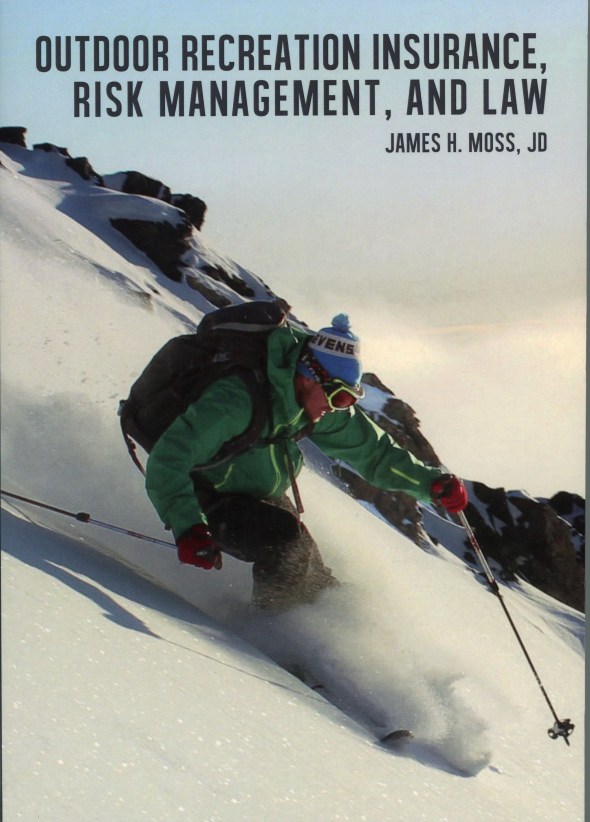
Outdoor Recreation Insurance,
Risk Management, and Law
A practical legal, risk-management, and insurance
resource for the outdoor recreation industry.
Running an outdoor recreation business means accepting risk.
It does not mean accepting unnecessary legal risk.
Whether you operate a guide service, outfitter, ski area,
rafting company, paddlesports business, climbing program,
adventure travel company, rental operation, camp, nonprofit,
manufacturing company, or other outdoor recreation business,
you face legal and insurance issues every day.
James H. Moss, JD

A Practical Resource for the Outdoor Recreation Industry
Outdoor Recreation Insurance, Risk Management, and Law
is designed to help outdoor recreation professionals understand
the legal, risk-management, and insurance issues that affect their
businesses, programs, and organizations.
This is not simply a book about legal theory.
It is a practical reference for people who actually operate,
manage, insure, manufacture for, or provide services to the
outdoor recreation industry.
It is designed for:
- Outdoor guides and outfitters
- Adventure and experiential travel companies
- Ski areas and ski businesses
- Whitewater rafting and paddlesports companies
- Climbing and mountaineering operations
- Camps and outdoor education programs
- Rental businesses
- Recreation nonprofits
- Manufacturers and suppliers
- Retailers and service providers
- Tour operators
- Program directors and risk managers
- Owners and managers of outdoor recreation businesses
- Students and professionals entering the industry

Understand What Happens When Something Goes Wrong
Most businesses think about risk management in terms of preventing
accidents.
That is only part of the problem.
What happens after the accident?
Who can be sued? What claims can be made? What defenses may be
available? What did the participant agree to before participating?
Does a release apply? What happens when the participant is a minor?
What role does insurance play? What statutes apply to the activity?
Understanding those questions
before an accident occurs
can change the way you manage your operation.
This book takes the reader from the fundamentals of the U.S.
legal system through the specific legal defenses and
risk-management issues that affect outdoor recreation.


The Book Gets Specific About Outdoor Recreation
Generic business risk-management advice often fails to address
the realities of outdoor recreation.
Outdoor recreation has unique activities, participants, equipment,
environments, employees, guides, weather conditions, inherent risks,
and operational issues.
This book addresses those realities.
It examines legal and risk-management issues associated with
activities including:
- Skiing and ski areas
- Whitewater rafting
- Water sports and paddlesports
- Other water-based activities
- Mountain biking
- Climbing
- Mountaineering
- Commercial recreational activities
- Rental programs
- Outdoor programs and operations
The activity-specific approach helps readers move beyond general
legal concepts and begin thinking about
the risks created by the activities they actually provide.

A Resource for Business Owners—Not Just Lawyers
You do not need to be an attorney to benefit from this book.
One purpose of the book is to help the people running outdoor
recreation businesses understand the legal and risk-management
issues they encounter
before they have to call an attorney because something has gone wrong.
The book can help you ask better questions of your:
- Attorney
- Insurance broker
- Insurance carrier
- Risk manager
- Employees
- Guides and instructors
- Program directors
- Consultants
- Business partners
It can also help you recognize when a question deserves
professional advice.
Knowing what questions to ask can be just as important
as knowing the answers.
Use It as a Risk-Management Reference
Keep it available when you:
- Start a new outdoor recreation business or program
- Add a new activity
- Develop or revise a participant release
- Review your insurance coverage
- Establish rental procedures
- Develop employee or guide procedures
- Evaluate a new program
- Work with minors
- Purchase or develop equipment
- Evaluate an accident or incident
- Review your risk-management program
- Talk with your attorney or insurance professional
The book is designed to be a
reference manual you can return to when a new question arises.
14 Chapters Cover the Issues You Need to Understand

Don’t Wait Until After the Accident
The most expensive time to learn about your legal and insurance
risks is after someone has been injured.
A lawsuit is not the time to discover that your release does not
address an activity you added two years ago.
An insurance claim is not the time to discover that you
misunderstood your coverage.
An accident is not the time to begin asking whether your
operating procedures adequately addressed a known risk.
Risk management works best before the claim.
Outdoor Recreation Insurance, Risk Management and Law
gives outdoor recreation professionals a resource for understanding
these issues before they become problems.
Understand the Risks. Understand the Law. Protect Your Business.
Risk Management, and Law
International orders:
Shipping costs vary by destination.
Please email
info@summitmagic.com
with your location for the applicable shipping cost.