
Ten Commandments of Dealing with People in a Crisis
Posted: November 23, 2010 Filed under: Uncategorized Leave a comment-
THOU SHALL NOT LIE.
2. THOU SHALL TRULY CARE FOR YOUR CUSTOMER.
3. THINK “WHAT IS RIGHT”
4. IDENTIFY ALL OF THE POSSIBLE VICTIMS AND DEAL WITH ALL VICTIMS
5. COMMUNICATE: ANY INFORMATION IS HELPFUL
6. MAKE NO PROMISES, EXCEPT THAT YOU WILL FIND THE ANSWERS.
7. PROVIDE FACTS, TRY NOT TO PROVIDE OPINIONS
8. UNDERSTAND THE PROBLEMS, NOT THE CAUSE
9. FOLLOW UP, NEVER FORGET THEM
10. START AND END YOUR APPROACH WITH YOUR CORPORATE MOTTO.
© JAMES H. MOSS 2002 – 2011
What do you think? Leave a comment.
Copyright 2011 Recreation Law (720) Edit Law, Recreation.Law@Gmail.com
Twitter: RecreationLaw
Facebook: Rec.Law.Now
Facebook Page: Outdoor Recreation & Adventure Travel Law
Mobile Site: http://m.recreation-law.com
#RecreationLaw, #@RecreationLaw, #Cycling.Law #Fitness.Law, #Ski.Law, #Outside.Law, #Recreation.Law, #Recreation-Law.com, #Outdoor Law, #Recreation Law, #Outdoor Recreation Law, #Adventure Travel Law, #law, #Travel Law, #Jim Moss, #James H. Moss, #Attorney at Law, #Tourism, #Adventure Tourism, #Rec-Law, #Rec-Law Blog, #Recreation Law, #Recreation Law Blog, #Risk Management, #Human Powered, #Human Powered Recreation,# Cycling Law, #Bicycling Law, #Fitness Law, #Recreation-Law.com, #Backpacking, #Hiking, #Mountaineering, #Ice Climbing, #Rock Climbing, #Ropes Course, #Challenge Course, #Summer Camp, #Camps, #Youth Camps, #Skiing, #Ski Areas, #Negligence, #Snowboarding, #RecreationLaw, #@RecreationLaw, #Cycling.Law #Fitness.Law, #SkiLaw, #Outside.Law, #Recreation.Law, #RecreationLaw.com, #OutdoorLaw, #RecreationLaw, #OutdoorRecreationLaw, #AdventureTravelLaw, #Law, #TravelLaw, #JimMoss, #JamesHMoss, #AttorneyatLaw, #Tourism, #AdventureTourism, #RecLaw, #RecLawBlog, #RecreationLawBlog, #RiskManagement, #HumanPowered, #HumanPoweredRecreation,# CyclingLaw, #BicyclingLaw, #FitnessLaw, #RecreationLaw.com, #Backpacking, #Hiking, #Mountaineering, #IceClimbing, #RockClimbing, #RopesCourse, #ChallengeCourse, #SummerCamp, #Camps, #YouthCamps, #Skiing, #Ski Areas, #Negligence, #Snowboarding,
Technorati Tags: WordPress Tags: Commandments,People,Crisis,THOU,SHALL,CARE,CUSTOMER,THINK,IDENTIFY,POSSIBLE,VICTIMS,DEAL,COMMUNICATE,INFORMATION,HELPFUL,MAKE,PROMISES,EXCEPT,FIND,ANSWERS,PROVIDE,FACTS,OPINIONS,UNDERSTAND,PROBLEMS,CAUSE,FORGET,START,APPROACH,CORPORATE,MOTTO,JAMES,MOSS,Leave,Recreation,Edit,Gmail,Twitter,RecreationLaw,Facebook,Page,Outdoor,Adventure,Travel,Blog,Mobile,Site,Outside,Attorney,Tourism,Risk,Management,Human,Rock,Ropes,Course,Challenge,Summer,Camp,Camps,Youth,Areas,Negligence,SkiLaw,OutdoorLaw,OutdoorRecreationLaw,AdventureTravelLaw,TravelLaw,JimMoss,JamesHMoss,AttorneyatLaw,AdventureTourism,RecLaw,RecLawBlog,RecreationLawBlog,RiskManagement,HumanPoweredRecreation,CyclingLaw,BicyclingLaw,FitnessLaw,RopesCourse,ChallengeCourse,SummerCamp,YouthCamps
Reasons Why People Sue
Posted: November 23, 2010 Filed under: Uncategorized Leave a comment Why This questions is never answered

![clip_image002[1]](https://recreation-law.com/wp-content/uploads/2011/11/clip_image0021_thumb.gif?w=15&h=15 "clip_image002[1]") How No one will Answer this question
How No one will Answer this question
![clip_image002[1]](https://recreation-law.com/wp-content/uploads/2011/11/clip_image00211.gif "clip_image002[1]")
![clip_image002[2]](https://recreation-law.com/wp-content/uploads/2011/11/clip_image0022_thumb.gif?w=15&h=15 "clip_image002[2]") Where Why won’t they tell me where the accident happened
Where Why won’t they tell me where the accident happened
![clip_image002[2]](https://recreation-law.com/wp-content/uploads/2011/11/clip_image0022.gif "clip_image002[2]")
![clip_image002[3]](https://recreation-law.com/wp-content/uploads/2011/11/clip_image0023_thumb.gif?w=15&h=15 "clip_image002[3]") Answers No one will answer my questions
Answers No one will answer my questions
![clip_image002[3]](https://recreation-law.com/wp-content/uploads/2011/11/clip_image0023.gif "clip_image002[3]")
![clip_image002[4]](https://recreation-law.com/wp-content/uploads/2011/11/clip_image0024_thumb.gif?w=15&h=15 "clip_image002[4]") Justice I want justice its been promised to me since first grade
Justice I want justice its been promised to me since first grade
![clip_image002[4]](https://recreation-law.com/wp-content/uploads/2011/11/clip_image0024.gif "clip_image002[4]")
![clip_image002[5]](https://recreation-law.com/wp-content/uploads/2011/11/clip_image0025_thumb.gif?w=15&h=15 "clip_image002[5]") Community I don’t want anyone else damaged by this company
Community I don’t want anyone else damaged by this company
![clip_image002[5]](https://recreation-law.com/wp-content/uploads/2011/11/clip_image0025.gif "clip_image002[5]")
![clip_image002[6]](https://recreation-law.com/wp-content/uploads/2011/11/clip_image0026_thumb.gif?w=15&h=15 "clip_image002[6]") Retribution I want to put them out of business
Retribution I want to put them out of business
![clip_image002[6]](https://recreation-law.com/wp-content/uploads/2011/11/clip_image0026.gif "clip_image002[6]")
![clip_image002[7]](https://recreation-law.com/wp-content/uploads/2011/11/clip_image0027_thumb.gif?w=15&h=15 "clip_image002[7]") Communication I want someone important to talk to me
Communication I want someone important to talk to me
![clip_image002[7]](https://recreation-law.com/wp-content/uploads/2011/11/clip_image0027.gif "clip_image002[7]")
![clip_image002[8]](https://recreation-law.com/wp-content/uploads/2011/11/clip_image0028_thumb.gif?w=15&h=15 "clip_image002[8]") Acknowledgement I want them to admit they were wrong
Acknowledgement I want them to admit they were wrong
![clip_image002[8]](https://recreation-law.com/wp-content/uploads/2011/11/clip_image0028.gif "clip_image002[8]")
![clip_image002[9]](https://recreation-law.com/wp-content/uploads/2011/11/clip_image0029_thumb.gif?w=15&h=15 "clip_image002[9]") Revenge they should not have treated me that way
Revenge they should not have treated me that way
![clip_image002[9]](https://recreation-law.com/wp-content/uploads/2011/11/clip_image0029.gif "clip_image002[9]")
![clip_image002[10]](https://recreation-law.com/wp-content/uploads/2011/11/clip_image00210_thumb.gif?w=15&h=15 "clip_image002[10]") Closure An element of many of the above, but important in the US today.
Closure An element of many of the above, but important in the US today.
![clip_image002[10]](https://recreation-law.com/wp-content/uploads/2011/11/clip_image00210.gif "clip_image002[10]")
![clip_image002[11]](https://recreation-law.com/wp-content/uploads/2011/11/clip_image00211_thumb.gif?w=15&h=15 "clip_image002[11]") Send a Message to protect others or to get a reaction or a change
Send a Message to protect others or to get a reaction or a change
![clip_image002[11]](https://recreation-law.com/wp-content/uploads/2011/11/clip_image002111.gif "clip_image002[11]")
![clip_image002[12]](https://recreation-law.com/wp-content/uploads/2011/11/clip_image00212_thumb.gif?w=15&h=15 "clip_image002[12]") To Change the World
To Change the World
![clip_image002[12]](https://recreation-law.com/wp-content/uploads/2011/11/clip_image00212.gif "clip_image002[12]")
![clip_image002[13]](https://recreation-law.com/wp-content/uploads/2011/11/clip_image00213_thumb.gif?w=15&h=15 "clip_image002[13]") Moral Vindication I as right!
Moral Vindication I as right!
![clip_image002[13]](https://recreation-law.com/wp-content/uploads/2011/11/clip_image00213.gif "clip_image002[13]")
![clip_image002[14]](https://recreation-law.com/wp-content/uploads/2011/11/clip_image00214_thumb.gif?w=15&h=15 "clip_image002[14]") Moral Justification I was not responsible for my child’s injuries
Moral Justification I was not responsible for my child’s injuries
![clip_image002[14]](https://recreation-law.com/wp-content/uploads/2011/11/clip_image00214.gif "clip_image002[14]")
What do you think? Leave a comment.
Copyright 2011 Recreation Law (720) Edit Law, Recreation.Law@Gmail.com
Twitter: RecreationLaw
Facebook: Rec.Law.Now
Facebook Page: Outdoor Recreation & Adventure Travel Law
Mobile Site: http://m.recreation-law.com
#RecreationLaw, #@RecreationLaw, #Cycling.Law #Fitness.Law, #Ski.Law, #Outside.Law, #Recreation.Law, #Recreation-Law.com, #Outdoor Law, #Recreation Law, #Outdoor Recreation Law, #Adventure Travel Law, #law, #Travel Law, #Jim Moss, #James H. Moss, #Attorney at Law, #Tourism, #Adventure Tourism, #Rec-Law, #Rec-Law Blog, #Recreation Law, #Recreation Law Blog, #Risk Management, #Human Powered, #Human Powered Recreation,# Cycling Law, #Bicycling Law, #Fitness Law, #Recreation-Law.com, #Backpacking, #Hiking, #Mountaineering, #Ice Climbing, #Rock Climbing, #Ropes Course, #Challenge Course, #Summer Camp, #Camps, #Youth Camps, #Skiing, #Ski Areas, #Negligence, #Snowboarding, #RecreationLaw, #@RecreationLaw, #Cycling.Law #Fitness.Law, #SkiLaw, #Outside.Law, #Recreation.Law, #RecreationLaw.com, #OutdoorLaw, #RecreationLaw, #OutdoorRecreationLaw, #AdventureTravelLaw, #Law, #TravelLaw, #JimMoss, #JamesHMoss, #AttorneyatLaw, #Tourism, #AdventureTourism, #RecLaw, #RecLawBlog, #RecreationLawBlog, #RiskManagement, #HumanPowered, #HumanPoweredRecreation,# CyclingLaw, #BicyclingLaw, #FitnessLaw, #RecreationLaw.com, #Backpacking, #Hiking, #Mountaineering, #IceClimbing, #RockClimbing, #RopesCourse, #ChallengeCourse, #SummerCamp, #Camps, #YouthCamps, #Skiing, #Ski Areas, #Negligence, #Snowboarding,
WordPress Tags: Reasons,People,Answer,Where,accident,Answers,Justice,Retribution,Communication,Acknowledgement,Revenge,Closure,Send,Message,reaction,Change,World,Moral,Vindication,Justification,injuries,Leave,Recreation,Edit,Gmail,Twitter,RecreationLaw,Facebook,Page,Outdoor,Adventure,Travel,Blog,Mobile,Site,Outside,Moss,James,Attorney,Tourism,Risk,Management,Human,Rock,Ropes,Course,Challenge,Summer,Camp,Camps,Youth,Areas,Negligence,SkiLaw,OutdoorLaw,OutdoorRecreationLaw,AdventureTravelLaw,TravelLaw,JimMoss,JamesHMoss,AttorneyatLaw,AdventureTourism,RecLaw,RecLawBlog,RecreationLawBlog,RiskManagement,HumanPoweredRecreation,CyclingLaw,BicyclingLaw,FitnessLaw,RopesCourse,ChallengeCourse,SummerCamp,YouthCamps
Crisis Response
Posted: November 23, 2010 Filed under: Uncategorized Leave a comment A Crisis is defined by your guest, not by you.
![clip_image001[1]](https://recreation-law.com/wp-content/uploads/2011/11/clip_image001110.gif "clip_image001[1]") Just because you do not define the situation as a crisis, does not mean it is not one.
Just because you do not define the situation as a crisis, does not mean it is not one.
![clip_image001[2]](https://recreation-law.com/wp-content/uploads/2011/11/clip_image00127.gif "clip_image001[2]") Every crisis requires a response, no matter what your position in the crisis
Every crisis requires a response, no matter what your position in the crisis
![clip_image001[3]](https://recreation-law.com/wp-content/uploads/2011/11/clip_image00131.gif "clip_image001[3]") Get Help: It will provide support for you and confidence for your guest
Get Help: It will provide support for you and confidence for your guest
![clip_image001[4]](https://recreation-law.com/wp-content/uploads/2011/11/clip_image00141.gif "clip_image001[4]") Goal 1 is to resolve the crisis. You may not solve it.
Goal 1 is to resolve the crisis. You may not solve it.
![clip_image001[5]](https://recreation-law.com/wp-content/uploads/2011/11/clip_image00151.gif "clip_image001[5]") Goal 2 is to bring the person in crisis to a better emotional level
Goal 2 is to bring the person in crisis to a better emotional level
![clip_image001[6]](https://recreation-law.com/wp-content/uploads/2011/11/clip_image00161.gif "clip_image001[6]") Goal 3 is to survive the crisis yourself
Goal 3 is to survive the crisis yourself
What do you think? Leave a comment.
Copyright 2011 Recreation Law (720) Edit Law, Recreation.Law@Gmail.com
Twitter: RecreationLaw
Facebook: Rec.Law.Now
Facebook Page: Outdoor Recreation & Adventure Travel Law
Mobile Site: http://m.recreation-law.com
#RecreationLaw, #@RecreationLaw, #Cycling.Law #Fitness.Law, #Ski.Law, #Outside.Law, #Recreation.Law, #Recreation-Law.com, #Outdoor Law, #Recreation Law, #Outdoor Recreation Law, #Adventure Travel Law, #law, #Travel Law, #Jim Moss, #James H. Moss, #Attorney at Law, #Tourism, #Adventure Tourism, #Rec-Law, #Rec-Law Blog, #Recreation Law, #Recreation Law Blog, #Risk Management, #Human Powered, #Human Powered Recreation,# Cycling Law, #Bicycling Law, #Fitness Law, #Recreation-Law.com, #Backpacking, #Hiking, #Mountaineering, #Ice Climbing, #Rock Climbing, #Ropes Course, #Challenge Course, #Summer Camp, #Camps, #Youth Camps, #Skiing, #Ski Areas, #Negligence, #Snowboarding, #RecreationLaw, #@RecreationLaw, #Cycling.Law #Fitness.Law, #SkiLaw, #Outside.Law, #Recreation.Law, #RecreationLaw.com, #OutdoorLaw, #RecreationLaw, #OutdoorRecreationLaw, #AdventureTravelLaw, #Law, #TravelLaw, #JimMoss, #JamesHMoss, #AttorneyatLaw, #Tourism, #AdventureTourism, #RecLaw, #RecLawBlog, #RecreationLawBlog, #RiskManagement, #HumanPowered, #HumanPoweredRecreation,# CyclingLaw, #BicyclingLaw, #FitnessLaw, #RecreationLaw.com, #Backpacking, #Hiking, #Mountaineering, #IceClimbing, #RockClimbing, #RopesCourse, #ChallengeCourse, #SummerCamp, #Camps, #YouthCamps, #Skiing, #Ski Areas, #Negligence, #Snowboarding,
WordPress Tags: Crisis,Response,guest,Just,situation,Help,confidence,Goal,person,Leave,Recreation,Edit,Gmail,Twitter,RecreationLaw,Facebook,Page,Outdoor,Adventure,Travel,Blog,Mobile,Site,Outside,Moss,James,Attorney,Tourism,Risk,Management,Human,Rock,Ropes,Course,Challenge,Summer,Camp,Camps,Youth,Areas,Negligence,SkiLaw,OutdoorLaw,OutdoorRecreationLaw,AdventureTravelLaw,TravelLaw,JimMoss,JamesHMoss,AttorneyatLaw,AdventureTourism,RecLaw,RecLawBlog,RecreationLawBlog,RiskManagement,HumanPoweredRecreation,CyclingLaw,BicyclingLaw,FitnessLaw,RopesCourse,ChallengeCourse,SummerCamp,YouthCamps
10 Signs of Great Risk Management
Posted: November 23, 2010 Filed under: Uncategorized Leave a commentScore 1 Point for Each Correct Answer
1. You have a Risk Management Plan
2. Employees know the Risk Management Plan
3. Employees know their place in the Risk Management Plan
4. Employees know the responsibilities of the person above and below them in the Risk Management Plan
5. The Risk Management Plan has been updated in the past 12 months
6. The Employees have been trained in the Risk Management Plan in the past 12 months
7. A mock disaster has been held using the Risk Management Plan
8. You have identified a team to deal with the human issues of a disaster
9. Senior Managers have gone through the same training and drills as the employees
10. You have not had to use the Risk Management Plan
0-1 Point: Lock the doors and go home now.
2-5 Points: Prepare for a lawsuit
5-7 Points Good, but you can do better
7-9 Points Not bad
10 Points Excellent
What do you think? Leave a comment.
Copyright 2011 Recreation Law (720) Edit Law, Recreation.Law@Gmail.com
Twitter: RecreationLaw
Facebook: Rec.Law.Now
Facebook Page: Outdoor Recreation & Adventure Travel Law
Mobile Site: http://m.recreation-law.com
#RecreationLaw, #@RecreationLaw, #Cycling.Law #Fitness.Law, #Ski.Law, #Outside.Law, #Recreation.Law, #Recreation-Law.com, #Outdoor Law, #Recreation Law, #Outdoor Recreation Law, #Adventure Travel Law, #law, #Travel Law, #Jim Moss, #James H. Moss, #Attorney at Law, #Tourism, #Adventure Tourism, #Rec-Law, #Rec-Law Blog, #Recreation Law, #Recreation Law Blog, #Risk Management, #Human Powered, #Human Powered Recreation,# Cycling Law, #Bicycling Law, #Fitness Law, #Recreation-Law.com, #Backpacking, #Hiking, #Mountaineering, #Ice Climbing, #Rock Climbing, #Ropes Course, #Challenge Course, #Summer Camp, #Camps, #Youth Camps, #Skiing, #Ski Areas, #Negligence, #Snowboarding, #RecreationLaw, #@RecreationLaw, #Cycling.Law #Fitness.Law, #SkiLaw, #Outside.Law, #Recreation.Law, #RecreationLaw.com, #OutdoorLaw, #RecreationLaw, #OutdoorRecreationLaw, #AdventureTravelLaw, #Law, #TravelLaw, #JimMoss, #JamesHMoss, #AttorneyatLaw, #Tourism, #AdventureTourism, #RecLaw, #RecLawBlog, #RecreationLawBlog, #RiskManagement, #HumanPowered, #HumanPoweredRecreation,# CyclingLaw, #BicyclingLaw, #FitnessLaw, #RecreationLaw.com, #Backpacking, #Hiking, #Mountaineering, #IceClimbing, #RockClimbing, #RopesCourse, #ChallengeCourse, #SummerCamp, #Camps, #YouthCamps, #Skiing, #Ski Areas, #Negligence, #Snowboarding,
WordPress Tags: SIGNS,GREAT,RISK,MANAGEMENT,Point,Correct,Answer,Plan,Employees,person,disaster,team,Senior,Managers,Lock,doors,Points,Prepare,lawsuit,Excellent,Leave,Recreation,Edit,Gmail,Twitter,RecreationLaw,Facebook,Page,Outdoor,Adventure,Travel,Blog,Mobile,Site,Outside,Moss,James,Attorney,Tourism,Human,Rock,Ropes,Course,Challenge,Summer,Camp,Camps,Youth,Areas,Negligence,SkiLaw,OutdoorLaw,OutdoorRecreationLaw,AdventureTravelLaw,TravelLaw,JimMoss,JamesHMoss,AttorneyatLaw,AdventureTourism,RecLaw,RecLawBlog,RecreationLawBlog,RiskManagement,HumanPoweredRecreation,CyclingLaw,BicyclingLaw,FitnessLaw,RopesCourse,ChallengeCourse,SummerCamp,YouthCamps,months
7 Mistakes Made by People who are called Defendant
Posted: November 23, 2010 Filed under: Uncategorized Leave a comment1. Hire and retain Uncaring Employees: Hire Well, Train Well, and Treat Well
2. Failing Know Your Customers and why they are buying from you.
3. Failing to Treat Your Customers the Way They Want to Be Treated:
4. Examining the problem from Your Perspective: Your customer sees the problem differently than you. The customer may not even understand the problem.
5. Placing a ridiculous value on principles and pride. Principles & Pride Goeth Before a Lawsuit
6. Never know Why you are being sued: Sticking your head in the sand, or passing the problem to a lawyer does not resolve the problem.
7. Forgetting What Your Mother Taught You: If you act like your mother taught you, you won’t be sued.
What do you think? Leave a comment.
Copyright 2011 Recreation Law (720) Edit Law, Recreation.Law@Gmail.com
Twitter: RecreationLaw
Facebook: Rec.Law.Now
Facebook Page: Outdoor Recreation & Adventure Travel Law
Mobile Site: http://m.recreation-law.com
#RecreationLaw, #@RecreationLaw, #Cycling.Law #Fitness.Law, #Ski.Law, #Outside.Law, #Recreation.Law, #Recreation-Law.com, #Outdoor Law, #Recreation Law, #Outdoor Recreation Law, #Adventure Travel Law, #law, #Travel Law, #Jim Moss, #James H. Moss, #Attorney at Law, #Tourism, #Adventure Tourism, #Rec-Law, #Rec-Law Blog, #Recreation Law, #Recreation Law Blog, #Risk Management, #Human Powered, #Human Powered Recreation,# Cycling Law, #Bicycling Law, #Fitness Law, #Recreation-Law.com, #Backpacking, #Hiking, #Mountaineering, #Ice Climbing, #Rock Climbing, #Ropes Course, #Challenge Course, #Summer Camp, #Camps, #Youth Camps, #Skiing, #Ski Areas, #Negligence, #Snowboarding, #RecreationLaw, #@RecreationLaw, #Cycling.Law #Fitness.Law, #SkiLaw, #Outside.Law, #Recreation.Law, #RecreationLaw.com, #OutdoorLaw, #RecreationLaw, #OutdoorRecreationLaw, #AdventureTravelLaw, #Law, #TravelLaw, #JimMoss, #JamesHMoss, #AttorneyatLaw, #Tourism, #AdventureTourism, #RecLaw, #RecLawBlog, #RecreationLawBlog, #RiskManagement, #HumanPowered, #HumanPoweredRecreation,# CyclingLaw, #BicyclingLaw, #FitnessLaw, #RecreationLaw.com, #Backpacking, #Hiking, #Mountaineering, #IceClimbing, #RockClimbing, #RopesCourse, #ChallengeCourse, #SummerCamp, #Camps, #YouthCamps, #Skiing, #Ski Areas, #Negligence, #Snowboarding,
WordPress Tags: Mistakes,Made,People,Defendant,Hire,Employees,Train,Treat,Customers,Want,Perspective,customer,pride,Principles,Goeth,Lawsuit,lawyer,Mother,Taught,Leave,Recreation,Edit,Gmail,Twitter,RecreationLaw,Facebook,Page,Outdoor,Adventure,Travel,Blog,Mobile,Site,Outside,Moss,James,Attorney,Tourism,Risk,Management,Human,Rock,Ropes,Course,Challenge,Summer,Camp,Camps,Youth,Areas,Negligence,SkiLaw,OutdoorLaw,OutdoorRecreationLaw,AdventureTravelLaw,TravelLaw,JimMoss,JamesHMoss,AttorneyatLaw,AdventureTourism,RecLaw,RecLawBlog,RecreationLawBlog,RiskManagement,HumanPoweredRecreation,CyclingLaw,BicyclingLaw,FitnessLaw,RopesCourse,ChallengeCourse,SummerCamp,YouthCamps
Schoeps v. Whitewater Adventures LLC 136 Fed.Appx. 966, 2005 WL 1523438 (C.A.9 (Cal.))
Posted: November 22, 2010 Filed under: Uncategorized Leave a commentSchoeps v. Whitewater Adventures LLC 136 Fed.Appx. 966, 2005 WL 1523438 (C.A.9)
This case was not selected for publication in the Federal Reporter. This case was not selected for publication in the Federal Reporter. Please use FIND to look at the applicable circuit court rule before citing this opinion. (FIND CTA9 Rule 36-3.)
United States Court of Appeals,
Ninth Circuit.
Hubert; Christiane Schoeps, as heirs and beneficiaries of Sandra Schoeps, deceased, Plaintiffs-Appellants, v.; Mark Gholson, Defendants-Appellees.
No. 03-17071.
Submitted June 15, 2005.FN*
This panel unanimously finds this case suitable for decision without oral argument. SeeFed. R.App. P. 34(a)(2).
Decided June 29, 2005.
*966 Gerald C. Sterns, Esq., Susie Injijian, Esq., Brenda Posada, Esq., Sterns & Walker, Oakland, CA, for Plaintiffs-Appellants.
Dena M. Roche, Esq., Jeremy Sugarman, Gordon-Creed Kelley Holl & Sugerman, San Francisco, CA, for Defendants-Appellees.
*967 Appeal from the United States District Court for the Northern District of California, Jeffrey S. White, District Judge, Presiding. D.C. No. CV-02-04784-JSW.
Before: TALLMAN, BYBEE, and BEA, Circuit Judges.
MEMORANDUM FN**
This disposition is not appropriate for publication and may not be cited to or by the courts of this circuit except as provided by Ninth Circuit Rule 36-3.
Hubert and Christiane Schoeps brought a diversity jurisdiction wrongful death action against Whitewater Adventures and its managing owner, Mark Gholson, alleging negligence, breach of contract, and intentional misrepresentation arising from the death of their daughter, Sandra Schoeps, during a whitewater rafting trip organized by the defendants. The district court granted the defendants summary judgment on all claims. The Schoeps appeal only the dismissal of their negligence claim against Whitewater Adventures. We review de novo the grant of summary judgment. Buono v. Norton, 371 F.3d 543, 545 (9th Cir.2004).
[1] We have jurisdiction pursuant to 28 U.S.C. § 1291, and we affirm. The district court correctly concluded that California law precludes recovery for Sandra’s personal injuries because she expressly assumed the risk of harm when she signed Whitewater Adventures’ liability release form before participating in the whitewater rafting activity. See Sweat v. Big Time Auto Racing, Inc., 117 Cal.App.4th 1301, 12 Cal.Rptr.3d 678, 681 (2004) (citation omitted). On the whole, the release is in plain language, contains a clear and comprehensive outline of the kinds of harm that may occur, and has the clear import of relieving Whitewater Adventures of liability for negligence or other harms. See Saenz v. Whitewater Voyages, Inc., 226 Cal.App.3d 758, 276 Cal.Rptr. 672, 676-77 (1990).
[2] Moreover, we conclude that the liability release was not unconscionable. See Ilkhchooyi v. Best, 37 Cal.App.4th 395, 45 Cal.Rptr.2d 766, 774-75 (1995) (noting that unconscionability has “procedural and substantive elements, both of which must be present to invalidate a clause”). Substantively, it is not unreasonable or unexpected for an organizer of adventure sports to reallocate risk to the participants through a liability waiver. See, e.g., Ford v. Gouin, 3 Cal.4th 339, 11 Cal.Rptr.2d 30, 834 P.2d 724, 728 (1992). Procedurally, there were no hidden terms in the liability release, and the most oppressive aspect of the situation was that if Sandra refused to sign it she could not go with the group on the river and might be stuck without transportation in an isolated area. But this was not caused by any action or inaction on Whitewater Adventures’ part; nor is there any evidence in the record that Denyse Caven, who had driven Sandra to the meeting point, would have been unwilling to leave with Sandra or to let Sandra drive herself, nor that no other transportation was available. The district court recognized that Sandra had only a few minutes to decide whether to sign the release and would have lost her pre-paid ticket price had she refused to sign. However, this is not sufficient to constitute oppression or lack of meaningful choice, particularly insofar as Sandra had been given a brochure before the rafting trip in which Whitewater Adventures stated: “[w]e require all trip participants to sign a liability release*968 waiver before embarking on your trip.” See Ilkhchooyi, 45 Cal.Rptr.2d at 775.
We may affirm on any ground supported by the record, San Jose Christian Coll. v. City of Morgan Hill, 360 F.3d 1024, 1030 (9th Cir.2004), and therefore do not reach the issue of whether recovery is also barred under the primary assumption of risk doctrine. See Ferrari v. Grand Canyon Dories, 32 Cal.App.4th 248, 38 Cal.Rptr.2d 65, 67-68 (1995).
The Schoeps’ maritime jurisdiction claim was not presented to the district court and so we do not consider it here. See United States v. Flores-Payon, 942 F.2d 556, 558 (9th Cir.1991).
Whitewater rafting suit stopped because deceased signed a release.
Posted: November 22, 2010 Filed under: Release (pre-injury contract not to sue), Whitewater Rafting Leave a commentA well written release creates in a jurisdiction that supports releases creates short appellate court decisions.
Schoeps v. Whitewater Adventures LLC; 136 Fed. Appx. 966; 2005 U.S. App. LEXIS 13181
The plaintiffs are the parents of the deceased. The deceased went rafting with the defendant Whitewater Adventures LLC and died. The parents sued the rafting company and its owner.
Prior to the raft trip the plaintiff signed a release. The plaintiffs argued the deceased had non time to read the release and was forced to sign the release. If she did not sign the release the deceased would not have been able to go rafting and would have been stuck in an “isolated area.” The court stated the deceased would have also lost her pre-paid ticket price if she failed to sign the release. The court commented on all of these issues and found them unpersuasive. However, the fact the court commented on the issues is important and something to be aware of in the future.
The court held that the deceased was informed that she had to sign a release and the fact she might be stuck in an isolated area was not oppression to force a signature on the release by the deceased.
However, this is not sufficient to constitute oppression or lack of meaningful choice, particularly insofar as Sandra had been given a brochure before the rafting trip in which Whitewater Adventures stated: “[w]e require all trip participants to sign a liability release*968 waiver before embarking on your trip.”
The plaintiffs are also argued the release was unconscionable. The court found that unconscionability is a two part test. Failing to find both tests are met will violate the release. Here the court found:
Substantively, it is not unreasonable or unexpected for an organizer of adventure sports to reallocate risk to the participants through a liability waiver. Procedurally, there were no hidden terms in the liability release….
So?
Give your guests plenty of time to read and sign the release
Give your guests their money back if they don’t sign the release
Let your guests know, in advance, that they must sign a release before they can go rafting.
When a court lists items raised by the plaintiff as issues and comments about them, it is good for the immediate case. However it can also be picked up by other plaintiffs and other courts and used as a way to void your release in other decisions.
On a moral basis if you are as an operator of a business or program and someone finds out they do not want to engage in your activity, happily give them back their money.
Put on your website that participants will have to sign a release and put the release on the website also. With the new laws concerning electronic signatures of contracts you can even have your guests sign the release online. Let your customers know in advance what they are going to be undertaking so they do not have issues or questions in your office the day of the activity.
Copyright 2010 Recreation Law (720) Edit Law, Recreation.Law@Gmail.com
High Country News is looking for bloggers
Posted: November 20, 2010 Filed under: Uncategorized Leave a commentHigh Country News seeks a few more bloggers who will write on environmental justice in the West — spread the word and have interested writers e-mail stephanieo @ hcn . org.
This came from High Country News Facebook Page
the Leisure Trends Group “Most Active Americans Panel is Looking for more participants
Posted: November 19, 2010 Filed under: Uncategorized Leave a commentHey Friends – Click here to Join the Most Active Americans Panel
Whether you love the ability to provide leading manufacturers, retailers and resorts your opinions on the leisure products and services you use, or are in it for the chance at great prizes such as outdoor gear, gift cards and even Hawaiian vacations, the Most Active Americans Panel is a great way to stay involved in the activities you love.
URL address link:
http://survey.leisuretrends.com/default.asp?study=5friend
Tell them Recreation Law Sent you.
Technorati Tags: Leisure,Trends,Group,Most,Active,Americans,Panel,participants,Friends,Click,Join,Whether,manufacturers,retailers,resorts,opinions,products,gear,gift,cards,Hawaiian,vacations,Tell,Recreation,Sent
Windows Live Tags: Leisure,Trends,Group,Most,Active,Americans,Panel,participants,Friends,Click,Join,Whether,manufacturers,retailers,resorts,opinions,products,gear,gift,cards,Hawaiian,vacations,Tell,Recreation,Sent
WordPress Tags: Leisure,Trends,Group,Most,Active,Americans,Panel,participants,Friends,Click,Join,Whether,manufacturers,retailers,resorts,opinions,products,gear,gift,cards,Hawaiian,vacations,Tell,Recreation,Sent
Blogger Labels: Leisure,Trends,Group,Most,Active,Americans,Panel,participants,Friends,Click,Join,Whether,manufacturers,retailers,resorts,opinions,products,gear,gift,cards,Hawaiian,vacations,Tell,Recreation,Sent
Volume 2(3): Journal of Outdoor Recreation, Education, and Leadership is now available
Posted: November 19, 2010 Filed under: Uncategorized Leave a commentBowling Green, Ky. The Western Kentucky University Research Foundation, the Association of Outdoor Recreation and Education; and the Wilderness Education Association are pleased to announce publication of Volume 2(3) of the Journal of Outdoor Recreation, Education, and Leadership.
The Journal of Outdoor Recreation, Education, and Leadership publishes quality manuscripts to disseminate the latest knowledge related to outdoor recreation, education, and leadership to help develop theory and practice. The journal seeks quantitative and/or qualitative research findings; conceptual or theoretical discussions; or program practices. Relevant topic areas (centered on outdoor recreation, outdoor education, or outdoor leadership) for the journal include, but are not limited to: outdoor recreation, adventure recreation, outdoor education, outdoor leadership, pedagogy, administration, programming, risk management, wilderness medicine, certification, participant behavior, trends, diversity, training, and outcomes.
Abstracts (free) and full articles (available by subscription) are available at www.ejorel.com. Volume 2(3) includes the following:
1. Editors’ Notes – (Aram Attarian and Raymond Poff)
2. Residential Outdoor Education and Environmental Attitudes: An Examination in a Malaysian University (Md Amin Md Taff, Azlizam Aziz, Raja Nor Safinas Raja Haron, Nelfianty Mohd Rasyid, & Mazuki Mohd Yasim)
3. Can Family Outdoor and Countryside Recreation Help Reconnect Children with the Outdoors? Affluent Middle Childhood Perspectives of Countryside Recreation in the United Kingdom (Debbie Pearlman Hougie)
4. The Validity of Petzoldt’s Energy Mile Theory (Maridy McNeff Troy & Maurice Phipps)
5. Appalachian Trail Hiking Motivations and Means-end Theory: Theory, Management, and Practice (Edwin Gómez, Barbara Freidt, Eddie Hill, Marni Goldenberg, & Laura Hill)
6. An Exploratory Investigation of the Roles Friends Groups Play in National Park Management (Melissa L. Baker, Shashi Dhungel, Mae A. Davenport, Jessica E. Leahy, & Christopher A. Bridges)
7. Developing Trends and Issues in U.S. Outdoor and Adventure-Based Programming (Andrew J. Bobilya, Tom Holman, Betsy Lindley, & Leo H. McAvoy)
The journal advisory group (representing AORE, WEA, and WKURF) includes: Tom Stuessy, Ph.D., Green Mountain College; Raymond Poff, Ph.D., Western Kentucky University; Eric Frauman, Ph.D., Appalachian State University; Connie Foster, MLS, Western Kentucky University; Mary Williams, B.S., Wilderness Education Association; Rachel Collins, M.S., University of Utah.
Support for The Journal of Outdoor Recreation, Education, and Leadership
The journal, hosted at WKU, uses resources available through TopSCHOLAR™ http://digitalcommons.wku.edu/ a University-wide, centralized digital repository dedicated to scholarly research, creative activity and other full-text learning resources that merit enduring and archival value and permanent access. TopSCHOLAR™ uses the Digital Commons platform from Berkeley Electronic Press http://www.bepress.com
The Association of Outdoor Recreation and Education (AORE) http://www.aore.org/ provides opportunities for professionals and students in the field of outdoor recreation and education to exchange information, promote the preservation and conservation of the natural environment, and address issues common to college, university, community, military, and other not-for-profit outdoor recreation and education programs.
The Wilderness Education Association (WEA) http://www.weainfo.org/ promotes the professionalism of outdoor leadership through establishment of national standards, curriculum design, implementation, advocacy, and research driven initiatives.
The Western Kentucky University Research Foundation (WKURF) is organized to support Western Kentucky University efforts to promote the development, implementation, and coordination of extramurally sponsored programs involving research, instruction, public service, and to legally protect, manage and commercialize intellectual property resulting from research, scholarship and creative activities on behalf of Western Kentucky University.
Contact:
Dr. Aram Attarian, Editor-in-Chief
(919) 515-3709, aram_attarian@ncsu.edu
www.ejorel.com
Raymond Poff, Ph.D.
WKU Dept. of Kinesiology, Recreation and Sport
E.A. Diddle Arena 2042 Phone: (270) 745-2498
Associate Professor, Recreation Administration
Executive Director, Nonprofit Administration (American Humanics)
Please consider subscribing and submitting manuscripts to these two great resources for practitioners and academicians:
Journal of Outdoor Recreation, Education, and Leadership
Journal of Nonprofit Education and Leadership
Technorati Tags: Volume,Journal,Outdoor,Recreation,Education,Leadership,Western,Kentucky,Research,Foundation,Association,publication,manuscripts,knowledge,theory,findings,discussions,Relevant,topic,areas,adventure,pedagogy,administration,management,medicine,certification,participant,behavior,trends,outcomes,Abstracts,subscription,Editors,Notes,Aram,Attarian,Raymond,Poff,Residential,Environmental,Attitudes,Examination,Malaysian,Amin,Taff,Azlizam,Aziz,Raja,Safinas,Haron,Mohd,Rasyid,Mazuki,Yasim,Countryside,Help,Reconnect,Children,Outdoors,Affluent,Middle,Kingdom,Debbie,Pearlman,Hougie,Petzoldt,Energy,Mile,Maridy,McNeff,Troy,Maurice,Phipps,Appalachian,Trail,Motivations,Means,Practice,Edwin,Gómez,Barbara,Freidt,Eddie,Hill,Marni,Goldenberg,Laura,Exploratory,Investigation,Roles,Friends,Groups,Play,National,Park,Melissa,Baker,Shashi,Dhungel,Davenport,Jessica,Leahy,Christopher,Bridges,Issues,Andrew,Bobilya,Holman,Betsy,Lindley,McAvoy,WKURF,Stuessy,Mountain,College,Eric,Frauman,State,Connie,Foster,Mary,Williams,Rachel,Collins,Utah,Support,resources,TopSCHOLAR,repository,text,Digital,Commons,platform,Berkeley,Electronic,opportunities,professionals,students,information,preservation,conservation,environment,professionalism,establishment,curriculum,implementation,advocacy,efforts,development,coordination,instruction,scholarship,Contact,Editor,Chief,Dept,Kinesiology,Sport,Diddle,Arena,Associate,Professor,Executive,Director,Nonprofit,American,Humanics,ejorel
6 Apps for Skiing
Posted: November 18, 2010 Filed under: Ski Area Leave a commentJust don’t lose your phone while riding the lift.
Mashable has a great article on six apps for skiing. The apps are:
1. REALSKI Augmented Reality
2. Vail’s EpicMix App
3. iTrailMap 3D
4. Snow and Ski Report by REI
5. Elevation Pro
6. snowEdge
RealSki allows you to hold up your phone and it will tell you what you are looking this. The app identifies runs as well as other things on the mountain. The RealSki video was filmed at Copper Mountain and Vail.
See Skiing and Snowboarding: 6 Apps For Conquering the Slopes.
Copyright 2010 Recreation Law (720) Edit Law, Recreation.Law@Gmail.com
Have we grown soft or stupid?
Posted: November 17, 2010 Filed under: Uncategorized 2 CommentsArticle theorizes that we do not have the ability to determine when we are at risk anymore.
An article Listen to your inner voice that warns of perilous activity brings to the forefront the issue that evolution might have dulled our senses to the risks of life.
The theory postulated in the article says we do not know the risk of what we do anymore. “We can’t tell the difference between being brave and being stupid.” Any sixth sense has devolved or has is just ignored.
Richard Culver, the senior director of security services for the American division of International SOS was quoted stating “More people die white-water rafting than white-water kayaking,” he says. “But people feel safer in a raft because they are with others and it is a large flotation device. Therefore, they tend to take on bigger risks, whereas in a kayak you’re more exposed and don’t feel as safe.“”
There are more reasons for this theory, if the argument is valid. Novices go rafting, rarely do novices go kayaking in whitewater where they can drown.
Another theory put forth in the article was a group mentality idea. As humans we feel safe in a group. However we don’t have the skills to use the group to protect ourselves. Musk ox in the arctic when threatened group together with the young and vulnerable in the center of the group. Predators must face the bulls to attack an individual. Predators are able to pick off humans in the group no matter how safe they may feel because we are not thinking like a group. (And this is without the rules changing or the group changing like those groups on TV.) It is just a mass of individuals, consequently there is no protection in a group, even though we think, feel like there is.
I have several personal theories about this. In the US we have become accustomed to the governments keeping us safe or if we do get injured we get rich. On top of that our medical care has been able to bring back hundreds of people from death, most to the same life they had before their injuries. The idea that we need to protect ourselves is just gone, the government does that why should we protect ourselves.
That theory of government protection vaporizes once we leave the US. However that feeling does not. US travelers are always shocked when they are injured and instead of flight for life, a donkey shows up to transport injured travelers to the hospital. I’ve heard stories of US citizens refusing to be transported by donkey or litter believing that flight for life is on its way. There is no flight for life when there are no helicopters.
Another idea I keep bouncing around is the “I saw it on TV/magazine/online and I know I can do that too!” Every little kid who is signed up for a ski lesson first asks, “When are we going to the terrain park?” They may not be able to stand up on their skis or board, but they are ready for the X Games in their mind. That I’m ready I can do it mentality does not fade when we get older and in a few cases seems to intensify.
Whether it is keeping up with Bob next door, reliving old glories or creating new ones, we just don’t understand getting old or we fear getting old and not having accomplished anything. (Thank heavens I’ve not gotten old!)
What does this mean? If you are someone in this group, buy more health and disability insurance. Buy travel insurance and rescue insurance and be prepared….to die. If you lead trips like this you need to do a better job of informing your guests of the risks of what you are doing. We are so driven to get that dollar that we forget that we are taking neophytes (my term for idiots in some cases) into places they cannot survive on their own and may not survive with you.
See Listen to your inner voice that warns of perilous activity
Copyright 2010 Recreation Law (720) Edit Law, Recreation.Law@Gmail.com
If a tree falls in the woods, is there someone around to start a lawsuit?
Posted: November 16, 2010 Filed under: Uncategorized 2 CommentsIt’s the woods, where do you think you are?
Another person has filed a lawsuit claiming injuries from a tree that fell on them. In this case, the person was driving through the Rogue River National Forest when a tree fell and hit his truck.
He is suing the US Forest Service and a lumber company that was supposed to cut the tree down. By failing to cut the tree down, the USFS and lumber company are allegedly liable.
Trees fall over. If you don’t want to get hit by a tree, stay out of the woods.
Jack London wrote about trees falling in the woods, and I suspect that trees have been falling a lot longer than that and they will continue to fall in the future. When a tall thing no longer has support it falls over. If you don’t believe this, go to any bar where tall people drink excessively.
Please fight this one and do not settle. Unless the US Forest service and the lumber company fight this lawsuit, eventually the woods will be closed or woods will be a field. The government does not like paying out money, and it will be easy to close anyplace that has any commercial activity in it rather than deal with idiots who claim the government should have made the place safe.
See Oregon man sues over tree that fell and hurt him.
Copyright 2010 Recreation Law (720) Edit Law, Recreation.Law@Gmail.com
Wisconsin Recreational Use Statute prevents lawsuit over accidental drowning of guests at sports club
Posted: November 15, 2010 Filed under: Swimming, Wisconsin | Tags: Adventure travel, Recreational Use Statute, swimming, Wisconsin, Wisconsin Supreme Court Leave a commentWI Supreme Court thoroughly reviews the definition of non-profit in examining the recreational use statute
Trinidad v. Capitol Indemnity Corporation, 2008 WI App 36; 308 Wis. 2d 394; 746 N.W.2d 604; 2008 Wisc. App. LEXIS 50 aff’d Trinidad v. Capitol Indemnity Corporation, 2009 WI 8; 315 Wis. 2d 324; 759 N.W.2d 586; 2009 Wisc. LEXIS 3
This is always a tough situation when the court has to apply the law no matter how sad the facts of the case. However, this is how our country works, the law controls no matter how hard the heartstrings are tuagged.
In this case, a family went to a wildlife area that was incorporated as a non-profit hunting club. While there, two young girls drowned. The parents sued the non-profit corporation for their loss. The trial court granted the defendants’ motion for summary judgment, which was upheld by the appellate court and the Wisconsin Supreme Court.
The legal issue was the application of the Wisconsin Recreational Land Use Statute, Wis. Stat. § 895.52 (2009). The state has different laws on how the protection of the recreational use statute will be applied based on the type of landowner. In this case, a landowner who is a non-profit, has broader protection if there is a fee charged for the use of the land.
The group that invited the plaintiffs to the hunting club paid the fee for the use of the land, not the plaintiffs. The plaintiffs were on the land for free.
The Wisconsin Recreational Use Statute first defines a non-profit as “Nonprofit organization” means an organization or association not organized or conducted for pecuniary profit.” Wis. Stat. § 895.52. The statute then defines the activities that will be protected by the statute.
Recreational activity” includes hunting, fishing, trapping, camping, picnicking, exploring caves, nature study, bicycling, horseback riding, bird-watching, motorcycling, operating an all-terrain vehicle, ballooning, hang gliding, hiking, tobogganing, sledding, sleigh riding, snowmobiling, skiing, skating, water sports, sight-seeing, rock-climbing, cutting or removing wood, climbing observation towers, animal training, harvesting the products of nature, sport shooting and any other outdoor sport, game or educational activity
The families activities, picnicking and water sports, are specifically listed as protected.
The immunity afforded by the statute is specific.
1. A duty to keep the property safe for recreational activities.
2. A duty to inspect the property, except as provided under s. 23.115 (2)
3. A duty to give warning of an unsafe condition, use or activity on the property. (b) Except as provided in subs. (3) to (6), no owner and no officer, employee or agent of an owner is liable for the death of, any injury to, or any death or injury caused by, a person engaging in a recreational activity on the owners property or for any death or injury resulting from an attack by a wild animal.
The statute then provides additional protection for non-profit entities as defined by the statute.
(5) LIABILITY; PROPERTY OF NONPROFIT ORGANIZATIONS.
Subsection (2) does not limit the liability of a nonprofit organization or any of its officers, employees or agents for a death or injury caused by a malicious act or a malicious failure to warn against an unsafe condition of which an officer, employee or agent of the nonprofit organization knew, which occurs on property of which the nonprofit organization is the owner.
The statute goes further to allow property owners to collect up to $2000.00 per year for the use of the property.
The court in Trinidad concentrated on the definition of a non-profit. The plaintiff argued the organization had not kept its articles of incorporation current with the changes in the statute over the years. The Wisconsin Statutes concerning Wisconsin non-profits had changed several times since the defendant had been incorporated as a non-profit entity.
However, the court did not find this controlling. The Wisconsin Secretary of State and the IRS still considered the defendant a non-profit and that was all that mattered.
So?
Many corporations forget that they may have to amend their articles of organization as the statutes controlling a corporation or LLC changes. Always check with an attorney, whether you are a non-profit or for profit entity to make sure your paperwork is current and up to date.
A big area that most corporations fail to do is titles. No state statute recognizes CEO. Although the CEO may be the top person, the president has all of the legal authority according to state law.
All fifty states in the US have recreational use statutes. All 50 of them are very different. If you are going to rely on the recreational use statute for protection from litigation, make sure you meet each of the requirements based on the activities occurring on your land and the type of landowner you are.
When in doubt, do not rely on the recreational use statute alone. Either receive an indemnification agreement from groups bringing people on to your land or have each person entering and using your land sign a release.
What do you think? Leave a comment.
Copyright 2010 Recreation Law (720) Edit Law, Recreation.Law@Gmail.com
Keywords:
#recreation-law.com, #outdoor law, #recreation law, #outdoor recreation law, #adventure travel law, #law, #travel law, #Jim Moss, #James H. Moss, #attorney at law, #tourism, #adventure tourism, #rec-law, #rec-law blog, #recreation law, #recreation law blog, #risk management, #Human Powered, #human powered recreation,# cycling law, #bicycling law, #fitness law, #recreation-law.com, #backpacking, #hiking, #Mountaineering, #ice climbing, #rock climbing, #ropes course, #challenge course, #summer camp, #camps, #youth camps, #skiing, #ski areas, #negligence, #Recreational Use Statute, #Charitable Immunity, #non-profit, #Wisconsin, #Wisconsin Supreme Court, #Private Club, #Hunting Club Technorati Tags: Wisconsin,Recreational,Statute,lawsuit,guests,recreation,adventure,Moss,James,attorney,tourism,management,Human,youth,areas,negligence,Charitable,Supreme,Court,Private,Club,blog
Windows Live Tags: Wisconsin,Recreational,Statute,lawsuit,guests,recreation,adventure,Moss,James,attorney,tourism,management,Human,youth,areas,negligence,Charitable,Supreme,Court,Private,Club,blog
WordPress Tags: Wisconsin,Recreational,Statute,lawsuit,guests,recreation,adventure,Moss,James,attorney,tourism,management,Human,youth,areas,negligence,Charitable,Supreme,Court,Private,Club,blog
Blogger Labels: Wisconsin,Recreational,Statute,lawsuit,guests,recreation,adventure,Moss,James,attorney,tourism,management,Human,youth,areas,negligence,Charitable,Supreme,Court,Private,Club,blog

People familiar with the legal system are more likely to sue.
Posted: November 15, 2010 Filed under: North Dakota | Tags: Bra, Failure to Warn, Federal Supplement, Inmate, Litigation, North Dakota, Plaintiff, Product liability, Sports Bra Leave a commentHowever, the court found the manufacturer of a sports bra not liable. The plaintiff in this case sued for burns she received while wearing a sports bra. The bases of the claim was burns the plaintiff received allegedly from the chemicals in the materials used to manufacture the bra. However, the plaintiff also laid out in the prison courtyard wearing the black sports bra in over 100-degree heat. She suffered a few burns that were 1 to 3 centimeters in size.
The plaintiff argued failure to warn, negligence, and strict products liability claims.
The court dismissed the failure to warn and negligence claims because the plaintiff did not have any proof, other than her own statements, that there was a duty or a breach of the duty to her. No other witness or more importantly expert witness corroborated her claims. To prove negligent design under North Dakota law the plaintiff must prove “that the defendant failed to use reasonable care in designing the product and that failure resulted in a defective product.” The plaintiff was never able to connect that the design of the bra was the cause of her burns. There was no legal or even reasonable connection between her burns and the fabric, the construction, or design of the bra.
Under a strict liability theory in North Dakota, the plaintiff had to prove.
…by a preponderance of the evidence the product was defective in design or manufacture; the defect rendered the product unreasonably dangerous to the consumer; the defect existed when the product left the manufacturer; and the defect was a proximate cause of the plaintiff’s injuries.
The key is unreasonably dangerous. Simply having a product that produced an injury is not enough to prove a strict liability defect claim. You must supply a connection between the injury and the product AND that the problem with the product was unreasonable. Again, here is where the court said an expert witness was needed to prove the defect and whether that defect was unreasonable.
So?
There is a good discussion of North Dakota product liability law in this case, no matter the facts. The issue to remember, unlike negligence, which is uniformly defined and applied in all 50 states, each state has a slightly different approach to product liability claims.
The information contained here is good, but best only for North Dakota.
However, to win a product liability case you must state a cause of action. Injuries alone are not enough.
Familiar with the legal system usually means lawyers and paralegals. However, in this case, it also included prisoners. Once you understand the legal system, and in this case have a lot of time on your hands, you are more likely to sue.
 |
Jim Moss is an attorney specializing in the legal issues of the outdoor recreation community. He represents guides, guide services, and outfitters both as businesses and individuals and the products they use for their business. He has defended Mt. Everest guide services, summer camps, climbing rope manufacturers; avalanche beacon manufacturers, and many more manufacturers and outdoor industries. Contact Jim at Jim@Rec-Law.us |
Jim is the author or co-author of six books about the legal issues in the outdoor recreation world; the latest is Outdoor Recreation Insurance, Risk Management and Law.
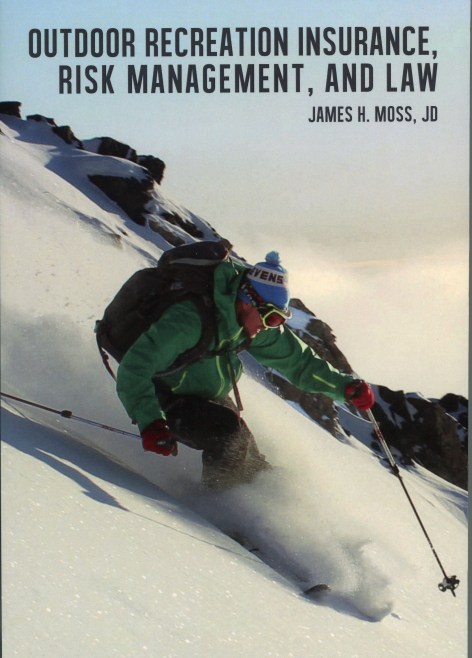
Outdoor Recreation Insurance, Risk Management and Law
To see Jim’s complete bio go here and to see his CV you can find it here. To find out the purpose of this website go here.
G-YQ06K3L262
What do you think? Leave a comment.
If you like this let your friends know or post it on FB, Twitter or LinkedIn
Author: Outdoor Recreation Insurance, Risk Management and Law
Facebook Page: Outdoor Recreation & Adventure Travel Law
Email: Jim@Rec-Law.US
By Recreation Law Rec-law@recreation-law.com James H. Moss
@2010-2023 Summit Magic Publishing, LLC
#recreation-law.com, #outdoor law, #recreation law, #outdoor recreation law, #adventure travel law, #law, #travel law, #Jim Moss, #James H. Moss, #attorney at law, #tourism, #adventure tourism, #rec-law, #rec-law blog, #recreation law, #recreation law blog, #risk management, #Human Powered, #human powered recreation,# cycling law, #bicycling law, #fitness law, #recreation-law.com, #backpacking, #hiking, #Mountaineering, #ice climbing, #rock climbing, #ropes course, #challenge course, #summer camp, #camps, #youth camps, #skiing, #ski areas, #negligence, #products, #product liability, #unreasonably dangerous, #strict liability, #product liability law, #defect, Technorati Tags: recreation,adventure,Moss,James,attorney,tourism,management,Human,youth,areas,negligence,products,product,blog
Windows Live Tags: recreation,adventure,Moss,James,attorney,tourism,management,Human,youth,areas,negligence,products,product,blog
WordPress Tags: recreation,adventure,Moss,James,attorney,tourism,management,Human,youth,areas,negligence,products,product,blog
Blogger Labels: recreation,adventure,Moss,James,attorney,tourism,management,Human,youth,areas,negligence,products,product,blog
Burgad v. Jack L. Marcus, Inc., 345 F. Supp. 2d 1036; 2004 U.S. Dist. LEXIS 24491; CCH Prod. Liab. Rep. P17,226
Posted: November 15, 2010 Filed under: Legal Case, North Dakota | Tags: Bra, Failure to Warn, Federal Supplement, Inmate, North Dakota, North Dakota Supreme Court, Product liability, Summary judgment Leave a commentTo Read an Analysis of this decision see People familiar with the legal system are more likely to sue.
Burgad v. Jack L. Marcus, Inc., 345 F. Supp. 2d 1036; 2004 U.S. Dist. LEXIS 24491; CCH Prod. Liab. Rep. P17,226
Susan Burgad a/k/a Susan Hubbard, Plaintiff, -vs- Jack L. Marcus, Inc., Defendant.
Case No. A1-03-138
UNITED STATES DISTRICT COURT FOR THE DISTRICT OF NORTH DAKOTA, SOUTHWESTERN DIVISION
345 F. Supp. 2d 1036; 2004 U.S. Dist. LEXIS 24491; CCH Prod. Liab. Rep. P17,226
November 24, 2004, Decided
November 24, 2004, Filed
DISPOSITION: Defendant’s Motion for Summary Judgment granted.
COUNSEL: [**1] For SUSAN BURGAD AKA SUSAN HUBBARD, Plaintiff: Theresa L. Zimmerman, BISMARCK, ND.
For JL MARCUS, INC, Defendant: Patrick W. Durick, PEARCE & DURICK, BISMARCK, ND.
For JACK L MARCUS, INC., Defendant: Patrick W. Durick, Bonnie L. Christner, PEARCE & DURICK, BISMARCK, ND.
JUDGES: Daniel L. Hovland, Chief Judge United States District Judge.
OPINION BY: Daniel L. Hovland
OPINION
Summary: The Plaintiff filed a complaint against a sports bra retailer for injuries sustained while wearing the product. The Plaintiff alleged failure to warn, negligence, and strict products liability. The Court granted the Defendant’s Motion for Summary Judgment based on the Plaintiff’s failure to show a breach of duty on the part of the Defendant, failure to show causation, and failure to show the sports bra was either defective or unreasonably dangerous as required by North Dakota law. The Court’s decision was based primarily on the Plaintiff’s lack of any expert testimony.
[*1037] ORDER GRANTING DEFENDANT’S MOTION FOR SUMMARY JUDGMENT
Before the Court is the Defendant’s Motion for Summary Judgment filed on August 30 2004. On November 1, 2004, the Plaintiff filed a response opposing the motion. For [**2] the following reasons, the motion is granted.
I. BACKGROUND
In July of 2001, the plaintiff, Susan Burgad, ordered a cotton/spandex sports bra from the defendant, Jack L. Marcus, Inc. (Marcus) catalog. The sports bra was shipped to Burgad on July 19, 2001. At that time Burgad was residing at the Missouri River Correctional Facility in Bismarck, North Dakota.
After receiving the sports bra, Burgad wore the bra outside without wearing a shirt. Burgad contends she exposed herself to the sun while wearing the sports bra without a shirt and was severely burned on both breasts. The record reveals that Burgad laid out in the sun while [*1038] wearing the black sports bra in temperatures exceeding 100 degrees. See Affidavit of Burgad, P 3. Burgad sustained three small burns on her right breast varying in size from 1-3 centimeters. She sustained three similar burns on her left breast varying from 1-2 centimeters. In December of 2003, Burgad filed an action in Burleigh County in North Dakota for negligence, product liability, and failure to warn. On December 29, 2003, Marcus removed the action under 28 U.S.C. § 1441 from Burleigh County to the United States [**3] District Court for the District of North Dakota.
II. STANDARD OF REVIEW
[HN1] It is well-established that summary judgment is appropriate when, viewed in a light most favorable to the non-moving party, there are no genuine issues of material fact and that the moving party is entitled to judgment as a matter of law. Fed.R.Civ.P. 56(c); Graning v. Sherburne County, 172 F.3d 611, 614 (8th Cir. 1999). A fact is “material” if it might effect the outcome of the case and a factual dispute is “genuine” if the evidence is such that a reasonable jury could return a verdict for the non-moving party. Anderson v. Liberty Lobby, Inc., 477 U.S. 242, 248, 91 L. Ed. 2d 202, 106 S. Ct. 2505 (1986).
[HN2] The basic inquiry for purposes of summary judgment is whether the evidence presents a sufficient disagreement to require submission to a jury or whether it is so one-sided that one party must prevail as a matter of law. Quick v. Donaldson Co., Inc., 90 F.3d 1372, 1376 (8th Cir. 1996). The moving party has the initial burden of demonstrating to the Court that there are no genuine issues of material fact. If the moving party has met this burden, the non-moving party cannot simply [**4] rest on the mere denials or allegations in the pleadings. Instead, the non-moving party must set forth specific facts showing that there are genuine issues for trial. Fed.R.Civ.P. 56(e). A mere trace of evidence supporting the non-movant’s position is insufficient. Instead, the facts must generate evidence from which a jury could reasonably find for the non-moving party. Anderson v. Liberty Lobby, Inc., 477 U.S. 242, 252, 91 L. Ed. 2d 202, 106 S. Ct. 2505 (1986).
III. LEGAL DISCUSSION
[HN3] The North Dakota Supreme Court has “recognized that negligence and strict liability in tort are separate and distinct theories of products liability and that each theory has a different focus.” Oanes v. Westgo, Inc., 476 N.W.2d 248, 253 (N.D. 1991) (citing Butz v. Werner, 438 N.W.2d 509 (N.D. 1989); Mauch v. Mfrs. Sales & Services, Inc., 345 N.W.2d 338 (N.D. 1984); Day v. General Motors Corp., 345 N.W.2d 349 (N.D. 1984)). Strict liability focuses on whether a product is defective and unreasonably dangerous, whereas negligence focuses on whether the manufacturer’s conduct falls below the standard of reasonable care. Crowston v. Goodyear Tire & Rubber Co., 521 N.W.2d 401, 406 (N.D. 1994).
[**5] A. NEGLIGENCE
[HN4] In any negligence action the plaintiff has the burden of demonstrating (1) a duty, (2) a breach of that duty, (3) causation, and (4) damages. Investors Real Estate Trust Properties, Inc. v. Terra Pacific Midwest, Inc., 2004 ND 167, 686 N.W.2d 140, 144 (N.D. 2004). Burgad’s negligence claim appears to be based on two theories: negligent design and negligent failure to warn.
[HN5] In a negligent design claim, the manufacturer or seller is not liable absent proof that the product is defective. Oanes v. Westgo, Inc., 476 N.W.2d 248, 253 (N.D. 1991). Therefore, one element of a negligent design claim is that the product is defective or unsafe. The plaintiff must prove that the defendant failed to use reasonable [*1039] care in designing the product and that failure resulted in a defective product.
[HN6] The North Dakota Supreme Court has recognized a cause of action for “failure to warn” and has cited the principles set forth in Section 388 of the Restatement Second of Torts (1965), as summarizing the elements for negligent failure to warn. Collette v. Clausen, 2003 ND 129, 667 N.W.2d 617, 624 (N.D. 2003). That section provides as follows:
§ 388 [**6] Chattel Known to Be Dangerous for Intended Use
One who supplies directly or through a third person a chattel for another to use is subject to liability to those whom the supplier should expect to use the chattel with the consent of the other or to be endangered by its probable use, for physical harm caused by the use of the chattel in the manner for which and by a person for whose use it is supplied, if the supplier
(a) knows or has reason to know that the chattel is or likely to be dangerous for the use for which it is supplied, and
(b) has no reason to believe that those for whose use the chattel is supplied will realize its dangerous condition, and
(c) fails to exercise reasonable care to inform them of its dangerous condition or of the facts which make it likely to be dangerous.
Restatement (Second) of Torts § 388 (1965). The North Dakota Supreme Court held that by applying the principles of the Restatement, the court was not creating a new cause of action but merely clarifying existing basic negligence principles within the context of failure to warn. Collette, 2003 ND 129, 667 N.W.2d 617, 624 (citing Barsness v. General Diesel & Equip. Co., Inc., 383 N.W.2d 840, 845 (N.D. 1986)). [**7]
To support her claims, Burgad has submitted an “Analysis Report” completed by Chemir Analytical Services, a company based in Maryland Heights, Maryland. Chemir Analytical Services tested a sample of the sports bra worn by Burgad and a sample of an exemplar sports bra. The “Analysis Report” indicates the existence of different chemicals contained within the fabric of the sports bra. Burgad also submitted several Material Safety Data Sheets (MSDS) obtained over the Internet. The MSDS provide detailed information about chemicals, including toxicity and hazards associated with the particular chemical. Burgad then selected several of the chemicals found in the sports bras and submitted a MSDS for each chemical in an attempt to show negligence.
The basis for Burgad’s “failure to warn” claim is not clear from the pleadings. In her complaint she states that “the Defendant failed to warn the Plaintiff of the risks involved in exposing the bra to sunlight.” Complaint, P 21. A seemingly unrelated contention appears in Burgad’s brief: “There were no warnings that the bra should be laundered prior to use.” Yet another contention is that there were “no warnings of the existence of such chemicals [**8] or their potential for irritation or burning of the skin.” The alleged design defect appears to be that the bra contained certain chemicals which individually or in combination caused the burning.
However, Burgad’s claims of negligence appear to have several flaws. Most notably, under both theories, Burgad is required to prove negligence and that such negligence was the proximate cause of her injuries. The “Analysis Report” prepared by Chemir Analytical Services does not address the issues of duty, breach of duty, or causation. In order to circumvent the need to establish causation, Burgad contends that the doctrine of res ipsa loquitur should apply.
[*1040] The North Dakota Supreme Court has provided insight into the doctrine of res ipsa loquitur:
[HN7] Although labeled a doctrine, res ipsa loquitur is not a rule of substantive law but is a principle of evidence. Negligence must be affirmatively proved, and will not be presumed merely from the occurrence of the accident or damages. However, negligence may be proved by circumstantial evidence, and the res ipsa doctrine is a form of circumstantial evidence.
Robert v. Aircraft Investment Co., Inc., 1998 ND 62, 575 N.W.2d 672, 674 (N.D. 1998). [**9] The Supreme Court also explained how the doctrine operates:
[HN8] As applied in this State, res ipsa loquitur allows the fact-finder to draw an inference that the defendant’s conduct was negligent if the following foundational fact are provided: (1) the accident was one which does not ordinarily occur in the absence of negligence; (2) the instrumentality which caused the injury was in the exclusive control of the defendant; and (3) there was no voluntary action or contribution on the part of the plaintiff.
Id. A plain reading of the doctrine reveals that Burgad’s reliance upon the doctrine of res ipsa loquitur is misplaced. The instrumentality that allegedly caused the injuries (the sports bra) was not in Marcus’s exclusive control. In addition, the accident is not one which does not ordinarily occur in the absence of negligence. It is also unclear whether the actions of Burgad may have contributed in some manner to cause the injuries, namely, sunbathing in a black sports bra in temperatures exceeding 100 degrees. In summary, the doctrine of res ipsa loquitor does not operate in Burgad’s favor.
The record also reveals that Burgad is unable to establish and prove there [**10] was a breach of any standard of care, or that a design defect existed, due to the failure to retain an expert witness. Marcus correctly cites the Eighth Circuit case of Dancy v. Hyster Co., 127 F.3d 649 (8th Cir. 1997), to support the proposition that expert testimony is required to set forth a claim of negligence in a products liability action. In Dancy, the plaintiff filed an action against a lift truck manufacturer for negligence and strict liability. After striking the plaintiff’s expert under Daubert v. Merrell Dow Pharmaceuticals, Inc., 509 U.S. 579, 125 L. Ed. 2d 469, 113 S. Ct. 2786 (1993), the district court granted the defendant’s motion for summary judgment on both claims and held that the plaintiff could not prevail without expert testimony. Drawing upon Arkansas case law, the Eighth Circuit held that “absent expert testimony, there is no basis for the jury to evaluate the actions of an ordinarily prudent person.” Id. at 654; (citing Skinner v. R.J. Griffin & Co., 313 Ark. 430, 855 S.W.2d 913, 915 (Ark. 1993)): see Anderson v. Raymond Corp., 340 F.3d 520, 524-25 (8th Cir. 2003) (reaching the same decision and upholding summary judgment [**11] for claims of negligence, strict liability, and failure to warn due to lack of expert testimony under Arkansas law); Erling v. American Allsafe Company, 2000 U.S. App. LEXIS 22473, No. 99-3403, 2000 WL 1247863, *1-2 (8th Cir. Sept. 5, 2000) (upholding summary judgment as to negligent failure to warn, negligent design, and strict liability claims due to lack of expert testimony under North Dakota law).
[*1041] It is undisputed that no witness, other than Burgad, has stated that Marcus breached any standard of care, failed to exercise reasonable care in the design and manufacture of the sports bra, or that the sports bra was defective, unsafe, or unreasonably dangerous. No witness, other than Burgad, has established a causal connection between any alleged design defect and the injuries sustained by Burgad. Following Eighth Circuit precedent, Burgad’s claims of negligence are unable to survive summary judgment due to the lack of any expert testimony to support such claims. The Court finds that there are no genuine issues of material fact for a jury to resolve regarding the claims of negligence.
B. STRICT LIABILITY
The North Dakota Supreme Court has also described the necessary elements for [**12] strict products liability:
[HN9] In order to recover for injuries sustained as a result of a defective condition in a product, unreasonably dangerous to a consumer, the plaintiff must show by a preponderance of the evidence the product was defective in design or manufacture; the defect rendered the product unreasonably dangerous to the consumer; the defect existed when the product left the manufacturer; and the defect was a proximate cause of the plaintiff’s injuries.
Enderson v. Scheels Hardware and Sports Shop, Inc., 1997 ND 38, 560 N.W.2d 225, 228 (N.D. 1997) (citing Kaufman v. Meditec, Inc., 353 N.W.2d 297, 300 (N.D. 1984)). The North Dakota Century Code defines and clarifies these elements:
[HN10] No product may be considered to have a defect or to be in a defective condition, unless at the time the product was sold by the manufacturer or other initial seller, there was a defect or defective condition in the product which made the product unreasonably dangerous to the user or consumer
N.D. Cent. Code § 28-01.3-06. Section 28-01.3-01(3) of the North Dakota Century Code provides the definition of “unreasonably dangerous:”
[HN11] “Unreasonably dangerous” [**13] means that the product is dangerous to an extent beyond which would be contemplated by the ordinary and prudent buyer, consumer, or user of that product in that community considering the product’s characteristics, propensities, risks, dangers, and uses, together with any actual knowledge, training, or experience possessed by the particular buyer, user or consumer.
[HN12] Under North Dakota law, “a plaintiff cannot prevail simply by proving a product’s defect and causation of the injury which the plaintiff suffered.” Reagan v. Hi-Speed Checkweigher Co., Inc., 30 F.3d 947, 948 (8th Cir. 1994) (citing Kaufman v. Meditec, Inc., 353 N.W.2d 297, 301 (N.D. 1984)) (quotations omitted). The plaintiff must also prove that the product was unreasonably dangerous based on its condition at the time it left the manufacturer. The mere fact that an accident or incident occurred, standing alone, does not support a claim that a product was defective. As a general rule, a plaintiff is required to prove a product defect through an expert witness.
The Court finds that Burgad’s strict liability claims suffer a similar fate as the claims of negligence. [HN13] It is well-established [**14] that expert testimony is needed to prevail on a strict liability claim. See Dancy v. Hyster Co., 127 F.3d 649 (8th Cir. 1997). As previously noted, Burgad has made no showing that the sports bra was defective in design or manufacturer; that any such defect rendered the sports bra unreasonably dangerous to the user or consumer; that the defect existed when the sports bra left the manufacturer; or that the defect was a proximate cause of [*1042] the plaintiff’s injuries. In the absence of any expert testimony to establish the critical elements of a strict liability claim, the claim must fail. Merely submitting a series of Material Safety Data Sheets (MSDS), standing alone, will not meet the minimal burden of proof nor create a factual dispute for the jury to resolve at trial. A mere statement in a MSDS which notes that a certain chemical has the capacity to cause injury is not sufficient to create a jury question. The effects of exposure to any chemical or hazardous substance will always be dependent upon the dose, the duration of exposure, the method and manner of exposure, personal traits and habits, and the presence of other chemicals, toxic or otherwise. Many of the chemicals [**15] identified in the “Analysis Report” from Chemir Analytical Services are chemicals commonly found in clothing and many other consumer goods. The mere presence of chemicals in a piece of clothing such as a sports bra, or the fact such chemicals may have the potential to cause injury or illness, is not sufficient, by itself, to establish liability or causation in a products liability action.
IV. CONCLUSION
The Defendant Jack L. Marcus’ Motion for Summary Judgment (Docket No. 18) is GRANTED.
IT IS SO ORDERED.
Dated this 24 day of November, 2004.
Daniel L. Hovland, Chief Judge
United States District Court
Trinidad v. Capitol Indemnity Corporation, 2009 WI 8; 315 Wis. 2d 324; 759 N.W.2d 586; 2009 Wisc. LEXIS 3
Posted: November 15, 2010 Filed under: Legal Case, Swimming, Wisconsin | Tags: Articles of Incorporation, Recreational Use, Recreational Use Statute, swimming, Wisconsin Leave a commentNelly De La Trinidad, Individually, and as Special Administrator of the Estate of Elizabeth Callejas-De La Trinidad, Deceased, and Victor Leonardo Aguilar-Hernandez, and Luz Maria Torres-Sanches, Individually, and as Special Administrator of the Estate of Marisol Aguilar-Torres, Deceased, Plaintiffs-Appellants-Petitioners, v. Capitol Indemnity Corporation, a Wisconsin Insurance Corporation, Halter Wildlife, Inc., and Rachel Proko, Defendants-Respondents.
No. 2007AP45
2009 WI 8; 315 Wis. 2d 324; 759 N.W.2d 586; 2009 Wisc. LEXIS 3
November 4, 2008, Argued
January 23, 2009, Filed
PRIOR HISTORY:
REVIEW of a decision of the Court of Appeals. COURT: Circuit. COUNTY: Kenosha. JUDGE: David M. Bastianelli. (L.C. No. 2005CV145).
De La Trinidad v. Capitol Indem. Corp., 2008 WI App 36, 308 Wis. 2d 394, 746 N.W.2d 604, 2008 Wisc. App. LEXIS 50 (2008)
DISPOSITION: Affirmed.
COUNSEL: For the plaintiffs-appellants-petitioners there were briefs by Patrick O. Dunphy, Robert D. Crivello, and Cannon & Dunphy, S.C., Brookfield, and oral argument by Robert D. Crivello.
For the defendants-respondents there were briefs by James S. Smith, Wendy G. Gunderson, and Smith, Gunderson & Rowen, S.C., Brookfield, and oral argument by Wendy G. Gunderson.
JUDGES: N. PATRICK CROOKS, J.
OPINION BY: N. PATRICK CROOKS
OPINION
[**327] [***588] [*P1] N. PATRICK CROOKS, J. Petitioners Nelly De La Trinidad, Victor Leonardo Aguilar-Hernandez, and [**328] Luz Maria Torres-Sanches (collectively, De La Trinidad) are the parents of two children who drowned in a pond on the grounds of Halter Wildlife, Inc. De La Trinidad seeks review of an unpublished court of appeals opinion 1 affirming a circuit court order that dismissed their lawsuit against Halter Wildlife, Inc. (Halter); its insurer, Capitol Indemnity Corporation; and lifeguard Rachel Proko, an employee of Halter, on the grounds that the recreational immunity statute 2 applies and bars a suit under these circumstances.
1 Nelly De La Trinidad v. Capitol Indem. Corp., No. 2007AP45, 2008 WI App 36, 308 Wis. 2d 394, 746 N.W.2d 604, unpublished slip op. (Wis. Ct. App. Jan. 23, 2008).
2 Wis. Stat. § 895.52 (2005-06). All subsequent references to the Wisconsin Statutes are to the 2005-06 version unless otherwise indicated.
[*P2] The sole question before us is whether Halter is “an organization or association not organized or conducted for pecuniary profit” under Wis. Stat. § 895.52(1)(c) and as such entitled to immunity from liability for negligence, as well as for safe place violations, for any deaths occurring during recreational activity on Halter’s land. 3 De La Trinidad contends that Halter cannot be a nonprofit organization for two reasons: first, because it was incorporated in 1984 under the statute that since 1953 has governed for-profit corporations; and second, because it supplemented membership dues with revenues from other [**329] activities–revenues that created a budget surplus or profit which in turn meant dividends for members in the form of dues that were lower than they would otherwise have been. Halter argues that its articles of incorporation show that it was organized as a nonprofit, and its financial records and its status with the Internal Revenue Service (IRS) and the Wisconsin Department of Financial Institutions (DFI) show that it is not conducted for profit and has never paid any dividends.
3 Because the statute also grants immunity to the employees and agents of nonprofit landowners, and because Proko is being sued in her capacity as an employee of Halter, the resolution of this question affects the claims against Proko as well. “[N]o owner and no officer, employee or agent of an owner is liable for the death of, any injury to, or any death or injury caused by, a person engaging in a recreational activity on the owner’s property. . . .” Wis. Stat. § 895.52(2)(b).
[*P3] The recreational immunity statute does not define nonprofits by referencing the chapter under which they were incorporated, either chapter 180 or 181, so that factor is not dispositive of the question. We see no basis in the statute for defining “profit” as broadly as De La Trinidad urges. Halter’s articles of incorporation, tax returns, and financial statements make clear that it was organized and is conducted as a nonprofit organization, a fact recognized by both Wisconsin and the federal government. For these reasons, explained more fully below, Halter is a nonprofit organization as defined by the statute and is thus entitled to immunity.
[*P4] We therefore affirm the decision of the court of appeals.
[***589] I. BACKGROUND
[*P5] Though it filed restated articles of incorporation in 1984 and 1988 which varied in some respects from the original articles, Halter has since its inception consistently defined itself as a nonprofit stock corporation under ch. 180 of the Wisconsin Statutes. These articles and successive restated articles of incorporation were accepted for filing by the secretary of state. The current articles of incorporation describe Halter as a [**330] hunt and sportsman club with the purpose of promoting wetlands preservation and environmental education.
Its regulations allow its approximately 275 dues-paying members to invite guests 4 to events held on the club’s grounds, which include a clubhouse, a picnic area, a ball park, and a beach and pond used for fishing and swimming. In addition to annual membership dues, Halter collects extra fees from members who host picnics and other events to which guests are invited.
4 The general public does not have access to Halter’s facilities; only club members and their guests may be on the property. Payment of invoices or statements is required under the organization’s regulations to be made by a member’s check.
[*P6] It was at one such event, a company picnic hosted on July 13, 2002, by Finishing and Plating Services (FPS) of Kenosha, 5 that the tragic drownings of the two children occurred.
5 The picnic guests were not charged admission; in keeping with Halter’s regulations, FPS, which held a corporate membership with Halter, paid the invoice for the picnic.
[*P7] De La Trinidad filed this lawsuit, alleging negligence and safe place violations by Halter, and negligence by Proko. The Kenosha County Circuit Court, the Honorable David Bastianelli presiding, granted summary judgment for the defendants. The circuit court noted that despite Halter’s organization under ch. 180 6 as a nonprofit stock corporation, all of the documentation of its existence, from its articles of incorporation to its tax returns, supported the conclusion that it was organized as a nonprofit. The circuit [**331] court also concluded that under the statute’s definition, Halter’s fund-raising activities did not make it a for-profit corporation, noting that the record showed no distributions of profits or earnings to members. The court of appeals affirmed, pointing out that the recreational immunity statute does not define nonprofit with reference to the chapter under which the organization is incorporated. The court of appeals also found that Halter’s nonprofit status turned not on how funds were generated, but rather on how they were used. It noted, “[M]ost importantly, Halter is not organized to distribute profits to anyone, and it does not do so.” Nelly De La Trinidad v. Capitol Indem. Corp., No. 2007AP45, 2008 WI App 36, 308 Wis. 2d 394, 746 N.W.2d 604, unpublished slip op., P15 (Wis. Ct. App. Jan. 23, 2008). For those reasons it affirmed the circuit court. De La Trinidad petitioned this court for review, and on May 13, 2008, review was granted.
6 The present version of ch. 180 of the Wisconsin Statutes governs “Business Corporations,” which include those issuing stock. Wis. Stat. § 180.0103(5). The present version of ch. 181 governs “Nonstock Corporations,” which are defined as including nonprofit corporations. Wis. Stat. § 181.0103(5).
II. STANDARD OF REVIEW
[*P8] [HN1] The application of a statute to undisputed facts is reviewed de novo. Wis. Dep’t of Revenue v. Menasha Corp., 2008 WI 88, P44, 311 Wis. 2d. 579, 754 N.W.2d 95.
[***590] III. DISCUSSION
[*P9] The question we address is whether Halter was a nonprofit organization under the recreational immunity statute 7 and is therefore entitled to immunity [**332] from liability for negligence, as well as for the claimed safe place violations. [HN2] Nonprofit organizations are among the types of property owners to whom immunity is extended under the statute. 8 7 Wisconsin Stat. § 895.52(2):
[HN3] No duty; immunity from liability. (a) Except as provided in subs. (3) to (6), no owner and no officer, employee or agent of an owner owes to any person who enters the owner’s property to engage in a recreational activity:
1. A duty to keep the property safe for recreational activities.
2. A duty to inspect the property, except as provided under s. 23.115(2).
3. A duty to give warning of an unsafe condition, use or activity on the property.
(b) Except as provided in subs. (3) to (6), no owner and no officer, employee or agent of an owner is liable for the death of, any injury to, or any death or injury caused by, a person engaging in a recreational activity on the owner’s property . . . .
Subsections (3) to (6) do not apply in this case. They deal with government property, malicious acts, and private property owners who collect fees for recreational use of the land in excess of $ 2,000 per year.
There is no dispute here either as to the ownership of the land or as to the recreational nature of the activity.
8 Wisconsin Stat. § 895.52(1), (c) and (d):
[HN4] (c) “Nonprofit organization” means an organization or association not organized or conducted for pecuniary profit.
(d) “Owner” means either of the following:
1. A person, including a governmental body or nonprofit organization, that owns, leases or occupies property. . . .
[*P10] We begin of course with [HN5] the statute’s definition of a nonprofit organization as “an organization or association not organized or conducted for pecuniary profit.” Wis. Stat. § 895.52(1)(c). We address each prong in turn: how Halter is organized and how it is conducted. 9
9 Wisconsin Stat. § 895.52(1)(c) uses the wording “not organized or conducted for pecuniary profit,” which can be read as intending to mean both prongs would have to be met (as in, “neither organized nor conducted for pecuniary profit”) or as intending to mean that at least one prong would have to be met (as in, “not organized or not conducted for pecuniary profit”).
Yet, in Szarzynski, this court has called the language “clear on its face and capable of one simple construction–that the organizations that are organized and/or conducted for purposes other than profit-making are eligible for recreational immunity under the statute.” Szarzynski v. YMCA, 184 Wis. 2d 875, 890, 517 N.W.2d 135 (1994). Neither party argues that Wis. Stat. § 895.52(1)(c) may be interpreted in the conjunctive or disjunctive, and it is not necessary for us to consider the question here. Halter does not argue that because it was either organized or conducted as a nonprofit, it was entitled to immunity. Rather, it argues that it met both requirements. We recognize that the “and/or” construction often can be problematic. See, e.g., Wisconsin Bill Drafting Manual § 2.01(9)(a) (2009-10) (“Never use the compound ‘and/or.’ ‘And’ is conjunctive and ‘or’ is disjunctive; decide whether you mean ‘and’ or ‘or’ and use the proper word.”).
[**333] A. “Not organized . . . for pecuniary profit”
[*P11] De La Trinidad’s contention that Halter is organized for pecuniary profit centers on the fact that, as Halter’s restated articles of incorporation provide, it is organized as a stock-issuing corporation “pursuant to the authority and provisions of Chapter 180 of the Wisconsin Statutes.” De La Trinidad contends that this means it is by definition a for-profit–or at best a corporation masquerading as a nonprofit while reserving the legal right to convert to for-profit whenever it chooses–regardless of what its articles of incorporation currently say.
[***591] [*P12] Halter argues that the question of whether it is organized for pecuniary profit is answered by the statement of purpose in its articles of incorporation: “The corporation will be a non-profit corporation which is to be formed not for private profit but exclusively for educational, benevolent, fraternal, social and athletic [**334] purposes within the meaning of Section 501(c)(7) of the Internal Revenue Code of 1954 . . . .” The articles of incorporation, Halter argues, are consistent with its status with the federal and state governments: the Department of the Treasury granted it tax exempt status under § 501(c)(7) of the Internal Revenue Code, and the state Department of Financial Institutions has confirmed that it has operated since its inception as a nonprofit. Halter points to our decision in Szarzynski v. YMCA, 184 Wis. 2d 875, 890, 517 N.W.2d 135 (1994), in which we cited the definition provided in Black’s Law Dictionary for the term “nonprofit corporation.” That definition made explicit reference to the federal tax code 10 and included corporations “no part of the income of which is distributable to its members, directors or officers.” Id. at 890 (quoting Black’s Law Dictionary 1056 (6th ed. 1990)). Because it distributes no income to members, directors or officers and because it is a nonprofit for purposes of federal taxation, Halter argues that it is organized as a nonprofit.
10 In fact, part of the dictionary’s definition of “nonprofit corporation” not quoted in Szarzynski refers readers to I.R.C. § 501(c) “for a list of exempt organizations.” Black’s Law Dictionary 1056 (6th ed. 1990). The clear inference from that definition is that it intends to define all § 501(c) organizations as nonprofit corporations.
[*P13] A brief summary of the history of chapters 180 and 181 will help make sense of the parties’ arguments. Prior to 1953, it was not unusual for Wisconsin organizations to be incorporated as nonprofit stock corporations under ch. 180. There was a change in the statute, however, that took effect that year and remained in effect at the time of Halter’s incorporation, and it is not entirely clear whether by that change, the legislature intended to continue to permit nonprofit [**335] stock organizations under ch. 180. De La Trinidad relies on a 1958 opinion of the attorney general that examined the statute and concluded otherwise: “[A] nonprofit stock corporation cannot be lawfully organized under ch. 180 subsequent to July 1, 1953 . . . .” 47 Wis. Op. Att’y Gen. 78, 81 (1958).
[*P14] As even that attorney general’s opinion acknowledged, however, it is difficult to reconcile several provisions of the statute. 11 One provision, for example, defines “corporation” as including “a corporation with capital stock but not organized for profit.” Wis. Stat. § 180.02(1) (1957). Another appears to contemplate nonprofits organized under ch. 180 even after 1953: “After June 30, 1953 ch. 180 shall apply to all domestic corporations with capital stock, regardless of when they were organized and whether for profit or not . . . .” Wis. Stat. § 180.97(1) (1957) (emphasis added). However, that same section contains a provision that refers only to nonprofits formed prior to 1953, and is silent as to nonprofits formed thereafter: “any domestic corporation with capital stock but not organized for profit which has before July 1, 1953, been organized under the general corporation laws . . . shall be subject to ch. 180 only to the extent that the provisions of ch. 180 are not inconsistent [***592] with the articles or form of organization of such corporation . . . .” Id. (emphasis added).
11 The opinion noted, “It would have been much more explicit if the legislature had stated plainly that no stock nonprofit corporations are to be organized under ch. 180 after July 1, 1953.” 47 Wis. Op. Att’y Gen. 78, 81 (1958).
[*P15] The attorney general’s 1958 opinion in response to a query from the secretary of state acknowledged that the statute “does say that there can be such a thing as a corporation with capital stock but not [**336] organized for profit.” 47 Wis. Op. Att’y Gen. at 80. The opinion also said Wis. Stat. § 180.97(1) “leaves the door wide open for nonprofit stock corporations” because the language in that section is “about as all-embracing as human draftsmanship can devise.” Id. Nevertheless, in light of an absence of any language in Wis. Stat. § 180.97(1) (1957) about post-1953 stock nonprofits, the attorney general advised that absent explicit statutory authority, the secretary of state “would be justified in finding that the proposed articles [for a nonprofit stock] do not conform to law.” Id. at 81.
[*P16] De La Trinidad urges us to adopt the reasoning of that attorney general’s opinion and reach the same conclusion concerning Halter’s articles of incorporation. Of course, we are not bound to do so. [HN6] “‘An Attorney General’s opinion is only entitled to such persuasive effect as the court deems the opinion warrants.'” State v. Gilbert, 115 Wis. 2d 371, 380, 340 N.W.2d 511 (1983) (quoting Hahner v. Bd. of Educ., 89 Wis. 2d 180, 192, 278 N.W.2d 474 (Ct. App. 1979)). In this case, the opinion does not warrant great persuasive effect; it candidly acknowledges broad language in the statute, for example, that leads to the opposite conclusion. However, even if the attorney general’s opinion was correct as to ch. 180 nonprofits, it merely concluded that the secretary of state “would be justified” in rejecting articles of incorporation for such an organization. 12
12 Even if the secretary of state erred in permitting a nonprofit to organize under ch. 180 rather than requiring it to organize under ch. 181, it does not follow that such an error alone would convert Halter into a for-profit organization. The court of appeals accordingly held that “whether Halter’s form of organization is lawful or not is not the issue in this case.” De La Trinidad, No. 2007AP45, 2008 WI App 36,, 746 N.W.2d 604, unpublished slip op., P8. We agree.
[**337] [*P17] Which brings us to a key point: notwithstanding the attorney general’s opinion on the matter, there is no dispute that the secretary of state did accept and file Halter’s articles of incorporation and restated articles of incorporation. Three times. From the repeated filing and acceptance it is reasonable to infer that the acceptance was intentional and that the secretary of state saw no legal impediment to Halter’s incorporation as a nonprofit under ch. 180. 13 [HN7] Under Wis. Stat. § 180.0203(2), filing of the articles of incorporation by the DFI “is conclusive proof that the corporation is incorporated under this chapter . . . .”
13 It is clear that a different policy was in effect in 1958 in the secretary of state’s office; the attorney general’s opinion from that year makes reference to the fact that the office at that time was “refus[ing] to accept such articles for filing[.]” 47 Wis. Op. Att’y Gen. at 79.
[*P18] That the State of Wisconsin accepted Halter’s incorporation on those terms is verified by the certified document from the secretary of state that confirmed the filing in 1988. It is also confirmed by a 2005 letter from the DFI, which, in response to a letter from Halter about the organization’s status and designation on the DFI online database, stated:
Regarding your written request involving the corporate status of Halter Wildlife, Inc. I have examined the records for this corporation and have determined [***593] that you are correct in that this entity has, since its inception, been a “stock, not-for-profit corporation.[“] Unfortunately, when our database was created we did not set forth a specific “status code” for “stock, not-for-profit” entities. Therefore, although it is a not-for-profit entity, it was included with all other corporations formed [**338] under Chapter 180 having a status code of “01” which reflects the entity as a business corporation on our records. [Emphasis added.]
[*P19] A second, related argument made by De La Trinidad is that an organization formed under ch. 180 cannot be a nonprofit because there is nothing in the law governing it that prevents Halter’s members from voting to amend its articles and becoming a for-profit corporation. De La Trinidad notes that Halter’s articles of incorporation allow the organization to “engage in lawful activity within the purposes for which corporations may be organized under the Wisconsin Business Corporation Law.” Because it was organized under ch. 180, which allows for the distribution of profits to shareholders under Wis. Stat. § 180.0640, De La Trinidad argues that Halter left open the possibility of distributions to shareholders.
[*P20] De La Trinidad cites language from two cases from other jurisdictions in support of the proposition that the mere potential for for-profit conduct should preclude defining Halter as a nonprofit. Both involve organizations that unsuccessfully sought tax exemption by claiming to be nonprofit organizations. Ukranian National Urban Renewal Corp. v. Director, Division of Taxation, 3 N.J. Tax 326 (1981), is easy to distinguish, however, from this case; it turned on the fact that “[t]he organizational focus of this tax exemption statute is on the statute pursuant to which the taxpayer was organized and whether stock was authorized.” Id. at 331 (emphasis added). In other words, the statute at issue there defined a nonprofit in exactly the way the recreational immunity statute does not: pursuant to the statute under which the property owner is organized. The second case, Produce Exchange Stock [**339] Clearing Association, Inc. v. Commissioner of Internal Revenue, 27 B.T.A. 1214, 1219 (1933), is cited for the proposition that a corporation cannot use the fact that dividends have never been paid to claim nonprofit status, when it has retained a legal ability to do so. The case concerned whether the plaintiff was tax-exempt under a statute exempting “business leagues,” which functioned like chambers of commerce. Thus, the central determination was that the plaintiff did not meet the statutory definition of a business league and was therefore not tax-exempt. The language cited by De La Trinidad was an afterthought. (“Although up to the present time the petitioner has not paid any dividends to its stockholder, the New York Produce Exchange, there appears to be no reason under the law why it could not amend its by-laws and pay dividends to its sole stockholder.” Id. at 1219.) Further, on appeal, the Second Circuit Court of Appeals limited its ruling solely to the “business league” question and expressly declined to reach the remainder of the questions. See Produce Exch. Stock Clearing Ass’n, Inc. v. Helvering, 71 F.2d 142, 144 (2d Cir. 1934). In short, for the reasons noted, neither of these cases are as persuasive as De La Trinidad argues.
[*P21] While the “potential for profit” argument may have some merit, it is essentially an argument that it is not good public policy to provide immunity under Wis. Stat. § 895.52 to a nonprofit corporation that has, by incorporating under ch. 180, left open legal avenues for a later change to a for-profit corporation. In other words, it can be argued that the better policy is for the benefits afforded to nonprofits [***594] under the statute to accrue only to those nonprofits that are, by virtue of their incorporation under ch. 181, committed to staying a nonprofit. It is significant, however, that the legislature [**340] did not choose to define nonprofits in Wis. Stat. § 895.52 with reference to the statute under which they were incorporated. 14
14 We note that in some other cases, the legislature has defined nonprofit organization in those terms. See, e.g., Wis. Stat. § 26.40(1c) (referencing “a nonprofit corporation, as defined in s. 181.0103(17)”).
[*P22] Having established that incorporation under ch. 180 does not preclude Halter from being organized as a nonprofit, we arrive at the question of what makes a nonprofit a nonprofit. A leading treatise says the articles of incorporation are the place to focus, and it bolsters our view that the chapter under which Halter is organized is not dispositive here (note especially the second sentence):
[HN8] In order to determine the purpose for which a corporation was created, courts will primarily refer to the stated purpose in the articles of incorporation. . . . A recitation in the articles of incorporation that an organization is organized under a particular statute is not dispositive of the nature of the organization; instead, a corporation’s statement of purpose in its articles determines the corporation’s true nature.
1A Carol A. Jones & Britta M. Larsen, Fletcher Cyclopedia of the Law of Private Corporations § 139 (citing State v. Delano Cmty. Dev. Corp., 571 N.W.2d 233 (Minn. 1997)).
[*P23] We thus turn to the substantive provisions of Halter’s restated articles of incorporation, and we see they:
– explicitly define Halter as a nonprofit;
– [**341] forbid income to inure to the benefit of any trustee, director or officer;
– forbid dividends or distributions to be made to stockholders or members;
– limit Halter to activities permissible to a particular type of nonprofit, § 501(c)(7) organizations; and
– provide for its assets to be turned over to a public body or another nonprofit in the event of its dissolution.
[*P24] As noted above, this court has said that [HN9] organizations that are organized “for purposes other than profit-making” are eligible for recreational immunity under the statute. Szarzynski, 184 Wis. 2d at 890.
[*P25] The most recent restated articles of incorporation for Halter are those filed with the Office of the Secretary of State in 1988. 15 They were the documents in effect at the time of the drownings in 2002. They state in part:
[**342] [***595] The purpose of this corporation is to engage in lawful activity within the purposes for which corporations may be organized under the Wisconsin Business Corporations Law. The corporation will be a non-profit corporation which is to be formed not for private profit but exclusively for educational, benevolent, fraternal, social and athletic purposes within the meaning of Section 501(c)(7) of the Internal Revenue Code of 1954 and in this connection, to promote a hunt and sportsman club, to preserve the environment in its natural setting and to promote education of citizens and youth as to the need to conserve and retain wetlands and adjacent uplands in a natural state . . . .
15 We take judicial notice of the 1988 Restated Articles of Incorporation as we are authorized to do [HN10] under Wis. Stat § 902.01(2)(b), which provides that “A judicially noticed fact must be . . . [a] fact capable of accurate and ready determination by resort to sources whose accuracy cannot reasonably be questioned.” Wis. Stat. § 902.01(3) and (6) provide “[a] judge or court may take judicial notice, whether requested or not[]” and “[j]udicial notice may be taken at any stage of the proceeding.” See Gupton v. City of Wauwatosa, 9 Wis. 2d 217, 101 N.W.2d 104 (1960) (taking judicial notice of articles of incorporation recorded in the office of the secretary of state). The briefs filed with this court quoted the 1984 version and the record included only 1984 versions of the articles of incorporation. The 1988 articles of incorporation were not included despite the fact that references were made to them in documents in the record (e.g., in a letter attached to an affidavit filed by respondents and in a brief filed with the circuit court by De La Trinidad). This error was not cleared up until after oral arguments. Because the 1988 articles of incorporation are the relevant articles, there is no need to address the earlier versions.
[*P26] Additional relevant provisions reiterate the nonprofit nature of the organization:
ARTICLE IV: The corporation has not been formed for pecuniary profit or financial gain, and no part of the assets, income or profit of the corporation is distributable to, or inures to the benefit of, its officers or directors, except to the extent permitted under Wisconsin law. . . . Notwithstanding any other provision of this certificate, the corporation shall not carry on any other activities not permitted to be carried on by a corporation exempt from federal income tax under Section 501(c)(7) of the Internal Revenue Code of 1954, (or the corresponding provisions of any future United States Internal Revenue law).
. . . .
ARTICLE VIII: No part of the income of the corporation shall inure to the benefit of any trustee, director or officer of the corporation, except that reasonable compensation may be paid for services rendered to or for the corporation affecting one or more of its purposes. In the event of liquidation of the assets of the corporation [**343] any assets available for distribution at the time of such liquidation shall be turned over to an educational, benevolent, fraternal, social, scientific, religious or athletic association within the meaning of Section 501(c)(7) of the Internal Revenue Code of 1954, or to a public body. Furthermore, no dividends or distributions shall be made to stockholders or members of the corporation during its existence and that upon its liquidation the stockholders or members may receive back no more than their original investment.
(Emphasis added.)
[*P27] The language of the articles of incorporation is clear. It directly prohibits distributions to members, trustees, directors and officers, and covers the liquidation of the organization’s assets at dissolution. De La Trinidad asserts, rather incredibly, that the articles of incorporation are irrelevant to the determination of whether Halter was organized for profit. We cannot agree. It is clear beyond any doubt that Halter’s relevant organizing documents establish an organization with a purpose other than profit-making. As to De La Trinidad’s argument about Halter’s ability under ch. 180 to amend the articles, that ability would become relevant only at the point the organization chose to do so. The immunity extended to nonprofit organizations under Wis. Stat. § 895.52, in other words, continues to extend to Halter unless it amends its articles to allow for a purpose of achieving pecuniary profit.
B. “Not . . . conducted for pecuniary profit”
[*P28] De La Trinidad’s second argument, that Halter does not qualify for immunity under the statute because it is conducted for pecuniary profit, depends on a sort of “penny saved is a penny earned” definition of [**344] profit. This argument is [***596] based on the fact that Halter operated in the black, taking in more revenues than it required for operating expenses; the fact that not all the revenue was from membership dues; and the fact that the income of the organization was therefore distributed, albeit indirectly, to the members, just as if dividends had been paid. This is because those additional fees ultimately reduce the membership dues, De La Trinidad argues; the difference between what the dues are and what they would be without the additional revenues is, according to this argument, the individual member’s dividend.
[*P29] Halter argues that profits from picnics do not affect its immunity because they were returned to the organization, not distributed to members. The relevant inquiry, Halter argues, is whether it made distributions to directors, officers, or members, and its financial statements and tax returns make clear that it never has done so. Halter further points out that De La Trinidad’s approach, limiting nonprofit status to those organizations operating at a deficit, is unworkable and undesirable.
[*P30] De La Trinidad’s arguments rest on broad definitions of the terms “profit” and “distribution.” In support of its position, De La Trinidad cites language from State ex rel. Troy v. Lumbermen’s Clinic, 186 Wash. 384, 58 P.2d 812 (Wash. 1936), a case having to do with a corporation that the state believed had falsely incorporated as a nonprofit while operating as a for-profit. In finding for the state, the court there defined profit thus: “Profit does not necessarily mean a direct return by way of dividends, interest, capital account, or salaries. . . . [I]n considering . . . the question of whether or not respondent is or is not operated for profit, money saved is money earned.” Id. at 816. This holding is at quite a [**345] variance from a standard legal definition of “profit,” as found in Black’s Law Dictionary: “The excess of revenues over expenditures in a business transaction; GAIN (2). Cf. EARNINGS; INCOME.” Black’s Law Dictionary 1246 (8th ed. 2004). There is nothing in the statute that would support such an expansive definition of the word “profit.” 16
16 [HN11] “When giving a statute its plain and ordinary meaning, courts refer to dictionaries to define those terms not defined by the legislature. Wisconsin Stat. § 990.01(1) provides that ‘[a]ll words and phrases shall be construed according to common and approved usage; but technical words and phrases and others that have a peculiar meaning in the law shall be construed according to such meaning.'” Rouse v. Theda Clark Med. Ctr., Inc., 2007 WI 87, P21, 302 Wis. 2d 358, 735 N.W.2d 30 (citation omitted).
[*P31] De La Trinidad also relies on St. John’s Military Academy v. Larson, 168 Wis. 357, 170 N.W. 269 (1919), for the proposition that when an organization operates in the black, it “materially enhance[s] the value of its capital stock, resulting in a pecuniary profit to the shareholders.” Id. at 361. As the underlying facts of the case make clear, it was not the indirect enhancement of the stock that made St. John’s Military Academy a for-profit organization; it was the fact that it was organized as a profit-sharing corporation and had in two prior years declared a dividend on its stock.
[*P32] De La Trinidad’s arguments are unavailing. To adopt them would, with the stroke of a pen, convert innumerable nonprofits in Wisconsin to for-profit enterprises by virtue of the fact that their bills are paid and they have money in the bank. Such a rule would operate to strip any solvent § 501(c)(7) organization of its nonprofit status. In fact, neither case compels the outcome that De La Trinidad seeks. First, St. John’s is [**346] a case about a for-profit organization in the first place. In St. John’s this court noted that the school’s [***597] “articles of incorporation show that it is organized to conduct a private enterprise upon the plan of a profit-sharing corporation . . . .” St. John’s, 168 Wis. 2d at 361. Further, the case shows that “in 1900 and 1901 it declared a small dividend on its stock.” Id. at 360. In contrast, Halter’s articles of incorporation explicitly describe the organization as a non-profit, and there is no allegation that cash distributions have ever been made to members.
[*P33] De La Trinidad’s “indirect benefits” argument is unsupported by Wisconsin case law. [HN12] So long as no profits are distributed to members, the fact that members may obtain other benefits from an organization is no bar to its nonprofit status. That this is the law in Wisconsin is made clear from a reading of Bethke v. Lauderdale of La Crosse, Inc., 2000 WI App 107, P13, 235 Wis. 2d 103, 612 N.W.2d 332. In Bethke, the plaintiff challenged the condo association’s status as a nonprofit organization and its entitlement to immunity under the recreational immunity statute. The basis for the challenge was, among other things, that the statute was unconstitutional when it protected property owners who were nonprofit organizations that further no charitable purposes. There the sole purpose for the revenues raised (in that case, monthly fees from each member) was “to provide for the maintenance, preservation and control of the common area [of the condo].” Id. The court found no bar in the statute for the benefits that accrued to the members, and, consistent with the reasoning in Bethke, we see none here.
[*P34] As the court of appeals observed when it decided the case before us, “even nonpublic-service-oriented [**347] nonprofits receive nonprofit immunity under the statute. . . . Bethke specifically rejected the argument that a nonprofit must [] be charitable to claim the benefit of recreational immunity. In Bethke . . . the defendant was a condominium association, and its revenues were presumably used solely for the benefit of the few people who happened to live in the condominium development.” De La Trinidad, No. 2007AP45, 2008 WI App 36, 308 Wis. 2d 394; 746 N.W.2d 604, unpublished slip op., P14 (citations omitted).
[*P35] Contrary to De La Trinidad’s assertions, there is substantial evidence of Halter’s being conducted as a nonprofit. Halter is recognized by the IRS as a § 501(c)(7) nonprofit organization; 17 documents from the IRS in the record confirm that Halter qualifies as a tax-exempt organization under the Internal Revenue Code. The record also contains Halter’s 2002 IRS Form 990, Return of Organization Exempt from Income Tax, in which Halter identifies itself as a § 501(c)(7) organization. A letter from the IRS dated November 23, 1990, states that Halter’s “organization continues to qualify for exemption from Federal income tax” under § 501(c)(7).
17 The Internal Revenue Code exempts from taxation “[c]lubs organized for pleasure, recreation, and other nonprofitable purposes, substantially all of the activities of which are for such purposes and no part of the net earnings of which inures to the benefit of any private shareholder.” I.R.C. § 501(c)(7) (2006).
[*P36] There is no indication in the record that Halter brings in revenues from outside of its membership though it could do so under IRS guidelines without forfeiting its nonprofit status. 18 The record includes [**348] [***598] regulations from Halter that show that it requires all invoices to be paid by member checks. Deposition testimony in the record is clear that the attendees at the picnic giving rise to this action were not charged for the picnic; a Halter member, FPS of Kenosha, paid the invoice.
18 According to an official IRS publication, “A section 501(c)7 organization may receive up to 35% of its gross receipts, including investment income, from sources outside of its membership without losing its tax-exempt status. Of the 35%, up to 15% of the gross receipts may be derived from the use of the club’s facilities or services by the general public or from other activities not furthering social or recreational purposes for members.” IRS Publication 557 at 49 (Rev. June 2008).
[*P37] A law review author described the standard controlling inquiry for nonprofits:
[HN13] The defining characteristic of a nonprofit corporation is that it is barred from distributing profits, or net earnings, to . . . its directors, officers or members. That does not mean that it is prohibited from earning a profit. Rather, it is only the distribution of those earnings as dividends that is prohibited.
Jane C. Schlicht, Piercing the Nonprofit Corporate Veil, 66 Marq. L. Rev. 134, 136 (1982) (internal quotations omitted).
[*P38] The record is replete with evidence that supports Halter’s 27-year existence as a nonprofit. It would be an absurd result if we were to read the recreational immunity statute as making a for-profit organization out of an organization that throughout its existence has been governed by articles of incorporation that define it as a nonprofit, has been documented by state agencies as a nonprofit, and has been in compliance with IRS regulations as a nonprofit. Like the circuit court and court of appeals, we see no failure on Halter’s part to meet the requirements necessary to be a nonprofit and thus to be entitled to immunity here.
[**349] IV. CONCLUSION
[*P39] The recreational immunity statute does not define nonprofits by referencing the chapter under which they were incorporated, either chapter 180 or 181, so that factor is not dispositive of the question. We see no basis in the statute for defining “profit” as broadly as De La Trinidad urges. Halter’s articles of incorporation, tax returns, and financial statements make clear that it was organized and is conducted as a nonprofit organization, a fact recognized by both Wisconsin and the federal government. For these reasons, Halter is a nonprofit organization as defined by the statute and is thus entitled to immunity.
[*P40] We therefore affirm the decision of the court of appeals.
By the Court.–The decision of the court of appeals is affirmed.
Colorado Avalanche Information Center Benefit Bash in Breckenridge
Posted: November 13, 2010 Filed under: Avalanche Leave a commentThird Annual Benefit Bash on the Breckenridge River Walk.
The Friends of the CAIC is proud to host the Third Annual CAIC Benefit Bash, a benefit for the Colorado Avalanche Information Center (CAIC), on November 13th, 2010 at the Breckenridge Riverwalk Center. We invite you to help support the CAIC in their efforts. The evening will be filled with live music, an array of tasty food, incredible beer from New Belgium Brewery, and great people. We will be hosting another massive silent auction, while throwing door prizes to the crowd.
Half of the funding for the CAIC’s backcountry forecasting and education comes from grants and donations. The Friends of the CAIC are the single biggest supporter of the CAIC’s backcountry program. Please come to the Benefit Bash and support avalanche safety in Colorado.
The Friends of the Colorado Avalanche Information Center (CAIC) is a non‐profit 501(c)3 organization created to support the CAIC, while contributing to avalanche awareness and education throughout the State of Colorado. They achieve this mission through donations, grants, and fundraising events. If you think avalanche forecasting, education, and awareness is important in Colorado, then this party is for you. A $25 donation at the door includes one door prize ticket, two beer tickets, dinner, and entertainment from Zen Mustache.
For more information or to purchase tickets online go to www.friendsofcaic.org
Copyright 2010 Recreation Law (720) Edit Law, Recreation.Law@Gmail.com
CALL FOR PAPERS: ILLUMINARE
Posted: November 12, 2010 Filed under: Uncategorized Leave a commentILLUMINARE: A STUDENT JOURNAL IN RECREATION, PARKS, AND LEISURE STUDIES
DEADLINE: DECEMBER 6th, 2010
The Illuminare Student Journal is requesting submissions for the 2010-11 publication. The Illuminare is an online, open access, peer-reviewed journal that aims to publish original student work in the field of leisure studies. Originally established in 1992 by students in the Indiana University Department of Recreation, Park, and Tourism Studies, the journal has been emblematic as the premier student-generated leisure journal. The Illuminare seeks to include manuscripts and dissertation abstracts from the five core specializations within the field:
· Recreational Sport Administration
· Park and Recreation Management
· Outdoor Recreation
· Therapeutic Recreation
· Tourism Management
The deadline for submissions is Monday, December 6th, 2010. All manuscripts should be submitted electronically to the Illuminare at illumin@indiana.edu with the subject title reading “Illuminare Manuscript: (insert topic area).” Additionally, see the attached document for guidelines for contributors.
Please let us know if you have any questions!
Illuminare Editorial Board
Austin Anderson (auanders@indiana.edu)
Rachel Smith (smitrach@indiana.edu)
Lauren Duffy (lnduffy@indiana.edu)
What do you think? Leave a comment.
Copyright 2010 Recreation Law (720) Edit Law, Recreation.Law@Gmail.com
2010 Polartec Mad Possible Contest
Posted: November 12, 2010 Filed under: Uncategorized Leave a commentGo vote!
Polartec has a contest that provides grants to College outdoor programs. The winner will receive $10,000. If you are on Facebook go vote for your favorite program.
For information about the contest go to Made Possible College Challenge.
To vote on Facebook go here: 2010 Polartec Mad Possible Contest
Copyright 2010 Recreation Law (720) Edit Law, Recreation.Law@Gmail.com
Temporary Outfitter Client Days Available on Beaverhead and Big Hole Rivers
Posted: November 12, 2010 Filed under: Uncategorized Leave a commentSee this announcement from the Montana Fish, Wildlife and Parks Department: Temporary Outfitter Client Days Available on Beaverhead and Big Hole Rivers
Application packets are available from the FWP regional office in Bozeman Applications must be postmarked by Dec. 31, 2010, and submitted to:
Montana Fish, Wildlife & Parks
Beaverhead and Big Hole Rivers
1400 S. 19 th Avenue
Bozeman, MT 59718
For more information, contact FWP River Recreation Manager Chris McGrath at 406-994-6359 or cmcgrath@mt.gov or Regional Parks Manager Jerry Walker at 406-994-3552 or gwalker@mt.gov.
SIA Snow Show Reaches Sold Out Status
Posted: November 12, 2010 Filed under: Ski Area Leave a commentSnow Show will feature over 800 brands, 90+ new exhibitors at Colorado Convention Center
McLean, VA (Nov 11, 2010) – SnowSports Industries America (SIA) announced today it has sold out their exhibit booth space for the upcoming 2011 SIA Snow Show, which will run Jan. 27-30 at the Colorado Convention Center in Denver. The annual Snow Show is expected to draw over 18,000 attendees including suppliers, retailers, reps, athletes and professionals from the snow sports industry. The sold-out Snow Show will feature over 800 snow sports brands throughout 300,000+ square feet of exhibit space including 90+ new exhibitors.
With over 90 new companies exhibiting at the 2011 Snow Show – either making their first appearance or returning to SIA after taking a break from the Show — attendees will discover plenty of new faces, products and companies alongside their longtime favorites during the four-day event.
“I first came to the SIA through the Ski Channel in 2008 and it felt like the entire snow sports industry came together in one spot and that’s just the ideal situation for networking. That’s really why our new brand — Skihoe decided to invest in a booth at the SIA,” said first time exhibitor, Sinah Hoenig, CEO, Skihoe, Inc.
For other companies, the Snow Show’s Colorado location has been an incentive to exhibit.
“Having the Show in Denver is a huge benefit for us,” said Joel Grabenstein, marketing and promotions manager at Yakima. “Its proximity to some of the best skiing and riding in the world makes it a better venue, especially with the demo being at Winter Park. The Show seems re-energized with our key retailers walking the Show.”
“SIA is a natural step for us as we expand our presence in the ski and snowboard markets,” said Marc Barros, Contour’s co-founder and CEO “It’s the ideal place for us to have meaningful dialogue with both retailers and key members of the vertical and broad-based media.”
For a complete list of 2011 Snow Show exhibitors please click here.
From January 27-30, 2011, the snow sports industry will take over downtown Denver to celebrate their passion for all things snow. The 2011 SIA Snow Show will once again celebrate the industry and deliver the hottest snow sports trends, innovations, educational seminars, product presentations, personalities, events, concerts, meetings, and parties. Attendees conduct business that can only happen at the Show – viewing full color-lines and major trends for winter 2011.12, meeting with key principals, and networking with industry leaders face-to-face.
The 2011 SIA Snow Show will be followed by a two day On-Snow Demo and Ski-Ride Fest, January 31 & February 1 at Winter Park Resort and Devil’s Thumb Ranch. In partnership with CCSAA (Cross Country Ski Areas Association) and in conjunction with WWSRA’s (Western Winter Sports Reps Association) Rocky Mountain Demo, this is where for the first time-globally, the market can try out the equipment and experience the latest technologies for ski, snowboard, AT, backcountry, cross country and snowshoe while mixing with their peers on the hill.
Technorati Tags: Reaches,Sold,Status,From,January,industry,downtown,Denver,passion,trends,innovations,seminars,product,presentations,personalities,events,concerts,meetings,Attendees,winter,principals,leaders,Demo,Ride,Fest,February,Park,Resort,Devil,Thumb,Ranch,partnership,CCSAA,Cross,Country,Areas,Association,conjunction,WWSRA,Western,Sports,Reps,Rocky,Mountain,equipment,technologies,hill
Windows Live Tags: Reaches,Sold,Status,From,January,industry,downtown,Denver,passion,trends,innovations,seminars,product,presentations,personalities,events,concerts,meetings,Attendees,winter,principals,leaders,Demo,Ride,Fest,February,Park,Resort,Devil,Thumb,Ranch,partnership,CCSAA,Cross,Country,Areas,Association,conjunction,WWSRA,Western,Sports,Reps,Rocky,Mountain,equipment,technologies,hill
WordPress Tags: Reaches,Sold,Status,From,January,industry,downtown,Denver,passion,trends,innovations,seminars,product,presentations,personalities,events,concerts,meetings,Attendees,winter,principals,leaders,Demo,Ride,Fest,February,Park,Resort,Devil,Thumb,Ranch,partnership,CCSAA,Cross,Country,Areas,Association,conjunction,WWSRA,Western,Sports,Reps,Rocky,Mountain,equipment,technologies,hill
For updates and additional Snow Show information visit siasnowshow.com.
Winners of the 2010 National Outdoor Book Awards (NOBA) Announced
Posted: November 11, 2010 Filed under: Uncategorized Leave a comment-
Nature and the Environment. Winner. Adventures Among Ants. By Mark W. Moffett.
-
Natural History Literature. Winner. An Entirely Synthetic Fish. By Anders Halverson.
-
Natural History Literature. Winner. The Sound of a Wild Snail Eating. By Elisabeth Tova Bailey.
-
Outdoor Literature. Winner. Kook. By Peter Heller.
-
Outdoor Literature. Honorable Mention. Just Passin’ Thru. By Winton Porter.
-
History/Biography. Winner. Pilgrims of the Vertical. By Joseph E. Taylor III.
-
History/Biography. Honorable Mention. The Last Man on the Mountain. By Jennifer Jordan.
-
History Biography. Honorable Mention. Arctic Labyrinth. By Glyn Williams
-
Classic. Winner. Annapurna. By Maurice Herzog.
-
Children Books. Winner. Camping With the President. By Ginger Wadsworth.
-
Children Books. Winner. Captain Mac: The Life of Donald Baxter MacMillan. By Mary Morton
-
Children Books. Honorable Mention. An Egret’s Day. Poems by Jane Yolen.
-
Design and Artistic Merit. Winner. Freshwater Fish of the Northeast. Illustrated by Matt Patterson.
-
Nature Guidebooks. Winner. Tracks and Sign of Insects. By Charley Eiseman and Noah Charney.
-
Nature Guidebooks. Honorable Mention. Night Sky. By Jonathan Poppele.
-
Nature Guidebooks. Honorable Mention. Molt in North American Birds. By Steven N. G. Howell.
-
Outdoor Adventure Guidebooks. Winner. Exploring Havasupai. By Greg Witt.
-
Instructional Category. Winner. Sport Climbing. By Andrew Bisharat.
2010 NATIONAL OUTDOOR BOOK AWARD WINNERS ANNOUNCED
POCATELLO, ID – Indiana Jones figures prominently among the winners of the 2010 National Outdoor Book Awards. It’s not, however, the Indian Jones of movies. It’s the Indiana Jones of the bug world!
Mark Moffett, also known as Doctor Bug, won the Nature and Environment category with his book “Adventures Among Ants.”
“Moffett is no ordinary scientist,” said Ron Watters, chairman of the award program. “His research on ants required days spent in steamy jungles, hanging from ropes, sleeping in huts, tents or in no shelter at all.”
“This is a guy who is totally committed to his science,” Watters continued. “He has had swarms of ants attack him, streaming onto his bare skin through any opening in his clothing–through his pants legs and through his sleeves and through the neck of his shirt. He has been bitten and stung countless times.”
In one instance described in his book, Moffett was painfully bitten on the fingertip by an aggressive African driver ant. He tried gripping the insect between two fingers to pull it off. But the harder he gripped, the more than ant clamped down.
Finally in desperation, Moffett stuck his finger into his mouth and crushed the ant’s head between his teeth. That worked. The ant released its grip.
Moffett then proceeded to munch on the ant, casually noting the flavor as he might if tasting the hors d’oeuvres in an expensive restaurant. The flavor? It had a hint of nuttiness.
“In addition to ants,” Watters commented, “we had fish and snails as winning topics.”
“An Entirely Synthetic Fish” by Anders Halverson won the Natural History Literature category. Halverson’s book is about rainbow trout, which is the most widely stocked fish in the world. But recently biologists have realized that it competes with native fish, and, in a complete about-face in attitude, it is now being eradicated in some locations.
The Nature History Literature category had two winners. The other winner, which Watters called “a memorizing work” is about a woman struggling to recover from a severe illness.
It is titled “The Sound of a Wild Snail Eating” and is written by Elisabeth Tova Bailey. While confined to bed and barely able to lift her head, Bailey begins take interest in a common woodland snail residing in a flower pot that a friend has given her. In time, the small creature gives her solace and hope in her battle against the disease.
A total of 18 books were honored this year’s National Outdoor Book Awards. Winners of this annual award program represent some of the finest outdoor writing and artwork being published today. The awards program is sponsored by the National Outdoor Book Awards Foundation, Idaho State University and the Association of Outdoor Recreation and Education.
In addition to works about nature, Watters highlighted two winners in the children’s category. Both are historically accurate books for youngsters in the 8-12 age range.
“Camping With the President” by Ginger Wadsworth is about a camping trip taken by two icons of the outdoor world: Theodore Roosevelt, our most outdoorsy president, and John Muir, the world famous naturalist.
The other book is “Captain Mac” by Mary Morton Cowan. The book is a good choice for budding explorers and is about Donald MacMillan, a geologist, who explored the Arctic for nearly 50 years.
One highly creative work among this year’s winners, according to Watters is a book on surfing.
The book is by Peter Heller and is titled “Kook: What Surfing Taught Me About Love, Life and Catching the Perfect Wave.”
“This is no ordinary book on surfing, ” Watters said, “It tells a good story, but it’s very much an introspective book.”
Complete reviews of these and the other 2010 winners may be found at the National Outdoor Book Award Web site at: www.noba-web.org.
Here is a list of winners.
Nature and the Environment. Winner. Adventures Among Ants: A Global Safari With a Cast of Trillions. By Mark W. Moffett. University of California Press, Berkeley.
Natural History Literature. Winner. An Entirely Synthetic Fish: How Rainbow Trout Beguiled America and Overran the World. By Anders Halverson. Yale University Press, New Haven.
Natural History Literature. Winner. The Sound of a Wild Snail Eating. By Elisabeth Tova Bailey. Algonquin Books of Chapel Hill, Chapel Hill, NC.
Outdoor Literature. Winner. Kook: What Surfing Taught Me About Love, Life and Catching the Perfect Wave. By Peter Heller. Free Press, New York.
Outdoor Literature. Honorable Mention. Just Passin’ Thru. By Winton Porter. Menasha Ridge Press, Birmingham, AL.
History/Biography. Winner. Pilgrims of the Vertical: Yosemite Rock Climbers & Nature at Risk. By Joseph E. Taylor III. Harvard University Press, Cambridge, MA.
History/Biography. Honorable Mention. The Last Man on the Mountain: The Death of an American Adventurer on K2. By Jennifer Jordan. W. W. Norton & Company, New York.
History Biography. Honorable Mention. Arctic Labyrinth: The Quest for the Northwest Passage. By Glyn Williams. Viking Canada, Toronto.
Classic. Winner. Annapurna: First Conquest of an 8,000-meter Peak. By Maurice Herzog. Lyon Press, Guilford, CT.
Children Books. Winner. Camping With the President. By Ginger Wadsworth. Illustrated by Karen Dugan. Calkins Creek, Honesdale, PA.
Children Books. Winner. Captain Mac: The Life of Donald Baxter MacMillan, Arctic Explorer. By Mary Morton Cowan. Calkins Creek, Honesdale, PA.
Children Books. Honorable Mention. An Egret’s Day. Poems by Jane Yolen. Photographs by Jason Stemple. Wordsong, Honesdale, PA
Design and Artistic Merit. Winner. Freshwater Fish of the Northeast. Illustrated by Matt Patterson. Text by David A. Patterson. University Press of New England, Hanover, NH.
Nature Guidebooks. Winner. Tracks and Sign of Insects and Other Invertebrates: A Guide to North American Species. By Charley Eiseman and Noah Charney. Stackpole Books, Mechanicsburg, PA.
Nature Guidebooks. Honorable Mention. Night Sky: A Field Guide to the Constellations. By Jonathan Poppele. Adventure Publications, Cambridge, MN.
Nature Guidebooks. Honorable Mention. Molt in North American Birds. By Steven N. G. Howell. Houghton Mifflin Harcourt, Boston.
Outdoor Adventure Guidebooks. Winner. Exploring Havasupai: A Guide to the Heart of the Grand Canyon. By Greg Witt. Menasha Ridge Press, Birmingham, AL.
Instructional Category. Winner. Sport Climbing: From Top Rope to Redpoint, Techniques for Climbing Success. By Andrew Bisharat. The Mountaineers Books, Seattle.
Quick Links: NOBA Website | Scans of Winning Book Covers | Full Reviews | Winner’s Webpage
Words: You cannot change a legal definition
Posted: November 10, 2010 Filed under: Uncategorized Leave a commentNo matter what the inside cover says.
Definitions of the words used by an industry cannot be defined by the defendant in a lawsuit. There is an assumption, a wrong one, that if we define words the courts will accept that definition. That works for a word that was created and defined by an industry, but not for a word, that has an already established legal or common usage definition. The word Standard is defined by the Supreme Courts in all fifty states. A slightly different definition may apply for some states however the definitions are quite similar. Colorado defined “standard” in Bayer, v. Crested Butte Mountain Resort, Inc., 960 P.2d 70; 1998 Colo. LEXIS 391; 1998 Colo. J. C.A.R. 2416, as:
“In the comment to this section, the Restatement explains that, “. . . the standard defined is normally a minimum standard, applicable to the ordinary situations contemplated by the legislation. This legislative or administrative minimum does not prevent a finding that a reasonable man would have taken additional precautions where the situation is such as to call for them.” Quoting the Restatement (Second) of Torts 288C (1965)….”
California defined standard as:
“The Restatement Second of Torts summarizes the prevailing view in these terms: ‘Where a statute, ordinance or regulation is found to define a standard of conduct for purposes of negligence actions, . . . the standard defined is normally a minimum standard, applicable to the ordinary situations contemplated by the legislation. Lugtu et al., v. California Highway Patrol et al., 26 Cal. 4th 703; 28 P.3d 249; 110 Cal. Rptr. 2d 528; 2001 Cal. LEXIS 5258; 2001 Cal. Daily Op. Service 7124; 2001 Daily Journal DAR 8763”
Ohio defined standard as:
The Act directed the Secretary of Transportation to “establish * * * appropriate Federal motor vehicle safety standards.” Former Section 1392(a), Title 15. n5 “Motor vehicle safety standards” is defined as “minimum standards for motor vehicle performance, or motor vehicle equipment performance, which [*67] [are] practicable, which [meet] the need for motor vehicle safety and which [provide] objective criteria.” Former Section 1391(2). Minton, Exr., v. Honda of America Manufacturing, Inc. et al., 80 Ohio St. 3d 62; 1997 Ohio 356; 684 N.E.2d 648; 1997 Ohio LEXIS 2460; CCH Prod. Liab. Rep. P15, 083
You may argue the above quotes reference statutes, but there is no difference from a legal standpoint and other words for this discussion. If the term is legal, the courts are going to define the term no matter what you may want or believe. A definition found in a statute supersedes the definition found in the common law or common usage.
Standards exist whether or not any organization believes it. Standards exist in your organization; your standard is what you believe you should be doing. Whether your definition is the definition the jury will accept is a different story.
Standards are changed every day and are different from state to state, community to community, no matter what an organization does. The problem is the organization that is creating standards is putting those standards in place, whether you want them or not. We want to believe that a checklist is an easy way to run a business and avoid litigation. Checklists do not work. The checklist changes to fast and never fits every situation.
There is also a fallacy that standards can be defined to only apply to the situation the standards are meant to apply too. That is absolute fantasyland. To a jury of non-climbers, how do you show in a courtroom the difference between belaying at a climbing wall, a ropes course and on rock. Juries do not understand those differences and therefore the defense has to spend thousands of dollars hiring experts to show that difference between the two standards.
Climbing is not climbing. If you do not believe that, spend a day at any local rock where climbing gym attendees gather. The last two times I was at Eldorado State Park south of Boulder I assisted in rescues. In both cases, the people had come from a climbing gym climbing 5.xx and thought they could climb that level on real rock. Climbing route difficulty is subjective, climbing course setters for competitions go through classes.
How many of you in a college setting rate all of your routes versus commercial gyms that rate every route. Are you trying to entertain and provide recreation or are you educating. Educational groups do not worry about how many of their customers are climbing at 5.13 and how many are climbing at 5.4. They want people climbing. At commercial gyms, there is a desire to move people up the ladder. As such, there is a tendency to lower the rating make believe they are doing a great job.
Standards change and you must run your business your way. Go look at written standards and see which standards do not work or apply to you. Each of those standards is a possible lawsuit against you. Have the standards moved beyond your operation. If there are no written standards, you can operate at the standard of the time of your operation, unless it is deemed dangerous, or unless the written standard says you cannot.
As an example if the climbing wall industry standards had been discovered by the plaintiff in Lemoine v. Cornell University, 2 A.D.3d 1017; 769 N.Y.S.2d 313; 2003 N.Y. App. Div. LEXIS 13209, Cornell would be writing checks. At the time of the lawsuit the written standards of the industry where violated by Cornell. See NY State Law Does Not Prohibit Releases in All Cases.
More importantly, you need to look at two additional issues. 99% of the trade associations in the world do not create standards. Trade associations are created to promote their member’s interests or businesses.
Doctors do not create standards and they are sued every day. Ski areas, do not create standards. In fact, the attorney for the National Ski Area Association stated in a speech that the NSAA would never create standards because of the legal problems involved. Ski areas have more attorneys working for them, then most colleges. Industries that work with “things” that do not change or only change in within specific parameters create standards for those things.
Trade associations promote their members activities. Trade associations in our industry who do not promote their members go out of business. History is definite about this. This occurs even when they are being funded by larger organizations.
The worst part of this, in order to protect your business or university program, you have to fight any organization that promotes standards that will harm you. You have to put them on record that their standards are wrong. This sucks, but if you do not, you will be held in a court of law to the standards someone else created and applied to your program.
Copyright 2010 Recreation Law (720) Edit Law, Recreation.Law@Gmail.com
Campbell v. Schwartz, 47 Mass.App.Ct. 360, 712 N.E.2d 1196
Posted: November 8, 2010 Filed under: Uncategorized Leave a commentTo Read an Analysis of this decision see
Maine Supreme court applies a broad definition to a well worded Good Samaritan Statute.
Appeals Court of Massachusetts,
Suffolk.
Nancy J. Campbell, administratrix, [FN1] FN1. Of the estate of John Campbell. v. Robert Schwartz & another. [FN2] FN2. Robert Gemler.
No. 97-P-2105.
Argued April 15, 1999.
Decided July 21, 1999.
Affirmed.
**1197 *360 Daniel C. Crane, Cambridge, for the plaintiff.
Peter A. Palmer, Worcester, for Robert Schwartz.
Edward L. Kirby, Jr., Boston, for Robert Gemler.
Present: PORADA, LAURENCE, & SPINA, JJ.
PORADA, J.
The principal issue in this case is whether the Maine “Good Samaritan” statute [FN3] bars the plaintiff’s claims for wrongful death and conscious pain and suffering against the defendants. A Superior Court judge allowed the defendants’ motions for summary judgment on the ground that it did. The plaintiff appeals, contending that disputed issues of fact precluded the allowance of summary judgment and that the judge erred in concluding as matter of law that the defendants were engaged in rescue assistance at the time of the accident which resulted in the death of the plaintiff’s husband. We affirm.
FN3. Maine Rev. Stat. Ann. tit. 14, § 164 (West 1980), provides in pertinent part as follows: “Notwithstanding any inconsistent provisions of any public or private and special law, any person who voluntarily, without the expectation of monetary or other compensation from the person aided or treated, renders first aid, emergency treatment or rescue assistance to a person who is unconscious, ill, injured or in need of rescue assistance, shall not be liable for damages for injuries alleged to have been sustained by such person nor for damages for the death of such person alleged to have occurred by reason of an act or omission in the rendering of such first aid, emergency treatment or rescue assistance, unless it is established that such injuries or such death were caused willfully, wantonly or recklessly or by gross negligence on the part of such person.” (Emphasis supplied.)
The parties do not dispute that the substantive law of the State of Maine is determinative of the defendants’ liability to the plaintiff.
We summarize the pertinent facts, which do not appear to be in dispute. While in northern Maine, on the evening of January 16, 1994, at about 10:00 P.M., the plaintiff’s husband, John Campbell, the defendant Robert Schwartz, and Pat Haddigan decided to return on their individually-driven snowmobiles from the Medawisla camp, where they had been visiting friends, to the Kokadjo camp, where they were staying. The distance between the two camps was at least eight miles.
[FN4] Before leaving, Schwartz called the owners of the Kokadjo camp, Fred and Marie Candeloro, to let them know they were on their way back. Haddigan drove the lead **1198 snowmobile, Schwartz followed him, and Campbell brought up the rear. Although it was their practice to stop several times to make sure that each of them was all right, they decided not to do so that night because the temperature was around twenty degrees below zero. The first one to arrive back at the Kokadjo camp was Haddigan; Schwartz followed some five minutes later. Schwartz told Fred Candeloro that Campbell was right behind him. However, when Campbell didn’t arrive some twenty minutes later, Schwartz said he was going out to look for him. The defendant Gemler, who had been doing some work for the Candeloros at the camp, volunteered to accompany him because he thought it was too cold for Schwartz to go out alone. Both Gemler and Schwartz were aware that Campbell had been drinking during the day. Candeloro said that they could use his snowmobile, but he did not want Gemler to drive it. As a result, Gemler, who had no experience *362 driving a snowmobile, drove Schwartz’s snowmobile and Schwartz drove Candeloro’s snowmobile. After traveling some four to six miles in Schwartz’s opinion (but he also guessed it could have been more like two or three miles), they found Campbell approximately one-quarter of a mile from the trading post store. [FN5] When they arrived, he was trying to start his snowmobile, which had broken down. Schwartz attempted to start Campbell’s snowmobile and did manage to do so, but it stalled after being driven about one hundred feet. Because it was so cold and Campbell had been out in the cold for some time before Schwartz and Gemler reached him, Schwartz apparently made the decision to leave Campbell’s snowmobile behind and return to the Kokadjo camp. Instead of driving Candeloro’s snowmobile, Schwartz got on his own snowmobile. Campbell already had seated himself on the back of Schwartz’s snowmobile, even though that snowmobile was not designed to carry a passenger. Gemler was left to drive Candeloro’s snowmobile. Schwartz instructed Gemler to drive straight down the road behind him. Gemler did so but had trouble seeing to the other side of the road because of blowing snow. After traveling at least 600 feet, Schwartz realized that Campbell was no longer on the back of his snowmobile, and he stopped. [FN6] When Gemler saw Schwartz standing beside his snowmobile, he also brought his snowmobile to a halt. Schwartz told him that Campbell had fallen off. At that time, Gemler said he had struck something in the road which he thought was a log. Upon checking, they found Campbell unconscious on the road. Gemler checked Campbell for a pulse but could find none.
Campbell never regained consciousness and was pronounced dead at the hospital. When Campbell’s blood alcohol level was tested, it registered .34, four times the legal limit in Maine. The police report prepared by the investigating officer attributed Campbell’s death to Gemler’s inexperience with a snowmobile; Schwartz’s decisions to let Campbell ride on the back of his snowmobile rather than on the Candeloro snowmobile, which was designed to carry a passenger, and to return by the plowed road instead of the snowmobile trail to the Kokadjo camp, allowing *363 for greater speed; and Campbell’s inability, because of his intoxication, to have the necessary motor function to stay on Schwartz’s snowmobile.
FN4. By Schwartz’s estimate, the distance between the two camps was fifteen to twenty miles, and by Fred Candeloro’s estimate, the distance was eight miles.
FN5. From the record, it is unclear where the trading post store was in relation to the Kokadjo camp.
FN6. Schwartz recollected that he had traveled one-half mile before realizing Campbell had fallen off the snowmobile. The police report indicated that the distance was approximately 600 feet.
In depositions presented to the motion judge, Candeloro expressed the opinion that he did not consider Schwartz’s and Gemler’s original decision to search for Campbell a rescue mission but a “cautious mission.” He saw no need, when Schwartz and Gemler departed, to mount a search party or call for emergency aid, because from what Schwartz had told him, Campbell was not that far out from the camp, and Schwartz was capable of finding Campbell because of his familiarity with the trails. However, Candeloro further testified that knowing now that Campbell’s snowmobile was inoperative when he was found changed his opinion about the nature of the mission. He also testified that he would not, in twenty degrees below zero weather, send just one snowmobile out to look for someone but would send two out in case one broke down. Warden Roger Guay, **1199 who investigated the accident for the local police, testified in his deposition that when Schwartz and Gemler set out to look for Campbell, he did not consider that Campbell’s absence at that time presented a life-threatening situation. It was not uncommon for a snowmobile operator to get lost for an hour or so, and the seriousness of the situation depended on the preparedness of the operator for this eventuality. In Warden Guay’s opinion, when one is stranded alone in cold weather, with an inoperable snowmobile, and is legally intoxicated, those circumstances would create a potentially life-threatening situation. Guay also was of the opinion that for purposes of safety, a search party should consist of two separate snowmobiles and operators.
The plaintiff does not controvert these facts but argues instead that the determination of the legal significance of these facts was a question of fact and not of law. She further argues that the deposition testimony of Candeloro opining that Schwartz’s and Gemler’s decision to look for Campbell was simply investigatory, and Guay’s testimony that he did not consider a life- threatening situation to exist when a snowmobile operator is missing for an hour in very cold weather, would support a finding that Schwartz and Gemler were not engaged in a rescue mission. The plaintiff’s argument overlooks two material points. First, summary judgment is appropriate when the material facts are not in dispute and as matter of law their legal significance *364 warrants a decision for one party or the other. McHerron v. Jiminy Peak, Inc., 422 Mass. 678, 679, 665 N.E.2d 26 (1996). Allstate Ins. Co. v. Reynolds, 43 Mass.App.Ct. 927, 928, 685 N.E.2d 1210 (1997).
Second, the argument overlooks other testimony of Candeloro and Guay. Candeloro testified that his opinion about the nature of Schwartz’s and Gemler’s mission changed once they found Campbell and discovered that his snowmobile was inoperable. Guay testified that if the operator was intoxicated, his snowmobile inoperable, and the temperature twenty below, a life-threatening situation existed. This is, therefore, not a case where the fact finder could draw opposite inferences from the evidence presented. Cf. Flesner v. Technical Communications Corp., 410 Mass. 805, 811-812, 575 N.E.2d 1107 (1991). While we agree with the plaintiff that the judge’s reliance on “substantial evidence” in ruling that the defendants were engaged in a rescue mission is not the proper standard to apply, see Riley v. Presnell, 409 Mass. 239, 244, 565 N.E.2d 780 (1991), we nevertheless conclude that the on the record presented there were no material facts in dispute.
We now address whether those facts demonstrated that the defendants were engaged in rescue assistance at the time of the accident. The plaintiff argues that in order for the defendants to have engaged in rescue assistance, Campbell had to be in imminent peril or danger, and such was not the case when Schwartz and Gemler found him. The word “rescue” is not defined in the statute. Nor has the statute been subject to interpretation by the Supreme Judicial Court of Maine.
Nevertheless, applying the usual maxims of statutory construction, the Supreme Judicial Court of Maine has held that in the absence of a legislative definition, “the plain meaning of the term controls.” State v. York, 704 A.2d 324, 326 (Me.1997). Also, the meaning ascribed to the term must be “consistent with the overall statutory context and must be construed in light of the subject matter, the purpose of the statute and the consequences of a particular interpretation.” Reagan v. Racal Mort. Inc., 715 A.2d 925, 927-928 (Me.1998), quoting from Madison v. Norridgewock, 544 A.2d 317, 319 (Me.1988).
“Rescue” as used in ordinary parlance means “to free from … danger.” Webster’s Third New Intl. Dictionary 1930 (1993). Danger is defined as “the state of being exposed to harm.” Id. at 573. Applying these definitions, the judge properly held that where one’s whereabouts is unknown in rural Maine, late at night, in temperatures registering twenty degrees below *365 zero, a search for that individual constitutes a rescue. His conclusion is bolstered by the subject matter of the Good Samaritan statute. The immunity bestowed by its terms is conferred on persons rendering “first aid, emergency treatment or rescue assistance” to persons who are “unconscious, ill, injured or in need of rescue assistance.” There is, thus, nothing in its subject matter which limits **1200 rescue assistance to situations of imminent peril or harm. Rendering aid to someone who is ill does not necessarily imply imminent peril or harm. Nor is there anything in the statute’s limited legislative history which suggests that it was so intended. Its express purpose was “to provide immunity from civil liability to all persons who voluntarily render first aid, emergency treatment or rescue assistance to persons in need of it and to repeal the present provisions of the statutes which provide such immunity to the more limited groups of ski patrols, licensed ambulance personnel, physicians and nurses.” Legislative Document No. 1910 & H-604. Enacted Laws of Maine 1975, c. 452. Finally, while most Good Samaritan statutes limit the immunity from ordinary negligence to individuals voluntarily providing emergency care, see Annot., Construction and Application of “Good Samaritan” Statutes, 68 A.L.R.4th 294, 299-300 (1989), the Maine Legislature’s use of the term “rescue” in place of “emergency care” suggests that the Legislature intended that the statute have a broader reach, thus fostering and encouraging aid among the populace not only to persons in imminent peril or harm but also to persons exposed or vulnerable to harm or injury. Contrast Me.Rev.Stat. tit. 30-A, § 456 (West 1987): “Each county may provide rescue services [defined in § 451 as “those services required to free or save persons from imminent injury or death due to accidents or other emergencies”] through the sheriff’s department and deputies.”
In sum, we conclude that the motion judge properly determined that Gemler and Schwartz, as matter of law, were engaged in rescue assistance when they went looking for Campbell. A search for an intoxicated person who is missing in rural Maine, late at night, with temperatures registering twenty degrees below zero certainly constitutes a rescue mission. See Barnes v. Geiger, 15 Mass.App.Ct. 365, 371, 446 N.E.2d 78 (1983). Although the judge did not specifically address the duration of the rescue mission, we conclude that the rescue did not end when Schwartz and Gemler found Campbell on the trail with an inoperable *366 snowmobile. Given his state of intoxication, the temperature, the hour, the inoperative condition of his snowmobile, and the apparent necessity for two operable snowmobiles, they were likewise engaged in rescue assistance when they sought to return him to the Kokadjo camp.
Judgments affirmed.
Mass.App.Ct.,1999.
Campbell v. Schwartz, 47 Mass.App.Ct. 360, 712 N.E.2d 1196


 Recreation Law