
Mother Nature is fickle, beautiful, cruel and creates lawsuits
Posted: September 11, 2008 Filed under: Avalanche, Ski Area Leave a comment
The Canyons Resort is being sued for the death of a patron from an inbounds avalanche. The Canyons had just opened up a new run for the day and Jesse Williams, 30, from Grand Junction Colorado was skiing the run. An 11 year old boy, Max Zilvitis, was also skiing the run. Both were caught in the avalanche Max survived. See Canyons Resort Avalanche Tragedy
Consequently the mother and wife of the deceased skier, Williams have sued a broad group of people over Williams’s death. See Lawsuits filed in slide death at The Canyons. Just recently the plaintiffs, survivors of the deceased added the new owner of the resort to the list of defendants. See Talisker added to case.
There are several issues that warrant discussion here.
The claims outlined in the plaintiff’s complaint are allegedly that the resort failed to hire ski patrollers “capable of keeping the mountain safe.”
Someone is an idiot here. No mountain is safe. Unless the resort said or marketed itself as safe this claim is just stupid. More importantly one of the greatest groups of people who walk on the earth are ski patrollers. They study hard, they train hard and they work even harder. No one can predict avalanches and too say that the patrollers did not do their job is an insult. The good news is that any “expert witness” the plaintiff’s find to support their theory will easily be proved a liar. No mountain is safe and no one can keep a mountain safe from an avalanche.
The complaint reportedly goes on to state:
“Defendants failed to properly and adequately train personnel responsible for avalanche forecasting and avalanche control,”
“Defendants owed the duty to deny public access to the ski run if the run was unsafe for skiing,”
Again this falls into the category that man knows everything and man can control Mother Nature. These are very stupid ideas at the least. What they plaintiffs may be playing is the financial condition of American Skiing Co. ASC owned the resort when the avalanche occurred. They had been operating all of their resorts with little money and running on the edge. Finally this last year all of their resorts were sold and ASC no longer exists. See American Skiing to Sell Last Remaining Resort: The Canyons
This may also answer why the plaintiff’s have added the new owner of the resort as a defendant. Talisker added to case. ASC has no money, no longer exists except to defend claims and the plaintiff’s argument is that Talisker bought the liabilities as well as the resorts. Allegedly Talisker is obligated to indemnify ASC for any claims brought after the sale. Ten individuals were also added as defendants also.
The land under part of the resort is also privately owned and leased to the resort. The land holder is a defendant. The landowner was all ready in a lawsuit against ASC over the land. By bringing in feuding defendants the plaintiff has strengthened its chances of winning because the defendants can never get together to raise an effective defense.
The individuals were added probably to guaranty that someone would be left holding the bag. The individuals would be protected, as employees, by their employer. Dependent upon the paperwork someone will step up to defend the employees. This is another effective ploy by the plaintiffs.
Feuding defendants make the best lawsuit for the plaintiffs. This is a common tactic used in product liability cases to weaken the defendants, prevent them from creating a solid defense and making the suit much easier to win. See Sports Authority artfully disentangles itself from a product liability lawsuit (Subscription).
This is not going to be a good case. It might be easily winnable because experts can prove that no amount of avalanche work can make a run safe. But whether the defendants can field an effective defense will be the real issue behind the scenes and the big reason why the case will be won or lost by the defendants.
Another Ski Area lawsuit
Posted: September 4, 2008 Filed under: Ski Area Leave a comment
A skier is claiming that Sunlight Mountain Resort is at fault for his injuries after he was knocked down by a chair lift. Allegedly the plaintiff was boarding the Number 1 lift this past spring (2008) when he was knocked to the ground by the chair.
The complaint alleges employee negligence, failure to properly train and supervise employees, and the employees failed to follow rules and regulations
The plaintiff suffered a fracture of the neck of his femur.
Absent a release, this will start off as a contest to determine where the injury occurred. If the injury occurred outside of the lift then the Colorado Skier Safety Act will control and the plaintiff will have a difficult time winning.
If the plaintiff can convince everyone the injury occurred once he had boarded the lift then the lift operator owes the plaintiff the highest duty of care. (See Bayer, v. Crested Butte Mountain Resort, Inc., 960 P.2d 70; 1998 Colo. LEXIS 391; 1998 Colo. J. C.A.R. 2416)
However the fight will not end there. The Colorado Skier Safety Act requires that a passenger have the skills, dexterity, ability, and knowledge to negotiate or load and unload the lift.
C.R.S. 33-44-104(1) No passenger shall board a passenger tramway if he does not have sufficient physical dexterity, ability, and knowledge to negotiate or use such facility safely or until such passenger has asked for and received information sufficient to enable him to use the equipment safely. A passenger is required to follow any written or verbal instructions that are given to him regarding the use of the passenger tramway.
A passenger must also obey any instructions and any posted information.
C.R.S. 33-44-104 (2) No passenger shall:
(g) Disobey any instructions posted in accordance with this article or any verbal instructions by the ski area operator regarding the proper or safe use of a passenger tramway unless such verbal instructions a
However is there a duty on the part of the ski area to have someone there to slow (swing back) the chair as a passenger boards it? The statute only speaks to the lift attendant being in a position to stop the lift.
See Sunlight facing lawsuit over March lift accident
Accidents at ski resorts or anywhere for that matter are bad occasions. Ski resort accidents compound the problem because a person is injured while they are on their vacation. However, at some point we must determine when we are going to learn, assume the risk and take a chance on life if we want to enjoy it.
Ski Resort Employee convicted of theft for staging a worker’s compensation accident.
Posted: August 12, 2008 Filed under: Criminal Liability, Ski Area 1 CommentAn employee of a ski resort has been convicted of grand theft. The employee tried to stage an accident to collect from the resorts worker’s compensation insurance. The employee talking with another employee realized a 4′ to 5′ deep hole had been dug to test drainage on the resort. After work, Nicholas Jason Beaver jumped repeatedly on the snow bridge covering the hole until he fell through and into the hole. Beaver was angry because he had been told he was not going to be hired back the next ski season. Two friends witnessed the incident.
While falling into the hole Mr. Beaver actually hurt his knee which required extensive medical care and arthroscopic surgery.
The fraud was uncovered after Beaver and his attorney turned down a $110,000 offer to settle the claim. A friend who knew of the fraud felt Beaver was cheating the resort and turned him in.
See Staged accident at ski resort leads to theft conviction and Resort employee convicted of grand theft for faking fall.
Sentencing is scheduled for August 22, 2008. The resort claims the medical care and legal fees are in excess of $65,000 and are asking for that in restitution from Beaver.
New Approach to Winning Lawsuits against Ski Areas
Posted: August 5, 2008 Filed under: Ski Area Leave a commentThe Brattleboro Vermont Reformer is reporting that Stratton Ski Area lost a lawsuit over the injuries to a 9 year old skier. The articles is reporting the court award the injured boy $137,500 for injuries he received when he skied into a rope closing a trail. The article reports the court found the resort negligent both in the way it closed the trail and the braking strength of the rope supposedly used to close the trail.
This is the first case I’ve seen where the tensile strength of the rope used to close a trail was at issue. The allegation was that a rope is not the proper way to close the trail is at odds with several other state statutes and court decisions. C.R.S. 33-44-107(4) specifically allows a rope to be used to close a trail. Numerous other states refer to rope as a proper way to close a trail in the state statutes.
Alaska also allows a ski trail to be closed by using a rope. Alaska Stat. § 05.45.060(d) (2008)
At the other end of the spectrum, the Ohio General Assembly has listed ropes as a hazard that skiers assume. O.R.C. § 4169.08(a)(1)
Other courts have ruled that ropes for closure or use at resorts are proper.
Withers v. Bogus Basin Rec. Ass’n, 156 P.3d 579 (ID 2007)
Kidd v. Taos Ski Valley, Inc., 88 F.3d 848 (10th Cir. 1996)
See: Stratton loses lawsuit over injured skier
This is always dangerous when a state allows a suit for an injury that other state say you cannot sue over. Besides being difficult for ski areas to determine what is going to work and what isn’t, the issue of skiing under control and on a closed trail seems to get ignored.
Another lawsuit between a skier and a snowboarder
Posted: July 24, 2008 Filed under: Skier v. Skier | Tags: Alpine skiing, Colorado, Colorado Mountain College, Leadville Colorado, Ski, Ski Resort, Sports 1 CommentAs I have talked about before, skier v. snowboard litigation is growing and a real mess. See 8 Year old boy sued in Colorado for ski collision. That case settled, see Lawsuit settles. However another lawsuit has been filed in Colorado see: Lawsuit filed in Snowmass skiing accident.
In this current case a husband and wife from Illinois are suing a snowboarder from New York. Allegedly the snowboarder was uphill from the plaintiffs and traveling at a high rate of speed when he hit the husband. The husband suffered a broken leg, broken collarbone and a torn rotator cuff. The spouse is suing for Loss of Consortium. Loss of Consortium is the loss of the services a spouse provides to a marriage. Loss of consortium includes the loss of sex. If you married sex has a value.
Colorado specifically allows for skier v. skier litigation in its Skier Safety Act. C.R.S. 33-44-109(1) (see below) when many states have said that skier v. skier collisions are a risk you assume when skiing. (Skiing here is interchangeable for any activity at a ski resort using the snow and mountain.)
The legal basis of the complaint is the failure of the snowboarder to comply with the Colorado Skier Safety Act. The Colorado skier safety act is a statute first passed in 1979 and amended several times. It is the strongest legislation protecting ski areas in the US. The act does have several requirements for skiers. Colorado Revised Statutes § 33-44-108 states:
As you read through this section of the act, you will notice however that the act places burdens on all skiers that must be followed. If you don’t you could be sued.
When you ski, you have to follow the rules and the laws. Everyone worries about the speed patrol or the ski patrol yanking their ski passes if they ski too

Image via Wikipedia
fast or out of control. Here you can see if you ski out of control the repercussions can be much worse.
If you would like more education about ski area liability I teach a college level ski area risk management course through Colorado Mountain College. The course is SAO 110. The course is taught in Leadville Colorado for 10 weeks in the fall and is available online year round.

Lawsuit settles
Posted: June 26, 2008 Filed under: Skier v. Skier | Tags: Colorado, Denver Post, Lawsuit, Sports 1 Comment
A lawsuit we wrote about in “8 Year old boy sued in Colorado for ski collision” has settled according to the Denver Post
Boy’s family settles skiing suit . The Denver Post is reporting the suit settled for $25,000.
Grieving Father starts organization to make skiing safer
Posted: April 16, 2008 Filed under: Skiing / Snow Boarding | Tags: California, National Ski Area Association, Ski Resort Leave a commentI’ve written about the issues that are the reasons why people sue. See Serious Disconnect: Why people sue., Common Mistakes made by Outfitters and Insurance C…, Another lawsuit asking for change, but only going …, and It’s Not Money. This article tackles the work of a grieving father who is dealing with the death of this daughter in a different way. See One man’s mission to make skiing safer.
Dan Gregorie lost his daughter, Jessica, at Alpine Meadows Ski Resort in 2006. His daughter was walking along the northern boundary of the resort when she dropped her snowboard over a cliff. When she attempted to collect the board she fell over the cliff.
The area that Jessica fell over was not marked with a fence or a warning sign.

Image via Wikipedia
Dr. Gregorie has started the California Ski and Snowboard Safety Organization. The purpose of the organization is to have all ski areas use similar safety language at all resorts in the US.
The organization website states:
The resorts website is a little lacking. It uses the death of three Mammoth Ski Patrollers as an example of what can be done after a death at a resort. Interesting, but none of the changes the organization is promoting would affect these deaths. The other examples are equally weak as examples of government regulations controlling resorts. As a physician, a member of a group that is constantly fighting more government intervention, requesting or citing more government intervention seems to be hypocritical. However that is an assumption on my part, Dr. Gregorie may like government intervention.
The one link on the website is to www.skilaw.com. This site is run by Jim Chalat an attorney who represents plaintiffs in skier v skier collisions and suits against ski resorts.
Dr. Gregorie argues that the slope ratings are not standardized. The current Green, Blue, and Black are made by each resort which the website says is not enough. He also wants resorts to mark hazards consistently such as terrain grading, managing traffic and padding trees and fences at sharp turns. I have yet to see an instrument or machine that can grade a slope. Even if done by a committee the slopes are going to grade different across the US. Even more importantly, who should the slopes be graded for, the customers or a national average. A blue or black run from Ohio or Michigan is graded that way for the Ohio or Michigan customers. A blue runs means it is harder than a green run. Skiers understand that slope grading is done for that ski area and recognize that a black run in Ohio may be different than a black run in Colorado.
The website seems to be going both directions. It quotes extensively form the National Ski Area Association but at the same time shows how resorts have been fined for problems and links to a plaintiff’s attorney.
Notwithstanding the fact the National Ski Area Association has been trying to standardize signs across the industry, the better issue to explore is why?
None of the issues that the organization is striving to achieve would have prevented Jessica Gregorie’s death? Yet her father wants to save others.
I have no answers; I’m not trained to analyze those issues. However this is an example of the energy and emotion that can be created after the loss of a loved one. Think if this energy was directed in a negative way, against the ski area.
8 Year old boy sued in Colorado for ski collision
Posted: March 27, 2008 Filed under: Skier v. Skier, Skiing / Snow Boarding | Tags: Beaver Creek, Beaver Creek Resort, Colorado Skier Safety Act, Lawsuit, Ski, Vail Daily Leave a commentMost state Skier Safety Acts and several court decisions have stated that skier v. skier collisions are an inherent risk of skiing. Colorado is one of the exceptions to that rule. The Colorado Skier Safety Act specifically allows people involved in a collision to sue each other. Colorado Revised Statute § 33-44-109. Duties of skiers – penalties.
(1) Notwithstanding any provision of law or statute to the contrary, the risk of a skier/skier collision is neither an inherent risk nor a risk assumed by a skier in an action by one skier against another.
This seems to have been taken to a new level in a case over a collision January 2007 at Beaver Creek‘s Arrowhead Ski Resort. The Vail Daily is reporting in Boy, 8, sued in Beaver Creek ski collision that an eight year old boy allegedly skied into a 60 year old man causing him injuries.
The 8 year old boy claims he only tapped the elderly gentleman with his ski boots. The 60 year old claims he tore a tendon in his shoulder and suffered considerably medical expenses. The suit is in Federal District Court in Denver meaning the damages allegedly suffered are at a minimum in excess of $75,000. The boy’s father is being sued because you cannot sue a child in Colorado; you sue the parents of the child for the child’s actions.
The issue has escalated with the plaintiff requesting a gag order be imposed on the parties. The plaintiff was receiving so many nasty phone calls and hate communications he hoped it would keep the defendant from commenting and stirring people up over the suit. The plaintiff, no matter whom, good or bad, should not be receiving this type of communications. We are of course a civilized society. As long as civilized societies allow you to sue kids. (See Gag order denied in Beaver Creek collision lawsuit)
Nor are we discounting the injuries the plaintiff received.

Image via Wikipedia
The bigger problem is Colorado allows lawsuits by people for things that most states call an accident. You assume the risk of all the things that can go wrong when skiing. The Colorado Ski Act in the same section that allows people involved in a collision to sue each other prohibits the parties in a collision from suing the resort for the collision.
If the actions of a collision are so severe then the reckless party can be charged with a criminal act that should be enough of a deterrent. If you are skiing so recklessly that your actions are criminal, if you hit someone you will be charged with a criminal act. (See SkiSafety.com)
Alpine Ski Boots
Posted: February 28, 2008 Filed under: Skiing / Snow Boarding, Uncategorized | Tags: Alpine skiing, Outdoors, Recreation, Ski, Ski boot Leave a commentThe ski industry is a little different. Where else can you go spend $600 or more to buy the necessary boots for the sport and then still have to spend $200 or $300 and several hours more to get them to fit? Walk into any retailer who sells skis and you can see the proof of the argument. Every ski retailer has a wall full of orthotics and straps and prices on getting your boot to fit your feet. There is even a standalone store, Superfeet that does nothing but boot fittings. The Snowsports Industry Association is full of new straps, orthotics, daily ski boot clinics and lists of master boot fitting clinics being advertised for the next year.
And we expect the consumer to buy it. It almost appears that the ski boot manufactures don’t care about fit, knowing the consumer is going to have to spend more money to have their product fit right. For most customers fit right means they are not in agony!
My concern with this issue is we are creating a nightmare for the consumer. Based on the “growth” in the alpine skiindustry, customers are not buying it either.

Image via Wikipedia
We expect the elite of any sport to have custom made equipment. However in alpine skiing, every skier appears to need custom equipment. Working in a rental shop, that is the complaint 99% of the time: “my boots hurt!” To accommodate the renter, low tech easy use equipment is sold, hoping the consumer does not need a better boot.
Rental shops still thrive on rear entry books, no matter how bad they are to ski in because they fit most people’s feet.
Telemark and AT gear is growing and one common answer why is because the boots are comfortable. You can buy a telemark boot or an AT boot and wear it on the slopes right out of the store. Any orthotic needed is to increase performance, not to stop pain. The same can be said about snowboarding. I’ve talked to dozens of over 30 snowboarders who switched because the gear was warm and not painful.
Not Painful! The adverbs and adjectives we use to describe our clothing should not include the words Not Painful! The middle ages and coats of armor are gone, why can’t we do the same with ski boots.
If we expect people to come to and enjoy the sport, we just can’t concentrate on that small percentage of people whose feet perfectly fit the narrow selection of ski boots currently available.

Image via Wikipedia
Want to “own” a ski area in North Central Wyoming?
Posted: February 27, 2008 Filed under: Ski Area, Uncategorized | Tags: Bighorn Mountains, Bighorn National Forest, Ski, Ski Resort, United States Forest Service, USFS Leave a commentTwo different reports state the U.S. Forest Service will be seeking new operators of the Antelope Butte Ski Area in the Bighorn Mountains. The ski area is located about 90 miles east of Cody, Wyoming. Both the Casper Star Tribune and the CBS affiliate online Montana News Station posted the story. The ski area has been closed since 2005 when the USFS took over the operation and property at the ski area.
If you are interested in running your own ski area, you will probably have to show a business plan, plenty of capital (money) and experience in running a ski area. The ski area is operated on land under the auspices of the Bighorn National Forestalthough a search of the Bighorn USFS website showed no

Image via Wikipedia
information now.
Probably the most important item you will need, which the USFS may not want is a marketing plan. I don’t know if the ski area has land available for development, but running a ski area based on lift sales alone is a very difficult proposition these days.
Avalanche: Man-Made Snow to the Ground
Posted: February 10, 2008 Filed under: Avalanche, Indiana, Ski Area | Tags: avalanche, backcountry, Indiana, Ski Resort, skiing, Snow, winter sports Leave a comment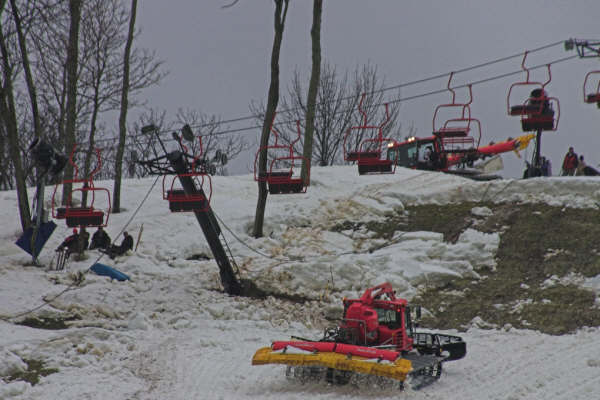
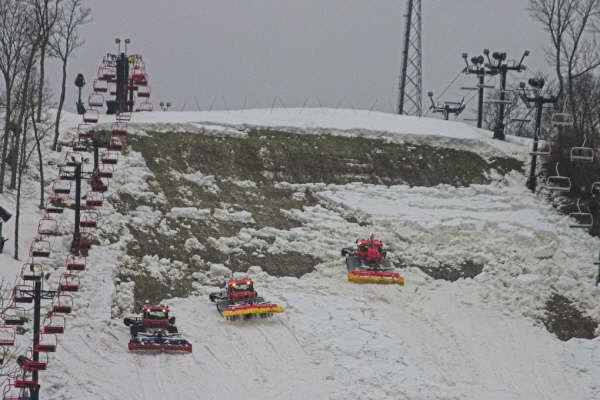
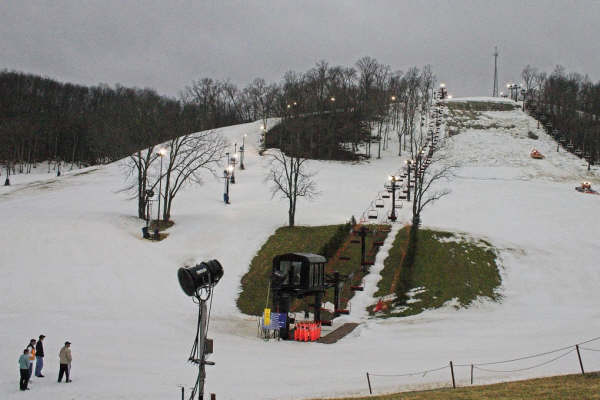
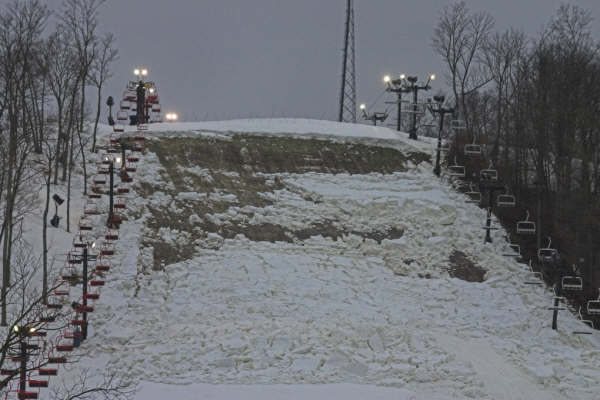
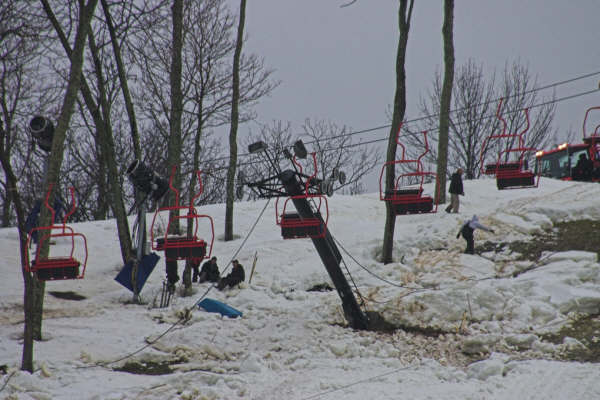
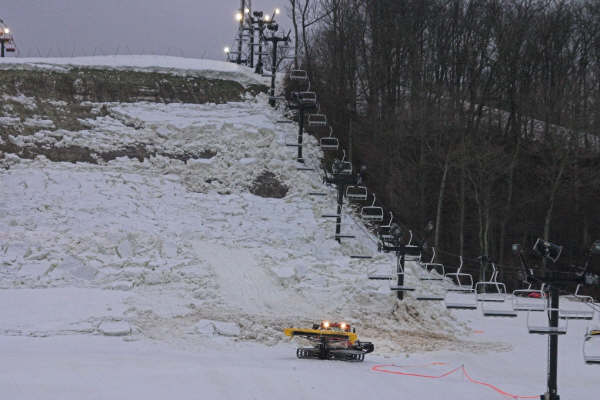
In one of the most bizarre occurrences an avalanche occurred in the Midwest. During the fall of 2006 at the Indiana ski resort Perfect North Slope. This central Indiana resort was making snow on bare ground, as is common at most resorts. After a night of snow making the staff arrived to see the slope had avalanched.
Not enough research was done on this avalanche but several firsts or at least extremely unusual things occurred during this avalanche
- ·An avalanche occurred in the Midwest
- ·The avalanche was composed of 100% man made snow
- ·The avalanche slid on bare ground with no snow layer below
Good Idea, Bad Approach and it Didn’t Work Anyway: Berkshire Ski Area wins lawsuit
Posted: February 10, 2008 Filed under: Massachusetts, Ski Area | Tags: Berkshire East Ski Resort, Death, Law, Massachusetts, Ski, Ski Resort, snowmaking Leave a commentA ski area recently one a lawsuit filed by the parents of a teenage who died skiing at the Berkshire East Ski Resort. Elizabeth Ann Loughman was skiing with her high school when she fell hitting a snowmaking hydrant. The jury deliberated for two hours before finding that the ski area and its employees were not liable for the death of the young women.
This is a sad story in two ways. One, a young woman died skiing and two, a father felt the legal system was the best way to create a change in to keep other people safe. Another example where the law was felt by the parents to be the best way to accomplish their goals, but not an effective way.
For more information see:
Greenfield, Massachusetts Recorder.com: Jury: Ski resort not at fault in teen death
MassLive.com: Ski area wins lawsuit in death of local teen
It’s Not Money
Posted: February 10, 2008 Filed under: Risk Management, Skiing / Snow Boarding | Tags: Dispute Resolution, Insurance, Lawsuit, Litigation Prevention, Plaintiff, Recreation, Solving Problems Leave a commentMost Plaintiffs in the outdoor recreation industry do not sue for money. However, the end result of all claims, litigation or disputes is money because the system can only provide money. Lawsuits don’t bring people back to life, lawsuits don’t answer questions, lawsuits only move money around. Dealing with a plaintiff with the idea that money is their goal, you will end up in court, or at least writing a check. What research that has been done, has shown that at least seventy percent of the time the customer suing you does not want money. This may vary for some types of Plaintiffs, but for your average “Joe,” (not an MD, JD, Corporation, Business, super high income or experienced plaintiff,) its not money that an angry customer wants.
Money is how we respond to people questions, people who hurt or people who are mad. A classic case of you offering apples and the customer is talking oranges. Specifically, trying solving a problem with a hammer when a kind word and a few minutes of listening might do.
Ten Reasons Why People Sue
-
Why: This questions is never answered
-
How: No one will Answer this question
-
Where: Why won’t they tell me where the accident happened
-
Answers: No one will answer my questions
-
Justice: I want justice its been promised to me since first grade
-
Community: I don’t want anyone else damaged by this company
-
Retribution: I want to put them out of business
-
Communication: I want them to talk to me
-
Acknowledgement: I want them to admit they were wrong
-
Revenge: closely aligned with the issue of justice
-
Closure: An element of many of the above, but a reality in the US today.
I was a small law practice for fifteen years and was open to any person who walked through the door. Never, in fifteen years did an individual walk through the door and ask me to sue someone for money. What the injured customer wanted fell into several categories, mostly (1) answers to their questions (2) revenge or (3) justice.
Little old ladies who had been taken by a contractor only wanted to make sure no one else was hurt by the contractor. A friend of mine who had been blown up in an explosion and totally disabled, wanted to wait until the last day to see if his old boss might call.
Attorneys and insurance companies have pounded into our heads that if we are involved in potential claim we are to shut up. If you read the back of our automobile insurance cards, it reiterates what we have been trained in the “litigation minded society” to remember. “Say nothing. Only talk to our insurance representatives or law enforcement authorities.” We live in America by this mantra.
Look at this article from the Columbus Dispatch about why a family was suing a camp.
Columbus Dispatch August 16, 2000.
Family sues summer camp over drowning Wednesday, August 16, 2000 Kate Schott, Dispatch Staff Reporter
The uncle said nothing about money. The lawsuit was not started obviously because of money but because of emotional issues.
Fifty-four questions about what happened. How did my child die? Answering the questions might have diffused the lawsuit. However, the article goes on to say the defendants had a lawyer who was protecting them.
Protecting them…………….. Right into a lawsuit.
Answers
The lawyer for the family had this to say:
The lawyer is all ready starting to cross the emotional and question issues with monetary answers. If we do not get answers, we will get money or money will force them to answer our questions. If we get money, that answers your questions.
“Evans said the money was not the point of the suit. ” There is no way to put a price on his life,” he said. Rather, the family wants closure, to know how Shawan could have gone unnoticed by the adults at the pool. ”
Here is a multi-million dollar lawsuit that might be defused with honest answers to the family’s questions. Of course, there is a fine line to walk between honestly answering questions and setting yourself up for a lawsuit. In addition, that needs to be done before the injured party retains an attorney. If you have stalled the participant into hiring an attorney, your better make your defense wall a lot bigger and taller.
The family was asking questions about how their child died. None of those questions seemed to be targeted at gaining information to use in a lawsuit. However, the Camp’s answers, unintentionally, were structured to make sure the lawsuit happens. Not getting any answer to their questions forced them to the next highest step, court. To get money, No. To get the answers to their questions: How did my child die?
Put yourself in place of the parent. You receive a phone call telling you to go to the hospital your child has been injured. You arrive and are informed your child is dead. How? This question is searing through your mind. How did my child die? Can you think of any emotion or need that would overcome that desire to learn how your child died? Yet as attorneys, we feel we have the right to keep that information from someone to protect our clients.
Knowledge
Closure is not a new word in the American language. However, it is a word that is very important for most Americans. Injured people need to know what happened. Survivors want to know how they survived and others died. One hundred years ago, people were hurt and they died and that was life. In the past hundred years we have learned the answers to millions of questions we could not previously answer. That leads Americans to believe that question should have an answer. Everything should have closure. That is not always the case and it takes time to explain that to people. You cannot expect them to have the understanding of your industry and consequently the acceptance of the answer that you provide. You have experience and industry education to help you understand the forces and factors that create the incidents that cause injuries and death. You also understand the unknowns that affect the business. All of these give you insight and perspective that provides you with answers.
How then, based on your experience and knowledge can you expect a novice to your business how an injury or accident occurred. That takes time. Unless you are willing to put in the time, they will not be willing to understand.
Justice
In kindergarten we started to learn about our rights. Our rights have been explained to us each year until graduation as the basic foundation of the United States and one of the pillars of our success. Since that time, we have rights to everything. The right to know. The right to justice. No one lives with injustice any more. If you customer feels that they have been unjustly treated, that education that they received for twelve years rears it ugly head, however perverted that knowledge has become, we want the justice we are do.
Most people have no clude what their rights are, you see them on the news every night screaming their rights have been violated, now knowing that really has happened to them.
That desire for justice, combined with lack of knowledge on the guest part and lack of understanding on the business part leads to litigation. The desire to receive justice, the desire to extract retribution, the desire to protect others from injustice are issues, almost values that are important to our society. Unless you as the business owner understand these issues, you again will be looking at a checkbook at the way to solve your problem.
Emotional Justice is worse for everyone to handle. For years, we have approached lawsuits as being a money issue based on greed. Yet, the people who walk into an attorney’s office are normally the product of poor customer service. Many times there may or may not be a legally recognizable claim. That is the job of the attorney. The attorney will take that anger and turn it into a desire for money over time. The emotions that linger or the desire to hurt the business always heightens that desire.
And justice is not just an American issue based on law. John Rawls in his A Theory of Justice states that for humans, justice is a fundamental part of our makeup. If the value or even intrinsic issue of justice exists, we cannot ignore it when a guest has been injured.
Duty to our Client
Do attorneys do this consciously, No. Or at least I hope not. We honestly feel we are protecting your client. Based on our training and the horror stories of law school we are afraid that our clients will make a fatal mistake that not only starts the suit, but also guarantees a win for the plaintiff. However, that is not the case. If suits were monetary, then the attorney’s fears would be real. Because they are emotional or based on the US theory of rights or justice, these suits are started for reasons that simple curtseys, answers, and honesty can eliminate.
7 Mistakes Made by People who are called Defendant
-
Hire and retain Uncaring Employees: Hire Well, Train Well, and Treat Well
-
Failing Know Your Customers and why they are buying from you.
-
Failing to Treat Your Customers the Way They Want to Be Treated:
-
Examining the problem from Your Perspective: Your customer sees the problem differently than you. The customer may not even understand the problem.
-
Placing a ridiculous value on principles and pride. Principles & Pride Goeth Before a Lawsuit
-
Never know Why you are being sued: Sticking your head in the sand, or passing the problem to a lawyer does not resolve the problem.
-
Forgetting What Your Mother Taught You: If you act like your mother taught you, you won’t be sued.
As the emotion drains with time, the attorney refuels the desire for the suit with another emotion – greed. Even if greed itself will not work, the attorney can show the financial impact the greed has on the business. If nothing else, a large monetary judgment can be turned into justice by equating the cost to the business as punishment or revenge
What happened to turn a customer from a client to a litigant?
At a ski resort there is one brief moment in time when a happy guest is converted to an injured guest. After realizing that they are injured, the majority of injured skiers do not start thinking about money. They wantg help. However, in the mind of the ski resort something did change. That person evolved from a happy guest to a potential litigant. The ski resort goes from bending over backward to get that guest into the resort and having fun, to fearful of the person. The resort will rush food and linens to your room and transport you from one place to another with a smile prior to your injury, yet the guest is now left standing outside the clinic with no way to get back to their room or car afterwards.
What did the guest do to change? What thought occurs, that works it way through the pain that says to the guest, you are now different. Or did that evolution only occur in the minds of the people running the resort?
Angry customers do not sue. Angry ex-clients do.
You can stop anger, revenge, or unhappy customers before they turn to a lawyer.
Solutions
Do not give them a reason to go find someone to beat you up.
Work with your clients to help them back to an even emotional level. This may not always be possible if they have lost a loved one; they have suffered life-changing injuries or their financial future. You can show them you should not be the target of their anger. You can help them direct their anger to other persons or at least deal with you on a reasonable basis. You will not always be able to do this in one meeting, it may take days or months, but persistence pays off.
When in doubt compare the cost of the angry customer, attorneys to defend, and your time to the benefit of turning an angry customer into a happy customer again.
Answer questions.
Worse case scenario, you go to court and admit you answered the client’s questions. Do not believe the attorney’s mantra that clients are dumb and going to give away the company by admitting liability. It will be difficult for to answer some questions with no liability because of the ingrained fear we have of talking to injured clients. Trust yourself.
Prepare your answers as you drive over to help. However, prepare answers, not evasion.
Evasion is so evident it does not work. It makes you look like you have something to hide. By evading answers you are sending the guest to someone who will find out the answer. Since kindergarten we have been taught our “rights.” Those rights in most people have evolved into everything possible. People believe they have the right to know. They have that right with governments they therefore feel it must extend to everything else.
At the same time, why not. If a member of your family were injured, you would want to know what happened.
Treat the people as you want or they believe they want to be treated.
How can we solve these issues? We can answer questions and treat people, as we want to be treated. It will scare the living daylights out of every one of us and send our attorneys screaming to their malpractice carriers, but we may avoid a costly battle over the word “why.”
During spring of 2000, a small ski resort had a number of snowstorms. During these storms, lift operators are faced with two decisions when small children load the lift. Clean the chair lift seat or assist young children into their chair. The obvious answer is to assist young people into the lift. The sport is skiing and it is done on snow.
On this particular day, the resort received approximately four inches of snow in a couple of hours. A mother and her 9-year-old son loaded a two-person chair. The lift operator assisted the boy into the chair and consequently did not clean the chair. The mother and son started brushing the snow off the chair seat. Shifting to do so, the son was moving around the chair. The mother told the son either to be careful or not to clean the snow but he continued to do so. The young boy slipped off the chair and fell approximately 15 feet.
The mother rode the chair to the top where a Ski Patroller met her, who took her down to the scene. Upon arrival, she snapped photographs of the scene and the chair. A ski patroller assisted the mother; other patrollers took son down to the clinic and in the process learned, she was an attorney.
I was notified of the lift accident and the fact the mother was an attorney. I met the ambulance at the Clinic and assisted the parties in getting into the clinic. Mother was quite terse and demanding. Normal emotions for a mother concerned about her son. However, if you couple that attitude with her vocation, it brings fear to a risk manager’s heart. No injuries could be found on the boy; however, he was not communicating and complained of pain so he was air lifted to Denver.
Mother was given a map, given telephone numbers to contact me and escorted to her car. She was contacted at the hospital that night to make sure she arrived. She and her son walked out of the hospital that night around midnight and the mother and son checked out the next day.
The son was sent a resort Teddy Bear and a personal card. The mother was also sent a card. Mother responded with a card and thanked the staff for their help.
The mother called fall of 2001 and stated she wanted to come back skiing but her son was afraid of the lifts. In order to assist in this, the resort volunteered to find the perfect instructor to assist the boy for two all days’ private lessons so that mother and son could enjoy skiing.
I met the family the night they arrived and talked to them for two hours about the resort and skiing. Mother is a tax attorney and concerned that son would no longer want to ski, but the son was a quite excited.
After two days of private lessons, the mother and son were skiing intermediate and some expert runs. They hired the ski instructor for a third day of private lessons. They family left after 5 days and are now excited about skiing. Since that first incident they have come back to the resort two more times. Each time they have hired the same private instructor for a day or more. This last time they visited the resort, the mother and son took me out to dinner.
Whether this was ever, a lawsuit is unknown. However, a disgruntled scared guest has been turned into a happy guest. By treating the guest as a guest and not a litigant, a customer with a possible propensity to recover damages was turned into a lifelong customer. In addition, by coming back to the resort, skiing, and riding lift, from which the boy fell; we substantially reduced the chance of a lawsuit. (People who come back to ski have a hard time suing. On the stand, they cannot answer the question, “If the resort is so dangerous, why did you go back and ski there?”)
Mom and Son are happy and will always come back to the resort.
Costs: two private all day lessons, one teddy bear, telephone calls, postage, etc. Less than $700.00.
Return: eleven nights lodging in a one or two-bedroom unit, Twenty-three days of lift tickets, and two all day private lesson, meals.
Possible damages: days in depositions, staff hours responding to discovery, may a win, maybe a loss. Either way, a customer we had spent money on to come to the resort was lost
Results: Happy guests and no lawsuit. I have three cards from the family on my shelf and a free meal.
In this case, I ignored our liability issues. I just concentrated on dealing with the guest, answering questions honestly or honestly saying, “I don’t know,” and getting back to the guest with answers when I learned them. Getting back to the customer and answering their questions establishes credibility.
Every time you say, “I don’t know,” write the question down and research to find the answer. If you can’t find an answer, explain why. Maybe there is no answer, but if you use that statement, there better not be an answer. Coming back and restating the question and answering the question will provide you with an immense amount of respect and trust. As Franklin Covey stated in his 7 Habits of Highly Effective People, talks about the Emotional Bank Account. He states you can only trust someone if they have developed an emotional bank account with the other person. “You make deposits in the emotional bank account through genuine courtesy, respect, and appreciate for that person and for the other point of view.”
When you make the commitment to establish an emotional bank account with another person:
Dr. Covey stresses the idea that a Win/Win situation is achievable when this type of relationship is established. A Win/Win resolution to any issue can work for a monetary or emotional crisis. However his words fit perfectly with the idea that lawsuits start as emotion. Develop a relationship, work to a Win/Win relationship on the emotional basis and you may not need to identify the financial issues
You are probably starting with a negative balance in the guests Emotional Bank Account. You are the person representing the loss of money, income, the injury or even loss of life. Whether or not you had any or all of the responsibility for the crisis, you are the person who must open and Emotional Bank Account and start making deposits.
Work hard at making deposits in to the Emotional Bank Account. You cannot even open an account unless you are sincere, unless you care, unless you have real empathy and a desire to help. “With those guides you can listen and when the opportunity presents itself, start making deposits.
“By listening, you will here the opportunity to establish deposits.” Establish report. Listen for the opportunity to learn about the guest. Learn about what type of deposits they want. To learn how they deal with the different issues they present, by listening to them.
Habit 4 of Dr. Stephen Covey is Win/Win involves mutual learning, mutual influence, and mutual benefits. Relationships built on a Win/Win begin with character and move toward relationships out of which flow agreements.
Compromise is a settlement and for most people settlement has a negative feeling, a negative connotation. Settlement is not the end of a problem, it is the result of what I was really owed, but I settled for something else. I was owed more, but I settled for less. You do not settle for anything in your life, why settle in this emotional issue. Settlement also means money. No emotion, only money. Once money is on the table, then money is the only currency that can be used to settle the issues. For money brings its own emotion, greed. And few, if any other emotions except love can overcome greed.
Who: You. It must be you or someone on your staff who can speak with authority for you and the business. Sending your attorney or risk manager will only raise suspicion that you have something to hide. You are real, you are credible, and you have the connection to the disaster that raises the concerns.
The guest has always dealt with customer service when there was a problem. Again what changed that moved the business response from customer service to risk management. The guest has a problem, deal with it, whether the room is too hot, they are short of towels, they are hungry or they are hurt.
What if the situation still goes bad? You have created several defenses to a lawsuit by being human, by showing kindness and being honest. The mother and son came back to the resort Mountain. The Mother and son rode the chairlift from which the boy had fallen. The defense: If it was so dangerous, why did you come back to the resort and ride the dangerous device. Why did you ride the same chair lift?
To rent equipment and sign up for the ski lesson, mother signed a rental agreement releasing her and son for future and past liability.
The thank-you cards I have from the mother make no allegations of negligence or wrongdoing on the part of the resort. A Plaintiff does not send the defendant thank you cards.
Even catastrophic accidents such as a customer death or accident can be handled to change a customer’s attitude about your company.
Even catastrophic accidents can be handled in a dignified manner providing comfort, support, and answers to your customers.
Your customer is at your business and their spouse dies. Have food delivered. Lots of food. Remember the casserole parade, (as I call it) of the sixties. Someone was hurt and within hours, casseroles were rolling down the sidewalk, some in the hands of mothers, others by kids. Families with problems did not have to cook.
Dealing with the problems, big and small can eliminate anger and many other emotions.
Helping a mourning family receive closure works. Unanswered question nag for years, maybe past the statute – maybe not.
This idea is not something that is person specific, anyone can use this technique. A friend of mine running a community outdoor recreation program had a minor injured on a mountain bike trip to Gunnison County. The program director called the father and told him about the incident and agreed to meet the father at the hospital about the time the ambulance was expected to arrive back to the Front Range.
At midnight, the agreed meeting time, my friend was walking into the hospital dreading what he was going to do. He knew beyond those doors was possibly an angry parent. He walked through the doors and met the father and they talked. The ambulance was two hours late, so both men had plenty of time to get to know one another. By the time the ambulance arrived they had become friends.
No litigation came from the child’s injuries. The program director and the father became such good friends they would meet for lunch.
In another situation, a rafting company in the Grand Canyon had an attorney receive a facial injury on a trip. She was helicoptered out of the grand to the hospital in Flagstaff. The river company managers met her in the hospital and spent time with her while she was there. When she checked out, she, along with an employee hiked down to the canyon and met up the trip and continued on. She later came back and took the entire trip again.
In both of these cases, they fear of dealing with an angry customer and the fear of litigation were put behind the business and the reality of dealing with an injured party was placed in the first priorty. In each case, the results were not successful in preventing litigation, but they had far reaching effects after the injuries had healed.
Money or Emotion
A mild mannered woman comes to the front desk of your business and asks for you by name. As you approach, she smiles and confirms your name. She then hands you several pieces of paper and says, “You’re served.”
Your rush to your attorney’s office with conflicting emotions fighting to surface. Rage that someone could sue you. Anger that you have to waste time over such a stupid issue. Concerned about the financial impact this is going to have on your business. Scared.
Your attorney reads the summons and complaint asks you a few questions and says, “Don’t worry, it is not personal. They only want money.”
Your attorney is wrong. It is personal. It is very personal for the plaintiff. For the consumer or customer listed as the plaintiff, the last issue your customer is thinking about is money. The customer is angry, is walking around with feelings of resentment. Your customer wants justice. He or she wants you and your business to hurt just as they hurt. They want to make sure that what you did to them never happens again.
It should be personnel for you. It is a sign of bad service, unjust treatment, or believing in lawyers and insurance companies too much. The easiest way to start a lawsuit is to protect your self from losing a lawsuit. That seems to be an impossible balancing act; however, it is quite possible and very easy. Worst-case scenario, you appear to be an honest, good-hearted person/corporation on the witness stand.
How you approach this problem, personal, or monetary is irrelevant now, but was critical at the time the problem first started.
References


 Recreation Law