
Maine Supreme court applies a broad definition to a well worded Good Samaritan Statute.
Posted: November 8, 2010 Filed under: First Aid, Maine | Tags: Good Samaritan, Good Samaritan law, Good Samaritan Statutes, Lost, MAINE, Snowmobile, Snowmobiler Leave a commentCampbell v. Schwartz, 47 Mass. App. Ct. 360; 712 N.E.2d 1196; 1999 Mass. App. LEXIS 795
The Maine Good Samaritan Statute uses the word “rescue” rather than the more limiting term “emergency care.”
This case is about friends who went searching for a lost snowmobiler. The deceased was the third snowmobiler of a party of three who were traveling late at night in below-freezing weather. When the deceased did not arrive with the other two snowmobilers, two people went back to search for him. They found the deceased with a snowmobile that was not working.
Based on the condition of the deceased, time of the night, and the 20-degree below zero the pair decided to have the deceased ride behind one of the rescuers. During the ride back the deceased fell off the snowmobile and was run over and killed by the following snowmobile. At the time of this death, the deceased had a blood alcohol level of .34, four times the Maine legal limit.
The deceased’s widow sued the two rescuers for the death of her husband. The defendants raised the defense of immunity because of the Maine Good Samaritan Statute.
The Maine Good Samaritan statue reads:
14 M.R.S. § 164 (2009)
§ 164. Immunity from civil liability
Notwithstanding any inconsistent provisions of any public or private and special law, any person who voluntarily, without the expectation of monetary or other compensation from the person aided or treated, renders first aid, emergency treatment or rescue assistance to a person who is unconscious, ill, injured or in need of rescue assistance, shall not be liable for damages for injuries alleged to have been sustained by such person nor for damages for the death of such person alleged to have occurred by reason of an act or omission in the rendering of such first aid, emergency treatment or rescue assistance, unless it is established that such injuries or such death were caused willfully, wantonly or recklessly or by gross negligence on the part of such person. This section shall apply to members or employees of nonprofit volunteer or governmental ambulance, rescue or emergency units, whether or not a user or service fee may be charged by the nonprofit unit or the governmental entity and whether or not the members or employees receive salaries or other compensation from the nonprofit unit or the governmental entity. This section shall not be construed to require a person who is ill or injured to be administered first aid or emergency treatment if such person objects thereto on religious grounds. This section shall not apply if such first aid or emergency treatment or assistance is rendered on the premises of a hospital or clinic.
The statute uses a very broad definition of what type of care will be protected by the act “renders first aid, emergency treatment or rescue assistance to a person who is unconscious, ill, injured or in need of rescue assistance.”
The court found the actions of the Good Samaritans when they started to search for the lost snowmobiler to the time they found him dead was a rescue. The time, the temperature, the distance from safety as well as the fact they knew he had been drinking added up to a rescue.
So?
Because the laws are so different from state to state, you cannot assume that the protection provided, or that you learned about in one state will be the same in another state. The Maine statute, thankfully, is broadly written and broadly interpreted by the courts. For two rescuers, it was fortunate that they were in a state that looked at rescue as a necessity for the residents of the state and chose to encourage it rather than discourage it.
:What do you think? Leave a comment.
 |
Jim Moss is an attorney specializing in the legal issues of the outdoor recreation community. He represents guides, guide services, and outfitters both as businesses and individuals and the products they use for their business. He has defended Mt. Everest guide services, summer camps, climbing rope manufacturers; avalanche beacon manufacturers, and many more manufacturers and outdoor industries. Contact Jim at Jim@Rec-Law.us |
Jim is the author or co-author of eight books about the legal issues in the outdoor recreation world; the latest is Outdoor Recreation Insurance, Risk
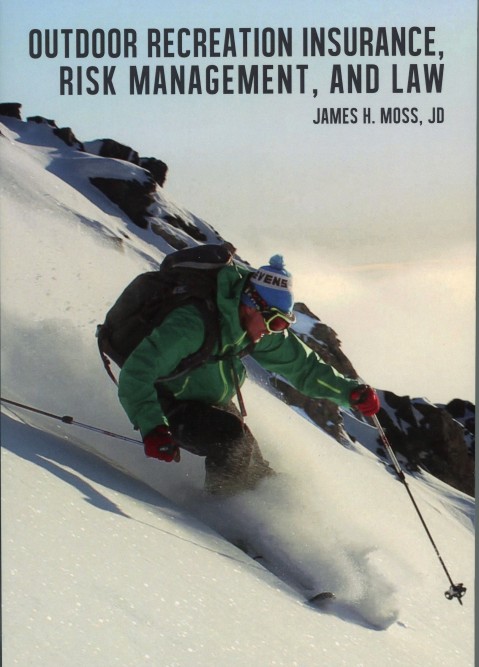
Outdoor Recreation Insurance, Risk Management and Law
To see Jim’s complete bio go here and to see his CV you can find it here. To find out the purpose of this website go here.
Author: Outdoor Recreation Insurance, Risk Management and Law To Purchase Go Here:
Connect
If you like this let your friends know or post it on FB, Twitter or LinkedIn
Facebook Page: Outdoor Recreation & Adventure Travel Law
LinkedIn https://www.linkedin.com/in/recreationlaw/
Threads https://www.threads.net/@recreation_law
X https://twitter.com/RecreationLaw
Email: Jim@Rec-Law.US
By Recreation Law Rec-law@recreation-law.com James H. Moss
@2011-2023 Summit Magic Publishing, LLC
G-YQ06K3L262


 Recreation Law