New Ohio law allows Camps and Schools to obtain Epinephrine in their name for kids
Posted: October 16, 2014 Filed under: Minors, Youth, Children, Ohio, Summer Camp | Tags: Autoinjector, Day Camp, Epinephrine, Summer Camp Leave a commentSmart law might save a few kids and not create criminals of the adults to care for them.
The entire law is attached below, but in short, schools as defined in the act and camps can now go to pharmacies and obtain epinephrine for their kids. There must be a plan in place on how to store and use the epinephrine and the persons administering the epinephrine must be educated in its use.
Summer Camps and Day Camps as defined by state law can also obtain epinephrine for their kids. The law provides immunity from lawsuits for camps and people who use the autoinjectors under the law.
The law is a good step forward. Every other state should adopt a similar law.
Again thanks to Danny Twilley for bringing this to my attention.
The act can be seen here: http://www.legislature.state.oh.us/bills.cfm?ID=130_HB_296
Here is the new law. I’ve highlighted sections that are important.
AN ACT
To amend sections 3313.713, 3313.718, 4729.51, and 4729.60 and to enact sections 3313.7110, 3313.7111, 3314.143, 3326.28, 3328.29, and 5101.76 of the Revised Code to permit schools and camps to procure and use epinephrine autoinjectors in accordance with prescribed policies, to exempt them from licensing requirements related to the possession of epinephrine autoinjectors, and to declare an emergency.
Be it enacted by the General Assembly of the State of Ohio:
SECTION 1. That sections 3313.713, 3313.718, 4729.51, and 4729.60 be amended and sections 3313.7110, 3313.7111, 3314.143, 3326.28, 3328.29, and 5101.76 of the Revised Code be enacted to read as follows:
Sec. 3313.713. (A) As used in this section:
(1) “Drug” means a drug, as defined in section 4729.01 of the Revised Code, that is to be administered pursuant to the instructions of the prescriber, whether or not required by law to be sold only upon a prescription.
(2) “Federal law” means the “Individuals with Disabilities Education Act of 1997,” 111 Stat. 37, 20 U.S.C. 1400, as amended.
(3) “Prescriber” has the same meaning as in section 4729.01 of the Revised Code.
(B) The board of education of each city, local, exempted village, and joint vocational school district shall, not later than one hundred twenty days after September 20, 1984, adopt a policy on the authority of its employees, when acting in situations other than those governed by sections 2305.23, 2305.231, and 3313.712, and 3313.7110 of the Revised Code, to administer drugs prescribed to students enrolled in the schools of the district. The policy shall provide either that:
(1) Except as otherwise required by federal law, no person employed by the board shall, in the course of such employment, administer any drug prescribed to any student enrolled in the schools of the district.
(2) Designated persons employed by the board are authorized to administer to a student a drug prescribed for the student. Effective July 1, 2011, only employees of the board who are licensed health professionals, or who have completed a drug administration training program conducted by a licensed health professional and considered appropriate by the board, may administer to a student a drug prescribed for the student. Except as otherwise provided by federal law, the board’s policy may provide that certain drugs or types of drugs shall not be administered or that no employee shall use certain procedures, such as injection, to administer a drug to a student.
(C) No drug prescribed for a student shall be administered pursuant to federal law or a policy adopted under division (B) of this section until the following occur:
(1) The board, or a person designated by the board, receives a written request, signed by the parent, guardian, or other person having care or charge of the student, that the drug be administered to the student.
(2) The board, or a person designated by the board, receives a statement, signed by the prescriber, that includes all of the following information:
(a) The name and address of the student;
(b) The school and class in which the student is enrolled;
(c) The name of the drug and the dosage to be administered;
(d) The times or intervals at which each dosage of the drug is to be administered;
(e) The date the administration of the drug is to begin;
(f) The date the administration of the drug is to cease;
(g) Any severe adverse reactions that should be reported to the prescriber and one or more phone numbers at which the prescriber can be reached in an emergency;
(h) Special instructions for administration of the drug, including sterile conditions and storage.
(3) The parent, guardian, or other person having care or charge of the student agrees to submit a revised statement signed by the prescriber to the board or a person designated by the board if any of the information provided by the prescriber pursuant to division (C)(2) of this section changes.
(4) The person authorized by the board to administer the drug receives a copy of the statement required by division (C)(2) or (3) of this section.
(5) The drug is received by the person authorized to administer the drug to the student for whom the drug is prescribed in the container in which it was dispensed by the prescriber or a licensed pharmacist.
(6) Any other procedures required by the board are followed.
(D) If a drug is administered to a student, the board of education shall acquire and retain copies of the written requests required by division (C)(1) and the statements required by divisions (C)(2) and (3) of this section and shall ensure that by the next school day following the receipt of any such statement a copy is given to the person authorized to administer drugs to the student for whom the statement has been received. The board, or a person designated by the board, shall establish a location in each school building for the storage of drugs to be administered under this section and federal law. All such drugs shall be stored in that location in a locked storage place, except that drugs that require refrigeration may be kept in a refrigerator in a place not commonly used by students.
(E) No person who has been authorized by a board of education to administer a drug and has a copy of the most recent statement required by division (C)(2) or (3) of this section given to the person in accordance with division (D) of this section prior to administering the drug is liable in civil damages for administering or failing to administer the drug, unless such person acts in a manner that constitutes gross negligence or wanton or reckless misconduct.
(F) A board of education may designate a person or persons to perform any function or functions in connection with a drug policy adopted under this section either by name or by position, training, qualifications, or similar distinguishing factors.
(G) A policy adopted by a board of education pursuant to this section may be changed, modified, or revised by action of the board.
(H) Nothing in this section shall be construed to require a person employed by a board of education to administer a drug to a student unless the board’s policy adopted in compliance with this section establishes such a requirement. A board shall not require an employee to administer a drug to a student if the employee objects, on the basis of religious convictions, to administering the drug.
Nothing in this section affects the application of section 2305.23, 2305.231, or 3313.712, or 3313.7110 of the Revised Code to the administration of emergency care or treatment to a student.
Nothing in this section affects the ability of a public or nonpublic school to participate in a school-based fluoride mouth rinse program established by the director of health pursuant to section 3701.136 of the Revised Code. Nothing in this section affects the ability of a person who is employed by, or who volunteers for, a school that participates in such a program to administer fluoride mouth rinse to a student in accordance with section 3701.136 of the Revised Code and any rules adopted by the director under that section.
Sec. 3313.718. (A) As used in this section, “prescriber” has the same meaning as in section 4729.01 of the Revised Code.
(B) Notwithstanding section 3313.713 of the Revised Code or any policy adopted under that section, a student of a school operated by a city, local, exempted village, or joint vocational school district or a student of a chartered nonpublic school may possess and use an epinephrine autoinjector to treat anaphylaxis, if all of the following conditions are satisfied:
(1) The student has the written approval of the prescriber of the autoinjector and, if the student is a minor, the written approval of the parent, guardian, or other person having care or charge of the student. The prescriber’s written approval shall include at least all of the following information:
(a) The student’s name and address;
(b) The names and dose of the medication contained in the autoinjector;
(c) The date the administration of the medication is to begin;
(d) The date, if known, that the administration of the medication is to cease;
(e) Acknowledgment that the prescriber has determined that the student is capable of possessing and using the autoinjector appropriately and has provided the student with training in the proper use of the autoinjector;
(f) Circumstances in which the autoinjector should be used;
(g) Written instructions that outline procedures school employees should follow in the event that the student is unable to administer the anaphylaxis medication or the medication does not produce the expected relief from the student’s anaphylaxis;
(h) Any severe adverse reactions that may occur to the child using the autoinjector that should be reported to the prescriber;
(i) Any severe adverse reactions that may occur to another child, for whom the autoinjector is not prescribed, should such a child receive a dose of the medication;
(j) At least one emergency telephone number for contacting the prescriber in an emergency;
(k) At least one emergency telephone number for contacting the parent, guardian, or other person having care or charge of the student in an emergency;
(l) Any other special instructions from the prescriber.
(2) The school principal and, if a school nurse is assigned to the student’s school building, the school nurse has received copies of the written approvals required by division (B)(1) of this section.
(3) The school principal or, if a school nurse is assigned to the student’s school building, the school nurse has received a backup dose of the anaphylaxis medication from the parent, guardian, or other person having care or charge of the student or, if the student is not a minor, from the student.
If these conditions are satisfied, the student may possess and use the autoinjector at school or at any activity, event, or program sponsored by or in which the student’s school is a participant.
(C) Whenever a student uses an autoinjector at school or at any activity, event, or program sponsored by or in which the student’s school is a participant or whenever a school employee administers anaphylaxis medication to a student at such times that was possessed by the student pursuant to the written approvals described in division (B)(1) of this section, a school employee shall immediately request assistance from an emergency medical service provider.
(D)(1) A school district, member of a school district board of education, or school district employee is not liable in damages in a civil action for injury, death, or loss to person or property allegedly arising from a district employee’s prohibiting a student from using an autoinjector because of the employee’s good faith belief that the conditions of division (B) of this section had not been satisfied. A school district, member of a school district board of education, or school district employee is not liable in damages in a civil action for injury, death, or loss to person or property allegedly arising from a district employee’s permitting a student to use an autoinjector because of the employee’s good faith belief that the conditions of division (B) of this section had been satisfied. Furthermore, when a school district is required by this section to permit a student to possess and use an autoinjector because the conditions of division (B) of this section have been satisfied, the school district, any member of the school district board of education, or any school district employee is not liable in damages in a civil action for injury, death, or loss to person or property allegedly arising from the use of the autoinjector by a student for whom it was not prescribed.
This section does not eliminate, limit, or reduce any other immunity or defense that a school district, member of a school district board of education, or school district employee may be entitled to under Chapter 2744. or any other provision of the Revised Code or under the common law of this state.
(2) A chartered nonpublic school or any officer, director, or employee of the school is not liable in damages in a civil action for injury, death, or loss to person or property allegedly arising from a school employee’s prohibiting a student from using an autoinjector because of the employee’s good faith belief that the conditions of division (B) of this section had not been satisfied. A chartered nonpublic school or any officer, director, or employee of the school is not liable in damages in a civil action for injury, death, or loss to person or property allegedly arising from a school employee’s permitting a student to use an autoinjector because of the employee’s good faith belief that the conditions of division (B) of this section had been satisfied. Furthermore, when a chartered nonpublic school is required by this section to permit a student to possess and use an autoinjector because the conditions of division (B) of this section have been satisfied, the chartered nonpublic school or any officer, director, or employee of the school is not liable in damages in a civil action for injury, death, or loss to person or property allegedly arising from the use of the autoinjector by a student for whom it was not prescribed.
Sec. 3313.7110. (A) The board of education of each city, local, exempted village, or joint vocational school district may procure epinephrine autoinjectors for each school operated by the district to have on the school premises for use in emergency situations identified under division (C)(5) of this section. A district board that elects to procure epinephrine autoinjectors under this section is encouraged to maintain, at all times, at least two epinephrine injectors at each school operated by the district.
(B) A district board that elects to procure epinephrine autoinjectors under this section shall require the district’s superintendent to adopt a policy governing their maintenance and use. Before adopting the policy, the superintendent shall consult with a licensed health professional authorized to prescribe drugs, as defined in section 4729.01 of the Revised Code.
(C) A component of a policy adopted by a superintendent under division (B) of this section shall be a prescriber-issued protocol specifying definitive orders for epinephrine autoinjectors and the dosages of epinephrine to be administered through them. The policy also shall do all of the following:
(1) Identify the one or more locations in each school operated by the district in which an epinephrine autoinjector must be stored;
(2) Specify the conditions under which an epinephrine autoinjector must be stored, replaced, and disposed;
(3) Specify the individuals employed by or under contract with the district board, in addition to a school nurse licensed under section 3319.221 of the Revised Code or an athletic trainer licensed under Chapter 4755. of the Revised Code, who may access and use an epinephrine autoinjector to provide a dosage of epinephrine to an individual in an emergency situation identified under division (C)(5) of this section;
(4) Specify any training that employees or contractors specified under division (C)(3) of this section, other than a school nurse or athletic trainer, must complete before being authorized to access and use an epinephrine autoinjector;
(5) Identify the emergency situations, including when an individual exhibits signs and symptoms of anaphylaxis, in which a school nurse, athletic trainer, or other employees or contractors specified under division (C)(3) of this section may access and use an epinephrine autoinjector;
(6) Specify that assistance from an emergency medical service provider must be requested immediately after an epinephrine autoinjector is used;
(7) Specify the individuals, in addition to students, school employees or contractors, and school visitors, to whom a dosage of epinephrine may be administered through an epinephrine autoinjector in an emergency situation specified under division (C)(5) of this section.
(D) A school or school district, a member of a district board of education, or a district or school employee or contractor is not liable in damages in a civil action for injury, death, or loss to person or property that allegedly arises from an act or omission associated with procuring, maintaining, accessing, or using an epinephrine autoinjector under this section, unless the act or omission constitutes willful or wanton misconduct.
This section does not eliminate, limit, or reduce any other immunity or defense that a school or school district, member of a district board of education, or district or school employee or contractor may be entitled to under Chapter 2744. or any other provision of the Revised Code or under the common law of this state.
(E) A school district board of education may accept donations of epinephrine autoinjectors from a wholesale distributor of dangerous drugs or a manufacturer of dangerous drugs, as defined in section 4729.01 of the Revised Code, and may accept donations of money from any person to purchase epinephrine autoinjectors.
(F) A district board that elects to procure epinephrine autoinjectors under this section shall report to the department of education each procurement and occurrence in which an epinephrine autoinjector is used from a school’s supply of epinephrine autoinjectors.
Sec. 3313.7111. (A) With the approval of its governing authority, a chartered or nonchartered nonpublic school may procure epinephrine autoinjectors in the manner prescribed by section 3313.7110 of the Revised Code. A chartered or nonchartered nonpublic school that elects to do so shall comply with all provisions of that section as if it were a school district.
(B) A chartered or nonchartered nonpublic school, a member of a chartered or nonchartered nonpublic school governing authority, or an employee or contractor of the school is not liable in damages in a civil action for injury, death, or loss to person or property that allegedly arises from an act or omission associated with procuring, maintaining, accessing, or using an epinephrine autoinjector under this section, unless the act or omission constitutes willful or wanton misconduct.
(C) A chartered or nonchartered nonpublic school may accept donations of epinephrine autoinjectors from a wholesale distributor of dangerous drugs or a manufacturer of dangerous drugs, as defined in section 4729.01 of the Revised Code, and may accept donations of money from any person to purchase epinephrine autoinjectors.
(D) A chartered or nonchartered nonpublic school that elects to procure epinephrine autoinjectors under this section shall report to the department of education each procurement and occurrence in which an epinephrine autoinjector is used from the school’s supply of epinephrine autoinjectors.
Sec. 3314.143. (A) With the approval of its governing authority, a community school established under this chapter may procure epinephrine autoinjectors in the manner prescribed by section 3313.7110 of the Revised Code. A community school that elects to do so shall comply with all provisions of that section as if it were a school district.
(B) A community school, a member of a community school governing authority, or a community school employee or contractor is not liable in damages in a civil action for injury, death, or loss to person or property that allegedly arises from an act or omission associated with procuring, maintaining, accessing, or using an epinephrine autoinjector under this section, unless the act or omission constitutes willful or wanton misconduct.
This division does not eliminate, limit, or reduce any other immunity or defense that a community school or governing authority, member of a community school governing authority, or community school employee or contractor may be entitled to under Chapter 2744. or any other provision of the Revised Code or under the common law of this state.
(C) A community school may accept donations of epinephrine autoinjectors from a wholesale distributor of dangerous drugs or a manufacturer of dangerous drugs, as defined in section 4729.01 of the Revised Code, and may accept donations of money from any person to purchase epinephrine autoinjectors.
(D) A community school that elects to procure epinephrine autoinjectors under this section shall report to the department of education each procurement and occurrence in which an epinephrine autoinjector is used from the school’s supply of epinephrine autoinjectors.
Sec. 3326.28. (A) With the approval of its governing body, a STEM school established under this chapter may procure epinephrine autoinjectors in the manner prescribed by section 3313.7110 of the Revised Code. A STEM school that elects to do so shall comply with all provisions of that section as if it were a school district.
(B) A STEM school, a member of a STEM school governing body, or a STEM school employee or contractor is not liable in damages in a civil action for injury, death, or loss to person or property that allegedly arises from an act or omission associated with procuring, maintaining, accessing, or using an epinephrine autoinjector under this section, unless the act or omission constitutes willful or wanton misconduct.
This division does not eliminate, limit, or reduce any other immunity or defense that a STEM school or governing body, member of a STEM school governing body, or STEM school employee or contractor may be entitled to under Chapter 2744. or any other provision of the Revised Code or under the common law of this state.
(C) A STEM school may accept donations of epinephrine autoinjectors from a wholesale distributor of dangerous drugs or a manufacturer of dangerous drugs, as defined in section 4729.01 of the Revised Code, and may accept donations of money from any person to purchase epinephrine autoinjectors.
(D) A STEM school that elects to procure epinephrine autoinjectors under this section shall report to the department of education each procurement and occurrence in which an epinephrine autoinjector is used from the school’s supply of epinephrine autoinjectors.
Sec. 3328.29. (A) With the approval of its board of trustees, a college-preparatory boarding school established under this chapter may procure epinephrine autoinjectors in the manner prescribed by section 3313.7110 of the Revised Code. A college-preparatory boarding school that elects to do so shall comply with all provisions of that section as if it were a school district.
(B) A college-preparatory boarding school, a member of a college-preparatory boarding school board of trustees, or a college-preparatory boarding school employee or contractor is not liable in damages in a civil action for injury, death, or loss to person or property that allegedly arises from an act or omission associated with procuring, maintaining, accessing, or using an epinephrine autoinjector under this section, unless the act or omission constitutes willful or wanton misconduct.
This division does not eliminate, limit, or reduce any other immunity or defense that a college-preparatory boarding school or board of trustees, member of a college-preparatory boarding school board of trustees, or college-preparatory boarding school employee or contractor may be entitled to under Chapter 2744. or any other provision of the Revised Code or under the common law of this state.
(C) A college-preparatory boarding school may accept donations of epinephrine autoinjectors from a wholesale distributor of dangerous drugs or a manufacturer of dangerous drugs, as defined in section 4729.01 of the Revised Code, and may accept donations of money from any person to purchase epinephrine autoinjectors.
(D) A college-preparatory boarding school that elects to procure epinephrine autoinjectors under this section shall report to the department of education each procurement and occurrence in which an epinephrine autoinjector is used from a school’s supply of epinephrine autoinjectors.
Sec. 4729.51. (A) No (1) Except as provided in division (A)(2) of this section, no person other than a registered wholesale distributor of dangerous drugs shall possess for sale, sell, distribute, or deliver, at wholesale, dangerous drugs, except as follows:
(1)(a) A pharmacist who is a licensed terminal distributor of dangerous drugs or who is employed by a licensed terminal distributor of dangerous drugs may make occasional sales of dangerous drugs at wholesale;
(2)(b) A licensed terminal distributor of dangerous drugs having more than one establishment or place may transfer or deliver dangerous drugs from one establishment or place for which a license has been issued to the terminal distributor to another establishment or place for which a license has been issued to the terminal distributor if the license issued for each establishment or place is in effect at the time of the transfer or delivery.
(2) A manufacturer of dangerous drugs may donate epinephrine autoinjectors to any of the following:
(a) The board of education of a city, local, exempted village, or joint vocational school district;
(b) A community school established under Chapter 3314. of the Revised Code;
(c) A STEM school established under Chapter 3326. of the Revised Code;
(d) A college-preparatory boarding school established under Chapter 3328. of the Revised Code;
(e) A chartered or nonchartered nonpublic school.
(B)(1) No registered wholesale distributor of dangerous drugs shall possess for sale, or sell, at wholesale, dangerous drugs to any person other than the following:
(a) Except as provided in division (B)(2)(a) of this section, a licensed health professional authorized to prescribe drugs;
(b) An optometrist licensed under Chapter 4725. of the Revised Code who holds a topical ocular pharmaceutical agents certificate;
(c) A registered wholesale distributor of dangerous drugs;
(d) A manufacturer of dangerous drugs;
(e) Subject to division (B)(3) of this section, a licensed terminal distributor of dangerous drugs;
(f) Carriers or warehouses for the purpose of carriage or storage;
(g) Terminal or wholesale distributors of dangerous drugs who are not engaged in the sale of dangerous drugs within this state;
(h) An individual who holds a current license, certificate, or registration issued under Title 47 XLVII of the Revised Code and has been certified to conduct diabetes education by a national certifying body specified in rules adopted by the state board of pharmacy under section 4729.68 of the Revised Code, but only with respect to insulin that will be used for the purpose of diabetes education and only if diabetes education is within the individual’s scope of practice under statutes and rules regulating the individual’s profession;
(i) An individual who holds a valid certificate issued by a nationally recognized S.C.U.B.A. diving certifying organization approved by the state board of pharmacy in rule, but only with respect to medical oxygen that will be used for the purpose of emergency care or treatment at the scene of a diving emergency;
(j) Except as provided in division (B)(2)(b) of this section, a business entity that is a corporation formed under division (B) of section 1701.03 of the Revised Code, a limited liability company formed under Chapter 1705. of the Revised Code, or a professional association formed under Chapter 1785. of the Revised Code if the entity has a sole shareholder who is a licensed health professional authorized to prescribe drugs and is authorized to provide the professional services being offered by the entity;
(k) Except as provided in division (B)(2)(c) of this section, a business entity that is a corporation formed under division (B) of section 1701.03 of the Revised Code, a limited liability company formed under Chapter 1705. of the Revised Code, a partnership or a limited liability partnership formed under Chapter 1775. of the Revised Code, or a professional association formed under Chapter 1785. of the Revised Code, if, to be a shareholder, member, or partner, an individual is required to be licensed, certified, or otherwise legally authorized under Title XLVII of the Revised Code to perform the professional service provided by the entity and each such individual is a licensed health professional authorized to prescribe drugs;
(l) With respect to epinephrine autoinjectors that may be possessed under section 3313.7110, 3313.7111, 3314.143, 3326.28, or 3328.29 of the Revised Code, any of the following: the board of education of a city, local, exempted village, or joint vocational school district; a chartered or nonchartered nonpublic school; a community school established under Chapter 3314. of the Revised Code; a STEM school established under Chapter 3326. of the Revised Code; or a college-preparatory boarding school established under Chapter 3328. of the Revised Code;
(m) With respect to epinephrine autoinjectors that may be possessed under section 5101.76 of the Revised Code, any of the following: a residential camp, as defined in section 2151.011 of the Revised Code; a child day camp, as defined in section 5104.01 of the Revised Code; or a child day camp operated by any county, township, municipal corporation, township park district created under section 511.18 of the Revised Code, park district created under section 1545.04 of the Revised Code, or joint recreation district established under section 755.14 of the Revised Code.
(2) No registered wholesale distributor of dangerous drugs shall possess for sale, or sell, at wholesale, dangerous drugs to any of the following:
(a) A prescriber who is employed by a pain management clinic that is not licensed as a terminal distributor of dangerous drugs with a pain management clinic classification issued under section 4729.552 of the Revised Code;
(b) A business entity described in division (B)(1)(j) of this section that is, or is operating, a pain management clinic without a license as a terminal distributor of dangerous drugs with a pain management clinic classification issued under section 4729.552 of the Revised Code;
(c) A business entity described in division (B)(1)(k) of this section that is, or is operating, a pain management clinic without a license as a terminal distributor of dangerous drugs with a pain management clinic classification issued under section 4729.552 of the Revised Code.
(3) No registered wholesale distributor of dangerous drugs shall possess dangerous drugs for sale at wholesale, or sell such drugs at wholesale, to a licensed terminal distributor of dangerous drugs, except as follows:
(a) In the case of a terminal distributor with a category I license, only dangerous drugs described in category I, as defined in division (A)(1) of section 4729.54 of the Revised Code;
(b) In the case of a terminal distributor with a category II license, only dangerous drugs described in category I and category II, as defined in divisions (A)(1) and (2) of section 4729.54 of the Revised Code;
(c) In the case of a terminal distributor with a category III license, dangerous drugs described in category I, category II, and category III, as defined in divisions (A)(1), (2), and (3) of section 4729.54 of the Revised Code;
(d) In the case of a terminal distributor with a limited category I, II, or III license, only the dangerous drugs specified in the certificate furnished by the terminal distributor in accordance with section 4729.60 of the Revised Code.
(C)(1) Except as provided in division (C)(4) of this section, no person shall sell, at retail, dangerous drugs.
(2) Except as provided in division (C)(4) of this section, no person shall possess for sale, at retail, dangerous drugs.
(3) Except as provided in division (C)(4) of this section, no person shall possess dangerous drugs.
(4) Divisions (C)(1), (2), and (3) of this section do not apply to a registered wholesale distributor of dangerous drugs, a licensed terminal distributor of dangerous drugs, or a person who possesses, or possesses for sale or sells, at retail, a dangerous drug in accordance with Chapters 3719., 4715., 4723., 4725., 4729., 4730., 4731., and 4741. of the Revised Code.
Divisions (C)(1), (2), and (3) of this section do not apply to an individual who holds a current license, certificate, or registration issued under Title XLVII of the Revised Code and has been certified to conduct diabetes education by a national certifying body specified in rules adopted by the state board of pharmacy under section 4729.68 of the Revised Code, but only to the extent that the individual possesses insulin or personally supplies insulin solely for the purpose of diabetes education and only if diabetes education is within the individual’s scope of practice under statutes and rules regulating the individual’s profession.
Divisions (C)(1), (2), and (3) of this section do not apply to an individual who holds a valid certificate issued by a nationally recognized S.C.U.B.A. diving certifying organization approved by the state board of pharmacy in rule, but only to the extent that the individual possesses medical oxygen or personally supplies medical oxygen for the purpose of emergency care or treatment at the scene of a diving emergency.
Division (C)(3) of this section does not apply to the board of education of a city, local, exempted village, or joint vocational school district, a school building operated by a school district board of education, a chartered or nonchartered nonpublic school, a community school, a STEM school, or a college-preparatory boarding school for the purpose of possessing epinephrine autoinjectors under section 3313.7110, 3313.7111, 3314.143, 3326.28, or 3328.29 of the Revised Code.
Division (C)(3) of this section does not apply to a residential camp, as defined in section 2151.011 of the Revised Code, a child day camp, as defined in section 5104.01 of the Revised Code, or a child day camp operated by any county, township, municipal corporation, township park district created under section 511.18 of the Revised Code, park district created under section 1545.04 of the Revised Code, or joint recreation district established under section 755.14 of the Revised Code for the purpose of possessing epinephrine autoinjectors under section 5101.76 of the Revised Code.
(D) No licensed terminal distributor of dangerous drugs shall purchase for the purpose of resale dangerous drugs from any person other than a registered wholesale distributor of dangerous drugs, except as follows:
(1) A licensed terminal distributor of dangerous drugs may make occasional purchases of dangerous drugs for resale from a pharmacist who is a licensed terminal distributor of dangerous drugs or who is employed by a licensed terminal distributor of dangerous drugs;
(2) A licensed terminal distributor of dangerous drugs having more than one establishment or place may transfer or receive dangerous drugs from one establishment or place for which a license has been issued to the terminal distributor to another establishment or place for which a license has been issued to the terminal distributor if the license issued for each establishment or place is in effect at the time of the transfer or receipt.
(E) No licensed terminal distributor of dangerous drugs shall engage in the sale or other distribution of dangerous drugs at retail or maintain possession, custody, or control of dangerous drugs for any purpose other than the distributor’s personal use or consumption, at any establishment or place other than that or those described in the license issued by the state board of pharmacy to such terminal distributor.
(F) Nothing in this section shall be construed to interfere with the performance of official duties by any law enforcement official authorized by municipal, county, state, or federal law to collect samples of any drug, regardless of its nature or in whose possession it may be.
(G) Notwithstanding anything to the contrary in this section, the board of education of a city, local, exempted village, or joint vocational school district may deliver epinephrine autoinjectors to a school under its control for the purpose of possessing epinephrine autoinjectors under section 3313.7110 of the Revised Code.
Sec. 4729.60. (A) Before a registered wholesale distributor of dangerous drugs may sell dangerous drugs at wholesale to any person, other than the persons specified in divisions (B)(1)(a) to (d) and (B)(1), (f) to (h), (l), and (m) of section 4729.51 of the Revised Code, such wholesale distributor shall obtain from the purchaser and the purchaser shall furnish to the wholesale distributor a certificate indicating that the purchaser is a licensed terminal distributor of dangerous drugs. The certificate shall be in the form that the state board of pharmacy shall prescribe, and shall set forth the name of the licensee, the number of the license, a description of the place or establishment or each place or establishment for which the license was issued, the category of licensure, and, if the license is a limited category I, II, or III license, the dangerous drugs that the licensee is authorized to possess, have custody or control of, and distribute.
If no certificate is obtained or furnished before a sale is made, it shall be presumed that the sale of dangerous drugs by the wholesale distributor is in violation of division (B) of section 4729.51 of the Revised Code and the purchase of dangerous drugs by the purchaser is in violation of division (C) of section 4729.51 of the Revised Code. If a registered wholesale distributor of dangerous drugs obtains or is furnished a certificate from a terminal distributor of dangerous drugs and relies on the certificate in selling dangerous drugs at wholesale to the terminal distributor of dangerous drugs, the wholesale distributor of dangerous drugs shall be deemed not to have violated division (B) of section 4729.51 of the Revised Code in making the sale.
(B) Before a licensed terminal distributor of dangerous drugs may purchase dangerous drugs at wholesale, the terminal distributor shall obtain from the seller and the seller shall furnish to the terminal distributor the number of the seller’s registration certificate to engage in the sale of dangerous drugs at wholesale.
If no registration number is obtained or furnished before a purchase is made, it shall be presumed that the purchase of dangerous drugs by the terminal distributor is in violation of division (D) of section 4729.51 of the Revised Code and the sale of dangerous drugs by the seller is in violation of division (A) of section 4729.51 of the Revised Code. If a licensed terminal distributor of dangerous drugs obtains or is furnished a registration number from a wholesale distributor of dangerous drugs and relies on the registration number in purchasing dangerous drugs at wholesale from the wholesale distributor of dangerous drugs, the terminal distributor shall be deemed not to have violated division (D) of section 4729.51 of the Revised Code in making the purchase.
Sec. 5101.76. (A) A residential camp, as defined in section 2151.011 of the Revised Code, a child day camp, as defined in section 5104.01 of the Revised Code, or a child day camp operated by any county, township, municipal corporation, township park district created under section 511.18 of the Revised Code, park district created under section 1545.04 of the Revised Code, or joint recreation district established under section 755.14 of the Revised Code may procure epinephrine autoinjectors for use in emergency situations identified under division (C)(5) of this section. A camp that elects to procure epinephrine autoinjectors under this section is encouraged to maintain at least two epinephrine autoinjectors at all times.
(B) A camp that elects to procure epinephrine autoinjectors under this section shall adopt a policy governing their maintenance and use. Before adopting the policy, the camp shall consult with a licensed health professional authorized to prescribe drugs, as defined in section 4729.01 of the Revised Code.
(C) A component of a policy adopted by a camp under division (B) of this section shall be a prescriber-issued protocol specifying definitive orders for epinephrine autoinjectors and the dosages of epinephrine to be administered through them. The policy also shall do all of the following:
(1) Identify the one or more locations in which an epinephrine autoinjector must be stored;
(2) Specify the conditions under which an epinephrine autoinjector must be stored, replaced, and disposed;
(3) Specify the individuals employed by or under contract with the camp who may access and use an epinephrine autoinjector to provide a dosage of epinephrine to an individual in an emergency situation identified under division (C)(5) of this section;
(4) Specify any training that employees or contractors specified under division (C)(3) of this section must complete before being authorized to access and use an epinephrine autoinjector;
(5) Identify the emergency situations, including when an individual exhibits signs and symptoms of anaphylaxis, in which employees or contractors specified under division (C)(3) of this section may access and use an epinephrine autoinjector;
(6) Specify that assistance from an emergency medical service provider must be requested immediately after an epinephrine autoinjector is used;
(7) Specify the individuals to whom a dosage of epinephrine may be administered through an epinephrine autoinjector in an emergency situation specified under division (C)(5) of this section.
(D) A camp or camp employee or contractor is not liable in damages in a civil action for injury, death, or loss to person or property that allegedly arises from an act or omission associated with procuring, maintaining, accessing, or using an epinephrine autoinjector under this section, unless the act or omission constitutes willful or wanton misconduct.
This section does not eliminate, limit, or reduce any other immunity or defense that a camp or camp employee or contractor may be entitled to under Chapter 2744. or any other provision of the Revised Code or under the common law of this state.
(E) A camp may accept donations of epinephrine autoinjectors from a wholesale distributor of dangerous drugs, as defined in section 4729.01 of the Revised Code, and may accept donations of money from any person to purchase epinephrine autoinjectors.
(F) A camp that elects to procure epinephrine autoinjectors under this section shall report to the department of job and family services each procurement and occurrence in which an epinephrine autoinjector is used from a camp’s supply of epinephrine autoinjectors.
SECTION 2. That existing sections 3313.713, 3313.718, 4729.51, and 4729.60 of the Revised Code are hereby repealed.
Section 3. This act is hereby declared to be an emergency measure necessary for the immediate preservation of the public peace, health, and safety. The reason for such necessity is that allergic reactions can be life-threatening and Ohio schools and camps presently lack authorization to procure epinephrine autoinjectors to treat emergency anaphylaxis. Because anaphylaxis can lead to death or permanent damage within minutes, authorization to procure and timely administer epinephrine is critical. Therefore, this act shall go into immediate effect.
What do you think? Leave a comment.
If you like this let your friends know or post it on FB, Twitter or LinkedIn
Copyright 2013 Recreation Law (720) Edit Law
Email: Rec-law@recreation-law.com
Google+: +Recreation
Twitter: RecreationLaw
Facebook: Rec.Law.Now
Facebook Page: Outdoor Recreation & Adventure Travel Law
Blog: www.recreation-law.com
Mobile Site: http://m.recreation-law.com
#AdventureTourism, #AdventureTravelLaw, #AdventureTravelLawyer, #AttorneyatLaw, #Backpacking, #BicyclingLaw, #Camps, #ChallengeCourse, #ChallengeCourseLaw, #ChallengeCourseLawyer, #CyclingLaw, #FitnessLaw, #FitnessLawyer, #Hiking, #HumanPowered, #HumanPoweredRecreation, #IceClimbing, #JamesHMoss, #JimMoss, #Law, #Mountaineering, #Negligence, #OutdoorLaw, #OutdoorRecreationLaw, #OutsideLaw, #OutsideLawyer, #RecLaw, #Rec-Law, #RecLawBlog, #Rec-LawBlog, #RecLawyer, #RecreationalLawyer, #RecreationLaw, #RecreationLawBlog, #RecreationLawcom, #Recreation-Lawcom, #Recreation-Law.com, #RiskManagement, #RockClimbing, #RockClimbingLawyer, #RopesCourse, #RopesCourseLawyer, #SkiAreas, #Skiing, #SkiLaw, #Snowboarding, #SummerCamp, #Tourism, #TravelLaw, #YouthCamps, #ZipLineLawyer, Epinephrine, Autoinjector, Summer Camp, Day Camp,
Strange, camp director/AMGA certified rock guide charged with endangering children, on climbing trip
Posted: October 8, 2014 Filed under: Climbing, Criminal Liability, Minors, Youth, Children, Ohio, Summer Camp | Tags: Abrasion (medical), Camp Otterbein, child endangerment criminal liability, Civil law (common law), civil liability, Hocking Hills, Hocking Hills Rock Climbing Rappelling, Ohio, Rappelling, Rock climbing, Scott G. Seese, Summer Camp, United Methodist Church, West Ohio Conference 2 CommentsObviously, there are some facts missing, this is really dumb, there is an overzealous prosecutor; someone in the family knows someone in county office or the plaintiff’s attorney pushed to have the county sheriff make their case for them.
It’s really sad to see an 11-year-old girl injured. It’s said to have a group of kids scared by the experience. However, there are some things about this that are confusing.
Here are the facts from the article. The defendant & defendant, first in a criminal case and second in a civil case was the camp director of a church summer camp; Camp Otterbein (an affiliate of West Ohio Conference of the United Methodist Church). The defendant took the kids to Hocking Hills Rock Climbing Rappelling to do something.
During the day either a female camper was lowered or rappelled into a hole. (I’m guessing it was a formation, why would you lower someone into a hole?) The rock formations are small and composed of long ago eroded water features. (I grew up in the area and have been there several times.) The article describes her as rappelling, however, when questioned the article states she said she was lowered in when she became stuck.
It is not clear what time she started her descent; however, she was not rescued until 1:30 AM. The girl suffers from compartment syndrome, which allegedly started to occur after she was discharged from the hospital.
The defendant allegedly created a substantial risk to the health or safety of a child, by violating a duty of care, protection, or support, which is the definition of child endangerment. (It’s a 10 page statute, so I’ll not post it. It is a good statute; however, it is also the statute used to hold adults criminally liable when a kid gets in trouble because the adult allowed or left the child in a position to get in trouble.)
The child suffered:
…she suffered injuries including redness and bruising around her thighs due to the harness; bruising and abrasions on the right side of her stomach; abrasions on her back from her neck to her buttocks; abrasions on her right shoulder; bruising in her armpits; and lacerations between her legs where the harness was holding her.
I highlighted the injuries that would come whether you were trapped or not wearing a harness. The severity of those types of injuries might be increased based upon the length of time in the harness. However, if she was wedged, then she might not have had any weight on the harness. Also the injuries under her armpits suggest she was wearing a full body harness, but that is only speculation.
There were two things that did get my attention in the article. The girl admitted to investigators that she had volunteered to go down the hole, and no one had forced her to do so.
The second was that the mother told park rangers that she was going to find an attorney. (My kids stuck in a hole, but I’m going to find an attorney…..)
The defendant camp director was a certified “instructor” through the AMGA.
I’m trying to get more information about this accident/incident. Not much will be forth coming until after a plea bargain or criminal trial and then only what is in the criminal files. The civil case will take longer.
What a mess.
The article is: Camp director charged with endangering children
Please read the article, you might see things differently. Thanks to D. Twilley for sending me the link.
What do you think? Leave a comment.
If you like this let your friends know or post it on FB, Twitter or LinkedIn
Copyright 2013 Recreation Law (720) Edit Law
Email: Rec-law@recreation-law.com
Google+: +Recreation
Twitter: RecreationLaw
Facebook: Rec.Law.Now
Facebook Page: Outdoor Recreation & Adventure Travel Law
Blog: www.recreation-law.com
Mobile Site: http://m.recreation-law.com
#AdventureTourism, #AdventureTravelLaw, #AdventureTravelLawyer, #AttorneyatLaw, #Backpacking, #BicyclingLaw, #Camps, #ChallengeCourse, #ChallengeCourseLaw, #ChallengeCourseLawyer, #CyclingLaw, #FitnessLaw, #FitnessLawyer, #Hiking, #HumanPowered, #HumanPoweredRecreation, #IceClimbing, #JamesHMoss, #JimMoss, #Law, #Mountaineering, #Negligence, #OutdoorLaw, #OutdoorRecreationLaw, #OutsideLaw, #OutsideLawyer, #RecLaw, #Rec-Law, #RecLawBlog, #Rec-LawBlog, #RecLawyer, #RecreationalLawyer, #RecreationLaw, #RecreationLawBlog, #RecreationLawcom, #Recreation-Lawcom, #Recreation-Law.com, #RiskManagement, #RockClimbing, #RockClimbingLawyer, #RopesCourse, #RopesCourseLawyer, #SkiAreas, #Skiing, #SkiLaw, #Snowboarding, #SummerCamp, #Tourism, #TravelLaw, #YouthCamps, #ZipLineLawyer, Camp Otterbein, West Ohio Conference, United Methodist Church, Summer Camp, Rappelling, Rock Climbing, Hocking Hills, child endangerment criminal liability, civil liability, Scott G. Seese,
Zip line put away for the season still found and plaintiff gets injured on rigged system.
Posted: September 15, 2014 Filed under: Massachusetts, Summer Camp, Zip Line | Tags: 4H, 4H Camp, Employee, Essex County 4H Club Camp, Herberchuk, Inc., Massachusetts, Summary judgment, Summer Camp, Teleglobe, zip line, Zip Wire, Zip-line Leave a comment4H Camp was not liable for a group of people who rig a zip line and borrow a ladder to get to the platform.
(Permanent URL)
Herberchuk v. Essex County 4H Club Camp, Inc. et al., 1999 Mass. Super. LEXIS 99
Date of the Decision: 1999
Plaintiff: Alicia Herberchuk
Defendant: Essex County 4H Club Camp, Inc, and Teleglobe Communications, Inc.
Plaintiff Claims: negligence
Defendant Defenses: no duty owed
Holding: for the defendants
The plaintiff attended an event with other employees at a 4H camp that had been rented for the event. The event was not sponsored by the defendant employer Teleglobe but was an event for employees of Teleglobe.
The camp had a zip wire which had been closed for the season. The ladder leading up to the platform for the launch of the zip line had been removed and there was no pulley, harness, or other equipment at the zip wire. The plaintiff had noticed upon her arrival that there was no ladder leading up to the platform.
A ladder had been found, and other people at the event were using the zip wire by holding on to a green nylon rope to ride down the wire. The plaintiff decided she wanted to ride the wire. She climbed up the ladder. The ladder that had been found did not reach the platform, and the plaintiff had to pull herself up to the platform.
The plaintiff grabbed the nylon rope and leaped off the platform where she fell injuring herself. The plaintiff sued the 4H camp and her employer. The defendants filed motions for summary judgment, which was granted by the trial court. The plaintiff appealed.
Summary of the case
The first issue presented was the duty of the landowner, the 4H camp to the attendees.
A property owner has a duty to maintain its property “in a reasonably safe condition in view of all the circumstances, including the likelihood of injury to others, the seriousness of the injury, and the burden of avoiding the risk.” A defendant is not required to “supply a place of maximum safety, but only one, which would be safe to a person who exercises such minimum care as the circumstances reasonably indicate.” “A landowner has no duty to protect lawful visitors on his property from risks that would be obvious to persons of average intelligence.”
The court took notice that the camp had removed all the equipment to operate the zip wire, including the ladder. The plaintiff still decided to use the zip wire knowing this. The 4H camp did not have a duty to warn the plaintiff of the dangers of the zip wire because the dangers were obvious with no safety equipment or instruction on how to use it. “There is no duty to warn of dangers obvious to persons of average intelligence.”
The appellate court agreed with the trial court and dismissed the claims against the landowner, the 4H camp.
The next claim was against the employer of the plaintiff. This claim was thrown out even faster. The event was not sponsored by Teleglobe; the money for the event came from employees through a raffle. Finally, the plaintiff was not required to attend the event as part of her employment and was not paid to be there.
So Now What?
As we all know, if there is a way to have more fun or get injured humans can find it and do it. The only thing you could do in this case is take the platform down or hide all ladders at the camp.
As a landowner always understand your obligations to people on your land, whether they pay to be there or not.
If your employees want to do something like this, understand your corporate responsibilities in assisting or not assisting in the event.
 James H. “Jim” Moss |
Jim Moss is an attorney specializing in the legal issues of the outdoor recreation community. He represents guides, guide services, outfitters both as businesses and individuals and the products they use for their business. He has defended Mt. Everest guide services, summer camps, climbing rope manufacturers, avalanche beacon manufacturers, and many more manufacturers and outdoor industries. Contact Jim at Jim@Rec-Law.us |
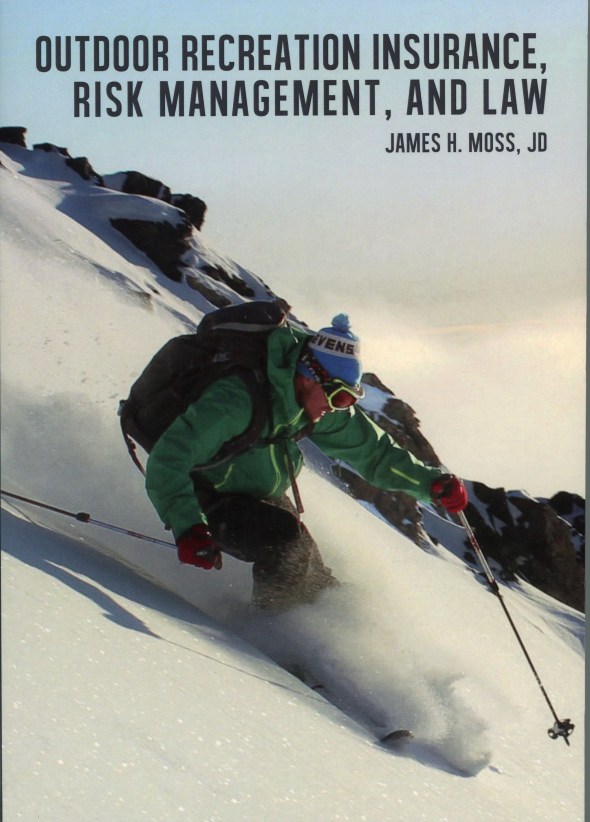
Jim is the author or co-author of six books about the legal issues in the outdoor recreation world; the latest is Outdoor Recreation Insurance, Risk Management

Outdoor Recreation Insurance, Risk Management, and Law
To see Jim’s complete bio go here and to see his CV you can find it here. To find out the purpose of this website go here.
G-YQ06K3L262
What do you think? Leave a comment.
If you like this let your friends know or post it on FB, Twitter or LinkedIn
 Blue Sky |
 Threads |
 X (formerly known as Twitter) logo |
 Stimulus |
 |
 |
Author: Outdoor Recreation Insurance, Risk Management and Law
Facebook Page: Outdoor Recreation & Adventure Travel Law
Email: Jim@Rec-Law.US
By Recreation Law Rec-law@recreation-law.com James H. Moss
@2024 Summit Magic Publishing, LLC
<rel=”author” link=” https://plus.google.com/u/0/b/112453188060350225356/” />
#AdventureTourism, #AdventureTravelLaw, #AdventureTravelLawyer, #AttorneyatLaw, #Backpacking, #BicyclingLaw, #Camps, #ChallengeCourse, #ChallengeCourseLaw, #ChallengeCourseLawyer, #CyclingLaw, #FitnessLaw, #FitnessLawyer, #Hiking, #HumanPowered, #HumanPoweredRecreation, #IceClimbing, #JamesHMoss, #JimMoss, #Law, #Mountaineering, #Negligence, #OutdoorLaw, #OutdoorRecreationLaw, #OutsideLaw, #OutsideLawyer, #RecLaw, #Rec-Law, #RecLawBlog, #Rec-LawBlog, #RecLawyer, #RecreationalLawyer, #RecreationLaw, #RecreationLawBlog, #RecreationLawcom, #Recreation-Lawcom, #Recreation-Law.com, #RiskManagement, #RockClimbing, #RockClimbingLawyer, #RopesCourse, #RopesCourseLawyer, #SkiAreas, #Skiing, #SkiLaw, #Snowboarding, #SummerCamp, #Tourism, #TravelLaw, #YouthCamps, #ZipLineLawyer, 4H, 4H Camp, Summer Camp, Zip Line, Zip Wire, Employee, Herberchuk, Essex County 4H Club Camp, Inc., Teleglobe,
WordPress Tags: plaintiff,system,Camp,platform,Permanent,Herberchuk,Essex,Club,Mass,Super,LEXIS,Date,Decision,Alicia,Defendant,Teleglobe,Communications,Claims,negligence,Defenses,defendants,event,employees,employer,pulley,equipment,arrival,judgment,Summary,landowner,owner,injury,person,visitors,intelligence,dangers,instruction,money,employment,humans,About,obligations,Leave,FaceBook,Twitter,LinkedIn,Recreation,Edit,Call,Email,Google,RecreationLaw,Page,Outdoor,Adventure,Travel,Blog,Mobile,Site,James,Moss,Authorrank,author,AdventureTourism,AdventureTravelLaw,AdventureTravelLawyer,AttorneyatLaw,BicyclingLaw,Camps,ChallengeCourse,ChallengeCourseLaw,ChallengeCourseLawyer,CyclingLaw,FitnessLaw,FitnessLawyer,HumanPoweredRecreation,JamesHMoss,JimMoss,OutdoorLaw,OutdoorRecreationLaw,OutsideLaw,OutsideLawyer,RecLaw,RecLawBlog,LawBlog,RecLawyer,RecreationalLawyer,RecreationLawBlog,RecreationLawcom,Lawcom,RiskManagement,RockClimbingLawyer,RopesCourse,RopesCourseLawyer,SkiAreas,SkiLaw,SummerCamp,Tourism,TravelLaw,YouthCamps,ZipLineLawyer,Summer,Line,Wire,Employee,nylon
Herberchuk v. Essex County 4H Club Camp, Inc. et al., 1999 Mass. Super. LEXIS 99
Posted: August 31, 2014 Filed under: Assumption of the Risk, Legal Case, Massachusetts, Summer Camp, Zip Line | Tags: 4H, Defendant, Employee, MA, Massachusetts, Summary judgment, Summer Camp, zip line, Zip Wire, Zip-line Leave a commentTo Read an Analysis of this decision see: Zip line put away for the season still found and plaintiff gets injured on rigged system.
Herberchuk v. Essex County 4H Club Camp, Inc. et al., 1999 Mass. Super. LEXIS 99
Alicia Herberchuk v. Essex County 4H Club Camp, Inc. et al.
96-4863
SUPERIOR COURT OF MASSACHUSETTS, AT MIDDLESEX
1999 Mass. Super. LEXIS 99
March 11, 1999, Decided
JUDGES: [*1] Raymond J. Brassard, Justice of the Superior Court.
OPINION BY: RAYMOND J. BRASSARD
OPINION
MEMORANDUM OF DECISION AND ORDER ON DEFENDANTS’ MOTIONS FOR SUMMARY JUDGMENT
Plaintiff, Alicia Herberchuk (“Ms. Herberchuk”), brought this action for recovery of damages for injuries sustained while on land owned by defendant, Essex County 4H Club Camp, Inc. (“4H”), while attending an outing accompanied by co-workers employed by defendant, Teleglobe Communications, Inc. (“Teleglobe”). The plaintiff alleges that the injuries were caused by the negligence of the defendants and that there are genuine issues of material fact which preclude the entry of summary judgment on the issue of liability. For the reasons set forth below, defendants’ motions for summary judgment are ALLOWED.
BACKGROUND
Viewing the facts available at this summary judgment stage in the light most favorable to the nonmoving party, Ms. Herberchuk, the undisputed facts are as follows.
On August 28, 1993, Ms. Herberchuk attended an employee outing at a campground owned by 4-H. The campground had been rented through a third party under the name of Teleglobe by certain of its employees, but not by Teleglobe itself. At the cookout [*2] Ms. Herberchuk observed other guests using an apparatus known as a zipwire. The zipwire was used by children who attended the 4H’s camp during the summer months. Using the zipwire involved climbing up a ladder which reached to a platform mounted on a tree, and then leaving the platform to traverse the entire length of the wire. Proper use of the zipwire required a safety helmet, a safety harness, a drag line, and several people assisting the rider. The zipwire also included an 8 inch square 2,000 pound-test pulley to which the safety harness was attached. At the end of the camping season all removable equipment, including the safety equipment, was required to be removed from the zipwire, leaving only the cable and the platform.
On the date in question, a ladder found on or near the campground was propped against the tree upon which the platform was mounted by unidentified parties allowing guests to access the zipwire. Hanging from the zipwire was a nylon rope described as green in color which other guests were using to slide down the wire. No rules or instructions on how to use the zipwire were posted on or near the apparatus on the day in question. After watching several other [*3] people use the zipwire, Ms. Herberchuk decided she wanted to use the apparatus. In order to reach the zipwire, the plaintiff climbed the ladder. Although the ladder did not reach the platform at the end of the wire, Ms. Herberchuk was able to reach the platform by pulling herself up by her hands. Once on the platform Ms. Herberchuk wrapped the rope around her hands as she had seen others do and pushed herself off. Instead of traveling down the wire, however, Ms. Herberchuk fell to the ground sustaining serious injuries, including two elbow fractures and a fractured jaw. As result of these events Ms. Herberchuk commenced this lawsuit against 4H and Teleglobe. Both 4H and Teleglobe have moved for summary judgment on the issue of liability.
DISCUSSION
[HN1] Summary judgment shall be granted where there are no issues of material fact and the moving party is entitled to as a matter of law. Kourouvacilis v. General Motors Corp., 410 Mass. 706, 716, 575 N.E.2d 734 (1991); Cassesso v. Comm’r of Correction, 390 Mass. 419, 422, 456 N.E.2d 1123 (1983); Community Nat’l Bank v. Dawes, 369 Mass. 550, 553, 340 N.E.2d 877 (1976); Mass.R.Civ.P. 56(c). The moving party bears the burden of affirmatively demonstrating the [*4] absence of a triable issue and that, therefore, she is entitled to judgment as a matter of law. Pederson v. Time, Inc., 404 Mass. 14, 17, 532 N.E.2d 1211 (1989). If the moving party establishes the absence of a triable issue, in order to defeat a motion for summary judgment, the opposing party must respond and allege facts which would establish the existence of disputed material facts. Id.
[HN2] A judge, when ruling on a motion for summary judgment must consider “the pleadings, depositions, answers to interrogatories, and admissions on file, together with the affidavits, if any, in determining whether summary judgment is appropriate.” Flesner v. Technical Communications Corporation et al., 410 Mass. 805, 807, 575 N.E.2d 1107 (1991). Where no genuine issue of material fact exists, “the judge must ask himself not whether he thinks the evidence unmistakably favors one side or the other but whether a fair-minded jury could return a verdict for the plaintiff on the evidence presented.” Id. citing Anderson v. Liberty Lobby, Inc., 477 U.S. 242, 252, 91 L. Ed. 2d 202, 106 S. Ct. 2505 (1986).
1. The Claim Against 4-H.
[HN3] A property owner has a duty to maintain its property [*5] “in a reasonably safe condition in view of all the circumstances, including the likelihood of injury to others, the seriousness of the injury, and the burden of avoiding the risk.” Mounsey v. Ellard, 363 Mass. 693, 708, 297 N.E.2d 43 (1973). A defendant is not required to “supply a place of maximum safety, but only one which would be safe to a person who exercises such minimum care as the circumstances reasonably indicate.” Toubiana v. Priestly, 402 Mass. 84, 88, 520 N.E.2d 1307 (1988). “A landowner has no duty to protect lawful visitors on his property from risks that would be obvious to persons of average intelligence.” Id. at 89.
In the present case, Ms. Herberchuk claims there are genuine issues of fact concerning the condition in which the zipwire was kept, as well as, what actions 4-H took to prevent unauthorized use of the apparatus. The evidence on the record, for the purposes of this motion, includes affidavits from both Ms. Herberchuk and Mr. Charles G. Ingersoll, a member of the 4-H Board of Trustees, as well as exhibits, including photographs of the area immediately before the accident.
In his affidavit, Mr. Ingersoll states that, while not having [*6] a specific memory of doing so the summer during which Ms. Herberchuk was injured, it was his practice to remove and put away for the winter all those removable parts and safety equipment associated with the zipwire at the end of each camping season (before the outing). Mr. Ingersol also stated that the ladder used by the plaintiff to get to the platform was not one of those presently used by the camp and that the pulley was not on the line the day of the outing. Ms. Herberchuk admitted in her affidavit that when she first arrived at the outing there was no ladder attached to the tree and that when she attempted to make her way to the platform she had to pull herself up because the wooden ladder placed there did not reach the platform. Ms. Herberchuk stated further that she did not know if the pulley was attached to the wire or where the strap had come from.
[HN4] “The question to be decided is whether the jury reasonably could have concluded that, in view of all the circumstances, an ordinarily prudent person in the defendant’s position would have taken steps, not taken by the defendant, to prevent the accident that occurred.” Id. at 89. In this case the evidence shows that 4-H [*7] had removed both the ladder and the safety equipment used with the zipwire during the camping season. Upon arriving at the outing Ms. Herberchuk saw no ladder allowing entry to the platform rendering the zipwire inaccessible, it being twenty feet above the ground. Ms. Herberchuk chose to use the zipwire without the benefit of safety equipment or instructions on the use of the device. Ms. Herberchuk also admitted in her deposition that she knew there was a chance she could be injured but decided to use the apparatus. Further, 4-H did not have a duty to warn Ms. Herberchuk of the obvious dangers involved with using the zipwire without safety equipment or instruction. “There is no duty to warn of dangers obvious to persons of average intelligence.” Thorson v. Mandell, 402 Mass. 744, 749, 525 N.E.2d 375 (1988). On this evidence, a fair minded jury could not return a verdict for the plaintiff.
2. The Claim Against Teleglobe.
[HN5] “Before liability for negligence can be imposed there must first be a legal duty owed by the defendant to the plaintiff, and a breach of that duty proximately resulting in the injury.” Davis v. Westwood Group, 420 Mass. 739, 743, 652 N.E.2d 567 (1995). [*8] Ms. Herberchuk urges that Teleglobe played a part in the organization and funding of the outing at which the plaintiff was injured. The evidence, however, is to the contrary. First, the outing was organized by Teleglobe employees because the company no longer sponsored such events. Second, the money to pay for the outing was raised by a group of employees independent of Teleglobe through the use of a raffle. Finally, Ms. Herberchuk’s attendance was not required by her employment and she received no compensation for attending. On this evidence a reasonable jury could not find that Teleglobe owed any duty to Ms. Herberchuk.
ORDER
For the foregoing reasons, it is hereby ORDERED that defendants’, 4-H and Teleglobe, motions for summary judgment are ALLOWED.
Raymond J, Brassard
Justice of the Superior Court
Dated: March 11, 1999
G-YQ06K3L262
Simple Florida camp case with final sentences that provide insight into how courts look at what influenced their decision.
Posted: July 28, 2014 Filed under: Florida, Release (pre-injury contract not to sue), Summer Camp | Tags: Cause of action, Florida, Give Kids The World, Give Kids the World Village, GKTW, Inc., lift, Make a Wish, Negligence, Release, Summary judgment, wheelchair Leave a commentThis decision was recently upheld by the Florida Supreme Court in Sanislo, et al., v. Give Kids The World, Inc., 157 So. 3d 256; 2015 Fla. LEXIS 214; 40 Fla. L. Weekly S 79
A camp for ill children can be sued by injured parents just as any summer camp. That was not the issue here. The language of the release was the only issue.
Give Kids The World, Inc., v. Sanislo, 2012 Fla. App. LEXIS 7403; 37 Fla. L. Weekly D 1143
State: Florida Court of Appeal, Fifth District
Plaintiff: Stacy Sanislo and Eric Sanislo, in the trial court, defendants on appeal
Defendant: Give Kids The World, Inc., plaintiff on appeal, defendant at the trial court level
Plaintiff Claims: negligence
Defendant Defenses: Release
Holding: for the defendant
Year: 2012
This case is fairly mundane from the standpoint of release law. However, the concurring opinion at the end makes a great point that has relevance.
The defendant GKTW (I’ll refer to the parties as they were at the trial court) grants wishes to seriously ill children. The plaintiffs’ applied and were granted the opportunity for their ill child to attend the camp.
While at the camp, a lift on the back of a horse-drawn wagon broke because the weight limit of the lift had been exceeded. The wife, Stacy was injured. She and her husband sued the camp.
The trial court denied the defendants motion for summary judgment on the release signed by the parties. The motion was denied because the trial court found the language in the release did not rise to the level necessary to inform the plaintiff’s they were giving up legal rights. The matter went to, and the plaintiff prevailed in their claims.
The defendant appealed.
Summary of the case
The issue was the same as in many prior cases. First, the plaintiff argued the release language did not meet Florida’s law. The court’s response was quite simple.
Exculpatory clauses are disfavored under the law, but unambiguous exculpatory contracts are enforceable, unless they contravene public policy. The wording of the exculpatory clause must be clear and understandable so that an ordinary and knowledgeable person will know what he or she is contracting away.
The next issue was the release did not contain the word negligence. “This Court has expressly “rejected the need for express language referring to release of the defendant for ‘negligence’ or ‘negligent acts’ in order to render a release effective to bar a negligence action.”
Language such as “any and all liability, claims, demands, actions, and causes of action whatsoever” was sufficient to stop a claim. A release also must not list each way a party can be injured to be effective.
The court then looked at the unequal bargaining position argument: “this Court must consider the parties’ relative bargaining power in determining the enforceability of a release.”
Enforcement of an exculpatory clause has been denied where the relative bargaining power of the contracting parties is unequal and the clause seeks to exempt from liability for negligence the party who occupies a superior bargaining position. However, Florida courts have held that the bargaining power of the parties will not be considered unequal in settings outside of the public utility or public function context.
However athletic contests and recreational activities are public utility nature or a public function.
The final argument was the release was offered as a “take it or leave it” basis. To have their daughters wish fulfilled the plaintiff’s had to sign a release. However parental desire to fulfill a child’s wish is not unequal bargaining power.
The court then made this final statement. They [the plaintiff’s] were provided a copy of the release at the time they applied to the Make-A-Wish Foundation and made a decision to waive certain rights. GKTW is entitled to enforcement of that release.
Of interest was the concurring opinion. A concurring opinion is one where a judge on the appeal panel agrees with the outcome, but his agreement is based on a different legal issue or the judge wants to make a point. It does not change the opinion, and it does not add additional weight to the opinion. However, it is usually quite educational and provides an opportunity to understand the court.
In this case, the concurring opinion looked at the issue of the language of the release.
…a release should be readily understandable so that an ordinary and knowledgeable person would know what is being contracted away. I would suggest that the average ordinary and knowledgeable person would not understand from such language that they were absolving an entity from a duty to use reasonable care. Conversely, a clause which provides a waiver of liability for one’s own negligence is easily understood.
The great statement was the last. “The other district courts of appeal have recognized how simple it is to add such a clause in a release. I suggest we do the same.”
So Now What?
This is a simple summer camp case, except the injured party was the parent rather than the child. If you run a summer camp, you may want to make sure your release covers all family members, not just the campers. Parents picking up their children can be hurt as well as siblings who are investigating the outdoors while there.
However, the great take away points are the last sentences in the opinion and the concurring opinion.
1. Get the release to the parties in advance
2. Use the word negligence in your release.
What do you think? Leave a comment.
 James H. “Jim” Moss |
Jim Moss is an attorney specializing in the legal issues of the outdoor recreation community. He represents guides, guide services, and outfitters both as businesses and individuals and the products they use for their business. He has defended Mt. Everest guide services, summer camps, climbing rope manufacturers; avalanche beacon manufacturers, and many more manufacturers and outdoor industries. Contact Jim at Jim@Rec-Law.us |

Outdoor Recreation Insurance, Risk Management, and Law
Jim is the author or co-author of eight books about legal issues in the outdoor recreation world; the latest is Outdoor Recreation Insurance, Risk Management, and Law. To Purchase Go Here:
To see Jim’s complete bio go here and to see his CV you can find it here. To find out the purpose of this website go here.
If you are interested in having me write your release, download the form and return it to me.
If you like this let your friends know or post it on FB, Twitter, or LinkedIn
By Recreation Law Rec-law@recreation-law.com James H. Moss
@2023 Summit Magic Publishing, LLC
G-YQ06K3L262
|
Blue Sky Logo |
 |
 Mastodon |
 |
Stimulus |
 Recreation Law logo |
X (formerly known as Twitter) logo |
Threads |
<rel=”author” link=” https://plus.google.com/u/0/b/112453188060350225356/” />
#AdventureTourism, #AdventureTravelLaw, #AdventureTravelLawyer, #AttorneyatLaw, #Backpacking, #BicyclingLaw, #Camps, #ChallengeCourse, #ChallengeCourseLaw, #ChallengeCourseLawyer, #CyclingLaw, #FitnessLaw, #FitnessLawyer, #Hiking, #HumanPowered, #HumanPoweredRecreation, #IceClimbing, #JamesHMoss, #JimMoss, #Law, #Mountaineering, #Negligence, #OutdoorLaw, #OutdoorRecreationLaw, #OutsideLaw, #OutsideLawyer, #RecLaw, #Rec-Law, #RecLawBlog, #Rec-LawBlog, #RecLawyer, #RecreationalLawyer, #RecreationLaw, #RecreationLawBlog, #RecreationLawcom, #Recreation-Lawcom, #Recreation-Law.com, #RiskManagement, #RockClimbing, #RockClimbingLawyer, #RopesCourse, #RopesCourseLawyer, #SkiAreas, #Skiing, #SkiLaw, #Snowboarding, #SummerCamp, #Tourism, #TravelLaw, #YouthCamps, #ZipLineLawyer, GKTW, Give Kids The World, Inc., Make a Wish, wheelchair, lift, release, negligence,
WordPress Tags: Simple,Florida,decision,parents,Give,Kids,World,Sanislo,LEXIS,State,Court,Appeal,Fifth,District,Plaintiff,Stacy,Eric,defendants,Defendant,Claims,negligence,Defenses,Release,standpoint,opinion,relevance,GKTW,plaintiffs,horse,wagon,wife,husband,judgment,Summary,response,Exculpatory,clauses,policy,clause,person,action,Language,argument,Enforcement,settings,context,basis,daughters,statement,Make,Wish,Foundation,panel,outcome,agreement,waiver,campers,siblings,Leave,FaceBook,Twitter,LinkedIn,Recreation,Edit,Email,Google,RecreationLaw,Page,Outdoor,Adventure,Travel,Blog,Mobile,Site,James,Moss,Authorrank,author,AdventureTourism,AdventureTravelLaw,AdventureTravelLawyer,AttorneyatLaw,BicyclingLaw,Camps,ChallengeCourse,ChallengeCourseLaw,ChallengeCourseLawyer,CyclingLaw,FitnessLaw,FitnessLawyer,HumanPoweredRecreation,JamesHMoss,JimMoss,OutdoorLaw,OutdoorRecreationLaw,OutsideLaw,OutsideLawyer,RecLaw,RecLawBlog,LawBlog,RecLawyer,RecreationalLawyer,RecreationLawBlog,RecreationLawcom,Lawcom,RiskManagement,RockClimbingLawyer,RopesCourse,RopesCourseLawyer,SkiAreas,SkiLaw,SummerCamp,Tourism,TravelLaw,YouthCamps,ZipLineLawyer
Give Kids The World, Inc., v. Sanislo, 2012 Fla. App. LEXIS 7403; 37 Fla. L. Weekly D 1143
Posted: July 19, 2014 Filed under: Florida, Legal Case, Release (pre-injury contract not to sue), Summer Camp | Tags: Give Kids The World, Give Kids the World Village, GKTW, Inc., lift, Make a Wish, Negligence, Release, wheelchair Leave a commentTo Read an Analysis of this decision see
Simple Florida camp case with final sentences that provide insight into how courts look at what influenced their decision.
Give Kids The World, Inc., v. Sanislo, 2012 Fla. App. LEXIS 7403; 37 Fla. L. Weekly D 1143
This case was upheld by the Florida Supreme Court in Sanislo, et al., v. Give Kids The World, Inc., 157 So. 3d 256; 2015 Fla. LEXIS 214; 40 Fla. L. Weekly S 79
Give Kids The World, Inc., Appellant, v. Stacy Sanislo and Eric Sanislo, Appellees.
Case No. 5D11-748
COURT OF APPEAL OF FLORIDA, FIFTH DISTRICT
2012 Fla. App. LEXIS 7403; 37 Fla. L. Weekly D 1143
May 11, 2012, Opinion Filed
PRIOR HISTORY: [*1]
Appeal from the Circuit Court for Osceola County, Jeffrey Fleming, Judge.
COUNSEL: Wm. Jere Tolton, lll, of Ogden & Sullivan, P.A., Tampa, and Matthew J. Haftel of O’Connor & O’Connor, LLC, Orlando, for Appellant.
Michael J. Damaso, ll, of Wooten, Kimbrough and Normand, P.A., Orlando, and Jack W. Shaw, Jr., of Jack W. Shaw, Jr., P.A., Winter Park, for Appellees.
JUDGES: ORFINGER, C.J., and PALMER, J., concur. COHEN, J., concurs and concurs specially with opinion.
OPINION
PER CURIAM.
Give Kids the World, Inc. (“GKTW”), the defendant below, appeals a final judgment entered against it in a negligence action. GKTW argues that the lower court erred by denying its pretrial motion for summary judgment on its affirmative defense of release. We agree and reverse.
GKTW is a non-profit organization that provides free “storybook” vacations to seriously ill children and their families at its resort village, the Give Kids the World Village (“the Village”). Stacy and Eric Sanislo (“the Sanislos”) are the parents of a young girl with a serious illness. In November 2004, the Sanislos executed a liability release to GKTW in connection with a “wish request” that benefitted their daughter.1 The release, in pertinent part, provided:
By [*2] my/our signature(s) set forth below, and in consideration of Give Kids the World, Inc. granting said wish, I/we hereby release Give Kids the World, Inc. and all of its agents, officers, directors, servants and employees from any liability whatsoever in connection with the preparation, execution, and fulfillment of said wish, on behalf of ourselves, the above named wish child and all other participants. The scope of the release shall include, but not be limited to, damages or losses or injuries encountered in connection with transportation, food, lodging, medical concerns (physical and emotional), entertainment, photographs and physical injury of any kind.
. . . .
I/we further agree to hold harmless and to release Give Kids the World, Inc. from any and all claims and causes of action of every kind arising from any and all physical or emotional injuries and/or damages which may happen to me/us, or damage to or theft of our personal belongings, jewelry or other personal property which may occur while staying at the Give Kids the World Village.
The wish request was approved and, upon their arrival at the Village from the state of Washington, the Sanislos executed another liability release [*3] with identical language.
1 Fulfillment of a child’s wish is accomplished in conjunction with the Make-AWish Foundation, a separate entity from GKTW.
During the course of her stay at the Village, Stacy Sanislo was injured when she, along with her husband, posed for a picture on a pneumatic wheelchair lift that was attached to the back of a horse-drawn wagon. The lift collapsed because the weight limit had been exceeded, injuring Ms. Sanislo. The Sanislos brought suit against GKTW, alleging that Ms. Sanislo’s injuries were caused by GKTW’s negligence. In its answer, GKTW asserted the affirmative defense of release. Subsequently, GKTW filed a motion for summary judgment, arguing that the signed liability releases precluded a finding of liability. The Sanislos filed a motion for partial summary judgment on the issue of release as well. The trial court denied GKTW’s motion, but granted that of the Sanislos.2 Following a jury verdict, judgment was entered in the Sanislos’ favor.
2 The parties stipulated that if the trial court granted one of the motions for summary judgment, then the other should be denied.
On appeal, GKTW correctly asserts that it was entitled to summary judgment based on the [*4] release. [HN1] Exculpatory clauses are disfavored under the law, but unambiguous exculpatory contracts are enforceable unless they contravene public policy. Applegate v. Cable Water Ski, L.C., 974 So. 2d 1112, 1114 (Fla. 5th DCA 2008) (citing Cain v. Banka, 932 So. 2d 575, 578 (Fla. 5th DCA 2006)). The wording of the exculpatory clause must be clear and understandable so that an ordinary and knowledgeable person will know what he or she is contracting away. Raveson v. Walt Disney World Co., 793 So. 2d 1171, 1173 (Fla. 5th DCA 2001). This Court has expressly “rejected the need for express language referring to release of the defendant for ‘negligence’ or ‘negligent acts’ in order to render a release effective to bar a negligence action.” Cain, 932 So. 2d at 578. In Cain, this Court noted that an exculpatory clause absolving a defendant of “any and all liability, claims, demands, actions, and causes of action whatsoever” was sufficient to encompass the plaintiff’s negligence action filed against a defendant track owner in connection with motocross bike riding. Id. at 579; see also Hardage Enters., Inc. v. Fidesys Corp., N.V., 570 So. 2d 436, 437 (Fla. 5th DCA 1990) (determining that “any and [*5] all claims, demands, damages, actions, causes of action, or suits in equity, of whatsoever kind or nature” encompassed negligent action). A release need not list each possible manner in which the releasor could be injured in order to be effective. Cf. DeBoer v. Fla. Offroaders Driver’s Ass’n, Inc., 622 So. 2d 1134, 1136 (Fla. 5th DCA 1993).
The instant release contains two separate provisions releasing GKTW from liability. One provision releases GKTW from “any and all claims and causes of action of every kind arising from any and all physical or emotional injuries and/or damages which may happen to me/us . . . which may occur while staying at the Give Kids the World Village.” This language is markedly similar to the language in the release signed by the plaintiff in Cain, which encompassed the release of a negligence action. 932 So. 2d at 577. A second provision releases GKTW from “any liability whatsoever in connection with the preparation, execution, and fulfillment of said wish . . . .” This language is broad enough to encompass negligence claims arising from the injuries suffered by Ms. Sanislo due to the collapse of the wheelchair lift.
The Sanislos argue that the release is not [*6] clear and unambiguous because it applies to liability arising “in connection with the preparation, execution and fulfillment of said wish.” They suggest the nature and scope of the wish is not clear or defined and thus renders the release unenforceable. However, the wish, which was requested by the Sanislos, clearly encompassed events at the Village related to their stay and attendance at Orlando area theme parks. The Sanislos’ interpretation is not likely the interpretation that an “ordinary and knowledgeable person” would give to the clause. See Raveson, 793 So. 2d at 1173. The language used clearly and unambiguously releases GKTW from liability for the physical injuries Ms. Sanislo sustained during her stay at the Village, and was sufficiently clear to make the Sanislos aware of the breadth of the scope of the release and what rights they were contracting away. [HN2] The ability to predict each and every potential injury is unattainable and is not required to uphold an exculpatory provision within a release.
[HN3] In addition to assessing the clarity of the language used in releases, this Court must consider the parties’ relative bargaining power in determining the enforceability of a release. [*7] Ivey Plants, Inc. v. FMC Corp., 282 So. 2d 205, 208 (Fla. 4th DCA 1973). Enforcement of an exculpatory clause has been denied where the relative bargaining power of the contracting parties is unequal and the clause seeks to exempt from liability for negligence the party who occupies a superior bargaining position. Id. However, Florida courts have held that the bargaining power of the parties will not be considered unequal in settings outside of the public utility or public function context. For instance, in Banfield v. Louis, 589 So. 2d 441, 443-44 (Fla. 4th DCA 1991), the court upheld the enforcement of a release executed by a participant in a triathlon and the trial court’s ruling that a disparity in bargaining power was “not applicable to entry of athletic contests of this nature, where a party is not required to enter it and not entitled to participate unless they want to.” The Banfield court emphasized that the application of Ivey Plants was limited to circumstances in which a release was executed on behalf of a public utility or a company serving some public function. Id. at 444-45. Consistent with this analysis, Florida courts have refused to find an inequality of bargaining [*8] power in recreational settings. Id.; DeBoer, 622 So. 2d at 1136. Similarly, in Hardage Enterprises, this Court found that an exculpatory clause in an agreement entered into by the owner of a hotel complex and a construction manager of the complex was enforceable because its language was unambiguous and the parties were not in a position of unequal bargaining power. 570 So. 2d at 438. This Court explained that the case did not present “a situation where public policy mandates the protection of consumers who are offered a contract in a ‘take it or leave it’ form.” Id. at 439.
GKTW argues that the bargaining power of the parties cannot be viewed as unequal, because the Sanislos voluntarily participated in the GKTW program. The Sanislos, for their part, argue that the parties are of unequal bargaining power because they were offered a contract in a “take it or leave it” form, and GKTW gave them no choice but to sign the release in order to have their daughter’s wish fulfilled. Unfortunately for the Sanislos, however, the instant case is more akin to Banfield and DeBoer than it is to Ivey Plants. The Sanislos’ desire to fulfill their ill daughter’s wish is certainly understandable, but the [*9] parents’ desire to fulfill the wish and take advantage of the GKTW program does not equate to unequal bargaining power. The Sanislos were not consumers as contemplated in Hardage Enterprises. They were provided a copy of the release at the time they applied to the Make-A-Wish Foundation and made a decision to waive certain rights. GKTW is entitled to enforcement of that release.
REVERSED.
ORFINGER, C.J., and PALMER, J., concur.
COHEN, J., concurs and concurs specially with opinion.
CONCUR BY: COHEN
CONCUR
COHEN, J., concurring specially.
If I were writing on a clean slate, I would affirm the trial court’s denial of GKTW’s summary judgment. I am bound, however, to follow this Court’s prior decisions that do not require an express reference to negligence in a release in order to render the release effective to such actions. This District stands alone on this position. See Levine v. A. Madley Corp., 516 So. 2d 1101 (Fla. 1st DCA 1987); Van Tuyn v. Zurich Am. Ins. Co., 447 So. 2d 318 (Fla. 4th DCA 1984); Goyings v. Jack & Ruth Eckerd Found., 403 So. 2d 1144 (Fla. 2d DCA 1981); Tout v. Hartford Accident & Indem. Co., 390 So. 2d 155 (Fla. 3rd DCA 1980).
The better view is to require an explicit provision to that [*10] effect. Exculpatory clauses are “by public policy disfavored in the law because they relieve one party of the obligation to use due care, and shift the risk of injury to the party who is probably least equipped to take the necessary precautions to avoid injury and bear the risk of loss.” Tatman v. Space Coast Kennel Club, Inc., 27 So. 3d 108, 110 (Fla. 5th DCA 2009). While those trained in the law might understand and appreciate that the general language releasing a party from any and all liability could encompass the injuries suffered by Ms. Sanislo, a release should be readily understandable so that an ordinary and knowledgeable person would know what is being contracted away. I would suggest that the average ordinary and knowledgeable person would not understand from such language that they were absolving an entity from a duty to use reasonable care. Conversely, a clause which provides a waiver of liability for one’s own negligence is easily understood. The other district courts of appeal have recognized how simple it is to add such a clause in a release. I suggest we do the same.
G-YQ06K3L262
http://www.recreation-law.com
WordPress Tags: Give,Kids,World,Sanislo,LEXIS,Appellant,Stacy,Eric,Appellees,Case,COURT,APPEAL,FLORIDA,FIFTH,DISTRICT,Opinion,PRIOR,HISTORY,Circuit,Osceola,Jeffrey,Judge,COUNSEL,Jere,Tolton,Ogden,Sullivan,Tampa,Matthew,Haftel,Connor,Orlando,Michael,Damaso,Wooten,Kimbrough,Normand,Jack,Shaw,Winter,Park,JUDGES,ORFINGER,PALMER,COHEN,CURIAM,GKTW,defendant,judgment,negligence,action,vacations,families,resort,village,Sanislos,parents,girl,November,connection,daughter,signature,agents,officers,directors,servants,employees,preparation,execution,participants,scope,injuries,transportation,food,injury,theft,belongings,jewelry,arrival,Washington,Fulfillment,conjunction,Make,AWish,Foundation,husband,horse,wagon,jury,verdict,Exculpatory,clauses,policy,Applegate,Cable,Water,Cain,Banka,clause,person,Raveson,Walt,Disney,plaintiff,owner,motocross,bike,Hardage,Enters,Fidesys,Corp,manner,DeBoer,Offroaders,Driver,provision,events,attendance,area,theme,parks,interpretation,breadth,addition,Ivey,Plants,Enforcement,settings,context,instance,Banfield,Louis,participant,Consistent,analysis,Enterprises,agreement,hotel,construction,manager,situation,protection,consumers,advantage,Wish,decision,CONCUR,denial,decisions,reference,Levine,Madley,Tuyn,Zurich,Goyings,Ruth,Eckerd,Found,Tout,Hartford,Accident,Indem,obligation,precautions,Tatman,Space,Coast,Kennel,Club,waiver,behalf,wheelchair,enforceable
The Boy Scouts of America are not liable because they owed no duty, they did not own the camp. Negligence requires a duty, and no duty exists if you are not the owners, manager, supervisor or someone who is liable.
Posted: April 14, 2014 Filed under: New York, Summer Camp | Tags: Boy Scout, Boy Scouts of America, BSA, Northern New Jersey Council, Path, Scout, Scout Leader, Scout Troop, Showers, United Methodist Church 4 CommentsThe BSA was dismissed because the plaintiff was unable to prove the BSA supervised, owned or managed the camp where he was injured. The BSA had no custody or control of the camp. The plaintiff also failed to argue that a rule, policy, regulation or procedure of the camp had been violated.
Gomes v. Boy Scouts of America, et al., 2013 N.Y. Misc. LEXIS 4622; 2013 NY Slip Op 32453(U)
Date of the Decision: October 9, 2013
Plaintiff: Davide E. Gomes
Defendant: Boy Scouts of America, et al.,
Plaintiff Claims: failure to keep the area safe, in good repair, well-lit and free from obstruction or defect and supervise him and the other scouts
Defendant Defenses:
Holding: For the defendant Boy Scouts of America
The plaintiff, a 13-year-old Boy Scout fell leaving the shower area at a BSA council camp. He sustained injuries and sued the Boy Scouts of America and other parties.
The Boy Scouts of America moved for a dismissal claiming they were not the owners, in control of, or supervisors of the camp. The camp was owned by the Northern New Jersey Council, BSA. The Northern New Jersey Council is a separate legal entity from the Boy Scouts of America.
There was disputed testimony, whether the plaintiff was running (from witnesses) or walking along the path where he fell. It was lit inside the shower area but not lit outside. The plaintiff had a headlamp with him. During discovery, the plaintiff admitted he did not remember what happened that caused him to fall.
The BSA moved for summary judgment, which was granted by the trial court leading to this appeal.
Summary of the case
The arguments in the case are simple. Did the Boy Scouts of America own, manage, supervise or run the camp or was the camp owned by a third party. The court referred to the legal phrase, did the BSA have “custody and control” of the camp. A Boy Scout Council is a separate and distinct entity from the Boy Scouts of America. The Boy Scouts of America grants a charter (sort of like a license) to promote and use the Boy Scout program to the youth in the council’s geographic area. Boy Scout councils own camps like this one where the plaintiff was injured. The title on the deed is Northern New Jersey Council, Boy Scouts of America, not Boy Scouts of America.
The court looked at several other cases, which found the same way.
…BSA not liable for alleged negligence of charter BSA Council as there was no agency relationship between it and Council, and it lacked requisite supervision, direction, or control over adult leader who had custody of Scouts during trip at issue….
…where plaintiff died while on Scout trip, BSA granted summary judgment as it exercised no supervisory control over troop or adult leaders who accompanied scouts on trip….
The court also quoted a decision where a Council was not liable for the acts of a volunteer because the Council did not have control over the Scoutmaster. “…absent evidence that Council had supervision or control over day-to-day activities of Scout troop or scoutmaster, it could not be held liable for scoutmaster’s alleged negligent supervision…”
What caught my eye in this decision was this statement by the court.
Here, there is no issue of very young campers being unsupervised or placed in risky circumstances as plaintiff and his fellow scouts were all teenagers and there is no evidence that any camp policy was violated or that BSA had any control over the camp’s operation.
Here the court might have ruled differently if it had found that the policy of the camp had been violated.
So Now What?
The first issue is agency or ownership. The Boy Scouts of America were not liable to the camper because the BSA did not own, supervise or manage the particular piece of property where the scout was hurt. You can’t sue someone for negligence, unless they owed a duty to you. If you don’t own, manager or supervise the place where the plaintiff was injured you can’t be negligent because you owe no duty to that person.
Of greater interest is the fact the camp had no policies that were violated, which lead to the injury of the plaintiff. As a camp director of a BSA, GSA or any other camp or operation, you need to understand that the rules, regulations, policies and procedures that you write for your camp are going to be used as the rule, the standard, against which you will be judged at trial.
Don’t write rules, policies, regulations, or policies you can’t live up to.
What do you think? Leave a comment.
If you like this let your friends know or post it on FaceBook, Twitter or LinkedIn
Copyright 2014 Recreation Law (720) Edit Law
Email: Rec-law@recreation-law.com
Google+: +Recreation
Twitter: RecreationLaw
Facebook: Rec.Law.Now
Facebook Page: Outdoor Recreation & Adventure Travel Law
Blog: www.recreation-law.com
Mobile Site: http://m.recreation-law.com
By Recreation Law Rec-law@recreation-law.com James H. Moss #Authorrank
<rel=”author” link=” https://plus.google.com/u/0/b/112453188060350225356/” />
#AdventureTourism, #AdventureTravelLaw, #AdventureTravelLawyer, #AttorneyatLaw, #Backpacking, #BicyclingLaw, #Camps, #ChallengeCourse, #ChallengeCourseLaw, #ChallengeCourseLawyer, #CyclingLaw, #FitnessLaw, #FitnessLawyer, #Hiking, #HumanPowered, #HumanPoweredRecreation, #IceClimbing, #JamesHMoss, #JimMoss, #Law, #Mountaineering, #Negligence, #OutdoorLaw, #OutdoorRecreationLaw, #OutsideLaw, #OutsideLawyer, #RecLaw, #Rec-Law, #RecLawBlog, #Rec-LawBlog, #RecLawyer, #RecreationalLawyer, #RecreationLaw, #RecreationLawBlog, #RecreationLawcom, #Recreation-Lawcom, #Recreation-Law.com, #RiskManagement, #RockClimbing, #RockClimbingLawyer, #RopesCourse, #RopesCourseLawyer, #SkiAreas, #Skiing, #SkiLaw, #Snowboarding, #SummerCamp, #Tourism, #TravelLaw, #YouthCamps, #ZipLineLawyer, BSA, Boy Scouts of America, Northern New Jersey Council, Showers, Path,
Morgan et al., v. Ohio Conference of the United Church of Christ et al., 2012-Ohio-453; 2012 Ohio App. LEXIS 385
Posted: April 7, 2014 Filed under: Assumption of the Risk, Legal Case, Ohio, Summer Camp | Tags: assumption of the risk, Chaperone, Hike, Night Hike, Ohio, Primary Assumption of the Risk, Stream Crossing Leave a commentBrian Morgan et al., Plaintiffs-Appellants, v. Ohio Conference of the United Church of Christ et al., Defendants-Appellees.
No. 11AP-405
COURT OF APPEALS OF OHIO, TENTH APPELLATE DISTRICT, FRANKLIN COUNTY
2012-Ohio-453; 2012 Ohio App. LEXIS 385
February 7, 2012, Rendered
PRIOR HISTORY: [**1]
APPEAL from the Franklin County Court of Common Pleas. (C.P.C. No. 10CVC-03-4516).
DISPOSITION: Judgment affirmed.
COUNSEL: Rourke & Blumenthal, LLP, Kenneth S. Blumenthal and Jonathan R. Stoudt; Cloppert, Latanick, Sauter & Washburn, and Robert L. Washburn, for appellants.
Philipp & Gregory, Ronald D. Gregory and Jeffrey T. Peters, for appellees.
JUDGES: DORRIAN, J. KLATT and SADLER, JJ., concur.
OPINION BY: DORRIAN
OPINION
(ACCELERATED CALENDAR)
DECISION
DORRIAN, J.
[*P1] Plaintiffs-appellants, Brian Morgan (“Morgan”) and his wife Amie Morgan (collectively “appellants”), appeal from the April 4, 2011 judgment of the Franklin County Court of Common Pleas in favor of defendants-appellees, Ohio Conference of the United Church of Christ (“OCUCC”) and Templed Hills Camp and Conference Center (“Templed Hills”) (collectively “appellees”). For the following reasons, we affirm.
[*P2] On November 12, 13, and 14, 2007, Morgan was scheduled to attend the Nature’s Classroom program at Templed Hills as a teacher chaperone for sixth grade students of Worthington City Schools. The school district contracted with the owner of the site, OCUCC, to send the students. The contract set forth a fee of $7,565 for the group’s participation. (Affidavit of Mark Glassbrenner, [**2] ¶4; Exhibit A-A to Affidavit.) On the evening of November 13, Morgan volunteered to act as a chaperone on one of the group’s night hikes. Morgan had chaperoned students annually from approximately 2002 to 2007 and attended the night hike every year. The night hike had originally been scheduled for the evening of November 12, but was postponed to the second evening due to rain. (Affidavit of Kristi Patrick, ¶6; Affidavit of Kathy Mikkelson, ¶6.)
[*P3] The night hike was led by Matthew Marsh (“Marsh”), a Nature’s Classroom instructor. Marsh testified that the purpose of the night hike was to use your other senses when your eyes were not as heightened as during the daylight. Marsh picked the trail and had been using that same trail for the night hikes he had been leading twice a week for the last seven months. It was an established trail and wider than shoulder length. Other trails on the property were harder to traverse. Marsh stated that the evening was a clear night, not cloudy, and the moon was out so the trail could be seen. The adults were also told to bring flashlights.
[*P4] The group met at approximately 7:30 p.m. and started with a game called “Bat & Moth,” where one child is blindfolded [**3] and the children attempt to escape. It is similar to the game Marco Polo. The game lasted approximately 20 to 25 minutes, after which the group entered the woods. After several minutes of hiking, they had to cross a creek bed, but it was a receding creek so there was not much water in it. Marsh stood in the middle of the creek bed on a rock with his flashlight and helped every child cross by holding their hand, and then he helped Morgan cross. While Marsh was counting the kids on the other side of the creek, he saw Morgan shift his weight and fall on his stomach. Marsh tried to call his supervisor on his radio and his cell phone but could not reach her. Then he called 911. When the EMTs arrived, Marsh took the students to an area away from Morgan.
[*P5] Morgan testified to a slightly different version of facts. He had never been on that particular trail and thought it was very overgrown. He was not advised to take a flashlight on the hike and remembered the night being cloudy. Morgan testified that as he approached the creek Marsh was there to help him cross and had a flashlight. Morgan did not remember specifically, but thinks he used Marsh’s shoulder to step on a tree stump or rock as [**4] he took a long stride to cross the creek. After a few seconds, Marsh gave some directions for the next activity and Morgan took a step with his right foot, lost traction and fell. He knew immediately that he was seriously injured. Morgan suffered severe injuries to his left arm and shoulder. Morgan testified he had to ask Marsh to call 911 several times before Marsh called them.
[*P6] Morgan and his wife filed a complaint against OCUCC and Templed Hills as the owners and operators of the site and the employers of Marsh for damages Morgan suffered resulting from Marsh’s negligence, as well as for Amie Morgan’s loss of consortium. A stipulation of dismissal pursuant to Civ.R. 41 was filed.
[*P7] The claim was refiled on March 22, 2010. Appellees filed a motion for summary judgment, contending that appellants’ claims were barred by the affirmative defense of primary assumption of the risk and by the Ohio recreational user statute, R.C. 1533.181. Appellees argued that Morgan assumed the risk of his injury by voluntarily participating in the night hike and that, under the circumstances, appellees owed no duty to protect Morgan from injury. Appellees also argued that Ohio’s recreational statute, R.C. 1533.181, [**5] barred his claims because Morgan was a recreational user and, as such, appellees owed no duty to Morgan as a hiker pursuant to the statute.
[*P8] In opposition to appellees’ motion, Morgan argued that the doctrine of primary assumption of the risk does not bar his cause of action, as the dangers presented by Marsh’s negligence were not inherent to hiking. Also, Morgan argued that the recreational user statute was inapplicable to these facts because the negligence alleged was based on the negligence of an employee, not a theory of premises liability. Additionally, Morgan claimed he was not a recreational user because he was a business invitee.
[*P9] By decision and entry filed April 4, 2011, the trial court granted appellees’ motion for summary judgment finding that the doctrine of primary assumption of the risk barred appellants’ claims. The doctrine removed any duty on appellees’ part to protect Morgan from risks inherent to the activity of night hiking.
[*P10] Appellants assert one assignment of error on appeal:
The trial court erred in granting the motion for summary judgment filed by the Appellees Ohio Conference United Church of Christ and Templed Hills holding that the doctrine of primary assumption [**6] of the risk bars Plaintiffs from recovering on their claims for negligence and loss of consortium.
[*P11] In their assignment of error, appellants challenge the granting of the motion for summary judgment, contending that the doctrine of primary assumption of the risk is inapplicable to these facts. [HN1] By asserting a negligence action, appellants were required to prove by a preponderance of the evidence that appellees owed them a duty of care, that the duty was breached and that the breach proximately caused Morgan’s injuries. Strother v. Hutchinson, 67 Ohio St.2d 282, 285, 423 N.E.2d 467 (1981). Under the law of negligence, a defendant’s duty to a plaintiff depends on the relationship between the parties and the foreseeability of injury to someone in the plaintiff’s position. Simmers v. Bentley Constr. Co., 64 Ohio St.3d 642, 645, 1992 Ohio 42, 597 N.E.2d 504 (1992).
[*P12] [HN2] The doctrine of primary assumption of the risk has often been applied to cases involving sporting events and recreational activities. Crace v. Kent State Univ., 185 Ohio App. 3d 534, 2009 Ohio 6898, ¶12, 924 N.E.2d 906, citing Ballinger v. Leaniz Roofing, Ltd., 10th Dist. No. 07AP-696, 2008 Ohio 1421, ¶8, 2008 WL 802722, citing Anderson v. Ceccardi, 6 Ohio St.3d 110, 114, 6 Ohio B. 170, 451 N.E.2d 780 (1983). Whether to [**7] apply the affirmative defense of primary assumption of the risk presents an issue of law for the court to determine. Crace at ¶12, citing Gallagher v. Cleveland Browns Football Co., 74 Ohio St.3d 427, 435, 1996 Ohio 320, 659 N.E.2d 1232 (1996). We therefore review the trial court’s decision de novo. Crace at ¶12, citing Cleveland Elec. Illum. Co. v. Pub. Util. Comm., 76 Ohio St. 3d 521, 523, 1996 Ohio 298, 668 N.E.2d 889 (1996), citing Indus. Energy Consumers of Ohio Power Co. v. Pub. Utils. Comm., 68 Ohio St. 3d 559, 563, 1994 Ohio 435, 629 N.E.2d 423 (1994).
[*P13] [HN3] Under the doctrine of primary assumption of the risk, a plaintiff who voluntarily engages in a recreational activity or sporting event assumes the inherent risks of that activity and cannot recover for injuries sustained in engaging in the activity unless the defendant acted recklessly or intentionally in causing the injuries. Crace at ¶13, citing Santho v. Boy Scouts of Am., 168 Ohio App. 3d 27, 2006 Ohio 3656, ¶12, 857 N.E.2d 1255. The doctrine is based on the fiction that the plaintiff has “tacitly consented” to the risk of injury inherent in the activity. Collier v. Northland Swim Club, 35 Ohio App.3d 35, 37, 518 N.E.2d 1226 (10th Dist.1987). The rationale behind the doctrine is that certain risks are so intrinsic in some activities that the risk of injury [**8] is unavoidable. Crace at ¶13, citing Collier. The test for applying the doctrine of primary assumption of the risk to recreational activities and sporting events requires that “(1) the danger is ordinary to the game, (2) it is common knowledge that the danger exists, and (3) the injury occurs as a result of the danger during the course of the game.” Santho at ¶12.
[*P14] [HN4] The affirmative defense of primary assumption of the risk completely negates a negligence claim because the defendant owes no duty to protect the plaintiff against the inherent risks of the recreational activity in which the plaintiff engages. Crace at ¶15, citing Gentry v. Craycraft, 101 Ohio St.3d 141, 144, 2004 Ohio 379, 802 N.E.2d 1116, citing Prosser & Keeton, Law of Torts (5th Ed.1984) 496, Section 68; see also Gallagher at 431, citing Prosser & Keeton, 496-97, Section 28 (“Primary assumption of risk ‘is really a principle of no duty, or no negligence, and so denies the existence of any underlying cause of action.'”). Primary assumption of the risk serves to negate the duty of care owed by the defendant to the plaintiff. Wolfe v. Bison Baseball, Inc., 10th Dist. No. 09AP-905, 2010 Ohio 1390, ¶18, 2010 WL 254597. “Because a successful [**9] primary assumption of risk defense means that the duty element of negligence is not established as a matter of law, the defense prevents the plaintiff from even making a prima facie case.” Id. at ¶21, citing Gallagher at 431-32.
[*P15] [HN5] With the doctrine of primary assumption of the risk, the injured plaintiff’s subjective consent to and appreciation for the inherent risks of the recreational activity are immaterial to the analysis. Crace, 185 Ohio App. 3d 534, ¶16, citing Gentry at 144. The types of risks inherent to an activity are those risks that are foreseeable and customary risks of the sport or recreational activity. Deutsch v. Birk, 189 Ohio App. 3d 129, 2010 Ohio 3564, ¶12 (937 N.E.2d 638, 12th Dist.), citing Thompson v. McNeill, 53 Ohio St.3d 102, 104-106, 559 N.E.2d 705 (1990). In accordance with these principles, this court held in Gehri v. Capital Racing Club, Inc., 10th Dist. No. 96APE10-1307, 1997 Ohio App. LEXIS 2527, 1997 WL 324175 (June 12, 1997), that “primary assumption of [the] risk requires an examination of the activity itself and not plaintiff’s conduct. If the activity is one that is inherently dangerous and from which the risks cannot be eliminated, then a finding of primary assumption of [the] risk is appropriate.” 1997 Ohio App. LEXIS 2527, [WL] at *4. [**10] “The law simply deems certain risks as accepted by the plaintiff regardless of actual knowledge or consent.” Crace at ¶16. The focus in primary assumption of the risk is on the defendant’s conduct, whether such conduct was reckless or intentional. Gentry at ¶9.
[*P16] In the instant case, the trial court noted that hiking is a recreational activity to which the doctrine applies, and hiking contains an inherent risk of slipping, tripping or falling that cannot be eliminated, even more so with hiking at night. (Apr. 4, 2011 Decision, 2.) Appellants argue that primary assumption of the risk does not apply to these facts because the risks which led to the injury in this case could have been eliminated if Marsh had chosen a different trail. However, this is essentially a claim that Marsh’s conduct was reckless. In Marchetti v. Kalish, 53 Ohio St.3d 95, 100, 559 N.E.2d 699 (1990), fn. 3, the Supreme Court of Ohio cited the comments f and g to Section 500 of the Restatement of Torts 2d, 590, which defined the three mental states of tortious conduct, as follows:
f. Intentional misconduct and recklessness contrasted. [HN6] Reckless misconduct differs from intentional wrongdoing in a very important particular. While an act [**11] to be reckless must be intended by the actor, the actor does not intend to cause the harm which results from it. It is enough that he realizes or, from facts which he knows, should realize that there is a strong probability that harm may result, even though he hopes or even expects that his conduct will prove harmless. However, a strong probability is a different thing from the substantial certainty without which he cannot be said to intend the harm in which his act results.
g. Negligence and recklessness contrasted. [HN7] Reckless mis-conduct differs from negligence in several important particulars. It differs from that form of negligence which consists in mere inadvertence, incompetence, unskillfulness, or a failure to take precautions to enable the actor adequately to cope with a possible or probable future emergency, in that reckless misconduct requires a conscious choice of a course of action, either with knowledge of the serious danger to others involved in it or with knowledge of facts which would disclose this danger to any reasonable man. It differs not only from the above-mentioned form of negligence, but also from that negligence which consists in intentionally doing an act with [**12] knowledge that it contains a risk of harm to others, in that the actor to be reckless must recognize that his conduct involves a risk substantially greater in amount than that which is necessary to make his conduct negligent. The difference between reckless misconduct and conduct involving only such a quantum of risk as is necessary to make it negligent is a difference in the degree of the risk, but this difference of degree is so marked as to amount substantially to a difference in kind.
[*P17] Appellants argue that Marsh should have chosen a different path for the hikers that evening. However, appellants did not allege that Marsh was reckless in choosing that path. The trial court specifically found that [HN8] hiking, especially night hiking, involves the risk of tripping, slipping and falling. Hiking does involve these risks. Morgan volunteered to participate in the night hike and assumed these risks. The court in Shaner v. Smoot, 7th Dist. No. 712, 2001 Ohio 3429, 2001 WL 1243920, found that persons involved in recreational activities assume the ordinary risks of the activity and the failure to warn of the ordinary risks does not subject one to liability. In Shaner, the plaintiff was injured [**13] while riding a motorcycle in tall grass with tree stumps scattered throughout the area. The plaintiff was aware that there were tree stumps in the area where he was riding. However, the court found that the risk of hitting a tree stump was an ordinary risk of riding a motorcycle in such a location, and the defendants could not be liable for failure to warn of an ordinary risk assumed by the plaintiff.
[*P18] Appellants concede that there are risks inherent in hiking that cannot be avoided. However, appellants contend that the risks which led to Morgan’s particular injury could have been avoided if Marsh had picked a trail which was better maintained with less-demanding obstacles. Thus, appellants argue, implied assumption of the risk is more appropriate to these facts, which has been merged into Ohio’s comparative negligence statute, R.C. 2315.19. However, these risks were not risks out of the ordinary for night hiking.
[*P19] In California, the courts have addressed similar issues and applied primary assumption of the risk, finding that a defendant is only liable for a plaintiff’s injuries if the defendant’s conduct is reckless or totally outside the range of the ordinary activity involved in the [**14] sport or activity. In Andia v. Full Service Travel, S.D.Cal. No. 06cv0437 WQH (JMA), 2007 U.S. Dist. LEXIS 88247, 2007 WL 4258634 (Nov. 29, 2007), the plaintiff was a passenger on the defendant’s cruise ship and participated in a shore expedition known as the HL 15, the Kilauea Lava Viewing Hike. The plaintiff slipped on one of the rocks and fell, fracturing her foot. She filed a negligence action, and the court found that the doctrine of primary assumption of the risk applied, negating the defendant’s duty to prevent the plaintiff from slipping and falling on lava rock, an inherent risk of the activity of lava hiking.
[*P20] In Kane v. Natl. Ski Patrol Sys., Inc., 88 Cal.App.4th 204, 209, 105 Cal.Rptr.2d 600 (2001), a ski instructor led participants in a skills clinic for a voluntary ski patrol. The participants were reluctant to proceed to the most difficult portion of the trail, which was icy and contained trees, rocks, and stumps, but the instructor encouraged them to go. The two plaintiffs were injured, one fell to his death and the other one suffered a broken leg. The court granted summary judgment in favor of the defendant, holding that the doctrine of primary assumption of the risk applied, negating the defendant’s [**15] duty of care. The court held that [HN9] “an instructor’s assessment errors–either in making the necessarily subjective judgment of skill level or the equally subjective judgment about the difficulty of the conditions–are in no way ‘outside the range of the ordinary activity involved in the sport.'” Id. at 214.
[*P21] Similarly, here, any assessment error in the subjective judgment of the path chosen by the Nature’s Classroom instructor, if any, is not outside the range of the ordinary activity involved in night hiking. As we have said, tripping, slipping, and falling are inherent risks of night hikes, regardless of the trail chosen.
[*P22] In Kalter v. Grand Circle Travel, 631 F.Supp.2d 1253 (C.D.Cal.2009), the plaintiff suffered serious injuries when she fell while hiking at Inca ruins at Machu Picchu. The plaintiff filed a negligence action against the vacation tour operator, but the court applied the primary assumption of the risk doctrine, finding that hiking across uneven and challenging terrain is an inherent risk when hiking in ancient ruins, and inherent in this activity is the risk that one will fall and become injured.
[*P23] This case law from California is similar to our Ohio law. Morgan attempts [**16] to argue that the conditions which led to his injury, attempting to cross a creek up a slippery embankment in dark, wet conditions, were not inherent to hiking. However, Morgan had already crossed the creek when he fell, and the dark is inherent in night hiking regardless of the trail chosen, and the ground was wet because it had been raining the day before. That was the reason the hike had been postponed. Despite Morgan’s attempt to argue that the risks were heightened, we find, under these facts, that these risks were inherent risks to night hiking.
[*P24] Appellants rely on Byer v. Lucas, 7th Dist. No. 08AP-351, 2009 Ohio 1022, 2009 WL 581710, to argue that the risks involved here outweigh the ordinary risks involved in the recreational activity that the plaintiff was engaged. In Byer, the plaintiff filed a negligence action against the owner and driver of a tractor pulling a hay wagon as part of party festivities. The defendant was drinking alcohol at the party. The plaintiff was riding in the wagon. The defendant stopped the wagon at the top of a steep hill and advised the passengers that they could get out of the wagon and either walk down the hill or wait to be picked up by a truck [**17] to return to the party. Apparently, the plaintiff did not hear the warning and remained on the wagon. The defendant lost control of the wagon, and plaintiff was ejected and treated for severe injuries. Plaintiff filed suit alleging negligence and intentional and reckless conduct. On appeal, the court found there were risks that were not ordinary, customary, or foreseeable to a hayride.
[*P25] Ordinary risks for a hayride include “getting scratched by tree braches [sic], being bounced around on a wagon, and even losing one’s balance and falling off the wagon.” Id. at ¶30. In Byer, however, the court found risks that were out of the ordinary for a hayride, including the choice of route, the driver control and severe injuries. The driver chose to drive down the steep hill while another driver took a safer route. The tractor and wagon careened down the hill out of control. Many passengers were thrown from the wagon. Finally, the plaintiff suffered severe injuries including cuts to her head, requiring stitches, and two segments of her tailbone were fractured.
[*P26] The choice of route, down a steep hill, the out-of-control nature of the ride and the injuries the plaintiff received were not risks that [**18] would be expected from a hayride. The court found that “a farm tractor and its wagon cascading down a steep hill out of control and jackknifing to a stop throwing passengers from it is not an inherent risk of a hayride.” Id. at ¶39. Thus, the court found primary assumption of the risk inapplicable. But Byer is distinguishable from the case at hand. The court in Byer found the risks were not inherent to the recreational activity, whereas here, we find the risks were inherent to night hiking. Also in Byer, the plaintiff alleged that the defendant’s conduct was intentional or reckless. Here, the only allegation is that Marsh’s conduct was negligent. Thus, the facts of Byer distinguish it from the facts at hand.
[*P27] Under the doctrine of primary assumption of the risk, appellees owed no duty to protect appellants from the inherent risks of injury related to the night hike. Since the primary assumption of the risk negates the duty element of appellants’ negligence claim, appellants are precluded from making a prima facie case of negligence, and the trial court did not err in granting appellees’ motion for summary judgment. Amie Morgan’s claim also fails because it is dependent upon her husband’s [**19] successful claim. Appellants’ assignment of error is overruled.
[*P28] For the foregoing reasons, appellants’ assignment of error is overruled, and we affirm the judgment of the Franklin County Court of Common Pleas.
Judgment affirmed.
KLATT and SADLER, JJ., concur.
WordPress Tags: Morgan,Ohio,Conference,Church,Christ,LEXIS,Brian,Plaintiffs,Appellants,Defendants,Appellees,COURT,APPEALS,TENTH,APPELLATE,DISTRICT,FRANKLIN,February,PRIOR,HISTORY,APPEAL,Common,Pleas,DISPOSITION,Judgment,COUNSEL,Rourke,Blumenthal,Kenneth,Jonathan,Stoudt,Cloppert,Latanick,Sauter,Washburn,Robert,Philipp,Gregory,Ronald,Jeffrey,Peters,JUDGES,DORRIAN,KLATT,SADLER,OPINION,CALENDAR,DECISION,wife,Amie,April,OCUCC,Hills,Camp,Center,November,Nature,Classroom,teacher,students,Worthington,Schools,owner,participation,Affidavit,Mark,Glassbrenner,Exhibit,Kristi,Patrick,Kathy,Mikkelson,Matthew,Marsh,instructor,purpose,length,adults,flashlights,Moth,Marco,Polo,woods,creek,supervisor,radio,cell,EMTs,area,version,tree,foot,traction,injuries,complaint,owners,operators,employers,negligence,consortium,stipulation,dismissal,March,assumption,user,statute,injury,hiker,opposition,doctrine,action,dangers,Also,employee,theory,premises,assignment,error,preponderance,Strother,Hutchinson,Under,defendant,plaintiff,relationship,Simmers,Bentley,Constr,events,Crace,Kent,State,Univ,Ballinger,Leaniz,Dist,Anderson,Ceccardi,Whether,Gallagher,Cleveland,Browns,Football,Elec,Illum,Util,Comm,Indus,Energy,Consumers,Power,Utils,event,Santho,Scouts,Collier,Northland,Swim,Club,rationale,danger,knowledge,Gentry,Craycraft,Prosser,Keeton,Torts,Section,Primary,principle,existence,Wolfe,Bison,Baseball,analysis,Deutsch,Birk,Thompson,McNeill,accordance,Gehri,Capital,June,examination,Marchetti,Kalish,Supreme,Restatement,Intentional,misconduct,actor,particulars,inadvertence,incompetence,failure,precautions,difference,degree,path,hikers,Shaner,Smoot,motorcycle,location,obstacles,Thus,California,Andia,Full,Service,Travel,expedition,Kilauea,Lava,Hike,Kane,Natl,Patrol,Rptr,participants,skills,clinic,trees,death,errors,skill,Kalter,Grand,Circle,Supp,Inca,Machu,Picchu,vacation,operator,terrain,embankment,Despite,Byer,Lucas,driver,wagon,festivities,alcohol,hill,passengers,truck,Ordinary,Many,segments,Here,allegation,husband,hikes,pursuant,prima,facie,tractor,hayride
In Ohio, Primary Assumption of the Risk is a complete bar to claims for injuries from hiking at night.
Posted: April 7, 2014 Filed under: Assumption of the Risk, Ohio, Summer Camp | Tags: Assumption of risk, assumption of the risk, Chaperone, Hike, Night Hike, Ohio, Primary Assumption of the Risk, Recreation, Stream Crossing 1 CommentThis decision held that falling down while hiking at night was an inherent risk of hiking, especially at night.
Morgan et al., v. Ohio Conference of the United Church of Christ et al., 2012-Ohio-453; 2012 Ohio App. LEXIS 385
Date of the Decision: February 7, 2012
Plaintiff: Brian Morgan and his wife Amie Morgan
Defendant: Ohio Conference of the United Church of Christ (“OCUCC”) and Templed Hills Camp and Conference Center
Plaintiff Claims: negligence
Defendant Defenses: defendant assumed the risks of hiking at night, falling was an inherent risk of hiking
Holding: for the defendants
Ohio has a statute that requires kids to receive some of their education about the outdoors in the outdoors. This law was passed in the early 70’s. I know I was a camp counselor for one of these trips as a senior in high school.
This case comes from a school group going to a camp for outdoor classroom. The plaintiff had done this for five consecutive years, and for five years had participated as a chaperone on the “night hike.” During the night hike, after crossing a stream the plaintiff fell injuring his shoulder.
The plaintiff sued. The defendant camp filed a motion to dismiss claiming the plaintiff assumed the risk, which was granted by the court and this appeal followed. Due to the evidence presented the appellate court viewed the motion as a motion for summary judgment.
Summary of the case
The Ohio Appellate court extensively reviewed Primary Assumption of the Risk under Ohio Law.
Under the doctrine of primary assumption of the risk, a plaintiff who voluntarily engages in a recreational activity or sporting event assumes the inherent risks of that activity and cannot recover for injuries sustained in engaging in the activity unless the defendant acted recklessly or intentionally in causing the injuries. The doctrine is based on the fiction that the plaintiff has “tacitly consented” to the risk of injury inherent in the activity. The rationale behind the doctrine is that certain risks are so intrinsic in some activities that the risk of injury is unavoidable. The test for applying the doctrine of primary assumption of the risk to recreational activities and sporting events requires that “(1) the danger is ordinary to the game, (2) it is common knowledge that the danger exists, and (3) the injury occurs as a result of the danger during the course of the game.”
The effect of a court finding that the plaintiff assumed the risk as defined, by Primary Assumption of the Risk, is a complete bar to the plaintiff’s claims.
The affirmative defense of primary assumption of the risk completely negates a negligence claim because the defendant owes no duty to protect the plaintiff against the inherent risks of the recreational activity in which the plaintiff engages.
The court then explained how Primary Assumption of the Risk worked to stop a claim by the plaintiff.
Primary assumption of risk ‘is really a principle of no duty, or no negligence, and so denies the existence of any underlying cause of action. Primary assumption of the risk serves to negate the duty of care owed by the defendant to the plaintiff. “Because a successful primary assumption of risk defense means that the duty element of negligence is not established as a matter of law, the defense prevents the plaintiff from even making a prima facie case.”
To prevail at trial, the plaintiff has to make a prima facie case. That means the plaintiff has to plead and prove enough facts to prove their case. If the defendant or the court can show the risks of the activity which caused the injury to the plaintiff were inherent to the activity, then the plaintiff is prevented from even making his or her case.
The risks of the activity that are sufficient to prove Primary Assumption of the Risk are “…types of risks inherent to an activity are those risks that are foreseeable and customary risks of the sport or recreational activity.”
The telling issue, as the court explained, is not of the actions of the parties but of the risk. “If the activity is one that is inherently dangerous and from which the risks cannot be eliminated, then a finding of primary assumption of [the] risk is appropriate.”
The court also looked at the defendant’s side of the facts. “The focus in primary assumption of the risk is on the defendant’s conduct, whether such conduct was reckless or intentional.” If the conduct of the defendant was not reckless or intentional, if the defendant did not do anything that increased the risk to the injured plaintiff in a reckless or intentional way than the defense stands.
In the instant case, the trial court noted that hiking was a recreational activity to which the doctrine applies, and hiking contains an inherent risk of slipping, tripping or falling that cannot be eliminated, even more so with hiking at night.
The court then looked at how Ohio defines tortious conduct. It came from the plaintiff’s argument that the defendant increased the risk by reckless choosing the trail that the plaintiff fell on.
Intentional misconduct and recklessness contrasted. Reckless misconduct differs from intentional wrongdoing in a very important particular. While an act to be reckless must be intended by the actor, the actor does not intend to cause the harm which results from it. It is enough that he realizes or, from facts which he knows, should realize that there is a strong probability that harm may result, even though he hopes or even expects that his conduct will prove harmless. However, a strong probability is a different thing from the substantial certainty without which he cannot be said to intend the harm in which his act results.
Negligence and recklessness contrasted. Reckless mis-conduct differs from negligence in several important particulars. It differs from that form of negligence which consists in mere inadvertence, incompetence, unskillfulness, or a failure to take precautions to enable the actor adequately to cope with a possible or probable future emergency, in that reckless misconduct requires a conscious choice of a course of action, either with knowledge of the serious danger to others involved in it or with knowledge of facts which would disclose this danger to any reasonable man. It differs not only from the above-mentioned form of negligence, but also from that negligence which consists in intentionally doing an act with knowledge that it contains a risk of harm to others, in that the actor to be reckless must recognize that his conduct involves a risk substantially greater in amount than that which is necessary to make his conduct negligent. The difference between reckless misconduct and conduct involving only such a quantum of risk as is necessary to make it negligent is a difference in the degree of the risk, but this difference of degree is so marked as to amount substantially to a difference in kind.
Because the conduct of the employee, the guide of the night hike, was not intentional or reckless, the plaintiff was prevented from brining his claims because of the defense of Primary Assumption of the Risk.
So Now What?
The issues you need to understand when looking at the risks of outdoor or recreational activities are which risks are of what type. Those risks that are not inherent in the activity are the ones that you are at the greatest risk of losing a lawsuit over unless you can prove the guest knew and assumed the risks or released you from their injury prior to the activity.
This does not mean you should not inform your guests of all the risks. On the contrary, knowledgeable guests are happier guests and usually injury-free guests. Any injury is a problem for you no matter how small and a problem for the entire group all the time.
What this means is when you list the risks of the activity you need to make sure you know which ones may need special attention for your guests. Those they do not recognize or understand which may include some inherent risks, and those that are obvious.
What do you think? Leave a comment.
If you like this let your friends know or post it on FaceBook, Twitter or LinkedIn
Copyright 2014 Recreation Law (720) Edit Law
Email: Rec-law@recreation-law.com
Google+: +Recreation
Twitter: RecreationLaw
Facebook: Rec.Law.Now
Facebook Page: Outdoor Recreation & Adventure Travel Law
Blog: www.recreation-law.com
Mobile Site: http://m.recreation-law.com
By Recreation Law Rec-law@recreation-law.com James H. Moss #Authorrank
<rel=”author” link=” https://plus.google.com/u/0/b/112453188060350225356/” />
#AdventureTourism, #AdventureTravelLaw, #AdventureTravelLawyer, #AttorneyatLaw, #Backpacking, #BicyclingLaw, #Camps, #ChallengeCourse, #ChallengeCourseLaw, #ChallengeCourseLawyer, #CyclingLaw, #FitnessLaw, #FitnessLawyer, #Hiking, #HumanPowered, #HumanPoweredRecreation, #IceClimbing, #JamesHMoss, #JimMoss, #Law, #Mountaineering, #Negligence, #OutdoorLaw, #OutdoorRecreationLaw, #OutsideLaw, #OutsideLawyer, #RecLaw, #Rec-Law, #RecLawBlog, #Rec-LawBlog, #RecLawyer, #RecreationalLawyer, #RecreationLaw, #RecreationLawBlog, #RecreationLawcom, #Recreation-Lawcom, #Recreation-Law.com, #RiskManagement, #RockClimbing, #RockClimbingLawyer, #RopesCourse, #RopesCourseLawyer, #SkiAreas, #Skiing, #SkiLaw, #Snowboarding, #SummerCamp, #Tourism, #TravelLaw, #YouthCamps, #ZipLineLawyer, Ohio, Primary Assumption of the Risk, Assumption of the Risk, Night Hike, Hike, Chaperone, Stream Crossing,
WordPress Tags: Ohio,Primary,Assumption,Risk,injuries,decision,Morgan,Conference,Church,Christ,LEXIS,Date,February,Plaintiff,Brian,wife,Amie,Defendant,OCUCC,Hills,Camp,Center,Claims,negligence,Defenses,defendants,statute,education,counselor,classroom,judgment,Summary,Appellate,Under,doctrine,event,injury,rationale,events,danger,knowledge,principle,existence,action,argument,Intentional,misconduct,actor,particulars,inadvertence,incompetence,failure,precautions,difference,degree,employee,lawsuit,guest,guests,attention,Leave,FaceBook,Twitter,LinkedIn,Recreation,Edit,Email,Google,RecreationLaw,Page,Outdoor,Adventure,Travel,Blog,Mobile,Site,James,Moss,Authorrank,author,AdventureTourism,AdventureTravelLaw,AdventureTravelLawyer,AttorneyatLaw,BicyclingLaw,Camps,ChallengeCourse,ChallengeCourseLaw,ChallengeCourseLawyer,CyclingLaw,FitnessLaw,FitnessLawyer,HumanPoweredRecreation,JamesHMoss,JimMoss,OutdoorLaw,OutdoorRecreationLaw,OutsideLaw,OutsideLawyer,RecLaw,RecLawBlog,LawBlog,RecLawyer,RecreationalLawyer,RecreationLawBlog,RecreationLawcom,Lawcom,RiskManagement,RockClimbingLawyer,RopesCourse,RopesCourseLawyer,SkiAreas,SkiLaw,SummerCamp,Tourism,TravelLaw,YouthCamps,ZipLineLawyer,Hike,Stream,five,prima,facie,ones

12000 Summer Camps in the US 7000 overnight camps. Do you have your child set to make great memories this summer?
Posted: February 25, 2014 Filed under: Climbing, Minors, Youth, Children, Summer Camp, Youth Camps | Tags: Camp, Day Camp, Overnight Camp, Recreation, Summer Camp, Youth Camp Leave a commentBetween attending as a camper and working as a staff member, my memories of summer camp are some of the greatest I have. Freedom for the summer, learning new things, seeing how long it will take government surplus peanut butter to fall out of a dish……great memories
6 Million kids attend summer camp each summer!

Created by Regpack
https://www.regpacks.com/blog/infographic-amazing-facts-on-summer-camps-in-the-united-states/
What do you think? Leave a comment.
If you like this let your friends know or post it on FB, Twitter or LinkedIn
Copyright 2013 Recreation Law (720) Edit Law
Email: Rec-law@recreation-law.com
Google+: +Recreation
Twitter: RecreationLaw
Facebook: Rec.Law.Now
Facebook Page: Outdoor Recreation & Adventure Travel Law
Mobile Site: http://m.recreation-law.com
By Recreation Law Rec-law@recreation-law.com James H. Moss #Authorrank
<rel=”author” link=” https://plus.google.com/u/0/b/112453188060350225356/” />
#RecreationLaw, #Recreation-Law.com, #OutdoorLaw, #OutdoorRecreationLaw, #AdventureTravelLaw, #law, #TravelLaw, #JimMoss, #JamesHMoss, #Tourism, #AdventureTourism, #Rec-Law, #RiskManagement, #CyclingLaw, #BicyclingLaw, #FitnessLaw, #Recreation-Law.com, #Backpacking, #Hiking, #Mountaineering, #IceClimbing, #RockClimbing, #RopesCourse, #ChallengeCourse, #SummerCamp, #Camps, #YouthCamps, #Skiing, #Ski Areas, #Negligence, #Snowboarding, #RecreationLaw, #@RecreationLaw, #Cycling.Law, #SkiLaw, #Outside.Law, #Recreation.Law, #RecreationLaw.com, #OutdoorLaw, #RecreationLaw, #OutdoorRecreationLaw, #AdventureTravelLaw, #Law, #TravelLaw, #JimMoss, #JamesHMoss, #AttorneyatLaw, #Tourism, #AdventureTourism, #RecLaw, #RecLawBlog, #RecreationLawBlog, #RiskManagement, #HumanPowered, #HumanPoweredRecreation,# CyclingLaw, #BicyclingLaw, #FitnessLaw, #RecreationLaw.com, #Backpacking, #Hiking, #Mountaineering, #IceClimbing, #RockClimbing, #RopesCourse, #ChallengeCourse, #SummerCamp, #Camps, #YouthCamps, #Skiing, #Ski Areas, #Negligence, #Snowboarding, sport and recreation laws, ski law, cycling law, Colorado law, law for recreation and sport managers, bicycling and the law, cycling and the law, ski helmet law, skiers code, skiing accidents, Recreation Lawyer, Ski Lawyer, Paddlesports Lawyer, Cycling Lawyer, Recreational Lawyer, Fitness Lawyer, Rec Lawyer, Challenge Course Lawyer, Ropes Course Lawyer, Zip Line Lawyer, Rock Climbing Lawyer, Adventure Travel Lawyer, Outside Lawyer, Recreation Lawyer, Ski Lawyer, Paddlesports Lawyer, Cycling Lawyer, #RecreationalLawyer, #FitnessLawyer, #RecLawyer, #ChallengeCourseLawyer, #RopesCourseLawyer, #ZipLineLawyer, #RockClimbingLawyer, #AdventureTravelLawyer, #OutsideLawyer, Good Samaritan, Samaritan, First Aid, Summer Camp, Youth Camp, Overnight Camp, Day Camp,
WordPress Tags: Summer,Camps,memories,camper,member,Freedom,government,butter,dish,Million,Facts,States,width,Leave,Twitter,LinkedIn,Recreation,Edit,Email,Google,RecreationLaw,Facebook,Page,Outdoor,Adventure,Travel,Blog,Mobile,Site,James,Moss,Authorrank,author,OutdoorLaw,OutdoorRecreationLaw,AdventureTravelLaw,TravelLaw,JimMoss,JamesHMoss,Tourism,AdventureTourism,RiskManagement,CyclingLaw,BicyclingLaw,FitnessLaw,RopesCourse,ChallengeCourse,SummerCamp,YouthCamps,Areas,Negligence,SkiLaw,Outside,AttorneyatLaw,RecLaw,RecLawBlog,RecreationLawBlog,HumanPoweredRecreation,Colorado,managers,helmet,accidents,Lawyer,Paddlesports,Recreational,Challenge,Course,Ropes,Line,Rock,RecreationalLawyer,FitnessLawyer,RecLawyer,ChallengeCourseLawyer,RopesCourseLawyer,ZipLineLawyer,RockClimbingLawyer,AdventureTravelLawyer,OutsideLawyer,Samaritan,Camp,Youth,href,regpacks,infographic
12000 Summer Camps in the US 7000 overnight camps. Do you have your child set to make great memories this summer
Posted: February 18, 2014 Filed under: Minors, Youth, Children, Summer Camp, Youth Camps | Tags: Camp, Day Camp, Overnight Camp, Recreation, Summer Camp, United States, Youth Camp Leave a commentBetween attending as a camper and working as a staff member, my memories of summer camp are some of the greatest I have. Freedom for the summer, learning new things, seeing how long it will take government surplus peanut butter to fall out of a dish……great memories
6 Million kids attend summer camp each summer!

Created by Regpack
https://www.regpacks.com/blog/infographic-amazing-facts-on-summer-camps-in-the-united-states/
What do you think? Leave a comment.
If you like this let your friends know or post it on FB, Twitter or LinkedIn
Copyright 2013 Recreation Law (720) Edit Law
Email: Rec-law@recreation-law.com
Google+: +Recreation
Twitter: RecreationLaw
Facebook: Rec.Law.Now
Facebook Page: Outdoor Recreation & Adventure Travel Law
Mobile Site: http://m.recreation-law.com
By Recreation Law Rec-law@recreation-law.com James H. Moss #Authorrank
<rel=”author” link=” https://plus.google.com/u/0/b/112453188060350225356/” />
#RecreationLaw, #Recreation-Law.com, #OutdoorLaw, #OutdoorRecreationLaw, #AdventureTravelLaw, #law, #TravelLaw, #JimMoss, #JamesHMoss, #Tourism, #AdventureTourism, #Rec-Law, #RiskManagement, #CyclingLaw, #BicyclingLaw, #FitnessLaw, #Recreation-Law.com, #Backpacking, #Hiking, #Mountaineering, #IceClimbing, #RockClimbing, #RopesCourse, #ChallengeCourse, #SummerCamp, #Camps, #YouthCamps, #Skiing, #Ski Areas, #Negligence, #Snowboarding, #RecreationLaw, #@RecreationLaw, #Cycling.Law, #SkiLaw, #Outside.Law, #Recreation.Law, #RecreationLaw.com, #OutdoorLaw, #RecreationLaw, #OutdoorRecreationLaw, #AdventureTravelLaw, #Law, #TravelLaw, #JimMoss, #JamesHMoss, #AttorneyatLaw, #Tourism, #AdventureTourism, #RecLaw, #RecLawBlog, #RecreationLawBlog, #RiskManagement, #HumanPowered, #HumanPoweredRecreation,# CyclingLaw, #BicyclingLaw, #FitnessLaw, #RecreationLaw.com, #Backpacking, #Hiking, #Mountaineering, #IceClimbing, #RockClimbing, #RopesCourse, #ChallengeCourse, #SummerCamp, #Camps, #YouthCamps, #Skiing, #Ski Areas, #Negligence, #Snowboarding, sport and recreation laws, ski law, cycling law, Colorado law, law for recreation and sport managers, bicycling and the law, cycling and the law, ski helmet law, skiers code, skiing accidents, Recreation Lawyer, Ski Lawyer, Paddlesports Lawyer, Cycling Lawyer, Recreational Lawyer, Fitness Lawyer, Rec Lawyer, Challenge Course Lawyer, Ropes Course Lawyer, Zip Line Lawyer, Rock Climbing Lawyer, Adventure Travel Lawyer, Outside Lawyer, Recreation Lawyer, Ski Lawyer, Paddlesports Lawyer, Cycling Lawyer, #RecreationalLawyer, #FitnessLawyer, #RecLawyer, #ChallengeCourseLawyer, #RopesCourseLawyer, #ZipLineLawyer, #RockClimbingLawyer, #AdventureTravelLawyer, #OutsideLawyer, Good Samaritan, Samaritan, First Aid, Summer Camp, Youth Camp, Overnight Camp, Day Camp,
WordPress Tags: Summer,Camps,memories,camper,member,Freedom,government,butter,dish,Million,Facts,States,width,Leave,Twitter,LinkedIn,Recreation,Edit,Email,Google,RecreationLaw,Facebook,Page,Outdoor,Adventure,Travel,Blog,Mobile,Site,James,Moss,Authorrank,author,OutdoorLaw,OutdoorRecreationLaw,AdventureTravelLaw,TravelLaw,JimMoss,JamesHMoss,Tourism,AdventureTourism,RiskManagement,CyclingLaw,BicyclingLaw,FitnessLaw,RopesCourse,ChallengeCourse,SummerCamp,YouthCamps,Areas,Negligence,SkiLaw,Outside,AttorneyatLaw,RecLaw,RecLawBlog,RecreationLawBlog,HumanPoweredRecreation,Colorado,managers,helmet,accidents,Lawyer,Paddlesports,Recreational,Challenge,Course,Ropes,Line,Rock,RecreationalLawyer,FitnessLawyer,RecLawyer,ChallengeCourseLawyer,RopesCourseLawyer,ZipLineLawyer,RockClimbingLawyer,AdventureTravelLawyer,OutsideLawyer,Samaritan,Camp,Youth,href,regpacks,infographic
BSA Summer Camp was able to have punitive damages claim dismissed prior to trial
Posted: November 18, 2013 Filed under: Minors, Youth, Children, Mountain Biking, Summer Camp, Tennessee | Tags: biking, Boy Scouts of America, Gross negligence, Inc., Mountain biking, Product liability, Punitive damages, Sequoyah Council, Sequoyah Council. BSA Leave a commentPlaintiff’s complaint was not sufficient to adequately plead its claim for punitive damages.
N.H., a minor child, v. N.H., a minor child, v. Sequoyah Council, Inc., Boy Scouts of America, 2012 U.S. Dist. LEXIS 87452 (ED Ten 2012)
Plaintiff: N.H., a minor child, by and through his parents Jorge Hernandez and Elizabeth Hernandez and Jorge Hernandez and Elizabeth Hernandez, Individually
Defendant: Sequoyah Council, Inc., Boy Scouts of America
Plaintiff Claims: (1) it [defendant] failed to keep the mountain bike trails in a reasonably safe condition; (2) it failed to warn the minor plaintiff of hidden perils of the trails which defendant knew, or by reasonable inspection, could have discovered; (3) it failed to properly train its employees; (4) it failed to properly mark the bike trail; (5) it failed to properly evaluate and assess the skill of the minor plaintiff before allowing him to ride the trail; and (6) it was “negligent in other manners
Defendant Defenses: Unknown
Holding: Motion to dismiss punitive damages claim by defendant granted for defendant
This is a pre-trial decision and should not be relied upon for a firm statement about the law in Tennessee as far as dismissing claims prior to trial.
The plaintiff was a boy who went to a Boy Scout Summer Camp in Tennessee. While mountain biking at the camp his brakes allegedly did not work, and he rode off the trail and hit a tree.
The plaintiff sued for a multitude of claims, including an allegation that punitive damages were being requested. The defendant filed this motion prior to trial to eliminate the claim for punitive damages.
Summary of the case
The court looked at Tennessee’s law concerning punitive damages. Under Tennessee’s law, punitive damages are only available for “only the most egregious of wrongs.” “Accordingly, under Tennessee’s law, “a court may … award punitive damages only if it finds a defendant has acted either (1) intentionally, (2) fraudulently, (3) maliciously, or (4) recklessly.”
Punitive damages are not available for gross negligence. To receive punitive damages under Tennessee’s law:
A person acts recklessly when the person is aware of, but consciously disregards, a substantial and unjustifiable risk of such a nature that its disregard constitutes a gross deviation from the standard of care that an ordinary person would exercise under all the circumstances.
In this case, the complaint did not make any allegations that fit within the required definitions. Consequently, the part of the complaint demanding punitive damages was dismissed.
So Now What?
This was a pre-trial motion that was of interest; however, this is not a final decision in the case and could be overturned by another court after the trial on this case.
Tennessee has higher requirements for most other states to ask for and receive punitive damages. Consequently, the defendant was able to dismiss that part of the complaint in advance of trial.
It never hurts to know the specifics of what is required to prove damages above normal damages. That knowledge can help keep you safe.
What do you think? Leave a comment.
If you like this let your friends know or post it on FaceBook, Twitter or LinkedIn
Copyright 2013 Recreation Law (720) Edit Law
Email: Rec-law@recreation-law.com
Google+: +Recreation
Twitter: RecreationLaw
Facebook: Rec.Law.Now
Facebook Page: Outdoor Recreation & Adventure Travel Law
Blog: www.recreation-law.com
Mobile Site: http://m.recreation-law.com
By Recreation Law Rec-law@recreation-law.com James H. Moss #Authorrank
<rel=”author” link=” https://plus.google.com/u/0/b/112453188060350225356/” />
#RecreationLaw, #@RecreationLaw, #Cycling.Law #Fitness.Law, #Ski.Law, #Outside.Law, #Recreation.Law, #Recreation-Law.com, #Outdoor Law, #Recreation Law, #Outdoor Recreation Law, #Adventure Travel Law, #law, #Travel Law, #Jim Moss, #James H. Moss, #Attorney at Law, #Tourism, #Adventure Tourism, #Rec-Law, #Rec-Law Blog, #Recreation Law, #Recreation Law Blog, #Risk Management, #Human Powered, #Human Powered Recreation,# Cycling Law, #Bicycling Law, #Fitness Law, #Recreation-Law.com, #Backpacking, #Hiking, #Mountaineering, #Ice Climbing, #Rock Climbing, #Ropes Course, #Challenge Course, #Summer Camp, #Camps, #Youth Camps, #Skiing, #Ski Areas, #Negligence, #Snowboarding, #RecreationLaw, #@RecreationLaw, #Cycling.Law #Fitness.Law, #SkiLaw, #Outside.Law, #Recreation.Law, #RecreationLaw.com, #OutdoorLaw, #RecreationLaw, #OutdoorRecreationLaw, #AdventureTravelLaw, #Law, #TravelLaw, #JimMoss, #JamesHMoss, #AttorneyatLaw, #Tourism, #AdventureTourism, #RecLaw, #RecLawBlog, #RecreationLawBlog, #RiskManagement, #HumanPowered, #HumanPoweredRecreation,# CyclingLaw, #BicyclingLaw, #FitnessLaw, #RecreationLaw.com, #Backpacking, #Hiking, #Mountaineering, #IceClimbing, #RockClimbing, #RopesCourse, #ChallengeCourse, #SummerCamp, #Camps, #YouthCamps, #Skiing, #Ski Areas, #Negligence, #Snowboarding, sport and recreation laws, ski law, cycling law, Colorado law, law for recreation and sport managers, bicycling and the law, cycling and the law, ski helmet law, skiers code, skiing accidents, Recreation Lawyer, Ski Lawyer, Paddlesports Lawyer, Cycling Lawyer, Recreational Lawyer, Fitness Lawyer, Rec Lawyer, Challenge Course Lawyer, Ropes Course Lawyer, Zip Line Lawyer, Rock Climbing Lawyer, Adventure Travel Lawyer, Outside Lawyer, Recreation Lawyer, Ski Lawyer, Paddlesports Lawyer, Cycling Lawyer, #RecreationalLawyer, #FitnessLawyer, #RecLawyer, #ChallengeCourseLawyer, #RopesCourseLawyer, #ZipLineLawyer, #RockClimbingLawyer, #AdventureTravelLawyer, #OutsideLawyer, Sequoyah Council, Inc., Boy Scouts of America, Sequoyah Council. BSA, Mountain Biking, Biking, Gross Negligence, Product Liability,
WordPress Tags: Summer,Camp,Plaintiff,complaint,Sequoyah,Council,Scouts,America,Dist,LEXIS,parents,Jorge,Hernandez,Elizabeth,Defendant,Claims,mountain,bike,perils,inspection,employees,skill,Defenses,Unknown,Motion,decision,statement,Tennessee,Scout,tree,multitude,allegation,Summary,Under,Punitive,negligence,person,deviation,allegations,definitions,requirements,specifics,knowledge,Leave,FaceBook,Twitter,LinkedIn,Recreation,Edit,Email,Google,RecreationLaw,Page,Outdoor,Adventure,Travel,Blog,Mobile,Site,James,Moss,Authorrank,author,Outside,Attorney,Tourism,Risk,Management,Human,Rock,Ropes,Course,Challenge,Camps,Youth,Areas,SkiLaw,OutdoorLaw,OutdoorRecreationLaw,AdventureTravelLaw,TravelLaw,JimMoss,JamesHMoss,AttorneyatLaw,AdventureTourism,RecLaw,RecLawBlog,RecreationLawBlog,RiskManagement,HumanPoweredRecreation,CyclingLaw,BicyclingLaw,FitnessLaw,RopesCourse,ChallengeCourse,SummerCamp,YouthCamps,Colorado,managers,helmet,accidents,Lawyer,Paddlesports,Recreational,Line,RecreationalLawyer,FitnessLawyer,RecLawyer,ChallengeCourseLawyer,RopesCourseLawyer,ZipLineLawyer,RockClimbingLawyer,AdventureTravelLawyer,OutsideLawyer,Gross,Product
N.H., a minor child, v. Sequoyah Council, Inc., Boy Scouts of America, 2012 U.S. Dist. LEXIS 87452 (ED Ten 2012)
Posted: November 18, 2013 Filed under: Cycling, Legal Case, Summer Camp, Tennessee | Tags: biking, Boy Scout, Boy Scouts of America, Eagle Scout, Elizabeth Hernandez, Gross negligence, Inc., Mountain biking, Product liability, Sequoyah Council, Sequoyah Council. BSA, Tennessee Supreme Court Leave a commentN.H., a minor child, v. Sequoyah Council, Inc., Boy Scouts of America, 2012 U.S. Dist. LEXIS 87452 (ED Ten 2012)
N.H., a minor child, by and through his parents Jorge Hernandez and Elizabeth Hernandez and Jorge Hernandez and Elizabeth Hernandez, Individually, v. Sequoyah Council, Inc., Boy Scouts of America
NO. 2:11-CV-171
UNITED STATES DISTRICT COURT FOR THE EASTERN DISTRICT OF TENNESSEE
2012 U.S. Dist. LEXIS 87452
April 30, 2012, Filed
COUNSEL: [*1] For Jorge Hernandez, Individually Minor N. H, Elizabeth Hernandez, Individually Minor N. H., Plaintiffs: Thomas C Jessee, Jessee & Jessee, Johnson City, TN.
For Sequoyah Council, Inc., Boy Scouts of America, defendant: Suzanne S Cook, LEAD ATTORNEY, Hunter, Smith & Davis – Johnson City, Johnson City, TN.
JUDGES: J. RONNIE GREER, UNITED STATES DISTRICT JUDGE.
OPINION BY: J. RONNIE GREER
OPINION
ORDER
This personal injury action is before the Court pursuant to 28 U.S.C. § 1332. Pending before the Court is the defendant’s motion to dismiss plaintiffs’ demand for punitive damages pursuant to Federal Rule of Civil Procedure 12(b)(6). [Doc. 5]. For the reasons which follow, the motion is GRANTED.
FACTS
The following facts are taken from plaintiffs’ Complaint and are assumed true for the purposes of defendant’s motion to dismiss. In June 2010, the minor plaintiff was registered by his parents to participate in a summer camp owned and operated by defendant in an attempt to earn merit badges towards becoming an Eagle Scout. On June 15, 2010, while at this summer camp, the minor plaintiff participated in a mountain biking activity/class sponsored by defendant. During the course of his participation, the minor plaintiff discovered [*2] that the brakes on his bike were not working, and he rode off the trail and struck a tree, sustaining severe bodily injuries.
The defendant was allegedly negligent as follows: (1) it failed to keep the mountain bike trails in a reasonably safe condition; (2) it failed to warn the minor plaintiff of hidden perils of the trails which defendant knew, or by reasonable inspection, could have discovered; (3) it failed to properly train its employees; (4) it failed to properly mark the bike trail; (5) it failed to properly evaluate and assess the skill of the minor plaintiff before allowing him to ride the trail; and (6) it was “negligent in other manners.” [Doc. 1 at ¶19]. The Complaint also states that “the negligence of Defendant . . . was the proximate cause of the injuries to the minor plaintiff.” Id. at ¶20. The Complaint contains a number of additional paragraphs that allege how the “negligence” of the defendant was the proximate cause of various other consequences. Id. at ¶¶22-27. The final paragraph of the Complaint states, “As a proximate . . . result of the negligence of Defendant, the Plaintiffs have been damaged . . . in an amount not to exceed $600,000.00 actual damages. As a [*3] direct and proximate result of the gross negligence of the Defendant, the Plaintiffs believe they are entitled to recover punitive damages . . ..” Id. at ¶28 (emphasis added).
Defendant has filed a motion asking the Court to dismiss the Complaint so far as punitive damages are concerned on the ground that the plaintiffs have failed to adequately plead a factual basis that would provide for the award of punitive damages.
LEGAL STANDARD
[HN1] Fed.R.Civ.P. 8(a) requires “a short and plain statement of the claims” that “will give the defendant fair notice of what the plaintiff’s claim is and the ground upon which it rests.” The Supreme Court has held that “[w]hile a complaint attacked by a Rule 12(b)(6) motion to dismiss does not need detailed factual allegations, a plaintiff’s obligation to provide the ‘grounds’ of his ‘entitlement to relief’ requires more than just labels and conclusions, and a formulaic recitation of the elements of a cause of action will not do. Factual allegations must be enough to raise a right to relief above the speculative level.” Bell Atlantic Corp. v. Twombly, 550 U.S. 544, 555, 127 S. Ct. 1955, 167 L. Ed. 2d 929 (2007).
[HN2] “To survive a motion to dismiss, a complaint must contain sufficient factual matter, [*4] accepted as true, to state a claim to relief that is plausible on its face.” Ashcroft v. Iqbal, 556 U.S. 662, 678, 129 S. Ct. 1937, 173 L. Ed. 2d 868 (2009). “A claim has facial plausibility when the plaintiff pleads factual content that allows the court to draw the reasonable inference that the defendant is liable for the misconduct alleged.” Id. Thus, “only a complaint that states a plausible claim for relief survives a motion to dismiss.” Id. at 1950. When considering a motion to dismiss, the Court must accept all of the plaintiff’s allegations as true in determining whether a plaintiff has stated a claim for which relief could be granted. Hishon v. King & Spalding, 467 U.S. 69, 73, 104 S. Ct. 2229, 81 L. Ed. 2d 59 (1984).
ANALYSIS
[HN3] “In a diversity action . . . the propriety of an award of punitive damages for the conduct in question, and the factors the jury may consider in determining their amount, are questions of state law.” Browning-Ferris Indus. of Vt., Inc., v. Kelco Disposal, Inc., 492 U.S. 257, 278, 109 S. Ct. 2909, 106 L. Ed. 2d 219 (1989). Thus, to survive a motion to dismiss, a claim for punitive damages must be plausible as defined by Tennessee law.
[HN4] The Tennessee Supreme Court has held that punitive damages are available in cases involving “only the most egregious of wrongs.” [*5] Hodges v. S.C. Toof & Co., 833 S.W.2d 896, 901 (Tenn. 1992). Accordingly, under Tennessee law, “a court may . . . award punitive damages only if it finds a defendant has acted either (1) intentionally, (2) fraudulently, (3) maliciously, or (4) recklessly.” Id. 1
1 [HN5] The Tennessee Supreme Court has expressly stated that punitive damages are not available for “gross negligence.” Hodges, 833 S.W.2d at 900-901. However, the legal sufficiency of a complaint does not depend upon whether or not the plaintiffs invoked the right “magic words,” but instead whether the facts as alleged may plausibly be construed to state a claim that meets the standards of Rule 12(b)(6). See Ashcroft v. Iqbal, 556 U.S. 662, 678, 129 S. Ct. 1937, 173 L. Ed. 2d 868 (2009)(clarifying the dismissal standard under Rule 12(b)(6) and noting that “Rule 8 marks a notable and generous departure from the hyper-technical, code-pleading regime of a prior era”). Consequently, the Court will construe the plaintiffs’ allegations of “gross negligence” in paragraph 28 of the Complaint as an allegation that defendant behaved “recklessly.”
Here, defendant asserts that “Although the Complaint cursorily mentions ‘gross negligence’ one time in a conclusory manner, the Complaint [*6] lacks any facts or allegations that aver an utter lack of concern or reckless disregard such that a conscious indifference can even be implied . . ..” [Doc. 6 at 3]. The plaintiff counters that “The plaintiff in this case has identified specific detailed acts of negligence on the part of the defendant and . . . [consequently] it is clear that a jury could decide that the actions of the defendant were grossly negligent.” [Doc. 7 at 2].
The Court has reviewed the Complaint and agrees with the defendant. [HN6] “Where a complaint pleads facts that are merely consistent with a defendant’s liability, it stops short of the line between possibility and plausibility of entitlement to relief. Iqbal, 556 U.S. at 678. Such is the case with the Complaint in this matter. The entirety of the Complaint is dedicated to explaining why the defendant was negligent. However, there is no separate mention made regarding why the defendant was reckless. To be sure, the plaintiff could argue that by alleging in multiple paragraphs that defendant “knew, or should have known,” of certain unsafe conditions, he has sufficiently pled both negligence and recklessness. However, plaintiff would be mistaken in asserting such [*7] argument.
[HN7] Under Tennessee law, “A person acts recklessly when the person is aware of, but consciously disregards, a substantial and unjustifiable risk of such a nature that its disregard constitutes a gross deviation from the standard of care that an ordinary person would exercise under all the circumstances.” Hodges, 833 S.W.2d at 901. An examination of the Complaint reveals that plaintiffs have failed to allege how or why the defendant was aware of the deficiencies in the bicycle and the biking trail. This is fatal to plaintiffs’ claim for punitive damages. See Carrier Corp. v. Outokumpu Oyj, 673 F.3d 430, 445 (6th Cir. 2012) ( [HN8] “To survive a motion to dismiss . . . allegations must be specific enough to establish the relevant ‘who, what, where, when, how or why.”); See also, Tucker v. Bernzomatic, 2010 U.S. Dist. LEXIS 43771, 2010 WL 1838704 (E.D.Pa. May 4, 2010) (Dismissing punitive damages claim in products liability action because consumer did not allege how or why manufacturer knew that its product was dangerous).
In light of the foregoing, the Court concludes that the Complaint does not contain sufficient factual content to allow the Court to draw the reasonable inference that defendant has acted recklessly. [*8] See Iqbal, 556 U.S. at 678. The punitive damages claim will therefore be dismissed.
CONCLUSION
For the foregoing reasons, defendant’s motion to dismiss plaintiffs’ demand for punitive damages [Doc. 5] is GRANTED and plaintiffs’ demand for punitive damages is DISMISSED.
ENTER:
/s/ J. RONNIE GREER
UNITED STATES DISTRICT JUDGE
WordPress Tags: Sequoyah,Council,Scouts,America,Dist,LEXIS,parents,Jorge,Hernandez,Elizabeth,STATES,DISTRICT,COURT,EASTERN,TENNESSEE,April,COUNSEL,Minor,Plaintiffs,Thomas,Jessee,Johnson,defendant,Suzanne,Cook,LEAD,ATTORNEY,Hunter,Smith,Davis,JUDGES,RONNIE,GREER,JUDGE,OPINION,ORDER,injury,action,Federal,Rule,Civil,Procedure,FACTS,Complaint,purposes,June,plaintiff,badges,Eagle,Scout,mountain,participation,bike,tree,injuries,perils,inspection,employees,skill,negligence,paragraphs,consequences,paragraph,emphasis,basis,LEGAL,STANDARD,statement,Supreme,allegations,obligation,entitlement,relief,conclusions,recitation,Factual,Bell,Atlantic,Corp,Ashcroft,Iqbal,facial,inference,misconduct,Thus,Hishon,ANALYSIS,factors,jury,Ferris,Indus,Kelco,Disposal,Hodges,Toof,Tenn,sufficiency,dismissal,departure,regime,allegation,Here,Although,manner,indifference,Where,argument,Under,person,deviation,examination,deficiencies,bicycle,Carrier,Outokumpu,Tucker,Bernzomatic,products,consumer,manufacturer,product,CONCLUSION,ENTER,pursuant,upon,whether
If you mix up your language, you will be held to the wrong standard in court
Posted: October 30, 2013 Filed under: Minors, Youth, Children, Summer Camp, Youth Camps | Tags: ACA, American Camp Association, Best Practices, Standard of Care, Standards, Summer Camp Leave a commentBest practices are not standards
A little piece popped up on an association website to try to convince people to buy into the association standards. Two of the statements, instead of solving problems as the piece was trying to do, will guaranty that members lose lawsuits. The statements that were posted were:
The media calls and asks what set of best practices/standards my camp follows.
I realize it is the professional standard of my profession.
Standards in court are the lowest acceptable level of doing (or not doing something). If you fall below the standard, then you have breached the duty of care that you owe to your guest. Duty is the first of four steps needed to prove you were negligent.
Best Practices are a good way of doing something, maybe not the absolute, but a very good way. Best practices are what you strive to achieve.

Best Practices and Standards are different. Different to the point that one is aimed at achieving the best you can and the other is the minimum that must be achieved.
Best Practices imply that there is more than one way to do something. Standards mean it is the way, usually the only way to do something.
That is how this confusion is going to affect a program that mixes these up and ends up in court. There are two possible outcomes from this mix. You write your standards and label them best practices, or you write best practices and label them as standards.
Problem 1: You write you standards and label them best practices
Someone is injured. This is an odd situation where you probably have not acted at the level you say you would. As an example, your best practices say that you want an average of three adults with every group of eight ten-year olds. You normally have two adults with a group like that, and the industry standard is one adult with a group of eight ten-year olds.
If a ten-year-old is injured you will have to show that you did not meet your best practices, but you probably did not fall below the standard.
Problem 2: You write best practices and label them as standards.
This is simple, no matter what you do, you will not be meeting the minimum acceptable level of doing (or not doing) something. Your standards will always be too high, and any injury will be proof that you have violated your own standards.
You must understand the difference between everything and standards from a legal point of view.
New Jersey Model Jury Instructions state:
5.10A NEGLIGENCE AND ORDINARY CARE – GENERAL
To summarize, every person is required to exercise the foresight, prudence and caution which a reasonably prudent person would exercise under the same or similar circumstances. Negligence then is a departure from that standard of care.
Restatement Second of Torts, section 282, defines negligence as “conduct which falls below the standard established by law for the protection of others against unreasonable risk of harm.”
These are just examples and when looking at the specific issues and instructions to be given, the law has much more depth. However, your own words will be used against you in the worst way by the opposing side if you are ever sued.
See ACA Standards Aren’t Important . . .
What do you think? Leave a comment.
If you like this let your friends know or post it on FB, Twitter or LinkedIn
Copyright 2013 Recreation Law (720) Edit Law
Email: Rec-law@recreation-law.com
Google+: +Recreation
Twitter: RecreationLaw
Facebook: Rec.Law.Now
Facebook Page: Outdoor Recreation & Adventure Travel Law
Mobile Site: http://m.recreation-law.com
By Recreation Law Rec-law@recreation-law.com James H. Moss #Authorrank
<rel=”author” link=” https://plus.google.com/u/0/b/112453188060350225356/” />
#RecreationLaw, #Recreation-Law.com, #OutdoorLaw, #OutdoorRecreationLaw, #AdventureTravelLaw, #law, #TravelLaw, #JimMoss, #JamesHMoss, #Tourism, #AdventureTourism, #Rec-Law, #RiskManagement, #CyclingLaw, #BicyclingLaw, #FitnessLaw, #Recreation-Law.com, #Backpacking, #Hiking, #Mountaineering, #IceClimbing, #RockClimbing, #RopesCourse, #ChallengeCourse, #SummerCamp, #Camps, #YouthCamps, #Skiing, #Ski Areas, #Negligence, #Snowboarding, #RecreationLaw, #@RecreationLaw, #Cycling.Law, #SkiLaw, #Outside.Law, #Recreation.Law, #RecreationLaw.com, #OutdoorLaw, #RecreationLaw, #OutdoorRecreationLaw, #AdventureTravelLaw, #Law, #TravelLaw, #JimMoss, #JamesHMoss, #AttorneyatLaw, #Tourism, #AdventureTourism, #RecLaw, #RecLawBlog, #RecreationLawBlog, #RiskManagement, #HumanPowered, #HumanPoweredRecreation,# CyclingLaw, #BicyclingLaw, #FitnessLaw, #RecreationLaw.com, #Backpacking, #Hiking, #Mountaineering, #IceClimbing, #RockClimbing, #RopesCourse, #ChallengeCourse, #SummerCamp, #Camps, #YouthCamps, #Skiing, #Ski Areas, #Negligence, #Snowboarding, sport and recreation laws, ski law, cycling law, Colorado law, law for recreation and sport managers, bicycling and the law, cycling and the law, ski helmet law, skiers code, skiing accidents, Recreation Lawyer, Ski Lawyer, Paddlesports Lawyer, Cycling Lawyer, Recreational Lawyer, Fitness Lawyer, Rec Lawyer, Challenge Course Lawyer, Ropes Course Lawyer, Zip Line Lawyer, Rock Climbing Lawyer, Adventure Travel Lawyer, Outside Lawyer, Recreation Lawyer, Ski Lawyer, Paddlesports Lawyer, Cycling Lawyer, #RecreationalLawyer, #FitnessLawyer, #RecLawyer, #ChallengeCourseLawyer, #RopesCourseLawyer, #ZipLineLawyer, #RockClimbingLawyer, #AdventureTravelLawyer, #OutsideLawyer, Good Samaritan, Samaritan, First Aid, ACA, American Camp Association, Standard of Care, Standards, Summer Camp, Best Practices,
WordPress Tags: Best,association,statements,lawsuits,media,profession,Standards,guest,Practices,Different,outcomes,Problem,situation,example,adults,industry,injury,difference,Jersey,Model,Jury,Instructions,NEGLIGENCE,ORDINARY,CARE,GENERAL,person,prudence,departure,Restatement,Second,Torts,protection,examples,depth,Aren,Important,Leave,Twitter,LinkedIn,Recreation,Edit,Email,Google,RecreationLaw,Facebook,Page,Outdoor,Adventure,Travel,Blog,Mobile,Site,James,Moss,Authorrank,author,OutdoorLaw,OutdoorRecreationLaw,AdventureTravelLaw,TravelLaw,JimMoss,JamesHMoss,Tourism,AdventureTourism,RiskManagement,CyclingLaw,BicyclingLaw,FitnessLaw,RopesCourse,ChallengeCourse,SummerCamp,Camps,YouthCamps,Areas,SkiLaw,Outside,AttorneyatLaw,RecLaw,RecLawBlog,RecreationLawBlog,HumanPoweredRecreation,Colorado,managers,helmet,accidents,Lawyer,Paddlesports,Recreational,Challenge,Course,Ropes,Line,Rock,RecreationalLawyer,FitnessLawyer,RecLawyer,ChallengeCourseLawyer,RopesCourseLawyer,ZipLineLawyer,RockClimbingLawyer,AdventureTravelLawyer,OutsideLawyer,Samaritan,American,Camp,Standard,Summer,olds
Would there be a lawsuit in this headline if the camp adults had handled this differently?
Posted: October 9, 2013 Filed under: Minors, Youth, Children, Summer Camp | Tags: Basketball court, Camp, Fifteen, Lawsuit, Negligent infliction of emotional distress, Recreation, Summer Camp, Teenager Leave a commentKissing is a $600000 offense at this camp.
This is the headlines form the article “Lawsuit: Girl kicked out of camp over kiss” The result of being thrown out of

camp is a lawsuit by the girl’s parents for “$600,000 in damages, alleging negligent infliction of emotional distress, defamation and other claims.”
The camp, Camp Emerson had an activity called “court time”. This activity “which is held on the basketball court and provides time for male and female campers to interact.” The camper was thrown out when she, and a boy went behind the arts and crafts building and had a kiss.
This is where it gets interesting.
But Arnold said the girl was publicly humiliated and expelled from the camp the next morning by the camp director, Sue Lein. Her parents were called and told to pick her up at the edge of camp, where she was escorted by an armed and uniformed police officer, Arnold said.
The camp allegedly “…falsely accused her and the boy of sexually provocative behavior.” A fifteen-year-old girl has that accusation levied at her? That is just nasty, even if true.
Allegedly, the “camp’s director yelled at the girl for being promiscuous in front of everyone….”
“The family spent $6,450 for the four-week camp, which was not refunded, said Rosemarie Arnold, attorney for the family.” Blow number two to the egos and feelings of the family. Your daughter is escorted off camp property by an armed guard, and then you don’t even get a refund. Someone was sitting in a law office may want to suggest a different way of dealing with these issues.
Do you think anyone will learn anything about this, other than young girls realizing that kissing a boy is bad and can lead to mental trauma and embarrassment? Isn’t high school for teenagers bad enough?
This suit was withdrawn a few days after it was filed.
Is this any way to treat any fifteen year old kid? Is this any way to deal with budding hormonal and emotional changes? Is this any way to treat anyone other than criminals?
Is there anything from this description that would tell you as a parent to not sue the camp for what they did to your child?
See Girl Suing Summer Camp After Expulsion For Kiss
What do you think? Leave a comment.
If you like this let your friends know or post it on FB, Twitter or LinkedIn
Copyright 2013 Recreation Law (720) Edit Law
Email: Rec-law@recreation-law.com
Google+: +Recreation
Twitter: RecreationLaw
Facebook: Rec.Law.Now
Facebook Page: Outdoor Recreation & Adventure Travel Law
Mobile Site: http://m.recreation-law.com
By Recreation Law Rec-law@recreation-law.com James H. Moss #Authorrank
<rel=”author” link=” https://plus.google.com/u/0/b/112453188060350225356/” />
#RecreationLaw, #@RecreationLaw, #Cycling.Law #Fitness.Law, #Ski.Law, #Outside.Law, #Recreation.Law, #Recreation-Law.com, #Outdoor Law, #Recreation Law, #Outdoor Recreation Law, #Adventure Travel Law, #law, #Travel Law, #Jim Moss, #James H. Moss, #Attorney at Law, #Tourism, #Adventure Tourism, #Rec-Law, #Rec-Law Blog, #Recreation Law, #Recreation Law Blog, #Risk Management, #Human Powered, #Human Powered Recreation,# Cycling Law, #Bicycling Law, #Fitness Law, #Recreation-Law.com, #Backpacking, #Hiking, #Mountaineering, #Ice Climbing, #Rock Climbing, #Ropes Course, #Challenge Course, #Summer Camp, #Camps, #Youth Camps, #Skiing, #Ski Areas, #Negligence, #Snowboarding, #RecreationLaw, #@RecreationLaw, #Cycling.Law #Fitness.Law, #SkiLaw, #Outside.Law, #Recreation.Law, #RecreationLaw.com, #OutdoorLaw, #RecreationLaw, #OutdoorRecreationLaw, #AdventureTravelLaw, #Law, #TravelLaw, #JimMoss, #JamesHMoss, #AttorneyatLaw, #Tourism, #AdventureTourism, #RecLaw, #RecLawBlog, #RecreationLawBlog, #RiskManagement, #HumanPowered, #HumanPoweredRecreation,# CyclingLaw, #BicyclingLaw, #FitnessLaw, #RecreationLaw.com, #Backpacking, #Hiking, #Mountaineering, #IceClimbing, #RockClimbing, #RopesCourse, #ChallengeCourse, #SummerCamp, #Camps, #YouthCamps, #Skiing, #Ski Areas, #Negligence, #Snowboarding, sport and recreation laws, ski law, cycling law, Colorado law, law for recreation and sport managers, bicycling and the law, cycling and the law, ski helmet law, skiers code, skiing accidents, Recreation Lawyer, Ski Lawyer, Paddlesports Lawyer, Cycling Lawyer, Recreational Lawyer, Fitness Lawyer, Rec Lawyer, Challenge Course Lawyer, Ropes Course Lawyer, Zip Line Lawyer, Rock Climbing Lawyer, Adventure Travel Lawyer, Outside Lawyer, Recreation Lawyer, Ski Lawyer, Paddlesports Lawyer, Cycling Lawyer, #RecreationalLawyer, #FitnessLawyer, #RecLawyer, #ChallengeCourseLawyer, #RopesCourseLawyer, #ZipLineLawyer, #RockClimbingLawyer, #AdventureTravelLawyer, #OutsideLawyer, Good Samaritan, Samaritan, First Aid, EMS, Emergency Medical Systems, Summer Camp, Camp, Fifteen, Teenager,
WordPress Tags: lawsuit,adults,article,Girl,parents,defamation,Camp,Emerson,campers,camper,arts,Arnold,director,Lein,officer,behavior,accusation,Rosemarie,attorney,egos,daughter,office,girls,trauma,embarrassment,teenagers,criminals,description,Summer,Expulsion,Kiss,Leave,Twitter,LinkedIn,Recreation,Edit,Email,Google,RecreationLaw,Facebook,Page,Outdoor,Adventure,Travel,Blog,Mobile,Site,James,Moss,Authorrank,author,Outside,Tourism,Risk,Management,Human,Rock,Ropes,Course,Challenge,Camps,Youth,Areas,Negligence,SkiLaw,OutdoorLaw,OutdoorRecreationLaw,AdventureTravelLaw,TravelLaw,JimMoss,JamesHMoss,AttorneyatLaw,AdventureTourism,RecLaw,RecLawBlog,RecreationLawBlog,RiskManagement,HumanPoweredRecreation,CyclingLaw,BicyclingLaw,FitnessLaw,RopesCourse,ChallengeCourse,SummerCamp,YouthCamps,Colorado,managers,helmet,accidents,Lawyer,Paddlesports,Recreational,Line,RecreationalLawyer,FitnessLawyer,RecLawyer,ChallengeCourseLawyer,RopesCourseLawyer,ZipLineLawyer,RockClimbingLawyer,AdventureTravelLawyer,OutsideLawyer,Samaritan,Emergency,Medical,Systems,Teenager
Wynne, Jr., v. Summerland, Inc., 2012 Conn. Super. LEXIS 2684 (Conn Super 2012)
Posted: August 26, 2013 Filed under: Connecticut, Legal Case, Mountain Biking, Summer Camp | Tags: Camp Kenwood, Connecticut, Inc. dba Camp Kenwood, Open and Obvious, Personal Liability, Summerland Leave a commentWynne, Jr., v. Summerland, Inc., 2012 Conn. Super. LEXIS 2684 (Conn Super 2012)
John F. Wynne, Jr., Administrator of the Estate of Hunter E. Brothers v. Summerland, Inc. dba Camp Kenwood et al.
LLICV095006358S
SUPERIOR COURT OF CONNECTICUT, JUDICIAL DISTRICT OF LITCHFIELD AT LITCHFIELD
2012 Conn. Super. LEXIS 2684
November 1, 2012, Decided
November 2, 2012, Filed
NOTICE: THIS DECISION IS UNREPORTED AND MAY BE SUBJECT TO FURTHER APPELLATE REVIEW. COUNSEL IS CAUTIONED TO MAKE AN INDEPENDENT DETERMINATION OF THE STATUS OF THIS CASE.
JUDGES: [*1] John W. Pickard, J.
OPINION BY: John W. Pickard
OPINION
MEMORANDUM OF DECISION
This is a wrongful death action arising out of the death of Hunter E. Brothers (“Brothers”), a thirteen-year-old camper at Camp KenWood, a summer youth camp in Kent, Connecticut. Brothers died while engaged in a mountain biking activity supervised by two counselors from the camp. The defendant, Summerland, Inc. d/b/a Camp KenWood operated the camp. The defendants, David B. Miskit and Sharon B. Miskit (“the Miskits”), are directors of Camp KenWood. All defendants have moved for summary judgment (#152). The plaintiff, John F. Wynne, Jr., Administrator of the Estate of Hunter E. Brothers, objects (#158). The court heard oral argument on September 17, 2012.
I. Personal Liability of David and Sharon Miskit
The first basis of the motion for summary judgment is stated by the defendants as follows: “There is no genuine issue of material fact that David Miskit and Sharon Miskit, as officers of a corporation, do not incur personal liability for the corporation’s torts merely because of their official position. There is no evidence of any independently tortious conduct on the part of either David or Sharon Miskit, nor is there any evidence [*2] that Summerland served merely as their alter ego. Thus, summary judgment should enter in favor of David Miskit and Sharon Miskit.”
Paragraph 30 of the third count of the plaintiff’s complaint is based on negligence and is directed against the Miskits as follows: “David Miskit, as President of Summerland, and David and Sharon Miskit, as Directors of Camp KenWood, owed a duty of care to Brothers, because Brothers was a minor child who was entrusted to the care of David and Sharon Miskit, and under Section 19-13-B27a(s) of the Regulations of Connecticut State Agencies, which provides as follows: ‘The camp director shall be responsible at all times for the health, comfort and safety of campers.'” Thus, David Miskit is sued as President of Summerland, Inc. and as a director of Camp Kenwood. Sharon Miskit is sued only as a director of Camp Kenwood.
The Miskits claim that there is no genuine issue of material fact that they do not incur personal liability for the corporations’ torts merely because of their official position. The plaintiff argues that the Miskits, as directors of Camp KenWood, owed Hunter a duty of care imposed by the statutes and regulations of the State of Connecticut. The [*3] plaintiff did not present a serious argument that David Miskit owed a duty of care to Brothers merely because he was the President of Summerland, Inc.
Before discussing the Miskits’ basis for summary judgment, it is necessary to distinguish between directors of corporations and directors of youth camps. [HN1] The position of director of a youth camp is one which is provided for in the statutes which regulate youth camps. C.G.S. §19a-422(c) provides: “[T]here shall be adequate and competent staff, which includes the camp director or assistant director, one of whom shall be on site at all times the camp is in operation, activities specialists, counselors and maintenance personnel, of good character and reputation.” C.G.S. §19a-428(a) provides that: “The Commissioner of Public Health shall adopt regulations, in accordance with the provisions of chapter 54, relating to the safe operation of youth camps, including, but not limited to, personnel qualifications for director and staff . . .”
The regulations adopted by the Commissioner of Public Health pertaining to youth camps are found in Regs., Connecticut State Agencies §19-13-B27a. Subsection (n) of that regulation provides, in part: [HN2] “(1) No person [*4] shall establish, conduct or maintain a youth camp without adequate and competent staff. (2) The camp director shall be over the age of twenty-one and of good character, shall not have been convicted of any offense involving moral turpitude, shall be certified as mentally competent by a physician, shall not use improperly any narcotic or controlled drug, and shall uphold and maintain the standards required under the Youth Camping Act. Except for those persons who have already served at least one summer as a camp director, a camp director shall have at least sixteen weeks administrative or supervisory experience, in an organized camp or in lieu thereof equivalent training or experience in camping satisfactory to the commissioner.” Subsection (s) of that regulation provides [HN3] “Responsibility of management. The camp director shall be responsible at all times for the health, comfort and safety of campers and staff and shall have responsibility for maintaining in good repair all sanitary appliances on the camp ground. He shall promptly prosecute or cause to be ejected from such ground any person who willfully or maliciously damages such appliances.”
[HN4] The statutory and regulatory scheme with [*5] respect to youth camps is clear that the director of a youth camp must be an individual, not a corporation. Also, the position of director of a youth camp is distinct from the position of director of the corporation which owns and operates the summer camp. A youth camp director is an employee and/or an agent of the camp when performing his or her duties. In summary, the director of a youth camp functions as the chief on-site official of the camp and is charged with certain responsibilities including to the safety of campers. Therefore, the statutes and regulations create a duty which the director owes to campers who attend the camp.
Turning to the first basis for summary judgment, the defendants are correct that David Miskit, as President of Summerland, Inc., cannot be liable for the negligence of the corporation absent evidence that he used the corporation as his alter ego. The plaintiff has not made the allegations which would be necessary to pierce the corporate veil. The real ground for the liability of the Miskits rests not on their status as directors or officers of Summerland, Inc., or on piercing the corporate veil, but upon their liability as directors of Camp KenWood.
The motion [*6] for summary judgment and the supporting brief never address the real ground of liability alleged by the plaintiff against the Miskits that as directors of Camp Kenwood they breached their statutory and regulatory duty to be responsible for the health, comfort and safety of the campers including Brothers. Instead, the defendants focus on whether the Miskits can be liable based upon their official capacities at Summerland, Inc. The last two sentences of the defendants’ brief on this point reads: “In short, David and Sharon Miskit have been named as party defendants merely because they are officers of Summerland, Inc. Officers of a corporation, however, do not incur personal liability for its torts merely because of their official position. Inasmuch as there is no evidence of any independently tortious conduct on the part of either David or Sharon Miskit, nor any evidence that Summerland served as their alter ego, they are entitled to summary judgment on all of the plaintiff’s claims.”
[HN5] The statutes and regulations of the State of Connecticut create a duty on the part of camp directors to care for the “health, comfort and safety of campers.” As co-directors of Camp KenWood, the Miskits [*7] are alleged to have breached this duty.1 The documentary evidence submitted by the plaintiff creates a genuine issue of material fact about whether, in fact, the Miskits breached their duty. ” [HN6] Practice Book §17-49 provides that summary judgment shall be rendered forthwith if the pleadings, affidavits and any other proof submitted show that there is no genuine issue as to any material fact and that the moving party is entitled to judgment as a matter of law. In deciding a motion for summary judgment, the trial court must view the evidence in the light most favorable to the nonmoving party.” (Internal quotation marks omitted.) Sherman v. Ronco, 294 Conn. 548, 553-54, 985 A.2d 1042 (2010).
1 In paragraph thirty-one of the third count the plaintiffs allege that David and Sharon Miskit breached their duty of care to Hunter through their negligence, in that:
a. They failed to adequately supervise and train Summerland employees with respect to the use of mountain bicycles by campers, CPR techniques and emergency first aid skills:
b. They failed to provide adequate instruction to Camp KenWood’s campers, including Brothers, in the safety precautions necessary for mountain bicycle trips over steep [*8] and uneven terrain, including but not limited to the negotiation or avoidance of dangerous hills and curves and the adequate securing of a helmet:
c. they failed to have a policy which pre-screened and approved appropriate areas for mountain bicycle riding for campers of various ages;
d. They failed to have a policy that prohibited Camp KenWood’s employees from taking young campers on off-camp premises mountain bicycle trips that were not safe for young children.”
II. Open and Obvious
The defendants’ second basis for summary judgment is that, because the geography of Bald Hill Road was an open and obvious condition, the defendants had no duty to warn Brothers about it. The defendants argue that, as a matter of law, the court should determine that there is clear and undisputed evidence that the risk of riding a bicycle down Bald Hill Road was so open and obvious to thirteen-year-old Brothers that it would negate any duty to warn on the part of the two counselors who were supervising her. In support of that proposition the defendants have presented the court with portions of deposition transcripts and other documents. They argue that the grade and contours of Bald Hill Road were easily observable [*9] by Brothers. Also, the two counselors testified that they stopped with Brothers at the top of Bald Hill Road and told her that the hill got steeper near the bottom and that she would need to control her speed with her brakes. Based upon this discussion, the defendants argue that Brothers was actually aware of the condition of the road. The defendants have cited the court to various cases in which courts have held that dangerous conditions were open and obvious as a matter of law.
The plaintiff argues that the issue of whether the condition of Bald Hill Road is open and obvious is a genuine question of fact which cannot be decided on a motion for summary judgment. I agree. The documentary evidence about Bald Hill Road presents a genuine issue of fact as to whether the steep part of Bald Hill Road can be seen from the top of the hill. Brothers had never been on Bald Hill Road. Whether the discussion she had with the counselors at the top of the hill was sufficient to alert her to the danger is a question of fact as well.
Furthermore, unlike most of the cases cited by the defendants, this is not a premises liability case. There are nine separate allegations of negligence directed against [*10] Summerland, Inc., only one of which relates to a failure to warn. The defendants have not addressed these other allegations of negligence in the motion for summary judgment.
III. Conclusion
For the reasons given above, the motion for summary judgment is denied.
BY THE COURT,
John W. Pickard
WordPress Tags: Connecticut,statute,Camp,Director,injuries,camper,defendant,attitude,Wynne,Summerland,Conn,Super,LEXIS,Plaintiff,John,Administrator,Estate,Hunter,Brothers,Kenwood,David,Miskit,Sharon,Directors,Claims,negligence,Defenses,individuals,dangers,argument,fact,jury,Another,information,basis,decision,girl,mountain,Bald,Hill,Road,Summary,denial,judgment,bike,statutes,minors,specialists,counselors,maintenance,personnel,reputation,Commissioner,Public,Health,accordance,chapter,youth,qualifications,Regs,State,Agencies,person,turpitude,physician,narcotic,drug,Except,management,campers,appliances,framework,plaintiffs,injury,corporation,jurisdictions,Open,Obvious,rider,Part,legislature,laws,insurance,Here,coverage,Absent,protection,defendants,homeowner,assumption,Leave,FaceBook,Twitter,LinkedIn,Recreation,Edit,Email,Google,RecreationLaw,Page,Outdoor,Adventure,Travel,Blog,Mobile,Site,James,Moss,Authorrank,author,Outside,Attorney,Tourism,Risk,Human,Rock,Ropes,Course,Challenge,Summer,Camps,Areas,SkiLaw,OutdoorLaw,OutdoorRecreationLaw,AdventureTravelLaw,TravelLaw,JimMoss,JamesHMoss,AttorneyatLaw,AdventureTourism,RecLaw,RecLawBlog,RecreationLawBlog,RiskManagement,HumanPoweredRecreation,CyclingLaw,BicyclingLaw,FitnessLaw,RopesCourse,ChallengeCourse,SummerCamp,YouthCamps,Colorado,managers,helmet,accidents,Lawyer,Paddlesports,Recreational,Line,RecreationalLawyer,FitnessLawyer,RecLawyer,ChallengeCourseLawyer,RopesCourseLawyer,ZipLineLawyer,RockClimbingLawyer,AdventureTravelLawyer,OutsideLawyer,Personal,upon
Lawsuit over drowning of summer camper
Posted: July 26, 2013 Filed under: Summer Camp | Tags: Attorney at law, Bethel Community Church of Washougal, Camper, Experience the Valley Summer Camp, Harvest Community Church, Laurelwood Baptist Church of Vancouver, Lawsuit, Life Jacket, PFD, Recreation, Summer Camp, The Gateway Community Church of Washougal and Grace and Glory Community Church, Trinity Fellowship of Portland, Warehouse Christian Church Leave a commentLawsuit asking for $13 million for death of 15 year old boy.
I don’t know any more about this than what the article says and the articles are limited in their facts (and probably wrong.) The article states the teen drowned when he was encouraged to walk behind a waterfall and fell in.
A counselor also drowned who tried to save the camper. The issue is camper did not have a PFD (life jacket) on.
Along with the camp four churches are being sued.
The amount seems a little excessive. This is going to be an interesting lawsuit to follow.
See http://rec-law.us/17FVwkx and http://rec-law.us/1385oUH
What do you think? Leave a comment.
If you like this let your friends know or post it on FB, Twitter or LinkedIn
Copyright 2013 Recreation Law (720) Edit Law
Email: Rec-law@recreation-law.com
Google+: +Recreation
Twitter: RecreationLaw
Facebook: Rec.Law.Now
Facebook Page: Outdoor Recreation & Adventure Travel Law
Mobile Site: http://m.recreation-law.com
By Recreation Law Rec-law@recreation-law.com James H. Moss #Authorrank
<rel=”author” link=” https://plus.google.com/u/0/b/112453188060350225356/” />
#RecreationLaw, #@RecreationLaw, #Cycling.Law #Fitness.Law, #Ski.Law, #Outside.Law, #Recreation.Law, #Recreation-Law.com, #Outdoor Law, #Recreation Law, #Outdoor Recreation Law, #Adventure Travel Law, #law, #Travel Law, #Jim Moss, #James H. Moss, #Attorney at Law, #Tourism, #Adventure Tourism, #Rec-Law, #Rec-Law Blog, #Recreation Law, #Recreation Law Blog, #Risk Management, #Human Powered, #Human Powered Recreation,# Cycling Law, #Bicycling Law, #Fitness Law, #Recreation-Law.com, #Backpacking, #Hiking, #Mountaineering, #Ice Climbing, #Rock Climbing, #Ropes Course, #Challenge Course, #Summer Camp, #Camps, #Youth Camps, #Skiing, #Ski Areas, #Negligence, #Snowboarding, #RecreationLaw, #@RecreationLaw, #Cycling.Law #Fitness.Law, #SkiLaw, #Outside.Law, #Recreation.Law, #RecreationLaw.com, #OutdoorLaw, #RecreationLaw, #OutdoorRecreationLaw, #AdventureTravelLaw, #Law, #TravelLaw, #JimMoss, #JamesHMoss, #AttorneyatLaw, #Tourism, #AdventureTourism, #RecLaw, #RecLawBlog, #RecreationLawBlog, #RiskManagement, #HumanPowered, #HumanPoweredRecreation,# CyclingLaw, #BicyclingLaw, #FitnessLaw, #RecreationLaw.com, #Backpacking, #Hiking, #Mountaineering, #IceClimbing, #RockClimbing, #RopesCourse, #ChallengeCourse, #SummerCamp, #Camps, #YouthCamps, #Skiing, #Ski Areas, #Negligence, #Snowboarding, sport and recreation laws, ski law, cycling law, Colorado law, law for recreation and sport managers, bicycling and the law, cycling and the law, ski helmet law, skiers code, skiing accidents, Recreation Lawyer, Ski Lawyer, Paddlesports Lawyer, Cycling Lawyer, Recreational Lawyer, Fitness Lawyer, Rec Lawyer, Challenge Course Lawyer, Ropes Course Lawyer, Zip Line Lawyer, Rock Climbing Lawyer, Adventure Travel Lawyer, Outside Lawyer, Recreation Lawyer, Ski Lawyer, Paddlesports Lawyer, Cycling Lawyer, #RecreationalLawyer, #FitnessLawyer, #RecLawyer, #ChallengeCourseLawyer, #RopesCourseLawyer, #ZipLineLawyer, #RockClimbingLawyer, #AdventureTravelLawyer, #OutsideLawyer, Good Samaritan, Samaritan, First Aid, EMS, Emergency Medical Systems, Experience the Valley Summer Camp, Bethel Community Church of Washougal, Warehouse Christian Church, Harvest Community Church, Laurelwood Baptist Church of Vancouver, Trinity Fellowship of Portland, The Gateway Community Church of Washougal and Grace and Glory Community Church, Summer Camp, Camper, PFD, Life Jacket,
WordPress Tags: Lawsuit,camper,million,death,article,waterfall,counselor,life,jacket,Along,churches,Leave,Twitter,LinkedIn,Recreation,Edit,Email,Google,RecreationLaw,Facebook,Page,Outdoor,Adventure,Travel,Blog,Mobile,Site,James,Moss,Authorrank,author,Outside,Attorney,Tourism,Risk,Management,Human,Rock,Ropes,Course,Challenge,Summer,Camp,Camps,Youth,Areas,Negligence,SkiLaw,OutdoorLaw,OutdoorRecreationLaw,AdventureTravelLaw,TravelLaw,JimMoss,JamesHMoss,AttorneyatLaw,AdventureTourism,RecLaw,RecLawBlog,RecreationLawBlog,RiskManagement,HumanPoweredRecreation,CyclingLaw,BicyclingLaw,FitnessLaw,RopesCourse,ChallengeCourse,SummerCamp,YouthCamps,Colorado,managers,helmet,accidents,Lawyer,Paddlesports,Recreational,Line,RecreationalLawyer,FitnessLawyer,RecLawyer,ChallengeCourseLawyer,RopesCourseLawyer,ZipLineLawyer,RockClimbingLawyer,AdventureTravelLawyer,OutsideLawyer,Samaritan,Emergency,Medical,Systems,Experience,Valley,Bethel,Church,Washougal,Warehouse,Christian,Harvest,Laurelwood,Baptist,Vancouver,Fellowship,Portland,Gateway,Grace,Glory
Connecticut statute allows Camp Director to be personal liable for injuries of camper
Posted: July 22, 2013 Filed under: Connecticut, Minors, Youth, Children, Summer Camp | Tags: Camp, Camp Kenwood, Camp Moshava, Connecticut, Inc. dba Camp Kenwood, MAINE, Open and Obvious, Personal Liability, Recreation, Summerland Leave a commentConnecticut has been moving towards the defendant is liable no matter what attitude.
Wynne, Jr., v. Summerland, Inc., 2012 Conn. Super. LEXIS 2684 (Conn Super 2012)
Plaintiff: John F. Wynne, Jr., Administrator of the Estate of Hunter E. Brothers
Defendant: Summerland, Inc. dba Camp Kenwood, David B. Miskit and Sharon B. Miskit, Camp Directors
Plaintiff Claims: negligence
Defendant Defenses: individuals not personally liable and dangers were open and obvious to the plaintiff.
Holding: For the plaintiff, Connecticut statute creates personal liability for the camp directors and the open and obvious argument is a genuine issue of material fact to be determined by the jury.
Another case with good information, however, the case is probably not decided yet and the basis for the decision could be different than first reported.
The facts are spotty in this decision. The deceased was a thirteen-year-old girl attending the defendant Camp Kenwood. As part of the camp, the plaintiff was mountain biking on Bald Hill Road. The road gets steeper as it descends.
The camper was biking on the road and seems to have run off the road which caused her fatality. The administrator of her estate sued the camp and the camp directors individually.
Summary of the case
This appeal was of a denial of a motion for summary judgment. The motion looked at two issues. The first was the individual camp directors should not be personally liable for the plaintiff’s claims. The second was the case should be dismissed because the risks of the riding a bike on that road is open and obvious.
The individual liability issue was the first examined by the court. Connecticut has several statutes regulating summer camps for minors. One of those statutes C.G.S. §19a-422(c) states:
[T]here shall be adequate and competent staff, which includes the camp director or assistant director, one of whom shall be on site at all times the camp is in operation, activities specialists, counselors and maintenance personnel, of good character and reputation.
Another statute C.G.S. §19a-428(a) states:
“The Commissioner of Public Health shall adopt regulations, in accordance with the provisions of chapter 54, relating to the safe operation of youth camps, including, but not limited to, personnel qualifications for director and staff….
The regulations adopted by the Commissioner of Public Health, included Regs., Connecticut State Agencies §19-13-B27a which states:
(1) No person shall establish, conduct or maintain a youth camp without adequate and competent staff. (2) The camp director shall be over the age of twenty-one and of good character, shall not have been convicted of any offense involving moral turpitude, shall be certified as mentally competent by a physician, shall not use improperly any narcotic or controlled drug, and shall uphold and maintain the standards required under the Youth Camping Act. Except for those persons who have already served at least one summer as a camp director, a camp director shall have at least sixteen weeks administrative or supervisory experience, in an organized camp or in lieu thereof equivalent training or experience in camping satisfactory to the commissioner.
Responsibility of management. The camp director shall be responsible at all times for the health, comfort and safety of campers and staff and shall have responsibility for maintaining in good repair all sanitary appliances on the camp ground. He shall promptly prosecute or cause to be ejected from such ground any person who willfully or maliciously damages such appliances.
The plaintiffs argued that because the statutes and regulations created a duty on the part of the directors to care for the “health, comfort and safety of camps” any injury to a camper created personal liability on the part of the camp director.
The defendant argued that liability for actions of a corporation, which owned the camp, could not be imputed to an individual, which is the law in most jurisdictions. That is the argument normally made in this situation where the employee is only acting on behalf of the employer or corporation and as such the corporation has the liability. However, the statutory scheme of Connecticut eliminated that defense.
Consequently, the court easily found that the statutory and regulatory framework in Connecticut created personal liability on the camp director.
The Open and Obvious argument was easier for the court to decide. Even though two camp counselors had warned the deceased of the risks of the road, and the road’s risks were discernible to any rider, the court found that whether or not a thirteen-year-old camper recognized and understood the risks was a decision for a jury.
So Now What?
Part of any plan to develop a business must look at any statutes that apply to the business. At the same time, when the legislature is making laws that may apply to your business you need to become involved and make sure the laws will not make your business life miserable or create liability.
If the statutes or regulations create liability either for the organization, business or program which you do not want to deal with or personal liability, make sure you want to deal with that state. In the alternative make sure can afford the insurance you will need.
Here what could probably appear to be a harmless statute created personal liability for the camp director. Normally, this is a “play” made by the plaintiff to try to increase the value of the case.
However, one issue that should be explored by any camp or outfitter is if the insurance coverage of the corporation provides a defense to individuals for actions of the individual who create statutory liability.
Absent that protection, the individual defendants could be personally liable for any damages. Their homeowner’s insurance would not provide coverage for the liability that occurs because of work. Whether or not their corporate documents, articles and bylaws, provide for indemnification of employees or the board of directors is willing to pay for the damages, the employees could be stuck with the bill personally. Dependent upon how the damages are paid; this could also create a tax liability for the individuals. The final issue is whether the insurance policy provides coverage for employees liable individually.
Whenever you are dealing with kids 12-14 years of age and younger, it is fairly impossible to prove assumption of the risk or the sub-set defense of open and obvious. Unless you have a record of prior experience, a video proving the training, you are going to have a difficult time with this defense.
What do you think? Leave a comment.
If you like this let your friends know or post it on FaceBook, Twitter or LinkedIn
Copyright 2013 Recreation Law (720) Edit Law
Email: Rec-law@recreation-law.com
Google+: +Recreation
Twitter: RecreationLaw
Facebook: Rec.Law.Now
Facebook Page: Outdoor Recreation & Adventure Travel Law
Blog: www.recreation-law.com
Mobile Site: http://m.recreation-law.com
By Recreation Law Rec-law@recreation-law.com James H. Moss #Authorrank
<rel=”author” link=” https://plus.google.com/u/0/b/112453188060350225356/” />
#RecreationLaw, #@RecreationLaw, #Cycling.Law #Fitness.Law, #Ski.Law, #Outside.Law, #Recreation.Law, #Recreation-Law.com, #Outdoor Law, #Recreation Law, #Outdoor Recreation Law, #Adventure Travel Law, #law, #Travel Law, #Jim Moss, #James H. Moss, #Attorney at Law, #Tourism, #Adventure Tourism, #Rec-Law, #Rec-Law Blog, #Recreation Law, #Recreation Law Blog, #Risk Management, #Human Powered, #Human Powered Recreation,# Cycling Law, #Bicycling Law, #Fitness Law, #Recreation-Law.com, #Backpacking, #Hiking, #Mountaineering, #Ice Climbing, #Rock Climbing, #Ropes Course, #Challenge Course, #Summer Camp, #Camps, #Youth Camps, #Skiing, #Ski Areas, #Negligence, #Snowboarding, #RecreationLaw, #@RecreationLaw, #Cycling.Law #Fitness.Law, #SkiLaw, #Outside.Law, #Recreation.Law, #RecreationLaw.com, #OutdoorLaw, #RecreationLaw, #OutdoorRecreationLaw, #AdventureTravelLaw, #Law, #TravelLaw, #JimMoss, #JamesHMoss, #AttorneyatLaw, #Tourism, #AdventureTourism, #RecLaw, #RecLawBlog, #RecreationLawBlog, #RiskManagement, #HumanPowered, #HumanPoweredRecreation,# CyclingLaw, #BicyclingLaw, #FitnessLaw, #RecreationLaw.com, #Backpacking, #Hiking, #Mountaineering, #IceClimbing, #RockClimbing, #RopesCourse, #ChallengeCourse, #SummerCamp, #Camps, #YouthCamps, #Skiing, #Ski Areas, #Negligence, #Snowboarding, sport and recreation laws, ski law, cycling law, Colorado law, law for recreation and sport managers, bicycling and the law, cycling and the law, ski helmet law, skiers code, skiing accidents, Recreation Lawyer, Ski Lawyer, Paddlesports Lawyer, Cycling Lawyer, Recreational Lawyer, Fitness Lawyer, Rec Lawyer, Challenge Course Lawyer, Ropes Course Lawyer, Zip Line Lawyer, Rock Climbing Lawyer, Adventure Travel Lawyer, Outside Lawyer, Recreation Lawyer, Ski Lawyer, Paddlesports Lawyer, Cycling Lawyer, #RecreationalLawyer, #FitnessLawyer, #RecLawyer, #ChallengeCourseLawyer, #RopesCourseLawyer, #ZipLineLawyer, #RockClimbingLawyer, #AdventureTravelLawyer, #OutsideLawyer, Summerland, Inc. dba Camp Kenwood, Camp Kenwood, Summerland, Connecticut, Open and Obvious, Personal Liability,
WordPress Tags: Connecticut,statute,Camp,Director,injuries,camper,defendant,attitude,Wynne,Summerland,Conn,Super,LEXIS,Plaintiff,John,Administrator,Estate,Hunter,Brothers,Kenwood,David,Miskit,Sharon,Directors,Claims,negligence,Defenses,individuals,dangers,argument,fact,jury,Another,information,basis,decision,girl,mountain,Bald,Hill,Road,Summary,denial,judgment,bike,statutes,minors,specialists,counselors,maintenance,personnel,reputation,Commissioner,Public,Health,accordance,chapter,youth,qualifications,Regs,State,Agencies,person,turpitude,physician,narcotic,drug,Except,management,campers,appliances,plaintiffs,injury,corporation,jurisdictions,situation,employee,employer,framework,Open,Obvious,rider,Part,legislature,laws,life,insurance,Here,coverage,Absent,protection,defendants,homeowner,Whether,bylaws,employees,Dependent,policy,assumption,Leave,FaceBook,Twitter,LinkedIn,Recreation,Edit,Email,Google,RecreationLaw,Page,Outdoor,Adventure,Travel,Blog,Mobile,Site,James,Moss,Authorrank,author,Outside,Attorney,Tourism,Risk,Human,Rock,Ropes,Course,Challenge,Summer,Camps,Areas,SkiLaw,OutdoorLaw,OutdoorRecreationLaw,AdventureTravelLaw,TravelLaw,JimMoss,JamesHMoss,AttorneyatLaw,AdventureTourism,RecLaw,RecLawBlog,RecreationLawBlog,RiskManagement,HumanPoweredRecreation,CyclingLaw,BicyclingLaw,FitnessLaw,RopesCourse,ChallengeCourse,SummerCamp,YouthCamps,Colorado,managers,helmet,accidents,Lawyer,Paddlesports,Recreational,Line,RecreationalLawyer,FitnessLawyer,RecLawyer,ChallengeCourseLawyer,RopesCourseLawyer,ZipLineLawyer,RockClimbingLawyer,AdventureTravelLawyer,OutsideLawyer,Personal
Wynne, Jr., v. Summerland, Inc., 2012 Conn. Super. LEXIS 2684 (Conn Super 2012)
Posted: July 22, 2013 Filed under: Connecticut, Legal Case, Minors, Youth, Children, Summer Camp | Tags: Bicycling, Camp Director, Camp Kenwood, Connecticut, Cycling, Minor, statute, Summary judgment, Summer Camp, Summerland Leave a commentWynne, Jr., v. Summerland, Inc., 2012 Conn. Super. LEXIS 2684 (Conn Super 2012)
John F. Wynne, Jr., Administrator of the Estate of Hunter E. Brothers v. Summerland, Inc. dba Camp Kenwood et al.
LLICV095006358S
SUPERIOR COURT OF CONNECTICUT, JUDICIAL DISTRICT OF LITCHFIELD AT LITCHFIELD
2012 Conn. Super. LEXIS 2684
November 1, 2012, Decided
November 2, 2012, Filed
NOTICE: THIS DECISION IS UNREPORTED AND MAY BE SUBJECT TO FURTHER APPELLATE REVIEW. COUNSEL IS CAUTIONED TO MAKE AN INDEPENDENT DETERMINATION OF THE STATUS OF THIS CASE.
JUDGES: [*1] John W. Pickard, J.
OPINION BY: John W. Pickard
OPINION
MEMORANDUM OF DECISION
This is a wrongful death action arising out of the death of Hunter E. Brothers (“Brothers”), a thirteen-year-old camper at Camp KenWood, a summer youth camp in Kent, Connecticut. Brothers died while engaged in a mountain biking activity supervised by two counselors from the camp. The defendant, Summerland, Inc. d/b/a Camp KenWood operated the camp. The defendants, David B. Miskit and Sharon B. Miskit (“the Miskits”), are directors of Camp KenWood. All defendants have moved for summary judgment (#152). The plaintiff, John F. Wynne, Jr., Administrator of the Estate of Hunter E. Brothers, objects (#158). The court heard oral argument on September 17, 2012.
I. Personal Liability of David and Sharon Miskit
The first basis of the motion for summary judgment is stated by the defendants as follows: “There is no genuine issue of material fact that David Miskit and Sharon Miskit, as officers of a corporation, do not incur personal liability for the corporation’s torts merely because of their official position. There is no evidence of any independently tortious conduct on the part of either David or Sharon Miskit, nor is there any evidence [*2] that Summerland served merely as their alter ego. Thus, summary judgment should enter in favor of David Miskit and Sharon Miskit.”
Paragraph 30 of the third count of the plaintiff’s complaint is based on negligence and is directed against the Miskits as follows: “David Miskit, as President of Summerland, and David and Sharon Miskit, as Directors of Camp KenWood, owed a duty of care to Brothers, because Brothers was a minor child who was entrusted to the care of David and Sharon Miskit, and under Section 19-13-B27a(s) of the Regulations of Connecticut State Agencies, which provides as follows: ‘The camp director shall be responsible at all times for the health, comfort and safety of campers.'” Thus, David Miskit is sued as President of Summerland, Inc. and as a director of Camp Kenwood. Sharon Miskit is sued only as a director of Camp Kenwood.
The Miskits claim that there is no genuine issue of material fact that they do not incur personal liability for the corporations’ torts merely because of their official position. The plaintiff argues that the Miskits, as directors of Camp KenWood, owed Hunter a duty of care imposed by the statutes and regulations of the State of Connecticut. The [*3] plaintiff did not present a serious argument that David Miskit owed a duty of care to Brothers merely because he was the President of Summerland, Inc.
Before discussing the Miskits’ basis for summary judgment, it is necessary to distinguish between directors of corporations and directors of youth camps. [HN1] The position of director of a youth camp is one which is provided for in the statutes which regulate youth camps. C.G.S. §19a-422(c) provides: “[T]here shall be adequate and competent staff, which includes the camp director or assistant director, one of whom shall be on site at all times the camp is in operation, activities specialists, counselors and maintenance personnel, of good character and reputation.” C.G.S. §19a-428(a) provides that: “The Commissioner of Public Health shall adopt regulations, in accordance with the provisions of chapter 54, relating to the safe operation of youth camps, including, but not limited to, personnel qualifications for director and staff . . .”
The regulations adopted by the Commissioner of Public Health pertaining to youth camps are found in Regs., Connecticut State Agencies §19-13-B27a. Subsection (n) of that regulation provides, in part: [HN2] “(1) No person [*4] shall establish, conduct or maintain a youth camp without adequate and competent staff. (2) The camp director shall be over the age of twenty-one and of good character, shall not have been convicted of any offense involving moral turpitude, shall be certified as mentally competent by a physician, shall not use improperly any narcotic or controlled drug, and shall uphold and maintain the standards required under the Youth Camping Act. Except for those persons who have already served at least one summer as a camp director, a camp director shall have at least sixteen weeks administrative or supervisory experience, in an organized camp or in lieu thereof equivalent training or experience in camping satisfactory to the commissioner.” Subsection (s) of that regulation provides [HN3] “Responsibility of management. The camp director shall be responsible at all times for the health, comfort and safety of campers and staff and shall have responsibility for maintaining in good repair all sanitary appliances on the camp ground. He shall promptly prosecute or cause to be ejected from such ground any person who willfully or maliciously damages such appliances.”
[HN4] The statutory and regulatory scheme with [*5] respect to youth camps is clear that the director of a youth camp must be an individual, not a corporation. Also, the position of director of a youth camp is distinct from the position of director of the corporation which owns and operates the summer camp. A youth camp director is an employee and/or an agent of the camp when performing his or her duties. In summary, the director of a youth camp functions as the chief on-site official of the camp and is charged with certain responsibilities including to the safety of campers. Therefore, the statutes and regulations create a duty which the director owes to campers who attend the camp.
Turning to the first basis for summary judgment, the defendants are correct that David Miskit, as President of Summerland, Inc., cannot be liable for the negligence of the corporation absent evidence that he used the corporation as his alter ego. The plaintiff has not made the allegations which would be necessary to pierce the corporate veil. The real ground for the liability of the Miskits rests not on their status as directors or officers of Summerland, Inc., or on piercing the corporate veil, but upon their liability as directors of Camp KenWood.
The motion [*6] for summary judgment and the supporting brief never address the real ground of liability alleged by the plaintiff against the Miskits that as directors of Camp Kenwood they breached their statutory and regulatory duty to be responsible for the health, comfort and safety of the campers including Brothers. Instead, the defendants focus on whether the Miskits can be liable based upon their official capacities at Summerland, Inc. The last two sentences of the defendants’ brief on this point reads: “In short, David and Sharon Miskit have been named as party defendants merely because they are officers of Summerland, Inc. Officers of a corporation, however, do not incur personal liability for its torts merely because of their official position. Inasmuch as there is no evidence of any independently tortious conduct on the part of either David or Sharon Miskit, nor any evidence that Summerland served as their alter ego, they are entitled to summary judgment on all of the plaintiff’s claims.”
[HN5] The statutes and regulations of the State of Connecticut create a duty on the part of camp directors to care for the “health, comfort and safety of campers.” As co-directors of Camp KenWood, the Miskits [*7] are alleged to have breached this duty.1 The documentary evidence submitted by the plaintiff creates a genuine issue of material fact about whether, in fact, the Miskits breached their duty. ” [HN6] Practice Book §17-49 provides that summary judgment shall be rendered forthwith if the pleadings, affidavits and any other proof submitted show that there is no genuine issue as to any material fact and that the moving party is entitled to judgment as a matter of law. In deciding a motion for summary judgment, the trial court must view the evidence in the light most favorable to the nonmoving party.” (Internal quotation marks omitted.) Sherman v. Ronco, 294 Conn. 548, 553-54, 985 A.2d 1042 (2010).
1 In paragraph thirty-one of the third count the plaintiffs allege that David and Sharon Miskit breached their duty of care to Hunter through their negligence, in that:
a. They failed to adequately supervise and train Summerland employees with respect to the use of mountain bicycles by campers, CPR techniques and emergency first aid skills:
b. They failed to provide adequate instruction to Camp KenWood’s campers, including Brothers, in the safety precautions necessary for mountain bicycle trips over steep [*8] and uneven terrain, including but not limited to the negotiation or avoidance of dangerous hills and curves and the adequate securing of a helmet:
c. they failed to have a policy which pre-screened and approved appropriate areas for mountain bicycle riding for campers of various ages;
d. They failed to have a policy that prohibited Camp KenWood’s employees from taking young campers on off-camp premises mountain bicycle trips that were not safe for young children.”
II. Open and Obvious
The defendants’ second basis for summary judgment is that, because the geography of Bald Hill Road was an open and obvious condition, the defendants had no duty to warn Brothers about it. The defendants argue that, as a matter of law, the court should determine that there is clear and undisputed evidence that the risk of riding a bicycle down Bald Hill Road was so open and obvious to thirteen-year-old Brothers that it would negate any duty to warn on the part of the two counselors who were supervising her. In support of that proposition the defendants have presented the court with portions of deposition transcripts and other documents. They argue that the grade and contours of Bald Hill Road were easily observable [*9] by Brothers. Also, the two counselors testified that they stopped with Brothers at the top of Bald Hill Road and told her that the hill got steeper near the bottom and that she would need to control her speed with her brakes. Based upon this discussion, the defendants argue that Brothers was actually aware of the condition of the road. The defendants have cited the court to various cases in which courts have held that dangerous conditions were open and obvious as a matter of law.
The plaintiff argues that the issue of whether the condition of Bald Hill Road is open and obvious is a genuine question of fact which cannot be decided on a motion for summary judgment. I agree. The documentary evidence about Bald Hill Road presents a genuine issue of fact as to whether the steep part of Bald Hill Road can be seen from the top of the hill. Brothers had never been on Bald Hill Road. Whether the discussion she had with the counselors at the top of the hill was sufficient to alert her to the danger is a question of fact as well.
Furthermore, unlike most of the cases cited by the defendants, this is not a premises liability case. There are nine separate allegations of negligence directed against [*10] Summerland, Inc., only one of which relates to a failure to warn. The defendants have not addressed these other allegations of negligence in the motion for summary judgment.
III. Conclusion
For the reasons given above, the motion for summary judgment is denied.
BY THE COURT,
John W. Pickard
Camp held liable when a camper misunderstands instructions, and plaintiff was not paying attention.
Posted: May 13, 2013 Filed under: Michigan, Minors, Youth, Children, Summer Camp, Youth Camps | Tags: Camp Sea-Gull, Capture the Flag, duty, Emily Lisner, Inc., Jonathan C. Gamze, Julie Gamze, Proximate Cause, Summer Camp, William P. Schulman, Youth Camp Leave a commentGamze v Camp Sea-Gull, Inc., 2012 Mich. App. LEXIS 1227 (Mich App 2012)
Would you have ever guessed that capture the flag would lead to a lawsuit?
This case was dismissed by the trial court on a summary disposition which is called a motion for summary judgment in most jurisdictions. The case had been dismissed before trial because the trial court found that:
I can’t see where the camp and Mr. Schulman did anything wrong. I can’t see where this individual’s grabbing of the marker was a foreseeable event by the camp and those in charge of this particular camp and the camp’s owner.
The case arose at a summer camp when the campers were play capture the flag. At either end of the field, there was a circle with a pole and a flag on top of the pole. The pole was to locate the flag. The flag was a piece of cloth lying at the base on the ground within the circle.
One of the girls either was not told what the flag was or misunderstood what the flag was and instead of grabbing the flag lying on the ground grabbed the pole and started running. The plaintiff ran into the bottom of the pole which had a metal stake which hit her in the mount. The plaintiff lost one tooth, and three other teeth were broken.
The plaintiff sued claiming negligence and claims for premise’s liability. Premise’s liability is the legal theory that based on the type of person you are the duty owed by the land owner changes. Since the plaintiff was on the land, she claimed the landowner/defendant had not kept her safe to the legal standard required.
Summary of the case
The court first looked at the Definition of Negligence under Michigan Law. The elements to prove negligence in Michigan are identical to the majority of other states. “The elements of a negligence claim are “(1) a duty owed by the defendant to the plaintiff, (2) a breach of that duty, (3) causation, and (4) damages.”
The court then determined that the issue the trial court had decided was that there was no duty owed to the plaintiff. The court then defined how a duty was to be determined.
“When determining whether a duty should be imposed, the ultimate inquiry is “whether the social benefits of imposing a duty outweigh the social costs of imposing a duty.””
“This inquiry involves considering, among any other relevant considerations, the relationship of the parties, the foreseeability of the harm, the burden on the defendant, and the nature of the risk presented.” But the most important factor is the relationship of the parties.
The court found that the defendant owed a duty to provide proper instructions on how the game of capture the flag was to be played.
In 2007, Gamze was a summer camper at the Camp. She and her family entrusted defendants with her safety during her stay. It was foreseeable that if the campers were not properly instructed, then a camper could pick up the actual flagpole instead of picking up the flag/towel lying on the ground next to the flagpole. It is also foreseeable that, if a camper did remove the flagpole from the ground, the camper could injure another camper while running with the pole. Finally, the burden to properly instruct the campers to pick up the towel from the ground is negligible.
Once it is determined that the defendant owes the plaintiff a duty of care, then the reasonableness of the defendant’s conduct is a question of fact for the jury.
The court also looked at whether the injury was proximately caused by the actions of the defendant. “Proximate cause normally involves examining the foreseeability of consequences and whether a defendant should be held liable for those consequences.” However, the court held that proximate cause was a question for the jury.
The final issue was the premise’s liability claim. The court agreed with the trial court and upheld the dismissal of the claim. The plaintiff was an invitee to the land, and as such she was owed a “duty to “‘exercise reasonable care to protect [her] from an unreasonable risk of harm caused by a dangerous condition on the land.‘””
The court found that the plaintiff was not harmed by a dangerous condition on the land. The danger was solely caused by the actions of the other campers not an inherent condition of the premises.
The appellate court sent the case back to the trial court on the issue of whether the camp was negligent in the way it instructed and ran the capture the flag game.
So Now What?
Kids get hurt. There is not much you can do about that, and if you can, you have probably stopped the earth from rotating. There was not much you can do here from a legal perspective to stop this litigation except tell parent’s things they should already know.
Kids get hurt. When your bring child to this camp, we will do everything we can to keep your child safe. However, we cannot protect your child from everything, much of anything. Between the outdoors, you not being here and other campers all sorts of injuries occur.
Do you understand that when you bring your child to this camp, your child can be hurt?
You could keep campers from playing games, or you could keep young girls who are being chased from running without looking where they are going. However, I think that earth rotation thing will be easier.
Plaintiff: Jonathan C. Gamze, as Next Friend for Julie Gamze,
Defendant: Camp Sea-Gull, Inc. and William P. Schulman, Defendants-Appellees, and Emily Lisner, Defendant
Plaintiff Claims: negligence and premises liability
Defendant Defenses: No duty and injury not caused by the premises
Holding: Premises liability claim was dismissed and the case was returned for trial on the negligence claim.
What do you think? Leave a comment.
 Jim Moss |
Jim Moss is an attorney specializing in the legal issues of the outdoor recreation community. He represents guides, guide services, and outfitters both as businesses and individuals and the products they use for their business. He has defended Mt. Everest guide services, summer camps, climbing rope manufacturers; avalanche beacon manufacturers, and many more manufacturers and outdoor industries. Contact Jim at Jim@Rec-Law.us |

Outdoor Recreation Insurance, Risk Management, and Law
Jim is the author or co-author of eight books about legal issues in the outdoor recreation world; the latest is Outdoor Recreation Insurance, Risk Management, and Law. To Purchase Go Here:
To see Jim’s complete bio go here and to see his CV you can find it here. To find out the purpose of this website go here.
If you are interested in having me write your release, download the form and return it to me.
If you like this let your friends know or post it on FB, Twitter, or LinkedIn
By Recreation Law Rec-law@recreation-law.com James H. Moss
@2023 Summit Magic Publishing, LLC
G-YQ06K3L262
|
|
Stimulus |
Mastodon |
Recreation Law logo |
|
X (formerly known as Twitter) logo |
Blue Sky Logo |
Threads |
<rel=”author” link=” https://plus.google.com/u/0/b/112453188060350225356/” />
#RecreationLaw, #@RecreationLaw, #Cycling.Law #Fitness.Law, #Ski.Law, #Outside.Law, #Recreation.Law, #Recreation-Law.com, #Outdoor Law, #Recreation Law, #Outdoor Recreation Law, #Adventure Travel Law, #law, #Travel Law, #Jim Moss, #James H. Moss, #Attorney at Law, #Tourism, #Adventure Tourism, #Rec-Law, #Rec-Law Blog, #Recreation Law, #Recreation Law Blog, #Risk Management, #Human Powered, #Human Powered Recreation,# Cycling Law, #Bicycling Law, #Fitness Law, #Recreation-Law.com, #Backpacking, #Hiking, #Mountaineering, #Ice Climbing, #Rock Climbing, #Ropes Course, #Challenge Course, #Summer Camp, #Camps, #Youth Camps, #Skiing, #Ski Areas, #Negligence, #Snowboarding, #RecreationLaw, #@RecreationLaw, #Cycling.Law #Fitness.Law, #SkiLaw, #Outside.Law, #Recreation.Law, #RecreationLaw.com, #OutdoorLaw, #RecreationLaw, #OutdoorRecreationLaw, #AdventureTravelLaw, #Law, #TravelLaw, #JimMoss, #JamesHMoss, #AttorneyatLaw, #Tourism, #AdventureTourism, #RecLaw, #RecLawBlog, #RecreationLawBlog, #RiskManagement, #HumanPowered, #HumanPoweredRecreation,# CyclingLaw, #BicyclingLaw, #FitnessLaw, #RecreationLaw.com, #Backpacking, #Hiking, #Mountaineering, #IceClimbing, #RockClimbing, #RopesCourse, #ChallengeCourse, #SummerCamp, #Camps, #YouthCamps, #Skiing, #Ski Areas, #Negligence, #Snowboarding, sport and recreation laws, ski law, cycling law, Colorado law, law for recreation and sport managers, bicycling and the law, cycling and the law, ski helmet law, skiers code, skiing accidents, Recreation Lawyer, Ski Lawyer, Paddlesports Lawyer, Cycling Lawyer, Recreational Lawyer, Fitness Lawyer, Rec Lawyer, Challenge Course Lawyer, Ropes Course Lawyer, Zip Line Lawyer, Rock Climbing Lawyer, Adventure Travel Lawyer, Outside Lawyer, Recreation Lawyer, Ski Lawyer, Paddlesports Lawyer, Cycling Lawyer, #RecreationalLawyer, #FitnessLawyer, #RecLawyer, #ChallengeCourseLawyer, #RopesCourseLawyer, #ZipLineLawyer, #RockClimbingLawyer, #AdventureTravelLawyer, #OutsideLawyer, Jonathan C. Gamze, Julie Gamze, Camp Sea-Gull, Inc., William P. Schulman, Emily Lisner, Youth Camp, Summer Camp, Capture the Flag, duty, Proximate Cause,
WordPress Tags: Camp,camper,instructions,plaintiff,attention,Gamze,Gull,Mich,LEXIS,lawsuit,disposition,judgment,jurisdictions,Schulman,marker,event,owner,campers,cloth,girls,tooth,negligence,premise,theory,person,landowner,defendant,Summary,Definition,Michigan,causation,relationship,factor,defendants,flagpole,Once,fact,jury,injury,Proximate,consequences,dismissal,danger,premises,Kids,earth,perspective,litigation,injuries,rotation,Jonathan,Friend,Julie,William,Appellees,Lisner,Claims,Defenses,Leave,FaceBook,Twitter,LinkedIn,Recreation,Edit,Email,Google,RecreationLaw,Page,Outdoor,Adventure,Travel,Blog,Mobile,Site,James,Moss,Authorrank,author,Outside,Attorney,Tourism,Risk,Management,Human,Rock,Ropes,Course,Challenge,Summer,Camps,Youth,Areas,SkiLaw,OutdoorLaw,OutdoorRecreationLaw,AdventureTravelLaw,TravelLaw,JimMoss,JamesHMoss,AttorneyatLaw,AdventureTourism,RecLaw,RecLawBlog,RecreationLawBlog,RiskManagement,HumanPoweredRecreation,CyclingLaw,BicyclingLaw,FitnessLaw,RopesCourse,ChallengeCourse,SummerCamp,YouthCamps,Colorado,managers,helmet,accidents,Lawyer,Paddlesports,Recreational,Line,RecreationalLawyer,FitnessLawyer,RecLawyer,ChallengeCourseLawyer,RopesCourseLawyer,ZipLineLawyer,RockClimbingLawyer,AdventureTravelLawyer,OutsideLawyer,Capture,Flag,Cause,whether
Gamze v Camp Sea-Gull, Inc., 2012 Mich. App. LEXIS 1227 (Mich App 2012)
Posted: May 13, 2013 Filed under: Legal Case, Michigan, Summer Camp, Youth Camps | Tags: Camp, Camp Sea-Gull, Capture the Flag, duty, Emily Lisner, Inc., Jonathan C. Gamze, Julie Gamze, Michigan, Michigan Court of Appeals, Negligence, Proximate Cause, Standard of review, Summer Camp, William P. Schulman, Youth Camp Leave a commentTo Read an Analysis of this decision see
Camp held liable when a camper misunderstands instructions, and plaintiff was not paying attention.
Gamze v Camp Sea-Gull, Inc., 2012 Mich. App. LEXIS 1227 (Mich App 2012)
JONATHAN C. GAMZE, as Next Friend for JULIE GAMZE, a Minor, Plaintiff-Appellant, v CAMP SEA-GULL, INC. and WILLIAM P. SCHULMAN, Defendants-Appellees, and EMILY LISNER, Defendant.
No. 299433
COURT OF APPEALS OF MICHIGAN
2012 Mich. App. LEXIS 1227
June 21, 2012, Decided
NOTICE: THIS IS AN UNPUBLISHED OPINION. IN ACCORDANCE WITH MICHIGAN COURT OF APPEALS RULES, UNPUBLISHED OPINIONS ARE NOT PRECEDENTIALLY BINDING UNDER THE RULES OF STARE DECISIS.
PRIOR HISTORY: [*1]
Charlevoix Circuit Court. LC No. 09-054822-NO.
CORE TERMS: camper, flag, flagpole, towel, capture, foreseeable, premises liability, team’s, material fact, circle, lying, pole, matter of law, genuine issues, proximate cause, proximately, counselor, favorable, causation, grabbing, owed, top, pick, order granting, negligence claim, final order, proper instructions, dangerous condition, foreseeability, depositions
JUDGES: Before: WILDER, P.J., and HOEKSTRA and BORRELLO, JJ.
OPINION
Per Curiam.
In this case, plaintiff appeals from an order granting summary disposition in favor of defendants1 Camp Sea-Gull, Inc. (the Camp) and William Schulman, a part-owner and associate director of the Camp, on plaintiff’s claims of negligence and premises liability. Because genuine issues of material fact remain regarding plaintiff’s negligence claim, we affirm in part, reverse in part, and remand.2
1 Emily Lisner was dismissed by stipulation and is not involved in this appeal. Thus, our reference to “defendants” will refer to appellees.
2 Defendants have raised a question as to this Court’s jurisdiction over the appeal. Plaintiff filed the initial appeal of the order granting summary disposition before Lisner had been dismissed from the case. Accordingly, this Court dismissed the appeal for lack of jurisdiction. Gamze v Camp Sea-Gull, Inc, unpublished order of the Court of Appeals, entered July 13, 2010 (Docket No. 298202). We informed plaintiff, however, that he could seek to appeal the grant of summary disposition by filing a delayed application for leave under MCR 7.205(F). Defendants [*2] subsequently requested that the trial court tax their costs against plaintiff. On July 29, 2010, the trial court denied this motion except for a $20 motion fee. Plaintiff then filed the current appeal. The arguments on appeal do not concern the motion for costs but, instead, are exclusively aimed at the trial court’s decision to grant the motion for summary disposition.
When an appeal of right is dismissed for lack of jurisdiction or is not timely filed, an appellant may file an application for leave to appeal up to 12 months after entry of the final order to be appealed. MCR 7.205(F)(1) and (F)(3). Plaintiff filed this appeal on August 2, 2010, less than 12 months after May 21, 2010. Given the trial court’s notation in the orders below concerning which order was–or was not–intended as the final order in this case, we treat plaintiff’s claim of appeal as an application for leave and hereby grant it. MCR 7.205(D)(2); see also In re Morton, 258 Mich App 507, 508 n 2; 671 NW2d 570 (2003).
I. BASIC FACTS
Julie Gamze and defendant Emily Lisner were both campers at the Camp in the summer of 2007. As part of a “Pirate Day” on July 15, 2007, the Camp organized a game of capture the flag on a [*3] large field divided into two halves. In the middle of each half was a circle, and in the middle of the circle was a five-foot tall flagpole3 with a colored flag on top. While the object of the game was to “capture” the opposing team’s “flag,” the “flag” to be seized was actually a piece of cloth or towel lying on the ground at the base of the flagpole. Participants were not supposed to attempt to capture the flag on top of the pole or the pole itself. Lisner testified that no one told her that the flagpole flag was not the correct flag to capture, and the counselor who explained the rules does not remember if she clarified that point. In the course of the game, Lisner grabbed the flagpole and began running with it. Gamze was running nearby, being chased by another camper, and the metal stake at the bottom end of the flagpole hit her in the mouth. She lost one tooth, and three others were broken.
3 The flagpole also had a metal tapered end or “stake” so it could be inserted and anchored into the ground.
Plaintiff filed suit against defendants, alleging negligence and premises liability. The trial court granted defendants’ motion for summary disposition and stated the following at the hearing:
I [*4] can’t see where the camp and Mr. Schulman did anything wrong. I can’t see where this individual’s grabbing of the marker was a foreseeable event by the camp and those in charge of this particular camp and the camp’s owner.
Anything that they did or failed to do was not the proximate cause of this Plaintiff’s injury. And, I don’t believe there is any material facts that are in dispute that would prevent the granting for the Motion for Summary Disposition under [MCR 2.116(C)(10)]. So that’s my ruling.
II. STANDARD OF REVIEW
This Court reviews de novo a trial court’s decision on a motion for summary disposition. Auto Club Group Ins Co v Burchell, 249 Mich App 468, 479; 642 NW2d 406 (2001). When reviewing a motion brought under MCR 2.116(C)(10), we consider the pleadings, admissions, and other evidence submitted by the parties in the light most favorable to the nonmoving party. Brown v Brown, 478 Mich 545, 551-552; 739 NW2d 313 (2007). A grant of summary disposition “is appropriate if there is no genuine issue regarding any material fact and the moving party is entitled to judgment as a matter of law.” Id. at 552.
III. ANALYSIS
A. NEGLIGENCE
The elements of a negligence claim are “(1) a duty [*5] owed by the defendant to the plaintiff, (2) a breach of that duty, (3) causation, and (4) damages.” Case v Consumers Power Co, 463 Mich 1, 6; 615 NW2d 17 (2000). It is not entirely clear which element(s) the trial court found to be deficient in plaintiff’s claim. While only explicitly referencing causation, the trial court’s statement seemed to encompass three of the elements: duty (“I can’t see where this individual’s grabbing of the marker was a foreseeable event . . . .”; breach (“I can’t see where the [defendants] did anything wrong.”; and causation (“[a]nything that they did or failed to do was not the proximate cause of this Plaintiff’s injury.”). With the damages element not being disputed, we will address the remaining three elements.
The question of whether a defendant owes a plaintiff a duty of care is a question of law. Cummins v Robinson Twp, 283 Mich App 677, 692; 770 NW2d 421 (2009). When determining whether a duty should be imposed, the ultimate inquiry is “whether the social benefits of imposing a duty outweigh the social costs of imposing a duty.” In re Certified Question from Fourteenth Dist Court of Appeals of Texas, 479 Mich 498, 505; 740 NW2d 206 (2007). “This inquiry [*6] involves considering, among any other relevant considerations, the relationship of the parties, the foreseeability of the harm, the burden on the defendant, and the nature of the risk presented.” Id. (quotation marks omitted). But the most important factor is the relationship of the parties. Id.
Here, we conclude that defendants owed Gamze a duty to provide proper instructions for the game of “capture the flag.” In 2007, Gamze was a summer camper at the Camp. She and her family entrusted defendants with her safety during her stay. It was foreseeable that if the campers were not properly instructed, then a camper could pick up the actual flagpole instead of picking up the flag/towel lying on the ground next to the flagpole. It is also foreseeable that, if a camper did remove the flagpole from the ground, the camper could injure another camper while running with the pole.4 Finally, the burden to properly instruct the campers to pick up the towel from the ground is negligible.
4 This is especially foreseeable when the opposing team’s goal is to pursue and tag the flag carrier.
Once the existence of a duty toward Gamze is established, the reasonableness of the defendant’s conduct is a question [*7] of fact for the jury. Arias v Talon Development Group, Inc, 239 Mich App 265, 268; 608 NW2d 484 (2000). Thus, the next question is whether there is a genuine issue regarding whether defendants breached this duty by failing to provide the proper instructions.
In support of their motion for summary disposition, defendants provided, inter alia, the unsworn “statements” from two people who were camp counselors at the time of the accident. However, these statements do not comply with the requirements of MCR 2.116(G)(2) since they are not “affidavits, depositions, admissions, or other documentary evidence,” and consequently cannot be considered. Marlo Beauty Supply, Inc v Farmers Ins Group of Cos, 227 Mich App 309, 321; 575 NW2d 324 (2009). Moreover, even if the statements were considered, they would not support granting defendants’ motion for summary disposition. The first statement was by Leah Glowacki, who was the programming counselor at the time of the incident. With regard to the instructions, she stated, “I instructed the campers to attempt to obtain the flag that was inside the circle on the opposite side of the field from where their team was stationed.” This statement does not establish [*8] that the correct instructions were given. In fact, when viewing the statement in a light most favorable to plaintiff, one could conclude that Glowacki’s instructions might possibly have been construed by at least some campers as a directive to remove the flag itself instead of the towel on the ground. The other statement was provided by Stephanie Plaine, who stated that she instructed the campers “to capture the team’s flag on the other side of the field which was located inside the circles drawn onto the grass.” Again, this statement does not specify that the instruction was to get the towel lying next to the flag.
Defendants did properly submit the depositions of six people, however. But none of the submitted testimony indicated that the campers were instructed to ignore the flagpole and only pick up the towel on the ground: Gamze could not recall what specific instructions were given; Lisner testified that she did not hear any specific instructions to take the towel on the ground instead of the pole itself; Jack Schulman and William Schulman both admitted that they did not hear the instructions that Glowacki and Plaine provided; Marsha Schulman admitted that she was not present when [*9] the instructions were given; and Plaine, herself, testified that she could not recall the specifics of the instructions that she gave. Therefore, when viewing all of this evidence in a light most favorable to plaintiff, there is a question of material fact on whether the Camp instructed the campers to only take the towel lying at the base of the flagpole instead of the flag or flagpole itself.
Finally, the trial court indicated that it found as a matter of law that defendants could not have proximately caused plaintiff’s injuries. But proximate cause is a factual question for the jury unless reasonable minds could not differ. Lockridge v Oakwood Hosp, 285 Mich App 678, 684; 777 NW2d 511 (2009). Proximate cause normally involves examining the foreseeability of consequences and whether a defendant should be held liable for those consequences. Campbell v Kovich, 273 Mich App 227, 232; 731 NW2d 112 (2006). Here, a reasonable juror could have concluded that a failure to instruct the campers properly could foreseeably result in an enthusiastic camper grabbing and removing the flagpole in order to “capture the flag” affixed to the top of it. And because the object of the game was for the camper [*10] to run the flag back to her team’s territory while other campers tried to tag her, a reasonable person could conclude that it was foreseeable that other campers might be hit and injured by the five-foot tall flagpole as it was being moved. Therefore, the trial court erred by holding as a matter of law that defendants could not have proximately caused Gamze’s injuries.
B. PREMISES LIABILITY
We now turn to plaintiff’s premises liability claim. Because Gamze was an invitee on the Camp’s premises, defendants owed a duty to “‘exercise reasonable care to protect [her] from an unreasonable risk of harm caused by a dangerous condition on the land.'” Benton v Dart Properties, Inc, 270 Mich App 437, 440; 715 NW2d 335 (2006), quoting Lugo v Ameritech Corp, Inc, 464 Mich 512, 516; 629 NW2d 384 (2001) (emphasis added). Plaintiff must show that the duty was breached and that the breach proximately caused her injuries. Benton, 270 Mich App at 440.
However, Gamze was not harmed by a dangerous condition “on the land.” Instead, she was harmed when Lisner pulled the flagpole out of the ground and began running with it. The danger arose solely because of the actions of the participants and not because of [*11] an inherent condition of the premises. Thus, plaintiff’s claim properly sounds in negligence, not premises liability.
Affirmed in part, reversed in part, and remanded for further proceedings consistent with this opinion. We do not retain jurisdiction. No costs are taxable pursuant to MCR 7.219, neither party having prevailed in full.
/s/ Kurtis T. Wilder
/s/ Joel P. Hoekstra
/s/ Stephen L. Borrello
G-YQ06K3L262
http://www.recreation-law.com
WordPress Tags: Gamze,Camp,Gull,Mich,LEXIS,JONATHAN,Friend,JULIE,Minor,Plaintiff,Appellant,WILLIAM,SCHULMAN,Defendants,Appellees,LISNER,Defendant,COURT,APPEALS,MICHIGAN,June,NOTICE,OPINION,ACCORDANCE,RULES,OPINIONS,UNDER,STARE,DECISIS,PRIOR,HISTORY,Charlevoix,Circuit,TERMS,camper,flagpole,premises,team,fact,counselor,causation,negligence,instructions,JUDGES,WILDER,HOEKSTRA,BORRELLO,Curiam,disposition,owner,director,stipulation,Thus,reference,jurisdiction,Docket,arguments,decision,August,Given,notation,Morton,BASIC,FACTS,campers,Pirate,foot,cloth,Participants,tooth,marker,event,injury,Motion,Summary,STANDARD,REVIEW,Auto,Club,Group,Burchell,admissions,Brown,judgment,ANALYSIS,Case,Consumers,Power,statement,Cummins,Robinson,Question,Fourteenth,Dist,Texas,relationship,quotation,factor,Here,goal,carrier,Once,existence,jury,Arias,Talon,Development,statements,counselors,accident,requirements,affidavits,Marlo,Farmers,Moreover,Leah,Glowacki,incident,directive,Stephanie,Plaine,Again,instruction,testimony,Jack,Marsha,specifics,injuries,Lockridge,Oakwood,Hosp,Proximate,consequences,Campbell,Kovich,juror,failure,person,Benton,Dart,Properties,Lugo,Ameritech,Corp,emphasis,Instead,danger,proceedings,Kurtis,Joel,Stephen,months,five,three,whether
Eighteen year old girl knocks speeding cyclists over to protect children; Sudden Emergency Doctrine stops suit
Posted: May 6, 2013 Filed under: Cycling, Minors, Youth, Children, New York, Summer Camp, Youth Camps | Tags: Central Park, Cycling, Cyclists, Day Camp, New York, New York City, NY, Oasis Children's Services, Recreation, Summer Camp, Summer Enrichment program Leave a commentPavane v. Marte, 37 Misc. 3d 1216A; 2012 N.Y. Misc. LEXIS 5128; 2012 NY Slip Op 52060U
Cyclists deserved it to.
This is a lawsuit over an injury a cyclist received when he crashed in New York City. He crashed because an eighteen year old summer enrichment program counselor shoved him over with her “Stop Children Crossing” sign when he failed to stop at a light.
A summer enrichment program is a day camp for kids when parents have to work. The kids are taken on tours, programs, exercise and many involve a lot of outdoor recreation. In this case, the kids with two counselors were walking to a swimming pool. The program was run by the defendant Oasis Children’s Services.
While crossing a street only half the students made it across the street before the light changed. The defendant counselor kept her students back until the light changed again. She then proceeded out to the middle of traffic and held up a sign which said Stop Children Crossing. As the students started to cross she noticed a group of cyclists coming towards the crosswalk. All but one of the cyclists stopped. The one who did not stop was the defendant.
As per the protocol of the program, the counselor was supposed to yell at cyclists who look like they are not going to stop. If the cyclists do not stop a counselor it to put their body between the bicycle and the kids. (That is asking a lot of an 18-year-old kid!)
The light was red; the cyclist was not stopping so the counselor put her body between the kids and the cyclists. The cyclists still did not stop. The counselor waived her sign and yelled at the cyclists. At the last moment, she jumped out of the way, and she pushed the cyclists arm with her sign.
He crashed!
The cyclists sued for negligence that he crashed because a girl pushed him with a sign. The defendants raised the defense of the Sudden Emergency Doctrine.
Summary of the case
The sudden emergency doctrine has many different names and variations across the US. You should check your state to determine if it is available as a defense how the defense is defined. Do not rely on the sudden emergency doctrine to save you, it rarely does.
In New York, the Sudden Emergency Doctrine is defined as:
A common law emergency doctrine is recognized in New York and it applies “when an actor is faced with a sudden and unexpected circumstance that leaves little or no time for thought, deliberation or consideration, or causes the actor to be reasonably so disturbed that the actor must make a speedy decision without weighing alternative courses of conduct. The actor may not be negligent if the actions taken are reasonable and prudent in the emergency context”.
Basically, it says you can be negligent for the greater good. If your negligence is less than the damage or problem that not being negligent will create, then the Sudden Emergency Doctrine provides you a defense to a negligence claim.
In this case, the court found the actions of the defendant counselor in pushing the cyclists saved the children. “The evidence is credible that Marte [Defendant] pushed Pavane [Plaintiff] from his bicycle in order to prevent children from getting injured.”
Application of the Sudden Emergency Doctrine is a balancing test to some extent. The harm created by the negligent act is less than the harm that would have occurred if the defendant had not acted. 99% of the time only a jury will make the decision, whether your actions where worth it.
As a further little hit, the court held “It is the finding of this Court that Mr. Pavane’s own failure to stop at the red light and yield to children crossing the street was the sole proximate cause of the incident.”
So Now What?
The sad thing is the program had so much experience with cyclist’s running lights; they had developed a program to deal with it.
Cyclists of New York, you should be embarrassed!
The classic case of where the Sudden Emergency Doctrine would work is portrayed in “Touching the Void” by Joe Simpson.
Do not rely on the sudden emergency doctrine as a defense in your program or activity.
Plaintiff: Martin Pavane and Merrill Pavane
Defendant: Samidra Marte, Oasis Community Corporation and Oasis Children’s Services
Plaintiff Claims: Negligence
Defendant Defenses: Sudden Emergency Doctrine
Holding: For the Defendant
What do you think? Leave a comment.
If you like this let your friends know or post it on FaceBook, Twitter or LinkedIn
Copyright 2013 Recreation Law (720) Edit Law
Email: Rec-law@recreation-law.com
Google+: +Recreation
Twitter: RecreationLaw
Facebook: Rec.Law.Now
Facebook Page: Outdoor Recreation & Adventure Travel Law
Blog: www.recreation-law.com
Mobile Site: http://m.recreation-law.com
By Recreation Law Rec-law@recreation-law.com James H. Moss #Authorrank
<rel=”author” link=” https://plus.google.com/u/0/b/112453188060350225356/” />
#RecreationLaw, #@RecreationLaw, #Cycling.Law #Fitness.Law, #Ski.Law, #Outside.Law, #Recreation.Law, #Recreation-Law.com, #Outdoor Law, #Recreation Law, #Outdoor Recreation Law, #Adventure Travel Law, #law, #Travel Law, #Jim Moss, #James H. Moss, #Attorney at Law, #Tourism, #Adventure Tourism, #Rec-Law, #Rec-Law Blog, #Recreation Law, #Recreation Law Blog, #Risk Management, #Human Powered, #Human Powered Recreation,# Cycling Law, #Bicycling Law, #Fitness Law, #Recreation-Law.com, #Backpacking, #Hiking, #Mountaineering, #Ice Climbing, #Rock Climbing, #Ropes Course, #Challenge Course, #Summer Camp, #Camps, #Youth Camps, #Skiing, #Ski Areas, #Negligence, #Snowboarding, #RecreationLaw, #@RecreationLaw, #Cycling.Law #Fitness.Law, #SkiLaw, #Outside.Law, #Recreation.Law, #RecreationLaw.com, #OutdoorLaw, #RecreationLaw, #OutdoorRecreationLaw, #AdventureTravelLaw, #Law, #TravelLaw, #JimMoss, #JamesHMoss, #AttorneyatLaw, #Tourism, #AdventureTourism, #RecLaw, #RecLawBlog, #RecreationLawBlog, #RiskManagement, #HumanPowered, #HumanPoweredRecreation,# CyclingLaw, #BicyclingLaw, #FitnessLaw, #RecreationLaw.com, #Backpacking, #Hiking, #Mountaineering, #IceClimbing, #RockClimbing, #RopesCourse, #ChallengeCourse, #SummerCamp, #Camps, #YouthCamps, #Skiing, #Ski Areas, #Negligence, #Snowboarding, sport and recreation laws, ski law, cycling law, Colorado law, law for recreation and sport managers, bicycling and the law, cycling and the law, ski helmet law, skiers code, skiing accidents, Recreation Lawyer, Ski Lawyer, Paddlesports Lawyer, Cycling Lawyer, Recreational Lawyer, Fitness Lawyer, Rec Lawyer, Challenge Course Lawyer, Ropes Course Lawyer, Zip Line Lawyer, Rock Climbing Lawyer, Adventure Travel Lawyer, Outside Lawyer, Recreation Lawyer, Ski Lawyer, Paddlesports Lawyer, Cycling Lawyer, #RecreationalLawyer, #FitnessLawyer, #RecLawyer, #ChallengeCourseLawyer, #RopesCourseLawyer, #ZipLineLawyer, #RockClimbingLawyer, #AdventureTravelLawyer, #OutsideLawyer,Oasis Children’s Services, Summer Enrichment program, Summer Camp, Day Camp, Cyclists, NY, New York City, Central Park,
WordPress Tags: Pavane,Marte,Misc,LEXIS,Slip,Martin,Merrill,Plaintiff,Samidra,Oasis,Corporation,Children,Services,Defendant,SUPREME,COURT,YORK,KINGS,August,NOTICE,OPINION,OFFICIAL,REPORTS,TERMS,judgment,bicycle,street,counselor,doctrine,fact,situation,deliberation,HEADNOTES,Negligence,Emergency,JUDGES,Bernard,Graham,Justice,Decision,lawsuit,complaint,December,plaintiffs,defendants,Samira,action,Central,Park,CPLR,dismissal,Background,enrichment,area,locations,Rachel,Carrion,campers,West,Drive,testimony,sidewalk,guidelines,Richard,Thompson,McKay,supervisor,protocol,counselors,Rodney,Gould,person,path,moment,Discussion,opposition,knowledge,existence,Bello,Transit,Auth,Dept,Here,descriptions,actor,circumstance,context,Caristo,Rivera,Marks,Robb,response,jury,Koenig,Vitale,Levine,determination,Although,Rotuba,Extruders,Ceppos,Sillman,Twentieth,Century,Film,Corp,assertions,example,Leon,Sager,woman,teens,Branham,Loews,Orpheum,Cinemas,conclusion,tort,consequences,intersection,injury,Where,accident,Goff,Goudreau,failure,incident,CountyBottom,Form,crosswalk,triable,cyclist,pursuant,whether
Pavane v. Marte, 37 Misc. 3d 1216A; 2012 N.Y. Misc. LEXIS 5128; 2012 NY Slip Op 52060U
Posted: May 6, 2013 Filed under: Cycling, Legal Case, Minors, Youth, Children, New York, Summer Camp, Youth Camps | Tags: Central Park, Cyclists, Day Camp, Metro Areas, New York, New York City, NY, Oasis Children's Services, Plaintiff, Summary judgment, Summer Camp, Summer Enrichment program Leave a commentPavane v. Marte, 37 Misc. 3d 1216A; 2012 N.Y. Misc. LEXIS 5128; 2012 NY Slip Op 52060U
Martin Pavane and Merrill Pavane, Plaintiff(s), against Samidra Marte, Oasis Community Corporation and Oasis Children’s Services, Defendant(s).
33473/08
SUPREME COURT OF NEW YORK, KINGS COUNTY
37 Misc. 3d 1216A; 2012 N.Y. Misc. LEXIS 5128; 2012 NY Slip Op 52060U
August 9, 2012, Decided
NOTICE: THIS OPINION IS UNCORRECTED AND WILL NOT BE PUBLISHED IN THE PRINTED OFFICIAL REPORTS.
CORE TERMS: summary judgment, bicycle, street, crossing, counselor, emergency, crosswalk, walk, emergency doctrine, triable issues of fact, stop sign, deposition, cyclist, annexed, proximate cause, red light, matter of law, emergency situation, party opposing, affirmative defense, traffic light, reasonableness, deliberation, speculative, unexpected, proceeded, favorable, surprise, sudden, pushed
HEADNOTES
[*1216A] Negligence–Emergency Doctrine.
JUDGES: [**1] Hon. Bernard J. Graham, Acting Justice.
OPINION BY: Bernard J. Graham
OPINION
Bernard J. Graham, J.
Decision:
The captioned lawsuit was commenced by filing of a summons and complaint on or about December 8, 2008, by plaintiffs, Martin Pavane and Merrill Pavane, against defendants Samira Marte (incorrectly identified as “Samidra Marte”), Oasis Community Corporation, and Oasis Children’s Services, LLC. Plaintiffs’ claim is a negligence action against defendants stemming from a fall at Central Park and a derivative claim on behalf of plaintiff, Merrill Pavane.
Defendants move for summary judgment pursuant to CPLR § 3212 for dismissal of the plaintiffs’ complaint alleging that there are no triable issues of fact and that defendants are free from liability pursuant to the Emergency Doctrine’.
Background
Defendant Oasis Children’s Services, LLC (“Oasis”) is a company that runs summer enrichment programs for at-risk children in the tri-state area. They have several camp locations in New York City, including one in Central Park.
Defendant Oasis Community Corporation is a named defendant which is ostensibly related to Oasis Children’s Services, LLC.
During the summer of 2008, Oasis hired 18-year-old defendant Samira Marte [**2] (“Marte”) as a camp counselor. On August 22, 2008, Marte and another counselor, Rachel Carrion (“Carrion”), entered Central Park at 96th Street with their campers to reach a swimming pool at 110th Street. Their route required them to cross West Drive.
According to the deposition testimony of Ms. Marte, Rachel Carrion and several children crossed West Drive first. The walk signal changed to “do not walk” before Ms. Marte was able to cross with the rest of the group, so she stayed on the sidewalk with the children to wait for the light to change again. When the signal changed to “walk”, Ms. Marte followed camp guidelines and proceeded to the middle of the crosswalk to hold up her “stop/children crossing” sign. According to the deposition of Richard Thompson McKay, who is an Oasis supervisor and not a named party to the action, Oasis provided protocol training for all camp counselors on how to cross the street. Counselors are instructed to stand in the middle of the street with the stop sign before children may begin to pass. Counselors were also told that if it appears that a cyclist will not stop, then the counselors must first be “loud and verbal” and ask the cyclist to stop. If the [**3] cyclist still does not stop, then counselors must “put [their] body as best as [they] can in between bicyclist and the children that [they] have to protect.” (See Dep. of Richard Thompson McKay, pg. 11-12, annexed as Ex. “H” to the Aff. of Rodney E. Gould in support of motion for summary judgment).
Ms. Marte states that several bicyclists were traveling down West Drive and that all of them stopped for the red light except for “one person that kept going.” (See Dep. of Samira Marte, pg. 60-61, 73-74, annexed as Ex. “F” to the Aff. of Rodney E. Gould in support of motion for summary judgment). Ms. Marte observed the defendant, Martin Pavane (“Pavane”), approaching the red light on his bicycle and alleges that Mr. Pavane did not slow down. Since children were beginning to cross the street, Ms. Marte anticipated that the bicycle would collide with the crossing children and herself. In order to get Mr. Pavane to stop, Ms. Marte first waived her stop sign and yelled for him to stop. When the bicycle still did not stop or slow down, she tried to put herself in between the bicycle and the children by standing in front of the bicycle’s [***2] path. However, Ms. Marte was forced to move aside because [**4] she states that the bicycle was going too fast. She was afraid that the bicycle would run right into her and the children. Ms. Marte states that was the moment she decided to push Mr. Pavane’s arm with the stop sign (Marte Dep. pg. 74-77).
Discussion
In opposition to the defendants’ motion for summary judgment, plaintiffs argue that the defendants failed to include the Emergency Doctrine’ as an affirmative defense in their answer.
However, where the party opposing summary judgment has knowledge of the facts relating to the existence of an emergency and would not be taken by surprise with the use of the emergency defense, the doctrine does not have to be pleaded as an affirmative defense (see Bello v. Transit Auth. of NY City, 12 AD3d 58, 61, 783 N.Y.S.2d 648 (2nd Dept. 2004)). Here, plaintiffs cannot claim that they were taken by surprise by defendants’ emergency defense. The depositions provide full descriptions of facts describing an emergency situation.
A common law emergency doctrine is recognized in New York and it applies “when an actor is faced with a sudden and unexpected circumstance that leaves little or no time for thought, deliberation or consideration, or causes the actor to be reasonably so [**5] disturbed that the actor must make a speedy decision without weighing alternative courses of conduct. [The] actor may not be negligent if the actions taken are reasonable and prudent in the emergency context”. (Caristo v. Sanzone, 96 NY2d 172, 174, 750 N.E.2d 36, 726 N.Y.S.2d 334 (2001) (citing Rivera v. New York City Tr. Auth., 77 NY2d 322, 327, 569 N.E.2d 432, 567 N.Y.S.2d 629 (1991); see also Marks v. Robb, 90 AD3d 863, 935 N.Y.S.2d 593 (2nd Dept. 2011)). The depositions show that Marte was confronted with a sudden and unexpected emergency circumstance that left her with little time for deliberation. The evidence is credible that Marte pushed Pavane from his bicycle in order to prevent children from getting injured.
Ordinarily, the reasonableness of a party’s response to an emergency situation will present questions of fact for a jury, but it may be determined as a matter of law in appropriate circumstances (Bello v. Transit Auth. of NY City, 12 AD3d at 60; see also Koenig v. Lee, 53 AD3d 567, 862 N.Y.S.2d 373 (2nd Dept. 2008); Vitale v. Levine, 44 AD3d 935, 844 N.Y.S.2d 105 (2nd Dept. 2007)).
In this case, defendants seek an award of summary judgment dismissing the plaintiffs’ claim which would require a determination by this Court that, as a matter of law, the actions taken by Ms. Marte were reasonable [**6] and did not present a question which should be presented to a jury. Although summary judgment is a drastic remedy, a court may grant summary judgment when the moving party establishes that there are no triable issues of material fact (see Rotuba Extruders v. Ceppos, 46 NY2d 223, 385 N.E.2d 1068, 413 N.Y.S.2d 141 (1978); Sillman v. Twentieth Century-Fox Film Corp., 3 NY2d 395, 144 N.E.2d 387, 165 N.Y.S.2d 498 (1957)).
Rachel Carrion, the co-counselor who is not a named party to the action, testified that she saw Pavane ride his bicycle towards the crosswalk where herself and Marte were crossing the street with children from the Oasis summer camp (see Carrion Dep. pg. 8-9 annexed to Gould [***3] Aff. in support of motion for summary judgment). Carrion testified that Pavane was approaching them “at [a] speed” and “would not stop” (Carrion Dep. pg. 10). The testimony of Ms. Carrion is completely consistent and corroborative of Ms. Marte’s testimony. Ms. Marte stated that Mr. Pavane was not going to stop and was about to hit the four children who were crossing in the crosswalk (Marte Dep. pg 61).
The majority of Pavane’s testimony consists of mere speculative and conclusory assertions because he claims to not recall most details. For example, Pavane did not recall [**7] whether he saw children on the street (see Pavane Dep. pg. 17, annexed to the Aff of Leon Sager in opposition to the motion for summary judgment), but states that “it’s certainly possible there were people there.” (Pavane Dep. pg. 17). Carrion testified that there definitely were children on both sides of the crosswalk and some crossing in the middle before Marte pushed Pavane off his bicycle (Carrion Dep. pg. 11). Pavane also does not recall whether Marte was holding a “stop, children crossing” sign or whether she was waving at him, but he does remember Marte being a young woman in her teens (Pavane Dep. Pg. 17), who was “doing something with her hands at the particular time when she stepped in front of [him]” (Pavane Dep. pg. 18).
In reviewing the offered testimony in support of the motion and the opposition to the motion, the evidence submitted must be viewed in the light most favorable to the party opposing the motion (see Branham v. Loews Orpheum Cinemas, Inc., 8 NY3d 931, 866 N.E.2d 448, 834 N.Y.S.2d 503 (2007)). Even assessing the available evidence in a light most favorable to Mr. Pavane, a neutral reading of the evidence would support a conclusion that Ms. Marte and the children were crossing the street with [**8] the “walk” sign in their favor; that Ms. Marte was positioned with her stop sign at the cross walk; and that Mr. Pavane was cycling into the crosswalk against the traffic light.
While this Court is hesitant to declare the actions of any party in an alleged tort claim to be reasonable as a matter of law, in certain cases, such as this, summary judgment may be appropriate. (see Bello v. Transit Auth. of NY City, 12 AD3d 58, 783 N.Y.S.2d 648 (2004). The actions of the defendant, Marte, must be considered reasonable given the emergency she faced and the potentially harmful consequences to the children she was protecting. It is also apparent that Mr. Pavane proceeded into the intersection against the traffic light and, would fairly be considered to be the proximate cause of his injury. Where it is clear that the plaintiff’s actions were the sole proximate cause of the accident, plaintiff’s mere speculative assertions that defendant may have failed to act properly is insufficient to raise a triable issue of fact to defeat a summary judgment motion. (see Goff v. Goudreau, 222 AD2d 650, 650, 635 N.Y.S.2d 699 (2nd Dept. 1995); Vitale v. Levine, 44 AD3d 935, 844 N.Y.S.2d 105 (2nd Dept. 2007)).
Conclusion
It is the finding of this Court that Mr. Pavane’s [**9] own failure to stop at the red light and yield to children crossing the street was the sole proximate cause of the incident. The actions of the camp counselor, Ms. Marte, in the context of crossing the street with young children who she feared would be injured by the cyclist can only be considered reasonable and appropriate in the given circumstances. Mr. Pavane has not offered evidence which would raise a triable issue of fact as to the reasonableness of Ms. Marte’s actions and to subject the defendants here to the expenses of a trial on this matter would be exceedingly unjust.
Accordingly, defendants’ motion for summary judgment is granted and the plaintiff’s complaint is dismissed.
This shall constitute the decision and order of this Court.
Dated: August 9, 2012
/s/
Hon. Bernard J. Graham, Acting Justice
Supreme Court, Kings CountyBottom of Form
WordPress Tags: Pavane,Marte,Misc,LEXIS,Slip,Martin,Merrill,Plaintiff,Samidra,Oasis,Corporation,Children,Services,Defendant,SUPREME,COURT,YORK,KINGS,August,NOTICE,OPINION,OFFICIAL,REPORTS,TERMS,judgment,bicycle,street,counselor,doctrine,fact,situation,deliberation,HEADNOTES,Negligence,Emergency,JUDGES,Bernard,Graham,Justice,Decision,lawsuit,complaint,December,plaintiffs,defendants,Samira,action,Central,Park,CPLR,dismissal,Background,enrichment,area,locations,Rachel,Carrion,campers,West,Drive,testimony,sidewalk,guidelines,Richard,Thompson,McKay,supervisor,protocol,counselors,Rodney,Gould,person,path,moment,Discussion,opposition,knowledge,existence,Bello,Transit,Auth,Dept,Here,descriptions,actor,circumstance,context,Caristo,Rivera,Marks,Robb,response,jury,Koenig,Vitale,Levine,determination,Although,Rotuba,Extruders,Ceppos,Sillman,Twentieth,Century,Film,Corp,assertions,example,Leon,Sager,woman,teens,Branham,Loews,Orpheum,Cinemas,conclusion,tort,consequences,intersection,injury,Where,accident,Goff,Goudreau,failure,incident,CountyBottom,Form,crosswalk,triable,cyclist,pursuant,whether
Camp not liable for soccer injury because camp adequately supervised the game
Posted: July 16, 2012 Filed under: New York, Sports, Summer Camp | Tags: #Soccer, Defendant, Forseeable, Harris, Infant, New York, NY, Standard of Care, Summary judgment, Summer Camp, Supervision Leave a commentHarris v Five Point Mission–Camp Olmstedt, 73 A.D.3d 1127; 901 N.Y.S.2d 678; 2010 N.Y. App. Div. LEXIS 4526; 2010 NY Slip Op 4547
Both defendants and plaintiffs need to understand the standard of care, and the limit of liability the defendant will be held accountable to.
In this case from New York, a 13-year-old called an infant by the court, sued a summer camp for an injury to his leg. While attempting to kick the ball, he and another camper collided and the other camper fell on the plaintiff’s leg. The plaintiff sued the camp for the injury. The defendant filed a motion for summary judgment, which was denied. The defendant appealed the motion and the appellate court overturned the lower court and dismissed the case.
An infant from a legal perspective is not a baby. An infant is anyone under the age of 18, not an adult.

The sole issue was the standard of care, and the level of supervision the camp owed to the plaintiff. The court held the standard of care a camp or school owed was not an insurer of the safety of the camper but only liable for foreseeable injuries. Even then those foreseeable injuries must be caused by an absence of adequate supervision.
Schools or camps are not insurers of the safety of their students or campers, as they “cannot reasonably be expected to continuously supervise and control all of their movements and activities” Rather, schools and camps owe a duty to supervise their charges and will only be held liable for foreseeable injuries proximately caused by the absence of adequate supervision.
The lack of adequate supervision must relate to the injury. A failure to supervise, which created the foreseeable injury must be the cause of the accident. Additionally, that accident must be one that can be supervised. If the accident occurs in such a manner that supervision cannot intervene, then there can be no liability.
Moreover, even if an issue of fact exists as to negligent supervision, liability does not lie absent a showing that such negligence proximately caused the injuries sustained “Where an accident occurs in so short a span of time that even the most intense supervision could not have prevented it, any lack of supervision is not the proximate cause of the injury and summary judgment in favor of the … defendant is warranted”
There was also an issue that the expert witness did not discuss all the issues necessary to prove the camp was liable for the injury. The expert report stated the camp should have provided shin guards, and that shin guards were required. However, the expert did not state that the type of game being played by the plaintiff, an informal summer camp game was held to the same rules as high school games.
So
The plaintiff’s complaint did not seem to contemplate the level of supervision required from a camp. Like schools, camps are not required to keep kids safe. They are required to do the following.
· Keep kids safe from foreseeable risks
· Adequately supervise kids.
The first is the hardest. Kids can get hurt any and always. Consequently, foreseeable is very hard. However, the easiest way to see foreseeable and for the plaintiff to prove foreseeable is if the accident had occurred previously at your camp or any camp. If you keep track of injuries and accidents, you better do something about each and every one of the reports. A report is proof of the foreseeability of a risk.
That is a great reason to attend your trade association meeting or conference. You can learn from other members of your industry or your insurance carrier about the accidents they have had. If you have a similar program, you have been given a gift, and you have identified foreseeable before a plaintiff has.
|
James H. “Jim” Moss |
Jim Moss is an attorney specializing in the legal issues of the outdoor recreation community. He represents guides, guide services, outfitters both as businesses and individuals and the products they use for their business. He has defended Mt. Everest guide services, summer camps, climbing rope manufacturers, avalanche beacon manufactures and many more manufacturers and outdoor industries. Contact Jim at Jim@Rec-Law.us |
Jim is the author or co-author of six books about the legal issues in the outdoor recreation world; the latest is Outdoor Recreation Insurance, Risk Management

Outdoor Recreation Insurance, Risk Management, and Law
To see Jim’s complete bio go here and to see his CV you can find it here. To find out the purpose of this website go here.
G-YQ06K3L262
What do you think? Leave a comment.
If you like this let your friends know or post it on FB, Twitter or LinkedIn
|
|
|
Threads |
X (formerly known as Twitter) logo |
Stimulus |
Blue Sky |
Author: Outdoor Recreation Insurance, Risk Management and Law
Facebook Page: Outdoor Recreation & Adventure Travel Law
Email: Jim@Rec-Law.US
By Recreation Law Rec-law@recreation-law.com James H. Moss
@2024 Summit Magic Publishing, LLC
#RecreationLaw, #@RecreationLaw, #Cycling.Law #Fitness.Law, #Ski.Law, #Outside.Law, #Recreation.Law, #Recreation-Law.com, #Outdoor Law, #Recreation Law, #Outdoor Recreation Law, #Adventure Travel Law, #law, #Travel Law, #Jim Moss, #James H. Moss, #Attorney at Law, #Tourism, #Adventure Tourism, #Rec-Law, #Rec-Law Blog, #Recreation Law, #Recreation Law Blog, #Risk Management, #Human Powered, #Human Powered Recreation,# Cycling Law, #Bicycling Law, #Fitness Law, #Recreation-Law.com, #Backpacking, #Hiking, #Mountaineering, #Ice Climbing, #Rock Climbing, #Ropes Course, #Challenge Course, #Summer Camp, #Camps, #Youth Camps, #Skiing, #Ski Areas, #Negligence, #Snowboarding, #RecreationLaw, #@RecreationLaw, #Cycling.Law #Fitness.Law, #SkiLaw, #Outside.Law, #Recreation.Law, #RecreationLaw.com, #OutdoorLaw, #RecreationLaw, #OutdoorRecreationLaw, #AdventureTravelLaw, #Law, #TravelLaw, #JimMoss, #JamesHMoss, #AttorneyatLaw, #Tourism, #AdventureTourism, #RecLaw, #RecLawBlog, #RecreationLawBlog, #RiskManagement, #HumanPowered, #HumanPoweredRecreation,# CyclingLaw, #BicyclingLaw, #FitnessLaw, #RecreationLaw.com, #Backpacking, #Hiking, #Mountaineering, #IceClimbing, #RockClimbing, #RopesCourse, #ChallengeCourse, #SummerCamp, #Camps, #YouthCamps, #Skiing, #Ski Areas, #Negligence, #Snowboarding, sport and recreation laws, ski law, cycling law, Colorado law, law for recreation and sport managers, bicycling and the law, cycling and the law, ski helmet law, skiers code, skiing accidents, Recreation Lawyer, Ski Lawyer, Paddlesports Lawyer, Cycling Lawyer, Recreational Lawyer, Fitness Lawyer, Rec Lawyer, Challenge Course Lawyer, Ropes Course Lawyer, Zip Line Lawyer, Rock Climbing Lawyer, Adventure Travel Lawyer, Outside Lawyer, Recreation Lawyer, Ski Lawyer, Paddlesports Lawyer, Cycling Lawyer, #RecreationalLawyer, #FitnessLawyer, #RecLawyer, #ChallengeCourseLawyer, #RopesCourseLawyer, #ZipLineLawyer, #RockClimbingLawyer, #AdventureTravelLawyer, #OutsideLawyer, #Harris, Five Point Mission, Camp Olmstedt, foreseeable, New York NY, Summer Camp, Soccer, Shin Guards, #infant,
WordPress Tags: Camp,injury,Harris,Five,Point,Mission,Olmstedt,LEXIS,Slip,Both,defendants,plaintiff,defendant,York,infant,ball,camper,judgment,perspective,supervision,insurer,injuries,absence,Schools,insurers,students,campers,Rather,failure,accident,manner,Moreover,fact,negligence,Where,complaint,Keep,Kids,accidents,association,conference,industry,insurance,carrier,gift,Leave,Twitter,LinkedIn,Recreation,Edit,RecreationLaw,Facebook,Page,Outdoor,Adventure,Travel,Blog,Mobile,Site,Outside,Moss,James,Attorney,Tourism,Risk,Management,Human,Rock,Ropes,Course,Challenge,Summer,Camps,Youth,Areas,SkiLaw,OutdoorLaw,OutdoorRecreationLaw,AdventureTravelLaw,TravelLaw,JimMoss,JamesHMoss,AttorneyatLaw,AdventureTourism,RecLaw,RecLawBlog,RecreationLawBlog,RiskManagement,HumanPoweredRecreation,CyclingLaw,BicyclingLaw,FitnessLaw,RopesCourse,ChallengeCourse,SummerCamp,YouthCamps,Colorado,managers,helmet,Lawyer,Paddlesports,Recreational,Line,RecreationalLawyer,FitnessLawyer,RecLawyer,ChallengeCourseLawyer,RopesCourseLawyer,ZipLineLawyer,RockClimbingLawyer,AdventureTravelLawyer,OutsideLawyer,Soccer,Shin,Guards
Harris v Five Point Mission–Camp Olmstedt, 73 A.D.3d 1127; 901 N.Y.S.2d 678; 2010 N.Y. App. Div. LEXIS 4526; 2010 NY Slip Op 4547
Posted: July 16, 2012 Filed under: Legal Case, New York, Sports, Summer Camp | Tags: #Soccer, New York, Summer Camp Leave a commentTo Read an Analysis of this decision see: Camp not liable for soccer injury because camp adequately supervised the game
Harris v Five Point Mission–Camp Olmstedt, 73 A.D.3d 1127; 901 N.Y.S.2d 678; 2010 N.Y. App. Div. LEXIS 4526; 2010 NY Slip Op 4547
Nikki Harris, Respondent, v Five Point Mission–Camp Olmstedt, Appellant. (Index No. 38156/07)
2009-08327
SUPREME COURT OF NEW YORK, APPELLATE DIVISION, SECOND DEPARTMENT
73 A.D.3d 1127; 901 N.Y.S.2d 678; 2010 N.Y. App. Div. LEXIS 4526; 2010 NY Slip Op 4547
May 25, 2010, Decided
SUBSEQUENT HISTORY: As Amended June 21, 2010.
HEADNOTES
Negligence–What Constitutes.–Defendant was not liable for injuries sustained by infant while playing soccer at sleepaway summer camp operated by defendant; defendant established that it did not negligently supervise infant during soccer game in which he was injured and that it did not negligently maintain soccer field where accident occurred.
COUNSEL: [***1] Molod Spitz & DeSantis, P.C., New York, N.Y. (Salvatore J. DeSantis and Marcy Sonneborn of counsel), for appellant.
Kenneth J. Ready, Mineola, N.Y. (Steven T. Lane of counsel), for respondent.
JUDGES: REINALDO E. RIVERA, J.P., ANITA R. FLORIO, DANIEL D. ANGIOLILLO, PLUMMER E. LOTT, JJ. RIVERA, J.P., FLORIO, ANGIOLILLO and LOTT, JJ., concur.
OPINION
[*1127] [**679] In an action to recover damages for personal injuries, etc., the defendant appeals from an order of the Supreme Court, Kings County (Schack, J.), dated July 17, 2009, which denied its motion for summary judgment dismissing the complaint.
Ordered that the order is reversed, on the law, with costs, and the defendant’s motion for summary judgment dismissing the complaint is granted.
On the morning of July 29, 2006, the then 13 1/2-year-old infant, Devante Harris (hereinafter Devante), allegedly was injured while playing soccer at the sleepaway summer camp operated by the defendant, Five Point Mission–Camp Olmstedt. According to Devante’s deposition testimony, the accident happened over a 15-second period of time. After Devante fell while attempting to kick a soccer ball, another camper, attempting to kick the same ball, made contact with Devante’s [***2] leg and then fell on Devante’s leg. At the time of the accident, there were two counselors supervising the soccer game, while acting as opposing goalies, one of whom was only 12 feet away from Devante when the accident occurred. Furthermore, during the hour before the accident occurred, neither Devante nor anyone else [*1128] fell during the game. According to the deposition testimony of the camp director, Nolan Walker, the camp hired a private landscaping company to maintain the field. Additionally, in the two weeks leading up to the date of the accident, he did not observe any defects in the field.
[HN1] Schools or camps are not insurers of the safety of their students or campers, as they “cannot reasonably be expected to continuously supervise and control all of their movements and activities” (Cohn v Board of Educ. of Three Vil. Cent. School. Dist., 70 AD3d 622, 623, 892 NYS2d 882 [2010]; see Mirand v City of New York, 84 NY2d 44, 49, 637 NE2d 263, 614 NYS2d 372 [1994]). Rather, schools and camps owe a duty to supervise their charges and will only be held liable for foreseeable injuries proximately caused by the absence of adequate supervision (see Mirand v City of New York, 84 NY2d at 49; Doe v Department of Educ. of City of New York, 54 AD3d 352, 353, 862 NYS2d 598 [2008]; [***3] Paca v City of New York, 51 AD3d 991, 992, 858 NYS2d 772 [2008]). Moreover, even if an issue of fact exists as to negligent supervision, liability does not lie absent a showing that such negligence proximately caused the injuries sustained (see Odekirk v Bellmore-Merrick Cent. School Dist., 70 AD3d 910, 895 NYS2d 184 [2010]; Siegell v Herricks Union Free School Dist., 7 AD3d 607, 777 NYS2d 148 [2004]). “Where an accident occurs in so short a span of time that even the most intense supervision could not have prevented it, any lack of supervision is not the proximate cause of the injury and summary judgment in favor of the … defendant[] is warranted” (Convey v City of Rye School Dist., 271 AD2d 154, 160, 710 NYS2d 641 [2000]; see Odekirk v Bellmore-Merrick Cent. School Dist., 70 AD3d 910, 895 NYS2d 184 [2010]; Paca v City of New York, 51 AD3d at 993; Capotosto v Roman Catholic Diocese of Rockville Ctr., 2 AD3d 384, 385-386, 767 NYS2d 857 [2003]).
The defendant made a prima facie showing of its entitlement to judgment as a matter of law. It established, by way of Devante’s deposition testimony, that it did not negligently supervise him during the soccer game in which he was injured (see Mirand v City of New York, 84 NY2d at 49; Calcagno v John F. Kennedy Intermediate School, 61 AD3d 911, 912, 877 NYS2d [**680] 455 [2009]). It also established [***4] that it did not negligently maintain the soccer field where the accident occurred (see Lopez v Freeport Union Free School Dist., 288 AD2d 355, 356, 734 NYS2d 97 [2001]).
In response, the plaintiff failed to show the existence of a triable issue of fact. Devante’s affidavit submitted in opposition to the motion merely raised a feigned issue of fact designed to avoid the consequences of his earlier deposition testimony, and thus was insufficient to defeat the defendant’s motion for summary judgment dismissing the complaint (see Denicola v [*1129] Costello, 44 AD3d 990, 844 NYS2d 438 [2007]). The affidavit of Devante’s mother, the plaintiff, Nikki Harris, also was insufficient to defeat the defendant’s motion, as she did not have personal knowledge of the facts underlying the claim and relied upon inadmissible hearsay in her averments (see New S. Ins. Co. v Dobbins, 71 AD3d 652, 894 NYS2d 912 [2010]).
The plaintiff’s expert’s affidavit also was insufficient to raise a triable issue of fact as to whether the defendant’s failure to provide Devante with shin guards constituted negligence. The affidavit improperly relies on the version of the events set forth in Devante’s affidavit in opposition to the motion and not upon his deposition testimony. Furthermore, in [***5] concluding that the defendant summer camp was negligent in failing to provide Devante with shin guards during the soccer game, the expert failed to allege that sleepaway summer camps generally provide shin guards to campers during informal soccer games like the one at issue (see Diaz v New York Downtown Hosp., 99 NY2d 542, 545, 784 NE2d 68, 754 NYS2d 195 [2002]; Walker v Commack School Dist., 31 AD3d 752, 820 NYS2d 287 [2006]). Nor does he allege, based upon his personal knowledge or experience, that the rules of college, high school, or youth soccer leagues, which he contends require the use of shin guards, have been implemented by or are the generally accepted practice in informal summer camp soccer games such as the one in which Devante was injured (see Diaz v New York Downtown Hosp., 99 NY2d at 545; Walker v Commack School Dist., 31 AD3d 752, 820 NYS2d 287 [2006]).
Accordingly, the defendant’s motion for summary judgment dismissing the complaint should have been granted (see generally Alvarez v Prospect Hosp., 68 NY2d 320, 324-325, 501 NE2d 572, 508 NYS2d 923 [1986]). Rivera, J.P., Florio, Angiolillo and Lott, JJ., concur.
G-YQ06K3L262