
California bill to require helmets on skiers and boarders under age 18 dies lacking governor’s signature.
Posted: October 12, 2010 Filed under: Skiing / Snow Boarding Leave a commentProbably, a good thing.
There is a balancing act, always upset by politicians seeking to attract attention, between getting kids’ outdoors and the risks the outdoors create. That risk is probably less than the short and long term risk of sitting at home. However, that does not stop a politician seeking to gain media time from trying to eliminate the risk, no matter how misguided.
The entire premise is based on the theory that all skiers and boarders under the age of 18 will go out and buy a helmet before riding. That premises is possibly wrong. What does happen based on several studies is fewer youths participate in the sport after requiring helmets. See the following:
A critical examination of arguments against bicycle helmet use and legislation
Helmet Laws and Health
Head Injuries and Helmet Laws in Australia and New Zealand
Head injuries and bicycle helmet laws.
There are other studies that contradict these findings, however.
It is simple. Friday night Johnny takes the information bout the ski trip on Saturday to mom. Mom reads that Johnny must have a helmet to participate. Mom is not going to go buy or rent Johnny a helmet because:
- It is late and mom is tired.
- She has no money to buy or rent a helmet.
- She does not want to spend any more money on a helmet.
- Tough luck Johnny, you will probably be a bad skier anyway.
See California Helmet Bill Is Dead
Copyright 2010 Recreation Law (720) Edit Law, Recreaton.Law@Gmail.com
© 2010 James H. Moss
Keywords:
#recreation-law.com, #outdoor law, #recreation law, #outdoor recreation law, #adventure travel law, #law, #travel law, #Jim Moss, #James H. Moss, #attorney at law, #tourism, #adventure tourism, #rec-law, #rec-law blog, #recreation law, #recreation law blog, #risk management, #Human Powered, #human powered recreation, #California, #helmets, #legislation,
Technorati Tags: California,governor,signature,recreation,adventure,Moss,James,attorney,tourism,management,Human,helmets,blog
Windows Live Tags: California,governor,signature,recreation,adventure,Moss,James,attorney,tourism,management,Human,helmets,blog
WordPress Tags: California,governor,signature,recreation,adventure,Moss,James,attorney,tourism,management,Human,helmets,blog
Sky Diving Release defeats claim by Naval Academy student
Posted: October 11, 2010 Filed under: Maryland, Release (pre-injury contract not to sue), Skydiving, Paragliding, Hang gliding | Tags: Evidence, faculty advisor, Federal Rules of Civil Procedure, Gross negligence, jumpmaster, MARYLAND, Naval Acdemy, Parachuting club, Release, Rules of Civil Procedure, sky diving, Waiver 1 CommentBoucher v. Riner, et al. 68 Md. App. 539; 514 A.2d 485; 1986 Md. App. LEXIS 391
Boucher v. Riner is a case that examines three issues under Maryland law that are important and to understand an appellate rule of civil procedure in one case. Those issues are: (1) the liability of a third party contractor to a military participant, (2) the validity of releases under Maryland law, and (3) how Maryland law defines Gross Negligence. The release in question also had a bargain component that allowed the signor to opt out of the release for the payment of additional fees. Finally, the appellate civil procedure rules are explained as to why appellate courts do not review issues not previously argued at the trial court level.
The Bargain component of releases is rarely seen now days. However, you can find it referenced in a few current cases. At one time, some states required the opportunity for a signor of a release to be able to bargain or pay more for the option of not signing a release. The normal trip was $100 and to do the trip without a release was $125.00. The $25 difference was not ever opted by enough people to justify the increased risk or cost to the company and their insurance company and has gradually fallen out of favor.
The plaintiff in this case was a student at the US Naval Academy. He signed up to become a member of the Naval Academy Parachuting Club (the Club), a voluntary extracurricular club at the Academy. The club was administered by upperclassman and had a faculty advisor. The plaintiff was trained by upperclassman in how to skydive. The club had a contractual relationship with Parachutes Are Fun, Inc. (Parachutes) a co-defendant in the suit. The club paid a reduced fee and used Parachutes facility and jumpmaster for skydiving. The club used its own equipment and training for club members.
On the day of the accident, the plaintiff jumped with two upper classmen, and a Parachutes jump master. A Parachutes employee was on the ground with a loud speaker directing skydivers as they neared the ground. The employee noticed the plaintiff was going to come close to some electrical lines but decided not to tell the plaintiff. The plaintiff hit the electrical lines suffering injury.
Prior to his jump, the plaintiff had signed a release. The release clause that is quoted in the case is the negligence clause and uses the word negligence. The release covers the defendant Parachutes and “its owners, officers, agents, servants, employees, and lessors and the County of Sussex, its officers, agents, servants and employees.”
The plaintiff filed a two count complaint alleging:
(1) Negligence on the part of the appellees as owners or occupiers of the drop zone, because of the location of the electric lines in relation to the drop zone, and
(2) Gross negligence on the part of the appellees in the performance of their duties.
The defendants filed a motion for summary judgment at the trial court level that was granted. The plaintiff then appealed the decision arguing three issues on appeal.
I. Whether the evidence presented a genuine issue of fact as to the defendants’ gross negligence?
II. Whether the exculpatory agreement signed by the plaintiff shortly before the accident precluded all recovery against the defendants based on negligence?
III. Whether there exists a genuine issue of fact as to the defendant Dunker’s status as an independent contractor?
Under Maryland law, like the majority of states, a release does not protect a defendant from a claim of gross negligence. Gross negligence is defined by the Maryland Courts as conduct “of an extraordinary or outrageous character.” Another definition is looks at the care given to the plaintiff by the defendant: “which even inattentive and thoughtless men never fail to take of their own property,’ it is a violation of good faith.” Alternatively, defined as “an intentional failure to perform a manifest duty in reckless disregard of the consequences as affecting the life or property of another, and also implies a thoughtless disregard of the consequences without the exertion of any effort to avoid them.”
Here the acts of Parachutes employee did not rise to the definition of gross negligence. The court reviewed the actions of the employee and determined that the employee:
[W]as attentive to Boucher’s descent, that he was stationed in the proper location, and that he was calling out instructions to Boucher as was expected of him. There was no showing of indifference on the part of Dunker. Rather, the conduct alleged here reflects, at worst, poor judgment on the part of Dunker that, while perhaps amounting to ordinary negligence….
We see no evidence of a premeditated decision, deliberately arrived at, by an indifferent jumpmaster that should have indicated almost certain harm to others.
The second issue the court reviewed was whether the release was valid under Maryland law. Maryland has six factors that may invalidate a release.
[1] It concerns a business of a type generally thought suitable for public regulation.
[2] The party seeking exculpation is engaged in performing a service of great importance to the public, which is often a matter of practical necessity for some members of the public.
[3] The party holds himself out as willing to perform this service for any member of the public who seeks it, or at least for any member coming within certain established standards.
[4] As a result of the essential nature of the service, in the economic setting of the transaction, the party invoking exculpation possesses a decisive advantage of bargaining strength against any member of the public who seeks his services.
[5] In exercising a superior bargaining power the party confronts the public with a standardized adhesion contract of exculpation, and makes no provision whereby a purchaser may pay additional reasonable fees and obtain protection against negligence.
[6] Finally, as a result of the transaction, the person or property of the purchaser is placed under the control of the seller, subject to the risk of carelessness by the seller or his agents.
The court found that the defendants had not performed any of the six criteria that would invalidate the release. Parachutes was not performing a service important or a necessity to the public. The legislature of Maryland had not identified skydiving as important to control. Parachutes had no bargaining advantage, and the plaintiff was not under the control of Parachutes. Moreover, the plaintiff was under no requirement to jump.
The third issue was whether the individual defendant, the employee of the defendant Parachutes, who was directing the plaintiff from the ground was an employee covered under the release or an independent contractor who the plaintiff claimed would not be covered under the release. The court did not look at all issues because the court found the issue had not been argued at the lower court.
Appellate courts have always ruled that they will only review those issues that have already been reviewed at the court below. No new issues can be argued at the appellate court. All information and legal arguments must be brought up, at some point at the trial court level. Failing to do this, a party waives an issue if they do not raise it at the trial court level. For many, this seems like the court is just avoiding the issues but there are valid legal and common sense reasons for this policy, which this court enumerates.
The policy requires that the attorneys fully prepare for trial. If not, trails and appeals would go on forever because every case would be appealed and new evidence would be introduced at each appeal. Having this requirement limits the amount of appeals and forces everyone to be ready from the start. At one time, all important issues are litigated, and the jury has 100% of the information to make a fair and informed decision.
More importantly, because an appellate court cannot hear new evidence, the court would be making a judgment on issues that may not be fully explained or the court has not fully understood.
This brings up a litigation point, the references to the Rules of Civil Procedure. There are several sets of rules that an attorney must follow when litigating a case. These rules are created by the Supreme Court of each state and then modified occasionally by the court by edict and or by court decision. The Rules of Evidence control what the jury can see and hear so that the jury only hears the best evidence, and evidence does not prejudice the jury or one party. The Rules of Civil Procedure are the rules that dictate how you get to trial and appeal cases. Most of the rules define the time when things must occur or filed. However, there are several civil rules that dictate what your pleadings must contain, what size type and how those documents are conveyed to the court and the other parties in a case.
The case is a good case to read in understanding Maryland law, which is consistent with most other cases. Identifying the six areas where releases may not be valid is a major help to someone looking to a release to protect them from lawsuits.
 |
Jim Moss is an attorney specializing in the legal issues of the outdoor recreation community. He represents guides, guide services, outfitters both as businesses and individuals and the products they use for their business. He has defended Mt. Everest guide services, summer camps, climbing rope manufacturers; avalanche beacon manufactures and many more manufacturers and outdoor industries. Contact Jim at Jim@Rec-Law.us |
Jim is the author or co-author of six books about the legal issues in the outdoor recreation world; the latest is Outdoor Recreation Insurance, Risk Management and Law.
To see Jim’s complete bio go here and to see his CV you can find it here. To find out the purpose of this website go here.
G-YQ06K3L262
What do you think? Leave a comment.
If you like this let your friends know or post it on FB, Twitter or LinkedIn
Author: Outdoor Recreation Insurance, Risk Management and Law

Outdoor Recreation Insurance, Risk Management and Law
Facebook Page: Outdoor Recreation & Adventure Travel Law
Email: Jim@Rec-Law.US
By Recreation Law Rec-law@recreation-law.com James H. Moss
@2023 Summit Magic Publishing, LLC
#recreation-law.com, #outdoor law, #recreation law, #outdoor recreation law, #adventure travel law, #law, #travel law, #Jim Moss, #James H. Moss, #attorney at law, #tourism, #adventure tourism, #rec-law, #rec-law blog, #recreation law, #recreation law blog, #risk management, #Human Powered, #human powered recreation,# cycling law, #bicycling law, #fitness law, #recreation-law.com, #backpacking, #hiking, #Mountaineering, #ice climbing, #rock climbing, #ropes course, #challenge course, #summer camp, #camps, #youth camps, #skiing, #ski areas, #negligence, #release, #Maryland, #Navy, #US Naval Academy, #Naval Academy, # Naval Academy Parachuting Club, # Parachutes Are Fun, Inc., #skydiving, #parachuting, #parachute, #club, #civil procedure,
WordPress Tags: Release,Naval,Academy,student,recreation,adventure,Moss,James,attorney,tourism,management,Human,youth,areas,negligence,Maryland,Navy,Club,Parachutes,procedure,blog
Boucher v. Riner, et al. 68 Md. App. 539; 514 A.2d 485; 1986 Md. App. LEXIS 391
Posted: October 10, 2010 Filed under: Maryland, Release (pre-injury contract not to sue), Skydiving, Paragliding, Hang gliding | Tags: Gross negligence, Hang gliding, Parachuting, Paragliding, Release, Skydiving, Skydiving Club, US Naval Academy, Waiver Leave a commentFor an Analysis of the case see: Sky Diving Release defeats claim by Naval Academy student
Daniel M. Boucher v. Gordon E. Riner, et al.
No. 1470, September Term, 1985
Court of Special Appeals of Maryland
68 Md. App. 539; 514 A.2d 485; 1986 Md. App. LEXIS 391
September 8, 1986
Prior History: [***1] Appeal from the Circuit Court for Caroline County, George B. Rasin, Jr., Judge.
Disposition: Judgment Affirmed; Costs to be Paid by the Appellant.
Counsel: Argued by David R. Thompson (Kurt D. Karsten and Franch, Earnest & Cowdrey, P.A. on the brief), Easton for appellant.
Argued by W. Michael Jacobs (Charles E. Iliff, Jr. and Semmes, Bowen & Semmes on the brief), Baltimore for appellees.
Judges: Weant, Karwacki and Wenner, JJ.
Opinion By: Karwacki
OPINION
[*540] [**486] Daniel M. Boucher, the appellant, wishing to learn how to parachute, joined the Naval Academy Parachuting Club (the Club) in September 1982. The Club is a voluntary extracurricular activity for students at the Naval Academy. The Academy, where Boucher was a midshipman, provided equipment, paid various fees, and made arrangements for the use of a drop zone for the club members. Although the Club was organized and operated by upperclass midshipmen, it had a faculty advisor, and the Club members were accompanied on field trips by naval officers.
The Club had an agreement with Parachutes Are Fun, Inc. (Parachutes), for the use of Parachutes’ drop zone as a training ground for Club members. That agreement provided that the [***2] Club would provide its own equipment and be able to use the drop zone at a reduced rate. Parachutes agreed to conform to all regulations as specified by the Academy.
Prior to Boucher’s first parachute jump, he received instructions in sport parachuting at the Academy from [*541] Midshipmen Byrne and Lastar, who were among the upper-classmen who ran the Club. The two were qualified by the U.S. Parachute Association (USPA), a civilian organization engaged in the promotion and self-regulation of the sport. Boucher’s training consisted of instruction in the hazards normally associated with parachuting, including the hazard posed by jumping in the vicinity of uninsulated electric power lines. Attention was given to the methods which should be employed by the parachutist to avoid or minimize contact with obstacles on the ground by controlling the direction of descent.
The appellees, in addition to Parachutes, are: the Pelicanland Corporation (Pelicanland), the owner of the airport where the drop area was located; Gordon E. Riner, the co-owner and vice-president of Parachutes, who is a certified jumpmaster, instructor, and parachutist; and Kenneth Dunker, a certified jumpmaster, [***3] instructor, and parachutist who worked at Parachutes.
On September 18, 1982, Boucher along with other midshipmen went to Pelicanland to make his first jump. Prior to Boucher’s boarding the airplane that day, he signed an exculpatory agreement with Parachutes, the relevant portion of which stated:
2 A. EXEMPTION FROM LIABILITY
The Participant exempts and releases the Corporation, its owners, officers, agents, servants, employees, and lessors and the County of Sussex, its officers, agents, servants and employees from any and all liability, claims, demands or [**487] actions or causes of action whatsoever arising out of any damage, loss or injury to the Participant or the Participant’s property while upon the premises or aircraft of the Corporation or while participating in any of the activities contemplated by this Agreement, whether such loss, damage, or injury results from the negligence of the Corporation, its officers, agents, servants, employees or lessors or from some other cause.
[*542] At about 5:30 p.m., a decision was made that wind conditions were such that the jump could be made. Boucher went up in the plane with two other midshipmen and with Riner, [***4] who was there to act as coach and jumpmaster. Dunker was on the ground, near the target area, and was manning the public address system to “talk down” the jumpers. Boucher was the last of the three to jump. After Boucher’s parachute opened, Dunker began calling out his instructions, telling Boucher to change from a “running” position where his back was to the wind, to a “holding” position, facing the wind. As Boucher neared the ground, Dunker instructed him to execute a 360o turn. At this point, Dunker realized that there was a danger that Boucher would fly right into nearby power lines. He gave no indication of that danger to Boucher, who continued his descent with his back to the lines. Seconds later, Boucher collided with the lines, sending 12,500 volts of electricity through his body.
Boucher filed a two count declaration against the appellees alleging (1) negligence on the part of the appellees as owners or occupiers of the drop zone, because of the location of the electric lines in relation to the drop zone, and (2) gross negligence on the part of the appellees in the performance of their duties. The appellees jointly moved for summary judgments. On July 24, 1985, [***5] following a hearing, the Circuit Court for Caroline County (Rasin, J.), in a well reasoned memorandum opinion, granted the appellees’ motion. Boucher, in his appeal from those judgments, presents the broad question of “whether the trial court improperly granted summary judgment to the defendants?”
Specifically, he raises the following issues:
I. Whether the evidence presented a genuine issue of fact as to the defendants’ gross negligence?
II. Whether the exculpatory agreement signed by the plaintiff shortly before the accident precluded all recovery against the defendants based on negligence?
[*543] III. Whether there exists a genuine issue of fact as to the defendant Dunker’s status as an independent contractor?
Preliminarily, since the hearing court resolved this controversy in favor of the appellees by summary judgment, we will review the evidence, including all permissible inferences therefrom, in the light most favorable to the appellant. Natural Design, Inc. v. Rouse Co., 302 Md. 47, 62, 485 A.2d 663 (1984); Washington Homes v. Inter. Land Dev., 281 Md. 712, 716-18, 382 A.2d 555 (1978).
Summary judgment should be granted only upon a showing that there [***6] is no genuine issue as to any material fact. Fireman’s Fund Ins. Co. v. Rairigh, 59 Md.App. 305, 313, 475 A.2d 509, cert. denied, 301 Md. 176, 482 A.2d 502 (1984). If there is a conflict between the inferences which may be drawn from the evidence before the court, summary judgment is not proper. Coffey v. Derby Steel Co., 291 Md. 241, 246-47, 434 A.2d 564 (1981). Our review of all of the evidence in the light most favorable to the appellant convinces us that the hearing court was correct in finding, that there was no genuine dispute as to any material fact and that the appellees were entitled to judgments as a matter of law.
I.
Boucher contends that the appellees were guilty of gross negligence and that even if the exculpatory clause is held to be valid it does not shield the appellees from liability for gross negligence. As to the latter part of Boucher’s assertion—that the [**488] appellees are not shielded from liability for gross negligence—he is correct. A waiver of a right to sue, such as the one executed between Boucher and Parachutes, is ineffective to shift the risk of a party’s own willful, wanton, reckless, or gross conduct. Winterstein v. [***7] Wilcom, 16 Md.App. 130, 134-36, 293 A.2d 821, cert. denied, 266 Md. 744 (1972). Dean Prosser explains such a result on the alternative bases of common experience as to what is intended by the contracting parties or of public [*544] policy to discourage aggravated wrongs. Prosser and Keeton, The Law of Torts § 68 (5th ed. 1984).
Returning to the first part of Boucher’s contention—that the appellees were guilty of gross negligence—we find ourselves in agreement with the hearing court that Boucher fails in his reliance on essentially three facts to raise an inference of gross negligence. Boucher alleges that the appellee Dunker was on the ground giving instructions to Boucher as he was descending; that Boucher was unaware of the electric lines prior to colliding with them because, as Dunker had instructed, his back was to the lines; and that Dunker did not warn Boucher of the presence of the power lines. Boucher argues that an inference of gross negligence can be drawn from the above circumstances because Dunker was “controlling” Boucher’s movements and thus guided Boucher into the electric lines.
Gross negligence has been examined in a number of Maryland cases [***8] dealing with a variety of issues. These cases have addressed issues which include the circumstances under which gross negligence can support an award of exemplary damages, 1 civil liability for injuries to trespassers, 2 and criminal liability for manslaughter by automobile. 3 Our appellate courts have also dealt with the issue of gross negligence in the context of the type of conduct that would support an inference sufficient to overcome the bar of an [*545] automobile guest statute, 4 contributory negligence, 5 and, as in this case, a pre-injury release. 6
– – – – – – – – – – – – – – Footnotes – – – – – – – – – – – – – – –
1. Smith v. Gray Concrete Pipe Co., 267 Md. 149, 297 A.2d 721 (1972); Bannon v. B. & O. R.R. Co., 24 Md. 108 (1866).
2. Murphy v. Baltimore Gas & Elec., 290 Md. 186, 428 A.2d 459 (1981); Mondshour v. Moore, 261 A.2d 482, 256 Md. 617 (1970); Mech v. Hearst Corp., 64 Md.App. 422, 496 A.2d 1099 (1985), cert. denied, 305 Md. 175 501 A.2d 1323 (1986); Medina v. Meilhammer, 62 Md.App. 239, 489 A.2d 35, cert. denied, 303 Md. 683, 496 A.2d 683 (1985).
3. Johnson v. State, 213 Md. 527, 132 A.2d 853 (1957). [***9]
4. Romanesk v. Rose, 248 Md. 420, 237 A.2d 12 (1968).
5. Liscombe v. Potomac Edison Co., 303 Md. 619, 495 A.2d 838 (1985).
6. Winterstein v. Wilcom, 16 Md.App. 130, 293 A.2d 831, cert. denied, 266 Md. 744 (1972).
– – – – – – – – – – – – End Footnotes- – – – – – – – – – – – – –
In Smith v. Gray Concrete Pipe Co., 267 Md. 149, 297 A.2d 721 (1972), the Court of Appeals addressed the issue of gross negligence in the context of punitive damages. In that case, a boy was killed after he was struck by a truck owned by the defendant concrete company and driven by an inexperienced 18 year-old. In an action seeking compensatory and exemplary damages, the executor of the decedent’s estate sued Gray Concrete for negligent entrustment of the vehicle and the driver for negligent operation of the truck. The complaint stated that the corporate defendant had entrusted the truck to the driver knowing that the truck’s hood was improperly secured and that it could pop open at any time, that the driver was only 18 when the law required its drivers to be over 21 years of age, that the driver had no chauffeur’s license, and that the driver was [***10] untrained, unqualified, and incompetent to drive the truck on the highway. Id. at 169, 297 A.2d 721. The count against the driver alleged that he did not check the condition of the truck prior to operating it on the highway, that he did not respond properly when the hood flew up and blocked his vision—he stopped his truck in the center lane of the highway rather than pulling it off to the side—and that he knew or should have [**489] known that the truck was in violation of many requirements of the law. Id. at 170-71, 297 A.2d 721.
The Court concluded that punitive damages were recoverable in actions arising out of motor vehicle torts where there was a “’wanton or reckless disregard for human life’ in the operation of a motor vehicle, with all the known dangers and risks attendant to such conduct.” Id. at 168, 297 A.2d 721. The Court stated that the standard contemplated conduct which was of an “extraordinary or outrageous [*546] character,” but which stopped short of “wilful or intentional injury.” Id.
In Smith, the Court held that punitive damages were not recoverable against the driver of the truck because his conduct, “although constituting [***11] sufficient negligence to support a claim for compensatory damages, does not mount up to ‘a wanton or reckless disregard for human life.’” Id. at 171, 297 A.2d 721. In other words, although the driver may have exercised extremely poor judgment in his operation of the truck, his conduct was not of an extraordinary or outrageous character so as to constitute gross negligence.
On the other hand, the corporate defendant was found to be subject to possible exemplary damages. The conduct of Gray Concrete “did not occur under the pressures of a highway crisis, where what might superficially appear to be caused by ‘extraordinary or outrageous conduct’ could be merely the result of poor judgment exercised under such circumstances.” Id. at 172, 297 A.2d 721. The Court noted that Gray’s conduct reflected a premeditated decision by an employer in possession of facts which should have indicated almost certain harm to others. Id.
In another instructive case, Liscombe v. Potomac Edison Co., 303 Md. 619, 495 A.2d 838 (1985), the Court of Appeals had to determine whether there had been a showing of legally sufficient evidence of gross negligence to defeat the defendants’ motions [***12] for summary judgment. Liscombe involved the driver of a dump truck who was injured when the raised bed of his truck came into contact with high voltage lines that passed over the site. The driver alleged that the gross negligence of both the power company and the occupier of the premises led to his being injured. Id. The Court quoted from Bannon v. B. & O. R.R. Co., 24 Md. 108, 124 (1866), where it was said: “Gross negligence is a technical term, it is the omission of that care ‘which even inattentive and thoughtless men never fail to take of their own property,’ it is a violation of good faith.” Id., 303 Md. at 634-35, 495 A.2d 838. The Court then noted its decision in Romanesk v. Rose, 248 Md. 420, 237 A.2d 12 (1968) [*547] (applying Virginia law), in which it quoted with approval the definition of gross negligence from 4 Blashfield, Cyclopedia of Automobile Law and Practice § 2771 (1946 ed.) as:
an intentional failure to perform a manifest duty in reckless disregard of the consequences as affecting the life or property of another, and also implies a thoughtless disregard of the consequences without the exertion of any effort to avoid them. [***13] Stated conversely, a wrongdoer is guilty of gross negligence or acts wantonly and willfully only when he inflicts injury intentionally or is so utterly indifferent to the rights of others that he acts as if such rights did not exist.
Id. at 423, 237 A.2d 12.
In concluding that the evidence of gross negligence before the hearing court was insufficient, the Court assumed without deciding that the “lesser standard” of Smith v. Gray Concrete Pipe Co., supra, was the appropriate test for determining whether legally sufficient evidence of gross negligence by either defendant had been shown. The Liscombe Court noted the defendants’ efforts to minimize exposure to the danger, that there was no evidence of indifference by the defendants to the safety of others, and that there was no indication to either that almost certain harm to others would result from the defendants’ action or their failure to act. The Court stated that, [**490] “[t]here was, in short, no showing of facts establishing extraordinary or outrageous conduct mounting up to a wanton or reckless disregard for human life on the part of either defendant.” Id.
We rely on the guidance of Liscombe [***14] and Smith in deciding whether the conduct of the appellee Dunker in this case amounted to gross negligence. In Smith, the Court of Appeals noted that “the conduct alleged here reflects a premeditated decision, deliberately arrived at, by an indifferent employer in possession of facts which should have indicated almost certain harm to others.” 267 Md. at 172, 297 A.2d 721. In the case sub judice, viewing all of the evidence in the light most favorable to the appellant, we [*548] cannot say that Dunker’s conduct amounted to a wanton or reckless disregard for Boucher’s life. The undisputed material facts of this case show that Dunker was attentive to Boucher’s descent, that he was stationed in the proper location, and that he was calling out instructions to Boucher as was expected of him. There was no showing of indifference on the part of Dunker. Rather, the conduct alleged here reflects, at worst, poor judgment on the part of Dunker that, while perhaps amounting to ordinary negligence, does not rise to the level of gross negligence. We see no evidence of a premeditated decision, deliberately arrived at, by an indifferent jumpmaster that should have indicated almost [***15] certain harm to others.
II.
The appellant next argues that the exculpatory agreement which he signed shortly before his jump is unenforceable. 7 We disagree.
– – – – – – – – – – – – – – Footnotes – – – – – – – – – – – – – – -7.
Whether this issue is even preserved for our review is questionable since it was not explicitly raised below. On the assumption that it was implicitly preserved for our review, however, we will address the issue.
– – – – – – – – – – – – End Footnotes- – – – – – – – – – – – – –
The Maryland law regarding exculpatory clauses can be stated quite succinctly. In the absence of legislation to the contrary, there is ordinarily no public policy which prevents the parties from contracting as they see fit. Winterstein v. Wilcom, 16 Md.App. at 135, 293 A.2d 821. “It is quite possible for the parties expressly to agree in advance that the defendant is under no obligation of care for the benefit of the plaintiff, and shall not be liable for the consequences of conduct which would otherwise be negligent.” Id., quoting Prosser, The Law of Torts § 67 (3d ed. 1964). There are, of course, exceptions to the general [***16] rule, and the appellant would have us here find either of two exceptions applicable. The first is that such an agreement will be invalid if the relationship of the parties is such that one [*549] party is at an obvious disadvantage in bargaining at the time the contract is entered so that the effect of the contract is to put him at the mercy of the other’s negligence. Winterstein, 16 Md.App. at 135-36, 293 A.2d 821. The second exception invalidates exculpatory agreements if they are part of a transaction affected with a public interest. Id. at 136-37, 293 A.2d 821. We will examine the exculpatory agreement sub judice, in light of the evidence before the hearing court to determine the applicability of either exception.
Boucher joined the Club of his own volition sometime prior to September 18, 1982. His participation in the Club was not required by the Academy. Further, Boucher was not compelled by Parachutes to agree to the waiver of his right to sue. Had Boucher so wished, he could have chosen the option provided by Parachutes under Paragraph 2B 8 of the Agreement to pay an additional fee of $ 300 to nullify the [**491] waiver of paragraph 2A. Boucher [***17] chose not to pay the additional fee thereby waiving his right to sue in the event of an accident involving the negligence of the defendants.
– – – – – – – – – – – – – – Footnotes – – – – – – – – – – – – – – –
8. 2B ALTERNATIVE PROVISION:
In consideration of the deletion of the provisions, 2A, 3, 4 and 6 herein regarding EXEMPTION FROM LIABILITY COVENANT NOT TO SUE, INDEMNITY AGAINST THIRD PARTY CLAIMS, and CONTINUATION OF OBLIGATION the Participant has paid the additional sum of $ 300.00 upon execution of this agreement, receipt of which is hereby acknowledged by the Corporation.
– – – – – – – – – – – – End Footnotes- – – – – – – – – – – – – –
The case of Winterstein v. Wilcom, supra, involved an exculpatory contract with language similar to the instant Agreement. In Winterstein, the appellant had signed an exculpatory agreement in connection with his use of a drag strip operated by the defendant. The plaintiff was injured when his car struck an automobile cylinder head which had not been cleared from the track prior to the plaintiff’s use of the drag strip. Winterstein, 16 Md.App. at 133, 293 A.2d 821 . This Court held that [***18] the exculpatory agreement [*550] was not void as against public policy. We noted there that there was “not the slightest disadvantage in bargaining power between the parties.” Id. at 138, 293 A.2d 821.
We stated that the plaintiff “was under no compulsion, economic or otherwise, to race his car. He obviously participated . . . simply because he wanted to do so . . . . This put him in no bargaining disadvantage.” Id. We make a similar determination in the instant case. Boucher was under no compulsion to make a parachute jump, and he did so merely because he wanted to do so. He was not at a bargaining disadvantage.
This Court in Winterstein identified six factors to be considered in determining whether a transaction is so affected by public interest as to invalidate exculpatory provisions. Quoting from a decision by the Supreme Court of California, sitting en banc, we stated:
[T]he attempted but invalid exemption involves a transaction which exhibits some or all of the following characteristics. It concerns a business of a type generally thought suitable for public regulation. The party seeking exculpation is engaged in performing a service of [***19] great importance to the public, which is often a matter of practical necessity for some members of the public. The party holds himself out as willing to perform this service for any member of the public who seeks it, or at least for any member coming within certain established standards. As a result of the essential nature of the service, in the economic setting of the transaction, the party invoking exculpation possesses a decisive advantage of bargaining strength against any member of the public who seeks his services. In exercising a superior bargaining power the party confronts the public with a standardized adhesion contract of exculpation, and makes no provision whereby a purchaser may pay additional reasonable fees and obtain protection against negligence. Finally, as a result of the transaction, the person or property of the purchaser [*551] is placed under the control of the seller, subject to the risk of carelessness by the seller or his agents.
Winterstein, 16 Md.App. at 137, 293 A.2d 821.
Clearly, the transaction in which the appellant engaged on September 18, 1982, exhibited none of these characteristics. Parachutes is not performing a service of [***20] great importance or a matter of practical necessity for any member of the public. The Legislature has not thought sport parachuting suitable for public regulation. As the service is not of an essential nature, Parachutes had no decisive advantage of bargaining strength against any member of the public seeking to participate. Boucher was not “under the control” of Parachutes or its employees in such a way that he was subject to the risk of carelessness by Parachutes—Boucher had received training in obstacle avoidance. Finally, Boucher was under no obligation to make the jump. Cf. Winterstein, 16 Md.App. at 138, 293 A.2d 821. We therefore hold that the exculpatory clause signed by Boucher was not void as against public policy.
III.
Lastly, the appellant argues that summary judgment should not have been granted because “[t]here exists a genuine issue of [**492] fact as to whether defendant Dunker’s status at Parachutes Are Fun, Inc. was that of servant or independent contractor.” The short answer is that the appellant has not preserved this issue for our review. Rule 1085. In the summary judgment proceedings before the hearing court, the appellant did not attempt [***21] to contradict any of the affidavits, admissions, deposition excerpts, or any evidence presented by the appellees in support of their summary judgment motion.
Furthermore, the appellant did not argue at the hearing on the motion that Dunker was an independent contractor. By failing to make this argument before the hearing judge, the appellant did not show that court, with some precision, a genuine and material dispute. [*552] Sherman v. Am. Bankers Life Assur., 264 Md. 239, 242, 285 A.2d 652 (1972).
The appellant himself conceded in his brief to this Court that the only time that the status of the appellee Dunker was raised by the appellant, up to and including the summary judgment hearing, was in the complaint he filed in the Circuit Court. In paragraph six of the complaint, the appellant alleged:
Defendant Kenneth Dunker, on September 18, 1982, acted as an agent of both Parachutes Are Fun, Inc., and Pelicanland Corporation. He also acted independently in his capacity as a licensed parachute jump master. (Emphasis supplied).
To us, the above quoted paragraph appears to be an acknowledgement that the appellant recognized Dunker as an agent of Parachutes [***22] and of Pelicanland. Given that the exculpatory clause released from liability “the Corporation, its owners, officers, agents, servants, employees, and lessors . ..” (emphasis added), the appellant’s argument, without more, does not appear to have any merit. Surely the phrase “[h]e also acted independently,” read in the context of the rest of paragraph six of the appellant’s complaint, cannot be taken to mean that the appellant asserts that Dunker was an independent contractor. But therein lies the danger behind an appellate court attempting to review an issue that was not passed upon by the court below. In order to prevent such a situation, this Court ordinarily will not decide a question that has not been raised and decided by the lower court. Rule 1085; Washington Homes v. Baggett, 23 Md.App. 167, 326 A.2d 206 (1974), cert. denied, 273 Md. 723 (1975). The requirements of Rule 1085 are matters of basic fairness to the hearing court, and to opposing counsel, as well as being fundamental to the proper administration of justice. Medley v. State, 52 Md.App. 225, 448 A.2d 363 , [***23] cert. denied, 294 Md. 544 (1982).
JUDGMENT AFFIRMED; COSTS TO BE PAID BY THE APPELLANT.
Playgrounds will be flat soon
Posted: October 7, 2010 Filed under: Playground | Tags: Adventure travel, JimMoss, liability, playgrounds, Recreation Law, Recreation-Law.com, Ropes course, Standards, summer camp, TravelLaw Leave a commentNo swings, teeter totters or anything above a blade of grass…artificial grass.
Cabell County Schools are removing swing-sets from all elementary school playgrounds. The swing-sets are being

Swing seat rust (Photo credit: cynicalview)
removed because of insurance issues and lawsuits stemming from swing-set injuries.
In the past two years, the school district has settled two swing-set claims and is fighting two swing-set related lawsuits.
However, there was a quote that caught my attention. “”In this day and age, we have to do everything we can to keep kids safe,” said Jedd Flowers of the school district.”
Why? Why is it the school systems’ job to keep kids safe? There is a difference between falling down or falling off a swing and being kept safe. This is not an issue where young children are being put at risk. At what point in time do we start putting kids in bubble wrap before sending them out the door.
See Risk Management: Preventing Injuries or Preventing Lawsuits? for more of my comments on this idea.
It is this quote that sent me through the roof!
Many of the county’s elementary schools use mulch around their swing sets, although national safety standards now call for rubber-based surfaces, Stewart said. Those types of surfaces can cost at least $7,500 per swing set, he said.
A new standard created by some do gooder group has forced the removal of swing-sets from the school yard. Sure rubber surfaces are better but not everyone can afford one. All the creation of this standard did was eliminate swing-sets not keep kids safe. At least it is going to be a standard that will eventually be obsolete because no on will have a swing set.
A commercial swing-set with four swings costs a playground about $1000 to $1500. However, when you add the cost of the rubber matting the total price of a swing-set is $9000! Or roughly 6 swing-sets.
When I said flat ground? The swing-sets are not going to be replaced with anything because the school district no longer deals with playgrounds.
The dictionary will have to change its definitions; playground will now be a synonym for field.
See School system removing swings
For more articles about how ridiculous standards are see Can a Standard Impede Inventions?, Basics of the Article are Good – But it confuses certification, accreditation and most importantly standards. and This is how a standard in the industry changes…..but….
Sorry my headline is incorrect. Teeter totters were removed years ago because they were dangerous………
What do you think? Leave a comment.
Copyright 2010 Recreation Law (720) Edit Law, Recreaton.Law@Gmail.com
#RecreationLaw, #@RecreationLaw, #Cycling.Law #Fitness.Law, #Ski.Law, #Outside.Law, #Recreation.Law, #Recreation-Law.com, #Outdoor Law, #Recreation Law, #Outdoor Recreation Law, #Adventure Travel Law, #law, #Travel Law, #Jim Moss, #James H. Moss, #Attorney at Law, #Tourism, #Adventure Tourism, #Rec-Law, #Rec-Law Blog, #Recreation Law, #Recreation Law Blog, #Risk Management, #Human Powered, #Human Powered Recreation,# Cycling Law, #Bicycling Law, #Fitness Law, #Recreation-Law.com, #Backpacking, #Hiking, #Mountaineering, #Ice Climbing, #Rock Climbing, #Ropes Course, #Challenge Course, #Summer Camp, #Camps, #Youth Camps, #Skiing, #Ski Areas, #Negligence, #Snowboarding, #RecreationLaw, #@RecreationLaw, #Cycling.Law #Fitness.Law, #SkiLaw, #Outside.Law, #Recreation.Law, #RecreationLaw.com, #OutdoorLaw, #RecreationLaw, #OutdoorRecreationLaw, #AdventureTravelLaw, #Law, #TravelLaw, #JimMoss, #JamesHMoss, #AttorneyatLaw, #Tourism, #AdventureTourism, #RecLaw, #RecLawBlog, #RecreationLawBlog, #RiskManagement, #HumanPowered, #HumanPoweredRecreation,# CyclingLaw, #BicyclingLaw, #FitnessLaw, #RecreationLaw.com, #Backpacking, #Hiking, #Mountaineering, #IceClimbing, #RockClimbing, #RopesCourse, #ChallengeCourse, #SummerCamp, #Camps, #YouthCamps, #Skiing, #Ski Areas, #Negligence, #Snowboarding,
Technorati Tags: Playgrounds,grass,insurance,kids,difference,children,door,Risk,Management,comments,roof,cost,removal,yard,creation,playground,dictionary,School,system,Standard,Impede,Basics,Article,certification,accreditation,industry,Sorry,Teeter,Leave,Recreation,Edit,Recreaton,Gmail,James,Moss,Keywords,adventure,attorney,tourism,Human,lawsuits,injuries,systems,definitions,articles,rubber
Windows Live Tags: Playgrounds,grass,insurance,kids,difference,children,door,Risk,Management,comments,roof,cost,removal,yard,creation,playground,dictionary,School,system,Standard,Impede,Basics,Article,certification,accreditation,industry,Sorry,Teeter,Leave,Recreation,Edit,Recreaton,Gmail,James,Moss,Keywords,adventure,attorney,tourism,Human,lawsuits,injuries,systems,definitions,articles,rubber
WordPress Tags: Playgrounds,grass,insurance,kids,difference,children,door,Risk,Management,comments,roof,cost,removal,yard,creation,playground,dictionary,School,system,Standard,Impede,Basics,Article,certification,accreditation,industry,Sorry,Teeter,Leave,Recreation,Edit,Recreaton,Gmail,James,Moss,Keywords,adventure,attorney,tourism,Human,lawsuits,injuries,systems,definitions,articles,rubber

$5 Million because a church took a kid skiing and allowed him to……..ski
Posted: October 5, 2010 Filed under: Skier v. Skier Leave a commentThe young man was unsupervised and was hit by another skier.
A Tampa, Florida jury awarded $5 million dollars to a then 14 year old boy who was injured in skier v. skier accident. The church, Idlewild Baptist Church took the plaintiff skiing to North Carolina in 2003. The plaintiff had never been skiing before. While skiing, he ended up on an expert slope and was hit by another skier, allegedly going fifty-five miles an hour.
How can you achieve a speed of 55 miles per hour in North Carolina? It is almost impossible on 95% of the slopes in Colorado. Someone’s expert was blowing snow to a Florida jury.
The collision left the boy with spinal damage and never injuries, which created a permanent limp, leg atrophy and a drop foot.
However, the church did screw up. The church told the mother, there would be one chaperone for every ten kids. The defendant church did not have enough chaperones. This allowed the plaintiff’s attorney to claim: “So his mother relied on Idlewild — of which they’d been members for 10 years — to act as a surrogate parent on the out-of-state trip….”
Surrogate parent? Do you believe the mother intended to create a surrogate parent relationship with the church when her son went skiing or this was a great trial argument?
The lawsuit also claimed that “… the teen did not receive ski lessons or instructions and no chaperone or ski partner stayed with him, according to the lawsuit.”
The boy’s mother was found 5% liable, which will reduce the damages paid to $4.75 million.
The plaintiff’s attorney is quoted at the end of the article as saying “”We hope this verdict will help other kids be protected in the future….”
I suspect the only thing that will change is churches will no longer take kids skiing. It will be considered too risky. Lose track of a 14 year old kid and lose $4.75 million.
However, there is a lesson to be learned from this.
- Don’t make promises you can’t keep. If you say you are going to have X number of chaperones have at least that many chaperones.
- If you say the youth will receive lessons, make sure he gets a ski lesson.
- If you say the chaperones will be with the kids at all times, cancel the trip. You can’t stay with kids on a ski area, unless you have a one-to-one ration of adults to kids and even then I think you will lose some.
- Tell the parents what skiing is, tell them you are transporting the kids up and back, but you can’t stay with the kids all the time. Tell the mother if she is worried she should come on the trip or not send her child. Tell the mother if she sends her child it is her responsibility to make sure the child knows and obeys the rules.
To see the article read Jury awards nearly $5 million to young man hurt on Idlewild church ski trip.
Copyright 2010 Recreation Law (720) Edit Law, Recreaton.Law@Gmail.com
Keywords: #recreation-law.com, #outdoor law, #recreation law, #outdoor recreation law, #adventure travel law, #law, #travel law, #Jim Moss, #James H. Moss, #attorney at law, #tourism, #adventure tourism, #rec-law, #rec-law blog, #recreation law, #recreation law blog, #risk management, #Human Powered, #human powered recreation,# cycling law, #bicycling law, #fitness law, #recreation-law.com, #backpacking, #hiking, #Mountaineering, #ice climbing, #rock climbing, #ropes course, #challenge course, #summer camp, #camps, #youth camps, #skiing, #ski areas, #negligence, #Idlewild Baptist Church, #church group, #collision, #skier collision, #skiing accident, #surrogate parent, #
Technorati Tags: church,recreation,adventure,Moss,James,attorney,tourism,management,Human,youth,negligence,Idlewild,Baptist,collision,accident,parent
Windows Live Tags: church,recreation,adventure,Moss,James,attorney,tourism,management,Human,youth,negligence,Idlewild,Baptist,collision,accident,parent
WordPress Tags: church,recreation,adventure,Moss,James,attorney,tourism,management,Human,youth,negligence,Idlewild,Baptist,collision,accident,parent
Criminal charges for rafting problems.
Posted: October 5, 2010 Filed under: Criminal Liability, Whitewater Rafting Leave a commentAngry and Upset customers from some trips lead to an investigation which resulted in charges from other trips.
Patrick Cunningham, the owner of Hudson River Rafting Co and an employee Heath Bromley were charged with second-degree misdemeanor reckless endangerment for allegedly endangering rafters and a kayaker this summer.
The specific allegations leading to the charges are sending customers out without a licensed guide and deceiving customers about the need for licensed guides.
The allegation of sending a customer out without a licensed guide stems from having a customer paddle an inflatable kayak. Pretty hard to stick a guide in most inflatable kayaks……
The second charge was based on a trip that went out with a guide.
However, the article is full complaints and problems the company had this summer.
The investigation came after three people were injured this year on Hudson River Rafting Co. rafting trips, Curry said, and at least one group that included children was stranded on the Hudson River and had to hike several miles out of the woods to find help.
That stranding occurred when the rafters did not time the water release correctly, and wound up stuck in low water conditions, officials said.
….
Cunningham was charged for an Aug. 12 incident in which he allegedly failed to provide a guide and sent a man down the river in an inflatable kayak despite the fact the man told him he did not have any experience rafting or kayaking, Ovitt wrote in court records.
Cunningham, though, said the man “insisted” on trying to get through difficult rapids on his own despite his lack of experience. He was unable to make it through mid-level “Class 3” rapids, Cunningham said.
If every allegation is true and if this is worst raft company in the history of mankind, why are there criminal charges in this case? Just yank the permits so the 32 year old company can no longer operate. No one was hurt. What is the criminal part of this that warrants the filing of criminal charges?
I believe the relevant statute is:
ARTICLE 11. FISH AND WILDLIFE
TITLE 5. FISH AND WILDLIFE MANAGEMENT PRACTICES COOPERATIVE PROGRAM; PROHIBITIONS; TAKING OF FISH, WILDLIFE, SHELLFISH AND CRUSTACEA FOR SCIENTIFIC OR PROPAGATION PURPOSES; DESTRUCTIVE WILDLIFE; RABIES CONTROL; GUIDES; ENDANGERED SPECIES
Go to the New York Code Archive Directory
NY CLS ECL § 11-0533 (2010)
§ 11-0533. Licensing of guides
1. As used in this section, the term “guide” shall mean a person who offers services for hire part or all of which includes directing, instructing, or aiding another in fishing, hunting, camping, hiking, white water canoeing, rafting or rock and ice climbing.
2. All guides engaging in the business of guiding on all lands and waters of the state shall possess a license issued by the department, except for any persons operating or assisting upon a public vessel for hire (passenger carrying vessels), licensed by the United States Coast Guard or New York state, upon the Atlantic Ocean and all other marine and coastal waters, tidal waters including the Hudson river up to the Troy barrier dam, St. Lawrence river, Great Lakes and the navigable portion of their tributaries, and other navigable waters, as determined by the department.
3. Except while guiding for the purposes of hunting and/or fishing, no license as defined in section 11-0701 is required for such acts.
4. Employees of children’s camps as defined in subdivision one of section one thousand four hundred of the public health law shall be exempt from the provisions of subdivisions one and two of this section, provided such activities are carried out within the scope of said employment.
5. A license as required under subdivision two of this section shall be issued for a period of five calendar years and the fee therefor shall be established by the department, not to exceed two hundred dollars.
6. Every licensed guide while engaged in guiding shall wear in plain sight identification furnished by the department. Licensed guides shall be at least eighteen years of age. They shall be skilled in the use of boats and canoes whenever use of these craft is required and shall be persons competent to guide one or more of the following: camping, hunting, fishing, hiking, white water canoeing/rafting, rock or ice climbing or other similar activities. The department shall by regulation establish standards and procedures for testing and licensing of guides.
7. Any licensed guide who violates any provision of this chapter or who makes any false statement in his application for a license shall in addition to any other penalties, immediately surrender his license to the department, which may be revoked by the department for up to one year following the date of such surrender.
8. The department shall publish a list of guides annually.
The statute does not define a guide as someone who guides on rafts or kayaks in its definition, in section 1. However, the statute requires knowledge about whitewater rafting and canoeing in section 6.
The lessons to be learned here are simple.
- Take care of all of your customers. Any angry customer may come back to haunt you.
- Know the laws affecting your business or operation.
- Be very wary when the district attorney is running for office and trying to get more time in the media.
See Rafting company owner charged with endangering customers
Copyright 2010 Recreation Law (720) Edit Law, Recreaton.Law@Gmail.com
© 2010 James H. Moss
Keywords: #recreation-law.com, #outdoor law, #recreation law, #outdoor recreation law, #adventure travel law, #law, #travel law, #Jim Moss, #James H. Moss, #attorney at law, #tourism, #adventure tourism, #rec-law, #rec-law blog, #recreation law, #recreation law blog, #risk management, #Human Powered, #human powered recreation, #New York, # Hudson River Rafting Co, #whitewater rafting, #inflatable kayak, #kayaking, #whitewater, #criminal charges, #misdemeanor, # reckless endangerment, #guide, #guides
Technorati Tags: Criminal,problems,Angry,Upset,customers,investigation,owner,Hudson,River,employee,degree,misdemeanor,allegation,customer,inflatable,children,hike,incident,fact,rapids,Class,statute,FISH,WILDLIFE,New York,Code,lands,department,persons,vessel,passenger,Lawrence,Great,portion,Except,Employees,health,activities,whitewater,lessons,district attorney,Recreation,Edit,Recreaton,James Moss,Moss,Keywords,adventure,tourism,Human,allegations,complaints,PROHIBITIONS,PURPOSES,vessels,Lakes,tributaries,boats,summer,kayak,kayaks,waters,blog
Windows Live Tags: Criminal,problems,Angry,Upset,customers,investigation,owner,Hudson,River,employee,degree,misdemeanor,allegation,customer,inflatable,children,hike,incident,fact,rapids,Class,statute,FISH,WILDLIFE,New York,Code,lands,department,persons,vessel,passenger,Lawrence,Great,portion,Except,Employees,health,activities,whitewater,lessons,district attorney,Recreation,Edit,Recreaton,James Moss,Moss,Keywords,adventure,tourism,Human,allegations,complaints,PROHIBITIONS,PURPOSES,vessels,Lakes,tributaries,boats,summer,kayak,kayaks,waters,blog
WordPress Tags: Criminal,problems,Angry,Upset,customers,investigation,owner,Hudson,River,employee,degree,misdemeanor,allegation,customer,inflatable,children,hike,incident,fact,rapids,Class,statute,FISH,WILDLIFE,New York,Code,lands,department,persons,vessel,passenger,Lawrence,Great,portion,Except,Employees,health,activities,whitewater,lessons,district attorney,Recreation,Edit,Recreaton,James Moss,Moss,Keywords,adventure,tourism,Human,allegations,complaints,PROHIBITIONS,PURPOSES,vessels,Lakes,tributaries,boats,summer,kayak,kayaks,waters,blog
If you are out of shape, you face greater risk skiing…….
Posted: October 5, 2010 Filed under: First Aid, Skiing / Snow Boarding Leave a commentA study out of Stockholm Sweden found that out of shape skiers faced a greater risk of heart attacks. Being out of shape combined with the altitude, and the cold weather increased the risks of medical problems.
Previous studies showed that 40% of all deaths on ski slopes were heart attacks. The study did find some interesting facts.
- 39% of the heart attacks occurred on the first day of skiing.
- 56% of the heart attacks occurred in the first two days of skiing.
- 50% of the heart attacks occurred within the first hour of activity.
- The average time of suffering the first effects was within two hours of hitting the slopes.
- 50% of the people who suffered heart attacks had not done the recommended level of training before skiing. Patients who suffered heart attacks lived at an average elevation of 557 feet and suffered their attacks at an elevation of 4,429 feet.
The report recommended that skiers train by undertaking two hours of exercise each day before heading to the slopes.
One commentator described the exercise, elevation and cold as the perfect storm for heart attacks.
The article suggested that people going to high altitude to ski should:
- Increase physical activity gradually.
- If you’re going to a high-altitude resort, wait a day before hitting the slopes or engaging in other strenuous activities.
- If it’s a very high altitude resort, ask your doctor about strategies for acclimatization.
- Dress warmly, in layers.
See Physically Unprepared Skiers Face Heart Risk
Copyright 2010 Recreation Law (720) Edit Law, Recreaton.Law@Gmail.com
© 2010 James H. Moss
Keywords: #outdoor law, #recreation law, #outdoor recreation law, #adventure travel law, #law, #travel law, #Jim Moss, #James H. Moss, #attorney at law, #tourism, #adventure tourism, #rec-law, #rec-law blog, #recreation law, #recreation law blog, #risk management, #Human Powered, #human powered recreation, #health risk, #heart risk, #ski area, #heart attack, #
Technorati Tags: Stockholm,Sweden,heart,altitude,problems,Patients,elevation,article,Increase,resort,activities,doctor,acclimatization,Skiers,Risk,Leave,Recreation,Edit,Recreaton,Gmail,Moss,adventure,attorney,tourism,management,Human,health,area,deaths,feet,strategies,layers,hours
Windows Live Tags: Stockholm,Sweden,heart,altitude,problems,Patients,elevation,article,Increase,resort,activities,doctor,acclimatization,Skiers,Risk,Leave,Recreation,Edit,Recreaton,Gmail,Moss,adventure,attorney,tourism,management,Human,health,area,deaths,feet,strategies,layers,hours
WordPress Tags: Stockholm,Sweden,heart,altitude,problems,Patients,elevation,article,Increase,resort,activities,doctor,acclimatization,Skiers,Risk,Leave,Recreation,Edit,Recreaton,Gmail,Moss,adventure,attorney,tourism,management,Human,health,area,deaths,feet,strategies,layers,hours
Lawsuit filed for skiing into snow………
Posted: October 5, 2010 Filed under: Ski Area Leave a commentIsn’t’ that what skiing is all about?
A family has sued The Canyons ski resort for injuries sustained by their son when he skied into a wall of manmade snow. The boy sustained a traumatic brain injury. (Helmet?)
The young man was part of the Summit Ski team and was training at the time of the accident. The wall of snow was downhill from where the training was taking place.
See Canyons returns fire in court
Copyright 2010 Recreation Law (720) Edit Law, Recreaton.Law@Gmail.com
© 2010 James H. Moss
Keywords: #outdoor law, #recreation law, #outdoor recreation law, #adventure travel law, #law, #travel law, #Jim Moss, #James H. Moss, #attorney at law, #tourism, #adventure tourism, #rec-law, #rec-law blog, #recreation law, #recreation law blog, #risk management, #Human Powered, #human powered recreation, #the Canyons, #ski area, #summit ski team, #ski racing, #ski training, # Talisker Canyons Finance Company
Technorati Tags: Lawsuit,resort,brain,injury,Helmet,Summit,team,accident,Leave,Recreation,Edit,Recreaton,Moss,adventure,attorney,tourism,management,Human,area,Talisker,Finance,Company,Canyons,injuries
Windows Live Tags: Lawsuit,resort,brain,injury,Helmet,Summit,team,accident,Leave,Recreation,Edit,Recreaton,Moss,adventure,attorney,tourism,management,Human,area,Talisker,Finance,Company,Canyons,injuries
WordPress Tags: Lawsuit,resort,brain,injury,Helmet,Summit,team,accident,Leave,Recreation,Edit,Recreaton,Moss,adventure,attorney,tourism,management,Human,area,Talisker,Finance,Company,Canyons,injuries
Mountain Weather Workshop, Nov 10-12
Posted: October 1, 2010 Filed under: Avalanche Leave a commentThe Colorado Avalanche Information Center (CAIC), the American Institute for Avalanche Research and Education (AIARE), and the Colorado Mountain College – Leadville are sponsoring a three day workshop on Mountain Meteorology. Morning sessions will provide a basic understanding of meteorological principles applied to weather in mountainous areas. Afternoon sessions will focus on using publically available weather information to create a local forecast. Participants will interact with experienced weather forecasters and work in small groups to generate and present their own forecasts. The workshop is designed for avalanche practitioners and avid recreationalists. Anyone interested in mountain weather phenomena is welcome and no previous meteorological education is required. Participants are encouraged to bring their own laptop computer with wireless capability for the small group exercises.
Dr. John Snook, Mountain Weather and Avalanche Forecaster, CAIC-Boulder is the lead instructor for the workshop. Other instructors including National Weather Service forecasters and a specific workshop outline will be posted in October.
You can register online here at the Colorado Avalanche Information Center website.
Technorati Tags: Mountain,Weather,Workshop,Colorado,Avalanche,Information,Center,CAIC,American,Institute,Research,Education,AIARE,College,Leadville,Meteorology,Snook,Forecaster,Boulder,instructor,National,Service,forecasters,phenomena,instructors,meteorological
Windows Live Tags: Mountain,Weather,Workshop,Colorado,Avalanche,Information,Center,CAIC,American,Institute,Research,Education,AIARE,College,Leadville,Meteorology,Snook,Forecaster,Boulder,instructor,National,Service,forecasters,phenomena,instructors,meteorological
WordPress Tags: Mountain,Weather,Workshop,Colorado,Avalanche,Information,Center,CAIC,American,Institute,Research,Education,AIARE,College,Leadville,Meteorology,Snook,Forecaster,Boulder,instructor,National,Service,forecasters,phenomena,instructors,meteorological
Woman who went around barricades to sit and read a book awarded $300,000.
Posted: September 30, 2010 Filed under: Ski Area 2 CommentsSubstantially, less than the $7.6 million she had requested for being partially paralyzed.
Mt. Baker ski area was sued for $7.6 million dollars by a 66 year old woman who was paralyzed when snow falling off a roof fell on her. She was sitting on a deck reading a book. To get to the spot where she was injured, she had gone around barricades set up because of the risk of the falling snow.
She sued for her injuries, and the jury returned a verdict finding that she was 85% to blame for her injuries. Consequently, the award was reduced by 85%.
It is very sad that the woman is a paraplegic. Her medical costs for the rest of her life will be horrific. However, she can read. She was reading a book and ignoring a sign to read a book is stupid.
See Negligence lawsuit against Mt. Baker ski Area goes to jury and Jury renders verdict in Mt. Baker lawsuit.
Copyright 2010 Recreation Law (720) Edit Law, Recreaton.Law@Gmail.com
© 2010 James H. Moss
Keywords: #recreation-law.com, #outdoor law, #recreation law, #outdoor recreation law, #adventure travel law, #law, #travel law, #Jim Moss, #James H. Moss, #attorney at law, #tourism, #adventure tourism, #rec-law, #rec-law blog, #recreation law, #recreation law blog, #risk management, #Human Powered, #human powered recreation, #contributory negligence, #Mt Baker, #Washington, #Mt Baker Ski Area, #paralyzed, #
Technorati Tags: Woman,Mt. Baker,ski area,roof,jury,verdict,Negligence,lawsuit,Leave,Recreation,Recreaton,Gmail,James Moss,adventure,attorney,tourism,management,Human,Washington,injuries,million
Windows Live Tags: Woman,Mt. Baker,ski area,roof,jury,verdict,Negligence,lawsuit,Leave,Recreation,Recreaton,Gmail,James Moss,adventure,attorney,tourism,management,Human,Washington,injuries,million
WordPress Tags: Woman,Mt. Baker,ski area,roof,jury,verdict,Negligence,lawsuit,Leave,Recreation,Recreaton,Gmail,James Moss,adventure,attorney,tourism,management,Human,Washington,injuries,million
Saffro v. Elite Racing, Inc., 98 Cal. App. 4th 173; 119 Cal. Rptr. 2d 497; 2002 Cal. App. LEXIS 4076; 2002 Cal. Daily Op. Service 3941; 2002 Daily Journal DAR 5009
Posted: September 27, 2010 Filed under: Assumption of the Risk, California, Legal Case, Racing | Tags: negligent supervision, Racing, running, San Diego, Suzuki Rock 'N' Roll Marathon Leave a commentRichard Saffro, Plaintiff and Appellant, v. Elite Racing, Inc., Defendant and Respondent.
No. D037591.
COURT OF APPEAL OF CALIFORNIA, FOURTH APPELLATE DISTRICT, DIVISION ONE
98 Cal. App. 4th 173; 119 Cal. Rptr. 2d 497; 2002 Cal. App. LEXIS 4076; 2002 Cal. Daily Op. Service 3941; 2002 Daily Journal DAR 5009
May 7, 2002, Decided
NOTICE: [***1] CERTIFIED FOR PUBLICATION
SUBSEQUENT HISTORY: Rehearing Denied May 31, 2002.
Review Denied July 31, 2002, Reported at: 2002 Cal. LEXIS 5268.
PRIOR HISTORY: APPEAL from a judgment of the Superior Court of San Diego County. Super. Ct. No. 731713. Linda B. Quinn, Judge.
DISPOSITION: Reversed.
SUMMARY:
CALIFORNIA OFFICIAL REPORTS SUMMARY A marathon runner brought an action for negligence and negligent supervision against the organizers of a particular 26-mile race. Plaintiff suffered a grand mal seizure a few hours after he ran this race, which his medical experts opined was the result of hyponatremia caused by his inability to consume adequate amounts of water and electrolyte replacement drinks during the marathon. His injuries caused plaintiff to suffer a neurological deficit; he retained only a vague recollection of the race itself. Consequently, he introduced deposition testimony of another runner who testified that there was no electrolyte fluid available along the race route and no water available during a 45-minute delay in starting the race, despite defendant’s pre-race representations that adequate amounts of both would be made available to the runners. After the race, defendants wrote a letter to participants, in which they admitted that their provision of “race fundamentals” had been inadequate. The trial court granted defendant’s summary judgment on the ground that plaintiff’s action was barred by the doctrine of primary assumption of the risk. (Superior Court of San Diego County, No. 731713, Linda B. Quinn, Judge.)
A marathon runner brought an action for negligence and negligent supervision against the organizers of a particular 26-mile race. Plaintiff suffered a grand mal seizure a few hours after he ran this race, which his medical experts opined was the result of hyponatremia caused by his inability to consume adequate amounts of water and electrolyte replacement drinks during the marathon. His injuries caused plaintiff to suffer a neurological deficit; he retained only a vague recollection of the race itself. Consequently, he introduced deposition testimony of another runner who testified that there was no electrolyte fluid available along the race route and no water available during a 45-minute delay in starting the race, despite defendant’s pre-race representations that adequate amounts of both would be made available to the runners. After the race, defendants wrote a letter to participants, in which they admitted that their provision of “race fundamentals” had been inadequate. The trial court granted defendant’s summary judgment on the ground that plaintiff’s action was barred by the doctrine of primary assumption of the risk. (Superior Court of San Diego County, No. 731713, Linda B. Quinn, Judge.)
The Court of Appeal reversed. The court held that plaintiff’s action was not barred by the doctrine of primary assumption of the risk. The organizer of a marathon has a duty to produce a reasonably safe event. This duty requires it to take reasonable steps to minimize the risks without altering the nature of the sport, including the provision of sufficient water and electrolyte replacement drinks. The court further held that the circumstantial evidence presented by plaintiff created an issue of fact regarding causation. (Opinion by McIntyre, Acting P. J., with O’Rourke and McConnell, JJ., concurring.)
HEADNOTES
CALIFORNIA OFFICIAL REPORTS HEADNOTES
Classified to California Digest of Official Reports
(1)Negligence § 122–Actions–Appeal–Scope of Review–Questions of Law–Assumption of Risk. –The issue of assumption of risk involves the existence and scope of a defendant’s duty of care, which is a legal question that depends on the nature of the activity involved and the parties’ relationship to that activity. An appellate court reviews de novo a trial court’s determination on the issue of assumption of risk, and all doubts as to the propriety of granting a motion for summary judgment must be resolved in favor of the party opposing the motion.
(2)Negligence § 37–Exercise of Care by Plaintiff–Primary and Secondary Assumption of Risk. –The doctrine of assumption of risk in negligence cases embodies two components: (1) primary assumption of risk–where the defendant owes no duty to the plaintiff to protect him or her from the particular risk, and (2) secondary assumption of risk–where the defendant owes the plaintiff a duty, but the plaintiff knowingly encounters a risk created by the breach of that duty. Primary assumption of risk operates as a complete bar to a plaintiff’s negligence cause of action, while the doctrine of secondary assumption of risks is part of the comparative fault scheme, where the trier of fact considers the relative responsibility of the parties in apportioning the loss.
(3)Negligence § 37–Exercise of Care by Plaintiff–Primary Assumption of Risk–Sports Activities–Legal Duty of Defendant–Role in Sport. –Before concluding that a sports-related negligence case comes within the doctrine of primary assumption of risk, a court must not only examine the nature of the sport, but also the defendant’s role in, or relationship to, the sport. The scope of the legal duty owed by the defendant will frequently depend on this role or relationship. The risks inherent in the sport are defined not only by the nature of the sport itself, but also by reference to the steps the sponsoring business entity reasonably should be obligated to take in order to minimize the risks without altering the nature of the sport.
(4a)(4b)Negligence § 37.2–Exercise of Care by Plaintiff–Primary Assumption of Risk–Sports Activities–Legal Duty of Organizer of Marathon Race–Provision of Fluids to Runners. –The trial court erred in finding that an action for negligence and negligent supervision brought against the organizers of a particular 26-mile race by a marathon runner was barred by the doctrine of primary assumption of risk. Plaintiff suffered a grand mal seizure a few hours after he ran this race, which his medical experts opined was the result of hyponatremia caused by his inability to consume adequate amounts of water and electrolyte fluids during the marathon. His injuries caused plaintiff to suffer a neurological deficit; he retained only a vague recollection of the race itself. Consequently, he introduced deposition testimony of another runner that there was no electrolyte fluid available along the race route and no water available during a 45-minute delay in starting the race, despite defendant’s pre-race representations that adequate amounts of both would be made available to the runners. After the race, defendant wrote a letter to participants, in which it admitted that its provision of “race fundamentals” had been inadequate. The organizer of a marathon has a duty to produce a reasonably safe event. This duty requires it to take reasonable steps to minimize the risks without altering the nature of the sport. Further, the circumstantial evidence presented by plaintiff created an issue of fact regarding causation.
[See 6 Witkin, Summary of Cal. Law (9th ed. 1988) Torts, § 1090C.]
(5)Negligence § 72–Actions–Burden of Proof–Proximate Causation–Shifting Burden to Defendant–When Negligence Renders Plaintiff Incapable of Proving Causation. –When there is a substantial probability that a defendant’s negligence was a cause of an injury and when this negligence makes it impossible as a practical matter for the plaintiff to prove proximate causation conclusively, it is appropriate to shift the burden to the defendant to prove its negligence was not a cause of the injury. In these circumstances, as a matter of public policy, the burden is more appropriately borne by the party with greater access to information.
COUNSEL: Higgs, Fletcher & Mack and John Morris for Plaintiff and Appellant.
Royce, Grimm, Vranjes, McCormick & Graham and A. Carl Yaeckel for Defendant and Respondent.
JUDGES: Opinion by McIntyre, Acting P. J., with O’Rourke and McConnell, JJ., concurring.
OPINION BY: McINTYRE
OPINION
[*175] [**498] McINTYRE, Acting P. J.
In this case we conclude that [HN1] the organizer of a marathon has a duty to produce a reasonably safe event. This duty requires it to take reasonable steps to “minimize the risks without altering the nature of the sport”–which includes providing sufficient water and electrolyte replacement drinks as represented in the informational materials provided to the participants. (See Knight v. Jewett (1992) 3 Cal. 4th 296, 317 [11 Cal. Rptr. 2d 2, 834 P.2d 696].)
Richard Saffro appeals from [***2] a summary judgment entered against him on his complaint against Elite Racing, Inc. (Elite) for negligence and negligent [*176] supervision in connection with the 1998 “Suzuki Rock ‘N’ Roll Marathon” in San Diego. Saffro contends the judgment should be reversed because the trial court erred in (1) ruling his suit was barred by the doctrine of primary assumption of risk; (2) excluding the declarations of three race participants; and (3) denying his motion [**499] for reconsideration. We agree with Saffro’s first contention and find there are issues of material fact on the questions of breach of duty and causation. Thus, we reverse the judgment. This renders Saffro’s second and third contentions moot.
FACTUAL AND PROCEDURAL BACKGROUND
The following facts are derived from the evidence admitted by the trial court. On June 21, 1998, Saffro ran in the marathon organized and conducted by Elite. That same day, after completing the race, Saffro boarded a plane to return home to Chicago. Between 60 and 90 minutes into the flight, Saffro suffered a grand mal seizure, necessitating an emergency landing in St. Louis. He was hospitalized in St. Louis and diagnosed with severe hyponatremia–which [***3] occurs as a result of decreased sodium concentration in the blood, as well as pulmonary edema and cerebral edema resulting from the hyponatremia. Saffro’s condition was critical; he was kept on a ventilator for four days and hospitalized for a longer period. His injuries caused him to suffer neurological deficit; indeed, Saffro’s only memory of running the marathon was a “vague recollection of hearing some music, some bands . . . .” Saffro submitted the declarations of medical experts who opined that his hyponatremia was caused by the inability to consume adequate amounts of water and fluids containing electrolytes (such as Gatorade and Race Day) during the marathon.
Prior to the marathon, Elite sent written materials to the participants stating there would be 23 water and refreshment stations located throughout the course, from the 2-mile mark to the 25.1-mile mark. Elite represented that all stations would include water and 11 stations would also distribute Race Day, an electrolyte fluid. Saffro presented evidence that it is customary in the field and runners expect, on the basis of their entry fee, to be “support[ed] along the course” and provided with water and electrolyte [***4] fluids at regular intervals. In addition, he testified that in the other two marathons he had run, it was his practice to stop at every refreshment stand and drink the water and electrolyte fluids provided.
Elite also informed the runners in writing that the race would start at 7:00 a.m. and that it anticipated all runners would reach the starting line in less than five minutes. About 6:15 a.m. on the day of the marathon, Saffro drank 12 to 16 ounces of water and then was directed to his “corral” to await the [*177] scheduled 7:00 a.m. start of the race with other runners of similar ability. One thousand participants were assigned to each corral based on their projected race times, with the fastest runners stationed closest to the starting line. No one without an official marathon number was allowed to enter the corrals. The race did not start until about 7:45 a.m., however. During the delay, the cloud cover burned off and it became increasingly warm, yet the runners could not leave the corrals to get more water or other fluids. Several announcements were made during the delay that the race would begin in “only five or ten more minutes”–which was not the case.
According to [***5] Elite’s records, Saffro completed the marathon in 4 hours, 17 minutes and 32 seconds. Another runner, Kelley Magill, finished the race in approximately 4 hours and 45 minutes. Magill testified that at the first refreshment station at the 2-mile mark, “there was nothing. There were no volunteers, no cups, no water. Nothing.” At the next station, there was only a big trash can filled with water–no cups and no volunteers. Magill was hoping to get some water there, but “there were so many people crowded around [the [**500] trash can], pushing and yelling” that she kept on running. At the third refreshment station at the 4.1-mile mark–the first station at which Race Day was supposed to be available, there was a volunteer with a jug of water and some cups, but they had run out of Race Day. Water was set out in cups on tables at the 20 remaining stations, but there was no Race Day. Magill looked for and asked for Race Day at every refreshment station along the course, but was told each time that they had “run out of it.” She kept running in the race because she thought “there had to be some at the next [station].”
In a postrace letter to the participants regarding the marathon, [***6] Elite stated:
“[W]e know that in order to take our place as one of the world’s great marathons the ‘race fundamentals’–as well as the bells and whistles, must be superb.
“Despite our efforts, we know that too many aspects of the event were not perfect, and we take full responsibility for any and all of those imperfections. We promise to correct them all next year. The race will start on time . . . and you’ll be able to drown at our water stations.”
Saffro filed his original complaint against Elite for negligence and negligent supervision on June 16, 1999, and on April 3, 2000, he filed an amended complaint stating the same causes of action. Elite filed a motion for summary judgment on May 11, 2000, on the ground that Saffro’s causes of action were barred by the doctrine of primary assumption of risk. The trial [*178] court granted the motion, ruling that hyponatremia is an inherent risk of running a marathon and thus, Saffro’s claims were barred by the primary assumption of risk doctrine. The court also concluded “there is no evidence that plaintiff attempted to obtain the sport drinks or water during the race at any of the water and refreshment stations or that he was [***7] prohibited from doing so.”
DISCUSSION
(1) [HN2] The issue of assumption of risk involves the existence and scope of a defendant’s duty of care, which is a legal question that depends on the nature of the activity involved and the parties’ relationship to that activity. ( Knight v. Jewett, supra, 3 Cal. 4th at p. 313.) [HN3] We review de novo the trial court’s determination on the issue of assumption of risk, and all doubts as to the propriety of granting a motion for summary judgment must be resolved in favor of the party opposing the motion. ( Morgan v. Fuji Country USA, Inc. (1995) 34 Cal. App. 4th 127, 131 [40 Cal. Rptr. 2d 249]; see also Palma v. U.S. Industrial Fasteners, Inc. (1984) 36 Cal. 3d 171, 183 [203 Cal. Rptr. 626, 681 P.2d 893].)
(2) [HN4] The doctrine of assumption of risk in negligence cases embodies two components: (1) primary assumption of risk–where the defendant owes no duty to the plaintiff to protect him or her from the particular risk, and (2) secondary assumption of risk–where the defendant owes the plaintiff a duty, but the plaintiff knowingly encounters a risk created by the breach of that duty. ( Knight v. Jewett, supra, 3 Cal. 4th at p. 308.) [***8] Primary assumption of risk operates as a complete bar to the plaintiff’s cause of action, while the doctrine of secondary assumption of risks is part of the comparative fault scheme, where the trier of fact considers the relative responsibility of the parties in apportioning the loss. ( Morgan v. Fuji Country USA, Inc., supra, 34 Cal. App. 4th at p. 132.)
[**501] (3) [HN5] Before concluding that a case comes within the doctrine of primary assumption of risk, a court must not only examine the nature of the sport, but also the ” ‘defendant’s role in, or relationship to, the sport.’ ” ( Morgan v. Fuji Country USA, Inc., supra, 34 Cal. App. 4th at p. 133, quoting Knight v. Jewett, supra, 3 Cal. 4th at p. 317.) Indeed, the scope of the legal duty owed by the defendant will frequently depend on such role or relationship. ( Knight v. Jewett, supra, 3 Cal. 4th at pp. 317-318.) The Knight court noted that many courts, in analyzing the duty of the owner of a sports facility or ski resort, had defined “the risks inherent in the sport not only by virtue of the nature of the sport itself, but also by reference to the steps the [***9] sponsoring business entity reasonably should be obligated to take in order to minimize the risks [*179] without altering the nature of the sport.” ( Id. at p. 317, italics added.) The court concluded “that in the sports setting, as elsewhere, the nature of the applicable duty or standard of care frequently varies with the role of the defendant whose conduct is at issue in a given case.” ( Id. at p. 318.)
Following Knight, we held in Morgan v. Fuji Country USA, Inc., supra, 34 Cal. App. 4th at page 134, that despite the fact that being struck by an errant ball is an inherent risk in the sport of golf, the owner of a golf course owes a duty to golfers “to provide a reasonably safe golf course” which requires it ” ‘to minimize the risks without altering the nature of the sport. [Citations.]’ ” (Ibid., quoting Knight v. Jewett, supra, 3 Cal. 4th at p. 317.) We noted that if the defendant were the golfer who had hit the errant ball, the plaintiff’s negligence action would be barred by the primary assumption of risk doctrine, but that the defendant owner of the golf course had an obligation to design [***10] a course that would minimize the risks that players would be hit by golf balls and affirmatively provide protection for players from being hit in the area of the course where the greatest danger existed. ( Morgan v. Fuji Country USA, Inc., supra, 34 Cal. App. 4th at p. 134, citing Knight v. Jewett, supra, 3 Cal. 4th at p. 317.) Therefore, we concluded the case was one involving secondary assumption of risk and that the trial court erred in granting summary judgment based on the doctrine of primary assumption of risk. ( Morgan v. Fuji Country USA, Inc., supra, 34 Cal. App. 4th at pp. 134-135.)
(4a) Similarly, here we hold [HN6] a race organizer that stages a marathon has a duty to organize and conduct a reasonably safe event, which requires it to “minimize the risks without altering the nature of the sport.” ( Knight v. Jewett, supra, 3 Cal. 4th at p. 317; Morgan v. Fuji Country USA, Inc., supra, 34 Cal. App. 4th at p. 134.) This duty includes the obligation to minimize the risks of dehydration and hyponatremia by providing adequate water and electrolyte fluids along the 26-mile course–particularly where the [***11] race organizer represents to the participants that these will be available at specific locations throughout the race. (See Morgan v. Fuji Country USA, Inc., supra, 34 Cal. App. 4th at p. 134; see also Knight v. Jewett, supra, 3 Cal. 4th at p. 317.) Such steps are reasonable and do not alter the nature of the sport. Accordingly, we hold this is a case involving secondary assumption of risk, and therefore, the trial court erred in ruling Saffro’s causes of action [**502] were barred by the doctrine of primary assumption of risk.
Moreover, we find that Saffro presented sufficient evidence to create an issue of fact as to whether Elite breached its duty to provide adequate water and fluids throughout the race. ( Morgan v. Fuji Country USA, Inc., supra, 34 Cal. App. 4th at pp. 134-135.) Magill, who finished the race within 30 [*180] minutes of Saffro, testified there was no water at the first station, only a trash can of water at the second station, and a jug of water at the third, and that Race Day was not available at any of the 23 stations. As Magill indicated in her deposition, when she was running the marathon, she did [***12] not know Race Day would not be available at any of the stations; rather, when she found she could not get Race Day at one station, she kept thinking it had to be available at the next. Moreover, Saffro suffered a grand mal seizure within hours of the race that his medical experts opined was the result of hyponatremia caused by his inability to consume adequate amounts of water and electrolyte fluids during the marathon. Elite also alluded to problems in providing adequate “race fundamentals” in a letter to participants following the race, and stated “[next year] you’ll be able to drown at our water stations.”
In addition, to the extent the trial court’s statement, “there is no evidence that plaintiff attempted to obtain the sport drinks or water during the race at any of the water and refreshment stations,” suggests a failure of proof on the issue of causation, we disagree. Saffro testified that his practice in running marathons is to stop at all the refreshment stands and drink the water and electrolyte fluids provided, and there is an issue of fact as to whether Elite made these liquids adequately available to him and other runners of similar ability and speed. Saffro’s medical [***13] experts also declared his hyponatremia was caused by his inability to consume adequate amounts of water and electrolyte fluids during the marathon. Moreover, it strains reason to conclude that Saffro or any runner in a major marathon would not stop or attempt to stop, at all, for water and fluids that are represented to be available throughout the course. Thus, the circumstantial evidence presented creates an issue of fact regarding causation, even though Saffro is unable to remember the details in running the race. (See KOVR-TV, Inc. v. Superior Court (1995) 31 Cal. App. 4th 1023, 1027-1028 [37 Cal. Rptr. 2d 431].)
Further, given Saffro’s resulting neurological injuries which have impaired his memory, and the evidence of inadequate provision of water and electrolyte fluids, this may be a case in which the burden of proof regarding causation would be shifted to Elite as a matter of public policy. (See Haft v. Lone Palm Hotel (1970) 3 Cal. 3d 756, 762 [91 Cal. Rptr. 745, 478 P.2d 465].) In Haft, the decedents were found dead in the bottom of a hotel pool; no one had witnessed them drown, but the hotel owners had failed to comply with several [***14] safety regulations regarding pools. ( Id. at pp. 762-763.) (5) The court held that [HN7] where there is a substantial probability that the defendant’s negligence was a cause of the injury and when such negligence makes it impossible as a practical matter for the plaintiff to prove proximate causation conclusively, it is appropriate to shift the burden to the defendant [*181] to prove its negligence was not a cause of the injury, i.e., in those circumstances, the burden was more appropriately borne by the party with greater access to information. ( Id. at p. 774, fn. 19.) (4b) We do not hold that the burden should be shifted in this case, only that the circumstances of [**503] this case raise this issue, and we leave this matter for the trial court to address, depending on what, if any, additional evidence is adduced.
Accordingly, because Saffro’s causes of action are not barred by the doctrine of primary assumption of risk, and there are issues of fact on the issues of negligence and causation, the trial court erred in entering summary judgment against him.
DISPOSITION
The judgment is reversed. Costs are awarded to Saffro.
O’Rourke, J., and McConnell, [***15] J., concurred.
A petition for a rehearing was denied May 31, 2002, and respondent’s petition for review by the Supreme Court was denied July 31, 2002. Brown, J., did not participate therein.
$40,365.79 smart?
Posted: September 24, 2010 Filed under: Skiing / Snow Boarding Leave a commentCheap Ski Movie is offering 40,365.79 to the person who knows the most about cheap ski trivia.
Head to the contest website http://www.cheapskimovie.com/win.html and sign up to enter the contest. Powder magazine will offer five questions a week for ten weeks in advance of the official contest start.
The official contest starts January 12, 2011.
Put those brain cells to work that have been collecting worthless ski trivia to work finally. Justify staying up until 3:00 AM watching trashy ski films. Justify that 5 feet stack of old ski magazines and that bedroom wall full of old ski posters.
Enter the contest!
Copyright 2010 Recreation Law (720) Edit Law, Recreaton.Law@Gmail.com
© 2010 James H. Moss
Keywords: #
outdoor law, #recreation law, #outdoor recreation law, #adventure travel law, #law, #travel law, #Jim Moss, #James H. Moss, #attorney at law, #tourism, #adventure tourism, #rec-law, #rec-law blog, #recreation law, #recreation law blog, #risk management, #Human Powered, #human powered recreation, #cheap ski movie, #Powder Magazine,
Technorati Tags: Jim Moss,recreation,adventure,Moss,attorney,tourism,management,Human,movie,Powder,Magazine,blog
Windows Live Tags: Jim Moss,recreation,adventure,Moss,attorney,tourism,management,Human,movie,Powder,Magazine,blog
WordPress Tags: Jim Moss,recreation,adventure,Moss,attorney,tourism,management,Human,movie,Powder,Magazine,blog
Blogger Labels: Jim Moss,recreation,adventure,Moss,attorney,tourism,management,Human,movie,Powder,Magazine,blog
We’ve known it for years! Adventure Tourism boosts the local economy.
Posted: September 21, 2010 Filed under: Adventure Travel 3 CommentsGeorge Washington University study shows adventure tourism boost’s local economies.
The study not only found that adventure tourism was a viable economic opportunity but also a rapidly growing market. The market is much larger than thought and growing rapidly. Additionally, no new infrastructure is needed to create or support the adventure tourism industry.
Because no new infrastructure is needed, the local environment should be preserved to support and grow this part of the economy.
89 million was spent on adventure tourism in 2009, 56 million of that on gear alone.
However, you knew that right!
The study was conducted by the George Washington University International Institute of Tourism Studies.
See Adventure tourism key to boosting economies.
Copyright 2010 Recreation Law (720) Edit Law, Recreaton.Law@Gmail.com
© 2010 James H. Moss
Keywords: :
#outdoor law, #recreation law, #outdoor recreation law, #adventure travel law, #law, #travel law, #Jim Moss, #James H. Moss, #attorney at law, #tourism, #adventure tourism, #rec-law, #rec-law blog, #recreation law, #recreation law blog, #George Washington University, #GWU, # International Institute of Tourism Studies, #George Washington University International Institute of Tourism Studies, #economic study, #market, #local economy,
Technorati Tags: Adventure,Tourism,recreation,Moss,James,attorney,George,Washington,International,Institute,blog
Windows Live Tags: Adventure,Tourism,recreation,Moss,James,attorney,George,Washington,International,Institute,blog
WordPress Tags: Adventure,Tourism,recreation,Moss,James,attorney,George,Washington,International,Institute,blog
Blogger Labels: Adventure,Tourism,recreation,Moss,James,attorney,George,Washington,International,Institute,blog
Burns, v. Cannondale Bicycle Company, 876 P.2d 415; 239 Utah Adv. Rep. 57; 1994 Utah App. LEXIS 84; CCH Prod. Liab. Rep. P13,960
Posted: September 20, 2010 Filed under: Cycling, Utah | Tags: Cannondale, Cannondale Bicycle Company, Cycling, Summary judgment, The bicycle Center Leave a commentTo Read an Analysis of this decision see: Summary Judgment granted for bicycle manufacturer and retailer on a breach of warranty and product liability claim.
Brian Burns, Plaintiff, Appellant, and Cross-Appellee, v. Cannondale Bicycle Company and The Bicycle Center, Defendants, Appellees, and Cross-Appellants.
Summary Judgment granted for bicycle manufacturer and retailer on a breach of warranty and product liability claim.
Posted: September 20, 2010 Filed under: Cycling, Utah | Tags: Cannondale, defective, Product liability, The bicycle Center 27 CommentsThis is an odd case and one that probably was filed simply to recover money. Everyone once in a while, that happens.
In this case, the plaintiff purchased a Cannondale bicycle from The Bicycle Center. A month later while riding the bike, he went over the handlebar. His injuries were never specified in the complaint. Three years later, right before the statute of limitations ran, he filed suit against Cannondale and the retailer.
The statute of limitations is the time frame that a lawsuit must be filed. Legislatures have created laws for different types of lawsuits setting forth how long a plaintiff has to file a suit. Another way of looking at this is defendants know that all lawsuits will be filed within a certain period of time, or they are barred.
Statutes of limitation vary by state. So a simple negligence claim may have a two-year statute of limitation in one state and three years in a neighboring state.
The plaintiff filed suit for “breach of the implied warranty of merchantability, breach of certain express warranties, and products liability.” He also filed a claim for “negligent assembly” against the retailer.
The plaintiff claimed that something popped off the brake which clamped down the brake on the tire causing him to fall. However, the plaintiff’s expert and the defendant’s expert both testified that if the brake had failed as stated by the plaintiff the opposite would have happened. The brake would have released from the wheel not braking at all.
The trial court granted the defendant’s motion for summary judgment dismissing the lawsuit. The plaintiff then appealed the decision leading to this decision.
The plaintiff claimed at the appellate level that the doctrine of spoliation of evidence applied to this case. This doctrine says that if one party to a lawsuit destroys evidence then the evidence can still be introduced with the court will infer the evidence in the light most suitable to the other party.
However, that legal doctrine did not apply in this case because if any evidence was destroyed it was destroyed prior to the suit. The doctrine only applies once a party is on notice of a claim. You cannot destroy evidence if you don’t know the object being destroyed is evidence.
Generally, there is no duty on the part of someone making repairs or a retailer to retain defective parts. A major exception to that rule is electronic communications, which is too broad to cover in this discussion.
The court also agreed that there was no product liability claim because there was no causation. Legal causation is proof that the defect leads to the injury. In this case, the plaintiff could not identify a specific defect; therefore, there was no causation or relationship to his injury. The plaintiff must identify the specific product liability defect to prove a case and cannot just claim the product failed.
Under Utah’s laws on product liability to win a product liability claim the plaintiff must prove.
“(1) that the product was unreasonably dangerous due to a defect or defective condition, (2) that the defect existed at the time the product was sold, and (3) that the defective condition was a cause of the plaintiff’s injuries.”
To win the plaintiff must prove more than the product just failed. The failure must have existed at the time the product was sold and the failure must have caused the plaintiff’s injuries.
So?
Everyone once in a while someone files a lawsuit for money. In this case, the plaintiff testified that he thought about the lawsuit after seeing a program on TV about Melvin Belli, a famous California attorney.
Just filing a lawsuit and having an injury is not enough to win a lawsuit or recover damages. Here the plaintiff and the manufacturer stuck together to fight this claim. The parties proved that the plaintiff’s claims were bogus because the plaintiff failed.
|
Jim Moss is an attorney specializing in the legal issues of the outdoor recreation community. He represents guides, guide services, and outfitters both as businesses and individuals and the products they use for their business. He has defended Mt. Everest guide services, summer camps, climbing rope manufacturers; avalanche beacon manufacturers, and many more manufacturers and outdoor industries. Contact Jim at Jim@Rec-Law.us |
Jim is the author or co-author of six books about the legal issues in the outdoor recreation world; the latest is Outdoor Recreation Insurance, Risk Management
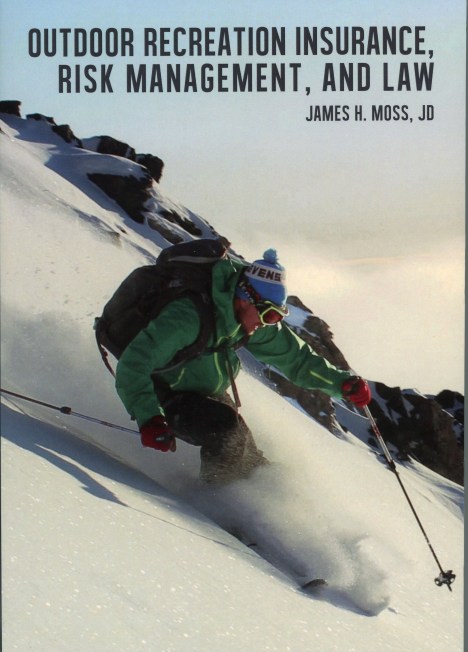
Outdoor Recreation Insurance, Risk Management and Law
To see Jim’s complete bio go here and to see his CV you can find it here. To find out the purpose of this website go here.
G-YQ06K3L262
What do you think? Leave a comment.
If you like this let your friends know or post it on FB, Twitter or LinkedIn
Author: Outdoor Recreation Insurance, Risk Management and Law
Facebook Page: Outdoor Recreation & Adventure Travel Law
Email: Jim@Rec-Law.US
By Recreation Law Rec-law@recreation-law.com James H. Moss
@2010-2023 Summit Magic Publishing, LLC
#RecreationLaw, #@RecreationLaw, #Cycling.Law #Fitness.Law, #Ski.Law, #Outside.Law, #Recreation.Law, #Recreation-Law.com, #Outdoor Law, #Recreation Law, #Outdoor Recreation Law, #Adventure Travel Law, #law, #Travel Law, #Jim Moss, #James H. Moss, #Attorney at Law, #Tourism, #Adventure Tourism, #Rec-Law, #Rec-Law Blog, #Recreation Law, #Recreation Law Blog, #Risk Management, #Human Powered, #Human Powered Recreation,# Cycling Law, #Bicycling Law, #Fitness Law, #Recreation-Law.com, #Backpacking, #Hiking, #Mountaineering, #Ice Climbing, #Rock Climbing, #Ropes Course, #Challenge Course, #Summer Camp, #Camps, #Youth Camps, #Skiing, #Ski Areas, #Negligence, #Snowboarding, #RecreationLaw, #@RecreationLaw, #Cycling.Law #Fitness.Law, #SkiLaw, #Outside.Law, #Recreation.Law, #RecreationLaw.com, #OutdoorLaw, #RecreationLaw,
# Technorati Tags: Summary,Judgment,bicycle,manufacturer,retailer,product,recreation,adventure,Cannondale,Company,Utah,Center,negligence,doctrine,spoliation
Windows Live Tags: Summary,Judgment,bicycle,manufacturer,retailer,product,recreation,adventure,Cannondale,Company,Utah,Center,negligence,doctrine,spoliation
WordPress Tags: Summary,Judgment,bicycle,manufacturer,retailer,product,recreation,adventure,Cannondale,Company,Utah,Center,negligence,doctrine,spoliation
Blogger Labels: Summary,Judgment,bicycle,manufacturer,retailer,product,recreation,adventure,Cannondale,Company,Utah,Center,negligence,doctrine,spoliation
If you leave the ski area, with or without boundary markers you are on your own.
Posted: September 16, 2010 Filed under: Search and Rescue (SAR), Ski Area 4 CommentsIf your parents sue because you died outside of the ski area, they are just publicizing your bad decisions.
A family from New York is suing Idaho and Wyoming sheriff’s departments and search and rescue units for failing to rescue their son. It appears that the ski area may be facing suit also. The son skied outside of the boundaries of a ski area and got lost. He notified a sheriff’s dispatcher using his cell phone but died before he could be found.
Now his family is suing for “botched the rescue attempt in January and failed to communicate with Wyoming rescuers trying to locate Fitzgerald after he went outside Grand Targhee Resort boundaries, which the claim says were not adequately marked.”
It is sad when someone is injured or dies. However, leaving a ski resort without adequate knowledge, skill, gear and equipment is just stupid. Doing so when you do not know where you are going is also dumb.
Maybe New Yorker’s just don’t understand the west. While working at a resort in Summit County years ago I was summoned to the clinic. As I walked in I heard yelling from one of the examination rooms. As I walked in the eyes, and arms indicated that the yelling was coming from the room where I was needed.
As I walked through the curtain the person was upset because no one would help her get to her hotel room. She was threatening to call a cab. That alone made me grin, at the time there were no cabs in Summit County. She would have waited several hours for a cab to arrive from Denver. I inquired where she was from, (NY) and told her I was there to help. After about 5 minutes of additional yelling, she explained her predicament; swollen ankle, no shoes and ski boots. We got a pick up and took her the 80 yards to her hotel.
She was applying New York knowledge and logic to her predicament. She did not know where she was and had no idea how to deal with the situation except to insist that someone else solve her problems. You have to be a little more self reliant in the West.
- Yelling does not work in the mountains, even if you are lost.
- Calling a cab in the mountains does not work.
- Colorado, Idaho, Montana and Wyoming are not New York.
- Lost is not a TV show in the west, it is a good way to die.
- Suing does not bring your dead daughter back.
The only thing a lawsuit might do is make the next lost person die because volunteers did not want to put their lifestyle on the line to save your butt.
See Family of dead skier files lawsuit against Idaho rescue teams
Copyright 2010 Recreation Law (720) Edit Law, Recreaton.Law@Gmail.com
© 2010 James H. Moss
Keywords:
#outdoor law, #recreation law, #outdoor recreation law, #adventure travel law, #law, #outdoor Recreation, #Idaho, #SAR, #search and rescue, #New York, #Teton County Sheriff, # Teton County, #Idaho Search and Rescue, #Grand Targhee Resort, #ski area, #ski area boundary, #lost, #cell phone, #rescue,
Technorati Tags: skiing,SAR,Search and rescue,Grand Targhee Resort,boundary,recreation,adventure,Idaho,York,Teton,Sheriff,Search,Rescue
Windows Live Tags: skiing,SAR,Search and rescue,Grand Targhee Resort,boundary,recreation,adventure,Idaho,York,Teton,Sheriff,Search,Rescue
WordPress Tags: skiing,SAR,Search and rescue,Grand Targhee Resort,boundary,recreation,adventure,Idaho,York,Teton,Sheriff,Search,Rescue
Blogger Labels: skiing,SAR,Search and rescue,Grand Targhee Resort,boundary,recreation,adventure,Idaho,York,Teton,Sheriff,Search,Rescue
AAC, Access Fund and AMGA write NPS over fee increases at Denali and Mt Rainier
Posted: September 11, 2010 Filed under: Mountaineering 1 CommentSeptember 7, 2010
Jon Jarvis
Director, National Park Service
U.S. Department of the Interior
1849 C Street NW
Washington, DC 20240
E-mail: Jon_Jarvis@nps.gov
RE: Mountaineering Fees: Denali National Park & Preserve/Mount Rainier National Park
Dear Director Jarvis:
The Access Fund, American Alpine Club, and American Mountain Guides Association recently became aware that Denali National Park & Preserve (Denali) intends, without public notice, to raise mountaineering fees 150% from $200 to $500 per climber. In addition, a steep increase for mountaineering fees (from $30 to $50 on top of camping fees) is proposed at Mount Rainier National Park (Rainier). In these tough economic times, these large fee increases awill price Americans out of their own parks. We write today to protest these unnecessary and unfair mountaineering fee increases, and request information about National Park Service mountaineering programs and any associated budgeting and related costs to better understand the need to raise these already disproportionate recreation fees.
We are particularly troubled that these fee increases did not receive the benefit of public input and the National Park Service failed to even consult with its long-time partners at the Access Fund, American Alpine Club and American Mountain Guides Association. We request that any proposals to increase mountaineering fees at Denali or Rainier be analyzed through a range of alternatives and benefit from an open public process with published information about the need and purpose for an increased fee.
Access Fund, American Alpine Club and American Mountain Guides Association
The Access Fund, American Alpine Club, and American Mountain Guides Association are national climbing advocacy organizations dedicated to climbing access, conservation, advancing the climbing way of life, and advocating for American climbers. These national climbing organization each have a long history of working with the National Park Service, including input on the 2006 revision to the NPS Management Policies, comment letters on hundreds of local management plans around the country, rescue cost-recovery and recreation impact studies, grants and many thousands of volunteer hours in support education and stewardship projects, field training and climbing management conferences, and congressional advocacy urging robust funding for National Park Service operations. We have also long worked collaboratively with the National Park Service and dozens of other national parks around the country on climbing management planning initiatives and stewardship projects. For more about us, see www.accessfund.org, www.americanalpineclub.org, and http://amga.com/.
The Access Fund, American Alpine Club, American Mountain Guides Association are your best partners with respect to the education of mountaineers, public support for your management goals and programs, and the fulfillment of your obligation to provide unique mountaineering opportunities in the parks. However, these fee increases were proposed without input from the mountaineering community despite our expertise and affiliation with this specific user group (mountaineers). Denali’s plan to raise mountaineering fees from $200 to $500 reflects an unprecedented increase, is not based on need, and unfairly targets climbers. Moreover, simply raising fees 150% without public input during these tough economic times is shocking and is likely to result in lower numbers of Americans able to afford the unique mountaineering experiences found at Denali. This extraordinary mountaineering fee increase is a national issue and we believe that Denali managers may simply be unfairly shifting more of the burden of the park’s budget onto climbers. We’re also skeptical that the current fee level for mountaineering is warranted. Rainier’s fee increase appears similarly unjustified. We fear that these added costs will make the unique mountaineering opportunities available at Denali and Rainier too expensive for many Americans.
So we can better understand the National Park Service’s specific management challenges related to mountaineering (and thus inform our members and the public generally), we request your cooperation in providing us with as much information as possible related to mountaineering programs and any associated plans or programs at both Denali and Rainier. To that end, we request the following information from these two parks:
- Any costs, expenses, and budgeting documentation, correspondence or related information (including years) concerning the mountaineering programs (or other park operations affecting climbing management) at Denali and Rainier, specifically:
o Search and rescue and any emergency medical services
o Visitor use statistics (numbers, categories and attributes of park users)
o General park operations and law enforcement
o Interpretation
o Visitor and resource protection
- Any National Park Service records or correspondence related to the establishment and maintenance of the current mountaineering fee at Denali and Rainier national parks.
- Any National Park Service records or correspondence related to any proposals to increase the mountaineering fee at Denali and Rainier national parks.
- All public or individual notices provided by the National Park Service concerning the preparation of any management plans or policies that have any proposals or influence on recreation fees at Denali and Rainier national parks.
We will be filing a Freedom of Information Act request to both Denali and Rainier to obtain the information outlined above. If you have any questions regarding this request, please contact any of us at your convenience. We look forward to working with the National Park Service to preserve the world-class mountaineering opportunities found at Denali and Rainier national parks.
Thank you for your assistance.
Copyright 2010 Recreation Law (720) Edit Law, Recreaton.Law@Gmail.com
© 2010 James H. Moss
Keywords: #outdoor law, #recreation law, #outdoor recreation law, #adventure travel law, #law, #travel law, #Jim Moss, #James H. Moss, #attorney at law, #tourism, #adventure tourism, #rec-law, #rec-law blog, #recreation law, #recreation law blog, #risk management, #Human Powered, #human powered recreation, #NPS, #AAC, #AMGA, #Access Fund, #Mt. Rainier, #Denali, #National Park Service, #fees,
Technorati Tags: AMGA,Denali,Rainier,Jarvis,Director,National,Park,Service,Department,Interior,Washington,Jon_Jarvis,Fees,Preserve,Mount,Dear,American,Alpine,Club,Mountain,Association,climber,addition,times,Americans,recreation,partners,purpose,advocacy,conservation,life,organization,history,revision,Management,plans,cost,recovery,impact,volunteer,education,fulfillment,obligation,expertise,affiliation,user,Moreover,result,numbers,cooperation,expenses,documentation,correspondence,Search,emergency,services,Visitor,statistics,General,Interpretation,resource,protection,records,establishment,maintenance,preparation,Freedom,Information,convenience,world,Thank,assistance,proposals,organizations,climbers,Policies,conferences,operations,goals,managers,members,categories,users,parks,stewardship,mountaineers
Windows Live Tags: AMGA,Denali,Rainier,Jarvis,Director,National,Park,Service,Department,Interior,Washington,Jon_Jarvis,Fees,Preserve,Mount,Dear,American,Alpine,Club,Mountain,Association,climber,addition,times,Americans,recreation,partners,purpose,advocacy,conservation,life,organization,history,revision,Management,plans,cost,recovery,impact,volunteer,education,fulfillment,obligation,expertise,affiliation,user,Moreover,result,numbers,cooperation,expenses,documentation,correspondence,Search,emergency,services,Visitor,statistics,General,Interpretation,resource,protection,records,establishment,maintenance,preparation,Freedom,Information,convenience,world,Thank,assistance,proposals,organizations,climbers,Policies,conferences,operations,goals,managers,members,categories,users,parks,stewardship,mountaineers
WordPress Tags: AMGA,Denali,Rainier,Jarvis,Director,National,Park,Service,Department,Interior,Washington,Jon_Jarvis,Fees,Preserve,Mount,Dear,American,Alpine,Club,Mountain,Association,climber,addition,times,Americans,recreation,partners,purpose,advocacy,conservation,life,organization,history,revision,Management,plans,cost,recovery,impact,volunteer,education,fulfillment,obligation,expertise,affiliation,user,Moreover,result,numbers,cooperation,expenses,documentation,correspondence,Search,emergency,services,Visitor,statistics,General,Interpretation,resource,protection,records,establishment,maintenance,preparation,Freedom,Information,convenience,world,Thank,assistance,proposals,organizations,climbers,Policies,conferences,operations,goals,managers,members,categories,users,parks,stewardship,mountaineers
Blogger Labels: AMGA,Denali,Rainier,Jarvis,Director,National,Park,Service,Department,Interior,Washington,Jon_Jarvis,Fees,Preserve,Mount,Dear,American,Alpine,Club,Mountain,Association,climber,addition,times,Americans,recreation,partners,purpose,advocacy,conservation,life,organization,history,revision,Management,plans,cost,recovery,impact,volunteer,education,fulfillment,obligation,expertise,affiliation,user,Moreover,result,numbers,cooperation,expenses,documentation,correspondence,Search,emergency,services,Visitor,statistics,General,Interpretation,resource,protection,records,establishment,maintenance,preparation,Freedom,Information,convenience,world,Thank,assistance,proposals,organizations,climbers,Policies,conferences,operations,goals,managers,members,categories,users,parks,stewardship,mountaineers
Defense Attorneys never let us know when they win, I wish some plaintiff’s attorneys would catch on.
Posted: September 9, 2010 Filed under: Climbing Wall Leave a commentThis PR piece is meant to bring in new businesses because it has nothing to do with why a child fell from a playground climbing wall.
This press release was sent out touting a lawsuit filed by the law firm. The lawsuit is over a broken leg suffered by a two year old while playing an indoor play ground. The PR piece has no value to learning why and how people sue, but it is an excellent piece on:
- Misdirection
- Keyword searches
- Scaring parents
The PR piece was just designed to grab people’s attention to get new lawsuits. The piece did so by not talking about the issues, but by using key works to grab attention, fear and using lines that end up being stupid statements. Examples of this are:
“The mother claims she did not notice any warning signs around the equipment.” What warning sign is needed when you see a climbing wall? If you fall off and you do not have a magic wand, a broom or jet pack you can fall and be hurt. Besides, how many two year olds read warning signs anyway?
“The manufacturer of the wall claims it is designed for children five years of age and up, not two like Emma,…” so why did her mother let her climb? So why did her mother let her climb up high enough to all off and break her leg?
“Aronfeld said this incident should serve as a lesson for manufacturers of playground equipment, businesses, schools, municipalities, and homeowners who provide playground areas.” What lesson? What is the lesson that manufactures are supposed to learn?
“We want our kids to be active, but the facility owners must provide proper maintenance of their equipment and grounds, plus follow the suggested guidelines set by the National Playground Safety Institute,…” What maintenance was wrong? What guidelines were not met? The child fell off a wall.
“There should be a ‘no fall zone,’ an unobstructed space located under and around playground equipment.” The child did not hit anyone on the way down, the child fell on the floor. What is the issue with a no fall zone? You can’t fall in a no fall zone or you cannot be in the no fall zone, in case someone falls?
“Playground equipment must have at least six feet of unobstructed space on all sides to help protect children during a fall. Also, all playground equipment must be at least six feet apart, which covers the fall zone, but further apart is better.” See the rant above.
“Aronfeld added that children should climb, slide and cross play equipment one at a time to keep from pushing and hurting other children.” Ok when you figure this one out let every camp, every playground monitor, every teacher, ever rec center and the rest of the world know how you are supposed to do this.
So what can we do about it?
I am not a PR person. However, I think if you are faced with this type of misdirection and misleading statements about your case, you may want to consult with a PR firm to see if setting the record straight might work. Your attorney defending you is probably going to be worried about doing this, and you better not do with without consulting your defense attorney, but it might help.
If you get the go ahead to respond, be factual and be exact. At the same time, you can expect most of the population to see the ridiculous if your post sets forth the realities of life and the situation.
See Climbing Wall Lawsuit Sends Strong Message About Playground Dangers to Parents and Child Facilities.
Copyright 2010 Recreation Law (720) Edit Law, Recreaton.Law@Gmail.com
© 2010 James H. Moss
Keywords:
#outdoor law, #recreation law, #outdoor recreation law, #adventure travel law, #Jumping Jelly Beans, #climbing wall, #rock climbing wall, # Consumer Product Safety Commission, # playground equipment, # National Playground Safety Institute,
Technorati Tags: national playground safety institute,Jumping jelly beans,playground equipment,climbing wall,Consumer product safety commission,playground,equipment
Windows Live Tags: national playground safety institute,Jumping jelly beans,playground equipment,climbing wall,Consumer product safety commission,playground,equipment
WordPress Tags: national playground safety institute,Jumping jelly beans,playground equipment,climbing wall,Consumer product safety commission,playground,equipment
Blogger Labels: national playground safety institute,Jumping jelly beans,playground equipment,climbing wall,Consumer product safety commission,playground,equipment
US Coast Guard has a new program to return gear, save money and maybe save your life
Posted: September 7, 2010 Filed under: Paddlesports, Search and Rescue (SAR) Leave a commentWe waste a lot of money hunting for people who are not lost.
The United States Coast Guard has a new program to help identify lost paddling gear. This program may also help the Coast Guard start searches early and not start a search if not needed.
The program is Operation Paddles Smart. The idea is an official sticker that you can attach to your gear. The sticker will identify the gear and if contacted allow the Coast Guard to contact the owner of the gear. If no one can be found, a search can be initiated. If the owner is found, the gear can be returned to the owner.
For more information see:
Operation Paddle Smart: A sticker could save your life
The Coast Guard even has a Facebook page: Paddle Smart Identification Stickers.
For more information about the program contact the US Coast Guard Pacific Area Public Affairs at 510-437-3375 or via email at melissa.l.leake@uscg.mil.
Thanks to Sea Kayaker magazine for letting me know about this.
Copyright 2010 Recreation Law (720) Edit Law, Recreaton.Law@Gmail.com
© 2010 James H. Moss
Keywords:
#outdoor law, #recreation law, #outdoor recreation law, #adventure travel law, #Coast Guard, #paddle smart, #Operation Paddle Smart, #Sea Kayaker Magazine, #kayak, #sea kayak, #SAR, #Search and Rescue,
Technorati Tags: SAR,Search and Rescue,Operation Paddle Smart,Coast Guard,gear,recreation,adventure,Paddle,Kayaker,Search,kayak
Windows Live Tags: SAR,Search and Rescue,Operation Paddle Smart,Coast Guard,gear,recreation,adventure,Paddle,Kayaker,Search,kayak
WordPress Tags: SAR,Search and Rescue,Operation Paddle Smart,Coast Guard,gear,recreation,adventure,Paddle,Kayaker,Search,kayak
Blogger Labels: SAR,Search and Rescue,Operation Paddle Smart,Coast Guard,gear,recreation,adventure,Paddle,Kayaker,Search,kayak
Aspen Skiing Company Release stops claim by injured guest hit by an employee on snowmobile.
Posted: September 6, 2010 Filed under: Release (pre-injury contract not to sue), Ski Area, Skiing / Snow Boarding | Tags: Aspen, Aspen Skiing Company, Lawsuit, Litigation, Snowmobile Leave a commentRobinette v. Aspen Skiing Company, L.L.C., 2009 U.S. Dist. Lexis 34873 (Colo)
Colorado Release law dismisses claim for what could have been a nasty outcome.
The Plaintiff in this case Robinette was snowboarding and approaching an incline attempting to perform a jump. An Aspen Skiing Company employee was driving a snowmobile uphill on the other side of the incline. The guest and the snowmobile collided causing serious injuries to the guest.
The guest was skiing on a season pass purchased from Aspen Skiing Company. As with most ski resorts, the guest was required to sign a release as part of the season pass purchase.
The Plaintiff argued the defendant Aspen Skiing Company was negligent. The negligence was based on a violation of the Colorado Snowmobile Act, C.R.S. § 33-14-116. The specific statute states:
33-14-116. Other operating restrictions
(1) No person shall operate a snowmobile in a careless or imprudent manner without due regard for width, grade, corners, curves, or traffic of trails, the requirements of section 33-14-110 (3), nd all other attendant circumstances.
(2) No person shall operate a snowmobile in such a manner as to indicate either a wanton or a willful disregard for the safety of persons or property.
(3) No person shall operate a snowmobile while under the influence of alcohol, a controlled substance, as defined in section 12-22-303 (7), C.R.S., r any other drug, or any combination thereof, which renders him incapable of the safe operation of a snowmobile.
(4) No owner shall permit such snowmobile, while under his control, to be operated in violation of the provisions of this article.
(5) Any person who violates subsection (1) of this section is guilty of a class 2 petty offense and, upon conviction, shall be punished by a fine of one hundred dollars.
(6) Any person who violates subsection (2) or (3) of this section is guilty of a misdemeanor and, upon conviction, shall be punished by a fine of not less than two hundred dollars nor more than one thousand dollars, or by imprisonment in the county jail for not more than one year, or by both such fine and imprisonment.
(7) Any person who violates subsection (4) of this section is guilty of a class 2 petty offense and, upon conviction, shall be punished by a fine of fifty dollars.
The plaintiff argued that the statute creates a duty for snowmobile operators to operate in a safe manner. The plaintiff argued duty cannot be waived by a release by cause the duty is imposed by statute. The plaintiff also argued the release was ambiguous as to this type of accident.
The court outlined the four requirements for a release to be valid in the State of Colorado.
(i) There must not have been an obvious disparity in bargaining power between the releasor and releasee;
(ii) The agreement must set forth the parties’ intentions in clear and unambiguous language;
(iii) The circumstances and the nature of the service must indicate that the agreement was fairly entered into; and
(iv) The agreement may not violate public policy.
The burden of proving all of these elements is met is upon the party trying to enforce the release. In this case, it was the defendant Aspen Skiing Company. The court accepted Aspen’s arguments on the first and third steps and analyzed the second and fourth elements in its decision.
The first argument and analysis centered on whether the language in the release covered being hit by a snowmobile. This is an important analysis for everyone in the recreation industry. To name all the possible ways you can be injured would require a multi volume encyclopedia with a signature at the end. The court found the risk did not have to be identified in the release because it was identified in the Colorado Skier Safety Act C.R.S. § 33-44-108(3), which requires snowmobiles to have specific equipment on it to be operated at a resort. Because the statute looked at the risks of a skier being hit by a snowmobile, it was within the scope of the activity and the release.
The main argument that the defendant’s employee violated the Colorado Snowmobile statute creates an interesting argument. A release cannot void the obligations created by a state law, which is true. You cannot contract for something, which is illegal, and you cannot contract to do a crime, and you cannot contract away a statutory duty. The snowmobile licensing statute imposes a criminal penalty for anyone who violates it. However, the court found that the two could exist without a problem. The release attempts to prevent liability for a tort, and the statute imposes criminal liability for criminal acts. The release does not prohibit the state from imposing criminal liability on the driver of the snowmobile.
Aspen moved for Summary Judgment based on the release, and the court upheld the motion dismissing the plaintiff’s claims.
However, this decision might not have had the same outcome in many other states. Most states look at a statute that imposes criminal liability for an act or failure to act as something a release cannot protect. If the act was negligence per se, a violation of a statute, then most states do not allow a release to be used as a defense.
So?
The decision provides a good framework for understanding the steps necessary for a defendant to rely on one as a defense. Specifically, the analysis of who has the burden of proving the release is valid and whether or not the language of a release is clear. This also shows how other statutes can be used to assist in the defense of a lawsuit.
However, the public policy answer, step IV of the four parts necessary for a release to be valid in Colorado is contrary to the law in most other states.
This case can still be appealed; the District Court is just the first step, the trial court in the Federal court system. If this case is appealed and upheld at the appellate level, it will be a significant strengthening of the law of releases in Colorado.
This is also significant because guest collisions with snowmobiles have been costly to the ski industry.
|
Jim Moss is an attorney specializing in the legal issues of the outdoor recreation community. He represents guides, guide services, outfitters both as businesses and individuals and the products they use for their business. He has defended Mt. Everest guide services, summer camps, climbing rope manufacturers; avalanche beacon manufactures and many more manufacturers and outdoor industries. Contact Jim at Jim@Rec-Law.us |
Jim is the author or co-author of six books about the legal issues in the outdoor recreation world; the latest is Outdoor Recreation Insurance, Risk Management and Law.
To see Jim’s complete bio go here and to see his CV you can find it here. To find out the purpose of this website go here.
G-YQ06K3L262
What do you think? Leave a comment.
If you like this let your friends know or post it on FB, Twitter or LinkedIn
Author: Outdoor Recreation Insurance, Risk Management and Law
Facebook Page: Outdoor Recreation & Adventure Travel Law
Email: Jim@Rec-Law.US
By Recreation Law Rec-law@recreation-law.com James H. Moss
@2023 Summit Magic Publishing, LLC
#recreation-law.com, #outdoor law, #recreation law, #outdoor recreation law, #adventure travel law, #law, #travel law, #Jim Moss, #James H. Moss, #attorney at law, #tourism, #adventure tourism, #rec-law, #rec-law blog, #recreation law, #recreation law blog, #risk management, #Human Powered, #human powered recreation,# cycling law, #bicycling law, #fitness law, #recreation-law.com, #backpacking, #hiking, #Mountaineering, #ice climbing, #rock climbing, #ropes course, #challenge course, #summer camp, #camps, #youth camps, #skiing, #ski areas, #negligence, #Aspen, #Aspen Skiing Co., #snowmobile, #collision, #release, #negligence, #negligence per se, #public policy, # statute, #Colorado Skier Safety Act, #Colorado, #Colorado Snowmobile Act, Technorati Tags: Aspen,Company,Release,guest,employee,recreation,adventure,Moss,James,attorney,tourism,management,Human,ropes,youth,negligence,collision,policy,statute,Colorado,Skier,Snowmobile,areas,blog
Windows Live Tags: Aspen,Company,Release,guest,employee,recreation,adventure,Moss,James,attorney,tourism,management,Human,ropes,youth,negligence,collision,policy,statute,Colorado,Skier,Snowmobile,areas,blog
WordPress Tags: Aspen,Company,Release,guest,employee,recreation,adventure,Moss,James,attorney,tourism,management,Human,ropes,youth,negligence,collision,policy,statute,Colorado,Skier,Snowmobile,areas,blog
LIFE SAFETY ROPE SELECTION
Posted: September 3, 2010 Filed under: Search and Rescue (SAR) Leave a comment
1pm – 2pm MDT
This free webinar, presented by PMI President Steve Hudson, will be a workshop focusing on variations of ropes used for rescue and other life safety applications. We will discuss current trends and standards in the industry. Steve will outline desirable performance characteristics of rope required for different kinds of life safety use, including rope access, wilderness rescue, urban/fire rescue, water rescue, cave rescue and others. Steve will also provide a brief overview of the history of ropes used in rescue and information on ropes in use today, covering information on rope construction, materials and selection.
Seriously, this suit against a canoe livery is stupid!
Posted: September 2, 2010 Filed under: Paddlesports Leave a commentHertz will soon be liable every time one of its cars is used in a holdup.
A 21 year old man and his friends rented canoes from a Canoe livery. They canoed to a train trestle. They climbed on the trestle and were jumping into the water when a train came along. The 21 year old instead of jumping, attempted to out run the train, was hit and killed.
His mother is suing the railroad, two railroad employees and the canoe livery.
Unless the canoe livery told the the young man to go jump in front of a train how can they be liable for renting a canoe. Is Hertz liable because it cannot determine which of the people renting its cars is crazy, normal, deranged and going to use the car to commit a crime?
Can you see the canoe livery owner in the future? Love to rent you a canoe, but you are not going to use the canoe to:
- Do something stupid?
- Rob a bank
- Try and out run a train?
Support Aaron’s Canoe & Kayak Center if you can.
See Mother of dead man files lawsuit.
Copyright 2010 Recreation Law (720) Edit Law, Recreaton.Law@Gmail.com
© 2010 James H. Moss
Keywords:
#outdoor law, #recreation law, #outdoor recreation law, #adventure travel law, #Matthew Johnson, # Carol Johnson, #Aaron’s Canoe and Kayak Center, #Springfield, #Ohio, #Canoeing, #kayaking, #lawsuit, #fatality,
Technorati Tags: livery,recreation,adventure,Matthew,Johnson,Carol,Aaron,Canoe,Kayak,Center,Springfield,Ohio,lawsuit
Windows Live Tags: livery,recreation,adventure,Matthew,Johnson,Carol,Aaron,Canoe,Kayak,Center,Springfield,Ohio,lawsuit
WordPress Tags: livery,recreation,adventure,Matthew,Johnson,Carol,Aaron,Canoe,Kayak,Center,Springfield,Ohio,lawsuit
Blogger Labels: livery,recreation,adventure,Matthew,Johnson,Carol,Aaron,Canoe,Kayak,Center,Springfield,Ohio,lawsuit
Sugarbush Ski Area sued Mother Nature for her failure to provide needed snow.
Posted: August 26, 2010 Filed under: Ski Area Leave a commentYes it is a marketing pitch, but sometimes don’t you wish…..
Sugarbush Ski Area settled a lawsuit with Mother Nature after she promised to provide 25 feet of snow this coming winter.
Look out Vermont, that is a lot of snow.
See Ski area “settles” lawsuit against Mother Nature.
Copyright 2010 Recreation Law (720) Edit Law, Recreaton.Law@Gmail.com
Keywords: #outdoor law, recreation law, #outdoor #recreation law, #adventure #travel law, #Sugarbush #Ski #Area,
Technorati Tags: Sugarbush Ski Area,Mother Nature,lawsuit,Vermont,Recreation,adventure
Windows Live Tags: Sugarbush Ski Area,Mother Nature,lawsuit,Vermont,Recreation,adventure
WordPress Tags: Sugarbush Ski Area,Mother Nature,lawsuit,Vermont,Recreation,adventure
Blogger Labels: Sugarbush Ski Area,Mother Nature,lawsuit,Vermont,Recreation,adventure
Lawsuit filed against a Zip Line tour company
Posted: August 12, 2010 Filed under: Zip Line 4 CommentsA woman claiming injuries due to a collision on a Zip Line has filed suit against the business. Wahoo Zip Lines of Tennessee. The woman claims she was injured when she collided with another woman on the line injuring her fractured rib and injured tailbone. She is asking for $150,000.
The complaint is supposedly quite specific in what the company did wrong. They did not have radios?
The complaint claims the business was negligent in its management of the riders, including by not having two-way radios that would allow employees at the launch platforms to confirm that riders were clear of the landing platforms before sending the next person along the line.
See $150K suit filed against Wahoo Zip Lines.
Copyright 2010 Recreation Law (720) Edit Law, Recreaton.Law@Gmail.com
Keywords:
#outdoor #law, #recreation law, #outdoor recreation law, #adventure travel law, #lawsuit, #zip line,
Technorati Tags: outdoor law, recreation law, outdoor recreation law, adventure travel law, lawsuit, zip line,
Windows Live Tags: outdoor law, recreation law, outdoor recreation law, adventure travel law, lawsuit, zip line,
WordPress Tags: outdoor law, recreation law, outdoor recreation law, adventure travel law, lawsuit, zip line,
Blogger Labels: outdoor law, recreation law, outdoor recreation law, adventure travel law, lawsuit, zip line,
Another Challenge Course Injury
Posted: August 5, 2010 Filed under: Challenge or Ropes Course 2 CommentsDoes his status on the sports team affect this issue more than a regular student?
A student fell 30- to 40 feet from a ropes course suffering compression fractures in her back. An investigation is being conducted by the school districts insurance company.
Since results of insurance company investigations are not privileged, not protected from view by the opposing side in litigation, why not have a challenge course expert discover what happened?
See Afton to review course policies
Copyright 2010 Recreation Law (720) Edit Law, Recreaton.Law@Gmail.com
Keywords:
#outdoor law, #recreation law, #outdoor recreation law, #adventure travel law, #school district, #ropes course, #challenge course,
Technorati Tags: school district,outdoor law, recreation law, outdoor recreation law, adventure travel law, school district, ropes course, challenge course,
Windows Live Tags: school district,outdoor law, recreation law, outdoor recreation law, adventure travel law, school district, ropes course, challenge course,
WordPress Tags: school district,outdoor law, recreation law, outdoor recreation law, adventure travel law, school district, ropes course, challenge course,
Blogger Labels: school district,outdoor law, recreation law, outdoor recreation law, adventure travel law, school district, ropes course, challenge course,


 Recreation Law