
Remember the women who sued her date when she fell rock climbing with him?
Posted: February 15, 2008 Filed under: Rock Climbing, Utah | Tags: Climbing, Recreation, Rock climbing, Utah, Wall Street Journal 4 CommentsLindsey Enloe had met Stephen Stinson and had asked her out on a date. Stinson took Enloe climbing saying he had been climbing for 12 years. Allegedly Stinson had not been truthful about his climbing experience or the fact that he was married. The anchor Stinson set failed and Enloe fell, out of love, and into a hospital. Enloe then sued Stinson for the injuries she incurred in the fall.
The case garnered national attention. The Wall Street Journal said “We wonder how many dates she’ll get now.”
The Intermountain Commercial Salt Lake Times the Record listed the case as settled for $65,000 sometime in August of 2002. That was either an expensive date or an expensive lie. Either way, I suspect the costs for Mr. Stinson did not subside once his wife found out that he had been dating and now owed her $65,000. Even in Utah professionals have to be cheaper!

Student suing school district for climbing wall injury
Posted: February 12, 2008 Filed under: Climbing Wall, Wisconsin | Tags: Climbing Wall, School district, Student, Wisconsin Leave a comment
Image via Wikipedia
The Janesville, Wisconsin GazetteXtra.com in a headline titled Milton student sues for injury
states that a student injured in a climbing wall accident at school is suing the school district. A “safety strap” broke when she was climbing the wall resulting in a 10′ fall breaking her tailbone. The strap was attached to the ceiling and held the climbing rope. The strap broke after the student had reached the top of the wall. Another student had allegedly informed the school the rope was frayed earlier.
The lawsuit claims the school district was “negligent for failing to properly maintain or inspect the equipment and to properly place the mats. It also claims the district violated the Wisconsin Safe Place statute.”
Four State Supreme Courts Reverse their Positions on Release
Posted: February 11, 2008 Filed under: Arizona, New Mexico, Release (pre-injury contract not to sue), Wisconsin | Tags: Arizona, Arizona Supreme Court, Connecticut Supreme Court, New Mexico Supreme Court, Supreme Court, Wisconsin Supreme Court Leave a commentReleases are the foundation of most adventure outfitters program to prevent lawsuits. Dependent upon your base of operation and/or your area of operation a release or waiver is the best way to inform your guests of the risks and stop lawsuits. However, the law concerning releases has changed dramatically in four states over the past 18 months.
Changes started February of 2005 when the Wisconsin Supreme court overturned its law on releases. In a case involving a drowning at a

Image via Wikipedia
health club, Atkins v. Swimwest Family Fitness Center, 2005 WI 4; 2005 Wisc. LEXIS 2 the Wisconsin Supreme Court set up a series of requirements for releases which will be impossible to meet. Each of the requirements allows the guest to invalidate the release or takes the legal teeth out of the release. The final requirement is a bargain for exchange requirement. This means the outfitter must offer the guest the opportunity to take the trip without signing a release for an additional charge. The additional charge to enjoy the adventure without signing a release must only be a nominal amount; however that does not make economic sense. (For a more thorough analysis see the Outdoor Recreation Law Review
Wisconsin Supreme Court decision threatens businesses relying on releases.)

Image via Wikipedia
In Arizona, in a race car mishap, the Arizona Supreme Court took an approach to releases no other state has adopted. In Phelps v. Firebird Raceway, Inc., 2005 Ariz. LEXIS 53, the Arizona Supreme Court held that releases, written contracts, are only an acknowledgement of risk. As such, the trier of fact, normally the jury, must decided whether the injured patron understood the risk of the activity and the release is additional, but not substantive proof of the knowledge. As such, releases in Arizona are not just proof of acknowledgement of risk rather than a contract to prevent a lawsuit. In the future, a defendant relying upon a release will be forced to go to trial to prove the injured guest understood the risk of the activity that injured him. (See the Outdoor Recreation Law Review
Surprising Arizona Supreme Court Decision Further Endangers Release Language.)
The New Mexico Supreme Courtdetermined that a statute designed to protect the Equine industry prevented the use of a release by a stable.

Image via Wikipedia
In Berlangieri et al. v. Running Elk Corporation, et al., 48 P. 3d 70 (N.M. App. April, 2002 the New Mexico Supreme Court stated the New Mexico Equine Liability act provided the only protection for equine outfitters and therefore it prevented the use of a release. This decision is limited to only equine activities; however a similar decision in West Virginia was the beginning of a series of decisions invalidating releases. This is an example of a statute that was meant to protect an industry doing more harm than good. (See the Outdoor Recreation Law Review
Release of Liability Found to Violate Public Policy.)

Image via Wikipedia
The final decision is a Connecticut Supreme Court decision, Hanks v. Powder Ridge Restaurant Corporation et al. 276 Conn. 314, 2005 Conn. LEXIS 500 that overruled a case with the identical fact situation six years earlier. In this case a patron at a tubing hill signed a release and was injured tubing. He sued and the Connecticut Supreme Court overruled itself stating releases were no longer valid in the state because it removed the incentive for the tubing operator to keep the premises safe. The Supreme Court held that releases for recreational activities violate public policy. Public policy is the protection the courts extend to the public to protect them when they cannot protect themselves. Those protections are normally limited to those necessities of live that the public cannot live without such as utilities or public transportation. (See the Outdoor Recreation Law Review Connecticut Supreme Court takes yet another bite out of releases with latest decision.)
All of these decisions are discouraging; however there are methods to change the results for a particular outfitter. The easiest and most important way is by using an effective Jurisdiction and Venue clause in a release. Jurisdiction means the law that will be applied and Venue means the location of the court that will hear the case. If you are operating in any of these four states, or another state that prohibits the use of a release, you can specify in the release the state where the case will be heard and the law that will be applied.
For Additional Analysis of these cases or to read the legal opinion, go to the Outdoor Recreation and Fitness Law Review.
Avalanche: Man-Made Snow to the Ground
Posted: February 10, 2008 Filed under: Avalanche, Indiana, Ski Area | Tags: avalanche, backcountry, Indiana, Ski Resort, skiing, Snow, winter sports Leave a comment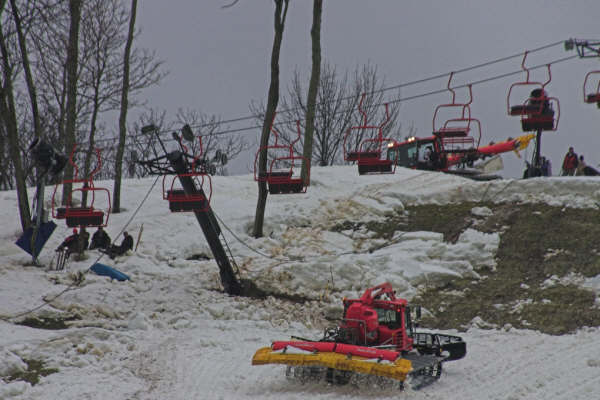


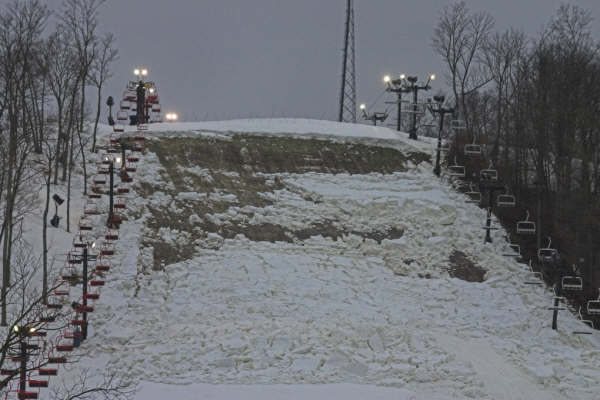
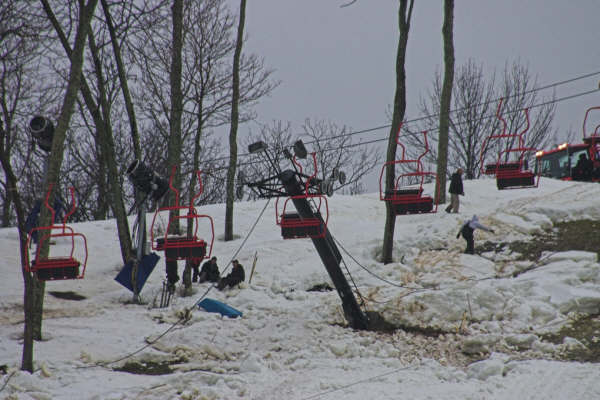
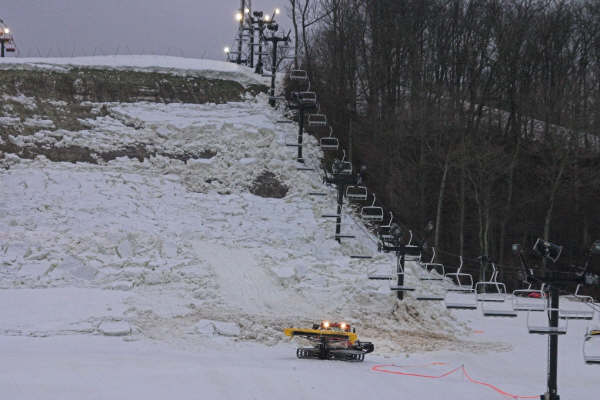
In one of the most bizarre occurrences an avalanche occurred in the Midwest. During the fall of 2006 at the Indiana ski resort Perfect North Slope. This central Indiana resort was making snow on bare ground, as is common at most resorts. After a night of snow making the staff arrived to see the slope had avalanched.
Not enough research was done on this avalanche but several firsts or at least extremely unusual things occurred during this avalanche
- ·An avalanche occurred in the Midwest
- ·The avalanche was composed of 100% man made snow
- ·The avalanche slid on bare ground with no snow layer below
Good Idea, Bad Approach and it Didn’t Work Anyway: Berkshire Ski Area wins lawsuit
Posted: February 10, 2008 Filed under: Massachusetts, Ski Area | Tags: Berkshire East Ski Resort, Death, Law, Massachusetts, Ski, Ski Resort, snowmaking Leave a commentA ski area recently one a lawsuit filed by the parents of a teenage who died skiing at the Berkshire East Ski Resort. Elizabeth Ann Loughman was skiing with her high school when she fell hitting a snowmaking hydrant. The jury deliberated for two hours before finding that the ski area and its employees were not liable for the death of the young women.
This is a sad story in two ways. One, a young woman died skiing and two, a father felt the legal system was the best way to create a change in to keep other people safe. Another example where the law was felt by the parents to be the best way to accomplish their goals, but not an effective way.
For more information see:
Greenfield, Massachusetts Recorder.com: Jury: Ski resort not at fault in teen death
MassLive.com: Ski area wins lawsuit in death of local teen
Releases 101
Posted: February 10, 2008 Filed under: Colorado, Release (pre-injury contract not to sue), Whitewater Rafting | Tags: Colorado, Lawsuit, Outdoor recreation, Outfitter, Rafting, Recreation Leave a commentSeveral years ago Justin R. Melat of the Colorado Springs law firm of Melat, Pressman, Ezell & Higbie, LLP sent a letter to Representative Mark Larson of the Colorado Legislation asking him if he would sponsor a bill eliminating the uses of releases in Colorado. Accompanying the letter was a copy of a page from Trial Talk, the Plaintiff’s bar newsletter. The Trial Talk letter was from Eric Leaper who decried the use of releases in outdoor recreation programs. Eric Leaper has testified several times on behalf of Plaintiffs in whitewater cases.
The injury that prompted the letter was a church group from Kansas who lost a leader while whitewater rafting in Colorado. The facts as set forth in the letter are as follows: As Church Group stepped off the bus to enter the boats they were handed a release. They were told Colorado law required that they sign a release. The boat captain had 2 weeks experience. The boat flipped and the Chaperone died.
I have not been able to verify the death or the incidence; however, the facts are not that different from similar incidents in the past.
The law firm emphasized the trips were pre-arranged and pre-paid as well as non-refundable. The letter then explored common law that did not allow the release of a future tort. The final paragraph of the letter is well written:
“Future releases are especially inappropriate and damaging to Colorado’s tourism, when there is no prior warning of the requirement. A simple statute declaring releases of “future” negligence that is negligence not yet committed to be void, as a matter of public policy would allow the law to operate smoothly and cases to be settled and releases given for negligence past, as it always has been.”

Image via Wikipedia
A quick review of where the outfitter acted in a way to increase his chances of being sued, based on the law firms letter is in order here.
-
The Outfitter did not communicate the release to the group before they arrived in Colorado.
Releases must be given to clients with the opportunity to read, understand, sign and/or reject them. Handing out releases at the put-in is a great way to have a court void a release. It does not give the person the necessary opportunity to read and understand the release.
Many times this is done so customers will not quit a trip. This attitude leads to litigation. A person who does not sign the release is a great person for any outdoor recreational activity. Those are people who read and understand your release and make a decision not to go on the trip. That person should be thanked, have there money cheerfully refunded and helped to their car. They are the ones who are going to sue you in the future if they are forced to undertake a trip because they could not get their money back.
I would love to see an outfitter defend him or herself in court when sued for a refund. The little lady on the stand would state she did not understand what whitewater rafting was and when she saw the river and heard the safety talk, she was too afraid to go on the trip. Then the big mean outfitter did not give her money back. Every judge in Colorado would land on that outfitter with both feet and a money extracting judgment.
If you are not refunding clients money after they have read and understood your release form, you deserve to be sued and go out of business. You should always refund money if someone, after reading the release, looking at the rock or seeing the river, decides they do not want to take the trip.
- By not sending the releases in advance, the releases are worthless pieces of paper against any action by an injured or deceased youth.
This was a youth trip. People under the age of 18 cannot contract away their legal rights. This entire action was an exercise in wasted paper by the outfitter because most of the people on the trip would have the release thrown out by the court immediately.
By only providing the release forms at the put in, the outfitter ignored the only real chance at using an effective release, having the parents sign the form. As such, the only person who could have the form used against them was the only person who died.
Here again, the fears of losing a client made the outfitter think in a way that might have lost him is business. There are many old proverbs that prove this thinking process is defective. You would think they would not need repeating in the 90’s.
- Release forms should be provided to the customer as soon as possible.
As soon as you know about a person, coming to your business, you should provide them with a copy of your release. Besides saving time and money on the day the trip departs, this allows participants, parents and leaders to honestly evaluate the risk of the trip and made the decision as to whether they want to undertake the activity.
This also increases the chances that your release documents will effectively stop some of the possible litigation. If one parent signs, then there is one less person to sue you if a minor is hurt or injured.
Brochures and marketing information should tell future customers that they will be required to sign a release. A marketing program should also inform customers that they outfitter is not responsible for lost property or any injury they receive. Be honest and up front in your documents and you save a lot of hassles later.
The releases can be collected rather than signed at any point along the way. People knowledgeable about the release are answering questions about the release, rather than a guide who may misinterpret the legal document. (Remember statements by your guides can void your release.)
- The outfitter lied to their customers with the statement that Colorado law required the release. (Duress)
The fear of having a customer refuse to sign a release made a liar out of the outfitter. If the Plaintiff’s attorney had realized this, he probably could have voided the release and sued the outfitter. The outfitter would be labeled a liar. There is no Colorado law requiring the use of a release.
Don’t lie to customers. Don’t inflate or deflate the risk of the activities. I enjoy brochures for the Arkansas River advertising river sections one full class above their historical rating. This is an easy way to prove that anything an outfitter may say on the stand is a lie. They lied to customers in their brochure, what is stopping them from lying o the stand.
Second, the heirs of the deceased person could have claimed the release was signed under duress. Duress is being forced to sign a document. Having not right to a refund and being forced to sign a release because the law requires it, when it in fact does not require it may be enough to support a defense of duress.
Fact Summary:
This story relates examples that should have gone the way of the bell-bottom pants and the disco. However, like the disco, which is returning as much as a joke as a fad, these operations still exist. This outfitter should be encouraged to attend state and national meetings to learn the latest in properly handling clients. The numerous mistakes made which the heirs and their attorneys missed took a big chunk out of the outfitters “luck” box. The next time the heirs may find a sharper attorney.
Conclusion
If Eric Leaper’s letter is in Trial Talk, this could be a major war for the outfitting industry. Trial Talk is a highly respective magazine that encourages and supports Plaintiff’s lawsuits. By subscribing you learn the latest and greatest new plaintiffs and ways to win lawsuits. Eric has been making money as an expert witness for the Plaintiffs over the past several years. His letter does a good job of weaving different ideas and legal theories into a plausible argument. Several interesting quotes from his letter are set forth here:
“We are concerned about the present lack of accountability of commercial rafting companies and other outdoor outfitters in Colorado.”
“But we often see outfitters sending inexperienced “first season” guides into hard whitewater rapids with inadequate equipment.”
“The use of these release forms is fraud. As you know, they are unlawful in other states.”
“At present, the outfitter business in Colorado is untrustworthy, to put it mildly.”
“There are organizations of experienced river runners and conservationists (such as our organization” and there are outfitter trade organizations. But there is no organization of outfitter customers. Trial Lawyers are their only advocates. Therefore, we would urge you to thoroughly demonstrate that these dangerous rafting practices violate national standards and that these all-encompassing release forms are fraudulent.”
If Mr. Leaper’s statements were true, then this set of facts would have allowed the Plaintiffs to sue successfully. Colorado state law specifically sets forth that outfitters must use safe equipment. If use of a release is fraudulent, then the release is void.
There are several lessons to be learned from these letters and the facts surrounding this case. Don’t make these mistakes.
More importantly, find out what you Colorado legislator is doing and whether he received one of these letters. Start now to prepare for another battle to eliminate releases in Colorado.
Originally published December 1999 in the Outdoor Recreation Law Newsletter
Copyright 2011-2023 Recreation Law 720 Edit Law, Recreaton.Law@Gmail.com


 Recreation Law