
Proof of negligence requires more than an accident and injuries. A Spectator at a rodeo needed proof of an improperly maintained gate.
Posted: July 14, 2014 Filed under: Arkansas | Tags: Arkansas, assumption of the risk, bucking horse, Defendant, Duty of care, Hall, Keith Hall, Keith Hall Rodeo, Negligence, Plaintiff, Rodeo, Spectator, Sports Leave a commentSpectators are business invitees, which are owed a high degree of care and never sign a release. Any event, sport, race or contest, the greatest chance of a lawsuit winning comes from those watching.
State: Arkansas Supreme Court
Plaintiff: Melonie Mahan as Next and Best Friend of Shawn Mahan
Defendant: Keith Hall, d/b/a Keith Hall Rodeo
Plaintiff Claims: negligence
Defendant Defenses: no negligence
Holding: for the defendant
Year: 1995
The injured minor paid to attend a rodeo put on by the defendant at the local fairgrounds. After finding their seat, the minor and a friend went to get a drink. They then walked around looking at the event. A horse bucked it’s rider off, circled the inside of the arena then broke through the gate where the two youth were standing injuring them. The plaintiff also argued that their view of the horse coming at them was blocked by the rodeo announcer.
The mother of the injured youth sued on behalf of herself and her son. The fairground was sued and settled out of court. The rodeo was put on by the defendant Keith Hall Rodeo. The court directed a verdict for the defendant finding the plaintiff had not proven their case. No evidence was presented that the defendant Rodeo was negligent.
A directed verdict is a decision by the court that one party has completely failed to prove their case, and the other party must win. Directed verdicts can be granted at any time during a trial or after the jury has rendered its verdict. “A motion for directed verdict may only be granted if there is no substantial evidence to support a jury verdict.” Directed verdicts are rare.
Summary of the case
The injured youth was a business invitee which the defendant owed a “duty to use reasonable care to prevent injuries” to him. The plaintiff argued that the fact the horse got through the gate was proof the gate was not secure. However, proof of an injury is not proof of negligence.
The trial court agreed, finding that while Ms. Mahan had proven an accident and had shown where it had occurred, she had not shown any breach of duty on the part of Mr. Hall. It is from the trial court’s granting of Mr. Hall’s motion for a directed verdict that Shawn appeals.
The court defined negligence as:
…the failure to do something which a reasonably careful person would do; a negligent act arises from a situation where an ordinarily prudent person in the same situation would foresee such an appreciable risk of harm to others that he would not act or at least would act in a more careful manner.
However, the plaintiff was not able to present any testimony or proof that the gate was not maintained in a reasonably safe condition. “…the fact that a[n] injury, collision or accident occurred is not of itself evidence of negligence or fault on the part of anyone.”
The Supreme Court upheld the directed verdict of the trial court.
So Now What?
Two important points can be found in this decision. The first is just because there is an injury does not mean there is a lawsuit. The defendant must have done something or not done something to create liability.
The second is the identification of a very large group of potential plaintiffs. If you host/put on/conduct events/contests/races or other activities were spectators are present, anything goes wrong injuring a spectator you might be liable. Spectators are owed a high degree of care, based on the state, and you are probably required to keep them safe. Spectators don’t sign releases and if they are viewing the activity in an area where you have allowed them to stand, then assumption of the risk is probably not available as a defense.
What do you think? Leave a comment.
If you like this let your friends know or post it on FaceBook, Twitter or LinkedIn
Copyright 2014 Recreation Law (720) Edit Law
Email: Rec-law@recreation-law.com
Google+: +Recreation
Twitter: RecreationLaw
Facebook: Rec.Law.Now
Facebook Page: Outdoor Recreation & Adventure Travel Law
Blog: www.recreation-law.com
Mobile Site: http://m.recreation-law.com
By Recreation Law Rec-law@recreation-law.com James H. Moss #Authorrank
<rel=”author” link=” https://plus.google.com/u/0/b/112453188060350225356/” />
#AdventureTourism, #AdventureTravelLaw, #AdventureTravelLawyer, #AttorneyatLaw, #Backpacking, #BicyclingLaw, #Camps, #ChallengeCourse, #ChallengeCourseLaw, #ChallengeCourseLawyer, #CyclingLaw, #FitnessLaw, #FitnessLawyer, #Hiking, #HumanPowered, #HumanPoweredRecreation, #IceClimbing, #JamesHMoss, #JimMoss, #Law, #Mountaineering, #Negligence, #OutdoorLaw, #OutdoorRecreationLaw, #OutsideLaw, #OutsideLawyer, #RecLaw, #Rec-Law, #RecLawBlog, #Rec-LawBlog, #RecLawyer, #RecreationalLawyer, #RecreationLaw, #RecreationLawBlog, #RecreationLawcom, #Recreation-Lawcom, #Recreation-Law.com, #RiskManagement, #RockClimbing, #RockClimbingLawyer, #RopesCourse, #RopesCourseLawyer, #SkiAreas, #Skiing, #SkiLaw, #Snowboarding, #SummerCamp, #Tourism, #TravelLaw, #YouthCamps, #ZipLineLawyer, Keith Hall, Keith Hall Rodeo, Rodeo, Spectator, Assumption of the Risk, Arkansas, bucking horse,
WordPress Tags: Proof,negligence,accident,injuries,Spectator,rodeo,gate,Spectators,degree,event,lawsuit,Mahan,Keith,Hall,LEXIS,State,Arkansas,Supreme,Court,Plaintiff,Melonie,Best,Friend,Shawn,Defendant,Claims,Defenses,horse,rider,arena,youth,announcer,verdict,decision,verdicts,jury,Summary,fact,injury,failure,person,situation,manner,testimony,collision,identification,plaintiffs,events,area,assumption,Leave,FaceBook,Twitter,LinkedIn,Recreation,Edit,Email,Google,RecreationLaw,Page,Outdoor,Adventure,Travel,Blog,Mobile,Site,James,Moss,Authorrank,author,AdventureTourism,AdventureTravelLaw,AdventureTravelLawyer,AttorneyatLaw,BicyclingLaw,Camps,ChallengeCourse,ChallengeCourseLaw,ChallengeCourseLawyer,CyclingLaw,FitnessLaw,FitnessLawyer,HumanPoweredRecreation,JamesHMoss,JimMoss,OutdoorLaw,OutdoorRecreationLaw,OutsideLaw,OutsideLawyer,RecLaw,RecLawBlog,LawBlog,RecLawyer,RecreationalLawyer,RecreationLawBlog,RecreationLawcom,Lawcom,RiskManagement,RockClimbingLawyer,RopesCourse,RopesCourseLawyer,SkiAreas,SkiLaw,SummerCamp,Tourism,TravelLaw,YouthCamps,ZipLineLawyer,Risk
Rasmussen, et al., v. Bendotti, 107 Wn. App. 947; 29 P.3d 56; 2001 Wash. App. LEXIS 1962
Posted: February 24, 2014 Filed under: Legal Case, Scuba Diving, Washington | Tags: Dive Buddy, Diving, Duty of care, Outdoors, Proximate Cause, Recreation, scuba diving, Summary judgment Leave a commentRasmussen, et al., v. Bendotti, 107 Wn. App. 947; 29 P.3d 56; 2001 Wash. App. LEXIS 1962
Cully C. Rasmussen, as Personal Representative, ET AL., Appellants, v. Eugene L. Bendotti, Respondent.
No. 19464-7-III
COURT OF APPEALS OF WASHINGTON, DIVISION THREE, PANEL ONE
107 Wn. App. 947; 29 P.3d 56; 2001 Wash. App. LEXIS 1962
August 21, 2001, Filed
SUBSEQUENT HISTORY: [***1] Order Denying Motion and Reconsideration September 26, 2001, Reported at: 2001 Wash. App. LEXIS 2165.
SUMMARY: Nature of Action: The children and the estate of a diver who drowned during a scuba diving excursion sought damages from the diver’s diving partner based on the diving partner’s failure to perform a self-equipment check prior to commencing the dive. The failure to perform the equipment check caused the diving partner to make an emergency ascent during the dive. While the diving partner was ascending to the water’s surface, the diver’s equipment became entangled in a rope which led to the diver’s drowning.
Superior Court: After denying the defendant’s motion for a summary judgment, the Superior Court for Chelan County, No. 98-2-00754-5, Lesley A. Allan, J., on June 30, 2000, entered a judgment in favor of the defendant.
Court of Appeals: Holding that there was sufficient evidence to support the trial court’s conclusion that the defendant’s failure to perform an equipment check prior to the dive was not a proximate cause of the decedent’s death, the court affirms the judgment.
HEADNOTES WASHINGTON OFFICIAL REPORTS HEADNOTES
[1] Appeal — Findings of Fact — Failure To Assign Error — Effect Unchallenged findings of fact are verities before a reviewing court.
[2] Appeal — Conclusions of Law — Review — Standard of Review An appellate court reviews a trial court’s conclusions of law in a civil action by first determining whether the trial court applied the correct legal standard to the facts under consideration. The trial court’s legal conclusions flowing from its findings, or the ultimate facts of the case, are reviewed de novo.
[3] Negligence — Duty — Question of Law or Fact — Review The existence of a duty of care is a question of law that an appellate court reviews de novo.
[4] Negligence — Duty — Breach — Resulting Emergency — Termination of Duty — Question of Law or Fact — Review Whether an emergency created by the breach of a duty of care terminates the duty is a question of law that an appellate court reviews de novo.
[5] Negligence — Duty — Determination — Scope A cause of action for negligence is grounded on the existence of a duty owed specifically to the plaintiff or to a class or group of people to which the plaintiff belongs.
[6] Negligence — Elements — In General A negligence action is comprised of four elements: (1) duty, (2) breach, (3) proximate cause, and (4) injury.
[7] Negligence — Duty — Scope — Foreseeability — In General The scope of a duty of care turns on the foreseeability of injury; i.e., it turns on whether the risk embraced by the conduct exposes the claimant to injury.
[8] Negligence — Duty — Scope — Foreseeability — Test An injury is foreseeable if it is among the dangers to be perceived reasonably and with respect to which the defendant’s conduct is negligent.
[9] Sports — Scuba Diving — Duty to Diving Partner — Reasonable Prudence A scuba diver owes a duty to a diving partner to act in the manner of a reasonably prudent diver.
[10] Negligence — Duty — Breach — Question of Law or Fact — In General Whether a legal duty of care has been breached is a question of fact.
[11] Sports — Scuba Diving — Duty to Diving Partner — Breach — Failure To Perform Equipment Check A scuba diver breaches the duty of reasonable prudence in relation to a diving partner by failing to perform a self or buddy equipment check prior to commencing a dive.
[12] Negligence — Emergency Doctrine — In General The emergency doctrine is a common law rule by which a person faced with an emergency is not held to the same standards as a person who has time for reflection and deliberation.
[13] Negligence — Emergency Doctrine — One’s Own Making — Effect The emergency doctrine does not apply to excuse a party’s negligence if that negligence contributed to the emergency.
[14] Negligence — Emergency Doctrine — One’s Own Making — Evaluation of Conduct For purposes determining whether an actor’s own negligence prevents application of the emergency doctrine, the actor’s conduct is evaluated as of the time of the negligent act or omission, not when the actor later discovers the negligent act or omission and reacts to it.
[15] Negligence — Proximate Cause — Elements Proximate cause is divided into two elements: cause-in-fact and legal causation. A cause-in-fact is based on the physical connection between an act and an injury. Legal causation is grounded in a policy determination made by the court. The focus in the legal causation analysis is whether, as a matter of policy, the connection between the defendant’s act and the ultimate result is too remote to impose liability. A determination of legal causation depends on mixed considerations of logic, common sense, justice, policy, and precedent.
[16] Negligence — Proximate Cause — Question of Law or Fact — Deference to Trial Court The issue of proximate cause in a negligence action presents a mixed question of law and fact. Insofar as a trial court’s determination of proximate cause necessarily entails factual considerations of “but-for” causation, it is accorded deference by a reviewing court.
[17] Negligence — Proximate Cause — Proof — Speculation Speculation is insufficient to establish proximate cause in a negligence action.
COUNSEL: Douglas J. Takasugi (of Jeffers, Danielson, Sonn & Aylward, P.S.), for appellants.
Thomas F. O’Connell (of Davis, Arneil, Dorsey, Kight), for respondent.
JUDGES: Author: DENNIS J. SWEENEY. Concurring: STEPHEN M. BROWN & KENNETH H. KATO.
OPINION BY: DENNIS J. SWEENEY
OPINION
[**58] [*950] Sweeney, J. [HN1] — To hold a defendant liable for negligence, the plaintiff must show that the defendant proximately caused the plaintiff’s injury. Crowe v. Gaston, 134 Wn.2d 509, 514, 951 P.2d 1118 (1998). [HN2] Proximate cause is generally a question of fact. Hertog v. City of Seattle, 138 Wn.2d 265, 275, 979 P.2d 400 (1999). Here, the trial court, sitting as the fact finder, found that any negligence on the part of Eugene Bendotti (Gene) was “too attenuated” from Bonny Jo Bendotti’s death to hold Gene legally liable. Gene was Bonny’s scuba diving buddy. He failed to properly attach a power inflator to his buoyancy compensator. This required an emergency ascent. Bonny then drowned after her equipment became [***2] entangled in a rope. We conclude that the trial court’s finding is adequately supported by the evidence, and affirm the judgment dismissing Cully, Adam, and Brandy Jo Rasmussen’s wrongful death suit.
FACTS
Our factual summary here follows the trial court’s unchallenged findings of fact, including those denominated as conclusions of law. Hagemann v. Worth, 56 Wn. App. 85, 89, 782 P.2d 1072 (1989). We refer to Mr. and Mrs. Bendotti as Gene and Bonny. We intend no disrespect by doing so. We use their first names simply for clarity and ease of reference.
Bonny and Gene were married in 1990. They got interested in scuba diving and completed [**59] the necessary scuba certification in April 1996. Their training included an open water dive course and an advanced open water dive course.
In the fall of 1996, the Bendottis were asked to help recover a snowmobile from Lake Wenatchee. They agreed to [*951] help. On October 4, they made one or two dives, located the snowmobile in approximately 100 feet of water, and marked it with a 50-foot line.
The Bendottis returned to Lake Wenatchee on November 2. At first they were unable to locate the snowmobile or marker line. They located [***3] the snowmobile during the second dive and marked it with a longer line and buoy. They then broke for lunch and refilled their air tanks. After the third dive, the Bendottis and others with them decided to try to attach a line to the snowmobile to drag it from the lake. Both descended for their fourth dive.
Gene had, however, inadvertently failed to reconnect his power inflator to his buoyancy compensator. A power inflator inflates a buoyancy compensator which then allows the diver to rise to the surface. And “[b]ecause he and Bonny did not adequately perform buddy and self-equipment checks, it was not discovered.” Clerk’s Papers (CP) at 561. Once in the water, Gene discovered the equipment problem and immediately surfaced. Bonny, however, became entangled in a rope at the 40-foot level “perhaps while ascending herself.” CP at 561. She was unable to disentangle herself and drowned.
Cully, Adam, and Brandy Jo Rasmussen are Bonny’s children. They sued Gene on behalf of themselves and Bonny’s estate. The court denied Gene’s motion for summary judgment and heard the matter without a jury.
The court concluded that Gene owed a duty to Bonny as her scuba [***4] diving “buddy.” Left unstated, but easily inferable given the court’s other conclusions, is the finding that Gene breached that duty by failing to reconnect his power inflator. The court then goes on to conclude that because Gene’s failure to reconnect his power inflator was an emergency, he acted as a reasonably prudent diver when he ditched his weight belt and ascended. It also concluded that Gene’s duty to Bonny terminated because of this emergency. The court then held that the Rasmussens “failed to prove by a preponderance of the evidence any breach of duty by Gene to Bonny occurring prior to Gene facing his own personal [*952] emergency.” CP at 562. The court dismissed the Rasmussens’ claims with prejudice.
The Rasmussens moved for reconsideration. The court denied the motion, but supplemented its original conclusions of law. It concluded that both Gene and Bonny should have checked Gene’s scuba equipment prior to their fourth dive. But their failure to do so placed only Gene at risk. In its supplemental conclusions, the court further reiterated that a diver’s primary duty is to himself, or herself, and that Bonny became entangled only after Gene faced his own emergency. And Gene’s [***5] duty to Bonny terminated once he faced his own emergency.
Finally, the court concluded that Gene’s failure to attach his power inflator was “too attenuated” from Bonny’s subsequent entanglement in the rope to hold him legally responsible for her death. CP at 435.
The Rasmussens appeal the judgment dismissing their claims. Gene appeals the denial of his pretrial motion for summary judgment.
ASSIGNMENTS OF ERROR
The Rasmussens assign error to a number of the court’s conclusions of law. And those assignments of error delineate the issues before us.
The Rasmussens assign error to the following original conclusions of law, which we paraphrase:
. That Gene’s legal duty to Bonny terminated when he was faced with his own emergency during the fourth dive. Conclusion of Law 4.
. The Rasmussens did not prove any breach of duty by Gene to Bonny prior to Gene’s facing his own personal emergency. Conclusion of Law 5.
[**60] The Rasmussens assign error to the following supplemental conclusions of law, which we also paraphrase:
[*953] Failure to perform equipment checks, their own and their buddy’s, put Gene solely at risk. Supplemental Conclusion of Law 3.
. If Gene had improperly loaded a spear gun [***6] which discharged and struck Bonny, his conduct at the surface would have increased the risk to Bonny. But that did not occur. Supplemental Conclusion of Law 4.
. Gene’s failure to check his equipment did not put Bonny at an increased risk of harm. Supplemental Conclusion of Law 5.
. When Gene surfaced, he acted reasonably and his duty to his dive buddy terminated. Supplemental Conclusion of Law 7.
. The connection between Gene’s failure to attach his power inflator on the surface and Bonny’s subsequent entanglement (and death) is too attenuated to hold Gene legally responsible. Supplemental Conclusion of Law 9.
. To hold Gene responsible would make him a guarantor of Bonny’s safety. Supplemental Conclusion of Law 10.
From these assignments of error, the Rasmussens make four basic arguments:
(1) After concluding that Gene owed a duty of care to Bonny (a duty owed by all dive buddies), the court then inconsistently goes on to conclude that Gene did not breach that duty–despite the fact that Gene negligently failed to reconnect his power inflator and perform adequate equipment checks before the fourth dive, contrary to standard diving practices.
(2) After concluding that Gene owed a duty [***7] to Bonny, the court then goes on to conclude that that duty terminated when Gene was faced with his own emergency. The Rasmussens argue that the duty should not have terminated because the emergency Gene was responding to was one of his own making. Brown v. Spokane County Fire Prot. Dist. No. 1100 Wn.2d 188, 197, 668 P.2d 571 (1983); Pryor [*954] v. Safeway Stores, Inc., 196 Wash. 382, 387-88, 83 P.2d 241 (1938), overruled on other grounds by Blaak v. Davidson, 84 Wn.2d 882, 529 P.2d 1048 (1975).
(3) The court concluded that Gene’s failure to perform a self-equipment check did not put Bonny at any increased risk of harm. The Rasmussens urge that if Gene had a duty, as the court found, then Bonny was certainly within the class of people that the duty was intended to protect.
(4) Finally, the court concluded that the connection between Gene’s negligence and Bonny’s death was too attenuated for the death to proximately flow from the breach of duty. Again, the Rasmussens argue that the very purpose of diving with a buddy, a standard obligatory diving practice, is so one diver is available to assist another who encounters difficulty underwater.
[***8] STANDARD OF REVIEW
[1] The Rasmussens challenge only the court’s conclusions of law. The findings of fact are therefore verities on appeal. Nordstrom Credit, Inc. v. Dep’t of Revenue, 120 Wn.2d 935, 941, 845 P.2d 1331 (1993).
[2] [HN3] We review the court’s conclusions of law by first determining whether the court applied the correct legal standard to the facts under consideration. Our review is de novo. See State v. Williams, 96 Wn.2d 215, 220, 634 P.2d 868 (1981) (appellate court determines questions of law). Every conclusion of law, however, necessarily incorporates the factual determinations made by the court in arriving at the legal conclusion (or ultimate fact). See Universal Minerals, Inc. v. C.A. Hughes & Co., 669 F.2d 98, 101-02 (3d Cir. 1981) (the logical flow is evidence to basic facts to ultimate facts). For example, the fact that a driver ran a red light is clearly a finding of fact and, therefore, a decision which would demand our deference. But the court’s conclusion of law from that finding that the defendant ran the light and was therefore negligent would be a conclusion (running a red light is negligent), which we [***9] would review de novo.
[**61] [*955] [3] [4] To be more specific, and address the questions raised here, the question of whether Gene had a duty to Bonny as her diving buddy is a question of law which we review de novo. Hertog v. City of Seattle, 138 Wn.2d 265, 275, 979 P.2d 400 (1999). Likewise, [HN4] the question of whether an emergency created by a breach of that duty (failure to check his equipment) terminated that duty to his buddy (Bonny) is also a question of law, which we review de novo. Mains Farm Homeowners Ass’n v. Worthington, 121 Wn.2d 810, 813, 854 P.2d 1072 (1993).
But [HN5] the question of the proximal relationship between any breach of Gene’s duty and Bonny’s subsequent death is a mixed question of law and fact, and so requires our deference. See Bell v. McMurray, 5 Wn. App. 207, 213, 486 P.2d 1105 (1971) [HN6] (proximate cause is a mixed question of law and fact, and “is usually for the trier of facts”).
NEGLIGENCE
[5] [6] We begin with the hornbook statement of elements for a cause of action in negligence. [HN7] Negligence requires a duty specifically to the plaintiff or to the class or group of people which includes the plaintiff. See Rodriguez v. Perez, 99 Wn. App. 439, 444, 994 P.2d 874, [***10] [HN8] (“When a duty is owed to a specific individual or class of individuals, that person or persons may bring an action in negligence for breach of that duty.”), review denied, 141 Wn.2d 1020 (2000); Torres v. City of Anacortes, 97 Wn. App. 64, 73, 981 P.2d 891 (1999), review denied, 140 Wn.2d 1007, 999 P.2d 1261 (2000). The plaintiff must then prove that a breach of the duty proximately caused the injury complained of. Hertog, 138 Wn.2d at 275; Crowe v. Gaston, 134 Wn.2d 509, 514, 951 P.2d 1118 (1998); Schooley v. Pinch’s Deli Mkt., Inc., 134 Wn.2d 468, 474, 951 P.2d 749 (1998). Finally, of course, there must be some injury. Hertog, 138 Wn.2d at 275. But injury is not at issue here.
DUTY
[7] [8] [HN9] The existence of a duty is a question of law. Hertog, [*956] 138 Wn.2d at 275. Whether the defendant owed the plaintiff a duty, however, turns on the foreseeability of injury; that is, whether the risk embraced by the conduct exposes the plaintiff to injury. Rikstad v. Holmberg, 76 Wn.2d 265, 268, 456 P.2d 355 (1969). “The hazard [***11] that brought about or assisted in bringing about the result must be among the hazards to be perceived reasonably and with respect to which defendant’s conduct was negligent.” Id.
[9] And on this question, the trial judge’s conclusions of law, while a bit inconsistent, are nonetheless reconcilable.
First, and foremost, the court concluded unequivocally that:
. “[A] scuba diver owes a duty to his buddy . . . .” Conclusion of Law 2, CP at 562.
. “Because Gene and Bonny were dive buddies on November 2, 1996, Gene owed a duty to Bonny to act in the manner of a reasonably prudent diver.” Conclusion of Law 3, CP at 562.
The court’s conclusions are based on its unchallenged factual finding that: “Bonny and Gene received instruction to always dive with a buddy. One reason for this was safety, as a buddy can assist a diver who encounters difficulties underwater.” Finding of Fact 8, CP at 546.
BREACH OF A DUTY OF CARE
[10] [11] [HN10] Whether a duty of care has been breached is a question of fact. Hertog, 138 Wn.2d at 275. And the court’s findings of fact on this question are instructive. The court found that “[s]tandard diving practices [***12] include performing a buddy check and self equipment check prior to each dive. If these checks had been performed, any problem with Gene’s power inflator would likely have been discovered.” Finding of Fact 25, CP at 555. The court also found that Gene and Bonny did not perform a buddy check before the fourth and fatal dive. Findings of Fact 26 and 47.
Given the duty owed by one diver to his or her buddy and the court’s unchallenged finding of fact that those duties were not performed, the legal conclusion that Gene [*957] breached his duty to Bonny is inescapable. [**62] See Williams, 96 Wn.2d at 221 [HN11] (“Where findings necessarily imply one conclusion of law the question still remains whether the evidence justified that conclusion.” (emphasis omitted)). [HN12] Duties are not owed in the abstract. Nor are duties owed to oneself. Here, the duty owed was to that population intended to be protected by the buddy checks. And that population obviously includes a diver’s buddy–here, Bonny.
Emergency Doctrine
Having concluded that Gene owed a duty to Bonny as her dive buddy, the court then went on to conclude that that duty terminated with Gene’s [***13] own personal emergency. Conclusion of Law 4. The issue raised by the Rasmussens’ assignment of error to this conclusion is whether a duty of care ends with an emergency when the emergency is the result of the defendant’s breach of a duty?
[12] [HN13] The emergency doctrine was developed at common law and states the commonsense proposition that a person faced with an emergency should not be held to the same standards as someone given time for reflection and deliberation. Sandberg v. Spoelstra, 46 Wn.2d 776, 782, 285 P.2d 564 (1955).
The trial judge here concluded that “when Gene was required to so act [because of his personal emergency], his legal duty to Bonny was terminated.” Conclusion of Law 4, CP at 562.
[13] [14] The emergency here was Gene’s discovery of the results of his earlier omission. That is, he discovered that he had failed to properly connect his power inflator to his buoyancy compensator. But that emergency was of his own making. And because of that, he is not entitled to the benefit of the emergency doctrine. McCluskey v. Handorff-Sherman, 68 Wn. App. 96, 111, 841 P.2d 1300 (1992) [HN14] (“It is a well-established principle that the emergency doctrine [***14] does not apply where a person’s own negligence put him in the emergency situation.”), aff’d, 125 Wn.2d 1, 882 P.2d 157 (1994).
[HN15] [*958] A defendant is entitled to the benefit of the emergency doctrine when he or she undertakes the best course of action given an emergency not of his or her own making. Brown, 100 Wn.2d at 197. So, for example, if Gene, or for that matter Bonny, had inadvertently disconnected Gene’s power inflator while diving and Gene reacted to the emergency by immediately ascending, his conduct could be judged based on the emergency. But here, the court had already found that he had inadvertently, i.e., negligently, failed to perform his self and buddy checks. His conduct must then be evaluated at that time (when he was obligated to check his equipment) and not when he later discovered his negligent omission and reacted to it.
The court then erred by concluding that Gene’s emergency cut off any duty he owed to Bonny. Brown v. Yamaha Motor Corp., 38 Wn. App. 914, 920, 691 P.2d 577 (1984) (emergency doctrine is applicable only if the defendant’s negligence did not contribute to the emergency).
PROXIMATE CAUSE [***15]
The court concluded that “the connection between Gene Bendotti’s failure to attach his power inflator on the surface and Bonny Bendotti’s subsequent entanglement is too attenuated a connection to hold Gene Bendotti legally responsible for Bonny Bendotti’s death[.]” Suppl. Conclusion of Law 9, CP at 435.
[15] [16] [HN16] Proximate cause has two discreet elements. The first, cause in fact, requires some physical connection between the act (the failure to connect the power inflator) and the injury (Bonny’s death). Meneely v. S.R. Smith, Inc., 101 Wn. App. 845, 862-63, 5 P.3d 49 (2000). The second element of proximate cause involves legal causation. Id. And that is a policy consideration for the court. Id. at 863. The consideration is whether the ultimate result and the defendant’s acts are substantially connected, and not too remote to impose liability. Id. It is a legal question involving logic, common sense, justice, policy, and precedent. Id.
[HN17] The question of proximate cause then is a mixed question [*959] of law and fact. Bell, 5 Wn. App. at 213. We must then defer to the trial judge’s determination [***16] of proximate cause because it necessarily [**63] entails factual considerations of “but-for” causation. Here, the question simply put is, if Gene had properly connected his power inflator, would Bonny be alive today? The court held that the connection between Gene’s breach and Bonny’s death was too attenuated to say that had he connected his power inflator she would still be alive. The evidence amply supports this fact.
Jon Hardy, a scuba diving expert, testified that there was no connection between Gene’s failure to attach his power inflator and Bonny’s subsequent entanglement. Nor did he believe there was a connection between the loss of buddy contact and Bonny’s death. He further stated that he believed the proximate cause of Bonny’s death was her failure to carry a dive knife.
[17] How Bonny became entangled and why she was not able to free herself is not known. Also unknown is whether Gene could have saved her in any event. So, whether Gene could have saved her is speculation. And [HN18] speculation is not sufficient to establish proximate cause. Jankelson v. Sisters of Charity, 17 Wn.2d 631, 643, 136 P.2d 720 (1943) [HN19] (“‘The cause of an accident may be said to be speculative when, [***17] from a consideration of all the facts, it is as likely that it happened from one cause as another.'”) (quoting Frescoln v. Puget Sound Traction, Light & Power Co., 90 Wash. 59, 63, 155 P. 395 (1916)).
CONCLUSION
We affirm the trial court’s judgment in favor of Gene because its conclusion that the result (Bonny’s death) was too attenuated from Gene’s breach of his duty (failure to properly attach his power inflator) is amply supported by the evidence.
Brown, A.C.J., and Kato, J., concur.
Recinsideration denied September 26, 2001.
WordPress Tags: Rasmussen,Bendotti,Wash,LEXIS,Personal,Representative,Appellants,Eugene,Respondent,COURT,APPEALS,WASHINGTON,DIVISION,THREE,PANEL,August,SUBSEQUENT,HISTORY,Order,Motion,Reconsideration,September,SUMMARY,Nature,Action,estate,diver,failure,self,equipment,ascent,Superior,defendant,judgment,Chelan,Lesley,Allan,June,conclusion,death,HEADNOTES,OFFICIAL,REPORTS,Appeal,Findings,Fact,Assign,Error,Effect,verities,Conclusions,Review,Standard,Negligence,Question,existence,Breach,Emergency,Termination,Whether,Determination,Scope,plaintiff,Elements,General,injury,claimant,Test,dangers,Sports,Scuba,Partner,Reasonable,Prudence,manner,Perform,Check,relation,buddy,Doctrine,person,reflection,deliberation,Evaluation,Conduct,purposes,actor,omission,Proximate,Cause,causation,connection,Legal,policy,analysis,logic,justice,precedent,Deference,Trial,Insofar,Proof,Speculation,COUNSEL,Douglas,Takasugi,Jeffers,Danielson,Sonn,Aylward,Thomas,Connell,Davis,Arneil,Dorsey,JUDGES,Author,DENNIS,SWEENEY,STEPHEN,BROWN,KENNETH,KATO,OPINION,Crowe,Gaston,Hertog,Seattle,Here,finder,Gene,Bonny,buoyancy,Adam,Brandy,FACTS,Hagemann,Worth,reference,certification,April,Bendottis,Lake,Wenatchee,October,feet,foot,November,marker,tanks,Both,fourth,Clerk,Papers,Once,jury,Left,Rasmussens,preponderance,entanglement,denial,ASSIGNMENTS,Supplemental,guarantor,From,arguments,buddies,Spokane,Fire,Prot,Dist,Pryor,Safeway,Stores,Blaak,Davidson,Again,purpose,Nordstrom,Credit,Revenue,State,Williams,determinations,Universal,Minerals,Hughes,example,driver,decision,Likewise,Mains,Farm,Homeowners,Worthington,relationship,Bell,McMurray,trier,statement,Rodriguez,Perez,individuals,Torres,Anacortes,Schooley,Pinch,Deli,Rikstad,Holmberg,instruction,CARE,Given,duties,Where,emphasis,population,assignment,proposition,Sandberg,Spoelstra,discovery,McCluskey,Handorff,Sherman,principle,situation,Yamaha,Motor,Corp,Suppl,Smith,Hardy,Also,event,Jankelson,Sisters,accident,Frescoln,Puget,Sound,Traction,Power,Recinsideration,appellate,novo,four,inflator,compensator,snowmobile

Canadian judge holds “ski buddy” not liable for death of skier. Buddies assigned by guide in Helicopter on way out does not create a contract
Posted: February 3, 2014 Filed under: Skiing / Snow Boarding | Tags: BC, British Columbia, Canada, Duty of care, Heli Ski, Revelstoke, Ski, Ski Buddy, Ski Resort, Tree Well, Wiegele Helicopter Skiing 5 CommentsThe court found there was no contract between ski buddies, and the defendant skier met his duties to the deceased skier. A tree well is a risk of skiing, and no other skier could have done more than alert the guides when a skier was missing.
The deceased died in a tree well on a helicopter ski trip in Canada. His widow sued his ski buddy for his death claiming he was a“… contractually obligated to stay close to her husband, keep him in sight, and assist or alert guides and other skiers if he observed his buddy in need of assistance.”
The entire concept of a ski buddy is fraught with spatial issues. Rarely do people ski side by side. If you are skiing side by side, both skiers can only occasionally glance downhill. Here, the facts and allegations of the plaintiff argue that the defendant should have skied behind the deceased to keep an eye on him. Would that have not placed the deceased in the same liability position with the defendant?
How do you ski through deep powder and trees and keep an eye on someone’s 100% of the time. Even if you do, how do two people do this for each other? It is physically impossible.
The next issue is normally one guide skis in front of the group and the second guide skis at the rear. No matter what, the time it would take to notify any guide either by waiting and hoping the second guide finds you or by skiing to the bottom guide, which did occur, is lengthy. The heli-ski operator told skiers to stop and yell if they got into trouble?
The most telling part of this article is the deceased was a successful personal injury attorney.
You can find the judge’s ruling dismissing the case here. The facts of the case as set out in the judge’s ruling led to the idea that there was no requirement to ski with a buddy at the time of the fatality. The buddy requirement ended when the group exited from the forest into a logged area. Everyone descended together at that point, and generally, no one tracks anyone else.
This is a Canadian legal decision and the decision, although well written was confusing because Canadian law is different from US law. My analysis may be incorrect in all aspects of the court’s decision. As an example, here is the court’s definition of standard of care in negligence.
Conduct is negligent if it creates an objectively unreasonable risk of harm. To avoid liability, a person must exercise the standard of care that would be expected of an ordinary, reasonable and prudent person in the same circumstances.
Rarely, in US law, is the phrase unreasonable risk of harm used to define negligence.
The court’s statement of the facts also shows a surprisingly quick search and location of the deceased. It took only 4 minutes, based on the radio log between when the search started and when the deceased was found.
The plaintiff argued that the defendant ski buddy owed a duty of care to the deceased by voluntarily taking on the responsibility to look out for the deceased. In order for a claim to be made under Canadian law, the person agreeing to accept the volunteer liability must have some control over the risks. Here the defendant had no control over the risks. Nor was there any evidence that the acceptance of the voluntary role of ski buddy was relied upon by the deceased.
The relationship created between ski buddies did not create a relationship where the volunteer assumed the responsibility over the deceased. Instead, the relationship between the parties was defined by the guides who created the relationship. That meant they ski buddies were to keep each other in visual and vocal contact in the forest and as outlined in a video everyone watched before skiing. The issue of the location of the responsibility, the forest was important. The parties had exited the forest into a logged area where it was generally understood the ski buddy relationship ended.
The ski buddies never spoke to each other so there was no understanding of their roles so no greater requirements were created between the ski buddies. The term ski buddy, as defined by the judge did not create a duty; in fact, the court found a ski buddy is to respect the autonomy of the other ski buddy. Meaning a ski buddy relationship does not mean you give up your skiing to watch the other, you still should enjoy your runs.
Besides the judge’s decision that the timeframe between when the deceased was discovered to not be with the group and when the guides were notified of the fact to not be negligent, the sole issue was contract.
The judge’s conclusions were as followed.
If there was a duty of care between the plaintiff and defendant as a ski buddy, then the defendant met it with his actions.
There was no contract between the parties. There was no contract or contract intention. Even if there was a contract, it ended once the parties exited the forest into the logged area where the accident occurred.
So?
The decision is not as definitive as one would have liked. The decision can also be appealed. However, it is still a great decision for skiers.
The saddest part is the heli-ski guide service created liability, which resulted in this lawsuit against one of its clients. By writing its release so that it not only protected the heli-ski operations but everyone else this would have been avoided.
Here are the articles I based this article on: ‘Ski buddy’ not liable for heli-ski death, court rules and Judge rules “ski buddy” not liable for death. The article describing the suit before the judge’s ruling is ‘Ski buddy’ sued in heli-ski death
What do you think? Leave a comment.
If you like this let your friends know or post it on FB, Twitter or LinkedIn
Copyright 2013 Recreation Law (720) Edit Law
Email: Rec-law@recreation-law.com
Google+: +Recreation
Twitter: RecreationLaw
Facebook: Rec.Law.Now
Facebook Page: Outdoor Recreation & Adventure Travel Law
Mobile Site: http://m.recreation-law.com
By Recreation Law Rec-law@recreation-law.com James H. Moss #Authorrank
<rel=”author” link=” https://plus.google.com/u/0/b/112453188060350225356/” />
#RecreationLaw, #Recreation-Law.com, #OutdoorLaw, #OutdoorRecreationLaw, #AdventureTravelLaw, #law, #TravelLaw, #JimMoss, #JamesHMoss, #Tourism, #AdventureTourism, #Rec-Law, #RiskManagement, #CyclingLaw, #BicyclingLaw, #FitnessLaw, #Recreation-Law.com, #Backpacking, #Hiking, #Mountaineering, #IceClimbing, #RockClimbing, #RopesCourse, #ChallengeCourse, #SummerCamp, #Camps, #YouthCamps, #Skiing, #Ski Areas, #Negligence, #Snowboarding, #RecreationLaw, #@RecreationLaw, #Cycling.Law, #SkiLaw, #Outside.Law, #Recreation.Law, #RecreationLaw.com, #OutdoorLaw, #RecreationLaw, #OutdoorRecreationLaw, #AdventureTravelLaw, #Law, #TravelLaw, #JimMoss, #JamesHMoss, #AttorneyatLaw, #Tourism, #AdventureTourism, #RecLaw, #RecLawBlog, #RecreationLawBlog, #RiskManagement, #HumanPowered, #HumanPoweredRecreation,# CyclingLaw, #BicyclingLaw, #FitnessLaw, #RecreationLaw.com, #Backpacking, #Hiking, #Mountaineering, #IceClimbing, #RockClimbing, #RopesCourse, #ChallengeCourse, #SummerCamp, #Camps, #YouthCamps, #Skiing, #Ski Areas, #Negligence, #Snowboarding, sport and recreation laws, ski law, cycling law, Colorado law, law for recreation and sport managers, bicycling and the law, cycling and the law, ski helmet law, skiers code, skiing accidents, Recreation Lawyer, Ski Lawyer, Paddlesports Lawyer, Cycling Lawyer, Recreational Lawyer, Fitness Lawyer, Rec Lawyer, Challenge Course Lawyer, Ropes Course Lawyer, Zip Line Lawyer, Rock Climbing Lawyer, Adventure Travel Lawyer, Outside Lawyer, Recreation Lawyer, Ski Lawyer, Paddlesports Lawyer, Cycling Lawyer, #RecreationalLawyer, #FitnessLawyer, #RecLawyer, #ChallengeCourseLawyer, #RopesCourseLawyer, #ZipLineLawyer, #RockClimbingLawyer, #AdventureTravelLawyer, #OutsideLawyer, Good Samaritan, Samaritan, First Aid, Wiegele Helicopter Skiing, Canada, Heli-Ski, Tree Well, Ski Buddy, Revelstoke, BC,
WordPress Tags: Canadian,buddy,death,Buddies,Heli,defendant,duties,tree,helicopter,Canada,husband,assistance,concept,Here,allegations,plaintiff,trees,operator,article,injury,attorney,requirement,area,decision,analysis,aspects,example,definition,negligence,Conduct,person,statement,location,radio,acceptance,role,relationship,Instead,roles,requirements,fact,autonomy,Besides,conclusions,intention,accident,lawsuit,clients,Judge,Leave,Twitter,LinkedIn,Recreation,Edit,Email,Google,RecreationLaw,Facebook,Page,Outdoor,Adventure,Travel,Blog,Mobile,Site,James,Moss,Authorrank,author,OutdoorLaw,OutdoorRecreationLaw,AdventureTravelLaw,TravelLaw,JimMoss,JamesHMoss,Tourism,AdventureTourism,RiskManagement,CyclingLaw,BicyclingLaw,FitnessLaw,RopesCourse,ChallengeCourse,SummerCamp,Camps,YouthCamps,Areas,SkiLaw,Outside,AttorneyatLaw,RecLaw,RecLawBlog,RecreationLawBlog,HumanPoweredRecreation,Colorado,managers,helmet,accidents,Lawyer,Paddlesports,Recreational,Challenge,Course,Ropes,Line,Rock,RecreationalLawyer,FitnessLawyer,RecLawyer,ChallengeCourseLawyer,RopesCourseLawyer,ZipLineLawyer,RockClimbingLawyer,AdventureTravelLawyer,OutsideLawyer,Samaritan,Wiegele,skier,skiers,skis
Release saves riding school, even after defendant tried to show plaintiff how to win the case.
Posted: July 8, 2013 Filed under: Assumption of the Risk, California, Equine Activities (Horses, Donkeys, Mules) & Animals, Release (pre-injury contract not to sue) | Tags: CA, California, California law, correctly, Defendant, dismount, dive, Duty of care, equestrian, Equine, extreme departure, Gross negligence, Horse, horseback riding, inappropriate, Inc., inherently, instructor, Jim Moss, jumping, lesson, Manual, material fact, Mill Creek Equestrian Center, misconduct, Negligence, notice of appeal, Ordinary Negligence, Plaintiff, recommended, Release, rider, riding, ring, risks inherent, Sport, standard of conduct, Summary judgment, totally outside, training, triable issue, United States, willful Leave a commentAs an expert you just can’t state facts, you have to prove your facts.
Azad v. Mill Creek Equestrian Center, Inc., 2004 Cal. App. Unpub. LEXIS 11218
Plaintiff: Nicole Azad
Defendant: Mill Creek Equestrian Center, Inc.
Plaintiff Claims: negligence and gross negligence
Defendant Defenses: Release
Holding: for the defendant
This is a horseback riding case. The plaintiff was a beginner rider taking lessons from the defendant. The defendant’s instructor placed her in the jumping ring for training. Another horse in the ring spooked, which spooked the horse the plaintiff was riding. The plaintiff’s horse jumped the ring fence. The plaintiff fell off breaking her leg.
The plaintiff had signed a release before starting the lessons. The release was well labeled stating on each page that it was a release. The release also had a notice right above the signature line indicating the signor was giving up their legal rights.
The release, however, specifically stated that it did not prevent claims for gross negligence.
The plaintiff sued for negligence and after getting educated by the defendant, for gross negligence. The trial court dismissed the case after the defendant filed a motion for summary judgment. The plaintiff appealed.
Summary of the case
On appeal the plaintiff claimed:
…there are material issues of fact regarding whether the release was clear and whether it exempted the challenged conduct. She also argues MCEC increased the risk to Azad beyond that inherent in horseback riding.
The court first looked at the validity of the release against a case argued by the plaintiff that found a release was insufficient. The court then only compared the release in this case to the arguments made in the case raised by the plaintiff.
The release was a two-page document. On the first page, it contained a titled, “LIABILITY RELEASE AND INDEMNITY AGREEMENT.” On all other pages, it stated, “RIDING INSTRUCTION AGREEMENT AND LIABILITY RELEASE FORM.” Above the signature line, there was a statement that the signer was aware of the legal issues and acknowledgement of the legal issues.
The court found the release worked to stop claims of ordinary negligence but not gross negligence.
The court then reviewed California law on the duty owed by instructors in sports.
By consenting to participate in a sport that includes risks, a person consents to assume the risks inherent in the sport. A person does not consent to a breach of a duty by another that increases the risks inherent in the sport. “‘[A] purveyor of recreational activities owes a duty to a patron to not increase the risks inherent in the activity in which the patron has paid to engage. . . .'”
A sports instructor must intentionally injury a student or engages in conduct that is totally outside the range of ordinary activity to be liable. Other than those two issues, the participant assumes the risk of the sport.
… a sports instructor breaches a duty of care only “‘if the instructor intentionally injures the student or engages in conduct that is reckless in the sense that it is ‘totally outside the range of the ordinary activity.’
In this case, the plaintiff had not raised any issues or facts, other than statements of the plaintiff’s expert witness who could support a claim of gross negligence. The plaintiff’s expert alleged the actions of the defendant were grossly negligent but did not demonstrate any facts showing an “extreme departure from the ordinary standard of conduct.” The court also pointed out the plaintiff stated the instructor was inadequately trained but not support her statement with proof.
The court in stating there was not proof of gross negligence stated:
Gross negligence is defined as “‘”the want of even scant care or an extreme departure from the ordinary standard of conduct.”‘” This definition is similar to the standard employed in Kahn – conduct totally outside the range of ordinary activity.
The court upheld the dismissal of the plaintiff’s complaint.
So Now What?
This release had 2 great points. The title and the heading on each page said this is a release. I’ve continuously stated that you cannot hide your release in other documents. It must be presented as a release to the signor and must plainly set forth the signor is giving up their legal rights.
However, don’t help the plaintiff sue you? Here the release said this document is no good if you prove I was grossly negligent. So what did the plaintiff need to do, prove gross negligence to win.
The facts of the case were pretty tame, and the injury to the plaintiff was relatively minor.
The court did look at what it would take to prove gross negligence from reviewing other cases. One was having a manual and showing an extreme departure from the manual.
If you write it down as the “way,” you better follow it.
 |
Jim Moss is an attorney specializing in the legal issues of the outdoor recreation community. He represents guides, guide services, outfitters both as businesses and individuals and the products they use for their business. He has defended Mt. Everest guide services, summer camps, climbing rope manufacturers; avalanche beacon manufactures and many more manufacturers and outdoor industries. Contact Jim at Jim@Rec-Law.us |
Jim is the author or co-author of six books about the legal issues in the outdoor recreation world; the latest is Outdoor Recreation Insurance, Risk Management and Law.
To see Jim’s complete bio go here and to see his CV you can find it here. To find out the purpose of this website go here.
G-YQ06K3L262
What do you think? Leave a comment.
If you like this let your friends know or post it on FB, Twitter or LinkedIn
Author: Outdoor Recreation Insurance, Risk Management and Law

Outdoor Recreation Insurance, Risk Management and Law
Facebook Page: Outdoor Recreation & Adventure Travel Law
Email: Jim@Rec-Law.US
By Recreation Law Rec-law@recreation-law.com James H. Moss
@2013-23 Summit Magic Publishing, LLC
<rel=”author” link=” https://plus.google.com/u/0/b/112453188060350225356/” />
#RecreationLaw, #@RecreationLaw, #Cycling.Law #Fitness.Law, #Ski.Law, #Outside.Law, #Recreation.Law, #Recreation-Law.com, #Outdoor Law, #Recreation Law, #Outdoor Recreation Law, #Adventure Travel Law, #law, #Travel Law, #Jim Moss, #James H. Moss, #Attorney at Law, #Tourism, #Adventure Tourism, #Rec-Law, #Rec-Law Blog, #Recreation Law, #Recreation Law Blog, #Risk Management, #Human Powered, #Human Powered Recreation,# Cycling Law, #Bicycling Law, #Fitness Law, #Recreation-Law.com, #Backpacking, #Hiking, #Mountaineering, #Ice Climbing, #Rock Climbing, #Ropes Course, #Challenge Course, #Summer Camp, #Camps, #Youth Camps, #Skiing, #Ski Areas, #Negligence, #Snowboarding, #RecreationLaw, #@RecreationLaw, #Cycling.Law #Fitness.Law, #SkiLaw, #Outside.Law, #Recreation.Law, #RecreationLaw.com, #OutdoorLaw, #RecreationLaw, #OutdoorRecreationLaw, #AdventureTravelLaw, #Law, #TravelLaw, #JimMoss, #JamesHMoss, #AttorneyatLaw, #Tourism, #AdventureTourism, #RecLaw, #RecLawBlog, #RecreationLawBlog, #RiskManagement, #HumanPowered, #HumanPoweredRecreation,# CyclingLaw, #BicyclingLaw, #FitnessLaw, #RecreationLaw.com, #Backpacking, #Hiking, #Mountaineering, #IceClimbing, #RockClimbing, #RopesCourse, #ChallengeCourse, #SummerCamp, #Camps, #YouthCamps, #Skiing, #Ski Areas, #Negligence, #Snowboarding, sport and recreation laws, ski law, cycling law, Colorado law, law for recreation and sport managers, bicycling and the law, cycling and the law, ski helmet law, skiers code, skiing accidents, Recreation Lawyer, Ski Lawyer, Paddlesports Lawyer, Cycling Lawyer, Recreational Lawyer, Fitness Lawyer, Rec Lawyer, Challenge Course Lawyer, Ropes Course Lawyer, Zip Line Lawyer, Rock Climbing Lawyer, Adventure Travel Lawyer, Outside Lawyer, Recreation Lawyer, Ski Lawyer, Paddlesports Lawyer, Cycling Lawyer, #RecreationalLawyer, #FitnessLawyer, #RecLawyer, #ChallengeCourseLawyer, #RopesCourseLawyer, #ZipLineLawyer, #RockClimbingLawyer, #AdventureTravelLawyer, #OutsideLawyer, Horseback Riding, Equine, Mill Creek Equestrian Center, Inc., California, CA, Release, Gross Negligence,
WordPress Tags: Release,defendant,plaintiff,Azad,Mill,Creek,Equestrian,Center,Unpub,LEXIS,Nicole,Claims,negligence,Defenses,beginner,rider,lessons,instructor,Another,horse,signature,judgment,Summary,fact,MCEC,arguments,AGREEMENT,INSTRUCTION,FORM,Above,statement,California,instructors,person,purveyor,patron,injury,student,participant,statements,departure,Gross,definition,Kahn,dismissal,complaint,Here,Leave,FaceBook,Twitter,LinkedIn,Recreation,Edit,Email,Google,RecreationLaw,Page,Outdoor,Adventure,Travel,Blog,Mobile,Site,James,Moss,Authorrank,author,Outside,Attorney,Tourism,Risk,Management,Human,Rock,Ropes,Course,Challenge,Summer,Camp,Camps,Youth,Areas,SkiLaw,OutdoorLaw,OutdoorRecreationLaw,AdventureTravelLaw,TravelLaw,JimMoss,JamesHMoss,AttorneyatLaw,AdventureTourism,RecLaw,RecLawBlog,RecreationLawBlog,RiskManagement,HumanPoweredRecreation,CyclingLaw,BicyclingLaw,FitnessLaw,RopesCourse,ChallengeCourse,SummerCamp,YouthCamps,Colorado,managers,helmet,accidents,Lawyer,Paddlesports,Recreational,Line,RecreationalLawyer,FitnessLawyer,RecLawyer,ChallengeCourseLawyer,RopesCourseLawyer,ZipLineLawyer,RockClimbingLawyer,AdventureTravelLawyer,OutsideLawyer,Horseback,Equine,signor,whether
Colleges, Officials, and a Ski Area are all defendants in this case.
Posted: March 25, 2013 Filed under: Massachusetts, Release (pre-injury contract not to sue), Ski Area, Skiing / Snow Boarding | Tags: Colorado, Duty of care, Edward Grees, Federation Internationale de Ski, FIS, Giant Slalom, Inc., Jeffrey Pier, Jiminy Peak, Jimmy Peak, Jimmy Peak Mountain Resort, Kelly Brush, Massachusetts, Massachusetts Ski Safety Act, Middlebury College, MSSA, NCAA, Negligence, Oyestein Bakken, Ski, Ski Resort, St. Lawrence University, United States Ski and Snowboard Association, USSA, Williams College, Williams College Outing Club, Williams Winter Carnival Leave a commentBrush, v. Jiminy Peak Mountain Resort, Inc., Et Al, 626 F. Supp. 2d 139; 2009 U.S. Dist. LEXIS 52204
MA Ski Safety Act and a release prevent the plaintiff’s suit.
As the court said, this is a sad case; the plaintiff was a student ski racer. She hit a lift tower during a race and became a paraplegic. She sued the ski area, Jimmy Peak Mountain Resort, Williams College, its coaches and several other officials of the race.
The race was part of a weekend Williams Winter Carnival. The carnival was at Jimmy Peak and included ski races. The plaintiff examined the Giant Slalom course. She exited the course during a run and struck an unprotected lift tower. The factual issues resolved around whether the tower was supposed to be protected by B-Netting (the red netting you see on the sides of ski races) or padding.
The race was on a homologated hill (a slope that met FIS regulations). The race organizers prepared a plan for the netting on the course which showed the netting in the area where the plaintiff left the course. When the plaintiff left the course, there was no netting to slow her down or stop her.
The plaintiff argued the “plan” was a requirement to run the race as required by FIS. The defendants argued the plan was where safety equipment might need to be necessary. The B-netting was not set up according to the plan.
Summary of the case
The plaintiff claimed the defendant ski area was liable for “…negligent operation of a ski area in violation of the MSSA (Count I); negligent failure to undertake duties assumed under a contract with Williams (Count II); and negligent inspection (Count III).”
The court fist looked at the definition of Negligence and what the plaintiff must prove under Massachusetts law:
To prevail in a negligence action under Massachusetts law, a plaintiff must prove that (1) the defendant owed the plaintiff a duty of reasonable care; (2) the defendant breached this duty; (3) damage to the plaintiff resulted; and (4) the breach of the duty caused this damage.
The court reading the MSSA found the act served two “somewhat contradictory purposes “(1), to limit the liability of ski operators in order to ensure their economic survival and (2) to ensure skier safety.”
Reading the act the court found the duty that caused the plaintiff’s injuries was on the plaintiff, not the ski area. The lift tower was off the ski trail and therefore, under the MSSA the ski area had no duty to set up netting or pad it. If the netting had been set up voluntarily, then the court found there would still be no liability because negligence in a voluntary act does not create liability under the MSSA.
Indeed, this court has previously noted that “imposing liability on ski area operators for duties voluntarily assumed but negligently performed would undercut a key goal of the MSSA,” because it would discourage ski area operators from adding safety features.
The court then looked at the plaintiff’s claims that the agreements of the college to use the ski area which was enveloped in two contracts created contractual duties that the defendant ski area breached. Under Massachusetts law, a tort can be created from a contractual relationship. (This is a minority view in most states.) However, the court could not find language in the contracts that created a duty to undertake steps to keep the competition safe as possible.
The court found that the defendant ski area had not been negligent and had not violated a duty to the plaintiff and dismissed the defendant Jimmy Peak Ski Area.
The court then looked at the remaining defendants, the colleges and the race officials, most of whom were employees of the colleges. These defendants relied upon the release as their defense. The release was required by the USSA (United States Ski and Snowboard Association) to race in USSA events, which this race was. The release had a venue clause that required Colorado law be applied to interpret the release. Choice of law provisions (jurisdiction and venue clauses) absent substantial Massachusetts public policy reasons are upheld in Massachusetts.
The court then examined the release under Colorado law and found the release to be enforceable. The plaintiff argued the release was ambiguous. The waiver was clear to the signor that signing the release waived all claims against the USSA. The USSA waiver listed every possible person to be protected by the release.
United States Ski and Snowboard Association and “its subsidiaries, affiliates, officers, directors, volunteers, employees, coaches, contractors and representatives, local ski clubs, competition organizers and sponsors, and ski and snowboard facility operators.”
Consequently, the waiver protected the remaining defendants. The third party defendants were also released by the waiver because their liability was contingent on the liability of the first party defendants. If the first party defendants were not liable, the third party defendants could not be liable.
The final argument the court reviewed was the claim the actions of the defendants amounted to gross negligence. Under Colorado law a waiver does not protect against gross negligence.
…under Colorado law an exculpatory agreement cannot “provide a shield against a claim for willful and wanton negligence.” In Colorado an individual who “purposefully committed an affirmative act which he knew was dangerous to another’s person and which he performed heedlessly, without regard to the consequences or rights and safety of another’s person” can be found to have acted with willful and wanton negligence.
The court defined gross negligence as “Gross negligence involves “materially more want of care than constitutes simple inadvertence,” though “it is something less than willful, wanton and reckless conduct.”
The court found the defendants had not acted in a way that was gross negligence, and no jury could find gross negligence on the part of any defendants.
There is no evidence in the record, and indeed, no allegation, that any of the Defendants, or anyone at the competition, became aware that there was an area of the trail without netting where netting was normally placed and declined to remedy the situation. At most, there was a collective failure to take a step that might have lessened the injuries suffered by Plaintiff. No reasonable jury could find that this simple inadvertence, no matter how tragic its consequences, constituted gross negligence.
So Now What?
The first issue was what was the plan? Actually, a point that was not addressed in the decision which should be addressed here was why was there a plan?
How can you create a plan, call it a safety plan and not execute it 100%? If it just a draft, or if it is just ideas, you better label it that way. You cannot create documents like that, that are not going to come back and fry you.
Paperwork is the easiest way for a plaintiff to find something to prove you did something wrong. If your paperwork says you will do something that you did not do, or not do something that you did, the plaintiff will work hard to connect it to the injury. You set your own standards, defined your duty to the customers and/or guests (future plaintiffs) and then violated, breached those duties you created.
The choice of laws clause, jurisdiction and venue clause, did not work as it normally would have in this case. The case was brought in federal court because there were parties to the suit from two different states (called diversity jurisdiction cases). No one seemed to want to argue the jurisdiction and venue clause in the release should be enforced. That is difficult to do in some diversity jurisdiction cases in federal court; however, it is not impossible. The case would have had the same outcome under Colorado law, whether or not it would have been filed at all in Colorado after being dismissed in Massachusetts is the question.
Another flaw in how the defendants could have provided more protection is there was not a separate release for the event or the race. Between the Williams College Outing Club, the ski area and the college, someone should have required the participants to sign a release for the event. It could have been based on the course, not all possible courses in the US. It could have named the colleges and their employees to provide better protection. It could have been based on the facts and law of Massachusetts.
It is sad when a young woman has her life upended and changed. However, the law is the law. As the court stated:
It would, however, be false compassion now to ignore the undisputed facts and the unavoidable law. The Massachusetts Ski Safety Act, in the case of Jiminy Peak, and the USSA waiver, in the case of the other Defendants, forecloses any possibility of liability for payment of damages to Plaintiff in these circumstances. To encourage pursuit of a lawsuit lacking a legal basis would only serve to compound the tragedy.
Plaintiff: Kelly Brush
Defendant: Jiminy Peak, Inc., the operator of the ski area where the accident occurred; Williams College and two of its ski coaches, Edward Grees and Oyestein Bakken, who organized the competition; St. Lawrence University and its ski coach, Jeffrey Pier, who was the referee of the race during which Brush was injured; and Barry Bryant, who served as the competition’s Technical Delegate from the Federation Internationale de Ski (“FIS”). Pier and St. Lawrence University have also filed a third-party complaint seeking contribution from Brush’s school, Middlebury College, and its ski coach Forest Carey, who was a race referee for a race
Plaintiff Claims: negligence or gross negligence, negligent operation of a ski area in violation of the MSSA (Count I); negligent failure to undertake duties assumed under a contract with Williams (Count II); and negligent inspection (Count III).
Defendant Defenses: Massachusetts Ski Safety Act and Release
Holding: For all Defendants
|
Jim Moss is an attorney specializing in the legal issues of the outdoor recreation community. He represents guides, guide services, and outfitters both as businesses and individuals and the products they use for their business. He has defended Mt. Everest guide services, summer camps, climbing rope manufacturers; avalanche beacon manufacturers, and many more manufacturers and outdoor industries. Contact Jim at Jim@Rec-Law.us |
Jim is the author or co-author of six books about the legal issues in the outdoor recreation world; the latest is Outdoor Recreation Insurance, Risk Management
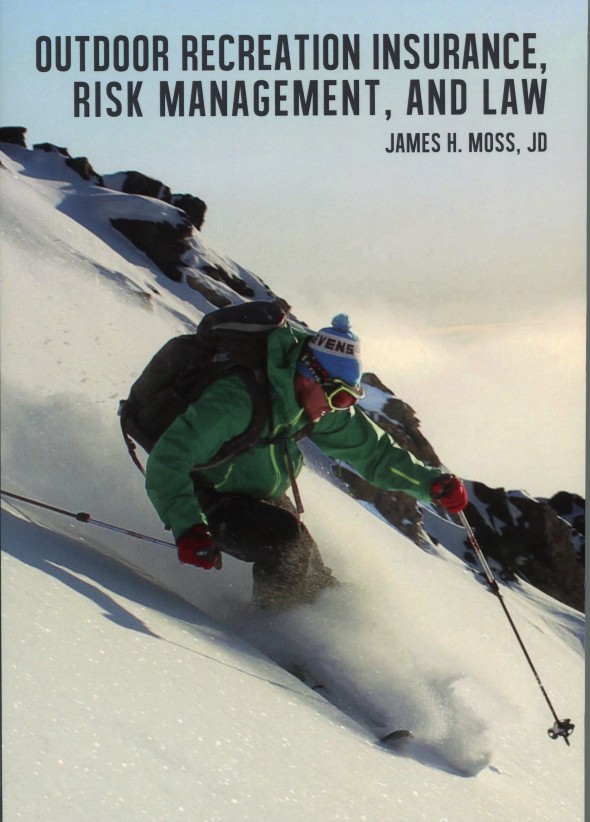
Outdoor Recreation Insurance, Risk Management and Law
To see Jim’s complete bio go here and to see his CV you can find it here. To find out the purpose of this website go here.
G-YQ06K3L262
What do you think? Leave a comment.
If you like this let your friends know or post it on FB, Twitter or LinkedIn
Author: Outdoor Recreation Insurance, Risk Management and Law
Facebook Page: Outdoor Recreation & Adventure Travel Law
Email: Jim@Rec-Law.US
By Recreation Law Rec-law@recreation-law.com James H. Moss
@2013-2023 Summit Magic Publishing, LLC
#RecreationLaw, #@RecreationLaw, #Cycling.Law #Fitness.Law, #Ski.Law, #Outside.Law, #Recreation.Law, #Recreation-Law.com, #Outdoor Law, #Recreation Law, #Outdoor Recreation Law, #Adventure Travel Law, #law, #Travel Law, #Jim Moss, #James H. Moss, #Attorney at Law, #Tourism, #Adventure Tourism, #Rec-Law, #Rec-Law Blog, #Recreation Law, #Recreation Law Blog, #Risk Management, #Human Powered, #Human Powered Recreation,# Cycling Law, #Bicycling Law, #Fitness Law, #Recreation-Law.com, #Backpacking, #Hiking, #Mountaineering, #Ice Climbing, #Rock Climbing, #Ropes Course, #Challenge Course, #Summer Camp, #Camps, #Youth Camps, #Skiing, #Ski Areas, #Negligence, #Snowboarding, #RecreationLaw, #@RecreationLaw, #Cycling.Law #Fitness.Law, #SkiLaw, #Outside.Law, #Recreation.Law, #RecreationLaw.com, #OutdoorLaw, #RecreationLaw, #OutdoorRecreationLaw, #AdventureTravelLaw, #Law, #TravelLaw, #JimMoss, #JamesHMoss, #AttorneyatLaw, #Tourism, #AdventureTourism, #RecLaw, #RecLawBlog, #RecreationLawBlog, #RiskManagement, #HumanPowered, #HumanPoweredRecreation,# CyclingLaw, #BicyclingLaw, #FitnessLaw, #RecreationLaw.com, #Backpacking, #Hiking, #Mountaineering, #IceClimbing, #RockClimbing, #RopesCourse, #ChallengeCourse, #SummerCamp, #Camps, #YouthCamps, #Skiing, #Ski Areas, #Negligence, #Snowboarding, sport and recreation laws, ski law, cycling law, Colorado law, law for recreation and sport managers, bicycling and the law, cycling and the law, ski helmet law, skiers code, skiing accidents, Recreation Lawyer, Ski Lawyer, Paddlesports Lawyer, Cycling Lawyer, Recreational Lawyer, Fitness Lawyer, Rec Lawyer, Challenge Course Lawyer, Ropes Course Lawyer, Zip Line Lawyer, Rock Climbing Lawyer, Adventure Travel Lawyer, Outside Lawyer, Recreation Lawyer, Ski Lawyer, Paddlesports Lawyer, Cycling Lawyer, #RecreationalLawyer, #FitnessLawyer, #RecLawyer, #ChallengeCourseLawyer, #RopesCourseLawyer, #ZipLineLawyer, #RockClimbingLawyer, #AdventureTravelLawyer, #OutsideLawyer, Jimmy Peak, Jimmy Peak Mountain Resort, Inc., USSA, FIS, Massachusetts Ski Safety Act, MSSA, United States Ski and Snowboard Association, Kelly Brush, Jiminy Peak, Inc., Williams College, Edward Grees, Oyestein Bakken, St. Lawrence University, Federation Internationale de Ski, Jeffrey Pier, St. Lawrence University, Middlebury College, Williams Winter Carnival, Williams College Outing Club, Giant Slalom, NCAA,
WordPress Tags: Colleges,Officials,Area,defendants,Brush,Jiminy,Peak,Mountain,Resort,Supp,Dist,LEXIS,plaintiff,student,racer,Jimmy,Williams,College,Winter,Carnival,Giant,Slalom,hill,organizers,requirement,equipment,Summary,defendant,violation,MSSA,Count,failure,duties,inspection,fist,definition,Negligence,Massachusetts,action,purposes,operators,survival,injuries,goal,agreements,Under,tort,relationship,competition,employees,USSA,States,Snowboard,Association,events,venue,clause,Colorado,Choice,jurisdiction,clauses,policy,waiver,person,subsidiaries,officers,directors,contractors,argument,agreement,consequences,Gross,inadvertence,jury,allegation,situation,decision,Paperwork,injury,customers,guests,plaintiffs,laws,outcome,Another,flaw,protection,event,Club,participants,woman,life,compassion,payment,pursuit,lawsuit,basis,tragedy,operator,accident,Edward,Grees,Oyestein,Bakken,Lawrence,Jeffrey,Pier,Barry,Bryant,Technical,Delegate,Federation,Internationale,complaint,contribution,Middlebury,Forest,Carey,Claims,Defenses,Release,Leave,FaceBook,Twitter,LinkedIn,Recreation,Edit,Email,Google,RecreationLaw,Page,Outdoor,Adventure,Travel,Blog,Mobile,Site,James,Moss,Outside,Attorney,Tourism,Risk,Management,Human,Rock,Ropes,Course,Challenge,Summer,Camp,Camps,Youth,Areas,SkiLaw,OutdoorLaw,OutdoorRecreationLaw,AdventureTravelLaw,TravelLaw,JimMoss,JamesHMoss,AttorneyatLaw,AdventureTourism,RecLaw,RecLawBlog,RecreationLawBlog,RiskManagement,HumanPoweredRecreation,CyclingLaw,BicyclingLaw,FitnessLaw,RopesCourse,ChallengeCourse,SummerCamp,YouthCamps,managers,helmet,accidents,Lawyer,Paddlesports,Recreational,Line,RecreationalLawyer,FitnessLawyer,RecLawyer,ChallengeCourseLawyer,RopesCourseLawyer,ZipLineLawyer,RockClimbingLawyer,AdventureTravelLawyer,OutsideLawyer,NCAA,whether,third
Indiana adopts the higher standard of care between participants in sporting events in this Triathlon case
Posted: December 10, 2012 Filed under: Cycling, Indiana, Release (pre-injury contract not to sue), Triathlon | Tags: Co-participant, Cycling, Duty of care, Indiana, Standard of Care, Summary judgment, Triathlon, USA Triathlon Leave a commentMark, v. Moser, 46 N.E.2d 410; 2001 Ind. App. LEXIS 671
This decision examines the different legal decisions involving lawsuits between participants in Indiana and other states.
The plaintiff and the defendant were racing in a triathlon. Both agreed to abide by the rules of USA Triathlon, and both signed releases. While in the bicycle portion

of the race, the defendant cut in front of the plaintiff causing a collision. The defendant was disqualified for violating the USA Triathlon rule concerning endangerment.
No cyclist shall endanger himself or another participant. Any cyclist who intentionally presents a danger to any participant or who, in the judgment of the Head Referee, appears to present a danger to any participants shall be disqualified.
The referee stated the defendant’s conduct was not intentional, “rather, he was disqualified for violating the rule “because, by moving over, an accident occurred.” As you can seem the rule, and its interpretation are subject wide interpretation and would lead to more arguments (lawsuits) after that.
The plaintiff sued the defendant for negligence and for acting intentionally, recklessly and willfully causing her injuries. The defendant filed a motion for summary judgment on both claims. The trial court granted the motion on the negligence claim and denied the motion on the second claim, the international acts.
In some jurisdictions, you can appeal motions for summary judgment that do not finish the case in its entirety. Here the plaintiff appealed the decision. Whether or not you can appeal the decision is dependent on the state rules of civil and appellate procedure.
Summary of the case
The Indian appellate court did a thorough analysis of the legal issues after determining this was an issue of first impression in Indiana. An issue of first impression is one where the court has not ruled on this particular legal issue before.
The issue was what was the standard of care owed by co-participants in a sporting event. The standard for a school sporting event was negligence. The court stated that the standard was negligence, low, because of the duty the school personnel had to exercise reasonable care over the students.
The court then looked at other decisions for the duty between co-participants. The court found three states, Arizona, Nevada and Wisconsin where the duty was negligence. The court found California, Connecticut, Illinois, Kentucky, Louisiana, Massachusetts, Michigan, Missouri, Nebraska, New Jersey, New Mexico, New York, Ohio, and Texas had adopted a “reckless or intentional conduct” or a “willful and wanton or intentional misconduct” standard of care. This is a much higher standard of care than the negligence standard.

The court found the higher standard of care was established because participants assume the risk of the activity, to stop mass litigation that would arise every time a foul occurs, and not to limit the sport because of the fear of liability.
The Indiana court determined that participants in sports activities:
…assume the inherent and foreseeable dangers of the activity and cannot recover for injury unless it can be established that the other participant either intentionally caused injury or engaged in conduct so reckless as to be totally outside the range of ordinary activity involved in the sport.
The court granted the summary judgment as to the first count, the negligence claim and sent the second claim back to the lower court to determine if the plaintiff could prove that the action of the defendant was intentional, reckless and willful when he rode his bike. The court sent it back with this statement.
…the trial court must determine whether Kyle’s [defendant] action was an inherent or reasonably foreseeable part of the sport, such that Rebecca [plaintiff] assumed the risk of injury as a matter of law. In our view, it is reasonably foreseeable that a competitor in a cycling race may attempt to cut in front of co-participants in an effort to advance position. Thus, if Rebecca is unable to develop the facts beyond those presented at this juncture, we would conclude that Kyle’s action was an inherent risk in the event that Rebecca assumed as a matter of law, thereby precluding recovery.
That is a very specific statement as to how the lower court must examine the facts in the case.
The appellate court also made another statement that is very important in this day and age.
As is generally the case, the release form that Rebecca signed does not relieve Kyle from liability as co-participants are not listed among the specific entities or individuals released from liability ac-cording to the plain language of the document.
The court looked at the release to determine if the release stopped the suit even though that was not argued by the parties.
So Now What?

It’s OK to play touch football, softball and have fun in Indiana.
At the same time, the court pointed out the fact that if the release had included the term co-participants in the release, the lawsuit might have started because the defendant would have been protected.
Here just one additional word in the release might have stopped a lawsuit.
What do you think? Leave a comment.
If you like this let your friends know or post it on FaceBook, Twitter or LinkedIn
Copyright 2012 Recreation Law (720) Edit Law
Email: blog@rec-law.us
Twitter: RecreationLaw
Facebook: Rec.Law.Now
Facebook Page: Outdoor Recreation & Adventure Travel Law
Blog: www.recreation-law.com
Mobile Site: http://m.recreation-law.com
#RecreationLaw, #@RecreationLaw, #Cycling.Law #Fitness.Law, #Ski.Law, #Outside.Law, #Recreation.Law, #Recreation-Law.com, #Outdoor Law, #Recreation Law, #Outdoor Recreation Law, #Adventure Travel Law, #law, #Travel Law, #Jim Moss, #James H. Moss, #Attorney at Law, #Tourism, #Adventure Tourism, #Rec-Law, #Rec-Law Blog, #Recreation Law, #Recreation Law Blog, #Risk Management, #Human Powered, #Human Powered Recreation,# Cycling Law, #Bicycling Law, #Fitness Law, #Recreation-Law.com, #Backpacking, #Hiking, #Mountaineering, #Ice Climbing, #Rock Climbing, #Ropes Course, #Challenge Course, #Summer Camp, #Camps, #Youth Camps, #Skiing, #Ski Areas, #Negligence, #Snowboarding, #RecreationLaw, #@RecreationLaw, #Cycling.Law #Fitness.Law, #SkiLaw, #Outside.Law, #Recreation.Law, #RecreationLaw.com, #OutdoorLaw, #RecreationLaw, #OutdoorRecreationLaw, #AdventureTravelLaw, #Law, #TravelLaw, #JimMoss, #JamesHMoss, #AttorneyatLaw, #Tourism, #AdventureTourism, #RecLaw, #RecLawBlog, #RecreationLawBlog, #RiskManagement, #HumanPowered, #HumanPoweredRecreation,# CyclingLaw, #BicyclingLaw, #FitnessLaw, #RecreationLaw.com, #Backpacking, #Hiking, #Mountaineering, #IceClimbing, #RockClimbing, #RopesCourse, #ChallengeCourse, #SummerCamp, #Camps, #YouthCamps, #Skiing, #Ski Areas, #Negligence, #Snowboarding, sport and recreation laws, ski law, cycling law, Colorado law, law for recreation and sport managers, bicycling and the law, cycling and the law, ski helmet law, skiers code, skiing accidents, Recreation Lawyer, Ski Lawyer, Paddlesports Lawyer, Cycling Lawyer, Recreational Lawyer, Fitness Lawyer, Rec Lawyer, Challenge Course Lawyer, Ropes Course Lawyer, Zip Line Lawyer, Rock Climbing Lawyer, Adventure Travel Lawyer, Outside Lawyer, Recreation Lawyer, Ski Lawyer, Paddlesports Lawyer, Cycling Lawyer, #RecreationalLawyer, #FitnessLawyer, #RecLawyer, #ChallengeCourseLawyer, #RopesCourseLawyer, #ZipLineLawyer, #RockClimbingLawyer, #AdventureTravelLawyer, #OutsideLawyer, Triathlon, USA Triathlon, Cycling, Co-participant, Duty of Care,
WordPress Tags: Indiana,participants,events,Triathlon,Mark,Moser,LEXIS,decision,decisions,lawsuits,plaintiff,defendant,Both,bicycle,collision,participant,danger,judgment,Head,Referee,accident,interpretation,arguments,negligence,injuries,jurisdictions,Here,Whether,procedure,Summary,Indian,analysis,event,personnel,students,Arizona,Nevada,Wisconsin,California,Connecticut,Illinois,Kentucky,Louisiana,Massachusetts,Michigan,Missouri,Nebraska,Jersey,Mexico,York,Ohio,Texas,misconduct,litigation,dangers,injury,action,bike,statement,Kyle,Rebecca,competitor,effort,Thus,juncture,recovery,entities,individuals,football,fact,lawsuit,Leave,FaceBook,Twitter,LinkedIn,Recreation,Edit,Email,RecreationLaw,Page,Outdoor,Adventure,Travel,Blog,Mobile,Site,Outside,Moss,James,Attorney,Tourism,Risk,Management,Human,Rock,Ropes,Course,Challenge,Summer,Camp,Camps,Youth,Areas,SkiLaw,OutdoorLaw,OutdoorRecreationLaw,AdventureTravelLaw,TravelLaw,JimMoss,JamesHMoss,AttorneyatLaw,AdventureTourism,RecLaw,RecLawBlog,RecreationLawBlog,RiskManagement,HumanPoweredRecreation,CyclingLaw,BicyclingLaw,FitnessLaw,RopesCourse,ChallengeCourse,SummerCamp,YouthCamps,Colorado,managers,helmet,accidents,Lawyer,Paddlesports,Recreational,Line,RecreationalLawyer,FitnessLawyer,RecLawyer,ChallengeCourseLawyer,RopesCourseLawyer,ZipLineLawyer,RockClimbingLawyer,AdventureTravelLawyer,OutsideLawyer,Care,cyclist,appellate
Recent Colorado case defines Attractive Nuisance
Posted: May 21, 2012 Filed under: Colorado | Tags: Attractive Nuisance, Attractive nuisance doctrine, CO, Colorado, Duty of care, invitees, licensees, Summary judgment, trespassers 1 CommentSW, a minor v. Towers Boat Club, Inc., 2012 COA 77; 2012 Colo. App. LEXIS 642
If the child is already on the property, there is no attractive nuisance.
In this case an eleven year old boy was on property playing in a rented inflatable structure. The structure had been rented by the landowner. The structure blue into the air injuring the child.
The parents claimed the landowner was negligent and the landowner was liable under Colorado’s premises liability statute. The trial court granted a motion for summary judgment on both claims and the plaintiff appealed the issue of the statutory premises liability claims.
Colorado like most states divides people on the land as one of three types, trespassers, licensees or invitees. The landowner owes different levels of protection or owes greater liability protection based on how the person is on the land.
A trespasser may recover only for damages willfully or deliberately caused by the landowner.
(b) A licensee may recover only for damages caused:
(I) By the landowner’s unreasonable failure to exercise reasonable care with respect to dangers created by the landowner of which the landowner actually knew; or
(II) By the landowner’s unreasonable failure to warn of dangers not created by the landowner which are not ordinarily present on property of the type involved and of which the landowner actually knew.
An invitee may recover for damages caused by the landowner’s unreasonable failure to exercise reasonable care to protect against dangers of which he actually knew or should have known.
The parties and the court concluded that the plaintiff was a licensee. As such the landowner had a duty to exercise reasonable care with respect to the dangers created by the landowner.
The plaintiff argued that the landowner owed a greater duty because of the attractive nuisance doctrine.
The attractive nuisance doctrine was developed to:
…provide legal relief to certain trespassing children who otherwise would be barred from recovery because of Colorado’s rule that a landowner owes no duty to make or keep premises safe for a trespasser.
A landowner was liable for injuries to children (minors under the age of fourteen) if something on the land or maintained on the land by the landowner attracted the minor to become a trespasser and consequently injured the trespassing minor.
…plaintiff may recover on a claim for attractive nuisance if, among other things, the plaintiff “(was attracted onto the premises by [an unusual activity being carried on, on the premises] [or] [by an unusual condition, other than a natural condition, existing on the premises]) (or) (was on the premises with the express or implied consent of the defendant)”
..attractive nuisance doctrine “imposes a duty of care on landowners to prevent serious harm to trespassing children
So?
The analysis was lengthy but very simple. The child was already on the land, so therefore the attractive nuisance doctrine did not apply. “The doctrine consists in maintaining an attraction which entices to trespass, not merely entices one after he has become a trespasser…”
The doctrine only applies if the child was a trespasser. Consequently the child was not a trespasser by definition of the statute and because the child was already on the land.
So Now What?
This takes a possible claim away from injured minors who are already on the land. The attractive nuisance doctrine did not give a lot of latitude to the landowner in possible defenses. If the child was a trespasser, was attracted to something on the land and was injured, the landowner was liable.
What do you think? Leave a comment.
If you like this let your friends know or post it on FB, Twitter or LinkedIn
Copyright 2012 Recreation Law (720) Edit Law
Twitter: RecreationLaw
Facebook: Rec.Law.Now
Facebook Page: Outdoor Recreation & Adventure Travel Law
Mobile Site: http://m.recreation-law.com
#RecreationLaw, #@RecreationLaw, #Cycling.Law #Fitness.Law, #Ski.Law, #Outside.Law, #Recreation.Law, #Recreation-Law.com, #Outdoor Law, #Recreation Law, #Outdoor Recreation Law, #Adventure Travel Law, #law, #Travel Law, #Jim Moss, #James H. Moss, #Attorney at Law, #Tourism, #Adventure Tourism, #Rec-Law, #Rec-Law Blog, #Recreation Law, #Recreation Law Blog, #Risk Management, #Human Powered, #Human Powered Recreation,# Cycling Law, #Bicycling Law, #Fitness Law, #Recreation-Law.com, #Backpacking, #Hiking, #Mountaineering, #Ice Climbing, #Rock Climbing, #Ropes Course, #Challenge Course, #Summer Camp, #Camps, #Youth Camps, #Skiing, #Ski Areas, #Negligence, #Snowboarding, #RecreationLaw, #@RecreationLaw, #Cycling.Law #Fitness.Law, #SkiLaw, #Outside.Law, #Recreation.Law, #RecreationLaw.com, #OutdoorLaw, #RecreationLaw, #OutdoorRecreationLaw, #AdventureTravelLaw, #Law, #TravelLaw, #JimMoss, #JamesHMoss, #AttorneyatLaw, #Tourism, #AdventureTourism, #RecLaw, #RecLawBlog, #RecreationLawBlog, #RiskManagement, #HumanPowered, #HumanPoweredRecreation,# CyclingLaw, #BicyclingLaw, #FitnessLaw, #RecreationLaw.com, #Backpacking, #Hiking, #Mountaineering, #IceClimbing, #RockClimbing, #RopesCourse, #ChallengeCourse, #SummerCamp, #Camps, #YouthCamps, #Skiing, #Ski Areas, #Negligence, #Snowboarding, sport and recreation laws, ski law, cycling law, Colorado law, law for recreation and sport managers, bicycling and the law, cycling and the law, ski helmet law, skiers code, skiing accidents, Recreation Lawyer, Ski Lawyer, Paddlesports Lawyer, Cycling Lawyer, Recreational Lawyer, Fitness Lawyer, Rec Lawyer, Challenge Course Lawyer, Ropes Course Lawyer, Zip Line Lawyer, Rock Climbing Lawyer, Adventure Travel Lawyer, Outside Lawyer, Recreation Lawyer, Ski Lawyer, Paddlesports Lawyer, Cycling Lawyer, #RecreationalLawyer, #FitnessLawyer, #RecLawyer, #ChallengeCourseLawyer, #RopesCourseLawyer, #ZipLineLawyer, #RockClimbingLawyer, #AdventureTravelLawyer, #OutsideLawyer, #landowner, Attractive Nuisance, #trespassers, #licensees, #invitees, #Colorado, #CO
WordPress Tags: Recent,Colorado,Attractive,Nuisance,Towers,Boat,Club,Colo,LEXIS,landowner,parents,premises,statute,judgment,plaintiff,trespassers,licensees,protection,person,trespasser,licensee,failure,dangers,doctrine,relief,recovery,injuries,minors,defendant,landowners,analysis,attraction,definition,latitude,Leave,Twitter,LinkedIn,Recreation,Edit,RecreationLaw,Facebook,Page,Outdoor,Adventure,Travel,Blog,Mobile,Site,Outside,Moss,James,Attorney,Tourism,Risk,Management,Human,Rock,Ropes,Course,Challenge,Summer,Camp,Camps,Youth,Areas,Negligence,SkiLaw,OutdoorLaw,OutdoorRecreationLaw,AdventureTravelLaw,TravelLaw,JimMoss,JamesHMoss,AttorneyatLaw,AdventureTourism,RecLaw,RecLawBlog,RecreationLawBlog,RiskManagement,HumanPoweredRecreation,CyclingLaw,BicyclingLaw,FitnessLaw,RopesCourse,ChallengeCourse,SummerCamp,YouthCamps,managers,helmet,accidents,Lawyer,Paddlesports,Recreational,Line,RecreationalLawyer,FitnessLawyer,RecLawyer,ChallengeCourseLawyer,RopesCourseLawyer,ZipLineLawyer,RockClimbingLawyer,AdventureTravelLawyer,OutsideLawyer,invitees
Summer Camp, Zip line injury and confusing legal analysis in Washington
Posted: April 16, 2012 Filed under: Minors, Youth, Children, Summer Camp, Washington, Youth Camps, Zip Line | Tags: Defendant, Duty of care, Plaintiff, Ropes course, Summary judgment, Summer Camp, zip line, Zip-line, Zipline Leave a comment
A 200′ Mammoth Deluxe zip line installed over a pond. (Photo credit: Wikipedia)
Facts, no prepared defense and the plaintiff will get to go to trial.
In this case, I think the parents of a child who was attending the summer camp opted to ride the camp zip line. The zip line had two ropes that attached the rider to the haul line. The adult plaintiff when getting ready to ride wrapped one rope around his fingers. When he launched, the rope tightened almost severing his fingers.
The defendant filed a motion for summary judgment. However, the analysis by the court did not read like the normal decisions on motions for summary judgment and started out by denying part of the plaintiff’s argument.
Summary of the case
The plaintiff argued the summer camp, landowner, owed him a duty of ordinary care. The court found this really did not apply to this case, and the duty was a duty to disclose rather than a duty of ordinary care. However, the court allowed this argument to proceed.
Under Washington’s law, the duty of ordinary care is defined as:
a) knows or has reason to know that the chattel is or is likely to be dangerous for the use for which it is supplied, and
b) has no reason to believe that those for whose use the chattel is supplied will realize its dangerous condition, and
c) fails to exercise reasonable care to inform them of its dangerous condition or of the facts which make it likely to be dangerous.
The court then argued that the plaintiff was arguing the wrong legal issues because the plaintiff was arguing the plaintiff was a landowner; however, the injury did not occur on the land.
Because the injury the plaintiff received was based on the acts of the plaintiff, wrapping a rope around his hand, there was no violation of a duty by the defendant.
Plaintiff’s injury was the natural result of wrapping a rope around one’s hand and then suspending one’s body from that rope. This was not a latent or hidden condition that only defendant could know. Common sense of a capable adult is sufficient to inform a rider of this danger. Plaintiff admitted as much in his deposition:
Q. Did you know that if you wrapped the rope around your fingers, and then you put weight on the rope, that would tighten and cinch around your fingers?
A. The thought did not cross my mind.
Q. Okay. You didn’t think about that correct?
A. Correct.
Q. But if you had thought about it, you would have been able to figure that out, correct?
A. If someone asked me?
Q. Yes.
A. Yes.
Because the plaintiff admitted that if he thought about it, he would have realized that his actions would injure his hand, the defendant did not owe him a greater duty than it had done.
The plaintiff then stretched with two additional causes or claims. The first was the defendant had violated a state statute because the zip line was not inspected by the state. However, the statute that the plaintiff tried to apply, the amusement ride statute, did not include zip lines in its definitions until after the plaintiff’s accident. The statute at the time the plaintiff was injured did not apply to zip lines.
The next argument is farther out there, and exponentially scarier. The plaintiff argued that a zip line should be classified as a common carrier. A common carrier under most state interpretations are airlines, trains, buses, etc. Those types of transportation, carriers for hire, where the customer pays to be moved from one place to the next owe their customers the highest degree of care. The transportation must be for the purpose of movement, not amusement. The scary part is a common carrier owes the highest degree of care to its customers.
This definition means that a common carrier is liable in most situations for any injury to its passengers.
However, the court did not find a zip line was a common carrier. Thankfully.
So Now What?
The obvious issue that was missed, was the camp should have been using a release. An adult is on the property having fun; an injury will occur.
A motion for summary judgment is used when the legal arguments against a claim are sufficient to eliminate that claim. In most cases, this ends the lawsuit as long as all claims are ruled in favor of the defendant. Here the one claim, no matter how sketchy is probably going to allow the plaintiff to recover some amount of money.
Based on the ruling, the plaintiff will get his day in court or be paid not to go to court. A slip when someone is loading a zip line, no release and a traumatic injury add up to a big lawsuit.
What do you think? Leave a comment.
If you like this let your friends know or post it on FB, Twitter or LinkedIn
Copyright 2012 Recreation Law (720) Edit Law
Twitter: RecreationLaw
Facebook: Rec.Law.Now
Facebook Page: Outdoor Recreation & Adventure Travel Law
Mobile Site: http://m.recreation-law.com
#RecreationLaw, #@RecreationLaw, #Cycling.Law #Fitness.Law, #Ski.Law, #Outside.Law, #Recreation.Law, #Recreation-Law.com, #Outdoor Law, #Recreation Law, #Outdoor Recreation Law, #Adventure Travel Law, #law, #Travel Law, #Jim Moss, #James H. Moss, #Attorney at Law, #Tourism, #Adventure Tourism, #Rec-Law, #Rec-Law Blog, #Recreation Law, #Recreation Law Blog, #Risk Management, #Human Powered, #Human Powered Recreation,# Cycling Law, #Bicycling Law, #Fitness Law, #Recreation-Law.com, #Backpacking, #Hiking, #Mountaineering, #Ice Climbing, #Rock Climbing, #Ropes Course, #Challenge Course, #Summer Camp, #Camps, #Youth Camps, #Skiing, #Ski Areas, #Negligence, #Snowboarding, #RecreationLaw, #@RecreationLaw, #Cycling.Law #Fitness.Law, #SkiLaw, #Outside.Law, #Recreation.Law, #RecreationLaw.com, #OutdoorLaw, #RecreationLaw, #OutdoorRecreationLaw, #AdventureTravelLaw, #Law, #TravelLaw, #JimMoss, #JamesHMoss, #AttorneyatLaw, #Tourism, #AdventureTourism, #RecLaw, #RecLawBlog, #RecreationLawBlog, #RiskManagement, #HumanPowered, #HumanPoweredRecreation,# CyclingLaw, #BicyclingLaw, #FitnessLaw, #RecreationLaw.com, #Backpacking, #Hiking, #Mountaineering, #IceClimbing, #RockClimbing, #RopesCourse, #ChallengeCourse, #SummerCamp, #Camps, #YouthCamps, #Skiing, #Ski Areas, #Negligence, #Snowboarding, sport and recreation laws, ski law, cycling law, Colorado law, law for recreation and sport managers, bicycling and the law, cycling and the law, ski helmet law, skiers code, skiing accidents, #zipline, Zip Line, Summer Camp, #Camp,
WordPress Tags: Summer,Camp,injury,analysis,Washington,Oldja,Warm,Beach,Christian,Camps,Conference,Center,Supp,Dist,LEXIS,Facts,plaintiff,parents,rider,defendant,judgment,decisions,argument,Summary,landowner,Under,violation,Common,danger,Okay,Correct,statute,amusement,definitions,accident,carrier,interpretations,airlines,transportation,carriers,customer,customers,degree,purpose,definition,situations,passengers,arguments,lawsuit,Here,money,Leave,Twitter,LinkedIn,Recreation,Edit,RecreationLaw,Facebook,Page,Outdoor,Adventure,Travel,Blog,Mobile,Site,Outside,Moss,James,Attorney,Tourism,Risk,Management,Human,Rock,Ropes,Course,Challenge,Youth,Areas,Negligence,SkiLaw,OutdoorLaw,OutdoorRecreationLaw,AdventureTravelLaw,TravelLaw,JimMoss,JamesHMoss,AttorneyatLaw,AdventureTourism,RecLaw,RecLawBlog,RecreationLawBlog,RiskManagement,HumanPoweredRecreation,CyclingLaw,BicyclingLaw,FitnessLaw,RopesCourse,ChallengeCourse,SummerCamp,YouthCamps,Colorado,managers,helmet,accidents,Line,chattel
South Carolina Supreme Court writes a clear decision on Assumption of the Risk for sporting activities.
Posted: December 12, 2011 Filed under: Assumption of the Risk | Tags: Assumption of risk, assumption of the risk, Boy Scouts of America, BSA, Cub Scout, Duty of care, Recklessness (law), softball, South Carolina, South Carolina Supreme Court 2 CommentsCole v. Boy Scouts of America, 2011 S.C. LEXIS 383
Defendants not liable because the plaintiff assumed the risk of his injuries when playing softball.
The plaintiff was on a Cub Scout outing with his son and their Cub Scout Pack. As part of the outing the fathers and sons were playing softball. During the play, things got a little intense, and the Unit Leader stepped in to cool things down. The plaintiff volunteered to be the catcher because he was afraid one of the boys would be hit by a bat or ball.
The defendant Wagner was on second base when the batter hit a long ball. Wagner was running home when the plaintiff Cole stepped in front of home plate. The resulting collision injured both parties.
The plaintiff sued Wagner the runner, the Boy Scouts of America, Indian Waters Council of the BSA, Cub Scout Pack 48, and Faith Presbyterian Church. The plaintiff claimed losses for personal injury, loss of consortium, and negligent infliction of emotional distress.
The plaintiff settled with all the other defendants. The defendant Wagner filed a motion for summary judgment, which was granted and the case was appealed to the South Carolina Supreme Court.
So? Summary of the case
The court first reviewed the legal definition of Assumption of the Risk in South Carolina.
Primary implied assumption of risk arises when the plaintiff impliedly assumes those risks that are inherent in a particular activity.”
The doctrine of primary implied assumption of risk “goes to the initial determination of whether the defendant’s legal duty encompasses the risk encountered by the plaintiff.” To establish a claim for negligence, a plaintiff must first show that the defendant owed a duty of care to the plaintiff.
The plaintiff assumed the risk of his injuries when he decided to play softball. It did not matter if the game was organized or not, supervised or not, the playing of softball a player assumes the risks of the sport. Nor does it matter if the sport is amateur or professional.
The court also found that softball was a contact sport that increased the risks of the sport and the level of risk any player must assume.
Nor does violating a rule of the game change the risk assumed. As the court stated:
If no one ever violated the rules, then there would be no need for penalty shots in basketball, a penalty box in hockey, or flags on the field in football. Collisions at home plate are common, mainly because catchers often attempt to keep a runner from scoring by blocking the plate with their body.
The plaintiff also argued the defendant was reckless. However, the court did not find any recklessness in the facts or pleadings and found the level of activity argued by the plaintiff did not rise to the level of recklessness necessary to create liability. The court found recklessness or willfulness is conduct “so grossly negligent that a person of ordinary reason and prudence would then have been conscious of the probability of resulting injury.”
Recklessness implies the doing of a negligent act knowingly . . . [or] the conscious failure to exercise due care.” “Due care” can be defined as “that degree of care which a person of ordinary prudence and reason would exercise under the same circumstances.”
The actions of the defendant were within the scope of risks to be assumed in softball.
The likelihood of someone running too fast to stop or playing more aggressively than anticipated is part of the competitive atmosphere of athletics.” Almost all contact sports, especially ones that require protective gear as part of their equipment, involve conduct that a reasonably prudent person would recognize may result in injury.
Accordingly, a player assumes the risk of ordinary recklessness committed within the course of the game.
The court differentiated intentional conduct that was so reckless as to be outside of the scope of the game. The players have a reciprocal duty to not intentionally injure each other. did not allege that the defendant’s conduct was intentional.
So Now What?
This is a great decision for youth volunteers and coaches as well as anyone who engages in sports in South Carolina. You can do so without fear of being sued for playing the game.
The issue is to make sure that everyone plays the game within the general rules of the sport, does not intentional injure someone and that everyone has fun.
Backyards are now safe for games again!
What do you think? Leave a comment.
Copyright 2011 Recreation Law (720) Edit Law, Recreation.Law@Gmail.com
Twitter: RecreationLaw
Facebook: Rec.Law.Now
Facebook Page: Outdoor Recreation & Adventure Travel Law
Blog: http://www.recreation-law.com
Mobile Site: http://m.recreation-law.com
#RecreationLaw, #@RecreationLaw, #Cycling.Law #Fitness.Law, #Ski.Law, #Outside.Law, #Recreation.Law, #Recreation-Law.com, #Outdoor Law, #Recreation Law, #Outdoor Recreation Law, #Adventure Travel Law, #law, #Travel Law, #Jim Moss, #James H. Moss, #Attorney at Law, #Tourism, #Adventure Tourism, #Rec-Law, #Rec-Law Blog, #Recreation Law, #Recreation Law Blog, #Risk Management, #Human Powered, #Human Powered Recreation,# Cycling Law, #Bicycling Law, #Fitness Law, #Recreation-Law.com, #Backpacking, #Hiking, #Mountaineering, #Ice Climbing, #Rock Climbing, #Ropes Course, #Challenge Course, #Summer Camp, #Camps, #Youth Camps, #Skiing, #Ski Areas, #Negligence, #Snowboarding, #RecreationLaw, #@RecreationLaw, #Cycling.Law #Fitness.Law, #SkiLaw, #Outside.Law, #Recreation.Law, #RecreationLaw.com, #OutdoorLaw, #RecreationLaw, #OutdoorRecreationLaw, #AdventureTravelLaw, #Law, #TravelLaw, #JimMoss, #JamesHMoss, #AttorneyatLaw, #Tourism, #AdventureTourism, #RecLaw, #RecLawBlog, #RecreationLawBlog, #RiskManagement, #HumanPowered, #HumanPoweredRecreation,# CyclingLaw, #BicyclingLaw, #FitnessLaw, #RecreationLaw.com, #Backpacking, #Hiking, #Mountaineering, #IceClimbing, #RockClimbing, #RopesCourse, #ChallengeCourse, #SummerCamp, #Camps, #YouthCamps, #Skiing, #Ski Areas, #Negligence, #Snowboarding, #BoyScoutsofAmerica, #IndianWatersCouncil #FaithPresbyterianChurch, #BSA, #Softball, #AssumptionOfTheRisk
WordPress Tags: South,Carolina,Supreme,Court,decision,Assumption,Risk,Cole,Scouts,America,LEXIS,Defendants,plaintiff,injuries,Scout,Pack,sons,Unit,Leader,boys,ball,defendant,Wagner,collision,runner,Indian,Waters,Council,Faith,Presbyterian,Church,injury,consortium,judgment,Summary,definition,Primary,doctrine,determination,negligence,player,football,Collisions,person,prudence,failure,degree,scope,atmosphere,athletics,Almost,gear,equipment,players,youth,Backyards,Leave,Recreation,Edit,Gmail,Twitter,RecreationLaw,Facebook,Page,Outdoor,Adventure,Travel,Blog,Mobile,Site,Outside,Moss,James,Attorney,Tourism,Management,Human,Rock,Ropes,Course,Challenge,Summer,Camp,Camps,Areas,SkiLaw,OutdoorLaw,OutdoorRecreationLaw,AdventureTravelLaw,TravelLaw,JimMoss,JamesHMoss,AttorneyatLaw,AdventureTourism,RecLaw,RecLawBlog,RecreationLawBlog,RiskManagement,HumanPoweredRecreation,CyclingLaw,BicyclingLaw,FitnessLaw,RopesCourse,ChallengeCourse,SummerCamp,YouthCamps,BoyScoutsofAmerica,IndianWatersCouncil,FaithPresbyterianChurch,Softball,AssumptionOfTheRisk

States that do not Support the Use of a Release
Posted: December 16, 2010 Filed under: Arizona, Hawaii, Louisiana, Montana, Release (pre-injury contract not to sue), West Virginia | Tags: Duty of care, Insurance, Law, Liability insurance, Louisiana, Montana, Release, Virginia 9 CommentsAssumption of the risk is your best defense in these states
These states do not allow a recreational business or program to use a release to stop litigation.
|
State |
Citation |
Issues |
||||||
|
Releases are Void |
||||||||
|
C.C. Art. 2004 (2005) |
Any clause is null that, in advance, excludes or limits the liability of one party for intentional or gross fault that causes damage to the other party. Any clause is null that, in advance, excludes or limits the liability of one party for causing physical injury to the other party. |
|||||||
|
MCA § 27-1-702 |
All contracts that have for their object, directly or indirectly, to exempt anyone from responsibility for the person’s own fraud, for willful injury to the person or property of another, or for violation of law, whether willful or negligent, are against the policy of the law. |
|||||||
|
Johnson’s Adm’x v. Richmond and Danville R.R. Co., 86 Va. 975, 11 S.E. 829 (1890) |
||||||||
|
Use of a Release is Restricted |
||||||||
|
Arizona |
Phelps v. Firebird Raceway, Inc., 2005 Ariz. LEXIS 53 |
|||||||
|
New Mexico |
Berlangieri v. Running Elk Corporation, 132 N.M. 332;2002 NMCA 60;48 P.3d 70;2002 N.M. App. 39;41 N.M. St. B. Bull. 25 |
|||||||
|
West Virginia |
Kyriazis v. University of West Virginia; 192 W. Va. 60; 450 S.E.2d 649; 1994 W. Va. LEXIS 161 |
|||||||
|
Use of Releases is Probably Void |
||||||||
|
Connecticut |
Hanks v. Powder Ridge Restaurant Corp., 276 Conn. 314, 885 A.2d 734 (2005) and Reardon v. Windswept Farm, LLC, Et Al., 280 Conn. 153; 905 A.2d 1156; 2006 Conn. LEXIS 330 |
|||||||
|
Wisconsin |
Atkins v. Swimwest Family Fitness Center, 2005 WI 4; 2005 Wisc. LEXIS 2 |
|||||||
|
Vermont |
Dalury v. S-K-I, Ltd, 164 Vt 329; 670 A.2d 795; 1995 Vt. Lexis 127 |
|||||||
|
Specific uses of Releases are Void |
||||||||
|
Alaska |
Sec. 05.45.120(a). Use of liability releases |
A ski area operator may not require a skier to sign an agreement releasing the ski area operator from liability in exchange for the right to ride a ski area tramway and ski in the ski area. A release that violates this subsection is void and may not be enforced. |
||||||
|
Hawaii |
King v. CJM Country Stables, 315 F. Supp. 2d 1061, 2004 U.S. Dist. LEXIS 7511 (D. Haw. 2004) |
Found that Hawaii statute § 663-1.54. Recreational activity liability prevented the use of a release |
||||||
|
New York |
Every covenant, agreement or understanding in or in connection with, or collateral to, any contract, membership application, ticket of admission or similar writing, entered into between the owner or operator of any pool, gymnasium, place of amusement or recreation, or similar establishment and the user of such facilities, pursuant to which such owner or operator receives a fee or other compensation for the use of such facilities, which exempts the said owner or operator from liability for damages caused by or resulting from the negligence of the owner, operator or person in charge of such establishment, or their agents, servants or employees, shall be deemed to be void as against public policy and wholly unenforceable. |
|||||||
What do you think? Leave a comment.
Copyright 2010 Recreation Law (720) Edit Law, Recreation.Law@Gmail.com
Twitter: RecreationLaw
Facebook: Rec.Law.Now
Facebook Page: Outdoor Recreation & Adventure Travel Law
Keywords: #recreation-law.com, #outdoor law, #recreation law, #outdoor recreation law, #adventure travel law, #law, #travel law, #Jim Moss, #James H. Moss, #attorney at law, #tourism, #adventure tourism, #rec-law, #rec-law blog, #recreation law, #recreation law blog, #risk management, #Human Powered, #human powered recreation,# cycling law, #bicycling law, #fitness law, #recreation-law.com, #backpacking, #hiking, #Mountaineering, #ice climbing, #rock climbing, #ropes course, #challenge course, #summer camp, #camps, #youth camps, #skiing, #ski areas, #negligence, #release, #Montana, #Louisiana, #Virginia, #New York, #Hawaii, #Alaska, #Vermont, #Wisconsin, #Connecticut, #New Mexico, #Arizona, West Virginia
WordPress Tags: States,Support,Release,Assumption,litigation,State,Citation,Issues,Releases,Void,Louisiana,clause,injury,Montana,negligence,Except,skill,management,person,Virginia,Johnson,Richmond,Danville,Arizona,Phelps,Firebird,Raceway,Ariz,LEXIS,Mexico,Berlangieri,Corporation,NMCA,Bull,West,Kyriazis,Connecticut,Hanks,Powder,Ridge,Restaurant,Corp,Conn,Reardon,Windswept,Farm,Wisconsin,Atkins,Swimwest,Center,Wisc,Vermont,Dalury,Specific,Alaska,area,operator,agreement,subsection,Hawaii,Country,Stables,Supp,Dist,Found,statute,Recreational,York,General,Obligation,Agreements,gymnasiums,amusement,recreation,establishments,covenant,connection,collateral,membership,ticket,admission,owner,gymnasium,establishment,user,facilities,compensation,agents,servants,employees,policy,Leave,Edit,Gmail,Twitter,RecreationLaw,Facebook,Page,Outdoor,Adventure,Travel,Keywords,Moss,James,attorney,tourism,Human,youth,areas,unenforceable,blog


 Recreation Law