
Release saves riding school, even after defendant tried to show plaintiff how to win the case.
Posted: July 8, 2013 Filed under: Assumption of the Risk, California, Equine Activities (Horses, Donkeys, Mules) & Animals, Release (pre-injury contract not to sue) | Tags: CA, California, California law, correctly, Defendant, dismount, dive, Duty of care, equestrian, Equine, extreme departure, Gross negligence, Horse, horseback riding, inappropriate, Inc., inherently, instructor, Jim Moss, jumping, lesson, Manual, material fact, Mill Creek Equestrian Center, misconduct, Negligence, notice of appeal, Ordinary Negligence, Plaintiff, recommended, Release, rider, riding, ring, risks inherent, Sport, standard of conduct, Summary judgment, totally outside, training, triable issue, United States, willful Leave a commentAs an expert you just can’t state facts, you have to prove your facts.
Azad v. Mill Creek Equestrian Center, Inc., 2004 Cal. App. Unpub. LEXIS 11218
Plaintiff: Nicole Azad
Defendant: Mill Creek Equestrian Center, Inc.
Plaintiff Claims: negligence and gross negligence
Defendant Defenses: Release
Holding: for the defendant
This is a horseback riding case. The plaintiff was a beginner rider taking lessons from the defendant. The defendant’s instructor placed her in the jumping ring for training. Another horse in the ring spooked, which spooked the horse the plaintiff was riding. The plaintiff’s horse jumped the ring fence. The plaintiff fell off breaking her leg.
The plaintiff had signed a release before starting the lessons. The release was well labeled stating on each page that it was a release. The release also had a notice right above the signature line indicating the signor was giving up their legal rights.
The release, however, specifically stated that it did not prevent claims for gross negligence.
The plaintiff sued for negligence and after getting educated by the defendant, for gross negligence. The trial court dismissed the case after the defendant filed a motion for summary judgment. The plaintiff appealed.
Summary of the case
On appeal the plaintiff claimed:
…there are material issues of fact regarding whether the release was clear and whether it exempted the challenged conduct. She also argues MCEC increased the risk to Azad beyond that inherent in horseback riding.
The court first looked at the validity of the release against a case argued by the plaintiff that found a release was insufficient. The court then only compared the release in this case to the arguments made in the case raised by the plaintiff.
The release was a two-page document. On the first page, it contained a titled, “LIABILITY RELEASE AND INDEMNITY AGREEMENT.” On all other pages, it stated, “RIDING INSTRUCTION AGREEMENT AND LIABILITY RELEASE FORM.” Above the signature line, there was a statement that the signer was aware of the legal issues and acknowledgement of the legal issues.
The court found the release worked to stop claims of ordinary negligence but not gross negligence.
The court then reviewed California law on the duty owed by instructors in sports.
By consenting to participate in a sport that includes risks, a person consents to assume the risks inherent in the sport. A person does not consent to a breach of a duty by another that increases the risks inherent in the sport. “‘[A] purveyor of recreational activities owes a duty to a patron to not increase the risks inherent in the activity in which the patron has paid to engage. . . .'”
A sports instructor must intentionally injury a student or engages in conduct that is totally outside the range of ordinary activity to be liable. Other than those two issues, the participant assumes the risk of the sport.
… a sports instructor breaches a duty of care only “‘if the instructor intentionally injures the student or engages in conduct that is reckless in the sense that it is ‘totally outside the range of the ordinary activity.’
In this case, the plaintiff had not raised any issues or facts, other than statements of the plaintiff’s expert witness who could support a claim of gross negligence. The plaintiff’s expert alleged the actions of the defendant were grossly negligent but did not demonstrate any facts showing an “extreme departure from the ordinary standard of conduct.” The court also pointed out the plaintiff stated the instructor was inadequately trained but not support her statement with proof.
The court in stating there was not proof of gross negligence stated:
Gross negligence is defined as “‘”the want of even scant care or an extreme departure from the ordinary standard of conduct.”‘” This definition is similar to the standard employed in Kahn – conduct totally outside the range of ordinary activity.
The court upheld the dismissal of the plaintiff’s complaint.
So Now What?
This release had 2 great points. The title and the heading on each page said this is a release. I’ve continuously stated that you cannot hide your release in other documents. It must be presented as a release to the signor and must plainly set forth the signor is giving up their legal rights.
However, don’t help the plaintiff sue you? Here the release said this document is no good if you prove I was grossly negligent. So what did the plaintiff need to do, prove gross negligence to win.
The facts of the case were pretty tame, and the injury to the plaintiff was relatively minor.
The court did look at what it would take to prove gross negligence from reviewing other cases. One was having a manual and showing an extreme departure from the manual.
If you write it down as the “way,” you better follow it.
 |
Jim Moss is an attorney specializing in the legal issues of the outdoor recreation community. He represents guides, guide services, outfitters both as businesses and individuals and the products they use for their business. He has defended Mt. Everest guide services, summer camps, climbing rope manufacturers; avalanche beacon manufactures and many more manufacturers and outdoor industries. Contact Jim at Jim@Rec-Law.us |
Jim is the author or co-author of six books about the legal issues in the outdoor recreation world; the latest is Outdoor Recreation Insurance, Risk Management and Law.
To see Jim’s complete bio go here and to see his CV you can find it here. To find out the purpose of this website go here.
G-YQ06K3L262
What do you think? Leave a comment.
If you like this let your friends know or post it on FB, Twitter or LinkedIn
Author: Outdoor Recreation Insurance, Risk Management and Law

Outdoor Recreation Insurance, Risk Management and Law
Facebook Page: Outdoor Recreation & Adventure Travel Law
Email: Jim@Rec-Law.US
By Recreation Law Rec-law@recreation-law.com James H. Moss
@2013-23 Summit Magic Publishing, LLC
<rel=”author” link=” https://plus.google.com/u/0/b/112453188060350225356/” />
#RecreationLaw, #@RecreationLaw, #Cycling.Law #Fitness.Law, #Ski.Law, #Outside.Law, #Recreation.Law, #Recreation-Law.com, #Outdoor Law, #Recreation Law, #Outdoor Recreation Law, #Adventure Travel Law, #law, #Travel Law, #Jim Moss, #James H. Moss, #Attorney at Law, #Tourism, #Adventure Tourism, #Rec-Law, #Rec-Law Blog, #Recreation Law, #Recreation Law Blog, #Risk Management, #Human Powered, #Human Powered Recreation,# Cycling Law, #Bicycling Law, #Fitness Law, #Recreation-Law.com, #Backpacking, #Hiking, #Mountaineering, #Ice Climbing, #Rock Climbing, #Ropes Course, #Challenge Course, #Summer Camp, #Camps, #Youth Camps, #Skiing, #Ski Areas, #Negligence, #Snowboarding, #RecreationLaw, #@RecreationLaw, #Cycling.Law #Fitness.Law, #SkiLaw, #Outside.Law, #Recreation.Law, #RecreationLaw.com, #OutdoorLaw, #RecreationLaw, #OutdoorRecreationLaw, #AdventureTravelLaw, #Law, #TravelLaw, #JimMoss, #JamesHMoss, #AttorneyatLaw, #Tourism, #AdventureTourism, #RecLaw, #RecLawBlog, #RecreationLawBlog, #RiskManagement, #HumanPowered, #HumanPoweredRecreation,# CyclingLaw, #BicyclingLaw, #FitnessLaw, #RecreationLaw.com, #Backpacking, #Hiking, #Mountaineering, #IceClimbing, #RockClimbing, #RopesCourse, #ChallengeCourse, #SummerCamp, #Camps, #YouthCamps, #Skiing, #Ski Areas, #Negligence, #Snowboarding, sport and recreation laws, ski law, cycling law, Colorado law, law for recreation and sport managers, bicycling and the law, cycling and the law, ski helmet law, skiers code, skiing accidents, Recreation Lawyer, Ski Lawyer, Paddlesports Lawyer, Cycling Lawyer, Recreational Lawyer, Fitness Lawyer, Rec Lawyer, Challenge Course Lawyer, Ropes Course Lawyer, Zip Line Lawyer, Rock Climbing Lawyer, Adventure Travel Lawyer, Outside Lawyer, Recreation Lawyer, Ski Lawyer, Paddlesports Lawyer, Cycling Lawyer, #RecreationalLawyer, #FitnessLawyer, #RecLawyer, #ChallengeCourseLawyer, #RopesCourseLawyer, #ZipLineLawyer, #RockClimbingLawyer, #AdventureTravelLawyer, #OutsideLawyer, Horseback Riding, Equine, Mill Creek Equestrian Center, Inc., California, CA, Release, Gross Negligence,
WordPress Tags: Release,defendant,plaintiff,Azad,Mill,Creek,Equestrian,Center,Unpub,LEXIS,Nicole,Claims,negligence,Defenses,beginner,rider,lessons,instructor,Another,horse,signature,judgment,Summary,fact,MCEC,arguments,AGREEMENT,INSTRUCTION,FORM,Above,statement,California,instructors,person,purveyor,patron,injury,student,participant,statements,departure,Gross,definition,Kahn,dismissal,complaint,Here,Leave,FaceBook,Twitter,LinkedIn,Recreation,Edit,Email,Google,RecreationLaw,Page,Outdoor,Adventure,Travel,Blog,Mobile,Site,James,Moss,Authorrank,author,Outside,Attorney,Tourism,Risk,Management,Human,Rock,Ropes,Course,Challenge,Summer,Camp,Camps,Youth,Areas,SkiLaw,OutdoorLaw,OutdoorRecreationLaw,AdventureTravelLaw,TravelLaw,JimMoss,JamesHMoss,AttorneyatLaw,AdventureTourism,RecLaw,RecLawBlog,RecreationLawBlog,RiskManagement,HumanPoweredRecreation,CyclingLaw,BicyclingLaw,FitnessLaw,RopesCourse,ChallengeCourse,SummerCamp,YouthCamps,Colorado,managers,helmet,accidents,Lawyer,Paddlesports,Recreational,Line,RecreationalLawyer,FitnessLawyer,RecLawyer,ChallengeCourseLawyer,RopesCourseLawyer,ZipLineLawyer,RockClimbingLawyer,AdventureTravelLawyer,OutsideLawyer,Horseback,Equine,signor,whether
Azad v. Mill Creek Equestrian Center, Inc., 2004 Cal. App. Unpub. LEXIS 11218
Posted: July 8, 2013 Filed under: Assumption of the Risk, California, Equine Activities (Horses, Donkeys, Mules) & Animals, Legal Case, Release (pre-injury contract not to sue) | Tags: Appeal, Assumption of risk, Azad, Bruno, California Courts of Appeal, correctly, dismount, dive, equestrian, Equestrianism, extreme departure, Gross negligence, Horse, horseback riding, inappropriate, inherently, instructor, jumping, lesson, Los Angeles County Superior Court, Manual, material fact, misconduct, notice of appeal, Ordinary Negligence, recommended, rider, riding, ring, risks inherent, Sport, standard of conduct, Summary judgment, totally outside, training, triable issue, willful Leave a commentTo Read an Analysis of this decision see: Release saves riding school, even after the defendant tried to show the plaintiff how to win the case.
Azad v. Mill Creek Equestrian Center, Inc., 2004 Cal. App. Unpub. LEXIS 11218
Nicole Azad, Plaintiff and Appellant, v. Mill Creek Equestrian Center, Inc., Defendant and Respondent.
B169611
COURT OF APPEAL OF CALIFORNIA, SECOND APPELLATE DISTRICT, DIVISION EIGHT
2004 Cal. App. Unpub. LEXIS 11218
December 13, 2004, Filed
NOTICE: [*1] NOT TO BE PUBLISHED IN OFFICIAL REPORTS. CALIFORNIA RULES OF COURT, RULE 977(a), PROHIBIT COURTS AND PARTIES FROM CITING OR RELYING ON OPINIONS NOT CERTIFIED FOR PUBLICATION OR ORDERED PUBLISHED, EXCEPT AS SPECIFIED BY RULE 977(B). THIS OPINION HAS NOT BEEN CERTIFIED FOR PUBLICATION OR ORDERED PUBLISHED FOR THE PURPOSES OF RULE 977.
PRIOR HISTORY: APPEAL from a judgment of the Superior Court of Los Angeles County, No. SC070887. Paul G. Flynn, Judge.
DISPOSITION: Affirmed.
COUNSEL: Law Offices of Diane Goldman and Diane Goldman for Plaintiff and Appellant.
Clinton & Clinton, David A. Clinton and Katherine M. Fesler for Defendants and Respondents.
JUDGES: COOPER, P. J.; RUBIN, J., FLIER, J. concurred.
OPINION BY: COOPER
OPINION
Appellant injured herself falling off a horse during a horseback riding lesson. In this appeal, she challenges the award of summary judgment entered in favor of the equestrian center. Reviewing the record de novo, we find Azad released all claims other than gross negligence and willful misconduct. She does not allege any willful misconduct. Because she provides no evidence of gross negligence, the trial court correctly entered summary judgment. We shall affirm.
FACTUAL BACKGROUND
[*2] The facts interpreted in the light most favorable to Azad indicate the following. On March 16, 2001, Nicole Azad, an inexperienced rider, had a private horseback riding lesson at Mill Creek Equestrian Center, Inc. (MCEC). Prior to her lesson, she signed a release of liability, which was part of a two page document. Each page of the release contained a heading identifying it as a release.
During Azad’s lesson, she rode a horse named Bruno and was instructed by Sandra Samel. Samel chose to hold the lesson in a ring known as the jumping ring even though it was not the ring commonly used for beginning lessons. At the same time as Azad’s lesson, other riders were in the jumping ring including Courtney Leonard. Leonard rode a horse named Dan, who had been injured. Leonard fell off Dan, and Dan started running. In response to Dan, Bruno started running. Azad was unable to gain control over Bruno. Samel did not instruct Azad to immediately dismount and did not grab Bruno’s reins. Bruno jumped the fence, which was not as high as the standard in the industry. Azad fell off Bruno and fractured her leg.
Azad’s expert, Jill Cooke, opined that the height of the railings in the jumping ring [*3] ranged from two to two and a half feet where industry standard was three and a half feet. Cooke also concluded that “separated schooling areas are recommended.” According to Cooke, Samel should have chosen a different ring for Azad’s lesson, one dedicated to inexperienced riders. Cooke also concluded that Samel should have instructed Azad to dismount Bruno and should have held Bruno’s reigns. Cooke opined that “Ms. Samel’s failure to act promptly and appropriately to protect her student thereby created new risk to [Ms. Azad], over and above those inherent in the sport.”
PROCEDURAL BACKGROUND
Azad filed a complaint for negligence against MCEC and alleged that MCEC committed both negligence and gross negligence. MCEC moved for summary judgment.
The trial court granted MCEC’s motion for summary judgment. The court found that Azad’s express waiver was valid and that the assumption of risk doctrine applied. Azad appealed. The notice of appeal was filed after the order granting summary judgment but before judgment was entered. Construing the notice of appeal liberally, we deem this an appeal from the judgment which was subsequently entered. (Levy v. Skywalker Sound (2003) 108 Cal.App.4th 753, 761, fn 7.) [*4]
DISCUSSION
Azad argues there are material issues of fact regarding whether the release was clear and whether it exempted the challenged conduct. She also argues MCEC increased the risk to Azad beyond that inherent in horseback riding.
I. Express Assumption of Risk
Prior to her horse back riding lesson, Azad signed the following release:
“I agree that in consideration for this stable allowing my participation in this activity, under the terms set forth herein and in the MILL CREEK RULES AND REGULATIONS of which I received a copy, read, and understand, I the rider and the parent or legal guardian thereof if a minor, and on behalf of my heirs, administrators, personal representative or assigns, do agree to hold harmless, release and discharge MILL CREEK EQUESTRIAN CENTER, its owners, agents, employees, officers, directors, representatives, assigns, members, owner(s) of premises and trails, affiliated organizations, insurers, and others acting on its behalf (hereinafter collectively referred to as associates) of and from all claims, demands, causes of action and legal liability whether the same be known or unknown, anticipated or unanticipated, due to MILL CREEK [*5] EQUESTRIAN CENTER’S and/or its associates ordinary negligence; and I do further agree that except in the event of MILL CREEK EQUESTRIAN CENTER’S gross negligence and willful and wanton misconduct, I shall not bring any claims, demands, legal actions and causes of action against MILL CREEK EQUESTRIAN CENTER and ITS ASSOCIATES as stated above in this clause, for any economic and non-economic losses due to bodily injury, death, property damage sustained by me and/or my minor child and/or legal ward in relation to the premises and operations of MILL CREEK EQUESTRIAN CENTER to include while riding, handling, or otherwise being near horses owned by or in the care, custody and control of MILL CREEK EQUESTRIAN CENTER, whether on or off the premises of MILL CREEK EQUISTRIAN CENTER. I further understand that all riding engaged in at MILL CREEK EQUESTRIAN CENTER is solely at my own risk and that MILL CREEK EQUESTRIAN CENTER is not liable for any injury which may occur to me on its premises, whether bodily injury or otherwise. I further agree to release MILL CREEK EQUESTRIAN CENTER, its agents and employees from any and all liability for any injuries I may sustain while riding and agree to [*6] indemnify and hold MILL CREEK EQUESTRIAN CENTER harmless as to all claims, actions, damages, costs and expenses, including attorney’s fees, arising therefrom. [P] The aforesaid release and limitation of liability includes, without limitation, any obligations of MILL CREEK EQUESTRIAN CENTER with respect to consequential damage and negligent behavior of any of its employees. . . .” (Emphasis added.)
A. Validity of the Release
Citing Conservatorship of Estate of Link (1984) 158 Cal. App. 3d 138, 141-142, 205 Cal. Rptr. 513 (Link), Azad argues that the release is not enforceable because it is not readily identifiable as a release. In Link, the court found that a release should be distinguished from other paragraphs of the document; a release should be conspicuous; and a release must clearly convey that rights are being released. (Ibid.)
The release satisfies the Link criteria. It contains the title “LIABILITY RELEASE AND INDEMNITY AGREEMENT.” Each page of the two page document contains a heading which is printed in bold print and underlined “RIDING INSTRUCTION AGREEMENT AND LIABILITY RELEASE FORM.” Above the signature line, in a paragraph [*7] titled “signer statement of awareness,” there is an acknowledgment of understanding the liability release, which Azad signed. Unlike in Link, the release does not appear to be “calculated to conceal and not to warn the unwary.” (Link, supra, 158 Cal. App. 3d at p. 141.)
Azad claims that it is not clear “what conduct is exempted from liability.” She faults the release for “simultaneously purporting to encompass claims based upon [ordinary negligence] and excluding claims based upon [gross negligence].” Azad points out that, in Continental Ins. Co. v. American Protection Industries (1987) 197 Cal. App. 3d 322, 242 Cal. Rptr. 784, a case not involving a release, the court held “in light of the adoption of the doctrine of comparative negligence in California, any attempt to categorize gross negligence separately from ordinary negligence is unnecessary.” (Id. at p. 330.) Continental Insurance Co., however, did not hold that the distinction between ordinary and gross negligence never is relevant or is inherently ambiguous. To the contrary, it recognized that the distinction remained viable where a statute proscribes gross negligence. [*8] (Id. at p. 329.) The express contractual provision distinguishing between ordinary and gross negligence is not inherently ambiguous.
Thus, the release covers conduct other than gross negligence and intentional misconduct. 1 Azad does not allege intentional misconduct. In the next section, we consider whether Azad has provided any evidence of gross negligence.
1 MCEC argues that the “Release was specific enough to warn Appellant, and to convey that Respondents would not be held liable for any physical injury to Appellant.” While the release discusses liability for “any injury” it expressly excludes “gross negligence and willful and wanton misconduct.”
II. Implied Assumption of Risk
By consenting to participate in a sport that includes risks, a person consents to assume the risks inherent in the sport. (Knight v. Jewett (1992) 3 Cal.4th 296, 311.) A person does not consent to a breach of a duty by another that increases the risks inherent in the sport. (Ibid.) [*9] “‘[A] purveyor of recreational activities owes a duty to a patron to not increase the risks inherent in the activity in which the patron has paid to engage. . . .'” (Kahn v. East Side Union High School Dist. (2003) 31 Cal.4th 990, 1005 (Kahn).)
In Kahn, supra, 31 Cal.4th at p. 996, our high court considered the doctrine of assumption of the risk in the context of a lawsuit against a swimming instructor. The court held that a sports instructor breaches a duty of care only “‘if the instructor intentionally injures the student or engages in conduct that is reckless in the sense that it is ‘totally outside the range of the ordinary activity.'” (Ibid.) The court further found evidence of reckless conduct sufficient to raise a triable issue of material fact where a swim coach required a student to dive into a shallow pool without providing her any training, after promising she would not be required to dive. (Id. at p. 996.) The court specifically relied on the following evidence: “the lack of training in the shallow-water dive disclosed by plaintiff’s evidence, especially in the face of the sequences training recommended in the [*10] Red Cross manual submitted by plaintiff; the coach’s awareness of plaintiff’s deep-seated fear of such diving; his conduct in lulling her into a false sense of security through a promise that she would not be required to dive, thereby eliminating any motivation on her part to learn to dive safely; his last-minute breach of that promise under the pressure of a competitive meet; and his threat to remove her from the team or at least the meet if she refused to dive.” (Id. at p. 1012.)
Here, Azad has alleged gross negligence on the part of both her instructor and the equestrian center. Gross negligence is defined as “‘”the want of even scant care or an extreme departure from the ordinary standard of conduct.”‘” (Eastburn v. Regional Fire Protection Authority (2003) 31 Cal.4th 1175, 1185-1186, quoting Franz v. Board of Medical Quality Assurance (1982) 31 Cal.3d 124, 138, 181 Cal. Rptr. 732.) This definition is similar to the standard employed in Kahn – conduct totally outside the range of ordinary activity. Therefore, we consider whether Azad has provided any evidence of an extreme departure from the ordinary standard of conduct. [*11] 2
2 Both parties cite numerous cases decided under an ordinary negligence standard, including this division’s decision in Giardino v. Brown (2002) 98 Cal.App.4th 820. We need not assess the applicability of these cases in light of Kahn because here Azad expressly released claims of ordinary negligence.
Azad relies almost exclusively on evidence from her expert, Cooke. However Cooke’s testimony does not demonstrate an extreme departure from the ordinary standard of conduct. Cooke states that the railing should have been higher, it was “recommended” that a ring be used for only one lesson, the choice of rings was “inappropriate,” and Samel’s response was “inappropriate.” Samel should have “immediately had her student dismount.” Cooke also states that Samel was “inadequately trained,” but provides no basis for this conclusion. Thus, this case is not like Kahn, where the plaintiff provided an established training manual and showed an extreme departure from this manual in that there was [*12] evidence she received no training at all. Because Azad identifies no extreme departure from the ordinary standard of conduct, she fails to raise a triable issue of material fact. The trial court correctly entered summary judgment in favor of MCEC. (Aguilar v. Atlantic Richfield Co. (2001) 25 Cal.4th 826, 850.)
DISPOSITION
The judgment is affirmed.
COOPER, P. J.
We concur:
RUBIN, J.
FLIER, J.
WordPress Tags: Release,defendant,plaintiff,Azad,Mill,Creek,Equestrian,Center,Unpub,LEXIS,Nicole,Claims,negligence,Defenses,beginner,rider,lessons,instructor,Another,horse,signature,judgment,Summary,fact,MCEC,arguments,AGREEMENT,INSTRUCTION,FORM,Above,statement,California,instructors,person,purveyor,patron,injury,student,participant,statements,departure,Gross,definition,Kahn,dismissal,complaint,Here,Leave,FaceBook,Twitter,LinkedIn,Recreation,Edit,Email,Google,RecreationLaw,Page,Outdoor,Adventure,Travel,Blog,Mobile,Site,James,Moss,Authorrank,author,Outside,Attorney,Tourism,Risk,Management,Human,Rock,Ropes,Course,Challenge,Summer,Camp,Camps,Youth,Areas,SkiLaw,OutdoorLaw,OutdoorRecreationLaw,AdventureTravelLaw,TravelLaw,JimMoss,JamesHMoss,AttorneyatLaw,AdventureTourism,RecLaw,RecLawBlog,RecreationLawBlog,RiskManagement,HumanPoweredRecreation,CyclingLaw,BicyclingLaw,FitnessLaw,RopesCourse,ChallengeCourse,SummerCamp,YouthCamps,Colorado,managers,helmet,accidents,Lawyer,Paddlesports,Recreational,Line,RecreationalLawyer,FitnessLawyer,RecLawyer,ChallengeCourseLawyer,RopesCourseLawyer,ZipLineLawyer,RockClimbingLawyer,AdventureTravelLawyer,OutsideLawyer,Horseback,Equine,signor,whether
Decisive Supreme Court Decision on the Validity of Releases in Oklahoma
Posted: May 27, 2013 Filed under: Equine Activities (Horses, Donkeys, Mules) & Animals, Oklahoma, Release (pre-injury contract not to sue) | Tags: Artillery Hunt Riding Stables, Elizabeth M. Schmidt, Equine, Fort Sill, Horse, OK, Oklahoma, Oklahoma Supreme Court, Release, stable, State supreme court, Supreme Court, Supreme Court of the United States, Texas, Trail Ride, United States, United States of America Leave a commentSchmidt v. United States of America, 1996 OK 29; 912 P.2d 871; 1996 Okla. LEXIS 38 (Okla 1996)
Case arose as a certified question from the US District Court from Western Oklahoma.
This is a request by the Federal District Court in Western Oklahoma for clarification on a legal point. When a Federal court has to apply state law and there are no decisions for the Federal court to rely upon, it certifies the question to the state Supreme Court for clarification. That is how this case arose.
The plaintiff went for a trail ride at Artillery Hunt Riding Stables at Fort Sill, Oklahoma. Because the stable was owned by the Army that is the reason for the suit to be brought in Federal Court and why the defendant is the USA.
While on the ride, the “ride leader” allegedly rode up behind the plaintiff and frightened her horse causing the horse to throw her. The plaintiff sued saying that the US “(1) is liable vicariously for the ride leader’s negligence and (2) is culpable for its own negligence in selecting and keeping an unfit ride leader.” Both claims are based in negligence.
The Federal Court could not find case law to rely upon to issue an opinion on the defendant’s defense of release so it sent the case the Oklahoma Supreme Court.
The Oklahoma Supreme Court did not decide the case. The court only used the facts as supplemental information in making its decision concerning releases in Oklahoma.
The Oklahoma looked at the question in two parts:
1. Whether, under Oklahoma law, a contractual exculpatory clause for personal injury is valid and enforceable?
2. Whether, under Oklahoma law, the exculpatory provisions contained in the Rental Riding Agreement are valid and enforceable and operate to bar the plaintiff’s negligence and negligent entrustment claims?
The court responded this way: “
We respond to the first question in the affirmative. We answer the second with a qualifying affirmative by noting that it applies if the certifying court finds that three preconditions to the clause’s enforcement are met: (1) the exculpatory clause’s language clearly, definitely and unambiguously displays an intent to insulate the United States from the type of liability the plaintiff seeks to impose; (2) no disparity of bargaining power existed between the two parties to the agreement containing the clause at the time it was executed; and (3) its effect would not violate public policy.
We note that exculpatory clauses cannot relieve one from liability for fraud, willful injury, gross negligence or violation of the law.
Summary of the case
This decision is a well-written look at how Oklahoma and many other states look at releases. Generally, releases are upheld in Oklahoma. However, although releases are “generally enforceable” releases are distasteful. The test in Oklahoma on whether a release is valid is:
(1) their language must evidence a clear and unambiguous intent to exonerate the would-be defendant from liability for the sought-to-be-recovered damages;
(2) at the time the contract (containing the clause) was executed there must have been no vast difference in bargaining power between the parties; and
(3) enforcement of these clauses must never
(a) be injurious to public health, public morals or confidence in administration of the law or
(b) so undermine the security of individual rights vis-a-vis personal safety or private property as to violate public policy.
The court then described what clear and unambiguous intent was:
A contractual provision which one party claims excuses it from liability for in futuro tortious acts or omissions must clearly and cogently (1) demonstrate an intent to relieve that person from fault and (2) describe the nature and extent of damages from which that party seeks to be relieved. This is so not only when one assesses a party’s direct liability for negligence, but also when assaying whether the agreement’s terms embrace acts of an agent or servant of that party. In short, both the identity of the tortfeasor to be released and the nature of the wrongful act — for which liability is sought to be imposed — must have been foreseen by, and fall fairly within the contemplation of, the parties. The clause must also identify the type and extent of damages covered — including those to occur in futuro.
The court did differentiate between an exculpatory clause (release) which limits suits and clauses, which limit damages under Oklahoma law.
Bargaining power was described by the court in looking at releases as:
Courts consider two factors when called upon to ascertain the equality of the parties’ bargaining power, vis-a-vis each other, in the setting of a promissory risk assumption: (1) the importance of the subject matter to the physical or economic well-being of the party agreeing to the release and (2) the amount of free choice that party could have exercised when seeking alternate services.
The final issue, a release that violates public policy was described as:
While courts may declare void those portions of private contracts which contradict public policy, they must do so only with great caution. Two classes of exculpating agreements may be said to violate public policy: (1) those which — if enforced — patently would tend to injure public morals, public health or confidence in the administration of the law and (2) those which would destroy the security of individuals’ rights to personal safety or private property.
The court summed up its opinion on what a release must have under Oklahoma law as:
“any agreement having as its purpose the unequivocal exoneration of one party from negligent tort liability of another must identify both the putative tortfeasor and the category of recovery from which that actor would be relieved.
However, if any single requirement of the three requirements is not met by a release, then the release must fail.
So Now What?
You never find a decision that says this is what you must do to be legal. This decision from the Oklahoma Supreme Court explains step by step what an attorney must do to write a release.
Plaintiff: Elizabeth M. Schmidt
Defendant: United States of America (Artillery Hunt Riding Stables at Fort Sill, Oklahoma)
Plaintiff Claims: Negligence in the original Federal Action
Defendant Defenses: Release
Holding: Sent to the Federal Court for determination based on the decision here.
What do you think? Leave a comment.
If you like this let your friends know or post it on FaceBook, Twitter or LinkedIn
Copyright 2013 Recreation Law (720) Edit Law
Email: Rec-law@recreation-law.com
Google+: +Recreation
Twitter: RecreationLaw
Facebook: Rec.Law.Now
Facebook Page: Outdoor Recreation & Adventure Travel Law
Blog: www.recreation-law.com
Mobile Site: http://m.recreation-law.com
By Recreation Law Rec-law@recreation-law.com James H. Moss #Authorrank
<rel=”author” link=” https://plus.google.com/u/0/b/112453188060350225356/” />
#RecreationLaw, #@RecreationLaw, #Cycling.Law #Fitness.Law, #Ski.Law, #Outside.Law, #Recreation.Law, #Recreation-Law.com, #Outdoor Law, #Recreation Law, #Outdoor Recreation Law, #Adventure Travel Law, #law, #Travel Law, #Jim Moss, #James H. Moss, #Attorney at Law, #Tourism, #Adventure Tourism, #Rec-Law, #Rec-Law Blog, #Recreation Law, #Recreation Law Blog, #Risk Management, #Human Powered, #Human Powered Recreation,# Cycling Law, #Bicycling Law, #Fitness Law, #Recreation-Law.com, #Backpacking, #Hiking, #Mountaineering, #Ice Climbing, #Rock Climbing, #Ropes Course, #Challenge Course, #Summer Camp, #Camps, #Youth Camps, #Skiing, #Ski Areas, #Negligence, #Snowboarding, #RecreationLaw, #@RecreationLaw, #Cycling.Law #Fitness.Law, #SkiLaw, #Outside.Law, #Recreation.Law, #RecreationLaw.com, #OutdoorLaw, #RecreationLaw, #OutdoorRecreationLaw, #AdventureTravelLaw, #Law, #TravelLaw, #JimMoss, #JamesHMoss, #AttorneyatLaw, #Tourism, #AdventureTourism, #RecLaw, #RecLawBlog, #RecreationLawBlog, #RiskManagement, #HumanPowered, #HumanPoweredRecreation,# CyclingLaw, #BicyclingLaw, #FitnessLaw, #RecreationLaw.com, #Backpacking, #Hiking, #Mountaineering, #IceClimbing, #RockClimbing, #RopesCourse, #ChallengeCourse, #SummerCamp, #Camps, #YouthCamps, #Skiing, #Ski Areas, #Negligence, #Snowboarding, sport and recreation laws, ski law, cycling law, Colorado law, law for recreation and sport managers, bicycling and the law, cycling and the law, ski helmet law, skiers code, skiing accidents, Recreation Lawyer, Ski Lawyer, Paddlesports Lawyer, Cycling Lawyer, Recreational Lawyer, Fitness Lawyer, Rec Lawyer, Challenge Course Lawyer, Ropes Course Lawyer, Zip Line Lawyer, Rock Climbing Lawyer, Adventure Travel Lawyer, Outside Lawyer, Recreation Lawyer, Ski Lawyer, Paddlesports Lawyer, Cycling Lawyer, #RecreationalLawyer, #FitnessLawyer, #RecLawyer, #ChallengeCourseLawyer, #RopesCourseLawyer, #ZipLineLawyer, #RockClimbingLawyer, #AdventureTravelLawyer, #OutsideLawyer, Oklahoma, OK, Elizabeth M. Schmidt, United States of America, Artillery Hunt Riding Stables, Fort Sill, Equine, Horse, Stable, Trail Ride, Release,
WordPress Tags: Decisive,Supreme,Court,Decision,Releases,Oklahoma,Schmidt,States,America,Okla,LEXIS,Case,District,Western,Federal,clarification,decisions,plaintiff,Artillery,Hunt,Stables,Fort,Sill,Army,defendant,leader,horse,negligence,Both,opinion,information,Whether,clause,injury,Rental,Agreement,entrustment,preconditions,enforcement,policy,clauses,fraud,violation,Summary,difference,health,morals,confidence,administration,provision,omissions,person,extent,agent,servant,contemplation,Courts,factors,assumption,importance,agreements,individuals,purpose,exoneration,tort,category,recovery,actor,requirement,requirements,attorney,Elizabeth,Claims,Action,Defenses,Release,Sent,determination,Leave,FaceBook,Twitter,LinkedIn,Recreation,Edit,Email,Google,RecreationLaw,Page,Outdoor,Adventure,Travel,Blog,Mobile,Site,James,Moss,Authorrank,author,Outside,Tourism,Risk,Management,Human,Rock,Ropes,Course,Challenge,Summer,Camp,Camps,Youth,Areas,SkiLaw,OutdoorLaw,OutdoorRecreationLaw,AdventureTravelLaw,TravelLaw,JimMoss,JamesHMoss,AttorneyatLaw,AdventureTourism,RecLaw,RecLawBlog,RecreationLawBlog,RiskManagement,HumanPoweredRecreation,CyclingLaw,BicyclingLaw,FitnessLaw,RopesCourse,ChallengeCourse,SummerCamp,YouthCamps,Colorado,managers,helmet,accidents,Lawyer,Paddlesports,Recreational,Line,RecreationalLawyer,FitnessLawyer,RecLawyer,ChallengeCourseLawyer,RopesCourseLawyer,ZipLineLawyer,RockClimbingLawyer,AdventureTravelLawyer,OutsideLawyer,Equine,Stable,Trail,Ride,upon,exculpatory,enforceable,three,futuro,tortfeasor
Schmidt v. United States of America, 1996 OK 29; 912 P.2d 871; 1996 Okla. LEXIS 38 (Okla 1996)
Posted: May 27, 2013 Filed under: Equine Activities (Horses, Donkeys, Mules) & Animals, Legal Case, Oklahoma, Release (pre-injury contract not to sue) | Tags: Artillery Hunt Riding Stables, Assumption of risk, Elizabeth M. Schmidt, Equine, Federal Tort Claims Act, Fort Sill, Horse, Negligence, OK, Oklahoma, Oklahoma City, Release, stable, Trail Ride, United States, United States district court, United States of America Leave a commentSchmidt v. United States of America, 1996 OK 29; 912 P.2d 871; 1996 Okla. LEXIS 38 (Okla 1996)
ELIZABETH M. SCHMIDT, Plaintiff, v. UNITED STATES OF AMERICA, Defendant.
No. 85,545
SUPREME COURT OF OKLAHOMA
1996 OK 29; 912 P.2d 871; 1996 Okla. LEXIS 38
February 27, 1996, FILED
COUNSEL: Alan D. Rosenbaum, Lawton, OK, Reggie N. Whitten, Douglas A. Terry, MILLS & WHITTEN, Oklahoma City, OK, For Plaintiff.
Patrick M. Ryan, United States Attorney, Ronny D. Pyle, Assistant United States Attorney, Western District of Oklahoma, For Defendant.
JUDGES: KAUGER, V.C.J., HODGES, LAVENDER, SIMMS, HARGRAVE, OPALA, SUMMERS and WATT, JJ., concur; WILSON, C.J., concurs in part and dissents in part.
OPINION BY: OPALA
OPINION
[*872] CERTIFIED QUESTIONS FROM A UNITED STATES COURT
Opala, J.
The United States District Court for the Western [**2] District of Oklahoma [certifying court] certified the following questions pursuant to the Uniform Certification of Questions of Law Act, 20 O.S.1991 §§ 1601 et seq.:
“1. Whether, under Oklahoma law, a contractual exculpatory clause for personal injury is valid and enforceable?
2. Whether, under Oklahoma law, the exculpatory provisions contained in the Rental Riding Agreement are valid and enforceable and operate to bar the plaintiff’s negligence and negligent entrustment claims?”
We respond to the first question in the affirmative. We answer the second with a qualifying affirmative by noting that it applies if the certifying court finds that three preconditions to the clause’s enforcement are met: (1) the exculpatory clause’s language clearly, definitely and unambiguously displays an intent to insulate the United States from the type of liability the plaintiff seeks to impose; (2) no disparity of bargaining power existed between the two parties to the agreement containing the clause at the time it was executed; and (3) its effect would not violate public policy. We note that exculpatory clauses cannot relieve one from liability for fraud, [**3] willful injury, gross negligence or violation of the law. 1
1 See infra notes 8 and 15.
I
ANATOMY OF THE FEDERAL LITIGATION 2
2 The material accompanying the certified questions consists of the parties’ pleadings and motions filed in the certifying court. The factual recitals in the anatomy of the federal litigation were gleaned from this material and from the briefs submitted to this court.
Elizabeth M. Schmidt [plaintiff or Schmidt] went to the Artillery Hunt Riding Stables [Stables] at Fort Sill, Oklahoma 3 to engage in recreational horseback riding. Before participating in this activity she executed a Rental Riding Agreement [contract]. The contract contained the following clause [exculpatory clause or clause]:
“In consideration for being allowed to participate in Horse Rental, I hereby release [**4] the Artillery Hunt Center and its employees and/or ride leaders . . . and the United States Government from any liabilities or claims arising from my participation. I agree that I will never prosecute or in any way aid in prosecuting any demand, claim or suit against the United States Government for any loss, damage or injury to my person or property that may occur from any cause whatsoever as a result of taking part in this activity.” [Emphasis supplied.]
3 The Stables are admittedly an instrumentality of the U.S. Army.
Schmidt claims that, during the ride, a “ride leader” employed by the Stables negligently rode up behind her, frightened her horse and caused it to throw her to the ground, then fall on and injure her.
[*873] Schmidt brought a negligent tort complaint against the United States 4 alleging that the latter (1) is liable vicariously for the ride leader’s negligence and (2) is culpable for its own negligence in selecting and keeping an unfit ride leader. 5 By its summary [**5] judgment motion the United States interposed the exculpatory clause, by which it sought to defeat Schmidt’s claim.
4 Schmidt’s action invokes the Federal Tort Claims Act [FTCA], 28 U.S.C. §§ 2671 et seq. [HN1] By the FTCA’s terms the United States’ liability is measured according to the law of the state in which the wrongful act occurred. 28 U.S.C. § 2674.
5 Schmidt charges the United States with actual notice of the employee’s unfitness to lead the ride.
II
THE NATURE OF THIS COURT’S FUNCTION WHEN ANSWERING QUESTIONS FROM A FEDERAL COURT
[HN2] While the actionability of state-law claims identified in the submitted questions may be tested when answering the queries posed, it is not this court’s province to intrude (by the responses to be given) upon the federal court’s decision-making process. Because this case is not before us for decision,we refrain, as we must, from applying the declared state-law responses to the facts elicited or to be determined in the federal-court litigation (whether [**6] made by evidence adduced at trial or by acceptable probative substitutes, called “evidentiary materials”, for use in the summary adjudication process). 6 The task of analyzing the impact of today’s answers must be and hence is deferred to the certifying court.
6 Brown v. Ford, Okl., 905 P.2d 223, 226 n. 3 (1995); Bonner v. Oklahoma Rock Corp., Okl., 863 P.2d 1176, 1178 n. 3 (1993); Shebester v. Triple Crown Insurers, Okl., 826 P.2d 603, 606 n. 4 (1992).
III
THE PARAMETERS OF THE CLAUSE’S ENFORCEABILITY
[HN3] By entering into an exculpatory agreement of the type dealt with here 7 the promisor assumes the risks that are waived. 8 [*874] While these exculpatory promise based obligations are generally enforceable, 9 they are distasteful to the law. 10 For a validity test the exculpatory clause must pass a gauntlet of judicially-crafted hurdles: (1) their language must evidence a clear and unambiguous intent to exonerate the would-be defendant 11 from liability for the sought-to-be-recovered [**7] damages; 12 (2) at the time the contract (containing the clause) was executed there must have been no vast difference in bargaining power between the parties; 13 and (3) enforcement of these clauses must never (a) be injurious to public health, public morals or confidence in administration of the law or (b) so undermine the security of individual rights vis-a-vis personal safety or private property as to violate public policy. 14
7 For a discussion of the difference between a contract clause totally exempting one from culpability and one which merely limits the financial extent of that liability, see Elsken v. Network Multi-Family Sec. Corp., Okl., 838 P.2d 1007, 1008 (1992); Fretwell v. Protection Alarm Co., Okl., 764 P.2d 149, 151 (1988). In both of those cases a burglar alarm company sought to limit its liability for loss due to theft of customers’ property via a liquidated damages provision. The propriety of similar liability-limiting contract clauses is subject to an analysis grounded in contract law that lies outside the realm of tort jurisprudence. See MacNeil, Power of Contract and Agreed Remedies, 47 CORNELL L. Q. 495 (1962).
[**8]
8 [HN4] Express assumption of risk occurs in those cases where the plaintiff expressly contracts with another not to sue for any future injuries which may be caused by that person’s negligence. Thomas v. Holliday by and through Holliday, Okl., 764 P.2d 165, 168 n. 8 (1988); Murray v. Ramada Inns, Inc., 521 So. 2d 1123, 1129 (La. 1988); Anderson v. Ceccardi, 6 Ohio St. 3d 110, 451 N.E.2d 780, 783 (1983). The terms of RESTATEMENT (SECOND) OF TORTS § 496B (1965) provide:
[HN5] “A plaintiff who by contract or otherwise expressly agrees to accept a risk of harm arising from the defendant’s negligent or reckless conduct cannot recover for such harm, unless the agreement is invalid as contrary to public policy.” [Emphasis added.]
For a discussion of the jurisprudential requisites for determining whether an exculpatory contract violates public policy, see infra Part IIIC. See also in this connection V. SCHWARTZ, COMPARATIVE NEGLIGENCE § 9.1 at 154 (1974). [HN6] Express consent, which might also be called “waiver” or “release”, will usually bar recovery by the plaintiff unless there is a statute or established public policy against it. Murray, supra at 1129. The two statutory provisions cited by Schmidt are inapposite here. The terms of the first, [HN7] 15 O.S.1991 § 212, provide:
“All contracts which have for their object, directly or indirectly, to exempt anyone from responsibility for his own fraud, or willful injury to the person or property of another or violation of the law, whether willful or negligent, are against the public policy of the law.” [Emphasis added.]
This section forbids agreements relieving one from liability for fraud, willful injury or violation of the law. Its terms cannot be read to embrace contracts affecting liability for simple negligence. We assume — for want of contrary notice from the federal-court record — that in this case there is no fraudulent or willful conduct.
The terms of the second section, [HN8] 15 O.S.1991 § 212.1, provide:
“Any notice given by a business entity which provides services or facilities for profit to the general public and which seeks to exempt the business entity from liability for personal injury caused by or resulting from any acts of negligence on its part or on the part of its servants or employees, shall be deemed void as against public policy and wholly unenforceable.” [Emphasis added.]
[HN9] This section’s terms apply to promises imposed without the promisor’s adequate knowledge through explanation or sans consideration. That is not the case here because the exculpatory contract in suit clearly amounts to more than a posted notice.
[**9]
9 Wolf v. Ford, 335 Md. 525, 644 A.2d 522, 525 (1994); Colgan v. Agway, Inc., 150 Vt. 373, 553 A.2d 143, 145 (Vt. 1988); Harris v. Walker, 119 Ill. 2d 542, 116 Ill. Dec. 702, 519 N.E.2d 917, 919 (1988); Rawlings v. Layne & Bowler Pump Company, 93 Idaho 496, 465 P.2d 107, 110 (1970); Henry v. Mansfield Beauty Academy, Inc., 353 Mass. 507, 233 N.E.2d 22, 24 (Mass. 1968); Ciofalo v. Vic Tanney Gyms, Inc., 10 N.Y.2d 294, 177 N.E.2d 925, 926, 220 N.Y.S.2d 962 (1961).
10 Gulf C&S Ry. Co. v. Anderson, 120 Okla. 60, 250 P. 500, 502 (1926).
11 Colgan, supra note 9 at 145; Jones v. Dressel, 623 P.2d 370, 378 (Colo. 1981); Anderson, supra note 10 at 502.
12 Anderson, supra note 10 at 502.
13 Salt River Project Agr. v. Westinghouse Elec., 143 Ariz. 368, 694 P.2d 198, 213 (1985); Elsken, supra note 7 at 1010-1111.
14 Shepard v. Farmers Insurance Co., Okl., 678 P.2d 250, 251 (1984). See also Thomas, supra note 8 at 168 n. 7; Fisk v. Bullard, 205 Okla. 502, 239 P.2d 424, 427 (1951); Anderson, supra note 10 at 502. See also in this connection Harris, supra note 9 at 909; Salt River, supra note 13 at 213; Belger Cartage Serv., Inc., v. Holland Const. Co., 224 Kan. 320, 582 P.2d 1111, 1119 (1978); Ciofalo, supra note 9 at 926. 15
[**10] [HN10]
The clause will never avail to relieve a party from liability for intentional, willful or fraudulent acts or gross, wanton negligence. 15
15 Wolf supra note 9 at 528; Jones, supra note 11 at 376; Manhattan Co. v. Goldberg, 38 A.2d 172, 174 (D.C. 1944).
A. Clear and Unambiguous Description of Parties and Damages
[HN11] A contractual provision which one party claims excuses it from liability for in futuro tortious acts or omissions must clearly and cogently (1) demonstrate an intent to relieve that person from fault and (2) describe the nature and extent of damages from which that party seeks to be relieved. This is so not only when one assesses a party’s direct liability for negligence, but also when assaying whether the agreement’s terms embrace acts of an agent or servant of that party. In short, both the identity of the tortfeasor to be released and the nature of the wrongful act — for which liability is sought to be imposed — must have been foreseen by, and fall [**11] fairly within the contemplation of, the parties. 16 The clause must also identify the type and extent of damages covered — including those to occur in futuro. 17
16 Anderson, supra note 10 at 502.
17 Anderson, supra note 10 at 502.
B. Bargaining Power’s Parity Level
[HN12] Courts consider two factors when called upon to ascertain the equality of the parties’ bargaining power, vis-a-vis each other, in the setting of a promissory risk assumption: (1) the importance of the subject matter to the physical or economic well-being of the party agreeing to the release and (2) the amount of free choice that party could have exercised when seeking alternate services. 18
18 Goldberg, supra note 15 at 174-175. See Trumbower v. Sports Car Club of America, Inc., 428 F. Supp. 1113, 1117 (W.D. Okla. 1976).
[**12] [*875] C. The Element Whose Presence Makes the Exculpation Not Violative of Public Policy 19
19 [HN13] In the context of an exculpatory clause’s validity, “public policy” means that which inhibits anything injurious to the good of all. The term is applied here in a sense broader than that used when scrutinizing for conformity to “public policy” wrongful-termination claims pressed by discharged at-will employees. Cameron & Henderson v. Franks, 199 Okla. 143, 184 P.2d 965, 972 (1947). For cases that deal with claims by discharged at-will employees see Groce v. Foster, Okl., 880 P.2d 902, 904 (1994); Gilmore v. Enogex, Inc., Okl., 878 P.2d 360, 364 (1994); Burk v. K-Mart Corp., Okl., 770 P.2d 24, 28-29 (1989).
[HN14]
While courts may declare void those portions of private contracts which contradict public policy, 20 they must do so only with great caution. 21 Two classes of exculpating agreements may be said to violate public policy: (1) those which — if enforced — patently would tend to injure public [**13] morals, public health or confidence in the administration of the law and (2) those which would destroy the security of individuals’ rights to personal safety or private property. 22
20 Hargrave v. Canadian Valley Elec. Co-op., Okl., 792 P.2d 50, 59 (1990).
21 Shepard v. Farmers Insurance Co., Okl., 678 P.2d 250, 251 (1984); Johnston v. J.R. Watkins Co., 195 Okla. 341, 157 P.2d 755, 757 (1945); Camp v. Black Gold Petroleum Co., 189 Okla. 692, 119 P.2d 815, 817-818 (1941).
22 Shepard, supra note 21 at 251; Anderson v. Reed, 133 Okla. 23, 270 P. 854, 856 (1928). An example of an exculpatory clause injurious to public health is afforded by an agreement exonerating a common carrier from liability for negligence. See Pine Belt Lumber Co. v. Riggs, 80 Okla. 28, 193 P. 990, 996-997 (1920).
IV
SUMMARY
[HN15] National jurisprudence teaches that parties may contractually allocate the risk of future harm. The exercise of this power is conditional; any agreement having as its purpose [**14] the unequivocal exoneration of one party from negligent tort liability of another must identify both the putative tortfeasor and the category of recovery from which that actor would be relieved. The parties must have bargained for their exchange on a level playing field — the level to be measured by the seriousness of the contract’s subject matter and the options available to the person giving up the right to sue. If the clause is to pass the test’s muster, the assumed obligation cannot be deemed to have brought about a result perceived as harmful to the principles of “public policy”. 23
23 See supra note 19.
The validity of the Schmidt/Stables exculpatory clause in suit depends on the outcome of the fact-finding investigation to be conducted in the certifying court. 24 If — under the test we announce today — that court should determine that any single requirement for the clause’s enforceability has not been met, its decision could not uphold the contract and exonerate the United [**15] States.
24 Promise-based obligations of the type dealt with here are treated as the promisor’s risk assumption. See supra Part III. [HN16] The terms of ART. 23, § 6, OKL.CONST., provide in pertinent part:
“The defense of . . . assumption of risk shall, in all cases whatsoever, be a question of fact, and shall, at all times, be left to the jury.” [Emphasis added.]
[HN17] The terms of ART. 23, § 8, OKL.CONST., provide:
Any provision of a contract, express or implied, made by any person, by which any of the benefits of this constitution is sought to be waived, shall be null and void.” [Emphasis added.]
Today we merely define the parameters of an exculpating clause’s enforceability. Whether, as applied to this case, the provision presents a disputed law question or also a disputed fact question is to be decided by the certifying court.
CERTIFIED QUESTIONS ANSWERED.
KAUGER, V.C.J., HODGES, LAVENDER, SIMMS, HARGRAVE, OPALA, SUMMERS and WATT, JJ., concur;
WILSON, [**16] C.J., concurs in part and dissents in part.
WordPress Tags: Schmidt,States,America,Okla,LEXIS,ELIZABETH,Plaintiff,Defendant,SUPREME,COURT,OKLAHOMA,February,COUNSEL,Alan,Rosenbaum,Lawton,Reggie,Whitten,Douglas,Terry,MILLS,Patrick,Ryan,Attorney,Ronny,Pyle,Assistant,Western,District,JUDGES,KAUGER,HODGES,LAVENDER,SIMMS,HARGRAVE,OPALA,SUMMERS,WATT,WILSON,OPINION,QUESTIONS,FROM,Uniform,Certification,Whether,clause,injury,Rental,Agreement,negligence,entrustment,preconditions,enforcement,policy,clauses,fraud,violation,ANATOMY,FEDERAL,LITIGATION,recitals,Artillery,Hunt,Stables,Fort,Sill,Horse,Center,employees,leaders,Government,liabilities,participation,person,Emphasis,Army,leader,tort,complaint,judgment,action,Claims,FTCA,employee,NATURE,FUNCTION,province,responses,decision,adjudication,task,impact,Brown,Ford,Bonner,Rock,Corp,Shebester,Triple,Crown,Insurers,PARAMETERS,obligations,difference,health,morals,confidence,administration,discussion,extent,Elsken,Network,Multi,Fretwell,Protection,Alarm,burglar,theft,customers,provision,analysis,realm,MacNeil,Power,Contract,Remedies,CORNELL,assumption,injuries,Thomas,Murray,Ramada,Inns,Anderson,Ceccardi,Ohio,RESTATEMENT,SECOND,TORTS,requisites,Part,IIIC,connection,SCHWARTZ,COMPARATIVE,waiver,recovery,statute,agreements,facilities,servants,knowledge,explanation,amounts,Wolf,Colgan,Agway,Harris,Walker,Rawlings,Layne,Bowler,Pump,Company,Idaho,Henry,Mansfield,Academy,Mass,Ciofalo,Tanney,Gyms,Gulf,Jones,Dressel,Colo,Salt,River,Project,Westinghouse,Elec,Ariz,Shepard,Farmers,Insurance,Fisk,Bullard,Belger,Cartage,Serv,Holland,Const,avail,Manhattan,Goldberg,Clear,Unambiguous,Description,Parties,Damages,omissions,agent,servant,contemplation,Level,Courts,factors,importance,Trumbower,Sports,Club,Supp,Element,Whose,Presence,Makes,Exculpation,Violative,Public,context,termination,Cameron,Henderson,Franks,Groce,Foster,Enogex,Burk,Mart,individuals,Canadian,Valley,Johnston,Watkins,Camp,Black,Gold,Petroleum,example,carrier,Pine,Belt,Lumber,Riggs,SUMMARY,National,purpose,exoneration,category,actor,options,obligation,outcome,fact,investigation,requirement,Promise,jury,exculpatory,enforceable,infra,upon,promisor,jurisprudence,supra,futuro,tortfeasor
Indiana Equine Liability Statute used to stop litigation
Posted: April 29, 2013 Filed under: Equine Activities (Horses, Donkeys, Mules) & Animals, Indiana | Tags: 4-H, 4-H Club, Animal, Equine, Equine Liability Statute, Equus (genus), health, Horse, Indiana, Sports, United States Leave a commentPerry v. Whitley County 4-H Clubs Inc., 931 N.E.2d 933; 2010 Ind. App. LEXIS 1501
Issue of failure to post the required notice, not at issue when the plaintiff admitted reading the sign on the other building.
In this case, the plaintiff was an adult leader of a 4-H house club. The plaintiff had helped the kids and participated in the activity for years and owned seven horses. During an event, the plaintiff was moving to assist a child who had lined her horse up in a way that was irritating other horses. While moving to assist the child the plaintiff was kicked by a horse.
The event was held in a building that was only used once a year. Normally, all events were held at the horse building. The horse building had the required Indiana Equine Liability Act signs on all entrances into the building. The plaintiff had been in the Horse Building and admitted seeing the signs.
The defendant filed a motion for summary judgment, which was granted by the trial court based upon the issue that the accident was caused by a horse, and the defendant was protected under the Indiana statute. The motion was granted, and the plaintiff appealed.
Summary of the case
The plaintiff claimed the 4-H club was negligent for having a horse show in premises that were unsuitable for such activities. The plaintiff also argued that there were no warning signs as required by the statute posted around the building were the accidents occurred.
The court reviewed the statute and the required posting of the warning notice. The statute could not be used as a defense, unless there was a sign posted around the building or on the premises.
34-31-5-3. Warning notices required.
(a) This chapter does not apply unless an equine activity sponsor or an equine professional posts and maintains in at least one (1) location on the grounds or in the building that is the site of an equine activity a sign on which is printed the warning notice set forth in section 5 [IC 34-31-5-5] of this chapter.
(b) A sign referred to in subsection (a) must be placed in a clearly visible location in proximity to the equine activity.
(c)The warning notice on a sign referred to in subsection (a) must be printed in black letters, and each letter must be at least one (1) inch in height.
The court found that signs on the other building were sufficient to meet the requirements of the statute. It did so not by finding the signs were present, but by finding the plaintiff did not prove the signs were absent. An affidavit of the defendant stating the signs were present shifted the burden of proof to the plaintiff and the plaintiff failed to prove the necessary facts.
The plaintiff then argued that her injury did not arise from an inherent risk of an equine activity. (Really? The number-one thing’s horses do is kick; number two is bite and number three throw you off; This from a person who has been kicked, bitten and thrown off horses.)
The court found the plaintiff was injured by an inherent risk of hanging around horses.
The statutory definition of “inherent risks of equine activities” includes, without limitation, “[t]he unpredictability of an equine’s reaction to such things as sound, sudden movement, unfamiliar objects, people, or other animals,” and “[t]he propensity of an equine to behave in ways that may result in injury, harm, or death to persons on or around the equine.” Ind. Code § 34-6-2-69. Such risks directly caused Perry’s injury, in that the horse kicked as part of an unpredictable reaction to the other horse nearby and, Perry alleges, the close quarters and unfamiliar environment of the Show Barn.
So Now What?
The obvious argument of the plaintiff was the injury was not due to the actions of the horse but because of the negligence of the 4-H. This normally is very effective in eliminating the defense of equine liability statutes. The human was liable; the horse was not the cause of the accident, just what was being ridden.
Looking at the argument a different way, the ladder failed not because the ladder broke, but because the person who placed the ladder where he did, caused the ladder to break.
The second issue is always having extra statutorily required warning signs, posting them wherever there are horses. It would have been easy to post a sign on the entrance with tape just for the event. Better, post a warning sign near the entrance into the grounds and on every building.
Finally, this was a lucky case. Another court could have ruled the club was negligent for creating the situation. Most courts have. Since equine liability acts have been enacted, lawsuits against horses have disappeared, however, suits against horse owners are on the rise.
Like a broken record, having all the participants, youth, parents and adults sign a release would have prevented this action, or at least made it even quicker to dismiss under Indiana’s law.
Plaintiff: Teresa Perry
Defendant: Whitley County 4-H Clubs Inc.
Plaintiff Claims: Negligence
Defendant Defenses: Indiana Equine Liability Statute
Holding: For the defendant. The acts that gave rise to the plaintiff’s injuries were protected from suit by the Indiana statute.
What do you think? Leave a comment.
If you like this let your friends know or post it on FaceBook, Twitter or LinkedIn
Copyright 2013 Recreation Law (720) Edit Law
Email: Rec-law@recreation-law.com
Google+: +Recreation
Twitter: RecreationLaw
Facebook: Rec.Law.Now
Facebook Page: Outdoor Recreation & Adventure Travel Law
Blog: www.recreation-law.com
Mobile Site: http://m.recreation-law.com
By Recreation Law Rec-law@recreation-law.com James H. Moss
#Authorrank
<rel=”author” link=” https://plus.google.com/u/0/b/112453188060350225356/” />
#RecreationLaw, #@RecreationLaw, #Cycling.Law #Fitness.Law, #Ski.Law, #Outside.Law, #Recreation.Law, #Recreation-Law.com, #Outdoor Law, #Recreation Law, #Outdoor Recreation Law, #Adventure Travel Law, #law, #Travel Law, #Jim Moss, #James H. Moss, #Attorney at Law, #Tourism, #Adventure Tourism, #Rec-Law, #Rec-Law Blog, #Recreation Law, #Recreation Law Blog, #Risk Management, #Human Powered, #Human Powered Recreation,# Cycling Law, #Bicycling Law, #Fitness Law, #Recreation-Law.com, #Backpacking, #Hiking, #Mountaineering, #Ice Climbing, #Rock Climbing, #Ropes Course, #Challenge Course, #Summer Camp, #Camps, #Youth Camps, #Skiing, #Ski Areas, #Negligence, #Snowboarding, #RecreationLaw, #@RecreationLaw, #Cycling.Law #Fitness.Law, #SkiLaw, #Outside.Law, #Recreation.Law, #RecreationLaw.com, #OutdoorLaw, #RecreationLaw, #OutdoorRecreationLaw, #AdventureTravelLaw, #Law, #TravelLaw, #JimMoss, #JamesHMoss, #AttorneyatLaw, #Tourism, #AdventureTourism, #RecLaw, #RecLawBlog, #RecreationLawBlog, #RiskManagement, #HumanPowered, #HumanPoweredRecreation,# CyclingLaw, #BicyclingLaw, #FitnessLaw, #RecreationLaw.com, #Backpacking, #Hiking, #Mountaineering, #IceClimbing, #RockClimbing, #RopesCourse, #ChallengeCourse, #SummerCamp, #Camps, #YouthCamps, #Skiing, #Ski Areas, #Negligence, #Snowboarding, sport and recreation laws, ski law, cycling law, Colorado law, law for recreation and sport managers, bicycling and the law, cycling and the law, ski helmet law, skiers code, skiing accidents, Recreation Lawyer, Ski Lawyer, Paddlesports Lawyer, Cycling Lawyer, Recreational Lawyer, Fitness Lawyer, Rec Lawyer, Challenge Course Lawyer, Ropes Course Lawyer, Zip Line Lawyer, Rock Climbing Lawyer, Adventure Travel Lawyer, Outside Lawyer, Recreation Lawyer, Ski Lawyer, Paddlesports Lawyer, Cycling Lawyer, #RecreationalLawyer, #FitnessLawyer, #RecLawyer, #ChallengeCourseLawyer, #RopesCourseLawyer, #ZipLineLawyer, #RockClimbingLawyer, #AdventureTravelLawyer, #OutsideLawyer, Indiana, 4-H, Equine, Horse, Equine Liability Statute, 4-H Club,
WordPress Tags: Indiana,Equine,Statute,litigation,author,RecreationLaw,Outside,Recreation,Outdoor,Adventure,Travel,Moss,James,Attorney,Tourism,Blog,Risk,Management,Human,Rock,Ropes,Course,Challenge,Summer,Camp,Camps,Youth,Areas,Negligence,SkiLaw,OutdoorLaw,OutdoorRecreationLaw,AdventureTravelLaw,TravelLaw,JimMoss,JamesHMoss,AttorneyatLaw,AdventureTourism,RecLaw,RecLawBlog,RecreationLawBlog,RiskManagement,HumanPoweredRecreation,CyclingLaw,BicyclingLaw,FitnessLaw,RopesCourse,ChallengeCourse,SummerCamp,YouthCamps,laws,Colorado,managers,helmet,accidents,Lawyer,Paddlesports,Recreational,Line,RecreationalLawyer,FitnessLawyer,RecLawyer,ChallengeCourseLawyer,RopesCourseLawyer,ZipLineLawyer,RockClimbingLawyer,AdventureTravelLawyer,OutsideLawyer,Horse,Club
Hawaii’s deceptive trade practices act sends this case and release back to the trial court
Posted: April 1, 2013 Filed under: Assumption of the Risk, Equine Activities (Horses, Donkeys, Mules) & Animals, Hawaii, Release (pre-injury contract not to sue) | Tags: Contract, Dahana Ranch, Deceptive Trade Practices, Defendant, equestrian, HI, Horse, horseback riding, Inc., Law, Plaintiff, stable, Summary judgment, Trial court, Waiver Leave a commentCourbat v. Dahana Ranch, Inc., 111 Haw. 254; 141 P.3d 427; 2006 Haw. LEXIS 386
The court agrees that the issue of not finding out that you had to sign a waiver until the time of the activity might be a deceptive practice.
This is a very interesting case. A couple booked several activities through a third-party booking agency. The activity in question was a horseback ride. The plaintiffs had booked the ride several months in advance of the ride and upon showing up, were handed a release.
Upon arriving at the defendant, the plaintiff read the waiver signed it, and passed it on to her husband. The husband signed it, testifying in his deposition that he relied on his wife to read such documents.
The record demonstrates that the Courbats were given adequate time and opportunity to fully review the waiver presented to them before they signed it and that both knew that by signing it; they were waiving legal rights in return for being allowed to participate in the ride.
Of note was a statement made by the court that no guest of the defendant had ever refused to sign the waiver.
During the ride, one horse kicked the plaintiff in the shin causing her an injury. She and her husband sued for negligence, gross negligence, and for unfair and deceptive practices.
The defendant responded that the plaintiff assumed the risk, the release barred the plaintiff’s claims and the ranch had done nothing to bring it into the purview of the Hawaiian Deceptive Trade Practices Act. (HRS §§ 480-2 and 480-13)
The trial court granted the defendant’s motion for summary judgment, and the decision was appealed.
Summary of the case
The court spent the most time on the issue that booking a ride several months in advance and not finding out that a waiver had to be signed on arrival was a deceptive practice.
…they assert that the Ranch’s practice of booking ride reservations through an activity company, receiving payment prior to the arrival of the guest, and then, upon the guest’s arrival at the Ranch, requiring the guest to sign a liability waiver as a precondition to horseback riding is an unfair and deceptive business practice to which the remedies of HRS ch. 480 apply.
The plaintiffs did not argue that the waiver was deceptive, only the fact that they were not informed that a waiver had to be signed. If the practice was found to be deceptive, then the waiver would be void.
The Courbats do not allege that the waiver itself is deceptive; rather, they urge that the deceptive practice at issue was the booking agent’s failure to inform them of the waiver requirement during the negotiation and execution of the underlying contract. Nevertheless, if any deceptive omission occurred with respect to the negotiation and execution of the original contract, the operation of HRS § 480-12, see supra note 1, would render both the original contract and the waiver, signed afterward, void.
After analyzing the fact the court found that there was an issue: “…whether a waiver requirement would be materially important in booking a horseback tour remains one for the trier of fact.”
However, if the trier of fact (jury) finds that a failure to warn the plaintiff was not deceptive, then the waiver would be valid.
The court then looked at the waiver to determine if met Hawaiian law. The court found that if the plaintiff signed the wavier, then the plaintiff was bound by its terms. Waivers, exculpatory contracts, are valid if they are “knowingly and willingly made and free from fraud.”
Waivers can be voided for three reasons in Hawaii.
“‘exculpatory clauses will be held void if the agreement is
(1) violative of a statute,
(2) contrary to a substantial public interest, or
(3) gained through inequality of bargaining power.'”
The court then looked at what was a public interest and found a public interest had the following characteristics:
[1] It concerns a business of a type generally thought suitable for public regulation.
[2] The party seeking exculpation is engaged in performing a service of great importance to the public, which is often [***30] a matter of practical necessity for some members of the public.
[3] The party holds himself out as willing to perform this service for any member of the public who seeks it, or at least for any member coming within certain established standards.
[4] As a result of the essential nature of the service, in the economic setting of the transaction, the party invoking exculpation possesses a decisive advantage of bargaining strength against any member of the public who seeks his services.
[5] In exercising a superior bargaining power the party confronts the public with a standardized adhesion contract of exculpation and makes no provision whereby a purchaser may pay additional reasonable fees and obtain protection against negligence.
[6] Finally, as a result of the transaction, the person or property of the purchaser is placed under the control of the seller of the service, subject to the risk of carelessness by the seller or his agents.
Recreational activities are unsuitable for public regulation; therefore, they do not violate the Hawaiian public interest definition that would void a release.
…while such waivers may be contracts of adhesion, in that they are presented on a “take-it-or-leave-it” basis, they are not unconscionable, but “are of a sort commonly used in recreational settings” and “are generally held to be valid.
Contracts of adhesion are ‘unenforceable if two conditions are present: (1) the contract is the result of coercive bargaining between parties of unequal bargaining strength; and (2) the contract unfairly limits the obligations and liabilities of, or otherwise unfairly advantages, the stronger party.
Because the plaintiffs had time to read and review the waiver, there was no coercion.
The court reviewed one final issue, waivers under Hawaiian law, like most other states do not stop claims for gross negligence or willful misconduct.
Consequently, the case was sent back for a jury to determine if the acts of the defendant, by and through its booking agency, acted deceptively or if the acts of the defendant were grossly negligent. If so the plaintiff would win the suit. If the acts of the defendant were not deceptive or the defendant was not grossly negligent the defendant would win at trial.
There was a dissent which found that the acts were not deceptive by law.
So Now What?
It is so easy to avoid most of the issues that were part of this appeal. Once some signs up for a trip or activity, whether through you or a third party, they must be informed that they are going to sign a release.
It is that easy. Put it on the receipt, put it on the website, put it on the paperwork, in the brochure; put it everywhere. If you are in a state where the release is valid you will not go through the time, cost, and expense of this type of litigation.
Every state has a deceptive trade practice statute. The statutes are enacted to protect consumers from dishonest businesses. The court did not examine the facts in light of an intentional act; just the practice alone was deceptive.
Don’t learn the act, just inform your guests.
Plaintiff: Lisa Courbat and Steven Courbat
Defendant: Dahana Ranch, Inc.
Plaintiff Claims: negligence, gross negligence, violation of the Hawaiian Deceptive Trade Practices statute.
Defendant Defenses: assumption of the risk, release, did not violate the deceptive practices act
Holding: reversed and sent back for trial
What do you think? Leave a comment.
|
James H. “Jim” Moss |
Jim Moss is an attorney specializing in the legal issues of the outdoor recreation community. He represents guides, guide services, and outfitters both as businesses and individuals and the products they use for their business. He has defended Mt. Everest guide services, summer camps, climbing rope manufacturers; avalanche beacon manufacturers, and many more manufacturers and outdoor industries. Contact Jim at Jim@Rec-Law.us |
Jim is the author or co-author of eight books about legal issues in the outdoor recreation world; the latest is Outdoor Recreation Insurance, Risk Management,
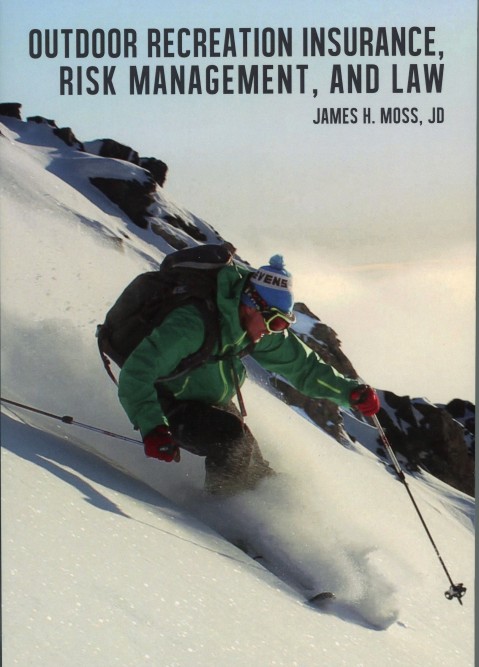
Outdoor Recreation Insurance, Risk Management, and Law
To see Jim’s complete bio go here and to see his CV you can find it here. To find out the purpose of this website go here.
If you are interested in having me write your release, download the form and return it to me.
Connect
If you like this let your friends know or post it on FB, Twitter, or LinkedIn
Facebook Page: Outdoor Recreation & Adventure Travel Law
LinkedIn https://www.linkedin.com/in/recreationlaw/
Threads https://www.threads.net/@recreation_law
X https://twitter.com/RecreationLaw
Email: Jim@Rec-Law.US
By Recreation Law Rec-law@recreation-law.com James H. Moss
@2013-2023 Summit Magic Publishing, LLC
G-YQ06K3L262
<rel=”author” link=” https://plus.google.com/u/0/b/112453188060350225356/” />
#RecreationLaw, #@RecreationLaw, #Cycling.Law #Fitness.Law, #Ski.Law, #Outside.Law, #Recreation.Law, #Recreation-Law.com, #Outdoor Law, #Recreation Law, #Outdoor Recreation Law, #Adventure Travel Law, #law, #Travel Law, #Jim Moss, #James H. Moss, #Attorney at Law, #Tourism, #Adventure Tourism, #Rec-Law, #Rec-Law Blog, #Recreation Law, #Recreation Law Blog, #Risk Management, #Human Powered, #Human Powered Recreation,# Cycling Law, #Bicycling Law, #Fitness Law, #Recreation-Law.com, #Backpacking, #Hiking, #Mountaineering, #Ice Climbing, #Rock Climbing, #Ropes Course, #Challenge Course, #Summer Camp, #Camps, #Youth Camps, #Skiing, #Ski Areas, #Negligence, #Snowboarding, #RecreationLaw, #@RecreationLaw, #Cycling.Law #Fitness.Law, #SkiLaw, #Outside.Law, #Recreation.Law, #RecreationLaw.com, #OutdoorLaw, #RecreationLaw, #OutdoorRecreationLaw, #AdventureTravelLaw, #Law, #TravelLaw, #JimMoss, #JamesHMoss, #AttorneyatLaw, #Tourism, #AdventureTourism, #RecLaw, #RecLawBlog, #RecreationLawBlog, #RiskManagement, #HumanPowered, #HumanPoweredRecreation,# CyclingLaw, #BicyclingLaw, #FitnessLaw, #RecreationLaw.com, #Backpacking, #Hiking, #Mountaineering, #IceClimbing, #RockClimbing, #RopesCourse, #ChallengeCourse, #SummerCamp, #Camps, #YouthCamps, #Skiing, #Ski Areas, #Negligence, #Snowboarding, sport and recreation laws, ski law, cycling law, Colorado law, law for recreation and sport managers, bicycling and the law, cycling and the law, ski helmet law, skiers code, skiing accidents, Recreation Lawyer, Ski Lawyer, Paddlesports Lawyer, Cycling Lawyer, Recreational Lawyer, Fitness Lawyer, Rec Lawyer, Challenge Course Lawyer, Ropes Course Lawyer, Zip Line Lawyer, Rock Climbing Lawyer, Adventure Travel Lawyer, Outside Lawyer, Recreation Lawyer, Ski Lawyer, Paddlesports Lawyer, Cycling Lawyer, #RecreationalLawyer, #FitnessLawyer, #RecLawyer, #ChallengeCourseLawyer, #RopesCourseLawyer, #ZipLineLawyer, #RockClimbingLawyer, #AdventureTravelLawyer, #OutsideLawyer, Lisa Courbat, Steven Courbat, Dahana Ranch, Inc., Hawaii, Deceptive Trade Practices, HI, stable, horseback riding, horse, stable, equestrian.
WordPress Tags: Hawaii,Courbat,Dahana,Ranch,LEXIS,Court,waiver,agency,plaintiffs,Upon,defendants,plaintiff,husband,wife,Courbats,statement,guest,defendant,horse,injury,negligence,Hawaiian,Deceptive,Trade,Practices,judgment,decision,Summary,arrival,payment,precondition,fact,agent,failure,requirement,negotiation,execution,omission,trier,jury,Waivers,fraud,clauses,agreement,statute,characteristics,regulation,exculpation,importance,member,transaction,strength,adhesion,provision,purchaser,protection,person,seller,agents,Recreational,definition,basis,settings,Contracts,obligations,liabilities,advantages,coercion,misconduct,receipt,paperwork,brochure,cost,expense,litigation,statutes,consumers,guests,Lisa,Steven,Claims,violation,Defenses,assumption,Leave,FaceBook,Twitter,LinkedIn,Recreation,Edit,Email,Google,RecreationLaw,Page,Outdoor,Adventure,Travel,Blog,Mobile,Site,James,Moss,Authorrank,author,Outside,Attorney,Tourism,Risk,Management,Human,Rock,Ropes,Course,Challenge,Summer,Camp,Camps,Youth,Areas,SkiLaw,OutdoorLaw,OutdoorRecreationLaw,AdventureTravelLaw,TravelLaw,JimMoss,JamesHMoss,AttorneyatLaw,AdventureTourism,RecLaw,RecLawBlog,RecreationLawBlog,RiskManagement,HumanPoweredRecreation,CyclingLaw,BicyclingLaw,FitnessLaw,RopesCourse,ChallengeCourse,SummerCamp,YouthCamps,Colorado,managers,helmet,accidents,Lawyer,Paddlesports,Line,RecreationalLawyer,FitnessLawyer,RecLawyer,ChallengeCourseLawyer,RopesCourseLawyer,ZipLineLawyer,RockClimbingLawyer,AdventureTravelLawyer,OutsideLawyer,third,horseback,months,whether,exculpatory
Courbat v. Dahana Ranch, Inc., 111 Haw. 254; 141 P.3d 427; 2006 Haw. LEXIS 386
Posted: April 1, 2013 Filed under: Assumption of the Risk, Equine Activities (Horses, Donkeys, Mules) & Animals, Hawaii, Legal Case, Release (pre-injury contract not to sue) | Tags: Deceptive Trade Practices, equestrian, Equine, Hawaii, HI, Horse, horseback riding, Release, Releases / Waivers, stable, Waiver Leave a commentTo Read an Analysis of this decision see
Hawaii Supreme Court agrees that finding out a release is required to be signed upon arrival at the activity and after the activity has been paid for may be a deceptive trade practice.
Hawaii’s deceptive trade practices act sends this case and release back to the trial court
Courbat v. Dahana Ranch, Inc., 111 Haw. 254; 141 P.3d 427; 2006 Haw. LEXIS 386
Lisa Courbat and Steven Courbat, Plaintiffs-Appellants, vs. Dahana Ranch, Inc., Defendant-Appellee, and John Does 1-10, Jane Does 1-10, Doe Associations 1-10, Doe Partnerships 1-10, Doe Corporations 1-10, Doe Entities 1-10, and Doe Governmental Units 1-5, Defendants.
NO. 25151
SUPREME COURT OF HAWAI’I
111 Haw. 254; 141 P.3d 427; 2006 Haw. LEXIS 386
July 10, 2006, Decided
SUBSEQUENT HISTORY: Amended by, Reconsideration granted by, in part, Reconsideration denied by, in part Courbat v. Dahana Ranch, 2006 Haw. LEXIS 417 (Haw., Aug. 3, 2006)
PRIOR HISTORY: [***1] APPEAL FROM THE THIRD CIRCUIT COURT. CIV. NO. 01-1-0049.
COUNSEL: On the briefs:
Andrew S. Iwashita, for the plaintiffs-appellants Lisa Courbat and Steven Courbat.
Zale T. Okazaki, of Ayabe, Chong, Nishimoto, Sia and Nakamura, for the defendant-appellee Dahana Ranch, Inc.
JUDGES: MOON, C.J., LEVINSON AND NAKAYAMA, JJ., AND DUFFY, J., DISSENTING, WITH WHOM ACOBA, J. JOINS.
OPINION BY: LEVINSON
OPINION
[**429] [*256] OPINION OF THE COURT BY LEVINSON, J.
The plaintiffs-appellants Lisa Courbat and Steven Courbat [hereinafter, collectively, “the Courbats”] appeal from the May 13, 2002 judgment of the circuit court of the third circuit, the Honorable Riki May Amano presiding, entered pursuant to the circuit [*257] [**430] court’s April 26, 2002 grant of summary judgment in favor of the defendant-appellee Dahana Ranch, Inc. (the Ranch).
On appeal, the Courbats contend that the circuit court erred: (1) in concluding that Hawai’i Revised Statutes (HRS) § 480-2 et seq. (Supp. 1998) 1 do not apply to the Ranch’s business practices of booking prepaid tours and subsequently requiring liability waivers upon check-in; (2) by applying the rebuttable presumption set forth in HRS § 663B-2(a) [***2] (Supp. 1994) 2 in finding that [*258] [**431] Lisa’s injuries were not due to the negligence of the tour operator; (3) in finding that the Courbats sufficiently read over the waiver before signing it; and (4) in concluding that the waiver was valid as to their negligence claims.
1 HRS ch. 480 provided in relevant part:
§ 480-2 . . . . (a) [HN1] Unfair methods of competition and unfair or deceptive acts or practices in the conduct of any trade or commerce are unlawful.
(b) In construing this section, the courts and the office of consumer protection shall give due consideration to the rules, regulations, and decisions of the Federal Trade Commission and the federal courts interpreting section 5(a)(1) of the Federal Trade Commission Act (15 U.S.C. 45(a)(1)), as from time to time amended.
. . . .
§ 480-3 . . . . [HN2] This chapter shall be construed in accordance with judicial interpretations of similar federal antitrust statutes . . . .
. . . .
§ 480-12 . . . . [HN3] Any contract or agreement in violation of this chapter is void and is not enforceable at law or in equity.
§ 480-13 . . . . (b) [HN4] Any consumer who is injured by any unfair or deceptive act or practice forbidden or declared unlawful by section 480-2:
(1) May sue for damages sustained by the consumer, and, if the judgment is for the plaintiff, the plaintiff shall be awarded a sum not less than $ 1,000 or threefold damages by the plaintiff sustained, whichever sum is the greater, and reasonable attorneys’ fees together with the costs of suit; . . . and
(2) May bring proceedings to enjoin the unlawful practices, and if the decree is for the plaintiff, the plaintiff shall be awarded reasonable attorneys’ fees together with the cost of suit.
Effective June 28, 2002, HRS § 480-2 was amended in respects immaterial to the present matter. See 2002 Haw. Sess. L. Act 229, §§ 2 and 6 at 916-18. Effective May 2, 2001, June 28, 2002, and June 7, 2005, HRS § 480-13 was amended in respects immaterial to the present matter. See 2005 Haw. Sess. L. Act 108, §§ 3 and 5 at 265-66, 267; 2002 Haw. Sess. L. Act 229, §§ 3 and 6 at 917-18; 2001 Haw. Sess. L. Act 79, §§ 1 and 5 at 127-28.
[***3]
2 HRS ch. 663B, entitled “Equine activities” and enacted in 1994, see 1994 Haw. Sess. L. Act 229, §§ 1 and 2 at 591-92, provides in relevant part:
§ 663B-1 . . . . [HN5] As used in this [chapter], unless the context otherwise requires:
“Engages in an equine activity” means riding . . . or being a passenger upon an equine . . . .
. . . .
“Equine activity” means:
. . . .
(5) Rides, trips, hunts, or other equine activities of any type however informal or impromptu that are sponsored by an equine activity sponsor; and
. . . .
“Equine activity sponsor” means an individual, group, club, partnership, or corporation . . . which sponsors, organizes, or provides the facilities for, an equine activity. . . .
“Equine professional” means a person engaged for compensation in instructing a participant or renting to a participant an equine for the purpose of riding, driving, or being a passenger upon the equine, or in renting equipment or tack to a participant.
“Inherent risks of equine activities” means those dangers or conditions which are an integral part of equine activities, including, but not limited to:
(1) The propensity of an equine to behave in ways that may result in injury, harm, or death to persons on or around them;
(2) The unpredictability of an equine’s reaction to such things as sounds, sudden movement, and unfamiliar objects, persons, or other animals;
(3) Certain hazards such as surface and subsurface conditions;
(4) Collisions with other equines or objects; and
(5) The potential of a participant to act in a negligent manner that may contribute to injury to the participant or others, such as failing to maintain control over the animal or not acting within the participant’s ability.
“Participant” means any person, whether amateur or professional, who engages in an equine activity, whether or not a fee is paid to participate in the equine activity.
§ 663B-2 . . . . (a) [HN6] In any civil action for injury, loss, damage, or death of a participant, there shall be a presumption that the injury, loss, damage, or death was not caused by the negligence of an equine activity sponsor, equine professional, or their employees or agents, if the injury, loss, damage, or death was caused solely by the inherent risk and unpredictable nature of the equine. An injured person or their legal representative may rebut the presumption of no negligence by a preponderance of the evidence.
(b) Nothing in this section shall prevent or limit the liability of an equine activity sponsor, an equine professional, or their employees or agents if the equine activity sponsor, equine professional, or person:
. . . .
(2) Provided the equine and . . . failed to reasonably supervise the equine activities and such failure is a proximate cause of the injury
. . . . (Some brackets in original and some omitted.)
[***4] For the reasons discussed infra in section III.A, we vacate the circuit court’s May 13, 2002 judgment and remand for further proceedings consistent with this opinion.
I. BACKGROUND
The present matter arises out of personal injuries sustained by Lisa on February 1, 1999, while she and Steven were on a horseback riding tour on the Dahana Ranch on the Big Island of Hawai’i. The Courbats had booked the tour and prepaid the fee several months earlier through Island Incentives, Inc., an internet-based tour organizer. When they checked in at the Ranch, the Courbats were presented with a document to review and to sign which laid out the rules for the horseback tour and included a waiver “releas[ing] and hold[ing] harmless . . . [the] Ranch . . . from . . . injury to myself . . . resulting from my . . . being a spectator or participant or while engaged in any such activity in the event[-]related facilities” and stating that the undersigned “acknowledge[s] that there are significant elements of risk in any adventure, sport, or activity associated with horses.” 3 According to admissions by the Courbats in subsequent depositions, Lisa read over the waiver and, having [***5] no questions regarding the rules and regulations it contained, signed it before passing it to her husband to sign. Steven evidently did not read it, but recognized that it was “some kind of release of some sort” and signed it. In fact, no guest of the Ranch had ever refused to sign a waiver. Steven was familiar with the concept of such waivers, having participated with his wife in a snorkeling activity earlier during the vacation, at which time they both signed similar forms.
3 The rules and waiver stated in pertinent part:
In order for us to keep our ride from being a “Nose To Tail Trail Ride[,”] there are certain rules which must be followed for your safety and the horses’ mental well being. FAILURE TO FOLLOW THESE RULES WILL RESULT IN FORFEITURE OF YOUR RIDE WITH NO REFUND.
RULES AND REGULATIONS
FOLLOW RIDING INSTRUCTIONS & DIRECTIONS THROUGHOUT THE RIDE
. . . .
. PLEASE DO NOT RIDE AHEAD OF YOUR GUIDE UNLESS TOLD TO DO SO
. . . .
. DO NOT FOLLOW ONE ANOTHER
. . . .
WAIVER
I/We, the undersigned, hereby release and hold harmless the land owners, managers, operators (William P. Kalawaianui, Daniel H. Nakoa, Dahana Ranch and Nakoa Ranch), [t]he State of Hawai[]i and the Department of Hawaiian Home Lands and all other persons directly related to those listed above for the event listed herein[,] their successors, assigns and affiliates from loss or damage to property or injury to myself or any person . . . resulting from my . . . being a spectator or participant or while engaged in any such activity in the event[-] related facilities. I/We acknowledge that there are significant elements of risk in any adventure, sport or activity associated with horses.
I/WE HAVE READ AND UNDERSTOOD THE FOREGOING RULES, REGULATIONS AND WAIVER.
(Emphasis in original.)
[***6] The Ranch’s guide, Daniel Nakoa, briefed the Courbats on how to handle a horse and general rules of the trail, including the importance of not riding single-file or allowing the horses to bunch up end to end. Out on the ride, Lisa was injured when she rode up behind Nakoa’s horse while Nakoa was speaking with another guest who had approached Nakoa with a question. According to later statements by both Nakoa and Lisa, Lisa approached Nakoa’s horse from the rear while the three horses were in motion, and, when her horse neared Nakoa’s horse, Nakoa’s horse struck out at her horse, hitting Lisa in the left shin. Lisa described the incident in a deposition taken on November 3, 2001:
Q: At what point did you believe that you needed to pull the reins back as you were approaching the guide . . . ? . . .
[*259] [**432] [Lisa]: When I felt that the horse[] was getting too close to the horses above me.
Q: So it appeared to you that the nose end of the horse was getting too close to the butt end of the horse in front?
[Lisa]: To the horse in general. We were coming in. I was just trying to keep a certain space between myself and the horse.
Q: [T]hose two horses, the guide’s [***7] horse and the guest’s horse, they were to the left of your horse, is that correct, to the front left of you?
[Lisa]: Yes.
Q: You recall which hind leg of the horse kicked you? Was it the right or the left?
[Lisa]: It would be the right one.
Q: And that was a horse which was ridden by the guide or the guest?
[Lisa]: The guide.
Q: Just before the horse in front of you kicked you, were all of the horses still in motion? When I say “all the horses,” yours, the guide’s, and the guest that was riding parallel to the guide?
[Lisa]: Just before?
Q: Yes.
[Lisa]: Yes.
Q: Was there any conversation between you and the guide or the guest just before this kicking incident occurred?
[Lisa]: No.
Q: At the time this kicking incident occurred, w[ere] the guide and the guest still talking to each other?
[Lisa]: Yes.
Nakoa described the same incident in a January 9, 2002 deposition:
[Nakoa]: . . . Everybody was facing the gate, the second gate. . . . And I was in the back. And because I lots of times don’t want to be a part of the ride, I started riding to the right. And then a man came to talk to me and [***8] ask me about the horse.
. . . .
Q: On which side of your horse was he at the time?
[Nakoa]: He was on the left side of me.
Q: And were you still moving or were you stopped?
[Nakoa]: We were walking.
. . . .
Q: . . .[H]ad you passed Lisa along the way? . . . .
[Nakoa]: Because of the angle, she was off to my left.
Q: Still in front of you?
[Nakoa]: No. About the same.
. . . .
Q: And when is the next time you notice[] Lisa’s horse before the injury takes place?
. . . .
[Nakoa]: She was still on the left side of me.
Q: . . . [A]bout how far away do you estimate she was from your horse?
[Nakoa]: You know, 30 feet maybe. . . .
Q: And from that point on, . . . were you able to continually observe Lisa riding her horse until the time the injury occurred?
[Nakoa]: Yes. The man was on my left and I was talking to him.
. . . .
Q: . . . [W]hile [the guest is] asking you this question and you can see [Lisa], what is her horse doing as it’s approaching your horse?
[Nakoa]: No, I didn’t see her approaching my horse. That’s what I’m trying to tell you. She was on the [***9] left side of this man and me and we’re all going in that direction (indicating). She was trotting, and I was walking with this man. And I saw her. And then this man asked me something. And the next thing I knew, she was right in back of my horse telling me that my horse kicked her.
Nakoa later acknowledged in the deposition that, if he or his horse had been aware that Lisa’s horse was approaching from behind, his horse would not have been surprised and would not have struck out at her horse. As a result of the impact, Lisa suffered severe pain and swelling, but no broken bones, and [*260] [**433] since the incident has complained of ongoing pain and injury to her leg.
The Courbats filed suit on January 31, 2001, asserting claims of negligence and gross negligence that resulted in physical injury to Lisa and loss of consortium injuries to Steven. On November 21, 2001, they filed a first amended complaint, adding a claim of unfair and deceptive trade practices regarding the waiver they had signed the day of the ride.
On January 16, 2002, the Ranch filed a motion for summary judgment on the grounds: (1) that the Courbats had assumed the risk of the activity; (2) that the Courbats [***10] had waived their rights to sue the Ranch for negligence; and (3) that the Ranch had not committed any acts that brought it under the purview of HRS §§ 480-2 and 480-13, see supra note 1.
The Courbats filed a memorandum in opposition to the Ranch’s motion and a motion for partial summary judgment, urging the circuit court to rule, inter alia: (1) that the Ranch owed Lisa a duty to protect her from injury by Nakoa’s horse; and (2) that the rebuttable presumption of no negligence on a defendant’s part set forth in HRS § 663B-2, see supra note 2, was inapplicable.
The circuit court conducted a hearing on both motions on February 13, 2002 and, on April 26, 2002, entered an order granting the Ranch’s motion and denying the Courbats’ motion. On May 13, 2002, the circuit court entered a final judgment in favor of the Ranch and against the Courbats. On August 8, 2002, the Courbats filed a timely notice of appeal. 4
4 On May 10, 2002, the Ranch filed a notice of taxation of costs which, pursuant to Hawai’i Rules of Appellate Procedure (HRAP) Rule 4(a)(3), tolled the time for filing an appeal. An order as to taxation of costs was never entered, and so, pursuant to HRAP Rule 4(a)(3), the request was deemed denied 90 days later, on August 8, 2002. The Courbats’ appeal, filed prematurely on June 7, 2002, was therefore timely filed as of August 8, 2002, pursuant to HRAP Rule 4(a)(2) and (3).
[***11] II. STANDARDS OF REVIEW
A. Summary Judgment
We [HN7] review the circuit court’s grant or denial of summary judgment de novo . . . .
[S]ummary judgment is appropriate if the pleadings, depositions, answers to interrogatories, and admissions on file, together with the affidavits, if any, show that there is no genuine issue as to any material fact and that the moving party is entitled to judgment as a matter of law. A fact is material if proof of that fact would have the effect of establishing or refuting one of the essential elements of a cause of action or defense asserted by the parties. The evidence must be viewed in the light most favorable to the non-moving party. In other words, we must view all of the evidence and the inferences drawn therefrom in the light most favorable to the party opposing the motion.
[Hawai’i Cmty. Fed. Credit Union v. Keka, 94 Hawai’i 213, 221, 11 P.3d 1, 9 (2000)] (citations and internal quotation marks omitted).
Querubin v. Thronas, 107 Hawai’i 48, 56, 109 P.3d 689, 697 (2005) (quoting Durette v. Aloha Plastic Recycling, Inc., 105 Hawai’i 490, 501, 100 P.3d 60, 71 (2004)) [***12] (internal citation omitted) (some brackets in original).
B. Interpretation Of Statutes
[HN8] The interpretation of a statute is a question of law reviewable de novo. State v. Arceo, 84 Hawai’i 1, 10, 928 P.2d 843, 852 (1996).
Furthermore, our statutory construction is guided by established rules:
[HN9] When construing a statute, our foremost obligation is to ascertain and give effect to the intention of the legislature, which is to be obtained primarily from the language contained in the statute itself. And we must read statutory language in the context of the entire statute and construe it in a manner consistent with its purpose.
When there is doubt, doubleness of meaning, or indistinctiveness or uncertainty [*261] [**434] of an expression used in a statute, an ambiguity exists. . . .
In construing an ambiguous statute, “[t]he meaning of the ambiguous words may be sought by examining the context, with which the ambiguous words, phrases, and sentences may be compared, in order to ascertain their true meaning.” HRS § 1-15(1) [(1993)]. Moreover, the courts may resort to extrinsic aids in determining legislative intent. [***13] One avenue is the use of legislative history as an interpretive tool.
Gray [v. Admin. Dir. of the Court], 84 Hawai’i [138,] 148, 931 P.2d [580,] 590 [(1997)] (footnote omitted).
State v. Koch, 107 Hawai’i 215, 220, 112 P.3d 69, 74 (2005) (quoting State v. Kaua, 102 Hawai’i 1, 7-8, 72 P.3d 473, 479-480 (2003)). [HN10] Absent an absurd or unjust result, see State v. Haugen, 104 Hawai’i 71, 77, 85 P.3d 178, 184 (2004), this court is bound to give effect to the plain meaning of unambiguous statutory language; we may only resort to the use of legislative history when interpreting an ambiguous statute. State v. Valdivia, 95 Hawai’i 465, 472, 24 P.3d 661, 668 (2001).
III. DISCUSSION
A. Inasmuch As The Presence Or Absence Of An Unfair Or Deceptive Trade Practice Is For The Trier Of Fact To Determine, The Circuit Court Erroneously Granted Summary Judgment In Favor Of The Ranch And Against The Courbats.
The Courbats do not dispute that they both signed the Ranch’s waiver form, see supra note 3, prior to their ride. Nor do they dispute that waivers are an accepted [***14] method by which businesses may limit their liability. Rather, they assert that the Ranch’s practice of booking ride reservations through an activity company, receiving payment prior to the arrival of the guest, and then, upon the guest’s arrival at the Ranch, requiring the guest to sign a liability waiver as a precondition to horseback riding is an unfair and deceptive business practice to which the remedies of HRS ch. 480 apply. The Courbats maintain that the practice of withholding the waiver had “the capacity or tendency to mislead” customers, thereby satisfying this court’s test for a deceptive trade practice as articulated in State ex rel. Bronster v. United States Steel Corp., 82 Hawai’i 32, 50, 919 P.2d 294, 312 (1996).
The Intermediate Court of Appeals held in Beerman v. Toro, 1 Haw. App. 111, 118, 615 P.2d 749, 754-55 (1980), that [HN11] the remedies afforded by HRS ch. 480 are not available for personal injury claims. See also Blowers v. Eli Lilly & Co., 100 F. Supp. 2d 1265, 1269-70 (D. Haw. 2000). The Courbats, however, assert that they are not invoking HRS ch. 480 for the purpose of establishing personal injury damages, [***15] but rather because the lack of notice as to the waiver requirement injured them economically, by way of the $ 116 cost of the tour, giving rise to a valid claim under HRS § 480-13, see supra note 1. As a deceptive trade practice, the Courbats maintain, the waiver is void under HRS § 480-12, see supra note 1.
1. The elements of a deceptive trade practice claim for recision of a contract
[HN12] To render the waiver void, the Courbats must establish that it is an unseverable part of a “contract or agreement in violation of [HRS ch. 480].” See HRS § 480-12, supra note 1. Furthermore, any “unfair or deceptive act[] or practice[] in the conduct of any trade or commerce” violates HRS § 480-2.
[HN13] “Deceptive” acts or practices violate HRS § 480-2, but HRS ch. 480 contains no statutory definition of “deceptive.” This court has described a deceptive practice as having “the capacity or tendency to mislead or deceive,” United States Steel Corp., 82 Hawaii at 50, 919 P.2d at 312, 313, but, beyond noting that federal [***16] cases have also defined deception “as an act causing, as a natural and probable result, a person to do that which he [or she] would not do otherwise,” Keka, 94 Hawai’i at 228, 11 P.3d at 16 (brackets in original) (quoting United States Steel Corp., 82 Hawaii at 51, 919 P.2d at 313 (citing Bockenstette v. Federal Trade Comm’n, 134 F.2d 369, 36 F.T.C. 1106 (10th Cir. 1943))), we have not articulated a more refined test.
[HN14] HRS § 480-3, see supra note 1, provides that HRS ch. 480 “shall be construed in accordance with judicial interpretations of similar federal antitrust statutes,” [*262] [**435] and HRS § 480-2(b) provides that “[i]n construing this section, the courts . . . shall give due consideration to the . . . decisions of . . . the federal courts interpreting . . . 15 U.S.C. [§ ] 45(a)(1)[(2000)],” 5 in recognition of the fact that HRS § 480-2 is “a virtual counterpart.” 6 Keka, 94 Hawai’i at 228, 11 P.3d at 16. The Federal Trade Commission (FTC), in In re Cliffdale Assocs., Inc., 103 F.T.C. 110, Trade Cas. (CCH) P22137 (1984), developed [***17] a three-part analytical test for “deception,” 7 which the federal courts have thereafter extensively adopted, see FTC v. Verity Int’l, Ltd., 443 F.3d 48, 63 (2d. Cir. 2006); FTC v. Tashman, 318 F.3d 1273, 1277 (11th Cir. 2003); FTC v. Pantron I Corp., 33 F.3d 1088, 1095 (9th Cir. 1994); FTC v. World Travel Vacation Brokers, Inc., 861 F.2d 1020, 1029 (7th Cir. 1988). Under the Cliffdale Assocs. test, a deceptive act or practice is “(1) a representation, omission, or practice[] that (2) is likely to mislead consumers acting reasonably under the circumstances [where] (3)[] the representation, omission, or practice is material.” Verity Int’l, 443 F.3d at 63. A representation, omission, or practice is considered “material” if it involves “‘information that is important to consumers and, hence, likely to affect their choice of, or conduct regarding, a product.'” Novartis Corp. v. FTC, 343 U.S. App. D.C. 111, 223 F.3d 783, 786 (D.C. Cir. 2000) (quoting Cliffdale Assocs., 103 F.T.C. at 165); see also Kraft, Inc. v. FTC, 970 F.2d 311, 322 (7th Cir. 1992); [***18] FTC v. Crescent Publ’g Group, Inc., 129 F. Supp. 2d 311, 321 (S.D.N.Y. 2001); FTC v. Five-Star Auto Club, Inc., 97 F. Supp. 2d 502, 529 (S.D.N.Y. 2000); FTC v. Sabal, 32 F. Supp. 2d 1004, 1007 (N.D. Ill. 1998). Moreover, the Cliffdale Assocs. test is an objective one, turning on whether the act or omission “is likely to mislead consumers,” Verity Int’l, 443 F.3d at 63, as to information “important to consumers,” Novartis Corp., 223 F.3d at 786, in making a decision regarding the product or service. 8
5 15 U.S.C. § 45(a)(1) provides that ” [HN15] [u]nfair methods of competition in or affecting commerce, and unfair or deceptive acts or practices in or affecting commerce, are hereby declared unlawful.”
6 Hawai’i courts have long recognized, therefore, that federal interpretations of 15 U.S.C. § 45(a)(1) guide us in construing HRS § 480-2 “in light of conditions in Hawai’i.” Ai v. Frank Huff Agency, 61 Haw. 607, 613 n.11, 607 P.2d 1304, 1309 n.11 (1980); see also Island Tobacco Co. v. R.J. Reynolds Tobacco Co., 63 Haw. 289, 299, 627 P.2d 260, 268 (1981) overruled on other grounds by Robert’s Hawaii School Bus, Inc. v. Laupahoehoe Transp. Co., Inc., 91 Hawai’i 224, 982 P.2d 853 (1999); Rosa v. Johnston, 3 Haw. App. 420, 426, 651 P.2d 1228, 1233-34 (1982).
[***19]
7 See Cliffdale Assocs., 103 F.T.C. at 164-65 (characterizing the new standard as a refinement of the “tendency or capacity to deceive” test used by the FTC to that point and pronouncing the old test “circular and therefore inadequate to provide guidance”).
8 [HN16] While federal courts have not expressly categorized the test as objective, the FTC, in Cliffdale Assocs., commented that “[t]he requirement that an act or practice be considered from the perspective of a consumer acting reasonably in the circumstances is not new. . . . [The FTC] has long recognized that the law should not be applied in such a way as to find that honest representations are deceptive simply because they are misunderstood by a few. . . . [A]n advertisement would not be considered deceptive merely because it could be unreasonably misunderstood by an insignificant and unrepresentative segment of the class of persons [to] whom the representation is addressed.” 103 F.T.C. at 165 (footnotes and internal quotation signals omitted).
[HN17] Given our obligation under HRS §§ 480-3 [***20] and 480-2(b) to apply federal authority as a guide in interpreting HRS ch. 480, we hereby adopt the three-prong Cliffdale Assocs. test in determining when a trade practice is deceptive. 9
9 Other states have already adopted the Cliffdale Assocs. test. See, e.g., Luskin’s, Inc. v. Consumer Prot. Div., 353 Md. 335, 726 A.2d 702, 713 (Md. 1999); Carter v. Gugliuzzi, 168 Vt. 48, 716 A.2d 17, 23 (Vt. 1998). Our adoption of the Cliffdale Assocs. test does not change the existing rule that, in order to establish a violation of HRS § 480-2, the plaintiff need not establish an intent to deceive on the part of the defendant, World Travel Vacation Brokers, 861 F.2d at 1029; Five-Star Auto Club, 97 F. Supp. at 526, nor any actual deceit, United States Steel Corp., 82 Hawai’i at 51, 919 P.2d at 313.
2. Under The Cliffdale Assocs. Objective Consumer Test, The Determination [***21] Of A Deceptive Omission Is One For The Trier Of Fact, Thereby Rendering Summary Judgment Inappropriate.
The Courbats do not allege that the waiver itself is deceptive; rather, they urge [*263] [**436] that the deceptive practice at issue was the booking agent’s failure to inform them of the waiver requirement during the negotiation and execution of the underlying contract. 10 Nevertheless, if any deceptive omission occurred with respect to the negotiation and execution of the original contract, the operation of HRS § 480-12, see supra note 1, would render both the original contract and the waiver, signed afterward, void. 11 Thus, the waiver’s survival depends on the trier of fact’s determination as to whether the omission of the waiver requirement during Island Incentives, Inc.’s booking process was deceptive and therefore in violation of HRS § 480-2.
10 It is undisputed that Island Incentives, Inc. was acting as the Ranch’s agent in this matter, and “we note that [HN18] an owner is responsible for the representations of his agent made within the scope of his agent’s selling authority.” Au v. Au, 63 Haw. 210, 215, 626 P.2d 173, 178 (1981) (citing Negyessy v. Strong, 136 Vt. 193, 388 A.2d 383, 385 (Vt. 1978)).
[***22]
11 If the waiver were severable from the underlying contract, it could survive despite a determination that the original contract was void. See Ai v. Frank Huff Agency, 61 Haw. 607, 619, 607 P.2d 1304, 1312 (1980) [HN19] (“The wording on HRS § 480-12 might . . . appear to suggest that any contract containing an illegal provision . . . should be held unenforceable in its entirety. . . . [U]nder ordinary contract law, however, . . . a partially legal contract may be upheld if the illegal portion is severable from the part which is legal.”). However, “the general rule is that severance of an illegal provision is warranted and the lawful portion . . . enforceable when the illegal provision is not central to the parties’ agreement.” Beneficial Hawaii, Inc. v. Kida, 96 Hawai’i 289, 311, 30 P.3d 895, 917 (2001). The underlying contract at issue is the sum of the parties’ agreement; the waiver would be considered an addendum to it. Therefore, the waiver is not severable and must stand or fall with the underlying contract.
[HN20] The application [***23] of an objective “reasonable person” standard, of which the Cliffdale Assocs. test is an example, is ordinarily for the trier of fact, rendering summary judgment “often inappropriate.” Amfac, Inc. v. Waikiki Beachcomber Inv. Co., 74 Haw. 85, 107, 839 P.2d 10, 24 (1992), cited in Casumpang v. ILWU Local 142, 108 Hawai’i 411, 425, 121 P.3d 391, 405 (2005); Arquero v. Hilton Hawaiian Village LLC, 104 Hawai’i 423, 433, 91 P.3d 505, 515 (2004). “Inasmuch as the term ‘reasonableness’ is subject to differing interpretations . . ., it is inherently ambiguous. Where ambiguity exists, summary judgment is usually inappropriate because ‘the determination of someone’s state of mind usually entails the drawing of factual inferences as to which reasonable [minds] might differ.'” Amfac, Inc., 74 Haw. at 107, 839 P.2d at 24 (quoting Bishop Trust Co. v. Cent. Union Church, 3 Haw. App. 624, 628-29, 656 P.2d 1353, 1356 (1983)). Reasonableness can only constitute a question of law suitable for summary judgment “‘when the facts are undisputed and not fairly susceptible of divergent inferences’ because ‘[w]here, upon [***24] all the evidence, but one inference may reasonably be drawn, there is no issue for the jury.'” Id. at 108, 839 P.2d at 24 (quoting Broad & Branford Place Corp. v. J.J. Hockenjos Co., 132 N.J.L. 229, 39 A.2d 80, 82 (N.J. 1944) (brackets in original)). “‘[A] question of interpretation is not left to the trier of fact where evidence is so clear that no reasonable person would determine the issue in any way but one.'” Id. (quoting Restatement (Second) of Contracts § 212 cmt. e (1981) (brackets in original)). See also Restatement (Second) of Contracts § 212(2) (1981 and Supp. 2005) (“A question of interpretation of an integrated agreement is to be determined by the trier of fact if it depends on the credibility of extrinsic evidence or on a choice among reasonable inferences to be drawn from extrinsic evidence .”) (Emphasis added). There is no genuine issue of material fact regarding the failure to disclose the waiver requirement during negotiation of the original tour contract, but we cannot say that, applying the Cliffdale Assocs. test, reasonable minds could draw [***25] only one inference as to the materiality of that omission to reasonable consumers contemplating the transaction. Therefore, the question whether a waiver requirement would be materially important in booking a horseback tour remains one for the trier of fact.
Because a genuine issue of material fact, resolvable only by the trier of fact, remains in dispute, the grant of summary judgment on the HRS ch. 480 claim was erroneous. We therefore vacate the circuit court’s May [*264] [**437] 13, 2002 judgment and remand for further proceedings consistent with this opinion.
B. The Consequences, On Remand, Of The Determination By The Trier Of Fact As To Whether Nondisclosure Of The Waiver Requirement Was A Deceptive Trade Practice
If, on remand, the trier of fact determines that the nondisclosure of the waiver was a deceptive trade practice, rendering the waiver void, then the Courbats’ negligence claims proceed free of the waiver defense. Nevertheless, for the reasons set forth below and for purposes of any subsequent trial on the Courbats’ negligence claims, we hold that HRS ch. 663B, entitled “Equine activities,” see supra note 2, setting forth a rebuttable presumption of non-negligence [***26] on the part of the tour operator, does not apply to the present matter.
Conversely, if, on remand, the trier of fact determines that the nondisclosure of the waiver was not deceptive, then the Courbats validly waived their negligence claims.
1. The Statutory Presumption Of Non-Negligence For Equine-Related Injuries Set Forth In HRS Ch. 663B Does Not Apply To The Courbats’ Claims.
If the trier of fact determines that the failure to inform the Courbats of the waiver requirement was a deceptive trade practice, then the negligence waiver, along with the underlying contract, will be rendered void, and the Courbats’ negligence claims will be revived. In order to provide guidance on remand, therefore, we hold that it was error for the circuit court in the present matter to apply HRS § 663B-2(a), see supra note 2, which establishes a rebuttable presumption in favor of horseback tour operators that any injury “caused solely by the inherent risk and unpredictable nature of the equine” is not due to the negligence of the tour operator.
HRS § 663B-2(b) provides in relevant part that “[n]othing in [***27] this section shall prevent or limit the liability of an equine activity sponsor . . . if the equine activity sponsor, equine professional, or person: . . . (2) [p]rovided the equine and . . . failed to reasonably supervise the equine activities and such failure is a proximate cause of the injury.” The substance of Lisa’s claim revolves around her assertion that Nakoa failed to monitor her approach toward his horse while he was engaged in conversation with another guest; in other words, Lisa claims that Nakoa “failed to reasonably supervise the equine activities” that were the “proximate cause of [her] injury.” Therefore, we hold that, if Lisa is correct, the presumption of non-negligence set forth in HRS § 663B-2(a) would not apply to the Courbats’ claims.
2. If The Trier Of Fact Determines That The Nondisclosure Of The Waiver Was Not A Deceptive Trade Practice, Then The Courbats Validly Waived Their Negligence Claims.
a. The waiver was validly executed.
Citing Krohnert v. Yacht Sys. of Hawai’i, 4 Haw. App. 190, 201, 664 P.2d 738, 745 (1983), the Courbats assert that, because they manifested no clear [***28] and unequivocal acceptance of the terms of the waiver, the waiver cannot be enforced against them. However, pursuant to the following analysis, we hold that, if the trier of fact finds that the failure to inform the Courbats of the waiver requirement was not a deceptive trade practice, then the waiver, in all other respects, was valid.
[HN21] “The general rule of contract law is that one who assents to a contract is bound by it and cannot complain that he has not read it or did not know what it contained.” Leong v. Kaiser Found. Hosp., 71 Haw. 240, 245, 788 P.2d 164, 168 (1990); see also Joaquin v. Joaquin, 5 Haw. App. 435, 443, 698 P.2d 298, 304 (1985); In re Chung, 43 B.R. 368, 369 (Bankr. D. Haw. 1984); In re Kealoha, 2 B.R. 201, 209 (Bankr. D. Haw. 1980). Furthermore, “‘[p]arties are permitted to make exculpatory contracts so long as they are knowingly and willingly made and free from fraud. No public policy exists to prevent such contracts.'” Fujimoto v. Au, 95 Hawai’i 116, 156, 19 P.3d 699, 739 (2001) (some brackets omitted) (quoting Gen. Bargain Ctr. v. Am. Alarm Co., Inc., 430 N.E.2d 407, 411-12 [*265] [**438] (Ind. Ct. App. 1982)). [***29] “[S]uch bargains are not favored, however, and, if possible, bargains are construed not to confer this immunity.” Fujimoto, 95 Hawai’i at 155, 19 P.3d at 738. Therefore, as a general rule, “‘[e]xculpatory clauses will be held void if the agreement is (1) violative of a statute, (2) contrary to a substantial public interest, or (3) gained through inequality of bargaining power.'” 95 Hawaii at 156, 19 P.3d at 739 (quoting Andrews v. Fitzgerald, 823 F. Supp. 356, 378 (M.D.N.C. 1993)).
The Courbats have not alleged that any of the terms of the waiver, or the use of a waiver by the Ranch, violates a statute; on the contrary, the Courbats concede that waivers are an acceptable method by which tour operators may seek to limit their liability in response to rising insurance and litigation costs.
In Krohnert, the ICA defined the public interest
as involving some or all of the following characteristics:
[1] It concerns a business of a type generally thought suitable for public regulation.
[2] The party seeking exculpation is engaged in performing a service of great importance to the public, which is often [***30] a matter of practical necessity for some members of the public.
[3] The party holds himself out as willing to perform this service for any member of the public who seeks it, or at least for any member coming within certain established standards.
[4] As a result of the essential nature of the service, in the economic setting of the transaction, the party invoking exculpation possesses a decisive advantage of bargaining strength against any member of the public who seeks his services.
[5] In exercising a superior bargaining power the party confronts the public with a standardized adhesion contract of exculpation and makes no provision whereby a purchaser may pay additional reasonable fees and obtain protection against negligence.
[6] Finally, as a result of the transaction, the person or property of the purchaser is placed under the control of the seller of the service, subject to the risk of carelessness by the seller or his agents.
4 Haw. App at 199, 664 P.2d at 744 (finding under this test that the exculpatory clause contained in a contract for marine surveying was permissible) (brackets omitted) (quoting Lynch v. Santa Fe Nat’l Bank, 97 N.M. 554, 627 P.2d 1247, 1251-52 (N.M. Ct. App. 1981) [***31] (holding that services of escrow agents in New Mexico were not in the nature of a public service so as to render an exculpatory clause unenforceable) (quoting Tunkl v. Regents of Univ. of Cal., 60 Cal. 2d 92, 383 P.2d 441, 445-46, 32 Cal. Rptr. 33 (Cal. Ct. App. 1963) (declaring invalid as against the public interest an exculpatory clause for future negligence required for admission to a public research hospital))); see also 15 Corbin on Contracts § 85.18 (2003 & Supp. 2005) (summarizing a similar test commonly used by courts and noting that courts tend to enforce exculpatory clauses for recreational activities under the test). 12 Entities that have been found to fall under the public interest doctrine, rendering exculpatory clauses void, include common carriers, see Adams Express Co. v. Croninger, 226 U.S. 491, 509, 33 S. Ct. 148, 57 L. Ed. 314 (1913); Shippers Nat’l Freight Claim Council, Inc. v. Interstate Commerce Comm’n, 712 F.2d 740, 746 (2d Cir. 1983); Clairol, Inc. v. Moore-McCormack Lines, Inc., 79 A.D.2d 297, 309-10, 436 N.Y.S.2d 279 (N.Y. App. Div. 1981), and hospitals, see Tunkl, 383 P.2d at 447; Smith v. Hosp. Auth. of Walker, Dade & Catoosa Counties, 160 Ga. App. 387, 287 S.E.2d 99, [*266] [**439] 101 (Ga. Ct. App. 1981); [***32] Belshaw v. Feinstein, 258 Cal. App. 2d 711, 65 Cal. Rptr. 788, 798 (Cal. Ct. App. 1968).
12 Courts have upheld exculpatory clauses relating to car racing, see Cadek v. Great Lakes Dragaway, Inc., 843 F. Supp. 420 (N.D. Ill. 1994); Barbazza v. Int’l Motor Sports Ass’n, 245 Ga. App. 790, 538 S.E.2d 859 (Ga. Ct. App. 2000), snow skiing, see Chauvlier v. Booth Creek Ski Holdings, Inc., 109 Wn. App. 334, 35 P.3d 383 (Wash. Ct. App. 2001), skydiving, see Scrivener v. Sky’s The Limit, Inc., 68 F. Supp. 2d 277 (S.D.N.Y. 1999), and horseback riding, see Street v. Darwin Ranch, Inc., 75 F. Supp. 2d 1296, 1299 (D. Wyo. 1999) (finding that “recreational trail rides are neither of great importance to the public, nor a practical necessity to any member of the public”).
Applying these factors to the present matter, we determine that the public interest here is not at stake: recreational activity tours are not generally [***33] suitable to public regulation, in the manner of common carriers, nor of great importance to the public, nor of an essential nature, in the manner of medical care, such that the provider’s bargaining power is greatly enhanced over any member of the public seeking their services.
Finally, as the United States District Court for the District of Hawai’i noted, in considering negligence waivers in the context of recreational activity, while such waivers may be contracts of adhesion, in that they are presented on a “take-it-or-leave-it” basis, they are not unconscionable, but “are of a sort commonly used in recreational settings” and “are generally held to be valid.” Wheelock v. Sport Kites, Inc., 839 F. Supp. 730, 736 (D. Haw. 1993). [HN22] “[C]ontracts [of adhesion] are ‘unenforceable if two conditions are present: (1) the contract is the result of coercive bargaining between parties of unequal bargaining strength; and (2) the contract unfairly limits the obligations and liabilities of, or otherwise unfairly advantages, the stronger party.'” Fujimoto, 95 Hawai’i at 156, 19 P.3d at 739 (quoting Brown v. KFC Nat’l Mgmt. Co., 82 Hawai’i 226, 247, 921 P.2d 146, 167 (1996)); [***34] see also Wheelock, 839 F. Supp. at 735 (“[A]dhesion contracts are fully enforceable provided that they are not unconscionable and do not fall outside the reasonable expectations of the weaker or adhering party.”). Unequal bargaining strength “involves the absence of alternatives; specifically whether the plaintiffs were ‘free to use or not to use’ [the] defendant’s . . . services.” Krohnert, 4 Haw. App at 199, 664 P.2d at 744 (quoting Lynch, 627 P.2d at 1250). These conditions are generally not germane in the recreational waiver context. In the context of a recreational sport or adventure activity, freely undertaken for pleasure, “coercive bargaining” and “an absence of alternatives” are terms that hold little meaning.
In the present matter, Lisa read through and responded to queries contained in the waiver form and had no further questions or concerns regarding the contents before she signed it. Steven conceded that he routinely relied on his wife to review documents before signing them and that he knew he was waiving rights when he signed the form. The record demonstrates that the Courbats were given adequate time and opportunity [***35] to fully review the waiver presented to them before they signed it and that both knew that by signing it they were waiving legal rights in return for being allowed to participate in the ride. In short, there is no evidence of coercion. By signing the waiver form, they demonstrated that they agreed to its terms, and by reading it, or, in Steven’s case, in relying on the advice of his wife, demonstrated knowledge of its contents. Moreover, they had signed similar waivers that week for another activity and were familiar with what they represented. Accordingly, we hold that, if the trier of fact determines that the nondisclosure of the waiver was not a deceptive trade practice, the Courbats’ waiver was valid.
b. The scope of the Courbats’ waiver does not extend beyond negligence claims.
The language of the waiver, see supra note 3, releases the Ranch and its agents and holds it harmless “from loss or damage to property or injury to [the undersigned] . . . resulting from [the undersigned] . . . being a spectator or participant or while engaged in any such activity in the event[-]related facilities.” However, because [HN23] “‘[e]xculpatory provisions are not [***36] favored by the law and are strictly construed against parties relying on them,'” the effect of the broad exculpatory language contained in the Ranch’s waiver should be construed to limit the waiver’s scope to simple negligence claims; it does not protect the Ranch against its own gross negligence or willful misconduct. Fujimoto, 95 Hawai’i at 156, 19 P.3d at 739 (quoting Andrews, 823 F. Supp. at 378); see also Wheelock, 839 F. Supp. at 736 (interpreting the reasoning in Krohnert to conclude that to allow an exculpatory clause to extend to gross negligence would violate [*267] [**440] the public interest, rendering the clause void).
IV. CONCLUSION
In light of the foregoing analysis, we vacate the circuit court’s May 13, 2002 judgment in favor of the Ranch and against the Courbats and remand for further proceedings consistent with this opinion.
DISSENT BY: DUFFY
DISSENT
DISSENTING OPINION BY DUFFY, J., IN WHICH ACOBA, J., JOINS
I respectfully dissent. In my view, no reasonable person would find that the recreational tour operator’s failure to disclose the waiver requirement of Dahana Ranch, Inc. during negotiation of the horseback riding [***37] activity was a deceptive trade practice under HRS § 480-2. The Courbats concede that waivers are an acceptable method by which recreational tour operators and sponsors may seek to limit their liability in response to rising insurance and litigation costs, and admit that they were required to sign such a waiver before participating in a snorkeling activity earlier during the same Hawai’i vacation. Applying the Cliffdale Assoc. test to the undisputed facts in this case involving the inherently dangerous activity of horseback riding, I respectfully submit that the tour operator’s failure to disclose the waiver requirement of Dahana Ranch, Inc. during negotiation of the horseback riding activity with the Courbats was not a material omission implicating a deceptive trade practice under HRS § 480-2. I would thus affirm the circuit court’s grant of summary judgment in favor of Dahana Ranch, Inc.
G-YQ06K3L262
http://www.recreation-law.com
Equine laws stop suit against horse, outfitter still sued.
Posted: October 31, 2012 Filed under: Equine Activities (Horses, Donkeys, Mules) & Animals, Montana | Tags: Equestrianism, Equine, Horse, Law, Montana, MT, Trail Ride, Trail riding Leave a commentThose familiar with the legal system are more likely to sue, and physicians are very familiar with the system.
The plaintiff and her family went to Montana to vacation and rented horses from the defendant. During the ride, the plaintiff fell off her horse. The article describes numerous damages and loss of income claims before getting to the legal issues of the case. I suspect the plaintiff’s attorney is pushing this issue or even issued a press release to validate to the jury pool how valuable this claim is. (Jury Pool is the group of potential jurors who could be called for a trial.)
Before the trail ride the plaintiff told the guide she had previous experience. Allegedly, she told the guide before the start that her horse was difficult to control. During the ride, her horse “crowded” the horse in front of her. “Eventually, the horse in front of Plaskon [plaintiff] got tired of being crowded and kicked at her horse, which started bucking and threw her off.” The allegations went on to claim:
She claims the lodge, and outfitters were negligent and displayed “willful or wanton disregard” for her safety. Along with seeking actual damages for her medical costs and loss of income, [plaintiff] is asking to be awarded punitive damages.
The defense attorney responded to the reporter by stating that the plaintiff “…signed a waiver of liability and indemnity agreement prior to going on the horseback ride.”
The first problem not brought up in this article is Montana has two statutes that seem to prohibit the use of a release, Mont. Code Anno., § 27-1-701 Liability for negligence as well as willful acts. Which states:
Except as otherwise provided by law, each person is responsible not only for the results of the person’s willful acts but also for an injury occasioned to another by the person’s want of ordinary care or skill in the management of the person’s property or person except so far as the person has willfully or by want of ordinary care brought the injury upon the person.
“Want of ordinary care or skill” is a term that could be closely defined as negligence.
And Mont. Code Anno., § 28-2-702 Contracts that violate policy of law — exemption from responsibility.
All contracts that have for their object, directly or indirectly, to exempt anyone from responsibility for the person’s own fraud, for willful injury to the person or property of another, or for violation of law, whether willful or negligent, are against the policy of the law.
This statute says that releases, or waivers, are void in Montana. (See States that do not Support the Use of a Release.) And although in most states, a definition of willful injury would mean greater than normal negligence, the statute later says negligence.

Montana does have an equine liability statute that may provide a defense in this case.
Where is this going? Its litigation so that it can go anywhere. Probably, the case will settle, but possibly we may see this posted here after a trial or hearing, and the case is appealed. Either way there was a probably a lack of understanding or too much involvement in the legal profession. (See People familiar with the legal system are more likely to sue) Physicians between training and experience are very familiar with the legal system and in some surveys is the most frequent group of plaintiffs in the US. Lawyers and people with lawyers in their family are also very likely to sue. Be aware when dealing with groups of people familiar with the legal system.
Furthermore, understand what state you are in and what laws may apply to your situation.
See Chico Hot Springs, outfitter sued by surgeon who fell from horse
What do you think? Leave a comment.
If you like this let your friends know or post it on FB, Twitter or LinkedIn
Copyright 2012 Recreation Law (720) Edit Law
Twitter: RecreationLaw
Facebook: Rec.Law.Now
Facebook Page: Outdoor Recreation & Adventure Travel Law
Blog: www.recreation-law.com
Mobile Site: http://m.recreation-law.com
#RecreationLaw, #@RecreationLaw, #Cycling.Law #Fitness.Law, #Ski.Law, #Outside.Law, #Recreation.Law, #Recreation-Law.com, #Outdoor Law, #Recreation Law, #Outdoor Recreation Law, #Adventure Travel Law, #law, #Travel Law, #Jim Moss, #James H. Moss, #Attorney at Law, #Tourism, #Adventure Tourism, #Rec-Law, #Rec-Law Blog, #Recreation Law, #Recreation Law Blog, #Risk Management, #Human Powered, #Human Powered Recreation,# Cycling Law, #Bicycling Law, #Fitness Law, #Recreation-Law.com, #Backpacking, #Hiking, #Mountaineering, #Ice Climbing, #Rock Climbing, #Ropes Course, #Challenge Course, #Summer Camp, #Camps, #Youth Camps, #Skiing, #Ski Areas, #Negligence, #Snowboarding, #RecreationLaw, #@RecreationLaw, #Cycling.Law #Fitness.Law, #SkiLaw, #Outside.Law, #Recreation.Law, #RecreationLaw.com, #OutdoorLaw, #RecreationLaw, #OutdoorRecreationLaw, #AdventureTravelLaw, #Law, #TravelLaw, #JimMoss, #JamesHMoss, #AttorneyatLaw, #Tourism, #AdventureTourism, #RecLaw, #RecLawBlog, #RecreationLawBlog, #RiskManagement, #HumanPowered, #HumanPoweredRecreation,# CyclingLaw, #BicyclingLaw, #FitnessLaw, #RecreationLaw.com, #Backpacking, #Hiking, #Mountaineering, #IceClimbing, #RockClimbing, #RopesCourse, #ChallengeCourse, #SummerCamp, #Camps, #YouthCamps, #Skiing, #Ski Areas, #Negligence, #Snowboarding, sport and recreation laws, ski law, cycling law, Colorado law, law for recreation and sport managers, bicycling and the law, cycling and the law, ski helmet law, skiers code, skiing accidents, Recreation Lawyer, Ski Lawyer, Paddlesports Lawyer, Cycling Lawyer, Recreational Lawyer, Fitness Lawyer, Rec Lawyer, Challenge Course Lawyer, Ropes Course Lawyer, Zip Line Lawyer, Rock Climbing Lawyer, Adventure Travel Lawyer, Outside Lawyer, Recreation Lawyer, Ski Lawyer, Paddlesports Lawyer, Cycling Lawyer, #RecreationalLawyer, #FitnessLawyer, #RecLawyer, #ChallengeCourseLawyer, #RopesCourseLawyer, #ZipLineLawyer, #RockClimbingLawyer, #AdventureTravelLawyer, #OutsideLawyer, Montana, Equine, Horseback, Stable, Trail Ride, Release,
WordPress Tags: Equine,laws,horse,system,physicians,plaintiff,Montana,vacation,horses,defendant,article,income,attorney,jury,Pool,jurors,Plaskon,allegations,Along,reporter,waiver,agreement,statutes,Mont,Code,Anno,negligence,Except,person,injury,skill,management,Want,Contracts,policy,exemption,fraud,violation,statute,waivers,States,Support,Release,definition,Where,litigation,Either,involvement,profession,People,plaintiffs,Lawyers,situation,Chico,Springs,surgeon,Leave,Twitter,LinkedIn,Recreation,Edit,RecreationLaw,Facebook,Page,Outdoor,Adventure,Travel,Blog,Mobile,Site,Outside,Moss,James,Tourism,Risk,Human,Rock,Ropes,Course,Challenge,Summer,Camp,Camps,Youth,Areas,SkiLaw,OutdoorLaw,OutdoorRecreationLaw,AdventureTravelLaw,TravelLaw,JimMoss,JamesHMoss,AttorneyatLaw,AdventureTourism,RecLaw,RecLawBlog,RecreationLawBlog,RiskManagement,HumanPoweredRecreation,CyclingLaw,BicyclingLaw,FitnessLaw,RopesCourse,ChallengeCourse,SummerCamp,YouthCamps,Colorado,managers,helmet,accidents,Lawyer,Paddlesports,Recreational,Line,RecreationalLawyer,FitnessLawyer,RecLawyer,ChallengeCourseLawyer,RopesCourseLawyer,ZipLineLawyer,RockClimbingLawyer,AdventureTravelLawyer,OutsideLawyer,Horseback,Stable,Trail,Ride,outfitter

Arizona limited right for parent to waive child’s right to sue
Posted: February 17, 2012 Filed under: Arizona, Minors, Youth, Children | Tags: Animal, Arizona, Arizona State University, Equine, health, Horse, Minor, Parental Responsibility, Parental Rights, Release 1 Comment
Image via Wikipedia
TITLE 12. COURTS AND CIVIL PROCEEDINGS
CHAPTER 5. LIMITATIONS OF ACTIONS
ARTICLE 3. PERSONAL ACTIONS
Go to the Arizona Code Archive Directory
A.R.S. § 12-553 (2011)
§ 12-553. Limited liability of equine owners and owners of equine facilities; exception; definitions
A. An equine owner or an agent of an equine owner who regardless of consideration allows another person to take control of an equine is not liable for an injury to or the death of the person if:
1. The person has taken control of the equine from the owner or agent when the injury or death occurs.
2. The person or the parent or legal guardian of the person if the person is under eighteen years of age has signed a release before taking control of the equine.
3. The owner or agent has properly installed suitable tack or equipment or the person has personally tacked the equine with tack the person owned, leased or borrowed. If the person has personally tacked the equine, the person assumes full responsibility for the suitability, installation and condition of the tack.
4. The owner or agent assigns the person to a suitable equine based on a reasonable interpretation of the person’s representation of his skills, health and experience with and knowledge of equines.
B. Subsection A does not apply to an equine owner or agent of the equine owner who is grossly negligent or commits wilful, wanton or intentional acts or omissions.
C. An owner, lessor or agent of any riding stable, rodeo ground, training or boarding stable or other private property that is used by a rider or handler of an equine with or without the owner’s permission is not liable for injury to or death of the equine or the rider or handler.
D. Subsection C does not apply to an owner, lessor or agent of any riding stable, rodeo ground, training or boarding stable or other private property that is used by a rider or handler of an equine if either of the following applies:
1. The owner, lessor or agent knows or should know that a hazardous condition exists and the owner, lessor or agent fails to disclose the hazardous condition to a rider or handler of an equine.
2. The owner, lessor or agent is grossly negligent or commits wilful, wanton or intentional acts or omissions.
E. As used in this section:
1. “Equine” means a horse, pony, mule, donkey or ass.
2. “Release” means a document that a person signs before taking control of an equine from the owner or owner’s agent and that acknowledges that the person is aware of the inherent risks associated with equine activities, is willing and able to accept full responsibility for his own safety and welfare and releases the equine owner or agent from liability unless the equine owner or agent is grossly negligent or commits wilful, wanton or intentional acts or omissions.
HISTORY: Last year in which legislation affected this section: 1998
NOTES:
Premises Liability
SCOPE OF IMMUNITY.
This section does not shield stable owners from claims for negligent supervision, which do not involve horseback riding or activities directly relating thereto. Bothell v. Two Point Acres, Inc., 192 Ariz. 313, 965 P.2d 47 (Ct. App. 1998).
Grant of summary judgment in favor of the riding stable operator was proper where the document that the rider signed contained sufficient information to have been considered a release; further, this section does not completely deprive injured equine riders of a remedy and thus it does not violate the anti-abrogation clause, Ariz. Const. art. 18, § 6. Lindsay v. Cave Creek Outfitters, L.L.C., 207 Ariz. 487, 88 P.3d 557, 2003 Ariz. App. LEXIS 162 (Ct. App. 2003).
What do you think? Leave a comment.
If you like this let your friends know or post it on FB, Twitter or LinkedIn
Copyright 2012 Recreation Law (720) Edit Law
Twitter: RecreationLaw
Facebook: Rec.Law.Now
Facebook Page: Outdoor Recreation & Adventure Travel Law
Mobile Site: http://m.recreation-law.com
#RecreationLaw, #@RecreationLaw, #Cycling.Law #Fitness.Law, #Ski.Law, #Outside.Law, #Recreation.Law, #Recreation-Law.com, #Outdoor Law, #Recreation Law, #Outdoor Recreation Law, #Adventure Travel Law, #law, #Travel Law, #Jim Moss, #James H. Moss, #Attorney at Law, #Tourism, #Adventure Tourism, #Rec-Law, #Rec-Law Blog, #Recreation Law, #Recreation Law Blog, #Risk Management, #Human Powered, #Human Powered Recreation,# Cycling Law, #Bicycling Law, #Fitness Law, #Recreation-Law.com, #Backpacking, #Hiking, #Mountaineering, #Ice Climbing, #Rock Climbing, #Ropes Course, #Challenge Course, #Summer Camp, #Camps, #Youth Camps, #Skiing, #Ski Areas, #Negligence, #Snowboarding, #RecreationLaw, #@RecreationLaw, #Cycling.Law #Fitness.Law, #SkiLaw, #Outside.Law, #Recreation.Law, #RecreationLaw.com, #OutdoorLaw, #RecreationLaw, #OutdoorRecreationLaw, #AdventureTravelLaw, #Law, #TravelLaw, #JimMoss, #JamesHMoss, #AttorneyatLaw, #Tourism, #AdventureTourism, #RecLaw, #RecLawBlog, #RecreationLawBlog, #RiskManagement, #HumanPowered, #HumanPoweredRecreation,# CyclingLaw, #BicyclingLaw, #FitnessLaw, #RecreationLaw.com, #Backpacking, #Hiking, #Mountaineering, #IceClimbing, #RockClimbing, #RopesCourse, #ChallengeCourse, #SummerCamp, #Camps, #YouthCamps, #Skiing, #Ski Areas, #Negligence, #Snowboarding, sport and recreation laws, ski law, cycling law, Colorado law, law for recreation and sport managers, bicycling and the law, cycling and the law, ski helmet law, skiers code, skiing accidents, #Arizona, #AZ, Parental Rights,
WordPress Tags: Arizona,TITLE,COURTS,CIVIL,PROCEEDINGS,CHAPTER,LIMITATIONS,ACTIONS,ARTICLE,PERSONAL,Code,Archive,Directory,owners,facilities,exception,definitions,owner,agent,person,injury,death,guardian,equipment,installation,interpretation,representation,skills,health,knowledge,Subsection,omissions,rodeo,rider,handler,permission,Equine,horse,pony,Release,welfare,HISTORY,Last,legislation,NOTES,LexisNexis,State,Surveys,Regulations,Premises,SCOPE,supervision,Bothell,Point,Acres,Ariz,Grant,judgment,operator,information,riders,abrogation,clause,Const,Lindsay,Cave,Creek,Outfitters,LEXIS,Leave,Twitter,LinkedIn,Recreation,Edit,RecreationLaw,Facebook,Page,Outdoor,Adventure,Travel,Blog,Mobile,Site,Outside,Moss,James,Attorney,Tourism,Risk,Management,Human,Rock,Ropes,Course,Challenge,Summer,Camp,Camps,Youth,Areas,Negligence,SkiLaw,OutdoorLaw,OutdoorRecreationLaw,AdventureTravelLaw,TravelLaw,JimMoss,JamesHMoss,AttorneyatLaw,AdventureTourism,RecLaw,RecLawBlog,RecreationLawBlog,RiskManagement,HumanPoweredRecreation,CyclingLaw,BicyclingLaw,FitnessLaw,RopesCourse,ChallengeCourse,SummerCamp,YouthCamps,Colorado,managers,helmet,accidents,Parental,Rights,wilful,lessor


 Recreation Law