
Seriously resorts need to figure things out or they are always going to be sued!
Posted: May 20, 2010 Filed under: Ski Area Leave a commentChair Lifts’ Stop on a Dime according to ski area guests!
This story is about a five year old boy who was injured when he fell out of a chair lift and was dragged by the chair injuring him.
The article quotes the family saying the chair lift operator did nothing resulting in the child’s injuries. The resort says the operator acted properly. Both statements conflict and make the resort out to be the liar.
Both are right probably. Resorts never explain how chair lift’s work. Ski areas never explain that chair lifts take 20 feet or more to stop. They never explain that if you were to stop the lift immediately you would catapult riders out of the lift.
The injured boy’s father is quoted saying “Parker’s father said when he looked over at the chair lift operator, she was looking down and didn’t notice the accident until the chair had dragged him 10 to 15 feet.” Ten to fifteen feet is well within the normal stopping distance of a lift.
Why doesn’t the resort say that? Why doesn’t the resort tell everyone riding a lift that lifts don’t stop immediately for three reasons?
· It would catapult everyone off the lift.
· If it is difficult to do.
· It would damage the lift.
However, no, the resort responds the same way each time making them look dumb and get a new name. DEFENDANT!
See Ten Reasons Why People Sue and see the article 5-Year-Old Boy Dragged By Sierra Ski Lift.
What do you think? Leave a comment.
Copyright 2010 Recreation Law (720) Edit Law, Recreaton.Law@Gmail.com
Keywords: outdoor law, recreation law, outdoor recreation law, adventure travel law, chair lift, Sierra-at-Tahoe Resort,
http://www.thebostonchannel.com/irresistible/22808308/detail.html
Technorati Tags: outdoor law, recreation law, outdoor recreation law, adventure travel law, chair lift, Sierra-at-Tahoe Resort,,Chair Lift,
Windows Live Tags: outdoor law, recreation law, outdoor recreation law, adventure travel law, chair lift, Sierra-at-Tahoe Resort,,Chair Lift,
WordPress Tags: outdoor law, recreation law, outdoor recreation law, adventure travel law, chair lift, Sierra-at-Tahoe Resort,,Chair Lift,
Blogger Labels: outdoor law, recreation law, outdoor recreation law, adventure travel law, chair lift, Sierra-at-Tahoe Resort,,Chair Lift,
People including children fall off chair lifts.
Posted: April 29, 2010 Filed under: Ski Area, Skiing / Snow Boarding Leave a commentWhen you have a slow news day what occurs regularly now becomes front page news.
In late fall and early January during the 2009-2010 ski season, many media sources reported on children who have been falling out of chair lifts. They received the requisite assurances from the industry that this rarely happened. The media then proceeded to put ghastly ideas of what could happen if you fell off chair lifts in the minds of the readers.
In reality, people fall out of chair lifts all the time. Very few of them suffer any injuries whatsoever, other than mild embarrassment. Young children do it most of the time when they are scooting up to get their skis level with the ground, so they unload the lift.
My concern with the articles is not that kids fall out of lifts. My concern is the articles want to place the responsibility for children riding chairlifts on the people running the chair lifts, the ski areas. Whether or not a child is allowed on the lift is the responsibility of the adult that purchased the lift ticket. If you are concerned about your child riding a chair lift do not buy your child a lift ticket. If you don’t want your child riding certain lifts, do not allow them to ride those lists.
A ski area is not in a position with dozens of people waiting to load a left to question everyone fewer than 5 feet tall as to their ability to load, ride, and unload a lift. In most states ski areas have been given specific instructions not to worry about that, because it is the responsibility of the person who buys the lift ticket to learn how to ride the lift.
No one wants children to fall out of lifts. However, if your child is a good skier he or she will eventually have a chance to the larger faster chair lifts. Those ski lifts are designed for everyone children and adults. It is not the ski areas’ responsibility to make the determination, whether or not your child has the ability to ride the lift safely. That is solely and will always be your responsibility.
See Ski Lift Safety Can Be Overlooked
What do you think? Leave a Comment.
Copyright 2010 Recreation Law (720) Edit Law, Recreaton.Law@Gmail.com
Technorati Tags: People,children,news,January,industry,ideas,Very,embarrassment,Young,kids,Whether,ticket,area,person,determination,Lift,Leave,Comment,Recreation,Edit,Recreaton,Gmail,assurances,readers,injuries,articles,areas,feet
Windows Live Tags: People,children,news,January,industry,ideas,Very,embarrassment,Young,kids,Whether,ticket,area,person,determination,Lift,Leave,Comment,Recreation,Edit,Recreaton,Gmail,assurances,readers,injuries,articles,areas,feet
WordPress Tags: People,children,news,January,industry,ideas,Very,embarrassment,Young,kids,Whether,ticket,area,person,determination,Lift,Leave,Comment,Recreation,Edit,Recreaton,Gmail,assurances,readers,injuries,articles,areas,feet
Dartmouth settles ski lawsuit for unknown amount
Posted: April 22, 2010 Filed under: Ski Area Leave a commentCollege had tried several times to win suit based on motions and failed.
As we’ve reported several times before Dartmouth University was being sued by the parents of a student who died in a class skiing. The class is being held at the Dartmouth ski Way, a ski area owned and operated by Dartmouth University. The details of the settlement are subject to a confidential agreement as we do not know how much was paid by Dartmouth settles suit.
This is sad all the way around. It is sad that a young student died. It is sad the parents felt wronged or so emotional they thought they had to sue. It is sad that the college had to pay money to settle the suit. It is sad that the college did not have a close enough relationship with the parents that the suit did not have to happen.
See College resolves Porter lawsuit.
For earlier blogs about this lawsuit see Judge refuses to dismiss lawsuit against Dartmouth College over a fatality of a student at the college’s ski hill and Judge Denies Dartmouth Request In Ski Death Case
What do you think? Leave a Comment.
Copyright 2010 Recreation Law (720) Edit Law, Recreaton.Law@Gmail.com
Keywords: outdoor law, recreation law, outdoor recreation law, adventure travel law, Dartmouth, Dartmouth ski Way, ski area, totality,
Technorati Tags: Dartmouth,lawsuit,College,times,student,area,settlement,subject,agreement,money,relationship,Porter,Judge,hill,Request,Death,Case,Leave,Comment,Recreation,Edit,Recreaton,Gmail,Keywords,adventure,Technorati,parents
Windows Live Tags: Dartmouth,lawsuit,College,times,student,area,settlement,subject,agreement,money,relationship,Porter,Judge,hill,Request,Death,Case,Leave,Comment,Recreation,Edit,Recreaton,Gmail,Keywords,adventure,Technorati,parents
WordPress Tags: Dartmouth,lawsuit,College,times,student,area,settlement,subject,agreement,money,relationship,Porter,Judge,hill,Request,Death,Case,Leave,Comment,Recreation,Edit,Recreaton,Gmail,Keywords,adventure,Technorati,parents
Lou Dawson tackles the Press about avalanche coverage and does a good job!
Posted: April 1, 2010 Filed under: Avalanche Leave a comment
Lou Dawson in his blog Wildsnow.com took on poor at best and just plain stupid coverage of a narrow escape in an avalanche. His article Bad Newspaper Reporting About Colorado Avalanche correctly identified the victim’s survival as luck rather than the attributes written about by the papers. The poor article Knowledge was key for Lakewood avalanche survivor was published in most of the newspapers owned by the publisher and by several other papers and news outlets. (One of which I have all ready written about because of its backbone or lack thereof…..
Mountain Media Takes Nasty Spill after Confrontation with Vail Resorts.)
Lou takes on the bad reporting and the total lack of any avalanche consciousness on the part of the victim, he does it with great articulation and aplomb. Nothing I aspire to achieve or will ever attempt to imitate.
I want to say the newspaper and other sources are part of the problem that the rest of the world is complaining.
Poorly researched articles that work to sensationalize stupidity just lead to the proliferation of IITB (idiots in the backcountry). Stupid newspaper stories about situations like this, fuel the growth of IITB. Other IITB’s believe that they too can ride in the backcountry, climb a mountain (So body…..) or thinking that making IITB pay for their rescues will make a difference (.)
Instead, people who have no clue read the article about the activity and just ignore the cost of money, time and sometimes the lives of those searching for them. If idiots thought, they would not be IITBs.
It is bad if a paper in Iowa or Alabama wrote about a local out west who survived a slide. However, this is hometown stuff. The publisher owns papers in Vail, Aspen, Granby, Breckenridge, Snowmass, Eagle Valley, Rifle, Carbondale, Leadville, Grand Junction, and Glenwood Springs. The readers and advertisers are the ones paying for the rescues and putting their lives on the line to do so. Yet they promote IITB.
It is no different from showing arsonist a new way to start a fire.
Keywords: Lou Dawson, Wildsnow, Avalanche, Avalanches
So I do not plan to die, but I am stupid so the law says I have to spend $500 so you can find my body…..
Posted: March 30, 2010 Filed under: Avalanche, Search and Rescue (SAR) Leave a comment
The new legislative season is about to start so we are going to get many stupid ideas. (Season is probably wrong; if it truly were a season, we would have a limit on whatever is being hunted such as votes.)
It is being reported that an argument is being made that climbers on Mt. Hood should be required to carry avalanche beacons to that SAR can find the lost climber’s bodies quickly.
1. They are called Avalanche Beacons not locator beacons. They are used to find live people in an avalanche.
2. Their range is limited. You cannot fly over with a helicopter and find beacon signals. You have to get on the ground and stomp around, just as SAR does now.
3. Consequently, you will not save a dime if you are responsible for SAR and worried about the cost of finding a body.
See Mount Hood deaths raise questions about locator beacons.
The new Yuppie 911 devices (including the Spot and other 911 button beacons(personal locator beacons)) have not been studied enough to know if the theory is true, but many SAR people think ideas like this encourage idiots to go into the woods. The box will keep me safe; therefore, I can go be stupid.
The reporter who wrote the article and the legislator who is proposing the bill do not know how beacons work, how should we expect the rest of the public to know? The people commenting on the article are confused. Some believe an avalanche beacon works like a spot and some believe a spot works like an avalanche beacon.
A spot and other genre are an electronic box that when you press the button sends a message to a satellite that says you are in trouble and this is where you are. It is hard to activate a spot in an avalanche, or after you are dead.
An avalanche beacon continually sends out signals with your location, whether you are in trouble or not. You do not have to do anything, the beacon is always in the come find you mode. However, it only signals satellites, they do not really talk to satellites.
Recco Avalanche System are “strips” or reflectors that are implanted in clothing or attached to you that when used with a Recco locator or Detector finds the strips, even from a helicopter. Requiring Recco strips helps find bodies. Recco strips are free, all ready in most clothing and work well.
Keywords: Mt. Hood, Avalanche Beacons, Personal Locator Beacons, Recco Avalanche System, Recco, SAR, Search and Rescue,
I could not make my son wear a helmet so I’m going to make you wear one
Posted: March 19, 2010 Filed under: Ski Area 1 CommentParents react to son’s death by pushing for helmet law.
It is always very sad when a young snowboarder dies. Kyle Cryblskey was 23 when he landed wrong on a jump at Mount Hood in February 2010. It is not known whether or not a helmet would have saved his life.
So Kyle’s parents are pushing for helmets on everyone. I don’t make the connection either but confused seems to be common with this issue.
“Our son died; therefore, you should do what I want you to do.” Or maybe a better statement is “we could not make our son wear a helmet, so we are going to make you wear one.”
They failed in making their son wear a helmet so now they want the ski resort to be responsible for making people wear a helmet. It the parents could not make their child wear a helmet, why should the resorts be responsible for doing it? Come on folks, as parents it is your job, not the resorts, to take care of your kid.
When I was working at a ski area after a child had fallen off the lift, every parent wanted to know why we allowed the child on the lift. I wanted to scream YOU BOUGHT HIM THE LIFT TICKET, WHAT DID YOU THINK HE WAS GOING TO DO WALK UP THE HILL?
Deborah and Joe Cryblskey are pleading for stricter snowboarding and skiing laws. Their son Kyle Cryblskey, 23, was snowboarding last Saturday on Mount Hood Meadows when he took a jump, crashed and died. Kyle was not wearing a helmet.
The Cryblskey’s are quoted saying:
“He had a helmet. Every other year we would buy him a helmet and he would take them up there but the fashionable hat was better to wear,” said Deborah Cryblskey.
The Cryblskey’s said they don’t know if a helmet would have saved their sons life but they want them to be required for all skiers and snowboarders.
“I think that the resorts should have a more responsible role. Especially if they are on these jumping park things where they are going too fast and jumping so high. If they don’t have a helmet they are off the mountain,” said Deborah Cryblskey.
“The helmets I think they should be mandatory and they should bring the rental prices way down on them,” said Joe Cryblskey.
So now the resorts are going to be responsible for policing the kids of parents who can’t or won’t take care of their children.
The Cryblskey’s said they will continue to raise awareness about the importance of wearing helmets until a law is passed to require them on the slopes.
Grief is a natural process. Grief does not mean you make someone else miserable. Your grief should not be transferred to third parties making them miserable. If you want your children to wear a helmet, don’t allow them to ski without a helmet. If you want your children to wear, a helmet, and they don’t, don’t buy them a lift ticket or season pass, don’t drive them to the resort, and don’t give them the opportunity to ski or board. Be responsible for your own child and teach your child to be responsible for themselves.
Do not expect me or any other third party to be responsible for your child. If you or your children are not acting the way you want, it is Your problem.
Laws will not change things anyway.
So read the entire article see ‘Kyle loved snowboarding … This was his passion’. For more information about the accident see Snowboarder, 23, dies after crash at Meadows.
Copyright 2010 Recreation Law 720 Edit Law, Recreaton.Law@Gmail.com
Keywords: ski area, ski area fatality, helmets, ski helmets, snowboarding,
Helmet death ignited by misconception and famous personalities
Posted: March 16, 2010 Filed under: Skiing / Snow Boarding Leave a comment
Neither is an effective way to deal with risk management issues
A big debate has started over helmets. The debate is fueled by two things. First is the death of Natasha Richardson. The second is a misconception of the value of helmets in skiing.
The public relations surrounding the death of a famous person from a head injury always triggers a helmet debate. However, the debate seems inane when the head injury that caused the fatality of Natasha Richards would not have been protected by a helmet. Natasha Richards died of a rotation injury that no helmet would have prevented.
Second is the misconception about helmets. Helmets don’t stop fatalities. Helmets may stop head injuries in non-fatal ski/board accidents.
The debate is hot in Jackson Hole because of a fatality caused by a head injury by a ski patroller at the resort. While performing her duties as a patroller, she suffered a head injury in an out of bounds couloirs.OSHA and the state fined Jackson Hole Ski Resort for not having the patroller wear a helmet. However,by most accounts, a helmet would not have protected the fatality. See Jackson death spurs helmetdebate.
Vail Resorts and Intrawest have both published new helmet policies for guests and have in the past or have added requirements for employees when working within the past seven months. See Intrawest ski resorts increasing helmet use and Vail Resorts Makes Helmets Mandatory for Employees in 2009-2010 Winter Season.
The misconception is the biggest problems. Studies show that helmets do not reduce fatalities. Skiers and boarders who suffer a collision or an injury sufficient to cause a death while skiing or boarding die of some other issue.
See the following studies: Do helmets reduce fatalities or merely alter the Patterns of Death by Shealy, Jasper E., Johnson, Robert J., and Ettlinger, Carl F. Skiing Trauma and Safety, 17th Volume 2009 and Head injuries in Snowboarding: Evaluating the Protective Rule, Scher, Iriving, Richards, Darrin, and Carhart, Michael, Skiing Trauma and Safety, 16th Volume, 2008.
Helmets do prevent head injuries. Most noticeably in, terrain park injuries and backward snowboarder falls, possibly in skier v skier (or skier v. boarder or boarder v. boarder) collisions. See the above studies.
For other articles about ski resorts and helmets see: Whistler Blackcomb mandates helmet use by youth instructors, Jackson death spurs helmet debate.
What does all of this mean? If you ski and snowboard wear a helmet…..or not. Do not expect a helmet to save your life, it will only prevent head injuries.
Well they found him. He thought his PLB was an avalanche beacon.
Posted: March 14, 2010 Filed under: Avalanche 1 CommentThis is the ultimate proof that men do not read instructions.
In prior posts, (This is starting to become stupid and Alpine Rescue Team needs your help – PLB false alerts in Berthoud Pass (Colorado) area), I had talked about a PLB (personal locator beacon) that was repeatedly going off in the backcountry near Berthoud Pass. Members of the Rocky Mountain Rescue Group had been using special direction finding equipment to locate the owner of the PLB and see what was wrong. This had been going on for two months.
The reason why the PLB was going off? The owner had received the PLB as a gift. He thought the PLB was an avalanche beacon. Every time he went into the backcountry, he had turned his PLB on thinking he was protected if in an avalanche.
Personally, if I would’ve found the owner of the PLB, I would’ve instructed him on where to locate the beacon so the beacon would never be damaged, and he would never lose it. However, the great people of Rocky Mountain Rescue Group simply laughed at the situation. (People who volunteer to be part of a SAR team are unbelievable! Thank you SAR volunteers!)
I am not sure who is at fault for this. The retailer who sold the PLB did not either understanding what he or she was selling or did not understand what the person buying the gift wanted. The person buying the gift obviously did not understand what they were attempting to purchase. The person who used it never had taken an avalanche course, never had done a study on avalanches, and had never tested the beacon to see if he knew how to use it. I guess all three people share some of the responsibility.
Why would you take a person like this out in the backcountry? Who are this guy’s friends, they are also not real bright if they did not check their buddy’s equipment.
If you are going to go out in the backcountry where you are at risk for avalanches you must do several things:
1. Carry a beacon, probe, and shovel.
2. Know how to use your beacon, probe and shovel.
3. Make sure all the other people going out with you have a beacon probe and shovel.
4. Know how to use the other beacon’s probes and shovels that your friends have with them.
5. You have taken an avalanche course.
If you do not do these five things, it is not who is the biggest !d!@t, you will just be in a group of them. The real issue will be what kind of ceremony you want for your funeral.
Furthermore, it is pretty obvious that this guy doesn’t read the news media or anything else with the amount of attention it got in Colorado.
See Rescue group finds ignorant owner who triggered false alarms.
For prior articles about this is that in see Alpine Rescue Team needs your help – PLB false alerts in Berthoud Pass (Colorado) area and This is starting to become stupid
See Rescue group finds ignorant owner who triggered false alarms
What do you think? Leave a comment.
Copyright 2010 Recreation Law (720) Edit Law, Recreaton.Law@Gmail.com
Keywords: outdoor law, recreation law, outdoor recreation law, adventure travel law, PLB, SAR Personal Locator Beacon, Avalanche Beacon, Search and Rescue, Rocky Mountain Rescue Group,
Helmets do not increase risk of a neck injury when skiing
Posted: March 9, 2010 Filed under: Skiing / Snow Boarding Leave a comment
How this contradicts claims made by injured skiers, let’s hope the study wins.
The Canadian Medical Association Journal released a study The effect of helmets on the risk of head and neck injuries among skiers and snowboarders: a meta-analysis. he study showed that there was no increased risk to a skier or snowboarder when wearing helmets.
The study was only a review of electronic databases,
conference proceedings and reference lists. It would be nice to see a study using testing to show the forces on a head using a helmet. However, either way, the fear of using a helmet based on a neck injury appears to be minimal.
Several claims have been made that helmets have caused neck injuries in small or petite children with older style heavy helmets.
To see an article about the study see SportsOneSource Canadian Study Finds Ski Helmets Don’t Increase Risk of Neck Injury.
Copyright 2010 Recreation Law 720 Edit Law, Recreaton.Law@Gmail.com
Interesting Article about comfort bars
Posted: March 2, 2010 Filed under: Ski Area, Skiing / Snow Boarding Leave a commentWhatever you call them, the article looks at whether they are purely a psychological or real safety device.
The article Lift Safety published by Planet Jackson Hole discusses the effectiveness of comfort bars after a young girl fell from the lifts sustaining severe injuries. The Denver Post did the only real study on the effectiveness of comfort bars in 2002, which found there was no difference between using and not using the bars.
New York and Vermont have state laws that require the use of comfort bars on chairlifts. Colorado requires the bars be used for lifts operating in the summer.
The article blames the lack of information on the effectiveness of the safety bars on states not having tramway safety boards.
Copyright 2010 Recreation Law 720 Edit Law, Recreaton.Law@Gmail.com
Website dedicated to Tree Wells
Posted: February 26, 2010 Filed under: Skiing / Snow Boarding Leave a comment
Tree Wells in and out of bounds are responsible for several deaths each year.
Now there is a website that talks about tree wells, how to stay out of them and what to do if you are caught in one.
See http://www.treewelldeepsnowsafety.com/
Vail and USFS hunting down pirates on the slopes – illegal guiding activities
Posted: February 19, 2010 Filed under: Criminal Liability, Ski Area Leave a commentTeaching skiing or boarding on US Forest Service land without a permit or on someone else’s permit without their permission is pirating and a violation of the law.
The Denver Post in an article Resorts run Resorts run stings to nab unauthorized instructors on their slopes brings the issue of “private” ski instructors to the front. Ski Instructors who are not wearing the ski resorts uniform or employed by the resort are pirates; people guiding on federal land without a permit.
Vail has had enough and in conjunction with the US Forest Service has started cracking down on the practice. Pirates that are caught are fined $545 (or more) and banned by Vail from all of their resorts for life.
These article follows an article on how Vail is catching people trying to sneak onto the lifts with other peoples season passes.
Copyright 2010 Recreation Law 720 Edit Law, Recreaton.Law@Gmail.com
They are getting serious: Leave the scene of a skier v. skier (or boarder) collision and go to jail
Posted: February 10, 2010 Filed under: Criminal Liability, Ski Area Leave a comment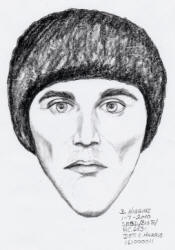
Wanted Posters and Sketch Artists used in a Bear Mountain Resort Hit and Run.
Bear Mountain Resort is looking for a mail snowboarder who struck a 9-year-old female on January 2, 2010 at approximately 1:00 PM. A sketch of the alleged snowboarder is here!
The suspect is described as a white male adult, 25-30 years of age, approximately 5’10” – 6’2″ tall, wearing a black and white jacket, black pants, and using a black snowboard.
Anyone having information regarding the collision or identity of the suspect is asked to contact the Big Bear Sheriff’s Station at (909) 866-0100. Information can also be reported anonymously by calling WE-TIP at (800) 78-CRIME.
It is unknown if this is a new attitude about collisions on the slopes or if this is a special case. The victim received a compound fracture of her femur and several facial injuries, all of which were not life threatening.
This is a real change from how hit and run boarders and skiers were treated in the past.
I’m taking my ball and going home because I don’t like you!
Posted: February 8, 2010 Filed under: Ski Area Leave a comment
Come on folks, we are not six year olds…..although that is really hard to determine in the ski industry.
An article in the Durango Herald titled Durango Mountain Resort pulls critic’s pass states that a woman who made critical comments about the resort had her season pass revoked by the ski resort.
For a ski area to operate with such a blatant disregard for the idea upon which this country was founded is plain stupid. Criticism is the backbone of our government and our economy. The free speech protection of the first amendment states a government cannot stop us from speaking our mind. The first amendment does not apply to a business. A business can do about anything it wants, including looking stupid.
At the end of a disastrous economic slump, that has had a very negative effect on ski areas; the loss of $539 is just not bright.
This type of action can be seen every day at any elementary school playground. You do not expect it from a ski resort that is so dependent upon the word of mouth and locals who buy season passes each year.
By the way, the resort’s name is Purgatory!
Correction by an author I quote. THANKS! Myths of skiing injuries debunked by physician’s study.
Posted: February 4, 2010 Filed under: Skiing / Snow Boarding Leave a comment
Dr. Carl Ettlinger read my review of his study Myths Concerning Alpine Skiing Injuries, that I wrote about in Myths of skiing injuries debunked by physician’s study. After 20 years in the ski business, I missed several issues and wanted to correct them and to thank Dr. Ettlinger for his help.
Mr. Moss,
Thank you for the kind words regarding our Myths article. However, you inadvertently helped to perpetuate another myth–that skiing ability=Skier Type.
3) “All you need know is your DIN (release indicator value) number and you can adjust your bindings.” There are four different factors used to determine the correct DIN, height, weight, skiing ability and boot sole length. Even knowing these may not be enough because how the boot fits into the binding is also critical.
4) “Toe and heel pieces must be set to the same Release Indicator Value or the bindings won’t function right.” No, see study 3 above.
Skier Type selection is a means by which a skier can balance the overall risk of injury–injury due to inadvertent release versus injury due to failure of the binding to release. Skiing Ability is not a factor in the Release Value Selection process.
It is also important to note that the Release Indicator Value from the binding manufacturer’s chart is termed the Initial Indicator Value in ASTM/ISO standards and in all instructions from the binding manufacturer. In other words, it is the starting point. Following inspection by a properly trained technician using a ski binding testing device (that meets ASTM/ISO standards) readjustment of one or more of the binding components may be required resulting in four Final Indicator Values. In some cases the Final Indicator Values could each be different from the Initial Value. There is also the possibility that the test results may reveal a defect that can only be resolved by the replacement of the component or the entire binding system.
Regards,
Carl Ettlinger
Again Thanks!
Myths of skiing injuries debunked by physician’s study.
Posted: February 2, 2010 Filed under: Skiing / Snow Boarding 1 CommentMyths of skiing injuries debunked by physician’s study.
The vivid images of wrecks disasters and injuries from the sport media are not real.
An article Doctor seeks to debunk skiing myths looks at a study published by Dr. Robert Johnson in the November/December issue of Sports Health. The study was titled Myths Concerning Alpine Skiing Injuries and authored by Robert J. Johnson, MD, Carl F. Ettlinger, Ettlinger, Ettlinger, MS and Jasper E. Shealy, PhD.
The results of this study even caught me off guard, and I have been studying the ski industry for more than twenty years. The study looked at twelve common myths in the industry.
1) “Skiing is among the most dangerous activities.” The fatality rate makes it safer than driving a car and slightly more dangerous than riding a bicycle per million hours of exposure.
2) “Broken legs have been traded for blown-out knees.” Knee injuries increasing and broken legs decreasing in skiing occurred at different times and are not related. See number 11 below for an interesting twist on this issue.
3) “All you need know is your DIN (release indicator value) number and you can adjust your bindings.” There are four different factors used to determine the correct DIN, height, weight, skiing ability and boot sole length. Even knowing these may not be enough because how the boot fits into the binding is also critical.
4) “Toe and heel pieces must be set to the same Release Indicator Value or the bindings won’t function right.” No, see study 3 above.
5) “Formal ski instruction will make you safer. This is not true. However, every ski resort in the US argues with this result. Personally, I would have disagreed with this study if a ski lesson taught you how to fall, however, now I am confused based on study 9 below.
6) “The shorter the ski, the less torque is applied to the leg in a fall. Therefore, short skis don’t need release bindings.” There is a 3 to 20–fold increase in broken ankles and tibias from using short skis. You should use releasable bindings on these skis also.
7) “Young bones bend rather than break, so there’s no point spending a lot of money on children’s equipment.” Children have the highest risk to equipment related injuries so properly functioning equipment is critical for them.
8) “When buying boots for children, leave plenty of room for fast-growing feet.” If a child’s boot does not foot there is an increased chance of a lower leg fracture. I think this is common sense.
9) “If you think you’re going to fall, just relax and let it happen.” This always seemed to work for me, however the study indicates differently. You should fall however, you should assume the position of a parachutist landing and tense your muscles and joints to stiffen and protect them.
10) “Exercise is the best way to avoid skiing-related injuries.” This is going to mess up consumer magazines that constantly have articles on getting in shape for skiing. This does not mean that being in shape will not be a better skiing experience, it just will not change your chance of injury.
11) “Tighter standards that mandate lower release setting will reduce the risk of an ACL injury.” This has been known in the industry for years and is one of the common misconceptions in the industry. Knee injuries are not related to your binding releasing or how your binding releases.
12) “Buying new ski equipment is safer than renting.” Rental equipment is maintained. After skiing for ten days and driving to the slopes with your skis on top of your car if you do not have your skis and bindings checked you have a greater risk of an injury.
Robert J. Johnson, MD, Carl F. Ettlinger, MS and Jasper E. Shealy, PhD, are well known in the ski industry for their research into skiing industry injuries. Johnson and Shealy are the editors of the ASTM Skiing Trauma and Safety 17th Volume, which is the standard of ski industry research.
Skiing/Boarding Helmets and what is the correct message
Posted: January 14, 2010 Filed under: Skiing / Snow Boarding 1 CommentJournalist now days can write, but they have forgotten had to understand what they are writing. Bloggers, like myself, can get away with murder. Helmets are a big topic on the web, and I have written about them before. More information over the debate about ski helmets: Ski Helmets ineffective crashes were the wear is going faster than 12 miles per hour, Mixed emotions, but a lot of, I told you so are some of the articles I’ve written for this blog, and I have even indorsed a helmet A new idea that makes sense in helmets: the Bern Hard Hat
However, I have seen so much garbage lately it is starting to be a pain.
So let’s put some facts down.
Helmets may prevent head injuries. There are not many arguments here. The number one reason I can see to wear a helmet is that idiots put the comfort/safety/footrest bar down without letting other people on the lift know. The bar comes down and whacks you in the head.
Helmets will save your life. This is crap. There is no research to support this statement. See Shealy, Jasper E., Johnson, Robert J., and Ettlinger, Carl F., Do Helmets Reduce Fatalities or Merely Alter the Patterns of Death?, Skiing Trauma and Safety 17th International Symposium, Journal of ASTM International Vol. 5 No. 10, “Skiing Helmets” and Evaluation of the Potential to Reduce Head Injury,” US Consumer Product Safety Commission, Washington, DC, 20207, Jan 1999. The main point of this research is even though helmet used has increased dramatically; fatalities have stayed the same or increased.
If Natasha Richardson had been wearing, a helmet, she would still be alive. The jury is out on this, but one who understands the issues (physicians) has said yes a helmet would have saved her life. See Could a Helmet Have Saved Natasha Richardson? Doc Wild Weighs In and Would a Helmet Have Saved Richardson? Maybe Not
A helmet will increase your chances of an injury. Some research supports this argument. The basis is risk homeostasis, which says that when humans feel safe they take greater Wearing a helmet makes you feel safe. Therefore, you may ski faster. See the research above.
People die of head injuries skiing. No if you hit a tree hard enough or fast enough to cause a head injury that will kill you, you are going to die of something. During the 2008-09 skis, season three fatalities were reported to people wearing helmets and they all died of blunt force trauma. Two people reportedly died of head injuries, one reporting head and other injuries and the other was not substantiated as coming from a source. All reports of fatalities from corner’s or physicians reported the cause of death as blunt force trauma or asphyxiation.
Wearing a helmet increases your risk to injury because you cannot here. With more skiers on the slopes, there is a greater chance of injury from not hearing an approaching rider. I have no idea and I cannot find any research about this subject. If this is true and it may be, then earphones and helmets may both lead to injuries.
I am telling you to not wear a helmet. NO! I am telling you to understand why you are choosing to wear a helmet. I am telling you that there is some evidence that says you may increase your chance of an injury and some research that shows that it may decrease your chance of an injury. There is no evidence that a helmet will keep you from dying. If you choose to wear a helmet, do so with an understanding of the risk of wearing and of not wearing a helmet.
20 Year Veteran of Ski Patrol Dies performing avalanche control work
Posted: January 11, 2010 Filed under: Ski Area Leave a commentJackson Hole and the Resort in mourning
A 20-year veteran of the Jackson Hole ski patrolled died Saturday. He was injured performing avalanche work January 6, 2010. A break in the pack occurred above him sweeping him and another patroller. The other patroller could grab a tree and arrest his slide.
See the following articles for more information on this tragedy.
Patroller buried in avalanche
Big Wally revived after avalanche
in memoriam: Big Wally
Another Inbounds Tragedy at Jackson Hole Mountain Resort (Updated 1/8/2010 7:31 PM)
For a well written and thoughtful article about the risks of ski patrolling at Jackson Hole see Ski Patroller Death Highlights the Real Price of Powder Turns.
Dozens of great Avalanche training videos on the web
Posted: January 11, 2010 Filed under: Avalanche 1 CommentWatching videos at home is not enough to think you can wander into the backcountry. This is especially true if you are from a state with no mountains or snow and talk funny!
The first step in proper avalanche awareness is always do not go outside if conditions are bad! If you are an idiot, have no idea what you are doing, have just read books or watched YouTube videos you have no clue what you are getting into. Instead of getting into a mess take an avalanche course from a respectable instructor and donate to your local search and rescue group.
Step two is become a member of your local avalanche forecasting organizations so you can access their database of information and receive their updates. If you don’t know your center or are going to explore a new area start at http://www.avalanche.org/
If you have taken a course or want to prepare for one the internet has produced many great videos. Most of the videos are produced byproduct manufactures, and consequently, you are getting some advertising in the video, but it the videos are well done you won’t care.
The group leading off with great videos is Backcountry Access (BAC). BAC is known as the distributor of the Tracker avalanche beacon. BAC videos include:
www.skinets.com has a few videos online.
Mountain Equipment Co-op has a video on testing snowpack.
Avalanche Safety | How to Techniques for a Compression Test
There are several great videos to keep you fresh and bring new techniques to a knowledge and skill set, I hope you never use.
For other posts about avalanches see:
Ortovox CheckandRide
Good article on Avoiding Avalanches…….don’t go where there are Avalanches
Great Articles in the latest WMS Journal
Avalanche Beacons and other electronic items
Italy make avalanche safety gear mandatory
Another Man Made Snow Avalanche
Avalanche: Man-Made Snow to the Ground
Copyright 2010 Recreation Law 720 Edit Law, Recreaton.Law@Gmail.com
OSHA Officially recommending helmets for ski area employees
Posted: December 27, 2009 Filed under: Ski Area Leave a commentThe Occupational Safety and Health Administration (OSHA) has posted a recommendation on its website for employees of ski areas to wear helmets. The post is:
The OSHA post can be found at OSHA Quick Takes for December 1, 2009, Volume 8, Issue 22.
Judge refuses to dismiss lawsuit against Dartmouth College over a fatality of a student at the college’s ski hill.
Posted: November 3, 2009 Filed under: Release (pre-injury contract not to sue), Ski Area Leave a commentGet a Good Attorney to Write your Release or Don’t Waste the Paper!
The suit was filed in Federal District Court in new hampshire. The college filed a motion for summary judgment based on the equipment rental liability release signed by the deceased. The judge ruled the release did not “specifically identify Dartmouth or inform a renter that he or she is relieving Dartmouth of liability.”
Another situation where your release needs to be written properly by an attorney familiar with your activity and your case law or state law.
See Judge Denies Dartmouth Request In Ski Death Case
Sometimes you want too much, sometimes you are greedy: WI plaintiff’s lawyers are killing their income source.
Posted: September 22, 2009 Filed under: Skiing / Snow Boarding 1 Comment
Wisconsin law would kill outdoor recreation specifically skiing in the state
The plaintiff’s bar is attempting to change the law concerning the determination of fault in a trial. As the law stands now before an injured plaintiff can win a lawsuit they must prove that they are not the primary party responsible for their injuries. That means they have to convince a jury that they are less than 49% liable for their injuries. The jury then decides what percentage of fault lies with all of the parties. The damages awarded are then divided according to that percentage of fault.
If a plaintiff is found 20% at fault they win (more than 49%) and any damages are reduced by 20%. This issue is called comparative negligence. The jury compares the negligence between the parties and determines the percentage of fault. That percentage of fault then determines if the plaintiff wins anything and if so, how much they are awarded.
The plaintiff’s bar in Wisconsin wants to lower that percentage to 1%. This means if the jury finds that the plaintiff was anywhere from 99 to 1% at fault the plaintiff still wins.
Breathing is about the only thing you can do and not have someone else be at least partly responsible……….. wait there is air pollution.
This would allow every injured person no matter how they received their injuries to sue and recover money for their damages.
The good news is insurance costs will not go up. This will be because no insurance will be available. Insurance companies will just not offer insurance for any recreation program in Wisconsin.
See Insurance change could send Wisconsin ski areas downhill. For additional articles explaining the legal issues see Ski resort found partially liable for skier injuries from a jump
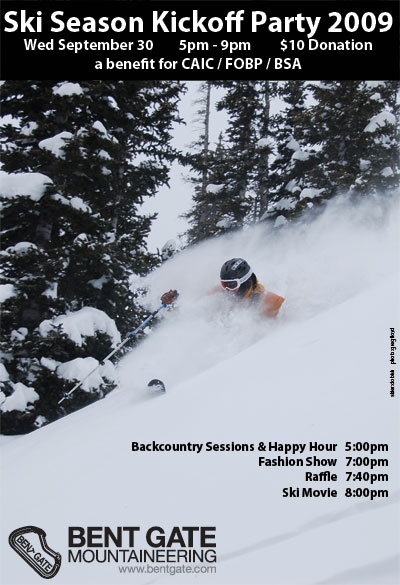
Event: Ski Season Kickoff Party 2009 to Benefit the Colorado Avalanche Information Center
Posted: September 18, 2009 Filed under: Skiing / Snow Boarding Leave a commentEvent: Ski Season Kickoff Party 2009
“A Fundraising Event for CAIC / FOBP / BSA”
What: Fundraiser
Start Time: Wednesday, September 30 at 5:00pm End Time: Wednesday, September 30 at 9:00pm
Where: Bent Gate Mountaineering
To see more details and RSVP, follow the link below:
http://www.facebook.com/n/?event.php&eid=133118014003&mid=11c5926G1e5dc624G35471b9G7
More information over the debate about ski helmets: Ski Helmets ineffective crashes were the wear is going faster than 12 miles per hour
Posted: September 17, 2009 Filed under: Skiing / Snow Boarding 2 Comments
More information over the debate about ski helmets: Ski Helmets ineffective crashes were the wear is going faster than 12 miles per hour
A study just released by Karl-Heinz Kristen, vice president of the Deutsch-Österreichisch-Schweizerischen Gesellschaft für Orthopädisch-Traumatologische Sportmedizin (GOTS or German-Austrian-Swiss Association for Orthopedic-Traumatic Sport Medicine) just released a study showing that ski helmets are only effective in crashes of less than 12 miles per hour.
For this article see Ski helmets ineffective over 20km/h claims sport medic. For additional posts on ski helmets see Mixed emotions, but a lot of I told you so, A new idea that makes sense in helmets: the Bern Hard Hat and A helmet manufacture understands the issues. For Outdoor Recreation Law Review articles on the subject see In the News: Article finds helmets might not be as effective as once thought, an avalanche at a ski resort in Indiana, 3 American climbers killed by rock slide, climber left hanging, snowmobile fatality, and much more…
May people believe that I am against wearing helmets? That is not true, I have several and wear them a lot of the time. I want people to understand why and what a helmet will and most importantly what a helmet will not do. A helmet will do nothing in whitewater rafting. A helmet will not save your life in skiing. I wear my ski helmet on crazy days or cold days. Sometimes I wear a helmet skiing when I just want to ski fast. But that is more of a brain bucket for the ski patrol then believing it will keep me alive.
This is another study that shows that helmets are NOT going to keep you alive.


 Recreation Law