
Interesting CA case on sheriff’s failure to start SAR & run SAR
Posted: October 24, 2022 Filed under: California, Mountain Biking, Search and Rescue (SAR) | Tags: Cycling, Discretionary, Hypothermia, Immunity, Lost, Mountain biking, Negligence, SAR, Search and Rescue, Sheriff's Department Leave a commentCounty lost appeal because employees’ actions were out of line and the deceased, at least from the facts presented could have easily been found before he died.
Arista v. Cnty. of Riverside (Cal. App. 2021)
State: California; Court of Appeal of the State of California Fourth Appellate District Division Two
Plaintiff: Christyna Arista
Defendant: County of Riverside
Plaintiff Claims: Wrongful death, negligence, and negligent infliction of emotional distress
Defendant Defenses: Government Code section 8453, which provides public employees are not liable for the failure to provide sufficient police protection; section 820.2, which provides that public employees are not liable for injuries that result from acts or omissions stemming from discretionary decisions; Health and Safety Code section 1799.107, subdivision (b), which provides that emergency rescue personnel are not liable for injuries caused by actions taken within the scope of their employment, unless the actions were done in bad faith or with gross negligence
Holding: For the Plaintiff
Year: 2021
Summary
A lawsuit was filed against Riverside County Sheriff’s department for negligent Search and Rescue training and procedures. The trial court granted the Counties motion for summary judgment, and the plaintiff’s appealed. The case was sent back by Appellate Court for trial. The deceased died of hypothermia and was easily found by friends of the deceased. Sheriff’s department assumed deceased was having an affair and did not search for him.
Facts
On March 1, at 3:00 p.m., when Marin [deceased] failed to return home, Wife called and texted Marin’s cell phone every 15 minutes but received no answer until 5:14 p.m. when Marin answered Wife’s call. Marin said he had fallen from his bicycle and suffered an injury. Marin seemed confused and disoriented but said that, said that, prior to the fall, he had reached Santiago Peak and was on his way home. At 5:32 p.m., Wife began calling various agencies, e.g., a ranger station, but was unable to reach anyone. At 5:36 p.m., Wife called 911 and the operator advised her to wait at home. At 6:30 p.m., Corona Police arrived at Wife’s home, and Wife explained that Marin was injured, on his way down from Santiago Peak, and lightly dressed.
At 8:00 p.m., Riverside County Sheriff’s Deputy Zaborowski2 arrived at the Family’s home. At that point, deputies had already checked trailheads in the CNF, traveled along access roads looking for Marin, pinged Marin’s cell phone, and contacted civilian volunteers to tell them “to be ‘on alert’ for a potential call to assist.” Wife provided Zaborowski with the same information she provided the Corona Police. Zaborowski told Wife that the ping of Marin’s phone showed he was in the area of Santiago Peak. Zaborowski also said Verizon service employees were in the area of Santiago Peak and had been asked to “be vigilant for Marin’s location.”
Lieutenant Hall (Hall) was the Sheriff’s Department’s Incident Commander for the search for Marin. Hall stayed at his home during the search. He was not trained in search and rescue. Hall did not consider the risks that Marin faced from the weather. Hall did not know Santiago Peak has an elevation of 5,689 feet. Hall was unaware that the trail Marin had planned to use has an elevation of 3,000 to 4,000 feet. Hall did not know what, if any, equipment Marin had with him for cold weather.
At 10:00 p.m., Detective Holder arrived at the Family’s home. While at the residence, Holder spoke to Zaborowski. Holder said “he [(Holder)] was ‘not sure what we’re doing here,’ that Marin was ‘probably just running around on his wife’ and was ‘just covering his tracks,’ suggesting that Marin was not missing, but instead involved in some adulterous affair.” Holder informed Wife that the Sheriff’s Department was suspending its search for the night and would resume searching in the morning. Wife asked Holder, ” ‘[W]hat are the chances he [Marin] dies of hypothermia?’ ” because the temperatures at Santiago Peak were expected to be in the mid-30s to mid-40s. “Holder replied that Marin was ‘a grown man’ and that ‘he can survive the night.’ ” Holder further said “that ‘if it was a child, [he] would send a helicopter out there right now.’ ”
After being told that the search was suspended for the night, Wife organized relatives to perform their own search. Unidentified County personnel asked Wife not to initiate her own search because the County would conduct the search. Nevertheless, Wife and six relatives began searching for Marin, on foot, at 3:45 a.m. Pat Killiam who is a mountain biker and search and rescue volunteer “had heard about the ‘missing biker,’ ” and began his own search for Marin using a motorcycle on the access roads. Killiam found Marin’s body on a maintained fire access road. The precise time that Killiam found Marin is not alleged in the TAC. Marin died of hypothermia due to being exposed to cold environmental temperatures.
The County’s Sheriff’s Department has an Off-Highway Vehicle Enforcement unit (ROVE) that is equipped with all-terrain vehicles that have lights. The vehicles can operate in the mud at night. ROVE was not dispatched to search for Marin. Because Marin was on a maintained fire access road, he could have been rescued by people using all-terrain vehicles.
The real basis of the claims of the plaintiff were summed up by the Appellant court in this statement.
In the Family’s wrongful death cause of action, it alleged the following: The Sheriff’s Department assumed the responsibility of searching for Marin by starting the search and telling Wife not to conduct her own search. The Family alleged that it relied upon the County to rescue Marin after the County assumed control of the search and rescue. In taking responsibility for the search, the Sheriff’s Department owed a duty to conduct the search with reasonable care.
The County should not have assigned Hall to be the incident commander for the search because Hall lacked search and rescue training. Hall acted with reckless disregard for life by managing the search from his living room. The County’s employees acted with bad faith and gross negligence by (1) failing to contact people who had knowledge of the trails and service roads in the CNF; (2) failing to deploy the ROVE team on the night of March 1; and (3) failing to consult a medical professional with knowledge of hypothermia regarding Marin’s possible injuries and the risk of hypothermia.
Analysis: making sense of the law based on these facts.
After reviewing the procedural issues on appeal, the court looked at the arguments. The first was whether or not the County had immunity from suit for its rescue personnel under several California statutes.
Health and Safety Code section 1799.107, subdivision (b), provides, “[N]either a public entity nor emergency rescue personnel shall be liable for any injury caused by an action taken by the emergency rescue personnel acting within the scope of their employment to provide emergency services, unless the action taken was performed in bad faith or in a grossly negligent manner.”
The family, the plaintiff’s, argued there could not be any immunity because the actions of the individuals were grossly negligent. The Appellate court agreed that if the actions of the county personnel were found to be grossly negligent, then the individuals were not protected by the statute.
Gross negligence if plead and proved supersedes an immunity statute in California. Unless the statute provides immunity to the entire claim, the statute does not provide immunity: “…it is an error to grant summary judgment unless the defense is “a complete defense to the entire action.”
Knowing that based on the clothing and the weather conditions, there was a good chance that the deceased would die of hypothermia, failure to start a search by the sheriff’s department employee could be considered gross negligence.
I suspect that these factors were made more apparent when the deceased was so easily found by the family members when they searched.
The next immunity statute was Section 845, which was created to give law enforcement wide range in making budgetary decisions. Meaning how many law enforcement personnel were hired and deployed to certain areas within a community could not be subject to judicial scrutiny.
Neither a public entity nor a public employee is liable for failure to establish a police department or otherwise to provide police protection service or, if police protection service is provided, for failure to provide sufficient police protection service
No budgetary decisions were made in deciding not to rescue the deceased. The lawsuit was not over whether or not enough SAR personnel were sent to the scene, the lawsuit was based on negligence in handling the entire incident.
The Family is not suing the County for budgetary or political decisions. The Family is suing due to the alleged negligence of particular County employees. The County asserts the Family’s lawsuit is partially based upon a failure to provide adequate search and rescue training to its Sheriff’s Department personnel.
The final immunity is usually the broadest and provides the most protection to state and local governments. The actions of an employee of a local, state or federal government are discretionary. As long as the decisions of the employee are not arbitrary, fanciful, or unreasonable, the decision will be upheld.
The appellate court did not rule the actions of the sheriff department’s employees were not discretionary, only that the county, if relying on that defense must show that each of the decisions made by the employee was discretionary. The appellate court in this case increased the burden on the county to prove immunity in this case.
If the County seeks to have every material search decision Hall made protected under section 820.2 then it needs to provide evidence of what material decisions were made, provide evidence of the discretion exercised in making those decisions, and provide argument as to why each of those decisions is deserving of immunity under section 820.2. Without that information, it was not proper to grant summary judgment pursuant to the discretionary decision immunity (§ 820.2) because the County only addressed a portion of the Family’s allegations.
The motion for summary judgment granted for the County by the trial court was overruled, and the case was sent back for further adjudication.
So Now What?
Most states have various forms of immunity to protect state and county employees from lawsuits over the discretionary parts of their job. Governments would never accomplish anything if every time they did something a citizen did not like, the citizen sued them. Most Search and Rescue litigation is avoided or dismissed quickly because of this.
Here, the county’s overt actions in responding to the family as well as how easily the victim was eventually found, give credence to the claims of the family. Suggesting a mountain biker was not missing but having an affair may be a common issue in the minds of law enforcement, but expressing it or placing it in the paperwork is just stupid.
This decision seems to be a stretch, though based on the facts it does not seem to be out of line. What it is, is an example of doing dumb things, treating people badly or making a judge made can still make you lose no matter how strong the law is on your side.
Don’t do stupid things, treat people right, do your job and when in doubt, try to help would have prevented this lawsuit and probably this death.
What do you think? Leave a comment.
 Jim Moss is an attorney specializing in the legal issues of the outdoor recreation community. He represents guides, guide services, outfitters both as businesses and individuals and the products they use for their business. He has defended Mt. Everest guide services, summer camps, climbing rope manufacturers; avalanche beacon manufactures and many more manufacturers and outdoor industries. Contact Jim at Jim@Rec-Law.us
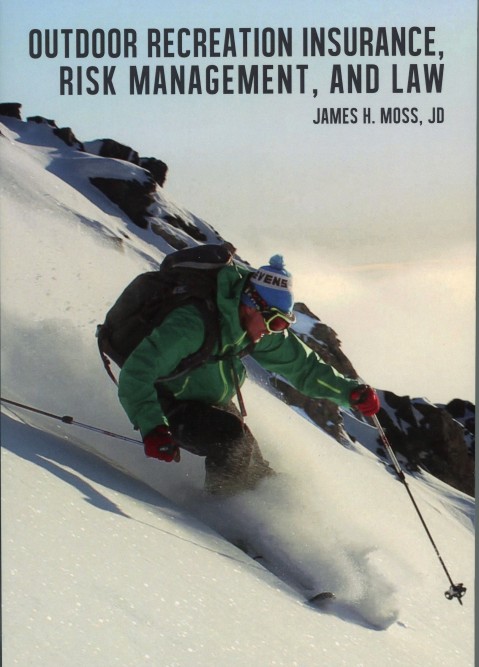
Jim is the author or co-author of six books about the legal issues in the outdoor recreation world; the latest is Outdoor Recreation Insurance, Risk Management and Law.
Jim is the author or co-author of six books about the legal issues in the outdoor recreation world; the latest is Outdoor Recreation Insurance, Risk Management and Law.
To see Jim’s complete bio go here and to see his CV you can find it here. To find out the purpose of this website go here.
G-YQ06K3L262
Copyright 2022-23 Recreation Law (720) 334 8529
If you like this let your friends know or post it on FB, Twitter or LinkedIn
|
|
|
|
|


Author: Outdoor Recreation Insurance, Risk Management and Law To Purchase Go Here:
Facebook Page: Outdoor Recreation & Adventure Travel Law
Email: Jim@Rec-Law.US
By Recreation Law Rec-law@recreation-law.com James H. Moss
@2023 Summit Magic Publishing, LLC SummitMagic@gmail.com
#AdventureTourism, #AdventureTravelLaw, #AdventureTravelLawyer, #AttorneyatLaw, #Backpacking, #BicyclingLaw, #Camps, #ChallengeCourse, #ChallengeCourseLaw, #ChallengeCourseLawyer, #CyclingLaw, #FitnessLaw, #FitnessLawyer, #Hiking, #HumanPowered, #HumanPoweredRecreation, #IceClimbing, #JamesHMoss, #JimMoss, #Law, #Mountaineering, #Negligence, #OutdoorLaw, #OutdoorRecreationLaw, #OutsideLaw, #OutsideLawyer, #RecLaw, #Rec-Law, #RecLawBlog, #Rec-LawBlog, #RecLawyer, #RecreationalLawyer, #RecreationLaw, #RecreationLawBlog, #RecreationLawcom, #Recreation-Lawcom, #Recreation-Law.com, #RiskManagement, #RockClimbing, #RockClimbingLawyer, #RopesCourse, #RopesCourseLawyer, #SkiAreas, #Skiing, #SkiLaw, #Snowboarding, #SummerCamp, #Tourism, #TravelLaw, #YouthCamps, #ZipLineLawyer, #RecreationLaw, #OutdoorLaw, #OutdoorRecreationLaw, #SkiLaw,
Arista v. Cnty. of Riverside (Cal. App. 2021)
Posted: October 23, 2022 Filed under: California, Legal Case, Mountain Biking | Tags: County, Cycling, Discretionary, Government, Hyphermia, Lost, Mountain biking, SAR, Search and Rescue Leave a commentTo Read an Analysis of this decision see: Interesting CA case on sheriff’s failure to start SAR & run SAR
Arista v. Cnty. of Riverside (Cal. App. 2021)
CHRISTYNA ARISTA, Individually and as Successor in Interest, etc. et al., Plaintiffs and Appellants,
v.
COUNTY OF RIVERSIDE, Defendant and Respondent.
E074815
COURT OF APPEAL OF THE STATE OF CALIFORNIA FOURTH APPELLATE DISTRICT DIVISION TWO
April 14, 2021
NOT TO BE PUBLISHED IN OFFICIAL REPORTS
California Rules of Court, rule 8.1115(a), prohibits courts and parties from citing or relying on opinions not certified for publication or ordered published, except as specified by rule 8.1115(b). This opinion has not been certified for publication or ordered published for purposes of rule 8.1115.
(Super.Ct.No. RIC1502475)
OPINION
APPEAL from the Superior Court of Riverside County. Daniel A. Ottolia, Judge. Reversed.
Tiedt & Hurd, John E. Tiedt and Marc S. Hurd for Plaintiffs and Appellants.
Disenhouse Law, Bruce E. Disenhouse; Arias & Lockwood and Christopher D. Lockwood for Defendant and Respondent.
In a third amended complaint plaintiff and appellant Christyna Arista and her children (collectively, the Family) sued defendant and respondent County of Riverside (the County) for wrongful death, negligence, and negligent infliction of emotional distress.1 The trial court granted summary judgment in favor of the County. The Family contends the trial court erred by granting summary judgment. We reverse the judgment.
FACTUAL AND PROCEDURAL HISTORY
A. THIRD AMENDED COMPLAINT
The facts in this subsection are taken from the third amended complaint (TAC). Christyna Arista (Wife) was married to Andres Marin (Marin), and he is the father of her children. On March 1, 2014, at approximately 6:30 a.m., Marin left home, in Corona, for a bicycle ride to Santiago Peak in the Cleveland National Forest (the CNF). The ride would be approximately 55 miles, and Marin was expected to return home by 2:00 p.m. On March 1, the temperature in Corona was 50 to 60 degrees with periodic light drizzle. For the bicycle ride, Marin was wearing knee-length bicycle shorts, a bicycle jersey, calf-length socks, bicycle gloves, shoes, and a helmet. Marin carried $10, water, snacks, and his cell phone.
On March 1, at 3:00 p.m., when Marin failed to return home, Wife called and texted Marin’s cell phone every 15 minutes but received no answer until 5:14 p.m. when Marin answered Wife’s call. Marin said he had fallen from his bicycle and suffered an injury. Marin seemed confused and disoriented but said that, prior to the fall, he had reached Santiago Peak and was on his way home. At 5:32 p.m., Wife began calling various agencies, e.g., a ranger station, but was unable to reach anyone. At 5:36 p.m., Wife called 911 and the operator advised her to wait at home. At 6:30 p.m., Corona Police arrived at Wife’s home, and Wife explained that Marin was injured, on his way down from Santiago Peak, and lightly dressed.
At 8:00 p.m., Riverside County Sheriff’s Deputy Zaborowski2 arrived at the Family’s home. At that point, deputies had already checked trailheads in the CNF, traveled along access roads looking for Marin, pinged Marin’s cell phone, and contacted civilian volunteers to tell them “to be ‘on alert’ for a potential call to assist.” Wife provided Zaborowski with the same information she provided the Corona Police. Zaborowski told Wife that the ping of Marin’s phone showed he was in the area of Santiago Peak. Zaborowski also said Verizon service employees were in the area of Santiago Peak and had been asked to “be vigilant for Marin’s location.”
Lieutenant Hall (Hall) was the Sheriff’s Department’s Incident Commander for the search for Marin. Hall stayed at his home during the search. He was not trained in search and rescue. Hall did not consider the risks that Marin faced from the weather. Hall did not know Santiago Peak has an elevation of 5,689 feet. Hall was unaware that the trail Marin had planned to use has an elevation of 3,000 to 4,000 feet. Hall did not know what, if any, equipment Marin had with him for cold weather.
At 10:00 p.m., Detective Holder arrived at the Family’s home. While at the residence, Holder spoke to Zaborowski. Holder said “he [(Holder)] was ‘not sure what we’re doing here,’ that Marin was ‘probably just running around on his wife’ and was ‘just covering his tracks,’ suggesting that Marin was not missing, but instead involved in some adulterous affair.” Holder informed Wife that the Sheriff’s Department was suspending its search for the night and would resume searching in the morning. Wife asked Holder, ” ‘[W]hat are the chances he [Marin] dies of hypothermia?’ ” because the temperatures at Santiago Peak were expected to be in the mid-30s to mid-40s. “Holder replied that Marin was ‘a grown man’ and that ‘he can survive the night.’ ” Holder further said “that ‘if it was a child, [he] would send a helicopter out there right now.’ “
After being told that the search was suspended for the night, Wife organized relatives to perform their own search. Unidentified County personnel asked Wife not to initiate her own search because the County would conduct the search. Nevertheless, Wife and six relatives began searching for Marin, on foot, at 3:45 a.m. Pat Killiam who is a mountain biker and search and rescue volunteer “had heard about the ‘missing biker,’ ” and began his own search for Marin using a motorcycle on the access roads. Killiam found Marin’s body on a maintained fire access road. The precise time that Killiam found Marin is not alleged in the TAC. Marin died of hypothermia due to being exposed to cold environmental temperatures.
The County’s Sheriff’s Department has an Off-Highway Vehicle Enforcement unit (ROVE) that is equipped with all-terrain vehicles that have lights. The vehicles can operate in the mud at night. ROVE was not dispatched to search for Marin. Because Marin was on a maintained fire access road, he could have been rescued by people using all-terrain vehicles.
In the Family’s wrongful death cause of action, it alleged the following: The Sheriff’s Department assumed the responsibility of searching for Marin by starting the search and telling Wife not to conduct her own search. The Family alleged that it relied upon the County to rescue Marin after the County assumed control of the search and rescue. In taking responsibility for the search, the Sheriff’s Department owed a duty to conduct the search with reasonable care.
The County should not have assigned Hall to be the incident commander for the search because Hall lacked search and rescue training. Hall acted with reckless disregard for life by managing the search from his living room. The County’s employees acted with bad faith and gross negligence by (1) failing to contact people who had knowledge of the trails and service roads in the CNF; (2) failing to deploy the ROVE team on the night of March 1; and (3) failing to consult a medical professional with knowledge of hypothermia regarding Marin’s possible injuries and the risk of hypothermia. The Family’s causes of action for negligence and negligent infliction of emotional distress are based on the same conduct/omissions as the wrongful death cause of action.
B. SUMMARY JUDGMENT
The County moved for summary judgment. In its presentation of the facts, the County asserted that, on the evening of March 1, 2014, “it was raining and there was a thick cloud cover and fog in the [CNF].” The County asserted the weather “made it too dangerous to fly” a helicopter to search for Marin. The County also asserted the weather conditions and risks of landslides made it too dangerous for rescuers to search on the ground.
The County asserted that the Family did not cite a statute to support direct liability on the part of the County, which meant the Family was relying on respondeat superior liability. The County asserted that its employees’ decision to suspend the search for the night was objectively reasonable and fell within the standard of reasonable care.
Next, the County asserted three separate immunities applied. First, the County cited Government Code section 8453, which provides public employees are not liable for the failure to provide sufficient police protection. The County asserted section 845 made it immune from the allegation that it “should have provided more or different training.”
Second, the County cited section 820.2, which provides that public employees are not liable for injuries that result from acts or omissions stemming from discretionary decisions. The County argued, “The undisputed evidence shows that a discretionary decision was made, based on all of the available evidence, and after considering the risks to [Marin], the weather and the trail conditions, the conflicting cell phone location information, and all the other information . . . , not to risk rescue personnel by a further nighttime search, but to wait until morning.”
Third, the County cited Health and Safety Code section 1799.107, subdivision (b), which provides that emergency rescue personnel are not liable for injuries caused by actions taken within the scope of their employment, unless the actions were done in bad faith or with gross negligence. The County asserted, “The undisputed evidence . . . shows no gross negligence and no bad faith in deciding to wait until morning to do additional searches of the forest. Rather, the undisputed evidence shows an objectively reasonable decision, based on all of the available evidence, not to expose searchers to the high risks of a night time [sic] search under those weather conditions when decedent’s location was only vaguely known.”
C. OPPOSITION
The Family opposed the County’s motion for summary judgment. The Family asserted there is a triable issue of material fact regarding whether the Sheriff’s Department’s employees’ conduct/omissions constituted an extreme departure from the ordinary standard of conduct. The Family asserted the following constituted gross negligence: failing to set up a command post in the CNF; failing to establish a search area; not having a deputy trained in search and rescue evaluate the trail and road conditions; not contacting the ROVE team in a timely manner; having Hall command the search from his living room; and failing to consult with a medical professional regarding Marin’s injuries and risk of hypothermia.
The Family asserted the immunity for failing to provide sufficient police protection (§ 845) is meant to protect budgetary and policy decisions, not negligence by a particular law enforcement officer. As to the immunity for discretionary decisions (§ 820.2), the Family asserted (1) the County was liable for the negligent way in which it handled the search prior to deciding to suspend the search for the night; and (2) immunity for discretionary decisions applies to operational and policy decisions not to decisions such as Hall’s decision to suspend the search.
In regard to immunity for rescue personnel (Health & Saf. Code, § 1799.107, subd. (b)), the Family asserted there were triable issues of fact regarding whether County personnel acted in bad faith or in a grossly negligent manner. As to bad faith, the Family pointed to Holder’s comments that Marin was likely having an affair. In regard to gross negligence, the Family pointed to a declaration by Richard B. Goodman, who was the Search and Rescue Resource Officer for the New Mexico State Police from 1994 to 2002, reflecting that the Sheriff’s Department’s actions were “an extreme departure from what a reasonable . . . law enforcement [officer] assuming search and rescue activities would do in the same or similar circumstances.”
D. HEARING
The trial court found there were triable issues of fact regarding “whether the County breached the duty to rescue that it undertook.” The court determined that the County was immune from liability because Hall exercised discretion when deciding to suspend the search for the night (§ 820.2). The trial court said it was familiar with the trails leading up to Santiago Peak, and that “deputies have an incredibly difficult job. They have to consider so many factors.” The trial court said to the Family’s counsel, “I’d invite you to go on a ride-along, if you never have, just to find out what a deputy’s job is like.” The trial court granted the County’s motion for summary judgment.
DISCUSSION
A. STANDARD OF REVIEW
“A motion for summary judgment should be granted if the submitted papers show that ‘there is no triable issue as to any material fact,’ and that the moving party is entitled to judgment as a matter of law. [Citation.] A defendant meets his burden of showing that a cause of action has no merit if he shows that one or more of the elements of the cause of action cannot be established, or that there is a complete defense. [Citation.] Once the defendant has met that burden, the burden shifts to the plaintiff to show that a triable issue of material fact exists.” (Claudio v. Regents of the University of California (2005) 134 Cal.App.4th 224, 229.)
“In reviewing a trial court’s ruling on a motion for summary judgment, the reviewing court makes ‘ “an independent assessment of the correctness of the trial court’s ruling, applying the same legal standard as the trial court in determining whether there are any genuine issues of material fact or whether the moving party is entitled to judgment as a matter of law. [Citations.]” ‘ [Citation.] [¶] ‘On review of a summary judgment, the appellant has the burden of showing error, even if he did not bear the burden in the trial court.’ ” (Bains v. Moores (2009) 172 Cal.App.4th 445, 454-455.)
In the trial court, the County made 55 objections to the Family’s evidence. At the hearing, the trial court said, “The Court is overruling all evidentiary objections by both plaintiffs and defendants in this matter.” In its respondent’s brief, the County contends the trial court erred by overruling its objections to the declarations of Richard B. Goodman, who was the Search and Rescue Resource Officer for the New Mexico State Police from 1994 to 2002, and to Ken Zafren, M.D., who is an emergency physician with expertise in hypothermia.
Our understanding of the County’s argument is as follows: If the Family is correct that the trial court erred in its analysis of the summary judgment motion, then those errors are harmless. (See Code Civ. Proc., § 906 [respondents can argue error within a prejudice analysis].) The errors are harmless because if the trial court had sustained the County’s objections to Goodman’s and Zafren’s declarations then it is probable summary judgment would have been granted because there would not be a triable issue of material fact. (See Code Civ. Proc., § 475 [“a different result would have been probable if such error . . . had not occurred”].) The County’s argument is not persuasive because we do not need to consider the Family’s evidence due to the County failing to meet its burden to show the causes of action have no merit.
In a motion for summary judgment, the moving party, in this case the County, bears the burden of demonstrating the causes of action lack merit. (Code Civ. Proc., § 437c, subd. (p)(2).) In the County’s motion for summary judgment, it asserted the Family’s causes of action had no merit because the County’s employees’ decision to suspend the search was objectively reasonable. The County’s argument fails to specifically address the other allegations in the Family’s TAC, such as Hall’s alleged negligence in conducting the search from his living room. In the TAC, within the wrongful death cause of action, the Family alleged, “It is a reckless disregard for life for Lt. Hall to manage a wilderness search from a home living room.” Other allegations in the Family’s TAC were that the County acted with gross negligence by (1) not involving personnel who knew the CNF, (2) not deploying the ROVE team on the night of March 1, and (3) not consulting a medical professional regarding hypothermia and Marin’s possible injuries.
The County focused only on the decision to suspend the search for the night, but the Family is also suing due to the manner in which the search was conducted prior to the search being suspended. In the motion for summary judgment, the County failed to address all of the Family’s allegations of gross negligence. Thus, the County did not meet its burden of demonstrating the causes of action lack merit. (Code Civ. Proc., § 437c, subd. (p)(2) [defendant bears the burden of establishing the “cause of action has no merit”].)
Because the County did not meet its burden to establish that the causes of action lack merit, the burden did not shift to the Family to demonstrate a triable issue of material fact. (Code Civ. Proc., § 437c, subd. (p)(2).) Therefore, any error related to rulings on the County’s evidentiary objections is irrelevant in that the Family’s evidence need not be considered. Accordingly, we are not persuaded by the County’s assertion that any error alleged by the Family can be found harmless.
Next, on appeal, the County renews its objections to Goodman’s and Zafren’s declarations. (Reid v. Google, Inc. (2010) 50 Cal.4th 512, 534 [renewed objections on appeal when the trial court failed to rule on the objections]; Valentine v. Plum Healthcare Group, LLC (2019) 37 Cal.App.5th 1076, 1089 [same].) The County asserts that the Family relies almost exclusively on Goodman’s and Zafren’s declarations in the Family’s appellants’ opening brief, so if the declarations are inadmissible then the Family’s appellate argument fails. It is unnecessary to rule upon the County’s renewed objections because Goodman’s and Zafren’s declarations are not relevant to resolving the alleged errors relating to the immunity defenses. Accordingly, we will not rule upon the County’s renewed objections.
C. IMMUNITY FOR RESCUE PERSONNEL
The Family contends the immunity for rescue personnel (Health & Saf. Code, § 1799.107, subd. (b)) does not support a grant of summary judgment.
Health and Safety Code section 1799.107, subdivision (b), provides, “[N]either a public entity nor emergency rescue personnel shall be liable for any injury caused by an action taken by the emergency rescue personnel acting within the scope of their employment to provide emergency services, unless the action taken was performed in bad faith or in a grossly negligent manner.”
In the wrongful death cause of action, the Family alleged, “Further, the [County] knew that the injured Marin was going to be left in predicted cold temperatures that could expose him to hypothermic conditions and jeopardize his life, but through gross negligence, the [County] let Marin die on [its] watch.” As explained ante, the County did not establish that the Family’s cause of action lacks merit. Therefore, at this stage of the proceedings, there is merit to the Family’s gross negligence allegations.
If we assume, without deciding, that Health and Safety Code section 1799.107, subdivision (b), applies in this case, it would not support a grant of summary judgment because, at this stage, it does not provide a complete defense given the gross negligence allegations. (See Mallard Creek Industries v. Morgan (1997) 56 Cal.App.4th 426, 438 [it is error to grant summary judgment unless the defense is “a complete defense to the entire action”].) Accordingly, summary judgment could not be granted on the basis of the immunity afforded rescue personnel (Health & Saf. Code, § 1799.107, subd. (b)).
D. IMMUNITY FOR FAILING TO PROVIDE SUFFICIENT POLICE PROTECTION
The Family contends the immunity for failing to provide sufficient police protection does not apply in this case.
Section 845 provides, in relevant part, “Neither a public entity nor a public employee is liable for failure to establish a police department or otherwise to provide police protection service or, if police protection service is provided, for failure to provide sufficient police protection service.” Section 845 “was designed to prevent political decisions of policy-making officials of government from being second-guessed by judges and juries in personal injury litigation. [Citation.] In other words, essentially budgetary decisions of these officials were not to be subject to judicial review in tort litigation.” (Mann v. State of California (1977) 70 Cal.App.3d 773, 778-779, fn. omitted.) “Thus, section 845 was not intended to provide immunity against a particular police officer’s negligence in the performance of his duty in a particular situation.” (Wallace v. City of Los Angeles (1993) 12 Cal.App.4th 1385, 1402.)
The Family is not suing the County for budgetary or political decisions. The Family is suing due to the alleged negligence of particular County employees. The County asserts the Family’s lawsuit is partially based upon a failure to provide adequate search and rescue training to its Sheriff’s Department personnel. However, the County cites to the Family’s appellants’ opening brief, not the TAC or the Family’s opposition to the summary judgment motion, to support its argument. In the TAC, the Family alleges the County had the ROVE team and if it had been utilized, then it “would have located Marin on the Evening of March 1, 2014.” The Family specifically alleges, “The COUNTY failed to deploy trained personal [sic] to manage . . . critical decisions concerning Mr. Marin.” In our reading of the TAC, the Family is not asserting that the County failed to train its personnel, but rather that the County was negligent in failing to deploy the trained personnel it had.
The County asserts that the failure to deploy the ROVE team is protected under section 845. In support of that argument, the County cites Hartzler v. City of San Jose (1975) 46 Cal.App.3d 6. In that case, the victim called the police and said her estranged husband was coming to her residence to kill her. The police told the victim to call them back when her husband was at the house. Forty-five minutes later, the victim’s husband stabbed her to death. The police arrived after the victim died. The appellate court explained that the wrongful death cause of action failed because the police had immunity under section 845. (Hartzler, at p. 8.) The appellate court explained that the exception to section 845 is when there is a “voluntary assumption by the public entity . . . . Even though there is initially no liability on the part of the government for its acts or omissions, once it undertakes action on behalf of a member of the public, and thereby induces that individual’s reliance, it is then held to the same standard of care as a private person or organization.” (Hartzler, at p. 9.) The appellate court concluded that the plaintiff failed to plead facts supporting a special relationship between the victim and the police. (Id. at p. 10.)
In other words, Hartzler established that section 845 provides immunity when the complaint concerns a general failure of policing, i.e., the police should have come to my aid but they did not come, but section 845 does not provide immunity when the complaint concerns the manner in which police executed a particular undertaking after a special relationship has developed. (See Adams v. City of Fremont (1998) 68 Cal.App.4th 243, 317 (dis. opn. of P.J. Kline) [” ‘where there exists a special relationship . . . liability may be imposed irrespective of the immunity granted by . . . section 845’ “], citing Hartzler v. City of San Jose, supra, 46 Cal.App.3d 6.) In the instant case, the Family is complaining that the County had a special relationship with Marin and that the County was negligent in searching for Marin. Therefore, the County’s reliance on Hartzler is misplaced.
E. IMMUNITY FOR DISCRETIONARY DECISIONS
The Family contends the trial court erred in granting summary judgment based upon the immunity afforded to governmental discretionary decisions (§ 820.2).
Section 820.2 provides, “[A] public employee is not liable for an injury resulting from his act or omission where the act or omission was the result of the exercise of the discretion vested in him, whether or not such discretion be abused.” “Discretion” is not to be read literally because nearly every act involves some discretionary choice ” ‘ “even if it involve[s] only the driving of a nail.” ‘ ” (Johnson v. State (1968) 69 Cal.2d 782, 787-790.) In eschewing a literal approach to the term “discretion,” concentration has been placed on policy, in particular, “whether the agency in a particular case should have immunity.” (Id. at pp. 789-790.)
Policy decisions made by the legislative and executive branches are subject to immunity because review of those decisions “would place the court in the unseemly position of determining the propriety of decisions expressly entrusted to a coordinate branch of government.” (Johnson v. State, supra, 69 Cal.2d at p. 793.) As an example, judicial immunity applies to the California Division of Juvenile Justice’s “determination of whether to place a youth on parole” because that decision involves “the resolution of policy considerations, entrusted by statute to a coordinate branch of government, that compels immunity from judicial reexamination.” (Id at p. 795, fn. omitted.) By contrast, judicial immunity does not apply to the “determination as to whether to warn the foster parents [of a juvenile parolee] of latent dangers facing them” because “to the extent that a parole officer consciously considers pros and cons in deciding what information, if any, should be given, he makes such a determination at the lowest, ministerial rung of official action. Judicial abstinence from ruling upon whether negligence contributed to this decision would therefore be unjustified; coupled with the administrative laxness that caused the loss in the first instance, it would only result in the failure of governmental institutions to serve the injured individual.” (Id. at pp. 795-796.)
In the County’s points and authorities in support of its motion for summary judgment, it asserted Hall made a discretionary decision in deciding to suspend the search for the night. The County did not cite specific evidence to support its assertion that a discretionary decision was made; rather, the County wrote that the evidence was “addressed above.” We infer the County was referring to the “facts” section of its points and authorities.
In the “facts” section, the County wrote, “[Hall] discussed and evaluated all the available information and weighed the risks and benefits of a night time [sic] search. [Citations.] Lt. Hall was aware of the risks of [Marin] freezing to death [citation] but Lt. Hall and his supervisor Chief Deputy Alm made a discretionary risk/benefit decision that the risks to search personnel of a further night search outweighed the potential of locating [Marin] in the dark and they make a discretionary decision not to conduct additional searches in the [CNF] until morning. [Citation.] The factors they considered included: [¶] 1. The rain and thick fog . . . [¶] 2. [Marin’s] location was only vaguely known . . . [¶] 3. Visibility was extremely limited . . . [¶] 4. The rain and fog made the trail dangerous . . . [¶] 5. County employees were not familiar with the area . . . .”
The County’s argument in the points and authorities is focused on the decision to suspend the search, but the Family’s lawsuit is not solely focused on the decision to suspend the search. The Family is also suing due to manner in which the search was conducted prior to the search being suspended. For example, the Family complains of not involving personnel who knew the CNF and not deploying the ROVE team on the night of March 1.
In the County’s brief to this court, the County takes the position that every decision involved in the search was a discretionary decision and that all of those discretionary decisions deserve immunity. The County does not direct this court to evidence indicating what decisions Hall made during the search, or to evidence that Hall weighed and balanced particular factors in making those decisions. Additionally, the County fails to explain why every decision Hall made during the search process is deserving of immunity under section 820.2. (See Johnson v. State, supra, 69 Cal.2d at pp. 789-790 [“discretionary decision” is not meant literally; whether immunity applies is a policy question].)
If the County seeks to have every material search decision Hall made protected under section 820.2 then it needs to provide evidence of what material decisions were made, provide evidence of the discretion exercised in making those decisions, and provide argument as to why each of those decisions is deserving of immunity under section 820.2. Without that information, it was not proper to grant summary judgment pursuant to the discretionary decision immunity (§ 820.2) because the County only addressed a portion of the Family’s allegations. (See Mallard Creek Industries v. Morgan, supra, 56 Cal.App.4th at p. 438 [it is error to grant summary judgment unless the defense is “a complete defense to the entire action”].)
F. CONCLUSION
In sum, it has not been shown that the causes of action lack merit and the County failed to demonstrate that it has a complete defense to the entire TAC. Therefore, we conclude the trial court erred and the grant of summary judgment must be reversed.
DISPOSITION
The judgment is reversed. The trial court is directed to vacate its order granting summary judgment. Appellants are awarded their costs on appeal. (Cal. Rules of Court, rule 8.278(a)(1).)
NOT TO BE PUBLISHED IN OFFICIAL REPORTS
MILLER
J.
We concur:
McKINSTER
Acting P. J.
FIELDS
J.
——–
Footnotes:
1. This court previously issued an opinion in this case reversing the trial court’s sustaining of the County’s demurrer to the Family’s second amended complaint. (Arista v. County of Riverside (2018) 29 Cal.App.5th 1051.)
2. In the TAC, the deputy’s last name is spelled Zaborowski. In the motion for summary judgment, the deputy’s last name is spelled Zabrowski. In a declaration by Lieutenant Hall, the deputy’s name is spelled different ways including Zaborwski. We use the Zaborowski spelling because that is the spelling used in Deputy Zaborowski’s declaration.
3. All subsequent statutory references will be to the Government Code unless otherwise indicated.
4. A harmless error analysis typically follows a finding of error. In this case, we begin with the County’s assertion that the trial court’s error is harmless because the triable issue of material fact matter discussed as part the harmless error analysis will simplify our discussion post of the Health and Safety Code section 1799.107, subdivision (b), immunity.
@2023 Summit Magic Publishing, LLC SummitMagic@gmail.com
G-YQ06K3L262
Kickstarter campaign for Bluetooth lost luggage device that also has a motion sensor. It can record your big jumps on the slope, Terrain Park or bike park. It can also find your lost keys.
Posted: March 21, 2014 Filed under: Uncategorized | Tags: Kickstarter, Lost, Luggage, PebbleBee, Pets, Skis Leave a commentThis small round and thin device can be placed on any mobile item with a hook, key ring, stick or the PebbleBee’s adhesive back! The PebbleBee can assist in locating lost items (with attached Bee), monitor tracking, movement, temperature, navigation and numerous other features that assist in everyday management of personal items!
Whether you are traveling to the park or internationally, you don’t want to loose your personal items! Your worries are over…..Meet the PebbleBee!
The PebbleBee’s revolutionary “Range Finder” will assist in alerting you when any mobile item (including children or pets) has crossed over the configured range. By setting up the range alert paired with your location, your mobile device will alert you when the item has crossed over the configured range of up to 150 feet. The PebbleBee will alert you with a “Buzz” or “ring” or even “spark with a LED internal flash to aid in finding your item-it’s your choice. The PebbleBee App (free) will indicate how close you are to the item of interest based on a signal bar and Bee rings. Think, pet collars, children’s backpacks or necklaces, laptops, bikes, cars the items are endless.
Another feature is the PebbleBee Hornet’s motion detection ability that assists in monitoring home security, location of children or pets, health/fitness, numerous sports applications, navigation and commercial/industrial monitoring for safety applications. It has a 9 Axis Motion Tracker and thermometer sensors that when paired with your phone it can provide data on movement, direction, speed, navigation and tracking the user. In combination with your phone’s GPS the possibilities are endless. You can configure defined alerts that let you know if the temperature is dropping outside to bring your plants in, where your cat has traveled at night, if your jogging speed drops below your threshold and more!!! The data can be viewed live and/or saved to a file for replay. Track your awesome moments on the ski slopes, or put the PebbleBee on a door to know when it is being opened. The applications are unlimited!
Should you lose your item at the airport? No problem, with the PebbleBee network an alert will sent to all PebbleBee users who can assist in locating the item for you. You can also integrate your swarm of PebbleBees and Bluetooth devices. Registered in the hive you can securely access your phone or PC anywhere in the world. The Hive software will be compatible with other Smart Router hubs.
For more information-https://www.kickstarter.com/projects/192833321/pebblebee-the-most-versatile-ios-android-bluetooth
Scheduled to be available in May!
Features:
· -5 mm thick and 40 mm diameter.
· -The PebbleBee battery lasts 3 years depending on usage – and can be replaced.
· -PebbleBee works on Android 4.3 Bluetooth 4 equipped phones/tablets and Apple Bluetooth 4
· compatible iPhones and iPads. Coming soon for Windows 8 Computers and Phones.
· -PebbleBee can be commanded by the app to buzz or light up.
· -PebbleBee button can be used to command numerous triggers on your phone, such as ring, or call your favorite contact.
· -PebbleBee devices provide a range finder so you can view how far you are from your belongings.
· -PebbleBee devices can be put in alert mode, so when your assigned PebbleBee leaves a configurable
· range the user is alerted. The alert can also be paired to a location.
· -PebbleBees can be located based on last known position detected by the entire PebbleBee network.
Location can be displayed on Google Maps for user to navigate.
· -PebbleBees can be designated as lost. Owner will be alerted when it becomes actively detected on the
PebbleBee network by PebbleBee users and designated Friends.
· -PebbleBees can be shared by owners to multiple other PebbleBee users who get select abilities.
· -PebbleBee Friends can be designated to easily discover which of your friends is closest to your lost
· device.
· -A PebbleBee application user can easily view status and manage dozens of owned and shared PebbleBee
· devices.
· -From an application on any platform, a PebbleBee user can logon to cloud sync their account PebbleBee
· devices for use on multiple handheld devices. Once a PebbleBee is configured, the App doesn’t require
· the PebbleBee cloud.
· -PebbleBee devices can be designated by name and picture.
· -Ability to operate in private mode to preserve battery life, and increase wireless performance
· -The PebbleBee communicates with Bluetooth 4.0 enabling a range of 50-150ft and low power usage
· -The PebbleBee devices are water resistant.
· -Connect a key ring or Stick the adhesive backed PebbleBee to anything and everything! It’s the perfect accessory and utility to find or avoid any keys, bag, remote, car, dog, cat, child anything!
Hornet Version: Includes a 9-axis (3-axis gyro, 3-axis accelerometer and 3-axis magnometer or compass) chip and a temperature sensor with developer API to interface/control the PebbleBee’s 9-Axis data stream. Includes functions to enable/disable 9-axis chip and enable callbacks for motion data. Provide real time motion data over Bluetooth. Ability to control when and how (at different sampling rates) you receive data and users can follow easy to use, drag and drop action and trigger commands on the PebbleBee app to create PebbleBee scenarios. I.e. if user pins a PebbleBee on their front door, and door moves, even very slight movement will trigger a compass direction change, which will send a stream of data to your paired phone which will then trigger your defined actions such as sound phone alarm, or email your security company, etc. You get lost hiking in the woods and your cell phone no longer works? No problem because your PebbleBee on your keychain recorded your whole path back, and can actually help you navigate back. The 9-axis gyro can be used to collect endless high resolution motion data on your skateboarding/biking/skiing/motorsports….really any sporting activity and seamlessly stream the data on your phone for live viewing or storage and post analysis/replay. You can even keep an eye on your wine cooler and be notified when the temperature goes below or above an assigned number.
Bumble Version: The PebbleBee can be wirelessly charged by placing it on a wireless charger for battery life longevity. This version includes an induction coil and a lithium ion battery at 150mAH and increase the thickness to 6 mm.
PebbleBee Hive (hub): For home security or for networking PebbleBees across the world, use the PebbleBee Hive. It’s a hub that wirelessly connects all your PebbleBees at home, in the office or out in the field outdoors. The Hive seamlessly coordinates with the cloud over WIFI to notify the PebbleBee application user of notable events. You no longer need your phone to be in range of your PebbleBees for complete control! You can apply all your PebbleBees around your home and be notified of every movement in your home with emails, and notifications on your phone wherever you are. Actions, triggers and motion control can be monitored for multiple PebbleBee contributors across the world. PebbleBees can be shared and controlled anywhere the internet is available. You can play drinking games with your buddies across the globe with the PebbleBee attached to their beer mugs and know exactly when, and how far ahead you are by streaming live data through the PebbleBee hive.
For more information:
https://www.kickstarter.com/projects/192833321/pebblebee-the-most-versatile-ios-android-bluetooth
The kickstarter campaign is pretty well written and the video explains a lot.
Although the Kickstarter pedge description is confusing as heck. I still haven’t figured out what what you get for how much money.
What do you think? Leave a comment.
If you like this let your friends know or post it on FB, Twitter or LinkedIn
Copyright 2014 Recreation Law (720) Edit Law
Email: Rec-law@recreation-law.com
Google+: +Recreation
Twitter: RecreationLaw
Facebook: Rec.Law.Now
Facebook Page: Outdoor Recreation & Adventure Travel Law
Mobile Site: http://m.recreation-law.com
By Recreation Law Rec-law@recreation-law.com James H. Moss #Authorrank
<rel=”author” link=” https://plus.google.com/u/0/b/112453188060350225356/” />
#RecreationLaw, #Recreation-Law.com, #OutdoorLaw, #OutdoorRecreationLaw, #AdventureTravelLaw, #law, #TravelLaw, #JimMoss, #JamesHMoss, #Tourism, #AdventureTourism, #Rec-Law, #RiskManagement, #CyclingLaw, #BicyclingLaw, #FitnessLaw, #Recreation-Law.com, #Backpacking, #Hiking, #Mountaineering, #IceClimbing, #RockClimbing, #RopesCourse, #ChallengeCourse, #SummerCamp, #Camps, #YouthCamps, #Skiing, #Ski Areas, #Negligence, #Snowboarding, #RecreationLaw, #@RecreationLaw, #Cycling.Law, #SkiLaw, #Outside.Law, #Recreation.Law, #RecreationLaw.com, #OutdoorLaw, #RecreationLaw, #OutdoorRecreationLaw, #AdventureTravelLaw, #Law, #TravelLaw, #JimMoss, #JamesHMoss, #AttorneyatLaw, #Tourism, #AdventureTourism, #RecLaw, #RecLawBlog, #RecreationLawBlog, #RiskManagement, #HumanPowered, #HumanPoweredRecreation,# CyclingLaw, #BicyclingLaw, #FitnessLaw, #RecreationLaw.com, #Backpacking, #Hiking, #Mountaineering, #IceClimbing, #RockClimbing, #RopesCourse, #ChallengeCourse, #SummerCamp, #Camps, #YouthCamps, #Skiing, #Ski Areas, #Negligence, #Snowboarding, sport and recreation laws, ski law, cycling law, Colorado law, law for recreation and sport managers, bicycling and the law, cycling and the law, ski helmet law, skiers code, skiing accidents, Recreation Lawyer, Ski Lawyer, Paddlesports Lawyer, Cycling Lawyer, Recreational Lawyer, Fitness Lawyer, Rec Lawyer, Challenge Course Lawyer, Ropes Course Lawyer, Zip Line Lawyer, Rock Climbing Lawyer, Adventure Travel Lawyer, Outside Lawyer, Recreation Lawyer, Ski Lawyer, Paddlesports Lawyer, Cycling Lawyer, #RecreationalLawyer, #FitnessLawyer, #RecLawyer, #ChallengeCourseLawyer, #RopesCourseLawyer, #ZipLineLawyer, #RockClimbingLawyer, #AdventureTravelLawyer, #OutsideLawyer, Good Samaritan, Samaritan, First Aid,
WordPress Tags: Kickstarter,Bluetooth,luggage,device,sensor,Terrain,Park,bike,item,PebbleBee,adhesive,items,temperature,navigation,management,Whether,Meet,Range,Finder,location,feet,Buzz,Think,backpacks,necklaces,laptops,bikes,cars,Another,Hornet,detection,health,Axis,Motion,Tracker,sensors,data,direction,user,combination,possibilities,threshold,Track,moments,door,Should,airport,users,PebbleBees,Hive,Smart,Router,hubs,information,android,Features,diameter,usage,tablets,Apple,Windows,Computers,Phones,belongings,mode,Google,Maps,Owner,Friends,owners,abilities,status,dozens,From,platform,account,Once,life,performance,Connect,Stick,accessory,Version,Includes,compass,developer,interface,Provide,action,scenarios,woods,cell,path,storage,analysis,Bumble,charger,induction,office,WIFI,events,notifications,Actions,contributors,buddies,globe,beer,Leave,Twitter,LinkedIn,Recreation,Edit,Email,RecreationLaw,Facebook,Page,Outdoor,Adventure,Travel,Blog,Mobile,Site,James,Moss,Authorrank,author,OutdoorLaw,OutdoorRecreationLaw,AdventureTravelLaw,TravelLaw,JimMoss,JamesHMoss,Tourism,AdventureTourism,RiskManagement,CyclingLaw,BicyclingLaw,FitnessLaw,RopesCourse,ChallengeCourse,SummerCamp,Camps,YouthCamps,Areas,Negligence,SkiLaw,Outside,AttorneyatLaw,RecLaw,RecLawBlog,RecreationLawBlog,HumanPoweredRecreation,Colorado,managers,helmet,accidents,Lawyer,Paddlesports,Recreational,Challenge,Course,Ropes,Line,Rock,RecreationalLawyer,FitnessLawyer,RecLawyer,ChallengeCourseLawyer,RopesCourseLawyer,ZipLineLawyer,RockClimbingLawyer,AdventureTravelLawyer,OutsideLawyer,Samaritan,gyro
SAR volunteer may sue victims he was searching for when he was injured
Posted: October 15, 2013 Filed under: California, Search and Rescue (SAR) | Tags: Lost, No charge for Rescue, SAR, Search and Rescue 9 CommentsSort of a reverse from the normal situation
A 19 and a 20-year-old idiot got lost earlier this spring in Trabuco Canyon, California. During the search for the men, one SAR volunteer fell over a cliff breaking his back. One of the lost men had a significant quantity of drugs in his car, and the two were suspected of being high, thus the cause of them getting lost.
If the lost victim completes a drug diversion program, this will not allow the injured SAR volunteer from seeking compensation for his injuries, which allegedly total $350,000.
There are two problems with the issue of suing the idiots.
1. They probably don’t have a dime to their name which means it would be a waste of time and money.
2. I’m not sure of the necessary legal connection, proximate cause, or link between being allegedly illegally high and lost connects to a volunteer who falls off a cliff.
You sort of hope he can, but I think this will open up a bigger can of worms than charging for rescues. See the Facebook page No Charge for Rescue.
See SAR Volunteer to Sue Trabuco Teens
What do you think? Leave a comment.
If you like this let your friends know or post it on FB, Twitter or LinkedIn
Copyright 2013 Recreation Law (720) Edit Law
Email: Rec-law@recreation-law.com
Google+: +Recreation
Twitter: RecreationLaw
Facebook: Rec.Law.Now
Facebook Page: Outdoor Recreation & Adventure Travel Law
Mobile Site: http://m.recreation-law.com
By Recreation Law Rec-law@recreation-law.com James H. Moss #Authorrank
<rel=”author” link=” https://plus.google.com/u/0/b/112453188060350225356/” />
#RecreationLaw, #@RecreationLaw, #Cycling.Law #Fitness.Law, #Ski.Law, #Outside.Law, #Recreation.Law, #Recreation-Law.com, #Outdoor Law, #Recreation Law, #Outdoor Recreation Law, #Adventure Travel Law, #law, #Travel Law, #Jim Moss, #James H. Moss, #Attorney at Law, #Tourism, #Adventure Tourism, #Rec-Law, #Rec-Law Blog, #Recreation Law, #Recreation Law Blog, #Risk Management, #Human Powered, #Human Powered Recreation,# Cycling Law, #Bicycling Law, #Fitness Law, #Recreation-Law.com, #Backpacking, #Hiking, #Mountaineering, #Ice Climbing, #Rock Climbing, #Ropes Course, #Challenge Course, #Summer Camp, #Camps, #Youth Camps, #Skiing, #Ski Areas, #Negligence, #Snowboarding, #RecreationLaw, #@RecreationLaw, #Cycling.Law #Fitness.Law, #SkiLaw, #Outside.Law, #Recreation.Law, #RecreationLaw.com, #OutdoorLaw, #RecreationLaw, #OutdoorRecreationLaw, #AdventureTravelLaw, #Law, #TravelLaw, #JimMoss, #JamesHMoss, #AttorneyatLaw, #Tourism, #AdventureTourism, #RecLaw, #RecLawBlog, #RecreationLawBlog, #RiskManagement, #HumanPowered, #HumanPoweredRecreation,# CyclingLaw, #BicyclingLaw, #FitnessLaw, #RecreationLaw.com, #Backpacking, #Hiking, #Mountaineering, #IceClimbing, #RockClimbing, #RopesCourse, #ChallengeCourse, #SummerCamp, #Camps, #YouthCamps, #Skiing, #Ski Areas, #Negligence, #Snowboarding, sport and recreation laws, ski law, cycling law, Colorado law, law for recreation and sport managers, bicycling and the law, cycling and the law, ski helmet law, skiers code, skiing accidents, Recreation Lawyer, Ski Lawyer, Paddlesports Lawyer, Cycling Lawyer, Recreational Lawyer, Fitness Lawyer, Rec Lawyer, Challenge Course Lawyer, Ropes Course Lawyer, Zip Line Lawyer, Rock Climbing Lawyer, Adventure Travel Lawyer, Outside Lawyer, Recreation Lawyer, Ski Lawyer, Paddlesports Lawyer, Cycling Lawyer, #RecreationalLawyer, #FitnessLawyer, #RecLawyer, #ChallengeCourseLawyer, #RopesCourseLawyer, #ZipLineLawyer, #RockClimbingLawyer, #AdventureTravelLawyer, #OutsideLawyer, SAR, Search and Rescue, Lost, No charge for Rescue,
WordPress Tags: victims,Sort,situation,Trabuco,Canyon,California,cliff,drugs,victim,drug,diversion,compensation,injuries,money,connection,worms,Facebook,Charge,Rescue,Volunteer,Teens,Leave,Twitter,LinkedIn,Recreation,Edit,Email,Google,RecreationLaw,Page,Outdoor,Adventure,Travel,Blog,Mobile,Site,James,Moss,Authorrank,author,Outside,Attorney,Tourism,Risk,Management,Human,Rock,Ropes,Course,Challenge,Summer,Camp,Camps,Youth,Areas,Negligence,SkiLaw,OutdoorLaw,OutdoorRecreationLaw,AdventureTravelLaw,TravelLaw,JimMoss,JamesHMoss,AttorneyatLaw,AdventureTourism,RecLaw,RecLawBlog,RecreationLawBlog,RiskManagement,HumanPoweredRecreation,CyclingLaw,BicyclingLaw,FitnessLaw,RopesCourse,ChallengeCourse,SummerCamp,YouthCamps,Colorado,managers,helmet,accidents,Lawyer,Paddlesports,Recreational,Line,RecreationalLawyer,FitnessLawyer,RecLawyer,ChallengeCourseLawyer,RopesCourseLawyer,ZipLineLawyer,RockClimbingLawyer,AdventureTravelLawyer,OutsideLawyer,Search,Lost
Maine Supreme court applies a broad definition to a well worded Good Samaritan Statute.
Posted: November 8, 2010 Filed under: First Aid, Maine | Tags: Good Samaritan, Good Samaritan law, Good Samaritan Statutes, Lost, MAINE, Snowmobile, Snowmobiler Leave a commentCampbell v. Schwartz, 47 Mass. App. Ct. 360; 712 N.E.2d 1196; 1999 Mass. App. LEXIS 795
The Maine Good Samaritan Statute uses the word “rescue” rather than the more limiting term “emergency care.”
This case is about friends who went searching for a lost snowmobiler. The deceased was the third snowmobiler of a party of three who were traveling late at night in below-freezing weather. When the deceased did not arrive with the other two snowmobilers, two people went back to search for him. They found the deceased with a snowmobile that was not working.
Based on the condition of the deceased, time of the night, and the 20-degree below zero the pair decided to have the deceased ride behind one of the rescuers. During the ride back the deceased fell off the snowmobile and was run over and killed by the following snowmobile. At the time of this death, the deceased had a blood alcohol level of .34, four times the Maine legal limit.
The deceased’s widow sued the two rescuers for the death of her husband. The defendants raised the defense of immunity because of the Maine Good Samaritan Statute.
The Maine Good Samaritan statue reads:
14 M.R.S. § 164 (2009)
§ 164. Immunity from civil liability
Notwithstanding any inconsistent provisions of any public or private and special law, any person who voluntarily, without the expectation of monetary or other compensation from the person aided or treated, renders first aid, emergency treatment or rescue assistance to a person who is unconscious, ill, injured or in need of rescue assistance, shall not be liable for damages for injuries alleged to have been sustained by such person nor for damages for the death of such person alleged to have occurred by reason of an act or omission in the rendering of such first aid, emergency treatment or rescue assistance, unless it is established that such injuries or such death were caused willfully, wantonly or recklessly or by gross negligence on the part of such person. This section shall apply to members or employees of nonprofit volunteer or governmental ambulance, rescue or emergency units, whether or not a user or service fee may be charged by the nonprofit unit or the governmental entity and whether or not the members or employees receive salaries or other compensation from the nonprofit unit or the governmental entity. This section shall not be construed to require a person who is ill or injured to be administered first aid or emergency treatment if such person objects thereto on religious grounds. This section shall not apply if such first aid or emergency treatment or assistance is rendered on the premises of a hospital or clinic.
The statute uses a very broad definition of what type of care will be protected by the act “renders first aid, emergency treatment or rescue assistance to a person who is unconscious, ill, injured or in need of rescue assistance.”
The court found the actions of the Good Samaritans when they started to search for the lost snowmobiler to the time they found him dead was a rescue. The time, the temperature, the distance from safety as well as the fact they knew he had been drinking added up to a rescue.
So?
Because the laws are so different from state to state, you cannot assume that the protection provided, or that you learned about in one state will be the same in another state. The Maine statute, thankfully, is broadly written and broadly interpreted by the courts. For two rescuers, it was fortunate that they were in a state that looked at rescue as a necessity for the residents of the state and chose to encourage it rather than discourage it.
:What do you think? Leave a comment.
 |
Jim Moss is an attorney specializing in the legal issues of the outdoor recreation community. He represents guides, guide services, and outfitters both as businesses and individuals and the products they use for their business. He has defended Mt. Everest guide services, summer camps, climbing rope manufacturers; avalanche beacon manufacturers, and many more manufacturers and outdoor industries. Contact Jim at Jim@Rec-Law.us |
Jim is the author or co-author of eight books about the legal issues in the outdoor recreation world; the latest is Outdoor Recreation Insurance, Risk
Outdoor Recreation Insurance, Risk Management and Law
To see Jim’s complete bio go here and to see his CV you can find it here. To find out the purpose of this website go here.
Author: Outdoor Recreation Insurance, Risk Management and Law To Purchase Go Here:
Connect
If you like this let your friends know or post it on FB, Twitter or LinkedIn
Facebook Page: Outdoor Recreation & Adventure Travel Law
LinkedIn https://www.linkedin.com/in/recreationlaw/
Threads https://www.threads.net/@recreation_law
X https://twitter.com/RecreationLaw
Email: Jim@Rec-Law.US
By Recreation Law Rec-law@recreation-law.com James H. Moss
@2011-2023 Summit Magic Publishing, LLC
G-YQ06K3L262


 Recreation Law