
Opening Day for Ski Resorts in the West have been announced
Posted: October 9, 2012 Filed under: Ski Area, Skiing / Snow Boarding | Tags: ArapahoeBasin, Aspen Highlands, Aspen Mountain, Colorado, Copper Mountain, Loveland, Opening Day, Resort, ski area, skiing, Snow, snowboarding Leave a commentTake your gear into the shop and get it tuned up, Snow is coming (might be man-made but it is still coming!)
Opening day is always subject to weather and snow. Several resorts such as Arapahoe Basin, Loveland, Copper Mountain and Wolf Creek will open earlier if they get good snowfall. Log on to your local resorts website and sign up for announcements on when the actual opening day may be.
California
Alpine Meadows December 7, 2012

Heavenly November 16, 2012
Kirkwood November 21, 2012
Mammoth Mountain November 08, 2012
Northstar November 16, 2012
Squaw Valley November 21, 2012
Colorado
Arapahoe Basin Mid October 2012 – Early June, 2013
Aspen Highlands December 8, 2012 – April 21, 2013
Aspen Mountain November 22, 2012 – April 14, 2013
Beaver Creek November 21, 2012
Breckenridge November 9, 2012
Buttermilk December 15, 2012 – April 7, 2013
Copper Mountain November 2, 2012 – April 14, 2013

Crested Butte November 21, 2012 – April 7, 2013
Echo Mountain December 5, 2012 – April 7, 2013
Eldora November 16, 2012 – April 14, 2013
Howelsen Hill December 1, 2012 – March 17, 2013
Keystone November 2, 2012
Loveland Mid October 2012 – Early May, 2013
Monarch Mountain November 21, 2012 – April 14, 2013
Powderhorn December 13, 2012 – March 31, 2013
Purgatory at DMR November 23, 2012 – March 31, 2013
Silverton Mountain December 1, 2012 – April 14, 2013
Ski Cooper November 22 – November 25, 2012
Ski Granby Ranch December 12, 2012 – March 31, 2013
Snowmass November 22, 2012 – April 14, 2013
Steamboat November 21, 2012 – April 14, 2013
Sunlight December 7, 2012 – March 31, 2013
Telluride November 22, 2012 – April 7, 2013
Vail November 16, 2012
Winter Park November 14, 2012 – April 21, 2013

Wolf Creek November 2, 2012 – April 7, 2013
Utah
Alta November 16, 2012
Beaver Mountain TBA
Brian Head November 16, 2012
Brighton TBA
Canyons November 23, 2012
Deer Valley December 8, 2012
Eagle Point December 21, 2012
Park City November 17, 2012
Powder Mountain November 21, 2012
Snowbasin November 25, 2012
Snowbird November 17, 2012

Solitude November 15, 2012
Sundance December 7, 2012
Wolf Mountain November 23, 2012
Thanks to Get Outdoors for some of the dates on this list.
What do you think? Leave a comment.
If you like this let your friends know or post it on FB, Twitter or LinkedIn
Copyright 2012 Recreation Law (720) Edit Law
Twitter: RecreationLaw
Facebook: Rec.Law.Now
Facebook Page: Outdoor Recreation & Adventure Travel Law
Mobile Site: http://m.recreation-law.com
#RecreationLaw, #@RecreationLaw, #Cycling.Law #Fitness.Law, #Ski.Law, #Outside.Law, #Recreation.Law, #Recreation-Law.com, #Outdoor Law, #Recreation Law, #Outdoor Recreation Law, #Adventure Travel Law, #law, #Travel Law, #Jim Moss, #James H. Moss, #Attorney at Law, #Tourism, #Adventure Tourism, #Rec-Law, #Rec-Law Blog, #Recreation Law, #Recreation Law Blog, #Risk Management, #Human Powered, #Human Powered Recreation,# Cycling Law, #Bicycling Law, #Fitness Law, #Recreation-Law.com, #Backpacking, #Hiking, #Mountaineering, #Ice Climbing, #Rock Climbing, #Ropes Course, #Challenge Course, #Summer Camp, #Camps, #Youth Camps, #Skiing, #Ski Areas, #Negligence, #Snowboarding, #RecreationLaw, #@RecreationLaw, #Cycling.Law #Fitness.Law, #SkiLaw, #Outside.Law, #Recreation.Law, #RecreationLaw.com, #OutdoorLaw, #RecreationLaw, #OutdoorRecreationLaw, #AdventureTravelLaw, #Law, #TravelLaw, #JimMoss, #JamesHMoss, #AttorneyatLaw, #Tourism, #AdventureTourism, #RecLaw, #RecLawBlog, #RecreationLawBlog, #RiskManagement, #HumanPowered, #HumanPoweredRecreation,# CyclingLaw, #BicyclingLaw, #FitnessLaw, #RecreationLaw.com, #Backpacking, #Hiking, #Mountaineering, #IceClimbing, #RockClimbing, #RopesCourse, #ChallengeCourse, #SummerCamp, #Camps, #YouthCamps, #Skiing, #Ski Areas, #Negligence, #Snowboarding, sport and recreation laws, ski law, cycling law, Colorado law, law for recreation and sport managers, bicycling and the law, cycling and the law, ski helmet law, skiers code, skiing accidents, Recreation Lawyer, Ski Lawyer, Paddlesports Lawyer, Cycling Lawyer, Recreational Lawyer, Fitness Lawyer, Rec Lawyer, Challenge Course Lawyer, Ropes Course Lawyer, Zip Line Lawyer, Rock Climbing Lawyer, Adventure Travel Lawyer, Outside Lawyer, Recreation Lawyer, Ski Lawyer, Paddlesports Lawyer, Cycling Lawyer, #RecreationalLawyer, #FitnessLawyer, #RecLawyer, #ChallengeCourseLawyer, #RopesCourseLawyer, #ZipLineLawyer, #RockClimbingLawyer, #AdventureTravelLawyer, #OutsideLawyer, Skiing, Snowboarding, Opening Day, Ski, Ski Area,
WordPress Tags: Resorts,West,Take,gear,Several,Arapahoe,Basin,Loveland,Copper,Mountain,Wolf,Creek,snowfall,announcements,California,Alpine,Meadows,December,November,Kirkwood,Mammoth,Northstar,Squaw,Valley,Colorado,October,June,Aspen,Highlands,April,Beaver,Breckenridge,Buttermilk,Butte,Echo,Eldora,Howelsen,Hill,March,Monarch,Powderhorn,Purgatory,Silverton,Cooper,Granby,Ranch,Snowmass,Steamboat,Telluride,Vail,Winter,Park,Utah,Alta,Brian,Head,Brighton,Canyons,Deer,Eagle,Point,Powder,Snowbasin,Snowbird,Solitude,Sundance,Thanks,Outdoors,Leave,Twitter,LinkedIn,Recreation,Edit,RecreationLaw,Facebook,Page,Outdoor,Adventure,Travel,Blog,Mobile,Site,Outside,Moss,James,Attorney,Tourism,Risk,Management,Human,Rock,Ropes,Course,Challenge,Summer,Camp,Camps,Youth,Areas,Negligence,SkiLaw,OutdoorLaw,OutdoorRecreationLaw,AdventureTravelLaw,TravelLaw,JimMoss,JamesHMoss,AttorneyatLaw,AdventureTourism,RecLaw,RecLawBlog,RecreationLawBlog,RiskManagement,HumanPoweredRecreation,CyclingLaw,BicyclingLaw,FitnessLaw,RopesCourse,ChallengeCourse,SummerCamp,YouthCamps,managers,helmet,accidents,Lawyer,Paddlesports,Recreational,Line,RecreationalLawyer,FitnessLawyer,RecLawyer,ChallengeCourseLawyer,RopesCourseLawyer,ZipLineLawyer,RockClimbingLawyer,AdventureTravelLawyer,OutsideLawyer,Area

What’s new at Colorado Ski Resorts for the 2012-13 Ski Season
Posted: September 11, 2012 Filed under: Ski Area, Uncategorized | Tags: Alpine skiing, Arapahoe Basin, Colorado, Copper Mountain, Crested Butte Mountain Resort, ski area, skiing, snowboarding, United States Ski Team 1 Comment
Unrivaled Guest Experience at the Core of Colorado Ski Country USA Resort Enhancements
For the 2012-13 ski season, Colorado Ski Country USA (CSCUSA) resorts are dedicated to solidifying Colorado as the top ski vacation destination, including exceeding guest expectations for services, amenities and resort facilities.
Colorado is synonymous with skiing because guests know they will find consistent powder snow framed by top-notch services. As part of their commitment, resorts are enhancing their profiles this season, adding new infrastructural components that will make visitors’ time on the slopes more efficient and rewarding. Improved snow making and maintenance at a number of resorts is calculated to enhance skiing and riding, while guest-facing developments such as new restaurants, increased terrain and additional built-in activities will supplement the overall guest experience.
These capabilities, along with numerous other additions and renovations throughout Colorado Ski Country, are intended to usher in a new era of guest service and help maintain Colorado’s position as the nation’s leading state for winter activities. Below is a complete round-up of the 2012-13 capital improvements.
New Infrastructural Improvements
Howelsen Hill, the oldest continuous resort in operation west of the Mississippi, is building a $1.75 million HS45 (Hill Size 45) ski jump that will be fully functional in summer and winter. Owned by the City of Steamboat Springs, Howelsen anticipates finishing this intensive project prior to this winter. When completed, the HS45 Ski Jump’s plastic surface will be sprayed with water, enabling skiers to slide on the surface and allowing youth level competitors to jump at Howelsen Hill in both the summer and winter. This will provide training for young athletes from around the nation to be competitive on a national and international basis.
Wolf Creek’s new Race Hutch will debut this season, located at the bottom of Charisma where the race-course finishes. Race equipment, fencing, gates, sound system and banners will be located in this small building. Also, new water-free composting restrooms will be installed at the base of the Alberta Lift replacing the current temporary port-a-potties.
Snowmass will add 230 acres of new terrain on Burnt Mountain this season, bringing total skiable acreage to 3,362 acres, making it the second largest ski area in Colorado. The terrain on Burnt Mountain features rolling, low-angle meadows, glades and spectacular views into the valleys between Snowmass and Buttermilk.
Loveland’s new on-mountain developments include complete renovations on The Ptarmigan Roost Cabin at the top of Chair 2 and The Rockhouse at the top of Chair 1. The interiors have been redone and the decks expanded to create more space for skiers and riders to take a break between runs and enjoy the views. The resort will also reconfigure Chair 2 to add an off-load station below the current re-load station, allowing the area to offer early and late season lessons for beginner skiers and snowboarders when Loveland Valley is closed.
In addition to its new on-mountain developments, Loveland will utilize its new snowcat to take guests up to The Ridge, a free ride designed to grant convenient access to its wider terrain.
Monarch received Forest Service acceptance of its new master plan last November. The Base Lodge expansion and remodel is the first project, a $2.3 million investment. An additional 16,000 square feet of space will enhance the facilities and services. The improvements include rejuvenation of the entire lodge, including creating indoor stairs to all levels, a handicap elevator, a fire suppression system and more seating throughout the Lodge.
Guests will notice the newly expanded Base Lodge upon arrival. On the right side of the building at the parking level there is now a direct-to-mountain walk-thru entrance.
As part of its commitment to improving the experience for beginners and introducing newbies to the sport, Arapahoe Basin is adding an $80,000 conveyor lift in the Pika Place Learning Arena. Already home to North America’s highest terrain park, the resort will prepare to open the 2012-13 season with the addition of a beginner-level terrain park, called Ace’s Kids Park, which will be adjacent to the new lift.
Winter Park Resort will add a new Tube Park for the upcoming season. This family-friendly amenity will give guests yet another exciting activity in the Village during the day and into the evening. Opening in December 2012, the new park will feature four lanes, conveyor lift access and a state-of-the-art warming structure with restrooms, hot chocolate service and flexible space available for groups.
Launched for the summer of 2012, Copper Mountain’s newest attraction – the Alpine Rush Zip Line – will continue to operate throughout the 2012-13 winter ski season. This family-friendly ride features a unique dueling-design which allows two guests to fly side-by-side as they soar 30 feet above Copper’s bustling West Lake ice skating rink. The flight travels 300 feet across the lake, reaching speeds of up to 30mph. Alpine Rush makes the perfect addition to Copper’s intimate, pedestrian-only Village, which also features restaurants, shopping and comfortable lodging, all within walking distance to the lifts.
Snowmaking Improvements
Colorado is known for having consistent snow conditions and the 2012-13 season will be no exception as a number of resorts invested in snowmaking equipment. Arapahoe Basin has purchased a new $250,000 snowcat, and Winter Park Resort will replace two of its snowcats, resulting in improved snow maintenance at both resorts. Steamboat Resort will add a new Bison groomer to its fleet, expanding and upgrading snowmaking capabilities, and will also add new 4-stroke energy efficient snowmobiles. Howelsen Hill will be introducing a new Super PoleCat snow gun to facilitate the hill’s snowmaking ability, complementing its new ski jump.
Last season, Copper Mountain partnered with the U.S. Ski and Snowboard Association (USSA) to create the U.S. Ski Team Speed Center, an exclusive on-snow alpine ski racing venue designed to provide full length downhill training by early November each season. For the 2012-13 season Copper will fine-tune the automated snowmaking system for the Speed Center.
New snowmaking pipes are being installed at Crested Butte Mountain Resort, adding more acreage and more capacity to the East River a rea. Enhanced
snowmaking will allow the resort to open this area sooner, with better coverage in the early winter season. The resort has also leased a new Prinoth snow groomer, the Bison X,which will maintain one of the state’s best corduroy.
During the off-season, Telluride completed an operational and energy analysis on existing snowmaking equipment. After this study, the resort received a snowmaking grant through National Ski Areas Association’s (NSAA) Sustainable Slopes Program that includes five high-efficiency snowmaking guns. These new guns will be a significant addition to the 10 high-efficiency guns purchased last season, and complement the three new Piston Bully snowcat groomers that Telluride’s grooming department has added to its fleet to improve terrain grooming.
Wolf Creek not only purchased a new Piston Bully 400 Snowcat to improve terrain options, but has installed two more Gazex exploders, one in the Horseshoe Bowl and one on the Knife Ridge. The Gazex and Aviblasters are an integral part of Wolf Creek’s Avalanche Hazard Reduction Program.
Partnerships, Rental Fleets, Ski School Improvements and New Access
Copper Mountain, home of the unique Woodward at Copper, has acquired a 14’x14’ Super Tramp at the facility for the upcoming season. There are only three Super Tramps in the country. Woodward, dedicated to park and pipe progression, has also added a portable skate mini-ramp.
Silverton Mountain will begin hiking access, and heli drops for an upgrade fee, to new runs that require rappels in or out of couloirs and/or big snowy aprons. This will allow access to places like the Mad Dog, Close Out Couloirs off Storm Peak, and the Hidden Valley – a large, open powdery bowl with no accessibility except via a 100 ft. rappel. The new activity is $425 per person and promises the adventure of a lifetime.
Steamboat Resort has partnered with ski manufacturer Rossignol to create the Rossignol Experience Center. Rossignol’s line of Experience Skis were created to fit the needs of skiers ranging from novice to expert, making the progression easier, faster and more fun. Similarly, the upcoming season will see yet another step in the progression of Durango Mountain Resort as it has also partnered with ski manufacturer Rossignol to open a Rossignol Experience Center. The Durango Mountain Resort Ski School has been trained by Rossignol to incorporate the new Experience technology into their lesson programs, minimizing the learning curve and getting resort skiers out and enjoying the entire mountain quicker than ever. Crested Butte Mountain Resort will also introduce its new partnership with Rossignol this season, and the resort’s Rental and Demo Center will utilize Rossignol’s Experience Demo program to aid in the learning process.
Monarch is investing an additional $300,000 to improve the guest experience by expanding its rental and demo fleet of skis, snowboards and boots. Additionally, the Monarch ski school staff will don new highly visible green uniforms, and ski patrol will add new snowmobiles to assist guests and open terrain quickly and more efficiently.
Winter Park Resort has grown its rental fleet by adding new helmets, boots, skis and snowboards to ensure guests can enjoy the newest equipment available, while Wolf Creek has also invested heavily in its rental fleet to provide the same opportunity.
Ski Area Management Terrain Park Contest is Open
Posted: August 30, 2012 Filed under: Skiing / Snow Boarding | Tags: Ski, ski area, Ski Area Management, Ski Resort, Terrain park Leave a comment
|


Dunbar v. Jackson Hole Mountain Resort Corporation, 2004 U.S. App. LEXIS 25807
Posted: June 25, 2012 Filed under: Legal Case, Ski Area | Tags: Dunbar, Half Pipe, Jackson Hole, Jackson Hole Mountain Resort, Jackson Wyoming, Plaintiff-Appellant, ski area, Terrain park, Wyoming, Wyoming Supreme Court Leave a commentDunbar v. Jackson Hole Mountain Resort Corporation, 2004 U.S. App. LEXIS 25807
Camie R. Dunbar and Douglas Dunbar, Plaintiffs-Appellants, v. Jackson Hole Mountain Resort Corporation, a Wyoming Corporation, Defendant-Appellee.
No. 03-8057
United States Court of Appeals for the Tenth Circuit
2004 U.S. App. LEXIS 25807
December 14, 2004, Filed
Prior History: [*1] Appeal from the United States District Court for the District of Wyoming. (D.C. No. 02-CV-123D).
Disposition: Reversed.
Counsel: Robert E. Schroth Sr. (Robert E. Schroth Jr. and W. Keith Goody, with him on the briefs), Jackson, Wyoming, for Plaintiff-Appellant.
Mikel L. Moore (James K. Lubing, Jackson, Wyoming, with him on the brief), Christensen, Moore, Cockrell, Cummings & Axelberg, P.C., Kalispell, Montana, for Defendant-Appellee.
JUDGES: Before SEYMOUR, HENRY, and LUCERO, Circuit Judges.
OPINION BY: LUCERO
OPINION: LUCERO, Circuit Judge.
While skiing at the Jackson Hole Mountain Ski Resort, Camie Dunbar fell approximately twelve feet into a snowboard half-pipe, suffering severe injuries for which she alleges negligence on the part of Jackson Hole. At the time of her accident, Dunbar was attempting to exit a specially designated ski and snowboard terrain park. Finding that Jackson Hole did not owe Dunbar a duty of care for risks inherent to her chosen recreational activity under the Wyoming Recreational Safety Act, the district court granted summary judgment for the resort. Dunbar now appeals, arguing that the risks inherent to alpine skiing do not include the risk of falling into the side of a snowboard [*2] half-pipe when following a Jackson Hole employee’s instructions on how to exit the terrain park. We exercise jurisdiction under 28 U.S.C. § 1291 and REVERSE.
I
In March 2001, Camie Dunbar suffered the stated injuries when she skied off a snow ledge in a specially designed “terrain park” at the Jackson Hole Mountain Resort in Jackson Hole, Wyoming. A 33-year-old self-described intermediate skier from South Florida, Dunbar skied into the terrain park area with other members of her group who were part of a promotional ski trip sponsored by her employer Clear Channel Communications.
Containing various man made features such as a table top jump and a snowboard half-pipe, the Jackson Hole terrain park is designed for advanced skiers and snowboarders who choose to recreate in a very challenging risk-filled environment. The terrain park is separated by a fence and a boundary rope from an intermediate ski run. To enter the terrain park, skiers must pass through a gate marked with a warning sign, alerting them that they are entering an advanced ski area where “serious injuries, death, and equipment damage can occur.” At the time of the accident, the terrain [*3] park had been relocated to its position in an intermediate ski run, and did not appear on the Resort’s trail maps.
On the last day of her trip, Dunbar, along with Dave Dresher and Mike Jennings, went up the mountain intending to “investigate” the terrain park. In proceeding down an intermediate ski run, they skied through an initial gate providing a warning sign that they were entering a double black diamond “terrain feature trail.” After stopping adjacent to a red tram car which served as the office for the “pipe and park” crew who were responsible for maintenance of the terrain park, Dunbar observed other skiers and snowboarders maneuver various features in the terrain park.
Based on their observations, Dunbar and her companions decided that they did not want to try any of the features. In her deposition, Dunbar attested to thinking “this is my last day [and] I want to go home in one piece.” She stated that she did not know that there was a snowboard half-pipe in the terrain park, and believed instead that the area included only the jumps she observed from the red gondola. There is no suggestion by either party that Dunbar intended to jump any of the terrain jumps or intended [*4] to try her hand at stunts as a skier in a snowboard half-pipe. Having decided that she did not want to ski any of the double-black diamond features, she asked a Jackson Hole employee how to exit that area “if you don’t want to take this terrain park.” She was told either to take off her skis and hike back to the gate through which she had entered or to proceed in the direction of a “catwalk” to which the employee pointed.
Unbeknownst to Dunbar, the “catwalk” led to a side entrance to the snowboard half-pipe.
Ms. Dunbar along with her companions skied along the “catwalk.” Although it is a matter of some dispute between the parties, in order to proceed down the catwalk, skiers had to pass warning signs indicating that they were approaching a snowboard half-pipe area. Both Dunbar and her companions claim not to have noticed the signs. Dunbar and Jennings went along the catwalk, up an incline, across a flat deck, and fell approximately twelve feet into the half-pipe.
Jennings managed to maneuver his snowboard in such a way as to avoid injury.
Dunbar was not so fortunate. As a consequence of her fall into the half-pipe, she suffered severe injuries to her pelvis and thigh requiring surgery [*5] and intensive physical therapy. Dunbar testified that she will neither be able to return to her pre-injury range of motion, nor will she be capable of having a natural childbirth as a result of the injury to her hip.
Asserting that Jackson Hole’s negligence caused her injuries, Dunbar filed suit in district court. Jackson Hole filed a motion for summary judgment and a motion to strike portions of Dunbar’s affidavits as attempts to create sham factual issues in order to survive summary judgment. The district court granted both motions for Jackson Hole on the basis that portions of Dunbar’s affidavit were inconsistent with her deposition testimony. Dunbar now appeals.
II
We review a grant of summary judgment de novo, applying the same legal standards as the district court pursuant to Fed. R. Civ. P. 56(c). Chickasaw Nation v. United States, 208 F.3d 871, 875 (10th Cir. 2000). Summary judgment is appropriate “if the pleadings, depositions, answers to interrogatories, and admissions on file, together with the affidavits, if any, show that there is no genuine issue as to any material fact and that the moving party is entitled [*6] to judgment as a matter of law.” Fed.R.Civ.P. 56(c). We must look carefully to determine if existing factual disputes are material, because “only disputes over facts that might affect the outcome of the suit under the governing law will properly preclude the entry of summary judgment.” Anderson v. Liberty Lobby, Inc., 477 U.S. 242, 248, 91 L. Ed. 2d 202, 106 S. Ct. 2505 (1986). A court may not grant summary judgment when “a material fact is ‘genuine,’ that is, if the evidence is such that a reasonable jury could return a verdict for the nonmoving party.” Id. When the moving party has informed the district court of the basis for its motion, however, a nonmoving party may not stand merely on its pleadings, but must set forth “specific facts showing that there is a genuine issue for trial.” Celotex Corp. v. Catrett, 477 U.S. 317, 324, 91 L. Ed. 2d 265, 106 S. Ct. 2548 (1986) (citing Fed.R.Civ.P. 56(e)). In our application of this standard, we view the evidence and draw reasonable inferences therefrom in the light most favorable to the nonmoving party. Simms v. Oklahoma ex rel. Department of Mental Health & Substance Abuse Servs., 165 F.3d 1321, 1326 (10th Cir. 1999). [*7] Furthermore, as a federal court sitting in diversity, we must ascertain the applicable Wyoming law as announced by the Wyoming Supreme Court so that the substantive law applied in federal court does not differ from what would apply in state court. Wood v. Eli Lilly & Co., 38 F.3d 510, 512 (10th Cir. 1994).
A
To protect providers of recreational sports and activities from liability for alpine skiing, equine activities, and other outdoor pursuits in the state, the Wyoming legislature limited their duty of care by enacting the Wyoming Recreation Safety Act. Wyo. Stat. Ann. § 1-1-121 et. seq.; see Sapone v. Grand Targhee, Inc., 308 F.3d 1096, 1101 (10th Cir. 2002). As a matter of common law, in order to prevail in a negligence action, a plaintiff would first have to demonstrate that the defendant owed her a duty to act with reasonable care. See, e.g., Erpelding v. Lisek, 2003 WY 80, 71 P.3d 754, 757 (Wyo. 2003). The Safety Act is designed to limit the duty a provider of recreational sports and activities owes to participants.
Under the Safety Act, a provider of a recreational opportunity has no duty [*8] to protect participants from “inherent risks” of the particular sport or recreational opportunity. Wyo. Stat. Ann. § 1-1-123. In relevant part, the act provides:
(a) Any person who takes part in any sport or recreational opportunity assumes the inherent risks in that sport or recreational opportunity, whether those risks are known or unknown, and is legally responsible for any and all damage, injury or death to himself or other persons or property that results from the inherent risks in that sport or recreational opportunity.
(b) A provider of any sport or recreational opportunity is not required to eliminate, alter or control the inherent risks within the particular sport or recreational opportunity.
§ 1-1-123. Wyoming defines inherent risks as “those dangers or conditions which are characteristic of, intrinsic to, or an integral part of any sport or recreational opportunity.” Wyo. Stat. Ann. § 1-1-122(a)(i). Wyoming further defines “Sport or recreational opportunity” as meaning “commonly understood sporting activities,” which include “alpine skiing.” § 1-1-122(a)(iii). Thus, for example, a provider of an [*9] alpine skiing opportunity will not be liable for a duty of care with regard to dangers that are “characteristic of” or “intrinsic to” or “an integral part” of the sport of alpine skiing. However, the act does provide for a cause of action based on the negligence of the recreational opportunity provider when the injury is not the result of an inherent risk of the sport or recreational opportunity: “Actions based upon negligence of the provider wherein the damage, injury or death is not the result of an inherent risk of the sport or recreational opportunity shall be preserved.
. . .” § 1-1-123(c). Thus, whether a recreation provider owes its patrons a duty of care depends entirely on whether the specific risks can be characterized as inherent to the sport or activity.
What is inherent to a sport or activity, however, is far from self-evident. In Sapone, we defined “inherent” under the Wyoming Safety Act as either “’those risks which are essential characteristics of a sport and those which participants desire to confront,’ or they are undesirable risks which are simply a collateral part of the recreation activity.” Sapone, 308 F.3d at 1103 (citation omitted). We [*10] have further defined a risk that is not inherent as “a risk that was atypical, uncharacteristic, [and] not intrinsic to the recreational activity. . . .” Id. at 1104. Although equine activities are among those the Wyoming legislature clearly meant to protect, and although horseback riding indubitably involves inherent risks, we have concluded, following the Wyoming Supreme Court, that not all risks of horseback riding are inherent risks. Cooperman v. David, 214 F.3d 1162, 1167 (10th Cir. 2000); Halpern v. Wheeldon, 890 P.2d 562, 566 (Wyo. 1995). Some risks may occur from the choices a recreation provider makes on behalf of the participant and from the conditions in which the recreational opportunity is provided. Thus, atypical or uncharacteristic risks can arise even in those specific sports the Wyoming legislature clearly intended to exempt from liability for inherent risks.
Following the Wyoming Supreme Court in Halpern, we have held that “where genuine issues of material fact exist, the determination of whether something is or is not an inherent risk is a factual question that must be sent to the jury for determination.” [*11] Sapone, 308 F.3d at 1102.
As a preliminary matter, what sport or activity characterizes Camie Dunbar’s behavior is a matter of considerable dispute. Most generally, she was engaged in alpine skiing – a sport clearly covered by the Safety Act. If we were to analyze the risk at this level of generality, then it would certainly appear that falling twelve feet into a trench in the middle of an intermediate ski-run would decidedly not constitute an inherent risk of alpine skiing. Such a level of generality, however, is not appropriate. To determine what risk is inherent to Dunbar’s activity, we must go beyond a broad characterization and inquire into the specific circumstances of both her actions and those of the recreation provider.
When the Cooperman court examined the risks of horseback riding in the context of the specific facts of that case, for example, it employed a different analytical framework than if it had merely asked the abstract question whether falling off a horse is an inherent risk of horseback riding. Cooperman, 214 F.3d at 1167. Because a determination of what risks are inherent to a sport or activity may change by descriptive [*12] differences, we have stated that “when attempting to determine whether a risk is inherent to a sport, we can not look at the risk in a vacuum, apart from the factual setting to which the [participant] was exposed.” Cooperman, 214 F.3d at 1167. Instead, we must analyze the risk “at the greatest level of specificity permitted by the factual record.” Id. As an example of this principle, we have explained:
If the only fact presented to the court is that the horse bucked while the rider was properly sitting on the horse, we would frame the duty question as whether a bucking horse is an inherent risk of horseback riding. However, if the facts established that the owner of the horse lit firecrackers next to the horse and the horse bucked, we would ask whether a horse bucking when firecrackers are lit next to the horse is an inherent risk of horseback riding. Id.
For instance, in Cooperman, we determined that the risk of a slipping saddle, in light of the lack of scientific precision in hand cinching, is inherent to horseback riding. Id. at 1168. However, in Sapone, we concluded that a child sustaining injuries when falling [*13] from the saddle during a trail-riding lesson was not an inherent risk when there was evidence that the horse was too large, that the instructions were inadequate, that no headgear was provided, and that the route was too dangerous. Sapone, 308 F.3d at 1104. Similarly, in Madsen v. Wyoming River Trips, Inc., 31 F. Supp. 2d 1321, 1329 (D. Wyo. 1999), the district court determined that the risks inherent to white-water rafting did not include risks of injury resulting from the recreation provider’s overcrowding the boat. See also Carden v. Kelly, 175 F. Supp. 2d. 1318, 1329 (2001) (finding a genuine issue of material fact whether, given the actions and inactions of the recreation provider, a horse’s stumbling and falling was an inherent risk of horseback riding).
In the present case, the district court’s order hinged on a determination of where Ms. Dunbar was located when she made her choice to proceed down the catwalk. Thus, not simply a question of alpine skiing, but of alpine skiing in a designated terrain park became the significant “factual setting” the district court used to examine the inherent risks to which Dunbar was exposed. [*14]
In its order granting Jackson Hole’s motion for summary judgment, the district court stressed, and Jackson Hole urges on appeal, the need to focus on the choices that Dunbar made when entering the terrain park. Reasoning that an inherent risk analysis could not properly be conducted without considering Dunbar’s choices, the district court focused on the facts of Dunbar’s conduct as the recreational participant. Central to the district court’s determination of inherent risk was the simple fact of Dunbar’s choice to enter the terrain park.
The court found that “a terrain feature such as a half-pipe located within a fenced terrain park is an inherent risk to a skier that voluntarily and knowingly enters that park.” Dunbar v. Jackson Hole, No. 02-CV-123-D, slip op. at 14-15 (D. Wyo. June 16, 2003). Furthermore, the court concludes that having entered the terrain park, Dunbar “decided to enter the [metaphorical] ‘rodeo’ and thus assumed the risk associated with that activity.” Id. at 15. We disagree.
First, we note that the plain language of the Safety Act focuses on “any person who takes part in any sport or recreational opportunity,” Wyo. Stat. Ann. § 1-1-123 [*15] , and does not mention the location of the sport or activity.
We fail to see how simply being present in the terrain park redefines the sport or activity in which Dunbar is engaged, especially absent further choices to take part in any of the terrain park features. No doubt location may have a bearing on how to characterize a participant’s activity, but it is not automatically determinative as the district court suggests. n1 Indeed, from the record, it is not clear whether the double black diamond designation applied to the area of the intermediate ski run from the putative entrance to the terrain park to the red tram car and from the tram car to the catwalk. There seems to be no dispute that in the areas Dunbar traversed a skier would not confront any unusual risks or features that differed from those elsewhere on the intermediate ski run (at least until the point where Dunbar fell into the half-pipe). Thus it would seem to be an open question whether the warning signs and double black designation properly applied to the area that Dunbar actually traversed or if they were limited to the physical space containing the dangerous terrain features. If the double black diamond designation [*16] applies only to the specific terrain features and if the warnings apply only to those skiers and snowboarders who attempt to maneuver over and among the trail features down the fall line of the mountain, then it may be difficult to conclude that Dunbar assumed a double black diamond risk simply by skiing across the fall line on an intermediate slope to the tram car and then proceeding, as directed, by way of the catwalk. Proper resolution of these factual questions concerning the impact of Dunbar’s specific location on Jackson Hole’s duty, however, are for a jury, not for the court, to decide.
– – – – – – – – – – – – – – Footnotes – – – – – – – – – – – – – – –
n1 As to the issue of whether or not Dunbar had actually entered the park, we note that the district court is itself not descriptively clear, stating at one point that “she had misgivings about entering and asked a JHMR employee how to get out of the terrain park.” Dunbar, slip op. at 13. Of course, if she had not “entered” she could not ask how to “get out.” We conclude from this only that mere presence in the terrain park may be too fine a reed to hang a determination that Dunbar was engaged in a categorically different recreational activity which contained greater inherent risks than does ordinary alpine skiing.
– – – – – – – – – – – – End Footnotes- – – – – – – – – – – – – – [*17]
Second, we conclude that there is a difference between the consequences of conduct chosen by Dunbar, and risks that are inherent to that choice. It does not necessarily follow, as the district court finds, that having entered the terrain park, Dunbar also chose to confront all the features and conditions present within it. Although the district court emphasized the choices and conduct of the plaintiff in determining what risks she assumed, the court makes no distinction between the risks that are inherent to her actual choices – to ski into the terrain park area, but not to “take” any of the features – and risks that are inherent to choices one would make when actually intending to ski over the specific features.
Indeed, a reasonable person who entered the general area of the terrain park would stop first to view the features and decide whether or not to attempt to maneuver over or through any of them. In fact, Jackson Hole’s warning signs, the presence of which figure prominently in this dispute, direct skiers and snowboarders to “please observe terrain features, their risks, and their degree of difficulty before using.” That is precisely what Ms. Dunbar did. She chose to enter [*18] the area of the terrain park – if not the terrain park itself – but specifically chose not to “use” or “take” any of the terrain park features after doing exactly what Jackson Hole’s signs advised her to do: “observe . . . before using.” Presumably, Jackson Hole does not wish to claim that it operates like the Hotel California – where you can check in any time you like but you can never leave. Accordingly, it was error for the district court to conclude that having followed Jackson Hole’s instructions, having assessed the risks and decided not to use the terrain features, that there is no material issue of fact concerning whether a skier could leave without accruing those very risks. Having “entered” the terrain park, Dunbar did not “use” the terrain park as a terrain park—viz., she did not attempt to jump the table top jump nor did she attempt to do stunts in the snowboard half-pipe. She attempted to exit the terrain park without “taking” any of the features, and followed instructions from a Jackson Hole employee on how to exit the park. Given the specific factual setting of this case, what risks are associated with Dunbar’s actual choices and what duty Jackson Hole owed her are [*19] properly questions for the jury.
Accordingly, we conclude that the district court erred when it found that the risk of falling twelve feet into a snowboard half-pipe was an inherent risk of Dunbar’s alpine skiing when she had stopped and observed double diamond terrain features and had chosen not to “take” those features. When, as is here, genuine issues of material fact exist, it is properly a question for the jury to determine whether dangers that are “characteristic of” or “intrinsic to” or “an integral part” of the sport of alpine skiing evaluated under the specific factual circumstances of this case include those encountered by Dunbar in skiing from the main intermediate run to the tram car and from the tram car along the catwalk. Sapone, 308 F.3d at 1102 (“whether something is or is not an inherent risk is a factual question that must be sent to the jury for determination”); see also, Dillworth v. Gambardella, 970 F.2d 1113, 1123 (2d Cir. 1992) (holding under a Vermont statute similar to Wyoming’s, that determination of inherent danger “is a question of fact properly submitted to the jury”).
B
As we have observed, inquiry into what [*20] dangers constitute an inherent risk under the Safety Act is inextricably intertwined with an inquiry into what duty the recreation provider owes to the participant, and whether that question is properly one for the judge or jury. If Dunbar’s accident was not the product of an inherent risk of her recreational activity, then a question remains for the fact finder concerning what duty was owed her and whether Jackson Hole fulfilled that duty. We conclude that the district court improperly analyzed the issue of Jackson Hole’s duty.
When the issue of duty involves questions of fact, as is the case with “inherent risks,” the Wyoming Supreme Court has held that the question of a defendant’s duty should be resolved by a jury. Halpern, 890 P.2d at 565. However, in certain instances where no material questions of fact exist – e.g., if the risk is clearly one inherent to the sport – the district court may decide as a matter of law that a provider does not owe a duty to the participant under the Safety Act. Halpern, 890 P.2d at 566 (noting that “in appropriate cases where no genuine issues of material fact exist, the district court may decide as a matter of [*21] law that the provider does not owe a duty to the participant.“). Such was not the case here.
How the district court framed the statement of Jackson Hole’s duty is crucial to a proper disposition of this case. It has become something of a standard analysis in this line of cases for a district court to frame the question of duty, in addition to the question of inherent risk, in the form of a fact-specific inquiry. Indeed, as the district court noted in another Safety Act case, “the Court cannot stress how important it is to frame the duty question correctly. If the duty question is framed incorrectly, the legislature’s intent to allow a cause of action for negligence will be lost.” Madsen, 31 F. Supp. 2d. at 1329.
In the present case, the district court framed the question of duty as follows:
Whether Camie Dunbar’s injuries occurred as a result of the inherent risk of alpine skiing when this thirty-three year-old experienced skier knowingly entered a specially designated terrain park, skied past five warning signs, made the choice not to exit by way of the gate she entered understanding that she would encounter expert and double expert terrain features, [*22] skied up the visible half-pipe wall, and across a fourteen-foot platform.
Dunbar, slip op. at 14. We have already concluded that Dunbar’s mere presence in the entrance area of the terrain park does not give rise as a matter of law to a heightened risk above what is normal to alpine skiing. We now conclude that the question of Jackson Hole’s duty was improperly framed because it employs facts in dispute, and does not view the facts in the light most favorable to the non-moving party.
Specifically, the district court’s finding that Dunbar chose not to exit the terrain park area via the gate by which she entered understanding that she would encounter expert and double expert terrain features is itself a fact open to dispute. Whether or not her choice was made with that understanding is a disputed fact, and read in the light most favorable to the plaintiff, the district court improperly incorporated a disputed fact in a light favoring the defendant. Second, the district court frames the duty question by stating that Dunbar “skied up the visible half-pipe wall.” Id. Whether or not what she skied up was in fact visibly a half-pipe wall is itself a disputed fact, and inclusion [*23] of this fact in a light most favorable to the defendant was improper.
Finally, the district court states that Dunbar “skied past five warning signs,” which although perhaps true (though contested), shades the “duty question” in a way that ignores the factual issues of the content and import of each of those signs in the context of the Jackson Hole employee’s instructions on how to exit the park. Given the fact that we have previously held that the question of a provider’s duty is partially determined by a fact-specific framing of inherent risk, we conclude that the district court erred in making factual findings that are properly findings for a jury. See Sapone, 308 F.3d at 1102.
Finally, we note that whatever risks Dunbar assumed herself, it seems clear that she did not also assume the risk of needing to interpret the delphic statements of Jackson Hole’s employees. Both Jackson Hole and the district court focus on the issue of choices that Dunbar made, ignoring the choice that Jackson Hole made for her in directing her to exit the terrain park area by either hiking out the main entrance or skiing along the catwalk. We have made clear that a duty of care may arise [*24] from choices made for the participant by the recreation provider. Sapone, 308 F.3d at 1104; see also, Madsen, 31 F. Supp. 2d at 1328-29; Carden, 175 F. Supp. 2d. at 1328-29. Absent from the district court’s order is any recognition that once Dunbar asked a Jackson Hole employee how to exit the terrain park area without “taking” any of the features, Jackson Hole owed a duty to provide her with appropriate instructions, which might have included a specific warning to beware of the drop into the half-pipe at the end of the catwalk. Whether or not they fulfilled that duty is a question for the jury. Accordingly, the district court erred when it framed the question of Jackson Hole’s duty by incorporating facts in dispute and when it failed to submit the question of duty to the fact finder pursuant to Wyoming Supreme Court precedent.
On appeal, Dunbar also raises as error the district court’s granting Jackson Hole’s motion to strike portions of her affidavit as creating sham factual issues to survive summary judgment. Those supposed sham facts dealt with Dunbar ‘s understanding of whether she had entered the actual terrain park (the [*25] area including the jumps) when located at the tram car. Because we conclude that summary judgment was inappropriate, the issue of Dunbar’s affidavit is now moot.
III
For the reasons set forth above, we REVERSE the district court and REMAND for further proceedings consistent with this opinion.

Skier/Boarder Fatalities 2011-2012 Ski Season 3/15/12
Posted: March 28, 2012 Filed under: Skiing / Snow Boarding | Tags: fatality, helmet, Inbounds, Ski, ski area, Ski Resort, snowboarding, Sport, Vail Colorado, Winter sport Leave a commentThis list is not guaranteed to be accurate. The information is found from web searches and news dispatches. If you have a source for information on any fatality please leave a comment.
If this information is incorrect or incomplete please let me know. This is up to date as of March 15, 2012. Thanks.
|
# |
Date |
Resort |
Age |
Skier Ability |
Ski/ Tele /Boarder |
Helmet |
Reference |
|
1 |
11/18/2011 |
62 |
Skier |
Yes |
|||
|
2 |
11/18/2011 |
Breckenridge |
19 |
Expert |
Boarder |
Yes |
|
|
3 |
11/27/2011 |
Mountain High ski resor |
23 |
Beginner |
Boarder |
Yes |
|
|
4 |
12/18/2011 |
Sugar Bowl ski resort |
7 |
Expert |
Skier |
||
|
6 |
1/11/2012 |
Ski Apache |
29 |
Skier |
No |
||
|
7 |
1/12/2012 |
Sugarloaf ski resort |
41 |
Skier |
Yes |
||
|
8 |
1/14/2012 |
Silverton Mountain Ski Area |
25 |
Expert |
Skier |
||
|
9 |
1/17/2012 |
Heavenly Mountain Resort |
34 |
Boarder |
Yes |
||
|
10 |
1/18/2012 |
Aspen Highlands |
30 |
Boarder |
Yes |
||
|
11 |
1/18/2012 |
Mt. Hood Meadows Ski Resort |
15 |
Boarder |
No |
||
|
12 |
1/19/2012 |
Park City |
29 |
Boarder |
Yes |
||
|
13 |
1/20/2012 |
Copper Mountain |
51 |
Yes |
|||
|
14 |
1/20/2012 |
Whiteface Mountain |
25 |
Yes |
|||
|
15 |
1/21/2012 |
Vail (skied into closed area) |
13 |
Expert |
Skier |
||
|
16 |
1/22/2012 |
Winter Park |
28 |
Expert |
Skier |
||
|
17 |
1/24/2012 |
Steamboat Ski Area |
32 |
Boarder |
|||
|
18 |
1/24/2012 |
Taos Ski Valley |
60 |
Skier |
|||
|
19 |
1/25/2012 |
Keystone Ski Area |
54 |
Skier |
|||
|
20 |
1/27/2012 |
Mt. Hood Skibowl |
17 |
Boarder |
|||
|
22 |
1/30/2012 |
Seven Springs Mountain Resort |
36 |
Skier |
|||
|
27 |
1/31/2012 |
Solitude Ski Resort |
74 |
Skier |
No |
||
|
23 |
2/1/2012 |
Squaw Valley |
51 |
Skier |
|||
|
26 |
2/4/2012 |
Sugarbush Resort |
41 |
Skier |
Yes |
||
|
33 |
2/4/2012 |
Ski Windham Mountain Resor |
54 |
Skier |
|||
|
24 |
2/5/2012 |
Keystone Ski Area |
58 |
Skier |
No |
||
|
30 |
2/6/2012 |
Mount Snow |
33 |
||||
|
28 |
2/8/2012 |
Vail |
37 |
Yes |
|||
|
29 |
2/9/2012 |
Keystone Ski Area |
72 |
Yes |
|||
|
31 |
2/11/2012 |
Jay Peak Resort |
29 |
Boarder |
Yes |
||
|
32 |
2/11/2012 |
Terry Peak Ski Area |
24 |
Skier |
No |
||
|
34 |
2/18/2012 |
Sun Valley |
http://rec-law.us/GB3TCy | ||||
|
35 |
2/19/2012 |
Copper Mountain |
15 |
Boarder |
Yes |
||
|
36 |
2/26/2012 |
Keystone Ski Area |
24 |
Yes |
|||
|
37 |
2/23/2012 |
Northstar California |
52 |
Yes |
|||
|
38 |
3/1/2012 |
Burke Mountain Ski Resort |
70 |
Yes |
|||
|
39 |
3/8/2012 |
Copper Mountain |
18 |
Skier |
Yes |
||
|
40 |
3/9/2012 |
Keystone Ski Area |
23 |
Skier |
No |
||
|
41 |
3/10/2012 |
Terry Peak Ski Area |
54 |
Skier |
|||
|
42 |
3/10/2012 |
Loveland Ski Area |
71 |
Skier |
No |
||
|
43 |
3/14/2012 |
Crested Butte Mountain Resort |
36 |
Skier |
No |
||
|
44 |
3/16/2012 |
Northstar California |
51 |
Skier |
Yes |
||
|
45 |
3/18/2012 |
China Peak Ski Resort |
30 |
Boarder |
|||
|
46 |
3/18/2012 |
Sierra-at-Tahoe |
54 |
Skier |
|||
|
47 |
3/19/2012 |
Sugar Bowl Ski Resort |
20 |
Boarder |
What do you think? Leave a comment.
If you like this let your friends know or post it on FB, Twitter or Linkedin
Copyright 2012 Recreation Law (720) Edit Law

Skier carving a turn off piste (Photo credit: Wikipedia)
Twitter: RecreationLaw
Facebook: Rec.Law.Now
Facebook Page: Outdoor Recreation & Adventure Travel Law
#RecreationLaw, #@RecreationLaw, #Cycling.Law #Fitness.Law, #Ski.Law, #Outside.Law, #Recreation.Law, #Recreation-Law.com, #Outdoor Law, #Recreation Law, #Outdoor Recreation Law, #Adventure Travel Law, #law, #Travel Law, #Jim Moss, #James H. Moss, #Attorney at Law, #Tourism, #Adventure Tourism, #Rec-Law, #Rec-Law Blog, #Recreation Law, #Recreation Law Blog, #Risk Management, #Human Powered, #Human Powered Recreation,# Cycling Law, #Bicycling Law, #Fitness Law, #Recreation-Law.com, #Backpacking, #Hiking, #Mountaineering, #Ice Climbing, #Rock Climbing, #Ropes Course, #Challenge Course, #Summer Camp, #Camps, #Youth Camps, #Skiing, #Ski Areas, #Negligence, #Snowboarding, #RecreationLaw, #@RecreationLaw, #Cycling.Law #Fitness.Law, #SkiLaw, #Outside.Law, #Recreation.Law, #RecreationLaw.com, #OutdoorLaw, #RecreationLaw, #OutdoorRecreationLaw, #AdventureTravelLaw, #Law, #TravelLaw, #JimMoss, #JamesHMoss, #AttorneyatLaw, #Tourism, #AdventureTourism, #RecLaw, #RecLawBlog, #RecreationLawBlog, #RiskManagement, #HumanPowered, #HumanPoweredRecreation,# CyclingLaw, #BicyclingLaw, #FitnessLaw, #RecreationLaw.com, #Backpacking, #Hiking, #Mountaineering, #IceClimbing, #RockClimbing, #RopesCourse, #ChallengeCourse, #SummerCamp, #Camps, #YouthCamps, #Skiing, #Ski Areas, #Negligence, #Snowboarding, sport and recreation laws, ski law, cycling law, Colorado law, law for recreation and sport managers, bicycling and the law, cycling and the law, ski helmet law, skiers code, skiing accidents, #Vail, #Breckenridge, #Mountain High Ski Resort, #Ski Ward, #Sugarloaf, #Silverton, Ski Apache, #Sugarloaft, #Heavenly, #Aspen, Mt Hood, Park City, #Copper, #Whiteface, Winter Park, #Steamboat, #Taos, #Keystone, #Canyons, Seven Springs, #Solitude, Ski Windham, Mount Snow, Jay Peak Terry Peak,
WordPress Tags: Skier,Boarder,Fatalities,Season,information,news,February,Thanks,Date,Resort,Tele,Helmet,Reference,Vail,Breckenridge,Expert,Mountain,High,Beginner,Sugar,Bowl,Ward,Apache,Sugarloaf,Silverton,Area,Aspen,Highlands,Meadows,Park,Copper,Whiteface,Winter,Steamboat,Taos,Valley,AihrSt,Skibowl,Canyons,Seven,Springs,Solitude,Squaw,Sugarbush,Windham,Resor,Mount,ABqYPQ,Peak,Terry,Northstar,California,Burke,ADkQWq,Loveland,Ajhcko,Butte,China,Sierra,Tahoe,GAucKe,Leave,Twitter,Linkedin,Recreation,Edit,RecreationLaw,Facebook,Page,Outdoor,Adventure,Travel,Blog,Outside,Moss,James,Attorney,Tourism,Risk,Management,Human,Rock,Ropes,Course,Challenge,Summer,Camp,Camps,Youth,Areas,Negligence,SkiLaw,OutdoorLaw,OutdoorRecreationLaw,AdventureTravelLaw,TravelLaw,JimMoss,JamesHMoss,AttorneyatLaw,AdventureTourism,RecLaw,RecLawBlog,RecreationLawBlog,RiskManagement,HumanPoweredRecreation,CyclingLaw,BicyclingLaw,FitnessLaw,RopesCourse,ChallengeCourse,SummerCamp,YouthCamps,Colorado,managers,accidents,Sugarloaft
Every time someone comes to your business or every time they sign up again they should sign a release. This time it got rid of a major problem.
Posted: March 19, 2012 Filed under: New Jersey, Release (pre-injury contract not to sue), Ski Area | Tags: Adhesion Contract, Exculpatory Agreement, Federal Rules of Civil Procedure, Injury, Mountain Creek, Plaintiff, Pre-injury Release, Release, ski area, skiing, Summary judgment, Unconscionability Leave a commentDearnley v. Mountain Creek, 2012 N.J. Super. Unpub. LEXIS 527
Releases work for future injuries and for injuries that may have all ready occurred.
This is a case where as part of the employment at a ski area, the family of the employee was able to get season passes. A requirement for the season pass was to sign a release.
In this case, the plaintiff was injured skiing on a season pass issued to the family member of an employee. The plaintiff sued the ski resort for his injuries. After the lawsuit had commenced but before trial, the plaintiff got another season pass and signed another release. The second release language was sufficient to stop the lawsuit.
The release was called a post injury release now because it stopped a lawsuit after the injury. Normally, I discuss pre-injury releases. Pre-Injury releases are releases that are signed in case someone is injured in a negligent manner.
Summary of the case
After it was discovered the plaintiff had signed a second release, the defense moved to amend their answer and filed a motion for summary judgment. The trial court granted the motion to amend and add the defense of release and accord and satisfaction. The plaintiff appealed.
“Release” is an affirmative defense. An affirmative defense is one that must be plead immediately in the answer of the defendant or the defense is waived. Release as a defense means that the parties have executed an agreement that releases the defendant from any claims.
“Accord and Satisfaction” are also an affirmative defense. Accord and Satisfaction means the party have come to an agreement, an accord and resolved their differences to the satisfaction of all parties.
The plaintiff argued that the post injury release was unconscionable. The contract should not be enforced because of:
“….inadequacies, such as age, literacy, lack of sophistication, hidden or unduly complex contract terms, bargaining tactics, and the particular setting existing during the contract formation process.”
An unconscionable contract or a contract of adhesion is one that the terms were offered on a take or leave it basis the terms are unjust to the point the court cannot allow the contract to stand. The contract must be so bad as to shock the conscience of the court. However, the contract cannot just be bad to one party.
Here, there are several factors that would not make the contract unconscionable. The contract is not for a necessary service. The services could be received from the same party in other ways. (Instead of signing a release and getting a season pass, the plaintiff could have purchased daily lift tickets and not signed a release.) The services were available from other providers.
The court found there were no coercion, duress, fraud or “sharp practices” by the defendant. The agreement did not change the duty of care nor did it “incentivize negligence.” Each of the contracting parties gained or gave away something of value.
So Now What?
Here the defendant was lucky. The plaintiff unknowingly signed a release to get his season pass that had the language necessary to stop a claim that had already occurred. There are two important points to bring up from this case.
1 Make sure your release has language to top future claims and past claims.
2. Every single time have every single-person sign a release. Get a new season pass, you sign the release again. Go rafting again, you sign the release. Buy another widget sign the release.
You just never know when a release from the future may stop a claim from the past.
What do you think? Leave a comment.
If you like this let your friends know or post it on FB, Twitter or LinkedIn
Copyright 2012 Recreation Law (720) Edit Law
Twitter: RecreationLaw
Facebook: Rec.Law.Now
Facebook Page: Outdoor Recreation & Adventure Travel Law
Mobile Site: http://m.recreation-law.com
#RecreationLaw, #@RecreationLaw, #Cycling.Law #Fitness.Law, #Ski.Law, #Outside.Law, #Recreation.Law, #Recreation-Law.com, #Outdoor Law, #Recreation Law, #Outdoor Recreation Law, #Adventure Travel Law, #law, #Travel Law, #Jim Moss, #James H. Moss, #Attorney at Law, #Tourism, #Adventure Tourism, #Rec-Law, #Rec-Law Blog, #Recreation Law, #Recreation Law Blog, #Risk Management, #Human Powered, #Human Powered Recreation,# Cycling Law, #Bicycling Law, #Fitness Law, #Recreation-Law.com, #Backpacking, #Hiking, #Mountaineering, #Ice Climbing, #Rock Climbing, #Ropes Course, #Challenge Course, #Summer Camp, #Camps, #Youth Camps, #Skiing, #Ski Areas, #Negligence, #Snowboarding, #RecreationLaw, #@RecreationLaw, #Cycling.Law #Fitness.Law, #SkiLaw, #Outside.Law, #Recreation.Law, #RecreationLaw.com, #OutdoorLaw, #RecreationLaw, #OutdoorRecreationLaw, #AdventureTravelLaw, #Law, #TravelLaw, #JimMoss, #JamesHMoss, #AttorneyatLaw, #Tourism, #AdventureTourism, #RecLaw, #RecLawBlog, #RecreationLawBlog, #RiskManagement, #HumanPowered, #HumanPoweredRecreation,# CyclingLaw, #BicyclingLaw, #FitnessLaw, #RecreationLaw.com, #Backpacking, #Hiking, #Mountaineering, #IceClimbing, #RockClimbing, #RopesCourse, #ChallengeCourse, #SummerCamp, #Camps, #YouthCamps, #Skiing, #Ski Areas, #Negligence, #Snowboarding, sport and recreation laws, ski law, cycling law, Colorado law, law for recreation and sport managers, bicycling and the law, cycling and the law, ski helmet law, skiers code, skiing accidents, Mountain Creek, Adhesion Contract, Pre-Injury, Post-Injury, Pre-Injury Release, Post Injury Release, Employee Benefit, #Unconscionable, #Exculpatory, Exculpatory Agreement, #Adhesion,
WordPress Tags: Dearnley,Mountain,Creek,Super,Unpub,LEXIS,Releases,injuries,employment,area,employee,requirement,plaintiff,member,resort,lawsuit,injury,manner,Summary,judgment,satisfaction,Release,defendant,agreement,Accord,differences,inadequacies,literacy,sophistication,tactics,formation,adhesion,basis,conscience,Here,factors,Instead,tickets,providers,coercion,fraud,negligence,Make,person,widget,Leave,Twitter,LinkedIn,Recreation,Edit,RecreationLaw,Facebook,Page,Outdoor,Adventure,Travel,Blog,Mobile,Site,Outside,Moss,James,Attorney,Tourism,Risk,Management,Human,Rock,Ropes,Course,Challenge,Summer,Camp,Camps,Youth,Areas,SkiLaw,OutdoorLaw,OutdoorRecreationLaw,AdventureTravelLaw,TravelLaw,JimMoss,JamesHMoss,AttorneyatLaw,AdventureTourism,RecLaw,RecLawBlog,RecreationLawBlog,RiskManagement,HumanPoweredRecreation,CyclingLaw,BicyclingLaw,FitnessLaw,RopesCourse,ChallengeCourse,SummerCamp,YouthCamps,Colorado,managers,helmet,accidents,Contract,Post,Benefit,Unconscionable,Exculpatory
Dearnley v. Mountain Creek, 2012 N.J. Super. Unpub. LEXIS 527
Posted: March 19, 2012 Filed under: Legal Case, Release (pre-injury contract not to sue), Ski Area | Tags: Adhesion Contract, Appeal, Defendant, Exculpatory Agreement, Law Division, Mountain Creek, New Jersey Superior Court, Pre-injury Release, Release, ski area, skiing, Summary judgment, Unpub Leave a commentDearnley v. Mountain Creek, 2012 N.J. Super. Unpub. LEXIS 527
Derek Dearnley and Vicky Dearnley, his wife, Plaintiffs-Appellants, v. Mountain Creek, its agents, servants and employees, Defendant-Respondent.
Docket no. A-5517-10T1
Superior Court of New Jersey, Appellate Division
2012 N.J. Super. Unpub. LEXIS 527
February 29, 2012, Argued
March 12, 2012, Decided
Notice: not for publication without the approval of the appellate division.
Please consult new jersey rule 1:36-3 for citation of unpublished opinions.
Prior History: [*1]
On appeal from the Superior Court of New Jersey, Law Division, Sussex County, Docket No. L-540-09.
CORE TERMS: season, summary judgment, ski area, unconscionability, unconscionable, affirmative defenses, resort, Law Division, contract of adhesion, exculpatory provisions, releasor’s, surgery, ski, pass holder, bold, tort liability, de novo, contracting party’s, public policy, sliding scale, unenforceable, snowboarding, exculpatory, non-moving, favorable, equitable, adhesion, binding, bargain, quod
COUNSEL: Evan D. Baker argued the cause for appellants (Law Offices of Rosemarie Arnold, attorneys; Mr. Baker, of counsel and on the brief).
Samuel J. McNulty argued the cause for respondent (Hueston McNulty, P.C., attorneys; Mr. McNulty, of counsel and on the brief; John F. Gaffney and Stephen H. Shaw on the brief).
JUDGES: Before Judges Harris and Koblitz.
OPINION
PER CURIAM
Plaintiffs Derek Dearnley and Vicky Dearnley appeal from the June 16, 2011, summary judgment dismissal of their six-count complaint. Plaintiffs sought tort remedies for injuries suffered by Mr. Dearnley while snowboarding at defendant Mountain Creek Resort, Inc.’s ski area in Vernon. We affirm.
I.1
1 This appeal arises from the motion court’s grant of summary judgment in defendant’s favor. Accordingly, we present the evidence in the light most favorable to plaintiffs. See Durand v. The Nutley Sun, N.J. , (2012) (slip op. at 3 n.1) (citing G.D. v. Kenny, 205 N.J. 275, 304 (2011) (citations omitted); R. 4:46-2(c)).
Between 1998 and 2010, Mrs. Dearnley was employed by defendant in its retail department. As part of her compensation benefits, [*2] she and her family members were entitled to apply for, and obtain, a free season pass to use defendant’s facilities at its Vernon ski resort. On November 25, 2008, because her husband desired to take advantage of this benefit for the 2008-2009 winter season, Mrs. Dearnley applied for, and obtained, the pass. She signed, on his behalf, a document entitled, “Season Pass Contract, Student Ski & Ride Voucher Program, Rules and Conditions of Sale, Release of Liability and Indemnity Agreement” (the 2008 agreement). The 2008 agreement contained exculpatory provisions purporting to release tort claims before they occurred. For example, the pass holder “fully release[d] Mountain Creek FROM ANY AND ALL LIABILITY for personal injury, death or property damage arising out of or resulting from [the pass holder’s] participation in this sport, MOUNTAIN CREEK’S NEGLIGENCE, conditions on or about the premises and facilities or the operations of the ski area” (capitalization in the original). The outcome of this appeal, however, does not turn on this language.
On January 4, 2009, Mr. Dearnley was snowboarding at the Mountain Creek ski area when he suffered an accident that he attributes to defendant’s [*3] negligence and breach of its duties under N.J.S.A. 5:13-1 to -11 (the Ski Act). As a result of the accident, Mr. Dearnley incurred serious injuries, which required immediate emergency surgery to stabilize his back by the implantation of metal rods and screws. According to his answers to interrogatories, Mr. Dearnley ultimately spent approximately six weeks in the hospital, had to endure three surgeries, and underwent weeks of physical therapy and rehabilitation.
On October 13, 2009, plaintiffs filed their personal injury and per quod complaint against defendant in the Law Division, Sussex Vicinage. Defendant’s answer listed ten affirmative defenses, but did not assert that the 2008 agreement’s exculpatory provisions barred the action.
Two months later, on December 21, 2009, while his wife was still employed by defendant, Mr. Dearnley applied for a season pass for the 2009-2010 winter season. He was presented with, and signed, a two-page document entitled, “Mountain Creek Resort, Inc. 2009-’10 Season Pass Wavier” (the 2009 agreement). In bold, capitalized print at the top of the first page, the 2009 agreement stated, “RELEASE, WARNINGS AND DISCLAIMERS ON SKIING.”
At the top of the second [*4] page, to which Mr. Dearnley affixed his signature, the following appeared in bold typeface:
I FURTHER RELEASE AND GIVE UP ANY AND ALL CLAIMS AND RIGHTS THAT I MAY NOW HAVE AGAINST MOUNTAIN CREEK RESORT, INC. THIS RELEASES ALL CLAIMS, INCLUDING THOSE OF WHICH I AM NOT AWARE AND THOSE NOT MENTIONED IN THIS RELEASE. THIS RELEASE APPLIES TO CLAIMS RESULTING FROM ANYTHING WHICH HAS HAPPENED UP TO NOW.
The 2009 agreement also stated in bold typeface: “I AM AWARE THAT THIS CONTRACT IS LEGALLY BINDING AND THAT I AM RELEASING LEGAL RIGHTS BY SIGNING IT.”
During discovery, the 2008 and 2009 agreements were exchanged between the parties’ attorneys. Upon the realization of what Mr. Dearnley had signed, plaintiffs filed a motion “for an Order barring the affirmative defenses related to two adhesion contracts.” Defendant filed a cross-motion seeking (1) summary judgment, (2) permission to file an amended answer, and (3) denial of plaintiffs’ motion.
On April 29, 2011, Judge Edward V. Gannon heard oral argument. The judge granted defendant’s motion to amend its answer to permit the pleading of (1) release and (2) accord and satisfaction as affirmative defenses. The judge noted that the 2009 agreement [*5] was executed after both the filing of plaintiffs’ complaint and defendant’s answer, and therefore could not have been contemplated by the first exchange of pleadings. Reciprocally, he denied plaintiff’s motion to bar the affirmative defenses. Finally, he reserved decision on what he called “a matter of first impression with regard to this particular type of release.”
On June 16, 2011, Judge Gannon entered an order granting summary judgment dismissing plaintiffs’ complaint with prejudice. He explained his decision in a thorough ten-page statement of reasons, taking pains to carefully explicate the two agreements and then analyze them under the lens of applicable law. This appeal ensued.
II.
Orders granting summary judgment pursuant to Rule 4:46-2 are reviewed de novo, and we apply the same legal standard employed by the Law Division. Canter v. Lakewood of Voorhees, 420 N.J. Super. 508, 515 (App. Div. 2011). In performing our appellate function we consider, as did the motion court, “‘whether the competent evidential materials presented, when viewed in the light most favorable to the non-moving party, are sufficient to permit a rational factfinder to resolve the alleged disputed issue in [*6] favor of the non-moving party.'” Advance Hous., Inc. v. Twp. of Teaneck, 422 N.J. Super. 317, 327 (App. Div. 2011) (quoting Brill v. Guardian Life Ins. Co. of Am., 142 N.J. 520, 540 (1995)), certif. granted, N.J. (Jan. 24, 2012).
Similarly, when the legal conclusions of a motion court’s Rule 4:46-2 summary judgment decision are reviewed on appeal, “‘[a] trial court’s interpretation of the law and the legal consequences that flow from established facts are not entitled to any special deference[,]’ and, hence, an ‘issue of law is subject to de novo plenary appellate review.'” Estate of Hanges v. Metro. Prop. Cas. Ins. Co., 202 N.J. 369, 382-83 (2010) (quoting City of Atl. City v. Trupos, 201 N.J. 447, 463 (2010)).
Judge Gannon dismissed plaintiffs’ claims based upon the release contained in the 2009 agreement, which was personally executed by Mr. Dearnley months after his injuries and surgeries, months after he hired a lawyer, and months after he filed suit. From our review of the undisputed factual record, we are satisfied that this case does not present any novel or first impression issues. Rather, it revolves around an ordinary release —- not exculpatory —- clause and is governed [*7] by familiar principles of contract interpretation. As Judge Gannon stated,
Invalidating the agreed upon waiver would signal judicial mistrust of our citizen’s ability to intelligently enter contracts, in which benefits derive from the assumptions of burdens. In this case, Mr. Dearnley surrendered his right to maintain this suit in exchange for the benefits afforded to season pass holders. A contracting party’s assumption of a substantial burden is no basis for interfering with our citizens’ right to freely contract.
We affirm substantially for the reasons expressed by Judge Gannon, and add only the following brief comments.
Plaintiffs condemn the 2009 agreement as a contract of adhesion, fraught with unconscionabilty, and contrary to public policy. We emphasize that our review is limited to the 2009 agreement, not the 2008 agreement. We are not concerned with defendant’s efforts to exculpate itself from tort liability before an invitee becomes injured at its ski area. Instead, we parse Mr. Dearnley’s release of a claim after it allegedly accrued.
We begin our analysis of the enforceability of the release contained in the 2009 agreement with recognition of the deep-seated principle that [*8] contracts will be enforced as written. Vasquez v. Glassboro Serv. Ass’n, Inc., 83 N.J. 86, 98-100 (1980). Ordinarily, courts will not rewrite contracts to favor a party, for the purpose of giving that party a better bargain. Relief is not available merely because enforcement of the contract causes oppression, improvidence, or unprofitability, or because it produces hardship to one of the parties. Brunswick Hills Racquet Club, Inc. v. Route 18 Shopping Ctr. Assocs., 182 N.J. 210, 223 (2005). A court cannot “‘abrogate the terms of a contract unless there is a settled equitable principle, such as fraud, mistake, or accident, allowing for such intervention.'” Id. at 223-24 (quoting Dunkin’ Donuts of America, Inc. v. Middletown Donut Corp., 100 N.J. 166, 183-84 (1985)).
Rational personal and economic behavior in the modern post-industrial world is only possible if agreements between parties are respected. The reasonable expectations created by mutual assent ought to receive the protection of the law and courts should not be encouraged to fashion a better arrangement for a party because of a gaffe to which the other party is not privy. In other words, avoidance of a contract is a very stern [*9] remedy that requires clear evidence demonstrating that the consequences of the mistake are so grave that enforcement of the contract would be unconscionable. That formidable threshold has not been surmounted here.
Notwithstanding the foregoing, a contract provision that is procedurally and substantively unconscionable can be set aside. See Muhammad v. Cnty. Bank of Rehoboth Beach, 189 N.J. 1, 15 (2006), cert. denied, 549 U.S. 1338, 127 S. Ct. 2032, 167 L. Ed. 2d 763 (2007). “[P]rocedural unconscionability . . . ‘can include a variety of inadequacies, such as age, literacy, lack of sophistication, hidden or unduly complex contract terms, bargaining tactics, and the particular setting existing during the contract formation process[.]'” Ibid. (quoting Sitogum Holdings, Inc. v. Ropes, 352 N.J. Super. 555, 564-66 (Ch. Div. 2002). A contract of adhesion, presented by the drafting party to the other party on a take-it-or-leave-it basis, as here, typically involves “some characteristics of procedural unconscionability[.]” Id. at 16. The determination “that a contract is one of adhesion, however, ‘is the beginning, not the end, of the inquiry’ into whether a contract, or any specific term therein, [*10] should be deemed unenforceable based on policy considerations.” Id. at 28 (citing Rudbart v. N. Jersey Dist. Water Supply Comm., 127 N.J. 344 (1992)).
Substantive unconscionability essentially refers to the inclusion within a contract of “harsh or unfair one-sided terms.” Id. at 15 (citing Sitogum, supra, 352 N.J. Super. at 564-66). It is also described as “‘the exchange of obligations so one-sided as to shock the court’s conscience.'” B & S Ltd., Inc. v. Elephant & Castle Intern., Inc., 388 N.J. Super. 160, 176 (Ch. Div. 2006)(quoting Sitogum, supra, 352 N.J. Super. at 565).
Generally, courts must undertake “a careful fact sensitive examination into [claims of] substantive unconscionability.” Id. at 16 (footnote omitted). “When making the determination that a contract of adhesion is unconscionable and unenforceable, we consider, using a sliding scale analysis, the way in which the contract was formed and, further, whether enforcement of the contract implicates matters of public interest.” Stelluti v. Casapenn Enters., LLC, 203 N.J. 286, 301 (2010).
The release provisions of the 2009 agreement are not the analytical equivalent of its exculpatory provisions. “The law does not favor exculpatory [*11] agreements because they encourage a lack of care.” Gershon v. Regency Diving Ctr., Inc., 368 N.J. Super. 237, 247 (App. Div. 2004). For that reason, courts closely scrutinize attempts to contract in advance to release tort liability. “‘[C]ourts have not hesitated to strike limited liability clauses that are unconscionable or in violation of public policy.'” Hojnowski v. Vans Skate Park, 187 N.J. 323, 333 (2004) (quoting Lucier v. Williams, 366 N.J. Super. 485, 491 (App. Div. 2004)).
The subject release does not call forth any of the foregoing concerns. Mr. Dearnley’s 2009 agreement with defendant neither eroded defendant’s duty of care nor did it incentivize negligence. Each of the contracting parties gained or gave away something of value. There was no coercion, duress, fraud, or sharp practices afoot. Public policy is not offended by requiring a non-incapacitated adult to honor the type of promise given here. See Raroha v. Earle Fin. Corp., 47 N.J. 229, 234 (1966) (holding that in the absence of fraud, misrepresentation or overreaching by the releasee, in the absence of a showing that the releasor was suffering from an incapacity affecting his ability to understand the meaning of [*12] the release and in the absence of any other equitable ground, it is the law of this State that the release is binding and that the releasor will be held to the terms of the bargain he willingly and knowingly entered).
Judge Gannon properly calibrated the “sliding scale” of our unconscionabilty jurisprudence and correctly determined that the 2009 agreement’s release was enforceable. Mr. Dearnley’s releasor’s remorse is an insufficient basis to return this matter to the Law Division for trial.2
2 Mrs. Dearnley’s claims are entirely derivative of her husband’s and consequently her per quod action must fall in the wake of Mr. Dearnley’s release. See Ryan v. Renny, 203 N.J. 37, 62 n.1 (2011) (noting that “the viability of [that claim] is subject to the survival of [her husband]’s claim” (quoting Sciarrotta v. Global Spectrum, 194 N.J. 345, 350 n.3 (2008)).)
Affirmed.
CSCUSA PR reminds people to be safe
Posted: March 13, 2012 Filed under: Avalanche, Colorado, Ski Area | Tags: #Avalanche, #Safety, CAIC, Colorado, CSCUSA, Loveland Ski Area, Resort, Ski, ski area, skiing Leave a commentColorado Ski Country USA Reminds Skiers & Snowboarders to be Safe on the Slopes
Resorts Emphasize Safe Skiing, Prepare for Busy Holiday
Aspen Highlands, Michael Neumann
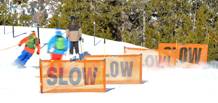
DENVER, Colo. – February 17, 2012– Colorado Ski Country USA (CSCUSA) and its 22 member resorts remind skiers and snowboarders to practice safe skiing and riding, know and follow Your Responsibility Code, be aware of surroundings and obey terrain closures.
“Guest safety is always the number one priority of our members,” explained Melanie Mills, CSCUSA president and CEO. “President’s Day weekend is a popular time to go skiing, and our resorts are doing absolutely everything they can to make sure guests are safe and have an enjoyable time on the slopes during this busy weekend.”
Individual skier and snowboarder responsibility is the foundation for safe skiing. Loveland Ski Area assistant patrol director and CSCUSA Ski Patroller of the Year, Joey Riefenberg, stresses the importance of being aware of your surroundings, “Skiers and snowboarders need to be proactive about safety, pay attention to who is skiing around you and always look downhill. Go slow and give yourself time to stop. Know that little kids are out and about and need a wide berth, watch where the flows are.”
CSCUSA member resorts across the state are taking extra measures to provide safe skiing environments, including constantly reassessing conditions. “Resorts are working super hard to make sure it’s safe. Everyone is super conscientious of that, and the snowpack,” said Riefenberg. “It’s a funny snowpack this year, really odd, and resorts are on alert, busy knocking all the air out of the snowpack and making sure everything is safe.”
Skiers and snowboarders are also reminded to obey all signage and be especially alert to obeying terrain closures. As snow continues to fall in Ski Country, resorts will open more terrain as conditions safely allow. “We’d love to open everything but things are closed for a reason, because it’s unsafe for you and unsafe for those who have to rescue you,” Riefenberg explained. “Nothing is being saved, we want everyone to have fun, but be safe doing it.”
Ultimately, it is the responsible behavior of skiers and riders that make the slopes safe. Knowing the nationally recognized Your Responsibility Code is crucial to skier and rider responsibility. Referred to simply as The Code, it is comprised of seven principles that collectively outline on-mountain skier etiquette and safe skiing practices.
Responsibilities within The Code include:
Image via Wikipedia
- Always stay in control, and be able to stop or avoid other people or objects.
- People ahead of you have the right of way. It is your responsibility to avoid them.
- You must not stop where you obstruct a trail, or are not visible from above.
- Whenever starting downhill or merging into a trail, look uphill and yield to others.
- Always use devices to help prevent runaway equipment.
- Observe all posted signs and warnings. Keep off closed trails and out of closed areas.
- Prior to using any lift, you must have the knowledge and ability to load, ride and unload safely.
CSCUSA also reminds skiers, snowboarders and other snowsports enthusiasts heading into the backcountry to check with the Colorado Avalanche Information Center (CAIC) on the magnitude and nature of avalanche hazard they may encounter, do not venture out alone, and have proper equipment and education for the conditions. “Backcountry avalanche danger right now is considerable,” states Ethan Greene, director of CAIC. “With the holiday weekend there’s going to be powder snow and nice weather, but don’t be fooled that the hazard is anything less than very serious.”
More information on backcountry conditions can be found at the CAIC website, www.avalanche.state.co.us or by calling 303-499-9650.

Skier/Boarder Fatalities 2011-2012 Ski Season 2/15/12
Posted: February 29, 2012 Filed under: Ski Area | Tags: Fatalities, helmet, Rock climbing, Ski, ski area, Ski Resort, skiing, Snowboard, snowboarding, Sport, Sports, Vail Colorado, Winter sport, winter sports Leave a commentThis list is not guaranteed to be accurate. The information is found from web searches and news dispatches. If you have a source for information on any fatality please leave a comment.
If this information is incorrect or incomplete please let me know. This is up to date as of February 15, 2012. Thanks.
|
# |
Date |
Resort |
Age |
Skier Ability |
Ski/ Tele /Boarder |
Reference |
|
|
1 |
11/18/2011 |
62 |
Skier |
Yes |
|||
|
2 |
11/18/2011 |
Breckenridge |
19 |
Expert |
Boarder |
Yes |
|
|
3 |
11/27/2011 |
Mountain High ski resor |
23 |
Beginner |
Boarder |
Yes |
|
|
4 |
12/18/2011 |
Sugar Bowl ski resort |
7 |
Expert |
Skier |
|
|
|
5 |
1/4/2012 |
Ski Ward |
19 |
Expert |
Skier |
||
|
6 |
1/11/2012 |
Ski Apache |
29 |
Skier |
No |
||
|
7 |
1/12/2012 |
Sugarloaf ski resort |
41 |
Skier |
Yes |
||
|
8 |
1/14/2012 |
Silverton Mountain Ski Area |
25 |
Expert |
Skier |
||
|
9 |
1/17/2012 |
Heavenly Mountain Resort |
34 |
Boarder |
Yes |
||
|
10 |
1/18/2012 |
Aspen Highlands |
30 |
Boarder |
Yes |
||
|
11 |
1/18/2012 |
Mt. Hood Meadows Ski Resort |
15 |
Boarder |
No |
||
|
12 |
1/19/2012 |
Park City |
29 |
Boarder |
Yes |
||
|
13 |
1/20/2012 |
Copper Mountain |
51 |
Yes |
|||
|
14 |
1/20/2012 |
Whiteface Mountain |
25 |
Yes |
|||
|
15 |
1/21/2012 |
Vail |
13 |
Expert |
Skier |
||
|
16 |
1/22/2012 |
Winter Park |
28 |
Expert |
Skier |
||
|
17 |
1/24/2012 |
Steamboat Ski Area |
32 |
Boarder |
|||
|
18 |
1/24/2012 |
Taos Ski Valley |
60 |
Skier |
|||
|
19 |
1/25/2012 |
Keystone Ski Area |
54 |
Skier |
|||
|
20 |
1/27/2012 |
Mt. Hood Skibowl |
17 |
Boarder |
|||
|
21 |
1/29/2012 |
Canyons Ski Resort |
19 |
||||
|
22 |
1/30/2012 |
Seven Springs Mountain Resort |
36 |
Skier |
|||
|
27 |
1/31/2012 |
Solitude Ski Resort |
74 |
Skier |
No |
||
|
23 |
2/1/2012 |
Squaw Valley |
51 |
Skier |
|||
|
26 |
2/4/2012 |
Sugarbush Resort |
41 |
Skier |
Yes |
||
|
33 |
2/4/2012 |
Ski Windham Mountain Resor |
54 |
Skier |
|||
|
24 |
2/5/2012 |
Keystone Ski Area |
58 |
Skier |
No |
||
|
25 |
2/5/2012 |
Ski Windham Mountain Resort |
54 |
Skier |
|||
|
30 |
2/6/2012 |
Mount Snow |
33 |
||||
|
28 |
2/8/2012 |
Vail |
37 |
Yes |
|||
|
29 |
2/9/2012 |
Keystone Ski Area |
72 |
Yes |
|||
|
31 |
2/11/2012 |
Jay Peak Resort |
29 |
Boarder |
Yes |
||
|
32 |
2/11/2012 |
Terry Peak Ski Area |
24 |
Skier |
No |
What do you think? Leave a comment.
If you like this let your friends know or post it on FB, Twitter or Linkedin
Copyright 2012 Recreation Law (720) Edit Law
Twitter: RecreationLaw
Facebook: Rec.Law.Now
Facebook Page: Outdoor Recreation & Adventure Travel Law
#RecreationLaw, #@RecreationLaw, #Cycling.Law #Fitness.Law, #Ski.Law, #Outside.Law, #Recreation.Law, #Recreation-Law.com, #Outdoor Law, #Recreation Law, #Outdoor Recreation Law, #Adventure Travel Law, #law, #Travel Law, #Jim Moss, #James H. Moss, #Attorney at Law, #Tourism, #Adventure Tourism, #Rec-Law, #Rec-Law Blog, #Recreation Law, #Recreation Law Blog, #Risk Management, #Human Powered, #Human Powered Recreation,# Cycling Law, #Bicycling Law, #Fitness Law, #Recreation-Law.com, #Backpacking, #Hiking, #Mountaineering, #Ice Climbing, #Rock Climbing, #Ropes Course, #Challenge Course, #Summer Camp, #Camps, #Youth Camps, #Skiing, #Ski Areas, #Negligence, #Snowboarding, #RecreationLaw, #@RecreationLaw, #Cycling.Law #Fitness.Law, #SkiLaw, #Outside.Law, #Recreation.Law, #RecreationLaw.com, #OutdoorLaw, #RecreationLaw, #OutdoorRecreationLaw, #AdventureTravelLaw, #Law, #TravelLaw, #JimMoss, #JamesHMoss, #AttorneyatLaw, #Tourism, #AdventureTourism, #RecLaw, #RecLawBlog, #RecreationLawBlog, #RiskManagement, #HumanPowered, #HumanPoweredRecreation,# CyclingLaw, #BicyclingLaw, #FitnessLaw, #RecreationLaw.com, #Backpacking, #Hiking, #Mountaineering, #IceClimbing, #RockClimbing, #RopesCourse, #ChallengeCourse, #SummerCamp, #Camps, #YouthCamps, #Skiing, #Ski Areas, #Negligence, #Snowboarding, sport and recreation laws, ski law, cycling law, Colorado law, law for recreation and sport managers, bicycling and the law, cycling and the law, ski helmet law, skiers code, skiing accidents, #Vail, #Breckenridge, #Mountain High Ski Resort, #Ski Ward, #Sugarloaf, #Silverton, Ski Apache, #Sugarloaft, #Heavenly, #Aspen, Mt Hood, Park City, #Copper, #Whiteface, Winter Park, #Steamboat, #Taos, #Keystone, #Canyons, Seven Springs, #Solitude, Ski Windham, Mount Snow, Jay Peak Terry Peak,
WordPress Tags: Skier,Boarder,Fatalities,Season,information,news,February,Thanks,Date,Resort,Tele,Helmet,Reference,Vail,Breckenridge,Expert,Mountain,High,Beginner,Sugar,Bowl,Ward,Apache,Sugarloaf,Silverton,Area,Aspen,Highlands,Meadows,Park,Copper,Whiteface,Winter,Steamboat,Taos,Valley,AihrSt,Skibowl,Canyons,Seven,Springs,Solitude,Squaw,Sugarbush,Windham,Resor,Mount,ABqYPQ,Peak,Terry,Leave,Twitter,Linkedin,Recreation,Edit,RecreationLaw,Facebook,Page,Outdoor,Adventure,Travel,Blog,Outside,Moss,James,Attorney,Tourism,Risk,Management,Human,Rock,Ropes,Course,Challenge,Summer,Camp,Camps,Youth,Areas,Negligence,SkiLaw,OutdoorLaw,OutdoorRecreationLaw,AdventureTravelLaw,TravelLaw,JimMoss,JamesHMoss,AttorneyatLaw,AdventureTourism,RecLaw,RecLawBlog,RecreationLawBlog,RiskManagement,HumanPoweredRecreation,CyclingLaw,BicyclingLaw,FitnessLaw,RopesCourse,ChallengeCourse,SummerCamp,YouthCamps,Colorado,managers,accidents,Sugarloaft
How And Why Americans Engage With Winter Sports Brands: Research Reveals Social Networking Plays A Major Role In Activity
Posted: February 23, 2012 Filed under: Skiing / Snow Boarding | Tags: Harris Interactive, ski area, skiing, snowboarding, social media, Winter sport, winter sports, X Games Leave a comment
Nearly Half of Winter Sports Participants Recommend Image via Wikipedia Products or Brands to Peers |
Slightly over one in five American adults (21 percent) revealed that they ever participate in any winter sport, according to new research released from IMRE Sports, and conducted on their behalf by Harris Interactive. Among those who ever participate in winter sports, 47 percent make recommendations to their peers about their favorite winter sports products or brands.The research also indicated that among those who ever participate in winter sports, 74 percent use social media sites. Interestingly enough, of that 74 percent, 84 percent utilize the platform to follow brands.Harris Interactive conducted this survey online among 2,292 adult Americans ages 18 and older between December 19 and 21, 2011. The research was spearheaded by the Maryland-based sports marketing agency, IMRE Sports.Coupons and Giveaways atop the type of information Americans prefer from brands via social media channelsThe type of information Americans prefer to receive from brands through social media sites (e.g., Facebook, Twitter) reveals a variety of trends that brands can leverage via promotions and advertising. The research revealed that even more opportunity lies among those Americans who have ever participated in winter sports.Among those who use social media sites and who ever participate in winter sports, coupons (49 percent) and giveaways (41 percent) are the most popular types of information users would prefer to receive from the brands they follow or connect with via social media sites.The research revealed the following statistics among adult Americans who used social media sites, as well as those who used social media sites and ever participated in winter sports:Types of Information / Use social media sites / Use social media sites and participate in winter sportsCoupons, sales or discounts / 45% / 49%
|

Leitner-Poma will be building the new WiFi enabled Gondola at Vail
Posted: February 2, 2012 Filed under: Ski Area | Tags: Colorado, Gondola, Grand Junction, Leitner-Poma, Outdoor recreation, ski area, skiing, Vail, Vail Colorado, Wi-Fi Leave a comment
Image via Wikipedia
Good job Tom!
Leitner-Poma just announced it got the contract to build the new gondola at the Vail Ski area. See Leitner-Poma to build the state-of-the-art gondola in Vail to read the announcement. See Vail installing new Gondolas for the 50th Anniversary with WiFi for more information about the Gondola and Vail’s decision to put the new lift in.
Heated seats, Kenwood radio and Wi-Fi will be in each gondola cabin. Where else but Vail would this even be considered! “Like nothing on earth” will take on a new meaning.
The gondola will be ready for the 2012-2013 ski season which will also be Vail’s 50th anniversary.
What do you think? Leave a comment.
If you like this let your friends know or post it on FB, Twitter or LinkedIn
Copyright 2012 Recreation Law (720) Edit Law
Twitter: RecreationLaw
Facebook: Rec.Law.Now
Facebook Page: Outdoor Recreation & Adventure Travel Law
Mobile Site: http://m.recreation-law.com
#RecreationLaw, #@RecreationLaw, #Cycling.Law #Fitness.Law, #Ski.Law, #Outside.Law, #Recreation.Law, #Recreation-Law.com, #Outdoor Law, #Recreation Law, #Outdoor Recreation Law, #Adventure Travel Law, #law, #Travel Law, #Jim Moss, #James H. Moss, #Attorney at Law, #Tourism, #Adventure Tourism, #Rec-Law, #Rec-Law Blog, #Recreation Law, #Recreation Law Blog, #Risk Management, #Human Powered, #Human Powered Recreation,# Cycling Law, #Bicycling Law, #Fitness Law, #Recreation-Law.com, #Backpacking, #Hiking, #Mountaineering, #Ice Climbing, #Rock Climbing, #Ropes Course, #Challenge Course, #Summer Camp, #Camps, #Youth Camps, #Skiing, #Ski Areas, #Negligence, #Snowboarding, #RecreationLaw, #@RecreationLaw, #Cycling.Law #Fitness.Law, #SkiLaw, #Outside.Law, #Recreation.Law, #RecreationLaw.com, #OutdoorLaw, #RecreationLaw, #OutdoorRecreationLaw, #AdventureTravelLaw, #Law, #TravelLaw, #JimMoss, #JamesHMoss, #AttorneyatLaw, #Tourism, #AdventureTourism, #RecLaw, #RecLawBlog, #RecreationLawBlog, #RiskManagement, #HumanPowered, #HumanPoweredRecreation,# CyclingLaw, #BicyclingLaw, #FitnessLaw, #RecreationLaw.com, #Backpacking, #Hiking, #Mountaineering, #IceClimbing, #RockClimbing, #RopesCourse, #ChallengeCourse, #SummerCamp, #Camps, #YouthCamps, #Skiing, #Ski Areas, #Negligence, #Snowboarding, sport and recreation laws, ski law, cycling law, Colorado law, law for recreation and sport managers, bicycling and the law, cycling and the law, ski helmet law, skiers code, skiing accidents, #Vail, #Leitner-Poma, #Gondola, #lift, Chair Lift, Grand Junction,
WordPress Tags: Leitner,Poma,WiFi,Gondola,Vail,area,announcement,Gondolas,Anniversary,information,decision,Kenwood,radio,cabin,Where,earth,Leave,Twitter,LinkedIn,Recreation,Edit,RecreationLaw,Facebook,Page,Outdoor,Adventure,Travel,Blog,Mobile,Site,Outside,Moss,James,Attorney,Tourism,Risk,Management,Human,Rock,Ropes,Course,Challenge,Summer,Camp,Camps,Youth,Areas,Negligence,SkiLaw,OutdoorLaw,OutdoorRecreationLaw,AdventureTravelLaw,TravelLaw,JimMoss,JamesHMoss,AttorneyatLaw,AdventureTourism,RecLaw,RecLawBlog,RecreationLawBlog,RiskManagement,HumanPoweredRecreation,CyclingLaw,BicyclingLaw,FitnessLaw,RopesCourse,ChallengeCourse,SummerCamp,YouthCamps,Colorado,managers,helmet,accidents,Chair,Lift,Grand,Junction
Vail installing new Gondolas for the 50th Anniversary with WiFi
Posted: January 7, 2012 Filed under: Ski Area | Tags: Adventure travel, Chair Lift, Gondola, ski area, Ski Resort, Vail Leave a commentLoading other lifts with backpack and laptop should get exciting…..
Vail has announced it will be replacing the Vista Bahn Express Lift (#16) in Vail Village with a new gondola. Lift capacity will be increased by 40%.
The new gondola still needs approval from the Town of Vail and from the USFS, however I don’t expect that to be a problem.
Wow.
What do you think? Leave a comment.
Copyright 2011 Recreation Law (720) Edit Law
Twitter: RecreationLaw
Facebook: Rec.Law.Now
Facebook Page: Outdoor Recreation & Adventure Travel Law
Mobile Site: http://m.recreation-law.com
#RecreationLaw, #@RecreationLaw, #Cycling.Law #Fitness.Law, #Ski.Law, #Outside.Law, #Recreation.Law, #Recreation-Law.com, #Outdoor Law, #Recreation Law, #Outdoor Recreation Law, #Adventure Travel Law, #law, #Travel Law, #Jim Moss, #James H. Moss, #Attorney at Law, #Tourism, #Adventure Tourism, #Rec-Law, #Rec-Law Blog, #Recreation Law, #Recreation Law Blog, #Risk Management, #Human Powered, #Human Powered Recreation,# Cycling Law, #Bicycling Law, #Fitness Law, #Recreation-Law.com, #Backpacking, #Hiking, #Mountaineering, #Ice Climbing, #Rock Climbing, #Ropes Course, #Challenge Course, #Summer Camp, #Camps, #Youth Camps, #Skiing, #Ski Areas, #Negligence, #Snowboarding, #RecreationLaw, #@RecreationLaw, #Cycling.Law #Fitness.Law, #SkiLaw, #Outside.Law, #Recreation.Law, #RecreationLaw.com, #OutdoorLaw, #RecreationLaw, #OutdoorRecreationLaw, #AdventureTravelLaw, #Law, #TravelLaw, #JimMoss, #JamesHMoss, #AttorneyatLaw, #Tourism, #AdventureTourism, #RecLaw, #RecLawBlog, #RecreationLawBlog, #RiskManagement, #HumanPowered, #HumanPoweredRecreation,# CyclingLaw, #BicyclingLaw, #FitnessLaw, #RecreationLaw.com, #Backpacking, #Hiking, #Mountaineering, #IceClimbing, #RockClimbing, #RopesCourse, #ChallengeCourse, #SummerCamp, #Camps, #YouthCamps, #Skiing, #Ski Areas, #Negligence, #Snowboarding, #Vail, #gondola, #TownofVail, #VistaBahn
WordPress Tags: Vail,Gondolas,Anniversary,WiFi,backpack,laptop,Vista,Bahn,Lift,Village,approval,Town,USFS,Leave,Recreation,Edit,Twitter,RecreationLaw,Facebook,Page,Outdoor,Adventure,Travel,Blog,Mobile,Site,Outside,Moss,James,Attorney,Tourism,Risk,Management,Human,Rock,Ropes,Course,Challenge,Summer,Camp,Camps,Youth,Areas,Negligence,SkiLaw,OutdoorLaw,OutdoorRecreationLaw,AdventureTravelLaw,TravelLaw,JimMoss,JamesHMoss,AttorneyatLaw,AdventureTourism,RecLaw,RecLawBlog,RecreationLawBlog,RiskManagement,HumanPoweredRecreation,CyclingLaw,BicyclingLaw,FitnessLaw,RopesCourse,ChallengeCourse,SummerCamp,YouthCamps,TownofVail,VistaBahn,gondola
New Snow Groover, ecofriendly starting production
Posted: December 8, 2011 Filed under: Skiing / Snow Boarding | Tags: eco groomer, grooming, ski area, snow grooming Leave a commentThis should gently shake up the ski grooming industry!
The Denver CO, based company Eco-Groomer has started production on 60 of its new eco-groomers. Components are going to be manufactured by several different companies and final construction will be done someplace in the Midwest. The actual unit is not a complete snow groomer but outrigger units that can groom the snow on their own and can be attached to what appears to be most groomers.
The eco-part of the groomer is from the terrain the groomer is able to cover. The Eco-groomer has two outriggers that will increase the terrain groomed by what appears to be almost 200%. This increase in terrain coverage by one groomer translates into a fuel savings of 35%.
What do you think? Leave a comment.
Copyright 2011 Recreation Law (720) Edit Law, Recreation.Law@Gmail.com
Twitter: RecreationLaw
Facebook: Rec.Law.Now
Facebook Page: Outdoor Recreation & Adventure Travel Law
Mobile Site: http://m.recreation-law.com
#RecreationLaw, #@RecreationLaw, #Cycling.Law #Fitness.Law, #Ski.Law, #Outside.Law, #Recreation.Law, #Recreation-Law.com, #Outdoor Law, #Recreation Law, #Outdoor Recreation Law, #Adventure Travel Law, #law, #Travel Law, #Jim Moss, #James H. Moss, #Attorney at Law, #Tourism, #Adventure Tourism, #Rec-Law, #Rec-Law Blog, #Recreation Law, #Recreation Law Blog, #Risk Management, #Human Powered, #Human Powered Recreation,# Cycling Law, #Bicycling Law, #Fitness Law, #Recreation-Law.com, #Backpacking, #Hiking, #Mountaineering, #Ice Climbing, #Rock Climbing, #Ropes Course, #Challenge Course, #Summer Camp, #Camps, #Youth Camps, #Skiing, #Ski Areas, #Negligence, #Snowboarding, #RecreationLaw, #@RecreationLaw, #Cycling.Law #Fitness.Law, #SkiLaw, #Outside.Law, #Recreation.Law, #RecreationLaw.com, #OutdoorLaw, #RecreationLaw, #OutdoorRecreationLaw, #AdventureTravelLaw, #Law, #TravelLaw, #JimMoss, #JamesHMoss, #AttorneyatLaw, #Tourism, #AdventureTourism, #RecLaw, #RecLawBlog, #RecreationLawBlog, #RiskManagement, #HumanPowered, #HumanPoweredRecreation,# CyclingLaw, #BicyclingLaw, #FitnessLaw, #RecreationLaw.com, #Backpacking, #Hiking, #Mountaineering, #IceClimbing, #RockClimbing, #RopesCourse, #ChallengeCourse, #SummerCamp, #Camps, #YouthCamps, #Skiing, #Ski Areas, #Negligence, #Snowboarding, #snowgrooming, #eco-groomer, #groomer,
Technorati Tags: Groover,production,industry,Denver,Groomer,Components,construction,Midwest,unit,outrigger,units,terrain,outriggers,coverage,savings,Leave,Recreation,Edit,Gmail,Twitter,RecreationLaw,Facebook,Page,Outdoor,Adventure,Travel,Blog,Mobile,Site,Outside,Moss,James,Attorney,Tourism,Risk,Management,Human,Rock,Ropes,Course,Challenge,Summer,Camp,Camps,Youth,Areas,Negligence,SkiLaw,OutdoorLaw,OutdoorRecreationLaw,AdventureTravelLaw,TravelLaw,JimMoss,JamesHMoss,AttorneyatLaw,AdventureTourism,RecLaw,RecLawBlog,RecreationLawBlog,RiskManagement,HumanPoweredRecreation,CyclingLaw,BicyclingLaw,FitnessLaw,RopesCourse,ChallengeCourse,SummerCamp,YouthCamps,groomers
Windows Live Tags: Groover,production,industry,Denver,Groomer,Components,construction,Midwest,unit,outrigger,units,terrain,outriggers,coverage,savings,Leave,Recreation,Edit,Gmail,Twitter,RecreationLaw,Facebook,Page,Outdoor,Adventure,Travel,Blog,Mobile,Site,Outside,Moss,James,Attorney,Tourism,Risk,Management,Human,Rock,Ropes,Course,Challenge,Summer,Camp,Camps,Youth,Areas,Negligence,SkiLaw,OutdoorLaw,OutdoorRecreationLaw,AdventureTravelLaw,TravelLaw,JimMoss,JamesHMoss,AttorneyatLaw,AdventureTourism,RecLaw,RecLawBlog,RecreationLawBlog,RiskManagement,HumanPoweredRecreation,CyclingLaw,BicyclingLaw,FitnessLaw,RopesCourse,ChallengeCourse,SummerCamp,YouthCamps,groomers
WordPress Tags: Groover,production,industry,Denver,Groomer,Components,construction,Midwest,unit,outrigger,units,terrain,outriggers,coverage,savings,Leave,Recreation,Edit,Gmail,Twitter,RecreationLaw,Facebook,Page,Outdoor,Adventure,Travel,Blog,Mobile,Site,Outside,Moss,James,Attorney,Tourism,Risk,Management,Human,Rock,Ropes,Course,Challenge,Summer,Camp,Camps,Youth,Areas,Negligence,SkiLaw,OutdoorLaw,OutdoorRecreationLaw,AdventureTravelLaw,TravelLaw,JimMoss,JamesHMoss,AttorneyatLaw,AdventureTourism,RecLaw,RecLawBlog,RecreationLawBlog,RiskManagement,HumanPoweredRecreation,CyclingLaw,BicyclingLaw,FitnessLaw,RopesCourse,ChallengeCourse,SummerCamp,YouthCamps,groomers
Wright et al. v. Mt. Mansfield Lift, Inc., et al. 96 F. Supp. 786; 1951 U.S. Dist. LEXIS 2524
Posted: October 24, 2011 Filed under: Legal Case, Ski Area, Vermont | Tags: Federal Supplement, Mansfield, Mount Mansfield, ski area, skiing, Skiing / Snow Boarding, United States, Vermont, Wright Leave a commentWright et al. v. Mt. Mansfield Lift, Inc., et al. 96 F. Supp. 786; 1951 U.S. Dist. LEXIS 2524
Civ. A. No. 1101
United States District Court for the District of Vermont
96 F. Supp. 786; 1951 U.S. Dist. LEXIS 2524
April 16, 1951
Counsel: [**1]
Justin G. Cavanaugh and William H. Cooney, Springfield, Mass., for plaintiffs Florine Wright and Robert B. Wright, Jr.
McNamara & Larrow, Burlington, Vt., Frank G. Sterritte, New York City, for defendants Mt. Mansfield Lift, Inc. and Mt. Mansfield Hotel, Inc.
Clifton G. Parker, Morrisville, Vt., for defendant Stowe-Mansfield Ass’n, Inc.
OPINION BY:
GIBSON
OPINION:
This is an action for damages resulting from a skiing accident brought by Florine and Robert B. Wright, Jr., husband and wife, of Springfield, Mass., against the Mt. Mansfield Lift, Inc., Mt. Mansfield Association, Inc. The case was heard on its merits at the February term, 1951, U.S. District Court, District of Vermont. At the conclusion of the plaintiff’s case, each of the three defendants filed a motion for a directed verdict. The motion, in each instance, is hereby granted.
The plaintiff, Mrs. Florine Wright, in her complaint, alleged that on January 23, 1949, she was skiing at the Mt. Mansfield ski area in Stowe, Vermont; that she had paid the required fee to one of the defendants, Mt. Mansfield Lift, Inc., hereinafter called Lift; had been transported to the top of Mt. Mansfield by this chair lift and [**2] having reached the top, started to ski down a marked trail; that on her way down the mountain, at a certain point on a ski trail, she ran against or collided with a snow-covered stump of a tree and thereby caused a serious fracture of her left leg.
The evidence viewed in the light most favorable to the plaintiff revealed the following situation. Stowe, Vermont, has become one of the largest winter sports areas of the eastern United States. The area of [*788] Mt. Mansfield is a snow bowl. In fact, the slogan of the area is ‘There is always snow in Stowe, you know’. Lift, Inc. was a Vermont corporation which owned or controlled land running up Mt. Mansfield on which it had erected a modern chair lift for skiers, the lift itself being better than a mile long.
In January, 1949, those who desired to ski down the trails of Mt. Mansfield in this area purchased a ticket at the bottom of the mountain where the lift commenced, the ticket costing 75 cents for a single ride up the mountain. After purchasing the ticket, the prospective skier stood in line and as the skier’s turn came, sat in the ski chair, generally with skis on. The skier was then hoisted better than 2,000 feet above the [**3] elevation of the bottom of the ski lift and deposited at the top of the ski lift at the top of Mt. Mansfield.
At the top of the ski lift, there was what is known as the Octogon House, made of stone, in which was served refreshments and also in which was a blackboard or chart on which were listed the particular trails which were open for skiing.
There were also located in this general area at the top of the lift signs pointing to the starting points of various trails down the mountain, each trail bearing a different name, such as Nosedive, Skimeister, Toll Road, etc. Most of these trails started on land that was owned or controlled by Lift, Inc. As these trails wended their way down Mt. Mansfield, they twisted their way, on occasion, onto lands owned or controlled by others. Defendant Mt. Mansfield Hotel, Inc., hereinafter called Hotel, Inc., at the time of the accident, owned and operated a hotel which at that time cared for approximately 20 guests. Most of these guests were ski enthusiasts. The Skimeister trail, as it came down Mt. Mansfield, came onto land of the Hotel, Inc. The Skimeister trail had been in operation for many years before this accident with the full knowledge and [**4] approval of Hotel, Inc. The trails were areas cleared down the rough mountain side of Mt. Mansfield by cutting trees, by bulldozing and by other methods. The trails are of varying width, some of trails being much more crooked than others.
The maintenance of the trails in the summertime consisted of mowing and cutting the brush and trees and of widening existing trails. Various residents, interested innkeepers in and about Stowe, men from the Forestry Department of the State of Vermont and workers provided by Lift, Inc., Hotel, Inc., and other organizations interested in skiing, did the summer maintenance work on these trails.
Generally speaking, there were three classes of trails on Mt. Mansfield which those who used the ski lift might choose. There was one class of trails known as expert trails. To maneuver these trails required a high degree of skiing ability. The second class of trails were known as the intermediate trails. These trails were less hazardous and less difficult than the expert trails, but one to negotiate them safely needed to be a fairly good skier. The third class of trails were known as the novice trails. These trails were for those who had skied but little. [**5]
During the winter of 1948-1949, the policing of the trails was done by an association known as the Mt. Mansfield Ski Patrol. This ski patrol consisted of five or six good skiers who were paid by the Mt. Mansfield Ski Club. This club, in turn, raised its funds by contributions from individuals, corporations, innkeepers and the like. Its total budget for the winter season of 1948-1949 was in the vicinity of $ 3,000. Of this, about $ 1,000 was contributed by the Hotel, Inc. and another substantial sum by the Lift, Inc.
The duties of this Ski Patrol were many. It was the Patrol’s duty each day to inspect each trail to determine which trails were suitable for skiing and which were not. Having done this, the patrol would see to it that the blackboard in the Octagon House which listed the trails open for skiing would properly list those that were open for skiing on this particular day. The patrol would also see to it that such trails as were adjudged by it as unsafe for skiing were closed off by chain or rope and that warning signs were put up at the start of the trail and at other places warning that this particular trail was not open.
In addition, members of the patrol skied down the [**6] trails [*789] and kept their eyes open for any unsafe conditions that appeared on open trails. If there were any, patrol members took steps to put up proper warning flags or proper safeguards or notified officials of the lift that there was a dangerous spot at a certain place on a certain trail so that steps would be taken immediately either to erect proper warning notices or to close off the trail.
The main purpose of the members of the ski patrol was to be available in case of any injury to any skier. Ski patrol members were trained in first aid and had equipment staged at various places on Mt. Mansfield for the purpose of removing injured skiers safely and expeditiously to the bottom of the mountain and if necessary to a hospital.
On January 23, 1949, Mr. and Mrs. Wright, accompanied by Mr. Abrams, went from Fayston, Vermont, where the Wrights were both working at this time, to Stowe, Vermont, for skiing purposes. Mr. Wright was an expert skier, having been certified as such, and was engaged as a ski instructor at the Mad River Valley ski project. Mrs. Wright had been skiing for 2-3 years and had taken lessons from her husband and others. She was not what is known as an expert [**7] skier, but was in what is generally termed as the intermediate ski class. Mr. Abrams was not as good a skier as Mr. and Mrs. Wright, but was generally able to negotiate intermediate trails.
On the day in question, this party arrived at the foot of Mt. Mansfield around noon. Mrs. Wright and Mr. Abrams purchased a ticket for 75 cents apiece to ride to the top of Mt. Mansfield on the ski lift. Mr. Wright being a professional was not required to buy a ticket. This was a courtesy extended by the lift to professional skiers. In due time, the party arrived at the top of Mt. Mansfield via the lift. Mr. Wright checked to see what trails were open and the group then went to the start of the Toll Road trail. The Toll Road trail down Mt. Mansfield is a gravelled road used by automobiles during the summertime. It is about four miles in length and one who goes down the Toll Road all the way, comes out at a point about two miles from the bottom of the lift and to get back to the lift, has to either walk or go by taxi. This Toll Road is classified as a novice trail. The party skied down the Toll Road until they came to a cut-off from the Toll Road, known as the 5th Avenue Cut-off. The party then [**8] turned onto this cut-off and skied down the cut-off until they arrived at the Skimeister trail. They then swung down the Skimeister trail until they came to the head of an open slope known as the T-bar slope, thence down that slope to the foot of the mountain. In coming down the mountain, Mr. Wright would lead the way, followed by Mrs. Wright and then followed in turn by Mr. Abrams. They would ski a distance of 200-300 feet, more or less, then stop and visit and then after resting a little, Mr. Wright would start off again followed in due time by Mrs. Wright and Mr. Abrams. Mr. Wright would ski as far as he thought wise on a given lap, stop and Mrs. Wright would come up behind him, stop, and Mr. Abrams the same. The first trip down these trails on Mr. Mansfield was uneventful. The party then got back onto the lift, again Mrs. Wright and Mr. Abrams purchasing tickets for 75 cents and were conveyed to the top of Mr. Mansfield once more.
The three of them started once again down the identical route they had taken on the first descent; down the Toll Raod to the 5th Avenue Cut-off, down the 5th Avenue Cut-off to the Skimeister trail, down the Skimeister trail to the top of the T-bar and [**9] the open slopes. The 5th Avenue Cut-off is just what the name implies, a cut-off from the Toll Road trail to another trail. It was an easy trail, a novice trail. The Skimeister trail, on the other hand, was an intermediate trail. The second trip down the mountain by this party was uneventful until the party came onto the Skimeister trail. There, a couple of hundred feet from where the Skimeister trail ran into the open slope and the T-bar lift, the party stopped for a rest and visit. Then Mr. Wright, as was the procedure on this particular day, skied down about 120 [*790] feet or so to within sight of the head of the T-bar lift, and also within sight of the hut called the Christienda hut, which is located near the top of the T-bar lift. He stopped and turned around and watched his wife come along. As Mrs. Wright began to approach him, she went into what is known as a snow-plow. This is a procedure used by skiers for stopping. It consists of turning the toes in to about an angle of 30 degrees each and putting more pressure on the inside runner of each ski. As she was snow-plowing to a stop, she suddenly fell and began to cry out in pain for help. Mr. Abrams, in the meantime, was [**10] standing at the spot they had last stopped. He then skied to the spot where Mrs. Wright had fallen.
Mr. Wright rushed up from a spot 15-20 feet away. Shortly a member of the ski patrol arrived with a toboggan. Mrs. Wright was in pain and was loaded onto the toboggan, tied onto the toboggan and thus taken down to the foot of the mountain and thence by automobile to the Morrisville Hospital.
The trail at the point of the accident was of good width and was more or less level land. It wasn’t hazardous or steep in any way at this spot. No stump showed above the snow. There was a smooth snow surface. Indeed the Skimeister trail had ample snow. The witness Abrams testified that at the point of the plaintiff’s fall, he got down and brushed the snow aside with his hand. He then found a stump 4-5 inches high from the ground- definitely a cut tree- no jagged edges. From the evidence one could infer that it was this obstacle that caused Mrs. Wright to fall and break her left leg.
From this recitation of the facts, as viewed in the light most favorable to the plaintiffs, it is apparent that there is no evidence of any nature that connects the defendant, Stowe-mansfield Association, Inc., with [**11] this case. Stowe-Mansfield Association, Inc. neither owned or controlled any of the land on which this accident happened. It was merely a promotional enterprise for the Stowe-Mansfield area. Indeed, the plaintiffs make no claim, that as the evidence stands, there is liability upon Stowe-Mansfield Association, Inc.
Therefore, a directed verdict on this defendant’s part is granted.
The situation is different, however, in regard to the Lift Company and the Hotel Company.
In the eyes of the law, the plaintiffs were invitees of the Lift and Hotel Companies. Whenever one makes such use of another’s premises as the owner intends he shall, or such as he is reasonably justified in understanding that the owner intended, this is an implied invitation to enter onto the land of anther. Wool v. Larner, 112 Vt. 431, 436, 26 A.2d 89.
The Lift Company invited the plaintiffs to the top of the lift. It maintained on its premises a record as to which trails were open and had signs on its property for the purpose of leading the plaintiffs to their choice of trail, in this case the Toll Road Trail. Once on the trail and heading down onto the Skimeister Trail, part of which was on land of the Hotel Company. [**12] This trail the Hotel Company had sanctioned for years. Indeed, the reason for each of the trails mentioned being open was to financially benefit both the Lift Company and the Hotel Company.
The duty owed the plaintiffs, invitees, by each of these two defendants was to advise them of any dangers which reasonable prudence would have foreseen and corrected. Slattery v. Marra Bros., 2 Cir., 186 F.2d 134, 136.
Skiing is a sport; a sport that entices thousands of people; a sport that requires an ability on the part of the skier to handle himself or herself under various circumstances of grade, boundary, mid-trail obstructions, corners and varied conditions of the snow. Secondly, it requires good judgment on the part of the skier and recognition of the existing circumstances and conditions. Only the skier knows his own ability to cope with a certain piece of trail. Snow, ranging from powder to ice, can be of infinite kinds. Breakable crust may be encountered where soft snow is expected. Roots and rocks may be hidden [*791] under a thin cover. A single thin stubble of cut brush can trip a skier in the middle of a turn. Sticky snow may follow a fast running surface without warning.
[**13] Skiing conditions may change quickly. What was, a short time before, a perfect surface with a soft cover on all bumps may fairly rapidly become filled with ruts, worn spots and other manner of skier created hazards.
The doctrine of volenti non fit injuria applies. One who takes part in such a sport accepts the dangers that inhere in it so far as they are obvious and necessary. Thus one who goes ice skating on a rink assumes the ordinary risks of the sport which includes inequalities of surface. Oberheim v. Pennsylvania Sports and Enterprises. 358 Pa. 62, 55 A.2d 766, 769; Shields v. Van-Kelton Amusement Corp., 228 N.Y. 396, 127 N.E. 261; McCullough v. Omaha Coliseum Corp., 144 Neb. 92, 12 N.W.2d 639, 643. One who goes to a swimming beach as an invitee accepts the dangers that inhere in it so far as they are obvious and necessary. McGraw v. District of Columbia, 3 App.D.C. 405, 25 L.R.A. 691, 692-693. A passenger who rides on a scenic railway and falls off, through no unusual action of the railway, may not recover. The passenger has placed himself in a position of obvious danger for the purpose of receiving the sensation caused by the sudden and violent motion of the car. He assumed [**14] the risk. Lumsden v. L. A. Thompson Scenic Railway Company, 130 App.Div. 209, 114 N.Y.S. 421, 423.
One who had participated in bobsledding and had followed that sport for some years assumes the risk attendant upon participation of that sport. The bobsled enthusiast knew that bobsled racing was a dangerous sport and could not recover for such injuries received. Clark v. State, 195 Misc. 581, 89 N.Y.S.2d 132, 139.
In this skiing case, there is no evidence of any dangers existing which reasonable prudence on the parts of the defendants would have foreseen and corrected. It isn’t as though a tractor was parked on a ski trail around a corner or bend without warning to skiers coming down. It isn’t as though on a trail that was open work was in progress of which the skier was unwarned. It isn‘t as though a telephone wire had fallen across the ski trail of which the defendant knew or ought to have known and the plaintiff did not know.
The trail at the point of the accident was smooth and covered with snow. There were no unexpected obstructions showing. The plaintiff, in hitting the snow-covered stump as she claims to have hit, was merely accepting a danger that inheres in the sport of skiing. [**15] To hold that the terrain of a ski trail down a mighty mountain, with fluctuation in weather and snow conditions that constantly change its appearance and slipperiness, should be kept level and smooth, free from holes or depressions, equally safe for the adult or the child, would be to demand the impossible. It cannot be that there is any duty imposed on the owner and operator of a ski slope that charges it with the knowledge of these mutations of nature and requires it to warn the public against such. Chief Justice Cardozo in the case of Murphy v. Steeplechase Amusement Co., Inc., 250 N.Y. 479, 166 N.E. 173, 174, discusses the law, which I hold to be applicable to ski accident cases and I quote:
‘Volenti non fit injuria. One who takes part in such a sport accepts the dangers that inhere in it so far as they are obvious and necessary, just as a fencer accepts the risk of a thrust by his antagonist or a spectator at a ball game the chance of contract with the ball. * * * The antics of the clown are not the paces of the cloistered cleric. The rough and boisterous joke, the horseplay of the crowd, evokes its own guffaws, but they are not the pleasures of tranquillity. The plaintiff was [**16] not seeking a retreat for meditation.
Visitors were tumbling about the belt to the merriment of onlookers when he made his choice to join them. He took the chance of a like fate, with whatever damage to his body might ensue from such a fall. The timorous may stay at home.
‘A different case would be here if the dangers inherent in the sport were obscure or unobserved. * * * Nothing happened to the plaintiff except what common [*792] experience tells us may happen at any time as the consequence of a sudden fall. Many a skater or a horseman can rehearse a tale of equal woe.’
The verdict is therefore directed for each defendant.
Neustadter v. Mountain Creek Resort, Inc., 2008 N.J. Super. Unpub. LEXIS 1584
Posted: October 16, 2011 Filed under: Assumption of the Risk, Legal Case, New Jersey, Ski Area, Skiing / Snow Boarding | Tags: additionally, Assumption of risk, case-in-chief, correctly, essential element, expert testimony, failed to present, fence post, fencing, Hazard, hazardous, inflexible, involuntary dismissal, legitimate inferences, man-made, photographs, pole, practicable, reasonable time, reconstructed, Ski, ski area, Ski Resort, Skier, skiing, Slope, Snow, Snowboarders, sufficient evidence, Trail Leave a commentNeustadter v. Mountain Creek Resort, Inc., 2008 N.J. Super. Unpub. LEXIS 1584
Mark Neustadter and Katherine Neustadter, Plaintiffs-Appellants, v. Mountain Creek Resort, Inc., Defendant-Respondent.
DOCKET NO. A-5671-05T5
Superior Court of New Jersey, Appellate Division
2008 N.J. Super. Unpub. LEXIS 1584
September 11, 2007, Argued
February 15, 2008, Decided
NOTICE: NOT FOR PUBLICATION WITHOUT THE APPROVAL OF THE APPELLATE DIVISION.
PLEASE CONSULT NEW JERSEY RULE 1:36-3 FOR CITATION OF UNPUBLISHED OPINIONS.
SUBSEQUENT HISTORY: Certification denied by Neustadter v. Mountain Creek Resort, 195 N.J. 521, 950 A.2d 907, 2008 N.J. LEXIS 721 (2008)
PRIOR HISTORY: [*1]
On appeal from the Superior Court of New Jersey, Law Division, Sussex County, L-670-03.
CORE TERMS: pole, man-made, hazard, ski, skier, trail, sufficient evidence, involuntary dismissal, expert testimony, failed to present, fence post, fencing, slope, ski resort, assumption of risk, photographs, correctly, hazardous, skiing, snow, reconstructed, snowboarders, ski area, reasonable time, legitimate inferences, essential element, case-in-chief, additionally, practicable, inflexible
COUNSEL: John R. Lanza argued the cause for the appellants (Lanza & Lanza, LLP, attorneys; John R. Lanza, of counsel; Mr. Lanza and Kenneth W. Thomas, on the brief).
Samuel J. McNulty argued the cause for the respondent (Hueston McNulty, attorneys; Mr. McNulty, of counsel and on the brief).
JUDGES: Before Judges Skillman, Yannotti and LeWinn.
OPINION
PER CURIAM
Plaintiffs, husband and wife, appeal from the trial court’s grant of an involuntary dismissal at the end of their case seeking damages for injuries allegedly sustained by plaintiff-husband, Mark Neustadter (hereinafter “plaintiff”), in an accident on defendant’s premises, a ski resort.
On January 7, 2002, plaintiff, an acknowledged snowboarding expert, was injured while snowboarding at defendant’s resort when he collided with a post supporting orange netting on the slope. The gravamen of his negligence claim was that the post was so deeply embedded in snow, and of such an inflexible material, that it was immovable and took the full force of his body, resulting in a shattered knee.
At the conclusion of plaintiff’s case, the trial judge determined that plaintiff had not presented [*2] sufficient evidence to allow the jury reasonably to find liability on defendant’s part. The judge also concluded that plaintiff had failed to adduce any evidence to show the injury in question was caused by the collision with the identified fence post. Accordingly, the judge dismissed the complaint.
Plaintiff raises the following points on appeal:
POINT I: THE TRIAL COURT ERRED IN GRANTING DEFENDANTS’ [SIC] MOTION FOR AN INVOLUNTARY DISMISSAL PURSUANT TO R. 4:37-2(b)
A. AS TO THE MEDICAL EXPERT, DR. WEISS
B. AS TO THE LIABILITY EXPERT, MR. HANST
1. THE PHOTOGRAPHS
2. THE ALLEGED NET OPINION
POINT II: THE TRIAL COURT IMPROPERLY LIMITED THE EXPERT TESTIMONY OF DR. WEISS AND MR. HANST
POINT III: THE TRIAL COURT ERRED BY PERMITTING DEFENDANT TO CROSS-EXAMINE PLAINTIFF’S EXPERT WITH A DOCUMENT IT FAILED TO PRODUCE IN DISCOVERY
POINT IV: THE TRIAL COURT IMPROPERLY EXCLUDED THE INTRODUCTION OF PLAINTIFF’S MEDICAL BILLS INTO EVIDENCE
POINT V: THE TRIAL COURT SHOULD NOT HAVE PERMITTED DEFENDANT TO NAME A MEDICAL EXPERT AFTER THE CONCLUSION OF THE ARBITRATION
Having thoroughly reviewed the trial record, we are convinced the judge properly limited the testimony of plaintiff’s liability expert and correctly [*3] concluded that plaintiff had not presented sufficient evidence to allow the jury reasonably to find liability on defendant’s part. This conclusion makes it unnecessary to reach the other issues raised on appeal.
In his complaint, plaintiff claimed defendant “negligently, carelessly, and/or recklessly designed, constructed, supervised, operated and/or maintained the premises so as to create and/or allow a dangerous and hazardous condition to exist.” He set forth the “particulars” of defendant’s negligence as follows:
a) Defendant knew, or in the exercise of reasonable care should have known, that the unprotected pole was dangerous, and Defendant failed to warn Plaintiff of that condition;
b) Defendant failed to cover the pole with a material in order to protect Plaintiff from being injured should Plaintiff come into contact with the pole;
c) Defendant knew, or should have known, that the pole, if left open and exposed was likely to be dangerous to ski[ers] and snowboarders, and with such knowledge Defendant failed to cover the pole or use any other means to keep it safe for its business invitees;
d) Defendant failed to cover the pole with a protective covering for the protection of skiers [*4] and snowboarders; and
e) Defendant permitted the pole to be left unprotected and defective and dangerous knowing that the pole would necessarily pose a risk of harm to Plaintiff and other business invitees, skiers, and snowboarders.
Plaintiff proffered John H. Hanst as his liability expert. Hanst rendered a report on May 21, 2005. Other than his review of documents, Hanst’s opinions were based solely upon his one and only site visit to the ski resort on March 24, 2005, more than three years after plaintiff’s accident.
During that site visit Hanst “reconstructed” the accident with plaintiff and described the reconstruction in his report as follows: “We walked up the trail to the area where the incident occurred. The area was modestly changed. . . . A few of the fence posts have been covered with padding although the majority of them were not padded.” (Emphasis added). Hanst included photographs of the reconstructed accident scene in his report.
Defendant challenged Hanst’s report and testimony in an in limine motion. Defendant contended that Hanst described “conditions that were not those described by the Plaintiff. . . . H[is report] talk[ed] about a condition that did not exist and [wa]s [*5] not relevant or material to the case that w[ould] be before th[e] Court.”
In ruling on that motion, the trial judge found that Hanst’s report described conditions that were not in existence “on the date of [plaintiff’s] . . . accident. . . . They were at a [much later] time . . . when the conditions on the slope were not the same. Nobody can say they were the same.” (Emphasis added).
The judge limited Hanst’s testimony to “what conditions should exist on a ski slope and how the conditions on the day in question deviated, based upon the testimony of Mr. Neustadter.” The judge also ruled Hanst’s photographs of the reconstructed accident scene inadmissible because they “specifically show poles that are different from those that are described by Mr. Neustadter as existing in the area where he was injured on the day in question.” In the course of his ruling, the judge noted that Hanst’s report did not address plaintiff’s claim that “the poles had been in the snow too long and ice had formed around them and possibly they didn’t flex the way they should.”
At trial, plaintiff testified that he swerved to avoid a cluster of skiers ahead of him. This caused him to collide with a PVC pole, one to [*6] two inches in diameter, that was supporting orange mesh fencing erected to distinguish the expert trail from the novice trail.
At the conclusion of Hanst’s voir dire, the judge limited his qualification as an expert to the area of alpine skiing, and excluded him from giving expert testimony on the subject of “mountain management” since he had no experience in that field. The sum total of Hanst’s liability testimony was that a rigid pole was a “man-made hazard,” and the ski operator had an obligation to reduce or eliminate that hazard.
After plaintiff had completed presentation of his case-in-chief, defendant moved for involuntary dismissal of the complaint pursuant to Rule 4:37-2(b). The judge granted the motion finding that plaintiff failed to present sufficient evidence to establish liability under the Ski Statute, N.J.S.A. 5:13-1 to -11. The judge additionally found that plaintiff failed to present sufficient evidence to show that any negligence on the part of defendant was a proximate cause of his injury. On June 23, 2006, the judge entered an order memorializing his findings. This appeal followed.
Plaintiff argues that the judge erred by granting defendant’s motion for involuntary [*7] dismissal of their complaint. He maintains that defendant had a duty under the Ski Statute to remove any “obvious man-made hazard” from the premises. Plaintiff contends that he presented evidence showing that he struck a man-made fence pole. He contends further that, because his evidence showed that the post was rigid, thereby constituting a “hazard,” the jury should have been permitted to determine whether defendant failed to discharge its duty to remove the pole. We disagree.
Rule 4:37-2(b) provides that, upon completion of a plaintiff’s case-in-chief,
the defendant . . . may move for dismissal of the action or of any claim on the ground that upon the facts and upon the law the plaintiff has shown no right to relief. . . . [S]uch motion shall be denied if the evidence, together with the legitimate inferences therefrom, could sustain a judgment in plaintiff’s favor.
In other words, dismissal is appropriate where the court determines that no rational jury could conclude from the evidence that an essential element of plaintiff’s case is present. “The trial court is not concerned with the worth, nature or extent . . . of the evidence, but only with its existence, viewed most favorably to [*8] the party opposing the motion.” Dolson v. Anastasia, 55 N.J. 2, 5-6, 258 A.2d 706 (1969). Where, as here, plaintiff failed to adduce expert testimony on the essential element of liability, such failure will warrant dismissal of his personal injury action.
The Ski Statute clearly defines the respective liabilities of skiers and ski operators, and sets forth the duties of both and the assumption of risk borne by skiers. N.J.S.A. 5:13-1 to -5. The statute states that a skier’s assumption of risk under N.J.S.A. 5:13-5 bars recovery for injuries sustained due to “the inherent risks of skiing . . . created by weather conditions, conditions of snow, trails, slopes, other skiers, and all other inherent conditions.” N.J.S.A. 5:13-6 states that a skier’s assumption of risk:
shall be a complete bar of suit and shall serve as a complete defense to a suit against an operator by a skier for injuries resulting from the assumed risks, . . . unless an operator has violated his duties or responsibilities under this act, in which case the provisions of [comparative negligence] shall apply.
The Ski Statute imposes upon the ski operator a duty to “[r]emove as soon as practicable obvious, man-made hazards.” N.J.S.A. 5:13-3(a)(3). [*9] However, the statute expressly exempts a ski operator from liability for its failure to remove man-made hazards such as fencing or poles which are necessary for the normal operation of a ski resort, as follows:
No operator shall be responsible to any skier or other person because of its failure to [remove obvious man-made hazards] if such failure was caused by . . . the location of man-made facilities and equipment necessary for the ordinary operation of the ski area, such as . . . fencing of any type, racing poles, or any other object or piece of equipment utilized in connection with the maintenance of trails . . . used in connection with skiing.
[N.J.S.A. 5:13-3(b)(3) (emphasis added).]
In addition, a ski operator shall not be held liable for failure to remove obvious, man-made hazards unless the operator “has knowledge of the failure to [remove man-made hazards]” or “should have reasonably known of such condition and having such knowledge has had a reasonable time in which to correct [the] condition.” N.J.S.A. 5:13-3(d).
Plaintiff failed to present any evidence to support his allegations that the fence post was an obvious, man-made hazard; or that defendant had actual or constructive [*10] knowledge of an obvious, man-made hazard relating to plaintiff’s injuries; or that defendant failed to remove such a hazard within a reasonable time. Therefore, the trial judge correctly found that plaintiff failed to present sufficient evidence from which a jury could reasonably find that defendant failed to meet its duty under N.J.S.A. 5:13-3(a)(3) to “[r]emove as soon as practicable obvious, man-made hazards.” As the trial judge recognized, liability may not be imposed under the Ski Statute if a ski operator’s failure to comply with N.J.S.A. 5:13-3(a)(3) was caused by the “location of man-made facilities” that are “necessary for the ordinary operation of the ski area[.]”
In his decision on the record, the judge aptly observed that there was nothing inappropriate about the placement of the fence posts delineating the expert trail and the novice trail; and it was plaintiff’s burden to show, through expert testimony, that something had happened to the poles after their installation which rendered them hazardous and not “necessary for the ordinary operation” of the facility. The judge properly determined that plaintiff had not met his burden in this regard. Moreover, the judge rightly [*11] found that plaintiff had not presented any evidence to show that defendant was aware, or reasonably should have been aware, that the poles had become hazardous for a reasonable period of time in which to address that condition. Therefore, the judge correctly determined that the evidence presented by plaintiff, and the “legitimate inferences” that could be drawn from that evidence, were insufficient to “sustain a judgment in plaintiff’s favor.” R. 4:37-2(b).
Plaintiff additionally argues that the judge erred by limiting Hanst’s testimony at trial. Again, we disagree. A trial judge has the discretion to determine whether an expert is competent to testify. Carey v. Lovett, 132 N.J. 44, 64, 622 A.2d 1279 (1993). As we stated previously, the judge barred Hanst from testifying concerning the fencing on defendant’s premises because Hanst’s opinions were not based on the conditions that existed at the time plaintiff was injured. At trial, the judge also precluded Hanst from testifying that defendant should have had special “break away poles” and refused to permit Hanst to speculate as to whether weather conditions that might have existed at the time of the accident caused the PVC poles to become inflexible. [*12] None of those issues had been addressed in Hanst’s report. We are convinced that the judge did not abuse his discretion by limiting Hanst’s testimony.
Affirmed.
Whitman et al., v. Zeidman, 16 A.D.3d 197; 791 N.Y.S.2d 54; 2005 N.Y. App. Div. LEXIS 2505
Posted: October 10, 2011 Filed under: Assumption of the Risk, Legal Case, New York, Skier v. Skier, Skiing / Snow Boarding | Tags: arranging, assumption of the risk, bunny, canceled, causal, Downhill, essons, failed to raise, instructing, interrupted, issue of fact, Negligence, novices, reasonable care, Reckless, risk of injury, risk-enhancing, ski area, Skier, skiing, Slope, snowboarding, sponsored, Sport, Summary judgment, supervising, trip Leave a commentWhitman et al., v. Zeidman, 16 A.D.3d 197; 791 N.Y.S.2d 54; 2005 N.Y. App. Div. LEXIS 2505
Harrison Whitman et al., Appellants, v. Michael Zeidman, an Infant, by Sarit Zeidman, His Parent and Legal Guardian, et al., Respondents.
5616
SUPREME COURT OF NEW YORK, APPELLATE DIVISION, FIRST DEPARTMENT
16 A.D.3d 197; 791 N.Y.S.2d 54; 2005 N.Y. App. Div. LEXIS 2505
March 15, 2005, Decided
March 15, 2005, Entered
CORE TERMS: lessons, snowboarding, risk of injury, summary judgment, failed to raise, issue of fact, reasonable care, risk-enhancing, supervising, instructing, interrupted, sponsored, arranging, downhill, reckless, canceled, skiing, novices, causal, skier, bunny, slope, sport, trip
COUNSEL: Law Offices of Renee Simon Lesser, P.C., New York (W. Matthew Sakkas of counsel), for appellants.
Acito, Klein & Candiloros, New York (Francesca A. Sabbatino of counsel), for Zeidman respondents.
Carol R. Finocchio, New York (Mary Ellen O’Brien of counsel), for National Council of Young Israel, respondent.
JUDGES: Concur–Buckley, P.J., Andrias, Friedman, Gonzalez, Sweeny, JJ.
OPINION
[*197] [**55] Order, Supreme Court, New York County (Shirley Werner Kornreich, J.), entered January 9, 2004, which granted defendants’ motion and cross motion for summary judgment dismissing the complaint, unanimously affirmed, without costs.
Plaintiff Harrison Whitman was injured in a collision with defendant Michael Zeidman while snowboarding. By “engaging in a sport or recreational activity, a participant consents to those commonly appreciated risks which are inherent in and arise out of the nature of the sport generally and flow from such participation” ( [***2] Morgan v State of New York, 90 NY2d 471, 484, 685 NE2d 202, 662 NYS.2d 421 [1997]). The risk of injury caused by another skier is inherent in downhill skiing (General Obligations Law § 18-101). Defendant submitted proof that he did not engage in instances of reckless, intentional or other risk-enhancing conduct not inherent in snowboarding that might have caused the accident, and plaintiff failed to raise an issue of fact (see Kaufman v Hunter Mtn. Ski Bowl, 240 AD2d 371, 657 NYS2d 773 [1997], lv denied 91 NY2d 805, 668 NYS2d 560, 691 NE2d 632 [1998]).
Although defendant National Council of Young Israel sponsored the trip, it exercised reasonable care in supervising the participants by arranging for lessons to be provided, and once the lessons were canceled, instructing those who were novices to stay on the “bunny” slope (see generally Fintzi v New Jersey YMHA-YWHA Camps, 97 NY2d 669, 765 NE2d 288, 739 NYS2d 85 [2001]). Furthermore, the actions of the participants interrupted the causal link between National Council’s alleged negligence and plaintiff’s injury (see [***3] Boltax v Joy Day Camp, 67 NY2d 617, 490 NE2d 527, 499 NYS2d 660 [1986]). Concur–Buckley, P.J., Andrias, Friedman, Gonzalez and Sweeny, JJ.
Ski Area Fatalities -2010-11 Ski Season to date: 4/18/11
Posted: April 18, 2011 Filed under: Skiing / Snow Boarding | Tags: fatality, helmet, ski area, skiing, snowboarding Leave a commentThis list is not guaranteed to be accurate. The information is found from web searches and news dispatches. If you have a source for information on any fatality please leave a comment.
Yellow Highlighted Fatality was an employee at work
If this information is incorrect or incomplete please let me know. Thanks.
| # | Date | Resort | State | Age | Skier Ability | Ski/ Tele /Boarder | Cause of Death | Helmet |
| 1 | 11/22 | Wolf Creek Ski Area | CO | 41 | Expert | Skier | No | |
| 2 | 12/2 | Snowmass | CO | 22 | Skier | Yes | ||
| 3 | 12/12 | Cannon Mountain | NH | 18 | Skier | No | ||
| 4 | 12/18 | Wolf Creek Ski Area | CO | 35 | Expert | Boarder | hyperextended his neck backward, rupturing an artery | |
| 5 | 12/19 | Cannon Mountain ski resort | NH | 31 | Boarder | |||
| 6 | 12/21 | Beaver Creek Ski Area | CO | 59 | Skier | blunt force trauma | Yes | |
| 7 | 12/24 | Hogadon Ski Area | WY | 5 | Skier | massive chest injuries | Yes | |
| 8 | 12/24 | Hogadon Ski Area | WY | 22 | Boarder | massive chest injuries | No | |
| 9 | 12/26 | Aspen Mountain | CO | 77 | Expert | Skier | suffering a broken | |
| 10 | 12/27 | Mountain High ski resort | CA | 24 | Beginner | Boarder | No | |
| 11 | 12/28 | Discovery Ski Area | MT | 21 | Expert | Skier | blunt force trauma injuries | Yes |
| 12 | 12/29 | China Peak Ski Area | CA | 29 | Boarder | asphyxiation | ||
| 13 | 12/29 | Whitefish Mountain Resort | MT | 16 | Skier | Taken off life support 1/2/11 | ||
| 14 | 1/2 | Keystone Ski Resort | CO | 38 | Boarder | blunt force trauma | Yes | |
| 15 | 1/9 | Whitefish Mountain Resort | MT | 29 | Boarder | Yes | ||
| 16 | 1/9 | Snowbowl | AZ | 22 | Boarder | |||
| 17 | 1/11 | Heavenly Mountain Resort | 57 | blunt force trauma to the left side of her chest | ||||
| 18 | 1/12 | Jackson Hole Mountain Resort | WY | 18 | Skier | Instantly upon hitting tree | ||
| 19 | 1/15 | Sugarloaf | ME | 16 | Skier | Yes | ||
| 20 | 1/16 | Windham Mountain | NY | 18 | Beginner | Skier | Extensive Head Injuries | No |
| 21 | 1/19 | Mt. Rose Resort | NV | 15 | Boarder | Head injuries | No | |
| 22 | 1/22 | Granlibakken Resort | CA | 22 | Boarder | blunt force trauma | ||
| 23 | 1/26 | Keystone Resort | CO | 22 | severe blunt force trauma | No | ||
| 24 | 1/27 | Anthony Lakes Ski Area | OR | 24 | collided with a tree and suffered head and neck injuries | |||
| 25 | 1/28 | Crystal Mountain | WA | 67 | severed his spinal cord | |||
| 26 | 1/30 | Mount Hood Meadows Ski Resort | OR | 41 | Skier | No | ||
| 27 | 2/4 | Hunt Hollow | NY | 54 | Yes | |||
| 28 | 2/4 | Hunt Hollow Ski Club | NY | 54 | Skier | Yes | ||
| 29 | 2/6 | Eldora Mountain Resort | CO | 35 | Expert | Boarder | ||
| 30 | 2/9 | Sun Valley Resort | ID | 49 | Skier | trauma to his head and chest | No | |
| 31 | 2/11 | Windham Mountain Ski Resort | NY | 69 | Novice | Skier | extensive head injuries | No |
| 32 | 2/11 | Cooper Mountain Ski Area | CO | 21 | fractured skull, a fractured right knee, a broken leg, a broken wrist, many facial fractures and lacerations to his liver and kidney | |||
| 33 | 2/12 | Snowshoe Mountain Resort | WV | 22 | ||||
| 34 | 2/16 | Sun Valley Resort | ID | |||||
| 35 | 2/17 | The Yellowstone Club | MT | 45 | ||||
| 36 | 2/18 | Spirit Mountain | WI | 12 | Skier | |||
| 37 | 2/20 | Mount Shasta | CA | 23 | ||||
| 38 | 2/23 | Arapahoe Basin | CO | 32 | Skier | blunt force trauma to the chest | No | |
| 39 | 2/27 | Northstar-at-Tahoe | CA | 30 | Boarder | impact of hitting a tree or suffocation from landing headfirst in the snow bank | No | |
| 40 | 2/28 | California’s Kirkwood Ski area | CA | 25 | Skier | internal bleeding | ||
| 41 | 3/11 | Snowmass Mtn | CO | 73 | Skier | multiple systems trauma | ||
| 42 | 3/14 | Beaver Creek Ski Area | CO | 18 | Expert | Skier | died from head trauma | Yes |
| 43 | 3/16 | Welch Village Ski Area | MN | 65 | Skier | |||
| 44 | 3/16 | Alyeska Resort | AK | 53 | Skier | |||
| 45 | 3/17 | Howelsen Hill Ski Area | CO | 19 | Skier | |||
| 46 | 3/4 | Blue Mountain Ski Resort | PA | 73 | Skier | head injury | Yes | |
| 47 | 3/22 | Eldora Mountain Resort | CO | 21 | Skier | No | ||
| 48 | 3/26 | West Mountain Ski Resort | NY | 17 | Skier | head injuries and went into cardiac arrest | No | |
| 49 | 3/25 | Winter Park Resort | CO | 39 | Skier | Hit a tree | Yes | |
| 50 | 4/8 | Winter Park Resort | CO | 11 | Skier | Collision with 2 other skiers | Yes |
First Update: Ski Area Fatalities -2010-11 Ski Season
Second Update: Ski Area Fatalities -2010-11 Ski Season to date: 1/5/1
Third Update: Ski Area Fatalities -11 Ski Season to date: 1/14/11
Fourth Update: Ski Area Fatalities 2010 -11 Ski Season to date: 3/2/11
Fifth Update: Ski Area Fatalities -2010-11 Ski Season to date: 3/26/11
What do you think? Leave a comment.
Copyright Recreation Law (720) Edit Law, Recreation.Law@Gmail.com
Twitter: RecreationLaw
Facebook: Rec.Law.Now
Facebook Page: Outdoor Recreation & Adventure Travel Law
Blog: http://www.recreation-law.com
Keywords: #recreation-law.com, #outdoor law, #recreation law, #outdoor recreation law, #adventure travel law, #law, #travel law, #Jim Moss, #James H. Moss, #attorney at law, #tourism, #adventure tourism, #rec-law, #rec-law blog, #recreation law, #recreation law blog, #risk management, #Human Powered, #human powered recreation,# cycling law, #bicycling law, #fitness law, #recreation-law.com, #backpacking, #hiking, #Mountaineering, #ice climbing, #rock climbing, #ropes course, #challenge course, #summer camp, #camps, #youth camps, #skiing, #ski areas, #negligence, #skiing, #ski areas, #negligence, #skiing, #ski area, #snowboarding, #fatality, #skier, #helmet,
Technorati Tags: Area,Fatalities,Season,information,news,employee,Thanks,Date,Resort,State,Skier,Tele,Boarder,Cause,Death,Helmet,Wolf,Creek,Expert,Snowmass,Cannon,Mountain,neck,artery,Beaver,trauma,Hogadon,chest,injuries,Aspen,High,Beginner,Discovery,China,Peak,asphyxiation,Whitefish,Taken,life,Snowbowl,Jackson,Hole,tree,Sugarloaf,Windham,Extensive,Head,Rose,Granlibakken,Anthony,Lakes,Crystal,cord,Mount,Meadows,Hunt,Club,Eldora,Valley,Novice,Cooper,skull,knee,facial,lacerations,kidney,Snowshoe,Spirit,Shasta,Arapahoe,Basin,Northstar,Tahoe,impact,suffocation,California,Kirkwood,systems,Welch,Village,Alyeska,Howelsen,Hill,Blue,injury,West,Winter,Park,Collision,Update,Second,Third,Fourth,Fifth,Leave,Recreation,Edit,Gmail,Twitter,RecreationLaw,Facebook,Page,Outdoor,Adventure,Travel,Blog,Keywords,Moss,James,attorney,tourism,management,Human,youth,areas,negligence
Windows Live Tags: Area,Fatalities,Season,information,news,employee,Thanks,Date,Resort,State,Skier,Tele,Boarder,Cause,Death,Helmet,Wolf,Creek,Expert,Snowmass,Cannon,Mountain,neck,artery,Beaver,trauma,Hogadon,chest,injuries,Aspen,High,Beginner,Discovery,China,Peak,asphyxiation,Whitefish,Taken,life,Snowbowl,Jackson,Hole,tree,Sugarloaf,Windham,Extensive,Head,Rose,Granlibakken,Anthony,Lakes,Crystal,cord,Mount,Meadows,Hunt,Club,Eldora,Valley,Novice,Cooper,skull,knee,facial,lacerations,kidney,Snowshoe,Spirit,Shasta,Arapahoe,Basin,Northstar,Tahoe,impact,suffocation,California,Kirkwood,systems,Welch,Village,Alyeska,Howelsen,Hill,Blue,injury,West,Winter,Park,Collision,Update,Second,Third,Fourth,Fifth,Leave,Recreation,Edit,Gmail,Twitter,RecreationLaw,Facebook,Page,Outdoor,Adventure,Travel,Blog,Keywords,Moss,James,attorney,tourism,management,Human,youth,areas,negligence
WordPress Tags: Area,Fatalities,Season,information,news,employee,Thanks,Date,Resort,State,Skier,Tele,Boarder,Cause,Death,Helmet,Wolf,Creek,Expert,Snowmass,Cannon,Mountain,neck,artery,Beaver,trauma,Hogadon,chest,injuries,Aspen,High,Beginner,Discovery,China,Peak,asphyxiation,Whitefish,Taken,life,Snowbowl,Jackson,Hole,tree,Sugarloaf,Windham,Extensive,Head,Rose,Granlibakken,Anthony,Lakes,Crystal,cord,Mount,Meadows,Hunt,Club,Eldora,Valley,Novice,Cooper,skull,knee,facial,lacerations,kidney,Snowshoe,Spirit,Shasta,Arapahoe,Basin,Northstar,Tahoe,impact,suffocation,California,Kirkwood,systems,Welch,Village,Alyeska,Howelsen,Hill,Blue,injury,West,Winter,Park,Collision,Update,Second,Third,Fourth,Fifth,Leave,Recreation,Edit,Gmail,Twitter,RecreationLaw,Facebook,Page,Outdoor,Adventure,Travel,Blog,Keywords,Moss,James,attorney,tourism,management,Human,youth,areas,negligence
Blogger Labels: Area,Fatalities,Season,information,news,employee,Thanks,Date,Resort,State,Skier,Tele,Boarder,Cause,Death,Helmet,Wolf,Creek,Expert,Snowmass,Cannon,Mountain,neck,artery,Beaver,trauma,Hogadon,chest,injuries,Aspen,High,Beginner,Discovery,China,Peak,asphyxiation,Whitefish,Taken,life,Snowbowl,Jackson,Hole,tree,Sugarloaf,Windham,Extensive,Head,Rose,Granlibakken,Anthony,Lakes,Crystal,cord,Mount,Meadows,Hunt,Club,Eldora,Valley,Novice,Cooper,skull,knee,facial,lacerations,kidney,Snowshoe,Spirit,Shasta,Arapahoe,Basin,Northstar,Tahoe,impact,suffocation,California,Kirkwood,systems,Welch,Village,Alyeska,Howelsen,Hill,Blue,injury,West,Winter,Park,Collision,Update,Second,Third,Fourth,Fifth,Leave,Recreation,Edit,Gmail,Twitter,RecreationLaw,Facebook,Page,Outdoor,Adventure,Travel,Blog,Keywords,Moss,James,attorney,tourism,management,Human,youth,areas,negligence
Upky v. Marshall Mountain, Llc, 2008 MT 90; 342 Mont. 273; 180 P.3d 651; 2008 Mont. LEXIS 94
Posted: January 17, 2011 Filed under: Legal Case, Montana, Ski Area | Tags: Bamboo Poles, Closre, Jump Closed, Retailer, ski area, Ski Jump, skiing, Snowboarder, snowboarding Leave a commentUpky v. Marshall Mountain, Llc, 2008 MT 90; 342 Mont. 273; 180 P.3d 651; 2008 Mont. LEXIS 94
CHAD UPKY, Plaintiff, v. MARSHALL MOUNTAIN, LLC, Defendant, and MARSHALL MOUNTAIN, LLC, Third-Party Plaintiff and Appellant, v. BOARD OF MISSOULA, INC. and BOARD OF MISSOULA, LLC, Third-Party Defendants and Appellees.
DA 06-0109
SUPREME COURT OF MONTANA
2008 MT 90; 342 Mont. 273; 180 P.3d 651; 2008 Mont. LEXIS 94
May 16, 2007, Submitted on Briefs
March 18, 2008, Decided
April 3, 2008, Released for Publication
PRIOR HISTORY:
APPEAL FROM: District Court of the Fourth Judicial District, In and For the County of Missoula, Cause No. DV 02-112. Honorable John W. Larson, Presiding Judge.
Upky v. Marshall Mt., 2004 Mont. Dist. LEXIS 3716 (2004)
CASE SUMMARY:
PROCEDURAL POSTURE: Plaintiff accident victim brought a negligence suit against defendant ski area owner, which in turn filed a complaint against third-party defendant ski jump builder for contribution or indemnification. After a jury trial on the third-party complaint, the District Court of the Fourth Judicial District, County of Missoula (Montana), entered judgment in favor of the builder. The owner appealed.
OVERVIEW: After the ski area owner and the accident victim came to a settlement, the ski jump builder was allowed to amend its answer to the owner’s complaint, pursuant to M.R. Civ.P. 15(a), to include a claim that the victim’s negligence, in combination with that of the owner, caused his injuries. The supreme court held that the trial court did not err when it permitted the builder to amend its answer, and that even if there was error, it was harmless because: (1) the jury, in determining that the builder was not negligent, did not reach the question whether the victim was negligent; and (2) thus there was no prejudice to the owner. The supreme court also held that the record demonstrated that substantial credible evidence supported the jury’s verdict that the builder was not negligent; because the evidence was conflicting; the supreme court deferred to the jury’s determination as to which evidence was more credible.
OUTCOME: The trial court’s judgment was affirmed.
CORE TERMS: jump, amend, bamboo, poles, jury verdict, comparative negligence, skiers, ski, credible evidence, constructed, prejudiced, snowboard, morning, jury’s decision, conflicting evidence, unfinished, harmless, ski area, snowboarders, patrol, verdict form, responsive pleading, reasonable mind, inspected, non-party, apportion, predicate, credible, manager, marked
COUNSEL: For Appellant: Gig A. Tollefsen, Berg, Lilly & Tollefsen, P.C., Bozeman, Montana.
For Appellees: Maxon R. Davis, Davis, Hatley, Haffeman & Tighe, Great Falls, Montana.
JUDGES: JOHN WARNER. We Concur: JIM RICE, JAMES C. NELSON, PATRICIA COTTER, BRIAN MORRIS.
OPINION BY: John Warner
OPINION
[***652] [**274] Justice John Warner delivered the Opinion of the Court. [*P1] Third-party plaintiff Marshall Mountain, LLC (Marshall Mountain) appeals from a judgment entered in the Fourth Judicial District Court, Missoula County, in favor of third-party defendants Board of Missoula, Inc. and Board of Missoula, LLC (Board of Missoula), dismissing its third party complaint after a jury verdict in Board of Missoula’s favor.
[*P2] We restate and address the issues on appeal as follows:
[*P3] 1. Did the District Court err when it granted Board of Missoula’s motion to amend its answer to allege comparative negligence by Chad Upky?
[*P4] 2. Was the jury’s verdict that Board of Missoula was not negligent supported by substantial credible evidence?
BACKGROUND
[*P5] On February 12, 1999, eighteen year old Chad Upky was rendered a paraplegic in a skiing accident at Marshall Mountain ski area. The injuries occurred when Upky skied over a ski jump ramp constructed at Marshall Mountain for use in an upcoming snowboard competition. Upky became inverted when he skied over the jump and was injured when he landed.
[**275] [*P6] Board of Missoula was a local snowboard shop that in the years before Upky’s accident had worked with Marshall Mountain to construct jumps for use in snowboard competitions at the ski area. In prior years, the jumps had been constructed up to two weeks before the competition and had remained open for use by skiers at Marshall Mountain. In 1999, Marshall Mountain’s [***653] owner, Bruce Doering, and Board of Missoula’s co-owner, Wright Hollingsworth, agreed to construct a jump for use in that year’s competition. The ski jump on which Upky was injured was constructed two days before the accident. Doering later claimed, on behalf of Marshall Mountain, that he understood the jump would be open for use before the February 1999 competition. To the contrary, Hollingsworth asserted that he and Doering had agreed the jump would be closed prior to the 1999 competition.
[*P7] On Wednesday, February 10, 1999, before the snowboard competition scheduled for the next Saturday, Hollingsworth went to Marshall Mountain after the ski area closed for the evening and built the jump with the help of Marshall Mountain’s snowcat operator, Tyson Miller. Miller and Hollingsworth worked on the jump from about 10:00 p.m. Wednesday night until 2:00 a.m. the next morning. Hollingsworth later said that he wanted to hand finish the jump in the daylight using shovels. It was his opinion that the jump should not be opened for use until it was finished. He said that before he left early Thursday morning he laid bamboo poles across the jump to indicate that it was closed. Hollingsworth said that he believed the ski patrol would see the bamboo poles when they inspected the area in the morning and would keep the jump closed. Later, members of the ski patrol and other employees of Marshall Mountain disagreed about whether there were bamboo poles across the jump on Thursday morning.
[*P8] No matter whether Hollingsworth had marked the jump as closed with bamboo poles, the jump was open for use by skiers and snowboarders that Thursday and again on Friday. Doering and the ski patrol examined the jump, and it was left open for skiers and snowboarders. Doering stated that he had ultimate authority on whether or not to allow Marshall Mountain patrons to use the jump. Several employees of Marshall Mountain used the jump with no problem.
[*P9] On Friday, the day of Upky’s accident, the jump was open throughout the day. Late in the day, a Marshall Mountain employee suggested to Doering that they close the jump due to changing snow [**276] and lighting conditions. However, Doering decided to keep the jump open. Chris Laws, Board of Missoula’s retail manager, was at Marshall Mountain on Friday. He noticed the jump was open, even though he understood it was supposed to be closed.
[*P10] On Friday evening, Upky and some friends approached the jump. Upky claimed that he tried to slow himself going into the jump by snowplowing with his skis and went over the jump at a controlled speed. Other witnesses to the accident, including Doering and Laws, stated the Upky “bombed” the jump by going into it extremely fast. Upky suffered severe injuries as a result of his fall, including a broken neck that resulted in his paraplegia.
[*P11] In 2002, Upky brought suit against Marshall Mountain, alleging that its negligence was the cause of his injuries. Upky made no claim against Board of Missoula. In its answer, Marshall Mountain denied any negligence and asserted affirmative defenses, including Upky’s comparative negligence. Marshall Mountain filed a third-party complaint against Board of Missoula seeking contribution or indemnification, asserting that Board of Missoula was responsible for any negligence in the construction of the jump. In its answer, Board of Missoula denied it had been negligent and went on to claim that the jump was unfinished when Upky used it and that it had cordoned off the jump to prevent its use prior to the competition, but Marshall Mountain negligently allowed the use of the jump on the day of Upky’s accident. Subsequently, Board of Missoula, in response to a request for admission, admitted that it had left the jump in an unfinished condition and that it was dangerous. However, it qualified the admission to state that the actions of Marshall Mountain in removing the bamboo poles marking the jump closed and allowing its patrons to use the jump were careless and caused Upky’s injuries.
[*P12] Following discovery, Board of Missoula moved for summary judgment, arguing that it was not negligent as a matter of law. The District Court denied the motion for summary judgment in November 2003.
[***654] [*P13] In December 2003, Marshall Mountain and Upky settled Upky’s claim. In March 2004, the District Court noted that because of the settlement only Marshall Mountain’s claims against Board of Missoula remained to be litigated; Upky’s claims against Marshall Mountain were later dismissed.
[*P14] In July 2004, Board of Missoula moved to amend its answer, pursuant to M. R. Civ. P. 15(a), to include a claim that Upky’s negligence, in combination with that of Marshall Mountain, caused his [**277] injuries, and to have the jury determine the extent of his negligence as a non-party under § 27-1-703, MCA. Board of Missoula’s amended answer reasserted the claim in the original answer that Board of Missoula was not negligent and Marshall Mountain was negligent for allowing skiers to use the unfinished jump. The amended answer only added the assertion that both Upky and Marshall Mountain caused or contributed to the damages alleged by Upky. Board of Missoula did not attempt to withdraw its admission that the jump was dangerous. Marshall Mountain opposed the motion, arguing that it came too late and the amendment adding a claim of comparative negligence by Upky would be unfairly prejudicial. The District Court granted the motion to amend.
[*P15] A jury trial on the third-party complaint began December 5, 2005. At trial, numerous witnesses provided conflicting evidence on the events surrounding Upky’s injuries. The witnesses’ testimony varied widely on whether Doering and Hollingsworth had agreed to close the jump prior to the competition, whether Hollingsworth placed bamboo poles on the jump, and how dangerous, if at all, the jump was for skiers and snowboarders. There was also conflicting evidence regarding the exact circumstances of Upky’s fall, specifically how far away he was when he began approaching the jump and how fast he went over the jump.
[*P16] The special verdict form submitted to the jury first instructed it to determine if Board of Missoula was negligent. Only if the jury found that Board of Missoula was negligent was it to decide if Upky and Marshall Mountain were also negligent and fix the percentages of negligence. The jury returned its verdict finding that Board of Missoula was not negligent. Thus, it did not apportion fault. The District Court entered a final judgment in favor of Board of Missoula. Marshall Mountain appeals.
DISCUSSION
[*P17] Issue 1: Did the District Court err when it granted Board of Missoula’s motion to amend its answer to allege comparative negligence by Chad Upky?
[*P18] The Montana Rules of Civil Procedure provide for amendments to pleadings:
[HN1] A party may amend the party’s pleading once as a matter of course at any time before a responsive pleading is served or, if the pleading is one to which no responsive pleading is permitted and the action has not been placed upon the trial calendar, the party [**278] may so amend it at any time within 20 days after it is served. Otherwise a party may amend the party’s pleading only by leave of court or by written consent of the adverse party; and leave shall be freely given when justice so requires.
M. R. Civ. P. 15(a). [HN2] While amendments are not permitted in every circumstance, we have emphasized that, as Rule 15(a) states, leave to amend should be “freely given” by district courts. Loomis v. Luraski, 2001 MT 223, P 41, 306 Mont. 478, P 41, 36 P.3d 862, P 41. District courts should permit a party to amend the pleadings when, inter alia, allowing an amendment would not cause undue prejudice to the opposing party. Prentice Lumber Co. v. Hukill, 161 Mont. 8, 17, 504 P.2d 277, 282 (1972) (quoting Foman v. Davis, 371 U.S. 178, 182, 83 S. Ct. 227, 230, 9 L. Ed. 2d 222 (1962)).
[*P19] Marshall Mountain claims it was prejudiced by the amendment to the pleadings which allowed the jury to consider Upky’s negligence. However, the jury heard all of the evidence concerning the actions of Board of Missoula presented by Marshall Mountain, which included the admission that the jump was dangerous, and nevertheless determined that Board of Missoula was not negligent. Thus, it did not reach the question [***655] of whether Upky was negligent. As the jury did not consider any negligence on the part of Upky in reaching its verdict, there was no prejudice to Marshall Mountain. [HN3] When a special verdict requires a jury to answer a question only if it first determines that a predicate question is answered in the affirmative, and the jury answers the predicate question in the negative, we have consistently held that the party objecting to the submission of the second, unanswered question is not prejudiced. Under such circumstances we consider any error harmless, and decline to interfere with the jury’s decision. See e.g. Payne v. Knutson, 2004 MT 271, PP 17-18, 323 Mont. 165, PP 17-18, 99 P.3d 200, PP 17-18 (concluding there was no prejudice to the plaintiff where the jury was not instructed to apportion negligence among the defendants because the jury found the plaintiff was more than 50% negligent and thus could not recover); Peschke v. Carroll College, 280 Mont. 331, 343, 929 P.2d 874, 881 (1996) (concluding that although a district court erred in admitting a videotape, it went to the issue of causation, which the jury did not reach, and the error was thus harmless); Drilcon, Inc. v. Roil Energy Corp., 230 Mont. 166, 173, 749 P.2d 1058, 1062 (1988) (declining to address appellant’s argument that the special verdict form erroneously included non-parties because the jury apportioned negligence only among the parties to the action and appellant was not prejudiced).
[**279] [*P20] We affirm the District Court’s order allowing Board of Missoula to amend the pleadings to allege Upky’s comparative negligence because Marshall Mountain was not prejudiced by it and any error was harmless.
[*P21] Issue 2: Was the jury’s verdict that Board of Missoula was not negligent supported by substantial credible evidence?
[*P22] [HN4] This Court does not review a jury verdict to determine if it was correct. We review a jury’s decision only to determine if substantial credible evidence in the record supports the verdict. Campbell v. Canty, 1998 MT 278, P 17, 291 Mont. 398, P 17, 969 P.2d 268, P 17; Wise v. Ford Motor Co., 284 Mont. 336, 343, 943 P.2d 1310, 1314 (1997). Substantial evidence is “evidence that a reasonable mind might accept as adequate to support a conclusion” and may be less than a preponderance of the evidence but must be more than a “mere scintilla.” Campbell, P 18.
[*P23] [HN5] It is the role of the jury to determine the weight and credibility of the evidence, and this Court will defer to the jury’s role. Seeley v. Kreitzberg Rentals, LLC, 2007 MT 97, P 21, 337 Mont. 91, P 21, 157 P.3d 676, P 21, overruled on other grounds, Giambra v. Kelsey, 2007 MT 158, P 27, 338 Mont. 19, P 27, 162 P.3d 134, P 27. [HN6] We view the evidence in the light most favorable to the prevailing party. Where conflicting evidence exists, we will not overturn a jury’s decision to believe one party over another. Samson v. State, 2003 MT 133, P 11, 316 Mont. 90, P 11, 69 P.3d 1154, P 11.
[*P24] The record before us demonstrates that substantial credible evidence supports the jury’s verdict that Board of Missoula was not negligent. Hollingsworth testified that he and Doering agreed the jump would be closed prior to the competition. Hollingsworth also testified that he had marked the jump closed with bamboo poles the night it was constructed, and other testimony supported this assertion. There was also evidence that only Marshall Mountain had the ultimate decision-making authority to open or close the jump. Marshall Mountain’s manager, Doering, testified he inspected the jump and thought it was safe. This evidence, which does not include the testimony describing Upky’s actions, provided the jury with an adequate basis to support its decision that Board of Missoula was not negligent. Campbell, P 18.
[*P25] There is also evidence which would tend to show Board of Missoula was negligent. However, because the evidence is conflicting we defer to the jury’s determination as to which evidence is more credible. Seeley, P 21. We conclude that the record contains sufficient [**280] evidence for reasonable minds to conclude that Board of Missoula was not negligent.
[***656] CONCLUSION
[*P26] The District Court did not err when it permitted Board of Missoula to amend its answer, and the jury verdict is supported by substantial credible evidence.
[*P27] Affirmed.
/S/ JOHN WARNER
We Concur:
/S/ JIM RICE
/S/ JAMES C. NELSON
/S/ PATRICIA COTTER
/S/ BRIAN MORRIS
Ciocian v. Vail Corporation, 2010 Colo. App. LEXIS 1353
Posted: November 1, 2010 Filed under: Colorado, Legal Case, Ski Area, Skiing / Snow Boarding | Tags: @VailMtn, Colorado Skier Safety Act, Negligence, Negligence per se, ski area, Ski Area Boundary, skiing, Vail Leave a commentTo Read an Analysis of this decision see
Colorado Appellate Court finds Vail’s boundary marking not enough to prevent a lawsuit.
Melissa Ciocian and Chris Ciocian, Plaintiffs-Appellants, v. Vail Corporation, a Colorado corporation, d/b/a Vail Associates, Defendant-Appellee.
Court of Appeals No. 09CA1568
COURT OF APPEALS OF COLORADO, DIVISION THREE
2010 Colo. App. LEXIS 1353
September 16, 2010, Decided
NOTICE:
THIS OPINION IS NOT THE FINAL VERSION AND SUBJECT TO REVISION UPON FINAL PUBLICATION
SUBSEQUENT HISTORY: Related proceeding at Anderson v. Vail Corp., 2010 Colo. App. LEXIS 1350 (Colo. Ct. App., Sept. 16, 2010)
PRIOR HISTORY: [*1]
Eagle County District Court No. 08CV47. Honorable Frederick W. Gannett, Judge.
DISPOSITION: JUDGMENT VACATED AND CASE REMANDED WITH DIRECTIONS.
OUTCOME: The trial court’s orders granting summary judgment were vacated, and the case was remanded to the trial court for further proceedings.
COUNSEL: Scott R. Larson, P.C., Scott R. Larson, Denver, Colorado, for Plaintiffs-Appellants.
The Rietz Law Firm, LLC, Peter W. Rietz, Maryjo C. Falcone, Dillon, Colorado, for Defendant-Appellee.
JUDGES: Opinion by JUDGE ROY. Roman and Booras, JJ., concur.
OPINION BY: ROY
OPINION
Jesse Anderson (skier # 1) and Melissa Ciocian (skier # 2) 1 and Chris Ciocian appeal the entries of summary judgment in favor of the Vail Corporation (ski resort) in their respective cases. These two appeals, though arising from different skiing accidents and different civil cases, are consolidated for the purpose of the opinion because they present virtually identical facts, the same legal issues, and the parties are represented by the same counsel. Slight factual differences between the two cases are noted.
1 Melissa Ciocian was snowboarding at the time of her accident, but under the Ski Safety Act the term “‘[s]kier’ means any person using a ski area for the purpose of skiing, which includes, without limitation, sliding downhill or jumping on snow or ice on . . . a snowboard . . . .” § 33-44-103(8), C.R.S. 2010. Therefore, [*2] we will refer to her as a skier.
The skiers argue that the trial court erred by: (1) concluding that there was no genuine issue of any material fact and that the ski resort was entitled to judgment as a matter of law as to the marking of the ski resort’s boundary; (2) relying on photographs, submitted without proper foundation, as attachments to the ski resort’s reply brief in support of summary judgment; (3) concluding that the ski resort’s exculpatory agreement did not violate public policy; and (4) concluding that the ski resort’s exculpatory agreement was clear and unambiguous.
We agree with skiers that there is a genuine issue of material fact, which precludes the entry of summary judgment on the issue of whether the ski resort boundary was adequately marked, and, therefore, we need not address whether the trial court could properly consider the disputed photographs. We also agree with the skiers, and the ski resort concedes, that if the ski resort failed to properly mark the ski area boundary as required by the statute, the exculpatory agreement does not release the ski resort from liability. Therefore, we need not consider whether the exculpatory agreement is clear and unambiguous. [*3] Thus, we vacate the trial court’s orders granting summary judgment, and remand for further proceedings.
I. Facts
Primrose, an intermediate (blue) trail, commences at the top of Larkspur Bowl. Primrose splits shortly thereafter, and the left fork remains Primrose but becomes a beginner’s (green) trail; the right fork becomes Bitterroot, an intermediate trail. Two ski lifts, Strawberry Park Express and Upper Beaver Creek Mountain Express, terminate just below the split, affording access to Primrose, Bitterroot, and a glade, which is a forested area with no separate difficulty rating, separating Primrose and Bitterroot. Some distance downhill from the split, Primrose and Bitterroot are connected by Overshot, a trail or catwalk, 2 which cuts through and traverses the glade commencing at Primrose and terminating at Bitterroot. Because it terminates at an intermediate (blue) trail, Overshot itself is an intermediate (blue) trail.
2 A “catwalk” is “a gentle, narrow trail that joins one ski slope to another or that winds down the entire mountain.” http://www.rei.com/expertadvice/articles’skiing”+glossary.html (last visited 7/30/2010). Catwalks frequently look like roads and are used by maintenance vehicles [*4] and equipment to traverse the mountain.
The downhill edge of Overshot is a ski area boundary. Immediately below the boundary are three private ski in-ski out residences built on private property. Immediately below the residences is a paved access road.
Skier # 1’s accident occurred on February 25, 2007, and skier # 2’s accident occurred on March 3, 2007. Both skiers skied off of the Strawberry Park Express Lift. Skier 2 immediately entered the glade. It is not clear where Skier 1 entered the glade. The glade is not closed to skiers, is within the ski resort’s area boundaries, and extends below Overshot.
Skiers proceeded though the glade until they reached Overshot, crossed Overshot near its downhill terminus, and continued downhill through the glade. Skier # 2 noticed “the very different surroundings and the drastic change in terrain,” but she testified that the trees were “fairly spread out,” with “natural gaps” that “made it easy to turn.” Skier # 1 acknowledged he did not look up Overshot as a skier would normally do when crossing a trail, and estimated his speed at twenty miles an hour, or approximately thirty feet per second. 3 There is no evidence of the width of Overshot at the [*5] point of crossing but the ski resort’s counsel, in oral argument, estimated its width as approximately thirty feet. Shortly after crossing Overshot, the skiers skied off of a 19-foot retaining wall, dropped onto the paved access road, and sustained injuries.
3 Speed in feet/second can be estimated by multiplying the speed in miles per hour by 1.5. Thus 5,280 feet, the distance traveled in one minute by a vehicle driving sixty miles per hour, divided by sixty (the number of seconds in a minute) yields eighty-eight feet per second, an error of 2.22%.
Skiers do not dispute that there were nine ski area boundary signs facing uphill across Overshot, to their left, as they crossed Overshot. These signs are located at various points along the downhill side of Overshot, 24 to 51 yards apart, over a distance of 303 yards. A double strand rope closure terminates 44 yards uphill from the first sign, and another rope closure commences 72 yards downhill from the last sign. Skiers skied through this 72 yard gap approximately 56 yards downhill from the last sign and 16 yards uphill from the rope closure. Skiers testified in their depositions that they had no knowledge that the wooded area downhill from [*6] Overshot was closed to the skiing public and that they did not see any boundary signs or rope closures.
Skier’s safety expert (the expert), who visited the scene on April 3, 2007, stated in his report that (1) the forest area (glade) above Overshot “was an open and well skied forest . . . suitable for recreational resort skiing and snowboarding”; (2) the boundary signs to the skiers’ left were “virtually invisible . . . and unreadable in any case as [the nearest sign] would have been edge on to [the skiers’] line of sight as [they] crossed Overshot”; and (3) the rope closure to the skiers’ right and downhill was “hidden behind trees and not visible at all.” The expert also opined that the ski resort failed to post sufficient boundary signs and rope closures alerting skiers to the ski area boundary.
With respect to skier # 1, a responding member of the ski patrol testified in his deposition that he “could see how this happened” and responded affirmatively to the question, “you didn’t believe that it was sufficiently clear that that was the area boundary?” With respect to skier # 2, the ski patrol supervisor confirmed that he probably told her that there was “no way she could have known [*7] the trees were beyond the ski area boundary and, therefore, it was not her fault,” or words to that effect.
The trial court granted summary judgment in favor of the ski resort based on its finding that “after thoroughly reviewing the number, location and orientation of nine (9) boundary signs, the Court finds them to be ”in a fashion readily visible to skiers under conditions of ordinary visibility’ consistent with C.R.S. § 33-44-107(6) [the Ski Safety Act] and within the reasonable standards established in the legislative declaration of the Ski Safety Act.” Further, based on this finding, the trial court found that the exculpatory agreements did not supplant the ski resort’s statutory duties and did not offend public policy based on the Jones v. Dressel, 623 P.2d 370, 376 (Colo. 1981) factors, and were clear and unambiguous.
II. Summary Judgment
Skiers contend that the trial court improperly applied the summary judgment standard. More specifically, they argue the trial court improperly made findings of fact on disputed issues of material fact. We agree.
A. Standard of Review
[HN1] We review an order granting summary judgment de novo. BRW, Inc. v. Dufficy & Sons, Inc., 99 P.3d 66, 71 (Colo. 2004). [*8] [HN2] Summary judgment should be granted only if there is no genuine issue as to any material fact, and the moving party is entitled to judgment as a matter of law. Peterson v. Halsted, 829 P.2d 373, 375 (Colo. 1992). A litigant is entitled to have disputed facts determined by the finder of fact following a trial, and it is only in the clearest of cases, where no doubt exists concerning the facts, that summary judgment is warranted. Moses v. Moses, 180 Colo. 397, 402, 505 P.2d 1302, 1304 (1973). Summary judgment is only appropriate in those circumstances where there is no role for the fact finder to play.
[HN3] In determining whether summary judgment is proper, the court must give the party opposing the motion the benefit of all favorable inferences that reasonably may be drawn from the facts presented. Peterson, 829 P.2d at 376. [HN4] “[T]he trial court may not assess the weight of the evidence or credibility of witnesses in determining a motion for summary judgment . . . .” Kaiser Found. Health Plan of Colo. v. Sharp, 741 P.2d 714, 718 (Colo. 1987).
[HN5] Statutory interpretation is a question of law that we review de novo. Fischbach v. Holzberlein, 215 P.3d 407, 409 (Colo. App. 2009). [HN6] Our primary duty in [*9] construing legislation is to effectuate the intent of the General Assembly, looking first to the statute’s plain language. Vigil v. Franklin, 103 P.3d 322, 327 (Colo. 2004). When legislative language is ambiguous, we construe the statute in light of the General Assembly’s objective, employing the presumption that the legislature intended a consistent, harmonious, and sensible effect. Matter of Title, Ballot Title & Submission Clause, & Summary for 1997-98 No. 62, 961 P.2d 1077, 1079 (Colo. 1998).
B. Analysis
Skiers alleged in the trial court, and now argue here, that the ski resort acted negligently and violated the Act by failing to properly mark the ski area boundaries. Skiers premise their allegations and arguments on section 33-44-107(6), which provides: [HN7] “The ski area operator shall mark its ski area boundaries in a fashion readily visible to skiers under conditions of ordinary visibility.” (Emphasis added.) Skiers argue that the ski area failed to comply with section 33-44-107(6) because there were no boundary signs or other markings alerting them that they were approaching a ski area boundary.
The trial court found that the ski resort marked its boundary in a fashion readily visible [*10] to skiers under conditions of ordinary visibility based solely on the placement of the nine boundary signs over the distance of 303 yards along the downhill side of Overshot.
The legislative declaration of the Act provides:
[HN8] The general assembly hereby finds and declares that it is in the interest of the state of Colorado to establish reasonable safety standards for the operation of ski areas and for the skiers using them. Realizing the dangers that inhere in the sport of skiing, regardless of any and all reasonable safety measures which can be employed, the purpose of this article is . . . to further define the legal responsibilities of ski area operators and their agents and employees; to define the responsibilities of skiers using such ski areas; and to define the rights and liabilities existing between the skier and the ski area operator and between skiers.
§ 33-44-102, C.R.S. 2010. [HN9] The Act then provides the duties of both ski area operators and skiers. Further, the Act states, “A violation by a ski area operator of any requirement of this article . . . shall, to the extent such violation causes injury to any person or damage to property, constitute negligence on the part of such operator.” [*11] § 33-44-104(2), C.R.S. 2010.
The trial court correctly noted that [HN10] section 33-44-107(6) “does not explicitly or implicitly require a certain number, specific placement or distance between ski area boundary signs.” However, the statute requires that the boundary must be marked in a fashion readily visible to skiers. § 33-44-107(6). [HN11] A “[s]kier” is defined as “any person using a ski area for the purpose of skiing . . . or for the purpose of using any of the facilities of the ski area, including but not limited to ski slopes and trails.” § 33-44-103(8). And, [HN12] “[s]ki slopes or trails” are defined as “all ski slopes or trails and adjoining skiable terrain, including all their edges and features, and those areas designated by the ski area operator to be used by skiers for any of the purposes enumerated in subsection (8) of this section.” § 33-44-103(9), C.R.S. 2010 (emphasis added).
Under this language, [HN13] ski area operators do not simply have a duty to mark ski area boundaries in a fashion readily visible to skiers who are located in certain “designated” areas; but instead, they are required to mark boundaries in a fashion readily visible to any person skiing on a slope, trail, or adjoining skiable [*12] terrain. The ski resort protests that such a reading would create an “impossible burden” because it cannot anticipate how skiers on its ski slopes and trails will be approaching ski area boundaries. However, skiing past boundary lines presents serious consequences, and the General Assembly dictated this strict requirement. In addition, we note that the “reasonableness” standard in the legislative declaration will impact the factual determination of whether a ski resort met the requirements of the statute.
Skiers presented evidence that the boundary signs were not readily visible to skiers in their line of travel; the closest being more than fifty yards uphill from the crossing and none downhill, the direction toward which skiers tend to apply more focus. According to a site diagram, the distance between the end of the uphill and downhill rope line is 419 yards. There are nine ski area boundary signs (and therefore ten gaps) over that distance. Eight of the signs (eight gaps) are immediately above three residences. The longest of the gaps is 51 yards, the shortest is 24 yards, and the average gap is 39 yards. The ninth gap, through which the skiers skied, and below which is glade, is [*13] 72 yards. Further, the skiers’ expert testified in his deposition that the downhill rope closure was not visible to the skiers, a fact which the ski resort may dispute. A member of the ski resort’s ski patrol admitted that he could see how this happened, implying that the boundary was inadequately marked. The evidence presented, viewed in the light most favorable to skiers, presents a genuine issue of material fact as to whether the boundary signs were “readily visible” to skiers approaching Overshot near its downhill terminus.
The ski resort’s argument that [HN14] section 33-44-109(5), C.R.S. 2010, creates a presumption that the skiers “have seen and understood all information posted” is unpersuasive because the statute conditions this presumption on “all information posted in accordance with this article . . . .” Therefore, the presumption is only effective if the ski resort complied with section 33-44-107(6), which, ultimately, is a question that must be submitted to the trier of fact if, as here, there is conflicting evidence.
The ski resort’s argument that [HN15] under section 33-44-109(5), the skiers had a duty to “locate and ascertain” its boundary signs is also misplaced because this duty [*14] is only placed upon skiers in “decreased visibility” and only in the event the ski resort boundary lines are marked in accordance with section 33-44-107, C.R.S. 2010. “‘Conditions of normal visibility’ means daylight and, where applicable, nighttime in nonprecipitating weather.” § 33-44-103(3), C.R.S. 2010. There is evidence that both accidents occurred during daylight hours and that the weather was clear and visibility was good. The weather and general visibility, notwithstanding, it may well be that skiing through trees limits visibility and diverts attention. However, if the skiers’ statutory duty arises, the issue of whether the skiers breached that duty is also a question of fact addressed to the trier of fact in the event there is conflicting evidence.
Viewing the evidence in the light most favorable to skiers, we conclude that there are legitimate disputes of material fact as to whether the ski resort boundary was adequately marked. Therefore, summary judgment was inappropriate, the orders must be vacated, and the case must be remanded for further proceedings.
III. Photographs
Next, skiers argue that the trial court inappropriately relied upon unauthenticated photographs submitted [*15] by the ski resort with its reply brief. Because of our resolution of skiers’ first argument, we need not address this issue.
IV. Exculpatory Agreement
The ski resort also argued in the trial court that skiers’ claims were barred by the Season Pass Application, which included an exculpatory agreement 4 that both skiers signed. However, the ski resort conceded in its briefs on appeal, and in oral argument, that it “is not (and did not) attempt to contract away its statutory duties, rather, the exculpatory agreement precludes only those claims for negligence above and beyond the requirements with which [ski resort] was statutorily required to comply, and with which it did comply.” (Emphasis in original answer briefs.) The ski resort also admits that “[its] release does not supplant [its] statutory duties,” and that its “liability waiver does not dilute or limit the statutory duties with which it must comply. Rather, [its] waiver precludes any claim for negligence or liability beyond those statutory duties with which [it] is required by law to comply . . . .”
4 The exculpatory agreement stated, in pertinent part, as follows:
The Undersigned expressly ASSUMES ALL RISKS associated with holder’s [*16] participation in the Activity, known or unknown, inherent or otherwise. . . . The Undersigned understand and acknowledge: . . . 2) Holder is responsible for reading, understanding, and complying with all signage. . . . IN CONSIDERATION OF ALLOWING HOLDER TO USE THE SKI AREA FACILITIES, THE UNDERSIGNED AGREE TO HOLD HARMLESS, RELEASE, DEFEND, AND INDEMNIFY. . . [THE SKI RESORT] FROM ANY AND ALL LIABILITY. . . .
Therefore, the ski resort agrees with skiers on the scope of the exculpatory agreement and we need not address the issue further. It logically follows that we need not address skiers’ argument that the exculpatory agreement was ambiguous.
We reverse the summary judgments and remand for further proceedings consistent with the views expressed in this opinion.
JUDGE ROMAN and JUDGE BOORAS concur.
Maine decision on minor injured in ski school conforms how most states will interpret the facts.
Posted: October 25, 2010 Filed under: Activity / Sport / Recreation, Maine, Release (pre-injury contract not to sue), Ski Area, Skiing / Snow Boarding, Uncategorized | Tags: American Skiing Company, ski area, Ski Lessons, Sunday River Leave a commentNegligent supervision is not covered under most state skier safety acts.
Rice, Et Als, vs. American Skiing Company, Et Als, 2000 Me. Super. LEXIS 90
When reading a case, there are usually some tell-tale signs on how a decision will head. One indication is a misunderstanding of how the sport works by the court. In this decision, it is clear the court probably has never skied or been to a ski area.
The court commented on the fact that the ski area did not require skiers to take a class. The court used the term “hockey stop” to describe a way that a skier stopped. Finally, the court identified each time the plaintiff fell skiing, like it was something new or different.
Facts of this case are the mother of the injured skier signed her son up for skiing lessons. In the process of signing up for the lessons, the mother signed a release.
During the lesson, the son lost control of his skis and skied into a tree suffering injury.
The plaintiffs, mother and son, sued on a claim of negligent supervision of the injured son and for lost wages of the mother. The defendant ski area argued the Maine’s Skiers’ and Tramway Passengers’ Responsibilities Act (Skier Act), 32 M.R.S.A. § 15217 and the release signed by the mother prevented their claims.
The court found the Skier Act protected the ski area from the inherent risks of skiing. The Skier Act also prevents suits for negligent operation of the ski area. The court found that negligent supervision was not an inherent risk found in the Skier Act nor was it part of the operation of the ski area.
The court then looked at the release and the two claims the defendant argued were prevented by the release. The first was the minor’s claim for his injuries.
The court found under Maine law that a release must “must spell out ‘with greatest particularity’ the intention of the parties contractually to extinguish negligence liability.” A release in Maine, as in most states, is strictly construed. This means the language of the release must be close to perfect to be upheld. The court found the release was not ambiguous (another possible defense) and the terms were clear in its intent.
The court then looked at whether Maine allowed a release to stop claims by minors and found it did not. A release under Maine law does not stop claims by a minor. This is in line with the law in more than 40 states.
The mother’s claims were based on the minor’s claims. This means for the mother to recover the minor’s claims had to be legally valid and not subject to a defense. Since the minor’s claims were valid, then the mother’s claims could proceed.
The mother’s claims are derivative claims. They derive from the main claim and are subject to all of the defenses of the main claim and any defenses of the derivative claim itself. If the main claim fails then the derivative claim also fails. Derivative claims are any claims that are created because of the main claim. Claims of spouses when another spouse is injured are derivative as is the claim of a parent when a child is injured.
The next issue was whether the ski area had a separate defense to the mother’s claims which it did. The claims of the mother were stopped under Maine law because the mother signed the release.
The final defense brought by the ski area was the indemnification language in the release. Indemnification language faces three battles in the courts.
1. Courts hate indemnification language in these situations.
2. Courts hate indemnification where the person who is injured is indemnifying against his own injuries.
3. Courts require indemnification language to be exact and the language is always strictly construed.
Here the court found that Maine law allows indemnification if the “indemnification agreement that expressly indemnifies the indemnitee against its own negligence in a manner that clearly reflects the mutual intent of the parties.” Here the court found the indemnification language in the release was ambiguous and was not conforming to the language required under Maine law. Therefor the court did not require indemnification by the parents for the son’s injuries.
So?
This decision with a similar set of facts is probably close to how the majority of state courts will rule.
The skier safety act does not cover negligent supervision.
A release does not stop a claim by a minor.
A release will probably stop a claim by an adult.
The indemnification language in a release will probably not support a counterclaim for indemnification by the defendant against the person who signed it.
Of course there are exceptions to the above statements. Some state skier safety acts would include operations of the ski school within the risks of skiing. Three or four states allow a parent to sign away a minor’s right to sue.
Very few if any courts will uphold indemnification language in a release. If you want to have an enforceable indemnification clause you probably will have to have a separate agreement with specific and exact indemnification language in the agreement.
What do you think? Leave a comment.
Copyright 2010 Recreation Law (720) Edit Law, Recreaton.Law@Gmail.com
© 2010 James H. Moss
#recreation-law.com, #outdoor law, #recreation law, #outdoor recreation law, #adventure travel law, #law, #travel law, #Jim Moss, #James H. Moss, #attorney at law, #tourism, #adventure tourism, #rec-law, #rec-law blog, #recreation law, #recreation law blog, #risk management, #Human Powered, #human powered recreation,# cycling law, #bicycling law, #fitness law, #recreation-law.com, #backpacking, #hiking, #Mountaineering, #ice climbing, #rock climbing, #ropes course, #challenge course, #summer camp, #camps, #youth camps, #skiing, #ski areas, #negligence, #ski school, #skiing, #Sunday River Skiway Corporation, #Perfect Turn, Inc., #American Ski Company, #ski school, #ski instructor, #derivative claim, #minor, #release, #ski safety act, #Sunday River,
WordPress Tags: Maine,decision,recreation,adventure,Moss,James,attorney,tourism,management,Human,youth,areas,negligence,River,Skiway,Corporation,Perfect,Turn,American,Company,instructor,blog


 Recreation Law