
Chapple, Et Al., v. Ultrafit Usa, Inc., Et Al., 2002 Ohio 1292; 2002 Ohio App. LEXIS 1366
Posted: August 25, 2013 Filed under: Legal Case, Ohio, Racing, Triathlon | Tags: #race, Alum Creek State Park, Alum State Park, Division of Parks and Recreation, Inc., Lightning, ODNR, Ohio, Ohio Department of Natural Resources, Summary judgment, Triathlon, Ultrafit Usa, Volunteer Leave a commentTo Read an Analysis of this decision see
Liability of race organizer for State Park Employees?
Chapple, Et Al., v. Ultrafit USA, Inc., Et Al., 2002 Ohio 1292; 2002 Ohio App. LEXIS 1366
Roger Chapple, Et Al., Plaintiffs-Appellants -vs- Ultrafit Usa, Inc., Et Al., Defendants-Appellees
Case No. 01-CAE-08037
COURT OF APPEALS OF OHIO, FIFTH APPELLATE DISTRICT, DELAWARE COUNTY
2002 Ohio 1292; 2002 Ohio App. LEXIS 1366
March 18, 2002, Date of Judgment Entry
PRIOR HISTORY: [*1] CHARACTER OF PROCEEDING: Appeal from the Delaware County, Common Pleas Court, Case No. 00-CVC-06-270.
DISPOSITION: Trial court’s grant of defendants-appellees’ motion for summary judgment was affirmed.
COUNSEL: For Plaintiffs-Appellants: JOHN A. YAKLEVICH, Columbus, Ohio.
For Defendants-Appellees: MARK PETRUCCI, Columbus, Ohio.
JUDGES: Hon. Sheila G. Farmer, P.J., Hon. Julie A. Edwards, J., Hon. John F. Boggins, J. Boggins, J., Farmer, P.J., and Edwards, J. concur.
OPINION BY: John F. Boggins
OPINION
Boggins, J.
This is an appeal from a Summary Judgment ruling of the Delaware County, Court of Common Pleas.
STATEMENT OF THE FACTS AND CASE
The facts underlying this case are that appellant Roger Chapple was an employee of the Ohio Department of Natural Resources, Division of Parks and Recreation (O.D.N.R.). Appellee Ultrafit, Inc. through its president, appellee Jeffrey Sheard is engaged in organizing and promoting events such as triathlons. One of these contests was set for June 28, 1998 at Alum Creek State Park. Appellees had made application to the O.D.N.R. to use the facilities, including employees of O.D.N.R. on June 28, 1998 to conduct a triathlon. Appellant signed up per O.D.N.R. procedure to work the event. John Williamson, crew leader for O.D.N.R. set the work schedule which [*2] included appellant’s duties. (Appellant’s deposition at p.14). Appellant had no contact with appellees on 6/28/98 prior to his injury. Due to severe weather, the triathlon’s starting time was delayed until about 9:30a.m. when the weather had improved. Due to the late start, the race was shortened. Near the end of the shortened event, appellant Roger Chapple was rolling a hose on an abandoned leg of the race and was struck by lightning and injured. Appellant, Joyce Chapple, spouse of Roger Chapple is joined on a loss of consortium basis. The issues are whether appellees owed a duty to Roger Chapple, was he an employee of O.D.N.R. or other status, and if a duty of care existed, did it require a postponement or cancellation of the event. Appellees filed a Motion for Summary Judgment on April 11, 2000 which was set for a non-oral hearing with appellants memorandum in opposition filed May 8, 2000, and a reply subsequently filed. After careful consideration of all materials available to the trial court, it sustained appellee’s motion.
ASSIGNMENT OF ERROR
The sole Assignment of Error is:
I.
THE TRIAL COURT ERRED IN RENDERING SUMMARY JUDGMENT IN FAVOR OF THE DEFENDANTS-APPELLEES WHERE [*3] THE DEFENDANT-APPELLEES OWED A DUTY OF CARE TO PLAINTIFFS-APPELLANTS AND GENUINE ISSUES OF FACT EXISTED CONCERNING DEFENDANTS-APPELLEES’ BREACH OF THAT DUTY.
SUMMARY JUDGMENTS
Civ.R. 56(C) states, in pertinent part:
[HN1] Summary Judgment shall be rendered forthwith if the pleadings, depositions, answers to interrogatories, written admissions, affidavits, transcripts of evidence in the pending case, and written stipulations of fact, if any, timely filed in the action, show that there is no genuine issue as to any material fact and that the moving party is entitled to judgment as a matter of law…. A summary judgment shall not be rendered unless it appears from such evidence or stipulation and only therefrom, that reasonable minds can come to but one conclusion and that conclusion is adverse to the party against whom the motion for summary judgment is made, such party being entitled to have the evidence or stipulation construed most strongly in his favor.
[HN2] Pursuant to the above rule, a trial court may not enter a summary judgment if it appears a material fact is genuinely disputed. [HN3] In order to survive a motion for summary judgment, the non-moving party must produce evidence on any issue [*4] to which that party bears the burden of production at trial. Wing v. Anchor Media Ltd. of Texas (1991), 59 Ohio St. 3d 108, 570 N.E.2d 1095, citing Celotex v. Catrett (1986), 477 U.S. 317, 91 L. Ed. 2d 265, 106 S. Ct. 2548. [HN4] Summary judgment proceedings present the appellate court with the unique opportunity of reviewing the evidence in the same manner as the trial court. Smiddy v. The Wedding Party, Inc. (1987), 30 Ohio St. 3d 35, 36, 506 N.E.2d 212. I. As to the Assignment of Error, even though appellants’ Complaint asserts negligence, gross negligence and wanton and wilful misconduct but his Brief relies solely on negligence. (Appellant’s brief at p. 8). Appellant acknowledges that no Ohio case strictly fits the fact pattern in the case sub judice. Other than the cases citing basic propositions of negligence law, none of the cases cited by either party to this appeal are particularly in point, therefore we must, as the trial court did, review the facts which would support or refute the decision from which the appeal is taken. The deposition of appellant, Roger Chapple, indicates that the weather had cleared by the delayed starting time and that [*5] lightning flashes were to the north of the park. (Appellant’s deposition at p. 26). In the reply brief appellant’s counsel attempts to blame a memory loss for the inability of Roger Chapple to remember that lightning was flashing in his vicinity prior to being struck. (Appellant’s reply brief at p. 2). This conclusion is not supported by appellant’s deposition which demonstrates a clear memory except for short term loss. (Appellant’s deposition at p. 46). The essential issue is whether alleged facts were presented to the trial court indicating a breach of duty of appellees to appellants. [HN5] The existence of a duty is an essential element of negligence action. Grover v. Eli Lilly and Company (1992), 63 Ohio St. 3d 756, 591 N.E.2d 696. [HN6] The foreseeability of injury is obviously a factor to consider under appropriate circumstances. An injury is foreseeable if a reasonably prudent person, under like or similar circumstance knew or should have known that an act or nonperformance of an act was likely to result in harm. Simmers v. Bentley Construction Co. (1992), 64 Ohio St. 3d 642, 597 N.E.2d 504. Here, appellants assert that, because appellee had authority to postpone [*6] or cancel the race, that a duty to appellant existed. The defect in this argument is that the weather had cleared considerably at starting time. Lightning flashes were to the north. Appellant did not believe that danger was present. (Appellant’s deposition at p. 47). Also, if such became a concern, he believed policy dictated that he go to a vehicle. (Appellant’s deposition at p. 40-41). Appellant argues that severe electrical storm activity was present, but his deposition does not support this conclusion. Appellee has reviewed certain theories and applicable cases such as injury to subcontractors, and inherently dangerous activity. These are not applicable under the facts and the appellant being a subcontractor has not been argued. The only aspect of appellant’s position which is close to the decisions in this line of cited cases is one of control by appellee. The control asserted is that appellant was included with the use of the facilities and appellees retained the exclusive ability to cancel or postpone the triathlon. However, no direction occurred. It can only be argued that appellee possessed a general authority to cancel or postpone. In this narrow regard the language of Wellman v. East Ohio Gas Co. (1953), 160 Ohio St. 103, 113 N.E.2d 629 [*7] is pertinent even though, it is a subcontractor case. It holds that active participation by the contractor as opposed to a general supervisory role is required. The facts in the case sub judice indicate that Roger Chapple chose to work outside and felt that no danger existed. (Appellant’s deposition at p. 41-42). Roger Chapple believed that park rules provided that he wait in a vehicle if a weather danger existed, (Appellant’s deposition at p. 40-41) even though Mr. Hart disputes the existence of such a policy in his deposition. As stated before, Roger Chapple had no contact with appellees and nothing in any deposition supports direction by appellees. It is asserted that lightning was present during the race and the affidavit of Mr. Williamson is relied on for this assertion. However, such affidavit also places the lightning to the north of the race event. It is also stated that appellees had no access to weather information. However, Mr. Sheard’s deposition indicated that amateur radio operators were at the race and would provide such data if such need arose. (Sheard deposition at p. 38). The facts which the trial court had available is that Mr. Chapple was employed by and paid by [*8] O.D.N.R. His worker’s compensation claim was filed as such rather than as a loaned employee to appellees. It is accurate, however, that [HN7] an employee may institute a third-party negligence action even though a worker’s compensation claim has been filed. George v. City of Youngstown (1942), 139 Ohio St. 591. The essence of appellant’s claim is that appellee had the authority to postpone or cancel the race and that the race was commenced under dangerous weather conditions. We must disagree with the Assignment of Error and conclude, as the trial court did, that there is insufficient support for the existence of a duty, control of the activities of appellant, nor negligence of appellee.
We therefore affirm the decision of the trial court.
By: Boggins, J. Farmer, P.J. and Edwards, J. concur.
G-YQ06K3L262
http://www.recreation-law.com
Will New York entertain counterclaims for attorney fees and costs to a prevailing defendant?
Posted: July 29, 2013 Filed under: New York, Release (pre-injury contract not to sue), Skydiving, Paragliding, Hang gliding | Tags: assumption of the risk, Hang gliding, Negligence, New York, New York City, Paragliding, Plaintiff, Public Policy, Recreation, Release, Skydiving, Summary judgment, Tandem, Tandem Skydiving 3 CommentsUnderlying claim is dismissed for assumption of the risk. Falling out of the sky is obviously dangerous.
Plaintiff: Lisa Nutley
Defendant: SkyDive the Ranch
Plaintiff Claims: Negligence
Defendant Defenses: Release and Assumption of the risk, counterclaim for attorney fees based on the release
Holding: for the defendant on the claims based on assumption of the risk
This is an interesting case. To understand the case, I’ve also posted the trial court opinion leading to the appeal of this case.
The spouse of the plaintiff bought her a tandem sky dive as a gift. During the jump, the main shoot did not open. The reserve shoot did open. During the jump, the plaintiff broke her third and fourth fingers on her right hand. She sued for negligence.
The defendant filed a motion for summary judgment to dismiss the plaintiff’s claims based on the three releases she had signed and the video and instruction she had watched.
The trial court denied the motion for summary judgment (Nutley v. Skydive The Ranch, 22 Misc. 3d 1122(A); 881 N.Y.S.2d 365; 2009 N.Y. Misc. LEXIS 274; 2009 NY Slip Op 50223(U); 241 N.Y.L.J. 23) and the defendant appealed.
Summary of the case
The basis of the denial of the motion for summary judgment is a New York statute which prohibited the use of a release for recreational activities. New York General Obligations Law (“GOL”) §5-326. The lawsuit was dismissed because the trial court found the defendant operated a sky-diving facility as a recreational business. The Defendant had argued that it was an educational business which does not fall under §5-326.
The appellate court found the releases were void under the New York statute.
The appellate court found that the risks of the activity were fairly obvious, and the plaintiff had assumed the risk of her injuries.
Here, the risk of the main parachute failing to open during a tandem sky dive was perfectly obvious. Indeed, plaintiff was given a reserve parachute. Plaintiff failed to raise a triable issue of fact as to whether the injury-causing event resulted from defendant’s negligence, creating unique and dangerous conditions beyond those inherent in the sport
The court then went back to its decision on releases and found the language attempting to release the defendant for negligence was void; however, the rest of the release was still valid.
So much of the waiver and release signed by plaintiff as purports to exempt defendant from its own negligence is void under General Obligations Law § 5-326. Severance of that provision leaves the rest of the contract intact…
Part of one of the releases had included a clause that any suit required the plaintiff to pay the defendant’s damages of attorney fees and costs. The defendant filed a counterclaim against the plaintiff based upon this clause. The court did not rule on this issue finding that the trial court needed to look into whether this clause violated public policy as advanced by the statute that voids releases.
As to defendant’s counterclaims, however, we note that whether agreements not to sue a defendant and to pay its attorney’s fees and litigation costs might transgress the public policy of promoting recreational activities advanced by § 5-326 does not appear to have been considered by the courts.
The matter was sent back to the trial court to determine if the counterclaim for attorney fees and costs of the defendant violated New York Public policy and for any defenses the plaintiff may have to the defendant’s counterclaims.
So Now What?
The defendant lost on the defense of release, but won on the defense of assumption of the risk. The defendant might win on the opportunity to sue the plaintiff for attorney fees and costs in the assumption of risk agreements (since the releases are void).
This case appears to be fairly clear in its approach and decision. You can get hurt if you fall out of the sky. That is pretty obvious. Therefore, you assume the risk.
The argument about the sky-diving facility being an educational business rather than recreation is discussed in the trial court decision. That argument made by the defendant was based on Lemoine v Cornell University, 2 A.D.3d 1017; 769 N.Y.S.2d 313; 2003 N.Y. App. Div. LEXIS 13209 (NY 2003). In Lemoine, the university was subject to the statute which voids releases in New York, but because it was an educational organization and not one for recreation, the statute did not apply.
What is different is the issue that the court held out the possibility that a demand for attorney fees and costs to a prevailing defendant may be viable in New York.
Four years has passed since this decision, and no other cases have been reported. Consequently, as of this time we do not have a decision to rely upon for this issue.
Even if there is not a valid claim because it violates public policy, there are several other theories on how a defendant can recover attorney fees in situations like this that may survive.
What do you think? Leave a comment.
If you like this let your friends know or post it on FaceBook, Twitter or LinkedIn
Copyright 2013 Recreation Law (720) Edit Law
Email: Rec-law@recreation-law.com
Google+: +Recreation
Twitter: RecreationLaw
Facebook: Rec.Law.Now
Facebook Page: Outdoor Recreation & Adventure Travel Law
Blog: www.recreation-law.com
Mobile Site: http://m.recreation-law.com
By Recreation Law Rec-law@recreation-law.com James H. Moss #Authorrank
<rel=”author” link=” https://plus.google.com/u/0/b/112453188060350225356/” />
#RecreationLaw, #@RecreationLaw, #Cycling.Law #Fitness.Law, #Ski.Law, #Outside.Law, #Recreation.Law, #Recreation-Law.com, #Outdoor Law, #Recreation Law, #Outdoor Recreation Law, #Adventure Travel Law, #law, #Travel Law, #Jim Moss, #James H. Moss, #Attorney at Law, #Tourism, #Adventure Tourism, #Rec-Law, #Rec-Law Blog, #Recreation Law, #Recreation Law Blog, #Risk Management, #Human Powered, #Human Powered Recreation,# Cycling Law, #Bicycling Law, #Fitness Law, #Recreation-Law.com, #Backpacking, #Hiking, #Mountaineering, #Ice Climbing, #Rock Climbing, #Ropes Course, #Challenge Course, #Summer Camp, #Camps, #Youth Camps, #Skiing, #Ski Areas, #Negligence, #Snowboarding, #RecreationLaw, #@RecreationLaw, #Cycling.Law #Fitness.Law, #SkiLaw, #Outside.Law, #Recreation.Law, #RecreationLaw.com, #OutdoorLaw, #RecreationLaw, #OutdoorRecreationLaw, #AdventureTravelLaw, #Law, #TravelLaw, #JimMoss, #JamesHMoss, #AttorneyatLaw, #Tourism, #AdventureTourism, #RecLaw, #RecLawBlog, #RecreationLawBlog, #RiskManagement, #HumanPowered, #HumanPoweredRecreation,# CyclingLaw, #BicyclingLaw, #FitnessLaw, #RecreationLaw.com, #Backpacking, #Hiking, #Mountaineering, #IceClimbing, #RockClimbing, #RopesCourse, #ChallengeCourse, #SummerCamp, #Camps, #YouthCamps, #Skiing, #Ski Areas, #Negligence, #Snowboarding, sport and recreation laws, ski law, cycling law, Colorado law, law for recreation and sport managers, bicycling and the law, cycling and the law, ski helmet law, skiers code, skiing accidents, Recreation Lawyer, Ski Lawyer, Paddlesports Lawyer, Cycling Lawyer, Recreational Lawyer, Fitness Lawyer, Rec Lawyer, Challenge Course Lawyer, Ropes Course Lawyer, Zip Line Lawyer, Rock Climbing Lawyer, Adventure Travel Lawyer, Outside Lawyer, Recreation Lawyer, Ski Lawyer, Paddlesports Lawyer, Cycling Lawyer, #RecreationalLawyer, #FitnessLawyer, #RecLawyer, #ChallengeCourseLawyer, #RopesCourseLawyer, #ZipLineLawyer, #RockClimbingLawyer, #AdventureTravelLawyer, #OutsideLawyer, Skydiving, Release, Public Policy, Assumption of the Risk, Tandem, Tandem Skydiving,
WordPress Tags: York,attorney,defendant,assumption,Nutley,SkyDive,Ranch,Slip,LEXIS,Appel,Plaintiff,Lisa,Claims,Negligence,Defenses,Release,opinion,spouse,tandem,gift,fourth,judgment,instruction,Misc,Summary,basis,denial,statute,General,Obligations,lawsuit,injuries,Here,fact,injury,event,decision,waiver,Severance,provision,Part,clause,policy,agreements,litigation,Public,argument,recreation,Lemoine,Cornell,Four,theories,situations,Leave,FaceBook,Twitter,LinkedIn,Edit,Email,Google,RecreationLaw,Page,Outdoor,Adventure,Travel,Blog,Mobile,Site,James,Moss,Authorrank,author,Outside,Tourism,Risk,Management,Human,Rock,Ropes,Course,Challenge,Summer,Camp,Camps,Youth,Areas,SkiLaw,OutdoorLaw,OutdoorRecreationLaw,AdventureTravelLaw,TravelLaw,JimMoss,JamesHMoss,AttorneyatLaw,AdventureTourism,RecLaw,RecLawBlog,RecreationLawBlog,RiskManagement,HumanPoweredRecreation,CyclingLaw,BicyclingLaw,FitnessLaw,RopesCourse,ChallengeCourse,SummerCamp,YouthCamps,Colorado,managers,helmet,accidents,Lawyer,Paddlesports,Recreational,Line,RecreationalLawyer,FitnessLawyer,RecLawyer,ChallengeCourseLawyer,RopesCourseLawyer,ZipLineLawyer,RockClimbingLawyer,AdventureTravelLawyer,OutsideLawyer,counterclaims,counterclaim,appellate,whether,upon
Wynne, Jr., v. Summerland, Inc., 2012 Conn. Super. LEXIS 2684 (Conn Super 2012)
Posted: July 22, 2013 Filed under: Connecticut, Legal Case, Minors, Youth, Children, Summer Camp | Tags: Bicycling, Camp Director, Camp Kenwood, Connecticut, Cycling, Minor, statute, Summary judgment, Summer Camp, Summerland Leave a commentWynne, Jr., v. Summerland, Inc., 2012 Conn. Super. LEXIS 2684 (Conn Super 2012)
John F. Wynne, Jr., Administrator of the Estate of Hunter E. Brothers v. Summerland, Inc. dba Camp Kenwood et al.
LLICV095006358S
SUPERIOR COURT OF CONNECTICUT, JUDICIAL DISTRICT OF LITCHFIELD AT LITCHFIELD
2012 Conn. Super. LEXIS 2684
November 1, 2012, Decided
November 2, 2012, Filed
NOTICE: THIS DECISION IS UNREPORTED AND MAY BE SUBJECT TO FURTHER APPELLATE REVIEW. COUNSEL IS CAUTIONED TO MAKE AN INDEPENDENT DETERMINATION OF THE STATUS OF THIS CASE.
JUDGES: [*1] John W. Pickard, J.
OPINION BY: John W. Pickard
OPINION
MEMORANDUM OF DECISION
This is a wrongful death action arising out of the death of Hunter E. Brothers (“Brothers”), a thirteen-year-old camper at Camp KenWood, a summer youth camp in Kent, Connecticut. Brothers died while engaged in a mountain biking activity supervised by two counselors from the camp. The defendant, Summerland, Inc. d/b/a Camp KenWood operated the camp. The defendants, David B. Miskit and Sharon B. Miskit (“the Miskits”), are directors of Camp KenWood. All defendants have moved for summary judgment (#152). The plaintiff, John F. Wynne, Jr., Administrator of the Estate of Hunter E. Brothers, objects (#158). The court heard oral argument on September 17, 2012.
I. Personal Liability of David and Sharon Miskit
The first basis of the motion for summary judgment is stated by the defendants as follows: “There is no genuine issue of material fact that David Miskit and Sharon Miskit, as officers of a corporation, do not incur personal liability for the corporation’s torts merely because of their official position. There is no evidence of any independently tortious conduct on the part of either David or Sharon Miskit, nor is there any evidence [*2] that Summerland served merely as their alter ego. Thus, summary judgment should enter in favor of David Miskit and Sharon Miskit.”
Paragraph 30 of the third count of the plaintiff’s complaint is based on negligence and is directed against the Miskits as follows: “David Miskit, as President of Summerland, and David and Sharon Miskit, as Directors of Camp KenWood, owed a duty of care to Brothers, because Brothers was a minor child who was entrusted to the care of David and Sharon Miskit, and under Section 19-13-B27a(s) of the Regulations of Connecticut State Agencies, which provides as follows: ‘The camp director shall be responsible at all times for the health, comfort and safety of campers.'” Thus, David Miskit is sued as President of Summerland, Inc. and as a director of Camp Kenwood. Sharon Miskit is sued only as a director of Camp Kenwood.
The Miskits claim that there is no genuine issue of material fact that they do not incur personal liability for the corporations’ torts merely because of their official position. The plaintiff argues that the Miskits, as directors of Camp KenWood, owed Hunter a duty of care imposed by the statutes and regulations of the State of Connecticut. The [*3] plaintiff did not present a serious argument that David Miskit owed a duty of care to Brothers merely because he was the President of Summerland, Inc.
Before discussing the Miskits’ basis for summary judgment, it is necessary to distinguish between directors of corporations and directors of youth camps. [HN1] The position of director of a youth camp is one which is provided for in the statutes which regulate youth camps. C.G.S. §19a-422(c) provides: “[T]here shall be adequate and competent staff, which includes the camp director or assistant director, one of whom shall be on site at all times the camp is in operation, activities specialists, counselors and maintenance personnel, of good character and reputation.” C.G.S. §19a-428(a) provides that: “The Commissioner of Public Health shall adopt regulations, in accordance with the provisions of chapter 54, relating to the safe operation of youth camps, including, but not limited to, personnel qualifications for director and staff . . .”
The regulations adopted by the Commissioner of Public Health pertaining to youth camps are found in Regs., Connecticut State Agencies §19-13-B27a. Subsection (n) of that regulation provides, in part: [HN2] “(1) No person [*4] shall establish, conduct or maintain a youth camp without adequate and competent staff. (2) The camp director shall be over the age of twenty-one and of good character, shall not have been convicted of any offense involving moral turpitude, shall be certified as mentally competent by a physician, shall not use improperly any narcotic or controlled drug, and shall uphold and maintain the standards required under the Youth Camping Act. Except for those persons who have already served at least one summer as a camp director, a camp director shall have at least sixteen weeks administrative or supervisory experience, in an organized camp or in lieu thereof equivalent training or experience in camping satisfactory to the commissioner.” Subsection (s) of that regulation provides [HN3] “Responsibility of management. The camp director shall be responsible at all times for the health, comfort and safety of campers and staff and shall have responsibility for maintaining in good repair all sanitary appliances on the camp ground. He shall promptly prosecute or cause to be ejected from such ground any person who willfully or maliciously damages such appliances.”
[HN4] The statutory and regulatory scheme with [*5] respect to youth camps is clear that the director of a youth camp must be an individual, not a corporation. Also, the position of director of a youth camp is distinct from the position of director of the corporation which owns and operates the summer camp. A youth camp director is an employee and/or an agent of the camp when performing his or her duties. In summary, the director of a youth camp functions as the chief on-site official of the camp and is charged with certain responsibilities including to the safety of campers. Therefore, the statutes and regulations create a duty which the director owes to campers who attend the camp.
Turning to the first basis for summary judgment, the defendants are correct that David Miskit, as President of Summerland, Inc., cannot be liable for the negligence of the corporation absent evidence that he used the corporation as his alter ego. The plaintiff has not made the allegations which would be necessary to pierce the corporate veil. The real ground for the liability of the Miskits rests not on their status as directors or officers of Summerland, Inc., or on piercing the corporate veil, but upon their liability as directors of Camp KenWood.
The motion [*6] for summary judgment and the supporting brief never address the real ground of liability alleged by the plaintiff against the Miskits that as directors of Camp Kenwood they breached their statutory and regulatory duty to be responsible for the health, comfort and safety of the campers including Brothers. Instead, the defendants focus on whether the Miskits can be liable based upon their official capacities at Summerland, Inc. The last two sentences of the defendants’ brief on this point reads: “In short, David and Sharon Miskit have been named as party defendants merely because they are officers of Summerland, Inc. Officers of a corporation, however, do not incur personal liability for its torts merely because of their official position. Inasmuch as there is no evidence of any independently tortious conduct on the part of either David or Sharon Miskit, nor any evidence that Summerland served as their alter ego, they are entitled to summary judgment on all of the plaintiff’s claims.”
[HN5] The statutes and regulations of the State of Connecticut create a duty on the part of camp directors to care for the “health, comfort and safety of campers.” As co-directors of Camp KenWood, the Miskits [*7] are alleged to have breached this duty.1 The documentary evidence submitted by the plaintiff creates a genuine issue of material fact about whether, in fact, the Miskits breached their duty. ” [HN6] Practice Book §17-49 provides that summary judgment shall be rendered forthwith if the pleadings, affidavits and any other proof submitted show that there is no genuine issue as to any material fact and that the moving party is entitled to judgment as a matter of law. In deciding a motion for summary judgment, the trial court must view the evidence in the light most favorable to the nonmoving party.” (Internal quotation marks omitted.) Sherman v. Ronco, 294 Conn. 548, 553-54, 985 A.2d 1042 (2010).
1 In paragraph thirty-one of the third count the plaintiffs allege that David and Sharon Miskit breached their duty of care to Hunter through their negligence, in that:
a. They failed to adequately supervise and train Summerland employees with respect to the use of mountain bicycles by campers, CPR techniques and emergency first aid skills:
b. They failed to provide adequate instruction to Camp KenWood’s campers, including Brothers, in the safety precautions necessary for mountain bicycle trips over steep [*8] and uneven terrain, including but not limited to the negotiation or avoidance of dangerous hills and curves and the adequate securing of a helmet:
c. they failed to have a policy which pre-screened and approved appropriate areas for mountain bicycle riding for campers of various ages;
d. They failed to have a policy that prohibited Camp KenWood’s employees from taking young campers on off-camp premises mountain bicycle trips that were not safe for young children.”
II. Open and Obvious
The defendants’ second basis for summary judgment is that, because the geography of Bald Hill Road was an open and obvious condition, the defendants had no duty to warn Brothers about it. The defendants argue that, as a matter of law, the court should determine that there is clear and undisputed evidence that the risk of riding a bicycle down Bald Hill Road was so open and obvious to thirteen-year-old Brothers that it would negate any duty to warn on the part of the two counselors who were supervising her. In support of that proposition the defendants have presented the court with portions of deposition transcripts and other documents. They argue that the grade and contours of Bald Hill Road were easily observable [*9] by Brothers. Also, the two counselors testified that they stopped with Brothers at the top of Bald Hill Road and told her that the hill got steeper near the bottom and that she would need to control her speed with her brakes. Based upon this discussion, the defendants argue that Brothers was actually aware of the condition of the road. The defendants have cited the court to various cases in which courts have held that dangerous conditions were open and obvious as a matter of law.
The plaintiff argues that the issue of whether the condition of Bald Hill Road is open and obvious is a genuine question of fact which cannot be decided on a motion for summary judgment. I agree. The documentary evidence about Bald Hill Road presents a genuine issue of fact as to whether the steep part of Bald Hill Road can be seen from the top of the hill. Brothers had never been on Bald Hill Road. Whether the discussion she had with the counselors at the top of the hill was sufficient to alert her to the danger is a question of fact as well.
Furthermore, unlike most of the cases cited by the defendants, this is not a premises liability case. There are nine separate allegations of negligence directed against [*10] Summerland, Inc., only one of which relates to a failure to warn. The defendants have not addressed these other allegations of negligence in the motion for summary judgment.
III. Conclusion
For the reasons given above, the motion for summary judgment is denied.
BY THE COURT,
John W. Pickard
Sharon v. City of Newton, 437 Mass. 99; 769 N.E.2d 738; 2002 Mass. LEXIS 384
Posted: July 22, 2013 Filed under: Legal Case, Massachusetts, Minors, Youth, Children | Tags: Massachusetts, Massachusetts Appeals Court, Massachusetts Supreme Judicial Court, Summary judgment, Supreme Judicial Court Leave a commentSharon v. City of Newton, 437 Mass. 99; 769 N.E.2d 738; 2002 Mass. LEXIS 384
Merav Sharon vs. City of Newton.
SJC-08671
Supreme Judicial Court of Massachusetts
437 Mass. 99; 769 N.E.2d 738; 2002 Mass. LEXIS 384
April 2, 2002, Argued
June 10, 2002, Decided
Prior History: [***1] Middlesex. Civil action commenced in the Superior Court Department on November 5, 1998. A motion to amend answer was heard by Martha B.
Sosman, J., and the case was heard by Leila R. Kern, J., on a motion for summary judgment. The Supreme Judicial Court on its own initiative transferred the case from the Appeals Court.
Disposition: Affirmed.
Headnotes: Practice, Civil, Answer, Amendment, Motion to amend. Parent and Child, Education. Release. School and School Committee, Liability for tort.
Public Policy. Contract, Minor, Release from liability, Consideration.
Negligence, Contractual limitation of liability, School. Massachusetts Tort Claims Act. Governmental Immunity.
Counsel: Jeffrey Petrucelly for the plaintiff.
Richard G. Chmielinski, Assistant City Solicitor, for the defendant.
The following submitted briefs for amici curiae: Thomas J. Urbelis for Massachusetts City Solicitors and Town Counsel Association.
Michael K. Gillis & John J. St. Andre for The Massachusetts Academy of Trial Attorneys.
Leonard H. Kesten & Patricia M. Malone for Massachusetts Municipal Association.
Judges: Present (Sitting at Barnstable): Marshall, C.J., Greaney, Ireland, Spina, & Cordy, JJ.
Opinion by: Cordy
Opinion: [**741]
[*100] CORDY, J. In this case, we consider the question of the validity of a release signed by the parent of a minor child for the purpose of permitting her to engage in public school extra-curricular sports activities. The question is one of first impression in the Commonwealth.
A. Background.
On November 8, 1995, sixteen year old Merav Sharon [***2] was injured while participating in a cheerleading practice at Newton North High School. Merav fell from a teammate’s shoulders while rehearsing a pyramid formation cheer and sustained a serious compound fracture to her left arm that required surgery. n1 At the time of her injury, Merav had had four seasons of cheerleading experience at the high school level.
– – – – – – – – – – – – – – Footnotes – – – – – – – – – – – – – – –
n1 Merav Sharon’s injury occurred during a cheerleading squad practice in the school’s dance studio that was equipped with one-inch thick mats on the floor.
The team used members of the squad as spotters while performing difficult stunts or cheers. While such spotters were in place at the time of Merav’s injury, her spotter was not able to catch her or break her fall from the top of the pyramid.
– – – – – – – – – – – – End Footnotes- – – – – – – – – – – – – –
On November 5, 1998, having reached the age of majority, Merav filed suit against the city of Newton, alleging negligence (Count I) and the negligent hiring and retention of the cheerleading coach (Count II). n2 The city filed its answer on December 24, 1998. In late [***3] October, 1999, during the course of discovery, the city came across a document entitled “Parental Consent, Release from Liability and Indemnity Agreement” signed by Merav and her father in August, 1995, approximately three months prior to the injury. The relevant part of the release reads as follows:
“[I] the undersigned [father] . . . of Merav Sharon, a [*101] minor, do hereby consent to [her] participation in voluntary athletic programs and do forever RELEASE, acquit, discharge, and covenant to hold harmless the City of Newton . . . from any and all actions, causes of action, [and] claims . . . on account of, or in any way growing out of, directly or indirectly, all known and unknown personal injuries or property damage which [I] may now or hereafter have as the parent . . . of said minor, and also all claims or right of action for damages which said minor has or hereafter may acquire, either before or after [she] has reached [her] majority resulting . . . from [her] participation in the Newton Public Schools Physical Education Department’s athletic programs . . . .”
The city filed a motion for summary judgment raising the signed release as a defense.
– – – – – – – – – – – – – – Footnotes – – – – – – – – – – – – – – –
n2 The negligence claims were brought against the city of Newton pursuant to the Massachusetts Tort Claims Act, G. L. c. 258.
– – – – – – – – – – – – End Footnotes- – – – – – – – – – – – – – [***4]
Merav filed an opposition to the city’s motion for summary judgment in which she argued that, because the release had not been raised as an affirmative defense in the city’s answer, it should be deemed waived. Shortly thereafter, the city filed a motion to amend its answer in order to add the release as an affirmative defense. One judge in the Superior Court allowed the city’s motion to amend on June 30, 2000, and a second judge subsequently allowed the city’s motion for summary judgment based on the validity of the release. n3 [**742] In her ruling, the judge concluded that “[a] contrary ruling would detrimentally chill a school’s ability to offer voluntary athletic and other extra -curricular programs.”
– – – – – – – – – – – – – – Footnotes – – – – – – – – – – – – – – –
n3 The city also filed a motion to implead Merav’s father as a third-party defendant based on the release. This motion was granted but the third-party complaint was subsequently dismissed as moot.
– – – – – – – – – – – – End Footnotes- – – – – – – – – – – – – –
Merav filed a timely appeal claiming that (1) the motion judge abused her discretion by allowing the city to amend its [***5] answer late; (2) the grant of summary judgment was inappropriate because genuine issues of material fact remained in dispute; and (3) the release signed by Merav and her father was invalid because (a) she disavowed it on attaining her majority n4; (b) the release violates public policy; (c) the release is contrary to the [*102] Massachusetts Tort Claims Act, G. L. c. 258, § 2; and (d) the release is invalid for lack of consideration. We transferred the case here on our own motion and now affirm the grant of summary judgment in favor of the city. n5
– – – – – – – – – – – – – – Footnotes – – – – – – – – – – – – – – –
n4 The city concedes that minors may ratify or disaffirm their own contracts on reaching the age of majority. It prevailed below on the theory that Merav’s father could effectively waive her claim by signing the release.
n5 We acknowledge amicus briefs of the Massachusetts City Solicitors and Town Counsel Association, the Massachusetts Municipal Association, and The Massachusetts Academy of Trial Attorneys.
– – – – – – – – – – – – End Footnotes- – – – – – – – – – – – – –
B. Discussion.
1. Amendment [***6] of the city’s answer. Merav claims that the allowance of the city’s untimely motion to amend its answer was prejudicial error and that, because the city failed to raise the release as an affirmative defense in its original answer, the defense should be deemed waived.
It is well established that the defense of a release must be raised as an affirmative defense and that the omission of an affirmative defense from an answer generally constitutes a waiver of that defense. See Mass. R. Civ. P. 8 (c), 365 Mass. 749 (1974); Leahy v. Local 1526, Am. Fed’n of State, County & Mun. Employees, 399 Mass. 341, 351, 504 N.E.2d 602-352 (1987), citing J.W. Smith & H.B. Zobel, Rules Practice § 8.6, at 797-798 (1974 & Supp. 1986); Coastal Oil New England, Inc. v. Citizens Fuels Corp., 38 Mass. App. Ct. 26, 29 n.3, 644 N.E.2d 258 (1995). It is equally well settled that a party may amend its pleading by leave of court and that such leave “shall be freely given when justice so requires.” Mass. R. Civ. P. 15 (a), 365 Mass. 761 (1974). See Foman v. Davis, 371 U.S. 178, 182, 9 L. Ed. 2d 222, 83 S. Ct. 227 (1962) (interpreting identical language [***7] in Federal rule and stating mandate that leave to amend “shall be freely given when justice so requires” is to be heeded).
Merav contends that the combination of undue delay and prejudice to her case should have led the judge to deny the city’s motion to amend. While we have often upheld a judge’s discretion to deny leave to amend based in part on undue delay, such denials have generally been coupled with consideration of other factors such as imminence of trial and futility of the claim sought to be added. See, e.g., Leonard v. Brimfield, 423 Mass. 152, 157, 666 N.E.2d 1300 (1996); Mathis v. Massachusetts Elec. Co., 409 Mass. 256, 264, 565 N.E.2d 1180 (1991); Castellucci v. United States Fid. & Guar. Co., 372 Mass. 288, 292, 361 N.E.2d 1264 (1977). Given that the amendment in this [*103] case did not raise a new issue on the eve of trial and could not be considered futile or irrelevant to the city’s defense, the judge did not abuse her discretion in granting the motion to amend the city’s answer.
2.
Summary Judgment.
By proffering the release signed by Merav and her father releasing the city [**743] from any claims that Merav [***8] might acquire from her participation in the city’s athletic program, the city has met its initial burden of demonstrating that Merav’s negligence claim is likely to be precluded at trial.
n6 In response, Merav contends both that there are issues of material fact in dispute regarding the validity of the release, and that it is unenforceable as a matter of law and public policy. We conclude that the facts Merav contends are in dispute are not material, enforcement of the release is consistent with our law and public policy, and Newton is entitled to judgment as a matter of law.
– – – – – – – – – – – – – – Footnotes – – – – – – – – – – – – – – –
n6 When a release is raised in defense of such a claim, the plaintiff bears the burden of proving that it is not a valid bar to her suit. See Gannett v. Lowell, 16 Mass. App. Ct. 325, 327, 450 N.E.2d 1121 (1983).
– – – – – – – – – – – – End Footnotes- – – – – – – – – – – – – –
a. Merav’s factual contentions. Merav first argues that there are disputed issues of material fact regarding her understanding of the release and its voluntariness. She contends that neither she nor her father [***9] realized that by signing the release they were waiving their future claims against the school, and that their understanding of what they signed is a matter of fact to be decided by a jury. As the motion judge properly noted, “it is a rule in this Commonwealth that the failure to read or to understand the contents of a release, in the absence of fraud or duress, does not avoid its effects.” Lee v. Allied Sports Assocs., Inc., 349 Mass. 544, 550, 209 N.E.2d 329-551 (1965). The undisputed evidence supports the conclusion that both Merav and her father had ample opportunity to read and understand the release before signing it, and they are therefore deemed to have understood it. Cormier v. Central Mass. Chapter of the Nat’l Safety Council, 416 Mass. 286, 289, 620 N.E.2d 784 (1993).
The release is a clearly labeled, two-sided document, which Merav brought home from school for her parents to review. Merav and her father both signed the front of the release, which they indicated was for the sport of “cheerleading.”
In addition, [*104] they filled out the back of the release that called for information regarding Merav’s address, date of birth, health insurance provider, and emergency [***10] contacts, and which provided for the purchase of optional student accident insurance through the school (an option which they explicitly declined on the form). Her father also signed the back of the release giving parental consent to a physical examination of Merav prior to her participation in the cheerleading program. In these respects, the circumstances differ substantially from the so-called “baggage check” or “ticket” cases relied on by Merav in which a customer merely purchases a ticket or receives a receipt that contains release language. See Lee v. Allied Sports Assocs., Inc., supra; O’Brien v. Freeman, 299 Mass. 20, 11 N.E.2d 582 (1937); Kushner v. McGinnis, 289 Mass. 326, 194 N.E. 106 (1935).
In these “baggage check” and “ticket” cases, we have ruled that the “type of document which the patron receives and the circumstances under which he receives it are not such that a person of ordinary intelligence would assume that the ticket limits the proprietor’s liability unless the patron becomes actually aware of that limitation.” Lee v. Allied Sports Assocs., Inc., supra at 549-550.
Therefore, we have [***11] held in those cases that actual notice of the limitation of liability may be a question of fact properly submitted to the jury. This is not such a case. The release at issue here was clearly labeled as such and was filled out and signed by Merav and her father for the purpose of ensuring that she would be permitted to [**744] participate in an ongoing extracurricular activity. These are not circumstances likely to mislead a person of ordinary intelligence as to whether a limitation of liability might be included in the type of document being executed. There is no dispute that Merav and her father had ample opportunity to review and understand the release. Their failure to do so does not avoid its effects as a matter of law. Id. Cormier v. Central Mass. Chapter of the Nat’l Safety Council, supra. Merav further argues that a jury should consider whether the release was signed under duress because, had she refused to sign it, she would not have been allowed to participate in cheerleading. This argument was not made to the motion judge, and is waived. But see Minassian v. Ogden Suffolk Downs, Inc., [*105] 400 Mass. 490, 492, 509 N.E.2d 1190 (1987) (“take it [***12] or leave it” release as condition of voluntary participation enforceable).
b. Public policy. Merav next contends that enforcement of the release against her claims would constitute a gross violation of public policy. This argument encompasses at least three separate public policy contentions: first, that it is contrary to public policy to permit schools to require students to sign exculpatory agreements as a prerequisite to participation in extracurricular school sports; second, that public policy prohibits a parent from contracting away a minor child’s right to sue for a future harm; and third, that the enforcement of this release would undermine the duty of care that public schools owe their students.
In weighing and analyzing Merav’s public policy arguments, we must also consider other important public policies of the Commonwealth implicated in the resolution of this issue, including policies favoring the enforcement of releases, and the encouragement of extracurricular athletic programs for school-aged children.
(1) Releases. Massachusetts law favors the enforcement of releases. Lee v. Allied Sports Assocs., Inc., 349 Mass. 544, 550 (1965), citing MacFarlane’s Case, 330 Mass. 573, 576, 115 N.E.2d 925 (1953); [***13] Clarke v. Ames, 267 Mass. 44, 47, 165 N.E. 696 (1929). A party may, by agreement, allocate risk and exempt itself from liability that it might subsequently incur as a result of its own negligence. See, e.g., Lee v. Allied Sports Assocs., Inc., supra at 550; Barrett v. Conragan, 302 Mass. 33, 18 N.E.2d 369 (1938); Ortolano v. U-Dryvit Auto Rental Co., 296 Mass. 439, 6 N.E.2d 346 (1937). See also J.W. Smith & H.B. Zobel, Rules Practice § 8.18 (1974). “There can be no doubt . . . that under the law of Massachusetts . . . in the absence of fraud a person may make a valid contract exempting himself from any liability to another which he may in the future incur as a result of his negligence or that of his agents or employees acting on his behalf.” Schell v. Ford, 270 F.2d 384, 386 (1st Cir. 1959).
Whether such contracts be called releases, covenants not to sue, or indemnification agreements, they represent “a practice our courts have long found acceptable.” Minassian v. Ogden Suffolk Downs, Inc., supra at 493. See Shea v. Bay State Gas Co., 383 Mass. 218, 223-224, 418 N.E.2d 597 (1981); [***14] Clarke v. Ames, supra at 47.
[*106] The context in which such agreements have been upheld range beyond the purely commercial. In Lee v. Allied Sports Assocs., Inc., supra, we upheld a release signed as a prerequisite to a spectator entering the pit area of an automobile race, and in Cormier v. Central Mass. Chapter of the Nat’l Safety Council, 416 Mass. 286, 620 N.E.2d 784 (1993), we similarly [**745] upheld a release signed by a beginner rider as a condition of her enrollment in a motorcycle safety class. In both cases, the plaintiffs were subsequently injured by the allegedly negligent acts of the other party to the release. In the Lee case, supra, we concluded that the denial of the defendant’s motion for a directed verdict was error on the basis of the validity of the release. In the Cormier case, supra, we upheld the granting of summary judgment on the same basis, holding that “placing the risk of negligently caused injury on a person as a condition of that person’s voluntary choice to engage in a potentially dangerous activity ordinarily contravenes no public policy of the Commonwealth.” Id. at 289. [***15] There is little that distinguishes the activity in the present case from those in the Lee and the Cormier cases.
Although Merav has suggested that, if the release at issue here is valid, there is nothing to prevent cities or towns from requiring releases for “simply allowing a child to attend school,” such a conclusion does not necessarily follow. We have not had occasion to rule on the validity of releases required in the context of a compelled activity or as a condition for the receipt of essential services (e.g., public education, medical attention, housing, public utilities), and the enforceability of mandatory releases in such circumstances might well offend public policy. See Cormier v. Central Mass. Chapter of the Nat’l Safety Council, supra at 289 n.1, citing Gonsalves v. Commonwealth, 27 Mass. App. Ct. 606, 608, 541 N.E.2d 366 (1989) (exacting release of liability for negligence from public employee who was under compulsion to enroll in training course might offend public policy). See also Recent Case, 102 Harv. L. Rev. 729, 734 (1989) (importance of service to public should be paramount factor in deciding whether [***16] to invalidate exculpatory release on public policy grounds). In this case, Merav’s participation in the city’s extracurricular activity of cheerleading was neither compelled nor essential, and we conclude that [*107] the public policy of the Commonwealth is not offended by requiring a release as a prerequisite to that participation.
(2) Parent’s waiver of a minor’s claim. Merav contends that a parent cannot waive, compromise, or release a minor child’s cause of action, and that enforcement of such a release against the child would violate public policy. She relies on a series of decisions from other jurisdictions. n7 The city on the other hand relies on a series of cases holding to the contrary. n8 While these cases are instructive and emblematic of the difficulty in balancing [**746] the important interests and policies at stake, we first look to our own law.
– – – – – – – – – – – – – – Footnotes – – – – – – – – – – – – – – –
n7 See Fedor v. Mauwehu Council, Boy Scouts of Am., Inc., 21 Conn. Supp. 38, 143 A.2d 466 (1958) (release signed by parent waiving child’s future claims violates public policy); Meyer v. Naperville Manner, Inc., 262 Ill. App. 3d 141, 146, 199 Ill. Dec. 572, 634 N.E.2d 411 (1994) (parent cannot waive, compromise, or release minor child’s cause of action); Doyle v. Bowdoin College, 403 A.2d 1206, 1208 n.3 (Me. 1979) (release signed by parent before son’s hockey injury void as to child’s cause of action); Childress v. Madison County, 777 S.W.2d 1, 7 (Tenn. Ct. App. 1989) (release signed by mother void as to son’s rights but valid as to mother’s); Scott v. Pacific W. Mountain Resort, 119 Wn. 2d 484, 494, 834 P.2d 6 (1992) (en banc) (preinjury release signed by parent does not bar child’s cause of action). [***17] n8 See Hohe v. San Diego Unified Sch. Dist., 224 Cal. App. 3d 1559, 274 Cal. Rptr. 647 (1990) (parent may execute release on behalf of minor child); Cooper v. United States Ski Ass’n, 32 P.3d 502, 29 Colo. Law. No. 10 166 (Colo. Ct. App. 2000) (mother’s release of minor child’s claims for negligence valid and enforceable); Zivich v. Mentor Soccer Club, Inc., 82 Ohio St. 3d 367, 696 N.E.2d 201 (1998) (mother had authority to bind minor child to exculpatory agreement).
– – – – – – – – – – – – End Footnotes- – – – – – – – – – – – – –
Under our common law, “any contract, except one for necessaries, entered into by an unemancipated minor could be disaffirmed by him before he reached the age of [eighteen] or within a reasonable time thereafter.” Slaney v. Westwood Auto, Inc., 366 Mass. 688, 692, 322 N.E.2d 768 (1975). This long-standing principle has been applied to releases executed by a minor as far back as 1292. See 5 S. Williston, Contracts § 9.2, at 5 (4th ed. 1993), citing Y.B. 20 and 21 Edw. At 318 (1292) (release by minor “would not bar him from suing when he came of age”). While the common-law rule [***18] has been narrowed somewhat by statute, n9 it remains our law that the contract of a minor is generally [*108] voidable when she reaches the age of majority. Merav unequivocally repudiated the release (to the extent it might be deemed a contract executed by her) by filing suit against the city. See G.E.B. v. S.R.W., 422 Mass. 158, 164, 661 N.E.2d 646 (1996) (minor’s filing of suit is direct repudiation of contract not to sue signed by minor). The city concedes that Merav effectively disaffirmed the release, but contends that insofar as the release is signed by the parent and purports to release the school from any claim that might accrue to the minor, it remains valid because the parent can do what the minor cannot.
– – – – – – – – – – – – – – Footnotes – – – – – – – – – – – – – – –
n9 See, e.g., G. L. c. 167E, § 10 (student under eighteen years of age admitted to institution of higher learning has full legal capacity to act on her own behalf in contracts and other transactions regarding financing of education); G. L. c. 175, § 128 (certain contracts for life or endowment insurance may not be voided by minor over fifteen years of age); G. L. c. 175, § 113K (minor over sixteen years of age permitted to contract for motor vehicle liability insurance); G. L. c. 112, § 12E (minor over twelve years of age found to be drug dependent may consent to treatment for dependency); G. L. c. 112, § 12F (minor may consent to medical or dental treatment if she meets criteria outlined in statute).
– – – – – – – – – – – – End Footnotes- – – – – – – – – – – – – – [***19]
The purpose of the policy permitting minors to void their contracts is “to afford protection to minors from their own improvidence and want of sound judgment.” Frye v. Yasi, 327 Mass. 724, 728, 101 N.E.2d 128 (1951). This purpose comports with common sense and experience and is not defeated by permitting parents to exercise their own providence and sound judgment on behalf of their minor children. Parham v. J.R., 442 U.S. 584, 602, 61 L. Ed. 2d 101, 99 S. Ct. 2493 (1979) (“The law’s concept of the family rests on a presumption that parents possess what a child lacks in maturity, experience, and capacity for judgment required for making life’s difficult decisions”). See 1 W. Blackstone Commentaries 452 (9th ed. 1783) (minor’s consent to marriage void unless accompanied by parental consent; one of many means by which parents can protect children “from the snares of artful and designing persons”). Moreover, our law presumes that fit parents act in furtherance of the welfare and best interests of their children, Petition of the Dep’t of Pub. Welfare to Dispense with Consent to Adoption, 383 Mass. 573, 587-589, 421 N.E.2d 28 (1981); Sayre v. Aisner, 51 Mass. App. Ct. 794, 799 n.8, 748 N.E.2d 1013 (2001), [***20] and with respect to matters relating to their care, custody, and upbringing have a fundamental right to make those decisions for them. See Parham v. J.R., supra at 603 (parents can and must make judgments and decisions regarding risks to their children).
In the instant case, Merav’s father signed the release in his [*109] capacity as parent because he wanted his child to benefit from participating in cheerleading, as she had done for four previous seasons. He made an important family decision cognizant of the risk of physical injury to his [**747] child and the financial risk to the family as a whole. In the circumstance of a voluntary, nonessential activity, we will not disturb this parental judgment.
This comports with the fundamental liberty interest of parents in the rearing of their children, and is not inconsistent with the purpose behind our public policy permitting minors to void their contracts. n10
– – – – – – – – – – – – – – Footnotes – – – – – – – – – – – – – – –
n10 Our conclusion that parents may execute an enforceable preinjury release on behalf of their minor children is not inconsistent with our policy regarding discretionary court approval of settlement releases signed by minors. See ½ G. L. c. 231, § 140C ½ (allowing judge to approve settlement for damages stemming from personal injury to minor where parties have petitioned for such approval).
This statute applies only to postinjury releases, and the policy considerations underlying it are distinct from those at issue in the preinjury context. A parent asked to sign a preinjury release has no financial motivation to comply and is not subject to the types of conflicts and financial pressures that may arise in the postinjury settlement context, when simultaneously coping with an injured child. Such pressure can create the potential for parental action contrary to the child’s ultimate best interests. In short, in the preinjury context, there is little risk that a parent will mismanage or misappropriate his child’s property. See Zivich v. Mentor Soccer Club, Inc., 82 Ohio St. 3d 367, 373, 696 N.E.2d 201 (1998).
– – – – – – – – – – – – End Footnotes- – – – – – – – – – – – – – [***21]
c. The encouragement of athletic activities for minors. Our views with respect to the permissibility of requiring releases as a condition of voluntary participation in extracurricular sports activities, and the enforceability of releases signed by parents on behalf of their children for those purposes, are also consistent with and further the public policy of encouraging athletic programs for the Commonwealth’s youth. This policy is most clearly embodied in statutes that exempt from liability for negligence: nonprofit organizations and volunteer managers and coaches who offer and run sports programs for children under eighteen years of age ( G. L. c. 231, § 85V), and owners of land (including municipalities) who permit the public to use their land for recreational purposes without imposing a fee ( G. L. c. 21, § 17C). See Anderson v. Springfield, 406 Mass. 632, 549 N.E.2d 1127 (1990) (city not liable for injuries to softball player resulting from negligently caused defect in city-owned baseball field).
To hold that releases of the type in question here are [*110] unenforceable would expose public schools, who offer [***22] many of the extracurricular sports opportunities available to children, to financial costs and risks that will inevitably lead to the reduction of those programs. n11 It would also create the anomaly of a minor who participates in a program sponsored and managed by a nonprofit organization not having a cause of action for negligence that she would have had had she participated in the same program sponsored as an extracurricular activity by the local public school. This distinction seems unwarranted, inevitably destructive to school-sponsored programs, and contrary to public interest.
– – – – – – – – – – – – – – Footnotes – – – – – – – – – – – – – – –
n11 The fact that G. L. c. 258, § 2, limits the financial exposure of municipalities to $ 100,000 an occurrence (plus defense costs) does not insulate them from the deleterious impact of inherently unquantifiable financial risk.
Public schools are not required by State law to offer voluntary extracurricular sports programs. Compare G. L. c. 71, § 3 (“physical education shall be taught as a required subject in all grades for all students in the public schools . ..” [emphasis added]) with G. L. c. 71, § 47 (cities and towns “may appropriate” money for employment of coaches and for support of extracurricular activities).
Consequently, in times of fiscal constraint, those programs are often the targets of budget reductions. A decision exposing school systems to further financial costs and risk for undertaking such programs cannot help but accelerate their curtailment.
– – – – – – – – – – – – End Footnotes- – – – – – – – – – – – – – [***23] [**748]
Merav contends that to enforce the release would convey the message that public school programs can be run negligently, in contravention of the well-established responsibility of schools to protect their students. We disagree. There are many reasons aside from potential tort liability why public schools will continue to take steps to ensure well-run and safe extracurricular programs—not the least of which is their ownership by, and accountability to, the citizens of the cities and towns they serve. Moreover, the Legislature has already made the judgment that the elimination of liability for negligence in nonprofit sports programs is necessary to the encouragement and survival of such programs. It can hardly be contended that the enactment of G. L. c. 231, § 85V, was an endorsement by the Legislature of the negligent operation of nonprofit programs or an act likely to encourage the proliferation of negligence. School extracurricular programs are similarly situated. n12 The enforcement of the release is consistent with the Commonwealth’s policy of [*111] encouraging athletic programs for youth and does not contravene the responsibility that schools have to protect [***24] their students.
– – – – – – – – – – – – – – Footnotes – – – – – – – – – – – – – – –
n12 Our holding is not intended to abrogate or qualify the special relationship that exists between a school and its students recognized in prior decisions, but not involving the validity of an exculpatory release required for participation in an extracurricular activity. See, e.g., Whitney v. Worcester, 373 Mass. 208, 366 N.E.2d 1210 (1977) (sight-impaired student injured by defective door during school hours); Alter v. Newton, 35 Mass. App. Ct. 142, 617 N.E.2d 656 (1993) (student hit in eye by lacrosse ball while waiting in school yard for parent).
It is also limited to the claims before us—and those claims concern ordinary negligence. The city specifically disavows any contention that the release here would relieve it from liability for gross negligence or reckless or intentional conduct. See Zavras v. Capeway Rovers Motorcycle Club, Inc., 44 Mass. App. Ct. 17, 18-19, 687 N.E.2d 1263 (1997), citing Gillespie v. Papale, 541 F. Supp. 1042, 1046 (D. Mass. 1982) (releases effective against liability for ordinary negligence but substantial outside authority holds same not true for gross negligence). Commentators have readily distinguished the public policy implications of exculpatory releases whose only effect is relief from ordinary negligence from those intended to relieve a party from gross negligence, or reckless or intentional conduct. See Restatement (Second) of Contracts § 195(1) (1981) (“A term exempting a party from tort liability for harm caused intentionally or recklessly is unenforceable on grounds of public policy”); 6A A. Corbin, Contracts § 1472, at 596-597 (1962) (“such an exemption [from liability] is always invalid if it applies to harm wilfully inflicted or caused by gross or wanton negligence”); W.L. Prosser & W.P. Keeton, Torts § 68, at 484 (5th ed. 1984) (“such agreements generally are not construed to cover the more extreme forms of negligence, described as willful, wanton, reckless or gross”).
– – – – – – – – – – – – End Footnotes- – – – – – – – – – – – – – [***25]
d. Massachusetts Tort Claims Act. Merav’s reliance on G. L. c. 258, § 2, to support her claim that cities and towns should not be permitted to require or enforce releases regarding their negligent conduct, is misplaced. While the purpose of the Act may be to provide a remedy for persons injured as a result of the negligence of government entities, see Vasys v. Metropolitan Dist. Comm’n, 387 Mass. 51, 55, 438 N.E.2d 836 (1982), it does so by abrogating sovereign immunity only within a narrow statutory framework. The Act does “not create any new theory of liability for a municipality,” Dinsky v. Framingham, 386 Mass. 801, 804, 438 N.E.2d 51 (1982), but rather, specifically provides that they are liable “in the same manner and to the same extent as a private individual under like circumstances.” G. L. c. 258, § 2. Outside of the procedural limitations and exceptions contained within the Act, cities and towns are afforded the same defenses as private parties in tort claims. See Dinsky v. Framingham, supra.
[**749] Because releases of liability for ordinary negligence involving private [***26] parties are valid as a general proposition in the Commonwealth, [*112] it is not contrary to the purposes of the Act to allow municipalities to use releases as a precondition for the participation in voluntary, nonessential activities they may sponsor.
e. Consideration. Merav last argues that the release she signed is void because it was not supported by proper consideration. The motion judge properly concluded that the benefit bargained for, in this case Merav’s participation in the cheerleading program, was adequate consideration for the release. See Restatement (Second) of Torts § 496B (1965) (not essential that agreements to assume risk of negligence be for consideration. Consent by participation in activity may be sufficient).
C. Conclusion.
For the reasons set forth above, we conclude that Merav’s father had the authority to bind his minor child to an exculpatory release that was a proper condition of her voluntary participation in extracurricular sports activities offered by the city. Summary judgment for the city that was entered on the basis of the validity of that release is therefore affirmed.
So ordered.
WordPress Tags: Sharon,Newton,Mass,LEXIS,Merav,Supreme,Judicial,Court,Massachusetts,April,June,Prior,History,Middlesex,Civil,action,Superior,Department,November,Martha,Sosman,Leila,Kern,judgment,initiative,Appeals,Disposition,Headnotes,Practice,Answer,Amendment,Motion,Parent,Child,Education,Release,School,Committee,tort,Public,Policy,Contract,Minor,Consideration,Negligence,Contractual,limitation,Claims,Governmental,Counsel,Jeffrey,plaintiff,Richard,Chmielinski,Assistant,Solicitor,defendant,Thomas,Urbelis,Solicitors,Town,Association,Michael,Gillis,John,Andre,Academy,Trial,Attorneys,Leonard,Kesten,Patricia,Municipal,Judges,Present,Barnstable,Marshall,Greaney,Ireland,Spina,Cordy,Opinion,purpose,Commonwealth,Background,North,High,teammate,formation,surgery,injury,Footnotes,squad,studio,team,Count,retention,December,October,discovery,Parental,Consent,Agreement,August,participation,covenant,account,injuries,Schools,Physical,opposition,complaint,discretion,fact,minors,theory,Discussion,allowance,error,omission,waiver,Leahy,Local,State,Employees,Smith,Zobel,Rules,Supp,Coastal,England,Citizens,Fuels,Corp,justice,Foman,Davis,Federal,combination,denials,factors,imminence,Brimfield,Mathis,Elec,Castellucci,States,Guar,Given,Summary,response,enforcement,Gannett,Lowell,contentions,jury,failure,absence,fraud,Sports,Assocs,conclusion,Cormier,Central,Chapter,Council,parents,addition,information,health,insurance,provider,student,accident,option,examination,baggage,ticket,customer,receipt,Brien,Freeman,Kushner,McGinnis,patron,person,intelligence,proprietor,argument,Minassian,Ogden,Suffolk,Downs,violation,students,agreements,prerequisite,arguments,policies,encouragement,Releases,MacFarlane,Case,Clarke,Ames,Barrett,Conragan,Ortolano,Dryvit,Auto,Rental,agents,Schell,Ford,Whether,covenants,Shea,context,spectator,area,automobile,beginner,rider,enrollment,motorcycle,plaintiffs,denial,verdict,basis,Although,cities,towns,attention,utilities,employee,compulsion,Recent,Harv,importance,factor,series,decisions,jurisdictions,Fedor,Mauwehu,Scouts,Conn,Meyer,Naperville,Manner,Doyle,Bowdoin,College,Madison,Tenn,Scott,Pacific,Mountain,Resort,Hohe,Diego,Dist,Rptr,Cooper,Colo,Zivich,Mentor,Soccer,Club,Ohio,Under,Slaney,Westwood,principle,Williston,Contracts,statute,extent,repudiation,institution,transactions,life,endowment,vehicle,drug,treatment,dependency,criteria,protection,improvidence,Frye,Yasi,providence,Parham,concept,presumption,Commentaries,Moreover,furtherance,welfare,Petition,Dispense,Adoption,Sayre,Aisner,custody,judgments,decision,circumstance,approval,settlement,motivation,purposes,youth,statutes,managers,owners,municipalities,Anderson,Springfield,player,opportunities,reduction,distinction,exposure,occurrence,impact,Compare,emphasis,money,employment,constraint,reductions,systems,curtailment,message,contravention,ownership,Legislature,elimination,survival,enactment,endorsement,proliferation,relationship,Whitney,Worcester,door,hours,Alter,ball,yard,contention,Zavras,Capeway,Rovers,Gillespie,Papale,Commentators,implications,relief,Restatement,Second,Corbin,exemption,Prosser,Keeton,Torts,reliance,government,entities,Vasys,Metropolitan,Comm,framework,Dinsky,Framingham,Outside,limitations,exceptions,proposition,precondition,curricular,pyramid,four,spotters,three,third,unenforceable,neither,supra,enforceable,exculpatory,behalf,preinjury,comports,postinjury

Is a Photo Release valid when it is in a Release?
Posted: July 15, 2013 Filed under: New York, Racing, Release (pre-injury contract not to sue) | Tags: 10 Kilometer Run, Contract, Inc., Maureen S. Bateman, Model Release, New York, New York Marathon, New York Roadrunners Club, Perrier, Photo Release, Photograph Release, Release, Sport Photo and EMS, Summary judgment 1 CommentNew York court said maybe not.
Bateman v. Sport Photo and EMS, Inc., 1983 U.S. Dist. LEXIS 15461 (S.D. New York 1983)
Plaintiff: Maureen S. Bateman
Defendant: Sport Photo and EMS, Inc.
Plaintiff Claims: Violation of New York Civil rights law §§ 50, 51 (misrepresentation of release signed to enter a road race)
Defendant Defenses: release and contract
Holding: for the plaintiff
This case is about a little clause found in numerous releases in the outdoor recreation industry. The clause is the photography release in the release.
In this case, the plaintiff signed the release to enter the New York Roadrunners Club (NYRRC) 10K road race. The plaintiffs photograph was assigned to the defendant who used it to advertise another race. The defendant was in the business of soliciting contestants to buy photographs when they ran a race.
The plaintiff found out about the use of her photograph when the defendant used it to attempt to market the New York Marathon.
Defendants’ employees take photographs of runners as they participate in a race. Thereafter, defendants obtain the names and addresses of the participants from the sponsor of the race, and mail the participants “proof cards” of the photograph along with an offer to sell them a color copy of the photograph. During the course of the Perrier 10K defendants took plaintiff’s photograph, which was subsequently purchased by plaintiff’s husband. Plaintiff does not object to the sending of the proof card or the sale of her photograph to her husband. Rather, plaintiff objects to the use of her photograph as part of an advertisement of defendants’ Special Poster Offer”. Almost 6,000 copies of the Special Poster Offer, including plaintiff’s photograph, were printed and mailed to participants in the 1981 New York Marathon.
The plaintiff sued over the issue. The defendant filed a motion for summary judgment which this court denied.
Summary of the case
The plaintiff argued there were two legal issues at stake:
…“whether plaintiff, by signing the so-called “release”, consented to the use of her photograph for advertising purposes unrelated to the event in which she was running; and second, whether there was a valid assignment by NYRRC to Sportphoto.”
Normally contracts are only interpreted by the language of the contract. No other evidence can be brought into to interpret the contract. Specific words in a contract are given the definition found in the contract, if not defined there, then as used in the industry or as defined by courts in other cases.
At issue was the interpretation of the word in the photo release, legitimate. In this case, however, the court found a different interpretation for the word “legitimate.” The defendants argued the word should be defined as found in a dictionary, which would be the definition that would normally be used.
Plaintiff responds, and the Court agrees, that the phrase should not be construed without reference to the “circumstances under which the entry blank was signed, and the purpose for which it was required – getting a number to run a race.
Releases under New York law are interpreted according to New York contract law.
The law is clear with respect to the interpretation of releases generally that their “meaning and coverage necessarily depend as in the case of contracts generally, upon the controversy being settled and upon the purpose for which the release was actually given. Certainly, a release may not be read to cover matters which the parties did not desire or intend to dispose of.”
The reason why the court stretched was based upon the plaintiff signed a release to race and also gave up her photographic rights.
The ultimate question in this case is whether, in light of all of the surrounding circumstances, the parties could reasonably have intended plaintiff’s signature on her entry blank to signify her consent to the use of her photograph for commercial purposes in connection with a different race a year and a half later; or whether, as plaintiff contends, the only use contemplated was promotional activity in connection with the race plaintiff was then entering.
The plaintiff raised valid issues, bordering on misrepresentation, about how her legal agreement was reached. “…the plaintiff here is an amateur athlete who signed a release for the sole purpose of entering a footrace.”
The court could find that whether the plaintiff intended to run a road race or give up her photo rights. “Thus, the present case raises factual questions concerning the intent of the parties and the proper interpretation to be given the release.”
The plaintiff also argued that the assignment between the NYRRC, and the defendant was invalid.
In both cases, the court stated that there was a genuine issue of fact that had to be reviewed by a jury.
So Now What
Like any clause in a contract or release, make sure if your guests want to read the release they have the opportunity to read the release.
You may want to identify the photo release with a bold heading so people cannot argue you tried to hide it.
I would also suggest that when you are going to use someone’s photograph you contact them and offer an incentive for using their release; a free trip, a discount, a T-shirt even. Most people if given the opportunity would love to have their photograph used. By providing your guests with some type of consideration (money) post contract you are at least going to find out how they feel and arguing you “paid” for the right to sue their photos.
This case has me wondering.
 |
Jim Moss is an attorney specializing in the legal issues of the outdoor recreation community. He represents guides, guide services, outfitters both as businesses and individuals and the products they use for their business. He has defended Mt. Everest guide services, summer camps, climbing rope manufacturers; avalanche beacon manufactures and many more manufacturers and outdoor industries. Contact Jim at Jim@Rec-Law.us |
Jim is the author or co-author of six books about the legal issues in the outdoor recreation world; the latest is Outdoor Recreation Insurance, Risk Management and Law.
To see Jim’s complete bio go here and to see his CV you can find it here. To find out the purpose of this website go here.
G-YQ06K3L262
What do you think? Leave a comment.
If you like this let your friends know or post it on FB, Twitter or LinkedIn
Author: Outdoor Recreation Insurance, Risk Management and Law

Outdoor Recreation Insurance, Risk Management and Law
Facebook Page: Outdoor Recreation & Adventure Travel Law
Email: Jim@Rec-Law.US
By Recreation Law Rec-law@recreation-law.com James H. Moss
@2013-2023 Summit Magic Publishing, LLC
<rel=”author” link=” https://plus.google.com/u/0/b/112453188060350225356/” />
#RecreationLaw, #@RecreationLaw, #Cycling.Law #Fitness.Law, #Ski.Law, #Outside.Law, #Recreation.Law, #Recreation-Law.com, #Outdoor Law, #Recreation Law, #Outdoor Recreation Law, #Adventure Travel Law, #law, #Travel Law, #Jim Moss, #James H. Moss, #Attorney at Law, #Tourism, #Adventure Tourism, #Rec-Law, #Rec-Law Blog, #Recreation Law, #Recreation Law Blog, #Risk Management, #Human Powered, #Human Powered Recreation,# Cycling Law, #Bicycling Law, #Fitness Law, #Recreation-Law.com, #Backpacking, #Hiking, #Mountaineering, #Ice Climbing, #Rock Climbing, #Ropes Course, #Challenge Course, #Summer Camp, #Camps, #Youth Camps, #Skiing, #Ski Areas, #Negligence, #Snowboarding, #RecreationLaw, #@RecreationLaw, #Cycling.Law #Fitness.Law, #SkiLaw, #Outside.Law, #Recreation.Law, #RecreationLaw.com, #OutdoorLaw, #RecreationLaw, #OutdoorRecreationLaw, #AdventureTravelLaw, #Law, #TravelLaw, #JimMoss, #JamesHMoss, #AttorneyatLaw, #Tourism, #AdventureTourism, #RecLaw, #RecLawBlog, #RecreationLawBlog, #RiskManagement, #HumanPowered, #HumanPoweredRecreation,# CyclingLaw, #BicyclingLaw, #FitnessLaw, #RecreationLaw.com, #Backpacking, #Hiking, #Mountaineering, #IceClimbing, #RockClimbing, #RopesCourse, #ChallengeCourse, #SummerCamp, #Camps, #YouthCamps, #Skiing, #Ski Areas, #Negligence, #Snowboarding, sport and recreation laws, ski law, cycling law, Colorado law, law for recreation and sport managers, bicycling and the law, cycling and the law, ski helmet law, skiers code, skiing accidents, Recreation Lawyer, Ski Lawyer, Paddlesports Lawyer, Cycling Lawyer, Recreational Lawyer, Fitness Lawyer, Rec Lawyer, Challenge Course Lawyer, Ropes Course Lawyer, Zip Line Lawyer, Rock Climbing Lawyer, Adventure Travel Lawyer, Outside Lawyer, Recreation Lawyer, Ski Lawyer, Paddlesports Lawyer, Cycling Lawyer, #RecreationalLawyer, #FitnessLawyer, #RecLawyer, #ChallengeCourseLawyer, #RopesCourseLawyer, #ZipLineLawyer, #RockClimbingLawyer, #AdventureTravelLawyer, #OutsideLawyer, Maureen S. Bateman, Sport Photo and EMS, Inc., 10 Kilometer Run, New York Roadrunners Club, New York Marathon, Release, Photo Release, Photograph Release, Model Release, Perrier,
WordPress Tags: Photo,Release,York,Bateman,Sport,Dist,LEXIS,Plaintiff,Defendant,Claims,Violation,Civil,misrepresentation,road,Defenses,clause,recreation,industry,photography,Roadrunners,Club,NYRRC,plaintiffs,contestants,Marathon,Defendants,employees,runners,Thereafter,participants,cards,Perrier,husband,card,sale,Rather,advertisement,Special,Poster,Offer,Almost,judgment,Summary,purposes,event,assignment,Sportphoto,Specific,definition,interpretation,dictionary,Court,reference,purpose,Releases,coverage,controversy,signature,connection,agreement,athlete,Thus,fact,jury,guests,incentive,shirt,Most,money,photos,Leave,FaceBook,Twitter,LinkedIn,Edit,Email,Google,RecreationLaw,Page,Outdoor,Adventure,Travel,Blog,Mobile,Site,James,Moss,Authorrank,author,Outside,Attorney,Tourism,Risk,Management,Human,Rock,Ropes,Course,Challenge,Summer,Camp,Camps,Youth,Areas,Negligence,SkiLaw,OutdoorLaw,OutdoorRecreationLaw,AdventureTravelLaw,TravelLaw,JimMoss,JamesHMoss,AttorneyatLaw,AdventureTourism,RecLaw,RecLawBlog,RecreationLawBlog,RiskManagement,HumanPoweredRecreation,CyclingLaw,BicyclingLaw,FitnessLaw,RopesCourse,ChallengeCourse,SummerCamp,YouthCamps,Colorado,managers,helmet,accidents,Lawyer,Paddlesports,Recreational,Line,RecreationalLawyer,FitnessLawyer,RecLawyer,ChallengeCourseLawyer,RopesCourseLawyer,ZipLineLawyer,RockClimbingLawyer,AdventureTravelLawyer,OutsideLawyer,Kilometer,Photograph,Model,whether,upon
Bateman v. Sport Photo and EMS, Inc., 1983 U.S. Dist. LEXIS 15461 (S.D. New York 1983)
Posted: July 15, 2013 Filed under: Legal Case, New York, Racing, Release (pre-injury contract not to sue) | Tags: 10 Kilometer Run, Inc., Maureen S. Bateman, Model Release, New York, New York City, New York Marathon, New York Roadrunners Club, New York Supreme Court, Perrier, Photo Release, Photograph Release, Plaintiff, Release, Sport Photo and EMS, Summary judgment Leave a commentTo Read an Analysis of this decision see: Is a Photo Release valid when it is in a Release?
Bateman v. Sport Photo and EMS, Inc., 1983 U.S. Dist. LEXIS 15461 (S.D. New York 1983)
Maureen S. Bateman, Plaintiff, against Sport Photo and EMS, Inc., Defendants.
No. 81 Civ. 4790 (MJL)
UNITED STATES DISTRICT COURT FOR THE SOUTHERN DISTRICT OF NEW YORK
1983 U.S. Dist. LEXIS 15461
July 14, 1983
COUNSEL: [*1] J. DENNIS McGRATH, ESQ., 321 East 89th Street, New York, New York 10028, for plaintiff.
ROGERS & WELLS, 200 Park Avenue, New York, New York 10166, for defendants.
OPINION BY: LOWE
OPINION
MEMORANDUM OPINION AND ORDER
MARY JOHNSON LOWE, D. J.
This action, brought pursuant to New York Civil Rights Law Sections 50 and 51, was originally commenced in New York Supreme Court. The action was subsequently removed by the defendants to this Court. Plaintiff alleges that defendants used a photograph of her taken during the 1980 Perrier 10 Kilometer Run in New York Ciry, for advertising purposes, without her written consent, in violation of the above-mentioned statute. 1 Defendants have moved for summary judgment on the ground that plaintiff signed a release on her entry blank which gave the New York Roadrunners Club [“NYRRC”] and its assigns “full permission… to use any photographs, video tapes, motion pictures, recordings, or any other record of this event [the Perrier 10 Kilometer Run] for any legitimate purpose.” Defendants claim that NYRRC assigned the rights, acquired by virtue of plaintiff’s release, to Sportphoto for use in connection with Sportphoto’s business of soliciting [*2] mail order sales of photographs from contestants in competitive foot races.
1 Briefly stated, defendants’ business operates as follows. Defendants’ employees take photographs of runners as they participate in a race. Thereafter, defendants obtain the names and addresses of the participants from the sponsor of the race, and mail the participants “proof cards” of the photograph along with an offer to sell them a color copy of the photograph. During the course of the Perrier 10K defendants took plaintiff’s photograph, which was subsequently purchased by plaintiff’s husband. Plaintiff does not object to the sending of the proof card or the sale of her photograph to her husband. Rather, plaintiff objects to the use of her photograph as part of an advertisement of defendants’ Special Poster Offer”. Almost 6,000 copies of the Special Poster Offer, including plaintiff’s photograph, were printed and mailed to participants in the 1981 New York Marathon. (Evenson Dep. at 55).
Plaintiff argues that there are two major issues of material fact which preclude the granting of summary judgment in favor of defendants; first, whether plaintiff, by signing the so-called “release”, consented [*3] to the use of her photograph for advertising purposes unrelated to the event in which she was running; and second, whether there was a valid assigment by NYRRC to Sportphoto. The Court agrees that there are genuine issues of material fact in this case which render summary judgment inappropriate.
The parties’ dispute concerning the correct interpretation of the “release” centers around the use of the phrase “for any legitimate purpose”. Defendants argue that “legitimate” should be given its dictionary meaning, which would clearly encompass advertising and commercial purposes. Plaintiff responds, and the Court agrees, that the phrase should not be construed without reference to the “circumstances under which the entry blank was signed, and the purpose for which it was required – getting a number to run a race.” Plaintiff’s Op. Memo., at 20.
[HN1] The law is clear with respect to the interpretation of releases generally that their “meaning and coverage necessarily depend as in the case of contracts generally, upon the controversy being settled and upon the purpose for which the release was actually given. Certainly, a release may not be read to cover matters which the parties did [*4] not desire or intend to dispose of”. Cahill v. Regan, 5 N.Y.2d 292, 299, 184 N.Y.S.2d 348, 354, 157 N.E.2d 505, 510, quoted in Tarantola v. Williams, 48 AD 2 552 371 N.Y.S.2d 136, 139. The ultimate question in this case is whether, in light of all of the surrounding circumstances, the parties could reasonably have intended plaintiff’s signature on her entry blank to signify her consent to the use of her photograph for commercial purposes in connection with a different race a year and a half later; or whether, as plaintiff contends, the only use contemplated was promotional activity in connection with the race plaintiff was then entering. 2 The Court is convinced on the record before it that this question should be resolved by the trier of fact.
2 Plaintiff’s affidavit makes clear that if a photograph of her running in the Perrier 10K appeared in an article about that race, or if the sponsor of the race showed a video-tape of the race, in which plaintiff happened to appear she would deem those uses “legitimate” within the meaning of the release. Bateman Aff. P29.
This case is not, as defendants suggest, analagous to cases in which courts have broadly construed releases [*5] entered into by professional models and actors. Unlike the plaintiffs in those cases, who knowingly signed releases for commercial purposes in pursuit of their careers, the plaintiff here is an amateur athlete who signed a release for the sole purpose of entering a footrace. What constitutes a “legitimate use” of an individual’s photograph may vary from one context to another. Thus, the present case raises factual questions concerning the intent of the parties and the proper interpretation to be given the release.
Plaintiff also claims that there is a genuine issue of material fact with respect to whether defendants were the assignees of whatever rights NYRRC obtained by virtue of the entry blank “release”. Plaintiff acknowledges that there was a verbal agreement in 1979 (and renewed thereafter), between NYRRC and defendants giving defendants the exclusive right to take photographs of runners at the Perrier 10K for subsequent mail order sale. However, she argues that this agreement did not constitute an “assignment” of any rights on the entry blank; nor did it contemplate the use of one runner’s photograph for advertising directed at other runners.
Defendants maintain that [*6] in construing the agreement between NYRRC and defendants, the intent of the parties is controlling. They argue that in this case, the intent of the parties has been explicitly set out in the affidavits of Mr. Lebow, president of the NYRRC, and Mr. Evenson, president of defendants. Both Mr. Lebow and Mr. Evenson state that NYRRC intended to assign defendants the right to use runners’ photographs for all legitimate purposes, including advertising in connection with defendants’ business of selling photographs by mail. It is defendants’ position that in light of these clear expressions of intent, the assignment issue should be resolved as a matter of law.
Plaintiff argues that the rest of the evidence, including portions of Mr. Evenson’s own deposition testimony, contradicts the statements of Mr. Lebow and Mr. Evenson with respect to their intent at the time the agreement was reached, and thus raises a triable issue of fact. For example, Mr. Evenson testified during his deposition that he and Mr. Lebow never discussed the language of the entry blank “release”, the assignment of rights under the entry blank “release”, or the use of a participant’s photograph in the manner challenged [*7] herein, during negotiations for the agreement.Mr. Lebow testified that he could not recall whether these issues had been discussed. Defendants respond that the parties need not have anticipated or discussed every specific application of the agreement so long as the agreement was sufficiently broad to encompass those applications.
We find that the plaintiff has raised questions of credibility and intent which, even where the evidence weighs strongly in favor of one side, are better left to the trier of fact.
For the reasons stated above, defendants’ motion for summary judgment is hereby denied.
It is So Ordered.
WordPress Tags: Bateman,Sport,Photo,Dist,LEXIS,York,Plaintiff,Defendants,STATES,DISTRICT,COURT,SOUTHERN,COUNSEL,DENNIS,McGRATH,East,Street,ROGERS,WELLS,Park,Avenue,OPINION,LOWE,MEMORANDUM,ORDER,MARY,JOHNSON,action,Civil,Rights,Sections,Supreme,Perrier,Kilometer,Ciry,purposes,violation,statute,judgment,Roadrunners,Club,NYRRC,permission,recordings,event,purpose,virtue,Sportphoto,connection,sales,contestants,foot,employees,runners,Thereafter,participants,cards,husband,card,sale,Rather,advertisement,Special,Poster,Offer,Almost,Marathon,Evenson,fact,interpretation,dictionary,reference,Memo,coverage,controversy,Cahill,Regan,Tarantola,Williams,signature,trier,affidavit,article,actors,plaintiffs,pursuit,athlete,context,Thus,agreement,assignment,runner,affidavits,president,Both,testimony,statements,example,participant,manner,negotiations,whether,upon
Release saves riding school, even after defendant tried to show plaintiff how to win the case.
Posted: July 8, 2013 Filed under: Assumption of the Risk, California, Equine Activities (Horses, Donkeys, Mules) & Animals, Release (pre-injury contract not to sue) | Tags: CA, California, California law, correctly, Defendant, dismount, dive, Duty of care, equestrian, Equine, extreme departure, Gross negligence, Horse, horseback riding, inappropriate, Inc., inherently, instructor, Jim Moss, jumping, lesson, Manual, material fact, Mill Creek Equestrian Center, misconduct, Negligence, notice of appeal, Ordinary Negligence, Plaintiff, recommended, Release, rider, riding, ring, risks inherent, Sport, standard of conduct, Summary judgment, totally outside, training, triable issue, United States, willful Leave a commentAs an expert you just can’t state facts, you have to prove your facts.
Azad v. Mill Creek Equestrian Center, Inc., 2004 Cal. App. Unpub. LEXIS 11218
Plaintiff: Nicole Azad
Defendant: Mill Creek Equestrian Center, Inc.
Plaintiff Claims: negligence and gross negligence
Defendant Defenses: Release
Holding: for the defendant
This is a horseback riding case. The plaintiff was a beginner rider taking lessons from the defendant. The defendant’s instructor placed her in the jumping ring for training. Another horse in the ring spooked, which spooked the horse the plaintiff was riding. The plaintiff’s horse jumped the ring fence. The plaintiff fell off breaking her leg.
The plaintiff had signed a release before starting the lessons. The release was well labeled stating on each page that it was a release. The release also had a notice right above the signature line indicating the signor was giving up their legal rights.
The release, however, specifically stated that it did not prevent claims for gross negligence.
The plaintiff sued for negligence and after getting educated by the defendant, for gross negligence. The trial court dismissed the case after the defendant filed a motion for summary judgment. The plaintiff appealed.
Summary of the case
On appeal the plaintiff claimed:
…there are material issues of fact regarding whether the release was clear and whether it exempted the challenged conduct. She also argues MCEC increased the risk to Azad beyond that inherent in horseback riding.
The court first looked at the validity of the release against a case argued by the plaintiff that found a release was insufficient. The court then only compared the release in this case to the arguments made in the case raised by the plaintiff.
The release was a two-page document. On the first page, it contained a titled, “LIABILITY RELEASE AND INDEMNITY AGREEMENT.” On all other pages, it stated, “RIDING INSTRUCTION AGREEMENT AND LIABILITY RELEASE FORM.” Above the signature line, there was a statement that the signer was aware of the legal issues and acknowledgement of the legal issues.
The court found the release worked to stop claims of ordinary negligence but not gross negligence.
The court then reviewed California law on the duty owed by instructors in sports.
By consenting to participate in a sport that includes risks, a person consents to assume the risks inherent in the sport. A person does not consent to a breach of a duty by another that increases the risks inherent in the sport. “‘[A] purveyor of recreational activities owes a duty to a patron to not increase the risks inherent in the activity in which the patron has paid to engage. . . .'”
A sports instructor must intentionally injury a student or engages in conduct that is totally outside the range of ordinary activity to be liable. Other than those two issues, the participant assumes the risk of the sport.
… a sports instructor breaches a duty of care only “‘if the instructor intentionally injures the student or engages in conduct that is reckless in the sense that it is ‘totally outside the range of the ordinary activity.’
In this case, the plaintiff had not raised any issues or facts, other than statements of the plaintiff’s expert witness who could support a claim of gross negligence. The plaintiff’s expert alleged the actions of the defendant were grossly negligent but did not demonstrate any facts showing an “extreme departure from the ordinary standard of conduct.” The court also pointed out the plaintiff stated the instructor was inadequately trained but not support her statement with proof.
The court in stating there was not proof of gross negligence stated:
Gross negligence is defined as “‘”the want of even scant care or an extreme departure from the ordinary standard of conduct.”‘” This definition is similar to the standard employed in Kahn – conduct totally outside the range of ordinary activity.
The court upheld the dismissal of the plaintiff’s complaint.
So Now What?
This release had 2 great points. The title and the heading on each page said this is a release. I’ve continuously stated that you cannot hide your release in other documents. It must be presented as a release to the signor and must plainly set forth the signor is giving up their legal rights.
However, don’t help the plaintiff sue you? Here the release said this document is no good if you prove I was grossly negligent. So what did the plaintiff need to do, prove gross negligence to win.
The facts of the case were pretty tame, and the injury to the plaintiff was relatively minor.
The court did look at what it would take to prove gross negligence from reviewing other cases. One was having a manual and showing an extreme departure from the manual.
If you write it down as the “way,” you better follow it.
|
Jim Moss is an attorney specializing in the legal issues of the outdoor recreation community. He represents guides, guide services, outfitters both as businesses and individuals and the products they use for their business. He has defended Mt. Everest guide services, summer camps, climbing rope manufacturers; avalanche beacon manufactures and many more manufacturers and outdoor industries. Contact Jim at Jim@Rec-Law.us |
Jim is the author or co-author of six books about the legal issues in the outdoor recreation world; the latest is Outdoor Recreation Insurance, Risk Management and Law.
To see Jim’s complete bio go here and to see his CV you can find it here. To find out the purpose of this website go here.
G-YQ06K3L262
What do you think? Leave a comment.
If you like this let your friends know or post it on FB, Twitter or LinkedIn
Author: Outdoor Recreation Insurance, Risk Management and Law

Outdoor Recreation Insurance, Risk Management and Law
Facebook Page: Outdoor Recreation & Adventure Travel Law
Email: Jim@Rec-Law.US
By Recreation Law Rec-law@recreation-law.com James H. Moss
@2013-23 Summit Magic Publishing, LLC
<rel=”author” link=” https://plus.google.com/u/0/b/112453188060350225356/” />
#RecreationLaw, #@RecreationLaw, #Cycling.Law #Fitness.Law, #Ski.Law, #Outside.Law, #Recreation.Law, #Recreation-Law.com, #Outdoor Law, #Recreation Law, #Outdoor Recreation Law, #Adventure Travel Law, #law, #Travel Law, #Jim Moss, #James H. Moss, #Attorney at Law, #Tourism, #Adventure Tourism, #Rec-Law, #Rec-Law Blog, #Recreation Law, #Recreation Law Blog, #Risk Management, #Human Powered, #Human Powered Recreation,# Cycling Law, #Bicycling Law, #Fitness Law, #Recreation-Law.com, #Backpacking, #Hiking, #Mountaineering, #Ice Climbing, #Rock Climbing, #Ropes Course, #Challenge Course, #Summer Camp, #Camps, #Youth Camps, #Skiing, #Ski Areas, #Negligence, #Snowboarding, #RecreationLaw, #@RecreationLaw, #Cycling.Law #Fitness.Law, #SkiLaw, #Outside.Law, #Recreation.Law, #RecreationLaw.com, #OutdoorLaw, #RecreationLaw, #OutdoorRecreationLaw, #AdventureTravelLaw, #Law, #TravelLaw, #JimMoss, #JamesHMoss, #AttorneyatLaw, #Tourism, #AdventureTourism, #RecLaw, #RecLawBlog, #RecreationLawBlog, #RiskManagement, #HumanPowered, #HumanPoweredRecreation,# CyclingLaw, #BicyclingLaw, #FitnessLaw, #RecreationLaw.com, #Backpacking, #Hiking, #Mountaineering, #IceClimbing, #RockClimbing, #RopesCourse, #ChallengeCourse, #SummerCamp, #Camps, #YouthCamps, #Skiing, #Ski Areas, #Negligence, #Snowboarding, sport and recreation laws, ski law, cycling law, Colorado law, law for recreation and sport managers, bicycling and the law, cycling and the law, ski helmet law, skiers code, skiing accidents, Recreation Lawyer, Ski Lawyer, Paddlesports Lawyer, Cycling Lawyer, Recreational Lawyer, Fitness Lawyer, Rec Lawyer, Challenge Course Lawyer, Ropes Course Lawyer, Zip Line Lawyer, Rock Climbing Lawyer, Adventure Travel Lawyer, Outside Lawyer, Recreation Lawyer, Ski Lawyer, Paddlesports Lawyer, Cycling Lawyer, #RecreationalLawyer, #FitnessLawyer, #RecLawyer, #ChallengeCourseLawyer, #RopesCourseLawyer, #ZipLineLawyer, #RockClimbingLawyer, #AdventureTravelLawyer, #OutsideLawyer, Horseback Riding, Equine, Mill Creek Equestrian Center, Inc., California, CA, Release, Gross Negligence,
WordPress Tags: Release,defendant,plaintiff,Azad,Mill,Creek,Equestrian,Center,Unpub,LEXIS,Nicole,Claims,negligence,Defenses,beginner,rider,lessons,instructor,Another,horse,signature,judgment,Summary,fact,MCEC,arguments,AGREEMENT,INSTRUCTION,FORM,Above,statement,California,instructors,person,purveyor,patron,injury,student,participant,statements,departure,Gross,definition,Kahn,dismissal,complaint,Here,Leave,FaceBook,Twitter,LinkedIn,Recreation,Edit,Email,Google,RecreationLaw,Page,Outdoor,Adventure,Travel,Blog,Mobile,Site,James,Moss,Authorrank,author,Outside,Attorney,Tourism,Risk,Management,Human,Rock,Ropes,Course,Challenge,Summer,Camp,Camps,Youth,Areas,SkiLaw,OutdoorLaw,OutdoorRecreationLaw,AdventureTravelLaw,TravelLaw,JimMoss,JamesHMoss,AttorneyatLaw,AdventureTourism,RecLaw,RecLawBlog,RecreationLawBlog,RiskManagement,HumanPoweredRecreation,CyclingLaw,BicyclingLaw,FitnessLaw,RopesCourse,ChallengeCourse,SummerCamp,YouthCamps,Colorado,managers,helmet,accidents,Lawyer,Paddlesports,Recreational,Line,RecreationalLawyer,FitnessLawyer,RecLawyer,ChallengeCourseLawyer,RopesCourseLawyer,ZipLineLawyer,RockClimbingLawyer,AdventureTravelLawyer,OutsideLawyer,Horseback,Equine,signor,whether
Azad v. Mill Creek Equestrian Center, Inc., 2004 Cal. App. Unpub. LEXIS 11218
Posted: July 8, 2013 Filed under: Assumption of the Risk, California, Equine Activities (Horses, Donkeys, Mules) & Animals, Legal Case, Release (pre-injury contract not to sue) | Tags: Appeal, Assumption of risk, Azad, Bruno, California Courts of Appeal, correctly, dismount, dive, equestrian, Equestrianism, extreme departure, Gross negligence, Horse, horseback riding, inappropriate, inherently, instructor, jumping, lesson, Los Angeles County Superior Court, Manual, material fact, misconduct, notice of appeal, Ordinary Negligence, recommended, rider, riding, ring, risks inherent, Sport, standard of conduct, Summary judgment, totally outside, training, triable issue, willful Leave a commentTo Read an Analysis of this decision see: Release saves riding school, even after the defendant tried to show the plaintiff how to win the case.
Azad v. Mill Creek Equestrian Center, Inc., 2004 Cal. App. Unpub. LEXIS 11218
Nicole Azad, Plaintiff and Appellant, v. Mill Creek Equestrian Center, Inc., Defendant and Respondent.
B169611
COURT OF APPEAL OF CALIFORNIA, SECOND APPELLATE DISTRICT, DIVISION EIGHT
2004 Cal. App. Unpub. LEXIS 11218
December 13, 2004, Filed
NOTICE: [*1] NOT TO BE PUBLISHED IN OFFICIAL REPORTS. CALIFORNIA RULES OF COURT, RULE 977(a), PROHIBIT COURTS AND PARTIES FROM CITING OR RELYING ON OPINIONS NOT CERTIFIED FOR PUBLICATION OR ORDERED PUBLISHED, EXCEPT AS SPECIFIED BY RULE 977(B). THIS OPINION HAS NOT BEEN CERTIFIED FOR PUBLICATION OR ORDERED PUBLISHED FOR THE PURPOSES OF RULE 977.
PRIOR HISTORY: APPEAL from a judgment of the Superior Court of Los Angeles County, No. SC070887. Paul G. Flynn, Judge.
DISPOSITION: Affirmed.
COUNSEL: Law Offices of Diane Goldman and Diane Goldman for Plaintiff and Appellant.
Clinton & Clinton, David A. Clinton and Katherine M. Fesler for Defendants and Respondents.
JUDGES: COOPER, P. J.; RUBIN, J., FLIER, J. concurred.
OPINION BY: COOPER
OPINION
Appellant injured herself falling off a horse during a horseback riding lesson. In this appeal, she challenges the award of summary judgment entered in favor of the equestrian center. Reviewing the record de novo, we find Azad released all claims other than gross negligence and willful misconduct. She does not allege any willful misconduct. Because she provides no evidence of gross negligence, the trial court correctly entered summary judgment. We shall affirm.
FACTUAL BACKGROUND
[*2] The facts interpreted in the light most favorable to Azad indicate the following. On March 16, 2001, Nicole Azad, an inexperienced rider, had a private horseback riding lesson at Mill Creek Equestrian Center, Inc. (MCEC). Prior to her lesson, she signed a release of liability, which was part of a two page document. Each page of the release contained a heading identifying it as a release.
During Azad’s lesson, she rode a horse named Bruno and was instructed by Sandra Samel. Samel chose to hold the lesson in a ring known as the jumping ring even though it was not the ring commonly used for beginning lessons. At the same time as Azad’s lesson, other riders were in the jumping ring including Courtney Leonard. Leonard rode a horse named Dan, who had been injured. Leonard fell off Dan, and Dan started running. In response to Dan, Bruno started running. Azad was unable to gain control over Bruno. Samel did not instruct Azad to immediately dismount and did not grab Bruno’s reins. Bruno jumped the fence, which was not as high as the standard in the industry. Azad fell off Bruno and fractured her leg.
Azad’s expert, Jill Cooke, opined that the height of the railings in the jumping ring [*3] ranged from two to two and a half feet where industry standard was three and a half feet. Cooke also concluded that “separated schooling areas are recommended.” According to Cooke, Samel should have chosen a different ring for Azad’s lesson, one dedicated to inexperienced riders. Cooke also concluded that Samel should have instructed Azad to dismount Bruno and should have held Bruno’s reigns. Cooke opined that “Ms. Samel’s failure to act promptly and appropriately to protect her student thereby created new risk to [Ms. Azad], over and above those inherent in the sport.”
PROCEDURAL BACKGROUND
Azad filed a complaint for negligence against MCEC and alleged that MCEC committed both negligence and gross negligence. MCEC moved for summary judgment.
The trial court granted MCEC’s motion for summary judgment. The court found that Azad’s express waiver was valid and that the assumption of risk doctrine applied. Azad appealed. The notice of appeal was filed after the order granting summary judgment but before judgment was entered. Construing the notice of appeal liberally, we deem this an appeal from the judgment which was subsequently entered. (Levy v. Skywalker Sound (2003) 108 Cal.App.4th 753, 761, fn 7.) [*4]
DISCUSSION
Azad argues there are material issues of fact regarding whether the release was clear and whether it exempted the challenged conduct. She also argues MCEC increased the risk to Azad beyond that inherent in horseback riding.
I. Express Assumption of Risk
Prior to her horse back riding lesson, Azad signed the following release:
“I agree that in consideration for this stable allowing my participation in this activity, under the terms set forth herein and in the MILL CREEK RULES AND REGULATIONS of which I received a copy, read, and understand, I the rider and the parent or legal guardian thereof if a minor, and on behalf of my heirs, administrators, personal representative or assigns, do agree to hold harmless, release and discharge MILL CREEK EQUESTRIAN CENTER, its owners, agents, employees, officers, directors, representatives, assigns, members, owner(s) of premises and trails, affiliated organizations, insurers, and others acting on its behalf (hereinafter collectively referred to as associates) of and from all claims, demands, causes of action and legal liability whether the same be known or unknown, anticipated or unanticipated, due to MILL CREEK [*5] EQUESTRIAN CENTER’S and/or its associates ordinary negligence; and I do further agree that except in the event of MILL CREEK EQUESTRIAN CENTER’S gross negligence and willful and wanton misconduct, I shall not bring any claims, demands, legal actions and causes of action against MILL CREEK EQUESTRIAN CENTER and ITS ASSOCIATES as stated above in this clause, for any economic and non-economic losses due to bodily injury, death, property damage sustained by me and/or my minor child and/or legal ward in relation to the premises and operations of MILL CREEK EQUESTRIAN CENTER to include while riding, handling, or otherwise being near horses owned by or in the care, custody and control of MILL CREEK EQUESTRIAN CENTER, whether on or off the premises of MILL CREEK EQUISTRIAN CENTER. I further understand that all riding engaged in at MILL CREEK EQUESTRIAN CENTER is solely at my own risk and that MILL CREEK EQUESTRIAN CENTER is not liable for any injury which may occur to me on its premises, whether bodily injury or otherwise. I further agree to release MILL CREEK EQUESTRIAN CENTER, its agents and employees from any and all liability for any injuries I may sustain while riding and agree to [*6] indemnify and hold MILL CREEK EQUESTRIAN CENTER harmless as to all claims, actions, damages, costs and expenses, including attorney’s fees, arising therefrom. [P] The aforesaid release and limitation of liability includes, without limitation, any obligations of MILL CREEK EQUESTRIAN CENTER with respect to consequential damage and negligent behavior of any of its employees. . . .” (Emphasis added.)
A. Validity of the Release
Citing Conservatorship of Estate of Link (1984) 158 Cal. App. 3d 138, 141-142, 205 Cal. Rptr. 513 (Link), Azad argues that the release is not enforceable because it is not readily identifiable as a release. In Link, the court found that a release should be distinguished from other paragraphs of the document; a release should be conspicuous; and a release must clearly convey that rights are being released. (Ibid.)
The release satisfies the Link criteria. It contains the title “LIABILITY RELEASE AND INDEMNITY AGREEMENT.” Each page of the two page document contains a heading which is printed in bold print and underlined “RIDING INSTRUCTION AGREEMENT AND LIABILITY RELEASE FORM.” Above the signature line, in a paragraph [*7] titled “signer statement of awareness,” there is an acknowledgment of understanding the liability release, which Azad signed. Unlike in Link, the release does not appear to be “calculated to conceal and not to warn the unwary.” (Link, supra, 158 Cal. App. 3d at p. 141.)
Azad claims that it is not clear “what conduct is exempted from liability.” She faults the release for “simultaneously purporting to encompass claims based upon [ordinary negligence] and excluding claims based upon [gross negligence].” Azad points out that, in Continental Ins. Co. v. American Protection Industries (1987) 197 Cal. App. 3d 322, 242 Cal. Rptr. 784, a case not involving a release, the court held “in light of the adoption of the doctrine of comparative negligence in California, any attempt to categorize gross negligence separately from ordinary negligence is unnecessary.” (Id. at p. 330.) Continental Insurance Co., however, did not hold that the distinction between ordinary and gross negligence never is relevant or is inherently ambiguous. To the contrary, it recognized that the distinction remained viable where a statute proscribes gross negligence. [*8] (Id. at p. 329.) The express contractual provision distinguishing between ordinary and gross negligence is not inherently ambiguous.
Thus, the release covers conduct other than gross negligence and intentional misconduct. 1 Azad does not allege intentional misconduct. In the next section, we consider whether Azad has provided any evidence of gross negligence.
1 MCEC argues that the “Release was specific enough to warn Appellant, and to convey that Respondents would not be held liable for any physical injury to Appellant.” While the release discusses liability for “any injury” it expressly excludes “gross negligence and willful and wanton misconduct.”
II. Implied Assumption of Risk
By consenting to participate in a sport that includes risks, a person consents to assume the risks inherent in the sport. (Knight v. Jewett (1992) 3 Cal.4th 296, 311.) A person does not consent to a breach of a duty by another that increases the risks inherent in the sport. (Ibid.) [*9] “‘[A] purveyor of recreational activities owes a duty to a patron to not increase the risks inherent in the activity in which the patron has paid to engage. . . .'” (Kahn v. East Side Union High School Dist. (2003) 31 Cal.4th 990, 1005 (Kahn).)
In Kahn, supra, 31 Cal.4th at p. 996, our high court considered the doctrine of assumption of the risk in the context of a lawsuit against a swimming instructor. The court held that a sports instructor breaches a duty of care only “‘if the instructor intentionally injures the student or engages in conduct that is reckless in the sense that it is ‘totally outside the range of the ordinary activity.'” (Ibid.) The court further found evidence of reckless conduct sufficient to raise a triable issue of material fact where a swim coach required a student to dive into a shallow pool without providing her any training, after promising she would not be required to dive. (Id. at p. 996.) The court specifically relied on the following evidence: “the lack of training in the shallow-water dive disclosed by plaintiff’s evidence, especially in the face of the sequences training recommended in the [*10] Red Cross manual submitted by plaintiff; the coach’s awareness of plaintiff’s deep-seated fear of such diving; his conduct in lulling her into a false sense of security through a promise that she would not be required to dive, thereby eliminating any motivation on her part to learn to dive safely; his last-minute breach of that promise under the pressure of a competitive meet; and his threat to remove her from the team or at least the meet if she refused to dive.” (Id. at p. 1012.)
Here, Azad has alleged gross negligence on the part of both her instructor and the equestrian center. Gross negligence is defined as “‘”the want of even scant care or an extreme departure from the ordinary standard of conduct.”‘” (Eastburn v. Regional Fire Protection Authority (2003) 31 Cal.4th 1175, 1185-1186, quoting Franz v. Board of Medical Quality Assurance (1982) 31 Cal.3d 124, 138, 181 Cal. Rptr. 732.) This definition is similar to the standard employed in Kahn – conduct totally outside the range of ordinary activity. Therefore, we consider whether Azad has provided any evidence of an extreme departure from the ordinary standard of conduct. [*11] 2
2 Both parties cite numerous cases decided under an ordinary negligence standard, including this division’s decision in Giardino v. Brown (2002) 98 Cal.App.4th 820. We need not assess the applicability of these cases in light of Kahn because here Azad expressly released claims of ordinary negligence.
Azad relies almost exclusively on evidence from her expert, Cooke. However Cooke’s testimony does not demonstrate an extreme departure from the ordinary standard of conduct. Cooke states that the railing should have been higher, it was “recommended” that a ring be used for only one lesson, the choice of rings was “inappropriate,” and Samel’s response was “inappropriate.” Samel should have “immediately had her student dismount.” Cooke also states that Samel was “inadequately trained,” but provides no basis for this conclusion. Thus, this case is not like Kahn, where the plaintiff provided an established training manual and showed an extreme departure from this manual in that there was [*12] evidence she received no training at all. Because Azad identifies no extreme departure from the ordinary standard of conduct, she fails to raise a triable issue of material fact. The trial court correctly entered summary judgment in favor of MCEC. (Aguilar v. Atlantic Richfield Co. (2001) 25 Cal.4th 826, 850.)
DISPOSITION
The judgment is affirmed.
COOPER, P. J.
We concur:
RUBIN, J.
FLIER, J.
WordPress Tags: Release,defendant,plaintiff,Azad,Mill,Creek,Equestrian,Center,Unpub,LEXIS,Nicole,Claims,negligence,Defenses,beginner,rider,lessons,instructor,Another,horse,signature,judgment,Summary,fact,MCEC,arguments,AGREEMENT,INSTRUCTION,FORM,Above,statement,California,instructors,person,purveyor,patron,injury,student,participant,statements,departure,Gross,definition,Kahn,dismissal,complaint,Here,Leave,FaceBook,Twitter,LinkedIn,Recreation,Edit,Email,Google,RecreationLaw,Page,Outdoor,Adventure,Travel,Blog,Mobile,Site,James,Moss,Authorrank,author,Outside,Attorney,Tourism,Risk,Management,Human,Rock,Ropes,Course,Challenge,Summer,Camp,Camps,Youth,Areas,SkiLaw,OutdoorLaw,OutdoorRecreationLaw,AdventureTravelLaw,TravelLaw,JimMoss,JamesHMoss,AttorneyatLaw,AdventureTourism,RecLaw,RecLawBlog,RecreationLawBlog,RiskManagement,HumanPoweredRecreation,CyclingLaw,BicyclingLaw,FitnessLaw,RopesCourse,ChallengeCourse,SummerCamp,YouthCamps,Colorado,managers,helmet,accidents,Lawyer,Paddlesports,Recreational,Line,RecreationalLawyer,FitnessLawyer,RecLawyer,ChallengeCourseLawyer,RopesCourseLawyer,ZipLineLawyer,RockClimbingLawyer,AdventureTravelLawyer,OutsideLawyer,Horseback,Equine,signor,whether
Strava wins lawsuit claim it was responsible for cyclist death
Posted: June 11, 2013 Filed under: Assumption of the Risk, California, Cycling | Tags: assumption of the risk, Berkeley California, Cycling, Flint, King of the Mountain, Law, Lawsuit, Litigation, Plaintiff, Strava, Summary judgment Leave a commentHopefully, Strava can receive sanctions for defending against this stupid suit.
Background:
Strava is an online website where cyclists and/or runners can post their ride/run information, track changes, share their ride/run information and on certain sections of the country be rated as the “king” of the section. The plaintiff was king of the mountain which is the shortest amount of time to climb and descend.
The plaintiff lost his ranking as king of a mountain. He was attempting to regain this title when he was struck and killed by a car.
His family filed suit claim that Strava was liable.
Stupid right!
Strava filed a motion for summary judgment, which was granted by the court. Simply, the deceased assumed the risk of his injuries, or in this case, the plaintiff assumed the risk of his death. “Plaintiff’s claim is precluded as a matter of law because Mr. Flint impliedly assumed the risks of bicycling…” and “that the defendant (Strava) has shown that bicycling is an inherent risky activity.”
As part of its defense, Strava countersued the plaintiffs. I was never able to find a specific statement as to the claims of the countersuit. The status of those claims is unknown. However, I hope they are still alive and Strava can recover its costs and attorney’s fees for defending this action.
This from a guy who hates lawsuits, but once in a while, for both sides, it should be done.
See Strava wins dismissal of civil suit over Berkeley deathor One-year-old lawsuit against Strava dismissed
What do you think? Leave a comment.
If you like this let your friends know or post it on FB, Twitter or LinkedIn
Copyright 2013 Recreation Law (720) Edit Law
Email: Rec-law@recreation-law.com
Google+: +Recreation
Twitter: RecreationLaw
Facebook: Rec.Law.Now
Facebook Page: Outdoor Recreation & Adventure Travel Law
Mobile Site: http://m.recreation-law.com
By Recreation Law Rec-law@recreation-law.com James H. Moss #Authorrank
<rel=”author” link=” https://plus.google.com/u/0/b/112453188060350225356/” />
#RecreationLaw, #@RecreationLaw, #Cycling.Law #Fitness.Law, #Ski.Law, #Outside.Law, #Recreation.Law, #Recreation-Law.com, #Outdoor Law, #Recreation Law, #Outdoor Recreation Law, #Adventure Travel Law, #law, #Travel Law, #Jim Moss, #James H. Moss, #Attorney at Law, #Tourism, #Adventure Tourism, #Rec-Law, #Rec-Law Blog, #Recreation Law, #Recreation Law Blog, #Risk Management, #Human Powered, #Human Powered Recreation,# Cycling Law, #Bicycling Law, #Fitness Law, #Recreation-Law.com, #Backpacking, #Hiking, #Mountaineering, #Ice Climbing, #Rock Climbing, #Ropes Course, #Challenge Course, #Summer Camp, #Camps, #Youth Camps, #Skiing, #Ski Areas, #Negligence, #Snowboarding, #RecreationLaw, #@RecreationLaw, #Cycling.Law #Fitness.Law, #SkiLaw, #Outside.Law, #Recreation.Law, #RecreationLaw.com, #OutdoorLaw, #RecreationLaw, #OutdoorRecreationLaw, #AdventureTravelLaw, #Law, #TravelLaw, #JimMoss, #JamesHMoss, #AttorneyatLaw, #Tourism, #AdventureTourism, #RecLaw, #RecLawBlog, #RecreationLawBlog, #RiskManagement, #HumanPowered, #HumanPoweredRecreation,# CyclingLaw, #BicyclingLaw, #FitnessLaw, #RecreationLaw.com, #Backpacking, #Hiking, #Mountaineering, #IceClimbing, #RockClimbing, #RopesCourse, #ChallengeCourse, #SummerCamp, #Camps, #YouthCamps, #Skiing, #Ski Areas, #Negligence, #Snowboarding, sport and recreation laws, ski law, cycling law, Colorado law, law for recreation and sport managers, bicycling and the law, cycling and the law, ski helmet law, skiers code, skiing accidents, Recreation Lawyer, Ski Lawyer, Paddlesports Lawyer, Cycling Lawyer, Recreational Lawyer, Fitness Lawyer, Rec Lawyer, Challenge Course Lawyer, Ropes Course Lawyer, Zip Line Lawyer, Rock Climbing Lawyer, Adventure Travel Lawyer, Outside Lawyer, Recreation Lawyer, Ski Lawyer, Paddlesports Lawyer, Cycling Lawyer, #RecreationalLawyer, #FitnessLawyer, #RecLawyer, #ChallengeCourseLawyer, #RopesCourseLawyer, #ZipLineLawyer, #RockClimbingLawyer, #AdventureTravelLawyer, #OutsideLawyer, Strava, King of the Mountain, Litigation, Lawsuit,
WordPress Tags: Strava,lawsuit,death,Background,runners,information,plaintiff,mountain,Stupid,judgment,injuries,Flint,defendant,plaintiffs,statement,status,attorney,action,lawsuits,dismissal,Berkeley,Leave,Twitter,LinkedIn,Recreation,Edit,Email,Google,RecreationLaw,Facebook,Page,Outdoor,Adventure,Travel,Blog,Mobile,Site,James,Moss,Authorrank,author,Outside,Tourism,Risk,Management,Human,Rock,Ropes,Course,Challenge,Summer,Camp,Camps,Youth,Areas,Negligence,SkiLaw,OutdoorLaw,OutdoorRecreationLaw,AdventureTravelLaw,TravelLaw,JimMoss,JamesHMoss,AttorneyatLaw,AdventureTourism,RecLaw,RecLawBlog,RecreationLawBlog,RiskManagement,HumanPoweredRecreation,CyclingLaw,BicyclingLaw,FitnessLaw,RopesCourse,ChallengeCourse,SummerCamp,YouthCamps,Colorado,managers,helmet,accidents,Lawyer,Paddlesports,Recreational,Line,RecreationalLawyer,FitnessLawyer,RecLawyer,ChallengeCourseLawyer,RopesCourseLawyer,ZipLineLawyer,RockClimbingLawyer,AdventureTravelLawyer,OutsideLawyer,Litigation
News Week of June 3, 2013
Posted: June 7, 2013 Filed under: Uncategorized | Tags: Cycling, Defendant, Jim Moss, Risk Management, Rock climbing, Summary judgment Leave a commentUpdate on what is happening outside with a legal and risk management slant
Legal
Minors and Releases
PowerPoint presentation I gave on the legal issues of minor’s and releases. Where can a parent sign away a minor’s right to sue and where that will not work.
Good News ASI was dismissed from the lawsuit
Bad news, the post-accident investigation proved the college was negligent according to the court.
This is a follow-up to the article, I wrote Bad luck or about time, however, you look at this decision, you will change the way you work in the Outdoor Recreation Industry. The original article was about a motion to dismiss which the defendant safety audit company lost.
This article is the result of a motion for summary judgment filed on behalf of the defendant auditor which the court granted.
Paddlesports
Chart if you don’t know.
Infographic: How to pick the perfect campsite on a paddling trip. Of course you missed dinner and got attached by bugs by the time you followed this. Memorize it and enjoy the trip.
Cycling
Cycling v. Smoking
Cyclists don’t get sick, smokers cost employers $5.8 K a year $3K in lost time and $2K in health care costs.
Infographic title is The complete guide to interval training. Graphic helps you choose which types of training and why.
Bike share programs work
Does bike share programs work. This infographic would seem to indicate it does. Although no city has the breath of Paris, it is amazing how successful the program is in many US cities.
Bike commuting is growing in the US
Infographic of where bike commuting is growing. Portland of course is through the roof, 443%, San Fran at 258% is impressive. There are a lot of places with large growth that the whole concept would seem to be foreign. Looking good.
Whose city is it?
Video of a man who is determined to stop bike theft in NYC. How, he buys and installs his own bike rack on the sidewalk. This is awesome. He dresses up, puts out cones and everyone ignores him because he looks like a city worker.
But he got caught and had to remove it. This is the stupid part. A perfectly good bike rack has to be removed because it probably is not on some city bureaucrat’s planning map.
Cycling saves money
Study out of the #UK shows that people who commute to work by bike have half the sick days. Cyclists have 2.4 sick days per year compared to the national average of 4.5 sick days.
Bike shop owners are old white males
Bike shop owners are white males
NBDA (National Bicycle Dealers Association) report shows that “89% of bike shop owners are men, 96% are white, 66% are baby boomers (age 48 to 67) and 26% Gen X (age 26-47).”
Cycling is Growing
However growth is in the women and minorities community! “League of American Bicyclists and the Sierra Club also reports that people of color are playing a key role in shifting transportation demand toward safer, more equitable and more accessible bicycling in their communities.”
Mountaineering
New National Alpine Club being formed in Kazakh
New Alpine club is being formed, the Kazakh Alpine Club. In most European countries alpine clubs hold a lot of power, some are supported by their governments.
Environment
Beautiful surf shots….if you can ignore the ocean pollution.
Golf Courses going Green
Golf courses are recognizing they are green oasis and working to be better at protecting our world. They are saving money doing it also.
Google Street View finds the Galapagos
#Google street view finds the Galapagos Islands. The Galapagos are extremely fragile and over run. Will this help or hurt?
Private effort to create massive park
Money raising is on-going to create the largest park in the US. The 500,000 acre American Prairie Reserve has raised 20% of the funding and received several gifts of land. The plan is to put a large segment of the US prairie back to what it was.
This a very interesting article on many fronts
The main story is a woman fell hiking in the Pyrenees mountains of France. She fell over 1000’. When rescuers found her body it had been devoured by vultures, Bones, clothes and shoes were the only thing left.
Why is just as interesting. Because of mad cow disease, all dead livestock must be incinerated. Vultures are finding it difficult to feed with no livestock carcasses.
Another result is the vultures are attacking animals now and farmers are saying they should be killed for threatening livestock. As well as the vultures are spreading their range across Europe and being found in areas they did not formerly habitat.
What do you think? Leave a comment.
If you like this let your friends know or post it on FB, Twitter or LinkedIn
Copyright 2013 Recreation Law (720) Edit Law
Email: Rec-law@recreation-law.com
Google+: +Recreation
Twitter: RecreationLaw
Facebook: Rec.Law.Now
Facebook Page: Outdoor Recreation & Adventure Travel Law
Mobile Site: http://m.recreation-law.com
By Recreation Law Rec-law@recreation-law.com James H. Moss #Authorrank
<rel=”author” link=” https://plus.google.com/u/0/b/112453188060350225356/” />
#RecreationLaw, #@RecreationLaw, #Cycling.Law #Fitness.Law, #Ski.Law, #Outside.Law, #Recreation.Law, #Recreation-Law.com, #Outdoor Law, #Recreation Law, #Outdoor Recreation Law, #Adventure Travel Law, #law, #Travel Law, #Jim Moss, #James H. Moss, #Attorney at Law, #Tourism, #Adventure Tourism, #Rec-Law, #Rec-Law Blog, #Recreation Law, #Recreation Law Blog, #Risk Management, #Human Powered, #Human Powered Recreation,# Cycling Law, #Bicycling Law, #Fitness Law, #Recreation-Law.com, #Backpacking, #Hiking, #Mountaineering, #Ice Climbing, #Rock Climbing, #Ropes Course, #Challenge Course, #Summer Camp, #Camps, #Youth Camps, #Skiing, #Ski Areas, #Negligence, #Snowboarding, #RecreationLaw, #@RecreationLaw, #Cycling.Law #Fitness.Law, #SkiLaw, #Outside.Law, #Recreation.Law, #RecreationLaw.com, #OutdoorLaw, #RecreationLaw, #OutdoorRecreationLaw, #AdventureTravelLaw, #Law, #TravelLaw, #JimMoss, #JamesHMoss, #AttorneyatLaw, #Tourism, #AdventureTourism, #RecLaw, #RecLawBlog, #RecreationLawBlog, #RiskManagement, #HumanPowered, #HumanPoweredRecreation,# CyclingLaw, #BicyclingLaw, #FitnessLaw, #RecreationLaw.com, #Backpacking, #Hiking, #Mountaineering, #IceClimbing, #RockClimbing, #RopesCourse, #ChallengeCourse, #SummerCamp, #Camps, #YouthCamps, #Skiing, #Ski Areas, #Negligence, #Snowboarding, sport and recreation laws, ski law, cycling law, Colorado law, law for recreation and sport managers, bicycling and the law, cycling and the law, ski helmet law, skiers code, skiing accidents, Recreation Lawyer, Ski Lawyer, Paddlesports Lawyer, Cycling Lawyer, Recreational Lawyer, Fitness Lawyer, Rec Lawyer, Challenge Course Lawyer, Ropes Course Lawyer, Zip Line Lawyer, Rock Climbing Lawyer, Adventure Travel Lawyer, Outside Lawyer, Recreation Lawyer, Ski Lawyer, Paddlesports Lawyer, Cycling Lawyer, #RecreationalLawyer, #FitnessLawyer, #RecLawyer, #ChallengeCourseLawyer, #RopesCourseLawyer, #ZipLineLawyer, #RockClimbingLawyer, #AdventureTravelLawyer, #OutsideLawyer, News, Update,
WordPress Tags: News,Week,June,Update,management,Legal,Minors,Releases,PowerPoint,presentation,Where,ZORtCW,lawsuit,accident,investigation,college,article,luck,decision,Outdoor,Recreation,Industry,defendant,judgment,auditor,Paddlesports,Chart,Infographic,campsite,dinner,Memorize,Cyclists,smokers,cost,employers,health,interval,Graphic,Bike,Does,Although,breath,Paris,cities,Portland,roof,Fran,growth,concept,Whose,Video,theft,sidewalk,cones,worker,bureaucrat,money,Study,owners,males,NBDA,National,Bicycle,Dealers,Association,women,minorities,League,American,Bicyclists,Sierra,Club,role,transportation,Alpine,Kazakh,European,governments,Environment,Beautiful,surf,pollution,Golf,Courses,oasis,Google,Street,View,Galapagos,Islands,Private,effort,park,Prairie,Reserve,segment,woman,Pyrenees,mountains,France,rescuers,vultures,Bones,disease,livestock,carcasses,Another,farmers,Europe,areas,habitat,Leave,Twitter,LinkedIn,Edit,Email,RecreationLaw,Facebook,Page,Adventure,Travel,Blog,Mobile,Site,James,Moss,Authorrank,author,Outside,Attorney,Tourism,Risk,Human,Rock,Ropes,Course,Challenge,Summer,Camp,Camps,Youth,Negligence,SkiLaw,OutdoorLaw,OutdoorRecreationLaw,AdventureTravelLaw,TravelLaw,JimMoss,JamesHMoss,AttorneyatLaw,AdventureTourism,RecLaw,RecLawBlog,RecreationLawBlog,RiskManagement,HumanPoweredRecreation,CyclingLaw,BicyclingLaw,FitnessLaw,RopesCourse,ChallengeCourse,SummerCamp,YouthCamps,Colorado,managers,helmet,accidents,Lawyer,Recreational,Line,RecreationalLawyer,FitnessLawyer,RecLawyer,ChallengeCourseLawyer,RopesCourseLawyer,ZipLineLawyer,RockClimbingLawyer,AdventureTravelLawyer,OutsideLawyer
Pavane v. Marte, 37 Misc. 3d 1216A; 2012 N.Y. Misc. LEXIS 5128; 2012 NY Slip Op 52060U
Posted: May 6, 2013 Filed under: Cycling, Legal Case, Minors, Youth, Children, New York, Summer Camp, Youth Camps | Tags: Central Park, Cyclists, Day Camp, Metro Areas, New York, New York City, NY, Oasis Children's Services, Plaintiff, Summary judgment, Summer Camp, Summer Enrichment program Leave a commentPavane v. Marte, 37 Misc. 3d 1216A; 2012 N.Y. Misc. LEXIS 5128; 2012 NY Slip Op 52060U
Martin Pavane and Merrill Pavane, Plaintiff(s), against Samidra Marte, Oasis Community Corporation and Oasis Children’s Services, Defendant(s).
33473/08
SUPREME COURT OF NEW YORK, KINGS COUNTY
37 Misc. 3d 1216A; 2012 N.Y. Misc. LEXIS 5128; 2012 NY Slip Op 52060U
August 9, 2012, Decided
NOTICE: THIS OPINION IS UNCORRECTED AND WILL NOT BE PUBLISHED IN THE PRINTED OFFICIAL REPORTS.
CORE TERMS: summary judgment, bicycle, street, crossing, counselor, emergency, crosswalk, walk, emergency doctrine, triable issues of fact, stop sign, deposition, cyclist, annexed, proximate cause, red light, matter of law, emergency situation, party opposing, affirmative defense, traffic light, reasonableness, deliberation, speculative, unexpected, proceeded, favorable, surprise, sudden, pushed
HEADNOTES
[*1216A] Negligence–Emergency Doctrine.
JUDGES: [**1] Hon. Bernard J. Graham, Acting Justice.
OPINION BY: Bernard J. Graham
OPINION
Bernard J. Graham, J.
Decision:
The captioned lawsuit was commenced by filing of a summons and complaint on or about December 8, 2008, by plaintiffs, Martin Pavane and Merrill Pavane, against defendants Samira Marte (incorrectly identified as “Samidra Marte”), Oasis Community Corporation, and Oasis Children’s Services, LLC. Plaintiffs’ claim is a negligence action against defendants stemming from a fall at Central Park and a derivative claim on behalf of plaintiff, Merrill Pavane.
Defendants move for summary judgment pursuant to CPLR § 3212 for dismissal of the plaintiffs’ complaint alleging that there are no triable issues of fact and that defendants are free from liability pursuant to the Emergency Doctrine’.
Background
Defendant Oasis Children’s Services, LLC (“Oasis”) is a company that runs summer enrichment programs for at-risk children in the tri-state area. They have several camp locations in New York City, including one in Central Park.
Defendant Oasis Community Corporation is a named defendant which is ostensibly related to Oasis Children’s Services, LLC.
During the summer of 2008, Oasis hired 18-year-old defendant Samira Marte [**2] (“Marte”) as a camp counselor. On August 22, 2008, Marte and another counselor, Rachel Carrion (“Carrion”), entered Central Park at 96th Street with their campers to reach a swimming pool at 110th Street. Their route required them to cross West Drive.
According to the deposition testimony of Ms. Marte, Rachel Carrion and several children crossed West Drive first. The walk signal changed to “do not walk” before Ms. Marte was able to cross with the rest of the group, so she stayed on the sidewalk with the children to wait for the light to change again. When the signal changed to “walk”, Ms. Marte followed camp guidelines and proceeded to the middle of the crosswalk to hold up her “stop/children crossing” sign. According to the deposition of Richard Thompson McKay, who is an Oasis supervisor and not a named party to the action, Oasis provided protocol training for all camp counselors on how to cross the street. Counselors are instructed to stand in the middle of the street with the stop sign before children may begin to pass. Counselors were also told that if it appears that a cyclist will not stop, then the counselors must first be “loud and verbal” and ask the cyclist to stop. If the [**3] cyclist still does not stop, then counselors must “put [their] body as best as [they] can in between bicyclist and the children that [they] have to protect.” (See Dep. of Richard Thompson McKay, pg. 11-12, annexed as Ex. “H” to the Aff. of Rodney E. Gould in support of motion for summary judgment).
Ms. Marte states that several bicyclists were traveling down West Drive and that all of them stopped for the red light except for “one person that kept going.” (See Dep. of Samira Marte, pg. 60-61, 73-74, annexed as Ex. “F” to the Aff. of Rodney E. Gould in support of motion for summary judgment). Ms. Marte observed the defendant, Martin Pavane (“Pavane”), approaching the red light on his bicycle and alleges that Mr. Pavane did not slow down. Since children were beginning to cross the street, Ms. Marte anticipated that the bicycle would collide with the crossing children and herself. In order to get Mr. Pavane to stop, Ms. Marte first waived her stop sign and yelled for him to stop. When the bicycle still did not stop or slow down, she tried to put herself in between the bicycle and the children by standing in front of the bicycle’s [***2] path. However, Ms. Marte was forced to move aside because [**4] she states that the bicycle was going too fast. She was afraid that the bicycle would run right into her and the children. Ms. Marte states that was the moment she decided to push Mr. Pavane’s arm with the stop sign (Marte Dep. pg. 74-77).
Discussion
In opposition to the defendants’ motion for summary judgment, plaintiffs argue that the defendants failed to include the Emergency Doctrine’ as an affirmative defense in their answer.
However, where the party opposing summary judgment has knowledge of the facts relating to the existence of an emergency and would not be taken by surprise with the use of the emergency defense, the doctrine does not have to be pleaded as an affirmative defense (see Bello v. Transit Auth. of NY City, 12 AD3d 58, 61, 783 N.Y.S.2d 648 (2nd Dept. 2004)). Here, plaintiffs cannot claim that they were taken by surprise by defendants’ emergency defense. The depositions provide full descriptions of facts describing an emergency situation.
A common law emergency doctrine is recognized in New York and it applies “when an actor is faced with a sudden and unexpected circumstance that leaves little or no time for thought, deliberation or consideration, or causes the actor to be reasonably so [**5] disturbed that the actor must make a speedy decision without weighing alternative courses of conduct. [The] actor may not be negligent if the actions taken are reasonable and prudent in the emergency context”. (Caristo v. Sanzone, 96 NY2d 172, 174, 750 N.E.2d 36, 726 N.Y.S.2d 334 (2001) (citing Rivera v. New York City Tr. Auth., 77 NY2d 322, 327, 569 N.E.2d 432, 567 N.Y.S.2d 629 (1991); see also Marks v. Robb, 90 AD3d 863, 935 N.Y.S.2d 593 (2nd Dept. 2011)). The depositions show that Marte was confronted with a sudden and unexpected emergency circumstance that left her with little time for deliberation. The evidence is credible that Marte pushed Pavane from his bicycle in order to prevent children from getting injured.
Ordinarily, the reasonableness of a party’s response to an emergency situation will present questions of fact for a jury, but it may be determined as a matter of law in appropriate circumstances (Bello v. Transit Auth. of NY City, 12 AD3d at 60; see also Koenig v. Lee, 53 AD3d 567, 862 N.Y.S.2d 373 (2nd Dept. 2008); Vitale v. Levine, 44 AD3d 935, 844 N.Y.S.2d 105 (2nd Dept. 2007)).
In this case, defendants seek an award of summary judgment dismissing the plaintiffs’ claim which would require a determination by this Court that, as a matter of law, the actions taken by Ms. Marte were reasonable [**6] and did not present a question which should be presented to a jury. Although summary judgment is a drastic remedy, a court may grant summary judgment when the moving party establishes that there are no triable issues of material fact (see Rotuba Extruders v. Ceppos, 46 NY2d 223, 385 N.E.2d 1068, 413 N.Y.S.2d 141 (1978); Sillman v. Twentieth Century-Fox Film Corp., 3 NY2d 395, 144 N.E.2d 387, 165 N.Y.S.2d 498 (1957)).
Rachel Carrion, the co-counselor who is not a named party to the action, testified that she saw Pavane ride his bicycle towards the crosswalk where herself and Marte were crossing the street with children from the Oasis summer camp (see Carrion Dep. pg. 8-9 annexed to Gould [***3] Aff. in support of motion for summary judgment). Carrion testified that Pavane was approaching them “at [a] speed” and “would not stop” (Carrion Dep. pg. 10). The testimony of Ms. Carrion is completely consistent and corroborative of Ms. Marte’s testimony. Ms. Marte stated that Mr. Pavane was not going to stop and was about to hit the four children who were crossing in the crosswalk (Marte Dep. pg 61).
The majority of Pavane’s testimony consists of mere speculative and conclusory assertions because he claims to not recall most details. For example, Pavane did not recall [**7] whether he saw children on the street (see Pavane Dep. pg. 17, annexed to the Aff of Leon Sager in opposition to the motion for summary judgment), but states that “it’s certainly possible there were people there.” (Pavane Dep. pg. 17). Carrion testified that there definitely were children on both sides of the crosswalk and some crossing in the middle before Marte pushed Pavane off his bicycle (Carrion Dep. pg. 11). Pavane also does not recall whether Marte was holding a “stop, children crossing” sign or whether she was waving at him, but he does remember Marte being a young woman in her teens (Pavane Dep. Pg. 17), who was “doing something with her hands at the particular time when she stepped in front of [him]” (Pavane Dep. pg. 18).
In reviewing the offered testimony in support of the motion and the opposition to the motion, the evidence submitted must be viewed in the light most favorable to the party opposing the motion (see Branham v. Loews Orpheum Cinemas, Inc., 8 NY3d 931, 866 N.E.2d 448, 834 N.Y.S.2d 503 (2007)). Even assessing the available evidence in a light most favorable to Mr. Pavane, a neutral reading of the evidence would support a conclusion that Ms. Marte and the children were crossing the street with [**8] the “walk” sign in their favor; that Ms. Marte was positioned with her stop sign at the cross walk; and that Mr. Pavane was cycling into the crosswalk against the traffic light.
While this Court is hesitant to declare the actions of any party in an alleged tort claim to be reasonable as a matter of law, in certain cases, such as this, summary judgment may be appropriate. (see Bello v. Transit Auth. of NY City, 12 AD3d 58, 783 N.Y.S.2d 648 (2004). The actions of the defendant, Marte, must be considered reasonable given the emergency she faced and the potentially harmful consequences to the children she was protecting. It is also apparent that Mr. Pavane proceeded into the intersection against the traffic light and, would fairly be considered to be the proximate cause of his injury. Where it is clear that the plaintiff’s actions were the sole proximate cause of the accident, plaintiff’s mere speculative assertions that defendant may have failed to act properly is insufficient to raise a triable issue of fact to defeat a summary judgment motion. (see Goff v. Goudreau, 222 AD2d 650, 650, 635 N.Y.S.2d 699 (2nd Dept. 1995); Vitale v. Levine, 44 AD3d 935, 844 N.Y.S.2d 105 (2nd Dept. 2007)).
Conclusion
It is the finding of this Court that Mr. Pavane’s [**9] own failure to stop at the red light and yield to children crossing the street was the sole proximate cause of the incident. The actions of the camp counselor, Ms. Marte, in the context of crossing the street with young children who she feared would be injured by the cyclist can only be considered reasonable and appropriate in the given circumstances. Mr. Pavane has not offered evidence which would raise a triable issue of fact as to the reasonableness of Ms. Marte’s actions and to subject the defendants here to the expenses of a trial on this matter would be exceedingly unjust.
Accordingly, defendants’ motion for summary judgment is granted and the plaintiff’s complaint is dismissed.
This shall constitute the decision and order of this Court.
Dated: August 9, 2012
/s/
Hon. Bernard J. Graham, Acting Justice
Supreme Court, Kings CountyBottom of Form
WordPress Tags: Pavane,Marte,Misc,LEXIS,Slip,Martin,Merrill,Plaintiff,Samidra,Oasis,Corporation,Children,Services,Defendant,SUPREME,COURT,YORK,KINGS,August,NOTICE,OPINION,OFFICIAL,REPORTS,TERMS,judgment,bicycle,street,counselor,doctrine,fact,situation,deliberation,HEADNOTES,Negligence,Emergency,JUDGES,Bernard,Graham,Justice,Decision,lawsuit,complaint,December,plaintiffs,defendants,Samira,action,Central,Park,CPLR,dismissal,Background,enrichment,area,locations,Rachel,Carrion,campers,West,Drive,testimony,sidewalk,guidelines,Richard,Thompson,McKay,supervisor,protocol,counselors,Rodney,Gould,person,path,moment,Discussion,opposition,knowledge,existence,Bello,Transit,Auth,Dept,Here,descriptions,actor,circumstance,context,Caristo,Rivera,Marks,Robb,response,jury,Koenig,Vitale,Levine,determination,Although,Rotuba,Extruders,Ceppos,Sillman,Twentieth,Century,Film,Corp,assertions,example,Leon,Sager,woman,teens,Branham,Loews,Orpheum,Cinemas,conclusion,tort,consequences,intersection,injury,Where,accident,Goff,Goudreau,failure,incident,CountyBottom,Form,crosswalk,triable,cyclist,pursuant,whether
Palmer v. Lakeside Wellness Center, 281 Neb. 780; 798 N.W.2d 845; 2011 Neb. LEXIS 62
Posted: April 8, 2013 Filed under: Assumption of the Risk, Health Club, Legal Case, Nebraska, Release (pre-injury contract not to sue) | Tags: Alegent Health, Appeal, Appellant, Fitness Center, Gross negligence, Health club, Inc., Lakeside Wellness Center, Negligence, Precor, Release, Summary judgment, Treadmill, Waiver Leave a commentPalmer v. Lakeside Wellness Center, 281 Neb. 780; 798 N.W.2d 845; 2011 Neb. LEXIS 62
April Palmer, Appellant, v. Lakeside Wellness Center, Doing Business as Alegent Health, and Precor, Inc., Appellees.
No. S-10-974.
281 Neb. 780; 798 N.W.2d 845; 2011 Neb. LEXIS 62
June 24, 2011, Filed
PRIOR HISTORY: [***1]
Appeal from the District Court for Douglas County: JOSEPH S. TROIA, Judge.
DISPOSITION: AFFIRMED.
HEADNOTES
1. Summary Judgment: Appeal and Error. An appellate court will affirm a lower court’s granting of summary judgment if the pleadings and admitted evidence show that there is no genuine issue as to any material facts or as to the ultimate inferences that may be drawn from those facts and that the moving party is entitled to judgment as a matter of law.
2. Summary Judgment: Appeal and Error. In reviewing a summary judgment, the court views the evidence in the light most favorable to the party against whom the judgment was granted, and gives that party the benefit of all reasonable inferences deducible from the evidence.
3. Contracts: Parties: Intent. In order for those not named as parties to recover under a contract as third-party beneficiaries, it must appear by express stipulation or by reasonable intendment that the rights and interest of such unnamed parties were contemplated and that provision was being made for them.
4. Contracts: Parties. The right of a third party benefited by a contract to sue must affirmatively appear from the language of the instrument when properly inter preted or construed.
5. Negligence: Words and Phrases. Gross negligence is great or excessive negligence, which indicates the absence of even slight care in the performance of a duty.
6. Negligence. Whether gross negligence exists must be ascertained from the facts and circumstances of each particular case and not from any fixed definition or rule.
7. Negligence: Summary Judgment. The issue of gross negligence is susceptible to resolution in a motion for summary judgment.
COUNSEL: Heather Voegele-Andersen and Brenda K. George, of Koley Jessen, P.C., L.L.O., for appellant.
David L. Welch and Ashley E. Dieckman, of Pansing, Hogan, Ernst & Bachman, L.L.P., for appellee Lakeside Wellness Center.
Albert M. Engles and Cory J. Kerger, of Engles, Ketcham, Olson & Keith, P.C., for appellee Precor, Inc.
JUDGES: HEAVICAN, C.J., CONNOLLY, GERRARD, STEPHAN, and MCCORMACK, JJ. WRIGHT and MILLER-LERMAN, JJ., not participating.
OPINION BY: HEAVICAN
OPINION
[**847] [*781] Heavican, C.J.
INTRODUCTION
The appellant, April Palmer, was injured while on a treadmill at Lakeside Wellness Center (Lakeside). The district court granted summary judgment in favor of Lakeside, doing business as Alegent Health, and Precor, Inc. Palmer appeals. We affirm.
FACTUAL BACKGROUND
Palmer’s Accident.
Palmer and her husband joined Lakeside in November 2006. The accident occurred several months later, on March 7, 2007. On that date, Palmer approached the treadmill in question to begin her workout. Unaware that the treadmill belt was running, Palmer stepped onto the treadmill from the back and was thrown off the belt and into an elliptical training [**848] machine located behind [***2] her. During her deposition, Palmer stated that she looked at the treadmill’s control panel before getting on, but did not look at the belt of the treadmill. Palmer indicated that had she looked at the belt, she probably would have been able to see that it was operating, but that since she assumed the treadmill was off, she did not look further. According to Palmer, she thought the area was poorly lit, though she had never complained about it to any Lakeside staff members. And Palmer indicated that the facility was loud and that she was unable to hear whether the machine was operating.
This treadmill was located in a row of treadmills, and the treadmills to the right and left of the machine in question were [*782] being used at the time of the accident. In Palmer’s husband’s deposition, he testified that the woman on a neighboring treadmill told him she had been on that treadmill briefly before switching to the neighboring machine and had mistakenly thought she had turned it off.
Palmer’s Familiarity With Treadmills.
During her deposition, Palmer was asked about her exercise history and her familiarity with treadmills. Palmer testified that she and her husband had been members of other gyms prior [***3] to joining Lakeside. Palmer testified that she received instruction from a trainer after joining Lakeside, though she stated that she did not need specific instruction on how to operate a treadmill. According to Palmer’s testimony, she had been using treadmills for approximately 21 years. At the time of the accident, Palmer had been using the Lakeside facility at least 5 times a week and had used that actual treadmill 10 to 15 times total prior to the accident. Palmer also testified that she had a treadmill in her home.
Palmer’s Membership Agreement and Health History Questionnaire.
At the time Palmer and her husband became members at Lakeside, Palmer filled out and signed a membership agreement and a health history questionnaire. The membership agreement provided:
WAIVER AND RELEASE–You acknowledge that your attendance or use of [Lakeside] including without limitation to your participation in any of [Lakeside’s] programs or activities and your use of [Lakeside’s] equipment and facilities, and transportation provided by [Lakeside] could cause injury to you. In consideration of your membership in [Lakeside], you hereby assume all risks of injury which may result from or arise out of your [***4] attendance at or use of [Lakeside] or its equipment, activities, facilities, or transportation; and you agree, on behalf of yourself and your heirs, executors, administrators, and assigns to fully and forever release and discharge [Lakeside] and affiliates and their respective officers, directors, employees, agents, [*783] successors and assigns, and each of them (collectively the “Releasees”) from any and all claims, damages, rights of action or causes of action, present or future, known or unknown, anticipated or unanticipated, resulting from or arising out of your attendance at or use of [Lakeside] or its equipment, activities, facilities or transportation, including without limitation any claims, damages, demands, rights of action or causes of action resulting from or arising out of the negligence of the Releasees. Further, you hereby agree to waive any and all such claims, damages, demands, rights of action or causes of action. Further you hereby agree to release and discharge the Releasees from any and all liability for any loss or theft of, or damage to, personal property. You acknowledge that you have [**849] carefully read this waiver and release and fully understand that it is a waiver [***5] and release of liability.
The health history questionnaire signed by Palmer stated in relevant part as follows:
1. In consideration of being allowed to participate in the activities and programs of [Lakeside] and to use its facilities, equipment and machinery in addition to the payment of any fee or charge, I do hereby waive, release and forever discharge [Lakeside] and its directors, officers, agents, employees, representatives, successors and assigns, administrators, executors and all other [sic] from any and all responsibilities or liability from injuries or damages resulting from my participation in any activities or my use of equipment or machinery in the above mentioned activities. I do also hereby release all of those mentioned and any others acting upon their behalf from any responsibility or liability for any injury or damage to myself, including those caused by the negligent act or omission of any way arising out of or connected with my participation in any activities of [Lakeside] or the use of any equipment at [Lakeside]. . . .
2. I understand and am aware that strength, flexibility and aerobic exercise, including the use of equipment are a potentially hazardous activity. [***6] I also understand that fitness activities involve the risk of injury and even death, [*784] and that I am voluntarily participating in these activities and using equipment and machinery with knowledge of the dangers involved. I hereby agree to expressly assume and accept any and all risks of injury or death. . . .
Palmer sued Lakeside and Precor for her injuries, which generally consisted of an injured hand and chest. Both Lakeside and Precor filed motions for summary judgment, which were granted. Palmer appeals.
ASSIGNMENTS OF ERROR
Palmer assigns that the district court erred in (1) granting summary judgment in favor of Lakeside and Precor; (2) holding that the waiver and release contained in the membership agreement and health history questionnaire signed by Palmer were clear, understandable, and unambiguous; and (3) holding that Palmer assumed the risk of using the treadmill.
STANDARD OF REVIEW
[1] [HN1] An appellate court will affirm a lower court’s granting of summary judgment if the pleadings and admitted evidence show that there is no genuine issue as to any material facts or as to the ultimate inferences that may be drawn from those facts and that the moving party is entitled to judgment as [***7] a matter of law. 1
1 Wilson v. Fieldgrove, 280 Neb. 548, 787 N.W.2d 707 (2010).
[2] [HN2] In reviewing a summary judgment, the court views the evidence in the light most favorable to the party against whom the judgment was granted, and gives that party the benefit of all reasonable inferences deducible from the evidence. 2
2 Id.
ANALYSIS
Waiver and Release.
Palmer first argues that the district court erred in finding that the waiver and release contained in the membership agreement and health history questionnaire she completed and signed when joining Lakeside were clear, understandable, and unambiguous. We read Palmer’s argument as contending that the waivers, [**850] while perhaps applicable to instances of ordinary negligence, [*785] could not operate to relieve Lakeside or Precor from gross negligence or willful and wanton misconduct. We further understand Palmer to argue that both Lakeside and Precor committed gross negligence or willful and wanton misconduct–Precor by delivering a treadmill without proper safety features, and Lakeside by not providing adequate space or lighting around the treadmill and by modifying the treadmill’s belt such that the treadmill became unsafe.
[3,4] Before reaching the merits [***8] of Palmer’s argument, we note that contrary to Precor’s argument, Precor is not protected from liability as a result of the waivers signed by Palmer. Precor contends in its brief that it is a third-party beneficiary of these waivers. This court recently addressed a similar issue in Podraza v. New Century Physicians of Neb. 3 In Podraza, we noted that we have traditionally strictly construed who has the right to enforce a contract as a third-party beneficiary.
[HN3] In order for those not named as parties to recover under a contract as third-party beneficiaries, it must appear by express stipulation or by reasonable intendment that the rights and interest of such unnamed parties were contemplated and that provision was being made for them. The right of a third party benefited by a contract to sue thereon must affirmatively appear from the language of the instrument when properly interpreted or construed.
Authorities are in accord that one suing as a third-party beneficiary has the burden of showing that the provision was for his or her direct benefit. Unless one can sustain this burden, a purported third-party beneficiary will be deemed merely incidentally benefited and will not be permitted [***9] to recover on or enforce the agreement. 4
3 Podraza v. New Century Physicians of Neb., 280 Neb. 678, 789 N.W.2d 260 (2010).
4 Id. at 686, 789 N.W.2d at 267.
A review of the record shows that Precor was not explicitly mentioned in the language of the waiver. Nor is there any other evidence that Precor was an intended third-party beneficiary. Precor has the burden to show its status as a third-party beneficiary, and it has failed to meet that burden. As such, Precor [*786] is not shielded from liability as a result of the waivers signed by Palmer.
Lakeside’s Gross Negligence or Willful and Wanton Conduct.
At oral argument, Palmer conceded that by virtue of these waivers, Lakeside was not liable to Palmer for damages caused by ordinary negligence. But, as noted above, Palmer contends that Lakeside is nevertheless liable, because its actions were grossly negligent or were willful and wanton.
Having examined the record in this case, we find that as a matter of law, Palmer’s allegations against Lakeside do not rise to the level of gross negligence. Palmer alleges that the Lakeside facility had inadequate lighting and inadequate spacing between equipment and that Lakeside’s employees modified the treadmill [***10] in question by installing a treadmill belt that did not contain markings.
[5-7] [HN4] Gross negligence is great or excessive negligence, which indicates the absence of even slight care in the performance of a duty. 5 Whether gross negligence exists must be ascertained from the facts and circumstances of each particular case and not from any fixed definition or rule. 6 [**851] The issue of gross negligence is susceptible to resolution in a motion for summary judgment. 7 We simply cannot conclude that the allegations against Lakeside–inadequate lighting and spacing and the installation of a new treadmill belt–rise to such a level. We therefore conclude that as a matter of law, any negligence by Lakeside was not gross negligence or willful or wanton conduct. As such, the district court did not err in granting Lakeside’s motion for summary judgment.
5 Bennett v. Labenz, 265 Neb. 750, 659 N.W.2d 339 (2003).
6 Id.
7 Id.
Precor’s Negligence.
We next turn to the question of whether the district court erred in granting summary judgment in favor of Precor. Because we concluded above that the waiver signed by Palmer did not [*787] act to relieve Precor from liability, we address whether there was a genuine issue of material [***11] fact on the issue of whether Precor breached any duty it had to Palmer.
In arguing that Precor was liable, Palmer alleges that Precor breached its duty by not equipping the treadmill with (1) a safety feature that would prevent the treadmill from operating when no one was on it and (2) handrails extending down the sides toward the back of the treadmill. Palmer originally argued that Precor was also liable because the belt on its treadmill failed to contain adequate markings, but it is this court’s understanding that Palmer no longer makes such allegations with regard to Precor because the belt on the treadmill at the time of the incident was not original to the treadmill and had been installed by Lakeside.
In response to Palmer’s allegations, Precor introduced evidence in the form of an affidavit from its director of product development, Greg May. May averred that at the time of manufacture and delivery, the treadmill met or exceeded the voluntary guidelines set by the American Society for Testing and Materials in that group’s international standard specifications for motorized treadmills in all ways, including handrails. Though there was no specific feature on this treadmill designed [***12] to stop the treadmill from running when no one was operating it, the machine was manufactured with a clip to be attached to the user’s clothing. The manual for this treadmill noted that “by taking this precaution, a tug on the safety switch cord trips the safety switch and slows the running speed to a safe stop.” May also averred that the treadmill in question left Precor’s control on July 29, 1999, or over 7 years prior to the date of the incident.
In addition to May’s affidavit, Precor also introduced photographs of the treadmill at issue, which photographs showed that the treadmill did have front handrails, though not side handrails.
In an attempt to rebut May’s affidavit and show a genuine issue of material fact, Palmer introduced the affidavit of a fitness consultant. That affidavit noted in part that
based on [the consultant’s] experience, in order for treadmills to meet appropriate safety standards from the late [*788] 1990s forward, treadmills should contain adequate safety features, emergency/safety stop mechanisms, warning labels, and markings on a treadmill belt. A treadmill should contain a safety stop mechanism such that the treadmill will turn off if no one is currently on the [***13] treadmill, adequate handrails extending towards the back of the treadmill and warning labels at the rear of the treadmill.
Even after drawing all reasonable inferences in favor of Palmer, we conclude that there is no genuine issue of material fact as to Precor’s alleged breach of duty. While the fitness consultant’s affidavit indicates that treadmills “should” contain [**852] various safety features, he does not speak in absolutes and does not refer specifically to this treadmill. On the other hand, May’s affidavit references the treadmill at issue in this case and details the safety features this treadmill possessed, as well as Precor’s compliance with all applicable, though voluntary, safety standards when manufacturing the treadmill. Because the record affirmatively shows that Precor did not breach any duty it owed to Palmer, we conclude that the district court did not err in granting Precor’s motion for summary judgment.
Assumption of Risk.
Palmer also argues that the district court erred in finding that she assumed the risk of injury when she used the treadmill. Because we conclude that the district court did not err in granting Lakeside’s and Precor’s motions for summary judgment for the [***14] foregoing reasons, we need not address Palmer’s assignment of error regarding the assumption of the risk.
CONCLUSION
The district court’s order granting summary judgment in favor of Lakeside and Precor is affirmed.
AFFIRMED.
Wright and Miller-Lerman, JJ., not participating.
WordPress Tags: Palmer,Lakeside,Center,LEXIS,April,Appellant,Alegent,Health,Precor,Appellees,SUPREME,COURT,NEBRASKA,June,PRIOR,HISTORY,Appeal,District,Douglas,JOSEPH,TROIA,Judge,DISPOSITION,HEADNOTES,Summary,Judgment,Error,inferences,Contracts,Parties,Intent,beneficiaries,stipulation,provision,instrument,Negligence,Words,Phrases,Gross,absence,performance,Whether,definition,COUNSEL,Heather,Voegele,Andersen,Brenda,George,Koley,Jessen,David,Welch,Ashley,Dieckman,Hogan,Ernst,Bachman,Albert,Engles,Cory,Kerger,Ketcham,Olson,Keith,JUDGES,HEAVICAN,GERRARD,STEPHAN,MCCORMACK,MILLER,LERMAN,OPINION,INTRODUCTION,treadmill,FACTUAL,BACKGROUND,Accident,husband,November,March,workout,Unaware,machine,panel,area,treadmills,woman,gyms,instruction,trainer,testimony,Membership,Agreement,Questionnaire,WAIVER,RELEASE,attendance,limitation,participation,equipment,facilities,transportation,injury,heirs,executors,administrators,officers,directors,employees,agents,successors,Releasees,action,Further,theft,machinery,addition,payment,injuries,omission,strength,death,knowledge,dangers,chest,Both,ASSIGNMENTS,STANDARD,REVIEW,Wilson,Fieldgrove,ANALYSIS,argument,waivers,instances,misconduct,beneficiary,Podraza,Century,Physicians,Authorities,status,Willful,Wanton,Conduct,virtue,allegations,markings,installation,Bennett,Labenz,fact,handrails,incident,response,affidavit,director,product,development,Greg,guidelines,American,Materials,specifications,Though,user,precaution,cord,consultant,mechanisms,mechanism,absolutes,references,compliance,Assumption,Risk,assignment,CONCLUSION,appellate,pleadings,whom,deducible,third,appellee,hereby,behalf
Hawaii’s deceptive trade practices act sends this case and release back to the trial court
Posted: April 1, 2013 Filed under: Assumption of the Risk, Equine Activities (Horses, Donkeys, Mules) & Animals, Hawaii, Release (pre-injury contract not to sue) | Tags: Contract, Dahana Ranch, Deceptive Trade Practices, Defendant, equestrian, HI, Horse, horseback riding, Inc., Law, Plaintiff, stable, Summary judgment, Trial court, Waiver Leave a commentCourbat v. Dahana Ranch, Inc., 111 Haw. 254; 141 P.3d 427; 2006 Haw. LEXIS 386
The court agrees that the issue of not finding out that you had to sign a waiver until the time of the activity might be a deceptive practice.
This is a very interesting case. A couple booked several activities through a third-party booking agency. The activity in question was a horseback ride. The plaintiffs had booked the ride several months in advance of the ride and upon showing up, were handed a release.
Upon arriving at the defendant, the plaintiff read the waiver signed it, and passed it on to her husband. The husband signed it, testifying in his deposition that he relied on his wife to read such documents.
The record demonstrates that the Courbats were given adequate time and opportunity to fully review the waiver presented to them before they signed it and that both knew that by signing it; they were waiving legal rights in return for being allowed to participate in the ride.
Of note was a statement made by the court that no guest of the defendant had ever refused to sign the waiver.
During the ride, one horse kicked the plaintiff in the shin causing her an injury. She and her husband sued for negligence, gross negligence, and for unfair and deceptive practices.
The defendant responded that the plaintiff assumed the risk, the release barred the plaintiff’s claims and the ranch had done nothing to bring it into the purview of the Hawaiian Deceptive Trade Practices Act. (HRS §§ 480-2 and 480-13)
The trial court granted the defendant’s motion for summary judgment, and the decision was appealed.
Summary of the case
The court spent the most time on the issue that booking a ride several months in advance and not finding out that a waiver had to be signed on arrival was a deceptive practice.
…they assert that the Ranch’s practice of booking ride reservations through an activity company, receiving payment prior to the arrival of the guest, and then, upon the guest’s arrival at the Ranch, requiring the guest to sign a liability waiver as a precondition to horseback riding is an unfair and deceptive business practice to which the remedies of HRS ch. 480 apply.
The plaintiffs did not argue that the waiver was deceptive, only the fact that they were not informed that a waiver had to be signed. If the practice was found to be deceptive, then the waiver would be void.
The Courbats do not allege that the waiver itself is deceptive; rather, they urge that the deceptive practice at issue was the booking agent’s failure to inform them of the waiver requirement during the negotiation and execution of the underlying contract. Nevertheless, if any deceptive omission occurred with respect to the negotiation and execution of the original contract, the operation of HRS § 480-12, see supra note 1, would render both the original contract and the waiver, signed afterward, void.
After analyzing the fact the court found that there was an issue: “…whether a waiver requirement would be materially important in booking a horseback tour remains one for the trier of fact.”
However, if the trier of fact (jury) finds that a failure to warn the plaintiff was not deceptive, then the waiver would be valid.
The court then looked at the waiver to determine if met Hawaiian law. The court found that if the plaintiff signed the wavier, then the plaintiff was bound by its terms. Waivers, exculpatory contracts, are valid if they are “knowingly and willingly made and free from fraud.”
Waivers can be voided for three reasons in Hawaii.
“‘exculpatory clauses will be held void if the agreement is
(1) violative of a statute,
(2) contrary to a substantial public interest, or
(3) gained through inequality of bargaining power.'”
The court then looked at what was a public interest and found a public interest had the following characteristics:
[1] It concerns a business of a type generally thought suitable for public regulation.
[2] The party seeking exculpation is engaged in performing a service of great importance to the public, which is often [***30] a matter of practical necessity for some members of the public.
[3] The party holds himself out as willing to perform this service for any member of the public who seeks it, or at least for any member coming within certain established standards.
[4] As a result of the essential nature of the service, in the economic setting of the transaction, the party invoking exculpation possesses a decisive advantage of bargaining strength against any member of the public who seeks his services.
[5] In exercising a superior bargaining power the party confronts the public with a standardized adhesion contract of exculpation and makes no provision whereby a purchaser may pay additional reasonable fees and obtain protection against negligence.
[6] Finally, as a result of the transaction, the person or property of the purchaser is placed under the control of the seller of the service, subject to the risk of carelessness by the seller or his agents.
Recreational activities are unsuitable for public regulation; therefore, they do not violate the Hawaiian public interest definition that would void a release.
…while such waivers may be contracts of adhesion, in that they are presented on a “take-it-or-leave-it” basis, they are not unconscionable, but “are of a sort commonly used in recreational settings” and “are generally held to be valid.
Contracts of adhesion are ‘unenforceable if two conditions are present: (1) the contract is the result of coercive bargaining between parties of unequal bargaining strength; and (2) the contract unfairly limits the obligations and liabilities of, or otherwise unfairly advantages, the stronger party.
Because the plaintiffs had time to read and review the waiver, there was no coercion.
The court reviewed one final issue, waivers under Hawaiian law, like most other states do not stop claims for gross negligence or willful misconduct.
Consequently, the case was sent back for a jury to determine if the acts of the defendant, by and through its booking agency, acted deceptively or if the acts of the defendant were grossly negligent. If so the plaintiff would win the suit. If the acts of the defendant were not deceptive or the defendant was not grossly negligent the defendant would win at trial.
There was a dissent which found that the acts were not deceptive by law.
So Now What?
It is so easy to avoid most of the issues that were part of this appeal. Once some signs up for a trip or activity, whether through you or a third party, they must be informed that they are going to sign a release.
It is that easy. Put it on the receipt, put it on the website, put it on the paperwork, in the brochure; put it everywhere. If you are in a state where the release is valid you will not go through the time, cost, and expense of this type of litigation.
Every state has a deceptive trade practice statute. The statutes are enacted to protect consumers from dishonest businesses. The court did not examine the facts in light of an intentional act; just the practice alone was deceptive.
Don’t learn the act, just inform your guests.
Plaintiff: Lisa Courbat and Steven Courbat
Defendant: Dahana Ranch, Inc.
Plaintiff Claims: negligence, gross negligence, violation of the Hawaiian Deceptive Trade Practices statute.
Defendant Defenses: assumption of the risk, release, did not violate the deceptive practices act
Holding: reversed and sent back for trial
What do you think? Leave a comment.
|
James H. “Jim” Moss |
Jim Moss is an attorney specializing in the legal issues of the outdoor recreation community. He represents guides, guide services, and outfitters both as businesses and individuals and the products they use for their business. He has defended Mt. Everest guide services, summer camps, climbing rope manufacturers; avalanche beacon manufacturers, and many more manufacturers and outdoor industries. Contact Jim at Jim@Rec-Law.us |
Jim is the author or co-author of eight books about legal issues in the outdoor recreation world; the latest is Outdoor Recreation Insurance, Risk Management,
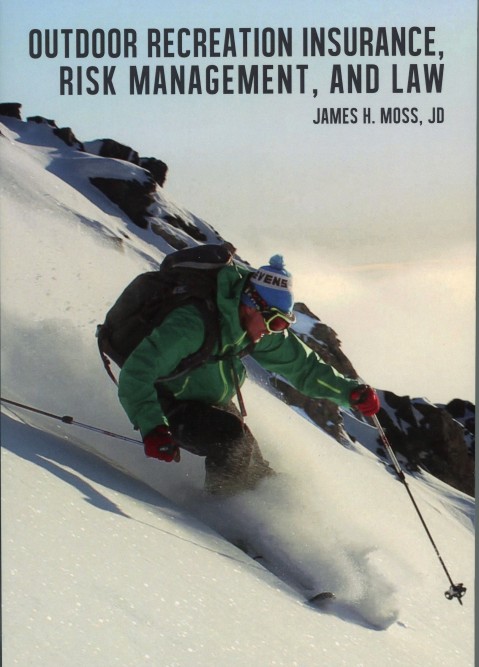
Outdoor Recreation Insurance, Risk Management, and Law
To see Jim’s complete bio go here and to see his CV you can find it here. To find out the purpose of this website go here.
If you are interested in having me write your release, download the form and return it to me.
Connect
If you like this let your friends know or post it on FB, Twitter, or LinkedIn
Facebook Page: Outdoor Recreation & Adventure Travel Law
LinkedIn https://www.linkedin.com/in/recreationlaw/
Threads https://www.threads.net/@recreation_law
X https://twitter.com/RecreationLaw
Email: Jim@Rec-Law.US
By Recreation Law Rec-law@recreation-law.com James H. Moss
@2013-2023 Summit Magic Publishing, LLC
G-YQ06K3L262
<rel=”author” link=” https://plus.google.com/u/0/b/112453188060350225356/” />
#RecreationLaw, #@RecreationLaw, #Cycling.Law #Fitness.Law, #Ski.Law, #Outside.Law, #Recreation.Law, #Recreation-Law.com, #Outdoor Law, #Recreation Law, #Outdoor Recreation Law, #Adventure Travel Law, #law, #Travel Law, #Jim Moss, #James H. Moss, #Attorney at Law, #Tourism, #Adventure Tourism, #Rec-Law, #Rec-Law Blog, #Recreation Law, #Recreation Law Blog, #Risk Management, #Human Powered, #Human Powered Recreation,# Cycling Law, #Bicycling Law, #Fitness Law, #Recreation-Law.com, #Backpacking, #Hiking, #Mountaineering, #Ice Climbing, #Rock Climbing, #Ropes Course, #Challenge Course, #Summer Camp, #Camps, #Youth Camps, #Skiing, #Ski Areas, #Negligence, #Snowboarding, #RecreationLaw, #@RecreationLaw, #Cycling.Law #Fitness.Law, #SkiLaw, #Outside.Law, #Recreation.Law, #RecreationLaw.com, #OutdoorLaw, #RecreationLaw, #OutdoorRecreationLaw, #AdventureTravelLaw, #Law, #TravelLaw, #JimMoss, #JamesHMoss, #AttorneyatLaw, #Tourism, #AdventureTourism, #RecLaw, #RecLawBlog, #RecreationLawBlog, #RiskManagement, #HumanPowered, #HumanPoweredRecreation,# CyclingLaw, #BicyclingLaw, #FitnessLaw, #RecreationLaw.com, #Backpacking, #Hiking, #Mountaineering, #IceClimbing, #RockClimbing, #RopesCourse, #ChallengeCourse, #SummerCamp, #Camps, #YouthCamps, #Skiing, #Ski Areas, #Negligence, #Snowboarding, sport and recreation laws, ski law, cycling law, Colorado law, law for recreation and sport managers, bicycling and the law, cycling and the law, ski helmet law, skiers code, skiing accidents, Recreation Lawyer, Ski Lawyer, Paddlesports Lawyer, Cycling Lawyer, Recreational Lawyer, Fitness Lawyer, Rec Lawyer, Challenge Course Lawyer, Ropes Course Lawyer, Zip Line Lawyer, Rock Climbing Lawyer, Adventure Travel Lawyer, Outside Lawyer, Recreation Lawyer, Ski Lawyer, Paddlesports Lawyer, Cycling Lawyer, #RecreationalLawyer, #FitnessLawyer, #RecLawyer, #ChallengeCourseLawyer, #RopesCourseLawyer, #ZipLineLawyer, #RockClimbingLawyer, #AdventureTravelLawyer, #OutsideLawyer, Lisa Courbat, Steven Courbat, Dahana Ranch, Inc., Hawaii, Deceptive Trade Practices, HI, stable, horseback riding, horse, stable, equestrian.
WordPress Tags: Hawaii,Courbat,Dahana,Ranch,LEXIS,Court,waiver,agency,plaintiffs,Upon,defendants,plaintiff,husband,wife,Courbats,statement,guest,defendant,horse,injury,negligence,Hawaiian,Deceptive,Trade,Practices,judgment,decision,Summary,arrival,payment,precondition,fact,agent,failure,requirement,negotiation,execution,omission,trier,jury,Waivers,fraud,clauses,agreement,statute,characteristics,regulation,exculpation,importance,member,transaction,strength,adhesion,provision,purchaser,protection,person,seller,agents,Recreational,definition,basis,settings,Contracts,obligations,liabilities,advantages,coercion,misconduct,receipt,paperwork,brochure,cost,expense,litigation,statutes,consumers,guests,Lisa,Steven,Claims,violation,Defenses,assumption,Leave,FaceBook,Twitter,LinkedIn,Recreation,Edit,Email,Google,RecreationLaw,Page,Outdoor,Adventure,Travel,Blog,Mobile,Site,James,Moss,Authorrank,author,Outside,Attorney,Tourism,Risk,Management,Human,Rock,Ropes,Course,Challenge,Summer,Camp,Camps,Youth,Areas,SkiLaw,OutdoorLaw,OutdoorRecreationLaw,AdventureTravelLaw,TravelLaw,JimMoss,JamesHMoss,AttorneyatLaw,AdventureTourism,RecLaw,RecLawBlog,RecreationLawBlog,RiskManagement,HumanPoweredRecreation,CyclingLaw,BicyclingLaw,FitnessLaw,RopesCourse,ChallengeCourse,SummerCamp,YouthCamps,Colorado,managers,helmet,accidents,Lawyer,Paddlesports,Line,RecreationalLawyer,FitnessLawyer,RecLawyer,ChallengeCourseLawyer,RopesCourseLawyer,ZipLineLawyer,RockClimbingLawyer,AdventureTravelLawyer,OutsideLawyer,third,horseback,months,whether,exculpatory
Georgia does not have a lot of skiing, but you can rent skis there.
Posted: March 18, 2013 Filed under: Georgia, Release (pre-injury contract not to sue), Skiing / Snow Boarding | Tags: Defendant, GA, Georgia, Inc., Lawsuit, Negligence, Plaintiff, RDL, Rocky Mountain Ski Shop, Ski Rental, skiing, Summary judgment Leave a commentRelease for renting skis stops litigation over failing of the binding to release.
In this case, the plaintiff rented skis from the defendant in Georgia. The plaintiff completed the rental agreement which included a fairly well-written release. The rental company from the decision, asked the proper questions to calculate the DIN setting which in this case was 5 ½.
The plaintiff took the rented equipment on a ski trip. He made several runs, falling “uneventfully” the first day. None of those falls released the plaintiff from the bindings. On the last run while attempting to stop he fell releasing one binding but not the other. The leg in binding that failed to release suffered the classic skiing injury, torn ligaments in the plaintiff’s knee.
After the injury, the ski rental shop tested the binding which the test showed the binding passed.
The plaintiff sued for “breach of warranty, breach of contract, and negligence” and the plaintiff’s spouse sued for loss of a consortium. The defendant used the defense of release, and the trial court granted the defense motion for summary judgment.
Summary of the case
The first area of the law the court spoke to was the fact the relationship between the plaintiff and the defendant were bailor-bailee. Normally, this term is applied to someone in possession of another’s property. A valet is the bailee of your car when you hand over the keys. You are the bailor, the legal owner who has given temporary possession to another.
Once the court determined the relationship between the parties, then the court could conclude that the relationship was governed by the rental agreement.
The court then found that the plaintiff had failed to produce any evidence of negligence upon the part of the defendant. Then in a footnote, the court found that if the plaintiff had found evidence of negligence, the plaintiff still would have been bound by assumption of the risk. The court then went back to release and stated that even if negligence had been shown, the release would have prevented the suit.
“…in Georgia, the general rule is that a party may exempt himself by contract from liability to the other party for injuries caused by his negligence, and the agreement is not void for contravening public policy.”
The court then concluded the release did just that.
The remaining claims of the plaintiff were dismissed based on the analysis or the release.
The court finished with this line.
It is difficult to envision how the waiver language here could have been any clearer.
So Now What?
Get a good release written. Have your clients sign the release. Make sure your equipment meets the standards of the industry and maybe if you are faced with this issue, you will see this short and sweat answer to any litigation.
Plaintiff: Mr. and Mrs. Benford, no first name was ever given
Defendant: RDL, Inc. d/b/a Rocky Mountain Ski Shop
Plaintiff Claims: breach of warranty, breach of contract, and negligence and Mrs. Benford’s claim of loss of consortium
Defendant Defenses: Release
Holding: For the defendant on the release
|
Jim Moss is an attorney specializing in the legal issues of the outdoor recreation community. He represents guides, guide services, outfitters both as businesses and individuals and the products they use for their business. He has defended Mt. Everest guide services, summer camps, climbing rope manufacturers; avalanche beacon manufactures and many more manufacturers and outdoor industries. Contact Jim at Jim@Rec-Law.us |
Jim is the author or co-author of six books about the legal issues in the outdoor recreation world; the latest is Outdoor Recreation Insurance, Risk Management and Law.
To see Jim’s complete bio go here and to see his CV you can find it here. To find out the purpose of this website go here.
G-YQ06K3L262
What do you think? Leave a comment.
If you like this let your friends know or post it on FB, Twitter or LinkedIn
Author: Outdoor Recreation Insurance, Risk Management and Law
Outdoor Recreation Insurance, Risk Management and Law
Facebook Page: Outdoor Recreation & Adventure Travel Law
Email: Jim@Rec-Law.US
By Recreation Law Rec-law@recreation-law.com James H. Moss
@2013-2023 Summit Magic Publishing, LLC
#RecreationLaw, #@RecreationLaw, #Cycling.Law #Fitness.Law, #Ski.Law, #Outside.Law, #Recreation.Law, #Recreation-Law.com, #Outdoor Law, #Recreation Law, #Outdoor Recreation Law, #Adventure Travel Law, #law, #Travel Law, #Jim Moss, #James H. Moss, #Attorney at Law, #Tourism, #Adventure Tourism, #Rec-Law, #Rec-Law Blog, #Recreation Law, #Recreation Law Blog, #Risk Management, #Human Powered, #Human Powered Recreation,# Cycling Law, #Bicycling Law, #Fitness Law, #Recreation-Law.com, #Backpacking, #Hiking, #Mountaineering, #Ice Climbing, #Rock Climbing, #Ropes Course, #Challenge Course, #Summer Camp, #Camps, #Youth Camps, #Skiing, #Ski Areas, #Negligence, #Snowboarding, #RecreationLaw, #@RecreationLaw, #Cycling.Law #Fitness.Law, #SkiLaw, #Outside.Law, #Recreation.Law, #RecreationLaw.com, #OutdoorLaw, #RecreationLaw, #OutdoorRecreationLaw, #AdventureTravelLaw, #Law, #TravelLaw, #JimMoss, #JamesHMoss, #AttorneyatLaw, #Tourism, #AdventureTourism, #RecLaw, #RecLawBlog, #RecreationLawBlog, #RiskManagement, #HumanPowered, #HumanPoweredRecreation,# CyclingLaw, #BicyclingLaw, #FitnessLaw, #RecreationLaw.com, #Backpacking, #Hiking, #Mountaineering, #IceClimbing, #RockClimbing, #RopesCourse, #ChallengeCourse, #SummerCamp, #Camps, #YouthCamps, #Skiing, #Ski Areas, #Negligence, #Snowboarding, sport and recreation laws, ski law, cycling law, Colorado law, law for recreation and sport managers, bicycling and the law, cycling and the law, ski helmet law, skiers code, skiing accidents, Recreation Lawyer, Ski Lawyer, Paddlesports Lawyer, Cycling Lawyer, Recreational Lawyer, Fitness Lawyer, Rec Lawyer, Challenge Course Lawyer, Ropes Course Lawyer, Zip Line Lawyer, Rock Climbing Lawyer, Adventure Travel Lawyer, Outside Lawyer, Recreation Lawyer, Ski Lawyer, Paddlesports Lawyer, Cycling Lawyer, #RecreationalLawyer, #FitnessLawyer, #RecLawyer, #ChallengeCourseLawyer, #RopesCourseLawyer, #ZipLineLawyer, #RockClimbingLawyer, #AdventureTravelLawyer, #OutsideLawyer, Skiing, Ski Rental, RDL, Inc., Rocky Mountain Ski Shop, GA, Georgia,
WordPress Tags: Georgia,Benford,LEXIS,Fulton,Release,litigation,plaintiff,defendant,rental,agreement,decision,equipment,bindings,injury,ligaments,knee,negligence,spouse,consortium,judgment,Summary,area,fact,relationship,possession,owner,Once,footnote,assumption,injuries,policy,analysis,waiver,clients,Make,industry,Rocky,Mountain,Shop,Claims,Defenses,Leave,FaceBook,Twitter,LinkedIn,Recreation,Edit,Email,RecreationLaw,Page,Outdoor,Adventure,Travel,Blog,Mobile,Site,Outside,Moss,James,Attorney,Tourism,Risk,Management,Human,Rock,Ropes,Course,Challenge,Summer,Camp,Camps,Youth,Areas,SkiLaw,OutdoorLaw,OutdoorRecreationLaw,AdventureTravelLaw,TravelLaw,JimMoss,JamesHMoss,AttorneyatLaw,AdventureTourism,RecLaw,RecLawBlog,RecreationLawBlog,RiskManagement,HumanPoweredRecreation,CyclingLaw,BicyclingLaw,FitnessLaw,RopesCourse,ChallengeCourse,SummerCamp,YouthCamps,Colorado,managers,helmet,accidents,Lawyer,Paddlesports,Recreational,Line,RecreationalLawyer,FitnessLawyer,RecLawyer,ChallengeCourseLawyer,RopesCourseLawyer,ZipLineLawyer,RockClimbingLawyer,AdventureTravelLawyer,OutsideLawyer,skis,bailor,bailee
Benford et al. v. RDL, Inc., 223 Ga. App. 800; 479 S.E.2d 110; 1996 Ga. App. LEXIS 1284; 96 Fulton County D. Rep. 4312
Posted: March 18, 2013 Filed under: Georgia, Legal Case, Release (pre-injury contract not to sue), Skiing / Snow Boarding | Tags: Benford, GA, Georgia, Inc., RDL, Recreation, Rocky Mountain Ski Shop, Ski Rental, skiing, Summary judgment Leave a commentTo Read an Analysis of this decision see: Georgia does not have a lot of skiing, but you can rent skis there.
Benford et al. v. RDL, Inc., 223 Ga. App. 800; 479 S.E.2d 110; 1996 Ga. App. LEXIS 1284; 96 Fulton County D. Rep. 4312
Benford et al. v. RDL, Inc.
A96A1458.
223 Ga. App. 800; 479 S.E.2d 110; 1996 Ga. App. LEXIS 1284; 96 Fulton County D. Rep. 4312
December 4, 1996, Decided
SUBSEQUENT HISTORY: [***1] Certiorari Applied For.
PRIOR HISTORY: Bailment; release. Fulton Superior Court. Before Judge Cook.
DISPOSITION: Judgment affirmed.
COUNSEL: James B. Gurley, for appellants.
Long, Weinberg, Ansley & Wheeler, Kenneth M. Barre, for appellee.
JUDGES: ANDREWS, Judge. Pope, P. J., and Smith, J., concur.
OPINION BY: ANDREWS
OPINION
[**111] [*800] ANDREWS, Judge.
Mr. Benford and his wife appeal from the trial court’s grant of summary judgment to RDL, Inc. d/b/a Rocky Mountain Ski Shop in Mr. Benford’s suit alleging breach of warranty, breach of contract, and negligence and Mrs. Benford’s claim of loss of consortium.
1. Viewed under the standard of Lau’s Corp. v. Haskins, 261 Ga. 491 (405 S.E.2d 474) (1991), the evidence on summary judgment was that Mr. Benford went to the ski shop on December 12, 1992 to rent skis and boots for an upcoming ski trip. He was assisted by Cooper, [*801] who asked Benford to pick out a pair of boots and to complete and sign a Rental Agreement and Release of Liability. Benford acknowledged reading, initialling, and signing the document which states that:
“I accept for use as is the equipment listed on this form and accept full responsibility for the care of this equipment. I have made no misrepresentations to this [***2] ski shop regarding my height, weight, age or skiing ability.
“I understand and am aware that skiing is a HAZARDOUS activity. I understand that the sport of skiing and the use of this ski equipment involve a risk of injury to any and all parts of my body. I hereby agree to freely and expressly assume and accept any and all risks of injury or death to the user of this equipment while skiing.
“I understand that the ski equipment being furnished forms a part or all of a ski-boot-binding system which will NOT RELEASE at all times or under all circumstances, and that it is not possible to predict every situation in which it will or will not release, and that its use cannot guarantee my safety or freedom from injury while skiing. I further agree and understand that this ski-boot- binding system may reduce but NOT eliminate the risk of injuries to the lower portion of my leg. However, I agree and understand that this ski-boot-binding system does NOT reduce the risk of injuries to my knees or any other parts of my body.
“I agree that I will release this ski shop from any and all responsibility or liability for injuries or damages to the user of the equipment listed on this form, or to any [***3] other person. I agree NOT to make a claim against or sue this ski shop for injuries or damages relating to skiing and/or the use of this equipment. (Please initial ) [Benford’s initials].
“In consideration for being able to rent this ski equipment, I hereby agree to accept the terms and conditions of this contract. This document constitutes the final and entire agreement between this ski shop and the undersigned. There are NO WARRANTIES, express or implied, which extend beyond the description of the ski equipment listed on this form.
“I have carefully read this agreement and release of liability and fully understand its contents. I am aware that this is a release of liability and a contract between myself and this ski shop and I sign it of my own free will.”
Pursuant to the height, weight, and skill level information provided by Benford, Cooper set the bindings of the skis at 5 1/2. This setting was based on a chart used in the business which the person doing the settings consults and then makes adjustments to the bindings, toes and heels of the boots.
[**112] Benford picked the skis up on December 26 and left with his wife [*802] and some friends on a ski trip. On the first day of the [***4] trip, Benford had made six or seven ski runs and had fallen uneventfully a couple of times. These falls did not cause the bindings to release. On his last run, Benford was in the process of coming to a stop to assist his wife who had fallen. Because of a change in the slope where he stopped, his center of gravity got out over his skis and he fell. While the right ski did release, the left one did not and he tore ligaments in his left knee. When he returned the skis to the shop, he was given a free week ski rental, good any time.
Because Benford was injured and contended the skis did not release, Jackson, the store manager, had the bindings tested with the Vermont Calibrator, a device used to measure the torque it takes to remove a boot from its binding, and the skis rented by Benford passed the test. All skis rented by the ski shop were tested on this device once a year, and randomly selected sets were tested periodically.
2. Benford acknowledges that these facts establish the relationship of bailor-bailee, pursuant to O.C.G.A. § 44-12-60. Therefore, the relationship between them is governed by the terms of the Rental Agreement and the statutory obligations of a bailor under O.C.G.A. § [***5] 44-12-63. Mark Singleton Buick v. Taylor, 194 Ga. App. 630, 632 (1) (391 S.E.2d 435) (1990); Hall v. Skate Escape, Ltd., 171 Ga. App. 178 (319 S.E.2d 67) (1984).
3. Benford has failed totally to come forward with evidence concerning negligence by the ski shop. Lau’s Corp., supra; Prince v. Atlanta Coca-Cola Bottling Co., 210 Ga. App. 108, 109 (1) (435 S.E.2d 482) (1993). 1
1 Even had he been able to do so, this is one of those rare cases where, as a matter of law, it can be said that Benford assumed the risk of exactly what happened to him. Beringause v. Fogleman Truck Lines, 200 Ga. App. 822, 823 (409 S.E.2d 524) (1991).
Also, even assuming some negligence had been shown, [HN1] “in Georgia, the general rule is that a party may exempt himself by contract from liability to the other party for injuries caused by his negligence, and the agreement is not void for contravening public policy. [Cits.]” Hall, supra at 179. Here, the agreement clearly and prominently did just that. Mercedes-Benz [***6] Credit Corp. v. Shields, 199 Ga. App. 89, 91 (403 S.E.2d 891) (1991).
4. Benford’s claims of breach of warranty and contract suffer the same fate. There is no showing by Benford of any latent defect in the skis or bindings, such as that in Hall, supra. Therefore, the covenant not to sue is not in contravention of O.C.G.A. § 44-12-63 (3). Mercedes-Benz, supra; Citicorp Indus. Credit v. Rountree, 185 Ga. App. 417, 422 (2) (364 S.E.2d 65) (1987). It is difficult to envision how the waiver language here could have been any clearer.
[*803] Judgment affirmed. Pope, P. J., and Smith, J., concur.
WordPress Tags:
Benford,LEXIS,Fulton,COURT,APPEALS,GEORGIA,December,SUBSEQUENT,HISTORY,Certiorari,PRIOR,Bailment,Superior,Judge,Cook,DISPOSITION,Judgment,COUNSEL,James,Gurley,appellants,Long,Weinberg,Ansley,Wheeler,Kenneth,Barre,JUDGES,ANDREWS,Pope,Smith,OPINION,wife,Rocky,Mountain,Shop,negligence,consortium,Corp,Haskins,Cooper,Rental,Agreement,Release,equipment,misrepresentations,HAZARDOUS,injury,death,user,system,situation,freedom,injuries,knees,person,WARRANTIES,description,Pursuant,skill,information,bindings,settings,adjustments,ligaments,knee,Jackson,manager,Vermont,Calibrator,device,torque,relationship,obligations,Mark,Singleton,Buick,Taylor,Hall,Skate,Escape,Prince,Atlanta,Coca,Cola,Beringause,Fogleman,Truck,Lines,Also,policy,Cits,Here,Mercedes,Benz,Credit,Shields,fate,covenant,contravention,Citicorp,Indus,Rountree,waiver,skis,hereby,bailor,supra
Lewis v. Snow Creek, Inc., 6 S.W.3d 388; 1999 Mo. App. LEXIS 421
Posted: March 4, 2013 Filed under: Assumption of the Risk, Legal Case, Missouri, Ski Area, Skiing / Snow Boarding | Tags: Appeal, Appellant, assumption of the risk, Business Invitee, Carrie Lewis, Failure to Warn, Inc., Invitee, Landowner, Lesa Moffatt, Plaintiff, ski area, skiing, Snow Creek, St. Louis Missouri, Summary judgment, Supreme Court Leave a commentLewis v. Snow Creek, Inc., 6 S.W.3d 388; 1999 Mo. App. LEXIS 421
Carrie Lewis, Lesa Moffatt, Appellants, v. Snow Creek, Inc., Respondent.
WD 55070
COURT OF APPEALS OF MISSOURI, WESTERN DISTRICT
6 S.W.3d 388; 1999 Mo. App. LEXIS 421
March 31, 1999, Opinion Filed
SUBSEQUENT HISTORY: [**1] Respondent’s Motion for Rehearing and/or Transfer to Supreme Court Passed June 1, 1999. Respondent’s Motion for Rehearing and/or Transfer to the Supreme Court Denied July 27, 1999. Opinion Readopted and Mandate Issued January 6, 2000, Reported at: 2000 Mo. App LEXIS 7.
PRIOR HISTORY: Appeal from the Circuit Court of Platte County, Missouri. The Honorable Ward B. Stuckey, Judge.
DISPOSITION: Affirmed in part and reversed in part.
COUNSEL: Fritz Edmunds, Jr., Overland Park, KS, for Appellants.
Thomas Magee, St. Louis, MO, for Respondent.
JUDGES: Albert A. Riederer Judge. Lowenstein and Stith, JJ., concur.
OPINION BY: ALBERT A. RIEDERER
OPINION
[*391] This is an appeal from summary judgments granted in each of two separate suits filed by two different plaintiffs making identical claims against Respondent. Pursuant to a motion filed by Appellants and Respondent, the cases have been consolidated on appeal. Because we find that there is disputed evidence regarding both Respondent’s liability as a possessor of land and Appellant’s implied assumption of the risk, and because we find that express assumption of the risk did not apply under the facts in this record, we reverse on those issues. However, because there is no disputed evidence regarding count III of the petitions, and because Respondent is entitled to judgment as a matter of law on that count, we affirm as to that count.
Factual and Procedural Background
On January 8, 1995, Appellant Lesa Moffatt rented skis at Snow [**2] Creek Ski Area and signed a “Snow Creek Ski Area Rental Form.” On January 21, 1995, Appellant Carrie Lewis rented skis at Snow Creek Ski Area and signed a “Snow Creek Ski Area Rental Form.” The form states in pertinent part:
10. I hereby release from any legal liability the ski area and its owners, agents and employees, as well as the manufacturers and distributors of this equipment from any and all liability for damage and injury or death to myself or to any person or property resulting from the selection, installation, maintenance, adjustment or use of this equipment and for any claim based upon negligence, breach of warranty, contract or other legal theory, accepting myself the full responsibility for any and all such damage, injury or death which may result.
This document was signed by both Lewis and Moffatt during the process of renting equipment. Lewis and Moffatt both stood in line with people in front of and behind them when they received this form. The form had to be completed before obtaining skis and equipment. Both Lewis and Moffatt claim that they felt pressured to move along and did not have an adequate opportunity to read and fully comprehend the rental form.
Lewis [**3] and Moffatt both fell on ice at Snow Creek and were injured. Lewis and Moffatt each filed a separate petition against Respondent which included the same four counts: I. Defendant owed a duty to plaintiff as a business invitee, and breached that duty by failure to warn of the icy condition where the fall occurred; II. Defendant negligently adjusted and maintained the bindings on Plaintiff’s skis because they failed to properly release when plaintiff fell, injuring plaintiff’s leg; III. Defendant created a dangerous condition by making artificial snow; and IV. Defendant was grossly negligent in failing to warn plaintiff of the dangerous condition on its premises. Respondent generally [*392] denied Appellant’s claims in its answer and asserted affirmative defenses of comparative fault and assumption of the risk.
Respondent filed a motion for summary judgment in each case. Respondent submitted as evidence the “Snow Creek Ski Area Rental Form” and the deposition of the plaintiff in each case. In response to Respondent’s motions for summary judgment, each Appellant submitted additional evidence in the form of her own affidavit. Both motions for summary judgment were granted. Lewis’ and Moffatt’s [**4] claims are identical, and they have been consolidated on appeal.
Standard of Review
[HN1] Our standard of review of a summary judgment is essentially de novo. Lawrence v. Bainbridge Apartments, 957 S.W.2d 400, 403 (Mo. App. 1997) (citing, ITT Commercial Finance Corp., v. Mid-America Marine Supply Corp., 854 S.W.2d 371, 376 (Mo. banc 1993)). We review the record in the light most favorable to the party against whom judgment was entered and grant the non-moving party the benefit of all reasonable inferences from the record. Id. [HN2] To be entitled to summary judgment a movant must demonstrate that there is no genuine dispute of material fact and that he or she is entitled to judgment as a matter of law. Id.
In accordance with the law, we analyze whether summary judgment is appropriate on the record developed by the parties and presented to this court. The Respondent advances several arguments why summary judgment is appropriate. First, it claims as a possessor of land, it has no duty to warn a business invitee of dangers which are open and obvious as a matter of law and that the ice alleged to have caused the fall and injury was [**5] open and obvious as a matter of law. Second, it claims Appellants expressly assumed the risk of this injury by signing the Rental Form. Third, it claims Appellants impliedly assumed the risk of this injury by engaging in the sport of skiing. Fourth, it claims the Rental Form operates as a release.
I. Duty of the Possessor of Land
Respondent claims that the presence of ice on a ski slope should be determined to be an open and obvious danger as a matter of law.
A. Duty Owed To A Business Invitee
” [HN3] The standard of care owed by a possessor of land is dependent upon the status of the injured party.” Peterson v. Summit Fitness, Inc., 920 S.W.2d 928, 932 (Mo. App. 1996). An invitee “is a person who is invited to enter or remain on land for a purpose directly or indirectly connected with business dealings with the possessor of the land.” Harris v. Niehaus, 857 S.W.2d 222, 225 (Mo. banc 1993) (quoting, Restatement (Second) of Torts, § 332 (1965). As [HN4] business invitees, the Appellants were entitled to reasonable and ordinary care by Respondent to make its premises safe. Peterson, 920 S.W.2d at 932. A possessor of land is [**6] liable to an invitee only if the possessor:
(a) knows or by the exercise of reasonable care would discover the condition, and should realize that it involves an unreasonable risk of harm to such invitees, and
(b) should expect that they will not discover or realize the danger or will fail to protect themselves against it, and
(c) fails to exercise reasonable care to protect them against the danger.
Id. Generally, [HN5] a possessor of land does not have a duty to protect invitees against conditions that are open and obvious as a matter of law. Id. at 933. “The exception to this rule is where ‘the possessor should anticipate the harm despite such knowledge or obviousness.'” Id. A condition is open and obvious if invitees should reasonably be expected to discover it. Id.
Given the preceding principles, the pivotal question is whether the ice was an open and obvious condition on the land [*393] as a matter of law. If we determine the ice was an open and obvious condition on the land as a matter of law, Respondent as possessor has no liability – unless he should anticipate the harm despite such knowledge or obviousness. Id. [**7] Thus, the next question would be whether Respondent could reasonably rely on its invitees – skiers – to protect themselves from the danger of ice or whether Respondent should have expected that skiers would not appreciate the danger thus posed. Harris, 857 S.W.2d at 226. We need not reach the second question because this court is unwilling, under the facts as developed in this case, to declare that the conditions on Respondent’s property, which allegedly caused the fall, were open and obvious as a matter of law. To the contrary, we find there is a genuine dispute regarding a material fact: the nature and character of the ice alleged to have caused the fall. “For purposes of Rule 74.04, [HN6] a ‘genuine issue’ exists where the record contains competent materials that evidence two plausible, but contradictory, accounts of the essential facts.” ITT, 854 S.W.2d at 382. “A ‘genuine issue’ is a dispute that is real, not merely argumentative, imaginary or frivolous.” Id. In this case, Appellants characterized the ice as large areas of thick impenetrable ice hidden under a dusting of snow. The evidence is that the Appellants fell on ice which they did not see because [**8] of the snow. Respondent maintained that both Appellants encountered ice on trails that the Appellants had been down several times before they fell. This is not sufficient evidence for this court to find that the ice Appellants encountered was an open and obvious danger as a matter of law. It is not clear that the Appellants should have reasonably been expected to have discovered the icy condition. Peterson, 920 S.W.2d at 933. ” [HN7] When there is disputed evidence – as in this case – on whether the landowner had reason to expect this type of accident . . ., the case properly belongs to the jury.” Harris, 857 S.W.2d at 229. Therefore, we find that Respondent was not entitled to summary judgment because there is a genuine issue regarding the ice, and the ice in question was not an open and obvious danger as a matter of law.
II. Assumption of Risk
Appellants claim that the trial court erred in granting summary judgment because the defense of assumption of the risk requires a jury determination as to disputed material facts. Specifically, Appellants claim that a jury should decide whether they knew of the ice and whether they understood and appreciated the [**9] danger posed by the ice. Respondent claims that the Appellants’ injuries were the result of a risk inherent in the sport of skiing, and therefore, the Appellants assumed the risk, or in the alternative, that Appellants expressly assumed the risk by signing the rental form. [HN8] Assumption of risk is generally categorized as express, implied primary, and implied secondary (reasonable and unreasonable). Sheppard v. Midway R-1 School District, 904 S.W.2d 257, 261-62 (Mo. App. 1995).
A. Express Assumption of Risk
[HN9] Express assumption of risk occurs when the plaintiff expressly agrees in advance that the defendant owes him no duty. Id. Recovery is completely barred since there is no duty in the first place. Id. Respondent argues that the Rental Form, signed by both Appellants, specifically mentioned the snow. Respondent correctly argues that the Rental Form relieves it of liability for injury due to snow. The evidence is that the Appellants knew about the snow and voluntarily assumed that risk. However, we cannot agree that the Rental Form relieves Respondent from injury liability due to ice. First, the Rental Form did not mention injury due to ice. [**10] In addition, the Rental Form could only relieve Respondent of such liability if the general reference to “negligence” is sufficient to do so. The clause of the Rental Form reads as follows:
[*394] 10. I hereby release from any legal liability the ski area and its owners, agents and employees, as well as the manufacturers and distributors of this equipment from any and all liability for damage and injury or death to myself or to any person or property resulting from the selection, installation, maintenance, adjustment or use of this equipment and for any claim based upon negligence, breach of warranty, contract or other legal theory, accepting myself the full responsibility for any and all such damage, injury or death which may result.
” [HN10] Although exculpatory clauses in contracts releasing an individual from his or her own future negligence are disfavored, they are not prohibited as against public policy.” Alack v. Vic Tanny International of Missouri, Inc., 923 S.W.2d 330, 334 (Mo. 1996). “However, contracts exonerating a party from acts of future negligence are to be ‘strictly construed against the party claiming the benefit of the contract, and clear and explicit language [**11] in the contract is required to absolve a person from such liability.'” Id. (quoting, Hornbeck v. All American Indoor Sports, Inc., 898 S.W.2d 717, 721 (Mo. App. 1995)).
“Historically, [HN11] Missouri appellate courts have required that a release from one’s own future negligence be explicitly stated.” 923 S.W.2d at 336 (emphasis in original). The Court in Alack determined that the best approach was to follow precedent and decisions from our state as well as others and to require [HN12] clear, unambiguous, unmistakable, and conspicuous language in order to release a party from his or her own future negligence. 923 S.W.2d at 337. The language of the exculpatory clause must effectively notify a party that he or she is releasing the other party from claims arising from the other party’s own negligence. Id. General language will not suffice. Id. “The words ‘negligence’ or ‘fault’ or their equivalents must be used conspicuously so that a clear and unmistakable waiver and shifting of risk occurs.” Id. [HN13] Whether a contract is ambiguous is a question of law to be decided by the court. Id. “An ambiguity arises when there is [**12] duplicity, indistinctness, or uncertainty in the meaning of the words used in the contract.” Id.
Respondent’s exculpatory clause uses the term “negligence.” However, that does not end our inquiry. We must determine whether the exculpatory clause uses “clear, unmistakable, unambiguous and conspicuous language.” Id. The exculpatory clause purports to shield Respondent from “any claim based on negligence and . . . any claim based upon . . . other legal theory. . . .” Alack teaches us that “there is no question that one may never exonerate oneself from future liability for intentional torts or for gross negligence, or for activities involving the public interest.” Id. Respondent argues that the language from paragraph 8 of the rental form “does not purport to release defendant from liability for intentional torts, gross negligence, or activities involving the public interest ” and that use of the word “negligence” results in a clear understanding of the acts for which liability is released. We disagree. The exculpatory clause uses general language, to wit, “any claim based on . . . other legal theory.” This language includes intentional torts, [**13] gross negligence or any other cause of action not expressly listed. ” [HN14] A contract that purports to relieve a party from any and all claims but does not actually do so is duplicitous, indistinct and uncertain.” Id. Here, the Rental Form purports to relieve Respondent of all liability but does not do so. Thus, it is duplicitous, indistinct and uncertain, Id., and thence arises an ambiguity. Rodriguez v. General Accident, 808 S.W.2d 379, 382 (Mo. banc 1991).
In addition, the exculpatory language and its format did not effectively notify the Appellants that they were releasing Respondent from claims arising from its negligence. The form the Appellants signed was entitled “Snow Creek Ski Area Rental Form.” It did not indicate it [*395] was a release. This title was in large type and could not be reasonably construed to include release of liability. By contrast, the exculpatory clause is in approximately 5 point type at the bottom of the form. “[ [HN15] A] provision that would exempt its drafter from any liability occasioned by his fault should not compel resort to a magnifying glass and lexicon.” Alack, 923 S.W.2d at 335. The Appellants had to sign [**14] the Rental Form to receive ski equipment and had to do so while in a line. The language and format of the exculpatory clause leaves doubt that a reasonable person agreeing to the clause actually would understand what future claims he or she is waiving. Id. at 337-38. The language drafted by Respondent is not “unambiguous” or “conspicuous,” and thus does not meet the standard of Alack. Id.
Thus, Respondent cannot rely on that language to claim the Appellants expressly assumed the risk of the injury complained of in the petition.
B. Implied Assumption of Risk
[HN16] Implied assumption of risk includes two sub-categories, implied primary and implied secondary. Implied primary assumption of risk involves the question of whether the defendant had a duty to protect the plaintiff from the risk of harm. Sheppard, 904 S.W.2d at 261. It applies where the parties have voluntarily entered a relationship in which the plaintiff assumes well-known incidental risks. Id. The plaintiff’s consent is implied from the act of electing to participate in the activity. Id. Implied primary assumption of the risk is also a complete bar [**15] to recovery. Id. at 262. On the other hand, [HN17] implied secondary assumption of the risk occurs when the defendant owes a duty of care to the plaintiff but the plaintiff knowingly proceeds to encounter a known risk imposed by the defendant’s breach of duty. Id. In implied secondary assumption of the risk cases, the question is whether the plaintiff’s action is reasonable or unreasonable. Id. If the plaintiff’s action is reasonable, he is not barred from recovery. Id. If the plaintiff’s conduct in encountering a known risk is unreasonable, it is to be considered by the jury as one element of fault. Id. This case involves implied primary assumption of the risk.
Appellants claim the trial court erred when it ruled, “the court finds that the Plaintiff assumed the risk of injury by skiing on the Defendant’s ski slope and that Plaintiff’s injuries were of a type inherent to the sport of skiing and that this incident involves dangers so obvious that the Defendant does not owe a duty to the Plaintiff and therefore is not required to warn the Plaintiff of such danger.” Respondent argues that the Appellants are barred by [**16] implied primary assumption of risk because by engaging in the sport of skiing, they impliedly assumed the risk of falling on the ice.
“Generally, [HN18] assumption of risk in the sports context involves primary assumption of risk because the plaintiff has assumed certain risks inherent in the sport or activity.” Id.
[HN19] Under comparative fault, if the plaintiff’s injury is the result of a risk inherent in the sport in which he was participating, the defendant is relieved from liability on the grounds that by participating in the sport, the plaintiff assumed the risk and the defendant never owed the plaintiff a duty to protect him from that risk. If, on the other hand, the plaintiff’s injury is the result of negligence on the part of the defendant, the issue regarding the plaintiff’s assumption of that risk and whether it was a reasonable assumption of risk, is an element of fault to be compared to the defendant’s negligence by the jury.
Id. at 263-64. [HN20] The basis of implied primary assumption of risk is the plaintiff’s consent to accept the risk. Id. “If the risks of the activity are perfectly obvious or fully comprehended, plaintiff has consented to [**17] them and defendant has performed [*396] his or her duty.” Martin v. Buzan, 857 S.W.2d 366, 369 (Mo. App. 1993).
[HN21] As a “defending party,” Respondent may establish a right to summary judgment by showing that there is no genuine dispute as to the existence of each of the facts necessary to support its properly pleaded affirmative defense and that those factors show Respondent is entitled to judgment as a matter of law. ITT, 854 S.W.2d at 381. In order for Respondent to have established its right to summary judgment based upon implied primary assumption of the risk, Respondent had to show that there was no genuine dispute that the Appellants’ injuries were the result of falling on ice, and that ice was a risk inherent in the sport of skiing. While there is no question that the Appellants’ injuries were a result of falling on ice, there is a genuine dispute regarding whether encountering the ice in this case is an inherent risk of skiing. Respondent notes that many states including Colorado, Idaho, Maine, Michigan, Montana, New Hampshire, New Jersey, New Mexico, Ohio, and West Virginia have all enacted statutes which codify assumption of the risk as is pertains to the sport [**18] of snow skiing. However, there is no such statute in Missouri, and this court is not willing to say, as a blanket rule, that all ice encountered on Respondent’s property is an inherent risk in the sport of snow skiing. There is a genuine dispute as to the nature of the ice. Was it “large areas of thick impenetrable ice hidden under a dusting of snow on the ski slopes,” as the Appellants claim, or was it ice on the slopes that the Appellants had been over several times prior to falling. These are questions which must be answered by a fact-finder. [HN22] While the basis of implied primary assumption of the risk is the plaintiff’s consent to accept the risk, the plaintiff must be aware of the facts that create the danger and they must appreciate the danger itself. Shepard, 904 S.W.2d at 264. Thus, the standard is a subjective one: “what the particular plaintiff in fact sees, knows, understands and appreciates.” Id. Here, the record does not include evidence that the Appellants were aware of the facts that created the danger or that they appreciated the danger itself. In fact, there was only evidence to the contrary, that the Appellants did not know, understand or appreciate [**19] the ice because it was under snow.
Therefore, we find that summary judgment cannot, on this record, be based upon express or implied primary assumption of the risk.
III. Release
Respondent argues on appeal that the “Rental Form” operated as a release. Respondent did not plead release as an affirmative defense in its answer. [HN23] Release is an affirmative defense that must be pleaded in an answer. Rule 55.08. Failure to plead an affirmative defense constitutes a waiver of the defense. Leo’s Enterprises, Inc. v. Hollrah, 805 S.W.2d 739, 740 (Mo. App. 1991). Since Respondent did not plead the affirmative defense of release, summary judgment would not be proper based upon the theory of release.
Artificial Snow
We affirm the trial court’s grant of summary judgment on Count III of the Appellants’ petitions. The Appellants state in Count III of their petitions that Respondent created a dangerous condition by making artificial snow and dispersing it on the ski slope and that Respondent owed a duty to them as business invitees not to create dangerous conditions on the premises. The trial court was correct in granting Respondent’s summary judgment [**20] on Count III, because [HN24] a possessor of land does not have a duty to protect invitees against conditions that are open and obvious as a matter of law. Peterson, 920 S.W.2d at 933. A condition is open and obvious if invitees should reasonably be expected to discover it. Id. Respondent could be liable only if it was not reasonable [*397] for it to expect the Appellants to see and appreciate the risk and to take reasonable precautions. Harris, 857 S.W.2d at 226. Artificial snow at Snow Creek is an open and obvious condition, and it is reasonable for Respondent to expect the Appellants to see and appreciate the risk of artificial snow and to take appropriate precautions.
Conclusion
The judgment of the trial court is affirmed as to Count III of each of the petitions. It is reversed and remanded for further proceedings on counts I, II, & IV.
Albert A. Riederer, Judge
Lowenstein and Stith, JJ., concur.
WordPress Tags:
By Recreation Law Rec-law@recreation-law.com James H. Moss Jim Moss
Lewis,Creek,LEXIS,Carrie,Lesa,Moffatt,Appellants,Respondent,COURT,APPEALS,MISSOURI,WESTERN,DISTRICT,March,Opinion,SUBSEQUENT,HISTORY,Motion,Transfer,Supreme,June,Mandate,January,PRIOR,Appeal,Circuit,Platte,Honorable,Ward,Stuckey,Judge,DISPOSITION,COUNSEL,Fritz,Edmunds,Overland,Park,Thomas,Magee,Louis,JUDGES,Albert,Riederer,Lowenstein,Stith,judgments,plaintiffs,Pursuant,possessor,Appellant,assumption,judgment,Factual,Procedural,Background,Area,Rental,Form,owners,agents,employees,manufacturers,distributors,equipment,injury,death,person,selection,installation,maintenance,adjustment,negligence,theory,Both,Defendant,plaintiff,failure,bindings,premises,response,affidavit,Standard,Review,Lawrence,Bainbridge,Apartments,Commercial,Finance,Corp,America,Marine,inferences,fact,accordance,arguments,dangers,Second,Third,Fourth,Land,presence,danger,Invitee,status,Peterson,Summit,purpose,dealings,Harris,Niehaus,Restatement,Torts,exception,knowledge,Given,Thus,purposes,Rule,areas,landowner,accident,jury,Risk,determination,injuries,Sheppard,Midway,School,Recovery,addition,reference,clause,Although,clauses,policy,Alack,Tanny,International,Hornbeck,American,Indoor,Sports,emphasis,precedent,decisions,General,equivalents,waiver,Whether,paragraph,action,Here,Rodriguez,provision,resort,lexicon,categories,relationship,incident,context,Under,basis,Martin,Buzan,existence,factors,Colorado,Idaho,Maine,Michigan,Montana,Hampshire,Jersey,Mexico,Ohio,West,Virginia,statutes,statute,finder,Shepard,Release,Enterprises,Hollrah,Artificial,Count,precautions,Conclusion,proceedings,skis,hereby,upon,banc,invitees,skiers,exculpatory
McGrath v. SNH Development, Inc. 2008 N.H. Super. LEXIS 45
Posted: February 4, 2013 Filed under: Legal Case, New Hampshire, Release (pre-injury contract not to sue), Ski Area, Skiing / Snow Boarding | Tags: Bennington, Crotched Mountain, Crotched Mountain Ski Area, Inc., New Hampshire, New Hampshire Superior Court, New Hampshire Supreme Court, NH, Peak Resorts, Release, ski area, skiing, SNH Development, Snowmobile, Special Relationship, Summary judgment, Waiver 1 CommentMcGrath v. SNH Development, Inc. 2008 N.H. Super. LEXIS 45
Marcella McGrath f/k/a Marcella Widger v. SNH Development, Inc. and John Doe, an unnamed individual
No. 07-C-0111
SUPERIOR COURT OF NEW HAMPSHIRE, HILLSBOROUGH COUNTY
2008 N.H. Super. LEXIS 45
May 19, 2008, Decided
NOTICE:
THE ORDERS ON THIS SITE ARE TRIAL COURT ORDERS THAT ARE NOT BINDING ON OTHER TRIAL COURT JUSTICES OR MASTERS AND ARE SUBJECT TO APPELLATE REVIEW BY THE NEW HAMPSHIRE SUPREME COURT.
SUBSEQUENT HISTORY: Affirmed by McGrath v. SNH Dev., Inc., 158 N.H. 540, 969 A.2d 392, 2009 N.H. LEXIS 43 (2009)
CORE TERMS: skiing, ski area, personal injury, snowmobile, negligence claim, summary judgment, public policy, reasonable person, exculpatory, property damage, inherent hazard, public service, bargaining power, contemplate, import, common occurrence, relationship existed, citations omitted, hazardous, disparity, sport, exculpatory provision, exculpatory clause, public interest, privately owned, horseback riding, contemplation, collision, racing, voluntarily assume
JUDGES: [*1] GILLIAN L. ABRAMSON, PRESIDING JUSTICE.
OPINION BY: GILLIAN L. ABRAMSON
OPINION
ORDER
The plaintiff commenced the instant action alleging negligence against the defendants, SNH Development, Inc. (“SNH Development”) and John Doe, an unnamed individual. The defendants now move for summary judgment, and the plaintiff objects.
For purposes of the defendants’ motion for summary judgment, the parties do not appear to dispute the following facts. SNH Development is a subsidiary of Peak Resorts, Inc. and owns and operates the Crotched Mountain Ski Area in Bennington, New Hampshire. On October 23, 2003, the plaintiff signed an application (the “application”) for a season pass to the Crotched Mountain Ski Area. The application provides:
I understand and accept the fact that alpine skiing in its various forms is a hazardous sport, and I realize that injuries are a common occurrence. I agree, as a condition of being allowed to use the ski area facility, that I freely accept and voluntarily assume all risks of personal injury or death of property damage, release Crotched Mountain its owners and its agents, employees, directors, officers and shareholders from any and all liability for personal injury or property damage [*2] which results in any way from negligence, conditions on or about the premises, the operations of the ski area including, but not limited to, grooming snow making, ski lift operations, actions or omissions of employees or age the area, or my participation in skiing, accepting myself the full responsibility
Defs.’ Mot. for Summ. J., Ex. B. Moreover, on December 20, 2003, the plaintiff signed a Liability Release Agreement, which provides:
I understand and accept the fact that alpine skiing in its various forms is a hazardous sport, and I realize that injuries are a common occurrence. I agree, as a condition of being allowed to use the area facility, that I freely accept and voluntarily assume all risks of personal injury or death or property damage, and release Peak Resorts, Inc, all of its subsidiaries, and its agents, employees, directors, officers, shareholders and the manufacturers and distributors of this equipment and the school and group organizers (collective “providers’), from any and all liability for personal injury, death or property damage which results in any way from negligence, conditions on or about the premises, the operation of the area including, but not limited to grooming, [*3] snowmaking, lift operations, actions or omissions of employees or agents of the areas, or my participating in skiing, snowboarding, blading, accepting myself the full responsibility.
Id. On February 20, 2004, the plaintiff was skiing 1 a trail at the Crotched Mountain Ski Area when an employee of SNH Development drove a snowmobile into the plaintiff’s path, causing a collision.
1 Some of the pleadings state that the plaintiff was skiing, while other’s state that the plaintiff was snowboarding.
The defendants now move for summary judgment, arguing that the plaintiff signed the application and the Liability Release Agreement, both of which are valid, enforceable exculpatory contracts. The plaintiff objects, arguing that the application and the Liability Release Agreement violate public policy and that the parties did not contemplate that the application or the Liability Release Agreement would bar the plaintiff’s negligence claim.
In ruling on a motion for summary judgment, the Court “consider[s] the affidavits and other evidence, and all inferences properly drawn from them, in the light most favorable to the non-moving party.” White v. Asplundh Tree Expert Co., 151 N.H. 544, 547, 864 A.2d 1101 (2004). [*4] The Court must grant a motion for summary judgment if its “review of the evidence does not reveal a genuine issue of material fact, and if the moving party is entitled to judgment as a matter of law Id. A fact is material “if it affects the outcome of the litigation under the applicable substantive law.” Palmer v. Nan King Restaurant, 147 N.H. 681, 683, 798 A.2d 583 (2002).
New Hampshire law generally prohibits exculpatory contracts, but the Court will enforce them if; “(1) do not violate public policy; (2) the plaintiff understood the import of the agreement or a reasonable person in his position would have understood the import of the agreement; and (3) the plaintiff’s claims were within the contemplation of the parties when they executed the contract.” Dean v. MacDonald, 147 N.H. 263, 266-267, 786 A.2d 834 (2001). Thus, the Court considers each of these requirements in turn.
Regarding the first requirement, an exculpatory contract violates public policy if a special relationship existed between the parties or if there was some other disparity in bargaining power. See Barnes v. N.H. Karting Assoc., 128 N.H. 102, 106, 509 A.2d 151 (1986) (“A defendant seeking to avoid liability must show that the exculpatory agreement does [*5] not contravene public policy i.e that no special relationship existed between the parties and that there was no other disparity in bargaining power.”).
A special relationship exists “[w]here the defendant is a common carrier, innkeeper or public utility, or is otherwise charged with a duty of public service….” Id. The plaintiff contends that a special relationship existed between the parties because any person operating a snowmobile has a statutory duty to yield the right of way, RSA 215-C:49, XII (Supp. 2007), and because the Crotched Mountain Ski Area serves the public. Assuming that RSA 215-C:49, XII applies to the operation of a snowmobile on a privately owned ski area, the plaintiff has not offered any legal support for the conclusion that this statute somehow charges the defendants with a duty of public service. Moreover, the fact that the Crotched Mountain Ski Area serves the public is not conclusive. For example, Barnes, involved a negligence claim arising from a collision at an enduro kart racing facility. In Barnes, the New Hampshire Supreme Court noted that the defendant’s served the public but held that the defendant’s were not charged with a duty of public service because [*6] Endurokart racing is not “affected with a public interest.” Barnes, 128 N.H. at 108. Similarly, skiing is a recreational activity not affected with a public interest, and the Court finds that the defendant’s are not charged with a duty of public service.
The Plaintiff also contends that she was at an obvious disadvantage in bargaining power because all ski areas require skiers to sign releases. The Court disagrees.
This case … does not have any hallmarks of a disparity in bargaining power. The [skiing] service offered by the defendant is not a “matter of practical necessity.” Nor did the defendant in this ease have monopoly control over this service such that the plaintiff could not have gone elsewhere.
Audley v. Melton, 138 N.H. 416, 418, 640 A.2d 777 (1994) (quoting Barnes, 128 N.H. at 108). 2
2 The Plaintiff also argues that the application and the Liability Release Agreement violate public policy because they relieve the defendant’s from compliance with RSA chapter 215-C, which governs snowmobiles. Assuming that RSA chapter 215-C applies to the operation of a snowmobile on privately owned ski area, the application and the Liability Release Agreement would have no bearing on the enforcement of RSA chapter 215-C. [*7] See RSA 215-C-32 (Supp.2007) (providing for the enforcement of RSA chapter 215-C).
“Once an exculpatory agreement is found unobjectionable as a matter of public policy, it will be upheld only if it appears that the plaintiff understood the import of the agreement or that reasonable person in his position would have known of the exculpatory provision.” Barnes, 128 N.H. at 107. “The plaintiff’s understanding presents an issue of fact, and the plaintiff should have an opportunity to prove the fact at trial unless the exculpatory language was clear and a misunderstanding was unreasonable.” Wright v. Loon Mt. Recreation Corp., 140 N.H. 166, 169, 663 A.2d 1340 (1995). The Court
therefore examine[s] the language of the release to determine whether “a reasonable person in [the plaintiff’s] position would have known of the exculpatory provision.” A reasonable person would understand the provision if its language “clearly and specifically indicates the intent to release the defendant from liability for personal injury caused by the defendant’s negligence….”
Id. (citations omitted) (quoting Barnes, 128 N.H. at 107). The Court “will assess the clarity. the contract by evaluating it as a whole, not by examining [*8] isolated words and phrases. Id. at 169-170.
The plaintiff does not appear to dispute that she understood the import of the application or the Liability Release Agreement. Rather, the plaintiff argues that the parties did not contemplate that the application or the Liability Release Agreement would bar the plaintiff’s negligence claim. Thus, the Court turns to the third requirement.
“[T]he plaintiff’s claims must have been within the contemplation of the parties at the time of the execution of the agreement. The parties need not, however, have contemplated the precise occurrence that resulted in the plaintiff’s injuries. They may adopt language to cover, a broad range of accidents….” Barnes, 128 N.H. at 107 (citation omitted). To determine the scope of a release, the Court examines its language, strictly construing it against the defendant. Dean, 147 N.H. at 267.
Thus, in order to effectively release a defendant from liability for his own negligence, “the contract must clearly state that the defendant is not responsible for the consequences of his negligence.” There is no requirement that the term “negligence” or any other magic words appear in the release as long “as the language of [*9] the release clearly and specifically indicates the intent to release the defendant from liability for personal injury caused by the defendant’s negligence.”
Audley, 138 N.H. at 418 (citations omitted) (quoting Barnes, 128 N.H. at 107).
The plaintiff contends that the parties did not contemplate that the application or the Liability Release Agreement would bar the plaintiff’s negligence claim because neither the application nor the Liability Release Agreement reference snowmobiles. As rioted above, the parties need not have contemplated a negligence claim arising from a snowmobile accident. Rather, it is sufficient that the parties adopted language to cover a broad range of accidents. The application releases the defendants “from any and all liability for personal injury or property damage which results in any way from negligence,” and the Liability Release Agreement releases the defendants “from any and all liability for personal injury, death or property damage which results in from negligence.” Defs.’ Mot. for Summ. J., Ex. B. This language clearly states that the defendants are not responsible for the consequences of their negligence.
The Plaintiff also contends that the parties did [*10] not contemplate that the application or the Liability Release Agreement would bar the plaintiff’s negligence claim because snowmobiles are not an inherent hazard of skiing. The plaintiff relies on Wright. In Wright, the New Hampshire Supreme Court noted:
The paragraphs preceding the exculpatory clause emphasize the inherent hazards of horseback riding. Because the exculpatory clause is prefaced by the term “therefore,” a reasonable person might understand its language to relate to the inherent dangers of horseback riding and liability for injuries that occur “for that
Wright, 140 N.H. at 170. Here, however, the application and the Liability Release Agreement do not mention the inherent hazards of skiing. Rather, the application and the Liability Release Agreement note that skiing is a hazardous sport and that injuries are a common occurrence and then, without using the term “therefore,” release the defendants from any and all liability. Because the application and the Liability Release Agreement do not use the phrase “inherent hazards of skiing” or the term “therefore,” this case is distinguishable from Wright. A reasonable person would have contemplated that the application and the [*11] Liability Release Agreement would release the defendants from a negligence claim, whether nor not that claim arouse from an inherent hazard of skiing.
Based on the foregoing, the defendant’s motion for summary judgment is GRANTED.
So ORDERED.
Ski Binding Failure to Release under Indiana Law
Posted: January 28, 2013 Filed under: Assumption of the Risk, Indiana, Release (pre-injury contract not to sue), Skiing / Snow Boarding | Tags: Indiana, Plaintiff, Product liability, Salomon North America, Sitzmark Corporation, Ski, Ski binding, Summary judgment Leave a commentIndiana, like most states’, product liability law is controlled by statute which severely limits the defenses available to a defendant. Here the retailer and manufacture were sued for injuries when a ski binding failed to release, both being in the chain of the sale of the product. The plaintiff had signed a “sales slip” which contained release language when she picked up the skis; however the sales slip (release) was only effective against one of the three claims of the plaintiff.
The defendants had filed a motion for summary judgment at the trial court which was granted on all counts. The plaintiff appealed and the appellate court reversed on two of the three product liability claims.
The plaintiff had purchased new skis and bindings from the retailer Sitzmark Corporation which included bindings manufactured by Salomon North America. On the plaintiff’s third run while skiing and her first fall on her new equipment she fell suffering a compound fracture.
The plaintiff sued claiming negligence and strict liability. The negligence claim included two sub-claims negligent design of the bindings and negligent adjustment of the bindings by the retailer. The defenses were “incurred risk” and the release contained in the sales slip. Indiana uses the term incurred risk instead of the term assumption of the risk.
Summary of the case
The language in the sales slip that constituted the release language, excerpted below, did not contain the magic word release. It only talked about assumption of the risk issues. The plaintiff did acknowledge understanding the language.
I have been instructed in the use of my equipment, I have read the manufacturer’s instruction pamphlet (new bindings only), I have made no misrepresentation in regard to my height, weight, age, or skiing ability . . . . I understand that there are inherent and other risks involved in the sport for which this equipment is to be used, snow skiing, that injuries are a common and ordinary occurrence of the sport and I freely assume those risks. I understand that the ski boot binding system will not release at all times or under all circumstances, nor is it possible to predict every situation in which it will release and is therefore no guarantee for my safety. I therefore release the ski shop and its owners, agents and employees from any and all liability for damage and from the selection, adjustment and use of this equipment, accepting myself the full responsibility for any and all such damage or injury which may result.
The court reversed the lower court and reinstated the plaintiff’s strict liability claim. Strict liability is set out by statute in Indiana, Ind. Code 33-1-1.5-1 et seq. The court stated the statute had a three part test for the manufacture and retailer to use as a defense in a strict liability claim.
First, a plaintiff’s knowledge of the defect.
Second, a plaintiff’s unreasonable use of the product despite knowledge of the defect.
Third, a plaintiff’s injuries caused by the product.
The court analyzed the arguments and decided that neither defendant could prove that the plaintiff new of any defect in the binding. This was different from the argument they could prove, through the release language that “Moore knew her bindings would not release under all circumstances.” Because neither defendant could win on step one the case was sent back.
The first negligence claim was a common law negligence claim. Common law meaning the law that evolved over time (and not based on statute), usually from the law carried over from Great Britain. The common law was developed in England during the 1500’s from the King’s decrees and the church’s equity decisions. As time progressed these laws became more streamline and eventually codified, or written down. The common law still exists in all states and is the basis for the law in every state (Louisiana being the sole exception). Only when a statute has been created will a section of the common law for that state disappear or cease to exist. Ninety-nine percent of all negligence claims are common law. A state may have a void in its common law, an area that has never been decided in the state before, however this is getting rare now days.
A common law product liability action in Indiana can be defeated by the defense of incurred or assumption of the risk. However assumption of the risk as a defense had been merged into comparative negligence in Indiana at this time.
The defendants argued that by signing the sales slip the plaintiff assumed the risk of the defect in the product. The court however found the sales slip was proof of assumption of the risk, but not of assumption of negligence the difference is the greater requirement of knowledge required by the statute. Because the first time she fell was also the time she was injured the plaintiff had no direct knowledge of the defect of the product. In this case defect would mean failure of the binding to release. As such, the defense failed because there was no proof of assumption of the risk of negligence. Because the binding has not failed to release prior to the injury, the plaintiff had no knowledge of the binding failing to release that she could assume. This claim was also sent back to the lower court.
The third and final claim was based on negligently “setting, adjusting or checking the bindings.” Here the sales slip with its release language was effective. The court stated “These alleged acts of negligence are exactly those for which Moore granted Sitzmark a release of liability when she read and signed the sales slip.” This final claim was dismissed by the appellate court.
This case is a little confusing because of two issues. Indiana law on product liability is different from many states and the release language in the sales slip was very poorly written. There is not much that can be done about Indiana’s product liability law and the limitation on the defenses available manufacture’s and retailers. However a well written release might have prevented one of the product liability claims.
So Now What?
The release is not clearly identified, other than in a sales slip in this opinion. However during this period, these releases were fairly uniform and used by shops across the US. These preprinted forms are written in a way as to not cause a problem with any state laws rather than to effectively stop a claim.
Having a release in this case that specifically used the word the negligence and identified the defendants as the shop, by name and all manufactures would be the first start. The court spent a lot of space finding a way to bring the manufacture into the defense provided by the release language when the language did not specifically mention the manufacture. The language of the release should incorporate the necessary defenses of the Indiana Strict Liability Act so that the defense in the act is available. The negligence claims should be identified both for negligent acts, negligent mounting and setting and negligent in the design, manufacture or construction of the product. The language should also include more specific assumption of the risk language so the purchaser or customer who is having repairs done understands the risks are not that the binding may not work, but that the risk is the binding will not work and that the user should ski knowing that and in a safe way.
A well written release, based on Indiana law may be difficult to do. However, a well written release will still be better than the one at issue here. Each claim that survives the motions and appeal increases the cost of litigating and the cost of a possible settlement. If the release had eliminated one more of the claims a lower settlement would be easier to achieve, maybe even a complete win at trial.
Plaintiff: Eldonna Moore
Defendant: Sitzmark Corporation and Salomon North America, Inc.,
Plaintiff Claims: negligence (product liability) and strict liability
Defendant Defenses: Assumption of the Risk (Incurred Risk) and Release
Holding: One claim dismissed based on the release and the two remaining claims sent back to the trial court.
What do you think? Leave a comment.
If you like this let your friends know or post it on FaceBook, Twitter or LinkedIn
Copyright 2013 Recreation Law (720) Edit Law
Email: blog@rec-law.us
Twitter: RecreationLaw
Facebook: Rec.Law.Now
Facebook Page: Outdoor Recreation & Adventure Travel Law
Blog: www.recreation-law.com
Mobile Site: http://m.recreation-law.com
By Recreation Law Rec-law@recreation-law.com James H. Moss Jim Moss
#RecreationLaw, #@RecreationLaw, #Cycling.Law #Fitness.Law, #Ski.Law, #Outside.Law, #Recreation.Law, #Recreation-Law.com, #Outdoor Law, #Recreation Law, #Outdoor Recreation Law, #Adventure Travel Law, #law, #Travel Law, #Jim Moss, #James H. Moss, #Attorney at Law, #Tourism, #Adventure Tourism, #Rec-Law, #Rec-Law Blog, #Recreation Law, #Recreation Law Blog, #Risk Management, #Human Powered, #Human Powered Recreation,# Cycling Law, #Bicycling Law, #Fitness Law, #Recreation-Law.com, #Backpacking, #Hiking, #Mountaineering, #Ice Climbing, #Rock Climbing, #Ropes Course, #Challenge Course, #Summer Camp, #Camps, #Youth Camps, #Skiing, #Ski Areas, #Negligence, #Snowboarding, #RecreationLaw, #@RecreationLaw, #Cycling.Law #Fitness.Law, #SkiLaw, #Outside.Law, #Recreation.Law, #RecreationLaw.com, #OutdoorLaw, #RecreationLaw, #OutdoorRecreationLaw, #AdventureTravelLaw, #Law, #TravelLaw, #JimMoss, #JamesHMoss, #AttorneyatLaw, #Tourism, #AdventureTourism, #RecLaw, #RecLawBlog, #RecreationLawBlog, #RiskManagement, #HumanPowered, #HumanPoweredRecreation,# CyclingLaw, #BicyclingLaw, #FitnessLaw, #RecreationLaw.com, #Backpacking, #Hiking, #Mountaineering, #IceClimbing, #RockClimbing, #RopesCourse, #ChallengeCourse, #SummerCamp, #Camps, #YouthCamps, #Skiing, #Ski Areas, #Negligence, #Snowboarding, sport and recreation laws, ski law, cycling law, Colorado law, law for recreation and sport managers, bicycling and the law, cycling and the law, ski helmet law, skiers code, skiing accidents, Recreation Lawyer, Ski Lawyer, Paddlesports Lawyer, Cycling Lawyer, Recreational Lawyer, Fitness Lawyer, Rec Lawyer, Challenge Course Lawyer, Ropes Course Lawyer, Zip Line Lawyer, Rock Climbing Lawyer, Adventure Travel Lawyer, Outside Lawyer, Recreation Lawyer, Ski Lawyer, Paddlesports Lawyer, Cycling Lawyer, #RecreationalLawyer, #FitnessLawyer, #RecLawyer, #ChallengeCourseLawyer, #RopesCourseLawyer, #ZipLineLawyer, #RockClimbingLawyer, #AdventureTravelLawyer, #OutsideLawyer, Sitzmark Corporation, Salomon North America, Inc., Product Liability, Ski, Ski Binding,
WordPress Tags: Failure,Release,Indiana,Sitzmark,Corporation,Salomon,North,America,LEXIS,Prod,Liab,product,statute,defendant,Here,retailer,injuries,sale,plaintiff,sales,defendants,judgment,bindings,equipment,negligence,adjustment,assumption,Summary,manufacturer,instruction,pamphlet,misrepresentation,occurrence,system,situation,owners,agents,employees,selection,injury,Strict,Code,knowledge,Second,Third,arguments,argument,Common,Great,Britain,England,decisions,laws,basis,Louisiana,exception,area,action,difference,requirement,limitation,retailers,opinion,construction,purchaser,customer,user,cost,settlement,Eldonna,Claims,Defenses,Risk,Leave,FaceBook,Twitter,LinkedIn,Recreation,Edit,Email,RecreationLaw,Page,Outdoor,Adventure,Travel,Blog,Mobile,Site,Outside,Moss,James,Attorney,Tourism,Management,Human,Rock,Ropes,Course,Challenge,Summer,Camp,Camps,Youth,Areas,SkiLaw,OutdoorLaw,OutdoorRecreationLaw,AdventureTravelLaw,TravelLaw,JimMoss,JamesHMoss,AttorneyatLaw,AdventureTourism,RecLaw,RecLawBlog,RecreationLawBlog,RiskManagement,HumanPoweredRecreation,CyclingLaw,BicyclingLaw,FitnessLaw,RopesCourse,ChallengeCourse,SummerCamp,YouthCamps,Colorado,managers,helmet,accidents,Lawyer,Paddlesports,Recreational,Line,RecreationalLawyer,FitnessLawyer,RecLawyer,ChallengeCourseLawyer,RopesCourseLawyer,ZipLineLawyer,RockClimbingLawyer,AdventureTravelLawyer,OutsideLawyer,skis,three,appellate,neither
Horvath Et Al., v. Ish Et Al., 2012 Ohio 5333; 2012 Ohio LEXIS 2872
Posted: January 7, 2013 Filed under: Assumption of the Risk, Legal Case, Ohio, Skier v. Skier | Tags: David, Horvaths, Ohio, Ohio Supreme Court, Ski, Ski Resort, Summary judgment Leave a commentTo Read an Analysis of this decision see: Ohio adopts the requirement that a skier assumes the risk of a collision with another skier.
Horvath Et Al., v. Ish Et Al., 2012 Ohio 5333; 2012 Ohio LEXIS 2872
Horvath Et Al., Appellees, v. Ish Et Al., Appellants.
No. 2011-1089
2012 Ohio 5333; 2012 Ohio LEXIS 2872
April 25, 2012, Submitted
November 20, 2012, Decided
NOTICE:
THIS SLIP OPINION IS SUBJECT TO FORMAL REVISION BEFORE IT IS PUBLISHED IN AN ADVANCE SHEET OF THE OHIO OFFICIAL REPORTS.
PRIOR HISTORY: [**1]
APPEAL from the Court of Appeals for Summit County, No. 25442, 194 Ohio App. 3d 8, 2011 Ohio 2239, 954 N.E.2d 196.
Horvath v. Ish, 194 Ohio App. 3d 8, 2011 Ohio 2239, 954 N.E.2d 196, 2011 Ohio App. LEXIS 1907 (Ohio Ct. App., Summit County, 2011)
DISPOSITION: Judgment affirmed.
CORE TERMS: skier, skiing, sport, ski-area, collision, ski, inherent risks, tramway, negligence per se, slope, ski area, passenger, reckless, standard of care, statutory duties, statutory schemes, owe, common law, summary judgment, owed, duty of care, personal injury, refrain, trail, ordinary care, general assembly, reasonable care, recreational, enumerated, sentence
HEADNOTES
Torts–Sport or recreational activity–Skiers assume the ordinary risks of skiing, which include collisions with other skiers, and cannot recover for an injury unless it can be shown that the other skier’s actions were reckless or intentional.
SYLLABUS
OF THE COURT
Skiers assume the ordinary risks of skiing, which include collisions with other skiers and cannot recover for an injury unless it can be shown that the other skier’s actions were reckless or intentional.
COUNSEL: Paul W. Flowers Co. and Paul W. Flowers; and Sennett Fischer, L.L.C., and James A. Sennett, for appellees.
Gallagher Sharp, Timothy J. Fitzgerald, and Jeremy V. Farrell, for appellants.
JUDGES: LUNDBERG STRATTON, J. O’CONNOR, C.J., and O’DONNELL, LANZINGER, CUPP, and MCGEE BROWN, JJ., concur. PFEIFER, J., concurs in part and dissents in part.
OPINION BY: LUNDBERG STRATTON
OPINION
Lundberg Stratton, J.
I. Introduction
[*P1] The issue before the court is what duty or standard of care is owed by one skier to another for purposes of determining tort liability. We hold that skiers assume the ordinary risks of skiing, which include collisions with other skiers, and cannot recover for an injury unless it can be shown that the other skier’s actions were reckless or intentional.
[*P2] The court of appeals reversed the trial court’s grant of summary judgment in favor of Ish and remanded the case to the trial court [**2] to determine whether Ish had violated any duties under R.C. 4169.08 or 4169.09 and if he did, whether negligence per se applied. The court of appeals also held that a genuine issue of material fact existed whether Ish was reckless. Horvath v. Ish, 194 Ohio App.3d 8, 2011 Ohio 2239, 954 N.E.2d 196, ¶ 18 (9th Dist). We agree that there is a genuine issue of material fact, but only whether Ish’s actions were more than negligent, that is, whether his actions were reckless or intentional under the common law. Therefore, we affirm the judgment of the court of appeals, albeit on somewhat different grounds, and remand the case to the trial court for proceedings consistent with our opinion.
II. Facts and Procedural History
[*P3] On March 6, 2007, Angel Horvath and Eugene Horvath (the couple were married after the accident but before the complaint was filed) were skiing at Boston Mills ski resort. David Ish was snowboarding at Boston Mills on that same date, with his brother, Tyler, and their cousins. In the early evening, Angel and Eugene were skiing down Buttermilk Hill. David, Tyler, and their cousins were snowboarding on the same hill. David and his relatives proceeded through a terrain park 1 [**3] and then reentered Buttermilk Hill, where David and Angel collided. Angel was injured in the accident.
1 A terrain park is an area where snowboarders and skiers can do tricks or stunts using various features including jumps, rails, and half-pipes. See R.C. 4169.01(I).
[*P4] The Horvaths filed a complaint against David Ish and his parents, alleging that David had acted negligently, carelessly, recklessly, willfully, and wantonly in causing the collision with Angel.
[*P5] The Ishes filed a motion for summary judgment, arguing that skiers are subject to primary assumption of the risk, which means that a defendant owes no duty of ordinary care to plaintiff. Thus, the Ishes argued that in order to recover, the Horvaths were required to prove that David had acted recklessly or intentionally in causing the collision. The Ishes further asserted that there was no evidence that David’s actions were reckless or intentional.
[*P6] In opposing the Ishes’ motion for summary judgment, the Horvaths argued that R.C. 4169.08(C) imposes specific duties on skiers and that breaching those duties is negligence per se. The trial court granted the Ishes’ motion for summary judgment.
[*P7] In a two-to-one decision, the court of appeals [**4] reversed the judgment of the trial court, stating that “[b]y reading R.C. 4169.08(C) in context with 4169.09, we find that it is evident that the legislature intended that skiers would be liable for injuries caused to others while skiing.” Horvath, 194 Ohio App.3d 8, 2011 Ohio 2239, 954 N.E.2d 196, ¶ 13. The court of appeals remanded the cause to the trial court to determine whether David Ish’s actions violated any of the responsibilities described in R.C. 4169.08(C) and, if so, whether any such violation invoked the doctrine of negligence per se. Id. at ¶ 14.
[*P8] This case is before this court pursuant to the acceptance of the Ishes’ discretionary appeal. 129 Ohio St. 3d 1503, 2011 Ohio 5358, 955 N.E.2d 386.
III. Analysis
R.C. Chapter 4169
[*P9] We begin our analysis by determining whether R.C. 4169.08 and 4169.09 apply to personal-injury litigation between skiers.
[*P10] When interpreting a statute, a court’s paramount concern is legislative intent. State ex rel. United States Steel Corp. v. Zaleski, 98 Ohio St.3d 395, 2003 Ohio 1630, 786 N.E.2d 39, ¶ 12. “[T]he intent of the law-makers is to be sought first of all in the language employed, and if the words be free from ambiguity and doubt, and express [**5] plainly, clearly and distinctly, the sense of the law-making body, there is no occasion to resort to other means of interpretation ” Slingluff v. Weaver, 66 Ohio St. 621, 64 N.E. 574 (1902), paragraph two of the syllabus. However, “[i]n reviewing a statute, a court cannot pick out one sentence and disassociate it from the context, but must look to the four corners of the enactment to determine the intent of the enacting body.” State v. Wilson, 77 Ohio St.3d 334, 336, 1997 Ohio 35, 673 N.E.2d 1347 (1997). “A court must examine a statute in its entirety rather than focus on an isolated phrase to determine legislative intent.” Massillon City School Dist. Bd. of Edn. v. Massillon, 104 Ohio St.3d 518, 2004 Ohio 6775, 820 N.E.2d 874, ¶ 37.
[*P11] See also R.C. 1.42. With this guidance in mind, we examine R.C. Chapter 4169 in its entirety to determine whether R.C. 4169.08 and 4169.09 apply to personal-injury litigation between skiers.
[*P12] R.C. 4169.02 established a ski-tramway board that is authorized to create rules under R.C. Chapter 119 relating to “public safety in the construction, maintenance, mechanical operation, and inspection of passenger tramways.” 2 R.C. 4169.03 requires that a tramway must be registered [**6] with the board before it can be operated. R.C. 4169.04 provides that tramways must be inspected. R.C. 4169.05 authorizes the board to hear complaints that the construction, maintenance, or mechanical operation of a tramway endangers public safety. R.C. 4169.06 permits a board member to suspend the operation of a tramway if the board determines that an “immediate danger exists.” R.C. 4169.07 provides that ski-area operators are responsible for any tramway they construct and for the maintenance and operation of a passenger tramway in the operator’s ski area. R.C. 4169.07 also states that passengers have certain enumerated responsibilities regarding their use of tramways. R.C. 4169.99 provides that ski-area operators are subject to a monetary fine if they fail to register their tramway with the board, fail to comply with an order from the board, or fail to comply with a rule issued by the board.
2 A “passenger tramway” is “a device used to transport passengers uphill, whether on skis or other devices or without skis or other devices, or in cars on tracks or suspended in the air, by the use of steel cables, chains, or belts or by ropes, and that is usually supported by trestles or towers [**7] with one or two spans.” R.C. 4169.01(F). Chair lifts, rope tows, and conveyors are passenger tramways. R.C. 4169.01(F)(3), (5), and (7).
[*P13] R.C. 4169.08 insulates ski-area operators from liability for injuries that arise from the inherent risks of skiing and otherwise defines certain responsibilities applicable to ski-area operators and ski-area visitors. R.C. 4169.09 addresses the liability of ski-area operators and ski-area visitors for failing to comply with the responsibilities enumerated in R.C. 4169.08(C).
[*P14] And, finally, R.C. 4169.10 immunizes ski-area operators for damages suffered by a person who was committing a theft at the time the person suffered the loss.
[*P15] It is evident that R.C. Chapter 4169, when viewed in its entirety, addresses certain obligations and limitations on liability pertaining to ski-area operators, as well as the relationship between ski-area operators and ski-area visitors. Consequently, neither R.C. 4169.08 nor 4169.09 apply to personal-injury litigation between skiers.
[*P16] Our conclusion is confirmed when we examine R.C. 4169.08 and 4169.09 in greater detail. R.C. 4169.08(A)(1) provides that “the general assembly recognizes that skiing as a recreational sport [**8] is hazardous to skiers regardless of all feasible safety measures that can be taken. It further recognizes that a skier expressly assumes the risk of and legal responsibility for injury, death, or loss to person or property that results from the inherent risks of skiing.” R.C. 4169.08(A)(1) then provides a nonexhaustive list of conditions (e.g., slush) or objects (e.g., out-of-bounds barriers) that are inherent risks of skiing. R.C. 4169.08(A)(2) and (3) provide that ski-area operators are not liable for the death of or injury to ski-area visitors that occur in a freestyle terrain or tubing park, subject to certain qualifications. Thus, R.C. 4169.08(A) effectively insulates ski-area operators from personal-injury lawsuits that arise from the inherent risks of skiing. See Stone v. Alpine Valley Ski Area, 135 Ohio App.3d 540, 545, 734 N.E.2d 888 (11th Dist.1999); Otterbacher v. Brandywine Ski Ctr., Inc., 9th Dist. No. 14269, 1990 Ohio App. LEXIS 4582, 1990 WL 72327, *4 (May 23, 1990).
[*P17] R.C. 4169.08(B) and (C) also state that ski-area operators and skiers have certain enumerated responsibilities. For example, ski-area operators must mark certain snowmaking equipment, and skiers must ski within the limits of their [**9] ability. R.C. 4169.08(B)(1) and (C)(1). And R.C. 4169.09 states that a “ski area operator * * * or skier is liable for injury, death, or loss to person or property * * * caused by the operator’s * * * or skier’s failure to fulfill any of the responsibilities required by this chapter.” Therefore, reading R.C. 4169.08(B) and (C) in context with R.C. Chapter 4169, we find that the responsibilities of ski-area operators and ski-area visitors are reciprocal. In other words, the General Assembly intended that ski-area operators owe skiers certain enumerated responsibilities, and in return skiers owe ski-area operators certain enumerated responsibilities. Thus, we hold that R.C. 4169.08(C) does not create a duty of care that applies between skiers.
[*P18] Accordingly, we hold that R.C. Chapter 4169, and in particular, R.C. 4169.08 and 4169.09, do not apply to personal-injury litigation between skiers.
Common Law
[*P19] Having determined that R.C. Chapter 4169 does not apply to personal-injury litigation between skiers, we turn to the common law to determine the proper standard of care applicable between skiers. This court has held that “[w]here individuals engage in recreational or sports activities, they [**10] assume the ordinary risks of the activity and cannot recover for any injury unless it can be shown that the other participant’s actions were either reckless or intentional as defined in [2 Restatement of the Law 2d, Torts, Section 500, and 1 Restatement of the Law 2d, Torts, Section 8A (1965)].” Marchetti v. Kalish, 53 Ohio St.3d 95, 559 N.E.2d 699, syllabus; see also Thompson v. McNeill 53 Ohio St.3d 102, 559 N.E.2d 705. “Obviously, without our stating so, in Marchetti and Thompson we applied ‘primary’ assumption-of-risk principles in limiting the defendant’s liability.” Gentry v. Craycraft, 101 Ohio St.3d 141, 2004 Ohio 379, 802 N.E.2d 1116, ¶ 11. Primary assumption of the risk means that a defendant owes no duty whatsoever to the plaintiff. Gallagher v. Cleveland Browns Football Co., 74 Ohio St.3d 427, 431-432, 1996 Ohio 320, 659 N.E.2d 1232 (1996).
[*P20] Clearly, skiing is a sport or recreational activity. However, “only those risks directly associated with the activity in question are within the scope of primary assumption of risk.” Id. at 432, citing Cincinnati Baseball Club Co. v. Eno, 112 Ohio St. 175, 3 Ohio Law Abs. 164, 147 N.E. 86 (1925). “To be covered under the [primary-assumption-of-the-risk] doctrine, the risk [**11] must be one that is so inherent to the sport or activity that it cannot be eliminated.” Konesky v. Wood Cty. Agricultural Soc., 164 Ohio App.3d 839, 2005 Ohio 7009, 844 N.E.2d 408, ¶ 19 (6th Dist), citing Westray v. Imperial Pools & Supplies, Inc., 133 Ohio App. 3d 426, 432, 728 N.E.2d 431 (6th Dist.1999). Where the risk at issue is not inherent, then a negligence standard applies. See Gallagher at 432; see also Pope v. Willey, 12th Dist. No. CA2004-10-077, 2005 Ohio 4744, 2005 WL 2179317 (colliding with a truck on a road is not an inherent risk of riding an all-terrain vehicle); Goffe v. Mowell, 2d Dist. No. 98-CA-49, 1999 Ohio App. LEXIS 308, 1999 WL 55693 (Feb. 5, 1999) (faulty racetrack design is not an inherent risk of go-cart racing).
[*P21] The Supreme Court of Pennsylvania has recognized that “other skiers are as much a part of the risk in downhill skiing, if not more so, than the snow and ice, elevation, contour, speed and weather conditions. As anyone who has ever undertaken the sport of skiing is painfully aware, it is a sport in which it is common for the participants to lose control.” Hughes v. Seven Springs Farm, Inc., 563 Pa. 501, 511, 762 A.2d 339 (2000). Other courts have also recognized that collisions [**12] between skiers are an inherent risk in the sport of skiing. See Peterson ex rel. Peterson v. Donahue, 733 N.W.2d 790, 793 (Minn.App.2007); Cheong v. Antablin, 16 Cal.4th 1063, 1069, 68 Cal. Rptr. 2d 859, 946 P.2d 817 (1997); Gern v. Basta, 809 N.Y.S.2d 724, 725, 26 A.D.3d 807 (2006). We agree that collisions between skiers are an inherent risk of skiing.
[*P22] Accordingly, we hold that skiers assume the ordinary risks of skiing, which include collisions with other skiers, and cannot recover for an injury unless it can be shown that the other skier’s actions were reckless or intentional.
IV. Conclusion
[*P23] The judgment of the court of appeals is affirmed, albeit on somewhat different grounds. We agree that there is a genuine issue of material fact to be considered, but only with regard to whether Ish’s actions were more than negligent, that is, whether he acted recklessly or intentionally. Because a genuine issue of fact remains, the court of appeals was correct in holding that the trial court erred in granting summary judgment. Therefore, we affirm the appellate court’s judgment, and we remand this cause to the trial court for further proceedings in accordance with this opinion.
Judgment affirmed.
O’Connor, C.J., and [**13] O’Donnell, Lanzinger, Cupp, and McGee Brown, JJ., concur.
Pfeifer, J., concurs in part and dissents in part.
CONCUR BY: PFEIFER (In Part)
DISSENT BY: PFEIFER (In Part)
DISSENT
Pfeifer, J., concurring in part and dissenting in part.
[*P24] I concur in the majority’s judgment affirming the appellate court’s decision to reverse the trial court’s granting of summary judgment. However, I do not agree with the majority’s baffling interpretation of R.C. 4169.08 and 4169.09. I also do not agree that there is no common-law duty of care between skiers. If legal issues were ski slopes, the one raised in this case would be a bunny hill. Somehow, the majority has careened down the hill and wound up smashed through the wall of the lodge.
A Skier’s Statutory Duties
[*P25] The fact that R.C. Chapter 4169 tends to limit the liability of ski-area operators from liability for injuries suffered by skiers does not mean that it leaves skiers without protection from other skiers. It makes perfect sense that a piece of legislation that shields ski-area operators from liability would also set forth a duty of care between skiers that would leave skiers, not ski facilities, liable for injuries they cause other skiers. Other states-Colorado (Colo.Rev.Stat.Ann. 33-44-109), [**14] Idaho (Idaho Code 6-1106), Maine (32 Maine Rev.Stat.Ann. 15217), Michigan (Mich.Comp.Laws Ann. 408.344), New Mexico (N.M.Stat.Ann. 24-15-10), and West Virginia (W.Va. Code Ann. 20-3A-8), for instance, manage to achieve that balance in their ski-safety statutory schemes. That balance is part of the prevailing view in states with ski statutes:
In a skier collision case, the laws differ from state to state on the duty of care one skier owes to another. The jurisdictions can be divided into two classifications. The prevailing view holds skiers to a standard of reasonable care to avoid injury to another skier. The standard of care is usually founded on a statutory principle obliging a skier to exercise reasonable care and to yield the right of way to the skier below. One skier does not assume the risk of another’s negligence; a skier collision is not a risk “inherent” in the sport as skiing is not a contact sport.
46 American Jurisprudence Proof of Facts 3d 1, Liability of Skier for Collision with Another Skier, Section 2 (1998).
[*P26] The duties between skiers, understood since Norwegians first strapped planks to their feet 4,500 years ago–ski under control and do not run into another skier, among [**15] others–are now part of Ohio statutory law. Those duties are set forth in R.C. 4169.08:
(C) A skier shall have the following responsibilities:
(1) To know the range of the skier’s ability to negotiate any slope or trail or to use any passenger tramway that is associated with a slope or trail, to ski within the limits of the skier’s ability, to ski only on designated slopes and trails, to maintain control of speed and course at all times while skiing, to heed all posted warnings, and to not cross the track of a passenger tramway except at a designated area;
(2) To refrain from acting in a manner that may cause or contribute to the injury of another person, to refrain from causing collision with any person or object while skiing, and to not place any object in a ski area that may cause another skier or a passenger to fall.
[*P27] Contrary to the majority’s assertion, it is possible for the General Assembly in one statutory chapter to protect ski-area operators from liability while at the same time providing some protection for skiers. R.C. 4169.08(C)(2) specifically states that skiers have responsibilities to avoid causing injuries to or colliding with another person, but the majority states that [**16] those responsibilities are owed to ski-area operators, not other persons. R.C. 4169.08(C)(3) requires a person who is involved in a ski accident that injures another to identify himself before leaving the scene, presumably so that the person causing the collision can live up to his responsibilities.
[*P28] But it is R.C. 4169.09 that makes it crystal clear that a skier is liable for injuries he causes to other skiers by failing to meet the duties set forth in R.C. 4169.08(C): “A * * * skier is liable for injury, death, or loss to person or property caused by the * * * skier’s failure to fulfill any of the responsibilities required by this chapter.” How can the majority ignore this simple statutory statement? How can this mean anything other than that a skier is liable for injuries suffered by another person as a result of the skier’s failure to meet his statutory responsibilities? Why does this sentence appear in the statute if it does not establish responsibilities between skiers?
[*P29] If R.C. 4169.08 sets forth only duties between skiers and ski-area operators, the second sentence in R.C. 4169.09 would be sufficient to shield the ski area from liability. The second sentence of R.C. 4169.09 makes [**17] it clear that the ski-area operator is not liable for a skier’s injuries caused by another skier: “A ski area operator * * * is not liable for injury * * * caused by another’s failure to fulfill any of the responsibilities required of another by this chapter.” In blunt terms, an injured person’s only recourse is against the person who caused the injury.
[*P30] Finally, R.C. 4169.09 states that “[a] * * * skier is not entitled to recover for injury * * * caused by the * * * skier’s failure to fulfill any of the responsibilities required by this chapter.” That is, if a skier’s injuries are caused by his own failure to meet his statutory responsibilities, he has recourse against no one.
[*P31] Read as a whole, R.C. 4169.09 states that if a skier violates his responsibilities, he is liable for injuries caused to another, that the ski-area operator is not liable for those injuries, and that a skier who causes his own injuries is not entitled to recover from another, including a ski-area operator, for his injuries. The statute provides protection from liability for ski-area operators from something they cannot control–the behavior of individual skiers–while at the same time making skiers responsible for [**18] injuries they cause for failing to abide by the basic rules of skiing. Only this interpretation provides meaning to all three of the sentences that make up R.C. 4169.09.
Liability for Breach of Skier’s Statutory Duty in Michigan
[*P32] In Rusnak v. Walker, 273 Mich.App. 299, 729 N.W.2d 542 (2006), the court–a special panel called pursuant to Michigan law to resolve an appellate conflict–addressed whether a skier could sue another skier pursuant to Michigan’s Ski Area Safety Act (“SASA”). The statutory scheme in Michigan is substantially similar to Ohio’s. The Michigan law places duties on skiers to ski safely and not injure other skiers, Mich.Comp.Laws Ann. 408.341 and 408.342, and assigns liability for injuries caused by skiers who violate those duties. (“A skier * * * who violates this act * * * shall be liable for that portion of the loss or damage resulting from that violation”). Mich.Comp.Laws Ann. 408.344.
[*P33] But Michigan’s statutory scheme contains an important provision missing from Ohio’s: it lists “collisions * * * with other skiers” as one of the inherent risks of skiing. Mich.Comp.Laws Ann. 408.342. Such a provision is absent from Ohio’s statutory declaration of the inherent risks [**19] of skiing. R.C. 4169.08(A).
[*P34] Even so, the Michigan court held that despite a statutory recognition that colliding with other skiers is an inherent danger of skiing, a skier could recover for injuries caused by another skier’s failure to live up to the responsibilities set forth in the SASA:
As we have already noted, we hold that the SASA assumption-of-risk provision contains clear and unambiguous language, providing in no uncertain terms that a collision between skiers is an obvious and necessary danger that inheres in the sport of skiing. However, in those cases in which a plaintiff can establish that a defendant violated one of the specific duties imposed by the SASA, the plaintiff can still recover damages to the extent that the defendant’s violations caused the plaintiffs injuries. To state it differently, it is possible, and therefore skiers assume the risk, that a collision can occur between skiers when neither skier is violating his or her duties under the SASA. That is, it is an obvious and necessary danger of skiing that sometimes accidents simply happen. But, again, if it can be shown that the collision resulted from a violation of the act, then the violator is to be held liable [**20] for the damage caused, as provided under [Mich.Comp.Laws Ann.] 408.344.
Rusnak, 273 Mich.App. at 305, 729 N.W.2d 542.
[*P35] The court noted in Rusnak that if it were to hold that there is no liability for injuries to a skier caused by another skier’s failure to meet his or her statutory duties, “the duties and liabilities placed on individual skiers would have no meaning.” Id. at 309. But the majority does in this case what Rusnak warns against, finding that the statutory provision–“A * * * skier is liable for injury, death, or loss to person or property caused by the * * * skier’s failure to fulfill any of the responsibilities required by this chapter”–is meaningless.
Ordinary Care
[*P36] In its remand to the trial court, the court of appeals suggested that the trial court should consider whether David Ish violated any of the duties outlined in R.C. 4169.08(C) and, if so, whether the violation would constitute negligence per se. Horvath v. Ish, 194 Ohio App.3d 8, 2011 Ohio 2239, 954 N.E.2d 196, ¶ 14. Violation of a statutory duty is not necessarily negligence per se, and it is not in this case.
[*P37] To successfully prosecute a claim for negligence, a plaintiff must prove that the defendant owed the plaintiff [**21] a duty, that the defendant breached that duty, and that the breach of the duty proximately caused the plaintiffs injury. Wellman v. E. Ohio Gas Co., 160 Ohio St. 103, 108-109, 113 N.E.2d 629 (1953). “[A] duty may be established by common law, legislative enactment, or by the particular facts and circumstances of the case.” Chambers v. St. Mary’s School, 82 Ohio St.3d 563, 565, 1998 Ohio 184, 697 N.E.2d 198 (1998). In certain instances, the failure to perform a statutory duty is negligence per se, meaning that “the plaintiff has conclusively established that the defendant breached the duty that he or she owed to the plaintiff.” Id.
[*P38] But negligence per se does not follow from every violation of a statutory duty; violation of a statute may simply constitute evidence of negligence. “[T]he distinction between the two depends upon the degree of specificity with which the particular duty is stated in the statute.” Sikora v. Wenzel, 88 Ohio St.3d 493, 496, 2000 Ohio 406, 727 N.E.2d 1277 (2000). As this court put it in Swoboda v. Brown, 129 Ohio St. 512, 196 N.E. 274 (1935), paragraph four of the syllabus:
The distinction between negligence and “negligence per se” is the means and method of ascertainment. The former must [**22] be found by the jury from the facts, the conditions, and circumstances disclosed by the evidence; the latter is a violation of a specific requirement of law or ordinance, the only fact for determination by the jury being the commission or omission of the specific act inhibited or required.
That is, when a statute requires performance of specific acts, a jury need only determine whether the specific acts were performed, and if it determines that they were not performed, the defendant is negligent per se; but when the statute instead sets forth general rules of conduct that must be followed, a jury must use its judgment in evaluating the circumstances to determine whether the defendant was negligent. In the latter instance, the typical duty of care for negligence applies:
Where there exists a legislative enactment commanding or prohibiting for the safety of others the doing of a specific act and there is a violation of such enactment solely by one whose duty it is to obey it, such violation constitutes negligence per se; but where there exists a legislative enactment expressing for the safety of others, in general or abstract terms, a rule of conduct, negligence per se has no application [**23] and liability must be determined by the application of the test of due care as exercised by a reasonably prudent person under the circumstances of the case.
Eisenhuth v. Moneyhon, 161 Ohio St. 367, 119 N.E.2d 440 (1954), paragraph one of the syllabus.
[*P39] In this case, the defendant may have violated several of the responsibilities of R.C. 4169.08(C)(1) and (2): failing to ski “within the limits of [his] ability,” failing to “maintain control of [his] speed and course,” failing to “refrain from acting in a manner that may cause or contribute to the injury of another person,” and failing “to refrain from causing collision with any person or object while skiing.” None of the defendant’s violations could be established from the determination of one fact by a trier of fact; the trier of fact would need to consider “the facts, the conditions, and circumstances disclosed by the evidence.” Swoboda at paragraph four of the syllabus. The responsibilities set forth in R.C. 4169.08(C)(1) and (2) are akin to the “rule of conduct” discussed in Eisenhuth; in those instances, negligence per se does not apply, and liability is “determined by the application of the test of due care as exercised by a reasonably [**24] prudent person under the circumstances of the case.” Eisenhuth at paragraph three of the syllabus.
[*P40] Thus, the General Assembly has set forth a statutory duty of ordinary care for skiers. Ingrained in that ordinary-care standard is the recognition that skiers are on skis, are on a slippery surface, and are engaged in a somewhat dangerous activity. R.C. 4169.08(C)(1) and (2) do not require expert ability by all skiers; they require common sense and an appreciation of very basic safety rules of skiing. When a skier fails to use ordinary care to meet the responsibilities set forth in R.C. 4169.08(C), he is liable for any injuries caused by his failure to live up to those rules of conduct, pursuant to R.C. 4169.09.
Common Law
[*P41] As stated above, I dissent from the majority’s holding that R.C. 4169.09 does not recognize a cause of action between skiers. I also dissent from the majority’s holding that a skier must prove that another skier was reckless to successfully assert a common-law claim against another skier. The crux of the majority’s holding regarding the common law is that skiers owe no duty to each other because collisions between skiers are one of the inherent risks of skiing. I disagree [**25] and instead would follow the reasoned approach adopted by the Supreme Court of Connecticut in Jagger v. Mohawk Mountain Ski Area, Inc., 269 Conn. 672, 849 A.2d 813 (2004), in which the court held that “the standard of care implicated in the context of the sport of skiing is that of a duty to refrain from unreasonable conduct and that liability may attach for negligent behavior.” Id. at 698.
[*P42] Like many other states, Connecticut has a ski-safety statutory scheme; such statutory schemes are like snowflakes-no two are exactly alike. See, e.g., Frakt & Rankin, Surveying the Slippery Slope: The Questionable Value of Legislation to Limit Ski Area Liability, 28 Idaho L.Rev. 227, 230 (1992), fn.12. The Connecticut statute at issue in Jagger did not contain the declaration found in the Ohio and Michigan statutes that a skier is liable to another skier for injuries caused by the skier’s failure to meet his or her statutory responsibilities. The Connecticut statute did state that collisions with other skiers are an inherent risk of skiing, Conn.Gen.Stat. 29-212; the court in Jagger found that that provision did not apply to lawsuits between skiers. Jagger, 269 Conn. at 697, 849 A.2d 813, fn. 21.
[*P43] [**26] In Jagger, the court applied a four-part test “to evaluate the various policy considerations relevant to the determination of the extent of the defendant’s duty.” Id. at 700. The court had developed the test in Jaworski v. Kiernan, 241 Conn. 399, 696 A.2d 332 (1997), to determine the standard of care applicable to participants in a soccer game. The elements of the test include
“(1) the normal expectations of participants in the sport in which the plaintiff and the defendant were engaged; (2) the public policy of encouraging continued vigorous participation in recreational sporting activities while weighing the safety of the participants; (3) the avoidance of increased litigation; and (4) the decisions of other jurisdictions.”
Jagger at 700, quoting Jaworski at 407.
[*P44] As for the first factor, the normal expectations of the participants in the sport, I agree with the Jagger court that although ski collisions can be frequent, skiers expect their fellow skiers to abide by the commonly accepted, fundamental rules of skiing:
While collisions with other skiers are fairly common, frequency of occurrence is not the ultimate touchstone in evaluating the expectations of participants in the sport. [**27] Rather, we perceive the expectations of skiers to be that fellow participants in the sport will conduct themselves in a manner befitting the dangerous potentialities attendant with the sport. Thus, skiers will expect that other skiers will follow the rules and generally accepted practices of the sport of skiing. Indeed, our statutory scheme regarding ski liability confirms that skiers should possess such expectations as they take part in the sport. * * * The normal expectations of skiers will be that fellow skiers will ski in a reasonable and appropriate manner.
Id. at 701-702.
[*P45] Like Connecticut’s, our state’s statutory scheme sets forth responsibilities for skiers that should create in the minds of other skiers the expectation that collisions are not an acceptable part of the sport.
[*P46] Further, skiers are reminded by signs throughout ski areas of appropriate behavior. The Skier’s Responsibility Code, promulgated by the National Ski Areas Association, reminds skiers of common safety rules:
Always stay in control, and be able to stop or avoid other people or objects.
People ahead of you have the right of way. It is your responsibility to avoid them.
You must not stop where you obstruct a trail [**28] or are not visible from above.
Whenever starting downhill or merging into a trail, look uphill and yield to others.
Always use devices to help prevent runaway equipment.
Observe all posted signs and warnings. Keep off closed trails and out of closed areas.
Prior to using any lift, you must have the knowledge and ability to load, ride and unload safely.
http://www.nsaa.org/nsaa/safety/responsibilitycode (accessed Nov. 1, 2012)
[*P47] Unlike in sports like football, basketball, or soccer, in which contact with other participants is part of the very nature of the sport, contact with another individual in skiing is outside the nature of the sport; any contact at all between skiers transforms skiing into an unacceptably dangerous proposition. The expectation among skiers is that their fellow skiers appreciate that safety is essential for everyone’s enjoyment of the sport.
[*P48] As for the second factor-balancing the encouragement of participation in the sport against concern for the safety of participants-I agree with the court in Jagger that encouraging responsible behavior by skiers tends to encourage participation:
As for the second Jaworski factor, we conclude that the balancing of the public policy of [**29] the encouragement of vigorous participation in the sport of skiing and the protection of the safety of its participants weighs in favor of a negligence standard. We believe that requiring skiers to participate in the reasonable manner prescribed by the rules of the sport actually will promote participation in the sport of skiing. Should the threshold for liability be placed at a level that only reckless or intentional misconduct can serve as grounds for liability, many of the potential harms caused by coparticipants in the sport will go unremedied and, therefore, dissuade potential participants from taking part in the sport. Additionally, a standard of reasonableness also operates to protect the safety of participants in the sport of skiing.
Jagger, 269 Conn. at 702-703, 849 A.2d 813.
[*P49] I agree that there is a minimal price to pay, if any, for increased safety on ski slopes. That skiers could feel safer when skiing would tend to inure to the benefit of participation rates. Colorado, whose economy is much more dependent on skiing than Ohio’s, statutorily recognizes the right of skiers to recover damages from other skiers who cause injuries. Colo.Rev.Stat.Ann. 33-44-109 (“a skier is not [**30] precluded under this article from suing another skier for any injury to person or property resulting from such other skier’s acts or omissions. Notwithstanding any provision of law or statute to the contrary, the risk of a skier/skier collision is neither an inherent risk nor a risk assumed by a skier in an action by one skier against another”).
[*P50] The third factor, the potential increase in litigation, is a minimal factor in the analysis. Contact with other skiers is not a regular part of skiing; collisions are rare enough that our courts would not be clogged by claims. As the court recognized in Jagger, this situation might be different in other sports:
For instance, in Jaworski we recognized quite correctly that the imposition of a negligence standard in contact sports would result undesirably in the potentiality of a civil action arising out of any foul, any hit batsman, or any clipping penalty. The same potential for undesirable numbers of civil actions is not present in the context of skiing. As discussed previously, abiding by the rules of the sport of skiing will eliminate the overwhelming majority of contact between skiers.
Id. at 703.
[*P51] The fourth element of the Jaworski test is [**31] a consideration of the law in other jurisdictions. We have the benefit of relying on the court’s well-reasoned decision in Jagger. Jagger relied on Novak v. Virene, 224 Ill.App.3d 317, 321, 586 N.E.2d 578, 166 Ill. Dec. 620 (1991), in which the court stated:
As in the individual sports of running and bicycling, there is the possibility of collisions in downhill skiing. But by one’s participation in the sport, one does not voluntarily submit to bodily contact with other skiers, and such contact is not inevitable. Therefore, the concern that the possibility of a negligence lawsuit would damper vigorous participation is inapplicable to downhill skiing. There is no reason to expand the limited contact sports exception to exempt downhill skiers from negligence liability if they negligently collide with other skiers. Many activities in life are fraught with danger, and absent a specific assumption of risk, one may obtain damages when injured by another’s negligence. Defendant’s conduct should be governed by ordinary negligence standards.
Id. at 321.
[*P52] In a Utah case, Ricci v. Schoultz, 963 P.2d 784, 786 (Utah App.1998), the court held that “a skier does have a duty to other skiers to ski reasonably and within [**32] control. However, an inadvertent fall on a ski slope, alone, does not constitute a breach of this duty.” Even though there was no negligence in the Ricci case, the case did hold that negligence was the proper legal standard to apply.
[*P53] Interpreting Vermont law in Dillworth v. Gambardella, 970 F.2d 1113, 1123 (2d Cir.1992), the court held that a skier can be liable to another skier for injuries caused by the skier’s negligence, but made clear that not every collision is caused by negligence:
The law is clear. “[T]he standard of conduct needed to discharge a duty of care in any given situation [is] measured in terms of the avoidance of reasonably foreseeable risks to the person to whom such duty is owed.” Green v. Sherburne Corp., 137 Vt. 310, 403 A.2d 278, 280 (1979). Like all others, skiers owe that degree of care an ordinary prudent person would exercise under like or similar circumstances. See La Faso v. La Faso, 126 Vt. 90, 223 A.2d 814, 817-18 (1966). One skier is not the insurer of another skier’s safety nor, absent negligence, is one skier liable to another for inadvertent or accidental contact. See, e.g., LaVine v. Clear Creek Skiing Corp., 557 F.2d 730, 734-35 (10th Cir.1977).
Thus, [**33] a jury might conclude that skiers who lose control even while exercising due care-that is, have breached no duty owed to other skiers-may pose a danger which is inherent, obvious and necessary to participants in the sport of skiing. * * * “If the fall is due to no breach of duty on the part of the defendant, its risk is assumed in the primary sense, and there can be no recovery.” Sunday [v. Stratton Corp], [136 Vt. 293, 302], 390 A.2d 398 [(1978)]. Where the facts on assumption and breach of duty are in dispute and more than one reasonable inference may be drawn from them, the question of negligence is for the jury. See La Faso, 223 A.2d at 819.
Id. at 1122. Although a skier does assume some risks of skiing, as for the behavior of other skiers, “the only risks [a] plaintiff * * * could be said to have assumed are those which defendant in the exercise of reasonable care under the circumstances could have avoided.” Id. at 1123.
[*P54] Further, in Peterson v. Chichester, 157 Vt. 548, 600 A.2d 1326 (1991), the Vermont Supreme Court upheld a jury verdict in a collision-between-skiers case in which the negligence of the defendant and comparative negligence of the plaintiff were at issue. Similarly, [**34] in Stewart v. Rice, 120 Idaho 504, 817 P.2d 170 (1991), the Supreme Court of Idaho decided a case involving the negligence of a skier in a collision between skiers.
[*P55] Applying the four Jaworski factors to the sport of skiing leads to the conclusion reached by the court in Jagger: “the proper standard of care owed by coparticipants in the sport of skiing is that of reasonable care.” Jagger, 269 Conn. at 704, 849 A.2d 813. Even assuming that the majority correctly found that no statutory duty exists between skiers in Ohio, it should have found a common-law duty of reasonable care between skiers, as courts in Connecticut, Illinois, Utah, Vermont, and Idaho have done.
Recklessness
[*P56] I dissent from the majority’s holdings that neither Ohio’s ski statutes nor the common law creates a duty between skiers. An accident like the one in this case is not one that a person would assume would take place when undertaking the pleasant family activity of skiing. Children, seniors, beginners, and handicapped people use ski slopes; to require, as the majority does, no greater standard of care than to refrain from recklessness will make Ohio’s ski areas more dangerous for everyone. “[Contact between skiers [**35] is neither a part of the sport that skiers agree to confront by their participation, nor is it an inevitable byproduct of the sport of skiing.” Jagger at 704.
[*P57] However, the majority admits that the defendant is liable for the plaintiffs injuries if he was acting recklessly on the slopes on the day in question. I agree that if recklessness is the standard of care in this case that there is a genuine issue of fact for a trier of fact to determine. There is testimony establishing that the defendant was uphill of Angel Horvath and merging onto the slope in question, looking backward, and making a sudden change of course when he struck her. Evidence supports the plaintiffs’ contention that the defendant violated numerous statutory responsibilities contained in R.C. 4169.08(C), a statute that sets forth fundamental safety rules for skiers. Those rules are basic and essential for skier safety. The flouting of those rules should be considered by a trier of fact in determining recklessness.
Conclusion
[*P58] The trial judge erred by granting summary judgment in a case that presents factual issues for trial. The case has now snowballed into a case that eviscerates a statutory scheme that has well served [**36] the sport and industry of skiing for a long time. The General Assembly ensured that we owe a greater duty, a duty of ordinary care, to each other. The majority has removed that duty and today has made skiing in Ohio appreciably more dangerous. I trust that Ohio’s skiers will not look to this court, but instead to their common sense, their peers, and information provided by ski areas to determine what is acceptable behavior on Ohio’s ski slopes.
G-YQ06K3L262

Indiana adopts the higher standard of care between participants in sporting events in this Triathlon case
Posted: December 10, 2012 Filed under: Cycling, Indiana, Release (pre-injury contract not to sue), Triathlon | Tags: Co-participant, Cycling, Duty of care, Indiana, Standard of Care, Summary judgment, Triathlon, USA Triathlon Leave a commentMark, v. Moser, 46 N.E.2d 410; 2001 Ind. App. LEXIS 671
This decision examines the different legal decisions involving lawsuits between participants in Indiana and other states.
The plaintiff and the defendant were racing in a triathlon. Both agreed to abide by the rules of USA Triathlon, and both signed releases. While in the bicycle portion

of the race, the defendant cut in front of the plaintiff causing a collision. The defendant was disqualified for violating the USA Triathlon rule concerning endangerment.
No cyclist shall endanger himself or another participant. Any cyclist who intentionally presents a danger to any participant or who, in the judgment of the Head Referee, appears to present a danger to any participants shall be disqualified.
The referee stated the defendant’s conduct was not intentional, “rather, he was disqualified for violating the rule “because, by moving over, an accident occurred.” As you can seem the rule, and its interpretation are subject wide interpretation and would lead to more arguments (lawsuits) after that.
The plaintiff sued the defendant for negligence and for acting intentionally, recklessly and willfully causing her injuries. The defendant filed a motion for summary judgment on both claims. The trial court granted the motion on the negligence claim and denied the motion on the second claim, the international acts.
In some jurisdictions, you can appeal motions for summary judgment that do not finish the case in its entirety. Here the plaintiff appealed the decision. Whether or not you can appeal the decision is dependent on the state rules of civil and appellate procedure.
Summary of the case
The Indian appellate court did a thorough analysis of the legal issues after determining this was an issue of first impression in Indiana. An issue of first impression is one where the court has not ruled on this particular legal issue before.
The issue was what was the standard of care owed by co-participants in a sporting event. The standard for a school sporting event was negligence. The court stated that the standard was negligence, low, because of the duty the school personnel had to exercise reasonable care over the students.
The court then looked at other decisions for the duty between co-participants. The court found three states, Arizona, Nevada and Wisconsin where the duty was negligence. The court found California, Connecticut, Illinois, Kentucky, Louisiana, Massachusetts, Michigan, Missouri, Nebraska, New Jersey, New Mexico, New York, Ohio, and Texas had adopted a “reckless or intentional conduct” or a “willful and wanton or intentional misconduct” standard of care. This is a much higher standard of care than the negligence standard.

The court found the higher standard of care was established because participants assume the risk of the activity, to stop mass litigation that would arise every time a foul occurs, and not to limit the sport because of the fear of liability.
The Indiana court determined that participants in sports activities:
…assume the inherent and foreseeable dangers of the activity and cannot recover for injury unless it can be established that the other participant either intentionally caused injury or engaged in conduct so reckless as to be totally outside the range of ordinary activity involved in the sport.
The court granted the summary judgment as to the first count, the negligence claim and sent the second claim back to the lower court to determine if the plaintiff could prove that the action of the defendant was intentional, reckless and willful when he rode his bike. The court sent it back with this statement.
…the trial court must determine whether Kyle’s [defendant] action was an inherent or reasonably foreseeable part of the sport, such that Rebecca [plaintiff] assumed the risk of injury as a matter of law. In our view, it is reasonably foreseeable that a competitor in a cycling race may attempt to cut in front of co-participants in an effort to advance position. Thus, if Rebecca is unable to develop the facts beyond those presented at this juncture, we would conclude that Kyle’s action was an inherent risk in the event that Rebecca assumed as a matter of law, thereby precluding recovery.
That is a very specific statement as to how the lower court must examine the facts in the case.
The appellate court also made another statement that is very important in this day and age.
As is generally the case, the release form that Rebecca signed does not relieve Kyle from liability as co-participants are not listed among the specific entities or individuals released from liability ac-cording to the plain language of the document.
The court looked at the release to determine if the release stopped the suit even though that was not argued by the parties.
So Now What?

It’s OK to play touch football, softball and have fun in Indiana.
At the same time, the court pointed out the fact that if the release had included the term co-participants in the release, the lawsuit might have started because the defendant would have been protected.
Here just one additional word in the release might have stopped a lawsuit.
What do you think? Leave a comment.
If you like this let your friends know or post it on FaceBook, Twitter or LinkedIn
Copyright 2012 Recreation Law (720) Edit Law
Email: blog@rec-law.us
Twitter: RecreationLaw
Facebook: Rec.Law.Now
Facebook Page: Outdoor Recreation & Adventure Travel Law
Blog: www.recreation-law.com
Mobile Site: http://m.recreation-law.com
#RecreationLaw, #@RecreationLaw, #Cycling.Law #Fitness.Law, #Ski.Law, #Outside.Law, #Recreation.Law, #Recreation-Law.com, #Outdoor Law, #Recreation Law, #Outdoor Recreation Law, #Adventure Travel Law, #law, #Travel Law, #Jim Moss, #James H. Moss, #Attorney at Law, #Tourism, #Adventure Tourism, #Rec-Law, #Rec-Law Blog, #Recreation Law, #Recreation Law Blog, #Risk Management, #Human Powered, #Human Powered Recreation,# Cycling Law, #Bicycling Law, #Fitness Law, #Recreation-Law.com, #Backpacking, #Hiking, #Mountaineering, #Ice Climbing, #Rock Climbing, #Ropes Course, #Challenge Course, #Summer Camp, #Camps, #Youth Camps, #Skiing, #Ski Areas, #Negligence, #Snowboarding, #RecreationLaw, #@RecreationLaw, #Cycling.Law #Fitness.Law, #SkiLaw, #Outside.Law, #Recreation.Law, #RecreationLaw.com, #OutdoorLaw, #RecreationLaw, #OutdoorRecreationLaw, #AdventureTravelLaw, #Law, #TravelLaw, #JimMoss, #JamesHMoss, #AttorneyatLaw, #Tourism, #AdventureTourism, #RecLaw, #RecLawBlog, #RecreationLawBlog, #RiskManagement, #HumanPowered, #HumanPoweredRecreation,# CyclingLaw, #BicyclingLaw, #FitnessLaw, #RecreationLaw.com, #Backpacking, #Hiking, #Mountaineering, #IceClimbing, #RockClimbing, #RopesCourse, #ChallengeCourse, #SummerCamp, #Camps, #YouthCamps, #Skiing, #Ski Areas, #Negligence, #Snowboarding, sport and recreation laws, ski law, cycling law, Colorado law, law for recreation and sport managers, bicycling and the law, cycling and the law, ski helmet law, skiers code, skiing accidents, Recreation Lawyer, Ski Lawyer, Paddlesports Lawyer, Cycling Lawyer, Recreational Lawyer, Fitness Lawyer, Rec Lawyer, Challenge Course Lawyer, Ropes Course Lawyer, Zip Line Lawyer, Rock Climbing Lawyer, Adventure Travel Lawyer, Outside Lawyer, Recreation Lawyer, Ski Lawyer, Paddlesports Lawyer, Cycling Lawyer, #RecreationalLawyer, #FitnessLawyer, #RecLawyer, #ChallengeCourseLawyer, #RopesCourseLawyer, #ZipLineLawyer, #RockClimbingLawyer, #AdventureTravelLawyer, #OutsideLawyer, Triathlon, USA Triathlon, Cycling, Co-participant, Duty of Care,
WordPress Tags: Indiana,participants,events,Triathlon,Mark,Moser,LEXIS,decision,decisions,lawsuits,plaintiff,defendant,Both,bicycle,collision,participant,danger,judgment,Head,Referee,accident,interpretation,arguments,negligence,injuries,jurisdictions,Here,Whether,procedure,Summary,Indian,analysis,event,personnel,students,Arizona,Nevada,Wisconsin,California,Connecticut,Illinois,Kentucky,Louisiana,Massachusetts,Michigan,Missouri,Nebraska,Jersey,Mexico,York,Ohio,Texas,misconduct,litigation,dangers,injury,action,bike,statement,Kyle,Rebecca,competitor,effort,Thus,juncture,recovery,entities,individuals,football,fact,lawsuit,Leave,FaceBook,Twitter,LinkedIn,Recreation,Edit,Email,RecreationLaw,Page,Outdoor,Adventure,Travel,Blog,Mobile,Site,Outside,Moss,James,Attorney,Tourism,Risk,Management,Human,Rock,Ropes,Course,Challenge,Summer,Camp,Camps,Youth,Areas,SkiLaw,OutdoorLaw,OutdoorRecreationLaw,AdventureTravelLaw,TravelLaw,JimMoss,JamesHMoss,AttorneyatLaw,AdventureTourism,RecLaw,RecLawBlog,RecreationLawBlog,RiskManagement,HumanPoweredRecreation,CyclingLaw,BicyclingLaw,FitnessLaw,RopesCourse,ChallengeCourse,SummerCamp,YouthCamps,Colorado,managers,helmet,accidents,Lawyer,Paddlesports,Recreational,Line,RecreationalLawyer,FitnessLawyer,RecLawyer,ChallengeCourseLawyer,RopesCourseLawyer,ZipLineLawyer,RockClimbingLawyer,AdventureTravelLawyer,OutsideLawyer,Care,cyclist,appellate
Mark, v. Moser, 46 N.E.2d 410; 2001 Ind. App. LEXIS 671
Posted: December 10, 2012 Filed under: Cycling, Indiana, Legal Case, Triathlon | Tags: Appellee-Defendant, Indiana, Indianapolis, Summary judgment, Superior court, USA Triathlon Leave a commentMark, v. Moser, 46 N.E.2d 410; 2001 Ind. App. LEXIS 671
Rebecca J. Mark, Appellant-Plaintiff, vs. Kyle Moser, Appellee-Defendant.
No. 29A02-0010-CV-623
COURT OF APPEALS OF INDIANA, SECOND DISTRICT
746 N.E.2d 410; 2001 Ind. App. LEXIS 671
April 19, 2001, Decided
PRIOR HISTORY: [**1] APPEAL FROM THE HAMILTON SUPERIOR COURT. Cause No. 29D03-9806-CT-323. The Honorable William Hughes, Judge.
DISPOSITION: Trial court’s decision affirmed with respect to Count I. Remanded to trial court for further proceedings on Count II consistent with this opinion.
COUNSEL: FOR APPELLANT: JOSEPH A. CHRISTOFF, KONRAD M. L. URBERG, Christoff & Christoff, Fort Wayne, Indiana.
FOR APPELLEE: STEVEN K. HUFFER, DEREK L. MANDEL, Huffer & Weathers, P.C., Indianapolis, Indiana.
JUDGES: BAKER, Judge. BROOK, J., and BARNES, J., concur.
OPINION BY: BAKER
OPINION
[*413] BAKER, Judge
Today we are called upon to clearly define the standard of care one competitor owes another in a sporting event. Although this court may have tangentially addressed the issue in the past, there has been no case since the adoption of the Comparative Fault Act where an in-depth analysis was warranted. Thus, the precise issue we must decide is whether a participant in an athletic activity may recover in tort for injury as the result of another participant’s negligent conduct.
FACTS
The uncontroverted facts are that on September 7, 1997, Rebecca Mark (Rebecca) and Kyle Moser (Kyle) were co-participants in a triathlon competition in [**2] Marion County, which consisted of three events, swimming, bicycling, and running. Before the competition, each triathlon participant agreed to abide by the rules adopted by USA Triathlon. In addition, all the participants signed an entry form, which included a waiver provision and release from liability.
During the bicycling leg of the triathlon, Kyle was riding on the left side of Rebecca and cut in front of her. As a result, the two bicycles collided and Rebecca was hospitalized with serious injuries. Kyle was subsequently disqualified for violating the USA Triathlon rule against endangerment. That rule provides: “No cyclist shall endanger himself or another participant. Any cyclist who intentionally presents a danger to any participant or who, in the judgment of the Head Referee, appears to present a danger to any participants shall be disqualified.” Record at 115. The triathlon referee, Ardith Spence, stated that Kyle’s conduct was not considered intentional; rather, he was disqualified for violating the rule “because, by moving over, an accident occurred.” R. at 111.
On June 7, 1998, Rebecca filed a two-count complaint against Kyle. In Count I, Rebecca alleged that the collision [**3] was caused by Kyle’s negligence and, in the alternative, in Count II, Rebecca alleged that Kyle acted intentionally, recklessly and willfully in causing her injuries. In response, on September 29, 2000, Kyle filed a motion for summary judgment as to both counts of Rebecca’s complaint. Specifically, Kyle argued that Rebecca was barred from recovering on a negligence theory and, instead, asserted that she was required to establish that he intentionally, recklessly, willfully, or wantonly caused her injuries. In addition, Kyle argued that there was no evidence indicating that he had intentionally or recklessly caused the collision between the two bicycles.
The trial court held a hearing on Kyle’s motion on June 7, 2000. Thereafter, on August 3, 2000, the trial court granted summary judgment as to Count I of Rebecca’s complaint and denied it as to Count II. Rebecca now appeals the trial court’s judgment regarding the negligence count.
DISCUSSION AND DECISION
I. Standard of Review
The standard of review of a summary judgment is well settled. [HN1] This court [*414] applies the same standard as the trial court. USA Life One Ins. Co. v. Nuckolls, 682 N.E.2d 534, 537 (Ind. 1997). [**4] We do not weigh the evidence designated by the parties. Instead, we liberally construe the evidence in the light most favorable to the non-moving party. Id. Summary judgment is appropriate only if the pleadings and the evidence show both the absence of a genuine issue of material fact and that the moving party is entitled to judgment as a matter of law. Ind. Trial Rule 56(C); Butler v. City of Indianapolis, 668 N.E.2d 1227, 1228 (Ind. 1996). Where material facts conflict, or undisputed facts lead to conflicting material inferences, summary judgment is inappropriate. Id.
II. The Current State of the Law
A. Indiana Law
Many people might think that Rebecca’s claim would be barred because she in some way incurred, or assumed, the risk of injury by participating in the sporting event. However, under present Indiana law that would not necessarily be the case if the standard of care was negligence. On January 1, 1985, Indiana adopted the Comparative Fault Act (the Act). IND. CODE § 34-51-2-1 to -19. The Act was intended to ameliorate the harshness of the then prevailing common law doctrine of contributory negligence. [**5] Baker v. Osco Drug, Inc., 632 N.E.2d 794, 797 (Ind. Ct. App. 1994). Under the common law rule, a slightly negligent plaintiff was precluded from recovery of any damages, even against a highly culpable tortfeasor. Id. In [HN2] contrast, under the Act, if a plaintiff’s conduct satisfies the statutory definition of “fault,” he will be permitted to recover damages, but those damages will be reduced by his proportion of fault. Id. However, if the plaintiff’s percentage of fault is assessed at greater than fifty percent, his recovery will still be completely barred. Id. For purposes of defining comparative fault, [HN3] the term “fault” includes “any act or omission that is negligent, willful, wanton, reckless, or intentional towards the person or property of others. The term also includes unreasonable assumption of risk not constituting an enforceable express consent, incurred risk, and unreasonable failure to avoid an injury or to mitigate damages.” I.C. § 34-6-2-45(b). [HN4] This inclusion of “incurred risk” in the definition of fault abolishes incurred risk as a complete bar to recovery and establishes that the fault of each party should be apportioned. [**6] Baker, 632 N.E.2d at 797. Thus, under Indiana law, if we adopt negligence as the standard of care between co-participants in a sporting event, it would be a question of fact for the jury to decide whether the plaintiff in any way incurred the risk of harm but is, nevertheless, entitled to recover for his injury.
Our supreme court has not specifically addressed the standard of care between co-participants in athletic events. However, it has addressed the appropriate standard of care owed by an educational institution and its representatives to students for injuries sustained while playing campus sports. [HN5] In this context, the court has adopted a negligence standard. See Beckett v. Clinton Prairie Sch. Corp., 504 N.E.2d 552, 554 (Ind. 1987) (holding that school personnel have a duty to exercise reasonable care over students participating in a school activity under school supervision, in a case involving a collision between two student baseball players). Our supreme court adopted this standard based on its recognition that there is a well-established “duty on the part of school personnel to exercise ordinary and reasonable care for the safety of children [**7] under their authority.” Beckett, 504 N.E.2d at 553; cf. Brewster v. Rankins, 600 N.E.2d 154, 158 (Ind. Ct. App. 1992) (holding that [*415] while school authorities have a duty to exercise reasonable care for the safety of children under their tutelage, they have no duty to prevent a student from injuring other players while practicing his golf swing at home). According to the court, whether school personnel exercised their duty with the level of care of an ordinary prudent person under the same or similar circumstances is generally a factual question for the determination of the jury. Beckett, 504 N.E.2d at 554.
Our supreme court has also recognized, however, [HN6] that if the student athlete can be shown to have incurred the risks inherent in the sports event, this acts as a potential bar to recovery. Id.; see also Clark v. Wiegand, 617 N.E.2d 916, 919 (Ind. 1993) (holding that the question of whether a student in a university judo class incurred the risk of injury from another student so as to bar recovery from the university was a question for the jury). According to the Beckett court, for the “doctrine of incurred [**8] risk” to affect the plaintiff’s likelihood or percentage of recovery, it is not enough that the plaintiff merely has a general awareness of a potential for mishap in engaging in the particular sports activity. Id. Rather, the doctrine involves a subjective analysis focusing upon the plaintiff’s actual knowledge and appreciation of the specific risk and voluntary acceptance of that risk. Clark, 617 N.E.2d at 919 (stating that whether the possibility of sustaining a knee ligament injury while participating in a judo class “was within the plaintiff’s actual knowledge, appreciation, and voluntary acceptance, is a factual matter not easily susceptible to determination as a matter of law”). 1
1 For another case where a student brought suit against the school corporation for injuries caused by a fellow student during a sports event, see Huffman v. Monroe County Community Sch. Corp., 588 N.E.2d 1264 (Ind. 1992). In that case, the plaintiff sustained head and shoulder injuries when a fellow student struck her in the back of the head with a shot put during a track meet. Id. at 1264.
[**9] In Duke’s GMC v. Erskine, 447 N.E.2d 1118, 1118 (Ind. Ct. App. 1983), a panel of this court addressed the situation where a sports participant sued for injuries caused by another player. Duke’s GMC involved a golfer, Erskine, who sued for loss of an eye from being struck by a golf ball at a country club. Id. In addition to being decided prior to Indiana’s adoption of the Comparative Fault Act, Duke’s GMC is distinguishable from the case at bar because the court was not confronted with the standard of care between sports co-participants and because Erskine sued the corporation that paid the dues of its president who hit the golf ball causing the injury, rather than suing the president himself. Id. Specifically, in Duke’s GMC, this court was called upon to decide whether the trial court erred in admitting certain evidence and in the instructions it gave to the jury. In addressing whether the trial court’s instruction regarding incurred risk was erroneous, this court approved the parties’ assertion that a golfer could not incur the risk of another golfer’s negligence as a matter of law. This court then discussed the instruction based on a negligence [**10] standard, but it never addressed the standard of care one competitor owes another in a sporting event. However, when discussing the appropriateness of the trial court’s instructions regarding damages, the Duke’s GMC court did examine how violations of the rules of sport affect the negligence analysis. In so doing, this court recognized that the “rules of sport are at least an indicia of the standard of care which players owe each other,” and concluded that “while a violation [*416] of those rules may not be negligence per se, it may well be evidence of negligence.” 2 Id. at 1124.
2 The parties dispute whether the court in this case proceeded under a standard of negligence or reckless misconduct. Appellant’s brief at 8; Appellee’s brief at 4-5. While the standard is unclear, it appears from the court’s holding and analysis of how violations of the rules of sport affect the negligence analysis, that it permitted the case to proceed under a negligence standard. Duke’s GMC, 447 N.E.2d at 1124.
[**11] [HN7]
Thus, under the current state of Indiana law, in actions for sports-related injuries against school authorities, rather than against a co-participant, liability will attach in the event that negligence is shown. We note, however, that the plaintiff’s negligence claim is subject to the defense of incurred risk, which requires the defendant to establish that the plaintiff had actual knowledge of the risk that resulted in his injury. Should the defendant carry his burden of proof on this defense, the plaintiff’s recovery will be reduced or eliminated depending on the degree of the plaintiff’s fault.
B. Law in Other Jurisdictions
The authority from other jurisdictions is instructive with regard to the standard of care to be applied between co-participants in a sports activity. Other jurisdictions have generally taken one of two approaches to this issue, and have adopted either a negligence or recklessness standard. They have also recognized two principle defenses, contributory negligence and assumption of risk.
Arizona, Nevada, and Wisconsin judge sports injury cases between co-participants according to an “ordinary care” or negligence standard. See Estes v. Tripson, 188 Ariz. 93, 932 P.2d 1364, 1366 (Ariz. Ct. App. 1997); [**12] Auckenthaler v. Grundmeyer, 110 Nev. 682, 877 P.2d 1039, 1043 (Nev. 1994); Lestina v. West Bend Mut. Ins. Co., 176 Wis. 2d 901, 501 N.W.2d 28, 33 (Wis. 1993). The primary argument for adhering to the negligence standard is the belief that this standard is flexible enough to be applied to a wide range of situations because it only requires that a person exercise ordinary care under the circumstances. See Auckenthaler, 877 P.2d at 1043; Lestina, 501 N.W.2d at 33. Thus, “within the factual climate of . . . sporting events, the question posed is whether the defendant participated in a reasonable manner and within the rules of the game or in accordance with the ordinary scope of the activity.” Auckenthaler, 877 P.2d at 1043 (citing Lestina, 501 N.W.2d at 33).
The majority of other states have adopted a “reckless or intentional conduct” or a “willful and wanton or intentional misconduct” standard. These states include California, Connecticut, Illinois, Kentucky, Louisiana, Massachusetts, Michigan, Missouri, Nebraska, New Jersey, New Mexico, New York, Ohio, and Texas. See Knight v. Jewett, 3 Cal. 4th 296, 834 P.2d 696, 711 (Cal. 1992) [**13] (applying a recklessness standard to an injury in an informal game of coed football); Jaworski v. Kiernan, 241 Conn. 399, 696 A.2d 332, 339 (Conn. 1997) (holding that a recklessness or intentional misconduct standard should be used in a case involving a recreational soccer game); Hoke v. Cullinan, 914 S.W.2d 335, 339 (Ky. 1995) (applying a recklessness standard with respect to an injury sustained in a doubles tennis match); Picou v. Hartford Ins. Co., 558 So. 2d 787, 790 (La. Ct. App. 1990) (applying recklessness as the standard for injuries sustained during a softball game); Gauvin v. Clark, 404 Mass. 450, 537 N.E.2d 94, 96 (Mass. 1989) (adopting a “reckless disregard of safety” standard in a case involving a college hockey game); Ritchie-Gamester [*417] v. City of Berkley, 461 Mich. 73, 597 N.W.2d 517, 518 (Mich. 1999) (holding that co-participants owe each other a duty not to engage in reckless misconduct in a case involving a collision between two recreational skaters); Dotzler v. Tuttle, 234 Neb. 176, 449 N.W.2d 774, 779 (Neb. 1990) (adopting a recklessness standard with respect to injuries [**14] sustained in a “pickup” basketball game); Crawn v. Campo, 136 N.J. 494, 643 A.2d 600, 601 (N.J. 1994) (adopting a “reckless disregard for the safety of others” standard in a case involving a “pickup” softball game); Kabella v. Bouschelle, 100 N.M. 461, 672 P.2d 290, 293 (N.M. Ct. App. 1983) (adopting recklessness as the standard for injuries sustained during an informal game of tackle football); Turcotte v. Fell, 68 N.Y.2d 432, 502 N.E.2d 964, 968, 510 N.Y.S.2d 49 (N.Y. 1986) (concluding that a “reckless or intentional” standard applied in a case involving a professional jockey injured during a horse race); Marchetti v. Kalish, 53 Ohio St. 3d 95, 559 N.E.2d 699, 703 (Ohio 1990) (applying the recklessness standard to a minor who was injured participating in a recreational game of “kick the can”); Hathaway v. Tascosa Country Club, Inc., 846 S.W.2d 614, 616 (Tex. App. 1993) (applying a “reckless or intentional” standard in a case involving an injury suffered during a recreational golf game).
Of those states that have adopted a recklessness or intentional misconduct standard, some, including Illinois [**15] and Missouri, have explicitly limited application of this standard to contact sports. See Pfister v. Shusta, 167 Ill. 2d 417, 657 N.E.2d 1013, 1017, 212 Ill. Dec. 668 (Ill. App. Ct. 1995) (holding that participants who voluntarily engage in contact sports cannot recover for injuries resulting from the negligence of other players and, instead, must establish willful and wanton or intentional misconduct); Zurla v. Hydel 289 Ill. App. 3d 215, 681 N.E.2d 148, 152, 224 Ill. Dec. 166 (Ill. App. Ct. 1997) (holding that negligence is the appropriate standard of care between co-participants in golf); Novak v. Virene, 224 Ill. App. 3d 317, 586 N.E.2d 578, 579, 166 Ill. Dec. 620 (Ill. App. Ct. 1991) (concluding that negligence is the appropriate standard between skiers); Gamble v. Bost, 901 S.W.2d 182, 186 (Mo. Ct. App. 1995) (holding that a negligence standard is proper in bowling, a non-contact sport) trans. denied; Ross v. Clouser, 637 S.W.2d 11, 14 (Mo. 1982) (adopting a recklessness standard for contact sports). 3
3 One critic has noted that a “shortcoming of the recklessness standard is the inconsistent formulas courts have established to define recklessness.” Ian M. Burnstein, Liability For Injuries Suffered In The Course of Recreational Sports: Application of the Negligence Standard, 71 U. Det. Mercy L. Rev. 993, 1014 (1994). Burnstein points out that the Louisiana Court of Appeals in Bourque v. Duplechin, 331 So. 2d 40, 43 (1976), defined recklessness “in terms of consequences to the victim,” whereas the Illinois Court of Appeals in Nabozny v. Barnhill, 31 Ill. App. 3d 212, 334 N.E.2d 258, 261 (Ill. App. Ct. 1975), defined it in terms of the “actor’s ‘reckless disregard’ for the safety of other players.” Id. The New Mexico Court of Appeals in Kabella, 672 P.2d at 294, “defined reckless disregard as reckless or willful conduct,” and other jurisdictions have used the definition set out in the Restatement (Second) of Torts (1965). Id.
[**16] Courts that have departed from the negligence standard and adopted an elevated standard of care in the co-participant context, have recognized public policy justifications for doing so. Specifically, some courts have feared that use of an ordinary negligence standard could result in a flood of litigation. For example, in Jaworski, the Supreme Court of Connecticut declined to adopt a negligence standard, acknowledging that:
If simple negligence were to be adopted as the standard of care, every punter with whom contact is made, every midfielder [*418] high sticked, every basketball player fouled, every batter struck by a pitch, and every hockey player tripped would have the ingredients for a lawsuit if injury resulted.
696 A.2d at 338. The Jaworski court went on to state that given “the number of athletic events taking place in Connecticut over the course of a year . . . such potential for a surfeit of lawsuits . . . should not be encouraged.” Id.
Several courts have also recognized that “fear of civil liability stemming from negligent acts occurring [during] an athletic event could curtail the proper vigor with which the game should be played and discourage [**17] individual participation.” Ross, 637 S.W.2d at 14. The Supreme Court of New Jersey in Crawn, noted that “one might well conclude that something is terribly wrong with a society in which the most commonly-accepted aspects of play–a traditional source of a community’s conviviality and cohesion–spurs litigation.” 643 A.2d at 600. With the foregoing in mind, the Crawn court went on to adopt “the heightened recklessness standard,” recognizing this as a “commonsense distinction between excessively harmful conduct and the more routine rough-and-tumble of sports that should occur freely on the playing field and should not be second-guessed in courtrooms.” Id.
Apart from policy rationales, some courts have justified adoption of a recklessness or intentional standard of care on the grounds that a participant in a sports activity assumes the risks inherent in that activity. See, e.g., Knight, 834 P.2d at 712; Marchetti, 559 N.E.2d at 703-04; Turcotte, 502 N.E.2d at 967; Ross, 637 S.W.2d at 14. Assumption of risk can be applied in its primary or secondary sense. See Fowler V. [**18] Harper et al., The Law of Torts § 21.0 (3d ed. 1996). Secondary assumption of risk is applied according to a subjective standard. Therefore, “if the plaintiff knows, understands, and appreciates a risk and deliberately encounters it, he assumes that risk in the secondary sense.” Heidi C. Doerhoff, Penalty Box or Jury Box? Deciding Where Professional Sports Tough Guys Should Go, 64 Mo. L. Rev. 739, 751 (1999). Whether the plaintiff appreciated and was willing to encounter the particular risk is a “factual determination[] usually reserved to the jury.” Id.
Secondary assumption of risk has been subsumed by comparative fault in many jurisdictions and is no longer a defense. However, New York and California recognize primary assumption of risk as having survived enactment of their comparative negligence statutes. These two states have retained assumption of risk in the sports injury context by recasting it as a no-duty rule. Essentially, under the primary assumption of risk doctrine, a sports participant defendant owes no duty of care to a co-participant with respect to risks that are considered to be within the ordinary range of activity involved in the sport. [**19] See Knight, 834 P.2d at 711; Turcotte, 502 N.E.2d at 970. Because primary assumption of risk “is a policy-driven concept that flows from the legal relationship of the parties, not their subjective expectations,” it is applied according to an objective, rather than subjective, standard. Doerhoff, 64 Mo. L. Rev. at 751. Thus, for purposes of determining whether the doctrine negates a defendant’s duty of care, thereby barring a plaintiff’s action, the plaintiff’s “knowledge plays a role but [the] inherency [of the risks involved in the particular sport] is the sine qua non.” Morgan v. State, 90 N.Y.2d 471, 685 N.E.2d 202, 208, 662 N.Y.S.2d 421 (N.Y. 1997). Whether a duty of care attends the relationship between the parties “is a question of law reserved to the [*419] court.” Doerhoff, 64 Mo. L. Rev. at 751. If no such duty is found to exist, then an action for personal injury will be barred as a matter of law absent evidence of reckless or intentionally harmful conduct. Turcotte, 502 N.E.2d at 967.
Courts that have adopted the recklessness or intentional standard have also tended to hold rule violations as an inherent and anticipated [**20] part of the game. Burnstein, 71 U. Det. Mercy L. Rev. at 993. The Supreme Court of Connecticut has justified this tendency by reasoning that the “normal expectations of participants in contact team sports includes the potential for injuries resulting from conduct that violates the rules of sport.” Jaworski, 696 A.2d at 337. Thus, “Connecticut, like other jurisdictions that have adopted the reckless or intentional standard of care, allows a participant in a sporting event to escape liability when his conduct is ‘part of the game’ even though it violates [the] rules” of the sport. Mark M. Rembish, Liability for Personal Injuries Sustained in Sporting Events After Jaworski v. Kierney, 18 Quinnipiac L. Rev. 307, 341 (1998).
In sum, the majority of jurisdictions that have considered the issue of the appropriate standard of care between co-participants in sporting activities, have adopted a standard of care that exceeds negligent conduct. The rationale behind this heightened standard of care is the fear of a flood of litigation, the desire to encourage vigorous athletic competition and participation in sporting events, and the perception that risk of injury is a common [**21] and inherent aspect of sports and recreational activity.
C. Analysis
In determining the appropriate standard of care between co-participants in sporting activities in Indiana, we are mindful that in Indiana, as in the rest of the United States, participation in recreational sports has become an increasingly popular leisure time activity. Indeed, over the last decade, more Americans than ever before “have joined recreational softball, basketball, football [and] other types of sports leagues,” and there has also been a dramatic increase in participation in high school and college organized sports. Burnstein, 71 U. Det. Mercy L. Rev. at 993. Our legislature also emphasized and endorsed the growing importance of sporting and recreational activities in Indiana, when it enacted a statute specifically immunizing landowners from liability if they have opened their property for recreational use. See IND. CODE § 14-22-10-2. 4
4 [HN8] The Indiana Recreational Use Statute provides that the owner of premises used for recreational purposes, such as swimming, camping, hiking, and sightseeing, does not assume responsibility or incur liability, for personal injury or property damage caused by an action or failure to act of persons using the premises. I.C. § 14-22-10-2. Baseball and sledding are among the sporting activities that have been recognized as being covered by the Recreational Use Statute. See Cunningham v. Bakker Produce, Inc., 712 N.E.2d 1002 (Ind. Ct. App. 1999), trans. denied; Civils v. Stucker, 705 N.E.2d 524 (Ind. Ct. App. 1999).
[**22] After reviewing the decisions of other jurisdictions that have considered this issue, we are convinced that a negligence standard would be over-inclusive. Specifically, we believe that adopting a negligence standard would create the potential for mass litigation and may deter participation in sports because of fear of incurring liability for the injuries and mishaps incident to the particular activity. Further, we believe that the duty of care between co-participants in sports activities is sufficiently distinguishable from Indiana cases where a student athlete sues an educational institution or its representatives, to merit a heightened standard of care. Specifically, application of a negligence [*420] standard is justified where a student athlete sues a school or its representatives because there is a well-established duty on the part of such institutions and their personnel to exercise ordinary and reasonable care for the safety of those under their authority. See Beckett, 504 N.E.2d at 553. However, no such analogous authority or responsibility exists between co-participants in sporting events, and therefore, we are not compelled to adopt a similar standard in this context. [**23] 5 Finally, as a matter of policy, we prefer to avoid the need to hold a jury trial to determine whether the plaintiff incurred the risk of injury in every case involving a sports injury caused by a co-participant. We can prevent this necessity by adopting an objective primary assumption-of-risk doctrine and a standard of care greater than negligence.
5 Moreover, to the extent Duke’s GMC is inconsistent with this opinion it is disapproved.
Accordingly, we hold that [HN9] voluntary participants in sports activities assume the inherent and foreseeable dangers of the activity and cannot recover for injury unless it can be established that the other participant either intentionally caused injury or engaged in conduct so reckless as to be totally outside the range of ordinary activity involved in the sport. 6 [HN10] The plaintiff’s assumption of risk is primary in nature inasmuch as it flows from the legal relationship of the parties, is evaluated according to an objective standard rather than a subjective standard, and [**24] acts to bar recovery. Thus, it is a question of law for the determination of the court, whether the injury-causing event was an inherent or reasonably foreseeable part of the game, such that the plaintiff is considered to have assumed the risk. If the court determines that the plaintiff did assume the risk, then the plaintiff’s cause fails. If, on the other hand, the court determines that plaintiff did not assume the risk, then the cause proceeds to a jury to determine, as a question of fact, whether the co-participant intentionally or recklessly caused the injury.
6 This author has advanced the position before, in his concurring opinion in Lincke v. Long Beach Country Club, 702 N.E.2d 738, 741 (Ind. Ct. App. 1998), that co-participants in sporting activities should be considered to have assumed the inherent and foreseeable dangers of the activity as a matter of law. Specifically, this author stated that: “Any golfer in the rough of a hole which runs parallel to another should, as a matter of law, know the dangers of approaching golfers. To be surprised that approaching drivers hook or slice is akin to being surprised that not everyone shoots par. We have said often that ‘there comes a point where this Court should not be ignorant as judges of what we know as men [or women].’ This is a shining example of the application of that maxim.” Id. (quoting Willner v. State, 602 N.E.2d 507, 509 (Ind. 1992)).
[**25] In addition, because we recognize that rule infractions, deliberate or otherwise, are an inevitable part of many [HN11] sports, a co-participant’s violation of the rules of the game may be evidence of liability, but shall not per se establish reckless or intentional conduct. We share the Supreme Court of Connecticut’s recognition that:
In athletic competitions, the object obviously is to win. In games, particularly those . . . involving some degree of physical contact, it is reasonable to assume that the competitive spirit of the participants will result in some rules violations and injures. That is why there are penalty boxes, foul shots, free kicks, and yellow cards.
Jaworski, 696 A.2d at 337. Thus, while some injuries may result from rules violations, we believe such violations are nonetheless an accepted part of any competition and among the anticipated risks of participation in the game.
[*421] We are affording enhanced protection against liability to co-participants in sports events, in part, because we recognize that they are not in a position, practically speaking, to protect themselves from claims. Event organizers, sponsors, and the like, are able to safeguard [**26] themselves from liability by securing waivers. They usually accomplish this by requiring each participant to sign a waiver and assumption-of-risk form as a condition of competing in the event. 7 However, in most instances, it is simply infeasible for participants to protect themselves by similar means. Indeed, at large sporting events, participants would have to exchange many releases in order to avoid liability. 8 Under the common law system of contributory fault, application of the doctrine of incurred risk would have allowed the judiciary to protect parties who, as here, cannot take steps to legally protect themselves from liability. However, when our legislature abandoned contributory negligence as a total bar to recovery and established a comparative negligence regime, it did not account for situations where parties are unable to protect themselves from liability. Thus, there is a void in the law. We recognize that [HN12] one of the responsibilities of the judiciary is to fill such voids. Accordingly, we determine that, [HN13] as a matter of law, participants in sporting events will not be permitted to recover against their co-participants for injuries sustained as the result of the inherent [**27] or foreseeable dangers of the sport.
7 Indeed, in the case at bar Rebecca was required to sign an “Acknowledgment, Waiver and Release From Liability” form in order to participate in the Triathlon. R. at 71. The release provided, in part:
(c) I WAIVE, RELEASE, AND DISCHARGE from any and all claims, losses, or liabilities for death, personal injury, partial or permanent disability, property damage, medical or hospital bills, theft or damage of any kind, including economic losses which may in the future arise out of or relate to my participation in or my traveling to a USAT sanctioned event, THE FOLLOWING PERSONS OR ENTITIES: USAT, EVENT SPONSORS, RACE DIRECTORS, EVENT PRODUCERS, VOLUNTEERS, ALL STATES, CITIES, COUNTIES, OR LOCALITIES IN WHICH EVENTS OR SEGMENTS OF EVENTS ARE HELD, AND THE OFFICERS, DIRECTORS, EMPLOYEES, REPRESENTATIVES AND AGENTS OF ANY OF THE ABOVE EVEN IF SUCH CLAIMS, LOSSES, OR LIABILITIES ARE CAUSED BY NEGLIGENT ACTS OR OMISSIONS OF THE PERSONS I AM HEREBY RELEASING OR ARE CAUSED BY THE NEGLIGENT ACTS OR OMISSIONS OF ANY OTHER PERSON OR ENTITY. (d) . . . I also ASSUME ANY AND ALL OTHER RISKS associated with participating in USAT sanctioned events including but not limited to falls, contacts and/or effects with other participants . . . and I further acknowledge that these risks include risks that may be the result of the negligence of the persons or entities mentioned above in paragraph (c) or of other persons or entities.
R. at 71.
As is generally the case, the release form that Rebecca signed does not relieve Kyle from liability as co-participants are not listed among the specific entities or individuals released from liability according to the plain language of the document. See OEC-Diasonics, Inc. v. Major, 674 N.E.2d 1312, 1314 (Ind. 1996) (stating that [HN14] a “release document[] shall be interpreted in the same manner as any other contract document.” Thus, where the language is unambiguous, it should be interpreted as to its clear terms.).
[**28]
8 For example, there were “more than 23,000” participants in the 2000 Mini Marathon in Indianapolis. Indianapolis Life 500 Festival Mini Marathon and 500 Festival 5K, at http://www.500festival.com. (last visited Mar. 7, 2001). Had each of the 23,000 participants attempted to obtain a release from the other 22,999 participants, this would have required the execution and exchange of 52,897,700 release forms. This endeavor would have taken even longer than it would take for this author to complete the requisite 13.1 miles of the mini marathon.
[*422] The foregoing standard means, in essence, that [HN15] an action will lie in tort between co-participants in sports events “when players step outside of their roles as fellow competitors” and recklessly or intentionally inflict harm on another. Doerhoff, 64 Mo. L. Rev. at 744. A player will be considered to have acted in reckless disregard of the safety of another player if “he does an act, or intentionally fails to do an act which it is his duty to the other to do, knowing or having reason to know of facts which would lead a reasonable person to realize, not only that [**29] his conduct creates an unreasonable risk of physical harm to another, but also that such risk is substantially greater than that which is necessary to make his conduct negligent.” Restatement (Second) of Torts § 500 (1965). A player acts intentionally when he desires to cause the consequences of his act, or when he believes that the consequences are substantially certain to result from it. Id. § 8a. Thus, [HN16] recklessness differs from intentional wrongdoing in that while the act must be intended by the actor in order to be considered reckless, the actor does not intend the harm that results from the act.
Applying the foregoing standard, liability will not lie where the injury causing action amounts to a tactical move that is an inherent or reasonably foreseeable part of the game and is undertaken to secure a competitive edge. Thus, where a baseball pitcher throws the ball near the batter to prevent him from crowding the home plate, and the ball ends up striking the batter and causing injury, the pitcher’s conduct would not be actionable. Similarly, there would be no tort liability where the defense in a football game strategically “blitzes” the opposing team’s quarterback resulting [**30] in injury, or where one basketball team is leading by a point and, seconds from the end of the game, a member of that team chooses to foul the opponent when he drives the lane for a “slam dunk,” thereby forcing him to try to win the game at the free throw line.
In contrast, if a co-participant vents his anger at another player by means of a physical attack, such conduct would be actionable. Instances of such tortious conduct would be where one boxer bites his opponent’s ear during a boxing match, 9 or where a soccer or football player punches another player after a tackle. Similarly, if a baseball batter in a fit of anger intentionally flips his bat towards the opposing team’s dugout and injures one of the players, liability might attach for such recklessness.
9 As one commentator has noted, “it is inconceivable that professional boxing or full contact karate matches could be conducted without some injury to one or both participants [as] causing bodily harm is the very essence of the match.” Daniel Lazaroff, Torts & Sports: Participant Liability to Co-participants for Injuries Sustained During Competition, 7 U. Miami Ent. & Sports L. Rev. 191, 194 (1990). However, while injury as the result of a “left hook” or “jab” is considered an inherent or reasonably foreseeable part of professional boxing, injury as the result of a bite is not.
[**31] In light of these examples, it is our view that adoption of the recklessness or intentional conduct standard preserves the fundamental nature of sports by encouraging, rather than inhibiting, competitive spirit, drive, and strategy. Moreover, this standard will avoid judicial review of the kind of risk-laden conduct that is inherent in sports and generally considered to be part of the game, while at the same time imposing liability for acts that are clearly unreasonable and beyond the realm of fair play. Further, we believe that adoption of this standard will not compromise Indiana’s status as the “Amateur Sports Capital of the World.” Tammy Lieber, 20 Years of [*423] Amateur Sports, Indianapolis Bus. J., Apr. 12, 1999, at 3A. 10
10 As a result of the Indiana Sports Corporation’s initiative to turn Indianapolis into the “Amateur Sports Capital of the World,” Indiana has hosted several major sporting events and enjoyed the attendant economic, cultural, and recreational benefits. Lieber, supra, at 41A. Some of the major sporting events that Indiana has hosted include the: Pan American Games; Indianapolis 500 Mile Race; Brickyard 400-NASCAR Winston Cup Series; World Championships in gymnastics, rowing, and track and field; Olympic trials for canoe/kayak, diving, rowing, swimming, track and field and wrestling; U.S. National Championships in diving, figure skating, gymnastics, rowing, and swimming; Hoosier Basketball Classic; Big Ten Men’s and Women’s Swimming and Diving Championships and Outdoor Track and Field Championships; and the International Race of Champions (IROC). In 2001 Indiana will host, among other events, the World Police and Fire Games, Hoosier State Games, Coca Cola Circle City Classic, Youthlinks Indiana Charity Golf Tournament, RCA Tennis Championships, Corporate Challenge, PeyBack Classic II, and the USA Judo National High School and Collegiate Championships. Other sporting events scheduled to take place in Indiana during the next few years include the 14th World Basketball Championship for Men in 2002, the 2003 World Gymnastics Championships, the 2004 World Swimming Championships, and the 2006 NCAA Men’s Final Four. Correspondence from the Indiana Sports Corporation (March 7, 2001) (on file with author).
[**32] D. Rebecca’s Claim
We now return to Rebecca’s contention that the trial court erred in granting summary judgment in favor of Kyle on Count I of her complaint, in which Rebecca alleged that Kyle acted negligently in causing her injuries. In light of our holding regarding the appropriate standard of care between co-participants in a sporting event, allegation or proof of negligent conduct is insufficient to create liability. Thus, Count I of Rebecca’s complaint must fail.
With regard to Count II, alleging that Kyle acted intentionally, recklessly and willfully in causing her injuries, the trial court must determine whether Kyle’s action was an inherent or reasonably foreseeable part of the sport, such that Rebecca assumed the risk of injury as a matter of law. In our view, it is reasonably foreseeable that a competitor in a cycling race may attempt to cut in front of co-participants in an effort to advance position. Thus, if Rebecca is unable to develop the facts beyond those presented at this juncture, we would conclude that Kyle’s action was an inherent risk in the event that Rebecca assumed as a matter of law, thereby precluding recovery.
CONCLUSION
[**33] We thus conclude that the trial court properly granted summary judgment in favor of Kyle as to Count I of Rebecca’s complaint. Accordingly, we affirm the trial court’s decision with respect to Count I. We also remand to the trial court for further proceedings on Count II consistent with this opinion, to determine whether, under the facts of this case as they develop, Rebecca assumed the risk of injury as a matter of law.
BROOK, J., and BARNES, J., concur.
Davis, v. 3 Bar F Rodeo, 2007 Ky. App. LEXIS 423
Posted: November 12, 2012 Filed under: Kentucky, Legal Case, Release (pre-injury contract not to sue) | Tags: Bull Riding, Kentucky, Release, Ring of Fear, Rodeo, Summary judgment Leave a commentTo Read an Analysis of this decision see
If you really are bad, a judge will figure out a way to void your release
Davis, v. 3 Bar F Rodeo, 2007 Ky. App. LEXIS 423
Susan Davis, Individually and as Administratrix of the Estate of Charles A. Davis, Deceased, Appellants v. 3 Bar F Rodeo; Marcus Fannin; Bobby Ray Fannin; Grant County Fair, Inc., Appellees
NO. 2006-CA-002212-MR
2007 Ky. App. LEXIS 423
November 2, 2007, Rendered
NOTICE:
PLEASE REFER TO THE KENTUCKY RULES REGARDING FINALITY OF OPINIONS. TO BE PUBLISHED. [UNLESS OTHERWISE ORDERED BY THE KENTUCKY SUPREME COURT, OPINIONS DESIGNATED “TO BE PUBLISHED” BY THE COURT OF APPEALS ARE NOT TO BE PUBLISHED IF DISCRETIONARY REVIEW IS PENDING, IF DISCRETIONARY REVIEW IS GRANTED, OR IF ORDERED NOT TO BE PUBLISHED BY THE COURT WHEN DENYING THE MOTION FOR DISCRETIONARY REVIEW OR GRANTING WITHDRAWAL OF THE MOTION.]
SUBSEQUENT HISTORY: As Modified May 2, 2008.
Rehearing denied by Davis v. 3 Bar F. Rodeo, 2008 Ky. App. LEXIS 266 (Ky. Ct. App., May 2, 2008)
Review denied and ordered not published by Grant County Fair, Inc. v. Davis, 2008 Ky. LEXIS 249 (Ky., Oct. 15, 2008)
PRIOR HISTORY: [*1]
APPEAL FROM GRANT CIRCUIT COURT. HONORABLE STEPHEN L. BATES, JUDGE. ACTION NO. 05-CI-00427.
DISPOSITION: REVERSING AND REMANDING.
COUNSEL: BRIEF AND ORAL ARGUMENT FOR APPELLANTS: Jerry M. Miniard, Florence, Kentucky.
BRIEF AND ORAL ARGUMENT FOR APPELLEE, GRANT COUNTY FAIR, INC.: Thomas R. Nienaber, Covington, Kentucky
BRIEFS FILED FOR APPELLEES, 3 BAR F RODEO, MARCUS FANNIN, AND BOBBY RAY FANNIN: Steven N. Howe, Dry Ridge, Kentucky.
JUDGES: BEFORE: LAMBERT, TAYLOR AND WINE, JUDGES. ALL CONCUR.
OPINION BY: WINE
OPINION
REVERSING AND REMANDING
WINE, JUDGE: Susan Davis (“Susan”), individually and as the Administratrix of the Estate of Charles A. Davis (“Charles”), deceased, appeals a summary judgment order entered by the Grant Circuit Court dismissing her claims against the Grant County Fair, Inc. (“GCF”), 3 Bar F Rodeo (“3-BFR”), Marcus Fannin (“M. Fannin”) and Bobby Ray Fannin (“B. Fannin”) (“Appellees” collectively) for the injuries and wrongful death of her husband, Charles, which occurred on September 25, 2004. Specifically, Susan argues the trial court erred by denying her motion for summary judgment based upon the Appellees’ alleged failure to give her husband the mandatory warning pursuant to KRS 247.4027, which resulted in Charles’s severe internal bodily injuries [*2] which ultimately led to his death. For the reasons stated herein, we remand this case as summary judgment was not appropriate.
Appellant, GCF, is a non-profit corporation whose primary function is to own, maintain, and operate the Grant County Fairgrounds. 3-BFR is an unincorporated association comprised of M. Fannin and B. Fannin. 3-BFR’s primary function is to conduct rodeo events for the general public. GCF entered into an agreement with 3-BFR, M. Fannin and B. Fannin whereby 3-BFR would hold a rodeo at the fairgrounds.
On September 25, 2004, Charles and Susan attended the rodeo at the Grant County Fair. The announcer for the rodeo, Aaron Platt (“Platt”), called for participants for a game called the “Ring of Fear.” This game called for audience members to participate by entering the rodeo ring and standing in marked circles on the ground. Kenny, a bull from Ohio, was then released into the ring. The last person standing, without stepping outside of the circle, won the grand prize of $ 50.00. Charles proceeded to the ring to try his luck in the Ring of Fear. Susan alleges Kenny was angered by someone jabbing him with a wooden object and beating sticks against his cage prior to his [*3] release. Once released, Kenny proceeded to drive his head into Charles’s abdomen, lifting him off the ground. Charles made his way back into the stands where his wife Susan was seated. Unknown to Charles or anyone else, Kenny’s blow to Charles’s abdomen had caused his liver to burst and he was bleeding internally. Charles faded into temporary unconsciousness next to his wife in the stands. Charles died the next morning at the University of Cincinnati’s trauma unit. The cause of death was ruled “blunt trauma to torso” and internal bleeding.
Susan then brought a wrongful death action against GCF, 3-BFR and the Fannins, alleging that their negligence had caused her husband’s death. GCF moved for summary judgment based upon a release signed by Charles prior to his participation in the Ring of Fear. 3-BFR, M. Fannin and B. Fannin filed similar motions. After completing more discovery and taking depositions, Susan filed a cross-motion for summary judgment, asserting that the Appellees failed to properly warn of the dangers of the Ring of Fear as required by KRS 247.4027. Susan alleged the Appellees’ failure to warn was a substantial factor in causing the injuries that led to her husband’s [*4] death. The trial court granted summary judgment to the Appellees, finding that the release was sufficient to exempt them from liability in light of Hargis v. Baize, 168 S.W.3d 36 (Ky. 2005). The trial court denied Susan’s cross-motion for summary judgment. This appeal followed.
[HN1] In reviewing a motion for summary judgment, a trial court must consider all the stipulations and admissions on file. CR 56.03. “[S]ummary judgment is proper only where the movant shows that the adverse party cannot prevail under any circumstances.” Steelvest, Inc. v. Scansteel Service Center, Inc., 807 S.W.2d 476, 480 (Ky. 1991), citing Paintsville Hospital Co. v. Rose, 683 S.W.2d 255 (Ky. 1985). The standard of review on appeal of a summary judgment is whether the trial court correctly found that there were no genuine issues as to any material fact and that the moving party was entitled to judgment as a matter of law. Scifres v. Kraft, 916 S.W.2d 779, 43 1 Ky. L. Summary 17 (Ky.App. 1996). There is no requirement that the appellate court defer to the trial court because factual findings are not at issue. Goldsmith v. Allied Building Components, Inc., 833 S.W.2d 378, 381, 39 7 Ky. L. Summary 24 (Ky. 1992).
Susan argues the Appellees breached their duty to warn [*5] pursuant to the Farm Animals Activities Act (“FAAA”), found in KRS 247.401 through KRS 247.4029. Specifically, [HN2] the FAAA represents a statutory plan designed to outline the duties and responsibilities of both participants and sponsors conducting animal activities. Having thoroughly read the statute, we agree with Susan that the statute applies to this case. However, KRS 247.4027(2)(a) allows for a waiver of liability if the participant signs a release waiving his right to bring an action against the farm animal event sponsor.
Susan asserts that non-compliance with the warning requirements of KRS 247.401 constitutes negligence per se and/or strict liability. We disagree. KRS Chapter 247 is generally recognized throughout the country as “Equine Activity Statutes” (“EAS”). In general, these statutes are an attempt to limit liability of persons engaging in animal activities. Therefore, [HN3] if a sponsor of an animal activity does post the suggested warnings found in KRS Chapter 247, he is granted immunity from liability if someone gets hurt. If, as in this case, the warnings are not posted, the sponsor loses the immunity and may be held responsible for the injury in accordance with other applicable [*6] law. KRS 247.4013. Therefore, EAS statutes are “immunity statutes,” not negligence per se or strict liability statutes as recognized in many of our sister states. See Anderson v. Four Seasons Equestrian Center, Inc., 852 N.E.2d 576 (Ind. 2006); Amburgey v. Sauder, 238 Mich. App. 228, 605 N.W.2d 84 (Mich. App. 1999).
[HN4] Although KRS 247.402 requires farm animal activity sponsors to warn of the inherent risks, there is no duty to reduce or eliminate the inherent risks. However, to intentionally mistreat or aggravate a farm animal would be the antithesis of this duty.
While it is clear that the Appellees did not have warning signs posted at the ring entrance, it is undisputed that Charles signed a release just prior to his participation in the Ring of Fear. Therefore, the central issue in this case is the validity of the release Charles signed. The release Charles signed states as follows:
We the undersigned hereby request permission (1) to enter the restricted area (2) to participate as a contestant, assistant, official or otherwise rodeo events (3) to compete for money, prizes, recognition or reward.
In consideration of “permissive entry” into the restricted areas, which is the area from which admission to the [*7] general public is restricted, which includes, but is not limited to the rodeo arena, chutes, pens, adjacent walkways, concessions and other appurtenances, I undersigned, my personal representatives, heirs, next of kin, spouses and assigns to hereby:
1. I release, discharge and covenant not to sue the rodeo committee, stock contractor, sponsors, arena operators or owners and each of them, their officers, agents and employees all hereafter collectively referred to as (Releases) from any and all claims and liability arising out of strict liability or ordinary negligence of Releases or any other participant which causes the undersigned injury, death, damages or property damage. I, the undersigned, jointly, severally, and in common, covenant to hold releases from any claim, judgment or expenses that may incur arising out of my activities or presence in the restricted area.
2. Understand that entry into the restricted area and/or participation in rodeo events contains danger and risks of injury or death, that conditions of the rodeo arena change from time to time and may become more hazardous, that rodeo animals are dangerous and unpredictable, and that there inherent danger in rodeo which [*8] I appreciate and voluntarily assume because I chose to do so. Each of the undersigned has observed events of this type and that I seek to participate in. I further understand that the arena surface, access ways or lack thereof, lighting or lack thereof, and weather conditions all change and pose a danger. I further understand that other contestants and participants pose a danger, but nevertheless, I voluntarily elect to accept all risks connected with the entry into restricted areas and/or participate in any rodeo events.
3. I agree that this agreement shall apply to any incident, injury, and accident death occurring on the above date and fore (sic) a period of one (1) year thereafter. All subsequent agreement and release documents signed by any of the undersigned shall amplify, shall in no way limit the provisions of the document.
4. I the undersigned agree to indemnify the Releases and each of them from loss, liability damage or costs they may incur due to the presence or participation in the described activities whether caused by the negligence of the Releases or otherwise.
WE HAVE READ THIS DOCUMENT, WE UNDERSTAND IT IS A RELEASE OF ALL CLAIMS, WE APPRECIATE AND ASSUME ALL RISKS INHERENT IN RODEO. [*9]
Charles’s signature appears below this language along with the signatures of the other participants of the Ring of Fear on September 25, 2004.
[HN5] While agreements to exempt future liability for either ordinary or gross negligence are not invalid per se, they are generally disfavored and are strictly construed against the parties relying upon them. Hargis, 168 S.W.3d at 47.
[A] preinjury release will be upheld only if (1) it explicitly expresses an intention to exonerate by using the word “negligence;” or (2) it clearly and specifically indicates an intent to release a party from liability for a personal injury caused by that party’s own conduct; or (3) protection against negligence is the only reasonable construction of the contract language; or (4) the hazard experienced was clearly within the contemplation of the provision.
Id., citing 57A AM. JUR. 2d, Negligence § 53 (citations omitted). The trial court held that the release met the above requirements in Hargis and, absent genuine issues of fact as to the release, its enforceability warranted summary judgment in favor of Appellees.
We disagree with the trial court that the release form signed by Charles satisfies all of the [*10] factors in Hargis. The release uses the word “negligence.” The release does specifically and explicitly release the Appellees from liability for “any and all claims and liability arising out of strict liability or ordinary negligence of Releases [Appellees] . . . which causes the undersigned [Charles] injury . . . [or] death . . . .”
The language of the release is specific as to its purpose to exonerate the sponsors from ordinary negligence liability. The release specifically warns that rodeo events contain danger and risks of injury or death; that the conditions of the rodeo arena change and may become more hazardous; that rodeo animals are dangerous and unpredictable; and finally that anyone choosing to participate voluntarily assumes the inherent danger that exists in rodeo events. However, there is no language that releases Appellees from conduct that would constitute gross negligence. Susan contends that Appellees provoked Kenny by prodding him and beating on his cage prior to his release into the ring. The intentional provocation of the bull by Appellees to attack the participants is clearly not contemplated by the release. While the Appellees dispute the allegations of intentionally [*11] mistreating Kenny, if true, it would at the very least constitute gross negligence. The release contemplates getting into the ring with a bull and even mentions that rodeo animals are unpredictable. However, the release does not contemplate a bull that has been infuriated by the Appellees prior to its release into the ring. Such conduct could be construed as willful or wanton for which a party may not contract away any liability through a release. Hargis, supra. This material issue of fact as disputed by the parties can only be resolved by a trier of fact and is not appropriately resolved by summary judgment. If the jury determines that Appellees’ conduct was grossly negligent, the release would be unenforceable as to this conduct. Of course, under comparative negligence, the jury could also consider Charles’s own conduct in contributing to his death.
Susan also argues that the trial court was presented with a genuine issue of material fact as to whether the Appellees offered her husband protective chest gear. M. Fannin testified that the participants in the Ring of Fear on the date in question were given an opportunity to put on a protective vest before entering the rodeo ring. Conversely, [*12] Rob Wells (“Wells”), who participated on the same day as Charles, submitted an affidavit indicating that he was never offered a protective vest nor did he observe that there were protective vests available. Susan further submits that Appellees should have inquired as to the abilities of the participants to participate in the Ring of Fear. Finally, Susan contends that Charles did not have an opportunity to read the release prior to signing it. In support of this contention, Susan relies on the affidavit of Wells wherein he indicates that he did not read the release. These are all factual issues to be resolved by a trier of fact.
Accordingly, we reverse and remand this case to the Grant Circuit Court for a jury trial.
ALL CONCUR.
G-YQ06K3L262
http://www.recreation-law.com
WordPress Tags: Davis,Rodeo,LEXIS,Susan,Administratrix,Estate,Charles,Appellants,Marcus,Fannin,Bobby,Grant,Fair,Appellees,COURT,APPEALS,KENTUCKY,November,NOTICE,REFER,RULES,OPINIONS,OTHERWISE,SUPREME,DISCRETIONARY,REVIEW,MOTION,WITHDRAWAL,SUBSEQUENT,HISTORY,PRIOR,APPEAL,FROM,CIRCUIT,HONORABLE,STEPHEN,BATES,JUDGE,ACTION,DISPOSITION,COUNSEL,BRIEF,ORAL,ARGUMENT,Jerry,Miniard,Florence,APPELLEE,Thomas,Nienaber,Covington,BRIEFS,Steven,Howe,Ridge,JUDGES,LAMBERT,TAYLOR,WINE,CONCUR,OPINION,judgment,injuries,death,husband,September,failure,Appellant,corporation,Fairgrounds,association,events,agreement,announcer,Aaron,Platt,participants,Fear,audience,Kenny,bull,Ohio,person,luck,Once,abdomen,wife,Unknown,Cincinnati,trauma,unit,torso,Fannins,negligence,participation,discovery,dangers,factor,Hargis,Baize,stipulations,admissions,Steelvest,Scansteel,Service,Center,Paintsville,Hospital,Rose,fact,Scifres,Kraft,Summary,requirement,findings,Goldsmith,Components,Farm,Animals,Activities,FAAA,duties,statute,waiver,participant,event,compliance,requirements,Chapter,Equine,Statutes,warnings,injury,accordance,Anderson,Four,Seasons,Equestrian,Amburgey,Sauder,Mich,Although,antithesis,permission,area,contestant,money,recognition,areas,admission,arena,chutes,walkways,appurtenances,heirs,spouses,covenant,committee,contractor,operators,owners,officers,agents,employees,Releases,presence,Understand,danger,contestants,incident,accident,READ,DOCUMENT,RELEASE,CLAIMS,APPRECIATE,ASSUME,RISKS,INHERENT,signature,signatures,agreements,intention,protection,construction,contemplation,provision,citations,factors,purpose,provocation,allegations,trier,jury,chest,gear,Wells,affidavit,abilities,contention,upon,pursuant,whether,hereby,thereof
Maryland cycling product liability case shows why a good defense may wear down the plaintiff
Posted: September 24, 2012 Filed under: Cycling, Maryland | Tags: bicycle, Consumer, Cycling, Dorel Industries, Legal release, MARYLAND, Pacific Cycle, Product liability, Retailer, Sports Authority, Stritct Liability, Summary judgment Leave a commentAlexander v. The Sports Authority, Inc., et al., 2007 U.S. Dist. LEXIS 43317
Pre-printed release allows most claims to proceed
Basically, a release you buy as a form or from a print shop is not valid and will not get you out of a lawsuit. Releases must be written by an attorney for your business as this bicycle retailer learns in with this decision.
The plaintiff was a 77-year-old man who purchased a bicycle from the retailer, the Sports Authority (TSA). The bicycle was made by Pacific Cycle, Inc., and Dorel Industries, Inc. The brakes on the bicycle were center pull brakes and after riding the bike a half-dozen times the plaintiff used the brakes and fell. He claimed center pull brakes were only for experts, and he was not an expert cyclist. The plaintiff claimed:
Count I that Defendants were negligent, careless, and reckless because TSA failed to provide proper training in the use of high-performance brakes at the point of sale and Pacific Cycle installed brakes designed for experienced riders on a bicycle meant for the general public’s use. In Count II, Plaintiff alleges that Defendants are strictly liable for his injuries because the bicycle was placed in the stream of commerce and sold in a defective and unreasonably dangerous condition.
At the time, the plaintiff bought the bike; he completed a “sales/repair ticket” which included release language and language that stated the plaintiff had been educated in the use of the bike and the brakes. “I have been shown the proper way to operate the shifting, braking and release mechanisms of this bicycle.” The sales/repair ticket was a form used by man bike shops.
The defendant retailer The Sports Authority filed a motion for summary judgment, which led to this appeal. The basis of the appeal was:
(1) the release agreement Plaintiff signed expressly releases TSA from liability, (2) TSA had no duty to train Plaintiff, (3) Maryland law provides a statutory defense to sellers in defective design cases such as this, and (4) Plaintiff’s disregard for the written warnings is an intervening cause of his injury and provides a defense to strict liability.
Summary of the case
Release written poorly
The first argument the court looked at was the issue of the release that was part of the Sales/Repair Ticket. The release only released the retailer and did not release the manufacturers. This allowed the plaintiff to argue the release should not allow the defendant retailer out of the case because their issues were no different from the two other defendants not protected by the release. The court agreed. Although there was nothing wrong with the release, because it did not protect all the defendants, it could not be used for just one defendant.
Arguments to void release under Maryland law
Under Maryland law, a court looks at a release or contract to determine the effect of the release based on the intentions of the parties. This requires a release to be written properly under Maryland law. Here the court did not find the release was written in a way to cover the interpretation the retailer was arguing. The major issue was the language did not protect the other defendants so those claims that were joint against the other defendants and TSA, kept TSA in the lawsuit. If the plaintiff had not named the other defendants, the release would have protected TSA. Simply put the language of the release did not cover the claims of the plaintiff.
The court also looked at what it took to void a release under Maryland law.
(1) when the party protected by the clause intentionally causes harm or engages in acts of reckless, wanton, or gross negligence; (2) when the bargaining power of one party to the contract is so grossly unequal so as to put that party at the mercy of the other’s negligence; and (3) when the transaction involves the public interest.
The issues that void a release are basically the same under Maryland law as in other states. The first one is the acts of the defendant intentionally harmed the plaintiff. No contract protects against intentional acts, and no insurance policy covers intentional acts. If you do something intentionally that injures someone you are going to write a check. The next two issues are similar to public policy arguments. The first is the plaintiff has no choice but to contract with the defendant and no choice but to take the contract on the terms offered by the defendant. The second is a purer public policy argument where the item offered by the defendant is public interest such as utilities, food or public transportation. Under Maryland law, a public interest that cannot use a release is:
…the performance of a public service obligation, e.g., public utilities, common carriers, innkeepers, and public warehousemen. It also includes those transactions, not readily susceptible to definition or broad categorization, that-are so important to the public good that an exculpatory clause would be “patently offensive,” such that “the common sense of the entire community would . . . pronounce it” invalid.
The court found that the sale of a bicycle did not fall within any of the categories in this case that would void the release.
Failure to name defendants specifically
The next argument is one that has been made several times in releases and bicycle shops. Many bicycle shops purchase pre-printed forms from bicycle companies that include a release. The forms cover rentals, repair checklists, inventory issues, etc. The release does not name the defendant, but just refers to the “bicycle shop.” This argument has been made several times in other cases and someday may succeed. Here it did not, because the court found it was clear enough to the parties that the term bicycle shop referred to TSA in the release. However, as stated above, the release kept the lawsuit going because it only referred to the bicycle shop, not the manufacturers.
Release stated the plaintiff had been educated in how to use the bicycle
The next argument the court reviewed was the statement in the release that said the plaintiff has been shown the “the proper way to operate the shifting, braking and release mechanisms of this bicycle….” The court quickly dismissed the argument that the plaintiff should not be held to this defense because the plaintiff signed the agreement, so he had been instructed.
The court then looked at the plaintiff’s argument that the bicycle shop had failed to train the plaintiff in how to ride the bike and operate the equipment. The court held that there can be no negligence where there is no duty. Bicycle shops have no requirement to train people in how to ride a bike. Remember negligence has for things that must be proven to win a lawsuit. The first is there must be a duty between the plaintiff and the defendant. Here, the shop had no duty to train a buyer in how to ride a bicycle.
Expert Witness not qualified
One interesting issue the court looked at was the plaintiff’s attempt to establish a duty on the part of the retailer to train a buyer using an expert witness. The expert witness testified that there was a duty to train a buyer on how to use and ride a bike. However, the court found the expert witness’s credentials did not show any retail experience that would allow the expert to give that opinion retailer issues. An expert can only provide an opinion on those things he has training, knowledge, education or experience in. Because the expert witness’s resume or CV did not show any retail experience, the court questioned his ability opining about those issues. The court did give the plaintiff two weeks to come back with an additional statement showing that expert did have retail experience.
Maryland “sealed container” defense
The next issue was an argument raised by the defendant retailer, TSA, based on a Maryland statute. The statute is called the “sealed container” defense. The statute says a retailer cannot be held liable under a product’s liability claim for a product that has not been changed by the retailer. The defense is effective if the product is sold in a sealed container not changed or altered by the retailer. Here, however, the court found the bike had been sold out of the box. For the statute to provide a defense the bike would have to have been sold by the store in the original box the bike came to the store in.
The defense also failed because the defendant retailer hired a third party to build the bike.
The basis for the theory behind the statute is a retailer could not have found any defect in the product if they never opened the box the product came in. Courts in product liability claims hold that any person in the chain of sale from the manufacturer to the final seller is liable for a product liability claim because anyone of them could have discovered the defect in the product and prevented the injury to the consumer.
The court withheld its ruling on this issue until a later time because TSA hired the third party to build the bikes as stated above which further confused the defense.
Strict Liability Claim
Strict liability is a claim in product’s liability cases that argues the manufacturer and others in the chain of commerce are liable for placing a dangerous product into the hands of a consumer. Strict liability claims have very few defenses other than the item was not defective and unreasonably dangerous. Under Maryland law, a product is defectively dangerous if:
…if it is dangerous to an extent beyond that which would be contemplated by the ordinary consumer who purchased it with the ordinary knowledge common to the community as to the product’s characteristics….
A strict liability claim can be beaten if the manufacturer can prove that the consumer was warned of the risks. Here the court looked at the owner’s manual about the brakes and found the plaintiff’s strict liability argument did not apply. The manual informed the plaintiff of the risks.
It cannot be said enough, written about enough or argued enough, owner’s manuals are critical and must notify people of the issues, warn consumers of all risks of a product.
Here because the plaintiff failed to adhere to the warnings in the owner’s manual, the strict liability claim was dismissed.
So Now What?
This case was not over after the decision, and it had no other appeals to determine what happened with the case. Probably, the case settled sometime after this appeal was written. However, the case is very informative on the issues of Maryland law and product’s liability issues in general.
Specifically
1. If you are going to use a release, have a release written that works in your state, for your business, for your legal issues. Make sure your release protects you and everyone else that should be protected. Here the release was written badly. The release escaped the claim of the defendant retailer not being identified but failed to protect the other people in the chain of sale, which allowed the case to continue. Ultimately, the release did not protect the retailer.
You, your suppliers, distributors, manufacturers, bike builders, other riders, and everyone else reasonable connected to the release, sale or event should be protected.
2. Sell the right product to the right person. This case never would have happened if the plaintiff had purchased a bicycle he understood and knew how to use.
This does not mean you cannot upsell someone or move them into better products. However moving someone who has not ridden a bike in a while from a coaster brake to hand brakes, requires a little more thinking. If you don’t have the right bike, is it worth the money you are going to make on the sale to make a customer this unhappy.
3. If you are a manufacturer make sure if you are selling in the US (or North America, for that matter) that your release is written in English and contains are the necessary warnings. Written in English does not mean translated from a foreign language into English, but translated and written in English.
Warning labels have to cover everything. You may not consider them warnings; they may just be educational issues. However, the court will look at that education as a warning label.
Any warning label on the bike or product should also be repeated in the manual.
I strongly suggest that all owners’ manuals be available on your website also. Also in the owner’s manual make sure that the manual instructs the purchaser to refer to the website for changes, updates or new warnings.
4. Always make sure that every manual, hangtag, sticker, or warning that comes in the box from the manufacturer goes out the door with the product when the bike is sold. The strict liability defense would have failed if the warning label had been left on the shop floor, and the sole issue of the case would have been how much, not if.
5. If you are a manufacturer, tell your retailers to protect you or better, develop a program where retailers, and you work together from the beginning to beat lawsuits. Make sure the retailer has a good release that protects all parties. Make sure the retailer knows to tell purchases to read the owner’s manual and to go to your website to learn more about the product.
6. If you are a manufacturer make your website more than just a sales site. It is a place where people can learn how to use your product. (And having a “community” site where other consumers using the product improperly tell your new customers how to use it improperly is not an answer.) Education and information are an effective way to keep customers happy and stop lawsuits.
This lawsuit would have ended if the release had been written properly. Buying a release from a form’s seller or a printing shop is buying trouble, not a defense. Nor is a release a stroke of luck. A well-written release in 43 states stops lawsuits. (See States that do not Support the Use of a Releasefor the states that do not support a release.)
For more product liability articles see:
How not to respond to a product liability claim or How to turn a mess into a legal disaster.
How to fight a Bicycle Product Liability case in New York. One step at a time.
Jurisdiction in Massachusetts allows a plaintiff to bring in Salomon France to the local court.
PR Disaster should not be turned into bigger disasters
For additional articles on cycling legal issues see:
Connecticut court works hard to void a release for a cycling event
Good Release stops lawsuit against Michigan bicycle renter based on marginal acts of bicycle renter
New York Decision explains the doctrine of Primary Assumption of the Risk for cycling.
PA court upholds release in bicycle race.
Release for training ride at Triathlon training camp stops lawsuit
|
Jim Moss is an attorney specializing in the legal issues of the outdoor recreation community. He represents guides, guide services, outfitters both as businesses and individuals and the products they use for their business. He has defended Mt. Everest guide services, summer camps, climbing rope manufacturers; avalanche beacon manufactures and many more manufacturers and outdoor industries. Contact Jim at Jim@Rec-Law.us |
Jim is the author or co-author of six books about the legal issues in the outdoor recreation world; the latest is Outdoor Recreation Insurance, Risk Management and Law.
To see Jim’s complete bio go here and to see his CV you can find it here. To find out the purpose of this website go here.
G-YQ06K3L262
What do you think? Leave a comment.
If you like this let your friends know or post it on FB, Twitter or LinkedIn
Author: Outdoor Recreation Insurance, Risk Management and Law
Facebook Page: Outdoor Recreation & Adventure Travel Law
Email: Jim@Rec-Law.US
By Recreation Law Rec-law@recreation-law.com James H. Moss
@2023 Summit Magic Publishing, LLC
#RecreationLaw, #@RecreationLaw, #Cycling.Law #Fitness.Law, #Ski.Law, #Outside.Law, #Recreation.Law, #Recreation-Law.com, #Outdoor Law, #Recreation Law, #Outdoor Recreation Law, #Adventure Travel Law, #law, #Travel Law, #Jim Moss, #James H. Moss, #Attorney at Law, #Tourism, #Adventure Tourism, #Rec-Law, #Rec-Law Blog, #Recreation Law, #Recreation Law Blog, #Risk Management, #Human Powered, #Human Powered Recreation,# Cycling Law, #Bicycling Law, #Fitness Law, #Recreation-Law.com, #Backpacking, #Hiking, #Mountaineering, #Ice Climbing, #Rock Climbing, #Ropes Course, #Challenge Course, #Summer Camp, #Camps, #Youth Camps, #Skiing, #Ski Areas, #Negligence, #Snowboarding, #RecreationLaw, #@RecreationLaw, #Cycling.Law #Fitness.Law, #SkiLaw, #Outside.Law, #Recreation.Law, #RecreationLaw.com, #OutdoorLaw, #RecreationLaw, #OutdoorRecreationLaw, #AdventureTravelLaw, #Law, #TravelLaw, #JimMoss, #JamesHMoss, #AttorneyatLaw, #Tourism, #AdventureTourism, #RecLaw, #RecLawBlog, #RecreationLawBlog, #RiskManagement, #HumanPowered, #HumanPoweredRecreation,# CyclingLaw, #BicyclingLaw, #FitnessLaw, #RecreationLaw.com, #Backpacking, #Hiking, #Mountaineering, #IceClimbing, #RockClimbing, #RopesCourse, #ChallengeCourse, #SummerCamp, #Camps, #YouthCamps, #Skiing, #Ski Areas, #Negligence, #Snowboarding, sport and recreation laws, ski law, cycling law, Colorado law, law for recreation and sport managers, bicycling and the law, cycling and the law, ski helmet law, skiers code, skiing accidents, Recreation Lawyer, Ski Lawyer, Paddlesports Lawyer, Cycling Lawyer, Recreational Lawyer, Fitness Lawyer, Rec Lawyer, Challenge Course Lawyer, Ropes Course Lawyer, Zip Line Lawyer, Rock Climbing Lawyer, Adventure Travel Lawyer, Outside Lawyer, Recreation Lawyer, Ski Lawyer, Paddlesports Lawyer, Cycling Lawyer, #RecreationalLawyer, #FitnessLawyer, #RecLawyer, #ChallengeCourseLawyer, #RopesCourseLawyer, #ZipLineLawyer, #RockClimbingLawyer, #AdventureTravelLawyer, #OutsideLawyer, TSA, The Sports Authority, Pacific Cycles, Bicycle, Cycling, Center Pull Brakes, Product Liability, Strict Liability, Owner’s Manual, Release, Maryland, MD,
WordPress Tags: Maryland,product,plaintiff,Alexander,Sports,Dist,LEXIS,TITLE,lawsuit,Releases,attorney,bicycle,retailer,decision,Pacific,Cycle,Dorel,Industries,bike,experts,Count,Defendants,performance,sale,riders,injuries,commerce,sales,ticket,mechanisms,defendant,judgment,basis,agreement,sellers,warnings,injury,Summary,Release,argument,Repair,manufacturers,Although,Arguments,Under,intentions,Here,interpretation,clause,negligence,mercy,transaction,insurance,policy,item,utilities,food,transportation,obligation,carriers,innkeepers,transactions,definition,categorization,categories,Failure,Many,rentals,checklists,inventory,statement,equipment,requirement,Remember,buyer,Expert,credentials,opinion,knowledge,education,statute,theory,Courts,person,manufacturer,seller,consumer,bikes,Strict,Claim,extent,characteristics,owner,manuals,consumers,Make,suppliers,distributors,builders,event,Sell,products,coaster,worth,money,customer,North,America,English,Written,owners,Also,purchaser,sticker,door,retailers,lawsuits,customers,information,luck,States,Support,Combination,Report,disaster,York,Jurisdiction,Massachusetts,Salomon,France,disasters,Sometimes,editorials,Connecticut,Michigan,renter,doctrine,Primary,Assumption,Risk,Triathlon,Leave,Twitter,LinkedIn,Recreation,Edit,RecreationLaw,Facebook,Page,Outdoor,Adventure,Travel,Blog,Mobile,Site,Outside,Moss,James,Tourism,Management,Human,Rock,Ropes,Course,Challenge,Summer,Camp,Camps,Youth,Areas,SkiLaw,OutdoorLaw,OutdoorRecreationLaw,AdventureTravelLaw,TravelLaw,JimMoss,JamesHMoss,AttorneyatLaw,AdventureTourism,RecLaw,RecLawBlog,RecreationLawBlog,RiskManagement,HumanPoweredRecreation,CyclingLaw,BicyclingLaw,FitnessLaw,RopesCourse,ChallengeCourse,SummerCamp,YouthCamps,Colorado,managers,helmet,accidents,Lawyer,Paddlesports,Recreational,Line,RecreationalLawyer,FitnessLawyer,RecLawyer,ChallengeCourseLawyer,RopesCourseLawyer,ZipLineLawyer,RockClimbingLawyer,AdventureTravelLawyer,OutsideLawyer,Cycles,Center,Pull,Brakes,Manual,third,website
Cotty v Town of Southampton, et al., 2009 NY Slip Op 4020; 64 A.D.3d 251; 880 N.Y.S.2d 656; 2009 N.Y. App. Div. LEXIS 3919
Posted: July 23, 2012 Filed under: Assumption of the Risk, Cycling, Legal Case, New York | Tags: Bike Club, Cycling, Cycling Club, New York, New York Supreme Court, New York Supreme Court Appellate Division, Pace Line, Summary judgment, Supreme Court Leave a commentTo Read an Analysis of this decision see
New York Decision explains the doctrine of Primary Assumption of the Risk for cycling.
Cotty v Town of Southampton, et al., 2009 NY Slip Op 4020; 64 A.D.3d 251; 880 N.Y.S.2d 656; 2009 N.Y. App. Div. LEXIS 3919
[*1] Karen Cotty, plaintiff-respondent, v Town of Southampton, et al., defendants-appellants-respondents, Suffolk County Water Authority, defendant-appellant- respondent/fourth-party plaintiff-respondent, Elmore Associates Construction Corp., defendant third-party plaintiff, et al., defendant; Peter Deutch, third-party defendant/fourth-party defendant-appellant, et al., fourth-party defendant. (Index No. 20312/03)
2007-08536
SUPREME COURT OF NEW YORK, APPELLATE DIVISION, SECOND DEPARTMENT
2009 NY Slip Op 4020; 64 A.D.3d 251; 880 N.Y.S.2d 656; 2009 N.Y. App. Div. LEXIS 3919
May 19, 2009, Decided
NOTICE:
THE LEXIS PAGINATION OF THIS DOCUMENT IS SUBJECT TO CHANGE PENDING RELEASE OF THE FINAL PUBLISHED VERSION. THIS OPINION IS UNCORRECTED AND SUBJECT TO REVISION BEFORE PUBLICATION IN THE OFFICIAL REPORTS.
COUNSEL: Thomas C. Sledjeski, PLLC (Anita Nissan Yehuda, P.C., Roslyn Heights, N.Y., of counsel), for defendant-appellant-respondent Town of Southampton.
Shayne, Dachs, Corker, Sauer & Dachs, LLP, Mineola, N.Y. (Norman H. Dachs and Jonathan A. Dachs of counsel), for defendant-appellant-respondent/fourth-party plaintiff-respondent Suffolk County Water Authority and defendant-appellant-respondent CAC Contracting Corp (one brief filed).
Loccisano & Larkin, Hauppauge, N.Y. (Robert X. Larkin of counsel), for third-party [*2] defendant/fourth-party defendant-appellant Peter Deutch.
Rosenberg & Gluck, LLP, Holtsville, N.Y. (Andrew Bokar of counsel), for plaintiff-respondent.
JUDGES: PETER B. SKELOS, J.P., MARK C. DILLON, FRED T. SANTUCCI, RUTH C. BALKIN, JJ. DILLON, SANTUCCI and BALKIN, JJ., concur.
OPINION BY: SKELOS
OPINION
[**252] [***658] APPEAL by the defendant Town of Southampton, in an action to recover damages for personal injuries, as limited by its brief, from so much of an order of the Supreme Court (Robert W. Doyle, J.), dated August 6, 2007, and entered in Suffolk County, as denied its motion for summary judgment dismissing the complaint and all cross claims insofar as asserted against it; SEPARATE APPEAL by the defendants Suffolk County Water Authority and CAC Contracting Corp., as limited by their brief, from so much of the same order as denied their motion for summary judgment dismissing the complaint and all cross claims insofar as asserted against them; and SEPARATE APPEAL by the fourth-party defendant Peter Deutch, as limited by his brief, from so much of the same order as denied that branch of his separate cross motion which was for summary judgment dismissing the fourth-party complaint and all related cross claims insofar as asserted against him. Justice Dillon has been substituted for former Justice Lifson (see 22 NYCRR 670.1[c]).
OPINION & ORDER
SKELOS, J.P. [HN1] When a person voluntarily participates in certain sporting events or athletic activities, an action to recover damages for injuries resulting from conduct or conditions that are inherent in the sport or activity is barred by the doctrine of primary assumption of risk. In this case, where the plaintiff was injured while riding a bicycle on a paved public roadway, we confront the threshold question of whether the plaintiff was engaged in an activity that subjected her to the doctrine of primary assumption of risk.
Beginning on July 24, 2002, pursuant to a contract with the defendant Suffolk County Water Authority (hereinafter SCWA), the defendant CAC Contracting Corp. replaced the asphalt in a trench that had been dug along the edge of Deerfield Road in Southampton for the purpose of installing a conduit for a water [**253] main. Two layers of asphalt were to be laid to fill the trench and bring it level with the preexisting roadway, but at the time of the subject accident, only one layer of asphalt had been laid, leaving a “lip” approximately one inch deep, parallel to the length of the road, where the preexisting roadway and the newly paved section met. At the site of the accident, the lip was not marked by any barricades or traffic cones.
On July 27, 2002, the plaintiff, a member of a bicycle club which engaged in long-distance rides, was the last bicyclist in one of several groups of eight riders cycling on Deerfield Road during a 72-mile ride. The plaintiff testified at a deposition that the road “was not perfectly smooth,” and contained potholes. She had previously ridden on the subject road approximately 20 to 30 times, as recently as two to four weeks before the accident, and was aware of construction activity on various portions of the road. The road had no shoulder, and the plaintiff was riding approximately one to two feet from the edge of the road, and approximately 1 to 11/2 wheel lengths behind the fourth-party defendant, Peter Deutch, at a maximum speed of 17 to 18 miles per hour. The bicyclists in the front of the line began a “hopping” maneuver with their bicycles to avoid the “lip” in the road. Deutch unsuccessfully attempted the hopping maneuver, and fell in the plaintiff’s path. Seeking to avoid Deutch, the plaintiff swerved and slid into the road where she collided with an oncoming car, sustaining injuries.
The plaintiff commenced this personal injury action against, among others, the Town of Southampton, the SCWA, and CAC Contracting Corp. (hereinafter collectively the defendants), and the SCWA impleaded Deutch. The defendants moved for summary judgment dismissing the complaint and all cross claims insofar as asserted against each of them, and Deutch cross-moved for summary judgment dismissing the fourth-party complaint and all related cross claims insofar as asserted against him. The defendants and Deutch (hereinafter collectively the appellants) contended, inter alia, that the plaintiff had assumed the risks commonly associated [***659] with bicycle riding. The Supreme Court denied the appellants’ motions.
[HN2] Under the doctrine of primary assumption of risk, a person who voluntarily participates in a sporting activity generally consents, by his or her participation, to those injury-causing events, conditions, and risks which are inherent in the activity (see Morgan v State of New York, 90 NY2d 471, 484, 685 N.E.2d 202, 662 N.Y.S.2d 421; Turcotte v Fell, 68 NY2d 432, 439, 502 N.E.2d 964, 510 N.Y.S.2d 49). Risks inherent in a sporting [**254] activity are those which are known, apparent, natural, or reasonably foreseeable consequences of the participation (see Morgan v State of New York, 90 NY2d at 484; Turcotte v Fell, 68 NY2d at 439). Because determining the existence and scope of a duty of care requires “an examination of plaintiff’s reasonable expectations of the care owed him by others” (Turcotte v Fell, 68 NY2d at 437), the [*3] plaintiff’s consent does not merely furnish the defendant with a defense; it eliminates the duty of care that would otherwise exist. Accordingly, when a plaintiff assumes the risk of participating in a sporting event, “the defendant is relieved of legal duty to the plaintiff; and being under no duty, he cannot be charged with negligence” (id. at 438, quoting Prosser and Keeton, Torts § 68, at 480-481 [5th ed]).
The policy underlying the doctrine of primary assumption of risk is “to facilitate free and vigorous participation in athletic activities” (Benitez v New York City Bd. of Educ., 73 NY2d 650, 657, 541 N.E.2d 29, 543 N.Y.S.2d 29). Without the doctrine, athletes may be reluctant to play aggressively, for fear of being sued by an opposing player. [HN3] As long as the defendant’s conduct does not unreasonably increase the risks assumed by the plaintiff, the defendant will be shielded by the doctrine of primary assumption of risk (see Morgan v State of New York, 90 NY2d at 485; Benitez v New York City Bd. of Educ., 73 NY2d at 658; Muniz v Warwick School Dist., 293 AD2d 724, 743 N.Y.S.2d 113).
[HN4] The doctrine also has been extended to the condition of the playing surface. If an athlete is injured as a result of a defect in, or feature of, the field, court, track, or course upon which the sport is being played, the owner of the premises will be protected by the doctrine of primary assumption of risk as long as risk presented by the condition is inherent in the sport (see Trevett v City of Little Falls, 6 NY3d 884, 849 N.E.2d 961, 816 N.Y.S.2d 738; Sykes v County of Erie, 94 NY2d 912, 728 N.E.2d 973, 707 N.Y.S.2d 374; Ribaudo v La Salle Inst., 45 AD3d 556, 846 N.Y.S.2d 209). If the playing surface is as safe as it appears to be, and the condition in question is not concealed such that it unreasonably increases risk assumed by the players, the doctrine applies (see Fintzi v New Jersey YMHA-YWHA Camps, 97 NY2d 669, 765 N.E.2d 288, 739 N.Y.S.2d 85; Turcotte v Fell, 68 NY2d at 439; Rosenbaum v Bayis Ne’Emon, Inc., 32 AD3d 534, 820 N.Y.S.2d 326; Joseph v New York Racing Assn., 28 AD3d 105, 108, 809 N.Y.S.2d 526).
The Court of Appeals has had no occasion to expound upon the threshold question of what type of activity qualifies as participation in a sporting event for purposes of applying the doctrine of primary assumption of risk. In Turcotte v Fell, for [**255] example, the Court had little difficulty in concluding that the doctrine applied to the plaintiff, a professional jockey riding in [***660] a horse race at a track owned and operated by the New York Racing Association. Here, had the plaintiff been a professional athlete involved in a bicycle race on a track or a closed course, the doctrine of primary assumption of risk clearly would apply (cf. Morgan v State of New York, 90 NY2d at 486; Joseph v New York Racing Assn., 28 AD3d at 108-109). This case, however, presents different circumstances.
[HN5] In determining whether a bicycle rider has subjected himself or herself to the doctrine of primary assumption of risk, we must consider whether the rider is engaged in a sporting activity, such that his or her consent to the dangers inherent in the activity may reasonably be inferred. In our view, it is not sufficient for a defendant to show that the plaintiff was engaged in some form of leisure activity at the time of the accident. If such a showing were sufficient, the doctrine of primary assumption of risk could be applied to individuals who, for example, are out for a sightseeing drive in an automobile or on a motorcycle, or are jogging, walking, or inline roller skating for exercise, and would absolve municipalities, landowners, drivers, and other potential defendants of all liability for negligently creating risks that might be considered inherent in such leisure activities. Such a broad application of the doctrine of primary assumption of risk would be completely disconnected from the rationale for its existence. The doctrine is not designed to relieve a municipality of its duty to maintain its roadways in a safe condition (see Sykes v County of Erie, 94 NY2d at 913 [“the doctrine of assumption of risk does not exculpate a landowner from liability for ordinary negligence in maintaining a premises”]), and such a result does not become justifiable merely because the roadway in question happens to be in use by a person operating a bicycle, as opposed to some other means of transportation (see Caraballo v City of Yonkers, 54 AD3d 796, 796-797, 865 N.Y.S.2d 229 [“the infant plaintiff cannot be said, as a matter of law, to have assumed risk of being injured by a defective condition of a pothole on a public street, merely because he was participating in the activity [*4] of recreational noncompetitive bicycling, and using the bicycle as a means of transportation”] [citations omitted]).
In prior decisions involving injuries sustained by bicycle riders, this Court has concluded that the doctrine of primary assumption of risk applies in some situations, but not in others. For example, in Calise v City of New York (239 AD2d 378, [**256] 657 N.Y.S.2d 430), the plaintiff was thrown from a mountain bike, which he was riding on an unpaved dirt and rock path in a park, when the bike struck an exposed tree root. This Court held that the plaintiff’s action was barred by the doctrine of primary assumption of risk, reasoning that “[a]n exposed tree root is a reasonably foreseeable hazard of the sport of biking on unpaved trails, and one that would be readily observable” (id. at 379; see Rivera v Glen Oaks Vil. Owners, Inc., 41 AD3d 817, 820-821, 839 N.Y.S.2d 183 [doctrine of primary assumption of risk applied to plaintiff who was injured when his bicycle struck a hole in a dirt trail located in a wooded area]; Restaino v Yonkers Bd. of Educ., 13 AD3d 432, 785 N.Y.S.2d 711 [doctrine of primary assumption of risk applied to plaintiff whose bicycle struck “a pothole or rut in the closed parking lot/driveway area of a public school”]; Goldberg v Town of Hempstead, 289 AD2d 198, 733 N.Y.S.2d 691 [doctrine of primary assumption of risk applied to plaintiff who was injured when her bicycle struck a hole in the [***661] ground as she rode on a dirt base path of a baseball field]).
By contrast, in both Vestal v County of Suffolk (7 AD3d 613, 776 N.Y.S.2d 491) and Moore v City of New York (29 AD3d 751, 816 N.Y.S.2d 131), this Court held that the plaintiffs, who were injured while riding their bicycles on paved pathways in public parks, ” cannot be said as a matter of law to have assumed risk of being injured as a result of a defective condition on a paved pathway merely because [they] participated in the activity of bicycling’” (Moore v City of New York, 29 AD3d at 752, quoting Vestal v County of Suffolk, 7 AD3d at 614-615; see Caraballo v City of Yonkers, 54 AD3d at 796-797; Berfas v Town of Oyster Bay, 286 AD2d 466, 729 N.Y.S.2d 530 [defendant failed to establish, as a matter of law, that action by plaintiff, who was thrown from his bicycle when he hit a rut in a paved road, was barred by primary assumption of risk doctrine]). Significantly, this Court reached the same conclusion in Phillips v County of Nassau (50 AD3d 755, 856 N.Y.S.2d 172), holding that the doctrine of primary assumption of risk did not apply to a plaintiff who was injured when his bicycle struck a raised concrete mound on a public roadway, even though the plaintiff, like the plaintiff in the instant case, was “an avid bicyclist” and was participating in “a noncompetitive, recreational bicycle ride with about eight or nine other riders” (id. at 756).
These decisions recognize that [HN6] riding a bicycle on a paved public roadway normally does not constitute a sporting activity for purposes of applying the primary assumption of risk doctrine. By contrast, mountain biking, and other forms of off-road [**257] bicycle riding, can more readily be classified as sporting activity. Indeed, the irregular surface of an unimproved dirt-bike path is “presumably the very challenge that attracts dirt-bike riders as opposed to riding on a paved surface” (Schiavone v Brinewood Rod & Gun Club, Inc., 283 AD2d 234, 237, 726 N.Y.S.2d 615).
Of course, the distinction between using a bicycle to engage in a sporting activity and using a bicycle for some other purpose will sometimes be elusive. It is important to draw that line, however, because “[e]xtensive and unrestricted application of the doctrine of primary assumption of risk to tort cases generally represents a throwback to the former doctrine of contributory negligence, wherein a plaintiff’s own negligence barred recovery from the defendant'” (Trupia v Lake George Cent. School Dist., 62 A.D.3d 67, 875 N.Y.S.2d 298, 2009 NY Slip Op 01571, [3d Dept 2009], quoting Pelzer v Transel El. & Elec. Inc., 41 AD3d 379, 381, 839 N.Y.S.2d 84). That tendency is illustrated by the appellants’ briefs in this case, which repeatedly emphasize that the plaintiff was riding too closely behind Deutch. That argument is misplaced, since the issue of whether the plaintiff was following too closely, or otherwise acted negligently, is a matter of [HN7] comparative fault, which must be determined by the factfinder at trial and not as a matter of law at the summary judgment stage (see CPLR 1411; Roach v Szatko, 244 AD2d 470, 471, 664 N.Y.S.2d 101; Cohen v [*5] Heritage Motor Tours, 205 AD2d 105, 618 N.Y.S.2d 387).
In sum, [HN8] it cannot be said, as a matter of law, that merely by choosing to operate a bicycle on a paved public roadway, or by engaging in some other form of leisure activity or exercise such as walking, jogging, or roller skating on a paved public roadway, a plaintiff consents to the negligent maintenance of such roadways by a municipality or a contractor. Adopting such a rule could have the arbitrary effect [***662] of eliminating all duties owed to participants in such leisure or exercise activities, not only by defendants responsible for road maintenance, but by operators of motor vehicles and other potential tortfeasors, as long as the danger created by the defendant can be deemed inherent in such activities. We decline to construe the doctrine of primary assumption of risk so expansively.
For the foregoing reasons, the appellants failed to make a prima facie showing that the primary assumption of risk doctrine is applicable to the activity in which the plaintiff was engaged at the time of her accident. Thus, the Supreme Court properly denied the defendants’ motions for summary judgment dismissing the complaint and all cross claims insofar as asserted [**258] against them and Deutch’s cross motion for summary judgment dismissing the fourth-party complaint and all related cross claims insofar as asserted against him as barred by the doctrine of primary assumption of risk.
Moreover, the defendants failed to establish as a matter of law that the unbarricaded lip created by the road construction was not a “unique and . . . dangerous condition over and above the usual dangers that are inherent” (Owen v. R.J.S. Safety Equipment, Inc.., 79 N.Y.2d 967, 970, 591 N.E.2d 1184, 582 N.Y.S.2d 998) in the activity of bicycle riding on a paved roadway (see Vestal v County of Suffolk, 7 AD3d 613, 614, 776 N.Y.S.2d 491 [plaintiff did not assume risk of being injured while riding bicycle on defective paved pathway where there were “no signs, chains, or barriers” present “to indicate that it was not suitable for bicycling“]; see also Phillips v County of Nassau, 50 AD3d 755, 856 N.Y.S.2d 172; Berfas v Town of Oyster Bay, 286 AD2d 466, 729 N.Y.S.2d 530).
The appellants’ remaining contentions are without merit.
Accordingly, we affirm the order insofar as appealed from.
DILLON, SANTUCCI and BALKIN, JJ., concur.
ORDERED that the order is affirmed insofar as appealed from, with one bill of costs payable by the appellants appearing separately and filing separate briefs.


 Recreation Law