
Have you read your health and life policy to see if your activities are excluded. This travel insurance policy excluded mountaineering and skiing
Posted: February 17, 2014 Filed under: Contract, Insurance, Mountaineering, Skiing / Snow Boarding, Wisconsin | Tags: Ambiguous, Exclusion, Grand Teton, Grand Teton National Park, Grand Teton National Policy, Health insurance, Health Insurance Policy, Insurance, Insurance policy, Mountaineering, Policy Exclusion, Ski, Ski Area Boundary, Ski Mountaineering, Ski Resort, skiing, Travel insurance Leave a commentFirst this case defines mountaineering, legally! The court carefully picked its way through the language of the policy to keep the injured plaintiff in the lawsuit a little longer. That probably means the insurance company settled the case rather than spend more money fighting, but that is only speculation.
Redmond v. Sirius International Insurance Corporation, 2014 U.S. Dist. LEXIS 5089
Date of the Decision: January 15, 2014
Plaintiff: Ryan M. Redmond
Defendant: Sirius International Insurance Corporation
Plaintiff Claims: breach of contract and insurance bad faith
Defendant Defenses: the contract
Holding: Cross motions for summary judgment denied, case headed for trial
The plaintiff in this case when ski mountaineering in Grand Teton National Park. Half way up Ellingwood Couloir, the plaintiff and a friend stopped climbing and started to ski down. Two other friends proceeded up the couloir. The plaintiff fell, tumbling down the mountain. He was eventually airlifted from the park.
The plaintiff had purchased a travel policy. The insurance company that issued the travel policy, relying upon the exclusions in the policy, denied coverage for the plaintiff’s injuries. The plaintiff and the defendant insurance company filed motions for summary judgment covering multiple issues, including a dismissal of the case due to the policy exclusions.
Summary of the case
The policy exclusions stated:
All charges, costs, expenses and/or claims (collectively “Charges”) incurred by the Insured Person and directly or indirectly relating to or arising from or in connection with any of the following acts …:
* * *
(11) Charges incurred for any surgery, Treatment or supplies relating to, arising from or in connection with, for, or as a result of:
* * *
(d) any Injury or Illness sustained while taking part in mountaineering activities where specialized climbing equipment, ropes or guides are normally or reasonably should have been used, Amateur Athletics, Professional Athletics, aviation (except when traveling solely as a passenger in a commercial aircraft), hang gliding and parachuting, snow skiing except for recreational downhill and/or cross country snow skiing (no cover provided whilst skiing in violation of applicable laws, rules or regulations; away from prepared and marked in-bound territories; and/or against the advice of the local ski school or local authoritative body), racing of any kind including by horse, motor vehicle (of any type) or motorcycle, spelunking, and subaqua pursuits involving underwater breathing apparatus (except as otherwise expressly set forth in Section Q. Recreational Underwater Activities). Practice or training in preparation for any excluded activity which results in injury will be considered as activity while taking part in such activity; and/or
(e) any Illness or Injury sustained while participating in any sporting, recreational or ad-venture activity where such activity is undertaken against the advice or direction of any local authority or any qualified instructor or contrary to the rules, recommendations and procedures of a recognized governing body for the sport or activity….
Basically the policy attempted to exclude recreational activities except skiing at a ski area.
The court first looked at the requirements for either party to win a motion for summary judgment. Similar in most courts in most cases.
“The court shall grant summary judgment if the movant shows that there is no genuine dispute as to any material fact and the movant is entitled to judgment as a matter of law.” A material fact is one that might affect the outcome of the case, and a nonmoving party’s dispute is “genuine” only if a reasonable finder of fact could find in the nonmoving party’s favor at trial. The court views the facts in the light most favorable to the non-moving party, and likewise it draws all inferences in the non-movant’s favor. The court may not weigh the evidence or make credibility determinations. Thus, the nonmoving party will defeat a motion for summary judgment if it is able to produce admissible evidence that, when viewed in the most favorable light, would be sufficient to enable the finder of fact to return a verdict in its favor.
The court then looked at the requirements on interpreting an insurance policy. Insurance policies are contracts and must meet all contract requirements. Insurance policies in many states also have to meet specific requirements and have different ways of interpreting some specific insurance issues. In Wisconsin policies are interpreted as a contract first.
“An insurance policy is a contract, and as such is subject to the same rules of construction as other contracts.” Because contract interpretation is primarily a question of law, it is a matter that is generally well-suited for summary judgment. “When interpreting an insurance contract courts must look at the contract as a whole.” In construing an insurance contract, the court should do “so as not to render any words, phrases, or terms ineffective or meaningless.” Terms should be given their plain and ordinary meaning. In determining the “plain and ordinary meaning” of a term, courts will frequently turn to dictionaries.
However, if a provision of an insurance contract is ambiguous, it is to be construed strictly against the insurer. An insurance contract is not ambiguous simply because parties each have their own interpretation of a provision. Rather, “[a]n insurance contract is ambiguous when it is susceptible to more than one interpretation and reasonably intelligent persons would honestly differ as to its meaning.”
Construction against the author of a contract is a common occurrence in the law. The party that drafts the contract is the party that loses if the court is faced with a situation where the exact intention of the language is not clear. Instead of tossing a coin, the writer of the contract loses.
The court looked at the exclusion language above to determine if the activity of climbing up a couloir and skiing down is mountain climbing.
First the court determined that mountaineering did not encompass the action of skiing down the mountain. When in doubt in defining words courts use dictionaries.
The Oxford English Dictionary defines “mountaineering” as, “The action or sport of climbing mountains.” Oxford English Dictionary, (January 15, 2014), http://www.oed.com/view/Entry/239554.
Merriam-Webster similarly defines it as “the sport or technique of scaling mountains.” Merriam-Webster, (January 15, 2014), http://www.merriam-webster.com/dictionary/mountaineering.
The definition within the American Heritage Dictionary states, “The climbing of mountains, especially using special equipment and techniques on rock, ice, or snow.
Also called mountain climbing.” American Heritage Dictionary, (January 15, 2014), http://www.ahdictionary.com/word/search.html?q=mountaineering.
The definitions all defined mountaineering as climbing and climbing means going up. However, the court also found that:
Thus, if “mountaineering” is defined by reference to “climbing” and climbing can denote either ascent or descent, then necessarily, “mountaineering” must include both ascent and descent. The court finds this understanding of mountaineering to be the only logical definition. After all, in the context of mountaineering, the proverb “What goes up, must come down,” is generally literally true.
The next issue then if skiing down was not mountaineering and excluded, was the issue, whether the activity which injured the plaintiff violated the ski terms of the policy. The court then had to consider if skiing in a couloir in a national park is skiing out of bounds. The defendant argued that ski mountaineering was encompassed by the term mountaineering. However, the court did not agree. “The court also rejects the defendant’s contention that the mountaineering exclusion encompasses “ski mountaineering,” which the defendant characterizes as a subset of mountaineering.”
The plaintiff argued that ski mountaineering required the use of ropes and other specialized equipment. The court found that the term mountaineering did not encompass ski mountaineering.
Thank heavens for us; the court did not accept either of these definitions.
The next issue was whether or not the acts of the plaintiff fell within the exclusions in the policy concerning skiing. The court reviewed the policy and the skiing exclusion and defined the exclusion this way.
This provision, moving back and forth between coverage and exclusions, is far from a model of clarity. It first excludes coverage for injuries sustained while snow skiing but then immediately excludes from the exclusion (and thus covers) injuries sustained while “recreational downhill and/or cross country snow skiing,” and then adds a parenthetical to now exclude from the exclusion to the exclusion (and thus deny coverage for) injuries sustained while “skiing in violation of applicable laws, rules or regulations; away from prepared and marked in-bound territories; and/or against the advice of the local ski school or local authoritative body.” The net effect of this provision is that injuries sustained as a result of recreational snow skiing are covered provided the skiing was not unlawful, against the advice of certain entities, or “away from prepared and marked in-bound territories.”
(You always wondered what someone learns in law school. You learn to read policy exclusions and then interpret them as explained above. The court found the language in the policy: “This provision, moving back and forth between coverage and exclusions, is far from a model of clarity.”)
The plaintiff argued that he was skiing in an area allowed by the insurance policy because anywhere within Grand Teton National Park was allowed to be skied, and he did not leave the park boundary. Inbounds meaning in the National Park. The court then looked at other aspects of the policy to determine what was meant.
“Recreational” is not ambiguous. It is readily understood as, “An activity or pastime which is pursued for the pleasure or interest it provides.” Oxford English Dictionary, (January 15, 2014), http://www.oed.com/view/Entry/159954.
There is no evidence that Redmond was skiing for any purpose other than the pure pleasure or interest the sport provides, and thus the court concludes that Redmond’s skiing on the day of his injury was recreational.
Thus, competitive or commercial skiing likely would not be covered under the policy.
The net effect of the review was the court could not determine if the actions of the plaintiff were excluded by the policy. The definitions the court used and defined in making this determination do have value.
…Redmond [plaintiff] was skiing away from prepared and marked in-bound territories, this plainly encompasses more than simply skiing in an area where skiing is not barred. Thus, having concluded that “away from” means roughly “outside of,” restating this exclusion as a positive question, the issue before the court becomes, “Was Redmond skiing in a prepared and marked in-bound territory when he was injured?” Only if he was would the policy possibly afford coverage for his injures.
The court then looking at the overview of skiing could not determine what the terms in the skiing exclusion meant.
The court presumes that if a ski area is bordered on the sides by signs and ropes demarcating the boundaries of the permissible skiing area, it is likely “marked” within the scope of the policy. But is this the only kind of identification that will render an area “marked?” What if the area is depicted on a map that includes boundary lines indicating the recommended areas for skiing? If markings on a map are sufficient, who must prepare such a map to render the area marked? Must the map be prepared by the entity in charge of the area, e.g. the National Park Service, or would a map prepared by a person with special knowledge of the area suffice? Or must the markings even relate to the in-bound territories? Would a sign in the vicinity of the mountain stating “Ski at your own risk,” suffice as a marking? Perhaps there are many other plausible understandings of this term.
The court finally determined that the terms “prepared” and “marked” were not defined adequately in the policy. Therefore, the policy was ambiguous. The court could not grant the defendant’s motion for summary judgment. That issue was left for a jury to decide.
The case went on for multiple pages discussing all the motions filed by each side. This issue was the only one of importance.
So Now What?
The Health Insurance Portability and Accountability Act of 1996 (HIPAA) created this exclusion in health insurance policies. The exclusion is legal, but up to an insurance company to enact and place its policies. Several attempts have been made since HIPAA was enacted to correct this issue; however, all have died in committee.
Simply put the court worked hard to determine a way the plaintiff would have insurance. The simple term “ski area,” added to the definition of skiing would have made the purpose of the lawsuit irrelevant. Obviously, the ski area description was solely for skiing inbounds not in a park.
If you enjoy recreating in the outdoors, make sure that you have the insurance coverage you believe you are paying for. Read your policy or find someone who can read it for you. An insurance policy is more than something to read when you can’t get to sleep at night.
What do you think? Leave a comment.
If you like this let your friends know or post it on FaceBook, Twitter or LinkedIn
Copyright 2014 Recreation Law (720) Edit Law
Email: Rec-law@recreation-law.com
Google+: +Recreation
Twitter: RecreationLaw
Facebook: Rec.Law.Now
Facebook Page: Outdoor Recreation & Adventure Travel Law
Blog: www.recreation-law.com
Mobile Site: http://m.recreation-law.com
By Recreation Law Rec-law@recreation-law.com James H. Moss #Authorrank
<rel=”author” link=” https://plus.google.com/u/0/b/112453188060350225356/” />
#AdventureTourism, #AdventureTravelLaw, #AdventureTravelLawyer, #AttorneyatLaw, #Backpacking, #BicyclingLaw, #Camps, #ChallengeCourse, #ChallengeCourseLaw, #ChallengeCourseLawyer, #CyclingLaw, #FitnessLaw, #FitnessLawyer, #Hiking, #HumanPowered, #HumanPoweredRecreation, #IceClimbing, #JamesHMoss, #JimMoss, #Law, #Mountaineering, #Negligence, #OutdoorLaw, #OutdoorRecreationLaw, #OutsideLaw, #OutsideLawyer, #RecLaw, #Rec-Law, #RecLawBlog, #Rec-LawBlog, #RecLawyer, #RecreationalLawyer, #RecreationLaw, #RecreationLawBlog, #RecreationLawcom, #Recreation-Lawcom, #Recreation-Law.com, #RiskManagement, #RockClimbing, #RockClimbingLawyer, #RopesCourse, #RopesCourseLawyer, #SkiAreas, #Skiing, #SkiLaw, #Snowboarding, #SummerCamp, #Tourism, #TravelLaw, #YouthCamps, #ZipLineLawyer, Grand Teton, Grand Teton National Policy, Travel Insurance, Health Insurance, Health Insurance Policy, Skiing, Mountaineering, Ski Mountaineering, Insurance Policy, Ambiguous, Exclusion, Policy Exclusion, Ski Area Boundary,
WordPress Tags: health,life,policy,insurance,plaintiff,lawsuit,money,speculation,Redmond,Sirius,International,Corporation,Dist,LEXIS,Date,Decision,January,Ryan,Defendant,Claims,faith,Defenses,Cross,judgment,Grand,Teton,National,Park,Half,Ellingwood,Couloir,friend,mountain,exclusions,coverage,injuries,dismissal,Summary,Charges,Person,connection,surgery,Treatment,Injury,equipment,Amateur,Athletics,Professional,aviation,aircraft,violation,laws,advice,horse,vehicle,motorcycle,pursuits,apparatus,Section,Recreational,Underwater,Activities,Practice,preparation,direction,instructor,recommendations,procedures,area,requirements,Similar,fact,outcome,finder,inferences,determinations,Thus,verdict,policies,Wisconsin,construction,interpretation,Terms,dictionaries,provision,insurer,Rather,author,occurrence,situation,intention,Instead,writer,exclusion,action,Oxford,English,Dictionary,mountains,Entry,Merriam,Webster,technique,definition,American,Heritage,techniques,Also,definitions,reference,ascent,descent,context,proverb,contention,subset,Thank,heavens,entities,boundary,Inbounds,aspects,pastime,purpose,determination,overview,boundaries,scope,identification,areas,markings,Service,knowledge,jury,importance,HIPAA,Several,committee,description,Read,Leave,FaceBook,Twitter,LinkedIn,Recreation,Edit,Email,Google,RecreationLaw,Page,Outdoor,Adventure,Travel,Blog,Mobile,Site,James,Moss,Authorrank,AdventureTourism,AdventureTravelLaw,AdventureTravelLawyer,AttorneyatLaw,BicyclingLaw,Camps,ChallengeCourse,ChallengeCourseLaw,ChallengeCourseLawyer,CyclingLaw,FitnessLaw,FitnessLawyer,HumanPoweredRecreation,JamesHMoss,JimMoss,Negligence,OutdoorLaw,OutdoorRecreationLaw,OutsideLaw,OutsideLawyer,RecLaw,RecLawBlog,LawBlog,RecLawyer,RecreationalLawyer,RecreationLawBlog,RecreationLawcom,Lawcom,RiskManagement,RockClimbingLawyer,RopesCourse,RopesCourseLawyer,SkiAreas,SkiLaw,SummerCamp,Tourism,TravelLaw,YouthCamps,ZipLineLawyer,Ambiguous,movant,whether

Redmond v. Sirius International Insurance Corporation, 2014 U.S. Dist. LEXIS 5089
Posted: February 17, 2014 Filed under: Contract, Insurance, Legal Case, Mountaineering, Skiing / Snow Boarding, Wisconsin | Tags: Grand Teton, Grand Teton National Park, Grand Teton National Policy, Health insurance, Health Insurance Policy, Mountaineering, Sirius International Insurance Corporation, Ski Mountaineering, skiing, Travel insurance Leave a commentRedmond v. Sirius International Insurance Corporation, 2014 U.S. Dist. LEXIS 5089
Ryan M. Redmond, Plaintiff, v. Sirius International Insurance Corporation, Defendant.
Case No. 12-CV-587
UNITED STATES DISTRICT COURT FOR THE EASTERN DISTRICT OF WISCONSIN
2014 U.S. Dist. LEXIS 5089
January 15, 2014, Decided
January 15, 2014, Filed
PRIOR HISTORY: Redmond v. Sirius Int’l Ins. Corp., 2012 U.S. Dist. LEXIS 110594 (E.D. Wis., Aug. 7, 2012)
CORE TERMS: skiing, bad faith claim, coverage, mountaineering, summary judgment, marked, choice of law, ski, territory, in-bound, mountain, insurer, dictionary, insurance contracts, insurance policies, recreational, insured, climbing, ambiguous, snow, forum selection clause, jury trial, deposition, moot, climb, descent, http, www, com, interest of justice
COUNSEL: [*1] For Ryan M Redmond, Plaintiff: Dean P Laing, Douglas P Dehler, LEAD ATTORNEYS, O’Neil Cannon Hollman DeJong & Laing SC, Milwaukee, WI.
For Sirius International Insurance Corporation, Defendant: Barry A Chasnoff, Mary M Pena, LEAD ATTORNEYS, Akin Gump Strauss Hauer & Feld LLP, San Antonio, TX; Jeffrey A Evans, von Briesen & Roper SC, Milwaukee, WI.
JUDGES: AARON E. GOODSTEIN, U.S. Magistrate Judge.
OPINION BY: AARON E. GOODSTEIN
OPINION
DECISION AND ORDER
I. PROCEDURAL HISTORY
Ryan M. Redmond (“Redmond”) was seriously injured while skiing at Grand Teton National Park on July 2, 2011. When his health insurer, Sirius International Insurance Corporation (“Sirius”), [*2] denied coverage for his injuries, Redmond filed the present action, initially in Waukesha County Circuit Court. Sirius removed the action to federal court on June 8, 2012 based upon the diversity of the parties. On June 14, 2012, Sirius filed its answer and a counterclaim along with a motion to transfer the case to the Southern District of Indiana. Redmond responded to the motion and also filed motions asking that the court strike the defendant’s answer and counterclaim and asking the court to require the defendant to post bond in accordance with Wisconsin law.
On August 7, 2012, the court denied the plaintiff’s motions. With respect to Sirius’ motion to transfer the action to the Southern District of Indiana, the court found that the record was insufficient to permit the court to resolve the motion and therefore held the motion in abeyance as the parties engaged in discovery. On March 20, 2013, the court denied without prejudice the motion to transfer.
On September 9, 2013, the parties filed a total of eight separate motions. (Docket Nos. 54, 56, 58, 60, 63, 66, 70, 75.) The plaintiff subsequently filed two additional motions. (Docket Nos. 84, 107.) Of these 10 motions, the court must [*3] first address the defendant’s renewed motion to transfer the case to Southern District of Indiana, (Docket No. 54), and thus decide whether this court or the Southern District of Indiana should resolve the 9 other motions.
II. MOTION TO TRANSFER
The relevant policy contains a forum selection clause providing that venue for any action related to the policy shall be in “the Circuit and/or Superior Courts of Marion County [Indiana] and in the United States District Court for the Southern District of Indiana, Indianapolis Division (assuming that federal jurisdiction is otherwise appropriate and lawful).” (Docket No. 7 at 3-4.) If the forum selection clause is valid, pursuant to 28 U.S.C. § 1404(a), the “court should transfer the case unless extraordinary circumstances unrelated to the convenience of the parties clearly disfavor a transfer.” Atl. Marine Constr. Co. v. United States Dist. Court, 517 U.S. , , 187 L. Ed. 2d 487, 494, 134 S. Ct. 568 (2013).
Wisconsin law bars such forum selection clauses in insurance policies. Wis. Stat. § 631.83(3)(b). But Wisconsin’s prohibition applies to only “insurance policies and group certificates delivered or issued for delivery in this state, on property ordinarily [*4] located in this state, on persons residing in this state when the policy or group certificate is issued, or on business operations in this state.” Wis. Stat. § 631.01(1). The defendant’s argument against the application of this provision is limited to its view that Redmond was not “residing in” Wisconsin at the time the policy was issued. Sirius does not present, and therefore the court shall not consider any other arguments that may be raised as to why this statutory proscription may be inapplicable to the present dispute.
As the court discussed at length in its prior order, Redmond v. Sirius Int’l Ins. Corp., 2012 U.S. Dist. LEXIS 110594 (E.D. Wis. Aug. 7, 2012), there is a dispute as to whether Redmond was “residing in” Wisconsin when the policy was issued. The court concluded that “residing in” “include[s] [*5] not only those who dwell within the state for a long-term or extended period of time, but also, to the extent that the categories are not redundant, those who have Wisconsin as their domicile, i.e. ‘an individual’s true, fixed, and permanent home where the individual intends to remain permanently and indefinitely and to which, whenever absent, the individual intends to return.'” 2012 U.S. Dist. LEXIS 110594 at *21 (quoting Wis. Stat. §§ 71.01(1n), 71.22(1t)).
Redmond traveled frequently. In fact, the insurance policy that is at issue here was designed specifically to serve the needs of such travelers. He lived in his mother’s home in Delafield, Wisconsin until November 5, 2006 when he left for about six months of missionary work in Peru. He returned to Wisconsin and lived in Wisconsin until August 29, 2010, aside from a total of 30 days of missionary work in Peru and a month working on a Canadian dude ranch.
On August 25, 2010, from his home in Wisconsin, Redmond electronically submitted an application for renewal of his health insurance for the period of October 20, 2010 to October 20, 2011. (Docket No. 88, ¶8.) In doing so, he requested that the policy documents be sent to him in Vermont where he would be attending [*6] school. The application was approved the following day and the declaration and certificate were issued. (Docket No. 88, ¶9.) On August 29, 2010, Redmond left Wisconsin to travel to Vermont where he leased an apartment and attended school from August 30, 2010 through May 20, 2011, returning to Wisconsin in the interim for holidays. (Docket No. 88, ¶¶11-12.) Following May 20, 2011, Redmond returned to Wisconsin. (Docket No. 88, ¶13.)
The court finds that notwithstanding his travels and attendance at school in Vermont, Wisconsin remained Redmond’s domicile, and thus he was “residing in” Wisconsin when the policy was issued. This conclusion is further supported by the facts that Redmond filed taxes, had bank accounts, voted, and registered a vehicle in only Wisconsin. (Docket No. 88, ¶¶16-19.) Consequently, the policy’s forum selection clause is unenforceable under Wis. Stat. § 631.83(3)(b).
Having concluded that the forum selection clause is invalid, the court must turn to Sirius’ alternative argument and consider whether, after balancing all relevant factors, transfer to the Southern District of Indiana remains appropriate pursuant to 28 U.S.C. § 1404(a). “For the convenience of parties [*7] and witnesses, in the interest of justice, a district court may transfer any civil action to any other district or division where it might have been brought.” 28 U.S.C. § 1404(a).
Section 1404 (a) reflects an increased desire to have federal civil suits tried in the federal system at the place called for in the particular case by considerations of convenience and justice. Thus, as the Court recognized in Continental Grain Co. v. Barge FBL-585, 364 U.S. 19, 26, 27, 80 S. Ct. 1470, 4 L. Ed. 2d 1540, [(1960)], the purpose of the section is to prevent the waste “of time, energy and money” and “to protect litigants, witnesses and the public against unnecessary inconvenience and expense….”
Van Dusen v. Barrack, 376 U.S. 612, 616, 84 S. Ct. 805, 11 L. Ed. 2d 945 (1964) (footnotes omitted). There is no dispute that this action could have been filed in the Southern District of Indiana. Thus, the court’s analysis is limited to consideration of the convenience of the parties and witnesses and the interest of justice. The movant “has the burden of establishing, by reference to particular circumstances, that the transferee forum is clearly more convenient.” Coffey v. Van Dorn Iron Works, 796 F.2d 217, 219-20 (7th Cir. 1986).
“With respect to the convenience evaluation, [*8] courts generally consider the availability of and access to witnesses, and each party’s access to and distance from resources in each forum. Other related factors include the location of material events and the relative ease of access to sources of proof.” Research Automation, Inc. v. Schrader-Bridgeport Int’l, Inc., 626 F.3d 973, 978 (7th Cir. 2010) (citations omitted). “The ‘interest of justice’ is a separate element of the transfer analysis that relates to the efficient administration of the court system.” Id.
For this element, courts look to factors including docket congestion and likely speed to trial in the transferor and potential transferee forums; each court’s relative familiarity with the relevant law; the respective desirability of resolving controversies in each locale; and the relationship of each community to the controversy. The interest of justice may be determinative, warranting transfer or its denial even where the convenience of the parties and witnesses points toward the opposite result.
Id. (citations omitted).
Neither forum is especially more convenient for the parties or witnesses. Of the witnesses identified by the parties as likely to testify at trial, four live [*9] in Wyoming, one lives in Colorado, two (or three using the defendant’s count of potential witnesses) live in Indiana, one (the plaintiff) lives in Wisconsin (not Vermont as the defendant states), and one lives in Florida but maintains an apartment and office in Wisconsin. (Docket Nos. 87 at 15; 55 at 10.) The plaintiff’s attorneys have offices in Milwaukee, Wisconsin; the defendant’s attorneys are located in San Antonio, Texas, and are assisted by local counsel. Thus, a number of people are going to have to travel for trial. When traveling from Wyoming, Colorado, or Texas, it makes little difference whether the destination is Indianapolis or Milwaukee. The convenience of a trial in Indianapolis for the witnesses in Indiana would be countered by the inconvenience to the plaintiff, his attorneys, as well as his expert.
The defendant also notes that evidence, such as the plaintiff’s insurance documents, is more likely to be found at offices in Indiana. (Docket No. 55 at 10.) The court finds that in the usual case, the location of documentary evidence is generally an inconsequential consideration. Routine discovery in any case will involve digitizing documents and thus whether parties are [*10] separated by city blocks or time zones, the means and ease of exchange will be the same. The court has no reason to believe this would not be the case here. And after all, discovery is complete so this truly is a non-issue.
The court also recognizes that, although it is unenforceable under Wisconsin law, the fact that the parties agreed to a forum selection may be given some weight in the analysis under § 1404(a). See IFC Credit Corp. v. Aliano Bros. Gen. Contrs., Inc., 437 F.3d 606, 608 (7th Cir. 2006) (citing Stewart Org., Inc. v. Ricoh Corp., 487 U.S. 22, 31, 108 S. Ct. 2239, 101 L. Ed. 2d 22 (1988). However, the fact of the parties’ agreement is counterbalanced by Wisconsin’s strong public policy against forum selection clauses in insurance contracts; thus, the interests of justice lead to the conclusion that this fact merits negligible weight. Cf. id.
With further respect to the interests of justice factor, the defendant points to the fact that the policy states, “Indiana law shall govern all rights and claims raised under this Certificate of Insurance.” (Docket No. 55-1 at ¶6.) Whether Indiana law actually governs this case is the subject of a separate motion. (Docket No. 58.) As discussed below, the court finds [*11] that Indiana law does govern the interpretation of the present contract. Nonetheless, the court does not find that this factor is sufficient to overcome the presumption of preference for the plaintiff’s chosen forum. Although a federal court in Indiana will naturally be more familiar with Indiana law, applying laws from other states is a routine task for federal courts. The defendant has not identified any reason for the court to believe that the legal questions in this action will involve especially novel or complex interpretations of Indiana law such that there is a strong reason to have this matter overseen by a court with more intimate familiarity with Indiana law.
Therefore, having concluded that the forum selection clause is not enforceable and consideration of all the § 1404(a) factors fails to show that the Southern District of Indiana is clearly more convenient and/or favored as a result of a consideration of the interests of justice, the defendant’s motion to transfer this action, (Docket No. 54), shall be denied.
III. CHOICE OF LAW
The relevant insurance policy states, “Indiana law shall govern all rights and claims raised under this Certificate of Insurance.” (Docket No. 55-1 [*12] at ¶6.) Relying upon this provision, the defendant asks the court to conclude that Indiana law applies to the claims raised in this case. (Docket Nos. 58, 59.) The plaintiff responds that Wisconsin law should apply because: (1) the defendant waived its opportunity to make a choice of law argument; (2) the choice of law provision is unconscionable; (3) the choice of law provision is contrary to Wisconsin public policy; (4) the choice of law provision would not apply to the plaintiff’s bad faith claim; (5) a common law choice of law analysis indicates that Wisconsin law should govern. (Docket No. 86.) The defendant replies that a common law choice of law analysis would actually favor Indiana, but in any event, the choice of law provision remains enforceable, is applicable to all the plaintiff’s claims, and the defendant did not waive the choice of law argument.
The court finds that Indiana law governs the present action. The court does not find that the defendant waived the choice of law argument. Choice of substantive law was not relevant to the court’s prior decisions and concluding now that Indiana law applies does not require the court to reassess any prior conclusion.
Nor does the [*13] court find the relevant provision unconscionable. Even accepting the plaintiff’s arguments that a reasonable person would not read the entire policy to recognize that it contained this choice of law provision, much less recognize its implications if he did, the court does not find the provision satisfies the high standard of unconscionability. The plaintiff does not point out what is supposedly so unfavorable about Indiana law that it would make it extremely unfair or oppressive to apply it in this case. If a reasonable person in the plaintiff’s position had been fully aware of the presence and consequences of the choice of law clause, the court has no reason to believe he would not have still agreed to the insurance policy he was offered.
The court finds the plaintiff’s argument that the choice of law provision violates Wisconsin public policy, (Docket No. 86 at 7-8), to be novel but misguided. In the plaintiff’s view, only Wisconsin law could ever govern an insurance dispute involving a Wisconsin resident because Wisconsin’s laws embody the public policy of the state and an insurance contract cannot ever be interpreted in a manner that offends the public policy of the state of Wisconsin. [*14] This argument is founded upon an overly-expansive reading of a quote of Couch on Insurance contained in Appleton Papers, Inc. v. Home Indem. Co., 2000 WI App 104, ¶44, 235 Wis. 2d 39, 612 N.W.2d 760:
A provision that a contract of insurance shall be governed by the law of a given state is void where such an express provision violates a statute of the state of the contract or would, if given force, evade statutory provisions declaring a rule of public policy with reference to contracts made within the jurisdiction, or where the contract stipulation would violate the interests and public policy of the state, since these cannot be changed by the contract of the parties.
What the Wisconsin Court of Appeals was actually saying in this quoted passage is that Wisconsin will not enforce a provision of an insurance contract that offends Wisconsin law simply because the contract contained a choice of law provision stating that the law of another state shall govern. It is for this reason that, notwithstanding the presence of the forum selection clause, it is appropriate to apply Wisconsin law to conclude that the forum selection clause was invalid. The plaintiff does not point to any Wisconsin law or public policy similarly barring [*15] choice of law provisions in insurance contracts. The court rejects the plaintiff’s argument that the court of appeals in Appleton Papers effectively found any choice of law provision unlawful.
Thus, the court turns to the plaintiff’s remaining argument that Wisconsin law would still apply to his bad faith claim. (Docket No. 86 at 8-9.) In support of this argument, the plaintiff begins with the terms of the choice of law provision: “Indiana law shall govern all rights and claims raised under this Certificate of Insurance,” (Docket No. 55-1 at ¶6). Redmond reads this provision as being limited to claims for insurance coverage. (Docket No. 86 at 8.) In Redmond’s view, a claim of bad faith is not “raised under” the policy but rather is a wholly distinct claim.
The court disagrees. Although bad faith is a tort and is distinct from breach of contract, in this case, it is the existence of the contract that creates the relationship necessary for a bad faith claim. Anderson v. Cont’l Ins. Co., 85 Wis. 2d 675, 687, 271 N.W.2d 368, 374 (1978) (the court looks to Wisconsin law here because that is the basis for the plaintiff’s argument). If there was no contract, there could be no claim of bad faith. [*16] Any bad faith claim will depend upon the scope and provisions of the contract. Because a bad faith claim is inextricably linked to the contract, in the court’s view, it is appropriately regarded as a “claim raised under this Certificate of Insurance.”
Accordingly, the court concludes that the choice of law provision contained within the policy is enforceable and applies to all of the plaintiff’s claims. Therefore, the defendant’s motion, (Docket No. 58), shall be granted, and Indiana substantive law shall govern this matter. Consequently, the court shall not consider arguments presented by the plaintiff that are founded solely in Wisconsin law or otherwise unsupported by reference to Indiana law.
IV. MOTIONS FOR SUMMARY JUDGMENT
Having concluded that Indiana law applies and this court must decide the present motions, the court turns to the parties’ motions for summary judgment. Sirius seeks summary judgment in its favor on both Redmond’s breach of contract, (Docket No. 70), and bad faith, (Docket No. 75), claims, as well as its cross-claim for breach of contract, (Docket No. 70), and with respect to the issue of future medical expenses, (Docket No. 66). Redmond seeks summary judgment [*17] on the question of coverage. (Docket No. 63.) The issues raised in all of the motions are largely inter-related and therefore the court shall address them together. At the core of the present dispute is the question of whether the relevant insurance policy afforded coverage for the injuries Redmond suffered and thus the court begins there.
A. Facts
On July 2, 2011, 32-year-old Redmond joined three acquaintances on a trip to ski the Ellingwood Couloir, located in Grand Teton National Park in Wyoming. (Docket No. 83, ¶1.) All were experienced skiers and Redmond considered himself an “expert,” having skied since age two and having skied competitively in high school. (Docket No. 83, ¶¶7-8.) Setting out at 1:00 or 2:00 AM, the group hiked up the mountain using crampons and ice axes to assist their assent. (Docket No. 83, ¶17-18.) Photographs of the group’s ascent have been included in the record. (See Docket No. 68-5.) By about 10:00 AM, the group was about two-thirds of the way up the Ellingwood Couloir when they stopped to rest. (Docket No. 83, ¶19.) Two of the group, including Redmond, rested about 30 minutes, removed their climbing gear, and prepared for their descent; two others continued [*18] climbing, intending to reach the top of the couloir before skiing down. (Docket No. 83, ¶¶25-26.) Redmond was first to ski down the mountain but after skiing only a short distance, he lost his balance and fell. (Docket No. 83, ¶28.) When he ceased tumbling down the mountain, he remained motionless, unconscious, and unresponsive. (Docket No. 83, ¶29.) He was eventually airlifted from the park for medical treatment. (Docket No. 83, ¶29.)
The relevant insurance policy that provided coverage for Redmond for the period of October 20, 2010 to October 20, 2011, contains the following exclusions:
All charges, costs, expenses and/or claims (collectively “Charges”) incurred by the Insured Person and directly or indirectly relating to or arising from or in connection with any of the following acts …:
* * *
(11) Charges incurred for any surgery, Treatment or supplies relating to, arising from or in connection with, for, or as a result of:
* * *
(d) any Injury or Illness sustained while taking part in mountaineering activities where specialized climbing equipment, ropes or guides are normally or reasonably should have been used, Amateur Athletics, Professional Athletics, aviation (except when traveling [*19] solely as a passenger in a commercial aircraft), hang gliding and parachuting, snow skiing except for recreational downhill and/or cross country snow skiing (no cover provided whilst skiing in violation of applicable laws, rules or regulations; away from prepared and marked in-bound territories; and/or against the advice of the local ski school or local authoritative body), racing of any kind including by horse, motor vehicle (of any type) or motorcycle, spelunking, and subaqua pursuits involving underwater breathing apparatus (except as otherwise expressly set forth in Section Q. Recreational Underwater Activities). Practice or training in preparation for any excluded activity which results in injury will be considered as activity while taking part in such activity; and/or
(e) any Illness or Injury sustained while participating in any sporting, recreational or adventure activity where such activity is undertaken against the advice or direction of any local authority or any qualified instructor or contrary to the rules, recommendations and procedures of a recognized governing body for the sport or activity….
(Docket No. 83, ¶33 (emphasis added).) Relying upon section (d) quoted above, [*20] Sirius denied Redmond’s claim. (Docket No. 83, ¶¶36, 38.)
B. Summary Judgment Standard
“The court shall grant summary judgment if the movant shows that there is no genuine dispute as to any material fact and the movant is entitled to judgment as a matter of law.” Fed. R. Civ. P. 56(a); see also Anderson v. Liberty Lobby, Inc., 477 U.S. 242, 248, 106 S. Ct. 2505, 91 L. Ed. 2d 202 (1986); Celotex Corp. v. Catrett, 477 U.S. 317, 324, 106 S. Ct. 2548, 91 L. Ed. 2d 265 (1986). A material fact is one that might affect the outcome of the case, and a nonmoving party’s dispute is “genuine” only if a reasonable finder of fact could find in the nonmoving party’s favor at trial. Anderson, 477 U.S. at 248-49. The court views the facts in the light most favorable to the non-moving party, and likewise it draws all inferences in the non-movant’s favor. Ault v. Speicher, 634 F.3d 942, 945 (7th Cir. 2011). The court may not weigh the evidence or make credibility determinations. Payne v. Pauley, 337 F.3d 767, 770 (7th Cir. 2003). Thus, the nonmoving party will defeat a motion for summary judgment if it is able to produce admissible evidence that, when viewed in the most favorable light, would be sufficient to enable the finder of fact to return a verdict in its favor. Fleishman v. Cont’l Cas. Co., 698 F.3d 598, 603 (7th Cir. 2012).
C. [*21] Analysis
“An insurance policy is a contract, and as such is subject to the same rules of construction as other contracts.” Dunn v. Meridian Mut. Ins. Co., 836 N.E.2d 249, 251 (Ind. 2005) (citing Allstate Ins. Co. v. Dana Corp., 759 N.E.2d 1049, 1054 (Ind. 2001)). Because contract interpretation is primarily a question of law, it is a matter that is generally well-suited for summary judgment. FLM, LLC v. Cincinnati Ins. Co., 973 N.E.2d 1167, 1174 (Ind. Ct. App. 2012) (citing Mahan v. Am. Std. Ins. Co., 862 N.E.2d 669, 676 (Ind. Ct. App. 2007)). “When interpreting an insurance contract courts must look at the contract as a whole.” Dunn, 836 N.E.2d at 252 (citing Meridian Mut. Ins. Co. v. Richie, 540 N.E.2d 27, 29 (Ind. 1989)). In construing an insurance contract, the court should do “so as not to render any words, phrases, or terms ineffective or meaningless.” FLM, 973 N.E.2d at 1174 (citing Mahan, 862 N.E.2d at 676). Terms should be given their plain and ordinary meaning. Id. (citing Mahan, 862 N.E.2d at 676). In determining the “plain and ordinary meaning” of a term, courts will frequently turn to dictionaries. See, e.g., Allgood v. Meridian Sec. Ins. Co., 836 N.E.2d 243, 247 (Ind. 2005); [*22] State Farm Mut. Auto. Ins. Co. v. D’Angelo, 875 N.E.2d 789, 797-98 (Ind. Ct. App. 2007).
However, if a provision of an insurance contract is ambiguous, it is to be construed strictly against the insurer. FLM, 973 N.E.2d at 1174 (quoting Lake States Ins. Co. v. Tech Tools, Inc., 743 N.E.2d 314, 318 (Ind. Ct. App. 2001)). An insurance contract is not ambiguous simply because parties each have their own interpretation of a provision. Id. (citing Mahan, 862 N.E.2d at 676). Rather, “[a]n insurance contract is ambiguous when it is susceptible to more than one interpretation and reasonably intelligent persons would honestly differ as to its meaning.” Id. (quoting Allstate Ins. Co. v. Bradtmueller, 715 N.E.2d 993, 997 (Ind. Ct. App. 1999)).
1. Mountaineering Exclusion
In its motion for summary judgment, the defendant begins with the contention that the plaintiff’s injuries directly or indirectly related to or arose from or were in connection with mountaineering activities “where specialized climbing equipment, ropes or guides are normally or reasonably should have been used.” Mountaineering is not defined in the policy.
There is no dispute between the parties that when he was ascending the mountain, [*23] Redmond was mountaineering. But Redmond was not injured on his ascent, and the parties disagree as to whether his descent on skis constituted mountaineering.
The Oxford English Dictionary defines “mountaineering” as, “The action or sport of climbing mountains.” Oxford English Dictionary, (January 15, 2014), http://www.oed.com/view/Entry/239554. Merriam-Webster similarly defines it as “the sport or technique of scaling mountains.” Merriam-Webster, (January 15, 2014), http://www.merriam-webster.com/dictionary/mountaineering. The definition within the American Heritage Dictionary states, “The climbing of mountains, especially using special equipment and techniques on rock, ice, or snow. Also called mountain climbing.” American Heritage Dictionary, (January 15, 2014), http://www.ahdictionary.com/word/search.html?q=mountaineering.
If a person uses the word “climb” or “climbing” in common conversation, the connotation will generally be of an action involving ascent, e.g. climb a ladder, climbing stairs, or climb a tree. This understanding is reflected in the Oxford English Dictionary’s first definition of “climb,” which states, “To raise oneself by grasping or clinging, or by the aid of hands [*24] and feet; ‘to mount by means of some hold or footing’ (Johnson); to creep up; to ascend, come, or go up, a perpendicular or steep place. Often with up.” Oxford English Dictionary, (December 2, 2013), http://www.oed.com/view/Entry/34342 (emphasis in original).
But as any parent knows from having to frequently call after a rambunctious child, the word “climb” is often used alongside “down,” to denote descent, as in, “Climb down from there before you get hurt!” The Oxford English Dictionary recognizes this usage of “climb” as its second definition of the word “climb” stating, “to descend by the same means.” Oxford English Dictionary, (January 15, 2014), http://www.oed.com/view/Entry/34342.
Thus, if “mountaineering” is defined by reference to “climbing” and climbing can denote either ascent or descent, then necessarily, “mountaineering” must include both ascent and descent. The court finds this understanding of mountaineering to be the only logical definition. After all, in the context of mountaineering, the proverb “What goes up, must come down,” is generally literally true.
But a person is not necessarily “mountaineering” when he is descending a mountain simply because he ascended through [*25] mountaineering. A person who has helicopter waiting for him at a peak or who chooses to parasail off a mountain could not be appropriately regarding as “mountaineering” on his descent, notwithstanding the means of his ascent. Rather, as the Oxford English Dictionary notes in its second definition of “climb,” when used in the context of descent, the action must be “by the same means.” The court understands the “same means” to be referring to the means stated in the first definition of “climb,” i.e. “grasping or clinging, or by the aid of hands and feet.” Thus, whether ascending or descending a mountain by means of “grasping or clinging, or by the aid of hands and feet,” the person is “mountaineering.”
Here, Redmond generally hiked and climbed up and attempted to ski down. Obviously, skiing involves “the aid of hands and feet” but so do countless other obviously distinct activities. Common sense and common usage would not equate skiing with mountaineering; the actions are distinct in both connotation and denotation. Redmond engaged in mountaineering in order to go skiing but that predicate or the fact that the skiing occurred on a mountain (as skiing obviously often will) did not transform [*26] his skiing into mountaineering.
Nor does the court find persuasive the defendant’s argument that the policy’s expansive language barring coverage for injuries “arising from or in connection with, for, or as a result of … mountaineering” operates to bar coverage. Obviously, this provision serves a valuable purpose. Without it, perhaps a person who fell while mountaineering could argue that the mountaineering exclusion should not bar coverage because he was injured when he fell, not when he was mountaineering, which, by definition, would not include an uncontrolled fall. But the defendant’s argument stretches this provision too far. In the view of the defendant, because the causal chain the resulted in Redmond’s injury included a mountaineering link, coverage must be barred. The court disagrees.
The court also rejects the defendant’s contention that the mountaineering exclusion encompasses “ski mountaineering,” which the defendant characterizes as a subset of mountaineering. The plaintiff contends that ski mountaineering requires ropes and other specialized equipment that he was not using on the descent, (Docket No. 64 at 23-24), but even accepting for present discussion that Redmond’s [*27] acts fell within a broad definition of “ski mountaineering,” the court finds that the mountaineering exclusion does not encompass the distinct activity of ski mountaineering. In describing the mountaineering exclusion, the policy states that mountaineering involves activities “where specialized climbing equipment, ropes or guides are normally or reasonably should have been used.” Here, Redmond’s downhill skiing would not have called for specialized climbing equipment, ropes, or guides, and thus, even if it came within a broad general definition of “ski mountaineering,” the activity would not come within the policy’s description of “mountaineering.”
Therefore, the court concludes that the mountaineering exclusion does not apply in this case. Thus, the court turns to whether any of the policy’s skiing exclusions apply.
2. Skiing Exclusions
In the portion of the insurance policy listing its exclusions, it also states:
“any Injury or Illness sustained while taking part in … snow skiing except for recreational downhill and/or cross country snow skiing (no cover provided whilst skiing in violation of applicable laws, rules or regulations; away from prepared and marked in-bound territories; [*28] and/or against the advice of the local ski school or local authoritative body)….”
This provision, moving back and forth between coverage and exclusions, is far from a model of clarity. It first excludes coverage for injuries sustained while snow skiing but then immediately excludes from the exclusion (and thus covers) injuries sustained while “recreational downhill and/or cross country snow skiing,” and then adds a parenthetical to now exclude from the exclusion to the exclusion (and thus deny coverage for) injuries sustained while “skiing in violation of applicable laws, rules or regulations; away from prepared and marked in-bound territories; and/or against the advice of the local ski school or local authoritative body.” The net effect of this provision is that injuries sustained as a result of recreational snow skiing are covered provided the skiing was not unlawful, against the advice of certain entities, or “away from prepared and marked in-bound territories.”
The defendant argues that the plaintiff’s skiing was not “recreational” and points to a case where a court found that a life insurance policy did not provide coverage for an insured who was killed in an avalanche while heli-skiing [*29] (traveling via helicopter to a remote location on a mountain and then skiing down the mountain) because, although the insured listed skiing as one of his “recreational activities” he did not disclose that he engaged in backcountry heli-skiing. (Docket No. 81 at 8-12 (discussing W. Coast Life Ins. Co. v. Hoar, 505 F. Supp. 2d 734 (D. Colo. 2007)).) However, Hoar is distinguishable in that the issue before that court was not whether a policy exclusion applied but rather whether the insurer had adequate notice of the risk it was undertaking when it relied upon his application to issue the policy. Moreover, the court’s conclusion that the insurer was not adequately informed of its risk was not based solely upon the fact that the insured identified simply skiing, as opposed to heli-skiing, as a recreational activity, but also the fact that the insured did not disclose heli-skiing when asked if he engaged in “any hazardous activities.” Id. at 744-49.
“Recreational” is not ambiguous. It is readily understood as, “An activity or pastime which is pursued for the pleasure or interest it provides.” Oxford English Dictionary, (January 15, 2014), http://www.oed.com/view/Entry/159954. Thus, competitive [*30] or commercial skiing likely would not be covered under the policy. There is no evidence that Redmond was skiing for any purpose other than the pure pleasure or interest the sport provides, and thus the court concludes that Redmond’s skiing on the day of his injury was recreational.
Nor is there reason to conclude that his skiing was unlawful or against the advice of any relevant entity. The next question is whether he was skiing “away from prepared and marked in-bound territories” when he was injured.
In Redmond’s view, this phrase, when read alongside the other exclusions, means simply that there is no coverage if he is skiing in an area where he has been told not to ski. (Docket No. 64 at 27.) Thus, the exclusion would not apply here because he was skiing in an area where skiing was permitted; in effect, because skiing was permitted anywhere within Grand Teton National Park, the whole park was a prepared and in-bound territory. (Docket No. 64 at 27.)
Moreover, the term “away from” is ambiguous in the view of the plaintiff. It may be interpreted strictly to suggest the skier’s direction. Thus, there would be no coverage if a skier started on a marked and prepared in-bound area but then [*31] left that area. Or, perhaps, there might be coverage for out-of-bounds skiing provided the skier’s path, at some point, would intersect a marked and prepared in-bound territory and thus he was going towards, rather than away from, the in-bound territory. Therefore, a skier taking a shortcut through an out-of-bounds area would still be covered because he was going towards in-bound territory. Alternatively “away from” might be much broader, meaning generally, “outside,” as in how one might say she is “away from home.”
The court does not find the phrase “away from” to be ambiguous. Simply because a term has more than one denotation does not make it ambiguous; otherwise, the majority of words would probably be ambiguous. The differing understandings must also be reasonable given the context before the court will find a term ambiguous. The latter understanding, i.e. that “away from” means, roughly, “outside,” is the only reasonable understanding of the term given the context in which it is used. There may be some arguable ambiguity as to how far from the prepared and in-bound territory a person must be to be “away from” such territory, e.g. whether the term should be read like the NFL rulebook [*32] where one foot on the line is out of bounds or if there might be a sort of “bubble” around a covered territory so that coverage does not necessarily end at a strict boundary line, see York v. Sterling Ins. Co., 114 A.D.2d 665, 666-67, 494 N.Y.S.2d 243 (N.Y. App. Div. 3d Dep’t 1985) (holding that policy provision excluding coverage for injuries “away from” the insured’s property did not bar coverage for injuries sustained when a person riding a dirt bike on insured’s property lost control, traveled over the insured’s property line, and was injured). The follow-up question as to precisely how far one must be to be “away from” is not an issue presently before this court, although it may be relevant for trial. Thus, the court turns its focus to what is meant by “prepared and marked in-bound territories.”
The court rejects the plaintiff’s contention that the court must lump all the exclusions together and conclude that they mean simply that there is coverage so long as he was not skiing in an area where skiing was not banned. Such an interpretation offends the maxim of contract interpretation that, to the extent possible, every term and provision must be given meaning. In saying that there is no coverage [*33] if Redmond was skiing away from prepared and marked in-bound territories, this plainly encompasses more than simply skiing in an area where skiing is not barred. Thus, having concluded that “away from” means roughly “outside of,” restating this exclusion as a positive question, the issue before the court becomes, “Was Redmond skiing in a prepared and marked in-bound territory when he was injured?” Only if he was would the policy possibly afford coverage for his injures.
The plaintiff’s focus upon “in-bound” overlooks two other essential components to the exclusion–“prepared” and “marked.” The plaintiff refers to these terms in only a single inconsequential footnote, (Docket No. 64 at 31, n. 14).) If the plaintiff does not regard his argument on this point worthy of inclusion of the text of his brief, the court hardly regards it as worthy of much consideration; in fact, the court previously expressed its disapproval of the plaintiff’s efforts to raise arguments in footnotes, (Docket No. 80 at 4).
The court agrees with the defendant that “prepared” and “marked” are words of ordinary use. However, this fact does not necessarily mean that the terms are unambiguous as used in the policy. [*34] The only argument offered by either party that approaches a definition of the term “prepared” is the defendant’s suggestion that it means “groomed.” (Docket Nos. 71 at 23; 103 at 3, 9.) As for “marked” there is only the defendant’s footnote where it notes that Redmond testified he did not observe ropes, signs, fences, or other defined physical boundaries on the mountain that day. (Docket No. 71 at 21-22, fn.78.)
The court finds that both “prepared” and “marked” are subject to different interpretations. Again, simply because there are differing interpretations does not mean that the terms are ambiguous or that the policy affords coverage. Rather, for the term to be ambiguous, the differing interpretations must both be reasonable such that “intelligent persons would honestly differ as to its meaning.” Stevenson by Freeman v. Hamilton Mut. Ins. Co., 672 N.E.2d 467, 471 (Ind. Ct. App. 1996) (citing Harden v. Monroe Guaranty Ins. Co., 626 N.E.2d 814, 817 (Ind. Ct. App. 1993)). There is coverage only if one of those reasonable understandings is consistent with coverage. Thus, the court looks to the various meanings of these terms.
While “marked” is readily understood as having some sort of [*35] visible identification, see Oxford English Dictionary, (January 15, 2014), http://www.oed.com/view/Entry/114174, what is unclear is what sort of mark must be utilized or what these marks must indicate. The court presumes that if a ski area is bordered on the sides by signs and ropes demarcating the boundaries of the permissible skiing area, it is likely “marked” within the scope of the policy. But is this the only kind of identification that will render an area “marked?” What if the area is depicted on a map that includes boundary lines indicating the recommended areas for skiing? If markings on a map are sufficient, who must prepare such a map to render the area marked? Must the map be prepared by the entity in charge of the area, e.g. the National Park Service, or would a map prepared by a person with special knowledge of the area suffice? Or must the markings even relate to the in-bound territories? Would a sign in the vicinity of the mountain stating “Ski at your own risk,” suffice as a marking? Perhaps there are many other plausible understandings of this term.
As for “prepared,” again this term has a readily understandable common meaning, e.g. “To bring into a suitable condition [*36] for some future action or purpose; to make ready in advance; to fit out, equip.” Oxford English Dictionary, (January 15, 2014), http://www.oed.com/view/Entry/150447. This definition is exceptionally broad and thus its application to the context of skiing is unclear. Even the defendant’s own expert testified that he was not familiar with what this might mean in the context of skiing. (Docket No. 68-15 at 32.)
If ground has snow on it, to many persons, it is “prepared” for skiing in that it has been brought into a suitable condition for skiing, and thus the policy may be simply excluding coverage when persons attempt to ski on surfaces not suitable for skiing. Or must there be some sort of human intervention? (See Docket No. 68-12 at 12.) If so, what sort of intervention? In the context of backcountry skiing, would inspection for or the mitigation of avalanche dangers be adequate preparation of the territory? If so, who must do this? Or must there be, as the defendant seems to suggest, formal grooming of the area, using, for example, a snow grooming machine? If the latter definition is appropriate, then would there be coverage under the policy if an insured was making a run after a fresh [*37] snowfall, or must he wait for the snow grooming machine to make a pass over the slopes?
The court finds that neither party has adequately articulated, much less supported, an appropriate conclusive meaning for these terms. While the defendant’s understanding of the terms “prepared” and “marked” is, as discussed below in conjunction with the plaintiff’s bad faith claim, reasonable, this understanding is not necessarily the only reasonable understanding. Therefore, because the court is not satisfied that the terms are unambiguous and support the conclusion that there is no coverage under the policy, the court cannot grant the defendant’s motion for summary judgment. However, nor can the court grant the plaintiff’s motion for summary judgment because the plaintiff has not adequately demonstrated that the terms are, in fact, ambiguous and/or support a finding of coverage. The plaintiff largely asks the court to read the terms out of the policy rather than presenting an alternative reasonable understanding of these terms that is consistent with coverage. Although the court offers here hypothetical interpretations of these terms to demonstrate how they terms are not necessarily un-ambiguous, [*38] absent the defendant’s opportunity to respond to these interpretations, the court is not prepared to conclude that any of these proffered interpretations is reasonable. And in any event, even if reasonable, the court could not conclude that the proffered interpretation would be consistent with coverage because the plaintiff has not presented any such factual support to the court.
Consequently, neither party has succeeded in establishing that summary judgment is warranted on their respective motions relating to coverage. Because the understanding of “in-bound” appears to be at least partially dependent upon the definitions of both “prepared” and “marked,” the court finds itself similarly unable to fix a definition of this term at this time. Therefore, the parties’ motions for summary judgment regarding coverage, (Docket Nos. 63, 70), shall be denied.
3. Future Medical Expenses
Based upon its reading of the plaintiff’s complaint, the defendant understood that the plaintiff was seeking payment for medical expenses related to the accident but not incurred prior to the time the policy terminated. Thus, the defendant filed a motion seeking to foreclose this perceived request for damages. (Docket [*39] No. 66.) In response, the plaintiff states that he is seeking coverage only for medical expenses incurred between the date of the accident, July 2, 2011, and the date his coverage expired, October 19, 2012. The reference in the complaint to “costs of the medical care he will continue to receive in the future,” (Docket No. 1-1 at ¶40), was not a demand for coverage beyond the policy period but rather was necessitated by the fact that the complaint was filed within the policy period. In reply, the defendant asks the court to strike the pertinent portion of the complaint and declare that future medical expenses are not available to the plaintiff.
The court finds that the defendant’s motion, (Docket No. 66), is moot and therefore shall be denied as such. Further, the court finds no reason to strike any portion of the plaintiff’s complaint. The parties agree that the plaintiff is not entitled to payment for medical expenses incurred outside the policy period and the court does not read the complaint as seeking such damages. Thus, there is no controversy on this point that requires action by this court.
4. Bad Faith
It is well-established that insurers have a duty to deal in good faith with [*40] their insureds. Monroe Guar. Ins. Co. v. Magwerks Corp., 829 N.E.2d 968, 975 (Ind. 2005) (citing Freidline v. Shelby Ins. Co., 774 N.E.2d 37, 40 (Ind. 2002). “As a general proposition, ‘[a] finding of bad faith requires evidence of a state of mind reflecting dishonest purpose, moral obliquity, furtive design, or ill will.'” Magwerks, 829 N.E.2d 968, 977 (Ind. 2005) (quoting Colley v. Indiana Farmers Mut. Ins. Group, 691 N.E.2d 1259, 1261 (Ind. Ct. App. 1998)). This may be proven if the plaintiff can establish by clear and convincing evidence “that the insurer had knowledge that there was no legitimate basis for denying liability.” Id. at 976 (quoting Freidline, 774 N.E.2d at 40). “Poor judgment or negligence do not amount to bad faith.” Lumbermens Mut. Cas. Co. v. Combs, 873 N.E.2d 692, 714 (Ind. Ct. App. 2007) (quoting State Farm Mut. Auto Ins. Co. v. Gutierrez, 844 N.E.2d 572, 580 (Ind. Ct. App. 2006). Nor is the lack of a diligent investigation sufficient to support a finding of bad faith. Id. (quoting Gutierrez, 844 N.E.2d at 580). Thus, bad faith is not synonymous with a breach of contract. Even if a denial of coverage was improper, it was not necessarily done in bad faith. Id. [*41] (quoting Erie Ins. Co. v. Hickman, 622 N.E.2d 515 (Ind. 1993)).
Redmond’s claim of bad faith is two-pronged. The first prong is Sirius’ conduct before the suit was filed; the second is Sirius’ conduct in defending this suit and pursuing a counterclaim against Redmond.
With respect to Sirius’ pre-litigation conduct, Redmond contends that Sirius acted in bad faith when it failed to conduct an adequate investigation into his claim and denied his claim. Sirius contends that its investigation was appropriate and its decision reasonable. In support, it points primarily to its “claim log,” which it provided to the court, (Docket No. 73-24). However, absent appropriate foundation to establish that this document is a business record under Fed. R. Evid. 803(6), this document is inadmissible hearsay. The defendant fails to support this document by an affidavit or declaration, nor has the defendant directed the court to any relevant deposition testimony that could provide the necessary foundation.
The defendant also relies upon the deposition testimony of Tammie Peters (“Peters”), the person ultimately responsible for denying Redmond’s claim. However, the defendant has provided the court with only [*42] nine pages of her 154 page deposition (three of the provided pages comprise the cover and certification pages), and not always the pages relied upon by the defendant, (see, e.g., Docket No. 73 at ¶130 (citing “Ex. W, Peters Dep. 10:7-9” which is not included in Docket No. 73-23).) In her deposition, Peters is asked to review Exhibit 11, (see Docket No. 68-10), which the questioner posits consists of articles found on the internet and placed in the claims file of Sirius’ underwriter. (Docket No. 73-23 at 6.) At no point in the deposition excerpts provided to the court by the defendant does Peters authenticate these documents or testify that she relied solely upon them to make her coverage decision. Other documents attached to the defendant’s proposed findings of fact and cited by defendant in its proposed findings of fact and in its briefs are similarly un-authenticated. The only other testimony in the portion of Peters’ deposition provided to the court by the defendant that indicates the basis for Peters’ decision to deny Redmond’s claim is her statement that another employee offered his opinion that the claim was not covered because he reviewed an ambulance report and had done some [*43] internet research regarding where Redmond was skiing. (Docket No. 73-23 at 5.)
In contrast to the defendant’s submissions, the plaintiff has provided the court with the entirety of Peters’ deposition and thus the court turns to this document. (Docket No. 68-12.) Having reviewed this document, the court is able to fill in many of the gaps left by the defendant. In her deposition, Peters discusses Exhibit 7, which she describes as “insured notes” comprised of “notes that were put under the insured, Ryan Redmond.” (Docket No. 68-12 at 15.) Exhibit 7, which was provided to the court by the plaintiff as Docket No. 68-7, is largely the same as the “claim log,” (Docket No. 73-24), provided by the defendant, although the formatting of these documents differs and Docket No. 68-7 includes pages and entries beyond those included in the defendant’s excerpt. Based upon this more complete review, the court concludes that Peters’ testimony regarding this document is sufficient to bring the document within Fed. R. Evid. 803(6), and thus it may be appropriately considered by the court in deciding the present motion.
This document indicates that the decision to deny coverage was made by at least July [*44] 29, 2011. (Docket Nos. 73-24 at 3; 68-12 at 20.) The notes indicate that on July 5, 2011, the underwriter was informed that Redmond was in a “skiing accident with a head injury.” (Docket No. 73-24 at 6.) An hour later, another employer of the underwriter spoke with personnel at the hospital and noted, “Admitted through ER / head trauma / fall from cliff.” (Docket No. 73-24 at 5.) Ten days later, following a conversation with the helicopter ambulance service that assisted in Redmond’s rescue, the notes state, “Appeared scene was Lupine Meadows, but was unsure if that is a ski resort or park.” (Docket No. 73-24 at 4.) Later that day, a follow-up call confirmed that Lupine Meadows was in Grand Teton National Park. (Docket No. 73-24 at 4.) Four days thereafter, the underwriter communicated to the hospital that there might not be coverage because preliminary investigation indicated Redmond’s “injuries were as a result of backcountry skiing.” (Docket No. 73-24 at 4.)
The court is not able to find that the information contained in this document was necessarily sufficient to deny Redmond’s claim. Thus, the court looks to what other information was available to the underwriter. Peters testified [*45] that she also relied upon a report from the helicopter ambulance service that transported Redmond. (Docket No. 68-12 at 20.) This report is included in Exhibit AA to Sirius’ statement of proposed facts, (Docket No. 73-27 at 12-16), and, like many of the defendant’s exhibits, is not authenticated by way of a declaration, affidavit, or deposition testimony. Nonetheless, the court shall consider it because the plaintiff does not dispute that this document is the Omniflight Helicopters-Idaho medical records received by the underwriter. (Docket No. 96, ¶107.) The portion of this report captioned “History of Present Illness” states, in part, “Pt had been backcountry skiing when he fell down steep slope approx. 800 ft. Took approx. 2 hrs before pt could be reached.” (Docket No. 73-27 at 12.)
Taken together, all of this information provided a reasonable basis to deny Redmond’s claim pursuant to the skiing exclusion in the policy. As discussed above, the terms “prepared” and “marked,” as used within the skiing exclusion, can be reasonably understood in different ways. One such reasonable understanding would be the understanding that Peters testified she held, which there is no coverage for skiing [*46] outside of the boundaries of a ski run at a traditional ski resort. One could reasonably understand “backcountry skiing” to mean that Redmond was necessarily not skiing at a traditional ski resort. Subsequent information further corroborated the conclusion that Redmond was skiing in a remote wilderness area. (See Docket No. 73-14 (National Park Service Search & Rescue Report received by the underwriter on Sept. 15, 2011).) Thus, based upon the information provided, the decision to deny coverage was reasonable. This decision might prove incorrect, but it was not done in bad faith. There is simply no evidence that could permit a reasonable finder of fact to conclude by clear and convincing evidence that Peters’ decision to deny the claim was the result of a “dishonest purpose, moral obliquity, furtive design, or ill will.”
Thus, the court turns to the question of whether Sirius’ conduct in this litigation might form the basis for a claim of bad faith. Redmond argues that Sirius acted in bad faith by using tactics to try to get Redmond to concede Sirius’ counterclaim, which Sirius eventually withdrew, and by failing to reconsider the denial of coverage after certain deposition testimony. [*47] (Docket No. 89 at 9.)
On the issue of post-litigation conduct vis-à-vis bad faith, courts across the country have been dealing with two distinct issues. The first is evidentiary: whether an insurer’s conduct in litigation following the filing of a claim alleging bad faith might be used as evidence to support that claim of bad faith. The second is substantive: whether an insurer’s conduct in litigation might itself form the basis for a claim of bad faith. The Court of Appeals of Indiana addressed these issues in Gooch v. State Farm Mut. Auto. Ins. Co., 712 N.E.2d 38 (Ind. Ct. App. 1999), and noted the general reluctance of courts to permit post-litigation conduct as evidence to support a prior claim of bad faith. Id. at 42 (discussing Howard v. State Farm Mut. Auto. Ins. Co., 316 S.C. 445, 450 S.E.2d 582 (1994); Palmer v. Farmers Ins. Exch., 261 Mont. 91, 861 P.2d 895 (1993); Nationwide Mut. Ins. Co. v. Clay, 525 So. 2d 1339 (Ala.1987)). With respect to the second question, however, the Court of Appeals of Indiana concluded that when an insurer is sued, under certain circumstances, its post-litigation conduct might form an independent basis for a new bad faith claim.
In Gooch, the plaintiff [*48] sued her insurer seeking coverage under the uninsured motorist provision of her policy. After the action was filed, the defendant insurer insisted that she also pursue an action against another individual in a foreign jurisdiction, an action the plaintiff believed would be frivolous. Believing that the insurance company was making these demands to frustrate her suit and thus pressure her to settle, the plaintiff amended her complaint to also allege bad faith. The court of appeals concluded that such litigation conduct by an insurer might present a cognizable claim of bad faith, and in doing so the court emphasized that the plaintiff was relying upon conduct that occurred only before she filed her bad faith claim.
What Redmond is attempting to allege here are two distinct bad faith claims. The first related to the denial of his claim; the second related to Sirius’ conduct in the litigation. But as the court addressed in a prior order, (Docket No. 80), Redmond’s complaint raises bad faith only with respect to Sirius’ denial of his claim. Although Gooch involved a case initiated on a wholly distinct coverage claim, an insurer is likely not absolved of its duty of good faith simply because [*49] a plaintiff, like Redmond, initiates a suit alleging bad faith. If a suit is commenced containing a claim of bad faith and an insurer subsequently engages in litigation conduct that itself constitutes a distinct claim of bad faith, in accordance with Gooch, that plaintiff may amend her complaint to state a second distinct claim of bad faith.
Here, Redmond did not seek to amend his complaint to add a claim of post-litigation bad faith. Instead, he has attempted to expand the bad faith claim in his complaint by supplementing his discovery responses. The defendant objected and, as is fully discussed in this court’s prior order, (Docket No. 80), the court rejected this means of constructively amending his complaint. There was no amended complaint and therefore no such claim of post-litigation bad faith is properly before the court. Thus, Redmond necessarily cannot obtain the relief he seeks. Accordingly, the court shall grant the defendant’s motion for summary judgment as to the entirety of Redmond’s bad faith claim.
V. MOTION TO STRIKE PLAINTIFF’S DEMAND FOR A JURY TRIAL
Alongside its choice of law and venue provisions, the insurance policy also states, “All trials regarding disputes under [*50] this insurance shall be exclusively presented to and determined solely by the court as the trier of fact, without a jury.”
The plaintiff contends that this waiver of his right to a jury trial is unenforceable because it was not knowingly and intelligently made and the jury waiver provision is unconscionable. (Docket No. 95.) In reply, the defendant cites IFC Credit Corp. v. United Bus. & Indus. Fed. Credit Un., 512 F.3d 989, 993-94 (7th Cir. 2008), for the proposition that a jury waiver provision need not be knowing, voluntary, or intentional to be enforceable. (Docket No. 102 at 2-3.) However, the contract at issue in IFC was a traditional commercial contract under the Uniform Commercial Code. Although insurance policies are a form of contract and traditional rules of contract interpretation are applied, there is a vast difference between a UCC agreement for the sale of goods and a consumer insurance policy.
In deciding whether a contract provision waiving the right to a jury trial is enforceable, the court looks to the state substantive law that governs the contract. IFC, 512 F.3d at 994. Thus, the court looks to Indiana law. The plaintiff cites only Wisconsin law; the defendant, although [*51] citing Indiana law, does not identify any Indiana case explicitly addressing the question of a jury trial waiver in an insurance contract. The court’s own research has failed to identify any court that has applied Indiana law to directly answer this question.
Notwithstanding, the Court of Appeals for the Seventh Circuit noted that when it comes to the waiver of the right to a jury trial, an agreement to arbitrate a claim (and thus give up not only a jury trial but a judicial forum altogether) is arguably more onerous than an agreement to simply have a claim heard by a court instead of a jury, yet arbitration agreements are regularly enforced in all sorts of contracts without any special requirements. Id. Thus, in the absence of any case law addressing the validity of an insurance contract provision waiving simply the right to a jury trial, the court looks to how Indiana would regard a similar provision waiving the right to present a claim in any judicial forum.
Indiana law does not prohibit the use of arbitration provisions in insurance contracts, see Ind. Code sec. 34-57-2-1; rather, Indiana has a strong policy in favor of enforcing arbitration provisions in all contracts, including [*52] insurance contracts, see, e.g., Pekin Ins. Co. v. Hanquier, 984 N.E.2d 227, 228 (Ind. Ct. App. 2013); HemoCleanse, Inc. v. Phila. Indem. Ins. Co., 831 N.E.2d 259, 262 (Ind. Ct. App. 2005).
If an insurer can include in a standard insurance contract a provision whereby an insured will give up his right to not only a trial by jury but also the right to bring his action in any court, the court has little reason to conclude that a provision waiving the right to a jury trial is inherently unenforceable or any extraordinary means are necessary to render it effective. Thus, the court shall enforce the contract as written.
The plaintiff also raises separate arguments limited to the applicability of the waiver of the right to a jury trial to his bad faith claim. These arguments are basically a restatement of the arguments the plaintiff offered to support his contention that the choice of law provision did not apply to the bad faith claim. For the same reasons set forth above in the discussion of that motion, the court would reject these arguments. But more importantly, having concluded that the defendant is entitled to summary judgment on the plaintiff’s bad faith claim, this aspect of the plaintiff’s [*53] argument is moot.
Finally, the court rejects the plaintiff’s argument that the defendant waived the opportunity to object to the plaintiff’s demand for a jury trial. Under the circumstances of this case, the court finds the present stage of litigation to be an appropriate time for the defendant to raise its objection. Therefore, the defendant’s motion to strike the plaintiff’s demand for a trial by jury, (Docket No. 50), shall be granted.
VI. DEFENDANT’S MOTION TO STRIKE PLAINTIFF’S EXPERT REPORT
The defendant objects to opinions offered by the plaintiff’s expert, Daniel Doucette (“Doucette”), many of which are now moot in light of the court’s decisions on other motions. Thus, having concluded that the defendant is entitled to summary judgment on the plaintiff’s bad faith claim, Doucette’s opinions on this topic are no longer relevant. The only topic on which Doucette opined that remains to be resolved is the question of what the phrase “away from prepared and marked in-bound territories” means.
On this topic, Doucette’s conclusions read more like a legal brief than the opinions of an expert. (See Docket No. 61-1 at 19.) He does not opine as to how this phrase is commonly understood in [*54] the insurance industry, but rather offers general conclusions as to what this phrase might mean in the context of skiing. Although Redmond argues that Doucette is qualified to testify also as a ski expert, (Docket No. 91 at 9-10), the court is not persuaded. Doucette may be an experienced skier, but absent additional knowledge, skill, training, or education, the court finds that Doucette is not qualified to testify as an expert on skiing. The court is not going to open the witness stand to a parade of recreational skiers, each of whom would opine as to the meaning of the relevant phrase. An expert is supposed to assist the trier of fact and Doucette’s opinion on these phrases is not at all helpful.
Therefore, to the extent that his opinions are not moot, the court shall grant the defendant’s motion to exclude Doucette from testifying and strike his expert report, (Docket No. 60).
VII. MOTIONS TO STRIKE
Redmond moved to strike portions of the Sirius’ brief in support of its motion for summary judgment on the plaintiff’s bad faith claim, (Docket No. 84), and to strike Sirius’s reply to its proposed findings of fact, (Docket No. 107.)
The first motion to strike, (Docket No. 84), relates to [*55] the fact that in its brief in support of its motion for summary judgment, Sirius relied upon an email exchange it had not previously disclosed in discovery on the grounds that it was privileged, (see Docket No. 76 at 9-10). In response, Sirius apparently does not oppose the motion to strike, (Docket No. 97 at 4 (“Sirius will withdraw the previously withheld document at issue…”); its opposition is limited to the request for sanctions. Having considered the parties’ briefs on the matter, the court does not find that sanctions are appropriate. Therefore, the motion to strike shall be granted; the request for sanctions shall be denied.
The second motion to strike relates to the fact that Sirius replied to Redmond’s response to Sirius’ proposed findings of fact. Responding to this motion, Sirius’ counsel acknowledges that he misread what was permissible under the relevant local rule, Civ. L.R. 56(b)(3)(B), and agrees to withdraw the pleading. (Docket No. 109.) Therefore, the defendant having withdrawn the relevant pleading, (Docket No. 106), the motion to strike, (Docket No. 107), is moot.
VIII. CONCLUSION
Notwithstanding his travels, Redmond was “residing in” Wisconsin when he renewed his [*56] travel insurance policy with Sirius. Therefore, under Wis. Stat. § 631.83(3)(b), the policy’s forum selection clause is unenforceable. Balancing all other relevant factors, the court does not find that transfer to the Southern District of Indiana pursuant to 28 U.S.C. § 1404(a) is appropriate. Therefore, Sirius’ motion to transfer will be denied.
However, the choice of law provision within the contract shall be given its effect, and therefore Sirius’ motion for an order holding that Indiana law applies to the present case will be granted.
As for the parties’ motions for summary judgment, the court concludes that the mountaineering exclusion is unambiguous and does not exclude coverage for Redmond’s injuries. As for the skiing exclusion, Redmond was engaged in recreational skiing, and there is no evidence that Redmond was skiing “in violation of applicable laws, rules or regulations … and/or against the advice of the local ski school or local authoritative body.” However, the provision excluding coverage for skiing “away from prepared and marked in-bound territories” is subject to varying interpretations and the evidence before the court is insufficient to enable the court to conclude [*57] that either party is entitled to summary judgment on the question of whether the policy provides coverage for Redmond’s injuries.
The court shall grant the defendant’s motion for summary judgment with respect to the plaintiff’s bad faith claim. The evidence is insufficient to permit a reasonable finder of fact to conclude that Sirius acted in bad faith in denying Redmond’s claim. Moreover, Sirius’ litigation conduct cannot form the basis for a bad faith claim because Redmond never amended his complaint to state such a claim.
The defendant’s motion to strike the plaintiff’s demand for a jury trial is granted in accordance with the plain language of the policy, and therefore in any trial in this matter, the court shall serve as the finder of fact.
The report of plaintiff’s expert Daniel Doucette is largely moot in light of other conclusions by the court, but to the extent it is not moot, the defendant’s motion to strike is granted. The plaintiff lacks the qualifications to testify as an expert on skiing and his opinions regarding the meaning of the phrase “away from prepared and marked in-bound territories” are insufficiently supported to come within the appropriate ambit of an expert.
Finally, [*58] with respect to the plaintiff’s motions to strike, the defendant concedes both. Therefore, the plaintiff’s motion to strike portions of the defendant’s brief in support of its motion for summary judgment is granted and its reply to the plaintiff’s response to the defendant’s proposed findings of fact is deemed withdrawn. The court declines to impose sanctions.
IT IS THEREFORE ORDERED that the defendant’s motion to transfer this case to the United States District Court for the Southern District of Indiana, (Docket No. 54), is denied.
IT IS FURTHER ORDERED that the defendant’s motion to strike the plaintiff’s demand for a jury trial, (Docket No. 56), is granted.
IT IS FURTHER ORDERED that the defendant’s motion for an order that Indiana law governs the plaintiff’s claims, (Docket No. 58), is granted.
IT IS FURTHER ORDERED that the defendant’s motion to exclude and strike the expert report of Daniel Doucette, (Docket No. 60), is granted to the extent that the motion is not moot.
IT IS FURTHER ORDERED that the plaintiff’s motion for summary judgment on coverage, (Docket No. 63), is denied.
IT IS FURTHER ORDERED that the defendant’s motion for summary judgment on future medical expenses, (Docket [*59] No. 66), is denied as moot.
IT IS FURTHER ORDERED that the defendant’s motion for summary judgment on the plaintiff’s breach of contract claim and the defendant’s breach of contract counterclaim, (Docket No. 70), is denied
IT IS FURTHER ORDERED that the defendant’s motion for summary judgment on the plaintiff’s bad faith claim, (Docket No. 75), is granted.
IT IS FURTHER ORDERED that the plaintiff’s expedited non-dispositive motion to strike, (Docket No. 84), is granted. The request for sanctions is denied.
IT IS FURTHER ORDERED that the plaintiff’s expedited non-dispositive motion to strike, (Docket No. 107), is denied as moot. The defendant’s reply, (Docket No. 106), is considered withdrawn.
IT IS FURTHER ORDERED that the court shall hold a telephonic conference on January 28, 2014 at 9:00 AM (CST) to discuss scheduling this matter for trial. The court will initiate the call. Not less than 48 hours before the call, counsel participating in the call shall provide to the court via email to GoodsteinPO@wied.uscourts.gov a direct telephone number where counsel may be reached for the call. The court strongly discourages the use of mobile phones for conference calls.
Dated at Milwaukee, Wisconsin [*60] this 15th day of January, 2014.
/s/ Aaron E. Goodstein
AARON E. GOODSTEIN
U.S. Magistrate Judge
WordPress Tags: Redmond,Sirius,International,Insurance,Corporation,Dist,LEXIS,Ryan,Plaintiff,Defendant,Case,STATES,DISTRICT,COURT,EASTERN,WISCONSIN,January,PRIOR,HISTORY,Corp,TERMS,faith,coverage,judgment,mountain,insurer,dictionary,policies,forum,selection,clause,jury,descent,justice,COUNSEL,Dean,Douglas,Dehler,LEAD,ATTORNEYS,Neil,Cannon,Hollman,DeJong,Milwaukee,Barry,Chasnoff,Mary,Pena,Akin,Gump,Strauss,Hauer,Feld,Antonio,Jeffrey,Evans,Briesen,Roper,JUDGES,AARON,GOODSTEIN,Magistrate,Judge,OPINION,DECISION,ORDER,PROCEDURAL,Grand,Teton,National,Park,health,injuries,action,Waukesha,Circuit,June,Southern,Indiana,accordance,August,discovery,March,September,Docket,MOTION,TRANSFER,policy,venue,Superior,Courts,Marion,Indianapolis,Division,jurisdiction,convenience,Marine,Constr,clauses,Stat,prohibition,certificates,certificate,argument,provision,arguments,proscription,length,extent,categories,domicile,fact,Delafield,November,missionary,Peru,Canadian,dude,ranch,renewal,October,Vermont,declaration,apartment,attendance,conclusion,vehicle,factors,Section,system,Thus,Continental,Grain,Barge,purpose,energy,money,litigants,expense,Dusen,Barrack,footnotes,analysis,reference,Coffey,Dorn,Iron,Works,evaluation,resources,location,events,Research,Automation,Schrader,Bridgeport,citations,administration,congestion,forums,controversies,locale,relationship,controversy,denial,Neither,Colorado,Florida,office,offices,Texas,difference,destination,Routine,zones,Credit,Aliano,Bros,Contrs,Stewart,Ricoh,agreement,factor,Whether,interpretation,presumption,preference,Although,laws,task,interpretations,CHOICE,event,decisions,person,implications,presence,consequences,manner,Appleton,Papers,Home,Indem,statute,stipulation,Appeals,tort,existence,Anderson,Cont,basis,scope,MOTIONS,SUMMARY,Facts,Ellingwood,Couloir,Photographs,ascent,gear,treatment,exclusions,Charges,connection,surgery,Injury,equipment,Amateur,Athletics,Professional,aviation,aircraft,violation,advice,horse,motorcycle,pursuits,apparatus,Recreational,Underwater,Activities,Practice,preparation,adventure,direction,instructor,recommendations,procedures,emphasis,Standard,Lobby,Celotex,Catrett,outcome,finder,inferences,Ault,Speicher,determinations,Payne,Pauley,verdict,Fleishman,construction,Dunn,Meridian,Allstate,Dana,Cincinnati,Mahan,Richie,dictionaries,Allgood,State,Farm,Auto,Angelo,Lake,Tech,Tools,Rather,Bradtmueller,Exclusion,contention,Oxford,English,mountains,Entry,Merriam,Webster,technique,definition,American,Heritage,techniques,Also,conversation,connotation,stairs,tree,feet,Johnson,Often,December,Climb,usage,context,proverb,helicopter,Here,Common,denotation,subset,discussion,description,entities,life,avalanche,Coast,Hoar,Supp,Colo,Moreover,pastime,area,path,rulebook,foot,boundary,York,dirt,bike,maxim,components,footnote,inclusion,text,disapproval,efforts,suggestion,boundaries,Again,Stevenson,Freeman,Hamilton,Harden,Monroe,meanings,identification,areas,markings,Service,knowledge,intervention,inspection,mitigation,dangers,example,machine,snowfall,conjunction,definitions,Future,Medical,Expenses,complaint,payment,accident,response,Further,insurers,Guar,Magwerks,Freidline,Shelby,proposition,Colley,Farmers,Group,Poor,negligence,Lumbermens,Combs,Gutierrez,investigation,Erie,Hickman,prong,litigation,foundation,Evid,hearsay,affidavit,testimony,Tammie,Peters,certification,Exhibit,questioner,underwriter,excerpts,findings,statement,employee,submissions,excerpt,hour,employer,personnel,hospital,trauma,cliff,Lupine,Meadows,resort,Later,Four,information,Helicopters,Idaho,Present,Took,Taken,Subsequent,Search,Rescue,Report,Sept,tactics,Gooch,reluctance,Howard,Palmer,Exch,Mont,Nationwide,Clay,motorist,Instead,responses,relief,STRIKE,DEMAND,TRIAL,Alongside,trials,trier,waiver,Indus,Uniform,Commercial,Code,sale,goods,consumer,Seventh,arbitration,agreements,requirements,absence,Pekin,Hanquier,HemoCleanse,Phila,restatement,aspect,Under,objection,EXPERT,opinions,Daniel,Doucette,topic,conclusions,industry,skill,education,opposition,VIII,qualifications,ambit,conference,hours,GoodsteinPO,upon,counterclaim,pursuant,unenforceable,movant,transferee,three,enforceable,skiers,heli,backcountry,skier,internet,ambulance,approx,dispositive
What is the basis for the snowboarder’s lawsuit against ALTA & the USFS? Number 1 question I’ve been asked the last 2 weeks, so I asked
Posted: February 13, 2014 Filed under: Ski Area, Skiing / Snow Boarding, Utah | Tags: Alta, Alta Ski Area, Attorney, Equal Protection Clause, Federal Civil Rights, Forest Service, Jonathan R. Schofield, Parr Brown Gee & Loveless, Ski Resort, Snowboard, Snowboarders, United States Forest Service, USFS, Wasatch Equity Leave a commentI met the attorney representing the four snowboarders and two of the plaintiff’s in their suit to open ALTA to snowboarding. They are committed and not just 20 something losers in Colorado to check out the lawns…..
Here was the statement on how and why I got from their attorney Jonathan R. Schofield.
Although Alta was one of the first resorts to allow snowboarding, Alta began banning snowboarders from its public land in the 1980s with the approval of the U.S. Forest Service. Meanwhile, Alta invites “skiers” of all ages and ability levels on this same land regardless of, among other things, the size, shape, or type of “ski” actually used. For instance, a variety of skis, mono-skis, and even tele-boards are all allowed at Alta, even though they are nearly identical to snowboards in many respects. On its face, Alta’s no-snowboarding policy treats snowboarders differently than skiers by excluding snowboarders from equal access to public land.
The Constitution guarantees fairness of the laws, and the Equal Protection Clause of the Fourteenth Amendment guarantees that similarly-situated persons will be treated alike unless governmental discrimination is, at a minimum, rationally related to a legitimate interest. Because Alta operates under a government permit on public land and the Forest Service approves Alta’s actions, Alta and the Forest Service are government actors and their conduct must be lawful under the Equal Protection Clause. Arguably, Alta has a legitimate interest in safely and effectively operating a ski resort under its permit. However, as alleged in the lawsuit, there is no rational relationship between Alta’s snowboarding ban and Alta’s interest in operating its resort. The lawsuit further alleges that the reasons offered to justify the snowboarding ban are mere pretext for animus (dislike) of the type of people believed to be “snowboarders.” Animus is inherently irrational and can never justify governmental discrimination.
The lawsuit is available in its entirety by clicking here.
If you want to stay on top of the suit, the group has a non-profit called Wasatch Equality, with a website here.
I don’t know if they are going to win, but I bought a t-shirt. J
What do you think? Leave a comment.
If you like this let your friends know or post it on FB, Twitter or LinkedIn
Copyright 2014 Recreation Law (720) Edit Law
Email: Rec-law@recreation-law.com
Google+: +Recreation
Twitter: RecreationLaw
Facebook: Rec.Law.Now
Facebook Page: Outdoor Recreation & Adventure Travel Law
Mobile Site: http://m.recreation-law.com
By Recreation Law Rec-law@recreation-law.com James H. Moss #Authorrank
<rel=”author” link=” https://plus.google.com/u/0/b/112453188060350225356/” />
#RecreationLaw, #Recreation-Law.com, #OutdoorLaw, #OutdoorRecreationLaw, #AdventureTravelLaw, #law, #TravelLaw, #JimMoss, #JamesHMoss, #Tourism, #AdventureTourism, #Rec-Law, #RiskManagement, #CyclingLaw, #BicyclingLaw, #FitnessLaw, #Recreation-Law.com, #Backpacking, #Hiking, #Mountaineering, #IceClimbing, #RockClimbing, #RopesCourse, #ChallengeCourse, #SummerCamp, #Camps, #YouthCamps, #Skiing, #Ski Areas, #Negligence, #Snowboarding, #RecreationLaw, #@RecreationLaw, #Cycling.Law, #SkiLaw, #Outside.Law, #Recreation.Law, #RecreationLaw.com, #OutdoorLaw, #RecreationLaw, #OutdoorRecreationLaw, #AdventureTravelLaw, #Law, #TravelLaw, #JimMoss, #JamesHMoss, #AttorneyatLaw, #Tourism, #AdventureTourism, #RecLaw, #RecLawBlog, #RecreationLawBlog, #RiskManagement, #HumanPowered, #HumanPoweredRecreation,# CyclingLaw, #BicyclingLaw, #FitnessLaw, #RecreationLaw.com, #Backpacking, #Hiking, #Mountaineering, #IceClimbing, #RockClimbing, #RopesCourse, #ChallengeCourse, #SummerCamp, #Camps, #YouthCamps, #Skiing, #Ski Areas, #Negligence, #Snowboarding, sport and recreation laws, ski law, cycling law, Colorado law, law for recreation and sport managers, bicycling and the law, cycling and the law, ski helmet law, skiers code, skiing accidents, Recreation Lawyer, Ski Lawyer, Paddlesports Lawyer, Cycling Lawyer, Recreational Lawyer, Fitness Lawyer, Rec Lawyer, Challenge Course Lawyer, Ropes Course Lawyer, Zip Line Lawyer, Rock Climbing Lawyer, Adventure Travel Lawyer, Outside Lawyer, Recreation Lawyer, Ski Lawyer, Paddlesports Lawyer, Cycling Lawyer, #RecreationalLawyer, #FitnessLawyer, #RecLawyer, #ChallengeCourseLawyer, #RopesCourseLawyer, #ZipLineLawyer, #RockClimbingLawyer, #AdventureTravelLawyer, #OutsideLawyer, Good Samaritan, Samaritan, First Aid, Alta, Snowboarders, Wasatch Equity, Federal Civil Rights, USFS, Forest Service, Equal Protection Clause, Jonathan R. Schofield, Attorney, Parr Brown Gee & Loveless,
WordPress Tags: basis,lawsuit,ALTA,USFS,Number,attorney,plaintiff,losers,Colorado,lawns,Here,statement,Jonathan,Schofield,Although,resorts,approval,Forest,Service,size,instance,policy,Constitution,laws,Equal,Protection,Clause,Fourteenth,Amendment,discrimination,government,actors,resort,relationship,pretext,animus,Wasatch,shirt,Leave,Twitter,LinkedIn,Recreation,Edit,Email,Google,RecreationLaw,Facebook,Page,Outdoor,Adventure,Travel,Blog,Mobile,Site,James,Moss,Authorrank,author,OutdoorLaw,OutdoorRecreationLaw,AdventureTravelLaw,TravelLaw,JimMoss,JamesHMoss,Tourism,AdventureTourism,RiskManagement,CyclingLaw,BicyclingLaw,FitnessLaw,RopesCourse,ChallengeCourse,SummerCamp,Camps,YouthCamps,Areas,Negligence,SkiLaw,Outside,AttorneyatLaw,RecLaw,RecLawBlog,RecreationLawBlog,HumanPoweredRecreation,managers,helmet,accidents,Lawyer,Paddlesports,Recreational,Challenge,Course,Ropes,Line,Rock,RecreationalLawyer,FitnessLawyer,RecLawyer,ChallengeCourseLawyer,RopesCourseLawyer,ZipLineLawyer,RockClimbingLawyer,AdventureTravelLawyer,OutsideLawyer,Samaritan,Snowboarders,Federal,Civil,Rights,Parr,Brown,skiers,skis
2013-2014 In bound ski/board fatalities
Posted: February 12, 2014 Filed under: Avalanche, Ski Area, Skiing / Snow Boarding | Tags: Aspen, Blunt trauma, Crystal Mountain Resort, fatality, Heavenly Resort, Killington, Mount Charleston, Opp Alabama, Resort, Ski, Ski Apache, ski area, Ski Bluewood, Skier, Sledding, Snowboard, Snowboarder, Stratton Mountain Resort, Sugarloaf, Telluride, Whitefish Mountain Resort, Winter Park Leave a commentIt is depressing to start working on this every year. I hope it at some point in time can provide answers rather than news.
This list is not guaranteed to be accurate. The information is found from web searches and news dispatches. Those references are part of the chart. If you have a source for information on any fatality please leave a comment or contact me. Thank you.
If this information is incorrect or incomplete please let me know. This is up to date as of February 10, 2014. Thanks.
Skiing and Snowboarding are still safer than being in your kitchen or bathroom. This information is not to scare you away from skiing but to help you understand the risks.
Are non-skiing/boarding fatalities that occurred inbounds on the slopes
Fatality while sledding at the Resort is in Green
2013 – 2014 Ski Season Fatalities
|
# |
Date |
State |
Resort |
Where |
Trail Difficulty |
How |
Cause |
Ski/ Board |
Age |
Sex |
Home town |
Helmet |
Reference |
Ref # 2 |
|
1 |
12/11 | CO | Telluride | Pick’N Gad | Left the ski run, struck a tree and suffered fatal injuries | 60 | M | Norwood, CO | No | http://rec-law.us/190al75 | http://rec-law.us/1fchteM | |||
|
2 |
12/12 | VT | Killington | Great Northern Trail | Found | 21 | F | PA | No | http://rec-law.us/1csgWCg | ||||
|
3 |
12/16 | WA | Crystal Mountain Resort | Tinkerbell | Beginner | Lost control and veered off the trail | Blunt Force Trauma | F | Yes | http://rec-law.us/Jc4MX3 | ||||
| 4 | 1/1/14 | WV | skiing into a tree | M | Opp, AL | http://rec-law.us/1a6nAkQ | ||||||||
| 5 | 12/21 | CA | Heavenly Resort | colliding with a snowboarder and being knocked into a tree | 56 | F | NV | No | http://rec-law.us/JRiP4c | http://rec-law.us/1a7REMW | ||||
| 6 | 12/19 | CO | Winter Park | Butch’s Breezeway | Beginner | blunt force injury to the head | 19 | M | Yes | http://rec-law.us/1f3ekSy | ||||
| 7 | 1/11 | CO | Aspen | Bellisimo | Inter | hitting a tree | Ski | 56 | M | CO | Yes | http://rec-law.us/1hNbHoz | http://rec-law.us/JTr7sY | |
| 8 | 1/11 | MT | Whitefish Mountain Resort | Gray Wolf and Bighorn | Found in a tree well | Ski | 54 | M | CA | http://rec-law.us/1kx1deP | ||||
| 9 | 1/11 | VT | Stratton Mountain Resort | Lower Tamarac | Sledding | Sledding | 45 | M | NJ | No | http://rec-law.us/19x4mXb | http://rec-law.us/1aRlxS5 | ||
| 10 | 1/14 | NV | Mount Charleston | Terrain Park | Fall in terrain park | blunt-force trauma | Boarder | 20 | M | NV | No | http://rec-law.us/1dsDW8B | http://rec-law.us/1dyT1Hc | |
| 11 | 1/17 | VT | Killington | Mouse Trap Trail | striking a tree | Boarder | 23 | M | NY | http://rec-law.us/1dFfY9j | http://rec-law.us/1dKUf0v | |||
| 12 | 1/25 | NM | Ski Apache | Inter | struck a tree | Skier | 23 | F | TX | http://rec-law.us/1n3PCCM | http://rec-law.us/M5qA85 | |||
| 13 | 1/25 | WA | Ski Bluewood | Country Road run | Beginner | Found at top of trail | blunt force abdominal injury | Skier | 14 | M | WA | No | http://rec-law.us/1eaGBUM | http://rec-law.us/1b4oewr |
| 14 | 1/28 | UT | Deer Valley | Keno ski run | Inter | hit a tree | Skier | 65 | M | FL | Yes | http://rec-law.us/1eg70Ax | http://rec-law.us/1hRbIVm | |
| 15 | 2/1 | VT | Sugarbush Ski Resort | Lower Rim Run and Lower FIS trails | went off the trail and hit a trail sign | broken neck | Skier | 19 | F | Newport, RI | http://rec-law.us/1aeVJ3V | http://rec-law.us/1j4jIpF | ||
| 16 | 2/4 | ME | Sugarloaf resort | Hayburner | Expert | skiing off a trail into trees | Skier | 21 | M | Hoosick Falls, NY | No | http://rec-law.us/1fQtrMz | http://rec-law.us/1b1OkG0 | |
| 17 | 2/4 | CA | Heavenly Ski Resort | upper Nevada Woods | Expert | Closed area | blunt force trauma | Boarder | 18 | M | Kings Beach, CA | Yes | http://rec-law.us/1byr68d | http://rec-law.us/1b5exDA |
| 18 | 2/8 | CO | Keystone Resort | Porcupine and Bighorn | Intermediate | crashed into a tree | blunt-force trauma | Skier | 46 | M | Yes | http://rec-law.us/Nph8Oa | ||
| 19 | 1/31 | PA | Seven Springs Mountain Resort | hit a fence | closed-head injury and a cervical spine fracture | Skier | 52 | F | Westmoreland County, PA | http://rec-law.us/1lWLt5C | http://rec-law.us/1h4zhOc | |||
| 20 | 2/7 | CO | Beaver Creek | lower section of Beaver Creek | suffered trauma injuries | Skier | 64 | M | St. Louis, Mo | http://rec-law.us/1ns4Hvu |
Our condolences go to the families of the deceased. Our thoughts extend to the families and staff at the areas who have to deal with these tragedies.
If you are unable to view the entire table Email me at Jim@Rec-law.us and put Ski Area Fatality Chart in the subject line. I’ll reply with a PDF of the chart.
What do you think? Leave a comment.
If you like this let your friends know or post it on FB, Twitter or LinkedIn
Copyright 2014 Recreation Law (720) Edit Law
Twitter: RecreationLaw
Facebook: Rec.Law.Now
Facebook Page: Outdoor Recreation & Adventure Travel Law
Blog: www.recreation-law.com
Mobile Site: http://m.recreation-law.com
#RecreationLaw, #@RecreationLaw, #Cycling.Law #Fitness.Law, #Ski.Law, #Outside.Law, #Recreation.Law, #Recreation-Law.com, #Outdoor Law, #Recreation Law, #Outdoor Recreation Law, #Adventure Travel Law, #law, #Travel Law, #Jim Moss, #James H. Moss, #Attorney at Law, #Tourism, #Adventure Tourism, #Rec-Law, #Rec-Law Blog, #Recreation Law, #Recreation Law Blog, #Risk Management, #Human Powered, #Human Powered Recreation,# Cycling Law, #Bicycling Law, #Fitness Law, #Recreation-Law.com, #Backpacking, #Hiking, #Mountaineering, #Ice Climbing, #Rock Climbing, #Ropes Course, #Challenge Course, #Summer Camp, #Camps, #Youth Camps, #Skiing, #Ski Areas, #Negligence, #Snowboarding, #RecreationLaw, #@RecreationLaw, #Cycling.Law #Fitness.Law, #SkiLaw, #Outside.Law, #Recreation.Law, #RecreationLaw.com, #OutdoorLaw, #RecreationLaw, #OutdoorRecreationLaw, #AdventureTravelLaw, #Law, #TravelLaw, #JimMoss, #JamesHMoss, #AttorneyatLaw, #Tourism, #AdventureTourism, #RecLaw, #RecLawBlog, #RecreationLawBlog, #RiskManagement, #HumanPowered, #HumanPoweredRecreation,# CyclingLaw, #BicyclingLaw, #FitnessLaw, #RecreationLaw.com, #Backpacking, #Hiking, #Mountaineering, #IceClimbing, #RockClimbing, #RopesCourse, #ChallengeCourse, #SummerCamp, #Camps, #YouthCamps, #Skiing, #Ski Areas, #Negligence, #Snowboarding, sport and recreation laws, ski law, cycling law, Colorado law, law for recreation and sport managers, bicycling and the law, cycling and the law, ski helmet law, skiers code, skiing accidents, Recreation Lawyer, Ski Lawyer, Paddlesports Lawyer, Cycling Lawyer, Recreational Lawyer, Fitness Lawyer, Rec Lawyer, Challenge Course Lawyer, Ropes Course Lawyer, Zip Line Lawyer, Rock Climbing Lawyer, Adventure Travel Lawyer, Outside Lawyer, Recreation Lawyer, Ski Lawyer, Paddlesports Lawyer, Cycling Lawyer, #RecreationalLawyer, #FitnessLawyer, #RecLawyer, #ChallengeCourseLawyer, #RopesCourseLawyer, #ZipLineLawyer, #RockClimbingLawyer, #AdventureTravelLawyer, #OutsideLawyer, Skier, Snowboarder, Ski Area, Fatality, Telluride, Killington, Crystal Mountain Resort, Heavenly Resort, Winter Park, Aspen, Whitefish Mountain Resort, Stratton Mountain Resort, Mount Charleston, Killington, Ski Apache, Ski Bluewood, Sugarloaf,
WordPress Tags: news,information,references,Thank,January,Thanks,kitchen,bathroom,Resort,Season,Fatalities,Date,State,Where,Trail,Cause,Board,Home,Helmet,Telluride,Pick,NGad,tree,Norwood,Killington,Great,Northern,Found,Crystal,Mountain,Tinkerbell,Beginner,Lost,Blunt,Force,Trauma,Winter,Park,Butch,Breezeway,injury,Aspen,Belisimo,Intermediate,Skier,Whitefish,Gray,Wolf,Bighorn,Stratton,Lower,Tamarac,Mount,Charlteston,Terrain,Fall,Boarder,Mouse,Trap,Apache,Struck,Bluewood,Country,Road,organs,abdomen,Deer,Valley,Keno,condolences,families,areas,tragedies,Leave,Twitter,LinkedIn,Recreation,Edit,RecreationLaw,Facebook,Page,Outdoor,Adventure,Travel,Blog,Mobile,Site,Outside,Moss,James,Attorney,Tourism,Risk,Management,Human,Rock,Ropes,Course,Challenge,Summer,Camp,Camps,Youth,Negligence,SkiLaw,OutdoorLaw,OutdoorRecreationLaw,AdventureTravelLaw,TravelLaw,JimMoss,JamesHMoss,AttorneyatLaw,AdventureTourism,RecLaw,RecLawBlog,RecreationLawBlog,RiskManagement,HumanPoweredRecreation,CyclingLaw,BicyclingLaw,FitnessLaw,RopesCourse,ChallengeCourse,SummerCamp,YouthCamps,Colorado,managers,accidents,Lawyer,Paddlesports,Recreational,Line,RecreationalLawyer,FitnessLawyer,RecLawyer,ChallengeCourseLawyer,RopesCourseLawyer,ZipLineLawyer,RockClimbingLawyer,AdventureTravelLawyer,OutsideLawyer,Snowboarder,Area,Charleston
First of a kind! A release written so badly the assumption of risk language stopped the release from working for one defendant and did not cover the minors because the release did not name them.
Posted: February 10, 2014 Filed under: Indiana, Release (pre-injury contract not to sue), Ski Area, Snow Tubing | Tags: Inc., Indiana, Inner Tube, James Stephen Sauter, Magic Carpet, Medical Authorization, minors, Perfect North Slope, Perfect North Slopes, Piper Sauter, ski area, Sliding, Snow Tubing, Tubing Leave a commentHow many times do I have to repeat this, hire an attorney to write your release? Hire an attorney that understands your activity and your guests. These releases (yes two of them) are truly ridiculous. The release attempted to cover skiing, snowboarding, “sliding,” (whatever that is) and the tubing hill. On top of that the skier responsibility code or “your responsibility code” was included in the release for tubing. Two different releases were signed for the same activity. Finally the language in the release was just plain wrong and the court pointed it out.
Sauter v. Perfect North Slopes, et. al., 2014 U.S. Dist. LEXIS 468
Plaintiff: James Stephen Sauter and Piper Sauter, Individually and as the Natural Guardians of M.S., a minor
Defendant: Perfect North Slopes, Inc., Andrew Broaddus, Stephanie Daniel, Christopher Daniel, Jenny Warr, and Anthony Warr,
Plaintiff Claims: negligence
Defendant Defenses: release, assumption of risk, no duty owed
Holding: For the defendant snowtubers who hit the plaintiff’s and for the plaintiff’s against the ski area because the release failed.
The case is about facts that probably occur every day on a tubing hill. One group of three tubers, plaintiffs, veered into another lane in the run out. As the second group of tubers, defendant tubers, came down they hit the plaintiffs. The parents of the injured tubers filed suit against the ski area owner of the tubing hill Perfect North Slope, and the defendant tubers that hit the kids.
As luck would have it or actually extremely poor management of the legal issues and documents of the defendants; plaintiff’s signed one release to go tubing, and the defendant tubers signed a different release. The director of Snowsport’s Operations stated:
…testified that Perfect North Slopes was transitioning from the Skiing/Snowboarding/Tubing Waiver to the Snow Tubing Release of Liability for snow tubers and that it was by chance that the Snow Tube Defendants and Sauters signed different release forms.
Both groups of defendants filed motions for summary judgment leading to this decision.
Summary of the case
The court first looked at the claims against the defendant tubers. The plaintiff’s brought the defendant tubers into the case arguing the tubers assumed a duty of care to the plaintiff’s by signing the release. The plaintiff’s quote language in the release and specifically in the “Your Responsibility Code” in the release which they argued created liability on the part of the defendant tubers.
The Sauters contend that the duty was assumed upon signing the Skiing/Snowboarding/Tubing Waiver. Specifically, the Sauters rely on the waiver’s clauses that signors agree to “[a]lways stay in control, and be able to stop or avoid other people or objects,” and “[tube] safely and in control.”
Your responsibility control was based on skiers and boarders on ski slopes. It is based on the simple premise that skier and boarders can turn and stop, that you can ski and board under control. In tubing, the only control, you have is to hold on or not. “Your Responsibility Code” has no bearing on tubing and in this case gave the plaintiffs away to drag in other guests of the ski area.
Under Indiana law a contract that creates a duty can create negligence. That means you sign an agreement that says you will act or not act in a certain way. You breach that duty which causes injury to the other party to the contract, under Indiana law you could be liable. The contract created the standard of care you breached.
Generally, only the parties to the contract can create the duty which can create liability. Third parties, those not identified in the contract or signors to the contract are not part or have benefits or duties from the contract. It is difficult to bring third parties into a contract unless the contract is made to benefit the third party or contemplates the third party in the contract.
Here the court agreed with the defendant tubers that the contract they signed with the defendant ski area did not create a duty of care owed to the plaintiffs. However, that conclusion was based on a very thorough and intense review of the “release” the defendant tuber’s signed. There were several sentences in the agreement that caused the court’s concern.
The signor of the agreement which contained the skier responsibility code agreed to abide by the code. The release also stated, “…as a skier/snowboarder/slider, I have responsibilities to myself and others to ski/ride/tube safely and in control.” The plaintiff argued that those statements created an affirmative duty of care on the part of one group of tubers to another.
The ski area testified that the skier responsibility code had nothing to do with tubing. In fact, much of the deposition testimony incorporated into the decision concerning the intent of the ski area with the release was about the defendant tubers. The judge concluded: “It is illogical that Perfect North Slopes would intend for some snow tubers to affirmatively assume a duty of care to other patrons, while other snow tubers did not.” The third party defendants were dismissed from the case.
Defendant Ski Areas arguments
The same confusion that led to the release from the suit of the defendant tubers worked against the ski area. There is an axiom in the law that states a contract will be construed against the person who drafted it. This means if there is a section of the contract that could be interpreted either for or against the drafter; it will be interpreted against the drafter. This applies to all releases because releases are presented to the guests on a take it or leave it basis. As the drafter, the court figures they had the best chance to write the release correctly and thus wrote the release to help the other party if the release is confusing.
Badly written releases are legally termed ambiguous. Here the court held the release was ambiguous.
“Construction of the terms of a written contract is a pure question of law for the court, reviewed de novo.” If an instrument’s language is unambiguous, the parties’ intent is determined from the four corners of the instrument. If a contract is ambiguous or uncertain, its meaning is determined by extrinsic evidence, and its construction is a matter for the fact-finder. An ambiguity exists where a provision is susceptible to more than one interpretation, and reasonable persons would differ as to its meaning.
A patent ambiguity is apparent on the face of the instrument and arises from an inconsistency or inherent uncertainty of language used so that it either conveys no definite meaning or a confused meaning. Extrinsic evidence is not admissible to explain or remove a patent ambiguity. Conversely, a latent ambiguity does not emerge until one attempts to implement the words as directed in the instrument. Extrinsic evidence is admissible to explain a latent ambiguity.
Ambiguous contracts or releases cannot be upheld.
In reading the release signed by the plaintiff the court looked at whether it was intended to apply to the minor children. The first part of the release was written to prevent suits by the “signor.” In this case, the signor was the parents of the injured minors.
Only in the second part of the release, the medical authorization was there a mention to other parties, children or minors.
Each paragraph and sentence references that the signor understands, accepts, or agrees to the release’s terms. However, in the fourth paragraph, the release changes structure and states, “I authorize Perfect North Slopes Ski Patrol to administer treatment in the event of an injury to myself or to the minor for whom I am signing.”
Reading the contract as a whole, the court found the only part of the release that applied to the children was the medical authorization. The release part of the release only applied to the person who signed it.
The ski area was not released from the lawsuit.
So Now What?
When you have a new release, you shred, recycle, and throw out the old release. You don’t keep them around to save money or paper. The amount of paper you save is just a small percentage of what the parties will go through in a trial.
Make sure that your release does not create duties of care or promises that create liability for you or for third parties. You cannot disclaim liability for future injuries and promise not to injure a guest in the same document.
Don’t put anything in your release that could confuse or compromise the release. Here the skier responsibility code had no application to tubing and could have created liability for third parties. Why waste the space to complicate your document.
Never write, or use, a release that is confusing. Here the interpretation of several confusing sections led to the decision that could have gone either direction to some extent. Your release must be clear and distinctly understandable showing that the parties intend the document will prevent future litigation for any injuries.
The court never considered if the release covered minors. Here was a perfect opportunity for the court to hold that releases stopped suits by minors. However, the release was written so badly the court never even got to that issue.
How hard is it to include a simple phrase into a release so that other tubers are not drawn into a lawsuit? Do you think the defendant tubers are going to go tubing for a while, or for that matter, any other sport with other people they do not know? Instead of marketing and keeping people safe, the release at issue here probably helped keep people from the sport.
This contract was written to cover everything and effectively covered nothing. It just does not work to write releases to cover the world if your operation is that big. Your release must be written for the law of the state where you are operating or based and must be written to cover the activities your client’s are engaged in. Here the release was written to cover everything, written badly and ended up covering nothing.
The release in this case was a disaster. The new release was equally bad. Both were written badly and included language that made them ineffective at best and increased liability to a greater extent. It is difficult to write a release where the language voids it because you describe the risks improperly, however, this release did.
Other Tubing Cases
Tubing brings in a lot of money for a small space, and a well-written release keeps the money flowing http://rec-law.us/So8QS8
Bad release and prepped plaintiff defeat motion for summary judgment filed by ski areahttp://rec-law.us/12mE4O1
What do you think? Leave a comment.
If you like this let your friends know or post it on FaceBook, Twitter or LinkedIn
Copyright 2013 Recreation Law (720) Edit Law
Email: Rec-law@recreation-law.com
Google+: +Recreation
Twitter: RecreationLaw
Facebook: Rec.Law.Now
Facebook Page: Outdoor Recreation & Adventure Travel Law
Blog: www.recreation-law.com
Mobile Site: http://m.recreation-law.com
By Recreation Law Rec-law@recreation-law.com James H. Moss #Authorrank
<rel=”author” link=” https://plus.google.com/u/0/b/112453188060350225356/” />
#AdventureTourism, #AdventureTravelLaw, #AdventureTravelLawyer, #AttorneyatLaw, #Backpacking, #BicyclingLaw, #Camps, #ChallengeCourse, #ChallengeCourseLaw, #ChallengeCourseLawyer, #CyclingLaw, #FitnessLaw, #FitnessLawyer, #Hiking, #HumanPowered, #HumanPoweredRecreation, #IceClimbing, #JamesHMoss, #JimMoss, #Law, #Mountaineering, #Negligence, #OutdoorLaw, #OutdoorRecreationLaw, #OutsideLaw, #OutsideLawyer, #RecLaw, #Rec-Law, #RecLawBlog, #Rec-LawBlog, #RecLawyer, #RecreationalLawyer, #RecreationLaw, #RecreationLawBlog, #RecreationLawcom, #Recreation-Lawcom, #Recreation-Law.com, #RiskManagement, #RockClimbing, #RockClimbingLawyer, #RopesCourse, #RopesCourseLawyer, #SkiAreas, #Skiing, #SkiLaw, #Snowboarding, #SummerCamp, #Tourism, #TravelLaw, #YouthCamps, #ZipLineLawyer, Tubing, Snow Tubing, Magic Carpet, Perfect North Slope, Ski Area, Indiana, Minors, Medical Authorization, James Stephen Sauter, Piper Sauter, Perfect North Slopes, Inc., Inner Tube, Sliding,
WordPress Tags: assumption,defendant,minors,attorney,Hire,guests,hill,Sauter,Perfect,North,Slopes,Dist,LEXIS,Plaintiff,James,Stephen,Piper,Natural,Guardians,Andrew,Broaddus,Stephanie,Daniel,Christopher,Jenny,Warr,Anthony,Claims,negligence,Defenses,area,tubers,plaintiffs,lane,parents,owner,Slope,luck,management,defendants,director,Snowsport,Operations,Waiver,Release,Tube,Sauters,Both,judgment,decision,Summary,Code,clauses,boarders,premise,Under,Indiana,agreement,injury,Third,duties,Here,conclusion,tuber,statements,fact,testimony,patrons,Areas,arguments,axiom,person,basis,Construction,instrument,finder,provision,interpretation,inconsistency,Extrinsic,Ambiguous,authorization,paragraph,references,fourth,Patrol,treatment,event,lawsuit,money,paper,percentage,Make,injuries,guest,direction,extent,litigation,Instead,client,disaster,Cases,Leave,FaceBook,Twitter,LinkedIn,Recreation,Edit,Email,Google,RecreationLaw,Page,Outdoor,Adventure,Travel,Blog,Mobile,Site,Moss,Authorrank,author,AdventureTourism,AdventureTravelLaw,AdventureTravelLawyer,AttorneyatLaw,BicyclingLaw,Camps,ChallengeCourse,ChallengeCourseLaw,ChallengeCourseLawyer,CyclingLaw,FitnessLaw,FitnessLawyer,HumanPoweredRecreation,JamesHMoss,JimMoss,OutdoorLaw,OutdoorRecreationLaw,OutsideLaw,OutsideLawyer,RecLaw,RecLawBlog,LawBlog,RecLawyer,RecreationalLawyer,RecreationLawBlog,RecreationLawcom,Lawcom,RiskManagement,RockClimbingLawyer,RopesCourse,RopesCourseLawyer,SkiAreas,SkiLaw,SummerCamp,Tourism,TravelLaw,YouthCamps,ZipLineLawyer,Magic,Carpet,Medical,Inner,skier,signors,signor,drafter
Sauter v. Perfect North Slopes, et. al., 2014 U.S. Dist. LEXIS 468
Posted: February 10, 2014 Filed under: Indiana, Legal Case, Release (pre-injury contract not to sue), Ski Area, Snow Tubing | Tags: Inc., Indiana, Inner Tube, James Stephen Sauter, Magic Carpet, Medical Authorization, minors, Perfect North Slope, Perfect North Slopes, Piper Sauter, ski area, Sliding, Snow Tubing, Tubing Leave a commentSauter v. Perfect North Slopes, et. al., 2014 U.S. Dist. LEXIS 468
James Stephen Sauter and Piper Sauter, Individually and as the Natural Guardians of M.S., a minor, Plaintiffs, v. Perfect North Slopes, Inc., Andrew Broaddus, Stephanie Daniel, Christopher Daniel, Jenny Warr, and Anthony Warr, Defendants.
Case No. 4:12-cv-00027-TWP-WGH
UNITED STATES DISTRICT COURT FOR THE SOUTHERN DISTRICT OF INDIANA, NEW ALBANY DIVISION
2014 U.S. Dist. LEXIS 468
January 3, 2014, Decided
January 3, 2014, Filed
PRIOR HISTORY: Sauter v. Perfect North Slopes, Inc., 2012 U.S. Dist. LEXIS 95882 (S.D. Ind., July 11, 2012)
CORE TERMS: snow, slope, tube, tubing, lane, summary judgment, patrons, ambiguity, skiing, signor, duty of care, snowboarding, tuber, ski, affirmatively, ambiguous, signing, safely, trail, authorization, extrinsic, collision, skier, sport, seal, language used, patent, release form, ride, top
COUNSEL: [*1] For JAMES STEPHEN SAUTER, Individually and as Natural Guardian of M.S., a Minor, PIPER SAUTER, Individually and as Natural Guardians of M.S., a Minor, Plaintiffs: Louise M Roselle, Paul M. De Marco, MARKOVITS, STOCK & DEMARCO, LLC, Cincinnati, OH; Wilmer E. Goering, II, ALCORN GOERING & SAGE, LLP, Madison, IN.
For PERFECT NORTH SLOPES, INC., Defendant: Michael C. Peek, CHRISTOPHER & TAYLOR, Indianapolis, IN.
JUDGES: Hon. Tanya Walton Pratt, United States District Judge.
OPINION BY: Tanya Walton Pratt
OPINION
ENTRY ON SUMMARY JUDGMENT
Following a tragic accident which occurred at Defendant Perfect North Slopes, Inc. (“Perfect North Slopes”) on January 30, 2011, Plaintiffs James Stephen Sauter (“Mr. Sauter”) and Piper Sauter (“Mrs. Sauter”) (collectively, “the Sauters”) filed this negligence action. Perfect North Slopes is a ski resort which among other activities, offers snow tubing, a recreational activity that involves sitting on an inner tube and sliding down a hill. The Sauters were at Perfect North Slopes with their three children, T.S. age 8, J.S., and M.S. age 10 (collectively, “the Sauter children”), on January 30, 2011, for a Boy Scouts event. While snow tubing, the Sauter children veered into Defendants’, [*2] Andrew Broaddus, Stephanie Daniel,1 Christopher Daniel, Jenny Warr, and Anthony Warr (collectively, “Snow Tube Defendants”), snow tube lane, after which the Snow Tube Defendants collided into the Sauter children. As a result of the collision, M.S. suffered a brain injury.
1 The Court notes that the Complaint and CM/ECF caption use this spelling for Stephanie Daniel’s name. However, Snow Tube Defendants’ briefing uses the spelling, “Stephany Daniel.” If “Stephanie” is incorrect, the parties are ordered to file a motion to correct the error.
The Sauters filed suit against both Perfect North Slopes and the Snow Tube Defendants for negligence. Before the Court are the Defendants’ separate Motions for Summary Judgment. The issue of Perfect North Slopes’ alleged negligence has not been briefed, and the sole issue before the Court regarding Perfect North Slopes is the validity and applicability of the release form signed by Mrs. Sauter. For the reasons set forth below, Perfect North Slopes’ Motion for Summary Judgment (Dkt. 75) is DENIED and the Snow Tube Defendants’ Motion for Summary Judgment (Dkt. 85) is GRANTED.
I. BACKGROUND
A. Snow Tubing and Perfect North Slopes
Perfect North Slopes is a [*3] ski resort located in Lawrenceburg, Indiana. It has terrain parks, ski slopes, and a snow tubing hill. Snow tubing involves sitting or lying inside a round inner tube and riding at a quick speed down a snow-covered slope. To reach the top of the snow tubing hill, patrons at Perfect North Slopes ride a moving walkway called the “magic carpet” up to the top of the hill. The snow tube hill is divided into multiple lanes separated by packed snow barriers approximately one foot high. On January 30, 2011, there were nine express lanes, nine regular lanes, and four super lanes on the snow tubing hill. Express lanes were longer than regular lanes and the super lanes were wider than regular lanes. The snow tubing hill flattens into a gravel lot called the “run-out” area, which is approximately 180 feet long. Snow tubers can average between 20 and 40 miles per hour down the hill.
Perfect North Slopes employees are located at the top of the snow tubing hill to direct the flow of patrons down the hill. The employees specifically determine when it is safe for patrons to proceed down the hill and they assist the patrons’ start by pushing or pulling the tubes into the designated lane. Perfect North [*4] Slopes also has employees located at the bottom of the hill to assist patrons exiting the snow tube area.
On January 30, 2011, Perfect North Slopes had rules and regulations governing use of the snow tubing hill. The rules and regulations were posted throughout the park, as well as broadcast on a loud speaker system. Only one rider was allowed per tube. Linking — allowing a number of tubers going at one time in one lane — was allowed as conditions warranted. Linking was to be single file and “[w]hen linking, tubers must hold on to each other’s short tube handles the entire time.” Dkt. 85-23 at 2. Perfect North Slopes’ website FAQs stated that, “[o]n the main hill, as many as three tubes can ‘link’ together.” Dkt. 129-10 at 2. Perfect North Slopes also recommended that parents supervise their children at all times.
B. The Releases
Before participating in snow tubing, all patrons were required to sign a release form prepared by Perfect North Slopes. On January 30, 2011, Perfect North Slopes provided the Snow Tube Defendants with a release titled “Skiing/Snowboarding/Tubing Waiver”. Mrs. Sauter was provided a release titled “Snow Tubing Release of Liability”. The [*5] two forms differed in language.
The Skiing/Snowboarding/Tubing Waiver included the following language in its “YOUR RESPONSIBILITY CODE”:
A. Always stay in control, and be able to stop or avoid other people or objects.
B. People ahead of you have the right of way. It is your responsibility to avoid them.
C. You must not stop where you will obstruct a trail, or are not visible from above.
D. Whenever starting downhill or merging into a trail, look uphill and yield to others.
E. Always use devices to help prevent runaway equipment.
F. Observe all posted signs and warnings. Keep off closed trails and out of closed areas.
G. Prior to using any lift, you must have knowledge and ability to load and unload safely.
This is a partial list. Be safety conscious.
Dkt. 85-21 at 1. This waiver also states that, “as a skier/snowboarder/slider, I have responsibilities to myself and others to ski/ride/tube safely and in control.” Dkt. 85-21 at 1. Each of the five Snow Tube Defendants signed this release.
Conversely, the Snow Tubing Release of Liability form did not have a personal responsibility code. It included language releasing Perfect North Slopes of liability for claims of personal injury, death and/or property [*6] damage. Dkt. 85-20 at 1 (under seal). It acknowledged acceptance of risk of snow tubing as a hazardous activity and risk of injury. It specifically stated, “I authorize Perfect North Slopes Ski Patrol to administer treatment in the event of an injury to myself or to the minor for whom I am signing.” Dkt. 85-20 at 1 (under seal). It further stated:
I, the undersigned, acknowledge that I have read this agreement and release of liability and I understand its contents and in the event that I am signing on behalf of any minors, that I have full authority to do so, realizing its binding effect on them as well as myself. I understand that my signature below expressly waives any rights I may have to sue Perfect North Slopes, Inc. for injuries and damages.
Dkt. 85-20 at 1 (under seal). Mrs. Sauter filled in the names of her three children and signed and dated this release.
C. The Collision
After Mrs. Sauter signed the release, Mr. Sauter took their three children to the “magic carpet,” where he escorted the children in line and then left. The Sauter children and Snow Tube Defendants each made their way to the top of the snow tubing hill. The Sauter children went to Express Lane 7 and the Snow Tube [*7] Defendants went to Express Lane 8. The Sauter children linked their tubes and were pushed down the lane by Perfect North Slopes employee Kelsi Carlson (“Ms. Carlson”). Unfortunately, at some point during their ride, the Sauter children veered out of their lane into Express Lane 8 and came to a stop before the end of the lane 8. Two of the Sauter children got out of their tubes and were pulling the third child in his or her tube toward the “magic carpet”. The Snow Tube Defendants had linked their five tubes and were pushed down lane 8 by Ms. Carlson. Stephanie Daniel went down the hill backwards in her tube and could not see where the tube was going. The Snow Tube Defendants collided with the Sauter children in Express Lane 8, approximately 25 feet short of the end of the snow tube slope. The Snow Tube Defendants’ tubes continued down Express Lane 8 after the collision and came to a stop in the gravel run-out area. Both Stephanie Daniel and Christopher Daniel suffered minor injuries from the collision. M.S. was knocked unconscious by the collision and was seriously injured.
II. LEGAL STANDARD
Federal Rule of Civil Procedure 56 provides that summary judgment is appropriate if “the pleadings, [*8] depositions, answers to interrogatories, and admissions on file, together with the affidavits, if any, show that there is no genuine issue as to any material fact and that the moving party is entitled to a judgment as a matter of law.” Hemsworth v. Quotesmith.Com, Inc., 476 F.3d 487, 489-90 (7th Cir. 2007). In ruling on a motion for summary judgment, the court reviews “the record in the light most favorable to the nonmoving party and draw[s] all reasonable inferences in that party’s favor.” Zerante v. DeLuca, 555 F.3d 582, 584 (7th Cir. 2009) (citation omitted). However, “[a] party who bears the burden of proof on a particular issue may not rest on its pleadings, but must affirmatively demonstrate, by specific factual allegations, that there is a genuine issue of material fact that requires trial.” Hemsworth, 476 F.3d at 490 (citation omitted). “In much the same way that a court is not required to scour the record in search of evidence to defeat a motion for summary judgment, nor is it permitted to conduct a paper trial on the merits of a claim.” Ritchie v. Glidden Co., 242 F.3d 713, 723 (7th Cir. 2001) (citation and internal quotations omitted). Finally, “neither the mere existence [*9] of some alleged factual dispute between the parties nor the existence of some metaphysical doubt as to the material facts is sufficient to defeat a motion for summary judgment.” Chiaramonte v. Fashion Bed Grp., Inc., 129 F.3d 391, 395 (7th Cir. 1997) (citations and internal quotations omitted).
III. DISCUSSION
As previously discussed, the Sauters’ Complaint alleges both Perfect North Slopes and the Snow Tube Defendants were negligent. Perfect North Slopes filed a motion for summary judgment based on the Snow Tubing Release of Liability and the Snow Tube Defendants move for summary judgment on the bases that they acted reasonably at all times and owed no duty to the Sauter Children. The motion’s are addressed in turn.
A. Snow Tube Defendants’ Motion for Summary Judgment
The Court must first address whether the Snow Tube Defendants owed a duty of care to M.S., because in the absence of duty a claim of negligence necessarily fails. See Kroger Co. v. Plonski, 930 N.E.2d 1, 6 (Ind. 2010). The Snow Tube Defendants contend they had no duty of care toward the Sauter children, and thus should be dismissed from the suit. The Sauters contend that the duty was assumed upon signing the Skiing/Snowboarding/Tubing [*10] Waiver. Specifically, the Sauters rely on the waiver’s clauses that signors agree to “[a]lways stay in control, and be able to stop or avoid other people or objects,” and “[tube] safely and in control.” Dkt. 85-21 at 1.
In Indiana, “[i]f a contract affirmatively evinces an intent to assume a duty of care, actionable negligence may be predicated upon the contractual duty.” Merrill v. Knauf Fiber Glass GmbH, 771 N.E.2d 1258, 1268 (Ind. Ct. App. 2002). To make this determination, “it is the court’s duty to ascertain the intent of the parties at the time the contract was executed as disclosed by the language used to express their rights and duties.” Walker v. Martin, 887 N.E.2d 125, 135 (Ind. Ct. App. 2008). “Generally, only parties to a contract or those in privity with the parties have rights under a contract.” OEC-Diasonics, Inc. v. Major, 674 N.E.2d 1312, 1314-15 (Ind. 1996). The Indiana Supreme Court has stated that:
One not a party to an agreement may nonetheless enforce it by demonstrating that the parties intended to protect him under the agreement by the imposition of a duty in his favor. To be enforceable, it must clearly appear that it was the purpose or a purpose of the contract [*11] to impose an obligation on one of the contracting parties in favor of the third party. It is not enough that performance of the contract would be of benefit to the third party. It must appear that it was the intention of one of the parties to require performance of some part of it in favor of such third party and for his benefit, and that the other party to the agreement intended to assume the obligation thus imposed.
Id. at 1315 (quoting Kirtley v. McClelland, 562 N.E.2d 27, 37 (Ind. Ct. App. 1990)).
The Snow Tube Defendants argue that the Skiing/Snowboarding/Tubing Waiver does not affirmatively create a duty of care of the signor of the waiver to other patrons at Perfect North Slopes. The Court agrees. The waiver included the following general language:
A. Always stay in control, and be able to stop or avoid other people or objects.
B. People ahead of you have the right of way. It is your responsibility to avoid them.
C. You must not stop where you will obstruct a trail, or are not visible from above.
D. Whenever starting downhill or merging into a trail, look uphill and yield to others.
E. Always use devices to help prevent runaway equipment.
F. Observe all posted signs and warnings. Keep [*12] off closed trails and out of closed areas.
G. Prior to using any lift, you must have knowledge and ability to load and unload safely.
This is a partial list. Be safety conscious.
Dkt. 85-21 at 1. This list of responsibilities appears at the beginning of the waiver and by signing the waiver, a signor attests that he or she is “familiar with and will adhere to” the responsibilities. The waiver also states: “as a skier/snowboarder/slider, I have responsibilities to myself and others to ski/ride/tube safely and in control.” Dkt. 85-21 at 1. This statement appears within the first full paragraph of the waiver, in which the signor also acknowledges the risks of the snow sports offered at Perfect North Slopes, Perfect North Slopes’ lack of duty to warn of dangers, and that participating in snow sports is voluntary with knowledge of the aforesaid risks.
The Court is not persuaded by the Sauters’ argument that the recitation of these responsibilities, even with the acknowledgment of the signor to adhere to them, represents an affirmative assumption of a duty of care. First, the “Your Responsibility Code” includes basic safety instructions and concludes with the words, “This is a partial list. Be [*13] safety conscious.” This implies not that the list imposes affirmative duties that are actionable if ignored, but that it is a general guideline. Second, the statement that the signor will tube safely and in control is included as one of many acknowledgments in a paragraph that ends with the statement, “I . . . hereby expressly agree to accept and assume all such risks of [in]jury or death associated with the sport of snow skiing/boarding/tubing.” Dkt. 85-2 at 1. This affirmative assumption of the risks does not mention the responsibilities listed within the same paragraph. Instead, the language regarding the responsibilities includes the words “recognize,” “familiar,” and “agree.” However, it does not affirmatively state the signor “assumes” those responsibilities.
Especially considering that the Sauters are third parties to the contract between the Snow Tube Defendants and Perfect North Slopes, there is no evidence that “it was the intention of one of the parties to require performance of some part of it in favor of such third party and for his benefit, and that the other party to the agreement intended to assume the obligation thus imposed.” OEC-Diasonics, Inc., 674 N.E.2d at 1315. [*14] While performance of the responsibilities listed certainly would benefit third parties like the Sauters and M.S., there is no evidence of clear intent as required.
Further, to the extent the contract language is ambiguous regarding the assumption of a duty of care, the extrinsic evidence of record supports the Snow Tube Defendants’ position. The Director of Snow Sports Operations at Perfect North Slopes, Mike Mettler (“Mr. Mettler”), explained during his deposition that the “Your Responsibility Code” section of the Skiing/Snowboarding/Tubing Waiver was derived from the “Skier’s Responsibility Code” developed by the National Ski Areas Association as a standard code for all skiers and snowboarders. Dkt. 85-7 at 5, 111:14-20. Mr. Mettler testified that there are not standard rules for snow tubing, the “Your Responsibility Code” did not apply to snow tubing, and that snow tubing is inherently distinct from skiing or snowboarding, particularly because a snow tuber lacks the ability to steer and control the tube. Dkt. 85-7 at 5, 111:22-25; Dkt. 85-8 at 51-53, 214:22-216:21; Dkt. 85-8 at 51, 214:6-21. Perhaps also telling, the Snow Tubing Release of Liability signed by Mrs. Sauter did not [*15] include a “Your Responsibility Code” section or any similar language. Mr. Mettler testified that Perfect North Slopes was transitioning from the Skiing/Snowboarding/Tubing Waiver to the Snow Tubing Release of Liability for snow tubers and that it was by chance that the Snow Tube Defendants and Sauters signed different release forms. He further stated that there were no distinction between the forms in terms of responsibilities while snow tubing. Dkt. 85-8 at 50, 213:7-17.
Mr. Mettler’s explanations support the conclusion that the Snow Tube Defendants did not assume a specific duty of care to other patrons. First, Perfect North Slopes did not expect or intend for snow tubers to have the exact abilities and safety responsibilities as skiers and snow boarders given the differences between the sport activities. Second, Perfect North Slopes was phasing out use of the Skiing/Snowboarding/Tubing Waiver for snow tubing, and the new form, the Snow Tubing Release of Liability, did not include any mention of responsibilities to stop and give right of way to other patrons. It is illogical that Perfect North Slopes would intend for some snow tubers to affirmatively assume a duty of care to other [*16] patrons, while other snow tubers did not. The random nature of who signed which form is evidence that Perfect North Slopes considered the two forms to contain the same obligations and releases.
Accordingly, the Court finds that the Sauters have not established as a matter of law that the Snow Tube Defendants affirmatively assumed a duty of care to the Sauter children. Nor have the Sauters established a common law duty existed. Therefore, the Snow Tube Defendants’ motion is GRANTED and they will be dismissed from the suit.
B. Perfect North Slopes’ Motion for Summary Judgment
At first glance, Perfect North Slopes’ motion is seemingly straightforward, as it contends that the Sauters released all claims for liability when Mrs. Sauter signed the Snow Tubing Release of Liability form on behalf of her children. The Sauters respond with two arguments in the alternative. First, they ask the Court to invalidate the release on public policy grounds, an issue on which the Indiana Supreme Court has not spoken. Second, the Sauters contend the language of the release does not contain a waiver of claims on behalf of minors. Because the Court finds that the release is ambiguous and thus does not bar the [*17] Sauters’ claim against Perfect North Slopes, the Court will not speculate on the public policy issue raised by the Sauters.
The Sauters contend that the Snow Tubing Release of Liability does not waive a minor’s possible negligence claims against Perfect North Slopes. The Indiana standard of review for contract interpretation is as follows:
“Construction of the terms of a written contract is a pure question of law for the court, reviewed de novo.” Harrison v. Thomas, 761 N.E.2d 816, 818 (Ind. 2002). If an instrument’s language is unambiguous, the parties’ intent is determined from the four corners of the instrument. City of Indianapolis v. Kahlo, 938 N.E.2d 734, 744 (Ind. Ct. App. 2010), trans. denied. If a contract is ambiguous or uncertain, its meaning is determined by extrinsic evidence and its construction is a matter for the fact-finder. Kahlo, 938 N.E.2d at 744. An ambiguity exists where a provision is susceptible to more than one interpretation and reasonable persons would differ as to its meaning. Gregg v. Cooper, 812 N.E.2d 210, 215 (Ind. Ct. App. 2004). But the fact that the parties disagree over the meaning of the contract does not, in and of itself, establish an ambiguity. [*18] Everett Cash Mut. Ins. Co. v. Taylor, 926 N.E.2d 1008, 1013 (Ind. 2010) (citation omitted).
When interpreting a written contract, the court should attempt to determine the parties’ intent at the time the contract was made, which is ascertained by the language used to express their rights and duties. Kahlo, 938 N.E.2d at 744. A court should construe the language of a contract so as not to render any words, phrases, or terms ineffective or meaningless. Hammerstone v. Ind. Ins. Co., 986 N.E.2d 841, 846 (Ind. Ct. App. 2013).
Claire’s Boutiques, Inc. v. Brownsburg Station Partners LLC, 997 N.E.2d 1093, 1097 (Ind. Ct. App. 2013). Furthermore, an ambiguity may be patent or latent:
A patent ambiguity is apparent on the face of the instrument and arises from an inconsistency or inherent uncertainty of language used so that it either conveys no definite meaning or a confused meaning. Extrinsic evidence is not admissible to explain or remove a patent ambiguity. Conversely, a latent ambiguity does not emerge until one attempts to implement the words as directed in the instrument. Extrinsic evidence is admissible to explain a latent ambiguity.
Weinreb v. Fannie Mae, 993 N.E.2d 223, 232 (Ind. Ct. App. 2013) [*19] (internal citations omitted). If an ambiguity arises by reason of the language used, construction of the ambiguous contract is a question of law for the court. Farmers Elevator Co. of Oakville, Inc. v. Hamilton, 926 N.E.2d 68, 80 (Ind. Ct. App. 2010).
The Sauters present the release form as a dual-purpose document; a medical authorization on one hand, and a release of liability on the other. They argue that nowhere does the release explicitly release the claims of minors, and the only reference to minors is in regard to medical authorization. The Court agrees that at best, the release is ambiguous regarding whether a minor’s claims against Perfect North Slopes are waived.
Specifically, the release is written from the viewpoint of an adult signor. Each paragraph and sentence references that the signor understands, accepts, or agrees to the release’s terms. However, in the fourth paragraph, the release changes structure and states, “I authorize Perfect North Slopes Ski Patrol to administer treatment in the event of an injury to myself or to the minor for whom I am signing.” Dkt. 85-20 at 1 (under seal). In the seventh and final paragraph the release also states, “I, the undersigned, acknowledge [*20] that I have read this agreement and release of liability and I understand its contents and in the event that I am signing on behalf of any minors, that I have full authority to do so, realizing its binding effect on them as well as myself.” Dkt. 85-20 at 1 (under seal). Perfect North Slopes argues this final statement applies to the entirety of the agreement, while the Sauters argue it applies only to the medical authorization.
Contract interpretation requires “the contract to be read as a whole, and the language construed so as not to render any words, phrases, or terms ineffective or meaningless.” Stewart v. TT Commercial One, LLC, 911 N.E.2d 51, 56 (Ind. Ct. App. 2009). Here, the release inserts a specific reference to minors only regarding medical authorization. It does not reference minors regarding acceptance of risk, awareness that tubing is a hazardous activity, or releasing Perfect North Slopes from damage resulting from negligence, or any other clause. This disparity creates a susceptibility of more than one interpretation of the release’s provisions. However, if Perfect North Slopes’ interpretation that the final statement applies to the entire release was accepted, the specific [*21] reference to minors regarding medical authorization would be rendered redundant or unnecessary. Rather, it is reasonable to interpret the release as referencing minors when the release specifically applies to them, which is reiterated at the conclusion of the release. Thus, the Court finds the contract ambiguous. The ambiguity is a patent one, as it is inherent in the language of the document. In this circumstance, extrinsic evidence is not admissible or necessary to the Court’s determination. The release does not include a clear, unambiguous waiver of M.S.’s claims against Perfect North Slopes for its alleged negligence. Therefore, Perfect North Slopes’ motion is DENIED.
IV. CONCLUSION
For the reasons set forth above, the Snow Tube Defendants’ Motion for Summary Judgment (Dkt. 85) is GRANTED. The Sauters’ claims against the Snow Tube Defendants are DISMISSED with prejudice. Perfect North Slopes’ Motion for Summary Judgment (Dkt. 75) is DENIED. The Sauters’ negligence claim may proceed. No final judgment will issue for the Snow Tube Defendants until the remaining claims against Perfect North Slopes are resolved.
SO ORDERED.
Date: 01/03/2014
/s/ Tanya Walton Pratt
Hon. Tanya Walton Pratt, [*22] Judge
United States District Court
Southern District of Indiana
WordPress Tags: Sauter,Perfect,North,Slopes,Dist,LEXIS,James,Stephen,Piper,Natural,Guardians,Plaintiffs,Andrew,Broaddus,Stephanie,Daniel,Christopher,Jenny,Warr,Anthony,Defendants,Case,STATES,DISTRICT,COURT,SOUTHERN,INDIANA,ALBANY,DIVISION,January,PRIOR,HISTORY,TERMS,tube,lane,judgment,patrons,tuber,authorization,collision,COUNSEL,Guardian,Minor,Louise,Roselle,Paul,Marco,MARKOVITS,STOCK,DEMARCO,Cincinnati,Wilmer,ALCORN,SAGE,Madison,Defendant,Michael,Peek,TAYLOR,Indianapolis,JUDGES,Tanya,Walton,Pratt,Judge,OPINION,ENTRY,SUMMARY,accident,Sauters,negligence,action,resort,hill,Scouts,event,brain,injury,Complaint,caption,Stephany,error,Motions,Motion,BACKGROUND,Lawrenceburg,terrain,parks,walkway,carpet,lanes,barriers,foot,area,feet,tubers,hour,employees,tubes,park,speaker,system,rider,FAQs,parents,Releases,Waiver,Release,CODE,People,equipment,Observe,warnings,Keep,areas,knowledge,death,acceptance,Patrol,treatment,agreement,minors,signature,injuries,employee,Kelsi,Carlson,Both,LEGAL,STANDARD,Federal,Rule,Civil,Procedure,admissions,affidavits,fact,Hemsworth,Quotesmith,inferences,Zerante,DeLuca,citation,allegations,paper,Ritchie,Glidden,quotations,existence,Chiaramonte,Fashion,citations,DISCUSSION,Children,absence,Kroger,Plonski,clauses,Merrill,Knauf,Fiber,Glass,GmbH,determination,duties,Walker,Martin,Diasonics,Major,Supreme,imposition,purpose,obligation,performance,intention,Kirtley,McClelland,statement,paragraph,dangers,argument,recitation,assumption,instructions,guideline,Second,jury,Instead,Further,extent,Director,Sports,Operations,Mike,Mettler,Skier,National,Association,distinction,explanations,conclusion,abilities,boarders,differences,obligations,arguments,policy,interpretation,Construction,Harrison,Thomas,instrument,Kahlo,finder,provision,Gregg,Cooper,Everett,Cash,Claire,Boutiques,Brownsburg,Station,Partners,inconsistency,Extrinsic,Weinreb,Fannie,Farmers,Elevator,Oakville,Hamilton,reference,viewpoint,references,fourth,Contract,Stewart,Commercial,Here,clause,Rather,Thus,circumstance,Date,signor,three,nine,four,snowboarder,slider,five,whom,behalf,third,pleadings,whether,upon,skiers
Interesting Idea and maybe better than a balloon. Besides it serves a long term purpose after balloons deflate: Goggle Graffiti
Posted: February 6, 2014 Filed under: Skiing / Snow Boarding | Tags: Goggle Graffiti, Goggles, google, Graffiti, ID, Identification, kid ID, Ski School, Snow, Snow ID Leave a commenthttp://www.gogglegraffiti.com/
Small brightly-colored goggle strap wrap from Goggle Graffiti allows you to spot your child easily, and it contains emergency information.
Goggle Graffiti has a neat idea. They’ve created interesting little wraps for goggle straps. They have cute sayings, etc.. However, the neat one from my perspective is the Snow ID.
It is bright orange and comes with a sharpie. You open it up, and you can write important contact information on the inside. Your kid gets lost you can help people find your child by telling them about the bright orange wrap on their goggle strap.
If your child is found, they can unwrap the strap off the goggles and contact information on the inside.
If you are running a ski school, this is a great benefit you can add to the lesson. Although  it may make identifying your students after a class more difficult because everyone is now from the wearing one, you can sell the idea to parents. While your child is with us, you know your contact info is with your child. After the lesson is over, you keep the Snow Id.
Besides balloons deflate.
What do you think? Leave a comment.
If you like this let your friends know or post it on FB, Twitter or LinkedIn
Copyright 2013 Recreation Law (720) Edit Law
Email: Rec-law@recreation-law.com
Google+: +Recreation
Twitter: RecreationLaw
Facebook: Rec.Law.Now
Facebook Page: Outdoor Recreation & Adventure Travel Law
Mobile Site: http://m.recreation-law.com
By Recreation Law Rec-law@recreation-law.com James H. Moss #Authorrank
<rel=”author” link=” https://plus.google.com/u/0/b/112453188060350225356/” />
#RecreationLaw, #Recreation-Law.com, #OutdoorLaw, #OutdoorRecreationLaw, #AdventureTravelLaw, #law, #TravelLaw, #JimMoss, #JamesHMoss, #Tourism, #AdventureTourism, #Rec-Law, #RiskManagement, #CyclingLaw, #BicyclingLaw, #FitnessLaw, #Recreation-Law.com, #Backpacking, #Hiking, #Mountaineering, #IceClimbing, #RockClimbing, #RopesCourse, #ChallengeCourse, #SummerCamp, #Camps, #YouthCamps, #Skiing, #Ski Areas, #Negligence, #Snowboarding, #RecreationLaw, #@RecreationLaw, #Cycling.Law, #SkiLaw, #Outside.Law, #Recreation.Law, #RecreationLaw.com, #OutdoorLaw, #RecreationLaw, #OutdoorRecreationLaw, #AdventureTravelLaw, #Law, #TravelLaw, #JimMoss, #JamesHMoss, #AttorneyatLaw, #Tourism, #AdventureTourism, #RecLaw, #RecLawBlog, #RecreationLawBlog, #RiskManagement, #HumanPowered, #HumanPoweredRecreation,# CyclingLaw, #BicyclingLaw, #FitnessLaw, #RecreationLaw.com, #Backpacking, #Hiking, #Mountaineering, #IceClimbing, #RockClimbing, #RopesCourse, #ChallengeCourse, #SummerCamp, #Camps, #YouthCamps, #Skiing, #Ski Areas, #Negligence, #Snowboarding, sport and recreation laws, ski law, cycling law, Colorado law, law for recreation and sport managers, bicycling and the law, cycling and the law, ski helmet law, skiers code, skiing accidents, Recreation Lawyer, Ski Lawyer, Paddlesports Lawyer, Cycling Lawyer, Recreational Lawyer, Fitness Lawyer, Rec Lawyer, Challenge Course Lawyer, Ropes Course Lawyer, Zip Line Lawyer, Rock Climbing Lawyer, Adventure Travel Lawyer, Outside Lawyer, Recreation Lawyer, Ski Lawyer, Paddlesports Lawyer, Cycling Lawyer, #RecreationalLawyer, #FitnessLawyer, #RecLawyer, #ChallengeCourseLawyer, #RopesCourseLawyer, #ZipLineLawyer, #RockClimbingLawyer, #AdventureTravelLawyer, #OutsideLawyer, Good Samaritan, Samaritan, First Aid, Goggle Graffiti, Snow ID, ski school, kid ID, ID, Identification,
WordPress Tags: Idea,Besides,purpose,Goggle,Graffiti,Small,information,sayings,perspective,lesson,Although,students,parents,info,Leave,Twitter,LinkedIn,Recreation,Edit,Email,Google,RecreationLaw,Facebook,Page,Outdoor,Adventure,Travel,Blog,Mobile,Site,James,Moss,Authorrank,author,OutdoorLaw,OutdoorRecreationLaw,AdventureTravelLaw,TravelLaw,JimMoss,JamesHMoss,Tourism,AdventureTourism,RiskManagement,CyclingLaw,BicyclingLaw,FitnessLaw,RopesCourse,ChallengeCourse,SummerCamp,Camps,YouthCamps,Areas,Negligence,SkiLaw,Outside,AttorneyatLaw,RecLaw,RecLawBlog,RecreationLawBlog,HumanPoweredRecreation,Colorado,managers,helmet,accidents,Lawyer,Paddlesports,Recreational,Challenge,Course,Ropes,Line,Rock,RecreationalLawyer,FitnessLawyer,RecLawyer,ChallengeCourseLawyer,RopesCourseLawyer,ZipLineLawyer,RockClimbingLawyer,AdventureTravelLawyer,OutsideLawyer,Samaritan,Identification
Canadian judge holds “ski buddy” not liable for death of skier. Buddies assigned by guide in Helicopter on way out does not create a contract
Posted: February 3, 2014 Filed under: Skiing / Snow Boarding | Tags: BC, British Columbia, Canada, Duty of care, Heli Ski, Revelstoke, Ski, Ski Buddy, Ski Resort, Tree Well, Wiegele Helicopter Skiing 5 CommentsThe court found there was no contract between ski buddies, and the defendant skier met his duties to the deceased skier. A tree well is a risk of skiing, and no other skier could have done more than alert the guides when a skier was missing.
The deceased died in a tree well on a helicopter ski trip in Canada. His widow sued his ski buddy for his death claiming he was a“… contractually obligated to stay close to her husband, keep him in sight, and assist or alert guides and other skiers if he observed his buddy in need of assistance.”
The entire concept of a ski buddy is fraught with spatial issues. Rarely do people ski side by side. If you are skiing side by side, both skiers can only occasionally glance downhill. Here, the facts and allegations of the plaintiff argue that the defendant should have skied behind the deceased to keep an eye on him. Would that have not placed the deceased in the same liability position with the defendant?
How do you ski through deep powder and trees and keep an eye on someone’s 100% of the time. Even if you do, how do two people do this for each other? It is physically impossible.
The next issue is normally one guide skis in front of the group and the second guide skis at the rear. No matter what, the time it would take to notify any guide either by waiting and hoping the second guide finds you or by skiing to the bottom guide, which did occur, is lengthy. The heli-ski operator told skiers to stop and yell if they got into trouble?
The most telling part of this article is the deceased was a successful personal injury attorney.
You can find the judge’s ruling dismissing the case here. The facts of the case as set out in the judge’s ruling led to the idea that there was no requirement to ski with a buddy at the time of the fatality. The buddy requirement ended when the group exited from the forest into a logged area. Everyone descended together at that point, and generally, no one tracks anyone else.
This is a Canadian legal decision and the decision, although well written was confusing because Canadian law is different from US law. My analysis may be incorrect in all aspects of the court’s decision. As an example, here is the court’s definition of standard of care in negligence.
Conduct is negligent if it creates an objectively unreasonable risk of harm. To avoid liability, a person must exercise the standard of care that would be expected of an ordinary, reasonable and prudent person in the same circumstances.
Rarely, in US law, is the phrase unreasonable risk of harm used to define negligence.
The court’s statement of the facts also shows a surprisingly quick search and location of the deceased. It took only 4 minutes, based on the radio log between when the search started and when the deceased was found.
The plaintiff argued that the defendant ski buddy owed a duty of care to the deceased by voluntarily taking on the responsibility to look out for the deceased. In order for a claim to be made under Canadian law, the person agreeing to accept the volunteer liability must have some control over the risks. Here the defendant had no control over the risks. Nor was there any evidence that the acceptance of the voluntary role of ski buddy was relied upon by the deceased.
The relationship created between ski buddies did not create a relationship where the volunteer assumed the responsibility over the deceased. Instead, the relationship between the parties was defined by the guides who created the relationship. That meant they ski buddies were to keep each other in visual and vocal contact in the forest and as outlined in a video everyone watched before skiing. The issue of the location of the responsibility, the forest was important. The parties had exited the forest into a logged area where it was generally understood the ski buddy relationship ended.
The ski buddies never spoke to each other so there was no understanding of their roles so no greater requirements were created between the ski buddies. The term ski buddy, as defined by the judge did not create a duty; in fact, the court found a ski buddy is to respect the autonomy of the other ski buddy. Meaning a ski buddy relationship does not mean you give up your skiing to watch the other, you still should enjoy your runs.
Besides the judge’s decision that the timeframe between when the deceased was discovered to not be with the group and when the guides were notified of the fact to not be negligent, the sole issue was contract.
The judge’s conclusions were as followed.
If there was a duty of care between the plaintiff and defendant as a ski buddy, then the defendant met it with his actions.
There was no contract between the parties. There was no contract or contract intention. Even if there was a contract, it ended once the parties exited the forest into the logged area where the accident occurred.
So?
The decision is not as definitive as one would have liked. The decision can also be appealed. However, it is still a great decision for skiers.
The saddest part is the heli-ski guide service created liability, which resulted in this lawsuit against one of its clients. By writing its release so that it not only protected the heli-ski operations but everyone else this would have been avoided.
Here are the articles I based this article on: ‘Ski buddy’ not liable for heli-ski death, court rules and Judge rules “ski buddy” not liable for death. The article describing the suit before the judge’s ruling is ‘Ski buddy’ sued in heli-ski death
What do you think? Leave a comment.
If you like this let your friends know or post it on FB, Twitter or LinkedIn
Copyright 2013 Recreation Law (720) Edit Law
Email: Rec-law@recreation-law.com
Google+: +Recreation
Twitter: RecreationLaw
Facebook: Rec.Law.Now
Facebook Page: Outdoor Recreation & Adventure Travel Law
Mobile Site: http://m.recreation-law.com
By Recreation Law Rec-law@recreation-law.com James H. Moss #Authorrank
<rel=”author” link=” https://plus.google.com/u/0/b/112453188060350225356/” />
#RecreationLaw, #Recreation-Law.com, #OutdoorLaw, #OutdoorRecreationLaw, #AdventureTravelLaw, #law, #TravelLaw, #JimMoss, #JamesHMoss, #Tourism, #AdventureTourism, #Rec-Law, #RiskManagement, #CyclingLaw, #BicyclingLaw, #FitnessLaw, #Recreation-Law.com, #Backpacking, #Hiking, #Mountaineering, #IceClimbing, #RockClimbing, #RopesCourse, #ChallengeCourse, #SummerCamp, #Camps, #YouthCamps, #Skiing, #Ski Areas, #Negligence, #Snowboarding, #RecreationLaw, #@RecreationLaw, #Cycling.Law, #SkiLaw, #Outside.Law, #Recreation.Law, #RecreationLaw.com, #OutdoorLaw, #RecreationLaw, #OutdoorRecreationLaw, #AdventureTravelLaw, #Law, #TravelLaw, #JimMoss, #JamesHMoss, #AttorneyatLaw, #Tourism, #AdventureTourism, #RecLaw, #RecLawBlog, #RecreationLawBlog, #RiskManagement, #HumanPowered, #HumanPoweredRecreation,# CyclingLaw, #BicyclingLaw, #FitnessLaw, #RecreationLaw.com, #Backpacking, #Hiking, #Mountaineering, #IceClimbing, #RockClimbing, #RopesCourse, #ChallengeCourse, #SummerCamp, #Camps, #YouthCamps, #Skiing, #Ski Areas, #Negligence, #Snowboarding, sport and recreation laws, ski law, cycling law, Colorado law, law for recreation and sport managers, bicycling and the law, cycling and the law, ski helmet law, skiers code, skiing accidents, Recreation Lawyer, Ski Lawyer, Paddlesports Lawyer, Cycling Lawyer, Recreational Lawyer, Fitness Lawyer, Rec Lawyer, Challenge Course Lawyer, Ropes Course Lawyer, Zip Line Lawyer, Rock Climbing Lawyer, Adventure Travel Lawyer, Outside Lawyer, Recreation Lawyer, Ski Lawyer, Paddlesports Lawyer, Cycling Lawyer, #RecreationalLawyer, #FitnessLawyer, #RecLawyer, #ChallengeCourseLawyer, #RopesCourseLawyer, #ZipLineLawyer, #RockClimbingLawyer, #AdventureTravelLawyer, #OutsideLawyer, Good Samaritan, Samaritan, First Aid, Wiegele Helicopter Skiing, Canada, Heli-Ski, Tree Well, Ski Buddy, Revelstoke, BC,
WordPress Tags: Canadian,buddy,death,Buddies,Heli,defendant,duties,tree,helicopter,Canada,husband,assistance,concept,Here,allegations,plaintiff,trees,operator,article,injury,attorney,requirement,area,decision,analysis,aspects,example,definition,negligence,Conduct,person,statement,location,radio,acceptance,role,relationship,Instead,roles,requirements,fact,autonomy,Besides,conclusions,intention,accident,lawsuit,clients,Judge,Leave,Twitter,LinkedIn,Recreation,Edit,Email,Google,RecreationLaw,Facebook,Page,Outdoor,Adventure,Travel,Blog,Mobile,Site,James,Moss,Authorrank,author,OutdoorLaw,OutdoorRecreationLaw,AdventureTravelLaw,TravelLaw,JimMoss,JamesHMoss,Tourism,AdventureTourism,RiskManagement,CyclingLaw,BicyclingLaw,FitnessLaw,RopesCourse,ChallengeCourse,SummerCamp,Camps,YouthCamps,Areas,SkiLaw,Outside,AttorneyatLaw,RecLaw,RecLawBlog,RecreationLawBlog,HumanPoweredRecreation,Colorado,managers,helmet,accidents,Lawyer,Paddlesports,Recreational,Challenge,Course,Ropes,Line,Rock,RecreationalLawyer,FitnessLawyer,RecLawyer,ChallengeCourseLawyer,RopesCourseLawyer,ZipLineLawyer,RockClimbingLawyer,AdventureTravelLawyer,OutsideLawyer,Samaritan,Wiegele,skier,skiers,skis
2013-2014 In bound ski/board fatalities
Posted: January 29, 2014 Filed under: Ski Area, Skiing / Snow Boarding | Tags: Aspen, Crystal Mountain Resort, fatality, Heavenly Resort, Killington, Mount Charleston, Resort, Ski Apache, ski area, Ski Bluewood, Ski Resort, Skier, skiing, Snowboarder, Sport, Stratton Mountain Resort, Telluride, Whitefish Mountain Resort, Winter Park, Winter sport Leave a commentIt is depressing to start working on this every year. I hope it at some point in time can provide answers rather than news.
This list is not guaranteed to be accurate. The information is found from web searches and news dispatches. Those references are part of the chart. If you have a source for information on any fatality please leave a comment or contact me. Thank you.
If this information is incorrect or incomplete please let me know. This is up to date as of January 13, 2014. Thanks.
Skiing and Snowboarding are still safer than being in your kitchen or bathroom. This information is not to scare you away from skiing but to help you understand the risks.
Are non-skiing/boarding fatalities that occurred inbounds on the slopes
Fatality while sledding at the Resort is in Green
2013 – 2014 Ski Season Fatalities
|
# |
Date |
State |
Resort |
Where |
Trail Difficulty |
How |
Cause |
Ski/ Board |
Age |
Sex |
Home town |
Helmet |
Reference |
|
|
|
1 |
12/11 |
CO |
Telluride |
Pick’N Gad |
|
Left the ski run, struck a tree and suffered fatal injuries |
|
|
60 |
M |
Norwood, CO |
No |
|
||
|
2 |
12/12 |
VT |
Killington |
Great Northern Trail |
|
Found |
|
|
21 |
F |
PA |
No |
|
|
|
|
3 |
12/16 |
WA |
Crystal Mountain Resort |
Tinkerbell |
Beginner |
Lost control and veered off the trail |
Blunt Force Trauma |
|
|
F |
|
Yes |
|
|
|
|
4 |
1/1/14 |
WV |
|
|
|
skiing into a tree |
|
|
|
M |
Opp, AL |
|
|
|
|
|
5 |
12/21 |
CA |
Heavenly Resort |
|
|
colliding with a snowboarder and being knocked into a tree |
|
|
56 |
F |
NV |
No |
|
||
|
6 |
12/19 |
CO |
Winter Park |
Butch’s Breezeway |
Beginner |
|
blunt force injury to the head |
|
19 |
M |
|
Yes |
|
|
|
|
7 |
1/11 |
CO |
Aspen |
Bellisimo |
Inter |
hitting a tree |
|
Ski |
56 |
M |
CO |
Yes |
|
||
|
8 |
1/11 |
MT |
Whitefish Mountain Resort |
Gray Wolf and Bigho |
|
Found in a tree well |
|
Ski |
54 |
M |
CA |
|
|
|
|
|
9 |
1/11 |
VT |
Stratton Mountain Resort |
Lower Tamarac |
|
Sledding |
|
Sledding |
45 |
M |
NJ |
No |
|
||
|
10 |
1/14 |
NV |
Mount Charleston |
|
Terrain Park |
Fall in terrain park |
blunt-force trauma |
Boarder |
20 |
M |
NV |
No |
|
||
|
11 |
1/17 |
VT |
Kilington |
Mouse Trap Trail |
|
striking a tree |
|
Boarder |
23 |
M |
NY |
|
|
||
|
12 |
1/25 |
NM |
Ski Apache |
|
Inter |
struck a tree |
|
Skier |
23 |
F |
TX |
|
|
||
|
13 |
1/25 |
WA |
Ski Bluewood |
Country Road run |
Beginner |
Found at top of trail |
|
Skier |
14 |
M |
WA |
No |
http://rec-law.us/1b4oewr |
|
Our condolences go to the families of the deceased. Our thoughts extend to the families and staff at the areas who have to deal with these tragedies.
What do you think? Leave a comment.
If you like this let your friends know or post it on FB, Twitter or LinkedIn
Copyright 2013 Recreation Law (720) Edit Law
Twitter: RecreationLaw
Facebook: Rec.Law.Now
Facebook Page: Outdoor Recreation & Adventure Travel Law
Mobile Site: http://m.recreation-law.com
#RecreationLaw, #@RecreationLaw, #Cycling.Law #Fitness.Law, #Ski.Law, #Outside.Law, #Recreation.Law, #Recreation-Law.com, #Outdoor Law, #Recreation Law, #Outdoor Recreation Law, #Adventure Travel Law, #law, #Travel Law, #Jim Moss, #James H. Moss, #Attorney at Law, #Tourism, #Adventure Tourism, #Rec-Law, #Rec-Law Blog, #Recreation Law, #Recreation Law Blog, #Risk Management, #Human Powered, #Human Powered Recreation,# Cycling Law, #Bicycling Law, #Fitness Law, #Recreation-Law.com, #Backpacking, #Hiking, #Mountaineering, #Ice Climbing, #Rock Climbing, #Ropes Course, #Challenge Course, #Summer Camp, #Camps, #Youth Camps, #Skiing, #Ski Areas, #Negligence, #Snowboarding, #RecreationLaw, #@RecreationLaw, #Cycling.Law #Fitness.Law, #SkiLaw, #Outside.Law, #Recreation.Law, #RecreationLaw.com, #OutdoorLaw, #RecreationLaw, #OutdoorRecreationLaw, #AdventureTravelLaw, #Law, #TravelLaw, #JimMoss, #JamesHMoss, #AttorneyatLaw, #Tourism, #AdventureTourism, #RecLaw, #RecLawBlog, #RecreationLawBlog, #RiskManagement, #HumanPowered, #HumanPoweredRecreation,# CyclingLaw, #BicyclingLaw, #FitnessLaw, #RecreationLaw.com, #Backpacking, #Hiking, #Mountaineering, #IceClimbing, #RockClimbing, #RopesCourse, #ChallengeCourse, #SummerCamp, #Camps, #YouthCamps, #Skiing, #Ski Areas, #Negligence, #Snowboarding, sport and recreation laws, ski law, cycling law, Colorado law, law for recreation and sport managers, bicycling and the law, cycling and the law, ski helmet law, skiers code, skiing accidents, Recreation Lawyer, Ski Lawyer, Paddlesports Lawyer, Cycling Lawyer, Recreational Lawyer, Fitness Lawyer, Rec Lawyer, Challenge Course Lawyer, Ropes Course Lawyer, Zip Line Lawyer, Rock Climbing Lawyer, Adventure Travel Lawyer, Outside Lawyer, Recreation Lawyer, Ski Lawyer, Paddlesports Lawyer, Cycling Lawyer, #RecreationalLawyer, #FitnessLawyer, #RecLawyer, #ChallengeCourseLawyer, #RopesCourseLawyer, #ZipLineLawyer, #RockClimbingLawyer, #AdventureTravelLawyer, #OutsideLawyer, Skier, Snowboarder, Ski Area, Fatality, Telluride, Killington, Crystal Mountain Resort, Heavenly Resort, Winter Park, Aspen, Whitefish Mountain Resort, Stratton Mountain Resort, Mount Charleston, Killington, Ski Apache, Ski Bluewood,
WordPress Tags: news,information,references,Thank,January,Thanks,kitchen,bathroom,Resort,Season,Fatalities,Date,State,Where,Trail,Cause,Board,Home,Helmet,Reference,Telluride,Pick,Left,tree,injuries,Norwood,Killington,Great,Northern,Found,Crystal,Mountain,Tinkerbell,Beginner,Lost,Blunt,Force,Trauma,Winter,Park,Butch,Breezeway,injury,Aspen,Bellisimo,Inter,Whitefish,Gray,Wolf,Bigho,Stratton,Lower,Tamarac,Mount,Charleston,Terrain,Fall,Boarder,Kilington,Mouse,Trap,Apache,Skier,Bluewood,Country,Road,condolences,families,areas,tragedies,Leave,Twitter,LinkedIn,Recreation,Edit,RecreationLaw,Facebook,Page,Outdoor,Adventure,Travel,Blog,Mobile,Site,Outside,Moss,James,Attorney,Tourism,Risk,Management,Human,Rock,Ropes,Course,Challenge,Summer,Camp,Camps,Youth,Negligence,SkiLaw,OutdoorLaw,OutdoorRecreationLaw,AdventureTravelLaw,TravelLaw,JimMoss,JamesHMoss,AttorneyatLaw,AdventureTourism,RecLaw,RecLawBlog,RecreationLawBlog,RiskManagement,HumanPoweredRecreation,CyclingLaw,BicyclingLaw,FitnessLaw,RopesCourse,ChallengeCourse,SummerCamp,YouthCamps,Colorado,managers,accidents,Lawyer,Paddlesports,Recreational,Line,RecreationalLawyer,FitnessLawyer,RecLawyer,ChallengeCourseLawyer,RopesCourseLawyer,ZipLineLawyer,RockClimbingLawyer,AdventureTravelLawyer,OutsideLawyer,Snowboarder,Area
New Mexico interpretation of the New Mexico Ski Safety Act for injuries a beginner received leaving a ski lesson
Posted: January 27, 2014 Filed under: Assumption of the Risk, New Mexico, Ski Area, Skiing / Snow Boarding | Tags: American Home Assurance Corporation, Assumption of risk, George Philippi, Inc., James Booth, Lawrence Gottschau, New Mexico, New Mexico Ski Safety Act, Olive Bolander, Sipapu, Sipapu Recreation Development Corporation, ski area, ski lesson, Ski Resort, skiing, United States district court 1 CommentI’m not sure why everyone needs to test skier safety acts. Here, the plaintiff admitted he could not ski, left the ski lesson and skied down the hill injuring him. So he sues the ski area?
Philippi v. Sipapu, Inc., 961 F.2d 1492; 1992 U.S. App. LEXIS 6973
Plaintiff: George Philippi
Defendants: Sipapu, Inc., a New Mexico corporation; Sipapu Recreation Development Corporation, a New Mexico corporation; and their employees, Lawrence Gottschau, James Booth, and Olive Bolander; and American Home Assurance Corporation
Plaintiff Claims: negligence and violation of the New Mexico Ski Safety Act
Defendant Defenses: New Mexico Ski Safety Act and statutory assumption of the risk
Holding: for the defendants
This is a pretty simply case. The plaintiff is a body builder. He took a ski lesson from the defendants and was not good at skiing. He was unable to master turning or other maneuvers and fell repeatedly during the lesson. The plaintiff told his instructors to stop the lesson because he was frustrated and tired. Allegedly following the instructor’s suggestions he skied down the hill into a funnel where he fell and was injured his right leg and knee.
The plaintiff sued in Federal District Court, and his claims were dismissed based on a motion for summary judgment. He appealed to the Tenth Circuit Court of Appeals. New Mexico is part of the Tenth Circuit, one of the appellate courts in the federal system based in Colorado. Consequently, this court is familiar with skiing.
Summary of the case
The plaintiff argued two issues on his appeal. First, the lower court misconstrued and misapplied the doctrine of primary assumption of the risk as set forth in the New Mexico Ski Safety Act. His second argument was the act incorporates comparative negligence principles, and thus the act cannot act as a complete bar to his recovery.
The court looked at the first claim and held the New Mexico Ski Safety Act imposes no duty on part of the ski area to protect the plaintiff, a novice skier, from the “inherent perils and obstacles posed by the terrain of a narrow, steep and ungroomed ski slope.”
The New Mexico Ski Safety Act states that a skier “accepts as a matter of law the dangers inherent in that sport insofar as they are obvious and necessary.” The skier assumes the risk of skiing and the legal responsibility of any injury to person or property from skiing. The act then lists the risks the skier assumes, as most acts do.
§ 24-15-10. Duties of the skiers
B. A person who takes part in the sport of skiing accepts as a matter of law the dangers inherent in that sport, insofar as they are obvious and necessary. Each skier expressly assumes the risk of and legal responsibility for any injury to person or property, which results from participation in the sport of skiing, in the skiing area, including any injury caused by the following: variations in terrain; surface or subsurface snow or ice conditions; bare spots; rocks, trees or other forms of forest growth or debris; lift towers and components thereof, pole lines and snow-making equipment which are plainly visible or are plainly marked in accordance with the provisions of Section 24-15-7 NMSA 1978; except for any injuries to persons or property resulting from any breach of duty imposed upon ski area operators under the provisions of Sections 24-15-7 and 24-15-8 NMSA 1978. Therefore, each skier shall have the sole individual responsibility for knowing the range of his own ability to negotiate any slope or trail, and it shall be the duty of each skier to ski within the limits of the skier’s own ability, to maintain reasonable control of speed and course at all times while skiing, to heed all posted warnings, to ski only on a skiing area designated by the ski area operator and to refrain from acting in a manner, which may cause or contribute to the injury of anyone.
The plaintiff argued the risks he encountered were not obvious to him because he was a novice skier.
Philippi’s complaint alleges that the defendants were aware of Philippi’s difficulties in mastering even the simplest skiing maneuvers, the defendants knew of “particular hazards or dangers,” and they knew or should have known that Philippi was likely to injure himself if “allowed to continue” down the slope.
The plaintiff argued the ski area had a duty to warn him of obstacles in the lower portion of the slope. The plaintiff argued the obstacles were not plainly visible to him as a novice skier and created hazards to him and the skiing public. The Act imposes an affirmative duty on ski areas to warn or “correct particular hazards or dangers known to the operator where feasible to do so.”
However, the court found that allegations alone are not enough to proceed with his argument. “The party resisting [summary judgment] may not rest on the bare allegations or denials of his pleadings. Rather he must produce some evidence showing a genuine issue for trial.”
However, allegations alone are not enough to sustain an argument and a motion for summary judgment. The plaintiff must have more. Here the court said he needed to identify particular hazards or dangers which the defendant knew about and failed to warn the plaintiff about.
The second issue was the statute incorporated the comparative negligence statute of New Mexico and therefore, could not act as a complete bar to the plaintiff. If you remember comparative negligence, it states that the defense of assumption of the risk is gone. Instead of a plaintiff assuming the risk and his claims being barred, the jury determines how much of the plaintiff’s acts caused his injuries and assigns a percentage of fault to the plaintiff and the defendant. If the defendant’s degree of fault is greater than the plaintiff’s that percentage of fault is applied to the total damages, and the plaintiff takes that percentage of the money as a judgment.
By arguing comparative negligence applies here; the plaintiff is arguing that his case must, by law be heard by a jury to apply the percentage of fault. However, the court found that the statute did not require the use of comparative negligence because the statute protected the ski area from liability. The plaintiff could still assume the risk of his injuries and thus be barred from suing.
So Now What?
The plaintiff argued that the ski area “ski instructor’s manual” failed to point out the need to warn students of dangers and alert them to safety issues. It is interesting to use a ski area manual to try an argument from the lack of a point to train in the ski area manuals.
This argument in the case is what caught my attention. In many cases, we write manuals to help instruct employees to work and keep our guests safe. Here, that information in the manual might have changed the outcome of this case.
If the point had been in the manual, then would the ski area been liable if they had not pointed out the “hazards” on the slope to the plaintiff?
However, you need to think about that issue. How big would a manual need to be to instruct your employees to point out the hazards of the sport or the slope? What about the hazards of any outdoor recreation program or business. Would you have to identify every root crossing a trail or all the branches that may hang low for your taller guests?
The New Mexico Ski Safety Act is well-written and specifically lists the risk a skier assumes. It does not require a balancing test, only one answer. Did the injury the plaintiff receives occur because of the risks the plaintiff assumed stated in the act? In this case, he did. Nor did the statute require the ski area to do any more than identify or correct those risks that could not be seen by a skier of average ability and skill.
For more on comparative negligence see You have to be prepared way before trial, and you have to win at trial, because judges are given wide discretion in controlling your chances on appeal and Sometimes you want too much, sometimes you are greedy: WI plaintiff’s lawyers are killing their income source.
What do you think? Leave a comment.
If you like this let your friends know or post it on FaceBook, Twitter or LinkedIn
Copyright 2013 Recreation Law (720) Edit Law
Email: Rec-law@recreation-law.com
Google+: +Recreation
Twitter: RecreationLaw
Facebook: Rec.Law.Now
Facebook Page: Outdoor Recreation & Adventure Travel Law
Blog: www.recreation-law.com
Mobile Site: http://m.recreation-law.com
By Recreation Law Rec-law@recreation-law.com James H. Moss #Authorrank
<rel=”author” link=” https://plus.google.com/u/0/b/112453188060350225356/” />
#AdventureTourism, #AdventureTravelLaw, #AdventureTravelLawyer, #AttorneyatLaw, #Backpacking, #BicyclingLaw, #Camps, #ChallengeCourse, #ChallengeCourseLaw, #ChallengeCourseLawyer, #CyclingLaw, #FitnessLaw, #FitnessLawyer, #Hiking, #HumanPowered, #HumanPoweredRecreation, #IceClimbing, #JamesHMoss, #JimMoss, #Law, #Mountaineering, #Negligence, #OutdoorLaw, #OutdoorRecreationLaw, #OutsideLaw, #OutsideLawyer, #RecLaw, #Rec-Law, #RecLawBlog, #Rec-LawBlog, #RecLawyer, #RecreationalLawyer, #RecreationLaw, #RecreationLawBlog, #RecreationLawcom, #Recreation-Lawcom, #Recreation-Law.com, #RiskManagement, #RockClimbing, #RockClimbingLawyer, #RopesCourse, #RopesCourseLawyer, #SkiAreas, #Skiing, #SkiLaw, #Snowboarding, #SummerCamp, #Tourism, #TravelLaw, #YouthCamps, #ZipLineLawyer, George Philippi, Sipapu, Inc, Sipapu Recreation Development Corporation, Lawrence Gottschau, James Booth, Olive Bolander, American Home Assurance Corporation, New Mexico, New Mexico Ski Safety Act, Skiing, Ski Area, Ski Lesson, Assumption of Risk,
WordPress Tags: Mexico,interpretation,injuries,beginner,lesson,Here,plaintiff,hill,area,Philippi,Sipapu,LEXIS,George,Defendants,corporation,Recreation,Development,employees,Lawrence,Gottschau,James,Booth,Olive,Bolander,American,Home,Assurance,Claims,negligence,violation,Defendant,Defenses,assumption,builder,instructors,instructor,suggestions,knee,Federal,District,Court,judgment,Tenth,Circuit,Appeals,system,Colorado,Summary,doctrine,argument,recovery,novice,perils,obstacles,terrain,dangers,injury,person,Duties,participation,variations,trees,growth,debris,components,equipment,accordance,Section,NMSA,operators,Sections,warnings,operator,manner,complaint,areas,allegations,denials,Rather,statute,Instead,jury,percentage,degree,money,students,manuals,attention,guests,information,outcome,skill,discretion,Sometimes,lawyers,income,Leave,FaceBook,Twitter,LinkedIn,Edit,Email,Google,RecreationLaw,Page,Outdoor,Adventure,Travel,Blog,Mobile,Site,Moss,Authorrank,author,AdventureTourism,AdventureTravelLaw,AdventureTravelLawyer,AttorneyatLaw,BicyclingLaw,Camps,ChallengeCourse,ChallengeCourseLaw,ChallengeCourseLawyer,CyclingLaw,FitnessLaw,FitnessLawyer,HumanPoweredRecreation,JamesHMoss,JimMoss,OutdoorLaw,OutdoorRecreationLaw,OutsideLaw,OutsideLawyer,RecLaw,RecLawBlog,LawBlog,RecLawyer,RecreationalLawyer,RecreationLawBlog,RecreationLawcom,Lawcom,RiskManagement,RockClimbingLawyer,RopesCourse,RopesCourseLawyer,SkiAreas,SkiLaw,SummerCamp,Tourism,TravelLaw,YouthCamps,ZipLineLawyer,Risk,skier,insofar
Philippi v. Sipapu, Inc., 961 F.2d 1492; 1992 U.S. App. LEXIS 6973
Posted: January 27, 2014 Filed under: Assumption of the Risk, Legal Case, New Mexico, Skiing / Snow Boarding | Tags: American Home Assurance Corporation, Assumption of risk, George Philippi, Inc., James Booth, Lawrence Gottschau, New Mexico, New Mexico Ski Safety Act, Olive Bolander, Sipapu, Sipapu Recreation Development Corporation, ski area, ski lesson, skiing, Summary judgment Leave a commentPhilippi v. Sipapu, Inc., 961 F.2d 1492; 1992 U.S. App. LEXIS 6973
George Philippi, Plaintiff-Appellant, v. Sipapu, Inc., a New Mexico corporation; Sipapu Recreation Development Corporation, a New Mexico corporation; and their employees, Lawrence Gottschau, James Booth, and Olive Bolander; and American Home Assurance Corporation, a New York corporation, Defendants-Appellees.
No. 91-2253
UNITED STATES COURT OF APPEALS FOR THE TENTH CIRCUIT
961 F.2d 1492; 1992 U.S. App. LEXIS 6973
April 17, 1992, Filed
PRIOR HISTORY: [**1] APPEAL FROM THE UNITED STATES DISTRICT COURT FOR THE DISTRICT OF NEW MEXICO. (D.C. No. CIV-90-1178-JC). D.C. Judge JOHN E. CONWAY
DISPOSITION: DENIED. AFFIRMED
COUNSEL: Submitted on the briefs.
Patrick A. Casey and David C. Ruyle, Patrick A. Casey, P.A., Santa Fe, New Mexico, for the Plaintiff-Appellant.
Joe L. McClaugherty and Cameron Peters, McClaugherty, Silver & Downs, P.C., Santa Fe, New Mexico, for the Defendants-Appellees.
JUDGES: Before MOORE, TACHA, and BRORBY, Circuit Judges.
OPINION BY: TACHA
OPINION
[*1493] TACHA, Circuit Judge.
Plaintiff, George Philippi, appeals a district court order granting summary judgment to the defendants. 1 Philippi argues that the district court erred in granting the defendants summary judgment on Philippi’s negligence action. Philippi also argues that two unresolved issues of New Mexico law may be determinative in this case and urges this court to certify these issues to the Supreme Court of the State of New Mexico. We exercise jurisdiction under 28 U.S.C. 1291 and affirm.
1 After examining the briefs and appellate record, this panel has determined unanimously that oral argument would not materially assist the determination of this appeal. See Fed. R. App. P. 34(a); 10th Cir. R. 34.1.9. The case is therefore ordered submitted without oral argument.
[**2] In January of 1984, Philippi suffered a physical injury during the course of a skiing lesson at Sipapu Ski Area in New Mexico. Philippi, a body builder, injured his right leg and knee while attempting to negotiate the “Lower Bambi” run at Sipapu. Philippi brought this action against the defendants claiming, among other things, that the defendants acted negligently in violation of the New Mexico Ski Safety Act, N.M. Stat. Ann. 24-15-1 to 24-15-14 (hereinafter referred to as “the Act” or “the Ski Safety Act”).
In their motion for summary judgment, the defendants argued that they were entitled to judgment as a matter of law because the Ski Safety Act is Philippi’s only remedy and because Philippi’s claim is barred by his statutory assumption of the risks of skiing and his own breaches of duty under the Act. As an alternative basis for summary judgment, the defendants argued that they did not breach any of their duties under the Act. Without stating the basis of its ruling, the district court found that the motion for summary judgment was “well taken and should be granted.”
Philippi raises two claims on appeal. First, he argues that the district court misconstrued and misapplied the doctrine [**3] of primary and secondary assumption of the risk, as embodied in the Ski Safety Act. Second, Philippi argues that even if his conduct constitutes secondary assumption of the risk, the Act embodies comparative negligence principles, and his conduct, therefore, cannot totally bar his recovery under the Act. Philippi urges us to certify both of these issues to the New Mexico Supreme Court.
Although the basis of the district court’s ruling is not evident, [HN1] “we may affirm the granting of summary judgment if any proper ground exists to support the district court’s ruling.” McKibben v. Chubb, 840 F.2d 1525, 1528 (10th Cir. 1988). We find it unnecessary to reach the merits of Philippi’s arguments on appeal because both arguments presuppose that, but for the district court’s alleged errors in applying the doctrines of assumption of the risk and comparative negligence, the district court would have concluded that the defendants owed a duty to Philippi. Viewing the facts alleged in the complaint and in opposition [*1494] to the summary judgment motion in the light most favorable to Philippi, we hold as a matter of law that the defendants owed no duty to protect Philippi from the harm [**4] he allegedly sustained. Because Philippi cannot demonstrate a duty owed by the defendants, we find certification of the issues on appeal inappropriate, as these issues are not determinative of this action.
This case requires us to determine whether the Ski Safety Act imposes a duty on a ski area operator to warn, or in some way protect, a novice skier from the inherent perils and obstacles posed by the terrain of a narrow, steep and ungroomed ski slope. Philippi’s injury occurred during a skiing lesson. According to the amended complaint, Philippi fell repeatedly during the lesson and, despite the ski instructors’ demonstrations and instructions, he was unable to master turning and other skiing maneuvers. Philippi allegedly informed the instructors that he wanted to stop the lesson because he was frustrated and tired. The instructors encouraged Philippi to continue skiing to the end of the run because the remaining terrain was “relatively easy,” and there was “no place to stop or stand.” The complaint alleges that “following the instructions of one of the individual Defendants, Plaintiff entered onto a narrow, steep, ungroomed slope which required numerous turns to navigate. Plaintiff [**5] could not see obstacles on this slope until he was upon them and too late to avoid them. During this portion of the instruction Plaintiff fell and severely injured his right leg and knee. . . .”
[HN2] Under section 24-15-10(B) of the Ski Safety Act, a skier “accepts as a matter of law the dangers inherent in that sport insofar as they are obvious and necessary.” The Act goes on to state that a skier expressly assumes the risk of and legal responsibility for any injury to person or property which results from participation in the sport of skiing, in the skiing areas, including any injury caused by . . . variations in terrain; surface or subsurface snow or ice conditions; bare spots, rocks, trees or other forms of forest growth or debris . . . .
[HN3] The Act specifically excludes from the scope of a skier’s assumption of risk “any injuries . . . resulting from any breach of duty imposed upon ski area operators under the provisions of Sections 24-15-7 and 24-15-8 [of the Act].” Id.
Philippi maintains that even though he assumed the obvious and necessary risks associated with skiing, including any injury caused by variations in terrain, the risks he encountered were not “obvious and necessary” [**6] to him as a novice skier. The Act imposes an affirmative duty on ski area operators “to warn of or correct particular hazards or dangers known to the operator where feasible to do so.” Id. 24-15-7(I). Philippi’s complaint alleges that the defendants were aware of Philippi’s difficulties in mastering even the simplest skiing maneuvers, the defendants knew of “particular hazards or dangers,” and they knew or should have known that Philippi was likely to injure himself if “allowed to continue” down the slope. Thus, Philippi alleges that under section 24-15-7(I) of the Act, the defendants had a duty to warn him of the obstacles of the lower portion of the ski slope — obstacles “which were not plainly visible and which created an immediate hazard to [Philippi] and the skiing public.”
In response to the defendants’ argument in support of summary judgment that the defendants owed no duty to Philippi, Philippi bore the burden of making a showing sufficient to establish the existence of the defendants’ duty. See High Plains Natural Gas v. Warren Petroleum Co., 875 F.2d 284, 290-91 (10th Cir. 1989). [HN4] “The party resisting [summary judgment] may not rest on the bare allegations [**7] or denials of his pleadings. Rather he must produce some evidence showing a genuine issue for trial.” Lowell Staats Mining Co. v. Philadelphia Elec. Co., 878 F.2d 1271, 1274 (10th Cir. 1989).
Philippi claims that the deposition testimony and affidavits, along with facts alleged in his complaint, demonstrate a genuine issue of material fact concerning the defendants’ violation of section 24-15-7(I) of the Act. Philippi points out that, despite the instructors’ awareness of Philippi’s inability [*1495] to master even the simplest skiing maneuvers, the instructors “failed to help” and “failed to warn” Philippi of the risks of the lower portion of the Bambi trail. Further, Philippi made some showing that the defendants were aware that novice skiers had “problems” on the portion of the trail on which Philippi’s injury occurred. In addition, Philippi points to the failure of the Sipapu ski instructor’s manual to advise the instructors of the need to warn students of dangers and alert them to safety considerations. Philippi argues that reasonable minds could differ on whether these circumstances give rise to a duty on behalf of the defendants and, therefore, that the issue should [**8] be left to the finder of fact.
[HN5] Under New Mexico law, however, the question of whether a defendant owes a duty to a particular plaintiff is a question of law to be determined by the court. Calkins v. Cox Estates, 110 N.M. 59, 792 P.2d 36, 39 (N.M. 1990); Schear v. Board of County Comm’rs, 101 N.M. 671, 687 P.2d 728, 729 (N.M. 1984). Under section 24-15-7(I) of the Ski Safety Act, the defendants only have the duty to warn of or correct “particular hazards or dangers.” Philippi cannot rest on the bare allegation in his amended complaint that the defendants were aware of and failed to warn of “particular hazards or dangers.” Nothing in Philippi’s amended complaint, deposition or affidavits identifies any “particular hazard or danger” known to the defendants. Philippi merely asserts that his injury was caused by the defendants’ failure to warn him individually of the general conditions of the terrain on the lower portion of the beginner slope. Allegations of “thin and bare” terrain on a “narrow, steep and ungroomed” slope do not amount to a particular hazard of which the defendants had a duty to warn Philippi. Likewise, allegations of the defendants’ knowledge of injuries [**9] to novice skiers on that same portion of the slope do not amount to a particular hazard of which the defendants had a duty to warn Philippi.
The purpose of the Ski Safety Act is to define “those areas of responsibility and affirmative acts for which ski area operators shall be liable for loss, damage or injury and those risks which the skier expressly assumes and for which there can be no recovery.” N.M. Stat. Ann. 24-15-2. Philippi assumed the risk for variations in terrain, id. 24-15-10, and Philippi had the duty to ski within the limits of his own ability. Id. Section 24-15-13 of the Act clearly states that a skier cannot recover for injuries or damages resulting from the skier’s own violation of his duties, as set forth in section 24-15-10. In our view, the Act allocates to the skier the risks for the type of injury Philippi alleges. In light of the language and purpose of the New Mexico Ski Safety Act, we conclude as a matter of law that [HN6] the scope of the duty imposed on ski operators in section 24-15-7(I) of the Act is not broad enough to encompass the duty to provide a general warning to a novice skier that, because of the skier’s limited abilities, portions of a beginner [**10] slope may be dangerous.
The motion to certify questions of state law is DENIED and the order of the district court is AFFIRMED.
WordPress Tags: Philippi,Sipapu,LEXIS,George,Plaintiff,Appellant,Mexico,corporation,Recreation,Development,employees,Lawrence,Gottschau,James,Booth,Olive,Bolander,American,Home,Assurance,York,Defendants,Appellees,STATES,COURT,APPEALS,TENTH,CIRCUIT,April,PRIOR,HISTORY,APPEAL,FROM,DISTRICT,Judge,JOHN,CONWAY,DISPOSITION,COUNSEL,Patrick,Casey,David,Ruyle,Santa,Cameron,Peters,Silver,Downs,JUDGES,TACHA,BRORBY,OPINION,judgment,negligence,action,Supreme,State,jurisdiction,panel,argument,determination,January,injury,lesson,Area,builder,knee,Lower,Bambi,violation,Stat,assumption,basis,duties,doctrine,Second,recovery,Although,McKibben,Chubb,arguments,errors,doctrines,complaint,opposition,certification,operator,novice,perils,obstacles,terrain,instructors,instructions,instruction,Under,dangers,person,participation,areas,variations,trees,growth,debris,scope,injuries,operators,Sections,Thus,response,existence,High,Plains,Natural,Warren,Petroleum,allegations,denials,Rather,Lowell,Staats,Philadelphia,Elec,testimony,affidavits,fact,Further,addition,failure,instructor,students,finder,defendant,Calkins,Estates,Schear,Board,Comm,allegation,danger,beginner,Likewise,knowledge,purpose,Section,abilities,whether,skier,upon,skiers
Plaintiff tries to hold ski area liable for exceeding the state ski statute, however the court sees the flaws in the argument.
Posted: January 20, 2014 Filed under: Assumption of the Risk, New Hampshire, Ski Area, Skiing / Snow Boarding | Tags: Defendant, Eileen Gwyn, Estate of Howard Gwyn, increased risk of harm, Loon Mountain Corporation, Loon Mountain Ski Area, Margaret Do, Negligence, New Hampshire, ski area, Ski Resort, Ski Safety Act, skiing, Summary judgment, voluntarily assumed duty negligently performed 1 CommentThe New Hampshire Ski Area Safety Act only requires a ski area to post as a sign to close a run. The plaintiff tried to claim that a rope closing the run created greater liability rather more protection for skiers and boarders. A voluntarily assumed duty negligently performed is something always created in many outdoor recreation programs or businesses. However, it is not the change that is the legal issue. It is whether or not you increase the risk of harm to your guests that is controlling.
Gwyn v. Loon Mountain Corporation, 350 F.3d 212; 2003 U.S. App. LEXIS 23995
Plaintiff: Eileen Gwyn, on her own behalf, and as Executrix of the Estate of Howard Gwyn, and Margaret Do
Defendant: Loon Mountain Corporation, d/b/a Loon Mountain Ski Area
Plaintiff Claims: violation of the New Hampshire Skiers, Ski Area and Passenger Tramway Safety Act
Defendant Defenses: New Hampshire Skiers, Ski Area and Passenger Tramway Safety Act
Holding: for the defendant’s ski area
In this case, two people died and one person was injured on an icy ski slope. The first victim standing above the closed trail slipped and slid under the rope 900 feet to his death. The next two victims took off their skis and tried to hike down to the first victim. Both eventually fell sliding down the slope.
The survivors and the estates sued claiming violation of the New Hampshire Skiers, Ski Area and Passenger Tramway Safety Act and common law negligence claims. The lower court dismissed all but two of the claims on the defendant’s motion to dismiss. Those two claims were eventually dismissed after discovery had occurred, and the defendant filed a motion for summary judgment.
The plaintiff’s appealed the dismissal.
Summary of the case
The trail the plaintiffs fell down had been closed because it was icy. The New Hampshire Skiers, Ski Area and Passenger Tramway Safety Act required that a notice be placed on signs at the base of the lift, on trail-boards, and a sign posted at designated access points.
The plaintiff argued that the trail had to be closed not only at the main access point to the trail but all possible access points to the closed trail from another trail. The court looked at a trail map of the area and realized that the signage alone to mark a trail closed would be enormous.
The second argument was the most disturbing. The statute did not require that a rope be used to close a trail. Only a sign was needed to close a trail. By placing the rope across the trail the rope “could lure a skier closer to the icy entrance than one would go otherwise.” The plaintiff then argued that by a duty, voluntarily assumed but negligently performed was not protected by the ski statute.
There are situations where a voluntary act increases the risk of harm to someone creating negligence.
…but the common law rule sometimes permits a claim for negligent performance of a voluntary act where the negligence “increases the risk” of harm, or harm is caused by the victim’s “reliance upon the undertaking” to provide help or care.
The district court rejected this argument.
[The] complaint is devoid of allegations suggesting that defendant’s failure to exercise reasonable care to perform the identified undertakings created the icy area where the falls took place, exacerbated an already dangerous situation, caused Howard Gwyn and Do to enter an area they would not have entered absent the undertakings, or caused Howard Gwyn and Do to suffer worse injuries than they would have suffered absent the undertakings.
Because the first person to fall slipped on an ice patch, which was an inherent risk assumed by the skier under the statute, the plaintiff could not argue the risk was increased. The risk was there, and the rope did not change or increase the risk.
The only duty Loon voluntarily undertook–placing a rope across the trail–put the plaintiffs in no worse a position than they would have been without the rope. One can think of circumstances where a badly placed rope would cause or contribute to an accident but this simply is not such a case.
The next two plaintiffs obviously assumed the risk and by taking off their skis, probably increased the risks themselves.
The remaining claims of the plaintiff were dealt with quickly. The first was the New Hampshire Skiers, Ski Area and Passenger Tramway Safety Act violated the New Hampshire Constitution. However, the New Hampshire Supreme Court had already ruled it did not. The final two were procedural in nature. Whether the question on appeal had been certified and whether the plaintiff’s request to amend their complaint had been improperly denied.
So Now What?
Cases like this scare outdoor recreation programs into not doing the next thing to make a program better because of fear of creating more problems. Do not allow the threat of a lawsuit to make your program better or safer.
Do make your changes or upgrades such that the changes do not place your guests in a place of increased risk or such that you have placed your guests in a position where they may be confused.
Any risk can be assumed by your guests, clients, or skiers. You need to make sure that any changes in your program, operation or business result in a change in the information and education your clients receive about the risk.
Here the risk had not changed to the plaintiff so that the change, the actions above those required by the statute, did not increase the risk to the plaintiffs. The icy spot was there whether or not the rope was placed closing the trail or where the rope was placed.
Do the right thing and continue with an education of your guests to make sure they know what you are doing and why and what those risks are.
 James H. “Jim” Moss |
Jim Moss is an attorney specializing in the legal issues of the outdoor recreation community. He represents guides, guide services, outfitters both as businesses and individuals and the products they use for their business. He has defended Mt. Everest guide services, summer camps, climbing rope manufacturers; avalanche beacon manufactures and many more manufacturers and outdoor industries. Contact Jim at Jim@Rec-Law.us |
Jim is the author or co-author of six books about the legal issues in the outdoor recreation world; the latest is Outdoor Recreation Insurance, Risk Management and Law.
Outdoor Recreation Insurance, Risk Management, and Law
To see Jim’s complete bio go here and to see his CV you can find it here. To find out the purpose of this website go here.
G-YQ06K3L262
What do you think? Leave a comment.
If you like this let your friends know or post it on FB, Twitter or LinkedIn
 |
 |
 |
 Threads |
 Stimulus |
 Blue Sky |
Author: Outdoor Recreation Insurance, Risk Management and Law
Facebook Page: Outdoor Recreation & Adventure Travel Law
Email: Jim@Rec-Law.US
By Recreation Law Rec-law@recreation-law.com James H. Moss
<rel=”author” link=” https://plus.google.com/u/0/b/112453188060350225356/” />
#AdventureTourism, #AdventureTravelLaw, #AdventureTravelLawyer, #AttorneyatLaw, #Backpacking, #BicyclingLaw, #Camps, #ChallengeCourse, #ChallengeCourseLaw, #ChallengeCourseLawyer, #CyclingLaw, #FitnessLaw, #FitnessLawyer, #Hiking, #HumanPowered, #HumanPoweredRecreation, #IceClimbing, #JamesHMoss, #JimMoss, #Law, #Mountaineering, #Negligence, #OutdoorLaw, #OutdoorRecreationLaw, #OutsideLaw, #OutsideLawyer, #RecLaw, #Rec-Law, #RecLawBlog, #Rec-LawBlog, #RecLawyer, #RecreationalLawyer, #RecreationLaw, #RecreationLawBlog, #RecreationLawcom, #Recreation-Lawcom, #Recreation-Law.com, #RiskManagement, #RockClimbing, #RockClimbingLawyer, #RopesCourse, #RopesCourseLawyer, #SkiAreas, #Skiing, #SkiLaw, #Snowboarding, #SummerCamp, #Tourism, #TravelLaw, #YouthCamps, #ZipLineLawyer, Eileen Gwyn, Estate of Howard Gwyn, Margaret Do, Loon Mountain Corporation, Loon Mountain Ski Area, New Hampshire, Ski Area, Ski Safety Act, voluntarily assumed duty negligently performed, increased risk of harm,
WordPress Tags: Plaintiff,area,statute,flaws,argument,Hampshire,protection,boarders,recreation,guests,Gwyn,Loon,Mountain,Corporation,LEXIS,Executrix,Estate,Howard,Margaret,Defendant,Claims,violation,Skiers,Passenger,Tramway,Defenses,person,victim,feet,death,victims,Both,survivors,estates,negligence,discovery,judgment,dismissal,Summary,situations,performance,reliance,district,complaint,allegations,failure,undertakings,situation,injuries,plaintiffs,accident,Constitution,Supreme,Court,Whether,Cases,threat,lawsuit,clients,information,education,Here,Leave,FaceBook,Twitter,LinkedIn,Edit,Email,Google,RecreationLaw,Page,Outdoor,Adventure,Travel,Blog,Mobile,Site,James,Moss,Authorrank,author,AdventureTourism,AdventureTravelLaw,AdventureTravelLawyer,AttorneyatLaw,BicyclingLaw,Camps,ChallengeCourse,ChallengeCourseLaw,ChallengeCourseLawyer,CyclingLaw,FitnessLaw,FitnessLawyer,HumanPoweredRecreation,JamesHMoss,JimMoss,OutdoorLaw,OutdoorRecreationLaw,OutsideLaw,OutsideLawyer,RecLaw,RecLawBlog,LawBlog,RecLawyer,RecreationalLawyer,RecreationLawBlog,RecreationLawcom,Lawcom,RiskManagement,RockClimbingLawyer,RopesCourse,RopesCourseLawyer,SkiAreas,SkiLaw,SummerCamp,Tourism,TravelLaw,YouthCamps,ZipLineLawyer,skis,skier
Gwyn v. Loon Mountain Corporation, 350 F.3d 212; 2003 U.S. App. LEXIS 23995
Posted: January 20, 2014 Filed under: Assumption of the Risk, Legal Case, New Hampshire, Ski Area, Skiing / Snow Boarding | Tags: Eileen Gwyn, Estate of Howard Gwyn, increased risk of harm, Loon Mountain, Loon Mountain Corporation, Loon Mountain Ski Area, Margaret Do, New Hampshire, ski area, Ski Safety Act, voluntarily assumed duty negligently performed Leave a commentTo Read an Analysis of this decision see: Plaintiff tries to hold ski area liable for exceeding the state ski statute, however, the court sees the flaws in the argument.
Gwyn v. Loon Mountain Corporation, 350 F.3d 212; 2003 U.S. App. LEXIS 23995
Eileen Gwyn, on her own behalf, and as Executrix of the Estate of Howard Gwyn, and Margaret Do, Plaintiffs, Appellants, v. Loon Mountain Corporation, d/b/a Loon Mountain Ski Area, Defendant, Appellee.
No. 03-1047
UNITED STATES COURT OF APPEALS FOR THE FIRST CIRCUIT
350 F.3d 212; 2003 U.S. App. LEXIS 23995
November 25, 2003, Decided
SUBSEQUENT HISTORY: As Amended December 2, 3003.
PRIOR HISTORY: [**1] APPEAL FROM THE UNITED STATES DISTRICT COURT FOR THE DISTRICT OF NEW HAMPSHIRE. Hon. Paul J. Barbadoro, U.S. District Judge.
Gwyn v. Loon Mt. Corp., 2002 U.S. Dist. LEXIS 9092 (D.N.H., 2002)
Gwyn v. Loon Mt. Corp., 2002 U.S. Dist. LEXIS 24625 (D.N.H., 2002)
DISPOSITION: Affirmed.
COUNSEL: Kevin M. Leach with whom Nixon, Raiche, Manning, Casinghino & Leach, P.C. was on brief for appellants.
Thomas Quarles, Jr. with whom Margaret O’Brien, Matthew R. Johnson and Devine, Millimet & Branch, P.A. were on brief for appellee.
JUDGES: Before Boudin, Chief Judge, Siler, * Senior Circuit Judge, and Lynch, Circuit Judge.
* Of the Sixth Circuit, sitting by designation.
OPINION BY: BOUDIN
OPINION
[*214] BOUDIN, Chief Judge. In this tragic case, two individuals were killed and a third badly injured in a skiing accident in New Hampshire. The details are set forth in two very able opinions by the district court. Thus, we confine ourselves to an abbreviated description focused on the two primary issues raised on this appeal: one is an important question of statutory construction and the other a narrower issue turning upon the pleadings.
Howard and Eileen Gwyn, their daughter Margaret Do, and Margaret’s fiance Mark Goss went on a ski vacation in Lincoln, New Hampshire. On January 25, 1999, they spent the morning together skiing down [**2] easy trails at Loon Mountain Ski Area (“Loon”). Shortly before lunch, Howard, Margaret, and Mark–all very experienced skiers–left Eileen and rode the chairlift up to the Summit Lodge to ski down some more difficult trails. Unbeknownst to them, Loon had closed one of the trails (named “Triple Trouble”) the night before because of icy conditions, a closure noted on the trail board at the bottom of the mountain.
[*215] From the summit, it was possible to ski directly down a trail named Big Dipper from which, part way down, Triple Trouble branched off to the skier’s right. Or, from the summit, one could head right on a trail called Haulback, then take a left fork onto Cant Dog, and enter Big Dipper just above the point where Triple Trouble branched off to the right. At this branching off point from Big Dipper to Triple Trouble, Loon had posted a sign warning that Triple Trouble was closed. It had also placed a rope across the entrance to Triple Trouble.
From the summit, Howard led the group to the right down Haulback and then took a left turn onto Cant Dog. At the intersection of Cant Dog and Big Dipper–right above the closed Triple Trouble trail–Howard slipped on ice, slid under the rope [**3] blocking off Triple Trouble, and tumbled nine hundred feet down the icy slope. He suffered severe injuries resulting in his death a few days later. Margaret Do and Mark Goss saw Howard Gwyn fall, removed their skis, and attempted to walk down the closed trail to rescue him. Both fell, sliding hundreds of feet down Triple Trouble trail. Goss died. Margaret Do suffered severe injuries and frostbite but was rescued several hours later. In this diversity suit, Margaret Do and Eileen Gwyn (as executrix of Howard Gwyn’s estate and on her own behalf) sued Loon for breach of multiple common law and statutory duties. The district court granted Loon’s motion to dismiss the majority of claims under New Hampshire’s “Skiers, Ski Area, and Passenger Tramway Safety Act,” N.H. Rev. Stat. Ann § 225-A:23 (2002) (“ski statute”). Two claims survived the motion to dismiss, but after discovery the district court granted summary judgment to Loon on both counts. Plaintiffs appealed, focusing attention on one statutory claim and one claim of common law negligence.
At the crux of this appeal is New Hampshire’s ski statute, N.H. Rev. Stat. Ann § 225-A. In this [**4] statute several duties are placed on ski operators–maintaining trail boards, marking the difficulty of various slopes, making trail maps available to all skiers–and operators can be sued for violations of these statutory duties. § 225-A:23; Nutbrown v. Mt. Cranmore, Inc., 140 N.H. 675, 671 A.2d 548, 553 (N.H. 1996). At the same time, the statute places the risk of injury from dangers inherent in the sport of skiing on the skiers themselves, and bars all actions against ski operators for injuries caused by these dangers. 1 § 225-A:24; Nutbrown, 671 A.2d at 553. New Hampshire case law is slowly filling in the gaps but uncertainties remain.
1 [HN1] The statute provides that “each person who participates in the sport of skiing accepts as a matter of law[] the dangers inherent in the sport, and to that extent may not maintain an action against the operator for any injuries which result from such inherent risks, dangers, or hazards.” § 225-A:24; see also Nutbrown, 671 A.2d at 553 (“By participating in the sport of skiing, a skier assumes this inherent risk and may not recover against a ski area operator for resulting injuries.”).
[**5] Here, most of the counts and theories pressed by plaintiffs at the start are no longer in issue, but two major claims remain open on this appeal. The first is that Loon did not comply with a statutory duty relating to marking closed trails. Under the ski statute, operators are not required to close a trail because of hazardous conditions, but if they do close a trail they must mark “the beginning of, and designated access points to” the closed trail with a sign, § 225-A:23 (III)(b), and note the closure on a permanent trail board at the base of the mountain, § 225-A:23 (II)(a). Here, it is undisputed that Loon properly [*216] noted the closure on the trail board and properly marked “the beginning” of Triple Trouble at the point that it branched off Big Dipper.
Nevertheless, the plaintiffs say that a closed sign for Triple Trouble was also required by the statute at the uphill juncture where Cant Dog forked off Haulback–a point where a sign pointed the way to Big Dipper and Triple Trouble. This, they say, was itself an “access point” to Triple Trouble. Their causation theory is less clear: the implication is that such an early warning of a closed trail further downhill might have made [**6] Howard Gwyn decide to lead the group straight down Haulback instead of taking Cant Dog so they could avoid the entire region around the closed trail.
The district court ruled as a matter of law that “access points” as used in the New Hampshire statute referred to points of direct entry onto a trail, and did not include points above the start of the closed trail. Thus, the start of Cant Dog might conceivably be treated as an access point to Big Dipper since the former merged into the latter; once on Cant Dog, entry onto Big Dipper was inevitable. By contrast, nothing compelled one who took the fork to Big Dipper necessarily to take the fork from Big Dipper onto Triple Trouble.
We agree readily with the district court’s reading of the statute. True, as a matter of dictionary definition a remote fork to an intermediate trail that can lead eventually to the closed trail could be described as a way to “access” the later trail; but on this theory the summit itself would be an access point to every connected trail on the mountain below. Indeed, on plaintiffs’ reading, warning signs might have to be posted at a variety of different points wherever existing trail signs indicated that [**7] the closed trail could be reached somewhere downhill. Conceivably, plaintiffs’ position could also require ski operators to construct such directional signs even if they did not already exist in order to mark every downhill closure.
It would not be literally impossible to comply with such requirements–apparently some ski slopes do so mark their closed trails, at least where existing signs mention the trails–but it could involve fairly complex compliance measures. In fact, the Loon trail map indicates that from some trails one could reach nearly 30 different trails below–some of them through open intermediate trails branching off into other open forks. The simplicity of the statute’s requirements argues against an interpretation requiring ski operators to mark every one of those possibilities, and this interpretation is unnecessary to carry out what we perceive to be the rationale of the warning requirement.
In our view, the statute aims to give the skier warning of a trail closure at any point where the skier might otherwise commit himself to traverse the closed trail. This is a complete scheme of protection giving the skier both a comprehensive overview of all closures on the [**8] base trailboard, and specific notice of each closure at any point on the mountain where the skier has a last chance to avoid the closed trail.
This reading may leave some open issues, but it forecloses plaintiffs’ central claim in this case. Here, the plaintiffs argue that a sign should have been placed at the Haulback-Cant Dog junction, since Cant Dog led onto Big Dipper which in turn led onto Triple Trouble. But a skier does not commit himself to taking Triple Trouble merely by turning left onto Cant Dog. Big Dipper was an open trail which a skier could continue down without branching off onto Triple Trouble, so no warning sign as to Triple Trouble was required by [*217] the statute at the Haulback- Cant Dog fork, even though one could have been voluntarily provided.
The second claim on appeal is that the district court should not have rejected an alternative theory of the plaintiffs having nothing to do with notice. The plaintiffs said that the defendant had placed the rope across Triple Trouble somewhat below the entrance itself and that the placement was negligent because it could lure a skier closer to the icy entrance than one would go otherwise. Admittedly, there was no duty to [**9] use any closing rope at all (the statute made the signs sufficient) but the plaintiffs argue that a voluntarily assumed duty negligently performed is not immunized by the statute.
There are obvious risks in penalizing efforts to provide help or care beyond an existing duty, but the common law rule sometimes permits a claim for negligent performance of a voluntary act where the negligence “increases the risk” of harm, or harm is caused by the victim’s “reliance upon the undertaking” to provide help or care. Restatement (Second) of Torts § 323 (1965); see also Prosser & Keaton on Torts 378-82 (5th ed. 1984). The New Hampshire Supreme Court has not decided how far this doctrine may apply in the face of the state statute providing protection to ski operators. See Rayeski v. Gunstock Area/Gunstock Area Comm’n, 146 N.H. 495, 776 A.2d 1265, 1269 (N.H. 2001).
The district court did not attempt to answer this question. It rested its rejection of such a claim in this case on the fact that the plaintiffs had not articulated any plausible causal connection between the placement of the rope and Howard Gwyn’s fall. As the district court [**10] said:
[The] complaint is devoid of allegations suggesting that defendant’s failure to exercise reasonable care to perform the identified undertakings created the icy area where the falls took place, exacerbated an already dangerous situation, caused Howard Gwyn and Do to enter an area they would not have entered absent the undertakings, or caused Howard Gwyn and Do to suffer worse injuries than they would have suffered absent the undertakings.
We have read the plaintiffs’ appellate briefs with care and no persuasive answer to this summary appears.
The problem for the plaintiffs is that Howard Gwyn evidently slipped on an ice patch on Big Dipper, and [HN2] an icy and dangerous open slope is an inherent risk of skiing that the plaintiffs assumed as a matter of law. N.H. Rev. Stat. Ann § 225-A:24(I); Nutbrown, 671 A.2d at 553-54 (citing Fetzner v. Jiminy Peak, The Mountain Resort, 1995 Mass. App. Div. 55, 1995 Mass. App. Div. LEXIS 30, No. 94WAD16, 1995 WL 263916, at *2 (Mass. Dist. Ct. May 1, 1995) (slipping on ice is an inherent risk of skiing)). The only duty Loon voluntarily undertook–placing a rope across the trail–put the plaintiffs in no worse a position than [**11] they would have been without the rope. One can think of circumstances where a badly placed rope would cause or contribute to an accident but this simply is not such a case.
Three remaining claims can be dealt with more swiftly. First, plaintiffs say that as read by the district court (and now by this court), the New Hampshire statute violates two provisions of the New Hampshire Constitution: the right to a remedy and the equal protection of the laws. N.H. Const. part I, arts. 2, 12, 14. The claim is that the district court’s interpretation deprives the plaintiffs of their constitutionally guaranteed rights without giving them a sufficient quid pro quo of a prior warning of the danger. This argument may be forfeited since not raised [*218] below. Brigham v. Sun Life of Canada, 317 F.3d 72, 85 (1st Cir. 2003).
In any event the New Hampshire Supreme Court has already concluded that the obligations that the ski statute places on ski operators provide a sufficient quid pro quo for the statutory restriction on skiers’ legal remedies. Nutbrown, 671 A.2d at 552. While the “access points” issue was not considered in Nutbrown, this slight wrinkle would [**12] not be likely to alter the New Hampshire Supreme Court’s assessment. No further argument based on New Hampshire constitutional law is sufficiently developed to merit consideration. See Mass. Sch. of Law at Andover, Inc. v. Am. Bar Ass’n, 142 F.3d 26, 43 (1st Cir. 1998).
Second, plaintiffs say that the statutory reading of the access points language and the voluntary assumption issue present open questions of New Hampshire law that should be certified to the state court. No such request was made in the district court, which is ordinarily conclusive save in rare circumstances such as public policy concerns, e.g., Pyle v. S. Hadley Sch. Comm., 55 F.3d 20, 22 (1st Cir. 1995). In any event, the access points issue is too straightforward to deserve certification and the voluntary assumption claim has been resolved not on the basis of statutory preemption but simply on the pleadings and facts of this case.
Third, plaintiffs say that the district court erred by denying them the chance to amend their complaint for the second time (one earlier amendment had been made) two months after the deadline set by the district court’s scheduling order. The motion [**13] to amend was denied by the district court for failure to make any effort to satisfy the good cause requirement for amendments after the scheduling order deadline, Fed. R. Civ. P. 16(b)(1), and also the disregard of Local Rule 15.1’s further requirements (e.g., attaching all relevant documents and explaining why the change had not been made before). D.N.H. R. 15.1.
On appeal, the plaintiffs say only that the district court erred by applying federal standards for amending pleadings instead of the supposedly more liberal amendment rules applicable in New Hampshire state courts. [HN3] But if anything comprises “procedural” rules exempt from the Erie doctrine, Erie R.R. Co. v. Tompkins, 304 U.S. 64, 82 L. Ed. 1188, 58 S. Ct. 817 (1938), it is the standards for such routine issues as the granting or denial of extensions of time, leave to amend, and similar housekeeping concerns. [HN4] The outcome determinative test relied upon by plaintiffs has been limited, see Hanna v. Plumer, 380 U.S. 460, 471, 14 L. Ed. 2d 8, 85 S. Ct. 1136 (1965), and has no application to a clearly procedural matter governed by explicit federal procedural rules.
[**14] This is a sad case but, despite the ingenuity and energy of plaintiffs’ counsel, it is not a close one, given the limitations imposed by state policy. It was handled with care and competence by the district court, and we might have said less but for a desire to make clear that plaintiffs’ arguments have been considered with respect.
Affirmed.
WordPress Tags: Gwyn,Loon,Mountain,Corporation,LEXIS,Executrix,Estate,Howard,Margaret,Plaintiffs,Appellants,Area,Defendant,Appellee,STATES,COURT,APPEALS,CIRCUIT,November,SUBSEQUENT,HISTORY,December,PRIOR,APPEAL,FROM,DISTRICT,HAMPSHIRE,Paul,Barbadoro,Judge,Corp,Dist,DISPOSITION,COUNSEL,Kevin,Leach,Nixon,Raiche,Casinghino,Thomas,Quarles,Brien,Matthew,Johnson,Devine,Millimet,Branch,JUDGES,Boudin,Chief,Siler,Senior,Lynch,Sixth,designation,OPINION,individuals,accident,opinions,Thus,description,construction,daughter,Mark,Goss,vacation,Lincoln,January,Summit,Lodge,Unbeknownst,Triple,Trouble,closure,Dipper,Haulback,Cant,intersection,feet,injuries,death,Both,hours,duties,Skiers,Passenger,Tramway,Stat,statute,discovery,judgment,attention,negligence,crux,operators,violations,Nutbrown,injury,dangers,uncertainties,person,extent,action,operator,Here,theories,Under,juncture,causation,theory,implication,region,True,dictionary,definition,requirements,compliance,fact,interpretation,possibilities,rationale,requirement,protection,overview,closures,junction,placement,efforts,performance,victim,reliance,Restatement,Second,Torts,Prosser,Keaton,Supreme,doctrine,Rayeski,Gunstock,Comm,rejection,connection,complaint,allegations,failure,undertakings,situation,Fetzner,Jiminy,Peak,Resort,Mass,Three,Constitution,laws,Const,arts,danger,argument,Brigham,Life,Canada,event,obligations,restriction,Andover,assumption,policy,Pyle,Hadley,certification,basis,preemption,Third,amendment,deadline,effort,amendments,Local,Rule,Erie,Tompkins,denial,extensions,outcome,Hanna,Plumer,energy,limitations,competence,arguments,behalf,whom,upon,pleadings,skier,himself,quid
2013-2014 In bound ski/board fatalities
Posted: January 15, 2014 Filed under: Ski Area, Skier v. Skier, Skiing / Snow Boarding | Tags: RecreationLaw, Ski Resort, skiing, Snowboard Leave a commentIt is depressing to start working on this every year. I hope it at some point in time can provide answers rather than news.
This list is not guaranteed to be accurate. The information is found from web searches and news dispatches. Those references are part of the chart. If you have a source for information on any fatality please leave a comment or contact me. Thank you.
If this information is incorrect or incomplete please let me know. This is up to date as of January 13, 2014. Thanks.
Skiing and Snowboarding are still safer than being in your kitchen or bathroom. This information is not to scare you away from skiing but to help you understand the risks.
2013 – 2014 Ski Season Fatalities
|
# |
Date |
State |
Resort |
Where |
How |
Cause |
Ski/ Board |
Age |
Sex |
Home town |
Helmet |
Reference |
|
|
|
1 |
12/11 | CO | Telluride | Pick’N Gad | Left the ski run, struck a tree and suffered fatal injuries | 60 | M | Norwood, CO | No | http://rec-law.us/190al75 | http://rec-law.us/1fchteM | |||
|
2 |
12/12 | VT | Killington | Great Northern Trail | Found | 21 | F | PA | No | http://rec-law.us/1csgWCg | ||||
|
3 |
12/16 | WA | Crystal Mountain Resort | Tinkerbell | Lost control and veered off the trail | Blunt Force Trauma | F | Yes | http://rec-law.us/Jc4MX3 | |||||
| 4 | 1/1/14 | WV | skiing into a tree | M | Opp, AL | http://rec-law.us/1a6nAkQ | ||||||||
| 5 | 12/21 | CA | Heavenly Resort | colliding with a snowboarder and being knocked into a tree | 56 | F | NV | No | http://rec-law.us/JRiP4c | http://rec-law.us/1a7REMW | ||||
| 6 | 12/19 | CO | Winter Park | Butch’s Breezeway | blunt force injury to the head | 19 | M | Yes | http://rec-law.us/1f3ekSy | |||||
| 7 | 1/11 | CO | Aspen | Bellisimo | hitting a tree | Ski | 56 | M | CO | Yes | http://rec-law.us/1hNbHoz | http://rec-law.us/JTr7sY | ||
| 8 | 1/11 | MT | Whitefish Mountain Resort | Gray Wolf and Bigho | Found in a tree well | Ski | 54 | M | CA | http://rec-law.us/1kx1deP |
Our condolences go to the families of the deceased. Our thoughts extend to the families and staff at the areas who have to deal with these tragedies.
What do you think? Leave a comment.
If you like this let your friends know or post it on FB, Twitter or LinkedIn
Copyright 2013 Recreation Law (720) Edit Law
Twitter: RecreationLaw
Facebook: Rec.Law.Now
Facebook Page: Outdoor Recreation & Adventure Travel Law
Blog: www.recreation-law.com
Mobile Site: http://m.recreation-law.com
#RecreationLaw, #@RecreationLaw, #Cycling.Law #Fitness.Law, #Ski.Law, #Outside.Law, #Recreation.Law, #Recreation-Law.com, #Outdoor Law, #Recreation Law, #Outdoor Recreation Law, #Adventure Travel Law, #law, #Travel Law, #Jim Moss, #James H. Moss, #Attorney at Law, #Tourism, #Adventure Tourism, #Rec-Law, #Rec-Law Blog, #Recreation Law, #Recreation Law Blog, #Risk Management, #Human Powered, #Human Powered Recreation,# Cycling Law, #Bicycling Law, #Fitness Law, #Recreation-Law.com, #Backpacking, #Hiking, #Mountaineering, #Ice Climbing, #Rock Climbing, #Ropes Course, #Challenge Course, #Summer Camp, #Camps, #Youth Camps, #Skiing, #Ski Areas, #Negligence, #Snowboarding, #RecreationLaw, #@RecreationLaw, #Cycling.Law #Fitness.Law, #SkiLaw, #Outside.Law, #Recreation.Law, #RecreationLaw.com, #OutdoorLaw, #RecreationLaw, #OutdoorRecreationLaw, #AdventureTravelLaw, #Law, #TravelLaw, #JimMoss, #JamesHMoss, #AttorneyatLaw, #Tourism, #AdventureTourism, #RecLaw, #RecLawBlog, #RecreationLawBlog, #RiskManagement, #HumanPowered, #HumanPoweredRecreation,# CyclingLaw, #BicyclingLaw, #FitnessLaw, #RecreationLaw.com, #Backpacking, #Hiking, #Mountaineering, #IceClimbing, #RockClimbing, #RopesCourse, #ChallengeCourse, #SummerCamp, #Camps, #YouthCamps, #Skiing, #Ski Areas, #Negligence, #Snowboarding, sport and recreation laws, ski law, cycling law, Colorado law, law for recreation and sport managers, bicycling and the law, cycling and the law, ski helmet law, skiers code, skiing accidents, Recreation Lawyer, Ski Lawyer, Paddlesports Lawyer, Cycling Lawyer, Recreational Lawyer, Fitness Lawyer, Rec Lawyer, Challenge Course Lawyer, Ropes Course Lawyer, Zip Line Lawyer, Rock Climbing Lawyer, Adventure Travel Lawyer, Outside Lawyer, Recreation Lawyer, Ski Lawyer, Paddlesports Lawyer, Cycling Lawyer, #RecreationalLawyer, #FitnessLawyer, #RecLawyer, #ChallengeCourseLawyer, #RopesCourseLawyer, #ZipLineLawyer, #RockClimbingLawyer, #AdventureTravelLawyer, #OutsideLawyer, Skier, Snowboarder, Ski Area, Fatality,
Approved Bindings for the alpine ski industry 2013-14 Ski Season
Posted: December 23, 2013 Filed under: Skiing / Snow Boarding | Tags: Approved Binding List, Indemnification, NSSRA, Ski Bindings Leave a commentWhat? Yes, if the binding is not on the list, you cannot work on it.
If you work in a ski shop or on a slope, you need to understand the term “approved binding.” This means the binding is still up to date, and the binding manufacturer still wants the binding supported.
It might be better to understand what a non-approved binding is. If the binding is not on the list, it is a binding you as a ski shop cannot touch. There is not indemnification from the binding manufacturer if there is a problem with the binding.
Each ski season you should contact the manufacturers of the bindings you work with to get their approved binding list. You should also double check and have available for your employees the approved binding list. Any binding that you are not familiar with that comes in your shop; you should check to see if is still on the approved list.
If the binding is not on the list, you should follow your shop policies on how to deal with the binding. That, simply put, should inform the owner of the binding that you cannot touch the binding. You cannot perform any work on the binding; you cannot touch the binding.
There are two good locations to find this list:
Play it Again Sports has a list: http://rec-law.us/181AU5c
Gondyline.com http://rec-law.us/16U8zxE
The National Ski & Snowboard Retailers Association (NSSRA) also has a list. However, it is only available to members.
Do Something
Go get the list, download it and make sure your employees know where to find it.
What do you think? Leave a comment.
If you like this let your friends know or post it on FB, Twitter or LinkedIn
Copyright 2013 Recreation Law (720) Edit Law
Email: Rec-law@recreation-law.com
Google+: +Recreation
Twitter: RecreationLaw
Facebook: Rec.Law.Now
Facebook Page: Outdoor Recreation & Adventure Travel Law
Mobile Site: http://m.recreation-law.com
By Recreation Law Rec-law@recreation-law.com James H. Moss #Authorrank
<rel=”author” link=” https://plus.google.com/u/0/b/112453188060350225356/” />
#RecreationLaw, #Recreation-Law.com, #OutdoorLaw, #OutdoorRecreationLaw, #AdventureTravelLaw, #law, #TravelLaw, #JimMoss, #JamesHMoss, #Tourism, #AdventureTourism, #Rec-Law, #RiskManagement, #CyclingLaw, #BicyclingLaw, #FitnessLaw, #Recreation-Law.com, #Backpacking, #Hiking, #Mountaineering, #IceClimbing, #RockClimbing, #RopesCourse, #ChallengeCourse, #SummerCamp, #Camps, #YouthCamps, #Skiing, #Ski Areas, #Negligence, #Snowboarding, #RecreationLaw, #@RecreationLaw, #Cycling.Law, #SkiLaw, #Outside.Law, #Recreation.Law, #RecreationLaw.com, #OutdoorLaw, #RecreationLaw, #OutdoorRecreationLaw, #AdventureTravelLaw, #Law, #TravelLaw, #JimMoss, #JamesHMoss, #AttorneyatLaw, #Tourism, #AdventureTourism, #RecLaw, #RecLawBlog, #RecreationLawBlog, #RiskManagement, #HumanPowered, #HumanPoweredRecreation,# CyclingLaw, #BicyclingLaw, #FitnessLaw, #RecreationLaw.com, #Backpacking, #Hiking, #Mountaineering, #IceClimbing, #RockClimbing, #RopesCourse, #ChallengeCourse, #SummerCamp, #Camps, #YouthCamps, #Skiing, #Ski Areas, #Negligence, #Snowboarding, sport and recreation laws, ski law, cycling law, Colorado law, law for recreation and sport managers, bicycling and the law, cycling and the law, ski helmet law, skiers code, skiing accidents, Recreation Lawyer, Ski Lawyer, Paddlesports Lawyer, Cycling Lawyer, Recreational Lawyer, Fitness Lawyer, Rec Lawyer, Challenge Course Lawyer, Ropes Course Lawyer, Zip Line Lawyer, Rock Climbing Lawyer, Adventure Travel Lawyer, Outside Lawyer, Recreation Lawyer, Ski Lawyer, Paddlesports Lawyer, Cycling Lawyer, #RecreationalLawyer, #FitnessLawyer, #RecLawyer, #ChallengeCourseLawyer, #RopesCourseLawyer, #ZipLineLawyer, #RockClimbingLawyer, #AdventureTravelLawyer, #OutsideLawyer, Good Samaritan, Samaritan, First Aid, NSSRA, Approved Binding List, Ski Bindings, Indemnification,
WordPress Tags: Bindings,industry,manufacturer,manufacturers,employees,policies,owner,locations,Play,Again,Sports,Gondyline,National,Snowboard,Retailers,Association,NSSRA,Leave,Twitter,LinkedIn,Recreation,Edit,Email,Google,RecreationLaw,Facebook,Page,Outdoor,Adventure,Travel,Blog,Mobile,Site,James,Moss,Authorrank,author,OutdoorLaw,OutdoorRecreationLaw,AdventureTravelLaw,TravelLaw,JimMoss,JamesHMoss,Tourism,AdventureTourism,RiskManagement,CyclingLaw,BicyclingLaw,FitnessLaw,RopesCourse,ChallengeCourse,SummerCamp,Camps,YouthCamps,Areas,Negligence,SkiLaw,Outside,AttorneyatLaw,RecLaw,RecLawBlog,RecreationLawBlog,HumanPoweredRecreation,Colorado,managers,helmet,accidents,Lawyer,Paddlesports,Recreational,Challenge,Course,Ropes,Line,Rock,RecreationalLawyer,FitnessLawyer,RecLawyer,ChallengeCourseLawyer,RopesCourseLawyer,ZipLineLawyer,RockClimbingLawyer,AdventureTravelLawyer,OutsideLawyer,Samaritan,List,Indemnification
Colorado Ski Country USA brings back the 5th Grade Beginner Ski & Snowboard Lesson
Posted: December 19, 2013 Filed under: Colorado, Ski Area | Tags: skiing, snowboarding Leave a commentColorado Ski Country USA’s First Class Program Kicks off in January
Complimentary Beginner Ski or Snowboard Lesson for Never-ever 5th Graders Returns
 Colorado Ski Country USA (CSCUSA) announced the return of the complimentary lesson component to its popular 5th Grade Passport program: First Class. Launched in 2010, First Class provides one free beginner ski or snowboard lesson, including rental equipment, for 5th Grade Passport holders who are new to both the sports of skiing and snowboarding. These lessons, in coordination with Learn to Ski and Snowboard Month, are provided at CSCUSA resorts during the month of January.
Detailed program information about First Class has been provided to parents of 5th graders who are currently signed up for the Colorado Ski Country 5th Grade Passport, including which of the 17 participating Colorado Ski Country USA member resorts parents can choose from for their child to have their introductory experience on snow.
“Skiing and snowboarding are Colorado’s signature sports, and we want to ensure that every child in Colorado has the opportunity to participate in our great winter pastime,” explained Melanie Mills, CSCUSA’s president and CEO. “The First Class program is so valuable for kids and parents alike because it makes that first ever day on the mountain a safe and fun experience. Proper equipment and professional instruction are paramount for a kid’s first day on the slopes, and First Class assures parents that their “never-evers” are introduced into the sport in a structured, enjoyable environment.”
The Colorado Ski Country USA 5th Grade Passport program provides three free lift tickets at each participating CSCUSA member resort to the state’s 5th graders. The 6th Grade Passport program provides four lift tickets at the same resorts for $99 to the state’s 6th graders.
More information on 2013-14 5th and 6th Grade Passports and First Class is available at http://www.coloradoski.com/passport or by calling 303-866-9707.
What do you think? Leave a comment.
If you like this let your friends know or post it on FB, Twitter or LinkedIn
Copyright 2013 Recreation Law (720) Edit Law
Email: Rec-law
Twitter: RecreationLaw
Facebook: Rec.Law.Now
Facebook Page: Outdoor Recreation & Adventure Travel Law
Blog: www.recreation-law.com
Mobile Site: http://m.recreation-law.com
By Recreation Law Rec-law James H. Moss #Authorrank
<rel=”author” link=” https://plus.google.com/u/0/b/112453188060350225356/” />
#RecreationLaw, #Recreation-Law.com, #OutdoorLaw, #OutdoorRecreationLaw, #AdventureTravelLaw, #law, #TravelLaw, #JimMoss, #JamesHMoss, #Tourism, #AdventureTourism, #Rec-Law, #RiskManagement, #CyclingLaw, #BicyclingLaw, #FitnessLaw, #Recreation-Law.com, #Backpacking, #Hiking, #Mountaineering, #IceClimbing, #RockClimbing, #RopesCourse, #ChallengeCourse, #SummerCamp, #Camps, #YouthCamps, #Skiing, #Ski Areas, #Negligence, #Snowboarding, #RecreationLaw, #@RecreationLaw, #Cycling.Law, #SkiLaw, #Outside.Law, #Recreation.Law, #RecreationLaw.com, #OutdoorLaw, #RecreationLaw, #OutdoorRecreationLaw, #AdventureTravelLaw, #Law, #TravelLaw, #JimMoss, #JamesHMoss, #AttorneyatLaw, #Tourism, #AdventureTourism, #RecLaw, #RecLawBlog, #RecreationLawBlog, #RiskManagement, #HumanPowered, #HumanPoweredRecreation,# CyclingLaw, #BicyclingLaw, #FitnessLaw, #RecreationLaw.com, #Backpacking, #Hiking, #Mountaineering, #IceClimbing, #RockClimbing, #RopesCourse, #ChallengeCourse, #SummerCamp, #Camps, #YouthCamps, #Skiing, #Ski Areas, #Negligence, #Snowboarding, sport and recreation laws, ski law, cycling law, Colorado law, law for recreation and sport managers, bicycling and the law, cycling and the law, ski helmet law, skiers code, skiing accidents, Recreation Lawyer, Ski Lawyer, Paddlesports Lawyer, Cycling Lawyer, Recreational Lawyer, Fitness Lawyer, Rec Lawyer, Challenge Course Lawyer, Ropes Course Lawyer, Zip Line Lawyer, Rock Climbing Lawyer, Adventure Travel Lawyer, Outside Lawyer, Recreation Lawyer, Ski Lawyer, Paddlesports Lawyer, Cycling Lawyer, #RecreationalLawyer, #FitnessLawyer, #RecLawyer, #ChallengeCourseLawyer, #RopesCourseLawyer, #ZipLineLawyer, #RockClimbingLawyer, #AdventureTravelLawyer, #OutsideLawyer, Good Samaritan, Samaritan, First Aid, Skiing, Ski Area, Snowboarding, Colorado,
Lift tickets are not contracts and rarely work as a release in most states
Posted: December 16, 2013 Filed under: Contract, Ski Area, Skiing / Snow Boarding | Tags: Contract, Lift Ticket, Release, ski area, skiing, snowboarding 2 CommentsNor can they be used to prove assumption of the risk. At best, a lift ticket is another sign informing someone of the risk. If you are relying upon a lift ticket to stop lawsuits, get a release.
In most states where a statute requires language on the back of a lift ticket that warns of the risk, the language is simply that, warning language.
Two decisions have held that a lift ticket is valid to stop a claim at a ski area: Oregon and North Carolina.
These decisions have upheld the use of a lift ticket to bar a claim.
Oregon: Silva v. Mt. Bachelor, Inc., 2008 U.S. Dist. LEXIS 55942
North Carolina: Strawbridge v. Sugar Mountain Resort, 320 F. Supp. 2d 425; 2004 U.S. Dist. LEXIS 14, Strawbridge, v. Sugar Mountain Resort, Incorporated, 152 Fed. Appx. 286; 2005 U.S. App. LEXIS 23459
In most states, the lift ticket is just a warning. To create a contract, a release, the lift ticket would have been a meeting of the minds. The purchaser of the lift ticket would have to understand they are entering a contract and agree to the terms of the contract.
That means the skier or boarder would have to read the back of the lift ticket and say, yes, I agree to the terms of the contract (or “sure.”).
You can’t rely on a lift ticket or any ticket to stop a lawsuit in most states and even in those four states that have held that in these cases, I would not rely on them until additional decisions support the claims.
What do you think? Leave a comment.
If you like this let your friends know or post it on FB, Twitter or LinkedIn
Copyright 2013 Recreation Law (720) Edit Law
Email: Rec-law@recreation-law.com
Google+: +Recreation
Twitter: RecreationLaw
Facebook: Rec.Law.Now
Facebook Page: Outdoor Recreation & Adventure Travel Law
Mobile Site: http://m.recreation-law.com
By Recreation Law Rec-law@recreation-law.com James H. Moss #Authorrank
<rel=”author” link=” https://plus.google.com/u/0/b/112453188060350225356/” />
#RecreationLaw, #@RecreationLaw, #Cycling.Law #Fitness.Law, #Ski.Law, #Outside.Law, #Recreation.Law, #Recreation-Law.com, #Outdoor Law, #Recreation Law, #Outdoor Recreation Law, #Adventure Travel Law, #law, #Travel Law, #Jim Moss, #James H. Moss, #Attorney at Law, #Tourism, #Adventure Tourism, #Rec-Law, #Rec-Law Blog, #Recreation Law, #Recreation Law Blog, #Risk Management, #Human Powered, #Human Powered Recreation,# Cycling Law, #Bicycling Law, #Fitness Law, #Recreation-Law.com, #Backpacking, #Hiking, #Mountaineering, #Ice Climbing, #Rock Climbing, #Ropes Course, #Challenge Course, #Summer Camp, #Camps, #Youth Camps, #Skiing, #Ski Areas, #Negligence, #Snowboarding, #RecreationLaw, #@RecreationLaw, #Cycling.Law #Fitness.Law, #SkiLaw, #Outside.Law, #Recreation.Law, #RecreationLaw.com, #OutdoorLaw, #RecreationLaw, #OutdoorRecreationLaw, #AdventureTravelLaw, #Law, #TravelLaw, #JimMoss, #JamesHMoss, #AttorneyatLaw, #Tourism, #AdventureTourism, #RecLaw, #RecLawBlog, #RecreationLawBlog, #RiskManagement, #HumanPowered, #HumanPoweredRecreation,# CyclingLaw, #BicyclingLaw, #FitnessLaw, #RecreationLaw.com, #Backpacking, #Hiking, #Mountaineering, #IceClimbing, #RockClimbing, #RopesCourse, #ChallengeCourse, #SummerCamp, #Camps, #YouthCamps, #Skiing, #Ski Areas, #Negligence, #Snowboarding, sport and recreation laws, ski law, cycling law, Colorado law, law for recreation and sport managers, bicycling and the law, cycling and the law, ski helmet law, skiers code, skiing accidents, Recreation Lawyer, Ski Lawyer, Paddlesports Lawyer, Cycling Lawyer, Recreational Lawyer, Fitness Lawyer, Rec Lawyer, Challenge Course Lawyer, Ropes Course Lawyer, Zip Line Lawyer, Rock Climbing Lawyer, Adventure Travel Lawyer, Outside Lawyer, Recreation Lawyer, Ski Lawyer, Paddlesports Lawyer, Cycling Lawyer, #RecreationalLawyer, #FitnessLawyer, #RecLawyer, #ChallengeCourseLawyer, #RopesCourseLawyer, #ZipLineLawyer, #RockClimbingLawyer, #AdventureTravelLawyer, #OutsideLawyer, Good Samaritan, Samaritan, First Aid, EMS, Emergency Medical Systems, Lift Ticket, Ski Area, Contract, Skiing, Snowboarding, Release,
WordPress Tags: Lift,tickets,assumption,ticket,lawsuits,statute,decisions,area,Oregon,North,Carolina,Silva,Bachelor,Dist,LEXIS,Strawbridge,Sugar,Mountain,Resort,Supp,Appx,purchaser,boarder,lawsuit,Leave,Twitter,LinkedIn,Recreation,Edit,Email,Google,RecreationLaw,Facebook,Page,Outdoor,Adventure,Travel,Blog,Mobile,Site,James,Moss,Authorrank,author,Outside,Attorney,Tourism,Risk,Management,Human,Rock,Ropes,Course,Challenge,Summer,Camp,Camps,Youth,Areas,Negligence,SkiLaw,OutdoorLaw,OutdoorRecreationLaw,AdventureTravelLaw,TravelLaw,JimMoss,JamesHMoss,AttorneyatLaw,AdventureTourism,RecLaw,RecLawBlog,RecreationLawBlog,RiskManagement,HumanPoweredRecreation,CyclingLaw,BicyclingLaw,FitnessLaw,RopesCourse,ChallengeCourse,SummerCamp,YouthCamps,Colorado,managers,helmet,accidents,Lawyer,Paddlesports,Recreational,Line,RecreationalLawyer,Fitn,RecLawyer,ChallengeCourseLawyer,RopesCourseLawyer,ZipLineLawyer,RockClimbingLawyer,AdventureTravelLawyer,OutsideLawyer,Samaritan,Emergency,Medical,Systems,Contract,Release
Strawbridge, Jr., v. Sugar Mountain Resort, Inc., 328 F. Supp. 2d 610; 2004 U.S. Dist. LEXIS 18644
Posted: December 16, 2013 Filed under: Legal Case, North Carolina, Ski Area, Skiing / Snow Boarding | Tags: Lift Ticket, Release, skiing, snowboarding Leave a commentStrawbridge, Jr., v. Sugar Mountain Resort, Inc., 328 F. Supp. 2d 610; 2004 U.S. Dist. LEXIS 18644
Vincent F. Strawbridge, Jr., and Rebecca S. Strawbridge, Plaintiffs, vs. Sugar Mountain Resort, Inc.; B. Dale Stancil, Individually; The Sugar Mountain Irrevocable Trust; and The B. Dale Stancil Irrevocable Trust, Defendants.
CIVIL NO. 1:02CV92
UNITED STATES DISTRICT COURT FOR THE WESTERN DISTRICT OF NORTH CAROLINA, ASHEVILLE DIVISION
328 F. Supp. 2d 610; 2004 U.S. Dist. LEXIS 18644
May 28, 2004, Decided
June 28, 2004, Filed
PRIOR HISTORY: Strawbridge v. Sugar Mt. Resort, Inc., 320 F. Supp. 2d 425, 2004 U.S. Dist. LEXIS 14561 (W.D.N.C., 2004)
COUNSEL: For VINCENT F. STRAWBRIDGE, JR., REBECCA S. STRAWBRIDGE, plaintiffs: R. Hayes Hofler, Daniel B. Hill, Hayes, Hofler & Associates, P.A., Durham, NC.
For SUGAR MOUNTAIN RESORT, INC., defendant: Wyatt S. Stevens, Roberts & Stevens, P.A., Robert E. Riddle, Asheville, NC USA.
For B. DALE STANCIL, THE SUGAR MOUNTAIN IRREVOCABLE TRUST, THE B. DALE STANCIL IRREVOCABLE TRUST, defendants: James R. Fox, Jennifer I. Oakes, Bell, Davis & Pitt, P.A., Winston-Salem, NC USA.
JUDGES: LACY H. THORNBURG, UNITED STATES DISTRICT COURT JUDGE.
OPINION BY: LACY H. THORNBURG
OPINION
[*611] ORDER
THIS MATTER is before the Court on motions of Defendant Sugar Mountain, Inc. (“Sugar Mountain”), and Defendants B. Dale Stancil, individually, the Sugar Mountain Irrevocable Trust, and the B. Dale Stancil Irrevocable Trust (“non-resort Defendants”) for reconsideration, the non-resort Defendants’ [**2] request for oral argument, and Plaintiff’s response to these motions.
A. Sugar Mountain’s motion.
Sugar Mountain argues that “there is a difference between contracting against liability for negligence and agreeing to assume certain inherent risks of a particular activity.” Defendant Sugar Mountain Resort, Inc.’s Motion for Reconsideration [Sugar Mountain’s Motion], filed June 9, 2004, at 2. Sugar Mountain further argues that, even if the exculpatory clause Plaintiff signed to rent his ski equipment is unenforceable, he still assumed the risk of suffering an injury caused by a bare spot on the slope. See id., at 4. To support its claim that Plaintiff assumed the risk of falling on a bare spot, Sugar Mountain relies primarily on the statement printed on the back of Plaintiff’s lift ticket warning him of bare spots and other dangers. Sugar Mountain also points to Plaintiff’s extensive skiing experience in support of its claim that he assumed the risk of the injury that he ultimately suffered. See id., at 7.
Sugar Mountain cites some persuasive and some binding authority that appears to support the distinction between agreements to assume inherent [**3] risks and contracts against liability for negligence. Cf., Alston v. Monk, 92 N.C. App 59, 373 S.E.2d 463 (1988) (analyzing the defendants’ assumption of risk claims separately from their waiver claims); Poston v. Skewes, 49 Fed.Appx. 404 (4th Cir. 2002) (explaining that the trial court had properly interpreted Virginia law when it allowed into evidence an “assumption of risk” statement that the plaintiff had signed but redacted language that purported to “release” [*612] the defendants from liability for negligence). The Court will, therefore, assume without deciding that Sugar Mountain’s assumption of risk defense is distinct from the “release” defense the Court has already considered and rejected.
Sugar Mountain concedes that [HN1] the assumption of risk defense “extends only to those risks which are normally incident to the [activity] in which the plaintiff engages.” Sugar Mountain’s Motion, at 5 (citing McWilliams v. Parham, 269 N.C. 162, 166, 152 S.E.2d 117,120 (1967)) (alteration added). Sugar Mountain further concedes that [HN2] “‘extraordinary risks, including additional hazards caused by the negligence of the [contracting [**4] party], or others on the [contracting party’s] premises,’ are not considered assumed risks.” Sugar Mountain’s Motion, at 5 (citing McWilliams, supra, at 166-67, 152 S.E.2d at 120) (alterations in original). [HN3] “Knowledge is the watchword of the defense of assumption of risk; knowledge of the dangers and hazards to be encountered.” Cobia v. Atlantic C.L.R. Co., 188 N.C. 487, 128 S.E. 18, 20 (1924). [HN4] “This doctrine of assumption of risk is based upon knowledge or a fair and reasonable opportunity to know, and usually this knowledge and opportunity must come in time to be of use. Id. (quotations and citations omitted).
Plaintiffs allege that negligence on the part of Sugar Mountain caused their injuries. This Court has held that [HN5] a jury may find negligence from “evidence of a bare spot on a slope, evidence that defendants knew of conditions that may cause bare spots, and evidence that the bare spot was in some way concealed.” Memorandum and Order, filed May 10,2004, at 14. A corollary of that holding is that a jury may find that a concealed bare spot on a ski slope is not a risk that is normally incident to the activity [**5] of skiing when the ski slope operator knows or should have known of the offending spot and is aware of weather conditions that may cause unusual bare spots. Since this Court held that Plaintiffs have forcast evidence of each element listed above, the Court cannot decide, as a matter of law, that the assumption of risk doctrine defeats Plaintiffs’ claims. 1 Quite to the contrary, since Plaintiffs can only prevail if they prove negligence on the part of Sugar Mountain, and since a finding of negligence would mean that Plaintiffs were injured by “additional hazards caused by the negligence of [Sugar Mountain],” the assumption of risk defense cannot aid the Defendants. McWilliams, at 166-67, 152 S.E.2d at 120.
1 The Poston case illustrates this point. There, the Fourth Circuit, in finding that the plaintiff had assumed the risk of an accident, pointed out that the district court found no negligence on the part of the defendants. Poston, supra.
B. The non-resort [**6] Defendants’ motion.
1. B. Dale Stancil.
The non-resort Defendants’ memorandum advances no novel argument for summary judgment as to Stancil. Therefore, for the reasons set forth in the Court’s Memorandum and Order, the Court declines to dismiss Defendant Stancil.
2. The trust entities.
In its Memorandum and Order, the Court found that the evidence would support a finding of derivative liability, but the Court did not specifically examine whether that potential liability extended to the two irrevocable trusts. Now, the Court finds it does not.
As explained in the Memorandum and Order, Stancil and his business partner created the Sugar Mountain Irrevocable Trust in 1979 when they conveyed the land on which the ski resort sits into the trust [*613] for estate planning purposes. The Sugar Mountain Irrevocable Trust has continued to lease the land to Sugar Mountain, Inc., since 1979. The beneficiaries of the Sugar Mountain Irrevocable Trust are the Defendant B. Dale Stancil Irrevocable Trust (“Stancil Trust”), which was established for Stancil’s children, and an irrevocable trust for the children of Stancil’s business partner. Both Defendant trusts are managed by independent trustees. [**7] Memorandum and Order, at 17-18.
Although neither trustee is obligated to give Stancil access to the corpus of the trusts, the Stancil Trust does provide that the Trustee may loan funds to “the Grantor, the Grantor’s affiliated corporations or partnerships, other trusts created by the Grantor, trusts of which this trust is a beneficiary, beneficiaries of this trust or their affiliated corporations or partnerships.” Exhibit 8, B. Dale Stancil Irrevocable Trust (“Stancil Trust”), attached to Brief Opposing Summary Judgment as to Certain Defendants, at 2. The trust further provides that any such loan must be “on an arm’s length basis with good and adequate security and a fair interest rate.” Id. The trustee has, in fact, allowed Stancil to borrow money from the Stancil Trust to finance a real estate investment in Virginia and possibly to invest money in Sugar Mountain, Inc. Stancil makes interest payments to the trust in the sum of roughly $ 100,000 per year but does not make payments on the principal. Exhibit 17, Deposition of B. Dale Stancil, attached to Plaintiff’s Objections to Memorandum and Recommendation, at 44-45, 93-94, 103-04.
Plaintiffs [**8] give two theories on why liability should extend to the trust entities. The first is that, at least with respect to the Sugar Mountain Irrevocable Trust, liability is proper because the trust actually owns the premises on which Plaintiff was injured. However, it is well settled [HN6] in North Carolina that “a landlord who has neither possession nor control of the leased premises is not liable for injuries to third persons.” Vera v. Five Crow Promotions, Inc., 130 N.C. App. 645, 650, 503 S.E.2d 692, 697 (1998) (internal quotations omitted). Plaintiffs state in their objections to the Memorandum and Recommendation that the Sugar Mountain Irrevocable Trust “operated the resort,” but there is no forecast of evidence to support that statement. The original lease, however, states that Sugar Mountain Resort, Inc., agrees “to operate” the resort. Lease Agreement, contained in Appendix to Moving Defendants’ Memorandum in Support of Motion for Summary Judgment, at 4. For that reason, the fact that Sugar Mountain Irrevocable Trust was a landlord to Sugar Mountain, Inc., does not extend the liability of Sugar Mountain, Inc., to either trust entity.
Plaintiffs’ second [**9] argument for holding the trusts liable is that Stancil and the trusts are in an agency relationship. At times, Plaintiffs assert that “Stancil is the agent or servant of the trusts,” and, at other times, Plaintiffs assert that the trusts and the trustees are paid servants of Stancil. Plaintiffs’ Brief Opposing Summary Judgment as to Certain Defendants, at 20-21; Plaintiffs’ Objections to Memorandum and Recommendation, at 57-59. However, neither trust instrument mandates any ongoing obligations between Stancil and the trusts or the trustees. Exhibit 7, Sugar Mountain Irrevocable Trust, attached to Plaintiffs’ Brief Opposing Summary Judgment as to Certain Defendants; Exhibit 8, B. Dale Stancil Irrevocable Trust, supra. Although there is evidence of at least one loan from the Stancil Trust to Stancil, there is no evidence or legal authority to support the finding of an agency relationship, and there is no evidence to support a [*614] finding that the transaction was not performed at arm’s length.
For the reasons discussed above, the Court sees no basis for extending liability to irrevocable trust entities Stancil created over 20 years ago. As such, the two trust Defendants [**10] will be dismissed from this action.
3. Request for oral argument
Because of the extensive briefs filed by the parties, the Court determines there is no need for oral argument.
ORDER
IT IS, THEREFORE, ORDERED that Defendant Sugar Mountain Inc.’s, motion to reconsider is hereby DENIED.
IT IS FURTHER ORDERED that there will be no jury determination of whether Plaintiff Vincent Strawbridge assumed the risk of injury.
IT IS FURTHER ORDERED that the non-resort Defendants’ motion to reconsider is hereby GRANTED IN PART AND DENIED IN PART.
IT IS FURTHER ORDERED that the Plaintiffs’ claims against the B. Dale Stancil Irrevocable Trust and the Sugar Mountain Irrevocable Trust are hereby DISMISSED WITH PREJUDICE.
IT IS FURTHER ORDERED that the non-resort Defendants’ request for oral argument is hereby DENIED.
THIS the 28th day of May, 2004.
LACY H. THORNBURG
UNITED STATES DISTRICT COURT JUDGE
WordPress Tags: Strawbridge,Sugar,Mountain,Resort,Supp,Dist,LEXIS,Vincent,Rebecca,Plaintiffs,Dale,Stancil,Irrevocable,Trust,Defendants,CIVIL,STATES,DISTRICT,COURT,WESTERN,NORTH,CAROLINA,ASHEVILLE,DIVISION,June,PRIOR,HISTORY,COUNSEL,Hayes,Hofler,Daniel,Hill,Associates,Durham,defendant,Wyatt,Stevens,Roberts,Robert,Riddle,James,Jennifer,Oakes,Bell,Davis,Pitt,Winston,Salem,JUDGES,LACY,THORNBURG,JUDGE,OPINION,ORDER,MATTER,reconsideration,argument,Plaintiff,response,difference,negligence,Motion,clause,equipment,injury,statement,ticket,dangers,distinction,agreements,Alston,Monk,assumption,waiver,Poston,Skewes,Appx,Virginia,incident,McWilliams,Parham,alteration,premises,alterations,Knowledge,watchword,Cobia,Atlantic,doctrine,quotations,citations,injuries,jury,Memorandum,corollary,operator,Quite,Fourth,Circuit,accident,judgment,entities,estate,purposes,beneficiaries,Both,trustees,Although,trustee,corpus,Grantor,corporations,partnerships,beneficiary,Exhibit,Brief,Summary,Certain,length,basis,fact,money,investment,payments,Deposition,Objections,Recommendation,theories,landlord,possession,Vera,Five,Promotions,Lease,Agreement,Appendix,Support,agency,relationship,agent,servant,servants,instrument,obligations,transaction,action,Request,FURTHER,determination,PART,PREJUDICE,supra,whether,neither,hereby
Silva v. Mt. Bachelor, Inc., 2008 U.S. Dist. LEXIS 55942
Posted: December 16, 2013 Filed under: Oregon, Ski Area | Tags: Lift Ticket, ski area, skiing, snowboarding Leave a commentSilva v. Mt. Bachelor, Inc., 2008 U.S. Dist. LEXIS 55942
David J. Silva, Plaintiff, v. Mt. Bachelor, Inc., an Oregon corporation, Defendant.
Civ No. 06-6330-AA
United States District Court for the District of Oregon
2008 U.S. Dist. LEXIS 55942
July 21, 2008, Decided
COUNSEL: [*1] For Plaintiffs: David Jensen, Jensen, Elmore & Stupasky, Eugene, OR.
For Defendant: Andrew C. Balyeat, Jeffrey T. Eager, Balyeat & Eager, Bend, OR.
JUDGES: Ann Aiken, United States District Judge.
OPINION BY: Ann Aiken
OPINION
OPINION AND ORDER
AIKEN, Judge:
Plaintiff filed suit alleging premises liability and negligence arising from a skiing accident. Defendant moves for summary judgment on plaintiff’s claims, arguing that they are barred by a valid release from liability agreed to by plaintiff.
FACTS
Plaintiff is a resident of Idaho and an avid skier who has skied at numerous ski resorts throughout the United States. Plaintiff received vouchers for two days of skiing at Mt. Bachelor and two nights at the Inn of the Seventh Mountain.
On April 16, 2005, plaintiff traded his voucher for an all-day ski pass at Mt. Bachelor. At the ticket windows, Mt. Bachelor posts signs stating “YOUR TICKET IS A RELEASE” and advising skiers that their ski pass contains a release of all claims against Mt. Bachelor. The signs read:
The back of your ticket contains a release of all claims against Mt. Bachelor and its employees or agents. Read the back of your ticket before you ski or ride the lift or use any of the facilities of the area. [*2] If you purchase a ticket for someone else, you must provide this ticket release information to that person or person.
Skiers and lift passengers who use tickets at this resort release and agree to hold harmless and indemnify Mt. Bachelor, Inc., its employees and agents from all claims for property damage, injury or death which he/she may suffer or for which he/she may be liable to others, arising out of the use of Mt. Bachelor’s premises, whether such claims are for negligence or any other theory of recovery, except for intentional misconduct.
If you do not agree to be bound by the terms and conditions of the sale of your ticket, please do not purchase the ticket or use the facilities at Mt. Bachelor.
Presentation of this ticket to gain access to the premises and facilities of this area is an acknowledgment of your agreement to the terms and conditions outlined above.
Affidavit of Tom Lomax, Ex. 1.
Additionally, the back of plaintiff’s ski pass stated “READ THIS RELEASE AGREEMENT” and contained the following language:
In consideration for each lift ride, the ticket user releases and agrees to hold harmless and indemnify Mt. Bachelor, Inc., and its employees and agents from all claims for [*3] property damages, injury or death which he/she may suffer or for which he/she may be liable to others, arising out of the use of Mt. Bachelor’s premises, whether such claims are for negligence or any other theory of recovery, except for intentional misconduct.
Affidavit of Andrew C. Balyeat, Ex. 2, p. 2.
As plaintiff skied in an ungroomed area, he fell and injured his knee.
On December 27, 2006, plaintiff filed this lawsuit. Plaintiff alleges that defendant failed to make the ski area reasonably safe and that defendant’s negligence in failing to do so caused his injuries.
STANDARD
Summary judgment is appropriate “if the pleadings, depositions, answers to interrogatories, and admissions on file, together with the affidavits, if any, show that there is no genuine issue as to any material fact and that the moving party is entitled to a judgment as a matter of law.” Fed. R. Civ. P. 56(c). The materiality of a fact is determined by the substantive law on the issue. T.W. Elec. Serv., Inc. v. Pac. Elec. Contractors Ass’n., 809 F.2d 626, 630 (9th Cir. 1987). The authenticity of a dispute is determined by whether the evidence is such that a reasonable jury could return a verdict for the nonmoving [*4] party. Anderson v. Liberty Lobby, Inc., 477 U.S. 242, 248, 106 S. Ct. 2505, 91 L. Ed. 2d 202 (1986).
The moving party has the burden of establishing the absence of a genuine issue of material fact. Celotex Corp. v. Catrett, 477 U.S. 317, 323, 106 S. Ct. 2548, 91 L. Ed. 2d 265 (1986). If the moving party shows the absence of a genuine issue of material fact, the nonmoving party must go beyond the pleadings and identify facts which show a genuine issue for trial. Id. at 324.
Special rules of construction apply to evaluating summary judgment motions: (1) all reasonable doubts as to the existence of genuine issues of material fact should be resolved against the moving party; and (2) all inferences to be drawn from the underlying facts must be viewed in the light most favorable to the nonmoving party. T.W. Elec., 809 F.2d at 630.
DISCUSSION
Defendant moves for summary judgment on grounds that plaintiff agreed to release defendant from all liability for damages arising from the use of its facilities. Defendant maintains that the release agreement is valid and enforceable and bars plaintiff’s claims. See Harmon v. Mt. Hood Meadows, Ltd., 146 Ore. App. 215, 932 P.2d 92 (1997); Mann v. Wetter, 100 Ore. App. 184, 785 P.2d 1064 (1990) .
Plaintiff concedes that one party [*5] may contract to limit another party’s liability for negligence. However, plaintiff disagrees that the release on the Mt. Bachelor ski pass is a valid release of liability. Plaintiff maintains that the release is not enforceable, because the parties were not negotiating at arms length in a commercial setting, the release was not make known to or signed by plaintiff, and the terms of the release are equivocal because it purports to cover all claims under any theory of recovery except intentional misconduct.
Plaintiff’s arguments are unavailing. First, no Oregon court has held that a release from liability in a recreational, as opposed to commercial, context offends public policy and is unenforceable. Harmon, 146 Ore. App. at 219 n. 3, 932 P. 2d 92 (“[W]e assume, without deciding, that a release relieving a ski resort solely from the consequences of its own negligence does not offend Oregon public policy.”). Further, the release from liability is not invalid as a contract of adhesion, because plaintiff voluntarily chose to ski at Mt. Bachelor and the ski resort does not provide essential public services. Mann, 100 Ore. App. at 187-88, 785 P.2d 1064.
Second, although plaintiff testified at [*6] his deposition that he did not read the release on the back of his ski pass or the signs at the ticket window, the pass and signs clearly advise skiers of the significance of the release agreement. Further, plaintiff testified that he knew and expected that his lift ticket would contain a release, based on his extensive skiing experience. Balyeat Aff., Ex. 1, pp. 14-15. Plaintiff also admitted that he understood the terms of the release, and plaintiff cites no case that requires a recreational release agreement to be signed. Id. Ex. 1, p. 15. Therefore, I find no genuine issue of fact exists as to whether the release and its terms were made known plaintiff.
Finally, the Oregon Court of Appeals has specifically held that a plaintiff must establish overbreadth of a release agreement as applied to the specific claim alleged:
Most simply, the party must show that, as applied, the contractual term is unenforceable on grounds of public policy. Here, plaintiff does not contend that Oregon public policy precludes a ski resort from limiting its liability for negligence; thus, regardless of whether defendants’ release might be unenforceable as to other plaintiffs asserting other claims, it is [*7] not unenforceable as applied to plaintiff.
Harmon, 146 Ore. App. at 221-22 (emphasis in original).
Here, plaintiff asserts negligence claims against defendant and concedes that a defendant may limit its liability for negligence. Therefore, the fact that the release agreement purports to cover other theories of liability does not preclude enforcement of the release in this case. As such, plaintiff’s claims are barred.
CONCLUSION
Defendant’s motion for summary judgment (doc. 13) is GRANTED. This case is DISMISSED.
IT IS SO ORDERED.
Dated this 21 day of July, 2008.
/s/ Ann Aiken
Ann Aiken
United States District Judge
WordPress Tags: Silva,Bachelor,Dist,LEXIS,David,Plaintiff,Oregon,corporation,Defendant,States,District,Court,COUNSEL,Plaintiffs,Jensen,Stupasky,Eugene,Andrew,Balyeat,Jeffrey,Eager,Bend,JUDGES,Aiken,Judge,OPINION,ORDER,premises,negligence,accident,judgment,FACTS,Idaho,resorts,vouchers,nights,Seventh,Mountain,April,voucher,ticket,RELEASE,employees,agents,Read,facilities,area,information,person,Skiers,passengers,tickets,resort,injury,death,theory,recovery,misconduct,sale,Presentation,agreement,Affidavit,Lomax,user,knee,December,lawsuit,injuries,STANDARD,Summary,admissions,affidavits,fact,Elec,Serv,Contractors,jury,verdict,Anderson,Lobby,absence,Celotex,Corp,Catrett,Special,construction,existence,inferences,DISCUSSION,Harmon,Meadows,Mann,Wetter,length,arguments,context,policy,consequences,Further,adhesion,Second,significance,Appeals,Most,Here,defendants,emphasis,theories,enforcement,CONCLUSION,whether,pleadings,enforceable,unenforceable
Attractive Nuisance cases are rare, even rarer when it involves a ski area and ski lessons, let alone a collision case
Posted: December 9, 2013 Filed under: California, Ski Area, Skiing / Snow Boarding | Tags: Colorado Ski Safety Act, Premises Liability Act, Safety Act, ski lesson, Ski Safety Act, Snowmass, Snowmass Ski Area 2 CommentsThis is an early collision case and shows the development of alpine ski collision cases. This case also examines how courts review the Colorado Ski Safety Act and whether it conflicted with Colorado’s Premise Liability Statute.
Giebink v. Fischer, 709 F. Supp. 1012; 1989 U.S. Dist. LEXIS 7791
Plaintiff: James C. Giebink and Roxanne Johnson-Giebink, as parents and natural guardians of Michael Giebink, a minor; James C. Giebink, individually and Roxanne Johnson Giebink, individually, Plaintiffs
Defendant: Robert Fischer, as parent and natural guardian of Kevin Fischer, a minor; Robert Fischer, an individual and Aspen Skiing Corporation, a Colorado corporation, aka Aspen Skiing Company, and Jennifer Catherine Lang, Defendants
Plaintiff Claims:
Defendant Ski Area: negligent maintenance of the premises; C.R.S. 13-21-115, alleging that ASC “deliberately failed to exercise reasonable care to protect persons such as the minor Plaintiff, against dangers which were not ordinarily present on the aforesaid property despite the fact that Defendant actually knew or should have known of said dangers; and,
Under an attractive nuisance theory.
Defendant Ski School is liable for the negligent supervision of Michael by its agents and/or employees during the course of Michael’s ski lesson; and,
For negligent supervision and instruction of Michael while enrolled in the ski school.
Defendant Defenses: Colorado Skier Safety Act
Holding: partially for the plaintiff and for the defendant
This case was filed in federal district court gave rise to this decision based on motions to dismiss filed by the defendants’ ski area and ski school. The motions were an attempt to dismiss the majority of the plaintiff’s claims, to weaken their position and their case.
The defendant was skiing at Snowmass Mountain Resort when the defendant allegedly collided with the plaintiff. At the time of the collision, the plaintiff was enrolled in a ski lesson with the defendant ski school. The defendant skier was “lured” to a roll or jump on the slope which he went over colliding with the plaintiff. It was this roll that was defined as the property creating the attractive nuisance.
This was a different approach to attractive nuisance. Attractive nuisance is normally used to recover from a landowner when something on the land attracted the minor on to the land resulting in the minor being injured. Here the minor who was attracted to land, was legally on the land and caused injury to another.
The court classified the plaintiff as an invited guest and customer of Snowmass. This definition took in both statutes the court was going to have to decide in this case, the Colorado Ski Safety Act and the Colorado’s Premises Liability Statute’
Summary of the case
The court first looked at the plaintiff’s allegations that the Colorado Ski Safety Act violated Colorado’s Premises Liability Statute and as such was unconstitutional. Under the Premises Liability Statute, the duty owed to the plaintiff would be as a business invitee which is the highest degree of care owed to someone on your land and a much higher degree of care than required under the ski safety act. The premise’s liability statute defines the liability of a business invitee as:
If the landowner has expressly or impliedly invited the plaintiff onto the real property for the purposes of the landowner, the plaintiff may recover for damages caused by the landowner’s deliberate failure to exercise reasonable care to protect against dangers, which are not ordinarily present on property of the type involved and of which he actually knew.
The court found the statutes did not conflict because statutes were directed at different types of “dangerous activities and conditions.”
The court then reviewed the plaintiff’s argument that the defendant ski area failed to protect the plaintiff from dangers it should have known. The claim was based on a statute that requires actual knowledge. In this case, it means the defendant would have to have known the defendant skier was going to collide with the plaintiff. The knowledge required was more than foreseeable; it had to be actual to create liability.
The Ski Safety Act imposes specific duties upon ski operators as a means of protecting skiers against dangerous conditions that are commonly present at ski areas. In general, it does not protect against dangers arising from conditions or activities which are not ordinarily present at ski areas.
In contrast, the premises liability statute imposes liability against all landowners for conditions, or activities conducted on, or circumstances existing on his or her property. “If the landowner has expressly or impliedly invited the plaintiff onto the real property for the purposes of the landowner, the plaintiff may recover for damages caused by the landowner’s deliberate failure to exercise reasonable care to protect against dangers which are not ordinarily present on property of the type involved and of which he actually knew.”
Not to hold this way, the court stated, it would subject ski area operators to greater liability than other landowners. Because the plaintiff failed to make any claims under the Ski Safety Act, only claims under the Premises Liability Act the plaintiff was out on his negligence claims. Without the Premises Liability Act to support the claims, the claims failed when the Premises Liability Act was held not to supersede the Ski Area Safety Act.
However, the court reasoned the plaintiff’s claims of negligent supervision were not based on the premise’s liability statute those claims were allowed to continue. “Instructing people in the sport of skiing is not inherently related to the land.”
The attractive nuisance claims were also dismissed.
The purpose of the doctrine is to protect children from hazards, which tend to attract them onto property. By allowing the doctrine to survive the enactment of the premise’s liability statute, the Legislature evidenced an intent to give children under the age of fourteen protections beyond that which is now available to other persons. This protection logically should extend to children, regardless of their status as a trespasser, licensee, or invitee.
The doctrine only applies to features on the land that are unnatural and unusual.
The doctrine requires that the object be unnatural and unusual. This limitation protects landowners from liability for conditions, which are present on their property of which children should reasonably recognize the associated dangers.
Because the roll was natural and not unusual, the roll was not an attractive nuisance.
A possessor of land is . . . under a duty to keep so much of his land as he knows to be subject to the trespasses of young children, free from artificial conditions which involve an unreasonable risk of death or serious bodily harm to them. This does not require him to keep his land free from conditions which even young children are likely to observe and the full extent of the risk involved in which they are likely to realize. The purpose of the duty is to protect children from dangers which they are unlikely to appreciate and not to protect them against harm resulting from their own immature recklessness in the case of known danger. Therefore, even though the condition is one which the possessor should realize to be such that young children are unlikely to realize the full extent of the danger of meddling with it or encountering it, the possessor is not subject to liability to a child who in fact discovers the condition and appreciates the full risk involved therein but none the less chooses to encounter it out of recklessness or bravado.
The court dismissed the claims based on conditions of the land, but not those based on general negligence that were not based on the land.
So Now What?
This case has little direction for ski areas. However, it is a fundamental building block in Colorado law for the ski industry. The case also shows how a court determines which of two statutes will be controlling and how that decision is made by the courts.
The legal doctrine of attractive nuisance is also fading and not used much anymore. However, this case is a good analysis of the attractive nuisance doctrine. Here you can see that unnatural things on your land, which attract minors, under the age of 14, that causes injury to the minor can hold the landowner liable. Normally, a landowner would not be liable in this situation to a trespasser.
What do you think? Leave a comment.
If you like this let your friends know or post it on FaceBook, Twitter or LinkedIn
Copyright 2013 Recreation Law (720) Edit Law
Email: Rec-law@recreation-law.com
Google+: +Recreation
Twitter: RecreationLaw
Facebook: Rec.Law.Now
Facebook Page: Outdoor Recreation & Adventure Travel Law
Blog: www.recreation-law.com
Mobile Site: http://m.recreation-law.com
By Recreation Law Rec-law@recreation-law.com James H. Moss #Authorrank
<rel=”author” link=” https://plus.google.com/u/0/b/112453188060350225356/” />
#AdventureTourism, #AdventureTravelLaw, #AdventureTravelLawyer, #AttorneyatLaw, #Backpacking, #BicyclingLaw, #Camps, #ChallengeCourse, #ChallengeCourseLaw, #ChallengeCourseLawyer, #CyclingLaw, #FitnessLaw, #FitnessLawyer, #Hiking, #HumanPowered, #HumanPoweredRecreation, #IceClimbing, #JamesHMoss, #JimMoss, #Law, #Mountaineering, #Negligence, #OutdoorLaw, #OutdoorRecreationLaw, #OutsideLaw, #OutsideLawyer, #RecLaw, #Rec-Law, #RecLawBlog, #Rec-LawBlog, #RecLawyer, #RecreationalLawyer, #RecreationLaw, #RecreationLawBlog, #RecreationLawcom, #Recreation-Lawcom, #Recreation-Law.com, #RiskManagement, #RockClimbing, #RockClimbingLawyer, #RopesCourse, #RopesCourseLawyer, #SkiAreas, #Skiing, #SkiLaw, #Snowboarding, #SummerCamp, #Tourism, #TravelLaw, #YouthCamps, #ZipLineLawyer, Safety Act, Ski Safety Act, Colorado Ski Safety Act, Premises Liability Act, Ski Lesson, Snowmass, Snowmass Ski Area,
WordPress Tags: Attractive,Nuisance,area,lessons,collision,development,Colorado,Premise,Statute,Giebink,Fischer,Supp,Dist,LEXIS,Plaintiff,James,Roxanne,Johnson,parents,guardians,Michael,Plaintiffs,Defendant,Robert,guardian,Kevin,Aspen,Corporation,Company,Jennifer,Catherine,Lang,Defendants,Claims,maintenance,premises,dangers,fact,Under,theory,School,supervision,agents,employees,lesson,instruction,Defenses,Skier,district,decision,Snowmass,Mountain,Resort,landowner,Here,injury,guest,customer,definition,statutes,Summary,allegations,degree,purposes,failure,argument,knowledge,duties,operators,areas,landowners,negligence,purpose,doctrine,enactment,Legislature,protections,protection,status,trespasser,licensee,limitation,possessor,death,extent,danger,bravado,direction,industry,analysis,minors,situation,Leave,FaceBook,Twitter,LinkedIn,Recreation,Edit,Email,Google,RecreationLaw,Page,Outdoor,Adventure,Travel,Blog,Mobile,Site,Moss,Authorrank,author,AdventureTourism,AdventureTravelLaw,AdventureTravelLawyer,AttorneyatLaw,BicyclingLaw,Camps,ChallengeCourse,ChallengeCourseLaw,ChallengeCourseLawyer,CyclingLaw,FitnessLaw,FitnessLawyer,HumanPoweredRecreation,JamesHMoss,JimMoss,OutdoorLaw,OutdoorRecreationLaw,OutsideLaw,OutsideLawyer,RecLaw,RecLawBlog,LawBlog,RecLawyer,RecreationalLawyer,RecreationLawBlog,RecreationLawcom,Lawcom,RiskManagement,RockClimbingLawyer,RopesCourse,RopesCourseLawyer,SkiAreas,SkiLaw,SummerCamp,Tourism,TravelLaw,YouthCamps,ZipLineLawyer,invitee
Giebink v. Fischer, 709 F. Supp. 1012; 1989 U.S. Dist. LEXIS 7791
Posted: December 9, 2013 Filed under: Colorado, Legal Case, Ski Area, Skiing / Snow Boarding | Tags: Colorado Ski Safety Act, Premises Liability Act, Safety Act, ski lesson, Ski Safety Act, Snowmass Ski Area Leave a commentTo Read an Analysis of this decision see
Attractive Nuisance cases are rare, even rarer when it involves a ski area and ski lessons, let alone a collision case
Giebink v. Fischer, 709 F. Supp. 1012; 1989 U.S. Dist. LEXIS 7791
James C. Giebink and Roxanne Johnson-Giebink, as parents and natural guardians of Michael Giebink, a minor; James C. Giebink, individually and Roxanne Johnson Giebink, individually, Plaintiffs, v. Robert Fischer, as parent and natural guardian of Kevin Fischer, a minor; Robert Fischer, an individual and Aspen Skiing Corporation, a Colorado corporation, aka Aspen Skiing Company, and Jennifer Catherine Lang, Defendants
Civil Action No. 88-A-766
UNITED STATES DISTRICT COURT FOR THE DISTRICT OF COLORADO
709 F. Supp. 1012; 1989 U.S. Dist. LEXIS 7791
March 22, 1989, Decided
March 22, 1989, Filed
COUNSEL: [**1] Scott R. Larson, Esq., Scott R. Larson, P.C., Denver, Colorado, Attorney for Plaintiffs.
Thomas E. Hames, Esq., Inman, Erickson & Flynn, P.C., Denver, Colorado, Attorney for Defendants Fischers.
Paul D. Nelson, Esq., Hancock, Rothert & Bunshoft, San Francisco, California, Scott S. Barker, Esq., Mary D. Metzger, Esq., Perry L. Glantz, Esq., Holland & Hart, Englewood, Colorado, Attorneys for Defendants Aspen Skiing Co. and Jennifer Catherine Lang.
JUDGES: Alfred A. Arraj, United States District Judge.
OPINION BY: ARRAJ
OPINION
[*1013] MEMORANDUM OPINION AND ORDER ON MOTION TO DISMISS
ALFRED A. ARRAJ, UNITED STATES DISTRICT JUDGE.
This matter is before the court on defendants Aspen Skiing Company’s (“ASC”) and Jennifer Catherine Lang’s (“Lang”) Motion to dismiss the Third, Fifth, Sixth, Seventh and Portions of the Fourth Claim For Relief Contained in Plaintiffs’ Second Amended Complaint. This is the second motion to dismiss filed in this case.
In order to understand the procedural posture of this motion, it is helpful to first set out the factual events upon which plaintiffs’ claims arose. According to plaintiffs, defendant Kevin Fischer, minor son of defendant Robert Fischer, collided with plaintiff Michael Giebink (“Michael”) in a skiing accident at Snowmass Ski Area on or about March 29, 1988. As a result, Michael was seriously injured. At [**2] the time of the accident it is alleged that Michael was an invited guest and customer at Snowmass Mountain Resort which is owned by ASC.
Plaintiffs’ Third Claim in its Second Amended Complaint is based upon ASC’s alleged negligent maintenance of the premises. Plaintiffs’ Fourth Claim is apparently pled under C.R.S. 13-21-115, alleging that ASC “deliberately failed to exercise reasonable care to protect persons such as the minor Plaintiff, Michael Giebink, against dangers which were not ordinarily present on the aforesaid property despite the fact that Defendant actually knew or should have known of said dangers.” Second Amended Complaint para. 3 at 4. Plaintiffs’ Seventh Claim is also based upon the condition [*1014] of ASC’s premises under an attractive nuisance theory.
Plaintiffs further claim that Michael was enrolled in the Snowmass Ski School at the time of his accident. Defendant Jennifer Lang, an employee of ASC, was the skiing instructor. Plaintiffs’ Fifth Claim asserts that ASC is liable for the negligent supervision of Michael by its agents and/or employees during the course of Michael’s ski lesson. Plaintiffs’ Sixth Claim is against Lang, individually, for negligent supervision [**3] and instruction of Michael while enrolled in the ski school.
In its first motion to dismiss, defendant ASC moved to dismiss those of plaintiffs’ claims which were pled under theories of common law negligence. Defendant argued that C.R.S. § 13-21-115, the Colorado premises liability statute, abrogated common law claims and that the statute was plaintiffs’ exclusive means of remedy. Plaintiffs opposed dismissal on several grounds, including their contention that C.R.S. § 13-21-115 was unconstitutional. At a hearing held on July 15, 1988, this court denied ASC’s first motion without prejudice. Certification of the constitutional questions raised by plaintiffs was made to the Colorado Supreme Court on November 1, 1988. The Supreme Court declined to answer the certified questions on December 12, 1988.
The present motion to dismiss was filed January 24, 1989. In it, defendants move for dismissal of the Third, Fifth, Sixth and Seventh Claims and portions of the Fourth claim as contained in plaintiffs’ Second Amended Complaint. Defendants renew their argument that C.R.S. § 13-21-115 is plaintiffs’ exclusive remedy. They conclude that because § 13-21-115 abrogates common law claims against [**4] landowners, that plaintiffs’ Third, Fifth, and Sixth Claims, founded on common law negligence theories, fail to state a claim upon which relief can be granted. Defendants also urge this court to dismiss the Seventh Claim because it is admitted that Michael was not a trespasser, and, according to defendants, the doctrine of attractive nuisance only applies to trespassers. Finally, defendants argue that the Fourth Claim should be dismissed to the extent that, contrary to § 13-21-115, the complaint implies that liability may be imposed against a landowner for failure to exercise reasonable care to protect an invited plaintiff against dangers of which it “should have known.”
ANALYSIS
I) “Conflict” between the Colorado Ski Safety Act and Premises Liability Statute.
It is plaintiffs’ position that the premises liability statute, C.R.S. § 13-21-115, does not apply to this case involving a skiing accident because the Colorado Ski Safety Act (“Ski Safety Act”), C.R.S. §§ 33-44-101 to -111, is a specific statute which applies to ski areas and prevails over the general premises liability statute which applies to “any civil action brought against a landowner.” § 13-21-115(2). Plaintiffs contend [**5] that the Ski Safety Act authorizes negligence actions, and to the extent that § 13-21-115 abrogates common law negligence claims there is a conflict. Consequently, plaintiffs conclude that the specific statute prevails and that their negligence claims are viable under the Ski Safety Act.
My analysis begins with [HN1] C.R.S. § 2-4-205, which provides in full:
“If a general provision conflicts with a special or local provision, it shall be construed, if possible, so that effect is given to both. If the conflict between the provisions is irreconcilable, the special or local provision prevails as an exception to the general provision, unless the general provision is the later adoption and the manifest intent is that the general provision prevail.”
It is the court’s duty to construe statutes to avoid inconsistency if it is reasonably possible. Marshall v. City of Golden, 147 Colo. 521, 363 P.2d 650, 652 (1961). In the instant case the two statutes may reasonably be interpreted to avoid conflict. They apply to different activities and conditions.
The Ski Safety Act has an express purpose “to further define the legal responsibilities [*1015] of ski area operators 1 and their agents and employees; to define [**6] the responsibilities of skiers using such ski areas; and to define the rights and liabilities existing between the skier and the ski area operator and between skiers.” C.R.S. § 33-44-102. [HN2] The only responsibilities imposed upon operators by the Ski Safety Act relate to posting signs, §§ 33-44-106, 33-44-107, and providing lighting and other conspicuous markings for snow-grooming vehicles and snowmobiles. C.R.S. § 33-44-108. “A violation by a ski area operator of any requirement of this article or any rule or regulation promulgated by the passenger tramway safety board pursuant to section 25-5-710(a), C.R.S., shall, to the extent such violation causes injury to any person or damage to property, constitute negligence on the part of such operator.” C.R.S. § 33-44-104(2). Thus, the duties imposed upon ski operators by the Ski Safety Act, a breach of which constitutes actionable negligence, concern a very limited number of specifically identified activities and conditions.
1 “‘Ski area operator’ means ‘operator’ as defined in section 25-5-702(3), C.R.S., and any person, partnership, corporation, or other commercial entity having operational responsibility for any ski areas, including an agency of this state or a political subdivision thereof.” C.R.S. § 33-44-103(7).
[**7] The Ski Safety Act imposes specific duties upon ski operators as a means of protecting skiers against dangerous conditions that are commonly present at ski areas. See Pizza v. Wolf Creek Ski Development Corp., 711 P.2d 671, 678 (Colo. 1985) (“the legislature has attempted to identify those dangers which can reasonably be eliminated or controlled by the ski area operator.”). In general, it does not protect against dangers arising from conditions or activities which are not ordinarily present at ski areas. 2
2 Conceivably, a conflict could exist between the two statutes, as in a case where a ski operator fails to mark a man-made structure as required by § 33-44-107(7). If the structure was one not ordinarily present at a ski area, a conflict would exist. However, the instant case does not present the court with this situation.
In contrast, [HN3] the premises liability statute imposes liability against all landowners for conditions, or activities conducted on, or circumstances existing on his or her property. C.R.S. § 13-21-115(2). “If the landowner has expressly or impliedly invited the plaintiff onto the real property for the purposes of the landowner, the plaintiff may recover [**8] for damages caused by the landowner’s deliberate failure to exercise reasonable care to protect against dangers which are not ordinarily present on property of the type involved and of which he actually knew.” C.R.S. § 13-21-115(3)(c) (emphasis added). 3 Thus, it is clear that the statutes are directed at two different types of dangerous activities and conditions, ordinary and out of the ordinary.
3 It is the judge’s duty to determine which subsection of § 13-21-115(3) is applicable in each action. § 13-21-115(4). The parties do not dispute that if the premises liability statute does indeed control, that § 13-21-115(3)(c) is the applicable subsection.
In Calvert v. Aspen Skiing Company, 700 F. Supp. 520 (D. Colo. 1988), the court held that the two statutes did conflict and that the specific Ski Safety Act prevailed. Accordingly, the court denied the defendant’s motion to dismiss plaintiff’s negligence claims. The conflict, according to the court, was that the premises liability statute abrogates all common law claims for negligence while the Ski Safety Act does not. Id. at 522. However, the two statutes may be interpreted consistently in light of the different scope [**9] of activities and conditions addressed by each.
It would be contrary to the Legislature’s intent to expose ski operators to greater liability than other landowners. To sustain plaintiffs’ claims founded on negligence would have exactly that effect. The Colorado Supreme Court has addressed at least one of the Legislature’s purposes in enacting the Ski Safety Act, stating:
Indisputably, the ski industry is an important part of the Colorado economy. . . . The legislative history indicates that one of the purposes underlying the [presumption provided in § 33-44-109(2) which imposes a presumption that the [*1016] responsibility for collisions by skiers with any person, natural object, or man-made structure marked in accordance with the Act is solely that of the skier and not the ski area operator] is to reduce the number of frivolous lawsuits and, accordingly, the rapidly rising cost of liability insurance accruing to ski area operators.
Pizza, 711 P.2d at 679 (citation omitted). The Legislature intended to protect ski operators from the increasing burden of litigation by passing the Ski Safety Act. There is no reason to believe that it intended to single out ski operators as a subgroup [**10] of landowners who would be held to a higher standard of care.
While the Ski Safety Act does not abrogate common law causes of action for negligence, neither does it expressly or implicitly create a general negligence action for all injuries sustained at ski areas. In the present case plaintiffs have not alleged any facts that would be actionable as a violation of the specific duties imposed upon ski operators by the Ski Safety Act. Their common law negligence claims, therefore, cannot be sustained under the umbrella of the Act. 4
4 Defendants pose a second argument which leads to the same conclusion. The premises liability statute was adopted subsequent to the Ski Safety Act and contains the “manifest intent” to apply to “any civil action.” C.R.S. § 13-21-115(2) (emphasis added). Accordingly, the premises liability statute, which expressly abrogates common law claims, would prevail even if the two statutes did conflict. C.R.S. § 2-4-205.
II) Premises Liability Statute
I must now consider to what extent the premises liability statute applies to plaintiffs’ claims. The language of the statute appears to embrace a broad range of conditions and activities that exist or are [**11] conducted on a landowner’s property. C.R.S. § 13-21-115(2). However, the court in Geringer v. Wildhorn Ranch, Inc., 706 F. Supp. 1442 (D. Colo. 1988), noted that [HN4] “the statutory classification ‘activities conducted or circumstances existing on such property’ must be read narrowly with careful regard for the intent of the legislature to re-establish common law distinctions in the law of premises liability.” Id. at 1446.
In Geringer, the plaintiff brought a wrongful death action for the death of her husband and son in a drowning accident which occurred at the defendant’s guest ranch. The two drowned during a boating accident involving a peddleboat supplied by the defendant corporation. The court struck plaintiff’s claims founded on the premises liability statute. Following a jury verdict in favor of the plaintiff, the defendants made motions for judgment notwithstanding the verdict, for new trial, and for amended judgment. Defendants contended that they were prejudiced by the trial court’s failure to instruct the jury in accordance with the premises liability statute which provides a more difficult standard for plaintiffs to overcome. Defendants argued that the [**12] premises liability statute was plaintiff’s exclusive remedy. The court disagreed:
Traditionally, the activities for which a defendant is liable as a landowner are inherently related to the land — construction, landscaping or other activities treating the land. . . .
The causation evidence in this case focused on defendants’ maintenance of the peddleboats and on defendants’ knowledge of their condition following purported repairs. The duty litigated in this case was that of a supplier of chattel to provide its user with chattel that was not defective. . . . The statute does not reflect an intention to extend the application of premises liability doctrine to the negligent supply of chattel by a landowner.
Id. at 1446. The distinction between activities “inherently related to the land” and other activities which do not fall within the scope of the premises liability statute logically follows from the court’s conclusion that “the statute does not establish a feudal realm of absolute protection from liability for simple negligence based only on a defendant’s status as a landowner.” [*1017] Id. at 1446. 5
5 To hold otherwise would shield all types of negligent activities from the negligence standard, such as in a case where a doctor negligently treats a patient at his privately owned clinic. This result could not have been intended by the Legislature.
[**13] In the present case plaintiff’s Fifth and Sixth Claims are based upon the alleged negligent supervision of Michael during the course of his skiing instruction. Instructing people in the sport of skiing is not inherently related to the land. Therefore, plaintiffs’ Fifth and Sixth Claims should not be dismissed.
On the other hand, plaintiffs’ Third Claim is founded on defendant’s negligent maintenance of conditions at the ski area. Conditions of property clearly fall within the scope of the premises liability statute. C.R.S. § 13-21-115(2). Therefore, the Third Claim must be dismissed for failure to state a claim upon which relief can be granted.
III) Constitutionality of the Premises Liability Statute
Plaintiffs contest the constitutionality of C.R.S. § 13-21-115 on several grounds. [HN5] Statutes are presumed constitutional and the plaintiff, as the party attacking the statute, must prove the statute unconstitutional beyond a reasonable doubt. Bedford Motors, Inc. v. Harris, 714 P.2d 489, 491 (Colo. 1986).
Plaintiffs argue that the phrase “deliberate failure to exercise reasonable care,” as provided in C.R.S. § 13-21-115(3)(c), is unconstitutionally vague. It is plaintiffs’ position [**14] that the terms “deliberate” and “reasonable care” are contradictory. I disagree.
The premises liability statute is basically an economic regulation, designed to limit the liability of landowners. Therefore, the vagueness standard which must be applied in this case is less exacting than in a case involving a penal statute or laws regulating first amendment rights. Pizza, 711 P.2d at 676.
“Deliberate” is a common word used frequently in every-day experience and readily understood. [HN6] “The probable legislative intent in using such a word may be determined by resorting to a standard dictionary.” Pizza, at 676. Webster’s New World Dictionary (2nd ed. 1972) defines “deliberate” as “carefully thought out and formed, or done on purpose; premeditated; careful in considering, judging, or deciding; not rash or hasty.” [HN7] “Reasonable care” is obviously a common tort standard associated with negligence which requires a degree of care which an ordinarily prudent person would exercise under the same or similar circumstances. See Safeway Stores, Inc. v. Langdon, 187 Colo. 425, 532 P.2d 337, 339 (1975). Thus, in order to incur liability under § 13-21-115(3)(c), a landowner must purposely fail to act [**15] as an ordinarily prudent person would in a like situation.
Plaintiffs also argue that the statute denies them a right to a remedy for injury as guaranteed by [HN8] Article II, Section 6 of the Colorado Constitution. Article II, Section 6 provides:
Courts of justice shall be open to every person, and a speedy remedy afforded for every injury to person, property or character; and right and justice should be administered without sale, denial or delay.
As noted in Goldberg v. Musim, 162 Colo. 461, 427 P.2d 698, 702 (1967), this provision is a mandate to the judiciary, not the legislature. “The power of the legislature to abolish substantive common law rights including those vouch-safed by the common law of England, in order to attain a permissible legislative object, has already been decided by this court. . . .” Id. at 470. Thus, the Legislature’s enactment of § 13-21-115 does not violate the Colorado Constitution.
Next plaintiffs argue that the statute violates [HN9] Article V, Section 25 of the Colorado Constitution which prohibits the general assembly from passing special laws for the benefit of any corporation, association or individuals. The constitutional inhibition against class legislation [**16] arises “when the effect of the law is to prohibit a carrying on of a legitimate business [*1018] or occupation while allowing other businesses or occupations not reasonably to be distinguished from those prohibited to be carried on freely.” Dunbar v. Hoffman, 171 Colo. 481, 468 P.2d 742, 745 (1970). However, a statute is not special when “it is general and uniform in its operation upon all in like situation.” McCarty v. Goldstein, 151 Colo. 154, 376 P.2d 691, 693 (1962). The premises liability statute applies uniformly to all landowners to limit liability for injuries resulting from conditions and activities which are inherently related to ownership of property. It is, therefore, not a special law.
Plaintiffs’ equal protection challenge also fails. [HN10] The statutory classification need only be reasonably related to a legitimate state objective in order to pass constitutional muster because no fundamental right or suspect class is involved. Yarbro v. Hilton Hotels Corp., 655 P.2d 822, 827 (Colo. 1982). In this case the Legislature could have reasonably enacted the premises liability statute as a means of reducing liability of landowners for certain injuries occurring on their property. The Colorado [**17] Supreme Court has recognized that the Legislature has a legitimate interest in protecting the state economy. Pizza, 711 P.2d at 679. Providing limited protection to landowners is reasonably related to that end.
IV) Plaintiffs’ Fourth Claim
Defendants argue that plaintiffs’ Fourth Claim should be dismissed to the extent that it alleges that defendant ASC is liable for failure to exercise reasonable care to protect Michael against dangers of which it “should have known.” 6 Plaintiffs’ Fourth Claim is based on § 13-21-115(3)(c), which, by its express terms, requires actual knowledge. Plaintiffs’ Fourth Claim is dismissed to the extent that it seeks to impose liability for dangers of which ASC should have known.
6 Plaintiffs’ Fourth Claim alleges that ASC is liable because it “deliberately failed to exercise reasonable care to protect persons such as the minor Plaintiff, Michael Giebink, against dangers which were not ordinarily present on the aforesaid property despite the fact that Defendant actually knew or should have known of said dangers.”
V) Attractive Nuisance
Finally, defendants move to dismiss plaintiffs’ Seventh Claim which is founded upon the doctrine of attractive [**18] nuisance, 7 arguing that it only applies to situations involving trespassers, and that according to plaintiffs’ allegations Michael was not a trespasser. 8 In an attempt to strike a reasonable compromise between the conflicting interests between the freedom of land use and the protection of children, courts have recognized the attractive nuisance doctrine. [HN11] The doctrine imposes a higher standard of care on landowners toward children than would otherwise be owed to a trespasser. 9
7 In their Seventh Claim, plaintiffs accuse defendant ASC of maintaining an unreasonably dangerous and hazardous condition in the form of a roll jump. The roll jump is made entirely of earth. Skiers use it to perform aerial maneuvers.
8 The Colorado Legislature clearly provided that attractive nuisance, as it applies to persons under fourteen years of age, is not abrogated by the premises liability statute. C.R.S. § 13-21-115(2).
9 Prior to the Colorado Supreme Court’s decision in Mile High Fence Co. v. Radovich, 175 Colo. 537, 489 P.2d 308 (1971), landowners generally owed no duty to make or keep property safe for trespassers. See Staley v. Security Athletic Association, 152 Colo. 19, 380 P.2d 53, 54 (1963).
[**19] The purpose of the doctrine is to protect children from hazards which tend to attract them onto property. By allowing the doctrine to survive the enactment of the premises liability statute, the Legislature evidenced an intent to give children under the age of fourteen protection beyond that which is now available to other persons. This protection logically should extend to children, regardless of their status as a trespasser, licensee, or invitee. See W. Prosser & W. Keeton, Prosser and Keeton on Torts, § 59 at 402 (5th ed. 1984) (“In any case where the child could recover if he were a trespasser, he can recover at least as well when he is a licensee or an invitee [*1019] on the premises.”); Restatement (Second) of Torts § 343B (1977) (“In any case where a possessor of land would be subject to liability to a child for physical harm caused by a condition on the land if the child were a trespasser, the possessor is subject to liability if the child is a licensee or an invitee.”); State v. Juengel, 15 Ariz. App. 495, 489 P.2d 869, 873 (1971). See also CJI-Civ. 2d 12:6A (Supp. 1988).
However, plaintiffs’ Seventh Claim fails for several other reasons. Plaintiffs’ counsel made [**20] it clear at the March 17, 1989 hearing that it was not Michael that was lured to the accident scene by the roll jump; it was Kevin Fischer, the other youth allegedly involved in the collision, who was drawn to the location by the roll jump. The doctrine of attractive nuisance simply does not apply under these facts.
A second, related argument, also leads me to the conclusion that the doctrine should not be applied in this case. [HN12] The doctrine requires that the object be unnatural and unusual. This limitation protects landowners from liability for conditions which are present on their property of which children should reasonably recognize the associated dangers. See Esquibel v. City and County of Denver, 112 Colo. 546, 151 P.2d 757, 759 (1944) (attractive nuisance doctrine did not apply where child was injured while climbing on automobile bodies piled in an unstable heap). The Esquibel court cited the Restatement of Torts § 339 Comment on Clause (c):
A possessor of land is . . . under a duty to keep so much of his land as he knows to be subject to the trespasses of young children, free from artificial conditions which involve an unreasonable risk of death or serious bodily harm to [**21] them. This does not require him to keep his land free from conditions which even young children are likely to observe and the full extent of the risk involved in which they are likely to realize. The purpose of the duty is to protect children from dangers which they are unlikely to appreciate and not to protect them against harm resulting from their own immature recklessness in the case of known danger. Therefore, even though the condition is one which the possessor should realize to be such that young children are unlikely to realize the full extent of the danger of meddling with it or encountering it, the possessor is not subject to liability to a child who in fact discovers the condition and appreciates the full risk involved therein but none the less chooses to encounter it out of recklessness or bravado.
Other conditions which have been held to be common and obvious include an artificial pond, Phipps v. Mitze, 116 Colo. 288, 180 P.2d 233 (1947), an icy slope used for sledding, Ostroski v. Mount Prospect Shop-Rite, Inc., 94 N.J. Super. 374, 228 A.2d 545 (1967), a sand pile, Knight v. Kaiser Co., 48 Cal. 2d 778, 312 P.2d 1089 (1957), and a steep bluff, Zagar v. Union Pacific R. Co., [**22] 113 Kan. 240, 214 P. 107 (1923).
Defendants in this case had a right to expect youngsters who were actively participating in the sport of skiing to understand the dangers of conditions such as the roll jump. The dangers associated with the roll jump are apparent, not latent. It is not an “unusual condition.” Therefore, the doctrine of attractive nuisance is not available to the plaintiffs.
CONCLUSION
Accordingly,
IT IS ORDERED that plaintiffs’ Third and Seventh Claims be, and the same hereby are, DISMISSED with prejudice.
IT IS FURTHER ORDERED that plaintiffs’ Fourth Claim, to the extent that it seeks to impose liability for dangers of which ASC ‘should have known,’ be, and the same hereby is, DISMISSED with prejudice.
IT IS FURTHER ORDERED that defendants’ motion to dismiss to the extent that it requests dismissal of plaintiffs’ Fifth and Sixth Claims be, and the same hereby is, DENIED.
DATED at Denver, Colorado this 22nd day of March, 1989.
G-YQ06K3L262
http://www.recreation-law.com
WordPress Tags: Giebink,Fischer,Supp,Dist,LEXIS,James,Roxanne,Johnson,parents,guardians,Michael,Plaintiffs,Robert,guardian,Kevin,Aspen,Corporation,Colorado,Company,Jennifer,Catherine,Lang,Defendants,Civil,Action,STATES,DISTRICT,COURT,March,COUNSEL,Scott,Larson,Denver,Attorney,Thomas,Hames,Inman,Erickson,Flynn,Fischers,Paul,Nelson,Hancock,Rothert,Bunshoft,Francisco,California,Barker,Mary,Metzger,Perry,Glantz,Holland,Hart,Englewood,Attorneys,JUDGES,Arraj,Judge,OPINION,MEMORANDUM,ORDER,MOTION,DISMISS,Third,Fifth,Sixth,Seventh,Portions,Fourth,Claim,Relief,Second,Complaint,posture,events,defendant,plaintiff,accident,Snowmass,Area,guest,customer,Mountain,Resort,maintenance,premises,dangers,fact,nuisance,theory,School,employee,instructor,supervision,agents,employees,lesson,instruction,theories,negligence,statute,dismissal,contention,Certification,Supreme,November,December,January,Claims,argument,landowners,trespasser,doctrine,trespassers,extent,landowner,failure,ANALYSIS,Conflict,areas,provision,exception,adoption,statutes,inconsistency,Marshall,Golden,Colo,purpose,operators,liabilities,operator,markings,vehicles,violation,requirement,article,regulation,injury,person,Thus,duties,partnership,agency,subdivision,Pizza,Wolf,Creek,Development,Corp,legislature,situation,purposes,emphasis,subsection,Calvert,scope,industry,history,presumption,collisions,accordance,lawsuits,cost,insurance,citation,litigation,subgroup,injuries,umbrella,conclusion,Geringer,Wildhorn,Ranch,classification,distinctions,death,husband,jury,verdict,judgment,construction,causation,knowledge,supplier,user,intention,distinction,realm,protection,status,clinic,Conditions,Bedford,Motors,Harris,laws,amendment,Deliberate,dictionary,Webster,World,Reasonable,tort,degree,Safeway,Stores,Langdon,Section,Constitution,Courts,justice,sale,denial,Goldberg,Musim,judiciary,England,enactment,association,individuals,inhibition,legislation,occupation,occupations,Dunbar,Hoffman,Goldstein,ownership,Yarbro,Hilton,Hotels,Attractive,situations,allegations,freedom,earth,Skiers,Prior,decision,Mile,High,Fence,Radovich,Staley,Athletic,licensee,Prosser,Keeton,Torts,Restatement,possessor,State,Juengel,Ariz,youth,collision,location,limitation,Esquibel,automobile,Comment,Clause,danger,bravado,pond,Phipps,Mitze,Ostroski,Mount,Prospect,Shop,Rite,Super,Kaiser,Zagar,Union,Pacific,youngsters,FURTHER,upon,skier,chattel,invitee,hereby
Canadian suit would hold you liable for your ski buddy’s death. Ski buddy meaning the guy you don’t know skiing next to you.
Posted: December 4, 2013 Filed under: Skiing / Snow Boarding | Tags: Co-participant, Heli Ski, Heli-skiing, Mike Wiegele Helicopter Skiing, powder skiing, Ski Buddy, Tree Well Leave a commentSuit is absurd and if successful would create liability every time someone was hurt skiing. Riding the chairlift with someone might get you sued. And this is not alleged, a court is hearing this now in trial!
Sometimes you read about litigation that just knocks your socks off. This case is one of those. A widow, with $18 million after her husband’s death (so you know she needs the money) is suing a man assigned as a “ski buddy” at a heli-ski operation in Canada. The suit alleges the defendant was assigned to:
…was therefore obligated to stay close to him, keep him in sight, and assist or alert guides and other skiers if he observed his buddy in need of assistance.
The documents allege Coe failed to perform his duties as a “ski buddy” and therefore delayed the search and possibly a chance to rescue and revive Mark Kennedy.
The “ski buddy” was assigned by a guide for the heli-ski operation Mike Wiegele Helicopter Skiing. The deceased and the plaintiff did not know each other; it was something done by the guide.
Coe [defendant] says he was paired with Kennedy without any consultation, and that he alerted guides as soon as he noticed Kennedy was no longer with the group, shortly after Coe and the other skiers arrived at the bottom of the run.
So you are riding the lift, and someone leans over and says “let’s ski this run together,” are you their ski buddy now? What if a ski school instructor asks you to ride up with a minor in a ski school class to assist them on and off the lift? Are you liable if the minor falls getting off the lift? Is the minor liable if they cause you to fall getting off the lift?
Seriously, this is absurd and if allowed to continue will create untold amounts of liability in the ski industry and about any industry. Think about belayers when rock climbing.
Do Something or maybe be prepared to say “No.”
So you are heli-skiing or cat skiing, and the guide says OK, you two buddy up, what do you do? If this plaintiff is successful, you say no. You can either run the risk of skiing alone and dying or skiing with someone and getting sued if they die.
More importantly why ski with a guide service if their paperwork does not protect you. It would have cost Mike Wiegele Helicopter Skiing 3-5 more words on the release signed by the deceased to protect the defendant.
When you go undertake an activity where you sign a release, read it to make sure you are protected also. Normally, there is a higher standard of care between co-participants in a sport. (See Indiana adopts the higher standard of care between participants in sporting events in this Triathlon case) However, even in the US some states have allowed that to slip in skiing collision cases.
It seriously only takes a few additional words in a release to stop this litigation. If you are a guide or outfitting service make sure you are protecting your clients. You do not need to reputation of staying out of court and keeping your clients in court.
If you are in a position where an outfitter or guide can create liability for you, be prepared to make this stark and horrifying decision.
This case is in Canada. Once known for not allowing this type of crap. Let’s hope this stays up north.
See ‘Ski buddy’ sued in heli-ski death
You can read the pleadings (Complaint and Answer) here.
What do you think? Leave a comment.
If you like this let your friends know or post it on FB, Twitter or LinkedIn
Copyright 2013 Recreation Law (720) Edit Law
Email: Rec-law@recreation-law.com
Google+: +Recreation
Twitter: RecreationLaw
Facebook: Rec.Law.Now
Facebook Page: Outdoor Recreation & Adventure Travel Law
Mobile Site: http://m.recreation-law.com
By Recreation Law Rec-law@recreation-law.com James H. Moss #Authorrank
<rel=”author” link=” https://plus.google.com/u/0/b/112453188060350225356/” />
#RecreationLaw, #Recreation-Law.com, #OutdoorLaw, #OutdoorRecreationLaw, #AdventureTravelLaw, #law, #TravelLaw, #JimMoss, #JamesHMoss, #Tourism, #AdventureTourism, #Rec-Law, #RiskManagement, #CyclingLaw, #BicyclingLaw, #FitnessLaw, #Recreation-Law.com, #Backpacking, #Hiking, #Mountaineering, #IceClimbing, #RockClimbing, #RopesCourse, #ChallengeCourse, #SummerCamp, #Camps, #YouthCamps, #Skiing, #Ski Areas, #Negligence, #Snowboarding, #RecreationLaw, #@RecreationLaw, #Cycling.Law, #SkiLaw, #Outside.Law, #Recreation.Law, #RecreationLaw.com, #OutdoorLaw, #RecreationLaw, #OutdoorRecreationLaw, #AdventureTravelLaw, #Law, #TravelLaw, #JimMoss, #JamesHMoss, #AttorneyatLaw, #Tourism, #AdventureTourism, #RecLaw, #RecLawBlog, #RecreationLawBlog, #RiskManagement, #HumanPowered, #HumanPoweredRecreation,# CyclingLaw, #BicyclingLaw, #FitnessLaw, #RecreationLaw.com, #Backpacking, #Hiking, #Mountaineering, #IceClimbing, #RockClimbing, #RopesCourse, #ChallengeCourse, #SummerCamp, #Camps, #YouthCamps, #Skiing, #Ski Areas, #Negligence, #Snowboarding, sport and recreation laws, ski law, cycling law, Colorado law, law for recreation and sport managers, bicycling and the law, cycling and the law, ski helmet law, skiers code, skiing accidents, Recreation Lawyer, Ski Lawyer, Paddlesports Lawyer, Cycling Lawyer, Recreational Lawyer, Fitness Lawyer, Rec Lawyer, Challenge Course Lawyer, Ropes Course Lawyer, Zip Line Lawyer, Rock Climbing Lawyer, Adventure Travel Lawyer, Outside Lawyer, Recreation Lawyer, Ski Lawyer, Paddlesports Lawyer, Cycling Lawyer, #RecreationalLawyer, #FitnessLawyer, #RecLawyer, #ChallengeCourseLawyer, #RopesCourseLawyer, #ZipLineLawyer, #RockClimbingLawyer, #AdventureTravelLawyer, #OutsideLawyer, Good Samaritan, Samaritan, First Aid, Mike Wiegele Helicopter Skiing, Heli Ski, Ski Buddy, Tree Well, Heli-skiing, powder skiing, co-participant,
WordPress Tags: Canadian,buddy,death,Suit,Sometimes,litigation,million,husband,money,Canada,defendant,assistance,duties,Mark,Kennedy,Mike,Wiegele,Helicopter,plaintiff,consultation,instructor,amounts,industry,Think,paperwork,cost,participants,Indiana,events,Triathlon,collision,clients,reputation,decision,Once,Complaint,Answer,Leave,Twitter,LinkedIn,Recreation,Edit,Email,Google,RecreationLaw,Facebook,Page,Outdoor,Adventure,Travel,Blog,Mobile,Site,James,Moss,Authorrank,author,OutdoorLaw,OutdoorRecreationLaw,AdventureTravelLaw,TravelLaw,JimMoss,JamesHMoss,Tourism,AdventureTourism,RiskManagement,CyclingLaw,BicyclingLaw,FitnessLaw,RopesCourse,ChallengeCourse,SummerCamp,Camps,YouthCamps,Areas,Negligence,SkiLaw,Outside,AttorneyatLaw,RecLaw,RecLawBlog,RecreationLawBlog,HumanPoweredRecreation,Colorado,managers,helmet,accidents,Lawyer,Paddlesports,Recreational,Challenge,Course,Ropes,Line,Rock,RecreationalLawyer,FitnessLawyer,RecLawyer,ChallengeCourseLawyer,RopesCourseLawyer,ZipLineLawyer,RockClimbingLawyer,AdventureTravelLawyer,OutsideLawyer,Samaritan,Heli,Tree,participant,skiers
It’s that time of year again. Support your local Avalanche Information Group
Posted: November 26, 2013 Filed under: Avalanche | Tags: avalanche, CAIC, Colorado Avalanche Information Center Leave a comment |
Morning Backcountry Weather Forecast |
 |
|
||||||||||||||||||||||||||||||||||||||||||||||||||||||||||||||||||||||||||||||||||||||||||||||||||||||||||||||||||||||||||||||||||||||||||||||||||||||||||||||||||||||||||||||||||||||||||||||||||||||||||||||||||||||||||||||||||||||||||||||||||||||||||||||||||||||||||
| © 2008 – 2013 Colorado Avalanche Information Center. All rights reserved. Powered by Weatherflow. |
=
Theo Meiners Avalanche Research Grants
Posted: November 19, 2013 Filed under: Avalanche | Tags: avalanche, Backcountry skiing, Grants, Ski Leave a comment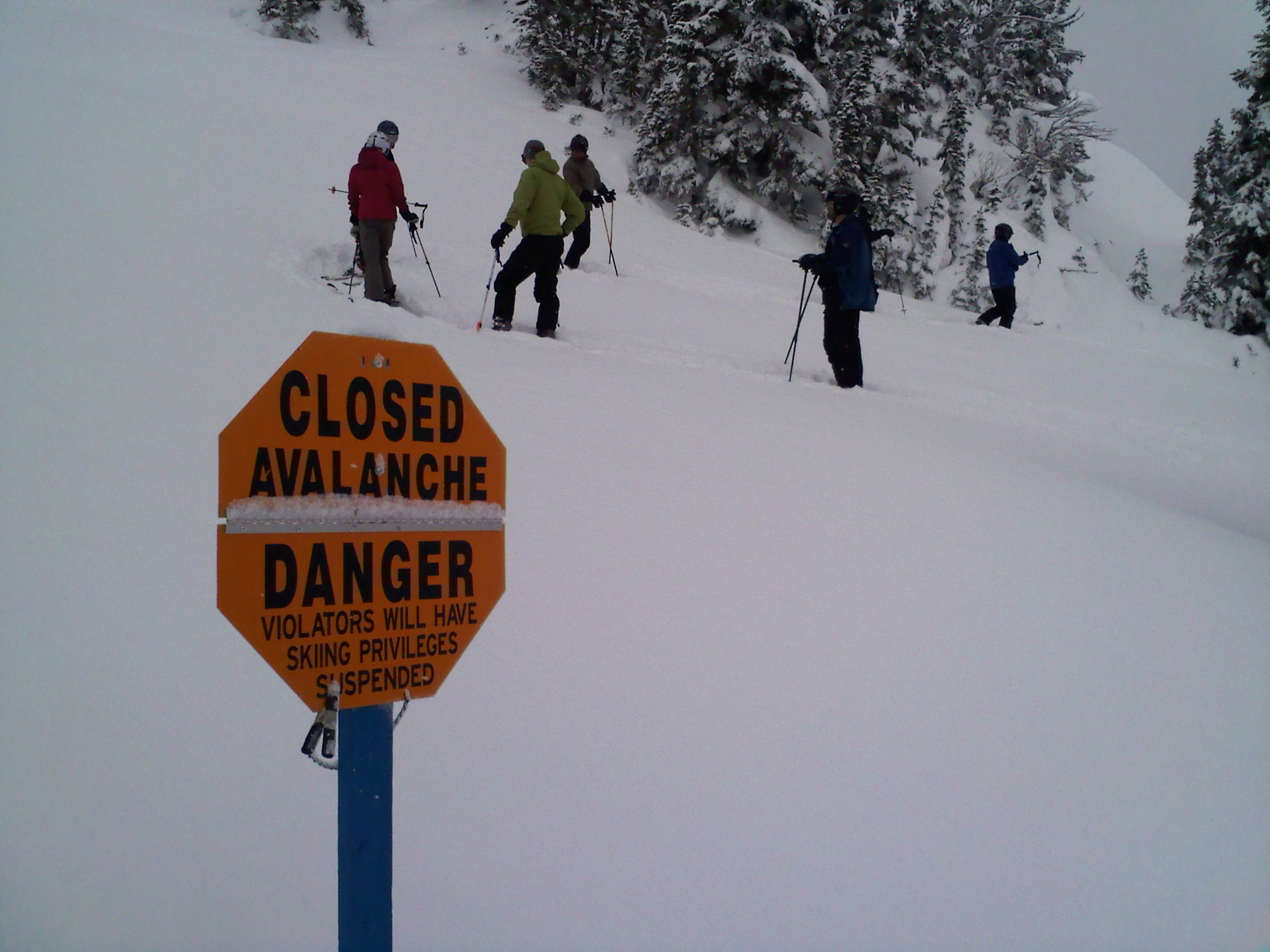
In honor of Theo Meiners’ tireless efforts to support avalanche research prior to his passing in the fall of 2012, new funding is available to support avalanche research projects. The International Snow Science Workshop 2012 has teamed with John Byrne III, the owner of Alyeska Resort, to offer two separate grants of $2,500 each during the fall of 2013, and two additional grants of $2,500 during the fall of 2014. These funds will be administered by the American Avalanche Association grants process.
Applications for the research grants must be submitted by November 30, 2013 with the awards being disseminated by December 31, 2013. The same dates will apply for the 2014 grants.
One of the two grants, the “research” grant, can be applied to basic research projects in avalanche behavior or modeling. The other “practical” grant will be awarded to a practitioner project with an emphasis on a subject that would be relevant to helicopter skiing.
Applicants should describe their proposed project, identify the need for grant funding as well as where the funding would be applied, and present a proposed timeline. All grant recipients will be required to submit a paper for presentation at the International Snow Science Workshop. For 2013 recipients they will be required to submit for Banff in 2014. Grant recipients in 2014 will be required to submit for Breckenridge in 2016.
Inquiries about the grants and appropriate projects can be directed to David Hamre at hamred or 907-223-9590
Applications can be submitted by downloading the form and emailing your application to the Chair of the AAA Research Committee (Jordy Hendrikx: jordy.hendrikx).
For more information refer to:
http://www.americanavalancheassociation.org/grants_research.php
Smart Phone based avalanche transceivers don’t work
Posted: November 7, 2013 Filed under: Avalanche, Skiing / Snow Boarding | Tags: avalanche, Avalanche Beacon, Bluetooth, Burial, Canadian Avalanche Center, Canadian Avalanche Centre, GPS, Smart Phone, Transceiver, WiFi Leave a commentCanadian Avalanche Centre research shows several problems.
There are currently three different Apps that say they work as avalanche transceivers on your smart phone. All are from Europe. All three of them have major problems that make relying on them for an avalanche resource dangerous.
The Canadian Avalanche Centre has researched the apps and determined the following:
· The apps can only connect to an identical app.
· The apps cannot be used to find any other avalanche beacon
· The apps cannot be used to find other avalanche apps
· These apps have limited range
· These apps are not effective in transmitting through snow or debris
· These apps reflect off objects giving false readings
· The apps rely on WiFi and Bluetooth to work which do not transmit through snow
· The GPS readings are not accurate, and can be off by several meters.
Consequently this limits the value of these apps to just the wrong side of worthless. Besides how many of you ski or board in avalanche country with WiFi or a cell signal?
See: Canadian Avalanche Centre Warns Backcountry Users About New Smartphone Apps
For a more in-depth study see: CAC Reviews Smartphone avalanche search apps
What do you think? Leave a comment.
If you like this let your friends know or post it on FB, Twitter or LinkedIn
Copyright 2013 Recreation Law (720) Edit Law
Email: Rec-law@recreation-law.com
Google+: +Recreation
Twitter: RecreationLaw
Facebook: Rec.Law.Now
Facebook Page: Outdoor Recreation & Adventure Travel Law
Mobile Site: http://m.recreation-law.com
By Recreation Law Rec-law@recreation-law.com James H. Moss #Authorrank
<rel=”author” link=” https://plus.google.com/u/0/b/112453188060350225356/” />
#RecreationLaw, #Recreation-Law.com, #OutdoorLaw, #OutdoorRecreationLaw, #AdventureTravelLaw, #law, #TravelLaw, #JimMoss, #JamesHMoss, #Tourism, #AdventureTourism, #Rec-Law, #RiskManagement, #CyclingLaw, #BicyclingLaw, #FitnessLaw, #Recreation-Law.com, #Backpacking, #Hiking, #Mountaineering, #IceClimbing, #RockClimbing, #RopesCourse, #ChallengeCourse, #SummerCamp, #Camps, #YouthCamps, #Skiing, #Ski Areas, #Negligence, #Snowboarding, #RecreationLaw, #@RecreationLaw, #Cycling.Law, #SkiLaw, #Outside.Law, #Recreation.Law, #RecreationLaw.com, #OutdoorLaw, #RecreationLaw, #OutdoorRecreationLaw, #AdventureTravelLaw, #Law, #TravelLaw, #JimMoss, #JamesHMoss, #AttorneyatLaw, #Tourism, #AdventureTourism, #RecLaw, #RecLawBlog, #RecreationLawBlog, #RiskManagement, #HumanPowered, #HumanPoweredRecreation,# CyclingLaw, #BicyclingLaw, #FitnessLaw, #RecreationLaw.com, #Backpacking, #Hiking, #Mountaineering, #IceClimbing, #RockClimbing, #RopesCourse, #ChallengeCourse, #SummerCamp, #Camps, #YouthCamps, #Skiing, #Ski Areas, #Negligence, #Snowboarding, sport and recreation laws, ski law, cycling law, Colorado law, law for recreation and sport managers, bicycling and the law, cycling and the law, ski helmet law, skiers code, skiing accidents, Recreation Lawyer, Ski Lawyer, Paddlesports Lawyer, Cycling Lawyer, Recreational Lawyer, Fitness Lawyer, Rec Lawyer, Challenge Course Lawyer, Ropes Course Lawyer, Zip Line Lawyer, Rock Climbing Lawyer, Adventure Travel Lawyer, Outside Lawyer, Recreation Lawyer, Ski Lawyer, Paddlesports Lawyer, Cycling Lawyer, #RecreationalLawyer, #FitnessLawyer, #RecLawyer, #ChallengeCourseLawyer, #RopesCourseLawyer, #ZipLineLawyer, #RockClimbingLawyer, #AdventureTravelLawyer, #OutsideLawyer, Good Samaritan, Samaritan, First Aid, Avalanche, Avalanche Beacon, Transceiver, Burial, Canadian Avalanche Centre, Canadian Avalanche Center, Smart Phone, GPS, WiFi, Bluetooth, Burial,
WordPress Tags: Smart,avalanche,Canadian,Centre,Apps,Europe,resource,beacon,debris,readings,WiFi,Bluetooth,meters,Besides,cell,Warns,Backcountry,Users,About,depth,Reviews,Leave,Twitter,LinkedIn,Recreation,Edit,Email,Google,RecreationLaw,Facebook,Page,Outdoor,Adventure,Travel,Blog,Mobile,Site,James,Moss,Authorrank,author,OutdoorLaw,OutdoorRecreationLaw,AdventureTravelLaw,TravelLaw,JimMoss,JamesHMoss,Tourism,AdventureTourism,RiskManagement,CyclingLaw,BicyclingLaw,FitnessLaw,RopesCourse,ChallengeCourse,SummerCamp,Camps,YouthCamps,Areas,Negligence,SkiLaw,Outside,AttorneyatLaw,RecLaw,RecLawBlog,RecreationLawBlog,HumanPoweredRecreation,Colorado,managers,helmet,accidents,Lawyer,Paddlesports,Recreational,Challenge,Course,Ropes,Line,Rock,RecreationalLawyer,FitnessLawyer,RecLawyer,ChallengeCourseLawyer,RopesCourseLawyer,ZipLineLawyer,RockClimbingLawyer,AdventureTravelLawyer,OutsideLawyer,Samaritan,Transceiver,Burial,Center,transceivers,three


 Recreation Law