
Michigan Recreational Use Statute
Posted: June 19, 2015 Filed under: Michigan | Tags: Recreational Use Act, Recreational Use Statute Leave a commentMCL 324.73301 Liability of landowner, tenant, or lessee for injuries to persons on property for purpose of outdoor recreation or trail use, using Michigan trailway or other public trail,
gleaning agricultural or farm products, fishing or hunting, or picking and purchasing agricultural or farm products at farm or “u-pick” operation; definition
Chapter 324. NATURAL RESOURCES AND ENVIRONMENTAL PROTECTION
NATURAL RESOURCES AND ENVIRONMENTAL PROTECTION ACT
Article III. NATURAL RESOURCES MANAGEMENT
Chapter 4. RECREATION
Subchapter 1. RECREATION
RECREATIONAL TRESPASS
Part 733. LIABILITY OF LANDOWNERS
Current through P.A. 42 of the 2015 Legislative Session
§ 324.73301. Liability of landowner, tenant, or lessee for injuries to persons on property for purpose of outdoor recreation or trail use, using Michigan trailway or other public trail, gleaning agricultural or farm products, fishing or hunting, or picking and purchasing agricultural or farm products at farm or “u-pick” operation; definition
(1) Except as otherwise provided in this section, a cause of action shall not arise for injuries to a person who is on the land of another without paying to the owner, tenant, or lessee of the land a valuable consideration for the purpose of fishing, hunting, trapping, camping, hiking, sightseeing, motorcycling, snowmobiling, or any other outdoor recreational use or trail use, with or without permission, against the owner, tenant, or lessee of the land unless the injuries were caused by the gross negligence or willful and wanton misconduct of the owner, tenant, or lessee.
(2) A cause of action shall not arise for injuries to a person who is on the land of another without paying to the owner, tenant, or lessee of the land a valuable consideration for the purpose of entering or exiting from or using a Michigan trailway as designated under part 721 or other public trail, with or without permission, against the owner, tenant, or lessee of the land unless the injuries were caused by the gross negligence or willful and wanton misconduct of the owner, tenant, or lessee. For purposes of this subsection, a Michigan trailway or public trail may be located on land of any size including, but not limited to, urban, suburban, subdivided, and rural land.
(3)A cause of action shall not arise against the owner, tenant, or lessee of land or premises for injuries to a person who is on that land or premises for the purpose of gleaning agricultural or farm products, unless that person’s injuries were caused by the gross negligence or willful and wanton misconduct of the owner, tenant, or lessee.
(4) A cause of action shall not arise against the owner, tenant, or lessee of a farm used in the production of agricultural goods as defined by section 35(1)(h) of the former single business tax act, 1975 PA 228, or by section207(1)(d) of the Michigan business tax act, 2007 PA 36, MCL 208.1207, for injuries to a person who is on that farm and has paid the owner, tenant, or lessee valuable consideration for the purpose of fishing or hunting, unless that person’s injuries were caused by a condition which involved an unreasonable risk of harm and all of the following apply:
(a) The owner, tenant, or lessee knew or had reason to know of the condition or risk.
(b) The owner, tenant, or lessee failed to exercise reasonable care to make the condition safe, or to warn the person of the condition or risk.
(c) The person injured did not know or did not have reason to know of the condition or risk.
(5) A cause of action shall not arise against the owner, tenant, or lessee of land or premises for injuries to a person, other than an employee or contractor of the owner, tenant, or lessee, who is on the land or premises for the purpose of picking and purchasing agricultural or farm products at a farm or “u-pick” operation, unless the person’s injuries were caused by a condition that involved an unreasonable risk of harm and all of the following apply:
(a) The owner, tenant, or lessee knew or had reason to know of the condition or risk.
(b) The owner, tenant, or lessee failed to exercise reasonable care to make the condition safe, or to warn the person of the condition or risk.
(c) The person injured did not know or did not have reason to know of the condition or risk.
(6) As used in this section, “agricultural or farm products” means the natural products of the farm, nursery, grove, orchard, vineyard, garden, and apiary, including, but not limited to, trees and firewood.
Cite as MCL 324.73301
History. Amended by 2007, Act 174, s 4, eff. 12/21/2007.
Add. 1995, Act 58, Imd. Eff. May 24, 1995 .
Walnut Canyon National Monument celebrating its 100th Anniversary this Summer. Great Place for a Picnic
Posted: June 18, 2015 Filed under: Arizona | Tags: x, y, z Leave a commentCelebrate Walnut Canyon National Monument’s 100th Anniversary with a Summer Picnic
FLAGSTAFF, ARIZONA – As part of the yearlong celebration of Walnut Canyon National Monument’s 100th anniversary, the Natural and Cultural Resources staff will host a summer picnic. Please join us for this family friendly event on Sunday, June 21, 2015 featuring special talks and tours highlighting the unique resources of Walnut Canyon National Monument. Whether you are a frequent visitor or it is your first time, this will be an excellent opportunity to meet with park biologists, ecologists, and archeologists to learn about Walnut Canyon National Monument.
Regular entrance fees apply. The entrance fee is $5.00/person for visitors 16 and over. America the Beautiful Passes are honored and sold. There is no additional fee for this event.
Reservations are required for the picnic. Please contact Lisa Leap at 928-526-1157 ext. 222. Picnic space is limited. Sign up for the various talks will occur on site.
Walnut Canyon’s Summer Picnic at the visitor center, Sunday, June 21, 2015
· -11:00 am -3:00 pm
· -Participants must bring their own food and beverage. Dessert will be provided.
· -Featured talks and tours will begin immediately after lunch. They will include:
o Ranger Cabin and CCC boundary fence
o Archeology along the Island Trail
o Archeology along the Ranger Ledge Trail
o Architectural styles at Walnut Canyon
o Bird watching and wildlife tracking/identification
o Plant identification and Ponderosa Pine
· -Picnic area is wheelchair accessible as are several of the tours.
· -Family friendly event.
· -Wear comfortable shoes/clothing; don’t forget your sun protection, extra water, and camera!
Event location
Walnut Canyon National Monument is located approximately 7.5 miles (12km) east of Flagstaff on I-40; take Exit 204, and head south. The Walnut Canyon Visitor Center is located at the end of this 3 mile road. Information can be obtained from (928)526-3367 and on the web at www.nps.gov/waca.
About the National Park Service: More than 20,000 National Park Service employees care for America’s 406 national parks and work with communities across the nation to help preserve local history and create close-to-home recreational opportunities. Visit us at www.nps.gov, on Facebook www.facebook.com/nationalparkservice, Twitter www.twitter.com/natlparkservice, and YouTube www.youtube.com/nationalparkservice.
WACASummerPicnic_Final 6-2-15.pdf
$2.1 M award after jury trial for snow tubing injury in PA.
Posted: June 17, 2015 Filed under: Assumption of the Risk, Pennsylvania, Snow Tubing | Tags: Snow Tubing, Tubing, tubing hill Leave a commentThe way the plaintiff arrived at the hill with tickets unintentionally skirted the release & risk management procedures in this case. The rest of the mistakes were just dumb. Appeal should follow.
This is an article from Pennsylvania written after a jury verdict. It is before an appeal, if any. Do not rely on it for any law, but it is full of interesting risk management issues.
Please read the article: Berks jury awards $2.1M to man in snow tubing crash
A Pennsylvania verdict against a ski area with a tubing hill was for $2.1 million. The plaintiff was part of a group. After skiing all day a friend in the group gave him tubing tickets. He went tubing without signing the release because he already had tickets.
Risk Management Issue Number 1: how do you sell tickets and get release signed
The plaintiff went down the run and hit the stop at the bottom incurring some injuries along the way. Before he could get out of the way, another tuber hit him either increasing his injuries or creating new, worse injuries.
Risk Management Issue Number 2: how do you design a run so that the tubers are not “stopped” but slow to a gentle stop?
Risk Management Issue Number 3: how do you make sure tubers don’t run into each other?
Risk Management Issue Number 4: how do you create a safe exit from the tubing hill
The lawsuit was based on failure to warn which then brings up how many signs can you have posted or should you just put up a drive through screen to have everyone watch for an hour.
I knew a raft company that required people to hand in their release to get their PFD. No PFD you could not get on the bus to go raft.
What else could you do?
Do Something
This case is the perfect example of a combination of “errors” and an injury lead to a massive payout.
This is a great example of holes in a program. How many you can afford to fill is the biggest question. Also remember that the article was based on what the reporter figured out from attending the trial and what he was told by the plaintiff at the end of the trial. The facts might be different.
How knows what the ending may be or where this is going, we probably will never know.
Read the article: Berks jury awards $2.1M to man in snow tubing crash
What do you think? Leave a comment.
If you like this let your friends know or post it on FB, Twitter or LinkedIn
Copyright 2015 Recreation Law (720) Edit Law
Email: Rec-law@recreation-law.com
Google+: +Recreation
Twitter: RecreationLaw
Facebook: Rec.Law.Now
Facebook Page: Outdoor Recreation & Adventure Travel Law
Blog: www.recreation-law.com
Mobile Site: http://m.recreation-law.com
By Recreation Law Rec-law@recreation-law.com James H. Moss
#AdventureTourism, #AdventureTravelLaw, #AdventureTravelLawyer, #AttorneyatLaw, #Backpacking, #BicyclingLaw, #Camps, #ChallengeCourse, #ChallengeCourseLaw, #ChallengeCourseLawyer, #CyclingLaw, #FitnessLaw, #FitnessLawyer, #Hiking, #HumanPowered, #HumanPoweredRecreation, #IceClimbing, #JamesHMoss, #JimMoss, #Law, #Mountaineering, #Negligence, #OutdoorLaw, #OutdoorRecreationLaw, #OutsideLaw, #OutsideLawyer, #RecLaw, #Rec-Law, #RecLawBlog, #Rec-LawBlog, #RecLawyer, #RecreationalLawyer, #RecreationLaw, #RecreationLawBlog, #RecreationLawcom, #Recreation-Lawcom, #Recreation-Law.com, #RiskManagement, #RockClimbing, #RockClimbingLawyer, #RopesCourse, #RopesCourseLawyer, #SkiAreas, #Skiing, #SkiLaw, #Snowboarding, #SummerCamp, #Tourism, #TravelLaw, #YouthCamps, #ZipLineLawyer, Tubing Hill, Tubing, Snow Tubing,
If you fall down in a foreign country, and you have paid money to be there, you probably have to sue there.
Posted: June 15, 2015 Filed under: Adventure Travel, Jurisdiction and Venue (Forum Selection), Kansas | Tags: Bahamas, Forum selection clause, Jurisdiction, Jurisdiction and Venue (Forum Selection), Venue Leave a commentThe exception is cheap vacations where the hotels and resorts won’t have you sign a forum selection clause when you arrive.
Mcarthur v. Kerzner International Bahamas Limited, 2015 U.S. App. LEXIS 5058
State: Kansas, United States Court of Appeals For The Eleventh Circuit
Plaintiff: John C. Mcarthur, Sandra S. Mcarthur
Defendant: Kerzner International Bahamas Limited, Kerzner International Limited, Island Hotel Company Limited, Paradise Island Limited
Plaintiff Claims: negligence
Defendant Defenses: Forum Selection Clause
Holding: For the Defendant
Year: 2015
The plaintiffs, husband and wife, went to the Bahamas to watch a college basketball tournament. While at a resort, the husband slipped and fell near the pool injuring his back. The plaintiff’s filed a lawsuit in the federal district court in Kansas. The defendants filed a motion to dismiss based on the forum selection clause the plaintiff’s had signed.
A forum selection clause is the same as a jurisdiction and venue clause. It identifies the place and the law that will be applied to the case.
The district court dismissed the plaintiff’s claims and the plaintiff’s, husband and wife, appealed to the Eleventh Circuit Court of Appeals. This is the decision of the Eleventh Circuit Court of Appeals.
Analysis: making sense of the law based on these facts.
The plaintiff’s booked their travel through a travel agent who was hired by the university or done in conjunction with the university. The travel agent upon booking the rooms received a contract from the hotel which required the travel agent to inform the guests of the rules and contract provisions.
The relationship between a travel agent and the hotel is different from most contracts. First whether or not a contract exists is based on the relationship. If a contract exists it is to pay a commission a specific way to the travel agent and/or be based on a relationship. However, in every situation there is a third party beneficiary to the contract or third parties that are part of the contract, the travelers. Either way the travelers have an interest in the contract. The travel agent usually has requirements as part of the contract to communicate parts or the entire contract to their customers, the travelers.
Sometimes the travel agent is the agent of the travelers. In cases where the travel agent is an agent, then the travel agent must communicate all things known or required by the hotel to the traveler.
Those terms and provisions, which were to be communicated in this case included:
…two provisions in which the travel agent agrees to notify their clients that when they book their reservation through the travel agent, they are subject to certain terms and conditions governing their stay at Atlantis.
A section of the contract indicates that the additional terms and conditions are available on the Atlantis website.
The terms and conditions provide that the guest will be asked to sign a form agreeing to certain terms related to any claims the guest may have as a result of the guest’s stay at the Atlantis Resort. It specifically states that “I agree that any claim I may have against [several named defendants and others], along with their parent, related and affiliated companies at every tier, . . . resulting from any events occurring in The Bahamas shall be governed by and construed in accordance with the laws of the Commonwealth of The Bahamas, and further, irrevocably agree to the Supreme Court of The Bahamas as the exclusive venue for any such proceedings whatsoever.”
Because the travel agent is an “agent” of the plaintiff the plaintiff had constructive notice of the terms of the agreement before they arrived in the Bahamas. Constructive notice means you legally had notice of the facts or pleadings at issue even if you did not have actual notice.
When the plaintiff’s arrived at the resort, they signed a registration card titled Acknowledgement, Agreement and Release. This too had a choice of forums clause requiring all suits to be brought in the Bahamas.
The court first reviewed the law surrounding forum selection clauses.
A forum selection clause will be invalidated where “(1) its formation was induced by fraud or overreaching; (2) the plaintiff would be deprived of its day in court because of inconvenience or unfairness; (3) the chosen law would deprive the plaintiff of a remedy; or (4) enforcement of the clause would contravene public policy.”
The test on whether a forum selection clause goes too far or overreaches is:
To determine whether there was fraud or overreaching in a non-negotiated forum selection clause, the court looks to “whether the clause was reasonably communicated to the consumer. A useful two-part test of ‘reasonable communicativeness’ takes into account the clause’s physical characteristics and whether the plaintiffs had the ability to become meaningfully informed of the clause and to reject its terms.”
The court found “The Bahamas is an adequate alternative forum, and the public interest factors weigh in favor of transfer.” The court then looked at the arguments raised by the plaintiffs as to why the forum selection clause should be invalidated. However, the plaintiff’s did not argue any of the four factors necessary to overcome the selection in the clause.
Consequently, the court upheld the District Court’s dismissal of the claim. The plaintiffs were free to go to the Bahamas and file their claim again.
So Now What?
The legal term for deciding the case should be dismissed is forum non conveniens. Latin for the forum is not convenient, meaning the right one based on the contract.
There are two keys here that were critical for the court to rule this way. The first was the forum selected was reasonable for the situation. Normally, you have to choose the forum of the defendant, where the defendant is served or where you may catch the defendant temporarily. (There are classic “stories” of serving defendants in airplanes as they flew over a particular state.)
There must be a reasonable reason for the selection you choose. If you are based in one state and the plaintiff’s come from others, you cannot just choose any state with the best law or the hardest courts to find. You must choose a state where the accident happens if you are fixed, what the accident may happen if you are running trips in other states or the state where you are legally based.
The second is the plaintiff’s had the opportunity, whether or not they took it, to see the forum selection clause, and the other contractual terms, prior to leaving their homes. This might have resolved with a different result if the forum selection clause and other contracts, such as a release, had been handed to the plaintiff’s upon the arrival without any notice they would be required to sign it.
If the client had not signed the agreement at the time of check in, and if they claimed they had not read or received the contract, the plaintiff’s might still have been held to the contract because they took advantage of the benefits the contract offered.
Get your release, with its forum selection clause, in front of the plaintiff as soon as possible. Now days it can be part of the sign up process online or posted on your website or emailed to the guest when their credit card is run.
What do you think? Leave a comment.
If you like this let your friends know or post it on FaceBook, Twitter or LinkedIn
Copyright 2015 Recreation Law (720) Edit Law
Email: Rec-law@recreation-law.com
Google+: +Recreation
Twitter: RecreationLaw
Facebook: Rec.Law.Now
Facebook Page: Outdoor Recreation & Adventure Travel Law
Blog: www.recreation-law.com
Mobile Site: http://m.recreation-law.com
By Recreation Law Rec-law@recreation-law.com James H. Moss
#AdventureTourism, #AdventureTravelLaw, #AdventureTravelLawyer, #AttorneyatLaw, #Backpacking, #BicyclingLaw, #Camps, #ChallengeCourse, #ChallengeCourseLaw, #ChallengeCourseLawyer, #CyclingLaw, #FitnessLaw, #FitnessLawyer, #Hiking, #HumanPowered, #HumanPoweredRecreation, #IceClimbing, #JamesHMoss, #JimMoss, #Law, #Mountaineering, #Negligence, #OutdoorLaw, #OutdoorRecreationLaw, #OutsideLaw, #OutsideLawyer, #RecLaw, #Rec-Law, #RecLawBlog, #Rec-LawBlog, #RecLawyer, #RecreationalLawyer, #RecreationLaw, #RecreationLawBlog, #RecreationLawcom, #Recreation-Lawcom, #Recreation-Law.com, #RiskManagement, #RockClimbing, #RockClimbingLawyer, #RopesCourse, #RopesCourseLawyer, #SkiAreas, #Skiing, #SkiLaw, #Snowboarding, #SummerCamp, #Tourism, #TravelLaw, #YouthCamps, #ZipLineLawyer, Forum Selection Clause, Jurisdiction and Venue, Jurisdiction, Venue, Bahamas,
Are you looking for the Best Ski Season forecasts and Now summer biking and hiking Forecasts
Posted: June 13, 2015 Filed under: Youth Camps, Zip Line | Tags: Forecasts, Weather, Weather Forecasts, x, y, z Leave a comment
|


Public Meeting to Protect the Grand Canyon and the People around the National Park
Posted: June 12, 2015 Filed under: Youth Camps, Zip Line | Tags: x, y, z Leave a commentPlease consider attending an upcoming PUBLIC MEETING to discuss the threat of URANIUM MINING near Grand Canyon:
Date: Thursday, June 18th at 6:00 PM
Place: Firecreek Coffee Company, 22 E Route 66, Flagstaff, AZ

Grand Canyon River Guides Association
Here’s the scoop:
Uranium haul trucks, coming soon to a highway near you…
The Canyon Uranium Mine, six miles from the Grand Canyon’s south rim, is set to resume operations in June 2015. If this happens, mine owner Energy Fuels plans to truck uranium ore through Flagstaff and dozens of other northern Arizona and southern Utah communities en route to the White Mesa Uranium Mill outside Blanding, Utah.
Jointly hosted by the Grand Canyon Trust, the Center for Biological Diversity and the Sierra Club, the meeting will be an occasion to share information and answer questions about the potentially devastating impacts of uranium mining on water, wildlife, human and environmental health. Join us for the discussion and find out what you can do to help protect the Grand Canyon and our communities from the toxic legacy of radioactive contamination.
Learn more: http://www.grandcanyontrust.org/blog/small-likelihood-permanent-contamination

gcimage
Complete this Survey to Promote Cycling and Tourism in Washington
Posted: June 11, 2015 Filed under: Adventure Travel, Cycling, Mountain Biking, Washington | Tags: #Tourism, Bike Trail, Cycling, Hiking Trail, Mt Shuksan, Mt. Baker, Survey, Trail, Washington Leave a commentBy participating in this survey you will help a grassroots citizens group realize a pedestrian path along the Mt Baker Highway corridor.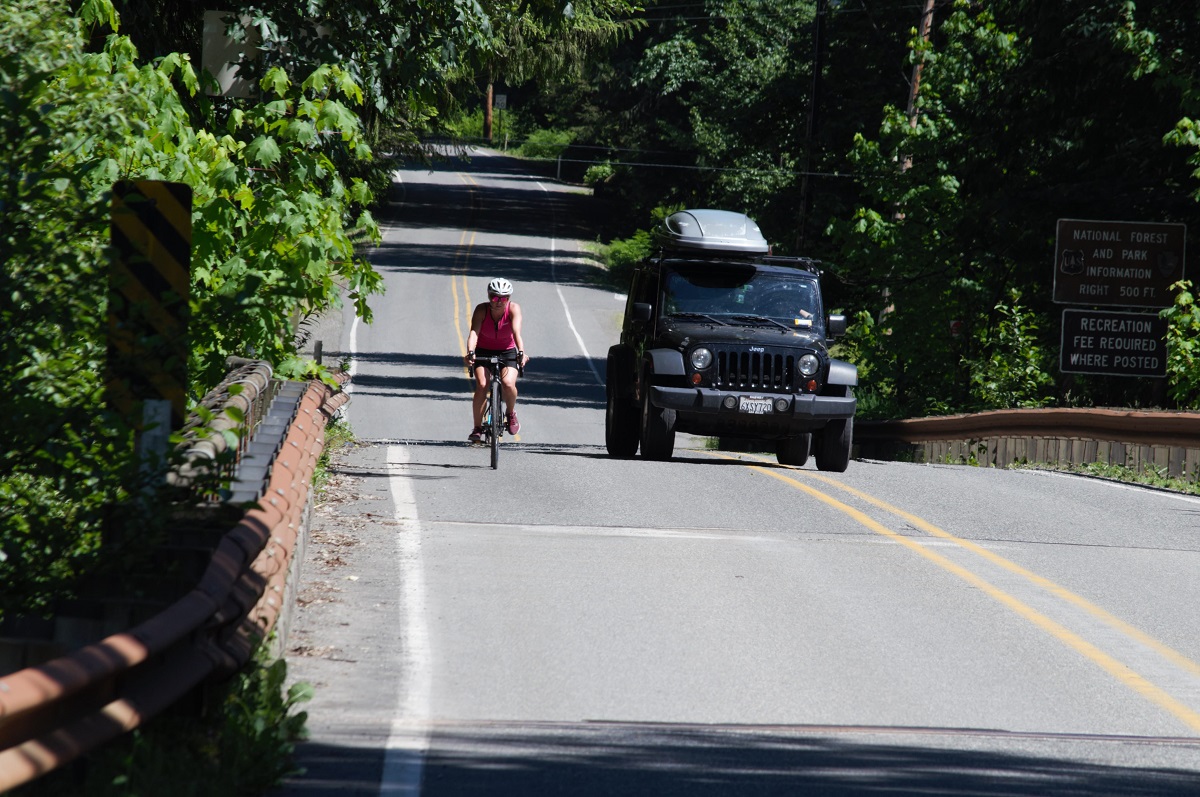
Mt Baker Highway, AKA Washington State Highway 542 stretches 58 miles from sea level in Bellingham, Washington to Artist’s Point at an elevation of 5,140 feet – a scenic overlook above tree line that on clear days treats visitors to sublime views of Mt Baker and Mt Shuksan.
Since 1992 Whatcom County has had plans to build a pedestrian pathway from Bellingham to Artist’s Point and dubbed it the Bay to Baker Trail (B2B). However due to a number of factors little has been accomplished. Right of way has been established in some areas, and in those areas some sections of the trail is under water for much of the year, some travel heavily undercut banks 100 feet above the North Fork Nooksack River, and at least one section acts as the local garbage dump.
Due to its beauty the highway attracts heavy traffic during the winter ski and summer hiking seasons. RVs, families coming up to recreate in SUVs, sports cars, sport motorcycles traveling at triple digits due to virtually no speed enforcement, and road cyclists all share this road. To compound the mix there are residential communities on the highway with limited options for residents to safely walk or ride bikes to community destination. At the local middle school if a child shows up to school with their bike they are sent home due to the hazard that riding on the road represents.
The mild winter that the Pacific Northwest experienced this last year was a shock to the small, tourist dependent communities in the shadow of Mt Baker. Businesses closed and residents watched as skiers, snowboarders and snowmobilers, who bring much needed revenue to the area, disappeared. It was a call to action as residents and business owners realized that perhaps some diversification of recreational opportunities was in order.
Inventorying the material that they had to work with, a group of residents and business owners has banded together in an attempt to motivate government to take action on the Bay to Baker Trail. John Adam, owner of Glacier Ski Shop, believes that pedestrian infrastructure will not only make the area more attractive to visitors, but will also provide residents with a safe option to getting in a vehicle and burning fossil fuels when they need a quart of milk. Paul Engel, who owns Wild and Scenic River Tours, added that, “Hundreds of reports show that when pedestrian pathways are created in a community it brings nothing but good – the population is healthier, vehicular traffic is reduced, property values are stable and local businesses see more traffic. Everyone benefits”
It would be easy to see why businesses would want to increase tourist traffic, and a small group of locals have pointed fingers at them and stating that they just want to “cash in”. When in reality it is more a matter of staying in businesses. And while a very small group of locals oppose the trail effort, the vast majority are for it. One of those is Marty Grabijas, a product developer in the outdoor industry. According to Marty, “What we have here is so special. The access to big wilderness and high alpine environments is incredible, and I can see why some want this to remain their private paradise. However no matter how much we want it we can’t turn the clock back. We do however have an opportunity to engineer the Mt Baker Highway corridor for the future. With a pedestrian pathway we can reduce vehicle congestion, and provide residents and visitors with a safe way to get around on foot or on a bike. My motive for being involved is to create safe places to walk and ride for everyone. The Mt Baker area is visually stunning, and with a safe pathway in the highway corridor a bike is the perfect vehicle for visiting services in one of the several small towns, or connecting to Forest Service roads and exploring the area.”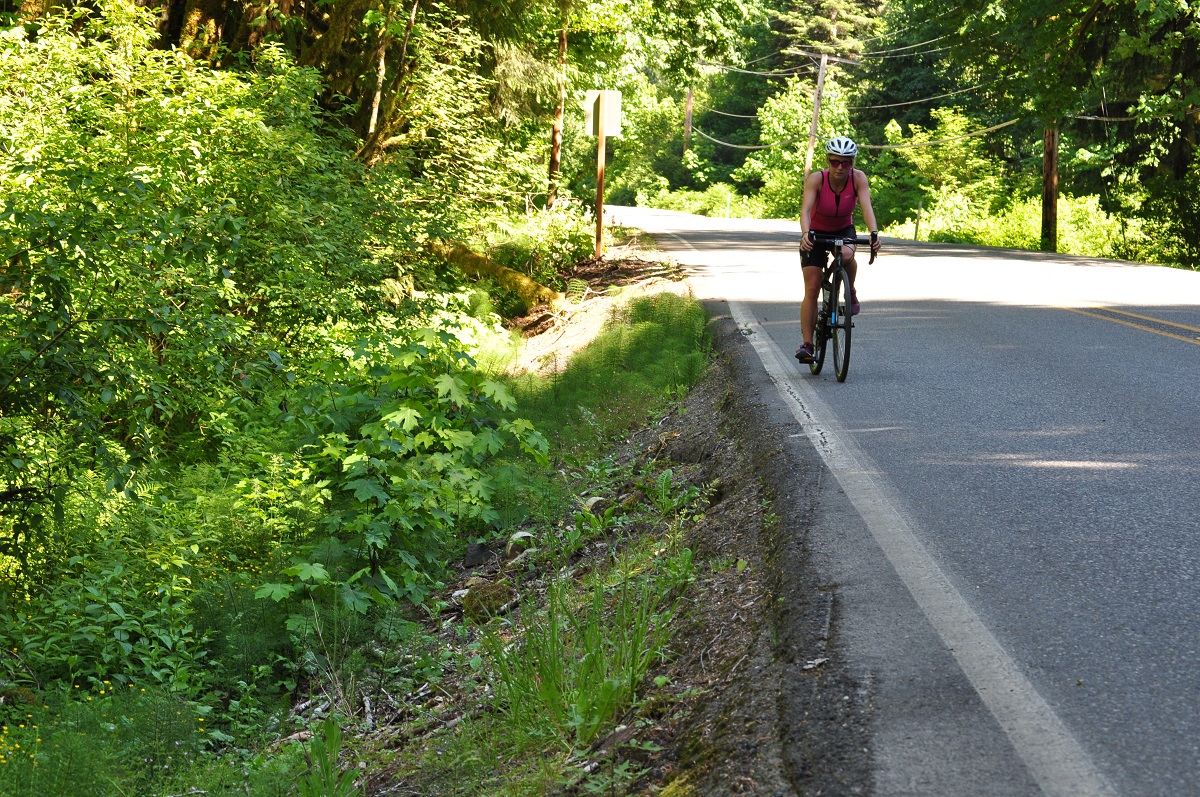
This citizens group is in the due diligence stage of forming a pedestrian and equestrian advocacy group. Part of that process is showing a want and need for pedestrian pathways by gauging interest of residents, visitors and potential visitors. By participating in their survey you will provide them with the data points they need to attempt to secure funding in Whatcom County’s 2017 / 18 budget to see portions of the Bay to Baker Trail become reality.
Regardless if you have been to the Mt Baker area, your feedback is valuable.
Go to the Survey Here: https://www.surveymonkey.com/s/MTBAKERTA
What do you think? Leave a comment.
If you like this let your friends know or post it on FB, Twitter or LinkedIn
Copyright 2015 Recreation Law (720) Edit Law
Email: Rec-law@recreation-law.com
Google+: +Recreation
Twitter: RecreationLaw
Facebook: Rec.Law.Now
Facebook Page: Outdoor Recreation & Adventure Travel Law
Blog: www.recreation-law.com
Mobile Site: http://m.recreation-law.com
By Recreation Law Rec-law@recreation-law.com James H. Moss
#AdventureTourism, #AdventureTravelLaw, #AdventureTravelLawyer, #AttorneyatLaw, #Backpacking, #BicyclingLaw, #Camps, #ChallengeCourse, #ChallengeCourseLaw, #ChallengeCourseLawyer, #CyclingLaw, #FitnessLaw, #FitnessLawyer, #Hiking, #HumanPowered, #HumanPoweredRecreation, #IceClimbing, #JamesHMoss, #JimMoss, #Law, #Mountaineering, #Negligence, #OutdoorLaw, #OutdoorRecreationLaw, #OutsideLaw, #OutsideLawyer, #RecLaw, #Rec-Law, #RecLawBlog, #Rec-LawBlog, #RecLawyer, #RecreationalLawyer, #RecreationLaw, #RecreationLawBlog, #RecreationLawcom, #Recreation-Lawcom, #Recreation-Law.com, #RiskManagement, #RockClimbing, #RockClimbingLawyer, #RopesCourse, #RopesCourseLawyer, #SkiAreas, #Skiing, #SkiLaw, #Snowboarding, #SummerCamp, #Tourism, #TravelLaw, #YouthCamps, #ZipLineLawyer, Mt. Baker, Survey, Washington, Mt Baker, Mt Shuksan, Trail, Cycling, Tourism, Bike Trail, Hiking Trail,
Summer 2015 Commercial Fatalities
Posted: June 10, 2015 Filed under: Colorado, Montana, Mountaineering, Paddlesports | Tags: 2015, All American Adventures, Calving, Chugach Powder Guides, fatality, Flipped, Geyser Whitewater Expedition, Glacier, Summer, Whitewater Rafting Leave a commentThis list is not guaranteed to be accurate. The information is found from web searches and news dispatches. Those references are part of the chart. If you have a source for information on any fatality please leave a comment or contact me. Thank you.
If this information is incorrect or incomplete please let me know. This is up to date as of June 1, 2015. Thanks.
Rafting, Mountaineering and other summer sports are probably still safer than your kitchen or bathroom. This information is not to scare you away from any activity but to help you understand the risks and to study.
Red is a probable death due to medical issues unrelated to the activity
Dark blue is a death of an employee while working
|
Date |
Activity |
State |
Location |
What |
Age |
Sex |
Location 2 |
Reference |
Company |
|
3/2 |
Backcountry Skiing |
AK |
Chugach Mountains |
Calving Glacier |
28 |
M |
|
Chugach Powder Guides |
|
|
5/23 |
Whitewater Rafting |
CO |
Clear Creek |
Raft Flipped |
47 |
F |
M258.5 |
All American Adventures |
|
|
5/31 |
Whitewater Rafting |
MT |
Gallatin River |
Raft Flipped |
43 |
M |
House Rock |
Geyser Whitewater Expedition |
If you are unable to read the chart, email me at jim@rec-law.us and I’ll send it to you as a PDF.
Our condolences go to the families of the deceased. Our thoughts extend to the families and staff at the areas who have to deal with these tragedies.
What do you think? Leave a comment.
If you like this let your friends know or post it on FB, Twitter or LinkedIn
Copyright 2013 Recreation Law (720) Edit Law
Email: Rec-law@recreation-law.com
Google+: +Recreation
Twitter: RecreationLaw
Facebook: Rec.Law.Now
Facebook Page: Outdoor Recreation & Adventure Travel Law
Blog: www.recreation-law.com
Mobile Site: http://m.recreation-law.com
#AdventureTourism, #AdventureTravelLaw, #AdventureTravelLawyer, #AttorneyatLaw, #Backpacking, #BicyclingLaw, #Camps, #ChallengeCourse, #ChallengeCourseLaw, #ChallengeCourseLawyer, #CyclingLaw, #FitnessLaw, #FitnessLawyer, #Hiking, #HumanPowered, #HumanPoweredRecreation, #IceClimbing, #JamesHMoss, #JimMoss, #Law, #Mountaineering, #Negligence, #OutdoorLaw, #OutdoorRecreationLaw, #OutsideLaw, #OutsideLawyer, #RecLaw, #Rec-Law, #RecLawBlog, #Rec-LawBlog, #RecLawyer, #RecreationalLawyer, #RecreationLaw, #RecreationLawBlog, #RecreationLawcom, #Recreation-Lawcom, #Recreation-Law.com, #RiskManagement, #RockClimbing, #RockClimbingLawyer, #RopesCourse, #RopesCourseLawyer, #SkiAreas, #Skiing, #SkiLaw, #Snowboarding, #SummerCamp, #Tourism, #TravelLaw, #YouthCamps, #ZipLineLawyer, Fatality, Summer, 2015, Whitewater Rafting, Glacier, Calving, Flipped, Chugach Powder Guides, All American Adventures, Geyser Whitewater Expedition,
Mcarthur v. Kerzner International Bahamas Limited, 2015 U.S. App. LEXIS 5058
Posted: June 9, 2015 Filed under: Adventure Travel, Jurisdiction and Venue (Forum Selection), Legal Case | Tags: Atlantis, Bahamas, Forum selection clause, Jurisdiction, Venue Leave a commentMcarthur v. Kerzner International Bahamas Limited, 2015 U.S. App. LEXIS 5058
John C. Mcarthur, Sandra S. Mcarthur, his wife, Plaintiffs – Appellants, versus Kerzner International Bahamas Limited, a Bahamian company, Kerzner International Limited, a Bahamian company, Island Hotel Company Limited, a Bahamian company, Paradise Island Limited, a Bahamian company, Defendants – Appellees.
No. 14-13889 Non-Argument Calendar
UNITED STATES COURT OF APPEALS FOR THE ELEVENTH CIRCUIT
2015 U.S. App. LEXIS 5058
March 30, 2015, Decided
COUNSEL: For JOHN C. MCARTHUR, SANDRA S. MCARTHUR, Plaintiffs – Appellants: Jeffrey Bradford Maltzman, Rafaela Castells, Steve Holman, Maltzman & Partners, PA, CORAL GABLES, FL; Robert L. Parks, Gabriel A. Garay, The Law Offices of Robert L. Parks, PL, MIAMI, FL.
JUDGES: Before JULIE CARNES, FAY and DUBINA, Circuit Judges.
OPINION
PER CURIAM:
Appellants John C. McArthur and his wife, Sandra S. McArthur, appeal the district court’s order dismissing their civil action under forum non conveniens. After reviewing the record and reading the parties’ briefs, we affirm the order dismissing appellants’ complaint.
I. BACKGROUND
The McArthurs were part of a group of guests who traveled to the Atlantis Resort in The Bahamas with the University of Kansas (“KU”) for a basketball tournament. Travel agent Cate and Mason Travel Partners (“travel agent”) made KU’s reservations and contracted with Atlantis. The contract includes two provisions in which the travel agent agrees to notify their clients that when they book their reservation through the travel agent, they are subject to certain terms and conditions governing [*2] their stay at Atlantis. A section of the contract indicates that the additional terms and conditions are available on the Atlantis website. [Doc. DE-16-1, Ex. 1 ¶ 5, ¶ 8.] The terms and conditions provide that the guest will be asked to sign a form agreeing to certain terms related to any claims the guest may have as a result of the guest’s stay at the Atlantis Resort. It specifically states that “I agree that any claim I may have against [several named defendants and others], along with their parent, related and affiliated companies at every tier, . . . resulting from any events occurring in The Bahamas shall be governed by and construed in accordance with the laws of the Commonwealth of The Bahamas, and further, irrevocably agree to the Supreme Court of The Bahamas as the exclusive venue for any such proceedings whatsoever.” [Id. ¶ 8.]
Upon their arrival at Atlantis, the McArthurs signed a written registration card entitled “Acknowledgement, Agreement and Release” that includes a choice of law provision and forum selection clause:
I agree that any claims I may have against the Resort Parties resulting from any events occurring in The Bahamas shall be governed by and constructed in [*3] accordance with the laws of the Commonwealth of The Bahamas, and further, I irrevocably agree to the Supreme Court of The Bahamas as the exclusive venue for such proceedings whatsoever. . . .
[Id. ¶ 10 & Exh. 4.]
During his stay at the Atlantis Resort, John McArthur slipped and fell on a sidewalk adjacent to the water park attraction known as the Rapid River. In March 2014, the McArthurs filed an amended complaint in federal district court, alleging negligence in connection with John McArthur’s fall. The amended complaint also alleged that as a result of John McArthur’s injuries, his wife suffered the diminishment of her husband’s companionship and consortium. The amended complaint invoked the district court’s diversity based subject-matter jurisdiction under 28 U.S.C. § 1332. It alleged that the McArthurs were domiciled in Kansas, defendant Kerzner International was a Bahamian company with its principal place of business in Florida, defendant Kerzner Bahamas was a Bahamian company with its principal place of business in Florida, defendant Island Hotel was a Bahamian company and a subsidiary of Kerzner International and Kerzner Bahamas, and defendant Paradise Island was a Bahamian company and a subsidiary [*4] of Kerzner International and Kerzner Bahamas.
The defendants moved to dismiss the amended complaint on the basis of forum non conveniens. The district court granted the motion. The McArthurs then perfected this appeal.1
1 This court issued a jurisdictional question asking the parties to address whether the pleadings sufficiently alleged the citizenship of the parties, in particular, Island Hotel and Paradise Island, to establish the district court’s subject-matter jurisdiction over the case. See Mallory & Evans Contractors & Eng’rs, LLC v. Tuskegee Univ., 663 F.3d 1304, 1304-05 (11th Cir. 2011) (stating that the court must sua sponte raise its concerns regarding subject-matter jurisdiction). The McArthurs concede that the amended complaint failed to allege sufficiently the citizenship of Island Hotel and Paradise Island, but move to amend the amended complaint to add the allegations that both defendants were Bahamian Companies with their principal places of business in the Bahamas. [HN1] The party invoking the court’s jurisdiction bears the burden of establishing federal jurisdiction, and when the pleadings’ allegations of citizenship and jurisdiction are insufficient, a party may amend them in this court. See 28 U.S.C. § 1653; Mallory, 663 F.3d at 1305. The McArthurs’ allegations cure the pleading deficiencies [*5] as to Island Hotel and Paradise Island, and the amended complaint sufficiently alleges that the other defendants are Bahamian companies with their principal places of business in Florida. Because the proposed amendments show that no defendant is a citizen of Kansas, where the McArthurs are domiciled, the district court’s subject-matter jurisdiction is satisfied. Thus, we grant the McArthur’s motion to amend the amended complaint and entertain the instant appeal.
II. DISCUSSION
[HN2] This court reviews a district court’s order of dismissal based on forum non conveniens for an abuse of discretion. Aldana v. Del Monte Fresh Produce N.A., 578 F.3d 1283, 1288 (11th Cir. 2009). [HN3] In addition, we review de novo a district court’s construction of a contractual forum selection clause. Global Satellite Commc’n Co. v. Starmill U.K. Ltd., 378 F.3d 1269, 1271 (11th Cir. 2004).
As a preliminary matter, forum selection clauses “are presumptively valid and enforceable unless the plaintiff makes a ‘strong showing’ that enforcement would be unfair or unreasonable under the circumstances.” Pappas v. Kerzner Int’l Bahamas Ltd., 585 F. App’x 962, 965 (11th Cir. 2014) (quoting Krenkel v. Kerzner Int’l Hotels Ltd., 579 F.3d 1279, 1281 (11th Cir. 2009)). The party seeking to avoid the forum selection clause bears the burden of showing exceptional circumstances, predicated on public interest considerations to justify disturbing the forum selection clause. Atl. Marine Const. v. U.S. Dist. Court, U.S. , , 134 S. Ct. 568, 581, 187 L. Ed. 2d 487 (2013).
A forum selection clause will be invalidated where “(1) its formation [*6] was induced by fraud or overreaching; (2) the plaintiff would be deprived of its day in court because of inconvenience or unfairness; (3) the chosen law would deprive the plaintiff of a remedy; or (4) enforcement of the clause would contravene public policy.” Krenkel v. Kerzner Int’l Hotels Ltd., 579 F.3d 1279, 1281 (11th Cir. 2009). To determine whether there was fraud or overreaching in a non-negotiated forum selection clause, the court looks to “whether the clause was reasonably communicated to the consumer. A useful two-part test of ‘reasonable communicativeness’ takes into account the clause’s physical characteristics and whether the plaintiffs had the ability to become meaningfully informed of the clause and to reject its terms.” Id.
The McArthurs contend that the forum selection clause is invalid because the contents of the forum selection clause were not reasonably communicated to them, and the travel agent never informed them about the forum selection clause. However, as the district court found, the McArthurs had constructive notice of the Atlantis Resort’s terms and conditions that the travel agent received. The travel agent, via its contract with the resort, knew that the attendees at the resort were subject to certain additional terms and conditions, [*7] agreed to notify their clients regarding the terms and conditions, and knew where to obtain the specific terms and conditions. Thus, because the McArthurs’ trip involved travel arrangements made by the travel agent, they are charged with constructive notice of the terms and conditions in the contract the travel agent had with the Atlantis Resort.
Moreover, upon their arrival at the resort, the McArthurs signed a written registration form that read, in part, that the guest agrees that any claims he may have against the resort shall be governed by the laws of The Bahamas and that the Supreme Court of The Bahamas is the exclusive venue. [R. DE 16-5.] By signing this form, the McArthurs agreed to the forum selection clause. Hence, we conclude that the forum selection clause is valid.2
2 The McArthurs also argue that the forum selection clause is invalid because it was obtained through fraud. Their argument centers on their claim that the defendants have a policy that allows guests to delete portions of the guest registration card but they do not inform the guests of that right, and therefore, the defendants obtain the signatures on the cards through fraud. This contention is meritless because [*8] they cannot show that the forum selection clause itself was included in the contract due to fraud. See Rucker v. Oasis Legal Fin., L.L.C., 632 F.3d 1231, 1236 (11th Cir. 2011 ) (noting that in order for a forum selection clause to be invalidated on the basis of fraud or overreaching, a plaintiff must specifically allege that the clause was included in the contract because of fraud).
In addition, The Bahamas is an adequate alternative forum, and the public interest factors weigh in favor of transfer. See Atl. Marine, U.S. at , 134 S. Ct. at 582 (discussing forum selection clauses in the 28 U.S.C. § 1404(a) transfer context). First, the McArthurs do not contest that The Bahamas provides an adequate alternative forum, and they do not assert that they could not reinstate their lawsuit in The Bahamas without undue inconvenience or prejudice. Second, the McArthurs fail to meet their burden to show that this case is exceptional and that the forum selection clause should not apply. Their brief is devoid of any claims as to court congestion, the burden of jury duty, or the difficulties in resolving conflict of law problems and applying foreign law. Third, the McArthurs fail to challenge the substantial interests of The Bahamas. In sum, the McArthurs cannot show that enforcement of the forum selection clause “would be unfair [*9] or unreasonable under the circumstances.” Krenkel, 579 F.3d at 1281. Accordingly, we conclude that the district court properly gave effect to the forum selection clause and granted the defendants’ motion to dismiss.3
3 The McArthurs also take issue with the district court’s order denying their motion for leave to amend the complaint to add Brookfield Asset Management, Inc., the new owner of the Atlantis Resort, as a defendant. The district court did not abuse its discretion in denying the motion because the language of the forum selection clause applies equally to any entity that has owned, operated, or marketed the Atlantis Resort. [R. DE 16-1, Ex. 4 & 16-3.] See Garfield v. NDC Health Corp., 466 F.3d 1255, 1270 (11th Cir. 2006) (stating that [HN4] court reviews for abuse of discretion a district court’s decision to grant or deny leave to amend a pleading).
III. CONCLUSION
For the foregoing reasons, we affirm the district court’s order granting defendants’ motion to dismiss based on forum non conveniens. We also grant the McArthurs’ motion for leave to amend the amended complaint to cure the deficiency in the pleadings.
AFFIRMED and Motion for leave to amend GRANTED.
Apparent Agency requires actual acts to hold a hotel liable for the injuries allegedly caused by a tour company
Posted: June 8, 2015 Filed under: Pennsylvania | Tags: agency, Apparent Authority, Dunns River Falls, Hotel, Jamaica, Montego Bay, Principal, Tour Company Leave a commentApparent agency requires actual cloaking by the principal with the cloth of agency on the agent so that third parties believe what they are assuming. The third parties must then reply on the agency to their detriment.
Cash v. Six Continents Hotels, 2004 U.S. Dist. LEXIS 2901
State: Pennsylvania, United States District Court for the Eastern District of Pennsylvania
Plaintiff: Malleria Cash and Frederika Harrell
Defendant: SIX CONTINENTS HOTELS
Plaintiff Claims: Negligence
Defendant Defenses: No relationship with the true defendant
Holding: For the defendant
Year: 2004
The plaintiffs in this case were in Montego Bay Jamaica. They were staying with the defendant, Holiday Inn Sunspree Hotel. Through the hotel, they arraigned a tour to Dunns River Falls in Ocho Rios, Jamaica with Harmony Tours, Ltd.
Harmony Tours Ltd maintained a desk in the hotel lobby. However, there was no other legal connection between Holiday Tours and the defendant hotel.
The plaintiffs were transported to the falls and dropped off “for a long period of time without any guidance or assistance.” While they were there, the plaintiffs claimed they were trying to climb the waterfall without the assistance of a guide, slipped, fell, and sustained injuries.
They filed this suit in Federal District Court for the Eastern District of Pennsylvania, which the parties agreed was the correct court and that Pennsylvania law, controlled the case.
Analysis: making sense of the law based on these facts.
The court started out going through the requirements as the court to grant a motion for summary judgment filed by the defendant. The issue that must be answered on whether to grant a motion for summary judgment is “whether reasonable minds may differ as to the verdict.” If there are no facts that are in dispute and no reasonable mind can find differently then the motion should be granted.
However, if the facts can be interpreted differently or a reasonable mind might find them differently, then a motion for summary judgment should not be granted.
The basis for the argument of the plaintiffs that the tour company was related was not legal but apparent. The plaintiffs argued the tour company was an apparent agent of the tour company. An apparent agent is defined as:
…one who represents that another is his servant or other agent and thereby causes a third person justifiably to rely upon the care or skill of such an apparent agent is subject to liability to the third person for harm caused by the lack of care or skill of the one appearing to be a servant or other agent as if he were such.
If the principal “clothes his agent with apparent authority is estopped to deny such authority.” However, the court could find nothing that supported this argument.
In looking at the facts the court identified all the ways the plaintiff has been informed that the defendant hotel was not associated with the tour company.
No one ever represented that the tour company was an agent or affiliated in any special way with the hotel. The ticket the plaintiffs were given after purchasing the tour states:
…take notice that Harmony Tours Ltd. which conducts tours and excursions sold at this desk is an independent contractor. Holiday Inn (Jamaica) Inc. is not responsible for any loss, damage or injury which anyone may suffer arising out of, or in the course of, or in connection with any such tour or excursion.
On top of that, there was no evidence offered by the plaintiff to support its theory.
Even if there was evidence to support facts showing apparent authority, the plaintiffs must then prove that they justifiably relied upon the representation. The plaintiffs would have to argue that they relied upon representations that the tour was the principal of the hotel and that the hotel made a representation that led to the injury.
In this case, that is a reach based on the facts and the court did not buy it.
The case was dismissed.
So Now What?
The critical part is whenever it may appear that you are in a relationship with another business, and you are not; you need to make all customers of both or yours aware of the facts.
Notices posted at the cash register of a retail store that the store is not related to any of the third parties soliciting business in the store.
If you are a hotel, then a sign in the lobby explaining the relationship or near any brochures as well as in this case, printing that notice on the receipt.
Always be upfront with your relationship with your customers.
What do you think? Leave a comment.
 James H. “Jim” Moss |
Jim Moss is an attorney specializing in the legal issues of the outdoor recreation community. He represents guides, guide services, and outfitters both as businesses and individuals and the products they use for their business. He has defended Mt. Everest guide services, summer camps, climbing rope manufacturers; avalanche beacon manufacturers, and many more manufacturers and outdoor industries. Contact Jim at Jim@Rec-Law.us |
Jim is the author or co-author of eight books about the legal issues in the outdoor recreation world; the latest is Outdoor Recreation Insurance, Risk
Outdoor Recreation Insurance, Risk Management and Law
Author: Outdoor Recreation Insurance, Risk Management and Law To Purchase Go Here:
To see Jim’s complete bio go here and to see his CV you can find it here. To find out the purpose of this website go here.
If you are interested in having me write your release, download the form and return it to me.
Connect
If you like this let your friends know or post it on FB, Twitter, or LinkedIn
Facebook Page: Outdoor Recreation & Adventure Travel Law
LinkedIn https://www.linkedin.com/in/recreationlaw/
Threads https://www.threads.net/@recreation_law
X https://twitter.com/RecreationLaw
Email: Jim@Rec-Law.US
By Recreation Law Rec-law@recreation-law.com James H. Moss
@2015-2023 Summit Magic Publishing, LLC
#AdventureTourism, #AdventureTravelLaw, #AdventureTravelLawyer, #AttorneyatLaw, #Backpacking, #BicyclingLaw, #Camps, #ChallengeCourse, #ChallengeCourseLaw, #ChallengeCourseLawyer, #CyclingLaw, #FitnessLaw, #FitnessLawyer, #Hiking, #HumanPowered, #HumanPoweredRecreation, #IceClimbing, #JamesHMoss, #JimMoss, #Law, #Mountaineering, #Negligence, #OutdoorLaw, #OutdoorRecreationLaw, #OutsideLaw, #OutsideLawyer, #RecLaw, #Rec-Law, #RecLawBlog, #Rec-LawBlog, #RecLawyer, #RecreationalLawyer, #RecreationLaw, #RecreationLawBlog, #RecreationLawcom, #Recreation-Lawcom, #Recreation-Law.com, #RiskManagement, #RockClimbing, #RockClimbingLawyer, #RopesCourse, #RopesCourseLawyer, #SkiAreas, #Skiing, #SkiLaw, #Snowboarding, #SummerCamp, #Tourism, #TravelLaw, #YouthCamps, #ZipLineLawyer, Agency, Apparent Authority, Principal, Hotel, Tour Company, Jamaica, Dunns River Falls, Montego Bay,
Lexus Ride Like a Pro Sweepstakes during the USA ProChallenge
Posted: June 5, 2015 Filed under: Cycling | Tags: Bicycle Racing, USA ProChallenge, x, y, z Leave a comment
|
|||||||||||||||||||


Cut Cable across Dolores River: Beware!
Posted: June 4, 2015 Filed under: Paddlesports, Rivers and Waterways | Tags: Dolores River, Dolores River Boating Advocates, Whitewater Rafting, x, y, z Leave a comment
|

World Leisure Congress on the African Continent
Posted: June 4, 2015 Filed under: Uncategorized | Tags: #Africa, World Leisure Centers, x, y, z Leave a commentREMINDER : THE CLOSING DATE FOR THE SUBMISSION OF ABSTRACTS FOR THE 2016 LARASA WORLD LEISURE CONGRESS IS FAST APPROACHING!
2016 LARASA World Leisure Congress
Theme : Challenges, Choices and Consequences
Congress Dates: 27 – 30 June 2016, Durban, South Africa
DUE DATE FOR SUBMISSION OF ABSTRACTS – 30 JUNE 2015
CALL FOR PAPERS
The first World Leisure Congress on the African continent will be hosted by the Leisure and Recreation Association of South Africa (LARASA) in Durban, from 27 – 30 June 2016. The aim is to explore the main theme “Challenges, Choices and Consequences” by creating a platform for professionals from diverse fields to interact, share and present a context for leisure services and opportunities. We anticipate speakers and delegates from many countries, communities and academic fields to merge their knowledge by identifying the challenges that confront us, to develop strategies in making the right choices and to achieve positive consequences for all. The benefits of leisure has been widely documented and this congress will highlight the importance of an integrated approach using leisure services to improve the human condition, transform spaces and boost the economy.
The legacy we leave behind for future generations as leisure professionals is reflected not only in the extensive scientific research evidence debated throughout the week, but also in the mentorship and grooming of the young leisure professional as a future leader. The Congress provides a platform for young people to be part of the volunteer corp under expert supervision throughout the week.
Together with the World Leisure Centers of Excellence (Breda, Deusto, Aizona State University and Vancouver Island), we are thrilled to announce the innovative field school concept which will be held during the week of the Congress. Leisure and Tourism students are invited to be part of this stimulating and exciting opportunity to engage in a critical discourse with a focus on theory and hands on practicum in a local setting within the city of Durban.
The warmest place to be in South Africa is Durban (http://www.durbanexperience.co.za/)! Located on the east coast, it is a popular tourist destination and coastal city, a trendsetter in offering great lifestyle, adventure activities, natural beauty and is an astonishingly liveable city. The city played host to the successful 2010 FIFA World Cup events which transformed Durban into a leisure and sustainable city where different cultures mingle. The celebration of the historic and cultural event in 2016, of the 200 year anniversary of the formation of the Zulu Nation under the leadership of King Shaka, provides the perfect landscape for the 2016 LARASA World Leisure Congress.
A warm and cordial invitation is extended to all presenters and delegates to explore and reflect on the role of leisure across the lifespan and all sectors to become the fastest growing global trend to address global concerns. The congress affords each one an opportunity to share research across the spectrum of the environment, society and the economy.
Submissions are invited for the following sub themes
1. Leisure and Society
2. Leisure, Health and Happiness
3. Leisure and the Environment
4. Leisure, the Economy and Technology
5. Leisure Research / Methodology / Theory
6. Leisure and Tourism
7. Leisure Management
8. Leisure and Education
9. Leisure, theme parks and playgrounds
10. Leisure, culture and creative industries
Abstract Submission
Abstracts should be 400-500 words, structured as follows and submitted using the online abstract submission form.
Full title of paper as it will appear in the conference programme (not more than 10 words)
a. Abstract should include, background (outline of the context and/or academic literature informing the research),
i. approach (indication of the broad theoretical orientation and/or methodological approach), and
ii. significance (description and application of the original research findings reported in the paper)
b. Most relevant conference theme as listed above.
c. Type of presentation
a. Due date for abstract : 30 June 2015
For further information, please visit our websites : http://www.larasa.org.za/2016-larasa-worldleisurecongress/ and http://www.worldleisure.org
We look forward to hosting you in the warm city of Durban where the fun never stops!
Take advantage of the early bird registration which is now open.
Kind regards
The Organising Committee
Leisure and Recreation Association of South Africa
P O Box 202122 Durban North 4016 South Africa
T : +27 82 4848146
POLAR BOTTLE has teamed up with Green Guru and Headsweats for an awesome Father’s Day Instagram Giveaway
Posted: June 3, 2015 Filed under: Uncategorized | Tags: Giveaway, Green Guru, Headsweats, Polar Bottle, x, y, z Leave a comment
|
 POLAR BOTTLE has teamed up with Green Guru and Headsweats for an awesome Father’s Day Instagram Giveaway.


Rules support lawsuits. Education supports the program. You can’t watch kids 24 hours a day, you can’t anticipate all risks so don’t tell parents (make rules that say) you can.
Posted: June 3, 2015 Filed under: Adventure Travel, Minors, Youth, Children | Tags: Flea bites, Israel, minors, parents, Sand Fleas Leave a commentKids on a trip to Israel are bitten by sand fleas. Kids get a disease. Group promised to monitor and protect kids. Parents sued for bites to kids.
Educate the parents. Kids can probably get hurt even if you wrap them in bubble wrap. You will try hard, but you can’t promise you can keep you safe. If you make promises that say you will protect kids, the parents expect perfection. They can’t protect their kids, and they know it so why would you be stupid enough to say something like that!
Marketing makes Promises Risk Management has to Pay For.
You want the kids on the trip. You know they’ll have a great time, and they’ll learn things. But don’t go so far as to make a declaration you cannot back up 100%. You will be sued if any injury occurs to any kids.
On top of that, your release will be thrown out possible because you made a material misrepresentation affecting the contract. If the court finds this, then the parties are placed in a position as if the contract had not occurred – no release.
Fraudulent inducement is another way to throw out a release. You lied to me about the safety of my kids; you fraudulent induced me to sign the release. Therefore, the release should be thrown out.
Do Something
Educate the parents on the risks. Tell the parents these are not all the risks, just some of the risks.
Don’t do something.
Don’t make statements you can’t possible back up!
See Jewish groups sued over sand fly bites during youth trip to Israel
What do you think? Leave a comment.
If you like this let your friends know or post it on FB, Twitter or LinkedIn
Copyright 2015 Recreation Law (720) Edit Law
Email: Rec-law@recreation-law.com
Google+: +Recreation
Twitter: RecreationLaw
Facebook: Rec.Law.Now
Facebook Page: Outdoor Recreation & Adventure Travel Law
Blog: www.recreation-law.com
Mobile Site: http://m.recreation-law.com
By Recreation Law Rec-law@recreation-law.com James H. Moss
#AdventureTourism, #AdventureTravelLaw, #AdventureTravelLawyer, #AttorneyatLaw, #Backpacking, #BicyclingLaw, #Camps, #ChallengeCourse, #ChallengeCourseLaw, #ChallengeCourseLawyer, #CyclingLaw, #FitnessLaw, #FitnessLawyer, #Hiking, #HumanPoYoured, #HumanPoYouredRecreation, #IceClimbing, #JamesHMoss, #JimMoss, #Law, #Mountaineering, #Negligence, #OutdoorLaw, #OutdoorRecreationLaw, #OutsideLaw, #OutsideLawyer, #RecLaw, #Rec-Law, #RecLawBlog, #Rec-LawBlog, #RecLawyer, #RecreationalLawyer, #RecreationLaw, #RecreationLawBlog, #RecreationLawcom, #Recreation-Lawcom, #Recreation-Law.com, #RiskManagement, #RockClimbing, #RockClimbingLawyer, #RopesCourse, #RopesCourseLawyer, #SkiAreas, #Skiing, #SkiLaw, #Snowboarding, #SummerCamp, #Tourism, #TravelLaw, #YouthCamps, #ZipLineLawyer, Israel, Sand Fleas, Flea bites, Minors, Parents, Youth
Official national bicycle network expands to 8,992 miles with addition of three new routes in Idaho and Utah; eighteen states now have U.S. Bicycle Routes.
Posted: June 2, 2015 Filed under: Cycling | Tags: Adventure Cycling, Adventure Cycling Association, Bicycle route System, Cycling, National Corridor Plan, U.S. Bicycle Route System, USBRS, x, y, z Leave a comment
Official national bicycle network expands to 8,992 miles with addition of three new routes in Idaho and Utah; eighteen states now have U.S. Bicycle Routes.
Missoula, Montana, May 26, 2015 — Adventure Cycling Association and the American Association of State Highway and Transportation Officials (AASHTO) today announced that AASHTO has approved 919 miles of new U.S. Bicycle Routes (USBRs): USBR 10 in Idaho and USBR 70 and 79 in Utah. The U.S. Bicycle Route System (USBRS) now encompasses 8,992 miles of routes in eighteen states and the District of Columbia.
“Today’s announcement carries even greater significance because of where the new routes are located,” said Bud Wright, AASHTO’s executive director. “Utah and Idaho are only the second and third Western states to be added to the US Bicycle Route System, but we’re confident more will follow as we connect the entire nation from coast to coast.”
The U.S. Bicycle Route System is a developing national network of numbered and signed bicycle routes that connect people, communities, and the nation. Similar to emerging international and regional networks, such as Europe’s EuroVelo network and Quebec’s La Route Verte, the U.S. Bicycle Route System provides important recreational and transportation options for the active traveler. Currently, more than forty states are working to develop route corridors into official U.S. Bicycle Routes to be approved by AASHTO at their spring and fall meetings.
”Adding almost 1,000-miles of U.S. Bicycle Routes is a testament to the growing interest in bicycle travel all over the country,” said Jim Sayer, executive director of Adventure Cycling Association. “These designations are the result of hard work by the states and their local partners along with support provided by Adventure Cycling staff. It’s a true partnership for active travel and transportation across America.”
U.S. Bicycle Route 10 in Idaho (137 miles with Alternates)
U.S. Bicycle Route 10 includes a 66-mile section that travels through northern Idaho to Montana using U.S. 2, Idaho 200 and local routes. Along the way, the route parallels historic water paths in the Panhandle region and follows railroad beds established more than a century ago.
The route travels between the Bonner County communities of Oldtown and Sandpoint on U.S. 2, Sandpoint and Clark Fork on Idaho 200, and between Clark Fork and Heron, Mont. on River Road and Clark Fork Road.
Brian Shea, the Statewide Bicycle/Pedestrian Coordinator for the Idaho Transportation Department, said, “We are excited to share this new route which includes some of the most beautiful areas of our state with bicycle travelers who, in turn, will provide economic opportunities for our local businesses and communities.”
The route features services in Oldtown, Priest River, Dover, Sandpoint, Ponderay, Kootenai, Hope, East Hope and Clark Fork such as restaurants, bike shops, lodging, campgrounds, grocery stores and emergency services to accommodate the needs of touring cyclists. There are many scenic vistas and points of interest along the corridor as well as alternate routes and side trips aligning with or giving access to the growing trail system in Bonner County.
USBR 10 parallels historic water routes in the region, including the northerly bank of the Pend Oreille River between Newport, Wash. and Sandpoint, the northerly and easterly shoreline of Lake Pend Oreille, and the south bank of the Clark Fork River into Montana. Albeni Falls Dam near Oldtown and Cabinet Gorge Dam near Clark Fork can be viewed and visited along the route.
The route uses three Scenic Byways: the International Selkirk Loop, the Panhandle Historic River Passages State Scenic Byway and the Pend Oreille National Scenic Byway.
USBR 10 follows the Great Northern Railway bed between Oldtown and Sandpoint and the Northern Pacific Railway bed between Sandpoint and Montana, both established in the 1890s and in operation today as main rail freight corridors. The railways opened up the Lake Pend Oreille area some 80 years after the early fur trader, David Thompson, established a trading post near what is now Clark Fork.
The area is rich in trading, mining, timber, fishing, and tourism history. Many seasonal events occur throughout the area during the touring season ranging from farmers’ markets to cycling events at Schweitzer Mountain Resort to The Festival at Sandpoint, Sandpoint’s music festival. Area businesses welcome touring cyclists and encourage travelers to enjoy the many features of Bonner County.
In endorsing the route, Bonner County’s Board of Commissioners stated, “We recognize that bicycle tourism is a growing industry in North America, contributing $47 billion a year to the economies of communities that provide facilities for such tourists. This community stands to benefit from this opportunity economically and from the health and environmental benefits of encouraging bicycle travel in our region.”
More information and a link to the map can be found on the ITD website.
U.S. Bicycle Route 70 and 79 in Utah (782 miles)
U.S. Bicycle Routes 70 and 79 combine to create a transverse route across southern Utah that connects the Nevada and Colorado borders. The U.S. Bicycle Route 79 portion of this route travels 130 miles in a southeasterly direction through the high elevation desert of the Basin and Range Province, providing travelers with a unique scenic experience and unmatched solitude. The route follows paved, two-lane highways through a landscape dominated by sagebrush, piñon pine, and expansive views, and connects to Route 70 in Cedar City, where cyclists can access food, water, and bicycle shops.
The Route 70 portion of this route travels 450 miles through the unique red rock landscape of southern Utah, passing through sinuous canyon country, through high elevation pine forests in the Dixie National Forest, and crossing the Colorado River near Lake Powell. Route 70 also travels past Bryce Canyon National Park and Capitol Reef National Park, two of the crown jewels of Utah’s iconic “Big Five” parks. The red rock hoodoos at Bryce and the sprawling vistas at Capitol Reef are truly once in a lifetime sights that all travelers should have on their must-see list. This route follows paved, two-lane, county, state, and U.S. roads, which pass through small, rural towns that provide cyclists with the opportunity to re-supply with food and water.
USBRS 70 and 79 offer cyclists the opportunity to experience Utah’s stunning red rock landscape and make these routes a truly unique part of the U.S. Bicycle Route network.
“The Utah Department of Transportation is pleased that the efforts of all of Utah’s communities and transportation partners are being recognized with the approval of USBR 79 and USBR 70 in Utah,” said Carlos Braceras, UDOT Executive Director. “In Utah we know that biking plays an important role in Keeping Utah Moving, which is helping drive our great quality of life and economy. National bike routes such as these play a significant role in providing active transportation options for the citizens of Utah and the rest of the United States.”
For more information about bicycing in Utah, visit the UDOT website.
U.S. Bicycle Route 45 realignment in Minnesota (26 miles added)
Originally designated in 2013, The Minnesota Department of Transportation has realigned U.S. Bicycle Route 45 to incorporate changes in coordination with the installation of guide signs along the entire route.
The route, also known as the Mississippi River Trail (MRT), is now twenty-six miles longer and includes improvements such as: roadway realignments due to construction, improved shoulders on nearby roads, new bridges, opportunities to bring cyclists closer to the Mississippi River, and newly-built off-road paths and trails, which appeal to a broader bicycling audience. The route includes seven percent more off-road facilities, and incorporates long continuous sections of three state trails and numerous miles of regional and local paths.
“MnDOT worked with local communities and Department of Natural Resources partners since 2013 to identify sign locations,” said Tim Mitchell, Minnesota Department of Transportation bicycle and pedestrian coordinator. “In just a few years, our partners made many improvements worthy of a statewide realignment and we are pleased to incorporate them into a route that’s better, safer, and offers an even greater opportunity for adventure and cultural enrichment along one of the world’s great rivers.”
The MRT/USBR 45 connects existing shouldered highways, low-use roads, and off-road paths for bicyclists to closely follow the Mississippi River from the headwaters at Itasca State Park to the Iowa border. The route begins where the Mississippi is just a small stream surrounded by towering white pines. It winds through forests and farm fields, passes through the Twin Cities of Minneapolis and St. Paul and the National Park Service’s Mississippi National River and Recreation Area, and through charming, historic river towns. It offers challenging climbs in the limestone bluffs of southeastern Minnesota, rewarded with long scenic views of the river valley. The route is sometimes on two sides of the river, offering a linear long distance bikeway along with opportunities for short loop rides if crossing from one side to another.
Two ribbon-cutting events and a bike ride will be held this summer to commemorate the project completion. The events will be Aug. 27 in Itasca State Park and Aug. 31 in St. Paul. They coincide with the inaugural eight-day, 470-mile “Headwaters to Hills” tour from Aug. 26 to Sept. 2. For more information about the ride, go to http://www.bikemn.org/headwaters-to-hills.
“With the project completion, it’s time to recognize the partners’ accomplishments,” said Liz Walton, MRT/USBR 45 project manager. “Many MRT cities worked hard to encourage safe bicycling for both for residents and visitors alike and to invite them to enjoy the river and what their communities have to offer. The route celebrates the people, places, and stories that have made Minnesota communities great. What better way to experience all that than on a bike.”
Detailed route maps and other information are available on the MNDOT website.
The Largest Bike Route Network in the World
The U.S. Bicycle Route System will eventually be the largest bicycle route network in the world, encompassing more than 50,000 miles of routes. Adventure Cycling Association has provided dedicated staff support to the project since 2005, including research support, meeting coordination, and technical guidance for states implementing routes. Adventure Cycling recently completed a makeover of the web pages devoted to the U.S. Bicycle Route System with improved layout and easy to find implementation tools, including route criteria, designation resources, and links to official sign guidance documents and studies. Adventure Cycling also provides an updated list of links to maps and other resources for cyclists wishing to ride an established U.S. Bicycle Route on its Maps & Route Resources page.
AASHTO’s support for the project is crucial to earning the support of federal and state agencies. AASHTO is a nonprofit, nonpartisan association representing highway and transportation departments in all 50 states, the District of Columbia, and Puerto Rico. A powerful voice in the transportation sector, AASHTO’s primary goal is to foster the development of an integrated national transportation system.
Support for the U.S. Bicycle Route System comes from Adventure Cycling members, donors, foundations, and a group of business sponsors that participate in the annual Build It. Bike It. Be a Part of It. fundraiser each May.
Learn more at www.adventurecycling.org/usbrs.
New Jersey does not support fee shifting provisions (indemnification clauses) in releases in a sky diving case.
Posted: June 1, 2015 Filed under: New Jersey, Skydiving, Paragliding, Hang gliding | Tags: Fee Shifting Provisions, Freefall, Freefall Adventures, Inc., Indemnification, Prima facie, Release, sky diving, Skydiving Leave a commentThe plaintiff’s claims were dismissed because the plaintiff failed to present enough evidence to support any elements of his claim for his injuries from skydiving.
Dare v. Freefall Adventures, Inc., 349 N.J. Super. 205; 793 A.2d 125; 2002 N.J. Super. LEXIS 155
State: New Jersey, Superior Court of New Jersey, Appellate Division
Plaintiff: Joseph Dare and Patricia Dare
Defendant: Freefall Adventures, Inc., John Ed-Dowes, Warren Acron, and Eric Keith Johnson, Defendants-Respondents.
Plaintiff Claims:
Defendant Defenses:
Holding:
Year: 2002
The plaintiff was injured when he attempted to avoid colliding with another skydiver. The co-participant had left the airplane first and was lower than the plaintiff; therefore, the co-participant had the right of way.
The plaintiff had been jumping from this site with the defendant for two years, which totaled 137 jumps, including every week the six months before the accident.
Prior to jumping the plaintiff signed a release. The release was five pages long and included an indemnity agreement. The plaintiff also signed a release for Cross Keys Airport, Inc.
The plaintiff sued his co-participant skydiver, as well as the jump facility for his injuries.
The plaintiff denied that it was the cause of his injury; however, he had made arrangements to have his wife photograph him during the jump. In order to allow his wife the opportunity to photograph him, he had to steer through buildings towards the concession trailer where his wife was located.
The defendants filed a motion for summary judgment, which was granted because the plaintiff failed to establish a prima facie case of negligence.
Prima facie, Latin for first look, which legally means the plaintiff, could not establish any facts or sufficient facts to support its claims. A plaintiff must show enough to the court to establish the very basics supporting the elements in its claim.
The defendant had argued that based on the release it should be awarded its attorney fees and costs; however, the trial court did not grant this motion.
Analysis: making sense of the law based on these facts.
The court first looked at the standard of care between participants in a sporting event.
…the duty of care applicable to participants in informal recreational sports is to avoid the infliction of injury caused by reckless or intentional conduct.” The Court’s determination was grounded on two policy considerations; the promotion of vigorous participation in athletic activities, and the avoidance of a flood of litigation generated by voluntary participation in games and sports.
The reckless standard is a greater standard than the negligence standard. That means the acts of the co-participant to be liable for the injuries of another participant must be beyond negligent acts.
The applicability of the heightened standard of care for causes of action for personal injuries occurring in recreational sports should not depend on which sport is involved and whether it is commonly perceived as a “contact” or “noncontact” sport. The recklessness or intentional conduct standard of care articulated in Crawn was not meant to be applied in a crabbed fashion. That standard represented the enunciation of a more modern approach to our common law in actions for personal injuries that generally occur during recreational sporting activities.
Another reason for the application of the reckless standard rather than the negligence standard is the concern that the lower standard would create a flood of lawsuits for any sporting injury.
Recklessness under New Jersey law “entails highly unreasonable conduct, involving “an extreme departure from ordinary care, in a situation where a high degree of danger is apparent.”
“The standard is objective and may be proven by showing that a defendant ‘proceeded in disregard of a high and excessive degree of danger either known to him [or her] or apparent to a reasonable person in his [or her] position.'”. “Recklessness, unlike negligence, requires a conscious choice of a course of action, with knowledge or a reason to know that it will create serious danger to others.”
The court also felt that a failure on the part of the plaintiff to provide expert testimony as to what standard of care was for skydiving doomed the plaintiff’s claims.
skydiving requires the training and licensing of participants. According to the record, it involves knowledge and conduct peculiar to the activity, including an understanding of wind direction and velocity, proper diver spacing, control of descent, and avoidance of ground hazards.
The appellate court upheld the trial court’s dismissal of the plaintiff’s claims against the other co-participant skydiver. The court then looked at the plaintiffs’ claims against the defendant sky diving operation. The court found that the recklessness standard did not apply to the facility.
Consequently, the question here was whether, under the ordinary duty owed to business invitees, considering the nature of the risks associated with skydiving and the foreseeability of injury, plaintiff’s risk of injury was materially increased beyond those reasonably anticipated by skydiving participants as a result of the manner by which Freefall operated its facility. Plaintiffs failed to demonstrate such a material increase in risk.
For the plaintiff to make a claim against the defendant facility, he would have to prove that the facility materially increased the risks over that of a normal sky-diving facility. Again, the plaintiff failed to prove that or provide enough evidence to proceed with his claims.
There was absolutely no evidence presented that Freefall failed to supervise the divers on the day of plaintiff’s accident. The record established that the loading of the aircraft, its operation, and the jumps themselves, were uneventful. Nothing suggests that Freefall personnel knew or should have known that plaintiff, or any other diver, was in peril because of the conduct of other participants. Moreover, Freefall had no way of controlling plaintiff’s, Johnson’s, or any other jumper’s maneuvering of their parachute canopies during the descent. Both plaintiff and Johnson were trained and licensed sky-divers. It is undisputed that once airborne, it was their duty alone to proceed with due care.
The plaintiff also claimed the landing zone of the defendant facility was not in accordance with regulatory minimums; however, he never stated what those minimums were or how the defendant’s facility failed to meet those minimums.
The appellate court upheld the dismissal of the plaintiff’s claims.
We conclude that the recklessness standard applied to Johnson and the ordinary negligence standard applied to Freefall, and, based on the evidentiary material submitted, summary judgment was properly granted to all defendants.
The court then looked at the indemnification provisions in the release which the court called “fee shifting provisions.”
The court looked at how other states had handled fee-shifting provisions in sky-diving cases. New Jersey had not looked at the issue in skydiving but had examined the issue in other cases, which had found the provisions were void.
The court reiterated that the plaintiff’s claim had been dismissed based on the plaintiff’s failure to present a prima facie case, not based on the release. The fee-shifting provisions were part of the release. Under New Jersey law, “that sound judicial administration is best advanced if litigants bear their own counsel fees.” Even when fee-shifting provisions are allowed, they will be strictly construed.
Essentially, the fee-shifting clause in Freefall’s release/waiver may be construed as an indemnification agreement, whereby plaintiff has agreed to pay counsel fees incurred by Freefall in defending plaintiffs’ suit, even if the cause of plaintiff’s injuries was Freefall’s own negligence. Such agreements, of course, must also be strictly construed against the indemnitee.
Reviewing construction law and finding no recreational case law where a fee-shifting provision had been upheld the court determined the provisions were void as a violation of public policy.
Against this backdrop, we conclude that the fee-shifting provision in Freefall’s agreement is void as against public policy. It obviously runs counter to our strong policy disfavoring fee shifting of attorneys’ fees.
The deterrent effect of enforcing such a fee-shifting agreement offends our strong policy favoring an injured party’s right to seek compensation when it is alleged that the injury was caused by the tortious conduct of another.
The court also justified its decision by saying that because skydiving was regulated boy by the FAA and the New Jersey Department of Transportation it would be wrong to allow recovery of attorney fees by the defendant when the plaintiff argued the regulations had been violated, Even though the plaintiff’s arguments had no proof.
The defendant also attempted to argue the plaintiff’s complaint was frivolous which under a New Jersey statute would have allowed the defendant to recover their attorney fees defending a frivolous claim. However, the court found there were enough bases in the plaintiff’s complaint that it did not meet the frivolous claim threshold.
So Now What?
As stated in several other cases, indemnification clauses, even when well written, as you might assume from a five-page release, rarely result in recovery of attorney fees.
This also shows that the length of the release is not a deterrent, whether the release is effective in some courts. Some people balk at a release over one page. However, when stopping a multi-million dollar claim a few pieces of paper are not a big issue.
Have your release written so that it protects you and all possible co-defendants and maybe includes a well-written indemnification clause.
What do you think? Leave a comment.
 Jim Moss |
Jim Moss is an attorney specializing in the legal issues of the outdoor recreation community. He represents guides, guide services, and outfitters both as businesses and individuals and the products they use for their business. He has defended Mt. Everest guide services, summer camps, climbing rope manufacturers; avalanche beacon manufacturers, and many more manufacturers and outdoor industries. Contact Jim at Jim@Rec-Law.us |
Jim is the author or co-author of eight books about legal issues in the outdoor recreation world; the latest is Outdoor Recreation Insurance, Risk Management,
Outdoor Recreation Insurance, Risk Management, and Law
To see Jim’s complete bio go here and to see his CV you can find it here. To find out the purpose of this website go here.
If you are interested in having me write your release, download the form and return it to me.
Connect
If you like this let your friends know or post it on FB, Twitter, or LinkedIn
Facebook Page: Outdoor Recreation & Adventure Travel Law
LinkedIn https://www.linkedin.com/in/recreationlaw/
Threads https://www.threads.net/@recreation_law
X https://twitter.com/RecreationLaw
Email: Jim@Rec-Law.US
By Recreation Law Rec-law@recreation-law.com James H. Moss
@2015-2023 Summit Magic Publishing, LLC
G-YQ06K3L262
#AdventureTourism, #AdventureTravelLaw, #AdventureTravelLawyer, #AttorneyatLaw, #Backpacking, #BicyclingLaw, #Camps, #ChallengeCourse, #ChallengeCourseLaw, #ChallengeCourseLawyer, #CyclingLaw, #FitnessLaw, #FitnessLawyer, #Hiking, #HumanPowered, #HumanPoweredRecreation, #IceClimbing, #JamesHMoss, #JimMoss, #Law, #Mountaineering, #Negligence, #OutdoorLaw, #OutdoorRecreationLaw, #OutsideLaw, #OutsideLawyer, #RecLaw, #Rec-Law, #RecLawBlog, #Rec-LawBlog, #RecLawyer, #RecreationalLawyer, #RecreationLaw, #RecreationLawBlog, #RecreationLawcom, #Recreation-Lawcom, #Recreation-Law.com, #RiskManagement, #RockClimbing, #RockClimbingLawyer, #RopesCourse, #RopesCourseLawyer, #SkiAreas, #Skiing, #SkiLaw, #Snowboarding, #SummerCamp, #Tourism, #TravelLaw, #YouthCamps, #ZipLineLawyer, Freefall Adventures, Inc., Skydiving, Sky Diving, Freefall, Fee Shifting Provisions, Indemnification, Prima facie, Release,
Gerber Recalls Cohort Knives Due to Laceration Hazard
Posted: May 31, 2015 Filed under: Uncategorized | Tags: Cohort Folding Knife, Consumer Product Safety Council, CPSC, Gerber, Knife, Knives, Recall Leave a commentName of Product: Cohort Folding Knife
Hazard: The locking mechanism can fail to hold the blade, posing a laceration hazard.
Remedy: Replace
Consumers should stop using the knife and contact Gerber for a replacement.
Consumer Contact: Gerber Legendary Blades toll free at (877) 314-9130 between 9 a.m. and 5 p.m. PT Monday through Friday, or online at http://www.gerbergear.com and click on Product Notifications for more information.
Recall Details
Units: About 150,000 in the United States and 11,000 in Canada
Description: The Cohort is an open frame folding clip knife with either a black or dark gray anodized aluminum handle. The tail end of the handle includes a lanyard hole. When the knife blade is fully extended, it is held in the open positon with a liner lock function. When fully extended, the overall length of the knife is about 7 inches. When closed, the knife measures about 4 inches. The knife blade is 3 inches long, weighs less than 3 ounces and has the Gerber “sword and shield” trademark in silver on the non-clip side of the blade. The Gerber name appears on the knife clip. Model numbers can be found underneath the UPC barcode on the lower right corner on the rear of the hanging blister packaging. For box packaging, the model number is found on the bottom of the box. To view a list of model numbers being recalled, click here: http://www.cpsc.gov/en/Recalls/2015/Gerber-Recalls-Cohort-Knives/
A product date code appears on the blade, beneath the thumb stud, on the clip side of the knife. The last figure in the code is a letter, and the recall applies to all Cohort knives with the letters “E” and “F.”
Incidents/Injuries: Gerber received six reports of laceration injuries, two of which required stitches.
Sold at: Bass Pro Shops, Cabela’s, Home Depot, other retailers nationwide and online at http://www.gerbergear.com and other online sporting goods stores from January 2013 through March 2015 for about $30.
Importer: Gerber Legendary Blades of Portland, Oreg.
Manufactured in: China
Retailers: If you are a retailer of a recalled product you have a duty to notify your customers of a recall. If you can, email your clients or include the recall information in your next marketing communication to your clients. Post any Recall Poster at your stores and contact the manufacturer to determine how you will handle any recalls.
For more information on this see:
For Retailers
Recalls Call for Retailer Action
Combination of a Products Liability statute, an Expert Witness Report that was just not direct enough and odd facts holds a retailer liable as manufacture for product defect.
Product Liability takes a different turn. You must pay attention, just not rely on the CPSC.
Retailer has no duty to fit or instruct on fitting bicycle helmet
Summary Judgment granted for bicycle manufacturer and retailer on a breach of warranty and product liability claim.
For Manufacturers
The legal relationship created between manufactures and US consumers
What do you think? Leave a comment.
If you like this let your friends know or post it on FB, Twitter or LinkedIn
Copyright 2015 Recreation Law (720) Edit Law
Email: Rec-law@recreation-law.com
Google+: +Recreation
Twitter: RecreationLaw
Facebook: Rec.Law.Now
Facebook Page: Outdoor Recreation & Adventure Travel Law
Blog: www.recreation-law.com
Mobile Site: http://m.recreation-law.com
#AdventureTourism, #AdventureTravelLaw, #AdventureTravelLawyer, #AttorneyatLaw, #Backpacking, #BicyclingLaw, #Camps, #ChallengeCourse, #ChallengeCourseLaw, #ChallengeCourseLawyer, #CyclingLaw, #FitnessLaw, #FitnessLawyer, #Hiking, #HumanPowered, #HumanPoweredRecreation, #IceClimbing, #JamesHMoss, #JimMoss, #Law, #Mountaineering, #Negligence, #OutdoorLaw, #OutdoorRecreationLaw, #OutsideLaw, #OutsideLawyer, #RecLaw, #Rec-Law, #RecLawBlog, #Rec-LawBlog, #RecLawyer, #RecreationalLawyer, #RecreationLaw, #RecreationLawBlog, #RecreationLawcom, #Recreation-Lawcom, #Recreation-Law.com, #RiskManagement, #RockClimbing, #RockClimbingLawyer, #RopesCourse, #RopesCourseLawyer, #SkiAreas, #Skiing, #SkiLaw, #Snowboarding, #SummerCamp, #Tourism, #TravelLaw, #YouthCamps, #ZipLineLawyer, Recall, Recall, CPSC, Consumer Product Safety Council, Gerber, Cohort Folding Knife, Knife, Knives,
Get Outdoors Colorado/National Get Outdoors Day Saturday, June 13, 2015
Posted: May 30, 2015 Filed under: Uncategorized | Tags: Get Outdoors Colorado, Get Outdoors Day, National Get Outdoors Day, x, y, z Leave a comment
|
 National Get Outdoors Day 2015
|

Cycling Sports Group Recalls GT Fury Mountain Bicycles Due to Crash, Injury Hazards
Posted: May 29, 2015 Filed under: Uncategorized | Tags: Consumer Product Safety Council, CPSC, Cycling Sports Group Inc., GT, GT downhill mountain bicycles, Mountain Bikes, Recall Leave a commentName of Product: GT downhill mountain bicycles
Hazard: The front wheel hub can break and cause the disc brake system to fail, posing crash and injury hazards to the consumer.
Remedy: Repair
Consumers should immediately stop using the recalled bicycles and return them to the nearest authorized GT dealer to have the complete front wheel replaced free of charge.
Consumer Contact: Cycling Sports Group at (800) 726-2453 from 9 a.m. to 6 p.m. ET Monday through Friday, email custserve@cyclingsportsgroup.com, or online at http://www.gtbicycles.com and click on Recalls under Recalls & Safety at the bottom of the page.
Units: About 160
Description: This recall involves all 2015 model year GT Fury Elite and GT Fury Expert downhill mountain bicycles. The recalled 2015 Fury Elite model is white with blue and red accents. The recalled 2015 Fury Expert model is metallic grey with lime green accents. The bicycles have front and rear disc brakes and come with rear shock absorbers and front suspensions. “Fury” is printed on the top tube, the GT logo is on the down tube and the chainstay. The model names are printed in small letters on the top tube of the bicycles near the word Fury.
Incidents/Injuries: Cycling Sports Group has received two reports of broken hubs. No injuries have been reported.
Sold at: Authorized GT dealers from November 2014 to March 2015 for between $3200 and $4400.
Importer: Cycling Sports Group Inc., of Wilton, Conn.
Manufactured in: Taiwan
Retailers: If you are a retailer of a recalled product you have a duty to notify your customers of a recall. If you can, email your clients or include the recall information in your next marketing communication to your clients. Post any Recall Poster at your stores and contact the manufacturer to determine how you will handle any recalls.
For more information on this see:
For Retailers
Recalls Call for Retailer Action
Combination of a Products Liability statute, an Expert Witness Report that was just not direct enough and odd facts holds a retailer liable as manufacture for product defect.
Product Liability takes a different turn. You must pay attention, just not rely on the CPSC.
Retailer has no duty to fit or instruct on fitting bicycle helmet
Summary Judgment granted for bicycle manufacturer and retailer on a breach of warranty and product liability claim.
For Manufacturers
The legal relationship created between manufactures and US consumers
What do you think? Leave a comment.
If you like this let your friends know or post it on FB, Twitter or LinkedIn
Copyright 2015 Recreation Law (720) Edit Law
Email: Rec-law@recreation-law.com
Google+: +Recreation
Twitter: RecreationLaw
Facebook: Rec.Law.Now
Facebook Page: Outdoor Recreation & Adventure Travel Law
Blog: www.recreation-law.com
Mobile Site: http://m.recreation-law.com
#AdventureTourism, #AdventureTravelLaw, #AdventureTravelLawyer, #AttorneyatLaw, #Backpacking, #BicyclingLaw, #Camps, #ChallengeCourse, #ChallengeCourseLaw, #ChallengeCourseLawyer, #CyclingLaw, #FitnessLaw, #FitnessLawyer, #Hiking, #HumanPowered, #HumanPoweredRecreation, #IceClimbing, #JamesHMoss, #JimMoss, #Law, #Mountaineering, #Negligence, #OutdoorLaw, #OutdoorRecreationLaw, #OutsideLaw, #OutsideLawyer, #RecLaw, #Rec-Law, #RecLawBlog, #Rec-LawBlog, #RecLawyer, #RecreationalLawyer, #RecreationLaw, #RecreationLawBlog, #RecreationLawcom, #Recreation-Lawcom, #Recreation-Law.com, #RiskManagement, #RockClimbing, #RockClimbingLawyer, #RopesCourse, #RopesCourseLawyer, #SkiAreas, #Skiing, #SkiLaw, #Snowboarding, #SummerCamp, #Tourism, #TravelLaw, #YouthCamps, #ZipLineLawyer, Recall, Recall, CPSC, Consumer Product Safety Council, GT downhill mountain bicycles, GT, Mountain Bikes, Cycling Sports Group Inc.,
Dare v. Freefall Adventures, Inc., 349 N.J. Super. 205; 793 A.2d 125; 2002 N.J. Super. LEXIS 155
Posted: May 29, 2015 Filed under: Legal Case, New Jersey, Release (pre-injury contract not to sue), Skydiving, Paragliding, Hang gliding | Tags: Fee Shifting Provisions, Freegall Adventures, Release, sky diving, Skydiving, Waiver Leave a commentTo Read an Analysis of this decision see
New Jersey does not support fee-shifting provisions (indemnification clauses) in releases in a skydiving case.
Dare v. Freefall Adventures, Inc., 349 N.J. Super. 205; 793 A.2d 125; 2002 N.J. Super. LEXIS 155
Joseph Dare and Patricia Dare, his Wife, Plaintiffs-Appellants, v. Freefall Adventures, Inc., John Ed-Dowes, Warren Acron and Eric Keith Johnson, Defendants-Respondents. Joseph Dare and Patricia Dare, his Wife, Plaintiffs-Respondents, v. Freefall Adventures, Inc., and John Eddowes, Defendants-Appellants, Warren Acorn and eric Keith Johnson, Defendants.
A-2629-00T1, A-2789-00T1
SUPERIOR COURT OF NEW JERSEY, APPELLATE DIVISION
349 N.J. Super. 205; 793 A.2d 125; 2002 N.J. Super. LEXIS 155
February 4, 2002, Argued
March 21, 2002, Decided
COUNSEL: Stephen Cristal, argued the cause for Joseph and Patricia Dare, appellants in A-2629-00T1 and respondents in A-2789-00T1 (Mark J. Molz, attorney; Mr. Cristal, on the brief).
Kelly Johnson, argued the cause for Freefall Adventures, Inc. and John Eddowes, respondents in A-2629-00T1 and appellants in A-2789-00T1 (Ms. Johnson, on the brief).
Vincent J. Pancari, argued the cause for respondent Eric K. Johnson in A-2629-00T1 (Kavesh, Pancari, Tedesco & Pancari, attorneys; Robert Pancari, on the brief).
JUDGES: Before Judges HAVEY, COBURN and WEISSBARD. The opinion of the court was delivered by HAVEY, P.J.A.D.
OPINION BY: HAVEY
OPINION
[**127] [*209] The opinion of the court was delivered by
[**128] HAVEY, P.J.A.D.
Plaintiff Joseph Dare was injured in a skydiving accident when he attempted to avoid colliding with defendant Eric Keith Johnson, a co-participant in the jump. 1 Prior to the jump, the plaintiff signed a release/waiver agreement with the operator of the skydiving facility, defendant Freefall Adventures, Inc. (Freefall), under [*210] hich the plaintiff released [***2] Freefall from any claims for injuries arising from Freefall’s negligence. The agreement further provided that, in the event plaintiff instituted a suit against Freefall, the plaintiff agreed to pay Freefall’s counsel fees incurred in defending the suit. The trial court granted summary judgment in favor of all defendants dismissing the plaintiffs’ personal injury action. The court concluded that plaintiffs failed to establish a prima facie case of negligence. 2 It also dismissed Freefall’s counterclaim in which it demanded counsel fees in accordance with the release/waiver agreement, as well as the Frivolous Claims Statute, N.J.S.A. 2A:15-59.1, and Rule 1:4-8.
1 Two appeals, A-2629-00T1, filed by plaintiffs, and A-2789-00T1, filed by defendants Freefall and John Eddowes, have been consolidated for purpose of this opinion.
2 Plaintiff Patricia Dare, Joseph’s wife, filed a per quod claim.
We conclude that the recklessness standard applied to Johnson and the ordinary negligence standard [***3] applied to Freefall, and, based on the evidentiary material submitted, see Brill v. Guardian Life Ins. Co. of Am., 142 N.J. 520, 666 A.2d 146 (1995), summary judgment was properly granted to all defendants. We further hold that the fee-shifting provision under the release/waiver agreement signed by plaintiff is void as against public policy, and that Freefall is not entitled to counsel fees under the Frivolous Claims Statute. We therefore affirm dismissal of Freefall’s counterclaim.
Considering the evidentiary material in a light most favorable to plaintiffs, id. at 523, 666 A.2d 146, these are the facts. On July 9, 1995, plaintiff Joseph Dare, a licensed and experienced skydiver, having jumped on 137 prior occasions, utilized the skydiving facilities operated by Freefall 3 in Williamstown, Gloucester County. Plaintiff had been using the Freefall facility for over two years and nearly every week for the six months preceding his accident.
3 Freefall refers also to defendant John Eddowes, part owner of Freefall, and defendant Warren Acorn who, according to plaintiffs’ complaint, was a Freefall employee.
[***4] Prior to his jump on July 9, 1995, plaintiff executed a five-page “Waiver of Rights, Release and Indemnity Agreement” which [*211] defined the risks of injury or death associated with skydiving.
Page 3 of the waiver provided:
1. I hereby RELEASE AND DISCHARGE . . . FREEFALL . . . from any and all liability, claims, demands or causes of action that I may hereinafter have for injuries and damages arising out of my participation in parachuting activities.
2. I further agree that I WILL NOT SUE OR MAKE CLAIM against [Freefall] for damages or other losses sustained as a result of my participation in parachuting activities. . . . I also agree to INDEMNIFY AND HOLD [Freefall] HARMLESS from all claims, judgments and costs, including attorneys’ fees, incurred in connection with any action brought as a result of my participation in parachuting activities. . . .
Page 4 provided:
2. EXEMPTION FROM LIABILITY. [Plaintiff] . . . releases [Freefall] [**129] . . . from any and all liability . . . arising out of any . . . injury to [plaintiff] . . . while participating in any of the activities contemplated by this AGREEMENT . . . whether such . . . injury results [***5] from the negligence of [Freefall] . . . .
3. COVENANT NOT TO SUE. [Plaintiff] agrees never to institute any suit or action at law or otherwise against [Freefall], its owners, officers, agents, employees, servants, or lessors . . . by reason of injury to [plaintiff] . . . arising from the activities contemplated by this AGREEMENT. . . .
[Emphasis added.]
A second “Agreement and Release,” signed by plaintiff, in favor of Cross Keys Airport, Inc. and Freefall stated:
5. REIMBURSEMENT FOR LEGAL FEES AND EXPENSES. The [plaintiff] expressly agrees and covenants to fully reimburse [Freefall] for all legal costs and reasonable counsel fees . . . paid by [Freefall], for the . . . defense of any and all actions or cause of action or claim or demand for damages whatsoever, which may hereafter arise or be instituted or recovered against [Freefall], by the [plaintiff] . . . regardless of any negligence on the part of [Freefall] . . . .
[Emphasis added.]
On the day of the jump, plaintiff was accompanied by defendant Eric Johnson, another licensed and experienced skydiver, in the airplane transporting the divers to the drop [***6] zone. Johnson jumped first, followed by plaintiff. Plaintiff claims that he was injured because he was required to make an emergency turn during his descent in order to avoid colliding with Johnson. In his certification, plaintiff states:
Defendant Johnson [was] skydiving in a reckless manner; he was far outside the [landing] pattern, he was too low to the ground over the airplane runway. It was reckless of him to be that close to the runway at that altitude. It is one of the [*212] most basic rules of skydiving that you cannot land on or near a runway. Defendant Johnson was essentially being a “hot-dog,” which is inappropriate.
Because Defendant Johnson was so far outside the [landing] pattern, he had to recklessly cut across wind back toward the drop zone, and in doing so was heading right into [plaintiff’s] path of travel. Had [plaintiff] not maneuvered, [they] would have collided. In trying to avoid the collision, [plaintiff] maneuvered quickly, which caused [plaintiff] to fall down to the ground.
In his deposition plaintiff stated that during his descent the closest he came to Johnson was between 150 and 175 feet. He further acknowledged that since Johnson jumped first, [***7] Johnson had the right of way. 4 Plaintiff also admitted that prior to the jump he had arranged with his wife to have her photograph him during his jump. According to defendants, this plan required plaintiff to steer his flight toward a concession trailer operated by his wife, which was surrounded by buildings and other dangerous obstacles. Defendants argue that plaintiff’s sudden diversion from this path was necessary to avoid striking the buildings near his wife’s trailer.
4 [HN1] The United States Parachute Association, Skydiver’s Information Manual § 4.19F (1995), provides:
Right-of-way: The lower person has the right of way, both in freefall and under canopy. The higher person should always yield to anyone below. It is important to avoid collisions at all costs.
[**130] [HN2] The New Jersey Department of Transportation regulates parachuting centers in order “to foster, control, supervise and regulate sport parachuting. . . .” N.J.A.C. 16:58-1.2. The pertinent rules require participants to meet various training and licensing [***8] standards before parachuting, and define the manner and place where a jumper should exit the aircraft. However, the regulations do not impose any express duties upon the operator of the skydiving facility or define the standard controlling a skydiver’s conduct during his descent. See N.J.A.C. 16:58-1.1 to -3.1. Also, the Federal Aviation Administration (FAA) has appointed the United States Parachuting Association (USPA) to oversee the sport of parachuting. The USPA promulgates rules which: (1) require licensing; (2) prohibit jumps into hazardous areas and the use of [*213] alcoholic beverages and drugs; and (3) establish standards regarding canopy control, maneuvering and landing. See Skydiver’s Information Manual, supra, at § 4.06C(1); § 4.19; § 4.20D and § 4.23. Otherwise, skydiving is a self-regulated industry.
I
In granting summary judgment in favor of Johnson, the trial court concluded that even under the negligence, rather than the recklessness, standard, see Crawn v. Campo, 136 N.J. 494, 643 A.2d 600 (1994), plaintiffs had failed to demonstrate a prima facie case. The court stated:
The facts basically are that this defendant, Johnson, exited the [***9] airplane prior to [plaintiff] exiting the airplane. At the time . . . just before the accident, the plaintiff indicates that the closest he got to Mr. Johnson was between 150 and 175 feet which is half a football field away. Everyone concedes that the person lowest–closest to the ground has the right-of-way. Clearly, [plaintiff] was altering his drop pattern to some extent. His observation was that he thought Johnson was closer to the runway than he should have been, but that does not appear to me to be any proximate cause at all.
I frankly don’t see how reasonable men could differ on this even giving all of the necessary inferences to the plaintiff for this particular motion. I think I am compelled to grant the summary judgment in favor of this defendant. Given the fact that there is no expert to give us any guidance with respect to any other standard of care, even applying a basic standard of care in a negligence matter, I just can’t see how [Johnson] could have contributed to this accident at all.
We are satisfied that plaintiffs had the burden of proving that Johnson’s conduct was reckless, rather than negligent. In Crawn, a case involving an injury during an informal [***10] softball game, the Court held that [HN3] “the duty of care applicable to participants in informal recreational sports is to avoid the infliction of injury caused by reckless or intentional conduct.” Id. at 497, 643 A.2d 600. The Court’s determination was grounded on two policy considerations; the promotion of vigorous participation in athletic activities, and the avoidance of a flood of litigation generated by voluntary participation in games and sports. Id. at 501, 643 A.2d 600. The Court added:
[HN4] Our conclusion that a recklessness standard is the appropriate one to apply in the sports context is founded on more than a concern for a court’s ability to discern [*214] adequately what constitutes reasonable conduct under the highly varied circumstances of informal sports activity. The heightened standard will more likely result in affixing liability for conduct that is clearly unreasonable and [**131] unacceptable from the perspective of those engaged in the sport yet leaving free from the supervision of the law the risk-laden conduct that is inherent in sports and more often than not assumed to be “part of the game.”
[Id. at 508, 643 A.2d 600 (emphasis added).]
Since Crawn, the recklessness [***11] standard of care has been applied to other informal sports activities. See, e.g., Obert v. Baratta, 321 N.J. Super. 356, 729 A.2d 50 (App.Div.1999) (applying recklessness standard when softball player sued teammate for injuries sustained as a result of teammate’s pursuit of fly ball during informal intra-office game); Calhanas v. South Amboy Roller Rink, 292 N.J. Super. 513, 679 A.2d 185 (App.Div.1996) (applying recklessness standard where roller skater suffered broken leg from collision with another skater). In Schick v. Ferolito, 167 N.J. 7, 767 A.2d 962 (2001), where a golfer was struck by an errant tee-shot, the Court expanded the Crawn holding to “all recreational sports,” whether perceived as “contact” or “noncontact” activities. Id. at 18, 767 A.2d 962. The Court observed that:
The applicability of the heightened standard of care for causes of action for personal injuries occurring in recreational sports should not depend on which sport is involved and whether it is commonly perceived as a “contact” or “noncontact” sport. The recklessness or intentional conduct standard of care articulated in Crawn was [***12] not meant to be applied in a crabbed fashion. That standard represented the enunciation of a more modern approach to our common law in actions for personal injuries that generally occur during recreational sporting activities.
[Id. at 18-19, 767 A.2d 962]
[HN5] Skydiving is a popular, “risk-laden” recreational sport. Crawn, supra, 136 N.J. at 508, 643 A.2d 600. Therefore, there is no basis in fact or law to conclude that the recklessness standard under Crawn is inapplicable. Moreover, Crawn’s policy underpinnings clearly apply. As in recreational softball games or golf, it would hardly promote “vigorous participation” in the activity if skydivers were exposed to lawsuits when their mere negligence during descent caused an injury to a co-participant. Further, application of the simple negligence standard may invite a floodgate of [*215] litigation generated by voluntary participation in the activity. Id.136 N.J. at 501, 643 A.2d 600.
Even considering plaintiffs’ proofs most indulgently, we conclude that plaintiffs fail to meet the recklessness standard. [HN6] Reckless behavior entails highly unreasonable conduct, involving “an extreme departure from ordinary care, in a situation where a high degree of danger [***13] is apparent.” Schick, supra, 167 N.J. at 19, 767 A.2d 962 (citing Prosser & Keeton on Torts § 34, at 214 (5th Ed.1984)). “The standard is objective and may be proven by showing that a defendant ‘proceeded in disregard of a high and excessive degree of danger either known to him [or her] or apparent to a reasonable person in his [or her] position.'” Ibid. “Recklessness, unlike negligence, requires a conscious choice of a course of action, with knowledge or a reason to know that it will create serious danger to others.” Schick, supra, 167 N.J. at 20, 767 A.2d 962.
It is undisputed that Johnson, who jumped first, had the right-of-way during the descent and, according to skydiving standards, plaintiff had a duty to yield if, as plaintiff claims, Johnson altered his course. In addition, plaintiff was never closer than 150 to 175 feet to Johnson during the descent. Plaintiffs fail to demonstrate how, considering such a distance, Johnson “‘proceeded in disregard of a [**132] high and excessive degree of danger'” to plaintiff. Id. 167 N.J. at 19, 767 A.2d 962.
Moreover, unlike the applicable standard of care governing an informal softball game, where expert testimony is not required, [***14] Crawn, supra, 136 N.J. at 508-09, 643 A.2d 600, skydiving requires the training and licensing of participants. According to the record, it involves knowledge and conduct peculiar to the activity, including an understanding of wind direction and velocity, proper diver spacing, control of descent, and avoidance of ground hazards. The trial court correctly determined that because of the complexities and variables involved in applying pertinent skydiving guidelines, expert testimony was necessary to establish what standard of care applied to Johnson, and how he deviated from that [*216] standard. See Butler v. Acme Markets, Inc., 89 N.J. 270, 283, 445 A.2d 1141 (1982) [HN7] (expert testimony is necessary when the subject matter “is so esoteric that jurors . . . cannot form a valid judgment as to whether the conduct of the party was reasonable”); see also Giantonnio v. Taccard, 291 N.J. Super. 31, 43-44, 676 A.2d 1110 (App.Div.1996) (holding that expert testimony was required to establish the standard of care in the safe conduct of a funeral procession). Plaintiffs presented no such expert testimony, despite the opportunity to do so. In the circumstances, summary judgment was properly granted in [***15] favor of Johnson.
II
Plaintiffs next argue that the trial court erred in granting summary judgment to Freefall, contending that fact issues exist as to whether Freefall maintained and operated a reasonably safe skydiving facility. Freefall contends that Crawn’s recklessness standard applies.
Plaintiffs submitted certifications stating that Freefall: (1) exercised no control over the “reckless” behavior of skydivers using the facility; (2) permitted the consumption of drugs and alcohol by skydivers; (3) did not conform to applicable skydiving standards of care; and (4) established a drop zone that was not in conformance with industry standards.
We first reject Freefall’s argument that the recklessness standard applies. The Crawn/Schick recklessness standard was imposed in the context of claims arising out of injuries caused by a co-participant in the sports activity. Here, the question is what duty of care is owed by the operator of a facility where the injury occurred. Since Crawn, we have addressed this distinction.
For example, in Underwood v. Atlantic City Racing Ass’n, 295 N.J. Super. 335, 685 A.2d 40 (App.Div.1996), certif. denied, [***16] 149 N.J. 140, 693 A.2d 110 (1997), we held that the Crawn standard did not apply where a jockey was injured during a race because plaintiff’s theory was that the accident occurred as a result of the [*217] negligent installation of lighting by the racetrack, a condition that was not “inherent in sports and . . . not assumed to be ‘part of the game.'” Id. at 343, 685 A.2d 40 (quoting Crawn, supra, 136 N.J. at 508, 643 A.2d 600).
Similarly, in Rosania v. Carmona, 308 N.J. Super. 365, 367, 706 A.2d 191 (App.Div.), certif. denied, 154 N.J. 609, 713 A.2d 500 (1998), we concluded that the recklessness standard did not apply where a karate (dojo) student was injured by an instructor, holding that:
in this commercial setting, the jury should have been charged that defendants owed a duty to patrons of the dojo not to increase the risks inherent in the sport of karate under the rules a reasonable student would have expected to be in effect at that dojo . . . . the jury [**133] should have been charged that the correct scope of duty owed by the expert instructor and the academy was one of due care . . . .
[Id. at 368, 706 A.2d 191 (emphasis added).]
Thus, the [***17] question for the jury was whether the risks inherent in the karate match between plaintiff and his instructor “were materially increased beyond those reasonably anticipated,” applying “the ordinary duty owed to business invitees. . . .” Id. at 374, 706 A.2d 191.
Finally, in Schneider v. Am. Hockey & Ice Skating Ctr., Inc., 342 N.J. Super. 527, 777 A.2d 380 (App.Div.), certif. denied, 170 N.J. 387, 788 A.2d 722 (2001), we held that the owner of a sports facility owed a “limited” duty to protect spectators from flying hockey pucks by providing secure seats for those spectators who request them, and also to screen any seats “that pose an unduly high risk of injury. . . .” Id. 342 N.J. Super. at 534, 777 A.2d 380. We concluded that imposition of this limited duty was “indirectly” supported by Crawn’s observation that [HN8] “‘the risk of injury is a common and inherent aspect of informal sports activity'” and “‘participants . . . assume the ordinary risks of those activities.'” Id. at 535, 777 A.2d 380 (quoting Crawn, supra, 136 N.J. at 500-01, 643 A.2d 600). We added:
[HN9] Although the operator of a sports facility is subject to a standard of care based on negligence rather than the recklessness [***18] standard applicable to participants in recreational sporting activities, McLaughlin [v. Rova Farms, Inc.], supra, 56 N.J. [288] at 303-04, 266 A.2d 284, it is appropriate in defining a sports facility [*218] operator’s duty of care to consider that any spectators choose to “assume the ordinary risks” of being struck by a flying ball or puck in order to obtain an unobstructed view of the playing field and that these are “common and inherent” risks of attending a baseball or hockey game. Crawn, supra, 136 N.J. at 500-01, 643 A.2d 600.
[Schneider, supra, 342 N.J. Super. at 535, 777 A.2d 380 (emphasis added).]
Consequently, the question here was whether, under the ordinary duty owed to business invitees, considering the nature of the risks associated with skydiving and the foreseeability of injury, Kuzmicz v. Ivy Hill Park Apartments, Inc., 147 N.J. 510, 515, 688 A.2d 1018 (1997), plaintiff’s risk of injury was materially increased beyond those reasonably anticipated by skydiving participants as a result of the manner by which Freefall operated its facility. Rosania, supra, 308 N.J. Super. at 374, 706 A.2d 191. Plaintiffs failed to demonstrate such a material increase [***19] in risk.
There was absolutely no evidence presented that Freefall failed to supervise the divers on the day of plaintiff’s accident. The record established that the loading of the aircraft, its operation, and the jumps themselves, were uneventful. Nothing suggests that Freefall personnel knew or should have known that plaintiff, or any other diver, was in peril because of the conduct of other participants. Moreover, Freefall had no way of controlling plaintiff’s, Johnson’s, or any other jumper’s maneuvering of their parachute canopies during the descent. Both plaintiff and Johnson were trained and licensed skydivers. It is undisputed that [HN10] once airborne, it was their duty alone to proceed with due care.
Further, no competent proof of drug abuse was presented; plaintiff conceded that he knew of no incident of drug use on the day in question. Also, John Eddowes, owner of Freefall, testified that his facility adhered to the industry’s “eight hour rule,” prohibiting consumption of alcohol within eight hours of a jump. Johnson [**134] testified that he complied with this rule, and there was no other evidence presented that Freefall personnel knew or should have known that Johnson or other jumpers [***20] had not complied with it. Although plaintiff stated that he smelled alcohol while on the aircraft, he was unable to say from whom the odor emanated. [*219] Moreover, there was no showing of how, even if alcohol had been consumed, that fact contributed to plaintiff’s accident. Tellingly, plaintiff opted to jump notwithstanding his alleged awareness of alcohol consumption.
Finally, plaintiffs claimed that Freefall’s drop zone was not in accordance with regulatory minimum size requirements. But no evidence, expert or otherwise, was presented to establish: (1) how, and to what degree, Freefall’s drop zone was not in compliance with industry standards; and (2) if the drop zone was substandard, how this deficiency was a proximate cause of plaintiff’s injury. Indeed, it is undisputed that Freefall’s facility was licensed and inspected by the Department of Transportation, and the facility was never cited for the size or condition of the drop zone. We conclude that summary judgment was properly granted in Freefall’s favor.
III
In its separate appeal, Freefall argues that the trial court erred in dismissing its counterclaim demanding counsel fees due it under the release/waiver signed by plaintiff. [***21] Alternatively, Freefall claims that counsel fees should have been awarded to it pursuant to the Frivolous Claims Statute, N.J.S.A. 2A:15-59.1, and the court rule governing frivolous actions. R. 1:4-8.
As noted, prior to his jump plaintiff signed an agreement releasing Freefall from any liability in the event plaintiff is injured, even if the injury was a result of Freefall’s own negligence. Moreover, the agreement had a fee-shifting provision, requiring plaintiff to pay Freefall’s counsel fees in the event plaintiff instituted suit seeking damages. The trial court found it unnecessary to address the enforceability of the release/waiver agreement, since, as it observed during Freefall’s motion for reconsideration, the sole “issue was whether or not [plaintiffs’] claim was frivolous.” In concluding that Freefall failed to make a viable claim under the Frivolous Claims Statute, the court underscored [*220] New Jersey’s public policy “to afford litigants an opportunity to have access to the courts.”
[HN11] In New Jersey, disclaimers or limitations of liability are not favored. Henningsen v. Bloomfield Motors, Inc., 32 N.J. 358, 373, 161 A.2d 69 (1960). [***22] Nevertheless, courts in other jurisdictions have upheld exculpatory contracts signed by participants in skydiving or parachuting. See e.g., Allan v. Snow Summit, Inc., 51 Cal.App.4th 1358, 59 Cal. Rptr.2d 813 (Cal.App.1996); Paralift, Inc. v. Superior Court, 23 Cal.App.4th 748, 29 Cal. Rptr.2d 177 (Cal.App.1993); Hulsey v. Elsinore Parachute Ctr., 168 Cal. App. 3d 333, 214 Cal. Rptr. 194 (Cal.App.1985); Heil Valley Ranch, Inc. v. Simkin, 784 P.2d 781 (Colo.1989); Jones v. Dressel, 623 P.2d 370 (Colo.1981). Other cases hold that such releases are void as to a claim of gross negligence or willful or wanton conduct. See e.g., In re Pacific Adventures, Inc., 27 F. Supp. 2d 1223 (D.Haw.1998); Wheelock v. Sport Kites, Inc., 839 F. Supp. 730 (D.Haw.1993); Falkner v. Hinckley Parachute Ctr., Inc., 178 Ill. App. 3d 597, 533 N.E.2d 941, 127 Ill. Dec. 859 (1989).
Although New Jersey courts have not addressed release/waiver agreements in the context of skydiving, we have considered the effect of such agreements in other sporting activities. For example, we have observed [***23] that a release from liability for injuries arising from ski injuries in an application to become a member of a condominium [**135] association, may be void as against public policy because of its adhesive nature, and further because the release cannot relieve the owner of the ski resort from its statutory duty of care under N.J.S.A. 5:13-3a. Brough v. Hidden Valley, Inc., 312 N.J. Super. 139, 155, 711 A.2d 382 (App.Div.1998). But see McBride v. Minstar Inc., 283 N.J. Super. 471, 486, 662 A.2d 592 (LawDiv.1994), aff’d 283 N.J. Super. 422, 662 A.2d 567 (App.Div.) , certif. denied, 143 N.J. 319, 670 A.2d 1061 (1995) (upholding an exculpatory clause as part of an agreement to purchase ski equipment, because, in part, the release does not undermine a statutory duty of care or contravene public policy).
[*221] In McCarthy v. Nat. Ass’n for Stock Car Auto Racing, Inc., 87 N.J. Super. 442, 449-50, 209 A.2d 668 (LawDiv.1965), aff’d, 90 N.J. Super. 574, 218 A.2d 871 (App.Div.) , certif. granted, 47 N.J. 421, 221 A.2d 221 (1966), aff’d, 48 N.J. 539, 226 A.2d 713 (1967), the Law Division determined that [***24] a release in NASCAR’s favor was void because NASCAR’s obligation to inspect plaintiff’s vehicle was a “positive duty” imposed by New Jersey’s statutory law. See also Chemical Bank of New Jersey Nat. Ass’n v. Bailey, 296 N.J. Super. 515, 527, 687 A.2d 316 (App.Div.), certif. denied, 150 N.J. 28, 695 A.2d 671 (1997) (holding that while an exculpatory clause in a private contract may limit liability, courts will not enforce such a clause “if the party benefitting from exculpation is subject to a positive duty imposed by law or . . . if exculpation of the party would adversely affect the public interest”).
In this case, we need not decide whether, under the agreement signed by plaintiff, he waived his right to sue Freefall, since we have affirmed the summary judgment dismissing plaintiffs’ suit on substantive grounds. However, we must determine whether the contractual fee-shifting provision under the agreement is enforceable.
[HN12] “New Jersey has a strong policy disfavoring shifting of attorneys’ fees.” North Bergen Rex Transp., Inc. v. Trailer Leasing Co., 158 N.J. 561, 569, 730 A.2d 843 (1999). We adhere to the “American rule” that “‘the prevailing [***25] litigant is ordinarily not entitled to collect a reasonable attorneys’ fee from the loser.'” Rendine v. Pantzer, 141 N.J. 292, 322, 661 A.2d 1202 (1995) (quoting Alyeska Pipeline Serv. Co. v. Wilderness Soc’y, 421 U.S. 240, 247, 95 S.Ct. 1612, 1616, 44 L. Ed. 2d 141, 147 (1975)). Thus, our Supreme Court’s basic approach has been “‘that sound judicial administration is best advanced if litigants bear their own counsel fees.'” Satellite Gateway Communications, Inc. v. Musi Dining Car Co., Inc., 110 N.J. 280, 285, 540 A.2d 1267 (1988) (quoting State of New Jersey, Dep’t of Envtl. Prot. v. Ventron Corp., 94 N.J. 473, 504, 468 A.2d 150 (1983)).
[*222] Nevertheless, New Jersey law permits parties to a contract to shift liability for attorneys’ fees. See Cohen v. Fair Lawn Dairies, Inc., 86 N.J. Super. 206, 214-16, 206 A.2d 585 (App.Div.), certif. granted, 44 N.J. 412, 209 A.2d 145 aff’d, 44 N.J. 450, 210 A.2d 73 (1965). “However, even where attorney-fee shifting is controlled by contractual provisions, courts will strictly construe that provision in light of the general policy disfavoring the award of attorneys’ [***26] fees.” North Bergen Rex Transp., Inc., supra, 158 N.J. at 570, 730 A.2d 843. Notably, New Jersey cases which uphold enforcement of such fee-shifting provisions generally involve breach of agreements entered into in the commercial setting, such as leases, sale of goods, construction contracts and promissory notes. See Hatch v. T & L Assocs., 319 N.J. Super. 644, 648, 726 A.2d 308 (App.Div.1999) (promissory note); [**136] McGuire v. City of Jersey City, 125 N.J. 310, 327, 593 A.2d 309 (1991) (lease); Glenfed Fin. Corp. v. Penick Corp., 276 N.J. Super. 163, 182-83, 647 A.2d 852 (App.Div.1994) (loan agreement), certif. denied, 139 N.J. 442, 655 A.2d 444 (1995); Specialized Med. Sys., Inc. v. Lemmerling, 252 N.J. Super. 180, 185-86, 599 A.2d 578 (App.Div.1991) (sale of goods), certif. granted, 127 N.J. 565, 606 A.2d 375, app. dism. 142 N.J. 443, 663 A.2d 1352 (1992). Freefall has cited no New Jersey case holding that a fee-shifting provision as part of a waiver or release given in a sports activity is enforceable.
Essentially, the fee-shifting clause in Freefall’s release/waiver may be construed as an indemnification agreement, [***27] whereby plaintiff has agreed to pay counsel fees incurred by Freefall in defending plaintiffs’ suit, even if the cause of plaintiff’s injuries was Freefall’s own negligence. Such agreements, of course, must also be strictly construed against the indemnitee. Ramos v. Browning Ferris Indus. of So. Jersey, Inc., 103 N.J. 177, 191, 510 A.2d 1152 (1986). Nevertheless, we have held “that [HN13] ‘there is no essential public policy impediment to an indemnitor undertaking to indemnify the indemnitee in respect of the indemnitee’s own negligence.'” Leitao v. Damon G. Douglas Co., 301 N.J. Super. 187, 192, 693 A.2d 1209 (App.Div.), certif. denied, 151 N.J. 466, [*223] 700 A.2d 879 (1997) (quoting Doloughty v. Blanchard Constr. Co., 139 N.J. Super. 110, 116, 352 A.2d 613 (Law Div. 1976)). However, this public policy statement has generally been applied in the context of indemnification clauses under construction contracts. See Leitao, supra, 301 N.J. Super. at 192-93, 693 A.2d 1209, and cases cited therein. That principle is derived “from the judicial recognition that ordinarily the financial responsibility for the risk of injury during the course of a construction [***28] project is shifted in any event by the primary parties to their insurance carriers. . . .” Doloughty, supra, 139 N.J. Super. at 116, 352 A.2d 613.
Against this backdrop, we conclude that the fee-shifting provision in Freefall’s agreement is void as against public policy. It obviously runs counter to our strong policy disfavoring fee shifting of attorneys’ fees. Clearly, it discourages the average recreational participant from seeking the refuge of our courts for fear that he may face the retribution of a substantial legal fee if he does so. [HN14] It is one thing to hold a party to a fee-shifting provision in a contract negotiated in a commercial setting; it is another when an amateur sports participant is asked to agree to such a provision shortly before he engages in the activity. The deterrent effect of enforcing such a fee-shifting agreement offends our strong policy favoring an injured party’s right to seek compensation when it is alleged that the injury was caused by the tortious conduct of another.
Also significant is the fact that both the FAA and New Jersey’s Department of Transportation have recognized that skydiving is a high-risk sport. By regulating the activity, the agencies have [***29] made it a matter of public interest that skydiving facilities be licensed and that agency oversight is necessary to assure that the facilities be operated in a safe and compliant manner. To allow an operator to recoup its counsel fees when, as here, the injured party claims that the operator deviated from those regulations, obviously runs counter to that sound policy. See McCarthy, supra, 87 N.J. Super. at 448-49, 209 A.2d 668 [HN15] (although an immunity [*224] clause may be enforceable if it does not contravene public policy, “[t]he situation becomes entirely different in the eyes of the law when the legislation in question is, as here, [**137] legislation obviously intended for the protection of human life. In such event, public policy does not permit an individual to waive the protection which the statute is designed to afford him”).
IV
We reject Freefall’s argument that the trial court erred in denying its application for counsel fees under the Frivolous Claims Statute, N.J.S.A. 2A:15-59.1, and Rule 1:4-8. We cannot say that plaintiffs’ complaint was filed in bad faith or that plaintiffs knew or should have known that their complaint was without reasonable basis in law or [***30] equity, and could not be supported by a good faith argument under existing law. N.J.S.A. 2A:15-59.1b(1) and 59.1b(2). See also McKeown-Brand v. Trump Castle Hotel & Casino, 132 N.J. 546, 548-49, 626 A.2d 425 (1993). In our view, the validity of the release/waiver agreement signed by plaintiff was at least debatable. See McCarthy, supra, 87 N.J. Super. at 446-47, 209 A.2d 668. Furthermore, because the negligence, rather than recklessness, standard applied to Freefall, plaintiffs’ theory based on purported violations of industry standards, though not factually supported, cannot be deemed frivolous. Finally, although we agree with the trial court that ultimately expert testimony was necessary to establish a case against Freefall, that question was at least open to debate when plaintiffs filed their complaint. See Crawn, supra, 136 N.J. at 508-10, 643 A.2d 600 (holding that plaintiff was not required to produce expert testimony to establish tortious conduct of a co-participant in an informal softball game).
Affirmed.
G-YQ06K3L262
http://www.recreation-law.com
Colorado has a new Epinephrine law allowing most outdoor programs the ability to stock and administer epinephrine without criminal liability
Posted: May 27, 2015 Filed under: Colorado, First Aid, Medical | Tags: Colorado, Epinephrine, Good Samaritan, Immunity Leave a comment
That means recreation camps, colleges and universities, day care facilities, youth sports leagues, amusement parks, restaurants, places of employment, ski areas, and sports arenas can carry epinephrine.
NOTE: The governor signed this measure on 5/14/2015.
|
|
HOUSE BILL 15-1232
BY REPRESENTATIVE(S) Ginal and Landgraf, Buckner, Esgar, Fields, Mitsch Bush, Pettersen, Primavera, Rosenthal, Ryden, Salazar, Tyler, Vigil, Williams, Young, Hullinghorst; also SENATOR(S) Todd and Martinez Humenik, Kefalas, Kerr, Newell.
CONCERNING THE EMERGENCY USE OF EPINEPHRINE AUTO–INJECTORS BY AUTHORIZED ENTITIES, AND, IN CONNECTION THEREWITH, MAKING AN APPROPRIATION.
Be it enacted by the General Assembly of the State of Colorado:
SECTION 1. In Colorado Revised Statutes, add article 47 to title 25 as follows:
ARTICLE 47 Use of Epinephrine Injectors by Authorized Entities
25-47-101. Definitions. AS USED IN THIS ARTICLE:
(1) “ADMINISTER“ MEANS TO DIRECTLY APPLY AN EPINEPHRINE AUTO–INJECTOR TO THE BODY OF AN INDIVIDUAL.
(2) “AUTHORIZED ENTITY“ MEANS AN ENTITY OR ORGANIZATION, OTHER THAN A SCHOOL DESCRIBED IN SECTION 22-1-119.5, C.R.S., OR A HOSPITAL LICENSED OR CERTIFIED PURSUANT TO SECTION 25-1.5-103 (1) (a)
(I) (A) OR 25-1.5-103 (1) (a) (II), AT WHICH ALLERGENS CAPABLE OF CAUSING ANAPHYLAXIS MAY BE PRESENT. THE TERM INCLUDES BUT IS NOT LIMITED TO RECREATION CAMPS, COLLEGES AND UNIVERSITIES, DAY CARE FACILITIES, YOUTH SPORTS LEAGUES, AMUSEMENT PARKS, RESTAURANTS, PLACES OF EMPLOYMENT, SKI AREAS, AND SPORTS ARENAS.
(3) “EMERGENCY PUBLIC ACCESS STATION“ OR “EPAS” MEANS A LOCKED, SECURE CONTAINER USED TO STORE EPINEPHRINE AUTO–INJECTORS FOR USE UNDER THE GENERAL OVERSIGHT OF A MEDICAL PROFESSIONAL, WHICH ALLOWS A LAY RESCUER TO CONSULT WITH A MEDICAL PROFESSIONAL IN REAL TIME BY AUDIO, TELEVIDEO, OR OTHER SIMILAR MEANS OF ELECTRONIC COMMUNICATION. UPON AUTHORIZATION OF THE CONSULTING MEDICAL PROFESSIONAL, AN EPAS MAY BE UNLOCKED TO MAKE AN EPINEPHRINE AUTO–INJECTOR AVAILABLE.
(4) “EPINEPHRINE AUTO–INJECTOR“ MEANS A SINGLE–USE DEVICE USED FOR THE AUTOMATIC INJECTION OF A PREMEASURED DOSE OF EPINEPHRINE INTO THE HUMAN BODY.
(5) “HEALTH CARE PRACTITIONER“ MEANS A PERSON AUTHORIZED BY LAW TO PRESCRIBE ANY DRUG OR DEVICE, ACTING WITHIN THE SCOPE OF HIS OR HER AUTHORITY.
(6) “MEDICAL PROFESSIONAL” MEANS A PHYSICIAN OR OTHER PERSON AUTHORIZED BY APPLICABLE LAW TO PRESCRIBE DRUGS IN THIS STATE OR ANOTHER STATE.
(7) “PHARMACIST“ HAS THE MEANING SET FORTH IN SECTION 12-42.5-102 (28), C.R.S.
(8) “PROVIDE“ MEANS TO SUPPLY ONE OR MORE EPINEPHRINE AUTO–INJECTORS TO AN INDIVIDUAL.
25-47-102. Stock supply of epinephrine auto-injectors emergency administration. (1) NOTWITHSTANDING ANY PROVISION OF LAW TO THE CONTRARY:
(a) Prescribing to an authorized entity permitted. A HEALTH
CARE PRACTITIONER MAY DIRECT THE DISTRIBUTION OF EPINEPHRINE AUTO–INJECTORS FROM AN IN–STATE PRESCRIPTION DRUG OUTLET TO AN AUTHORIZED ENTITY FOR USE IN ACCORDANCE WITH THIS ARTICLE, AND HEALTH CARE PRACTITIONERS MAY DISTRIBUTE EPINEPHRINE AUTO–INJECTORS TO AN AUTHORIZED ENTITY; AND
(b) Authorized entities permitted to maintain supply. AN AUTHORIZED ENTITY MAY ACQUIRE AND STOCK A SUPPLY OF EPINEPHRINE AUTO–INJECTORS PURSUANT TO A PRESCRIPTION ISSUED IN ACCORDANCE WITH THIS SECTION.
(2) EPINEPHRINE AUTO–INJECTORS MUST BE STORED:
(a) IN A LOCATION THAT WILL BE READILY ACCESSIBLE IN AN EMERGENCY;
(b) ACCORDING TO THE APPLICABLE INSTRUCTIONS FOR USE; AND
(c) IN COMPLIANCE WITH ANY ADDITIONAL REQUIREMENTS THAT MAY BE ESTABLISHED BY THE DEPARTMENT OF HEALTH.
(3) AN AUTHORIZED ENTITY SHALL DESIGNATE EMPLOYEES OR AGENTS WHO HAVE COMPLETED THE TRAINING REQUIRED BY SECTION 25-47-104 TO BE RESPONSIBLE FOR THE STORAGE, MAINTENANCE,CONTROL, AND GENERAL OVERSIGHT OF EPINEPHRINE AUTO–INJECTORS ACQUIRED BY THE AUTHORIZED ENTITY.
25-47-103. Use of epinephrine auto-injectors. (1) AN EMPLOYEE OR AGENT OF AN AUTHORIZED ENTITY OR OTHER INDIVIDUAL WHO HAS COMPLETED THE TRAINING REQUIRED BY SECTION 25-47-104 MAY USE EPINEPHRINE AUTO–INJECTORS PRESCRIBED PURSUANT TO SECTION 25-47-102 TO PROVIDE OR ADMINISTER AN EPINEPHRINE AUTO–INJECTOR TO ANY INDIVIDUAL WHO THE EMPLOYEE, AGENT, OR OTHER INDIVIDUAL BELIEVES IN GOOD FAITH IS EXPERIENCING ANAPHYLAXIS, REGARDLESS OF WHETHER THE INDIVIDUAL HAS A PRESCRIPTION FOR AN EPINEPHRINE AUTO–INJECTOR OR HAS PREVIOUSLY BEEN DIAGNOSED WITH AN ALLERGY, OR TO PROVIDE AN EPINEPHRINE AUTO–INJECTOR TO A FAMILY MEMBER, FRIEND, COLLEAGUE, CAREGIVER, OR PERSON WITH A SIMILAR RELATIONSHIP WITH THE INDIVIDUAL; AND
(2) THE ADMINISTRATION OF AN EPINEPHRINE AUTO–INJECTOR IN ACCORDANCE WITH THIS SECTION IS NEITHER THE PRACTICE OF MEDICINE NOR OF ANY OTHER PROFESSION THAT REQUIRES LICENSURE.
25-47-104. Training. (1) AN EMPLOYEE, AGENT, OR OTHER INDIVIDUAL MUST COMPLETE AN ANAPHYLAXIS TRAINING PROGRAM BEFORE USING AN EPINEPHRINE AUTO–INJECTOR. THE TRAINING MUST BE CONDUCTED BY A NATIONALLY RECOGNIZED ORGANIZATION EXPERIENCED IN TRAINING LAYPERSONS IN EMERGENCY HEALTH TREATMENT OR BY AN INDIVIDUAL OR ENTITY APPROVED BY THE DEPARTMENT OF HEALTH. THE DEPARTMENT OF HEALTH MAY APPROVE SPECIFIC ENTITIES OR INDIVIDUALS TO CONDUCT TRAINING OR MAY APPROVE SPECIFIC CLASSES BY INDIVIDUALS OR ENTITIES. THE TRAINING MAY BE CONDUCTED ON–LINE OR IN–PERSON AND, AT A MINIMUM, MUST COVER:
(a) HOW TO RECOGNIZE THE SIGNS AND SYMPTOMS OF SEVERE ALLERGIC REACTIONS, INCLUDING ANAPHYLAXIS;
(b) THE STANDARDS AND PROCEDURES FOR THE STORAGE AND ADMINISTRATION OF AN EPINEPHRINE AUTO–INJECTOR; AND
(c) EMERGENCY FOLLOW–UP PROCEDURES.
(2) THE INDIVIDUAL OR ENTITY THAT CONDUCTS THE ANAPHYLAXIS TRAINING PROGRAM SHALL ISSUE A CERTIFICATE, ON A FORM DEVELOPED OR APPROVED BY THE DEPARTMENT OF HEALTH, TO EACH PERSON WHO SUCCESSFULLY COMPLETES THE ANAPHYLAXIS TRAINING PROGRAM.
25-47-105. Reporting. AN AUTHORIZED ENTITY THAT POSSESSES AND MAKES AVAILABLE EPINEPHRINE AUTO–INJECTORS SHALL SUBMIT TO THE DEPARTMENT OF HEALTH, ON A FORM DEVELOPED BY THE DEPARTMENT OF HEALTH, A REPORT OF EACH INCIDENT ON THE AUTHORIZED ENTITY‘S PREMISES THAT INVOLVES THE ADMINISTRATION OF AN EPINEPHRINE AUTO–INJECTOR PURSUANT TO SECTION 25-47-103. THE DEPARTMENT OF HEALTH SHALL ANNUALLY PUBLISH A REPORT THAT SUMMARIZES AND ANALYZES ALL REPORTS SUBMITTED TO IT UNDER THIS SECTION.
25-47-106. Emergency public access stations – life-saving allergy medication. (1) NOTWITHSTANDING ANY LAW TO THE CONTRARY:
(a) A MEDICAL PROFESSIONAL MAY PRESCRIBE A STOCK SUPPLY OF EPINEPHRINE AUTO–INJECTORS TO ANY AUTHORIZED ENTITY FOR STORAGE IN AN EPAS, AND MAY PLACE A STOCK SUPPLY OF EPINEPHRINE AUTO–INJECTORS IN AN EPAS MAINTAINED BY AN AUTHORIZED ENTITY;
(b) A MEDICAL PROFESSIONAL MAY CONSULT THE USER OF AN EPAS AND MAKE THE EPINEPHRINE AUTO–INJECTORS STORED IN THE EPAS AVAILABLE TO THE USER; AND
(c) ANY PERSON MAY USE AN EPAS TO ADMINISTER OR PROVIDE AN EPINEPHRINE AUTO–INJECTOR TO AN INDIVIDUAL BELIEVED IN GOOD FAITH TO BE EXPERIENCING ANAPHYLAXIS OR TO PROVIDE AN EPINEPHRINE AUTO–INJECTOR TO A FAMILY MEMBER, FRIEND, COLLEAGUE, CAREGIVER, OR PERSON WITH A SIMILAR RELATIONSHIP WITH THE INDIVIDUAL.
(2) THE USE OF AN EPAS IN ACCORDANCE WITH THIS ARTICLE IS NEITHER THE PRACTICE OF MEDICINE NOR OF ANY OTHER PROFESSION THAT REQUIRES LICENSURE.
25-47-107. Good samaritan protections – liability. (1) THE FOLLOWING INDIVIDUALS AND ENTITIES ARE IMMUNE FROM CRIMINAL LIABILITY AND FROM SUIT IN ANY CIVIL ACTION BROUGHT BY ANY PERSON FOR INJURIES OR RELATED DAMAGES THAT RESULT FROM AN ACT OR OMISSION TAKEN PURSUANT TO THIS ARTICLE:
(a) AN AUTHORIZED ENTITY THAT POSSESSES AND MAKES AVAILABLE EPINEPHRINE AUTO–INJECTORS OR AN EPAS AND THE ENTITY‘S EMPLOYEES, AGENTS, AND OTHER INDIVIDUALS;
(b) AN AUTHORIZED ENTITY THAT DOES NOT POSSESS OR MAKE AVAILABLE EPINEPHRINE AUTO–INJECTORS OR AN EPAS AND THE ENTITY‘S EMPLOYEES, AGENTS, AND OTHER INDIVIDUALS;
(c) AN INDIVIDUAL OR ENTITY THAT CONDUCTS AN ANAPHYLAXIS TRAINING PROGRAM;
(d) AN INDIVIDUAL WHO PRESCRIBES OR DISPENSES AN EPINEPHRINE AUTO–INJECTOR;
(e) AN INDIVIDUAL WHO ADMINISTERS OR PROVIDES AN EPINEPHRINE AUTO–INJECTOR;
(f) A MEDICAL PROFESSIONAL WHO CONSULTS THE USER OF AN EPAS AND MAKES THE EPINEPHRINE AUTO–INJECTORS STORED IN THE EPAS AVAILABLE TO THE USER; OR
(g) AN INDIVIDUAL WHO USES AN EPAS.
(2) IMMUNITY UNDER SUBSECTION (1) OF THIS SECTION DOES NOT APPLY TO ACTS OR OMISSIONS THAT ARE GROSSLY NEGLIGENT OR WILLFUL AND WANTON.
(3) THIS SECTION DOES NOT ELIMINATE, LIMIT, OR REDUCE ANY OTHER IMMUNITY OR DEFENSE THAT MAY BE AVAILABLE UNDER STATE LAW, INCLUDING THE PROTECTIONS SET FORTH IN SECTION 13-21-108, C.R.S. PROVIDING OR ADMINISTERING AN EPINEPHRINE AUTO–INJECTOR BY AN ENTITY OR INDIVIDUAL IS DEEMED EMERGENCY CARE OR EMERGENCY ASSISTANCE FOR PURPOSES OF SECTION 13-21-108, C.R.S.
(4) AN AUTHORIZED ENTITY LOCATED IN THIS STATE THAT PROVIDES OR ADMINISTERS AN EPINEPHRINE AUTO–INJECTOR OUTSIDE OF THIS STATE IS NOT LIABLE FOR ANY RESULTING INJURIES OR RELATED DAMAGES IF THE AUTHORIZED ENTITY:
(a) WOULD NOT BE LIABLE FOR THE INJURIES OR RELATED DAMAGES IF THE EPINEPHRINE AUTO–INJECTOR HAD BEEN PROVIDED OR ADMINISTERED IN THIS STATE; OR
(b) IS NOT LIABLE FOR INJURIES OR RELATED DAMAGES UNDER THE LAW OF THE STATE WHERE THE AUTHORIZED ENTITY PROVIDED OR ADMINISTERED THE EPINEPHRINE AUTO–INJECTOR.
25-47-108. Health care professionals – hospitals – obligations under state and federal law. NOTHING IN THIS ARTICLE LIMITS THE OBLIGATIONS OF A HEALTH CARE PROFESSIONAL OR HOSPITAL UNDER STATE OR FEDERAL LAW IN PRESCRIBING, STORING, OR ADMINISTERING DRUGS OR DEVICES.
SECTION 2. In Colorado Revised Statutes, 12-36-117, amend
(1.8) as follows:
12-36-117. Unprofessional conduct. (1.8) A licensee shall IS not be subject to disciplinary action by the board for issuing standing orders and protocols regarding the use of epinephrine auto-injectors in a public or nonpublic school in accordance with the requirements of section 22-1-119.5, C.R.S., or for the actions taken by a school nurse or by any designated school personnel who administer epinephrine auto-injectors in accordance with the requirements of section 22-1-119.5, C.R.S., OR FOR PRESCRIBING EPINEPHRINE AUTO–INJECTORS IN ACCORDANCE WITH THE REQUIREMENTS OF ARTICLE 47 OF TITLE 25, C.R.S.
SECTION 3. In Colorado Revised Statutes, 12-38-125, add (1) (o) as follows:
12-38-125. Exclusions. (1) No provision of this article shall be construed to prohibit:
(o) A PRESCRIPTION BY AN ADVANCED PRACTICE NURSE WITH PRESCRIPTIVE AUTHORITY FOR THE USE OF EPINEPHRINE AUTO–INJECTORS BY AN AUTHORIZED ENTITY IN ACCORDANCE WITH ARTICLE 47 OF TITLE 25,
C.R.S.
SECTION 4. In Colorado Revised Statutes, 12-42.5-102, amend
(42) (b) (XV) as follows:
12-42.5-102. Definitions. As used in this article, unless the context otherwise requires or the term is otherwise defined in another part of this article:
(42) (b) “Wholesale distribution” does not include:
(XV) The distribution, donation, or sale by a manufacturer or wholesaler of a stock supply of epinephrine auto-injectors to public schools or nonpublic schools for emergency use by designated school personnel in accordance with the requirements of section 22-1-119.5, C.R.S., OR TO OTHER ENTITIES FOR EMERGENCY USE IN ACCORDANCE WITH THE REQUIREMENTS OF ARTICLE 47 OF TITLE 25, C.R.S.
SECTION 5. Appropriation. For the 2015-16 state fiscal year, $23,736 is appropriated to the department of public health and environment for use by the disease control and environmental epidemiology division.
This appropriation is from the general fund and is based on an assumption that the division will require an additional 0.4 FTE. To implement this act, the division may use this appropriation for costs to implement this act.
SECTION 6. Safety clause. The general assembly hereby finds, determines, and declares that this act is necessary for the immediate preservation of the public peace, health, and safety.
What do you think? Leave a comment.
If you like this let your friends know or post it on FB, Twitter or LinkedIn
Copyright 2015 Recreation Law (720) Edit Law
Email: Rec-law@recreation-law.com
Google+: +Recreation
Twitter: RecreationLaw
Facebook: Rec.Law.Now
Facebook Page: Outdoor Recreation & Adventure Travel Law
Blog: www.recreation-law.com
Mobile Site: http://m.recreation-law.com
By Recreation Law Rec-law@recreation-law.com James H. Moss
#AdventureTourism, #AdventureTravelLaw, #AdventureTravelLawyer, #AttorneyatLaw, #Backpacking, #BicyclingLaw, #Camps, #ChallengeCourse, #ChallengeCourseLaw, #ChallengeCourseLawyer, #CyclingLaw, #FitnessLaw, #FitnessLawyer, #Hiking, #HumanPowered, #HumanPoweredRecreation, #IceClimbing, #JamesHMoss, #JimMoss, #Law, #Mountaineering, #Negligence, #OutdoorLaw, #OutdoorRecreationLaw, #OutsideLaw, #OutsideLawyer, #RecLaw, #Rec-Law, #RecLawBlog, #Rec-LawBlog, #RecLawyer, #RecreationalLawyer, #RecreationLaw, #RecreationLawBlog, #RecreationLawcom, #Recreation-Lawcom, #Recreation-Law.com, #RiskManagement, #RockClimbing, #RockClimbingLawyer, #RopesCourse, #RopesCourseLawyer, #SkiAreas, #Skiing, #SkiLaw, #Snowboarding, #SummerCamp, #Tourism, #TravelLaw, #YouthCamps, #ZipLineLawyer, Epinephrine, Colorado, Good Samaritan, Immunity,
US Army and BSA not liable for injured kids on Army base. No control by the BSA and recreational use defense by US Army.
Posted: May 25, 2015 Filed under: Minors, Youth, Children, Missouri | Tags: agency, Boy Scouts, Boy Scouts of America, BSA, Fort Leonard Wood, Recreational Use Statute, Respondeat Superior Leave a commentAgency requires more than just relationship; it requires actual control over the alleged agents.
Wilson v. United States, 989 F.2d 953; 1993 U.S. App. LEXIS 6165, (8th Cir. 1993)
State: Missouri, United States Court of Appeals for the Eighth Circuit
Plaintiff: Mark D. Wilson; Janet L. Wilson, Jason S. Harbian; Michael Harbian; Sharon Harbian; Daniel R. Winfrey, a Minor, by Susan Crump, his Mother and Next Friend, and; Susan Crump
Defendant: United States of America; the Boy Scouts of America
Plaintiff Claims: Federal Tort Claims Act, and against the Boy Scouts of America (BSA) pursuant to Missouri state law, for negligent supervision and failure to train the adult supervisors
Defendant Defenses: No relationship between the BSA and the adult volunteers and the Missouri Recreational Use Statute
Holding: for the Defendant
Year: 1993
A group of Boy Scouts and their adult leaders were at Fort Leonard Wood, a US Army military post for the weekend to participate in the Army’s Youth Tour Program. The boys and adults stayed in a barrack. Stacked beside the barrack were aluminum alloy irrigation pipes that were approximately 30’ long. The pipes were stacked there when not in use for six years.
Three of the boys grabbed one of the pipes and carried it 20’ west of the building and raised it to a vertical position. It came in contact with a high-voltage line injuring two boys and killing one.
Because one of the defendants was the United States, as the owner of the land and property under the supervision and control of the US Army, the case was brought in the Federal District Court of Missouri for the Eastern District of Missouri.
The trial court dismissed the claims of all plaintiffs because of the Missouri recreational use act for the defendant US Army, and the BSA did not owe the plaintiff’s a duty of care. The plaintiff’s appealed.
Analysis
To sue an agency of the United States, your claims must meet the requirements of the Federal Tort Claims Act. The act allows the defendant to assert any defense allowed under the act and as allowed under the law of the state where the incident occurred.
In this case, the defendant US raised the defense provided by the Missouri Recreational Land Use Statute, Mo. Rev. Stat. §§ 537.345 – 537.348. The act provides immunity to landowners who make their property available for recreation without an entry charge.
Except as provided in sections 537.345 to 537.348, an owner of land owes no duty of care to any person who enters on the land without charge to keep his land safe for recreational use or to give any general or specific warning with respect to any natural or artificial condition, structure, or personal property thereon.
Recreational use is defined by the act as “hunting, fishing, camping, picnicking, biking, nature study [and] winter sports.”
The immunity is available unless the landowner is:
…found to have been either maliciously or grossly negligent in failing to guard or warn against a dangerous condition which the owner knew or should have known to be dangerous, or if the landowner negligently failed to warn or guard against an ultrahazardous condition. Other exceptions to the nonliability of the statute include injuries occurring on or in any “noncovered land,” which is defined as land used primarily for commercial, industrial or manufacturing purposes.
The Army charged $2.00 per person to say in the building. The plaintiff’s argued that the recreational use act then did not apply to the defendant US Army.
1) the Army charged $ 2.00 per person to be billeted in Building 1614; (2) the United States receives an economic benefit from offering its land; (3) the Boy Scouts were not members of the “general public,” and thus were not covered by the Act; (4) the injury occurred on “noncovered land;” and (5) the United States negligently failed to protect against an ultrahazardous condition.
The Fort was called an open military post. That means that members of the public were allowed to visit the post. The post was open to the public for “fishing, hunting, hiking, camping, picnicking or canoeing.” The Fort also offered the Youth Tour Program which allowed national youth organizations such as the BSA special programs not available to the general public. These programs included “visits to the Fort’s museum, an indoor rifle range, an obstacle course and a cannon range.”
If the youth group or in this case, the BSA, want to spend the night, the Army charges a $2.00 per person fee.
This fee covers the cost of maintaining and equipping the facility with mattresses, toilet paper, soap, and other supplies. If a troop chooses to stay overnight but no beds are available, the lodging fee is reduced to $ 1.00 per person/per night.
The application of the Missouri Recreational Use Statute, construes fees in the act as defined to enter upon the land. The $2.00 fee was paid to stay overnight in the building, entrance onto the base was free.
There is no evidence in the record to indicate that this fee would have been charged to either participate in the Youth Tour Program, or to enter Fort Leonard Wood, if the scouts had elected not to stay overnight. In fact, all the Fort Leonard Wood documents relating to this fee provide that it is a “lodging” fee, and that it is assessed on a per person/per night basis.
The remaining arguments presented by the plaintiffs were quickly dismissed by the court in a paragraph for each argument.
The court then turned to the claims against the Boy Scouts of America. In order to hold the National Council of the BSA liable for the acts of the volunteer adult leaders in Missouri, the plaintiff has to prove an agency relationship existed between the BSA and the adults. This would allow the plaintiff’s to argue a vicarious liability claim against the BSA.
The appellants claim the BSA had the right to control and supervise Troop 392’s adults, that the BSA is liable for the negligent acts of the troop’s adult leaders which were committed within the scope and course of their agency relationship, and further that the troop’s adult leaders were clothed with implied and apparent authority to act on behalf of the BSA when they were present at Fort Leonard Wood.
The court then accurately related the legal relationship between the BSA national office and volunteers of a unit.
The Boy Scouts of America is a congressionally chartered benevolent national organization, which is divided into geographic areas known as local councils. Three hundred ninety-eight local councils are chartered in the United States. Local sponsors, such as schools, churches or civic organizations apply for charters from the BSA through their local council. Local volunteers form a patrol leaders’ council to plan troop activities. BSA does not conduct or require any training for these adult volunteers. Troops do not need permission from BSA before participating in activities, with the exception of tours outside the United States or five hundred miles or more from the local council. The BSA had no advanced notice of Troop 392’s trip to Fort Leonard Wood. The troop was not required, nor did it receive, permission from the BSA to go to Fort Leonard Wood.
The court then examined the requirements of respondeat superior, needed to hold an employer liable for the acts of an employee.
Liability based on respondeat superior requires some evidence that a master-servant relationship existed between the parties. The test to determine if respondeat superior applies is whether the person sought to be charged as a master had “the right or power to control and direct the physical conduct of the other in the performance of the act.” If there is no right to control, there is no liability.
The plaintiff failed to produce any evidence that the BSA national council has any control over the “specific activities of individual troops, or that it had a duty to control, supervise or train volunteer leaders for the Fort Leonard Wood activity.”
The appellate court upheld the lower court’s dismissal of the case.
So Now What?
This is another situation where the recreational use statute has been parsed by how the many paid were used by the landowner. Money paid to enter the land does not allow the landowner to use the defense of the state recreational use statute. Money paid for other things once on the land may still allow the use of the statute as a defense.
However, this is a narrow reading of the law and would be specific to each state law. Make sure you have consulted with a local attorney familiar with the law before making this decision to charge for other items.
The Boy Scouts of America do not supervise, control or have any power or authority over its volunteers.
What do you think? Leave a comment.
If you like this let your friends know or post it on FaceBook, Twitter or LinkedIn
Copyright 2015 Recreation Law (720) Edit Law
Email: Rec-law@recreation-law.com
Google+: +Recreation
Twitter: RecreationLaw
Facebook: Rec.Law.Now
Facebook Page: Outdoor Recreation & Adventure Travel Law
Blog: www.recreation-law.com
Mobile Site: http://m.recreation-law.com
By Recreation Law Rec-law@recreation-law.com James H. Moss
#AdventureTourism, #AdventureTravelLaw, #AdventureTravelLawyer, #AttorneyatLaw, #Backpacking, #BicyclingLaw, #Camps, #ChallengeCourse, #ChallengeCourseLaw, #ChallengeCourseLawyer, #CyclingLaw, #FitnessLaw, #FitnessLawyer, #Hiking, #HumanPowered, #HumanPoweredRecreation, #IceClimbing, #JamesHMoss, #JimMoss, #Law, #Mountaineering, #Negligence, #OutdoorLaw, #OutdoorRecreationLaw, #OutsideLaw, #OutsideLawyer, #RecLaw, #Rec-Law, #RecLawBlog, #Rec-LawBlog, #RecLawyer, #RecreationalLawyer, #RecreationLaw, #RecreationLawBlog, #RecreationLawcom, #Recreation-Lawcom, #Recreation-Law.com, #RiskManagement, #RockClimbing, #RockClimbingLawyer, #RopesCourse, #RopesCourseLawyer, #SkiAreas, #Skiing, #SkiLaw, #Snowboarding, #SummerCamp, #Tourism, #TravelLaw, #YouthCamps, #ZipLineLawyer, BSA, Boy Scouts, Boy Scouts of America, Fort Leonard Wood, Recreational Use Statute, Agency, Respondeat Superior,
Wilson v. United States of America, 989 F.2d 953; 1993 U.S. App. LEXIS 6165
Posted: May 24, 2015 Filed under: Legal Case, Minors, Youth, Children, Missouri | Tags: agency, Boy Scouts, Boy Scouts of America, BSA, Fort Leonard Wood, Recreational Use Statute, Respondeat Superior Leave a commentWilson v. United States of America, 989 F.2d 953; 1993 U.S. App. LEXIS 6165
Mark D. Wilson; Janet L. Wilson, Appellants, v. United States of America; The Boy Scouts of America, Appellees. Mark D. Wilson; Janet L. Wilson, Plaintiffs, v. The Boy Scouts of America, Defendants. Jason S. Harbian; Michael Harbian; Sharon Harbian; Daniel R. Winfrey, a Minor, by Susan Crump, his Mother and Next Friend, and; Susan Crump, Appellants, v. United States of America; The Boy Scouts of America, Appellees.
No. 92-1438, No. 92-3363
UNITED STATES COURT OF APPEALS FOR THE EIGHTH CIRCUIT
989 F.2d 953; 1993 U.S. App. LEXIS 6165
September 18, 1992, Submitted
March 29, 1993, Filed
SUBSEQUENT HISTORY: [**1] Rehearing Denied May 10, 1993, Reported at: 1993 U.S. App. LEXIS 10903.
PRIOR HISTORY: Appeals from the United States District Court for the Eastern District of Missouri. District No. 89-1696-C-7. Jean C. Hamilton, U.S. District Judge.
DISPOSITION: Affirmed
CASE SUMMARY:
COUNSEL: For MARK D. WILSON, JANET L. WILSON, Plaintiffs – Appellants: Alan E. DeWoskin, 314-727-6330, Suite 426, 225 S. Meramec Avenue, St. Louis, MO 63105.
For UNITED STATES OF AMERICA, Defendant – Appellee: Joseph Moore, Asst. U.S. Attorney, 314-539-3280, U.S. ATTORNEY’S OFFICE, 1114 Market Street, St. Louis, MO 63101. Robert William Cockerham, BROWN & JAMES, 705 Olive Street, Suite 1100, St. Louis, MO 63101, 314-421-3400. For BOY SCOUTS, OF AMERICA, Defendants – Appellees: Russell F. Watters, Robert William Cockerham, Thomas Michael Ward, BROWN & JAMES, 705 Olive Street, Suite 1100, St. Louis, MO 63101, 314-421-3400.
JUDGES: Before HANSEN, Circuit Judge, and HEANEY and ROSS, Senior Circuit Judges.
OPINION BY: ROSS
OPINION
[*954] ROSS, Senior Circuit Judge.
Appellants Mark Wilson and Janet Wilson, the parents of Anthony Wilson, and [*955] Jason Harbian and Daniel Winfrey, and their parents, appeal from the trial court’s 1 grant of summary judgment in favor of appellees United States of America and the Boy Scouts of America, in an action arising out of the death of Anthony Wilson and the injuries sustained by Jason Harbian and Daniel Winfrey.
1 The Honorable Jean C. Hamilton, United States District Judge for the Eastern District of Missouri.
On April 22, 1988, Anthony Wilson, Daniel Winfrey and Jason Harbian, members of Troop 392 of the Boy Scouts of America, St. Louis Area Council, along with other boy scouts and five adult leaders, went to Fort Leonard Wood, a United States Army military post, on a boy scout trip as part of the Army’s Youth Tour Program. A pile of lightweight aluminum [**2] alloy irrigation pipes, approximately thirty feet in length, were stacked outside Building 1614, where the troop was billeted for the weekend. The pipes had been used for irrigation of the athletic field adjacent to the building, and when not in use, were stored alongside the building. The pipes had been stacked in this manner for approximately six years.
On the second night of their weekend stay, at approximately 10:30 p.m., Anthony, age thirteen, and five or six other scouts, ages twelve to sixteen, were outside Building 1614, while the leaders were inside the building. Anthony, Daniel and Jason picked up one of the aluminum pipes, carried it approximately twenty feet west of the building, and raised it to a near vertical position, causing the pipe to come in contact with a 7,200 volt power line which ran over the building. All three scouts received electric shocks; Anthony died as a result of the injuries he sustained.
Mark and Janet Wilson brought a wrongful death action against the United States pursuant to the Federal Tort Claims Act, and against the Boy Scouts of America (BSA) pursuant to Missouri state law, for negligent supervision and failure to train the adult supervisors. [**3] Sometime later the Harbian/Winfrey plaintiffs filed personal injury actions against both the United States and the BSA, and eventually these cases were consolidated with the Wilson case for trial. Motions for summary judgment filed by the United States and the BSA were eventually granted as against all appellants. 2
2 On December 4, 1992, following oral argument of the Wilson appeal before this court, the Harbian and Winfrey cases were consolidated with the Wilson appeal. All parties agree that these cases arose from the same occurrence and are identical in material fact and law. The Harbians and the Winfreys rely on the briefs and oral argument submitted in the Wilson appeal. The Wilsons, Harbians and Winfreys will be collectively referred to as “appellants.”
The appellants’ theory of recovery against the BSA is based on an alleged agency relationship between the BSA and the adult volunteers supervising the scouts. The district court granted the BSA’s motion for summary judgment, concluding [**4] that appellants failed to produce any evidence that the national organization of the BSA had a duty to control, supervise or train volunteer leaders for the Fort Leonard Wood activity. The district court also granted the United States’ motion for summary judgment based on its finding that the United States owed no duty of care to the scouts because they were recreational users of the property under Missouri’s Recreational Land Use Statute. See Mo. Rev. Stat. § 537.346. After careful consideration of each allegation raised by the appellants, we affirm the decision of the district court.
I. United States of America
The action against the United States arises [HN1] under the Federal Tort Claims Act (FTCA), 28 U.S.C. §§ 2671-2680, thus, the “United States shall be liable . . . in the same manner and to the same extent as a private individual under like circumstances.” Id. at § 2674. Further, the United States is “entitled to assert any defense based upon judicial or legislative immunity which otherwise would have been available to the employee of the United States . . . as well as any other defenses to which the United States is entitled.” [**5] Id. Therefore, the United States is entitled to [*956] the benefit of state recreational use statutes, if applicable, when it is sued under the Federal Tort Claims Act. See Hegg v. United States, 817 F.2d 1328, 1329 (8th Cir. 1987) (construing the Iowa Recreational Use Statute); Umpleby v. United States, 806 F.2d 812, 815 (8th Cir. 1986) (applying North Dakota’s Recreational Use Statute).
[HN2] The Missouri Recreational Land Use Statute, Mo. Rev. Stat. §§ 537.345 – 537.348 immunizes landowners who make their property available for the recreational use of others without an entry charge. The statute specifically provides:
[HN3] Except as provided in sections 537.345 to 537.348, an owner of land owes no duty of care to any person who enters on the land without charge to keep his land safe for recreational use or to give any general or specific warning with respect to any natural or artificial condition, structure, or personal property thereon.
Id. at § 537.346. “Charge” is defined in the statute as:
[HN4] the admission price or fee asked by an owner of land or an invitation or permission without price or fee to use land for recreational [**6] purposes when such invitation or permission is given for the purpose of sales promotion, advertising or public goodwill in fostering business purposes.
Id. at § 537.345(1). “Recreational use” as defined in the statute includes outdoor activities, such as “hunting, fishing, camping, picnicking, biking, nature study [and] winter sports. Id. at § 537.345(4).
[HN5] While providing for a general immunity against liability, a landowner may nonetheless be liable if found to have been either maliciously or grossly negligent in failing to guard or warn against a dangerous condition which the owner knew or should have known to be dangerous, or if the landowner negligently failed to warn or guard against an ultrahazardous condition. Id. at § 537.348(1). Other exceptions to the nonliability of the statute include injuries occurring on or in any “noncovered land,” which is defined as land used primarily for commercial, industrial or manufacturing purposes. Id. at § 537.348(3)(d).
The appellants contend that the Missouri Recreational Land Use Statute does not apply to the United States because (1) the Army charged $ 2.00 per person to be billeted in Building 1614; (2) the United States [**7] receives an economic benefit from offering its land; (3) the Boy Scouts were not members of the “general public,” and thus were not covered by the Act; (4) the injury occurred on “noncovered land;” and (5) the United States negligently failed to protect against an ultrahazardous condition.
A.
Fort Leonard Wood is an open military post, where members of the public can freely enter without being stopped or questioned by guards or military police. Specified areas are open to the public for fishing, hunting, hiking, camping, picnicking or canoeing. Many tours are given to various groups, such as senior citizens and church and school groups, free of charge. The Fort also offers a Youth Tour Program which is open only to national youth organizations, such as the Boy Scouts of America. The program includes activities which are not available to the general public, such as visits to the Fort’s museum, an indoor rifle range, an obstacle course and a cannon range.
If a troop in the Youth Tour Program chooses to stay overnight in Building 1614, a $ 2.00 per person/per night lodging fee is charged. This fee covers the cost of maintaining and equipping the facility with mattresses, toilet paper, [**8] soap, and other supplies. If a troop chooses to stay overnight but no beds are available, the lodging fee is reduced to $ 1.00 per person/per night. Significantly, the lodging fee is charged on a per person/per night basis, while there is no charge for the tour itself, which is offered only on Saturdays.
The interpretation of the various recreational use statutes is controlled by the precise language of each statute. Courts that have construed recreational land use statutes with language similar to the Missouri statute have interpreted “charge” as ” [*957] an admission fee to enter the land.” For example, in Genco v. Connecticut Light and Power Co., 7 Conn. App. 164, 508 A.2d 58, 62 (Conn. App. Ct. 1986), noting that the Connecticut General Statute § 52-557f defines “charge” as “the admission price or fee asked in return for invitation or permission to enter or go upon the land,” the court held that “the only way to avoid inconsistent application of the Act . . . is to interpret the word ‘charge’ as an actual admission price paid for permission to enter the land at the time of its use for recreational purposes.” Id. (emphasis added).
Furthermore, a parking fee paid by [**9] a camper is not a charge within the meaning of the Nebraska Recreational Use Statute, which defines “charge” as “the amount of money asked in return for an invitation to enter or go upon the land.” Garreans v. City of Omaha, 216 Neb. 487, 345 N.W.2d 309, 313 (Neb. 1984) (emphasis added). In Garreans, the court noted that the
charges were made for the right to park a camper on a pad, for the right to pitch a tent in a tent camping area, and for the use of camper dumping facilities. Payment of the fee . . . did not entitle . . . [the person paying the fee] to a greater right to use any of the park’s other facilities than that had by the general public.
Id.
As in Jones v. United States, 693 F.2d 1299, 1303 (9th Cir. 1982), where a one dollar fee was charged the injured plaintiff to rent an inner tube for snow sliding, the fee paid by the scouts to bunk in Building 1614 was not “charged to members of the public for entry on to the land or for use of the land.” Id. Rather, the scouts paid the $ 2.00 fee to bunk in Building 1614, but entered the park without paying a fee. The Jones court held that the plaintiff [**10] “could have used . . . the Park without making any payment if she had brought her own tube.” Id. Similarly, the appellants could have used Fort Leonard Wood without making this $ 2.00 payment if they had chosen not to stay overnight. The Missouri statute does not provide that the immunity for an entire parcel should be nullified if a landowner charges for admission to a different portion of the parcel, nor would such a rule be consistent with the statute’s purpose. “Consideration should not be deemed given . . . unless it is a charge necessary to utilize the overall benefits of a recreational area so that it may be regarded as an entrance or admission fee.” Moss v. Department of Natural Resources, 62 Ohio St. 2d 138, 404 N.E.2d 742, 745 (Ohio 1980) (emphasis added).
The appellants herein paid $ 2.00 per night for the right to stay overnight in Building 1614. There is no evidence in the record to indicate that this fee would have been charged to either participate in the Youth Tour Program, or to enter Fort Leonard Wood, if the scouts had elected not to stay overnight. In fact, all of the Fort Leonard Wood documents relating to this fee provide that it is a “lodging” [**11] fee and that it is assessed on a per person/per night basis. The appellants have failed to present any evidence that the fee was required in order to enter Fort Leonard Wood.
B.
The remainder of appellants’ arguments with regard to the liability of the United States are also without merit. The appellants contend that the United States is outside the protection of the Missouri Recreational Land Use Statute because the scouts are not “members of the general public.” They contend that because only members of national youth organizations are eligible to participate in the Youth Tour Program, the scouts should be treated as guests or invitees. Appellants’ argument, however, relies upon a distinction not made within the language of the Missouri Recreational Land Use Statute. The plain language of the statute indicates that a landowner owes no duty of care “to any person who enters on the land without charge” for recreational purposes. Mo. Rev. Stat. § 537.346 (emphasis added).
We also reject the appellants’ argument that the United States is outside the protection of the Missouri statute because the Army’s purpose in allowing admission to Fort Leonard Wood is to develop public [*958] goodwill [**12] in fostering a business purpose. See Mo. Rev. Stat. § 537.345(1). When Boy Scout troops visit the Fort, they are not recruited or encouraged in any way to join the Army, nor are any records kept of scouts who have participated in the Youth Tour Program. Further, appellants have failed to establish that the Army operates as a business within the intended meaning of the statute.
Finally, appellants’ argument that Building 1614 was essentially a commercial “hotel” located in a “populated, residential area,” and therefore falls within the “noncovered land” exception of section 537.348(3)(d) is without merit. The record does not support appellants’ contention that the Fort was “predominately used for residential purposes,” nor that Building 1614 was operated as a commercial enterprise. Nor can we accept appellants’ argument that the United States acted with willful and wanton disregard for the safety of the troops or negligently failed to protect them against an ultrahazardous condition. There simply has been no evidence presented to establish either of these theories.
The judgment of the district court granting summary judgment in favor of the United States is affirmed.
II. Boy [**13] Scouts of America
The appellants also challenge the district court’s grant of summary judgment in favor of the Boy Scouts of America. The appellants contend there is a genuine issue of material fact as to whether an agency relationship existed between the BSA and the adult volunteers of Troop 392 so as to provide for vicarious liability for any negligence on the part of the adult leaders. The appellants claim the BSA had the right to control and supervise Troop 392’s adults, that the BSA is liable for the negligent acts of the troop’s adult leaders which were committed within the scope and course of their agency relationship, and further that the troop’s adult leaders were clothed with implied and apparent authority to act on behalf of the BSA when they were present at Fort Leonard Wood.
The appellants first argue that the district court improperly considered the affidavit of Lloyd Roitstein, Area Director in the North Central Region of the Boy Scouts of America, in considering the relationship between the national organization and the individual troops because the affidavit was not based on personal knowledge. We agree with the district court that Roitstein’s role as an Area Director [**14] establishes his personal familiarity with the Boy Scout organization and conclude that the affidavit was properly considered.
The Boy Scouts of America is a congressionally chartered benevolent national organization, which is divided into geographic areas known as local councils. Three hundred ninety-eight local councils are chartered in the United States. Local sponsors, such as schools, churches or civic organizations apply for charters from the BSA through their local council. Local volunteers form a patrol leaders’ council to plan troop activities. BSA does not conduct or require any training for these adult volunteers. Troops do not need permission from BSA before participating in activities, with the exception of tours outside the United States or five hundred miles or more from the local council. The BSA had no advanced notice of Troop 392’s trip to Fort Leonard Wood. The troop was not required, nor did it receive, permission from the BSA to go to Fort Leonard Wood.
[HN6] Under the doctrine of respondeat superior an employer is liable for the negligent acts or omissions of his employee which are committed within the scope of his employment. Light v. Lang, 539 S.W.2d 795, 799 (Mo. App. Ct. 1976). [**15] Liability based on respondeat superior requires some evidence that a master-servant relationship existed between the parties. Usrey v. Dr. Pepper Bottling Co., 385 S.W.2d 335, 338 (Mo. Ct. App. 1964). The test to determine if respondeat superior applies is whether the person sought to be charged as a master had “the right or power to control and direct the physical conduct of the other in the performance of the act.” Id. at 339. If there is no right to control, there is no liability.
Courts of other jurisdictions that have addressed the issue now before this court have rejected the imposition of liability against the BSA or the local councils, [*959] noting the lack of control these entities exercise over individual troops and their sponsoring organizations. For example, in Mauch v. Kissling, 56 Wash. App. 312, 783 P.2d 601 (Wash. Ct. App. 1989), the court found there was no basis for the doctrine of apparent authority because the plaintiff had not presented evidence that BSA consented to or had control of the scoutmaster’s activities. Id. at 605.
Similarly, in Anderson v. Boy Scouts of America, Inc., 226 Ill. App. 3d 440, 589 N.E.2d 892, 168 Ill. Dec. 492 (Ill. App. Ct. 1992), [**16] the court found the plaintiffs had failed to establish that an agency relationship existed between the plaintiffs and the local council or the BSA:
We find no provisions in the charter, bylaws, rules and regulations promulgated by the BSA, nor can plaintiffs cite to any provisions within these documents, which specifically grant BSA or its district councils direct supervisory powers over the method or manner in which adult volunteer scout leaders accomplish their tasks.
Id. at 894-95.
Recently, the Missouri Court of Appeals considered the Wilson’s cause of action against the St. Louis Area Council of the Boy Scouts of America, arising from the same circumstances of the instant case. The Missouri court dismissed the suit against the local council, finding that “Council neither controlled the actions of the troop leaders nor ran the program at Fort Leonard Wood.” While the Missouri state court decision involved the local council, it is instructional here because the relationship between the national organization and the individual troop leaders is even more remote.
Appellants also contend that sufficient facts establish a jury question as [**17] to whether a principal/agent relationship existed under a theory of implied agency or apparent authority. Implied agency and apparent authority, however, are based on manifestations by the principal which causes a third person reasonably to believe that an agent of the principal is authorized to do certain acts. Barton v. Snellson, 735 S.W.2d 160, 162 (Mo. Ct. App. 1987). Appellants contend the use of common uniforms, emblems, books and awards in the scouting program, a national insurance program, issuance of the national membership card and other printed materials locally, as well as other indicia of a relationship between BSA and the local council, create a manifestation of authority upon which an innocent third party might reasonably rely.
Appellants fail, however, to produce any evidence that BSA manifested that it had direct control over the specific activities of individual troops or that it had a duty to control, supervise or train volunteer leaders for the Fort Leonard Wood activity. On the contrary, the Boy Scout Handbook clearly provides, “what the troop does is planned by the patrol leaders’ council.” The organizational structure of the BSA [**18] leaves the control of the specific activities at the level closest to the individual troop. Appellants have produced no direct or circumstantial evidence to suggest that in this case BSA manifested control.
In summary, we conclude that the district court properly granted summary judgment in favor of the Boy Scouts of America and the United States. The judgment of the district court is affirmed.


 Recreation Law