
What is a Risk Management Plan and What do You Need in Yours?
Posted: April 11, 2019 Filed under: Activity / Sport / Recreation, Adventure Travel, Assumption of the Risk, Avalanche, Camping, Challenge or Ropes Course, Climbing, Climbing Wall, Contract, Cycling, Equine Activities (Horses, Donkeys, Mules) & Animals, First Aid, Health Club, Indoor Recreation Center, Jurisdiction and Venue (Forum Selection), Legal Case, Medical, Minors, Youth, Children, Mountain Biking, Mountaineering, Paddlesports, Playground, Racing, Racing, Release (pre-injury contract not to sue), Risk Management, Rivers and Waterways, Rock Climbing, Scuba Diving, Sea Kayaking, Search and Rescue (SAR), Ski Area, Skier v. Skier, Skiing / Snow Boarding, Skydiving, Paragliding, Hang gliding, Snow Tubing, Sports, Summer Camp, Swimming, Triathlon, Whitewater Rafting, Youth Camps, Zip Line | Tags: #ORLawTextbook, #ORRiskManagment, #OutdoorRecreationRiskManagementInsurance&Law, #OutdoorRecreationTextbook, @SagamorePub, Adventure travel, and Law, assumption of the risk, camping, Case Analysis, Challenge or Ropes Course, Climbing, Climbing Wall, Contract, Cycling, Donkeys, Equine Activities (Horses, first aid, General Liability Insurance, Good Samaritan Statutes, Guide, Hang gliding, http://www.rec-law.us/ORLawTextbook, Insurance, Insurance policy, James H. Moss, James H. Moss J.D., Jim Moss, Jurisdiction and Venue (Forum Selection), Legal Case, Liability insurance, Medical, Mountain biking, Mountaineering, Mules) & Animals, Negligence, OR Textbook, Outdoor Recreation Insurance, Outdoor Recreation Law, Outdoor Recreation Risk Management, Outfitter, Paddlesports, Paragliding, Recreational Use Statute, Release (pre-injury contract not to sue), Risk Management, risk management plan, Rivers and Waterways, Rock climbing, Sea Kayaking, ski area, Ski Area Statutes, Skiing / Snow Boarding, Skydiving, swimming, Textbook, Understanding, Understanding Insurance, Understanding Risk Management, Whitewater Rafting, zip line Leave a commentEveryone has told you, you need a risk management plan. A plan to follow if you have  a crisis. You‘ve seen several and they look burdensome and difficult to write. Need help writing a risk management plan? Need to know what should be in your risk management plan? Need Help?
This book can help you understand and write your plan. This book is designed to help you rest easy about what you need to do and how to do it. More importantly, this book will make sure you plan is a workable plan, not one that will create liability for you.

Table of Contents
Chapter 1 Outdoor Recreation Risk Management, Law, and Insurance: An Overview
Chapter 2 U.S. Legal System and Legal Research
Chapter 3 Risk 25
Chapter 4 Risk, Accidents, and Litigation: Why People Sue
Chapter 5 Law 57
Chapter 6 Statutes that Affect Outdoor Recreation
Chapter 7 PreInjury Contracts to Prevent Litigation: Releases
Chapter 8 Defenses to Claims
Chapter 9 Minors
Chapter 10 Skiing and Ski Areas
Chapter 11 Other Commercial Recreational Activities
Chapter 12 Water Sports, Paddlesports, and water-based activities
Chapter 13 Rental Programs
Chapter 14 Insurance
$99.00 plus shipping

Texas appellate court allows a release to stop a gross negligence claim.
Posted: April 8, 2019 Filed under: Indoor Recreation Center, Release (pre-injury contract not to sue), Texas | Tags: argues, Assumption of risk, bystander, Cause of action, consortium, conspicuousness, cross-motion, entities, fair notice, Gross negligence, lettering, matter of law, negligence rule, partial summary judgment, pet, pre-injury, Public Policy, Summary judgment, summary judgment motion, Trampoline, Trial court, waive Leave a commentIf you have a clause in your release that says, “except gross negligence” or something like that get rid of it. Why teach the plaintiff’s how to beat you, besides, you may win, which is what happened in this case.
Citation: Quiroz v. Jumpstreet8, Inc., et. al., 2018 Tex. App. LEXIS 5107
State: Texas: Court of Appeals of Texas, Fifth District, Dallas
Plaintiff: Graciela Quiroz, individually, A/N/F of XXXX (“JOHN DOE 1”) and XXXX (“JOHN DOE 2”), Minors, and Robert Sullivan, Individually
Defendant: Jumpstreet8, Inc., Jumpstreet, Inc. and Jumpstreet Construction, Inc.
Plaintiff Claims: Negligence and Gross Negligence
Defendant Defenses: Release
Holding: For the Defendant
Year: 2018
Summary
Plaintiff injured her back attempting to do a back flip on a trampoline at the defendant’s facility rendering her a paraplegic. She sued for her injuries claiming negligence and gross negligence. The court found the release stopped the plaintiff’s claims for negligence and gross negligence.
Facts
On November 29, 2014, Quiroz and her sixteen-year-old son went to Jumpstreet. Prior to using the facility, Quiroz was given a pre-injury release form that was titled “Jumpstreet, LLC Release and Parent/Guardian Waiver of Liability and Assumption of Risk.” The Release recited the following statements under the title: “PLEASE READ THIS DOCUMENT CAREFULLY. BY SIGNING IT, YOU ARE GIVING UP LEGAL RIGHTS.” After signing the Release, Quiroz and her son jumped on a trampoline. When Quiroz attempted to do a flip, she injured her neck. Quiroz is now paralyzed from the waist down. Quiroz brought suit, individually, against Jumpstreet for negligence and gross negligence and as next friend of two minor children for their loss of parental consortium and their bystander claims for mental anguish. Robert Sullivan (Quiroz’s spouse) joined the suit for loss of consortium and as next friend of a third minor child for loss of parental consortium and a bystander claim for mental anguish.
Jumpstreet filed a “Traditional Motion for Summary Judgment” alleging summary judgment was proper because Quiroz had signed a Release. In the motion, Jumpstreet stated that because Quiroz alleged negligence and gross negligence claims against Jumpstreet arising from her utilizing a Jumpstreet facility, the Release signed by Quiroz expressly released any negligence and gross negligence claims. Jumpstreet asserted the Release was valid and enforceable because it specifically named the party to be released, it met the fair notice requirements of conspicuousness and the express negligence rule, and it met the contractual elements of mutual intent and valid consideration.
Quiroz filed a response to Jumpstreet’s motion for summary judgment and a cross-motion for partial summary judgment that alleged summary judgment for Jumpstreet was improper because there was an issue of material fact regarding the Release. Quiroz alleged she was entitled to a partial summary judgment because the Release was “void, voidable and unenforceable” because the named entity did not exist at the time of her injury, the Release was ambiguous, a parent could not waive claims of minors, and the Release could not waive gross negligence claims because it would be against public policy to do so. The trial court granted Jumpstreet’s traditional motion for summary judgment and denied Quiroz’s cross-motion for partial summary judgment. Quiroz timely filed this appeal.
The trial court granted the defendant’s motion for summary judgment based on the release and denied the plaintiff’s cross motion for summary judgment. The plaintiff appealed.
Analysis: making sense of the law based on these facts.
The issue for the appellate court was whether or not the motion for summary judgment granted for the defendant, and the cross motion for the plaintiff that was denied were done so correctly. Should a release bar a claim for negligence and gross negligence under Texas law.
Release law in Texas appears to be quite specific.
The Release signed by Quiroz was a prospective release of future claims, including claims based on Jumpstreet’s own negligence. A release is an absolute bar to the released matter and extinguishes a claim or cause of action.
To win Jumpstreet only had to show the fair notice requirement of the law was met.
Jumpstreet had to show that the Release’s language met the fair notice requirement of conspicuousness and the express negligence rule. See id. “Conspicuous” means the terms must be presented in a manner that a reasonable person against whom it is to operate ought to have notice.
The fair notice requirement under Texas law requires the release language to be clear, unambiguous and within the four corners of the contract.
The express negligence rule is not an affirmative defense, but it is a rule of contract interpretation. This rule states that if a party intends to be released from its own future negligence, it must express that intent in clear, unambiguous terms within the four corners of the contract.
The issue the court focused on was the claim the plaintiff originally made that the defendant identified in the release was not the defendant who owned and operated the facility where she was injured. The original defendant was an LLC and had been dissolved, and a new LLC had taken its’ place. The release was not updated to show these changes.
In many states, this would have been a fatal flaw for the defendant.
The court found the defendants were owned and run by the same brothers and were the same for the purposes of this lawsuit. The new LLC replaced the old LLC and was covered by the release.
The court then looked at the release and pointed out the reasons why the release was going to be supported.
As noted above, the waiver and release language is in capital lettering immediately above the signature line where Quiroz printed her name, date of birth, age, address, and telephone number. Further, on page one in the assumption of risk paragraphs, the person signing the Release acknowledges the “potentially hazardous activity,” and the Release lists possible injuries, including “but not limited to” sprains, heart attack, and even death. Although paralysis is not specifically named as an injury, it is certainly less than death and thus would be included within the “but not limited to” language. Furthermore, the release of liability paragraph above Quiroz’s signature expressly lists the types of claims and causes of action she is waiving, including “negligence claims, gross negligence claims, personal injury claims, and mental anguish claims.
The plaintiff then argued the release was void because a release under Texas law cannot waive the claims of a minor when signed by a parent. The court agreed. However, since the child was not the injured plaintiff, it did not matter.
The court did look at the issue of whether or not a parent could sign away a minor’s right to sue. The court held the minor could still sue; however, a release signed by the parent would bar all the derivative claims based on the claims of the minor child. That means all claims by the parents, loss of consortium, etc., would be barred by the release. Only the claims of the minor child would survive.
The court then looked at whether a release could stop a claim for gross negligence. The court found that the decision had not been reviewed by the Texas Supreme Court and there was a mix of decisions in Texas regarding that issue.
The Texas courts that have allowed a release to top a gross negligence claim have held there is no difference between negligence and gross negligence under Texas law. The court went on to read the release and found the release in question had language that prevented claims for negligence and gross negligence. Therefore, the gross negligence claim was waived.
The Release met both the fair notice requirement for conspicuousness and the express negligence rule. It was, thus, enforceable. As a result, Jumpstreet met its burden of establishing it was entitled to summary judgment as a matter of law.
The release said it stopped claims for Gross Negligence and the Court agreed.
The defendant one because they had a well-written release that was easy to see and understand and said you can’t sue the defendant for negligence or gross negligence.
So Now What?
This is a first. A release was used to stop a gross negligence claim that was not based on a failure of the plaintiff to allege facts that were gross negligence. The release said it was effective against claims for negligence and gross negligence, and the court agreed.
Unless your state has specific statements were putting gross negligence in a release may void your release, or your supreme Court has specifically said a release cannot protect against gross negligence claims, you may want to add that phrase to your release.
No matter what, GET RID of clauses in your release that state the release is valid against all claims EXCEPT gross negligence. It is just stupid to put that in a release unless you have a legal system that requires it.
Putting that information into your release just tells the plaintiff and/or their attorney how to beat you. Don’t help the person trying to sue you!
Second, you never know; it may work. It did in this case in Texas.
What do you think? Leave a comment.
Copyright 2019 Recreation Law (720) 334 8529
If you like this let your friends know or post it on FB, Twitter or LinkedIn


Author: Outdoor Recreation Insurance, Risk Management and Law
Facebook Page: Outdoor Recreation & Adventure Travel Law
Email: Jim@Rec-Law.US
Word Count: 166
By Recreation Law Rec-law@recreation-law.com James H. Moss
#AdventureTourism, #AdventureTravelLaw, #AdventureTravelLawyer, #AttorneyatLaw, #Backpacking, #BicyclingLaw, #Camps, #ChallengeCourse, #ChallengeCourseLaw, #ChallengeCourseLawyer, #CyclingLaw, #FitnessLaw, #FitnessLawyer, #Hiking, #HumanPowered, #HumanPoweredRecreation, #IceClimbing, #JamesHMoss, #JimMoss, #Law, #Mountaineering, #Negligence, #OutdoorLaw, #OutdoorRecreationLaw, #OutsideLaw, #OutsideLawyer, #RecLaw, #Rec-Law, #RecLawBlog, #Rec-LawBlog, #RecLawyer, #RecreationalLawyer, #RecreationLaw, #RecreationLawBlog, #RecreationLawcom, #Recreation-Lawcom, #Recreation-Law.com, #RiskManagement, #RockClimbing, #RockClimbingLawyer, #RopesCourse, #RopesCourseLawyer, #SkiAreas, #Skiing, #SkiLaw, #Snowboarding, #SummerCamp, #Tourism, #TravelLaw, #YouthCamps, #ZipLineLawyer, #RecreationLaw, #OutdoorLaw, #OutdoorRecreationLaw, #SkiLaw,
gross negligence, entities, public policy, waive, summary judgment motion, summary judgment, partial summary judgment, trial court, cause of action, matter of law, fair notice, pet, negligence rule, conspicuousness, cross-motion, consortium, pre-injury, assumption of risk, trampoline, bystander, lettering, argues
Weed v. Sky NJ, LLC., 2018 N.J. Super. Unpub. LEXIS 410, 2018 WL 1004206
Posted: April 2, 2019 Filed under: Contract, Indoor Recreation Center, Legal Case, Minors, Youth, Children, New Jersey | Tags: Arbitration, bind, Binding Arbitration, defendants', Minor, New Jersey, parent, Right to Sue, Skyzone, Trampoline, Trampoline facility, Trampoline Park, waiving Leave a commentWeed v. Sky NJ, LLC., 2018 N.J. Super. Unpub. LEXIS 410, 2018 WL 1004206
Lorianne Weed and Scott Trefero as parents and natural guardians of A.M., a minor, Plaintiffs-Respondents, v. Sky NJ, LLC a/k/a and/or d/b/a Skyzone Moorestown and/or a/k/a and/or d/b/a Skyzone and David R. Agger, Defendants-Appellants.
No. A-4589-16T1
Superior Court of New Jersey, Appellate Division
February 22, 2018
NOT FOR PUBLICATION WITHOUT THE APPROVAL OF THE APPELLATE DIVISION
Argued January 18, 2018
On appeal from Superior Court of New Jersey, Law Division, Atlantic County, Docket No. L-2790-16.
Marco P. DiFlorio argued the cause for appellants (Salmon, Ricchezza, Singer & Turchi LLP, attorneys; Joseph A. Ricchezza and Marco P. DiFlorio, on the briefs).
Iddo Harel argued the cause for respondents (Ross Feller Casey, LLP, attorneys; Joel J. Feller and Iddo Harel, on the brief).
Before Judges Currier and Geiger.
PER CURIAM
Defendants Sky NJ, LLC a/k/a/ Sky Zone Moorestown and David Agger (defendants) appeal from the May 19, 2017 order denying their motion to compel arbitration in this personal injury suit brought by plaintiffs after A.M.[1] suffered severe injuries while jumping on a trampoline at defendants’ facility. After a review of the presented arguments in light of the record before us and applicable principles of law, we affirm.
Plaintiff visited the trampoline facility in July 2016. Entrance to the park is conditioned on all participants signing a “Conditional Access Agreement, Pre-Injury Waiver of Liability, and Agreement to Indemnity, Waiver of Trial, and Agreement to Arbitrate” (the Agreement). Weed executed the agreement on behalf of her son in July 2016.
Plaintiff returned to the facility with a friend in November 2016, and was injured while using the trampolines during a “Glow” event, which plaintiff submits used different and less lighting than was present at his earlier visit. Plaintiff entered the facility in November with an agreement signed by his friend’s mother on behalf of both her daughter and A.M.[2] In an affidavit submitted by Weed in opposition to the motion, she stated that she was unaware that her son was going to the facility at the time of the November visit.
Both agreements required the submission of all claims to binding arbitration and contained the following pertinent language:
I understand that this Agreement waives certain rights that I have in exchange for permission to gain access to the [l]ocation. I agree and acknowledge that the rights I am waiving in exchange for permission to gain access to the [l]ocation include but may not be limited to the following:
a. the right to sue [defendants] in a court of law;
b. the right to a trial by judge or jury;
c. the right to claim money from [defendants] for accidents causing injury within the scope of the risk assumed by myself;
d. the right to claim money from [defendants] for accidents causing injury unless [defendants] committed acts of gross negligence or willful and wanton misconduct; and
e. the right to file a claim against [defendants] if I wait more than one year from . . . the date of this Agreement.
Waiver of Trial, and Agreement to Arbitrate
IF I AM INJURED AND WANT TO MAKE A CLAIM AND/OR IF THERE ARE ANY DISPUTES REGARDING THIS AGREEMENT, I HEREBY WAIVE ANY RIGHT I HAVE TO A TRIAL IN A COURT OF LAW BEFORE A JUDGE AND JURY. I AGREE THAT SUCH DISPUTE SHALL BE BROUGHT WITHIN ONE YEAR OF THE DATE OF THIS AGREEMENT AND WILL BE DETERMINED BY BINDING ARBITRATION BEFORE ONE ARBITRATOR TO BE ADMINISTERED BY JAMS[3] PURSUANT TO ITS COMPREHENSIVE ARBITRATIONRULES AND PROCEDURES.I further agree that the arbitration will take place solely in the state of New Jersey and that the substantive law of New Jersey shall apply. I acknowledge that if I want to make a claim against [defendants], I must file a demand before JAMS. … To the extent that any claim I have against [defendants] has not been released or waived by this Agreement, I acknowledge that I have agreed that my sole remedy is to arbitrat[e] such claim, and that such claim may only be brought against [defendants] in accordance with the above Waiver of Trial and Agreement to Arbitrate.
After Weed filed suit on behalf of her son, defendants moved to compel arbitration pursuant to the agreement. Defendants argued that the agreements contained “straightforward, clear, and unequivocal” language that a participant was waiving their right to present claims before a jury in exchange for conditional access to the facility. They asserted that the first agreement signed by Weed remained in effect at the time of plaintiff’s subsequent visit in November as there was no indication that it was only valid for the one day of entry in July. Finally, defendants contended that any dispute as to a term of the agreement should be resolved in arbitration.
Plaintiff opposed the motion, asserting that nothing in the first agreement alerted Weed that it would remain in effect for either a certain or an indefinite period of time. To the contrary, defendants’ policy of requiring a new agreement to be signed each time a participant entered the park belied its argument that a prior agreement remained valid for a period of time.
On May 19, 2017, Judge Joseph L. Marczyk conducted oral argument and denied the motion in an oral decision issued the same day. The judge determined that the first agreement did not apply to the November visit because it did not contain any language that it would remain valid and applicable to all future visits. Therefore, there was no notice to the signor of the agreement that it would be in effect beyond that specific day of entry, and no “meeting of the minds” that the waiver and agreement to arbitrate pertained to all claims for any future injury.
As for the second agreement, the judge found that there was no precedent to support defendants’ contention that an unrelated person could bind plaintiff to an arbitration clause. This appeal followed.
“[O]rders compelling or denying arbitration are deemed final and appealable as of right as of the date entered.” GMAC v. Pittella, 205 N.J. 572, 587 (2011). We review the judge’s decision to compel arbitration de novo. Frumer v. Nat’1 Home Ins. Co., 420 N.J.Super. 7, 13 (App. Div. 2011). The question of whether an arbitration clause is enforceable is an issue of law, which we also review de novo. Atalese v. U.S. Legal Servs. Group, L.P., 219 N.J. 430, 445-46 (2014). We owe no deference to the trial court’s “interpretation of the law and the legal consequences that flow from established facts.” Manalapan Realty v. Twp. Comm., 140 N.J. 366, 378 (1995).
Defendants argue that the trial court erred when it determined that the first arbitration agreement signed by Weed four months before plaintiff’s injury was no longer binding on the parties at the time of plaintiff’s injury. We disagree.
While we are mindful that arbitration is a favored means of dispute resolution in New Jersey, the threshold issue before us is whether Weed’s signature on the July agreement would be binding on plaintiff for all subsequent visits. We apply well-established contract principles, and ascertain the parties’ intent from a consideration of all of the surrounding circumstances. James Talcott, Inc. v. H. Corenzwit & Co., 76 N.J. 305, 312 (1978). “An agreement must be construed in the context of the circumstances under which it was entered into and it must be accorded a rational meaning in keeping with the express general purpose.” Tessmar v. Grosner, 23 N.J. 193, 201 (1957).
It is undisputed that neither agreement contains any reference to a term of validity. The parties submitted conflicting affidavits in support of their respective positions. Weed stated there was nothing in the agreement she signed to apprise a participant that the agreement was in effect for longer than the day of entry. Defendants contend that plaintiff did not need a second agreement signed for the November visit as the initial agreement remained in effect.
There is no evidence in the record before us to support defendants’ argument as the agreements are silent as to any period of validity. Defendants drafted these agreements and required a signature from all participants waiving certain claims and requiring submission to arbitration prior to permitting access to the facility. Any ambiguity in the contract must be construed against defendants. See Moscowitz v. Middlesex Borough Bldq. & Luan Ass’n, 14 N.J.Super. 515, 522 (App. Div. 1951) (holding that where a contract is ambiguous, it will be construed against the drafting party). We are satisfied that Judge Marczyk’s ruling declining enforcement of the July agreement was supported by the credible evidence in the record.
We further find that defendants’ argument regarding the November agreement lacks merit. The signor of that agreement was neither a parent, a legal guardian, nor the holder of a power of attorney needed to bind the minor plaintiff to the arbitration agreement. Defendants’ reliance on Hojnowski v. Vans Skate Park, 187 N.J. 323, 346 (2006) is misplaced. While the Court found that a parent had the authority to waive their own child’s rights under an arbitration agreement in Hojnowski, there is no suggestion that such authority would extend to a non-legal guardian. Not only would such a holding bind the minor to an arbitration agreement, it would also serve to bind the minor’s parents, waiving their rights to bring a claim on behalf of their child. We decline to so hold. See Moore v. Woman to Woman Obstetrics & Gynecology, LLC, 416 N.J.Super. 30, 45 (App. Div. 2010) (holding there is no legal theory that would permit one spouse to bind another to an agreement waiving the right to trial without securing consent to the agreement).
As we have concluded the threshold issue that neither the July nor the November agreement is enforceable as to the minor plaintiff, we do not reach the issue of whether the arbitration provision contained within the agreement accords with our legal standards and case law. Judge Marczyk’s denial of defendants’ motion to compel arbitration was supported by the evidence in the record.
Affirmed.
Notes:
[1] Lorianne Weed is A.M.’s mother. Because A.M. is a minor, we use initials in respect of his privacy and we refer to him hereafter as plaintiff.
[2] The agreement required the adult to “certify that [she was] the parent or legal guardian of the child(ren) listed [on the agreement] or that [she had] been granted power of attorney to sign [the] Agreement on behalf of the parent or legal guardian of the child(ren) listed.” There were no proofs presented that the adult met any of these requirements.
[3] JAMS is an organization that provides alternative dispute resolution services, including mediation and arbitration.
Need a Handy Reference Guide to Understand your Insurance Policy?
Posted: April 2, 2019 Filed under: Adventure Travel, Assumption of the Risk, Avalanche, Challenge or Ropes Course, Climbing, Contract, Cycling, Equine Activities (Horses, Donkeys, Mules) & Animals, Health Club, Indoor Recreation Center, Insurance, Jurisdiction and Venue (Forum Selection), Minors, Youth, Children, Mountain Biking, Mountaineering, Paddlesports, Racing, Release (pre-injury contract not to sue), Risk Management, Rivers and Waterways, Rock Climbing, Scuba Diving, Sea Kayaking, Ski Area, Skier v. Skier, Skiing / Snow Boarding, Skydiving, Paragliding, Hang gliding, Snow Tubing, Sports, Summer Camp, Swimming, Whitewater Rafting, Youth Camps, Zip Line | Tags: #ORLawTextbook, #ORRiskManagment, #OutdoorRecreationRiskManagementInsurance&Law, #OutdoorRecreationTextbook, @SagamorePub, Adventure travel, and Law, assumption of the risk, camping, Case Analysis, Challenge or Ropes Course, Climbing, Climbing Wall, Contract, Cycling, Donkeys, Equine Activities (Horses, first aid, General Liability Insurance, Good Samaritan Statutes, Guide, Hang gliding, http://www.rec-law.us/ORLawTextbook, Insurance, Insurance policy, James H. Moss, James H. Moss J.D., Jim Moss, Jurisdiction and Venue (Forum Selection), Legal Case, Liability insurance, Medical, Mountain biking, Mountaineering, Mules) & Animals, Negligence, Outdoor Recreation Insurance, Outdoor Recreation Law, Outdoor Recreation Risk Management, Outfitter, Paddlesports, Paragliding, Recreational Use Statute, Release (pre-injury contract not to sue), Risk Management, Rivers and Waterways, Rock climbing, Sea Kayaking, ski area, Ski Area Statutes, Skiing / Snow Boarding, Skydiving, swimming, Whitewater Rafting, zip line Leave a commentThis book should be on every outfitter and guide’s desk. It will answer your questions, help you sleep at night, help you answer your guests’ questions and allow you to run your business with less worry.

Table of Contents
Chapter 1 Outdoor Recreation Risk Management, Law, and Insurance: An Overview
Chapter 2 U.S. Legal System and Legal Research
Chapter 3 Risk 25
Chapter 4 Risk, Accidents, and Litigation: Why People Sue
Chapter 5 Law 57
Chapter 6 Statutes that Affect Outdoor Recreation
Chapter 7 PreInjury Contracts to Prevent Litigation: Releases
Chapter 8 Defenses to Claims
Chapter 9 Minors
Chapter 10 Skiing and Ski Areas
Chapter 11 Other Commercial Recreational Activities
Chapter 12 Water Sports, Paddlesports, and water-based activities
Chapter 13 Rental Programs
Chapter 14 Insurance
$99.00 plus shipping

Quiroz v. Jumpstreet8, Inc., et. al., 2018 Tex. App. LEXIS 5107
Posted: March 31, 2019 Filed under: Indoor Recreation Center, Legal Case, Release (pre-injury contract not to sue), Texas | Tags: argues, Assumption of risk, bystander, Cause of action, consortium, conspicuousness, cross-motion, entities, fair notice, Gross negligence, lettering, matter of law, negligence rule, partial summary judgment, pet, pre-injury, Public Policy, Summary judgment, summary judgment motion, Trampoline, Trial court, waive Leave a commentQuiroz v. Jumpstreet8, Inc., et. al., 2018 Tex. App. LEXIS 5107
Graciela Quiroz, individually, A/N/F OF XXXX (“JOHN DOE 1”) AND XXXX (“JOHN DOE 2”), Minors, and Robert Sullivan, Individually, A/N/F OF XXXX (“JOHN DOE 3”), Appellants v. Jumpstreet8, Inc., Jumpstreet, Inc. and Jumpstreet Construction, Inc., Appellees
No. 05-17-00948-CV
Court of Appeals of Texas, Fifth District, Dallas
July 9, 2018
On Appeal from the 298th Judicial District Court Dallas County, Texas Trial Court Cause No. 15-02671
Before Myers, Boatright, and O’Neill Justices. [1]
MEMORANDUM OPINION
MICHAEL J. O’NEILL JUSTICE, ASSIGNED
Appellant Graciela Quiroz brought a negligence suit against appellees Jumpstreet8, Inc., Jumpstreet, Inc., and Jumpstreet Construction, Inc. (collectively Jumpstreet) for injuries she sustained while jumping on a trampoline at a Jumpstreet facility. Jumpstreet moved for summary judgment based upon a pre-injury release signed by Quiroz. Quiroz responded and filed a cross-motion for partial summary judgment. The trial court granted Jumpstreet’s motion for summary judgment, denied Quiroz’s cross-motion for partial summary judgment, and dismissed all of Quiroz’s claims. In one issue, Quiroz contends the trial court erred in granting Jumpstreet’s motion for summary judgment and denying her motion for partial summary judgment. We affirm the trial court’s order.
Background
On November 29, 2014, Quiroz and her sixteen-year-old son went to Jumpstreet. Prior to using the facility, Quiroz was given a pre-injury release form that was titled “Jumpstreet, LLC Release and Parent/Guardian Waiver of Liability and Assumption of Risk.” The Release recited the following statements under the title: “PLEASE READ THIS DOCUMENT CAREFULLY. BY SIGNING IT, YOU ARE GIVING UP LEGAL RIGHTS.” After signing the Release, Quiroz and her son jumped on a trampoline. When Quiroz attempted to do a flip, she injured her neck. Quiroz is now paralyzed from the waist down. Quiroz brought suit, individually, against Jumpstreet for negligence and gross negligence and as next friend of two minor children for their loss of parental consortium and their bystander claims for mental anguish. Robert Sullivan (Quiroz’s spouse) joined the suit for loss of consortium and as next friend of a third minor child for loss of parental consortium and a bystander claim for mental anguish.
Jumpstreet filed a “Traditional Motion for Summary Judgment” alleging summary judgment was proper because Quiroz had signed a Release. In the motion, Jumpstreet stated that because Quiroz alleged negligence and gross negligence claims against Jumpstreet arising from her utilizing a Jumpstreet facility, the Release signed by Quiroz expressly released any negligence and gross negligence claims. Jumpstreet asserted the Release was valid and enforceable because it specifically named the party to be released, it met the fair notice requirements of conspicuousness and the express negligence rule, and it met the contractual elements of mutual intent and valid consideration.
Quiroz filed a response to Jumpstreet’s motion for summary judgment and a cross-motion for partial summary judgment that alleged summary judgment for Jumpstreet was improper because there was an issue of material fact regarding the Release. Quiroz alleged she was entitled to a partial summary judgment because the Release was “void, voidable and unenforceable” because the named entity did not exist at the time of her injury, the Release was ambiguous, a parent could not waive claims of minors, and the Release could not waive gross negligence claims because it would be against public policy to do so. The trial court granted Jumpstreet’s traditional motion for summary judgment and denied Quiroz’s cross-motion for partial summary judgment. Quiroz timely filed this appeal.
Issue Presented
In her sole issue on appeal, Quiroz contends the trial court erred by granting Jumpstreet’s motion for summary judgment and denying her cross-motion for partial summary judgment. Quiroz asserts that as a matter of law, no contract existed between her and Jumpstreet, LLC, the entity named in the Release. Quiroz argues there was no “meeting of the minds on the contract’s essential terms” between her and Jumpstreet, LLC because Jumpstreet, LLC had been dissolved in June 2011 and did not exist at the time of her injury in November 2014. Quiroz contends that because a nonexistent entity cannot form or enter into a contract, the Release is void and unenforceable as a matter of law.
Quiroz further contends the Release did not meet the “fair notice requirement” because none of the Jumpstreet defendants are named in the Release; only the nonexistent entity “Jumpstreet, LLC” is specifically named in the Release. Quiroz argues the Release also never specifically identified or released a claim for an injury due to paralysis. Further, Quiroz asserts that as a matter of law, a parent cannot waive a minor’s claims, and a Release cannot waive any claims for gross negligence because that is against public policy.
Jumpstreet responds that the trial court properly granted summary judgment in their favor because Quiroz signed a valid, enforceable Release before using its facility. The Release satisfied both the fair notice requirement and the express negligence rule as to both negligence and gross negligence claims. Jumpstreet also argues the Release meets the general requirements of a valid contract because it shows a “meeting of the minds” and valid consideration. Jumpstreet further responds that because the consortium and bystander claims are derivative claims, they are barred as a matter of law.
Applicable Law
We review a trial court’s summary judgment order de novo. Travelers Ins. Co. v. Joachim, 315 S.W.3d 860, 862 (Tex. 2010). A party moving for summary judgment has the burden of showing that no genuine issue of material fact existed and that it was entitled to judgment as a matter of law. City of Dallas v. Dallas Morning News, LP, 281 S.W.3d 708, 712 (Tex. App.- Dallas 2009, no pet.); see also Tex. R. Civ. P. 166A(c). When reviewing a summary judgment, we take as true all evidence favorable to the nonmovant, and we indulge every reasonable inference and resolve any doubts in the nonmovant’s favor. Valence Operating Co. v. Dorsett, 164 S.W.3d 656, 661 (Tex. 2005). When both sides move for summary judgment, however, each party bears the burden of establishing it is entitled to judgment as a matter of law. City of Garland v. Dallas Morning News, 22 S.W.3d 351, 356 (Tex. 2000). When the trial court grants one motion and denies the other, we review the summary judgment evidence presented by both parties and determine all the questions presented. S. Crushed Concrete, LLC v. City of Houston, 398 S.W.3d 676, 678 (Tex. 2013).
The Release signed by Quiroz was a prospective release of future claims, including claims based on Jumpstreet’s own negligence. A release is an absolute bar to the released matter and extinguishes a claim or cause of action. Dresser Indus., Inc. v. Page Petroleum, Inc., 853 S.W.2d 505, 509 (Tex. 1993). Jumpstreet had to show that the Release’s language met the fair notice requirement of conspicuousness and the express negligence rule. See id. “Conspicuous” means the terms must be presented in a manner that a reasonable person against whom it is to operate ought to have notice. Quintana v. CrossFit Dallas, L.L.C., 347 S.W.3d 445, 450 (Tex. App.- Dallas 2011, no pet, ).
The express negligence rule is not an affirmative defense, but it is a rule of contract interpretation. See Fisk Elec. Co. v. Constructors & Assocs., Inc., 888 S.W.2d 813, 814 (Tex. 1994). This rule states that if a party intends to be released from its own future negligence, it must express that intent in clear, unambiguous terms within the four corners of the contract. Atl. Richfield Co. v. Petroleum Pers., Inc., 768 S.W.2d 724, 726 (Tex. 1989); Quintana, 347 S.W.3d at 450.
Discussion
Parties have the right to contract as they see fit as long as their agreement does not violate the law or public policy. In re Prudential Ins. Co. of Am., 148 S.W.3d 124, 129 & n.11 (Tex. 2004). Texas law recognizes and protects a broad freedom of contract. Fairfield Ins. Co. v. Stephens Martin Paving, LP, 246 S.W.3d 653, 671 (Tex. 2008). Under Texas law, a release is a contract and is subject to avoidance just like any other contract. Williams v. Glash, 789 S.W.2d 261, 264 (Tex. 1990). When construing a contract, the court’s primary concern is to give effect to the written expression of the parties’ intent. Forbau v. Aetna Life Ins. Co., 876 S.W.2d 132, 133 (Tex. 1994). Public policy dictates that courts are not to interfere lightly with this freedom of contract. See, e.g., Gym-N-I Playgrounds, Inc. v. Snider, 220 S.W.3d 905, 912 (Tex. 2007) (commercial lease expressly waiving warranties); In re Prudential, 148 S.W.3d at 129 & n.11 (contractual jury waiver); BMG Direct Mktg., Inc. v. Peake, 178 S.W.3d 763, 767 (Tex. 2005) (liquidated damages clause); Mo., Kan. & Tex. Ry. Co. of Tex. v. Carter, 68 S.W. 159, 164 (Tex. 1902) (contract waiving responsibility for fires caused by railroad engines).
A tortfeasor can claim the protection of a release only if the release refers to him by name or with such descriptive particularity that his identity or his connection with the tortious event is not in doubt. Duncan v. Cessna Aircraft Co., 665 S.W.2d 414, 420 (Tex. 1984); see also Frazer v. Tex. Farm Bureau Mut. Ins. Co., 4 S.W.3d 819, 823-24 (Tex. App.-Houston [1st Dist.] 1999, no pet.) (with use of “and its affiliated companies,” release sufficiently identified Texas Farm Bureau Underwriters such that its identity is not in doubt.). Here, the Release clearly and unambiguously stated it applied to all Jumpstreet entities that are engaged in the trampoline business. Although the Release specifically named “Jumpstreet, LLC,” it also stated the Release equally applied to “its parent, subsidiaries, affiliates, other related entities, successors, owners, members, directors, officers, shareholders, agents, employees, servants, assigns, investors, legal representatives and all individuals and entities involved in the operation of Jumpstreet.”
The record shows the entity named “Jumpstreet, LLC” was dissolved in June, 2011. The record also contains a deposition transcript from Martin L. Brooks who testified he and Tim Crawford were cousins and the sole owners of all the Jumpstreet entities, all the Jumpstreet entities were engaged in the trampoline business, and the entity named “Jumpstreet, Inc.” was the parent company. The record shows that in her original petition, Quiroz named seventeen different Jumpstreet entities, including “Jumpstreet, Inc.,” the parent company. In her “fourth amended petition” that was in effect at the time of the summary judgment hearing, however, she named only three of the Jumpstreet entities, including the parent company. The Jumpstreet appellees in this case are all engaged in the trampoline business and described with such particularity that their identity was never in doubt. Duncan, 665 S.W.2d at 420; Frazer, 4 S.W.3d at 823-24.
Although the Release in this case contains two pages, it conspicuously contains several paragraphs with bolded headings and capitalized font. On page one, an “assumption of risk” section is separate from a “release of liability” section. The Release warns prospective patrons to “please read this document carefully” and “by signing it, you are giving up legal rights.” This warning appears directly under the title of the Release and is written in all capital letters. On page two, the Release has an “assumption of the risk” paragraph in all capital letters and surrounded by a box, calling specific attention to it. On both pages, there are several references to the risks and dangers of participating in Jumpstreet services throughout the Release. The “waiver and release” language is repeated a final time, in capital lettering, immediately above the signature line where Quiroz printed her name, date of birth, age, address, and telephone number. See Quintana, 347 S.W.3d at 452 (concluding a two-page contract titled “Health Assessment Waiver and Goals Work Sheet” that included word “release” in larger and bold print near top of second page and initialed by party was “sufficiently conspicuous to provide fair notice”).
The Release also does not run afoul of the express negligence rule. As noted above, the waiver and release language is in capital lettering immediately above the signature line where Quiroz printed her name, date of birth, age, address, and telephone number. See Quintana, 347 S.W.3d at 452. Further, on page one in the assumption of risk paragraphs, the person signing the Release acknowledges the “potentially hazardous activity,” and the Release lists possible injuries including “but not limited to” sprains, heart attack, and even death. Although paralysis is not specifically named as an injury, it is certainly less than death and thus would be included within the “but not limited to” language. Also, the release of liability paragraph above Quiroz’s signature expressly lists the types of claims and causes of action she is waiving, including “negligence claims, gross negligence claims, personal injury claims, and mental anguish claims.” Id.
Quiroz next argues that a parent cannot waive a minor child’s claims. Quiroz asserts Munoz v. II Jaz Inc., 863 S.W.2d 207 (Tex. App.-Houston [14th Dist.] 1993), is the leading Texas case. In Munoz, the parents sued an amusement park for damages after their child was injured on a ride. The trial court granted the park’s motion for summary judgment based upon a pre-injury release signed by the parents. The appellate court reversed, holding that the Family Code did not give parents the power to waive a child’s cause of action for personal injuries. Munoz is distinguishable from Quiroz’s claims in that Quiroz sustained the injury and not her children. Moreover, the cause of action for loss of parental consortium, like the cause of action for loss of spousal consortium, is a derivative cause of action. As such, the defenses that bar all or part of the injured parent’s recovery have the same effect on the child’s recovery. Reagan v. Vaughn, 804 S.W.2d 463, 468 (Tex. 1990), on reh’g in part (Mar. 6, 1991). And although bystander claims are considered independent and not derivative, it is also true that the bystander plaintiff cannot recover unless the injured person can recover. Estate of Barrera v. Rosamond Vill. Ltd. P’ship, 983 S.W.2d 795, 799- 800 (Tex. App.-Houston [14th Dist.] 1998, no pet.).
Quiroz lastly argues a pre-injury release cannot apply to gross negligence claims because that is against public policy. Generally, a contract provision “exempting a party from tort liability for harm caused intentionally or recklessly is unenforceable on grounds of public policy. Restatement (Second) of Contracts § 195(1 (1981). Quiroz cites our case in Van Voris v. Team Chop Shop, 402 S.W.3d 915 (Tex. App.-Dallas 2013, no pet.), for this proposition. There is disagreement among the courts of appeals as to whether a party may validly release claims for gross negligence. The Texas Supreme Court has not ruled on whether a pre-injury release as to gross negligence is against public policy when there is no assertion that intentional, deliberate, or reckless acts cause injury.[2] Some appellate courts have held that negligence and gross negligence are not separable claims and that therefore a release of liability for negligence also releases a party from liability for gross negligence. See Tesoro Petroleum Corp. v. Nabors Drilling U.S., 106 S.W.3d 118, 127 (Tex. App.-Houston [1st Dist.] 2002, pet. denied); Newman v. Tropical Visions, Inc., 891 S.W.2d 713, 722 (Tex. App.-San Antonio 1994, writ denied).
In contrast, we recently held that a plaintiff’s execution of a contract specifically releasing a defendant from liability for negligence did not release the defendant from liability for gross negligence. Van Voris, 402 S.W.3d at 926. We reasoned that the public policy requiring an express release from negligence also requires an express release from gross negligence. See id. We specifically pointed out that “our conclusion is limited to the context presented by this case.” See id. Other courts have held that pre-accident waivers of gross negligence are invalid as against public policy. See Sydlik v. REEIII, Inc., 195 S.W.3d 329, 336 (Tex. App.-Houston [14th Dist.] 2006, no pet.); Smith v. Golden Triangle Raceway, 708 S.W.2d 574, 576 (Tex. App.-Beaumont 1986, no writ).
Van Voris is distinguishable from the case here in that Quiroz’s Release specifically stated that both negligence and gross negligence claims were waived. The assumption of risk paragraph that lists the specific types of claims/causes of actions that were included in the Release was encased in a box, had all capital lettering, and appeared above the signature line. As noted above, Quiroz received fair notice regarding the claims being waived. See Quintana, 347 S.W.3d at 450.
Conclusion
The Release met both the fair notice requirement for conspicuousness and the express negligence rule. It was, thus, enforceable. See Quintana, 347 S.W.3d at 452. As a result, Jumpstreet met its burden of establishing it was entitled to summary judgment as a matter of law. See City of Garland, 22 S.W.3d at 356. We conclude the trial court properly granted Jumpstreet’s motion for summary judgment. See Travelers Ins. Co., 315 S.W.3d at 862.
We affirm the trial court’s order granting Jumpstreet’s motion for summary judgment and denying Quiroz’s cross-motion for partial summary judgment.
On Appeal from the 298th Judicial District Court, Dallas County, Texas Trial Court Cause No. 15-02671. Opinion delivered by Justice O’Neill. Justices Myers and Boatright participating.
In accordance with this Court’s opinion of this date, the judgment of the trial court is AFFIRMED.
It is ORDERED that appellees Jumpstreet8, Inc., Jumpstreet, Inc. and Jumpstreet Construction, Inc. recover their costs of this appeal from appellants Graciela Quiroz and Robert Sullivan.
—–
Notes:
[1] The Hon. Michael J. O’Neill, Justice, Assigned
[2] We note that Quiroz cited Zachry Construction Corp. v. Port of Houston Authority Of Harris County., 449 S.W.3d 98 (Tex. 2014), in her “First Supplemental Brief,” for the proposition that “a pre-injury release of future liability for gross negligence is void as against public policy.” In Zachry, the Texas Supreme Court had to decide, in a breach of contract case, whether a no-damages-for-delay provision shielded the owner from liability for deliberately and wrongfully interfering with the contractor’s work. In Zachry, the Texas Supreme Court held the no-damages-for-delay provision at issue was unenforceable as against public policy. Zachry, however, is distinguishable because that case concerned how a no-delay-for-damages provision could be enforced if the Port’s intentional misconduct caused the delay. Here, Quiroz has not asserted that Jumpstreet’s alleged negligence was intentional, deliberate, or reckless.
gross negligence, entities, public policy, waive, summary judgment motion, summary judgment, partial summary judgment, trial court, cause of action, matter of law, fair notice, pet, negligence rule, conspicuousness, cross-motion, consortium, pre-injury, assumption of risk, trampoline, bystander, lettering, argues
Texas appellate court upholds release for claims of gross negligence in trampoline accident that left plaintiff a paraplegic.
Posted: October 8, 2018 Filed under: Assumption of the Risk, Indoor Recreation Center, Release (pre-injury contract not to sue), Texas | Tags: #AdventureTourism, #AdventureTravelLaw, #AdventureTravelLawyer, #AttorneyatLaw, #BicyclingLaw, #ChallengeCourse, #ChallengeCourseLaw, #ChallengeCourseLawyer, #CyclingLaw, #FitnessLaw, #FitnessLawyer, #HumanPowered, #HumanPoweredRecreation, #IceClimbing, #JamesHMoss, #OutsideLawyer, #Rec-Law, #RecLaw, #RecLawBlog, #RecLawyer, #Recreation-Lawcom, #RecreationalLawyer, #RecreationLawBlog, #RecreationLawcom, #RiskManagement, #RockClimbing, #RockClimbingLawyer, #RopesCourse, #RopesCourseLawyer, #SkiAreas, #SkiLaw, #SummerCamp, #Tourism, #YouthCamps, #ZipLineLawyer, Backpacking, by-stander, Camps, Cause of action, consortium, conspicuousness, cross-motion, derivative, distinguishable, enforceable, entity, Gross negligence, Hiking, Issue of Material Fact, JimMoss, Jumpstreet, Law, lettering, matter of law, mental anguish, Mountaineering, Negligence, negligence claims, Notice, notice requirements, OutdoorLaw, OutdoorRecreationLaw, OutsideLaw, parental, partial, pre-injury, Public Policy, Rec-LawBlog, Recreation-Law.com, RecreationLaw, signature line, signing, skiing, snowboarding, specifically named, Summary judgment, Texas, Trampoline, Trampoline Park, TravelLaw, unenforceable, Void, waive, waiving Leave a commentHowever, the decision is not reasoned and supported in Texas by other decisions or the Texas Supreme Court.
Quiroz et. al. v. Jumpstreet8, Inc., et. al., 2018 Tex. App. LEXIS 5107
State: Texas, Court of Appeals of Texas, Fifth District, Dallas
Plaintiff: Graciela Quiroz, Individually, a/n/f of Xxxx (“John Doe 1”) and Xxxx (“John Doe 2”), Minors, and Robert Sullivan, Individually, a/n/f of Xxxx (“John Doe 3”)
Defendant: Jumpstreet8, Inc., Jumpstreet, Inc. and Jumpstreet Construction, Inc.
Plaintiff Claims: negligence and gross negligence and as next friend of two minor children for their loss of parental consortium and their bystander claims for mental anguish.
Defendant Defenses: Release
Holding: for the Defendant
Year: 2018
Summary
Adult paralyzed in a trampoline facility sues for her injuries. The release she signed before entering stopped all of her claims, including her claim for gross negligence.
However, the reasoning behind the support for the release to stop the gross negligence claim was not in the decision, so this is a tenuous decision at best.
Facts
The plaintiff and her sixteen-year-old son went to the defendant’s business. Before entering she signed a release. While on a trampoline, the plaintiff attempted to do a back flip, landed on her head and was rendered a paraplegic from the waist down.
The plaintiff sued on her behalf and on behalf of her minor. Her claim was a simple tort claim for negligence. Her children’s claims were based on the loss of parental consortium and under Texas law bystander claims for seeing the accident or seeing their mother suffer. The plaintiff’s husband also joined in the lawsuit later for his loss of consortium claims.
The defendant filed a motion for summary judgment which the trial court granted and the plaintiff appealed.
Analysis: making sense of the law based on these facts.
The original entity named on the release was a corporation that was no longer in existence. Several successor entities now owned and controlled the defendant. The plaintiff argued the release did not protect them because the release only spoke to the one defendant.
The court did not agree, finding language in the release that stated the release applied to all “jumpstreet entities that engaged in the trampoline business.”
…it also stated the Release equally applied to “its parent, subsidiaries, affiliates, other related entities, successors, owners, members, directors, officers, shareholders, agents, employees, servants, assigns, investors, legal representatives and all individuals and entities involved in the operation of Jumpstreet.”
The next argument was whether the release met the requirements on Texas law for a release. The court pointed out bold and capital letters were used to point out important parts of the release. An assumption of the risk section was separate and distance from the release of liability section, and the release warned people to read the document carefully before signing.
Texas also has an express negligence rule, the requirements of which were also met by the way the release was written.
Further, on page one in the assumption of risk paragraphs, the person signing the Release acknowledges the “potentially hazardous activity,” and the Release lists possible injuries including “but not limited to” sprains, heart attack, and even death. Although paralysis is not specifically named as an injury, it is certainly less than death and thus would be included within the “but not limited to” language. Also, the release of liability paragraph above Quiroz’s signature expressly lists the types of claims and causes of action she is waiving, including “negligence claims, gross negligence claims, personal injury claims, and mental anguish claims.
Next the plaintiff argued that the release covered her and her sixteen-year-old minor son. As such the release should be void because it attempted to cover a minor and releases in Texas do not work for minors.
The court ignored this argument stating it was not the minor who was hurt and suing; it was the plaintiff who was an adult. The court then also added that the other plaintiffs were also covered under the release because all of their claims, loss of parental consortium and loss of consortium are derivative claims. Meaning they only succeed if the plaintiff s claim succeeds.
The final argument was the plaintiff plead negligence and gross negligence in her complaint. A release in Texas, like most other states, was argued by the plaintiff to not be valid.
The appellate court did not see that argument as clearly. First, the Texas Supreme Court had not reviewed that issue. Other appellate courts have held that there is no difference in Texas between a claim for negligence and a claim for gross negligence.
The Texas Supreme Court has not ruled on whether a pre-injury release as to gross negligence is against public policy when there is no assertion that intentional, deliberate, or reckless acts cause injury. Some appellate courts have held that negligence, and gross negligence are not separable claims and a release of liability for negligence also releases a party from liability for gross negligence.
(For other arguments like this see In Nebraska a release can defeat claims for gross negligence for health club injury.)
The court looked at the release which identified negligence and gross negligence as claims that the release would stop.
Quiroz’s Release specifically stated that both negligence and gross negligence claims were waived. The assumption of risk paragraph that lists the specific types of claims/causes of actions that were included in the Release was encased in a box, had all capital lettering, and appeared above the signature line. As noted above, Quiroz received fair notice regarding the claims being waived.
Although not specifically writing in the opinion why the release stopped the gross negligence claims, the court upheld the release for all the plaintiff claims.
…Quiroz’s Release specifically stated that both negligence and gross negligence claims were waived. The assumption of risk paragraph that lists the specific types of claims/causes of actions that were included in the Release was encased in a box, had all capital lettering, and appeared above the signature line. As noted above, Quiroz received fair notice regarding the claims being waived.
The court affirmed the trial court’s dismissal of the plaintiff’s claims.
So Now What?
First this case is a great example of believing that once you have a release you don’t have to do anything else. If the defendant’s release would have been checked every year, someone should have noticed that the named entity to be protected no longer existed.
In this case that fact did not become a major issue, however, in other states the language might not have been broad enough to protect everyone.
Second, this case is also proof that being specific with possible risks of the activities and have an assumption of risk section pays off.
Finally, would I go out and pronounce that Texas allows a release to stop claims for gross negligence. No. Finger’s crossed until the Texas Supreme Court rules on the issue or another appellate court in Texas provides reasoning for its argument, this is thin support for that statement.
What do you think? Leave a comment.
Copyright 2017 Recreation Law (720) 334 8529
If you like this let your friends know or post it on FB, Twitter or LinkedIn


Author: Outdoor Recreation Insurance, Risk Management and Law
Facebook Page: Outdoor Recreation & Adventure Travel Law
Email: Rec-law@recreation-law.com
By Recreation Law Rec-law@recreation-law.com James H. Moss
#AdventureTourism, #AdventureTravelLaw, #AdventureTravelLawyer, #AttorneyatLaw, #Backpacking, #BicyclingLaw, #Camps, #ChallengeCourse, #ChallengeCourseLaw, #ChallengeCourseLawyer, #CyclingLaw, #FitnessLaw, #FitnessLawyer, #Hiking, #HumanPowered, #HumanPoweredRecreation, #IceClimbing, #JamesHMoss, #JimMoss, #Law, #Mountaineering, #Negligence, #OutdoorLaw, #OutdoorRecreationLaw, #OutsideLaw, #OutsideLawyer, #RecLaw, #Rec-Law, #RecLawBlog, #Rec-LawBlog, #RecLawyer, #RecreationalLawyer, #RecreationLaw, #RecreationLawBlog, #RecreationLawcom, #Recreation-Lawcom, #Recreation-Law.com, #RiskManagement, #RockClimbing, #RockClimbingLawyer, #RopesCourse, #RopesCourseLawyer, #SkiAreas, #Skiing, #SkiLaw, #Snowboarding, #SummerCamp, #Tourism, #TravelLaw, #YouthCamps, #ZipLineLawyer, #RecreationLaw, #OutdoorLaw, #OutdoorRecreationLaw, #SkiLaw,
Quiroz v. Jumpstreet8, Inc., 2018 Tex. App. LEXIS 5107
Posted: October 7, 2018 Filed under: Assumption of the Risk, Indoor Recreation Center, Legal Case, Release (pre-injury contract not to sue), Texas | Tags: bystander, Cause of action, consortium, conspicuousness, cross-motion, derivative, distinguishable, enforceable, entity, Gross negligence, Issue of Material Fact, Jumpstreet, lettering, matter of law, mental anguish, Negligence, negligence claims, Notice, notice requirements, parental, partial, pre-injury, Public Policy, signature line, signing, specifically named, Summary judgment, Texas, Trampoline, unenforceable, Void, waive, waiving Leave a commentGraciela Quiroz, Individually, a/n/f of Xxxx (“John Doe 1”) and Xxxx (“John Doe 2”), Minors, and Robert Sullivan, Individually, a/n/f of Xxxx (“John Doe 3”), Appellants v. Jumpstreet8, Inc., Jumpstreet, Inc. and Jumpstreet Construction, Inc., Appellees
No. 05-17-00948-CV
COURT OF APPEALS OF TEXAS, FIFTH DISTRICT, DALLAS
2018 Tex. App. LEXIS 5107
July 9, 2018, Opinion Filed
PRIOR HISTORY: [*1] On Appeal from the 298th Judicial District Court, Dallas County, Texas. Trial Court Cause No. 15-02671.
In re Quiroz, 2017 Tex. App. LEXIS 7423 (Tex. App. Dallas, Aug. 7, 2017)
CASE SUMMARY:
OVERVIEW: HOLDINGS: [1]-The trampoline facility owner met its burden of establishing it was entitled to summary judgment as a matter of law because the release was enforceable when it met both the fair notice requirement for conspicuousness and the express negligence rule.
OUTCOME: Order affirmed.
CORE TERMS: summary judgment, entity, gross negligence, public policy, negligence claims, partial, matter of law, cause of action, pre-injury, consortium, waive, cross-motion, notice requirements, trampoline, bystander, specifically named, unenforceable, signing, mental anguish, signature line, conspicuousness, distinguishable, enforceable, derivative, lettering, parental, waiving, notice, void, issue of material fact
COUNSEL: For Graciela Quiroz, et al, Appellant: John T. Kirtley, Lead counsel, Ferrer, Poirot and Wansbrough, Dallas, TX.
For Jumpstreet8, Inc., Jumpstreet, Inc. and Jumpstreet Construction, Inc., Appellee: Cassie Dallas, Shelby G. Hall, Wade C. Crosnoe, Lead Counsel, Thompson, Coe, Cousins & Irons, L.L.P., Dallas, TX; Michael A. Yanof, Lenahan Law, P.L.L.C., Dallas, TX; Randy Alan Nelson, Thompson Coe, Dallas, TX.
JUDGES: Before Justices Myers, Boatright, and O’Neill.1 Opinion by Justice O’Neill.
1 The Hon. Michael J. O’Neill, Justice, Assigned
OPINION BY: MICHAEL J. O’NEILL
OPINION
MEMORANDUM OPINION
Opinion by Justice O’Neill
Appellant Graciela Quiroz brought a negligence suit against appellees Jumpstreet8, Inc., Jumpstreet, Inc., and Jumpstreet Construction, Inc. (collectively Jumpstreet) for injuries she sustained while jumping on a trampoline at a Jumpstreet facility. Jumpstreet moved for summary judgment based upon a pre-injury release signed by Quiroz. Quiroz responded and filed a cross-motion for partial summary judgment. The trial court granted Jumpstreet’s motion for summary judgment, denied Quiroz’s cross-motion for partial summary judgment, and dismissed all of Quiroz’s claims. In one issue, Quiroz contends the trial court erred in granting Jumpstreet’s motion for summary judgment and denying her motion for partial summary judgment. We affirm the trial court’s order.
Background
On November 29, 2014, Quiroz and her sixteen-year-old son went to Jumpstreet. Prior to using the facility, Quiroz was given a pre-injury release form that was titled “Jumpstreet, LLC Release [*2] and Parent/Guardian Waiver of Liability and Assumption of Risk.” The Release recited the following statements under the title: “PLEASE READ THIS DOCUMENT CAREFULLY. BY SIGNING IT, YOU ARE GIVING UP LEGAL RIGHTS.” After signing the Release, Quiroz and her son jumped on a trampoline. When Quiroz attempted to do a flip, she injured her neck. Quiroz is now paralyzed from the waist down. Quiroz brought suit, individually, against Jumpstreet for negligence and gross negligence and as next friend of two minor children for their loss of parental consortium and their bystander claims for mental anguish. Robert Sullivan (Quiroz’s spouse) joined the suit for loss of consortium and as next friend of a third minor child for loss of parental consortium and a bystander claim for mental anguish.
Jumpstreet filed a “Traditional Motion for Summary Judgment” alleging summary judgment was proper because Quiroz had signed a Release. In the motion, Jumpstreet stated that because Quiroz alleged negligence and gross negligence claims against Jumpstreet arising from her utilizing a Jumpstreet facility, the Release signed by Quiroz expressly released any negligence and gross negligence claims. Jumpstreet asserted [*3] the Release was valid and enforceable because it specifically named the party to be released, it met the fair notice requirements of conspicuousness and the express negligence rule, and it met the contractual elements of mutual intent and valid consideration.
Quiroz filed a response to Jumpstreet’s motion for summary judgment and a cross-motion for partial summary judgment that alleged summary judgment for Jumpstreet was improper because there was an issue of material fact regarding the Release. Quiroz alleged she was entitled to a partial summary judgment because the Release was “void, voidable and unenforceable” because the named entity did not exist at the time of her injury, the Release was ambiguous, a parent could not waive claims of minors, and the Release could not waive gross negligence claims because it would be against public policy to do so. The trial court granted Jumpstreet’s traditional motion for summary judgment and denied Quiroz’s cross-motion for partial summary judgment. Quiroz timely filed this appeal.
Issue Presented
In her sole issue on appeal, Quiroz contends the trial court erred by granting Jumpstreet’s motion for summary judgment and denying her cross-motion [*4] for partial summary judgment. Quiroz asserts that as a matter of law, no contract existed between her and Jumpstreet, LLC, the entity named in the Release. Quiroz argues there was no “meeting of the minds on the contract’s essential terms” between her and Jumpstreet, LLC because Jumpstreet, LLC had been dissolved in June 2011 and did not exist at the time of her injury in November 2014. Quiroz contends that because a nonexistent entity cannot form or enter into a contract, the Release is void and unenforceable as a matter of law.
Quiroz further contends the Release did not meet the “fair notice requirement” because none of the Jumpstreet defendants are named in the Release; only the nonexistent entity “Jumpstreet, LLC” is specifically named in the Release. Quiroz argues the Release also never specifically identified or released a claim for an injury due to paralysis. Further, Quiroz asserts that as a matter of law, a parent cannot waive a minor’s claims, and a Release cannot waive any claims for gross negligence because that is against public policy.
Jumpstreet responds that the trial court properly granted summary judgment in their favor because Quiroz signed a valid, enforceable Release [*5] before using its facility. The Release satisfied both the fair notice requirement and the express negligence rule as to both negligence and gross negligence claims. Jumpstreet also argues the Release meets the general requirements of a valid contract because it shows a “meeting of the minds” and valid consideration. Jumpstreet further responds that because the consortium and bystander claims are derivative claims, they are barred as a matter of law.
Applicable Law
[HN1] We review a trial court’s summary judgment order de novo. Travelers Ins. Co. v. Joachim, 315 S.W.3d 860, 862 (Tex. 2010). A party moving for summary judgment has the burden of showing that no genuine issue of material fact existed and that it was entitled to judgment as a matter of law. City of Dallas v. Dallas Morning News, LP, 281 S.W.3d 708, 712 (Tex. App.–Dallas 2009, no pet.); see also Tex. R. Civ. P. 166a(c). When reviewing a summary judgment, we take as true all evidence favorable to the nonmovant, and we indulge every reasonable inference and resolve any doubts in the nonmovant’s favor. Valence Operating Co. v. Dorsett, 164 S.W.3d 656, 661 (Tex. 2005). When both sides move for summary judgment, however, each party bears the burden of establishing it is entitled to judgment as a matter of law. City of Garland v. Dallas Morning News, 22 S.W.3d 351, 356 (Tex. 2000). When the trial court grants one motion and denies the other, we review the summary judgment evidence presented by both parties and determine all the questions presented. [*6] S. Crushed Concrete, LLC v. City of Houston, 398 S.W.3d 676, 678 (Tex. 2013).
The Release signed by Quiroz was a prospective release of future claims, including claims based on Jumpstreet’s own negligence. [HN2] A release is an absolute bar to the released matter and extinguishes a claim or cause of action. Dresser Indus., Inc. v. Page Petroleum, Inc., 853 S.W.2d 505, 509 (Tex. 1993). Jumpstreet had to show that the Release’s language met the fair notice requirement of conspicuousness and the express negligence rule. See id. “Conspicuous” means the terms must be presented in a manner that a reasonable person against whom it is to operate ought to have notice. Quintana v. CrossFit Dallas, L.L.C., 347 S.W.3d 445, 450 (Tex. App.–Dallas 2011, no pet,).
The express negligence rule is not an affirmative defense, but it is a rule of contract interpretation. See Fisk Elec. Co. v. Constructors & Assocs., Inc., 888 S.W.2d 813, 814 (Tex. 1994). This rule states that if a party intends to be released from its own future negligence, it must express that intent in clear, unambiguous terms within the four corners of the contract. Atl. Richfield Co. v. Petroleum Pers., Inc., 768 S.W.2d 724, 726 (Tex. 1989); Quintana, 347 S.W.3d at 450.
Discussion
[HN3] Parties have the right to contract as they see fit as long as their agreement does not violate the law or public policy. In re Prudential Ins. Co. of Am., 148 S.W.3d 124, 129 & n.11 (Tex. 2004). Texas law recognizes and protects a broad freedom of contract. Fairfield Ins. Co. v. Stephens Martin Paving, LP, 246 S.W.3d 653, 671 (Tex. 2008). Under Texas law, a release is a contract and is subject to avoidance just like any other contract. Williams v. Glash, 789 S.W.2d 261, 264 (Tex. 1990). When construing a contract, the court’s primary concern is to give effect to the written [*7] expression of the parties’ intent. Forbau v. Aetna Life Ins. Co., 876 S.W.2d 132, 133 (Tex. 1994). Public policy dictates that courts are not to interfere lightly with this freedom of contract. See, e.g., Gym-N-I Playgrounds, Inc. v. Snider, 220 S.W.3d 905, 912 (Tex. 2007) (commercial lease expressly waiving warranties); In re Prudential, 148 S.W.3d at 129 & n.11 (contractual jury waiver); BMG Direct Mktg., Inc. v. Peake, 178 S.W.3d 763, 767 (Tex. 2005) (liquidated damages clause); Missouri, K. & T. R. Co. v. Carter, 95 Tex. 461, 68 S.W. 159, 164 (Tex. 1902) (contract waiving responsibility for fires caused by railroad engines).
[HN4] A tortfeasor can claim the protection of a release only if the release refers to him by name or with such descriptive particularity that his identity or his connection with the tortious event is not in doubt. Duncan v. Cessna Aircraft Co., 665 S.W.2d 414, 420 (Tex. 1984); see also Frazer v. Tex. Farm Bureau Mut. Ins. Co., 4 S.W.3d 819, 823-24 (Tex. App.–Houston [1st Dist.] 1999, no pet.) (with use of “and its affiliated companies,” release sufficiently identified Texas Farm Bureau Underwriters such that its identity is not in doubt.). Here, the Release clearly and unambiguously stated it applied to all Jumpstreet entities that are engaged in the trampoline business. Although the Release specifically named “Jumpstreet, LLC,” it also stated the Release equally applied to “its parent, subsidiaries, affiliates, other related entities, successors, owners, members, directors, officers, shareholders, agents, employees, servants, assigns, investors, legal representatives and all individuals and entities involved in the operation of [*8] Jumpstreet.”
The record shows the entity named “Jumpstreet, LLC” was dissolved in June, 2011. The record also contains a deposition transcript from Martin L. Brooks who testified he and Tim Crawford were cousins and the sole owners of all the Jumpstreet entities, all the Jumpstreet entities were engaged in the trampoline business, and the entity named “Jumpstreet, Inc.” was the parent company. The record shows that in her original petition, Quiroz named seventeen different Jumpstreet entities, including “Jumpstreet, Inc.,” the parent company. In her “fourth amended petition” that was in effect at the time of the summary judgment hearing, however, she named only three of the Jumpstreet entities, including the parent company. The Jumpstreet appellees in this case are all engaged in the trampoline business and described with such particularity that their identity was never in doubt. Duncan, 665 S.W.2d at 420; Frazer, 4 S.W.3d at 823-24.
Although the Release in this case contains two pages, it conspicuously contains several paragraphs with bolded headings and capitalized font. On page one, an “assumption of risk” section is separate from a “release of liability” section. The Release warns prospective patrons to “please read this document [*9] carefully” and “by signing it, you are giving up legal rights.” This warning appears directly under the title of the Release and is written in all capital letters. On page two, the Release has an “assumption of the risk” paragraph in all capital letters and surrounded by a box, calling specific attention to it. On both pages, there are several references to the risks and dangers of participating in Jumpstreet services throughout the Release. The “waiver and release” language is repeated a final time, in capital lettering, immediately above the signature line where Quiroz printed her name, date of birth, age, address, and telephone number. See Quintana, 347 S.W.3d at 452 (concluding a two-page contract titled “Health Assessment Waiver and Goals Work Sheet” that included word “release” in larger and bold print near top of second page and initialed by party was “sufficiently conspicuous to provide fair notice”).
The Release also does not run afoul of the express negligence rule. As noted above, the waiver and release language is in capital lettering immediately above the signature line where Quiroz printed her name, date of birth, age, address, and telephone number. See Quintana, 347 S.W.3d at 452. Further, on page one in the assumption of [*10] risk paragraphs, the person signing the Release acknowledges the “potentially hazardous activity,” and the Release lists possible injuries including “but not limited to” sprains, heart attack, and even death. Although paralysis is not specifically named as an injury, it is certainly less than death and thus would be included within the “but not limited to” language. Also, the release of liability paragraph above Quiroz’s signature expressly lists the types of claims and causes of action she is waiving, including “negligence claims, gross negligence claims, personal injury claims, and mental anguish claims.” Id.
Quiroz next argues that a parent cannot waive a minor child’s claims. Quiroz asserts Munoz v. II Jaz Inc., 863 S.W.2d 207 (Tex. App.–Houston [14th Dist.] 1993), is the leading Texas case. In Munoz, the parents sued an amusement park for damages after their child was injured on a ride. The trial court granted the park’s motion for summary judgment based upon a pre-injury release signed by the parents. The appellate court reversed, holding that the Family Code did not give parents the power to waive a child’s cause of action for personal injuries. Munoz is distinguishable from Quiroz’s claims in that Quiroz sustained the injury and not her children. [*11] Moreover, [HN5] the cause of action for loss of parental consortium, like the cause of action for loss of spousal consortium, is a derivative cause of action. As such, the defenses that bar all or part of the injured parent’s recovery have the same effect on the child’s recovery. Reagan v. Vaughn, 804 S.W.2d 463, 468 (Tex. 1990), on reh’g in part (Mar. 6, 1991). And although bystander claims are considered independent and not derivative, it is also true that the bystander plaintiff cannot recover unless the injured person can recover. Estate of Barrera v. Rosamond Vill. Ltd. P’ship, 983 S.W.2d 795, 799-800 (Tex. App.–Houston [14th Dist.] 1998, no pet.).
Quiroz lastly argues a pre-injury release cannot apply to gross negligence claims because that is against public policy. Generally, a contract provision “exempting a party from tort liability for harm caused intentionally or recklessly is unenforceable on grounds of public policy. Restatement (Second) of Contracts § 195(1 (1981). Quiroz cites our case in Van Voris v. Team Chop Shop, 402 S.W.3d 915 (Tex. App.–Dallas 2013, no pet.), for this proposition. There is disagreement among the courts of appeals as to whether a party may validly release claims for gross negligence. The Texas Supreme Court has not ruled on whether a pre-injury release as to gross negligence is against public policy when there is no assertion that intentional, deliberate, or reckless acts cause injury.2 Some appellate courts have held that negligence [*12] and gross negligence are not separable claims and that therefore a release of liability for negligence also releases a party from liability for gross negligence. See Tesoro Petroleum Corp. v. Nabors Drilling U.S., 106 S.W.3d 118, 127 (Tex. App.–Houston [1st Dist.] 2002, pet. denied); Newman v. Tropical Visions, Inc., 891 S.W.2d 713, 722 (Tex. App.–San Antonio 1994, writ denied).
2 We note that Quiroz cited Zachry Construction Corp. v. Port of Houston Authority Of Harris County., 449 S.W.3d 98 (Tex. 2014), in her “First Supplemental Brief,” for the proposition that “a pre-injury release of future liability for gross negligence is void as against public policy.” In Zachry, the Texas Supreme Court had to decide, in a breach of contract case, whether a no-damages-for-delay provision shielded the owner from liability for deliberately and wrongfully interfering with the contractor’s work. In Zachry, the Texas Supreme Court held the no-damages-for-delay provision at issue was unenforceable as against public policy. Zachry, however, is distinguishable because that case concerned how a no-delay-for-damages provision could be enforced if the Port’s intentional misconduct caused the delay. Here, Quiroz has not asserted that Jumpstreet’s alleged negligence was intentional, deliberate, or reckless.
In contrast, we recently held that a plaintiff’s execution of a contract specifically releasing a defendant from liability for negligence did not release the defendant from liability for gross negligence. Van Voris, 402 S.W.3d at 926. We reasoned that the public policy requiring an express release from negligence also requires an express release from gross negligence. See id. We specifically pointed out that “our conclusion is limited to the context presented by this case.” See id. Other courts have held that pre-accident waivers of gross negligence are invalid as against public policy. See Sydlik v. REEIII, Inc., 195 S.W.3d 329, 336 (Tex. App.–Houston [14th Dist.] 2006, no pet.); Smith v. Golden Triangle Raceway, 708 S.W.2d 574, 576 (Tex. App.–Beaumont 1986, no writ).
Van Voris is distinguishable from the case here in that Quiroz’s Release specifically stated that both negligence and gross negligence claims were waived. The assumption of risk paragraph that lists the specific types of claims/causes of actions that were included in the Release was encased in a box, had all capital lettering, and appeared above the signature line. As noted above, Quiroz received fair notice regarding the [*13] claims being waived. See Quintana, 347 S.W.3d at 450.
Conclusion
The Release met both the fair notice requirement for conspicuousness and the express negligence rule. It was, thus, enforceable. See Quintana, 347 S.W.3d at 452. As a result, Jumpstreet met its burden of establishing it was entitled to summary judgment as a matter of law. See City of Garland, 22 S.W.3d at 356. We conclude the trial court properly granted Jumpstreet’s motion for summary judgment. See Travelers Ins. Co., 315 S.W.3d at 862.
We affirm the trial court’s order granting Jumpstreet’s motion for summary judgment and denying Quiroz’s cross-motion for partial summary judgment.
/s/ Michael J. O’Neill
MICHAEL J. O’NEILL
JUSTICE, ASSIGNED
In accordance with this Court’s opinion of this date, the judgment of the trial court is AFFIRMED.
It is ORDERED that appellees Jumpstreet8, Inc., Jumpstreet, Inc. and Jumpstreet Construction, Inc. recover their costs of this appeal from appellants Graciela Quiroz and Robert Sullivan.
Judgment entered this 9th day of July, 2018.
Release upheld in Ohio to stop negligence claims for indoor ski jumping. However, gross negligence claims survived.
Posted: June 11, 2018 Filed under: Assumption of the Risk, Indoor Recreation Center, Ohio, Release (pre-injury contract not to sue) | Tags: Assumption of risk, claims of negligence, Commercial Recreation Center, fact remains, Flips, foam, Foam Pit, genuine, genuine issue, Gymnastics, Indemnity, inducement, Inherent Risks, initial burden, Issue of Material Fact, liability claim, loss of consortium, matter of law, moving party, nonmoving party, pit, proprietor', Punitive damages, Reckless, recklessness, recreational activities, releasee, repose, Ski Flips, Sports, Summary judgment, waiver form, Wanton, willful Leave a commentMotions by the defendant eliminated a lot of the claims of the plaintiff; however, the reckless claims are always a pain used to negotiate a settlement. If the judge bought the idea, maybe the plaintiff can get the jury to buy the idea.
Cantu, et al, vs. Flytz Gymnastics, Inc., et al, 2016 Ohio Misc. LEXIS 12186
State: Ohio, Court of Common Pleas, Summit County, Civil Division
Plaintiff: Michael A. Cantu, et al,
Defendant: Flytz Gymnastics, Inc., et al,
Plaintiff Claims: Negligence, willful, wanton and reckless action and Product Liability
Defendant Defenses: Release, Assumption of the Risk and the Statute of Repose
Holding: For the Defendant and the Plaintiff
Year: 2016
Summary
Recreation activities have moved indoors for more than 75 years. Now, all sorts of outdoor recreation activities have moved indoors and created additional activities and variations of those activities.
This decision concerns injuries received when the plaintiff jumped into a foam pit. The plaintiff and friends were there to practice skiing jumps. When the plaintiff landed he became a quadriplegic and sued for negligence, gross negligence and product liability claims.
Facts
The plaintiff and his friends decided to go to the defendant’s facility to practice skiing flips. The facility had a foam pit where the participants could land. While using a springboard to go over a vault the plaintiff landed head first in the pit sustaining a spinal cord injury rendering him a quadriplegic.
The plaintiff was a minor and had been driven to the facility by his mother. Both, he and his mother signed the release to participate in the activity. His mother claimed the form was long, and she did not read it. (The release was one page.)
Kristine Cantu testified that, consistent with her practice related to any other sports release or waiver, she “never read them” because they were “usually lengthy.” Although she indicated that the Flytz Release and Waiver Form was also lengthy, the Court notes that the form is one page long,….
The plaintiff and his parents admitted they had signed releases before, knew that the activities were risky and had participated in other risky activities and had been injured doing so.
The defendants filed a motion for summary judgment, and this is the decision of the court.
Analysis: making sense of the law based on these facts.
Ohio allows a parent to sign away a minor’s right to sue. See States that allow a parent to sign away a minor’s right to sue and Zivich v. Mentor Soccer Club, Inc., 696 N.E.2d 201, 82 Ohio St.3d 367 (1998).
The release in question described the risks of the activity and included the risks that resulted in the plaintiff suffered, “including permanent disability, paralysis and death, which may be caused.”
A release is a contract and under Ohio law to be valid a contract must be “clear, unequivocal and unambiguous and it must be specific enough to cover only those claims of which the participant would be aware.” The court found this release met those requirements.
The plaintiffs argued the they were fraudulently induced to sign the release. A release signed by fraudulent inducement is voidable upon proof of the fraud. However, that fraud must be than saying you were misled if a reading of the contract would have shown that was not the case.
A person of ordinary mind cannot say that he was misled into signing a paper which was different from what he intended to sign when he could have known the truth by merely looking when he signed…. If a person can read and is not prevented from reading what he signs, he alone is responsible for his omission to read what he signs.”
The court found there was no fraud because the release itself was clear and there was no evidence from the plaintiff of any act or action that was fraudulent by the defendants.
The court granted the defendant’s motion for summary judgment to the negligence claims of the plaintiff.
The court also would have granted summary judgment to the defendants because the plaintiff assumed the risk of his injuries.
The Ohio Supreme Court has held that individuals engaged in recreational or sports activities “assume the ordinary risks of the activity and cannot recover for any injuries unless it can be shown that the other participant’s actions were either ‘reckless’ or ‘intentional’ as defined in Sections 500 and 8A of the Restatement of Torts 2d.”. “The doctrine of primary assumption of risk prevents a, Plaintiff from setting forth a prima facie case of negligence.” “Primary assumption of the risk relieves a recreation provider from any duty to eliminate the risks that are inherent in the activity…because such risk cannot be eliminated.”
The defense is not affected on whether or not the participant was able to appreciate the inherent dangers in the activity.
To defeat a primary assumption of risk defense the plaintiff must be able to prove the defendant’s conduct was reckless or intentional, and it does not matter if it is adults or minors organized or unorganized, supervised or unsupervised.
The plaintiff could not prove the actions of the defendant were reckless or intentional.
Under the doctrine of primary assumption of the risk, a, Plaintiff who voluntarily engages in a recreational activity or sporting event assumes the inherent risks of that activity and cannot recover for injuries sustained in engaging in the activity unless the defendant acted recklessly or intentionally in causing the injuries.
However, this part of the decision treads a narrow classification of the facts because the court found the plaintiff had pled enough facts for the reckless or intentional conduct claims to survive. The plaintiff pleaded and argued facts along with his expert witness “Defendant level of supervision and safety procedures, and whether, Defendant’s actions or inactions rose to the level of recklessness.”
The plaintiff’s expert argued the defendant failed to:
…ensure that Michael Cantu possessed an adequate level of performer readiness to safely participate in the intended activity,” “failing to provide adequate supervision of the open gym participants,” “failing to instruct Michael Cantu on how to land safely in a loose foam landing pit,” and “failing to provide a reasonably safe physical environment for the intended gymnastics activity,” specifically directing attention to the violative nature of the foam pit. Report at 3-6. Dr. George opines, among other things, that, given these violations and conduct, Defendants actions were “grossly inadequate” reckless and that, Defendants exhibited “willful and wanton” disregard for caution.
The final claim was a product liability claim arguing the foam pit was defective. The defendant argued the statute of repose applied.
The statute of repose is a statute that says if a claim against a product has not occurred in the first ten years after its creation, then no claims can be made after that period of time.
…no cause of action based on a product liability claim shall accrue against the manufacturer or supplier of a product later than ten years from the date that the product was delivered to its first purchaser or first lessee who was not engaged in a business in which the product was used the component in the production, construction, creation, assembly, or rebuilding of another product.
The foam pit had been constructed in 2000, and the plaintiff’s injury occurred in 2011. Consequently, the ten-year statute of repose had run preventing the plaintiff’s product liability claim.
The court granted the defendant’s motion for summary judgment for all claims of the plaintiff except for the claim of recklessness, which could lead to punitive damages.
So Now What?
Foam pits, trampolines, and free fall towers join climbing walls indoors as types of activities or training for outdoor recreation activities are popping up everywhere. What used to be confined to Olympic training venues can now be accessed on the corner with a credit card.
We are going to see more of these types of actions. Like any recreational activity, they advertise, make promises, and are still in a growing mode both in the number of locations and the learning process in how their liability will evolve.
What do you think? Leave a comment.
 James H. “Jim” Moss, JD |
Jim Moss is an attorney specializing in the legal issues of the outdoor recreation community. He represents guides, guide services, and outfitters both as businesses and individuals and the products they use for their business. He has defended Mt. Everest guide services, summer camps, climbing rope manufacturers; avalanche beacon manufacturers, and many more manufacturers and outdoor industries. Contact Jim at Jim@Rec-Law.us |
Jim is the author or co-author of eight books about the legal issues in the outdoor recreation world; the latest is Outdoor Recreation Insurance, Risk
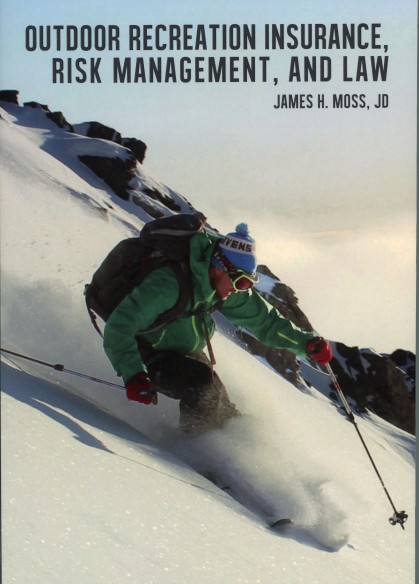
Outdoor Recreation Insurance, Risk Management and Law
To see Jim’s complete bio go here and to see his CV you can find it here. To find out the purpose of this website go here.
Author: Outdoor Recreation Insurance, Risk Management and Law To Purchase Go Here:
Connect
If you like this let your friends know or post it on FB, Twitter or LinkedIn
Facebook Page: Outdoor Recreation & Adventure Travel Law
LinkedIn https://www.linkedin.com/in/recreationlaw/
Threads https://www.threads.net/@recreation_law
X https://twitter.com/RecreationLaw
Email: Jim@Rec-Law.US
By Recreation Law Rec-law@recreation-law.com James H. Moss
@2018-2023 Summit Magic Publishing, LLC
G-YQ06K3L262
#AdventureTourism, #AdventureTravelLaw, #AdventureTravelLawyer, #AttorneyatLaw, #Backpacking, #BicyclingLaw, #Camps, #ChallengeCourse, #ChallengeCourseLaw, #ChallengeCourseLawyer, #CyclingLaw, #FitnessLaw, #FitnessLawyer, #Hiking, #HumanPowered, #HumanPoweredRecreation, #IceClimbing, #JamesHMoss, #JimMoss, #Law, #Mountaineering, #Negligence, #OutdoorLaw, #OutdoorRecreationLaw, #OutsideLaw, #OutsideLawyer, #RecLaw, #Rec-Law, #RecLawBlog, #Rec-LawBlog, #RecLawyer, #RecreationalLawyer, #RecreationLaw, #RecreationLawBlog, #RecreationLawcom, #Recreation-Lawcom, #Recreation-Law.com, #RiskManagement, #RockClimbing, #RockClimbingLawyer, #RopesCourse, #RopesCourseLawyer, #SkiAreas, #Skiing, #SkiLaw, #Snowboarding, #SummerCamp, #Tourism, #TravelLaw, #YouthCamps, #ZipLineLawyer, #RecreationLaw, #OutdoorLaw, #OutdoorRecreationLaw, #SkiLaw,
Cantu, et al, vs. Flytz Gymnastics, Inc., et al, 2016 Ohio Misc. LEXIS 12186
Posted: June 10, 2018 Filed under: Assumption of the Risk, Indoor Recreation Center, Legal Case, Ohio, Release (pre-injury contract not to sue) | Tags: Assumption of risk, claims of negligence, fact remains, foam, Foam Pit, genuine, genuine issue, Gymnastics, Indemnity, inducement, Inherent Risks, initial burden, Issue of Material Fact, liability claim, loss of consortium, matter of law, moving party, nonmoving party, pit, proprietor', Punitive damages, Quadriplegic, Reckless, recklessness, recreational activities, releasee, repose, Ski Flips, skiing, Sports, Summary judgment, waiver form, Wanton, willful Leave a commentTo Read an Analysis of this decision see
Release upheld in Ohio to stop negligence claims for indoor ski jumping. However, gross negligence claims survived.
Cantu, et al, vs. Flytz Gymnastics, Inc., et al, 2016 Ohio Misc. LEXIS 12186
Michael A. Cantu, et al, Plaintiffs vs. Flytz Gymnastics, Inc., et al, Defendants.
CASE NO. CV-2014-01-0317
State of Ohio, Court OF Common Pleas, Summit County, Civil Division
2016 Ohio Misc. LEXIS 12186
June 2, 2016, Filed
CORE TERMS: summary judgment, reckless, wanton, willful, gymnastics, waiver form, moving party, nonmoving party, pit, releasee, liability claim, recreational activities, issue of material fact, genuine, foam, claims of negligence, repose, sports, genuine issue, initial burden, punitive damages, recklessness, inducement, indemnity, matter of law, fact remains, loss of consortium, inherent risks, assumption of risk, proprietor’
JUDGES: [*1] TAMMY O’BRIEN, JUDGE
OPINION BY: TAMMY O’BRIEN
OPINION
ORDER
The matters before the Court are, Defendant, Flytz Gymnastics, Inc.’s Motion for Summary Judgment filed on January 29, 2016, and, Defendant, John King’s Motion for Summary Judgment filed on January 29, 2016., Plaintiffs filed Separate Briefs in Opposition to these motions on March 4, 2016. Both, Defendants, Flytz Gymnastics, Inc. (“Flytz”) and John King (“King”), filed Reply briefs on March 21, 2016. For the reasons which follow, the Court GRANTS IN PART AND DENIES IN PART, Defendants’ Motions for Summary Judgment.
ANALYSIS
A. Facts:
The instant action arises out of an incident which occurred on August 22, 2011. On that day, Plaintiff Michael Cantu, sustained catastrophic personal injury when he attempted to use a spring board to go over a vault at Flytz Gymnastics and landed head first into a foam block pit. See, Plaintiffs’ Amended Complaint., Plaintiff sustained a spinal cord injury which left him a quadriplegic. See, Plaintiffs’ Amended Complaint.
Plaintiffs, Michael Cantu and his parents, have sued Flytz and its owner, King, alleging that they are liable for his injury., Plaintiffs have alleged that Flytz was negligent with respect to the “open [*2] gym night” attended by Michael Cantu and his friends and that this negligence resulted in Michael’s injury., Plaintiffs have further alleged that the conduct of Flytz and its employees, including King, was willful, wanton and reckless. In addition, Plaintiffs have brought a product liability claim against Flytz under R.C. 2307.71 et seq., Plaintiff’s parents, Aaron and Kristine Cantu, have also asserted a loss of consortium claim.
On the day in question, Michael was with a group of friends when one of them suggested that the group go to Flytz. Michael Cantu depo. at 57. This friend had been to Flytz before to practice his skiing flips. Id. at p. 43. Michael Cantu testified that the group intended to use the trampoline to practice ski tricks. Id. at 43, 63 and 93. Michael’s mother, Kristine Cantu, drove the group to Flytz.
Cantu and his friends were given Nonmember Release and Waiver Forms to read and sign. Because Michael was a minor, his mother signed the form on his behalf. Flytz Motion for Summary Judgment Exhibit B at pp. 32 and 33. Both Michael and his mother have acknowledged that neither of them read the entire form before Kristine signed it. Exhibit A at 69 and 103; Exhibit B at 34 and 35.
Subsequent [*3] to his injury, Kristine Cantu claimed that, had she read the release, she would never have allowed her son to participate in the activities. However, there is undisputed testimony from both Kristine and Michael Cantu that, throughout his life, Michael Cantu participated in many sports activities and many recreational activities, and that his mother signed release forms on his behalf in the past. Flytz Motion, Exhibit A at 18, 103; Flytz Motion, Exhibit Bat 15-16.
Plaintiff Michael Cantu, was involved in many sports and recreational activities and both he and his mother testified that they were aware that, inherent in those activities, there was always the risk of injury. Michael had previously participated in football, karate, volleyball and golf, and was interested in skiing, snowboarding and skateboarding. In fact, Plaintiff acknowledged he had sustained prior sports injuries. Flytz Motion, Exhibit B at 13-18.
Defendant Flytz moves for summary judgment on several bases which include the, Plaintiffs’ execution of a Release and Waiver form, the doctrine of primary assumption of the risk, lack of evidence of willful and wanton conduct by the, Defendants, and the statute of repose., Defendant [*4] King also moves for summary judgment.
B. Law and Analysis:
1. Standard.
In reviewing, Defendants’ Motions for Summary Judgment, the Court must consider the following: (1) whether there is no genuine issue of material fact to be litigated; (2) whether in viewing the evidence in a light most favorable to the non-moving party it appears that reasonable minds could come to but one conclusion; and (3) whether the moving party is entitled to judgment as a matter of law. Dresher v. Burt, 75 Ohio St.3d 280, 662 N.E.2d 264 (1996); Wing v. Anchor Media, L.T.D., 59 Ohio St.3d 108, 570 N.E.2d 1095 (1991). If the Court finds that the non-moving party fails to make a sufficient showing on an essential element of the case with respect to which it has the burden of proof, summary judgment is appropriate. Celotex Corp. v. Catrett, 477 U.S. 317, 106 S. Ct. 2548, 91 L.E.2d 265 (1986).
Civ.R. 56(C) states the following, in part, in regards to summary judgment motions:
Summary judgment shall be rendered forthwith if the pleadings, depositions, answers to interrogatories, written admissions, affidavits, transcripts
of the evidence in the pending case, and written stipulations of fact, if any timely filed in the action, show that there is no genuine issue as to any material fact and that the moving party is entitled to judgment as a matter of law.
Where a party seeks summary judgment on the ground that the nonmoving party cannot [*5] prove its case, the moving party bears the initial burden of informing the trial court of the basis for the motion, and identifying those portions of the record that demonstrate the absence of a genuine issue of material fact on the essential element(s) of the nonmoving party’s claims. Dresner, 75 Ohio St.3d at 293. The Dresner court continued, the moving party cannot discharge its initial burden under Civ.R. 56 simply by making a conclusory assertion that the nonmoving party has no evidence to prove its case. Rather, the moving party must be able to specifically point to some evidence of the type listed in Civ.R. 56(C) which affirmatively demonstrates that the nonmoving party has no evidence to support the nonmoving party’s claims. If the moving party fails to satisfy its initial burden, the motion for summary judgment must be denied. However, if the moving party has satisfied its initial burden, the nonmoving party then has a reciprocal burden outlined in Civ.R. 56(E) to set forth specific facts showing that there is a genuine issue for trial and, if the nonmovant does not so respond, summary judgment, if appropriate, shall be entered against the nonmoving party.
Banks v. Ross Incineration, 9th App. No. 98CA007132 (Dec. 15, 1999).
In this case, [*6] as demonstrated below, this Court finds that summary judgment is appropriate as to the, Plaintiffs’ claims of negligence, but finds that a genuine issue of material fact exists as to, Plaintiffs’ claims of reckless and wanton conduct and punitive damages.
2. Release and Waiver of Liability, Assumption of Risk, and Indemnity Agreement (“Release and Waiver”).
The Release and Waiver Form signed by, Plaintiff Kristine Cantu, is entitled, “Nonmember/Special Event/Birthday Party Activity, Release and Waiver Form.” Flytz Motion, Exhibit C. After the name of the person and contact information, the verbiage of the release and waiver form warns that “this activity involves risks of serious bodily injury, including permanent disability, paralysis and death.” Id.
Kristine Cantu testified that, consistent with her practice related to any other sports release or waiver, she “never read them” because they were “usually lengthy.” Kristine Cantu depo. at 15-16. Although she indicated that the Flytz Release and Waiver Form was also lengthy, the Court notes that the form is one page long, as is shown in part below:
Release and Waiver of Liability, Assumption of Risk, and Indemnity Agreement
In consideration [*7] of participating in the activities and programs at FLYTZ GYMNASTICS, INC., I represent that I understand the nature of this activity and that I am qualified, in good health, and in proper physical condition to participate in such activity. I acknowledge that if I believe event conditions are unsafe, I will immediately discontinue participation in this activity. I fully understand that this activity involves risks of serious bodily injury, including permanent disability, paralysis and death, which may be caused by my own actions, or inactions, those of others participating in the event, the condition in which the event takes place, or the negligence of the “releasees” named below, and that there may be other risks either not known to me or not readily foreseeable at this time and I fully accept and assume all risks and all responsibility for losses, cost and damages I incur as a result of my participation in the activity.
I hereby release, discharge, and covenant not to sue FLYTZ GYNMASTICS, INC., its respective administrators, directors, agents, officers, volunteers, and employees, other participants, any sponsors, advertisers and if applicable, owners and lessors of premises on which [*8] the activity takes place (each considered one of the “RELEASEES” herein) from all liability, claims, damages, losses or damages, on my account caused, or alleged to be caused, in whole, or in part, by the negligence of the “releasees” or otherwise, including negligent rescue operations and further agree that if, despite this release, waiver of liability and assumption of risk, I, or anyone on my behalf makes a claim against any of the Releasees, I will indemnify, save and hold harmless each of the Releasees from any loss, liability, damage or cost which may incur as a result of such claim.
I have read the RELEASE AND WAIVER OF LIABIITY, ASSUMPTION OF RISK AND INDEMNITY AGREEMENT, understand that I have given up substantial rights by signing it and have signed it freely and without any inducement or assurance of any nature and intend it to be a complete and unconditional release of all liability to the greatest extent allowed by law and agree that if any portion of this agreement is held to be invalid the balance, notwithstanding, shall continue in full force and effect.
The form specifically acknowledges that the activities and programs at Flytz involved “risks of serious bodily injury, [*9] including permanent disability, paralysis and death which may be caused” by the releasee’s actions or by the actions of others. It further identifies that “there may be risks either not known” or “not readily foreseeable” and that the releasee “accepts and assumes all risks for losses and damages.” Id. The form further releases claims of negligence by Flytz and includes a covenant not to sue, as well as indemnity and hold harmless provisions. The release was signed by Kristine Cantu on behalf of her son and indicated that she understood all the risks involved.
It is well established in Ohio that participants in recreational activities and the proprietor of a venue for such an activity are free to enter into contracts designed to relieve the proprietor from responsibility to the participant for the proprietor’s acts of negligence. See, Bowen v. Kil-Kare, Inc. (1992), 63 Ohio St.3d 84, 585 N.E.2d 384; Zivich v. Mentor Soccer Club, Inc. 82 Ohio St.3d 367, 696 N.E.2d 201, 1998-Ohio-389. As noted by the Ninth District Court of Appeals, in order to be upheld, the contract must be clear, unequivocal and unambiguous and it must be specific enough to cover only those claims of which the participant would be aware. Levine v. Gross, 123 Ohio App.3d 326, 330, 704 N.E.2d 262 (9th Dist. 1997). In the instant action, the Release and Waiver Form signed by Kristine Cantu clearly meets these requirements.
Plaintiffs argue [*10] that the intake clerk, Stacey King, did not specifically advise Kristine that, by signing the forms, she would be absolving Flytz of liability for injuries sustained by her son, by his negligence or the negligence of others., Plaintiffs attempt to circumvent the Release and Waiver by alleging it is unenforceable because of fraud in the inducement. They argue that Kristine Cantu was induced to sign the form upon misrepresentations made by Stacey King.
The Court notes that, Plaintiffs have not pled fraud in their Amended Complaint. Even if, Plaintiffs can be found to have properly pled a claim of fraud in the inducement, a release obtained by fraudulent inducement is merely voidable upon proof of fraud. Holler v. horror Corp., (1990), 50 Ohio St.3d 10, 14 at ¶ 1 of the syllabus. “A person of ordinary mind cannot say that he was misled into signing a paper which was different from what he intended to sign when he could have known the truth by merely looking when he signed…. If a person can read and is not prevented from reading what he signs, he alone is responsible for his omission to read what he signs.” Haller, supra at 14. In the instant action, there is no evidence of fraud. The Court finds that, Plaintiffs were advised of [*11] serious inherent risks by virtue of the Release and Waiver Form. Accordingly, the Court GRANTS summary judgment on any claims of negligence.
3. Primary Assumption of Risk.
Even without the Release and Waiver, this Court would also find that the, Defendants are entitled to summary judgment related to the, Plaintiffs’ claims of negligence under the doctrine of primary assumption the risk.
The Ohio Supreme Court has held that individuals engaged in recreational or sports activities “assume the ordinary risks of the activity and cannot recover for any injuries unless it can be shown that the other participant’s actions were either ‘reckless’ or ‘intentional’ as defined in Sections 500 and 8A of the Restatement of Torts 2d.” Marchetti v. Kalish (1990), 53 Ohio St.3d 95, 559 N.E.2d 699, syllabus. “The doctrine of primary assumption of risk prevents a, Plaintiff from setting forth a prima facie case of negligence.” Aber v. Zurz, 9th Dist No. 23876, 2008-Ohio-778, ¶9. “Primary assumption of the risk relieves a recreation provider from any duty to eliminate the risks that are inherent in the activity…because such risk cannot be eliminated.” (Citations omitted.) Bastian v. McGannon, 9th Dist. Lorain No. 07CA009213, 2008-Ohio – l149, ¶11.
As noted by the Ohio Supreme Court, the determining fact in such cases is the conduct of the defendant, “not the [*12] participant’s or spectator’s ability or inability to appreciate the inherent dangers of the activity.” Gentry v. Craycraft, 101 Ohio St.3d 141, 802 N.E.2d 1116, 2004-Ohio-
379, ¶9. To survive a primary assumption of risk claim, the, Plaintiff must prove the defendant’s conduct was reckless or intentional. Furthermore, “the reckless/intentional standard of liability applies regardless of whether the activity was engaged in by children or adults, or was unorganized, supervised, or unsupervised.” Gentry, supra at ¶8.
In the instant action, there can be no dispute that, Plaintiff Michael Cantu was engaged in a recreational activity at the time of his injury. Likewise, there can be no dispute that a fall, like that sustained by Michael, is an inherent risk in gymnastics, particularly when one is using a springboard to go over a piece of equipment. As such, there can be no recovery by, Plaintiffs unless it can be shown that Flytz’s actions were either “reckless” or “intentional.” Gentry, supra at ¶6 quoting Marchetti, supra at syllabus; see also, Mainv. Gym X-Treme, 10th Dist. No. 11A0-643, 2102-Ohio-1315 (Under the doctrine of primary assumption of the risk, a, Plaintiff who voluntarily engages in a recreational activity or sporting event assumes the inherent risks of that activity and cannot recover for injuries sustained in engaging in the activity [*13] unless the defendant acted recklessly or intentionally in causing the injuries. Id. at ¶9.)
Accordingly, Defendants entitled to summary judgment related to the, Plaintiffs’ claims of negligence under the doctrine of primary assumption the risk. However, because the, Plaintiffs also claim that, Defendants acted in a reckless, willful and wanton manner, this does not end the analysis.
3. Reckless or Intentional Conduct and Punitive Damages.
The Supreme Court of Ohio has held that there can be no liability for injuries arising out of sporting or recreational activities unless the defendant was reckless or intentionally injured the, Plaintiff. Marchetti v. Kalish, 53 Ohio St.3d 95, 96-98, 559 N.E.2d 699 (1990). In this case, the Court finds that there are genuine issues of material fact as to whether or not, Defendants engaged in recklessness or willful or wanton conduct which resulted in injury to Michael Cantu.
All parties cite to testimony which appears to create genuine issues of material fact related to the instructions given by the, Defendants, Michael Cantu’s responding behavior, Defendant level of supervision and safety procedures, and whether, Defendants actions or inactions rose to the level of recklessness.
Plaintiffs have also cited the testimony [*14] of their expert, Gerald S. George, PhD. Dr. George reviewed industry rules and regulations and examined the facts and evidence in this case. Dr. George admitted that under “appropriate conditions, gymnastics is a reasonably safe and healthy activity for young people.” He, however, cautioned that “in the absence of appropriate safeguards, however, gymnastics becomes an unreasonably dangerous activity. Report at p. 2. Dr. George opines that, Defendants violated a number of safety regulations including “failing to ensure that Michael Cantu possessed an adequate level of performer readiness to safely participate in the intended activity,” “failing to provide adequate supervision of the open gym participants,” “failing to instruct Michael Cantu on how to land safely in a loose foam landing pit,” and “failing to provide a reasonably safe physical environment for the intended gymnastics activity,” specifically directing attention to the violative nature of the foam pit. Report at 3-6. Dr. George opines, among other things, that, given these violations and conduct, Defendants actions were “grossly inadequate” reckless and that, Defendants exhibited “willful and wanton” disregard for caution. [*15]
Upon this examination, the Court determines that genuine issues of material fact related to, Defendants’ alleged recklessness and/or willful and wanton conduct exist. Therefore, summary judgment is inappropriate on this issue. Because a question of fact remains on the issue of reckless and/or willful and wanton conduct, summary judgment on the issue of punitive damages is also denied.
4. Ohio’s Product Liability Statute, R.C. 2307.71et seq.
Defendants have also moved for summary judgment on the, Plaintiffs’ product liability claim related to the foam pit into which Michael Cantu fell., Defendants argue that this claim is barred by the statute of repose. This Court agrees.
The statute of repose applicable to claims of product liability, R.C. 2305.10 (C) (1) provides:
Except as provided in division (C)(2), (3), (4), (5), (6), and (7) of this section or in Section 2305.19 of the Revised Code, no cause of action based on a product liability claim shall accrue against the manufacturer or supplier of a product later than ten years from the date that the product was delivered to its first purchaser or first lessee who was not engaged in a business in which the product was used the component in the production, construction, creation, assembly, or rebuilding of another [*16] product.
The evidence demonstrated that the foam pit was constructed in 2000, and that there were no modifications to the pit at any time thereafter. John King depo. at 61, 67 and 85., Plaintiff’s accident occurred on August 22, 2011, 11 years after the installation of the foam pit. Pursuant to the specific language of R.C. 2305.10 (C) (1), Plaintiffs’ product liability claim is barred by the statute of repose.
From review of, Plaintiff’s brief, Plaintiffs appear to have abandoned this argument. Also, as discussed above, claims for negligence have been released by the, Plaintiffs. However, even barring that analysis, the statute of repose also applies to the, Plaintiffs’ product liability claim, and this claim is, therefore, barred.
5. Consortium.
The claims for loss of consortium by Michael Cantu’s parents, and punitive damages claim are directed at both, Defendants. A cause of action that is based upon loss of consortium is a derivative claim. Messmore v. Monarch Mach Tool Co., 11 Ohio App.3d 67 (9th Dist., 1983). As this Court has determined that, Plaintiff Michael Cantu is not entitled to recovery on negligence claims, the same applies to his parents. However, as genuine issues of material fact remain on the issues of reckless and/or willful and wanton conduct, as well [*17] as on punitive
damages, this Court denies summary judgment to both defendants on the loss of consortium and punitive damages claims.
CONCLUSION
Upon due consideration, after review of the briefs of the parties, the applicable law, exhibits, testimony and other evidence, the Court GRANTS, Defendants’ Motions for Summary Judgment as a matter of law on, Plaintiffs’ negligence claims. However, the Court finds that genuine issues of material fact remain as to whether, Defendants were reckless or acted in a willful or wanton manner. Accordingly the Court DENIES summary judgment as it pertains to, Plaintiffs’ claims of recklessness, and their claims for punitive damages.
The Final Pretrial previously schedule on July 22, 2016 at 8:30 AM, as well as the trial date of August 1, 2016, are confirmed.
IT IS SO ORDERED.
/s/ [Signature]
JUDGE TAMMY/O’BRIEN
Attorneys Terrance P. Gravens/Kimberly A. Brennan
Attorney Michael W. Czack
G-YQ06K3L262
http://www.recreation-law.com
Need a Handy Reference Guide to Understand your Insurance Policy?
Posted: May 28, 2018 Filed under: Adventure Travel, Assumption of the Risk, Avalanche, Challenge or Ropes Course, Climbing, Contract, Cycling, Equine Activities (Horses, Donkeys, Mules) & Animals, Health Club, Indoor Recreation Center, Insurance, Jurisdiction and Venue (Forum Selection), Minors, Youth, Children, Mountain Biking, Mountaineering, Paddlesports, Racing, Release (pre-injury contract not to sue), Risk Management, Rivers and Waterways, Rock Climbing, Scuba Diving, Sea Kayaking, Ski Area, Skier v. Skier, Skiing / Snow Boarding, Skydiving, Paragliding, Hang gliding, Snow Tubing, Sports, Summer Camp, Swimming, Whitewater Rafting, Youth Camps, Zip Line | Tags: #ORLawTextbook, #ORRiskManagment, #OutdoorRecreationRiskManagementInsurance&Law, #OutdoorRecreationTextbook, @SagamorePub, and Law, General Liability Insurance, Guide, http://www.rec-law.us/ORLawTextbook, Insurance policy, James H. Moss J.D., Jim Moss, Liability insurance, Outdoor Recreation Insurance, Outdoor Recreation Law, Outdoor Recreation Risk Management, Outfitter, Risk Management Leave a commentThis book should be on every outfitter and guide’s desk. It will answer your questions, help you sleep at night, help you answer your guests’ questions and allow you to run your business with less worry.
Table of Contents
Chapter 1 Outdoor Recreation Risk Management, Law, and Insurance: An Overview
Chapter 2 U.S. Legal System and Legal Research
Chapter 3 Risk 25
Chapter 4 Risk, Accidents, and Litigation: Why People Sue
Chapter 5 Law 57
Chapter 6 Statutes that Affect Outdoor Recreation
Chapter 7 PreInjury Contracts to Prevent Litigation: Releases
Chapter 8 Defenses to Claims
Chapter 9 Minors
Chapter 10 Skiing and Ski Areas
Chapter 11 Other Commercial Recreational Activities
Chapter 12 Water Sports, Paddlesports, and water-based activities
Chapter 13 Rental Programs
Chapter 14 Insurance
$99.00 plus shipping


 Recreation Law