
Colorado Gems Card now Available with some added Features
Posted: September 12, 2013 Filed under: Colorado, Ski Area, Skiing / Snow Boarding | Tags: "sans-serif";color:black'>Colorado Ski Country USA, <span style='font-family:"Arial", Colorado, Gems, Ski, ski area, Snowboard Leave a commentSkiers and Riders Save on Lift Tickets and Explore Colorado’s Gem Resorts with New 2013/14 Colorado Ski Country USA Gems Card Program
Now On Sale, 2013/14 Season Gems Card Features Two-For-One Ticket Deals and Exclusive Promotions

Photo credit: Colorado Ski Country USA
Denver, Colo. – September 4, 2013 – Colorado Ski Country USA (CSCUSA) today unveiled the new 2013/14 Colorado Gems Card program and announced that cards are now available for purchase. For the 2013/14 season, the revised Gems Card program features two-for-one lift tickets at eight signature Colorado Gem ski resorts and exclusive Flash Deals promotions offered at Gem resorts throughout the season.
The new Gems Card program makes it easy to save on lift tickets. At any Gem resort, card holders can purchase one adult full day lift ticket and receive another adult full day lift ticket for free. Each Gems Card is good for one use per Gem resort, per season, and only a limited number of Gems Cards are available for sale.
In addition to the season-long, buy-one-get-one lift ticket deal, Gems Card holders also have exclusive access to Flash Deals. Flash Deals are special promotions and additional ways to save that are unique to each Gem resort and will be announced last minute throughout the season. CSCUSA will announce Flash Deals in the Gems newsletter, on social media, and on the Gems website www.ColoradoSki.com/gems. Only Colorado Gems Card holders will be able to take advantage of Flash Deals.
For savvy skiers and riders, the Colorado Gems Card is essential to enjoying the powder, terrain, and scenery that Colorado Ski Country has to offer. Available for $20, the 2013/14 Gems Card puts Colorado’s world-renowned skiing within reach for skiers and riders from Colorado and elsewhere. Card holders can take advantage of a day of two-for-one skiing at each of the eight participating resorts, redeeming the cost of the card after just one use.
By definition, a gem is a jewel; something prized especially for great beauty or perfection. There are eight Gems that add to the sparkle of Colorado’s crown of resorts and, in many ways, outshine their world famous neighbors. These Gems epitomize Colorado’s ski culture with their western authenticity, artisanal charm, and nostalgic skiing. Like diamonds in the rough, these resorts are strikingly beautiful, individually unique and not to be overlooked. The Colorado Gem resorts are: Arapahoe Basin, Eldora Mountain Resort, Loveland Ski Area, Monarch Mountain, Powderhorn Resort, Ski Cooper, Ski Granby Ranch, and Sunlight Mountain Resort.
For more information, or to purchase a Gems Card, visit www.ColoradoSki.com/Colorado-Gems-Card. Cards are available now and will be available throughout the upcoming ski season until they are sold out.
The Colorado Gems program is presented by Icelantic Boards; a Colorado based ski company that represents skis, art, adventure creativity, passion and innovation. More information on Icelantic can be found at www.IcelanticBoards.com
9.4.13 Skiers and Riders Save on Lift Tickets and Explore Colorado’s Gem Resorts.pdf
Denver Bike Share is going Year Round!
Posted: September 11, 2013 Filed under: Cycling | Tags: Bike Sharing, Cycling, Denver Leave a comment
|

And you think your customers are bad…..but is it all the customers fault?
Posted: September 10, 2013 Filed under: Uncategorized | Tags: Brochure, Customer Complaints, Customer service, Customers, dissatisfied customers, Goa, India, Jamaica, PuertoVallarta, Spanish people, Thomas Cook, Thomas Cook Vacations, United States Leave a commentMaybe you need to screen a little better

These are allegedly actual complaints received by Thomas Cook Vacations from dissatisfied customers:
1. “I think it should be explained in the brochure that the local convenience store does not sell proper biscuits like custard creams or ginger nuts.”
2. “It’s lazy of the local shopkeepers in Puerto Vallarta to close in the afternoons. I often needed to buy things during ‘siesta’ time — this should be banned.”
3. “On my holiday to Goa in India , I was disgusted to find that almost every restaurant served curry. I don’t like spicy food.”
4. “We booked an excursion to a water park but no-one told us we had to bring our own swimsuits and towels. We assumed it would be included in the price”
5. “The beach was too sandy. We had to clean everything when we returned to our room.”
6. “We found the sand was not like the sand in the brochure. Your brochure shows the sand as white but it was more yellow.”
7. “They should not allow topless sunbathing on the beach. It was very distracting for my husband who just wanted to relax.”
8. “No-one told us there would be fish in the water. The children were scared.”
9. “Although the brochure said that there was a fully equipped kitchen, there was no egg-slicer in the drawers.”
10. “We went on holiday to Spain and had a problem with the taxi drivers as they were all Spanish.”
11. “The roads were uneven and bumpy, so we could not read the local guide book during the bus ride to the resort. Because of this, we were unaware of many things that would have made our holiday more fun.”
12. “It took us nine hours to fly home from Jamaica to England . It took the Americans only three hours to get home. This seems unfair.”
13. “I compared the size of our one-bedroom suite to our friends’ three-bedroom and ours was significantly smaller.”
14. “The brochure stated: ‘No hairdressers at the resort’. We’re trainee hairdressers and we think they knew and

made us wait longer for service.”
15. “There were too many Spanish people there. The receptionist spoke Spanish, the food was Spanish. No one told us that there would be so many foreigners.”
16. “We had to line up outside to catch the boat and there was no air-conditioning.”
17. “It is your duty as a tour operator to advise us of noisy or unruly guests before we travel.”
18. “I was bitten by a mosquito. The brochure did not mention mosquitoes.”
19. “My fiancé and I requested twin-beds when we booked, but instead we were placed in a room with a king bed. We now hold you responsible and want to be re-reimbursed for the fact that I became pregnant. This would not have happened if you had put us in the room that we booked.”
Do Something
Who knows if these are true? However I can envision every one of them being true. Working as a whitewater raft guide I hear customers say:
“How do you get the water back upstream?”
“Can I leave my stuff here on shore?” (At the put in thinking we will come back to this spot.)
And the absolute best. A friend had just rowed a boat through a class IV section of the Arkansas River. The customer climbed out of the boat and stated. “I did not see the rails the entire trip.” The customer thought the boat was traveling on a rail, just like WDW.
What do all of these mean? It means someone is not doing a good job of educating customers before they leave on their trip. Or they may be marketing to the wrong group of customers. Either way, it is these minor annoyances that can create a bigger problem if customer does not feel satisfied with your response.
What do you think? Leave a comment.
If you like this let your friends know or post it on FB, Twitter or LinkedIn
Copyright 2013 Recreation Law (720) Edit Law
Email: Rec-law@recreation-law.com
Google+: +Recreation
Twitter: RecreationLaw
Facebook: Rec.Law.Now
Facebook Page: Outdoor Recreation & Adventure Travel Law
Mobile Site: http://m.recreation-law.com
By Recreation Law Rec-law@recreation-law.com James H. Moss #Authorrank
<rel=”author” link=” https://plus.google.com/u/0/b/112453188060350225356/” />
#RecreationLaw, #@RecreationLaw, #Cycling.Law #Fitness.Law, #Ski.Law, #Outside.Law, #Recreation.Law, #Recreation-Law.com, #Outdoor Law, #Recreation Law, #Outdoor Recreation Law, #Adventure Travel Law, #law, #Travel Law, #Jim Moss, #James H. Moss, #Attorney at Law, #Tourism, #Adventure Tourism, #Rec-Law, #Rec-Law Blog, #Recreation Law, #Recreation Law Blog, #Risk Management, #Human Powered, #Human Powered Recreation,# Cycling Law, #Bicycling Law, #Fitness Law, #Recreation-Law.com, #Backpacking, #Hiking, #Mountaineering, #Ice Climbing, #Rock Climbing, #Ropes Course, #Challenge Course, #Summer Camp, #Camps, #Youth Camps, #Skiing, #Ski Areas, #Negligence, #Snowboarding, #RecreationLaw, #@RecreationLaw, #Cycling.Law #Fitness.Law, #SkiLaw, #Outside.Law, #Recreation.Law, #RecreationLaw.com, #OutdoorLaw, #RecreationLaw, #OutdoorRecreationLaw, #AdventureTravelLaw, #Law, #TravelLaw, #JimMoss, #JamesHMoss, #AttorneyatLaw, #Tourism, #AdventureTourism, #RecLaw, #RecLawBlog, #RecreationLawBlog, #RiskManagement, #HumanPowered, #HumanPoweredRecreation,# CyclingLaw, #BicyclingLaw, #FitnessLaw, #RecreationLaw.com, #Backpacking, #Hiking, #Mountaineering, #IceClimbing, #RockClimbing, #RopesCourse, #ChallengeCourse, #SummerCamp, #Camps, #YouthCamps, #Skiing, #Ski Areas, #Negligence, #Snowboarding, sport and recreation laws, ski law, cycling law, Colorado law, law for recreation and sport managers, bicycling and the law, cycling and the law, ski helmet law, skiers code, skiing accidents, Recreation Lawyer, Ski Lawyer, Paddlesports Lawyer, Cycling Lawyer, Recreational Lawyer, Fitness Lawyer, Rec Lawyer, Challenge Course Lawyer, Ropes Course Lawyer, Zip Line Lawyer, Rock Climbing Lawyer, Adventure Travel Lawyer, Outside Lawyer, Recreation Lawyer, Ski Lawyer, Paddlesports Lawyer, Cycling Lawyer, #RecreationalLawyer, #FitnessLawyer, #RecLawyer, #ChallengeCourseLawyer, #RopesCourseLawyer, #ZipLineLawyer, #RockClimbingLawyer, #AdventureTravelLawyer, #OutsideLawyer, Good Samaritan, Samaritan, First Aid, EMS, Emergency Medical Systems, Customers, Customer Service, Customer Complaints, Thomas Cook Vacations, dissatisfied customers,
WordPress Tags: customers,Maybe,complaints,Thomas,Cook,Vacations,brochure,convenience,biscuits,shopkeepers,Puerto,Vallarta,afternoons,India,restaurant,food,park,swimsuits,beach,room,husband,Although,kitchen,Spain,taxi,drivers,Spanish,roads,resort,hours,Jamaica,England,Americans,size,bedroom,suite,hairdressers,trainee,receptionist,foreigners,boat,operator,guests,mosquito,mosquitoes,fiancé,beds,fact,whitewater,friend,Arkansas,River,customer,Either,annoyances,response,Leave,Twitter,LinkedIn,Recreation,Edit,Email,Google,RecreationLaw,Facebook,Page,Outdoor,Adventure,Travel,Blog,Mobile,Site,James,Moss,Authorrank,author,Outside,Attorney,Tourism,Risk,Management,Human,Rock,Ropes,Course,Challenge,Summer,Camp,Camps,Youth,Areas,Negligence,SkiLaw,OutdoorLaw,OutdoorRecreationLaw,AdventureTravelLaw,TravelLaw,JimMoss,JamesHMoss,AttorneyatLaw,AdventureTourism,RecLaw,RecLawBlog,RecreationLawBlog,RiskManagement,HumanPoweredRecreation,CyclingLaw,BicyclingLaw,FitnessLaw,RopesCourse,ChallengeCourse,SummerCamp,YouthCamps,Colorado,managers,helmet,accidents,Lawyer,Paddlesports,Recreational,Line,RecreationalLawyer,FitnessLawyer,RecLawyer,ChallengeCourseLawyer,RopesCourseLawyer,ZipLineLawyer,RockClimbingLawyer,AdventureTravelLawyer,OutsideLawyer,Samaritan,Emergency,Medical,Systems,three
Retailer has no duty to fit or instruct on fitting bicycle helmet
Posted: September 9, 2013 Filed under: Cycling, Louisiana | Tags: Bell Sports, bicycle, Bicycle helmet, City of Amite, Cycling, Cycling Helmet, duty, helmet, Inc., Louisiana, Louisiana Supreme Court, Sears Roebuck and Co. 1 CommentLouisiana Supreme Court set forth how a court decides if there should be a duty or to create a duty.
Carrier v. City of Amite, 2010-0007 (La. 10/19/10); 50 So. 3d 1247; 2010 La. LEXIS 2251
Plaintiff: Herman Carrier, Individually and in His Capacity as the Administrator of the Estate of his Minor Child, Herman Blake Carrier, and his Wife, Wendy Wallace Carrier
Defendant: City of Amite, Bell Sports, Inc., and Sears Roebuck and Co.
Plaintiff Claims: negligence failure to properly fit the helmet and instruct on the use of the helmet
Defendant Defenses: no duty
Holding: For the defendant (retailer) Sears Roebuck and Co.
The plaintiffs in this case are a mother, father, and six-year-old child. The parents went into a Sears store and purchased a bicycle helmet for the child. They did not ask for or receive any assistance in purchasing the helmet.
The boy was riding on the municipal tennis court when he had an accident. The plaintiffs sued the city that owned the tennis court, the helmet manufacturer, and Sears Roebuck where they purchased the helmet.
Sears filed a motion for summary judgment arguing they had no duty to fit or instruct on the use of the helmet. The trial court granted the motion. The Appellate court reversed finding the trial court committed error in dismissing the case. Sears filed this appeal to the Louisiana Supreme Court.
Summary of the case
In this case, it was the responsibility of the plaintiff to prove negligence. The first step in that would be to prove that the defendant owed the plaintiff a duty to provide a point-of-sale fitting instruction for bicycle helmets.
“In the instant case, plaintiffs do not identify any Louisiana statutory or jurisprudential authority which establishes a specific duty on the part of a retailer to fit bicycle helmets at the point of sale.” The only thing the plaintiff could point to was the opinion of its expert that the defendant owed a duty. However, the expert could not point to any authorities, research, or other retailers that supported his statement. “Courts have held that experts may not rely on their own conclusions as authority in the absence of any objective support.”
The court stated the considerations that need to be covered before a duty can be created.
…it is necessary for the court to determine whether the rule is intended to protect him from the particular harm alleged, an inquiry which involves both the duty and causation elements of the negligence formulation. The court must make a policy determination in light of the unique facts of the case. Thus, the duty-risk analysis requires the court to take into account the conduct of each party as well as the particular circumstances of the case. In determining whether to impose a duty in a particular situation, the court may consider various moral, social, and economic factors, including whether the imposition of a duty would result in an unmanageable flow of litigation; the ease of association between the plaintiff’s harm and the defendant’s conduct; the economic impact on society as well as the economic impact on similarly situated parties; the nature of the defendant’s activity; moral considerations, particularly victim fault; and precedent as well as the direction in which society and its institutions are evolving.
Applying the above requirements to this case, the court found no reason to create a duty on the part of a retailer to provide point-of-sale fitting instructions for bicycle helmets. “Under these circumstances, we find the responsibility to determine whether the helmet was properly fitted should rest with plaintiffs, not Sears.”
So Now What?
There are two important things that come from this decision. The first is no duty exists unless your industry, your community, or you create one. Unless you advertise you are going to do something, market yourself, or write your requirements down, it is difficult for the plaintiff to prove you owe them anything, a duty, or money.
The second is the list of requirements the court set forth to determine if a duty has been created. It is not as easy to review as a list; however, it provides some factors that you can review to make sure you are not creating liability that does not exist.
· Make sure you know the issues you must address when dealing with your business, program, or job.
· Don’t create liability if you don’t have to.
What do you think? Leave a comment.
 James H. “Jim” Moss |
Jim Moss is an attorney specializing in the legal issues of the outdoor recreation community. He represents guides, guide services, and outfitters both as businesses and individuals and the products they use for their business. He has defended Mt. Everest guide services, summer camps, climbing rope manufacturers; avalanche beacon manufacturers, and many more manufacturers and outdoor industries. Contact Jim at Jim@Rec-Law.us |
Jim is the author or co-author of eight books about the legal issues in the outdoor recreation world; the latest is Outdoor Recreation Insurance, Risk
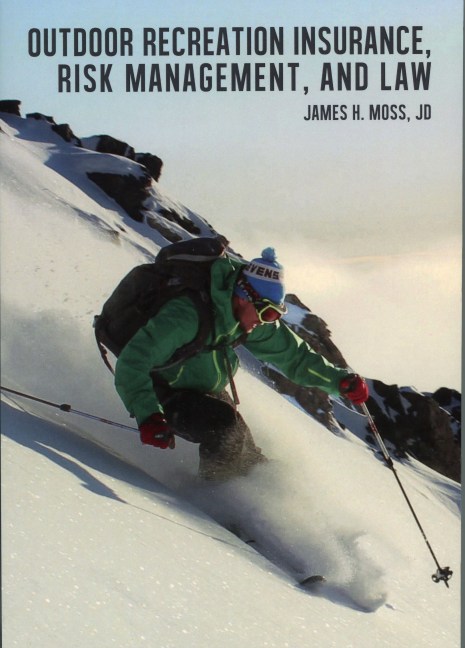
Outdoor Recreation Insurance, Risk Management and Law
Author: Outdoor Recreation Insurance, Risk Management and Law To Purchase Go Here:
To see Jim’s complete bio go here and to see his CV you can find it here. To find out the purpose of this website go here.
If you are interested in having me write your release, download the form and return it to me.
Connect
If you like this let your friends know or post it on FB, Twitter, or LinkedIn
Facebook Page: Outdoor Recreation & Adventure Travel Law
LinkedIn https://www.linkedin.com/in/recreationlaw/
Threads https://www.threads.net/@recreation_law
X https://twitter.com/RecreationLaw
Email: Jim@Rec-Law.US
By Recreation Law Rec-law@recreation-law.com James H. Moss
@2023 Summit Magic Publishing, LLC
G-YQ06K3L262
<rel=”author” link=” https://plus.google.com/u/0/b/112453188060350225356/” />
#RecreationLaw, #@RecreationLaw, #Cycling.Law #Fitness.Law, #Ski.Law, #Outside.Law, #Recreation.Law, #Recreation-Law.com, #Outdoor Law, #Recreation Law, #Outdoor Recreation Law, #Adventure Travel Law, #law, #Travel Law, #Jim Moss, #James H. Moss, #Attorney at Law, #Tourism, #Adventure Tourism, #Rec-Law, #Rec-Law Blog, #Recreation Law, #Recreation Law Blog, #Risk Management, #Human Powered, #Human Powered Recreation,# Cycling Law, #Bicycling Law, #Fitness Law, #Recreation-Law.com, #Backpacking, #Hiking, #Mountaineering, #Ice Climbing, #Rock Climbing, #Ropes Course, #Challenge Course, #Summer Camp, #Camps, #Youth Camps, #Skiing, #Ski Areas, #Negligence, #Snowboarding, #RecreationLaw, #@RecreationLaw, #Cycling.Law #Fitness.Law, #SkiLaw, #Outside.Law, #Recreation.Law, #RecreationLaw.com, #OutdoorLaw, #RecreationLaw, #OutdoorRecreationLaw, #AdventureTravelLaw, #Law, #TravelLaw, #JimMoss, #JamesHMoss, #AttorneyatLaw, #Tourism, #AdventureTourism, #RecLaw, #RecLawBlog, #RecreationLawBlog, #RiskManagement, #HumanPowered, #HumanPoweredRecreation,# CyclingLaw, #BicyclingLaw, #FitnessLaw, #RecreationLaw.com, #Backpacking, #Hiking, #Mountaineering, #IceClimbing, #RockClimbing, #RopesCourse, #ChallengeCourse, #SummerCamp, #Camps, #YouthCamps, #Skiing, #Ski Areas, #Negligence, #Snowboarding, sport and recreation laws, ski law, cycling law, Colorado law, law for recreation and sport managers, bicycling and the law, cycling and the law, ski helmet law, skiers code, skiing accidents, Recreation Lawyer, Ski Lawyer, Paddlesports Lawyer, Cycling Lawyer, Recreational Lawyer, Fitness Lawyer, Rec Lawyer, Challenge Course Lawyer, Ropes Course Lawyer, Zip Line Lawyer, Rock Climbing Lawyer, Adventure Travel Lawyer, Outside Lawyer, Recreation Lawyer, Ski Lawyer, Paddlesports Lawyer, Cycling Lawyer, #RecreationalLawyer, #FitnessLawyer, #RecLawyer, #ChallengeCourseLawyer, #RopesCourseLawyer, #ZipLineLawyer, #RockClimbingLawyer, #AdventureTravelLawyer, #OutsideLawyer, Bicycle, Cycling, Bicycle Helmet, Cycling Helmet, Helmet, City of Amite, Bell Sports, Inc., Sears Roebuck and Co., Duty,
WordPress Tags: Retailer,bicycle,helmet,Louisiana,Supreme,Court,Carrier,Amite,LEXIS,Plaintiff,Herman,Administrator,Estate,Minor,Child,Blake,Wife,Wendy,Wallace,Defendant,Bell,Sports,Sears,Roebuck,Claims,negligence,failure,Defenses,parents,assistance,accident,plaintiffs,manufacturer,judgment,Appellate,error,Summary,sale,instruction,helmets,opinion,retailers,statement,Courts,experts,conclusions,absence,causation,formulation,policy,determination,Thus,analysis,account,situation,factors,imposition,litigation,association,impact,victim,precedent,direction,institutions,requirements,instructions,Under,decision,industry,money,Make,Leave,FaceBook,Twitter,LinkedIn,Recreation,Edit,Email,Google,RecreationLaw,Page,Outdoor,Adventure,Travel,Blog,Mobile,Site,James,Moss,Authorrank,author,Outside,Attorney,Tourism,Risk,Management,Human,Rock,Ropes,Course,Challenge,Summer,Camp,Camps,Youth,Areas,SkiLaw,OutdoorLaw,OutdoorRecreationLaw,AdventureTravelLaw,TravelLaw,JimMoss,JamesHMoss,AttorneyatLaw,AdventureTourism,RecLaw,RecLawBlog,RecreationLawBlog,RiskManagement,HumanPoweredRecreation,CyclingLaw,BicyclingLaw,FitnessLaw,RopesCourse,ChallengeCourse,SummerCamp,YouthCamps,Colorado,managers,accidents,Lawyer,Paddlesports,Recreational,Line,RecreationalLawyer,FitnessLawyer,RecLawyer,ChallengeCourseLawyer,RopesCourseLawyer,ZipLineLawyer,RockClimbingLawyer,AdventureTravelLawyer,OutsideLawyer,tennis,whether
Carrier v. City of Amite, 2010-0007 (La. 10/19/10); 50 So. 3d 1247; 2010 La. LEXIS 2251
Posted: September 9, 2013 Filed under: Cycling, Legal Case, Louisiana | Tags: Bell Sports, bicycle, Bicycle helmet, City of Amite, Cycling, Cycling Helmet, duty, helmet, Inc., Louisiana, Sears, Sears Roebuck and Co., Summary judgment, Wal-Mart, Walmart Leave a commentTo Read an Analysis of this decision see
Retailer has no duty to fit or instruct on fitting bicycle helmet
Carrier v. City of Amite, 2010-0007 (La. 10/19/10); 50 So. 3d 1247; 2010 La. LEXIS 2251
Herman Carrier, Individually and in His Capacity as the Administrator of the Estate of his Minor Child, Herman Blake Carrier, and his Wife, Wendy Wallace Carrier versus City of Amite, Bell Sports, Inc., and Sears Roebuck and Co.
No. 2010-CC-0007
SUPREME COURT OF LOUISIANA
2010-0007 (La. 10/19/10); 50 So. 3d 1247; 2010 La. LEXIS 2251
October 19, 2010, Decided
SUBSEQUENT HISTORY: Rehearing denied by Carrier v. City of Amite, 2010 La. LEXIS 3053 (La., Dec. 10, 2010)
PRIOR HISTORY: [**1]
ON WRIT OF CERTIORARI FROM THE COURT OF APPEAL, FIRST CIRCUIT, PARISH OF TANGIPAHOA.
Carrier v. City of Amite, 6 So. 3d 893, 2009 La. App. LEXIS 215 (La.App. 1 Cir., 2009)
DISPOSITION: REVERSED AND RENDERED.
COUNSEL: Stephen Dale Cronin, GUGLIELMO, MARKS, SCHUTTE, TERHOEVE & LOVE; John David Ziober, KENNON, ODOM & DARDENNE, APC, For Applicant.
Arthur W. Landry, Jeanne Andry Landry, ARTHUR W. LANDRY AND JEANNE ANDRY LANDRY, ATTORNEYS; Christopher M. Moody; John Ernest William Baay, II, Ernest Paul Gieger, Jr., GIEGER, LABORDE & LAPEROUSE, LLC; Thomas Reginald Hightower, Jr., THOMAS R. HIGHTOWER, JR., APLC, For Respondent.
OPINION
[*1247] PER CURIAM *
* Retired Judge Philip C. Ciaccio, assigned as Justice ad hoc, sitting for Chief Justice Catherine D. Kimball.
We granted certiorari in this case to determine whether this retail seller has a duty to instruct buyers on the proper method of wearing and fitting bicycle helmets. For the reasons that follow, we conclude plaintiffs failed to establish any legal duty on the part of the retailer under the facts presented.
UNDERLYING FACTS AND PROCEDURAL HISTORY
This case arises from an incident in which six-year-old Blake Carrier was injured while riding his bicycle on a municipal tennis court on May 29, 2002. At the time of the accident, Blake was wearing a bicycle helmet his parents allegedly purchased from Sears, Roebuck and Co. (“Sears”) in December 2001.
[Pg 2] Subsequently, Blake’s parents filed the instant suit against several defendants, including Sears. 1 Plaintiffs alleged Sears [*1248] failed to properly fit the helmet and instruct them regarding its correct use.
1 Also named as defendants were Bell Sports, Inc. (the manufacturer of the helmet), and the City of Amite (the owner [**2] of the tennis court). These defendants are not at issue for purposes of this opinion.
During discovery, plaintiffs produced an expert in the area of bicycle safety, James Green. In his deposition, Mr. Green stated he advised his clients to instruct their buyers on the proper use and fit of bicycle helmets. However, Mr. Green admitted he knew of no rules or laws requiring retailers to fit and instruct buyers of bicycle helmets. Mr. Green also explained his clients did not include Sears.
Sears filed both a motion in limine and a motion for summary judgment. In support of the motion in limine, Sears argued Mr. Green had no basis for his conclusion that retailers had a duty to fit and instruct buyers on the proper way to wear a bicycle helmet. In support of the motion for summary judgment, Sears argued retailers had no duty to buyers to fit and instruct on the proper use of bicycle helmets.
The district court granted Sears’ motion in limine to exclude Mr. Green’s testimony, and further granted Sears’ motion for summary judgment to dismiss all claims against Sears.
Plaintiffs appealed. On appeal, the court of appeal reversed, finding the district court erred in deciding the duty issue without [**3] first determining that the expert’s testimony was inadmissible under the factors identified in Daubert v. [Pg 3] Merrell Dow Pharmaceuticals, Inc., 509 U.S. 579, 113 S. Ct. 2786, 125 L. Ed. 2d 469 (1993), and State v. Foret, 628 So. 2d 1116 (La. 1993). Accordingly, the court of appeal reversed the judgment granting the motion for summary judgment, and remanded the case to the district court for further proceedings. Carrier v. City of Amite, 08-1092 (La. App. 1 Cir. 2/13/09), 6 So. 3d 893, writ denied, 09-919 (La. 6/5/09), 9 So. 3d 874.
[Pg 4] On remand, Sears re-urged both the motion in limine and the motion for summary judgment. 2 After a hearing, the district court denied Sears’ motions.
2 On remand, Sears filed a pleading captioned “Motion for Hearing on Summary Judgment and Motion in Limine for Purposes of Issuance of Oral Reasons for Judgment, or Alternatively, Motion Requesting Written Reasons for Judgment.” Plaintiffs assert this motion was procedurally improper, because nothing in the court of appeal’s opinion indicated the case was being remanded for entry of reasons. However, the record reveals Sears filed its original motion for summary judgment and motion in limine, as well as [**4] supporting exhibits, into the record at the hearing. Thus, despite the caption of the motion, we believe Sears expanded its pleadings to reurge its motion for summary judgment and motion in limine. See La. Code Civ. P. art. 1154.
Sears sought supervisory review of this ruling. The court of appeal denied the writ, with one judge dissenting.
Upon Sears’ application, we granted certiorari to consider the correctness of the district court’s decision. Carrier v. City of Amite, 10-0007 (La. 3/12/10), 29 So. 3d 1241.
DISCUSSION
The central question presented in this case is whether plaintiffs established a legal duty on the part of a retailer, such as Sears, to provide point-of-sale fitting instructions for bicycle helmets. In Lemann v. Essen Lane Daiquiris, Inc., 05-1095 at p. 8 (La. 3/10/06), 923 So. 2d 627, 633, we discussed the principles for determining the existence of a legal duty:
[HN1] A threshold issue in any negligence action is whether the defendant owed the plaintiff a duty. Meany v. Meany, 94-0251, p. 6 (La. 7/5/94), 639 So.2d 229, 233. Whether a duty is owed is a question of law. Peterson v. Gibraltar Savings and Loan, 98-1601, 98-1609, p. 7 (La. 5/18/99), 733 So. 2d 1198, 1204; Mundy v. Department of Health and Human Resources, 620 So.2d 811, 813 (La. 1993); [**5] [*1249] Faucheaux v. Terrebonne Consolidated Government, 615 So.2d 289, 292 (La. 1993). In [Pg 5] deciding whether to impose a duty in a particular case, the court must make a policy decision in light of the unique facts and circumstances presented. See Socorro v. City of New Orleans, 579 So.2d 931, 938 (La. 1991). The inquiry is whether the plaintiff has any law (statutory, jurisprudential, or arising from general principles of fault) to support the claim that the defendant owed him a duty. Faucheaux, 615 So. 2d at 292; Perkins, 98-2081 at 22, 756 So. 2d at 404.
In the instant case, plaintiffs do not identify any Louisiana statutory or jurisprudential authority which establishes a specific duty on the part of a retailer to fit bicycle helmets at the point of sale. Rather, plaintiffs seek to establish the existence of industry standards, including best practices, which they claim are relevant to determine whether a general duty is owed.
At this juncture, the parties dedicate a large part of their briefs to discussing whether the district court properly qualified Mr. Green as an expert on the subject of point-of-sale assistance in the sale of bicycle accessories. However, we find we need not [**6] resolve the question of Mr. Green’s qualifications under the unique facts presented, because we find that Mr. Green’s testimony, even if accepted, is insufficient to establish any factual basis for a duty on the part of Sears.
In his deposition, Mr. Green testified as follows:
They came out with a mass market approach to the Wal-Marts, etcetera, the Sears, the Lowe’s, whoever, that wanted to sell bikes, where they just wanted to get bikes and components out there into the commerce stream. They don’t provide point-of-sale service at all. You have, you have two families of retail organizations here. I maintained ever since I saw this developing some years ago that this mass market approach is not a good thing, that if you’re going to be a reputable retailer and I tell my clients that, if you’re going to be a reputable retailer, you must properly instruct at the point-of-sale from everything to how to operate a quick release, to how to fit a helmet, to never ride at night without a light on your bike, that kind of thing. It should be done at the point-of-sale, because bikes aren’t toys, they’re, they’re vehicles. [emphasis added]
[Pg 6] Although Mr. Green testified the fitting of bicycle [**7] helmets “should” be done at the point of sale, he cited no authority for this proposition other than his own opinion. To the contrary, when asked whether any regulations existed requiring a retailer to provide point-of-sale instructions on fitting bicycle helmets, Mr. Green testified, “[n]o, there’s nothing written up as a standard.”
Similarly, in response to Sears’ interrogatories, plaintiffs admitted Mr. Green did not rely on any formal requirements in support of his position:
INTERROGATORY NO. 4
Please identify any and all standards, state or federal regulations, engineering, helmet manufacturer, department store and/or retail association periodicals, documents or guidelines which your expert, James M. Green, relies upon in opining that an industry standard existed in November, 2001 requiring that retailers of bicycle helmets must give point of sale instructions on proper sizing and fitting.
ANSWER TO INTERROGATORY NO. 4:
There is no requirement but perfectly clear instructions provided by BHSI. Most reputable retailers do fit at the [*1250] point of sale. These include REI, Performance Bicycle, Brooklyn Bike Shop, and any bike shop who belong to the Independent Bicycle Retailer Organization [**8] (now known as the National Bicycle Dealers Association (NBDA). There are currently 6000 shops who belong to NBDA who employ helmet fit at point of sale (See attached documentation from NBDA). The NBDA also outlined the differences between a reputable shop and a mass merchant shop on the safety issue. (See attached documentation from NBDA). [emphasis in original]
A review of the documentation attached to plaintiffs’ answer to Interrogatory No. 4 reveals none of these documents set forth an industry standard which would mandate the fitting of bicycle helmets by a retailer at the point of sale. Moreover, Mr. Green admitted he did not know if Sears belonged to any bicycle safety industry group.
[Pg 7] Under these circumstances, we must conclude Mr. Green’s testimony reflects his own personal opinion as to what a retailer should do, and is not based on any objective standards establishing what a retailer is required to do. Courts have held that [HN2] experts may not rely on their own conclusions as authority in the absence of any objective support. See Grdinich v. Bradlees, 187 F.R.D. 77 (S.D.N.Y. 1999) (holding the expert’s testimony was without foundation because “[w]ithout ‘industry standards’ [**9] to rely upon, [the expert] seems to base his conclusions on his own authority”). Thus, Mr. Green’s testimony does not establish the existence of any statutes, regulations, or industry standards which would support the finding of a duty on a retailer to fit bicycle helmets at the point of sale.
Additionally, as a matter of policy, we find no ground for recognizing such a duty based on general principles of tort law. In Meany v. Meany, 94-0251 at p. 6 (La. 7/5/94), 639 So. 2d 229, 233, we discussed the policy considerations to be taken into account in determining whether the law imposes a duty under particular facts:
[HN3] When a plaintiff articulates a general rule or principle of law that protects his interests, it is necessary for the court to determine whether the rule is intended to protect him from the particular harm alleged, an inquiry which involves both the duty and causation elements of the negligence formulation. The court must make a policy determination in light of the unique facts of the case. Thus, the duty-risk analysis requires the court to take into account the conduct of each party as well as the particular circumstances of the case. Socorro v. City of New Orleans, 579 So.2d 931, 938 (La. 1991). [**10] In determining whether to impose a duty in a particular situation, the court may consider various moral, social, and economic factors, including whether the imposition of a duty would result in an unmanageable flow of litigation; the ease of association between the plaintiff’s harm and the defendant’s conduct; the economic impact on society as well as the economic impact on similarly situated parties; the nature of the defendant’s activity; moral considerations, particularly victim [Pg 8] fault; and precedent as well as the direction in which society and its institutions are evolving. Pitre v. Opelousas General Hospital, 530 So.2d 1151, 1161 (La. 1988); William E. Crow, The Anatomy of a Tort, 22 Loy. L. Rev. 903 (1976).
Applying these precepts to the instant case, we believe the policy considerations militate against the finding of any duty on the part of a retailer to provide point-of-sale fitting instructions for bicycle helmets. Under current societal norms, we do not believe it is reasonable to require mass-marketing [*1251] retailers, such as Sears, to offer specialized point-of-sale advice on the thousands of products they sell. Rather, it is typically understood the consumer will ask [**11] for assistance, if it is required. In the instant case, the deposition testimony of Mr. Carrier establishes he never asked for any assistance at the time he purchased the helmet. Moreover, Mr. and Mrs. Carrier testified in their respective depositions that they believed the helmet, which was purchased as a Christmas gift for Blake, fit him properly; indeed, Mrs. Carrier testified it “was the best-fitting helmet [Blake] ever had.” Mrs. Carrier admitted she did not consult the instructions for fitting the helmet, and testified the instructions “probably got thrown away because we’ve had helmets before so we know how to use them.” 3 Under these circumstances, we find the responsibility to determine whether the helmet was properly fitted should rest with plaintiffs, not Sears.
3 Interestingly, Mr. Green opined that the manufacturer’s instruction on use and fit in this case were “the best I’ve ever seen.” Nonetheless, Mr. Green stated he believed point-of-sale assistance on fit was necessary in part, because consumers frequently failed to consider the instructions on fit and use provided by manufacturers. However, Mr. Green conceded that such a duty did not exist in the case of mail-order [**12] purchases. This dichotomy in Mr. Green’s testimony reveals the fallacy in his conclusions. We believe the more consistent approach is to place the duty on the consumer to determine the product he or she purchased is appropriate for its intended use.
In summary, we conclude that under the facts presented, there is no legal duty which would require Sears to provide fitting instructions for bicycle [Pg 9] helmets at the point of sale. In the absence of any legal duty, Sears is entitled to summary judgment as a matter of law.
DECREE
For the reasons assigned, the judgment of the district court is reversed. The motion for summary judgment filed by Sears, Roebuck Co. is granted, and judgment is entered in its favor dismissing the claims of plaintiffs with prejudice.
REVERSED AND RENDERED.
G-YQ06K3L262
http://www.recreation-law.com
Twelfth Biennial Coalition for Education in the Outdoors Research Symposium
Posted: September 7, 2013 Filed under: Uncategorized | Tags: Bradford Woods, Coalition for Education in the Outdoors Research Leave a commentDear Colleagues:
With apologies for multiple notices, we write to remind you of the September 12, 2013 due-date to submit abstracts for the Twelfth Biennial Coalition for Education in the Outdoors Research Symposium, January 10-12, 2014 at Indiana University’s Bradford Woods. The call for abstracts is attached and posted at http://www.outdooredcoalition.org/.
We are also pleased to remind you of a graduate student scholarship opportunity. Graduate students who are the lead author of an abstract submitted for the symposium will be considered for the scholarship. The award, which will cover the CEO Symposium registration cost, will go the student-lead author of the highest rated abstract.
Please consider the attached “Call for Abstracts” and email your abstract to Keith Russell (Keith.Russell) by September 12, 2013, and mark your calendar for the January 10-12, 2014 event!
Please share this opportunity with other students, faculty, and professionals who might find it of interest.
Thank you and best wishes.
Andy Young Keith Russell Karen Paisley
Anderson.young Keith.Russell Karen.Paisley
For the CEO Research Committee
The Coalition for Education in the Outdoors (CEO), established in 1987, is an educational service of the State University of New York (SUNY) at Cortland. The CEO Research Committee includes:
M. Deborah Bialeschki, American Camp Association
Camille Bunting, Texas A&M*
Chris Cashel, Oklahoma State University*
Alan Ewert, Indiana University
Michael Gass, University of New Hampshire
Karla Henderson, North Carolina State University
Leo McAvoy, University of Minnesota*
Timothy O’Connell, Brock University
Karen Paisley, University of Utah
Keith C. Russell, Western Washington University
Jim Sibthorp, University of Utah
Sharon Todd, SUNY Cortland
Anderson Young, SUNY Cortland
*Emeritus Committee Members
Call_for_abstracts – CEO_Symposium.pdf
Colorado’s Passport Programs Introduce Colorado Kids to Skiing and Snowboarding
Posted: September 6, 2013 Filed under: Colorado, Skiing / Snow Boarding | Tags: Arapahoe Basin, Aspen Highlands, Colorado, Colorado Ski Country, Copper Mountain, Durango Mountain Resort, Ski, Ski Cooper, skiing, snowboarding Leave a commentColorado Ski Country USA’s Passport Programs Introduce Colorado Kids to Skiing and Snowboarding
First Class Program and Lift Access to Twenty Resorts an Unmatched Value for Families
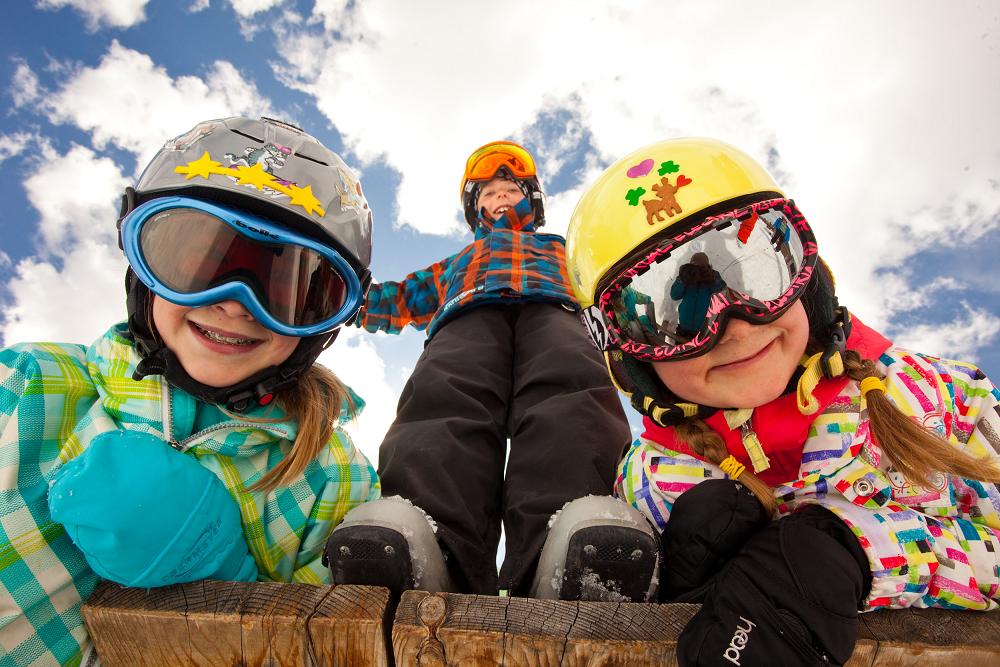
Aspen Snowmass Jeremy Swanson
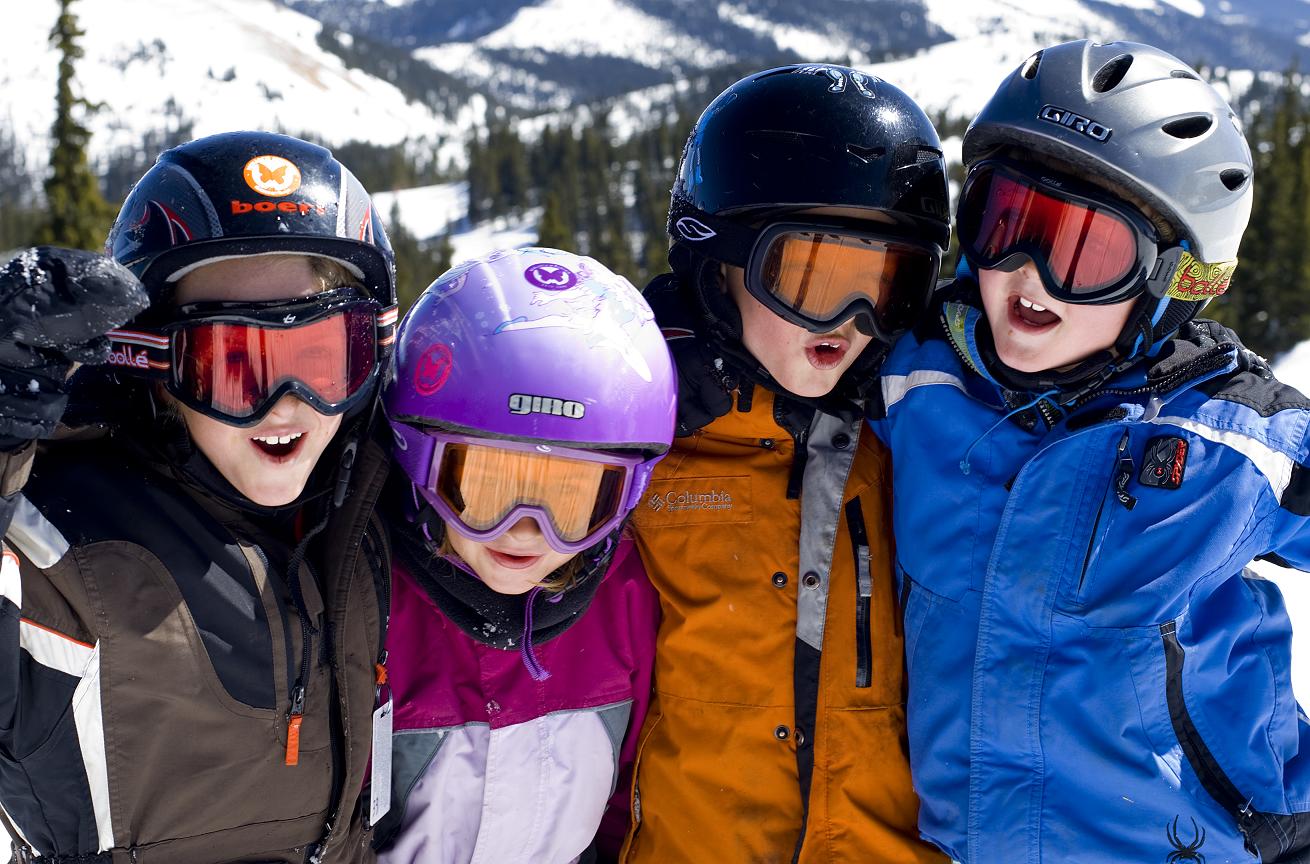
Monarch
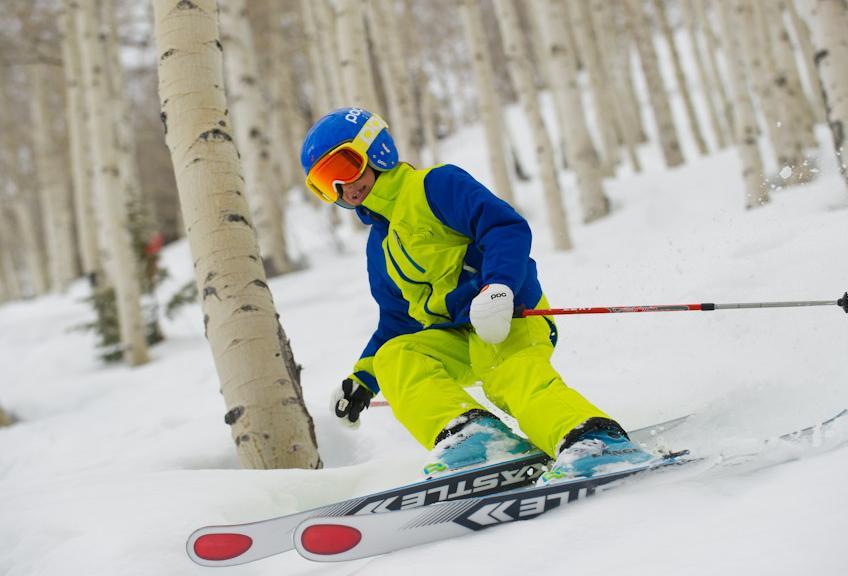
Photo credits: (L-R) Aspen/Snowmass, Jeremy Swanson; Scott Markewitz; Monarch Mountain
Denver, Colo. – September 2, 2013 – Colorado Ski Country USA (CSCUSA) announced today the Association’s popular 5th and 6th Grade Passport Programs are available for the 2013/14 ski season. The Passport Programs introduce fifth and sixth grade kids to skiing and snowboarding by giving fifth graders free access, and sixth graders discounted access, to twenty of Colorado’s finest ski resorts.
As the industry’s most influential program, the CSCUSA 5th Grade Passport allows fifth graders three days of free skiing at each of the twenty CSCUSA participating member resorts. The 6th Grade Passport allows sixth graders four days of skiing at the same twenty resorts for $99, which amounts to 80 days on the slopes for less than $1.25 each day.
Additionally, CSCUSA will offer First Class Lessons to complement the 5th Grade Passport Program. First Class provides fifth graders who are new to skiing and snowboarding the opportunity to learn the sport from some of the best instructors in the industry. Registered 5th Grade Passport holders who have never skied nor snowboarded, and are therefore considered “never-evers”, are eligible to receive a free ski or snowboard lesson and rental equipment during the month of January, which is also Learn to Ski and Snowboard Month. Fifth graders who qualify for First Class have the option of seventeen different resorts to have their introductory experience on snow. Advance reservations are required for First Class Lessons.
“Colorado Ski Country’s Passport Programs have introduced an entire generation of youngsters to skiing and snowboarding,” said Melanie Mills, president and CEO of Colorado Ski Country USA. “By giving 5th and 6th graders the opportunity to ski and ride, we’re helping kids to become lifelong skiers and snowboarders. The First Class Lesson program ensures that novice young skiers and snowboarders will enjoy their introductory on-snow experience and grow to become ambassadors of the state’s signature sports.”
To register kids for the Passport Programs, parents can visit www.ColoradoSki.com/Passport. Details on the First Class Program can also be found at ColoradoSki.com/Passport. The CSCUSA Passport Programs enjoy the support of presenting sponsor, Chipotle, and of program partners Christy Sports and Credit Union of Colorado.
Participating resorts in the 2013-14 Passport programs include: Arapahoe Basin, Aspen Highlands, Aspen Mountain, Buttermilk, Copper Mountain, Crested Butte, Purgatory at Durango Mountain Resort, Eldora, Howelsen Hill, Loveland, Monarch, Powderhorn, Ski Cooper, Ski Granby Ranch, Snowmass, Steamboat, Sunlight, Telluride, Winter Park and Wolf Creek.
For more details please visit www.ColoradoSki.com/Passport or call 303-866-9707.

UIAA looking at how 8000 meter peaks are identified
Posted: September 5, 2013 Filed under: Mountaineering | Tags: 8000, 8000 Meters, 8000m, Alps, Climbing, Himalayas, International Mountaineering and Climbing Federation, Karakorum, Mountaineering, Mountains, Reinhold Messner, Survey of India, UIAA, Union Internationale des Associations d'Alpinisme Leave a commentNew way to identify peaks would add eight new peaks to the 8000 meter list
The UIAA (International Mountaineering and Climbing Federation) is the worldwide organization that defines, for lack of a better word, mountaineering. One of the organizations latest investigations is to re-define what is an 8000 meter peak. Currently there are 14 of these peaks, first climbed by Reinhold Messner. The change in definition would add 8 peaks to the list.
Below is the current analysis of how the new definition would work and how it would apply.
1) Initial goal: defining one or more criteria for identifying 8000er peaks for a new, enlarged and officially accepted list. Earlier literature on the subject indicates the possibility of a topographic criterion (a peak is a topographic entity) and a mountaineering criterion (let us not forget that a list of this type is targeted primarily at mountaineers). Successive goal: applying the new criteria, as rigorously as we choose, to all possible new 8000ers.
2) Working assumption. Definitive judgments on the list, that we will propose, will be down to those 8000er climbers that want to collaborate with us. Their judgments will be primarily useful with regard to possible new 8000ers that they themselves have climbed, or at least observed and documented close-up. On the other hand, we should avoid judgments that are too heterogeneous and difficult to reconcile. For this reason, I think we should propose criteria in a clear form and that can be easily applied, we should also make a first attempt to compile the list of the new 8000ers. Naturally everyone will be able to propose modifications but an attempt at a list would certainly simplify the process.
3) From the concept of a mountain to the concept of a peak. This is a general discourse but I think it is useful to mention it briefly because it serves to avoid that confusion which has unfortunately tarnished earlier articles on the enlargement of the 8000er list.
Many mountaineers ask why there are 14 8000ers and on what basis they have been chosen. If it is true that the compilers of the Survey of India had to triangulate the highest point of a mountain, I think that in those places and times, one was impressed above all by the overall bulk of a mountain and by its majestic proportions (as always happens among mountain dwellers). Thus were the 14 8000ers established, the 14 highest and most imposing mountains. When climbers began to reach their peaks, perceptions began to change: the mountaineer began to see that there was another peak of the same mountain: which was the higher? Was it separated from him by a sufficiently deep col, could it therefore be considered as a peak? So a mountain could have several peaks. Was it worth climbing that other peak, perhaps via a new route? All niceties, of course, as long as you were not even dreaming of climbing to the summit of these mountains. However the concept of peaks is gaining ground until it becomes, perhaps, the dominant concept, at least in certain areas. The inadequacy of the 14 standard 8000ers and the request to enlarge the number of them, in my opinion, reflects the evolution of these ideas, from the intuitive and immediate idea of a mountain to the (more rational) idea of a peak. In other words we are talking about extending to the Himalayas and Karakorum what happened in the Alps some time ago, passing from the concept of a mountain (or massif) to the concept of a peak. The two concepts should not be confused, note that we will be listing peaks. The concept of a mountain continues to be useful in some cases, when, for example, the eternal problem of ridge gendarmes and their relation to the mother mountain arises. However we will examine this later.
4) Possible topographic criteria.
Preliminary sources of information. As well as the texts published at the time of the choice of the 82 Alpine 4000ers (see the site http://www.club4000.it), the following sites are useful for the 8000ers and for the criteria for making choices on them:
[1] en.wikipedia.org/wiki/Topographic_prominence, that clearly defines prominence.

[2] http://www.8000ers.com, including a lot of data on the 8000ers.
[3] www.peaklist.org
The possible topographic criteria are as follows:
(a) Criterion of the maximum adjacent col. This criterion was used around 20 years ago to define the Alpine 4000ers. It was very simple and immediate, and had a favourable welcome from the international commission and the UIAA. Note that, in many cases, the concepts of maximum adjacent col and of prominence (see below) are the same thing. Recent studies (see sites [1-3] above), however, suggest that this criterion should be more rigorous regarding the definition of maximum adjacent col. Unfortunately this greater rigour would reduce the simplicity of the concept.
(b) Criterion of prominence (or orometrical prominence). This is the principal criterion proposed in sites [1-3] above and today carries a broad consensus. The definition, as explained in site [1] above, is simple, using Fig. 1.
 FIG. 1
Suppose that we want to assess the prominence of peak X, that has two higher peaks nearby (M1 and M2). Follow the ridge that unites X to M1 and identify the lowest col on it (col C1), this is the minimum col. Do the same on the ridge that unites X to M2 and identify a second minimum col, that is C2. Then select the higher of the minimum cols, C2, which is then called the key col. The height difference between X and the key col (line p) is the prominence of peak X. Naturally, if there were several higher peaks in the vicinity, each of the ridges and minimum cols would be considered. If there were only one higher peak, there would be only one ridge and the minimum col will automatically be the key col. In reality the idea of prominence has two faces. If the peak that we are considering is isolated (i.e. some distance from the higher peaks), the measuring of prominence becomes complicated and requires a knowledge of many, many cols as well as the use of dedicated software and obviously a computer, indeed it is of little interest to mountaineers. For example, the key col of Mont Blanc is next to Lake Onega in Russia, the key col of Mount McKinley (Alaska) is located by Lake Nicaragua in Central America, and so on. If instead peak X is a satellite of a higher peak nearby, e.g. one of the 14 8000ers (that luckily is the case for us), then the evaluation of prominence becomes much simpler.
(c) Concept of dominance. This is an interesting concept because it expresses the percentage of individuality of a peak, independent of its absolute altitude. If however we look at the formula that expresses dominance D (see site [2] above): D = (P/Alt) 100, where P is the prominence and Alt the absolute altitude of the peak, we note immediately that Alt in our case is always close to 8000, or at least little distant from it, therefore the formula in practice becomes D = P/80. D is therefore in fixed proportion to P (about 80 times smaller than P). So D is effectively a duplicate measure of P and is of little use to us. It could however be useful when we compare mountain groups with very different altitudes.
In conclusion, considering the popularity of prominence, its simplicity of application, at least in our case, the fact that data on the prominence of 8000er satellites (which are those peaks that interest us) is available on site [2] above, and finally (the most important issue) the fact that the use of a concept already broadly accepted is another reason why the UIAA should not raise too many objections to our proposal – all these things have convinced me of the value of using this measure in our work on the topographic aspects (let me know what you think about it).
(5) Choice of the critical value of prominence. This is the crucial point: we have to choose a number, even if only approximate – if not, we are locked into the realm of personal opinions. There are two routes we can take. The first is that followed, for example, in site [2] above to find a valid value for prominence in order to divide the mountains into categories of greater or lesser importance. One idea is 30 metres because that has been for a long time the length of a climbing rope. In the work done for the Alpine 4000ers, however, I preferred another idea that seemed more realistic and closer to what mountaineers have in mind.
Please indulge me for a moment and I will briefly illustrate the idea. The starting point, and this is fundamental, connected to the idea of a peak, is identifying the peak with respect to the surrounding area. In other words we think of the peak as a point that stands at a certain difference in height with respect to the surrounding area. OK but what is the minimum difference in height, above which we consider the feature to be a peak? If we see a mass that rises 300 metres above the surrounding ground, that is a peak; if we see a mass that rises 30 cm, that is a rock. Obviously there is within each of our minds a critical value above which we talk about a peak, even if none of us has probably ever tried to put a figure on that value. The problem is indeed putting a figure on the critical value of prominence. To get at it, I considered the 4000ers that, in the numerous earlier lists, were accepted by some and rejected by others because they did not stand out enough. These 4000ers were evidently the key that could resolve the problem. I calculated therefore the average of the height differences between these doubtful 4000ers and their respective highest adjacent cols. The average height difference was in the range of 30-40 metres. It was therefore apparent that, below 30 metres, mountaineers do not speak of peaks. This was the minimum height difference acceptable to call a 4000er a peak. It is important to note that this criterion and this value of 30 metres were not inventing anything new nor were they overturning existing criteria or values. They did however make explicit what had been hidden in the earlier lists, even if still in an implicit form.
To use this procedure in our case we must select an initial base, for example one or more lists proposed previously for the new 8000ers which are candidates to enter into an official list. In this field there are very few lists proposed, and in general they are drawn up by a few isolated mountaineers. There is however an earlier work (see the very useful document of Luciano Ratto sent to us on 5 April) carried out by a group of 43 Slovakian 8000er climbers, who have made a total of 85 ascents to peaks over 8000 metres, among which all the 14 official ones plus a few minor peaks, and have used their extensive experience to compile a list of possible new 8000ers (the table appears on the site http://www.8000.sk/21×8000.pdf). In my opinion, it would be senseless not to give due weight to this valuable work and I think it could be our starting point. The small number of other lists, compiled by isolated mountaineers, would have little bearing on our case, according to me, given that the opinions of these few others would have little weight compared to those of the 43 Slovakians. Note that, even when we worked on the 4000ers, we were not able to benefit by the opinions of this many mountaineers and experts. No criterion of choice has been indicated in the Slovakian list; moreover, at the moment of publication, several of the 8000er climbers were no longer alive for which, more so than for a work founded on criteria that have been pondered over and shared, it is perhaps likely that many of the opinions were individual, and that those opinions have not been closely coordinated. Nevertheless, our aim is to extract that critical value, previously unexpressed, that is hidden within the list, using a method similar (if not identical) to that followed for the 4000ers.
The list in question includes 6 satellite peaks considered worthy to join the main 8000ers, i.e. (1) Broad Peak Central; (2) Yalung Kang (Kangchenjunga group); (3) Kangchenjunga South Peak; (4) Lhotse Shar; (5) Lhotse Central Peak I (or Middle West Tower); (6) Kangchenjunga Central Peak. Note that the Slovakians also include the South (or South East) Peak of Makalu, at the time believed to be 8010 metres. Subsequently this peak has been ignored, see site [2] above – in particular the accurate Kielkowski guide assesses its height at 7803 m. Therefore I do not think it needs to be considered among the possible 8000ers.
As we shall shortly speak of the measured values of the various prominences of the 8000er satellites, I should say that the practical methods used to evaluate them are in general connected to photographs and the contour lines of the best maps, as well as naturally to the direct testimonies of those who have observed them close-up. Regarding Google Earth, it is easy to verify that the altimetry, especially in the high mountains, is somewhat approximate. If this inaccuracy were systematic, when I calculate the difference in height between a peak and a col (that is connected to the prominence), this difference would eliminate the systematic error on the two absolute values and all would be well. Unfortunately I have seen that, in many cases, this is not so, for which reason I am reluctant to use Google Earth. Note that even for the prominences listed in site [2] above, only maps and photographs, and not Google Earth, are used.
At this point let us look at Table 1, drawn from site [2] above, in which prominence data is collected for various 8000er satellite peaks (naturally the prominence values are a point on which the 8000er climbers could give useful opinions).
TABLE 1
|
PEAK |
PROMINENCE (metres) |
PEAK |
PROMINENCE (metres) |
|
|
|
|
|
|
Broad Peak Central |
181 |
Annapurna East Peak |
50 |
|
Kangchenjunga West Peak (or Yalung Kang) |
135 |
Yalung Shoulder |
40 |
|
Kangchenjunga South Peak |
116 |
Lhotse Central Peak II |
37 |
|
Lhotse Shar |
72 |
K2 P. 8134 (SW-Ridge) |
35 |
|
Lhotse Central Peak I |
65 |
Annapurna Central Peak |
30 |
|
Kangchenjunga Central Peak |
63 |
K2 SE Peak |
30 |
|
|
|
Everest West Peak |
30 |
|
|
|
Kangchenjunga SE Peak |
30 |
|
|
|
Nanga Parbat South Peak |
30 |
|
|
|
Shisha Pangma Central Peak |
30 |
|
|
|
Everest NE Pinnacle II |
25 |
|
|
|
Everest NE Shoulder |
19 |
|
|
|
Everest NE Pinnacle III |
13 |
|
|
|
Lhotse N Pinnacle II |
12 |
|
|
|
Lhotse N Pinnacle I |
10 |
|
|
|
Lhotse N Pinnacle III |
10 |
As you can see in the Table, the six 8000ers proposed as true peaks by the 43 Slovakians (on the left) have prominences ranging from 63 to 181 m. In the second column are the excluded peaks that have prominences ranging from 50 m to very low values for the minor gendarmes.
It is immediately apparent that there is a singular connection between those peaks considered true 8000ers by the 43 Slovakians and the peaks which have prominences greater than the critical band between 50 and 63 m (centred therefore on a value of about 60m).
It is notable too, looking at the group of 8000ers proposed by the 43 Slovakians and the other peaks that have been discarded, that there are no cases of peaks being accepted with prominences lower than those of the excluded peaks. In other words, the prominence values account entirely for the distinction between the two groups of peaks. Another significant point is that, in site [2] above, the prominence value of 60 m has been chosen to separate categories of mountains of varying importance (categories B and C, more important above 60 m of prominence, category D under that value). Finally, a further positive point, these results eliminate the problem of the simple gendarmes, a problem that recurs often among mountaineers (personally I recall the disputes about the Grand Gendarme of the Weisshorn being a 4000er, subsequently it was excluded from the list). In general the simple gendarme, entirely assimilated to the mass of the mother mountain, should not be considered a peak, regardless of its prominence, such discussions have always been nebulous and of little use because decisions can rarely be taken according to rational, and not personal, criteria. Well, in the current case, this possible source of dispute does not arise because the large family of gendarmes and spurs are all relegated to the group of the excluded peaks (something that I personally agree with), not because of personal disputes but on the basis of an easily verifiable criterion, that of prominence.
In conclusion the Slovakian list would seem to offer a solid and realistic base for our purposes. Therefore it seems to me to be quite justified to propose, as the critical value for topographic acceptance of the true 8000ers, a prominence of about 60 m.
It is clear that if the critical value of 60 m of prominence is accepted, the six peaks listed in the left part of Table 1 enter automatically into a preliminary list of possible new 8000ers. A curiosity: the prominences of the 14 original 8000ers are much greater than 60 m – the smallest is that of Lhotse at 610 m. The risk of having to remove one of the original peaks from our list is avoided!
Lastly, even if the problem of the gendarmes fortunately should not concern us further, it must however be said that that the distance of the gendarme from the mother peak represents an extension of the topographic criterion from the height difference to the horizontal difference, and this horizontal difference is important in certain cases. For example, as we will see shortly, for the two satellite peaks of Annapurna, that will be evaluated on the basis of the mountaineering criterion, their significant horizontal difference can be a valid measure of their independence from the mother peak and can help us in deciding on their acceptance or rejection.
(6) Mountaineering criterion. This is obviously an important criterion for us, and could be useful above all when a possible 8000er, rejected on a topographic basis, excited a lively mountaineering interest. The mountaineering criterion is obviously related to climbing the peak in question, whether that concerns the quantity of ascents or the quality of the routes on it. But on all the climbing routes that can be considered, priority should be given, in my opinion, to those routes than can be defined as specific routes, those climbing routes that terminate on the peak, those routes used by mountaineers that have considered the peak an end in itself and therefore autonomous in a mountaineering sense. If the peak in question, regardless of the first criterion, gained a positive evaluation on this second criterion, it could still be inserted in the list of the true 8000ers.
We should not give however, in my opinion, an excessive importance to the mountaineering criterion, as has happened in earlier articles in which this criterion claimed all the space and relegated the topographic criterion to second place. Let us not forget that a peak is an objective reality, a protuberance that rises above the ground surrounding it and exists independently of the routes marked out on it. Therefore it seems right to me to use the mountaineering criterion as the secondary consideration.
Another question on the mountaineering criterion. In general, in earlier articles in which a peak’s mountaineering importance was evaluated, the routes already marked out were considered. This approach puts us on tricky ground. Every time an important new route was opened, perhaps one that we have already defined to be specific to the peak, we would have to make changes to our list and the list would lose meaning and value. In other words the mountaineering criterion, considered in this way, becomes a moving target and therefore unreliable and a source of confusion. Much better, if you ask me, to consider the general mountaineering value of a peak, in the sense of evaluating its mountaineering interest, whether for the routes already open or for possible routes still to be opened, for example on evident and definite pillars or spurs, routes that appear enticing and have not yet been traced only because they exceed the technical level reached up to this point. In this way the mountaineering criterion can also become a fixed criterion, if it is tied to the structure of the mountain and therefore of great utility and solidity, just like the topographic criterion.
IN CONCLUSION. According to the criteria expounded above, the procedure to follow to accept or not an 8000er into the group of the true peaks is ultimately quite simple (at least as a procedure). First step: if the topographic criterion of prominence is favourable, the peak is accepted with no further consideration. In the case of prominence a little under the prescribed minimum or if there is a particular mountaineering interest, we pass to the mountaineering criterion. This, if favourable, can let the peak pass into the accepted list. Finally, if there is a negative outcome to both criteria, the peak must be discarded.
(7) This is a possible list of peaks of 8000 m that could join the true and accepted 8000ers. It is a list that makes no claims, useful more than anything else for looking at the applicability of the criteria outlined above, nothing more.
Broad Peak Central, Kangchenjunga West Peak (or Yalung Kang), Kangchenjunga South Peak, Lhotse Shar, Lhotse Central Peak I, Kangchenjunga Central Peak: they would pass the tests outlined above.
Annapurna East Peak, Annapurna Central Peak: they do not meet the topographic criteria (the first of the two failing only by a few metres) and nor are they accepted by the 43 Slovakian 8000er climbers. But, as well as the significant distance of these two peaks, both from each other and from the principal peak (a favourable fact because it witnesses to their independence, even if we have not proposed this as a true and proper criterion), in this case it may be right to consider the mountaineering criterion. We could then observe that the routes traced on the North and South faces (Himalayan Index), and also further possible routes on the South face with its great spurs and buttresses, could make the case for adding these two peaks to the list.
Other comments.
Broad Peak group: Forepeak and Broad Tooth (not cited in site [2] above). The first is a summit feature without significant character whereas Broad Tooth is a spur almost indistinguishable from the main body of the mountain. Not worth pursuing.
Everest S Peak: (absent in site [2] above). From good photos taken with people in them, a prominence of about 30 m is evident. Does not meet the topographic criterion.
There remains the East summit of Manaslu, 8013 m, almost never cited among the possible 8000ers, nor is it cited in site [2] above (see photo on last page). Given that the altitude of 8013 m has not been contradicted by more recent measurements (see the case of the Makalu SE peak) and considering the difference between 8163 and 8013 m (150 m), it is possible that its prominence exceeds 60 m (see photo). But it appears to me that the Manaslu pyramid is a unit that reaches 8163 m, and that the East summit is a gendarme not sufficiently independent from the principal pyramid. This of course is only my opinion.
In conclusion, according to this list, there would be eight other 8000ers possibly to add to the 14 main ones. Note: the same eight had already been mentioned as possible true 8000ers in an article of the CISDAE (Italian Centre for Study and Documentation on Extra-European Mountaineering) in the Scarpone (magazine of Club Alpino Italiano) of October 2006.
Problem of nomenclature. If our project should ever reach the UIAA, it is worth noting that (i) there is often more than one name for the peaks of the various satellite 8000ers (and not only the satellites) and (ii) such names are often hybrids between the local language and the cardinal points in English. For example, I like a name like Lhotse Shar but a local name mixed with South, North, West, etc, does not appeal. This will get sorted out in time.
So do you want to climb 22 peaks above 8000 meteres?

What do you think? Leave a comment.
If you like this let your friends know or post it on FaceBook, Twitter or LinkedIn
Copyright 2013 Recreation Law (720) Edit Law
Email: Rec-law@recreation-law.com
Google+: +Recreation
Twitter: RecreationLaw
Facebook: Rec.Law.Now
Facebook Page: Outdoor Recreation & Adventure Travel Law
Blog: www.recreation-law.com
Mobile Site: http://m.recreation-law.com
By Recreation Law Rec-law@recreation-law.com James H. Moss Jim Moss
#RecreationLaw, #@RecreationLaw, #Cycling.Law #Fitness.Law, #Ski.Law, #Outside.Law, #Recreation.Law, #Recreation-Law.com, #Outdoor Law, #Recreation Law, #Outdoor Recreation Law, #Adventure Travel Law, #law, #Travel Law, #Jim Moss, #James H. Moss, #Attorney at Law, #Tourism, #Adventure Tourism, #Rec-Law, #Rec-Law Blog, #Recreation Law, #Recreation Law Blog, #Risk Management, #Human Powered, #Human Powered Recreation,# Cycling Law, #Bicycling Law, #Fitness Law, #Recreation-Law.com, #Backpacking, #Hiking, #Mountaineering, #Ice Climbing, #Rock Climbing, #Ropes Course, #Challenge Course, #Summer Camp, #Camps, #Youth Camps, #Skiing, #Ski Areas, #Negligence, #Snowboarding, #RecreationLaw, #@RecreationLaw, #Cycling.Law #Fitness.Law, #SkiLaw, #Outside.Law, #Recreation.Law, #RecreationLaw.com, #OutdoorLaw, #RecreationLaw, #OutdoorRecreationLaw, #AdventureTravelLaw, #Law, #TravelLaw, #JimMoss, #JamesHMoss, #AttorneyatLaw, #Tourism, #AdventureTourism, #RecLaw, #RecLawBlog, #RecreationLawBlog, #RiskManagement, #HumanPowered, #HumanPoweredRecreation,# CyclingLaw, #BicyclingLaw, #FitnessLaw, #RecreationLaw.com, #Backpacking, #Hiking, #Mountaineering, #IceClimbing, #RockClimbing, #RopesCourse, #ChallengeCourse, #SummerCamp, #Camps, #YouthCamps, #Skiing, #Ski Areas, #Negligence, #Snowboarding, sport and recreation laws, ski law, cycling law, Colorado law, law for recreation and sport managers, bicycling and the law, cycling and the law, ski helmet law, skiers code, skiing accidents, Recreation Lawyer, Ski Lawyer, Paddlesports Lawyer, Cycling Lawyer, Recreational Lawyer, Fitness Lawyer, Rec Lawyer, Challenge Course Lawyer, Ropes Course Lawyer, Zip Line Lawyer, Rock Climbing Lawyer, Adventure Travel Lawyer, Outside Lawyer, Recreation Lawyer, Ski Lawyer, Paddlesports Lawyer, Cycling Lawyer, #RecreationalLawyer, #FitnessLawyer, #RecLawyer, #ChallengeCourseLawyer, #RopesCourseLawyer, #ZipLineLawyer, #RockClimbingLawyer, #AdventureTravelLawyer, #OutsideLawyer, UIAA, 8000, 8000m, 8000 Meters, Mountains, Mountaineering, International Mountaineering and Climbing Federation,
WordPress Tags: UIAA,meter,International,Federation,investigations,Reinhold,Messner,definition,analysis,Initial,goal,criteria,Earlier,literature,criterion,mountaineers,Successive,assumption,Definitive,judgments,climbers,modifications,From,concept,mountain,enlargement,Many,basis,Survey,India,proportions,dwellers,Thus,mountains,perceptions,mountaineer,worth,niceties,summit,areas,inadequacy,opinion,evolution,Himalayas,Karakorum,Alps,massif,concepts,example,relation,Possible,Preliminary,information,texts,Alpine,Topographic_prominence,prominence,data,Note,Recent,consensus,Suppose,cols,difference,knowledge,computer,Mont,Blanc,Lake,Onega,Russia,Mount,McKinley,Alaska,Nicaragua,Central,America,satellite,evaluation,dominance,percentage,altitude,formula,proportion,altitudes,conclusion,fact,satellites,objections,proposal,aspects,Choice,realm,opinions,categories,importance,length,moment,area,differences,procedure,candidates,Luciano,Ratto,April,Slovakian,ascents,Slovakians,experts,publication,method,Broad,Peak,Yalung,Kang,Kangchenjunga,South,Lhotse,Shar,Middle,West,Tower,East,Makalu,Kielkowski,prominences,contour,testimonies,Google,Earth,inaccuracy,error,Table,Annapurna,Shoulder,Ridge,Everest,Nanga,Parbat,Shisha,Pangma,Pinnacle,column,connection,band,account,distinction,Another,category,Grand,Gendarme,Weisshorn,discussions,decisions,purposes,acceptance,extension,rejection,protuberance,pillars,outcome,North,Himalayan,Index,Forepeak,Tooth,photos,Does,Manaslu,Given,measurements,unit,article,CISDAE,Italian,Centre,Study,Documentation,Extra,European,magazine,Club,Alpino,Italiano,October,Problem,nomenclature,hybrids,English,Leave,FaceBook,Twitter,LinkedIn,Recreation,Edit,Email,RecreationLaw,Page,Outdoor,Adventure,Travel,Blog,Mobile,Site,James,Moss,Outside,Attorney,Tourism,Risk,Management,Human,Rock,Ropes,Course,Challenge,Summer,Camp,Camps,Youth,Negligence,SkiLaw,OutdoorLaw,OutdoorRecreationLaw,AdventureTravelLaw,TravelLaw,JimMoss,JamesHMoss,AttorneyatLaw,AdventureTourism,RecLaw,RecLawBlog,RecreationLawBlog,RiskManagement,HumanPoweredRecreation,CyclingLaw,BicyclingLaw,FitnessLaw,RopesCourse,ChallengeCourse,SummerCamp,YouthCamps,Colorado,managers,helmet,accidents,Lawyer,Paddlesports,Recreational,Line,RecreationalLawyer,FitnessLawyer,RecLawyer,ChallengeCourseLawyer,RopesCourseLawyer,ZipLineLawyer,RockClimbingLawyer,AdventureTravelLawyer,OutsideLawyer,Meters,topographic,gendarmes,favourable,metres,ones,whether,pyramid
Summer 2013 Commercial Fatalities 8/26/13
Posted: September 4, 2013 Filed under: Alaska, Mountaineering, Pennsylvania, Tennessee, Whitewater Rafting, Wyoming | Tags: Cambridge, Cedar Hills Utah, Chattooga River, Colorado Springs, Death, Exum Mountain Guides, fatality, Grand Teton, Kenai Peninsula, Mountaineering, Nashville Tennessee, NOVA Alaska, Ocoee River, Ohiopyle State Park, Raft, Tennesee, TN, Whitewater Rafting, Wildwater Ltd, Wyoming, Youghiogheny River 3 CommentsThis list is not guaranteed to be accurate. The information is found from web searches and news dispatches. Those references are part of the chart. If you have a source for information on any fatality please leave a comment or contact me. Thank you.
If this information is incorrect or incomplete please let me know. This is up to date as of August 14, 2013. Thanks.
Rafting, Mountaineering and other summer sports are probably still safer than your kitchen or bathroom. This information is not to scare you away from any activity but to help you understand the risks and to study.
Red is a probable death due to medical issues.
Dark blue is a death of an employee while working.
| Date | Activity | State | Location | What | Age | Sex | Home | Ref |
| 5/27 | Whitewater Rafting | AK |
Kenai Peninsula’s Six Mile Creek, Zig Zag Rapid |
washed out of a boat filled with clients and a guide as they entered rapid |
47 | M | Cambridge, UK | |
| 6/8 | Whitewater Rafting | TN | Chattooga River | boat flipped | 58 | M | Nashville, TN | |
| 6/20 | Mountaineering | WY | Lower Saddle of the Grand Teton | slipped on snowfield and slid | 55 | M | Colorado Springs, CO | |
| 7/3 | Summer Camp | CA | Camp Tawonga | Tree fell | 21 | F | Santa Cruz, CA | http://rec-law.us/16RpK3K & http://rec-law.us/124h7TI |
| 7/6 | Whitewater Rafting | PA | Youghiogheny River, Ohiopyle State Park | Foot entanglement with rope | 22 | M | Lancaster, PA | http://rec-law.us/12dNcIz & http://rec-law.us/1btCuRC |
| 7/9 | Summer Camp | UT | Mt. Dell Scout Ranch, UT | Run over by flat bed truck | 14 | M | Cedar Hills, UT | http://rec-law.us/159p1tz |
| 8/14 | Whitewater Rafting | WV | New River, WV | washed out of boat into “meat grinder” area | 16 | M | Germany | http://rec-law.us/1dfgQl8 |
| 8/24 | Whitewater Rafting | TN | Ocoee River, TN | fell out in Grumpy’s rapid | 52 | F | Rex, GA | http://rec-law.us/17fRPnc & http://rec-law.us/1dJZYTU |
| 8/25 | Whitewater Rafting | TN | Ocoee River, TN | fell out in Grumpy’s rapid | 36 | F | Smyrna, TN | http://rec-law.us/17fRPnc & http://rec-law.us/12FJFmh |
Our condolences go to the families of the deceased. Our thoughts extend to the families and staff at the areas who have to deal with these tragedies.
Overall it has been a low fatality year!
What do you think? Leave a comment.
If you like this let your friends know or post it on FB, Twitter or LinkedIn
Copyright 2013 Recreation Law (720) Edit Law
Email: Rec-law@recreation-law.com
Google+: +Recreation
Twitter: RecreationLaw
Facebook: Rec.Law.Now
Facebook Page: Outdoor Recreation & Adventure Travel Law
Mobile Site: http://m.recreation-law.com
By Recreation Law Rec-law@recreation-law.com James H. Moss #Authorrank
<rel=”author” link=” https://plus.google.com/u/0/b/112453188060350225356/” />
#RecreationLaw, #@RecreationLaw, #Cycling.Law #Fitness.Law, #Ski.Law, #Outside.Law, #Recreation.Law, #Recreation-Law.com, #Outdoor Law, #Recreation Law, #Outdoor Recreation Law, #Adventure Travel Law, #law, #Travel Law, #Jim Moss, #James H. Moss, #Attorney at Law, #Tourism, #Adventure Tourism, #Rec-Law, #Rec-Law Blog, #Recreation Law, #Recreation Law Blog, #Risk Management, #Human Powered, #Human Powered Recreation,# Cycling Law, #Bicycling Law, #Fitness Law, #Recreation-Law.com, #Backpacking, #Hiking, #Mountaineering, #Ice Climbing, #Rock Climbing, #Ropes Course, #Challenge Course, #Summer Camp, #Camps, #Youth Camps, #Skiing, #Ski Areas, #Negligence, #Snowboarding, #RecreationLaw, #@RecreationLaw, #Cycling.Law #Fitness.Law, #SkiLaw, #Outside.Law, #Recreation.Law, #RecreationLaw.com, #OutdoorLaw, #RecreationLaw, #OutdoorRecreationLaw, #AdventureTravelLaw, #Law, #TravelLaw, #JimMoss, #JamesHMoss, #AttorneyatLaw, #Tourism, #AdventureTourism, #RecLaw, #RecLawBlog, #RecreationLawBlog, #RiskManagement, #HumanPowered, #HumanPoweredRecreation,# CyclingLaw, #BicyclingLaw, #FitnessLaw, #RecreationLaw.com, #Backpacking, #Hiking, #Mountaineering, #IceClimbing, #RockClimbing, #RopesCourse, #ChallengeCourse, #SummerCamp, #Camps, #YouthCamps, #Skiing, #Ski Areas, #Negligence, #Snowboarding, sport and recreation laws, ski law, cycling law, Colorado law, law for recreation and sport managers, bicycling and the law, cycling and the law, ski helmet law, skiers code, skiing accidents, Recreation Lawyer, Ski Lawyer, Paddlesports Lawyer, Cycling Lawyer, Recreational Lawyer, Fitness Lawyer, Rec Lawyer, Challenge Course Lawyer, Ropes Course Lawyer, Zip Line Lawyer, Rock Climbing Lawyer, Adventure Travel Lawyer, Outside Lawyer, Recreation Lawyer, Ski Lawyer, Paddlesports Lawyer, Cycling Lawyer, #RecreationalLawyer, #FitnessLawyer, #RecLawyer, #ChallengeCourseLawyer, #RopesCourseLawyer, #ZipLineLawyer, #RockClimbingLawyer, #AdventureTravelLawyer, #OutsideLawyer, Whitewater Rafting, Mountaineering, Exum Mountain Guides, NOVA Alaska, Wildwater Ltd, Youghiogheny River, entanglement, Kenai Peninsula’s Six Mile Creek, Zig Zag Rapid, Chattooga River, Jawbone rapid, Lower Saddle of the Grand Teton, Camp Tawonga, Swimmers Rapids, Summer Camp, BSA, Boy Scouts of America, Ohiopyle State Park, Ocoee River, TN, Tennesee,
WordPress Tags:
Summer,Commercial,Fatalities,information,news,references,Thank,August,Thanks,kitchen,bathroom,death,Dark,employee,Date,State,Location,Home,Whitewater,Kenai,Peninsula,Mile,Creek,Rapid,boat,clients,Cambridge,Chattooga,River,Nashville,Lower,Saddle,Grand,Teton,Colorado,Springs,Camp,Tawonga,Tree,Santa,Cruz,Youghiogheny,Ohiopyle,Park,Foot,entanglement,Lancaster,Dell,Scout,Ranch,truck,Cedar,Hills,meat,grinder,area,Germany,Ocoee,Grumpy,Smyrna,condolences,families,areas,tragedies,Overall,Leave,Twitter,LinkedIn,Recreation,Edit,Email,Google,RecreationLaw,Facebook,Page,Outdoor,Adventure,Travel,Blog,Mobile,Site,James,Moss,Authorrank,author,Outside,Attorney,Tourism,Risk,Management,Human,Rock,Ropes,Course,Challenge,Camps,Youth,Negligence,SkiLaw,OutdoorLaw,OutdoorRecreationLaw,AdventureTravelLaw,TravelLaw,JimMoss,JamesHMoss,AttorneyatLaw,AdventureTourism,RecLaw,RecLawBlog,RecreationLawBlog,RiskManagement,HumanPoweredRecreation,CyclingLaw,BicyclingLaw,FitnessLaw,RopesCourse,ChallengeCourse,SummerCamp,YouthCamps,laws,managers,helmet,accidents,Lawyer,Paddlesports,Recreational,Line,RecreationalLawyer,FitnessLawyer,RecLawyer,ChallengeCourseLawyer,RopesCourseLawyer,ZipLineLawyer,RockClimbingLawyer,AdventureTravelLawyer,OutsideLawyer,Exum,Mountain,Guides,NOVA,Alaska,Wildwater,Swimmers,Rapids,Scouts,America,Tags,June,Reference
You cannot sue for a danger which you could have seen when biking on someone elses land
Posted: September 2, 2013 Filed under: Cycling, Michigan, Mountain Biking | Tags: Bicycle motocross, Bicycle Racing, bicycle track, bicyclist, bike park, biking, BMX, Bradley J. R. Cottom, Cycling, dirt bike race track, dirt track, Inc., Licensee, Melissa Cottom, Michigan, race track, Summary judgment, USA Cycling Leave a commentBesides riding a BMX course before it is open is not smart.
Cottom v. USA Cycling, Inc, 2002 U.S. Dist. LEXIS 6745 (W.D. Mich. 2002)
Plaintiff: Bradley J. R. Cottom and Melissa Cottom
Defendant: USA Cycling, Inc.
Plaintiff Claims: Negligence
Defendant Defenses: the danger which injured the plaintiff was Open and Obvious
Holding: for the defendant on its motion for summary judgment
In this Federal District Court case from Michigan, the court discusses the open and obvious rule applied to a mountain biker on someone else’s land. In this case, the plaintiff entered an unfinished BMX or dirt bike track being built by USA Cycling, Inc., and was injured in loose dirt. Because the condition of the track was open and obvious, he could not recover from the defendant.
The plaintiff was a fairly experienced BMX rider. He had seen a dirt track being built and went over to investigate. He saw construction workers as well as cyclists on the track. Talking to one construction worker, he was assured the track was safe. He rode around the track once without incident. On the second lap, he fell when he hit a rock or slipped on loose gravel hyperextended his knee, and broke his leg.
Summary of the case
Under Michigan’s law, the plaintiff was identified as a licensee. A licensee is someone who:
…is a person who is privileged to enter the land of another by virtue of the possessor’s consent. A landowner owes a licensee a duty only to warn the licensee of any hidden dangers the owner knows or has reason to know of, if the licensee does not know or have reason to know of the dangers involved. The landowner owes no duty of inspection or affirmative care to make the premises safe for the licensee’s visit.
The other two categories describing people on another’s land are trespasser and invitee. A trespasser is there without any benefit for the landowner generally, and an invitee is one who is there for the benefit to the landowner and at the bequest of the landowner.
The defense is whether the danger that injured the plaintiff was hidden or open and obvious.
USA Cycling [defendant] argues that because the condition of the track was open and obvious, it did not owe Cottom [plaintiff] a duty of protection or warning. USA Cycling notes that Cottom was able to observe the track prior to riding, that he rode around the track one time without falling, and that he was able to get a feel for the track conditions prior to his accident. Thus, according to USA Cycling, there were no hidden dangers present and it cannot be held liable for Cottom’s accident.
To prove the danger that injured the plaintiff was not open and obvious the plaintiff must complete a two-step test. The plaintiff must prove that the defendant should have known of the potentially dangerous condition and that the plaintiff did not know about the dangerous condition. The court stated the plaintiff failed to prove the second part of the test because there is no requirement to safeguard licensees from dangers that are open and obvious because those dangers come with their own warnings. The open and obvious test is an objective one, whether a reasonable person in the position of the plaintiff would have foreseen the danger.
…there is no duty to take steps to safeguard licensees from conditions that are open and obvious, for “such dangers come with their own warning. A danger is open and obvious if “‘an average user with ordinary intelligence [would] have been able to discover the danger and the risk presented upon casual inspection.”
The plaintiff’s experience, visual review of the track, and one lap without incident defeated his claim.
Cottom, an experienced BMX cyclist, was able to casually inspect the track and the track conditions before his accident by watching other bikers on the track and then riding on the track once himself. A reasonable person in this position would foresee the dangers the track presented, making the condition of the track open and obvious. In fact, most Americans have ridden bicycles in their youth and know that bike riders lose control of their bikes in loose dirt or that a rock will cause a bike to tip over.
First, the unpacked, gravelly condition of the track surface did not make the likelihood of injury higher than an ordinary, complete bike track. It is just as difficult for an ordinarily prudent person to ride a bike on a race track of loose dirt without losing control of the bike or falling as it is on any other dirt track. Second, there was not a high potential for severe harm. Thousands of people ride bikes every day, and many of them fall while riding their bikes on sidewalks, bike paths, tracks or trails. Bumps, bruises, and scrapes, or occasionally broken bones or more serious injuries, are the normal incidents of bike riding, especially BMX bike riding as in this case.
Because the plaintiff was able to inspect the track himself, had seen other bikers on the track, and ridden the track once before falling on this second lap the plaintiff had a chance to see any dangers. The danger that caused the injury, therefore, was open and obvious and the defendant did not owe any greater duty to the defendant licensee.
Once this burden was met by the defendant the only option left to the plaintiff was to argue the danger was unreasonable. Whether there were special aspects of the danger that created or differentiated the risk. The court explained the differences this way.
For example, a pothole in a parking lot presents an open and obvious risk for which the premise’s owner would not normally be liable if someone were to trip and fall because of the hole. An unguarded, 30-foot-deep pit might present an unreasonable risk, however, because of the danger of death or severe injury.
The plaintiff was unable to argue that a rock on a dirt track was an unreasonable danger.
Thousands of people ride bikes everyday, and many of them fall while riding their bikes on sidewalks, bike paths, tracks or trails. Bumps, bruises, and scrapes, or occasionally broken bones or more serious injuries, are the normal incidents of bike riding, especially BMX bike riding as in this case.
The risks of the track were ordinary, not an unguarded deep pit. Nor was he able to prove the person who gave him the assurance that the track was safe was an employee of the defendant or that the person providing the warning had any greater knowledge about the track than the plaintiff.
The court granted the defendant’s motion for summary judgment.
So Now What?
This decision besides explaining the landowner’s duty for hidden dangers and the defense of open and obvious danger has great language in it for any cycling decision. The court sets forth facts that falling is a part of cycling. “Bumps, bruises, and scrapes or occasionally broken bones or more serious injures” are normal for bike riders. If you are a land owner, bike rental company, or cycling retailer, this is an important language to keep available or even incorporate into your release.
If you are a land owner offering your land to someone, you should review your risks with an attorney specializing in real estate. You have multiple defenses available to you so you can allow people the opportunity to recreate. The first is all states have a statute that provides indemnity for landowners who allow others to recreate for free. These laws are called Recreational Use statutes. They differ wildly from state to state and the amount of protections they provide. Make sure you understand what you must and must not do to qualify for this protection.
What do you think? Leave a comment.
 Jim Moss |
Jim Moss is an attorney specializing in the legal issues of the outdoor recreation community. He represents guides, guide services, and outfitters both as businesses and individuals and the products they use for their business. He has defended Mt. Everest guide services, summer camps, climbing rope manufacturers; avalanche beacon manufacturers, and many more manufacturers and outdoor industries. Contact Jim at Jim@Rec-Law.us |
Jim is the author or co-author of eight books about legal issues in the outdoor recreation world; the latest is Outdoor Recreation Insurance, Risk Management,
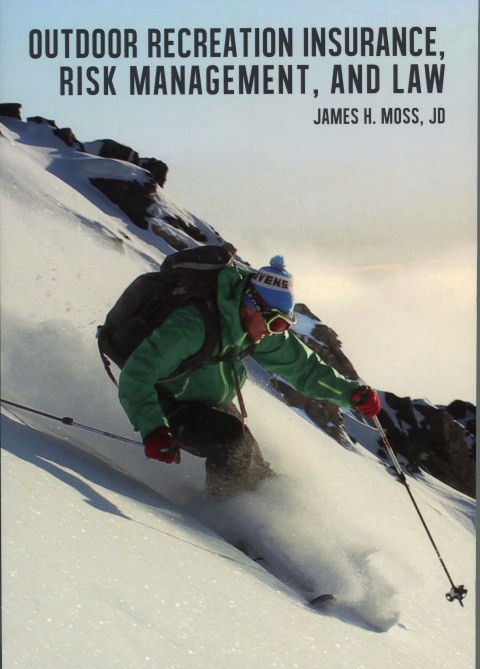
Outdoor Recreation Insurance, Risk Management, and Law
To see Jim’s complete bio go here and to see his CV you can find it here. To find out the purpose of this website go here.
If you are interested in having me write your release, download the form and return it to me.
Connect
If you like this let your friends know or post it on FB, Twitter, or LinkedIn
Facebook Page: Outdoor Recreation & Adventure Travel Law
LinkedIn https://www.linkedin.com/in/recreationlaw/
Threads https://www.threads.net/@recreation_law
X https://twitter.com/RecreationLaw
Email: Jim@Rec-Law.US
By Recreation Law Rec-law@recreation-law.com James H. Moss
@2010-2023 Summit Magic Publishing, LLC
G-YQ06K3L262
<rel=”author” link=” https://plus.google.com/u/0/b/112453188060350225356/” />
#RecreationLaw, #@RecreationLaw, #Cycling.Law #Fitness.Law, #Ski.Law, #Outside.Law, #Recreation.Law, #Recreation-Law.com, #Outdoor Law, #Recreation Law, #Outdoor Recreation Law, #Adventure Travel Law, #law, #Travel Law, #Jim Moss, #James H. Moss, #Attorney at Law, #Tourism, #Adventure Tourism, #Rec-Law, #Rec-Law Blog, #Recreation Law, #Recreation Law Blog, #Risk Management, #Human Powered, #Human Powered Recreation,# Cycling Law, #Bicycling Law, #Fitness Law, #Recreation-Law.com, #Backpacking, #Hiking, #Mountaineering, #Ice Climbing, #Rock Climbing, #Ropes Course, #Challenge Course, #Summer Camp, #Camps, #Youth Camps, #Skiing, #Ski Areas, #Negligence, #Snowboarding, #RecreationLaw, #@RecreationLaw, #Cycling.Law #Fitness.Law, #SkiLaw, #Outside.Law, #Recreation.Law, #RecreationLaw.com, #OutdoorLaw, #RecreationLaw, #OutdoorRecreationLaw, #AdventureTravelLaw, #Law, #TravelLaw, #JimMoss, #JamesHMoss, #AttorneyatLaw, #Tourism, #AdventureTourism, #RecLaw, #RecLawBlog, #RecreationLawBlog, #RiskManagement, #HumanPowered, #HumanPoweredRecreation,# CyclingLaw, #BicyclingLaw, #FitnessLaw, #RecreationLaw.com, #Backpacking, #Hiking, #Mountaineering, #IceClimbing, #RockClimbing, #RopesCourse, #ChallengeCourse, #SummerCamp, #Camps, #YouthCamps, #Skiing, #Ski Areas, #Negligence, #Snowboarding, sport and recreation laws, ski law, cycling law, Colorado law, law for recreation and sport managers, bicycling and the law, cycling and the law, ski helmet law, skiers code, skiing accidents, Recreation Lawyer, Ski Lawyer, Paddlesports Lawyer, Cycling Lawyer, Recreational Lawyer, Fitness Lawyer, Rec Lawyer, Challenge Course Lawyer, Ropes Course Lawyer, Zip Line Lawyer, Rock Climbing Lawyer, Adventure Travel Lawyer, Outside Lawyer, Recreation Lawyer, Ski Lawyer, Paddlesports Lawyer, Cycling Lawyer, #RecreationalLawyer, #FitnessLawyer, #RecLawyer, #ChallengeCourseLawyer, #RopesCourseLawyer, #ZipLineLawyer, #RockClimbingLawyer, #AdventureTravelLawyer, #OutsideLawyer,Bradley J. R. Cottom, Melissa Cottom, USA Cycling, Inc., BMX, cycling, biking, bicyclist, bicycle racing, bicycle track, dirt track, race track, dirt bike race track, bike park,
WordPress Tags: danger,Besides,Cottom,Dist,LEXIS,Mich,Plaintiff,Bradley,Melissa,Defendant,Claims,Negligence,Defenses,Open,Obvious,judgment,Federal,District,Court,Michigan,mountain,biker,dirt,bike,rider,construction,workers,worker,incident,knee,Summary,Under,licensee,person,virtue,possessor,landowner,dangers,owner,inspection,premises,categories,trespasser,bequest,protection,accident,Thus,requirement,licensees,warnings,user,intelligence,bikers,fact,Americans,bicycles,youth,riders,bikes,injury,Second,Thousands,sidewalks,paths,Bumps,injuries,incidents,Once,option,Whether,aspects,differences,example,pothole,premise,foot,death,assurance,employee,knowledge,defendants,decision,rental,retailer,attorney,estate,statute,landowners,laws,Recreational,statutes,protections,Make,Leave,FaceBook,Twitter,LinkedIn,Recreation,Edit,Email,Google,RecreationLaw,Page,Outdoor,Adventure,Travel,Blog,Mobile,Site,James,Moss,Authorrank,author,Outside,Tourism,Risk,Management,Human,Rock,Ropes,Course,Challenge,Summer,Camp,Camps,Areas,SkiLaw,OutdoorLaw,OutdoorRecreationLaw,AdventureTravelLaw,TravelLaw,JimMoss,JamesHMoss,AttorneyatLaw,AdventureTourism,RecLaw,RecLawBlog,RecreationLawBlog,RiskManagement,HumanPoweredRecreation,CyclingLaw,BicyclingLaw,FitnessLaw,RopesCourse,ChallengeCourse,SummerCamp,YouthCamps,Colorado,managers,helmet,accidents,Lawyer,Paddlesports,Line,RecreationalLawyer,FitnessLawyer,RecLawyer,ChallengeCourseLawyer,RopesCourseLawyer,ZipLineLawyer,RockClimbingLawyer,AdventureTravelLawyer,OutsideLawyer,bicycle,park,upon,invitee,himself
Colorado Alliance for Environmental Education (CAEE) Colorado Alliance for Environmental Education (CAEE)
Posted: August 30, 2013 Filed under: Uncategorized | Tags: CAEE, Colorado, Colorado Alliance for Environmental Education, education, Environmental Education Leave a commentPosition Available: Environmental Literacy Coordinator
The Colorado Alliance for Environmental Education (CAEE) is a non-profit association, providing services to more than 750 environmental educators statewide. The organization serves the shared interests of public agencies, businesses, teachers, community organizations and individuals providing and using environmental education (EE) materials and programs. CAEE exists to elevate environmental literacy by providing professional development opportunities, coordinating support services, and facilitating communication and networking between Colorado’s EE providers, supporters, and the public.
Position Description: The Environmental Literacy Coordinator is a part-time; grant funded, position for one year that will assist CAEE and the Colorado Environmental Education Leadership Council by supporting PreK-12 Environmental Education initiatives outlined in the Colorado Environmental Education Plan. You can find out more about the Colorado Environmental Education Plan and the Colorado Environmental Education Leadership Council at: http://www.caee.org/colorado-environmental-education-plan.
To apply: Send cover letter and resume (included in one attached document with last name as file name in Microsoft Word or PDF) to director or Colorado Alliance for Environmental Education, 15260 S. Golden Rd Golden, CO 80401. Email preferred. Deadline: September 16, 2013.
GOCO has announced $500,000 for Youth Corps Projects on Land Trust, Open Space, & Local Government Properties
Posted: August 29, 2013 Filed under: Colorado | Tags: #CYCA, Colorado, Colorado Youth Corps Association, GOCO, Great Outdoors Colorado, Jennifer Freeman, Land trust, Youth Conservation Corps, Youth Corps Leave a commentGot Work? GOCO has announced $500,000 for Youth Corps Projects on Land Trust, Ope n Space, & Local Government Properties
Great Outdoors Colorado (GOCO) and the Colorado Youth Corps Association (CYCA) have announced that a RFP is available for$500,000 in GOCO/Lottery funds for open space, local government, and land trust organizations to hire youth conservation corps. In addition to public parks and open spaces, youth corps projects can occur on private lands protected by a conservation easement. The RFP can be found at www.CYCA.org and requires a brief 3-page narrative. The application deadline is Sept. 27, 2013. Successful projects will be announced in December 2013 and crews will complete the proposed work in 2014. Matching funds/support not required, but encouraged. Applicants can apply for youth corps crews (ages 16 – 25) to complete a variety of stewardship projects including:
· Trail construction and maintenance
· Tamarisk, Russian olive, and other invasive species mitigation–chainsaw crews, including pesticide/herbicide application, are available.
· Fence installation and de-installation
· Wildlife habitat improvement

Green jobs now! – Denver, CO (Photo credit: greenforall.org)
· Riparian restoration
· Beetle kill hazard mitigation – chainsaw crews available
· Fire fuels mitigation – chainsaw crews available
Youth corps crews work on a “per week” basis. One week of a youth corps crew includes 8-10 people that work at least 320 hours. They arrive on site with skilled adult supervision, basic hand tools, transportation, and camping gear. Day crews are also available.
To find the youth corps that serves your area, go to jfreeman or 303-863-0602 with questions.
Jennifer Freeman, Executive Director
Colorado Youth Corps Association
1640 Grant Street, Suite 210
Denver, CO 80203
Direct – 303-863-0602
Main – 303-863-0600
Cell – 720-273-9861
Fax – 303-863-0610
Subscribe to The Corps Report (monthly e-news)
Like us on Facebook
Follow us on Twitter
The
promotes youth development & conservation by strengthening Colorado corps.
Warning Labels or Signs: Do yours make sense and do they work?
Posted: August 28, 2013 Filed under: Uncategorized | Tags: Business, Labels, Labels Stickers and Decals, Product liability, Products, Publishing and Printing, Warning label, Warning Labels, Warnings Leave a commentThe only constant in life is the speed of light (so they say) so your warning labels need to be written to be alive and changing.
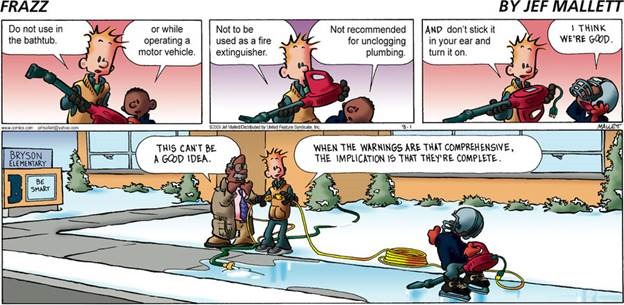
We write warning labels so that they are designed to last forever and cover everything. Again, like a constant, nothing lasts forever. So how do you write warning labels?
Identify three different warnings you need to tell your customers about.
1. Those they need to see every time they use the product.
2. Those labels your customers need to read to cover your butt and the legal ones (warranty disclaimers).
3. Those you don’t know about
Group One
Let’s start with the first group. These warnings can be broken down into several questions to help you identify them.
A. Does your product work the same way every time? If not you may need a warning label.
B. Does your product have something that if used incorrectly will cause an injury and is done in such a way that the consumer needs reminded of it every time your product is used?
C. Is there a warning that all of your competitors are using.
Group Two
The second group is a mix of information your customer needs to know, the information your customer can only learn from you; the information needed to protect your customer from every aspect of your product, including hitting someone on the head with it.
Finally add the legal disclaimers needed to CYA.
The label should state the maximum load the product can handle, divided by 3, the maximum stress labeled at 25%. You need to give yourself room for bad testing on your part and wild accusations on the part of your customer. The basics; hot, cold, electrical, wet, storage, heat, sun, freezing, those things that hurt or could kill your customers or ruin your product.
The final thing is the newest and the scariest. You must keep your customers informed of any changes or updates to your product as well anything new you discover about your product. A critical part of this is learning that your product is being used in a way that you did not anticipate or used incorrectly.
The good news is you can use your company website to inform people of the risks.
This is an emerging area of the law, now well-formed and not in all states. However, you can either take a marketing opportunity and make it possible CYA or be late to the game.
Your warnings must sense.

One of my favorite signs.
Rules for riding the amusement ride. The ride is for little kids, who CAN’T READ! The sign says you can’t weight more than 170 pounds, but your knees would be bumping on the floor.
So is a warning sign effective if it can’t be seen? What if it can’t be understood? What if it can’t be read because the reader cannot read?
Do Something
Rules for Warning Labels
1. They have to be readable, the first day through the last day of the product.
2. They have to be found, easily, by someone using the product properly and if used improperly is a real possibility, seen by those using the improperly.
3. They have to be readable. The print size must be large enough so that you can read them without glasses at the distance appropriate for the product and the warning.
4. Labels have to be warning labels and marked as such. It can’t be cuddly bears showing what not to do or kittens. It should say Warning in big bright bold letters with the warning under it.
5. You don’t search for warning labels; they are in your face.
6. Any warning not to do something is the possible injury or problem is located. If sticking a pin in a hole would cause an injury the warning label needs to be next to the hole.
7. All Warning Labels must be repeated in the owner’s manual. Important warning labels may need to be on a hangtag.
8. The packaging, the owner’s manual and the warning label all must say to read all warnings.
What do you think? Leave a comment.
If you like this let your friends know or post it on FaceBook, Twitter or LinkedIn
Copyright 2013 Recreation Law (720) Edit Law
Email: Rec-law@recreation-law.com
Google+: +Recreation
Twitter: RecreationLaw
Facebook: Rec.Law.Now
Facebook Page: Outdoor Recreation & Adventure Travel Law
Blog: www.recreation-law.com
Mobile Site: http://m.recreation-law.com
By Recreation Law Rec-law@recreation-law.com James H. Moss Jim Moss
#RecreationLaw, #@RecreationLaw, #Cycling.Law #Fitness.Law, #Ski.Law, #Outside.Law, #Recreation.Law, #Recreation-Law.com, #Outdoor Law, #Recreation Law, #Outdoor Recreation Law, #Adventure Travel Law, #law, #Travel Law, #Jim Moss, #James H. Moss, #Attorney at Law, #Tourism, #Adventure Tourism, #Rec-Law, #Rec-Law Blog, #Recreation Law, #Recreation Law Blog, #Risk Management, #Human Powered, #Human Powered Recreation,# Cycling Law, #Bicycling Law, #Fitness Law, #Recreation-Law.com, #Backpacking, #Hiking, #Mountaineering, #Ice Climbing, #Rock Climbing, #Ropes Course, #Challenge Course, #Summer Camp, #Camps, #Youth Camps, #Skiing, #Ski Areas, #Negligence, #Snowboarding, #RecreationLaw, #@RecreationLaw, #Cycling.Law #Fitness.Law, #SkiLaw, #Outside.Law, #Recreation.Law, #RecreationLaw.com, #OutdoorLaw, #RecreationLaw, #OutdoorRecreationLaw, #AdventureTravelLaw, #Law, #TravelLaw, #JimMoss, #JamesHMoss, #AttorneyatLaw, #Tourism, #AdventureTourism, #RecLaw, #RecLawBlog, #RecreationLawBlog, #RiskManagement, #HumanPowered, #HumanPoweredRecreation,# CyclingLaw, #BicyclingLaw, #FitnessLaw, #RecreationLaw.com, #Backpacking, #Hiking, #Mountaineering, #IceClimbing, #RockClimbing, #RopesCourse, #ChallengeCourse, #SummerCamp, #Camps, #YouthCamps, #Skiing, #Ski Areas, #Negligence, #Snowboarding, sport and recreation laws, ski law, cycling law, Colorado law, law for recreation and sport managers, bicycling and the law, cycling and the law, ski helmet law, skiers code, skiing accidents, Recreation Lawyer, Ski Lawyer, Paddlesports Lawyer, Cycling Lawyer, Recreational Lawyer, Fitness Lawyer, Rec Lawyer, Challenge Course Lawyer, Ropes Course Lawyer, Zip Line Lawyer, Rock Climbing Lawyer, Adventure Travel Lawyer, Outside Lawyer, Recreation Lawyer, Ski Lawyer, Paddlesports Lawyer, Cycling Lawyer, #RecreationalLawyer, #FitnessLawyer, #RecLawyer, #ChallengeCourseLawyer, #RopesCourseLawyer, #ZipLineLawyer, #RockClimbingLawyer, #AdventureTravelLawyer, #OutsideLawyer,
WordPress Tags: Labels,Signs,life,Again,Identify,warnings,customers,product,disclaimers,Group,Does,injury,consumer,competitors,information,customer,aspect,room,accusations,basics,storage,news,area,Rules,amusement,READ,knees,reader,size,glasses,owner,Important,Leave,FaceBook,Twitter,LinkedIn,Recreation,Edit,Email,Google,RecreationLaw,Page,Outdoor,Adventure,Travel,Blog,Mobile,Site,James,Moss,Outside,Attorney,Tourism,Risk,Management,Human,Rock,Ropes,Course,Challenge,Summer,Camp,Camps,Youth,Areas,Negligence,SkiLaw,OutdoorLaw,OutdoorRecreationLaw,AdventureTravelLaw,TravelLaw,JimMoss,JamesHMoss,AttorneyatLaw,AdventureTourism,RecLaw,RecLawBlog,RecreationLawBlog,RiskManagement,HumanPoweredRecreation,CyclingLaw,BicyclingLaw,FitnessLaw,RopesCourse,ChallengeCourse,SummerCamp,YouthCamps,Colorado,managers,helmet,accidents,Lawyer,Paddlesports,Recreational,Line,RecreationalLawyer,FitnessLawyer,RecLawyer,ChallengeCourseLawyer,RopesCourseLawyer,ZipLineLawyer,RockClimbingLawyer,AdventureTravelLawyer,OutsideLawyer
New York Skier Safety Act
Posted: August 28, 2013 Filed under: New York | Tags: Alpine skiing, New York, NY, Platter lift, Recreation, Ski, Ski Resort, Skier Safety Act Leave a commentNew York Skier Safety Act
General Obligations Law
ARTICLE 18. SAFETY IN SKIING CODE
NY CLS Gen Oblig Article 18 Note (2012)
Gen Oblig Article 18 Note
HISTORY:
Add, L 1988, ch 711, § 1, eff Nov 1, 1988 (see 1988 note below).
NOTES:
Laws 1988, ch 711, § 4, eff Nov 1, 1988, provides as follows:
§ 4. This act shall take effect on November first, nineteen hundred eighty-eight; provided that section 18-106 of the general obligations law, as added by section one of this act, shall take effect on the first day of October, nineteen hundred eighty-nine; and provided further that the commissioner of labor, effective immediately, is authorized and directed to promulgate any and all rules and regulations necessary to the timely implementation of the provisions of this act on their effective dates.
Research References & Practice Aids:
3 NY Jur 2d Amusements and Exhibitions § 30
§ 18-103. Duties of ski area operators
§ 18-104. Duties of passengers
§ 18-106. Duties of skiers and ski area operators with respect to inherent risks
§ 18-101. Legislative purpose
The legislature hereby finds that alpine or downhill skiing is both a major recreational sport and a major industry within the state of New York. The legislature further finds: (1) that downhill skiing, like many other sports, contains inherent risks including, but not limited to, the risks of personal injury or death or property damage, which may be caused by variations in terrain or weather conditions; surface or subsurface snow, ice, bare spots or areas of thin cover, moguls, ruts, bumps; other persons using the facilities; and rocks, forest growth, debris, branches, trees, roots, stumps or other natural objects or man-made objects that are incidental to the provision or maintenance of a ski facility in New York state; (2) that downhill skiing, without established rules of conduct and care, may result in injuries to persons and property; (3) that it is appropriate, as well as in the public interest, to take such steps as are necessary to help reduce the risk of injury to downhill skiers from undue, unnecessary and unreasonable hazards; and (4) that it is also necessary and appropriate that skiers become apprised of, and understand, the risks inherent in the sport of skiing so that they may make an informed decision of whether or not to participate in skiing notwithstanding the risks. Therefore, the purpose and intent of this article is to establish a code of conduct for downhill skiers and ski area operators to minimize the risk of injury to persons engaged in the sport of downhill skiing and to promote safety in the downhill ski industry.
§ 18-102. Definitions
The following words and phrases when used in this article shall have, unless the context clearly indicates otherwise, the meanings given to them in this section:
1. “Lift ticket” means any item issued by a ski area operator to any skier that is intended to be affixed to the outerwear of the skier, or otherwise displayed by a skier, to signify lawful entry upon and use of the passenger tramways or ski slopes or trails maintained by the ski area operator.
2. “Passenger tramway” means a mechanical device intended to transport skiers for the purpose of providing access to ski slopes and trails as defined by the commissioner of labor pursuant to section two hundred two-c or eight hundred sixty-seven of the labor law.
3. “Passenger” means a person in or on or being transported by a tramway.
4. “Ski area” means all ski slopes, ski trails and passenger tramways administered as a single enterprise within this state.
5. “Ski area operator” means a person, firm or corporation, and its agents and employees, having operational and administrative responsibility for any ski area, including any agency of the state, any political subdivision thereof, and any other governmental agency or instrumentality.
6. “Skier” means any person wearing a ski or skis and any person actually on a ski slope or trail located at a ski area, for the purpose of skiing.
7. “Ski slopes and trails” mean those areas designated by the ski area operator for skiing.
§ 18-103. Duties of ski area operators
Every ski area operator shall have the following duties:
1. To equip all trail maintenance vehicles with such warning implements or devices as shall be specified by the commissioner of labor pursuant to section eight hundred sixty-seven of the labor law. Such implements or devices shall be present and operating whenever the vehicle is within the borders of any slope or trail.
2. To post in a location likely to be seen by all skiers signs of such size and color as will enable skiers to have knowledge of their responsibilities under this article.
3. To hold employee training sessions at least once before the beginning of each season, the contents of which shall be specified by the commissioner of labor upon the recommendation of the passenger tramway advisory council, as follows:
a. for operators of trail maintenance equipment concerning the safe operation of such vehicles in the ski area;
b. for passenger tramway attendants concerning the safe operation of passenger tramways;
c. for ski personnel charged with the responsibility of evacuating passengers from passenger tramways concerning proper evacuation techniques; and
d. for all other personnel charged with on-mountain maintenance, inspection or patrol duties as to methods to be used for summoning aid in emergencies.
4. To conspicuously mark with such implements as may be specified by the commissioner of labor pursuant to section eight hundred sixty-seven of the labor law, the location of such man-made obstructions as, but not limited to, snow-making equipment, electrical outlets, timing equipment, stanchions, pipes, or storage areas that are within the borders of the designated slope or trail, when the top of such obstruction is less than six feet above snow level.
5. To maintain in a central location at the ski area an information board or boards showing at a minimum the following:
a. the location of tramways, slopes or trails;
b. the status of each trail–open or closed;
c. the location of emergency communications or medical equipment and sites designated by the ski area operator for receipt of notice from skiers pursuant to subdivision thirteen of this section;
d. the relative degree of difficulty of each slope or trail (at a minimum easier, more difficult, most difficult); and
e. the general surface condition of each slope and trail as most recently recorded in the log required to be maintained by subdivision six of this section.
6. To inspect each open slope or trail that is open to the public within the ski area at least twice a day, and enter the results of such inspection in a log which shall be available for examination by the commissioner of labor. The log shall note:
a. the general surface conditions of such trail at the time of inspection (powder, packed powder, frozen granular, icy patches or icy surface, bare spots or other surface conditions);
b. the time of inspection and the name of the inspector;
c. the existence of any obstacles or hazards other than those which may arise from:
(i) skier use;
(ii) weather variations including freezing and thawing; or
(iii) mechanical failure of snow grooming or emergency equipment which may position such equipment within the borders of a slope or trail.
7. To develop and maintain a written policy consistent with the regulations of the commissioner of labor upon the advice of the passenger tramway advisory council for situations involving the reckless conduct of skiers, which shall include, but not be limited to:
a. a definition of reckless conduct; and
b. procedures for approaching and warning skiers of reckless conduct and procedures for dealing with such skiers which may include the revocation of the lift tickets of such skiers.
8. To designate personnel to implement the ski area’s policy on reckless conduct.
9. To report to the commissioner of labor by telephone within twenty-four hours any fatality or injury resulting in a fatality at the ski area.
10. To conspicuously post and maintain such ski area signage, including appropriate signage at the top of affected ski slopes and trails, notice of maintenance activities and for passenger tramways as shall be specified by the commissioner of labor pursuant to section two hundred two-c or eight hundred sixty-seven of the labor law.
11. To post in a conspicuous location at each lift line a sign, which shall indicate the degree of difficulty of trails served by that lift with signs as shall be specified by the commissioner of labor pursuant to section two hundred two-c or eight hundred sixty-seven of the labor law.
12. To ensure that lift towers located within the boundaries of any ski slope or trail are padded or otherwise protected and that no protruding metal or wood objects, such as ladders or steps, shall be installed on the uphill or side portion of lift towers within the borders of a ski slope or trail, unless such objects are below the snow line, at least six feet above it, or padded or otherwise protected with such devices as, but not limited to, the following:
a. commercially available tower padding;
b. air or foam filled bags;
c. hay bales encased in a waterproof cover; or
d. soft rope nets properly spaced from the tower.
13. To, within a reasonable amount of time after the inspection required by subdivision six of this section, conspicuously mark with such implements as may be specified by the commissioner of labor pursuant to section eight hundred sixty-seven of the labor law and to provide sufficient warning to skiers by such marking or remove such obstacles or hazards which are located within the boundaries of any ski slope or trail and were noted pursuant to paragraph c of subdivision six of this section; and to also conspicuously mark with such implements and provide such warning or remove such obstacles or hazards within a reasonable amount of time after receipt of notice by the ski area operator from any skier as to the presence of such obstacles or hazards when notice is given at sites designated by the ski area operator for such receipt and the locations of which are made known to skiers pursuant to paragraph c of subdivision five of this section.
14. To have present at all times when skiing activity is in progress, individuals properly and appropriately trained for the safe operation of on-slope vehicles; trail maintenance equipment; tramways; tramway evacuations; implementation of the reckless skier policy; first aid and outdoor rescue; and, to have present according to a schedule posted for access by skiers, by the ski area operator, personnel appropriately trained in the instruction of skiers and passengers in methods of risk reduction while using ski slopes and passenger tramways and the instruction of skiers with respect to the risks inherent in the sport.
§ 18-104. Duties of passengers
All passengers shall have the following duties:
1. To familiarize themselves with the safe use of any tramway prior to its use;
2. To remain in the tramway if the operation of a passenger tramway, as defined pursuant to section two hundred two-c of the labor law, is interrupted for any reason, until instructions or aid are provided by the ski area operator;
3. To board or disembark from passenger tramways only at points or areas designated by the ski area operator;
4. Not to eject any objects or material from a passenger tramway;
5. To use restraint devices in accordance with posted instructions;
6. To wear retention straps or other devices to prevent runaway skis;
7. Not to interfere with the operation of a passenger tramway;
8. Not to place or caused to be placed on the uphill track of a surface lift any object which may interfere with its normal operation; and
9. Not to wear loose scarves, clothing or accessories or expose long hair which may become entangled with any part of the device.
§ 18-105. Duties of skiers
All skiers shall have the following duties:
1. Not to ski in any area not designated for skiing;
2. Not to ski beyond their limits or ability to overcome variations in slope, trail configuration and surface or subsurface conditions which may be caused or altered by weather, slope or trail maintenance work by the ski area operator, or skier use;
3. To abide by the directions of the ski area operator;
4. To remain in constant control of speed and course at all times while skiing so as to avoid contact with plainly visible or clearly marked obstacles and with other skiers and passengers on surface operating tramways;
5. To familiarize themselves with posted information before skiing any slope or trail, including all information posted pursuant to subdivision five of section 18-103 of this article;
6. Not to cross the uphill track of any surface lift, except at points clearly designated by the ski area operator;
7. Not to ski on a slope or trail or portion thereof that has been designated as “closed” by the ski area operator;
8. Not to leave the scene of any accident resulting in personal injury to another party until such times as the ski area operator arrives, except for the purpose of summoning aid;
9. Not to overtake another skier in such a manner as to cause contact with the skier being overtaken and to yield the right-of-way to the skier being overtaken;
10. Not to willfully stop on any slope or trail where such stopping is likely to cause a collision with other skiers or vehicles;
11. To yield to other skiers when entering a trail or starting downhill;
12. To wear retention straps or other devices to prevent runaway skis;
13. To report any personal injury to the ski area operator before leaving the ski area; and
14. Not to willfully remove, deface, alter or otherwise damage signage, warning devices or implements, or other safety devices placed and maintained by the ski area operator pursuant to the requirements of section 18-103 of this article.
§ 18-106. Duties of skiers and ski area operators with respect to inherent risks
It is recognized that skiing is a voluntary activity that may be hazardous regardless of all feasible safety measures that can be undertaken by ski area operators. Accordingly:
1. Ski area operators shall have the following additional duties:
a. To post at every point of sale or distribution of lift tickets, whether on or off the premises of the ski area operator, a conspicuous “Warning to Skiers” relative to the inherent risks of skiing in accordance with regulations promulgated by the commissioner of labor pursuant to subdivision four of section eight hundred sixty-seven of the labor law, and to imprint upon all lift tickets sold or distributed, such text and graphics as the commissioner of labor shall similarly specify, which shall conspicuously direct the attention of all skiers to the required “Warning to Skiers”;
b. To post at every point of sale or distribution of lift tickets at a ski area notice to skiers and passengers that this article prescribes certain duties for skiers, passengers and ski area operators, and to make copies of this article in its entirety available without charge upon request to skiers and passengers in a central location at the ski area;
c. To make available at reasonable fees, as required by subdivision thirteen of section 18-103 of this article, instruction and education for skiers relative to the risks inherent in the sport and the duties prescribed for skiers by this article, and to conspicuously post notice of the times and places of availability of such instruction and education in locations where it is likely to be seen by skiers; and
d. To post notice to skiers of the right to a refund to the purchaser in the form and amount paid in the initial sale of any lift ticket returned to the ski area operator, intact and unused, upon declaration by such purchaser that he or she is unprepared or unwilling to ski due to the risks inherent in the sport or the duties imposed upon him or her by this article.
2. Skiers shall have the following additional duties to enable them to make informed decisions as to the advisability of their participation in the sport:
a. To seek out, read, review and understand, in advance of skiing, a “Warning to Skiers” as shall be defined pursuant to subdivision five of section eight hundred sixty-seven of the labor law, which shall be displayed and provided pursuant to paragraph a of subdivision one of this section; and
b. To obtain such education in the sport of skiing as the individual skier shall deem appropriate to his or her level of ability, including the familiarization with skills and duties necessary to reduce the risk of injury in such sport.
§ 18-107. Construction
Unless otherwise specifically provided in this article, the duties of skiers, passengers, and ski area operators shall be governed by common law.
§ 18-108. Severability
If any provision of this article or the application thereof to any person or circumstances is held invalid, such invalidity shall not affect other provisions or applications of this article that can be given effect without the invalid provision or application, and to this end the provisions of this article are declared to be severable.
§ 867. Safety in skiing code
1. The [fig 1] commissioner, on the advice of the passenger tramway advisory council as created pursuant to section twelve-c of this chapter, shall promulgate rules and regulations, consistent with article eighteen of the general obligations law, intended to guard against personal injuries to downhill skiers which will, in view of such intent, define the duties and responsibilities of downhill skiers and the duties and responsibilities of ski area operators.
2. The commissioner shall enforce all the provisions of this article and the regulations adopted pursuant hereto and may issue such orders against any entity, public or private, as he finds necessary, directing compliance with any provision of this article or such regulations. The commissioner may also investigate any fatality or injury resulting in a fatality at a ski area.
3. The passenger tramway advisory council shall conduct any investigation necessary to carry out the provisions of this [fig 1] article.
4. The passenger tramway advisory council shall conduct public hearings on any rules and regulations proposed under this section prior to their promulgation by the [fig 1] commissioner. The passenger tramway advisory council shall fix a time and place for each such hearing and cause such notice as it may deem appropriate to be given to the public and news media prior to such a hearing. Testimony may be taken and evidence received at such a hearing pursuant to procedures prescribed by the passenger tramway advisory council.
5. Upon advice of the passenger tramway advisory council, the commission shall, on the fifteenth day of March, nineteen hundred eighty-nine, promulgate rules which shall set forth specifications for the uniform textual and graphic content, physical description, and conspicuous posting of a “Warning to Skiers” regarding the risks inherent in the sport as set forth in section 18-101 of the general obligations law, which shall be posted and provided to skiers by ski areas operators in accordance with subdivision one of section 18-106 of the general obligations law, and shall promulgate rules which shall set forth textual and graphic specifications designed to occupy not more than twenty-five percent of the imprintable surface area of the face side nor more than eighty percent of the imprintable surface area of the reverse side or backing paper of all lift tickets sold or distributed in the state, as defined by section 18-102 of the general obligations law, which shall uniformly serve to direct the attention of all skiers to the “Warning to Skiers” herein directed to be promulgated and required by section 18-106 of the general obligations law.
WordPress Tags: York,Skier,General,Obligations,ARTICLE,CODE,Oblig,Note,HISTORY,NOTES,Laws,November,October,commissioner,implementation,Research,References,Practice,Aids,Amusements,Exhibitions,Legislative,purpose,Definitions,Duties,area,operators,passengers,Construction,legislature,industry,injury,death,variations,terrain,areas,moguls,ruts,facilities,growth,debris,trees,provision,maintenance,injuries,decision,Editor,NYCRR,Annotations,resort,Case,Defendants,owners,judgment,plaintiff,participation,affidavit,fact,Osorio,Deer,Assocs,Dept,Voluntary,participants,Fabris,Town,Thompson,action,defendant,dangers,accident,companion,collision,Martin,Luther,tree,woods,assertions,claimant,adequacy,negligence,addition,obstacles,Atwell,State,owner,participant,Kaufman,Hunter,Bowl,Duncan,Court,Claims,ramp,platform,custom,Simoneau,testimony,examination,gate,Bono,operator,litigation,health,person,collisions,Olympic,Regional,Auth,Misc,assumption,obligation,Plaintiffs,complaint,items,presence,Painter,Peek,Peak,Where,ravine,opposition,barrier,Bennett,Bridge,Corp,context,meanings,Lift,ticket,item,Passenger,device,enterprise,corporation,agents,employees,agency,subdivision,Prevention,Labor,vehicles,vehicle,location,size,knowledge,employee,sessions,recommendation,council,equipment,attendants,personnel,evacuation,techniques,mountain,inspection,emergencies,obstructions,outlets,stanchions,storage,obstruction,feet,information,status,receipt,degree,inspector,existence,failure,policy,advice,situations,definition,procedures,revocation,tickets,hours,boundaries,wood,bales,paragraph,locations,individuals,evacuations,instruction,reduction,Supreme,argument,perimeter,accordance,Sytner,crossovers,patrons,instructions,retention,hair,configuration,manner,requirements,sale,distribution,premises,Skiers,text,graphics,attention,education,purchaser,declaration,decisions,familiarization,skills,Premise,novice,jury,Vanderwall,Troser,Mgmt,statute,Recreational,park,foot,cliff,markings,warnings,constraints,protection,winter,Stento,Hyland,Matthew,Bender,Civil,Rohan,EPTL,lessons,rental,involvement,adjustment,Jordan,Maple,Ridge,chapter,compliance,investigation,hearings,promulgation,news,media,Upon,March,specifications,description,paper,June,Former,nine,subsurface,whether,patroller,cognizable,affd,tramways,tramway,pursuant,seven,thereof,skis,four,signage,five,imprintable
North Dakota Skier Safety Act
Posted: August 28, 2013 Filed under: North Dakota | Tags: ND, North Dakota, Skier Safety Act Leave a commentNorth Dakota Skier Safety Act
TITLE 53 Sports and Amusements
CHAPTER 53-09 Skiing Responsibility Act
Go to the North Dakota Code Archive Directory
N.D. Cent. Code, § 53-09-01 (2013)
53-09-01. Legislative purpose.
The legislative assembly finds that the sport of skiing is practiced in this state by a growing number of North Dakota citizens and nonresidents. Since it is recognized that there are inherent risks in the sport of skiing which should be understood by each skier and which are essentially impossible to eliminate by the ski area operator, it is the purpose of this chapter to define those areas of responsibility and affirmative acts for which ski area operators shall be liable for loss, damage, or injury and those risks which the skier expressly assumes and for which there can be no recovery.
HISTORY: S.L. 1979, ch. 532, § 2.
NOTES:
Because this chapter bears a close correspondence to the legislative intent and does not create an impermissible classification, it does not violate the state’s constitutional guarantee to equal protection of the laws. Bouchard v. Johnson, 555 N.W.2d 81 (N.D. 1996).
Because this chapter applies to all persons operating a skiing facilty within the state, this is a permissible class and does not create a special law, as prohibited by the N.D. Const., Art. IV, § 13. Bouchard v. Johnson, 555 N.W.2d 81 (N.D. 1996).
Because this chapter does not operate as an absolute bar to recovery, it did not act as a denial of plaintiff’s access to the courts, as protected by the N.D. Const., Art. I, § 9. Bouchard v. Johnson, 555 N.W.2d 81 (N.D. 1996).
Go to Topic List Legislative Intent.
The legislative goal of this chapter is to limit the liability for ski facility operators from some of the inherent risks associated with skiing. Bouchard v. Johnson, 555 N.W.2d 81 (N.D. 1996).
Collateral References.
27A Am. Jur. 2d, Entertainment and Sports Law, §§ 54-66, 86, 95-98.
Liability of operator of skiing, tobagganing, or bobsledding facilities for injury to patron or participant, 94 A.L.R.2d 1431.
Liability for injury or death from ski lift, ski tow or similar device, 95 A.L.R.3d 203.
Ski resort’s liability for skier’s injuries resulting from condition of ski run or slope, 55 A.L.R.4th 632.
Skier’s liability for injuries to or death of another person, 75 A.L.R.5th 583.
53-09-02. Definitions.
The following words and phrases when used in this chapter have, unless the context clearly indicates otherwise, the meaning given to them in this section:
1. “Aerial passenger tramway” means any device operated by a ski area operator used to transport passengers, by single or double reversible tramway; chairlift or gondola lift; t-bar lift, j-bar lift, platter lift, or similar device; or a fiber rope tow.
2. “Passenger” means any person who is lawfully using an aerial passenger tramway or is waiting to embark or has recently disembarked from an aerial passenger tramway and is in its immediate vicinity.
3. “Ski area” means property owned or leased and under the control of the ski area operator and administered as a single enterprise within the state of North Dakota.
4. “Ski area operator” means any person, partnership, corporation, limited liability company, or other commercial entity and their agents, officers, managers, employees, or representatives, who has operational responsibility for any ski area or aerial passenger tramway.
5. “Ski slopes and trails” means those areas designed by the ski area operator to be used by skiers for the purpose of participating in the sport of skiing.
6. “Skier” means any person present at a skiing area under the control of the ski operator for the purpose of engaging in the sport of skiing by utilizing the ski slopes and trails and does not include the use of an aerial passenger tramway.
7. “Skiing area” means all slopes and trails not including any aerial passenger tramway.
HISTORY: S.L. 1979, ch. 532, § 3; 1993, ch. 54, § 106.
53-09-03. Duties of ski operators with respect to ski areas.
Every ski operator shall have the following duties with respect to its operation of a skiing area:
1. To mark all trail maintenance vehicles and to furnish such vehicles with flashing or rotating lights which must be in operation whenever the vehicles are working or are in movement in the skiing area.
2. To mark with a visible sign or other warning implement the location of any hydrant or similar equipment used in snowmaking operations and located on ski slopes and trails.
3. To mark conspicuously the top or entrance to each slope, trail, or area with the appropriate symbol for its relative degree of difficulty and those slopes, trails, or areas which are closed, or portions of which present an unusual obstacle, must be marked at the top or entrance with appropriate symbols.
4. To maintain one or more trail boards at prominent locations at each ski area displaying that area’s network of ski trails and slopes with each trail and slope rated thereon in accordance with the symbols provided for in subsection 3.
5. To designate by trail board or other means which trails or slopes are open or closed.
6. To place, or cause to be placed, whenever snow grooming or snowmaking operations are being undertaken upon any trail or slope while such trail or slope is open to the public, a conspicuous notice to that effect at or near the top of such trail or slope.
7. To post notice, at or near the boarding area for each aerial passenger tramway designed to transport passengers with skis attached to boots, of the requirements of this chapter concerning the use of ski retention devices. This obligation is the sole requirement imposed upon the ski area operator regarding the requirement for or use of ski retention devices.
HISTORY: S.L. 1979, ch. 532, § 4.
NOTES:
There should be no liability for a ski area operator if the design of the ski run creates natural conditions, necessary to the enjoyment of the sport, and the design is so obviously dangerous the skier assumes the risk. Bouchard v. Johnson, 555 N.W.2d 81 (N.D. 1996).
Go to Topic List Nonexclusive List.
This section is a nonexclusive list of duties for ski facility operators. Bouchard v. Johnson, 555 N.W.2d 81 (N.D. 1996).
53-09-04. Duties of ski area operators with respect to aerial passenger tramways.
Every ski area operator shall have the duty to construct, operate, maintain, and repair any aerial passenger tramway in a safe and responsible manner.
HISTORY: S.L. 1979, ch. 532, § 5.
53-09-05. Duties of passengers.
Every passenger shall have the duty not to:
1. Board or embark upon or disembark from an aerial passenger tramway except at an area designated for such purpose.
2. Intentionally drop, throw, or expel any object from an aerial passenger tramway.
3. Do any act which interferes with the running or operation of an aerial passenger tramway.
4. Use any aerial passenger tramway unless the passenger has the ability to use it safely without any instruction on its use by the ski area operator or requests and receives instructions before entering the boarding area of the aerial passenger tramway.
5. Engage in any harmful conduct or willfully or negligently engage in any type of conduct which contributes to or causes injury to another person.
6. Embark on an aerial passenger tramway without the authority of the ski area operator.
7. Use any aerial passenger tramway without engaging such safety or restraining devices as may be provided.
8. Wear skis without properly securing ski retention straps.
HISTORY: S.L. 1979, ch. 532, § 6.
53-09-06. Duties of skiers.
It is recognized that skiing as a recreational sport is hazardous to skiers, regardless of all feasible safety measures which can be taken. Each skier expressly assumes the risk of and legal responsibility for any injury to person or property which results from participation in the sport of skiing including any injury caused by the following: variations in terrain; surface or subsurface snow or ice conditions; bare spots, rocks, trees, or other forms of forest growth or debris, lift towers and components thereof; pole lines; and snowmaking equipment which are plainly visible or are plainly marked in accordance with the provisions of section 53-09-03. Therefore, each skier shall have the sole individual responsibility for knowing the range of that skier’s own ability to negotiate any slope, trail, or aerial passenger tramway, and it is the duty of each skier to ski within the limits of the skier’s own ability, to make reasonable control of speed and course at all times while skiing, to heed all posted warnings, to ski only on a skiing area designated by the ski area operator, and to refrain from acting in a manner which may cause or contribute to the injury of anyone. The responsibility for collisions by any skier while actually skiing, with any person or object, is solely that of the individual or individuals involved in such collision and not that of the ski area operator. No person may:
1. Unless authorized by the ski area operator, place any object in the skiing area or on the uphill track of any aerial passenger tramway which may cause a passenger or skier to fall.
2. Cross the track of a t-bar lift, j-bar lift, platter lift or similar device, or a fiber rope tow except at a designated location.
3. Fail to wear retention straps or other devices to help prevent runaway skis.
HISTORY: S.L. 1979, ch. 532, § 7.
53-09-07. Liability of ski area operators.
Any ski area operator is liable for loss or damages caused by its failure to follow the duties set forth in sections 53-09-03 and 53-09-04 when the violation of duty is causally related to loss or damage suffered. A ski area operator is not liable to any passenger or skier acting in violation of the passenger’s or skier’s duties as set forth in sections 53-09-05 and 53-09-06, when the violation of duty by the passenger or skier is causally related to the loss or damage suffered; nor is a ski area operator liable for any loss or damage caused by any object dropped, thrown, or expelled by a passenger from an aerial passenger tramway.
HISTORY: S.L. 1979, ch. 532, § 8.
53-09-08. Liability of passengers.
Any passenger is liable for loss or damages resulting from violation of the duties set forth in section 53-09-05 and shall not be able to recover from the ski area operator for any losses or damages when a violation of the duties set forth in section 53-09-05 is causally related to the loss or damage suffered by the passenger.
HISTORY: S.L. 1979, ch. 532, § 9.
53-09-09. Liability of skiers.
Any skier is liable for loss or damages resulting from violation of the duties set forth in section 53-09-06 and shall not be able to recover from the ski area operator for losses or damages when the violation of the skier’s duty is causally related to the loss or damage suffered by the skier.
HISTORY: S.L. 1979, ch. 532, § 10.
North Carolina Skier Safety Act
Posted: August 28, 2013 Filed under: North Carolina | Tags: Alpine skiing, NC, Nordic, North Carolina, Platter lift, Ski, Ski Resort, Skier Safety Act, Terrain park, Winter sport Leave a commentNorth Carolina Skier Safety Act
General Statutes of North Carolina
CHAPTER 99C. ACTIONS RELATING TO WINTER SPORTS SAFETY AND ACCIDENTS
Go to the North Carolina Code Archive Directory
N.C. Gen. Stat. § 99C-1 (2013)
§ 99C-1. Definitions
When used in this Chapter, unless the context otherwise requires:
(1) Competitor. — A skier actually engaged in competition or in practice therefor with the permission of the ski area operator on any slope or trail or portion thereof designated by the ski area operator for the purpose of competition.
(1a) Freestyle terrain. — Constructed and natural features in ski areas intended for winter sports including, but not limited to, terrain parks and terrain park features such as jumps, rails, fun boxes, half-pipes, quarter-pipes, and freestyle-bump terrain.
(2) Passenger. — Any person who is being transported or is awaiting transportation, or being conveyed on a passenger tramway or is moving from the disembarkation point of a passenger tramway or is in the act of embarking upon or disembarking from a passenger tramway.
(3) Passenger tramway. — Any device used to transport passengers uphill on skis or other winter sports devices, or in cars on tracks, or suspended in the air, by the use of steel cables, chains, belts or ropes. Such definition shall include such devices as a chair lift, J Bar, or platter pull, rope tow, and wire tow.
(4) Ski area. — All winter sports slopes, alpine and Nordic ski trails, freestyle terrain and passenger tramways, that are administered or operated as a ski area enterprise within this State.
(5) Ski area operator. — A person, corporation, or organization that is responsible for the safe operation and maintenance of the ski area.
(6) Skier. — Any person who is wearing skis or other winter sports devices or any person who for the purpose of skiing or other winter sports is on a designated and clearly marked winter sports slope, alpine or Nordic ski trail or freestyle terrain that is located at a ski area, or any person who is a passenger or spectator at a ski area.
(7) Winter sports. — Any use of skis, snowboards, snowshoes, or any other device for skiing, sliding, jumping, or traveling on snow or ice.
§ 99C-2. Duties of ski area operators and skiers
(a) A ski area operator shall be responsible for the maintenance and safe operation of any passenger tramway in his ski area and insure that such is in conformity with the rules and regulations prescribed and adopted by the North Carolina Department of Labor pursuant to G.S. 95-120(1) as such appear in the North Carolina Administrative Procedures Act. The North Carolina Department of Labor shall conduct certifications and inspections of passenger tramways.
A ski area operator’s responsibility regarding passenger tramways shall include, but is not limited to, insuring operating personnel are adequately trained and are adequate in number; meeting all standards set forth for terminals, stations, line structures, and line equipment; meeting all rules and regulations regarding the safe operation and maintenance of all passenger lifts and tramways, including all necessary inspections and record keeping.
(b) A skier shall have the following responsibilities:
(1) To know the range of the skier’s abilities to negotiate any ski slope or trail and to ski within the limits of such ability;
(2) To maintain control of the skier’s speed and course at all times when skiing and to maintain a proper lookout so as to be able to avoid other skiers and obvious hazards and inherent risks, including variations in terrain, snow, or ice conditions, bare spots and rocks, trees and other forms of forest growth or forest debris;
(3) To stay clear of snow grooming equipment, all vehicles, pole lines, lift towers, signs, snowmaking equipment, and any other equipment on the ski slopes and trails;
(4) To heed all posted information and other warnings and to refrain from acting in a manner which may cause or contribute to the injury of the skier or others;
(5) To wear retention straps, ski brakes, or other devices to prevent runaway skis or snowboards;
(6) Before beginning to ski from a stationary position or before entering a ski slope or trail from the side, to avoid moving skiers already on the ski slope or trail;
(7) To not move uphill on any passenger tramway or use any ski slope or trail while such person’s ability to do so is impaired by the consumption of alcohol or by the use of any narcotic or other drug or while such person is under the influence of alcohol or any narcotic or any drug;
(8) If involved in a collision with another skier or person, to not leave the vicinity of the collision before giving his name and current address to an employee of the ski area operator, a member of the ski patrol, or the other skier or person with whom the skier collided, except in those cases when medical treatment is required; in which case, said information shall be provided as soon as practical after the medical treatment has been obtained. If the other person involved in the collision is unknown, the skier shall leave the personal identification required by this subsection with the ski area operator;
(9) Not to embark upon or disembark from a passenger tramway except at an area that is designated for such purpose;
(10) Not to throw or expel any object from a passenger tramway;
(11) Not to perform any action that interferes with the operation or running of a passenger tramway;
(12) Not to use such tramway unless the skier has the ability to use it with reasonable safety;
(13) Not to engage willfully or negligently in any type conduct that contributes to or causes injury to another person or his properties;
(14) Not to embark upon a passenger tramway without the authority of the ski area operator;
(15) If using freestyle terrain, to know the range of the skier’s abilities to negotiate the terrain and to avoid conditions and obstacles beyond the limits of such ability that a visible inspection should have revealed.
(c) A ski area operator shall have the following responsibilities:
(1) To mark all trails and maintenance vehicles and to furnish such vehicles with flashing or rotating lights that shall be in operation whenever the vehicles are working or moving in the ski area;
(2) To mark with a visible sign or other warning implement the location of any hydrant or similar equipment that is used in snowmaking operations and located anywhere in the ski area;
(3) To indicate the relative degree of difficulty of a slope or trail by appropriate signs. Such signs are to be prominently displayed at the base of a slope where skiers embark on a passenger tramway serving the slope or trail, or at the top of a slope or trail. The signs must be of the type that have been approved by the National Ski Areas Association and are in current use by the industry;
(4) To post at or near the top of or entrance to, any designated slope or trail, signs giving reasonable notice of unusual conditions on the slope or trail;
(5) To provide adequate ski patrols;
(6) To mark clearly any hidden rock, hidden stump, or any other hidden hazard known by the ski area operator to exist;
(6a) To inspect the winter sports slopes, alpine and Nordic ski trails, and freestyle terrains that are open to the public at least twice daily and maintain a log recording: (i) the time of the inspection and the name of the inspector(s); and (ii) the general surface conditions, based on industry standards, for the entire ski area at the time of the inspections;
(6b) To post, in a conspicuous manner, the general surface conditions for the entire ski area twice daily; and
(7) Not to engage willfully or negligently in any type conduct that contributes to or causes injury to another person or his properties.
§ 99C-3. Violation constitutes negligence
A violation of any responsibility placed on the skier, passenger or ski area operator as set forth in G.S. 99C-2, to the extent such violation proximately causes injury to any person or damage to any property, shall constitute negligence on the part of the person violating the provisions of that section.
§ 99C-4. Competition
The ski area operator shall, prior to the beginning of a competition, allow each competitor a reasonable visual inspection of the course or area where the competition is to be held. The competitor shall be held to assume risk of all course conditions including, but not limited to, weather and snow conditions, course construction or layout, and obstacles which a visual inspection should have revealed. No liability shall attach to a ski area operator for injury or death of any competitor proximately caused by such assumed risk.
Ohio Skier Safety Act
Posted: August 28, 2013 Filed under: Ohio | Tags: #OH, Alpine skiing, Chairlift, Ohio, Ski, Ski Resort, Skier, Skier Safety Act, Skimobile, Wire rope Leave a commentOhio Skier Safety Act
Page’s Ohio Revised Code Annotated:
TITLE 41. LABOR AND INDUSTRY
CHAPTER 4169. SKI TRAMWAY BOARD
Go to the Ohio Code Archive Directory
ORC Ann. 4169.01 (2013)
§ 4169.01. Definitions
As used in this chapter:
(A) “Skier” means any person who is using the facilities of a ski area, including, but not limited to, the ski slopes and ski trails, for the purpose of skiing, which includes, without limitation, sliding or jumping on snow or ice on skis, a snowboard, sled, tube, snowbike, toboggan, or any other device.
(B) “Passenger” means any person who is being transported or conveyed by a passenger tramway.
(C) “Ski slopes” or “ski trails” means those sites that are reserved or maintained and are open for use, as designated by a ski area operator.
(D) “Ski area” means all the ski slopes, ski trails, and passenger tramways that are administered or operated as a single enterprise within this state.
(E) “Ski area operator” means a person or organization that is responsible for the operation of a ski area, including an agency of this state or of a political subdivision thereof.
(F) “Passenger tramway” means a device used to transport passengers uphill, whether on skis or other devices or without skis or other devices, or in cars on tracks or suspended in the air, by the use of steel cables, chains, or belts or by ropes, and that is usually supported by trestles or towers with one or more spans. “Passenger tramway” includes all of the following:
(1) Aerial passenger tramway, a device used to transport passengers in several open or enclosed cars attached to and suspended from a moving wire rope or attached to a moving wire rope and supported on a standing wire rope, or similar devices;
(2) Skimobile, a device in which a passenger car running on steel or wooden tracks is attached to and pulled by a steel cable, or similar devices;
(3) Chair lift, a device on which passengers are carried on chairs suspended in the air and attached to a moving cable, chain, or link belt supported by trestles or towers with one or more spans, or similar devices. Chair lifts need not include foot-rests or passenger restraint devices.
(4) J bar, T bar, or platter pull, devices that pull skiers riding on skis or other devices by means of an attachment to a main overhead cable supported by trestles or towers with one or more spans, or similar devices;
(5) Rope tow, a device with one span and no intermediate towers that pulls skiers riding on skis or other devices as they grasp a rope manually, or similar devices;
(6) Wire rope tow, a device with one span and no intermediate towers by which skiers are pulled on skis or other devices while manually grasping a bar attached to a wire hauling cable.
(7) Conveyor, a flexible moving element, including a belt, that transports passengers on one path and returns underneath the uphill portion.
The operation of a passenger tramway shall not constitute the operation of a common carrier.
(G) “Competitor” means a skier actually engaged in competition, a special event, or training or practicing for competition or a special event in any portion of the area made available by the ski area operator.
(H) “Freestyler” means a skier utilizing freestyle terrain marked with signage approved by the national ski areas association.
(I) “Freestyle terrain” means, but is not limited to, terrain parks and terrain park features, such as jumps, rails, fun boxes, other constructed or natural features, half-pipes, quarter-pipes, and freestyle-bump terrain.
(J) “Tubing park” means a ski slope designated and maintained for the exclusive use of skiers utilizing tubes to slide to the bottom of the course and serviced by a dedicated passenger tramway.
HISTORY:
138 v H 775 (Eff 7-1-81); 146 v H 535. Eff 11-20-96; 151 v S 61, § 1, eff. 9-26-05.
NOTES:
Section Notes
EFFECT OF AMENDMENTS
151 v S 61, effective September 26, 2005, rewrote (A); in the introductory language of (F), inserted “or without skis or other devices” and made related changes, and added “all of the following” to the end; and added the first paragraph of (F)(7) and (G) through (J).
Related Statutes & Rules
Cross-References to Related Statutes
Standard renewal procedure defined, RC § 4745.01.
Tramway excepted from definition of amusement rides, RC § 1711.50.
OH Administrative Code
Department of commerce, ski tramway board —
Definitions in re new installations and modifications of existing passenger tramways. OAC 4101:14-1-03.
Case Notes
ANALYSIS Go to ReleaseRelease Go to SnowboarderSnowboarder
Return to Topic ListRELEASE.
The rental agreement and release of liability barred recovery for the ski lift injuries: Broome v. Ohio Ski Slopes, 108 Ohio App. 3d 86, 670 N.E.2d 262, 1995 Ohio App. LEXIS 5971 (1995).
Return to Topic ListSNOWBOARDER.
Trial court erred when it determined that, based on the language of the statute, R.C. 4169.08 was inapplicable to collisions between skiers because, by reading § 4169.08(C) in conjunction with R.C. 4169.09, it was evident that the legislature intended that skiers would be liable for injuries caused to others while skiing. Horvath v. Ish, 194 Ohio App. 3d 8, 954 N.E.2d 196, 2011 Ohio App. LEXIS 1907, 2011 Ohio 2239, (2011), affirmed by, remanded by 2012 Ohio 5333, 2012 Ohio LEXIS 2872 (Ohio Nov. 20, 2012).
§ 4169.02. Ski tramway board established
(A) For the purposes of regulating the construction, maintenance, mechanical operation, and inspection of passenger tramways that are associated with ski areas and of registering operators of passenger tramways in this state, there is hereby established in the division of industrial compliance in the department of commerce a ski tramway board to be appointed by the governor, with the advice and consent of the senate. The board shall consist of three members, one of whom shall be a public member who is an experienced skier and familiar with ski areas in this state, one of whom shall be a ski area operator actively engaged in the business of recreational skiing in this state, and one of whom shall be a professional engineer who is knowledgeable in the design or operation of passenger tramways.
Of the initial appointments, one member shall be appointed for a term of one year, one for a term of two years, and one for a term of three years. The member appointed to the term beginning on July 1, 1996, shall be appointed to a term ending on June 30, 1997; the member appointed to a term beginning on July 1, 1997, shall be appointed to a term ending on June 30, 1999; and the member appointed to a term beginning on July 1, 1998, shall be appointed to a term ending on June 30, 2001. Thereafter, each of the members shall be appointed for a term of six years. Each member shall hold office from the date of appointment until the end of the term for which the member was appointed. In the event of a vacancy, the governor, with the advice and consent of the senate, shall appoint a successor who shall hold office for the remainder of the term for which the successor’s predecessor was appointed. A member shall continue in office subsequent to the expiration date of the member’s term until the member’s successor takes office or until a period of sixty days has elapsed, whichever occurs first. The board shall elect a chairperson from its members.
The governor may remove any member of the board at any time for misfeasance, nonfeasance, or malfeasance in office after giving the member a copy of the charges against the member and an opportunity to be heard publicly in person or by counsel in the member’s defense. Any such act of removal by the governor is final. A statement of the findings of the governor, the reason for the governor’s action, and the answer, if any, of the member shall be filed by the governor with the secretary of state and shall be open to public inspection.
Members of the board shall be paid two hundred fifty dollars for each meeting that the member attends, except that no member shall be paid or receive more than seven hundred fifty dollars for attending meetings during any calendar year. Each member shall be reimbursed for the member’s actual and necessary expenses incurred in the performance of official board duties. The chairperson shall be paid two hundred fifty dollars annually in addition to any compensation the chairperson receives under this division for attending meetings and any other compensation the chairperson receives for serving on the board.
The division shall provide the board with such offices and such clerical, professional, and other assistance as may be reasonably necessary for the board to carry on its work. The division shall maintain accurate copies of the board’s rules as promulgated in accordance with division (B) of this section and shall keep all of the board’s records, including business records, and inspection reports as well as its own records and reports. The cost of administering the board and conducting inspections shall be included in the budget of the division based on revenues generated by the registration fees established under section 4169.03 of the Revised Code.
(B) In accordance with Chapter 119. of the Revised Code, the board shall adopt and may amend or rescind rules relating to public safety in the construction, maintenance, mechanical operation, and inspection of passenger tramways. The rules shall be in accordance with established standards in the business of ski area operation, if any, and shall not discriminate in their application to ski area operators.
No person shall violate the rules of the board.
(C) The authority of the board shall not extend to any matter relative to the operation of a ski area other than the construction, maintenance, mechanical operation, and inspection of passenger tramways.
(D) A majority of the board constitutes a quorum and may perform and exercise all the duties and powers devolving upon the board.
HISTORY:
138 v H 775 (Eff 7-1-81); 146 v S 162 (Eff 10-29-95); 146 v S 293 (Eff 9-26-96); 146 v H 535. Eff 11-20-96; 153 v H 1, § 101.01, eff. 10-16-09; 2012 HB 487, § 101.01, eff. Sept. 10, 2012.
NOTES:
Section Notes
Editor’s Notes
The effective date is set by § 812.10 of 153 v H 1.
The provisions of 815.10 of 153 v H 1 read as follows:
SECTION 815.10. The General Assembly, applying the principle stated in division (B) of section 1.52 of the Revised Code that amendments are to be harmonized if reasonably capable of simultaneous operation, finds that the following sections, presented in this act as composites of the sections as amended by the acts indicated, are the resulting versions of the sections in effect prior to the effective date of the sections as presented in this act:
* * *
Section 4169.02 of the Revised Code as amended by both Am. Sub. S.B. 293 and Sub. H.B. 535 of the 121st General Assembly.
* * *
The provisions of § 3 of HB 535 (146 v –) read as follows:
SECTION 3. The Ski Tramway Board is the successor to and a continuation of the Safety in Skiing Board.
EFFECT OF AMENDMENTS
The 2012 amendment substituted “division of industrial compliance” for “division of labor” in the first sentence of the first paragraph of (A).
153 v H 1, effective October 16, 2009, substituted “labor” for “industrial compliance” in the first sentence of the first paragraph of (A).
Related Statutes & Rules
Cross-References to Related Statutes
Penalty, RC § 4169.99.
Ohio Constitution
Appointments subject to advice and consent of Senate, Ohio Const. art III, § 21.
OH Administrative Code
Department of commerce, ski tramway board —
General provisions. OAC ch. 4101:14-1.
Introduction and scope of rules. OAC 4101:14-1-01 et seq.
Notice in the event of a serious accident. OAC 4101:14-1-09.
Notice of public hearings and public meetings. OAC 4101:14-1-08.
Comparative Legislation
SAFETY IN SKIING:
NY–NY CLS Labor § 865 et seq
§ 4169.03. Registration of passenger tramway operators
(A) Before a passenger tramway operator may operate any passenger tramway in the state, the operator shall apply to the ski tramway board, on forms prepared by it, for registration by the board. The application shall contain an inventory of the passenger tramways that the applicant intends to operate and other information as the board may reasonably require and shall be accompanied by the following annual fees:
(1) Each aerial passenger tramway, five hundred dollars;
(2) Each skimobile, two hundred dollars;
(3) Each chair lift, two hundred dollars;
(4) Each J bar, T bar, or platter pull, one hundred dollars;
(5) Each rope tow, fifty dollars;
(6) Each wire rope tow, seventy-five dollars;
(7) Each conveyor, one hundred dollars.
When an operator operates an aerial passenger tramway, a skimobile, or a chair lift during both a winter and summer season, the annual fee shall be one and one-half the above amount for the respective passenger tramway.
(B) Upon payment of the appropriate annual fees in accordance with division (A) of this section, the board shall issue a registration certificate to the operator. Each certificate shall remain in force until the thirtieth day of September next ensuing. The board shall renew an operator’s certificate in accordance with the standard renewal procedure in Chapter 4745. of the Revised Code upon payment of the appropriate annual fees.
(C) Money received from the registration fees and from the fines collected pursuant to section 4169.99 of the Revised Code shall be paid into the state treasury to the credit of the industrial compliance operating fund created in section 121.084 of the Revised Code.
(D) No person shall operate a passenger tramway in this state unless the person has been registered by the board.
HISTORY:
138 v H 775 (Eff 7-1-81); 139 v S 550 (Eff 11-26-82); 141 v H 201 (Eff 7-1-85); 146 v S 162 (Eff 10-29-95); 146 v H 535. Eff 11-20-96; 151 v S 61, § 1, eff. 9-26-05; 153 v H 1, § 101.01, eff. 10-16-09; 2012 HB 487, § 101.01, eff. Sept. 10, 2012.
NOTES:
Section Notes
Editor’s Notes
The effective date is set by § 812.10 of 153 v H 1.
EFFECT OF AMENDMENTS
The 2012 amendment substituted “industrial compliance” for “labor” in (C).
153 v H 1, effective October 16, 2009, substituted “labor” for “industrial compliance” in (C).
151 v S 61, effective September 26, 2005, in the introductory language of (A), deleted “such” preceding “other information”; and added (A)(7).
Related Statutes & Rules
Cross-References to Related Statutes
Industrial compliance operating fund, RC § 121.084.
Penalty, RC § 4169.99.
Ski tramway board established, RC § 4169.02.
Standard renewal procedure defined, RC § 4745.01.
OH Administrative Code
Fees; renewals. OAC 4101:14-1-06.
Registration and inspections. OAC 4101:14-1-05.
§ 4169.04. Inspections; report of violation
(A) The division of industrial compliance in the department of commerce shall make such inspection of the construction, maintenance, and mechanical operation of passenger tramways as the ski tramway board may reasonably require. The division may contract with other qualified engineers to make such inspection or may accept the inspection report by any qualified inspector of an insurance company authorized to insure passenger tramways in this state.
(B) If, as the result of an inspection, an employee of the division or other agent with whom the division has contracted finds that a violation of the board’s rules exists or a condition in passenger tramway construction, maintenance, or mechanical operation exists that endangers public safety, the employee or agent shall make an immediate report to the board for appropriate investigation and order.
HISTORY:
138 v H 775 (Eff 7-1-81); 145 v H 152 (Eff 7-1-93); 146 v S 162 (Eff 10-29-95); 146 v S 293 (Eff 9-26-96); 146 v H 535. Eff 11-20-96; 153 v H 1, § 101.01, eff. 10-16-09; 2012 HB 487, § 101.01, eff. Sept. 10, 2012.
NOTES:
Section Notes
Editor’s Notes
The effective date is set by § 812.10 of 153 v H 1.
The provisions of 815.10 of 153 v H 1 read as follows:
SECTION 815.10. The General Assembly, applying the principle stated in division (B) of section 1.52 of the Revised Code that amendments are to be harmonized if reasonably capable of simultaneous operation, finds that the following sections, presented in this act as composites of the sections as amended by the acts indicated, are the resulting versions of the sections in effect prior to the effective date of the sections as presented in this act:
* * *
Section 4169.04 of the Revised Code as amended by both Am. Sub. S.B. 293 and Sub. H.B. 535 of the 121st General Assembly.
* * *
EFFECT OF AMENDMENTS
The 2012 amendment substituted “The division of industrial compliance” for “The division of labor” in the first sentence of (A).
153 v H 1, effective October 16, 2009, substituted “labor” for “industrial compliance” in the first sentence of (A).
OH Administrative Code
Acceptance tests. OAC 4101:14-1-04.
Registration and inspections. OAC 4101:14-1-05.
§ 4169.05. Written complaint alleging violation
Any person may make a written complaint to the ski tramway board setting forth an alleged violation of the board’s rules by a registered passenger tramway operator or a condition in passenger tramway construction, maintenance, or mechanical operation that allegedly endangers public safety. The board shall forward a copy of the complaint to the operator named in it and may accompany it with an order that requires the operator to answer the complaint in writing within a specified period of time. The board may investigate the complaint if it determines that there are reasonable grounds for such an investigation.
HISTORY:
138 v H 775 (Eff 7-1-81); 146 v H 535. Eff 11-20-96.
§ 4169.06. Emergency order; investigation and order; suspension of certificate
(A) When facts are presented to any member of the ski tramway board that indicate that immediate danger exists in the continued operation of a passenger tramway, any member of the board, after such verification of the facts as is practical under the circumstances and consistent with immediate public safety, may by an emergency written order require the operator of the tramway to cease using the tramway immediately for the transportation of passengers. Any person may serve notice on the operator or the operator’s agent who is in immediate control of the tramway by delivering a true and attested copy of the order, and the operator or the operator’s agent shall furnish proof of receipt of such notice by signing an affidavit on the back of the copy of the order. The emergency order shall be effective for a period not to exceed forty-eight hours from the time of notification.
(B) Immediately after the issuance of an emergency order pursuant to this section, the board shall investigate the facts of the case. If the board finds that a violation of any of its rules exists or that a condition in passenger tramway construction, maintenance, or mechanical operation exists that endangers public safety, it shall issue a written order setting forth its findings and the corrective action to be taken and fixing a reasonable time for compliance.
(C) After an investigation pursuant to division (B) of this section, if the board determines that danger to public safety exists in the continued operation of a passenger tramway, it shall so state in the order, describe in detail the basis for its findings, and in the order may require the operator not to operate the tramway until the operator has taken the corrective action ordered pursuant to this section. If the operator continues to use the tramway following receipt of such order, the board may request the court of common pleas having jurisdiction in the county where the tramway is located to issue an injunction forbidding operation of the tramway.
(D) An operator of a passenger tramway may request a hearing by the board on any order issued pursuant to this chapter and may appeal the results of such a hearing in accordance with Chapter 119. of the Revised Code. An operator may appeal an order suspending the operation of the operator’s tramway without first requesting a hearing.
(E) If an operator fails to comply with an order of the board issued pursuant to this chapter within the specified time, the board may suspend the registration certificate of the operator for such time as it considers necessary to gain compliance with its order.
No operator shall operate a passenger tramway while the operator’s registration certificate is under suspension by the board.
HISTORY:
138 v H 775 (Eff 7-1-81); 146 v H 535. Eff 11-20-96.
NOTES:
Related Statutes & Rules
Cross-References to Related Statutes
Penalty, RC § 4169.99.
Ohio Rules
Injunctions, CivR 65.
OH Administrative Code
Registration and inspections; fine for violation. OAC 4101:14-1-05.
§ 4169.07. Responsibilities of ski area operator and tramway passengers
(A) A ski area operator shall be responsible for any construction that the operator actually performs or has actually performed and for the maintenance and operation of any passenger tramway in the operator’s ski area.
(B) A passenger shall be responsible for: not embarking upon or disembarking from a passenger tramway except at an area that is designated for such purpose; not throwing or expelling any object from a passenger tramway; not performing any action that interferes with the running or operation of a passenger tramway; learning how to use a passenger tramway safely before the time that the passenger desires to embark upon it; not using such a tramway unless the passenger has the ability to use it safely without any on-the-spot instruction from the ski area operator; not engaging willfully or negligently in any type of conduct that contributes to or causes injury to another person; and not embarking upon a passenger tramway without the authority of the ski area operator.
HISTORY:
138 v H 775 (Eff 7-1-81); 146 v H 535. Eff 11-20-96.
NOTES:
Section Notes
Editor’s Notes
The effective date is set by section 4 of HB 775.
OH Administrative Code
Mechanical operation and maintenance. OAC 4101:14-1-05.
Case Notes
LIABILITY.
Where there was no evidence to establish whether a ramp was man-made or a natural incline, there were disputed facts from which reasonable minds could conclude that an injury occurred on a ramp which was a part of the passenger tramway constructed for the transport of passengers, and thus, that the owner had violated its responsibility pursuant to R.C. 4169.07(A) to maintain the passenger tramway in its ski area: Graham v. Ohio Ski Slopes, 1998 Ohio App. LEXIS 1283 (1998).
§ 4169.08. Risks assumed by skier; responsibilities of operator and skier
(A) (1) The general assembly recognizes that skiing as a recreational sport is hazardous to skiers regardless of all feasible safety measures that can be taken. It further recognizes that a skier expressly assumes the risk of and legal responsibility for injury, death, or loss to person or property that results from the inherent risks of skiing, which include, but are not limited to, injury, death, or loss to person or property caused by changing weather conditions; surface or subsurface snow or ice conditions; hard pack, powder, packed powder, wind pack, corn, crust, slush, cut-up snow, and machine-made snow; bare spots, rocks, trees, stumps, and other forms of forest growth or debris; lift towers or other forms of towers and their components, either above or below the snow surface; variations in steepness or terrain, whether natural or as the result of snowmaking, slope design, freestyle terrain, jumps, catwalks, or other terrain modifications; any other objects and structures, including, but not limited to, passenger tramways and related structures and equipment, competition equipment, utility poles, fences, posts, ski equipment, slalom poles, ropes, out-of-bounds barriers and their supports, signs, ski racks, walls, buildings, and sheds; and plainly marked or otherwise visible snowmaking and snow-grooming equipment, snowmobiles, snow cats, and over-snow vehicles.
(2) Provided that the ski area operator complies with division (B)(4) of this section, no liability shall attach to a ski area operator for injury, death, or loss to person or property suffered by any competitor or freestyler using a freestyle terrain, which injury, death, or loss to person or property is caused by course, venue, or area conditions that visual inspection should have revealed or by collision with a spectator, competition official, ski area personnel, or another competitor or freestyler.
(3) Provided the ski area operator complies with division (B)(5) of this section, no liability shall attach to a ski area operator for injury, death, or loss to person or property suffered by any skier using a tubing park, which injury, death, or loss to person or property is caused by course design or maintenance or conditions that visual inspection should have revealed or by collision with another skier.
(B) The legal responsibilities of a ski area operator to a skier with respect to any injury, death, or loss to person or property resulting in any way from an inherent risk of the sport shall not be those of the common law duty of premises owners to business invitees. A ski area operator shall have, however, the following responsibilities:
(1) To mark all trail maintenance vehicles and to furnish such vehicles with flashing or rotating lights that shall be in operation whenever the vehicles are working or are moving in the ski area;
(2) To mark with a visible sign or other warning implement the location of any hydrant or similar equipment that is used in snowmaking operations and located anywhere in the ski area;
(3) To mark, at the base of a slope or hill where skiers embark on a passenger tramway serving the slope or hill or at the top of a trail or slope, such slopes, trails, and hills with signs indicating their relative degree of difficulty. The signs must be the type that have been approved by the national ski areas association and are in current use by the industry;
(4) Prior to the use of any portion of a freestyle terrain area made available by the ski area operator, to allow each freestyler or competitor a reasonable opportunity to visually inspect the course, venue, or area of the freestyle terrain;
(5) To allow skiers using a tubing park visible access to the course.
(C) A skier shall have the following responsibilities:
(1) To know the range of the skier’s ability to negotiate any slope or trail or to use any passenger tramway that is associated with a slope or trail, to ski within the limits of the skier’s ability, to ski only on designated slopes and trails, to maintain control of speed and course at all times while skiing, to heed all posted warnings, and to not cross the track of a passenger tramway except at a designated area;
(2) To refrain from acting in a manner that may cause or contribute to the injury of another person, to refrain from causing collision with any person or object while skiing, and to not place any object in a ski area that may cause another skier or a passenger to fall;
(3) When involved in a skiing accident in which another person is involved who needs medical or other assistance, to obtain assistance for the person, to notify the proper authorities, and to not depart from the scene of the accident without leaving personal identification;
(4) If the skier is a competitor, freestyler, or user of freestyle terrain, to assume the risk of all course, venue, or area conditions, including, but not limited to, weather and snow conditions; obstacles; course or feature location, construction, or layout; freestyle terrain configuration and conditions; and other courses, layouts, or configurations of the area to be used;
(5) If the skier is utilizing a tubing park, to assume the risk of collision with others on the course.
HISTORY:
138 v H 775 (Eff 7-1-81); 146 v H 535. Eff 11-20-96; 151 v S 61, § 1, eff. 9-26-05.
NOTES:
Section Notes
EFFECT OF AMENDMENTS
151 v S 61, effective September 26, 2005, rewrote (A); in the introductory language of (B), deleted “Therefore” from the beginning, and inserted “or loss to person or property” and made related changes; and added (B)(4) and (5) and (C)(4) and (5).
OH Administrative Code
Notice in the event of serious accident. OAC 4101:14-1-09.
Case Notes
ANALYSIS Go to Collisions between skiersCollisions between skiers Go to Common law dutiesCommon law duties Go to Maintenance of rampMaintenance of ramp Go to Renting defective equipmentRenting defective equipment
Return to Topic ListCOLLISIONS BETWEEN SKIERS.
Trial court erred when it determined that, based on the language of the statute, R.C. 4169.08 was inapplicable to collisions between skiers because, by reading § 4169.08(C) in conjunction with R.C. 4169.09, it was evident that the legislature intended that skiers would be liable for injuries caused to others while skiing. Horvath v. Ish, 194 Ohio App. 3d 8, 954 N.E.2d 196, 2011 Ohio App. LEXIS 1907, 2011 Ohio 2239, (2011), affirmed by, remanded by 2012 Ohio 5333, 2012 Ohio LEXIS 2872 (Ohio Nov. 20, 2012).
Return to Topic ListCOMMON LAW DUTIES.
Former R.C. 4169.08 included fences and precluded claims based on common law principles of premises liability: Stone v. Alpine Valley Ski Area, 135 Ohio App. 3d 540, 734 N.E.2d 888, 1999 Ohio App. LEXIS 5926 (1999).
R.C. 4169.08 does not abrogate the common law duty of ski resort owners to their business invitees, skiers: Shaheen v. Boston Mills Ski Resort, 85 Ohio App. 3d 285, 619 N.E.2d 1037, 1992 Ohio App. LEXIS 6080 (1992).
Return to Topic ListMAINTENANCE OF RAMP.
Where a variation in terrain occurs on a ski ramp approximately two feet from the disembarkation point and the skier must encounter the trouble spot in order to successfully disembark, the maintenance of such ramp is part of the ski operator’s responsibility for the maintenance of his passenger tramway: Graham v. Ohio Ski Slopes, 1998 Ohio App. LEXIS 1283 (1998).
Return to Topic ListRENTING DEFECTIVE EQUIPMENT.
Renting defective equipment is not an inherent risk of skiing. Anticipatory release was valid to absolve defendant for negligence in renting ski equipment, but evidence was sufficient to support finding of willful and wanton misconduct: Otterbacher v. Brandywine Ski Center, Inc., 1990 Ohio App. LEXIS 4582 (9th Dist. 1990).
§ 4169.09. Liability of operator, tramway passenger, freestyler, competitor, or skier
A ski area operator, a tramway passenger, freestyler, competitor, or skier is liable for injury, death, or loss to person or property caused by the operator’s, passenger’s, freestyler’s, competitor’s, or skier’s failure to fulfill any of the responsibilities required by this chapter. A ski area operator, a tramway passenger, freestyler, competitor, or skier is not liable for injury, death, or loss to person or property caused by another’s failure to fulfill any of the responsibilities required of another by this chapter. A ski area operator, a tramway passenger, freestyler, competitor, or skier is not entitled to recover for injury, death, or loss to person or property caused by the operator’s, passenger’s, freestyler’s, competitor’s, or skier’s failure to fulfill any of the responsibilities required by this chapter.
HISTORY:
138 v H 775. Eff 7-1-81; 151 v S 61, § 1, eff. 9-26-05.
NOTES:
Section Notes
Editor’s Notes
The effective date is set by section 4 of HB 775.
EFFECT OF AMENDMENTS
151 v S 61, effective September 26, 2005, rewrote the section.
Case Notes
ANALYSIS Go to Liability of skiersLiability of skiers Go to Release of liabilityRelease of liability
Return to Topic ListLIABILITY OF SKIERS.
Trial court erred when it determined that, based on the language of the statute, R.C. 4169.08 was inapplicable to collisions between skiers because, by reading § 4169.08(C) in conjunction with R.C. 4169.09, it was evident that the legislature intended that skiers would be liable for injuries caused to others while skiing. Horvath v. Ish, 194 Ohio App. 3d 8, 954 N.E.2d 196, 2011 Ohio App. LEXIS 1907, 2011 Ohio 2239, (2011), affirmed by, remanded by 2012 Ohio 5333, 2012 Ohio LEXIS 2872 (Ohio Nov. 20, 2012).
Return to Topic ListRELEASE OF LIABILITY.
The rental agreement and release of liability barred recovery for the ski lift injuries: Broome v. Ohio Ski Slopes, 108 Ohio App. 3d 86, 670 N.E.2d 262, 1995 Ohio App. LEXIS 5971 (1995).
§ 4169.10. Operator’s liability to violators of theft statute
A ski area operator is not liable for any losses or damages suffered by a person who was in violation of section 2913.02 of the Revised Code at the time that the losses or damages occurred.
HISTORY:
138 v H 775. Eff 7-1-81.
NOTES:
Section Notes
Editor’s Notes
The effective date is set by section 4 of HB 775.
Oregon Skier Safety Act
Posted: August 28, 2013 Filed under: Oregon | Tags: Alpine skiing, OR, Oregon, Outdoors, Platter lift, Recreation, Ski, Ski Resort, Skier Safety Act Leave a commentOregon Skier Safety Act
TITLE 3 REMEDIES AND SPECIAL ACTIONS AND PROCEEDINGS
Chapter 30 – Actions and Suits in Particular Cases
SKIING ACTIVITIES
GO TO OREGON REVISED STATUTES ARCHIVE DIRECTORY
ORS § 30.970 (2011)
30.970 Definitions for ORS 30.970 to 30.990.
As used in ORS 30.970 to 30.990:
(1) “Inherent risks of skiing” includes, but is not limited to, those dangers or conditions which are an integral part of the sport, such as changing weather conditions, variations or steepness in terrain, snow or ice conditions, surface or subsurface conditions, bare spots, creeks and gullies, forest growth, rocks, stumps, lift towers and other structures and their components, collisions with other skiers and a skier’s failure to ski within the skier’s own ability.
(2) “Injury” means any personal injury or property damage or loss.
(3) “Skier” means any person who is in a ski area for the purpose of engaging in the sport of skiing or who rides as a passenger on any ski lift device.
(4) “Ski area” means any area designated and maintained by a ski area operator for skiing.
(5) “Ski area operator” means those persons, and their agents, officers, employees or representatives, who operate a ski area.
HISTORY: 1979 c.665 § 1
NOTES OF DECISIONS
Where plaintiff did not argue to trial court that her injuries were caused by combination of inherent risk of skiing and operator negligence which would have made doctrine of comparative fault applicable, trial court did not err in instructing jury that if plaintiff’s injury was caused by inherent risk of skiing, plaintiff could not recover. Jessup v. Mt. Bachelor, Inc., 101 Or App 670, 792 P2d 1232 (1990), Sup Ct review denied
Vicarious liability of ski area operator for negligence of its employee is not removed solely by fact that employee is skier. Nolan v. Mt. Bachelor, Inc., 317 Or 328, 856 P2d 305 (1993)
CASE NOTES
1. When both an inherent risk and a ski area operator’s negligence contribute to a skier’s injury, the questions of liability and apportionment of fault are for the trier of fact. Nolan v. Mt. Bachelor, Inc., 115 Ore. App. 27, 836 P.2d 770, 1992 Ore. App. LEXIS 1681 (1992), affirmed by, remanded by 317 Ore. 328, 856 P.2d 305, 1993 Ore. LEXIS 115 (1993).
2. It was error for trial court to submit jury instruction form in action brought under Oregon skiing activities law in which jury was instructed that if the injury, if any, was caused by an inherent risk of skiing which was reasonably obvious, expected, or necessary, its verdict must be for defendant; the skiing activities law contemplates the possibility that a skier’s injury might result in part from an inherent risk of skiing and in part from the skier’s own or another’s negligence. Nolan v. Mt. Bachelor, Inc., 317 Ore. 328, 856 P.2d 305, 1993 Ore. LEXIS 115 (1993).
3. Given statute’s reference to Or. Rev. Stat. § 31.600, the comparative negligence statute, the legislature contemplated the possibility that skier’s injury might result in part from and inherent risk of skiing and in part from the skier’s own or another’s negligence. Nolan v. Mt. Bachelor, Inc., 317 Ore. 328, 856 P.2d 305, 1993 Ore. LEXIS 115 (1993).
4. Skier is barred from recovery against ski area operator for injury caused solely by an inherent risk of skiing, but if injury is caused by a combination of inherent risk of skiing and operator negligence, doctrine of comparative fault would apply. Jessup v. Mt. Bachelor, Inc., 101 Ore. App. 670, 792 P.2d 1232, 1990 Ore. App. LEXIS 526 (1990), review denied by 310 Ore. 475, 799 P.2d 646 (1990).
5. Or. Rev. Stat. § 30.970 shields ski area operators from liability for collisions between customers, not from accountability for a collision caused by an employee’s negligence. Nolan v. Mt. Bachelor, Inc., 115 Ore. App. 27, 836 P.2d 770, 1992 Ore. App. LEXIS 1681 (1992), affirmed by, remanded by 317 Ore. 328, 856 P.2d 305, 1993 Ore. LEXIS 115 (1993).
30.975 Skiers assume certain risks.
In accordance with ORS 31.600 and notwithstanding ORS 31.620 (2), an individual who engages in the sport of skiing, alpine or nordic, accepts and assumes the inherent risks of skiing insofar as they are reasonably obvious, expected or necessary.
HISTORY: 1979 c.665 § 2
NOTES OF DECISIONS
Where plaintiff did not argue to trial court that her injuries were caused by combination of inherent risk of skiing and operator negligence which would have made doctrine of comparative fault applicable, trial court did not err in instructing jury that if plaintiff’s injury was caused by inherent risk of skiing, plaintiff could not recover. Jessup v. Mt. Bachelor, Inc., 101 Or App 670, 792 P2d 1232 (1990), Sup Ct review denied
[Former] ORS 18.470 allows jury to consider comparative negligence of skier’s own or another’s negligence as well as inherent risk of skiing. Nolan v. Mt. Bachelor, Inc., 115 Or App 27, 836 P2d 770 (1992), aff’d 317 Or 328, 856 P2d 305 (1993)
Collision between skier and ski instructor employed by ski area operator was not collision with another skier that skier accepts as inherent risk of skiing. Nolan v. Mt. Bachelor, Inc., 317 Or 328, 856 P2d 305 (1993)
Assumption of risk defense is available only to ski area operators. Stiles v. Freemotion, Inc., 185 Or App 393, 59 P3d 548 (2002), Sup Ct review denied
CASE NOTES
1. It was error for trial court to submit jury instruction form in action brought under Oregon skiing activities law in which jury was instructed that if the injury, if any, was caused by an inherent risk of skiing which was reasonably obvious, expected, or necessary, its verdict must be for defendant; the skiing activities law contemplates the possibility that a skier’s injury might result in part from an inherent risk of skiing and in part form the skier’s own or another’s negligence. Nolan v. Mt. Bachelor, Inc., 317 Ore. 328, 856 P.2d 305, 1993 Ore. LEXIS 115 (1993).
2. Or. Rev. Stat. § 30.975 insulates a defendant ski operator from liability resulting from the inherent risks of skiing and bars a plaintiff’s claim only if the injury is due solely to those inherent risks; to the extent that injury is due to negligence of a ski operator’s employees, this section does not bar a plaintiff’s recovery. Pierce v. Mt. Hood Meadows Oregon, Ltd., 118 Ore. App. 450, 847 P.2d 909, 1993 Ore. App. LEXIS 262 (1993), review denied by 317 Ore. 583, 859 P.2d 540 (1993).
3. Skier is barred from recovery against ski area operator for injury caused solely by an inherent risk of skiing, but if injury is caused by a combination of inherent risk of skiing and operator negligence, doctrine of comparative fault would apply. Jessup v. Mt. Bachelor, Inc., 101 Ore. App. 670, 792 P.2d 1232, 1990 Ore. App. LEXIS 526 (1990), review denied by 310 Ore. 475, 799 P.2d 646 (1990).
30.980 Notice to ski area operator of injury to skier; injuries resulting in death; statute of limitations; informing skiers of notice requirements.
(1) A ski area operator shall be notified of any injury to a skier by registered or certified mail within 180 days after the injury or within 180 days after the skier discovers, or reasonably should have discovered, such injury.
(2) When an injury results in a skier’s death, the required notice of the injury may be presented to the ski area operator by or on behalf of the personal representative of the deceased, or any person who may, under ORS 30.020, maintain an action for the wrongful death of the skier, within 180 days after the date of the death which resulted from the injury. However, if the skier whose injury resulted in death presented a notice to the ski area operator that would have been sufficient under this section had the skier lived, notice of the death to the ski area operator is not necessary.
(3) An action against a ski area operator to recover damages for injuries to a skier shall be commenced within two years of the date of the injuries. However, ORS 12.160 and 12.190 apply to such actions.
(4) Failure to give notice as required by this section bars a claim for injuries or wrongful death unless:
(a) The ski area operator had knowledge of the injury or death within the 180-day period after its occurrence;
(b) The skier or skier’s beneficiaries had good cause for failure to give notice as required by this section; or
(c) The ski area operator failed to comply with subsection (5) of this section.
(5) Ski area operators shall give to skiers, in a manner reasonably calculated to inform, notice of the requirements for notifying a ski area operator of injury and the effect of a failure to provide such notice under this section.
HISTORY: 1979 c.665 § 3
CASE NOTES
1. It was error for trial court to submit jury instruction form in action brought under Oregon skiing activities law in which jury was instructed that if the injury, if any, was caused by and inherent risk of skiing which was reasonably obvious, expected, or necessary, its verdict must be for defendant; the skiing activities law contemplates the possibility that a skier’s injury might result in part from an inherent risk of skiing and in part from the skier’s own or another’s negligence. Nolan v. Mt. Bachelor, Inc., 317 Ore. 328, 856 P.2d 305, 1993 Ore. LEXIS 115 (1993).
30.985 Duties of skiers; effect of failure to comply.
(1) Skiers shall have duties which include but are not limited to the following:
(a) Skiers who ski in any area not designated for skiing within the permit area assume the inherent risks thereof.
(b) Skiers shall be the sole judges of the limits of their skills and their ability to meet and overcome the inherent risks of skiing and shall maintain reasonable control of speed and course.
(c) Skiers shall abide by the directions and instructions of the ski area operator.
(d) Skiers shall familiarize themselves with posted information on location and degree of difficulty of trails and slopes to the extent reasonably possible before skiing on any slope or trail.
(e) Skiers shall not cross the uphill track of any surface lift except at points clearly designated by the ski area operator.
(f) Skiers shall not overtake any other skier except in such a manner as to avoid contact and shall grant the right of way to the overtaken skier.
(g) Skiers shall yield to other skiers when entering a trail or starting downhill.
(h) Skiers must wear retention straps or other devices to prevent runaway skis.
(i) Skiers shall not board rope tows, wire rope tows, j-bars, t-bars, ski lifts or other similar devices unless they have sufficient ability to use the devices, and skiers shall follow any written or verbal instructions that are given regarding the devices.
(j) Skiers, when involved in a skiing accident, shall not depart from the ski area without leaving their names and addresses if reasonably possible.
(k) A skier who is injured should, if reasonably possible, give notice of the injury to the ski area operator before leaving the ski area.
(L) Skiers shall not embark or disembark from a ski lift except at designated areas or by the authority of the ski area operator.
(2) Violation of any of the duties of skiers set forth in subsection (1) of this section entitles the ski area operator to withdraw the violator’s privilege of skiing.
HISTORY: 1979 c.665 § 4
CASE NOTES
1. It was error for trial court to submit jury instruction form in action brought under Oregon skiing activities law in which jury was instructed that if the injury, if any, was caused by an inherent risk of skiing which was reasonably obvious, expected, or necessary, its verdict must be for defendant; the skiing activities law contemplates the possibility that a skier’s injury might result in part from an inherent risk of skiing and in part form the skier’s own or another’s negligence. Nolan v. Mt. Bachelor, Inc., 317 Ore. 328, 856 P.2d 305, 1993 Ore. LEXIS 115 (1993).
30.990 Operators required to give skiers notice of duties.
Ski area operators shall give notice to skiers of their duties under ORS 30.985 in a manner reasonably calculated to inform skiers of those duties.
HISTORY: 1979 c.665 § 5
1. It was error for trial court to submit jury instruction from in action brought under Oregon skiing activities law in which jury was instructed that if the injury, if any, was caused by an inherent risk of skiing which was reasonably obvious, expected, or necessary, its verdict must be for defendant; the skiing activities law contemplates the possibility that a skier’s injury might result in part from an inherent risk of skiing and in part from the skier’s own or another’s negligence. Nolan v. Mt. Bachelor, Inc., 317 Ore. 328, 856 P.2d 305, 1993 Ore. LEXIS 115 (1993).
1. 36 Willamette L. Rev. 83, COMMENT: CLEANING UP THE OREGON REVISED STATUTES: A MODEST PROPOSAL ON PUBLIC BODIES.
Pennsylvania Skier Safety Act
Posted: August 28, 2013 Filed under: Pennsylvania | Tags: PA, Pennsylvania, Skier Safety Act Leave a commentPennsylvania Skier Safety Act
PENNSYLVANIA STATUTES, ANNOTATED BY LEXISNEXIS (R)
PENNSYLVANIA CONSOLIDATED STATUTES
TITLE 42. JUDICIARY AND JUDICIAL PROCEDURE
PART VII. CIVIL ACTIONS AND PROCEEDINGS
CHAPTER 71. GENERAL PROVISIONS
Go to the Pennsylvania Code Archive Directory
42 Pa.C.S. § 7102 (2012)
§ 7102. Comparative negligence.
(a) General rule. –In all actions brought to recover damages for negligence resulting in death or injury to person or property, the fact that the plaintiff may have been guilty of contributory negligence shall not bar a recovery by the plaintiff or his legal representative where such negligence was not greater than the causal negligence of the defendant or defendants against whom recovery is sought, but any damages sustained by the plaintiff shall be diminished in proportion to the amount of negligence attributed to the plaintiff.
(a.1) Recovery against joint defendant; contribution.
(1) Where recovery is allowed against more than one person, including actions for strict liability, and where liability is attributed to more than one defendant, each defendant shall be liable for that proportion of the total dollar amount awarded as damages in the ratio of the amount of that defendant’s liability to the amount of liability attributed to all defendants and other persons to whom liability is apportioned under subsection (a.2).
(2) Except as set forth in paragraph (3), a defendant’s liability shall be several and not joint, and the court shall enter a separate and several judgment in favor of the plaintiff and against each defendant for the apportioned amount of that defendant’s liability.
(3) A defendant’s liability in any of the following actions shall be joint and several, and the court shall enter a joint and several judgment in favor of the plaintiff and against the defendant for the total dollar amount awarded as damages:
(i) Intentional misrepresentation.
(ii) An intentional tort.
(iii) Where the defendant has been held liable for not less than 60% of the total liability apportioned to all parties.
(iv) A release or threatened release of a hazardous substance under section 702 of the act of October 18, 1988 (P.L. 756, No. 108), known as the Hazardous Sites Cleanup Act.
(v) A civil action in which a defendant has violated section 497 of the act of April 12, 1951 (P.L. 90, No. 21), known as the Liquor Code.
(4) Where a defendant has been held jointly and severally liable under this subsection and discharges by payment more than that defendant’s proportionate share of the total liability, that defendant is entitled to recover contribution from defendants who have paid less than their proportionate share. Further, in any case, any defendant may recover from any other person all or a portion of the damages assessed that defendant pursuant to the terms of a contractual agreement.
(a.2) Apportionment of responsibility among certain nonparties and effect. –For purposes of apportioning liability only, the question of liability of any defendant or other person who has entered into a release with the plaintiff with respect to the action and who is not a party shall be transmitted to the trier of fact upon appropriate requests and proofs by any party. A person whose liability may be determined pursuant to this section does not include an employer to the extent that the employer is granted immunity from liability or suit pursuant to the act of June 2, 1915 (P.L. 736, No. 338), known as the Workers’ Compensation Act. An attribution of responsibility to any person or entity as provided in this subsection shall not be admissible or relied upon in any other action or proceeding for any purpose. Nothing in this section shall affect the admissibility or nonadmissibility of evidence regarding releases, settlements, offers to compromise or compromises as set forth in the Pennsylvania Rules of Evidence. Nothing in this section shall affect the rules of joinder of parties as set forth in the Pennsylvania Rules of Civil Procedure.
(b) Recovery against joint defendant; contribution. –(Deleted by amendment).
(b.1) Recovery against joint defendant; contribution. –(Unconstitutional).
(b.2) Apportionment of responsibility among certain nonparties and effect. –(Unconstitutional).
(b.3) Off-road vehicle riding.
(1) Off-road vehicle riding area operators shall have no duty to protect riders from common, frequent, expected and nonnegligent risks inherent to the activity, including collisions with riders or objects.
(2) The doctrine of knowing voluntary assumption of risk shall apply to all actions to recover damages for negligence resulting in death or injury to person or property brought against any off-road vehicle riding area operator.
(3) Nothing in this subsection shall be construed in any way to abolish or modify a cause of action against a potentially responsible party other than an off-road vehicle riding area operator.
(c) Downhill skiing.
(1) The General Assembly finds that the sport of downhill skiing is practiced by a large number of citizens of this Commonwealth and also attracts to this Commonwealth large numbers of nonresidents significantly contributing to the economy of this Commonwealth. It is recognized that as in some other sports, there are inherent risks in the sport of downhill skiing.
(2) The doctrine of voluntary assumption of risk as it applies to downhill skiing injuries and damages is not modified by subsections (a) and (a.1).
(c.1) Savings provisions. –(Unconstitutional).
(c.2) Savings provisions. –Nothing in this section shall be construed in any way to create, abolish or modify a cause of action or to limit a party’s right to join another potentially responsible party.
(d) Definitions. –As used in this section the following words and phrases shall have the meanings given to them in this subsection:
“Defendant or defendants.” –Includes impleaded defendants.
“Off-road vehicle.” –A motorized vehicle that is used off-road for sport or recreation. The term includes snowmobiles, all-terrain vehicles, motorcycles and four-wheel drive vehicles.
“Off-road vehicle riding area.” –Any area or facility providing recreational activities for off-road vehicles.
“Off-road vehicle riding area operator.” –A person or organization owning or having operational responsibility for any off-road vehicle riding area. The term includes:
(1) Agencies and political subdivisions of this Commonwealth.
(2) Authorities created by political subdivisions.
(3) Private companies.
§ 2051. Punitive damages for downhill skiing accidents
(a) LEGISLATIVE STATEMENT. –The General Assembly finds that the sport of downhill skiing is practiced by a large number of citizens of this Commonwealth and also attracts to this Commonwealth large numbers of nonresidents significantly contributing to the economy of this Commonwealth. It is recognized that, as in some other sports, there are inherent risks in the sport of downhill skiing. The law of this Commonwealth being unclear with regard to the insurability against punitive damages, the operators of downhill skiing areas face uncertainty in securing insurance to indemnify against downhill skiing accidents.
(b) INSURABILITY. –It is not against the public policy of this Commonwealth for an insurance company to insure the operator of a downhill skiing area against punitive damages, other than those punitive damages arising from an intentional tort committed by such operator.
(c) OTHER CASES. –Nothing herein contained shall be construed to change or amend the public policy of this Commonwealth with respect to the insurability against punitive damages in cases arising other than from downhill skiing.
Rhode Island Skier Safety Act
Posted: August 28, 2013 Filed under: Rhode Island | Tags: Alpine skiing, Rhode Island, RI, Ski, Ski Resort, Skier Safety Act, Sports Leave a commentRhode Island Skier Safety Act
General Laws of Rhode Island
TITLE 41. SPORTS, RACING, AND ATHLETICS
CHAPTER 8. RESPONSIBILITY AND LIABILITY OF SKI OPERATORS AND SKIERS
Go to the Rhode Island Code Archive Directory
R.I. Gen. Laws § 41-8-1 (2012)
§ 41-8-1. Duties of ski area operators
It shall be the duty of a ski area operator to comply with the following requirements and regulations:
(1) Whenever maintenance equipment is being employed upon any trail or slope while the trail or slope is open to the public, the ski operator shall place or cause to be placed, notice to that effect at or near the top of any tramway or surface lift servicing any trail or slope in the area being maintained.
(2) The ski area operator shall also have the duty to maintain and to identify all trail maintenance vehicles and to furnish the vehicles with flashing or rotating lights, which lights shall be operated during the time that the vehicles are working the trails or slopes, and likewise during the time the vehicle is in movement from its normal and customary storage location to any other point within the ski area.
(3) With respect to the emergency use of motor driven vehicles within the ski area, including, but not limited to, uses for purposes of removing injured or stranded skiers, or performing emergency maintenance or repair work to slopes, trails, or tramway equipment, the ski area operator shall not be required to post such signs as is required by subdivision (1), but shall be required to maintain such lighting equipment required by subdivision (2).
(4) All snowmobiles operated on the trails or slopes of the ski area shall be equipped with a lighting device, which device shall be in operation while the vehicle is in operation.
(5) The ski area shall likewise have the responsibility to mark the location of any hydrants used in snow making operations and located within or upon a slope or trail.
(6) Ski area operators shall maintain and operate, or cause to be maintained and operated, the ski areas under the control in a reasonably safe condition or manner, and shall be required to maintain a sign system on all buildings, tramways, ski trails, and slopes.
§ 41-8-2. Duties of a skier
(a) It shall be the duty of each skier to conduct himself or herself within the limitation of his or her ability, and to do no act or thing which can contribute to the injury of him or herself or others.
(b) No skier shall:
(1) Embark or disembark upon a ski lift except at a designated area and during designated hours of operation;
(2) Throw or expel any object from any tramway, ski lift, skimobile, or other similar device while riding on the device;
(3) Act in any manner while riding on a rope tow, wire rope tow, j-bar, t-bar, ski lift, or similar device that may interfere with the proper or safe operation of the lift or tow;
(4) Willfully engage in any type of conduct which may injure any person, or place any object in the uphill ski track which may cause another to fall, while traveling uphill on a ski lift; or
(5) Cross the uphill track of a j-bar, t-bar, rope tow, wire rope tow, or other similar device except at designated locations.
(c) Every skier shall maintain control of his or her speed and course at all times, and shall stay clear of any snow grooming equipment, any vehicle, any lift tower, any snowmaking equipment, and any other equipment.
(d) A skier shall be the sole judge of his or her ability to negotiate any cross country track, trail, or slope.
(e) A skier shall be the sole judge of his or her ability to negotiate any downhill track, trail, or slope.
(f) Any skier who boards a rope tow, wire rope tow, j-bar, t-bar, ski lift, or other similar device, shall be presumed to have sufficient abilities to use the device, and shall follow any written or verbal instructions that are given regarding its use.
(g) A skier skiing downhill shall have the primary duty to avoid any collision with any other skier below him or her, and except as otherwise provided in this chapter, the responsibility for collisions by any skier with any other skier or person shall be solely that of the skier or skiers or person involved and not that of the operator;
(h) No spectators are to be allowed on areas specifically designated as skiing areas.
(i) Any person skiing on other than improved trails or slopes within the area shall be responsible for any injuries resulting from his or her action.
(j) Any skier embarking on a lift or tow without authority of the operator shall be guilty of trespassing.
(k) All skiers shall, prior to their entrance onto the trails or slopes, or embarking on any lift or tramway, have attached or on their skis, a device for the purpose of restraining or preventing a runaway ski.
(l) No skier shall ski on a slope or trail or portion thereof which has been designated closed, nor ski on other than identified trails, slopes, or trail areas.
(m) The primary responsibility for the collision with any obstruction, man made or otherwise, shall be that of the skier and not that of the operator.
(n) Any owner, manager, or employee of any ski area who finds a person in violation of this section, may first issue a verbal warning to that individual or suspend his or her recreational tramway privileges. Any person who fails to heed the warning issued by the owner or employee or agent of the operator shall forfeit his or her recreational tramway ticket and recreational tramway use privileges and be refused issuance of another ticket to the recreational tramway.
§ 41-8-3. Leaving the scene of an accident
Any person who is involved in a skiing accident and who departs from the scene of the accident without leaving personal identification or otherwise clearly identifying himself or herself before notifying the proper authorities or obtaining assistance, knowing that any other person involved in the accident is in need of medical or other assistance, shall be guilty of a misdemeanor and shall be punished by a fine of not more than two hundred dollars ($ 200).
§ 41-8-4. Severability
The provisions of this chapter are severable, and if any of its provisions shall be held unconstitutional by any court of competent jurisdiction, the decision of the court shall not affect or impair any of the remaining provisions.
Tennessee Skier Safety Act
Posted: August 28, 2013 Filed under: Tennessee | Tags: Alpine skiing, Ski, Ski Resort, Skier Safety Act, Tennessee, Tennessee Supreme Court, TN Leave a commentTennessee Skier Safety Act
TENNESSEE CODE ANNOTATED
Title 68 Health, Safety and Environmental Protection
Safety
Chapter 114 Ski Area Safety and Liability Act
GO TO THE TENNESSEE ANNOTATED STATUTES ARCHIVE DIRECTORY
Tenn. Code Ann. § 68-114-101 (2012)
68-114-101. Short title.
This chapter shall be known and may be cited as the “Ski Area Safety and Liability Act.”
68-114-102. Chapter definitions.
As used in this chapter, unless the context otherwise requires:
(1) “Industry” means generally the activities of all ski area operators;
(2) “Passenger” means any person, while being transported or conveyed by a passenger tramway, or while waiting in the immediate vicinity for such transportation or conveyance, or while moving away from the disembarkation or unloading point of a passenger tramway to clear the way for the passengers following, or while in the act of boarding or embarking upon or disembarking from, a passenger tramway;
(3) “Passenger tramway” means those devices described in American National Standards Institute Code § B 77.1 — 1973 and supplements to the code;
(4) “Ski area” means all the ski slopes and ski trails and passenger tramways administered or operated as a single enterprise within this state;
(5) “Ski area operator” means a person or organization having operational responsibility for any ski area, including an agency of this state or a political subdivision of this state; and
(6) “Skier” means any person present in a ski area for the purpose of engaging in the sport of skiing, Nordic, freestyle or other types of ski jumping and who is using skis, a sled, a tube or a snowboard.
68-114-103. Responsibility of skier and passenger.
It is recognized that Alpine or downhill skiing as a recreational sport and the use of passenger tramways associated with Alpine or downhill skiing may be hazardous to skiers or passengers, regardless of all feasible safety measures that can be taken. Therefore, each skier and each passenger has the sole responsibility for knowing the range of the skier’s or passenger’s own ability to negotiate any slope, ski trail or associated passenger tramway, and it is the duty of each skier and passenger to conduct the skier or passenger within the limits of the skier’s or passenger’s own ability, to maintain control of the skier’s or passenger’s speed and course at all times while skiing, to heed all posted warnings and to refrain from acting in a manner that may cause or contribute to the injury of the skier or passenger or others. Except as otherwise specifically provided in this chapter, each skier or passenger is deemed to have assumed the risk of and legal responsibility for any injury to the skier’s or passenger’s person or property arising out of the skier’s or passenger’s participation in Alpine or downhill skiing or the use of any passenger tramways associated with Alpine or downhill skiing. The responsibility for collisions by any skier while actually skiing, with any person or object, shall be solely that of the skier or skiers involved in the collision and not that of the ski area operator.
8-114-104. Violations.
No passenger or skier shall:
(1) Board or embark upon or disembark from a passenger tramway except at an area designated for that purpose;
(2) Throw or expel any object from a passenger tramway;
(3) Do any act that interferes with the running or operation of a passenger tramway;
(4) Place any object in the uphill track of a surface lift that may cause a passenger to fall;
(5) Except at designated locations, cross the uphill track of any surface lift; or
(6) Ski on a slope or ski trail that has been designated “closed” as provided by this chapter.
68-114-105. Tramways.
The ski area operator shall have the primary responsibility for the design, construction, maintenance, and inspection of any passenger tramway. All passenger tramways shall be designed, constructed, and maintained in accordance with standards of the American National Standards Institute § B 77.1 — 1973 and supplements to the standards. The operation of a passenger tramway shall be deemed not to be the operation of a common carrier.
68-114-106. Signs and designations.
It is the duty of the ski area operator to maintain the following signs and designations:
(1) Base Stations. (A) A color code is established in accordance with the following:
(i) Green circle — To designate the ski area’s least difficult trails and slopes;
(ii) Black diamond — To designate the ski area’s most difficult trails and slopes;
(iii) Blue square — To designate the ski area’s trails and slopes that fall between the green circle and black diamond designations;
(iv) Yellow triangle with red exclamation point inside with a red band around the triangle — To designate danger areas; and
(v) Octagonal shape with red border around white interior with a black figure in the shape of a skier inside with a black band running diagonally across the sign from the upper right hand side to the lower left hand side with the word “closed” beneath the emblem — To designate a closed trail or slope; and
(B) A trail board shall be maintained at one (1) or more prominent locations at each ski area displaying that area’s network of ski trails and slopes, with each trail and slope rated on the board in accordance with the color code in subdivision (1)(A) and containing a key to the code in accordance with the designations in subdivision (1)(A). The trail board shall further designate which ski trails and slopes are open and their condition; and
(2) Trails or Slopes. (A) The ski area operator shall conspicuously mark the top of each trail or slope with the appropriate symbol for that particular trail’s or slope’s degree of difficulty in accordance with this chapter. Those portions of the trails or slopes that are of extra hazardous nature or are closed shall be marked at the top with the appropriate symbol; and
(B) Whenever maintenance personnel or equipment is being employed upon any trail or slope while such trail or slope is open to the public, the ski area operator shall place, or cause to be placed, a conspicuous notice to that effect at or near the top of such trail or slope.
68-114-107. Actions against ski area operators — Insurance.
(a) Unless a ski area operator is in violation of this chapter or other state acts pertaining to ski areas, which violation is causal of the injury complained of, no action shall lie against any such operator by any skier or passenger or representative of a skier or passenger; this prohibition shall not, however, prevent the maintenance of an action against a ski area operator for negligent design construction, or operation maintenance of the passenger tramway itself.
(b) Each ski area operator shall maintain liability insurance with limits of not less than one million dollars ($1,000,000) per occurrence, except that the insurance need not be maintained with respect to passenger tramways not open to the general public, operated without charge to the users of the tramway. This exception shall not apply, however, to passenger tramways operated by schools, ski clubs and other similar organizations.
(c) No action shall be maintained against any ski area operator for injuries to any skier or passenger, unless the action is commenced within one (1) year from the time of injury; provided, that as a condition precedent to an action, the ski area operator shall be notified by registered mail within ninety (90) days of the injury as to the alleged violation of this chapter or other acts pertaining to ski areas, unless the court finds under the circumstances of the particular case that the operator or any of its employees either had actual knowledge of the injury or had a reasonable opportunity to learn of the injury within the ninety-day period, or was otherwise not substantially prejudiced by reason of not having been given actual written notice of the injury within the period; provided, that in any case where lack of written notice, actual knowledge, or a reasonable opportunity to obtain knowledge of any injury within the ninety-day period is alleged by a ski area operator, the burden of proof shall be on the operator to show that it was substantially prejudiced by the lack of written notice, actual knowledge or opportunity to obtain knowledge.
TENNESSEE CODE ANNOTATED
Title 68 Health, Safety and Environmental Protection
Safety
Chapter 121 Elevators, Dumbwaiters, Escalators, and Aerial Tramways
GO TO THE TENNESSEE ANNOTATED STATUTES ARCHIVE DIRECTORY
Tenn. Code Ann. § 68-121-101 (2012)
68-121-101. Chapter definitions.
As used in this chapter, unless the context otherwise requires:
(1) “Aerial passenger tramways” means recreational transportation of passengers on devices that are usually referred to by the following names:
(A) Reversible Aerial Tramways. That class of aerial passenger tramways and lifts in which the passengers are transported in carriers and are not in contact with the ground or snow surface, and in which the carriers reciprocate between terminals;
(i) Single-Reversible Tramways. That type of reversible aerial tramway that has a single carrier, or single group of carriers, that moves back and forth between terminals on a single path of travel and is sometimes called “to-and-fro” aerial tramway; and
(ii) Double-Reversible Tramways. That type of reversible aerial tramway that has two (2) carriers, or two (2) groups of carriers, that oscillate back and forth between terminals on two (2) paths of travel and is sometimes called “jig-back” tramway;
(B) Aerial Lifts and Ski Mobiles. That class of aerial passenger tramways and lifts in which the passengers are transported in carriers and are not in contact with the ground or snow surface and in which the carriers circulate around a closed system and are activated by a wire rope or chain. The carriers usually make U-turns in the terminals and move along generally parallel and opposing paths of travel. The carriers may be open or enclosed cabins, cars, or platforms. The carriers may be fixed or detachable;
(i) Gondola Lifts. That type of lift where the passengers are transported in open or enclosed cabins. The passengers embark and disembark while the carriers are stationary or moving slowly under a controlled arrangement;
(ii) Chair Lifts. That type of lift where the passengers are transported in chairs, either open or partially enclosed;
(iii) Ski Mobiles. That type of lift where the passengers are transported in open or enclosed cars that ride on a rigid structural system and are propelled by a wire rope or chain; and
(iv) Similar Equipment. Lifts which utilize carrier configurations not specified in subdivision (1)(B)(i), (1)(B)(ii) or (1)(B)(iii), but do not require that the passenger remain in contact with the ground or snow surface;
(C) Surface Lifts. That class of conveyance where the passengers are propelled by means of a circulating overhead wire rope while remaining in contact with the ground or snow surface. Transportation is limited to one (1) direction. Connection between the passengers and the wire rope is by means of a device attached to and circulating with the haul rope known as a “towing outfit”;
(i) T-bar Lifts. That type of lift where the device between the haul rope and passengers forms the shape of an inverted “T,” propelling passengers located on both sides of the stem of the “T;”
(ii) J-bar Lifts. That type of lift where the device between the haul rope and passenger is in the general form of a “J,” propelling a single passenger located on the one (1) side of the stem of the “J;”
(iii) Platter Lifts. That type of lift where the device between the haul rope and passenger is a single stem with a platter or disc attached to the lower end of the stem, propelling the passenger astride the stem of the platter, or disc; and
(iv) Similar Equipment. Lifts that utilize towing device configurations not specified in subdivision (1)(C)(i), (1)(C)(ii) or (1)(C)(iii), but require that passengers remain in contact with the ground or snow surface, and conform to the general description of this subdivision (1); and
(D) Tows. That class of conveyance where the passengers grasp the circulating haul rope, a handle attached to the circulating haul rope, or attach a gripping device to the circulating haul rope and are propelled by the circulating haul rope. The passengers remain in contact with the ground or snow surface. The upward-traveling haul rope remains adjacent to the uphill track of the passengers and at an elevation that permits them to maintain their grasp on the haul rope, handle, or gripping device throughout that portion of the tow length that is designed to be traveled;
(i) Fiber Rope Tow. A tow having a fiber, natural or synthetic, haul rope; and
(ii) Wire Rope Tow. A tow having a metallic haul rope;
(2) “Alteration” means any change or addition to the equipment other than ordinary repairs or replacement;
(3) “Amusement device” means:
(A) Any mechanical or structural device that carries or conveys a person, or that permits a person to walk along, around or over a fixed or restricted route or course or within a defined area, including the entrances and exits to the device, for the purpose of giving persons amusement, pleasure, thrills or excitement. “Amusement device” includes, but is not limited to, roller coasters, Ferris wheels, merry-go-rounds, glasshouses, and walk-through dark houses;
(B) “Amusement device” also includes:
(i) Any dry slide over twenty feet (20′) in height excluding water slides; and
(ii) Any portable tram, open car, or combination of open cars or wagons pulled by a tractor or other motorized device, except hay rides, those used solely for transporting patrons to and from parking areas, or those used for guided or educational tours, but that do not necessarily follow a fixed or restricted course; and
(C) “Amusement device” does not include the following:
(i) Devices operated on a river, lake, or any other natural body of water;
(ii) Wavepools;
(iii) Roller skating rinks;
(iv) Ice skating rinks;
(v) Skateboard ramps or courses;
(vi) Mechanical bulls;
(vii) Buildings or concourses used in laser games;
(viii) All terrain vehicles;
(ix) Motorcycles;
(x) Bicycles;
(xi) Mopeds;
(xii) Go karts;
(xiii) Bungee cord or similar elastic device;
(xiv) An amusement device that is owned and operated by a nonprofit religious, educational or charitable institution or association, if the device is located within a building subject to inspection by the state fire marshal or by any political subdivision of the state under its building, fire, electrical and related public safety ordinances; and
(xv) An amusement device that attaches to an animal so that while being ridden the path of the animal is on a fixed or restricted path;
(4) “Board” means the elevator and amusement device safety board, created in § 68-121-102;
(5) “Commissioner” means the commissioner of labor and workforce development;
(6) “Complete elevator, dumbwaiter or escalator” means any elevator, dumbwaiter or escalator for which the plans and specifications and the application for the construction permit required by § 68-121-108 are filed on or after the effective date of the application of the rules and regulations adopted by the board as provided in § 68-121-103(a)(2). All other elevators, dumbwaiters and escalators shall be deemed to be existing installations;
(7) “Department” means the department of labor and workforce development;
(8) “Dormant elevator, dumbwaiter or escalator” means an elevator or dumbwaiter whose cables have been removed, whose car and counterweight rest at the bottom of the shaftway, and whose shaftway doors are permanently boarded up or barricaded on the inside, or an escalator whose main power feed lines have been disconnected;
(9) “Dumbwaiter” means a hoisting and lowering mechanism equipped with a car that moves in guides in a substantially vertical direction, the floor area of which does not exceed nine square feet (9 sq. ft.), whose total compartment height does not exceed four feet (4′), the capacity of which does not exceed five hundred pounds (500 lbs.), and that is used exclusively for carrying freight. “Dumbwaiter” does not include a dormant dumbwaiter;
(10) “Elevator” means a hoisting and lowering mechanism equipped with a car or platform that moves in guides in a substantially vertical direction and that serves two (2) or more floors of a building. “Elevator” also includes stairway inclined lifts and platform lifts for transportation of handicapped persons;
(11) “Escalator” means a moving inclined continuous stairway or runway used for raising or lowering passengers;
(12) “Freight elevator” means an elevator used primarily for carrying freight and on which only the operator and the persons necessary for loading and unloading are permitted to ride;
(13) “Moving walks” means a moving runway for transporting passengers, where the passenger transporting surface remains parallel to its direction of motion and is uninterrupted;
(14) “Operator” means a person or the agent of a person who owns or controls, or has the duty to control, the operation of an amusement device or related electrical equipment;
(15) “Owner” means a person that owns, leases, controls or manages the operations of an amusement device and may include the state or any political subdivision of the state;
(16) “Passenger elevator” means an elevator that is used to carry persons other than the operator and persons necessary for loading and unloading.
(17) “Qualified inspector” means any person who is:
(A) Found by the commissioner to possess the requisite training and experience in respect to amusement devices to perform competently the inspections required by this chapter;
(B) Certified by the National Association of Amusement Ride Safety Officials (NAARSO) to have and maintain at least a level one certification; or
(C) Is a member of, and certified by, the Amusement Industry Manufacturing and Suppliers (AIMS) and meets the qualifications established by the board;
(18) “Related electrical equipment” means any electrical apparatus or wiring used in connection with amusement devices;
(19) “Safety rules” means the rules and regulations governing rider conduct on an amusement device pursuant to § 68-121-125;
(20) “Serious incident” means any single incident where any person or persons are immediately transported to a licensed off-site medical care facility for treatment of an injury as a result of being on, or the operation of, the amusement device; and
(21) “Serious physical injury” means a patron’s personal injury immediately reported to the owner or operator as occurring on an amusement device and that results in death, dismemberment, significant disfigurement or other significant injury that requires immediate in-patient admission and twenty-four-hour hospitalization under the care of a licensed physician for other than medical observation.
Utah Skier Safety Act
Posted: August 28, 2013 Filed under: Utah | Tags: Alpine skiing, Appeal, Colorado, Public Policy, Ski, Ski lift, Ski Resort, Skier Safety Act, Sport, UT, Utah, Winter sport Leave a commentUtah Skier Safety Act
UTAH CODE ANNOTATED
TITLE 78B. JUDICIAL CODE
CHAPTER 4. LIMITATIONS ON LIABILITY
PART 4. INHERENT RISKS OF SKIING
Go to the Utah Code Archive Directory
Utah Code Ann. § 78B-4-401 (2012)
§ 78B-4-401. Public policy
The Legislature finds that the sport of skiing is practiced by a large number of residents of Utah and attracts a large number of nonresidents, significantly contributing to the economy of this state. It further finds that few insurance carriers are willing to provide liability insurance protection to ski area operators and that the premiums charged by those carriers have risen sharply in recent years due to confusion as to whether a skier assumes the risks inherent in the sport of skiing. It is the purpose of this act, therefore, to clarify the law in relation to skiing injuries and the risks inherent in that sport, to establish as a matter of law that certain risks are inherent in that sport, and to provide that, as a matter of public policy, no person engaged in that sport shall recover from a ski operator for injuries resulting from those inherent risks.
§ 78B-4-402. Definitions
As used in this part:
(1) “Inherent risks of skiing” means those dangers or conditions which are an integral part of the sport of recreational, competitive, or professional skiing, including, but not limited to:
(a) changing weather conditions;
(b) snow or ice conditions as they exist or may change, such as hard pack, powder, packed powder, wind pack, corn, crust, slush, cut-up snow, or machine-made snow;
(c) surface or subsurface conditions such as bare spots, forest growth, rocks, stumps, streambeds, cliffs, trees, and other natural objects;
(d) variations or steepness in terrain, whether natural or as a result of slope design, snowmaking or grooming operations, and other terrain modifications such as terrain parks, and terrain features such as jumps, rails, fun boxes, and all other constructed and natural features such as half pipes, quarter pipes, or freestyle-bump terrain;
(e) impact with lift towers and other structures and their components such as signs, posts, fences or enclosures, hydrants, or water pipes;
(f) collisions with other skiers;
(g) participation in, or practicing or training for, competitions or special events; and
(h) the failure of a skier to ski within the skier’s own ability.
(2) “Injury” means any personal injury or property damage or loss.
(3) “Skier” means any person present in a ski area for the purpose of engaging in the sport of skiing, nordic, freestyle, or other types of ski jumping, using skis, sled, tube, snowboard, or any other device.
(4) “Ski area” means any area designated by a ski area operator to be used for skiing, nordic, freestyle, or other type of ski jumping, and snowboarding.
(5) “Ski area operator” means those persons, and their agents, officers, employees or representatives, who operate a ski area.
§ 78B-4-403. Bar against claim or recovery from operator for injury from risks inherent in sport
Notwithstanding anything in Sections 78B-5-817 through 78B-5-823 to the contrary, no skier may make any claim against, or recover from, any ski area operator for injury resulting from any of the inherent risks of skiing.
§ 78B-4-404. Trail boards listing inherent risks and limitations on liability
Ski area operators shall post trail boards at one or more prominent locations within each ski area which shall include a list of the inherent risks of skiing, and the limitations on liability of ski area operators, as defined in this part.
§ 72-11-201. Passenger ropeways — Purpose and scope
(1) In order to safeguard the life, health, property, and welfare of citizens while using passenger ropeways, it is the policy of the state to:
(a) protect citizens and visitors from unnecessary mechanical hazards in the design, construction, and operation of passenger ropeways, but not from the hazards inherent in the sports of mountaineering, skiing, snowboarding, mountain biking, and hiking, or from the hazards of the area served by passenger ropeways, all of which hazards are assumed by the sportsman; and
(b) require periodic inspections of passenger ropeways to ensure that each passenger ropeway meets “The United States of America Standard Institute Safety Code for Aerial Passenger Tramways,” or an equivalent standard established by rule under Section 72-11-210.
(2) (a) Except as provided in Subsection (2)(b), the committee, through the Department of Transportation, shall:
(i) register all passenger ropeways in the state;
(ii) establish reasonable standards of design, construction, and operational practices; and
(iii) make inspections as necessary to implement this section.
(b) The committee has no jurisdiction over the construction, modification, registration, or inspection of a private residence passenger ropeway.
Vermont Skier Safety Act
Posted: August 28, 2013 Filed under: Vermont | Tags: National Ski Patrol, Nordic skiing, Olympic, Skier Safety Act, Vermont, VT Leave a commentVermont Skier Safety Act
1 V.S.A. § 516 (2012)
§ 516. State sports
The state winter sports shall be skiing and snowboarding.
VERMONT STATUTES ANNOTATED
TITLE TWELVE. COURT PROCEDURE
PART 2. PROCEEDINGS BEFORE TRIAL
CHAPTER 27. PLEADING AND PRACTICE
SUBCHAPTER 2. PLEADINGS GENERALLY
§ 513. Skiing, injuries sustained while participating in sport of
An action to recover for injuries sustained while participating in the sport of skiing shall be commenced within one year after the cause of action accrues, and not after.
12 V.S.A. § 1037 (2012)
§ 1037. Acceptance of inherent risks
Notwithstanding the provisions of section 1036 of this title, a person who takes part in any sport accepts as a matter of law the dangers that inhere therein insofar as they are obvious and necessary.
§ 1038. Skiing off designated ski trails; collision; duty to report; recovery for rescue expenses
(a) Use of ski area facilities. — No ski area, its owners, employees or agents shall be held responsible for ensuring the safety of or for damages, including injury or death, resulting to persons who utilize the facilities of a ski area to access terrain outside open and designated ski trails. Ski areas shall not be liable for damages, including injury or death, to persons who venture beyond such open and designated ski trails.
(b) Collision at a ski area.
(1) Any person who is involved in a collision with a skier at a ski area which results in bodily injury to any party to the collision has a duty to provide his or her name and local and permanent address to the other parties to the collision and shall proceed to the ski area first aid facility and provide that information to the ski area first aid personnel.
(2) No ski area, its employees or agents shall be held responsible for ensuring compliance with these duties by any person, nor shall it be liable in any way for a failure to obtain such person’s name or address.
(c) Civil action to recover. — A person who uses the facilities of a ski area to access terrain outside the open and designated ski trails, shall be liable in a civil action brought by any person, including a ski area, rescue organization, municipality or the state, to recover expenses incurred to provide rescue, medical or other services to such person for circumstances or injuries which resulted from such use. The entity seeking to recover may also recover reasonable attorney fees and court costs. No ski area, its owners, agents or employees, individual or entity, municipal or otherwise, shall be held liable for any acts or omissions taken in the course of such rescue operations unless such act or omission constitutes gross negligence.
Washington Skier Safety Act
Posted: August 28, 2013 Filed under: Washington | Tags: Alpine skiing, Occupational safety and health, Platter lift, Ski, Ski Resort, Ski tow, Skier Safety Act, WA, Washington Leave a commentWashington Skier Safety Act
ANNOTATED REVISED CODE OF WASHINGTON
TITLE 70. PUBLIC HEALTH AND SAFETY
CHAPTER 70.117. SKIING AND COMMERCIAL SKI ACTIVITY
GO TO REVISED CODE OF WASHINGTON ARCHIVE DIRECTORY
Rev. Code Wash. (ARCW) § 70.117.010 (2012)
§ 70.117.010. Ski area sign requirements
Transferred.
§ 70.117.015. “Trails” or “runs” defined
Transferred.
§ 70.117.020. Standard of conduct — Prohibited acts — Responsibility
Transferred.
§ 70.117.025. Skiing outside of trails or boundaries — Notice of skier responsibility
Transferred.
§ 70.117.030. Leaving scene of skiing accident — Penalty — Notice
Transferred.
§ 70.117.040. Insurance requirements for operators
Transferred.
§ 79A.45.010. Ski area sign requirements
(1) The operator of any ski area shall maintain a sign system based on international or national standards and as may be required by the state parks and recreation commission.
All signs for instruction of the public shall be bold in design with wording short, simple, and to the point. All such signs shall be prominently placed.
Entrances to all machinery, operators’, and attendants’ rooms shall be posted to the effect that unauthorized persons are not permitted therein.
The sign “Working on Lift” or a similar warning sign shall be hung on the main disconnect switch and at control points for starting the auxiliary or prime mover when a person is working on the passenger tramway.
(2) All signs required for normal daytime operation shall be in place, and those pertaining to the tramway, lift, or tow operations shall be adequately lighted for night skiing.
(3) If a particular trail or run has been closed to the public by an operator, the operator shall place a notice thereof at the top of the trail or run involved, and no person shall ski on a run or trail which has been designated “Closed”.
(4) An operator shall place a notice at the embarking terminal or terminals of a lift or tow which has been closed that the lift or tow has been closed and that a person embarking on such a lift or tow shall be considered to be a trespasser.
(5) Any snow making machines or equipment shall be clearly visible and clearly marked. Snow grooming equipment or any other vehicles shall be equipped with a yellow flashing light at any time the vehicle is moving on or in the vicinity of a ski run; however, low profile vehicles, such as snowmobiles, may be identified in the alternative with a flag on a mast of not less than six feet in height.
(6) The operator of any ski area shall maintain a readily visible sign on each rope tow, wire rope tow, j-bar, t-bar, ski lift, or other similar device, advising the users of the device that:
(a) Any person not familiar with the operation of the lift shall ask the operator thereof for assistance and/or instruction; and
(b) The skiing-ability level recommended for users of the lift and the runs served by the device shall be classified “easiest”, “more difficult”, and “most difficult”.
§ 79A.45.020. “Trails” or “runs” defined
As used in this chapter, the following terms have the meanings indicated unless the context clearly requires otherwise.
“Trails” or “runs” means those trails or runs that have been marked, signed, or designated by the ski area operator as ski trails or ski runs within the ski area boundary.
§ 79A.45.030. Standard of conduct — Prohibited acts — Responsibility
(1) In addition to the specific requirements of this section, all skiers shall conduct themselves within the limits of their individual ability and shall not act in a manner that may contribute to the injury of themselves or any other person.
(2) No person shall:
(a) Embark or disembark upon a ski lift except at a designated area;
(b) Throw or expel any object from any tramway, ski lift, commercial skimobile, or other similar device while riding on the device;
(c) Act in any manner while riding on a rope tow, wire rope tow, j-bar, t-bar, ski lift, or similar device that may interfere with the proper or safe operation of the lift or tow;
(d) Wilfully engage in any type of conduct which may injure any person, or place any object in the uphill ski track which may cause another to fall, while traveling uphill on a ski lift; or
(e) Cross the uphill track of a j-bar, t-bar, rope tow, wire rope tow, or other similar device except at designated locations.
(3) Every person shall maintain control of his or her speed and course at all times, and shall stay clear of any snowgrooming equipment, any vehicle, any lift tower, and any other equipment on the mountain.
(4) A person shall be the sole judge of his or her ability to negotiate any trail, run, or uphill track and no action shall be maintained against any operator by reason of the condition of the track, trail, or run unless the condition results from the negligence of the operator.
(5) Any person who boards a rope tow, wire rope tow, j-bar, t-bar, ski lift, or other similar device shall be presumed to have sufficient abilities to use the device. No liability shall attach to any operator or attendant for failure to instruct the person on the use of the device, but a person shall follow any written or verbal instructions that are given regarding the use.
(6) Because of the inherent risks in the sport of skiing all persons using the ski hill shall exercise reasonable care for their own safety. However, the primary duty shall be on the person skiing downhill to avoid any collision with any person or object below him or her.
(7) Any person skiing outside the confines of trails open for skiing or runs open for skiing within the ski area boundary shall be responsible for any injuries or losses resulting from his or her action.
(8) Any person on foot or on any type of sliding device shall be responsible for any collision whether the collision is with another person or with an object.
(9) A person embarking on a lift or tow without authority shall be considered to be a trespasser.
§ 79A.45.040. Skiing outside of trails or boundaries — Notice of skier responsibility
Ski area operators shall place a notice of the provisions of RCW 79A.45.030(7) on their trail maps, at or near the ticket booth, and at the bottom of each ski lift or similar device.
§ 79A.45.050. Leaving scene of skiing accident — Penalty — Notice
(1) Any person who is involved in a skiing accident and who departs from the scene of the accident without leaving personal identification or otherwise clearly identifying himself or herself before notifying the proper authorities or obtaining assistance, knowing that any other person involved in the accident is in need of medical or other assistance, shall be guilty of a misdemeanor.
(2) An operator shall place a prominent notice containing the substance of this section in such places as are necessary to notify the public.
§ 79A.45.060. Insurance requirements for operators
(1) Every tramway, ski lift, or commercial skimobile operator shall maintain liability insurance of not less than one hundred thousand dollars per person per accident and of not less than two hundred thousand dollars per accident.
(2) Every operator of a rope tow, wire rope tow, j-bar, t-bar, or similar device shall maintain liability insurance of not less than twenty-five thousand dollars per person per accident and of not less than fifty thousand dollars per accident.
(3) This section shall not apply to operators of tramways that are not open to the general public and that are operated without charge, except that this section shall apply to operators of tramways that are operated by schools, ski clubs, or similar organizations.
§ 79A.45.070. Skiing in an area or trail closed to the public — Penalty
A person is guilty of a misdemeanor if the person knowingly skis in an area or on a ski trail, owned or controlled by a ski area operator, that is closed to the public and that has signs posted indicating the closure.
Release stops one of the first lawsuits over bicycle racing.
Posted: August 26, 2013 Filed under: California, Cycling, Release (pre-injury contract not to sue) | Tags: Bicycle Race, California, Cycling, Legal release, Public Policy, Racing, Release, South Bay Wheelemen, United States, United States Cycling Federation, USA Cycling Leave a commentCase explains in detail “Public Policy” or “Public Interest” and whether a release is void because of a public policy or interest.
Plaintiff: Kevin Okura
Defendants: the South Bay Wheelmen, United States Cycling Federation and the City of Hermosa Beach
Plaintiff Claims: Negligence in the preparation and maintenance of the course.
Defendant Defenses: release
Holding: for the defendants
This case covers one of the first lawsuits over a bicycle race in the US. The race was organized by the South Bay Wheelmen, Inc. South Bay Wheelmen, Inc. was a nonprofit affiliate of another defendant, United States Cycling Federation. The final defendant was the city where the race was held, Hermosa Beach, California.
The plaintiff entered a race and fell when his bike hit debris as he was crossing railroad tracks. He slid into a guard rail suffering injuries upon impact.
To enter the race the plaintiff signed a release which was in the Southern California Cycling Federation Standard Athelete’s Entry Blank and Release Form. The form was 3.5 inches by 8 inches. The release language was fairly well-written and quoted; I believe in whole, in the court’s opinion.
The plaintiff argued that he had no chance to inspect the course and that the release was a contract of adhesion and was not sufficient “to put a participant on notice that he is actually signing a release.” The plaintiff did admit he signed release.
The defendants filed a motion for summary judgment, which was granted and this appeal followed.
Summary of the case
The court looked at the general state of releases in California (at that time). Releases that do not involve or affect the “public interest” are valid. Under California law, whether a release affects the public interest is controlled by six issues.
In placing particular contracts within or without the category of those affected with a public interest, the courts have revealed a rough outline of that type of transaction in which exculpatory provisions will be held invalid. Thus the attempted but invalid exemption involves a transaction which exhibits some or all of the following characteristics.
[1] It concerns a business of a type generally thought suitable for public regulation.
[2] The party seeking exculpation is engaged in performing a service of great importance to the public, which is often a matter of practical necessity for some members of the public.
[3] The party holds himself out as willing to perform this service for any member of the public who seeks it, or at least for any member coming within certain established standards.
[4] As a result of the essential nature of the service, in the economic setting of the transaction, the party invoking exculpation possesses a decisive advantage of bargaining strength against any member of the public who seeks his services.
[5] In exercising a superior bargaining power the party confronts the public with a standardized adhesion contract of exculpation, and makes no provision whereby a purchaser may pay additional reasonable fees and obtain protection against negligence.
[6] Finally, as a result of the transaction, the person or property of the purchaser is placed under the control of the seller, subject to the risk of carelessness by the seller or his agents.”
The court then went through and further defined each of the six areas that can create a public interest and void a release under California law. The release in question did not meet any of those issues. “This situation does not present a transaction affecting the public interest. Therefore, there is no proscription for the release contained in the entry and release form herein.”
The final issue was whether the release at question was clear, legible and released the defendants from the type of risk, which caused the plaintiff’s injuries.
As previously indicated, the entire form is only three and one-half inches by eight inches and the only printing on the form other than the incidental information relating to the competitor is the release language. It is not buried in a lengthy document or hidden among other verbiage. The type is clear and legible and in light of the fact it has no other language to compete with, its size is appropriate. The language is clear and unambiguous, and the first paragraph concludes with “even though that liability may arise out of negligence or carelessness on the part of the persons or entities mentioned above.
Finally, the court found the release protected all three defendants.
So Now What?
This case provides great information to make sure your activity can use a release under California law or does not violate public policy or a public interest. The list of types of activities or actions that are of a public interest are there and easy to understand. If your business, activity or program does not meet the list, then a release should work to protect you from losing litigation.
This release was small, but contained the necessary language. The release language was not “buried in a lengthy document or hidden among other verbiage.” However, a stronger list of the risks of bicycle racing and a list of any specific issues of this race and/or this course are always valuable. A long list of the risk and possible injuries is always daunting and perhaps a waste of paper. However, in many cases, if the release does fail for some reason, the document can still be used to prove assumption of the risk.
What do you think? Leave a comment.
If you like this let your friends know or post it on FaceBook, Twitter or LinkedIn
Copyright 2013 Recreation Law (720) Edit Law
Email: Rec-law@recreation-law.com
Google+: +Recreation
Twitter: RecreationLaw
Facebook: Rec.Law.Now
Facebook Page: Outdoor Recreation & Adventure Travel Law
Blog: www.recreation-law.com
Mobile Site: http://m.recreation-law.com
By Recreation Law Rec-law@recreation-law.com James H. Moss #Authorrank
<rel=”author” link=” https://plus.google.com/u/0/b/112453188060350225356/” />
#RecreationLaw, #@RecreationLaw, #Cycling.Law #Fitness.Law, #Ski.Law, #Outside.Law, #Recreation.Law, #Recreation-Law.com, #Outdoor Law, #Recreation Law, #Outdoor Recreation Law, #Adventure Travel Law, #law, #Travel Law, #Jim Moss, #James H. Moss, #Attorney at Law, #Tourism, #Adventure Tourism, #Rec-Law, #Rec-Law Blog, #Recreation Law, #Recreation Law Blog, #Risk Management, #Human Powered, #Human Powered Recreation,# Cycling Law, #Bicycling Law, #Fitness Law, #Recreation-Law.com, #Backpacking, #Hiking, #Mountaineering, #Ice Climbing, #Rock Climbing, #Ropes Course, #Challenge Course, #Summer Camp, #Camps, #Youth Camps, #Skiing, #Ski Areas, #Negligence, #Snowboarding, #RecreationLaw, #@RecreationLaw, #Cycling.Law #Fitness.Law, #SkiLaw, #Outside.Law, #Recreation.Law, #RecreationLaw.com, #OutdoorLaw, #RecreationLaw, #OutdoorRecreationLaw, #AdventureTravelLaw, #Law, #TravelLaw, #JimMoss, #JamesHMoss, #AttorneyatLaw, #Tourism, #AdventureTourism, #RecLaw, #RecLawBlog, #RecreationLawBlog, #RiskManagement, #HumanPowered, #HumanPoweredRecreation,# CyclingLaw, #BicyclingLaw, #FitnessLaw, #RecreationLaw.com, #Backpacking, #Hiking, #Mountaineering, #IceClimbing, #RockClimbing, #RopesCourse, #ChallengeCourse, #SummerCamp, #Camps, #YouthCamps, #Skiing, #Ski Areas, #Negligence, #Snowboarding, sport and recreation laws, ski law, cycling law, Colorado law, law for recreation and sport managers, bicycling and the law, cycling and the law, ski helmet law, skiers code, skiing accidents, Recreation Lawyer, Ski Lawyer, Paddlesports Lawyer, Cycling Lawyer, Recreational Lawyer, Fitness Lawyer, Rec Lawyer, Challenge Course Lawyer, Ropes Course Lawyer, Zip Line Lawyer, Rock Climbing Lawyer, Adventure Travel Lawyer, Outside Lawyer, Recreation Lawyer, Ski Lawyer, Paddlesports Lawyer, Cycling Lawyer, #RecreationalLawyer, #FitnessLawyer, #RecLawyer, #ChallengeCourseLawyer, #RopesCourseLawyer, #ZipLineLawyer, #RockClimbingLawyer, #AdventureTravelLawyer, #OutsideLawyer, South Bay Wheelmen, United States Cycling Federation City of Hermosa Beach, Cycling, Cycle Racing, Bicycle Racing, Bicycle, Release, Public Policy, Public Interest,
WordPress Tags: Release,lawsuits,bicycle,Case,Public,Policy,Interest,Okura,States,Federation,Rptr,LEXIS,Plaintiff,Kevin,Defendants,South,Wheelmen,Hermosa,Beach,Claims,Negligence,preparation,maintenance,Defendant,Defenses,California,bike,debris,injuries,impact,Southern,Standard,Athelete,Entry,Blank,Form,opinion,adhesion,participant,judgment,Summary,Releases,Under,category,transaction,Thus,exemption,characteristics,regulation,exculpation,importance,member,advantage,strength,provision,purchaser,protection,person,seller,agents,areas,situation,proscription,information,competitor,verbiage,fact,size,paragraph,entities,litigation,paper,assumption,Leave,FaceBook,Twitter,LinkedIn,Recreation,Edit,Email,Google,RecreationLaw,Page,Outdoor,Adventure,Travel,Blog,Mobile,Site,James,Moss,Authorrank,author,Outside,Attorney,Tourism,Risk,Management,Human,Rock,Ropes,Course,Challenge,Summer,Camp,Camps,Youth,SkiLaw,OutdoorLaw,OutdoorRecreationLaw,AdventureTravelLaw,TravelLaw,JimMoss,JamesHMoss,AttorneyatLaw,AdventureTourism,RecLaw,RecLawBlog,RecreationLawBlog,RiskManagement,HumanPoweredRecreation,CyclingLaw,BicyclingLaw,FitnessLaw,RopesCourse,ChallengeCourse,SummerCamp,YouthCamps,Colorado,managers,helmet,accidents,Lawyer,Paddlesports,Recreational,Line,RecreationalLawyer,FitnessLawyer,RecLawyer,ChallengeCourseLawyer,RopesCourseLawyer,ZipLineLawyer,RockClimbingLawyer,AdventureTravelLawyer,OutsideLawyer,Cycle,whether,three


 Recreation Law