
Group Rossignol Recalls LOOK Pivot Ski Bindings Due to Fall Hazard
Posted: April 18, 2018 Filed under: Skiing / Snow Boarding | Tags: Look, Pivot Ski Bindings, Rossignol Leave a commentThe heel piece on the ski binding can come loose, posing a fall hazard to the skier.
Name of Product: LOOK Pivot Ski Bindings
Recall Date: April 16, 2018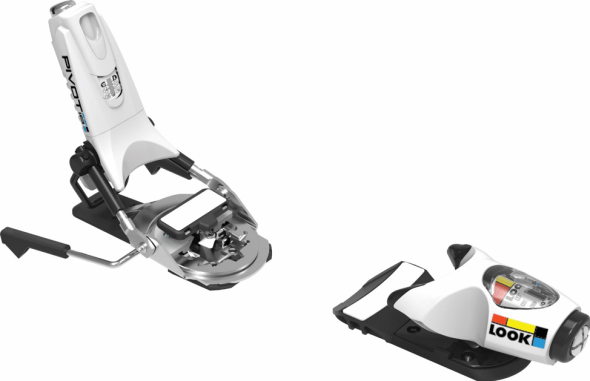
Recall Number: 18-139
Remedy: Replace. Consumers should immediately stop using the recalled ski bindings and contact LOOK to arrange for a free inspection and replacement.
Consumer Contact: LOOK toll-free at 888-243-6722 from 9 a.m. to 5 p.m. MT Monday through Friday, email at plefler@rossignol.com or online at https://m.rossignol.com/US and click on “Look Bindings Safety Recall” or http://www.look-bindings.com and click on “Recall” for more information.
Pictures available here: https://www.cpsc.gov/Recalls/2018/Group-Rossignol-Recalls-LOOK-Pivot-Ski-Bindings-Due-to-Fall-Hazard
Units: About 6,900 (In addition, 590 were sold in Canada)
Description: This recall involves 2017-2018 model year LOOK Pivot brand ski bindings. The heel piece can loosen and allow the boot to detach from the ski. The LOOK Pivot ski bindings were sold in black, white and yellow. LOOK is written on the front of the binding and Pivot is written on the side of the heel piece. Only date codes of H7, I7 or J7, without the letter ‘V” stamped on the black plastic piece behind the turntable heel unit are included in the recall. Date codes can be found on the bottom of the heel piece and can be viewed by rotating the turntable heel unit 90 degrees.
Model Number Model Name
FCFA002 0000TU PIVOT 18 B115 WHITE ICON
FCFA003 0000TU PIVOT 18 B95 WHITE ICON
FCFA004 0000TU PIVOT 18 B75 WHITE ICON
FCFA006 0000TU PIVOT 14 DUAL WTR B115 W. ICON
FCFA008 0000TU PIVOT 14 DUAL WTR B75 W. ICON
FCFA013 0000TU PIVOT 14 DUAL WTR B115 BLACK
FCFA014 0000TU PIVOT 14 DUAL WTR B95 BLACK
FCFA016 0000TU PIVOT 12 DUAL WTR B95 Y/BK
FCFA017 0000TU PIVOT 12 DUAL WTR B115 BLACK
FCFA018 0000TU PIVOT 12 DUAL WTR B95 BLACK
Incidents/Injuries: None reported
Sold At: Specialty ski stores including Christy Sports, REI, Retail Concepts and Vail Resorts nationwide and online at Backcountry.com and Evo.com from September 2017 through November 2017 for between $375 to $475.
Manufacturer(s): Look Fixations S.A.S., of France
Importer(s): Group Rossignol USA Inc., of Park City, Utah
Distributor(s): Group Rossignol USA Inc., of Park City, Utah
Manufactured In: France
Retailers: If you are a retailer of a recalled product you have a duty to notify your customers of a recall. If you can, email your clients or include the recall information in your next marketing communication to your clients. Post any Recall Poster at your stores and contact the manufacturer to determine how you will handle any recalls.
For more information on this see:
For Retailers
Recalls Call for Retailer Action
Combination of a Products Liability statute, an Expert Witness Report that was just not direct enough and odd facts holds a retailer liable as manufacture for product defect.
Product Liability takes a different turn. You must pay attention, just not rely on the CPSC.
Retailer has no duty to fit or instruct on fitting bicycle helmet
Summary Judgment granted for bicycle manufacturer and retailer on a breach of warranty and product liability claim.
For Manufacturers
The legal relationship created between manufactures and US consumers
 What do you think? Leave a comment.
If you like this let your friends know or post it on FB, Twitter or LinkedIn
Author: Outdoor Recreation Insurance, Risk Management and Law
Copyright 2017 Recreation Law (720) Edit Law
Email: Rec-law@recreation-law.com
Google+: +Recreation
Twitter: RecreationLaw
Facebook: Rec.Law.Now
Facebook Page: Outdoor Recreation & Adventure Travel Law
Blog:
www.recreation-law.com
Mobile Site: http://m.recreation-law.com
By Recreation Law Rec-law@recreation-law.com James H. Moss
#AdventureTourism, #AdventureTravelLaw, #AdventureTravelLawyer, #AttorneyatLaw, #Backpacking, #BicyclingLaw, #Camps, #ChallengeCourse, #ChallengeCourseLaw, #ChallengeCourseLawyer, #CyclingLaw, #FitnessLaw, #FitnessLawyer, #Hiking, #HumanPowered, #HumanPoweredRecreation, #IceClimbing, #JamesHMoss, #JimMoss, #Law, #Mountaineering, #Negligence, #OutdoorLaw, #OutdoorRecreationLaw, #OutsideLaw, #OutsideLawyer, #RecLaw, #Rec-Law, #RecLawBlog, #Rec-LawBlog, #RecLawyer, #RecreationalLawyer, #RecreationLaw, #RecreationLawBlog, #RecreationLawcom, #Recreation-Lawcom, #Recreation-Law.com, #RiskManagement, #RockClimbing, #RockClimbingLawyer, #RopesCourse, #RopesCourseLawyer, #SkiAreas, #Skiing, #SkiLaw, #Snowboarding, #SummerCamp, #Tourism, #TravelLaw, #YouthCamps, #ZipLineLawyer, Recall, CPSC, Consumer Product Safety Council,
Under Pennsylvania law, a collision with other skiers or boarders is an inherent risk of skiing. Skiing off the trail because of the collision is also an inherent risk of skiing.
Posted: April 16, 2018 Filed under: Assumption of the Risk, Pennsylvania, Ski Area, Skier v. Skier, Skiing / Snow Boarding | Tags: assumption of the risk, att, Collision, daughter, Downhill, drop-off, edge, elevation, experienced, foot, genuine, inherent, Inherent Risk, knee-jerk, Lift Ticket, matter of law, Pennsylvania Skier Safety Act, pile, Resort, rocks, Ski, skied, Skier, Skier's Responsibility Act, skiing, Slope, Snow, Snowboarder, specific risk, Sport, Summary judgment, Trail, veering Skier Safety Act Leave a commentThe terrain off of the trail was different than normally found at a ski area. A 3-4 drop off into a pile of rocks. However, the risk is skiing off the trail, not what you run into when you do.
Vu v. Ski Liberty Operating Corp., et. al., 2018 U.S. Dist. LEXIS 49013
State: Pennsylvania, United States District Court for the Middle District of Pennsylvania
Plaintiff: Quan Vu and May Siew
Defendant: Ski Liberty Operating Corp., et. al.
Plaintiff Claims: Negligence and Loss of Consortium
Defendant Defenses: Release
Holding: For the defendant
Year: 2018
Summary
The definition of an inherent risk when skiing is not what causes the injury, only the risk that led to the injury. Under Pennsylvania law, there is a broad definition of inherent risks and this case was dismissed because the plaintiff assumed those inherent risks, and the defendant did not owe a duty to protect him from those risks.
Facts
The plaintiff was an experienced skier, who had been skiing for twenty years. He was skiing behind his daughter at the defendant’s ski area. A snowboarder came close to the plaintiff or hit the plaintiff sending or causing him to ski off the trail. He went off the trail, over a 3-4 drop and landed in a pile of rocks.
…Mr. Vu does not recall much detail about his accident. Mr. Vu testified: “I believe there was a snowboarder involved and I — the snowboarder got — either cut me off or got awfully close and I had a knee-jerk reaction to veer because the last thing I want to do is ram into somebody. So I — my knee-jerk reaction is to veer.” However, Mr. Vu could not recall what he saw that caused him to veer, whether he veered to the right or to the left, or whether the snowboarder was above or below him on the hill. The last thing that Mr. Vu remembered was skiing with his daughter.
He sued the defendant ski area because it was:
…negligent in the design, construction, and maintenance of the ski slope, failure to warn Mr. Vu of the dangerous condition, failure to construct a barrier to stop skiers from going over the edge into the pile of rocks, failure to inspect the scope and detect the defective condition, and failure to repair that condition.
The court granted the defendants motion for summary judgment.
Analysis: making sense of the law based on these facts.
The decision was based on the Pennsylvania Skier’s Responsibility Act. The court had to decide if the risks encountered by the plaintiff were inherent risks of skiing.
The Pennsylvania General Assembly expressly preserved the doctrine of assumption of the risk as a defense in downhill skiing cases in the Skier’s Responsibility Act, recognizing that “there are inherent risks in the sport of downhill skiing. As the Supreme Court of Pennsylvania explained, “[t]he assumption of the risk defense, as applied to sports and places of amusement, has also been described as a ‘no-duty’ rule, i.e., as the principle that an owner or operator of a place of amusement has no duty to protect the user from any hazards inherent in the activity.”
If there is no duty, then there can be no negligence.
Where there is no duty, there can be no negligence, and thus when inherent risks are involved, negligence principles are irrelevant–the Comparative Negligence Act is inapplicable–and there can be no recovery based on allegations of negligence.
Pennsylvania has a two-part test to determine if the defendant owed the plaintiff a duty.
First, this Court must determine whether [the plaintiff] was engaged in the sport of downhill skiing at the time of her injury.” “If that answer is affirmative, we must then determine whether the risk” of the circumstance that caused the plaintiff’s injury “is one of the ‘inherent risks’ of down-hill skiing.” If so, then summary judgment must be awarded against the plaintiff as a matter of law.
The first test was met; the plaintiff was skiing at the time of his accident.
The court then had to determine if the risks the plaintiff encountered were inherent to skiing. Under Pennsylvania law, inherent risks “are those that are “common, frequent, and expected” in downhill skiing.”
The plaintiff argued that because the plaintiff was no specifically aware of the risk of the 3-4-foot drop off and the pile of rocks, he could not assume the risk.
Plaintiffs argue that while Mr. Vu “was generally aware of the dangers of downhill skiing,” he was not aware “of the specific hazard of being ejected from the ski trail due to a steep 3 to 4 foot drop-off on that particular slope’s trail edge.” (emphasis in original). Because there is no evidence that Mr. Vu had subjective awareness of these risks, Plaintiffs argue, the doctrine of assumption of the risk cannot apply.
In many cases, assumption of the risk would not be a defense if the injured plaintiff had no specific knowledge of the risk. However, it was not the case here under the statute. It did not matter if the Plaintiff had specific knowledge of the risk or a general knowledge of the risks of skiing, he assumed those risks.
The court then looked at the facts and found there were two circumstances that gave rise to the plaintiff’s injuries, veering to avoid a collision and skiing over the drop off.
The first is an inherent risk of skiing in Pennsylvania.
We can easily conclude that the first risk is inherent and gives rise to no duty on behalf of Defendants. The Supreme Court of Pennsylvania has specifically determined that the risk of collision with another person on the slope is inherent to the sport of downhill skiing: “the risk of colliding with an-other skier is one of the common, frequent and expected risks ‘inherent’ in downhill skiing. Indeed, other skiers are as much a part of the risk in downhill skiing, if not more so, than the snow and ice, elevation, contour, speed and weather conditions.
The next issue was whether skiing over the drop off into a pile of rocks was an inherent risk of skiing. Here again, the court found skiing off the trail, no matter what you may encounter once you are off the trail, is an inherent risk of skiing. The court backed its point up quite interestingly.
We struggled to find case law on point to support our holding because we believe it to be such a common sense and logical conclusion that does not require in-depth analysis.
The court found the defendant did not owe the plaintiff a duty because he assumed the risks of his injury under the Pennsylvania Skier’s Responsibility Act.
So Now What?
Actually, an easy case. Easy under Pennsylvania law because of the Pennsylvania Supreme Courts interpretation of the Pennsylvania Skier’s Responsibility Act. When skiing in Pennsylvania collisions with other skiers or boarders are an inherent risk of skiing and skiing off the trail is also.
What do you think? Leave a comment.
Copyright 2018 Recreation Law (720) 334 8529
If you like this let your friends know or post it on FB, Twitter or LinkedIn


Author: Outdoor Recreation Insurance, Risk Management and Law
Facebook Page: Outdoor Recreation & Adventure Travel Law
Email: Rec-law@recreation-law.com
By Recreation Law Rec-law@recreation-law.com James H. Moss
#AdventureTourism, #AdventureTravelLaw, #AdventureTravelLawyer, #AttorneyatLaw, #Backpacking, #BicyclingLaw, #Camps, #ChallengeCourse, #ChallengeCourseLaw, #ChallengeCourseLawyer, #CyclingLaw, #FitnessLaw, #FitnessLawyer, #Hiking, #HumanPowered, #HumanPoweredRecreation, #IceClimbing, #JamesHMoss, #JimMoss, #Law, #Mountaineering, #Negligence, #OutdoorLaw, #OutdoorRecreationLaw, #OutsideLaw, #OutsideLawyer, #RecLaw, #Rec-Law, #RecLawBlog, #Rec-LawBlog, #RecLawyer, #RecreationalLawyer, #RecreationLaw, #RecreationLawBlog, #RecreationLawcom, #Recreation-Lawcom, #Recreation-Law.com, #RiskManagement, #RockClimbing, #RockClimbingLawyer, #RopesCourse, #RopesCourseLawyer, #SkiAreas, #Skiing, #SkiLaw, #Snowboarding, #SummerCamp, #Tourism, #TravelLaw, #YouthCamps, #ZipLineLawyer, #RecreationLaw, #OutdoorLaw, #OutdoorRecreationLaw, #SkiLaw,
Vu v. Ski Liberty Operating Corp., et. al., 2018 U.S. Dist. LEXIS 49013
Posted: April 15, 2018 Filed under: Assumption of the Risk, Legal Case, Pennsylvania, Ski Area, Skier v. Skier, Skiing / Snow Boarding | Tags: assumption of the risk, att, Collision, daughter, Downhill, drop-off, edge, elevation, experienced, foot, genuine, inherent, Inherent Risk, knee-jerk, Lift Ticket, matter of law, Pennsylvania Skier Safety Act, pile, Resort, rocks, Ski, skied, Skier, Skier Safety Act, Skier's Responsibility Act, skiing, Slope, Snow, Snowboarder, specific risk, Sport, Summary judgment, Trail, veering Leave a commentVu v. Ski Liberty Operating Corp., et. al., 2018 U.S. Dist. LEXIS 49013
Quan Vu and May Siew, Plaintiffs, v. Ski Liberty Operating Corp., et. al., Defendants,
1:16-cv-2170
UNITED STATES DISTRICT COURT FOR THE MIDDLE DISTRICT OF PENNSYLVANIA
2018 U.S. Dist. LEXIS 49013
March 26, 2018, Decided
COUNSEL: [*1] For Quan VU, May Siew, Plaintiffs: D. Aaron Rihn, Mark D. Troyan, LEAD ATTORNEYS, Robert Peirce & Associates, P.C., Pittsburgh, PA USA.
For Ski Liberty Operating Corp. doing business as Liberty Mountain Resort, Defendant: Anthony W. Hinkle, Snow Time, Inc., Cipriani & Werner, P.C., Philadelphia, PA, USA.
For Snow Time, Inc., Ski Liberty Operating Corp., Counterclaim Plaintiffs: Anthony W. Hinkle, Cipriani & Werner, P.C., Philadelphia, PA USA.
For Snow Time, Inc., Ski Liberty Operating Corp., Counterclaim Defendants: Anthony W. Hinkle, Cipriani & Werner, P.C., Philadelphia, PA USA.
JUDGES: Hon. John E. Jones III, United States District Judge.
OPINION BY: John E. Jones III
OPINION
MEMORANDUM
Plaintiffs are Quan Vu and his wife, May Siew. (“Plaintiffs”). Defendants are Ski Liberty Operating Corp. and Snow Time, Inc., operating as Liberty Mountain Resort. (“Defendants”). This action arises out of a skiing accident at Liberty Mountain that left Mr. Vu severely injured. The complaint brings one count of negligence on behalf of Mr. Vu and one count of loss of consortium on behalf of Mrs. Siew, both alleging that the accident was caused by the Defendants’ negligence in maintaining the ski slope and failing to warn Mr. Vu of [*2] the slope’s hazardous condition. (Doc. 1). Presently pending before the Court is the Defendants’ motion for summary judgment. (the “Motion”) (Doc. 36). The Motion has been fully briefed and is therefore ripe for our review. (Docs. 38, 42, 43). For the reasons that follow, the Motion shall be granted.
I. BACKGROUND
On January 23, 2015, Mr. Vu was downhill skiing with his daughter at Liberty Mountain. (Doc. 41, ¶ 24). Mr. Vu was following his daughter from behind as they skied down the Lover Heavenly trail, a blue square intermediate hill, when he had his accident. (Id. at ¶¶ 24-25). Due to his injuries, Mr. Vu does not recall much detail about his accident. (Doc. 37, ¶ 11). Mr. Vu testified: “I believe there was a snowboarder involved and I — the snowboarder got — either cut me off or got awfully close and I had a knee-jerk reaction to veer because the last thing I want to do is ram into somebody. So I — my knee-jerk reaction is to veer.” (Doc. 37, att. 1, pp. 65-66). However, Mr. Vu could not recall what he saw that caused him to veer, whether he veered to the right or to the left, or whether the snowboarder was above or below him on the hill. (Id. at pp. 65-66). The last thing that Mr. Vu remembered [*3] was skiing with his daughter. (Id. at p. 66).
Mr. Vu’s daughter testified: “I saw someone get really close to him and he was trying to avoid them and it was either ramming into him, the snowboarder, or person who was trying to get really close to him, or veering off path.” (Doc. 42, att. 2, p. 8). “He — there was someone trying to kind of get really close to him. And he didn’t want to ram into him. So he — I don’t really understand — know what happened. But he tried to avoid it. And there was like a big ditch or something there. And he tried to stop and tried to avoid the person who was trying to cut him off.” (Id.). “My dad was — the snowboarder was — my dad was kind of like the ham in the middle of a sandwich. Between the end of the trail, the edge of the trail and the snowboarder.” (Id. at p. 9). “I just felt that the snowboarder was getting quite close to my dad and I didn’t want a collision to happen or the snowboarder to ram into my dad.” (Id. at p. 10).
Ultimately, whether he did so intentionally or not, Mr. Vu skied off of the edge of the trail and suffered catastrophic injuries. There was a drop-off at the edge of the ski trail of about three to four feet. (Doc. 41, ¶ 32). Below that drop-off was a large pile [*4] of rocks. (Id. at ¶ 31). Mr. Vu skied off of the edge of the trail, off of the embankment, and landed on the pile of rocks. (Doc. 37, ¶ 11).
Mr. Vu was an experienced skier at the time of his accident. He had skied for over twenty years and was capable of skiing black diamond slopes. (Id. at P 6). Mr. Vu testified that he was familiar with the Skier’s Responsibility Code and understood that he was responsible for skiing in control and in such a manner that he could stop or avoid other skiers. (Id.). Mr. Vu also testified that he understood that skiing is a dangerous sport and that he could get hurt if he skied out of control or if he fell. (Id.).
On the day of his accident, Mr. Vu’s wife purchased his Liberty Mountain Resort Lift Ticket. (Id. at ¶ 18). The back of the lift ticket reads as follows:
PLEASE READ
Acceptance of this ticket constitutes a contract. The conditions of the contract are stated on this ticket & will prevent or restrict your ability to sue Liberty Mountain Resort. If you do not agree with these conditions, then do not use the facility. Snowsports in their various forms, including the use of lifts, are dangerous sports with inherent and other risks. These risks include but are [*5] not limited to: variations in snow, steepness & terrain, ice & icy conditions, moguls, rocks, trees & other forms of forest growth or debris (above or below the surface), bare spots, lift towers, utility lines & poles, fencing or lack of fencing, snowmaking & snowgrooming equipment & component parts, on-snow vehicles & other forms of natural or man-made obstacles, and terrain features on or off designated trails as well as collisions with equipment, obstacles or other snowsport participants. Trail conditions vary constantly because of weather changes and use. All the inherent and other risks involved present the risk of permanent catastrophic injury or death. In consideration of using Liberty’s facilities, the purchaser or user of this ticket agrees to accept the risks of snowsports and understands and agrees that they are hazardous and further agrees NOT TO SUE Ski Liberty Operating Corp., its owners or employees if injured while using the facilities regardless of any negligence, including gross negligence, on the part of the resort, and/or its employees or agents. The purchaser or user of this ticket voluntarily assumes the risk of injury while participating in the sport, and agrees [*6] to report all injuries before leaving the resort . . .
(Doc. 37, Ex. D) (emphasis in original). Though Mr. Vu was uncertain if he read the language on the lift ticket on the day of his accident, he testified that he had read it at some point prior to his accident. (Doc. 37, ¶ 20). At his deposition, Mr. Vu was asked to read portions of the lift ticket and he had trouble doing so because the font was too small. (Doc. 37, att. 1, p. 70).
Mr. Vu and his wife initiated this action with the filing of a complaint on October 27, 2016. (Doc. 1). Plaintiffs allege that Defendants were negligent in the design, construction, and maintenance of the ski slope, failure to warn Mr. Vu of the dangerous condition, failure to construct a barrier to stop skiers from going over the edge into the pile of rocks, failure to inspect the scope and detect the defective condition, and failure to repair that condition. Defendants filed the instant motion for summary judgment on January 31, 2018. (Doc. 36).
I II. LEGAL STANDARD
Summary judgment is appropriate if the moving party establishes “that there is no genuine dispute as to any material fact and the movant is entitled to judgment as a matter of law.” Fed. R. Civ. P. 56(a). A dispute [*7] is “genuine” only if there is a sufficient evidentiary basis for a reasonable jury to find for the non-moving party, and a fact is “material” only if it might affect the outcome of the action under the governing law. See Sovereign Bank v. BJ’s Wholesale Club, Inc., 533 F.3d 162, 172 (3d Cir. 2008) (citing Anderson v. Liberty Lobby, Inc., 477 U.S. 242, 248 (1986)). A court should view the facts in the light most favorable to the non-moving party, drawing all reasonable inferences therefrom, and should not evaluate credibility or weigh the evidence. See Guidotti v. Legal Helpers Debt Resolution, L.L.C., 716 F.3d 764, 772 (3d Cir. 2013) (citing Reeves v. Sanderson Plumbing Prods., Inc., 530 U.S. 133, 150 (2000)).
Initially, the moving party bears the burden of demonstrating the absence of a genuine dispute of material fact, and upon satisfaction of that burden, the non-movant must go beyond the pleadings, pointing to particular facts that evidence a genuine dispute for trial. See id. at 773 (citing Celotex Corp. v. Catrett, 477 U.S. 317, 324 (1986)). In advancing their positions, the parties must support their factual assertions by citing to specific parts of the record or by “showing that the materials cited do not establish the absence or presence of a genuine dispute, or that an adverse party cannot produce admissible evidence to support the fact.” FED. R. Civ. P. 56(c)(1).
A court should not grant summary judgment when there is a disagreement about the facts or the proper inferences that a factfinder could draw from them. See Reedy v. Evanson, 615 F.3d 197, 210 (3d Cir. 2010) (citing Peterson v. Lehigh Valley Dist. Council, 676 F.2d 81, 84 (3d Cir. 1982)). Still, “the [*8] mere existence of some alleged factual dispute between the parties will not defeat an otherwise properly supported motion for summary judgment.” Layshock ex rel. Layshock v. Hermitage Sch. Dist., 650 F.3d 205, 211 (3d Cir. 2011) (quoting Anderson, 477 U.S. at 247-48) (internal quotation marks omitted).
III. DISCUSSION
Defendants move for summary judgment on two legal bases. First, Defendants argue that Plaintiffs’ claims are barred as a matter of law because Mr. Vu’s injuries were caused by an inherent risk of skiing. Second, Defendants argue that Plaintiffs’ claims are barred by the exculpatory release language contained on the Liberty Mountain lift ticket. Because we find that Mr. Vu’s injuries arose out of risks inherent to the sport of downhill skiing, we hold that Defendants are entitled to summary judgment as a matter of law without even considering the exculpatory release language of the lift ticket.
The material facts surrounding Mr. Vu’s accident are not in dispute. Though Mr. Vu and his daughter are unclear on the specifics, it is undisputed that Mr. Vu ended up skiing off of the trail, over a drop-off, and into a pile of rocks. (Doc. 37, ¶ 11). Mr. Vu testified that a snowboarder was getting too close to him and his “knee-jerk” reaction was to veer to avoid a collision, causing him [*9] to ski off of the trail and over the embankment. (Doc. 37, att. 1, pp. 65-66). Mr. Vu’s daughter also testified that her father’s accident occurred when he tried to avoid a collision with a snowboarder. (Doc. 42, att. 2, p. 8). While Defendants argumentatively refer to this person as the “phantom snowboarder” and question the credibility of the testimony, for purposes of this Motion we can take Plaintiffs’ facts as true and assume that Mr. Vu skied off of the trail, either intentionally or as a result of a knee-jerk reaction, to avoid colliding with a snowboarder. Even so, summary judgment must be granted in favor of the Defendants because Mr. Vu’s accident occurred as a result of inherent risks of downhill skiing.
The Pennsylvania General Assembly expressly preserved the doctrine of assumption of the risk as a defense in downhill skiing cases in the Skier’s Responsibility Act, recognizing that “there are inherent risks in the sport of downhill skiing.” 42 Pa. C.S. § 7102(c). As the Supreme Court of Pennsylvania explained, “[t]he assumption of the risk defense, as applied to sports and places of amusement, has also been described as a ‘no-duty’ rule, i.e., as the principle that an owner or operator of a [*10] place of amusement has no duty to protect the user from any hazards inherent in the activity.” Chepkevich v. Hidden Valley Resort, L.P., 2 A.3d 1174, 1186 (2010) (citing Restatement (Second) of Torts, § 496A, cmt. C, 2). “Where there is no duty, there can be no negligence, and thus when inherent risks are involved, negligence principles are irrelevant–the Comparative Negligence Act is inapplicable–and there can be no recovery based on allegations of negligence.” Id.
In Hughes v. Seven Springs Farm, Inc., the Supreme Court of Pennsylvania established a two-part test for courts to use to determine whether a plaintiff’s claims are barred by the no duty rule of the Skier’s Responsibility Act. 762 A.2d 339, 343 (2000). “First, this Court must determine whether [the plaintiff] was engaged in the sport of downhill skiing at the time of her injury.” Id. at 344. “If that answer is affirmative, we must then determine whether the risk” of the circumstance that caused the plaintiff’s injury “is one of the ‘inherent risks’ of downhill skiing.” Id. If so, then summary judgment must be awarded against the plaintiff as a matter of law. Id. In the case at-bar, there can be no dispute that Mr. Vu was engaged in the sport of downhill skiing at the time of his accident. The salient question, therefore, becomes whether veering off-trail and over a drop-off into a pile [*11] of rocks to avoid a collision with a snowboarder are inherent risks of downhill skiing. If those risks are inherent to skiing, then Defendants had no duty to protect Mr. Vu. Chepkevich, 2 A.3d at 1186. If those risks are not inherent, traditional principles of negligence apply and we must determine what duty the Defendants owed Mr. Vu, whether the Defendants breached that duty, and whether the breach caused Mr. Vu’s injuries.
We begin with a discussion of what it means for a risk to be “inherent.” The Hughes court explained that “inherent” risks are those that are “common, frequent, and expected” in downhill skiing. Id. In interpreting risks, the Supreme Court of Pennsylvania has instructed that “the clear legislative intent to preserve the assumption of the risk doctrine in this particular area, as well as the broad wording of the Act itself, dictates a practical and logical interpretation of what risks are inherent to the sport.” Chepkevich, 2 A.3d at 1187-88. “Accordingly, courts have rejected attempts by plaintiffs to define the injury producing risks in very a specific and narrow manner.” Cole v. Camelback Mountain Ski Resort, 2017 WL 4621786, at *4 (M.D. Pa. Oct. 16, 2017) (Mariani, J.). For example, the Supreme Court of Pennsylvania in Chepkevich rejected the plaintiff’s argument that she did not assume the “specific [*12] risk” involved, looking instead to the “general risk” that gave rise to the accident. 2 A.3d at 1188. A number of courts have addressed the scope of the Skier’s Responsibility Act and have concluded that some of the inherent risks of downhill skiing include: lack of netting, improper course plotting, or soft snow1; skiing off trail and striking a tree2; collisions with unpadded snow equipment poles3; striking a fence on the edge of the trail4; and collisions with other skiers or snowboarders.5
1 Bjorgung v. Whitetail Resort, L.P., 550 F.3d 263 (3d Cir. 2008).
2 Id.
3 Smith v. Seven Springs Farm, Inc., 716 F.2d 1002 (3d Cir. 1983).
4 Cole, 2017 WL 4621786, at *5.
5 Hughes, 762 A.2d 339.
Before addressing the risks that Mr. Vu encountered, we must address Plaintiffs’ initial argument that the assumption of the risk doctrine is inapplicable. Plaintiffs argue that while Mr. Vu “was generally aware of the dangers of downhill skiing,” he was not aware “of the specific hazard of being ejected from the ski trail due to a steep 3 to 4 foot drop-off on that particular slope’s trail edge.” (Doc. 42, p. 8) (emphasis in original). Because there is no evidence that Mr. Vu had subjective awareness of these risks, Plaintiffs argue, the doctrine of assumption of the risk cannot apply. (Id. at pp. 9-13). For support of this argument, Plaintiffs cite several cases that are materially distinct from the case at-bar. First, Plaintiffs [*13] quote Barillari v. Ski Shawnee, Inc., “[i]t is not enough that the plaintiff was generally aware that the activity in which he was engaged had accompanying risks.” 986 F. Supp. 2d 555, 563 (M.D. Pa. 2013). Importantly, the court made this statement when analyzing the doctrine of voluntary assumption of the risk after determining that the Skier’s Responsibility Act was not applicable because the plaintiff was not engaged in the sport of downhill skiing at the time of the accident. Id. at 561. The instruction of this quote is inapplicable to our consideration of the no duty doctrine of assumption of the risk.
Next, Plaintiffs rely heavily on Bolyard v. Wallenpaupack Lake Estates, Inc., 2012 WL 629391(M.D. Pa. Feb. 27, 2012) (Caputo, J.). In Bolyard, the plaintiff sued the defendant for negligence after sustaining injuries while snow tubing on the defendant’s property. Id. at *1. The court recognized that while the plaintiff had “general knowledge” of the dangers of snow tubing on the hill, she did not assume the risk because “there is no evidence in the record that she had any knowledge of the specific hazards of that particular slope.” Id. at *6. Plaintiffs argue that “[s]imilar to the patron in Bolyard,” Mr. Vu was only generally aware of the risks he could suffer while skiing and thus assumption of the risk is inapplicable. (Doc. [*14] 42, p. 8). We disagree.
Notably, the slope in Bolyard was an old slope that was not currently in operation. 2012 WL 629391, at *1. The court used principles of negligence as applicable to landowners and licensees to determine the duty owed to the plaintiff and, consequently, considered the doctrine of voluntary assumption of the risk as a defense. Id. at **3-6. Analyzing the present action under the no duty rule, we do not consider the defense of voluntary assumption of the risk; instead, we must determine whether Mr. Vu’s injuries arose out of an inherent risk of the sport of skiing such that the Defendants had no duty at all. Pursuant to Hughes and the Skier’s Responsibility Act, there is no duty to protect a skier from the inherent risks of skiing and therefore, “when inherent risks are involved, negligence principles are irrelevant.” Id.
Finally, Plaintiffs cite Perez v. Great Wolf Lodge of the Poconos LLC,6
Staub v. Toy Factory, Inc.,7
Jones v. Three Rivers Mgmt. Corp,8 and Telega v. Sec. Bureau, Inc.9 in support of their position that assumption of the risk does not apply because Mr. Vu did not appreciate the specific risks that caused his accident. To start, none of these cases address the Skier’s Responsibility [*15] Act. These cases discuss appreciation of specific risk only after determining that the no duty rule was inapplicable because the risk encountered was not inherent. Again, we reiterate that “[n]egligence principles are irrelevant where the ‘no duty’ rule applies.” Lin v. Spring Mountain Adventures, Inc., 2010 WL 5257648, at *7 (E.D. Pa. Dec. 23, 2010). Whether the no duty rule applies turns on whether Mr. Vu’s particular injuries arose out of risks inherent in the sport of skiing — an issue that is not dependent on a plaintiff’s subjective awareness of those specific risks.
6 200 F. Supp. 3d 471, 478 (M.D. Pa. 2016) (Mariani, J.).
7 749 A.2d 522, (Pa. Super. 2000).
8 483 Pa. 75, 85, 394 A.2d 546, 551 (1978).
9 719 A.2d 372, 376 (Pa. Super. Ct. 1998).
We now turn to the risks involved in Mr. Vu’s accident. The facts reveal two circumstances that gave rise to Mr. Vu’s injuries: (1) veering to avoid a collision with a snowboarder; and (2) skiing over the drop-off at the edge of the trail and into a pile of rocks. If these risks are inherent to the sport of downhill skiing, Plaintiffs’ claims cannot stand.
We can easily conclude that the first risk is inherent and gives rise to no duty on behalf of Defendants. The Supreme Court of Pennsylvania has specifically determined that the risk of collision with another person on the slope is inherent to the sport of downhill skiing: “the risk of colliding with another skier is one of the common, frequent and expected [*16] risks ‘inherent’ in downhill skiing. Indeed, other skiers are as much a part of the risk in downhill skiing, if not more so, than the snow and ice, elevation, contour, speed and weather conditions.” Hughes, 762 A.2d at 344. Likely in recognition of the clear case law, Plaintiffs do not argue in their brief in opposition to the Motion that avoiding a collision with a snowboarder is a risk that would give rise to a duty on behalf of Defendants. To the extent that Plaintiffs’ claims of negligence are premised on Mr. Vu’s avoidance of a collision with the snowboarder, those claims must fail.
Next, we consider whether skiing over the edge of the trail and encountering a three to four foot drop-off into a pile of rocks is an inherent risk of downhill skiing. Plaintiffs frame this risk as the primary cause of Mr. Vu’s injuries.10 “Simply put, the risk of ejectment from a ski trail due to a 3 to 4 foot drop off and striking one’s head on rocks and/or boulders . . . is not an inherent, frequent, common, and expected risk of skiing.” (Doc. 42, p. 11). All parties recognize that the drop-off was at the edge of the trail rather than a ditch or hole in the slope itself. Though Plaintiffs stress that Mr. Vu did not “willingly [*17] decide to ski off trail,” the distinction is of no consequence. Plaintiffs describe the incident in terms of Mr. Vu being “ejected” from the trail due to the embankment, but it is illogical to argue that the existence of the drop-off itself would cause a skier to go over it. Whether Mr. Vu did so intentionally, accidentally, or as a means of avoiding a collision, the incontrovertible fact is that Mr. Vu did, ultimately, ski off of the three to four foot edge of the trail.
10 “. . . the specific hazard of being ejected from the ski trail due to a steep 3 to 4 foot drop-off on that particular slope’s trail edge.” (Doc. 42, p. 8); “Even if Defendant could establish that having a 3 to 4 foot trail edge drop presents a danger inherent to the sport of skiing . . .” (Id. at p. 9); “. . . he was ejected from the trail when attempting to avoid a collision and was confronted with a 3 to 4 foot drop in elevation from the ski trail.” (Id. at p. 11).
We hold that the risk of skiing off trail and suffering from the change of elevation between the trail and surrounding terrain is an inherent risk of downhill skiing. Mr. Vu was an experienced skier who was well aware of the risks of skiing off the designated slope; he testified repeatedly that he “would never ski off-trail.” (Doc. 41, att. 1, p. 43). He had previously skied at Liberty Mountain on multiple occasions and could not remember ever complaining about the trail or trail markings. (Id. at pp. 35-36). Additionally, Mr. Vu’s daughter testified that she did not have any difficulty discerning the edge of the slope where her father went off trail the evening of the accident. (Doc. 41, att. 2, p. 14). It would be irrational for [*18] any court to hold that skiing off trail and encountering dangerous terrain is not an inherent risk of the sport of downhill skiing — ski slopes are marked and maintained in appreciation of this risk, and beginner and experienced skiers alike know to stay within the trail limits to avoid injury. Mr. Vu himself testified that he understood that he could run into trees, rocks, boulders, or snowmaking equipment if he skied off trail. (Doc. 37, att. 1, p. 71).
We struggled to find case law on point to support our holding because we believe it to be such a common sense and logical conclusion that does not require in-depth analysis. One case from the New York appellate court, however, was particularly analogous. In Atwell v. State, the plaintiff was skiing near the edge of the trail when he observed a “floundering” skier in his path. 645 N.Y.S.2d 658, 659 (1996). Plaintiff “instinctively reacted and turned without thinking” to avoid a collision and ended up skiing off trail and into a tree. Id. The court easily found that plaintiff’s injuries were due to inherent risks of skiing. Id. at 650. “[F]rom claimant’s own description of the accident, there can be no dispute that everything he encountered, including the skier he turned [*19] to avoid hitting, the berm at the edge of the trail referred to by claimant’s expert and the tree with which he collided, are all statutorily recognized as inherent dangers of skiing.” The court noted that “[c]laimant chose to ski near the edge of the trail and there is nothing in the record to indicate that the location of the edge of the trail was not readily observable to him.” Id. Similarly here, Mr. Vu was an experienced skier who chose to ski near the edge of the slope. He had a knee-jerk reaction to avoid a skier, and ended up veering off of the trail and suffering from the elevation change and his collision with rocks. Not only is there a lack of any evidence that the edge of the trail was difficult to discern, but Mr. Vu’s daughter testified at length about how her father was close to the edge of the trail and specifically stated that she could observe the edge of the slope without difficulty. (Doc. 41, att. 2, p. 14).
We agree with the Supreme Court of New Hampshire, which simply held: “Even the most generous reading of the plaintiff’s pleadings reveals the chief cause of his injuries to be an unenumerated, yet quintessential risk of skiing: that a skier might lose control [*20] and ski off the trail. By participating in the sport of skiing, a skier assumes this inherent risk and may not recover against a ski area operator for resulting injuries.” Nutbrown v. Mount Cranmore, Inc., 140 N.H. 675, 684, 671 A.2d 548, 553 (1996).
IV. CONCLUSION
For the foregoing reasons, the Motion shall be granted. A separate order shall issue in accordance with this memorandum.
ORDER
Presently before the Court is Defendants’ motion for summary judgment. (Doc. 36). In conformity with the Memorandum issued on today’s date, IT IS HEREBY ORDERED THAT:
1. Defendants’ motion for summary judgment (Doc. 36) is GRANTED.
2. The Clerk of the Court SHALL CLOSE the file on this case.
/s/ John E. Jones III
John E. Jones III
United States District Judge
NASTAR release was held by the Michigan Appellate court to be written narrowly and only protect the ski area when the guest was racing or training.
Posted: April 2, 2018 Filed under: Assumption of the Risk, Michigan, Release (pre-injury contract not to sue), Ski Area, Skiing / Snow Boarding | Tags: Inherent Risk, Michigan, Michigan Ski Safety Act, NASTAR, Release, SASA, Ski Area Safety Act 1 CommentMichigan Ski Safety Act did not apply because it was too early in the proceedings to determine if a rope hanging below the chairlift was an inherent risk of skiing under the act.
Ritari, JR v Peter E. O’dovero, Inc., 2017 Mich. App. LEXIS 1711
State: Michigan, Court of Appeals of Michigan
Plaintiff: Ronald Ritari, JR. and Tama Ritari
Defendant: Peter E. O’dovero, Inc., doing business as Marquette Mountain
Plaintiff Claims: was negligent by having ropes in the area of the chair lift, failing to post warnings of the danger, failing to take measures to prevent plaintiff from catching his skis on the rope, failing to employ the emergency stop when plaintiff yelled for help, and failing to adequately supervise and control the chair lift
Defendant Defenses: Release and Michigan Ski Area Safety Act (SASA)
Holding: For the Plaintiff
Year: 2017
Summary
Your release must be written to cover the risks and activities you need to cover. If your release fails, as in this case, then you are faced with proving the activity that injured your guest was an inherent risk of skiing.
A rope hanging below a lift, low enough a ski could be caught in the lift is going to be an interesting argument at trial to prove it is an inherent risk of skiing.
Facts
The plaintiff was a season pass holder at the ski area and enjoyed racing NASTAR. One evening while riding the chair lift his skis were caught on a nylon rope hanging below the lift when a gust of wind pulled the chair down. The plaintiff was pulled out of the chair by the rope where he fell 12′ to the ground sustaining a fractured pelvis and fracture ribs.
The plaintiff filed suit. The Defendant ski area filed a motion for summary judgment based on the NASTAR release and the Michigan Ski Area Safety Act. The plaintiff seems to have signed two releases, one when he purchased a season pass, however, only the NASTAR release was argued at trial.
The trial court dismissed the defendant’s motion for summary judgment finding the release was ambiguous, and the rope hanging below the chairlift was not an inherent risk of skiing. The defendant appealed the trial court’s decision.
Analysis: making sense of the law based on these facts.
The court first looked at the release. The trial court had found the release was ambiguous. “A contract is ambiguous only if its language is reasonably susceptible to more than one interpretation.”
The scope of a release is governed by the intent of the parties as it is expressed in the release. If the text in the release is unambiguous, the parties’ intentions must be ascertained from the plain, ordinary meaning of the language of the release. A contract is ambiguous only if its language is reasonably susceptible to more than one interpretation. The fact that the parties dispute the meaning of a release does not, in itself, establish an ambiguity.
To determine if a contract is valid the contract “…must be read as a whole, construed so as to give effect to every word or phrase as far as practicable…” An ambiguous contract is also referred to as a contract “…reasonable susceptible to more than one interpretation.”
The appellate court found the release was not ambiguous.
We conclude that, when read as a whole and interpreted in conjunction with the NASTAR registration form on its reverse side, the language of the Participant release is unambiguous and in-tended to relieve defendant of “all liability” for injuries suffered during training for or participating in a racing competition.
The plaintiff also argued that the release only applied when the plaintiff was racing or training for NASTAR. Here the court found for the plaintiff. On this issue, the appellate court agreed with the trial court and held that the release could be interpreted to only be for racing or training for NASTAR events.
A rope hanging below the chairlift was not a listed risk in the Michigan Ski Area Safety Act. Therefore, the court needed to determine if the ski area safety act applied to this risk.
There is no dispute that the nylon rope that entangled plaintiff is a hazard not listed in MCL 408.342(2). Thus, the question is whether the placement of a nylon rope under a chair lift is inherent to skiing and, if so, whether placement of the rope in this case was obvious and necessary. For defendant to be entitled to summary disposition under MCR 2.116(C)(10), these material facts must be undisputed and defendant must be entitled to judgment as a matter of law.
The court held the jury had to determine if the risk was obvious and necessary and inherent to skiing.
The appellate court sent the case back to the trial court for additional discovery by the parties and trial.
So Now What?
Any time you have an incident on the lift outside of the loading and unloading area it is going to create a problem for the courts and a question of fact. In several states, like Colorado, the operator of a lift owes the highest degree of care to the lift riders. In Colorado, this case would be based on how much the check would be, not if there was going to be a check.
Furthermore, a rope hanging below a lift that a skier could catch a ski or board with is also suspect. Whether the riders were bouncing on the lift or a gust of wind did force the chair down, that is a risk that needed to be looked at from all angles. Skiers running into people and legs extending from the chair and people on the chair catching their fee in it is a risk of roping off an area under a lift.
What do you think? Leave a comment.
Copyright 2018 Recreation Law (720) 334 8529
If you like this let your friends know or post it on FB, Twitter or LinkedIn


Author: Outdoor Recreation Insurance, Risk Management and Law
Facebook Page: Outdoor Recreation & Adventure Travel Law
Email: Rec-law@recreation-law.com
By Recreation Law Rec-law@recreation-law.com James H. Moss
#AdventureTourism, #AdventureTravelLaw, #AdventureTravelLawyer, #AttorneyatLaw, #Backpacking, #BicyclingLaw, #Camps, #ChallengeCourse, #ChallengeCourseLaw, #ChallengeCourseLawyer, #CyclingLaw, #FitnessLaw, #FitnessLawyer, #Hiking, #HumanPowered, #HumanPoweredRecreation, #IceClimbing, #JamesHMoss, #JimMoss, #Law, #Mountaineering, #Negligence, #OutdoorLaw, #OutdoorRecreationLaw, #OutsideLaw, #OutsideLawyer, #RecLaw, #Rec-Law, #RecLawBlog, #Rec-LawBlog, #RecLawyer, #RecreationalLawyer, #RecreationLaw, #RecreationLawBlog, #RecreationLawcom, #Recreation-Lawcom, #Recreation-Law.com, #RiskManagement, #RockClimbing, #RockClimbingLawyer, #RopesCourse, #RopesCourseLawyer, #SkiAreas, #Skiing, #SkiLaw, #Snowboarding, #SummerCamp, #Tourism, #TravelLaw, #YouthCamps, #ZipLineLawyer, #RecreationLaw, #OutdoorLaw, #OutdoorRecreationLaw, #SkiLaw,
Ritari, JR v Peter E. O’dovero, Inc., 2017 Mich. App. LEXIS 1711
Posted: April 1, 2018 Filed under: Legal Case, Michigan, Release (pre-injury contract not to sue), Ski Area, Skiing / Snow Boarding | Tags: Chair Lift, Inherent Risk, Michigan, skiing Leave a commentRitari, JR v Peter E. O’dovero, Inc., 2017 Mich. App. LEXIS 1711
Ronald Ritari, JR. and Tama Ritari, Plaintiffs-Appellees, v Peter E. O’dovero, Inc., doing business as Marquette Mountain, Defendant-Appellant.
No. 335870
COURT OF APPEALS OF MICHIGAN
2017 Mich. App. LEXIS 1711
October 24, 2017, Decided
NOTICE: THIS IS AN UNPUBLISHED OPINION. IN ACCORDANCE WITH MICHIGAN COURT OF APPEALS RULES, UNPUBLISHED OPINIONS ARE NOT PRECEDENTIALLY BINDING UNDER THE RULES OF STARE DECISIS.
SUBSEQUENT HISTORY: Motion granted by Ritari v. Peter E. O’Dovero, 2018 Mich. LEXIS 90 (Mich., Jan. 12, 2018)
PRIOR HISTORY: [*1] Marquette Circuit Court. LC No. 16-054384-NO.
CORE TERMS: skiing, nastar, rope, training, ski, chair lift, racing, placement, sport, registration form, hazard, recreational, ski area, participating, skier, lift, competitive, competitor, hazardous, alpine, matter of law, clearance, snowboarding, season, risks associated, reverse side, unambiguous, susceptible, entangled, ambiguous
JUDGES: Before: K. F. KELLY, P.J., and BECKERING and RIORDAN, JJ.
OPINION
Per Curiam.
In this interlocutory appeal,1 defendant, Peter E. O’Dovero, Inc, d/b/a Marquette Mountain, challenges the trial court’s order denying defendant’s motion for summary disposition under MCR 2.116(C)(7) (release, immunity granted by law) and (C)(10) (no genuine issue of material fact, movant entitled to judgment as a matter of law). The case arises out of an incident at Marquette Mountain ski resort that occurred when plaintiff, Ronald Ritari, Jr., was riding up the ski hill on a chair lift and became entangled in a rope that had been installed underneath the lift, which pulled him off the lift and caused him to sustain serious injuries in the ensuing fall.2 Because material questions of fact remain, we agree with the trial court that summary disposition is inappropriate at this time.
1 Ronald Ritari Jr v Peter E O’Dovero, Inc, unpublished order of the Court of Appeals, entered April 20, 2017 (Docket No. 335870).
2 Plaintiff Tama Ritari’s claim is derivative of her husband’s; therefore, “plaintiff” refers to Ronald Ritari, Jr.
I. PERTINENT FACTS AND PROCEDURAL HISTORY
On the evening of January 29, 2015, plaintiff went to Marquette Mountain to ski. He was a season pass holder there and enjoyed NASTAR3 racing. According to plaintiff’s complaint and affidavit, at around 6:45 p.m. he and his son boarded [*2] a chair lift to reach the top of the hill for their first run of the evening. They planned to take a couple of pleasure runs down the hill before their Thursday night ski league began. When his chair was approximately 20 yards from the loading zone, a gust of wind pulled the chair down and the tips of plaintiff’s skis became entangled in a nylon rope attached to the ground by two poles directly below the chair lift. Plaintiff was able to free the tip of his left ski from the rope, but he was unable to free the tip of his right ski, and he felt his leg being pulled backward as his chair continued to move up the hill. Plaintiff grabbed the middle pole of the chair to keep from falling and screamed as loudly as he could for the chair lift operator to stop the lift. But the chair lift did not stop, and plaintiff was pulled out of his chair by the rope. He fell approximately 12 feet to the ground and sustained a fractured pelvis and fractured ribs.
3 According to its website, NASTAR is the “largest public grassroots ski racing program in the world” and “gives recreational racers an opportunity to compete and compare their scores to friends and family regardless of when and where they race using the NASTAR handicap system.” NASTAR competitions typically occur on grand slalom and slalom courses laid out by the host ski resorts in accordance with NASTAR’s instructions. http://www.nastar.com (accessed 9/15/17).
Plaintiff filed suit against defendant, alleging that the ski area was negligent by having ropes in the area of the chair lift, failing to post warnings of the danger, failing to take measures to prevent plaintiff from catching his skis on the [*3] rope, failing to employ the emergency stop when plaintiff yelled for help, and failing to adequately supervise and control the chair lift. Before any discovery began by way of interrogatories, depositions, or otherwise, defendant moved for summary disposition under MCR 2.116(C)(7) and (C)(10), contending that plaintiff had signed releases broad enough to bar any claim for injuries arising out of the incident. Defendant relied on three forms signed by plaintiff.
Specifically, On December 13, 2014, in conjunction with purchasing an annual ski pass at Marquette Mountain for the 2014-2015 season, plaintiff signed a release wherein he agreed to assume “the risk of any injury to person or property resulting from any of the inherent dangers and risks of skiing/snowboarding . . . .” On December 16, 2014, he filled out a document in order to participate in NASTAR races. The document, a single sheet of paper, contains two forms, one on the front and one on the back. Hand-printed vertically in capital letters along the right side of both forms are the instructions, “FILL OUT BOTH SIDES.”
On the front side of the NASTAR document is a registration form. The form has headings entitled “Registration Form,” “Racer Information,” [*4] “Team Information,” and “Waiver and Release of Liability.” According to the release language on this form, plaintiff, “in exchange for being permitted to participate in NASTAR events (the “Event”),” assumes all risks associated with his involvement in the event and the “risk of injury caused by the condition of any property, facilities, or equipment used during the Event, whether foreseeable or unforeseeable.”
On the reverse side of the NASTAR document is a release entitled “Marquette Mountain Ski Area, and Competition Participant” (henceforth, the “Participant release”). According to the relevant terms of this release, “Participant, the undersigned, being at least 18 years old . . . agrees and understands that alpine skiing and snowboarding in its various forms (hereinafter the “Activity”) is HAZARDOUS4 and may involve the risk of physical injury or death.” The Participant also agrees that “training or racing competitively is more HAZARDOUS than recreational skiing,” that he or she is “a competitor at all times, whether practicing for competition or in competition.” According to the release, the Participant assumes all risks associated with the Activity, including but not limited to [*5] the risk of all course conditions, course construction or layout and obstacles, risks associated with riding the lifts, and risks associated with ski lift operations and acts or omissions of employees. The Participant agrees to release defendant from “all liabilities” arising from engagement in “the Activity,” including any injuries caused by the actual negligence of defendant’s employees. In its motion for summary disposition, defendant contended that, by signing this release, plaintiff assumed “all” risks, argued that “all” left no room for exceptions, and stressed that the terms of this release barred plaintiff’s claim for negligence as a matter of law.
4 A fold or wrinkle in the copy of the release that is in the record obscures this word. However, defendant quotes the relevant section of the release in its motion for summary disposition as “I further agree and understand that training or racing competitively is more HAZARDOUS than recreational skiing.”
In support of its motion, defendant also argued that MCL 408.342(2), the assumption of risk provision in the Ski Area Safety Act of 1962 (SASA), MCL 408.321 et seq., operated to bar plaintiff’s claim because risks associated with fencing and falling from a chair lift inhere in the sport of skiing.
Plaintiff countered that neither the season-pass release nor the assumption of risk provision in SASA barred his claim because the inappropriate placement of a rope directly under the chair lift was not an inherent risk of skiing. Additionally, plaintiff argued that the [*6] rope was not necessary because its placement violated the standards governing minimum clearance between a chair lift and an obstacle below, and it was not obvious because he neither saw it nor expected it to be placed where it was. He further argued that neither side of the executed NASTAR document barred his claim because he was not engaged in a NASTAR event, nor was he training for such an event when he was injured. Finally, plaintiff contended that there remained genuine issues of material fact regarding whether defendant’s chair lift personnel were inattentive and failed to timely shut off the chair lift when the rope entangled him, and that this was not a risk assumed pursuant to the assumption of risk provision of SASA.
At the motion hearing, defendant argued that the Participant release on the back side of the NASTAR document applied not just to competitions and training for competitions, but to “skiing in all its forms.” Accordingly, the Participant release controlled resolution of the matter and insulated defendant from any alleged negligent placement of the nylon rope. At the same time, defendant insisted that it had not been negligent in placement of the rope at issue because [*7] the rope’s location complied with required clearance standards and was necessary to the safety of skiers.5 Plaintiff reiterated his argument that the forms on both sides of the NASTAR document pertained to participation in competition-related skiing, and that the rope at issue was neither necessary nor obvious with respect to any assumption of the risk plaintiff assumed when signing up for his season pass or through SASA.
5 Defendant acknowledged plaintiff’s argum
Accreditation is marketing. In fact, it may be why you are being sued.
Marketing is not a way to manage risks or stop lawsuits. Marketing Makes Promises that Risk Management Must Pay For.
Accreditation is marketing. In fact, it may be why you are being sued.
Marketing is not a way to manage risks or stop lawsuits. Marketing Makes Promises that Risk Management Must Pay For.ent about the front side of the NASTAR document focusing on event racing and the fact that the release language there and in the season pass document coincides with the language of SASA, which is commonly referred to as the assumption of the risk clause. As such, while arguing that the rope at issue was a necessary and obvious danger, defendant focused on the back side of the NASTAR document and its “sweeping” release of defendant’s own negligence for the purpose of his motion for summary disposition at such an early stage in the litigation.
Ruling from the bench, the trial court noted that construing the viability of plaintiff’s claim under SASA turned on necessary factual findings yet to be made, rendering summary disposition inappropriate at that point in the proceedings. With regard to the releases, the trial court observed that the parties’ arguments were geared toward the form on the reverse side of the NASTAR document. The trial court easily dispensed with the front page as being race-related. As for the back side, the Participant release, the trial court concluded that there were questions about the extent to which the release might apply to relieve defendant of liability outside the context of racing or training.
In addition to its location on the back of the NASTAR form, the trial court pointed [*8] to three phrases in the Participant release that seem to limit the scope of that release to training for or participating in a competition. The first is the phrase in which the participant agrees with the premise “that Participant is a competitor at all times, whether practicing for competition or in competition.” The second is the provision, “Participant is always provided an opportunity to and will conduct a reasonable visual inspection of the training or racecourse.” The third phrase is, “I further agree and understand that training or racing competitively is more [hazardous] . . . than recreational skiing.” The trial court described the language of the release as “a little ambiguous” and concluded that in light of the questions about the extent to which the release might apply to relieve defendant of all liability at any time, even when the person who signed it is simply recreationally skiing, summary disposition was premature.
II. ANALYSIS
Defendant contends that the trial court erred in denying its motion for summary disposition because the unambiguous language of the December 16, 2014 Participant release releases it from all liability regardless of whether plaintiff was injured [*9] while practicing for a competition, in competition, or simply skiing recreationally. It also claims that it is entitled to summary disposition under the assumption of the risk statute in SASA, MCL 408.343(2). We conclude that defendant is racing too quickly to the finish line in this case, to which it may or may not be entitled a victory.
We review de novo a trial court’s ruling on a motion for summary disposition, Casey v Auto Owners Ins Co, 273 Mich App 388, 393; 729 NW2d 277 (2006), as well as issues involving contractual and statutory interpretation, Rodgers v JPMorgan Chase Bank NA, 315 Mich App 301, 307; 890 NW2d 381 (2016).
A. RELEASE
Summary disposition under MCR 2.116(C)(7) is appropriate where the terms of a release bar a claim. As this Court has explained,
The scope of a release is governed by the intent of the parties as it is expressed in the release. If the text in the release is unambiguous, the parties’ intentions must be ascertained from the plain, ordinary meaning of the language of the release. A contract is ambiguous only if its language is reasonably susceptible to more than one interpretation. The fact that the parties dispute the meaning of a release does not, in itself, establish an ambiguity. [Cole v Ladbroke Racing Michigan, Inc, 241 Mich App 1, 13-14; 614 NW2d 169 (2000).]
In addition, a contract must be read as a whole, Dobbelaere v Auto-Owners Ins Co, 275 Mich App 527, 529; 740 NW2d 503 (2007), and “construed so as to give effect to every word or phrase as far as practicable,” Klapp v United Ins Group Agency, Inc, 468 Mich 459, 467; 663 NW2d 447 (2003). See [*10] also Restatement Contracts, 2d, § 202, p 86 (“a writing is interpreted as a whole, and all writings that are part of the same transaction are interpreted together.”).6 The interpretation of an unambiguous contract is a matter of law. Mich Nat’l Bank, 228 Mich App 710, 714; 580 NW2d 8 (1998).
6 See also Restatement Contracts, 1st, § 235 (“A writing is interpreted as a whole and all writings forming part of the same transaction are interpreted together.”).
After our review of the language of the Participant release, we disagree with the trial court’s conclusion that the language of the release is ambiguous, or in other words, “reasonably susceptible to more than one interpretation.” Xu v Gay, 257 Mich App 263, 272 668 NW2d 166 (2003) (“A contract is ambiguous only if its language is reasonably susceptible to more than one interpretation.”). However, we agree with plaintiff, not defendant, as to its meaning and scope. Several factors indicate that the NASTAR registration and Participant release were part of the same transaction–which is in fact undisputed–and therefore, should be read and interpreted together: the “Participant” release is on the reverse side of the NASTAR registration form, both forms bear the handwritten instruction to “fill out both sides,” and plaintiff executed both releases on the same date specifically in order to participate in NASTAR races. We conclude that, when read as a whole and interpreted in conjunction with the NASTAR registration form on its reverse side, [*11] the language of the Participant release is unambiguous and intended to relieve defendant of “all liability” for injuries suffered during training for or participating in a racing competition.
As noted above, the trial court identified three examples where the language of the release focuses specifically on competitive skiing. After identifying the “Activity” in which the Participant is participating as “alpine skiing and snowboarding in its various forms” and noting that it may involve physical injury or death, the release requires the participant to “agree and understand that training and racing competitively is more [hazardous] than recreational skiing” (emphasis added). In addition, the release requires the participant to “agree with the Premise that Participant is a competitor at all times, whether practicing for competition or in competition” (emphasis added). Note that it does not also say when simply pleasure skiing or taking the children out for lessons on the bunny hill. Further, the Participant is required to “agree that Participant is always provided an opportunity to and will conduct a reasonable visual inspection of the training or racecourse” (emphasis added). This focuses [*12] on race-related activities. Even without consideration of the NASTAR release, the fact that the Participant release requires the participant to agree expressly to statements emphasizing the dangers of training for and participating in competitive racing specifically renders the release susceptible to the interpretation that its focus is on insulating defendant from liability for injuries sustained by participants when training for or competing in races.
Defendant contends that the Participant release’s acknowledgement that competitive racing is more hazardous than recreational skiing does not restrict the release’s scope to competitive skiing. However, the release does more than merely acknowledge the dangers of competitive skiing; it requires the Participant to expressly agree that competitive skiing is more hazardous than recreational skiing. Moreover, under the defendant’s alleged interpretation, the Participant’s acknowledgement that he or she is a competitor at all times renders it impossible for the person who signs the release as a “Participant” to ever ski recreationally. According to the logic of defendant’s argument, once a person fills out the NASTAR registration form and [*13] accompanying Participant release, he or she is a “competitor” indefinitely, regardless of whether he or she is actually competing or training for a competition.7
7 Under defendant’s proposed at-all-times interpretation, there is no time frame for how long someone is considered to be a Participant if that word is not tied to actual racing or training. Are they deemed to be a Participant for the rest of the season? Indefinitely? What if they only participated in one race? In doing so, have they given up all rights they might otherwise have had as a recreational skier? And where does it say that in the release? Defendant’s proposed interpretation creates an ambiguity that it cannot resolve within the confines of the agreement.
Other portions of the Participant release also support the conclusion that the unambiguous language limits its scope to liability for injuries suffered during or while training for a ski or snowboard competition. The heading contains what one might reasonably construe as an identification of the parties to the release, “Marquette Mountain Ski Area, and Competition Participant.” The comma inserted between “Marquette Mountain Ski Area” and “Competition Participant” suggests that the release involves Marquette Mountain Ski Area on one side, and a “competition participant” on the other. Defendant urges this Court to ignore the “competition participant” designation, arguing that it is not part of the four corners of the agreement and is neither used nor defined in the release. However, interpreting the NASTAR release and the Participant release together makes clear that “competition participant” refers to the person participating in the NASTAR competition that defendant is hosting.8 Further, if “competition” refers only to the NASTAR [*14] event, but “participant” can have more than one referent,9 it seems reasonable that the release would focus on defining “participant” to ensure inclusion of all the word’s possible meanings. Additionally, that the participant is “a competitor at all times” harkens back to “competition participant” in the heading, again allowing one to reasonably interpret the release to pertain only to the release of liability arising from injuries associated with training for or racing in a competition.
8 The mere fact that the release uses the word “Participant” conjures up images of participation in something; it would not lead the reader to conclude that one is a Participant whenever they are on the slopes, even when they are not actually participating in anything or training for anything.
9 E.g., “participant” includes a person at least 18-years old, a participating minor, and the parents or legal guardian of as well as his or her parent or legal guardian.
Moreover, the Participant warrants in the Participant release that he or she is in good health and has left no special instructions “that have not been listed on the registration form.” Although the Participant release makes no further mention of a registration form, the NASTAR document on the reverse side is both a registration form and a release, and it contains a ‘Physically Challenged” heading where competitors may identify their physical or intellectual challenges.
Finally, defendant asserts that “alpine skiing and snowboarding” is not limited to competitive racing. This is true; “alpine skiing” may refer to downhill skiing for sport or recreation. However, interpreting the Participant release with [*15] the NASTAR release renders the phrase “alpine skiing and snowboarding in its various forms” susceptible to the interpretation that it refers specifically to the three downhill disciplines from which participants may choose to compete at a NASTAR event: alpine skiing, snowboarding, and telemarker (which combines elements of Alpine and Nordic skiing).
Given the foregoing analysis, we conclude that the trial court correctly denied defendant’s motion for summary disposition associated with the Participant release, but it erred to the extent it deemed the release language ambiguous. Assuming factual development establishes that plaintiff was not engaged in training for or competing in racing activities at the time of his injury, as plaintiff contends it will, the Participant release does not apply. Moreover, for the reasons set forth below, determination of whether the release language in plaintiff’s season pass bars his claim–which entails an assumption of the risks inherent in skiing analysis–will depend on further factual development gleaned from discovery, which has not yet begun.
B. MCL 408.342(2)
A motion for summary disposition under MCR 2.116(C)(10) tests the factual sufficiency of a claim. Smith v Globe Life Ins Co, 460 Mich 446, 454; 597 NW2d 28 (1999). Summary disposition [*16] under (C)(10) is proper if the documentary evidence filed by the parties and viewed in the light most favorable to the party opposing the motion fails to show a genuine issue of material fact, and the moving party is entitled to judgment as a matter of law. Quinto v Cross & Peters Co, 451 Mich 358, 362; 547 NW2d 314 (1996).
The Legislature enacted SASA in 1962, and amended it in 1981. Kent v Alpine Valley Ski Area, Inc, 240 Mich App 731, 737; 613 NW2d 383 (2000) (quotation marks and citation omitted). One of the purposes of the Legislature’s amendment was “to make the skier, rather than the ski area operator, bear the burden of damages from injuries.” Id. Thus, among the provisions in the 1981 amendment was one for the acceptance of risk by skiers, MCL 408.342(2), which provides as follows:
(2) Each person who participates in the sport of skiing accepts the dangers that inhere in that sport insofar as the dangers are obvious and necessary. Those dangers include, but are not limited to, injuries which can result from variations in terrain; surface or subsurface snow or ice conditions; bare spots; rocks, trees, and other forms of natural growth or debris; collisions with ski lift towers and their components, with other skiers, or with properly marked or plainly visible snowmaking or snow-grooming equipment.
Where, as here, an injury results [*17] from a hazard not listed in the statute, Michigan’s Supreme Court has established a test to determine whether a defendant ski resort is nevertheless immune on grounds that the hazard is of the same type as those listed in the statute. Anderson v Pine Knob Ski Resort, 469 Mich 20, 24-25; 664 NW2d 756 (2003).
At issue in Anderson was whether the assumption of risk provision barred the plaintiff’s suit for injuries suffered when he collided with a timing shack during a skiing race. The Supreme Court determined that the different types of hazards listed in MCL 408.342(2) had in common “that they all inhere in the sport of skiing and, as long as they are obvious and necessary to the sport, there is immunity from suit.” Id. at 25. Thus, once a hazard is determined to be inherent to the sport of skiing, “only if [it is] unnecessary or not obvious is the ski operator liable.” Id. at 26. Applying the facts of Anderson to its legal conclusion, the Supreme Court reasoned:
There is no disputed issue of fact in this matter that in ski racing, timing, as it determines who is the winner, is necessary. Moreover, there is no dispute that for the timing equipment to function, it is necessary that it be protected from the elements. This protection was afforded by the shack that all also agree was obvious [*18] in its placement at the end of the run. We have then a hazard of the same sort as the ski towers and snow-making and grooming machines to which the statute refers us. As with the towers and equipment, this hazard inheres in the sport of skiing. The placement of the timing shack is thus a danger that skiers such as Anderson are held to have accepted as a matter of law. [Id. at 25-26.]
Accordingly, the Supreme Court concluded that the ski operator was immune from suit because the timing shack was a hazard inherent to skiing, and it was necessary and obvious.
We conclude that the trial court did not err in finding that, at this early stage of the proceedings, the record facts are simply insufficient to determine whether SASA applies to bar plaintiff’s claim. There is no dispute that the nylon rope that entangled plaintiff is a hazard not listed in MCL 408.342(2). Thus, the question is whether the placement of a nylon rope under a chair lift is inherent to skiing and, if so, whether placement of the rope in this case was obvious and necessary. For defendant to be entitled to summary disposition under MCR 2.116(C)(10), these material facts must be undisputed and defendant must be entitled to judgment as a matter of law. Quinto, 451 Mich at 362.
However, [*19] the parties dispute the material facts. And the record evidence–given that discovery has not yet begun–is not sufficient to resolve their disputes. For example, although both parties agree that the American National Standards Institute (ANSI) standard B77.1-2006 governs the construction, installation, and operation of a ski lift, they dispute whether defendant’s positioning of the rope violated the clearance requirements set forth in ANSI, and whether such violation renders defendant liable for injuries attributable to the violation. In fact, there is no record evidence as to what the rope was even for, making impossible at this point a determination of whether it was a necessary part of skiing. Plaintiff asserts that defendant’s placement of the rope “in an area directly below the chair lift” violated the ANSI standards, and that the rope was neither obvious nor necessary. Defendant contends that plaintiff’s allegation that his fall to the ground was approximately 12 feet demonstrates that defendant complied with the requirement to have a clearance of at least 8 feet between the lowest point of the carrier and the terrain. In addition, defendant characterizes the rope as a “fence,” [*20] and asserts, “fencing and its risks are intrinsic in the sport of skiing,” and further asserts that the rope/fence was absolutely needed to prevent skiers from traveling under the chair lift and being injured.” However, because there is nothing in the record evidence indicating the rope’s purpose or its location relative to the chair lift and the terrain, it is impossible to determine where the rope was placed and whether it was necessary. Defendant contends that plaintiff’s description of his fall in his affidavit demonstrates that there was at least an 8-foot clearance between the carrier, but defendant has not eliminated the possibility that the rope was too close to the carrier when it caught plaintiff’s skis, and it begs the question of why there was a rope if the minimum clearance did not require one. In short, defendant has not met its burden to submit affirmative evidence indicating that it was entitled to summary disposition on grounds that the dangers posed by the nylon rope at issue were inherent to skiing, and that they were necessary and obvious.10
Quinto, 451 Mich at 362.
10 Because we conclude that defendant’s motion for summary disposition was properly denied at this stage of the case, we need not address plaintiff’s additional argument that SASA does not bar his claim arising from the chair lift operator’s alleged failure to stop the chair lift after plaintiff became entangled in the rope.
Affirmed.
/s/ Kirsten Frank Kelly
/s/ Jane M. Beckering
/s/ Michael J. Riordan
A parked snowmobile is an inherent risk of skiing for which all skiers assume the risk under Colorado Ski Area Safety Act.
Posted: March 5, 2018 Filed under: Colorado, Ski Area, Skiing / Snow Boarding | Tags: avalanche, Collision, Colorado Skier Safety Act, de novo review, deceleration, enlargement, exhaustive, feet, inherent dangers, Inherent Risks, lamp, man-made, Negligence per se, parked, recommendation, Respondeat Superior, right to appeal, Ski, Ski Areas, Ski Resort, ski run, Ski Safety Act, Skier, skiing, Slope, Snow, Snowmobile, Sport, statutory definition, Steamboat, Steamboat Ski Area, Terrain, Trail Leave a commentA Steamboat ski area employee parked a snowmobile at the bottom of a run. The plaintiff came down the run and hit the snowmobile injuring herself. She claimed the snowmobile was not visible from 100′ and was in violation of the Colorado Skier Safety Act. The Federal District Court for Colorado Disagreed.
Schlumbrecht-Muniz v. Steamboat Ski & Resort Corporation, 2015 U.S. Dist. LEXIS 30484
State: Colorado, United States District Court for the District of Colorado
Plaintiff: Linda Schlumbrecht-Muniz, M.D.
Defendant: Steamboat Ski & Resort Corporation, a Delaware Corporation d/b/a STEAMBOAT
Plaintiff Claims: negligence, negligence per se, and respondeat superior
Defendant Defenses: Colorado Skier Safety Act
Holding: for the Defendant
Year: 2015
The plaintiff was skiing down a run at Steamboat Ski Area. (Steamboat is owned by Intrawest Resorts, Inc.) On that day, an employee of Steamboat parked a snowmobile at the bottom of that run. The snowmobile was not visible for 100′. The plaintiff collided with the vehicle incurring injury.
The plaintiff sued claiming simple negligence, negligence per se and respondeat superior. The Negligence per se claim was based on an alleged failure of the ski area to follow the Colorado Skier Safety Act.
The ski area filed a motion for summary judgment arguing the claims of the plaintiff failed to plead the information needed to allege a violation of the Colorado Skier Safety Act.
Analysis: making sense of the law based on these facts.
The court first looked at the requirements necessary to properly plead a claim.
“…the mere metaphysical possibility that some plaintiff could prove some set of facts in support of the pleaded claims is insufficient; the complaint must give the court reason to believe that this plaintiff has a reasonable likelihood of mustering factual support for these claims.” The ultimate duty of the court is to “determine whether the complaint sufficiently alleges facts supporting all the elements necessary to establish an entitlement to relief under the legal theory proposed.”
This analysis requires the plaintiff to plead facts sufficient to prove her claims to some certainty that the court can see without a major stretch of the imagination.
The ordinary negligence claims were the first to be reviewed and dismissed. The Colorado Skier Safety Act states that the defendant ski area is “immune from any claim for damages resulting from “…the inherent dangers and risks of skiing…”
Notwithstanding any judicial decision or any other law or statute, to the contrary, … no skier may make any claim against or recover from any ski area operator for injury resulting from any of the inherent dangers and risks of skiing.
Although the law allows suits against ski areas for violation of the act, those claims must be plead specifically and fit into the requirements set forth in the act. As such the court found the defendant Steamboat could be liable if:
Accordingly, Steamboat may be liable under one of two theories: a skier may recover if her injury resulted from an occurrence not considered an inherent danger or risk of skiing; or a skier may recover if the ski operator violated a provision of the Act and that violation resulted in injury.
The first claim of an injury that was not an inherent risk of skiing would hold the defendant ski area liable for a negligence claim. The second requires specific violation of the Colorado Skier Safety Act.
Steamboat argued that pursuant to the Colorado Skier Safety Act, the term inherent risks as defined in the act were to be read broadly and a parked snowmobile was an inherent risk of skiing.
The Ski Safety Act defines “inherent dangers and risks of skiing” to mean:
…those dangers or conditions that are part of the sport of skiing, including changing weather conditions; snow conditions as they exist or may change, such as ice, hard pack, powder, packed powder, wind pack, corn, crust, slush, cut-up snow, and machine-made snow; surface or subsurface conditions such as bare spots, forest growth, rocks, stumps, streambeds, cliffs, extreme terrain, and trees, or other natural objects, and collisions with such natural objects; impact with lift towers, signs, posts, fences or enclosures, hydrants, water pipes, or other man-made structures and their components; variations in steepness or terrain, whether natural or as a result of slope design, snowmaking or grooming operations, including but not limited to roads, freestyle terrain, jumps, and catwalks or other terrain modifications; collisions with other skiers; and the failure of skiers to ski within their own abilities.
The court then looked at decisions interpreting the inherent risk section to determine if the act was to be construed narrowly or broadly.
In all cases, Colorado courts looked at the act as a list of the possible risks of skiing but not all the possible risks. As such, a snowmobile parked at the bottom of the slope was an inherent risk of skiing.
I am also persuaded that the presence of a parked snow mobile at the end of a ski run is an inherent risk of the sport of skiing. While Steamboat cites Fleury for that court’s description of the “common understanding of a ‘danger,'” and analogizes the presence of a snowmobile to cornices, avalanches, and rubber deceleration mats for tubing, I find that a parked snowmobile is not analogous to those examples because a snowmobile is not part of the on-course terrain of the sport.
The court also found that even if the snowmobile parked on a run was not an inherent risk, the statute required skiers to stay away from vehicles and equipment on the slopes. “Each skier shall stay clear of snow-grooming equipment, all vehicles, lift towers, signs, and any other equipment on the ski slopes and trails.”
The plaintiff’s argument was the violation of the statute was failing to properly for failing to properly outfit the snowmobile.
Plaintiff clarifies in her Response that the negligence per se claim is for violation of section 33-44-108(3), which requires snowmobiles operated “on the ski slopes or trails of a ski area” to be equipped with “[o]ne lighted headlamp, one lighted red tail lamp, a brake system maintained in operable condition, and a fluorescent flag at least forty square inches mounted at least six feet above the bottom of the tracks.”
Plaintiff also argued the statute was violated because the snowmobile was not visible for 100′ as required by the statute. However, this put the plaintiff in a catch 22. If the plaintiff was not a vehicle, then it was a man-made object which was an inherent risk of skiing. If she pleads the snowmobile was a vehicle and not properly equipped, then she failed to stay away from it.
Neither approach leads Plaintiff to her desired result. Steamboat correctly asserts that if the snow-mobile is characterized as a man-made object, Plaintiff’s impact with it was an inherent danger and risk pursuant to section, and Steamboat is immune to liability for the resulting injuries. If Plaintiff intends for her Claim to proceed under the theory that Steamboat violated section 33-44-108(3) by failing to equip the snowmobile with the proper lighting, she did not plead that the parked vehicle lacked the required items, and mentions only in passing in her Response that the vehicle “did not have an illuminated head lamp or trail lamp because it was not operating.”
The final claim was based on respondeat superior.
Plaintiff has alleged that the Steamboat employee was acting within the scope of her employment when she parked the snowmobile at the base of Bashor Bowl. See id. (“Under the theory of respondeat superior, the question of whether an employee is acting within the scope of the employment is a question of fact”)
Because the respondeat claim was derivative of the prior claims, and they were dismissed, the respondeat superior claim must fail. Derivative means that the second claim is wholly based on the first claim. If the first claim fails, the second claim fails.
So Now What?
This is another decision in a long line of decisions expanding the risks a skier assumes on Colorado slopes. The inherent risks set forth in Colorado Skier Safety Act are examples of the possible risks a skier can assume, not the specific set of risks.
 What do you think? Leave a comment.
If you like this let your friends know or post it on FB, Twitter or LinkedIn
Author: Outdoor Recreation Insurance, Risk Management and Law
Copyright 2018 Recreation Law (720) Edit Law
Email: Rec-law@recreation-law.com
Google+: +Recreation
Twitter: RecreationLaw
Facebook: Rec.Law.Now
Facebook Page: Outdoor Recreation & Adventure Travel Law
Blog: www.recreation-law.com
Mobile Site: http://m.recreation-law.com
By Recreation Law Rec-law@recreation-law.com James H. Moss
#AdventureTourism, #AdventureTravelLaw, #AdventureTravelLawyer, #AttorneyatLaw, #Backpacking, #BicyclingLaw, #Camps, #ChallengeCourse, #ChallengeCourseLaw, #ChallengeCourseLawyer, #CyclingLaw, #FitnessLaw, #FitnessLawyer, #Hiking, #HumanPowered, #HumanPoweredRecreation, #IceClimbing, #JamesHMoss, #JimMoss, #Law, #Mountaineering, #Negligence, #OutdoorLaw, #OutdoorRecreationLaw, #OutsideLaw, #OutsideLawyer, #RecLaw, #Rec-Law, #RecLawBlog, #Rec-LawBlog, #RecLawyer, #RecreationalLawyer, #RecreationLaw, #RecreationLawBlog, #RecreationLawcom, #Recreation-Lawcom, #Recreation-Law.com, #RiskManagement, #RockClimbing, #RockClimbingLawyer, #RopesCourse, #RopesCourseLawyer, #SkiAreas, #Skiing, #SkiLaw, #Snowboarding, #SummerCamp, #Tourism, #TravelLaw, #YouthCamps, #ZipLineLawyer, Steamboat, Steamboat Ski Area, Colorado Skier Safety Act, snowmobile,
Colorado Snowpack is Extremely Dangerous and getting Worse
Posted: February 20, 2018 Filed under: Avalanche | Tags: avalanche, Avalanche Forecast, Avalanche Forecasting, CAIC, Colorado, Colorado Avalanche Information Center, Forecast Leave a comment
|


Under California law, you assume the risk of getting hit by a toboggan being towed by a snowmobile while snowboarding.
Posted: January 15, 2018 Filed under: Assumption of the Risk, California, Ski Area, Skiing / Snow Boarding | Tags: Assumption of risk, Checklist, Collision, discarded, driver, Emergency, hit, Inherent Risk, instructional error, lift, patrol, patroller, Primary Assumption of Risk, Resort, risks inherent, secondary, Secondary Assumption of Risk, siren, Ski, ski area, Ski Resort, Skier, skiing, Slope, Snowboarder, snowboarding, Snowmobile, Sport, suppression, Toboggan, tower, unreasonably Leave a commentBoth sides of this case created problems for themselves, and both sides stretched their credibility. In the end, it was easy for the plaintiff to lose because of that credibility gap created by the facts and when those facts were reported.
Forrester v. Sierra at Tahoe, 2017 Cal. App. Unpub. LEXIS 5204
State: California
Plaintiff: Dominique Forrester
Defendant: Sierra at Tahoe
Plaintiff Claims: General Negligence are Claims for Breach of Statutory Duty; Negligence Per Se; Gross Negligence and/or Reckless Conduct; and/or Common Carrier Liability
Defendant Defenses: assumption of the risk
Holding: for the defendant
Year: 2017
Summary
Snowboarder loses suit claiming a toboggan being towed by a snowmobile hit him on a beginner slope. By reporting the incident after he left the resort, he created a credibility issue.
In the end, getting hit by a toboggan being towed by a snowmobile is a risk you assume when skiing in California.
Facts
The facts in a case like this are always screwy to begin with and in my opinion, screwy from both sides of the litigation. The plaintiff and a friend were snowboarding. The plaintiff was filming his friend doing jumps. After the last jump, the plaintiff snowboarded toward the bottom which was on a beginner run waiting for his friend. While waiting, he heard someone yell, and he was hit by a toboggan. He hit his head suffering injuries. The plaintiff thought he saw a ski patroller driving away with the toboggan attached to the snowmobile. The fall broke some of his equipment also.
His friend saw the incident and stated that the driver was wearing a different uniform from what the plaintiff reported. Neither of them saw lights nor a flag on the snowmobile.
The plaintiff and his friend did not report the injury but drove home. On the way home they decided the plaintiff should call Sierra. He did and got a recording machine. He then started vomiting.
The next day the plaintiff hurt all over. Eventually, he was diagnosed with a concussion, a whiplash and disc degeneration.
The plaintiff called the ski area the next day and was told there was no one for him to talk to. He was to call back Wednesday. Wednesday, he called back and filed a report.
Forrester called Sierra again on Monday morning. He was told there was no one with whom he could discuss the incident and to call back on Wednesday. He called Wednesday and spoke with Evan MacClellan, the risk manager. MacClellan completed an incident report based on the phone call. The report described the injury as occurring at the bottom of Broadway near the terrain park. The report described that Forrester was hit by a “snowmobile” (patroller), got up after the incident, and did not report it. On the way home he started to vomit and went to the hospital the next day. The report listed Medina as a witness and included his telephone number.
The same day the plaintiff contacted an attorney.
The ski area investigated the claim. No ski patrollers or terrain park employees knew of any collision with a toboggan and a snowboarder.
MacClellan spoke with the ski patrol and terrain park employees about Forrester’s claim. None of the ski patrollers on duty that day or others with whom they spoke recalled any accident or collision. Both MacClellan and the general manager, John Rice, were suspicious of the claim; in 37 years in the ski industry, Rice had never seen a report made days after the incident. MacClellan did not call Medina, although Forrester had identified him as a witness. MacClellan could not determine that the accident actually took place. He first learned that Forrester claimed the collision was with a towed toboggan rather than the snowmobile itself after Forrester’s deposition.
Obviously, the ski area felt that no collision or accident had occurred. The case went to trial, and the plaintiff lost because the jury found he had assumed the risk of injuries.
Normally, juries like judges are asked to assemble, to a limited extent, the facts upon which they base their decision. In this case that was not done.
As we noted earlier, this case is unusual among liability cases in general because the collision itself was in dispute. Because the jury was not asked to make any preliminary factual findings, we cannot even assume that it found a collision occurred. We know only that the jury found Sierra did not unreasonably increase the inherent risk of snowboarding by its conduct on the day in question–whatever its conduct was found to be.
The plaintiff appealed the decision.
Analysis: making sense of the law based on these facts.
The court first looked into the issues surrounding the snowmobile. The defendant kept a checklist that was to be completed each day before the snowmobile was ridden. The checklist was not kept after it was completed.
Sierra requires its snowmobile drivers to follow a safety checklist and check lights, brakes, and other functions before a snowmobile is taken out. The checklist is a written form detailing the items to be checked and the name of the person taking out the snowmobile. The checklist is discarded daily unless an entry triggers a need for snowmobile maintenance. Due to this practice of discarding the checklist daily, no attempt was made to find the checklists for March 7, and the driver of the snowmobile allegedly involved in the accident was never found.
The day in question was one of the busiest of the year. The ski area employees testified that it was so buy, it would have been impossible to drive a snowmobile through the crowd on the slope in question.
The court then reviewed the evidence of the competing expert witnesses, both of whom offered testimony that at best seems stretched and will be ignored here and was ignored a lot by the court.
The court then reviewed the defenses offered by the ski area, starting with Primary Assumption of the Risk.
“Primary assumption of risk is a complete bar to recovery. It applies when, as a matter of law, the defendant owes no duty to guard against a particular risk of harm.” “Primary assumption of risk occurs where a plaintiff voluntarily participates in a sporting event or activity involving certain inherent risks. For example, an errantly thrown ball in baseball or a carelessly extended elbow in basketball are considered inherent risks of those respective sports.”
Ski areas and other operators, sponsors and instructors of recreational activities have no duty to eliminate the risk. They do have a duty not to increase the risk beyond those inherent in the sport. The court based on this analysis looked at whether a toboggan is an inherent risk of skiing and boarding and found it was.
We first address the threshold question of whether unwanted contact with a snowmobile is, in general, an inherent risk of snowboarding. We conclude that it is.
On at least two occasions, this court has found a collision with resort equipment at a ski resort to be an inherent risk of the sport.
In both examples, the court compared the collisions to collisions with stationary objects, a lift tower and a tree.
The court looked at the facts in this case and concluded the incident was a collision with a toboggan, rather than a toboggan hitting a snowboarder. I suspect the facts in the two cases the court reviewed would have different conclusions if the lift tower or the tree had hit the skiers?
To reach this conclusion, the court went back to the statements of the experts of both the plaintiff and the defendant who testified that snowmobiles were a standard practice in the sport of skiing.
There are many inherent risks of injury and emergency in skiing and snowboarding, and snowmobiles are used to respond quickly to injuries as well as to other emergencies such as lift malfunctions requiring evacuation, fire, gas leaks, and altercations. It appears to us that the use of snowmobiles on the ski slopes at ski resorts is at least as necessary to the sport as the snowmaking equipment in Souza or the directional signs acknowledged as “necessary” in Van Dyke v. S.K.I. Ltd.
The court then also looked at Secondary Assumption of Risk.
The term “assumption of risk” has been “used in connection with two classes of cases: those in which the issue to be resolved was whether the defendant actually owed the plaintiff a duty of care (primary assumption of risk), and those in which the defendant had breached a duty of care but where the issue was whether the plaintiff had chosen to face the risk of harm presented by the defendant’s breach of duty (secondary assumption of risk). In the latter class of cases, we concluded; the issue could be resolved by applying the doctrine of comparative fault, and the plain-tiff’s decision to face the risk would not operate as a complete bar to recovery. In such a case, the plaintiffs knowing and voluntary acceptance of the risk functions as a form of contributory negligence.
The court held that discussing secondary assumption of risk was not necessary in this case because the jury found the defendant was not liable because of primary assumption of the risk.
The plaintiff also argued that an evidentiary ruling should have been made in the plaintiff’s favor because the defendant failed to keep the snowmobile checklist. The rules and laws of what evidence should be kept or can be destroyed to have changed dramatically in the past twenty years, and this area of law is a hot bed of litigation and arguments.
However, the court moved around this issue because the checklist was destroyed every day. The defendant gave the plaintiff a list of the possible drivers of snowmobiles at the resort. Because the checklist was only used by the first driver, and the snowmobile could have been ridden by someone other than the driver who completed the checklist, the court found it was not critical to the case. The plaintiff request of the information had occurred after the checklist had been destroyed as was the habit for the defendant.
So Now What?
First being hit by an object being towed by a snowmobile inbounds in California is an assumed risk. This is the first case f this type I have found. Every other case where the defendant has been held not liable because of assumption of the risk at a ski area was based on the skier or boarder hitting a fixed object.
Second, credibility maybe all you have in some cases. Consequently, you never want to stretch or destroy your credibility, and you do not want your experts to do the same.
Last, if you are hurt at a resort, get help at the resort. Some of the plaintiff’s injuries might have been mitigated if treated immediately.
However, all the above issues could be crap, if the jury ruled not because they believed the plaintiff assumed the risk, but because they did not believe the plaintiff at all.
What do you think? Leave a comment.
Copyright 2017 Recreation Law (720) 334 8529
If you like this let your friends know or post it on FB, Twitter or LinkedIn


Author: Outdoor Recreation Insurance, Risk Management and Law
Facebook Page: Outdoor Recreation & Adventure Travel Law
Email: Rec-law@recreation-law.com
By Recreation Law Rec-law@recreation-law.com James H. Moss
#AdventureTourism, #AdventureTravelLaw, #AdventureTravelLawyer, #AttorneyatLaw, #Backpacking, #BicyclingLaw, #Camps, #ChallengeCourse, #ChallengeCourseLaw, #ChallengeCourseLawyer, #CyclingLaw, #FitnessLaw, #FitnessLawyer, #Hiking, #HumanPowered, #HumanPoweredRecreation, #IceClimbing, #JamesHMoss, #JimMoss, #Law, #Mountaineering, #Negligence, #OutdoorLaw, #OutdoorRecreationLaw, #OutsideLaw, #OutsideLawyer, #RecLaw, #Rec-Law, #RecLawBlog, #Rec-LawBlog, #RecLawyer, #RecreationalLawyer, #RecreationLaw, #RecreationLawBlog, #RecreationLawcom, #Recreation-Lawcom, #Recreation-Law.com, #RiskManagement, #RockClimbing, #RockClimbingLawyer, #RopesCourse, #RopesCourseLawyer, #SkiAreas, #Skiing, #SkiLaw, #Snowboarding, #SummerCamp, #Tourism, #TravelLaw, #YouthCamps, #ZipLineLawyer, #RecreationLaw, #OutdoorLaw, #OutdoorRecreationLaw, #SkiLaw, snowmobile, collision, ski, inherent risk, snowboarding, sport, checklist, toboggan, driver, ski resort, skiing, unreasonably, assumption of risk, slope, secondary, emergency, resort, ski area, skier, hit, snowboarder, patroller, patrol, risks inherent, instructional error, lift, discarded, siren, suppression, tower,
This decision is either normal, or ground breaking. The release info is nothing new. However, the court found the language on the back of the lift ticket created a release which barred the plaintiff’s claims.
Posted: January 15, 2018 Filed under: Colorado, Release (pre-injury contract not to sue), Ski Area, Skiing / Snow Boarding | Tags: bargaining, common law, discovery, Equine, essential service, exculpatory, harmless, holder, inherent dangers, Inherent Risks, lesson, lift, Lift Ticket, Negligence per se, practical necessity, practically, public policies, quotation marks omitted, recreational, recreational activities, Release, riding, service provided, signer, Ski, ski area, ski lifts, Skier, skiing, Statutory Language, Summary judgment, unenforceable 11 Comments11th Circuit Court of Appeals upholds lower decision dismissing claims of a plaintiff who broke her femur unloading a lift during a ski lesson.
Lower Court decision was based on Colorado Premises Liability Act. This decision was based on the release the plaintiff signed to take the ski lesson.
For an analysis of the lower court decision see: Question answered; Colorado Premises Liability Act supersedes Colorado Ski Area Safety act. Standard of care owed skiers on chairlift’s reasonable man standard?
Brigance, v. Vail Summit Resorts, Inc., 2018 U.S. App. LEXIS 397
State: Colorado: United States Court of Appeals for the Tenth Circuit
Plaintiff: Teresa Brigance
Defendant: Vail Summit Resorts, Inc. (Keystone Ski Area)
Plaintiff Claims: (1) negligence, (2) negligence per se, (3) negligent supervision and training, (4) negligence (respondeat superior), (5) negligent hiring, and (6) violation of the Colorado Premises Liability Act (the “PLA”), Colo. Rev. Stat. § 13-21-115
Defendant Defenses: Release and the lift ticket
Holding: For the Defendant Ski Area, Vail
Year: 2018
This case looks at the law concerning releases in Colorado. Writing a release requires three skills. The first is an understanding of the law that will be applied to the release in question. The second is an understanding of the activity, and the risks associated with the activity the release must cover. The third is what do judges want to see in the release and what they don’t want to see.
The first and third items are what I specialize in. The second item is what we have to specialize in. Writing a release is not handing a contract job to an attorney. It is understanding how you want to run your business, the guests you want to serve and the types of problems you want to prevent from turning into litigation.
If you need a release for your business, activity or program consider working with me to design one. You also have the option of purchasing a pre-written release based upon the needs of your business, type of activity and the state where you are located.
To help you understand release law, here is an article about how a release was written correctly and then used to stop a claim.
Summary
This decision does not stand out among decisions concerning release law in Colorado. However, it is an extreme change from Colorado law and the law of most other states when it states the backside of a lift ticket is a release. The lower court decision was analyzed in Question answered; Colorado Premises Liability Act supersedes Colorado Ski Area Safety act. Standard of care owed skiers on chairlift’s reasonable man standard?
The plaintiff was taking a ski lesson when she fell getting off the lift. She sued for the normal negligent issues. The court throughout her claims based upon the release she signed to take the ski lesson.
Facts
The plaintiff signed up to take a ski lesson with Keystone Resorts, a ski area owned by the defendant Vail Summit Resorts, Inc. and ultimately by Vail Resorts Management Company. (There may be some more corporations or LLC’s in the middle.) When she signed up for the lesson, she signed a release which is a common practice at ski areas.
When she was unloading a lift, the edge of the chair caught the top of her ski boot, and she fell eventually breaking her femur.
She sued. Her case was thrown out by the trial court. See Brigance v. Vail Summit Resorts, Inc., 2016 U.S. Dist. LEXIS 31662 analyzed in Question answered; Colorado Premises Liability Act supersedes Colorado Ski Area Safety act. Standard of care owed skiers on chairlift’s reasonable man standard?
On a side note. One of her claims was the lift did not stop immediately. One defense I never see to this claim; lifts don’t stop immediately. If the lift stopped immediately, everyone riding the lift would be thrown off. Lift’s decelerate at a speed that allows the lift to stop as quickly as possible without ejecting everyone riding on the lift. If nothing else it is a save everyone else on the lift and sacrifice the person who can’t unload.
Analysis: making sense of the law based upon these facts.
The 10th Circuit Court of Appeals is a federal court. The plaintiff filed this case in federal court because she was from Florida. Vail and the locations of the accident are in Colorado. That allowed her to have federal jurisdiction in the case because the plaintiff and the defendant were from two different states.
When a federal court has a case like this, it applies the law of the state that has jurisdiction as if the case were not in federal court. In this case, the decision looks at Colorado law as it applies to ski areas and releases. There is no Federal law concerning ski areas, other than general laws on leasing Forest Service land for a ski area.
The court started its analysis by reviewing the release and Colorado law on releases.
Colorado has a tag it applies to releases; like a few other states, that releases are disfavored under Colorado law. However, disfavored a release may be; that statement seems to be something to provide the plaintiff with an idea of fairness rather than the reality that if you write your release correctly, it will be upheld in Colorado.
For a decision that was lost because the defendant did not write the release correctly see Colorado Appellate Court rules that fine print and confusing language found on most health clubs (and some climbing wall) releases is void because of the Colorado Premises Liability Act.
There are four tests a release must pass to be valid in Colorado.
(1) the existence of a duty to the public; (2) the nature of the service performed; (3) whether the contract was fairly entered into; and (4) whether the intention of the parties is expressed in clear and unambiguous language.
The court found plenty of Colorado law stating that a recreation service or activity does not owe a duty to the public and is not a service that should be questioned, which covers the first two requirements. The release was well-written, and the plaintiff did not argue that the release was not entered into fairly. Consequently, the court was able to state the release was valid the plaintiff’s claims were barred by the release.
One argument of the plaintiff’s the court did spend some time on was the Ski Area Safety Statute and the Passenger Tramway Safety Act created a public duty. Thus, the nature of the relationship between the ski area and a guest was one not of recreation but of a public duty, therefore, the release was not valid. This argument was an attempt to void the release based on the first two requirements set out above.
However, the court found that the creation of both statutes was done so that releases were not voided for skiing in Colorado. Looking at Colorado law the court found:
Our conclusion that the SSA and PTSA do not bar exculpatory agreements is supported by the Colorado Supreme Court’s regular enforcement of exculpatory agreements involving recreational activities, particularly in the context of equine activities, as well as the General Assembly’s relatively recent pronouncements regarding the public policy considerations involved in a parent’s ability to execute exculpatory agreements on behalf of its child with respect to prospective negligence claims.
The court found all four requirements for a release to be valid in Colorado were met.
What was exciting about this case wad the Court found the lift ticket was a release.
What is of note about this case is the Appellate Court like the lower court, looked at the language on the back side of the lift ticket as a release. The court starts by calling the language a “Lift Ticket Waiver.”
The Lift Ticket Waiver–approximately two paragraphs in length–is not as detailed as the Ski School Waiver, but contains somewhat similar language regarding the ticket holder’s assumption of risk and waiver of claims. After detailing some of the inherent dangers and risks of skiing that the holder of the ticket assumes, as well as identifying other risks and responsibilities, the Lift Ticket Waiver provides that the “Holder agrees to ASSUME ALL RISKS, inherent or otherwise” and “to hold the ski area harmless for claims to person and property.”
Emphasize added
No other court in Colorado has ever looked at the language on the back of the lift ticket as being a release. That language is there because it is required by statute. Colorado Ski Safety Act C.R.S. §§ 33-44-107. Duties of ski area operators – signs and notices required for skiers’ information. (8) states:
(8) (a) Each ski area operator shall post and maintain signs which contain the warning notice specified in paragraph (c) of this subsection (8). Such signs shall be placed in a clearly visible location at the ski area where the lift tickets and ski school lessons are sold and in such a position to be recognizable as a sign to skiers proceeding to the uphill loading point of each base area lift. Each sign shall be no smaller than three feet by three feet. Each sign shall be white with black and red letters as specified in this paragraph (a). The words “WARNING” shall appear on the sign in red letters. The warning notice specified in paragraph (c) of this subsection (8) shall appear on the sign in black letters, with each letter to be a minimum of one inch in height.
(b) Every ski lift ticket sold or made available for sale to skiers by any ski area operator shall contain in clearly readable print the warning notice specified in paragraph (c) of this subsection (8).
(c) The signs described in paragraph (a) of this subsection (8) and the lift tickets described in paragraph (b) of this subsection (8) shall contain the following warning notice:
WARNING
Under Colorado law, a skier assumes the risk of any injury to person or property resulting from any of the inherent dangers and risks of skiing and may not recover from any ski area operator for any injury resulting from any of the inherent dangers and risks of skiing, including: Changing weather conditions; existing and changing snow conditions; bare spots; rocks; stumps; trees; collisions with natural objects, man-made objects, or other skiers; variations in terrain; and the failure of skiers to ski within their own abilities.
Emphasize added
The court specifically stated the language highlighted above in yellow contains “waiver of claims.” Based on the statute and the language, this is solely a list of the risks a skier assumes by statute when skiing inbounds in Colorado. However, now this court has found more in the text.
For more on lift tickets baring claims see Lift tickets are not contracts and rarely work as a release in most states. The reason most courts find that the language on the back of a lift ticket is not a release is there is no meeting of the minds, no one points out to the purchaser of a lift ticket there is a contract they are agreeing to.
In this case that would be impossible because the case states the husband purchased the lift ticket so the plaintiff could not have agreed to the contract.
In addition, Dr. Brigance’s husband purchased a lift ticket enabling her to ride the ski lifts at Key-stone. Dr. Brigance received the ticket from her husband and used it to ride the Discovery Lift. The lift ticket contained a warning and liability waiver (the “Lift Ticket Waiver”) on its back side, which provides in pertinent part:
Emphasize added
As stated above, the court notes that the husband and not the plaintiff purchased the lift tickets. No contract could be created in this case, yet somehow; the court found the lift ticket was a contract and as such was a release of liability. There was no meeting of the minds and there was no consideration passing between the plaintiff and the ski area.
However, this has monstrous meaning to all other ski areas in Colorado. If the language required by statute to be placed on the back of lift tickets is also a release of liability, then a new defense is available to all injuries of any skier, boarder, tuber or other person on the ski area who purchases a lift ticket.
More importantly you could require everyone coming on to the ski area to purchase a lift ticket no matter the reason. The cost could only be one dollar, but the savings to the ski area would be immense. If you are skiing you lift ticket is $200. If you are just going to dinner or watching your kids ski the lift ticket is $1.00 and gives you a $1.00 discount on your first drink.
Everyone who has a lift ticket at a ski area has effectively signed a release now.
However, remember, this is a federal court interpreting state law, the law of Colorado. Until the Colorado Courts weight in on the subject and the Colorado Supreme Court decides the issue, its value may be suspect. It is reliable in Federal Court as this condition is precedent setting, however, I would lean hard on the decision, not stand on it.
The court concluded, and in doing so provided a better idea about how Colorado looks are releases, that:
In summary, Colorado’s “relatively permissive public policy toward recreational releases” is one “that, no doubt, means some losses go uncompensated.” And the Colorado Supreme Court and General Assembly may someday “prefer a policy that shifts the burden of loss to the service provider, ensuring compensation in cases like this.” Id. But “that decision is their decision to make, not ours, and their current policy is clear.” Id. As a result, for the reasons stated above, we conclude the Ski School Waiver and Lift Ticket Waiver are enforceable and accordingly bar Dr. Brigance’s claims.
So Now What?
Overall, the case has nothing new on release law and is another affirmation that releases in Colorado, if written correctly, will stop claims for negligence.
However, if the Colorado courts follow the reasoning contained in this decision about the validity of the language on the back of a lift ticket as a bar to claims, then this is the first step in making almost impossible to sue a ski area in Colorado for any reason.
What do you think? Leave a comment.
Copyright 2017 Recreation Law (720) 334 8529
If you like this let your friends know or post it on FB, Twitter or LinkedIn


Author: Outdoor Recreation Insurance, Risk Management and Law
To Purchase Go Here:
Facebook Page: Outdoor Recreation & Adventure Travel Law
Email: Rec-law@recreation-law.com
By Recreation Law Rec-law@recreation-law.com James H. Moss
#AdventureTourism, #AdventureTravelLaw, #AdventureTravelLawyer, #AttorneyatLaw, #Backpacking, #BicyclingLaw, #Camps, #ChallengeCourse, #ChallengeCourseLaw, #ChallengeCourseLawyer, #CyclingLaw, #FitnessLaw, #FitnessLawyer, #Hiking, #HumanPowered, #HumanPoweredRecreation, #IceClimbing, #JamesHMoss, #JimMoss, #Law, #Mountaineering, #Negligence, #OutdoorLaw, #OutdoorRecreationLaw, #OutsideLaw, #OutsideLawyer, #RecLaw, #Rec-Law, #RecLawBlog, #Rec-LawBlog, #RecLawyer, #RecreationalLawyer, #RecreationLaw, #RecreationLawBlog, #RecreationLawcom, #Recreation-Lawcom, #Recreation-Law.com, #RiskManagement, #RockClimbing, #RockClimbingLawyer, #RopesCourse, #RopesCourseLawyer, #SkiAreas, #Skiing, #SkiLaw, #Snowboarding, #SummerCamp, #Tourism, #TravelLaw, #YouthCamps, #ZipLineLawyer, #RecreationLaw, #OutdoorLaw, #OutdoorRecreationLaw, #SkiLaw, ski, exculpatory, skiing, lift ticket, recreational, lesson, lift, ski area, practical necessity, recreational activities, public policies, bargaining, skier, inherent dangers, unenforceable, service provided, essential service, inherent risks, discovery, holder, signer, summary judgment, riding, equine, common law, ski lifts, negligence per se, quotation marks omitted, practically, harmless, Release, Lift Ticket, Statutory Language,
Backcountry skier sues in Small Claims Court in San Miguel County Colorado for injuries she received when a backcountry snowboarder triggered an Avalanche that injured her.
Posted: January 8, 2018 Filed under: Assumption of the Risk, Avalanche, Colorado, Skiing / Snow Boarding | Tags: Agreed Upon Duty, avalanche, backcountry, Backcountry skiing, duty 17 CommentsThe defendant snowboarder had agreed not to descend the slope until the lower parties had called and told them they had cleared the area. The defendant failed to wait and admitted he had triggered the Avalanche.
BEFORE COMMENTING READ EVERYTHING. I WAS NOT THE ATTORNEY FOR EITHER PARTY IN THIS CASE. The defendant in his comments about this article made that statement that I was the plaintiff’s attorney. He was the one in court, not me. How he made that mistake I don’t know. But Sober Up!
State: Colorado, San Miguel Small Claims Court
Plaintiff: Jayleen Troutwin
Defendant: Christopher Parke
Plaintiff Claims: Negligence
Defendant Defenses:
Holding: for the plaintiff
Year: 2017
Facts
Under Colorado law, you can create a duty when you agree to act or not act. Here the defendant created a duty when he agreed not to descend the slope until he had received a phone call from the first party that they had cleared the danger area.
This is a first of its kind suit that I have found, and the judge’s decision in this case is striking in its clarity and reasoning. At the same time, it might open up backcountry injuries to more litigation. The facts that created this lawsuit are specific in how the duty was created, and that will be rare in 90% of the backcountry accidents.
I have attached the written decision of the court to this analysis, and I encourage you to read it.
Facts: taken from the complaint, the CAIC Report and The Order of Judgment
The plaintiff was skiing out of bounds in Bear Creek outside of the Telluride Ski Area. While skiing they ran into the defendant and his friend. The defendant and friend were not ready to go, so the plaintiff and friend took off. The plaintiff and friend stated they would call the defendant when they were out of the danger zone at the bottom of the chute they both intended to ski.
The defendant and his friend did not wait, and triggered an avalanche. Plaintiff was still repelling when the avalanche hit her sweeping her off the rappel, and she fell 1200 feet down the slope riding the avalanche. She survived on top of the snow with several injuries.
The defendant admitted that it was his fault, and he would pay for the plaintiff’s medical bills. He made one payment and no others. The Plaintiff’s medical bills were in excess of $50,000. However, she still skied out after the incident.
The plaintiff sued the defendant in Small Claims Court. Small Claims court is for parties without attorneys, and the judge can grant a maximum of $7500.00 in damages.
Analysis: making sense of the law based on these facts.
Normally, participants in sporting or outdoor recreation events assume the risks inherent in the sport. Avalanches are an inherent risk of skiing. The Colorado Supreme Court has stated that in Colorado Supreme Court rules that an inbounds Avalanche is an inherent risk assumed by skiers based upon the Colorado Skier Safety Act.
Under most circumstances, the plaintiff in this situation would have assumed the risk of her injuries. What sets this decision apart was the agreement at the top of the mountain between the two groups of people. One group agreed not to descend into the chute until the other group had cleared the chute.
This creates an assumed duty on the part of the defendant. By agreeing to the acts, the plaintiff assumed a duty to the defendant.
The assumed duty doctrine “must be predicated on two factual findings.” “A plaintiff must first show that the defendant, either through its affirmative acts or through a promise to act, undertook to render a service that was reasonably calculated to prevent the type of harm that befell the plaintiff.” “Second, a plaintiff must also show either that he relied on the defendant to perform the service or that defendant’s undertaking increased plaintiff’s risk.”
This assumed duty was done specifically to prevent injuries to the other skiers. The skiers also relied on this agreement when they skied down the slope.
This Court, therefore, finds that the Defendant assumed a duty of care in agreeing not to ski his chosen route while Troutwin and Hope were still skiing theirs in an effort to avoid a skier-triggered avalanche.
Thus, when the defendant started down the chute, he violated the agreed to duty of care to the skiers below them.
The next issue to prove negligence in this case is causation or proximate causation. The breach of the duty by the defendant must be related to the injury the plaintiff received. The court simply found but for the actions of the defendant, the injuries of the plaintiff would not have occurred.
The defendant admitted triggering the avalanche, and the avalanche is what swept the plaintiff off the rappel.
The defendant raised two defenses at trial. Comparative Negligence and Assumption of Risk.
Comparative negligence asks, “did the actions of the plaintiff create or expose the plaintiff to an unreasonable risk of harm?” Comparative negligence is applied to reduce the damages the plaintiff might receive if both parties are at fault in causing the injuries to the plaintiff.
The defendant argued the plaintiff assumed the risk of her injuries and was a partial cause of her injuries when she did not use a backup device on her rappel.
The court looked at the failure to use a backup system on rappel as the same as failing to wear a seatbelt in a car or failing to wear a helmet while riding a motorcycle. Both have been determined by the Colorado Supreme Court to not be a component contributing to comparative negligence.
The reasoning behind this is simple. The plaintiff should not be required to determine in advance the negligence of any third party. Meaning it is not the injured parties’ duty, in advance to determine and then deal with any possible negligence of any other person. If that was the case, you could never leave the house because you never guessed what injury you might have received.
…[f]irst, a defendant should not diminish the consequences of his negligence by the failure of the injured party to anticipate defendant’s negligence in causing the accident itself. Second, a defense premised on an injured party’s failure to wear a protective helmet would result in a windfall to tortfeasors who pay only partially for the harm their negligence caused. Third, allowing the defense would lead to a veritable battle of experts as to what injuries would have or have not been avoided had the plaintiff been wearing a helmet.
The court found that neither comparative negligence, nor assumption of the risk applied to these facts and were not a defense to the plaintiff’s claims.
The court also added a section to its opinion about the future of backcountry skiing and the Policy issues this decision might create. It is well-written and worth quoting here.
51. This Court has determined that Parke’s duty of care is a result of his express assumption of that duty, rather than broader policy concerns that are typically addressed in protracted discussions of legal duty. It is nevertheless, worth noting that given the increasing popularity of backcountry skiing and skiing into Bear Creek, in particular, the risk of skiers triggering avalanches above one-another is likely increasing. In situations where skiers have no knowledge of whether a group is below, the legal outcome of an accident may be different than the result reached here. A liability rule that thus encourages skiers to avoid investigating whether their descent might pose a risk to those below feels averse to sound public policy. Communication and coordination between groups of backcountry skiers is surely good practice.
52. But meaningful communication is not necessarily impossible in these circumstances. This Court is swayed by the availability of radios like that which Troutwin and Hope carried. These radios are a communication option that appears more reliable than cellular telephones. Perhaps if they become more prevalent, more communication between parties will take place. And it follows and is foreseeable that other communications platforms or safety standards will develop to address this specific risk. The liability rule discussed here does not necessarily foreclose those developments.
53. The ethics and liability rules associated with backcountry skiing are likely to continue to evolve as its popularity increases and safety standards emerge. The law is likely to continue to evolve in kind.
It is refreshing to see a judge look at the broader aspect of his or her decision as it applies to an evolving sport.
The court found that the plaintiff suffered $9,660.00 in damages. The jurisdictional limit a Colorado Small Claims court can issue is a maximum of $7,500.00, which is the amount the plaintiff was awarded.
So Now What?
If you say you are going to do something, do it. If you say you are going to wait, wait. It is that simple.
More importantly, litigation has now entered the realm of backcountry skiing. Will it create more litigation, probably? Backcountry skiers who have no health insurance or no income while they recover will be looking for a way to get hospital bill collectors off their phone and pizza coming to the front door. Worse, health insurance companies will look at a way through their subrogation clauses to try to recover the money they pay out on behalf of their insureds.
At the same time, based upon these facts, the defendant was the sole cause of the plaintiff’s injuries not because he triggered an avalanche, but because he agreed not to trigger an avalanche.
Documents Attached:
Notice, Claim and Summons to Appear for a Trial.
Trial Exhibits 1 through 9
What do you think? Leave a comment.
Copyright 2017 Recreation Law (720) 334 8529
If you like this let your friends know or post it on FB, Twitter or LinkedIn


Author: Outdoor Recreation Insurance, Risk Management and Law
Facebook Page: Outdoor Recreation & Adventure Travel Law
Email: Rec-law@recreation-law.com
By Recreation Law Rec-law@recreation-law.com James H. Moss
#AdventureTourism, #AdventureTravelLaw, #AdventureTravelLawyer, #AttorneyatLaw, #Backpacking, #BicyclingLaw, #Camps, #ChallengeCourse, #ChallengeCourseLaw, #ChallengeCourseLawyer, #CyclingLaw, #FitnessLaw, #FitnessLawyer, #Hiking, #HumanPowered, #HumanPoweredRecreation, #IceClimbing, #JamesHMoss, #JimMoss, #Law, #Mountaineering, #Negligence, #OutdoorLaw, #OutdoorRecreationLaw, #OutsideLaw, #OutsideLawyer, #RecLaw, #Rec-Law, #RecLawBlog, #Rec-LawBlog, #RecLawyer, #RecreationalLawyer, #RecreationLaw, #RecreationLawBlog, #RecreationLawcom, #Recreation-Lawcom, #Recreation-Law.com, #RiskManagement, #RockClimbing, #RockClimbingLawyer, #RopesCourse, #RopesCourseLawyer, #SkiAreas, #Skiing, #SkiLaw, #Snowboarding, #SummerCamp, #Tourism, #TravelLaw, #YouthCamps, #ZipLineLawyer, #RecreationLaw, #OutdoorLaw, #OutdoorRecreationLaw, #SkiLaw,
CAIC Benefit Bash raised over $100K, save the date for 2018 December 1, 2018
Posted: December 20, 2017 Filed under: Avalanche | Tags: Benefit Bash, CAIC, CAIC Benefit Bash, Colorado Avalanche Information Center Leave a comment
|


 |
Virus-free. www.avast.com |
Forrester v. Sierra at Tahoe, 2017 Cal. App. Unpub. LEXIS 5204
Posted: December 19, 2017 Filed under: California, Legal Case, Ski Area, Skiing / Snow Boarding | Tags: Assumption of risk, Checklist, Collision, discarded, driver, Emergency, hit, Inherent Risk, instructional error, lift, patrol, patroller, Resort, risks inherent, secondary, siren, Ski, ski area, Ski Resort, Skier, skiing, Slope, Snowboarder, snowboarding, Snowmobile, Sport, suppression, Toboggan, tower, unreasonably Leave a commentForrester v. Sierra at Tahoe, 2017 Cal. App. Unpub. LEXIS 5204
Dominique Forrester, Plaintiff and Appellant, v. Sierra at Tahoe, Defendant and Respondent.
C079107
COURT OF APPEAL OF CALIFORNIA, THIRD APPELLATE DISTRICT
2017 Cal. App. Unpub. LEXIS 5204
July 27, 2017, Opinion Filed
NOTICE: NOT TO BE PUBLISHED IN OFFICIAL REPORTS. CALIFORNIA RULES OF COURT, RULE 8.1115(a), PROHIBITS COURTS AND PARTIES FROM CITING OR RELYING ON OPINIONS NOT CERTIFIED FOR PUBLICATION OR ORDERED PUBLISHED, EXCEPT AS SPECIFIED BY RULE 8.1115(b). THIS OPINION HAS NOT BEEN CERTIFIED FOR PUBLICATION OR ORDERED PUBLISHED FOR THE PURPOSES OF RULE 8.1115.
SUBSEQUENT HISTORY: Review denied by Forrester v. Sierra at Tahoe, 2017 Cal. LEXIS 7927 (Cal., Oct. 11, 2017)
PRIOR HISTORY: [*1] Superior Court of El Dorado County, No. PC20120138.
CORE TERMS: snowmobile, collision, ski, inherent risk, snowboarding, sport, checklist, toboggan, driver, ski resort, skiing, unreasonably, assumption of risk, slope, secondary, emergency, resort, ski area, skier, hit, snowboarder, patroller, patrol, risks inherent, instructional error, lift, discarded, siren, suppression, tower
JUDGES: Duarte, J.; Butz, Acting P. J., Mauro, J. concurred.
OPINION BY: Duarte, J.
OPINION
Plaintiff Dominique Forrester was injured while snowboarding at defendant ski resort Sierra-at-Tahoe (Sierra) on March 7, 2010. He claimed he was hit by a toboggan, that in turn was being towed by a snowmobile, while on a beginner slope. The trial court found assumption of the risk applied to the claim, and the case went to the jury to answer the question of whether Sierra unreasonably increased the risk to Forrester above that already inherent in the sport of snowboarding. By a vote of 10 to 2, the jury answered “no.”
On appeal, plaintiff contends the trial court erred in ruling that primary assumption of the risk applied to this case, and instructing the jury accordingly. Plaintiff argues a collision with a snowmobile is not an inherent risk of snowboarding. He further contends the court incorrectly instructed the jury on secondary assumption of the risk, and erred in refusing to instruct on the willful suppression of evidence.
As we will explain, this case is unusual among liability cases in general because the very existence of the alleged accident–the collision itself–was [*2] and remains in dispute. We first conclude that unwanted contact with a snowmobile (here encompassing a towed toboggan), on a ski slope at a ski resort, is indeed an inherent risk of snowboarding. Although Forrester argues the particular alleged circumstances of the operation of the snowmobile on the day of the incident took the collision outside the boundaries of inherent risk, that issue was tendered to the jury and the jury found Sierra did not unreasonably increase the risks already inherent in snowboarding
We assume instructional error on secondary assumption of the risk but find no prejudice, and conclude that the evidence did not support an instruction on willful suppression of the evidence.
Accordingly, we affirm the judgment.
FACTUAL AND PROCEDURAL BACKGROUND
The Alleged Accident
On Sunday, March 7, 2010, Forrester met his high school friend, Franklin Medina, for a day of snowboarding at Sierra. That day was the busiest of the year, with about 6,370 people at the resort. Forrester described himself as an intermediate snowboarder who does not perform jumps. He did not wear ear buds or ear phones while snowboarding and did not recall ever seeing a snowmobile in a ski area before that [*3] day.
At about 3:30 or 4:00 p.m., Forrester was filming Medina doing jumps. After the last jump, Medina snowboarded down the run to wait for Forrester. The bottom area of the ski run is known as Broadway; it is a beginner run near the teaching area and close to the lodge.
According to Forrester, as he began to snowboard down Broadway, he heard someone yell “hey.” He tried to turn around and was hit in the back of the legs. He went airborne and landed on his bottom and then hit his head. His goggles cut his face. He was hurt and dizzy. The snowmobile was 30 yards away when Forrester first saw it, and the driver “took off.” Forrester thought the driver’s jacket was orange or red, but he was not sure. He assumed only ski patrollers, who wear orange-red jackets, operated snowmobiles. He thought the snowmobile driver was wearing a beanie. Forrester did not hear the snowmobile. After the collision, Forrester slid down the mountain, and some other snowboarders asked if he was okay. He did not realize his equipment was broken until he later responded to special interrogatories.
Medina claimed he saw the incident, and that the snowmobile was in front of Forrester’s path and pulling a toboggan. [*4] He saw the toboggan clip Forrester’s feet and “take him out.” The snowmobile was going two or three times faster than Forrester. Forrester took his equipment off and walked down the mountain. Medina claimed the driver of the snowmobile was wearing a black and purple vest like the ones worn by terrain park employees (rather than the orange and red jacket described by Forrester). Medina did not see any lights on the snowmobile and did not notice a flag, nor did he hear a siren.
Forrester did not report the accident, but tried to “walk off” the injury. On the way home Forrester and Medina discussed that Forrester had been hit and decided they should call Sierra. Forrester called just after 5:00 p.m. and got an answering machine. Forrester began vomiting and they stopped in Placerville where Medina took pictures of his face. Medina drove Forrester home.
The next day, Monday, Forrester hurt all over his body, including a bad headache. He went to his doctor who ordered a CT scan, the results of which were normal. Over the next few days, Forrester’s back began to hurt. He was diagnosed with a concussion and a whiplash back injury. Forrester was later diagnosed with disc degeneration with a [*5] prognosis of ongoing pain.
Reporting the Accident
Forrester called Sierra again on Monday morning. He was told there was no one with whom he could discuss the incident and to call back on Wednesday. He called Wednesday and spoke with Evan MacClellan, the risk manager. MacClellan completed an incident report based on the phone call. The report described the injury as occurring at the bottom of Broadway near the terrain park. The report described that Forrester was hit by a “snowmobile (patroller),” got up after the incident, and did not report it. On the way home he started to vomit and went to the hospital the next day. The report listed Medina as a witness and included his telephone number.
Forrester contacted an attorney the same day he spoke with MacClellan. Forrester sent MacClellan a written report, in which he stated he “was involved in a collision with a Sierra Ski Patrol Officer (Ski Patroller) whom [sic] was driving a snow mobile, towing a stretcher. . . . The Ski Patroller was apparently attempting to cross from my left, which was behind me (I have a ‘regular’ board stance), across my face, to the right of me when he collided into me from my blind side. As a result I flew over [*6] him and crashed very hard into the mountain. I suffered a head injury, as well as whiplash, and subsequently blacked out for a short period of time.” The statement continued that Forrester did not see the “patroller” and heard no sirens; he heard only a brief “hey” right before the impact. His friend Medina had witnessed the collision and could not believe it; other snowboarders asked if Forrester was okay, but the ski patrol did not.
MacClellan spoke with the ski patrol and terrain park employees about Forrester’s claim. None of the ski patrollers on duty that day or others with whom they had spoken recalled any accident or collision. Both MacClellan and the general manager, John Rice, were suspicious of the claim; in 37 years in the ski industry, Rice had never seen a report made days after the incident. MacClellan did not call Medina, although Forrester had identified him as a witness. MacClellan could not determine that the accident actually took place. He first learned that Forrester claimed the collision was with a towed toboggan rather than the snowmobile itself after Forrester’s deposition.
The Lawsuit and Trial
Forrester brought suit against Sierra for general negligence and [*7] premises liability. The complaint stated: “Included in the Cause of Action for General Negligence are Claims for Breach of Statutory Duty; Negligence Per Se; Gross Negligence and/or Reckless Conduct; and/or Common Carrier Liability.” Forrester took some theories of liability “off the table” and the trial court granted defendant’s motion for nonsuit as to others. As we explain in more detail, post, the matter was submitted to the jury as an assumption of the risk case, with the jury asked to determine whether Sierra unreasonably increased the inherent risks of snowboarding
Snowmobile Evidence
Sierra requires its snowmobile drivers to follow a safety checklist and check lights, brakes, and other functions before a snowmobile is taken out. The checklist is a written form detailing the items to be checked and the name of the person taking out the snowmobile. The checklist is discarded on a daily basis unless an entry triggers a need for snowmobile maintenance. Due to this practice of discarding the checklist daily, no attempt was made to find the checklists for March 7, and the driver of the snowmobile allegedly involved in the accident was never found. At trial, Sierra stipulated that anyone [*8] driving a snowmobile at the resort that day would have been employed by Sierra. The checklist would not necessarily reveal the identity of the driver of the snowmobile in any event, because once the snowmobile is checked out others may use it without completing a new checklist. Sierra maintains no record showing who is using a snowmobile at a particular time on a specific date.
A snowmobile is a loud machine; its sound is comparable to a motorcycle or lawnmower. The flashing lights are always on if the snowmobile is running, but the siren can be turned on and off. It is against Sierra’s policy to operate a snowmobile without a siren when guests are present. The snowmobile has an attached fiberglass pole with a flag atop, to aid in visibility. March 7, 2010, was a peak day and there was a blackout on the use of snowmobiles in the ski areas except for emergencies. Rice defined emergencies as ski patrol rescue, lift evacuation, a fire or gas leak on the hill, and to carry law enforcement to an altercation. There were no documented emergencies the day of the incident. MacClellan testified that with 6,000 people on the ski slopes, it would be “virtually impossible” to drive a snowmobile [*9] through the Broadway area.
The ski patrol uses orange toboggans for rescue, which are stored in different locations on the mountain and used to transport injured guests. Patrollers take them uphill by chair lift or by snowmobile. Snowmobiles are rarely used to take a toboggan down the mountain; usually a patroller skis them down. Snowmobiles do not tow injured guests in a toboggan.
Plaintiff’s Experts
In addition to medical experts, plaintiff called a ski safety consultant and an accident reconstructionist. Richard Penniman testified as an expert on ski area mountain operations. He testified it was below industry standard to have a snowmobile on the ski slopes when a large number of people are present. On a run like Broadway that is designed for beginners, it was very dangerous to have anything present other than skiers and snowboarders. It was below the industry standard to use the Broadway area as a snowmobile route. Penniman added snowmobiles are only a convenience and a ski resort can operate without them. He conceded, however, that it was standard practice for ski areas to use snowmobiles and agreed they were extremely useful in an emergency where the risk they create might be worth [*10] it. He agreed with the policy of Sierra-at-Tahoe not to use snowmobiles on busy days except in the case of an emergency. In Penniman’s opinion, Sierra’s conduct in operating a snowmobile the day of the incident increased the risk of injury to skiers and snowboarders.
Jesse Wobrock, an accident reconstructionist and bioengineer, prepared an animation of the accident. He testified the accident had “an injury mechanism for both the lumbar spine and the traumatic brain injury.” The damage to Forrester’s left binding was consistent with the height of the toboggan, as was the orange color transfer on the binding. Wobrock testified the physical evidence corroborated the eyewitness testimony. In his opinion, the snowboard went between the tread of the snowmobile and the toboggan; the toboggan ran over the snowboard.
Defense Case
John Gardiner, a forensic engineer and biomechanic, testified for the defense. He opined there was neither consistent testimony nor sufficient physical evidence to conclude what occurred that day. Gardiner testified that if Forrester’s left binding made contact with a toboggan, the contact occurred at the rear portion of the toboggan. If the contact had been near the [*11] front of the toboggan, the snowboard would have hit the treads of the snowmobile and caused damage; there was no evidence of damage to the front of the snowboard. In Gardiner’s opinion, the force involved in Forrester’s fall would not have caused a lumbar disc injury and a concussion. Gardiner also testified that Medina’s view of the accident would have been obstructed by the snowmobile and its driver and that Wobrock’s animation of the incident was inconsistent with the laws of physics and Forrester’s testimony.
The defense pointed out the many inconsistencies between Medina’s deposition and his trial testimony, such as where he dropped off Forrester, whether Forrester wore a helmet, Forrester’s level of skill on a snowboard, the time they finished snowboarding, and whether Medina saw the snowmobile before the collision. Medina had changed his story only after talking to Forrester. The defense argued the differences between the testimony of Medina and Forrester as to the color of the snowmobile, the clothing of the driver, the location of the accident, and the timing showed that Forrester failed to carry his burden of proof as to what happened. The defense questioned how Forrester [*12] could fail to see or hear the snowmobile and offered three possibilities: (1) the collision had not happened; (2) Forrester was not paying attention; or (3) Forrester saw the snowmobile, but not the toboggan and tried to cut behind. The defense argued number three was the most reasonable and Forrester did not report the accident because he felt it was his fault.
Instructions
As relevant here, the court instructed the jury as follows:
“[CACI No.] 410. Dominique Forrester claims he was harmed while participating in snowboarding at the snow — at the Sierra at Tahoe Ski resort. To establish this claim Dominique Forrester must prove all of the following:
“1. That Sierra at Tahoe was the owner of the ski resort and that its employee was operating the snowmobile in issue in this case. Sierra at Tahoe admits that it is the owner of the ski resort and only its employee would have had access to and would have been operating a snowmobile on the ski resort.
“2. Dominique Forrester must also prove that Sierra at Tahoe unreasonably increased the risk to Dominique Forrester over and above those inherent in snowboarding;
“3. And Dominique Forrester must prove that Dominique Forrester was harmed; and lastly [*13]
“4. That Sierra at Tahoe’s conduct was a substantial factor in causing Dominique Forrester’s harm.
“[Modified CACI No.] 405. Sierra at Tahoe claims that Dominique contributed to his harm. To succeed on this claim, Sierra at Tahoe must prove the following:
“1. That Dominique Forrester assumed the risks that led to his injury; and
“2. That Dominique Forrester’s assumption of those risks was a substantial factor in causing his harm.
“If Sierra at Tahoe proves the above, Dominique Forrester’s damages are reduced by your determinations of the percentage of Dominique Forrester’s responsibility. I will calculate the actual reduction.”
Verdict and Motion for New Trial
During deliberations, the jury asked for a definition of “unreasonable” and to have Rice’s testimony about reports of emergencies that day reread. With the parties’ approval, the court responded to the first request as follows: “‘Unreasonable’ – is conduct that is contrary to conduct that a prudent person would exercise in the same or similar circumstances e.g. conduct that is careless, irrational, foolish, unwise, senseless, immoderate, exorbitant or arbitrary under the circumstances.”
By a vote of 10 to 2, the jury found Sierra did [*14] not unreasonably increase the risks to Forrester over and above those inherent in snowboarding in a ski area. Because the jury’s answer to this first question was “no,” it did not answer any additional questions contained in the verdict forms.
Forrester moved for a new trial, contending assumption of the risk did not apply to the case, there were evidentiary errors, and the court erred in not instructing on suppression of evidence. The court denied the motion.1
1 The record does not contain an order denying the motion. Under Code of Civil Procedure section 660, if there was no order, the effect is a denial of the motion.
DISCUSSION
I
Assumption of the Risk
A. The Law
“Primary assumption of risk is a complete bar to recovery. It applies when, as a matter of law, the defendant owes no duty to guard against a particular risk of harm.” (Gregory v. Cott (2014) 59 Cal.4th 996, 1001, 176 Cal. Rptr. 3d 1, 331 P.3d 179.) “Primary assumption of risk occurs where a plaintiff voluntarily participates in a sporting event or activity involving certain inherent risks. For example, an errantly thrown ball in baseball or a carelessly extended elbow in basketball are considered inherent risks of those respective sports.” (Wattenbarger v. Cincinnati Reds, Inc. (1994) 28 Cal.App.4th 746, 751, 33 Cal. Rptr. 2d 732.)
“The primary assumption of risk doctrine rests on a straightforward policy foundation: the need to avoid chilling vigorous participation in or sponsorship of recreational activities by imposing a tort duty to eliminate or [*15] reduce the risks of harm inherent in those activities. It operates on the premise that imposing such a legal duty ‘would work a basic alteration–or cause abandonment’ of the activity.” (Nalwa v. Cedar Fair, L.P. (2012) 55 Cal.4th 1148, 1156, 150 Cal. Rptr. 3d 551, 290 P.3d 1158.) “[U]nder the primary assumption of risk doctrine, operators, sponsors and instructors in recreational activities posing inherent risks of injury have no duty to eliminate those risks, but do owe participants the duty not to unreasonably increase the risks of injury beyond those inherent in the activity. (Id. at p. 1162.)
“Snowboarding is a classic example of a sport that requires participants to assume considerable risks.” (Vine v. Bear Valley Ski Co. (2004) 118 Cal.App.4th 577, 603, 13 Cal. Rptr. 3d 370 (Vine).) Courts have recognized many risks inherent in skiing and snowboarding. “Those risks include injuries from variations in terrain, surface or subsurface snow or ice conditions, moguls, bare spots, rocks, trees, and other forms of natural growth or debris. They also include collisions with other skiers, ski lift towers, and other properly marked or plainly visible objects and equipment.” (Lackner v. North (2006) 135 Cal.App.4th 1188, 1202, 37 Cal. Rptr. 3d 863.)
Whether the assumption of risk doctrine applies in a particular case is a question of law.”2 (Amezcua v. Los Angeles Harley-Davidson, Inc. (2011) 200 Cal.App.4th 217, 227, 132 Cal. Rptr. 3d 567.)
2 Although Forrester recognizes the question of whether assumption of the risk applies is a question of law reviewed de novo, he devotes a considerable portion of his briefing to arguing the trial court’s two analyses, first before trial and then on the motion for a new trial, were incorrect. “In reviewing a trial court’s decision, we review the result, not the reasoning.” (Florio v. Lau (1998) 68 Cal.App.4th 637, 653, 80 Cal. Rptr. 2d 409.)
B. Application to this Case
As we noted earlier, this case is unusual among liability cases in general because [*16] the collision itself was in dispute. Because the jury was not asked to make any preliminary factual findings, we cannot even assume that it found a collision occurred. We know only that the jury found Sierra did not unreasonably increase the inherent risk of snowboarding by its conduct on the day in question–whatever its conduct was found to be. With this in mind, we turn to Forrester’s first claim of error.
Forrester contends a collision with a snowmobile is not an inherent risk of snowboarding. He argues that although some collisions–such as with trees or other skiers or snowboarders–are inherent risks, the line should be drawn at a collision between an individual and a motorized vehicle. He asserts assumption of the risk has no role in the circumstances he claims were present here: an unmarked snowmobile with no lights, siren or flag, operated by a non-safety employee on a busy beginner slope, contrary to the safety policies of the ski resort.
Sierra counters that the circumstances Forrester claims were present here, outlined immediately above, would have unreasonably increased the risks undertaken by Forrester had the jury found the circumstances were as Forrester alleged. Sierra [*17] argues that it is apparent from the jury’s “no” vote that it found circumstances more closely aligned to those alleged by the defense, such as the absence of any collision (and even the absence of any snowmobile) whatsoever and other facts favorable to Sierra.
We first address the threshold question of whether unwanted contact with a snowmobile is, in general, an inherent risk of snowboarding. We conclude that it is.
On at least two occasions, this court has found a collision with resort equipment at a ski resort to be an inherent risk of the sport.
In Connelly v. Mammoth Mountain Ski Area (1995) 39 Cal.App.4th 8, 45 Cal. Rptr. 2d 855 (Connelly), the plaintiff collided with an unpadded ski lift tower while skiing. In affirming summary judgment for the defendant, we found this risk was inherent in the sport, and the obvious danger of the tower served as its own warning. (Id. at p. 12.) In concluding that contact with the tower was an inherent risk of the sport, the Connelly court relied on Danieley v. Goldmine Ski Associates, Inc. (1990) 218 Cal.App.3d 111, 266 Cal. Rptr. 749, where a skier collided with a tree. Danieley, in turn, relied on a Michigan statute that set forth certain inherent risks of skiing, including both trees and “‘collisions with ski lift towers and their components'” along with properly marked or plainly visible “‘snow-making or snow-grooming [*18] equipment.'” (Id. at p. 123.) “[B]ecause the Michigan Ski Area Safety Act purports to reflect the pre-existing common law, we regard its statutory pronouncements as persuasive authority for what the common law in this subject-matter area should be in California.” (Ibid.)
In Souza v. Squaw Valley Ski Corp. (2006) 138 Cal.App.4th 262, 41 Cal. Rptr. 3d 389 (Souza), a child skier collided with a plainly visible aluminum snowmaking hydrant located on a ski run. Following Connelly, we affirmed summary judgment for the defendant, finding the snowmaking hydrant was visible and a collision with it was an inherent risk of skiing. (Id. at p. 268.)
A snowmobile is not one of the risks specifically identified in the Michigan Ski Area Safety Act, and we have not found a published case specifically deciding whether a collision on a ski slope with a snowmobile is an inherent risk of skiing or snowboarding. Nevertheless, collision with certain vehicles has been included. While Souza involved only stationary equipment, the Michigan Ski Area Safety Act–which Danieley and Connelly accepted as reflecting the common law–included a collision with snow-grooming equipment as an inherent risk. Thus, collisions with some vehicles are recognized as inherent risks of the sports of skiing and snowboarding.
We recognize that assumption [*19] of the risk applies only to risks that are necessary to the sport. (Souza, supra, 138 Cal.App.4th at p. 268.) In Souza, snowmaking equipment was necessary to the sport of skiing because nature had failed to provide adequate snow. (Ibid.) As in Souza, we find the following quote from Verro v. New York Racing Ass’n, Inc. (1989) 142 A.D.2d 396, 400, 536 N.Y.S.2d 262 apt: “As is at least implicit in plaintiff’s argument, if only the risks of ordinary and necessary dangers inherent in a sport are deemed assumed, the doctrine of [primary] assumption of risk . . . would not apply to obvious, known conditions so long as a defendant could feasibly have provided safer conditions. Then, obviously, such risks would not be ‘necessary’ or ‘inherent’. This would effectively emasculate the doctrine, however, changing the critical inquiry . . . to whether the defendant had a feasible means to remedy [the dangers].”
Forrester’s expert Penniman claimed snowmobiles were merely a convenience and a ski resort could operate without them. He also testified, however, that the use of snowmobiles was a standard practice at ski resorts. Although critical of their overuse, Penniman recognized their usefulness in an emergency. He agreed with Sierra’s policy, which permitted snowmobiles to be used on the ski slopes in cases of emergency, [*20] even on the busiest days. Thus Penniman agreed generally that the use of snowmobiles was necessary to ski resorts, although he disputed the specific circumstances under which that use might be warranted.
There are many inherent risks of injury and emergency in skiing and snowboarding, and snowmobiles are used to respond quickly to injuries as well as to other emergencies such as lift malfunctions requiring evacuation, fire, gas leaks, and altercations. It appears to us that the use of snowmobiles on the ski slopes at ski resorts is at least as necessary to the sport as the snowmaking equipment in Souza or the directional signs acknowledged as “necessary” in Van Dyke v. S.K.I. Ltd. (1998) 67 Cal.App.4th 1310, 1317, 79 Cal. Rptr. 2d 775.
At least one unpublished federal case has found a collision with a snowmobile to be an inherent risk of skiing or snowboarding. In Robinette v. Aspen Skiing Co., L.L.C. (D. Colo., Apr. 23, 2009, No. 08-CV-00052-MSK-MJW, 2009 U.S. Dist. LEXIS 34873, affd sub nom. Robinette v. Aspen Skiing Co., L.L.C. (10th Cir. 2010) 363 Fed.Appx. 547, the court found “the specific risk of colliding with a snowmobile being operated by a ski resort employee is necessarily within the ‘risks of skiing/riding.'” (Id. at p. *7.) The court reasoned that since “the legislature has seen fit to specifically enact safety measures to prevent skier-snowmobile collisions, one can [*21] hardly argue that such a collision somehow falls outside of [plaintiff’s] express assumption of ‘all risks of skiing.'”3 (Ibid.)
3 Although California has no similar regulation of snowmobiles at ski slopes, the requirements of the Colorado law are similar to Sierra-at-Tahoe’s policy for snowmobile operation. “All snowmobiles operated on the ski slopes or trails of a ski area shall be equipped with at least the following: One lighted headlamp, one lighted red tail lamp, a brake system maintained in operable condition, and a fluorescent flag at least forty square inches mounted at least six feet above the bottom of the tracks.” (Colo. Rev. Stat. Ann. § 33-44-108, subd. (3).)
Based on the foregoing, we conclude the trial court did not err in ruling that primary assumption of the risk applies in this case and instructing the jury accordingly. To the extent that the evidence showed a snowmobile was operating at the resort and involved in an collision with Forrester that day, its presence and that of related equipment (here apparently a towed toboggan) on the slope was an inherent risk of snowboarding at the resort. However, that risk may well have been unreasonably increased by Sierra if the specific circumstances alleged by Forrester regarding the snowmobile’s use at the time of the alleged collision were believed by the jury. But the jury was presented with a variety of competing scenarios as to what happened at the resort that day. Although we do not know which evidence it credited and which it did not, we know that it did not consider the specific circumstances of the snowmobile’s operation that day to have unreasonably increased the risk already present from the necessary use of snowmobiles at resorts.4
4 The better practice in cases such as this one, where key facts–here even the preliminary fact as to whether there was a collision at all, let alone a collision between a snowboarder and a snowmobile towing a toboggan–are in dispute, is to craft the special verdict form to require the jury to make preliminary factual findings, here such as whether the alleged accident occurred at all and the particulars, if so. (See CACI No. 410, Directions for Use [“There may also be disputed facts that must be resolved by a jury before it can be determined if the doctrine applies”], citing Shin v. Ahn (2007) 42 Cal.4th 482, 486, 64 Cal. Rptr. 3d 803, 165 P.3d 581.)
In arguing that a collision [*22] with a motorized vehicle is not an inherent risk, Forrester relies on out-of-state cases, some unpublished. We find those cases distinguishable or not persuasive. In Verberkmoes v. Lutsen Mountains Corp. (D. Minn. 1994) 844 F.Supp. 1356, a skier collided with an unmarked all terrain vehicle (ATV) parked on or near a groomed trail. The court denied summary judgment for the defendant, finding the hazard of the parked ATV was within the control of the ski resort, not an obvious risk like a lift tower, and not a hidden risk like a snow-covered stump. (Id. at pp. 1358-1359.) Defendant’s “parking of the ATV on the trail during routine maintenance of the ski slope cannot be deemed, as a matter of law, an inherent risk of skiing.” (Id. at p. 1360.) Rather, it was “a danger that reasonable prudence on the part [of defendant] would have foreseen and corrected or at least placed a warning for skiers.” (Id. at p. 1359.) We find Verberkmoes distinguishable, largely because the decision was based on where the ATV was parked; the ski resort could have easily parked it elsewhere or warned against the hazard. Here, the question was whether the resort’s use of snowmobiles on the ski slopes and consequential possibility of contact with snowboarders was an inherent risk of snowboarding.
In Schlumbrecht-Muniz v. Steamboat Ski and Resort Corp. (D. Colo. 2015) 132 F.Supp.3d 1310, the defendant had argued that [*23] a collision with a snowmobile is an inherent danger and risk of skiing. The court had rejected this argument twice before, each time concluding “whether a collision with a snowmobile is an inherent danger or risk of skiing is not necessarily a question of law because what is an inherent danger or risk of skiing is not limited to the circumstances specifically enumerated in the [Ski Safety Act].” (Id. at p. 1316.) The court declined to address the argument again. (Ibid.)
We find this conclusory analysis unhelpful. For the reasons stated ante, we find a collision with a snowmobile is an inherent risk of snowboarding. As to whether this particular collision was the result of the inherent risk, the jury was properly tasked with determining whether Sierra’s operation of the snowmobile unreasonably increased the risk already inherent in snowboarding. This determination governed whether this particular collision was barred by the assumption of the risk doctrine.
Forrester also relies on an unpublished case from the state of Ohio, Coblentz v. Peters 2005 Ohio 1102, 2005 Ohio App. LEXIS 1073, that found use of a motorized golf cart was not “an actual part of the sport of golf,” so the risk of being struck and injured by a golf cart “is not an ordinary risk of the game.” [*24] (Id. at ¶ 21.) To the limited extent this case is analogous, we decline to apply its narrow analysis to the sport of snowboarding and the associated risk of encountering the resort’s necessary equipment when on the ski slopes. (See Souza, supra, 138 Cal.App.4th at p. 269 [finding snowmaking equipment necessary to the sport of skiing].)
As we have noted, unlike many assumption of the risk cases, including those cited ante, here there is a genuine factual dispute as to what happened to Forrester and caused his injuries. The jury needed to resolve this factual dispute in order to determine whether Sierra unreasonably increased the inherent risk. Accordingly, the issue of whether recovery is barred by assumption of the risk could not be determined as a matter of law, such as by a motion for summary judgment, as is often the case. Here, we need not decide if Forrester’s specific collision was an inherent risk, but only the broader question of whether a collision with a snowmobile operated on the ski slopes of a resort is an inherent risk of snowboarding. If so, recovery is still possible if Sierra unreasonably increased the risk by the specific circumstances surrounding its operation of the snowmobile.
“Although defendants generally [*25] have no legal duty to eliminate (or protect a plaintiff against) risks inherent in the sport itself, it is well established that defendants generally do have a duty to use due care not to increase the risks to a participant over and above those inherent in the sport. Thus, although a ski resort has no duty to remove moguls from a ski run, it clearly does have a duty to use due care to maintain its towropes in a safe, working condition so as not to expose skiers to an increased risk of harm.” (Knight v. Jewett (1992) 3 Cal.4th 296, 315-316, 11 Cal. Rptr. 2d 2, 834 P.2d 696.) Numerous cases have pondered the factual question of whether various ski resorts have increased the inherent risks of skiing or snowboarding. (See Vine, supra, 118 Cal.App.4th at p. 591 [redesign of snowboarding jump]; Solis v. Kirkwood Resort Co. (2001) 94 Cal.App.4th 354, 366, 114 Cal. Rptr. 2d 265 [construction of the unmarked race start area on the ski run]; Van Dyke v. S.K.I. Ltd., supra, 67 Cal.App.4th 1317 [placement of signs in ski run].)
Forrester contends that even if the ski patrol’s use of a snowmobile is necessary to support the sport of snowboarding, the evidence here showed the snowmobile was not used for that purpose. Indeed, he claims that because the members of the ski patrol on duty that day denied being involved in a collision, the evidence established that the snowmobile was driven by a non-safety employee. He argues the trial court was required [*26] to resolve factual questions as to whether a member of the ski patrol was using the snowmobile before it determined whether assumption of risk applied.
We disagree with Forrester that the trial court was required to resolve these factual questions before submitting the case to the jury. Resolution of the factual issues as to how and by whom the snowmobile was operated “requires application of the governing standard of care (the duty not to increase the risks inherent in the sport) to the facts of this particular case–the traditional role of the trier of fact.” (Luna v. Vela (2008) 169 Cal.App.4th 102, 112, 86 Cal. Rptr. 3d 588.) “Our conclusion it is for the trier of fact to determine whether Vela breached his limited duty not to increase the risks inherent in the sport of volleyball finds solid support in the Supreme Court’s most recent sports injury, primary assumption of the risk decision, Shin v. Ahn, supra, 42 Cal.4th 482 . . . . In Shin the Supreme Court affirmed the trial court’s denial of a motion for summary judgment brought by a golfer who had struck one of his own playing partners with a tee shot. The court held the primary assumption of the risk doctrine regulates the duty a golfer owes both to playing partners and to other golfers on the course, found being hit by a stray [*27] golf shot was an inherent risk of the sport and concluded ‘golfers have a limited duty of care to other players, breached only if they intentionally injure them or engage in conduct that is “so reckless as to be totally outside the range of the ordinary activity involved in the sport.”‘ [Citation.] However, the Court also held whether the defendant had breached that limited duty of care by engaging in reckless conduct was a question for the trier of fact: ‘In determining whether defendant acted recklessly, the trier of fact will have to consider both the nature of the game and the totality of circumstances surrounding the shot. . . . [¶] Many factors will bear on whether a golfer’s conduct was reasonable, negligent, or reckless. . . . [¶] . . . This record is simply too sparse to support a finding, as a matter of law, that defendant did, or did not, act recklessly. This will be a question the jury will ultimately resolve based on a more complete examination of the facts.’ [Citation.]” (Luna, at pp. 112-113.) “In light of the Supreme Court’s decision in Shin, we conclude as the Luna court did, that resolving the question of whether [defendant] increased the risk of falling is properly decided by the trier [*28] of fact.” (Fazio v. Fairbanks Ranch Country Club (2015) 233 Cal.App.4th 1053, 1062, 183 Cal. Rptr. 3d 566.)
Forrester’s argument about the circumstances of the snowmobile’s use that day is premised upon the jury’s accepting his version of events–that a snowmobile hit him from behind, while driven by a non-safety employee who was not responding to an emergency and who was operating without lights, siren, or flag and contrary to numerous safety policies of Sierra. In short, Forrester assumes that the snowmobile had no legitimate reason to be on Broadway at the time of the incident. But the state of the evidence was such that the jury could decide otherwise. Due to Forrester’s failure to report the accident when it happened, the conflicting testimony of Forrester and Medina, the conflict in expert testimony as to how a collision would have occurred and what caused Forrester’s injuries, and the absence of any independent witness who saw or even heard about the accident, the jury could have rationally concluded the accident did not happen at all. Alternatively, the jury could have concluded that Forrester hit the toboggan out of carelessness or recklessness, Forrester’s injuries were not from the collision, or simply that Forrester failed to prove his version of the accident.
This [*29] case turned in large part on the jury’s assessment of credibility. There was evidence from which the jury could conclude that the incident occurred as described by Forrester and Medina, and that Sierra unreasonably increased its visitors’ inherent risk of a collision with a snowmobile accordingly–because a non-safety employee, not responding to an emergency, drove a snowmobile at significant speed across a beginner run on the busiest day of the year without using lights, siren or a flag, and in contravention of numerous safety policies. These circumstances, or any combination thereof, could certainly constitute an unreasonable increase of the inherent risk by Sierra. Forrester’s theory was tendered to the jury and the jury decided adversely to his argument. Forrester does not challenge the sufficiency of the evidence to support the verdict.
The trial court did not err in determining assumption of the risk applied and submitting the case to the jury on the question of whether Sierra unreasonably increased the risk inherent in the sport of snowboarding.
II
Instruction on Secondary Assumption of the Risk
A. Background
As we set forth ante, the jury was also instructed pursuant to CACI No. 405–the comparative [*30] fault instruction modified by the trial court–as to secondary assumption of the risk. The jury was told that in order for Sierra to succeed on its claim that Forrester contributed to his own harm, Sierra would need to prove both that Forrester assumed the risks that led to his injury and that Forrester’s assumption of those risks was a substantial factor in causing his harm.
The term “assumption of risk” has been “used in connection with two classes of cases: those in which the issue to be resolved was whether the defendant actually owed the plaintiff a duty of care (primary assumption of risk), and those in which the defendant had breached a duty of care but where the issue was whether the plaintiff had chosen to face the risk of harm presented by the defendant’s breach of duty (secondary assumption of risk). [Citation.] In the latter class of cases, we concluded, the issue could be resolved by applying the doctrine of comparative fault, and the plaintiff’s decision to face the risk would not operate as a complete bar to recovery. In such a case, the plaintiff’s knowing and voluntary acceptance of the risk functions as a form of contributory negligence. [Citation.]” (Kahn v. East Side Union High School Dist. (2003) 31 Cal.4th 990, 1003, 4 Cal. Rptr. 3d 103, 75 P.3d 30.)
“Secondary assumption [*31] of risk [arises] where a defendant breaches a duty of care owed to the plaintiff but the plaintiff nevertheless knowingly encounters the risk created by the breach. Secondary assumption of risk is not a bar to recovery, but requires the application of comparative fault principles.” (Connelly, supra, 39 Cal.App.4th at p. 11.)
B. Analysis
Forrester contends the special instruction on secondary assumption of the risk was incorrect because it omitted the requirement that a plaintiff “knowingly” or “voluntarily” accept the increased risk, and because the court failed to set it apart from the instruction related to primary assumption of the risk. Forrester contends the error prejudiced him because it confused the jury on the law.
As Sierra does not defend the instruction, we will assume arguendo that it is incorrect for omitting “knowingly” or “voluntarily.” We reject, however, the argument that it was error to instruct on secondary assumption of the risk immediately after instructing in the language of CACI No. 410 on primary assumption of the risk. Each instruction begins by noting the party whose claim the instruction addresses and what each party must prove to succeed on its claim. The two claims are necessarily related. “Nevertheless, in [*32] certain circumstances primary and secondary assumption of risk are intertwined and instruction is required so the jury can properly determine whether the defendant did, in fact, increase the risks inherent in a hazardous sport so that secondary assumption of risk should be considered.” (Vine, supra, 118 Cal.App.4th at p. 592.)
“Cases like this one, where the plaintiff contends the defendant breached the duty not to increase the risks inherent in a hazardous sporting activity, present both aspects of the assumption of risk doctrine. If the plaintiff fails to show any increase in the inherent risks, or if the trial court determines that the only risks encountered were inherent in the sport, the defendant prevails based on primary assumption of risk. If the jury, properly instructed on the scope of the defendant’s duty, determines the defendant did increase the inherent risk, it then considers the plaintiff’s claim based on secondary assumption of risk as an aspect of the plaintiff’s comparative fault.” (Vine, supra, 118 Cal.App.4th at p. 593.)
“[T]here is no rule of automatic reversal or ‘inherent’ prejudice applicable to any category of civil instructional error, whether of commission or omission. A judgment may not be reversed for instructional error in a civil case [*33] ‘unless, after an examination of the entire cause, including the evidence, the court shall be of the opinion that the error complained of has resulted in a miscarriage of justice.’ (Cal. Const., art. VI, § 13.)” (Soule v. General Motors Corp. (1994) 8 Cal.4th 548, 580, 34 Cal. Rptr. 2d 607, 882 P.2d 298 (Soule).)
“Instructional error in a civil case is prejudicial ‘where it seems probable’ that the error ‘prejudicially affected the verdict.’ [Citations.]” (Soule, supra, 8 Cal.4th at p. 580.) Actual prejudice must be assessed in the context of the entire record using a multifactor test. (Ibid.) “Thus, when deciding whether an error of instructional omission was prejudicial, the court must also evaluate (1) the state of the evidence, (2) the effect of other instructions, (3) the effect of counsel’s arguments, and (4) any indications by the jury itself that it was misled.” (Id. at pp. 580-581.)
Forrester contends the record demonstrates prejudice because there was strong evidence that Sierra increased the risk by its operation of a snowmobile that day, the jury deliberated for two full days, and the request for a definition of “unreasonable” suggests the jury was confused as to the law.
We disagree that the record shows it was “probable” that the instructional error “prejudicially affected the verdict.” (Soule, supra, 8 Cal.4th at p. 580.) As we have discussed, the evidence raised questions [*34] of witness credibility, and the jury was also called upon to consider conflicting expert testimony. The jury heard five days of evidence and deliberated for two days. In that circumstance, the jury’s two days of deliberation may suggest its “conscientious performance of its civic duty, rather than its difficulty in reaching a decision.” (People v. Walker (1995) 31 Cal.App.4th 432, 439, 37 Cal. Rptr. 2d 167 [six and one-half hours of deliberation after two and one-half hours of presentation of evidence].) The jury’s request for a definition of “unreasonable” and its request for a reread of evidence as to whether there was an emergency that day indicate the jury was most likely focused on Sierra’s conduct, not Forrester’s.
The most useful guide for the jury in sorting through the issues of primary and secondary assumption of the risk was the verdict form that separated the issues. The verdict form asked six questions; only if the jury answered yes to a question was it to proceed to the next question. The questions were: (1) Did Sierra or its employee unreasonably increase the risks inherent in snowboarding? (2) Was this unreasonable increase in the risks a substantial factor in causing harm to Forrester? (3) What are Forrester’s total damages? (4) Did [*35] Forrester assume the risks that led to his injury? (5) Was that assumption of risk a substantial factor in causing his injury? (6) What percentage of responsibility for Forrester’s harm do you assign to Sierra, to Forrester? The jury answered the first question “no” and therefore did not answer any other questions. Accordingly, the jury never reached the issue of secondary assumption of risk and thus never had to apply the challenged jury instruction. Forrester has failed to show prejudicial instructional error. (See Caldwell v. Paramount Unified School Dist. (1995) 41 Cal.App.4th 189, 206, 48 Cal. Rptr. 2d 448 [error to grant new trial due to instructional error when jury never reached issue covered by instruction]; Vahey v. Sacia (1981) 126 Cal.App.3d 171, 179-180, 178 Cal. Rptr. 559 [purported instructional error on damages was not prejudicial where jury found the defendant was not negligent and never reached the issue of damages].)
III
Refusal to Instruct on Willful Suppression of Evidence
A. Background
At trial, Forrester made much of the fact that the snowmobile’s driver was never identified, which he blamed on Sierra’s failure to retain the daily checklist completed by the driver who had taken out the snowmobile that day. Before trial, Forrester sought to admit Sierra’s special ski permit and winter operation plan from the United States Forest [*36] Service. He argued Sierra was required to maintain the checklist under the document retention policy set forth in that plan. The trial court excluded the document, ruling that whether Sierra had a contractual duty to retain the report was irrelevant, particularly because–given the evidence that the snowmobile could be used by multiple people in the same day–the checklist would not necessarily indicate who was driving a snowmobile at the time of the alleged accident. The court noted that Sierra had provided Forrester with a list of 19 authorized drivers.
Forrester requested that the trial court give CACI No. 204, which provides: “You may consider whether one party intentionally concealed or destroyed evidence. If you decide that a party did so, you may decide that the evidence would have been unfavorable to that party.” The request was based on evidence that MacClellan failed to interview all 19 people authorized to use a snowmobile that day and the destruction of the checklist. The court denied Forrester’s request.
Forrester raised the failure to give CACI No. 204 in his motion for a new trial.
B. Analysis
Forrester contends it was error to refuse the requested instruction. For the first time on appeal, he asserts [*37] the snowmobile driver’s leaving the scene of the accident without identifying himself was sufficient evidence to support the instruction. As to the destruction of the checklist, the basis for instruction advanced at trial, Forrester argues there was no evidence the checklist was actually discarded, only that the practice was to discard the checklists daily. He contends he was prejudiced by lack of the instruction because he could not argue the presumption that the destroyed evidence was unfavorable to Sierra to offset the inability to identify the driver.
“A party is entitled to have the jury instructed on his theory of the case, if it is reasonable and finds support in the pleadings and evidence or any inference which may properly be drawn from the evidence.” (Western Decor & Furnishings Industries, Inc. v. Bank of America (1979) 91 Cal.App.3d 293, 309, 154 Cal. Rptr. 287.) An instruction on willful suppression of evidence is appropriate if there is evidence “that a party destroyed evidence with the intention of preventing its use in litigation.” (New Albertsons, Inc. v. Superior Court (2008) 168 Cal.App.4th 1403, 1434, 86 Cal. Rptr. 3d 457.)
First, Forrester did not rely at trial on the theory that evidence was destroyed when the snowmobile driver left without identifying himself. “‘A civil litigant must propose complete instructions in accordance with his or her theory of the litigation [*38] and a trial court is not “obligated to seek out theories [a party] might have advanced, or to articulate for him that which he has left unspoken.” [Citations.]’ [Citation.]” (Stevens v. Owens-Corning Fiberglas Corp. (1996) 49 Cal.App.4th 1645, 1653, 57 Cal. Rptr. 2d 525.) Thus we need not consider this new theory first advanced on appeal.
Further, the evidence established the checklist had been discarded shortly after the accident, before Forrester made his complaint. While there was no testimony from the person who discarded the checklist for that day and MacClellan testified he did not know if the specific checklist had been discarded, Rice testified the checklists were thrown out on a daily basis and MacClellan testified he knew they were thrown out shortly after they were filled out.
Forrester relies on Ventura v. ABM Industries Inc. (2012) 212 Cal.App.4th 258, 150 Cal. Rptr. 3d 861, claiming it is “right on point.” In Ventura, a negligent hiring and supervision case, the trial court gave the instruction at issue here based on testimony of the human resources director about redactions in personnel records and the defendant’s failure to interview certain witnesses during the investigation of plaintiff’s complaints. (Id. at p. 273.) The appellate court found no error, noting “Defendants were free to present the jury with evidence that (as counsel represented to the [*39] court), the redactions were only of telephone numbers, and that the failure to interview certain witnesses was proper, and to argue that evidence to the jury.” (Ibid.)
Ventura is distinguishable. There, the actions that supported the instruction occurred during the investigation of plaintiff’s claim, thus permitting an inference there was destruction of evidence to prevent its use in litigation. Here, the evidence was that the snowmobile checklists were routinely discarded each day long before the incident at issue here, unless information on the checklist triggered a need for maintenance. Because Forrester did not report his accident until multiple days had passed, Sierra did not become aware of Forrester’s claim until after the checklist at issue had been discarded. There was no evidence, either direct or from which the inference could be drawn, that the practice of discarding the checklists daily was intended to forestall their use in litigation.
The trial court did not err in declining to give CACI No. 204 on willful suppression of evidence.5
5 Further, Forrester’s claim of prejudice is unconvincing. The instruction permits the jury to draw the inference that the suppressed evidence would have been unfavorable to the party suppressing it. The checklist would have shown, at most, the name of the snowmobile driver. Sierra stipulated that the driver was one of its employees and provided Forrester with a list of authorized drivers.
DISPOSITION
The judgment is affirmed. Sierra shall recover costs on appeal. (Cal. Rules of Court, rule 8.278(a).)
/s/ Duarte, J.
We concur:
/s/ Butz, Acting P. J.
/s/ Mauro, J.
10th Annual CAIC Benefit Bash – Get your tickets now!
Posted: November 26, 2017 Filed under: Avalanche | Tags: 10th Annual CAIC Benefit Bash, avalanche, Breckenridge, CAIC, Friends of CAIC, Riverwalk Center Leave a commentTickets are selling quickly. Do you have yours?
Join the Friends of CAIC on Saturday, December 2, at the Riverwalk Center in Breckenridge and support the CAIC in their continued efforts in avalanche forecasting and education throughout Colorado. Get your tickets now before they sell out.
Saturday, December 2
10th Annual CAIC Benefit Bash
Breckenridge Riverwalk Center
5:00pm – 10:00pm
Tickets and more information: https://adecadedeep.eventbrite.com
Here are few things you have to look forward to:
-
Every guest will receive a Friends of CAIC stainless steel cup, Friends of CAIC ski strap, and Friends of CAIC buff!
-
Live music from Green Buddha
-
Fantastic beer from Breckenridge Brewery, Broken Compass Brewing, Pug Ryan’s Brewery,Dillon Dam Brewery, and The Bakers’ Brewery.
-
Amazing catered dinner from the local restaurant community.
-
Over $100,000 in our silent auction and door prizes that must go home with our guests!
We look forward to seeing you on December 2!
2 People have already died in Avalanches this Year. Sign up and Support the Colorado Avalanche Information Center
Posted: November 24, 2017 Filed under: Avalanche | Tags: avalanche, Avalanche Forecast, Backcountry Avalanche Forecast, CAIC, Colorado Avalanche Information Center Leave a comment
Weather Forecast for 11,000ftIssued Wednesday, November 22, 2017 at 6:33 AM by Brian Lazar
© 2008-2014 Colorado Avalanche Information Center. All rights reserved. |


If you work in the Ski Industry you need to be a Member of the American Avalanche Association. Upcoming Avalanche Training for the 2017-18 Season Announced.
Posted: November 14, 2017 Filed under: Avalanche, Skiing / Snow Boarding | Tags: American Avalanche Association, avalanche Leave a comment
|





.jpg)
|
Virus-free. www.avast.com |
The New York Court found the injuries received by the Plaintiff, there was an inference that the collision was violent.
Posted: November 6, 2017 Filed under: Assumption of the Risk, New York, Skier v. Skier, Skiing / Snow Boarding | Tags: beginner, Beginner Slope, Collision, Inherent Risk, Reckless, Reckless Conduct, skier v. skier, Skier v. Skier Collision, skiing, snowboarding, Standing, Unreasonably Increased Risk, Violent Collision Leave a commentSnowboarder standing at the base of the hill talking was injured when a skier struck here when he could not stop.
State: New York; Supreme Court of New York, Appellate Division, First Department
Plaintiff: Keri Horowitz
Defendant: Ethan Chen
Plaintiff Claims: Negligence
Defendant Defenses: Inherent Risk
Holding: For the Plaintiff
Year: 2016
Summary
The entire case resolves around two issues. The inherent risks of skiing do not include standing at the bottom of the hill and getting hit when just talking and the plaintiff’s injuries were so bad; she was obviously hit by the defendant at a high rate of speed.
Facts
The facts are best described by the court.
Plaintiff snowboarder was injured when, while standing at the base of a beginner ski slope and speaking with a friend, defendant struck her while skiing at approximately 20 to 30 kilometers per hour. Although there are inherent risks in the sports of skiing and snowboarding, “participants do not consent to conduct that is reckless, intentional or so negligent as to create an unreasonably in-creased risk
Analysis: making sense of the law based on these facts.
A very simple case. When a skier is skiing out of control at a high rate of speed in the beginner area and knows he has limited ability to stop, is he liable if he hits someone standing in the beginner area. This court said yes.
Collisions are an inherent risk of skiing in New York. However, as here, the collision could not be expected. The plaintiff was not skiing, was barely “on the slope” and was still hit by a skier.
Here, the record presents triable issues as to whether defendant had engaged in reckless conduct as he skied into a crowded area at the base of a beginner’s slope, which was at or near a marked safety zone, and that he did so despite his awareness of his limited abilities to safely handle such speed under the snow surface conditions presented.
The court found that those factors possibly gave rise to reckless conduct. Reckless conduct is not an inherent risk of skiing.
The supporting statement the court made about reckless conduct is interesting. The court found the injuries the plaintiff received could also infer the plaintiff was skiing recklessly.
Furthermore, in view of the significant injuries sustained by plaintiff, reasonable inferences may be drawn that she endured a violent collision, which raises an issue as to whether the speed at which defendant was skiing was reckless under the circumstances.
Rarely are the injuries to the plaintiff ruled as indicative of something other than the injuries the plaintiff received unless an expert opines that the injuries could only have occurred by something specific happening. Meaning an expert witness is required to say that an injury that bad meant the defendant was traveling so fast.
So Now What?
It’s really hard to argue with this decision. When you get to the bottom of the hill, you should be slowing down and under control. Here the defendant was not doing either and hit the plaintiff. No one skiing could expect to be hit when standing at the bottom of the ski area. Consequently, a collision like that is not an inherent risk of skiing.
What do you think? Leave a comment.
Copyright 2017 Recreation Law (720) 334 8529
If you like this let your friends know or post it on FB, Twitter or LinkedIn


Author: Outdoor Recreation Insurance, Risk Management and Law
Facebook Page: Outdoor Recreation & Adventure Travel Law
Email: Rec-law@recreation-law.com
By Recreation Law Rec-law@recreation-law.com James H. Moss
#AdventureTourism, #AdventureTravelLaw, #AdventureTravelLawyer, #AttorneyatLaw, #Backpacking, #BicyclingLaw, #Camps, #ChallengeCourse, #ChallengeCourseLaw, #ChallengeCourseLawyer, #CyclingLaw, #FitnessLaw, #FitnessLawyer, #Hiking, #HumanPowered, #HumanPoweredRecreation, #IceClimbing, #JamesHMoss, #JimMoss, #Law, #Mountaineering, #Negligence, #OutdoorLaw, #OutdoorRecreationLaw, #OutsideLaw, #OutsideLawyer, #RecLaw, #Rec-Law, #RecLawBlog, #Rec-LawBlog, #RecLawyer, #RecreationalLawyer, #RecreationLaw, #RecreationLawBlog, #RecreationLawcom, #Recreation-Lawcom, #Recreation-Law.com, #RiskManagement, #RockClimbing, #RockClimbingLawyer, #RopesCourse, #RopesCourseLawyer, #SkiAreas, #Skiing, #SkiLaw, #Snowboarding, #SummerCamp, #Tourism, #TravelLaw, #YouthCamps, #ZipLineLawyer, #RecreationLaw, #OutdoorLaw, #OutdoorRecreationLaw, #SkiLaw, Skiing, Snowboarding, Collision, Skier v. Skier, Skier v. Skier Collision, Standing, Beginner, Beginner Slope, Reckless, Reckless Conduct, Inherent Risk, Unreasonably Increased Risk, Violent Collision,
Horowitz v Chen, 141 A.D.3d 410; 35 N.Y.S.3d 60; 2016 N.Y. App. Div. LEXIS 5179; 2016 NY Slip Op 05335
Posted: November 5, 2017 Filed under: Assumption of the Risk, Legal Case, New York, Skier v. Skier, Skiing / Snow Boarding | Tags: beginner, Beginner Slope, Collision, Inherent Risk, Reckless, Reckless Conduct, skier v. skier, Skier v. Skier Collision, skiing, snowboarding, Standing, Unreasonably Increased Risk, Violent Collision Leave a commentHorowitz v Chen, 141 A.D.3d 410; 35 N.Y.S.3d 60; 2016 N.Y. App. Div. LEXIS 5179; 2016 NY Slip Op 05335
Keri Horowitz, Respondent, v Ethan Chen, Appellant.
1649, 152242/14
SUPREME COURT OF NEW YORK, APPELLATE DIVISION, FIRST DEPARTMENT
July 5, 2016
July 5, 2016, Entered
PRIOR HISTORY: Horowitz v Chen, 2015 N.Y. Misc. LEXIS 4314, 2015 NY Slip Op 32238(U) (N.Y. Sup. Ct., Nov. 20, 2015)
CORE TERMS: skiing, reckless conduct, snowboarding, reckless, beginner’s, slope, speed
HEADNOTES
Negligence–Assumption of Risk–Skiing and Snowboarding Accident–Possibility of Reckless Conduct by Defendant
COUNSEL: [***1] Law Offices of Michael E. Pressman, New York (Stuart B. Cholewa of counsel), for appellant.
Gersowitz Libo & Korek, P.C., New York (Michael Chessa of counsel), for respondent.
JUDGES: Concur–Sweeny, J.P., Acosta, Kapnick and Kahn, JJ.
OPINION
[*410] [**61] Order, Supreme Court, New York County (Robert D. Kalish, J.), entered November 24, 2015, which denied defendant’s motion for summary judgment dismissing the complaint, unanimously affirmed, without costs.
Plaintiff snowboarder was injured when, while standing at the base of a beginner ski slope and speaking with a friend, defendant struck her while skiing at approximately 20 to 30 kilometers per hour. Although there are inherent risks in the sports of skiing and snowboarding, “participants do not consent to conduct that is reckless, intentional or so negligent as to create an unreasonably increased risk” (Pantalone v Talcott, 52 AD3d 1148, 1149, 861 NYS2d 166 [3d Dept 2008]).
Here, the record presents triable issues as to whether defendant had engaged in reckless conduct as he skied into a crowded area at the base of a beginner’s slope, which was at or near a marked safety zone, and that he did so despite his awareness of his limited abilities to safely handle such speed under the snow surface conditions presented. Furthermore, in view of the [***2] significant injuries sustained by plaintiff, reasonable inferences may be drawn that she endured a violent collision, which raises an issue as to whether the speed at which defendant was skiing was reckless under the circumstances (see Moore v Hoffman, 114 AD3d 1265, 980 NYS2d 684 [4th Dept 2014]). Concur–Sweeny, J.P., Acosta, Kapnick and Kahn, JJ. [Prior Case History: 2015 NY Slip Op 32238(U).]
If you work outdoors in the Winter, you should be a member of the American Avalanche Association
Posted: October 17, 2017 Filed under: Avalanche | Tags: AAA, American Avalanche Association, Pro, Pro Avalanche Training, Pro Trainer Workshops, Pro Training Coordinator, Pro Training Program Leave a comment
|
|
Virus-free. www.avast.com |
Any angry injured guest or a creative attorney will try about anything to win. In this case, the New Jersey Consumer Fraud Act was used to bring a Pennsylvania Ski Area to court in New Jersey
Posted: October 9, 2017 Filed under: Assumption of the Risk, New Jersey, Pennsylvania, Ski Area, Skiing / Snow Boarding | Tags: actionable, advertised, advertisement, ascertainable loss, Assumption of risk, assumption of the risk, business practice, Camelback Mountain Ski Resort, Cammelback, Cause of action, cognizable, common law, concealment, Consumer, consumer fraud, Downhill, factual allegations, Immunity, Legal Case, material fact, merchandise, misleading, New Jersey, New Jersey Consumer Fraud Act, NJCFA, omission, Pennsylvania, presumed to know, quotation marks omitted, reasonable inference, residents, ski area, Ski Area Statutes, Ski Resort, Skier's Responsibility Act, skiing, Skiing / Snow Boarding, Snow, Sport, tort liability, unlawful practice Leave a commentThe lawsuit failed, this time. However, the failure was due to Pennsylvania law more than New Jersey law. The plaintiff argued it was a violation of the act to advertise to New Jersey residents to come skiing in Pennsylvania and now warn of the difficulty of suing for injury’s skiing.
Cole, et al., v. Camelback Mountain Ski Resort, et al., 2017 U.S. Dist. LEXIS 100183
State: Pennsylvania, United States District Court for the Middle District of Pennsylvania
Plaintiff: Gyl Cole, Ronald Cole, her husband
Defendant: Camelback Mountain Ski Resort
Plaintiff Claims: Violation of the New Jersey Consumer Fraud Act
Defendant Defenses: The statute did not apply
Holding: For the defendant
Year: 2017
Summary
In this case the plaintiff sued arguing, the New Jersey consumer Fraud Act was violated by the defendant ski area because it did not put a notice in its ad that was seen in New Jersey, that suing a Pennsylvania ski area was difficult, if not impossible, because of the Pennsylvania Skier’s Responsibility Act.
However, there was nothing in the act that applied to advertising nor was there anything in the law requiring a defendant to inform the consumer about the law that might apply to any relationship between the guest and the ski area.
Facts
The plaintiff and her husband lived in Waretown New Jersey. They went skiing at defendant Camelback Mountain Ski Resort, which is located in Pennsylvania. Although not stated, allegedly they went skiing after reading an advertisement by Camelback.
While skiing on a black diamond run the plaintiff slammed into a six-inch metal pipe and sustained severe injuries.
The plaintiff sued, first in New Jersey state court. The case was transferred to the Federal District Court in New Jersey. How the case was transferred to the Pennsylvania Federal court that issued this opinion is not clear.
The Pennsylvania Federal District Court dismissed the plaintiff’s complaint with the above captioned opinion.
Analysis: making sense of the law based on these facts.
The basis of the plaintiff’s complaint was that a ski area advertising in New Jersey needed to inform New Jersey residents that it was impossible to sue and win a lawsuit against a Pennsylvania ski area. Because the ads of the defendant ski area did not mention that fact, the plaintiffs claimed that the defendant had violated the New Jersey New Jersey Consumer Fraud Act.
All states have a Consumer Fraud Act. Each states act is different from any other state, but generally they were enacted to prevent scam artists from ripping people off. The New Jersey Act awards treble damages and attorney’s fees if a consumer could prove there was “(1) an unlawful practice, (2) an ascertainable loss, and (3) a causal relationship between the unlawful conduct and the ascertainable loss.…”
Most state consumer fraud statutes include greater than simple damages as a penalty to keep fraudulent acts from happening. Many also include attorney fees and costs to encourage attorneys to take up these cases to defend the consumer put fraudulent practices or business on notice or out of business.
Under the act, an unlawful practice was defined as:
[t]he act, use or employment by any person of any unconscionable commercial practice, deception, fraud, false pretense, false promise, misrepresentation, or the knowing, concealment, suppression, or omission of any material fact with intent that others rely upon such concealment, suppression or omission, in connection with the sale or advertisement of any merchandise or real estate . . .
An unlawful practice was defined as falling into one of three categories: “affirmative acts, knowing omissions, and regulation violations.”
A failure to inform, the argument being made by the plaintiff, was an omission. You could sue based upon the omission if you could prove the defendant “(1) knowingly concealed (2) a material fact (3) with the intention that the consumer rely upon the concealment.”
The underlying duty on the part of the defendant was a duty to disclose. If there was no duty to disclose, then there was no omission. The plaintiffs argued, the Pennsylvania Skier’s Responsibility Act prevented lawsuits against ski areas, or as the
plaintiff’s argued, indemnified ski areas from lawsuits. That information the plaintiff argued needed to be included in the ad, or it violated the New Jersey Act.
The court then looked at Pennsylvania Supreme Courts interpretations of the Pennsylvania Skier’s Responsibility
Act. Those decisions stated the act did not create new law, but kept in place long standing principles of the common law. Meaning that the act reinforced the common law assumption of the risk defense that preceded the Pennsylvania Skier’s Responsibility Act.
The common law in which the Act preserves, the doctrine of voluntary assumption of risk, “has also been described as a ‘no-duty’ rule, i.e., as the principle that an owner or operator of a place of amusement has no duty to protect the user from any hazards inherent in the activity.” In Pennsylvania, “this ‘no-duty’ rule applies to the operators of ski resorts, so that ski resorts have no duty to protect skiers from risks that are ‘common, frequent, and expected,’ and thus ‘inherent’ to the sport of downhill skiing.
Since the act did not create new law, only codified the law, there was little if any requirement of a duty to inform anyone of the law.
Going back to the New Jersey New Jersey Consumer Fraud Act, nothing in the act nor had any court decision interpreting the act held a requirement to inform any consumer of any law. In fact, the law is based on the fact that all people know and understand the law. (A tenet of the law that I personally find confusing. You must know the law; however, to give legal advice you must go to law school. After law school, I know I don’t know all the laws!)
Consequently, there can be no duty to tell a consumer what the law states because they already know law. “…a finding that Plaintiffs’ claim was cognizable under the NJCFA would run counter to a well-known legal maxim: “[a]ll citizens are presumptively charged with knowledge of the law.”
There are exceptions to this rule, when a statute specifically requires some type of notice be given to the consumer, but that was not the case here.
Finally, the court held that to find in favor of the plaintiffs would create a never-ending liability on businesses. In that part of the US, an ad could be seen by someone living in Pennsylvania, New Jersey and New York. No ad could fully inform consumers in all three states about the possible laws that might be in play in that particular ad. “Indeed, the number of relevant legal concept that a business “omitted” from its advertisement would only be limited by the creativity and imagination of the lawyers involved.”
The case was dismissed.
So Now What?
I don’t think you can simply think that this case has no value. You need to take a look, or have your attorney look, at your own state consumer fraud statute. Placing disclaimers in ads would not be logical, but making sure you don’t cross the line and violate your state consumer fraud law can keep you from being sued for violation of the statute in your own state. And damages can skyrocket in many cases once they are trebled and attorney fees, costs and interest are added.
Remember, Marketing makes Promises Risk Management has to pay for©
What do you think? Leave a comment.
Copyright 2017 Recreation Law (720) 334 8529
If you like this let your friends know or post it on FB, Twitter or LinkedIn


Author: Outdoor Recreation Insurance, Risk Management and Law
Facebook Page: Outdoor Recreation & Adventure Travel Law
Email: Rec-law@recreation-law.com
By Recreation Law Rec-law@recreation-law.com James H. Moss
#AdventureTourism, #AdventureTravelLaw,
#AdventureTravelLawyer, #AttorneyatLaw, #Backpacking, #BicyclingLaw, #Camps,
#ChallengeCourse, #ChallengeCourseLaw, #ChallengeCourseLawyer, #CyclingLaw,
#FitnessLaw, #FitnessLawyer, #Hiking, #HumanPowered, #HumanPoweredRecreation,
#IceClimbing, #JamesHMoss, #JimMoss, #Law, #Mountaineering, #Negligence,
#OutdoorLaw, #OutdoorRecreationLaw, #OutsideLaw, #OutsideLawyer, #RecLaw,
#Rec-Law, #RecLawBlog, #Rec-LawBlog, #RecLawyer, #RecreationalLawyer,
#RecreationLaw, #RecreationLawBlog, #RecreationLawcom, #Recreation-Lawcom,
#Recreation-Law.com, #RiskManagement, #RockClimbing, #RockClimbingLawyer,
#RopesCourse, #RopesCourseLawyer, #SkiAreas, #Skiing, #SkiLaw, #Snowboarding,
#SummerCamp, #Tourism, #TravelLaw, #YouthCamps, #ZipLineLawyer, #RecreationLaw,
#OutdoorLaw, #OutdoorRecreationLaw, #SkiLaw, Assumption of the Risk, Legal Case,
New Jersey, Pennsylvania, Ski Area, Ski Area Statutes, Skiing / Snow Boarding,
actionable, advertised, advertisement, ascertainable loss, Assumption of risk,
assumption of the risk, business practice, Camelback Mountain Ski Resort,
Cammelback, Cause of action, cognizable, common law, concealment, Consumer,
consumer fraud, Downhill, factual allegations, Immunity, material fact,
merchandise, misleading, New Jersey, New Jersey Consumer Fraud Act, NJCFA,
omission, presumed to know, quotation marks omitted, reasonable inference,
residents, Ski Resort, Skier’s Responsibility Act, skiing, Snow, Sport, tort
liability, unlawful practice,
Cole, et al., v. Camelback Mountain Ski Resort, et al., 2017 U.S. Dist. LEXIS 100183
Posted: October 8, 2017 Filed under: Assumption of the Risk, Legal Case, New Jersey, Pennsylvania, Ski Area, Skiing / Snow Boarding | Tags: actionable, advertised, advertisement, ascertainable loss, Assumption of risk, assumption of the risk, business practice, Camelback Mountain Ski Resort, Cammelback, Cause of action, cognizable, common law, concealment, Consumer, consumer fraud, Downhill, factual allegations, Immunity, material fact, merchandise, misleading, New Jersey, New Jersey Consumer Fraud Act, NJCFA, omission, presumed to know, quotation marks omitted, reasonable inference, residents, Ski Resort, Skier's Responsibility Act, skiing, Snow, Sport, tort liability, unlawful practice Leave a commentCole, et al., v. Camelback Mountain Ski Resort, et al., 2017 U.S. Dist. LEXIS 100183
Gyl Cole, et al., Plaintiffs, v. Camelback Mountain Ski Resort, et al., Defendants.
3:16-CV-1959
UNITED STATES DISTRICT COURT FOR THE MIDDLE DISTRICT OF PENNSYLVANIA
2017 U.S. Dist. LEXIS 100183
June 28, 2017, Decided
June 28, 2017, Filed
CORE TERMS: skiing, advertisement, omission, ski resort, consumer, immunity, consumer fraud, presumed to know, residents, quotation marks omitted, downhill, common law, cause of action, factual allegations, assumption of risk, unlawful practice, sport, business practice, ascertainable loss, material fact, merchandise, concealment, advertised, cognizable, actionable, misleading, snow, Skier’s Responsibility Act, tort liability, reasonable inference
COUNSEL: [*1] For GYL COLE, RONALD COLE, her husband, Plaintiffs: EDWARD F. BEZDECKI, LEAD ATTORNEY, TOMS RIVER, NJ.
For CAMELBACK MOUNTAIN SKI RESORT, Defendant: Samuel J. McNulty, LEAD ATTORNEY, Hueston, McNulty, PC, Florham Park, NJ.
JUDGES: Robert D. Mariani, United States District Judge.
OPINION BY: Robert D. Mariani
OPINION
MEMORANDUM OPINION
This matter presents the following question to the Court: Does a plaintiff state a cause of action for violation of the New Jersey Consumer Fraud Act when he or she alleges that a Pennsylvania ski resort advertised its business in New Jersey but failed to include any information in its advertisements regarding the protections from tort liability the business enjoyed under Pennsylvania law? For the reasons that follow, the Court finds that such a claim is not cognizable under the New Jersey Consumer Fraud Act.
I. Introduction and Procedural History
The above captioned matter was first removed from the Superior Court of New Jersey, (Doc. 1), and then transferred by the District Court for the District of New Jersey to this Court, (Docs. 10). Plaintiffs, Gyl and Ronald Cole, represented by counsel, bring a two count Complaint against Camelback Mountain Ski Resort (“Camelback”), and two John [*2] Doe maintenance companies, (Doc. 1-1), concerning injuries that Gyl Cole sustained while skiing at Defendant Camelback’s skiing facility. Plaintiffs, both residents of New Jersey, allege that Defendants are liable both for negligence (Count I), and for violation of the New Jersey Consumer Fraud Act, N.J. Stat. Ann. § 56:8-2, (Count II). Defendant Camelback now moves to dismiss Count II of Plaintiffs’ Complaint. (Doc. 20).
II. Factual Allegations
Plaintiffs’ Complaint alleges the following facts:
Plaintiffs, Gyl and Ronald Cole, are husband and wife and reside in Waretown, New Jersey. (Doc. 1-1). Camelback is a snow skiing resort facility located in Pennsylvania. (Id. at 14). According to Plaintiffs’ Complaint, Camelback advertises its business heavily in New Jersey through a variety of forms of media. (Id.). Camelback’s advertisements, however, contain no information that, under Pennsylvania law, skiing facilities enjoy “immunity” from liability for the injuries patrons sustain while skiing. (Id.). On March 15, 2014, presumably after viewing one of Camelback’s advertisements, Gyl and Ronald Cole went skiing at Camelback’s skiing facility. (Id. at ¶¶ 1 , 3-4). While skiing on one of the black diamond slopes, Gyl Cole [*3] slammed into a six inch metal pipe and sustained severe injuries. (Id. at ¶ 3).
III. Standard of Review
A complaint must be dismissed under Federal Rule of Civil Procedure 12(b)(6) if it does not allege “enough facts to state a claim to relief that is plausible on its face.” Bell Atl. Corp. v. Twombly, 550 U.S. 544, 570, 127 S. Ct. 1955, 1974, 167 L. Ed. 2d 929 (2007). “A claim has facial plausibility when the plaintiff pleads factual content that allows the court to draw the reasonable inference that the defendant is liable for the misconduct alleged.” Ashcroft v. Iqbal, 556 U.S. 662, 678, 129 S. Ct. 1937, 1949, 173 L. Ed. 2d 868 (2009).
“While a complaint attacked by a Rule 12(b)(6) motion to dismiss does not need detailed factual allegations, a plaintiff’s obligation to provide the ‘grounds’ of his ‘entitlement to relief’ requires more than labels and conclusions, and a formulaic recitation of a cause of action’s elements will not do.” Twombly, 550 U.S. at 555 (internal citations and alterations omitted). In other words, “[f]actual allegations must be enough to raise a right to relief above the speculative level.” Id. A court “take[s] as true all the factual allegations in the Complaint and the reasonable inferences that can be drawn from those facts, but . . . disregard[s] legal conclusions and threadbare recitals of the elements of a cause of action, supported by mere conclusory statements.” Ethypharm S.A. France v. Abbott Laboratories, 707 F.3d 223, 231 n.14 (3d Cir. 2013) (internal citations and quotation marks omitted).
Twombly and Iqbal [*4] require [a court] to take the following three steps to determine the sufficiency of a complaint: First, the court must take note of the elements a plaintiff must plead to state a claim. Second, the court should identify allegations that, because they are no more than conclusions, are not entitled to the assumption of truth. Finally, where there are well-pleaded factual allegations, a court should assume their veracity and then determine whether they plausibly give rise to an entitlement for relief.
Connelly v. Steel Valley Sch. Dist., 706 F.3d 209, 212 (3d Cir. 2013).
“[W]here the well-pleaded facts do not permit the court to infer more than the mere possibility of misconduct, the complaint has alleged–but it has not show[n]–that the pleader is entitled to relief.” Iqbal, 556 U.S. at 679, 129 S. Ct. at 1950 (internal citations and quotation marks omitted). This “plausibility” determination will be a “context-specific task that requires the reviewing court to draw on its judicial experience and common sense.” Id.
IV. Analysis
Count II of Plaintiffs’ Complaint alleges a violation of the New Jersey Consumer Fraud Act (“NJCFA”). (Doc. 1-1 at ¶¶ 13-22). The NJCFA was enacted to address “sharp practices and dealings in the marketing of merchandise1 and real estate whereby the consumer could be victimized by being lured [*5] into a purchase through fraudulent, deceptive or other similar kind of selling or advertising practices.” Daaleman v. Elizabethtown Gas Co., 77 N.J. 267, 390 A.2d 566, 569 (N.J. 1978). “The Act creates a private cause of action, but only for victims of consumer fraud who have suffered an ascertainable loss.” Weinberg v. Sprint Corp., 173 N.J. 233, 801 A.2d 281, 291 (N.J. 2002).
1 Under the NJCFA, the term “merchandise” is broadly defined to “include any objects, wares, goods, commodities, services or anything offered, directly or indirectly to the public for sale.” N.J. Stat. Ann. § 56:8-1
“A consumer who can prove (1) an unlawful practice, (2) an ascertainable loss, and (3) a causal relationship between the unlawful conduct and the ascertainable loss, is entitled to legal and/or equitable relief, treble damages, and reasonable attorneys’ fees.” Gonzalez v. Wilshire Credit Corp., 207 N.J. 557, 25 A.3d 1103, 1115 (N.J. 2011) (quotation marks omitted).
Unlawful practices include
[t]he act, use or employment by any person of any unconscionable commercial practice, deception, fraud, false pretense, false promise, misrepresentation, or the knowing, concealment, suppression, or omission of any material fact with intent that others rely upon such concealment, suppression or omission, in connection with the sale or advertisement of any merchandise or real estate . . .
N.J. Stat. Ann. § 56:8-2. The New Jersey Supreme Court has specified that “[u]nlawful practices fall into three general categories: affirmative acts, knowing omissions, and regulation violations.” Cox v. Sears Roebuck & Co., 138 N.J. 2, 647 A.2d 454, 462 (N.J. 1994).
In the case at hand, Plaintiffs assert that the unlawful practice that Defendant Camelback allegedly engaged [*6] in was a failure to inform, i.e., an omission. (Doc. 1-1 at ¶ 14; Doc. 29 at 4). Under the NJCFA, an omission is actionable “where the defendant (1) knowingly concealed (2) a material fact (3) with the intention that the consumer rely upon the concealment.” Arcand v. Brother Int’l Corp., 673 F. Supp. 2d 282, 297 (D.N.J. 2009). “Implicit in the showing of an omission is the underlying duty on the part of the defendant to disclose what he concealed to induce the purchase.” Id.
Plaintiffs’ Complaint alleges that Defendant Camelback failed to include any information in its advertisements with respect to the protections from tort liability it enjoyed under Pennsylvania law. Specifically, Plaintiffs’ Complaint alleges the following:
Camelback knew that their [sic] advertising heavily in New Jersey induced New Jersey residents to attend Camelbacks [sic] site in Pennsylvania. Camelback knew that it had immunity granted to it through the legislation passed by the Pennsylvania Legislature but at no time did Camelback ever tell New Jersey residences [sic] that if they utilize the services of Camelback that they would be subject to the immunity clause granted to Camelback. Knowing full well that they [sic] had this immunity, Camelback elected not to notify any of [*7] the invitees to their [sic] site about the immunity.
(Doc. 1-1 at ¶ 14).2 Defendant Camelback argues that this is insufficient to state a claim under NJCFA. (Doc. 22 at 7). Plaintiffs respond that they have adequately pleaded that “Camelback knew and should have advised the skiing public [through its advertisements] . . . that if they utilize the services of Camelback that they would be subject to the immunity clause granted to Camelback by the Pennsylvania Legislature.” (Doc. 29 at 4).
2 Additionally, and somewhat confusingly, the Complaint also alleges that “Camelback misrepresented to the New Jersey residents at large through its media blitz that the New Jersey residences [sic] can use Camelback facilities for snow skiing.” (Doc. 1-1 at ¶ 17). This singular statement is in stark contrast with the rest of the Complaint which alleges that Plaintiffs, both residents of New Jersey, did in fact engage in snow skiing at Camelback.
The inaptly described “immunity clause” Plaintiffs refer to is no doubt the Pennsylvania Skier’s Responsibility Act, 42 Pa. C.S. § 7102(c). The Act states:
(c) Downhill skiing.–
(1) The General Assembly finds that the sport of downhill skiing is practiced by a large number of citizens of this Commonwealth and also attracts to this Commonwealth large numbers of nonresidents significantly contributing to the economy of this Commonwealth, It is recognized that as in some other sports, there are inherent risks in the sport of downhill skiing.
(2) The doctrine of voluntary assumption of risk as it applies to downhill skiing injuries and damages is not modified by [42 Pa. C.S. § 7102(a)-(a.1)]
42 Pa. C.S. § 7102, The Pennsylvania Supreme Court has made clear that “the Act did [*8] not create a new or special defense for the exclusive use of ski resorts, but instead kept in place longstanding principles of common law.” Chepkevich v. Hidden Valley Resort, L.P., 607 Pa. 1, 2 A.3d 1174, 1186 (Pa. 2010). The common law in which the Act preserves, the doctrine of voluntary assumption of risk, “has also been described as a ‘no-duty’ rule, i.e., as the principle that an owner or operator of a place of amusement has no duty to protect the user from any hazards inherent in the activity.” Id. In Pennsylvania, “this ‘no-duty’ rule applies to the operators of ski resorts, so that ski resorts have no duty to protect skiers from risks that are ‘common, frequent, and expected,’ and thus ‘inherent’ to the sport of downhill skiing.” Id.
Thus, the Court arrives at the question of whether Plaintiffs’ state a claim under the NJCFA when they allege that Defendant Camelback advertised its Pennsylvania skiing facility to New Jersey residents but failed to include a disclaimer with respect to the Pennsylvania Skier’s Responsibility Act or the common law doctrine of voluntary assumption of risk. As this is a question of New Jersey state law, this Court must turn to the decisions of that state’s courts for an answer. U.S. Underwriters Ins. Co. v. Liberty Mut. Ins. Co., 80 F.3d 90, 93 (3d Cir. 1996). The parties have not directed the Court to any [*9] New Jersey case–and the Court’s own research did not uncover any–that squarely addresses this issue. Nor have New Jersey courts apparently addressed the analogous issue of whether, under the NJCFA, advertisers are ever obliged to educate the public on the law applicable to their product absent other specific authority requiring such disclosures. Accordingly, it falls to this Court to predict how the highest tribunal in New Jersey would rule on the matter. Id. For the following reasons, this Court predicts that the New Jersey Supreme Court would find that such a claim is not cognizable under the NJCFA.
First, this is simply not the type of omission contemplated by the NJCFA. The Court is cognizant of the fact the NJCFA “is intended to be applied broadly in order to accomplish its remedial purpose, namely, to root out consumer fraud, and therefore to be liberally construed in favor of the consumer.” Gonzalez, 25 A.3d at 1115 (internal citations and quotation marks omitted). Additionally, the Court is aware that “[t]he statutory and regulatory scheme is . . . designed to promote the disclosure of relevant information to enable the consumer to make intelligent decisions in the selection of products and services.” Div. of Consumer Affairs v. Gen. Elec. Co., 244 N.J. Super. 349, 582 A.2d 831, 833 (N.J. Super. Ct. App. Div. 1990). [*10] Nevertheless, the NJCFA has limits. To qualify as an unlawful practice under the NJCFA, “[t]he practice must be misleading and outside the norm of a reasonable business practice.” Hughes v. TD Bank, N.A., 856 F. Supp. 2d 673, 680 (D.N.J. 2012); see also Miller v. Bank of Am. Home Loan Servicing, L.P., 439 N.J. Super. 540, 110 A.3d 137, 144 (N.J. Super. Ct. App. Div. 2015). Indeed, the “advertisement must have ‘the capacity to mislead the average consumer in order for it to be actionable. Adamson v. Ortho-McNeil Pharm., Inc., 463 F. Supp. 2d 496, 501 (D.N.J. 2006) (quoting Union Ink Co., Inc. v. AT&T Corp., 352 N.J. Super. 617, 801 A.2d 361, 379 (N.J. Super. Ct. App. Div. 2002)). Finally, the omission must concern a material fact. Arcand, 673 F. Supp. 2d at 297. The alleged omission in this case, however, is not one of fact, is not misleading, and does not fall outside the norm of reasonable business practices.
Plaintiffs’ allege that Defendant Camelback failed to provide information in its advertisements concerning the Pennsylvania Skier’s Responsibility Act and the common law doctrine of voluntary assumption of risk. Initially, as omissions of law, these allegations fall outside of the statutory language of the NJCFA. Additionally, the type or nature of legal defenses to liability which a business may assert in the event of a lawsuit is not information normally included in an advertisement, as both parties have equal access to that information. Consequently, Defendant Camelback’s alleged failure to include such information does not imply its nonexistence and is therefore not [*11] misleading nor outside of the norm of a reasonable business practice. As such, omissions of this type are not actionable under the NJCFA.
Second, a finding that Plaintiffs’ claim was cognizable under the NJCFA would run counter to a well-known legal maxim: “[a]ll citizens are presumptively charged with knowledge of the law.” Atkins v. Parker, 472 U.S. 115, 130, 105 S. Ct. 2520, 86 L. Ed. 2d 81 (1985); see also Gilmore v. Taylor, 508 U.S. 333, 360, 113 S. Ct. 2112, 124 L. Ed. 2d 306 (1993) (“[A] citizen . . . is presumed to know the law . . . .”); Anela v. City of Wildwood, 790 F.2d 1063, 1067 (3d Cir. 1986) (“Private citizens are presumed to know the law . . . .”); State v. Moran, 202 N.J. 311, 997 A.2d 210, 216 (N.J. 2010) (“Every person is presumed to know the law.”); Maeker v. Ross, 219 N.J. 565, 99 A.3d 795, 802 (N.J. 2014) (“[E]veryone is presumed to know the law . . . .”); Widmer v. Mahwah Twp., 151 N.J. Super. 79, 376 A.2d 567, 569 (N.J. Super. Ct. App. Div. 1977) (“[T]he principle is well established that every person is conclusively presumed to know the law, statutory and otherwise.”); cf. Commonwealth v. McBryde, 2006 PA Super 289, 909 A.2d 835, 838 (Pa. Super. Ct. 2006) (“[E]veryone is presumed to know the law; an out-of-state driver is not absolved from following the laws of this Commonwealth or any other state in which he or she chooses to drive.”). Thus, as a matter of law, Defendant Camelback’s advertisement did not have the capacity to mislead because the law presumes that Plaintiffs–and everyone else for that matter–already knew the information Defendant Camelback allegedly omitted. Stated otherwise, the law should not obligate Defendant Camelback to inform its prospective customers of what they [*12] already know.3
3 The Court, however, may have come to a different conclusion had Plaintiffs alleged that Defendant Camelback made an affirmative misrepresentation of the law in its advertisements. Nevertheless, such a situation is not presently before this Court.
Finally, if this Court were to come to the opposite conclusion, businesses would have almost unending liability. For example, a Pennsylvania retailor may be liable under the NJCFA if it advertised its clothing outlet to New Jersey residents but failed to include a disclaimer stating that a customer injured at the store by an employee’s negligence may have his or her recovery reduced if the shopper was also negligent. See 42 Pa. C.S. § 7102(a) (“[A]ny damages sustained by the plaintiff shall be diminished in proportion to the amount of negligence attributed to the plaintiff.”). Or a marketer of a curling iron may be liable under the NJCFA for failing to disclose to consumers that, even if they are injured due to a design flaw in the product, the users may not be able to recover for their injuries if “there was no reasonable alternative design” for the curling iron at the time of manufacturing. See Cavanaugh v. Skil Corp., 164 N.J. 1, 751 A.2d 518, 520 (N.J. 2000) (quotation marks omitted); see also N.J. Stat. Ann. § 2A:58C-3(a)(1). Indeed, the number of relevant legal concept that a business “omitted” from its advertisement would only be limited by the creativity and imagination of the lawyers involved.
V. Conclusion
For the reasons outlined above, this Court will grant Defendant Camelback Mountain [*13] Ski Resort’s Motion to Dismiss Plaintiffs’ claim for violation of the New Jersey Consumer Fraud Act, (Doc. 20). A separate Order follows.
/s/ Robert D. Mariani
Robert D. Mariani
United States District Judge
ORDER
AND NOW. THIS 29th DAY OF JUNE, 2017, upon consideration of Defendant Camelback Mountain Ski Resort’s partial Motion to Dismiss, (Doc.20), IT IS HEREBY ORDERED THAT the Motion is GRANTED. Count II of Plaintiffs’ Complaint, (Doc. 1-1), is DISMISSED WITH PREJUDICE.
/s/ Robert D. Mariani
Robert D. Mariani
United States District Court Judge
You cannot assume the risk of a recreational activity if the defendant alters the activity and adds risk that he does not inform the guest about.
Posted: September 11, 2017 Filed under: Assumption of the Risk, Minors, Youth, Children, New York, Ski Area, Skiing / Snow Boarding | Tags: #AssumptionoftheRisk, #SkiLaw, Assumption of risk, assumption of the risk, beginner, belt, bunny slope, Chairlift, corral, daughter, netting, novice, OutdoorLaw, OutdoorRecreationLaw, pipes, plumbing, RecreationLaw, Ski, ski area, skier's, Slope, Summary judgment Leave a commentIf you run PVC pipe across the slope that blends in with the slope, a skier coming down the hill does not assume the risk of hitting PVC pipe. PVC does not fall from the sky, is not natural, and in 50 years of skiing it not something I’ve ever seen on a slope.
State: New York
Plaintiff: Judy Zhou, et al
Defendant: Tuxedo Ridge, LLC, et al.
Plaintiff Claims: negligence
Defendant Defenses: assumption of the risk and the mother should have watched her daughter more closely
Holding: for the defendant
Year: 2017
Summary
There are two defenses in this case. The first is assumption of the risk. The standard defense used for injuries arising from activities in outdoor recreational activities. The second is not discussed by the court but one we have all wanted to argue at least once.
The defendant makes several arguments in support of summary judgment, including that the mother of the plaintiff should have supervised her daughter more closely and assumption of risk.
The defendant is not at risk because the mother let the child do what the child wanted and did not supervise the child. Ski areas are not baby sitters. If you buy a minor a lift ticket, the ski area knows the lift ticket allows access by the minor to whatever lift the minor wanted to ride and to come down any hill the minor wants to ride.
However, if that child is injured, the ski area should not have allowed that child on the lift because it was too dangerous.
That argument is a landmine to make in court. Mothers of injured children are liked by juries because they feel for the pain the mother is suffering. And who in their right mind would say that a mother is doing a bad job of raising their kids.
The other defense assumption of the risk would have won the case if the defendant had not laid down PVC pipe on the slope in a way that no one could see the pipe. The pipe was there to create a coral to lead skiers back to the lift. However, when you can’t see it, don’t know it’s there, and hit it, it is hard to argue that PVC is a natural risk of skiing.
Facts
The facts are quite simple.
…the defendants cut a portion of the Bunny Hill slope by installing white PVC plumbing pipes to create a corral line leading to the chairlift. The PVC pipes were as hard as metal plumbing pipes and, at the same time, blended into the slope’s white snow and were not clearly visible to a skier in motion, let alone a novice skier such as the plaintiff infant. These obstructions blocked a portion of the snowy slope and were in the path of a skier’s descent. Although the defendants maintained nylon netting at the site, it did not place a fence or netting on the slope above the area to prevent and catch children and novice skiers from coming into contact with the corral line’s PVC posts.
Analysis: making sense of the law based on these facts.
The court started its analysis of the case with the famous Cardozo quote that created the defense of assumption of the risk.
The plaintiff was not seeking a retreat for meditation. Visitors were tumbling about the belt to the merriment of onlookers when he made his choice to join them. He took the chance of a like fate, with whatever damage to his body might ensue from such a fall. The timorous may stay at home.” Murphy v. Steeplechase Amusement Co., 250 NY 479, 483, 166 N.E. 173 (1929)
However, the court quickly shifted its analysis to whether the injured minor plaintiff could have assumed the risk.
A seven-year-old skier could not assume the risk of a risk she was not properly educated about. Unless the risk is inherent, part of skiing, or known, understood and accepted by the plaintiff, or part of the risk of the sport, the plaintiff cannot assume the risk.
So Now What?
If the PVC pipe were visible; fenced, painted red, behind warning signs, this case would have gone the other direction. However, when you hide a risk not only do you lose the assumption of risk defense, but you might also set yourself up for a reckless or willful charge that could lead to greater damages.
Seriously, don’t be stupid is the bigger thing to learn from this case.
What do you think? Leave a comment.
To Comment Click on the Heading and go to the bottom of the page.
Copyright 2017 Recreation Law (720) 334 8529
If you like this let your friends know or post it on FB, Twitter or LinkedIn


Author: Outdoor Recreation Insurance, Risk Management and Law
Facebook Page: Outdoor Recreation & Adventure Travel Law
Email: Rec-law@recreation-law.com
By Recreation Law Rec-law@recreation-law.com James H. Moss
#AdventureTourism, #AdventureTravelLaw,
#AdventureTravelLawyer, #AttorneyatLaw, #Backpacking, #BicyclingLaw, #Camps,
#ChallengeCourse, #ChallengeCourseLaw, #ChallengeCourseLawyer, #CyclingLaw,
#FitnessLaw, #FitnessLawyer, #Hiking, #HumanPowered, #HumanPoweredRecreation,
#IceClimbing, #JamesHMoss, #JimMoss, #Law, #Mountaineering, #Negligence,
#OutdoorLaw, #OutdoorRecreationLaw, #OutsideLaw, #OutsideLawyer, #RecLaw,
#Rec-Law, #RecLawBlog, #Rec-LawBlog, #RecLawyer, #RecreationalLawyer,
#RecreationLaw, #RecreationLawBlog, #RecreationLawcom, #Recreation-Lawcom,
#Recreation-Law.com, #RiskManagement, #RockClimbing, #RockClimbingLawyer,
#RopesCourse, #RopesCourseLawyer, #SkiAreas, #Skiing, #SkiLaw, #Snowboarding,
#SummerCamp, #Tourism, #TravelLaw, #YouthCamps, #ZipLineLawyer, summary
judgment, skier’s, chairlift, slope, daughter, novice, pipes, assumption of
risk, belt, ski, plumbing, netting, corral, ski area, bunny slope, beginner,
Assumption of the Risk, #RecreationLaw, #OutdoorLaw, #OutdoorRecreationLaw, #SkiLaw, #AssumptionoftheRisk,
Zhou, et al., v.Tuxedo Ridge, LLC, et al., 54 Misc. 3d 1213(A); 2017 N.Y. Misc. LEXIS 350; 2017 NY Slip Op 50128(U)
Posted: September 10, 2017 Filed under: Assumption of the Risk, Legal Case, New York, Ski Area, Skiing / Snow Boarding | Tags: #SkiLaw, Assumption of risk, assumption of the risk, beginner, belt, bunny slope, Chairlift, corral, daughter, netting, novice, OutdoorLaw, pipes, plumbing, RecreationLaw, Ski, ski area, skier's, Slope, Summary judgment Leave a commentZhou, et al., v.Tuxedo Ridge, LLC, et al., 54 Misc. 3d 1213(A); 2017 N.Y. Misc. LEXIS 350; 2017 NY Slip Op 50128(U)
[**1] Judy Zhou, et al., Plaintiff, against Tuxedo Ridge, LLC, et al., Defendants.
1229/2014
SUPREME COURT OF NEW YORK, QUEENS COUNTY
54 Misc. 3d 1213(A); 2017 N.Y. Misc. LEXIS 350; 2017 NY Slip Op 50128(U)
February 3, 2017, Decided
NOTICE: THIS OPINION IS UNCORRECTED AND WILL NOT BE PUBLISHED IN THE PRINTED OFFICIAL REPORTS.
CORE TERMS: summary judgment, skier’s, chairlift, slope, daughter, novice, pipes, assumption of risk, belt, ski, plumbing, netting, corral
HEADNOTES
Negligence–Assumption of Risk.
JUDGES: [*1] Honorable Salvatore J. Modica, J.S.C.
OPINION BY: Salvatore J. Modica
OPINION
SALVATORE J. MODICA, J.:
The defendant moves for summary judgment in this case where the plaintiff, a nine-year-old child, making her maiden ski trip was injured.
The defendant makes several arguments in support of summary judgment including that the mother of the plaintiff should have supervised her daughter more closely and assumption of risk. Almost ninety years ago, Chief Judge Cardozo stated: “The plaintiff was not seeking a retreat for meditation. Visitors were tumbling about the belt to the merriment of onlookers when he made his choice to join them. He took the chance of a like fate, with whatever damage to his body might ensue from such a fall. The timorous may stay at home.” Murphy v. Steeplechase Amusement Co., 250 NY 479, 483, 166 N.E. 173 (1929) (one stepping on moving belt of amusement device accepts obvious and necessary dangers).
The law has moved from assumption of risk to comparative negligence. As plaintiff’s counsel, Souren A. Israelyan, Esq., cogently and aptly states in his affirmation in opposition to the defense motion, the defendants cut a portion of the Bunny Hill slope by installing white PVC plumbing pipes to create a corral line leading to the chairlift. The PVC pipes were as [*2] hard as metal plumbing pipes and, at the same time, blended into the slope’s white snow and were not clearly visible to a skier in motion, let alone a novice skier such as the plaintiff infant. These obstructions blocked a portion of the snowy slope and were in the path of a skier’s descent. Although the defendants maintained nylon netting at the site, it did not place a fence or netting on the slope above the area to prevent and catch children and novice skiers from coming into contact with the corral line’s PVC posts.
Under the foregoing facts, the provident course is to deny the defendants’ motion for summary judgment. See, De Lacy v. Catamount Dev. Corp., 302 AD2d 735, 755 N.Y.S.2d 484 (3rd Dept. 2003) (genuine issue of material facts existed as to whether seven-year-old novice skier with limited skiing ability was properly instructed regarding use of chairlift, whether owner/operator of ski facility violated its own policies, and whether chairlift’s design was faulty, precluding summary judgment for owner/operator in negligence action brought by mother and her daughter, seeking to recover damages for injury daughter sustained when she fell from chairlift); accord, Finn v. Barbone, 83 AD3d 1365, 921 N.Y.S.2d 704 (3rd Dept. 2011) (fact issues precluded summary judgment on issue of skier’s assumption of the risk).
This Court, [*3] therefore, denies the motion for summary judgment in its entirety.
The parties are required to appear in the Trial Scheduling Part on February 15, 2017, for trial.
The foregoing constitutes the decision, order, and opinion of the Court.
Dated: Jamaica, New York
February 3, 2017
Honorable Salvatore J. Modica
J.S.C.
Colorado Avalanche Information Center has a new Monthly Email, sign up now
Posted: August 31, 2017 Filed under: Avalanche | Tags: avalanche, CAIC, Colorado Avalanche Information Center, Monthly Dump Leave a comment
|


|
Virus-free. www.avast.com |
The ASTM is voting on new terminology for terrain park jumps.
Posted: August 8, 2017 Filed under: Ski Area | Tags: #SkiJumps, #TerrainPark, #TerrainParks, American Society of Testing and Material, ASTM, Ski Jump, Terminology, Terrain park, Terrain Parks 2 CommentsIf you manage a ski area or work in the terrain park you MUST know about these changes.
The easiest way to get them is to become a member of the ASTM. The cost is only $75.00 per year to get involved. Although this may seem a little like ransom, it costs to find out how you are going to be affected, look at it from the perspective of it costs $75.00 to become involved and help your industry.
The only way you can access the information or vote is to be a member of the ASTM.
If you don’t the consequences could be dire.
The new description of a terrain park jump identifies twenty (20) different parks of a jump. If you are describing a jump on the
witness stand, you want to make sure that the term you use to describe a part of the jump is fully understood and defined to all the people involved.
The vote on these changes ends August 31, 2017 so get involved now: Terminology Of Snow Sport Freestyle Terrain Park Jumps WK51845 PDF (368K)
Do Something
If you are in the ski industry, join the ASTM now!
What do you think? Leave a comment.
Copyright 2017 Recreation Law (720) 334 8529
If you like this let your friends know or post it on FB, Twitter or LinkedIn


Author: Outdoor Recreation Insurance, Risk Management and Law
Facebook Page: Outdoor Recreation & Adventure Travel Law
Email: Rec-law@recreation-law.com
Google+: +Recreation
Twitter: RecreationLaw
Facebook: Rec.Law.Now
Facebook Page: Outdoor Recreation & Adventure Travel Law
Mobile Site: http://m.recreation-law.com
By Recreation Law Rec-law@recreation-law.com James H. Moss
#AdventureTourism, #AdventureTravelLaw,
#AdventureTravelLawyer, #AttorneyatLaw, #Backpacking, #BicyclingLaw, #Camps,
#ChallengeCourse, #ChallengeCourseLaw, #ChallengeCourseLawyer, #CyclingLaw,
#FitnessLaw, #FitnessLawyer, #Hiking, #HumanPowered, #HumanPoweredRecreation,
#IceClimbing, #JamesHMoss, #JimMoss, #Law, #Mountaineering, #Negligence,
#OutdoorLaw, #OutdoorRecreationLaw, #OutsideLaw, #OutsideLawyer, #RecLaw,
#Rec-Law, #RecLawBlog, #Rec-LawBlog, #RecLawyer, #RecreationalLawyer,
#RecreationLaw, #RecreationLawBlog, #RecreationLawcom, #Recreation-Lawcom,
#Recreation-Law.com, #RiskManagement, #RockClimbing, #RockClimbingLawyer,
#RopesCourse, #RopesCourseLawyer, #SkiAreas, #Skiing, #SkiLaw, #Snowboarding,
#SummerCamp, #Tourism, #TravelLaw, #YouthCamps, #ZipLineLawyer, #ASTM, #TerrainPark, #SkiJumps, #TerrainParks, Terrain Park, Ski Jump, Terrain Parks, Terminology, ASTM, American Society of Testing and Material,
Colorado Federal District Court judge references a ski area lift ticket in support of decision granting the ski area’s motion for summary judgment and dismissing the lawsuit.
Posted: August 7, 2017 Filed under: Colorado, Release (pre-injury contract not to sue), Ski Area, Skiing / Snow Boarding | Tags: Adhesion Contract, bargaining, Chair Lift, collectively, equipment rental, exculpation, exculpatory, language contained, Lift Ticket, lift tickets, loading, loss of consortium, moving party, negligence claims, question of law, recreational, Release, Rental Agreement, riding, safely, service provided, Ski, ski area, Ski lift, Ski Resort, Ski Safety Act, Ski Sunlight, skiing, Snow, Sports, Standard of Care, Summary judgment, unambiguous language, unambiguously, Unloading Leave a commentThe Federal District Court in this case used the language of the lift ticket to support the defendant ski area’s motion for summary judgment. The decision also says the release is valid for lift accidents in Colorado closing one of the last gaps in suits against ski areas in Colorado.
Rumpf v. Sunlight, Inc., 2016 U.S. Dist. LEXIS 107946
State: Colorado, United States District Court for the District of Colorado
Plaintiff: Sally Rumpf & Louis Rumpf
Defendant: Sunlight, Inc.
Plaintiff Claims: negligence, negligence per se, and loss of consortium
Defendant Defenses: (1) they are barred by the exculpatory language contained in both the ski rental agreement and the lift ticket; (2) they fail for a lack of expert testimony; and (3) that Sally Rumpf
was negligent per se under the Ski Safety Act.
Holding: for the Defendant
Year: 2016
The plaintiff traveled to Glenwood Springs, Colorado to visit family and ski. She rented equipment from the
defendant ski area, Ski Sunlight and purchased a lift ticket. As required to rent the ski equipment, the plaintiff signed a release.
While attempting to board a chair lift, the plaintiff injured her shoulder. The defendant filed a motion for summary judgment which the court granted with this decision.
Analysis: making sense of the law based on these facts.
In the statement of the facts, the court quoted from the language on the lift ticket.
Holder understands that he/she is responsible for using the ski area safely and for having the physical dexterity to safely load, ride and unload the lifts. Holder agrees to read and understand all signage and instructions and agrees to comply with them. Holder understands that he/she must control his/her speed and course at all times and maintain a proper lookout. Holder understands that snowmobiles, snowcats, and snowmaking may be encountered at any time. In consideration of using the premises, Holder agrees to ASSUME ALL RISKS associated with the activities and to HOLD HARMLESS the Ski Area and its representatives for all claims for injury to person or property. Holder agrees that any and all disputes between Holder and the Ski Area regarding an alleged incident shall be governed by COLORADO LAW and EXCLUSIVE JURISDICTION shall be in the State or Federal Courts of the State of Colorado.
What is interesting is the Colorado Skier Safety Act, C.R.S. §§ 33-44-107(8)(b) requires specific language to be on the lift ticket.
WARNING
Under Colorado law, a skier assumes the risk of any injury to person or property resulting from any of the inherent dangers and risks of skiing and may not recover from any ski area operator for any injury resulting from any of the inherent dangers and risks of skiing, including: Changing weather conditions; existing and changing snow conditions; bare spots; rocks; stumps; trees; collisions with natural objects, man-made objects, or other skiers; variations in terrain; and the failure of skiers to ski within their own abilities.
It is unclear from the decision, and I do not have a copy of the Ski Sunlight lift ticket, to know if the required language is on the lift ticket. However, the language that was on the lift ticket was important and used by the court to make its decision.
The language required by the Colorado Skier Safety Act speaks to the risks assumed by a skier while skiing and does not speak to any risks of a chair lift. This creates an obvious conflict in the law for a ski area. Do you use the language required by the statute or use different language that a federal judge has said was instructive in stopping the claims of a plaintiff.
The court found the plaintiff had read and understood the release and knew she was bound by it. The plaintiff’s argument centered on the theory that the release did not cover lift accidents based on a prior case, Bayer v. Crested Butte Mountain Resort, Inc., 960 P.2d 70 (1998). That case held that a ski area owes the highest degree of care to skiers on the lift.
Plaintiffs further argue that the exculpatory language at issue is “only applicable to ski cases when the accident or injury occurs while the plaintiff is skiing or snowboarding on the slopes,” and not when loading the ski lift.
The Bayer decision changed the liability issues for Colorado Ski Areas. It also created the only gap in protection for Colorado Ski Areas between the Colorado Skier Safety Act and release law. However, this was significantly modified by Brigance v. Vail Summit Resorts, Inc., 2016 U.S. Dist. LEXIS 31662, reviewed in Question answered; Colorado Premises Liability Act supersedes Colorado Ski Area Safety act. Standard of care owed skiers on chairlift’s reasonable man standard?
The court then reviewed the requirements under Colorado law for releases to be valid.
Exculpatory agreements, which attempt to insulate a party from liability for its own negligence, are generally recognized under Colorado law, but are construed narrowly and “closely scrutinized” to ensure that the agreement was fairly entered into and that the intention of the parties is expressed in clear and unambiguous language. Additionally, the terms of exculpatory agreements must be strictly construed against the drafter.
The court reiterated several times that it was the intent of the parties within the language of the release that was the important aspect of the release, more than the specific language of the release. This intent was supported by the language on the lift ticket. Colorado has a 4 factor test to determine the validity of a release.
…in determining the validity of an exculpatory agreement, the Court must consider the following factors: (1) whether the service provided involves a duty to the public; (2) the nature of the service provided; (3) whether the agreement was fairly entered into; and (4) whether the intention of the parties is expressed in clear and unambiguous language.
Skiing in Colorado is recreational and not a service, so there is no public duty that would void a release. Because it is a service, and the plaintiff is free to go ski else where there is no adhesion so the agreement was entered into by the parties fairly.
Adhesion was defined by the court in Colorado as:
…Colorado defines an adhesion contract as “generally not bargained for, but imposed on the public for a necessary service on a take it or leave it basis.” However, printed form contracts offered on a take it or leave it basis, alone, do not render the agreement an adhesion contract.
For the plaintiff to win her argument, the plaintiff must show “, “that the parties were greatly disparate in bargaining power, that there was no opportunity for negotiation, or that [the] services could not be obtained elsewhere.”
The court then applied contract law to determine if the agreement was ambiguous.
“Interpretation of a written contract and the determination of whether a provision in the contract is ambiguous are questions of law.” Under Colorado law, I must examine the actual language of the agreements for legal jargon, length and complication, and any likelihood of confusion or failure of a party to recognize the full extent of the release provisions.
The court in reviewing the release found the release to clearly and unambiguously set forth the party’s intent to release the ski area from liability.
The court again backed up its decision by referring to the language on the lift ticket.
Furthermore, the ski lift ticket specifically references safely loading, riding and unloading Sunlight’s ski lifts and provides that the “Holder agrees to ASSUME ALL RISKS associated with the activities and to HOLD HARMLESS the Ski Area and its representatives for all claims for injury to person or property.”
As such the release was valid and stopped the claims of the plaintiff and her spouse.
So Now What?
Although the basics of the decision are familiar under Colorado law, the court’s reference to the language on the lift ticket is a departure from Colorado law and the law of most other states. See Lift tickets are not contracts and rarely work as a release in most states.
Whether or not a lift ticket standing by itself is enough to stop a claim is still in the air and probably will be. The language on this lift ticket may have been different than the language required by law, which basically states the skier assumes the risk of skiing. The required statutory language does not cover any issues with loading, unloading or riding chair lifts.
This creates a major conflict for ski areas. What do you put on the lift ticket. The statute requires specific language; however, there are no penalties for failing to put the language on the lift ticket. However, it is negligence to violate any part of the statute, if that negligence caused an injury.
C.R.S. §§ 33-44-104. Negligence – civil actions.
(1) A violation of any requirement of this article shall, to the extent such violation causes injury to any person or damage to property, constitute negligence on the part of the person violating such requirement.
(2) A violation by a ski area operator of any requirement of this article or any rule or regulation promulgated by the passenger tramway safety board pursuant to section 25-5-704 (1) (a), C.R.S., shall, to the extent such violation causes injury to any person or damage to property, constitute negligence on the part of such operator.
Failing to put the language on the lift ticket by itself could not cause an injury. The language required on the lift ticket is the same language required to be posted where ever lift tickets are sold and posted at the bottom of all base area lifts. Base area lifts are the lifts used to get up the mountain. Lifts that start further up the mountain, which require a lift right to reach don’t need the warning signs.
My advice is to include the statutory language and much of the language of this decision on lift tickets. You just don’t want to walk into a courtroom and be accused of failing to follow the law. You might be right, but you will look bad and looking bad is the first step in writing a check. The biggest limitation is going to be the size of the lift ticket and print size.
This case, although decided before Question answered; Colorado Premises Liability Act supersedes Colorado Ski Area Safety act. Standard of care owed skiers on chairlift’s reasonable man standard? and was quoted in this decision, it adds another block into what is now an almost impregnable wall against claims from skiers in Colorado.
What do you think? Leave a comment.
Copyright 2017 Recreation Law (720) Edit Law
If you like this let your friends know or post it on FB, Twitter or LinkedIn


Author: Outdoor Recreation Insurance, Risk Management and Law
Facebook Page: Outdoor Recreation & Adventure Travel Law
Email: Rec-law@recreation-law.com
By Recreation Law Rec-law@recreation-law.com James H.
Moss
#AdventureTourism, #AdventureTravelLaw,
#AdventureTravelLawyer, #AttorneyatLaw, #Backpacking, #BicyclingLaw, #Camps,
#ChallengeCourse, #ChallengeCourseLaw, #ChallengeCourseLawyer, #CyclingLaw,
#FitnessLaw, #FitnessLawyer, #Hiking, #HumanPowered, #HumanPoweredRecreation,
#IceClimbing, #JamesHMoss, #JimMoss, #Law, #Mountaineering, #Negligence,
#OutdoorLaw, #OutdoorRecreationLaw, #OutsideLaw, #OutsideLawyer, #RecLaw,
#Rec-Law, #RecLawBlog, #Rec-LawBlog, #RecLawyer, #RecreationalLawyer,
#RecreationLaw, #RecreationLawBlog, #RecreationLawcom, #Recreation-Lawcom,
#Recreation-Law.com, #RiskManagement, #RockClimbing, #RockClimbingLawyer,
#RopesCourse, #RopesCourseLawyer, #SkiAreas, #Skiing, #SkiLaw, #Snowboarding,
#SummerCamp, #Tourism, #TravelLaw, #YouthCamps, #ZipLineLawyer, exculpatory, ski
lift, rental agreement, lift tickets, ski, summary judgment, sports,
recreational, snow, service provided, ski area, loading, skiing, language
contained, unambiguous language, adhesion contract, unambiguously, exculpation,
bargaining, equipment rental, loss of consortium, negligence claims,
collectively, safely, riding, Ski Safety Act, question of law, ski resort,
standard of care, moving party, Ski Sunlight, Chair Lift, Loading, Unloading,
Lift Ticket, Release,


 Recreation Law