
I have a new book: Boating the Grand Canyon: A “How To” for Private Boaters
Posted: May 23, 2019 Filed under: Paddlesports, Whitewater Rafting | Tags: #GrandCanyonRiverGuides, #RecLaw, @GrandCanynTrust, @GrandCanyonNPS, @Interior, @NatlParkService, @SC_GrandCanyon, Colorado River, GCRG, Grand Canyon, Grand Canyon National Park, Grand Canyon Private Boaters Association, Grand Canyon River Guides, Grand Canyon Trust, Multi-Day River Trip, National Park Servce, Non-Commercial River Trip, Packing List, Paddlesports, Private Boater, RecreationLaw, River Trip, Whitewater, Whitewater Rafting Leave a comment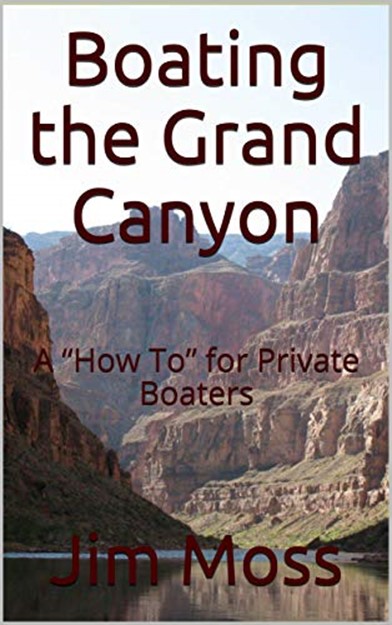
Boating the Grand Canyon: A “How To” for Private Boaters
https://rec-law.us/GrandCanyon
 Waiting to raft the Colorado River through the Grand Canyon, the greatest river trip in the world?
This new book, Boating the Grand Canyon: A “How To” for Private Boaters, will help make your once in a lifetime trip work.
The Colorado River flowing through the Grand Canyon is one of the world’s most awe-inspiring places on earth. Rafting and kayaking down the river is the water trip of a lifetime. Whether you are trying to get a permit or have already one a permit, this new book will instantly make planning your Grand Canyon River trip easier.
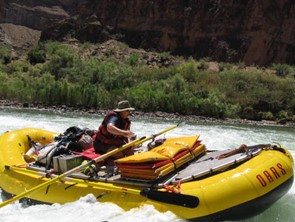 You want this once in a lifetime experience to be everything you have heard and dreamed about for years. Boating the Grand Canyon Will help make those dreams come true.
25 years of working on commercial trips in the Grand Canyon and private trips, or as the Park Service calls them non-commercial river trips, has helped me gather the best from both worlds. On top of that I’ve worked river trips for dozens of companies all over the east and west. Twenty-Five years rafting in the West, 1000’s of river days and dozens of commercial and private trips have given me the opportunity to pick the best of all works to write this book and make your trip special.
This new book will instantly make planning your Grand Canyon River trip easier.
This book will
- Plan on getting your trip together
- Pick the perfect friends to go down the river with you.
- Help you understand the equipment to take or that you renting from an outfitter
- Know what gear you need to bring with you to make the trip easier and better
 Give you more time to enjoy the Grand Canyon
- Save you time
- Save you money
- Show you all of the options you have in planning and running your trip
- Help you transfer your river trip skills to a Grand Canyon trip
Boating the Grand Canyon explains the Non-Commercial River Trip regulations and why and how the Grand Canyon National Park River Rangers enforce the rules. By knowing and understanding the reasoning for the rules you will have a better experience with National Park Service Rangers.
 This book is full of:
- Ideas on how to plan and what not to plan for your private river trip.
- How to decide what meals will work for your group and trip
-
Ideas on how to organize
- Your trip
- Your kitchen crews
- Your menu
- Your menu based on your schedule
- Your boat
- Your trip
- How to Quickly rig in the morning
- How to easily de-rig in the evening
- How to plan, in advance
12 Chapters of ideas, time savers, equipment and gear to bring and not to bring. The best way to organize your trip and the best way to keep everyone happy. 150 pages of tips, tricks and ideas to keep you enjoying the trip and not worrying about it. Two chapters on resources, links and terminology to help you become the professional Grand Canyon private boater.
- You want to run the Grand Canyon.
- Planning your trip: Organizing Your People
- What to Take Down the River: Stuff
- Food and Pre-Trip Food Preparation
- Things to do before you Start Your Trip
- Ideas on Packing and Rigging
- On the River
- Special days on the River
- Getting to the End of your trip
- Hints Tips & Tricks
- River Etiquette
- Books, Websites & References
- Appendix
- Glossary: Grand Canyon Terms & Terminology
Whitewater rafting and kayaking the legendary rapids, Horn, Granite, Crystal and Lava are what your dreams concentrate on, are you good enough, can I do 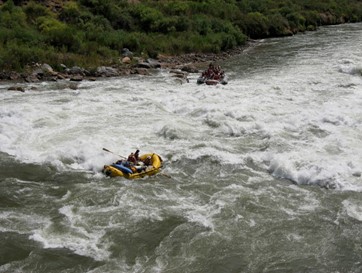 it, how much fun am I going to have? This book will show you how to load your boats, and deal with the issues so running the rapids is not the keep you up all night worrying issue it might be.
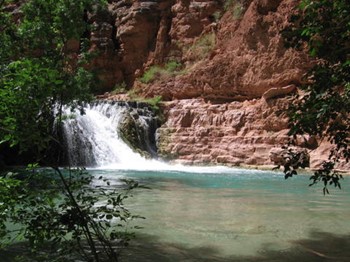
The Colorado River has so much more to offer than just fantastic Whitewater. Views that are only available on a river trip such as Vasey’s Paradise, Red Wall Cavern, Elves Chasm and Deer Creek Falls are just a few.
No matter if you follow this book to the letter, or you glance through it for some new ideas, Boating the Grand Canyon will help you enjoy the Canyon, watch it change the lives of the people you are floating downriver with and marvel at what it did  to you when you get home.
The Grand Canyon will change your life! This book, Boating the Grand Canyon will give you more Time to Enjoy the Adventure.
Summit Magic Publishing, LLC
Jim Moss
I have a new book: Boating the Grand Canyon: A “How To” for Private Boaters
Posted: May 16, 2019 Filed under: Paddlesports, Whitewater Rafting | Tags: #GrandCanyonRiverGuides, #RecLaw, @GrandCanynTrust, @GrandCanyonNPS, @Interior, @NatlParkService, @SC_GrandCanyon, Colorado River, GCRG, Grand Canyon, Grand Canyon National Park, Grand Canyon Private Boaters Association, Grand Canyon River Guides, Grand Canyon Trust, Multi-Day River Trip, National Park Servce, Non-Commercial River Trip, Packing List, Paddlesports, Private Boater, RecreationLaw, River Trip, Whitewater, Whitewater Rafting 3 Comments
Boating the Grand Canyon: A “How To” for Private Boaters
https://rec-law.us/GrandCanyon
Waiting to raft the Colorado River through the Grand Canyon, the greatest river trip in the world?
This new book, Boating the Grand Canyon: A “How To” for Private Boaters, will help make your once in a lifetime trip work.
The Colorado River flowing through the Grand Canyon is one of the world’s most awe-inspiring places on earth. Rafting and kayaking down the river is the water trip of a lifetime. Whether you are trying to get a permit or have already one a permit, this new book will instantly make planning your Grand Canyon River trip easier.
You want this once in a lifetime experience to be everything you have heard and dreamed about for years. Boating the Grand Canyon Will help make those dreams come true.
25 years of working on commercial trips in the Grand Canyon and private trips, or as the Park Service calls them non-commercial river trips, has helped me gather the best from both worlds. On top of that I’ve worked river trips for dozens of companies all over the east and west. Twenty-Five years rafting in the West, 1000’s of river days and dozens of commercial and private trips have given me the opportunity to pick the best of all works to write this book and make your trip special.
This new book will instantly make planning your Grand Canyon River trip easier.
This book will
- Plan on getting your trip together
- Pick the perfect friends to go down the river with you.
- Help you understand the equipment to take or that you renting from an outfitter
- Know what gear you need to bring with you to make the trip easier and better
- Give you more time to enjoy the Grand Canyon
- Save you time
- Save you money
- Show you all of the options you have in planning and running your trip
- Help you transfer your river trip skills to a Grand Canyon trip
Boating the Grand Canyon explains the Non-Commercial River Trip regulations and why and how the Grand Canyon National Park River Rangers enforce the rules. By knowing and understanding the reasoning for the rules you will have a better experience with National Park Service Rangers.
This book is full of:
- Ideas on how to plan and what not to plan for your private river trip.
- How to decide what meals will work for your group and trip
-
Ideas on how to organize
- Your trip
- Your kitchen crews
- Your menu
- Your menu based on your schedule
- Your boat
- Your trip
- How to Quickly rig in the morning
- How to easily de-rig in the evening
- How to plan, in advance
12 Chapters of ideas, time savers, equipment and gear to bring and not to bring. The best way to organize your trip and the best way to keep everyone happy. 150 pages of tips, tricks and ideas to keep you enjoying the trip and not worrying about it. Two chapters on resources, links and terminology to help you become the professional Grand Canyon private boater.
- You want to run the Grand Canyon.
- Planning your trip: Organizing Your People
- What to Take Down the River: Stuff
- Food and Pre-Trip Food Preparation
- Things to do before you Start Your Trip
- Ideas on Packing and Rigging
- On the River
- Special days on the River
- Getting to the End of your trip
- Hints Tips & Tricks
- River Etiquette
- Books, Websites & References
- Appendix
- Glossary: Grand Canyon Terms & Terminology
Whitewater rafting and kayaking the legendary rapids, Horn, Granite, Crystal and Lava are what your dreams concentrate on, are you good enough, can I do it, how much fun am I going to have? This book will show you how to load your boats, and deal with the issues so running the rapids is not the keep you up all night worrying issue it might be.
The Colorado River has so much more to offer than just fantastic Whitewater. Views that are only available on a river trip such as Vasey’s Paradise, Red Wall Cavern, Elves Chasm and Deer Creek Falls are just a few.
No matter if you follow this book to the letter, or you glance through it for some new ideas, Boating the Grand Canyon will help you enjoy the Canyon, watch it change the lives of the people you are floating downriver with and marvel at what it did to you when you get home.
The Grand Canyon will change your life! This book, Boating the Grand Canyon will give you more Time to Enjoy the Adventure.
Summit Magic Publishing, LLC
Jim Moss
I have a new book: Boating the Grand Canyon: A “How To” for Private Boaters
Posted: May 10, 2019 Filed under: Paddlesports, Whitewater Rafting | Tags: #GrandCanyonRiverGuides, #RecLaw, @GrandCanynTrust, @GrandCanyonNPS, @Interior, @NatlParkService, @SC_GrandCanyon, Colorado River, GCRG, Grand Canyon, Grand Canyon National Park, Grand Canyon Private Boaters Association, Grand Canyon River Guides, Grand Canyon Trust, Multi-Day River Trip, National Park Servce, Non-Commercial River Trip, Packing List, Paddlesports, Private Boater, RecreationLaw, River Trip, Whitewater, Whitewater Rafting 2 Comments
Boating the Grand Canyon: A “How To” for Private Boaters
https://rec-law.us/GrandCanyon
Waiting to raft the Colorado River through the Grand Canyon, the greatest river trip in the world?
This new book, Boating the Grand Canyon: A “How To” for Private Boaters, will help make your once in a lifetime trip work.
The Colorado River flowing through the Grand Canyon is one of the world’s most awe-inspiring places on earth. Rafting and kayaking down the river is the water trip of a lifetime. Whether you are trying to get a permit or have already one a permit, this new book will instantly make planning your Grand Canyon River trip easier.
You want this once in a lifetime experience to be everything you have heard and dreamed about for years. Boating the Grand Canyon Will help make those dreams come true.
25 years of working on commercial trips in the Grand Canyon and private trips, or as the Park Service calls them non-commercial river trips, has helped me gather the best from both worlds. On top of that I’ve worked river trips for dozens of companies all over the east and west. Twenty-Five years rafting in the West, 1000’s of river days and dozens of commercial and private trips have given me the opportunity to pick the best of all works to write this book and make your trip special.
This new book will instantly make planning your Grand Canyon River trip easier.
This book will
- Plan on getting your trip together
- Pick the perfect friends to go down the river with you.
- Help you understand the equipment to take or that you renting from an outfitter
- Know what gear you need to bring with you to make the trip easier and better
- Give you more time to enjoy the Grand Canyon
- Save you time
- Save you money
- Show you all of the options you have in planning and running your trip
- Help you transfer your river trip skills to a Grand Canyon trip
Boating the Grand Canyon explains the Non-Commercial River Trip regulations and why and how the Grand Canyon National Park River Rangers enforce the rules. By knowing and understanding the reasoning for the rules you will have a better experience with National Park Service Rangers.
This book is full of:
- Ideas on how to plan and what not to plan for your private river trip.
- How to decide what meals will work for your group and trip
-
Ideas on how to organize
- Your trip
- Your kitchen crews
- Your menu
- Your menu based on your schedule
- Your boat
- Your trip
- How to Quickly rig in the morning
- How to easily de-rig in the evening
- How to plan, in advance
12 Chapters of ideas, time savers, equipment and gear to bring and not to bring. The best way to organize your trip and the best way to keep everyone happy. 150 pages of tips, tricks and ideas to keep you enjoying the trip and not worrying about it. Two chapters on resources, links and terminology to help you become the professional Grand Canyon private boater.
- You want to run the Grand Canyon.
- Planning your trip: Organizing Your People
- What to Take Down the River: Stuff
- Food and Pre-Trip Food Preparation
- Things to do before you Start Your Trip
- Ideas on Packing and Rigging
- On the River
- Special days on the River
- Getting to the End of your trip
- Hints Tips & Tricks
- River Etiquette
- Books, Websites & References
- Appendix
- Glossary: Grand Canyon Terms & Terminology
Whitewater rafting and kayaking the legendary rapids, Horn, Granite, Crystal and Lava are what your dreams concentrate on, are you good enough, can I do it, how much fun am I going to have? This book will show you how to load your boats, and deal with the issues so running the rapids is not the keep you up all night worrying issue it might be.
The Colorado River has so much more to offer than just fantastic Whitewater. Views that are only available on a river trip such as Vasey’s Paradise, Red Wall Cavern, Elves Chasm and Deer Creek Falls are just a few.
No matter if you follow this book to the letter, or you glance through it for some new ideas, Boating the Grand Canyon will help you enjoy the Canyon, watch it change the lives of the people you are floating downriver with and marvel at what it did to you when you get home.
The Grand Canyon will change your life! This book, Boating the Grand Canyon will give you more Time to Enjoy the Adventure.
Summit Magic Publishing, LLC
Jim Moss
Do Releases Work? Should I be using a Release in my Business? Will my customers be upset if I make them sign a release?
Posted: April 30, 2019 Filed under: Activity / Sport / Recreation, Adventure Travel, Assumption of the Risk, Avalanche, Camping, Challenge or Ropes Course, Climbing, Climbing Wall, Contract, Cycling, Equine Activities (Horses, Donkeys, Mules) & Animals, First Aid, Health Club, Indoor Recreation Center, Insurance, Jurisdiction and Venue (Forum Selection), Medical, Minors, Youth, Children, Mountain Biking, Mountaineering, Paddlesports, Playground, Racing, Racing, Release (pre-injury contract not to sue), Risk Management, Rivers and Waterways, Rock Climbing, Scuba Diving, Sea Kayaking, Search and Rescue (SAR), Ski Area, Skier v. Skier, Skiing / Snow Boarding, Skydiving, Paragliding, Hang gliding, Snow Tubing, Sports, Summer Camp, Swimming, Triathlon, Whitewater Rafting, Youth Camps, Zip Line | Tags: #ORLawTextbook, #ORRiskManagment, #OutdoorRecreationRiskManagementInsurance&Law, #OutdoorRecreationTextbook, @SagamorePub, Accidents, Angry Guest, Dealing with Claims, General Liability Insurance, Guide, http://www.rec-law.us/ORLawTextbook, Injured Guest, Insurance policy, James H. Moss J.D., Jim Moss, Liability insurance, OR Textbook, Outdoor Recreation Insurance, Outdoor Recreation Law, Outdoor Recreation Risk Management, Outfitter, RecreationLaw, Risk Management, risk management plan, Textbook, Understanding, Understanding Insurance, Understanding Risk Management, Upset Guest Leave a comment These and many other questions are answered in my book Outdoor Recreation Risk Management, Insurance and Law.
Releases, (or as some people incorrectly call them waivers) are a legal agreement that in advance of any possible injury identifies who will pay for what. Releases can and to stop lawsuits.
This book will explain releases and other defenses you can use to put yourself in a position to stop lawsuits and claims.
This book can help you understand why people sue and how you can and should deal with injured, angry or upset guests of your business.
This book is designed to help you rest easy about what you need to do and  how to do it. More importantly, this book will make sure you keep your business afloat and moving forward.
You did not get into the outdoor recreation business to worry or spend nights staying awake. Get prepared and learn how and why so you can sleep and quit worrying.

Table of Contents
Chapter 1 Outdoor Recreation Risk Management, Law, and Insurance: An Overview
Chapter 2 U.S. Legal System and Legal Research
Chapter 3 Risk 25
Chapter 4 Risk, Accidents, and Litigation: Why People Sue
Chapter 5 Law 57
Chapter 6 Statutes that Affect Outdoor Recreation
Chapter 7 Pre-injury Contracts to Prevent Litigation: Releases
Chapter 8 Defenses to Claims
Chapter 9 Minors
Chapter 10 Skiing and Ski Areas
Chapter 11 Other Commercial Recreational Activities
Chapter 12 Water Sports, Paddlesports, and water-based activities
Chapter 13 Rental Programs
Chapter 14 Insurance
$99.00 plus shipping

Artwork by Don Long donaldoelong@earthlink.net
Can’t Sleep? Guest was injured, and you don’t know what to do? This book can answer those questions for you.
Posted: April 16, 2019 Filed under: Adventure Travel, Assumption of the Risk, Avalanche, Camping, Climbing, Climbing Wall, Contract, Criminal Liability, Cycling, Equine Activities (Horses, Donkeys, Mules) & Animals, First Aid, Health Club, How, Indoor Recreation Center, Insurance, Jurisdiction and Venue (Forum Selection), Medical, Minors, Youth, Children, Mountain Biking, Mountaineering, Paddlesports, Playground, Racing, Racing, Release (pre-injury contract not to sue), Risk Management, Rivers and Waterways, Rock Climbing, Scuba Diving, Sea Kayaking, Search and Rescue (SAR), Ski Area, Skier v. Skier, Skiing / Snow Boarding, Skydiving, Paragliding, Hang gliding, Snow Tubing, Sports, Summer Camp, Swimming, Triathlon, Whitewater Rafting, Youth Camps, Zip Line | Tags: #ORLawTextbook, #ORRiskManagment, #OutdoorRecreationRiskManagementInsurance&Law, #OutdoorRecreationTextbook, @SagamorePub, Accidents, Angry Guest, Dealing with Claims, General Liability Insurance, Guide, http://www.rec-law.us/ORLawTextbook, Injured Guest, Insurance policy, James H. Moss J.D., Jim Moss, Liability insurance, OR Textbook, Outdoor Recreation Insurance, Outdoor Recreation Law, Outdoor Recreation Risk Management, Outfitter, RecreationLaw, Risk Management, risk management plan, Textbook, Understanding, Understanding Insurance, Understanding Risk Management, Upset Guest Leave a comment An injured guest is everyone’s business owner’s nightmare. What happened, how do you make sure it does not happen again, what can you do to help the guest, can you help the guests are just some of the questions that might be keeping you up at night.
This book can help you understand why people sue and how you can and should deal with injured, angry or upset guests of your business.
This book is designed to help you rest easy about what you need to do and how to do it. More importantly, this book will make sure you keep your business afloat and moving forward.
You did not get into the outdoor recreation business to worry or spend nights staying awake. Get prepared and learn how and why so you can sleep and quit worrying.

Table of Contents
Chapter 1 Outdoor Recreation Risk Management, Law, and Insurance: An Overview
Chapter 2 U.S. Legal System and Legal Research
Chapter 3 Risk 25
Chapter 4 Risk, Accidents, and Litigation: Why People Sue
Chapter 5 Law 57
Chapter 6 Statutes that Affect Outdoor Recreation
Chapter 7 Pre-injury Contracts to Prevent Litigation: Releases
Chapter 8 Defenses to Claims
Chapter 9 Minors
Chapter 10 Skiing and Ski Areas
Chapter 11 Other Commercial Recreational Activities
Chapter 12 Water Sports, Paddlesports, and water-based activities
Chapter 13 Rental Programs
Chapter 14 Insurance
$130.00 plus shipping

What is a Risk Management Plan and What do You Need in Yours?
Posted: April 11, 2019 Filed under: Activity / Sport / Recreation, Adventure Travel, Assumption of the Risk, Avalanche, Camping, Challenge or Ropes Course, Climbing, Climbing Wall, Contract, Cycling, Equine Activities (Horses, Donkeys, Mules) & Animals, First Aid, Health Club, Indoor Recreation Center, Jurisdiction and Venue (Forum Selection), Legal Case, Medical, Minors, Youth, Children, Mountain Biking, Mountaineering, Paddlesports, Playground, Racing, Racing, Release (pre-injury contract not to sue), Risk Management, Rivers and Waterways, Rock Climbing, Scuba Diving, Sea Kayaking, Search and Rescue (SAR), Ski Area, Skier v. Skier, Skiing / Snow Boarding, Skydiving, Paragliding, Hang gliding, Snow Tubing, Sports, Summer Camp, Swimming, Triathlon, Whitewater Rafting, Youth Camps, Zip Line | Tags: #ORLawTextbook, #ORRiskManagment, #OutdoorRecreationRiskManagementInsurance&Law, #OutdoorRecreationTextbook, @SagamorePub, Adventure travel, and Law, assumption of the risk, camping, Case Analysis, Challenge or Ropes Course, Climbing, Climbing Wall, Contract, Cycling, Donkeys, Equine Activities (Horses, first aid, General Liability Insurance, Good Samaritan Statutes, Guide, Hang gliding, http://www.rec-law.us/ORLawTextbook, Insurance, Insurance policy, James H. Moss, James H. Moss J.D., Jim Moss, Jurisdiction and Venue (Forum Selection), Legal Case, Liability insurance, Medical, Mountain biking, Mountaineering, Mules) & Animals, Negligence, OR Textbook, Outdoor Recreation Insurance, Outdoor Recreation Law, Outdoor Recreation Risk Management, Outfitter, Paddlesports, Paragliding, Recreational Use Statute, Release (pre-injury contract not to sue), Risk Management, risk management plan, Rivers and Waterways, Rock climbing, Sea Kayaking, ski area, Ski Area Statutes, Skiing / Snow Boarding, Skydiving, swimming, Textbook, Understanding, Understanding Insurance, Understanding Risk Management, Whitewater Rafting, zip line Leave a commentEveryone has told you, you need a risk management plan. A plan to follow if you have  a crisis. You‘ve seen several and they look burdensome and difficult to write. Need help writing a risk management plan? Need to know what should be in your risk management plan? Need Help?
This book can help you understand and write your plan. This book is designed to help you rest easy about what you need to do and how to do it. More importantly, this book will make sure you plan is a workable plan, not one that will create liability for you.

Table of Contents
Chapter 1 Outdoor Recreation Risk Management, Law, and Insurance: An Overview
Chapter 2 U.S. Legal System and Legal Research
Chapter 3 Risk 25
Chapter 4 Risk, Accidents, and Litigation: Why People Sue
Chapter 5 Law 57
Chapter 6 Statutes that Affect Outdoor Recreation
Chapter 7 PreInjury Contracts to Prevent Litigation: Releases
Chapter 8 Defenses to Claims
Chapter 9 Minors
Chapter 10 Skiing and Ski Areas
Chapter 11 Other Commercial Recreational Activities
Chapter 12 Water Sports, Paddlesports, and water-based activities
Chapter 13 Rental Programs
Chapter 14 Insurance
$99.00 plus shipping

Need a Handy Reference Guide to Understand your Insurance Policy?
Posted: April 2, 2019 Filed under: Adventure Travel, Assumption of the Risk, Avalanche, Challenge or Ropes Course, Climbing, Contract, Cycling, Equine Activities (Horses, Donkeys, Mules) & Animals, Health Club, Indoor Recreation Center, Insurance, Jurisdiction and Venue (Forum Selection), Minors, Youth, Children, Mountain Biking, Mountaineering, Paddlesports, Racing, Release (pre-injury contract not to sue), Risk Management, Rivers and Waterways, Rock Climbing, Scuba Diving, Sea Kayaking, Ski Area, Skier v. Skier, Skiing / Snow Boarding, Skydiving, Paragliding, Hang gliding, Snow Tubing, Sports, Summer Camp, Swimming, Whitewater Rafting, Youth Camps, Zip Line | Tags: #ORLawTextbook, #ORRiskManagment, #OutdoorRecreationRiskManagementInsurance&Law, #OutdoorRecreationTextbook, @SagamorePub, Adventure travel, and Law, assumption of the risk, camping, Case Analysis, Challenge or Ropes Course, Climbing, Climbing Wall, Contract, Cycling, Donkeys, Equine Activities (Horses, first aid, General Liability Insurance, Good Samaritan Statutes, Guide, Hang gliding, http://www.rec-law.us/ORLawTextbook, Insurance, Insurance policy, James H. Moss, James H. Moss J.D., Jim Moss, Jurisdiction and Venue (Forum Selection), Legal Case, Liability insurance, Medical, Mountain biking, Mountaineering, Mules) & Animals, Negligence, Outdoor Recreation Insurance, Outdoor Recreation Law, Outdoor Recreation Risk Management, Outfitter, Paddlesports, Paragliding, Recreational Use Statute, Release (pre-injury contract not to sue), Risk Management, Rivers and Waterways, Rock climbing, Sea Kayaking, ski area, Ski Area Statutes, Skiing / Snow Boarding, Skydiving, swimming, Whitewater Rafting, zip line Leave a commentThis book should be on every outfitter and guide’s desk. It will answer your questions, help you sleep at night, help you answer your guests’ questions and allow you to run your business with less worry.

Table of Contents
Chapter 1 Outdoor Recreation Risk Management, Law, and Insurance: An Overview
Chapter 2 U.S. Legal System and Legal Research
Chapter 3 Risk 25
Chapter 4 Risk, Accidents, and Litigation: Why People Sue
Chapter 5 Law 57
Chapter 6 Statutes that Affect Outdoor Recreation
Chapter 7 PreInjury Contracts to Prevent Litigation: Releases
Chapter 8 Defenses to Claims
Chapter 9 Minors
Chapter 10 Skiing and Ski Areas
Chapter 11 Other Commercial Recreational Activities
Chapter 12 Water Sports, Paddlesports, and water-based activities
Chapter 13 Rental Programs
Chapter 14 Insurance
$99.00 plus shipping

A fly-fishing lawsuit, a first.
Posted: January 14, 2019 Filed under: Assumption of the Risk, Montana, Paddlesports, Whitewater Rafting | Tags: abnormally, amend, Assumption of risk, bridge, drowning, emotional distress, Fishing, Float Trip, Fly Fishing, genuine, Inherent Risks, Issue of Material Fact, James Yeager, Jim Yeager Outfitters, loss of consortium, matter of law, negligence claim, Personal Flotation Device, PFD, provider's, Raft, reasonable care, Recreation, recreational, recreational opportunity, recreationists, River, secondary, severe, Skier, skiing, Sport, Summary judgment, unconstitution-ally vague, Whitewater, Wyoming Act's 3 CommentsMontana Federal Court covers a lot of interesting legal issues for the OR industry in this decision. However, defendant is in a tough position because the statutes provide no help, he can’t use a release and probably like most fly-fishing guides; he believes he won’t be sued.
McJunkin v. James Yeager d/b/a Jim Yeager Outfitters, 2018 U.S. Dist. LEXIS 169321
State: Montana
Plaintiff: Charles P. McJunkin, deceased, by and through his executor and personal representative, Rhett McJunkin, and Rhett McJunkin, executor and personal representative, on behalf of the heirs of Charles P. McJunkin
Defendant: James Yeager d/b/a Jim Yeager Outfitters
Plaintiff Claims: negligence, negligent infliction of emotional distress, and loss of consortium
Defendant Defenses: Montana Recreation Responsibility Act
Holding: Split, mostly for the defendant
Year: 2018
Summary
At the end of a float fly fishing trip, the boat hit a rock throwing the deceased into the river. While attempting to get the deceased back in the boat the deceased partner fell in. The deceased yelled to grab her because she could not swim. The defendant grabbed the girlfriend and maneuvered the boat through rapids.
The deceased drowned, (supposedly). Neither were wearing PFDs.
Facts
Yeager is a professional fishing guide and outfitter. On July 17, 2014, Yeager took a paying client, Charles P. McJunkin on a guided fishing trip in a raft on the Stillwater River. As Yeager was guiding and operating the raft, McJunkin fell into the river and drowned. McJunkin was 81 years old at the time of his death.
McJunkin had gone on similar guided fishing trips with Yeager for approximately 20 years. In fact, in the week preceding the July 17, 2014 accident, McJunkin had floated and fished the Stillwater River three times with Yeager. On each occasion, Yeager put-in at the Johnson Bridge Fishing Access, and used the Swinging Bridge Fishing Access Site for a take-out at the end of the day. The Swinging Bridge take-out is approximately one-quarter mile above a set of rapids known as the Beartooth Drop. Yeager had never floated through the Beartooth Drop with McJunkin.
On the date of the accident, Yeager was guiding McJunkin and his partner, Julia Garner (“Garner”). The plan was to again float from Johnson Bridge to the Swinging Bridge take-out. The river conditions encountered by Yeager that day were characteristic of, and consistent with conditions he previously encountered on that stretch of the river. Yeager approached the Swinging Bridge take-out in the same manner as he had on the three earlier days of fishing. As he approached the take-out, the raft crossed an underwater shelf of rocks. When the rear of the raft passed the shelf, the boat rocked and McJunkin fell into the water. Although the raft was equipped with personal floatation devices (PFDs), McJunkin was not wearing one at the time.
McJunkin swam toward the raft, and Yeager attempted to position the raft so that McJunkin could grab ahold of the side. During this process, the party floated past the Swinging Bridge take-out. To complicate matters further, as Yeager attempted to pull McJunkin into the raft, Garner fell into the water. The parties dispute what caused Garner’s fall. Plaintiffs contend Yeager accidentally hit her with an oar. Yeager indicated he didn’t know what caused her to fall in, testifying “I don’t know if I hit a rock or a wave or whatever, Julie went in.” Garner yelled to Yeager that she could not swim. Yeager made the split-second decision to let go of McJunkin and attempt to save Garner, fearing she would drown otherwise. Yeager was able to pull her back into the raft as they entered the Beartooth Drop. Meanwhile, McJunkin lost contact with Yeager and the raft and floated through the rapid. He ultimately did not survive.
Analysis: making sense of the law based on these facts.
Only the legal issues affecting fly fishing or the outdoor industry will be reviewed. This decision is a result of both parties filing motions for summary judgment, so there is no chronological hierarchy of how the decision is written. Each motion is tackled by the judge in the order to make the following arguments more manageable.
A few things to remember. Montana does not allow an outfitter or guide to use a release. See Montana Statutes Prohibits Use of a Release.
Both parties filed motions concerning the Montana Recreation Responsibility Act (MRRA). The MRRA is similar to the Wyoming Recreational Safety Act, both of which are solely assumption of the risk statutes and weak overall. The plaintiff argued the MRRA was unconstitutional on several grounds, all of which were denied. The defendant argued the MRRA should bar the plaintiff’s claims which were also denied.
The first issue was inherent risks under the MRRA are not defined per activity or in general.
Under the plain language of the MRRA, a risk must satisfy two requirements to constitute an “inherent risk” and thus fall within the Act’s protection. There must be (1) a danger or condition that is characteristic of, or intrinsic to the activity, and (2) the danger or condition must be one that cannot be prevented by the use of reasonable care. Mont. Code Ann. § 27-1-752(2).
This leaves a monstrous gap in the protection it affords, in fact, does not afford outfitters and guides in Montana any real protection.
The court did not agree that the MRRA was broad enough to protect the defendant in this case.
Here, there are genuine issues of material fact regarding whether the risk encountered by McJunkin was an inherent risk to the sport of float fishing, or whether Yeager could have prevented the risk using reasonable care. Yeager’s expert opined that drowning is an inherent risk of floating in a raft on a river, and McJunkin’s death was a result of that inherent risk. But Plaintiffs’ expert states the risk of drowning can be prevented by the use of reasonable care. Plaintiffs’ expert also opined that Yeager increased the risks to McJunkin, and failed to adhere to industry standards by not taking basic safety precautions and not having a plan or equipment to retrieve McJunkin from the water.
Because there was a genuine issue of material fact (a mix of plausible opinions) the MRRA was not broad or strong enough to stop the plaintiff’s claims and the defendant’s motion failed.
The plaintiff argued the MRRA was void because it was vague, it did not define inherent risk.
The void-for-vagueness doctrine chiefly applies to criminal statutes, but can apply to civil laws as well. Civil statutes, however, generally receive less exacting vagueness scrutiny. The United States Supreme Court has held “[t]o find a civil statute void for vagueness, the statute must be so vague and indefinite as really to be no rule or standard at all.” The Montana Supreme Court has similarly declared that a statute is unconstitutionally vague on its face only if it is shown “that the statute is vague ‘in the sense that no standard of conduct is specified at all.'” “[P]erfect clarity and precise guidance are not required.” A statute is not vague “simply because it can be dissected or subject to different interpretations.”
The plaintiff also argued that because the MRRA did not define risk that it was void.
A person of common intelligence can understand the risks associated with river sports or activities. There is no indication McJunkin would not have been able to appreciate such risks, including the potential risk involved in floating and fishing. Indeed, in their depositions Plaintiffs were able to articulate risks associated with floating on a river, such as falling out of the boat and drowning.
The plaintiff argued they should be able to sue for negligent infliction of emotional distress (“NEID”).
To constitute ‘serious’ or ‘severe,’ the emotional distress must be ‘so severe no reasonable person could be expected to endure it.'” The question of whether the threshold level of emotional dis-tress can be found is for the Court to determine. (“It is for the court to determine whether on the evidence severe [serious] emotional distress can be found; it is for the jury to determine whether, on the evidence, it has in fact existed.”).
In Feller, the Montana Supreme Court considered several factors in determining whether there is sufficient evidence of severe emotional distress, including: (1) whether the plaintiff had any physical manifestations of grief; (2) whether counseling was sought or recommended; (3) whether the plaintiff took medication or the use of medication dramatically increased; (4) whether the plain-tiff had continuous nights of sleeplessness or days without appetite; (5) whether the plaintiff maintained close relationships with family members and friends; (6) the duration of the emotional dis-tress; and (7) the circumstances under which the infliction incurred, including whether the plaintiff witnessed the distressing event.
The plaintiff also argued they should be able to sue for loss of consortium.
Montana law recognizes loss of consortium claims by an adult child of an injured parent. In Stucky, the Montana Supreme Court held an adult child must meet the following two-part test to establish a claim for loss of parental consortium: “1) a third party tortuously caused the parent to suffer a serious, permanent and disabling mental or physical injury compensable under Montana law; and 2) the parent’s ultimate condition of mental or physical impairment was so overwhelming and severe that it has caused the parent-child relationship to be destroyed or nearly destroyed.”
In establishing a loss of parental consortium claim, the plaintiff may present evidence of the following factors, which the jury may consider in determining both whether the two-part test has been satisfied, and what damages are appropriate: “the severity of injury to the parent; the actual effect the parent’s injury has had on the relationship and is likely to have in the future; the child’s age; the nature of the child’s relationship with the parent; and the child’s emotional, physical and geographic characteristics.”
The court then looked at the issue of abnormally dangerous. A finding of that an activity is abnormally dangerous brings more damages and fewer requirements to prove part of the negligence of the defendant.
“Whether an activity is abnormally dangerous is a question of law.” No court has held float fly fishing is an abnormally dangerous activity, and this Court declines Plaintiffs’ invitation to be the first to do so.
So Now What?
A statute that protects defendants based on assumption of the risk does so because it identifies specific risk and broadens the definitions of what an inherent risk is. An example would be the Colorado Skier Safety Act. That act describes the inherent risk of skiing and then adds dozens of more risk, which are beyond the normal scope of inherent.
Both the MRRA and the Wyoming Recreational Safety Act statutorily defines the common law but does nothing to broaden or strengthen the common law. They could better be defined as politically pandering, an attempt by a politician to make constituents feel better by giving them something, which, in reality, has no value.
The fly-fishing outfitter was caught in Montana’s lack of available defenses, no statutory protection and no availability of a release. He might be able to strengthen his defenses by having his clients sign an Assumption of the Risk Document. He also might offer them PFDs.
Furthermore, remember in most whitewater or cold-water deaths drowning is not the cause of the death. Most people die of a heart attack. risk or Wikipedia: Cold Shock Response.
What do you think? Leave a comment.
Copyright 2018 Recreation Law (720) 334 8529
If you like this let your friends know or post it on FB, Twitter or LinkedIn


Author: Outdoor Recreation Insurance, Risk Management and Law
Facebook Page: Outdoor Recreation & Adventure Travel Law
Email: Rec-law@recreation-law.com
By Recreation Law Rec-law@recreation-law.com James H. Moss
#AdventureTourism, #AdventureTravelLaw, #AdventureTravelLawyer, #AttorneyatLaw, #Backpacking, #BicyclingLaw, #Camps, #ChallengeCourse, #ChallengeCourseLaw, #ChallengeCourseLawyer, #CyclingLaw, #FitnessLaw, #FitnessLawyer, #Hiking, #HumanPowered, #HumanPoweredRecreation, #IceClimbing, #JamesHMoss, #JimMoss, #Law, #Mountaineering, #Negligence, #OutdoorLaw, #OutdoorRecreationLaw, #OutsideLaw, #OutsideLawyer, #RecLaw, #Rec-Law, #RecLawBlog, #Rec-LawBlog, #RecLawyer, #RecreationalLawyer, #RecreationLaw, #RecreationLawBlog, #RecreationLawcom, #Recreation-Lawcom, #Recreation-Law.com, #RiskManagement, #RockClimbing, #RockClimbingLawyer, #RopesCourse, #RopesCourseLawyer, #SkiAreas, #Skiing, #SkiLaw, #Snowboarding, #SummerCamp, #Tourism, #TravelLaw, #YouthCamps, #ZipLineLawyer, #RecreationLaw, #OutdoorLaw, #OutdoorRecreationLaw, #SkiLaw,
Grand Canyon River Guides has a new Email Newsletter. Become a member and stay on top of what is needed to keep the Canyon Grand!
Posted: September 5, 2018 Filed under: Arizona, Paddlesports, Whitewater Rafting | Tags: Boatman’s Beta, GCRG, Grand Canyon, Grand Canyon River Guides Leave a comment
|

 |
Virus-free. www.avast.com |
Whitewater rafting release upheld by the Alaska Supreme Court.
Posted: June 25, 2018 Filed under: Alaska, Release (pre-injury contract not to sue), Whitewater Rafting | Tags: acknowledgment, alert, appendix, Canyon, Climbing, drowning, exculpate, Gym, Inherent Risk, Inherent Risks, insinuate, instructors, Notice, Public Policy, purported, Rafting, reasonable steps, recreational, recreational activity, Release, rock, signature, signing, skilled, Summary judgment, training, trip, unrelated, waive, waived, Warning, Whitewater Leave a commentLanguage in the release stated the defendant would and had done their best to keep people adequate… that language almost voided the release. Don’t put in a release information that can be used against you!
Langlois v. Nova River Runners, Inc., 2018 Alas. LEXIS 31
State: Alaska, Supreme Court of Alaska
Plaintiff: Vanessa L. Langlois, Personal Representative of the Estate of Stephen J. Morton
Defendant: Nova River Runners, Inc.
Plaintiff Claims: Wrongful Death and multiple theories of Negligence
Defendant Defenses: Release
Holding: For the Defendant
Year: 2018
Summary
The deceased died whitewater rafting. Alaska has a six-prong test to determine if a release is valid. Here, the plaintiff argued the release in question failed on every point.
The Alaskan Supreme Court disagreed; however, on a few of the issues, the court struggled to have this release meet the requirements needed.
Facts
The defendant operated whitewater raft trips on Six Mile Creek near Hope, Alaska. The deceased signed a release prior to going rafting. No one could remember if the deceased read both sides of the release, however, ample time was given so the release could have been read.
The release is a 2-sided document. One side is labeled Participants Acknowledgment of Risk. The other side is where the participants acknowledge they have read the release.
The raft trip consists of three canyons. After the first two canyons, the participants are given an opportunity to get off the trip because the third canyon is the hardest. The deceased did not leave the trip. Sometime in the canyon is raft capsized, and the decedent died.
The spouse of the deceased brought his lawsuit on her behalf and as the executor (personal representative) of the estate. The trial court dismissed the plaintiff’s claims after the defendant filed a motion for summary judgment based on the release signed by the deceased. The plaintiff appealed.
The decision was heard by the Alaska Supreme Court. Alaska does not have an intermediate appellate court so appeals from the trial court go to the Supreme Court.
Analysis: making sense of the law based on these facts.
Alaska has a statute, Alaska Statute 09.65.290, that protects recreational defendants from liability from the inherent risks of the activity. The court recognized the statute is weak and stated that business in Alaska must supplement their protection by using a release.
The Alaska Supreme Court decided one prior decision concerning releases Donahue v. Ledgends, Inc., 2014 Alas. LEXIS 153, See Alaskan Supreme Court upholds releases for climbing gym and sets forth requirements on how releases will be upheld in AK. The court relied on its prior decision in Donahue to support its decision here.
In Donahue, the court created a six-part test to test the validity of a release.
…(1) the risk being waived must be specifically and clearly set forth (e.g. death, bodily injury, and property damage); (2) a waiver of negligence must be specifically set forth using the word “negligence”; (3) these factors must be brought home to the releasor in clear, emphasized language . . . ; (4) the release must not violate public policy; (5) if a release seeks to exculpate a defendant from liability for acts of negligence unrelated to inherent risks, the release must suggest an intent to do so; and (6) the release agreement must not represent or insinuate standards of safety or maintenance.
The plaintiff argued the release in this case did not satisfy the requirements set forth in Donahue.
The first argument was the release was not conspicuous and unequivocal because the release was two sided, and the sides did not appear to incorporate or be connected to each other.
The court did not agree with the argument because whether or not it was two different documents and whether or not the deceased read both sides was irrelevant because he signed the document. “We note that Participants in a recreational activity need not read a release for it to be binding if the language of the release is available to them.”
The next argument was different.
The Estate also argues that NOVA’s Release “does not specifically and clearly set forth the risk that the NOVA instructors may have been negligently trained or supervised, or that they may give inadequate warning or instructions.”
The court found that the language in the release was broad enough to cover this claim.
However, the Release covers this risk as well; it indemnifies the “Releasees” in capital letters from liability for injury or death, “whether arising from negligence of the Releasees or otherwise,” and specifically defines “Releasees” to include “employees.”
The court also found that in Donahue,
…we also observed that “[i]t would not be reasonable to conclude that [the defendant] sought a release only of those claims against it that did not involve the acts or omissions of any of its employees.”
The plaintiffs then argued that a release must use the word negligence in it. This is a requirement of many states. Here, however, the argument failed because the release did use the term negligence, several times. The plaintiff’s argued that each time the word negligence was used, it was used in a way that was different from the prior ways so the release was not clear and explicit.
Next the plaintiff’s argued the language was not clear and did not adequately define the activity. The court found this release used capital letters to highlight the clauses waiving negligence, and the negligence clause was not concealed from view.
The clause contained some legalese; however, releases should be read “as a whole” to determine whether or not the language in the release “clearly notify the prospective releasor of the effect of signing the agreement.”
The release was a general release in that it also included release language for glacier hiking and ice climbing. However, the inherent risks outlined in the release were the risks of whitewater rafting. With that risk language, the court found the reader would know they were signing a release.
Based on that language it is obvious the release would fail for ice climbing and glacier hiking?
The plaintiff’s argued the release violated public policy. However, the court outlined Alaska’s definition of public policy in relation to recreation activities.
In evaluating public policy arguments in the context of liability waivers, we have previously considered “[o]f particular relevance . . . the type of service performed and whether the party seeking exculpation has a decisive advantage in bargaining strength because of the essential nature of the service.”25 The type of service likely to inspire additional scrutiny on public policy grounds is “a service of great importance to the public, which is often a matter of practical necessity for some members of the public.
A release for recreational activities does not violate public policy in Alaska.
The plaintiffs also argued the “release suggests an intent to exculpate nova from liability for employee negligence.”
The court said, yes it does and that is OK. However, the court also specifically identified weaknesses in the release in this area. However, the weaknesses were not enough to void the release.
Ideally NOVA’s Release would include a more detailed description of the types of negligence it covers, such as “employee negligence” and “negligent training.” But doing so is not a requirement under Donahue. We therefore conclude that the Release suggests an intent to exculpate NOVA from liability for acts of employee negligence.
The plaintiffs also argued the defendants violated their own requirements set forth in the release. The release stated:
“…the concessionaire has taken reasonable steps to provide you with appropriate equipment and/or skilled guides so you can enjoy an activity for which you may not be skilled.”
The court worked around this stating the language before and after this [stupid] section defined the risks of the activity, which should have shown the deceased that no matter what steps taken, there were still risks. The court stated, read as a whole, the release outlined numerous risks of whitewater rafting.
The plaintiff argued a case out of Florida, which also had numerous safety standards the defendant promised to meet and had not, should be controlling here. The court had been struggling through four paragraphs eventually concluded.
NOVA’s Release contains only a single half-sentence, to that effect, adequately disclaimed: “Although the concessionaire has taken reasonable steps to provide you with appropriate equipment and/or skilled guides so you can enjoy an activity for which you may not be skilled, this activity is not without risk. Certain risks cannot be eliminated without destroying the unique character of the activity.” And the release in Kerr was much broader — promising to “try to make the [premises] safe” — than NOVA’s Release, which promises merely that the company takes “reasonable steps to provide . . . appropriate equipment and/or skilled guides” while acknowledging in context that these precautions could not mitigate all the risks posed by a whitewater rafting trip. The Estate’s reliance on Kerr is thus misplaced, and we conclude that the Release does not represent or insinuate standards of safety or maintenance.
The court found the release met all the six requirements needed in Alaska to be a release and upheld the trial court’s dismissal of the plaintiff’s claims.
So Now What?
If your release, and I hope, it does, covers more than one page, make sure the pages connect or relate to each other. First, if on just one piece of paper, at the bottom of each page put in the footer, “Please Read Other Side.” If the release is more than two pages, besides the admonition to read the other side include page numbers on the document.
Write the document so it flows. You don’t have to have a heading at the top of each page. The two different headings in this case raised the argument it was two separate and unrelated documents. If the document were two different documents, then the first page should have had a signature line also, which is what the plaintiff argued. With no signature line, the first page of the document was a separate document and could not be held against the deceased.
If the writing flows, the paragraph or idea continues on the next page, then this would have been a non-issue.
Next you have to write your release to cover not only could happen but will happen, and it is all tied back to your employees. Always protect your employees and write the release broadly so it covers all the possible actions or acts an employee could take that may lead to a claim.
Never create in your release in a way for the plaintiff to sue you. Never make promises, never say you operate at a level, never say you use the best or even adequate anything. That language in this release almost was enough to defeat the release, and it was obvious the court struggled to find a very weak argument to beat this part of the plaintiff’s claims.
What do you think? Leave a comment.
Copyright 2018 Recreation Law (720) 334 8529
If you like this let your friends know or post it on FB, Twitter or LinkedIn


Author: Outdoor Recreation Insurance, Risk Management and Law
Facebook Page: Outdoor Recreation & Adventure Travel Law
Email: Rec-law@recreation-law.com
By Recreation Law Rec-law@recreation-law.com James H. Moss
#AdventureTourism, #AdventureTravelLaw, #AdventureTravelLawyer, #AttorneyatLaw, #Backpacking, #BicyclingLaw, #Camps, #ChallengeCourse, #ChallengeCourseLaw, #ChallengeCourseLawyer, #CyclingLaw, #FitnessLaw, #FitnessLawyer, #Hiking, #HumanPowered, #HumanPoweredRecreation, #IceClimbing, #JamesHMoss, #JimMoss, #Law, #Mountaineering, #Negligence, #OutdoorLaw, #OutdoorRecreationLaw, #OutsideLaw, #OutsideLawyer, #RecLaw, #Rec-Law, #RecLawBlog, #Rec-LawBlog, #RecLawyer, #RecreationalLawyer, #RecreationLaw, #RecreationLawBlog, #RecreationLawcom, #Recreation-Lawcom, #Recreation-Law.com, #RiskManagement, #RockClimbing, #RockClimbingLawyer, #RopesCourse, #RopesCourseLawyer, #SkiAreas, #Skiing, #SkiLaw, #Snowboarding, #SummerCamp, #Tourism, #TravelLaw, #YouthCamps, #ZipLineLawyer, #RecreationLaw, #OutdoorLaw, #OutdoorRecreationLaw, #SkiLaw,
Need a Handy Reference Guide to Understand your Insurance Policy?
Posted: May 28, 2018 Filed under: Adventure Travel, Assumption of the Risk, Avalanche, Challenge or Ropes Course, Climbing, Contract, Cycling, Equine Activities (Horses, Donkeys, Mules) & Animals, Health Club, Indoor Recreation Center, Insurance, Jurisdiction and Venue (Forum Selection), Minors, Youth, Children, Mountain Biking, Mountaineering, Paddlesports, Racing, Release (pre-injury contract not to sue), Risk Management, Rivers and Waterways, Rock Climbing, Scuba Diving, Sea Kayaking, Ski Area, Skier v. Skier, Skiing / Snow Boarding, Skydiving, Paragliding, Hang gliding, Snow Tubing, Sports, Summer Camp, Swimming, Whitewater Rafting, Youth Camps, Zip Line | Tags: #ORLawTextbook, #ORRiskManagment, #OutdoorRecreationRiskManagementInsurance&Law, #OutdoorRecreationTextbook, @SagamorePub, and Law, General Liability Insurance, Guide, http://www.rec-law.us/ORLawTextbook, Insurance policy, James H. Moss J.D., Jim Moss, Liability insurance, Outdoor Recreation Insurance, Outdoor Recreation Law, Outdoor Recreation Risk Management, Outfitter, Risk Management Leave a commentThis book should be on every outfitter and guide’s desk. It will answer your questions, help you sleep at night, help you answer your guests’ questions and allow you to run your business with less worry.
Table of Contents
Chapter 1 Outdoor Recreation Risk Management, Law, and Insurance: An Overview
Chapter 2 U.S. Legal System and Legal Research
Chapter 3 Risk 25
Chapter 4 Risk, Accidents, and Litigation: Why People Sue
Chapter 5 Law 57
Chapter 6 Statutes that Affect Outdoor Recreation
Chapter 7 PreInjury Contracts to Prevent Litigation: Releases
Chapter 8 Defenses to Claims
Chapter 9 Minors
Chapter 10 Skiing and Ski Areas
Chapter 11 Other Commercial Recreational Activities
Chapter 12 Water Sports, Paddlesports, and water-based activities
Chapter 13 Rental Programs
Chapter 14 Insurance
$99.00 plus shipping
Statements made to keep a sold trip going come back to haunt defendant after whitewater rafting death.
Posted: May 1, 2017 Filed under: Idaho, Paddlesports, Whitewater Rafting | Tags: Boy Scouts, Epley's, Epley’s Whitewater, fatality, Muliti-day trip, Slide Rapid, Whitewater Rafting Leave a commentNever forget, Marketing makes promises risk management has to pay for. Statement made about the water level dropping by the time a certain rapid was to be reached at issue in litigation but allows the plaintiff to add claims for punitive damages.
The Estate of Joseph R. Kane, v. Epley’s Inc., 2017 U.S. Dist. LEXIS 48179
State: Idaho, United States District Court for the District of Idaho
Plaintiff: The Estate of Joseph R. Kane, deceased; Stacie Kane, individually, and as guardian of Joseph P. Kane; and Thomas Kane, individually,
Defendant: Epley’s Inc.
Plaintiff Claims: Motion to add punitive damages to the complaint
Defendant Defenses: Evidence does not support the motion
Holding: Plaintiff’s motions were granted
Year: 2017
This case concerns statements made prior to a Whitewater rafting trip in Idaho on the Lower Salmon River. A group of Boy Scouts and their adult volunteers booked this trip with the defendant. The majority of the Boy Scouts on the trip did not have any Whitewater experience.
The deceased was ejected from the raft in this section of the lower Salmon River known the slide wrap. Idaho has an outfitters and guide’s statute that says an outfitter is liable if they breach the standard of care for their industry.
Through this action, Plaintiffs (to include the estate of Mr. Kane, his wife Stacie Kane, and sons Thomas and Joseph P. Kane) claim that Epley’s conduct — in particular, its decision to run the Slide Rapid at flows above 23,000 cubic feet per second (“cfs”) — breached the standard of care applicable to outfitters and guides under chapter 12, Title 6, Idaho Code and that said breach was a direct and proximate result of Mr. Kane’s death.
The issue for the plaintiffs when they arrived at the defendant’s office was the volume of water flowing on the river. It is slightly confusing, but it seems the Bureau of Land Management or the outfitting association on the river had set a cutoff of 23,000 CFS as the maximum level, the river could be rafted. There was discussion at the time Boy Scouts arrived as to what the actual river flow was and what the flow would be in a few days when the group reached the big rapid.
The plaintiffs argued to the appellate court that the defendant intentionally misrepresented the flow of the river and whether not the flow would go up or down. This misrepresentation made by the defendant was the basis for the plaintiff’s motion to amend their complaint and add a claim requesting punitive damages.
According to Plaintiffs, Epley’s not only ignored and misrepresented to the group the extreme risks presented by the water levels forecasted to be encountered at Slide Rapid on June 27, 2014 (thus permitting the trip’s June 24, 2014 launch in the first instance), its later decision to actually continue through Slide Rapid on June 27, 2014 at flows in excess of 23,500 cfs represented an extreme deviation from industry standards.
The arguments made by the plaintiffs are that the manager for the defendant misled them on the river volume and what the volume of the river would be on the date when the group encountered slide wrap. The plaintiffs also argued that the defendants had an opportunity to avoid slide rapid by taking out or going on a different trip.
As of this date, this case has not gone to trial. This is only a preliminary motion’s hearing. What it takes to prove the plaintiff’s case at trial may be totally different than what the facts in this decision are. There is also higher likelihood that the case will settle now.
Analysis: making sense of the law based on these facts.
The court first looked into the requirements under Idaho statutes add a claim for punitive damages and what punitive damages were in Idaho.
In any action seeking recovery of punitive damages, the claimant must prove, by clear and convincing evidence, oppressive, fraudulent, malicious or outrageous conduct by the party against whom the claim for punitive damages is asserted.
To prove a claim and receive punitive damages in Idaho the plaintiff must prove by clear and convincing evidence that the defendant made fraudulent misstatement or engaged in outrages conduct. There is a high standard of proof to build a case to recover punitive damages.
That definition includes a defendant acting in such a way that is extreme deviated from the reasonable standard of care or acted maliciously fraudulently or outrageously.
Ultimately, an award of punitive damages requires a bad act and a bad state of mind. The defendant must (1) act in a manner that was an extreme deviation from reasonable standards of conduct with an understanding of — or disregard for — the likely consequences, and must (2) act with an extremely harmful state of mind, described variously as with malice, oppression, fraud, or outrageousness.
However, that requirement of proof set out above does not need to be met to allege punitive damages in the complaint. To add a claim for punitive damages in the complaint, plaintiff needs only prove a reasonable likelihood of proving facts at trial to support a claim.
However, for purposes of a motion to amend, the party seeking to add a claim for punitive damages does not need to meet this high burden; rather, the party need only show “a reasonable likelihood of proving facts at trial sufficient to support an award of punitive damages.”
These requirements are balanced by the theory that under Idaho law, punitive damages were not favored and should only be awarded in most unusual compelling circumstances.
As a matter of substantive law, it is well established in Idaho that punitive damages are not favored and should be awarded only in the most unusual and compelling circumstances, and are to be awarded cautiously and within narrow limits.
The plaintiff’s argument centered on the river flows on the dates of the trip. The defendant argued that by the time the party reached the slide rapid the water levels would have decreased. The plaintiff argued that the opposite occurred, that the water levels had increased. The Plaintiff also argued that the guides could have called or should have called for more help.
Still, Defendant decided to proceed through Slide Rapid with allegedly unqualified guides, foregoing options to use an available satellite phone to discuss potentially safer options for the relatively inexperienced group, portage around Slide Rapid, or altogether exit the river on land at Eagle Creek (the last place where the group could have readily done so).
The court found the plaintiff had produced enough evidence to prove there was a likelihood that they could prevail on their punitive damages claim at trial.
Viewing the evidence in the light most favorable to Plaintiffs, and giving Plaintiff the benefit of all legitimate inferences without assessing credibility, Plaintiffs have established a reasonable likelihood of proving by clear and convincing evidence that Defendant acted in a manner that was an extreme deviation from reasonable standards of conduct with an understanding (as an experienced outfitter) of — or disregard for — the likely consequences of those actions.
The court then looked at the plaintiff’s claim that the defendant acted with the bad state of mind court or an extremely harmful state of mind. They argued that the manager of the defendant’s river operation purposely misled them about the river levels.
In other words, Plaintiffs argue that Mr. Blackner purposely misled Ms. Schaefer and, thus, the group by failing to inform them of actual (as of the June 24, 2014 launch date) and projected (for the anticipated encounter with Slide Rapid on June 27, 2014) river flows — that is, it was fraudulent and outrageous for Mr. Blackner to say that the forecasted flow for Slide Rapid on June 27, 2014 was 17,000 cfs, when, in actuality, it was much higher.
Again, even though the defendant disputed the allegations. There was enough evidence in addition to the witness statements to support the claim. In fact, the court found that there was more enough evidence to support the claim and that the defendant had acted with the bad state of mind.
In other words, Plaintiffs argue that Mr. Blackner purposely misled Ms. Schaefer and, thus, the group by failing to inform them of actual (as of the June 24, 2014 launch date) and projected (for the anticipated encounter with Slide Rapid on June 27, 2014) river flows — that is, it was fraudulent and outrageous for Mr. Blackner to say that the forecasted flow for Slide Rapid on June 27, 2014 was 17,000 cfs, when, in actuality, it was much higher.
Consequently, the plaintiff’s motion to amend the complaint and add a claim for punitive damages was upheld by the court.
So Now What?
Honestly, it is hard to believe that the river outfitter intentionally misled the plaintiffs in this case. I do suspect that the river outfitter was making statements an attempt to hold onto the trip without either checking the facts or understanding what was really going on with river flows.
Water levels are a constant source of discussion between River outfitters. You want the water levels high enough to attract clients and low enough not to hurt anyone. The best River outfitters figure out, which claims to market to which groups for river levels they are expecting.
Things always change when a fatality occurs. Whatever the trip leader says about what is going to be expected will be adopted by the clients. So if river guides say the rivers okay, clients know the river is okay.
Never forget, marketing makes promises that risk management has to pay for. Here, in an attempt to hold onto a group of clients for a multi-day whitewater rafting trip, marketing might’ve taken over when risk management might’ve been the road.
If you are interested in having me write your release, fill out this Information Form and Contract and send it to me.
What do you think? Leave a comment.
If you like this let your friends know or post it on FB, Twitter or LinkedIn
Author: Outdoor Recreation Insurance, Risk Management and Law
Copyright 2017 Recreation Law (720) Edit Law
Email: Rec-law@recreation-law.com
Google+: +Recreation
Twitter: RecreationLaw
Facebook: Rec.Law.Now
Facebook Page: Outdoor Recreation & Adventure Travel Law
Blog: http://www.recreation-law.com
Mobile Site: http://m.recreation-law.com
By Recreation Law Rec-law@recreation-law.com James H. Moss
#AdventureTourism, #AdventureTravelLaw, #AdventureTravelLawyer, #AttorneyatLaw, #Backpacking, #BicyclingLaw, #Camps, #ChallengeCourse, #ChallengeCourseLaw, #ChallengeCourseLawyer, #CyclingLaw, #FitnessLaw, #FitnessLawyer, #Hiking, #HumanPowered, #HumanPoweredRecreation, #IceClimbing, #JamesHMoss, #JimMoss, #Law, #Mountaineering, #Negligence, #OutdoorLaw, #OutdoorRecreationLaw, #OutsideLaw, #OutsideLawyer, #RecLaw, #Rec-Law, #RecLawBlog, #Rec-LawBlog, #RecLawyer, #RecreationalLawyer, #RecreationLaw, #RecreationLawBlog, #RecreationLawcom, #Recreation-Lawcom, #Recreation-Law.com, #RiskManagement, #RockClimbing, #RockClimbingLawyer, #RopesCourse, #RopesCourseLawyer, #SkiAreas, #Skiing, #SkiLaw, #Snowboarding, #SummerCamp, #Tourism, #TravelLaw, #YouthCamps, #ZipLineLawyer,
Montreat College Virtuoso Series 2 Day Outdoor Recreation Management, Insurance & Law Program
Posted: February 12, 2017 Filed under: Assumption of the Risk, Avalanche, Challenge or Ropes Course, Climbing, Climbing Wall, Cycling, Medical, Minors, Youth, Children, Mountain Biking, Mountaineering, Paddlesports, Racing, Risk Management, Rock Climbing, Scuba Diving, Search and Rescue (SAR), Ski Area, Skier v. Skier, Skiing / Snow Boarding, Sports, Swimming, Whitewater Rafting, Zip Line | Tags: assumption of the risk, Certificate of Insurance, Insurance & Law, Montreat College, Outdoor Recreation Risk Management, releases, Risk Management, Risk Management Plans, Seminar, Virtuosos Series Leave a comment2 packed Days with information you can put to use immediately. Information compiled from 30 years in court and 45 years in the field.
Whatever type of Program you have, you’ll find information and answers to your risk management, insurance and legal questions.
 You’ll also receive a copy of my new book Outdoor Recreation Insurance, Risk Management, and Law
Get these Questions Answered
What has changed in the law Concerning Releases? What states still allow releases and which ones do not. What changes have been made in how releases are written? How can you make sure your release is not as affected by these changes?
Everyone is excited about Certificates of Insurance. Why this excitement is not valid and why most of them don’t work. What must you do to make a certificate of insurance work for your program?
What is an assumption of risk document and why are they important. How can your website be used to prove assumption of the risk.
How should you write a risk management plan that does not end up being used against you in court?
How do you handle an accident so it does not become a claim or a lawsuit.
Put February 24 & 25th on your Calendar Now.
Course Curriculum
1. Assumption of the Risk
1.1. Still a valid defense in all states
1.2. Defense for claims by minors in all states
1.3. Proof of your guests assuming the risk is the tough part.
1.3.1. Paperwork proves what they know
1.3.1.1. Applications
1.3.1.2. Releases
1.3.1.3. Brochures
1.3.2. The best education is from your website
1.3.2.1. Words
1.3.2.2. Pictures
1.3.2.3. Videos
2. Releases
2.1. Where they work
2.1.1. Where they work for kids
2.2. Why they work
2.2.1. Contract
2.2.2. Exculpatory Clause
2.2.3. Necessary Language
2.2.4. What kills Releases
2.2.4.1. Jurisdiction & Venue
2.2.4.2. Assumption of the Risk
2.2.4.3. Negligence Per Se
2.2.4.4.
3. Risk Management Plans
3.1. Why yours won’t work
3.2. Why they come back and prove your negligence in court
3.2.1. Or at least make you look incompetent
3.3. What is needed in a risk management plan
3.3.1. How do you structure and create a plan
3.3.2. Top down writing or bottom up.
3.3.2.1. Goal is what the front line employee knows and can do
4. Dealing with an Incident
4.1. Why people sue
4.2. What you can do to control this
4.2.1. Integration of pre-trip education
4.2.2. Post Incident help
4.2.3. Post Incident communication
You can decided how your program is going to run!

Put the date on your calendar now: February 24 and 25th 2017 at Montreat College, Montreat, NC 28757
$399 for both days and the book!
For more information contact Jim Moss rec.law@recreation.law.com
To register contact John Rogers , Montreat College Team and Leadership Center Director, jrogers@montreat.edu (828) 669- 8012 ext. 2761
Summer 2016 Commercial Fatalities
Posted: July 27, 2016 Filed under: Camping, Paddlesports, Whitewater Rafting | Tags: avalanche, Boundary Waters, Boy Scouts, BSA, Canoeing, Cat Skiing, Oregon, tality, Whitewater Rafting Leave a commentThis list is not guaranteed to be accurate. The information is found from web searches and news dispatches. Those references are part of the chart. If you have a source for information on any fatality please leave a comment or contact me. Thank you.
If this information is incorrect or incomplete please let me know. This is up to date as of July 20, 2016. Thanks.
Rafting, Mountaineering, Skiing out of bounds and other sports are probably still safer than your kitchen or bathroom. This information is not to scare you away from any activity but to help you understand the risks and to study.
Red is a probable death due to medical issues unrelated to the activity
Blue is an employee fatality
Dark blue is a death of an employee while working
|
Date |
Activity |
State |
Location |
What |
Age |
Sex |
Location 2 |
Reference |
Ref 2 |
Company |
|
3/22 |
Cat Skiing |
OR |
Mt. Bailey |
Avalanche hit tree |
|
M |
|
|
||
|
5/4 |
Whitewater Rafting |
WA |
Wenatchee River |
Raft Flipped |
53 |
M |
Dryden |
|
Orion River |
|
|
|
Whitewater Rafting |
ME |
Dead River |
Fell out |
52 |
M |
|
North Country Rivers |
||
|
5/22 |
Whitewater Rafting |
CO |
Arkansas River |
Fell out |
61 |
F |
Parkdale |
Echo Canyon River Expeditions |
||
|
6/4 |
Whitewater Rafting |
AK |
Lowe River |
Fell out |
48 |
F |
|
|
|
|
|
6/15 |
Whitewater Rafting |
CO |
Roaring Fork |
Flip |
50 |
M |
Slaughterhouse section |
Aspen Whitewater Rafting |
||
|
6/15 |
Whitewater Rafting |
AK |
Kongakut River |
Flip |
69 |
F |
|
Alaska Alpine Adventures |
||
|
6/15 |
Whitewater Rafting |
AK |
Kongakut River |
Flip |
67 |
F |
|
Alaska Alpine Adventures |
||
|
6/22 |
Sea Kayaking |
ME |
Downeast Maine |
High Seas |
63 |
M |
Corea Harbor |
|
SeaScape Kayaks |
|
|
6/22 |
Sea Kayaking |
ME |
Downeast Maine |
High Seas |
|
M |
Corea Harbor |
|
SeaScape Kayaks |
|
|
6/24/16 |
Whitewater Rafting |
CO |
Green River |
|
63 |
F |
Disaster Falls |
Adrift Adventures |
||
|
7/2/16 |
Whitewater Rafting |
CO |
Arkansas River |
Fell out |
51 |
F |
Zoom Flume |
River Runners |
||
|
7/17 |
Inflatable Kayak |
OR |
Rogue River |
Fell out & trapped unwater |
57 |
M |
Wildcat Rapid |
|
|
|
|
7/21 |
Canoe Trip |
MN |
Boundary Waters |
Lighting Strike |
39 |
F |
Basswood Lake |
BSA Northern Tier High Adventure Base |
||
|
7/21 |
Canoe Trip |
MN |
Boundary Waters |
Lighting Strike |
13 |
M |
Basswood Lake |
BSA Northern Tier High Adventure Base |
||
|
|
|
|
|
|
|
|
|
|
|
|
If you would like a PDF of this chart please click here.
Our condolences go to the families of the deceased. Our thoughts extend to the families and staff at the areas who have to deal with these tragedies.
What do you think? Leave a comment.
If you like this let your friends know or post it on FB, Twitter or LinkedIn
Copyright 2016 Recreation Law (720) Edit Law
What do you think? Leave a comment.

If you like this let your friends know or post it on FB, Twitter or LinkedIn
Author: Outdoor Recreation Insurance, Risk Management and Law
Email: Rec-law@recreation-law.com
Google+: +Recreation
Twitter: RecreationLaw
Facebook: Rec.Law.Now
Facebook Page: Outdoor Recreation & Adventure Travel Law
Blog: www.recreation-law.com
Mobile Site: http://m.recreation-law.com
#AdventureTourism, #AdventureTravelLaw, #AdventureTravelLawyer, #AttorneyatLaw, #Backpacking, #BicyclingLaw, #Camps, #ChallengeCourse, #ChallengeCourseLaw, #ChallengeCourseLawyer, #CyclingLaw, #FitnessLaw, #FitnessLawyer, #Hiking, #HumanPowered, #HumanPoweredRecreation, #IceClimbing, #JamesHMoss, #JimMoss, #Law, #Mountaineering, #Negligence, #OutdoorLaw, #OutdoorRecreationLaw, #OutsideLaw, #OutsideLawyer, #RecLaw, #Rec-Law, #RecLawBlog, #Rec-LawBlog, #RecLawyer, #RecreationalLawyer, #RecreationLaw, #RecreationLawBlog, #RecreationLawcom, #Recreation-Lawcom, #Recreation-Law.com, #RiskManagement, #RockClimbing, #RockClimbingLawyer, #RopesCourse, #RopesCourseLawyer, #SkiAreas, #Skiing, #SkiLaw, #Snowboarding, #SummerCamp, #Tourism, #TravelLaw, #YouthCamps, #ZipLineLawyer, Fatality, Avalanche, Cat Skiing, Oregon, Whitewater Rafting,
Summer 2016 Commercial Fatalities
Posted: June 29, 2016 Filed under: Whitewater Rafting | Tags: avalanche, Cat Skiing, fatality, Oregon Leave a commentThis list is not guaranteed to be accurate. The information is found from web searches and news dispatches. Those references are part of the chart. If you have a source for information on any fatality please leave a comment or contact me. Thank you.
If this information is incorrect or incomplete please let me know. This is up to date as of June 15, 2016. Thanks.
Rafting, Mountaineering, Skiing out of bounds and other sports are probably still safer than your kitchen or bathroom. This information is not to scare you away from any activity but to help you understand the risks and to study.
Red is a probable death due to medical issues unrelated to the activity
Blue is an employee fatality
Dark blue is a death of an employee while working
|
Date |
Activity |
State |
Location |
What |
Age |
Sex |
Location 2 |
Reference |
Ref 2 |
Company |
|
3/22 |
Cat Skiing |
OR |
Mt. Bailey |
Avalanche, hit tree |
|
M |
|
|
||
|
5/4 |
Whitewater Rafting |
WA |
Wenatchee River |
Raft Flipped |
53 |
M |
Dryden |
|
Orion River |
|
|
|
Whitewater Rafting |
ME |
Dead River |
Fell out |
52 |
M |
|
North Country Rivers |
||
|
5/22 |
Whitewater Rafting |
CO |
Arkansas River |
Fell out |
61 |
F |
Parkdale |
Echo Canyon River Expeditions |
||
|
6/4 |
Whitewater Rafting |
AK |
Lowe River |
Fell out |
48 |
F |
|
|
|
|
|
6/15 |
Whitewater Rafting |
CO |
Roaring Fork |
Flip |
50 |
M |
Slaughterhouse section |
Aspen Whitewater Rafting |
||
|
6/15 |
Whitewater Rafting |
AK |
Kongakut River |
Flip |
69 |
F |
|
Alaska Alpine Adventures |
||
|
6/15 |
Whitewater Rafting |
AK |
Kongakut River |
Flip |
67 |
F |
|
Alaska Alpine Adventures |
If you would like a PDF of this chart please click here: 2016 Summer Commercial Fatalities
Our condolences go to the families of the deceased. Our thoughts extend to the families and staff at the areas who have to deal with these tragedies.
What do you think? Leave a comment.
If you like this let your friends know or post it on FB, Twitter or LinkedIn
Copyright 2016 Recreation Law (720) Edit Law
What do you think? Leave a comment.

If you like this let your friends know or post it on FB, Twitter or LinkedIn
Author: Outdoor Recreation Insurance, Risk Management and Law
Email: Rec-law@recreation-law.com
Google+: +Recreation
Twitter: RecreationLaw
Facebook: Rec.Law.Now
Facebook Page: Outdoor Recreation & Adventure Travel Law
Blog: www.recreation-law.com
Mobile Site: http://m.recreation-law.com
#AdventureTourism, #AdventureTravelLaw, #AdventureTravelLawyer, #AttorneyatLaw, #Backpacking, #BicyclingLaw, #Camps, #ChallengeCourse, #ChallengeCourseLaw, #ChallengeCourseLawyer, #CyclingLaw, #FitnessLaw, #FitnessLawyer, #Hiking, #HumanPowered, #HumanPoweredRecreation, #IceClimbing, #JamesHMoss, #JimMoss, #Law, #Mountaineering, #Negligence, #OutdoorLaw, #OutdoorRecreationLaw, #OutsideLaw, #OutsideLawyer, #RecLaw, #Rec-Law, #RecLawBlog, #Rec-LawBlog, #RecLawyer, #RecreationalLawyer, #RecreationLaw, #RecreationLawBlog, #RecreationLawcom, #Recreation-Lawcom, #Recreation-Law.com, #RiskManagement, #RockClimbing, #RockClimbingLawyer, #RopesCourse, #RopesCourseLawyer, #SkiAreas, #Skiing, #SkiLaw, #Snowboarding, #SummerCamp, #Tourism, #TravelLaw, #YouthCamps, #ZipLineLawyer, Fatality, Avalanche, Cat Skiing, Oregon, Whitewater Rafting,
2016 Commercial Fatalities
Posted: May 18, 2016 Filed under: Avalanche, Whitewater Rafting | Tags: avalanche, Cat Skiing, fatality, Oregon, Whitewater Rafting Leave a commentThis list is not guaranteed to be accurate. The information is found from web searches and news dispatches. Those references are part of the chart. If you have a source for information on any fatality please leave a comment or contact me. Thank you.
If this information is incorrect or incomplete please let me know. This is up to date as of May 5, 2016. Thanks.
Rafting, Mountaineering, Skiing out of bounds and other sports are probably still safer than your kitchen or bathroom. This information is not to scare you away from any activity but to help you understand the risks and to study.
Red is a probable death due to medical issues unrelated to the activity
Blue is an employee fatality
Dark blue is a death of an employee while working
|
Date |
Activity |
State |
Location |
What |
Age |
Sex |
Location 2 |
Reference |
|
|
|
3/22 |
Cat Skiing |
OR |
Mt. Bailey |
Avalanche, hit tree |
|
M |
|
|
||
|
5/4 |
Whitewater Rafting |
WA |
Wenatchee River |
Raft Flipped |
53 |
M |
Dryden |
|
|
If you would like a PDF of this chart please click here.
Our condolences go to the families of the deceased. Our thoughts extend to the families and staff at the areas who have to deal with these tragedies.
What do you think? Leave a comment.
If you like this let your friends know or post it on FB, Twitter or LinkedIn
Copyright 2016 Recreation Law (720) Edit Law
What do you think? Leave a comment.

If you like this let your friends know or post it on FB, Twitter or LinkedIn
Author: Outdoor Recreation Insurance, Risk Management and Law
Email: Rec-law@recreation-law.com
Google+: +Recreation
Twitter: RecreationLaw
Facebook: Rec.Law.Now
Facebook Page: Outdoor Recreation & Adventure Travel Law
Blog: www.recreation-law.com
Mobile Site: http://m.recreation-law.com
#AdventureTourism, #AdventureTravelLaw, #AdventureTravelLawyer, #AttorneyatLaw, #Backpacking, #BicyclingLaw, #Camps, #ChallengeCourse, #ChallengeCourseLaw, #ChallengeCourseLawyer, #CyclingLaw, #FitnessLaw, #FitnessLawyer, #Hiking, #HumanPowered, #HumanPoweredRecreation, #IceClimbing, #JamesHMoss, #JimMoss, #Law, #Mountaineering, #Negligence, #OutdoorLaw, #OutdoorRecreationLaw, #OutsideLaw, #OutsideLawyer, #RecLaw, #Rec-Law, #RecLawBlog, #Rec-LawBlog, #RecLawyer, #RecreationalLawyer, #RecreationLaw, #RecreationLawBlog, #RecreationLawcom, #Recreation-Lawcom, #Recreation-Law.com, #RiskManagement, #RockClimbing, #RockClimbingLawyer, #RopesCourse, #RopesCourseLawyer, #SkiAreas, #Skiing, #SkiLaw, #Snowboarding, #SummerCamp, #Tourism, #TravelLaw, #YouthCamps, #ZipLineLawyer, Fatality, Avalanche, Cat Skiing, Oregon, Whitewater Rafting,
Summer 2015 Commercial Fatalities
Posted: December 2, 2015 Filed under: Challenge or Ropes Course, Cycling, Whitewater Rafting, Zip Line | Tags: Cycling, Fatalities, fatality, Hiking, Ropes course, Whitewater Rafting, zip line Leave a commentThis list is not guaranteed to be accurate. The information is found from web searches and news dispatches. Those references are part of the chart. If you have a source for information on any fatality please leave a comment or contact me. Thank you.
If this information is incorrect or incomplete please let me know. This is up to date as of November 30, 2015. Thanks.
Rafting, Mountaineering and other summer sports are probably still safer than your kitchen or bathroom. This information is not to scare you away from any activity but to help you understand the risks and to study.
Red is a probable death due to medical issues unrelated to the activity
Dark blue is a death of an employee while working
|
Date |
Activity |
State |
Location |
What |
Age |
Sex |
Location 2 |
Reference |
|
3/2 |
Backcountry Skiing |
AK |
Chugach Mountains |
Calving Glacier |
28 |
M |
|
|
|
5/22 |
Whitewater Rafting |
CO |
Clear Creek |
Raft Flipped |
47 |
F |
M258.5 |
|
|
5/31 |
Whitewater Rafting |
MT |
Gallatin River |
Raft Flipped |
43 |
M |
House Rock |
|
|
6/5 |
Whitewater Rafting |
UT |
Colorado River, Westwater |
Raft Flipped |
50 |
M |
Funnel Falls |
|
|
6/10 |
Whitewater Rafting |
CO |
Arkansas River, Brown’s Canyon, |
Raft high sided |
11 |
M |
Big Drop |
|
|
6/11 |
Zip Line |
NC |
Camp Cheerio |
|
12 |
F |
|
|
|
|
Whitewater Rafting |
CO |
Arkansas River |
|
52 |
M |
Salt Lick |
|
|
|
Whitewater Rafting |
CO |
Animas |
|
|
M |
|
|
|
6/13 |
Whitewater Rafting |
CO |
Roaring Fork River |
|
44 |
F |
|
|
|
6/22 |
Hiking on Whitewater Rafting Trip |
AZ |
Colorado River |
Missing after hike |
22 |
M |
Pumpkin Springs, Swamper on trip |
|
|
6/23 |
Wakeboarding |
GA |
Carters Lake |
|
23 |
M |
|
|
|
|
Whitewater Rafting |
NM |
Rio Grande |
|
52 |
M |
|
|
|
7/4 |
Whitewater Rafting |
CO |
Clear Creek |
|
20 |
M |
|
|
|
7/6 |
Whitewater Rafting |
CO |
Poudre River |
Medical |
76 |
M |
|
|
|
7/13 |
Ropes Course |
SC |
Freebird |
|
16 |
F |
|
|
|
7/14 |
Zip Line |
UT |
Zip line |
Fell off platform |
54 |
M |
Grabbed guest who pulled him off |
|
|
7/18 |
Whitewater Rafting |
CO |
Dizzy Lizzy |
Fell out of raft |
35 |
M |
|
|
|
9/25/15 |
Zip Line |
MI |
Huron County |
Fell from zip line |
85 |
M |
|
|
|
9/27 |
Cycling Time Trial |
CA |
Yolo County |
Hit by car |
57 |
M |
County Road 19, west of Interstate 505 near Esparto |
If you are unable to read the chart, email me at jim@rec-law.us and I’ll send it to you as a PDF.
Our condolences go to the families of the deceased. Our thoughts extend to the families and staff at the areas who have to deal with these tragedies.
What do you think? Leave a comment.
If you like this let your friends know or post it on FB, Twitter or LinkedIn
Copyright 2015 Recreation Law (720) Edit Law
What do you think? Leave a comment.

If you like this let your friends know or post it on FB, Twitter or LinkedIn
Author: Outdoor Recreation Insurance, Risk Management and Law
Email: Rec-law@recreation-law.com
Google+: +Recreation
Twitter: RecreationLaw
Facebook: Rec.Law.Now
Facebook Page: Outdoor Recreation & Adventure Travel Law
Blog: www.recreation-law.com
Mobile Site: http://m.recreation-law.com
#AdventureTourism, #AdventureTravelLaw, #AdventureTravelLawyer, #AttorneyatLaw, #Backpacking, #BicyclingLaw, #Camps, #ChallengeCourse, #ChallengeCourseLaw, #ChallengeCourseLawyer, #CyclingLaw, #FitnessLaw, #FitnessLawyer, #Hiking, #HumanPowered, #HumanPoweredRecreation, #IceClimbing, #JamesHMoss, #JimMoss, #Law, #Mountaineering, #Negligence, #OutdoorLaw, #OutdoorRecreationLaw, #OutsideLaw, #OutsideLawyer, #RecLaw, #Rec-Law, #RecLawBlog, #Rec-LawBlog, #RecLawyer, #RecreationalLawyer, #RecreationLaw, #RecreationLawBlog, #RecreationLawcom, #Recreation-Lawcom, #Recreation-Law.com, #RiskManagement, #RockClimbing, #RockClimbingLawyer, #RopesCourse, #RopesCourseLawyer, #SkiAreas, #Skiing, #SkiLaw, #Snowboarding, #SummerCamp, #Tourism, #TravelLaw, #YouthCamps, #ZipLineLawyer, Fatality, Summer, 2015, Whitewater Rafting, Glacier, Calving, Flipped, Chugach Powder Guides, All American Adventures, Geyser Whitewater Expedition, Colorado River, Westwater Canyon, Funnel Falls, Bay Shore Camp
Summer 2015 Commercial Fatalities
Posted: September 30, 2015 Filed under: Challenge or Ropes Course, Whitewater Rafting, Zip Line | Tags: 2015, All American Adventures, Bay Shore Camp, Calving, Chugach Powder Guides, Colorado River, fatality, Flipped, Funnel Falls, Geyser Whitewater Expedition, Glacier, Summer, Westwater Canyon, Whitewater Rafting Leave a commentThis list is not guaranteed to be accurate. The information is found from web searches and news dispatches. Those references are part of the chart. If you have a source for information on any fatality please leave a comment or contact me. Thank you.
If this information is incorrect or incomplete please let me know. This is up to date as of September 25, 2015. Thanks.
Rafting, Mountaineering and other summer sports are probably still safer than your kitchen or bathroom. This information is not to scare you away from any activity but to help you understand the risks and to study.
Red is a probable death due to medical issues unrelated to the activity
Dark blue is a death of an employee while working
|
Date |
Activity |
State |
Location |
What |
Age |
Sex |
Location 2 |
Reference |
|
3/2 |
Backcountry Skiing |
AK |
Chugach Mountains |
Calving Glacier |
28 |
M |
|
|
|
5/22 |
Whitewater Rafting |
CO |
Clear Creek |
Raft Flipped |
47 |
F |
M258.5 |
|
|
5/31 |
Whitewater Rafting |
MT |
Gallatin River |
Raft Flipped |
43 |
M |
House Rock |
|
|
6/5 |
Whitewater Rafting |
UT |
Colorado River, Westwater |
Raft Flipped |
50 |
M |
Funnel Falls |
|
|
6/10 |
Whitewater Rafting |
CO |
Arkansas River, Brown’s Canyon, |
Raft high sided |
11 |
M |
Big Drop |
|
|
6/11 |
Zip Line |
NC |
Camp Cheerio |
|
12 |
F |
|
|
|
|
Whitewater Rafting |
CO |
Arkansas River |
|
52 |
M |
Salt Lick |
|
|
|
Whitewater Rafting |
CO |
Animas |
|
|
M |
|
|
|
6/13 |
Whitewater Rafting |
CO |
Roaring Fork River |
|
44 |
F |
|
|
|
6/22 |
Hiking on Whitewater Rafting Trip |
AZ |
Colorado River |
Missing after hike |
22 |
M |
Pumpkin Springs, Swamper on trip |
|
|
6/23 |
Wakeboarding |
GA |
Carters Lake |
|
23 |
M |
|
|
|
|
Whitewater Rafting |
NM |
Rio Grande |
|
52 |
M |
|
|
|
7/4 |
Whitewater Rafting |
CO |
Clear Creek |
|
20 |
M |
|
|
|
7/6 |
Whitewater Rafting |
CO |
Poudre River |
Medical |
76 |
M |
|
|
|
7/13 |
Ropes Course |
SC |
Freebird |
|
16 |
F |
|
|
|
7/14 |
Zip Line |
UT |
Zip line |
Fell off platform |
54 |
M |
Grabbed guest who pulled him off |
|
|
7/18 |
Whitewater Rafting |
CO |
Dizzy Lizzy |
Fell out of raft |
35 |
M |
|
|
|
9/25 |
Zip Line |
MI |
Huron County |
Fell from zip line |
85 |
M |
|
If you are unable to read the chart, email me at jim@rec-law.us and I’ll send it to you as a PDF.
Our condolences go to the families of the deceased. Our thoughts extend to the families and staff at the areas who have to deal with these tragedies.
What do you think? Leave a comment.
If you like this let your friends know or post it on FB, Twitter or LinkedIn
Copyright 2015 Recreation Law (720) Edit Law
What do you think? Leave a comment.

If you like this let your friends know or post it on FB, Twitter or LinkedIn
Author: Outdoor Recreation Insurance, Risk Management and Law
Email: Rec-law@recreation-law.com
Google+: +Recreation
Twitter: RecreationLaw
Facebook: Rec.Law.Now
Facebook Page: Outdoor Recreation & Adventure Travel Law
Blog: www.recreation-law.com
Mobile Site: http://m.recreation-law.com
#AdventureTourism, #AdventureTravelLaw, #AdventureTravelLawyer, #AttorneyatLaw, #Backpacking, #BicyclingLaw, #Camps, #ChallengeCourse, #ChallengeCourseLaw, #ChallengeCourseLawyer, #CyclingLaw, #FitnessLaw, #FitnessLawyer, #Hiking, #HumanPowered, #HumanPoweredRecreation, #IceClimbing, #JamesHMoss, #JimMoss, #Law, #Mountaineering, #Negligence, #OutdoorLaw, #OutdoorRecreationLaw, #OutsideLaw, #OutsideLawyer, #RecLaw, #Rec-Law, #RecLawBlog, #Rec-LawBlog, #RecLawyer, #RecreationalLawyer, #RecreationLaw, #RecreationLawBlog, #RecreationLawcom, #Recreation-Lawcom, #Recreation-Law.com, #RiskManagement, #RockClimbing, #RockClimbingLawyer, #RopesCourse, #RopesCourseLawyer, #SkiAreas, #Skiing, #SkiLaw, #Snowboarding, #SummerCamp, #Tourism, #TravelLaw, #YouthCamps, #ZipLineLawyer, Fatality, Summer, 2015, Whitewater Rafting, Glacier, Calving, Flipped, Chugach Powder Guides, All American Adventures, Geyser Whitewater Expedition, Colorado River, Westwater Canyon, Funnel Falls, Bay Shore Camp
Poorly written release and allegation of duress push whitewater rafting ligation to Pennsylvania Appellate court.
Posted: September 28, 2015 Filed under: Jurisdiction and Venue (Forum Selection), Pennsylvania, Release (pre-injury contract not to sue), Whitewater Rafting | Tags: Contract of Adhesion, Economic Compulsion. Duress, Guide, Guided River Trip, Jurisdiction, Lehigh River, Rafting, Venue, Whitewater Rafting Leave a commentRelease probably not written by an attorney, signed in one state for rafting in another state and probably one where the economics suggest an insurance company is playing plaintiff.
Mcdonald v. Whitewater Challengers, Inc., 2015 PA Super 104; 116 A.3d 99; 2015 Pa. Super. LEXIS 232
State: Pennsylvania
Plaintiff: Erin Mcdonald
Defendant: Whitewater Challengers, Inc., and Whitewater Challengers Outdoor Adventure Center, T/D/B/A Whitewater Challengers, Inc.
Plaintiff Claims: a. Failing to provide a river guide / instructor in plaintiff’s boat;
b. Failing to provide a properly inflated raft;
c. Failing to advise Plaintiff on the grade and / or class of the whitewater rapids;
d. Failing to properly instruct Plaintiff on how to safely and effectively maneuver fast and difficult rapids; and
e. Allowing an unsafe number of inexperienced rafters to operate a raft.
Defendant Defenses: Release
Holding: For Defendants
Year: 2015
The plaintiff was a teacher at a school that brought 72 kids whitewater rafting with the defendant on the Lehigh River. The school was located, and the plaintiff lived in New York. The defendant was located and the Lehigh River, where the rafting occurred, was in Pennsylvania.
While still at work two days before the trip her supervisor handed a release which she signed. The release had a venue clause which means any lawsuit must be in Pennsylvania but not a jurisdiction clause.
While rafting the plaintiff’s boat struck a rock ejecting the plaintiff from the raft which injured her.
The plaintiff and defendant filed various motions prior to trial. The plaintiff wanted New York law to apply because she had signed the release in New York and was from New York. (The plaintiff wanted the suit brought under New York law because New York does not recognize releases. See States that do not Support the Use of a Release.) The defendant wanted Pennsylvania law to apply, which generally upholds releases.
The court ruled against both parties and denied the release because the plaintiff made an allegation that she was forced to sign the release (duress) therefore, the release should be void. The trial court approved a motion to appeal these issues prior to trial and the appellate court accepted the appeal.
Analysis: making sense of the law based on these facts.
The plaintiff started her argument with three theories on the location where the release was signed was the proper jurisdiction for interpreting the law, New York.
The plaintiff also argued that because the defendant did not have a jurisdiction clause in its release, then obviously the defendant wanted New York law to apply.
Finally, she argued that because her medical bills and treatment would be generated and done in New York that law should apply.
She maintains that because she signed the release in New York, the contract was formed in New York. As a New York resident, McDonald asserts she is entitled to the benefit of New York law. McDonald claims that if Whitewater intended for Pennsylvania law to apply, then it should have included such a clause in its release. She points out that most of her medical treatment occurred in New York and that the New York State Insurance Fund has an interest in recouping her lost wages and medical expenses.
The court started its examination of the law to be applied by first looking at whether tort law or contract law applied. Tort law is the law of injuries and has different requirements to prove jurisdictional issues than contract law, which is what a release is. The court found that contract law applied without much analysis on how it came to that decision.
The court then looked at how a conflict of law’s decision was to be made by the courts when deciding in a contract basis where the contract is silent on the issue of jurisdiction.
…the first step in a choice of law analysis under Pennsylvania law is to determine whether [an actual] conflict exists between the laws of the competing states. If no [actual] conflict exists, further analysis is unnecessary. An actual conflict exists if “there are relevant differences between the laws.
The analysis of what law applies; New York or Pennsylvania is extensive. If only one state would be harmed (the interests of the party from that state), then the issue is a false conflict. If the interests of both states would be harmed (the residents of both states would be harmed) by the decision, then the issue is a true conflict issue. “In such a situation, the court must apply the law of the state whose interests would be harmed if its law were not applied.”
A third situation would exist if the parties of neither state would be harmed. This is called a “neither jurisdiction” issue. This occurs when the law of both states is identical.
In sum, in Pennsylvania, a conflict-of-law analysis not involving a statutory or contractual choice of law clause, first requires determining whether the laws in question actually conflict. If relevant differences between the laws exist, then we next classify the actual conflict as a “true conflict,” “false conflict,” or “unprovided-for conflict.”
Instantly, a New York statute voids clauses immunizing recreational facilities from liability for negligence because they violate New York’s public policy. Pennsylvania, however, recognizes the validity of such exculpatory clauses when they govern voluntary and hazardous recreational activities.
The court determined that this is a true conflict case where both parties would be harmed, based on their desire for the jurisdiction to be applied in their state.
The next issue once a true conflict has been determined is for the court to determine who (what state) would be harmed the most by a decision. “We thus ascertain whether New York “or Pennsylvania has the greater interest in the application of its law to the question now before us.”
The actual analysis came down to how the court looked at the issues.
But, comparable to the insurance policy in Walter, the instant release was executed for the purpose of protecting Whitewater, a Pennsylvania business that “had the right to expect that [the release] conformed to [Pennsylvania] law and that the laws of [Pennsylvania] would apply in interpreting the [release].” “[I]t seems only fair to permit” Whitewater to rely on Pennsylvania law when it acted within Pennsylvania. Whitewater should not be placed in jeopardy of liability exceeding that created by Pennsylvania law just because McDonald is a visitor from New York, a state offering higher protection.
The court decided that the law of Pennsylvania would apply. Because the activity where the accident occurred giving rise to the litigation occurred in Pennsylvania the court determined Pennsylvania law would control.
After carefully weighing the sovereign interests at stake, which include contacts establishing the significant relationships with each sovereign, we hold that Pennsylvania has the greater interest in the application of its law to this case.
The court then went into the analysis of the plaintiff’s claim the release should be thrown out because it was signed under duress.
[McDonald] had testified in her deposition that on May 17, 2006, the Headmaster of the School of the Holy Child handed the Release form to [McDonald], while she was between classes and walking through the school hallway and told her to sign it, since she would be one of the chaperones for the students on the rafting trip.
[McDonald] alleges she signed the Release form without reading it.
The plaintiff stated she did not read the release; however, because she had been on a previous whitewater trip.
The plaintiff next argued that she had no choice but to sign the release because it was required by her job. The court then looked at the issues the plaintiff faced in her annual performance evaluations and found that she would not suffer financially if she had not gone on the trip, therefore, she could not claim she was forced to sign the release.
The defendant argued that it did not compel or force the plaintiff to sign the release. If anyone did, her employer did. Since her employer was not a party to the contract, the release, then there could not be any duress.
To constitute duress or business compulsion there must be more than a mere threat which might possibly result in injury at some future time, such as a threat of injury to credit in the indefinite future. It must be such a threat that, in conjunction with other circumstances and business necessity, the party so coerced fears a loss of business unless he does so enter into the contract as demanded.
Because the defendant was not the party “forcing” the plaintiff to sign she could walk away from the release.
Instantly, we frame Whitewater’s question as whether one party to a contract can invoke duress when that duress was allegedly imposed by a non-party and not by the other party to the contract. More precisely, we examine whether McDonald can void the release by claiming the School of the Holy Child economically compelled her to sign the release with Whitewater. McDonald’s presumption is that economic compulsion, i.e., duress, by a non-party to a contract can be “transferred.”
Because the plaintiff was free to walk away from the rafting trip and consequently, the release, the court agreed with the defendant and found there was no duress. “It follows that the School of the Holy Child could not elicit the assent of McDonald by duress.”
Nor did the plaintiff ever claim that the defendant compelled her to sign the release, the only party that a claim of duress against whom the claim could be found. The defendant provided recreational services, which are not something that a claim of duress can be used.
Because a release is not a contract of adhesion, the plaintiff was not forced to sign it.
Thus, an exculpatory clause is not typically analyzed within the framework of whether it is a contract of adhesion. (“The signer is under no compulsion, economic or otherwise, to participate, much less to sign the exculpatory agreement, because it does not relate to essential services, but merely governs a voluntary recreational activity.”).
The court found that the plaintiff could not be compelled by anyone and was not compelled by the defendant to sign the release.
The court then looked at whether the release was viable under Pennsylvania law.
It is generally accepted that an exculpatory clause is valid where three conditions are met. First, the clause must not contravene public policy. Secondly, the contract must be between persons relating entirely to their own private affairs and thirdly, each party must be a free bargaining agent to the agreement so that the contract is not one of adhesion.
If the release is found to be valid, it must still be examined under Pennsylvania to see if it meets four more tests.
…unless the language of the parties is clear that a person is being relieved of liability for his own acts of negligence. In interpreting such clauses we listed as guiding standards that: 1) the contract language must be construed strictly, since exculpatory language is not favored by the law; 2) the contract must state the intention of the parties with the greatest particularity, beyond doubt by express stipulation, and no inference from words of general import can establish the intent of the parties; 3) the language of the contract must be construed, in cases of ambiguity, against the party seeking immunity from liability; and 4) the burden of establishing the immunity is upon the party invoking protection under the clause.
The court looked at Pennsylvania law and found releases were valid for inherently dangerous sporting activities.
Regarding the first element needed for a valid exculpatory clause, Pennsylvania courts have affirmed exculpatory releases for “skiing and other inherently dangerous sporting activities,” such as snowtubing and motorcycle racing. Other activities include automobile racing, paintballing, and whitewater rafting. Thus, Pennsylvania courts have held exculpatory clauses pertaining to inherently dangerous sporting activities do not “contravene any policy of the law.”
The court also found the release would be valid if it was between two parties for their own private affairs.
With respect to the second element, our Supreme Court held “[t]he validity of a contractual provision which exculpates a person from liability for his own acts of negligence is well settled if the contract is between persons relating entirely to their own private affairs.”
The court then examined the release and found it spells out the intention of the parties with particularity and shoes the intent of the parties to release the defendant from liability.
The court held the release was enforceable.
So Now What?
This case is long but brings up some interesting arguments to void releases and does a good job of explaining Pennsylvania law on releases.
First the argument that by leaving a specific clause out of a release is proof the person offering the release agrees to the lack of the clause is very scary. Most releases out there leave out a lot. I signed one the other day for an activity that left out both a jurisdiction and venue clause. I signed the release in Nevada where activity occurred. If injured, I would be allowed to sue the California Corporation in Nevada because by not putting the clause in the release it agreed to jurisdiction different from the venue clause.
Thankfully, this argument did not fly. However, it will be picked up in the future and used more often. You cannot tell when a judge or appellate panel will adopt it.
The duress argument is also valid. Duress cannot occur for recreational activities because like the public policy argument, the guest is free to walk away and loses nothing necessary for life. The duress argument is another one that might be brought when the person on the trip is therefore, more than their own enjoyment.
If they are an employee or volunteer of a church or other youth group, if they are required to do public service if they have an employer who wants them to participate, the argument is valid for duress; however, the wrong defendant is being sued. The duress must be brought by the person you are suing to void the release, not the person who made you sign it.
At the same time, it brings up the argument that this might be a subrogation claim brought by the plaintiff’s health insurance carrier or possibly worker’s compensation carrier. If the plaintiff was successful in arguing that the whitewater rafting, trip was part of her employment her injuries, lost wages, and other expenses would be covered by worker’s compensation. Her worker’s compensation insurance carrier then using the subrogation clause in the policy would have the right to sue any party that was the cause for the injuries.
A defense available to the plaintiff also bars any claims made by the insurer when applying the subrogation clause to sue. So a release signed by the plaintiff stops her lawsuit and also here insurer’s lawsuit.
Not having an enforceable jurisdiction clause in a release sent this litigation from the trial court to the appellate court and back again. In this case, it took nine years from the date of the accident, May 2006, and seven years from the start of the lawsuit, July 2008, for the case to be settled. The addition of “and jurisdiction” to the release would have probably ended the case before it got started.
Think about the stress of dealing with a lawsuit against you for seven years.
If you think, the analysis is painful to read, it is. The decision is 27 pages long. There is an entire semester of class on this one subject in law school called “Choice of Laws.” The analysis each time one party claims the lawsuit should be somewhere else or the law applied to the case should be other states not the state where the lawsuit is, is extensive. These cases also take forever.
A case where a person died on a river trip in Arizona was brought in Texas. Six years after the death the Texas Supreme Court sent the case to Arizona where it started all over again. Moki Mac River Expeditions, v. Drugg, 221 S.W.3d 569; 2007 Tex. LEXIS 188; 50 Tex. Sup. J. 498
Of note in the decision but not brought out in the decision was the fact the defendant does not put a guide in every boat on this section of the Lehigh River. One of the claims made by the plaintiff was “a. Failing to provide a river guide / instructor in [McDonald’s] boat;…”
For more articles on Jurisdiction and Venue see:
A Recent Colorado Supreme Court Decision lowers the requirements to be brought into the state to defend a lawsuit. http://rec-law.us/zfpK8Z
Buy something online and you may not have any recourse if it breaks or you are hurt http://rec-law.us/1rOEUQP
Four releases signed and all of them thrown out because they lacked one simple sentence! http://rec-law.us/vZoa7x
Jurisdiction and Venue (Forum Selection clauses) are extremely important in your releases. http://rec-law.us/1ggLMWR
Jurisdiction in Massachusetts allows a plaintiff to bring in Salomon France to the local court. http://rec-law.us/zdE1uk
Shark Feeding Death triggers debate http://rec-law.us/A1BmMF
The legal relationship created between manufactures and US consumers http://rec-law.us/tiyChu
This case is a summer camp lawsuit and the decision looks at venue and jurisdiction; however the complaint alleges medical malpractice against a camp! http://rec-law.us/yCRj3U
What do you think? Leave a comment.
If you like this let your friends know or post it on FB, Twitter or LinkedIn
 New Book: Outdoor Recreation Insurance, Risk Management and Law
Copyright 2015 Recreation Law (720) Edit Law
Email: Rec-law@recreation-law.com
Google+: +Recreation
Twitter: RecreationLaw
Facebook: Rec.Law.Now
Facebook Page: Outdoor Recreation & Adventure Travel Law
Blog: www.recreation-law.com
Mobile Site: http://m.recreation-law.com
By Recreation Law Rec-law@recreation-law.com James H. Moss
#AdventureTourism, #AdventureTravelLaw, #AdventureTravelLawyer, #AttorneyatLaw, #Backpacking, #BicyclingLaw, #Camps, #ChallengeCourse, #ChallengeCourseLaw, #ChallengeCourseLawyer, #CyclingLaw, #FitnessLaw, #FitnessLawyer, #Hiking, #HumanPowered, #HumanPoweredRecreation, #IceClimbing, #JamesHMoss, #JimMoss, #Law, #Mountaineering, #Negligence, #OutdoorLaw, #OutdoorRecreationLaw, #OutsideLaw, #OutsideLawyer, #RecLaw, #Rec-Law, #RecLawBlog, #Rec-LawBlog, #RecLawyer, #RecreationalLawyer, #RecreationLaw, #RecreationLawBlog, #RecreationLawcom, #Recreation-Lawcom, #Recreation-Law.com, #RiskManagement, #RockClimbing, #RockClimbingLawyer, #RopesCourse, #RopesCourseLawyer, #SkiAreas, #Skiing, #SkiLaw, #Snowboarding, #SummerCamp, #Tourism, #TravelLaw, #YouthCamps, #ZipLineLawyer, Whitewater Rafting, Rafting, Jurisdiction, Venue, Lehigh River, Guide, Guided River Trip, Contract of Adhesion, Economic Compulsion. Duress,
Mcdonald v. Whitewater Challengers, Inc., 2015 PA Super 104; 116 A.3d 99; 2015 Pa. Super. LEXIS 232
Posted: September 26, 2015 Filed under: Jurisdiction and Venue (Forum Selection), Pennsylvania, Release (pre-injury contract not to sue), Whitewater Rafting | Tags: Jurisdiction, Lehigh River, Rafting, Venue, Whitewater Rafting Leave a commentMcdonald v. Whitewater Challengers, Inc., 2015 PA Super 104; 116 A.3d 99; 2015 Pa. Super. LEXIS 232
Erin Mcdonald, Appellee v. Whitewater Challengers, Inc., and Whitewater Challengers Outdoor Adventure Center, T/D/B/A Whitewater Challengers, Inc., Appellants; Erin Mcdonald, Appellant v. Whitewater Challengers, Inc., and Whitewater Challengers Outdoor Adventure Center, T/D/B/A Whitewater Challengers, Inc., Appellees
No. 1221 MDA 2013, No. 1400 MDA 2013
SUPERIOR COURT OF PENNSYLVANIA
2015 PA Super 104; 116 A.3d 99; 2015 Pa. Super. LEXIS 232
April 29, 2015, Decided
April 29, 2015, Filed
PRIOR HISTORY: [**1] Appeal from the Order Entered March 28, 2013. In the Court of Common Pleas of Luzerne County. Civil Division No(s).: 6750-CV-2008. Appeal from the Order Entered March 28, 2013. In the Court of Common Pleas of Luzerne County. Civil Division No(s).: 6750-CV-2008.
JUDGES: BEFORE: PANELLA, SHOGAN, and FITZGERALD,1 JJ. OPINION BY FITZGERALD, J.
1 Former Justice specially assigned to the Superior Court.
OPINION BY: FITZGERALD
OPINION
[*101] OPINION BY FITZGERALD, J.:
Appellant/Cross-Appellee, Erin McDonald, appeals from the order entered in the Luzerne County Court of Common Pleas denying her motion for partial summary [*102] judgment adverse to Appellees/Cross-Appellants, Whitewater Challengers, Inc., a Pennsylvania corporation, and Whitewater Challengers Outdoor Adventure Center, trading or doing business as Whitewater Challengers, Inc. (collectively, “Whitewater”). McDonald, a New York resident, suggests the trial court erred by holding Pennsylvania law–and not New York law–applies to this case. Whitewater also appeals from the order denying their motion for summary judgment. Whitewater contends the trial court erred by concluding material issues of fact existed regarding whether McDonald was economically compelled to sign the contract [**2] at issue. We hold that when a New York resident signs an exculpatory release with a Pennsylvania corporation engaged in the business of whitewater rafting in Pennsylvania and is injured while whitewater rafting, Pennsylvania law applies. We further hold that McDonald cannot invoke economic compulsion against Whitewater and that judgment should be entered in Whitewater’s favor on liability. Thus, we affirm in part and reverse in part.
We state the facts as set forth by the trial court:
[McDonald] filed a complaint on [July] 24, 2008[,] alleging that on May 19, 2006, she was a school teacher employed by [t]he School of [the] Holy Child in Rye, New York.
She alleges that on [May 19, 2006], she and other School faculty members chaperoned seventy-two (72) seventh and eighth grade school children on a whitewater rafting “field trip” down a portion of the Lehigh River conducted by [Whitewater].
[McDonald’s] raft struck a large rock situated in the river bed, ejecting [her] from the raft onto the rock, allegedly causing her the injuries alleged in her complaint.
[McDonald’s] allegations of negligence, in paragraph 40 of her complaint, are as follows:
40. [Whitewater’s] negligence consisted of but was [**3] not limited to the following:
a. Failing to provide a river guide / instructor in [McDonald’s] boat;
b. Failing to provide a properly inflated raft;
c. Failing to advise [McDonald] on the grade and / or class of the whitewater rapids;
d. Failing to properly instruct [McDonald] on how to safely and effectively maneuver fast and difficult rapids; and
e. Allowing an unsafe number of inexperienced rafters to operate a raft.
[McDonald’s Compl., 7/24/08, at 9-10.]
At her place of employment, two (2) days before the excursion, [McDonald] signed [Whitewater’s] form “RELEASE OF LIABILITY” . . . .
Trial Ct. Op., 9/15/10, at 1-2.
We reproduce the release in pertinent part:
RELEASE OF LIABILITY — READ BEFORE SIGNING
In consideration of being allowed to participate in any way in the Whitewater Challengers program, its related events and activities, I (print name) Erin L. McDonald the undersigned, acknowledge, appreciate, and agree, that:
1. The risk of injury from the activities involved in this program is significant, including the potential for permanent paralysis and death, and while particular skills, equipment, and personal discipline may reduce [*103] this risk, the risk of serious injury does exist; and,
2. [**4] I KNOWINGLY AND FREELY ASSUME ALL SUCH RISKS, both known and unknown, EVEN IF ARISING FROM THE NEGLIGENCE OF THE RELEASEES or others, and I assume full responsibility for my participation; and
* * *
5. I, for myself and on behalf of my heirs, assigns, personal representatives and next of kin, HEREBY RELEASE, INDEMNIFY, AND HOLD HARMLESS, WHITEWATER CHALLENGERS, their officers, officials, agents and/or employees, other participants, sponsoring agencies, sponsors, advertisers, and, if applicable, owners and lessors of premises used for the activities (“Releasees”), WITH RESPECT TO ANY AND ALL INJURY, DISABILITY, DEATH, or loss or damage to person or property associated with my presence or participation, WHETHER ARISING FROM THE NEGLIGENCE OF THE RELEASEES OR OTHERWISE, to the fullest extent permitted by law; and,
6. Any claims or disputes arising from my participation in this program shall be venued in the Luzerne County Court in the town of Wilkes-Barre, PA, or in the Supreme Court of the State of Pennsylvania.
I HAVE READ THIS RELEASE OF LIABILITY AND ASSUMPTION OF RISK AGREEMENT. I FULLY UNDERSTAND ITS TERMS AND UNDERSTAND THAT I HAVE GIVEN UP SUBSTANTIAL RIGHTS BY SIGNING IT, AND SIGN [**5] IT FREELY AND VOLUNTARILY WITHOUT ANY INDUCEMENT.
Ex. D to Whitewater’s Mot. for Summ. J., 12/14/12.
On June 6, 2010, Whitewater filed a motion for summary judgment, which the court denied on September 15, 2010. Further discovery ensued, and a few years later, McDonald filed her motion for partial summary judgment and Whitewater filed a second motion for summary judgment. McDonald requested that the court void the release based on New York law. Whitewater asked the court to hold the release was valid under Pennsylvania law and to enforce the release, thus absolving it of liability.
On April 3, 2013,1 the trial court denied McDonald’s motion for partial summary judgment and Whitewater’s motion for summary judgment. Order, 4/3/13. With respect to its holding that Pennsylvania law applied, the court reasoned that our Supreme Court affirmed the validity of such exculpatory releases in inherently dangerous recreational activities, such as downhill skiing. Trial Ct. Op., 4/3/14, at 2-3.2 The trial court also refused to permit out-of-state customers of Pennsylvania recreational facilities “to bring their law with them,” because of the increased “financial/liability uncertainty.” Id. at 3. The court, however, [**6] refused to enforce the release against McDonald, finding material issues of fact existed regarding whether she was economically compelled to sign the release by the School of the Holy Child. Trial Ct. Op., 9/15/10, at 5.
1 The order was served on this date pursuant to Pa.R.C.P. 236; the order was time-stamped on March 28, 2013.
2 On March 13, 2014, this Court ordered the trial court to file a Pa.R.A.P. 1925(a) decision explaining the basis for its ruling. Order, 3/13/14. The trial court complied, and this matter is now ripe for disposition.
On April 18, 2013, Whitewater filed a brief in support of their motion for reconsideration [*104] or appellate certification.3 On April 25, 2013, McDonald filed a motion for reconsideration or appellate certification. The court granted Whitewater’s motion on May 2, 2013,4 and granted McDonald’s motion on May 28, 2013.5
3 The docket and certified record do not reflect the actual motion, although Whitewater’s certificate of service avers they filed it. The certificate of service, which did not include a date of service, was time-stamped on April 18, 2013.
4 The order was time-stamped on April 30, 2013, but the trial court did not serve notice until May 2, 2013.
5 The order was time-stamped on May 23, 2013, [**7] and the trial court served notice on May 28, 2013.
On May 28, 2013, Whitewater filed a petition for permission to file an interlocutory appeal per Pa.R.A.P. 1311. McDonald, on June 21, 2013, filed a petition to file an interlocutory appeal from the trial court’s May 28, 2013 order. This Court granted Whitewater’s petition on July 11, 2013, and McDonald’s petition on August 5, 2013.6
6 This Court consolidated both appeals sua sponte on March 12, 2014. Further, because the parties filed numerous briefs in both appeals, for ease of comprehension, we denote the parties’ briefs by docket number.
We address McDonald’s appeal first, which raises one issue:
Whether New York law should be applied to the facts of this case thereby rendering Whitewater’s Release as void and unenforceable under New York’s statutory and decisional law, where this case poses a legitimate conflict-of-law question, and New York has a more significant relationship to this controversy and the outcome of this case?
McDonald’s Brief, 1400 MDA 2013, at 6.
In support of her sole issue, McDonald argues the trial court erred by incorrectly applying the standard set forth in Griffith v. United Air Lines, Inc., 416 Pa. 1, 203 A.2d 796 (1964). She maintains that because she signed the release in New York, the contract was formed in New York. As a New [**8] York resident, McDonald asserts she is entitled to the benefit of New York law. McDonald claims that if Whitewater intended for Pennsylvania law to apply, then it should have included such a clause in its release. She points out that most of her medical treatment occurred in New York and that the New York State Insurance Fund has an interest in recouping her lost wages and medical expenses. We hold McDonald has not established entitlement to relief.
Initially, an order denying summary judgment is ordinarily a non-appealable interlocutory order. See Stewart v. Precision Airmotive, LLC, 2010 PA Super 168, 7 A.3d 266, 272 (Pa. Super. 2010). As noted above, however, the parties requested, and this Court granted, permission to file interlocutory appeals.7 Order, 3/12/14.
7 We acknowledge that [HN1] generally, when the issue is a question of law, an appellant may be entitled to review of an order denying summary judgment. Pridgen v. Parker Hannifin Corp., 588 Pa. 405, 421-22, 905 A.2d 422, 432-33 (2006) (holding collateral order doctrine applied to order denying summary judgment because party raised defense of statutory immunity). When the issue is a question of fact, appellate jurisdiction is lacking. See Stewart, 7 A.3d at 272. Thus, if an appellate court grants permission to appeal an order denying summary judgment, see 42 Pa.C.S. § 702, but later determines that the underlying issue is a question of [**9] fact, appellate jurisdiction is arguably lacking. See generally id.
The standard and scope of review is well-settled:
[HN2] Pennsylvania law provides that summary judgment may be granted only in [*105] those cases in which the record clearly shows that no genuine issues of material fact exist and that the moving party is entitled to judgment as a matter of law. The moving party has the burden of proving that no genuine issues of material fact exist. In determining whether to grant summary judgment, the trial court must view the record in the light most favorable to the nonmoving party and must resolve all doubts as to the existence of a genuine issue of material fact against the moving party. Thus, summary judgment is proper only when the uncontroverted allegations in the pleadings, depositions, answers to interrogatories, admissions of record, and submitted affidavits demonstrate that no genuine issue of material fact exists, and that the moving party is entitled to judgment as a matter of law. In sum, only when the facts are so clear that reasonable minds cannot differ, may a trial court properly enter summary judgment. With regard to questions of law, an appellate court’s scope of review is plenary. [**10] The Superior Court will reverse a grant of summary judgment only if the trial court has committed an error of law or abused its discretion.
Charlie v. Erie Ins. Exchange, 2014 PA Super 188, 100 A.3d 244, 250 (Pa. Super. 2014) (punctuation and citation omitted).
As a prefatory matter, we must ascertain whether to apply a tort or contract choice of law framework.8 Two cases are instructive: McCabe v. Prudential Prop. & Cas. Ins. Co., 356 Pa. Super. 223, 514 A.2d 582 (1986), and Nationwide Mut. Ins. Co. v. Walter, 290 Pa. Super. 129, 434 A.2d 164 (1981). In Walter, this Court addressed an exclusionary provision in an insurance policy issued to a New Jersey resident for a car involved in a Pennsylvania accident. Walter, 290 Pa. Super. at 133-34, 434 A.2d at 166. The car’s driver and passenger were both Pennsylvania residents. Id. at 137, 434 A.2d at 168. The exclusionary provision was invalid under New Jersey law and valid under Pennsylvania law. Id. at 135-36, 434 A.2d at 167. The Walter Court rejected the appellant’s argument that Pennsylvania law should apply because the accident occurred in Pennsylvania and the injured occupants of the car were Pennsylvania residents:
[The a]ppellant argues that Pennsylvania had the most significant contacts as the car was located in Pennsylvania when the accident occurred having been previously delivered to Bucks County Imports by [the insured], the accident occurred in Pennsylvania, and both occupants of the car at the time of the accident were Pennsylvania residents. [The a]ppellant overlooks [**11] the fact that these points of contact with Pennsylvania pertained to the alleged tort involved. We are concerned with the contract of insurance and as to the insurance policy New Jersey had the most significant contacts.
Id. at 137-38, 434 A.2d at 168.
8 A statutory choice of law analysis does not apply to this case.
In McCabe, this Court similarly addressed which state’s law applied in construing a Connecticut automobile insurance policy issued to a Connecticut resident. McCabe, 356 Pa. Super. at 225, 514 A.2d at 582. While in Pennsylvania, the Connecticut resident was involved in a car accident that injured a Pennsylvania resident. Id. The McCabe appellees argued that Pennsylvania law applied because, inter alia, the “victim is a resident of Pennsylvania, and the accident occurred there. Both [insurers] are licensed to do business in Pennsylvania.” Id. at 232, 514 A.2d at 586. The McCabe Court rejected that argument [*106] based upon the Walter Court’s reasoning. Id. Both Walter and McCabe stand for the proposition that [HN3] in a contract action involving an underlying tort and in which an insurance policy is at issue, the court will apply a contract law–and not a tort law–choice of law framework. Id.; Walter, 290 Pa. Super. at 137-38, 434 A.2d at 168; see also Tayar v. Camelback Ski Corp., 616 Pa. 385, 394, 47 A.3d 1190, 1196 (2012) (applying contract law to interpret clause exculpating defendant ski resort from liability [**12] in negligence action); Chepkevich v. Hidden Valley Resort, L.P., 607 Pa. 1, 26, 2 A.3d 1174, 1189 (2010) (same). Neither Chepkevich nor Tayar engaged in a choice of law analysis, but neither case looked beyond contract law in construing the clause. Thus, in the instant tort action involving a contractual exculpatory clause, but not involving an automobile insurance policy, we apply a contract choice of law framework. See Tayar, 616 Pa. at 394, 47 A.3d at 1196; Chepkevich, 607 Pa. at 26, 2 A.3d at 1189; McCabe, 356 Pa. Super. at 232, 514 A.2d at 586; Walter, 290 Pa. Super. at 137-38, 434 A.2d at 168; cf. Lahey v. Covington, 964 F. Supp. 1440, 1445 (D. Colo. 1996) (construing exculpatory agreement as barring plaintiff’s negligence claims for injuries that occurred while whitewater rafting); Bauer v. Aspen Highlands Skiing Corp., 788 F. Supp. 472, 474 (D. Colo. 1992) (invoking contractual standard of review in ascertaining whether exculpatory clause barred negligence claims).9
9 In Budtel Assocs., LP v. Cont’l Cas. Co., 2006 PA Super 370, 915 A.2d 640 (Pa. Super. 2006), our Court held that the Griffith rule applies to contract cases. Id. at 643-44. Budtel, however, did not involve a negligence claim.
Having ascertained a contract choice of law framework applies, we set forth the following as background10 with respect to choice of law principles applicable to cases not involving an explicit statutory11 or a contractual choice of law provision:12 [HN4] “the first step in a choice of law analysis under Pennsylvania law is to determine whether [an actual] conflict exists between the laws of the competing states. If no [actual] conflict exists, further analysis is unnecessary.” Budtel, 915 A.2d at 643 (citation [**13] omitted). An actual conflict exists if “there are relevant differences between the laws.” Hammersmith v. TIG Ins. Co., 480 F.3d 220, 230 (3d Cir. 2007).13
10 See Gregory E. Smith, Choice of Law in the United States, 38 Hastings L.J. 1041, 1131 (1987) (“No state has a more convoluted, eclectic approach to choice of law than Pennsylvania. On various occasions, its courts have applied the First and Second Restatements, the center of gravity approach, interest analysis and Professor Cavers’ ‘principles of preference.'”); accord Melville v. Am. Home Assurance Co., 443 F. Supp. 1064, 1076 (E.D. Pa. 1977) (“The opinions of the Pennsylvania courts both state and federal have left Pennsylvania’s choice of law rules and methodology with respect to contract cases in utter disarray; indeed, the courts have used facially inconsistent legal standards without acknowledging apparently conflicting precedent.”), rev’d, 584 F.2d 1306, 1313 (3d Cir. 1978) (predicting Pennsylvania would apply the Griffith choice of law framework to contract actions).
11 See, e.g., 42 Pa.C.S. § 5521(b) (“The period of limitation applicable to a claim accruing outside this Commonwealth shall be either that provided or prescribed by the law of the place where the claim accrued or by the law of this Commonwealth, whichever first bars the claim.”).
12 Synthes USA Sales, LLC v. Harrison, 2013 PA Super 324, 83 A.3d 242, 252 (Pa. Super. 2013) (“Choice of law provisions in contracts will generally be given effect.” (citation omitted)); Nationwide Mut. Ins. Co. v. West, 2002 PA Super 282, 807 A.2d 916, 920 (Pa. Super. 2002) (same).
13 With [**14] respect to federal decisions, we acknowledge the following:
[F]ederal court decisions do not control the determinations of the Superior Court. Our law clearly states that, absent a United States Supreme Court pronouncement, the decisions of federal courts are not binding on Pennsylvania state courts, even when a federal question is involved. . . . Whenever possible, Pennsylvania state courts follow the Third Circuit so that litigants do not improperly “walk across the street” to achieve a different result in federal court than would be obtained in state court.
NASDAQ OMX PHLX, Inc. v. PennMont Secs., 2012 PA Super 145, 52 A.3d 296, 303 (Pa. Super. 2012) (citations omitted); accord Parr v. Ford Motor Co., 2014 PA Super 281, 109 A.3d 682, 693 n.8 (Pa. Super. 2014) (en banc) (citations and punctuation omitted).
[*107] If an actual conflict exists, then we classify it as “true,” “false,” or “unprovided-for.” Cipolla v. Shaposka, 439 Pa. 563, 565, 267 A.2d 854, 855-56 (1970); Miller v. Gay, 323 Pa. Super. 466, 470, 470 A.2d 1353, 1355 (1983). A “true conflict” occurs “when the governmental interests of both jurisdictions would be impaired if their law were not applied.” Garcia v. Plaza Oldsmobile, Ltd., 421 F.3d 216, 220 (3d Cir. 2005). “A ‘false conflict’ exists if only one jurisdiction’s governmental interests would be impaired by the application of the other jurisdiction’s law. In such a situation, the court must apply the law of the state whose interests would be harmed if its law were not applied.”14 Lacey v. Cessna Aircraft Co., 932 F.2d 170, 187 (3d Cir. 1991) (footnote omitted); Kuchinic v. McCrory, 422 Pa. 620, 624, 222 A.2d 897, 899 (1966). In “unprovided-for” cases, “neither jurisdiction’s [**15] interests would be impaired if its laws are not applied.”15 Garcia, 421 F.3d at 220 (footnote omitted). If a true conflict is found, then we must determine “which state has the greater interest in the application of its law.”16 Cipolla, 439 Pa. at 566, 267 A.2d at 856.
14 We are aware that Pennsylvania federal and state courts have defined “false conflict” inconsistently. Upon reflection, we agree with the rationale advanced by the United States Court of Appeals for the Third Circuit in Hammersmith:
We think it is incorrect to use the term “false conflict” to describe the situation where the laws of two states do not differ. If two jurisdictions’ laws are the same, then there is no conflict at all, and a choice of law analysis is unnecessary. Thus, the first part of the choice of law inquiry is best understood as determining if there is an actual or real conflict between the potentially applicable laws. See, e.g., [Air Prods. & Chems., Inc. v. Eaton Metal Prods. Co., 272 F. Supp. 2d 482, 490 n.9 (E.D. Pa. 2003)] (“Before we even reach the ‘false conflict’ question, we must determine whether, for lack of better terminology, a ‘real conflict’ as opposed to ‘no conflict’ exists; that is, we must determine whether these states would actually treat this issue any differently.”).
Hammersmith, 480 F.3d at 230.
15 We leave for another day a determination of which state’s law applies in an [**16] “unprovided-for conflict” in contract cases. In tort cases, generally, the law of the state where the injury occurred is applied. See Miller, 323 Pa. Super. at 470-72, 470 A.2d at 1355-56.
16 If there is more than one issue, then Pennsylvania applies dépeçage, i.e., “different states’ laws may apply to different issues in a single case . . . .” Berg Chilling Sys., Inc. v. Hull Corp., 435 F.3d 455, 462 (3d Cir. 2006) (citation omitted); Broome v. Antlers’ Hunting Club, 595 F.2d 921, 924 (3d Cir. 1979) (predicting Pennsylvania Supreme Court would apply law of different states to separate issues). Although no court in this Commonwealth has explicitly held that Pennsylvania applies dépeçage, Pennsylvania federal courts have consistently applied the doctrine. Furthermore, the doctrine is arguably suggested by, if not harmonious with, the Griffith Court’s flexible choice of law framework. See Griffith, 416 Pa. at 21, 203 A.2d at 805. The United States Court of Appeals for the Third Circuit observed that dépeçage was implicit in Professor Cavers’ choice of law analysis, which our Supreme Court approvingly quoted in Cipolla. See Reyno v. Piper Aircraft Co., 630 F.2d 149, 167 n.73 (3d Cir. 1980) (holding dépeçage is “implicit in the analysis of Professor Cavers” (citing David Cavers, The Choice-of-Law Process 40-43 (1965))), rev’d on other grounds, 454 U.S. 235, 102 S. Ct. 252, 70 L. Ed. 2d 419 (1981); Cipolla, 439 Pa. at 567, 267 A.2d at 856-57 (quoting Cavers’ treatise, supra, extensively).
[*108] In Cipolla, our Supreme Court examined whether a true conflict existed between the tort [**17] laws of Delaware and Pennsylvania. Id. at 564, 267 A.2d at 855. The defendant was a Delaware resident and the plaintiff was a Pennsylvania resident. Id. The defendant, who was driving a car registered in Delaware, was driving the plaintiff home to Pennsylvania when they collided with another vehicle in Delaware. Id. The plaintiff sued the defendant for negligence only, and our Supreme Court examined which state’s law applied. Id. If Delaware law applied, then the plaintiff could not recover under a Delaware statute preventing a guest from recovering for the negligence of the host. Id. If Pennsylvania law applied, then the plaintiff could recover if he could establish the defendant’s negligence. Id. at 564-65, 267 A.2d at 855. The Cipolla Court reasoned that a true conflict existed because the plaintiff “is a resident of Pennsylvania which has adopted a plaintiff-protecting rule and [the defendant] is a resident of Delaware which has adopted a defendant-protecting rule” and thus a “deeper analysis” was required to determine “which state has the greater interest in the application of its law.” Id. at 565-66, 267 A.2d at 856.
Similarly, in Rosen v. Tesoro Petroleum Corp., 399 Pa. Super. 226, 582 A.2d 27 (1990), the Superior Court ascertained whether a true conflict existed between the laws of Pennsylvania and Texas regarding a malicious prosecution [**18] claim. Id. at 231, 582 A.2d at 30. In Pennsylvania, seizure of the plaintiff’s person or property is not a necessary element for malicious prosecution. Id. Texas, however, requires that a party alleging malicious prosecution suffer physical detention of the claimant’s person or property. Id. The Rosen Court held there was a true conflict because Texas wished “to assure every potential litigant free and open access to the judicial system without fear of a countersuit for malicious prosecution.” Id. at 232, 582 A.2d at 30. Pennsylvania, in contrast, provided “greater protection to those individuals and entities who may be forced to defend a baseless suit.” Id. at 233, 582 A.2d at 31. Thus, having concluded a true conflict existed, the Rosen Court then determined which state had “the greater interest in the application of its law on malicious prosecution to the instant matter.” Id. at 233, 582 A.2d at 31.
In sum, [HN5] in Pennsylvania, a conflict-of-law analysis not involving a statutory or contractual choice of law clause, first requires determining whether the laws in question actually conflict. E.g., Budtel, 915 A.2d at 643. If relevant differences between the laws exist, then we next classify the actual conflict as a “true conflict,” “false conflict,” or “unprovided-for conflict.” Cipolla, 439 Pa. at 565, 267 A.2d at 855-56; Miller, 323 Pa. Super. at 470, 470 A.2d at 1355.
Instantly, a New York statute [**19] voids clauses immunizing recreational facilities from liability for negligence because they violate New York’s public policy.17 N.Y. Gen. Oblig. Law § 5-326 (McKinney 2014). Pennsylvania, however, recognizes the validity of such exculpatory clauses when they govern voluntary and hazardous recreational activities. See, e.g., Chepkevich, [*109] 607 Pa. at 36, 2 A.3d at 1195. Because relevant differences exist between New York and Pennsylvania jurisprudence, see Hammersmith, 480 F.3d at 230, there is an actual conflict that we must classify as a “true conflict,” “false conflict,” or “unprovided-for conflict.”
17 No party has suggested the statute applies outside of New York. Cf. Garcia, 421 F.3d at 220 (noting, “In our conflicts-of-law analysis[,] the first issue that we must address is whether New York’s . . . [l]aw with respect to the issue at hand has extraterritorial application, and, accordingly, whether that law by its terms can be applied to determine liability for the Pennsylvania accident underlying this appeal.”)
Akin to Rosen, which identified a true conflict because of Pennsylvania’s and Texas’s diametrically opposing views on malicious prosecution, Pennsylvania provides greater protection to recreational facilities, unlike New York, which favors protecting participants injured at such facilities. See Rosen, 399 Pa. Super. at 232-33, 582 A.2d at 30-32. To paraphrase [**20] our Supreme Court in Cipolla, the fact that McDonald is a resident of New York, which has adopted a plaintiff-protecting rule, and Whitewater is a resident of Pennsylvania, which has adopted a defendant-protecting rule, demonstrates a true conflict. See Cipolla, 439 Pa. at 565-66, 267 A.2d at 856.
We thus ascertain whether New York “or Pennsylvania has the greater interest in the application of its law to the question now before us.” See id. at 565, 267 A.2d at 855.
[HN6] In determining which state has the greater interest in the application of its law, one method is to see what contacts each state has with the accident, the contacts being relevant only if they relate to the “policies and interest underlying the particular issue before the court.” [Griffith, 416 Pa. at 21, 203 A.2d at 805]. When doing this it must be remembered that a mere counting of contacts is not what is involved. The weight of a particular state’s contacts must be measured on a qualitative rather than quantitative scale.
* * *
Also, it seems only fair to permit a defendant to rely on his home state law when he is acting within that state.
Consider the response that would be accorded a proposal that was the opposite of this principle if it were advanced against a person living in the state of injury on behalf of a person coming there [**21] from a state having a higher standard of care or of financial protection. The proposal thus advanced would require the community the visitor entered to step up its standard of behavior for his greater safety or lift its financial protection to the level to which he was accustomed. Such a proposal would be rejected as unfair. By entering the state or nation, the visitor has exposed himself to the risk of the territory and should not subject persons living there to a financial hazard that their law had not created.
Inhabitants of a state should not be put in jeopardy of liability exceeding that created by their state’s laws just because a visitor from a state offering higher protection decides to visit there.
Id. at 566-67, 267 A.2d at 856-57 (citations, punctuation, and footnote omitted); accord Myers v. Commercial Union Assurance Cos., 506 Pa. 492, 496, 485 A.2d 1113, 1115-16 (1984).18
18 We acknowledge that other Pennsylvania state and federal courts have construed the Griffith interest analysis differently. In Gillan v. Gillan, 236 Pa. Super. 147, 345 A.2d 742 (1975), and Knauer v. Knauer, 323 Pa. Super. 206, 470 A.2d 553 (1983), the Superior Court interpreted Griffith as adopting the Restatement (Second) of Conflicts of Law § 188, and applied the Restatement to the contracts at issue. Knauer, 323 Pa. Super. at 215, 470 A.2d at 558; Gillan, 236 Pa. Super. at 150, 345 A.2d at 744. Our Commonwealth Court in Ario v. Underwriting Members of Lloyd’s of London Syndicates 33, 205 & 506, 996 A.2d 588 (Pa. Commw. 2010), similarly opined in an insurance contract case that Griffith “adopted the [**22] approach of the Restatement of Conflict of Laws, Second to resolving choice of law questions.” Id. at 595 (citations omitted). “We of course recognize that a decision of the Commonwealth Court is not binding precedent upon this Court; however, it may be considered for its persuasive value.” Holland v. Marcy, 2002 PA Super 381, 817 A.2d 1082, 1083 n.1 (Pa. Super. 2002) (en banc) (citation and punctuation omitted). Section 188 identifies several factors in resolving choice of law:
(a) the place of contracting,
(b) the place of negotiation of the contract,
(c) the place of performance,
(d) the location of the subject matter of the contract, and
(e) the domicil, residence, nationality, place of incorporation and place of business of the parties.
Restatement (Second) of Contracts § 188 (1971). In contrast, the Third Circuit has consistently opined that Griffith combined “the ‘approaches of both the Restatement II (contacts establishing significant relationships) and interests analysis (qualitative appraisal of the relevant States’ policies with respect to the controversy).'” Hammersmith, 480 F.3d at 231 (punctuation omitted) (quoting Melville, 584 F.2d at 1311).
[*110] For example, the Walter Court ascertained whether Pennsylvania or New Jersey law should apply to an automobile insurance policy. Walter, 290 Pa. Super. at 136, 434 A.2d at 167. The Walter Court reviewed each state’s contacts with the contract:
In this contract case, [**23] the state having the most vital contacts with the policy of insurance involved was New Jersey. The policy was issued in New Jersey by the appellant in June, 1972, to Mr. Walter, a resident of New Jersey. It was issued for the twofold purpose of giving insurance protection to Mr. Walter and others as set forth in the policy, and to comply with the requirements set forth in the New Jersey Motor Vehicle Security Responsibility Statute . . . . No matter where [Mr. Walter’s agent] drove [Mr. Walter’s] car or gave consent to others to operate his vehicle, [Mr. Walter] had the right to expect that his policy conformed to New Jersey law and that the laws of New Jersey would apply in interpreting the policy. Pennsylvania had no contact with the transaction involving the insurance policy. It was by mere happenstance that the automobile was involved in an accident while located in Pennsylvania. As noted in Griffith v. United Air Lines, Inc., 416 Pa. 1, 203 A.2d 796: “(T)he site of the accident purely fortuitous.”
Id. at 137, 434 A.2d at 167-68. Because, inter alia, the appellant “issued an insurance policy to [Mr. Walter] to cover an automobile located in New Jersey,” and he obtained the policy to comply with New Jersey laws, the Walter Court held New Jersey law applied. Id. at 138, 434 A.2d at 168.
In McCabe [**24] , this Court likewise examined each state’s contacts to a Connecticut insurance contract:
In the instant case, [the insurer] argues that Connecticut law would apply since [the insured] lived in Connecticut, and the . . . policy of Insurance was executed there. It also contends that “underlying these contacts are Connecticut’s sovereign interests that the rights of its residents and those who do business in its state are governed by Connecticut law and that its insurance law, as applied to the insurance policy, will be given full faith and credit by a sister state.” Finally, [the insurer] alleges that Connecticut has an interest in minimizing insurance premiums for its residents. . . .
Pennsylvania had no contact with the transaction involving the insurance policy. It was by mere happenstance that [*111] the Connecticut automobile owned and operated by [the insured] was involved in an accident while located in Pennsylvania. . . . At this time, we are concerned with contract of insurance, and, as to the insurance policy, Connecticut had the most significant contacts.
McCabe, 356 Pa. Super. at 232, 514 A.2d at 586.
Instantly, similar to McCabe and Walter, whose contracts were executed outside of Pennsylvania, the exculpatory clause was executed [**25] in New York by McDonald, a New York resident. See id.; Walter, 290 Pa. Super. at 137, 434 A.2d at 167-68. New York certainly has a sovereign interest in protecting McDonald and may wish, as she averred, to recoup the costs of her medical treatment. See McCabe, 356 Pa. Super. at 232, 514 A.2d at 586. But, comparable to the insurance policy in Walter, the instant release was executed for the purpose of protecting Whitewater, a Pennsylvania business that “had the right to expect that [the release] conformed to [Pennsylvania] law and that the laws of [Pennsylvania] would apply in interpreting the [release].” See Walter, 290 Pa. Super. at 137, 434 A.2d at 167-68. “[I]t seems only fair to permit” Whitewater to rely on Pennsylvania law when it acted within Pennsylvania. See Cipolla, 439 Pa. at 567, 267 A.2d at 856. Whitewater should not be placed in jeopardy of liability exceeding that created by Pennsylvania law just because McDonald is a visitor from New York, a state offering higher protection. See id. Unlike McCabe and Walter, the site of the accident was not fortuitous, as the underlying accident occurred at Whitewater’s place of business in Pennsylvania on a preplanned outing for which McDonald signed a contract. Cf. McCabe, 356 Pa. Super. at 232, 514 A.2d at 586; Walter, 290 Pa. Super. at 137, 434 A.2d at 167-68. After carefully weighing the sovereign interests at stake, which include contacts establishing the significant relationships with each sovereign, we [**26] hold that Pennsylvania has the greater interest in the application of its law to this case. See Cipolla, 439 Pa. at 566, 267 A.2d at 856. Accordingly, we discern no basis for reversing the trial court’s order on this point. See Charlie, 100 A.3d at 250.
We next address Whitewater’s appeal, which raised the following issues:
Whether the trial court erred by denying summary judgment on the basis of [McDonald’s] alleged, and mere belief, that she was “economically compelled” to sign the release by her employer?
Whether [Whitewater] was entitled to summary judgment because the “Release of Liability” is a valid and enforceable exculpatory clause involving a recreational activity as a matter of well-established Pennsylvania law?
Whether [McDonald’s] claims against Whitewater are barred by the valid and enforceable Release, which [McDonald] signed knowingly and fully conscious of its meaning, and which contains clear and unambiguous language expressly releasing [Whitewater] from any liability for negligent conduct and shows [McDonald’s] express waiver of her right to bring any such negligence claims?
Whitewater’s Brief, 1221 MDA 2013, at 5 (reordered to facilitate resolution).
We set forth the following as background.
[McDonald] had testified in her deposition that on May 17, 2006, the Headmaster [**27] of the School of the Holy Child handed the Release form to [McDonald], while she was between classes and walking through the school hallway and told her to sign it, since she would be one of the chaperones for the students on the rafting trip.
[McDonald] alleges she [*112] signed the Release form without reading it.
Trial Ct. Op., 9/15/10, at 2. McDonald explained “that she did not read the Release because she had previously been on a whitewater trip in 2004.” McDonald’s Mem. of Law in Opp’n to Whitewater’s Second Mot. for Summ. J., 1/14/13, at 6 (citation omitted).
At her deposition, McDonald testified about the circumstances of her departure from the School of the Holy Child:
[Whitewater’s counsel]. Why did you leave School of the Holy Child to go [elsewhere]?
A. Well, due to the accident, I was only able to work parttime and after–
* * *
A. And when [teaching] contracts were renewed [in February 2007], I was given a contract, but I only received a one percent increase and–
* * *
A. . . . despite the fact that I had, you know, superior evaluation and the fact that I had been hurt on the job, I was insulted by the one percent increase.
Q. Were you told by one of your supervisors that the reason you [**28] got a one percent increase was because of your reduced work and the fact that you were injured on the job?
A. No.
Q. Did anyone tell you that?
A. No.
Q. That’s something that you surmised–
A. Yes.
Q. –based on the circumstances?
A. Yes, sir.
Q. Well, it carried [sic] $5,000. I can’t do the math very quickly, but.
A. Okay, all right, and this one percent raise turned out to be what?
A. Approximately $610.
Q. Okay, and your raises, while you were at School of the Holy Child, were they always consistent with approximately the $5,000 increase?
A. Three years previous to that, I’d gotten a $20,000 boost because I was seen as being a master teacher.
Q. Okay, all right. And this $600 . . . you didn’t expect another $20,000 bump, but you thought you might get something closer to the 5 grand that you had gotten the previous year.
A. Yes.
Q. And when you didn’t, you surmised it was because of your injury.
A. Yes, and I wasn’t going to be able to do all the extras that are pretty much inherent in working in an independent school.
Q. Extras, such as what?
A. Chaperoning trips to Europe, did that. Attending trustees, board of trustees and faculty dinners. Participating in faulty/student games. All the extras that [**29] are just read into our contract.
Q. Okay, and those are things that you did prior to the accident.
A. Yeah.
Q. And you did not do them after the accident.
A. No.
Q. Okay, so when you got your one percent raise, is that when you quit, you resigned?
A. No, I looked for a job first.
Ex. C to McDonald’s Mem. of Law in Opp’n to Whitewater’s Second Mot. for Summ. J., at 11-14.
We reproduce the following exchange from the deposition testimony of Ann Sullivan, [*113] the head of the School of the Holy Child, regarding its annual job evaluations:
[McDonald’s counsel]. And in terms of conducting evaluations of employees, and in particular teachers, was participation in afterschool extracurriculars or school trips, was that a factor looked at in terms of doing the evaluation?
A. I think it’s discussed during the evaluation. If you look at the evaluation forms, which are very idiosyncratic, there are four buckets. One is professional competence, one is commitment–
Q. I’m going to ask you–
A. Let me give you the background–one is commitment to the community, the third is leadership, and the fourth is congruence with the mission. There was a lot of discussion as to what percent each of those buckets was taken into [**30] consideration, and, frankly, it varies, and there was no answer to that. And I have to say it was all of those ways, but to varying degrees. Some people are great community people and not so great in the classroom, some people are great in the classroom and not so great in the community life. So, you know, it wasn’t meant to be punitive. It was to recognize different contributions.
Q. All right, I understand. But I just want to make sure I understand correctly. Even though there were different ways–you indicated there were different wings [sic] attached to different factors, you are saying, if I understand correctly–I’m not trying to put words in your mouth–that participation in school trips and extracurricular activities was at least a factor?
A. I’m going to go back to that that it is a broader discussion of community than going on school trips. Sometimes it is class trips, sometimes it is attending events. You know, it’s broader than that. It’s not a quid pro quo. You don’t get an extra $500 added to your salary because you are a chaperon [sic].
Q. Right, I understand there wasn’t a specific dollar amount that was attached for any particular factor indicated on the evaluation form, [**31] but it was at least a factor that was put into the overall mix in conducting evaluations of faculty, is that fair to say?
A. But it could be something quite different. It could be being the moderator of the yearbook or the Model UN. You are a making this assumption that going on extracurricular trips was part of your evaluation. It’s only one of many, many possible factors. I want you to know many people did not go on trips. There are a lot of young parents in the school and they are not able to go away overnight because–
[Sullivan’s counsel]: Parents or teachers?
A. Parents who are teachers. There are teachers who are young parents, have infants and toddlers and couldn’t do those trips, and certainly it was great if they would go to a concert and they would show up at field hockey games.
[McDonald’s counsel]. I understand. No one was compelled to go on any particular trip, but participation in things was at least a factor identified in her evaluation, is that correct?
A. I read [in McDonald’s employment file] that her supervisor thanked her for going on trips and going to athletic events.
Q. Hum-hum.
A. But, you know, I could say that there were wonderful people who declined to go on the [**32] trips and there were no financial repercussions.
Q. Okay. No one was ever terminated for not going on any extracurricular trips?
[*114] A. Never. And they were not–their salaries were not reduced for not going on trips.
Q. And there was never an employee who was penalized in his or her paycheck for not going on a school extracurricular or participating in afterschool projects.
A. Right.
Ex. I to McDonald’s Mem. of Law in Opp’n to Whitewater’s Second Mot. for Summ. J., at 38-41.
In support of their first issue, Whitewater contends that economic compulsion does not apply because McDonald’s employer–and not Whitewater–compelled McDonald to sign the release. Regardless, Whitewater argues that McDonald failed to present evidence establishing her employer compelled her to sign. Whitewater asserts that the undisputed record demonstrated McDonald would have suffered no repercussions by not participating in rafting.19 We hold Whitewater is entitled to relief.
19 Whitewater also contends McDonald waived her defense of duress by failing to raise it in her answer to Whitewater’s new matter invoking the release as a defense. Whitewater’s Brief, 1221 MDA 2013, at 28 (citing only Tri-State Roofing Co. of Uniontown v. Simon, 187 Pa. Super. 17, 19, 142 A.2d 333, 334 (1958) [hereinafter “Tri-State“]). The Tri-State Court did not hold that when the [**33] defendant invokes a contract as a defense in a new matter, the plaintiff is bound to raise all affirmative defenses in its reply to the new matter. Rather, the Court was merely summarizing the procedural posture in which the defendant filed a reply alleging duress in response to the plaintiff’s new matter. See id. at 19, 142 A.2d at 335. Whitewater did not articulate any other basis for waiver, and it is well-settled that [HN7] we may not reverse on an argument not raised. See generally Pa.R.A.P. 302. Accordingly, we decline to hold McDonald waived her defense.
It is well-settled that [HN8] the standard of review for an order resolving summary judgment is abuse of discretion or error of law. Charlie, 100 A.3d at 250. Our Supreme Court defined duress as follows:
[HN9] The formation of a valid contract requires the mutual assent of the contracting parties. Mutual assent to a contract does not exist, however, when one of the contracting parties elicits the assent of the other contracting party by means of duress. Duress has been defined as:
That degree of restraint or danger, either actually inflicted or threatened and impending, which is sufficient in severity or apprehension to overcome the mind of a person of ordinary firmness . . . . The quality of firmness is assumed [**34] to exist in every person competent to contract, unless it appears that by reason of old age or other sufficient cause he is weak or infirm . . . . Where persons deal with each other on equal terms and at arm’s length, there is a presumption that the person alleging duress possesses ordinary firmness . . . . Moreover, in the absence of threats of actual bodily harm there can be no duress where the contracting party is free to consult with counsel . . . .
Degenhardt v. Dillon Co., 543 Pa. 146, 153-54, 669 A.2d 946, 950 (1996) (citations and punctuation omitted).
[HN10] Economic duress, i.e., business or economic compulsion, is a form of duress. Tri-State, 187 Pa. Super. at 20, 142 A.2d at 335. The Tri-State Court defined economic duress as follows:
To constitute duress or business compulsion there must be more than a mere threat which might possibly result in injury at some future time, such as a threat of injury to credit in the indefinite future. It must be such a threat that, in conjunction with other circumstances [*115] and business necessity, the party so coerced fears a loss of business unless he does so enter into the contract as demanded.
Id. at 20-21, 142 A.2d at 335 (citation and punctuation omitted). The Court applied the above principles in ascertaining “whether [the] plaintiff’s threat to breach its contract with the defendant, if defendant [**35] did not sign the release . . . , constituted duress.” Id. at 18, 142 A.2d at 334.
In Litten v. Jonathan Logan, Inc., 220 Pa. Super. 274, 286 A.2d 913 (1971), this Court addressed whether a prior, favorable oral contract or a subsequent, unfavorable written contract controlled. Id. at 276-77, 286 A.2d at 914. “Plaintiffs contend they were compelled under the duress and coercion of the defendant to enter into the written contract because defendant had maneuvered plaintiffs into an untenable economic crisis from which they could extricate themselves only by signing the agreement prepared by defendant.” Id. at 277, 286 A.2d at 914-15. The jury agreed with the plaintiffs, and the defendant appealed, arguing, inter alia, the court failed to instruct the jury properly regarding duress. Id. at 277, 286 A.2d at 915. This Court affirmed, holding the defendant economically compelled the plaintiff to execute the subsequent written contract. Id. at 281-82, 286 A.2d at 917. In affirming the jury verdict, this Court approvingly quoted the trial court’s jury charge, which identified the elements of economic duress:
(1) there exists such pressure of circumstances which compels the injured party to involuntarily or against his will execute an agreement which results in economic loss, and (2) the injured party does not have an immediate legal remedy. The cases cited by defendant on this point . . . are inapplicable [**36] because in those cases the defendants did not bring about the state of financial distress in which plaintiffs found themselves at the time of signing. In the instant case, the final and potentially fatal blow was prepared by defendant, which by its actions created the situation which left plaintiffs with no alternative but to sign the contract as written.
* * *
Business compulsion is not establish[ed] merely by proof that consent was secured by the pressure of financial circumstances, but a threat of serious financial loss may be sufficient to constitute duress and to be ground for relief where an ordinary suit at law or equity might not be an adequate remedy. . . .
Id. at 282-83, 286 A.2d at 917 (citations, punctuation, and footnote omitted).
In Chepkevich, our Supreme Court adverted to economic duress in resolving whether an exculpatory agreement should be construed as a contract of adhesion:
[D]ownhill skiing–like auto racing–is a voluntary and hazardous activity . . . . Moreover, an exculpatory agreement conditioning use of a commercial facility for such activities has not been construed as a typical contract of adhesion. The signer is under no compulsion, economic or otherwise, to participate, much less to sign the exculpatory agreement, [**37] because it does not relate to essential services, but merely governs a voluntary recreational activity. See [Schillachi v. Flying Dutchman Motorcycle Club, 751 F. Supp. 1169 (E.D. Pa. 1990)] (exculpatory clause valid under Pennsylvania law where activity is purely recreational); Grbac v. Reading Fair Co., 521 F. Supp. 1351, 1355 (W.D. Pa. 1981), aff’d, 688 F.2d 215 (3d Cir. 1982) (exculpatory clause releasing stock car racing company from liability for death arising out of recreational race not invalid contract of adhesion [*116] under Pennsylvania law). The signer is a free agent who can simply walk away without signing the release and participating in the activity, and thus the contract signed under such circumstances is not unconscionable. . . .
It is also apparent that the Release here is valid under the other elements of the [standard governing validity of exculpatory provisions set forth in Topp Copy Prods., Inc. v. Singletary, 533 Pa. 468, 626 A.2d 98 (1993), and Emp’rs Liab. Assurance Corp. v. Greenville Bus. Men’s Ass’n, 423 Pa. 288, 224 A.2d 620 (1966) (referred to as the Topp Copy/Employers Liability standard)], aside from adhesion contract concerns. First, the Release cannot be said to contravene any policy of the law. Indeed, the clear policy of this Commonwealth, as embodied by the [Skier’s Responsibility] Act, is to encourage the sport and to place the risks of skiing squarely on the skier. 42 Pa.C.S. § 7102(c)(2). Furthermore, Pennsylvania courts have upheld similar releases respecting skiing and other inherently dangerous sporting [**38] activities. See, e.g., Wang v. Whitetail Mountain Resort, 2007 PA Super 283, 933 A.2d 110 (Pa. Super. 2007) (citing Superior Court panel’s decision in instant case, but upholding release as applied to snow tubing accident); [Nissley v. Candytown Motorcycle Club, 2006 PA Super 349, 913 A.2d 887 (Pa. Super. 2006)] (upholding exculpatory agreement that released defendant motorcycle club from “all liability”); [Zimmer v. Mitchell & Ness, 253 Pa. Super. 474, 385 A.2d 437 (1978)] (upholding exculpatory clause releasing ski rental shop from liability for injury suffered when skier’s bindings failed to release during fall). And, finally, the Release [the appellee] signed is a contract between the ski resort and [the appellee] relating to their private affairs, specifically [the appellee’s] voluntary use of the resort’s facilities.
Chepkevich, 607 Pa. at 28-30, 2 A.3d at 1190-91. Thus, an exculpatory clause is not typically analyzed within the framework of whether it is an contract of adhesion. Id. at 29, 2 A.3d at 1191 (“The signer is under no compulsion, economic or otherwise, to participate, much less to sign the exculpatory agreement, because it does not relate to essential services, but merely governs a voluntary recreational activity.”).
The case of Gillingham v. Consol Energy, Inc., 2012 PA Super 133, 51 A.3d 841 (Pa. Super. 2012), appeal denied, 621 Pa. 679, 75 A.3d 1282 (2013), is also instructive. Technical Solutions contractually employed Gillingham to work full-time on a software development project located at one of Consol Energy’s properties; Gillingham was considered an independent contractor of [**39] Consol. Id. at 853-54. A few weeks later, Consol asked Gillingham to sign “a stack of documents,” which included
a waiver of his right to sue Consol in the event he was injured due to its negligence. He felt that he had to sign the pages in question since he was contractually obligated to provide his services on the project through Technical Solutions. Mr. Gillingham believed that he was not in a position to refuse to sign the documents presented to him by Consol, and he stated, “If I would have not signed them, I would have to leave the site . . . because it’s like saying, No, I’m not going to honor your agreement and protect this technology.” He also would have violated his contract with Technical Solutions.
Id. at 854 (citation omitted). While exiting a Consol building via an exterior metal stairway, Gillingham was injured when the stairway collapsed. Id. at 847.
[*117] Gillingham successfully sued Consol. Id. On appeal, Consol contended the trial court should have granted its request for judgment notwithstanding the verdict because of the release Gillingham signed. Id. at 852. Gillingham countered that he felt compelled to sign the Consol release because (1) “he was contractually obligated to provide his services on the [**40] project through Technical Solutions,” and (2) he would have violated his employment contract with Technical Solutions, i.e., his employer. Id. at 854. The Gillingham Court held the record was sufficient to have a jury ascertain whether “Gillingham, who was under contract to provide services on the project, was compelled to execute the documents due to Consol’s superior bargaining position.” Id. The Court thus affirmed the jury’s verdict in favor of Gillingham. Id.
Instantly, we frame Whitewater’s question as whether one party to a contract can invoke duress when that duress was allegedly imposed by a non-party and not by the other party to the contract. More precisely, we examine whether McDonald can void the release by claiming the School of the Holy Child economically compelled her to sign the release with Whitewater. McDonald’s presumption is that economic compulsion, i.e., duress, by a non-party to a contract can be “transferred.”
Under these unique facts, we decline McDonald’s apparent invitation to expand a doctrine traditionally invoked between contracting parties. Our Supreme Court held that [HN11] mutual assent is a prerequisite to contract formation and that such mutual assent is absent [**41] “when one of the contracting parties elicits the assent of the other contracting party by means of duress.” See Degenhardt, 543 Pa. at 153, 669 A.2d at 950. McDonald and Whitewater are the contracting parties to the release; the School of the Holy Child is not a contracting party. It follows that the School of the Holy Child could not elicit the assent of McDonald by duress. See id.
Further, McDonald does not claim Whitewater economically compelled her to sign the release. Unlike the plaintiff in Litten, McDonald has not alleged that Whitewater–a contracting party–maneuvered her into economic distress and compelled her to sign the contract. Cf. Litten, 220 Pa. Super. at 281-82, 286 A.2d at 917; Tri-State, 187 Pa. Super. at 18, 142 A.2d at 334 (resolving allegation of duress between contracting parties). Whitewater, which provided recreational services similar to the ski resort in Chepkevich, did not compel McDonald to participate, “much less . . . sign the exculpatory agreement.” See Chepkevich, 607 Pa. at 29, 2 A.3d at 1191. In contrast to Gillingham, in which the plaintiff was contractually obligated to work for Consol, the other contracting party, McDonald was not contractually obligated to participate in recreational activities at Whitewater. Cf. Gillingham, 51 A.3d at 854. Nor did she allege that she would have violated her contract with the School of the Holy Child if she did not [**42] sign the Whitewater release. Cf. id. (stating plaintiff would have violated his employment contract with Technical Solutions, his direct employer, if he did not sign Consol release). In sum, given the predicate condition of a threat by one contracting party against another contracting party, economic duress by a non-party to a contract does not appear easily amenable to concepts of “transference” in this case.20
20 We do not foreclose the possibility, however, in other cases.
Assuming, however, duress by a non-contracting party could be invoked to negate mutual assent between contracting parties, and assuming that the possibility of not receiving a raise greater than 1% is [*118] a cognizable economic loss, McDonald’s suggestion that unless she signed the release, she could potentially not receive such a raise is, on this record, too conjectural. See Litten, 220 Pa. Super. at 282, 286 A.2d at 917; Tri-State, 187 Pa. Super. at 20-21, 142 A.2d at 335 (holding duress is “more than a mere threat” of possible economic injury in indefinite future). McDonald notes she received only a 1% raise in February of 2007. See Ex. C to McDonald’s Mem. of Law in Opp’n to Whitewater’s Second Mot. for Summ. J., at 13. But a minimal raise, after the fact, does not alone demonstrate that when McDonald signed the [**43] release in May 2006, she did so because she feared economic injury, i.e., not receiving a raise greater than 1%.
Having resolved that economic compulsion is not available to McDonald, we address Whitewater’s last two issues together: whether the release is valid and enforceable and thus bars McDonald’s claims. Whitewater asserts the release met all the elements of the Topp Copy/Employers Liability standard governing the validity of exculpatory clauses. Whitewater thus contends the trial court erred by denying summary judgment on liability. Whitewater, we hold, is entitled to relief.
In Chepkevich, our Supreme Court resolved “whether a skier may maintain a negligence action against a ski resort for injuries sustained while skiing or whether suit is barred by statute and/or a release signed by the skier.” Chepkevich, 607 Pa. at 3, 2 A.3d at 1175.
The Release, printed on a single page and titled “RELEASE FROM LIABILITY,” stated:
Skiing, Snowboarding, and Snowblading, including the use of lifts, is a dangerous sport with inherent and other risks which include but are not limited to variations in snow and terrain, ice and icy conditions, moguls, rocks, debris (above and below the surface), bare spots, lift towers, poles, snowmaking [**44] equipment (including pipes, hydrants, and component parts), fences and the absence of fences and other natural and manmade objects, visible or hidden, as well as collisions with equipment, obstacles or other skiers. . . . All the risks of skiing and boarding present the risk of serious or fatal injury. By accepting this Season Pass I agree to accept all these risks and agree not to sue Hidden Valley Resort or their employees if injured while using their facilities regardless of any negligence on their part.
Id. at 5, 2 A.3d at 1176.
The Chepkevich Court set forth the three elements of the Topp Copy/Employers Liability standard for determining the validity and enforceability of an exculpatory clause:
[HN12] It is generally accepted that an exculpatory clause is valid where three conditions are met. First, the clause must not contravene public policy. Secondly, the contract must be between persons relating entirely to their own private affairs and thirdly, each party must be a free bargaining agent to the agreement so that the contract is not one of adhesion. In Dilks v. Flohr Chevrolet, 411 Pa. 425, 192 A.2d 682 (1963), we noted that once an exculpatory clause is determined to be valid, it will, nevertheless, still be unenforceable unless the language of the parties is clear [**45] that a person is being relieved of liability for his own acts of negligence. In interpreting such clauses we listed as guiding standards that: 1) the contract language must be construed strictly, since exculpatory language is not favored by the law; 2) the contract must state the intention [*119] of the parties with the greatest particularity, beyond doubt by express stipulation, and no inference from words of general import can establish the intent of the parties; 3) the language of the contract must be construed, in cases of ambiguity, against the party seeking immunity from liability; and 4) the burden of establishing the immunity is upon the party invoking protection under the clause.
Chepkevich, 607 Pa. at 26, 2 A.3d at 1189 (citations omitted). Our Supreme Court held the release was valid and enforceable, and concluded the release barred the skier’s negligence lawsuit.21 Id. at 3, 31, 35, 2 A.3d at 1175, 1192, 1195.
21 The Chepkevich Court also held that the skier’s lawsuit was alternatively barred by the Skier’s Responsibility Act, 42 Pa.C.S. § 7102. See Chepkevich, 607 Pa. at 25, 2 A.3d at 1188.
In Tayar, the plaintiff was injured while snow tubing at a ski resort. Tayar, 616 Pa. at 390, 47 A.3d at 1193. She raised claims of negligence and reckless conduct against the ski resort and one of its employees. Id. at 391, 47 A.3d at 1194 (summarizing trial court’s decision). In response, the defendants [**46] asserted the plaintiff’s claims were barred because she signed the following release:
CAMELBACK SNOW TUBING
ACKNOWLEDGMENT OF RISKS AND AGREEMENT NOT TO SUE
THIS IS A CONTRACT–READ IT
I understand and acknowledge that snow tubing, including the use of lifts, is a dangerous, risk sport and that there are inherent and other risks associated with the sport and that all of these risks can cause serious and even fatal injuries. I understand that part of the thrill, excitement and risk of snow tubing is that the snow tubes all end up in a common, runout area and counter slope at various times and speeds and that it is my responsibility to try to avoid hitting another snowtuber and it is my responsibility to try to avoid being hit by another snowtuber, but that, notwithstanding these efforts by myself and other snowtubers, there is a risk of collisions.
* * *
IN CONSIDERATION OF THE ABOVE AND OF BEING ALLOWED TO PARTICIPATE IN THE SPORT OF SNOWTUBING, I AGREE THAT I WILL NOT SUE AND WILL RELEASE FROM ANY AND ALL LIABILITY CAMELBACK SKI CORPORATION IF I OR ANY MEMBER OF MY FAMILY IS INJURED WHILE USING ANY OF THE SNOWTUBING FACILITIES OR WHILE BEING PRESENT AT THE FACILITIES, EVEN IF I CONTEND THAT [**47] SUCH INJURIES ARE THE RESULT OF NEGLIGENCE OR ANY OTHER IMPROPER CONDUCT ON THE PART OF THE SNOWTUBING FACILITY.
Id. at 388-89, 47 A.3d at 1192-93. The trial court agreed with the defendants that the release absolved them of liability. Id. at 390-91, 47 A.3d at 1194. The plaintiff appealed to the Superior Court on, inter alia, whether the release exculpated defendants from reckless conduct. Id. at 391, 47 A.3d at 1194. The Superior Court, in an en banc decision, held that the release was limited to negligent conduct only. Id. (summarizing Superior Court’s holding).
The Tayar Court granted allowance of appeal to address, among other issues, whether the release barred the plaintiff’s claim for reckless conduct. Id. at 392, 47 A.3d at 1194. Our Supreme Court initially [*120] observed that “exculpatory clauses releasing a party from negligence generally are not against public policy.” Id. at 401, 47 A.3d at 1200. The Tayar Court held that the above release did not exculpate the defendants from reckless conduct because of the fundamental differences between negligence and recklessness. Id. at 403, 47 A.3d at 1201. Thus, our Supreme Court held that the plaintiff’s claim for reckless conduct could proceed. Id. at 406, 47 A.3d at 1203.
Regarding the first element needed for a valid exculpatory clause, Pennsylvania courts have affirmed exculpatory releases for “skiing and other inherently dangerous [**48] sporting activities,” such as snowtubing and motorcycle racing. See Chepkevich, 607 Pa. at 30, 2 A.3d at 1191 (citing Wang, supra, and Nissley, supra). Other activities include automobile racing,22 paintballing,23 and whitewater rafting.24 Thus, [HN13] Pennsylvania courts have held exculpatory clauses pertaining to inherently dangerous sporting activities do not “contravene any policy of the law.”25 Chepkevich, 607 Pa. at 29, 2 A.3d at 1191.
22 Seaton v. E. Windsor Speedway, Inc., 400 Pa. Super. 134, 140, 582 A.2d 1380, 1383 (1990) (affirming summary judgment in favor of defendant based on valid and enforceable exculpatory agreement signed by plaintiff).
23 Martinez v. Skirmish, U.S.A., Inc., Civ. No. 07-5003, 2009 U.S. Dist. LEXIS 51628, *34, 2009 WL 1676144, *12 (E.D. Pa. June 15, 2009) (holding release was valid and enforceable against plaintiff’s negligence claim).
24 Wroblewski v. Ohiopyle Trading Post, Civ. No. 12-0780, 2013 U.S. Dist. LEXIS 119206, at *30, 2013 WL 4504448, at *9 (W.D. Pa. Aug. 22, 2013) (concluding release signed by plaintiff exculpated whitewater rafting company for plaintiff’s negligence claim).
25 Courts have held invalid exculpatory clauses involving bailees, banks, and common carriers. Dilks, 411 Pa. at 434 n.9, 192 A.2d at 687 n.9 (citing cases).
With respect to the second element, our Supreme Court held [HN14] “[t]he validity of a contractual provision which exculpates a person from liability for his own acts of negligence is well settled if the contract is between persons relating entirely to their own private affairs.” Dilks, 411 Pa. at 433, 192 A.2d at 687. Lastly, the third element’s reference to “contracts of adhesion” may be problematic given different facts, as the Chepkevich Court acknowledged. Chepkevich, 607 Pa. at 28 n.18, 2 A.3d at 1190 n.18. The Chepkevich [**49] Court conceded that if the plaintiff “could not dicker over the terms of the form contract,” the release could have been a contract of adhesion. Id. But our Supreme Court emphasized, “such contracts executed in the course of voluntary participation in recreational activities have not been declared unenforceable on these grounds, presumably because we recognize an inherent policy-based distinction between ‘essential’ activities (such as signing a residential lease) and voluntary, nonessential ones (such as engaging in dangerous sports).” Id. Finally, [HN15] absent fraud, “failure to read [the contract] is an unavailing excuse or defense and cannot justify an avoidance, modification or nullification of the contract or any provision thereof.” Standard Venetian Blind Co. v. Am. Empire Ins. Co., 503 Pa. 300, 305, 469 A.2d 563, 566 (1983) (citations omitted and alteration in original).
Instantly, Whitewater’s exculpatory clause addressing negligence does not contravene Pennsylvania’s public policy. See Tayar, 616 Pa. at 401, 47 A.3d at 1200; Chepkevich, 607 Pa. at 29, 2 A.3d at 1191. Pennsylvania state and federal courts have affirmed substantively identical clauses in other dangerous sporting activities, including whitewater rafting. See Chepkevich, 607 Pa. at 30, 2 A.3d at 1191 (collecting [*121] cases); see also Wroblewski, 2013 U.S. Dist. LEXIS 119206, at *30, 2013 WL 4504448, at *9. Second, the release between McDonald and Whitewater related entirely to her participation in a hazardous [**50] recreational activity. See Dilks, 411 Pa. at 433, 192 A.2d at 687. We acknowledge that McDonald chaperoned this trip and that, in general, chaperoning field trips, among other duties, was an “extra” duty inherent to working at the School of the Holy Child. See Ex. C to McDonald’s Mem. of Law in Opp’n to Whitewater’s Second Mot. for Summ. J., at 14. But McDonald did not identify any materials issues of fact contradicting Sullivan’s deposition testimony that no teacher was compelled to chaperone any particular trip. See Ex. I to McDonald’s Mem. of Law in Opp’n to Whitewater’s Second Mot. for Summ. J., at 40-41. Indeed, McDonald did not dispute that an employee was not required to participate in extracurricular trips to demonstrate commitment to the community–one of four areas employees are evaluated in each year. See id. Lastly, identical to the plaintiff in Chepkevich, McDonald voluntarily engaged in a non-essential activity. See Chepkevich, 607 Pa. at 28 n.18, 2 A.3d at 1190 n.18. Accordingly, we hold Whitewater’s exculpatory clause is valid. See id. at 26, 2 A.3d at 1189.
As for the clause’s enforceability, we examine whether the clause “spells out the intention of the parties with particularity and shows the intent to release [Whitewater] from liability by express stipulation.” See id. at 30, 2 A.3d at 1191. The instant [**51] clause was titled “RELEASE OF LIABILITY — READ BEFORE SIGNING” “in capital letters in large font at the top,” identical to the Chepkevich release. See id. at 31, 2 A.3d at 1192. The language releasing Whitewater from liability was written in the same size font as the body of the release and required McDonald’s signature. See id.
Whether or not [McDonald] availed herself of the opportunity to read the Release she signed, we cannot agree that a full-page, detailed agreement, written in normal font and titled “RELEASE [OF] LIABILITY” constitutes an insufficient effort on the part of [Whitewater] to inform [McDonald] of the fact that, by signing [the release], she was giving up any right she might have to sue for damages arising from injuries caused even by negligence.
See id. Further, McDonald voluntarily engaged in whitewater rafting and Whitewater did not compel her to sign the release. See id. McDonald admittedly did not attempt to negotiate the terms of the release. See id. Accordingly, we conclude the release is enforceable. See id. Because the release is valid and enforceable, the trial court erred by denying Whitewater’s motion for summary judgment on liability and thus, Whitewater is due relief. See Charlie, 100 A.3d at 250. The [**52] order below is affirmed with respect to its holding that Pennsylvania law applies and reversed to the extent it held material issues of fact existed regarding Whitewater’s liability.
Order affirmed in part and reversed in part. Case remanded with instructions to grant judgment in favor of Whitewater and adverse to McDonald and for further proceedings, as deemed necessary. Jurisdiction relinquished.
Judgment Entered.
Date: 4/29/2015
Lahey v. Covington, 964 F. Supp. 1440 (Dist Colo 1996)
Posted: April 16, 2015 Filed under: Colorado, Legal Case, Release (pre-injury contract not to sue), Whitewater Rafting | Tags: Inc., Rafting, Release, Twin Lakes Expeditions, White water, White Water Rafting, Whitewater Rafting Leave a commentLahey v. Covington, 964 F. Supp. 1440 (Dist Colo 1996)
Carol Lahey, Plaintiff, v. Rick Covington d/b/a Twin Lakes Expeditions, Inc., and Douglas (Blues) Voisard, Defendants and Third-Party Plaintiffs, v. Rob Mobilian, Third-Party Defendant.
Civil Action No. 95 N 1396
United States District Court for the District of Colorado
964 F. Supp. 1440; 1996 U.S. Dist. LEXIS 21247
April 29, 1996, Decided
April 29, 1996, FILED; May 1, 1996, ENTERED
Disposition: [**1] Mobilian’s motion for judgment on the pleadings Granted.
Defendants’ motion for summary judgment Granted in part and Denied in part.
Counsel: For Carol Lahey, plaintiff: William A. Trine, Williams & Trine, P.C., Boulder, CO U.S.A.
For Twin Lakes Expeditions, Inc., a Colorado corporation, defendant: James V. Pearson, Pearson, Milligan & Horowitz, P.C., Denver, CO U.S.A. For Rick Covington, defendant: James V. Pearson, (See above). For Douglas (Blues) Voisard, defendant: James V. Pearson, (See above).
For Twin Lakes Expeditions, Inc., counter-claimant: James V. Pearson, Pearson, Milligan & Horowitz, P.C., Denver, CO U.S.A. For Rick Covington, counter-claimant: James V. Pearson, (See above). For Douglas (Blues) Voisard, counter-claimant: James V. Pearson, (See above).
For Twin Lakes Expeditions, Inc., third-party plaintiff: James V. Pearson, (See above). For Rick Covington, third-party plaintiff: James V. Pearson, (See above). For Douglas (BLUES) Voisard, third-party plaintiff: James V. Pearson, (See above).
For Carol Lahey, counter-defendant: William A. Trine, Williams & Trine, P.C., Boulder, CO U.S.A.
For Rob Mobilian, third-party defendant: Ira M. Long, Jr., Roos, [**2] Cohen & Long, P.C., Denver, CO U.S.A.
Judges: Edward W. Nottingham, United States District Judge
Opinion by: Edward W. Nottingham
Opinion:
[*1441] Order and Memorandum of Decision
This is a personal injury action. Plaintiff Carol Lahey alleges that she suffered serious injuries during a white-water rafting trip as a result of the negligence and willful and wanton conduct of Defendants and Third-Party Plaintiffs Rick Covington d/b/a Twin Lakes Expeditions, Inc., and Douglas (Blues) Voisard [hereinafter “defendants”]. Defendants allege that, pursuant to an indemnity agreement, both plaintiff and Third-Party Defendant Rob Mobilian (“Mobilian”) are liable to defendants for any fees and costs they incur in connection with this lawsuit. The matter is before the court on (1) “Third-Party Defendant’s Motion for Judgment on the Pleadings” filed November 15, 1995, and (2) “Defendants’ and Third-Party Plaintiffs’ Motion for Summary Judgment” filed January 19, [*1442] 1996. Jurisdiction is based on 28 U.S.C.A. § 1332 (West 1993).
Facts
At all times relevant to this case, Covington owned and operated Twin Lakes Expeditions, Inc., a white-water rafting company located in Twin Lakes, Colorado. (Defs.’ and Third-Party [**3] Pls.’ Br. in Supp. of Mot. for Summ. J., Statement of Undisputed Material Facts P A [filed Jan. 19, 1996] [hereinafter “Defs.’ Summ. J. Br.”]; admitted at Pl.’s Mem. Br. in Opp’n to Defs.’ Mot. for Summ. J., Resp. to Statement of Undisputed Material Facts P A [filed Feb. 5, 1996] [hereinafter “Pl.’s Resp. to Summ. J. Mot.”]; Mobilian’s Br. in Opp’n to Mot. for Summ. J., Resp. to Statement of Undisputed Facts [filed Feb. 9, 1995] [hereinafter “Mobilian’s Resp. to Summ. J. Mot.”] [incorporating “Pl.’s Resp. to Summ. J. Mot., Resp. to Undisputed Material Facts”].) At all times relevant to this case, Voisard worked for Twin Lakes as a rafting guide. (Defs.’ Summ. J. Br., Statement of Undisputed Material Facts P B; admitted at Pl.’s Resp. to Summ. J. Mot., Resp. to Statement of Undisputed Material Facts P B; Mobilian’s Resp. to Summ. J. Mot., Resp. to Statement of Undisputed Facts.)
At sometime prior to June 1, 1993, Mobilian scheduled a white-water rafting trip for himself and his family with Covington and Twin Lakes. (Defs.’ Summ. J. Br., Statement of Undisputed Material Facts P C; admitted at Pl.’s Resp. to Summ. J. Mot., Resp. to Statement of Undisputed Material [**4] Facts P C; Mobilian’s Resp. to Summ. J. Mot., Resp. to Statement of Undisputed Facts.) Mobilian is plaintiff’s brother. (See Answer, Countercl. and Third-Party Compl. P 15 [filed Sept. 15, 1995]; Am. Answer to Third-Party Compl. P 3 [filed Nov. 7, 1995].) On the morning of June 1, 1993, plaintiff, Mobilian, and family members arrived at Twin Lakes for the purpose of taking a white-water rafting trip. (See Pl.’s Resp. to Summ. J. Mot., Ex. A [Mobilian Dep. at 15-16].)
At the Twin Lakes office, plaintiff and Mobilian signed identical release agreements. (See Defs.’ Summ. J. Br., Exs. A [copy of release signed by plaintiff], B [copy of release signed by Mobilian].) Plaintiff did not read the release before she signed it. (Pl.’s Resp. to Summ. J. Mot. at 18.) The releases provided:
I recognize that there is a significant element of risk in whitewater rafting or any adventure expedition, sport or activity associated with the outdoors which I have voluntarily applied to participate in.
I fully understand that any activity associated with Twin Lakes Expeditions may include hazards and exposures connected in the outdoors which do involve risk and that I [**5] am aware of the risks and dangers inherent with the activities that I and/or my family, including any minor children, are involved in. I am mentally and physically capable of participating in the activities contracted for and willingly assume the risk of injury as my responsibility, including loss of control, collisions with other participants, trees, rocks, and other man made or natural obstacles, whether they are obvious or not obvious.
. . . .
As lawful consideration for being permitted by Twin Lakes Expeditions to participate in the activities involved, the undersigned, for himself and/or his heirs and assigns, hereby releases the State of Colorado, Bureau of Land Management, Twin Lakes Expeditions and employees of Twin Lakes Expeditions from any liability for claims or lawsuits brought by the undersigned and arising out of the activities provided by the concessioner.
I agree to defend, indemnify and hold harmless Twin Lakes Expeditions, the United States Forest Service and Parks Department, and all State or Government agencies, and private property [sic] the activities may be conducted on, and all of their officers, members, affiliated organizations, agents and employees [**6] for any injury or death caused by or resulting from me or my family’s participation in the activities associated with Twin Lakes Expeditions both scheduled and unscheduled whether or not such injury or death was caused by their negligence or from any other causes.
I assume complete and full responsibility for my family and myself, including any minor children, for bodily injury, loss of [*1443] life, loss of personal property and expenses thereof.
I have carefully read the agreement, fully understand and accept the terms and conditions explained and stated herein and acknowledge that this release shall be effective and legally binding upon me, my heirs, my estate, assigns[,] legal guardians and my personal representatives during the entire period of participation in the activities.
DO NOT SIGN THE RELEASE IF YOU DO NOT UNDERSTAND OR DO NOT AGREE WITH ITS TERMS.
(Id.)
After signing the releases, plaintiff, Mobilian, and the others embarked on a white-water rafting trip. (See Pl.’s Resp. to Summ. J. Mot., Ex. A [Mobilian Dep. at 21].) They went to the “Numbers” section of the Arkansas River. (See Am. Compl. in Tort for Damages P 10 [filed Aug. 24, 1995] [**7] [hereinafter “Am. Compl.”]; Answer, Countercl. and Third-Party Compl. P 10 [filed Sept. 15, 1995].) Plaintiff testified that, at the time of the trip, she understood that she faced the following risks: (1) she might fall into the river; (2) she might be swept away from her raft; (3) she might strike rocks in the river; and (4) she could be injured. (Defs.’ Summ. J. Br., Statement of Undisputed Material Facts P F; admitted at Pl.’s Resp. to Summ. J. Mot., Resp. to Statement of Undisputed Material Facts P F; Mobilian’s Resp. to Summ. J. Mot., Resp. to Statement of Undisputed Facts.).
Covington testified that, on June 1, 1993, “Numbers” were a Class IV-plus set of rapids. (Pl.’s Resp. to Summ. J. Mot., Ex. D [Covington Dep. at 128 11. 16-18].) He described the condition of the river as “high” but not “any more challenging that day than any other day.” (Id., Ex. D [Covington Dep. at 136 11. 6-11].) On June 1, 1993, the water flow at the “Numbers” measured 3.8 feet high on the Scott’s Bridge Gauge. (Defs.’ Summ. J. Br., Statement of Undisputed Material Facts P L; admitted at Pl.’s Resp. to Summ. J. Mot., Resp. to Statement of Undisputed Material Facts P L; Mobilian’s [**8] Resp. to Summ. J. Mot., Resp. to Statement of Undisputed Facts.) The Arkansas Headwater Recreation Area, apparently a white-water rafting regulatory group, recommends against commercial rafting through the “Numbers” when the water flow measures 4.0 feet high or more on the Scott’s Bridge Gauge. (Summ. J. Br., Statement of Undisputed Material Facts P M; admitted at Pl.’s Resp. to Summ. J. Mot., Resp. to Statement of Undisputed Material Facts P M; Mobilian’s Resp. to Summ. J. Mot., Resp. to Statement of Undisputed Facts.) Covington testified that his company policy was not to take people rafting through the “Numbers” if the water was four feet high or more. (See Defs.’ Summ. J. Br., Ex. H [Covington Dep. at 160 1. 23 to 161 1.7]; Pl.’s Resp. to Summ. J. Mot., Ex. D [Covington Dep. at 169 11. 4].) He explained that “anything up to [four] feet . . . was certainly not only acceptable, but a fine rafting level, exciting, and a guide’s favorite, if you want to put it that way.” (See Defs.’ Summ. J. Br., Ex. H [Covington Dep. at 161 ll. 4-7].)
During the trip, plaintiff was in a raft guided by Voisard. (Defs.’ Summ. J. Br., Statement of Undisputed Material Facts P K; [**9] admitted at Pl.’s Resp. to Summ. J. Mot., Resp. to Statement of Undisputed Material Facts P K; Mobilian ‘s Resp. to Summ. J. Mot., Resp. to Statement of Undisputed Facts.) As plaintiff ‘s raft entered “rapid number 4,” Voisard was thrown out of the raft. (Defs.’ Summ. J. Br., Statement of Undisputed Material Facts P N; admitted at Pl.’s Resp. to Summ. J. Mot., Resp. to Statement of Undisputed Material Facts P N; Mobilian’s Resp. to Summ. J. Mot., Resp. to Statement of Undisputed Facts.) Shortly thereafter, the raft capsized, tossing plaintiff into the river. (Id.) Plaintiff maintains that, as she was swept through the rapids, she incurred multiple injuries and, as a result, has had to undergo surgery and physical therapy. (Am. Compl. P 29.)
On May 31, 1995, plaintiff filed a complaint against defendants in this court, alleging that defendants were liable for (1) negligence and (2) willful and wanton conduct. (See Compl. [filed May 31, 1995].) On August 24, 1995, plaintiff filed an amended complaint, in which she corrected her allegation regarding Covington’s residence. (See Am. Compl.) [*1444] On September 15, 1995, defendants filed an answer to the amended complaint, a [**10] counterclaim against plaintiff, and a third-party complaint against Mobilian. (See Answer, Countercl. and Third-Party Compl.) In their counterclaim, defendants assert that, according to the terms of the release agreement, plaintiff is obligated to indemnify defendants for “all of their damages, attorneys’ fees, costs and other expenses incurred as a result of” her participation in the June 1, 1993, rafting trip. (See id. at 7-8.) Similarly in their third-party claim against Mobilian, defendants assert that, according to the terms of the release agreement, Mobilian must indemnify defendants for all of the fees and costs they incur in connection with this lawsuit.
The motions currently before the court present the following three issues:
(1) whether the release agreement bars plaintiff’s negligence claims; (2) whether plaintiff has presented evidence that defendants acted willfully and wantonly; (3) whether, by signing the release agreement, plaintiff and Mobilian agreed to indemnify defendants for their expenses in connection with this lawsuit. In his motion for judgment on the pleadings, Mobilian argues that the release agreement is unclear and ambiguous and counter to public [**11] policy and, thus, does not obligate him to indemnify defendants. In their motion for summary judgment, defendants maintain that: (1) plaintiff’s negligence claims are barred by the release agreement; (2) plaintiff has not presented evidence that defendants acted willfully and wantonly in taking her on the rafting trip; and (3) Mobilian is obligated to indemnify defendants for their expenses in connection with this lawsuit. I begin with the issues raised in defendants’ motion for summary judgment.
ANALYSIS
1. Defendants’ Motion for Summary Judgment
a. Legal Standard
Pursuant to rule 56(c) of the Federal Rules of Civil Procedure, the court may grant summary judgment where “the pleadings, depositions, answer to interrogatories, and admissions on file, together with the affidavits, if any, show that there is no genuine issue as to any material facts and the . . . moving party is entitled to judgment as a matter of law.” Fed. R. Civ. P. 56(c); see Anderson v. Liberty Lobby, Inc., 477 U.S. 242, 250, 106 S. Ct. 2505, 2511, 91 L. Ed. 2d 202 (1986); Concrete Works, Inc. v. City and County of Denver, 36 F.3d 1513, 1517 (10th Cir. 1994), cert. denied, 514 U.S. 1004, 131 L. Ed. [**12] 2d 196, 115 S. Ct. 1315 (1995). The moving party bears the initial burden of showing an absence of evidence to support the nonmoving party’s case. Celotex Corp. v. Catrett, 477 U.S. 317, 325, 106 S. Ct. 2548, 2554, 91 L. Ed. 2d 265 (1986). “Once the moving party meets this burden, the burden shifts to the nonmoving party to demonstrate a genuine issue for trial on a material matter.” Concrete Works, Inc., 36 F.3d at 1518 (citing Celotex Corp., 477 U.S. at 325, 106 S. Ct. at 2554). The nonmoving party may not rest solely on the allegations in the pleadings, but must instead designate “specific facts showing that there is a genuine issue for trial.” Celotex Corp., 477 U.S. at 324, 106 S. Ct. at 2553, see Fed. R. Civ. P. 56(e). The court may consider only admissible evidence when ruling on a summary judgment motion. See World of Sleep, Inc. v. La-Z-Boy Chair Co., 756 F.2d 1467, 1474 (10th Cir.), cert. denied, 474 U.S. 823, 106 S. Ct. 77, 88 L. Ed. 2d 63 (1985). Additionally, the factual record must be viewed in the light most favorable to the nonmoving party. Concrete Works, Inc., 36 F.3d at 1518 (citing Applied Genetics Int’l, Inc. v. First Affiliated [**13] Sec., Inc., 912 F.2d 1238, 1241 [10th Cir. 1990]).
b. Negligence
Colorado law disfavors exculpatory agreements such as the release agreement at issue here. See Heil Valley Ranch, Inc. v. Simkin, 784 P.2d 781, 783 (Colo. 1989) (en banc). Thus, they are strictly construed against the drafter. Anderson v. Eby, 998 F.2d 858, 861 (10th Cir. 1993) (quoting Jones v. Dressel, 623 P.2d 370, 376 [Colo. 1981] [en banc]); Potter v. National Handicapped Sports , 849 F. Supp. 1407, 1409 (D. Colo. 1994). Nevertheless, an exculpatory agreement is “not necessarily void . . . as long as one party [*1445] is not ‘at such obvious disadvantage in bargaining power that the effect of the contract is to put him at the mercy of the other’s negligence.’” Heil Valley Ranch, Inc., 784 P.2d at 784 (quoting W. Page Keeton, et al., Prosser and Keeton on the Law of Torts § 68, at 482 [5th ed. 1984].) The release agreement at issue here is not the sort where one party is at so great a disadvantage as to render the agreement void. See Jones, 623 P.2d at 374-75.
In determining whether an exculpatory agreement is valid, the court must consider the following four factors: “’(1) [**14] the existence of a duty to the public; (2) the nature of the service performed; (3) whether the contract was fairly entered into; and (4) whether the intention of the parties is expressed in clear and unambiguous language.’” Id. at 784 (quoting Jones, 623 P.2d at 376). Whether an exculpatory agreement is valid is a question of law for the court. Jones, 623 P.2d at 376; Potter, 849 F. Supp. at 1409. “For an exculpatory agreement to fail under the first factor, the party seeking exculpation must be engaged in providing a service of great importance to the public, which is often a matter of practical necessity for some members of the public.” Potter, 849 F. Supp. at 1409. Such is not the case here. As in Potter, the activity at issue—white-water rafting—is recreational in nature. Thus, “by definition and common sense, it is neither a matter of great public importance nor a matter of practical necessity.” Id. (citing Bauer v. Aspen Highlands Skiing Corp., 788 F. Supp. 472, 474 [D. Colo. 1992]).
The second factor, “the nature of the activity,” involves an assessment of whether the activity can be described as an “essential service.” See Potter, [**15] 849 F. Supp. at 1410; Jones, 784 P.2d. at 784. Clearly white-water rafting is neither. See Potter, 849 F. Supp. at 1409. Regarding the third factor, plaintiff testified that she does not feel that she was treated unfairly by Twin Lake’s requirement that she sign the release form before going on the rafting trip. (Def.’s Summ. J. Br., Ex. G [Pl.’s Dep. at 131 l. 23 to 132 l.
1].) Because plaintiff has presented no evidence which contradicts her testimony, I conclude that she entered into the release fairly. Thus, only the fourth factor, whether the terms of the exculpatory agreement are clear and unambiguous, remains to be considered.
The release agreement in this case is short (just over one page), written in simple, clear terms, free of legal jargon, and uncomplicated. Thus, under the standard expressed in Heil Valley Ranch, Inc., it appears to be clear and unambiguous. See Heil Valley Ranch, Inc., 784 P.2d at 785; see also Potter, 849 F. Supp. at 1410. Plaintiff maintains, however, that the agreement is not clear because, even if she had read it, n1 it would not have fully apprised her of the risks she would encounter on the rafting trip. Specifically, plaintiff [**16] complains that the release did not inform her of the following: (1) she would not be given an opportunity to observe “rapid number 4” before proceeding through it; (2) she would not be given an opportunity to determine what risks were inherent in “rapid number 4” before proceeding through it; (3) she would not be given an opportunity to walk around “rapid number 4” instead of rafting through it; and (4) Voisard could fall out of the raft and, consequently, be unable to direct and navigate the raft. (See Pl.’s Resp. to Summ. J. Mot. At 16.)
– – – – – – – – – – – – – – Footnotes – – – – – – – – – – – – – – –
n1 Even though plaintiff did not read the agreement before signing it, she is nevertheless bound by its terms since there is no evidence that she was fraudulently induced to sign it. See Day v. Snowmass Stables, Inc., 810 F. Supp. 289, 294 (D. Colo. 1993).
– – – – – – – – – – – – End Footnotes- – – – – – – – – – – – – –
Colorado law does not require that an exculpatory agreement describe in detail each specific risk that the signor might encounter. See Heil Valley Ranch, Inc., 784 P.2d at 785; see also Potter, 849 F. Supp. [**17] at 1410-11. Rather, an exculpatory agreement bars a claim if the agreement clearly reflects the parties’ intent to extinguish liability for that type of claim. See id.
Plaintiff asserts that the above-listed risks of which she allegedly was not informed were the product of defendants’ negligence. (Pl.’s Resp. to Summ. J. Mot. at 16.) The release agreement states in plain language, however, that plaintiff agreed to “hold harmless Twin Lakes Expeditions . . . and all of [its] officers . . . and employees for any injury . . . whether [*1446] or not such injury . . . was caused by their negligence. . . . “ (Defs.’ Summ. J. Br., Ex. A [copy of release agreement signed by plaintiff] [emphasis supplied].) Thus, the exculpatory agreement clearly reflects an intent to preclude claims based on defendants’ negligence. See Potter, 849 F. Supp. at 1411.
I conclude that the exculpatory portion of the release agreement is valid as a matter of law. See Heil Valley Ranch, Inc., 784 P.2d at 784; Jones, 623 P.2d at 378; see also Anderson, 998 F.2d at 861-62; Potter, 849 F. Supp. at 1410.
Consequently, it bars plaintiff’s claims to the extent that they are based on defendants’ [**18] alleged negligence. See id. Accordingly, defendants are entitled to summary judgment on plaintiff’s negligence claims. See id.c.
Willful and Wanton Conduct
In Colorado, “willful and wanton conduct” is conduct which an actor realizes is highly hazardous and poses a strong probability of injury to another but nevertheless knowingly and voluntarily chooses to engage in. See Steeves v. Smiley, 144 Colo. 5, 354 P.2d 1011, 1013-14 (Colo. 1960); Hodges v. Ladd, 143 Colo. 143, 352 P.2d 660, 663 (Colo. 1960) (en banc); Colo. Rev. Stat. § 13-21-102(1)(b) (1987) (concerning exemplary damages). Here, plaintiff claims that defendants are liable for willful and wanton conduct because they concealed from her the fact that the risks she would face on the rafting trip were greater that those usually involved in white-water rafting. (See Pl.’s Resp. to Summ. J. Br. at 13-14.) She maintains that “defendants knew that the [’Numbers’] stretch of the river was extremely dangerous and that only skilled and experienced rafters could safely maneuver the rapids.” (See id. at 13.)
Plaintiff’s claim, however, is wholly unsupported by the record. Plaintiff presents no evidence [**19] that defendants knew that the risks posed by rafting through the “Numbers” were greater than usual for the sport of white-water rafting, let alone any evidence that the risks were, in fact, greater. To the contrary, Covington’s uncontroverted testimony is that the river ‘s water-height on the day of plaintiff’s trip was appropriate for rafting according to industry standards as well as his company policy, and that the “Numbers” was not any more dangerous on June 1, 1993, than on any other day. (See Def.’s Summ. J. Br., Ex. H [Covington Dep. at 160 l. 21 to 164 l. 25]; Pl.’s Resp. to Summ. J. Mot., Ex. D [Covington Dep. at 136 ll. 6-12].) Plaintiff has introduced nothing to suggest that defendants did not believe that, in taking plaintiff on the rafting trip, they were acting (1) in conformance with industry standards, (2) in conformance with their company standards, and (3) in what they knew to be a reasonably safe manner, given the nature of white-water rafting. Thus, because plaintiff has failed to introduce evidence that defendants’ conduct rises to the level of willful and wanton, I conclude that defendants are entitled to summary judgment on that claim. Concrete [**20] Works, Inc., 36 F.3d at 1518 (citing Celotex Corp., 477 U.S. at 325, 106 S. Ct. at 2554).
d. Indemnity
As indicated above, defendants maintain that, by signing the release agreement, plaintiff agreed to indemnify them for their attorneys’ fees and other expenses incurred in connection with this lawsuit. Similarly, defendants argue that, because Mobilian is plaintiff’s brother, the indemnity clause in the release agreement obligates him to indemnify defendants for any costs they incur in connection with this lawsuit, including attorneys’ fees and costs.
In general, indemnity agreements, like exculpatory agreements, are strictly construed under Colorado law. Public Serv. Co. of Colo. v. United Cable Television of Jeffco, Inc., 829 P.2d 1280, 1284 (Colo. 1992) (en banc). For an indemnity agreement to be enforceable, it must contain clear and unequivocal language which manifests the parties’ intent that the indemnitee be indemnified for the expenses at issue. See id.; Williams v. White Mountain Constr. Co., Inc. , 749 P.2d 423, 426 (Colo. 1988) (en banc).
Here, the relevant language provides, “I agree to . . . indemnify [defendants] . . . for any injury or [**21] death caused by or resulting from me or my family’s participation [*1447] [in the rafting activity].” (Defs.’ Summ. J. Br., Exs. A [copy of release signed by plaintiff], B [copy of release signed by Mobilian].) That language does not clearly and unequivocally state that the signor agrees to pay the attorney’s fees and costs associated with a lawsuit such as this. In fact, it seems more likely that the clause means that the signor agrees to pay expenses such as medical bills which result from her or her family member’s physical injury during a rafting trip. Further, with respect to defendant’s claim against Mobilian, the term “family” is not clearly and unequivocally broad enough to encompass the signor’s adult sister as opposed to only the signor’s spouse and children. Thus, I conclude that the language of the indemnity clause does not obligate plaintiff or Mobilian to indemnify defendants for the attorneys’ fees and other expenses they incur in connection with this lawsuit. See Public Serv. Co. of Colo., 829 P.2d at 1284; Williams, 749 P.2d at 426. Accordingly, defendants’ summary judgment motion is denied on the issue of plaintiff’s and Mobilian’s indemnity obligations. [**22] I need not reach the parties’ further arguments on that issue.
2. Mobilian’s Motion for Judgment on the Pleadings
As indicated above, Mobilian moves for judgment on the pleadings with respect to his obligation to indemnify defendants for their attorneys’ fees and other expenses incurred in connection with this lawsuit. A motion for judgment on the pleadings is a motion to dismiss that is filed after the pleadings are closed.
Fed. R. Civ. P. 12(c); 2A James W. Moore, Moore’s Federal Practice P 12.15 (2d ed. 1995). The standard of review for such a motion is as follows:
For purposes of the motion, all well-pleaded material allegations of the non-moving party’s pleading are to be taken as true, and all allegations of the moving party which have been denied are taken as false. Conclusions of law are not deemed admitted. On the basis of the facts so admitted, the court may grant judgment only if the moving party is clearly entitled to judgment. 2A Moore P 12.15; Hamilton v. Cunningham, 880 F. Supp. 1407, 1410 (D. Colo. 1995). I therefore accept as true all allegations set forth by defendants. See id. “A judgment on the pleadings is appropriate [**23] when, even if all allegations in the complaint are true, the moving party is entitled to judgment as a matter of law.” Westlands Water Dist. v. Firebaugh Canal, 10 F.3d 667, 670 (9th Cir. 1993) (citation omitted).
Here, for the reasons explained in the previous section, I conclude as a matter of law that Mobilian is not obligated to indemnify defendants for their expenses in connection with this lawsuit. Accordingly, Mobilian’s motion for judgment on the pleadings is granted.
3. Conclusion
Based on the foregoing, it is therefore
ORDERED as follows:
1. Mobilian’s motion for judgment on the pleadings is GRANTED.
2. Defendants’ motion for summary judgment is GRANTED in part and DENIED in part.
3. Defendants’ motion for summary judgment is GRANTED with respect to plaintiff’s claims of negligence and willful and wanton conduct.
4. Defendants’ motion for summary judgment is DENIED with respect to defendants’ claim that plaintiff and Mobilian are obligated to indemnify defendants for their attorneys’ fees and other costs incurred in connection with this lawsuit.
5. Defendants’ third-party claim is hereby dismissed.
Dated this 29 day of April, 1996.
By The [**24] Court:
Edward W. Nottingham
United States District Judge
Love the Dolores River? Remember when it flowed freely? Join this Organization and help Keep the Dolores alive!
Posted: November 7, 2014 Filed under: Colorado, Paddlesports, Whitewater Rafting | Tags: Dolores, Dolores River, Dolores River Boating Advocates, Dolores River Valley Plan, x, y, z Leave a comment
|


Commercial Summer Fatalities: 2014
Posted: July 9, 2014 Filed under: Arizona, Colorado, Idaho, Paddlesports, Whitewater Rafting | Tags: Chattooga River, Colorado, Commercial, Commercial Guide Service, Commercial Raft Company, Mountaineering, Rafting, Rock climbing, Whitewater, Whitewater Rafting Leave a commentOur condolences to the families of the deceased.
This list is not guaranteed to be accurate. The information is found from web searches and news dispatches. If you have a source for information on any fatality please leave a comment.
Whitewater fatalities are light blue
Medical fatalities are light red
This is up to date as of July 1, 2014
If this information is incorrect or incomplete please let me know. Thank You.
|
Date |
State |
Activity |
Where |
How |
Outfitter or Guide Service |
Sex |
Home |
Age |
Source |
Source |
|
5/28 |
AZ |
Whitewater Kayaking |
Colorado River, Grand Canyon, Badger Rapid |
Did not right his kayak |
|
M |
|
43 |
|
|
|
6/3 |
AZ |
Whitewater Rafting |
Colorado River, Grand Canyon |
Allergic reaction |
|
F |
Seattle, WA |
54 |
|
|
|
6/7 |
CO |
Whitewater Rafting |
Clear Creek |
Fell out of raft, possible respirator problems |
|
M |
Brighton, CO |
41 |
||
|
6/10 |
CO |
Whitewater Rafting |
Arkansas River, Salt Lick |
boat flipped or dump trucked |
Royal Gorge Rafting |
M |
Enid, OK |
48 |
||
|
6/14 |
CO |
Whitewater Rafting |
Arkansas River, Royal Gorge |
respiratory problems before he and five other rafters were tossed out |
|
M |
Colorado Springs, CO |
44 |
||
|
6/16 |
CO |
Whitewater Rafting |
Roaring Fork river |
Fell out of raft |
Blazing Adventures |
M |
Denver, CO |
44 |
|
|
|
6/27 |
ID |
Whitewater Rafting |
Salmon River, The Slide |
Ejected from raft |
Epley’s Whitewater Adventure |
M |
Poulsbo, WA |
50 |
Several of the water fatalities can be medical. A sudden full body cold water immersion can cause vasoconstriction in the hear resulting in death. See the Wikipedia listing Cold shock response.
If you are unable to see this graph, please email me at Rec-law@recreation-law.com and I will send you a PDF of the page.
What do you think? Leave a comment.
If you like this let your friends know or post it on FB, Twitter or LinkedIn
Copyright 2013 Recreation Law (720) Edit Law
Email: Rec-law@recreation-law.com
Google+: +Recreation
Twitter: RecreationLaw
Facebook: Rec.Law.Now
Facebook Page: Outdoor Recreation & Adventure Travel Law
Mobile Site: http://m.recreation-law.com
By Recreation Law Rec-law@recreation-law.com James H. Moss #Authorrank
<rel=”author” link=” https://plus.google.com/u/0/b/112453188060350225356/” />
#RecreationLaw, #Recreation-Law.com, #OutdoorLaw, #OutdoorRecreationLaw, #AdventureTravelLaw, #law, #TravelLaw, #JimMoss, #JamesHMoss, #Tourism, #AdventureTourism, #Rec-Law, #RiskManagement, #CyclingLaw, #BicyclingLaw, #FitnessLaw, #Recreation-Law.com, #Backpacking, #Hiking, #Mountaineering, #IceClimbing, #RockClimbing, #RopesCourse, #ChallengeCourse, #SummerCamp, #Camps, #YouthCamps, #Skiing, #Ski Areas, #Negligence, #Snowboarding, #RecreationLaw, #@RecreationLaw, #Cycling.Law, #SkiLaw, #Outside.Law, #Recreation.Law, #RecreationLaw.com, #OutdoorLaw, #RecreationLaw, #OutdoorRecreationLaw, #AdventureTravelLaw, #Law, #TravelLaw, #JimMoss, #JamesHMoss, #AttorneyatLaw, #Tourism, #AdventureTourism, #RecLaw, #RecLawBlog, #RecreationLawBlog, #RiskManagement, #HumanPowered, #HumanPoweredRecreation,# CyclingLaw, #BicyclingLaw, #FitnessLaw, #RecreationLaw.com, #Backpacking, #Hiking, #Mountaineering, #IceClimbing, #RockClimbing, #RopesCourse, #ChallengeCourse, #SummerCamp, #Camps, #YouthCamps, #Skiing, #Ski Areas, #Negligence, #Snowboarding, sport and recreation laws, ski law, cycling law, Colorado law, law for recreation and sport managers, bicycling and the law, cycling and the law, ski helmet law, skiers code, skiing accidents, Recreation Lawyer, Ski Lawyer, Paddlesports Lawyer, Cycling Lawyer, Recreational Lawyer, Fitness Lawyer, Rec Lawyer, Challenge Course Lawyer, Ropes Course Lawyer, Zip Line Lawyer, Rock Climbing Lawyer, Adventure Travel Lawyer, Outside Lawyer, Recreation Lawyer, Ski Lawyer, Paddlesports Lawyer, Cycling Lawyer, #RecreationalLawyer, #FitnessLawyer, #RecLawyer, #ChallengeCourseLawyer, #RopesCourseLawyer, #ZipLineLawyer, #RockClimbingLawyer, #AdventureTravelLawyer, #OutsideLawyer, Good Samaritan, Samaritan, First Aid, Whitewater Rafting, Rafting, Commercial, Commercial Raft Company, Commercial Guide Service,
Wroblewski v. Ohiopyle Trading Post, Inc., 2013 U.S. Dist. LEXIS 119206
Posted: May 26, 2014 Filed under: Legal Case, Paddlesports, Pennsylvania, Release (pre-injury contract not to sue), Whitewater Rafting | Tags: Ohiopyle, Ohiopyle Pennsylvania, Ohiopyle State Park, Ohiopyle Trading Post, Raft Rental, Rafting, Release, Whitewater Rafting, Youghiogheny River Leave a commentWroblewski v. Ohiopyle Trading Post, Inc., 2013 U.S. Dist. LEXIS 119206
Cari J. Wroblewski, Plaintiff, v. Ohiopyle Trading Post, Inc., Defendant.
Civil Action No. 12-0780
UNITED STATES DISTRICT COURT FOR THE WESTERN DISTRICT OF PENNSYLVANIA
2013 U.S. Dist. LEXIS 119206
August 22, 2013, Decided
August 22, 2013, Filed
COUNSEL: [*1] For CARI J. WROBLEWSKI, Plaintiff: Emmanuel J. Argentieri, LEAD ATTORNEY, Parker McCay, Mount Laurel, NJ; Gary F. Piserchia, PRO HAC VICE, Parker McCay P.A., Mt. Laurel, NJ.
For OHIOPYLE TRADING POST, INC., Defendant: P. Brennan Hart, LEAD ATTORNEY, Jeanette H. Ho, Pietragallo, Bosick & Gordon, Pittsburgh, PA; John R. Brumberg, Pietragallo Gordon Alfano Bosick & Raspanti, LLP, Pittsburgh, PA.
JUDGES: Mark R. Hornak, United States District Judge.
OPINION BY: Mark R. Hornak
OPINION
Mark R. Hornak, United States District Judge
Cari Wroblewski brings suit against Ohiopyle Trading Post, Inc. (“Ohiopyle”) alleging that she suffered injuries to her knee as a result of Defendant’s negligence and gross negligence when she was thrown from her raft during a white water rafting trip. Ohiopyle argues that it is entitled to summary judgment because (1) Plaintiff signed a Rental Agreement which contained a provision releasing Defendant from liability (“Release”) for the very claims made in this matter and (2) Defendant did not have a duty to protect Plaintiff from being thrown from a raft and striking a rock because these are inherent risks of white water rafting. These matters, having been fully briefed by the parties and oral [*2] argument having been presented, are ripe for disposition. For the reasons which follow, Ohiopyle’s Motion for Summary Judgment is granted.
I. Background
Cari Wroblewski was 37 years old at the time of the incident that forms the basis of this lawsuit. Wroblewski Dep. 7:4-5. She holds an associate’s degree in business as well as a bachelor’s degree in accounting. Id. at 8:18-9:19. In April 2010, two months prior to the trip at issue in this case, Plaintiff went white water rafting on the Salt River in Arizona where she signed a rental agreement with a release and was informed that white water rafting could be dangerous and that she could fall out of the raft. Id. 16:21-17:7; 20:14-21:9.
One of Plaintiff’s friends, Steve Rose, made arrangements to rent equipment from Ohiopyle for a rafting trip on the Youghiogheny River with a group of their friends on June 11, 2010. ECF No. 21 ¶ 2; ECF No. 25 ¶ 2. Joel Means, one of the owners of Ohiopyle, testified in his deposition that the lower section of the Youghiogheny River is considered “the intermediate white water section of the River” and consists of Class I through Class III rapids with borderline Class IV at certain levels. Means Dep. 14:8-15:1. [*3] Plaintiff had been told, not by an Ohiopyle employee but most likely by one of her friends in the group, that the rapids on the river would be mild, level two and three rapids. Wroblewski Dep. 37:6-23. 1
1 “Q: What made you think before then that the rapids were levels two or three?
A: From what I had been told they were supposed to be rather mild rapids.
Q: Who told you that they were rather mild rapids?
A: I don’t recall.
Q: It wasn’t anyone from Ohiopyle Trading Post; was it?
A: No
Q: Was it one of the people in your group that went white water rafting that day?
A: Most likely.” Wroblewski Dep. 37:6-23.
On the morning of June 11, 2010, Means noticed that the river was “up and brown” from rain the night before, and that the water level had risen from 2.5 to 3.98 feet. Means Dep. 19:2-11. When the river’s water level reaches four (4) feet, rafters are required by state regulations to have an experienced guide accompany them on their rafting trip. 2 Id. 60:3-6. Ohiopyle is permitted to provide guided white water rafting tours when the level of the river is between four (4) and ten (10) feet. ECF No. 31. Means testified that the river level being of above average flow could make the rafting trip [*4] more difficult, but that the river is more dangerous at low levels than at high levels. Means Dep. 47:18-22.
2 At oral argument, Plaintiff’s counsel persistently argued not that the river level actually was four (4) feet at the time at issue, but that the Court should treat it as if it were. The Court knows of no record basis to do so.
Plaintiff and her friends traveled to the Youghiogheny River for the white water rafting trip on the morning of June 11, 2010. ECF No. 21 ¶ 1; ECF No. 25 ¶ 1. Upon arriving at the River, Plaintiff went to the bathroom for “quite a while” while the rest of her group started to get their rented equipment. ECF No. 25 at 2, ¶ 1; Wroblewski Dep. 31:8-19. Means informed the rest of Plaintiff’s group that the level of the river was above average flow that day and therefore the river that day was a “real white water river” and not a “float trip.” Means Dep. 16:16-17. Means told Steve Rose that if he and the others in the group no longer wished to rent equipment, Ohiopyle would provide the group with a guided whitewater rafting tour at a discounted rate of $40 per person rather than the usual price of $60 per person (a non-guided rafting trip costs about $20 per [*5] person). Id. 38:9-14; 46:21-47:8. Plaintiffs group declined the offer of a discounted guided rafting trip. Means also instructed his employees that day to “make sure [the group understood] what game they’re about to play,” in reference to the river. Id. 39:11-15. Presumably because she was in the bathroom, Plaintiff never heard from Means his advice as to the conditions of the river or offer of a guided tour. Wroblewski Dep. 32:2-12.
When Plaintiff was finished in the bathroom, she went to get her equipment from Ohiopyle and was “in a rush” because her friends had gotten a head start. ECF No. 25 at 2, ¶¶ 2-3; Wroblewski Dep. 31:8-19. An Ohiopyle employee handed Plaintiff a Rental Agreement and told her that she “needed to sign the form and meet up with [her] group because they were getting their gear.” ECF No. 25 at 2, ¶ 5; Wroblewski Dep. 76:6-21. Plaintiff testified that “[t]hey hurried me along” and she was not given an opportunity to read the Rental Agreement. Wroblewski Dep. 78:7; 76:22-23. She also testified that the Ohiopyle employee “didn’t ask me to read it, they just gave it to me and said please sign this and catch up with your group, they’re already getting their stuff.” [*6] Id. 78:3-13. Plaintiff signed Ohiopyle’s Rental Agreement which included a waiver and release of liability provision (“Release”). ECF No. 19-5. 3
3 Plaintiff was not the last person in her group to sign the Rental Agreement, as her signature is the second to last signature on the Rental Agreement. ECF No. 19-5.
After receiving her rafting equipment, Plaintiff and her group received a safety briefing by an Ohiopyle employee before being sent to the river to embark on their trip. ECF No. 25 ¶ 8; Wroblewski Dep. 32:13-16. In the safety briefing, Plaintiff was warned that white water rafting can be dangerous, and it was possible that participants could fall out of the raft. Wroblewski Dep. 33:6-12.
After rafting through the first set of river rapids, Plaintiff grew concerned that the rapids were not level two or three. Id. 37:6-10. Plaintiff stated that she was concerned that the river was more than she could handle, and that she considered getting off of the river but “[t]here was no place to get off.” Id. 40:5-16. Plaintiff did not express her concerns to any others on the rafting trip. Id. 40:10-1. Near the end of the whitewater rafting trip, Plaintiff was thrown from the raft. ECF No. [*7] 21 ¶ 5; ECF No. 25 ¶ 5; Wroblewski Dep. 41:12-20. According to Plaintiff, she was dragged under water and struck her knee on a rock, sustaining serious injuries. ECF No. 21 ¶ 6; ECF No. 25 ¶ 6; Wroblewski Dep. 41:21-42:1.
Plaintiff filed this action against Defendant in June 2012. ECF No. 1. Defendant moved for summary judgment. ECF Nos. 19, 20, 21. Plaintiff filed her response, ECF Nos. 24, 25, and Defendant filed a reply as well as a supplement. ECF Nos. 26, 27, 31. For the reasons discussed below, Defendant’s Motion for Summary Judgment is granted.
II. Standard
Summary judgment is appropriate when “there is no genuine dispute as to any material fact and the movant is entitled to judgment as a matter of law.” Fed. R. Civ. P. 56(a); Celotex Corp. v. Catrett, 477 U.S. 317, 322-23, 106 S. Ct. 2548, 91 L. Ed. 2d 265 (1986). The parties must support their position by “citing to particular parts of materials in the record, including depositions, documents, electronically stored information, affidavits or declarations, stipulations (including those made for purposes of the motion only), admissions, interrogatory answers, or other materials.” Fed. R. Civ. P. 56(c)(1)(A). In other words, summary judgment may be granted only if [*8] there exists no genuine issue of material fact that would permit a reasonable jury to find for the non-moving party. See Anderson v. Liberty Lobby, Inc. 477 U.S. 242, 250, 106 S. Ct. 2505, 91 L. Ed. 2d 202 (1986).
In reviewing the evidence, the court draws all reasonable inferences in favor of the non-moving party. See Reeves v. Sanderson Plumbing Prods., Inc., 530 U.S. 133, 150, 120 S. Ct. 2097, 147 L. Ed. 2d 105 (2000); Matsushita Elec. Indus. Co. v. Zenith Radio Corp., 475 U.S. 574, 587-88, 106 S. Ct. 1348, 89 L. Ed. 2d 538 (1986); Huston v. Procter & Gamble Paper Prod. Corp., 568 F.3d 100, 104 (3d Cir.2009) (citations omitted). It is not the court’s role to weigh the disputed evidence and decide which is more probative, or to make credibility determinations. See Anderson, 477 U.S. at 255; Marino v. Indus. Crating Co., 358 F.3d 241, 247 (3d Cir. 2004); Boyle v. Cnty. of Allegheny, 139 F.3d 386, 393 (3d Cir. 1998). “Only disputes over facts that might affect the outcome of the suit under the governing law will properly preclude the entry of summary judgment.” Anderson, 477 U.S. at 247-48 (1986). An issue is “genuine” if a reasonable jury could possibly hold in the non-movant’s favor with regard to that issue. See id. “Where the record taken as a whole could not lead a reasonable trier [*9] of fact to find for the nonmoving party, there is no ‘genuine issue for trial.'” Matsushita, 475 U.S. at 587; Huston, 568 F.3d at 104.
III. Discussion
Ohiopyle advances two arguments in support of its summary judgment motion. First, Defendant submits that the Rental Agreement form signed by Plaintiff contained a valid and enforceable release of liability in favor of Defendant, releasing Defendant from liability for the very claims made in this matter. Secondly, Defendant argues that it did not have a duty to protect Plaintiff from being thrown from a raft and striking a rock because these are inherent risks of white water rafting, and this Defendant should not have any liability.
On June 11, 2010, prior to white water rafting, Plaintiff signed a two-page document that contains a release of liability and is titled “RENTAL AGREEMENT” in capital letters at the top of its first page. ECF No. 19-5. The top half of the first page is a form to be filled out with information relating to the primary renter and the white water rafting equipment to be rented. Id.
The bottom half of the first page begins with the header “TERMS AND CONDITIONS,” with thirteen (13) paragraphs listed in three columns [*10] under this header. Id. The actual language releasing Ohiopyle from liability regardless of its own negligence is listed as paragraph nine (9) in this section. Id. The font of the Release language is the same size as the other paragraphs listed under “TERMS AND CONDITIONS” but, unlike the other paragraphs, is written in all capital letters. Id. The exculpatory clause consequently falls on the bottom half of the front side of the first page, in both the left and middle columns and, by itself, makes up approximately half of the language listed under “TERMS AND CONDITIONS.” Id.
Paragraph nine (9) contains the following language:
9. READ CAREFULLY THE FOLLOWING WAIVER AND RELEASE OF LIABILITY: HAVING RECEIVED A SAFETY TALK BY A MEMBER OP LESSOR’S STAFF, AND HAVING READ THE SAFETY PRECAUTIONS AND RECOMMENDATIONS ON THE REVERSE SIDE HEREOF, LESSEE(S) HEREBY ACKNOWLEDGE THAT HE/SHE/THEY FULLY UNDERSTAND(S): (a) THAT OUTDOOR RECREATIONAL ACTIVITIES HAVE INHERENT RISKS, DANGERS, AND HAZARDS, AND THAT SUCH EXISTS IN MY USE OF THE EQUIPMENT ABOVE DESCRIBED AND MY PARTICIPATION IN WHITE WATER RAFTING AND RELATED ACTIVITIES; (b) THAT MY PARTICIPATION IN SUCH ACTIVITIES AND/OR THE USE OF SUCH EQUIPMENT [*11] MAY RESULT IN INJURY OR ILLNESS, INCLUDING, BUT NOT LIMITED TO, BODILY INJURY, DISEASE, STRAINS, FRACTURES, PARTIAL AND OR TOTAL PARALYSIS, DEATH, OR OTHER AILMENTS THAT COULD CAUSE SERIOUS DISABILITY; (c) THAT SAID RISKS AND DANGERS MAY BE CAUSED BY (i) THE NEGLIGENCE OF THE OWNERS, EMPLOYEES, OFFICERS, OR AGENTS OF LESSOR, (ii) THE NEGLIGENCE OF PARTICIPANTS, (iii) THE NEGLIGENCE OF OTHERS, (iv) ACCIDENTS, (v) BREACHES OF CONTRACT, AND (vi) THE FORCES OF NATURE OR OTHER CAUSES; (d) THAT RISKS AND DANGERS MAY ARISE FROM FORESEEABLE OR UNFORESEEABLE CAUSES, INCLUDING, BUT NOT LIMITED TO, GUIDE DECISION MAKING, INCLUDING THAT A GUIDE MAY MISJUDGE TERRAIN, WEATHER, TRAIL OR RIVER ROUTE LOCATION; WATER LEVEL; FALLING OUT OF OR DROWNING WHILE IN A RAFT, CANOE, OR KAYAK; AND SUCH OTHER RISKS, HAZARDS. AND DANGERS THAT ARE INTEGRAL TO RECREATIONAL ACTIVITIES THAT TAKE PLACE IN A WILDERNESS, OUTDOOR OR RECREATIONAL ENVIRONMENT; AND (e) THAT BY MY PARTICIPATION IN THESE ACTIVITIES AND/OR USE OF THE EQUIPMENT ABOVE DESCRIBED, I HEREBY ASSUME ALL RISKS, DANGERS, AND RESPONSIBILITY FOR ANY LOSSES AND/OR DANGERS, WHETHER CAUSED IN WHOLE OR IN PART BY THE NEGLIGENCE OR OTHER CONDUCT OF THE OWNERS, [*12] AGENTS, OR EMPLOYEES OF LESSOR OR ANY OTHER PERSON.
AND FURTHER, ON BEHALF OF MY PERSONAL REPRESENTATIVES, SUCCESSORS, HEIRS, AND ASSIGNS, I DO HEREBY VOLUNTARILY AGREE TO RELEASE, WAIVE, DISCHARGE, HOLD HARMLESS, DEFEND, AND INDEMNIFY LESSOR AND ITS OWNERS, AGENTS, OFFICERS, AND EMPLOYEES FROM ANY AND ALL CLAIMS, ACTIONS, OR LOSSES FOR BODILY INJURY, PROPERTY DAMAGE, WRONGFUL DEATH, LOSS OF SERVICES, OR OTHERWISE WHICH MAY ARISE OUT OF MY USE OF THE EQUIPMENT ABOVE DESCRIBED, OR MY PARTICIPATION IN ANY ACTIVITIES INVOLVING SAID EQUIPMENT. I SPECIFICALLY UNDERSTAND THAT I AM RELEASING, DISCHARGING, AND WAIVING ANY CLAIMS OR ACTIONS THAT I MAY HAVE PRESENTLY OR IN THE FUTURE FOR THE NEGLIGENT ACTS OR OTHER CONDUCT BY THE OWNERS, AGENTS, OFFICERS, OR EMPLOYEES OF LESSOR.
I HAVE READ THE ABOVE WAIVER AND RELEASE, AND, BY SIGNING THIS RENTAL AGREEMENT, AGREE THAT IT IS MY INTENTION TO EXEMPT AND RELIEVE LESSOR AND ITS OWNERS, AGENTS, OFFICERS, AND EMPLOYEES FROM LIABILITY FOR PERSONAL INJURY, PROPERTY DAMAGE, OR WRONGFUL DEATH CAUSED BY NEGLIGENCE OR ANY OTHER CAUSE.
Id.
At the end of the “TERMS AND CONDITIONS” section, at the beginning of the right column, is the following language:
IN WITNESS [*13] WEREOF, and intending to be legally bound hereby, the undersigned Lessee(s) hereby certify that he/she/they have read and understood the terms and conditions of this Rental Agreement, and has/have affixed his/her/their hand(s) and seal(s) hereto on the dated indicated.
Id. Directly underneath this language, and in the column next to the exculpatory clause, multiple lines were provided where Plaintiff and the members of her party signed their names. Id. Plaintiff’s signature is the second to last signature listed on the form. Id.
The second page of the Rental Agreement has two sections. Id. The first section includes the header “SAFETY PRECAUTIONS” and the second section is titled “RECOMMENDATIONS.” Id. Both sections list a number of precautions and recommendations for how white water rafters should conduct themselves while on the river. Id.
The Defendant argues that the Release contained in the Rental Agreement is valid and enforceable. ECF Nos. 19, 20, 26. Plaintiff on the other hand asserts that the Release is unenforceable because its language is not sufficiently conspicuous to alert a party that it serves to release Defendant from liability and that Plaintiff did not actually assent [*14] to the terms of the Rental Agreement. ECF No. 24. To support her contentions, Plaintiff points out that the document was titled “Rental Agreement” and therefore does not provide adequate notice to signors that it is a release of liability. Id. at 7-8. Furthermore, the exculpatory language is placed at the bottom left of the form and not directly above the signature line, is written in small font, and does not appear until paragraph 9 of the form. Id. Plaintiff also argues that no one specifically informed her that she was entering into a contract that would affect her legal rights, and that she was “rushed along” by Defendant’s employees. Id.
The parties agree that this Court must consider Pennsylvania law and apply it in this case. See Lin v. Spring Mountain Adventures, Inc., 2010 U.S. Dist. LEXIS 136090, 2010 WL 5257648, at *3 (E.D. Pa. Dec. 23, 2010). Applying Pennsylvania law, the Pennsylvania Supreme Court explained that:
It is generally accepted that an exculpatory clause is valid where three conditions are met. First, the clause must not contravene public policy. Secondly, the contract must be between persons relating entirely to their own private affairs and thirdly, each party must be a free bargaining agent [*15] to the agreement so that the contract is not one of adhesion. . . . once an exculpatory clause is determined to be valid, it will, nevertheless, still be unenforceable unless the language of the parties is clear that a person is being relieved of liability for his own acts of negligence. In interpreting such clauses we listed as guiding standards that: 1) the contract language must be construed strictly, since exculpatory language is not favored by the law; 2) the contract must state the intention of the parties with the greatest particularity, beyond doubt by express stipulation, and no inference from words of general import can establish the intent of the parties; 3) the language of the contract must be construed, in cases of ambiguity, against the party seeking immunity from liability; and 4) the burden of establishing the immunity is upon the party invoking protection under the clause.
Chepkevich v. Hidden Valley Resort, L.P., 607 Pa. 1, 2 A.3d 1174, 1189 (Pa. 2010) (citations omitted).
Plaintiff primarily relies on three release of liability cases to support her contention that the Release is in this instance unenforceable: Beck-Hummel v. Ski Shawnee, Inc., 2006 PA Super 159, 902 A.2d 1266 (Pa. Super. Ct. 2006); [*16] Chepkevich v. Hidden Valley Resort, L.P., 607 Pa. 1, 2 A.3d 1174 (Pa. 2010), and Lin v. Spring Mountain Adventures, Inc., No. 10-333, 2010 U.S. Dist. LEXIS 136090, 2010 WL 5257648 (E.D. Pa. Dec. 23, 2010). 4
4 Plaintiff does not argue that the release in this instance is facially invalid.
In Beck-Hummel, the plaintiff brought a negligence claim for injuries she received from colliding with a barrier wall while snow tubing at the defendant’s resort. 2006 PA Super 159, 902 A.2d 1266. There, the release was printed on the backside of a lift ticket that the plaintiff’s husband purchased and had given to plaintiff. Id. at 1267, 1270-71. The release contained hard to read and inconspicuous language, it did not require a signature or acknowledgment, and was printed on the portion of the ticket that would be folded out of sight of the user. Id. at 1269, 1273-1274. The record also revealed the lift ticket was not given to the Plaintiff directly by the operator. The Pennsylvania Superior Court held that plaintiff’s assent to the terms of the disclaimer was not clearly established and therefore it could not hold as a matter of law that the release for snow tubing injuries was enforceable. Id. at 1275.
In Chepkevich, plaintiff skier, who had signed a release [*17] prior to skiing, asked a lift operator to stop a lift so that she and her 6-year-old nephew could board the lift. Although the lift operator agreed to do so, when the lift came behind the plaintiff and her nephew, the operator failed to stop the lift. The skier sued the ski resort for negligence for injuries she received as a result of falling from the ski lift. The release in this case was printed on a single page and titled “RELEASE FROM LIABILITY.” 2 A.3d at 1192. The language releasing liability was in the same font as the rest of the release, included the term “negligence”, and “specifically noted that riding the ski lift is a risky activity.” Id. The plaintiff argued that she did not read the exculpatory language nor did anyone orally inform her that she was entering into such an agreement. Id. at 1180-81. The court held that the release was valid, enforceable, and “clearly encompassed the risk at issue . . . [and] clearly spelled out the parties’ intention to release [defendant] from liability for injuries . . . regardless of any negligence on the part of the [defendant].” Id. at 1195. The court therefore upheld the grant of summary judgment in favor of the defendant. Id.
Finally [*18] in Lin, the plaintiff sued for serious injuries sustained from skiing when she lost control and fell into a snow making machine that was not properly padded. The document containing the release provision was titled “EQUIPMENT RENTAL FORM AND RELEASE FROM LIABILITY.” 2010 U.S. Dist. LEXIS 136090, 2010 WL 5257648, at *2. On the front page of the release was a capitalized, blocked section in the center of the page, above the signature line, instructing the reader to “PLEASE READ THE AGREEMENT ON THE BACK OF THIS FORM BEFORE SIGNING. IT RELEASES U.S. FROM CERTAIN LIABILITY.” Id. Directly between the instruction to read the back of the release and the signature line was the following statement: “I, the undersigned, have carefully read and understood the Acceptance of Risk and Liability Release on the back of this paper.” Id. The exculpatory clause was located on the back of the form and stated multiple times that it was a release from liability. 2010 U.S. Dist. LEXIS 136090, [WL] at *2. The court found that even though the plaintiff had not read the release language, that she “was a voluntary signatory to a full-sized contract.” 2010 U.S. Dist. LEXIS 136090, [WL] at *5. The court held that the exculpatory clause was enforceable and granted defendant’s motion for summary judgment. [*19] 2010 U.S. Dist. LEXIS 136090, [WL] at *9.
This case is not analogous to Beck-Hummel, as Plaintiff contends. Unlike Beck-Hummel, Plaintiff “was not a mere recipient of a release printed on a ticket, but was a voluntary signatory to a full-sized contract.” Lin, 2010 U.S. Dist. LEXIS 136090, 2010 WL 5257648, at *5. Plaintiff signed the Rental Agreement herself, and her signature is immediately preceded by instructions guiding her to read the entirety of the form and confirming that she had done so. Moreover, Plaintiff was provided a full-sized contract in which the Release was set forth on its front side, as opposed to a small unreadable ticket that she did not sign and in which the operative language was written on the reverse side.
Moreover, the language of the Release, construed strictly against Defendant, plainly expresses the intention of the parties to release Defendant from liability for future injury. The paragraph mentions “negligence” five (5) times and that it is a release of liability three (3) times. ECF No. 19-5. 5 Specifically, the first sentence of paragraph 9 asks the signer to carefully read the “WAIVER AND RELEASE OF LIABILITY.” Id.
5 In fact, exculpatory clauses may bar suits based on negligence even where the clause does not specifically [*20] mention the word “negligence” at all. Chepkevich, 2 A.3d at 1193. “It strains common sense to suggest that releases that fail to mention the word ‘negligence’ should consistently be interpreted as barring suits based on negligence claims, while a release that clearly states that suits are barred ‘regardless of negligence’ would not bar such suits.” Id.
Part of Plaintiff’s argument is that she was not personally informed by Ohiopyle of the elevated water level prior to her signing the Rental Agreement. However, the language of the Release explicitly warned of the same things that Defendant’s employees cautioned the rest of Plaintiff’s group. Specially, the Release warns of “bodily injury” from “risks and dangers [that] may arise from foreseeable or unforeseeable causes, including . . . water level” and “falling out of . . . a raft.” Id. Furthermore, the clause stated that by signing the agreement, the signor “assume[s] all risks, dangers, and responsibility for any losses and/or dangers.” Id. In fact, the clause even warns of “total paralysis” and “death.” Id. This paragraph goes on to explain that the signor “specifically understand[s] that I am releasing, discharging, and waiving any [*21] claims or actions that I may have presently or in the future for the negligent acts or other conduct by” the Defendant. Id. Furthermore, “it is my intention to exempt and relieve lessor . . . from liability for personal injury . . . caused by negligence.” Id. It is also important to note that prior to her trip to Ohiopyle, Plaintiff admittedly went white water rafting in Arizona where she signed a rental agreement with a release, and was informed that white water rafting could be dangerous and that she could fall out of the raft. Wroblewski Dep. 16:21-17:7; 20:14-21:9. Moreover, in Ohiopyle’s safety briefing, right before Plaintiff boarded the raft, Plaintiff and her group were warned that white water rafting can be dangerous, and it was possible that she could fall out of the raft. Id. 33:6-12.
The fact that the exculpatory language was contained in the bottom half of the first page, not listed until paragraph 9, and not directly above the signature line does not make it unenforceable, either generally or in this case. While the terms and conditions are in a slightly smaller font than the upper half of the form, they are still clearly readable. Moreover, paragraph 9 is the only paragraph [*22] written entirely in capital letters. Taken as a whole, using a strict (but common sense) interpretation, it is clear the form in question releases the Defendant from liability for injuries such as those sustained by Plaintiff, even if due to Defendant’s own negligence. 6
6 Lahey v. Covington, 964 F. Supp. 1440, 1442 (D. Colo. 1996) is factually similar to this case in that there, the defendant failed to personally inform plaintiff of heightened water level when the plaintiff took a white water rafting trip through defendant’s company. The Arkansas Headwater Recreation Area, a white water rafting regulatory group, recommended against any rafting when the water flow measured 4.0 feet high or more (the same cut-off measurement for rafts without guides at Ohiopyle). The defendant also had a company policy to not take people rafting when the water was four feet or higher. On the day in question, the river measured 3.8 feet but, similar to this case, the defendant did not inform the plaintiff that the water level was “high” that day. Plaintiff signed a release of liability agreement prior to the trip and was injured after being tossed into the river. The court held that the exculpatory portion [*23] of the release agreement was valid and granted defendant’s motion for summary judgment on plaintiff’s negligence claim. Id. at 1446.
Plaintiff contends that summary judgment is also improper because whether she knowingly signed the Rental Agreement and assented to its terms is a question of fact for the jury. ECF No. 24. Plaintiff argues that she did not read the Release and that employees of Defendant did not directly warn or advise her as to the conditions of the river or offer her a guided tour, nor did they orally inform her of what the form stated or ask her to read the form, and that they rushed and “hurried [her] along”, and therefore she did not assent to the terms of the agreement. Id.
Plaintiff voluntarily chose to engage in the sport of white water rafting purely for recreational purposes. Plaintiff signed the Release; she was not compelled, as a legal matter, to sign it, but chose to sign it so that she could go on the white water rafting trip with her group. See Tayar v. Camelback Ski Corp., Inc., 616 Pa. 385, 47 A.3d 1190, 1197 (Pa. 2012) (“[R]ecreational sporting activities may be viewed differently in the context of exculpatory agreements, as each party is free to participate, or [*24] not, in the activity, and, therefore, is free to sign, or not, the release form.”); see also Chepkevich, 607 Pa. 1, 2 A.3d 1174 (release enforceable even though plaintiff had not read agreement); Lin, 2010 U.S. Dist. LEXIS 136090, 2010 WL 5257648 (same). There is no evidence that plaintiff sought to negotiate the terms of the Release or asked for additional time to read it, and to the extent she was “compelled” it was a compulsion arising solely from her personal desire to meet up with her group.
Under Pennsylvania law, the failure to read a contract does not nullify the contract’s validity. Standard Venetian Blind Co. v. Am. Empire Ins. Co., 503 Pa. 300, 469 A.2d 563, 566 (Pa. 1983) (“[I]n the absence of proof of fraud, failure to read [the contract] is an unavailing excuse or defense and cannot justify an avoidance, modification or nullification of the contract or any provision thereof.”); see also Arce v. U-Pull-It Auto Parts, Inc., No. 06-5593, 2008 U.S. Dist. LEXIS 10202, 2008 WL 375159, at *5-9 (E.D. Pa. Feb. 11, 2008) (written release found to be enforceable even when the agreement was in English but the plaintiff only read and spoke Spanish, noting that the “[p]laintiff cannot argue that the release language was inconspicuous or somehow hidden from his attention. [*25] . . . Nor did Defendant have an obligation to verify that [p]laintiff had read and fully understood the terms of the document before he signed his name to it.”). 7
7 See also In re Greenfield Estate, 14 Pa. 489, 496 (Pa. 1850) (“[i]f a party, who can read . . . will not read a deed put before him for execution; or if, being unable to read, will not demand to have it read or explained to him, he is guilty of supine negligence, which . . . is not the subject of protection, either in equity or at law.”).
This rule has been applied time and again in the context of recreational activities in which a party signed a pre-injury release of liability. For instance, the Pennsylvania Superior Court affirmed an order granting summary judgment in favor of the owner of a racetrack where the plaintiff had signed an agreement releasing all claims against the racetrack before he was injured. Seaton v. E. Windsor Speedway, Inc., 400 Pa. Super. 134, 582 A.2d 1380 (Pa. Super. Ct. 1990). The Superior Court held that the signed release was enforceable even though plaintiff claimed that he had not read it, did not know that he was signing a release, and did not have time to read the document because of a long line of people behind [*26] him. Id. at 1383 (“His explanation that he did not read it does not, in the absence of fraud or a confidential relationship, extricate him from its operation.”). See also Lin, 2010 U.S. Dist. LEXIS 136090, 2010 WL 5257648, at *6 (“[i]t is a well established rule under Pennsylvania law that failure to read a contract does not relieve a party of their obligation under such contract that they sign, and such parties will be bound by the agreement without regard to whether the terms were read and fully understood.”); Martinez v. Skirmish, U.S.A., Inc., No. 07-5003, 2009 U.S. Dist. LEXIS 51628, 2009 WL 1676144, *7 (E.D. Pa. June 15, 2009) (release enforceable as to negligence for injury to plaintiff during paintball game, noting that plaintiff was accompanied by friends “who could have explained the Waiver & Release to him, if he had asked them to do so. . . . Consequently, [plaintiff’s] failure to read that document cannot constitute a defense to the enforceability of the Waiver & Release.”); Schillachi v. Flying Dutchman Motorcycle Club, 751 F. Supp. 1169, 1174-75 (E.D. Pa. 1990) (release that plaintiff signed before being injured while racing all-terrain vehicle was enforceable even though plaintiff failed to read it because “[t]o accept plaintiff’s [*27] argument that there is such a duty [on the part of the defendant] to inform in this case would essentially abrogate the law of Pennsylvania regarding plaintiff’s duty to read.”). 8
8 In Doe v. Cultural Care, Inc., No. 10-11426-DJC, 2011 U.S. Dist. LEXIS 28226, 2011 WL 1048624, at *4-5 (D. Mass. Mar. 17, 2011), the court held that a release signed by plaintiff was enforceable even if the defendant had rushed her. There, the court explained that
“[t]he fact that [plaintiff] did not take the time to read the terms and conditions of the Agreement because she felt hurried by [defendant] does not change the analysis. [Plaintiff] does not dispute that she executed the Agreement or that it contains the Release. She disputes that she agreed to the terms and conditions, that the Release discharges Defendants from liability or bars her claims since she had no knowledge of the Release and was rushed into executing the Agreement based on Defendants’ representations.”
Id.
Similar to the cases discussed above, Plaintiff voluntarily participated in the white water rafting trip. “The signer is under no compulsion, economic or otherwise, to participate, much less to sign the exculpatory agreement, because it does not relate to essential [*28] services, but merely governs a voluntary recreational activity.” Chepkevich, 2 A.3d at 1191. Plaintiff could have requested additional time to read the agreement, or she could have chosen to not sign the Release and not go white water rafting. See Martinez, 2009 U.S. Dist. LEXIS 51628, 2009 WL 1676144, at *7 (argument that plaintiff had no choice but to sign release because he had pre-paid for the paintball activity was unavailing for the reason that it was a recreational activity where participation was voluntary). Holding that Defendant had a duty to orally inform Plaintiff of what she was signing, or holding a release unenforceable because Plaintiff failed to read the contract containing a release of liability she signed because she felt rushed, would turn this rule on its head.
The Court considers, as it must, all of the relevant circumstances set out in the record, Lin, 2010 U.S. Dist. LEXIS 136090, 2010 WL 5257648, at *6, and is unable to agree with Plaintiff that the Rental Agreement constituted (as a matter of law) an insufficient effort on the part of Ohiopyle to inform her of the fact that by signing that Agreement, she was giving up any right she might have to sue for damages arising from injuries caused even by negligence. In five [*29] (5) different places the Release mentions “negligence” and states that is a release of liability in three (3) places. ECF 19-5. Similar to Chepkevich, “[a]lthough the outcome in this case was certainly unfortunate, the risk was not so unexpected, or brought about in so strange a manner, as to justify placing this injury beyond the reach of the plain language of the Release, which specifically noted” that white water rafting is a risky activity in which water levels can increase or decrease and that you can fall out of the raft. Chepkevich, 607 Pa. 1, 2 A.3d 1174, 1194. Furthermore, between her previous white water rafting trip in Arizona and the safety briefing she was admittedly provided by Ohiopyle, Plaintiff was aware that white water rafting was dangerous and that falling out of a raft was an actual danger of the activity. Moreover, Plaintiff’s argument that there is an issue of material fact as to whether she assented to the terms of the agreement because she felt “rushed” by Defendant, is insufficient to deem the agreement unenforceable in light of her duty under Pennsylvania law to read a contract.
The Release, even when construed against Defendant, clearly spelled out the parties’ intention [*30] to release Defendant from liability and encompassed the risk of varying water levels and falling out of the raft. Consequently, the Release meets the enforceability test under Pennsylvania law. Plaintiff brings a claim for negligence. Negligence is explicitly encompassed within the Release, and Defendant’s Motion for Summary Judgment is granted. 9
9 Because the signed Rental Agreement precludes Plaintiff from bringing a claim of negligence against Defendant, the Court need not decide whether the incident at issue in this case was an inherent risk of white water rafting.
IV. Conclusion
For the foregoing reasons, Defendant’s Motion for Summary Judgment is granted. An appropriate Order will issue.
/s/ Mark R. Hornak
Mark R. Hornak
United States District Judge
Dated: August 22, 2013


 Recreation Law