
Colorado’s Passport Programs Introduce Colorado Kids to Skiing and Snowboarding
Posted: September 6, 2013 Filed under: Colorado, Skiing / Snow Boarding | Tags: Arapahoe Basin, Aspen Highlands, Colorado, Colorado Ski Country, Copper Mountain, Durango Mountain Resort, Ski, Ski Cooper, skiing, snowboarding Leave a commentColorado Ski Country USA’s Passport Programs Introduce Colorado Kids to Skiing and Snowboarding
First Class Program and Lift Access to Twenty Resorts an Unmatched Value for Families

Aspen Snowmass Jeremy Swanson
Monarch
Photo credits: (L-R) Aspen/Snowmass, Jeremy Swanson; Scott Markewitz; Monarch Mountain
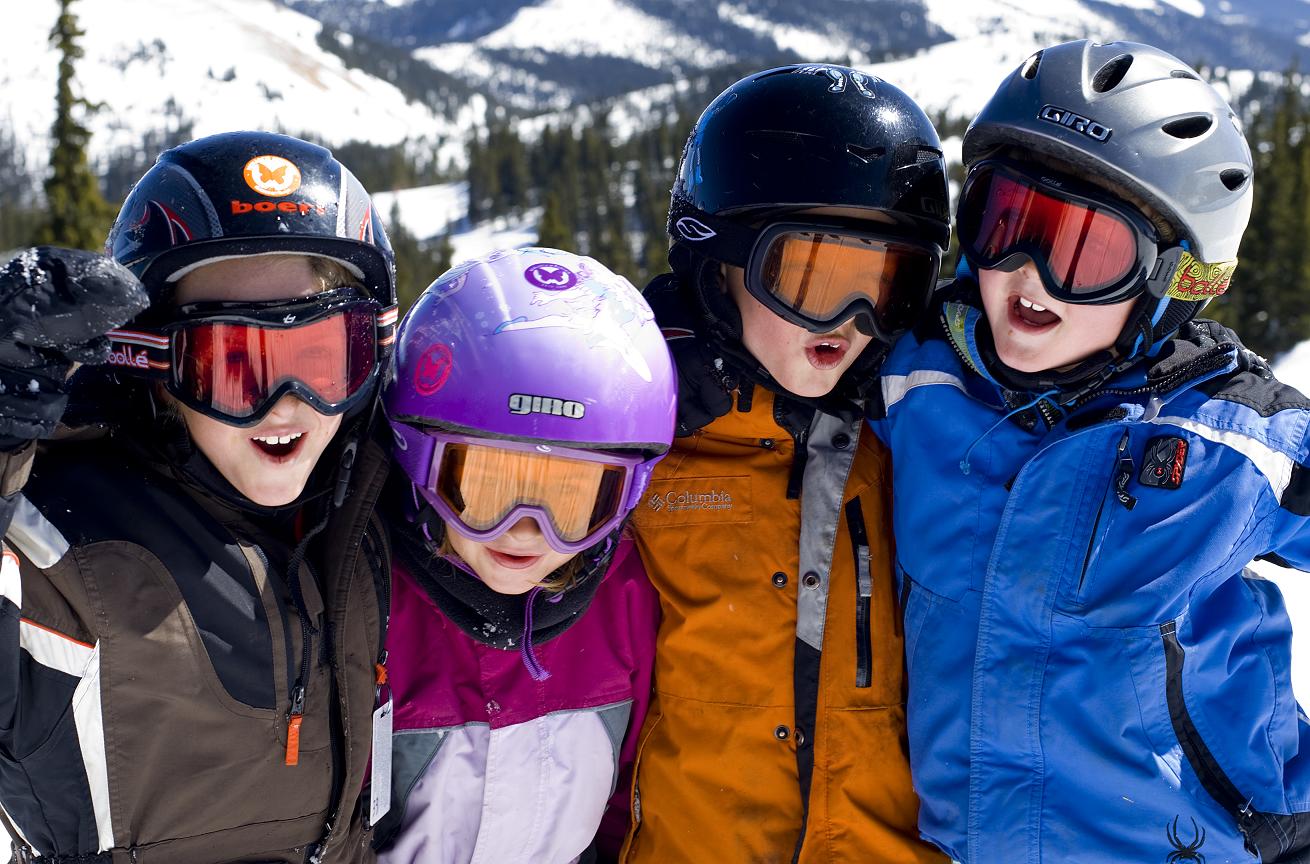
Denver, Colo. – September 2, 2013 – Colorado Ski Country USA (CSCUSA) announced today the Association’s popular 5th and 6th Grade Passport Programs are available for the 2013/14 ski season. The Passport Programs introduce fifth and sixth grade kids to skiing and snowboarding by giving fifth graders free access, and sixth graders discounted access, to twenty of Colorado’s finest ski resorts.
As the industry’s most influential program, the CSCUSA 5th Grade Passport allows fifth graders three days of free skiing at each of the twenty CSCUSA participating member resorts. The 6th Grade Passport allows sixth graders four days of skiing at the same twenty resorts for $99, which amounts to 80 days on the slopes for less than $1.25 each day.
Additionally, CSCUSA will offer First Class Lessons to complement the 5th Grade Passport Program. First Class provides fifth graders who are new to skiing and snowboarding the opportunity to learn the sport from some of the best instructors in the industry. Registered 5th Grade Passport holders who have never skied nor snowboarded, and are therefore considered “never-evers”, are eligible to receive a free ski or snowboard lesson and rental equipment during the month of January, which is also Learn to Ski and Snowboard Month. Fifth graders who qualify for First Class have the option of seventeen different resorts to have their introductory experience on snow. Advance reservations are required for First Class Lessons.
“Colorado Ski Country’s Passport Programs have introduced an entire generation of youngsters to skiing and snowboarding,” said Melanie Mills, president and CEO of Colorado Ski Country USA. “By giving 5th and 6th graders the opportunity to ski and ride, we’re helping kids to become lifelong skiers and snowboarders. The First Class Lesson program ensures that novice young skiers and snowboarders will enjoy their introductory on-snow experience and grow to become ambassadors of the state’s signature sports.”
To register kids for the Passport Programs, parents can visit www.ColoradoSki.com/Passport. Details on the First Class Program can also be found at ColoradoSki.com/Passport. The CSCUSA Passport Programs enjoy the support of presenting sponsor, Chipotle, and of program partners Christy Sports and Credit Union of Colorado.
Participating resorts in the 2013-14 Passport programs include: Arapahoe Basin, Aspen Highlands, Aspen Mountain, Buttermilk, Copper Mountain, Crested Butte, Purgatory at Durango Mountain Resort, Eldora, Howelsen Hill, Loveland, Monarch, Powderhorn, Ski Cooper, Ski Granby Ranch, Snowmass, Steamboat, Sunlight, Telluride, Winter Park and Wolf Creek.
For more details please visit www.ColoradoSki.com/Passport or call 303-866-9707.

Marketing Makes Promises that Risk Management (or in this case an insurance policy) must pay for.
Posted: August 12, 2013 Filed under: Colorado, Release (pre-injury contract not to sue), Skiing / Snow Boarding | Tags: Accredited, AEE, BOEC, Breckenridge Outdoor Education Center, Colorado, Denver, Fraud, Magistrate, Misrepresentation, Release, Sit-Ski, Ski, skiing, Standards, Tether, United States district court 1 CommentThe release stopped the claims, which were thought out and tried to exploit the “accreditation” and “standards” created by a third party association.
Squires, v. Breckenridge Outdoor Education Center, 2013 U.S. App. LEXIS 9249 (10th Cir. 2013)
Plaintiff: Kimberly N. Squires
Defendant: Breckenridge Outdoor Education Center
Plaintiff Claims:
(1) The Release is as an invalid exculpatory agreement;
(2) Plaintiff’s decision to sign the Release was not voluntary and informed, as required by Colorado Revised Statute Section 13-22-107;
(3) Release was voidable because it was procured through fraud
Defendant Defenses: Release
Holding: for the defendant, the release was upheld
This case has been working its way through the courts for five years. The plaintiff was a legally blind child with cerebral palsy and cognitive delays. Her mother signed the necessary documentation to take a trip west with Camp Fire USA. Camp Fire USA contracted with the Breckenridge Outdoor Education Center (BOEC) to provide five days of skiing, a rope’s course and snow tubing.
The plaintiff was in a bi-ski which has an instructor holding tethers behind the skier. The BOEC instructor and the plaintiff were on their second run of the day. A third party skier lost control and skied into the tethers causing the BOEC instructor to lose the tethers. The plaintiff went down the hill unrestrained into a group of trees sustaining her injuries.
The plaintiff sued in Federal District Court located in Denver. A magistrate based upon a motion filed by the defendant dismissed the plaintiff’s negligence claim based on a release signed by the Plaintiff and her mother. The defendant’s motion also argued there was no evidence to support a gross negligence claim, which the magistrate did not deny.
The case proceeded to trial on the gross negligence claim. The jury returned a verdict for the defendant. The plaintiff then appealed the dismissal of the negligence claim based upon the release.
A magistrate is a quasi-judge. Magistrates in the Federal Court System are not appointed by the President and approved by the Senate, as all federal court judges are; but are appointed by the Chief Judge of the Federal District Court. The magistrate’s powers come from specific powers given to the magistrate by the judge who assigns a case to a magistrate or from an overall order from the Chief Judge of the court. Normally, a judge appoints a magistrate to handle all pre-trial matters. This frees up the judge to handle trials and those issues that may be appealed from the magistrate.
Summary of the case
The plaintiff appealed three issues concerning the validity of the release:
(1) the Release is as an invalid exculpatory agreement;
(2) [Plaintiff’s mother’s] decision to sign the Release was not voluntary and informed, as required by Colorado Revised Statute Section 13-22-107; [statute allowing a parent to sign away a child’s right to sue] and
(3) to the extent the Release is otherwise enforceable; it is, nevertheless, voidable because it was procured through fraud.
The 10th Circuit Court of Appeals went through a fairly in-depth analysis of release law in Colorado in making its decision. The court first looked into the requirements for a release to be valid under Colorado law. Releases are disfavored under Colorado law; however, they are not void. To be valid a Colorado Court must consider four factors:
(1) the existence of a duty to the public;
(2) the nature of the service performed;
(3) whether the contract was fairly entered into; and
(4) whether the intention of the parties is expressed in clear and unambiguous language
It was the fourth factor, whether the intent of the parties is set forth in clear and unambiguous language that is usually at issue. That means the language is clear and understandable so that the plaintiff when reading the document knew he or she was giving up their right to sue or recover for their injuries. The factor does not require the specific use of the word negligence and/or breach of warranty under Colorado law. However, the language of the release must express that the “intent of the parties was to extinguish liability and whether this intent was clearly and unambiguously expressed.”
Colorado courts look at the actual language of the release for “legal jargon” length, complication any likelihood of confusion or failure of the plaintiff to recognize the full extent of the release provisions. The court found that BOEC’s release met all of the requirements and was valid.
The plaintiff argued that the release failed to tell them that the plaintiff would be using a bi-ski and failed to disclose specific risks of this type of adaptive skiing. The court found that Colorado law did not require releases to refer to the specific activity that injured the plaintiff. Rather a release bars a claim if the release “clearly reflects the parties’ intent to extinguish liability for that type of claim.”
Note: the relaxed language allowed under Colorado law is not the same in other courts.
The plaintiff also developed a novel argument, which I have touched on before.
Plaintiff additionally argues the Release is ambiguous because it does not specifically release claims resulting from the negligence of third parties, such as the skier who collided with Plaintiff, and because it inconsistently allocates risks between herself and Defendant.
Many times a third party or even another participant is the reason for the plaintiff’s injury. I write about injured parties suing other guests or third parties, such as skier v. skier collisions. Although the complaint does not name the outdoor recreation provider, specifically as a defendant, it does bring them in tangentially to a lawsuit. Here, the plaintiff argued the release failed because it did not notice the plaintiff of the risks brought to skiing by third parties.
However, the argument was not properly preserved or argued in the lower court so this court did not look at the argument. Appellate courts only will hear arguments that have been heard or argued in the lower court. Brand new arguments are ignored on appeal. It is important to argue everything you can in the lower court, to preserve all issues for appeal. This works both for claims of the plaintiff or defenses of the defendant.
The next argument, was there was not enough information in the release to satisfy the requirements of the statute which allows a parent to sign away a minor’s right to sue (C.R.S. 13-22-107). The plaintiff argued that because the risks of skiing in a bi-ski were not understood by the mother then the release should fail.
The court looked at two prior cases in Colorado that had looked at this issue: Wycoff v. Grace Cmty. Church of the Assemblies of God, 251 P.3d 1260, 1264 (Colo. App. 2010) and Hamill v. Cheley Colo. Camps, Inc., 262 P.3d 945, 952 (Colo. App. 2011) which I discuss in Releases are legal documents and need to be written by an attorney that understands the law and the risks of your program/business/activity and your guests/members/clientele and Release stops suit for falling off horse at Colorado summer Camp.
Because the release did not state the risks of the activity, the court had to decide if it could look at extrinsic (other) evidence. The court in Hamel, allowed the defendant to show that prior experience of the parent in sending her daughter to camp and knowledge of other people who had been injured horseback riding was enough to show the mother knew the risks.
The court then allowed the knowledge of the mother and the letter sent with the release by BOEC to show the mother knew the general risks of skiing.
The final issue was the Fraudulent Inducement claim. The letter said the following:
(1) “All of [Defendant’s] activities are conducted in a manner consistent with the highest standards, as defined by the Association for Experiential Education (AEE)”; (2) “The BOEC is accredited by AEE”; and (3) AEE “independently reviews the policies, practices and educational components of applicant organizations and accredits those that meet their high standards.
The mother made the following statements concerning what she believed based upon the letter.
Rather, she [plaintiff] relies on her mother’s statements that she “believed that BOEC was an accredited program,” and “that they had an [sic] accredited certified instructors that would manage a safe program.”
(“[T]hey were, you know, accredited and certified and they’d been doing it for a number of years.”), 356 (“That she would be with certified accredited people in a safe program that they could supervise appropriately.”).)
Although BOEC may or may not have been accredited by the AEE, the issue was the AEE did not have standards for skiing or adaptive skiing. The plaintiff argued that the letter, on one side of the release contradicted the release which was on the other side of the paper.
Add to the issue that BOEC admitted that it did not have what it advertised.
BOEC representative and Ski Program Director Paul Gamber testified that on the day of the Accident, BOEC did not have any written ski lesson policies and procedures for the adaptive ski program. Ski Program Director, Jeffrey Inouye, testified that the AEE accreditation related to programs other than the adaptive [*30] ski program that Ms. Squires attended.
Marketing makes promises that Risk Management has to pay for.
The plaintiff argued that there was fraud in the inducement and because BOEC had advertised standards, BOEC did not have. On top of that the plaintiff argued that because BOEC did not have standards as they advertised BOEC was also misleading the plaintiff.
Ms. Squires argues that based upon the lack of written safety standards, “it is not a stretch to conclude that the adaptive skiing program was not conducted in a manner consistent with the highest standards of the AEE, contrary to the representations made by BOEC in its Greetings Letter.”
The letter and marketing of BOEC were enough to establish a fraud claim.
To establish fraud, a plaintiff has to prove that (1) a fraudulent misrepresentation of material fact was made by the defendant; (2) at the time the representation was made, the defendant knew the representation was false or was aware that he did not know whether the representation was true or false; (3) the plaintiff relied on the misrepresentation; (4) the plaintiff had the right to rely on, or was justified in relying on, the misrepresentation; and (5) the reliance resulted in damages.
The release was presented to the plaintiff’s mother along with a “LETTER TO STUDENTS, PARENTS AND GUARDIANS.” The letter made several statements which the plaintiff brought to the attention of the court, which created legal issues that in many courts in other states, would have found for the plaintiff. Some of the parts of the letter were:
All of our activities are conducted in a manner consistent with the highest standards, as defined by the Association for Experiential Education (AEE). The BOEC is accredited by AEE, who independently reviews the policies, practices and educational components of applicant organizations and accredits those that meet their high standards.
Your ski lesson or course will involve risk, which may be greater than most people encounter in their daily lives. Providing high quality programs in a risk-managed environment is a priority at the BOEC. It is, however, impossible to eliminate all risks.
While the BOEC maintains rigorous standards, it is in everyone’s best interest that risks are disclosed, understood, and assumed prior to participation.
The plaintiff could not prove that she had relied on the misstatements of BOEC. On top of the necessary requirement that there be reliance, the fraud or action of BOEC must be intentional.
Ms. Squires has not produced any evidence that BOEC made the alleged misrepresentations with the intent to deceive. For failure to demonstrate this element, Ms. Squires’ argument that the Release is voidable based on material misrepresentation and fraud in the inducement must fail.
Because the fourth element could not be provided the fraud claim was dismissed.
The final argument made by the plaintiff was the actions of BOEC were willful and wanton. The statute Colo. Rev. Stat. § 13-22-107(4) specifically prohibited releases signed by parents based to stop willful and wanton conduct.
Nothing in this section shall be construed to permit a parent acting on behalf of his or her child to waive the child’s prospective claim against a person or entity for a willful and wanton act or omission, a reckless act or omission, or a grossly negligent act or omission.
Court defined willful and wanton conduct by relating the conduct to gross negligence.
“Gross negligence is willful and wanton conduct; that is, action committed recklessly, with conscious disregard for the safety of others.” “Willful and wanton conduct is purposeful conduct committed recklessly that exhibits an intent consciously to disregard the safety of others. Such conduct extends beyond mere unreasonableness.” (“Conduct is willful and wanton if it is a dangerous course of action that is consciously chosen with knowledge of facts, which to a reasonable mind creates a strong probability that injury to others will result.”)
However, here again the plaintiff failed to show conduct that was purposeful or reckless. The court found the record was “devoid of sufficient evidence to raise a factual issue” at trial. Finding that the court held that claim was not met by the plaintiff.
So Now What?
The release in this case met the requirements of Colorado law. However, most other states, the release would not have been sufficient to stop the claims of the plaintiff. Besides, few states allow a parent to sign away a minor’s right to sue. See States that allow a parent to sign away a minor’s right to sue.
BOEC does great work and does a good job. This like most facts giving rise to litigation are rare, even very rare. However, your release needs to be written to cover everything you possibly can. You can include a prohibition against injuries or claims caused by third parties. Would the outcome of this case been different if the third party who skied into the tethers been another BOEC student or instructor?
Releases can also be used to educate. If you do a good job of describing the risks in the release, then parents cannot make valid decisions, on whether or not they want to risk your kid with them. The defendant should have done a better job of explaining the risks of all activities within the program.
It is risky to rely upon outside information to prove knowledge of a release, unless you can prove the person saw and knew the information and have that proof in the release. This creates a 2-step process. 1.) You must prove you educated the customer or guest and 2.) You must prove the guest or customer was educated. The easiest way is to place this information on your website and then have your release reference the information.
Marketing makes promises that Risk Management must pay for. The advertising and statements made by the defendant in this case in many other jurisdictions would have gone the other way. Seriously, to make statements about awards, accreditation, or standards that do not exist are a great way to void a release and in many states increase the damages you may pay.
Other Cases: Squires v. Goodwin, 2011 U.S. Dist. LEXIS 129234 (Dist Colo 2011)
Other articles where standards played a part in the decision in a negative way.
ACA Standards are used by Expert for the Plaintiff in a lawsuit against a Camp
Plaintiff uses standards of ACCT to cost defendant $4.7 million
Trade Association Standards sink a Summer Camp when plaintiff uses them to prove Camp was negligent
What do you think? Leave a comment.
If you like this let your friends know or post it on FaceBook, Twitter or LinkedIn
Copyright 2013 Recreation Law (720) Edit Law
Email: Rec-law@recreation-law.com
Google+: +Recreation
Twitter: RecreationLaw
Facebook: Rec.Law.Now
Facebook Page: Outdoor Recreation & Adventure Travel Law
Blog: www.recreation-law.com
Mobile Site: http://m.recreation-law.com
By Recreation Law Rec-law@recreation-law.com James H. Moss #Authorrank
<rel=”author” link=” https://plus.google.com/u/0/b/112453188060350225356/” />
#RecreationLaw, #@RecreationLaw, #Cycling.Law #Fitness.Law, #Ski.Law, #Outside.Law, #Recreation.Law, #Recreation-Law.com, #Outdoor Law, #Recreation Law, #Outdoor Recreation Law, #Adventure Travel Law, #law, #Travel Law, #Jim Moss, #James H. Moss, #Attorney at Law, #Tourism, #Adventure Tourism, #Rec-Law, #Rec-Law Blog, #Recreation Law, #Recreation Law Blog, #Risk Management, #Human Powered, #Human Powered Recreation,# Cycling Law, #Bicycling Law, #Fitness Law, #Recreation-Law.com, #Backpacking, #Hiking, #Mountaineering, #Ice Climbing, #Rock Climbing, #Ropes Course, #Challenge Course, #Summer Camp, #Camps, #Youth Camps, #Skiing, #Ski Areas, #Negligence, #Snowboarding, #RecreationLaw, #@RecreationLaw, #Cycling.Law #Fitness.Law, #SkiLaw, #Outside.Law, #Recreation.Law, #RecreationLaw.com, #OutdoorLaw, #RecreationLaw, #OutdoorRecreationLaw, #AdventureTravelLaw, #Law, #TravelLaw, #JimMoss, #JamesHMoss, #AttorneyatLaw, #Tourism, #AdventureTourism, #RecLaw, #RecLawBlog, #RecreationLawBlog, #RiskManagement, #HumanPowered, #HumanPoweredRecreation,# CyclingLaw, #BicyclingLaw, #FitnessLaw, #RecreationLaw.com, #Backpacking, #Hiking, #Mountaineering, #IceClimbing, #RockClimbing, #RopesCourse, #ChallengeCourse, #SummerCamp, #Camps, #YouthCamps, #Skiing, #Ski Areas, #Negligence, #Snowboarding, sport and recreation laws, ski law, cycling law, Colorado law, law for recreation and sport managers, bicycling and the law, cycling and the law, ski helmet law, skiers code, skiing accidents, Recreation Lawyer, Ski Lawyer, Paddlesports Lawyer, Cycling Lawyer, Recreational Lawyer, Fitness Lawyer, Rec Lawyer, Challenge Course Lawyer, Ropes Course Lawyer, Zip Line Lawyer, Rock Climbing Lawyer, Adventure Travel Lawyer, Outside Lawyer, Recreation Lawyer, Ski Lawyer, Paddlesports Lawyer, Cycling Lawyer, #RecreationalLawyer, #FitnessLawyer, #RecLawyer, #ChallengeCourseLawyer, #RopesCourseLawyer, #ZipLineLawyer, #RockClimbingLawyer, #AdventureTravelLawyer, #OutsideLawyer, Release, BOEC, Breckenridge Outdoor Education Center, Sit-Ski, Tether, Misrepresentation, Fraud, Standards, AEE, Accredited, Skiing, Ski,
WordPress Tags: Makes,Promises,Risk,Management,insurance,policy,accreditation,association,Squires,Breckenridge,Outdoor,Education,Center,LEXIS,Plaintiff,Defendant,Claims,Release,agreement,decision,Colorado,Statute,Section,fraud,Defenses,documentation,Camp,Fire,BOEC,instructor,hill,trees,injuries,Federal,District,Court,Denver,magistrate,negligence,jury,verdict,dismissal,Magistrates,System,President,Senate,Chief,Judge,trials,Summary,extent,Circuit,Appeals,depth,analysis,requirements,Releases,factors,existence,intention,fourth,factor,jargon,length,complication,failure,Rather,Note,argument,Many,participant,injury,guests,collisions,Although,complaint,recreation,provider,lawsuit,Here,Appellate,arguments,Brand,information,Wycoff,Grace,Church,Assemblies,Colo,Hamill,Cheley,Camps,attorney,clientele,horse,Hamel,daughter,knowledge,letter,Fraudulent,Inducement,manner,Experiential,policies,components,applicant,statements,instructors,paper,Program,Director,Paul,Gamber,Accident,lesson,procedures,Jeffrey,Inouye,representations,Greetings,misrepresentation,fact,representation,reliance,STUDENTS,PARENTS,GUARDIANS,attention,Some,environment,participation,requirement,action,misrepresentations,Stat,person,omission,Gross,Willful,Conduct,Besides,States,litigation,prohibition,outcome,student,decisions,customer,guest,reference,jurisdictions,Cases,Goodwin,Dist,Standards,Expert,Report,ACCT,cost,million,Trade,Summer,Leave,FaceBook,Twitter,LinkedIn,Edit,Email,Google,RecreationLaw,Page,Adventure,Travel,Blog,Mobile,Site,James,Moss,Authorrank,author,Outside,Tourism,Human,Rock,Ropes,Course,Challenge,Youth,Areas,SkiLaw,OutdoorLaw,OutdoorRecreationLaw,AdventureTravelLaw,TravelLaw,JimMoss,JamesHMoss,AttorneyatLaw,AdventureTourism,RecLaw,RecLawBlog,RecreationLawBlog,RiskManagement,HumanPoweredRecreation,CyclingLaw,BicyclingLaw,FitnessLaw,RopesCourse,ChallengeCourse,SummerCamp,YouthCamps,managers,helmet,accidents,Lawyer,Paddlesports,Recreational,Line,RecreationalLawyer,FitnessLawyer,RecLawyer,ChallengeCourseLawyer,RopesCourseLawyer,ZipLineLawyer,RockClimbingLawyer,AdventureTravelLawyer,OutsideLawyer,Tether,third,exculpatory,voidable,five,skier,upon,whether,adaptive
Squires v. Breckenridge Outdoor Education Center, 715 F.3d 867; 2013 U.S. App. LEXIS 9249 (Co Dist 2013)
Posted: August 12, 2013 Filed under: Colorado, Legal Case, Skiing / Snow Boarding | Tags: Accredited, AEE, BOEC, Breckenridge Outdoor Education Center, Colorado, Denver, Fraud, Magistrate, Misrepresentation, Release, Sit-Ski, Ski, skiing, Standards, Tether, United States district court Leave a commentSquires v. Breckenridge Outdoor Education Center, 715 F.3d 867; 2013 U.S. App. LEXIS 9249 (Co Dist 2013)
KIMBERLY N. SQUIRES, Plaintiff – Appellant, v. BRECKENRIDGE OUTDOOR EDUCATION CENTER, Defendant – Appellee.
No. 12-1199
UNITED STATES COURT OF APPEALS FOR THE TENTH CIRCUIT
715 F.3d 867; 2013 U.S. App. LEXIS 9249
May 7, 2013, Filed
PRIOR HISTORY: [**1]
APPEAL FROM THE UNITED STATES DISTRICT COURT FOR THE DISTRICT OF COLORADO. (D.C. No.1:10-CV-00309-CBS-BNB).
Squires v. Goodwin, 829 F. Supp. 2d 1062, 2011 U.S. Dist. LEXIS 129234 (D. Colo., 2011)
COUNSEL: Michael A. Sink of Perkins Coie LLP, Denver, Colorado (Robert N. Miller and Stephanie E. Dunn of Perkins Coie LLP, Denver, Colorado; Gregory A. Gold of The Gold Law Firm, LLC, Greenwood Village, Colorado; and T. Thomas Metier of Metier Law Firm, LLC, Fort Collins, Colorado, with him on the brief), for Plaintiff – Appellant.
David Werber (John W. Grund, Deana R. Dagner, and Joan S. Allgaier on the brief) of Grund ” Dagner, P.C., Denver, Colorado, for Defendant – Appellee.
JUDGES: Before HARTZ, McKAY, and O’BRIEN, Circuit Judges.
OPINION BY: McKAY
OPINION
Plaintiff Kimberly Squires filed this diversity action against Defendant Breckenridge Outdoor Education Center asserting claims for negligence and gross negligence following a ski accident in which she was injured. The magistrate judge granted Defendant’s motion for summary judgment in part, concluding Plaintiff’s mother, Sara Squires, had validly released any claim for negligence against Defendant by signing an acknowledgment of risk and release of liability. Plaintiff now appeals, arguing summary judgment was inappropriate because the Release [**2] is unenforceable for three reasons: (1) the Release is as an invalid exculpatory agreement; (2) Mrs. Squires’s decision to sign the Release was not voluntary and informed, as required by [*870] Colorado Revised Statute Section 13-22-107; and (3) to the extent the Release is otherwise enforceable, it is nevertheless voidable because it was procured through fraud.
Background
In 2008, Plaintiff, a legally blind child with cerebral palsy and cognitive delays, was severely injured while skiing at Breckenridge Ski Resort in Colorado. Plaintiff was in Breckenridge on a ski trip with the group Camp Fire USA, a non-profit organization dedicated to providing children, including children with disabilities, with opportunities and experiences for growth. Camp Fire USA had contracted with Defendant for a five-day wilderness program that included skiing, a ropes course, and snow tubing.
Before the trip, Defendant sent documents regarding the trip to Camp Fire USA, which in turn circulated them to the participants’ parents, including Mrs. Squires. The documents included a “Letter to Students, Parents and Guardians” (App. at 209 (capitalization omitted)) with an accompanying “Acknowledg[]ment of Risk & Release [**3] of Liability” (App. at 210 (capitalization omitted)).1 The Letter states, in pertinent part:
LETTER TO STUDENTS, PARENTS AND GUARDIANS
Greetings from Breckenridge! The BOEC staff looks forward to having you, your child or your family member join us on a course and would like to share the following information about who we are, what we do and the risks involved.
The Breckenridge Outdoor Education Center (BOEC), a non-profit organization in operation since 1976, provides outdoor adventure programs for people of all abilities. We offer programs for groups and individuals. All courses are tailored to the specific goals and abilities of our students.
. . . .
All of our activities are conducted in a manner consistent with the highest standards, as defined by the Association for Experiential Education (AEE). The BOEC is accredited by AEE, who independently reviews the policies, practices and educational components of applicant organizations and accredits those that meet their high standards. All activities offered are designed to pose appropriate challenges for students. These challenges provide a medium for adventure, learning and personal growth. Your ski lesson or course will involve risk, [**4] which may be greater than most people encounter in their daily lives. Providing high quality programs in a risk-managed environment is a priority at the BOEC. It is, however, impossible to eliminate all [*871] risks. It is very important that you follow all directions given by staff and that you ask questions whenever a procedure or activity is unclear to you.
While the BOEC maintains rigorous standards, it is in everyone’s best interest that risks are disclosed, understood, and assumed prior to participation. After you have reviewed the acknowledg[]ment of risk and waiver of liability on the reverse side of this letter and if you understand and agree with its contents, please sign in the appropriate places. If you are the parent or legal guardian of a student, please read both sides of this document to the student, and if you both agree and understand their content, place YOUR signature in the three appropriate places.
If you have any questions or comments, please do not hesitate to contact us. We welcome your suggestions and feedback.
(App. at 209.)
– – – – – – – – – – – – – – Footnotes – – – – – – – – – – – – – – –
1 It is somewhat unclear whether the Release signed by Mrs. Squires was presented to her as a separate document from the Letter or as a single document [**5] with the Letter printed on one side and the Release printed on the reverse. The Letter itself refers to the Release “on the reverse side of this letter.” (App. at 209.) Plaintiff likewise initially represented the Release appeared on the reverse of the Letter. (Appellant’s Opening Br. at 6 (“On the back of the form cover letter, is a standardized “Acknowledg[]ment of Risk & Release of Liability” . . . .).) However, during oral argument, Plaintiff’s counsel maintained this was a disputed issue. (Oral Argument at 4:03-18 (“Some copies of the Release are standalone copies, and one copy happens to have a bleed-over language from the cover letter. It’s not clear . . . that that’s how that actually occurred when the Release was given to [Mrs. Squires] for signature.”) It is undisputed, however, that the Release the director of Camp Fire USA sent to the participants “included the cover letter that explained the waiver” (App. at 207), and that the two documents were sent as a single attachment (App. at 404, 407, 408).
– – – – – – – – – – – – End Footnotes- – – – – – – – – – – – – –
The accompanying Release provides:
ACKNOWLEDGMENT OF RISK AND RELEASE OF LIABILITY (REQUIRED)
In consideration of being allowed to participate in any way in Breckenridge Outdoor [**6] Education Center (BOEC) programs, and related events and activities . . . I, and/or the minor student, . . . the undersigned:
1. Understand that although the BOEC has taken precautions to provide proper organization, supervision, instruction and equipment for each course, it is impossible for the BOEC to guarantee absolute safety. Also, I understand that I share the responsibility for safety during all activities, and I assume that responsibility. I will make my instructors aware to the best of my ability of any questions or concerns regarding my understanding of safety standards, guidelines, procedures and my ability to participate at any point during any activity.
2. Understand that risks during outdoor programs include but are not limited to loss or damage to personal property, injury, permanent disability, fatality, exposure to inclement weather, slipping, falling, insect or animal bites, being struck by falling objects, immersion in cold water, hypothermia (cold exposure), hyperthermia (heat exposure), and severe social or economic losses that may result from any such incident. I also understand that such accidents or illnesses may occur in remote areas without easy access to medical [**7] facilities or while traveling to and from the activity sites. Further, there may be other risks not known to me or not reasonably foreseeable at this time.
3. Agree that prior to participation, I will inspect, to the best of my ability, the facilities and equipment to be used. If I believe anything is unsafe, I will immediately advise the BOEC staff present of such condition and refuse to participate.
4. Assume all the foregoing risks and accept personal responsibility for the damages due to such injury, permanent disability or death resulting from participating in any BOEC activity.I hereby release the BOEC, its successors, representatives, assigns, and employees from any and all claims, demands, and causes of action, whether resulting from negligence or otherwise, of every nature and in conjunction with a BOEC activity.
(App. at 210.)
Plaintiff and her mother signed the Release on January 13, 2008. On that date, Mrs. Squires was admittedly aware that her daughter’s trip to Breckenridge and participation in Defendant’s program [*872] would include skiing, although she claims she was unaware of the precise equipment and methods her daughter would be using. Once in Breckenridge, Plaintiff was [**8] paired with a BOEC instructor and equipped with a bi-ski. On the second run of the first day of skiing, Plaintiff was injured when another, unrelated, skier lost control and skied into the tethers connecting Plaintiff and her instructor. The force of the collision caused the instructor to lose control of the tethers, and Plaintiff continued unrestrained down the trail and into a group of trees. She was injured when her bi-ski collided with a tree.
Following the accident, Plaintiff filed this action claiming Defendant’s negligence and gross negligence caused her injuries. Defendant moved for summary judgment, arguing the Release barred Plaintiff’s negligence claim and there was no evidence to support her gross negligence claim. The magistrate judge granted summary judgment in favor of Defendant on Plaintiff’s negligence claim, concluding Plaintiff’s mother had executed an enforceable exculpatory agreement that clearly and unambiguously expressed the parties’ intent to extinguish Defendant’s liability, and her decision to do so was voluntary and informed. The magistrate judge, however, denied Defendant’s motion on Plaintiff’s gross negligence claim. This claim proceeded to a jury, which [**9] found Defendant not liable. Plaintiff now appeals the grant of summary judgment on her negligence claim.
Discussion
HN1 “We review a district court’s decision to grant summary judgment de novo, applying the same standard as the district court.” Lundstrom v. Romero, 616 F.3d 1108, 1118 (10th Cir. 2010) (internal quotation marks omitted). Summary judgment is appropriate if “there is no genuine dispute as to any material fact and the movant is entitled to judgment as a matter of law.” Fed. R. Civ. P. 56(a). Colorado law applies in this diversity case.
I. Enforceability of the Release
Plaintiff argues the Release is unenforceable and, therefore, does not bar her negligence claim. She reasons that the Release is invalid under the four-part test articulated in Jones v. Dressel, 623 P.2d 370 (Colo. 1981), and that her mother did not make an informed decision, as required by Colorado Revised Statute Section 13-22-107.
A. Validity Under Jones
HN2In Colorado, “[a]greements attempting to exculpate a party from that party’s own negligence have long been disfavored.” Heil Valley Ranch, Inc. v. Simkin, 784 P.2d 781, 783 (Colo. 1989). However, “[e]xculpatory agreements are not necessarily void.” Id. at 784. In [**10] determining whether an exculpatory agreement is valid, Colorado courts consider four factors: “(1) the existence of a duty to the public; (2) the nature of the service performed; (3) whether the contract was fairly entered into; and (4) whether the intention of the parties is expressed in clear and unambiguous language.” Jones, 623 P.2d at 376. Plaintiff challenges only the magistrate judge’s conclusion on the fourth factor.
Under the fourth factor, “use of the specific terms ‘negligence’ and ‘breach of warranty’ are not invariably required for an exculpatory agreement to shield a party from claims based on negligence and breach of warranty.” Heil Valley, 784 P.2d at 785. Rather, “[t]he inquiry should be whether the intent of the parties was to extinguish liability and whether this intent was clearly and unambiguously expressed.” Id. In making this determination, [*873] Colorado courts examine “the actual language of the agreement for legal jargon, length and complication, and any likelihood of confusion or failure of a party to recognize the full extent of the release provisions.” Chadwick v. Colt Ross Outfitters, Inc., 100 P.3d 465, 467 (Colo. 2004).
The Release signed by Plaintiff and her [**11] mother clearly and unambiguously waives any negligence claims Plaintiff might have brought against Defendant. The Release begins by indicating it is signed “[i]n consideration of being allowed to participate in any way in Breckenridge Outdoor Education Center (BOEC) programs, and related events and activities.” (App. at 104.) It then warns that “it is impossible for the BOEC to guarantee absolute safety,” and identifies the potential risk of “loss or damage to personal property, injury, permanent disability, [and] fatality.” (Id.) The Release concludes, after only five short paragraphs, by stating in plain terms that the signor “hereby release[s] the BOEC, its successors, representatives, assigns, and employees from any and all claims, demands and causes of action, whether resulting from negligence or otherwise, of every nature and in conjunction with a BOEC activity.” (Id. (emphasis added).) We perceive no ambiguity in this language. See Mincin v. Vail Holdings, Inc., 308 F.3d 1105, 1113 (10th Cir. 2002) (“The agreement covers ‘any and all claims I might state . . . including those claims based on negligence or breach of warranty.’ . . . There is nothing ambiguous about this portion [**12] of the agreement.” (first alteration in original)).
Plaintiff, however, contends the Release does not satisfy the fourth Jones factor because it failed to include that Plaintiff would be skiing using a bi-ski and failed to disclose specific risks associated with this form of adaptive skiing. She argues that Colorado law requires the Release to identify the specific activity being engaged in and describe specific associated risks. In support of this position, Plaintiff quotes from several other releases that have been upheld and claims it was their adequate detailing of risks that led the courts to conclude they were valid under the fourth Jones factor. However, even though the releases quoted by Plaintiff contain more detailed descriptions of the associated risks, their validity did not turn on this fact. Notably, none of the cases Plaintiff relies on evaluated the sufficiency of the description of the risks.
Contrary to Plaintiff’s argument, HN3Colorado law does not require that exculpatory agreements refer to the specific activity in which the plaintiff participated and was injured. See Forman v. Brown, 944 P.2d 559, 563-64 (Colo. App. 1996) (concluding a release that did not mention [**13] the specific activity in which the plaintiff was injured was nevertheless valid because it “unambiguously released defendants from liability for injuries occurring during associated scheduled or unscheduled activities”); Brooks v. Timberline Tours, Inc., 127 F.3d 1273, 1274-75 (10th Cir. 1997) (concluding a release that did not include the specific activity and referred only to “the activity I am about to voluntarily engage in” was valid under Jones). Nor does it require “that an exculpatory agreement describe in detail each specific risk that the signor might encounter. Rather, an exculpatory agreement bars a claim if the agreement clearly reflects the parties’ intent to extinguish liability for that type of claim.” Lahey v. Covington, 964 F. Supp. 1440, 1445 (D. Colo. 1996), aff’d sub nom. Lahey v. Twin Lakes Expeditions, Inc., No. 96-1438, 1997 U.S. App. LEXIS 11807, 1997 WL 265093 (10th Cir. May 20, 1997) (unpublished) (citation omitted). The Release clearly reflects precisely such an intent—Plaintiff and her mother agreed, “[i]n consideration of being [*874] allowed to participate in . . . [Defendant’s] programs, and related events and activities” to “release [Defendant] from any and all claims . . . and causes [**14] of action, whether resulting from negligence or otherwise, of every nature and in conjunction with a [BOEC] activity.” (App. at 104.)
Plaintiff additionally argues the Release is ambiguous because it does not specifically release claims resulting from the negligence of third parties, such as the skier who collided with Plaintiff, and because it inconsistently allocates risks between herself and Defendant. Plaintiff raises her first theory of ambiguity for the first time on appeal. Because this argument was not properly preserved, we do not consider it. Lyons v. Jefferson Bank & Trust, 994 F.2d 716, 721 (10th Cir. 1993) (HN4“[A] party may not lose in the district court on one theory of the case, and then prevail on appeal on a different theory.”). Turning then to Plaintiff’s second theory of ambiguity, we agree with the magistrate judge’s conclusion that the Release is not reasonably susceptible to her interpretation, which strains logic. Plaintiff specifically argues the portion of the Release that releases Defendant from liability is rendered ambiguous by the following sentence: “I [**15] understand that I share the responsibility for safety during all activities, and I assume that responsibility.” (App. at 104.) She contends that by “discussing two alternate allocations of risk in the same document, the Release does not clearly and unambiguously express the intent of the parties, and thus, is unenforceable.” (Appellant’s Opening Br. at 23.) However, these two provisions create no such ambiguity. The sentence on which Plaintiff relies clearly expresses the participant’s agreement to share in the responsibility of participating in a safe manner, whereas the release provision clearly expresses the participant’s intent to release Defendant from liability. As the magistrate judge concluded, the two are not mutually exclusive, and the first provision makes it no less clear that Plaintiff’s mother intended to release Defendant from liability for any negligence claim.
Because the Release contains clear and unambiguous language demonstrating Plaintiff’s mother intended to release any negligence claims Plaintiff might have against Defendant, it is valid and enforceable under Jones.
B. Informed Decision Under Colorado Revised Statute Section 13-22-107
We turn then to whether Mrs. [**16] Squires’s consent to the Release was voluntary and informed, as required by Section 13-22-107. Plaintiff argues it was not because her mother did not understand the risks involved with adaptive skiing and, specifically, the use of bi-skis.
In 2002, the Colorado Supreme Court held “that Colorado’s public policy disallows a parent or guardian to execute exculpatory provisions on behalf of his minor child for a prospective claim based on negligence.” Cooper v. Aspen Skiing Co., 48 P.3d 1229, 1237 (Colo. 2002), superseded by statute, Colo. Rev. Stat. § 13-22-107(3). The following year, the General Assembly superseded Cooper through enactment of Section 13-22-107(3). Under this section,HN5 “[a] parent of a child may, on behalf of the child, release or waive the child’s prospective claim for negligence.” Colo. Rev. Stat. § 13-22-107(3). The statute “declare[s] that parents have a fundamental right to make decisions on behalf of their children, including deciding whether the children should participate in risky activities.” Wycoff v. Grace Cmty. Church of the Assemblies of God, 251 P.3d 1260, 1264 (Colo. App. 2010). “So long as the decision is voluntary and informed, the decision should be given [**17] the same dignity as decisions [*875] regarding schooling, medical treatment, and religious education . . . .” Colo. Rev. Stat. § 13-22-107(1)(a)(V).
The Colorado Court of Appeals has “assume[d] that the General Assembly was aware of the Jones test when it enacted section 13-22-107(1)(a)(V), but required something more for the waiver of a minor’s prospective negligence claims.” Hamill v. Cheley Colo. Camps, Inc., 262 P.3d 945, 952 (Colo. App. 2011) (citation omitted). In addition to the Jones factors, “[t]he General Assembly required that the consent to waiver by a parent be ‘voluntary and informed.'” Id. “A parent’s decision is informed when the parent has sufficient [*876] information to assess the potential degree of risks involved, and the extent of possible injury.” Id.
Since the enactment of Section 13-22-107, the Colorado Supreme Court has not addressed whether a release satisfies the voluntary and informed requirement of Section 13-22-107(1)(a)(V). We must therefore attempt to predict how Colorado’s highest court would interpret this Section. See FDIC v. Schuchmann, 235 F.3d 1217, 1225 (10th Cir. 2000). In doing so, we “consider . . . cases from the Colorado Court of Appeals only as they may [**18] aid our ability to predict how the Colorado Supreme Court might decide.” Browning v. Am. Family Mut. Ins. Co., 396 F. App’x 496, 502 n.14 (10th Cir. 2010).
The Colorado Court of Appeals has twice considered whether a parent’s consent to release prospective negligence claims on behalf of a minor child was voluntary and informed, as required by Section 13-22-107(1)(a)(V). On the first occasion, the Colorado Court of Appeals determined it “need not set forth . . . precisely how much information is required for a parental release to satisfy the statute” because “[t]here is no information in [the] one-page registration form describing the event activities, much less their associated risks.” Wycoff, 251 P.3d at 1264. There, the plaintiff was injured while being towed in an innertube behind an ATV on a frozen lake as part of her participation in a three-day event called “Winterama 2005.” Id. at 1263. Before attending the event, the plaintiff’s mother signed a one-page registration and information form, which contained a purported release in the following paragraph:
I give permission for my child to participate in . . . Winterama 2005 and all activities associated with it. I further give consent [**19] for any medical treatment necessary to be given to my child in case of injury or sickness. I will not hold Grace Community Church or it’s [sic] participants responsible for any liability which may result from participation. I also agree to come and pick up my child should they not obey camp rules.
Id. (emphasis and correction in original). Although the plaintiff knew the Winterama activities would include riding on an ATV-towed innertube, her mother did not. The court concluded that the mother’s waiver was not informed because the registration and information form did “not indicate what the activities would involve and certainly d[id] not suggest they would include ATV-towed inner-tube excursions around a frozen lake.” Id. at 1264. As a result, there was no information from which the plaintiff’s parents could “assess the degree of risk and the extent of possible injuries” from her participation in Winterama. Id. at 1265.
Shortly after the Wycoff decision, the Colorado Court of Appeals again addressed whether a parent’s consent to release prospective negligence claims on behalf of her child was informed. Borrowing from the language used in Wycoff, the court began by stating, HN6“A parent’s [**20] decision is informed when the parent has sufficient information to assess the potential degree of risks involved, and the extent of possible injury.” Hamill, 262 P.3d at 952 (citing Wycoff, 251 P.3d at 1265). In addressing the degree of risk, the court concluded the plaintiff’s mother was sufficiently informed about the risks involved in horseback riding, the activity in which the plaintiff was injured, because she “knew her daughter would be riding horses and she was advised that there were risks, known and unknown, associated with the activity.” Id. at 953. In reaching this conclusion, the court first relied on the undisputed fact that the plaintiff’s mother “knew the activities [the camp] offered,” because her daughter “had attended [the camp] and ridden the camp horses for two years before the accident.” Id. at 952. In addition, “[t]he agreement clearly indicated that horseback riding was an activity available to campers.” Id. The agreement further identified some of the “risks associated with participation in any camping activities,” and emphasized that “a complete listing of inherent and other risks is not possible” and there are even “risks which cannot be anticipated.” Id. at 949 [**21] (emphasis omitted). The court finally considered the fact that the plaintiff’s mother “never contacted [the camp] to discuss the release form, and had no questions about the language of the release form when she signed it.” Id. at 953. In light of all of this evidence, the court concluded the plaintiff’s mother was adequately informed of the risks involved with horseback riding. The fact that she “may not have contemplated the precise mechanics of her daughter’s fall d[id] not invalidate the release and d[id] not create a genuine issue of material fact.” Id. The relevant inquiry was whether the plaintiff’s mother was aware the plaintiff would be riding horses and was advised there were risks associated with that activity, which she was.
The court then turned to whether the plaintiff’s mother was provided with sufficient information “to assess the extent of possible injuries to [her daughter].” Id. In making this determination, the court again considered both the language of the release and the plaintiff’s mother’s independent knowledge and experience. The release contained broad language waiving “any claims of liability, for any injury, even death.” Id. (internal quotation marks omitted). [**22] The plaintiff’s mother was further aware that Christopher Reeve, whom she knew personally, had been injured falling off a horse, and was therefore “aware that there were significant risks associated with horseback riding.” Id. The court thus concluded that the agreement adequately disclosed the extent of potential injuries; it “did not need to include an exhaustive list of particularized injury scenarios to be effective.” Id.
Before turning to whether Plaintiff’s mother’s consent to release prospective negligence claims against Defendant was informed, we must first address the scope of the evidence we may consider in making this determination. The Colorado courts have yet to specifically address this issue. In Wycoff, the court “assume[d] for purposes of th[e] case that a facially deficient exculpatory contract could be cured by extrinsic evidence.” 251 P.3d at 1264. Relying on this statement, Plaintiff contends our evaluation under Section 13-22-107(1)(a)(V) must be limited to the four corners of the Release unless we first determine that the Release itself is facially deficient, in which case the Release would be invalid under Jones. Defendant, on the other hand, maintains we may [**23] properly consider the Letter that accompanied the Release as well as Mrs. Squires’s actual knowledge on the day she signed the Release.
[*877] We predict the Colorado Supreme Court would likely follow the approach advocated by Defendant and adopted by the Colorado Court of Appeals in Hamill—in determining whether a parent’s consent to release prospective negligence claims is voluntary and informed, the parent’s actual knowledge and the information provided in connection with the release should be considered in addition to the language of the release itself. Unlike the fourth factor of the common-law Jones test, which focuses on whether the agreement itself expressed the parties’ intention in clear and unambiguous terms, the focus of the voluntary and informed requirement of Section 13-22-107(1)(a)(V) is on the parent’s decision. If we were to limit our review to the language of the Release itself, we would not be in a position to adequately evaluate whether the parent’s decision was informed. HN7To “give[] effect to the General Assembly’s intent in enacting” Section 13-22-107, Carlson v. Ferris, 85 P.3d 504, 508 (Colo. 2003)—that a parent’s decision to release his or her child’s prospective negligence [**24] claims be honored “[s]o long as the decision is voluntary and informed,” Colo. Rev. Stat. § 13-22-107(1)(a)(V)—we must be able to consider the relevant information the parent had and was provided in order to make that decision. Indeed, were we to limit our review to the language of the Release itself, it would put the General Assembly’s enactment of § 13-22-107 at odds with Jones. Providers of recreational activities would be required to incorporate all relevant information they supplied to parents within the release itself while simultaneously ensuring the release is not “inordinately long or complicated,” Heil Valley, 784 P.2d at 785. To avoid such a result and give the fullest effect to the General Assembly’s intent, we consider not only the language of the Release, but also the information Defendant provided to Plaintiff and Mrs. Squires in connection with the Release as well as Mrs. Squire’s actual knowledge on the date she signed the Release.
Considering this evidence, we conclude Mrs. Squires’s decision to release Plaintiff’s prospective negligence claims against Defendant was informed. Mrs. Squires had sufficient information from which to evaluate the degree of risk Plaintiff [**25] faced. She admittedly knew “when she signed the document . . . that her daughter was going on a ski trip.” (App. at 139.) The Letter addressed to the students and their parents specifically referred to “[y]our ski lesson” (App. at 209), and the accompanying participant application identified “Sit-Down” and “Bi-ski” as among the “Adaptive Ski Method[s]” (App. at 410) offered by Defendant. The Letter further informed Mrs. Squires that Plaintiff’s “ski lesson . . . will involve risk, which may be greater than most people encounter in their daily lives.” (App. at 209.) The Release reaffirmed that “it is impossible for BOEC to guarantee absolute safety,” and warned that in addition to the “risks during outdoor programs,” including “falling,” “there may be other risks not known . . . or not reasonable foreseeable at this time.” (App. at 210.) After receiving this information, Mrs. Squires did not contact Defendant to discuss the Release and did not inquire as to the risks that were going to be involved with the ski trip. Although Mrs. Squires “may not have contemplated the precise mechanics of her daughter’s fall,” including the precise mechanics of skiing with a bi-ski, this fact “does [**26] not invalidate the release.” Hamill, 262 P.3d at 953. Like the mother in Hamill, Mrs. Squires “knew her daughter would be [skiing] and she was advised that there were risks, known and unknown, associated with the activity.” Id.
Mrs. Squires likewise had sufficient information from which to assess the extent [*878] of possible injuries to Plaintiff. The Release contained broad language releasing “any and all claims,” “of every nature,” “whether resulting from negligence or otherwise.” (App. at 210.) The Release additionally specifically warned of the possibility of “injury, permanent disability, fatality . . . and severe social or economic losses that may result from any such incident.” (Id.) Contrary to Plaintiff’s argument, the Release “did not need to include an exhaustive list of particularized injury scenarios,” such as the possibility of colliding with a tree after the instructor lost control of the tethers, “to be effective.” Hamill, 262 P.3d at 953.
We conclude the Release satisfies both the Jones test and the voluntary and informed requirement of Section 13-22-107 and is, therefore, enforceable.
II. Fraudulent Inducement
Plaintiff argues in the alternative that even if the Release is [**27] enforceable, it should nevertheless be set aside because it was procured through fraud.2 HN8“A release is an agreement to which the general contract rules of interpretation and construction apply. Like any contract, a release procured through fraud can be set aside.” Chase v. Dow Chem. Co., 875 F.2d 278, 281 (10th Cir. 1989) (internal quotation marks and citation omitted). To establish fraud, a plaintiff must prove
(1) a fraudulent misrepresentation of material fact was made by the defendant; (2) at the time the representation was made, the defendant knew the representation was false or was aware that he did not know whether the representation was true or false; (3) the plaintiff relied on the misrepresentation; (4) the plaintiff had the right to rely on, or was justified in relying on, the misrepresentation; and (5) the reliance resulted in damages.
Barfield v. Hall Realty, Inc., 232 P.3d 286, 290 (Colo. App. 2010). Furthermore, “[t]he misrepresentation must be made with the intent to deceive.” Club Valencia Homeowners Ass’n, Inc. v. Valencia Assocs., 712 P.2d 1024, 1026 (Colo. App. 1985).
– – – – – – – – – – – – – – Footnotes – – – – – – – – – – – – – – –
2 Plaintiff first alluded to this argument in the hearing on Defendant’s motion for summary judgment. [**28] The magistrate judge then allowed supplemental briefing on the issue. In its response to Plaintiff’s supplemental brief, Defendant argued Plaintiff’s late reliance on the fraud defense “is neither proper nor excusable.” (App. at 378.) In its order, the magistrate judge considered Plaintiff’s fraud defense without discussing its timeliness or procedural propriety. Defendant has not argued on appeal that the magistrate judge erred in considering Plaintiff’s argument. We therefore have no occasion to address whether Plaintiff’s belated fraud defense was properly considered in the first instance.
– – – – – – – – – – – – End Footnotes- – – – – – – – – – – – – –
Plaintiff contends the Letter, which accompanied the Release, contained three fraudulent misrepresentations: (1) “All of [Defendant’s] activities are conducted in a manner consistent with the highest standards, as defined by the Association for Experiential Education (AEE)”; (2) “The BOEC is accredited by AEE”; and (3) AEE “independently reviews the policies, practices and educational components of applicant organizations and accredits those that meet their high standards.” (App. at 209.) However, Plaintiff has offered no evidence that statements two and three were false; that is, Plaintiff has [**29] pointed to no evidence that Defendant, generally, was not accredited by AEE or that AEE does not perform the functions described in statement three. Plaintiff’s argument then, hinges on the allegedly fraudulent misrepresentation in the first statement.
Plaintiff maintains the first statement constitutes a fraudulent misrepresentation because AEE does not have standards for [*879] adaptive skiing, and Defendant’s adaptive ski program is therefore at least one activity that is not “conducted in a manner consistent with the highest standards, as defined by [AEE].” (Id.) Accepting, without deciding, that this statement constitutes a fraudulent material misrepresentation, Plaintiff has failed to provide any evidence that Mrs. Squires relied on this misrepresentation in deciding to sign the Release. Plaintiff points to no evidence that Mrs. Squires relied on the representation that Defendant’s adaptive ski program was conducted in a manner consistent with AEE standards. Rather, she relies on her mother’s statements that she “believed that BOEC was an accredited program” (App. at 354), and “that they had an [sic] accredited certified instructors that would manage a safe program” (App. at 357). (See [**30] also App. at 353 (“[T]hey were, you know, accredited and certified and they’d been doing it for a number of years.”), 356 (“That she would be with certified accredited people in a safe program that they could supervise appropriately.”).) These statements, even when viewed in the light most favorable to Plaintiff, do not support her position that Mrs. Squires relied on the representation that Defendant’s adaptive ski program was conducted in a manner consistent with AEE’s standards.3 Notably, Mrs. Squires made no mention of AEE or its standards when discussing her beliefs about Defendant’s program. Because Plaintiff has failed to provide any evidence that Mrs. Squires relied on a material misrepresentation made by Defendant in the Letter, the magistrate judge properly concluded Plaintiff failed to establish Mrs. Squires was fraudulently induced to sign the Release.
– – – – – – – – – – – – – – Footnotes – – – – – – – – – – – – – – –
3 While Mrs. Squires’s testimony may suggest she believed that Defendant’s adaptive ski program was accredited by AEE, the Letter made no such representation. Rather, this purported representation was inferred by Mrs. Squires from the three statements listed above in connection with the representation that “all courses are [**31] tailored to the specific goals and abilities of [the] students, all activities offered are designed to pose appropriate challenges for students, and the BOEC maintains rigorous standards.” (Appellant’s Opening Br. at 31 (internal quotation marks and brackets omitted).) Mrs. Squires’s misunderstanding of Defendant’s Letter does not excuse her from the consequences of signing the Release. See Shoels v. Klebold, 375 F.3d 1054, 1070 (10th Cir. 2004) (“Misunderstanding, not misrepresentation, was the basis for Appellants’ acceptance, and so they cannot evade the normal limitations on relief from the consequences of their mistake.”).
– – – – – – – – – – – – End Footnotes- – – – – – – – – – – – – –
Conclusion
For the foregoing reasons, we AFFIRM the magistrate judge’s order granting summary judgment to Defendant on Plaintiff’s negligence claim.

WordPress Tags: Squires,Breckenridge,Outdoor,Education,Center,LEXIS,Dist,Plaintiff,Appellant,Defendant,Appellee,STATES,COURT,APPEALS,TENTH,CIRCUIT,PRIOR,HISTORY,APPEAL,FROM,DISTRICT,COLORADO,Goodwin,Supp,Colo,CASE,SUMMARY,PROCEDURAL,POSTURE,negligence,accident,judgment,OVERVIEW,agreement,decision,Stat,extent,fraud,agreements,information,degree,misrepresentation,letter,OUTCOME,TERMS,daughter,instructor,manner,quotation,guardian,horse,action,LexisNexis,Headnotes,Civil,Procedure,Appellate,Review,Standards,General,fact,Torts,Defenses,Exculpatory,Clauses,factors,existence,intention,Under,fourth,factor,Rather,determination,jargon,length,complication,failure,theory,Interpretation,statute,parents,decisions,treatment,addition,Jones,waiver,injury,Contracts,Contract,Conditions,Provisions,Waivers,construction,representation,reliance,COUNSEL,Michael,Sink,Perkins,Coie,Denver,Robert,Miller,Stephanie,Dunn,Gregory,Gold,Firm,Greenwood,Village,Thomas,Metier,Fort,Collins,David,Werber,John,Grund,Deana,Dagner,Joan,Allgaier,JUDGES,HARTZ,McKAY,BRIEN,OPINION,Judge,magistrate,Sara,Release,Section,Background,Resort,Camp,Fire,disabilities,opportunities,growth,participants,Students,Guardians,Acknowledg,Risk,Greetings,BOEC,member,adventure,abilities,individuals,goals,Association,Experiential,policies,components,applicant,lesson,environment,participation,student,signature,suggestions,feedback,Footnotes,argument,Oral,Some,director,attachment,ACKNOWLEDGMENT,events,Understand,precautions,supervision,instruction,equipment,Also,instructors,guidelines,procedures,exposure,insect,immersion,incident,accidents,illnesses,areas,facilities,Further,Agree,Assume,death,successors,employees,conjunction,January,Once,collision,trees,tree,injuries,jury,Discussion,Lundstrom,Romero,Dressel,Heil,Valley,Ranch,Simkin,conclusion,Chadwick,Colt,Ross,Outfitters,paragraphs,emphasis,Mincin,Vail,Holdings,alteration,descriptions,sufficiency,description,Contrary,Forman,Brown,defendants,Brooks,Timberline,Tours,Lahey,Covington,Twin,Lakes,Expeditions,citation,Lyons,Jefferson,Bank,Trust,logic,allocations,participant,provision,Supreme,policy,Cooper,Aspen,enactment,Wycoff,Grace,Church,Assemblies,Hamill,Cheley,Camps,requirement,FDIC,Schuchmann,registration,event,Winterama,paragraph,permission,correction,Although,tube,horses,campers,mechanics,knowledge,Christopher,Reeve,scenarios,scope,purposes,statement,evaluation,connection,Carlson,Ferris,odds,Providers,Squire,Down,Adaptive,Method,Fraudulent,Inducement,Chase,Chem,Barfield,Hall,Club,Valencia,Homeowners,Assocs,response,instance,misrepresentations,statements,hinges,testimony,consequences,Shoels,Klebold,basis,Appellants,acceptance,limitations,relief,AFFIRM,unenforceable,three,enforceable,voidable,horseback,novo,movant,whether,four,signor,behalf,five,capitalization,hereby,skier,innertube
Massachusetts Ski Safety Act
Posted: July 22, 2013 Filed under: Massachusetts, Ski Area, Skiing / Snow Boarding | Tags: Alpine skiing, Massachusetts, Massachusetts Ski Safety Act, ski area, Ski Resort, Ski Safety Act, Skier, skiing, Snowboarder, winter sports 1 CommentMassachusetts Ski Safety Act
ANNOTATED LAWS OF MASSACHUSETTS
PART I ADMINISTRATION OF THE GOVERNMENT
TITLE XX PUBLIC SAFETY AND GOOD ORDER
Chapter 143 Inspection and Regulation of, and Licenses for, Buildings, Elevators and Cinematographs
GO TO MASSACHUSETTS CODE ARCHIVE DIRECTORY
ALM GL ch. 143, § 71I (2012)
§ 71I. Recreational Tramways — Definitions.
As used in sections seventy-one H to seventy-one S, inclusive, the following words shall, unless the context otherwise requires, have the following meanings:
“Recreational tramway”, a device used to transport passengers uphill on skis, or in cars on tracks or suspended in the air, by the use of steel cables, chains or belts or by ropes, and usually supported by trestles or towers with one or more spans. The term recreational tramway shall include the following:
(1) Two-car aerial passenger tramway, a device used to transport passengers in two open or enclosed cars attached to, and suspended from, a moving wire rope, or attached to a moving wire rope and supported on a standing wire rope, or similar devices.
(2) Multi-car aerial passenger tramway, a device used to transport passengers in several open or enclosed cars attached to, and suspended from, a moving wire rope, or attached to a moving wire rope and supported on a standing wire rope, or similar devices.
(3) Skimobile, a device in which a passenger car running on steel or wooden tracks is attached to and pulled by a steel cable, or similar devices.
(4) Chair lift, a type of transportation on which passengers are carried on chairs suspended in the air and attached to a moving cable, chain or link belt supported by trestles or towers with one or more spans, or similar devices.
(5) J bar, T bar or platter pull, so-called, and similar types of devices, means of transportation which pull skiers riding on skis by means of an attachment to a main overhead cable supported by trestles or towers with one or more spans.
(6) Rope tow, a type of transportation which pulls the skiers riding on skis as the skiers grasp the rope manually, or similar devices.
“Operator”, a person, including the commonwealth or any political subdivision thereof, who owns or controls the operation of a recreational tramway.
“Board”, the recreational tramway board.
“Skier”, any person utilizing the ski area under control of a ski area operator for the purpose of skiing, whether or not that person is a passenger on a recreational tramway, including riders during a non-skiing season.
“Ski area”, all of the slopes and trails under the control of the ski area operator, including cross-country ski areas, slopes and trails, and any recreational tramway in operation on any such slopes or trails administered or operated as a single enterprise but shall not include base lodges, motor vehicle parking lots and other portions of ski areas used by skiers when not actually engaged in the sport of skiing.
“Ski area operator”, the owner or operator of a ski area, including an agency of the commonwealth or a political subdivision thereof, or the employees, agents, officers or delegated representatives of such owner or operator, including the owner or operator of a cross-country ski area, slope or trail, and of any recreational tramway in operation on any such slope or trail administered or operated as a single enterprise.
“Ski slope or trail”, an area designed by the person or organization having operational responsibility for the ski area as herein defined, including a cross-country ski area, for use by the public in furtherance of the sport of skiing, meaning such designation as is set forth on a trail map or as otherwise designated by a sign indicating to the skiing public the intent that the area be used by skiers for purpose of participating in the sport.
HISTORY: 1968, 565, § 1; 1978, 455, §§ 1, 2; 1996, 58, § 28; 1996, 151, § 528.
NOTES: Editorial Note
The 1978 amendment, in the first sentence, extended the applicability of definitions through § 71S, and added the definitions of “Skier,” “Ski area,” “Ski area operator,” and “Ski slope or trail.”
The first 1996 amendment, (ch 58), effective July 1, 1996, repealed this section.
The second 1996 amendment, (ch 151), effective July 1, 1996, repealed the provisions of Acts 1996, Ch. 58, § 28, that repealed this section, thereby restoring this section.
Code of Massachusetts Regulations
Recreational tramway board; adopting administrative regulations. 526 CMR 2.01 et seq.
Ski safety signs for downhill and cross-country skiing. 526 CMR 8.01 et seq.
Law Reviews
Centner, Equestrian Immunity and Sport Responsibility Statutes: Altering Obligations and Placing Them on Participants. 13 Vill. Sports & Ent. L.J. 37 (2006).
CASE NOTES
Language of ALM GL c 143, § 71I limits the definition of skier to any person utilizing a ski area for the purpose of skiing, and shows that the Massachusetts Ski Safety Act (Act), ALM GL c 143, §§ 71N, 71O, was not intended to include a non-skiing sport like snow tubing; the Act did not relieve a ski operator from a claim for injuries from a snow tubing accident, and the ski operator’s summary judgment motion was denied. Burden v. Amesbury Sports Park, Inc. (2003, Super Ct) 16 Mass L Rep 744, 2003 Mass Super LEXIS 276.
Snowboarders falls within the definition of skiers. Rich v. Tamarack Ski Corp. (2008) 24 Mass L Rep 448, 2008 Mass. Super. LEXIS 324.
Because snowboarders were included within the definition of “skiers” found in ALM GL c 143, § 71I, under ALM GL c 143, § 71O, a ski area operator and an instructor were not liable to a snowboarder who was injured when she ran into the instructor who was standing at the side of a ski hill. Rich v. Tamarack Ski Corp. (2008) 24 Mass L Rep 448, 2008 Mass. Super. LEXIS 324.
Because a racing skier’s collision with a lift tower stanchion was off the race course and off the trail–as defined in ALM GL c 143, § 71I– ALM GL c 143, § 71O, placed the duty to avoid collisions on the skier alone. Brush v. Jiminy Peak Mt. Resort, Inc. (2009) 2009 U.S. Dist. LEXIS 52204.
§ 71J. Recreational Tramways — Board to Adopt Rules and Regulations for Construction, Maintenance; Licensing of Inspectors.
After a hearing, the board shall adopt, and may from time to time amend or revoke, rules and regulations for the construction, operation and maintenance of recreational tramways and for the inspection, licensing and certification of inspectors thereof. The board shall in like manner adopt, and from time to time amend or revoke, rules and regulations for a system of signs to be used by a ski area operator in order to promote the safety of skiers. Such system shall incorporate standards in general use in the skiing industry to evaluate the difficulty of slopes and trails and to adequately alert skiers to the known danger of any slope or trail or the ski area. The attorney general shall assist the board in framing such rules and regulations.
HISTORY: 1968, 565, § 1; 1978, 455, § 3; 1996, 58, § 28; 1996, 151, § 528.
NOTES: Editorial Note
The 1978 amendment, added the second and third sentences, relative to sign systems.
The first 1996 amendment, (ch 58), effective July 1, 1996, repealed this section.
The second 1996 amendment, (ch 151), effective July 1, 1996, repealed the provisions of Acts 1996, Ch. 58, § 28, that repealed this section, thereby restoring this section.
Code of Massachusetts Regulations
Recreational tramway board. 526 CMR 1.01 through 3.04; , 4.00 (1.1-1.8), 5.00 (2.1-2.6), 6.00 (3.1-3.6), 7.00 (4.1, 4.2), 8.01, 8.02.
Law Review References
Centner, Equestrian Immunity and Sport Responsibility Statutes: Altering Obligations and Placing Them on Participants. 13 Vill. Sports & Ent. L.J. 37 (2006).
§ 71K. Recreational Tramways — to Be Licensed.
No recreational tramway shall be operated unless a license for such operation has been issued by the board. Such license shall be issued for a term of not longer than one year, upon application therefor on a form furnished by the board, and upon a determination by the board that the recreational tramway conforms to the rules and regulations of the board. In making such determination the board may rely upon the report of an inspector certified by it in accordance with its rules and regulations.
HISTORY: 1968, 565, § 1; 1996, 58, § 28; 1996, 151, § 528.
NOTES: Editorial Note
The first 1996 amendment, (ch 58), effective July 1, 1996, repealed this section.
The second 1996 amendment, (ch 151), effective July 1, 1996, repealed the provisions of Acts 1996, Ch. 58, § 28, that repealed this section, thereby restoring this section.
Code of Massachusetts Regulations
Recreational tramway board; adopting administrative regulations. 526 CMR 2.01 et seq.
Ski safety signs for downhill and cross-country skiing. 526 CMR 8.01 et seq.
Jurisprudence
51 Am Jur 2d, Licenses and Permits §§ 10, 11, 64-68, 74, 76.
Law Review References
Centner, Equestrian Immunity and Sport Responsibility Statutes: Altering Obligations and Placing Them on Participants. 13 Vill. Sports & Ent. L.J. 37 (2006).
§ 71M. Recreational Tramways — Appeals to Superior Court from Orders of Board.
Any operator who is aggrieved by any order of the board may appeal therefrom to the superior court. No such appeal shall suspend the operation of the order made by the board; provided that the superior court may suspend the order of the board pending the determination of such appeal whenever, in the opinion of the court, justice may require such suspension. The superior court shall hear such appeal at the earliest convenient day and shall enter such decree as justice may require.
HISTORY: 1968, 565, § 1; 1996, 58, § 28; 1996, 151, § 528.
NOTES: Editorial Note
The first 1996 amendment, (ch 58), effective July 1, 1996, repealed this section.
The second 1996 amendment, (ch 151), effective July 1, 1996, repealed the provisions of Acts 1996, Ch. 58, § 28, that repealed this section, thereby restoring this section.
Code of Massachusetts Regulations
Recreational tramway board; adopting administrative regulations. 526 CMR 2.01 et seq.
Ski safety signs for downhill and cross-country skiing. 526 CMR 8.01 et seq.
Jurisprudence
18C Am Jur Pl & Pr Forms (Rev), Occupations, Trades, and Professions, Forms 20, 21.
Law Review References
Centner, Equestrian Immunity and Sport Responsibility Statutes: Altering Obligations and Placing Them on Participants. 13 Vill. Sports & Ent. L.J. 37 (2006).
§ 71N. Recreational Tramways — Posting of Signs and Notices by Ski Area Operator.
A ski area operator shall:
(1) whenever maintenance or snow-making equipment is being employed on any ski slope or trail open to the public, conspicuously place or cause to be placed, notice at or near the top of any ski slope or trail being maintained that such equipment is being so employed, and shall conspicuously indicate the location of any such equipment in a manner to afford skiers reasonable notice of the proximity of such equipment;
(2) mark and identify all trail maintenance and emergency vehicles, including snowmobiles, and furnish such vehicles with flashing or rotating lights, which shall be operated during the time that said vehicles are in operation within the ski area;
(3) with respect to the emergency use of vehicles within the ski area, including but not limited to uses for purposes of removing injured or stranded skiers, or performing emergency maintenance or repair work to slopes, trails or tramway equipment, not be required to post such signs as is required by clause (1), but shall be required to maintain such lighting equipment required by clause (2);
(4) mark the location of any hydrants used in snow-making operations and located within or upon a slope or trail;
(5) conspicuously place within the ski area, in such form, size and location as the board may require, and on the back of any lift ticket issued notice, in plain language, of the statute of limitations and notice period established in section seventy-one P; and
(6) maintain a sign system on all buildings, recreational tramways, ski trails and slopes in accordance with rules and regulations promulgated by the board and shall be responsible for the maintenance and operation of ski areas under its control in a reasonably safe condition or manner; provided, however, that ski area operators shall not be liable for damages to persons or property, while skiing, which arise out of the risks inherent in the sport of skiing.
HISTORY: 1978, 455, § 4; 1996, 58, § 28; 1996, 151, § 528.
NOTES: Editorial Note
Acts 1978, Ch. 455, § 4, replaced former §§ 71N and 71O with sections 71N through 71S; the former provisions of §§ 71N and 71O are now contained in §§ 71R and 71S, respectively. Section 5 of the inserting act provides as follows:
Section 5. The provisions of clause (5) of section seventy-one N of chapter one hundred and forty-three of the General Laws, inserted by section three of this act, relative to the printing on lift tickets of a notice of the statute of limitations, shall not apply to a ski area operator who has a supply of such tickets already printed for the nineteen hundred and seventy-eight and nineteen hundred and seventy-nine skiing season, insofar as he may exhaust such supply. Such ski area operator shall, however, comply with said notice requirements beginning with the nineteen hundred and seventy-nine and nineteen hundred and eighty skiing season.
The first 1996 amendment, (ch 58), effective July 1, 1996, repealed this section.
The second 1996 amendment, (ch 151), effective July 1, 1996, repealed the provisions of Acts 1996, Ch. 58, § 28, that repealed this section, thereby restoring this section.
Code of Massachusetts Regulations
Recreational tramway board; adopting administrative regulations. 526 CMR 2.01 et seq.
Ski safety signs for downhill and cross-country skiing. 526 CMR 8.01 et seq.
Jurisprudence
57A Am Jur 2d, Negligence § 32.
15 Am Jur Trials 147, Skiing Accident Litigation.
20 Am Jur Proof of Facts 2d 1, Liability for Skiing Accident.
Law Reviews
Centner, Equestrian Immunity and Sport Responsibility Statutes: Altering Obligations and Placing Them on Participants. 13 Vill. Sports & Ent. L.J. 37 (2006).
CASE NOTES
One year limitation period in GL c 143 § 71P is not applicable only to action for violation of duty prescribed by GL c 143 § 71N but applies to all personal injury actions brought by skiers against ski area operator arising out of skiing injuries. Atkins v. Jiminy Peak, Inc. (1987) 401 Mass 81, 514 NE2d 850, 1987 Mass LEXIS 1497.
ALM GL c 143 § 71O does not exempt ski area operator from liability for injuries caused by its agent. Tilley v. Brodie Mountain Ski Area, Inc. (1992) 412 Mass 1009, 591 NE2d 202, 1992 Mass LEXIS 273.
Summary judgment in favor of ski area operator was appropriate where plaintiff was skier, who slipped while approaching ski lift, since ALM GL c 143 § 71N specifically excludes liability for injury to skier arising out of risks inherent in sport of skiing, and a skier accepts, as a matter of law, risk that he or she might be injured in manner that falls within statutorily specified risks as well as risks contemplated by statutory scheme. Fetzner v. Jiminy Peak, The Mountain Resort (1995) 1995 Mass App Div 55, 1995 Mass App Div LEXIS 30.
Ski area operator was not liable for injuries sustained by skier who, after skiing over clumps of ice on trail, lost control and skied off trail edge into woods, since injuries arose out of risks inherent in skiing, and skier failed to control speed and direction. Spinale v. Pam F., Inc. (1995) 1995 Mass App Div 140, 1995 Mass App Div LEXIS 66.
Massachusetts Ski Safety Act (Act), ALM GL c 143, §§ 71N, 71O, was not intended to include a non-skiing sport like snow tubing; the Act did not relieve a ski operator from a claim for injuries from a snow tubing accident, and the ski operator’s summary judgment motion was denied. Burden v. Amesbury Sports Park, Inc. (2003, Super Ct) 16 Mass L Rep 744, 2003 Mass Super LEXIS 276.
Although a ski area operator had a general duty to operate the ski areas under its control in a reasonably safe manner, pursuant to ALM GL c 143, § 71N(6), because a racing skier’s collision with a lift tower stanchion was off the race course and off the trail, ALM GL c 143, § 71O, placed the duty to avoid collisions on the skier alone. Brush v. Jiminy Peak Mt. Resort, Inc. (2009) 2009 U.S. Dist. LEXIS 52204.
In a negligence action brought by an inexperienced skier who was seriously injured when she struck a snow gun while skiing on a low intermediate trail, even though the ski area operator’s trail markings did not violate the Massachusetts Ski Safety Act, ALM GL c 143, § 71N, or contribute to the accident and even though the skier had an obligation under ALM GL c 143, § 71O to avoid collisions with an object so long as the object was not improperly marked, the ski area operator was not entitled to summary judgment on all the negligence claims because there were factual disputes remaining as to whether the snow gun was adequately marked and padded. Peresypa v. Jiminy Peak Mt. Resort, Inc. (2009) 2009 U.S. Dist. LEXIS 84417.
Reasonable jury could find that ski area operator breached its general duty under ALM GL c 143 § 71N(6), even though statute provides exception protecting operators from “damages…which arise out of risks inherent in sport of skiing,” where examples of inherent risks enumerated by statute include “variations in terrain, surface or subsurface snow, ice conditions or bare spots,” because presence of snow gun in middle of ski trail does not appear to fall into category of inherent risk. Eipp v. Jiminy Peak, Inc. (2001) 154 F Supp 2d 110, 2001 US Dist LEXIS 11229.
§ 71O. Recreational Tramways — Conduct, Responsibilities, and Duties of Skiers.
No skier shall embark or disembark upon a recreational tramway except at a designated location and during designated hours of operation, throw or expel any object from any recreational tramway while riding thereon, act in any manner while riding on a recreational tramway that may interfere with its proper or safe operation, engage in any type of conduct which may injure any person, or place any object in the uphill ski track which may cause another to fall while traveling uphill on a ski lift, or cross the uphill track of a recreational tramway except at designated locations. A skier shall maintain control of his speed and course at all times, and shall stay clear of any snow-grooming equipment, any vehicle, towers, poles, or other equipment.
A skier who boards a recreational tramway shall be presumed to have sufficient abilities to use the same, and shall follow any written or oral instruction given regarding its use and no skier shall embark on a recreational tramway without authority of the operator. A skier skiing down hill shall have the duty to avoid any collision with any other skier, person or object on the hill below him, and, except as otherwise provided in this chapter, the responsibility for collisions by any skier with any other skier or person shall be solely that of the skier or person involved and not that of the operator, and the responsibility for the collision with any obstruction, man-made or otherwise, shall be solely that of the skier and not that of the operator, provided that such obstruction is properly marked pursuant to the regulations promulgated by the board. No skier shall ski on any ski slope or trail or portion thereof which has been designated closed, nor ski on other than an identified trail, slope or ski area. Any person skiing on other than an open slope or trail within the ski area shall be responsible for any injuries resulting from his action. A skier shall be presumed to know the range of his own ability to ski on any slope, trail or area. A skier shall be presumed to know of the existence of certain unavoidable risks inherent in the sport of skiing, which shall include, but not be limited to, variations in terrain, surface or subsurface snow, ice conditions or bare spots, and shall assume the risk of injury or loss caused by such inherent risks. A skier shall, prior to his entrance onto the slope or trail, other than one designated for cross-country skiing, or embarking on any recreational tramway, have attached on his skis, a strap or other device for the purpose of restraining or preventing a runaway ski. A ski area operator who finds a person in violation of this section, may issue an oral warning to that individual. A person who fails to heed the warning issued by such ski area operator shall forfeit his recreational tramway ticket and recreational tramway use privileges and may be refused issuance of another such ticket to the recreational tramway.
HISTORY: 1978, 455, § 4; 1987, 287.
NOTES: Editorial Note
Acts 1978, Ch. 455, § 4, replaced former §§ 71N and 71Owith §§ 71N through 71S; the former provisions of §§ 71N and 71Oare now contained in §§ 71R and 71S, respectively.
The 1987 amendment, added the fifth and sixth sentences of the second paragraph, relating to the areas of knowledge presumed to be possessed by skiers.
Code of Massachusetts Regulations
Recreational tramway board; adopting administrative regulations, 526 CMR 2.01 et seq.
Ski safety signs for downhill and cross-country skiing, 526 CMR 8.01 et seq.
Jurisprudence
57A Am Jur 2d, Negligence §§ 258 et seq., 272 et seq.
15 Am Jur Trials 147, Skiing Accident Litigation.
Law Reviews
Dahlstrom, From Recreational Skiing to Criminally Negligent Homicide: A Comparison of United States’ Ski Laws in the Wake of People v. Hall.30 NE J on Crim & Civ Con 209 (Summer, 2004)
Centner, Equestrian Immunity and Sport Responsibility Statutes: Altering Obligations and Placing Them on Participants. 13 Vill. Sports & Ent. L.J. 37 (2006).
CASE NOTES
ALM GL c 71O, insulating ski area operator from liability for collisions between skiers, did not apply where plaintiff/skier was struck from behind by ski patrol member. Tilley v. Brodie Mountain Ski Area, Inc. (1992) 412 Mass 1009, 591 NE2d 202, 1992 Mass LEXIS 273.
ALM GL c 143 § 71O does not exempt ski area operator from liability for injuries caused by its agent. Tilley v. Brodie Mountain Ski Area, Inc. (1992) 412 Mass 1009, 591 NE2d 202, 1992 Mass LEXIS 273.
Summary judgment in favor of ski area operator was appropriate where plaintiff was skier, who slipped while approaching ski lift, since ALM GL c 143 § 71N specifically excludes liability for injury to skier arising out of risks inherent in sport of skiing, and a skier accepts, as a matter of law, risk that he or she might be injured in manner that falls within statutorily specified risks as well as risks contemplated by statutory scheme. Fetzner v. Jiminy Peak, The Mountain Resort (1995) 1995 Mass App Div 55, 1995 Mass App Div LEXIS 30.
Ski area operator was not liable for injuries sustained by skier who, after skiing over clumps of ice on trail, lost control and skied off trail edge into woods, since injuries arose out of risks inherent in skiing, and skier failed to control speed and direction. Spinale v. Pam F., Inc. (1995) 1995 Mass App Div 140, 1995 Mass App Div LEXIS 66.
Massachusetts Ski Safety Act (Act), ALM GL c 143, §§ 71N, 71O, was not intended to include a non-skiing sport like snow tubing; the Act did not relieve a ski operator from a claim for injuries from a snow tubing accident, and the ski operator’s summary judgment motion was denied. Burden v. Amesbury Sports Park, Inc. (2003, Super Ct) 16 Mass L Rep 744, 2003 Mass Super LEXIS 276.
Because snowboarders were included within the definition of “skiers” found in ALM GL c 143, § 71I, under ALM GL c 143, § 71O, a ski area operator and an instructor were not liable to a snowboarder who was injured when she ran into the instructor who was standing at the side of a ski hill. Rich v. Tamarack Ski Corp. (2008) 24 Mass L Rep 448, 2008 Mass. Super. LEXIS 324.
Although a ski area operator had a general duty to operate the ski areas under its control in a reasonably safe manner, pursuant to ALM GL c 143, § 71N(6), because a racing skier’s collision with a lift tower stanchion was off the race course and off the trail, ALM GL c 143, § 71O, placed the duty to avoid collisions on the skier alone. Brush v. Jiminy Peak Mt. Resort, Inc. (2009) 2009 U.S. Dist. LEXIS 52204.
In applying ALM GL c 143, § 71O, while it may be unreasonable to presume that a child learning to ski knows the range of his own ability to ski on any slope, trail or area, a similar presumption cannot be applied to collegiate competitive skiers. Brush v. Jiminy Peak Mt. Resort, Inc. (2009) 2009 U.S. Dist. LEXIS 52204.
In a negligence action brought by an inexperienced skier who was seriously injured when she struck a snow gun while skiing on a low intermediate trail, even though the ski area operator’s trail markings did not violate the Massachusetts Ski Safety Act, ALM GL c 143, § 71N, or contribute to the accident and even though the skier had an obligation under ALM GL c 143, § 71O to avoid collisions with an object so long as the object was not improperly marked, the ski area operator was not entitled to summary judgment on all the negligence claims because there were factual disputes remaining as to whether the snow gun was adequately marked and padded. Peresypa v. Jiminy Peak Mt. Resort, Inc. (2009) 2009 U.S. Dist. LEXIS 84417.
§ 71P. Recreational Tramways — Actions Against Ski Area Operators.
For the purpose of sections seventy-one I to seventy-one R, inclusive, in any action brought against a ski area operator based on negligence, it shall be evidence of due care where the conduct of an operator has conformed with the provisions of this chapter or rules or regulations of the board made pursuant to section seventy-one J.
No action shall be maintained against a ski area operator for injury to a skier unless as a condition precedent thereof the person so injured shall, within ninety days of the incident, give to such ski area operator notice, by registered mail, of the name and address of the person injured, the time, place and cause of the injury. Failure to give the foregoing notice shall bar recovery, unless the court finds under the circumstances of the particular case that such ski area operator had actual knowledge of said injury or had reasonable opportunity to learn of said injury within said ninety-day period, or was otherwise not substantially prejudiced by reason of not having been given actual written notice of said injury within said period. In a case where lack of written notice, actual knowledge, or a reasonable opportunity to obtain knowledge of any injury within said ninety-day period is alleged by such ski area operator, the burden of proving substantial prejudice shall be on the operator.
An action to recover for such injury shall be brought within one year of the date of such injury.
HISTORY: 1978, 455, § 4.
NOTES: Cross References
Limitation of actions, generally, ALM GL c 260 § 1 et seq.
Code of Massachusetts Regulations
Ski safety signs for downhill and cross-country skiing, 526 CMR 8.01 et seq.
Jurisprudence
57A Am Jur 2d, Negligence § 9.
58 Am Jur 2d, Notice §§ 1-4, 27.
15 Am Jur Trials 177, Skiing Accident Litigation.
20 Am Jur Proof of Facts 2d 1, Liability for Skiing Accident.
46 Am Jur Proof of Facts 3d 1, Liability of Skier for Collision with Another Skier.
Law Review References
Centner, Equestrian Immunity and Sport Responsibility Statutes: Altering Obligations and Placing Them on Participants. 13 Vill. Sports & Ent. L.J. 37 (2006).
CASE NOTES
Word “injury” as used in section does not include death. Grass v. Catamount Dev. Corp. (1983) 390 Mass 551, 457 NE2d 627, 1983 Mass LEXIS 1783.
Legislature did not intend to give ski industry same degree of protection from wrongful death claims as from claims of personal injury. Grass v. Catamount Dev. Corp. (1983) 390 Mass 551, 457 NE2d 627, 1983 Mass LEXIS 1783.
Statute of limitations for action for wrongful death arising out of injury to skier and brought against operator of ski area is GL c 229 § 2, the wrongful death statute, not GL c 143 § 71P. Grass v. Catamount Dev. Corp. (1983) 390 Mass 551, 457 NE2d 627, 1983 Mass LEXIS 1783.
Action by injured skier against ski area operator is governed by one-year limitations of action provision of GL c 143 § 71P, where plaintiff’s theories of recovery were negligence and breach of warranty as well as breach of contract, in renting defective ski equipment. Atkins v. Jiminy Peak, Inc. (1987) 401 Mass 81, 514 NE2d 850, 1987 Mass LEXIS 1497.
One-year limitation period in GL c 143 § 71P is not applicable only to action for violation of duty prescribed by GL c 143 § 71N but applies to all personal injury actions brought by skiers against ski area operator arising out of skiing injuries. Atkins v. Jiminy Peak, Inc. (1987) 401 Mass 81, 514 NE2d 850, 1987 Mass LEXIS 1497.
Legislature concluded that short period for commencement of action against ski area operator was in public interest, because of threat to economic stability of owners and operators of ski areas from personal injury claims. Atkins v. Jiminy Peak, Inc. (1987) 401 Mass 81, 514 NE2d 850, 1987 Mass LEXIS 1497.
One-year limitation period applies to actions brought against ski area operators seeking compensation for injuries sustained while skiing. Atkins v. Jiminy Peak, Inc. (1987) 401 Mass 81, 514 NE2d 850, 1987 Mass LEXIS 1497.
Personal injury action against ski area operators is barred by ALM GL c 143 § 71P, where Massachusetts resident on March 1, 1991 sued New Hampshire ski resort corporation in Massachusetts federal district court for injury suffered at resort on March 2, 1989, because Massachusetts conflict rules call for application of one-year Massachusetts limitations period for actions against ski area operators, instead of New Hampshire’s 2-year statute of limitations. Tidgewell v. Loon Mountain Recreation Corp. (1993, DC Mass) 820 F Supp 630, 1993 US Dist LEXIS 6457.
§ 71Q. Recreational Tramways — Leaving Scene of Skiing Accident.
Any person who is knowingly involved in a skiing accident and who departs from the scene of such accident without leaving personal identification or otherwise clearly identifying himself and obtaining assistance knowing that any other person involved in the accident is in need of medical or other assistance shall be punished by a fine of not less than one hundred dollars.
HISTORY: 1978, 455, § 4.
NOTES: Cross References
Fine and or imprisonment for leaving scene of accident involving automobiles, ALM GL c 90 § 24.
Code of Massachusetts Regulations
Ski safety signs for downhill and cross-country skiing, 526 CMR 8.01 et seq.
Law Review References
Centner, Equestrian Immunity and Sport Responsibility Statutes: Altering Obligations and Placing Them on Participants. 13 Vill. Sports & Ent. L.J. 37 (2006).
§ 71R. Recreational Tramways — Penalties for Violations of §§ 71K and 71N or of Regulations Promulgated Under § 71J.
Whoever violates any provision of section 71K, 71N, or any rule or regulation made under the provisions of section 71J, shall be punished by a fine of not more than two hundred dollars; provided, however, that any person who operates a recreational tramway, after the license therefor has been suspended or revoked, shall be punished by a fine of one hundred dollars for each day of such operation.
HISTORY: 1968, 565, § 1; 1978, 455, § 4.
NOTES: Editorial Note
This section incorporates the provisions of former § 71N, 25 renumbered and amended by the 1978 act, to include the reference to violations of new § 71N and to increase the fine from $100 to $200 for violations other than operating on a suspended or revoked license, for which the daily fine was increased from $50 to $100.
Code of Massachusetts Regulations
Ski safety signs for downhill and cross-country skiing, 526 CMR 8.01 et seq.
Law Review References
§ 71S. Recreational Tramways — Applicability of Other Chapters; Jurisdiction of Public Utilities Department.
Recreational tramways shall not be subject to the provisions of chapters one hundred and fifty-nine, one hundred and sixty, one hundred and sixty-one, and one hundred and sixty-two, and shall not be subject to the jurisdiction or control of the department of telecommunications and energy.
HISTORY: 1968, 565, § 1; 1978, 455, § 4; 1997, 164, § 114.
NOTES: Editorial Note
This section contains the provisions of former § 71O, as renumbered by the 1978 act without amendment, except for 2 minor corrective changes.
The 1997 amendment, effective Nov 25, 1997, substituted “telecommunications and energy” for “public utilities”. Section 1 of the amending act provides as follows:
Section 1. It is hereby found and declared that:
(a) electricity service is essential to the health and well-being of all residents of the commonwealth, to public safety, and to orderly and sustainable economic development;
(b) affordable electric service should he available to all consumers on reasonable terms and conditions;
(c) ratepayers and the commonwealth will be best served by moving from (i) the regulatory framework extant on July 1, 1997, in which retail electricity service is provided principally by public utility corporations obligated to provide ultimate consumers in exclusive service territories with reliable electric service at regulated rates, to (ii) a framework under which competitive producers will supply electric power and customers will gain the right to choose their electric power supplier;
(d) the existing regulatory system results in among the highest, residential and commercial electricity rates paid by customers throughout the United States;
(e) such extraordinary high electricity rates have created significant adverse effects on consumers and on the ability of businesses located in the commonwealth to compete in regional, national, and international markets;
(f) the introduction of competition in the electric generation market will encourage innovation, efficiency, and improved service from all market participants, and will enable reductions in the cost of regulatory oversight;
(g) competitive markets in generation should (i) provide electricity suppliers with the incentive to operate efficiently, (ii) open markets for new and improved technologies, (iii) provide electricity buyers and sellers with appropriate price signals, and (iv) improve public confidence in the electric utility industry;
(h) since reliable electric service is of utmost importance to the safety, health, and welfare of the commonwealth’s citizens and economy, electric industry restructuring should enhance the reliability of the interconnected regional transmission systems, and provide strong coordination and enforceable protocols for all users of the power grid;
(i) it is vital that sufficient supplies of electric generation will be available to maintain the reliable service to the citizens and businesses of the commonwealth; and that.
(j) the commonwealth should ensure that universal service are energy conservation policies, activities, and services are appropriately funded and available throughout the commonwealth, and should guard against the exercise of vertical market power and the accumulation of horizontal market power;
(k) long-term rate reductions can be achieved most effectively by increasing competition and enabling broad consumer choice in generation service, thereby allowing market forces to play the principal role in determining the suppliers of generation for all customers;
(l) the primary elements of a more competitive electricity market will be customer choice, preservation and augmentation of consumer protections, full and fair competition in generation, and enhanced environmental protection goals;
(m) the interests of consumers can best be served by an expedient and orderly transition from regulation to competition in the generation sector consisting of the unbundling of prices and services and the functional separation of generation services from transmission and distribution services;
(n) the restructuring of the existing electricity system should not undermine the policy of the commonwealth that electricity bills for low income residents should remain as affordable as possible;
(o) the commonwealth should enter into a compact with the other New England states and New York State, that provides incentives for the public and investor owned electricity utilities located in such states to sell energy to retail customers in Massachusetts which adheres to enforceable standards and protocols and protects the reliability of interconnected regional transmission and distribution systems;
(p) since reliable electricity service depends on conscientious inspection and maintenance of transmission and distribution systems, to continue and enhance the reliability of the delivery of electricity, the regional network and the commonwealth, the department of telecommunications and energy should set stringent and comprehensive inspection, maintenance, repair, replacement, and system service standards;
(q) the transition to expanded customer choice and competitive markets may produce hardships for employees whose working lives were dedicated to their employment;
(r) it is preferable that possible reductions in the workforce directly caused by electricity restructuring be accomplished through collective bargaining negotiations and offers of voluntary severance, retraining, early retirement, outplacement, and related benefits;
(s) the transition to a competitive generation market should be orderly and be completed as expeditiously as possible, should protect electric system reliability, and should provide electricity corporation investors with a reasonable opportunity to recover prudently incurred costs associated with generation-related assets and obligations, within a reasonable and fair deregulation framework consistent with the provisions of this act;
(t) the recovery of such prudently incurred costs shall occur only after such electric companies take all practicable measures to mitigate stranded investments during the transition to a competitive market;
(u) such charges associated with the transition should be collected over a specific period of time on a non-bypassable basis and in a manner that does not result in an increase in rates to customers of electricity corporations;
(v) financial mechanisms should be available that allow electricity corporations to securitize that portion of their transition costs which cannot be divested in the marketplace and which concurrently minimize transition charges to consumers;
(w) the initial benefit of this transition to a competitive market shall result in consumer electricity rate reductions of at least 10 per cent beginning on March 1, 1998, as part of an aggregate rate reduction totaling at least 15 per cent upon the subsequent approval of divestiture and securitization; and.
(x) the general court seeks, through the enactment of this legislation, to establish the parameters upon which a restructuring of the electricity industry shall be based and which reflects the public policy decisions for the commonwealth designed to balance the needs of all participants in the existing and future systems;
Therefore, it is found that it is in the public interest of the commonwealth to promote the property and general welfare of its citizens, a public purpose for which public money may be expended, by restructuring the electricity industry in the commonwealth to foster competition and promote reduced electricity rates through the enactment of the following statutory changes.
Code of Massachusetts Regulations
Ski safety signs for downhill and cross-country skiing, 526 CMR 8.01 et seq.
Law Review References
Connecticut Ski Safety Act
Posted: July 22, 2013 Filed under: Connecticut, Ski Area | Tags: Connecticut, Connecticut Ski Safety Act, ski area, Ski lift, Ski Resort, Ski Safety Act, Skier, skiing, Snowboarder Leave a commentConnecticut Skier Safety Act
Sec. 29-201. (Formerly Sec. 19-418a). Definitions. 1
Sec. 29-202. (Formerly Sec. 19-418b). Requirements for passenger tramways in use. 3
Sec. 29-203. (Formerly Sec. 19-418c). Regulations, standards. 4
Sec. 29-204. (Formerly Sec. 19-418d). Plans and specifications, submission, fee. Approval. Final inspection. 4
Sec. 29-205. (Formerly Sec. 19-418e). Registration of each passenger tramway required. 5
Sec. 29-206. (Formerly Sec. 19-418f). Operating certificate, inspections, fees. 5
Sec. 29-207. (Formerly Sec. 19-418g). Order to discontinue operation. Permission for resumption. 6
Sec. 29-208. (Formerly Sec. 19-418h). Complaints. 6
Sec. 29-209. (Formerly Sec. 19-418i). Judicial review of commissioner’s decisions. 7
Sec. 29-210. (Formerly Sec. 19-418j). Penalties. 7
Sec. 29-211. (Formerly Sec. 19-418k). Duties of operator of passenger tramway or ski area. 8
Sec. 29-212. (Formerly Sec. 19-418l). Assumption of risk of injury caused by hazards inherent in the sport of skiing. 10
Sec. 29-213. (Formerly Sec. 19-418m). Prohibited conduct by skiers. 18
Sec. 29-214. (Formerly Sec. 19-418n). Special defense to civil action against operator by skier. (Repealed) 19
Secs. 29-215 to 29-220. [Reserved] 19
Title 29 Public Safety and State Police
Chapter 538a Passenger Tramways
Conn. Gen. Stat. § 29-201 (2014)
Sec. 29-201. (Formerly Sec. 19-418a). Definitions.
As used in this chapter, unless the context clearly indicates otherwise:
(1) “Passenger tramway” means a device used to transport passengers in cars on tracks or suspended in the air, or uphill on skis, by the use of steel cables, chains or belts or by ropes, and usually supported by trestles or towers with one or more spans, but shall not include any such device not available for public use and not subject to a fee for use of same. The term “passenger tramway” includes the following: (A) Two-car aerial passenger tramways, which are devices used to transport passengers in two open or enclosed cars attached to, and suspended from, a moving wire rope, or attached to a moving wire rope and supported on a standing wire rope, or similar devices; (B) multicar aerial passenger tramways, which are devices used to transport passengers in several open or enclosed cars attached to, and suspended from, a moving wire rope, or attached to a moving wire rope and supported on a standing wire rope, or similar devices; (C) skimobiles, which are devices in which a passenger car running on steel or wooden tracks is attached to and pulled by a steel cable, or similar devices; (D) chair lifts, which are devices which carry passengers on chairs suspended in the air and attached to a moving cable, chain or link belt supported by trestles or towers with one or more spans, or similar devices; (E) J bars, T bars, platter pulls and similar types of devices, which are means of transportation that pull skiers riding on skis by means of an attachment to a main overhead cable supported by trestles or towers with one or more spans; and (F) rope tows, which are devices that pull the skiers riding on skis as the skier grasps the rope manually, or similar devices.
(2) “Operator” means a person who owns or controls the operation of a passenger tramway or ski area. An operator of a passenger tramway shall be deemed not to be operating a common carrier.
(3) “Department” means the Department of Administrative Services.
(4) “Commissioner” means the Commissioner of Administrative Services.
(5) “Skier” includes the following: (A) A person utilizing the ski area under control of the operator for the purpose of skiing, whether or not he or she is utilizing a passenger tramway; and (B) a person utilizing the passenger tramway whether or not such person is a skier, including riders on a passenger tramway operating during the nonskiing season.
(6) “Restraint device” means a restraining bar on a passenger tramway, as defined in subparagraph (D) of subdivision (1) of this section, that does not yield to forward pressure by a skier.
Sec. 19-418c transferred to Sec. 29-203 in 1983.
Sec. 29-204. (Formerly Sec. 19-418d). Plans and specifications, submission, fee. Approval. Final inspection.
No new passenger tramway shall be erected or installed and no passenger tramway shall be relocated or altered until detailed plans and specifications of the proposed construction or other work have been submitted in duplicate to the department for approval. A fee of two hundred dollars payable to the Department of Administrative Services shall accompany each such proposal. Notice that such plans are approved or disapproved shall be given within a reasonable time, and final inspection of the passenger tramway, when installed, relocated or altered, shall be made before final approval for operating is given by the department.
Sec. 29-206. (Formerly Sec. 19-418f). Operating certificate, inspections, fees.
The department shall enforce the regulations adopted pursuant to section 29-203, and shall inspect the construction, operation and maintenance of passenger tramways to determine whether such regulations have been complied with by the operators. Each passenger tramway shall be thoroughly inspected by a qualified inspector approved by the department at least once every twelve months. More frequent inspections of any passenger tramway may be made if the condition thereof indicates that additional inspections are necessary or desirable. As soon as the department inspects and approves any passenger tramway as being fit for operation, it shall issue to the operator, upon receipt of a fee of two hundred dollars, a certificate of operation with such conditions and limitations as the commissioner shall prescribe. Such certificate shall be valid for twelve months and shall be renewed yearly, if the department approves the passenger tramway, upon payment of a renewal fee of one hundred dollars. No passenger tramway may be operated without such operating certificate.
Sec. 29-207. (Formerly Sec. 19-418g). Order to discontinue operation. Permission for resumption.
If any passenger tramway is found to be, in the judgment of the department, dangerous to public safety or is being operated without the operating certificate required in section 29-204 or is being operated in violation of any regulation adopted under this chapter, the department may require the operator of such passenger tramway to discontinue its operation forthwith. When a passenger tramway has been placed out of service pursuant to this section, the operator of such tramway shall not again operate such tramway until repairs have been made, an operating certificate has been obtained, or the violation is discontinued and permission given by the commissioner or his authorized agent to resume operation of such tramway.
Sec. 29-208. (Formerly Sec. 19-418h). Complaints.
Any person may make a written complaint to the commissioner setting forth any alleged violation of this chapter or of any regulation promulgated under the authority of this chapter, or setting forth any condition in a passenger tramway which is alleged to endanger the safety of the public.
Sec. 29-209. (Formerly Sec. 19-418i). Judicial review of commissioner’s decisions.
Any person aggrieved by any decision or order of the commissioner or department under the provisions of this chapter may appeal therefrom in accordance with the provisions of section 4-183, except venue for such appeal shall be in the judicial district wherein such passenger tramway is situated.
Sec. 29-210. (Formerly Sec. 19-418j). Penalties.
Any person who violates any of the provisions of this chapter or any of the regulations adopted hereunder shall, for the first offense, be fined not less than twenty-five dollars or more than one hundred dollars, and for each subsequent offense, shall be guilty of a class C misdemeanor.
Sec. 29-211. (Formerly Sec. 19-418k). Duties of operator of passenger tramway or ski area.
In the operation of a passenger tramway or ski area, each operator shall have the obligation to perform certain duties including, but not limited to: (1) Conspicuously marking all trail maintenance vehicles and furnishing the vehicles with flashing or rotating lights which shall be operated whenever the vehicles are working or moving within the skiing area; (2) conspicuously marking the entrance to each trail or slope with a symbol, adopted or approved by the National Ski Areas Association, which identifies the relative degree of difficulty of such trail or slope or warns that such trail or slope is closed; (3) ensuring that any lift tower that is located on a trail or slope is padded or otherwise protected; (4) maintaining one or more trail boards, at prominent locations within the ski area, displaying such area’s network of ski trails and slopes, designating each trail or slope in the same manner as provided in subdivision (2) of this section and notifying each skier that the wearing of ski retention straps or other devices used to prevent runaway skis is required by section 29-213, as amended by this act; (5) in the event maintenance personnel or equipment are being employed on any trail or slope during the hours at which such trail or slope is open to the public, conspicuously posting notice thereof at the entrance to such trail or slope; (6) conspicuously marking trail or slope intersections; (7) ensuring that passenger tramways, as defined in subparagraph (D) of subdivision (1) of section 29-201, as amended by this act, are equipped with restraint devices; (8) at the entrance of a passenger tramway, as defined in subparagraph (D) of subdivision (1) of section 29-201, as amended by this act, conspicuously posting instructions regarding the proper use of a restraint device on such passenger tramway and notice that the use of a restraint device on such passenger tramway is required by section 29-213, as amended by this act; and (9) ensuring that any hydrant, snow-making equipment and pipes that are located within the borders of a designated slope, trail or area that is approved and open for skiing by the operator and regularly groomed as part of the operator’s normal maintenance activities are padded or marked by portable fencing or a similar device.
Sec. 29-212. (Formerly Sec. 19-418l). Assumption of risk of injury caused by hazards inherent in the sport of skiing.
(a) For the purposes of this section:
(1) “Skier” includes any person who is using a ski area for the purpose of skiing or who is on the skiable terrain of a ski area as a spectator or otherwise, but does not include (A) any person using a snow tube provided by a ski area operator, and (B) any person who is a spectator while in a designated spectator area during any event;
(2) “Skiing” means sliding downhill or jumping on snow or ice using skis, a snowboard, snow blades, a snowbike, a sit-ski or any other device that is controllable by its edges on snow or ice or is for the purpose of utilizing any skiable terrain, but does not include snow tubing operations provided by a ski area operator; and
(3) “Ski area operator” means a person who owns or controls the operation of a ski area and such person’s agents and employees.
(b) Each skier shall assume the risk of and legal responsibility for any injury to his or her person or property caused by the hazards inherent in the sport of skiing. Such hazards include, but are not limited to: (1) Variations in the terrain of the trail or slope which is marked in accordance with subdivision (2) of section 29-211, as amended by this act, or variations in surface or subsurface snow or ice conditions, except that no skier assumes the risk of variations which are caused by the ski area operator unless such variations are caused by snow making, snow grooming or rescue operations; (2) bare spots which do not require the closing of the trail or slope; (3) conspicuously placed or, if not so placed, conspicuously marked lift towers; (4) trees or other objects not within the confines of the trail or slope; (5) loading, unloading or otherwise using a passenger tramway without prior knowledge of proper loading and unloading procedures or without reading instructions concerning loading and unloading posted at the base of such passenger tramway or without asking for such instructions; and (6) collisions with any other person by any skier while skiing, except that collisions with on-duty employees of the ski area operator who are skiing and are within the scope of their employment at the time of the collision shall not be a hazard inherent in the sport of skiing.
(c) The provisions of this section shall not apply in any case in which it is determined that a claimant’s injury was not caused by a hazard inherent in the sport of skiing.
Sec. 29-213. (Formerly Sec. 19-418m). Prohibited conduct by skiers.
No skier shall: (1) Intentionally drop, throw or expel any object from a passenger tramway; (2) do any act which shall interfere with the running or operation of a passenger tramway; (3) use a passenger tramway without the permission of the operator; (4) place any object in the skiing area or on the uphill track of a passenger tramway which may cause a skier to fall; (5) cross the track of a J bar lift, T bar lift, platter pull or similar device or a rope tow, except at a designated location; (6) depart from the scene of a skiing accident when involved in the accident without leaving personal identification, including name and address, or before notifying the proper authorities and obtaining assistance when such skier knows that any other skier involved in the accident is in need of medical or other assistance; (7) fail to wear retention straps or other devices used to prevent runaway skis; or (8) fail to close the restraint device except when embarking and disembarking the passenger tramway, as defined in subparagraph (D) of subdivision (1) of section 29-201, as amended by this act.
Sec. 29-214. (Formerly Sec. 19-418n). Special defense to civil action against operator by skier. (Repealed)
Section 29-214 is repealed, effective October 1, 2005.
Arizona Ski Safety Statutes
Posted: July 22, 2013 Filed under: Arizona, Ski Area, Skiing / Snow Boarding | Tags: Arizona, Outdoors, Recreation, Resorts, ski area, Skier, Skier Safety Act, skiing, Snowboarder Leave a commentArizona Ski Safety Statutes
ARIZONA REVISED STATUTES
TITLE 5. Amusements and Sports
Chapter 7. Skiing
Article 1. General Provisions
Go to the Arizona Code Archive Directory
A.R.S. § 5-701 (2012)
§ 5-701. Definitions
In this chapter, unless the context otherwise requires:
1. “Base area lift” means a passenger tramway that skiers ordinarily use without first using another passenger tramway.
2. “Chair lift” means a type of transportation on which passengers are carried on chairs suspended in the air and attached to a moving cable, chain or link belt supported by trestles or towers with one or more spans.
3. “Competitor” means a skier actually engaged in competition or in practice for competition with the permission of a ski area operator on any slope or trail or portion of any slope or trail designated for competition by the ski area operator.
4. “Conditions of ordinary visibility” means daylight and, if applicable, nighttime in nonprecipitating weather.
5. “Inherent dangers and risks of skiing” means those dangers or conditions that are an integral part of the sport of skiing, excluding acts of ordinary or gross negligence, or reckless or intentional conduct on the part of the ski area operator. Inherent dangers and risks of skiing include:
(a) Changing weather conditions.
(b) Existing and changing snow surface conditions, such as ice, hard pack, powder, packed powder, wind pack, corn, crust, slush, cut-up and machine-made snow.
(c) Surface or subsurface conditions, whether marked or unmarked, such as bare spots, forest growth, rocks, stumps, streambeds, trees or other natural objects.
(d) Impacts with lift towers, signs, posts, fences or other enclosures, hydrants, water pipes or other man-made structures and their components, whether marked or unmarked.
(e) Variations in steepness or terrain, including roads, catwalks and other terrain modifications, whether natural or as a result of slope design, snowmaking or grooming operations.
(f) Collisions with other skiers.
(g) The failure of skiers to ski within their own abilities.
6. “Passenger tramway” means a device used to transport passengers uphill on skis or in cars on tracks or suspended in the air by the use of steel cables, chains, belts or ropes, usually supported by trestles or towers with one or more spans.
7. “Rope tow” means a mode of transportation that pulls a skier riding on skis as the skier grasps the rope with the skier’s hands.
8. “Ski area” means all ski slopes and trails or other places within the boundary of a ski area operator’s property, administered as a single enterprise in this state.
9. “Ski area operator” means any corporation, company, partnership, firm, association or other commercial entity, including a natural person, and its employees, agents, members, successors in interest, affiliates and assigns that have responsibility for the operations of a ski area.
10. “Ski Slopes and Trails” means those areas designated by a ski area operator for use by skiers for any of the purposes listed in paragraph 11.
11. “Skier” means a person using a ski area for the purpose of skiing or sliding downhill on snow or ice on skis, a toboggan, sled, tube, skibob or snowboard or any other device, using any of the facilities of a ski area, including ski slopes and trails, or observing any activities in a ski area as a sightseer or visitor.
12. “Surface lift” means a mode of transportation that pulls skiers riding on skis by means of attachment to an overhead cable supported by trestles or towers. Surface lift includes a J-bar, a T-bar, a platter pull and any similar device.
History: Last year in which legislation affected this section: 1997
§ 5-702. Posting passenger information signs
A. A ski area operator shall maintain a sign system with concise, simple and pertinent information for the protection and instruction of people on a passenger tramway.
B. A ski area operator shall prominently display signs that are readable in conditions of ordinary visibility and, if applicable, that are adequately lighted for nighttime passengers, as follows:
1. At or near the loading point of each passenger tramway, rope tow and surface lift advising that any person not familiar with the operation of the tramway, rope tow or surface lift should ask ski area personnel for assistance and instruction.
2. In a conspicuous place at the loading area of each two-car or multicar passenger tramway that states the maximum capacity in pounds of the car and the maximum number of persons allowed in the car.
3. In the interior of each car in a two-car or multicar passenger tramway that states the maximum capacity in pounds of the car and the maximum number of persons allowed in the car and that gives instructions for procedures in the case of emergencies.
4. At all chair lifts stating the following:
(a) “Check for loose clothing and equipment”, which shall be posted ahead of the “prepare to unload” sign described in subdivision (c) of this paragraph.
(b) “Keep ski tips up” or “keep tips up”, which shall be posted ahead of any point where skis may come in contact with a platform or the snow surface while a skier is seated in the chair lift.
(c) “Prepare to unload”, which shall be posted at least fifty feet ahead of the unloading area.
(d) “Remove pole straps from wrists”, which shall be posted where applicable.
(e) “Stop gate”, which shall be posted where applicable.
(f) “Unload here”, which shall be posted at the point designated for unloading.
5. At all rope tows and surface lifts stating the following:
(a) “Check for loose clothing and equipment”, which shall be posted ahead of the “prepare to unload” sign described in subdivision (b) of this paragraph.
(b) “Prepare to unload”, which shall be posted at least fifty feet ahead of each unloading area.
(c) “Remove pole straps from wrists”, which shall be posted where applicable.
(d) “Safety gate”, “stay in tracks” or “stop gate”, which shall be posted where applicable.
(e) “Unload here”, which shall be posted at the point designated for unloading or where applicable.
C. At the operator’s discretion a ski area operator may post additional signs not required by subsection B.
D. Before opening a passenger tramway to the public each day, a ski area operator shall inspect the tramway for the presence of the signs required by subsection B or that are posted pursuant to subsection C.
E. The extent of the responsibility of a ski area operator under this section is to post and maintain the signs required by subsection B and to maintain any signs posted pursuant to subsection C. It is a rebuttable presumption that all passengers and skiers saw and understood the signs if evidence exists that the signs required by subsection B or that are posted pursuant to subsection C were posted and the signs were maintained.
History: Last year in which legislation affected this section: 1997
§ 5-703. Posting ski information signs
A. A ski area operator shall maintain a sign and marking system with concise, simple and pertinent information for the protection and instruction of skiers. The signs required by this section shall be readable in conditions of ordinary visibility and, if applicable, that are adequately lighted for nighttime skiers.
B. A ski area operator shall place a sign that depicts and explains signs and symbols that skiers may encounter in the ski area in a position where all skiers who are proceeding to the uphill loading point of each base area lift will see the sign. The sign shall depict and explain at least the following signs and symbols:
1. A green circle and the word “easier”, which designates the least difficult ski slopes and trails of the ski area.
2. A blue square and the words “more difficult”, which designates the ski slopes and trails of the ski area that have a degree of difficulty between the least difficult and most difficult slopes and trails.
3. A black diamond and the words “most difficult”, which designates the most difficult ski slopes and trails of the ski area.
4. A figure in the shape of a skier with a band running diagonally from corner to corner of the sign with the word “closed” printed beneath the emblem.
C. If applicable, a ski area operator shall place a sign at or near the loading point of a passenger tramway that states one of the following:
1. If the tramway transports passengers only to the more difficult or most difficult ski slopes and trails in the ski area, the sign shall state: “WARNING: This lift services ‘more difficult’ (blue square emblem) and ‘most difficult’ (black diamond emblem) slopes and trails only.”.
2. If the tramway transports passengers only to the most difficult ski slopes and trails in the ski area, the sign shall state: “WARNING: This lift services ‘most difficult’ (black diamond emblem) slopes and trails only.”.
D. If a ski area operator closes a ski slope or trail or a portion of a ski slope or trail to the public, the operator shall place a sign notifying skiers that the slope or trail or portion of the slope or trail is closed at each identified entrance to the slope or trail or closed portion of the slope or trail. In lieu of placing a sign at each identified entrance, the ski area operator may close off the entrance with rope or fences.
E. A ski area operator shall place a sign at or near the beginning of each ski slope or trail that contains the appropriate symbol of the relative degree of difficulty of that slope or trail as set forth in subsection B. The requirements of this subsection do not apply to a ski slope or trail that is designated “easier” if a skier may substantially view the slope or trail in its entirety before beginning to ski the slope or trail.
F. A ski area operator shall mark the ski area boundaries that are designated on the trail map.
G. A ski area operator shall mark all ski lift tickets and season passes that the operator sells or makes available to skiers with the following in clearly readable print:
WARNING: Under Arizona law, a skier accepts the risk of any injury to person or property resulting from any of the inherent dangers and risks of skiing, including changing weather conditions, existing and changing snow surface conditions, surface or subsurface conditions, whether marked or unmarked, collisions with natural or man-made objects, whether marked or unmarked and the failure of skiers to ski within their own abilities.
H. A ski area operator shall post and maintain signs where ski lift tickets and ski school lessons are sold and in a location that is clearly visible to skiers who are proceeding to the uphill loading point of each base area lift that state the following in clearly readable print:
WARNING—IMPORTANT: Under Arizona law, a skier accepts the risk of any injury to person or property resulting from any of the inherent dangers and risks of skiing. Some of these risks are listed on your lift ticket or season pass. Please review your ticket or pass and ask the ski area personnel for more information.
History: Last year in which legislation affected this section: 1997
§ 5-704. Additional duties of ski area operators
A. If maintenance equipment is being used to maintain or groom any ski slope or trail that a ski area operator has not designated as closed pursuant to section 5-703, subsection D, the ski area operator shall place a conspicuous notice at or near the beginning of the slope or trail and at any entrance points to the slope or trail that notifies skiers about the presence of the equipment.
B. All snowmobiles operated on the ski slopes or trails of a ski area shall be equipped with at least the following:
1. One lighted head lamp.
2. One lighted red tail lamp.
3. A red or orange flag that is at least forty square inches in size and that is mounted at least five feet above the bottom of the tracks.
C. A ski area operator has no duties to any skier who skis beyond the designated boundaries of the ski area.
History: Last year in which legislation affected this section: 1997
§ 5-705. Duties of skiers in any action against the ski area operator
In any civil action brought by a skier against a ski area operator, the duties of a skier shall be as follows:
1. At all times a skier has the sole responsibility to know the range of the skier’s own ability to negotiate a ski slope or trail and to ski within the limits of that ability. A skier expressly accepts the total risk of and all legal responsibility for injury to person or property resulting from any of the inherent dangers and risks of skiing.
2. Before using a chair lift, passenger tramway, rope tow or surface lift, a skier shall have the knowledge and ability to safely load, ride and unload from the device.
3. A skier shall maintain control of the skier’s speed and course at all times when skiing and shall maintain a proper lookout to enable the skier to avoid collisions with other skiers and with natural and man-made objects, whether marked or unmarked.
4. A skier shall avoid snow maintenance and grooming equipment, vehicles, lift towers, signs and other equipment located on ski slopes and trails.
5. A skier shall heed all posted information, signs and other warnings and shall refrain from acting in a manner that may cause or contribute to the injury of the skier or other persons or property. A skier is presumed to have seen and understood all signs and notices posted pursuant to sections 5-702, 5-703 and 5-704. Under conditions of decreased visibility, the duty rests on the skier to locate and ascertain the meaning of all the signs and notices.
6. A skier shall only use skis, snowboards and other equipment that have been equipped with a functional strap or other device designed to reduce the risk of runaway equipment.
7. A skier shall not ski on a ski slope or trail or a portion of a ski slope or trail that a ski area operator has designated as closed pursuant to section 5-703, subsection D.
8. A skier shall not begin to ski from a stationary position or enter a ski slope or trail from the side unless the skier is able to avoid colliding with moving skiers already on the ski slope or trail.
9. A skier shall not cross the uphill track or place any object in the uphill track of a rope tow or surface lift except at locations that have been designated for crossing by a ski area operator.
10. A skier shall not move uphill on any passenger tramway or use any ski slope or trail while the skier’s ability to do so is impaired by the consumption of alcohol or by the use of any narcotic or other drug.
11. A skier involved in a collision with another skier that results in an injury shall not leave the vicinity of the collision before giving the skier’s name and current address to an employee of the ski area operator or a member of a paid or voluntary ski patrol. This paragraph does not prohibit a skier from leaving the scene of a collision to secure first aid for a person who is injured in the collision. If a skier leaves the scene of a collision to secure first aid, the skier shall leave the skier’s name and current address as required by this paragraph after securing the first aid.
12. A skier shall not knowingly enter the public or private lands of an adjoining ski area if the owner of that land has closed that land to skiers and the landowner or the ski area operator has designated the adjoining land as closed.
History: Last year in which legislation affected this section: 1997
§ 5-706. Release of liability
In any action brought by a skier against a ski area operator, if the ski area operator proves that the skier signed a valid release, the ski area operator’s liability shall be determined by the terms of the release.
History: Last year in which legislation affected this section: 1997
§ 5-707. Competition
A. Before the beginning of any competition, a ski area operator shall allow any competitor a reasonable visual inspection of the course or area where the competition is to be held.
B. A competitor accepts the risk of all course conditions, including weather and snow conditions, course construction or layout and obstacles that a visual inspection immediately before the run could have revealed.
C. In any action brought by a competitor against any ski area operator, if the ski area operator proves that the participant in the competition signed a valid release, the ski area operator’s liability shall be determined by the terms of the release.
HISTORY: Last year in which legislation affected this section: 1997
Alaska Ski Safety Statute
Posted: July 22, 2013 Filed under: Alaska, Skiing / Snow Boarding | Tags: Alaska, ski area, Skier, Skier Safety Act, skiing, Snow, Snowboarder 4 CommentsAlaska Ski Safety Statute
TITLE 5. AMUSEMENTS AND SPORTS
CHAPTER 45. SKI LIABILITY, SAFETY, AND RESPONSIBILITY
Go to the Alaska Code Archive Directory
Alaska Stat. § 05.45.010 (2013)
Sec. 05.45.010. Limitation on actions arising from skiing
Notwithstanding any other provision of law, a person may not bring an action against a ski area operator for an injury resulting from an inherent danger and risk of skiing.
History: (§ 2 ch 63 SLA 1994)
Notes Applicable To Entire Title
Revisor’s Notes.—The provisions of this title were redrafted in 1985 to remove personal pronouns pursuant to § 4, ch. 58, SLA 1982, and in 1981, 1985, 1989, 1994, and 2004 to make other minor word changes.
Notes Applicable To Entire Chapter
Cross References.—For safety, inspection and regulation of recreational devices, see AS 05.20; for legislative findings and purpose in connection with the enactment of this chapter, see § 1, ch. 63, SLA 1994 in the Temporary and Special Acts.
Sec. 05.45.020. Effect of violations
(a) A ski area operator or other person who violates a requirement of this chapter, a provision of a plan of operation prepared under AS 05.45.040, or a regulation adopted by the Department of Labor and Workforce Development under AS 05.20.070 is negligent and civilly liable to the extent the violation causes injury to a person or damage to property.
(b) Notwithstanding the provisions of AS 09.17.080,
(1) the limitation of liability described under AS 05.45.010 is a complete defense in an action against a ski area operator for an injury if an inherent danger or risk of skiing is determined to be a contributory factor in the resulting injury, unless the ski area operator has violated a requirement of this chapter, a provision of a plan of operation prepared under AS 05.45.040, or a regulation adopted by the Department of Labor and Workforce Development under AS 05.20.070;
(2) a violation of the passenger duties imposed under AS 05.45.030 or skier duties imposed under AS 05.45.100 is a complete defense in an action against a ski area operator if the violation is determined to be a contributory factor in the resulting injury, unless the ski area operator has violated a requirement of this chapter, a provision of a plan of operation prepared under AS 05.45.040, or a regulation adopted by the Department of Labor and Workforce Development under AS 05.20.070.
(c) If the ski area operator is determined to have violated a requirement of this chapter, a provision of a plan of operation prepared under AS 05.45.040, or a regulation adopted by the Department of Labor and Workforce Development under AS 05.20.070, the provisions of AS 09.17.080 apply in an action against a ski area operator for an injury resulting from the violation.
History: (§ 2 ch 63 SLA 1994)
Notes: Revisor’s Notes.—In 1999, “Department of Labor” was changed to “Department of Labor and Workforce Development” in each subsection in accordance with § 90, ch. 58, SLA 1999.
User Note: For more generally applicable notes, see notes under the first section of this article, chapter or title.
Sec. 05.45.030. Duties of passengers
(a) A passenger may not board a tramway if the passenger does not have
(1) sufficient physical dexterity or ability and knowledge to negotiate or use the facility safely; or
(2) the assistance of a person authorized by the ski area operator to assist a skier.
(b) A passenger may not
(1) embark upon or disembark from a tramway except at a designated area unless reasonably necessary to prevent injury to the passenger or others; this paragraph does not apply if the tramway stops and the operator assists the passengers to disembark from the tramway;
(2) intentionally throw or expel an object from a tramway while riding on the tramway, except as permitted by the operator;
(3) act while riding on a tramway in a manner that may interfere with proper or safe operation of the tramway;
(4) engage in conduct that may contribute to or cause injury to a person;
(5) intentionally place in an uphill track of a J-bar, T-bar, platter pull, rope tow, or another surface lift an object that could cause another skier to fall;
(6) embark upon a tramway marked as closed;
(7) disobey instructions posted in accordance with this chapter or oral instructions by the ski area operator regarding the proper or safe use of a tramway unless the oral instructions are contrary to this chapter or contrary to posted instructions.
History: (§ 2 ch 63 SLA 1994)
User Note: For more generally applicable notes, see notes under the first section of this article, chapter or title.
Sec. 05.45.040. Required plan and patrol by ski area operators
(a) A ski area operator shall prepare a plan of operation for each ski season and shall implement the plan throughout the ski season. A plan of operation must include written provisions for ski patrol, avalanche control, avalanche rescue, grooming procedures, tramway evacuation, hazard marking, missing person procedures, and first aid. Before the operation of the ski area for that season, the plan shall be reviewed and approved by the commissioner of natural resources except that if an agency of the United States manages the land on which the ski area operates, the plan shall be reviewed and approved by that agency. The commissioner of natural resources may require a ski area operator to pay a fee not to exceed the department’s cost of reviewing the plan, and may adopt regulations to implement this subsection.
(b) A ski area operator shall provide a ski patrol whose members meet or exceed the training standards of the National Ski Patrol System, Inc. This subsection does not apply to a ski area if the operator transports skiers using only a single tramway consisting of a rope tow, the rope tow does not transport skiers more than 500 vertical feet, and the ski area is operated by a nonprofit corporation or a municipality. In this subsection, “nonprofit corporation” means a corporation that qualifies for exemption from taxation under 26 U.S.C. 501(c)(3) or (4) (Internal Revenue Code).
(c) Notwithstanding any other law, the state and the commissioner of natural resources are not civilly liable for damages resulting from an act or omission in reviewing, approving, or disapproving a plan of operation under (a) of this section.
History: (§ 2 ch 63 SLA 1994)
User Note: For more generally applicable notes, see notes under the first section of this article, chapter or title.
Sec. 05.45.050. Required signs for tramways; duties of operators
(a) A ski area operator who operates a tramway shall maintain a sign system with concise, simple, and pertinent information for the protection and instruction of passengers. Signs shall be prominently placed on each tramway, readable in conditions of ordinary visibility, and where applicable adequately lighted for nighttime passengers. Signs shall be posted
(1) at or near the loading point of each tramway, regardless of the type, advising that a person not familiar with the operation of the device must ask the operator of the device for assistance and instruction;
(2) in the interior of each two-car and multicar tramway showing
(A) the maximum capacity in pounds of the car and the maximum number of passengers allowed;
(B) instructions for procedures in emergencies;
(3) in a conspicuous place at each loading area of two-car and multicar tramways stating the maximum capacity in pounds of the car and the maximum number of passengers allowed;
(4) at all chair lifts stating the following:
(A) “Prepare to Unload,” which shall be located not less than 50 feet ahead of the unloading area;
(B) “Keep Ski Tips Up,” which shall be located ahead of any point where the skis may come in contact with a platform or the snow surface;
(C) “Unload Here,” which shall be located at the point designated for unloading;
(D) “Stop Gate,” which shall be located where applicable;
(E) “Remove Pole Straps from Wrists,” which shall be located prominently at each loading area;
(F) “Check for Loose Clothing and Equipment,” which shall be located before the “Prepare to Unload” sign;
(5) at all J-bars, T-bars, platter pulls, rope tows, and any other surface lift, stating the following:
(A) “Remove Pole Straps from Wrists,” which shall be placed at or near the loading area;
(B) “Stay in Tracks,” “Unload Here,” and “Safety Gate,” which shall be located where applicable;
(C) “Prepare to Unload,” which shall be located not less than 50 feet ahead of each unloading area;
(6) near the boarding area of all J-bars, T-bars, platter pulls, rope tows, and any other surface lift, advising passengers to check to be certain that clothing, scarves, and hair will not become entangled with the lift;
(7) at or near the boarding area of all lifts, stating the skier’s duty set out in AS 05.45.100(c)(2).
(b) Signs not specified by (a) of this section may be posted at the discretion of the ski area operator.
(c) A ski area operator, before opening the tramway to the public each day, shall inspect the tramway for the presence and visibility of the signs required by (a) of this section.
(d) A ski area operator shall post and maintain signs that are required by (a) of this section in a manner that they may be viewed during conditions of ordinary visibility.
HISTORY: (§ 2 ch 63 SLA 1994)JHMoss
USER NOTE: For more generally applicable notes, see notes under the first section of this article, chapter or title.
Sec. 05.45.060. Required signs for trails and slopes; duties of operators
(a) A ski area operator shall maintain a sign and marking system as required in this section in addition to that required by AS 05.45.050. All signs required by this section shall be maintained so as to be readable and recognizable under conditions of ordinary visibility.
(b) A ski area operator shall post a sign recognizable to skiers proceeding to the uphill loading point of each base area lift that depicts and explains signs and symbols that the skier may encounter at the ski area. The sign must include the following:
(1) the least difficult trails and slopes, designated by a green circle and the word “easier”;
(2) the most difficult trails and slopes, designated by a black diamond and the words “most difficult”; trails intended for expert skiers may be marked with a double black diamond and the words “expert only”;
(3) the trails and slopes that have a degree of difficulty that falls between the green circle and the black diamond designation, designated by a blue square and the words “more difficult”;
(4) danger areas designated by a red exclamation point inside a yellow triangle with a red band around the triangle and the word “danger” printed beneath the emblem;
(5) closed trails or slopes designated by a sign with a circle or octagon around a figure in the shape of a skier with a band running diagonally across the sign from the upper right-hand side to the lower left-hand side and with the word “closed” printed beneath the emblem.
(c) If applicable, a sign shall be placed at or near the loading point of each tramway as follows:
WARNING: This lift services (most difficult) or (most difficult and more difficult) or (more difficult) slopes only.
(d) If a particular trail or slope or portion of a trail or slope is closed to the public by a ski area operator, the operator shall place a sign notifying the public of that fact at each identified entrance of each portion of the trail or slope involved. A slope without an entrance defined by terrain or forest growth may be closed with a line of signs in a manner readily visible to skiers under conditions of ordinary visibility. This subsection does not apply if the trail or slope is closed with ropes or fences.
(e) A ski area operator shall
(1) place a sign at or near the beginning of each trail or slope, which must contain the appropriate symbol of the relative degree of difficulty of that particular trail or slope as described in (b) of this section; this paragraph does not apply to a slope or trail designated “easier” that to a skier is substantially visible in its entirety under conditions of ordinary visibility before beginning to ski the slope or trail;
(2) mark the ski area boundaries in a fashion readily visible to skiers under conditions of ordinary visibility;
(3) mark that portion of the boundary with signs as required by (b)(5) of this section if the owner of land adjoining a ski area closes all or part of the land and notifies the ski area operator of the closure;
(4) mark hydrants, water pipes, and all other man-made structures on slopes and trails that are not readily visible to skiers under conditions of ordinary visibility from a distance of at least 100 feet and adequately and appropriately cover man-made structures that create obstructions with a shock absorbent material that will lessen injuries; any type of marker is sufficient, including wooden poles, flags, or signs, if the marker is visible from a distance of 100 feet and if the marker itself does not constitute a serious hazard to skiers; in this paragraph, “man-made structures” does not include variations in steepness or terrain, whether natural or as a result of slope design, snow making, grooming operations, roads and catwalks, or other terrain modifications;
(5) mark exposed forest growth, rocks, stumps, streambeds, trees, or other natural objects that are located on a slope or trail that is regularly used by skiers or that is regularly packed and prepared by a ski area operator using a snow vehicle and attached implements and that are not readily visible to skiers under conditions of ordinary visibility from a distance of at least 100 feet;
(6) mark roads, catwalks, cliffs, or other terrain modifications that are not readily visible to skiers under conditions of ordinary visibility from a distance of at least 100 feet;
(7) post and maintain signs that contain the warning notice specified in (g) of this section; the notice shall be placed in a clearly visible location at the ski area where lift tickets and ski school lessons are sold and in a position to be recognizable as a sign to skiers proceeding to the uphill loading point of each base area lift; the signs may not be smaller than three feet by three feet and must be white with black and red letters as specified in this paragraph; the word “WARNING” must appear on the sign in red letters; the warning notice specified in this paragraph must appear on the sign in black letters with each letter to be a minimum of one inch in height.
(f) A ski lift ticket sold or made available for sale to skiers by a ski area operator must contain in clearly readable print the warning notice specified in (g) of this section.
(g) The signs described in (e)(7) of this section and the lift tickets described in (f) of this section must contain the following warning notice:
WARNING
Under Alaska law, the risk of an injury to person or property resulting from any of the inherent dangers and risks of skiing rests with the skier. Inherent dangers and risks of skiing include changing weather conditions; existing and changing snow conditions; bare spots, rocks, stumps and trees; collisions with natural objects, man-made objects, or other skiers; variations in terrain; and the failure of skiers to ski within their own abilities.
HISTORY: (§ 2 ch 63 SLA 1994)
USER NOTE: For more generally applicable notes, see notes under the first section of this article, chapter or title.
Sec. 05.45.070. Other duties of ski area operators
(a) A ski area operator shall equip a motorized snow-grooming vehicle with a light visible at any time the vehicle is moving on or in the vicinity of a ski slope or trail.
(b) When maintenance equipment is being employed to maintain or groom a ski slope or trail while the ski slope or trail is open to the public, the ski area operator shall place a conspicuous notice regarding the maintenance or grooming at or near the top of that ski slope or trail.
(c) A motor vehicle operated on the ski slope or trails of a ski area shall be equipped with at least
(1) one lighted head lamp;
(2) one lighted red tail lamp;
(3) a brake system maintained in operable condition; and
(4) a fluorescent flag at least 40 square inches mounted at least six feet above the bottom of the tracks.
(d) A ski area operator shall make available at reasonable fees, instruction and education regarding the inherent danger and risk of skiing and the duties imposed on skiers under this chapter. Notice of the availability of the instruction and education required under this subsection shall be placed in a clearly visible location at the ski area where lift tickets and ski school lessons are sold, in a position to be recognizable as a sign to skiers proceeding to the uphill loading point of each base area lift, and printed on equipment rental agreements.
HISTORY: (§ 2 ch 63 SLA 1994)
USER NOTE: For more generally applicable notes, see notes under the first section of this article, chapter or title.
Sec. 05.45.080. Skiers outside marked boundaries
A ski area operator does not have a duty arising out of the operator’s status as a ski area operator to a skier skiing beyond the area boundaries if the boundaries are marked as required by AS 05.45.060(e)(2).
HISTORY: (§ 2 ch 63 SLA 1994)
USER NOTE: For more generally applicable notes, see notes under the first section of this article, chapter or title.
Sec. 05.45.090. Reckless skiers; revocation of skiing privileges
(a) A ski area operator shall develop and maintain a written policy covering situations involving reckless skiers, including a definition of reckless skiing, procedures for approaching and warning skiers regarding reckless conduct, and procedures for taking action against reckless skiers, including revocation of ski privileges. A ski area operator shall designate ski patrol personnel responsible for implementing the ski area operator’s policy regarding reckless skiers.
(b) A ski area operator, upon finding a person skiing in a careless and reckless manner, may revoke that person’s skiing privileges. This section may not be construed to create an affirmative duty on the part of the ski area operator to protect skiers from their own or from another skier’s carelessness or recklessness.
HISTORY: (§ 2 ch 63 SLA 1994)
USER NOTE: For more generally applicable notes, see notes under the first section of this article, chapter or title.
Sec. 05.45.100. Duties and responsibilities of skiers
(a) A skier is responsible for knowing the range of the skier’s own ability to negotiate a ski slope or trail and to ski within the limits of the skier’s ability. A skier is responsible for an injury to a person or property resulting from an inherent danger and risk of skiing, except that a skier is not precluded under this chapter from suing another skier for an injury to person or property resulting from the other skier’s acts or omissions. Notwithstanding any other provision of law, the risk of a skier’s collision with another skier is not an inherent danger or risk of skiing in an action by one skier against another.
(b) A skier has the duty to maintain control of the skier’s speed and course at all times when skiing and to maintain a proper lookout so as to be able to avoid other skiers and objects. However, a person skiing downhill has the primary duty to avoid collision with a person or object below the skier.
(c) A skier may not
(1) ski on a ski slope or trail that has been posted as “closed” under AS 05.45.060(b)(5) and (d);
(2) use a ski unless the ski is equipped with a strap or other device capable of stopping the ski should the ski become unattached from the skier;
(3) cross the uphill track of a J-bar, T-bar, platter pull, or rope tow except at locations designated by the operator, or place an object in an uphill track;
(4) move uphill on a tramway or use a ski slope or trail while the skier’s ability is impaired by the influence of alcohol or a controlled substance as defined in AS 11.71.900 or other drug;
(5) knowingly enter upon public or private land from an adjoining ski area when the land has been closed by an owner and is posted by the owner or by the ski area operator under AS 05.45.060(e)(3).
(d) A skier shall stay clear of snow grooming equipment, vehicles, lift towers, signs, and other equipment on the ski slopes and trails.
(e) A skier has the duty to heed all posted information and other warnings and to refrain from acting in a manner that may cause or contribute to the injury of the skier or others. Evidence that the signs required by AS 05.45.050 and 05.45.060 were present, visible, and readable at the beginning of a given day creates a presumption that all skiers using the ski area on that day have seen and understood the signs.
(f) Before beginning to ski from a stationary position or before entering a ski slope or trail from the side, a skier has the duty to avoid moving skiers already on the ski slope or trail.
(g) Except for the purpose of securing aid for a person injured in the collision, a skier involved in a collision with another skier or person that results in an injury may not leave the vicinity of the collision before giving the skier’s name and current address to the other person involved in the collision and to an employee of the ski area operator or a member of the voluntary ski patrol. A person who leaves the scene of a collision to obtain aid shall give the person’s name and current address as required by this subsection after obtaining aid.
(h) A person who violates a provision of (c) or (g) of this section is guilty of a violation as defined in AS 11.81.900. The commissioner of natural resources, a person designated by the ski area operator who is authorized by the commissioner, or an employee of the Department of Natural Resources authorized by the commissioner may issue a citation in accordance with the provisions of AS 41.21.960 to a person who violates (c) or (g) of this section within a ski area.
(i) The supreme court shall establish by rule or order a schedule of bail amounts that may be forfeited without a court appearance for a violation of (c) or (g) of this section.
HISTORY: (§ 2 ch 63 SLA 1994; am §§ 1, 2 ch 64 SLA 2004)
NOTES: EFFECT OF AMENDMENTS.—The 2004 amendment, effective September 14, 2004, deleted “over which the state has jurisdiction” at the end of subsection (h), and added subsection (i).
USER NOTE: For more generally applicable notes, see notes under the first section of this article, chapter or title.
Sec. 05.45.110. Competition; immunity for ski area operator
(a) The ski area operator shall, before the beginning of a ski competition, allow an athlete who will ski in the competition a reasonable visual inspection of the course or area where the competition is to be held.
(b) An athlete skiing in competition assumes the risk of all course or area conditions, including weather and snow conditions, course construction or layout, and obstacles that a visual inspection would have revealed. A ski area operator is not liable for injury to an athlete who skis in competition and who is injured as a result of a risk described in this subsection.
HISTORY: (§ 2 ch 63 SLA 1994)
USER NOTE: For more generally applicable notes, see notes under the first section of this article, chapter or title.
Sec. 05.45.120. Use of liability releases
(a) A ski area operator may not require a skier to sign an agreement releasing the ski area operator from liability in exchange for the right to ride a ski area tramway and ski in the ski area. A release that violates this subsection is void and may not be enforced.
(b) Notwithstanding (a) of this section, a ski area operator may
(1) require a special event coach, participant, helper, spectator, or rental customer to sign an agreement releasing the ski area operator from liability in exchange for the right to coach, participate, assist in, or observe the special event; or
(2) use a release agreement required by a third party as a condition of operating a rental program or special event at the ski area.
(c) In this section, “special event” means an event, pass, race, program, rental program, or service that offers competition or other benefits in addition to a ticket representing the right to ride a ski area tramway and ski on the ski slopes or trails, whether or not additional consideration is paid.
HISTORY: (§ 2 ch 63 SLA 1994)
USER NOTE: For more generally applicable notes, see notes under the first section of this article, chapter or title.
Sec. 05.45.200. Definitions
In this chapter,
(1) “base area lift” means a tramway that skiers ordinarily use without first using some other tramway;
(2) “conditions of ordinary visibility” means daylight or, where applicable, nighttime, in nonprecipitating weather;
(3) “inherent danger and risk of skiing” means a danger or condition that is an integral part of the sport of skiing, including changing weather conditions; snow conditions as they exist or may change, including ice, hard pack, powder, packed powder, wind pack, corn, crust, slush, cut-up snow, and machine-made snow; surface or subsurface conditions including bare spots, forest growth, rocks, stumps, streams, streambeds, and trees, or other natural objects, and collisions with natural objects; impact with lift towers, signs, posts, fences or enclosures, hydrants, water pipes, other man-made structures, and their components; variations in steepness or terrain, whether natural or as a result of slope design, snowmaking or grooming operations, including roads and catwalks or other terrain modifications; collision with other skiers; and the failure of skiers to ski within their own abilities; the term “inherent danger and risk of skiing” does not include the negligence of a ski area operator under AS 05.45.020, or acts or omissions of a ski area operator involving the use or operation of ski lifts;
(4) “injury” means property damage, personal injury, or death;
(5) “passenger” means a person who is lawfully using a tramway;
(6) “ski area” means all downhill ski slopes or trails and other places under the control of a downhill ski area operator; “ski area” does not include a cross-country ski trail;
(7) “ski area operator” means a person having operational responsibility for a downhill ski area, and includes an agency of the state or a political subdivision of the state;
(8) “skier” means an individual using a downhill ski area for the purpose of
(A) skiing;
(B) sliding downhill on snow or ice on skis, a toboggan, a sled, a tube, a ski-bob, a snowboard, or another skiing or sliding device; or
(C) using any of the facilities of a ski area, including ski slopes and trails;
(9) “ski slopes or trails” means those areas designated by a ski area operator to be used by a skier;
(10) “tramway” means a device that is a passenger tramway, aerial or surface lift, ski lift, or rope tow regulated under AS 05.20.
HISTORY: (§ 2 ch 63 SLA 1994)
USER NOTE: For more generally applicable notes, see notes under the first section of this article, chapter or title.
News May 27, 2013
Posted: May 31, 2013 Filed under: Climbing, Cycling, Mountaineering, Paddlesports, Ski Area, Skiing / Snow Boarding | Tags: Alabama, Arapahoe Basin, California, Cycling, Kenai Peninsula, MISSISSIPPI, Mountaineering, Nebraska, Paddlesports, Six Mile Creek, skiing, YMCA Leave a commentRundown of weekly news that might be of interest!
Legal
The age that minors become adults.
I am constantly writing about the different legal issues of minors, here you can check on what that means for your state.
The age when a minor becomes an adult is currently 18 in 47 states. Alabama and Nebraska state law says an adult is someone who is 19 or older and Mississippi an adult is 21 or older.
There are exceptions for all the laws on minority in each state. A minor can become an adult if they marry, if they are emancipated or by special statutory exceptions.
Against the law now for kids to not pay attention?
Parents sue because kids were playing. Group of kids on a YMCA outing to a miniature golf course were playing around. One kid hit another in the mouth with a golf club and injured the girl. The parents are suing for inadequate supervision.
How many adults would you have to have to keep kids from playing around? 10 kids, 20 adults? The only result of these suits is kids are not going to be taken care of by adults except their parents.
Commercial whitewater fatality on the Kenai Peninsula‘s Six Mile Creek.
Skiing
Vail just got bigger!
Vail resorts just signed a 50 year lease to run The Canyons in Utah. This will make the Vail Season pretty amazing. Nine resorts (the PR forgot about #A-Basin) will be available to season pass holders in three states: CO, UT and CA.
Is resort a fake? Town is
New 23 lift resort has been approved in #BC Canada. Approval was granted by a town council of a town that does not exist…..
Paddlesports
Rituals v. Habits
Great article about how commercial boatman, sometimes pick up habits that become rituals in the Grand Canyon.
If you can call water flowing between concrete walls on a concrete floor a river……
The Los Angeles River is now open to the public again. Or at least 2.5 miles of it.
Training
Future Career or future disability
Training kids too hard to early does not create great athletic prodigies, only injuries.
#Nike has stopped its support for #LiveStrong.
Mountaineering
Climb meaning sitting in you easy chair with a beer
New iOs App allows you to climb Mtn Everest.
One way to get down
Video of a base jump? Paraglide off Mt. Everest
Overachievers!
Not satisfied to climb Mt #Everest once, David Liano Gonzalez climbed it twice, in the same season, once from the South Side (Nepalese) and once from the North Side (Chinese).
It’s still climbing….right?
Companies are considering putting a ladder on the Hilliary Step on Mt. Everest. There is already a ladder on the North side.
Nepal demanding payment for summit broadcast
There are actually rules for climbing Mt. #Everest. One of those is you cannot #broadcast from sacred areas. The summit is a sacred area. Now Nepal wants paid for a broadcast.
OR Business
Things change
#Nike has stopped its support for #LiveStrong.
OR Life
Animals are amazing
Video of amazing ways that animals defend themselves.
Oh, I’m a survivor
What happens after 400 years under a #glacier and the glacier retreats? Well if you are a #Moss you start to grow again.
This is just so wrong
10 Apps for Enjoying the Great Outdoors
Environment
With Glaciers retreating the mountains are coming down also.
Cycling
Infographic for cycling pre-ride checklist.
Mind the Ride
A bike riding group, Denver Cruisers (http://rec-law.us/17t1bOD) which rides every Wednesday night around downtown Denver has created a bicycle awareness campaign.
The campaign is pretty stark, very good and great for a group just not to promote themselves.
What do you think? Leave a comment.
If you like this let your friends know or post it on FB, Twitter or LinkedIn
What do you think? Leave a comment.
If you like this let your friends know or post it on FB, Twitter or LinkedIn
Copyright 2013 Recreation Law (720) Edit Law
Email: Rec-law@recreation-law.com
Google+: +Recreation
Twitter: RecreationLaw
Facebook: Rec.Law.Now
Facebook Page: Outdoor Recreation & Adventure Travel Law
Mobile Site: http://m.recreation-law.com
By Recreation Law Rec-law@recreation-law.com James H. Moss #Authorrank
<rel=”author” link=” https://plus.google.com/u/0/b/112453188060350225356/” />
#RecreationLaw, #@RecreationLaw, #Cycling.Law #Fitness.Law, #Ski.Law, #Outside.Law, #Recreation.Law, #Recreation-Law.com, #Outdoor Law, #Recreation Law, #Outdoor Recreation Law, #Adventure Travel Law, #law, #Travel Law, #Jim Moss, #James H. Moss, #Attorney at Law, #Tourism, #Adventure Tourism, #Rec-Law, #Rec-Law Blog, #Recreation Law, #Recreation Law Blog, #Risk Management, #Human Powered, #Human Powered Recreation,# Cycling Law, #Bicycling Law, #Fitness Law, #Recreation-Law.com, #Backpacking, #Hiking, #Mountaineering, #Ice Climbing, #Rock Climbing, #Ropes Course, #Challenge Course, #Summer Camp, #Camps, #Youth Camps, #Skiing, #Ski Areas, #Negligence, #Snowboarding, #RecreationLaw, #@RecreationLaw, #Cycling.Law #Fitness.Law, #SkiLaw, #Outside.Law, #Recreation.Law, #RecreationLaw.com, #OutdoorLaw, #RecreationLaw, #OutdoorRecreationLaw, #AdventureTravelLaw, #Law, #TravelLaw, #JimMoss, #JamesHMoss, #AttorneyatLaw, #Tourism, #AdventureTourism, #RecLaw, #RecLawBlog, #RecreationLawBlog, #RiskManagement, #HumanPowered, #HumanPoweredRecreation,# CyclingLaw, #BicyclingLaw, #FitnessLaw, #RecreationLaw.com, #Backpacking, #Hiking, #Mountaineering, #IceClimbing, #RockClimbing, #RopesCourse, #ChallengeCourse, #SummerCamp, #Camps, #YouthCamps, #Skiing, #Ski Areas, #Negligence, #Snowboarding, sport and recreation laws, ski law, cycling law, Colorado law, law for recreation and sport managers, bicycling and the law, cycling and the law, ski helmet law, skiers code, skiing accidents, Recreation Lawyer, Ski Lawyer, Paddlesports Lawyer, Cycling Lawyer, Recreational Lawyer, Fitness Lawyer, Rec Lawyer, Challenge Course Lawyer, Ropes Course Lawyer, Zip Line Lawyer, Rock Climbing Lawyer, Adventure Travel Lawyer, Outside Lawyer, Recreation Lawyer, Ski Lawyer, Paddlesports Lawyer, Cycling Lawyer, #RecreationalLawyer, #FitnessLawyer, #RecLawyer, #ChallengeCourseLawyer, #RopesCourseLawyer, #ZipLineLawyer, #RockClimbingLawyer, #AdventureTravelLawyer, #OutsideLawyer,
WordPress Tags: News,Rundown,Legal,minors,adults,Alabama,Nebraska,Mississippi,exceptions,laws,Against,attention,Parents,Group,YMCA,girl,supervision,Commercial,whitewater,Kenai,Peninsula,Mile,Creek,Vail,resorts,Canyons,Utah,Season,Nine,Basin,holders,resort,Town,Canada,Approval,council,Paddlesports,Rituals,Habits,Great,article,Grand,Canyon,river,Angeles,Future,Career,prodigies,injuries,Nike,LiveStrong,Climb,beer,Everest,Video,Paraglide,Overachievers,David,Liano,Gonzalez,South,Side,Nepalese,North,Chinese,Companies,Hilliary,Step,ZcpsTx,Nepal,payment,summit,areas,area,Life,Animals,survivor,Moss,Apps,Outdoors,Environment,Glaciers,mountains,Infographic,checklist,Mind,Ride,bike,Denver,Cruisers,downtown,bicycle,Leave,Twitter,LinkedIn,Recreation,Edit,Email,Google,RecreationLaw,Facebook,Page,Outdoor,Adventure,Travel,Blog,Mobile,Site,James,Authorrank,author,Outside,Attorney,Tourism,Risk,Management,Human,Rock,Ropes,Course,Challenge,Summer,Camp,Camps,Youth,Negligence,SkiLaw,OutdoorLaw,OutdoorRecreationLaw,AdventureTravelLaw,TravelLaw,JimMoss,JamesHMoss,AttorneyatLaw,AdventureTourism,RecLaw,RecLawBlog,RecreationLawBlog,RiskManagement,HumanPoweredRecreation,CyclingLaw,BicyclingLaw,FitnessLaw,RopesCourse,ChallengeCourse,SummerCamp,YouthCamps,Colorado,managers,helmet,accidents,Lawyer,Recreational,Line,RecreationalLawyer,FitnessLawyer,RecLawyer,ChallengeCourseLawyer,RopesCourseLawyer,ZipLineLawyer,RockClimbingLawyer,AdventureTravelLawyer,OutsideLawyer,golf,glacier
American Avalanche Association Job Openings
Posted: May 23, 2013 Filed under: Skiing / Snow Boarding | Tags: American Avalanche Association, avalanche, backcountry, Colorado, Colorado Avalanche, Colorado Avalanche Information Center, Job, Loveland Pass, skiing, Sports, United States Leave a comment
The American Avalanche Association is currently seeking persons to fill two vacancies on AAA’s Management Team: Executive Director and AVPRO Course Coordinator. AVPRO is the AAA’s Professional Avalanche Worker School. Both positions are part-time paid positions.
The Executive Director runs the daily operations of the AAA and provides support to all AAA committees and The Avalanche Review. Additionally, the Director represents the AAA at avalanche industry events such as the ISSW, NAS, and regional meetings and seminars. This is a part-time year round position. Qualified individuals need not be AAA Members.
The AVPRO Course Coordinator is responsible for all aspects of scheduling and planning one to two AVPRO course per winter. Candidates must be AAA Professional Members and AAA Certified Instructors or have the required experience to become a Certified Instructor.
Complete position descriptions can be found on the AAA Employment Page at this link; http://www.avalanche.org/employment.php
Thank you, the AAA Governing Board
NW Avalanche Center 2012-13 Newsletter #03
Posted: May 21, 2013 Filed under: Avalanche, Skiing / Snow Boarding | Tags: avalanche, Colorado, Colorado Avalanche, Colorado Avalanche Information Center, Facebook, Loveland Pass, Ski, skiing, Snowboard Leave a comment
|

 – Friend us
 – Like us
 – Follow us
Georgia does not have a lot of skiing, but you can rent skis there.
Posted: March 18, 2013 Filed under: Georgia, Release (pre-injury contract not to sue), Skiing / Snow Boarding | Tags: Defendant, GA, Georgia, Inc., Lawsuit, Negligence, Plaintiff, RDL, Rocky Mountain Ski Shop, Ski Rental, skiing, Summary judgment Leave a commentRelease for renting skis stops litigation over failing of the binding to release.
In this case, the plaintiff rented skis from the defendant in Georgia. The plaintiff completed the rental agreement which included a fairly well-written release. The rental company from the decision, asked the proper questions to calculate the DIN setting which in this case was 5 ½.
The plaintiff took the rented equipment on a ski trip. He made several runs, falling “uneventfully” the first day. None of those falls released the plaintiff from the bindings. On the last run while attempting to stop he fell releasing one binding but not the other. The leg in binding that failed to release suffered the classic skiing injury, torn ligaments in the plaintiff’s knee.
After the injury, the ski rental shop tested the binding which the test showed the binding passed.
The plaintiff sued for “breach of warranty, breach of contract, and negligence” and the plaintiff’s spouse sued for loss of a consortium. The defendant used the defense of release, and the trial court granted the defense motion for summary judgment.
Summary of the case
The first area of the law the court spoke to was the fact the relationship between the plaintiff and the defendant were bailor-bailee. Normally, this term is applied to someone in possession of another’s property. A valet is the bailee of your car when you hand over the keys. You are the bailor, the legal owner who has given temporary possession to another.
Once the court determined the relationship between the parties, then the court could conclude that the relationship was governed by the rental agreement.
The court then found that the plaintiff had failed to produce any evidence of negligence upon the part of the defendant. Then in a footnote, the court found that if the plaintiff had found evidence of negligence, the plaintiff still would have been bound by assumption of the risk. The court then went back to release and stated that even if negligence had been shown, the release would have prevented the suit.
“…in Georgia, the general rule is that a party may exempt himself by contract from liability to the other party for injuries caused by his negligence, and the agreement is not void for contravening public policy.”
The court then concluded the release did just that.
The remaining claims of the plaintiff were dismissed based on the analysis or the release.
The court finished with this line.
It is difficult to envision how the waiver language here could have been any clearer.
So Now What?
Get a good release written. Have your clients sign the release. Make sure your equipment meets the standards of the industry and maybe if you are faced with this issue, you will see this short and sweat answer to any litigation.
Plaintiff: Mr. and Mrs. Benford, no first name was ever given
Defendant: RDL, Inc. d/b/a Rocky Mountain Ski Shop
Plaintiff Claims: breach of warranty, breach of contract, and negligence and Mrs. Benford’s claim of loss of consortium
Defendant Defenses: Release
Holding: For the defendant on the release
 |
Jim Moss is an attorney specializing in the legal issues of the outdoor recreation community. He represents guides, guide services, outfitters both as businesses and individuals and the products they use for their business. He has defended Mt. Everest guide services, summer camps, climbing rope manufacturers; avalanche beacon manufactures and many more manufacturers and outdoor industries. Contact Jim at Jim@Rec-Law.us |
Jim is the author or co-author of six books about the legal issues in the outdoor recreation world; the latest is Outdoor Recreation Insurance, Risk Management and Law.
To see Jim’s complete bio go here and to see his CV you can find it here. To find out the purpose of this website go here.
G-YQ06K3L262
What do you think? Leave a comment.
If you like this let your friends know or post it on FB, Twitter or LinkedIn
Author: Outdoor Recreation Insurance, Risk Management and Law

Outdoor Recreation Insurance, Risk Management and Law
Facebook Page: Outdoor Recreation & Adventure Travel Law
Email: Jim@Rec-Law.US
By Recreation Law Rec-law@recreation-law.com James H. Moss
@2013-2023 Summit Magic Publishing, LLC
#RecreationLaw, #@RecreationLaw, #Cycling.Law #Fitness.Law, #Ski.Law, #Outside.Law, #Recreation.Law, #Recreation-Law.com, #Outdoor Law, #Recreation Law, #Outdoor Recreation Law, #Adventure Travel Law, #law, #Travel Law, #Jim Moss, #James H. Moss, #Attorney at Law, #Tourism, #Adventure Tourism, #Rec-Law, #Rec-Law Blog, #Recreation Law, #Recreation Law Blog, #Risk Management, #Human Powered, #Human Powered Recreation,# Cycling Law, #Bicycling Law, #Fitness Law, #Recreation-Law.com, #Backpacking, #Hiking, #Mountaineering, #Ice Climbing, #Rock Climbing, #Ropes Course, #Challenge Course, #Summer Camp, #Camps, #Youth Camps, #Skiing, #Ski Areas, #Negligence, #Snowboarding, #RecreationLaw, #@RecreationLaw, #Cycling.Law #Fitness.Law, #SkiLaw, #Outside.Law, #Recreation.Law, #RecreationLaw.com, #OutdoorLaw, #RecreationLaw, #OutdoorRecreationLaw, #AdventureTravelLaw, #Law, #TravelLaw, #JimMoss, #JamesHMoss, #AttorneyatLaw, #Tourism, #AdventureTourism, #RecLaw, #RecLawBlog, #RecreationLawBlog, #RiskManagement, #HumanPowered, #HumanPoweredRecreation,# CyclingLaw, #BicyclingLaw, #FitnessLaw, #RecreationLaw.com, #Backpacking, #Hiking, #Mountaineering, #IceClimbing, #RockClimbing, #RopesCourse, #ChallengeCourse, #SummerCamp, #Camps, #YouthCamps, #Skiing, #Ski Areas, #Negligence, #Snowboarding, sport and recreation laws, ski law, cycling law, Colorado law, law for recreation and sport managers, bicycling and the law, cycling and the law, ski helmet law, skiers code, skiing accidents, Recreation Lawyer, Ski Lawyer, Paddlesports Lawyer, Cycling Lawyer, Recreational Lawyer, Fitness Lawyer, Rec Lawyer, Challenge Course Lawyer, Ropes Course Lawyer, Zip Line Lawyer, Rock Climbing Lawyer, Adventure Travel Lawyer, Outside Lawyer, Recreation Lawyer, Ski Lawyer, Paddlesports Lawyer, Cycling Lawyer, #RecreationalLawyer, #FitnessLawyer, #RecLawyer, #ChallengeCourseLawyer, #RopesCourseLawyer, #ZipLineLawyer, #RockClimbingLawyer, #AdventureTravelLawyer, #OutsideLawyer, Skiing, Ski Rental, RDL, Inc., Rocky Mountain Ski Shop, GA, Georgia,
WordPress Tags: Georgia,Benford,LEXIS,Fulton,Release,litigation,plaintiff,defendant,rental,agreement,decision,equipment,bindings,injury,ligaments,knee,negligence,spouse,consortium,judgment,Summary,area,fact,relationship,possession,owner,Once,footnote,assumption,injuries,policy,analysis,waiver,clients,Make,industry,Rocky,Mountain,Shop,Claims,Defenses,Leave,FaceBook,Twitter,LinkedIn,Recreation,Edit,Email,RecreationLaw,Page,Outdoor,Adventure,Travel,Blog,Mobile,Site,Outside,Moss,James,Attorney,Tourism,Risk,Management,Human,Rock,Ropes,Course,Challenge,Summer,Camp,Camps,Youth,Areas,SkiLaw,OutdoorLaw,OutdoorRecreationLaw,AdventureTravelLaw,TravelLaw,JimMoss,JamesHMoss,AttorneyatLaw,AdventureTourism,RecLaw,RecLawBlog,RecreationLawBlog,RiskManagement,HumanPoweredRecreation,CyclingLaw,BicyclingLaw,FitnessLaw,RopesCourse,ChallengeCourse,SummerCamp,YouthCamps,Colorado,managers,helmet,accidents,Lawyer,Paddlesports,Recreational,Line,RecreationalLawyer,FitnessLawyer,RecLawyer,ChallengeCourseLawyer,RopesCourseLawyer,ZipLineLawyer,RockClimbingLawyer,AdventureTravelLawyer,OutsideLawyer,skis,bailor,bailee
Benford et al. v. RDL, Inc., 223 Ga. App. 800; 479 S.E.2d 110; 1996 Ga. App. LEXIS 1284; 96 Fulton County D. Rep. 4312
Posted: March 18, 2013 Filed under: Georgia, Legal Case, Release (pre-injury contract not to sue), Skiing / Snow Boarding | Tags: Benford, GA, Georgia, Inc., RDL, Recreation, Rocky Mountain Ski Shop, Ski Rental, skiing, Summary judgment Leave a commentTo Read an Analysis of this decision see: Georgia does not have a lot of skiing, but you can rent skis there.
Benford et al. v. RDL, Inc., 223 Ga. App. 800; 479 S.E.2d 110; 1996 Ga. App. LEXIS 1284; 96 Fulton County D. Rep. 4312
Benford et al. v. RDL, Inc.
A96A1458.
223 Ga. App. 800; 479 S.E.2d 110; 1996 Ga. App. LEXIS 1284; 96 Fulton County D. Rep. 4312
December 4, 1996, Decided
SUBSEQUENT HISTORY: [***1] Certiorari Applied For.
PRIOR HISTORY: Bailment; release. Fulton Superior Court. Before Judge Cook.
DISPOSITION: Judgment affirmed.
COUNSEL: James B. Gurley, for appellants.
Long, Weinberg, Ansley & Wheeler, Kenneth M. Barre, for appellee.
JUDGES: ANDREWS, Judge. Pope, P. J., and Smith, J., concur.
OPINION BY: ANDREWS
OPINION
[**111] [*800] ANDREWS, Judge.
Mr. Benford and his wife appeal from the trial court’s grant of summary judgment to RDL, Inc. d/b/a Rocky Mountain Ski Shop in Mr. Benford’s suit alleging breach of warranty, breach of contract, and negligence and Mrs. Benford’s claim of loss of consortium.
1. Viewed under the standard of Lau’s Corp. v. Haskins, 261 Ga. 491 (405 S.E.2d 474) (1991), the evidence on summary judgment was that Mr. Benford went to the ski shop on December 12, 1992 to rent skis and boots for an upcoming ski trip. He was assisted by Cooper, [*801] who asked Benford to pick out a pair of boots and to complete and sign a Rental Agreement and Release of Liability. Benford acknowledged reading, initialling, and signing the document which states that:
“I accept for use as is the equipment listed on this form and accept full responsibility for the care of this equipment. I have made no misrepresentations to this [***2] ski shop regarding my height, weight, age or skiing ability.
“I understand and am aware that skiing is a HAZARDOUS activity. I understand that the sport of skiing and the use of this ski equipment involve a risk of injury to any and all parts of my body. I hereby agree to freely and expressly assume and accept any and all risks of injury or death to the user of this equipment while skiing.
“I understand that the ski equipment being furnished forms a part or all of a ski-boot-binding system which will NOT RELEASE at all times or under all circumstances, and that it is not possible to predict every situation in which it will or will not release, and that its use cannot guarantee my safety or freedom from injury while skiing. I further agree and understand that this ski-boot- binding system may reduce but NOT eliminate the risk of injuries to the lower portion of my leg. However, I agree and understand that this ski-boot-binding system does NOT reduce the risk of injuries to my knees or any other parts of my body.
“I agree that I will release this ski shop from any and all responsibility or liability for injuries or damages to the user of the equipment listed on this form, or to any [***3] other person. I agree NOT to make a claim against or sue this ski shop for injuries or damages relating to skiing and/or the use of this equipment. (Please initial ) [Benford’s initials].
“In consideration for being able to rent this ski equipment, I hereby agree to accept the terms and conditions of this contract. This document constitutes the final and entire agreement between this ski shop and the undersigned. There are NO WARRANTIES, express or implied, which extend beyond the description of the ski equipment listed on this form.
“I have carefully read this agreement and release of liability and fully understand its contents. I am aware that this is a release of liability and a contract between myself and this ski shop and I sign it of my own free will.”
Pursuant to the height, weight, and skill level information provided by Benford, Cooper set the bindings of the skis at 5 1/2. This setting was based on a chart used in the business which the person doing the settings consults and then makes adjustments to the bindings, toes and heels of the boots.
[**112] Benford picked the skis up on December 26 and left with his wife [*802] and some friends on a ski trip. On the first day of the [***4] trip, Benford had made six or seven ski runs and had fallen uneventfully a couple of times. These falls did not cause the bindings to release. On his last run, Benford was in the process of coming to a stop to assist his wife who had fallen. Because of a change in the slope where he stopped, his center of gravity got out over his skis and he fell. While the right ski did release, the left one did not and he tore ligaments in his left knee. When he returned the skis to the shop, he was given a free week ski rental, good any time.
Because Benford was injured and contended the skis did not release, Jackson, the store manager, had the bindings tested with the Vermont Calibrator, a device used to measure the torque it takes to remove a boot from its binding, and the skis rented by Benford passed the test. All skis rented by the ski shop were tested on this device once a year, and randomly selected sets were tested periodically.
2. Benford acknowledges that these facts establish the relationship of bailor-bailee, pursuant to O.C.G.A. § 44-12-60. Therefore, the relationship between them is governed by the terms of the Rental Agreement and the statutory obligations of a bailor under O.C.G.A. § [***5] 44-12-63. Mark Singleton Buick v. Taylor, 194 Ga. App. 630, 632 (1) (391 S.E.2d 435) (1990); Hall v. Skate Escape, Ltd., 171 Ga. App. 178 (319 S.E.2d 67) (1984).
3. Benford has failed totally to come forward with evidence concerning negligence by the ski shop. Lau’s Corp., supra; Prince v. Atlanta Coca-Cola Bottling Co., 210 Ga. App. 108, 109 (1) (435 S.E.2d 482) (1993). 1
1 Even had he been able to do so, this is one of those rare cases where, as a matter of law, it can be said that Benford assumed the risk of exactly what happened to him. Beringause v. Fogleman Truck Lines, 200 Ga. App. 822, 823 (409 S.E.2d 524) (1991).
Also, even assuming some negligence had been shown, [HN1] “in Georgia, the general rule is that a party may exempt himself by contract from liability to the other party for injuries caused by his negligence, and the agreement is not void for contravening public policy. [Cits.]” Hall, supra at 179. Here, the agreement clearly and prominently did just that. Mercedes-Benz [***6] Credit Corp. v. Shields, 199 Ga. App. 89, 91 (403 S.E.2d 891) (1991).
4. Benford’s claims of breach of warranty and contract suffer the same fate. There is no showing by Benford of any latent defect in the skis or bindings, such as that in Hall, supra. Therefore, the covenant not to sue is not in contravention of O.C.G.A. § 44-12-63 (3). Mercedes-Benz, supra; Citicorp Indus. Credit v. Rountree, 185 Ga. App. 417, 422 (2) (364 S.E.2d 65) (1987). It is difficult to envision how the waiver language here could have been any clearer.
[*803] Judgment affirmed. Pope, P. J., and Smith, J., concur.
WordPress Tags:
Benford,LEXIS,Fulton,COURT,APPEALS,GEORGIA,December,SUBSEQUENT,HISTORY,Certiorari,PRIOR,Bailment,Superior,Judge,Cook,DISPOSITION,Judgment,COUNSEL,James,Gurley,appellants,Long,Weinberg,Ansley,Wheeler,Kenneth,Barre,JUDGES,ANDREWS,Pope,Smith,OPINION,wife,Rocky,Mountain,Shop,negligence,consortium,Corp,Haskins,Cooper,Rental,Agreement,Release,equipment,misrepresentations,HAZARDOUS,injury,death,user,system,situation,freedom,injuries,knees,person,WARRANTIES,description,Pursuant,skill,information,bindings,settings,adjustments,ligaments,knee,Jackson,manager,Vermont,Calibrator,device,torque,relationship,obligations,Mark,Singleton,Buick,Taylor,Hall,Skate,Escape,Prince,Atlanta,Coca,Cola,Beringause,Fogleman,Truck,Lines,Also,policy,Cits,Here,Mercedes,Benz,Credit,Shields,fate,covenant,contravention,Citicorp,Indus,Rountree,waiver,skis,hereby,bailor,supra
Salvini v. Ski Lifts, Inc., 2008 Wash. App. LEXIS 2506
Posted: March 11, 2013 Filed under: Legal Case, Ski Area, Skiing / Snow Boarding, Washington | Tags: Jump, King County Superior Court, Salvini, ski area, Ski lift, skiing, Tabletop, Terrain park, WA, Washington, Washington Court of Appeals Leave a commentSalvini v. Ski Lifts, Inc., 2008 Wash. App. LEXIS 2506
Kenneth Salvini et al., Individually, Respondents, v. Ski Lifts, Inc., Appellant.
NO. 60211-0-I
COURT OF APPEALS OF WASHINGTON, DIVISION ONE
2008 Wash. App. LEXIS 2506
October 20, 2008, Filed
NOTICE: Rules of the Washington Court of Appeals may limit citation to unpublished opinions. Please refer to the Washington Rules of Court.
SUBSEQUENT HISTORY: Reported at Salvini v. Ski Lifts, Inc., 2008 Wash. App. LEXIS 2529 (Wash. Ct. App., Oct. 20, 2008)
PRIOR HISTORY: [*1]
Appeal from King County Superior Court. Docket No: 05-2-13652-9. Judgment or order under review. Date filed: May 31, 2007. Judge signing: Honorable Laura Inveen.
COUNSEL: Counsel for Appellant(s): William Robert Hickman, Pamela A. Okano, Reed McClure, Ruth Nielsen, Nielsen Law Office Inc PS, Wendy E Lyon, Riddell Williams PS, Seattle, WA; James W. Huston, Morrison & Foerster, LLP, San Diego, CA; Beth S. Brinkmann, Ketanji Brown Jackson, Morrison & Foerster, LLP, Washington, DC.
Counsel for Respondent(s): John Robert Connelly Jr., Connelly Law Offices, James Walter Beck, Gordon Thomas Honeywell, Tacoma, WA; Philip Albert Talmadge, Tukwila, WA.
JUDGES: Authored by Linda Lau. Concurring: Marlin Appelwick, Ronald Cox.
OPINION BY: Linda Lau
OPINION
¶1 Lau, J. — While attempting a terrain park ski jump at a ski area, Kenneth Salvini was severely injured. Salvini and his parents brought a negligence action against the owner-operator Ski Lifts, Inc. The jury found Salvini 55 percent responsible and Ski Lifts 45 percent responsible. Ski Lifts appeals, arguing that the trial court improperly instructed the jury on duty, inherent risk, and signage, and that it admitted prejudicial and irrelevant evidence of prior accidents. We conclude that [*2] the jury instructions were proper and that the trial court did not abuse its discretion in admitting evidence of prior accidents for the limited purpose of notice. Accordingly, we affirm.
FACTS
¶2 Ski Lifts owns and operates Snoqualmie, a ski area that features downhill skiing and a terrain park filled with artificial jumps and structures. Among these features are “table top” jumps, which have a takeoff ramp, a flat deck section, and a landing slope. To jump a table top successfully, a skier must approach the takeoff ramp with sufficient speed to launch into the air and clear the deck while maintaining enough control to land upright on the landing slope. “Overshooting” occurs when the skier lands past the end of the landing slope.
¶3 At approximately 7 P.M. on February 11, 2004, Kenneth Salvini arrived at Snoqualmie with his father and some friends. It was night, and the snow was rough, icy, and hard. After spending about an hour skiing at the Alpental downhill area, the main ski lift broke down. They then moved to the Summit Central downhill area. Salvini and a friend took a lift to the top of the mountain and skied over to the terrain park. A message hand written in light blue pen on a whiteboard [*3] sign posted near the lift read, “Terrain park Tip of the Week: Most injuries in the terrain park are as a result of the rider out-jumping the landing. Thanks, your friendly Ski Patrol.” Ex. 7. A Ski Lifts employee testified that the message was posted following several overshooting incidents. But Salvini and his friend did not see the sign.
¶4 Salvini, an experienced skier, decided to try a table top jump in the lower part of the terrain park–one that he had successfully jumped while skiing the previous week. Salvini testified that his goal was to approach the jump with “enough speed to make sure [he] cleared the deck.” Verbatim Report of Proceedings (VRP) (Mar. 22, 2007) at 83. Ski Lifts asserted that Salvini approached the jump at an excessively high speed, but Salvini presented evidence that his speed was within the range expected at a ski jump. He lost control, rotated backwards, “overshot” the landing ramp, and landed on his back onto a flat or nearly flat area. Salvini is now a quadriplegic.
¶5 Salvini and his parents filed a negligence action against Ski Lifts, alleging that it designed and built an unreasonably dangerous ski jump and that it failed to close the jump or to warn of [*4] its dangers, thereby exposing him to an extreme risk of serious injury beyond the risks inherent in the sport. Ski Lifts asserted that it was not negligent and that Salvini’s injuries were solely the result of the inherent risks of the sport and Salvini’s own negligence.
¶6 Ski Lifts filed a motion in limine to exclude evidence of prior accidents at the terrain park. Salvini responded with a motion to admit 66 prior incident reports. After reviewing the incident reports, the trial court admitted 15 reports for “the limited issue of notice” but excluded the remainder because they were not substantially similar. Clerk’s Papers (CP) at 2632-35. 1 At Ski Lifts’ request, the trial court instructed the jury that the reports were admitted “for the limited purpose of showing that defendant had notice that people had overshot the landing of the jump on which the plaintiff was injured.” CP at 2672.
1 The court originally admitted 16 incident reports, but this was later reduced to 15.
¶7 The jury found Salvini 55 percent at fault and Ski Lifts 45 percent at fault. The jury also found that Salvini had suffered approximately $ 30 million in damages, resulting in a judgment against Ski Lifts of approximately [*5] $ 14 million. The trial court denied Ski Lifts’ motion for a new trial. Ski Lifts now appeals.
ANALYSIS
Jury Instruction on Inherent Risk
¶8 Ski Lifts argues that the trial court erred in refusing to give its proposed jury instruction. The instruction stated: “An inherent risk of a sport is one that cannot be eliminated without fundamentally changing the nature of the sport or chilling vigorous participation in the sport.” CP at 2578. Alleged errors of law in jury instructions are reviewed de novo. Barrett v. Lucky Seven Saloon, Inc., 152 Wn.2d 259, 266, 96 P.3d 386 (2004). Whether to give a particular jury instruction, however, is within the trial court’s discretion. Boeing Co. v. Key, 101 Wn. App. 629, 632, 5 P.3d 16 (2000). “Jury instructions are sufficient if they allow the parties to argue their theories of the case, do not mislead the jury and, when taken as a whole, properly inform the jury of the law to be applied.” Hue v. Farmboy Spray Co., 127 Wn.2d 67, 92, 896 P.2d 682 (1995). “The trial court is given considerable discretion in deciding how the instructions will be worded.” Goodman v. Boeing Co., 75 Wn. App. 60, 73, 877 P.2d 703 (1994), aff’d, 127 Wn.2d 1020, 890 P.2d 463 (1995).
¶9 Chapter 79A.45 RCW [*6] generally sets forth the responsibilities of skiers and ski area operators. 2 The statute “modifies, but is generally consistent with, the common law.” Codd v. Stevens Pass, Inc., 45 Wn. App. 393, 397, 725 P.2d 1008 (1986). It provides that “[b]ecause of the inherent risks in the sport of skiing all persons using the ski hill shall exercise reasonable care for their own safety.” RCW 79A.45.030(6). “A defendant simply does not have a duty to protect a sports participant from dangers which are an inherent and normal part of a sport.” Scott v. Pac. W. Mountain Resort, 119 Wn.2d 484, 500, 834 P.2d 6 (1992). But “[a]lthough the statute imposes both primary and secondary duties on skiers, it ‘does not purport to relieve ski operators from all liability for their own negligence.'” Brown v. Stevens Pass, Inc., 97 Wn. App. 519, 524, 984 P.2d 448 (1999) (quoting Scott, 119 Wn.2d at 500). Risks caused by negligent provision of dangerous facilities are not “inherent” in a sport. Scott, 119 Wn.2d at 498.
2 Nothing in the statute specifically addresses terrain park ski jumping.
10 Washington’s ski statute does not define “inherent risk.” 3 The language of Ski Lifts’ proposed instruction is drawn from [*7] an intermediate California appellate court decision, Vine v. Bear Valley Ski Co., 118 Cal. App. 4th 577, 13 Cal. Rptr. 3d 370 (2004). In Vine, a snowboarder who was seriously injured on a terrain park ski jump brought a negligence action against the ski area. The ski operator, arguing that it owed no duty to protect Vine against inherent risks, requested the following instruction on assumption of risk:
“The defendant has no duty to eliminate, reduce or make safer the inherent risks of injury which arise from the nature of the sport of recreational snowboard jumping or the manner in which it is conducted. An inherent risk of a sport is one that cannot be eliminated without fundamentally changing the nature of the sport or chilling vigorous participation in the sport.
“The defendant is under a duty to use ordinary care not to increase the risks to a snowboarder over and above those inherent in the sport. The defendant is under a duty to refrain from constructing a jump for use by the public which, by design, poses an extreme risk of injury.
“A failure to fulfill such duty is negligence.”
Id. at 594 n.5.
3 In contrast, some states have enacted ski safety statutes that define “inherent risks” [*8] and/or “inherent danger” of skiing with particularity. See, e.g., Colo. Rev. Stat. Ann. § 33-44-103(3.5) (West); Mich. Comp. Laws Ann. 408.342(2) (LexisNexis); 32 Me. Rev. Stat. Ann § 15217.
11 The trial court ruled that the primary assumption of risk doctrine did not apply because snowboarding does not inherently require jumps that are designed in such a way as to create an extreme risk of injury. Id. at 590. Thus, the court instructed the jury on ordinary negligence and contributory negligence but not on assumption of the risk. Id. at 595-97, 603.
12 The California appellate court held that the instructions were erroneous regarding the duty of care owed by the ski operator.
Nowhere was the jury informed that Bear Valley owed Vine no duty to protect her from the risks inherent in snowboard jumping. Indeed, the instructions suggested just the opposite, since it was obviously foreseeable that the inherent risks of riding a snowboard over the jump built by Bear Valley might result in injury.
Id. at 596. The court reasoned, “It is fundamentally unfair for a snowboarding injury case to go to a jury without any instruction on assumption of the risk.” Id. at 603.
13 Ski Lifts argues that under the reasoning [*9] of Vine, the trial court’s failure to give Ski Lifts’ proposed jury instruction defining the inherent risks of terrain park jumping deprived it of the ability to argue that the risks that caused Salvini’s accident were inherent in the sport and that he was responsible for his own injury. Salvini contends that the jury instructions given by the trial court were an accurate statement of the law and that Ski Lifts’ proposed additional instruction was unnecessary for Ski Lifts to argue its theory of the case.
14 We disagree with Ski Lifts. In Vine, the trial court declined to instruct the jury on the inherent risks of the sport, which erroneously precluded the jury from considering assumption of the risk. Here, in contrast, the trial court did instruct the jury on Salvini’s assumption of the risks that are an inherent and normal part of terrain park jumping. Instruction 16 stated,
A skier jumping in a terrain park assumes the dangers that are inherent in the sport of terrain park jumping. The ski area has no duty to protect a skier from dangers that are an inherent and normal part of jumping in a terrain park.
The ski area has a duty not to unduly enhance the risk of jumping in a terrain park [*10] beyond the risks inherent in the sport.
CP at 2674.
¶15 Instruction 16 properly informed the jury of Washington law, was not misleading, and permitted Ski Lifts to argue that the conditions and risks that caused Salvini’s injuries were an inherent and normal part of the sport. 4 During closing statements, Ski Lifts argued to the jury:
So what do we need to know in order to decide what is an inherent part of this sport? And what we know and what everybody has talked about is jumping is a fundamental activity, that’s what it is about. …
… Jumps are not safe, because ‘safe’ means free from injury or danger, free from risk, and we have to start out with the premise that this is an inherently dangerous activity; it is not free from risk. You can’t design out the risk, that’s part of jumping. …
… Talking about landing on your feet, landing on your landing gear, and absorbing the shock of a jump. That’s inherent in jumping, and that’s what is most important. …
… Two inherent dangers, everyone talked about it, losing control and falling. Those are things that come along with the sport.
… What we have to look at is what’s normal of [sic] this sport, and that the jumpers have [*11] the responsibility, they can choose their speed, depending on what they want to do. … And that’s why there is no starting point. That’s not a decision the ski area is making … , it is a decision the skier needs to make for themselves.
… .
The jump itself. Again, we talk first about what is normal to the sport. And the people who build the jump are telling you this is what’s normal for the sport. This is what all of the ski areas are doing, this is how the jumps are built. …
We have some other things that factor in to this particular table top and the choices that are available. And this is all part of what is normal in the sport. We have the jump itself, we have the two different landings, we have the half pipe off to the right, we have other jumps below, two take offs on that jump, and lots of room to go around on either side. … And those are things that we don’t have a duty to change because that’s an inherent and normal part of the sport. …
… .
… Because “normal” for a ski area includes people going to the first aid room for a whole variety of reasons, not to minimize it. But to say it is a risky sport and accidents happen, and you have to get back to [*12] the first part of our instruction, which is, there are inherent dangers … . And they are athletes and they are human and they did something different, and it ended up in injury. And nobody wants that to happen, but we can’t take that away and still have the sport, because what we have is something that is inherently dangerous and people are doing it because they want to. …
… .
… But what we know is that at the end of the day, it was not the ski area that caused the accident, it was the behavior of the jumper. And not in a critical way, because this is what is part of the sport. And that’s why it is an inherent risk, because it is very dangerous. And it starts out that way. And the ski area did not do anything to increase that danger. It is a normal jump and it is a normal activity. … The people that developed it told you what it was about, and the skier assumes the dangers that are inherent in the sport, and assumes what is part of the normal sport. Not a different sport, but this sport. And we don’t have a duty to make it a different sport. … What is this sport about? It is about the risk of falling and being injured. It is about speed and control and snow conditions [*13] and choices. And that’s all a normal part of the sport.
VRP (Apr. 4, 2007) at 6-46.
4 Salvini argues that Ski Lifts failed to preserve any error on inherent risks of ski jumping because it proposed and received instruction 16, which was a correct statement of the law. We disagree. Ski Lifts specifically took exception below to the trial court’s refusal to give an additional proposed definition of “inherent risk,” which it now contends was necessary for the jury to understand that phrase. This was sufficient to preserve the issue for appellate review under CR 51(f).
¶16 “Whether to define a phrase is a matter of judgment to be exercised by the trial court.” Goodman, 75 Wn. App. at 76. Under the instructions given, Ski Lifts could and did define the inherent and normal risks very broadly in crafting its argument to the jury. Ski Lifts’ additional instruction defining “inherent risk” was unnecessary and superfluous. 5 And when applied to this case, the definition is self-evident and obvious. The jury attributed 55 percent of the fault for the accident to inherent risk and Salvini’s own negligence. It is entirely speculative to conclude that the jury did not understand “inherent risk” or that [*14] the verdict would have been different if Ski Lifts’ proposed instruction had been given. 6 The trial court did not abuse its discretion in refusing to give a proposed instruction derived from California common law that was unnecessary to allow Ski Lifts to fully argue its theory of the case.
5 See Goodman, 75 Wn. App. at 76 (upholding trial court’s refusal to give a jury instruction defining the phrase “continuing violation” where the definition was self-evident and obvious when applied to facts of case).
6 In the special verdict form, the jury answered, “Yes” to the following question: “Was one or more of the inherent risks of jumping in a terrain park a proximate cause of plaintiff’s injuries?”
Jury Instruction on Duty to Discover Dangerous Conditions
¶17 Ski Lifts argues that instruction 15 misstated the duty owed by a ski area operator regarding the discovery and elimination of dangers, thereby erroneously holding Ski Lifts to an improperly broad duty to protect Salvini.
¶18 Instruction 15 stated,
The operator of a ski area owes its customers a duty to exercise ordinary care. This includes the exercise of ordinary care to provide reasonably safe facilities and to maintain in a reasonably safe [*15] condition those portions of the premises that such person is expressly or impliedly invited to use or might reasonably be expected to use. The operator of a ski area owes a duty to its customers to discover dangerous conditions through reasonable inspection, and repair that condition or warn the skier unless it is known or obvious.
CP at 2673. (Emphasis added.)
¶19 Ski Lifts objects only to the final, italicized sentence of the instruction, which was added at Salvini’s request over Ski Lifts’ objection. 7 This sentence was drawn directly from the Scott decision, which describes the duty of care for ski area operators. “A skier is a business invitee of a ski area operator. The operator owes a duty to a skier to discover dangerous conditions through reasonable inspection, and repair that condition or warn the invitees, unless it is known or obvious.” Scott, 119 Wn.2d at 500 (footnotes omitted). The Scott court further specified, “[T]he plaintiff assumes the dangers that are inherent in and necessary to the particular sport or activity” and that “[w]hile participants in sports are generally held to have impliedly assumed the risks inherent in the sport, such assumption of risk does not preclude [*16] a recovery for negligent acts which unduly enhance such risks.” Id. at 501 (third emphasis added).
7 Ski Lifts argues that instruction 15 misstated Washington law by failing to reference “unreasonably” dangerous conditions. Salvini contends that Ski Lifts failed to preserve this argument because it did not propose inserting the word “unreasonably” into the instruction. But Ski Lifts did object to instruction 15 on the ground that “the law would indicate that we don’t have a duty unless it is unreasonably dangerous. So I believe that the dicta from Scott that has been added to the WPIC instruction is not appropriate.” VRP (Apr. 3, 2007 P.M.) at 11. Accordingly, Ski Lifts’ proposed instruction was essentially the same as instruction 15, but without the final sentence taken from Scott. This sufficiently informed the trial court of the point of law in dispute to preserve for appellate review the issue of whether instruction 15 properly stated the duty owed by ski operators to skiers. Falk v. Keene Corp., 113 Wn.2d 645, 657-58, 782 P.2d 974 (1989). CR 51(f) does not require a party to additionally propose an alternative instruction under similar circumstances. Joyce v. State Dep’t of Corrections, 155 Wn.2d 306, 324-25, 119 P.3d 825 (2005).
¶20 Ski [*17] Lifts argues that the final sentence of instruction 15 misstated the duty of care for providers of an inherently dangerous activity such as terrain park ski jumping because, unlike Scott, it failed to specify that the duty was limited only to “unreasonably” dangerous conditions–those that “unduly enhance” the inherent risks. According to Ski Lifts, the omission of the word “unreasonably” from the jury instruction mistakenly informed the jury that Ski Lifts’ legal duty was to eliminate all dangers to terrain park ski jumpers–a standard that is impossible to meet. Ski Lifts further contends that instruction 16 was insufficient to cure the defect in instruction 15 regarding Ski Lifts’ duty of care for three reasons. First, it is not clear that the “unduly enhance” language of instruction 16 operates to limit instruction 15’s reference to “dangerous conditions.” Second, it was contradictory and confusing to instruct the jury that Ski Lifts was responsible for “dangerous conditions” (instruction 15) while also instructing it that Salvini assumed the dangers inherent in terrain jumping (instruction 16). Third, under the reasoning of Vine, the jury could not determine comparative fault [*18] without an instruction specifically defining the inherent risks assumed by Salvini.
¶21 We disagree with Ski Lifts and hold that instructions 15 and 16 properly instructed the jury on Washington law. “The court need not include specific language in a jury instruction, so long as the instructions as a whole correctly state the law.” Boeing Co. v. Key, 101 Wn. App. 629, 633, 5 P.3d 16 (2000).
¶22 Instruction 15 accurately summarized the well-established duty of care owed by ski area operators to skiers. Washington courts have adopted with approval the Restatement (Second) of Torts § 343 (1965), which sets forth the duties a possessor of land owes to an invitee. Iwai v. State, 129 Wn.2d 84, 95, 915 P.2d 1089 (1996). Section 343 states,
Dangerous Conditions Known to or Discoverable by Possessor A possessor of land is subject to liability for physical harm caused to his invitees by a condition on the land if, but only if, he
(a) knows or by the exercise of reasonable care would discover the condition, and should realize that it involves an unreasonable risk of harm to such invitees, and
(b) should expect that they will not discover or realize the danger, or will fail to protect themselves against it, [*19] and
(c) fails to exercise reasonable care to protect them against the danger.
¶23 The ski operator owes an affirmative duty of care to the skier, as a business invitee, to discover dangerous conditions through reasonable inspection and repair them or warn the invitees of the hazard unless it is known or obvious. See, e.g., Scott, 119 Wn.2d at 500; Brown, 97 Wn. App. at 524; Codd, 45 Wn. App. 396-97. Consistent with this standard, instruction 15 also stated that the ski area operator’s duty is to provide “reasonably safe facilities” and to maintain them in a “reasonably safe condition.” Furthermore, instruction 16–to which Ski Lifts did not object–specified that a ski area has no duty to protect against “dangers that are an inherent and normal part of jumping in a terrain park” and that “[t]he ski area has a duty not to unduly enhance the risk of jumping in a terrain park beyond the risks inherent in the sport.”
¶24 Together, these instructions accurately summarized the law, allowed Ski Lifts to argue its theory of the case, and were not contradictory, confusing, or misleading. Ski Lifts could, and did, argue that the risks of the jump were known and obvious. Ski Lifts could, and did, argue [*20] that Salvini’s injuries resulted from the inherent risks of the sport. And the trial court gave an instruction on comparative fault to which Ski Lifts did not object. As discussed above, Ski Lifts’ proposed instruction defining “inherent risk” was unnecessary to allow Ski Lifts to fully argue all of its claims. The trial court did not abuse its discretion in refusing to omit the final sentence from instruction 15.
Jury Instruction on Failure to Warn
¶25 Ski Lifts argues that Salvini offered no evidence of proximate cause to support his claim that Ski Lifts was liable on a failure to warn theory. Instruction 15 informed the jury that Ski Lifts had a duty to “discover dangerous conditions through reasonable inspection, and repair that condition or warn the skier unless it is known or obvious.” Instruction 17 stated, “A statute relating to ski areas provides: All signs for instruction of the public shall be bold in design with wording short, simple, and to the point. All such signs shall be prominently placed.” 8 Relying primarily on products liability cases, Ski Lifts contends that proof of proximate cause on a failure to warn theory requires the plaintiff to show that he would have read and [*21] heeded an adequate warning. Because instructions 15 and 17 invited the jury to find Ski Lifts liable for failure to warn in the absence of evidence that Salvini would have behaved differently had he received better warnings, Ski Lifts contends that there was insufficient evidence to support these instructions. 9 We disagree.
8 RCW 79A.45.010(1).
9 We also note that during closing arguments, Ski Lifts did not contend that Salvini had failed to provide sufficient evidence of proximate cause on a failure to warn theory.
¶26 As a preliminary matter, we note that Ski Lifts objected to the final sentence of instruction 15 on the ground that it misstated the premises liability standard of care for ski area operators. But it did not object to instruction 15 on the ground that it erroneously instructed the jury on a failure-to-warn theory. Nor did Ski Lifts mention instruction 15 when it objected to instruction 17 on the ground that there was no evidence of proximate cause to support it. CR 51(f) requires that counsel state distinctly the matter to which he objects and the grounds for that objection so that the court may correct any error before instructing the jury. Because Ski Lifts did not apprise [*22] the trial court of the point of law in dispute, it waived any claimed error regarding instruction 15 or its interplay with instruction 17 in the context of this argument. Falk v. Keene Corp., 113 Wn.2d 645, 657-58, 782 P.2d 974 (1989).
¶27 Ski Lifts’ argument misconstrues the purpose of instruction 17 in this premises liability case. Salvini claimed that Ski Lifts “was negligent in the design, construction, and maintenance of the terrain park jump on which [he] was injured.” CP at 2960 (instruction 2). To establish an action for negligence, a plaintiff must show (1) the existence of a duty, (2) breach of that duty, (3) a resulting injury, and (4) proximate cause. Iwai, 129 Wn.2d at 96. In premises liability cases, a landowner’s duty of care is governed by the entrant’s common law status as an invitee, licensee, or trespasser. Tincani v. Inland Empire Zoological Soc., 124 Wn.2d 121, 128, 875 P.2d 621 (1994). Here, the parties do not dispute that Salvini was a business invitee of Ski Lifts.
¶28 “The duty owed by the possessor to the invitee derives from the entrant’s expectation that the possessor has exercised due care to make the premises reasonably safe.” The Law of Premises Liability (3d ed.) [*23] § 4.1, at 75 (2001). This duty may be fulfilled by an appropriate warning or other affirmative action to remedy the danger. Id. “An invitee is entitled to expect that the possessor will take reasonable care to ascertain the actual condition of the premises and, having discovered it, either to make it reasonably safe by repair or to give warning of the actual condition and the risk involved therein.” Restatement (Second) of Torts § 343, cmt. d (1965).
¶29 Salvini contended that Ski Lifts was negligent under this common law premises liability standard. And Ski Lifts could satisfy its duty to protect its customers from unreasonably dangerous conditions by providing adequate warnings. Instruction 17 went directly to Ski Lifts’ defense that it had met this duty. This instruction properly allowed the jury to evaluate the reasonableness of the warnings provided in light of the statutory signage requirements and the degree to which Salvini was comparatively at fault for failing to see the whiteboard sign.
¶30 Both parties presented evidence at trial regarding the reasonableness and adequacy of the warning signs. Expert witnesses Dr. Richard Gill and Richard Penniman testified extensively regarding the [*24] inadequacy of Ski Lifts’ warning signs. Salvini testified that he did not see the whiteboard sign. Salvini’s skiing companion and Salvini’s father, as well as several Ski Lifts employees, also testified that they did not see the sign. Expert witnesses Helge Lien and Richard Penniman testified that Ski Lifts should have designated a starting point for the jump to prevent skiers from gaining too much speed and overshooting the jump. Salvini argued in closing that the jump was not reasonably safe and that the signage failed to warn of the specific hazard known to Ski Lifts. He did not contend that Ski Lifts was additionally liable on a separate failure-to-warn theory.
¶31 Ski Lifts introduced photographs of its warning signs into evidence, and the photos were shown to the jury. Ski Lifts employees Dan Brewster and Bryan Picard 10 testified regarding the location and content of the warning signs. Ski Lifts’ expert witness Elia Hamilton testified that the warning signs at the entrance of the terrain park were “absolutely” appropriate. Ski Lifts relied on the signage evidence to argue in closing that Salvini was adequately warned. 11 Ski Lifts also argued that it had no duty to post signs designating [*25] a starting point because that choice is part of the skier’s responsibility. “‘[P]rejudicial error occurs where the jury is instructed on an issue that lacks substantial evidence to support it.'” Manzanares v. Playhouse Corp., 25 Wn. App. 905, 910, 611 P.2d 797 (1980) (quoting Haynes v. Moore, 14 Wn. App. 668, 672, 545 P.2d 28 (1975)). There was ample evidence to support giving instruction 17. 12
10 Bryan Picard was employed by Ski Lifts at the time of Salvini’s accident, but no longer employed by Ski Lifts at the time of trial.
11 “Another part of the responsibility code, observe all posted signs and warnings. The information is there. We can’t make people read signs, we can’t make people do anything, these are choices. But the signs are there, and this is part of the skiers’ responsibility.” VRP (Apr. 4, 2007 A.M.) at 9.
12 To the extent Ski Lifts contends that instruction 15 in combination with instruction 17 presented a separate inadequate warning theory of liability, Ski Lifts’ failure to request a clarifying special verdict form requiring the jury to indicate which theories of liability the jury relied upon precludes it from raising such an argument on appeal. See Davis v. Microsoft Corp., 149 Wn.2d 521, 539-40, 70 P.3d 126 (2003).
¶32 Ski [*26] Lifts further contends that it had no duty to warn Salvini because he had used the jump before and was fully aware of its condition. This argument is not persuasive. Salvini’s previous use of the jump would not necessarily put him on notice that its design could increase the risk of severe injury from overshooting. Whether the jump’s deficiencies were “known and obvious” and whether Salvini should have anticipated the harm is a question of fact for the jury. Degel v. Majestic Mobile Manor, Inc., 129 Wn.2d 43, 54, 914 P.2d 728 (1996). The jury instructions properly allowed Ski Lifts to argue that the alleged defect was known or obvious, while also allowing Salvini to argue that it was not.
Evidence of Prior Accidents
¶33 Ski Lifts argues that the trial court abused its discretion in admitting evidence and testimony regarding 15 prior incidents of overshooting the same jump at which Salvini was injured. The court ruled that these incident reports were not admissible “as substantive evidence of the existence of a dangerous condition,” but that they were sufficiently similar “to put Ski Lifts on notice of a potential defect to warrant further inquiry into the design of the jump, or the reasonableness [*27] of the signage in light of the multiple injuries caused as a result of overshooting the landing of the jump in question.” CP at 2635. Ski Lifts moved the court for a limiting instruction on the admission of prior incident reports. The trial court granted Ski Lifts’ motion and gave a limiting instruction.
Exhibits 154, 155, 160, 161, 163, 165, 166, 167, 170, 171, 172, 173, 174, 175 and 176 are accident reports. These accident reports have been admitted into evidence for the limited purpose of showing that defendant had notice that people had overshot the landing of the jump on which the plaintiff was injured. You are not to infer anything beyond notice by admission of these prior accidents.
CP at 2672 (instruction 14).
¶34 “A trial court’s decision admitting or excluding evidence is reviewed for an abuse of discretion, which occurs only when the exercise of discretion is manifestly unreasonable or based on untenable grounds or reasons.” Kimball v. Otis Elevator Co., 89 Wn. App. 169, 172-73, 947 P.2d 1275 (1997).
¶35 In a negligence case, other accidents and injuries are inadmissible to show a general lack of care or negligence, but may be admissible on other, more limited issues if the conditions [*28] are sufficiently similar and the actions are sufficiently numerous. 13 5 Karl B. Tegland, Washington Practice: Evidence § 402.11, at 304 (2007) (citing Panitz v. Orenge, 10 Wn. App. 317, 322, 518 P.2d 726 (1973)). Evidence of prior accidents which occurred under substantially similar circumstances is admissible for the purpose of demonstrating a dangerous condition or notice of a defect. Davis v. Globe Mach. Mfg. Co., 102 Wn.2d 68, 77, 684 P.2d 692 (1984). Turner v. City of Tacoma, 72 Wn.2d 1029, 1036, 435 P.2d 927 (1967).
13 Some courts have recently relaxed the substantial similarity requirement when the evidence is offered for the purpose of showing notice. 5 Tegland, supra, § 402.11 (Supp. 2008).
¶36 The admitted reports need not be identical, only substantially similar. See, e.g., Seay v. Chrysler Corp., 93 Wn.2d 319, 324, 609 P.2d 1382 (1980) (upholding admission of evidence of other accidents involving same type of car chassis); Blood v. Allied Stores Corp., 62 Wn.2d 187, 189, 381 P.2d 742 (1963) (upholding exclusion of reports that showed “no similarity”); Miller v. Staton, 58 Wn.2d 879, 884-85, 365 P.2d 333 (1961) (upholding admission of evidence of previous fights in a tavern); [*29] O’Dell v. Chi., Milwaukee, St. Paul & Pac. R.R.., 6 Wn. App. 817, 826, 496 P.2d 519 (1972) (upholding admission of evidence of other near-accidents at same railroad crossing).
¶37 Ski Lifts first argues that Salvini failed to establish that the prior incidents were substantially similar to his situation because 13 of the 15 incident reports involved snowboarders, not skiers, and because the two reports involving skiers occurred under different conditions. We disagree. The trial court rejected most of the 66 incident reports offered by Salvini because it found that they were not sufficiently similar, and it admitted only “[t]hose accident reports documenting an injury occurring as a result of overshooting the jump in question, on either skis or snowboards (which go slower than skis.) … .” CP at 2635. If overshooting was a problem for slower moving snowboarders, it is reasonable to expect it to be a problem for skiers as well. Admitting evidence of prior accidents that occurred at the same table top jump, whether they involved skiers or snowboarders, was not an abuse of discretion.
¶38 Ski Lifts argues that the trial court’s limiting instruction was a confusing and meaningless restriction on [*30] the use of the evidence. 14 But Ski Lifts did not assign error to this limiting instruction and has therefore waived any objection to it. 15 Barrett v. Lucky Seven Saloon, Inc., 152 Wn.2d 259, 281, 96 P.3d 386 (2004). Indeed, Ski Lifts asked the court to read the limiting instruction immediately before the prior incident evidence was presented to the jury and to include it among the court’s instructions to the jury. The court granted both requests.
14 Ski Lifts appears to challenge both the giving and the language of the limiting instruction. “A limiting instruction is available as a matter of right. If evidence is admissible only for a limited purpose and an appropriate limiting instruction is requested, the court may not refuse to give the instruction.” 5 Tegland, supra, § 105.2 (2007) (interpreting ER 105).
15 The limiting instruction requested and proposed by Ski Lifts contained a final sentence stating, “You are not to infer from these accident reports that the defendant was negligent.” CP at 2637. Salvini requested that the court remove that sentence and replace it with, “[Y]ou are not to infer anything beyond notice by admission of these prior accidents.” 1 Transcript of Proceedings (TR) (Mar. 12, 2007) at 28. [*31] The trial court agreed with Salvini and modified Ski Lifts’ proposed instruction accordingly. Ski Lifts did not object.
¶39 Ski Lifts argues that the prior incidents should not have been admitted for the purpose of notice, because it conceded that it was aware of overshooting incidents. “Evidence of similar accidents is inadmissible to prove notice, if there is no question that there was notice, or if notice is not a disputed issue in the case.” 5 Tegland, supra, at 306 (citing Hinkel v. Weyerhaeuser Co., 6 Wn. App. 548, 555-56, 494 P.2d 1008 (1972)); Porter v. Chicago, M., P. & P.R. Co., 41 Wn.2d 836, 842, 252 P.2d 306 (1953). We disagree.
[T]he fact that evidence is undisputed does not, alone, make the evidence inadmissible. Undisputed evidence may be valuable background information or other information that the jury, in fairness, ought to hear.
Thus, as a general rule, a party cannot frustrate the introduction of evidence by offering to stipulate to the underlying facts.
5 Tegland, supra, at 469. See, e.g., State v. Pirtle, 127 Wn.2d 628, 652, 904 P.2d 245 (1995); State v. Rice, 110 Wn.2d 577, 598-99, 757 P.2d 889 (1988); the plaintiff is not bound to stipulate to the issue unless its probative [*32] value is substantially outweighed by unfair prejudice. Pirtle, 127 Wn.2d at 653.
¶40 The issue in this case went beyond the mere fact that Ski Lifts had notice of overshooting. The prior incident reports were probative of the extent and nature of the notice, which went directly to the question of whether Ski Lifts met its duty of care based on what it knew. Salvini is not categorically bound from introducing evidence of substantially similar prior overshooting incidents merely because Ski Lifts admitted it knew that they were occurring.
¶41 Ski Lifts also contends that the evidence was not probative of notice of a design defect because overshooting incidents are common. But evidence of prior accidents goes directly to the issue of whether Ski Lifts exercised reasonable care in light of what it knew about the performance of this particular table top jump. Therefore, it had probative value.
¶42 Ski Lifts argues that the incident reports should have been excluded under ER 403, which provides that relevant evidence “may be excluded if its probative value is substantially outweighed by the danger of unfair prejudice, confusion of the issues, or misleading the jury … .” The burden of showing prejudice [*33] is on the party seeking to exclude the evidence. Carson v. Fine, 123 Wn.2d 206, 225, 867 P.2d 610 (1994); 5 Tegland, supra, § 403.2 at 435.
[T]he exercise of discretion in balancing the danger of prejudice against the probative value of the evidence is a matter within the trial court’s discretion and should be overturned only if no reasonable person could take the view adopted by the trial court. A trial judge, not an appellate court, is in the best position to evaluate the dynamics of a jury trial and therefore the prejudicial effect of a piece of evidence.
State v. Posey, 161 Wn.2d 638, 648, 167 P.3d 560 (2007) (internal citations omitted).
¶43 Ski Lifts argues that any probative value was outweighed by the extreme prejudicial effect, because Salvini’s counsel and expert witnesses referenced the incident reports not just to demonstrate notice, but also to show that the jump was improperly designed and unreasonably dangerous. But although Ski Lifts lodged “a continuing objection regarding the accident reports,” 1 TR (Mar. 12, 2007) at 51, it never objected to Salvini’s closing argument or trial testimony that allegedly went beyond the limited purpose of notice. Rather, it raised this issue [*34] for the first time in its motion for a new trial. To challenge a trial court’s admission of evidence on appeal, a party must raise a timely and specific objection at trial. State v. Gray, 134 Wn. App. 547, 557, 138 P.3d 1123 (2006), review denied, 160 Wn.2d 1008 (2007). ?To be timely, the party must make the objection at the earliest possible opportunity after the basis for the objection becomes apparent.” Id. at 557 n.27. By failing to object at trial, a party waives any claim that the evidence was erroneously admitted. ER 103(a)(1); State v. Warren, 134 Wn. App. 44, 57-58, 138 P.3d 1081 (2006), review granted, 161 Wn.2d 1001 (2007).
¶44 Because Ski Lifts did not timely object to the improper argument and testimony, Ski Lifts waives any challenge to it now on appeal. “‘The purpose of a motion in limine is to dispose of legal matters so counsel will not be forced to make comments in the presence of the jury which might prejudice his presentation.'” State v. Sullivan, 69 Wn. App. 167, 170-71, 847 P.2d 953 (1993) (quoting State v. Kelly, 102 Wn.2d 188, 193, 685 P.2d 564 (1984)). But when a party who prevails on a motion in limine later suspects a violation of that ruling, that party has a [*35] duty to bring the violation to the court’s attention to allow the court to decide what remedy, if any, to direct. A.C. ex rel Cooper v. Bellingham Sch. Dist., 125 Wn. App. 511, 525, 105 P.3d 400 (2004). As one court explained,
[W]here the evidence has been admitted notwithstanding the trial court’s prior exclusionary ruling, the complaining party [is] required to object in order to give the trial court the opportunity of curing any potential prejudice. Otherwise, we would have a situation fraught with a potential for serious abuse. A party so situated could simply lie back, not allowing the trial court to avoid the potential prejudice, gamble on the verdict, and then seek a new trial on appeal.
Sullivan, 69 Wn. App. at 172.
¶45 Here, while the court ruled that Salvini would be allowed to present evidence of prior incidents for the limited issue of notice, Ski Lifts was still required to object when Salvini’s counsel elicited improper testimony in violation of the motion in limine so the court could attempt to cure any resulting prejudice. By failing to do so, Ski Lifts waived review of this issue. In addition, Ski Lifts’ nonspecific continuing objection was insufficient to preserve the issue [*36] for appellate review. State v. Boast, 87 Wn.2d 447, 451, 553 P.2d 1322 (1976); State v. Saunders, 132 Wn. App. 592, 607, 132 P.3d 743 (2006).
¶46 Ski Lifts further contends that the evidence was prejudicial because the jury might have improperly punished Ski Lifts for being a bad actor or improperly inferred that the jump must have been defective. We disagree. As discussed above, Ski Lifts successfully moved for a limiting instruction, which was read to the jury at the time the evidence was presented and was included in the court’s instructions to the jury. “A jury is presumed to follow the court’s instructions and that presumption will prevail until it is overcome by a showing otherwise.” Carnation Co. v. Hill, 115 Wn.2d 184, 187, 796 P.2d 416 (1990) (curative instructions); see also State v. Lough, 125 Wn.2d 847, 864, 889 P.2d 487 (1995) (limiting instructions). And the trial court also instructed the jury in instruction 1 that “[i]t is your duty to decide the facts of the case based on the evidence presented to you during this trial” and that “[y]ou must not let your emotions overcome your rational thought process. You must reach your decision based on the facts proved to you and on [*37] the law given to you, not on sympathy, bias, or personal preference.” CP at 2657-59. Therefore, Ski Lifts’ arguments that the jury might have misused the evidence or that it might have improperly punished Ski Lifts are purely speculative.
¶47 In sum, we conclude that the jury instructions accurately stated the law, were not misleading, allowed Ski Lifts to argue its theory of the case, and were supported by substantial evidence. We further conclude that the prior incident reports were properly admitted. Accordingly, we affirm.
Cox and Appelwick, JJ., concur.
WordPress Tags: Salvini,Lifts,Wash,LEXIS,incident,danger,jury,Carson,Fine,Tegland,discretion,person,dynamics,State,Posey,citations,objection,accident,argument,testimony,purpose,Rather,admission,Gray,basis,Warren,presence,presentation,Sullivan,violation,attention,Cooper,Bellingham,Dist,Otherwise,situation,verdict,Here,incidents,addition,Boast,Saunders,actor,instruction,instructions,presumption,Carnation,Hill,Lough,emotions,decision,sympathy,bias,preference,arguments,theory,Appelwick,probative,appellate,limine,
WordPress Tags: discretion,Salvini,Lifts,Wash,LEXIS,industry,decision,Washington,Appellate,Court,example,outcome,plaintiff,testimony,hill,injuries,jury,area,million,dollar,recovery,dangers,Summary,negligence,percentage,litigation,Skier,Statute,defendant,instructions,room,definitions,paper,Some,Federal,attorneys,instruction,terrain,parks,park,landowner,patrons,inspection,Restatement,Torts,opinion,possessor,premises,Second,experts,incidents,paperwork,statements,perspective,odds,argument,injury,Whether,deficiencies,fact,incident,accident,Anytime,statement,skill,person,areas,money,insurance,competitor,laws,skills,knowledge,Find,competitors,system,Kenneth,Snoqualmie,Summit,Claims,Defenses,Leave,FaceBook,Twitter,LinkedIn,Recreation,Edit,Email,RecreationLaw,Page,Outdoor,Adventure,Travel,Blog,Mobile,Site,Outside,Moss,James,Attorney,Tourism,Risk,Management,Human,Rock,Ropes,Course,Challenge,Summer,Camp,Camps,Youth,SkiLaw,OutdoorLaw,OutdoorRecreationLaw,AdventureTravelLaw,TravelLaw,JimMoss,JamesHMoss,AttorneyatLaw,AdventureTourism,RecLaw,RecLawBlog,RecreationLawBlog,RiskManagement,HumanPoweredRecreation,CyclingLaw,BicyclingLaw,FitnessLaw,RopesCourse,ChallengeCourse,SummerCamp,YouthCamps,Colorado,managers,helmet,accidents,Lawyer,Paddlesports,Recreational,Line,RecreationalLawyer,FitnessLawyer,RecLawyer,ChallengeCourseLawyer,RopesCourseLawyer,ZipLineLawyer,RockClimbingLawyer,AdventureTravelLawyer,OutsideLawyer,Tabletop,Jump,invitee,skiers,skis,snowboards
Missouri decision about ski rental form and a release that does not conform to MO law spell a mess for the ski resort
Posted: March 4, 2013 Filed under: Assumption of the Risk, Missouri, Ski Area, Skiing / Snow Boarding | Tags: assumption of the risk, Business Invitee, Carrie Lewis, Failure to Warn, Inc., Invitee, Landowner, Law, Lesa Moffatt, Missouri, Resort, Ski, ski area, Ski Resort, skiing, Snow Creek Leave a commentLewis v. Snow Creek, Inc., 6 S.W.3d 388; 1999 Mo. App. LEXIS 421
A judge that works hard to find problems does not help.
This case is an appeal of two separate ski area injuries that were combined on appeal. The facts in each case, as set forth by the appellate court are identical. The plaintiffs were both represented by the same attorney.
The plaintiffs went to Snow Creek to ski. They rented ski equipment at Snow Creek. While standing in line to get their ski equipment, they were handed the rental form which contained release language.
Both women claimed they felt pressure to move along and did not have enough time to read and “fully comprehend” the rental form. Both went skiing at the resort and fell on ice suffering injuries and sued the ski area. The claims were:
I. Defendant owed a duty to plaintiff as a business invitee, and breached that duty by failure to warn of the icy condition where the fall occurred;
II. Defendant negligently adjusted and maintained the bindings on Plaintiff’s skis because they failed to release when the plaintiffs fell, injuring the plaintiff’s leg;
III. Defendant created a dangerous condition by making artificial snow; and
IV. IV. Defendant was grossly negligent in failing to warn plaintiff of the dangerous condition on its premises.
The defense used assumption of the risk as its defense. It could not use release, because it has failed to plead release as an affirmative defense. An affirmative defense is one of two dozen or so releases that must be pled, or they are waived. Here the defense firm forgot or did not know to plead the affirmative defense of release, thus it could not be used to stop the lawsuit.
Summary of the court’s analysis
The court first looked at the legal issues of a land owner. In most states, a ski area statute, takes the land owner duties off the table. Missouri had no skier statute so that a land owner, ski area, owes someone on its land a duty based on how the person on the land is defined. Missouri like most states defines people on land of another as:
· Trespasser
· Invitee
· Business Invitee
Here, the injured skiers were either “invitees” or “business invitees.”
An invitee “is a person who is invited to enter or remain on land for a purpose directly or indirectly connected with business dealings with the possessor of the land.” As business invitees, the Appellants were entitled to reasonable and ordinary care by Respondent to make its premises safe. A possessor of land is liable to an invitee only if the possessor:
(a) knows or by the exercise of reasonable care would discover the condition, and should realize that it involves an unreasonable risk of harm to such invitees, and
(b) should expect that they will not discover or realize the danger or will fail to protect themselves against it, and
(c) fails to exercise reasonable care to protect them against the danger.
The issue then becomes whether the ice on the ski area was open and obvious. The plaintiff claimed the ice was covered by a layer of snow. The defendant argued that the plaintiffs had skied the run several times in the past and therefore, had to have known about the ice. Because there was a difference in the facts, the judge could not make the decision for the ski area and had to send the case back to the trial court for trial.
The next legal issue was whether the plaintiffs assumed the risk. The court defined the four types of assumption of the risk a plaintiff can encounter under Missouri’s law.
· Express
· Implied
· Primary
· Implied Secondary
Express assumption of risk occurs when the plaintiff expressly agrees in advance that the defendant owes him no duty. Recovery is completely barred since there is no duty in the first place.
The release identified the risk as snow. Because the plaintiffs claimed they fell on ice, the release did not bar the claim because the plaintiff did not assume the risk of ice.
Then the judge went out to argue that the release was ineffective anyway, even though later in the opinion the judge in one paragraph denies the defense of release.
Under Missouri’s law a release must be written with “clear, unambiguous, unmistakable, and conspicuous language…”
The language of the exculpatory clause must effectively notify a party that he or she is releasing the other party from claims arising from the other party’s own negligence. General language will not suffice. “The words ‘negligence’ or ‘fault’ or their equivalents must be used conspicuously so that a clear and unmistakable waiver and shifting of risk occurs.” Whether a contract is ambiguous is a question of law to be decided by the court. “An ambiguity arises when there is duplicity, indistinctness, or uncertainty in the meaning of the words used in the contract.
The court found, even though the release used the term negligence, it was not enough.
In 49 other states 99.999% of the time, use of the word negligence would have been satisfactory!
In this case, the court found the term negligence to be too broad and to include intentional torts and gross negligence. Both types of claims are barred under Missouri’s law. “[T]here is no question that one may never exonerate oneself from future liability for intentional torts or for gross negligence, or for activities involving the public interest.”
The court held the word negligence in this release was too broad and covered claims that could not be released.
The exculpatory clause uses general language, to wit, “any claim based on . . . other legal theory.” This language includes intentional torts, gross negligence or any other cause of action not expressly listed. “A contract that purports to relieve a party from any and all claims but does not actually do so is duplicitous, indistinct and uncertain.”
The court also found the form was not effective as a release because the heading was Snow Creek Ski Area Rental Form. That did not notify the signers of the form that they were signing a release. The title was in large type and could not be construed to be a document attempting to relieve the ski area of liability.
The release clause language was in 5 point type at the bottom of the form. The court found “A provision that would exempt its drafter from any liability occasioned by his fault should not compel resort to a magnifying glass and lexicon.” “The language and format of the exculpatory clause leaves doubt that a reasonable person agreeing to the clause actually would understand what future claims he or she is waiving.”
The court then went back to the assumption of the risk discussion.
Implied assumption of risk includes two sub-categories, implied primary and implied secondary. Implied primary assumption of risk involves the question of whether the defendant had a duty to protect the plaintiff from the risk of harm. It applies where the parties have voluntarily entered a relationship in which the plaintiff assumes well-known incidental risks.
Implied primary assumption of the risk is a complete bar to recovery under Missouri’s law.
…implied secondary assumption of the risk occurs when the defendant owes a duty of care to the plaintiff but the plaintiff knowingly proceeds to encounter a known risk imposed by the defendant’s breach of duty. In implied secondary assumption of the risk cases, the question is whether the plaintiff’s action is reasonable or unreasonable. If the plaintiff’s action is reasonable, he is not barred from recovery. If the plaintiff’s conduct in encountering a known risk is unreasonable, it is to be considered by the jury as one element of fault. This case involves implied primary assumption of the risk.
The discussion came down to whether or not falling on ice while skiing was an inherent risk of skiing. With no statute for guidance, the court could not answer the question and sent this issue back to the lower court for a jury to decide. “…there is a genuine dispute regarding whether encountering the ice in this case is an inherent risk of skiing.”
The third claim was the release. As stated above, because the release was not pled as an affirmative defense, the court with one paragraph eliminated the defense.
The fourth claim was that artificial snow created a dangerous condition. A land owner does not have to protect invitees against conditions that are open and obvious. Artificial snow is obvious.
So Now What?
The appellate court in this case worked hard to justify throwing the win in the lower court out. It worked so hard it was somewhat scary, but educational on Missouri’s law.
1. Give your guests the opportunity to read and review your release. Post the release on line so they can review it when they are checking out your business or site. Give it to them on a clip board, first page up, so they can read it. Let them know they have all the time in the world to read it and ask questions.
2. Releases must list the risks of the activity. The perfect example of that is this case. If the release fails for any reason, then the release can be used to prove the guest assumption of the risk. Here the release language was so limited that the document could not be used to assume the risk of the accident.
3. No release should have any type on it of less than 10 points or the smallest type allowed by the court in pleadings. PERIOD! That means 5, 6 or 8 point type is too small and can’t be used in a release.
4. If you have a release, make sure you hand it to your insurance company and your attorney. When you send notice of your claim to your insurance company send copies of all important documents, including a copy of the release. Hand an identical packet to the adjuster if one is assigned to the case. Get one to your attorney and make sure they understand what it says. (Crazy I know but do it.)
5. If you do not have a statute that defines the risks of your activity, you cannot use a release written by someone for a state that does. You must list the risks of your activity, sport or program. You must list the major risks and the minor ones. You must list the risks that you encounter all the time and those you rarely encounter.
And even when you are prepared you can have a judge, who does not understand the sport and does not want you to win.
Plaintiff: Lesa Moffatt and Carrie Lewis
Defendant: Snow Creek, Inc.
Plaintiff Claims: Landowner duty, failure to warn, negligent adjustment of ski bindings, gross negligence
Defendant Defenses: Assumption of the Risk
Holding: for the plaintiff, sent back for trial on 3 of the 4 arguments.
What do you think? Leave a comment.
If you like this let your friends know or post it on FaceBook, Twitter or LinkedIn
Copyright 2013 Recreation Law (720) Edit Law
Email: blog@rec-law.us
Twitter: RecreationLaw
Facebook: Rec.Law.Now
Facebook Page: Outdoor Recreation & Adventure Travel Law
Blog: www.recreation-law.com
Mobile Site: http://m.recreation-law.com
By Recreation Law Rec-law@recreation-law.com James H. Moss Jim Moss
#RecreationLaw, #@RecreationLaw, #Cycling.Law #Fitness.Law, #Ski.Law, #Outside.Law, #Recreation.Law, #Recreation-Law.com, #Outdoor Law, #Recreation Law, #Outdoor Recreation Law, #Adventure Travel Law, #law, #Travel Law, #Jim Moss, #James H. Moss, #Attorney at Law, #Tourism, #Adventure Tourism, #Rec-Law, #Rec-Law Blog, #Recreation Law, #Recreation Law Blog, #Risk Management, #Human Powered, #Human Powered Recreation,# Cycling Law, #Bicycling Law, #Fitness Law, #Recreation-Law.com, #Backpacking, #Hiking, #Mountaineering, #Ice Climbing, #Rock Climbing, #Ropes Course, #Challenge Course, #Summer Camp, #Camps, #Youth Camps, #Skiing, #Ski Areas, #Negligence, #Snowboarding, #RecreationLaw, #@RecreationLaw, #Cycling.Law #Fitness.Law, #SkiLaw, #Outside.Law, #Recreation.Law, #RecreationLaw.com, #OutdoorLaw, #RecreationLaw, #OutdoorRecreationLaw, #AdventureTravelLaw, #Law, #TravelLaw, #JimMoss, #JamesHMoss, #AttorneyatLaw, #Tourism, #AdventureTourism, #RecLaw, #RecLawBlog, #RecreationLawBlog, #RiskManagement, #HumanPowered, #HumanPoweredRecreation,# CyclingLaw, #BicyclingLaw, #FitnessLaw, #RecreationLaw.com, #Backpacking, #Hiking, #Mountaineering, #IceClimbing, #RockClimbing, #RopesCourse, #ChallengeCourse, #SummerCamp, #Camps, #YouthCamps, #Skiing, #Ski Areas, #Negligence, #Snowboarding, sport and recreation laws, ski law, cycling law, Colorado law, law for recreation and sport managers, bicycling and the law, cycling and the law, ski helmet law, skiers code, skiing accidents, Recreation Lawyer, Ski Lawyer, Paddlesports Lawyer, Cycling Lawyer, Recreational Lawyer, Fitness Lawyer, Rec Lawyer, Challenge Course Lawyer, Ropes Course Lawyer, Zip Line Lawyer, Rock Climbing Lawyer, Adventure Travel Lawyer, Outside Lawyer, Recreation Lawyer, Ski Lawyer, Paddlesports Lawyer, Cycling Lawyer, #RecreationalLawyer, #FitnessLawyer, #RecLawyer, #ChallengeCourseLawyer, #RopesCourseLawyer, #ZipLineLawyer, #RockClimbingLawyer, #AdventureTravelLawyer, #OutsideLawyer, Lesa Moffatt, Carrie Lewis, Snow Creek, Inc., Skiing, Ski Area, Assumption of the Risk, Landowner, Failure to Warn, Invitee, Business Invitee,
WordPress Tags: Missouri,decision,rental,resort,Lewis,Creek,LEXIS,area,injuries,plaintiffs,attorney,equipment,Both,women,Defendant,plaintiff,failure,bindings,premises,assumption,Here,lawsuit,Summary,analysis,owner,statute,duties,person,Trespasser,Invitee,purpose,dealings,possessor,Appellants,Respondent,danger,layer,difference,Primary,Secondary,Recovery,opinion,paragraph,Under,clause,negligence,General,equivalents,waiver,Whether,torts,theory,action,Form,provision,lexicon,discussion,categories,relationship,jury,guidance,fourth,Artificial,Give,guests,Post,Releases,example,guest,accident,PERIOD,insurance,Hand,packet,Crazy,Lesa,Moffatt,Carrie,Claims,Landowner,adjustment,Defenses,Risk,arguments,Leave,FaceBook,Twitter,LinkedIn,Recreation,Edit,Email,RecreationLaw,Page,Outdoor,Adventure,Travel,Blog,Mobile,Site,Outside,Moss,James,Tourism,Management,Human,Rock,Ropes,Course,Challenge,Summer,Camp,Camps,Youth,Areas,SkiLaw,OutdoorLaw,OutdoorRecreationLaw,AdventureTravelLaw,TravelLaw,JimMoss,JamesHMoss,AttorneyatLaw,AdventureTourism,RecLaw,RecLawBlog,RecreationLawBlog,RiskManagement,HumanPoweredRecreation,CyclingLaw,BicyclingLaw,FitnessLaw,RopesCourse,ChallengeCourse,SummerCamp,YouthCamps,Colorado,managers,helmet,accidents,Lawyer,Paddlesports,Recreational,Line,RecreationalLawyer,FitnessLawyer,RecLawyer,ChallengeCourseLawyer,RopesCourseLawyer,ZipLineLawyer,RockClimbingLawyer,AdventureTravelLawyer,OutsideLawyer,Warn,appellate,skiers,invitees,exculpatory
Lewis v. Snow Creek, Inc., 6 S.W.3d 388; 1999 Mo. App. LEXIS 421
Posted: March 4, 2013 Filed under: Assumption of the Risk, Legal Case, Missouri, Ski Area, Skiing / Snow Boarding | Tags: Appeal, Appellant, assumption of the risk, Business Invitee, Carrie Lewis, Failure to Warn, Inc., Invitee, Landowner, Lesa Moffatt, Plaintiff, ski area, skiing, Snow Creek, St. Louis Missouri, Summary judgment, Supreme Court Leave a commentLewis v. Snow Creek, Inc., 6 S.W.3d 388; 1999 Mo. App. LEXIS 421
Carrie Lewis, Lesa Moffatt, Appellants, v. Snow Creek, Inc., Respondent.
WD 55070
COURT OF APPEALS OF MISSOURI, WESTERN DISTRICT
6 S.W.3d 388; 1999 Mo. App. LEXIS 421
March 31, 1999, Opinion Filed
SUBSEQUENT HISTORY: [**1] Respondent’s Motion for Rehearing and/or Transfer to Supreme Court Passed June 1, 1999. Respondent’s Motion for Rehearing and/or Transfer to the Supreme Court Denied July 27, 1999. Opinion Readopted and Mandate Issued January 6, 2000, Reported at: 2000 Mo. App LEXIS 7.
PRIOR HISTORY: Appeal from the Circuit Court of Platte County, Missouri. The Honorable Ward B. Stuckey, Judge.
DISPOSITION: Affirmed in part and reversed in part.
COUNSEL: Fritz Edmunds, Jr., Overland Park, KS, for Appellants.
Thomas Magee, St. Louis, MO, for Respondent.
JUDGES: Albert A. Riederer Judge. Lowenstein and Stith, JJ., concur.
OPINION BY: ALBERT A. RIEDERER
OPINION
[*391] This is an appeal from summary judgments granted in each of two separate suits filed by two different plaintiffs making identical claims against Respondent. Pursuant to a motion filed by Appellants and Respondent, the cases have been consolidated on appeal. Because we find that there is disputed evidence regarding both Respondent’s liability as a possessor of land and Appellant’s implied assumption of the risk, and because we find that express assumption of the risk did not apply under the facts in this record, we reverse on those issues. However, because there is no disputed evidence regarding count III of the petitions, and because Respondent is entitled to judgment as a matter of law on that count, we affirm as to that count.
Factual and Procedural Background
On January 8, 1995, Appellant Lesa Moffatt rented skis at Snow [**2] Creek Ski Area and signed a “Snow Creek Ski Area Rental Form.” On January 21, 1995, Appellant Carrie Lewis rented skis at Snow Creek Ski Area and signed a “Snow Creek Ski Area Rental Form.” The form states in pertinent part:
10. I hereby release from any legal liability the ski area and its owners, agents and employees, as well as the manufacturers and distributors of this equipment from any and all liability for damage and injury or death to myself or to any person or property resulting from the selection, installation, maintenance, adjustment or use of this equipment and for any claim based upon negligence, breach of warranty, contract or other legal theory, accepting myself the full responsibility for any and all such damage, injury or death which may result.
This document was signed by both Lewis and Moffatt during the process of renting equipment. Lewis and Moffatt both stood in line with people in front of and behind them when they received this form. The form had to be completed before obtaining skis and equipment. Both Lewis and Moffatt claim that they felt pressured to move along and did not have an adequate opportunity to read and fully comprehend the rental form.
Lewis [**3] and Moffatt both fell on ice at Snow Creek and were injured. Lewis and Moffatt each filed a separate petition against Respondent which included the same four counts: I. Defendant owed a duty to plaintiff as a business invitee, and breached that duty by failure to warn of the icy condition where the fall occurred; II. Defendant negligently adjusted and maintained the bindings on Plaintiff’s skis because they failed to properly release when plaintiff fell, injuring plaintiff’s leg; III. Defendant created a dangerous condition by making artificial snow; and IV. Defendant was grossly negligent in failing to warn plaintiff of the dangerous condition on its premises. Respondent generally [*392] denied Appellant’s claims in its answer and asserted affirmative defenses of comparative fault and assumption of the risk.
Respondent filed a motion for summary judgment in each case. Respondent submitted as evidence the “Snow Creek Ski Area Rental Form” and the deposition of the plaintiff in each case. In response to Respondent’s motions for summary judgment, each Appellant submitted additional evidence in the form of her own affidavit. Both motions for summary judgment were granted. Lewis’ and Moffatt’s [**4] claims are identical, and they have been consolidated on appeal.
Standard of Review
[HN1] Our standard of review of a summary judgment is essentially de novo. Lawrence v. Bainbridge Apartments, 957 S.W.2d 400, 403 (Mo. App. 1997) (citing, ITT Commercial Finance Corp., v. Mid-America Marine Supply Corp., 854 S.W.2d 371, 376 (Mo. banc 1993)). We review the record in the light most favorable to the party against whom judgment was entered and grant the non-moving party the benefit of all reasonable inferences from the record. Id. [HN2] To be entitled to summary judgment a movant must demonstrate that there is no genuine dispute of material fact and that he or she is entitled to judgment as a matter of law. Id.
In accordance with the law, we analyze whether summary judgment is appropriate on the record developed by the parties and presented to this court. The Respondent advances several arguments why summary judgment is appropriate. First, it claims as a possessor of land, it has no duty to warn a business invitee of dangers which are open and obvious as a matter of law and that the ice alleged to have caused the fall and injury was [**5] open and obvious as a matter of law. Second, it claims Appellants expressly assumed the risk of this injury by signing the Rental Form. Third, it claims Appellants impliedly assumed the risk of this injury by engaging in the sport of skiing. Fourth, it claims the Rental Form operates as a release.
I. Duty of the Possessor of Land
Respondent claims that the presence of ice on a ski slope should be determined to be an open and obvious danger as a matter of law.
A. Duty Owed To A Business Invitee
” [HN3] The standard of care owed by a possessor of land is dependent upon the status of the injured party.” Peterson v. Summit Fitness, Inc., 920 S.W.2d 928, 932 (Mo. App. 1996). An invitee “is a person who is invited to enter or remain on land for a purpose directly or indirectly connected with business dealings with the possessor of the land.” Harris v. Niehaus, 857 S.W.2d 222, 225 (Mo. banc 1993) (quoting, Restatement (Second) of Torts, § 332 (1965). As [HN4] business invitees, the Appellants were entitled to reasonable and ordinary care by Respondent to make its premises safe. Peterson, 920 S.W.2d at 932. A possessor of land is [**6] liable to an invitee only if the possessor:
(a) knows or by the exercise of reasonable care would discover the condition, and should realize that it involves an unreasonable risk of harm to such invitees, and
(b) should expect that they will not discover or realize the danger or will fail to protect themselves against it, and
(c) fails to exercise reasonable care to protect them against the danger.
Id. Generally, [HN5] a possessor of land does not have a duty to protect invitees against conditions that are open and obvious as a matter of law. Id. at 933. “The exception to this rule is where ‘the possessor should anticipate the harm despite such knowledge or obviousness.'” Id. A condition is open and obvious if invitees should reasonably be expected to discover it. Id.
Given the preceding principles, the pivotal question is whether the ice was an open and obvious condition on the land [*393] as a matter of law. If we determine the ice was an open and obvious condition on the land as a matter of law, Respondent as possessor has no liability – unless he should anticipate the harm despite such knowledge or obviousness. Id. [**7] Thus, the next question would be whether Respondent could reasonably rely on its invitees – skiers – to protect themselves from the danger of ice or whether Respondent should have expected that skiers would not appreciate the danger thus posed. Harris, 857 S.W.2d at 226. We need not reach the second question because this court is unwilling, under the facts as developed in this case, to declare that the conditions on Respondent’s property, which allegedly caused the fall, were open and obvious as a matter of law. To the contrary, we find there is a genuine dispute regarding a material fact: the nature and character of the ice alleged to have caused the fall. “For purposes of Rule 74.04, [HN6] a ‘genuine issue’ exists where the record contains competent materials that evidence two plausible, but contradictory, accounts of the essential facts.” ITT, 854 S.W.2d at 382. “A ‘genuine issue’ is a dispute that is real, not merely argumentative, imaginary or frivolous.” Id. In this case, Appellants characterized the ice as large areas of thick impenetrable ice hidden under a dusting of snow. The evidence is that the Appellants fell on ice which they did not see because [**8] of the snow. Respondent maintained that both Appellants encountered ice on trails that the Appellants had been down several times before they fell. This is not sufficient evidence for this court to find that the ice Appellants encountered was an open and obvious danger as a matter of law. It is not clear that the Appellants should have reasonably been expected to have discovered the icy condition. Peterson, 920 S.W.2d at 933. ” [HN7] When there is disputed evidence – as in this case – on whether the landowner had reason to expect this type of accident . . ., the case properly belongs to the jury.” Harris, 857 S.W.2d at 229. Therefore, we find that Respondent was not entitled to summary judgment because there is a genuine issue regarding the ice, and the ice in question was not an open and obvious danger as a matter of law.
II. Assumption of Risk
Appellants claim that the trial court erred in granting summary judgment because the defense of assumption of the risk requires a jury determination as to disputed material facts. Specifically, Appellants claim that a jury should decide whether they knew of the ice and whether they understood and appreciated the [**9] danger posed by the ice. Respondent claims that the Appellants’ injuries were the result of a risk inherent in the sport of skiing, and therefore, the Appellants assumed the risk, or in the alternative, that Appellants expressly assumed the risk by signing the rental form. [HN8] Assumption of risk is generally categorized as express, implied primary, and implied secondary (reasonable and unreasonable). Sheppard v. Midway R-1 School District, 904 S.W.2d 257, 261-62 (Mo. App. 1995).
A. Express Assumption of Risk
[HN9] Express assumption of risk occurs when the plaintiff expressly agrees in advance that the defendant owes him no duty. Id. Recovery is completely barred since there is no duty in the first place. Id. Respondent argues that the Rental Form, signed by both Appellants, specifically mentioned the snow. Respondent correctly argues that the Rental Form relieves it of liability for injury due to snow. The evidence is that the Appellants knew about the snow and voluntarily assumed that risk. However, we cannot agree that the Rental Form relieves Respondent from injury liability due to ice. First, the Rental Form did not mention injury due to ice. [**10] In addition, the Rental Form could only relieve Respondent of such liability if the general reference to “negligence” is sufficient to do so. The clause of the Rental Form reads as follows:
[*394] 10. I hereby release from any legal liability the ski area and its owners, agents and employees, as well as the manufacturers and distributors of this equipment from any and all liability for damage and injury or death to myself or to any person or property resulting from the selection, installation, maintenance, adjustment or use of this equipment and for any claim based upon negligence, breach of warranty, contract or other legal theory, accepting myself the full responsibility for any and all such damage, injury or death which may result.
” [HN10] Although exculpatory clauses in contracts releasing an individual from his or her own future negligence are disfavored, they are not prohibited as against public policy.” Alack v. Vic Tanny International of Missouri, Inc., 923 S.W.2d 330, 334 (Mo. 1996). “However, contracts exonerating a party from acts of future negligence are to be ‘strictly construed against the party claiming the benefit of the contract, and clear and explicit language [**11] in the contract is required to absolve a person from such liability.'” Id. (quoting, Hornbeck v. All American Indoor Sports, Inc., 898 S.W.2d 717, 721 (Mo. App. 1995)).
“Historically, [HN11] Missouri appellate courts have required that a release from one’s own future negligence be explicitly stated.” 923 S.W.2d at 336 (emphasis in original). The Court in Alack determined that the best approach was to follow precedent and decisions from our state as well as others and to require [HN12] clear, unambiguous, unmistakable, and conspicuous language in order to release a party from his or her own future negligence. 923 S.W.2d at 337. The language of the exculpatory clause must effectively notify a party that he or she is releasing the other party from claims arising from the other party’s own negligence. Id. General language will not suffice. Id. “The words ‘negligence’ or ‘fault’ or their equivalents must be used conspicuously so that a clear and unmistakable waiver and shifting of risk occurs.” Id. [HN13] Whether a contract is ambiguous is a question of law to be decided by the court. Id. “An ambiguity arises when there is [**12] duplicity, indistinctness, or uncertainty in the meaning of the words used in the contract.” Id.
Respondent’s exculpatory clause uses the term “negligence.” However, that does not end our inquiry. We must determine whether the exculpatory clause uses “clear, unmistakable, unambiguous and conspicuous language.” Id. The exculpatory clause purports to shield Respondent from “any claim based on negligence and . . . any claim based upon . . . other legal theory. . . .” Alack teaches us that “there is no question that one may never exonerate oneself from future liability for intentional torts or for gross negligence, or for activities involving the public interest.” Id. Respondent argues that the language from paragraph 8 of the rental form “does not purport to release defendant from liability for intentional torts, gross negligence, or activities involving the public interest ” and that use of the word “negligence” results in a clear understanding of the acts for which liability is released. We disagree. The exculpatory clause uses general language, to wit, “any claim based on . . . other legal theory.” This language includes intentional torts, [**13] gross negligence or any other cause of action not expressly listed. ” [HN14] A contract that purports to relieve a party from any and all claims but does not actually do so is duplicitous, indistinct and uncertain.” Id. Here, the Rental Form purports to relieve Respondent of all liability but does not do so. Thus, it is duplicitous, indistinct and uncertain, Id., and thence arises an ambiguity. Rodriguez v. General Accident, 808 S.W.2d 379, 382 (Mo. banc 1991).
In addition, the exculpatory language and its format did not effectively notify the Appellants that they were releasing Respondent from claims arising from its negligence. The form the Appellants signed was entitled “Snow Creek Ski Area Rental Form.” It did not indicate it [*395] was a release. This title was in large type and could not be reasonably construed to include release of liability. By contrast, the exculpatory clause is in approximately 5 point type at the bottom of the form. “[ [HN15] A] provision that would exempt its drafter from any liability occasioned by his fault should not compel resort to a magnifying glass and lexicon.” Alack, 923 S.W.2d at 335. The Appellants had to sign [**14] the Rental Form to receive ski equipment and had to do so while in a line. The language and format of the exculpatory clause leaves doubt that a reasonable person agreeing to the clause actually would understand what future claims he or she is waiving. Id. at 337-38. The language drafted by Respondent is not “unambiguous” or “conspicuous,” and thus does not meet the standard of Alack. Id.
Thus, Respondent cannot rely on that language to claim the Appellants expressly assumed the risk of the injury complained of in the petition.
B. Implied Assumption of Risk
[HN16] Implied assumption of risk includes two sub-categories, implied primary and implied secondary. Implied primary assumption of risk involves the question of whether the defendant had a duty to protect the plaintiff from the risk of harm. Sheppard, 904 S.W.2d at 261. It applies where the parties have voluntarily entered a relationship in which the plaintiff assumes well-known incidental risks. Id. The plaintiff’s consent is implied from the act of electing to participate in the activity. Id. Implied primary assumption of the risk is also a complete bar [**15] to recovery. Id. at 262. On the other hand, [HN17] implied secondary assumption of the risk occurs when the defendant owes a duty of care to the plaintiff but the plaintiff knowingly proceeds to encounter a known risk imposed by the defendant’s breach of duty. Id. In implied secondary assumption of the risk cases, the question is whether the plaintiff’s action is reasonable or unreasonable. Id. If the plaintiff’s action is reasonable, he is not barred from recovery. Id. If the plaintiff’s conduct in encountering a known risk is unreasonable, it is to be considered by the jury as one element of fault. Id. This case involves implied primary assumption of the risk.
Appellants claim the trial court erred when it ruled, “the court finds that the Plaintiff assumed the risk of injury by skiing on the Defendant’s ski slope and that Plaintiff’s injuries were of a type inherent to the sport of skiing and that this incident involves dangers so obvious that the Defendant does not owe a duty to the Plaintiff and therefore is not required to warn the Plaintiff of such danger.” Respondent argues that the Appellants are barred by [**16] implied primary assumption of risk because by engaging in the sport of skiing, they impliedly assumed the risk of falling on the ice.
“Generally, [HN18] assumption of risk in the sports context involves primary assumption of risk because the plaintiff has assumed certain risks inherent in the sport or activity.” Id.
[HN19] Under comparative fault, if the plaintiff’s injury is the result of a risk inherent in the sport in which he was participating, the defendant is relieved from liability on the grounds that by participating in the sport, the plaintiff assumed the risk and the defendant never owed the plaintiff a duty to protect him from that risk. If, on the other hand, the plaintiff’s injury is the result of negligence on the part of the defendant, the issue regarding the plaintiff’s assumption of that risk and whether it was a reasonable assumption of risk, is an element of fault to be compared to the defendant’s negligence by the jury.
Id. at 263-64. [HN20] The basis of implied primary assumption of risk is the plaintiff’s consent to accept the risk. Id. “If the risks of the activity are perfectly obvious or fully comprehended, plaintiff has consented to [**17] them and defendant has performed [*396] his or her duty.” Martin v. Buzan, 857 S.W.2d 366, 369 (Mo. App. 1993).
[HN21] As a “defending party,” Respondent may establish a right to summary judgment by showing that there is no genuine dispute as to the existence of each of the facts necessary to support its properly pleaded affirmative defense and that those factors show Respondent is entitled to judgment as a matter of law. ITT, 854 S.W.2d at 381. In order for Respondent to have established its right to summary judgment based upon implied primary assumption of the risk, Respondent had to show that there was no genuine dispute that the Appellants’ injuries were the result of falling on ice, and that ice was a risk inherent in the sport of skiing. While there is no question that the Appellants’ injuries were a result of falling on ice, there is a genuine dispute regarding whether encountering the ice in this case is an inherent risk of skiing. Respondent notes that many states including Colorado, Idaho, Maine, Michigan, Montana, New Hampshire, New Jersey, New Mexico, Ohio, and West Virginia have all enacted statutes which codify assumption of the risk as is pertains to the sport [**18] of snow skiing. However, there is no such statute in Missouri, and this court is not willing to say, as a blanket rule, that all ice encountered on Respondent’s property is an inherent risk in the sport of snow skiing. There is a genuine dispute as to the nature of the ice. Was it “large areas of thick impenetrable ice hidden under a dusting of snow on the ski slopes,” as the Appellants claim, or was it ice on the slopes that the Appellants had been over several times prior to falling. These are questions which must be answered by a fact-finder. [HN22] While the basis of implied primary assumption of the risk is the plaintiff’s consent to accept the risk, the plaintiff must be aware of the facts that create the danger and they must appreciate the danger itself. Shepard, 904 S.W.2d at 264. Thus, the standard is a subjective one: “what the particular plaintiff in fact sees, knows, understands and appreciates.” Id. Here, the record does not include evidence that the Appellants were aware of the facts that created the danger or that they appreciated the danger itself. In fact, there was only evidence to the contrary, that the Appellants did not know, understand or appreciate [**19] the ice because it was under snow.
Therefore, we find that summary judgment cannot, on this record, be based upon express or implied primary assumption of the risk.
III. Release
Respondent argues on appeal that the “Rental Form” operated as a release. Respondent did not plead release as an affirmative defense in its answer. [HN23] Release is an affirmative defense that must be pleaded in an answer. Rule 55.08. Failure to plead an affirmative defense constitutes a waiver of the defense. Leo’s Enterprises, Inc. v. Hollrah, 805 S.W.2d 739, 740 (Mo. App. 1991). Since Respondent did not plead the affirmative defense of release, summary judgment would not be proper based upon the theory of release.
Artificial Snow
We affirm the trial court’s grant of summary judgment on Count III of the Appellants’ petitions. The Appellants state in Count III of their petitions that Respondent created a dangerous condition by making artificial snow and dispersing it on the ski slope and that Respondent owed a duty to them as business invitees not to create dangerous conditions on the premises. The trial court was correct in granting Respondent’s summary judgment [**20] on Count III, because [HN24] a possessor of land does not have a duty to protect invitees against conditions that are open and obvious as a matter of law. Peterson, 920 S.W.2d at 933. A condition is open and obvious if invitees should reasonably be expected to discover it. Id. Respondent could be liable only if it was not reasonable [*397] for it to expect the Appellants to see and appreciate the risk and to take reasonable precautions. Harris, 857 S.W.2d at 226. Artificial snow at Snow Creek is an open and obvious condition, and it is reasonable for Respondent to expect the Appellants to see and appreciate the risk of artificial snow and to take appropriate precautions.
Conclusion
The judgment of the trial court is affirmed as to Count III of each of the petitions. It is reversed and remanded for further proceedings on counts I, II, & IV.
Albert A. Riederer, Judge
Lowenstein and Stith, JJ., concur.
WordPress Tags:
By Recreation Law Rec-law@recreation-law.com James H. Moss Jim Moss
Lewis,Creek,LEXIS,Carrie,Lesa,Moffatt,Appellants,Respondent,COURT,APPEALS,MISSOURI,WESTERN,DISTRICT,March,Opinion,SUBSEQUENT,HISTORY,Motion,Transfer,Supreme,June,Mandate,January,PRIOR,Appeal,Circuit,Platte,Honorable,Ward,Stuckey,Judge,DISPOSITION,COUNSEL,Fritz,Edmunds,Overland,Park,Thomas,Magee,Louis,JUDGES,Albert,Riederer,Lowenstein,Stith,judgments,plaintiffs,Pursuant,possessor,Appellant,assumption,judgment,Factual,Procedural,Background,Area,Rental,Form,owners,agents,employees,manufacturers,distributors,equipment,injury,death,person,selection,installation,maintenance,adjustment,negligence,theory,Both,Defendant,plaintiff,failure,bindings,premises,response,affidavit,Standard,Review,Lawrence,Bainbridge,Apartments,Commercial,Finance,Corp,America,Marine,inferences,fact,accordance,arguments,dangers,Second,Third,Fourth,Land,presence,danger,Invitee,status,Peterson,Summit,purpose,dealings,Harris,Niehaus,Restatement,Torts,exception,knowledge,Given,Thus,purposes,Rule,areas,landowner,accident,jury,Risk,determination,injuries,Sheppard,Midway,School,Recovery,addition,reference,clause,Although,clauses,policy,Alack,Tanny,International,Hornbeck,American,Indoor,Sports,emphasis,precedent,decisions,General,equivalents,waiver,Whether,paragraph,action,Here,Rodriguez,provision,resort,lexicon,categories,relationship,incident,context,Under,basis,Martin,Buzan,existence,factors,Colorado,Idaho,Maine,Michigan,Montana,Hampshire,Jersey,Mexico,Ohio,West,Virginia,statutes,statute,finder,Shepard,Release,Enterprises,Hollrah,Artificial,Count,precautions,Conclusion,proceedings,skis,hereby,upon,banc,invitees,skiers,exculpatory
Good record keeping proves defendant ski area did not operate lift improperly
Posted: February 18, 2013 Filed under: Assumption of the Risk, New York, Ski Area, Skiing / Snow Boarding | Tags: American National Standards Institute, lift, lift attendant, New York, Peter Harris, Ski, Ski Resort, skiing, Song Mountain Ski Center, South Slope Development Corp. Leave a commentPlaintiff’s case is hard to prove when two other people exit the lift properly from the same chair.
Plaintiff was riding a triple lift at the defendant’s ski area with her nine-year-old son and her ex-husband. She became entangled with her son’s skis and remained on the lift after her son, and ex-husband exited the lift. She then exited the lift before the lift hit the safety gate, falling and injuring herself.
A safety gate is a trip mechanism which stops the lift because a rider still on the lift trips it. It is designed to stop the lift if someone fails to exit the lift.
The plaintiff was an experienced intermediate skier. She owned her own skis, and boots had skied more than fifty times and had ridden the lift twice the day she was injured.
After the accident, the plaintiff completed and signed an “incident report form.” The form indicated she had stayed on the lift to allow her son to get off the lift. When she jumped she jumped 6 feet and landed on her left hip.
Prior to the accident, the lift was inspected by the New York Department of Labor and found to be in good condition. The lift met all standards as developed by ANSI (American National Standards Institute). The standards say a triple (obviously fixed grip) chair lift can travel a maximum of five hundred feet per minute (5 miles per hour). This lift was traveling between 400 and 500 feet per minute at the time.
The lift attendant’s daily log was up to date and indicated that everything was operating correctly on the lift. The lift
…fully checked on that date to ensure that all systems were working properly. The stops switches and safety gate were working, the ramps were snow covered and at a proper grade, the phones were working properly and the counter weight on the lift was clear and within normal limits.
One key point the court pointed out was simple. The plaintiff’s husband and son exited the lift with no problems. If the lift was not operating correctly they should have had problems getting off the lift also.
Summary of the case
The court reviewed the defenses and found that nothing was wrong with the lift. The plaintiff did not have an expert witness or any witness who could testify that the lift failed to operate properly. The court quickly dismissed the plaintiff’s claims that the lift failed to operate properly, and the ski area failed to operate the lift properly.
The claims were not supported by the plaintiff with any evidence.
The court looked at the New York statutes concerning skiing GOL §18-102 and GOL §18-104. The NY statute GOL §18-102 covers the duties of passengers who requires a passenger to familiarize themselves with the safe use of any lift prior to using it. GOL §18-104 states
A ski area operator is relieved from liability for risks inherent in the sport of downhill skiing, including the risks associated with the use of a chair lift when the participant is aware of, appreciates and voluntarily assumes the risk.
The court found that the plaintiff failed to comply with the requirements of the skiing code by disembarking at the appropriate location and therefore, assumed the risk of her accident.
The plaintiff’s final argument was a prior case that had been sent back to the trial court because the lift attendant had failed to stop the lift when a mother and son’s ski equipment became entangled. In that case, the court found the son had been yelling and was excited. The plaintiff’s expert witness testified that there was time for the lift attendant to see the child in distress and stop the lift.
Here the court found that no one had indicated to the lift attendant that there were in distress so therefore the lift attendant had no obligation to stop the lift.
So Now What?
The ski area followed all standards and kept great records concerning the lift. The records proved that nothing was wrong with the lift at the time of the accident.
The ski area could prove, through records that it exceeded the requirements or standards for training lift attendants.
Finally, the plaintiff simply failed to present any evidence that the defendant had breached any duty to it.
Simply put, if you have a requirement to keep records, you better do an excellent job of keeping records. The resort’s records were up to date and covered every claim the plaintiff argued.
Plaintiff: Christina J. Tone and Steven Tone
Defendant: Song Mountain Ski Center and South Slope Development Corp. and their Agents, Servants and Employees, and Peter Harris, Individually and d/b/a Song Mountain Ski Center, and Individually as a member, officer, share-holder and director of South Slope Development Corp. and Song Mountain Ski Center
Plaintiff Claims: defendant failed to operate the lift correctly and the lift did not operate correctly and the lift attendants were not properly trained.
Defendant Defenses: Lift operated and was designed correctly and plaintiff assumed the risk.
Holding: Summary judgment granted for the defendant.
What do you think? Leave a comment.
If you like this let your friends know or post it on FaceBook, Twitter or LinkedIn
Copyright 2013 Recreation Law (720) Edit Law
Email: blog@rec-law.us
Twitter: RecreationLaw
Facebook: Rec.Law.Now
Facebook Page: Outdoor Recreation & Adventure Travel Law
Blog: www.recreation-law.com
Mobile Site: http://m.recreation-law.com
#RecreationLaw, #@RecreationLaw, #Cycling.Law #Fitness.Law, #Ski.Law, #Outside.Law, #Recreation.Law, #Recreation-Law.com, #Outdoor Law, #Recreation Law, #Outdoor Recreation Law, #Adventure Travel Law, #law, #Travel Law, #Jim Moss, #James H. Moss, #Attorney at Law, #Tourism, #Adventure Tourism, #Rec-Law, #Rec-Law Blog, #Recreation Law, #Recreation Law Blog, #Risk Management, #Human Powered, #Human Powered Recreation,# Cycling Law, #Bicycling Law, #Fitness Law, #Recreation-Law.com, #Backpacking, #Hiking, #Mountaineering, #Ice Climbing, #Rock Climbing, #Ropes Course, #Challenge Course, #Summer Camp, #Camps, #Youth Camps, #Skiing, #Ski Areas, #Negligence, #Snowboarding, #RecreationLaw, #@RecreationLaw, #Cycling.Law #Fitness.Law, #SkiLaw, #Outside.Law, #Recreation.Law, #RecreationLaw.com, #OutdoorLaw, #RecreationLaw, #OutdoorRecreationLaw, #AdventureTravelLaw, #Law, #TravelLaw, #JimMoss, #JamesHMoss, #AttorneyatLaw, #Tourism, #AdventureTourism, #RecLaw, #RecLawBlog, #RecreationLawBlog, #RiskManagement, #HumanPowered, #HumanPoweredRecreation,# CyclingLaw, #BicyclingLaw, #FitnessLaw, #RecreationLaw.com, #Backpacking, #Hiking, #Mountaineering, #IceClimbing, #RockClimbing, #RopesCourse, #ChallengeCourse, #SummerCamp, #Camps, #YouthCamps, #Skiing, #Ski Areas, #Negligence, #Snowboarding, sport and recreation laws, ski law, cycling law, Colorado law, law for recreation and sport managers, bicycling and the law, cycling and the law, ski helmet law, skiers code, skiing accidents, Recreation Lawyer, Ski Lawyer, Paddlesports Lawyer, Cycling Lawyer, Recreational Lawyer, Fitness Lawyer, Rec Lawyer, Challenge Course Lawyer, Ropes Course Lawyer, Zip Line Lawyer, Rock Climbing Lawyer, Adventure Travel Lawyer, Outside Lawyer, Recreation Lawyer, Ski Lawyer, Paddlesports Lawyer, Cycling Lawyer, #RecreationalLawyer, #FitnessLawyer, #RecLawyer, #ChallengeCourseLawyer, #RopesCourseLawyer, #ZipLineLawyer, #RockClimbingLawyer, #AdventureTravelLawyer, #OutsideLawyer, Song Mountain Ski Center, South Slope Development Corp., Peter Harris, Song Mountain Ski Center, South Slope Development Corp., Song Mountain Ski Center, skiing, lift, lift attendant,
WordPress Tags: defendant,area,Song,Mountain,Center,Misc,LEXIS,Slip,Plaintiff,husband,gate,mechanism,rider,accident,incident,feet,Prior,York,Department,Labor,ANSI,American,National,Standards,Institute,hour,systems,ramps,Summary,statutes,statute,duties,passengers,operator,participant,requirements,location,argument,equipment,Here,obligation,attendants,requirement,resort,Christina,Steven,South,Slope,Development,Corp,Agents,Servants,Employees,Peter,Harris,member,officer,holder,director,Claims,Defenses,Lift,judgment,Leave,FaceBook,Twitter,LinkedIn,Recreation,Edit,Email,RecreationLaw,Page,Outdoor,Adventure,Travel,Blog,Mobile,Site,Outside,Moss,James,Attorney,Tourism,Risk,Management,Human,Rock,Ropes,Course,Challenge,Summer,Camp,Camps,Youth,Areas,Negligence,SkiLaw,OutdoorLaw,OutdoorRecreationLaw,AdventureTravelLaw,TravelLaw,JimMoss,JamesHMoss,AttorneyatLaw,AdventureTourism,RecLaw,RecLawBlog,RecreationLawBlog,RiskManagement,HumanPoweredRecreation,CyclingLaw,BicyclingLaw,FitnessLaw,RopesCourse,ChallengeCourse,SummerCamp,YouthCamps,Colorado,managers,helmet,accidents,Lawyer,Paddlesports,Recreational,Line,RecreationalLawyer,FitnessLawyer,RecLawyer,ChallengeCourseLawyer,RopesCourseLawyer,ZipLineLawyer,RockClimbingLawyer,AdventureTravelLawyer,OutsideLawyer,skis
Tone v. Song Mountain Ski Center, et al., 37 Misc. 3d 1217A; 2012 N.Y. Misc. LEXIS 5136; 2012 NY Slip Op 52069U
Posted: February 18, 2013 Filed under: Assumption of the Risk, Legal Case, New York, Skiing / Snow Boarding | Tags: American National Standards Institute, Chairlift, lift, lift attendant, Peter Harris, Ski, Ski lift, skiing, Song Mountain Ski Center, South Slope Development Corp. Leave a commentTone v. Song Mountain Ski Center, et al., 37 Misc. 3d 1217A; 2012 N.Y. Misc. LEXIS 5136; 2012 NY Slip Op 52069U
Christina J. Tone and Steven Tone, Plaintiffs, against Song Mountain Ski Center and South Slope Development Corp. and their Agents, Servants and Employees, and Peter Harris, Individually and d/b/a Song Mountain Ski Center, and Individually as a member, officer, shareholder and director of South Slope Development Corp. and Song Mountain Ski Center, Defendants.
2009-7913
SUPREME COURT OF NEW YORK, ONONDAGA COUNTY
37 Misc. 3d 1217A; 2012 N.Y. Misc. LEXIS 5136; 2012 NY Slip Op 52069U
November 2, 2012, Decided
NOTICE: THIS OPINION IS UNCORRECTED AND WILL NOT BE PUBLISHED IN THE PRINTED OFFICIAL REPORTS.
CORE TERMS: lift, chair lift, attendant, skis, skier, mountain, chairlift, skiing, triple, gate, inspection, ski lift, ski area, training, riding, slowed, feet, ramp, snow, speed, deposition testimony, issue of fact, deposition, ex-husband, passenger, downhill, tramway, sport, safe, top
HEADNOTES
[*1217A] Negligence–Assumption of Risk–Skier Injured on Chair Lift.
COUNSEL: [**1] For Plaintiffs: MICHELLE RUDDEROW, ESQ., OF WILLIAMS & RUDDEROW, PLLC.
For Defendants: MATTHEW J. KELLY, ESQ., OF ROEMER, WALLENS, GOLD & MINEAUX, LLP.
JUDGES: Donald A. Greenwood, Supreme Court Justice.
OPINION BY: Donald A. Greenwood
OPINION
The defendants have moved for summary judgment dismissal of the complaint against them, which alleges that the plaintiff suffered a fractured hip at Song Mountain on February 25, 2007 while attempting to exit a chair lift. The defendants move for dismissal on the grounds that all of the evidence shows that the ski lift was properly designed and operated and that the plaintiff assumed the risk of her injury.
As the proponent of the motion, the defendants are required to establish their entitlement to dismissal as a matter of law through the tender of admissible evidence. See, Hunt v. Kostarellis, 27 AD3d 1178, 810 N.Y.S.2d 765 (4th Dept. 2006). The defendants have done so here through their [***2] reliance, inter alia, on the plaintiff’s deposition testimony. The plaintiff testified that she was skiing with her nine year old son at the time and that she was an intermediate level skier with approximately fifteen years of experience. She owned her own skis and boots and had skied more than fifty times. [**2] On the date of the accident, she took two runs down the mountain and on both occasions rode the triple chair lift without incident. On her third occasion up the mountain she again rode the triple chair lift. Her son was with her, as was her ex-husband. Plaintiff testified that she sat on the right side of the chair, her son sat in the middle and the ex-husband sat on the left side. According to plaintiff, while riding up the chair lift she noticed that her skis were crossed with her son’s skis, so she let her son get off the chair lift first. Her ex-husband also got off the chair lift, but plaintiff waited. During her deposition, the plaintiff was shown the “Incident Report Form” completed at the time, which she signed. The form indicates that plaintiff said that she let her son get off first because their skis were crossed and that “I waited too late, and when I jumped approximately 6 feet, landed on my left hip.” When asked at her deposition what she did after her son got off, she responded that she did not remember, that she did not recall trying to get off, but that it happened so quickly that when the chairlift made its turn she “just flew off.”
The defendants also rely upon an [**3] inspection report completed by the Department of Labor on December 12, 2006, two months before the accident. An inspection of the chairlift was conducted by the Industry Inspection Bureau. Two violations unrelated to the design of the lift or exit ramp were found at that time and two unrelated violations were subsequently determined. Defendants note, however, that no deficiencies were found with respect to the design of the lift or exit ramp, the speed of the lift, or the location of the safety gate on the lift.
In addition, the defendants rely upon New York State regulations referenced in the Department of Labor inspections and standards promulgated by the American National Standards Institute which address industry wide safety standards for a variety of products and industries. Those regulations provide that the maximum relative carrier speed in feet per minute for chair lifts states that a triple chairlift carrying skiers may travel at a maximum speed of five hundred feet per minute. Defendants also provide an affidavit of Peter Harris, the President of South Slope Development Corporation, the operator of Song Mountain. Harris indicates that the chairlift traveled at a maximum speed [**4] of four hundred to five hundred feet per minute, which is equal to less than five miles per hour. He also claims that plaintiff failed to depart from the chairlift at the appropriate time, despite being warned by the unload signs. In addition, he indicates that the lift has certain safety mechanisms and if the plaintiff was to stay on the lift as it turned around the bull wheel heading downhill, her skis would hit the safety gate, which would stop the lift and allow for a safe evacuation of the lift. Plaintiff instead jumped from the lift before the safety gate, resulting in her being injured. He notes that the design of the lift specifically would have prevented the injury if she had remained on it, and the fact that the lift operated property is demonstrated by the fact that of the three people on the lift, two of them exited the lift in accordance with proper procedure and were not injured.
Defendants have also established in the first instance that any argument that the lift attendants were not properly trained is without merit, since Harris testified at his deposition that Song Mountain uses an industry standard lift operating training program designed by the National Ski Areas [**5] Association and that the program includes an in depth training DVD, training [***3] manuals and tests. The defendants also rely upon the deposition testimony of Carl Blaney, a long time attendant, who testified that the lift attendants took annual quizzes prior to the start of the season in order to demonstrate that they understood their duties in operating the lifts. It is also argued that plaintiff’s contention that the lift should have been slowed because plaintiff’s nine year old son was riding is incorrect. Blaney testified that the lift would not have been slowed for that reason, nor is there any evidence that simply because a child is riding the lift that it should be slowed. Defendants also point to the lift attendant’s daily log for the date of the accident, which demonstrates that the triple chair lift was fully checked on that date to ensure that all systems were working properly. The stops switches and safety gate were working, the ramps were snow covered and at a proper grade, the phones were working properly and the counter weight on the lift was clear and within normal limits. It is argued that since all of the evidence demonstrates that the lift was operating properly, the [**6] cause of the accident was solely plaintiff’s failure to disembark at the appropriate location, followed by her failure to remain seated once she missed the off load ramp. The defendants have met their burden in establishing that since there is no evidence that they improperly maintained the ski lift or that it was negligently designed, plaintiff cannot make a showing that the risks to her were increased or hidden. See, Sontag v. Holiday Valley, Inc., 38 AD3d 1350, 832 N.Y.S.2d 705 (4th Dept. 2007); see also, Painter v. Peek’n Peak Recreation, Inc., 2 AD3d 1289, 769 N.Y.S.2d 678 (4th Dept. 2003).
The defendants have also met their burden in the first instance of establishing that the plaintiff assumed the risk of her injury. Defendants point to the General Obligations Law, which addresses safety in skiing. The triple chair lift is identified as a “passenger tramway”, a mechanical device intended to transport skiers for the purpose of providing access to ski slopes and trails as defined by the Commissioner of Labor… See, GOL §18-102. Under “duties of passengers” the following are listed: to familiarize themselves with the safe use of any tramway prior to its use and…to board or disembark from passenger tramways only at [**7] points or areas designated by the ski area operator. See, GOL §18-104; see also, 12 NYCRR 54.4(a). A ski area operator is relieved from liability for risks inherent in the sport of downhill skiing, including the risks associated with the use of a chair lift when the participant is aware of, appreciates and voluntarily assumes the risk. See, DeLacy v. Catamount Development Corp., 302 AD2d 735, 755 N.Y.S.2d 484 (3rd Dept. 2003). In assessing whether one injured in the course of participating in a sporting or recreational event has assumed the risk posed by an assuredly dangerous condition, the critical inquiry is whether that condition is unique, constituting a hazard over and above the usual dangers that are inherent in the sport. See, Simoneau v. State of New York, 248 AD2d 865, 669 N.Y.S.2d 972 (3rd Dept. 1998), citing, Morgan v. State of New York, 90 NY2d 471, 685 N.E.2d 202, 662 N.Y.S.2d 421 (1997). Defendants have established that plaintiff was an experienced skier and had skied extensively at Song Mountain. It is further argued that the plaintiff assumed the risk of her injury by failing to comply with the requirements of the safety and skiing code by disembarking at the appropriate location. Plaintiff testified that she failed to get off the lift [**8] at the dismount area and had she stayed on she would have tripped the safety gate, which would have stopped the lift automatically. Inasmuch as the defendants have met their burden in the first instance, the burden shifts to the plaintiff to raise an [***4] issue of fact. See, Hunt, supra.
The plaintiff points to a recent Fourth Department case where the plaintiff skier was riding a chair lift with her son, a snow boarder. Plaintiff’s skis became entangled with the snow board and her son panicked and began yelling that he could not untangle the skis, despite frantic attempts. See, Miller v. Holiday Valley, Inc., 85 AD3d 1706, 925 N.Y.S.2d 785 (4th Dept. 2011). Plaintiff’s son exited the lift, but he pulled the plaintiff out of the lift chair in the process and she was injured. See, id. Plaintiff alleged that the top lift attendant should have slowed or stopped the lift because she and her son reached the unloading area. See, id. The court found that a question of fact existed as to whether the alleged failure to operate the ski lift in a safe manner was a proximate cause of the accident. See, id. In so finding, the court noted plaintiff’s deposition testimony that her son was yelling and making frantic attempts [**9] to untangle the skis and snow board and that plaintiff’s expert relied on that testimony in concluding that “the top lift attendant had sufficient time to observe plaintiff’s distress and to engage in what defendant’s night lift operation supervisor characterized as the exercise of judgment to slow or stop the lift.” Id. Defendants correctly argue that there is no evidence in the present case that plaintiff and her son caused any type of commotion prior to reaching the unloading area or tried to alert the attendant in any way for the top lift attendant to have noticed they were having any difficulty. The plaintiff has failed to come forward with proof in admissible form as in Miller, supra. that either the ski lift operator saw or should have seen that the plaintiff was in distress. Nor does plaintiff provide an expert opinion that based upon the facts here, the operator had time to take an action that would have prevented plaintiff’s fall. Plaintiff has likewise failed to raise an issue of fact as to whether she assumed the risk of her injury. Plaintiff does not dispute her experience as a skier or that she was familiar with the subject lift, as required by law. See, GOL §18-104; see [**10] also, 12 NYCRR §54.4. Nor has she submitted evidence to raise an issue of fact as to whether the defendants “created a dangerous condition over and above the usual dangers inherent in the sport of [downhill skiing]” Bennett v. Kissing Bridge Corporation, 17 AD3d 990, 794 N.Y.S.2d 538 (4th Dept. 2005), quoting, Owen v. RJS Safety Equip., 79 NY2d 967, 591 N.E.2d 1184, 582 N.Y.S.2d 998 (1992); see also, Miller, supra, quoting, Sontag, supra.
The plaintiff has also failed in her burden with respect to whether the lift attendants were properly trained, and in fact points to the National Ski Area’s Association Training completed by defendant’s employees. Nor has the plaintiff raised an issue as to whether the lift was properly operating on the day of the accident. Plaintiff has not disputed the inspection reports or the defendants’ compliance with the requisite regulations.
NOW, therefore, for the foregoing reasons, it is
ORDERED, that the defendant’s motion for summary judgment dismissal is granted.
ENTER
Dated: November 2, 2012
Syracuse, New York
DONALD A. GREENWOOD
Supreme Court Justice [***5]
WordPress Tags: Song,Mountain,Center,Misc,LEXIS,Slip,Christina,Steven,Plaintiffs,South,Slope,Development,Corp,Agents,Servants,Employees,Peter,Harris,member,officer,shareholder,director,Defendants,SUPREME,COURT,YORK,ONONDAGA,November,NOTICE,OPINION,OFFICIAL,REPORTS,TERMS,gate,inspection,area,feet,ramp,testimony,fact,husband,HEADNOTES,Negligence,Assumption,Risk,Skier,Chair,Lift,COUNSEL,MICHELLE,WILLIAMS,PLLC,MATTHEW,ROEMER,WALLENS,GOLD,MINEAUX,JUDGES,Donald,Greenwood,Justice,judgment,dismissal,complaint,plaintiff,February,injury,proponent,entitlement,Hunt,Kostarellis,Dept,reliance,accident,incident,Report,Form,Department,Labor,December,Industry,Bureau,violations,deficiencies,location,addition,State,inspections,American,National,Standards,Institute,products,industries,carrier,affidavit,President,Corporation,operator,hour,mechanisms,bull,evacuation,accordance,procedure,instance,argument,attendants,Areas,Association,depth,manuals,Carl,Blaney,duties,contention,systems,ramps,failure,Sontag,Valley,Painter,Peek,Peak,Recreation,General,Obligations,device,purpose,Commissioner,Under,passengers,NYCRR,participant,DeLacy,Catamount,event,dangers,Simoneau,Morgan,requirements,Fourth,boarder,Miller,manner,defendant,supervisor,commotion,action,Bennett,Bridge,Owen,Equip,compliance,ENTER,Syracuse,skis,chairlift,tramway,nine,upon,skiers,five,whether,supra
New Hampshire season pass release protects ski area from claim for injury due to snowmobile accident
Posted: February 4, 2013 Filed under: New Hampshire, Release (pre-injury contract not to sue), Ski Area, Skiing / Snow Boarding | Tags: Bennington, Crotched Mountain Ski Area, Inc., New Hampshire, NH, Peak Resorts, Release, ski area, skiing, SNH Development, Snowmobile, Special Relationship, Waiver Leave a commentMcGrath v. SNH Development, Inc. 2008 N.H. Super. LEXIS 45
Language of the release was broad enough to cover those claims that were not clearly contemplated by the parties to the release.
The facts in this case are simple. The plaintiff was a season pass holder of Crotched Mountain Ski Area in Bennington, New Hampshire. Crotched Mountain Ski Area is owned by SNH Development, Inc., which is a subsidiary of Peak Resorts, Inc. While skiing at the resort one day an employee of the ski area drove a snowmobile into the plaintiff’s path causing a collision.
The plaintiff sued, and the defendants raised the defense of the release.
Summary of the case
The court reviewed the legal issues fairly extensively under New Hampshire law. Releases are upheld under New Hampshire law, as long as they:
(1) do not violate public policy; (2) the plaintiff understood the import of the agreement or a reasonable person in his position would have understood the import of the agreement; and (3) the plaintiff’s claims were within the contemplation of the parties when they executed the contract.”
Under New Hampshire law, to violate public policy the release must be between parties with a special relationship or there was a disparity in bargaining power. A special relationship exists if the defendant “is a common carrier, innkeeper or public utility, or is otherwise charged with a duty of public service...” The court found the ski area did not meet the definition to create a special relationship to the plaintiff.
There was no disparity of bargaining power because to have that situation, the services offered by the defendant must be a “matter of practical necessity.” A necessity is something needed to survive in this day and age, food, power, phone or utilities generally. Skiing is not necessary to survive; it is recreation.
The plaintiff also argued the release violated public policy because New Hampshire has a statute governing snowmobiles. Because the snow mobile was operating on private land, the court also rejected this argument.
The next claim was the release should not be upheld because it the plaintiff did not contemplate that the release would be used to bar a claim for an accident with a snowmobile. Under New Hampshire law the release does not have to name with any specificity, the possible claims that it will protect against. The release only has to adopt language that covers a broad range of accidents.
Thus, in order to release a defendant from liability for his own negligence, “the contract must clearly state that the defendant is not responsible for the consequences of his negligence.” There is no requirement that the term “negligence” or any other magic words appear in the release as long “as the language of the release clearly and specifically indicate the intent to release the defendant from liability for personal injury caused by the defendant’s negligence.”
From the quote from another New Hampshire case, Audley v. Melton, 138 N.H. 416, 418, 640 A.2d 777 (1994), it is obvious that in New Hampshire, you do not have to use the word negligence in a release. However, doing so creates more opportunities to test the release and the law.
The plaintiff argued that the release does not use the word snowmobile so a collision with a snowmobile falls outside of the release. However, a review of the release by the court found the language was broad enough to cover the facts in the case, a collision with a snowmobile.
This argument also created an argument that the release only covered the inherent risks of skiing. Inherent risks are those risks those are part and parcel of the risk. Inherent risks, unless changed by statute, do not cover any increases in the risk caused by man’s involvement. So a snowmobile is not an inherent risk of skiing.
However, the court found the release did not use the term inherent in it so the risks contemplated by the release were not limited to the inherent risks of the sport of skiing.
So Now What?
Like all cases involving a release, the release must be written carefully so not to be thrown out. This means someone who knows the law, knows the sport or activity you engage in and knows you must write the release.
Here, if the release had incorporated the word inherent, as many releases do, the release would have failed.
Plaintiff: Marcella McGrath f/k/a Marcella Widger
Defendant: SNH Development, Inc.
Plaintiff Claims: Negligence
Defendant Defenses: Release
Holding: Release bars the claims of the plaintiff
What do you think? Leave a comment.
If you like this let your friends know or post it on FaceBook, Twitter or LinkedIn
Copyright 2013 Recreation Law (720) Edit Law
Email: blog@rec-law.us
Twitter: RecreationLaw
Facebook: Rec.Law.Now
Facebook Page: Outdoor Recreation & Adventure Travel Law
Blog: www.recreation-law.com
Mobile Site: http://m.recreation-law.com
By Recreation Law Rec-law@recreation-law.com James H. Moss Jim Moss
#RecreationLaw, #@RecreationLaw, #Cycling.Law #Fitness.Law, #Ski.Law, #Outside.Law, #Recreation.Law, #Recreation-Law.com, #Outdoor Law, #Recreation Law, #Outdoor Recreation Law, #Adventure Travel Law, #law, #Travel Law, #Jim Moss, #James H. Moss, #Attorney at Law, #Tourism, #Adventure Tourism, #Rec-Law, #Rec-Law Blog, #Recreation Law, #Recreation Law Blog, #Risk Management, #Human Powered, #Human Powered Recreation,# Cycling Law, #Bicycling Law, #Fitness Law, #Recreation-Law.com, #Backpacking, #Hiking, #Mountaineering, #Ice Climbing, #Rock Climbing, #Ropes Course, #Challenge Course, #Summer Camp, #Camps, #Youth Camps, #Skiing, #Ski Areas, #Negligence, #Snowboarding, #RecreationLaw, #@RecreationLaw, #Cycling.Law #Fitness.Law, #SkiLaw, #Outside.Law, #Recreation.Law, #RecreationLaw.com, #OutdoorLaw, #RecreationLaw, #OutdoorRecreationLaw, #AdventureTravelLaw, #Law, #TravelLaw, #JimMoss, #JamesHMoss, #AttorneyatLaw, #Tourism, #AdventureTourism, #RecLaw, #RecLawBlog, #RecreationLawBlog, #RiskManagement, #HumanPowered, #HumanPoweredRecreation,# CyclingLaw, #BicyclingLaw, #FitnessLaw, #RecreationLaw.com, #Backpacking, #Hiking, #Mountaineering, #IceClimbing, #RockClimbing, #RopesCourse, #ChallengeCourse, #SummerCamp, #Camps, #YouthCamps, #Skiing, #Ski Areas, #Negligence, #Snowboarding, sport and recreation laws, ski law, cycling law, Colorado law, law for recreation and sport managers, bicycling and the law, cycling and the law, ski helmet law, skiers code, skiing accidents, Recreation Lawyer, Ski Lawyer, Paddlesports Lawyer, Cycling Lawyer, Recreational Lawyer, Fitness Lawyer, Rec Lawyer, Challenge Course Lawyer, Ropes Course Lawyer, Zip Line Lawyer, Rock Climbing Lawyer, Adventure Travel Lawyer, Outside Lawyer, Recreation Lawyer, Ski Lawyer, Paddlesports Lawyer, Cycling Lawyer, #RecreationalLawyer, #FitnessLawyer, #RecLawyer, #ChallengeCourseLawyer, #RopesCourseLawyer, #ZipLineLawyer, #RockClimbingLawyer, #AdventureTravelLawyer, #OutsideLawyer, Crotched Mountain Ski Area, Bennington, New Hampshire, SNH Development, Inc., Peak Resorts, Inc., Release, Waiver, New Hampshire, NH, Snowmobile, Ski Area, Special Relationship,
WordPress Tags: Hampshire,area,injury,accident,McGrath,Development,Super,LEXIS,Language,plaintiff,holder,Mountain,Bennington,Peak,Resorts,resort,employee,path,collision,defendants,Summary,Releases,policy,agreement,person,contemplation,Under,relationship,defendant,carrier,innkeeper,definition,situation,food,utilities,recreation,statute,argument,accidents,Thus,negligence,consequences,requirement,From,Audley,Melton,opportunities,Inherent,involvement,Here,Marcella,Widger,Claims,Defenses,Release,Leave,FaceBook,Twitter,LinkedIn,Edit,Email,RecreationLaw,Page,Outdoor,Adventure,Travel,Blog,Mobile,Site,Outside,Moss,James,Attorney,Tourism,Risk,Management,Human,Rock,Ropes,Course,Challenge,Summer,Camp,Camps,Youth,Areas,SkiLaw,OutdoorLaw,OutdoorRecreationLaw,AdventureTravelLaw,TravelLaw,JimMoss,JamesHMoss,AttorneyatLaw,AdventureTourism,RecLaw,RecLawBlog,RecreationLawBlog,RiskManagement,HumanPoweredRecreation,CyclingLaw,BicyclingLaw,FitnessLaw,RopesCourse,ChallengeCourse,SummerCamp,YouthCamps,Colorado,managers,helmet,Lawyer,Paddlesports,Recreational,Line,RecreationalLawyer,FitnessLawyer,RecLawyer,ChallengeCourseLawyer,RopesCourseLawyer,ZipLineLawyer,RockClimbingLawyer,AdventureTravelLawyer,OutsideLawyer,Waiver,Snowmobile,Special
McGrath v. SNH Development, Inc. 2008 N.H. Super. LEXIS 45
Posted: February 4, 2013 Filed under: Legal Case, New Hampshire, Release (pre-injury contract not to sue), Ski Area, Skiing / Snow Boarding | Tags: Bennington, Crotched Mountain, Crotched Mountain Ski Area, Inc., New Hampshire, New Hampshire Superior Court, New Hampshire Supreme Court, NH, Peak Resorts, Release, ski area, skiing, SNH Development, Snowmobile, Special Relationship, Summary judgment, Waiver 1 CommentMcGrath v. SNH Development, Inc. 2008 N.H. Super. LEXIS 45
Marcella McGrath f/k/a Marcella Widger v. SNH Development, Inc. and John Doe, an unnamed individual
No. 07-C-0111
SUPERIOR COURT OF NEW HAMPSHIRE, HILLSBOROUGH COUNTY
2008 N.H. Super. LEXIS 45
May 19, 2008, Decided
NOTICE:
THE ORDERS ON THIS SITE ARE TRIAL COURT ORDERS THAT ARE NOT BINDING ON OTHER TRIAL COURT JUSTICES OR MASTERS AND ARE SUBJECT TO APPELLATE REVIEW BY THE NEW HAMPSHIRE SUPREME COURT.
SUBSEQUENT HISTORY: Affirmed by McGrath v. SNH Dev., Inc., 158 N.H. 540, 969 A.2d 392, 2009 N.H. LEXIS 43 (2009)
CORE TERMS: skiing, ski area, personal injury, snowmobile, negligence claim, summary judgment, public policy, reasonable person, exculpatory, property damage, inherent hazard, public service, bargaining power, contemplate, import, common occurrence, relationship existed, citations omitted, hazardous, disparity, sport, exculpatory provision, exculpatory clause, public interest, privately owned, horseback riding, contemplation, collision, racing, voluntarily assume
JUDGES: [*1] GILLIAN L. ABRAMSON, PRESIDING JUSTICE.
OPINION BY: GILLIAN L. ABRAMSON
OPINION
ORDER
The plaintiff commenced the instant action alleging negligence against the defendants, SNH Development, Inc. (“SNH Development”) and John Doe, an unnamed individual. The defendants now move for summary judgment, and the plaintiff objects.
For purposes of the defendants’ motion for summary judgment, the parties do not appear to dispute the following facts. SNH Development is a subsidiary of Peak Resorts, Inc. and owns and operates the Crotched Mountain Ski Area in Bennington, New Hampshire. On October 23, 2003, the plaintiff signed an application (the “application”) for a season pass to the Crotched Mountain Ski Area. The application provides:
I understand and accept the fact that alpine skiing in its various forms is a hazardous sport, and I realize that injuries are a common occurrence. I agree, as a condition of being allowed to use the ski area facility, that I freely accept and voluntarily assume all risks of personal injury or death of property damage, release Crotched Mountain its owners and its agents, employees, directors, officers and shareholders from any and all liability for personal injury or property damage [*2] which results in any way from negligence, conditions on or about the premises, the operations of the ski area including, but not limited to, grooming snow making, ski lift operations, actions or omissions of employees or age the area, or my participation in skiing, accepting myself the full responsibility
Defs.’ Mot. for Summ. J., Ex. B. Moreover, on December 20, 2003, the plaintiff signed a Liability Release Agreement, which provides:
I understand and accept the fact that alpine skiing in its various forms is a hazardous sport, and I realize that injuries are a common occurrence. I agree, as a condition of being allowed to use the area facility, that I freely accept and voluntarily assume all risks of personal injury or death or property damage, and release Peak Resorts, Inc, all of its subsidiaries, and its agents, employees, directors, officers, shareholders and the manufacturers and distributors of this equipment and the school and group organizers (collective “providers’), from any and all liability for personal injury, death or property damage which results in any way from negligence, conditions on or about the premises, the operation of the area including, but not limited to grooming, [*3] snowmaking, lift operations, actions or omissions of employees or agents of the areas, or my participating in skiing, snowboarding, blading, accepting myself the full responsibility.
Id. On February 20, 2004, the plaintiff was skiing 1 a trail at the Crotched Mountain Ski Area when an employee of SNH Development drove a snowmobile into the plaintiff’s path, causing a collision.
1 Some of the pleadings state that the plaintiff was skiing, while other’s state that the plaintiff was snowboarding.
The defendants now move for summary judgment, arguing that the plaintiff signed the application and the Liability Release Agreement, both of which are valid, enforceable exculpatory contracts. The plaintiff objects, arguing that the application and the Liability Release Agreement violate public policy and that the parties did not contemplate that the application or the Liability Release Agreement would bar the plaintiff’s negligence claim.
In ruling on a motion for summary judgment, the Court “consider[s] the affidavits and other evidence, and all inferences properly drawn from them, in the light most favorable to the non-moving party.” White v. Asplundh Tree Expert Co., 151 N.H. 544, 547, 864 A.2d 1101 (2004). [*4] The Court must grant a motion for summary judgment if its “review of the evidence does not reveal a genuine issue of material fact, and if the moving party is entitled to judgment as a matter of law Id. A fact is material “if it affects the outcome of the litigation under the applicable substantive law.” Palmer v. Nan King Restaurant, 147 N.H. 681, 683, 798 A.2d 583 (2002).
New Hampshire law generally prohibits exculpatory contracts, but the Court will enforce them if; “(1) do not violate public policy; (2) the plaintiff understood the import of the agreement or a reasonable person in his position would have understood the import of the agreement; and (3) the plaintiff’s claims were within the contemplation of the parties when they executed the contract.” Dean v. MacDonald, 147 N.H. 263, 266-267, 786 A.2d 834 (2001). Thus, the Court considers each of these requirements in turn.
Regarding the first requirement, an exculpatory contract violates public policy if a special relationship existed between the parties or if there was some other disparity in bargaining power. See Barnes v. N.H. Karting Assoc., 128 N.H. 102, 106, 509 A.2d 151 (1986) (“A defendant seeking to avoid liability must show that the exculpatory agreement does [*5] not contravene public policy i.e that no special relationship existed between the parties and that there was no other disparity in bargaining power.”).
A special relationship exists “[w]here the defendant is a common carrier, innkeeper or public utility, or is otherwise charged with a duty of public service….” Id. The plaintiff contends that a special relationship existed between the parties because any person operating a snowmobile has a statutory duty to yield the right of way, RSA 215-C:49, XII (Supp. 2007), and because the Crotched Mountain Ski Area serves the public. Assuming that RSA 215-C:49, XII applies to the operation of a snowmobile on a privately owned ski area, the plaintiff has not offered any legal support for the conclusion that this statute somehow charges the defendants with a duty of public service. Moreover, the fact that the Crotched Mountain Ski Area serves the public is not conclusive. For example, Barnes, involved a negligence claim arising from a collision at an enduro kart racing facility. In Barnes, the New Hampshire Supreme Court noted that the defendant’s served the public but held that the defendant’s were not charged with a duty of public service because [*6] Endurokart racing is not “affected with a public interest.” Barnes, 128 N.H. at 108. Similarly, skiing is a recreational activity not affected with a public interest, and the Court finds that the defendant’s are not charged with a duty of public service.
The Plaintiff also contends that she was at an obvious disadvantage in bargaining power because all ski areas require skiers to sign releases. The Court disagrees.
This case … does not have any hallmarks of a disparity in bargaining power. The [skiing] service offered by the defendant is not a “matter of practical necessity.” Nor did the defendant in this ease have monopoly control over this service such that the plaintiff could not have gone elsewhere.
Audley v. Melton, 138 N.H. 416, 418, 640 A.2d 777 (1994) (quoting Barnes, 128 N.H. at 108). 2
2 The Plaintiff also argues that the application and the Liability Release Agreement violate public policy because they relieve the defendant’s from compliance with RSA chapter 215-C, which governs snowmobiles. Assuming that RSA chapter 215-C applies to the operation of a snowmobile on privately owned ski area, the application and the Liability Release Agreement would have no bearing on the enforcement of RSA chapter 215-C. [*7] See RSA 215-C-32 (Supp.2007) (providing for the enforcement of RSA chapter 215-C).
“Once an exculpatory agreement is found unobjectionable as a matter of public policy, it will be upheld only if it appears that the plaintiff understood the import of the agreement or that reasonable person in his position would have known of the exculpatory provision.” Barnes, 128 N.H. at 107. “The plaintiff’s understanding presents an issue of fact, and the plaintiff should have an opportunity to prove the fact at trial unless the exculpatory language was clear and a misunderstanding was unreasonable.” Wright v. Loon Mt. Recreation Corp., 140 N.H. 166, 169, 663 A.2d 1340 (1995). The Court
therefore examine[s] the language of the release to determine whether “a reasonable person in [the plaintiff’s] position would have known of the exculpatory provision.” A reasonable person would understand the provision if its language “clearly and specifically indicates the intent to release the defendant from liability for personal injury caused by the defendant’s negligence….”
Id. (citations omitted) (quoting Barnes, 128 N.H. at 107). The Court “will assess the clarity. the contract by evaluating it as a whole, not by examining [*8] isolated words and phrases. Id. at 169-170.
The plaintiff does not appear to dispute that she understood the import of the application or the Liability Release Agreement. Rather, the plaintiff argues that the parties did not contemplate that the application or the Liability Release Agreement would bar the plaintiff’s negligence claim. Thus, the Court turns to the third requirement.
“[T]he plaintiff’s claims must have been within the contemplation of the parties at the time of the execution of the agreement. The parties need not, however, have contemplated the precise occurrence that resulted in the plaintiff’s injuries. They may adopt language to cover, a broad range of accidents….” Barnes, 128 N.H. at 107 (citation omitted). To determine the scope of a release, the Court examines its language, strictly construing it against the defendant. Dean, 147 N.H. at 267.
Thus, in order to effectively release a defendant from liability for his own negligence, “the contract must clearly state that the defendant is not responsible for the consequences of his negligence.” There is no requirement that the term “negligence” or any other magic words appear in the release as long “as the language of [*9] the release clearly and specifically indicates the intent to release the defendant from liability for personal injury caused by the defendant’s negligence.”
Audley, 138 N.H. at 418 (citations omitted) (quoting Barnes, 128 N.H. at 107).
The plaintiff contends that the parties did not contemplate that the application or the Liability Release Agreement would bar the plaintiff’s negligence claim because neither the application nor the Liability Release Agreement reference snowmobiles. As rioted above, the parties need not have contemplated a negligence claim arising from a snowmobile accident. Rather, it is sufficient that the parties adopted language to cover a broad range of accidents. The application releases the defendants “from any and all liability for personal injury or property damage which results in any way from negligence,” and the Liability Release Agreement releases the defendants “from any and all liability for personal injury, death or property damage which results in from negligence.” Defs.’ Mot. for Summ. J., Ex. B. This language clearly states that the defendants are not responsible for the consequences of their negligence.
The Plaintiff also contends that the parties did [*10] not contemplate that the application or the Liability Release Agreement would bar the plaintiff’s negligence claim because snowmobiles are not an inherent hazard of skiing. The plaintiff relies on Wright. In Wright, the New Hampshire Supreme Court noted:
The paragraphs preceding the exculpatory clause emphasize the inherent hazards of horseback riding. Because the exculpatory clause is prefaced by the term “therefore,” a reasonable person might understand its language to relate to the inherent dangers of horseback riding and liability for injuries that occur “for that
Wright, 140 N.H. at 170. Here, however, the application and the Liability Release Agreement do not mention the inherent hazards of skiing. Rather, the application and the Liability Release Agreement note that skiing is a hazardous sport and that injuries are a common occurrence and then, without using the term “therefore,” release the defendants from any and all liability. Because the application and the Liability Release Agreement do not use the phrase “inherent hazards of skiing” or the term “therefore,” this case is distinguishable from Wright. A reasonable person would have contemplated that the application and the [*11] Liability Release Agreement would release the defendants from a negligence claim, whether nor not that claim arouse from an inherent hazard of skiing.
Based on the foregoing, the defendant’s motion for summary judgment is GRANTED.
So ORDERED.
Study shows that head injuries are on the rise on the slopes even though more people are wearing helmets
Posted: December 19, 2012 Filed under: Skiing / Snow Boarding | Tags: ACEP, American College of Emergency Physicians, American College of Emergency Room Physicians, CPSC, Cycling, Head injury, helmet, Mouthguard, Occupational safety and health, Risk Homeostasis, skiing, snowboarding Leave a commentRisk Homeostasis?
A study presented at the American College of Emergency Physicians(ACEP) showed that even with the increased use of helmets on ski slopes head injuries had

increased. Overall injuries on the slopes have remained constant during the same period of time.
The study was based on a review of reports to the U.S. Consumer Product Safety Commission‘s National Electronic Injury Surveillance System (NEISS) Overall helmet use increased from 36.7% to 57.99% during the study period.
The study looked at 68,761 head injuries during the 2004 through 2010 ski seasons. Males represented 68.8% of the injuries, snowboarders 57.9%, and riders between the ages of 11-017 representing 47.7%.
The one difference in the study was children under 10 years old, which showed a decrease in hade injuries dropping from 11.7% to 4.6%.
One brought out by the study was helmets are only good for impacts of 12-15 miles per hour. Most people ski and board faster than that. The true value of a helmet, 12-15 mph of impact protection should be put out there so more people understand what a helmet will and will not do. People are sold helmets with the idea that they will prevent head injuries. They only will prevent injuries in that narrow range of 0-15 mph; over that speed, you probably are going to have an injury.
There were two different ideas put forth as two why head injuries increased. The one idea with the least space about it was Risk Homeostasis or Target Risk. The other was:
My assumptions are that those increases parallel the increase in terrain park use and the level of difficulty and risk in these sports over the last decade,” Christensen said, “and also that we’re simply seeing more people reporting head injuries because there’s been more education and awareness around them.
However, Risk Homeostasiswill also support the greater use of terrain parks and the increased level of difficult and increased risk undertaken by skiers and riders.

English: Freestyle skiing jump (Photo credit: Wikipedia)
Do Something
If you sell helmets tell people the truth. Helmets will reduce some head injuries. Helmets probably will not save your life because if you hit something hard enough to cause brain damage that a helmet will protect you from; you are going to receive other injuries that may kill you.
If you wear a helmet understand what your helmet will and will not do to protect your head.
See Head injuries on rise despite helmets
For additional articles on Risk Homeostasis see:
The Theory of Risk Homeostasis: Implications for Safety and Health
Target Risk: Dealing with the danger of death, disease and damage in everyday decisions
For additional articles on Helmets see:
A helmet manufacture understands the issues(Uvex, Mouthguards) http://rec-law.us/xpxX6n
A new idea that makes sense in helmets: the Bern Hard Hat http://rec-law.us/yPerOd
Does being safe make us stupid? Studies say yes. http://rec-law.us/Ao5BBD
Great article on why helmet laws are stupid http://rec-law.us/zeOaNH
Great editorial questioning why we need laws to “protect” us from ourselves. http://rec-law.us/Ayswbo
Helmet death ignited by misconception and famous personalities http://rec-law.us/wfa0ho
Helmets do not increase risk of a neck injury when skiing http://rec-law.us/wPOUiM
Helmets: why cycling, skiing, skateboarding helmets don’t work http://rec-law.us/RVsgkV

National Sporting Goods Association reports that Helmet use at US Ski Areas increased during the 2009-10 ski season http://rec-law.us/zZTzqa
OSHA Officially recommending helmets for ski area employees http://rec-law.us/xo5yio
Other Voice on the Helmet Debate http://rec-law.us/AzaU9Q
Recent UK poll shows that 10% of cyclists would quite biking if there was a compulsory helmet law. http://rec-law.us/t1ByWk
Skiing/Boarding Helmets and what is the correct message http://rec-law.us/AzeCpS
What do you think? Leave a comment.
If you like this let your friends know or post it on FB, Twitter or LinkedIn
Copyright 2012 Recreation Law (720) Edit Law
Twitter: RecreationLaw
Facebook: Rec.Law.Now
Facebook Page: Outdoor Recreation & Adventure Travel Law
Mobile Site: http://m.recreation-law.com
#RecreationLaw, #@RecreationLaw, #Cycling.Law #Fitness.Law, #Ski.Law, #Outside.Law, #Recreation.Law, #Recreation-Law.com, #Outdoor Law, #Recreation Law, #Outdoor Recreation Law, #Adventure Travel Law, #law, #Travel Law, #Jim Moss, #James H. Moss, #Attorney at Law, #Tourism, #Adventure Tourism, #Rec-Law, #Rec-Law Blog, #Recreation Law, #Recreation Law Blog, #Risk Management, #Human Powered, #Human Powered Recreation,# Cycling Law, #Bicycling Law, #Fitness Law, #Recreation-Law.com, #Backpacking, #Hiking, #Mountaineering, #Ice Climbing, #Rock Climbing, #Ropes Course, #Challenge Course, #Summer Camp, #Camps, #Youth Camps, #Skiing, #Ski Areas, #Negligence, #Snowboarding, #RecreationLaw, #@RecreationLaw, #Cycling.Law #Fitness.Law, #SkiLaw, #Outside.Law, #Recreation.Law, #RecreationLaw.com, #OutdoorLaw, #RecreationLaw, #OutdoorRecreationLaw, #AdventureTravelLaw, #Law, #TravelLaw, #JimMoss, #JamesHMoss, #AttorneyatLaw, #Tourism, #AdventureTourism, #RecLaw, #RecLawBlog, #RecreationLawBlog, #RiskManagement, #HumanPowered, #HumanPoweredRecreation,# CyclingLaw, #BicyclingLaw, #FitnessLaw, #RecreationLaw.com, #Backpacking, #Hiking, #Mountaineering, #IceClimbing, #RockClimbing, #RopesCourse, #ChallengeCourse, #SummerCamp, #Camps, #YouthCamps, #Skiing, #Ski Areas, #Negligence, #Snowboarding, sport and recreation laws, ski law, cycling law, Colorado law, law for recreation and sport managers, bicycling and the law, cycling and the law, ski helmet law, skiers code, skiing accidents, Recreation Lawyer, Ski Lawyer, Paddlesports Lawyer, Cycling Lawyer, Recreational Lawyer, Fitness Lawyer, Rec Lawyer, Challenge Course Lawyer, Ropes Course Lawyer, Zip Line Lawyer, Rock Climbing Lawyer, Adventure Travel Lawyer, Outside Lawyer, Recreation Lawyer, Ski Lawyer, Paddlesports Lawyer, Cycling Lawyer, #RecreationalLawyer, #FitnessLawyer, #RecLawyer, #ChallengeCourseLawyer, #RopesCourseLawyer, #ZipLineLawyer, #RockClimbingLawyer, #AdventureTravelLawyer, #OutsideLawyer, Helmets, Skiing, Snowboarding, Head Injuries, American College of Emergency Physicians, (ACEP), Risk Homeostasis, Target Risk,
WordPress Tags: Study,injuries,helmets,Risk,Homeostasis,American,College,Emergency,Physicians,ACEP,Overall,Consumer,Product,Commission,National,Electronic,Injury,Surveillance,System,NEISS,helmet,Males,riders,difference,impacts,hour,Most,impact,protection,People,Target,assumptions,terrain,park,decade,Christensen,education,parks,truth,life,brain,Head,theory,accidents,propositions,deductions,discussion,dissension,reactions,Implications,Health,danger,death,disease,decisions,Uvex,Mouthguards,Bern,Hard,Does,Studies,Great,article,laws,Ayswbo,misconception,personalities,neck,RVsgkV,information,Goods,Association,Areas,OSHA,area,employees,Voice,Debate,Recent,message,AzeCpS,Leave,Twitter,LinkedIn,Recreation,Edit,RecreationLaw,Facebook,Page,Outdoor,Adventure,Travel,Blog,Mobile,Site,Outside,Moss,James,Attorney,Tourism,Management,Human,Rock,Ropes,Course,Challenge,Summer,Camp,Camps,Youth,Negligence,SkiLaw,OutdoorLaw,OutdoorRecreationLaw,AdventureTravelLaw,TravelLaw,JimMoss,JamesHMoss,AttorneyatLaw,AdventureTourism,RecLaw,RecLawBlog,RecreationLawBlog,RiskManagement,HumanPoweredRecreation,CyclingLaw,BicyclingLaw,FitnessLaw,RopesCourse,ChallengeCourse,SummerCamp,YouthCamps,Colorado,managers,Lawyer,Paddlesports,Recreational,Line,RecreationalLawyer,FitnessLawyer,RecLawyer,ChallengeCourseLawyer,RopesCourseLawyer,ZipLineLawyer,RockClimbingLawyer,AdventureTravelLawyer,OutsideLawyer,skiers

Avalanche Center 2012-13 Newsletter #02
Posted: December 13, 2012 Filed under: Youth Camps, Zip Line | Tags: avalanche, Avalanche Center, backcountry, Colorado, Colorado Avalanche Information Center, skiing, Snow, Sports Leave a comment
|
2012-2013 In bound ski/board fatalities
Posted: December 12, 2012 Filed under: Skiing / Snow Boarding | Tags: fatality, Keystone Resort, Ski, ski area, Ski Resort, skiing, snowboarding, Sun Valley, Sun Valley Idaho, Winter sport Leave a commentThis list is not guaranteed to be accurate. The information is found from web searches and news dispatches. Those references are part of the chart If you have a source for information on any fatality please leave a comment.
Several Corrections have been made to items reported earlier.
If this information is incorrect or incomplete please let me know. This is up to date as of December 10, 2012. Thanks.
2012 – 2013 Ski Season Deaths
| # | Date | St | Area | Where | How | Cause | Ski/ Board | Age | Sex | Helmet | Ref | Ref | Ref |
| 1 | 11/29 | ID | Sun Valley ski resort | Bald Mountain Chairlift | Fell off (Medical?) | 56 | M | http://rec-law.us/Vi4ims | http://rec-law.us/TyVnKu | ||||
| 2 | 12/1 | CO | Keystone Resort | River Run Gondola Maze | Standing in Maze (Medical) | Skier | 66 | M | http://rec-law.us/SCZHXJ | http://rec-law.us/YkDioj | http://rec-law.us/UjBMfK | ||
| 3 | 12/2 | MI | Boyne Highlands Resort | Camelot, (Beginner) | fell within the slope boundaries and did not collide with any type of obstacle. | Board | 17 | F | http://rec-law.us/11JFVOo |
Our condolences to the families of the deceased. Our good thoughts to the families and staff at the areas who have to deal with these tragedies.
What do you think? Leave a comment.
If you like this let your friends know or post it on FaceBook, Twitter or LinkedIn
Copyright 2012 Recreation Law (720) Edit Law
Email: blog@rec-law.us
Twitter: RecreationLaw
Facebook: Rec.Law.Now
Facebook Page: Outdoor Recreation & Adventure Travel Law
Blog: www.recreation-law.com
Mobile Site: http://m.recreation-law.com
#RecreationLaw, #@RecreationLaw, #Cycling.Law #Fitness.Law, #Ski.Law, #Outside.Law, #Recreation.Law, #Recreation-Law.com, #Outdoor Law, #Recreation Law, #Outdoor Recreation Law, #Adventure Travel Law, #law, #Travel Law, #Jim Moss, #James H. Moss, #Attorney at Law, #Tourism, #Adventure Tourism, #Rec-Law, #Rec-Law Blog, #Recreation Law, #Recreation Law Blog, #Risk Management, #Human Powered, #Human Powered Recreation,# Cycling Law, #Bicycling Law, #Fitness Law, #Recreation-Law.com, #Backpacking, #Hiking, #Mountaineering, #Ice Climbing, #Rock Climbing, #Ropes Course, #Challenge Course, #Summer Camp, #Camps, #Youth Camps, #Skiing, #Ski Areas, #Negligence, #Snowboarding, #RecreationLaw, #@RecreationLaw, #Cycling.Law #Fitness.Law, #SkiLaw, #Outside.Law, #Recreation.Law, #RecreationLaw.com, #OutdoorLaw, #RecreationLaw, #OutdoorRecreationLaw, #AdventureTravelLaw, #Law, #TravelLaw, #JimMoss, #JamesHMoss, #AttorneyatLaw, #Tourism, #AdventureTourism, #RecLaw, #RecLawBlog, #RecreationLawBlog, #RiskManagement, #HumanPowered, #HumanPoweredRecreation,# CyclingLaw, #BicyclingLaw, #FitnessLaw, #RecreationLaw.com, #Backpacking, #Hiking, #Mountaineering, #IceClimbing, #RockClimbing, #RopesCourse, #ChallengeCourse, #SummerCamp, #Camps, #YouthCamps, #Skiing, #Ski Areas, #Negligence, #Snowboarding, sport and recreation laws, ski law, cycling law, Colorado law, law for recreation and sport managers, bicycling and the law, cycling and the law, ski helmet law, skiers code, skiing accidents, Recreation Lawyer, Ski Lawyer, Paddlesports Lawyer, Cycling Lawyer, Recreational Lawyer, Fitness Lawyer, Rec Lawyer, Challenge Course Lawyer, Ropes Course Lawyer, Zip Line Lawyer, Rock Climbing Lawyer, Adventure Travel Lawyer, Outside Lawyer, Recreation Lawyer, Ski Lawyer, Paddlesports Lawyer, Cycling Lawyer, #RecreationalLawyer, #FitnessLawyer, #RecLawyer, #ChallengeCourseLawyer, #RopesCourseLawyer, #ZipLineLawyer, #RockClimbingLawyer, #AdventureTravelLawyer, #OutsideLawyer, Sun Valley ski resort, Keystone Resort, Boyne Highlands Resort,
WordPress Tags: information,news,references,Several,Corrections,items,December,Thanks,Season,Deaths,Date,State,Resort,Where,Cause,Board,Name,Hometown,Helmet,Reference,Valley,Bald,Mountain,Chairlift,Fell,Medical,Dana,Mower,Seattle,TyVnKu,River,Gondloa,Maze,Skier,Brian,Burton,Castle,Rock,SCZHXJ,YkDioj,UjBMfK,Boyne,Highlands,Camelot,Beginner,boundaries,obstacle,Kasandra,Knapp,Alanson,condolences,families,areas,tragedies,Leave,FaceBook,Twitter,LinkedIn,Recreation,Edit,Email,RecreationLaw,Page,Outdoor,Adventure,Travel,Blog,Mobile,Site,Outside,Moss,James,Attorney,Tourism,Risk,Management,Human,Ropes,Course,Challenge,Summer,Camp,Camps,Youth,Negligence,SkiLaw,OutdoorLaw,OutdoorRecreationLaw,AdventureTravelLaw,TravelLaw,JimMoss,JamesHMoss,AttorneyatLaw,AdventureTourism,RecLaw,RecLawBlog,RecreationLawBlog,RiskManagement,HumanPoweredRecreation,CyclingLaw,BicyclingLaw,FitnessLaw,RopesCourse,ChallengeCourse,SummerCamp,YouthCamps,Colorado,managers,accidents,Lawyer,Paddlesports,Recreational,Line,RecreationalLawyer,FitnessLawyer,RecLawyer,ChallengeCourseLawyer,RopesCourseLawyer,ZipLineLawyer,RockClimbingLawyer,AdventureTravelLawyer,OutsideLawyer
Colorado Ski Mountaineering Cup Race Schedule Announced
Posted: November 23, 2012 Filed under: Racing, Ski Area, Skiing / Snow Boarding | Tags: ArapahoeBasin, CAMP USA, Colorado, Cosmic, Cosmic Cup, la sportiva, Ski Mountaineering, Ski Resort, Ski Trab, skiing, Sports, winter sports, Wolf Creek Leave a comment
Want to be exhausted just watching a race, these men and women can do it.
|
Race |
Date |
Location |
|
|
12/04/2012 |
COSMIC |
||
|
12/08/2012 |
COSMIC |
||
|
12/14/2012 |
Chapman Hill, Durango CO |
COSMIC |
|
|
Wolf Creek Ski Mountaineering Race presented by Pine Needle Mountaineering |
12/15/2012 |
COSMIC |
|
|
12/18/2012 |
COSMIC |
||
|
01/12/2013 |
COSMIC |
||
|
01/13/2013 |
COSMIC |
||
|
01/26/2013 |
COSMIC Race |
||
|
Race The Divide at Monarch Mt. Presented by Salida Mt. Sports |
01/27/2013 |
COSMIC |
|
|
02/04/2013 |
COSMIC Race |
||
|
02/09/2013 |
COSMIC Race |
||
|
03/02/2013 |
COSMIC Race |
||
|
03/23/2013 |
COSMIC Race |
||
|
04/06/2013 |
COSMIC Race |
||
|
04/20/2013 |
COSMIC |
To see the race schedule go here. Or go to COSMIC Cuplearn more about the races and ski mountaineering.

Get out and watch an amazing sport with amazing atheletes!
What do you think? Leave a comment.
If you like this let your friends know or post it on FaceBook, Twitter or LinkedIn
Copyright 2012 Recreation Law (720) Edit Law
Email: blog@rec-law.us
Twitter: RecreationLaw
Facebook: Rec.Law.Now
Facebook Page: Outdoor Recreation & Adventure Travel Law
Blog: www.recreation-law.com
Mobile Site: http://m.recreation-law.com
#RecreationLaw, #@RecreationLaw, #Cycling.Law #Fitness.Law, #Ski.Law, #Outside.Law, #Recreation.Law, #Recreation-Law.com, #Outdoor Law, #Recreation Law, #Outdoor Recreation Law, #Adventure Travel Law, #law, #Travel Law, #Jim Moss, #James H. Moss, #Attorney at Law, #Tourism, #Adventure Tourism, #Rec-Law, #Rec-Law Blog, #Recreation Law, #Recreation Law Blog, #Risk Management, #Human Powered, #Human Powered Recreation,# Cycling Law, #Bicycling Law, #Fitness Law, #Recreation-Law.com, #Backpacking, #Hiking, #Mountaineering, #Ice Climbing, #Rock Climbing, #Ropes Course, #Challenge Course, #Summer Camp, #Camps, #Youth Camps, #Skiing, #Ski Areas, #Negligence, #Snowboarding, #RecreationLaw, #@RecreationLaw, #Cycling.Law #Fitness.Law, #SkiLaw, #Outside.Law, #Recreation.Law, #RecreationLaw.com, #OutdoorLaw, #RecreationLaw, #OutdoorRecreationLaw, #AdventureTravelLaw, #Law, #TravelLaw, #JimMoss, #JamesHMoss, #AttorneyatLaw, #Tourism, #AdventureTourism, #RecLaw, #RecLawBlog, #RecreationLawBlog, #RiskManagement, #HumanPowered, #HumanPoweredRecreation,# CyclingLaw, #BicyclingLaw, #FitnessLaw, #RecreationLaw.com, #Backpacking, #Hiking, #Mountaineering, #IceClimbing, #RockClimbing, #RopesCourse, #ChallengeCourse, #SummerCamp, #Camps, #YouthCamps, #Skiing, #Ski Areas, #Negligence, #Snowboarding, sport and recreation laws, ski law, cycling law, Colorado law, law for recreation and sport managers, bicycling and the law, cycling and the law, ski helmet law, skiers code, skiing accidents, Recreation Lawyer, Ski Lawyer, Paddlesports Lawyer, Cycling Lawyer, Recreational Lawyer, Fitness Lawyer, Rec Lawyer, Challenge Course Lawyer, Ropes Course Lawyer, Zip Line Lawyer, Rock Climbing Lawyer, Adventure Travel Lawyer, Outside Lawyer, Recreation Lawyer, Ski Lawyer, Paddlesports Lawyer, Cycling Lawyer, #RecreationalLawyer, #FitnessLawyer, #RecLawyer, #ChallengeCourseLawyer, #RopesCourseLawyer, #ZipLineLawyer, #RockClimbingLawyer, #AdventureTravelLawyer, #OutsideLawyer, Cosmic, Cosmic Cup, Ski Mountaineering, A-Basin, CAMP USA, La Sportiva, Ski Trab
WordPress Tags: Colorado,Race,Schedule,Want,women,Date,Location,Rise,Shine,Rando,Arapahoe,Basin,COSMIC,Irwin,Lodge,Durango,Lights,Chapman,Hill,Wolf,Creek,Pine,Needle,Area,Heathen,Challenge,Powderhorn,Mountain,Resort,Butte,Divide,Monarch,Salida,Sports,Sprint,Uphill,Downhill,Winter,Park,Vail,Games,Power,Four,Aspen,Snowmass,Five,Peaks,CAMP,Breckenridge,Juans,Spyder,Grind,Leave,FaceBook,Twitter,LinkedIn,Recreation,Edit,Email,RecreationLaw,Page,Outdoor,Adventure,Travel,Blog,Mobile,Site,Outside,Moss,James,Attorney,Tourism,Risk,Management,Human,Rock,Ropes,Course,Summer,Camps,Youth,Areas,Negligence,SkiLaw,OutdoorLaw,OutdoorRecreationLaw,AdventureTravelLaw,TravelLaw,JimMoss,JamesHMoss,AttorneyatLaw,AdventureTourism,RecLaw,RecLawBlog,RecreationLawBlog,RiskManagement,HumanPoweredRecreation,CyclingLaw,BicyclingLaw,FitnessLaw,RopesCourse,ChallengeCourse,SummerCamp,YouthCamps,managers,helmet,accidents,Lawyer,Paddlesports,Recreational,Line,RecreationalLawyer,FitnessLawyer,RecLawyer,ChallengeCourseLawyer,RopesCourseLawyer,ZipLineLawyer,RockClimbingLawyer,AdventureTravelLawyer,OutsideLawyer,Sportiva,Trab


 Recreation Law