
Moore v. Sitzmark Corporation and Salomon North America, Inc., 555 N.E.2d 1305; 1990 Ind. App. LEXIS 769; CCH Prod. Liab. Rep. P12,523
Posted: January 27, 2013 Filed under: Assumption of the Risk, Indiana, Legal Case, Release (pre-injury contract not to sue), Skiing / Snow Boarding Leave a commentMoore v. Sitzmark Corporation and Salomon North America, Inc., 555 N.E.2d 1305; 1990 Ind. App. LEXIS 769; CCH Prod. Liab. Rep. P12,523
Eldonna Moore, Plaintiff-Appellant, v. Sitzmark Corporation and Salomon North America, Inc., Defendants-Appellees
No. 73A01-8908-CV-332
Court of Appeals of Indiana, First District
555 N.E.2d 1305; 1990 Ind. App. LEXIS 769; CCH Prod. Liab. Rep. P12,523
June 27, 1990, Filed
PRIOR HISTORY: [**1] Appeal from the Shelby Superior Court No. 1; The Honorable Jonathan E. Palmer, Judge; Cause No. 20C01-8806-CP-095.
COUNSEL: Attorneys for Appellant: C. Warren Holland, Michael W. Holland, William J. Rumely, Holland & Holland, Indianapolis, Indiana.
Attorneys for Appellees: C. Wendell Martin, Amy L. Rankin, Martin, Wade, Hartley & Hollingsworth, Indianapolis, Indiana.
JUDGES: Baker, J. Ratliff, C.J., and Hoffman, P.J., concur.
OPINION BY: BAKER
OPINION
[*1306] Plaintiff-appellant Eldonna Moore (Moore) broke her leg in a snow skiing accident. She subsequently brought this suit against defendant-appellees Salomon North America, Inc. (Salomon) and Sitzmark Corporation (Sitzmark), the manufacturer and seller, respectively, of the ski bindings she was using when she broke her leg The trial court granted summary judgment to Salomon and Sitzmark, and Moore now appeals. We affirm in part and reverse in part.
On February 18, 1986, Moore, an experienced skier, purchased a pair of new downhill skis and new bindings from Sitzmark. Sitzmark installed the bindings, known as Salomon 747 bindings, on the skis, and adjusted them to release based on Moore’s weight. At the time of purchase, Moore signed a sales slip which contained the following [**2] language.
I have been instructed in the use of my equipment, I have read the manufacturer’s instruction pamphlet (new bindings only), I have made no misrepresentation in regard to my height, weight, age, or skiing ability . . . . I understand that there are inherent and other risks involved in the sport for which this equipment is to be used, snow skiing, that injuries are a common and ordinary occurrence of the sport and I freely assume those risks. I understand that the ski boot binding system will not release at all times or under all circumstances, nor is it possible to predict every situation in which it will release and is therefore no guarantee for my safety. I therefore release the ski shop and its owners, agents and employees from any and all liability for damage and from the selection, adjustment and use of this equipment, accepting myself the full responsibility for any and all such damage or injury which may result.
Moore admits to having read and understood the sales slip.
On March 1, 1986, Moore went to Sugarloaf Mountain in Michigan and used her new skis and bindings for the first time. She made two uneventful “runs” down the most difficult slope. On her third trip [**3] down the slope, however, she took a severe fall, during which the binding on her right ski did not release. As a result of the fall, she suffered a compound fracture of her right femur.
Moore brought suit against Salomon and Sitzmark, alleging theories of negligence and strict liability. The negligence claim against Salomon was premised on negligent design, and the negligence claim against Sitzmark was premised on negligent adjustment of the bindings. In their motions for summary judgment, Salomon and Sitzmark argued that Moore had incurred the risk, and the trial court granted the motions on that basis. On appeal, Moore raises two restated issues for our review. First, whether the trial court erred in finding she had incurred the risk. Second, whether the release of liability Moore signed was effective.
[HN1] When reviewing a grant of summary judgment, we apply the same standards as the trial court, and examine the pleadings, depositions, answers to interrogatories, [*1307] admissions, and affidavits filed with the court in the light most favorable to the party opposing summary judgment. Hatton v. Fraternal Order of Eagles (1990), Ind. App., 551 N.E.2d 479. Summary judgment is appropriate [**4] only when no genuine issues of material fact exist and the moving party is entitled to judgment as a matter of law. Id. When a defendant is the moving party, it is entitled to judgment as a matter of law when it demonstrates one of two things. First, that the undisputed material facts negate at least one element of the plaintiff’s claim. Second, the defendant may raise an affirmative defense which bars the plaintiff’s claim. 3 W. HARVEY, INDIANA PRACTICE § 56.9 at 629 (1988). If a defendant cannot make one of these showings, summary judgment is improper.
I. INCURRED RISK
A. Strict Liability
Moore argues she incurred only the ordinary risk of falling while skiing. Based on the language in the sales slip’s release of liability, Salomon and Sitzmark argue Moore incurred the risk that her bindings could fail to release and that she might suffer harm as a result. Salomon and Sitzmark are correct, but that is not dispositive of the case.
Moore’s strict liability theory, based on her allegation that the bindings were defective, is a statutory cause of action controlled by the Indiana Product Liability Act, IND. CODE 33-1-1.5-1 et seq. [HN2] The Act has preempted the Indiana common [**5] law of strict liability and “governs all actions in which the theory of liability is strict liability in tort.” IND. CODE 33-1-1.5-1. See Koske v. Townsend Engineering Co. (1990), Ind., 551 N.E.2d 437. Under the Act,
(a) One who sells, leases, or otherwise puts into the stream of commerce any product in a defective condition unreasonably dangerous to any user or consumer or to his property is subject to liability for physical harm caused by that product to the user or consumer or his property if that user or consumer is in the class of persons that the seller should reasonably foresee as being subject to the harm caused by the defective condition, and if:
(1) the seller is engaged in the business of selling such a product; and
(2) the product is expected to and does reach the user or consumer without substantial alteration in the condition in which it is sold by the person sought to be held liable under this chapter.
IND. CODE 33-1-1.5-3(a). IND. CODE 33-1-1.5-2 defines a seller as “a person engaged in business as a manufacturer, a wholesaler, a retailer, a lessor, or a distributor.” Accordingly, if Moore can prove the bindings were in a defective condition unreasonably dangerous, [**6] Salomon as manufacturer, and Sitzmark as retail seller, will be subject to liability under the Act.
The Act provides that defendants may raise the affirmative defense of incurred risk, as Salomon and Sitzmark did here. [HN3] “It is a defense that the user or consumer bringing the action knew of the defect and was aware of the danger and nevertheless proceeded unreasonably to make use of the product and was injured by it.” IND. CODE 33-1-1.5-4(b)(1) (emphasis added). The party asserting incurred risk bears the burden of proving the defense by a preponderance of the evidence, Get-N-Go, Inc. v. Markins (1989), Ind., 544 N.E.2d 484, reh’g granted on other grounds, 550 N.E.2d 748, and this requires three showings under IND. CODE 33-1-1.5-4(b)(1). First, a plaintiff’s knowledge of the defect. See, e.g., Corbin v. Coleco Industries, Inc. (7th Cir. 1984) 748 F.2d 411. Second, a plaintiff’s unreasonable use of the product despite knowledge of the defect. Third, a plaintiff’s injuries caused by the product. 1
1 In reality, of course, the third element will generally be shown by the plaintiff, requiring the party raising incurred risk to prove only the first two elements.
[**7] This is where Salomon and Sitzmark fail. Neither of them asserts that Moore knew of any defect in the bindings, they merely argue Moore knew her bindings would not release under all circumstances. [*1308] Absent the threshold showing that Moore knew of a defect in the bindings, neither Salomon nor Sitzmark is entitled to summary judgment on the grounds of incurred risk. The trial court’s grant of summary judgment on Moore’s strict liability theory was improper. 2
2 If, upon remand, Salomon and Sitzmark are able to prove Moore incurred the risk of a defect in the bindings, this will act as a complete bar to Moore’s strict liability claim. [HN4] The Comparative Fault Act, IND. CODE 34-4-33-1 et seq., does not include strict liability theory actions, but only those actions based on fault. See IND. CODE 34-4-33-1.
B. Negligence
A similar analysis applies to Moore’s negligent design theory against Salomon. [HN5] A plaintiff may, of course, bring a negligence action against the manufacturer of a product. See, e.g., Jarrell [**8] v. Monsanto Co. (1988), Ind. App., 528 N.E.2d 1158; Pfisterer v. Grisham (1965), 137 Ind. App. 565, 210 N.E.2d 75; MacPherson v. Buick Motor Co. (1916), 217 N.Y. 382, 111 N.E. 1050. Such an action is not subject to the terms of the Indiana Product Liability Act; rather, it is a common law action. Koske, supra, 551 N.E.2d at 443. In turn, the manufacturer may raise the defense of incurred risk. See Pfisterer, supra. In a negligence action, the defense of incurred risk is specifically subject to the terms of the Comparative Fault Act. See IND. CODE 34-4-33-2(a).
As all the parties to this dispute correctly point out, incurred risk involves a mental state of venturousness on the part of the actor against whom it is asserted, and requires a subjective analysis of the actor’s actual knowledge and voluntary acceptance of the risk. Get-N-Go, supra; Power v. Brodie (1984), Ind. App., 460 N.E.2d 1241; Kroger Co. v. Haun (1978), 177 Ind. App. 403, 379 N.E.2d 1004. As with the parties’ dispute over incurred risk in the context of a strict liability theory, the question here revolves around the proper definition of the risk that may or may not have been incurred.
[**9] As we have already discussed, by signing the release in the sales slip, Moore incurred the risk that her bindings would not release under all circumstances and that she might suffer injuries in the event of a failure to release. This was merely an acknowledgement of the laws of physics, however. There is no evidence Moore knew of any alleged negligent design of the bindings. Salomon argues vigorously that Indiana case law defines the risk as solely the risk of injury, not the risk of negligence. 3 Salomon is mistaken.
3 Salomon and Sitzmark make much of the voluntariness of Moore’s actions (i.e., purchasing the bindings, signing the release, and skiing for pleasure) in incurring the risk of her bindings failing to release. It is hornbook law that [HN6] actions which are not truly voluntary do not amount to an incurrence of risk. See, e.g., Get-N-Go, supra; Richarson v. Marrell’s (1989), Ind. App., 539 N.E.2d 485, trans. denied; St. Mary’s Byzantine Church v. Mantich (1987), Ind. App., 505 N.E.2d 811, trans. denied. Moore’s actions were indeed voluntary, but this is immaterial; the proper definition of the risk is the dispositive issue in this case.
[**10] In Pfisterer, supra, the plaintiff lost part of her finger while using a slide at the defendants’ resort park. The plaintiff had used slides before, but had never used the slide which injured her prior to the time of injury. In discussing the defense of incurred or assumed risk, the court held the plaintiff “assumed or incurred the risks inherent and incident to the use of this slide, but she did not assume or incur the risk that the slide might be defectively constructed. [She] could not assume or incur the risk of a latent defect of which she had neither notice nor knowledge, either express or implied.” 4 Pfisterer, supra, 137 Ind. App. at 572, 210 N.E.2d at 78-79.
4 The plaintiff was 13 years old at the time of the accident. The court, however, did not in any way rely on the plaintiff’s youth as a basis for its decision.
In a similar case, the Missouri Court of Appeals held a high school pole vaulter assumed the inherent risks of pole vaulting, but not the risks of the manufacturer’s negligence. McCormick v. Lowe & Campbell Athletic Goods Co. (1940), 235 Mo. App. 612, 144 S.W.2d 866.
[**11] Similarly, the evidence most favorable to Moore reveals she had no knowledge [*1309] of any negligent design flaws in the bindings. Moreover, she had not fallen while using the new bindings prior to the fall which injured her. Even if she had, assuming any defect was latent, she could not incur the risk of the defect without notice of the defect. 5 Moore did not incur the risk of negligent design by Salomon. The trial court’s grant of summary judgment to Salomon on Moore’s negligence theory was improper.
5 [HN7] If any defect was open and obvious under the rule enunciated in Bemis Co. v. Rubush (1981), Ind., 427 N.E.2d 1058, 1061, cert. denied (1982), 459 U.S. 825, 103 S. Ct. 57, 74 L. Ed. 2d 61, Moore may not recover on her negligence theory. Koske, supra, did not abrogate the open and obvious rule, but rather held it inapplicable to actions under the Indiana Product Liability Act. The rule is still applicable in product negligence liability cases. Koske, supra, 551 N.E.2d at 443. See Also Bridgewater v. Economy Eng’g Co. (1985), Ind., 486 N.E.2d 484, modified on other grounds in Get-N-Go, Inc. v. Markins (1990), 550 N.E.2d 748.
[**12] II. EFFECT OF RELEASE
Moore’s negligence complaint against Sitzmark alleged Sitzmark had been negligent in setting, adjusting, or checking the bindings. These alleged acts of negligence are exactly those for which Moore granted Sitzmark a release of liability when she read and signed the sales slip. This release was valid under Indiana law, LaFrenz v. Lake Cty. Fair Bd. (1977), 172 Ind. App. 389, 360 N.E.2d 605, and the trial court properly granted summary judgment to Sitzmark on Moore’s negligence theory.
The trial court’s summary judgment in favor of Sitzmark on Moore’s negligence theory is affirmed. The trial court’s summary judgment in favor of Sitzmark on Moore’s strict liability theory, and in favor of Salomon on both Moore’s strict liability and negligence theories is reversed. The cause is remanded to the trial court for further proceedings consistent with this opinion.
Ratliff, C.J., and Hoffman, P.J., concur.
WordPress Tags: Sitzmark,Corporation,Salomon,North,America,LEXIS,Prod,Liab,Eldonna,Plaintiff,Appellant,Defendants,Appellees,Court,Appeals,Indiana,District,June,PRIOR,HISTORY,Appeal,Shelby,Superior,Honorable,Jonathan,Palmer,Judge,Cause,CASE,SUMMARY,PROCEDURAL,POSTURE,decision,judgment,manufacturer,seller,product,negligence,action,OVERVIEW,bindings,Code,knowledge,OUTCOME,proceedings,TERMS,theory,consumer,user,LexisNexis,Headnotes,Civil,Procedure,Appellate,Review,General,Opposition,Standards,admissions,affidavits,fact,defendant,Second,showings,Contracts,Types,Lease,Agreements,Torts,Premises,Lessees,Lessors,Liabilities,Preemption,tort,Under,commerce,alteration,person,chapter,wholesaler,retailer,distributor,Defenses,Assumption,Risk,Products,Conduct,Strict,danger,preponderance,Third,injuries,Comparative,Intentional,Fault,actor,analysis,acceptance,Actions,COUNSEL,Attorneys,Warren,Holland,Michael,William,Indianapolis,Wendell,Martin,Rankin,Wade,Hartley,Hollingsworth,JUDGES,Baker,Ratliff,Hoffman,OPINION,accident,February,sales,equipment,instruction,pamphlet,misrepresentation,occurrence,system,situation,owners,agents,employees,selection,adjustment,injury,March,Sugarloaf,Mountain,Michigan,theories,basis,Hatton,Fraternal,Order,Eagles,HARVEY,PRACTICE,allegation,Koske,Townsend,emphasis,Markins,Corbin,Coleco,Industries,Neither,Absent,threshold,Jarrell,Monsanto,Pfisterer,Grisham,MacPherson,Buick,Motor,Power,Brodie,Kroger,Haun,context,definition,event,failure,laws,physics,Richarson,Marrell,Mary,Byzantine,Church,Mantich,resort,park,incident,youth,Missouri,McCormick,Lowe,Campbell,Athletic,Goods,flaws,Moreover,Bemis,Rubush,cert,Also,Bridgewater,Economy,EFFECT,RELEASE,complaint,LaFrenz,Lake,Fair,skis,dispositive,pleadings,interrogatories,lessor,three,whom,incurrence,whether,supra,trans
Regulations, checklist for having fun!
Posted: January 23, 2013 Filed under: Risk Management | Tags: Common Sense.Paddlesports, Death, fatality, New Zealand, Russian, Zorb Leave a commentTell me what I can’t do so I know what to do?
Charlie Wallbridge and I were at a water park along dozens of other paddlesports people. Charlie, if you don’t know him, is the guru, the expert, the man, on paddlesports safety. As a group of us climbed the stairs to a ride, there was a long list of things you could not do. Each time we climbed we checked off the list so that by the last time we had done everything we weren’t supposed to do.
I remember the time well. At the bottom in the pool after another disastrous and fantastic time I yelled “help someone save me; I’m drowning”. Charlie, I think yelled back “save yourself; I’m drowning too!” Things got worse because I was laughing so hard, with my head underwater and people, floats and who knows what else pushing me down again.
As soon as I got to the surface and got out, we all went back up and did it again.
The regulations were great; they insured we almost died and had a great time. Several of the things on the list I would have never thought of doing but with the help of a risk manager we had a new way of getting hurt!
This memory flashed back after I read this article and watched a video. See ‘Zorbing’ Death Brings Call For

Zorb 14 (Photo credit: Wikipedia)
Safety Rules; Fatal Ride Captured On Video. Two Russians were at a ski area. They climbed into a Zorb and rolled down the hill. One man died by the end of the ride.
A Zorb is a great big plastic ball that you climb into. It rolls on snow or water or whatever, and you bounce around on the inside.
The article stated that because of the one death, there was a new call for a “global code of safe operations to try to stamp out cowboy operators.”
Those regulations will just become a “to do” list.
Think
1. Why is it your job to tell me how to have fun? Warn me that having fun or doing stupid things will hurt me (tobacco and beer) but be real. Tobacco leads to impotency, yet people start to smoke to look cool and get laid. Go figure?
2. Create a list of what not to do, and you have a list of things to do. Be smart when you create a list. Think about who actually reads them. (Teenagers looking for rules to break and risk managers.) Why write something and post it if no one is going to read it anyway. Purely for the liability protection?
3. If rules worked traffic tickets would be in a museum rather than a source of income all cities in the US.
4. No amount of writing, rules, regulations or laws are going to overcome a lack of common sense (from some perspectives) or a desire to have a good time (from other perspectives.)
Besides, I believe Darwin was right, and maybe we can learn something from every death……
What do you think? Leave a comment.
If you like this let your friends know or post it on FB, Twitter or LinkedIn
Copyright 2013 Recreation Law (720) Edit Law
Twitter: RecreationLaw
Facebook: Rec.Law.Now
Facebook Page: Outdoor Recreation & Adventure Travel Law
Mobile Site: http://m.recreation-law.com
By Recreation Law Rec-law@recreation-law.com James H. Moss Jim Moss
#RecreationLaw, #@RecreationLaw, #Cycling.Law #Fitness.Law, #Ski.Law, #Outside.Law, #Recreation.Law, #Recreation-Law.com, #Outdoor Law, #Recreation Law, #Outdoor Recreation Law, #Adventure Travel Law, #law, #Travel Law, #Jim Moss, #James H. Moss, #Attorney at Law, #Tourism, #Adventure Tourism, #Rec-Law, #Rec-Law Blog, #Recreation Law, #Recreation Law Blog, #Risk Management, #Human Powered, #Human Powered Recreation,# Cycling Law, #Bicycling Law, #Fitness Law, #Recreation-Law.com, #Backpacking, #Hiking, #Mountaineering, #Ice Climbing, #Rock Climbing, #Ropes Course, #Challenge Course, #Summer Camp, #Camps, #Youth Camps, #Skiing, #Ski Areas, #Negligence, #Snowboarding, #RecreationLaw, #@RecreationLaw, #Cycling.Law #Fitness.Law, #SkiLaw, #Outside.Law, #Recreation.Law, #RecreationLaw.com, #OutdoorLaw, #RecreationLaw, #OutdoorRecreationLaw, #AdventureTravelLaw, #Law, #TravelLaw, #JimMoss, #JamesHMoss, #AttorneyatLaw, #Tourism, #AdventureTourism, #RecLaw, #RecLawBlog, #RecreationLawBlog, #RiskManagement, #HumanPowered, #HumanPoweredRecreation,# CyclingLaw, #BicyclingLaw, #FitnessLaw, #RecreationLaw.com, #Backpacking, #Hiking, #Mountaineering, #IceClimbing, #RockClimbing, #RopesCourse, #ChallengeCourse, #SummerCamp, #Camps, #YouthCamps, #Skiing, #Ski Areas, #Negligence, #Snowboarding, sport and recreation laws, ski law, cycling law, Colorado law, law for recreation and sport managers, bicycling and the law, cycling and the law, ski helmet law, skiers code, skiing accidents, Recreation Lawyer, Ski Lawyer, Paddlesports Lawyer, Cycling Lawyer, Recreational Lawyer, Fitness Lawyer, Rec Lawyer, Challenge Course Lawyer, Ropes Course Lawyer, Zip Line Lawyer, Rock Climbing Lawyer, Adventure Travel Lawyer, Outside Lawyer, Recreation Lawyer, Ski Lawyer, Paddlesports Lawyer, Cycling Lawyer, #RecreationalLawyer, #FitnessLawyer, #RecLawyer, #ChallengeCourseLawyer, #RopesCourseLawyer, #ZipLineLawyer, #RockClimbingLawyer, #AdventureTravelLawyer, #OutsideLawyer, Russian, Zorb, Death, Fatality, Common Sense.Paddlesports,
WordPress Tags: Regulations,checklist,Tell,Charlie,Wallbridge,park,dozens,guru,stairs,Several,manager,memory,article,Death,Brings,Call,Rules,Fatal,Ride,Video,Russians,area,Zorb,hill,ball,operators,Think,Warn,beer,Tobacco,Create,Teenagers,managers,protection,tickets,museum,income,cities,laws,Besides,Darwin,Leave,Twitter,LinkedIn,Recreation,Edit,RecreationLaw,Facebook,Page,Outdoor,Adventure,Travel,Blog,Mobile,Site,Outside,Moss,James,Attorney,Tourism,Risk,Management,Human,Rock,Ropes,Course,Challenge,Summer,Camp,Camps,Youth,Areas,Negligence,SkiLaw,OutdoorLaw,OutdoorRecreationLaw,AdventureTravelLaw,TravelLaw,JimMoss,JamesHMoss,AttorneyatLaw,AdventureTourism,RecLaw,RecLawBlog,RecreationLawBlog,RiskManagement,HumanPoweredRecreation,CyclingLaw,BicyclingLaw,FitnessLaw,RopesCourse,ChallengeCourse,SummerCamp,YouthCamps,Colorado,helmet,accidents,Lawyer,Paddlesports,Recreational,Line,RecreationalLawyer,FitnessLawyer,RecLawyer,ChallengeCourseLawyer,RopesCourseLawyer,ZipLineLawyer,RockClimbingLawyer,AdventureTravelLawyer,OutsideLawyer,Russian,Common,Sense
Issue of whether avalanches are an inherent risk of skiing in Colorado headed for appeal.
Posted: January 16, 2013 Filed under: Assumption of the Risk, Avalanche, Colorado, Ski Area | Tags: avalanche, Colorado, Lawsuit, Outdoor recreation, Vail, Vail Resort, Winter Park Leave a commentCourt in Vail case holds they are not, and court in Winter Park case holds they are an inherent risk.
A classic issue is going to be working itself up the appeal ladder in Colorado. In the two lawsuits over deaths in

English: A person cutting a sample from a snow pit in order to evaluate the risk of avalanches (Photo credit: Wikipedia)
avalanches, one court has ruled that avalanches are an inherent risk of skiing and therefore under the Co Skier Safety Act you cannot sue. The other court has ruled that avalanches are not covered under the act, and the lawsuit can continue.
The court in Winter Park held that avalanches are an inherent risk. The case against Vail ruled that avalanches are not an inherent risk.
The Vail case is about a 13-year-old boy who was killed in an Avalanche in January of 2012. See Judge: Vail Resorts can be sued for avalanche death. The Intrawest/Winter Park lawsuit is over a death of a man last year also. See Family of avalanche victim sues Winter Park
Probably, because of the different ruling, if the parties do not settle the suit, the Winter Park lawsuit will appeal the case which will affect the Vail litigation eventually.
One effect of the suit is Winter Park changed its release for season passes this year to include a risk that the release covers, and the signor assumes.
Attached is the order in the Winter Park case from the trial court.
What do you think? Leave a comment.
If you like this let your friends know or post it on FB, Twitter or LinkedIn
Copyright 2013 Recreation Law (720) Edit Law
Twitter: RecreationLaw
Facebook: Rec.Law.Now
Facebook Page: Outdoor Recreation & Adventure Travel Law
Mobile Site: http://m.recreation-law.com
#RecreationLaw, #@RecreationLaw, #Cycling.Law #Fitness.Law, #Ski.Law, #Outside.Law, #Recreation.Law, #Recreation-Law.com, #Outdoor Law, #Recreation Law, #Outdoor Recreation Law, #Adventure Travel Law, #law, #Travel Law, #Jim Moss, #James H. Moss, #Attorney at Law, #Tourism, #Adventure Tourism, #Rec-Law, #Rec-Law Blog, #Recreation Law, #Recreation Law Blog, #Risk Management, #Human Powered, #Human Powered Recreation,# Cycling Law, #Bicycling Law, #Fitness Law, #Recreation-Law.com, #Backpacking, #Hiking, #Mountaineering, #Ice Climbing, #Rock Climbing, #Ropes Course, #Challenge Course, #Summer Camp, #Camps, #Youth Camps, #Skiing, #Ski Areas, #Negligence, #Snowboarding, #RecreationLaw, #@RecreationLaw, #Cycling.Law #Fitness.Law, #SkiLaw, #Outside.Law, #Recreation.Law, #RecreationLaw.com, #OutdoorLaw, #RecreationLaw, #OutdoorRecreationLaw, #AdventureTravelLaw, #Law, #TravelLaw, #JimMoss, #JamesHMoss, #AttorneyatLaw, #Tourism, #AdventureTourism, #RecLaw, #RecLawBlog, #RecreationLawBlog, #RiskManagement, #HumanPowered, #HumanPoweredRecreation,# CyclingLaw, #BicyclingLaw, #FitnessLaw, #RecreationLaw.com, #Backpacking, #Hiking, #Mountaineering, #IceClimbing, #RockClimbing, #RopesCourse, #ChallengeCourse, #SummerCamp, #Camps, #YouthCamps, #Skiing, #Ski Areas, #Negligence, #Snowboarding, sport and recreation laws, ski law, cycling law, Colorado law, law for recreation and sport managers, bicycling and the law, cycling and the law, ski helmet law, skiers code, skiing accidents, Recreation Lawyer, Ski Lawyer, Paddlesports Lawyer, Cycling Lawyer, Recreational Lawyer, Fitness Lawyer, Rec Lawyer, Challenge Course Lawyer, Ropes Course Lawyer, Zip Line Lawyer, Rock Climbing Lawyer, Adventure Travel Lawyer, Outside Lawyer, Recreation Lawyer, Ski Lawyer, Paddlesports Lawyer, Cycling Lawyer, #RecreationalLawyer, #FitnessLawyer, #RecLawyer, #ChallengeCourseLawyer, #RopesCourseLawyer, #ZipLineLawyer, #RockClimbingLawyer, #AdventureTravelLawyer, #OutsideLawyer, Winter Park, Vail, Avalanche, Lawsuit,
WordPress Tags: Issue,avalanches,Colorado,Court,Vail,Winter,Park,lawsuits,deaths,Skier,lawsuit,Avalanche,January,Judge,Resorts,death,Intrawest,victim,litigation,Leave,Twitter,LinkedIn,Recreation,Edit,RecreationLaw,Facebook,Page,Outdoor,Adventure,Travel,Blog,Mobile,Site,Outside,Moss,James,Attorney,Tourism,Risk,Management,Human,Rock,Ropes,Course,Challenge,Summer,Camp,Camps,Youth,Areas,Negligence,SkiLaw,OutdoorLaw,OutdoorRecreationLaw,AdventureTravelLaw,TravelLaw,JimMoss,JamesHMoss,AttorneyatLaw,AdventureTourism,RecLaw,RecLawBlog,RecreationLawBlog,RiskManagement,HumanPoweredRecreation,CyclingLaw,BicyclingLaw,FitnessLaw,RopesCourse,ChallengeCourse,SummerCamp,YouthCamps,managers,helmet,accidents,Lawyer,Paddlesports,Recreational,Line,RecreationalLawyer,FitnessLawyer,RecLawyer,ChallengeCourseLawyer,RopesCourseLawyer,ZipLineLawyer,RockClimbingLawyer,AdventureTravelLawyer,OutsideLawyer
Pennsylvania case reviews the requirements for a valid release in ski accident claim.
Posted: January 14, 2013 Filed under: Assumption of the Risk, Pennsylvania, Release (pre-injury contract not to sue), Ski Area, Skiing / Snow Boarding | Tags: Assumption of risk, assumption of the risk, Inc., Liberty Mountain Resort, Pennsylvania, Pennsylvania Supreme Court, Release, Season Pass, Ski, Ski Liberty, Ski Liberty Operating Corp, Snow Time Leave a commentCahill v. Ski Liberty Operating Corp., 2006 Pa. Dist. & Cnty. Dec. LEXIS 444; 81 Pa. D. & C.4th 344
Release barred claims for injuries from falling on icy slopes
The plaintiff was a season pass holder at the defendant’s resort and an expert skier. While skiing one day he fell on an icy spot created when a snowmaking hydrant malfunctioned and spread water around the area which froze.
Ski Liberty requires season pass holders to sign a release. To get a season pass, skiers first sign up on-line. The online sign up required the plaintiff to click through an acknowledgement of the terms of the season pass which included the release.
A skier then had to sign a written release at the time the season pass was picked up or at the resort. The court specifically set forth the following issues it found important in determining the validity of the release. The release stated the parties intended to be legally bound. That information was conspicuous location above the signature line.
The plaintiff sued because “Ski Liberty was negligent for failing to maintain the ski slopes in a safe manner and/or failing to adequately warn concerning the icy area.” The plaintiff’s injuries were to his face, back, ribs and left hand. The plaintiff’s wife sued for loss of consortium.
What I found interesting was the plaintiff claimed that he did not know there was ice on the slope. I’ve skied through the east and a lot in Pennsylvania. The slopes are all ice, finding snow is the rare occasion.
Summary of the case
The decision starts with the court quoting the Pennsylvania Supreme Court requirements for a valid release.
The contract must not contravene any policy of the law. It must be a contract between individuals relating to their private affairs. Each party must be a free bargaining agent, not simply one drawn into an adhesion contract, with no recourse but to reject the entire transaction…[T]o be enforceable, several additional standards must be met. First, we must construe the agreement strictly and against the party asserting it. Finally, the agreement must spell out the intent of the parties with the utmost particularity.
The court then found the requirements were met by the release at issue. The plaintiff was not forced to enter the contract but did so voluntarily. There was no evidence of coercion or inducement. The activity, skiing, is recreational and not essential to the plaintiff’s personal or economic well-being. The release does not contravene public policy because the issues were private in nature and did not affect the rights of the public.
The court then reviewed the Pennsylvania ski statute and found the statute pointed out that skiing had risks. The court also found the statute suggested it was the policy of the state of Pennsylvania to enforce the doctrine of assumption of risk who engages in skiing.
The language of the release spelled out with particularity the intent of the parties. The captions clearly advise the signor of the content and purpose of the release and worked as a notice of the risk as well as a release of liability. The release then in bold letters released the defendant of any liability.
The application of the releases to use of Ski Liberty facilities is not only spelled out specifically in the document but is reinforced by other references to the releases throughout the body of the document.
The court then looked at the plaintiff’s argument that a hazardous condition created by the defendant and known by the defendant is not an inherent risk to the sport of skiing. If the risk was not inherent, then the plaintiff argued the release was void and assumption of risk did not apply.
The court did not agree and dismissed the plaintiff’s argument with a great statement.
His [plaintiff’s] experience undoubtedly has taught him that the sport of skiing is not conducted in the pristine and controlled atmosphere of a laboratory but rather occurs in the often hostile and fickle atmosphere of a south central Pennsylvania winter. Those familiar with skiing, such as Cahill, are aware that nature’s snow is regularly supplemented with a man-made variety utilizing water and a complex system of sprayers, hydrants, and pipes. Human experience also teaches us that water equipment frequently leaves puddles which, in freezing temperatures, will rapidly turn to ice. The risks caused by this variety of ever-changing factors are not only inherent in downhill skiing but, perhaps, are the very nature of the sport.
So Now What?
The decision outlines quite plainly. What is needed to write a release in Pennsylvania. More importantly it points out several points that courts look for to determine if the defendant as acting in a way as to not hide the release and to make sure the defendant truly understood what they were signing.
Those items include:
· Conspicuous notice of the legal purpose of the document
· Plenty of time to review the release before signing
· Captions that point out the legal ramifications rather than hiding them
· Important language in the release in bold print
· A release written in plain English that is understandable by the signor
· A section that explains the possible risks of the activity
· References in the document to outside sources to assist the signor in understanding the document
Courts hate to uphold releases where there is nothing but the pure letter of the contract to rely upon. If the release clearly informed the signor of the risks and the signor had to have known they were signing a release, then the court can easily decide for the defendant.
Plaintiffs: Timothy Joseph Cahill and Anne Leslie Cahill
Defendants: Ski Liberty Operating Corp. t/d/b/a Ski Liberty and t/d/b/a Liberty Mountain Resort and Snow Time, Inc.,
Plaintiff Claims: Ski Liberty was negligent for failing to properly maintain the ski slopes in a safe manner and/or failing to adequately warn concerning the icy area.
Defendant Defenses: Release and Assumption of the Risk
Holding: Release was valid and barred the claims of the plaintiffs
 |
Jim Moss is an attorney specializing in the legal issues of the outdoor recreation community. He represents guides, guide services, and outfitters both as businesses and individuals and the products they use for their business. He has defended Mt. Everest guide services, summer camps, climbing rope manufacturers; avalanche beacon manufacturers, and many more manufacturers and outdoor industries. Contact Jim at Jim@Rec-Law.us |
Jim is the author or co-author of six books about the legal issues in the outdoor recreation world; the latest is Outdoor Recreation Insurance, Risk Management and Law.
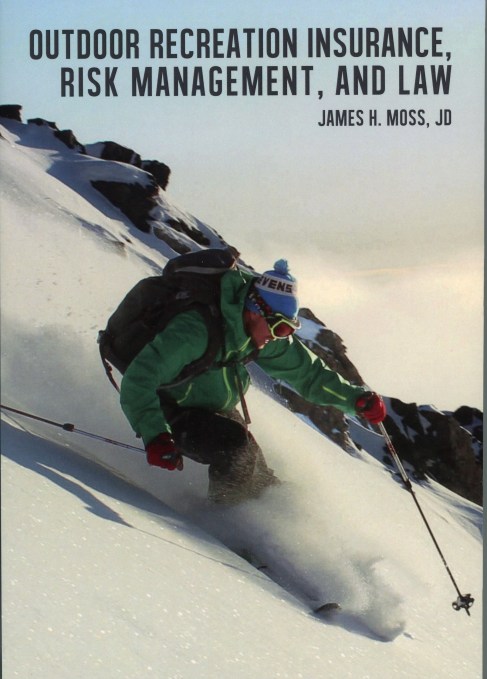
Outdoor Recreation Insurance, Risk Management and Law
To see Jim’s complete bio go here and to see his CV you can find it here. To find out the purpose of this website go here.
G-YQ06K3L262
What do you think? Leave a comment.
If you like this let your friends know or post it on FB, Twitter or LinkedIn
Author: Outdoor Recreation Insurance, Risk Management and Law
Facebook Page: Outdoor Recreation & Adventure Travel Law
Email: Jim@Rec-Law.US
By Recreation Law Rec-law@recreation-law.com James H. Moss
@2023 Summit Magic Publishing, LLC
#RecreationLaw, #@RecreationLaw, #Cycling.Law #Fitness.Law, #Ski.Law, #Outside.Law, #Recreation.Law, #Recreation-Law.com, #Outdoor Law, #Recreation Law, #Outdoor Recreation Law, #Adventure Travel Law, #law, #Travel Law, #Jim Moss, #James H. Moss, #Attorney at Law, #Tourism, #Adventure Tourism, #Rec-Law, #Rec-Law Blog, #Recreation Law, #Recreation Law Blog, #Risk Management, #Human Powered, #Human Powered Recreation,# Cycling Law, #Bicycling Law, #Fitness Law, #Recreation-Law.com, #Backpacking, #Hiking, #Mountaineering, #Ice Climbing, #Rock Climbing, #Ropes Course, #Challenge Course, #Summer Camp, #Camps, #Youth Camps, #Skiing, #Ski Areas, #Negligence, #Snowboarding, #RecreationLaw, #@RecreationLaw, #Cycling.Law #Fitness.Law, #SkiLaw, #Outside.Law, #Recreation.Law, #RecreationLaw.com, #OutdoorLaw, #RecreationLaw, #OutdoorRecreationLaw, #AdventureTravelLaw, #Law, #TravelLaw, #JimMoss, #JamesHMoss, #AttorneyatLaw, #Tourism, #AdventureTourism, #RecLaw, #RecLawBlog, #RecreationLawBlog, #RiskManagement, #HumanPowered, #HumanPoweredRecreation,# CyclingLaw, #BicyclingLaw, #FitnessLaw, #RecreationLaw.com, #Backpacking, #Hiking, #Mountaineering, #IceClimbing, #RockClimbing, #RopesCourse, #ChallengeCourse, #SummerCamp, #Camps, #YouthCamps, #Skiing, #Ski Areas, #Negligence, #Snowboarding, sport and recreation laws, ski law, cycling law, Colorado law, law for recreation and sport managers, bicycling and the law, cycling and the law, ski helmet law, skiers code, skiing accidents, Recreation Lawyer, Ski Lawyer, Paddlesports Lawyer, Cycling Lawyer, Recreational Lawyer, Fitness Lawyer, Rec Lawyer, Challenge Course Lawyer, Ropes Course Lawyer, Zip Line Lawyer, Rock Climbing Lawyer, Adventure Travel Lawyer, Outside Lawyer, Recreation Lawyer, Ski Lawyer, Paddlesports Lawyer, Cycling Lawyer, #RecreationalLawyer, #FitnessLawyer, #RecLawyer, #ChallengeCourseLawyer, #RopesCourseLawyer, #ZipLineLawyer, #RockClimbingLawyer, #AdventureTravelLawyer, #OutsideLawyer, Ski Liberty, Liberty Mountain Resort, Snow Time, Inc., Release, Assumption of the Risk,
WordPress Tags: Pennsylvania,requirements,Cahill,Corp,Dist,LEXIS,Release,injuries,plaintiff,holder,defendant,resort,area,holders,information,location,signature,manner,wife,consortium,Summary,decision,Supreme,Court,policy,individuals,affairs,agent,adhesion,recourse,transaction,agreement,coercion,inducement,statute,doctrine,assumption,captions,purpose,facilities,references,argument,statement,atmosphere,laboratory,winter,system,sprayers,Human,equipment,temperatures,factors,items,Conspicuous,ramifications,Important,English,Courts,letter,Plaintiffs,Timothy,Joseph,Anne,Leslie,Defendants,Mountain,Time,Claims,Defenses,Risk,Leave,FaceBook,Twitter,LinkedIn,Recreation,Edit,Email,RecreationLaw,Page,Outdoor,Adventure,Travel,Blog,Mobile,Site,Outside,Moss,James,Attorney,Tourism,Management,Rock,Ropes,Course,Challenge,Summer,Camp,Camps,Youth,Areas,Negligence,SkiLaw,OutdoorLaw,OutdoorRecreationLaw,AdventureTravelLaw,TravelLaw,JimMoss,JamesHMoss,AttorneyatLaw,AdventureTourism,RecLaw,RecLawBlog,RecreationLawBlog,RiskManagement,HumanPoweredRecreation,CyclingLaw,BicyclingLaw,FitnessLaw,RopesCourse,ChallengeCourse,SummerCamp,YouthCamps,Colorado,managers,helmet,accidents,Lawyer,Paddlesports,Recreational,Line,RecreationalLawyer,FitnessLawyer,RecLawyer,ChallengeCourseLawyer,RopesCourseLawyer,ZipLineLawyer,RockClimbingLawyer,AdventureTravelLawyer,OutsideLawyer,skier,skiers,signor
Cahill v. Ski Liberty Operating Corp., 2006 Pa. Dist. & Cnty. Dec. LEXIS 444; 81 Pa. D. & C.4th 344
Posted: January 14, 2013 Filed under: Legal Case, Pennsylvania, Release (pre-injury contract not to sue), Ski Area, Skiing / Snow Boarding | Tags: Assumption of risk, LexisNexis, Pennsylvania, Ski Liberty Operating Corp Leave a commentTo Read an Analysis of this decision see: A season pass release for a Pennsylvania ski area was limited to the inherent risks of skiing. Consequently, the plaintiff was able to argue his injury was not due to an inherent risk and Pennsylvania case reviews the requirements for a valid release in ski accident claim.
Cahill v. Ski Liberty Operating Corp., 2006 Pa. Dist. & Cnty. Dec. LEXIS 444; 81 Pa. D. & C.4th 344
Timothy Joseph Cahill and Anne Leslie Cahill, Plaintiffs v. Ski Liberty Operating Corp. t/d/b/a Ski Liberty and t/d/b/a Liberty Mountain Resort and Snow Time, Inc., Defendants
06-8-29 1
1 The parties consistently used the incorrect caption throughout their pleadings. Apparently, the Defendants misread the caption number on the Writ of Summons issued in this matter to read 06-8-29 rather than the proper caption number of 06-S-29. When the Defendants praeciped for a rule to file a complaint, their Praecipe carried the wrong number. All subsequent pleadings have duplicated that initial error. Accordingly, all are advised that the correct caption number, 06-S-29, should be used on all pleadings henceforth.
COMMON PLEAS COURT OF ADAMS COUNTY, PENNSYLVANIA
2006 Pa. Dist. & Cnty. Dec. LEXIS 444; 81 Pa. D. & C.4th 344
November 14, 2006, Decided
JUDGES: [*1] MICHAEL A. GEORGE, Judge.
OPINION BY: MICHAEL A. GEORGE
OPINION
CIVIL
OPINION
[**345] On January 17, 2004, Timothy Joseph Cahill 2 was skiing at the Liberty Mountain Ski Resort located in Carroll Valley, Adams County, Pennsylvania. 3 Cahill, an experienced skier, enjoyed skiing privileges at Ski Liberty through his purchase of a season pass. Cahill applied for the 2003-2004 season pass through a website operated by Ski Liberty. In order to complete the application, the website required Cahill to acknowledge that he agreed to the terms of a “season pass and advantage card release agreement” by clicking the “okay” box on the web page. The web page included an explanation of the terms which included a release and assumption of risk clause. Cahill’s application on the website was followed up with a written [**346] application which Cahill signed on January 11, 2004. In a conspicuous location immediately above his signature, the written application provides that he agreed to be legally bound by the “Notice of Risk”, “Assumption of Risk”, “Release from Liability”, and “Acknowledgement” provided to him by Ski Liberty. 4
2 Timothy Joseph Cahill will be referred to throughout this pleading as “Cahill.” Plaintiff, Anne Leslie Cahill, [*2] is the wife of Timothy Joseph Cahill and has filed a derivative claim for loss of consortium.
3 Liberty Mountain Ski Resort is owned and operated by Snow Time, Inc., which is a Delaware corporation operating in Adams County. Collectively, the parties will be referred to as “Ski Liberty.”
4 Both the website and the written documents accompanying the application provide as follows:
NOTICE OF RISK
I understand and accept the fact that snowsports (skiing…) in their various forms, including the use of lifts are dangerous with inherent and other risks. These risks include but are not limited to… ice and icy conditions… All of the inherent and other risks of snowsports present the risk of permanent catastrophic injury or death.
ASSUMPTION OF RISK
Understanding and agreeing that snowsports are hazardous, I voluntarily and expressly assume for myself the risk of injury while participating in these sports.
RELEASE FROM LIABILITY
In consideration of the use of the ski area’s facilities, I AGREE NOT TO SUE Ski Liberty Operating Corp., Whitetail Mountain Operating Corp., and/or Ski Roundtop Operating Corp., their owners, agents and employees, if injured while using the facilities, regardless of any negligence [*3] on the part of the Ski Area or its employees.
…
ACKNOWLEDGEMENT
In consideration of being permitted to use the facilities at Liberty Mountain Resort, Whitetail Mountain Resort and Ski Roundtop, I expressly acknowledge:
1. I have read and understand the “Notice of Risk.” “Assumption of Risk,” “Release from Liability,” “Be Aware, Ski with Care,” and “Your Responsibility Code.”
…
3. I voluntarily assume for myself all the risks involved in snowsports.
(emphasis in original)
On the date in question, Cahill fell on an icy area while skiing near the bottom of Eastwind and Strata slopes. He claims that although he was unaware of ice in this area, Ski Liberty knew of the danger since, during the previous [**347] evening, a snow-making water hydrant broke releasing water that ultimately froze into ice because of the cold conditions. As a result of his fall, Cahill claims to have severely injured his face, back, ribs and left hand. A Complaint was filed on March 17, 2006, claiming that Ski Liberty was negligent for failing to properly maintain the ski slopes in a safe manner and/or failing to adequately warn concerning the icy area. Ski Liberty has filed an Answer with New Matter alleging Cahill assumed the [*4] risk of his injuries and released Ski Liberty from all liability. Ski Liberty currently moves for judgment on the pleadings.
[HN1] A motion for judgment on the pleadings is in the nature of a demurrer as it provides the means to test the legal sufficiency of the pleadings. All of the [P]laintiffs’ allegations must be taken as true for the purposes of judgment on the pleadings. Bata v. Central Penn National Bank of Philadelphia, 423 Pa. 373, 224 A.2d 174, 178 (Pa. 1966). Unlike a motion for summary judgment, the power of the court to enter a judgment on the pleadings is limited by the requirement that the court consider only the pleadings themselves and any documents properly attached thereto. Nederostek v. Endicott-Johnson Shoe Co., 415 Pa. 136, 202 A.2d 72, 73 (Pa. 1964). A motion for judgment on the pleadings should be granted only where the pleadings demonstrate that no genuine issue of fact exists and the moving party is entitled to judgment as a matter of law. Dunn v. Board of Property Assessment, Appeals & Review of Allegheny County, 877 A.2d 504 510 n. 12 (Pa. Cmwlth. 2005). Since I find that the release entitles Ski Liberty to judgment as a matter of law, the Complaint will be dismissed.
[HN2] [**348] Although disfavored [*5] under Pennsylvania law, exculpatory agreements, or releases, are valid provided they comply with the safeguards enunciated by our Superior Court in Zimmer v. Mitchell and Ness, 253 Pa. Super. 474, 385 A.2d 437 (Pa. Super. 1978), aff’d, 490 Pa. 428, 416 A.2d 1010 (Pa. 1980) as follows:
The contract must not contravene any policy of the law. It must be a contract between individuals relating to their private affairs. Each party must be a free bargaining agent, not simply one drawn into an adhesion contract, with no recourse but to reject the entire transaction…[T]o be enforceable, several additional standards must be met. First, we must construe the agreement strictly and against the party asserting it. Finally, the agreement must spell out the intent of the parties with the utmost particularity.
Id. at 439. Applying this criteria, I find the releases executed by Cahill to be valid.
The pleadings support the conclusion that the present agreement is not one of adhesion. Cahill was not forced to enter into the contract but did so voluntarily in order to ski at Liberty Mountain. The agreement between the parties related to Cahill’s engaging in a matter of personal choice without any evidence of coercion or inducement negating [*6] the volitional nature of his act. Clearly, this activity is not essential to Cahill’s personal or economic well-being but, rather, was a purely recreational activity. See Kotovsky v. Ski Liberty Operating Corporation, 412 Pa. Super. 442, 603 A.2d 663 (Pa. Super. 1992) (holding that exculpatory agreement signed by skier injured in downhill race was valid).
[**349] The releases also do not contravene public policy. The clauses were purely private in nature and in no way affected the rights of the public. In fact, [HN3] releases such as that before the Court are actually in furtherance of public policy. Our state legislature, in enacting 42 Pa.C.S.A. § 7102(c) (relating to comparative negligence), specifically recognized that there are inherent risks in the sport of downhill skiing and specifically preserved the doctrine of assumption of risk as it applied to downhill skiing injuries and damages. 42 Pa.C.S.A. § 7102(c). This suggests that it is the policy in this Commonwealth to enforce the doctrine of assumption of risk for persons knowingly engaging in downhill skiing. Kotovsky, 603 A.2d at 666.
The releases executed by Cahill are unambiguous in both their language and intent. The language spells out with particularity [*7] the intent of the parties. The captions clearly advise patrons of the contents and purpose of the document as both a notice of risk and a release of liability. The waiver uses plain language informing the skier that downhill skiing is a dangerous sport with inherent risks including ice and icy conditions as well as other forms of natural or man-made obstacles, the condition of which vary constantly due to weather changes and use. Importantly, after advising a patron of these dangers, the documents unequivocally, in both bold and capital letters, releases Ski Liberty from liability for any injuries suffered while using the ski facilities regardless of any negligence on the part of Ski Liberty, its employees, or agents. The application of the releases to use of Ski Liberty facilities is not only spelled out specifically in the document but is reinforced by other references to the releases throughout the body of the document.
[**350] Cahill received, and acknowledged receipt, of the release from liability on two separate occasions. Notably, the first occasion appears to have been well in advance of the sale thereby allowing him ample opportunity to read it before using the facilities. 5 This factual [*8] background reveals that the intent of the parties was imminently clear and spelled out with the utmost particularity in plain language. Therefore, under the criteria set forth in Zimmer, the releases are valid.
5 The written application reveals an order date for the season pass of October 31, 2003 which circumstantially establishes the date application was submitted by Cahill over the internet.
Perhaps in recognition of the viability of the releases at issue, Cahill does not challenge their validity but, rather, disputes their application to the current facts. In this regard, Cahill suggests that a hazardous condition created by Ski Liberty, and known to exist by the resort, is not an inherent risk to the sport of skiing thereby making the exculpatory agreements and assumption of risk doctrine inapplicable. In support of this argument, Cahill cites Crews v. Seven Springs Mountain Resort, 2005 PA Super 138, 874 A.2d 100 (Pa. Super. 2005). In Crews, the Superior Court reviewed the trial court’s dismissal of a complaint wherein the plaintiff sought damages for injuries received when the plaintiff was involved in a collision with another snowboarder who was a minor under the influence of alcohol. In reversing [*9] the trial court, the Superior Court concluded that the plaintiff did not assume the risk of a collision with an underage drinker on a snowboard since the same is not an inherent risk of the sport of skiing.
Cahill’s reliance on Crews is misplaced. Primarily, Crews specifically limited the issue before the court to an [**351] analysis of the application of the assumption of risk doctrine. Instantly, this Court addresses a separate and distinct issue concerning the validity of an exculpatory agreement. Although these different issues are dealt with simultaneously in a number of court opinions, they are indeed distinguishable and require separate analysis. Compare Zimmer v. Mitchell and Ness, supra with Crews v. Seven Springs Mountain Resort, supra. Accordingly, I find Crews to be inapplicable to the issue of whether the release agreement entered by Cahill is valid.
Since I have found that Cahill knowingly and voluntarily entered into an exculpatory agreement releasing Ski Liberty from both the inherent dangers of downhill skiing and any negligence on the part of Ski Liberty or its employees, it is not necessary to undertake a detailed analysis of application of the assumption of risk doctrine [*10] to the current matter. Nevertheless, as noted, our legislature has expressly preserved assumption of risk as a defense to actions for downhill skiing injuries. 42 Pa.C.S.A. § 7102(c). Moreover, Ski Liberty provided Cahill prior and detailed notice of the dangerous and inherent risks of skiing. The notice is both thorough and exhaustive. Cahill is an experienced skier who obviously has personal knowledge of the inherent dangers involved in the sport. His experience undoubtedly has taught him that the sport of skiing is not conducted in the pristine and controlled atmosphere of a laboratory but rather occurs in the often hostile and fickle atmosphere of a south central Pennsylvania winter. Those familiar with skiing, such as Cahill, are aware that nature’s snow is regularly supplemented with a man- [**352] made variety utilizing water and a complex system of sprayers, hydrants, and pipes. Human experience also teaches us that water equipment frequently leaves puddles which, in freezing temperatures, will rapidly turn to ice. The risks caused by this variety of ever-changing factors are not only inherent in downhill skiing but, perhaps, are the very nature of the sport. The self-apparent risks [*11] were accepted by Cahill when he voluntarily entered into a business relationship with Ski Liberty. He chose to purchase a ski ticket in exchange for the opportunity to experience the thrill of downhill skiing. In doing so, he voluntarily assumed the risks that not only accompany the sport but may very well add to its attractiveness.
Since I find the exculpatory agreement valid, Cahill’s claim cannot be sustained. Similarly, Mrs. Cahill’s derivative claim for loss of consortium must also automatically fail as a matter of law. See Kiers by Kiers v. Weber National Stores, Inc., 352 Pa. Super. 111, 507 A.2d 406 (Pa. Super. 1986); Scattaregia v. Shin Shen Wu, 343 Pa. Super. 452, 495 A.2d 552 (Pa. Super. 1985); and Little v. Jarvis, 219 Pa. Super. 156, 280 A.2d 617 (Pa. Super. 1971).
For the foregoing reasons, Defendants’ Motion for Judgment on the Pleadings is granted.
BY THE COURT:
MICHAEL A. GEORGE
Judge
Date filed: November 14, 2006
ORDER
AND NOW, this 14<th> day of November, 2006, for the reasons set forth in the attached Opinion, Defendants’ Motion for Judgment on the Pleadings is granted. The Prothonotary is directed to enter judgment in favor of the Defendants, Ski Liberty Operating Corp. and Snow Time, Inc.
BY THE COURT:
MICHAEL A. GEORGE
Judge

Ohio adopts the requirement that a skier assumes the risk of a collision with another skier.
Posted: January 7, 2013 Filed under: Assumption of the Risk, Ohio, Skier v. Skier | Tags: Ohio, Ohio Supreme Court, Risk, Ski, Ski Resort, Sports, Supreme Court, Winter sport Leave a commentHorvath Et Al., v. Ish Et Al., 2012 Ohio 5333; 2012 Ohio LEXIS 2872
In order to recover in a collision on the ski slope the plaintiff must prove the defendant’s actions were reckless or intentional.
This case is between an injured adult and a young snowboarder. The snowboarder and his friends were on the same slope as the adult and his friends. The snowboarders went through the terrain park and upon exiting collided with the plaintiff.
The plaintiff sued for his injuries. The trial court dismissed the complaint based on the assumption of the risk. The plaintiff appealed, and the appellate court reversed the trial court agreeing with the plaintiffs that the Ohio statute created liability on the part of skiers and boarders for any collision.
The Ohio Supreme Court also sent the case back to the trial court but only to determine if the actions of the defendant snowboarder were reckless or intentional. The Supreme Court found that the statute in question, Ohio R.C. 4169.08 or 4169.09 only applied to the ski areas and did not apply to skiers and boarders.
So?
Once the Supreme court held that the statute did not apply, the legal issue was easily decided. The statute in question stated that skiing was a hazardous sport regardless of the safety measures that could be taken.
Under Ohio’s law on sports had held that:
[w]here individuals engage in recreational or sports activities, they assume the ordinary risks of the activity and cannot recover for any injury unless it can be shown that the other participant’s actions were either reckless or intentional
In Ohio, primary assumption of the risk means that a “defendant owes no duty whatsoever to the plaintiff.” The assumption is limited to those risks directly associated with the activity. “To be covered under the [primary-assumption-of-the-risk] doctrine, the risk must be one that is so inherent to the sport or activity that it cannot be eliminated.”
The court then held:
Accordingly, we hold that skiers assume the ordinary risks of skiing, which include collisions with other skiers, and cannot recover for an injury unless it can be shown that the other skier’s actions were reckless or intentional.
So Now What?
Ohio joins most other states with ski areas that require more than simple negligence on the part of the defendant for the plaintiff to recover for a collision on the slopes.
Without this standard of care, the risk of the sport would be totally removed, and skiers and boarders would enter a turnstile before they could enter the slope.
All sports have risk and if you are not willing to accept the risk of the sport then you should search for a sport that has risks that are what you can deal with. Checkers or chess are what I would suggest, although you could be hit by an angry knight if your opponent loses their temper.
Ski Area: Boston Mills Ski Area
Plaintiffs: Angel Horvath and Eugene Horvath
Defendants: David Ish, Tyler Ish and their cousins
Plaintiff Claims: Plaintiff had acted negligently, carelessly, recklessly, willfully, and wantonly in causing the collision with Defendant
Defendant Defenses: Assumption of the Risk
Holding: Reversed and sent back to determine if the defendant acted intentionally or recklessly when he collided with the plaintiff.
| Jim Moss is an attorney specializing in the legal issues of the outdoor recreation community. He represents guides, guide services, outfitters both as businesses and individuals and the products they use for their business. He has defended Mt. Everest guide services, summer camps, climbing rope manufacturers, avalanche beacon manufacturers, and many more manufacturers and outdoor industries. Contact Jim at Jim@Rec-Law.us |
Outdoor Recreation Insurance, Risk Management, and Law
Jim is the author or co-author of six books about the legal issues in the outdoor recreation world; the latest is Outdoor Recreation Insurance, Risk Management and Law.
To see Jim’s complete bio go here and to see his CV you can find it here. To find out the purpose of this website go here.
G-YQ06K3L262
What do you think? Leave a comment.
If you like this let your friends know or post it on FB, Twitter or LinkedIn
 Blue Sky |
 Threads |
 |
 |
 Stimulus |
 X (formerly known as Twitter) logo |
Author: Outdoor Recreation Insurance, Risk Management and Law
Facebook Page: Outdoor Recreation & Adventure Travel Law
Email: Jim@Rec-Law.US
By Recreation Law Rec-law@recreation-law.com James H. Moss
@2024 Summit Magic Publishing, LLC
#RecreationLaw, #@RecreationLaw, #Cycling.Law #Fitness.Law, #Ski.Law, #Outside.Law, #Recreation.Law, #Recreation-Law.com, #Outdoor Law, #Recreation Law, #Outdoor Recreation Law, #Adventure Travel Law, #law, #Travel Law, #Jim Moss, #James H. Moss, #Attorney at Law, #Tourism, #Adventure Tourism, #Rec-Law, #Rec-Law Blog, #Recreation Law, #Recreation Law Blog, #Risk Management, #Human Powered, #Human Powered Recreation,# Cycling Law, #Bicycling Law, #Fitness Law, #Recreation-Law.com, #Backpacking, #Hiking, #Mountaineering, #Ice Climbing, #Rock Climbing, #Ropes Course, #Challenge Course, #Summer Camp, #Camps, #Youth Camps, #Skiing, #Ski Areas, #Negligence, #Snowboarding, #RecreationLaw, #@RecreationLaw, #Cycling.Law #Fitness.Law, #SkiLaw, #Outside.Law, #Recreation.Law, #RecreationLaw.com, #OutdoorLaw, #RecreationLaw, #OutdoorRecreationLaw, #AdventureTravelLaw, #Law, #TravelLaw, #JimMoss, #JamesHMoss, #AttorneyatLaw, #Tourism, #AdventureTourism, #RecLaw, #RecLawBlog, #RecreationLawBlog, #RiskManagement, #HumanPowered, #HumanPoweredRecreation,# CyclingLaw, #BicyclingLaw, #FitnessLaw, #RecreationLaw.com, #Backpacking, #Hiking, #Mountaineering, #IceClimbing, #RockClimbing, #RopesCourse, #ChallengeCourse, #SummerCamp, #Camps, #YouthCamps, #Skiing, #Ski Areas, #Negligence, #Snowboarding, sport and recreation laws, ski law, cycling law, Colorado law, law for recreation and sport managers, bicycling and the law, cycling and the law, ski helmet law, skiers code, skiing accidents, Recreation Lawyer, Ski Lawyer, Paddlesports Lawyer, Cycling Lawyer, Recreational Lawyer, Fitness Lawyer, Rec Lawyer, Challenge Course Lawyer, Ropes Course Lawyer, Zip Line Lawyer, Rock Climbing Lawyer, Adventure Travel Lawyer, Outside Lawyer, Recreation Lawyer, Ski Lawyer, Paddlesports Lawyer, Cycling Lawyer, #RecreationalLawyer, #FitnessLawyer, #RecLawyer, #ChallengeCourseLawyer, #RopesCourseLawyer, #ZipLineLawyer, #RockClimbingLawyer, #AdventureTravelLawyer, #OutsideLawyer,
Horvath Et Al., v. Ish Et Al., 2012 Ohio 5333; 2012 Ohio LEXIS 2872
Posted: January 7, 2013 Filed under: Assumption of the Risk, Legal Case, Ohio, Skier v. Skier | Tags: David, Horvaths, Ohio, Ohio Supreme Court, Ski, Ski Resort, Summary judgment Leave a commentTo Read an Analysis of this decision see: Ohio adopts the requirement that a skier assumes the risk of a collision with another skier.
Horvath Et Al., v. Ish Et Al., 2012 Ohio 5333; 2012 Ohio LEXIS 2872
Horvath Et Al., Appellees, v. Ish Et Al., Appellants.
No. 2011-1089
2012 Ohio 5333; 2012 Ohio LEXIS 2872
April 25, 2012, Submitted
November 20, 2012, Decided
NOTICE:
THIS SLIP OPINION IS SUBJECT TO FORMAL REVISION BEFORE IT IS PUBLISHED IN AN ADVANCE SHEET OF THE OHIO OFFICIAL REPORTS.
PRIOR HISTORY: [**1]
APPEAL from the Court of Appeals for Summit County, No. 25442, 194 Ohio App. 3d 8, 2011 Ohio 2239, 954 N.E.2d 196.
Horvath v. Ish, 194 Ohio App. 3d 8, 2011 Ohio 2239, 954 N.E.2d 196, 2011 Ohio App. LEXIS 1907 (Ohio Ct. App., Summit County, 2011)
DISPOSITION: Judgment affirmed.
CORE TERMS: skier, skiing, sport, ski-area, collision, ski, inherent risks, tramway, negligence per se, slope, ski area, passenger, reckless, standard of care, statutory duties, statutory schemes, owe, common law, summary judgment, owed, duty of care, personal injury, refrain, trail, ordinary care, general assembly, reasonable care, recreational, enumerated, sentence
HEADNOTES
Torts–Sport or recreational activity–Skiers assume the ordinary risks of skiing, which include collisions with other skiers, and cannot recover for an injury unless it can be shown that the other skier’s actions were reckless or intentional.
SYLLABUS
OF THE COURT
Skiers assume the ordinary risks of skiing, which include collisions with other skiers and cannot recover for an injury unless it can be shown that the other skier’s actions were reckless or intentional.
COUNSEL: Paul W. Flowers Co. and Paul W. Flowers; and Sennett Fischer, L.L.C., and James A. Sennett, for appellees.
Gallagher Sharp, Timothy J. Fitzgerald, and Jeremy V. Farrell, for appellants.
JUDGES: LUNDBERG STRATTON, J. O’CONNOR, C.J., and O’DONNELL, LANZINGER, CUPP, and MCGEE BROWN, JJ., concur. PFEIFER, J., concurs in part and dissents in part.
OPINION BY: LUNDBERG STRATTON
OPINION
Lundberg Stratton, J.
I. Introduction
[*P1] The issue before the court is what duty or standard of care is owed by one skier to another for purposes of determining tort liability. We hold that skiers assume the ordinary risks of skiing, which include collisions with other skiers, and cannot recover for an injury unless it can be shown that the other skier’s actions were reckless or intentional.
[*P2] The court of appeals reversed the trial court’s grant of summary judgment in favor of Ish and remanded the case to the trial court [**2] to determine whether Ish had violated any duties under R.C. 4169.08 or 4169.09 and if he did, whether negligence per se applied. The court of appeals also held that a genuine issue of material fact existed whether Ish was reckless. Horvath v. Ish, 194 Ohio App.3d 8, 2011 Ohio 2239, 954 N.E.2d 196, ¶ 18 (9th Dist). We agree that there is a genuine issue of material fact, but only whether Ish’s actions were more than negligent, that is, whether his actions were reckless or intentional under the common law. Therefore, we affirm the judgment of the court of appeals, albeit on somewhat different grounds, and remand the case to the trial court for proceedings consistent with our opinion.
II. Facts and Procedural History
[*P3] On March 6, 2007, Angel Horvath and Eugene Horvath (the couple were married after the accident but before the complaint was filed) were skiing at Boston Mills ski resort. David Ish was snowboarding at Boston Mills on that same date, with his brother, Tyler, and their cousins. In the early evening, Angel and Eugene were skiing down Buttermilk Hill. David, Tyler, and their cousins were snowboarding on the same hill. David and his relatives proceeded through a terrain park 1 [**3] and then reentered Buttermilk Hill, where David and Angel collided. Angel was injured in the accident.
1 A terrain park is an area where snowboarders and skiers can do tricks or stunts using various features including jumps, rails, and half-pipes. See R.C. 4169.01(I).
[*P4] The Horvaths filed a complaint against David Ish and his parents, alleging that David had acted negligently, carelessly, recklessly, willfully, and wantonly in causing the collision with Angel.
[*P5] The Ishes filed a motion for summary judgment, arguing that skiers are subject to primary assumption of the risk, which means that a defendant owes no duty of ordinary care to plaintiff. Thus, the Ishes argued that in order to recover, the Horvaths were required to prove that David had acted recklessly or intentionally in causing the collision. The Ishes further asserted that there was no evidence that David’s actions were reckless or intentional.
[*P6] In opposing the Ishes’ motion for summary judgment, the Horvaths argued that R.C. 4169.08(C) imposes specific duties on skiers and that breaching those duties is negligence per se. The trial court granted the Ishes’ motion for summary judgment.
[*P7] In a two-to-one decision, the court of appeals [**4] reversed the judgment of the trial court, stating that “[b]y reading R.C. 4169.08(C) in context with 4169.09, we find that it is evident that the legislature intended that skiers would be liable for injuries caused to others while skiing.” Horvath, 194 Ohio App.3d 8, 2011 Ohio 2239, 954 N.E.2d 196, ¶ 13. The court of appeals remanded the cause to the trial court to determine whether David Ish’s actions violated any of the responsibilities described in R.C. 4169.08(C) and, if so, whether any such violation invoked the doctrine of negligence per se. Id. at ¶ 14.
[*P8] This case is before this court pursuant to the acceptance of the Ishes’ discretionary appeal. 129 Ohio St. 3d 1503, 2011 Ohio 5358, 955 N.E.2d 386.
III. Analysis
R.C. Chapter 4169
[*P9] We begin our analysis by determining whether R.C. 4169.08 and 4169.09 apply to personal-injury litigation between skiers.
[*P10] When interpreting a statute, a court’s paramount concern is legislative intent. State ex rel. United States Steel Corp. v. Zaleski, 98 Ohio St.3d 395, 2003 Ohio 1630, 786 N.E.2d 39, ¶ 12. “[T]he intent of the law-makers is to be sought first of all in the language employed, and if the words be free from ambiguity and doubt, and express [**5] plainly, clearly and distinctly, the sense of the law-making body, there is no occasion to resort to other means of interpretation ” Slingluff v. Weaver, 66 Ohio St. 621, 64 N.E. 574 (1902), paragraph two of the syllabus. However, “[i]n reviewing a statute, a court cannot pick out one sentence and disassociate it from the context, but must look to the four corners of the enactment to determine the intent of the enacting body.” State v. Wilson, 77 Ohio St.3d 334, 336, 1997 Ohio 35, 673 N.E.2d 1347 (1997). “A court must examine a statute in its entirety rather than focus on an isolated phrase to determine legislative intent.” Massillon City School Dist. Bd. of Edn. v. Massillon, 104 Ohio St.3d 518, 2004 Ohio 6775, 820 N.E.2d 874, ¶ 37.
[*P11] See also R.C. 1.42. With this guidance in mind, we examine R.C. Chapter 4169 in its entirety to determine whether R.C. 4169.08 and 4169.09 apply to personal-injury litigation between skiers.
[*P12] R.C. 4169.02 established a ski-tramway board that is authorized to create rules under R.C. Chapter 119 relating to “public safety in the construction, maintenance, mechanical operation, and inspection of passenger tramways.” 2 R.C. 4169.03 requires that a tramway must be registered [**6] with the board before it can be operated. R.C. 4169.04 provides that tramways must be inspected. R.C. 4169.05 authorizes the board to hear complaints that the construction, maintenance, or mechanical operation of a tramway endangers public safety. R.C. 4169.06 permits a board member to suspend the operation of a tramway if the board determines that an “immediate danger exists.” R.C. 4169.07 provides that ski-area operators are responsible for any tramway they construct and for the maintenance and operation of a passenger tramway in the operator’s ski area. R.C. 4169.07 also states that passengers have certain enumerated responsibilities regarding their use of tramways. R.C. 4169.99 provides that ski-area operators are subject to a monetary fine if they fail to register their tramway with the board, fail to comply with an order from the board, or fail to comply with a rule issued by the board.
2 A “passenger tramway” is “a device used to transport passengers uphill, whether on skis or other devices or without skis or other devices, or in cars on tracks or suspended in the air, by the use of steel cables, chains, or belts or by ropes, and that is usually supported by trestles or towers [**7] with one or two spans.” R.C. 4169.01(F). Chair lifts, rope tows, and conveyors are passenger tramways. R.C. 4169.01(F)(3), (5), and (7).
[*P13] R.C. 4169.08 insulates ski-area operators from liability for injuries that arise from the inherent risks of skiing and otherwise defines certain responsibilities applicable to ski-area operators and ski-area visitors. R.C. 4169.09 addresses the liability of ski-area operators and ski-area visitors for failing to comply with the responsibilities enumerated in R.C. 4169.08(C).
[*P14] And, finally, R.C. 4169.10 immunizes ski-area operators for damages suffered by a person who was committing a theft at the time the person suffered the loss.
[*P15] It is evident that R.C. Chapter 4169, when viewed in its entirety, addresses certain obligations and limitations on liability pertaining to ski-area operators, as well as the relationship between ski-area operators and ski-area visitors. Consequently, neither R.C. 4169.08 nor 4169.09 apply to personal-injury litigation between skiers.
[*P16] Our conclusion is confirmed when we examine R.C. 4169.08 and 4169.09 in greater detail. R.C. 4169.08(A)(1) provides that “the general assembly recognizes that skiing as a recreational sport [**8] is hazardous to skiers regardless of all feasible safety measures that can be taken. It further recognizes that a skier expressly assumes the risk of and legal responsibility for injury, death, or loss to person or property that results from the inherent risks of skiing.” R.C. 4169.08(A)(1) then provides a nonexhaustive list of conditions (e.g., slush) or objects (e.g., out-of-bounds barriers) that are inherent risks of skiing. R.C. 4169.08(A)(2) and (3) provide that ski-area operators are not liable for the death of or injury to ski-area visitors that occur in a freestyle terrain or tubing park, subject to certain qualifications. Thus, R.C. 4169.08(A) effectively insulates ski-area operators from personal-injury lawsuits that arise from the inherent risks of skiing. See Stone v. Alpine Valley Ski Area, 135 Ohio App.3d 540, 545, 734 N.E.2d 888 (11th Dist.1999); Otterbacher v. Brandywine Ski Ctr., Inc., 9th Dist. No. 14269, 1990 Ohio App. LEXIS 4582, 1990 WL 72327, *4 (May 23, 1990).
[*P17] R.C. 4169.08(B) and (C) also state that ski-area operators and skiers have certain enumerated responsibilities. For example, ski-area operators must mark certain snowmaking equipment, and skiers must ski within the limits of their [**9] ability. R.C. 4169.08(B)(1) and (C)(1). And R.C. 4169.09 states that a “ski area operator * * * or skier is liable for injury, death, or loss to person or property * * * caused by the operator’s * * * or skier’s failure to fulfill any of the responsibilities required by this chapter.” Therefore, reading R.C. 4169.08(B) and (C) in context with R.C. Chapter 4169, we find that the responsibilities of ski-area operators and ski-area visitors are reciprocal. In other words, the General Assembly intended that ski-area operators owe skiers certain enumerated responsibilities, and in return skiers owe ski-area operators certain enumerated responsibilities. Thus, we hold that R.C. 4169.08(C) does not create a duty of care that applies between skiers.
[*P18] Accordingly, we hold that R.C. Chapter 4169, and in particular, R.C. 4169.08 and 4169.09, do not apply to personal-injury litigation between skiers.
Common Law
[*P19] Having determined that R.C. Chapter 4169 does not apply to personal-injury litigation between skiers, we turn to the common law to determine the proper standard of care applicable between skiers. This court has held that “[w]here individuals engage in recreational or sports activities, they [**10] assume the ordinary risks of the activity and cannot recover for any injury unless it can be shown that the other participant’s actions were either reckless or intentional as defined in [2 Restatement of the Law 2d, Torts, Section 500, and 1 Restatement of the Law 2d, Torts, Section 8A (1965)].” Marchetti v. Kalish, 53 Ohio St.3d 95, 559 N.E.2d 699, syllabus; see also Thompson v. McNeill 53 Ohio St.3d 102, 559 N.E.2d 705. “Obviously, without our stating so, in Marchetti and Thompson we applied ‘primary’ assumption-of-risk principles in limiting the defendant’s liability.” Gentry v. Craycraft, 101 Ohio St.3d 141, 2004 Ohio 379, 802 N.E.2d 1116, ¶ 11. Primary assumption of the risk means that a defendant owes no duty whatsoever to the plaintiff. Gallagher v. Cleveland Browns Football Co., 74 Ohio St.3d 427, 431-432, 1996 Ohio 320, 659 N.E.2d 1232 (1996).
[*P20] Clearly, skiing is a sport or recreational activity. However, “only those risks directly associated with the activity in question are within the scope of primary assumption of risk.” Id. at 432, citing Cincinnati Baseball Club Co. v. Eno, 112 Ohio St. 175, 3 Ohio Law Abs. 164, 147 N.E. 86 (1925). “To be covered under the [primary-assumption-of-the-risk] doctrine, the risk [**11] must be one that is so inherent to the sport or activity that it cannot be eliminated.” Konesky v. Wood Cty. Agricultural Soc., 164 Ohio App.3d 839, 2005 Ohio 7009, 844 N.E.2d 408, ¶ 19 (6th Dist), citing Westray v. Imperial Pools & Supplies, Inc., 133 Ohio App. 3d 426, 432, 728 N.E.2d 431 (6th Dist.1999). Where the risk at issue is not inherent, then a negligence standard applies. See Gallagher at 432; see also Pope v. Willey, 12th Dist. No. CA2004-10-077, 2005 Ohio 4744, 2005 WL 2179317 (colliding with a truck on a road is not an inherent risk of riding an all-terrain vehicle); Goffe v. Mowell, 2d Dist. No. 98-CA-49, 1999 Ohio App. LEXIS 308, 1999 WL 55693 (Feb. 5, 1999) (faulty racetrack design is not an inherent risk of go-cart racing).
[*P21] The Supreme Court of Pennsylvania has recognized that “other skiers are as much a part of the risk in downhill skiing, if not more so, than the snow and ice, elevation, contour, speed and weather conditions. As anyone who has ever undertaken the sport of skiing is painfully aware, it is a sport in which it is common for the participants to lose control.” Hughes v. Seven Springs Farm, Inc., 563 Pa. 501, 511, 762 A.2d 339 (2000). Other courts have also recognized that collisions [**12] between skiers are an inherent risk in the sport of skiing. See Peterson ex rel. Peterson v. Donahue, 733 N.W.2d 790, 793 (Minn.App.2007); Cheong v. Antablin, 16 Cal.4th 1063, 1069, 68 Cal. Rptr. 2d 859, 946 P.2d 817 (1997); Gern v. Basta, 809 N.Y.S.2d 724, 725, 26 A.D.3d 807 (2006). We agree that collisions between skiers are an inherent risk of skiing.
[*P22] Accordingly, we hold that skiers assume the ordinary risks of skiing, which include collisions with other skiers, and cannot recover for an injury unless it can be shown that the other skier’s actions were reckless or intentional.
IV. Conclusion
[*P23] The judgment of the court of appeals is affirmed, albeit on somewhat different grounds. We agree that there is a genuine issue of material fact to be considered, but only with regard to whether Ish’s actions were more than negligent, that is, whether he acted recklessly or intentionally. Because a genuine issue of fact remains, the court of appeals was correct in holding that the trial court erred in granting summary judgment. Therefore, we affirm the appellate court’s judgment, and we remand this cause to the trial court for further proceedings in accordance with this opinion.
Judgment affirmed.
O’Connor, C.J., and [**13] O’Donnell, Lanzinger, Cupp, and McGee Brown, JJ., concur.
Pfeifer, J., concurs in part and dissents in part.
CONCUR BY: PFEIFER (In Part)
DISSENT BY: PFEIFER (In Part)
DISSENT
Pfeifer, J., concurring in part and dissenting in part.
[*P24] I concur in the majority’s judgment affirming the appellate court’s decision to reverse the trial court’s granting of summary judgment. However, I do not agree with the majority’s baffling interpretation of R.C. 4169.08 and 4169.09. I also do not agree that there is no common-law duty of care between skiers. If legal issues were ski slopes, the one raised in this case would be a bunny hill. Somehow, the majority has careened down the hill and wound up smashed through the wall of the lodge.
A Skier’s Statutory Duties
[*P25] The fact that R.C. Chapter 4169 tends to limit the liability of ski-area operators from liability for injuries suffered by skiers does not mean that it leaves skiers without protection from other skiers. It makes perfect sense that a piece of legislation that shields ski-area operators from liability would also set forth a duty of care between skiers that would leave skiers, not ski facilities, liable for injuries they cause other skiers. Other states-Colorado (Colo.Rev.Stat.Ann. 33-44-109), [**14] Idaho (Idaho Code 6-1106), Maine (32 Maine Rev.Stat.Ann. 15217), Michigan (Mich.Comp.Laws Ann. 408.344), New Mexico (N.M.Stat.Ann. 24-15-10), and West Virginia (W.Va. Code Ann. 20-3A-8), for instance, manage to achieve that balance in their ski-safety statutory schemes. That balance is part of the prevailing view in states with ski statutes:
In a skier collision case, the laws differ from state to state on the duty of care one skier owes to another. The jurisdictions can be divided into two classifications. The prevailing view holds skiers to a standard of reasonable care to avoid injury to another skier. The standard of care is usually founded on a statutory principle obliging a skier to exercise reasonable care and to yield the right of way to the skier below. One skier does not assume the risk of another’s negligence; a skier collision is not a risk “inherent” in the sport as skiing is not a contact sport.
46 American Jurisprudence Proof of Facts 3d 1, Liability of Skier for Collision with Another Skier, Section 2 (1998).
[*P26] The duties between skiers, understood since Norwegians first strapped planks to their feet 4,500 years ago–ski under control and do not run into another skier, among [**15] others–are now part of Ohio statutory law. Those duties are set forth in R.C. 4169.08:
(C) A skier shall have the following responsibilities:
(1) To know the range of the skier’s ability to negotiate any slope or trail or to use any passenger tramway that is associated with a slope or trail, to ski within the limits of the skier’s ability, to ski only on designated slopes and trails, to maintain control of speed and course at all times while skiing, to heed all posted warnings, and to not cross the track of a passenger tramway except at a designated area;
(2) To refrain from acting in a manner that may cause or contribute to the injury of another person, to refrain from causing collision with any person or object while skiing, and to not place any object in a ski area that may cause another skier or a passenger to fall.
[*P27] Contrary to the majority’s assertion, it is possible for the General Assembly in one statutory chapter to protect ski-area operators from liability while at the same time providing some protection for skiers. R.C. 4169.08(C)(2) specifically states that skiers have responsibilities to avoid causing injuries to or colliding with another person, but the majority states that [**16] those responsibilities are owed to ski-area operators, not other persons. R.C. 4169.08(C)(3) requires a person who is involved in a ski accident that injures another to identify himself before leaving the scene, presumably so that the person causing the collision can live up to his responsibilities.
[*P28] But it is R.C. 4169.09 that makes it crystal clear that a skier is liable for injuries he causes to other skiers by failing to meet the duties set forth in R.C. 4169.08(C): “A * * * skier is liable for injury, death, or loss to person or property caused by the * * * skier’s failure to fulfill any of the responsibilities required by this chapter.” How can the majority ignore this simple statutory statement? How can this mean anything other than that a skier is liable for injuries suffered by another person as a result of the skier’s failure to meet his statutory responsibilities? Why does this sentence appear in the statute if it does not establish responsibilities between skiers?
[*P29] If R.C. 4169.08 sets forth only duties between skiers and ski-area operators, the second sentence in R.C. 4169.09 would be sufficient to shield the ski area from liability. The second sentence of R.C. 4169.09 makes [**17] it clear that the ski-area operator is not liable for a skier’s injuries caused by another skier: “A ski area operator * * * is not liable for injury * * * caused by another’s failure to fulfill any of the responsibilities required of another by this chapter.” In blunt terms, an injured person’s only recourse is against the person who caused the injury.
[*P30] Finally, R.C. 4169.09 states that “[a] * * * skier is not entitled to recover for injury * * * caused by the * * * skier’s failure to fulfill any of the responsibilities required by this chapter.” That is, if a skier’s injuries are caused by his own failure to meet his statutory responsibilities, he has recourse against no one.
[*P31] Read as a whole, R.C. 4169.09 states that if a skier violates his responsibilities, he is liable for injuries caused to another, that the ski-area operator is not liable for those injuries, and that a skier who causes his own injuries is not entitled to recover from another, including a ski-area operator, for his injuries. The statute provides protection from liability for ski-area operators from something they cannot control–the behavior of individual skiers–while at the same time making skiers responsible for [**18] injuries they cause for failing to abide by the basic rules of skiing. Only this interpretation provides meaning to all three of the sentences that make up R.C. 4169.09.
Liability for Breach of Skier’s Statutory Duty in Michigan
[*P32] In Rusnak v. Walker, 273 Mich.App. 299, 729 N.W.2d 542 (2006), the court–a special panel called pursuant to Michigan law to resolve an appellate conflict–addressed whether a skier could sue another skier pursuant to Michigan’s Ski Area Safety Act (“SASA”). The statutory scheme in Michigan is substantially similar to Ohio’s. The Michigan law places duties on skiers to ski safely and not injure other skiers, Mich.Comp.Laws Ann. 408.341 and 408.342, and assigns liability for injuries caused by skiers who violate those duties. (“A skier * * * who violates this act * * * shall be liable for that portion of the loss or damage resulting from that violation”). Mich.Comp.Laws Ann. 408.344.
[*P33] But Michigan’s statutory scheme contains an important provision missing from Ohio’s: it lists “collisions * * * with other skiers” as one of the inherent risks of skiing. Mich.Comp.Laws Ann. 408.342. Such a provision is absent from Ohio’s statutory declaration of the inherent risks [**19] of skiing. R.C. 4169.08(A).
[*P34] Even so, the Michigan court held that despite a statutory recognition that colliding with other skiers is an inherent danger of skiing, a skier could recover for injuries caused by another skier’s failure to live up to the responsibilities set forth in the SASA:
As we have already noted, we hold that the SASA assumption-of-risk provision contains clear and unambiguous language, providing in no uncertain terms that a collision between skiers is an obvious and necessary danger that inheres in the sport of skiing. However, in those cases in which a plaintiff can establish that a defendant violated one of the specific duties imposed by the SASA, the plaintiff can still recover damages to the extent that the defendant’s violations caused the plaintiffs injuries. To state it differently, it is possible, and therefore skiers assume the risk, that a collision can occur between skiers when neither skier is violating his or her duties under the SASA. That is, it is an obvious and necessary danger of skiing that sometimes accidents simply happen. But, again, if it can be shown that the collision resulted from a violation of the act, then the violator is to be held liable [**20] for the damage caused, as provided under [Mich.Comp.Laws Ann.] 408.344.
Rusnak, 273 Mich.App. at 305, 729 N.W.2d 542.
[*P35] The court noted in Rusnak that if it were to hold that there is no liability for injuries to a skier caused by another skier’s failure to meet his or her statutory duties, “the duties and liabilities placed on individual skiers would have no meaning.” Id. at 309. But the majority does in this case what Rusnak warns against, finding that the statutory provision–“A * * * skier is liable for injury, death, or loss to person or property caused by the * * * skier’s failure to fulfill any of the responsibilities required by this chapter”–is meaningless.
Ordinary Care
[*P36] In its remand to the trial court, the court of appeals suggested that the trial court should consider whether David Ish violated any of the duties outlined in R.C. 4169.08(C) and, if so, whether the violation would constitute negligence per se. Horvath v. Ish, 194 Ohio App.3d 8, 2011 Ohio 2239, 954 N.E.2d 196, ¶ 14. Violation of a statutory duty is not necessarily negligence per se, and it is not in this case.
[*P37] To successfully prosecute a claim for negligence, a plaintiff must prove that the defendant owed the plaintiff [**21] a duty, that the defendant breached that duty, and that the breach of the duty proximately caused the plaintiffs injury. Wellman v. E. Ohio Gas Co., 160 Ohio St. 103, 108-109, 113 N.E.2d 629 (1953). “[A] duty may be established by common law, legislative enactment, or by the particular facts and circumstances of the case.” Chambers v. St. Mary’s School, 82 Ohio St.3d 563, 565, 1998 Ohio 184, 697 N.E.2d 198 (1998). In certain instances, the failure to perform a statutory duty is negligence per se, meaning that “the plaintiff has conclusively established that the defendant breached the duty that he or she owed to the plaintiff.” Id.
[*P38] But negligence per se does not follow from every violation of a statutory duty; violation of a statute may simply constitute evidence of negligence. “[T]he distinction between the two depends upon the degree of specificity with which the particular duty is stated in the statute.” Sikora v. Wenzel, 88 Ohio St.3d 493, 496, 2000 Ohio 406, 727 N.E.2d 1277 (2000). As this court put it in Swoboda v. Brown, 129 Ohio St. 512, 196 N.E. 274 (1935), paragraph four of the syllabus:
The distinction between negligence and “negligence per se” is the means and method of ascertainment. The former must [**22] be found by the jury from the facts, the conditions, and circumstances disclosed by the evidence; the latter is a violation of a specific requirement of law or ordinance, the only fact for determination by the jury being the commission or omission of the specific act inhibited or required.
That is, when a statute requires performance of specific acts, a jury need only determine whether the specific acts were performed, and if it determines that they were not performed, the defendant is negligent per se; but when the statute instead sets forth general rules of conduct that must be followed, a jury must use its judgment in evaluating the circumstances to determine whether the defendant was negligent. In the latter instance, the typical duty of care for negligence applies:
Where there exists a legislative enactment commanding or prohibiting for the safety of others the doing of a specific act and there is a violation of such enactment solely by one whose duty it is to obey it, such violation constitutes negligence per se; but where there exists a legislative enactment expressing for the safety of others, in general or abstract terms, a rule of conduct, negligence per se has no application [**23] and liability must be determined by the application of the test of due care as exercised by a reasonably prudent person under the circumstances of the case.
Eisenhuth v. Moneyhon, 161 Ohio St. 367, 119 N.E.2d 440 (1954), paragraph one of the syllabus.
[*P39] In this case, the defendant may have violated several of the responsibilities of R.C. 4169.08(C)(1) and (2): failing to ski “within the limits of [his] ability,” failing to “maintain control of [his] speed and course,” failing to “refrain from acting in a manner that may cause or contribute to the injury of another person,” and failing “to refrain from causing collision with any person or object while skiing.” None of the defendant’s violations could be established from the determination of one fact by a trier of fact; the trier of fact would need to consider “the facts, the conditions, and circumstances disclosed by the evidence.” Swoboda at paragraph four of the syllabus. The responsibilities set forth in R.C. 4169.08(C)(1) and (2) are akin to the “rule of conduct” discussed in Eisenhuth; in those instances, negligence per se does not apply, and liability is “determined by the application of the test of due care as exercised by a reasonably [**24] prudent person under the circumstances of the case.” Eisenhuth at paragraph three of the syllabus.
[*P40] Thus, the General Assembly has set forth a statutory duty of ordinary care for skiers. Ingrained in that ordinary-care standard is the recognition that skiers are on skis, are on a slippery surface, and are engaged in a somewhat dangerous activity. R.C. 4169.08(C)(1) and (2) do not require expert ability by all skiers; they require common sense and an appreciation of very basic safety rules of skiing. When a skier fails to use ordinary care to meet the responsibilities set forth in R.C. 4169.08(C), he is liable for any injuries caused by his failure to live up to those rules of conduct, pursuant to R.C. 4169.09.
Common Law
[*P41] As stated above, I dissent from the majority’s holding that R.C. 4169.09 does not recognize a cause of action between skiers. I also dissent from the majority’s holding that a skier must prove that another skier was reckless to successfully assert a common-law claim against another skier. The crux of the majority’s holding regarding the common law is that skiers owe no duty to each other because collisions between skiers are one of the inherent risks of skiing. I disagree [**25] and instead would follow the reasoned approach adopted by the Supreme Court of Connecticut in Jagger v. Mohawk Mountain Ski Area, Inc., 269 Conn. 672, 849 A.2d 813 (2004), in which the court held that “the standard of care implicated in the context of the sport of skiing is that of a duty to refrain from unreasonable conduct and that liability may attach for negligent behavior.” Id. at 698.
[*P42] Like many other states, Connecticut has a ski-safety statutory scheme; such statutory schemes are like snowflakes-no two are exactly alike. See, e.g., Frakt & Rankin, Surveying the Slippery Slope: The Questionable Value of Legislation to Limit Ski Area Liability, 28 Idaho L.Rev. 227, 230 (1992), fn.12. The Connecticut statute at issue in Jagger did not contain the declaration found in the Ohio and Michigan statutes that a skier is liable to another skier for injuries caused by the skier’s failure to meet his or her statutory responsibilities. The Connecticut statute did state that collisions with other skiers are an inherent risk of skiing, Conn.Gen.Stat. 29-212; the court in Jagger found that that provision did not apply to lawsuits between skiers. Jagger, 269 Conn. at 697, 849 A.2d 813, fn. 21.
[*P43] [**26] In Jagger, the court applied a four-part test “to evaluate the various policy considerations relevant to the determination of the extent of the defendant’s duty.” Id. at 700. The court had developed the test in Jaworski v. Kiernan, 241 Conn. 399, 696 A.2d 332 (1997), to determine the standard of care applicable to participants in a soccer game. The elements of the test include
“(1) the normal expectations of participants in the sport in which the plaintiff and the defendant were engaged; (2) the public policy of encouraging continued vigorous participation in recreational sporting activities while weighing the safety of the participants; (3) the avoidance of increased litigation; and (4) the decisions of other jurisdictions.”
Jagger at 700, quoting Jaworski at 407.
[*P44] As for the first factor, the normal expectations of the participants in the sport, I agree with the Jagger court that although ski collisions can be frequent, skiers expect their fellow skiers to abide by the commonly accepted, fundamental rules of skiing:
While collisions with other skiers are fairly common, frequency of occurrence is not the ultimate touchstone in evaluating the expectations of participants in the sport. [**27] Rather, we perceive the expectations of skiers to be that fellow participants in the sport will conduct themselves in a manner befitting the dangerous potentialities attendant with the sport. Thus, skiers will expect that other skiers will follow the rules and generally accepted practices of the sport of skiing. Indeed, our statutory scheme regarding ski liability confirms that skiers should possess such expectations as they take part in the sport. * * * The normal expectations of skiers will be that fellow skiers will ski in a reasonable and appropriate manner.
Id. at 701-702.
[*P45] Like Connecticut’s, our state’s statutory scheme sets forth responsibilities for skiers that should create in the minds of other skiers the expectation that collisions are not an acceptable part of the sport.
[*P46] Further, skiers are reminded by signs throughout ski areas of appropriate behavior. The Skier’s Responsibility Code, promulgated by the National Ski Areas Association, reminds skiers of common safety rules:
Always stay in control, and be able to stop or avoid other people or objects.
People ahead of you have the right of way. It is your responsibility to avoid them.
You must not stop where you obstruct a trail [**28] or are not visible from above.
Whenever starting downhill or merging into a trail, look uphill and yield to others.
Always use devices to help prevent runaway equipment.
Observe all posted signs and warnings. Keep off closed trails and out of closed areas.
Prior to using any lift, you must have the knowledge and ability to load, ride and unload safely.
http://www.nsaa.org/nsaa/safety/responsibilitycode (accessed Nov. 1, 2012)
[*P47] Unlike in sports like football, basketball, or soccer, in which contact with other participants is part of the very nature of the sport, contact with another individual in skiing is outside the nature of the sport; any contact at all between skiers transforms skiing into an unacceptably dangerous proposition. The expectation among skiers is that their fellow skiers appreciate that safety is essential for everyone’s enjoyment of the sport.
[*P48] As for the second factor-balancing the encouragement of participation in the sport against concern for the safety of participants-I agree with the court in Jagger that encouraging responsible behavior by skiers tends to encourage participation:
As for the second Jaworski factor, we conclude that the balancing of the public policy of [**29] the encouragement of vigorous participation in the sport of skiing and the protection of the safety of its participants weighs in favor of a negligence standard. We believe that requiring skiers to participate in the reasonable manner prescribed by the rules of the sport actually will promote participation in the sport of skiing. Should the threshold for liability be placed at a level that only reckless or intentional misconduct can serve as grounds for liability, many of the potential harms caused by coparticipants in the sport will go unremedied and, therefore, dissuade potential participants from taking part in the sport. Additionally, a standard of reasonableness also operates to protect the safety of participants in the sport of skiing.
Jagger, 269 Conn. at 702-703, 849 A.2d 813.
[*P49] I agree that there is a minimal price to pay, if any, for increased safety on ski slopes. That skiers could feel safer when skiing would tend to inure to the benefit of participation rates. Colorado, whose economy is much more dependent on skiing than Ohio’s, statutorily recognizes the right of skiers to recover damages from other skiers who cause injuries. Colo.Rev.Stat.Ann. 33-44-109 (“a skier is not [**30] precluded under this article from suing another skier for any injury to person or property resulting from such other skier’s acts or omissions. Notwithstanding any provision of law or statute to the contrary, the risk of a skier/skier collision is neither an inherent risk nor a risk assumed by a skier in an action by one skier against another”).
[*P50] The third factor, the potential increase in litigation, is a minimal factor in the analysis. Contact with other skiers is not a regular part of skiing; collisions are rare enough that our courts would not be clogged by claims. As the court recognized in Jagger, this situation might be different in other sports:
For instance, in Jaworski we recognized quite correctly that the imposition of a negligence standard in contact sports would result undesirably in the potentiality of a civil action arising out of any foul, any hit batsman, or any clipping penalty. The same potential for undesirable numbers of civil actions is not present in the context of skiing. As discussed previously, abiding by the rules of the sport of skiing will eliminate the overwhelming majority of contact between skiers.
Id. at 703.
[*P51] The fourth element of the Jaworski test is [**31] a consideration of the law in other jurisdictions. We have the benefit of relying on the court’s well-reasoned decision in Jagger. Jagger relied on Novak v. Virene, 224 Ill.App.3d 317, 321, 586 N.E.2d 578, 166 Ill. Dec. 620 (1991), in which the court stated:
As in the individual sports of running and bicycling, there is the possibility of collisions in downhill skiing. But by one’s participation in the sport, one does not voluntarily submit to bodily contact with other skiers, and such contact is not inevitable. Therefore, the concern that the possibility of a negligence lawsuit would damper vigorous participation is inapplicable to downhill skiing. There is no reason to expand the limited contact sports exception to exempt downhill skiers from negligence liability if they negligently collide with other skiers. Many activities in life are fraught with danger, and absent a specific assumption of risk, one may obtain damages when injured by another’s negligence. Defendant’s conduct should be governed by ordinary negligence standards.
Id. at 321.
[*P52] In a Utah case, Ricci v. Schoultz, 963 P.2d 784, 786 (Utah App.1998), the court held that “a skier does have a duty to other skiers to ski reasonably and within [**32] control. However, an inadvertent fall on a ski slope, alone, does not constitute a breach of this duty.” Even though there was no negligence in the Ricci case, the case did hold that negligence was the proper legal standard to apply.
[*P53] Interpreting Vermont law in Dillworth v. Gambardella, 970 F.2d 1113, 1123 (2d Cir.1992), the court held that a skier can be liable to another skier for injuries caused by the skier’s negligence, but made clear that not every collision is caused by negligence:
The law is clear. “[T]he standard of conduct needed to discharge a duty of care in any given situation [is] measured in terms of the avoidance of reasonably foreseeable risks to the person to whom such duty is owed.” Green v. Sherburne Corp., 137 Vt. 310, 403 A.2d 278, 280 (1979). Like all others, skiers owe that degree of care an ordinary prudent person would exercise under like or similar circumstances. See La Faso v. La Faso, 126 Vt. 90, 223 A.2d 814, 817-18 (1966). One skier is not the insurer of another skier’s safety nor, absent negligence, is one skier liable to another for inadvertent or accidental contact. See, e.g., LaVine v. Clear Creek Skiing Corp., 557 F.2d 730, 734-35 (10th Cir.1977).
Thus, [**33] a jury might conclude that skiers who lose control even while exercising due care-that is, have breached no duty owed to other skiers-may pose a danger which is inherent, obvious and necessary to participants in the sport of skiing. * * * “If the fall is due to no breach of duty on the part of the defendant, its risk is assumed in the primary sense, and there can be no recovery.” Sunday [v. Stratton Corp], [136 Vt. 293, 302], 390 A.2d 398 [(1978)]. Where the facts on assumption and breach of duty are in dispute and more than one reasonable inference may be drawn from them, the question of negligence is for the jury. See La Faso, 223 A.2d at 819.
Id. at 1122. Although a skier does assume some risks of skiing, as for the behavior of other skiers, “the only risks [a] plaintiff * * * could be said to have assumed are those which defendant in the exercise of reasonable care under the circumstances could have avoided.” Id. at 1123.
[*P54] Further, in Peterson v. Chichester, 157 Vt. 548, 600 A.2d 1326 (1991), the Vermont Supreme Court upheld a jury verdict in a collision-between-skiers case in which the negligence of the defendant and comparative negligence of the plaintiff were at issue. Similarly, [**34] in Stewart v. Rice, 120 Idaho 504, 817 P.2d 170 (1991), the Supreme Court of Idaho decided a case involving the negligence of a skier in a collision between skiers.
[*P55] Applying the four Jaworski factors to the sport of skiing leads to the conclusion reached by the court in Jagger: “the proper standard of care owed by coparticipants in the sport of skiing is that of reasonable care.” Jagger, 269 Conn. at 704, 849 A.2d 813. Even assuming that the majority correctly found that no statutory duty exists between skiers in Ohio, it should have found a common-law duty of reasonable care between skiers, as courts in Connecticut, Illinois, Utah, Vermont, and Idaho have done.
Recklessness
[*P56] I dissent from the majority’s holdings that neither Ohio’s ski statutes nor the common law creates a duty between skiers. An accident like the one in this case is not one that a person would assume would take place when undertaking the pleasant family activity of skiing. Children, seniors, beginners, and handicapped people use ski slopes; to require, as the majority does, no greater standard of care than to refrain from recklessness will make Ohio’s ski areas more dangerous for everyone. “[Contact between skiers [**35] is neither a part of the sport that skiers agree to confront by their participation, nor is it an inevitable byproduct of the sport of skiing.” Jagger at 704.
[*P57] However, the majority admits that the defendant is liable for the plaintiffs injuries if he was acting recklessly on the slopes on the day in question. I agree that if recklessness is the standard of care in this case that there is a genuine issue of fact for a trier of fact to determine. There is testimony establishing that the defendant was uphill of Angel Horvath and merging onto the slope in question, looking backward, and making a sudden change of course when he struck her. Evidence supports the plaintiffs’ contention that the defendant violated numerous statutory responsibilities contained in R.C. 4169.08(C), a statute that sets forth fundamental safety rules for skiers. Those rules are basic and essential for skier safety. The flouting of those rules should be considered by a trier of fact in determining recklessness.
Conclusion
[*P58] The trial judge erred by granting summary judgment in a case that presents factual issues for trial. The case has now snowballed into a case that eviscerates a statutory scheme that has well served [**36] the sport and industry of skiing for a long time. The General Assembly ensured that we owe a greater duty, a duty of ordinary care, to each other. The majority has removed that duty and today has made skiing in Ohio appreciably more dangerous. I trust that Ohio’s skiers will not look to this court, but instead to their common sense, their peers, and information provided by ski areas to determine what is acceptable behavior on Ohio’s ski slopes.
G-YQ06K3L262

Articles for OR Pros in the latest Wilderness & Environmental Medicine Vol. 23, No. 4 Winter 2012
Posted: December 27, 2012 Filed under: First Aid, Medical | Tags: #HAPE, Accute Mountain Sickness, Altitude Illness, Altitude sickness, AMS, Autoinjector, Epinephrine, Ibuprofen, Wilderness Medical Society, WMS Leave a commentThere are several critical articles here for OR Pros!
· Editorial: Does Ibuprofen Prevent Acute Mountain Sickness
· Altitude Sickness in Climbers and Efficacy of NSAID’s Trial (ASCENT):
· Placebo for Prevention of Altitude Illness
· Predictive Value of Basal Exhaled Nitric Oxide and Carbon Monoxide for Acute Mountain Sickness
· Wilderness Medical Society Practice Guidelines for Treatment of Eye Injuries and Illnesses in the Wilderness
· Use of Human Remains Detection for Dogs for Wide Area Search after Wildfire:
· Fifty-Three Hours of Total Sleep Deprivation has no Effect on Rewarming from Cold Air Exposure
· Injury and Illness in Mountain Bike Stage Racing:
· Letters to the Editor:
· Epinephrine Autoinjector Warning
· Using the 6-Minute Walk Test for Screening Summit Success on Mount Aconcagua
· Assessing Travelers’ Knowledge and Use of Coca for Altitude Sickness
· Possible Association with Amphetamine Usage and Development of High Altitude Pulmonary Edema
You can become a member of the Wilderness Medical Society by going HERE. Sign up today and learn for the rest of the year. Be on the knowledgeable end of wilderness medicine and able to offer your clients the latest in prevention and first aid.
What do you think? Leave a comment.
If you like this let your friends know or post it on FaceBook, Twitter or LinkedIn
Copyright 2012 Recreation Law (720) Edit Law
Email: blog@rec-law.us
Twitter: RecreationLaw
Facebook: Rec.Law.Now
Facebook Page: Outdoor Recreation & Adventure Travel Law
Blog: www.recreation-law.com
Mobile Site: http://m.recreation-law.com
#RecreationLaw, #@RecreationLaw, #Cycling.Law #Fitness.Law, #Ski.Law, #Outside.Law, #Recreation.Law, #Recreation-Law.com, #Outdoor Law, #Recreation Law, #Outdoor Recreation Law, #Adventure Travel Law, #law, #Travel Law, #Jim Moss, #James H. Moss, #Attorney at Law, #Tourism, #Adventure Tourism, #Rec-Law, #Rec-Law Blog, #Recreation Law, #Recreation Law Blog, #Risk Management, #Human Powered, #Human Powered Recreation,# Cycling Law, #Bicycling Law, #Fitness Law, #Recreation-Law.com, #Backpacking, #Hiking, #Mountaineering, #Ice Climbing, #Rock Climbing, #Ropes Course, #Challenge Course, #Summer Camp, #Camps, #Youth Camps, #Skiing, #Ski Areas, #Negligence, #Snowboarding, #RecreationLaw, #@RecreationLaw, #Cycling.Law #Fitness.Law, #SkiLaw, #Outside.Law, #Recreation.Law, #RecreationLaw.com, #OutdoorLaw, #RecreationLaw, #OutdoorRecreationLaw, #AdventureTravelLaw, #Law, #TravelLaw, #JimMoss, #JamesHMoss, #AttorneyatLaw, #Tourism, #AdventureTourism, #RecLaw, #RecLawBlog, #RecreationLawBlog, #RiskManagement, #HumanPowered, #HumanPoweredRecreation,# CyclingLaw, #BicyclingLaw, #FitnessLaw, #RecreationLaw.com, #Backpacking, #Hiking, #Mountaineering, #IceClimbing, #RockClimbing, #RopesCourse, #ChallengeCourse, #SummerCamp, #Camps, #YouthCamps, #Skiing, #Ski Areas, #Negligence, #Snowboarding, sport and recreation laws, ski law, cycling law, Colorado law, law for recreation and sport managers, bicycling and the law, cycling and the law, ski helmet law, skiers code, skiing accidents, Recreation Lawyer, Ski Lawyer, Paddlesports Lawyer, Cycling Lawyer, Recreational Lawyer, Fitness Lawyer, Rec Lawyer, Challenge Course Lawyer, Ropes Course Lawyer, Zip Line Lawyer, Rock Climbing Lawyer, Adventure Travel Lawyer, Outside Lawyer, Recreation Lawyer, Ski Lawyer, Paddlesports Lawyer, Cycling Lawyer, #RecreationalLawyer, #FitnessLawyer, #RecLawyer, #ChallengeCourseLawyer, #RopesCourseLawyer, #ZipLineLawyer, #RockClimbingLawyer, #AdventureTravelLawyer, #OutsideLawyer, WMS, Wilderness Medical Society, Epinephrine, Autoinjector, HAPE, Altitude Illness, AMS, Accute Mountain Sickness, Ibuprofen, Altitude Sickness,
WordPress Tags: Articles,Pros,Environmental,Medicine,Winter,Editorial,Does,Ibuprofen,Prevent,Acute,Mountain,Altitude,Climbers,Efficacy,NSAID,Trial,ASCENT,Placebo,Prevention,Predictive,Value,Basal,Nitric,Oxide,Carbon,Monoxide,Medical,Practice,Guidelines,Treatment,Injuries,Illnesses,Human,Remains,Detection,Dogs,Wide,Area,Search,Wildfire,Three,Hours,Total,Sleep,Deprivation,Effect,Cold,Exposure,Injury,Bike,Stage,Letters,Editor,Epinephrine,Autoinjector,Minute,Walk,Test,Summit,Mount,Aconcagua,Travelers,Knowledge,Coca,Possible,Association,Amphetamine,Usage,Development,High,Pulmonary,Edema,member,HERE,Sign,clients,Leave,FaceBook,Twitter,LinkedIn,Recreation,Edit,Email,RecreationLaw,Page,Outdoor,Adventure,Travel,Blog,Mobile,Site,Outside,Moss,James,Attorney,Tourism,Risk,Management,Rock,Ropes,Course,Challenge,Summer,Camp,Camps,Youth,Areas,Negligence,SkiLaw,OutdoorLaw,OutdoorRecreationLaw,AdventureTravelLaw,TravelLaw,JimMoss,JamesHMoss,AttorneyatLaw,AdventureTourism,RecLaw,RecLawBlog,RecreationLawBlog,RiskManagement,HumanPoweredRecreation,CyclingLaw,BicyclingLaw,FitnessLaw,RopesCourse,ChallengeCourse,SummerCamp,YouthCamps,Colorado,managers,helmet,accidents,Lawyer,Paddlesports,Recreational,Line,RecreationalLawyer,FitnessLawyer,RecLawyer,ChallengeCourseLawyer,RopesCourseLawyer,ZipLineLawyer,RockClimbingLawyer,AdventureTravelLawyer,OutsideLawyer,HAPE,Accute
Indiana adopts the higher standard of care between participants in sporting events in this Triathlon case
Posted: December 10, 2012 Filed under: Cycling, Indiana, Release (pre-injury contract not to sue), Triathlon | Tags: Co-participant, Cycling, Duty of care, Indiana, Standard of Care, Summary judgment, Triathlon, USA Triathlon Leave a commentMark, v. Moser, 46 N.E.2d 410; 2001 Ind. App. LEXIS 671
This decision examines the different legal decisions involving lawsuits between participants in Indiana and other states.
The plaintiff and the defendant were racing in a triathlon. Both agreed to abide by the rules of USA Triathlon, and both signed releases. While in the bicycle portion

of the race, the defendant cut in front of the plaintiff causing a collision. The defendant was disqualified for violating the USA Triathlon rule concerning endangerment.
No cyclist shall endanger himself or another participant. Any cyclist who intentionally presents a danger to any participant or who, in the judgment of the Head Referee, appears to present a danger to any participants shall be disqualified.
The referee stated the defendant’s conduct was not intentional, “rather, he was disqualified for violating the rule “because, by moving over, an accident occurred.” As you can seem the rule, and its interpretation are subject wide interpretation and would lead to more arguments (lawsuits) after that.
The plaintiff sued the defendant for negligence and for acting intentionally, recklessly and willfully causing her injuries. The defendant filed a motion for summary judgment on both claims. The trial court granted the motion on the negligence claim and denied the motion on the second claim, the international acts.
In some jurisdictions, you can appeal motions for summary judgment that do not finish the case in its entirety. Here the plaintiff appealed the decision. Whether or not you can appeal the decision is dependent on the state rules of civil and appellate procedure.
Summary of the case
The Indian appellate court did a thorough analysis of the legal issues after determining this was an issue of first impression in Indiana. An issue of first impression is one where the court has not ruled on this particular legal issue before.
The issue was what was the standard of care owed by co-participants in a sporting event. The standard for a school sporting event was negligence. The court stated that the standard was negligence, low, because of the duty the school personnel had to exercise reasonable care over the students.
The court then looked at other decisions for the duty between co-participants. The court found three states, Arizona, Nevada and Wisconsin where the duty was negligence. The court found California, Connecticut, Illinois, Kentucky, Louisiana, Massachusetts, Michigan, Missouri, Nebraska, New Jersey, New Mexico, New York, Ohio, and Texas had adopted a “reckless or intentional conduct” or a “willful and wanton or intentional misconduct” standard of care. This is a much higher standard of care than the negligence standard.

The court found the higher standard of care was established because participants assume the risk of the activity, to stop mass litigation that would arise every time a foul occurs, and not to limit the sport because of the fear of liability.
The Indiana court determined that participants in sports activities:
…assume the inherent and foreseeable dangers of the activity and cannot recover for injury unless it can be established that the other participant either intentionally caused injury or engaged in conduct so reckless as to be totally outside the range of ordinary activity involved in the sport.
The court granted the summary judgment as to the first count, the negligence claim and sent the second claim back to the lower court to determine if the plaintiff could prove that the action of the defendant was intentional, reckless and willful when he rode his bike. The court sent it back with this statement.
…the trial court must determine whether Kyle’s [defendant] action was an inherent or reasonably foreseeable part of the sport, such that Rebecca [plaintiff] assumed the risk of injury as a matter of law. In our view, it is reasonably foreseeable that a competitor in a cycling race may attempt to cut in front of co-participants in an effort to advance position. Thus, if Rebecca is unable to develop the facts beyond those presented at this juncture, we would conclude that Kyle’s action was an inherent risk in the event that Rebecca assumed as a matter of law, thereby precluding recovery.
That is a very specific statement as to how the lower court must examine the facts in the case.
The appellate court also made another statement that is very important in this day and age.
As is generally the case, the release form that Rebecca signed does not relieve Kyle from liability as co-participants are not listed among the specific entities or individuals released from liability ac-cording to the plain language of the document.
The court looked at the release to determine if the release stopped the suit even though that was not argued by the parties.
So Now What?

It’s OK to play touch football, softball and have fun in Indiana.
At the same time, the court pointed out the fact that if the release had included the term co-participants in the release, the lawsuit might have started because the defendant would have been protected.
Here just one additional word in the release might have stopped a lawsuit.
What do you think? Leave a comment.
If you like this let your friends know or post it on FaceBook, Twitter or LinkedIn
Copyright 2012 Recreation Law (720) Edit Law
Email: blog@rec-law.us
Twitter: RecreationLaw
Facebook: Rec.Law.Now
Facebook Page: Outdoor Recreation & Adventure Travel Law
Blog: www.recreation-law.com
Mobile Site: http://m.recreation-law.com
#RecreationLaw, #@RecreationLaw, #Cycling.Law #Fitness.Law, #Ski.Law, #Outside.Law, #Recreation.Law, #Recreation-Law.com, #Outdoor Law, #Recreation Law, #Outdoor Recreation Law, #Adventure Travel Law, #law, #Travel Law, #Jim Moss, #James H. Moss, #Attorney at Law, #Tourism, #Adventure Tourism, #Rec-Law, #Rec-Law Blog, #Recreation Law, #Recreation Law Blog, #Risk Management, #Human Powered, #Human Powered Recreation,# Cycling Law, #Bicycling Law, #Fitness Law, #Recreation-Law.com, #Backpacking, #Hiking, #Mountaineering, #Ice Climbing, #Rock Climbing, #Ropes Course, #Challenge Course, #Summer Camp, #Camps, #Youth Camps, #Skiing, #Ski Areas, #Negligence, #Snowboarding, #RecreationLaw, #@RecreationLaw, #Cycling.Law #Fitness.Law, #SkiLaw, #Outside.Law, #Recreation.Law, #RecreationLaw.com, #OutdoorLaw, #RecreationLaw, #OutdoorRecreationLaw, #AdventureTravelLaw, #Law, #TravelLaw, #JimMoss, #JamesHMoss, #AttorneyatLaw, #Tourism, #AdventureTourism, #RecLaw, #RecLawBlog, #RecreationLawBlog, #RiskManagement, #HumanPowered, #HumanPoweredRecreation,# CyclingLaw, #BicyclingLaw, #FitnessLaw, #RecreationLaw.com, #Backpacking, #Hiking, #Mountaineering, #IceClimbing, #RockClimbing, #RopesCourse, #ChallengeCourse, #SummerCamp, #Camps, #YouthCamps, #Skiing, #Ski Areas, #Negligence, #Snowboarding, sport and recreation laws, ski law, cycling law, Colorado law, law for recreation and sport managers, bicycling and the law, cycling and the law, ski helmet law, skiers code, skiing accidents, Recreation Lawyer, Ski Lawyer, Paddlesports Lawyer, Cycling Lawyer, Recreational Lawyer, Fitness Lawyer, Rec Lawyer, Challenge Course Lawyer, Ropes Course Lawyer, Zip Line Lawyer, Rock Climbing Lawyer, Adventure Travel Lawyer, Outside Lawyer, Recreation Lawyer, Ski Lawyer, Paddlesports Lawyer, Cycling Lawyer, #RecreationalLawyer, #FitnessLawyer, #RecLawyer, #ChallengeCourseLawyer, #RopesCourseLawyer, #ZipLineLawyer, #RockClimbingLawyer, #AdventureTravelLawyer, #OutsideLawyer, Triathlon, USA Triathlon, Cycling, Co-participant, Duty of Care,
WordPress Tags: Indiana,participants,events,Triathlon,Mark,Moser,LEXIS,decision,decisions,lawsuits,plaintiff,defendant,Both,bicycle,collision,participant,danger,judgment,Head,Referee,accident,interpretation,arguments,negligence,injuries,jurisdictions,Here,Whether,procedure,Summary,Indian,analysis,event,personnel,students,Arizona,Nevada,Wisconsin,California,Connecticut,Illinois,Kentucky,Louisiana,Massachusetts,Michigan,Missouri,Nebraska,Jersey,Mexico,York,Ohio,Texas,misconduct,litigation,dangers,injury,action,bike,statement,Kyle,Rebecca,competitor,effort,Thus,juncture,recovery,entities,individuals,football,fact,lawsuit,Leave,FaceBook,Twitter,LinkedIn,Recreation,Edit,Email,RecreationLaw,Page,Outdoor,Adventure,Travel,Blog,Mobile,Site,Outside,Moss,James,Attorney,Tourism,Risk,Management,Human,Rock,Ropes,Course,Challenge,Summer,Camp,Camps,Youth,Areas,SkiLaw,OutdoorLaw,OutdoorRecreationLaw,AdventureTravelLaw,TravelLaw,JimMoss,JamesHMoss,AttorneyatLaw,AdventureTourism,RecLaw,RecLawBlog,RecreationLawBlog,RiskManagement,HumanPoweredRecreation,CyclingLaw,BicyclingLaw,FitnessLaw,RopesCourse,ChallengeCourse,SummerCamp,YouthCamps,Colorado,managers,helmet,accidents,Lawyer,Paddlesports,Recreational,Line,RecreationalLawyer,FitnessLawyer,RecLawyer,ChallengeCourseLawyer,RopesCourseLawyer,ZipLineLawyer,RockClimbingLawyer,AdventureTravelLawyer,OutsideLawyer,Care,cyclist,appellate
Is being overprotective putting our kids at risk?
Posted: December 5, 2012 Filed under: Risk Management | Tags: Bruce Schneier, Jim Moss, RecreationLaw 1 CommentStudies show that kids need to experience life and the risks of life to live a long life.
If you are not a fan of Ted Talks, you should be. Ted Talks are brilliant minds putting together short intense talks in their area of expertise. I mentioned several in

my posts in the past: Great Ted Talks for all Businesses This is an old Ted talk that I believe is the start to understand about being overprotective. This is a great talk about why kids need to experience risks by Gever Tulley 5 dangerous things you should let your kids do. Another one is Bruce Schneier’s talk. The security mirage. He talks about learning to make decisions about risks. Those animals that do, survive, those that don’t are called lunch for another animal.
The talks raise the question “Are we not putting our kids at greater risk by being overprotective?”
There has been a recent study that supports this idea. How well done is this study I’ll leave to those of you that understand the correct parameters of a study like this; however, on the surface it portrays some interesting facts.
Let your children cross the road, or risk them being run over say new figures
This study compares the number of parents who do not allow their children to cross the road to the number of children who are hit by cars in the UK. The study was basic; more parents are preventing their children from crossing the road and more kids, when they do cross the road get hit.
The increase in parents who won’t allow their children to cross the road is stunning.
Department of Transport research found last year that, almost half of parents with children aged 7-10 (49 per cent) said they never allowed them to cross the road on their own compared to 41 per cent in 2002.
An eight percent increase in parents who for whatever reason didn’t allow their kids to cross the road.

Over the same period of time, the number of kids who were killed as pedestrians by vehicles increased.
Over the same period, the number of child pedestrians killed in that age range rose from 10 to 18. The overall rate of road deaths for children under 16 rose by 20 per cent between 2005 and 2006, from 141 to 169.
Granted the overall numbers are small; however, the numbers are still numbers that are thought provoking if not disturbing.
I’ll ready written about the issues in playgrounds. New standards are impossible for cities to meet so it is cheaper to bulldoze the playgrounds. See Playgrounds will be flat soon. We have trained our parents to believe that any injury on a playground is a problem and a payout.
Are we doing a similar thing with children? By being protective, we are not giving them the skills to save their own lives?
What do you think? Leave a comment.
If you like this let your friends know or post it on FB, Twitter or LinkedIn
Copyright 2012 Recreation Law (720) Edit Law
Twitter: RecreationLaw
Facebook: Rec.Law.Now
Facebook Page: Outdoor Recreation & Adventure Travel Law
Mobile Site: http://m.recreation-law.com
#RecreationLaw, #@RecreationLaw, #Cycling.Law #Fitness.Law, #Ski.Law, #Outside.Law, #Recreation.Law, #Recreation-Law.com, #Outdoor Law, #Recreation Law, #Outdoor Recreation Law, #Adventure Travel Law, #law, #Travel Law, #Jim Moss, #James H. Moss, #Attorney at Law, #Tourism, #Adventure Tourism, #Rec-Law, #Rec-Law Blog, #Recreation Law, #Recreation Law Blog, #Risk Management, #Human Powered, #Human Powered Recreation,# Cycling Law, #Bicycling Law, #Fitness Law, #Recreation-Law.com, #Backpacking, #Hiking, #Mountaineering, #Ice Climbing, #Rock Climbing, #Ropes Course, #Challenge Course, #Summer Camp, #Camps, #Youth Camps, #Skiing, #Ski Areas, #Negligence, #Snowboarding, #RecreationLaw, #@RecreationLaw, #Cycling.Law #Fitness.Law, #SkiLaw, #Outside.Law, #Recreation.Law, #RecreationLaw.com, #OutdoorLaw, #RecreationLaw, #OutdoorRecreationLaw, #AdventureTravelLaw, #Law, #TravelLaw, #JimMoss, #JamesHMoss, #AttorneyatLaw, #Tourism, #AdventureTourism, #RecLaw, #RecLawBlog, #RecreationLawBlog, #RiskManagement, #HumanPowered, #HumanPoweredRecreation,# CyclingLaw, #BicyclingLaw, #FitnessLaw, #RecreationLaw.com, #Backpacking, #Hiking, #Mountaineering, #IceClimbing, #RockClimbing, #RopesCourse, #ChallengeCourse, #SummerCamp, #Camps, #YouthCamps, #Skiing, #Ski Areas, #Negligence, #Snowboarding, sport and recreation laws, ski law, cycling law, Colorado law, law for recreation and sport managers, bicycling and the law, cycling and the law, ski helmet law, skiers code, skiing accidents, Recreation Lawyer, Ski Lawyer, Paddlesports Lawyer, Cycling Lawyer, Recreational Lawyer, Fitness Lawyer, Rec Lawyer, Challenge Course Lawyer, Ropes Course Lawyer, Zip Line Lawyer, Rock Climbing Lawyer, Adventure Travel Lawyer, Outside Lawyer, Recreation Lawyer, Ski Lawyer, Paddlesports Lawyer, Cycling Lawyer, #RecreationalLawyer, #FitnessLawyer, #RecLawyer, #ChallengeCourseLawyer, #RopesCourseLawyer, #ZipLineLawyer, #RockClimbingLawyer, #AdventureTravelLawyer, #OutsideLawyer, Over Protective, Over-protective, Children,
WordPress Tags: Studies,life,Talks,area,expertise,Great,Businesses,Tulley,Another,Bruce,Schneier,mirage,decisions,parameters,road,parents,cars,Department,Transport,Over,pedestrians,vehicles,deaths,playgrounds,cities,injury,playground,payout,skills,Leave,Twitter,LinkedIn,Recreation,Edit,RecreationLaw,Facebook,Page,Outdoor,Adventure,Travel,Blog,Mobile,Site,Outside,Moss,James,Attorney,Tourism,Risk,Management,Human,Rock,Ropes,Course,Challenge,Summer,Camp,Camps,Youth,Areas,Negligence,SkiLaw,OutdoorLaw,OutdoorRecreationLaw,AdventureTravelLaw,TravelLaw,JimMoss,JamesHMoss,AttorneyatLaw,AdventureTourism,RecLaw,RecLawBlog,RecreationLawBlog,RiskManagement,HumanPoweredRecreation,CyclingLaw,BicyclingLaw,FitnessLaw,RopesCourse,ChallengeCourse,SummerCamp,YouthCamps,Colorado,managers,helmet,accidents,Lawyer,Paddlesports,Recreational,Line,RecreationalLawyer,FitnessLawyer,RecLawyer,ChallengeCourseLawyer,RopesCourseLawyer,ZipLineLawyer,RockClimbingLawyer,AdventureTravelLawyer,OutsideLawyer,Protective,Children
Truer words were never spoken!
Posted: November 23, 2012 Filed under: Release (pre-injury contract not to sue) | Tags: AdventureTravel, Attorney at law, Frazz, Jef Mallett, Jim Moss, Rock climbing, Ropes course Leave a comment
Thanks Jef Mallett
What do you think? Leave a comment.
If you like this let your friends know or post it on FaceBook, Twitter or LinkedIn
Copyright 2012 Recreation Law (720) Edit Law
Email: blog@rec-law.us
Twitter: RecreationLaw
Facebook: Rec.Law.Now
Facebook Page: Outdoor Recreation & Adventure Travel Law
Blog: www.recreation-law.com
Mobile Site: http://m.recreation-law.com
#RecreationLaw, #@RecreationLaw, #Cycling.Law #Fitness.Law, #Ski.Law, #Outside.Law, #Recreation.Law, #Recreation-Law.com, #Outdoor Law, #Recreation Law, #Outdoor Recreation Law, #Adventure Travel Law, #law, #Travel Law, #Jim Moss, #James H. Moss, #Attorney at Law, #Tourism, #Adventure Tourism, #Rec-Law, #Rec-Law Blog, #Recreation Law, #Recreation Law Blog, #Risk Management, #Human Powered, #Human Powered Recreation,# Cycling Law, #Bicycling Law, #Fitness Law, #Recreation-Law.com, #Backpacking, #Hiking, #Mountaineering, #Ice Climbing, #Rock Climbing, #Ropes Course, #Challenge Course, #Summer Camp, #Camps, #Youth Camps, #Skiing, #Ski Areas, #Negligence, #Snowboarding, #RecreationLaw, #@RecreationLaw, #Cycling.Law #Fitness.Law, #SkiLaw, #Outside.Law, #Recreation.Law, #RecreationLaw.com, #OutdoorLaw, #RecreationLaw, #OutdoorRecreationLaw, #AdventureTravelLaw, #Law, #TravelLaw, #JimMoss, #JamesHMoss, #AttorneyatLaw, #Tourism, #AdventureTourism, #RecLaw, #RecLawBlog, #RecreationLawBlog, #RiskManagement, #HumanPowered, #HumanPoweredRecreation,# CyclingLaw, #BicyclingLaw, #FitnessLaw, #RecreationLaw.com, #Backpacking, #Hiking, #Mountaineering, #IceClimbing, #RockClimbing, #RopesCourse, #ChallengeCourse, #SummerCamp, #Camps, #YouthCamps, #Skiing, #Ski Areas, #Negligence, #Snowboarding, sport and recreation laws, ski law, cycling law, Colorado law, law for recreation and sport managers, bicycling and the law, cycling and the law, ski helmet law, skiers code, skiing accidents, Recreation Lawyer, Ski Lawyer, Paddlesports Lawyer, Cycling Lawyer, Recreational Lawyer, Fitness Lawyer, Rec Lawyer, Challenge Course Lawyer, Ropes Course Lawyer, Zip Line Lawyer, Rock Climbing Lawyer, Adventure Travel Lawyer, Outside Lawyer, Recreation Lawyer, Ski Lawyer, Paddlesports Lawyer, Cycling Lawyer, #RecreationalLawyer, #FitnessLawyer, #RecLawyer, #ChallengeCourseLawyer, #RopesCourseLawyer, #ZipLineLawyer, #RockClimbingLawyer, #AdventureTravelLawyer, #OutsideLawyer, Frazz, Jef Mallett, Release, Liability Waiver, Monday,
WordPress Tags: Truer,Thanks,Mallett,Leave,FaceBook,Twitter,LinkedIn,Recreation,Edit,Email,RecreationLaw,Page,Outdoor,Adventure,Travel,Blog,Mobile,Site,Outside,Moss,James,Attorney,Tourism,Risk,Management,Human,Rock,Ropes,Course,Challenge,Summer,Camp,Camps,Youth,Areas,Negligence,SkiLaw,OutdoorLaw,OutdoorRecreationLaw,AdventureTravelLaw,TravelLaw,JimMoss,JamesHMoss,AttorneyatLaw,AdventureTourism,RecLaw,RecLawBlog,RecreationLawBlog,RiskManagement,HumanPoweredRecreation,CyclingLaw,BicyclingLaw,FitnessLaw,RopesCourse,ChallengeCourse,SummerCamp,YouthCamps,Colorado,managers,helmet,accidents,Lawyer,Paddlesports,Recreational,Line,RecreationalLawyer,FitnessLawyer,RecLawyer,ChallengeCourseLawyer,RopesCourseLawyer,ZipLineLawyer,RockClimbingLawyer,AdventureTravelLawyer,OutsideLawyer,Frazz,Release,Waiver
Newsletter has good ideas, but also misses the mark a little
Posted: November 14, 2012 Filed under: Insurance | Tags: AdventureTravel, Insurance, Jim Moss, Recreation-Law.com, Risk Management Leave a commentChurch Mutual newsletter needs a little clarification about allowing groups into your facilities.
The article was a newsletter to insured’s and interested parties to help them reduce their exposure to risk. The issue was a question and answer about how you deal with

English: Charles Simms, March 17, 1796, Fire Insurance Policy (Photo credit: Wikipedia)
groups that want to use your facility. There were three issues that I think need clarified.
The first was all groups that want to borrow, rent or use your space should provide the owner with a certificate of insurance. The quote was:
Once approved, all groups must provide a certificate of insurance from either a local or national organization as a condition of using our facility.
1. The Certificate of Insurance should be from a National Insurance Company.
2. The certificate of Insurance should name your facility or the owner of the facility as an additional insured on the certificate.
3. The certificate of insurance should also include a copy of the insurance policy. There are a lot of “fake” certificates of insurance and a copy of a policy allows you to call the issuing company and verify the insurance is in force.
The second issue was:
Small groups without insurance are required to sign a waiver stating that the group and individuals will not hold Presbyterian Church of the Master responsible for any injuries or other losses they might incur while on our property.
1. When a group signs an agreement that says the group will protect the owner of the property from claims, it is called a hold harmless or an indemnification agreement.
2. A waiver is a release signed by an individual before an accident releasing the other person from any liability.
3. A hold harmless or indemnification agreement without an insurance policy behind it is worthless. How many groups of “people” have enough money to reimburse you for a claim?
A better approach would be to have each person coming to the event at the facility to sign a release. Yes, it is a pain in the butt, but it is the only real protection you if cannot get a certificate of insurance and a copy of an insurance policy.
The best thing to do is make sure your facility is as safe as you can make it, any non-safe areas or not accessible and the place is clean. Better to not have an accident then it is to try to defend one. In a building situation, it should be fairly easy to have your facility inspected to make sure it is up to code, standards and the latest and greatest for your guests and others.
The final issue was the group using to facility had to abide by the “standards of use.” Have rules that the group agrees to abide by. Make sure the rules are understood. Do not use acronyms, explain everything. If necessary do a walk-through of the property and make sure the renters understand the rules.
Don’t expect the rules to be followed.
See Risk Reporter talks with Woody Burge about facility rental
What do you think? Leave a comment.
If you like this let your friends know or post it on FB, Twitter or LinkedIn
Copyright 2012 Recreation Law (720) Edit Law
Twitter: RecreationLaw
Facebook: Rec.Law.Now
Facebook Page: Outdoor Recreation & Adventure Travel Law
Blog: www.recreation-law.com
Mobile Site: http://m.recreation-law.com
#RecreationLaw, #@RecreationLaw, #Cycling.Law #Fitness.Law, #Ski.Law, #Outside.Law, #Recreation.Law, #Recreation-Law.com, #Outdoor Law, #Recreation Law, #Outdoor Recreation Law, #Adventure Travel Law, #law, #Travel Law, #Jim Moss, #James H. Moss, #Attorney at Law, #Tourism, #Adventure Tourism, #Rec-Law, #Rec-Law Blog, #Recreation Law, #Recreation Law Blog, #Risk Management, #Human Powered, #Human Powered Recreation,# Cycling Law, #Bicycling Law, #Fitness Law, #Recreation-Law.com, #Backpacking, #Hiking, #Mountaineering, #Ice Climbing, #Rock Climbing, #Ropes Course, #Challenge Course, #Summer Camp, #Camps, #Youth Camps, #Skiing, #Ski Areas, #Negligence, #Snowboarding, #RecreationLaw, #@RecreationLaw, #Cycling.Law #Fitness.Law, #SkiLaw, #Outside.Law, #Recreation.Law, #RecreationLaw.com, #OutdoorLaw, #RecreationLaw, #OutdoorRecreationLaw, #AdventureTravelLaw, #Law, #TravelLaw, #JimMoss, #JamesHMoss, #AttorneyatLaw, #Tourism, #AdventureTourism, #RecLaw, #RecLawBlog, #RecreationLawBlog, #RiskManagement, #HumanPowered, #HumanPoweredRecreation,# CyclingLaw, #BicyclingLaw, #FitnessLaw, #RecreationLaw.com, #Backpacking, #Hiking, #Mountaineering, #IceClimbing, #RockClimbing, #RopesCourse, #ChallengeCourse, #SummerCamp, #Camps, #YouthCamps, #Skiing, #Ski Areas, #Negligence, #Snowboarding, sport and recreation laws, ski law, cycling law, Colorado law, law for recreation and sport managers, bicycling and the law, cycling and the law, ski helmet law, skiers code, skiing accidents, Recreation Lawyer, Ski Lawyer, Paddlesports Lawyer, Cycling Lawyer, Recreational Lawyer, Fitness Lawyer, Rec Lawyer, Challenge Course Lawyer, Ropes Course Lawyer, Zip Line Lawyer, Rock Climbing Lawyer, Adventure Travel Lawyer, Outside Lawyer, Recreation Lawyer, Ski Lawyer, Paddlesports Lawyer, Cycling Lawyer, #RecreationalLawyer, #FitnessLawyer, #RecLawyer, #ChallengeCourseLawyer, #RopesCourseLawyer, #ZipLineLawyer, #RockClimbingLawyer, #AdventureTravelLawyer, #OutsideLawyer, Church Mutual, Insurance Company,
WordPress Tags: Newsletter,Church,Mutual,clarification,facilities,article,exposure,owner,certificate,insurance,Once,National,Company,policy,certificates,Small,waiver,individuals,Presbyterian,Master,injuries,agreement,accident,person,money,event,protection,areas,Better,situation,guests,Make,acronyms,renters,Risk,Reporter,Woody,Burge,rental,Leave,Twitter,LinkedIn,Recreation,Edit,RecreationLaw,Facebook,Page,Outdoor,Adventure,Travel,Blog,Mobile,Site,Outside,Moss,James,Attorney,Tourism,Management,Human,Rock,Ropes,Course,Challenge,Summer,Camp,Camps,Youth,Negligence,SkiLaw,OutdoorLaw,OutdoorRecreationLaw,AdventureTravelLaw,TravelLaw,JimMoss,JamesHMoss,AttorneyatLaw,AdventureTourism,RecLaw,RecLawBlog,RecreationLawBlog,RiskManagement,HumanPoweredRecreation,CyclingLaw,BicyclingLaw,FitnessLaw,RopesCourse,ChallengeCourse,SummerCamp,YouthCamps,Colorado,managers,helmet,accidents,Lawyer,Paddlesports,Recreational,Line,RecreationalLawyer,FitnessLawyer,RecLawyer,ChallengeCourseLawyer,RopesCourseLawyer,ZipLineLawyer,RockClimbingLawyer,AdventureTravelLawyer,OutsideLawyer,indemnification
If you really are bad, a judge will figure out a way to void your release
Posted: November 12, 2012 Filed under: Equine Activities (Horses, Donkeys, Mules) & Animals, Kentucky, Release (pre-injury contract not to sue) | Tags: Appeal, Bull, Bull Riding, Charles, Defendant, Gross negligence, Kentucky, Negligence, Plaintiff, Release, Ring of Fear, Rodeo, United States, Waiver Leave a commentDavis, v. 3 Bar F Rodeo, 2007 Ky. App. LEXIS 423
Appellate court sends back to trial court on issue that release did not protect against Gross Negligence, and the deceased did not have time to read the release.
I guess I knew that these contests happened. I grew up in a rural community where we had greased pig contests, but nothing like this. The plaintiff entered a contest where he went into a rodeo and stood in a white circle. There were other participants also standing in circles. A bull was released into the ring. The last person standing in a white circle won. Prize money was $50.00. The contest was called the “Ring of Fear.” The bull struck the deceased bursting his liver.
$50.00?
The plaintiff’s spouse sued. The deceased prior to entering the ring signed a release. The release was comprehensive but apparently had all participant signatures on one form. Allegedly, the deceased was not given any time to read the release.
Prior to the bull being released into the ring, the bull was allegedly provoked by jabbing him with a wooden object and beating sticks against the bull’s cage. (I’m guessing PETA is not big in this part of Kentucky…….)
The trial court dismissed the complaint based on the release signed by the deceased. The plaintiff appealed.
Summary of the case
The appellate court first looked at the Kentucky Farm Animals Activities Act (FAAA) KRS 247.401 through KRS 247.4029. The court found the statute was applicable to the facts in this case. The court also found that the warnings found in the act provided immunity to defendants who posted the warnings. Failure to post the warnings did not create a claim of negligence per se or strict liability as the plaintiff argued. Failing to post the warnings simply failed to provide the immunity under the statute.
The court also found that the FAAA allowed farm animal event sponsors to sue the act if they posted the warning signs.
The court found that the FAAA had no duty to reduce or eliminate the inherent risks found in farm animal activities. The court also found that act did not protect sponsors that intentionally mistreat or aggravate a farm animal. That would be the antithesis of the purpose of the act.
The court then looked at the issue of the release and stated,
While agreements to exempt future liability for either ordinary or gross negligence are not invalid per se, they are generally disfavored and are strictly construed against the parties relying upon them. [Emphasize added]
Although not a definitive statement on the issue, it appears that under Kentucky law, a release will protect a defendant against a claim of gross negligence.
Releases in Kentucky will be upheld if they meet the following tests if:
(1) it explicitly expresses an intention to exonerate by using the word “negligence;” or
(2) it clearly and specifically indicates an intent to release a party from liability for a personal injury caused by that party’s own conduct; or
(3) protection against negligence is the only reasonable construction of the contract language; or
(4) the hazard experienced was clearly within the contemplation of the provision.
From a legal point, this is an extremely broad language about how a release will be interpreted by the courts.
The court then examined the release and found no language the court could interpret that could be used to say the release was going to stop a gross negligence claim. The court also found that intentionally mistreating the bull would “at the very least constitute gross negligence.”
The court followed up by stating that infuriating a bull would constitute willful of wanton conduct which “a party may not contract away any liability through a release.”
Finally, the court looked at a laundry list of additional issues raised by the plaintiff:
..that Appellees should have inquired as to the abilities of the participants to participate in the Ring of Fear. Finally, Susan contends that Charles did not have an opportunity to read the release prior to signing it.
The court stated that those were all factual issues to be resolved by a trier of fact.
So Now What?
Although the issue that a release in Kentucky may protect against gross negligence is great as well as the broad language that can be used in a release in Kentucky, the last two issues mentioned by the court allow numerous ways to void releases in Kentucky and place a burden upon the business or program operating in Kentucky and using a release.
That is requiring an outfitter to see if a guest has the sufficient skills, ability and desire to undertake the activities and making sure the person signing a release has sufficient time to read the release.
Solving the problems of the Defendant
First, I would have raised an assumption of risk argument, although I am not sure of the status of A/R in Kentucky. However, I believe that it is pretty obvious that you can get gored by a bull in a ring. The deceased and the plaintiff were going to the event for a rodeo so it had to have been obvious, to some extent.
Second by having separate releases rather than one sign-up sheet, the argument that the deceased did not have time to read the release could have been diffused if not eliminated. If each person has a sheet of paper, then there is no rush to get all the signatures on one sheet of paper.
Still to be resolved
The issue that the defendant did not enquire as to the ability of the participant to participate in the Ring of Fire is an open-ended opportunity for every lawsuit in Kentucky to go to trial.
How are you going to determine the requirements for a participant to undertake an activity? No matter what system, test or determination you make, you did not do a good job if someone is hurt or injured on your trip. Nor can you use medical information to determine if someone can participate because unless you are a physician, that would require diagnosis which you cannot do.
The only solution you can come up with to create a system so the participants can self-determine if they are able to participate. Show a video or create a checklist. Make sure your release states that the person has watched the video, seen your website and reviewed the checklist and understands it is their responsibility to determine if they are able to participate in the activity.
This could be a nightmare in Kentucky.
What do you think? Leave a comment.
|
James H. “Jim” Moss |
Jim Moss is an attorney specializing in the legal issues of the outdoor recreation community. He represents guides, guide services, and outfitters both as businesses and individuals and the products they use for their business. He has defended Mt. Everest guide services, summer camps, climbing rope manufacturers; avalanche beacon manufacturers, and many more manufacturers and outdoor industries. Contact Jim at Jim@Rec-Law.us |
Jim is the author or co-author of eight books about legal issues in the outdoor recreation world; the latest is Outdoor Recreation Insurance, Risk Management,
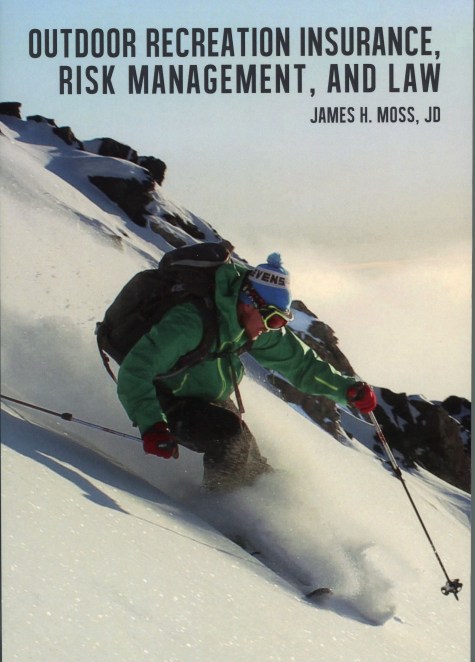
Outdoor Recreation Insurance, Risk Management, and Law
To see Jim’s complete bio go here and to see his CV you can find it here. To find out the purpose of this website go here.
If you are interested in having me write your release, download the form and return it to me.
Connect
If you like this let your friends know or post it on FB, Twitter, or LinkedIn
 X, Formerly Twitter |
 Facebook Logo |
 Threads |
 |
Email: Jim@Rec-Law.US
By Recreation Law Rec-law@recreation-law.com James H. Moss
@2012-2023 Summit Magic Publishing, LLC
G-YQ06K3L262
#RecreationLaw, #@RecreationLaw, #Cycling.Law #Fitness.Law, #Ski.Law, #Outside.Law, #Recreation.Law, #Recreation-Law.com, #Outdoor Law, #Recreation Law, #Outdoor Recreation Law, #Adventure Travel Law, #law, #Travel Law, #Jim Moss, #James H. Moss, #Attorney at Law, #Tourism, #Adventure Tourism, #Rec-Law, #Rec-Law Blog, #Recreation Law, #Recreation Law Blog, #Risk Management, #Human Powered, #Human Powered Recreation,# Cycling Law, #Bicycling Law, #Fitness Law, #Recreation-Law.com, #Backpacking, #Hiking, #Mountaineering, #Ice Climbing, #Rock Climbing, #Ropes Course, #Challenge Course, #Summer Camp, #Camps, #Youth Camps, #Skiing, #Ski Areas, #Negligence, #Snowboarding, #RecreationLaw, #@RecreationLaw, #Cycling.Law #Fitness.Law, #SkiLaw, #Outside.Law, #Recreation.Law, #RecreationLaw.com, #OutdoorLaw, #RecreationLaw, #OutdoorRecreationLaw, #AdventureTravelLaw, #Law, #TravelLaw, #JimMoss, #JamesHMoss, #AttorneyatLaw, #Tourism, #AdventureTourism, #RecLaw, #RecLawBlog, #RecreationLawBlog, #RiskManagement, #HumanPowered, #HumanPoweredRecreation,# CyclingLaw, #BicyclingLaw, #FitnessLaw, #RecreationLaw.com, #Backpacking, #Hiking, #Mountaineering, #IceClimbing, #RockClimbing, #RopesCourse, #ChallengeCourse, #SummerCamp, #Camps, #YouthCamps, #Skiing, #Ski Areas, #Negligence, #Snowboarding, sport and recreation laws, ski law, cycling law, Colorado law, law for recreation and sport managers, bicycling and the law, cycling and the law, ski helmet law, skiers code, skiing accidents, Recreation Lawyer, Ski Lawyer, Paddlesports Lawyer, Cycling Lawyer, Recreational Lawyer, Fitness Lawyer, Rec Lawyer, Challenge Course Lawyer, Ropes Course Lawyer, Zip Line Lawyer, Rock Climbing Lawyer, Adventure Travel Lawyer, Outside Lawyer, Recreation Lawyer, Ski Lawyer, Paddlesports Lawyer, Cycling Lawyer, #RecreationalLawyer, #FitnessLawyer, #RecLawyer, #ChallengeCourseLawyer, #RopesCourseLawyer, #ZipLineLawyer, #RockClimbingLawyer, #AdventureTravelLawyer, #OutsideLawyer, 3 Bar F Rodeo, Rodeo, Bull, Ring of Fear, Kentucky,
WordPress Tags: Davis,Rodeo,LEXIS,Appellate,Gross,Negligence,plaintiff,participants,bull,person,Prize,money,Fear,spouse,participant,signatures,Prior,PETA,Kentucky,complaint,Summary,Farm,Animals,Activities,FAAA,statute,warnings,defendants,Failure,event,antithesis,purpose,agreements,Emphasize,Although,statement,defendant,Releases,intention,injury,protection,construction,contemplation,provision,From,laundry,Appellees,abilities,Susan,Charles,trier,fact,guest,skills,assumption,argument,status,extent,Second,sheet,paper,Still,Fire,lawsuit,requirements,system,determination,information,physician,diagnosis,solution,self,checklist,Make,Leave,FaceBook,Twitter,LinkedIn,Recreation,Edit,Email,RecreationLaw,Page,Outdoor,Adventure,Travel,Blog,Mobile,Site,Outside,Moss,James,Attorney,Tourism,Risk,Management,Human,Rock,Ropes,Course,Challenge,Summer,Camp,Camps,Youth,Areas,SkiLaw,OutdoorLaw,OutdoorRecreationLaw,AdventureTravelLaw,TravelLaw,JimMoss,JamesHMoss,AttorneyatLaw,AdventureTourism,RecLaw,RecLawBlog,RecreationLawBlog,RiskManagement,HumanPoweredRecreation,CyclingLaw,BicyclingLaw,FitnessLaw,RopesCourse,ChallengeCourse,SummerCamp,YouthCamps,Colorado,managers,helmet,accidents,Lawyer,Paddlesports,Recreational,Line,RecreationalLawyer,FitnessLawyer,RecLawyer,ChallengeCourseLawyer,RopesCourseLawyer,ZipLineLawyer,RockClimbingLawyer,AdventureTravelLawyer,OutsideLawyer,upon
Davis, v. 3 Bar F Rodeo, 2007 Ky. App. LEXIS 423
Posted: November 12, 2012 Filed under: Kentucky, Legal Case, Release (pre-injury contract not to sue) | Tags: Bull Riding, Kentucky, Release, Ring of Fear, Rodeo, Summary judgment Leave a commentTo Read an Analysis of this decision see
If you really are bad, a judge will figure out a way to void your release
Davis, v. 3 Bar F Rodeo, 2007 Ky. App. LEXIS 423
Susan Davis, Individually and as Administratrix of the Estate of Charles A. Davis, Deceased, Appellants v. 3 Bar F Rodeo; Marcus Fannin; Bobby Ray Fannin; Grant County Fair, Inc., Appellees
NO. 2006-CA-002212-MR
2007 Ky. App. LEXIS 423
November 2, 2007, Rendered
NOTICE:
PLEASE REFER TO THE KENTUCKY RULES REGARDING FINALITY OF OPINIONS. TO BE PUBLISHED. [UNLESS OTHERWISE ORDERED BY THE KENTUCKY SUPREME COURT, OPINIONS DESIGNATED “TO BE PUBLISHED” BY THE COURT OF APPEALS ARE NOT TO BE PUBLISHED IF DISCRETIONARY REVIEW IS PENDING, IF DISCRETIONARY REVIEW IS GRANTED, OR IF ORDERED NOT TO BE PUBLISHED BY THE COURT WHEN DENYING THE MOTION FOR DISCRETIONARY REVIEW OR GRANTING WITHDRAWAL OF THE MOTION.]
SUBSEQUENT HISTORY: As Modified May 2, 2008.
Rehearing denied by Davis v. 3 Bar F. Rodeo, 2008 Ky. App. LEXIS 266 (Ky. Ct. App., May 2, 2008)
Review denied and ordered not published by Grant County Fair, Inc. v. Davis, 2008 Ky. LEXIS 249 (Ky., Oct. 15, 2008)
PRIOR HISTORY: [*1]
APPEAL FROM GRANT CIRCUIT COURT. HONORABLE STEPHEN L. BATES, JUDGE. ACTION NO. 05-CI-00427.
DISPOSITION: REVERSING AND REMANDING.
COUNSEL: BRIEF AND ORAL ARGUMENT FOR APPELLANTS: Jerry M. Miniard, Florence, Kentucky.
BRIEF AND ORAL ARGUMENT FOR APPELLEE, GRANT COUNTY FAIR, INC.: Thomas R. Nienaber, Covington, Kentucky
BRIEFS FILED FOR APPELLEES, 3 BAR F RODEO, MARCUS FANNIN, AND BOBBY RAY FANNIN: Steven N. Howe, Dry Ridge, Kentucky.
JUDGES: BEFORE: LAMBERT, TAYLOR AND WINE, JUDGES. ALL CONCUR.
OPINION BY: WINE
OPINION
REVERSING AND REMANDING
WINE, JUDGE: Susan Davis (“Susan”), individually and as the Administratrix of the Estate of Charles A. Davis (“Charles”), deceased, appeals a summary judgment order entered by the Grant Circuit Court dismissing her claims against the Grant County Fair, Inc. (“GCF”), 3 Bar F Rodeo (“3-BFR”), Marcus Fannin (“M. Fannin”) and Bobby Ray Fannin (“B. Fannin”) (“Appellees” collectively) for the injuries and wrongful death of her husband, Charles, which occurred on September 25, 2004. Specifically, Susan argues the trial court erred by denying her motion for summary judgment based upon the Appellees’ alleged failure to give her husband the mandatory warning pursuant to KRS 247.4027, which resulted in Charles’s severe internal bodily injuries [*2] which ultimately led to his death. For the reasons stated herein, we remand this case as summary judgment was not appropriate.
Appellant, GCF, is a non-profit corporation whose primary function is to own, maintain, and operate the Grant County Fairgrounds. 3-BFR is an unincorporated association comprised of M. Fannin and B. Fannin. 3-BFR’s primary function is to conduct rodeo events for the general public. GCF entered into an agreement with 3-BFR, M. Fannin and B. Fannin whereby 3-BFR would hold a rodeo at the fairgrounds.
On September 25, 2004, Charles and Susan attended the rodeo at the Grant County Fair. The announcer for the rodeo, Aaron Platt (“Platt”), called for participants for a game called the “Ring of Fear.” This game called for audience members to participate by entering the rodeo ring and standing in marked circles on the ground. Kenny, a bull from Ohio, was then released into the ring. The last person standing, without stepping outside of the circle, won the grand prize of $ 50.00. Charles proceeded to the ring to try his luck in the Ring of Fear. Susan alleges Kenny was angered by someone jabbing him with a wooden object and beating sticks against his cage prior to his [*3] release. Once released, Kenny proceeded to drive his head into Charles’s abdomen, lifting him off the ground. Charles made his way back into the stands where his wife Susan was seated. Unknown to Charles or anyone else, Kenny’s blow to Charles’s abdomen had caused his liver to burst and he was bleeding internally. Charles faded into temporary unconsciousness next to his wife in the stands. Charles died the next morning at the University of Cincinnati’s trauma unit. The cause of death was ruled “blunt trauma to torso” and internal bleeding.
Susan then brought a wrongful death action against GCF, 3-BFR and the Fannins, alleging that their negligence had caused her husband’s death. GCF moved for summary judgment based upon a release signed by Charles prior to his participation in the Ring of Fear. 3-BFR, M. Fannin and B. Fannin filed similar motions. After completing more discovery and taking depositions, Susan filed a cross-motion for summary judgment, asserting that the Appellees failed to properly warn of the dangers of the Ring of Fear as required by KRS 247.4027. Susan alleged the Appellees’ failure to warn was a substantial factor in causing the injuries that led to her husband’s [*4] death. The trial court granted summary judgment to the Appellees, finding that the release was sufficient to exempt them from liability in light of Hargis v. Baize, 168 S.W.3d 36 (Ky. 2005). The trial court denied Susan’s cross-motion for summary judgment. This appeal followed.
[HN1] In reviewing a motion for summary judgment, a trial court must consider all the stipulations and admissions on file. CR 56.03. “[S]ummary judgment is proper only where the movant shows that the adverse party cannot prevail under any circumstances.” Steelvest, Inc. v. Scansteel Service Center, Inc., 807 S.W.2d 476, 480 (Ky. 1991), citing Paintsville Hospital Co. v. Rose, 683 S.W.2d 255 (Ky. 1985). The standard of review on appeal of a summary judgment is whether the trial court correctly found that there were no genuine issues as to any material fact and that the moving party was entitled to judgment as a matter of law. Scifres v. Kraft, 916 S.W.2d 779, 43 1 Ky. L. Summary 17 (Ky.App. 1996). There is no requirement that the appellate court defer to the trial court because factual findings are not at issue. Goldsmith v. Allied Building Components, Inc., 833 S.W.2d 378, 381, 39 7 Ky. L. Summary 24 (Ky. 1992).
Susan argues the Appellees breached their duty to warn [*5] pursuant to the Farm Animals Activities Act (“FAAA”), found in KRS 247.401 through KRS 247.4029. Specifically, [HN2] the FAAA represents a statutory plan designed to outline the duties and responsibilities of both participants and sponsors conducting animal activities. Having thoroughly read the statute, we agree with Susan that the statute applies to this case. However, KRS 247.4027(2)(a) allows for a waiver of liability if the participant signs a release waiving his right to bring an action against the farm animal event sponsor.
Susan asserts that non-compliance with the warning requirements of KRS 247.401 constitutes negligence per se and/or strict liability. We disagree. KRS Chapter 247 is generally recognized throughout the country as “Equine Activity Statutes” (“EAS”). In general, these statutes are an attempt to limit liability of persons engaging in animal activities. Therefore, [HN3] if a sponsor of an animal activity does post the suggested warnings found in KRS Chapter 247, he is granted immunity from liability if someone gets hurt. If, as in this case, the warnings are not posted, the sponsor loses the immunity and may be held responsible for the injury in accordance with other applicable [*6] law. KRS 247.4013. Therefore, EAS statutes are “immunity statutes,” not negligence per se or strict liability statutes as recognized in many of our sister states. See Anderson v. Four Seasons Equestrian Center, Inc., 852 N.E.2d 576 (Ind. 2006); Amburgey v. Sauder, 238 Mich. App. 228, 605 N.W.2d 84 (Mich. App. 1999).
[HN4] Although KRS 247.402 requires farm animal activity sponsors to warn of the inherent risks, there is no duty to reduce or eliminate the inherent risks. However, to intentionally mistreat or aggravate a farm animal would be the antithesis of this duty.
While it is clear that the Appellees did not have warning signs posted at the ring entrance, it is undisputed that Charles signed a release just prior to his participation in the Ring of Fear. Therefore, the central issue in this case is the validity of the release Charles signed. The release Charles signed states as follows:
We the undersigned hereby request permission (1) to enter the restricted area (2) to participate as a contestant, assistant, official or otherwise rodeo events (3) to compete for money, prizes, recognition or reward.
In consideration of “permissive entry” into the restricted areas, which is the area from which admission to the [*7] general public is restricted, which includes, but is not limited to the rodeo arena, chutes, pens, adjacent walkways, concessions and other appurtenances, I undersigned, my personal representatives, heirs, next of kin, spouses and assigns to hereby:
1. I release, discharge and covenant not to sue the rodeo committee, stock contractor, sponsors, arena operators or owners and each of them, their officers, agents and employees all hereafter collectively referred to as (Releases) from any and all claims and liability arising out of strict liability or ordinary negligence of Releases or any other participant which causes the undersigned injury, death, damages or property damage. I, the undersigned, jointly, severally, and in common, covenant to hold releases from any claim, judgment or expenses that may incur arising out of my activities or presence in the restricted area.
2. Understand that entry into the restricted area and/or participation in rodeo events contains danger and risks of injury or death, that conditions of the rodeo arena change from time to time and may become more hazardous, that rodeo animals are dangerous and unpredictable, and that there inherent danger in rodeo which [*8] I appreciate and voluntarily assume because I chose to do so. Each of the undersigned has observed events of this type and that I seek to participate in. I further understand that the arena surface, access ways or lack thereof, lighting or lack thereof, and weather conditions all change and pose a danger. I further understand that other contestants and participants pose a danger, but nevertheless, I voluntarily elect to accept all risks connected with the entry into restricted areas and/or participate in any rodeo events.
3. I agree that this agreement shall apply to any incident, injury, and accident death occurring on the above date and fore (sic) a period of one (1) year thereafter. All subsequent agreement and release documents signed by any of the undersigned shall amplify, shall in no way limit the provisions of the document.
4. I the undersigned agree to indemnify the Releases and each of them from loss, liability damage or costs they may incur due to the presence or participation in the described activities whether caused by the negligence of the Releases or otherwise.
WE HAVE READ THIS DOCUMENT, WE UNDERSTAND IT IS A RELEASE OF ALL CLAIMS, WE APPRECIATE AND ASSUME ALL RISKS INHERENT IN RODEO. [*9]
Charles’s signature appears below this language along with the signatures of the other participants of the Ring of Fear on September 25, 2004.
[HN5] While agreements to exempt future liability for either ordinary or gross negligence are not invalid per se, they are generally disfavored and are strictly construed against the parties relying upon them. Hargis, 168 S.W.3d at 47.
[A] preinjury release will be upheld only if (1) it explicitly expresses an intention to exonerate by using the word “negligence;” or (2) it clearly and specifically indicates an intent to release a party from liability for a personal injury caused by that party’s own conduct; or (3) protection against negligence is the only reasonable construction of the contract language; or (4) the hazard experienced was clearly within the contemplation of the provision.
Id., citing 57A AM. JUR. 2d, Negligence § 53 (citations omitted). The trial court held that the release met the above requirements in Hargis and, absent genuine issues of fact as to the release, its enforceability warranted summary judgment in favor of Appellees.
We disagree with the trial court that the release form signed by Charles satisfies all of the [*10] factors in Hargis. The release uses the word “negligence.” The release does specifically and explicitly release the Appellees from liability for “any and all claims and liability arising out of strict liability or ordinary negligence of Releases [Appellees] . . . which causes the undersigned [Charles] injury . . . [or] death . . . .”
The language of the release is specific as to its purpose to exonerate the sponsors from ordinary negligence liability. The release specifically warns that rodeo events contain danger and risks of injury or death; that the conditions of the rodeo arena change and may become more hazardous; that rodeo animals are dangerous and unpredictable; and finally that anyone choosing to participate voluntarily assumes the inherent danger that exists in rodeo events. However, there is no language that releases Appellees from conduct that would constitute gross negligence. Susan contends that Appellees provoked Kenny by prodding him and beating on his cage prior to his release into the ring. The intentional provocation of the bull by Appellees to attack the participants is clearly not contemplated by the release. While the Appellees dispute the allegations of intentionally [*11] mistreating Kenny, if true, it would at the very least constitute gross negligence. The release contemplates getting into the ring with a bull and even mentions that rodeo animals are unpredictable. However, the release does not contemplate a bull that has been infuriated by the Appellees prior to its release into the ring. Such conduct could be construed as willful or wanton for which a party may not contract away any liability through a release. Hargis, supra. This material issue of fact as disputed by the parties can only be resolved by a trier of fact and is not appropriately resolved by summary judgment. If the jury determines that Appellees’ conduct was grossly negligent, the release would be unenforceable as to this conduct. Of course, under comparative negligence, the jury could also consider Charles’s own conduct in contributing to his death.
Susan also argues that the trial court was presented with a genuine issue of material fact as to whether the Appellees offered her husband protective chest gear. M. Fannin testified that the participants in the Ring of Fear on the date in question were given an opportunity to put on a protective vest before entering the rodeo ring. Conversely, [*12] Rob Wells (“Wells”), who participated on the same day as Charles, submitted an affidavit indicating that he was never offered a protective vest nor did he observe that there were protective vests available. Susan further submits that Appellees should have inquired as to the abilities of the participants to participate in the Ring of Fear. Finally, Susan contends that Charles did not have an opportunity to read the release prior to signing it. In support of this contention, Susan relies on the affidavit of Wells wherein he indicates that he did not read the release. These are all factual issues to be resolved by a trier of fact.
Accordingly, we reverse and remand this case to the Grant Circuit Court for a jury trial.
ALL CONCUR.
G-YQ06K3L262
http://www.recreation-law.com
WordPress Tags: Davis,Rodeo,LEXIS,Susan,Administratrix,Estate,Charles,Appellants,Marcus,Fannin,Bobby,Grant,Fair,Appellees,COURT,APPEALS,KENTUCKY,November,NOTICE,REFER,RULES,OPINIONS,OTHERWISE,SUPREME,DISCRETIONARY,REVIEW,MOTION,WITHDRAWAL,SUBSEQUENT,HISTORY,PRIOR,APPEAL,FROM,CIRCUIT,HONORABLE,STEPHEN,BATES,JUDGE,ACTION,DISPOSITION,COUNSEL,BRIEF,ORAL,ARGUMENT,Jerry,Miniard,Florence,APPELLEE,Thomas,Nienaber,Covington,BRIEFS,Steven,Howe,Ridge,JUDGES,LAMBERT,TAYLOR,WINE,CONCUR,OPINION,judgment,injuries,death,husband,September,failure,Appellant,corporation,Fairgrounds,association,events,agreement,announcer,Aaron,Platt,participants,Fear,audience,Kenny,bull,Ohio,person,luck,Once,abdomen,wife,Unknown,Cincinnati,trauma,unit,torso,Fannins,negligence,participation,discovery,dangers,factor,Hargis,Baize,stipulations,admissions,Steelvest,Scansteel,Service,Center,Paintsville,Hospital,Rose,fact,Scifres,Kraft,Summary,requirement,findings,Goldsmith,Components,Farm,Animals,Activities,FAAA,duties,statute,waiver,participant,event,compliance,requirements,Chapter,Equine,Statutes,warnings,injury,accordance,Anderson,Four,Seasons,Equestrian,Amburgey,Sauder,Mich,Although,antithesis,permission,area,contestant,money,recognition,areas,admission,arena,chutes,walkways,appurtenances,heirs,spouses,covenant,committee,contractor,operators,owners,officers,agents,employees,Releases,presence,Understand,danger,contestants,incident,accident,READ,DOCUMENT,RELEASE,CLAIMS,APPRECIATE,ASSUME,RISKS,INHERENT,signature,signatures,agreements,intention,protection,construction,contemplation,provision,citations,factors,purpose,provocation,allegations,trier,jury,chest,gear,Wells,affidavit,abilities,contention,upon,pursuant,whether,hereby,thereof
Presentation: National Cave Association Risk Management and Law
Posted: October 10, 2012 Filed under: Risk Management, South Dakota | Tags: Confernece, Deadwood, Presenation, Risk Management, SD Leave a commentI gave this presentation to the National Cave Association at its 2012 Annual Conference in Deadwood, SD. A great group of people.
NY court explains how it interprets Section 5-326 which disallows releases in NY. Upholds release for a marathon
Posted: October 8, 2012 Filed under: New York, Racing, Release (pre-injury contract not to sue) | Tags: Brooklyn, General Obligations Law § 5-326, Jim Moss, New York, New York City, New York Roadrunners Club, New York Supreme Court Leave a commentBrookner v New York Roadrunners Club, Inc., et al., 2008 NY Slip Op 4638; 51 A.D.3d 841; 858 N.Y.S.2d 348; 2008 N.Y. App. Div. LEXIS 4393
Language of General Obligations Law § 5-326 is interpreted

In this case, the plaintiff sued the New York Road Runners Club which puts on the ING New York Marathon. His injuries were not stated in the claim nor were his
claims. A New York statute restricts the use of releases. See States that do not Support the Use of a Releaseand no court has ever clearly defined how they get around the statute when a release is raised as a defense.
The Supreme Court of New York, Appellate Division which wrote this decision held that General Obligations Law § 5-326 did not apply.
General Obligations Law § 5-326 states:
§ 5-326. Agreements exempting pools, gymnasiums, places of public amusement or recreation and similar establishments from liability for negligence void and unenforceable
Every covenant, agreement or understanding in or in connection with, or collateral to, any contract, membership application, ticket of admission or similar writing, entered into between the owner or operator of any pool, gymnasium, place of amusement or recreation, or similar establishment and the user of such facilities, pursuant to which such owner or operator receives a fee or other compensation for the use of such facilities, which exempts the said owner or operator from liability for damages caused by or resulting from the negligence of the owner, operator or person in charge of such establishment, or their agents, servants or employees, shall be deemed to be void as against public policy and wholly unenforceable.
The court then looked at the language of the statute and concluded the release applied in this case because the entry fee for the marathon was not a fee for admission into the streets of New York City. Further the court found the streets of New York City, where the plaintiff was injured were not places of amusement.
…General Obligations Law § 5-326 does not invalidate the release, since the entry fee the plaintiff paid to the NYRRC was for his participation in the marathon, and was not an admission fee allowing him to use the City-owned public roadway over which the marathon was run. Further, the public roadway in Brooklyn where the plaintiff alleges he was injured is not a “place of amusement or recreation”
So Now What?

Although the interpretation by the court could be viewed in another light, clearly most courts in New York want to uphold releases and if given the opportunity will write a decision which does so.
Make sure, if you are based in New York, that when your release is written it takes the statute into consideration. You can have signors of the release agree to the release that you are not a place of amusement, and the fee paid is not for admission.
Other New York Articles:
Electronic Signature on release in NY upheld.
New York Decision explains the doctrine of Primary Assumption of the Risk for cycling
Summer camp supervision issues are always part of any lawsuit and tough to determine in New York.
How to fight a Bicycle Product Liability case in New York. One step at a time
|
Jim Moss is an attorney specializing in the legal issues of the outdoor recreation community. He represents guides, guide services, outfitters both as businesses and individuals and the products they use for their business. He has defended Mt. Everest guide services, summer camps, climbing rope manufacturers; avalanche beacon manufacturers, and many more manufacturers and outdoor industries. Contact Jim at Jim@Rec-Law.us |
Jim is the author or co-author of six books about the legal issues in the outdoor recreation world; the latest is Outdoor Recreation Insurance, Risk Management
Outdoor Recreation Insurance, Risk Management and Law
To see Jim’s complete bio go here and to see his CV you can find it here. To find out the purpose of this website go here.
G-YQ06K3L262
What do you think? Leave a comment.
If you like this let your friends know or post it on FB, Twitter or LinkedIn
Author: Outdoor Recreation Insurance, Risk Management and Law
Facebook Page: Outdoor Recreation & Adventure Travel Law
Email: Jim@Rec-Law.US
By Recreation Law Rec-law@recreation-law.com James H. Moss
@2012-2023 Summit Magic Publishing, LLC
#RecreationLaw, #@RecreationLaw, #Cycling.Law #Fitness.Law, #Ski.Law, #Outside.Law, #Recreation.Law, #Recreation-Law.com, #Outdoor Law, #Recreation Law, #Outdoor Recreation Law, #Adventure Travel Law, #law, #Travel Law, #Jim Moss, #James H. Moss, #Attorney at Law, #Tourism, #Adventure Tourism, #Rec-Law, #Rec-Law Blog, #Recreation Law, #Recreation Law Blog, #Risk Management, #Human Powered, #Human Powered Recreation,# Cycling Law, #Bicycling Law, #Fitness Law, #Recreation-Law.com, #Backpacking, #Hiking, #Mountaineering, #Ice Climbing, #Rock Climbing, #Ropes Course, #Challenge Course, #Summer Camp, #Camps, #Youth Camps, #Skiing, #Ski Areas, #Negligence, #Snowboarding, #RecreationLaw, #@RecreationLaw, #Cycling.Law #Fitness.Law, #SkiLaw, #Outside.Law, #Recreation.Law, #RecreationLaw.com, #OutdoorLaw, #RecreationLaw, #OutdoorRecreationLaw, #AdventureTravelLaw, #Law, #TravelLaw, #JimMoss, #JamesHMoss, #AttorneyatLaw, #Tourism, #AdventureTourism, #RecLaw, #RecLawBlog, #RecreationLawBlog, #RiskManagement, #HumanPowered, #HumanPoweredRecreation,# CyclingLaw, #BicyclingLaw, #FitnessLaw, #RecreationLaw.com, #Backpacking, #Hiking, #Mountaineering, #IceClimbing, #RockClimbing, #RopesCourse, #ChallengeCourse, #SummerCamp, #Camps, #YouthCamps, #Skiing, #Ski Areas, #Negligence, #Snowboarding, sport and recreation laws, ski law, cycling law, Colorado law, law for recreation and sport managers, bicycling and the law, cycling and the law, ski helmet law, skiers code, skiing accidents, Recreation Lawyer, Ski Lawyer, Paddlesports Lawyer, Cycling Lawyer, Recreational Lawyer, Fitness Lawyer, Rec Lawyer, Challenge Course Lawyer, Ropes Course Lawyer, Zip Line Lawyer, Rock Climbing Lawyer, Adventure Travel Lawyer, Outside Lawyer, Recreation Lawyer, Ski Lawyer, Paddlesports Lawyer, Cycling Lawyer, #RecreationalLawyer, #FitnessLawyer, #RecLawyer, #ChallengeCourseLawyer, #RopesCourseLawyer, #ZipLineLawyer, #RockClimbingLawyer, #AdventureTravelLawyer, #OutsideLawyer, New York, ING, New York Marathon, Marathon, ING NY Marathon, release,
WordPress Tags: Upholds,Brookner,York,Roadrunners,Club,Slip,LEXIS,Language,General,Obligations,plaintiff,Road,Runners,Marathon,injuries,statute,States,Support,Release,Supreme,Court,Appellate,Division,decision,Agreements,gymnasiums,amusement,recreation,establishments,negligence,covenant,agreement,connection,collateral,membership,ticket,admission,owner,operator,gymnasium,establishment,user,facilities,compensation,person,agents,servants,employees,policy,streets,Further,NYRRC,participation,roadway,Brooklyn,Although,interpretation,Make,Articles,Electronic,Signature,doctrine,Primary,Assumption,Risk,Summer,supervision,lawsuit,Bicycle,Product,Leave,Twitter,LinkedIn,Edit,RecreationLaw,Facebook,Page,Outdoor,Adventure,Travel,Blog,Mobile,Site,Outside,Moss,James,Attorney,Tourism,Management,Human,Rock,Ropes,Course,Challenge,Camp,Camps,Youth,Areas,SkiLaw,OutdoorLaw,OutdoorRecreationLaw,AdventureTravelLaw,TravelLaw,JimMoss,JamesHMoss,AttorneyatLaw,AdventureTourism,RecLaw,RecLawBlog,RecreationLawBlog,RiskManagement,HumanPoweredRecreation,CyclingLaw,BicyclingLaw,FitnessLaw,RopesCourse,ChallengeCourse,SummerCamp,YouthCamps,Colorado,managers,helmet,accidents,Lawyer,Paddlesports,Recreational,Line,RecreationalLawyer,FitnessLawyer,RecLawyer,ChallengeCourseLawyer,RopesCourseLawyer,ZipLineLawyer,RockClimbingLawyer,AdventureTravelLawyer,OutsideLawyer,unenforceable
In this cycle race case, the release was void by state law, but could still be used to prove assumption of the risk.
Posted: September 17, 2012 Filed under: Assumption of the Risk, Cycling, Montana, Release (pre-injury contract not to sue) | Tags: Adventure travel, Attorney at law, Montana, Motion in Limine, USA Cycling Leave a commentGanz vs. United States Cycling Federation, 1994 Mont. Dist. LEXIS 756
At trial it is too late to find out that the release you had everyone sign has no value.
This is a motion hearing in Federal District Court for the great Western Stage Race held in Missoula. Montana by statute does not allow the use of a release. See States that do not Support the Use of a Release. The plaintiff was attempting to have two issues precluded from the trail:
· The fact the defendant was a non-profit.
· The fact the plaintiff signed a release which is void under Montana’s law.
To do that, you file a motion in limine. A motion in limine argues before the judge that because of a statute or the laws of evidence something the other side is going to try to say or introduce as evidence should be excluded. See Why accident reports can come back to haunt you for more on motions in limine.
The facts that gave rise to the case are the plaintiff was a competitor in the bicycle race. During the race, a pedestrian darted out in front of him and caused him to crash. He was claiming, “alleges negligence on the part of the Defendants for failure to create, establish, follow, and/or enforce appropriate safety standards on the race course.”
The first issue, the non-profit status of the defendant was quickly granted. Because most states have statutes, which state a non-profit is the same as a for-profit corporation, the issue of the defendant being a non-profit would only prejudice the jury.
The second issue, the release is of more interest. Pursuant to Montana’s law, a release is void and against public policy.
M.C.A. § 28-2-702 Contracts that violate policy of law — exemption from responsibility.
All contracts that have for their object, directly or indirectly, to exempt anyone from responsibility for the person’s own fraud, for willful injury to the person or property of another, or for violation of law, whether willful or negligent, are against the policy of the law.
So the release signed by the plaintiff in this case could not be used as a release. The plaintiff’s motion in limine was to exclude the release for any purpose; the jury would never know a release was signed.
So?
The court held the release could be used but only to the extent to show the portion of the release which showed that he was aware of the risks of the race.
The mention of the release form for the purpose of proving that no liability exists is prohibited. However, the Defendants should be allowed to show that Mr. Ganz [the plaintiff] signed that portion of the release which shows that he was aware of the dangers on the race course, without actually showing the release in its entirety to the jury.
Dependent upon how the release was written and the statement of the risks in the release, this could be a powerful document showing the plaintiff knew of and assumed the risks.
So Now What?
Make sure your release is written to include the risks of the activity or program. There are several reasons for doing this.
· Guests who have no clue will have a better time if they understand the risks.
· Guests who read about the risks have a better understanding of the risks and decided if this is the type of opportunity they want to take.
· If your release is thrown out, you can still use the release as proof the plaintiff assumed the risk.
You can’t write all the risks into a release. However, you can write in the following:
1. Those injuries that are common to the activity or program.
2. Those injuries that can cause permanent injury or death.
3. Those risks which are different in your activity from the normal or competitive activities.
The second group is easy to identify. If it is rock climbing, it is falling or having something fall on you resulting in permanent injury or death. In paddlesports it is drowning, hypothermia, or a “near-drowning” resulting in brain injury.
The first is also easy. Look at every injury you have ever seen in your activity. Injuries from falling on the hike to the base of the climb or falling down carrying a boat to the river. After lunch on the river, people sit on a hot raft getting a burn or rope burn while belaying. Those injuries that are not life threatening but occur regularly and deplete your stock of band aids.
The third category is a little harder. How is your program or activity different from the rest of the people in your industry. If the majority of climbing walls have padding on the floor, and yours does not you should identify this as a risk. In cycling, you need to identify if you have a closed course, a race course without cars on it is critical for participants to know.
As always, you have to have your release created by someone who understands your risks, your sport your activity and knows how to write a release.
What do you think? Leave a comment.
If you like this let your friends know or post it on FB, Twitter or LinkedIn
Copyright 2012 Recreation Law (720) Edit Law
Twitter: RecreationLaw
Facebook: Rec.Law.Now
Facebook Page: Outdoor Recreation & Adventure Travel Law
Mobile Site: http://m.recreation-law.com
#RecreationLaw, #@RecreationLaw, #Cycling.Law #Fitness.Law, #Ski.Law, #Outside.Law, #Recreation.Law, #Recreation-Law.com, #Outdoor Law, #Recreation Law, #Outdoor Recreation Law, #Adventure Travel Law, #law, #Travel Law, #Jim Moss, #James H. Moss, #Attorney at Law, #Tourism, #Adventure Tourism, #Rec-Law, #Rec-Law Blog, #Recreation Law, #Recreation Law Blog, #Risk Management, #Human Powered, #Human Powered Recreation,# Cycling Law, #Bicycling Law, #Fitness Law, #Recreation-Law.com, #Backpacking, #Hiking, #Mountaineering, #Ice Climbing, #Rock Climbing, #Ropes Course, #Challenge Course, #Summer Camp, #Camps, #Youth Camps, #Skiing, #Ski Areas, #Negligence, #Snowboarding, #RecreationLaw, #@RecreationLaw, #Cycling.Law #Fitness.Law, #SkiLaw, #Outside.Law, #Recreation.Law, #RecreationLaw.com, #OutdoorLaw, #RecreationLaw, #OutdoorRecreationLaw, #AdventureTravelLaw, #Law, #TravelLaw, #JimMoss, #JamesHMoss, #AttorneyatLaw, #Tourism, #AdventureTourism, #RecLaw, #RecLawBlog, #RecreationLawBlog, #RiskManagement, #HumanPowered, #HumanPoweredRecreation,# CyclingLaw, #BicyclingLaw, #FitnessLaw, #RecreationLaw.com, #Backpacking, #Hiking, #Mountaineering, #IceClimbing, #RockClimbing, #RopesCourse, #ChallengeCourse, #SummerCamp, #Camps, #YouthCamps, #Skiing, #Ski Areas, #Negligence, #Snowboarding, sport and recreation laws, ski law, cycling law, Colorado law, law for recreation and sport managers, bicycling and the law, cycling and the law, ski helmet law, skiers code, skiing accidents, Recreation Lawyer, Ski Lawyer, Paddlesports Lawyer, Cycling Lawyer, Recreational Lawyer, Fitness Lawyer, Rec Lawyer, Challenge Course Lawyer, Ropes Course Lawyer, Zip Line Lawyer, Rock Climbing Lawyer, Adventure Travel Lawyer, Outside Lawyer, Recreation Lawyer, Ski Lawyer, Paddlesports Lawyer, Cycling Lawyer, #RecreationalLawyer, #FitnessLawyer, #RecLawyer, #ChallengeCourseLawyer, #RopesCourseLawyer, #ZipLineLawyer, #RockClimbingLawyer, #AdventureTravelLawyer, #OutsideLawyer,
NPS is chasing a squirrel up a tree and it’s lost in Canyonlands NP.
Posted: September 5, 2012 Filed under: Insurance | Tags: $1 million, $5 million, Business, General Liability Insurance, Insurance, Liability insurance, National Park Service, NPS, Policy Limits Leave a commentOutside parties suggest insurance limits of $5 million for concessionaires.
The National Park Service has hired outside firms to determine that concessionaires should have $5 million in liability insurancecoverage. The article does not say how

that number was determined. However, how the limit was determined was wrong.
You determine the amount of insurance you need by determining your insurable interest. How much is your business worth? By that I mean you determine the value of your business, what is worth it, if you were to sell the business. then buy a little more insurance than that.
Say your business is worth $1 million. Based on all the property, land, income, permits (which allegedly have no value) your CPA has determined that your business valuation is $1 million. You should buy $1.1 million in insurance coverage. Probably, you will end up buying $1.5 or $2 million because polices are rarely written for $1.1 million, usually just big round numbers.
Why? Because you are protecting what you own. That is what insurance is for, to protect an asset. You buy fire insurance to replace a building if it was to burn down. If it cost you $500,000 to rebuild the building, it would be stupid to insure the building for $400,000 and just as stupid to insure it for $600,000. In the first case, you would only have a $400,000 building when you were done, not what you needed. In the second case, you would have a $500,000 building and nothing more. You would have paid a premium on an extra $100,000 of insurance that you will never get.
You can’t insure what you don’t own or for an inflated value.
The same goes for liability insurance. Why insure your business for more than it is worth. All you want to do is keep your business. You don’t want to pay for insurance that you don’t need. All that does with liability insurance provide an incentive to sue and a bigger payoff if they do.
The last think you want to do is to have less insurance than the value of your business. If your business is worth $1 million, and you have $500,000 in liability insurance, the plaintiff will sue and take your business. That is $500,000 more than your insurance.
You buy the amount of insurance that you need to protect your business from fire, wind, hail and lawsuits.
So what is the NPS going to do?
First, they could bankrupt large business that only buys the minimum to maintain their concession contract. If they are worth more than $5 million, then they will lose their business if a guest has a claim greater than $5 million.
The NPS may also bankrupt businesses if they ask a business with a value of $100,000 to buy a $5 million-dollar policy. They could not afford it.
The only people who will not suffer are those businesses that are worth more than $3.5 million. The $5 million limits are about right.
Based on the article, the NPS will bankrupt a lot of its concessionaires.
The NPS currently has 515 concession contracts in 130 parks, with 60 percent of those contracts generating less than $250,000 in annual revenue.
As stupid as that sounds, this quote from the “insurance professionals” that the NPS hired is even stupider from an insurance standpoint.
Insurance Journal obtained a copy of the Aon Global report dated January 11, 2011. “In our opinion, business operations that potentially could result in serious injury to multiple parties should consider liability limits of at least $5 million,” the Aon report says. “Based on the loss potential, we consider the $5 million limit to be reasonable for most river rafting and guide situations.”
Why is that a stupid statement? Because insurance claims are based on a real value in the end. You total the medical bills, the future medical bills, the lost wages and an amount for pain and suffering and that amount is what a claim amount boils down too. If 99% of your clients make about $50,000, a year and 99% of your injuries are sprained ankles than your claims limits would be $10,000. Someone who can’t work for months and only makes $50,000 a year would after one year out of work, only recover $40,000 or so. The amount earned is discounted because you would not have costs of working and there is a value of getting the money in one lump sum in advance.
To determine the insurance limits an actuary would look at claims. And the claims don’t justify the limits the “experts” are requesting.
Besides insurance is not based on what someone is owed, insurance is based on what you are worth as a business.
Based on the quote above, the value the “experts” came up with is based on a mythical future claim with multiple injured parties.
I’m still waiting for that to happen. Reality and the “experts” have not met. Read the article, the “experts” look pretty bad. Even worse, the NPS admitted that they had no claims like this in testimony before Congress.
Insurance is not determined by guesses or experts, except a business’s CPA. How much is the business worth that is the amount of insurance you need!
See New National Parks’ Insurance Requirements Ignite Controversy or New National Parks Outfitters & Guides Insurance Requirements.
For more articles on the insurance issues see: Insurance 101
What do you think? Leave a comment.
If you like this let your friends know or post it on FB, Twitter or LinkedIn
Copyright 2012 Recreation Law (720) Edit Law
Twitter: RecreationLaw
Facebook: Rec.Law.Now
Facebook Page: Outdoor Recreation & Adventure Travel Law
Mobile Site: http://m.recreation-law.com
#RecreationLaw, #@RecreationLaw, #Cycling.Law #Fitness.Law, #Ski.Law, #Outside.Law, #Recreation.Law, #Recreation-Law.com, #Outdoor Law, #Recreation Law, #Outdoor Recreation Law, #Adventure Travel Law, #law, #Travel Law, #Jim Moss, #James H. Moss, #Attorney at Law, #Tourism, #Adventure Tourism, #Rec-Law, #Rec-Law Blog, #Recreation Law, #Recreation Law Blog, #Risk Management, #Human Powered, #Human Powered Recreation,# Cycling Law, #Bicycling Law, #Fitness Law, #Recreation-Law.com, #Backpacking, #Hiking, #Mountaineering, #Ice Climbing, #Rock Climbing, #Ropes Course, #Challenge Course, #Summer Camp, #Camps, #Youth Camps, #Skiing, #Ski Areas, #Negligence, #Snowboarding, #RecreationLaw, #@RecreationLaw, #Cycling.Law #Fitness.Law, #SkiLaw, #Outside.Law, #Recreation.Law, #RecreationLaw.com, #OutdoorLaw, #RecreationLaw, #OutdoorRecreationLaw, #AdventureTravelLaw, #Law, #TravelLaw, #JimMoss, #JamesHMoss, #AttorneyatLaw, #Tourism, #AdventureTourism, #RecLaw, #RecLawBlog, #RecreationLawBlog, #RiskManagement, #HumanPowered, #HumanPoweredRecreation,# CyclingLaw, #BicyclingLaw, #FitnessLaw, #RecreationLaw.com, #Backpacking, #Hiking, #Mountaineering, #IceClimbing, #RockClimbing, #RopesCourse, #ChallengeCourse, #SummerCamp, #Camps, #YouthCamps, #Skiing, #Ski Areas, #Negligence, #Snowboarding, sport and recreation laws, ski law, cycling law, Colorado law, law for recreation and sport managers, bicycling and the law, cycling and the law, ski helmet law, skiers code, skiing accidents, Recreation Lawyer, Ski Lawyer, Paddlesports Lawyer, Cycling Lawyer, Recreational Lawyer, Fitness Lawyer, Rec Lawyer, Challenge Course Lawyer, Ropes Course Lawyer, Zip Line Lawyer, Rock Climbing Lawyer, Adventure Travel Lawyer, Outside Lawyer, Recreation Lawyer, Ski Lawyer, Paddlesports Lawyer, Cycling Lawyer, #RecreationalLawyer, #FitnessLawyer, #RecLawyer, #ChallengeCourseLawyer, #RopesCourseLawyer, #ZipLineLawyer, #RockClimbingLawyer, #AdventureTravelLawyer, #OutsideLawyer,
WordPress Tags: Outside,insurance,million,National,Park,Service,coverage,article,worth,income,valuation,asset,cost,incentive,payoff,plaintiff,lawsuits,guest,dollar,policy,parks,revenue,professionals,standpoint,Journal,Global,January,opinion,injury,river,situations,statement,clients,injuries,money,experts,Besides,Read,testimony,Requirements,Ignite,Controversy,Outfitters,Guides,Leave,Twitter,LinkedIn,Recreation,Edit,RecreationLaw,Facebook,Page,Outdoor,Adventure,Travel,Blog,Mobile,Site,Moss,James,Attorney,Tourism,Risk,Management,Human,Rock,Ropes,Course,Challenge,Summer,Camp,Camps,Youth,Areas,Negligence,SkiLaw,OutdoorLaw,OutdoorRecreationLaw,AdventureTravelLaw,TravelLaw,JimMoss,JamesHMoss,AttorneyatLaw,AdventureTourism,RecLaw,RecLawBlog,RecreationLawBlog,RiskManagement,HumanPoweredRecreation,CyclingLaw,BicyclingLaw,FitnessLaw,RopesCourse,ChallengeCourse,SummerCamp,YouthCamps,Colorado,managers,helmet,accidents,Lawyer,Paddlesports,Recreational,Line,RecreationalLawyer,FitnessLawyer,RecLawyer,ChallengeCourseLawyer,RopesCourseLawyer,ZipLineLawyer,RockClimbingLawyer,AdventureTravelLawyer,OutsideLawyer,concessionaires
@LanceArmstrong, #LanceArmstrong, Lance Armstrong
Posted: September 4, 2012 Filed under: Cycling, Jurisdiction and Venue (Forum Selection) | Tags: Amaury Sport Organisation, Cycling, Lance Armstrong, Tour de France, UCI, Union Cycliste Internationale, United States Anti-Doping Agency, USADA Leave a comment7 time Tour de France Winner, still
1. Let’s get a couple of things straight. Jurisdiction is important in all legal issues. If a court does not have jurisdiction, then it cannot rule.

Same applies in arbitration, quasi-governmental agencies and USADA.
USADA is an Acronym for US Anti-Doping Agency. The US stands for United States. It has the same power to take away an award earned in France as I have to take away any award from the little kid down the street. (Which sort of reminds me of how the head of USADA is acting?)
2. The agency in charge of cycling is UCI. Union Cyclists Internationale, another non-US non-governmental agency. That agency can ban someone from cycling for life because they cannot sanction races were banned people enter.
3. Tour de France can hand out yellow jerseys, or actually, the Amaury Sport Organisation. Tour de France can take back yellow jerseys. Tour de France and Amaury Sport Organisation are European organizations.
See the stretch,…………………. all the way across the Atlantic. Until the UCI or Amaury Sport Organisation says something, Lance Armstrong is the seven-time winner of the Tour de France.
4. Not appearing at an arbitration hearing is not admitting to doping. It is looking at the chances of winning and how the arbitration proceedings will work and realizing that you can’t win, clean or dirty. Why do you think Roger Clemens and Barry Bonds went to court? Because court is fair, in this case.
Arbitration is normally very fair and something I suggest. However, arbitration is controlled by the rules of the people who set up the arbitration, in this case, USADA. (Sort of like arbitrating a stock broker dispute with other stock brokers serving as the arbitrators. You don’t win until you sue in court.)
So?

Lance Armstrong at the team presentation of the 2010 Tour de France in Rotterdam (Photo credit: Wikipedia)
I’m not defending anyone. I’m not saying that someone did or did not US substances that are not allowed to be used when cycle racing. I do, however, believe in the law. Something that Travis Tygart does not seem to understand, or at least he does not understand jurisdiction and venue.
For articles on Jurisdiction & Venue see:
A Recent Colorado Supreme Court Decision lowers the requirements to be brought into the state to defend a lawsuit. http://rec-law.us/zfpK8Z
Four releases signed and all of them thrown out because they lacked one simple sentence! http://rec-law.us/vZoa7x
Jurisdiction in Massachusetts allows a plaintiff to bring in Salomon France to the local court. http://rec-law.us/zdE1uk
Shark Feeding Death triggers debate http://rec-law.us/A1BmMF
The legal relationship created between manufactures and US consumershttp://rec-law.us/tiyChu
This case is a summer camp lawsuit and the decision looks at venue and jurisdiction; however the complaint alleges medical malpractice against a camp! http://rec-law.us/yCRj3U
For articles on what is currently going on with Lance Armstrong that are correct, I’ve found one. Armstrong’s Yellow Jerseys Haven’t Gone Anywhere…Yet
What do you think? Leave a comment.
If you like this let your friends know or post it on FB, Twitter or LinkedIn
Copyright 2012 Recreation Law (720) Edit Law
Twitter: RecreationLaw
Facebook: Rec.Law.Now
Facebook Page: Outdoor Recreation & Adventure Travel Law
Mobile Site: http://m.recreation-law.com
#RecreationLaw, #@RecreationLaw, #Cycling.Law #Fitness.Law, #Ski.Law, #Outside.Law, #Recreation.Law, #Recreation-Law.com, #Outdoor Law, #Recreation Law, #Outdoor Recreation Law, #Adventure Travel Law, #law, #Travel Law, #Jim Moss, #James H. Moss, #Attorney at Law, #Tourism, #Adventure Tourism, #Rec-Law, #Rec-Law Blog, #Recreation Law, #Recreation Law Blog, #Risk Management, #Human Powered, #Human Powered Recreation,# Cycling Law, #Bicycling Law, #Fitness Law, #Recreation-Law.com, #Backpacking, #Hiking, #Mountaineering, #Ice Climbing, #Rock Climbing, #Ropes Course, #Challenge Course, #Summer Camp, #Camps, #Youth Camps, #Skiing, #Ski Areas, #Negligence, #Snowboarding, #RecreationLaw, #@RecreationLaw, #Cycling.Law #Fitness.Law, #SkiLaw, #Outside.Law, #Recreation.Law, #RecreationLaw.com, #OutdoorLaw, #RecreationLaw, #OutdoorRecreationLaw, #AdventureTravelLaw, #Law, #TravelLaw, #JimMoss, #JamesHMoss, #AttorneyatLaw, #Tourism, #AdventureTourism, #RecLaw, #RecLawBlog, #RecreationLawBlog, #RiskManagement, #HumanPowered, #HumanPoweredRecreation,# CyclingLaw, #BicyclingLaw, #FitnessLaw, #RecreationLaw.com, #Backpacking, #Hiking, #Mountaineering, #IceClimbing, #RockClimbing, #RopesCourse, #ChallengeCourse, #SummerCamp, #Camps, #YouthCamps, #Skiing, #Ski Areas, #Negligence, #Snowboarding, sport and recreation laws, ski law, cycling law, Colorado law, law for recreation and sport managers, bicycling and the law, cycling and the law, ski helmet law, skiers code, skiing accidents, Recreation Lawyer, Ski Lawyer, Paddlesports Lawyer, Cycling Lawyer, Recreational Lawyer, Fitness Lawyer, Rec Lawyer, Challenge Course Lawyer, Ropes Course Lawyer, Zip Line Lawyer, Rock Climbing Lawyer, Adventure Travel Lawyer, Outside Lawyer, Recreation Lawyer, Ski Lawyer, Paddlesports Lawyer, Cycling Lawyer, #RecreationalLawyer, #FitnessLawyer, #RecLawyer, #ChallengeCourseLawyer, #RopesCourseLawyer, #ZipLineLawyer, #RockClimbingLawyer, #AdventureTravelLawyer, #OutsideLawyer,
WordPress Tags: LanceArmstrong,Lance,Armstrong,Tour,France,Winner,Jurisdiction,Same,arbitration,agencies,USADA,Acronym,Anti,Agency,States,street,Union,Cyclists,Internationale,life,jerseys,Amaury,Sport,Organisation,European,Atlantic,proceedings,Roger,Clemens,Barry,Bonds,Sort,broker,brokers,arbitrators,substances,Travis,Tygart,venue,Recent,Colorado,Supreme,Court,Decision,requirements,lawsuit,Four,Massachusetts,plaintiff,Salomon,Shark,Death,relationship,consumers,complaint,malpractice,Haven,Anywhere,Leave,Twitter,LinkedIn,Recreation,Edit,RecreationLaw,Facebook,Page,Outdoor,Adventure,Travel,Blog,Mobile,Site,Outside,Moss,James,Attorney,Tourism,Risk,Management,Human,Rock,Ropes,Course,Challenge,Summer,Camp,Camps,Youth,Areas,Negligence,SkiLaw,OutdoorLaw,OutdoorRecreationLaw,AdventureTravelLaw,TravelLaw,JimMoss,JamesHMoss,AttorneyatLaw,AdventureTourism,RecLaw,RecLawBlog,RecreationLawBlog,RiskManagement,HumanPoweredRecreation,CyclingLaw,BicyclingLaw,FitnessLaw,RopesCourse,ChallengeCourse,SummerCamp,YouthCamps,managers,helmet,accidents,Lawyer,Paddlesports,Recreational,Line,RecreationalLawyer,FitnessLawyer,RecLawyer,ChallengeCourseLawyer,RopesCourseLawyer,ZipLineLawyer,RockClimbingLawyer,AdventureTravelLawyer,OutsideLawyer
New York Decision explains the doctrine of Primary Assumption of the Risk for cycling.
Posted: July 23, 2012 Filed under: Assumption of the Risk, Cycling, New York | Tags: Bike Club, Cycling, Cycling Club, Mountain biking, New York, Organizations, Pace Line, Paceline, Sport, United States 2 CommentsCotty v Town of Southampton, et al., 2009 NY Slip Op 4020; 64 A.D.3d 251; 880 N.Y.S.2d 656; 2009 N.Y. App. Div. LEXIS 3919
Basically, in New York, for injuries from the path or roadway, you assume the risk of mountain biking, and you probably did not assume the risk of road biking.
The plaintiff was a member of a bicycle club and was on a club ride. The ride was a 72-mile ride, and she was part of the pace line. A pace line is a group of cyclists riding single file. When the lead cyclist starts to tire or slow that cyclist pulls out of the line and drifts to the rear, and the 2nd cyclist takes over the front spot. A pace line allows the cyclists to go faster easily because each is taking a turn at the front doing 100% of the work, and the cyclists in the back a re conserving energy.
The cyclist in front of the plaintiff went down in a construction area when he was unable to negotiate the lip between paving areas. The plaintiff tried to avoid the downed cyclists sliding into the roadway into a car.
The defendants were the construction company working on the road, the city that owned the road, other government entities, and the cyclists who went down in front of the plaintiff.
The city defendant filed this motion for summary judgment arguing the plaintiff could not sue because of the doctrine of primary assumption of the risk. In New York, Primary Assumption of the Risk prevents suits in sporting or athletic events from “conduct or conditions that are inherent in the sport or activity.”
The trial court denied the motion, and this appeal followed. The appellate court looked at the issue as to whether the plaintiff was engaging in an activity that subjected her to the doctrine. That is, was the plaintiff when riding a bike in this manner engaging in a sporting event or athletic activity.
Appellate Court Analysis
The court did a thorough review of the issues in this case as they applied to the doctrine of primary assumption of the risk. The court defined the doctrine as:

English: An animation of a group of cyclists riding in a chain gang or pace line. (Photo credit: Wikipedia)
…a person who voluntarily participates in a sporting activity generally consents, by his or her participation, to those injury-causing events, conditions, and risks which are inherent in the activity…. Risks inherent in a sporting activity are those which are known, apparent, natural, or reasonably foreseeable consequences of the participation.
The effect of a plaintiff consenting to the risk (even if the plaintiff is not voluntarily or knowingly consenting) is to relieve the defendant of the duty of care that would otherwise exist in the sport or activity.
Accordingly, when a plaintiff assumes the risk of participating in a sporting event, “the defendant is relieved of legal duty to the plaintiff; and being under no duty, he cannot be charged with negligence
The reason for the doctrine is to create free and vigorous participation in athletic activities. If the doctrine did not exist with regard to sporting events, players would not fully participate, not play hard for fear of legal liability for doing so. However, the doctrine does not apply to conduct on the part of a defendant who increases the risk of harm to the plaintiff.
The doctrine not only applies to the other players in the sport or activity; it has been applied to the playing surface, the field. “If the playing surface is as safe as it appears to be, and the condition in question is not concealed such that it unreasonably increases risk assumed by the players, the doctrine applies.”
The court then looked at the facts of the case to see if the plaintiff fell into the purview of the doctrine of assumption of the risk. The court first looked at what the doctrine did not apply to with regard to municipalities.
The doctrine is not designed to relieve a municipality of its duty to maintain its roadways in a safe condition [“the doctrine of assumption of risk does not exculpate a landowner from liability for ordinary negligence in maintaining a premises”]), and such a result does not become justifiable merely because the roadway in question happens to be in use by a person operating a bicycle, as opposed to some other means of transportation….
The court reviewed mountain biking cases first and found in three situations that other courts had applied the doctrine to issues with the trail. Mountain bikers striking an exposed tree root, riding into holes in the trail, or hitting potholes or ruts in the path were all found to be subject to the doctrine and barred suit by the plaintiff.
The court looked at road biking on streets and found the courts had held in those situations that the doctrine did not apply.
…plaintiffs, who were injured while riding their bicycles on paved pathways in public parks, “cannot be said as a matter of law to have assumed risk of being injured as a result of a defective condition on a paved pathway merely because [they] participated in the activity of bicycling
Consequently, this court could not say that the plaintiff’s activities at the time of her injuries were such that the doctrine of assumption of the risk would bar her suit.
…primary assumption of risk did not apply to a plaintiff who was injured when his bicycle struck a raised concrete mound on a public roadway, even though the plaintiff, like the plaintiff in the instant case, was “an avid bicyclist” and was participating in “a noncompetitive, recreational bicycle ride with about eight or nine other riders
…riding a bicycle on a paved public roadway normally does not constitute a sporting activity for purposes of applying the primary assumption of risk doctrine. By contrast, mountain biking, and other forms of off-road bicycle riding, can more readily be classified as sporting activity. Indeed, the irregular surface of an unimproved dirt bike path is “presumably the very challenge that attracts dirt bike riders as opposed to riding on a paved surface
One interesting point the court made was differentiating between the doctrine of primary assumption of the risk and comparative negligence which had incorporated a simple assumption of the risk into it. The defendant had argued that the plaintiff assumed the risk of riding too closely behind the defendant who fell in front of her. The court held that was a comparative negligence issue for the jury, not an example of a primary assumption of the risk.
Primary assumption of the risk is the play of the game, the sport, or the surface. If the plaintiff’s injuries arise from how the plaintiff played the game then that is an issue of contributory negligence.
So Now What?

English: Tour de Romandie 2009 – 3rd stage – team time trial Français : Tour de Romandie 2009 – 3e étape – contre-la-montre par équipes (Photo credit: Wikipedia)
Whether or not a government entity would be liable for an injury on the roadway is going to be specific by state. New York has a reputation of allowing suits
against municipalities for such things. As such most other states probably would not. However, that requires a state-by-state review which you should have conducted if needed in your state.
What comes from this lawsuit that you can do if you operate a cycling club or run a ride (such as a retailer) is to have all riders sign a release that protects the club and other riders. The defendant in this case who fell in front of the plaintiff was sued for falling down on a bicycle. That seems absurd to me.
If you run a club, event, or ride, make sure that an injured party cannot come back and sue you or other riders for something that is a part of cycling. If you do not believe that cyclists fall, watch the first 10 days of the 2012 Tour de France!
What do you think? Leave a comment.
|
James H. “Jim” Moss |
Jim Moss is an attorney specializing in the legal issues of the outdoor recreation community. He represents guides, guide services, and outfitters both as businesses and individuals and the products they use for their business. He has defended Mt. Everest guide services, summer camps, climbing rope manufacturers; avalanche beacon manufacturers, and many more manufacturers and outdoor industries. Contact Jim at Jim@Rec-Law.us |
Jim is the author or co-author of eight books about legal issues in the outdoor recreation world; the latest is Outdoor Recreation Insurance, Risk Management,
Outdoor Recreation Insurance, Risk Management, and Law
To see Jim’s complete bio go here and to see his CV you can find it here. To find out the purpose of this website go here.
If you are interested in having me write your release, download the form and return it to me.
Connect
If you like this let your friends know or post it on FB, Twitter, or LinkedIn
Facebook Page: Outdoor Recreation & Adventure Travel Law
LinkedIn https://www.linkedin.com/in/recreationlaw/
Threads https://www.threads.net/@recreation_law
X https://twitter.com/RecreationLaw
Email: Jim@Rec-Law.US
By Recreation Law Rec-law@recreation-law.com James H. Moss
@2012-2023 Summit Magic Publishing, LLC
G-YQ06K3L262
#RecreationLaw, #@RecreationLaw, #Cycling.Law #Fitness.Law, #Ski.Law, #Outside.Law, #Recreation.Law, #Recreation-Law.com, #Outdoor Law, #Recreation Law, #Outdoor Recreation Law, #Adventure Travel Law, #law, #Travel Law, #Jim Moss, #James H. Moss, #Attorney at Law, #Tourism, #Adventure Tourism, #Rec-Law, #Rec-Law Blog, #Recreation Law, #Recreation Law Blog, #Risk Management, #Human Powered, #Human Powered Recreation,# Cycling Law, #Bicycling Law, #Fitness Law, #Recreation-Law.com, #Backpacking, #Hiking, #Mountaineering, #Ice Climbing, #Rock Climbing, #Ropes Course, #Challenge Course, #Summer Camp, #Camps, #Youth Camps, #Skiing, #Ski Areas, #Negligence, #Snowboarding, #RecreationLaw, #@RecreationLaw, #Cycling.Law #Fitness.Law, #SkiLaw, #Outside.Law, #Recreation.Law, #RecreationLaw.com, #OutdoorLaw, #RecreationLaw, #OutdoorRecreationLaw, #AdventureTravelLaw, #Law, #TravelLaw, #JimMoss, #JamesHMoss, #AttorneyatLaw, #Tourism, #AdventureTourism, #RecLaw, #RecLawBlog, #RecreationLawBlog, #RiskManagement, #HumanPowered, #HumanPoweredRecreation,# CyclingLaw, #BicyclingLaw, #FitnessLaw, #RecreationLaw.com, #Backpacking, #Hiking, #Mountaineering, #IceClimbing, #RockClimbing, #RopesCourse, #ChallengeCourse, #SummerCamp, #Camps, #YouthCamps, #Skiing, #Ski Areas, #Negligence, #Snowboarding, sport and recreation laws, ski law, cycling law, Colorado law, law for recreation and sport managers, bicycling and the law, cycling and the law, ski helmet law, skiers code, skiing accidents, Recreation Lawyer, Ski Lawyer, Paddlesports Lawyer, Cycling Lawyer, Recreational Lawyer, Fitness Lawyer, Rec Lawyer, Challenge Course Lawyer, Ropes Course Lawyer, Zip Line Lawyer, Rock Climbing Lawyer, Adventure Travel Lawyer, Outside Lawyer, Recreation Lawyer, Ski Lawyer, Paddlesports Lawyer, Cycling Lawyer, #RecreationalLawyer, #FitnessLawyer, #RecLawyer, #ChallengeCourseLawyer, #RopesCourseLawyer, #ZipLineLawyer, #RockClimbingLawyer, #AdventureTravelLawyer, #OutsideLawyer, #NY, New York, Cycling,
WordPress Tags: York,Decision,doctrine,Primary,Assumption,Risk,Town,Southampton,Slip,LEXIS,injuries,path,roadway,mountain,road,plaintiff,member,bicycle,energy,construction,area,areas,defendants,government,entities,defendant,judgment,events,bike,manner,event,Appellate,Court,Analysis,person,participation,injury,Risks,consequences,negligence,players,municipalities,roadways,landowner,premises,transportation,situations,bikers,tree,potholes,ruts,streets,plaintiffs,bicycles,pathways,parks,pathway,mound,riders,purposes,dirt,jury,example,Whether,reputation,lawsuit,retailer,Tour,France,Leave,Twitter,LinkedIn,Recreation,Edit,RecreationLaw,Facebook,Page,Outdoor,Adventure,Travel,Blog,Mobile,Site,Outside,Moss,James,Attorney,Tourism,Management,Human,Rock,Ropes,Course,Challenge,Summer,Camp,Camps,Youth,SkiLaw,OutdoorLaw,OutdoorRecreationLaw,AdventureTravelLaw,TravelLaw,JimMoss,JamesHMoss,AttorneyatLaw,AdventureTourism,RecLaw,RecLawBlog,RecreationLawBlog,RiskManagement,HumanPoweredRecreation,CyclingLaw,BicyclingLaw,FitnessLaw,RopesCourse,ChallengeCourse,SummerCamp,YouthCamps,Colorado,managers,helmet,accidents,Lawyer,Paddlesports,Recreational,Line,RecreationalLawyer,FitnessLawyer,RecLawyer,ChallengeCourseLawyer,RopesCourseLawyer,ZipLineLawyer,RockClimbingLawyer,AdventureTravelLawyer,OutsideLawyer,cyclists
Cotty v Town of Southampton, et al., 2009 NY Slip Op 4020; 64 A.D.3d 251; 880 N.Y.S.2d 656; 2009 N.Y. App. Div. LEXIS 3919
Posted: July 23, 2012 Filed under: Assumption of the Risk, Cycling, Legal Case, New York | Tags: Bike Club, Cycling, Cycling Club, New York, New York Supreme Court, New York Supreme Court Appellate Division, Pace Line, Summary judgment, Supreme Court Leave a commentTo Read an Analysis of this decision see
New York Decision explains the doctrine of Primary Assumption of the Risk for cycling.
Cotty v Town of Southampton, et al., 2009 NY Slip Op 4020; 64 A.D.3d 251; 880 N.Y.S.2d 656; 2009 N.Y. App. Div. LEXIS 3919
[*1] Karen Cotty, plaintiff-respondent, v Town of Southampton, et al., defendants-appellants-respondents, Suffolk County Water Authority, defendant-appellant- respondent/fourth-party plaintiff-respondent, Elmore Associates Construction Corp., defendant third-party plaintiff, et al., defendant; Peter Deutch, third-party defendant/fourth-party defendant-appellant, et al., fourth-party defendant. (Index No. 20312/03)
2007-08536
SUPREME COURT OF NEW YORK, APPELLATE DIVISION, SECOND DEPARTMENT
2009 NY Slip Op 4020; 64 A.D.3d 251; 880 N.Y.S.2d 656; 2009 N.Y. App. Div. LEXIS 3919
May 19, 2009, Decided
NOTICE:
THE LEXIS PAGINATION OF THIS DOCUMENT IS SUBJECT TO CHANGE PENDING RELEASE OF THE FINAL PUBLISHED VERSION. THIS OPINION IS UNCORRECTED AND SUBJECT TO REVISION BEFORE PUBLICATION IN THE OFFICIAL REPORTS.
COUNSEL: Thomas C. Sledjeski, PLLC (Anita Nissan Yehuda, P.C., Roslyn Heights, N.Y., of counsel), for defendant-appellant-respondent Town of Southampton.
Shayne, Dachs, Corker, Sauer & Dachs, LLP, Mineola, N.Y. (Norman H. Dachs and Jonathan A. Dachs of counsel), for defendant-appellant-respondent/fourth-party plaintiff-respondent Suffolk County Water Authority and defendant-appellant-respondent CAC Contracting Corp (one brief filed).
Loccisano & Larkin, Hauppauge, N.Y. (Robert X. Larkin of counsel), for third-party [*2] defendant/fourth-party defendant-appellant Peter Deutch.
Rosenberg & Gluck, LLP, Holtsville, N.Y. (Andrew Bokar of counsel), for plaintiff-respondent.
JUDGES: PETER B. SKELOS, J.P., MARK C. DILLON, FRED T. SANTUCCI, RUTH C. BALKIN, JJ. DILLON, SANTUCCI and BALKIN, JJ., concur.
OPINION BY: SKELOS
OPINION
[**252] [***658] APPEAL by the defendant Town of Southampton, in an action to recover damages for personal injuries, as limited by its brief, from so much of an order of the Supreme Court (Robert W. Doyle, J.), dated August 6, 2007, and entered in Suffolk County, as denied its motion for summary judgment dismissing the complaint and all cross claims insofar as asserted against it; SEPARATE APPEAL by the defendants Suffolk County Water Authority and CAC Contracting Corp., as limited by their brief, from so much of the same order as denied their motion for summary judgment dismissing the complaint and all cross claims insofar as asserted against them; and SEPARATE APPEAL by the fourth-party defendant Peter Deutch, as limited by his brief, from so much of the same order as denied that branch of his separate cross motion which was for summary judgment dismissing the fourth-party complaint and all related cross claims insofar as asserted against him. Justice Dillon has been substituted for former Justice Lifson (see 22 NYCRR 670.1[c]).
OPINION & ORDER
SKELOS, J.P. [HN1] When a person voluntarily participates in certain sporting events or athletic activities, an action to recover damages for injuries resulting from conduct or conditions that are inherent in the sport or activity is barred by the doctrine of primary assumption of risk. In this case, where the plaintiff was injured while riding a bicycle on a paved public roadway, we confront the threshold question of whether the plaintiff was engaged in an activity that subjected her to the doctrine of primary assumption of risk.
Beginning on July 24, 2002, pursuant to a contract with the defendant Suffolk County Water Authority (hereinafter SCWA), the defendant CAC Contracting Corp. replaced the asphalt in a trench that had been dug along the edge of Deerfield Road in Southampton for the purpose of installing a conduit for a water [**253] main. Two layers of asphalt were to be laid to fill the trench and bring it level with the preexisting roadway, but at the time of the subject accident, only one layer of asphalt had been laid, leaving a “lip” approximately one inch deep, parallel to the length of the road, where the preexisting roadway and the newly paved section met. At the site of the accident, the lip was not marked by any barricades or traffic cones.
On July 27, 2002, the plaintiff, a member of a bicycle club which engaged in long-distance rides, was the last bicyclist in one of several groups of eight riders cycling on Deerfield Road during a 72-mile ride. The plaintiff testified at a deposition that the road “was not perfectly smooth,” and contained potholes. She had previously ridden on the subject road approximately 20 to 30 times, as recently as two to four weeks before the accident, and was aware of construction activity on various portions of the road. The road had no shoulder, and the plaintiff was riding approximately one to two feet from the edge of the road, and approximately 1 to 11/2 wheel lengths behind the fourth-party defendant, Peter Deutch, at a maximum speed of 17 to 18 miles per hour. The bicyclists in the front of the line began a “hopping” maneuver with their bicycles to avoid the “lip” in the road. Deutch unsuccessfully attempted the hopping maneuver, and fell in the plaintiff’s path. Seeking to avoid Deutch, the plaintiff swerved and slid into the road where she collided with an oncoming car, sustaining injuries.
The plaintiff commenced this personal injury action against, among others, the Town of Southampton, the SCWA, and CAC Contracting Corp. (hereinafter collectively the defendants), and the SCWA impleaded Deutch. The defendants moved for summary judgment dismissing the complaint and all cross claims insofar as asserted against each of them, and Deutch cross-moved for summary judgment dismissing the fourth-party complaint and all related cross claims insofar as asserted against him. The defendants and Deutch (hereinafter collectively the appellants) contended, inter alia, that the plaintiff had assumed the risks commonly associated [***659] with bicycle riding. The Supreme Court denied the appellants’ motions.
[HN2] Under the doctrine of primary assumption of risk, a person who voluntarily participates in a sporting activity generally consents, by his or her participation, to those injury-causing events, conditions, and risks which are inherent in the activity (see Morgan v State of New York, 90 NY2d 471, 484, 685 N.E.2d 202, 662 N.Y.S.2d 421; Turcotte v Fell, 68 NY2d 432, 439, 502 N.E.2d 964, 510 N.Y.S.2d 49). Risks inherent in a sporting [**254] activity are those which are known, apparent, natural, or reasonably foreseeable consequences of the participation (see Morgan v State of New York, 90 NY2d at 484; Turcotte v Fell, 68 NY2d at 439). Because determining the existence and scope of a duty of care requires “an examination of plaintiff’s reasonable expectations of the care owed him by others” (Turcotte v Fell, 68 NY2d at 437), the [*3] plaintiff’s consent does not merely furnish the defendant with a defense; it eliminates the duty of care that would otherwise exist. Accordingly, when a plaintiff assumes the risk of participating in a sporting event, “the defendant is relieved of legal duty to the plaintiff; and being under no duty, he cannot be charged with negligence” (id. at 438, quoting Prosser and Keeton, Torts § 68, at 480-481 [5th ed]).
The policy underlying the doctrine of primary assumption of risk is “to facilitate free and vigorous participation in athletic activities” (Benitez v New York City Bd. of Educ., 73 NY2d 650, 657, 541 N.E.2d 29, 543 N.Y.S.2d 29). Without the doctrine, athletes may be reluctant to play aggressively, for fear of being sued by an opposing player. [HN3] As long as the defendant’s conduct does not unreasonably increase the risks assumed by the plaintiff, the defendant will be shielded by the doctrine of primary assumption of risk (see Morgan v State of New York, 90 NY2d at 485; Benitez v New York City Bd. of Educ., 73 NY2d at 658; Muniz v Warwick School Dist., 293 AD2d 724, 743 N.Y.S.2d 113).
[HN4] The doctrine also has been extended to the condition of the playing surface. If an athlete is injured as a result of a defect in, or feature of, the field, court, track, or course upon which the sport is being played, the owner of the premises will be protected by the doctrine of primary assumption of risk as long as risk presented by the condition is inherent in the sport (see Trevett v City of Little Falls, 6 NY3d 884, 849 N.E.2d 961, 816 N.Y.S.2d 738; Sykes v County of Erie, 94 NY2d 912, 728 N.E.2d 973, 707 N.Y.S.2d 374; Ribaudo v La Salle Inst., 45 AD3d 556, 846 N.Y.S.2d 209). If the playing surface is as safe as it appears to be, and the condition in question is not concealed such that it unreasonably increases risk assumed by the players, the doctrine applies (see Fintzi v New Jersey YMHA-YWHA Camps, 97 NY2d 669, 765 N.E.2d 288, 739 N.Y.S.2d 85; Turcotte v Fell, 68 NY2d at 439; Rosenbaum v Bayis Ne’Emon, Inc., 32 AD3d 534, 820 N.Y.S.2d 326; Joseph v New York Racing Assn., 28 AD3d 105, 108, 809 N.Y.S.2d 526).
The Court of Appeals has had no occasion to expound upon the threshold question of what type of activity qualifies as participation in a sporting event for purposes of applying the doctrine of primary assumption of risk. In Turcotte v Fell, for [**255] example, the Court had little difficulty in concluding that the doctrine applied to the plaintiff, a professional jockey riding in [***660] a horse race at a track owned and operated by the New York Racing Association. Here, had the plaintiff been a professional athlete involved in a bicycle race on a track or a closed course, the doctrine of primary assumption of risk clearly would apply (cf. Morgan v State of New York, 90 NY2d at 486; Joseph v New York Racing Assn., 28 AD3d at 108-109). This case, however, presents different circumstances.
[HN5] In determining whether a bicycle rider has subjected himself or herself to the doctrine of primary assumption of risk, we must consider whether the rider is engaged in a sporting activity, such that his or her consent to the dangers inherent in the activity may reasonably be inferred. In our view, it is not sufficient for a defendant to show that the plaintiff was engaged in some form of leisure activity at the time of the accident. If such a showing were sufficient, the doctrine of primary assumption of risk could be applied to individuals who, for example, are out for a sightseeing drive in an automobile or on a motorcycle, or are jogging, walking, or inline roller skating for exercise, and would absolve municipalities, landowners, drivers, and other potential defendants of all liability for negligently creating risks that might be considered inherent in such leisure activities. Such a broad application of the doctrine of primary assumption of risk would be completely disconnected from the rationale for its existence. The doctrine is not designed to relieve a municipality of its duty to maintain its roadways in a safe condition (see Sykes v County of Erie, 94 NY2d at 913 [“the doctrine of assumption of risk does not exculpate a landowner from liability for ordinary negligence in maintaining a premises”]), and such a result does not become justifiable merely because the roadway in question happens to be in use by a person operating a bicycle, as opposed to some other means of transportation (see Caraballo v City of Yonkers, 54 AD3d 796, 796-797, 865 N.Y.S.2d 229 [“the infant plaintiff cannot be said, as a matter of law, to have assumed risk of being injured by a defective condition of a pothole on a public street, merely because he was participating in the activity [*4] of recreational noncompetitive bicycling, and using the bicycle as a means of transportation”] [citations omitted]).
In prior decisions involving injuries sustained by bicycle riders, this Court has concluded that the doctrine of primary assumption of risk applies in some situations, but not in others. For example, in Calise v City of New York (239 AD2d 378, [**256] 657 N.Y.S.2d 430), the plaintiff was thrown from a mountain bike, which he was riding on an unpaved dirt and rock path in a park, when the bike struck an exposed tree root. This Court held that the plaintiff’s action was barred by the doctrine of primary assumption of risk, reasoning that “[a]n exposed tree root is a reasonably foreseeable hazard of the sport of biking on unpaved trails, and one that would be readily observable” (id. at 379; see Rivera v Glen Oaks Vil. Owners, Inc., 41 AD3d 817, 820-821, 839 N.Y.S.2d 183 [doctrine of primary assumption of risk applied to plaintiff who was injured when his bicycle struck a hole in a dirt trail located in a wooded area]; Restaino v Yonkers Bd. of Educ., 13 AD3d 432, 785 N.Y.S.2d 711 [doctrine of primary assumption of risk applied to plaintiff whose bicycle struck “a pothole or rut in the closed parking lot/driveway area of a public school”]; Goldberg v Town of Hempstead, 289 AD2d 198, 733 N.Y.S.2d 691 [doctrine of primary assumption of risk applied to plaintiff who was injured when her bicycle struck a hole in the [***661] ground as she rode on a dirt base path of a baseball field]).
By contrast, in both Vestal v County of Suffolk (7 AD3d 613, 776 N.Y.S.2d 491) and Moore v City of New York (29 AD3d 751, 816 N.Y.S.2d 131), this Court held that the plaintiffs, who were injured while riding their bicycles on paved pathways in public parks, ” cannot be said as a matter of law to have assumed risk of being injured as a result of a defective condition on a paved pathway merely because [they] participated in the activity of bicycling’” (Moore v City of New York, 29 AD3d at 752, quoting Vestal v County of Suffolk, 7 AD3d at 614-615; see Caraballo v City of Yonkers, 54 AD3d at 796-797; Berfas v Town of Oyster Bay, 286 AD2d 466, 729 N.Y.S.2d 530 [defendant failed to establish, as a matter of law, that action by plaintiff, who was thrown from his bicycle when he hit a rut in a paved road, was barred by primary assumption of risk doctrine]). Significantly, this Court reached the same conclusion in Phillips v County of Nassau (50 AD3d 755, 856 N.Y.S.2d 172), holding that the doctrine of primary assumption of risk did not apply to a plaintiff who was injured when his bicycle struck a raised concrete mound on a public roadway, even though the plaintiff, like the plaintiff in the instant case, was “an avid bicyclist” and was participating in “a noncompetitive, recreational bicycle ride with about eight or nine other riders” (id. at 756).
These decisions recognize that [HN6] riding a bicycle on a paved public roadway normally does not constitute a sporting activity for purposes of applying the primary assumption of risk doctrine. By contrast, mountain biking, and other forms of off-road [**257] bicycle riding, can more readily be classified as sporting activity. Indeed, the irregular surface of an unimproved dirt-bike path is “presumably the very challenge that attracts dirt-bike riders as opposed to riding on a paved surface” (Schiavone v Brinewood Rod & Gun Club, Inc., 283 AD2d 234, 237, 726 N.Y.S.2d 615).
Of course, the distinction between using a bicycle to engage in a sporting activity and using a bicycle for some other purpose will sometimes be elusive. It is important to draw that line, however, because “[e]xtensive and unrestricted application of the doctrine of primary assumption of risk to tort cases generally represents a throwback to the former doctrine of contributory negligence, wherein a plaintiff’s own negligence barred recovery from the defendant'” (Trupia v Lake George Cent. School Dist., 62 A.D.3d 67, 875 N.Y.S.2d 298, 2009 NY Slip Op 01571, [3d Dept 2009], quoting Pelzer v Transel El. & Elec. Inc., 41 AD3d 379, 381, 839 N.Y.S.2d 84). That tendency is illustrated by the appellants’ briefs in this case, which repeatedly emphasize that the plaintiff was riding too closely behind Deutch. That argument is misplaced, since the issue of whether the plaintiff was following too closely, or otherwise acted negligently, is a matter of [HN7] comparative fault, which must be determined by the factfinder at trial and not as a matter of law at the summary judgment stage (see CPLR 1411; Roach v Szatko, 244 AD2d 470, 471, 664 N.Y.S.2d 101; Cohen v [*5] Heritage Motor Tours, 205 AD2d 105, 618 N.Y.S.2d 387).
In sum, [HN8] it cannot be said, as a matter of law, that merely by choosing to operate a bicycle on a paved public roadway, or by engaging in some other form of leisure activity or exercise such as walking, jogging, or roller skating on a paved public roadway, a plaintiff consents to the negligent maintenance of such roadways by a municipality or a contractor. Adopting such a rule could have the arbitrary effect [***662] of eliminating all duties owed to participants in such leisure or exercise activities, not only by defendants responsible for road maintenance, but by operators of motor vehicles and other potential tortfeasors, as long as the danger created by the defendant can be deemed inherent in such activities. We decline to construe the doctrine of primary assumption of risk so expansively.
For the foregoing reasons, the appellants failed to make a prima facie showing that the primary assumption of risk doctrine is applicable to the activity in which the plaintiff was engaged at the time of her accident. Thus, the Supreme Court properly denied the defendants’ motions for summary judgment dismissing the complaint and all cross claims insofar as asserted [**258] against them and Deutch’s cross motion for summary judgment dismissing the fourth-party complaint and all related cross claims insofar as asserted against him as barred by the doctrine of primary assumption of risk.
Moreover, the defendants failed to establish as a matter of law that the unbarricaded lip created by the road construction was not a “unique and . . . dangerous condition over and above the usual dangers that are inherent” (Owen v. R.J.S. Safety Equipment, Inc.., 79 N.Y.2d 967, 970, 591 N.E.2d 1184, 582 N.Y.S.2d 998) in the activity of bicycle riding on a paved roadway (see Vestal v County of Suffolk, 7 AD3d 613, 614, 776 N.Y.S.2d 491 [plaintiff did not assume risk of being injured while riding bicycle on defective paved pathway where there were “no signs, chains, or barriers” present “to indicate that it was not suitable for bicycling“]; see also Phillips v County of Nassau, 50 AD3d 755, 856 N.Y.S.2d 172; Berfas v Town of Oyster Bay, 286 AD2d 466, 729 N.Y.S.2d 530).
The appellants’ remaining contentions are without merit.
Accordingly, we affirm the order insofar as appealed from.
DILLON, SANTUCCI and BALKIN, JJ., concur.
ORDERED that the order is affirmed insofar as appealed from, with one bill of costs payable by the appellants appearing separately and filing separate briefs.
When we try and prevent accidents are creating them?
Posted: July 18, 2012 Filed under: Cycling, Risk Management | Tags: #Safety, Cycling, England, Pedestrian, Risk Homeostasis, Roads and Highways, Segregated cycle facilities, Signs, Traffic, Traffic collision Leave a commentSome traffic studies show eliminating signs, curbs, and road lines actually substantially decreases accidents
This Wired article discusses ways to decrease traffic accidents as well as pedestrian and bike interaction. The basis of the article is when we tell people how to

drive, we allow them to drive to that limit. When we force drivers to pay attention, they slow down and pay attention.
Examples in the article include a roundabout with 20,000 vehicles plus pedestrians and cyclists going through the intersection each day with no signs. There is also no honking no screeching brakes and no yelling. By eliminating signs, crosswalks and lanes the drivers are forced to pay attention and watch for each other.
The drivers slow to gauge the intentions of crossing bicyclists and walkers. Negotiations over right-of-way are made through fleeting eye contact. Remarkably, traffic moves smoothly around the circle with hardly a brake screeching, horn honking, or obscene gesture.
A town in Denmark eliminated the signs and signals at an intersection and dropped fatalities at the intersection from three to zero. In England, center lanes were removed from roadways and accidents decreased by 35%.
When you tell drivers how to drive, they then ignore pedestrians, cyclists and other drivers. If you force them to pay attention because no one is telling them what to do (or not to pay attention), there are fewer accidents.
Are we putting people at risk by trying to keep them safe?
By telling someone what to do, how to do it, and what speed to do it at, are we taking away from them the “desire” to watch out for others. If you don’t have to watch for people, because we tell you, you don’t have to, do you quit watching?
These studies tend to indicate that.
A study that is frequently cited when discussing Risk Homeostasis is accident rates before and after putting antilock brakes on cabs. Once the brakes were installed the cabbies drove faster and shortened their stopping distance.
If we don’t have to think about safety do we ignore it?
Is the corollary true? Are we creating expectations of safety where none exist? Do crossing walks and curbs create a feeling of safety in pedestrians? Do bike lanes make cyclists feel safe? Do bike lanes make drivers believe that cyclists are safer? A study in England showed that cyclists in bike lanes were crowded more by cars. Another study showed that when cyclists wore helmets, cars and trucks gave the cyclists less room when passing.
Does this discussion extend to all parts of life?

Danger signs, fencing, no trespassing signs are needed to protect us from our own stupidity?
I always love signs that are obviously pointing out dangers to young children…..who can’t read.
Is litigation to make the world safer doing just the opposite?
For other studies on the issue of getting stupider see: Does being safe make us stupid? Studies say yes.
To read the article see: Roads Gone Wild
What do you think? Leave a comment.
If you like this let your friends know or post it on FB, Twitter or LinkedIn
Copyright 2012 Recreation Law (720) Edit Law
Twitter: RecreationLaw
Facebook: Rec.Law.Now
Facebook Page: Outdoor Recreation & Adventure Travel Law
Mobile Site: http://m.recreation-law.com
#RecreationLaw, #@RecreationLaw, #Cycling.Law #Fitness.Law, #Ski.Law, #Outside.Law, #Recreation.Law, #Recreation-Law.com, #Outdoor Law, #Recreation Law, #Outdoor Recreation Law, #Adventure Travel Law, #law, #Travel Law, #Jim Moss, #James H. Moss, #Attorney at Law, #Tourism, #Adventure Tourism, #Rec-Law, #Rec-Law Blog, #Recreation Law, #Recreation Law Blog, #Risk Management, #Human Powered, #Human Powered Recreation,# Cycling Law, #Bicycling Law, #Fitness Law, #Recreation-Law.com, #Backpacking, #Hiking, #Mountaineering, #Ice Climbing, #Rock Climbing, #Ropes Course, #Challenge Course, #Summer Camp, #Camps, #Youth Camps, #Skiing, #Ski Areas, #Negligence, #Snowboarding, #RecreationLaw, #@RecreationLaw, #Cycling.Law #Fitness.Law, #SkiLaw, #Outside.Law, #Recreation.Law, #RecreationLaw.com, #OutdoorLaw, #RecreationLaw, #OutdoorRecreationLaw, #AdventureTravelLaw, #Law, #TravelLaw, #JimMoss, #JamesHMoss, #AttorneyatLaw, #Tourism, #AdventureTourism, #RecLaw, #RecLawBlog, #RecreationLawBlog, #RiskManagement, #HumanPowered, #HumanPoweredRecreation,# CyclingLaw, #BicyclingLaw, #FitnessLaw, #RecreationLaw.com, #Backpacking, #Hiking, #Mountaineering, #IceClimbing, #RockClimbing, #RopesCourse, #ChallengeCourse, #SummerCamp, #Camps, #YouthCamps, #Skiing, #Ski Areas, #Negligence, #Snowboarding, sport and recreation laws, ski law, cycling law, Colorado law, law for recreation and sport managers, bicycling and the law, cycling and the law, ski helmet law, skiers code, skiing accidents, Recreation Lawyer, Ski Lawyer, Paddlesports Lawyer, Cycling Lawyer, Recreational Lawyer, Fitness Lawyer, Rec Lawyer, Challenge Course Lawyer, Ropes Course Lawyer, Zip Line Lawyer, Rock Climbing Lawyer, Adventure Travel Lawyer, Outside Lawyer, Recreation Lawyer, Ski Lawyer, Paddlesports Lawyer, Cycling Lawyer, #RecreationalLawyer, #FitnessLawyer, #RecLawyer, #ChallengeCourseLawyer, #RopesCourseLawyer, #ZipLineLawyer, #RockClimbingLawyer, #AdventureTravelLawyer, #OutsideLawyer, Risk Homeostasis,
WordPress Tags: accidents,Some,road,article,bike,interaction,basis,drivers,attention,Examples,vehicles,pedestrians,intersection,lanes,intentions,walkers,Negotiations,horn,Denmark,zero,England,roadways,Risk,Homeostasis,accident,cabs,Once,corollary,expectations,cars,Another,helmets,trucks,room,Does,discussion,life,Danger,dangers,litigation,Studies,Roads,Wild,Leave,Twitter,LinkedIn,Recreation,Edit,RecreationLaw,Facebook,Page,Outdoor,Adventure,Travel,Blog,Mobile,Site,Outside,Moss,James,Attorney,Tourism,Management,Human,Rock,Ropes,Course,Challenge,Summer,Camp,Camps,Youth,Areas,Negligence,SkiLaw,OutdoorLaw,OutdoorRecreationLaw,AdventureTravelLaw,TravelLaw,JimMoss,JamesHMoss,AttorneyatLaw,AdventureTourism,RecLaw,RecLawBlog,RecreationLawBlog,RiskManagement,HumanPoweredRecreation,CyclingLaw,BicyclingLaw,FitnessLaw,RopesCourse,ChallengeCourse,SummerCamp,YouthCamps,Colorado,managers,helmet,Lawyer,Paddlesports,Recreational,Line,RecreationalLawyer,FitnessLawyer,RecLawyer,ChallengeCourseLawyer,RopesCourseLawyer,ZipLineLawyer,RockClimbingLawyer,AdventureTravelLawyer,OutsideLawyer,cyclists
Online Heart Rescue Simulator
Posted: July 10, 2012 Filed under: First Aid | Tags: AED, Cardiac Arrest, Cardiopulmonary resuscitation, CPR, first aid Leave a commentYou can use this to learn to save a life or to test others in how they would respond.
Heart Rescue Project has created this internet based simulator to teach people how to respond to someone in a cardiac crisis. Click on the link and follow the instructions. It is pretty Amazing!
Click Here!
What do you think? Leave a comment.
If you like this let your friends know or post it on FB, Twitter or LinkedIn
Copyright 2012 Recreation Law (720) Edit Law
Twitter: RecreationLaw
Facebook: Rec.Law.Now
Facebook Page: Outdoor Recreation & Adventure Travel Law
Mobile Site: http://m.recreation-law.com
#RecreationLaw, #@RecreationLaw, #Cycling.Law #Fitness.Law, #Ski.Law, #Outside.Law, #Recreation.Law, #Recreation-Law.com, #Outdoor Law, #Recreation Law, #Outdoor Recreation Law, #Adventure Travel Law, #law, #Travel Law, #Jim Moss, #James H. Moss, #Attorney at Law, #Tourism, #Adventure Tourism, #Rec-Law, #Rec-Law Blog, #Recreation Law, #Recreation Law Blog, #Risk Management, #Human Powered, #Human Powered Recreation,# Cycling Law, #Bicycling Law, #Fitness Law, #Recreation-Law.com, #Backpacking, #Hiking, #Mountaineering, #Ice Climbing, #Rock Climbing, #Ropes Course, #Challenge Course, #Summer Camp, #Camps, #Youth Camps, #Skiing, #Ski Areas, #Negligence, #Snowboarding, #RecreationLaw, #@RecreationLaw, #Cycling.Law #Fitness.Law, #SkiLaw, #Outside.Law, #Recreation.Law, #RecreationLaw.com, #OutdoorLaw, #RecreationLaw, #OutdoorRecreationLaw, #AdventureTravelLaw, #Law, #TravelLaw, #JimMoss, #JamesHMoss, #AttorneyatLaw, #Tourism, #AdventureTourism, #RecLaw, #RecLawBlog, #RecreationLawBlog, #RiskManagement, #HumanPowered, #HumanPoweredRecreation,# CyclingLaw, #BicyclingLaw, #FitnessLaw, #RecreationLaw.com, #Backpacking, #Hiking, #Mountaineering, #IceClimbing, #RockClimbing, #RopesCourse, #ChallengeCourse, #SummerCamp, #Camps, #YouthCamps, #Skiing, #Ski Areas, #Negligence, #Snowboarding, sport and recreation laws, ski law, cycling law, Colorado law, law for recreation and sport managers, bicycling and the law, cycling and the law, ski helmet law, skiers code, skiing accidents, Recreation Lawyer, Ski Lawyer, Paddlesports Lawyer, Cycling Lawyer, Recreational Lawyer, Fitness Lawyer, Rec Lawyer, Challenge Course Lawyer, Ropes Course Lawyer, Zip Line Lawyer, Rock Climbing Lawyer, Adventure Travel Lawyer, Outside Lawyer, Recreation Lawyer, Ski Lawyer, Paddlesports Lawyer, Cycling Lawyer, #RecreationalLawyer, #FitnessLawyer, #RecLawyer, #ChallengeCourseLawyer, #RopesCourseLawyer, #ZipLineLawyer, #RockClimbingLawyer, #AdventureTravelLawyer, #OutsideLawyer, #HeartRescueProject, #HeartRescueNow, Cardiac Arrest, Heart Attack, #AED
WordPress Tags: Online,Heart,Rescue,Simulator,life,Project,crisis,Click,instructions,Here,Leave,Twitter,LinkedIn,Recreation,Edit,RecreationLaw,Facebook,Page,Outdoor,Adventure,Travel,Blog,Mobile,Site,Outside,Moss,James,Attorney,Tourism,Risk,Management,Human,Rock,Ropes,Course,Challenge,Summer,Camp,Camps,Youth,Areas,Negligence,SkiLaw,OutdoorLaw,OutdoorRecreationLaw,AdventureTravelLaw,TravelLaw,JimMoss,JamesHMoss,AttorneyatLaw,AdventureTourism,RecLaw,RecLawBlog,RecreationLawBlog,RiskManagement,HumanPoweredRecreation,CyclingLaw,BicyclingLaw,FitnessLaw,RopesCourse,ChallengeCourse,SummerCamp,YouthCamps,Colorado,managers,helmet,accidents,Lawyer,Paddlesports,Recreational,Line,RecreationalLawyer,FitnessLawyer,RecLawyer,ChallengeCourseLawyer,RopesCourseLawyer,ZipLineLawyer,RockClimbingLawyer,AdventureTravelLawyer,OutsideLawyer,HeartRescueProject,Cardiac,Arrest,Attack
Lloyd v. Sugarloaf Mountain Corp. et al. 2003 ME 117; 833 A.2d 1; 2003 Me. LEXIS 131
Posted: July 2, 2012 Filed under: Legal Case, Maine, Mountain Biking, Release (pre-injury contract not to sue) Leave a commentLloyd v. Sugarloaf Mountain Corp. et al. 2003 ME 117; 833 A.2d 1; 2003 Me. LEXIS 131
C. Gary Lloyd v. Sugarloaf Mountain Corp. et al.
Docket: Han-03-76
SUPREME JUDICIAL COURT OF MAINE
2003 ME 117; 833 A.2d 1; 2003 Me. LEXIS 131
June 10, 2003, Argued
September 25, 2003, Decided
PRIOR HISTORY: Lloyd v. Bourassa, 2002 Me. Super. LEXIS 132 (Me. Super. Ct., Aug. 20, 2002)
DISPOSITION: [***1] Affirmed. Remanded.
COUNSEL: Attorneys for plaintiff: Arthur J. Greif, Esq. (orally), Julie D. Farr, Esq., Gilbert & Greif, P.A., Bangor, ME.
Attorneys for defendants: Evan M. Hansen, Esq. (orally), Preti Flaherty Beliveau Pachios & Haley, LLC, Portland, ME, (for Sugarloaf Mountain Corp.).
Stephen J. Burlock, Esq., [John A. Woodcock Jr., Esq (orally), withdrew June 24, 2003], Weatherbee & Burlock, P.A., Bangor, ME, (for USA Cycling).
JUDGES: Panel: SAUFLEY, C.J., and CLIFFORD, RUDMAN, DANA, ALEXANDER, CALKINS, and LEVY, JJ. Majority: SAUFLEY, C.J., and CLIFFORD, RUDMAN, and DANA, JJ. Dissenting: ALEXANDER, CALKINS, and LEVY, JJ.
OPINION BY: RUDMAN
OPINION
[**2] RUDMAN, J.
[*P1] C. Gary Lloyd appeals from a summary judgment entered in Superior Court (Hancock County, Gorman, J.) in favor of Sugarloaf Mountain Corp. and U.S.A. Cycling, Inc., d/b/a National Off-Road Bicycle Association (NORBA), on Lloyd’s negligence complaint and on their counterclaims for indemnification. Lloyd argues that the two releases he signed prior to the Widowmaker Challenge mountain bicycle [***2] race did not effectively discharge Sugarloaf and NORBA from liability for his injury. He contends that the first release, which he signed when he became a member of NORBA, was superseded by the second release, a race entry release he signed a few days before the race, and the entry release was ambiguous and too vague to exonerate Sugarloaf and NORBA from their own negligence. He further argues that because his injury occurred during a practice run instead of the race itself, the releases are inapplicable, and that, in any event, the releases should be unenforceable as contrary to public policy. In addition, Lloyd argues that a summary judgment should not have been granted to Sugarloaf and NORBA on their claims for indemnification. We affirm the judgment for Sugarloaf and NORBA on the complaint because the membership release unambiguously discharged them from liability for damages caused by their negligence, and affirm the judgment for Sugarloaf and NORBA on their claims for indemnification and the award of attorney fees because the indemnification clause is clear and unambiguous.
I. BACKGROUND
[*P2] Lloyd alleges that he was injured in a bicycle accident in August 1995, when [***3] he was participating in a practice session prior to the Widowmaker Challenge at Sugarloaf ski resort. The race was sponsored by NORBA. The injury occurred in a collision with another participant. 1 All parties agreed that race entrants were required [**3] to participate in the practice session.
1 The other participant was also initially named a defendant but was later dismissed from the suit.
[*P3] Lloyd became a member of NORBA and signed a membership release in June 1995, in which he acknowledged that cycling is an inherently dangerous sport and that his participation was at his own risk. In the membership release, he stated:
I release and forever discharge [NORBA, its employees, agents, members, sponsors, promoters and affiliates from any and all liability, claim, loss, cost or expense, and waive and promise not to sue on any such claims against any such person or organization, arising directly or indirectly from or attributable in any legal way to any negligence, action or omission to act of any such person [***4] or organization in connection with sponsorship, organization or execution of any bicycle racing or sporting event, including travel to and from such event, in which I may participate as a rider, team member or spectator.
[*P4] Lloyd signed another release a few days before the Widowmaker Challenge was to take place. In this entry release, Lloyd again acknowledged the dangers of participating in a bicycle event and the possibility of serious injury. The entry release provided:
I hereby waive, release and discharge . . . any and all rights and claims . . . against the sponsors of this event, [NORBA, the promoter and any promoting organizations(s), property owners . . . through or by which the events will be held for any and all damages which may be sustained by me directly or indirectly in connection with, or arising out of, my participation in or association with the event, or travel to or return from the event.
The entry release also contained an indemnification provision:
Should I or my successors assert my claim in contravention of this agreement, I or my successors shall be liable for the expenses (including legal fees) incurred by the other party or parties in defending, [***5] unless the other party or parties are financially adjudged liable on such claim for wilful and wanton negligence.
[*P5] Several years after his injury, Lloyd filed this action against Sugarloaf and NORBA in which he alleges that both entities acted negligently and with willful and wanton negligence. Both entities defended on the ground that the releases barred any claims, and both counterclaimed for indemnification. Lloyd sought a summary judgment on the counterclaims, and Sugarloaf and NORBA sought a summary judgment on the complaint. The court granted a summary judgment to Sugarloaf and NORBA on both the complaint and counterclaims. The court thereafter approved $ 18,420.50 in attorney fees and an additional amount in costs against Lloyd.
II. DISCUSSION
A. The Exculpatory Releases
[*P6] Lloyd first argues that the membership release was superseded, replaced, and discharged by the entry release because the entry release is more recent and applies to a specific race, and because the two releases are inconsistent. Lloyd claims that the membership release specifically releases claims of negligence whereas the entry release more generally releases “any and all” claims. Additionally, [***6] the entry release contains the indemnification clause providing for legal fees to be assessed against the releaser unless damages for willful and wanton negligence are awarded.
[*P7] While these two releases overlap, they are not inconsistent. The fact that [**4] one release specifies negligence and the other is more general does not create an inconsistency nor does the fact that the entry release contains an indemnification clause. There is nothing in the parties’ statements of material fact that indicates they intended the entry release to supersede or replace the membership release. In fact, the entry release affirmatively states that only NORBA members, that is, people who had signed a membership release, are allowed to sign up for the Widowmaker Challenge. We fail to discern any inconsistency that would demonstrate that the parties intended that the execution of the entry release would abrogate the membership release. The entry release is unambiguous and consistent with the membership release. Thus, we reject Lloyd’s argument that the membership release is inapplicable.
[*P8] [HN1] In order for the releases signed by Lloyd to absolve Sugarloaf and NORBA of their own negligence, [***7] they must “expressly spell out with the greatest particularity the intention of the parties contractually to extinguish negligence liability.” Doyle v. Bowdoin Coll., 403 A.2d 1206, 1208 (Me. 1979) (internal quotation marks omitted). We strictly construe such releases against the party seeking immunity from liability. Id. at 1207-08; see also Hardy v. St. Clair, 1999 ME 142, P6, 739 A.2d 368, 370. The membership release declares with specificity that Lloyd releases and discharges NORBA, as well as any sponsors and promoters, from all liability that arises directly or indirectly from the negligence of anyone connected with the sponsorship, organization, or execution of any bicycle race. Unlike the release in the Doyle case, 403 A.2d at 1208, but similar to the release in the Hardy case, 1999 ME 142, P4, 739 A.2d at 369, there is a specific reference in the membership release to the negligence of the parties seeking immunity. We conclude that the membership release, with its express reference to negligence, sufficiently spells out the parties’ intent to extinguish the negligence liability of NORBA [***8] and Sugarloaf.
[*P9] Lloyd contends the practice or inspection run in which he was injured was not sufficiently connected to the race to be covered by the releases. Given that the parties agree that the practice session was mandatory to participation in the race itself, it would be disingenuous to conclude that the practice run was not, in the words of the membership release, “arising directly or indirectly from or attributable . . . to any negligence . . . in connection with . . . any bicycle racing or sporting event,” and, therefore, we reject this contention. See Hardy, 1999 ME 142, P5, 739 A.2d at 370; see also Barnes v. New Hampshire Karting Ass’n, 128 N.H. 102, 509 A.2d 151, 155-56 (N.H. 1986) (holding that participation in a practice lap came within release language of “participating in the event”). Because the practice run was mandatory, any negligence occurring during the practice run was attributable to the bicycle racing event.
[*P10] Lloyd also argues that if the releases are otherwise valid we should nonetheless reject them as violating public policy. We have held that [HN2] releases saving a party from damages due to that party’s [***9] own negligence are not against public policy. Hardy, 1999 ME 142, P3 n.1, 739 A.2d at 369 (citing Emery Waterhouse Co. v. Lea, 467 A.2d 986, 993 (Me. 1983)).
[*P11] Generally speaking, courts holding that similar releases for recreational activities are void as against public policy do so because they find that the activity is a public service or open to the public; the facility invites persons of every skill level to participate; the facility has the expertise and opportunity to control hazards and guard against negligence; the facility is in [**5] a better position to ensure against risks; and broad releases of liability would remove incentives for the facility to manage risks, thereby requiring the public generally to bear the costs. See Spencer v. Killington, Ltd., 702 A.2d 35, 36-38 (Vt. 1997) (holding entry form release for ski racing event void as against public policy); Umali v. Mount Snow, Ltd., 247 F. Supp. 2d 567, 575 (D. Vt. 2003) (applying Vermont law and finding NORBA releases for mountain bike races void as against public policy). An example of an analysis by a jurisdiction holding that releases [***10] are not against public policy is Barnes, 128 N.H. 102, 509 A.2d 151. In holding that a release of liability of a kart racing facility was valid, the New Hampshire Supreme Court found that the provision of kart racing was neither a public service nor a practical necessity, that the plaintiff was under no compulsion to participate in racing, and, therefore, under no compulsion to sign the release. Id. at 155. See also Schutkowski v. Carey, 725 P.2d 1057, 1060 (Wyo. 1986); Jones v. Dressel, 623 P.2d 370, 375 (Colo. 1981).
[*P12] Even if we had no precedent stating that releases like these are not violative of public policy, we would be hard-pressed on this record to conclude that provision of an event entitled “Widowmaker Challenge” is a public service or that its entrants were under any compulsion to sign the release. We do not accept Lloyd’s invitation to overturn our previous decisions.
B. The Indemnification Provision
[*P13] Lloyd’s final argument is that judgment should not have been granted to Sugarloaf and NORBA on their counterclaims for indemnification. The court held that Sugarloaf and NORBA were [***11] entitled to an award of fees because of the indemnification language in the entry release: ”
I . . . shall be liable for the expenses (including legal fees) incurred by the other party or parties in defending, unless the other party or parties are financially adjudged liable on such claim for willful and wanton negligence.”
[*P14] The language in the entry release could not have been clearer. In his application for membership in NORBA, Lloyd not only released both NORBA and Sugarloaf from any and all liability, but also waived and promised not to sue on any such claims. Lloyd, in spite of the fact that he had signed two waivers, asserted claims against both Sugarloaf and NORBA. As we note, the releases signed by Lloyd prevent him from pursuing claims against either Sugarloaf or NORBA. Therefore, neither Sugarloaf nor NORBA will be “financially liable” on any basis, let alone “for willful and wanton negligence.” The language of the indemnification clause is unambiguous. Lloyd is contractually bound to indemnify the parties defending for the expense they incurred. The trial court appropriately enforced the contractual obligation assumed by Lloyd.
The entry is:
Judgment for NORBA [***12] and Sugarloaf on the complaint and the counterclaims are affirmed. Remand for assessment of attorney fees on the appeal.
DISSENT BY: CALKINS
DISSENT
CALKINS, J., with whom ALEXANDER and LEVY, JJ., join, dissenting.
[*P15] Although I agree with the Court that the membership release, which is unambiguous and specifically refers to negligence, absolves Sugarloaf and NORBA of their own negligence, I write separately because I believe that we should vacate the summary judgment granted to Sugarloaf and NORBA on their counterclaims for indemnification. In my opinion, the indemnification clause, which is contained [**6] in the entry release form, cannot support the judgment for attorney fees against Lloyd because it is unclear and ambiguous.
[*P16] In my analysis, I start with the principle that contracts indemnifying a party from the party’s own negligence are strictly construed against the indemnitee. In Emery Waterhouse Co. v. Lea, 467 A.2d 986 (Me. 1983), we said that such contractual provisions are looked upon with disfavor and are construed strictly. Id. at 993.
It is only where the contract on its face by its very terms clearly and unequivocally reflects [***13] a mutual intention on the part of the parties to provide indemnity for loss caused by negligence of the party to be indemnified that liability for such damages will be fastened on the indemnitor, and words of general import will not be read as expressing such an intent and establishing by inference such liability.
Id. In that case, the tenant had indemnified the landlord “against any and all claims” from damages “arising from or out of any occurrence in, upon or at the leased premises.” Id. However, because another portion of the indemnification clause “inferentially suggested” that attorney fees would be incurred only if the landlord was without fault, we found that the clause was inadequate. Id. In McGraw v. S.D. Warren Co., 656 A.2d 1222 (Me. 1995), we held that the contract indemnifying the defendant by a third party for “any claims” caused by anyone employed by the third party or the defendant was not sufficiently specific to indemnify the defendant for its own negligence. Id. at 1224.
[*P17] Secondly, just as with other contracts, we interpret a particular provision in light of the entirety of the agreement between [***14] the parties. See Crowe v. Bolduc, 334 F.3d 124, 137 (1st Cir. 2003) (applying Maine law and finding ambiguity in two agreements read in conjunction). Here, that means that the indemnification clause must be construed in the context of the contract in which it appears. That contract is the entry release.
[*P18] Thus, I look at the indemnification clause through the lens of strict construction, knowing that we disfavor such clauses, and in the context of the entire contract, and I proceed to decide whether the indemnification clause is clear and unambiguous. In doing so, I consider whether there are different interpretations that can be given reasonably to the contract. “[A contractual provision is considered ambiguous if it is reasonably possible to give that provision at least two different meanings.” Villas by the Sea Owners Ass’n v. Garrity, 2000 ME 48, P9, 748 A.2d 457, 461.
[*P19] The indemnification clause states: ”
I . . . shall be liable for the expenses (including legal fees) incurred by the other party or parties in defending, unless the other party or parties are financially adjudged liable on such claim for willful and wanton [***15] negligence.” Several lines above the indemnification clause and in close proximity to it, there is other language in the entry release that discharges NORBA and Sugarloaf from “any and all damages” for “any and all claims.” Lloyd suggests that the indemnification clause is ambiguous and equivocal because it contains an exception for willful and wanton negligence, whereas the other provision in the entry release exculpates NORBA and Sugarloaf from “any and all claims.”
[*P20] There are several possible constructions of the indemnification clause. First, there is the interpretation urged by Sugarloaf that the exception for willful and wanton negligence is inapplicable because Maine does not recognize the tort of willful and wanton negligence. Thus, Sugarloaf and NORBA cannot be found liable by a Maine court for willful and wanton negligence, [**7] and, therefore, the indemnification clause is consistent with the remainder of the release. NORBA proposes a slightly different interpretation: it could never be found liable for willful and wanton negligence because the entry release excuses it from “any and all claims,” which must include willful and wanton negligence. Although both of these [***16] interpretations have the effect of negating the willful and wanton exception in the clause, they are reasonable interpretations.
[*P21] A third reasonable interpretation is that although the entry release speaks to “any and all claims,” it only applies to claims for ordinary negligence. This construction recognizes the principle enunciated in a number of cases and commentaries that exculpatory releases, which immunize a party from its own gross negligence or willful and wanton negligence, are void as against public policy. Farina v. Mt. Bachelor, Inc., 66 F.3d 233, 235 (9th Cir. 1995); Schutkowski v. Carey, 725 P.2d 1057, 1059 (Wyo. 1986); Mary Ann Connell & Frederick G. Savage, Releases: Is There Still a Place for Their Use by Colleges and Universities?, 29 J.C. & U.L. 579, 603 (2003) (“Courts generally agree that one may not exonerate [oneself from liability for willful or wanton misconduct, for gross negligence, or for intentional torts, even if there is broad exculpatory language.”); Walter T. Champion, Jr., Fundamentals of Sports Law § 11:2 at 209 (1990) (“It is universally held that a release will not bar a claim for gross negligence. [***17] “). This interpretation anticipates that Maine courts would hold that Sugarloaf and NORBA are not exempt from willful and wanton negligence even though the release may excuse them from all other claims.
[*P22] Where the terms of an indemnification clause are not clear and unequivocal, the clause will not suffice to indemnify. Emery Waterhouse Co., 467 A.2d at 993. The indemnification clause here is equivocal, unclear, and ambiguous because it is susceptible to reasonable and differing interpretations. The membership release stands in sharp contrast to the entry release. The former clearly and unambiguously releases NORBA and Sugarloaf for “any and all liability” arising from “any negligence, action or omission to act.” The indemnification clause in the entry release provides for the payment of attorney fees “unless the other party or parties are financially adjudged liable on such claim for willful and wanton negligence,” but that same document discharges the indemnitees from “any and all claims.” The entry release does not unequivocally state that the bringing of a negligence claim against the indemnitee will result in the imposition of costs and attorney fees [***18] against the claimant. For this reason, it cannot be the basis for the imposition of an award for attorney fees. 2 Thus, I would vacate the summary judgment on the counterclaim and the award of attorney fees assessed against Lloyd.
2 At least one jurisdiction has held that an indemnity clause with an attorney fee provision in a recreational activity release is void as against public policy. Dare v. Freefall Adventures, Inc., 349 N.J. Super. 205, 793 A.2d 125, 136 (N.J. Super. Ct. App. Div. 2002).
Electronic release upheld in Florida federal court for surfing on a cruise ship
Posted: June 18, 2012 Filed under: Florida, Release (pre-injury contract not to sue) | Tags: #Cruise, #FlowRider, Admiralty and Maritime Law, Admiralty Law, Electronic Release, Law, MS Oasis of the Seas, Negligence, Oasis of the Seas, Release, Royal Caribbean Cruises, Royal Caribbean International, Wave Loch Leave a commentJohnson v. Royal Caribbean Cruises, Ltd., 2011 U.S. Dist. LEXIS 28128; 2011 AMC 1171
Electronic releases are slowly gathering judicial precedent if you can save paper and go electronic.

English: The Flowrider aboard the Royal Caribbean cruiseliner Freedom of the Seas (Photo credit: Wikipedia)
The defendant Royal Caribbean Cruises, Ltd had a ship, the Oasis of the Seas which had a FlowRider on it. A FlowRider is a wakeboard surfing device/pool/wave. The FlowRider was an amusement that was not part of the fees charged for the cruise but required a separate sign-up and fee payment by people wanting to ride the device.
The plaintiff rode the FlowRider for approximately 45 minutes, falling several times. On her last fall, she hit the rear wall and fractured her ankle. Before her injury, she had allegedly watched a safety video that was on the ship’s cabin TVs. She also watched other riders ride.
To ride the FlowRider the plaintiff had to read and sign an electronic release. The release was three pages long and designed so the readers had to scroll through all three of the pages before it could be signed. The plaintiff scrolled through all three pages and electronically signed the release. The plaintiff later argued she thought she was signing a room charge. (Room charges are three pages long?)
The plaintiff argued that admiralty law applied, which would prevent the use of the release, and that the release was void based on equitable grounds. The decision was later overturned because the court found the admiralty statute was vague and the issue of whether the release worked in this case was an issue that should be litigated.
So?
The admiralty law argument states that if admiralty law applies, releases cannot be used to defeat a claim. The legal relationship is similar to the common carrier’s duty to protect passengers because the control of the transportation is outside of the ability of the passenger to control, the common carrier owes the highest degree of care to the passengers. You are not driving; you are a passenger. You can’t slow down, turn, or hit the break from the rear of the cabin.
For admiralty law to apply it must meet a two-prong test. The incident causing the harm:
(1) must have a potentially disruptive impact on maritime commerce, and
(2) the activity must bear a substantial relationship to traditional maritime activity.
The judge quickly denied that argument. He found that the cruise line industry would not be disrupted because of FlowRider injuries in the future, and the activity is purely recreational and has no relationship to navigation, piloting, or shipping: “…as the FlowRider can hardly be considered essential functions of a common carrier…”
The court then looked at whether the release was valid on equitable grounds. The release used bold language to point out the different important sections. The bold language also indicated the nature and purpose of the document. One page explained the potential risks associated with the activity.
The court found it irrelevant that the plaintiff had not been provided a hard copy of the release and found the plaintiff’s attempt to characterize the release as a room charge as a failure to read the language “clearly presented to her.”
So Now What?

Royal Caribbean International’s, “MS Oasis of the Seas” (Photo credit: Wikipedia)
If you do operate in a legal environment where all or part of your activities may be held to a higher standard of care such as admiralty law or as a common carrier, you can use a release to eliminate claims for associated or side-line activities. To do so you will need to identify the actual nature of the activity and why it is not associated with the higher degree of care needed by the other part of the activity.
What also proved instrumental to the court was the video which was available to everyone on the ship and which the plaintiff said she had watched when she signed the release. It is difficult to argue you did not understand the risk when you agreed to watch a video that explained the exact risk that you are claiming is the cause of your injury.
The Waiver further provides that the passenger agrees not to use the FlowRider until she has watched a safety video. At the time of the alleged incident, the FlowRider safety video was in circulation on the stateroom channel, which is available to all passengers on their cabin TVs.
Another factor the court found important was the fact that the release could not be signed without scrolling through all three of the electronic pages.
The Waiver is three pages long and is designed so that passengers must scroll through all of its language before execution; otherwise it is simply impossible to execute the Waiver.
The issue that the release was electronic was never brought up.
Also of importance and pointed out by the court several times was the fact the plaintiff had watched other riders on the FlowRider and had watched them fall as well as having ridden the FlowRider for 40 minutes before suffering her only injury. It is difficult to argue you did not assume the risk when you clearly saw then experienced the risk.
Even though the release was held effective in stopping the suit, the judge pointed out the assumption of risk issues and the fact the injury the plaintiff claimed was pointed out both in the waiver and in the video.
· Electronic Releases are accepted and used.
· Include the risks in your release as well as the necessary legal language
· Make sure the important sections are not hidden but specifically pointed out to the participant.
· If you can, and you should have the participant watch a video of the risks and acknowledge that they watched the video in the release.
· Be able to prove other issues or facts that support the fact the participant knew and understood the risks of the activity.
However, this decision was overturned in Johnson v. Royal Caribbean Cruises, Ltd, 449 Fed. Appx. 846; 2011 U.S. App. LEXIS 25240 because of the lack of clarity in the US Admiralty Statutes. The basis for overturning the decision was:
(1) the waiver was clearly a contract with a provision that limited the liability of the owner for personal injury or death caused by the negligence or fault of the owner or the owner’s employees or agents,
(2) the cruise ship owner undoubtedly was the owner of a vessel transporting passengers between a port in the United States and a port in a foreign country, and
(3) the statute contained no exceptions regarding the type of activity in which the passenger is partaking when the injury occurs nor where the particular provision is found.
The court did not overturn the issue of whether the electronic part of the waiver was at issue.
 Jim Moss |
Jim Moss is an attorney specializing in the legal issues of the outdoor recreation community. He represents guides, guide services, outfitters both as businesses and individuals and the products they use for their business. He has defended Mt. Everest guide services, summer camps, climbing rope manufacturers, avalanche beacon manufacturers, and many more manufacturers and outdoor industries. Contact Jim at Jim@Rec-Law.us |
Outdoor Recreation Insurance, Risk Management, and Law
Jim is the author or co-author of six books about the legal issues in the outdoor recreation world; the latest is Outdoor Recreation Insurance, Risk Management and Law.
To see Jim’s complete bio go here and to see his CV you can find it here. To find out the purpose of this website go here.
G-YQ06K3L262
What do you think? Leave a comment.
If you like this let your friends know or post it on FB, Twitter or LinkedIn
|
|
|
Threads |
X (formerly known as Twitter) logo |
Blue Sky |
Stimulus |
Author: Outdoor Recreation Insurance, Risk Management and Law
Facebook Page: Outdoor Recreation & Adventure Travel Law
Email: Jim@Rec-Law.US
By Recreation Law Rec-law@recreation-law.com James H. Moss
@2024 Summit Magic Publishing, LLC
#RecreationLaw, #@RecreationLaw, #Cycling.Law #Fitness.Law, #Ski.Law, #Outside.Law, #Recreation.Law, #Recreation-Law.com, #Outdoor Law, #Recreation Law, #Outdoor Recreation Law, #Adventure Travel Law, #law, #Travel Law, #Jim Moss, #James H. Moss, #Attorney at Law, #Tourism, #Adventure Tourism, #Rec-Law, #Rec-Law Blog, #Recreation Law, #Recreation Law Blog, #Risk Management, #Human Powered, #Human Powered Recreation,# Cycling Law, #Bicycling Law, #Fitness Law, #Recreation-Law.com, #Backpacking, #Hiking, #Mountaineering, #Ice Climbing, #Rock Climbing, #Ropes Course, #Challenge Course, #Summer Camp, #Camps, #Youth Camps, #Skiing, #Ski Areas, #Negligence, #Snowboarding, #RecreationLaw, #@RecreationLaw, #Cycling.Law #Fitness.Law, #SkiLaw, #Outside.Law, #Recreation.Law, #RecreationLaw.com, #OutdoorLaw, #RecreationLaw, #OutdoorRecreationLaw, #AdventureTravelLaw, #Law, #TravelLaw, #JimMoss, #JamesHMoss, #AttorneyatLaw, #Tourism, #AdventureTourism, #RecLaw, #RecLawBlog, #RecreationLawBlog, #RiskManagement, #HumanPowered, #HumanPoweredRecreation,# CyclingLaw, #BicyclingLaw, #FitnessLaw, #RecreationLaw.com, #Backpacking, #Hiking, #Mountaineering, #IceClimbing, #RockClimbing, #RopesCourse, #ChallengeCourse, #SummerCamp, #Camps, #YouthCamps, #Skiing, #Ski Areas, #Negligence, #Snowboarding, sport and recreation laws, ski law, cycling law, Colorado law, law for recreation and sport managers, bicycling and the law, cycling and the law, ski helmet law, skiers code, skiing accidents, Recreation Lawyer, Ski Lawyer, Paddlesports Lawyer, Cycling Lawyer, Recreational Lawyer, Fitness Lawyer, Rec Lawyer, Challenge Course Lawyer, Ropes Course Lawyer, Zip Line Lawyer, Rock Climbing Lawyer, Adventure Travel Lawyer, Outside Lawyer, Recreation Lawyer, Ski Lawyer, Paddlesports Lawyer, Cycling Lawyer, #RecreationalLawyer, #FitnessLawyer, #RecLawyer, #ChallengeCourseLawyer, #RopesCourseLawyer, #ZipLineLawyer, #RockClimbingLawyer, #AdventureTravelLawyer, #OutsideLawyer, #FlowRider, Royal Caribbean Cruise Line, Oasis of the Seas, #Cruise, #Cruise Line, Release, Assumption of the Risk, #Video, #Wakeboarding, #Wakeboard, #Surfing, Cruise Ship,
WordPress Tags: Electronic,Florida,Johnson,Royal,Caribbean,Cruises,Dist,LEXIS,precedent,paper,defendant,Oasis,Seas,FlowRider,device,amusement,payment,plaintiff,Prior,injury,cabin,riders,readers,scroll,room,argument,relationship,carrier,passengers,transportation,degree,prong,incident,impact,commerce,industry,injuries,navigation,purpose,failure,environment,Waiver,circulation,stateroom,Another,factor,fact,execution,Also,importance,assumption,Releases,Include,Make,participant,Leave,Twitter,LinkedIn,Recreation,Edit,RecreationLaw,Facebook,Page,Outdoor,Adventure,Travel,Blog,Mobile,Site,Outside,Moss,James,Attorney,Tourism,Risk,Management,Human,Rock,Ropes,Course,Challenge,Summer,Camp,Camps,Youth,Areas,Negligence,SkiLaw,OutdoorLaw,OutdoorRecreationLaw,AdventureTravelLaw,TravelLaw,JimMoss,JamesHMoss,AttorneyatLaw,AdventureTourism,RecLaw,RecLawBlog,RecreationLawBlog,RiskManagement,HumanPoweredRecreation,CyclingLaw,BicyclingLaw,FitnessLaw,RopesCourse,ChallengeCourse,SummerCamp,YouthCamps,Colorado,managers,helmet,accidents,Lawyer,Paddlesports,Recreational,Line,RecreationalLawyer,FitnessLawyer,RecLawyer,ChallengeCourseLawyer,RopesCourseLawyer,ZipLineLawyer,RockClimbingLawyer,AdventureTravelLawyer,OutsideLawyer,Cruise,Release,Video,Wakeboard,Ship,three


 Recreation Law