
Wife signed release, husband signed addendum to release and was held to the exculpatory clause in the release
Posted: November 11, 2013 Filed under: Georgia, Health Club, Release (pre-injury contract not to sue) | Tags: Addendum, Contract, Douglasville Health & Athletic Club, Fitness Club, Gordon Johnson, Gym, Health club, James Haddle d/b/a Douglasville Health & Athletic Club, New York City, Public Policy, Release, Rock climbing, Summary judgment, Waiver Leave a commentLanguage of addendum was sufficient to bind husband to contract – but a risky legal move.
Plaintiff: Terrell L. Hembree
Defendant: Gordon Johnson and James Haddle d/b/a Douglasville Health & Athletic Club
Plaintiff Claims: negligence
Defendant Defenses: Release
Holding: for the defendants
The wife of the plaintiff joined the defendant Douglasville Health & Athletic Club. When she joined she signed the Membership Agreement that was referenced by an Agreement Number (13217). When she completed the agreement. She listed her husband, the plaintiff as a family member. The membership agreement on the front referred to rules and conditions that the signor agreed to that were listed on the back. The rules and conditions on the back included exculpatory (release) language.
Several months after his wife joined, the plaintiff joined the health club. He signed a Membership Addendum which stated, “I herewith modify my original membership agreement No. 13217 dated 4-14-92 as stated herein.”
The plaintiff allegedly slipped and fell while playing racquetball injuring his knee. The defendants filed a motion for summary judgment based upon the release signed by the spouse of the plaintiff.
Summary of the case
The plaintiff argued the dismissal of his case was improper because there was the existence of a material issue of a disputed fact. That fact was whether he assented to the release when he joined the defendant club.
Under Georgia law the construction of a written contract is a question of law, which can be decided by a court unless an ambiguity exists in the agreement.
Simply put, when the plaintiff signed the Membership Addendum, he assented to all the terms contained in the original agreement signed by his wife.
Even better the court stated, “It was incumbent upon Hembree [plaintiff] to read the contract and apprise himself of the terms to which he assented.”
Another issue raised by the plaintiff was the release violated the Georgia Fair Business Practices Act (O.C.G.A. § 10-1-393.2). The plaintiff failed to preserve the issue for appeal; however, the court did review the issue.
A health club membership does not violate public policy or violate the Georgia Fair Business Practices Act.
A contracting party may waive or renounce that which the law has established in his favor, provided doing so does not injure others or affect the public interest. O.C.G.A. § 1-3-7. It is well settled that public policy does not prohibit the inclusion of an exculpatory clause, like the one at issue here, in a health club membership.
So Now What?
Normally, a court looks at a release or waiver as a personal contract with a third party. No one can sign away the right to sue of another unless they are legally allowed to do so through a Power of Attorney or as a guardian.
In this case, the court looked at the relationship between the person who signed the original agreement and the person signing the addendum. The addendum specifically referred to the original agreement by a number.
Do not ever rely on this case to have a non-signor on a release held to a release. Always get a signature. In this case, it would have only taken a few more minutes to hand the plaintiff a release and have him read and sign the document.
 James H. “Jim” Moss |
Jim Moss is an attorney specializing in the legal issues of the outdoor recreation community. He represents guides, guide services, and outfitters both as businesses and individuals and the products they use for their business. He has defended Mt. Everest guide services, summer camps, climbing rope manufacturers, avalanche beacon manufacturers, and many more manufacturers and outdoor industries. Contact Jim at Jim@Rec-Law.us |
Jim is the author or co-author of six books about the legal issues in the outdoor recreation world; the latest is Outdoor Recreation Insurance, Risk Management
Outdoor Recreation Insurance, Risk Management, and Law
To see Jim’s complete bio go here and to see his CV you can find it here. To find out the purpose of this website go here.
G-YQ06K3L262
What do you think? Leave a comment.
If you like this let your friends know or post it on FB, Twitter or LinkedIn
 Blue Sky |
 Threads |
 |
 |
 X (formerly known as Twitter) logo |
 Stimulus |
Author: Outdoor Recreation Insurance, Risk Management and Law
Facebook Page: Outdoor Recreation & Adventure Travel Law
Email: Jim@Rec-Law.US
By Recreation Law Rec-law@recreation-law.com James H. Moss
@2024 Summit Magic Publishing, LLC
<rel=”author” link=” https://plus.google.com/u/0/b/112453188060350225356/” />
#RecreationLaw, #@RecreationLaw, #Cycling.Law #Fitness.Law, #Ski.Law, #Outside.Law, #Recreation.Law, #Recreation-Law.com, #Outdoor Law, #Recreation Law, #Outdoor Recreation Law, #Adventure Travel Law, #law, #Travel Law, #Jim Moss, #James H. Moss, #Attorney at Law, #Tourism, #Adventure Tourism, #Rec-Law, #Rec-Law Blog, #Recreation Law, #Recreation Law Blog, #Risk Management, #Human Powered, #Human Powered Recreation,# Cycling Law, #Bicycling Law, #Fitness Law, #Recreation-Law.com, #Backpacking, #Hiking, #Mountaineering, #Ice Climbing, #Rock Climbing, #Ropes Course, #Challenge Course, #Summer Camp, #Camps, #Youth Camps, #Skiing, #Ski Areas, #Negligence, #Snowboarding, #RecreationLaw, #@RecreationLaw, #Cycling.Law #Fitness.Law, #SkiLaw, #Outside.Law, #Recreation.Law, #RecreationLaw.com, #OutdoorLaw, #RecreationLaw, #OutdoorRecreationLaw, #AdventureTravelLaw, #Law, #TravelLaw, #JimMoss, #JamesHMoss, #AttorneyatLaw, #Tourism, #AdventureTourism, #RecLaw, #RecLawBlog, #RecreationLawBlog, #RiskManagement, #HumanPowered, #HumanPoweredRecreation,# CyclingLaw, #BicyclingLaw, #FitnessLaw, #RecreationLaw.com, #Backpacking, #Hiking, #Mountaineering, #IceClimbing, #RockClimbing, #RopesCourse, #ChallengeCourse, #SummerCamp, #Camps, #YouthCamps, #Skiing, #Ski Areas, #Negligence, #Snowboarding, sport and recreation laws, ski law, cycling law, Colorado law, law for recreation and sport managers, bicycling and the law, cycling and the law, ski helmet law, skiers code, skiing accidents, Recreation Lawyer, Ski Lawyer, Paddlesports Lawyer, Cycling Lawyer, Recreational Lawyer, Fitness Lawyer, Rec Lawyer, Challenge Course Lawyer, Ropes Course Lawyer, Zip Line Lawyer, Rock Climbing Lawyer, Adventure Travel Lawyer, Outside Lawyer, Recreation Lawyer, Ski Lawyer, Paddlesports Lawyer, Cycling Lawyer, #RecreationalLawyer, #FitnessLawyer, #RecLawyer, #ChallengeCourseLawyer, #RopesCourseLawyer, #ZipLineLawyer, #RockClimbingLawyer, #AdventureTravelLawyer, #OutsideLawyer, Gordon Johnson, James Haddle d/b/a Douglasville Health & Athletic Club, Douglasville Health & Athletic Club, Health Club, Gym, Fitness Club, Release, Waiver, Addendum, Public Policy,
WordPress Tags: Wife,husband,addendum,clause,Language,Hembree,Johnson,LEXIS,Fulton,Plaintiff,Terrell,Defendant,Gordon,James,Haddle,Douglasville,Health,Athletic,Club,Claims,negligence,Defenses,Release,defendants,Membership,Agreement,Number,member,Several,racquet,ball,knee,judgment,spouse,Summary,dismissal,existence,fact,Under,Georgia,construction,Another,Fair,Practices,policy,inclusion,waiver,Power,Attorney,guardian,relationship,person,signature,Leave,FaceBook,Twitter,LinkedIn,Recreation,Edit,Email,Google,RecreationLaw,Page,Outdoor,Adventure,Travel,Blog,Mobile,Site,Moss,Authorrank,author,Outside,Tourism,Risk,Management,Human,Rock,Ropes,Course,Challenge,Summer,Camp,Camps,Youth,Areas,SkiLaw,OutdoorLaw,OutdoorRecreationLaw,AdventureTravelLaw,TravelLaw,JimMoss,JamesHMoss,AttorneyatLaw,AdventureTourism,RecLaw,RecLawBlog,RecreationLawBlog,RiskManagement,HumanPoweredRecreation,CyclingLaw,BicyclingLaw,FitnessLaw,RopesCourse,ChallengeCourse,SummerCamp,YouthCamps,Colorado,managers,helmet,accidents,Lawyer,Paddlesports,Recreational,Line,RecreationalLawyer,FitnessLawyer,RecLawyer,ChallengeCourseLawyer,RopesCourseLawyer,ZipLineLawyer,RockClimbingLawyer,AdventureTravelLawyer,OutsideLawyer,Public,exculpatory,signor,upon
Hembree v. Johnson et al., 224 Ga. App. 680; 482 S.E.2d 407; 1997 Ga. App. LEXIS 182; 97 Fulton County D. Rep. 622
Posted: November 11, 2013 Filed under: Georgia, Health Club, Legal Case, Release (pre-injury contract not to sue) | Tags: Addendum, Douglasville Health & Athletic Club, Fitness Club, Georgia, Gordon Johnson, Gym, Health club, Hembree, James Haddle d/b/a Douglasville Health & Athletic Club, Public Policy, Release, Summary judgment, Waiver Leave a commentTo Read an Analysis of this decision see: Wife signed release, husband signed addendum to release and was held to the exculpatory clause in the release
Hembree v. Johnson et al., 224 Ga. App. 680; 482 S.E.2d 407; 1997 Ga. App. LEXIS 182; 97 Fulton County D. Rep. 622
Hembree v. Johnson et al.
A97A0034.
COURT OF APPEALS OF GEORGIA
224 Ga. App. 680; 482 S.E.2d 407; 1997 Ga. App. LEXIS 182; 97 Fulton County D. Rep. 622
February 14, 1997, Decided
PRIOR HISTORY: [***1] Slip and fall. Douglas Superior Court. Before Judge James.
DISPOSITION: Judgment affirmed.
COUNSEL: Akin & Tate, S. Lester Tate III, for appellant.
Chambers, Mabry, McClelland & Brooks, Rex D. Smith, Ian R. Rapaport, for appellees.
JUDGES: Judge Harold R. Banke. Pope, P. J., and Johnson, J., concur.
OPINION BY: Harold R. Banke
OPINION
[*680] [**408] Judge Harold R. Banke.
Terrell L. Hembree sued Gordon Johnson and James Haddle d/b/a Douglasville Health & Athletic Club (collectively “Johnson”) to recover damages relating to a knee injury allegedly sustained in a slip and fall on a racquetball court. Hembree appeals the trial court’s adverse summary judgment ruling.
Johnson moved for summary judgment relying primarily on exculpatory language contained in a membership agreement. The record shows that Melissa Hembree completed and signed joint Membership Agreement No. 13217 on which she listed Terrell Hembree, her husband, as a family member. The first section in the contract provides, “I agree to use the Health and Athletic Club in accordance with the Rules and Conditions printed on the reverse side.” Melissa Hembree signed the Rules and Conditions document which contains certain exculpatory provisions requiring a member [***2] to: (1) assume any risk occasioned by the use of the facilities, and (2) forever release and discharge the corporate owner of the club, and any affiliated companies and/or its agents and employees from liability for claims arising out of the use of the facilities. Several months after the joint membership expired, Terrell Hembree signed a Membership Addendum to obtain an individual membership. The Membership Addendum states, “I herewith modify my original membership agreement No. 13217 dated 4-14-92 as stated herein.” The only pertinent change in the addendum altered [*681] the joint membership to an individual one. During the time Hembree had an individual membership, he allegedly slipped and fell. Held:
1. We reject Hembree’s contention that summary judgment was precluded by the existence of a material issue of disputed fact as to whether he assented to the waiver. [HN1] The construction of a written contract is a question of law for the trial court unless after the court applies the applicable rules of construction, ambiguity remains. O.C.G.A. § 13-2-1; Binswanger Glass Co. v. Beers Constr. Co., 141 Ga. App. 715, 716 (1) (234 S.E.2d 363) (1977). This is not such a situation. When Hembree [***3] signed the Membership Addendum, he specifically assented to all the terms contained in Membership Agreement No. 13217, which was incorporated by reference in the Membership Addendum. [HN2] Incorporation by reference is generally effective to accomplish its intended purpose where, as here, the reference has a reasonably clear and ascertainable meaning. Binswanger, 141 Ga. App. at 717 (2). Hembree was bound by the terms and conditions of the contract that he signed including the Rules and Conditions giving effect to the waiver. It was incumbent upon Hembree to read the contract and apprise himself of the terms to which he assented. Conklin v. Liberty Mutual Ins. Co., 240 Ga. 58, 59 (239 S.E.2d 381) (1977); Lovelace v. Figure Salon, 179 Ga. App. 51, 53 (1) (345 S.E.2d 139) (1986). Having shown the absence of any genuine issue of material fact, Johnson was entitled to summary judgment as a matter of law. O.C.G.A. § 9-11-56 (c).
2. Hembree enumerates as errors an alleged violation of the Fair Business Practices Act (O.C.G.A. § 10-1-393.2) and an assertion that Johnson and Haddle are not [**409] agents and employees of the corporation as contemplated by the waiver language. Although Hembree [***4] claims that he raised these two issues during oral argument, he failed to provide a transcript of the summary judgment hearing. Hembree, as [HN3] the party alleging error, has the burden to show it affirmatively by the record. North Fulton Feed v. Purina Mills, 221 Ga. App. 576, 577 (472 S.E.2d 122) (1996). [HN4] Because Hembree failed to show that either of these issues was raised and argued below, they cannot be raised now for the first time. Auerbach v. First Nat. Bank of Atlanta, 147 Ga. App. 288, 290 (1) (B) (248 S.E.2d 551) (1978).
3. Notwithstanding Hembree’s argument to the contrary, we find no violation of public policy in the exculpatory clause at issue. [HN5] A contracting party may waive or renounce that which the law has established in his favor, provided doing so does not injure others or affect the public interest. O.C.G.A. § 1-3-7. It is well settled that public policy does not prohibit the inclusion of an exculpatory clause, like the one at issue here, in a health club membership. Day v. Fantastic Fitness, 190 Ga. App. 46 (1) (378 S.E.2d 166) (1989); My Fair Lady of Ga. v. Harris, 185 Ga. App. 459 (364 S.E.2d 580) (1987); Lovelace, 179 Ga. [*682] App. at 52 (1).
Judgment [***5] affirmed. Pope, P. J., and Johnson, J., concur.
G-YQ06K3L262
Hembree,Johnson,LEXIS,Fulton,COURT,APPEALS,GEORGIA,February,PRIOR,HISTORY,Slip,Douglas,Superior,Judge,James,DISPOSITION,Judgment,COUNSEL,Akin,Tate,Lester,appellant,Chambers,Mabry,McClelland,Brooks,Smith,Rapaport,JUDGES,Harold,Banke,Pope,OPINION,Terrell,Gordon,Haddle,Douglasville,Health,Athletic,Club,knee,injury,membership,agreement,Melissa,husband,member,accordance,Rules,Conditions,facilities,owner,agents,employees,Several,Addendum,Held,contention,existence,fact,waiver,construction,Binswanger,Glass,Beers,Constr,situation,reference,Incorporation,purpose,Conklin,Mutual,Lovelace,Figure,Salon,absence,errors,violation,Fair,Practices,assertion,corporation,Although,argument,transcript,error,North,Purina,Mills,Auerbach,Bank,Atlanta,policy,clause,inclusion,Fantastic,Lady,Harris,exculpatory
USA Pro Challenge gets jump on 2014 and announces host cities
Posted: November 5, 2013 Filed under: Colorado, Cycling | Tags: #ProChallenge, Aspen, Bicycle Racing, Breckenridge, Colorado, Colorado Springs, Crested Butte, Cycling, Denver, Gunnison, USA Pro Challenge, Vail, Woodland Park Leave a commentLast day of race to be voted on by viewers and cyclists and Tom Danielson got his wish
The USA Pro Challenge has announced the 2014 race. The host start and finish cities are:
Stage 1: Monday, Aug. 18 – Aspen Circuit Race
Stage 2: Tuesday, Aug. 19 – Aspen to Mt. Crested Butte
Stage 3: Wednesday, Aug. 20 – Gunnison to Monarch Mountain (mountaintop finish)
Stage 4: Thursday, Aug. 21 – Colorado Springs Circuit Race
Stage 5: Friday, Aug. 22 – Woodland Park to Breckenridge
Stage 6: Saturday, Aug. 23 – Vail Individual Time Trial
Stage 7: Sunday, Aug. 24 – ???
The question mark for the final stage is a pretty neat finish idea. The public will get to vote for the final stage they want. The choices are:
Denver Circuit Race similar to the final stage of the 2013 race
Start in Golden (2012 Stage 6 start city) and finish in Denver
Start in Boulder (2012 Stage 6 finish city) and finish in Denver
Start in Boulder and end in Golden
Go here to vote on the race you want. What’s Your Vote For Stage 7? Voting gets you a 15% discount off USA Pro Challenge items in the store.
The course:
The course is similar to the very successful 2013 race. Cities with two things; money and people who want to watch a bicycle race are involved. So Aspen and Vail are probably always going to be on the race circuit. The turn out and support in Gunnison, Crested Butte and Mt Crested Butte is 100%, even though that is only 20% of what Vail turns out. Breckenridge and Colorado Springs are next as far as both and the perennial Denver is becoming the home to great cycling because of work of past volunteers and the USA Pro Challenge.
Merry Christmas Tom Danielson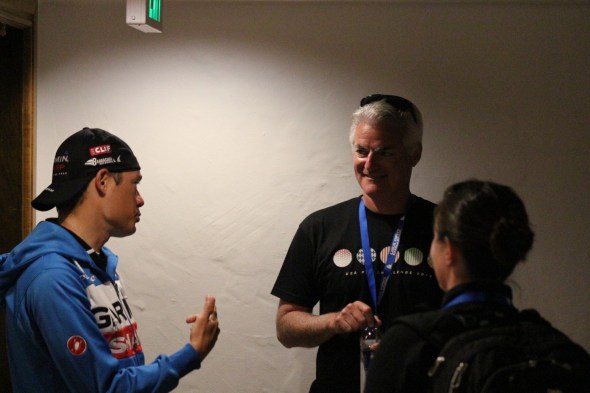
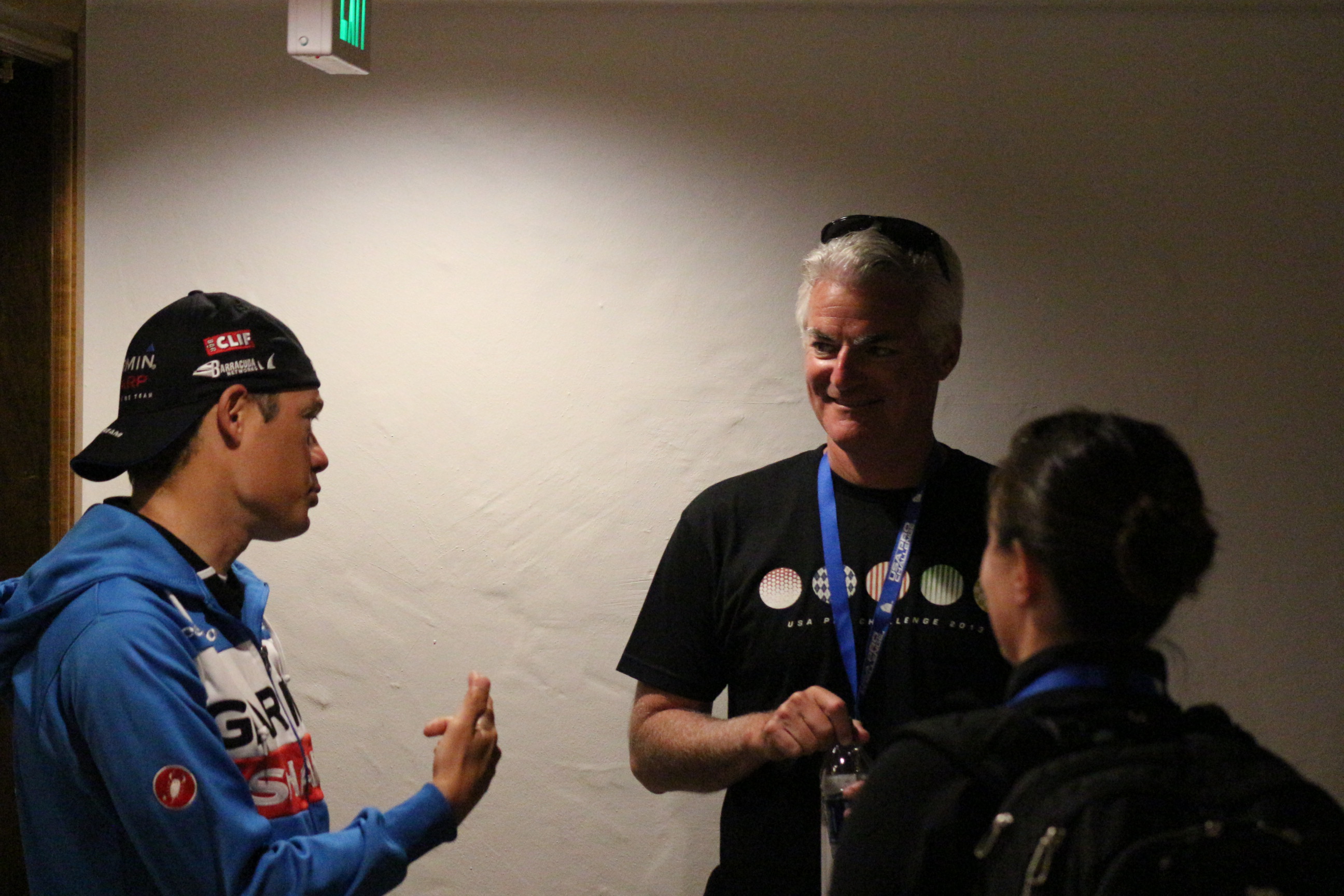
The only location with issues will be the finish on Monarch Mountain. This finish is a long way from Gunnison and close to Chaffee County, but still lacking in numbers of people. However it fulfills team Garmin Sharp’s Tom Danielson’s Christmas wish to have a mountain stage win at the Pro Challenge. Now he better win that stage!
But that will be a great finish no matter how many people. If you are a fan of the tour in Europe everyone watches, this will become a classic just like those finishes. It is a long and grueling climb. Probably only Wolf Creek Pass from the west is steeper. Finding a good place to see the race is going to be tough so get their early to stake out your spot.
Overall the race course looks fantastic so far. Until we see the actual routes we’ll not know the elevation or distances, however with the starts and finishes already picked this is destined to be another great week of cycling in Colorado.
It is going to be a great week of bicycle racing in Colorado.
See Host Cities Announced for 2014 USA Pro Challenge
What do you think? Leave a comment.
If you like this let your friends know or post it on FB, Twitter or LinkedIn
Copyright 2013 Recreation Law (720) Edit Law
Email: Rec-law@recreation-law.com
Google+: +Recreation
Twitter: RecreationLaw
Facebook: Rec.Law.Now
Facebook Page: Outdoor Recreation & Adventure Travel Law
Mobile Site: http://m.recreation-law.com
By Recreation Law Rec-law@recreation-law.com James H. Moss #Authorrank
<rel=”author” link=” https://plus.google.com/u/0/b/112453188060350225356/” />
#RecreationLaw, #Recreation-Law.com, #OutdoorLaw, #OutdoorRecreationLaw, #AdventureTravelLaw, #law, #TravelLaw, #JimMoss, #JamesHMoss, #Tourism, #AdventureTourism, #Rec-Law, #RiskManagement, #CyclingLaw, #BicyclingLaw, #FitnessLaw, #Recreation-Law.com, #Backpacking, #Hiking, #Mountaineering, #IceClimbing, #RockClimbing, #RopesCourse, #ChallengeCourse, #SummerCamp, #Camps, #YouthCamps, #Skiing, #Ski Areas, #Negligence, #Snowboarding, #RecreationLaw, #@RecreationLaw, #Cycling.Law, #SkiLaw, #Outside.Law, #Recreation.Law, #RecreationLaw.com, #OutdoorLaw, #RecreationLaw, #OutdoorRecreationLaw, #AdventureTravelLaw, #Law, #TravelLaw, #JimMoss, #JamesHMoss, #AttorneyatLaw, #Tourism, #AdventureTourism, #RecLaw, #RecLawBlog, #RecreationLawBlog, #RiskManagement, #HumanPowered, #HumanPoweredRecreation,# CyclingLaw, #BicyclingLaw, #FitnessLaw, #RecreationLaw.com, #Backpacking, #Hiking, #Mountaineering, #IceClimbing, #RockClimbing, #RopesCourse, #ChallengeCourse, #SummerCamp, #Camps, #YouthCamps, #Skiing, #Ski Areas, #Negligence, #Snowboarding, sport and recreation laws, ski law, cycling law, Colorado law, law for recreation and sport managers, bicycling and the law, cycling and the law, ski helmet law, skiers code, skiing accidents, Recreation Lawyer, Ski Lawyer, Paddlesports Lawyer, Cycling Lawyer, Recreational Lawyer, Fitness Lawyer, Rec Lawyer, Challenge Course Lawyer, Ropes Course Lawyer, Zip Line Lawyer, Rock Climbing Lawyer, Adventure Travel Lawyer, Outside Lawyer, Recreation Lawyer, Ski Lawyer, Paddlesports Lawyer, Cycling Lawyer, #RecreationalLawyer, #FitnessLawyer, #RecLawyer, #ChallengeCourseLawyer, #RopesCourseLawyer, #ZipLineLawyer, #RockClimbingLawyer, #AdventureTravelLawyer, #OutsideLawyer, Good Samaritan, Samaritan, First Aid, USA Pro Challenge, #ProChallenge, Cycling, Bicycle Racing, Colorado, Aspen, Vail, Breckenridge, Gunnison, Crested Butte, Colorado Springs, Denver, Woodland Park
WordPress Tags: Challenge,cities,Last,viewers,Danielson,Stage,Aspen,Circuit,Race,Butte,Gunnison,Monarch,Mountain,mountaintop,Colorado,Springs,Woodland,Park,Breckenridge,Vail,Individual,Time,Trial,Denver,Start,Golden,Boulder,Vote,items,money,bicycle,location,Chaffee,team,Garmin,Sharp,Christmas,Europe,Wolf,Creek,Pass,Overall,elevation,Host,Leave,Twitter,LinkedIn,Recreation,Edit,Email,Google,RecreationLaw,Facebook,Page,Outdoor,Adventure,Travel,Blog,Mobile,Site,James,Moss,Authorrank,author,OutdoorLaw,OutdoorRecreationLaw,AdventureTravelLaw,TravelLaw,JimMoss,JamesHMoss,Tourism,AdventureTourism,RiskManagement,CyclingLaw,BicyclingLaw,FitnessLaw,RopesCourse,ChallengeCourse,SummerCamp,Camps,YouthCamps,Areas,Negligence,SkiLaw,Outside,AttorneyatLaw,RecLaw,RecLawBlog,RecreationLawBlog,HumanPoweredRecreation,managers,helmet,accidents,Lawyer,Paddlesports,Recreational,Course,Ropes,Line,Rock,RecreationalLawyer,FitnessLawyer,RecLawyer,ChallengeCourseLawyer,RopesCourseLawyer,ZipLineLawyer,RockClimbingLawyer,AdventureTravelLawyer,OutsideLawyer,Samaritan,ProChallenge,week
Tennessee has a Ski Statute that must be construed narrowly or if you don’t understand skiing, ignored
Posted: November 4, 2013 Filed under: Assumption of the Risk, Minors, Youth, Children, Release (pre-injury contract not to sue), Tennessee | Tags: Bare Spot, Ice, Inc., Jaren Albert, Jarrod Albert, Ober Gatlinburg, ski lesson, Ski School, skiing, Slope, Smoky Mountain Snow SPORT School, Terrain Leave a commentHowever, the court rules that if parent signs a release the parent cannot recover for the child’s injures, even though the child still can
Albert v. Ober Gatlinburg, Inc., 2006 U.S. Dist. LEXIS 100150
Plaintiff: Jaren Albert, a minor bn/f Jarrod Albert, and Jarrod Albert
Defendant: Ober Gatlinburg, Inc., and Smoky Mountain Snow SPORT School, Inc.,
Plaintiff Claims: negligence
Defendant Defenses: Against Defendant Ski Area, Ober Gatlinburg Inc.: (1) Jaren Albert was guilty of negligence as a matter of law which bars recovery for her injuries; (2) Jaren’s claim is barred by the Tennessee Ski Area Safety and Liability Act (SASLA), T.C.A. § 68-114-101; and (3) Ober is not guilty of any negligence which proximately caused or contributed to Jaren’s accident and injuries.
Against the Ski School Smoky Mountain Snow Sport School, Inc.,: (1) his claims are solely derivative of the claims of Jaren Albert and that failure of her claims precludes any recovery by Jarrod Albert; and (2) that Jarrod Albert signed a valid release agreement contractually preventing him from bringing a claim against the ski operator.
Holding: For the defendants against the parent and for the child on all other motions.
The plaintiff was a 15-year-old girl who was skiing at the defendant’s ski area when she was injured. The day before she had skied at the ski area and taken a lesson from the defendant ski school. As the second day progressed, she started skiing more difficult runs and eventually lost control, sat down and was injured when her ski apparently hit her in the head.
A witness to the plaintiff’s accident testified “She was coming down; she slipped and started sliding on her butt; she tried to stop sideways; she started going head over heels for about 10 feet, then her ski came off, hit her in the head, and she was out.”
She sued the ski school and the ski area. The plaintiff hired an expert who testified that the defendant ski area:
…failed to use reasonable care in deciding to open the ski resort on the day of the accident, failed to close some slopes or warn of ultra hazardous conditions on the slope on which this accident occurred, and failed to designate the slope on which the accident occurred as ultra hazardous, ice-covered, and/or “black diamond,” thus breaching its duty to operate in conformity with the SASLA.
When slope conditions change from marginal to extra-hazardous in nature, Mr. Isham states it becomes the obligation and duty of the ski operator to post warnings at the top of each trail notifying skiers that the slopes have changed and that they demand extra caution and attention. Such warnings should have also been posted at the slope condition board at the base of the mountain to provide additional information to skiers.
Ice or bare spots on a ski slope are ultrahazardous?
Both defendants filed motions for summary judgment. The plaintiff filed a motion requesting oral arguments on the defendant’s motions for summary judgment, which was denied. The court then ruled on the defendants’ motions for summary judgment.
Summary of the case
Claims against the ski area
The court first looked at the claims and arguments against the defendant ski area. The ski area argued that the plaintiff should not have been on the black diamond ski slope, and that is what created her injury.
…was an inexperienced skier, yet she skied on a slope which she knew was designated as “most difficult” and rated as a “black diamond” slope; and she ignored the posted signs warning her that the slope she was preparing to ski on was not suited to her ability. Despite that knowledge, Ms. Albert skied down Mogul Ridge and suffered a fall. Defendant states that Ms. Albert was not skiing within the limits of her ability and she apparently failed to maintain control of her speed and course, resulting in her fall and injury.
The defendant ski area also argued that the Tennessee Ski Area and Liability Act (SASLA) barred the plaintiff’s suit because a skier assumed the risk and legal responsibility of skiing under the act. The court stated that the Tennessee Court of Appeals had reviewed the statute and held that the act did not protect the operators from their own negligence or provide them with blanket immunity.
The plaintiff’s then made a simple argument to which the court gave credence.
Plaintiffs state that Ober Gatlinburg owed a duty of reasonable care under the circumstances, in addition to their statutory duties, not to expose a skier to risks at the resort which were not an inherent risk of skiing.
Because there was a difference of opinion, a material fact to which the parties disagreed, summary judgment could not be granted to the ski area.
Claims against the ski school
The ski school’s major argument was the lesson ended the day before so the school could not be liable for injuries that occurred after the lesson ended. The school also argued that the school had no control over the actions against the plaintiff after the lesson ended.
The plaintiff countered by arguing the lesson was incomplete. The plaintiff argued the lesson was 5-10 minutes, and she learned to stop and to turn. The school argued the lesson was longer. (I find it hard to believe that a beginner could learn to snowplow and turn in 10 to 15 minutes.)
Here again the court found that because there was a disagreement as to whether or not the lesson was adequate the ski school would not be dismissed from the suit.
Release signed by the plaintiff, parent of the injured minor.
The plaintiff and father of the injured girl signed a release. There was no reference as to how or why the release was signed. It was put forth in the decision and is only one real paragraph.
Under Tennessee’s law the release would not work to stop a claim by a child. However, Tennessee’s law allowed a release signed by a parent to stop claims for the losses the parent suffered because of injuries to the child.
This court has previously found the release void as to Jaren Albert because it is well settled in Tennessee that a guardian may not waive the rights of an infant or an incompetent. However, the Tennessee courts have held that a parent signing a release like the one at issue here, is precluded from recovering for the loss of services and medical expenses resulting from the child’s injury.
The court then stated:
He further agreed to indemnity defendants “for any claims brought by my minor child as a result of any injuries or damages sustained while engaging in the activity of snow skiing.” Therefore, the release is valid with respect to Jarrod Albert’s right to recover for loss of services and medical expenses for his child.
Whether or not the court is defining indemnification such that the defendants could recover for any losses is not clarified in the decision. Nor based on other Tennessee laws would I guess it was possible. However, courts do not throw around such legal terms carelessly.
Based on the release signed by the plaintiff the court stated:
… the Tennessee courts have held that a parent signing a release like the one at issue here, is precluded from recovering for the loss of services and medical expenses resulting from the child’s injury.
The defendant’s motions concerning the minor plaintiff were denied. The defendant’s motions concerning the claims of the plaintiff parent were granted. The case was continued for additional issues and probably trial on the claims of the minor.
So Now What?
The Tennessee Court of Appeal’s decision that this court relied upon gutted the Tennessee Ski Area and Liability Act (SASLA). If the act does not protect suits from the negligence of the ski area and the inherent risks of skiing are no enumerated, the act provides no benefit from suit. Most times a ski area statute provides a defense by saying that the skier assumes the risk, as defined by the statute. In this case, the risk to be assumed by the skier would have been hitting an icy patch or a bare spot. Without that protection of risks enumerated in a statute, the ski area can be held negligent for not warning of the ice or bare spot or not correcting the conditions within the area.
However, the SASLA has no list of risks that are assumed by a skier and only the blanket statement quoted by the court.
“Except as otherwise specifically provided in this chapter, each skier or passenger is deemed to have assumed the risk of and legal responsibility for any injury to the skier’s or passenger’s person or property arising out of the skier’s or passenger’s participation in Alpine or downhill skiing or the use of any passenger tramways associated with Alpine or downhill skiing.”
Once a court decided the statute was to be narrowly construed and would not operate to prevent suits for negligence, there is little to zero value in the statute.
The decision about the very weak release is interesting. The court’s statements about the effect of the release lead to more interesting aspects of the case.
The rest of the case is going to be dependent upon the war of the experts. If the ski area and ski school could bring a credible expert to the witness stand to explain in ways, a jury could understand the ski area and ski school could win the case.
However, if the defendant’s credibility is blown at all, the outrageous claims of the plaintiff’s experts may hold water with a jury that does not understand skiing or Mother Nature.
|
Jim Moss is an attorney specializing in the legal issues of the outdoor recreation community. He represents guides, guide services, outfitters both as businesses and individuals and the products they use for their business. He has defended Mt. Everest guide services, summer camps, climbing rope manufacturers; avalanche beacon manufactures and many more manufacturers and outdoor industries. Contact Jim at Jim@Rec-Law.us |
Jim is the author or co-author of six books about the legal issues in the outdoor recreation world; the latest is Outdoor Recreation Insurance, Risk Management and Law.
To see Jim’s complete bio go here and to see his CV you can find it here. To find out the purpose of this website go here.
G-YQ06K3L262
What do you think? Leave a comment.
If you like this let your friends know or post it on FB, Twitter or LinkedIn
Author: Outdoor Recreation Insurance, Risk Management and Law
Facebook Page: Outdoor Recreation & Adventure Travel Law
Email: Jim@Rec-Law.US
By Recreation Law Rec-law@recreation-law.com James H. Moss
@2023 Summit Magic Publishing, LLC
WordPress Tags: Tennessee,Statute,Albert,Ober,Gatlinburg,Dist,LEXIS,Plaintiff,Jaren,Jarrod,Defendant,Smoky,Mountain,SPORT,School,Claims,negligence,Defenses,Against,Area,recovery,injuries,SASLA,accident,failure,agreement,operator,defendants,girl,lesson,feet,resort,diamond,Isham,obligation,warnings,attention,information,Both,judgment,arguments,Summary,injury,Despite,knowledge,Mogul,Ridge,Court,Appeals,operators,argument,credence,Plaintiffs,addition,duties,difference,opinion,fact,beginner,Here,disagreement,Release,reference,decision,paragraph,Under,guardian,infant,Whether,laws,Appeal,Most,protection,statement,Except,chapter,person,participation,Alpine,Once,zero,statements,aspects,experts,jury,Mother,Nature,Leave,FaceBook,Twitter,LinkedIn,Recreation,Edit,Email,Google,RecreationLaw,Page,Outdoor,Adventure,Travel,Blog,Mobile,Site,James,Moss,Authorrank,author,AdventureTourism,AdventureTravelLaw,AdventureTravelLawyer,AttorneyatLaw,BicyclingLaw,Camps,ChallengeCourse,ChallengeCourseLaw,ChallengeCourseLawyer,CyclingLaw,FitnessLaw,FitnessLawyer,HumanPoweredRecreation,JamesHMoss,JimMoss,OutdoorLaw,OutdoorRecreationLaw,OutsideLaw,OutsideLawyer,RecLaw,RecLawBlog,LawBlog,RecLawyer,RecreationalLawyer,RecreationLawBlog,RecreationLawcom,Lawcom,RiskManagement,RockClimbingLawyer,RopesCourse,RopesCourseLawyer,SkiAreas,SkiLaw,SummerCamp,Tourism,TravelLaw,YouthCamps,ZipLineLawyer,Terrain,Slope,Bare,Spot,skiers,skier,upon
Montana Statutes Prohibits Use of a Release
Posted: October 29, 2013 Filed under: Montana, Release (pre-injury contract not to sue) | Tags: Montana, Release, Void, Waiver 1 CommentTITLE 27 CIVIL LIABILITY, REMEDIES, AND LIMITATIONS
CHAPTER 1 AVAILABILITY OF REMEDIES — LIABILITY
PART 7 LIABILITY
Mont. Code Anno., § 27-1-701 (2012)
27-1-701 Liability for negligence as well as willful acts.
Except as otherwise provided by law, each person is responsible not only for the results of the person’s willful acts but also for an injury occasioned to another by the person’s want of ordinary care or skill in the management of the person’s property or person except so far as the person has willfully or by want of ordinary care brought the injury upon the person.
Title 28 Contracts and other Obligations
Chapter 2 Contracts
Part 7 Illegal Objects and Provisions
Mont. Code Anno., § 28-2-702, MCA (2017)
28-2-702 Contracts that violate policy of law — exemption from responsibility.
All contracts that have for their object, directly or indirectly, to exempt anyone from responsibility for the person’s own fraud, for willful injury to the person or property of another, or for violation of law, whether willful or negligent, are against the policy of the law.
What do you think? Leave a comment.
If you like this let your friends know or post it on FB, Twitter or LinkedIn
Copyright 2018 Recreation Law (720) Edit Law
Email: Rec-law@recreation-law.com
Google+: +Recreation
Twitter: RecreationLaw
Facebook: Rec.Law.Now
Facebook Page: Outdoor Recreation & Adventure Travel Law
Mobile Site: http://m.recreation-law.com
By Recreation Law Rec-law@recreation-law.com James H. Moss #Authorrank
<rel=”author” link=” https://plus.google.com/u/0/b/112453188060350225356/” />
#RecreationLaw, #Recreation-Law.com, #OutdoorLaw, #OutdoorRecreationLaw, #AdventureTravelLaw, #law, #TravelLaw, #JimMoss, #JamesHMoss, #Tourism, #AdventureTourism, #Rec-Law, #RiskManagement, #CyclingLaw, #BicyclingLaw, #FitnessLaw, #Recreation-Law.com, #Backpacking, #Hiking, #Mountaineering, #IceClimbing, #RockClimbing, #RopesCourse, #ChallengeCourse, #SummerCamp, #Camps, #YouthCamps, #Skiing, #Ski Areas, #Negligence, #Snowboarding, #RecreationLaw, #@RecreationLaw, #Cycling.Law, #SkiLaw, #Outside.Law, #Recreation.Law, #RecreationLaw.com, #OutdoorLaw, #RecreationLaw, #OutdoorRecreationLaw, #AdventureTravelLaw, #Law, #TravelLaw, #JimMoss, #JamesHMoss, #AttorneyatLaw, #Tourism, #AdventureTourism, #RecLaw, #RecLawBlog, #RecreationLawBlog, #RiskManagement, #HumanPowered, #HumanPoweredRecreation,# CyclingLaw, #BicyclingLaw, #FitnessLaw, #RecreationLaw.com, #Backpacking, #Hiking, #Mountaineering, #IceClimbing, #RockClimbing, #RopesCourse, #ChallengeCourse, #SummerCamp, #Camps, #YouthCamps, #Skiing, #Ski Areas, #Negligence, #Snowboarding, sport and recreation laws, ski law, cycling law, Colorado law, law for recreation and sport managers, bicycling and the law, cycling and the law, ski helmet law, skiers code, skiing accidents, Recreation Lawyer, Ski Lawyer, Paddlesports Lawyer, Cycling Lawyer, Recreational Lawyer, Fitness Lawyer, Rec Lawyer, Challenge Course Lawyer, Ropes Course Lawyer, Zip Line Lawyer, Rock Climbing Lawyer, Adventure Travel Lawyer, Outside Lawyer, Recreation Lawyer, Ski Lawyer, Paddlesports Lawyer, Cycling Lawyer, #RecreationalLawyer, #FitnessLawyer, #RecLawyer, #ChallengeCourseLawyer, #RopesCourseLawyer, #ZipLineLawyer, #RockClimbingLawyer, #AdventureTravelLawyer, #OutsideLawyer, Good Samaritan, Samaritan, First Aid, Montana, Release, Void, Waiver,
Virginia Ski Statutes
Posted: October 29, 2013 Filed under: Skiing / Snow Boarding, Virginia | Tags: Ski statute, skiing, snowboarding, VA, Virginia, Winter Sports Act Leave a commentTITLE 8.01. CIVIL REMEDIES AND PROCEDURE
CHAPTER 3. ACTIONS
ARTICLE 25. WINTER SPORTS SAFETY ACT.
GO TO CODE OF VIRGINIA ARCHIVE DIRECTORY
Va. Code Ann. § 8.01-227.11 (2013)
§ 8.01-227.11. Definitions
As used in this article, unless the context requires a different meaning:
“ANSI Ski Lift Code” means the American National Standard (B77.1-2006): Passenger Ropeways — Aerial Tramways, Aerial Lifts, Surface Lifts, Tows and Conveyors — Safety Requirements, as published by the American National Standards Institute, including any supplements thereto or revisions thereof.
“Competition” means any contest or event operated by a winter sports area operator or any other party authorized by the operator at a winter sports area involving comparison of skills, including, but not limited to, a ski race, mogul contest, jumping event, freestyle event, snowcross contest, or other similar contest or event. “Competition” includes training sessions or practice for a contest or event.
“Competition terrain” means any part of a winter sports area in which an operator has authorized a competition to take place.
“Competitor” means a winter sports participant who actually is engaged in a competition in any portion of a winter sports area made available by the winter sports area operator.
“Designated trail” means a winter sports area trail on which a participant is permitted by the operator to participate in a winter sport.
“Freestyle terrain” and “freestyle terrain park” means any portion of a winter sports area that has been designated as such by the operator for freestyle skiing, freestyle snowboarding, or similar freestyle winter sports and includes, but is not limited to, the terrain park itself and features such as rails, boxes, jumps, hits, jibs, tabletops, spines, ramps, banks, pipes, half-pipes, quarter-pipes, tables, logs, or other man-made features such as buses and other vehicles, propane tanks, and tractor tires; snowcross terrain and features; and other constructed or natural features, but does not include moguls, bumps, or rollers or jumps not built by the operator, unless they are within a designated freestyle terrain park.
“Freestyler” means a winter sports participant utilizing freestyle terrain or a freestyle terrain park.
“Helmet” means a type of molded headgear equipped with a neck or chin strap specifically designed by the manufacturer to be used while engaged in the winter sport of alpine skiing or snowboarding.
“Inherent risks of winter sports” or “inherent risks of the winter sport” include:
1. Existing and changing weather conditions and visibility;
2. Hazards associated with varying surface or subsurface conditions on a single trail or from one trail to another, including but not limited to hazards such as participant use, snow in any condition and changing snow conditions, man-made snow, synthetic snow, ice, synthetic ice, snow or ice falling from a tree or natural or man-made structure, crust, slush, soft spots, ridges, rollers, knobs, holes, grooves, tracks from winter sports area vehicles, bare spots, rocks, boulders, stumps, logs, and brush or other forest growth or debris, or piles thereof;
3. Variations in difficulty of terrain, whether natural or as a result of slope use, slope design, or both;
4. Trails that have, or fall away or drop off toward, natural or man-made obstacles or hazards, including but not limited to sharp corners, ridges, jumps, bumps, rollers, moguls, valleys, dips, compressions, cliffs, ravines, drop-offs, streams, rivers, ponds, lakes, stream beds, open water or water with thin ice, holes, steep, flat, and uphill sections, and all variants and combinations thereof;
5. The potential for collision with other participants or other individuals, including with winter sports area personnel, whether or not those personnel are on duty or off duty; with wild or domestic animals; or with equipment or objects such as winter sports area infrastructure, snowmaking equipment, buildings and posts, and stationary and moving lit or flagged winter sports area vehicles;
6. The potential for a participant to act in a negligent or reckless manner that may cause or contribute to the injury or death of the participant or other individuals or damage to property;
7. The location, construction, design, layout, configuration, and condition of trails, freestyle terrain, and competition terrain;
8. The fact that use of trails, freestyle terrain, and competition terrain and participation in or being near races or other competitions or events, including but not limited to as a participant, employee at a winter sports area, spectator, or observer, involves the risk of serious injury or death or damage to property;
9. The fact that a helmet may not afford protection in all instances and that failure to wear a helmet that is properly sized, fitted, and secured may increase the risk of injury or death or the risk of more severe injury; and
10. The fact that the use of passenger tramways may be hazardous to passengers, including but not limited to risks resulting from loading or unloading a tramway and the potential for a passenger to fall from a tramway.
“Operator” or “winter sports area operator” means any person who has responsibility for the operations of a winter sports area, including its officers, directors, and employees and agents acting within the scope of their employment.
“Participant” or “winter sports participant” means an individual of any age or physical or mental ability who is an amateur or professional invitee of the operator or a trespasser and who participates in a winter sport at the winter sports area, whether or not consideration is paid to participate in the winter sport and whether or not the participant holds a valid admission ticket for all or a portion of the winter sports area, and any employee of the operator who participates in a winter sport either as part of his employment duties or as recreation.
“Participates in a winter sport” or “participating in a winter sport” means:
1. Using a trail or other terrain at a winter sports area to engage in a winter sport;
2. Participating in training or lessons for a winter sport as either an instructor or a student;
3. Being a spectator, observer, bystander, or pedestrian of or to any activity on a trail or other terrain at or near a winter sports area; or
4. Being a passenger on a passenger tramway.
“Passenger” means any individual, including a winter sports participant, while being transported or conveyed by a passenger tramway, while waiting in the immediate vicinity for such transportation or conveyance, while moving away from the disembarkation or unloading point of a passenger tramway to clear the way for the following passengers, or while boarding or embarking upon or unloading or disembarking from a passenger tramway.
“Passenger tramway” means any ski lift, chairlift, gondola, tramway, cable car, or other aerial lift and any rope tow, conveyor, t-bar, j-bar, handle tow, or other surface lift used by an operator to transport participants, spectators, observers, or pedestrians at a winter sports area, and any associated components including, but not limited to, lift towers, concrete tower foundations, tower bolts, tower ladders, lift terminals, chairs, gondolas, t-bars, j-bars, conveyors, and other structures relating to passenger tramways.
“Person” means any individual, corporation, partnership, association, cooperative, limited liability company, trust, joint venture, government, political subdivision, or any other legal or commercial entity and any successor, representative, agent, agency, or instrumentality thereof.
“Snowmaking equipment” means any machine used to make snow, including but not limited to snow guns and any associated towers, components, pipe, hydrant, hose, or other structures or equipment, including electrical equipment.
“Trail” or “winter sports area trail” means any slope, trail, run, freestyle terrain, or competition terrain located in a winter sports area. “Trail” includes edges and transition areas to other terrain, but does not include a tubing park.
“Tubing” means sliding on inflatable tubes, minibobs, sleds, toboggans, or any other comparable devices down a prepared course or lanes at a winter sports area.
“Tubing park” means an area designated by an operator for tubing.
“Winter sport” means a recreational or sporting activity, including sliding, jumping, walking, or traveling on a winter sports area trail for alpine skiing; Nordic skiing; telemark skiing; freestyle skiing; snowboarding; freestyle snowboarding; snowshoeing; tobogganing; sledding; or use of a snowmobile, minibob, snowbike, or comparable device; or any similar activity or use of a device that takes place at any time of the year on natural snow, man-made snow, ice, synthetic snow, synthetic ice, or any other synthetic surface, including a competition or the use of any device by a disabled or adaptive participant for a winter sport. “Winter sport” does not include ice skating or tubing.
“Winter sports area” means all the real and personal property under control of the operator or on the premises of such property that is being occupied by the operator by fee simple, lease, license, easement, permission, or otherwise, including but not limited to any and all trails, freestyle terrain, competition terrain, passenger tramways, or other areas of real property. “Winter sports area” does not include a tubing park except for any passenger tramway serving a tubing park and the immediate vicinity of such a passenger tramway in which individuals embark upon or disembark from the passenger tramway.
“Winter sports area infrastructure” means:
1. Passenger tramways;
2. Snowmaking equipment;
3. Towers, buildings, shacks, fixtures, furniture, and other structures, including utility infrastructure, located on the winter sports area property; and
4. Signs, fences, ropes, flags, posts, poles, and any other materials or structures used for posting signs or to manage or direct winter sports participants, spectators, observers, or pedestrians or any combination thereof.
“Winter sports area vehicle” means a vehicle used on a winter sports area trail in the operation and maintenance of winter sports areas and competitions and includes, but is not limited to, snowmobiles, all-terrain vehicles, and any other similarly sized vehicles as well as larger maintenance vehicles such as snow grooming equipment.
§ 8.01-227.12. Warnings and other winter sports area operator requirements
A. Each winter sports area operator shall include the following warning on each ticket, season pass, and written contract for professional services, instruction, or the rental of equipment to a winter sports participant and on each sign required by this subsection:
“WARNING: Under Virginia law, a ski area operator or other winter sports area operator is not liable for an injury to or death of a winter sports participant in a winter sport conducted at this location, or for damage to property, if such injury, death, or damage results from the inherent risks of the winter sport or from the participant’s own negligence. The inherent risks of a winter sport include, among others, risks associated with the land, equipment, other participants, and animals, as well as the potential for you or another participant to act in a negligent manner that may contribute to the injury, death, or damage. You are assuming the inherent risks of participating in a winter sport at this location. Complete copies of the applicable Virginia law and the participant responsibility code published by the National Ski Areas Association are available for review at each ticket sales office of this winter sports area and online at [insert website for winter sports area].”
Every ticket, season pass, and written contract for professional services, instruction, or the rental of equipment to a participant shall contain the warning required by this subsection in clearly readable print. Every sign required by this section shall contain the warning required by this subsection in black letters, with each letter to be a minimum of one inch in height. An operator also may print on a ticket; season pass; written contract for professional services, instruction, or rental of equipment to a participant; or any sign required by this section any additional warning it deems appropriate. The warning required by this section does not constitute a preinjury contractual release and nothing in this section alters the common law of Virginia with regard to preinjury contractual releases.
B. Each operator shall install and maintain a sign containing the warning set forth in subsection A (i) at each designated ticketing office, (ii) at each front desk at each building or facility at which guests check in, (iii) at or near each ticket sales office of the winter sports area, and (iv) at, near, or en route to the loading area of each passenger tramway.
C. Each operator shall install and maintain at or near the beginning of each designated trail a sign that contains the name of the trail and any of the applicable difficulty-level words and emblems contained in this subsection, as determined by the operator. Directional arrows may be included on any sign, but shall be included if the sign is located at such a distance or position relative to the beginning of a trail that it would not be understandable by a reasonably prudent participant without directional arrows. As applicable, the signs shall indicate: (i) “Easiest” and include a green circle emblem, (ii) “More Difficult” and include a blue square emblem, (iii) “Most Difficult” and include a black diamond emblem, (iv) “Expert” or “Extreme Terrain” and include a two black diamond emblem, (v) “Freestyle Terrain” and include an orange oval emblem, or (vi) “Closed” and include a border around a black figure in the shape of a skier inside with a band running diagonally across the sign.
D. Each operator shall install and maintain at, near, or en route to the loading area for each passenger tramway that does not service trails that are designated by the operator as “Easiest” a sign that includes the following warning:
“WARNING. This lift does not service any trails that are designated Easiest (green circle emblem). All of the trails serviced by this lift are designated [as applicable, More Difficult (blue square emblem), Most Difficult (black diamond emblem), Expert (two black diamond emblem), or Freestyle Terrain (orange oval emblem)].”
E. Each operator shall install and maintain at, near, or en route to the entrance to each trail containing freestyle terrain a sign that indicates the location of the freestyle terrain. Each sign shall be denoted by an orange oval emblem, a stop sign emblem, and the statements “Freestyle skills required” and “Helmets are recommended.” Each sign also may include any other freestyle warning the operator deems appropriate.
F. Whenever trail grooming or snowmaking operations are being undertaken, or trail grooming equipment is being operated, on a trail that is at that time open to the public, the operator shall place or cause to be placed a sign to that effect at the top or beginning of the trail.
G. An operator may vary from the specific location requirements required by this section provided that the location is substantially the same as the location required by this section and that the sign is plainly visible to a reasonably prudent winter sports participant abiding by all of the participant’s duties and responsibilities.
H. Each operator shall make available, by oral or written report or otherwise, information concerning the daily conditions of its trails.
I. Each operator that offers a winter sport at nighttime shall meet the lighting standards for that winter sport provided by Illuminating Engineering Society of North America RP-6-01, Sports and Recreational Area Lighting § 6.24, including any supplements thereto or revisions thereof.
J. Each operator shall, upon request, provide (i) a freestyler who holds a valid admission ticket to the winter sports area’s freestyle terrain a reasonable opportunity to view the freestyle terrain and (ii) a competitor who has properly registered for the competition a reasonable opportunity to visually inspect the portion of the winter sports area designated by the operator for the competition.
K. Each operator shall provide a ski patrol and first-aid services.
L. Each operator shall make available on the winter sports area’s website and at each ticket sales office of the winter sports area for review by any winter sports participant, upon request, a copy of the participant responsibility code posted and available at each winter sports area and a copy of this article.
§ 8.01-227.13. Winter sports area trail maps
Each operator, upon request, shall provide to a participant a trail map of all trails located in the operator’s winter sports area. The maps shall be available at each ticket sales office and at other locations at the winter sports area such that the maps are easily accessible to participants. All trail maps shall indicate the skill-level designation for each trail at the winter sports area as designated in subsection C of § 8.01-227.12.
§ 8.01-227.14. Freestyle terrain
In addition to providing the signage and warnings set forth in subsections C and E of § 8.01-227.12, an operator shall construct a barricade through use of fencing, flagging, or similar means at the entrance to any trail containing freestyle terrain. The barricade shall contain an entrance opening not wider than 30 feet.
§ 8.01-227.15. Winter sports area vehicles
An operator shall install and maintain on or near the top of each winter sports area vehicle that is present on any designated trail of a winter sports area during the operating hours of any passenger tramway serving that trail a flashing or rotating light that flashes or rotates whenever the vehicle is on any such trail. An operator also shall install and maintain on any snowmobile, all-terrain vehicle, or any other similarly sized vehicle that is present on any designated trail during the operating hours of any passenger tramway serving that trail a red or orange flag that is at least 40 square inches in size and is mounted at least five feet from the bottom of the vehicle’s tracks or tires.
§ 8.01-227.16. Passenger tramways
A. Each operator shall be responsible for the safe operation and maintenance of each passenger tramway in its winter sports area whenever the tramway is in use, and for the safe construction of any passenger tramway that the operator constructed. At least once during each calendar year, each operator shall have all passenger tramways within the operator’s winter sports area inspected by an individual who is qualified pursuant to Virginia law to inspect passenger tramways for compliance with the requirements of the ANSI Ski Lift Code and shall not operate a passenger tramway that is not in compliance until that passenger tramway is certified by such an individual as being in compliance. An operator’s compliance with this inspection requirement does not by itself preclude potential liability on the part of the operator for any failure to operate or maintain a passenger tramway safely.
B. If a participant or a passenger using a passenger tramway at a winter sports area with the permission of the operator is unfamiliar with the use of a passenger tramway and asks for instruction on its use, the operator shall provide a reasonable opportunity for such instruction. In addition to the signs required by subsections A, B, and D of § 8.01-227.12, an operator shall install and maintain at or near the loading area for each passenger tramway in the winter sports area a sign stating that if a participant or other passenger is unfamiliar with the use of the passenger tramway and asks for instruction for its use, the operator will provide a reasonable opportunity for such instruction.
§ 8.01-227.17. Duties and responsibilities of winter sports participants and certain other individuals
A. A winter sports participant has a duty and responsibility to:
1. Exercise reasonable care in engaging in winter sports at the winter sports area, including, but not limited to, the exercise of reasonable care in:
a. Participating in a winter sport at a winter sports area only on designated trails that are not marked “closed” and refraining from participating in a winter sport in any portion of a winter sports area that is not a designated trail or is marked “closed”;
b. Knowing the range of his ability to participate in the winter sport in which he is participating and acting within the limits of that ability;
c. Being the sole judge of his knowledge of and ability to successfully negotiate any trail or passenger tramway and refraining from negotiating any trail or passenger tramway until obtaining sufficient knowledge and ability to do so;
d. Heeding and obeying all warnings, notices, and signs provided by an operator and not altering, defacing, removing, or destroying any such warning, notice, or sign;
e. Maintaining control of his speed and course at all times and maintaining a proper lookout so as to be able to avoid other participants and objects;
f. Staying clear of any winter sports area vehicle or infrastructure, other than when embarking on or disembarking from a passenger tramway or when present at or in a residential building or other building that is open to the public;
g. Wearing retention straps, ski brakes, or other devices to prevent runaway equipment;
h. Making a visual inspection of any winter sports area competition terrain and viewing any freestyle terrain the participant intends to use;
i. Acting in a safe manner that will avoid contributing to the injury or death of himself or others or the damage to property, including refraining from participating in a winter sport when the participant’s ability to do so safely is impaired by the consumption of alcohol or by the use of any narcotic or other drug or while under the influence of alcohol or any narcotic or other drug, or placing, fabricating, or shaping any object in a trail;
j. Embarking on a passenger tramway only with the authority of the operator;
k. Boarding or dismounting from a passenger tramway only at a designated area;
l. Acting in a manner while riding a passenger tramway that is consistent with posted rules and that will not interfere with the proper and safe operation of the passenger tramway;
m. Refraining from throwing or expelling any object while riding on a passenger tramway, and from placing an object on or about the uphill track, the entry area, or the exit area of any passenger tramway;
n. Crossing the uphill track of a passenger tramway only at designated locations; and
o. When involved in a winter sports collision or other accident involving another individual who the participant knows or reasonably should know is in need of medical or other assistance, obtaining assistance for that individual, notifying the proper authorities, and not leaving the scene of the collision or accident without giving the participant’s personal identification, including his name and local and permanent address, to an employee or representative of the operator or to someone providing assistance to the individual, except for the purpose of obtaining assistance for the individual, in which case the participant shall give his personal identification to an employee or representative of the operator or to someone providing assistance to the individual after obtaining such assistance; and
2. When requested, provide his personal identification to an employee or representative of the winter sports area or operator.
B. Each passenger using a passenger tramway with the permission of an operator shall abide by and fulfill each duty and responsibility set forth in subsection A that is applicable to use of a passenger tramway.
C. Each participant, and each passenger using a passenger tramway with the permission of an operator, shall be deemed as a matter of law to have seen and understood all postings, signs, and other warnings provided by the winter sports area operator as required by this article.
D. An operator is entitled to assume that each passenger who boards a passenger tramway has sufficient knowledge, ability, and physical dexterity to embark upon, disembark from, and negotiate the passenger tramway. Any passenger who is unfamiliar with the use of a passenger tramway or who believes he does not have sufficient knowledge to embark upon, disembark from, and negotiate a passenger tramway shall ask the operator for instruction on such use or to provide such knowledge. Nothing in this article shall be construed to extend liability to an operator for injury to or death of a participant or other individual or damage to property resulting from a passenger who is unfamiliar with the use of a passenger tramway or believes he does not have sufficient knowledge to embark, disembark from, or negotiate a passenger tramway and does not ask the operator for instruction on such use or to provide such knowledge, or who does not have the ability or physical dexterity to embark upon, disembark from, or negotiate a passenger tramway.
E. Any individual who is not authorized by the operator to use or be present at the winter sports area shall be deemed a trespasser.
§ 8.01-227.18. Helmets
Each winter sports participant, or the parent or legal guardian of, or adult acting in a supervisory position over, a participant under the age of 18, shall be responsible for determining whether the participant will wear a helmet and whether the helmet is sufficiently protective and properly sized, fitted, and secured.
Nothing in this article shall be construed to extend liability to an operator for injury to or death of a participant or other individual or damage to property resulting from a participant not wearing a helmet while participating in a winter sport.
§ 8.01-227.19. Assumption of risks
A. A winter sports participant shall be presumed to have known the inherent risks of the winter sport in which he participates, to have fully appreciated the nature and extent of such risks, and to have voluntarily exposed himself to such risks, even if a particular risk was not specifically presented or stated to the participant by the operator. A passenger who uses a passenger tramway with the permission of an operator shall be presumed to have known the risks of winter sports that are applicable to the use of passenger tramways, to have fully appreciated the nature and extent of such risks, and to have voluntarily exposed himself to such risks, even if a particular risk was not specifically presented or stated to the individual by the operator. Such presumption may be rebutted by the participant or passenger by proving that the participant or passenger did not know the particular inherent risk of winter sports that proximately caused the injury or death or damage to property at issue, did not fully appreciate the nature and extent of such risk, or did not voluntarily expose himself to such risk.
B. An operator’s negligence is not an inherent risk of winter sports, and a participant or passenger is not presumed to have accepted the risk of such negligence and the injuries proximately caused therefrom.
C. In determining if the presumption set forth in subsection A applies in a particular case, whether a particular circumstance or set of circumstances constitutes an inherent risk of winter sports shall be a question of law, and whether the participant or passenger assumed the particular inherent risk of winter sports shall be a question of fact.
D. Nothing herein shall prevent a participant or passenger from offering evidence that he did not know the particular inherent risk of winter sports that proximately caused the injury or death or damage to property at issue, did not fully appreciate the nature and extent of such risk, or did not voluntarily expose himself to such risk.
§ 8.01-227.20. Liability of winter sports area operator
A. A winter sports area operator shall be liable if the operator does any of the following:
1. Commits an act or omission related to a winter sport that constitutes negligence or gross negligence regarding the safety of an individual, or of property, and that act or omission proximately causes injury to or the death of the individual or damage to property; or
2. Recklessly, knowingly, or intentionally commits an act or omission related to a winter sport that proximately causes injury to or the death of a winter sports participant or other individual or damage to property.
B. No operator shall be liable and no individual or individual’s representative may recover from an operator under subdivision A 1 or subsection C if the individual is found to have assumed the risk of his injury or death, or damage to property, pursuant to § 8.01-227.19 or if a proximate cause of the injury, death, or damage was his own negligence, provided that in any action for damages against an operator pursuant to subdivision A 1 or subsection C, the operator shall plead, as appropriate, the affirmative defense of (i) assumption of the risk by the individual, (ii) contributory negligence by the individual, or (iii) both assumption of the risk and contributory negligence.
C. A winter sports area operator shall not be considered a common carrier under Virginia law but shall be liable for any injury to or death of an individual or damage to property caused by the operator’s failure to operate a passenger tramway in a reasonable manner or to comply with any mandatory provision of the ANSI Ski Lift Code.
D. The liability of a winter sports area operator to another individual who is not authorized by the operator to use or be present at the winter sports area shall be only the liability for the duty owed under Virginia law to a trespasser.
§ 8.01-227.21. Common law regarding minors
Nothing in this article shall abrogate Virginia common law regarding either (i) the capacity of a minor to be contributorily negligent or to assume a risk or (ii) the standard for measuring the conduct of a minor.
§ 8.01-227.22. Failure to fulfill duty or responsibility not negligence per se
An operator’s or participant’s failure to abide by or fulfill a duty or responsibility under this article shall not constitute negligence per se.
§ 8.01-227.23. Applicability of article
Any liabilities and presumptions pursuant to this article apply only with regard to actions or potential actions between an operator and a participant or passenger. This article has no applicability to actions between a participant or passenger and any other person.
Court writes clear decision a jump in a terrain park is an open and obvious risk
Posted: October 28, 2013 Filed under: Michigan, Ski Area, Skiing / Snow Boarding | Tags: Features, Half Pipe, Jump, MI, Michigan, Rails, Ramps, skiing, Snowboard, snowboarding, Terrain park Leave a commentIf you practice law in this area, you should hold on to this decision because of its statements on the risks of a terrain park.
Anderson v Boyne USA, Inc., 2012 Mich. App. LEXIS 1725
Plaintiff: Patrick N. Anderson
Defendant: Boyne USA, Inc.,
Plaintiff Claims: Negligence
Defendant Defenses: Michigan Ski Area Safety Act
Holding: for the defendant
This is a pretty simple Michigan case applying the Michigan Ski Area Safety Act (SASA) to an injury in a terrain park.
The plaintiff was paralyzed after go off a jump at a terrain park. The plaintiff sued, and the defendant filed a motion for summary judgment based on the Michigan Ski Area Safety Act. The motion was granted the plaintiff appealed. The appellate court upheld the trial court decision.
The plaintiff went off the jump the previous day. On the second day of skiing, when he was injured, he had not inspected the jump. The plaintiff knew that the features of the park would change over time, including overnight.
Summary of the case
What is striking and great about this case is the court’s frankness in describing the terrain park and its risks. The Michigan Ski Area Safety Act, MCL 408.342 provides:
(1) While in a ski area, each skier shall do all of the following:
(a) Maintain reasonable control of his or her speed and course at all times.
(b) Stay clear of snow-grooming vehicles and equipment in the ski area.
(c) Heed all posted signs and warnings.
(d) Ski only in ski areas which are marked as open for skiing on the trail board described in section 6a(e).
(2) Each person who participates in the sport of skiing accepts the dangers that inhere in that sport insofar as the dangers are obvious and necessary. Those dangers include, but are not limited to, injuries which can result from variations in terrain; surface or subsurface snow or ice conditions; bare spots; rocks, trees, and other forms of natural growth or debris; collisions with ski lift towers and their components, with other skiers, or with properly marked or plainly visible snowmaking or snow-grooming equipment.
As long as the risks or hazards of skiing are open and obvious to the sport, then the statute provides immunity to the ski area from suit.
Based on the statute, the Michigan Supreme court in another case (of the same name Anderson) found there were two types of inherent dangers in skiing: natural and unnatural hazards. The court then applied a legal principle, ejusdem generis which states: “general terms include those “of the same kind, class, character, or nature as those specifically enumerated.” Application of this principal provided a greater number of risks, more than those just listed in the statute.
Once hazards fall within the covered category, only if they are unnecessary or not obvious is the ski operator liable.” Id. The Court stated that the Legislature enacted the statute to remove these matters “from the common-law arena” and to grant immunity to ski-area operators. Id. Therefore, the reasonableness of the placement of the shack was not a consideration for the fact-finder.
The court found the jump in the terrain park was a hazard of skiing, even if created by the ski area; it was still a “variation in the terrain that a snowboarder would expect to see if he or she entered a terrain park. The court continued with this great statement.
Even if the jump were not inside the terrain park, it would still be a danger inherent in the sport of skiing; a snowboarder accepts the risks associated with snowboarding, regardless of whether he is snowboarding down a slope or performing tricks in a terrain park.
The court then went further and stated:
While it is true one can snowboard without jumps, a snowboarder enters a terrain park expecting to use jumps, rails, and boxes. Without those features, there would not be a terrain park. If a snowboarder did not want to use those features, he or she would not enter a terrain park. Instead, the snowboarder would simply propel down a ski hill. Therefore, a jump is a necessary feature of a terrain park.
There were signs posted at the entrance of the terrain park stating that skiers were responsible for familiarizing themselves with the terrain throughout its use, especially because the features change constantly due to snow conditions, weather, and usage. The jump was not a hidden feature of the park, and plaintiff would have seen it had he heeded all posted signs and warnings, as required by the statute.
The court looked at the plaintiff’s final argument that the jump was not obvious because the plaintiff was not aware of the dangerous it created by being improperly constructed. The plaintiff had an expert witness who opined that the jump could have been constructed in a “safer way.”
The court stated whether there was a safer way to make the jump was irrelevant. The statute removed this issue from litigation.
So Now What?
There are two statements by the court that you need to remember, and hopefully apply in your state. The first is:
Even if the jump were not inside the terrain park, it would still be a danger inherent in the sport of skiing; a snowboarder accepts the risks associated with snowboarding, regardless of whether he is snowboarding down a slope or performing tricks in a terrain park.
The creation of the terrain park or creating features in the terrain park does nothing to change the risks of skiing. The fact the feature is in a terrain park provides greater notice and ability to see and understand the risks to a skier or boarder. However, a jump, in or out of a terrain park, is still a risk to be assumed by someone on the slope.
The second is:
Without those features, there would not be a terrain park. If a snowboarder did not want to use those features, he or she would not enter a terrain park. Instead, the snowboarder would simply propel down a ski hill. Therefore, a jump is a necessary feature of a terrain park.
A terrain park is a hill without jumps, ramps, rails, half-pipes and other features. Without those features there is no terrain park. If you enter a terrain park there are going to be jumps, ramps, rails, half-pipes and other features.
Both of these would require that the language of your states Ski Area Statute is written similarly to Michigan’s. However both create great legal language for arguing that when you enter the terrain park you assume the risks of everything in the terrain park, even if you don’t understand or fail to inspect the features in it. But for the signs and ropes, a terrain park is no different from any other part of the ski slope.
This court put in an appeal the things many people have been saying for years.
|
Jim Moss is an attorney specializing in the legal issues of the outdoor recreation community. He represents guides, guide services, outfitters both as businesses and individuals and the products they use for their business. He has defended Mt. Everest guide services, summer camps, climbing rope manufacturers; avalanche beacon manufactures and many more manufacturers and outdoor industries. Contact Jim at Jim@Rec-Law.us |
Jim is the author or co-author of six books about the legal issues in the outdoor recreation world; the latest is Outdoor Recreation Insurance, Risk Management and Law.
To see Jim’s complete bio go here and to see his CV you can find it here. To find out the purpose of this website go here.
G-YQ06K3L262
What do you think? Leave a comment.
If you like this let your friends know or post it on FB, Twitter or LinkedIn
Author: Outdoor Recreation Insurance, Risk Management and Law

Outdoor Recreation Insurance, Risk Management and Law
Facebook Page: Outdoor Recreation & Adventure Travel Law
Email: Jim@Rec-Law.US
By Recreation Law Rec-law@recreation-law.com James H. Moss
@2023 Summit Magic Publishing, LLC
<rel=”author” link=” https://plus.google.com/u/0/b/112453188060350225356/” />
#AdventureTourism, #AdventureTravelLaw, #AdventureTravelLawyer, #AttorneyatLaw, #Backpacking, #BicyclingLaw, #Camps, #ChallengeCourse, #ChallengeCourseLaw, #ChallengeCourseLawyer, #CyclingLaw, #FitnessLaw, #FitnessLawyer, #Hiking, #HumanPowered, #HumanPoweredRecreation, #IceClimbing, #JamesHMoss, #JimMoss, #Law, #Mountaineering, #Negligence, #OutdoorLaw, #OutdoorRecreationLaw, #OutsideLaw, #OutsideLawyer, #RecLaw, #Rec-Law, #RecLawBlog, #Rec-LawBlog, #RecLawyer, #RecreationalLawyer, #RecreationLaw, #RecreationLawBlog, #RecreationLawcom, #Recreation-Lawcom, #Recreation-Law.com, #RiskManagement, #RockClimbing, #RockClimbingLawyer, #RopesCourse, #RopesCourseLawyer, #SkiAreas, #Skiing, #SkiLaw, #Snowboarding, #SummerCamp, #Tourism, #TravelLaw, #YouthCamps, #ZipLineLawyer, Snowboarding, Terrain Park, Skiing, Jump, Snowboard, MI, Michigan, Features, Ramps, Rails, Half-Pipe,
WordPress Tags: Court,decision,terrain,park,area,statements,Anderson,Boyne,Mich,LEXIS,Plaintiff,Patrick,Defendant,Claims,Negligence,Defenses,Michigan,SASA,injury,judgment,Summary,Maintain,Stay,vehicles,equipment,warnings,areas,person,dangers,injuries,variations,trees,growth,debris,collisions,components,statute,Supreme,principle,Application,Once,category,operator,Legislature,arena,operators,placement,shack,fact,finder,variation,statement,danger,Instead,hill,usage,argument,litigation,creation,boarder,ramps,Both,Leave,FaceBook,Twitter,LinkedIn,Recreation,Edit,Email,Google,RecreationLaw,Page,Outdoor,Adventure,Travel,Blog,Mobile,Site,James,Moss,Authorrank,author,AdventureTourism,AdventureTravelLaw,AdventureTravelLawyer,AttorneyatLaw,BicyclingLaw,Camps,ChallengeCourse,ChallengeCourseLaw,ChallengeCourseLawyer,CyclingLaw,FitnessLaw,FitnessLawyer,HumanPoweredRecreation,JamesHMoss,JimMoss,OutdoorLaw,OutdoorRecreationLaw,OutsideLaw,OutsideLawyer,RecLaw,RecLawBlog,LawBlog,RecLawyer,RecreationalLawyer,RecreationLawBlog,RecreationLawcom,Lawcom,RiskManagement,RockClimbingLawyer,RopesCourse,RopesCourseLawyer,SkiAreas,SkiLaw,SummerCamp,Tourism,TravelLaw,YouthCamps,ZipLineLawyer,Jump,Snowboard,Features,Rails,Half,Pipe,skier,skiers,snowboarder,whether
Attorney Client Privilege is not under control of the defendant
Posted: October 21, 2013 Filed under: Ohio, Ski Area | Tags: Attorney Client Privilege, Boston Mills Brandywine Ski Resort, Bullwheel, Lift Accident, Megan Nageotte, Privilege, Rope Tow, ski area, Witness Statement Leave a commentFor the protection of privilege to be applicable, the document or communication must be prepared for the attorney, not just given to the attorney
Plaintiff: Megan Nageotte
Defendant: Boston Mills Brandywine Ski Resort, et al., Raymond Conde, John Doe employees 1-5, John Doe individuals 1-5, and John Doe entities 1-5,
Plaintiff Claims: Negligence
Defendant Defenses: Documents were protected by Attorney Client Privilege
Holding: For the Plaintiff. No privilege applied to ski area witness statements
There is a misunderstanding about what attorney-client privilege is and how it works. Simply, a communication, of any type, prepared for an attorney during or in anticipation of litigation is protected because of attorney-client privilege. That means that no one can be told of or about or see the communication.
In this case, the plaintiff was injured when she did not let go or could not let go of a rope tow at the defendant ski area. She went around the bullwheel causing her injuries to her hand. She sued claiming the ski area and known, and unknown employees (John Does) were negligent.
During the discovery phase of the litigation, the plaintiff requested copies or to see the witness statements taken by an employee at the time of the accident. The ski area refused to provide them saying the witness statements were protected by attorney-client privilege, so she could not have them.
Ms. Nageotte [plaintiff] sought the witness statements of Mr. Conde [ski area employee and defendant] because Mr. Conde was working at the top of the slope where Ms. Nageotte was injured. Further, Ms. Nageotte believes that Mr. Conde failed to press an emergency stop button or otherwise prevent Ms. Nageotte’s injuries.
The plaintiff filed a motion to get the statements which was granted by the trial court. The defendant appealed the trial court’s motion to the appellate court.
Summary of the case
The issue before the appellate court was simple. Was the witness statements taken at the time of the accident by an employee of the ski area were protected by attorney-client privilege.
The burden to prove a document is protected is on the person attempting to protect the document. Consequently, the burden to prove the witness statements should not be provided to the plaintiff was on the ski area. The ski area’s argument was because the witness statements were provided to the attorney providing the defense to the ski area, the documents were protected.
Brandywine and Mr. Conde assert that Mr. Conde’s witness statements are protected by the attorney-client privilege because the statements were at some point provided to Brandywine’s and Mr. Conde’s attorney. Brandywine and Mr. Conde submitted the affidavit of their attorney, who averred that he is the attorney representing the defendant in the action and that Brandywine and its liability insurer provided him with Mr. Conde’s witness statements “for the purpose of defending this action.”
The lift supervisor of the defendant ski area testified about the witness statements and why they were taken.
Mr. March testified that: (1) the ski patrol, an all-volunteer organization, typically obtains witness statements; (2) Mr. March typically reviews those witness statements; (3) the witness statements are obtained and preserved as a part of Brandywine’s insurance program; (4) the statements are turned over to the insurance carrier if there is a claim made; and (5) the witness statements are turned over to counsel if necessary to defend against any litigation.
None of the reasons for the statements or timing of the statements would support an argument that the statements were privileged.
In order for a document to constitute a privileged communication, it is essential that it be brought into being primarily as a communication to the attorney.” (Emphasis added.) In re Klemann, 132 Ohio St. 187, 192, 5 N.E.2d 492 (1936). “A document of the client existing before it was communicated to the attorney is not within the present privilege so as to be exempt from production. But a document which has come into existence as a communication to the attorney, being itself a communication, is within the present privilege.”
That means that if the documents were to be privileged, when the witnesses were preparing the statements, they had to be done so knowing they were for the attorney, handed or mailed to the attorney and not seen by anyone other than the attorney for the ski area.
Just turning something over to an attorney does not make it privileged.
The documents were not made in anticipation of litigation because at the time of the accident, there was no litigation and the ski area had not been informed of litigation.
The people preparing the statements, the witnesses, were not preparing those statements for an attorney. They were preparing them for the ski area. There was probably nothing on the paper or form it indicating that the statements were for an attorney, probably only the name of the ski area.
Shortly after the incident, Mr. March began to take witness statements. He agreed during his deposition that part of his job was to take witness statements to understand what happened and that Brandywine would want to understand what happened when someone was injured irrespective of whether the person filed a claim. Moreover, he agreed that, at the time the witness statements were made, he did not know a claim or lawsuit was coming. Further, it is unclear when the statements were handed over to the insurance company and the attorney.
So Now What?
Simply put, for a statement to be protected, it must be made for and given to an attorney. No one else can see the document. The person making the communication must know about the litigation and know they are making the communication for the attorney.
The person making the communication must know that attorney-client privilege is going to apply to the communication when the document is being made for privilege to apply.
If you have an incident where you have a belief that (1) litigation is going to occur and (2) there is information your attorney may need and (3) you don’t want anyone else to know you must contact your attorney immediately. Your attorney must direct the creation of and transmittal of the communications.
In most states, documents prepared for insurance companies, even after litigation has started are not protected by attorney-client privilege.
Attorney-client privilege is a basic right that has an unbelievable power to protect. However, to fall within that protection each step must be met. Courts today, in order to facilitate discovery, will rule against protecting a document. If you want to protect a document, you must work with your attorney before the communication is prepared.
If you have a disaster, call your attorney first and then call your insurance company. Only communicate to anyone other than your attorney, only what your attorney tells you to communicate. Communicate everything to your attorney.
What do you think? Leave a comment.
If you like this let your friends know or post it on FaceBook, Twitter or LinkedIn
Copyright 2013 Recreation Law (720) Edit Law
Email: Rec-law@recreation-law.com
Google+: +Recreation
Twitter: RecreationLaw
Facebook: Rec.Law.Now
Facebook Page: Outdoor Recreation & Adventure Travel Law
Blog: www.recreation-law.com
Mobile Site: http://m.recreation-law.com
By Recreation Law Rec-law@recreation-law.com James H. Moss #Authorrank
<rel=”author” link=” https://plus.google.com/u/0/b/112453188060350225356/” />
#RecreationLaw, #@RecreationLaw, #Cycling.Law #Fitness.Law, #Ski.Law, #Outside.Law, #Recreation.Law, #Recreation-Law.com, #Outdoor Law, #Recreation Law, #Outdoor Recreation Law, #Adventure Travel Law, #law, #Travel Law, #Jim Moss, #James H. Moss, #Attorney at Law, #Tourism, #Adventure Tourism, #Rec-Law, #Rec-Law Blog, #Recreation Law, #Recreation Law Blog, #Risk Management, #Human Powered, #Human Powered Recreation,# Cycling Law, #Bicycling Law, #Fitness Law, #Recreation-Law.com, #Backpacking, #Hiking, #Mountaineering, #Ice Climbing, #Rock Climbing, #Ropes Course, #Challenge Course, #Summer Camp, #Camps, #Youth Camps, #Skiing, #Ski Areas, #Negligence, #Snowboarding, #RecreationLaw, #@RecreationLaw, #Cycling.Law #Fitness.Law, #SkiLaw, #Outside.Law, #Recreation.Law, #RecreationLaw.com, #OutdoorLaw, #RecreationLaw, #OutdoorRecreationLaw, #AdventureTravelLaw, #Law, #TravelLaw, #JimMoss, #JamesHMoss, #AttorneyatLaw, #Tourism, #AdventureTourism, #RecLaw, #RecLawBlog, #RecreationLawBlog, #RiskManagement, #HumanPowered, #HumanPoweredRecreation,# CyclingLaw, #BicyclingLaw, #FitnessLaw, #RecreationLaw.com, #Backpacking, #Hiking, #Mountaineering, #IceClimbing, #RockClimbing, #RopesCourse, #ChallengeCourse, #SummerCamp, #Camps, #YouthCamps, #Skiing, #Ski Areas, #Negligence, #Snowboarding, sport and recreation laws, ski law, cycling law, Colorado law, law for recreation and sport managers, bicycling and the law, cycling and the law, ski helmet law, skiers code, skiing accidents, Recreation Lawyer, Ski Lawyer, Paddlesports Lawyer, Cycling Lawyer, Recreational Lawyer, Fitness Lawyer, Rec Lawyer, Challenge Course Lawyer, Ropes Course Lawyer, Zip Line Lawyer, Rock Climbing Lawyer, Adventure Travel Lawyer, Outside Lawyer, Recreation Lawyer, Ski Lawyer, Paddlesports Lawyer, Cycling Lawyer, #RecreationalLawyer, #FitnessLawyer, #RecLawyer, #ChallengeCourseLawyer, #RopesCourseLawyer, #ZipLineLawyer, #RockClimbingLawyer, #AdventureTravelLawyer, #OutsideLawyer, Megan Nageotte, Boston Mills Brandywine Ski Resort, Attorney Client Privilege, Privilege, Ski Area, Rope Tow, Lift Accident, Bullwheel, Witness Statement,
WordPress Tags: Attorney,Client,Privilege,defendant,protection,communication,Nageotte,Boston,Mills,Brandywine,Resort,Ohio,LEXIS,Plaintiff,Megan,Raymond,Conde,John,employees,individuals,entities,Claims,Negligence,Defenses,Documents,area,statements,anticipation,litigation,injuries,Does,discovery,phase,employee,accident,Further,Summary,person,argument,affidavit,action,insurer,purpose,supervisor,March,insurance,carrier,Emphasis,Klemann,production,existence,Just,paper,incident,Moreover,lawsuit,statement,belief,information,creation,transmittal,Courts,disaster,Communicate,Leave,FaceBook,Twitter,LinkedIn,Recreation,Edit,Email,Google,RecreationLaw,Page,Outdoor,Adventure,Travel,Blog,Mobile,Site,James,Moss,Authorrank,author,Outside,Tourism,Risk,Management,Human,Rock,Ropes,Course,Challenge,Summer,Camp,Camps,Youth,Areas,SkiLaw,OutdoorLaw,OutdoorRecreationLaw,AdventureTravelLaw,TravelLaw,JimMoss,JamesHMoss,AttorneyatLaw,AdventureTourism,RecLaw,RecLawBlog,RecreationLawBlog,RiskManagement,HumanPoweredRecreation,CyclingLaw,BicyclingLaw,FitnessLaw,RopesCourse,ChallengeCourse,SummerCamp,YouthCamps,Colorado,managers,helmet,accidents,Lawyer,Paddlesports,Recreational,Line,RecreationalLawyer,FitnessLawyer,RecLawyer,ChallengeCourseLawyer,RopesCourseLawyer,ZipLineLawyer,RockClimbingLawyer,AdventureTravelLawyer,OutsideLawyer,Rope,Lift,Bullwheel,appellate
Nageotte v. Boston Mills Brandywine Ski Resort, et al., 2012 Ohio 6102; 2012 Ohio App. LEXIS 5266 (Ohio App 2012)
Posted: October 21, 2013 Filed under: Legal Case, Ohio, Ski Area | Tags: Attorney Client Privilege, Boston Mills Brandywine Ski Resort, Bullwheel, Lift Accident, Megan Nageotte, Privilege, Rope Tow, ski area, Witness Statement Leave a commentNageotte v. Boston Mills Brandywine Ski Resort, et al., 2012 Ohio 6102; 2012 Ohio App. LEXIS 5266 (Ohio App 2012)
Megan Nageotte, Appellee v. Boston Mills Brandywine Ski Resort, et al., Appellants
C.A. No. 26563
COURT OF APPEALS OF OHIO, NINTH JUDICIAL DISTRICT, SUMMIT COUNTY
2012 Ohio 6102; 2012 Ohio App. LEXIS 5266
December 26, 2012, Decided
SUBSEQUENT HISTORY: Discretionary appeal not allowed by Nageotte v. Boston Mills Brandywine Ski Resort, 2013–Ohio–1622, 2013 Ohio LEXIS 1085 (Ohio, Apr. 24, 2013)
PRIOR HISTORY: [**1]
APPEAL FROM JUDGMENT ENTERED IN THE COURT OF COMMON PLEAS COUNTY OF SUMMIT, OHIO. CASE No. CV 2012 01 0175.
DISPOSITION: Judgment affirmed.
COUNSEL: JEFREY M. ELZEER, Attorney at Law, for Appellants.
MARK J. OBRAL and THOMAS J. SILK, Attorneys at Law, for Appellee.
JUDGES: EVE V. BELFANCE, Judge. MOORE, P. J. DICKINSON, J. CONCUR.
OPINION BY: EVE V. BELFANCE
OPINION
DECISION AND JOURNAL ENTRY
BELFANCE, Judge.
[*P1] Defendants-Appellants Brandywine Ski Resort, Inc. (“Brandywine”) and Raymond Conde appeal from the order of the Summit County Court of Common Pleas which directed Brandywine and Mr. Conde to produce the witness statements of Mr. Conde. For the reasons set forth below, we affirm.
I.
[*P2] On January 15, 2010, Plaintiff-Appellee Megan Nageotte went to Brandywine to go skiing. As she was “utilizing a tramway tow-rope, attempting to disembark, * * * her hand was caused to be pulled into the tramway tow-rope wheel [(bullwheel),] lifting her off of the ground and propelling her around the entire length of the tow-rope wheel, * * * causing serious and lasting personal injuries * * * .” On January 10, 2012, Ms. Nageotte filed a multi-count complaint against Boston Mills Brandywine Ski Resort, Brandywine Ski Resort, Boston Mills Ski Resort, Boston [**2] Mills Ski Resort, Inc., Mr. Conde, in his capacity as an employee, John Doe employees 1-5, John Doe individuals 1-5, and John Doe entities 1-5, which included several counts alleging negligence of the Defendants. Subsequently, Ms. Nageotte sought leave to file an amended complaint, which was unopposed, to consolidate the ski-resort defendants to a single defendant: Brandywine Ski Resort, Inc. Her motion was ultimately granted.
[*P3] The matter proceeded to discovery, at which point the Defendants refused to produce witness statements of Mr. Conde, asserting both attorney-client privilege and the work-product doctrine. Ms. Nageotte filed a motion to compel and/or request for an in-camera inspection and extensive briefing by both sides followed. No hearing was held on the issue. The trial court concluded that neither the work-product doctrine nor the attorney-client privilege applied and granted the motion to compel.
[*P4] Brandywine and Mr. Conde have appealed the trial court’s ruling with respect to the issue of attorney-client privilege but not the application of the work-product doctrine. Ms. Nageotte filed a motion to dismiss this appeal, asserting that this Court lacked jurisdiction; however, [**3] we subsequently denied her motion and see no reason to revisit that ruling.
II.
ASSIGNMENT OF ERROR
THE TRIAL COURT ERRED IN GRANTING PLAINTIFF-APPELLEE’S MOTION TO COMPEL THE PRODUCTION OF STATEMENTS OF DEFENDANT-APPELLANT, RAYMOND CONDE, AS THE ATTORNEY-CLIENT PRIVILEGE PROTECTS THE DISCLOSURE OF THESE STATEMENTS.
[*P5] Brandywine and Mr. Conde assert in their sole assignment of error that the trial court erred in concluding that the attorney-client privilege did not apply to protect disclosure of Mr. Conde’s witness statements. Because we conclude that the trial court did not err in determining that Brandywine and Mr. Conde failed to meet their burden, we affirm its ruling.
[*P6] [HN1] “Although, generally, discovery orders are reviewed under an abuse-of-discretion standard, the Supreme Court of Ohio has concluded that the issue of whether the information sought is confidential and privileged from disclosure is a question of law that should be reviewed de novo.” Ward v. Summa Health Sys., 184 Ohio App.3d 254, 2009-Ohio-4859, ¶ 11, 920 N.E.2d 421 (9th Dist.). [HN2] “Parties may obtain discovery regarding any matter, not privileged, which is relevant to the subject matter involved in the pending action * * * .” Civ.R. 26(B)(1).
[*P7] [**4] [HN3] “In Ohio, the attorney-client privilege is governed by statute, R.C. 2317.02(A), and in cases that are not addressed in R.C. 2317.02(A), by common law.” (Internal quotations and citations omitted.) State ex. rel. Toledo Blade Co. v. Toledo-Lucas Cty. Port. Auth., 121 Ohio St.3d 537, 2009-Ohio-1767, ¶ 24, 905 N.E.2d 1221.
R.C. 2317.02(A), by its very terms, is a mere testimonial privilege precluding an attorney from testifying about confidential communications. The common-law attorney-client privilege, however, reaches far beyond a proscription against testimonial speech. The privilege protects against any dissemination of information obtained in the confidential relationship.
(Internal quotations and citations omitted.) Id.
[*P8] Thus, as Ms. Nageotte seeks discovery of Mr. Conde’s witness statements, the question is whether the common-law attorney-client privilege applies. [HN4] “[T]he party seeking protection under the privilege carries the burden of establishing the existence of that privilege.” Perfection Corp. v. Travelers Cas. & Sur., 153 Ohio App.3d 28, 2003 Ohio 3358, ¶ 12, 790 N.E.2d 817 (8th Dist.); see also Grace v. Mastruserio, 182 Ohio App.3d 243, 2007-Ohio-3942, ¶ 19, 912 N.E.2d 608 (1st Dist.), citing Lemley v. Kaiser, 6 Ohio St.3d 258, 263-264, 6 Ohio B. 324, 452 N.E.2d 1304 (1983). [**5] At issue in this case is whether appellants met their burden to establish the existence of the privilege.
[HN5] The common-law attorney-client privilege applies (1) [w]here legal advice of any kind is sought (2) from a professional legal adviser in his capacity as such, (3) the communications relating to that purpose, (4) made in confidence (5) by the client, (6) are at his instance permanently protected (7) from disclosure by himself or by the legal adviser, (8) unless the protection is waived.
(Internal quotations and citations omitted.) Grace at ¶ 19; Perfection Corp. at ¶ 12.
[*P9] Ms. Nageotte sought the witness statements of Mr. Conde because Mr. Conde was working at the top of the slope where Ms. Nageotte was injured. Further, Ms. Nageotte believes that Mr. Conde failed to press an emergency stop button or otherwise prevent Ms. Nageotte’s injuries. Brandywine and Mr. Conde assert that Mr. Conde’s witness statements are protected by the attorney-client privilege because the statements were at some point provided to Brandywine’s and Mr. Conde’s attorney. Brandywine and Mr. Conde submitted the affidavit of their attorney, who averred that he is the attorney representing the defendant in the [**6] action and that Brandywine and its liability insurer provided him with Mr. Conde’s witness statements “for the purpose of defending this action.” In addition, Brandywine and Mr. Conde relied on portions of the deposition of Michael March, who is the supervisor of the lifts at Brandywine Ski Resort. A large portion of Mr. March’s deposition was filed in this case, including some portions filed with Ms. Nageotte’s motion to compel.
[*P10] Mr. March testified that: (1) the ski patrol, an all-volunteer organization, typically obtains witness statements; (2) Mr. March typically reviews those witness statements; (3) the witness statements are obtained and preserved as a part of Brandywine’s insurance program; (4) the statements are turned over to the insurance carrier if there is a claim made; and (5) the witness statements are turned over to counsel if necessary to defend against any litigation. Mr. March agreed during his deposition that part of his job was to take witness statements to understand what happened and that Brandywine would want to understand what happened when someone was injured irrespective of whether the person filed a claim.
[*P11] [HN6] “In order for a document to constitute a privileged [**7] communication, it is essential that it be brought into being primarily as a communication to the attorney.” (Emphasis added.) In re Klemann, 132 Ohio St. 187, 192, 5 N.E.2d 492 (1936). “A document of the client existing before it was communicated to the attorney is not within the present privilege so as to be exempt from production. But a document which has come into existence as a communication to the attorney, being itself a communication, is within the present privilege.” (Emphasis omitted.) (Internal quotations and citations omitted.) Id. See also In re Story, 159 Ohio St. 144, 147, 111 N.E.2d 385 (1953) (noting that, in some instances, reports and records, which according to custom are turned over and remain in possession of attorney, are privileged communications); In re Keough, 151 Ohio St. 307, 85 N.E.2d 550 (1949), paragraph two of the syllabus.
[*P12] In addition, [HN7] “[o]therwise discoverable information cannot be made privileged by merely turning it over to an attorney.” Harpster v. Advanced Elastomer Sys., L.P., 9th Dist. No. 22684, 2005-Ohio-6919, ¶ 14. There is evidence in the record that indicates the statements at issue were not brought into being primarily as a communication to the parties’ attorney and that the document [**8] existed before it was communicated to the attorney and was not prepared at the direction of the attorney. See id. Shortly after the incident, Mr. March began to take witness statements. He agreed during his deposition that part of his job was to take witness statements to understand what happened and that Brandywine would want to understand what happened when someone was injured irrespective of whether the person filed a claim. Moreover, he agreed that, at the time the witness statements were made, he did not know a claim or lawsuit was coming. Further, it is unclear when the statements were handed over to the insurance company and the attorney.
[*P13] Moreover, we cannot say that the trial court erred in concluding that Brandywine failed to meet its burden. It is not clear whether the witness statements at issue were in fact confidential. See Grace, 182 Ohio App.3d 243, 2007-Ohio-3942, at ¶ 19, 912 N.E.2d 608. It is not evident from the materials provided what the circumstances were under which Mr. Conde’s witness statements were taken, how many witness statements were taken, or who in fact took the statements.1 For instance, it is unclear whether Mr. Conde gave his statement with just Mr. March present [**9] or in the presence of other people. Thus, the trial court was not presented with evidence that the witness statements at issue were confidential. If the statements were not confidential, the attorney-client privilege would not apply. See Grace at ¶ 19; Perfection Corp., 153 Ohio App.3d 28, 2003-Ohio-3358, at ¶ 12.
1 Mr. March’s deposition seems to indicate that he took at least one of Mr. Conde’s witness statements; however, Mr. March’s testimony also evidences that ski patrol is typically responsible for taking witness statements.
[*P14] Accordingly, we conclude the trial court did not err in concluding that the witness statements were not protected from discovery by the attorney-client privilege in light of the evidence presented by Brandywine and Mr. Conde. Brandywine’s and Mr. Conde’s assignment of error is overruled.
III.
[*P15] In light of the foregoing, the judgment of the Summit County Court of Common Pleas is affirmed.
Judgment affirmed.
There were reasonable grounds for this appeal.
We order that a special mandate issue out of this Court, directing the Court of Common Pleas, County of Summit, State of Ohio, to carry this judgment into execution. A certified copy of this journal entry shall [**10] constitute the mandate, pursuant to App.R. 27.
Immediately upon the filing hereof, this document shall constitute the journal entry of judgment, and it shall be file stamped by the Clerk of the Court of Appeals at which time the period for review shall begin to run. App.R. 22(C). The Clerk of the Court of Appeals is instructed to mail a notice of entry of this judgment to the parties and to make a notation of the mailing in the docket, pursuant to App.R. 30.
Costs taxed to Appellants.
EVE V. BELFANCE
FOR THE COURT
MOORE, P. J.
DICKINSON, J.
CONCUR.
WordPress Tags: Nageotte,Boston,Mills,Brandywine,Resort,Ohio,LEXIS,Megan,Appellee,Appellants,COURT,APPEALS,NINTH,JUDICIAL,DISTRICT,SUMMIT,December,SUBSEQUENT,HISTORY,Discretionary,PRIOR,APPEAL,FROM,JUDGMENT,COMMON,PLEAS,CASE,DISPOSITION,COUNSEL,JEFREY,ELZEER,Attorney,MARK,OBRAL,THOMAS,SILK,Attorneys,JUDGES,BELFANCE,Judge,DICKINSON,CONCUR,OPINION,DECISION,JOURNAL,ENTRY,Defendants,Raymond,Conde,statements,January,Plaintiff,length,injuries,complaint,employee,John,employees,individuals,entities,negligence,defendant,discovery,client,product,doctrine,inspection,jurisdiction,ASSIGNMENT,ERROR,TRIAL,MOTION,COMPEL,PRODUCTION,APPELLANT,PRIVILEGE,PROTECTS,DISCLOSURE,Although,discretion,Supreme,information,Ward,Summa,Health,Dist,Parties,action,statute,Internal,quotations,citations,State,Toledo,Blade,Lucas,Port,Auth,testimonial,proscription,speech,dissemination,relationship,Thus,protection,existence,Perfection,Corp,Travelers,Grace,Mastruserio,Lemley,Kaiser,advice,adviser,purpose,confidence,instance,Further,affidavit,insurer,addition,Michael,March,supervisor,insurance,carrier,litigation,person,communication,Emphasis,Klemann,Story,instances,custom,possession,Keough,paragraph,syllabus,Harpster,Elastomer,direction,incident,Moreover,lawsuit,fact,statement,presence,testimony,execution,Clerk,notation,Costs,tramway,whether,pursuant
Montana Ski Statues
Posted: October 19, 2013 Filed under: Montana, Ski Area, Skiing / Snow Boarding | Tags: Montana, MT Montana ski Statute, Ski Safety Act, skiing, snowboarding Leave a commentTITLE 23 PARKS, RECREATION, SPORTS, AND GAMBLING
CHAPTER 2 RECREATION
PART 7 PASSENGER ROPEWAYS — SKI AREAS
Mont. Code Anno., § 23-2-701 (2012)
23-2-701 Repealed.
Sec. 4, Ch. 346, L. 1997.
23-2-702 Definitions.
As used in this part, the following definitions apply:
(1) “Freestyle terrain” means terrain parks and terrain features, including but not limited to jumps, rails, fun boxes, half-pipes, quarter-pipes, and freestyle bump terrain, and any other constructed features.
(2) “Inherent dangers and risks of skiing” means those dangers or conditions that are part of the sport of skiing, including:
(a) changing weather conditions;
(b) snow conditions as they exist or as they may change, including ice, hardpack, powder, packed powder, wind pack, corn snow, crust, slush, cut-up snow, and machine-made snow;
(c) avalanches, except on open, designated ski trails;
(d) collisions with natural surface or subsurface conditions, such as bare spots, forest growth, rocks, stumps, streambeds, cliffs, trees, and other natural objects;
(e) collisions with lift towers, signs, posts, fences, enclosures, hydrants, water pipes, or other artificial structures and their components;
(f) variations in steepness or terrain, whether natural or the result of slope design, snowmaking, or snow grooming operations, including but not limited to roads, freestyle terrain, ski jumps, catwalks, and other terrain modifications;
(g) collisions with clearly visible or plainly marked equipment, including but not limited to lift equipment, snowmaking equipment, snow grooming equipment, trail maintenance equipment, and snowmobiles, whether or not the equipment is moving;
(h) collisions with other skiers;
(i) the failure of a skier to ski within that skier’s ability;
(j) skiing in a closed area or skiing outside the ski area boundary as designated on the ski area trail map; and
(k) restricted visibility caused by snow, wind, fog, sun, or darkness.
(3) “Passenger” means any person who is being transported or conveyed by a passenger ropeway.
(4) “Passenger ropeway” means a device used to transport passengers by means of an aerial tramway or lift, surface lift, surface conveyor, or surface tow.
(5) “Ski area operator” or “operator” means a person, firm, or corporation and its agents and employees having operational and administrative responsibility for ski slopes and trails and improvements.
(6) “Ski slopes and trails” means those areas designated by the ski area operator to be used by skiers for skiing.
(7) “Skier” means a person who is using any ski area facility for the purpose of skiing, including but not limited to ski slopes and trails.
(8) “Skiing” means any activity, including an organized event, that involves sliding or jumping on snow or ice while using skis, a snowboard, or any other sliding device.
23-2-703 Ropeways not common carriers or public utilities.
Passenger ropeways may not be construed to be common carriers or public utilities for the purposes of regulation within the meaning of the laws of the state of Montana.
23-2-704 Unlawful to endanger life or cause damage.
(1) It is unlawful for a passenger riding or using a passenger ropeway to endanger the life and safety of other persons or cause damage to passenger ropeway equipment.
(2) A person who purposely or knowingly violates this section is guilty of a misdemeanor.
23-2-705 Repealed.
Sec. 4, Ch. 346, L. 1997.
23-2-706 through 23-2-710 reserved.
23-2-711 Repealed.
Sec. 4, Ch. 346, L. 1997.
23-2-712 Repealed.
Sec. 4, Ch. 346, L. 1997.
23-2-713 Repealed.
Sec. 4, Ch. 346, L. 1997.
23-2-714 Repealed.
Sec. 4, Ch. 346, L. 1997.
23-2-715 Repealed.
Sec. 4, Ch. 346, L. 1997.
23-2-716 Repealed.
Sec. 4, Ch. 346, L. 1997.
23-2-717 Repealed.
Sec. 4, Ch. 346, L. 1997.
23-2-718 Repealed.
Sec. 4, Ch. 346, L. 1997.
23-2-719 and 23-2-720 reserved.
23-2-721 Repealed.
Sec. 4, Ch. 346, L. 1997.
23-2-722 Repealed.
Sec. 4, Ch. 346, L. 1997.
23-2-723 Repealed.
Sec. 4, Ch. 346, L. 1997.
23-2-724 Repealed.
Sec. 4, Ch. 346, L. 1997.
23-2-725 Repealed.
Sec. 4, Ch. 346, L. 1997.
23-2-726 through 23-2-730 reserved.
23-2-731 Purpose.
The legislature finds that skiing is a major recreational sport and a major industry in the state and recognizes that among the attractions of the sport are the inherent dangers and risks of skiing. The state has a legitimate interest in maintaining the economic viability of the ski industry by discouraging claims based on damages resulting from the inherent dangers and risks of skiing, defining the inherent dangers and risks of skiing, and establishing the duties of skiers and ski area operators.
23-2-732 Repealed.
Sec. 4, Ch. 346, L. 1997.
23-2-733 Duties of operator regarding ski areas.
(1) Consistent with the duty of reasonable care owed by a ski area operator to a skier, a ski area operator shall:
(a) mark all trail grooming vehicles by furnishing the vehicles with flashing or rotating lights that must be in operation whenever the vehicles are working or are in movement in the ski area;
(b) mark with a visible sign or other warning implement the location of any hydrant or similar equipment used in snowmaking operations and located on ski slopes and trails;
(c) maintain one or more trail boards at prominent locations at each ski area displaying a map of that area’s network of ski slopes and trails, the boundaries of the ski area, and the relative degree of difficulty of the ski slopes and trails at that area;
(d) post a notice requiring the use of ski-retention devices;
(e) designate at the start of each day, by trail board or otherwise, which ski slopes and trails are open or closed and amend those designations as openings and closures occur during the day;
(f) post in a conspicuous location the current skier responsibility code that is published by the national ski areas association;
(g) post a copy of 23-2-736 in a conspicuous location; and
(h) mark designated freestyle terrain with a symbol recognized by the national ski areas association.
(2) Nothing in this part may be construed to impose any duty owed by a ski area operator to a trespasser or an unauthorized user of a ski area.
23-2-734 Duties of operator with respect to passenger ropeways.
A ski area operator shall construct, operate, maintain, and repair any passenger ropeway. An operator has the duty of taking responsible actions to properly construct, operate, maintain, and repair a passenger ropeway in accordance with current standards.
23-2-735 Duties of passenger.
A passenger may not:
(1) board or disembark from a passenger ropeway except at an area designated for those purposes;
(2) throw or expel any object from a passenger ropeway;
(3) interfere with the running or operation of a passenger ropeway;
(4) use a passenger ropeway unless the passenger has the ability to use it safely without any instruction on its use by the operator or requests and receives instruction before boarding;
(5) embark on a passenger ropeway without the authority of the operator.
23-2-736 Duties of skier.
(1) A skier has the duty to ski at all times in a manner that avoids injury to the skier and others and to be aware of the inherent dangers and risks of skiing.
(2) A skier:
(a) shall know the range of the skier’s ability and safely ski within the limits of that ability and the skier’s equipment so as to negotiate any section of terrain or ski slope and trail safely and without injury or damage. A skier shall know that the skier’s ability may vary because of ski slope and trail changes caused by weather, grooming changes, or skier use.
(b) shall maintain control of speed and course so as to prevent injury to the skier or others;
(c) shall abide by the requirements of the skier responsibility code that is published by the national ski areas association and that is posted as provided in 23-2-733;
(d) shall obey all posted or other warnings and instructions of the ski area operator; and
(e) shall read the ski area trail map and must be aware of its contents.
(3) A person may not:
(a) place an object in the ski area or on the uphill track of a passenger ropeway that may cause a passenger or skier to fall;
(b) cross the track of a passenger ropeway except at a designated and approved point; or
(c) if involved in a skiing accident, depart from the scene of the accident without:
(i) leaving personal identification; or
(ii) notifying the proper authorities and obtaining assistance when the person knows that a person involved in the accident is in need of medical or other assistance.
(4) A skier shall accept all legal responsibility for injury or damage of any kind to the extent that the injury or damage results from inherent dangers and risks of skiing. Nothing in this part may be construed to limit a skier’s right to hold another skier legally accountable for damages caused by the other skier.
23-2-737 Repealed.
Sec. 5, Ch. 429, L. 1989.
What do you think? Leave a comment.
If you like this let your friends know or post it on FB, Twitter or LinkedIn
Copyright 2013 Recreation Law (720) Edit Law
Email: Rec-law@recreation-law.com
Google+: +Recreation
Twitter: RecreationLaw
Facebook: Rec.Law.Now
Facebook Page: Outdoor Recreation & Adventure Travel Law
Mobile Site: http://m.recreation-law.com
By Recreation Law Rec-law@recreation-law.com James H. Moss #Authorrank
<rel=”author” link=” https://plus.google.com/u/0/b/112453188060350225356/” />
#RecreationLaw, #@RecreationLaw, #Cycling.Law #Fitness.Law, #Ski.Law, #Outside.Law, #Recreation.Law, #Recreation-Law.com, #Outdoor Law, #Recreation Law, #Outdoor Recreation Law, #Adventure Travel Law, #law, #Travel Law, #Jim Moss, #James H. Moss, #Attorney at Law, #Tourism, #Adventure Tourism, #Rec-Law, #Rec-Law Blog, #Recreation Law, #Recreation Law Blog, #Risk Management, #Human Powered, #Human Powered Recreation,# Cycling Law, #Bicycling Law, #Fitness Law, #Recreation-Law.com, #Backpacking, #Hiking, #Mountaineering, #Ice Climbing, #Rock Climbing, #Ropes Course, #Challenge Course, #Summer Camp, #Camps, #Youth Camps, #Skiing, #Ski Areas, #Negligence, #Snowboarding, #RecreationLaw, #@RecreationLaw, #Cycling.Law #Fitness.Law, #SkiLaw, #Outside.Law, #Recreation.Law, #RecreationLaw.com, #OutdoorLaw, #RecreationLaw, #OutdoorRecreationLaw, #AdventureTravelLaw, #Law, #TravelLaw, #JimMoss, #JamesHMoss, #AttorneyatLaw, #Tourism, #AdventureTourism, #RecLaw, #RecLawBlog, #RecreationLawBlog, #RiskManagement, #HumanPowered, #HumanPoweredRecreation,# CyclingLaw, #BicyclingLaw, #FitnessLaw, #RecreationLaw.com, #Backpacking, #Hiking, #Mountaineering, #IceClimbing, #RockClimbing, #RopesCourse, #ChallengeCourse, #SummerCamp, #Camps, #YouthCamps, #Skiing, #Ski Areas, #Negligence, #Snowboarding, sport and recreation laws, ski law, cycling law, Colorado law, law for recreation and sport managers, bicycling and the law, cycling and the law, ski helmet law, skiers code, skiing accidents, Recreation Lawyer, Ski Lawyer, Paddlesports Lawyer, Cycling Lawyer, Recreational Lawyer, Fitness Lawyer, Rec Lawyer, Challenge Course Lawyer, Ropes Course Lawyer, Zip Line Lawyer, Rock Climbing Lawyer, Adventure Travel Lawyer, Outside Lawyer, Recreation Lawyer, Ski Lawyer, Paddlesports Lawyer, Cycling Lawyer, #RecreationalLawyer, #FitnessLawyer, #RecLawyer, #ChallengeCourseLawyer, #RopesCourseLawyer, #ZipLineLawyer, #RockClimbingLawyer, #AdventureTravelLawyer, #OutsideLawyer, Good Samaritan, Samaritan, First Aid, EMS, Emergency Medical Systems, Montana, MT Montana ski Statute, Ski Safety Act, Skiing, Snowboarding
WordPress Tags: Montana,Statues,TITLE,PARKS,RECREATION,SPORTS,CHAPTER,PART,PASSENGER,ROPEWAYS,AREAS,Mont,Code,Anno,Definitions,Freestyle,terrain,Inherent,dangers,corn,crust,slush,machine,avalanches,collisions,growth,cliffs,trees,enclosures,components,variations,roads,catwalks,modifications,equipment,maintenance,failure,area,boundary,person,device,passengers,operator,corporation,agents,employees,improvements,Skier,purpose,event,carriers,utilities,purposes,regulation,laws,Unlawful,life,misdemeanor,legislature,industry,attractions,duties,operators,Consistent,vehicles,location,locations,boundaries,degree,retention,designations,openings,closures,association,symbol,trespasser,user,accordance,instruction,manner,injury,requirements,warnings,instructions,accident,identification,assistance,extent,Leave,Twitter,LinkedIn,Edit,Email,Google,RecreationLaw,Facebook,Page,Outdoor,Adventure,Travel,Blog,Mobile,Site,James,Moss,Authorrank,author,Outside,Attorney,Tourism,Risk,Management,Human,Rock,Ropes,Course,Challenge,Summer,Camp,Camps,Youth,Negligence,SkiLaw,OutdoorLaw,OutdoorRecreationLaw,AdventureTravelLaw,TravelLaw,JimMoss,JamesHMoss,AttorneyatLaw,AdventureTourism,RecLaw,RecLawBlog,RecreationLawBlog,RiskManagement,HumanPoweredRecreation,CyclingLaw,BicyclingLaw,FitnessLaw,RopesCourse,ChallengeCourse,SummerCamp,YouthCamps,Colorado,managers,helmet,accidents,Lawyer,Paddlesports,Recreational,Line,RecreationalLawyer,FitnessLawyer,RecLawyer,ChallengeCourseLawyer,RopesCourseLawyer,ZipLineLawyer,RockClimbingLawyer,AdventureTravelLawyer,OutsideLawyer,Samaritan,Emergency,Medical,Systems,Statute,whether,skiers,ropeway
Are You Familiar with the Dolores River? Then you should be a member of the Dolores River Boating Advocates
Posted: October 18, 2013 Filed under: Colorado, Rivers and Waterways, Whitewater Rafting | Tags: #BLM, Dolores, Dolores River, Fishing, Whitewater Leave a comment
|
|||||||||
|
|||||||||
|
|||||||||
|
|||||||||

 Last month, the long-awaited San Juan National Forest Plan and the Bureau of Land Management’s Tres Rios Resource Management Plan were released. These plans will help guide the management of the Dolores River for the next twenty years and beyond. Local stakeholder efforts will also play into the fate of the Dolores. And while the federal government is “shutdown,” local discussions about Dolores River management continue on subjects as varied as Land Use Codes, the Dolores River Valley Plan, and the Lower Dolores River Implementation, Monitoring and Evaluation Plan (Implementation Plan). This month, we at DRBA are diving deeper into the topic of native fish in the Lower Dolores River, and how enhanced flows can improve their natural habitat while simultaneously providing recreational opportunities. Re-establishing a flow regime that mimics historical hydrography is a vital step towards restoring the natural balance of the river. Colorado Parks and Wildlife Biologist Jim White joined us on The River Trip on KSJD this month to discuss the status of native fish in the Dolores River. Jim’s research and experience illustrates that mindful management of the river is warranted to save native species and habitat. He also pointed out the need to do this in concert with community water allocation needs. These efforts are symbiotic. As a civilization, we need to support healthy rivers, clean water, and strong natural processes as all of that, in turn, supports us. Native fish flows and whitewater rafting flows are also symbiotic in terms of being mutually beneficial, as discussed in the following feature by DRBA Board Member Sam Carter. Management plans offer prime opportunities to actualize a balance for the cultural ecology of the Dolores River watershed. Read on, and join us in our efforts and enthusiasm in protecting the Dolores River. *Links for italicized plans are at the bottom of the page.

 We want to hear from you!
Risk Management is Customer Service
Posted: October 16, 2013 Filed under: Colorado, Ski Area | Tags: Customer service, Guest Services, Loveland Ski Area, Risk Management, skiing Leave a commentLoveland Ski Area 2013
PowerPoint Presentation given to the Loveland Ski Area Management Team in preparation for the 2013-2014 ski season.
Risk Management is Customer Service
What do you think? Leave a comment.
If you like this let your friends know or post it on FB, Twitter or LinkedIn
Copyright 2013 Recreation Law (720) Edit Law
Email: Rec-law@recreation-law.com
Google+: +Recreation
Twitter: RecreationLaw
Facebook: Rec.Law.Now
Facebook Page: Outdoor Recreation & Adventure Travel Law
Mobile Site: http://m.recreation-law.com
By Recreation Law Rec-law@recreation-law.com James H. Moss #Authorrank
<rel=”author” link=” https://plus.google.com/u/0/b/112453188060350225356/” />
#RecreationLaw, #@RecreationLaw, #Cycling.Law #Fitness.Law, #Ski.Law, #Outside.Law, #Recreation.Law, #Recreation-Law.com, #Outdoor Law, #Recreation Law, #Outdoor Recreation Law, #Adventure Travel Law, #law, #Travel Law, #Jim Moss, #James H. Moss, #Attorney at Law, #Tourism, #Adventure Tourism, #Rec-Law, #Rec-Law Blog, #Recreation Law, #Recreation Law Blog, #Risk Management, #Human Powered, #Human Powered Recreation,# Cycling Law, #Bicycling Law, #Fitness Law, #Recreation-Law.com, #Backpacking, #Hiking, #Mountaineering, #Ice Climbing, #Rock Climbing, #Ropes Course, #Challenge Course, #Summer Camp, #Camps, #Youth Camps, #Skiing, #Ski Areas, #Negligence, #Snowboarding, #RecreationLaw, #@RecreationLaw, #Cycling.Law #Fitness.Law, #SkiLaw, #Outside.Law, #Recreation.Law, #RecreationLaw.com, #OutdoorLaw, #RecreationLaw, #OutdoorRecreationLaw, #AdventureTravelLaw, #Law, #TravelLaw, #JimMoss, #JamesHMoss, #AttorneyatLaw, #Tourism, #AdventureTourism, #RecLaw, #RecLawBlog, #RecreationLawBlog, #RiskManagement, #HumanPowered, #HumanPoweredRecreation,# CyclingLaw, #BicyclingLaw, #FitnessLaw, #RecreationLaw.com, #Backpacking, #Hiking, #Mountaineering, #IceClimbing, #RockClimbing, #RopesCourse, #ChallengeCourse, #SummerCamp, #Camps, #YouthCamps, #Skiing, #Ski Areas, #Negligence, #Snowboarding, sport and recreation laws, ski law, cycling law, Colorado law, law for recreation and sport managers, bicycling and the law, cycling and the law, ski helmet law, skiers code, skiing accidents, Recreation Lawyer, Ski Lawyer, Paddlesports Lawyer, Cycling Lawyer, Recreational Lawyer, Fitness Lawyer, Rec Lawyer, Challenge Course Lawyer, Ropes Course Lawyer, Zip Line Lawyer, Rock Climbing Lawyer, Adventure Travel Lawyer, Outside Lawyer, Recreation Lawyer, Ski Lawyer, Paddlesports Lawyer, Cycling Lawyer, #RecreationalLawyer, #FitnessLawyer, #RecLawyer, #ChallengeCourseLawyer, #RopesCourseLawyer, #ZipLineLawyer, #RockClimbingLawyer, #AdventureTravelLawyer, #OutsideLawyer, Good Samaritan, Samaritan, First Aid, EMS, Emergency Medical Systems, Loveland Ski Area, Skiing, Customer Service, Guest Services, Risk Management,
WordPress Tags: Risk,Management,Customer,Service,Loveland,Area,PowerPoint,Presentation,Team,preparation,Leave,Twitter,LinkedIn,Recreation,Edit,Email,Google,RecreationLaw,Facebook,Page,Outdoor,Adventure,Travel,Blog,Mobile,Site,James,Moss,Authorrank,author,Outside,Attorney,Tourism,Human,Rock,Ropes,Course,Challenge,Summer,Camp,Camps,Youth,Areas,Negligence,SkiLaw,OutdoorLaw,OutdoorRecreationLaw,AdventureTravelLaw,TravelLaw,JimMoss,JamesHMoss,AttorneyatLaw,AdventureTourism,RecLaw,RecLawBlog,RecreationLawBlog,RiskManagement,HumanPoweredRecreation,CyclingLaw,BicyclingLaw,FitnessLaw,RopesCourse,ChallengeCourse,SummerCamp,YouthCamps,Colorado,managers,helmet,accidents,Lawyer,Paddlesports,Recreational,Line,RecreationalLawyer,FitnessLawyer,RecLawyer,ChallengeCourseLawyer,RopesCourseLawyer,ZipLineLawyer,RockClimbingLawyer,AdventureTravelLawyer,OutsideLawyer,Samaritan,Emergency,Medical,Systems,Guest,Services
SAR volunteer may sue victims he was searching for when he was injured
Posted: October 15, 2013 Filed under: California, Search and Rescue (SAR) | Tags: Lost, No charge for Rescue, SAR, Search and Rescue 9 CommentsSort of a reverse from the normal situation
A 19 and a 20-year-old idiot got lost earlier this spring in Trabuco Canyon, California. During the search for the men, one SAR volunteer fell over a cliff breaking his back. One of the lost men had a significant quantity of drugs in his car, and the two were suspected of being high, thus the cause of them getting lost.
If the lost victim completes a drug diversion program, this will not allow the injured SAR volunteer from seeking compensation for his injuries, which allegedly total $350,000.
There are two problems with the issue of suing the idiots.
1. They probably don’t have a dime to their name which means it would be a waste of time and money.
2. I’m not sure of the necessary legal connection, proximate cause, or link between being allegedly illegally high and lost connects to a volunteer who falls off a cliff.
You sort of hope he can, but I think this will open up a bigger can of worms than charging for rescues. See the Facebook page No Charge for Rescue.
See SAR Volunteer to Sue Trabuco Teens
What do you think? Leave a comment.
If you like this let your friends know or post it on FB, Twitter or LinkedIn
Copyright 2013 Recreation Law (720) Edit Law
Email: Rec-law@recreation-law.com
Google+: +Recreation
Twitter: RecreationLaw
Facebook: Rec.Law.Now
Facebook Page: Outdoor Recreation & Adventure Travel Law
Mobile Site: http://m.recreation-law.com
By Recreation Law Rec-law@recreation-law.com James H. Moss #Authorrank
<rel=”author” link=” https://plus.google.com/u/0/b/112453188060350225356/” />
#RecreationLaw, #@RecreationLaw, #Cycling.Law #Fitness.Law, #Ski.Law, #Outside.Law, #Recreation.Law, #Recreation-Law.com, #Outdoor Law, #Recreation Law, #Outdoor Recreation Law, #Adventure Travel Law, #law, #Travel Law, #Jim Moss, #James H. Moss, #Attorney at Law, #Tourism, #Adventure Tourism, #Rec-Law, #Rec-Law Blog, #Recreation Law, #Recreation Law Blog, #Risk Management, #Human Powered, #Human Powered Recreation,# Cycling Law, #Bicycling Law, #Fitness Law, #Recreation-Law.com, #Backpacking, #Hiking, #Mountaineering, #Ice Climbing, #Rock Climbing, #Ropes Course, #Challenge Course, #Summer Camp, #Camps, #Youth Camps, #Skiing, #Ski Areas, #Negligence, #Snowboarding, #RecreationLaw, #@RecreationLaw, #Cycling.Law #Fitness.Law, #SkiLaw, #Outside.Law, #Recreation.Law, #RecreationLaw.com, #OutdoorLaw, #RecreationLaw, #OutdoorRecreationLaw, #AdventureTravelLaw, #Law, #TravelLaw, #JimMoss, #JamesHMoss, #AttorneyatLaw, #Tourism, #AdventureTourism, #RecLaw, #RecLawBlog, #RecreationLawBlog, #RiskManagement, #HumanPowered, #HumanPoweredRecreation,# CyclingLaw, #BicyclingLaw, #FitnessLaw, #RecreationLaw.com, #Backpacking, #Hiking, #Mountaineering, #IceClimbing, #RockClimbing, #RopesCourse, #ChallengeCourse, #SummerCamp, #Camps, #YouthCamps, #Skiing, #Ski Areas, #Negligence, #Snowboarding, sport and recreation laws, ski law, cycling law, Colorado law, law for recreation and sport managers, bicycling and the law, cycling and the law, ski helmet law, skiers code, skiing accidents, Recreation Lawyer, Ski Lawyer, Paddlesports Lawyer, Cycling Lawyer, Recreational Lawyer, Fitness Lawyer, Rec Lawyer, Challenge Course Lawyer, Ropes Course Lawyer, Zip Line Lawyer, Rock Climbing Lawyer, Adventure Travel Lawyer, Outside Lawyer, Recreation Lawyer, Ski Lawyer, Paddlesports Lawyer, Cycling Lawyer, #RecreationalLawyer, #FitnessLawyer, #RecLawyer, #ChallengeCourseLawyer, #RopesCourseLawyer, #ZipLineLawyer, #RockClimbingLawyer, #AdventureTravelLawyer, #OutsideLawyer, SAR, Search and Rescue, Lost, No charge for Rescue,
WordPress Tags: victims,Sort,situation,Trabuco,Canyon,California,cliff,drugs,victim,drug,diversion,compensation,injuries,money,connection,worms,Facebook,Charge,Rescue,Volunteer,Teens,Leave,Twitter,LinkedIn,Recreation,Edit,Email,Google,RecreationLaw,Page,Outdoor,Adventure,Travel,Blog,Mobile,Site,James,Moss,Authorrank,author,Outside,Attorney,Tourism,Risk,Management,Human,Rock,Ropes,Course,Challenge,Summer,Camp,Camps,Youth,Areas,Negligence,SkiLaw,OutdoorLaw,OutdoorRecreationLaw,AdventureTravelLaw,TravelLaw,JimMoss,JamesHMoss,AttorneyatLaw,AdventureTourism,RecLaw,RecLawBlog,RecreationLawBlog,RiskManagement,HumanPoweredRecreation,CyclingLaw,BicyclingLaw,FitnessLaw,RopesCourse,ChallengeCourse,SummerCamp,YouthCamps,Colorado,managers,helmet,accidents,Lawyer,Paddlesports,Recreational,Line,RecreationalLawyer,FitnessLawyer,RecLawyer,ChallengeCourseLawyer,RopesCourseLawyer,ZipLineLawyer,RockClimbingLawyer,AdventureTravelLawyer,OutsideLawyer,Search,Lost
Skiing accident suit pleads negligent first aid based on actions of the ski patrol
Posted: October 14, 2013 Filed under: California, Release (pre-injury contract not to sue), Ski Area, Skiing / Snow Boarding | Tags: Fisher, Inc., National Ski Patrol, NSP, Sierra Summit, ski area, Ski Patrol, Ski Resort, Ski Summit 2 CommentsRelease and statute protecting pre-hospital care provider’s defeats plaintiff’s claims
Fisher v. Sierra Summit, Inc. et al., 2011 Cal. App. Unpub. LEXIS 185
Plaintiff: John G. Fisher
Defendant: Sierra Summit, Inc. et al.,
Plaintiff Claims: (1) negligence in the defendants’ maintenance of the property, resulting in the hole into which Fisher skied; (2) negligence in the defendants’ provision of ski equipment to Fisher; and (3) negligence in the defendants’ provision of first aid at the scene of the accident.
Defendant Defenses: Release, Assumption of the Risk, Health and Safety Code section 1799.102 and Health and Safety Code section 1799.108
Holding: for the Defendant Ski area
The plaintiff in this case was injured when he skied into a “hole in the snow” at the ski area. He also claimed the ski patrol “contributed to his injuries by providing first aid negligently.” The plaintiff’s injuries rendered him a quadriplegic.
The defendants filed a motion for summary judgment. The lower court throughout the plaintiff’s claim based on a release he signed when he rented his skis and that the plaintiff’s negligent first aid claim was barred by the California Good Samaritan Act.
The plaintiff pleaded:
The complaint alleged three causes of action: (1) negligence in defendants’ maintenance of the property, resulting in the hole into which Fisher skied; (2) negligence in defendants’ provision of ski equipment to Fisher; and (3) negligence in defendants’ provision of first aid at the scene of the accident.
The second claim relating to the equipment was voluntarily dismissed by the plaintiff.
The defendants argued that the release signed by the plaintiff was a voluntary assumption of the risk. They supported this assertion by a statement that the area had been previously inspected by the defendant and did not find any conditions that needed corrections in the slope.
The defendants then placed the following information in their motion concerning the negligent first aid allegations.
Fisher told the ski patrollers when they first arrived, and before he was moved, that he had no feeling in his feet or legs. He became agitated and combative and sat up and waved his arms; the ski patrollers told him he might injure himself more and should stop.
The defendant’s argument was fairly simple. The plaintiff stated he was paralyzed during the crash. Therefore, the ski patrol did not create his injuries. The defendants then argued that because the ski patrol did not receive compensation from the plaintiff, they were protected by the Good Samaritan Act. The case does not state whether the ski patrollers who responded were volunteers or paid.
The defendant also argued that the ski patrollers had all been properly trained, and the plaintiff had presented no evidence that the ski patrol acted in bad faith or grossly negligent. In general, Good Samaritan acts do not provide protection for gross negligence or bad faith.
The plaintiff appealed.
Summary of the case
The court quickly agreed that the release stopped the plaintiff’s claims about the conditions on the slope.
The purpose of releases like the one signed by Fisher is to make skiing facilities available to the public by removing liability exposure that would make the operation of those facilities economically infeasible.
The plaintiff also argued the release violated public policy because the release was not clear on what it covered. The plaintiff argued the release only covered the rental of the equipment while the court decided the release covered his accident also.
…Fisher argues that public policy was violated because defendants obtained releases only from those renting equipment but did not “make it unquestionably clear” that it was doing so. There is no public policy that requires this be done. A release must be clear about what is being released, and the release at issue here satisfied that requirement, as we have said.
The main issue and one of interest in this case is the court’s analysis of the negligent first aid claim.
The plaintiff argued that the release did not apply to the negligent first aid allegations. The plaintiff argued:
… because defendants asked skiers to sign it when renting equipment and did not obtain any release from skiers who brought their own equipment, suggesting that liability for equipment failure was its only subject matter.
The court decided not to debate the arguments made by the parties at the trial court level that the ski patrollers were protected by the Good Samaritan law because of the compensation issue. The court decided the ski patrollers were immune under another California law Health and Safety Code §1799.108 “which immunizes those certified to provide prehospital emergency field care treatment at the scene of an emergency except where their conduct is grossly negligent or not in good faith.”
The statute states:
“Any person who has a certificate issued pursuant to this division from a certifying agency to provide prehospital emergency field care treatment at the scene of an emergency, as defined in Section 1799.102, shall be liable for civil damages only for acts or omissions performed in a grossly negligent manner or acts or omissions not performed in good faith.”
The court first described the burden the plaintiff had to meet to prove his case.
He only claims there is a triable issue about whether they were grossly negligent or acted in bad faith. Defendants sustained their burden of producing evidence making a prima facie showing that there is no triable issue on the element of gross negligence or bad faith.
The court then looked at the allegations made by the plaintiff failed to meet the burden.
Fisher presented no evidence to sustain his burden of making a prima facie showing that a triable issue exists on the element of gross negligence or bad faith. Defendants have sustained their ultimate burden of persuasion that Fisher cannot prove an essential element of this cause of action.
Since the plaintiff did not allege that the action of the patrollers was grossly negligent or done in bad faith, nor did he plead any allegations that could be interpreted as such, the court held the patrollers were immune from litigation under the statute.
So Now What?
One of the major issues for the ski industry that this court could find a way around was that releases used by the rental shops only cover the rental of the equipment under most state laws. It does not take much to have your attorney write your equipment rental release to also cover ski school classes, or season passes, and any other activity at the resort.
If third-party ski rental shops are also selling your lift tickets as part of the lift ticket package pay to have the third-party rental shops release cover your ski area also.
Physicians have argued for a decade that they should be protected by a Good Samaritan act because they were not paid by the patient, but paid by the hospital where the patient was at the time of the alleged injury. This argument has failed repeatedly for physicians. The court in skipping this argument in this case probably saved itself from the numerous court cases with this type of holding.
The court found another statute to protect the patrollers was valuable. The statute is rare and not found in many other states. However, it could be applicable in all types of outdoor recreation businesses and programs in providing liability protection in California.
The first step in meeting the protections provided by Health and Safety Code §1799.108 would be to find the list of first aid “certificate[s] issued pursuant to this division” and make sure your guides, instructors, and patrollers all have the required first aid training and certificate. I would collect the certificates each year and keep their copies in a file to make sure they were always easily found. After that, the application of the law should be fairly consistent based on this case.
However, the court stated the law had been changed since the accident and used the older version of the law, as appropriate. The new law states:
1799.108. Emergency field care treatment by certificate holder
Any person who has a certificate issued pursuant to this division from a certifying agency to provide prehospital emergency field care treatment at the scene of an emergency, as defined in Section 1799.102, shall be liable for civil damages only for acts or omissions performed in a grossly negligent manner or acts or omissions not performed in good faith.
California Health and Safety Code §1799.102 states:
§ 1799.102. Emergency care at scene of emergency; Liability
(a) No person who in good faith, and not for compensation, renders emergency medical or nonmedical care at the scene of an emergency shall be liable for any civil damages resulting from any act or omission. The scene of an emergency shall not include emergency departments and other places where medical care is usually offered. This subdivision applies only to the medical, law enforcement, and emergency personnel specified in this chapter.
(b)
(1) It is the intent of the Legislature to encourage other individuals to volunteer, without compensation, to assist others in need during an emergency, while ensuring that those volunteers who provide care or assistance act responsibly.
(2) Except for those persons specified in subdivision (a), no person who in good faith, and not for compensation, renders emergency medical or nonmedical care or assistance at the scene of an emergency shall be liable for civil damages resulting from any act or omission other than an act or omission constituting gross negligence or willful or wanton misconduct. The scene of an emergency shall not include emergency departments and other places where medical care is usually offered. This subdivision shall not be construed to alter existing protections from liability for licensed medical or other personnel specified in subdivision (a) or any other law.
(c) Nothing in this section shall be construed to change any existing legal duties or obligations, nor does anything in this section in any way affect the provisions in Section 1714.5 of the Civil Code, as proposed to be amended by Senate Bill 39 of the 2009-10 Regular Session of the Legislature.
(d) The amendments to this section made by the act adding subdivisions (b) and (c) shall apply exclusively to any legal action filed on or after the effective date of that act.
What do you think? Leave a comment.
 James H. “Jim” Moss |
Jim Moss is an attorney specializing in the legal issues of the outdoor recreation community. He represents guides, guide services, and outfitters both as businesses and individuals and the products they use for their business. He has defended Mt. Everest guide services, summer camps, climbing rope manufacturers; avalanche beacon manufacturers, and many more manufacturers and outdoor industries. Contact Jim at Jim@Rec-Law.us |
Outdoor Recreation Insurance, Risk Management, and Law
Jim is the author or co-author of eight books about legal issues in the outdoor recreation world; the latest is Outdoor Recreation Insurance, Risk Management, and Law. To Purchase Go Here:
To see Jim’s complete bio go here and to see his CV you can find it here. To find out the purpose of this website go here.
If you are interested in having me write your release, download the form and return it to me.
If you like this let your friends know or post it on FB, Twitter, or LinkedIn
By Recreation Law Rec-law@recreation-law.com James H. Moss
@2023 Summit Magic Publishing, LLC
G-YQ06K3L262
|
Blue Sky Logo |
 |
 Mastodon |
 |
Stimulus |
 Recreation Law logo |
X (formerly known as Twitter) logo |
 Threads |
<rel=”author” link=” https://plus.google.com/u/0/b/112453188060350225356/” />
#RecreationLaw, #@RecreationLaw, #Cycling.Law #Fitness.Law, #Ski.Law, #Outside.Law, #Recreation.Law, #Recreation-Law.com, #Outdoor Law, #Recreation Law, #Outdoor Recreation Law, #Adventure Travel Law, #law, #Travel Law, #Jim Moss, #James H. Moss, #Attorney at Law, #Tourism, #Adventure Tourism, #Rec-Law, #Rec-Law Blog, #Recreation Law, #Recreation Law Blog, #Risk Management, #Human Powered, #Human Powered Recreation,# Cycling Law, #Bicycling Law, #Fitness Law, #Recreation-Law.com, #Backpacking, #Hiking, #Mountaineering, #Ice Climbing, #Rock Climbing, #Ropes Course, #Challenge Course, #Summer Camp, #Camps, #Youth Camps, #Skiing, #Ski Areas, #Negligence, #Snowboarding, #RecreationLaw, #@RecreationLaw, #Cycling.Law #Fitness.Law, #SkiLaw, #Outside.Law, #Recreation.Law, #RecreationLaw.com, #OutdoorLaw, #RecreationLaw, #OutdoorRecreationLaw, #AdventureTravelLaw, #Law, #TravelLaw, #JimMoss, #JamesHMoss, #AttorneyatLaw, #Tourism, #AdventureTourism, #RecLaw, #RecLawBlog, #RecreationLawBlog, #RiskManagement, #HumanPowered, #HumanPoweredRecreation,# CyclingLaw, #BicyclingLaw, #FitnessLaw, #RecreationLaw.com, #Backpacking, #Hiking, #Mountaineering, #IceClimbing, #RockClimbing, #RopesCourse, #ChallengeCourse, #SummerCamp, #Camps, #YouthCamps, #Skiing, #Ski Areas, #Negligence, #Snowboarding, sport and recreation laws, ski law, cycling law, Colorado law, law for recreation and sport managers, bicycling and the law, cycling and the law, ski helmet law, skiers code, skiing accidents, Recreation Lawyer, Ski Lawyer, Paddlesports Lawyer, Cycling Lawyer, Recreational Lawyer, Fitness Lawyer, Rec Lawyer, Challenge Course Lawyer, Ropes Course Lawyer, Zip Line Lawyer, Rock Climbing Lawyer, Adventure Travel Lawyer, Outside Lawyer, Recreation Lawyer, Ski Lawyer, Paddlesports Lawyer, Cycling Lawyer, #RecreationalLawyer, #FitnessLawyer, #RecLawyer, #ChallengeCourseLawyer, #RopesCourseLawyer, #ZipLineLawyer, #RockClimbingLawyer, #AdventureTravelLawyer, #OutsideLawyer,Fisher, Ski Summit, Ski Area, Ski Resort, NSP, National Ski Patrol, Ski Patrol, Sierra Summit, Inc.,
WordPress Tags: accident,Release,statute,hospital,provider,plaintiff,Fisher,Sierra,Summit,Unpub,LEXIS,John,Defendant,Claims,negligence,defendants,maintenance,provision,equipment,Defenses,Assumption,Risk,Health,Code,area,injuries,judgment,California,Samaritan,complaint,action,assertion,statement,corrections,information,allegations,feet,legs,argument,compensation,faith,protection,Summary,purpose,facilities,exposure,policy,rental,requirement,analysis,failure,arguments,treatment,person,certificate,agency,Section,omissions,manner,persuasion,litigation,industry,laws,attorney,resort,tickets,ticket,Physicians,decade,injury,recreation,protections,instructors,certificates,version,Emergency,holder,omission,departments,subdivision,enforcement,personnel,chapter,Legislature,individuals,assistance,Except,misconduct,duties,obligations,Civil,Senate,Bill,Regular,Session,amendments,subdivisions,Leave,FaceBook,Twitter,LinkedIn,Edit,Email,Google,RecreationLaw,Page,Outdoor,Adventure,Travel,Blog,Mobile,Site,James,Moss,Authorrank,author,Outside,Tourism,Management,Human,Rock,Ropes,Course,Challenge,Summer,Camp,Camps,Youth,Areas,SkiLaw,OutdoorLaw,OutdoorRecreationLaw,AdventureTravelLaw,TravelLaw,JimMoss,JamesHMoss,AttorneyatLaw,AdventureTourism,RecLaw,RecLawBlog,RecreationLawBlog,RiskManagement,HumanPoweredRecreation,CyclingLaw,BicyclingLaw,FitnessLaw,RopesCourse,ChallengeCourse,SummerCamp,YouthCamps,Colorado,managers,helmet,accidents,Lawyer,Paddlesports,Recreational,Line,RecreationalLawyer,FitnessLawyer,RecLawyer,ChallengeCourseLawyer,RopesCourseLawyer,ZipLineLawyer,RockClimbingLawyer,AdventureTravelLawyer,OutsideLawyer,National,Patrol,patrollers,whether,skiers,prehospital,pursuant,triable,prima,facie,third,nonmedical
Fisher v. Sierra Summit, Inc. et al., 2011 Cal. App. Unpub. LEXIS 185
Posted: October 14, 2013 Filed under: California, Legal Case, Release (pre-injury contract not to sue), Ski Area, Skiing / Snow Boarding | Tags: Fisher, Inc., National Ski Patrol, Sierra Summit, ski area, Ski Patrol, Ski Resort, skiing Leave a commentTo Read an Analysis of this decision see
Skiing accident suit pleads negligent first aid based on actions of the ski patrol
Fisher v. Sierra Summit, Inc. et al., 2011 Cal. App. Unpub. LEXIS 185
John G. Fisher, Plaintiff and Appellant, v. Sierra Summit, Inc. et al., Defendants and Respondents.
F058735
COURT OF APPEAL OF CALIFORNIA, FIFTH APPELLATE DISTRICT
2011 Cal. App. Unpub. LEXIS 185
January 11, 2011, Filed
NOTICE: NOT TO BE PUBLISHED IN OFFICIAL REPORTS. CALIFORNIA RULES OF COURT, RULE 8.1115(a), PROHIBITS COURTS AND PARTIES FROM CITING OR RELYING ON OPINIONS NOT CERTIFIED FOR PUBLICATION OR ORDERED PUBLISHED, EXCEPT AS SPECIFIED BY RULE 8.1115(b). THIS OPINION HAS NOT BEEN CERTIFIED FOR PUBLICATION OR ORDERED PUBLISHED FOR THE PURPOSES OF RULE 8.1115.
PRIOR HISTORY: [*1]
APPEAL from a judgment of the Superior Court of Fresno County. Super. Ct. No. 08CECG00198. Donald S. Black, Judge.
CORE TERMS: ski, patrollers, summary judgment, skiing, user, hole, rented, slope, emergency, snow-sliding, negligently, ambiguous, patrol, bad faith, bleachers, triable, skied, scene, crash, skier, snow, grossly negligent, triable issue, gross negligence, public policy, groomed, manufacturers, distributors, customer, arms
COUNSEL: Lang, Richert & Patch, Robert L. Patch II, David T. Richards, and Ana de Alba for Plaintiff and Appellant.
Wilson, Elser, Moskowitz, Edelman & Dicker, Patrick M. Kelly, Steven R. Parminter, and Kathleen M. Bragg for Defendants and Respondents.
JUDGES: Wiseman, Acting P.J.; Kane, J., Poochigian, J. concurred.
OPINION BY: Wiseman
OPINION
Plaintiff John G. Fisher was severely injured when he crashed while skiing at the Sierra Summit ski resort. He sued defendants Sierra Summit, Inc., and Snow Summit Ski Corporation, contending he crashed because he skied into a hole in the snow that was present because of their negligence. He also claimed that ski patrol personnel at Sierra Summit contributed to his injuries by providing first aid negligently.
The trial court granted defendants’ motion for summary judgment. The court ruled that Fisher’s claim that he was injured by a dangerous condition negligently allowed to exist on the property was barred by a release he signed when he rented his skis, a release in which he expressly assumed the risk of being injured while skiing. It ruled that his claim of negligent first [*2] aid was barred by Health and Safety Code section 1799.102, 1 a Good Samaritan statute that immunizes from tort liability those who, at the scene of an emergency, render emergency care in good faith and not for compensation.
1 Subsequent statutory references are to the Health and Safety Code unless otherwise noted.
We affirm the judgment. We agree with the trial court’s conclusion that the risks Fisher expressly assumed when he signed the release included the risk of the accident he suffered. On the ski patrol issue, however, we will not reach the issue of whether section 1799.102 applies. This would require us to decide whether “for compensation” in that statute means for any compensation or for compensation specifically by the injured person–a question which, under the circumstances, it is unnecessary to decide. Instead, we hold that the claim of negligent first aid by the ski patrollers is barred by section 1799.108, which immunizes those certified to provide prehospital emergency field care treatment at the scene of an emergency except where their conduct is grossly negligent or not in good faith. There is no triable issue of fact regarding whether the ski patrollers were grossly [*3] negligent or acted in bad faith, so summary judgment on this claim properly was granted.
FACTUAL AND PROCEDURAL HISTORIES
Fisher filed his complaint on January 17, 2008. It alleged that on January 20, 2007, “while skiing at a safe speed and in-bounds [on] a properly marked ski slope, [Fisher] encountered a large hole in the snow which was not naturally occurring or obvious.” He crashed. When ski patrol personnel came to the scene, they allegedly failed to provide proper assistance. The accident resulted in Fisher’s quadriplegia. The complaint alleged three causes of action: (1) negligence in defendants’ maintenance of the property, resulting in the hole into which Fisher skied; (2) negligence in defendants’ provision of ski equipment to Fisher; and (3) negligence in defendants’ provision of first aid at the scene of the accident. Fisher voluntarily dismissed the second cause of action, pertaining to equipment, on March 19, 2009.
Defendants filed a motion for summary judgment. With it, they submitted a copy of a release Fisher signed when he rented his skis at the ski shop at Sierra Summit on the day of the accident. The document, a single sheet of 8-by-14-inch paper, printed in four columns [*4] going down the narrow axis of the paper, sets out two distinct agreements, with two separate places for the customer’s signature. The first agreement, occupying the first column, pertains exclusively to equipment. It reads:
“PLEASE READ CAREFULLY BEFORE SIGNING EQUIPMENT RENTAL AGREEMENT & RELEASE OF LIABILITY DO NOT SIGN UNTIL YOU HAVE RECEIVED YOUR EQUIPMENT
“I understand how this ski (snowboard, skiboard) boot-binding system works and I have been fully instructed in its proper use. Any questions I have had about this equipment have been satisfactorily answered. I agree that the binding release/retention setting numbers appearing in the visual indicator windows on the binding correspond to those recorded on this form (Alpine only).
“I agree to have user check this equipment before each use, including the binding anti-friction device (Alpine only), and that I will not use this equipment or if I am not the user permit the user to use this equipment if any parts are worn, damaged, or missing. If I am not the user I will provide all of this information to the user.
“I understand that I may return at any time to have this equipment examined, replaced or repaired.
“X
“USER’S SIGNATURE
DATE”
Fisher’s [*5] signature appears on the line. The second column is filled with a box for the customer’s name, address, shoe size, and other information necessary for providing equipment. Fisher filled out this box.
The second agreement occupies the third and fourth columns. It refers to equipment as well, but also contains a more general release of liability. It reads:
“RELEASE OF LIABILITY “1) READ CONTRACT COMPLETELY, SIGN/INITIAL “2) PROCEED TO CASHIER, HAVE DRIVER’S LICENSE/I.D. READY.
“1. I will read the EQUIPMENT RENTAL AGREEMENT & RELEASE OF LIABILITY of this agreement, and will be responsible for obtaining all of the information required by that section and will provide a copy of same to the user of this agreement. I will make no misrepresentations to the ski shop regarding the user’s height, weight, and age or skier type.
“2. I understand that ALL FORMS OF SNOW-SLIDING, including skiing and snowboarding, are HAZARDOUS activities. I also understand that all forms of snow-sliding have inherent and other RISKS OF INJURY, INCLUDING DEATH, that reasonable care, caution, instruction and expertise cannot eliminate. I further understand that injuries are common and ordinary occurrences during these [*6] activities. I hereby agree to freely, voluntarily and expressly ASSUME and accept any and ALL RISKS of any injury to any part of the user’s body while engaging in any form of snow-sliding.
“(Please Initial )
“3. I understand that the Alpine ski equipment being furnished by Snow Summit, Inc., and/or by Sierra Summit, Inc., and/or by Bear Mountain, Inc., any of their respective agents, employees, or affiliated corporations (hereinafter collectively referred to as “Summit”), forms all or part of a ski-boot-binding system which will NOT RELEASE OR RETAIN AT ALL TIMES OR UNDER ALL CIRCUMSTANCES. I further agree and understand that any ski-boot-binding system does NOT ELIMINATE THE RISK of injuries to any part of the user’s body. If SkiBoard or Snowboard or any other equipment is being furnished, I understand that these systems are designed to NOT RELEASE and do NOT PROTECT against injuries to any part of this user’s body.
“(Please Initial )
“4. I hereby FOREVER RELEASE SUMMIT, as well as the equipment manufacturers and distributors from, and agree to indemnify them and hold them harmless for, any and all responsibility or legal liability for any injuries or damages to any user of any equipment [*7] rented with this form, whether or not such injuries or damages are caused by the NEGLIGENCE OF SUMMIT. I agree NOT to make a claim against or sue Summit, or any of the equipment manufacturers and distributors for injuries or damages relating to or arising from the use of chairlifts or surface tows, any snow-sliding activities and/or the use of this equipment. I accept full responsibility for any and all such injuries and damages.
“(Please Initial )
“5. Summit provides NO WARRANTIES, express or implied. This equipment is accepted “AS IS.” I will accept full responsibility for the care of the listed equipment. I agree to return all rented equipment by the agreed date to avoid additional charges.
“(Please Initial )
“6. I have read this agreement and understand its terms. I am aware that this is a binding contract which provides a comprehensive release of liability. However, it is not intended to assert any claims or defenses that are prohibited by law. I agree that the foregoing agreement is intended to be as broad and inclusive as is permitted by law and that if any portion or paragraph is held invalid, the balance shall continue in full legal force and effect.
“X
“USER’S SIGNATURE
DATE”
Fisher [*8] signed at the bottom and initialed in each place indicated.
Defendants argued that this release constituted Fisher’s express assumption of the risk of having the accident he had and that it formed the basis of a complete defense to all Fisher’s claims. Defendants argued that, apart from the release, all Fisher’s claims were also barred by the common-law doctrine of primary assumption of the risk, set out in Knight v. Jewett (1992) 3 Cal.4th 296 and its progeny. They further contended that Fisher could not produce evidence to support his claims that they were negligent in maintaining the property or providing first aid.
To support the contention that Fisher could not prove negligent maintenance of the property, defendants produced evidence that their personnel had inspected the area where Fisher crashed a number of times the day before and the day of the accident and did not find any condition requiring marking or correction. Defendants also pointed to Fisher’s deposition testimony, implying that he was not on a groomed ski run when he crashed: “And when I skied from one run to the next, I encountered a hole that seemed to be between the two runs.”
To support the contention that Fisher [*9] could not prove negligent first aid, defendants produced evidence that Fisher told the ski patrollers when they first arrived, and before he was moved, that he had no feeling in his feet or legs. He became agitated and combative and sat up and waved his arms; the ski patrollers told him he might injure himself more and should stop. Defendants argued that these facts showed Fisher had already become paralyzed in the crash and that his injuries could not have been caused by anything done by the ski patrollers. Defendants also argued that there was no evidence of any act or omission by the ski patrollers that would have caused additional injury to Fisher.
On the claim of negligent first aid alone, defendants also relied on section 1799.102. At the time, 2 that section provided:
“No person who in good faith, and not for compensation, renders emergency care at the scene of an emergency shall be liable for any civil damages resulting from any act or omission. The scene of an emergency shall not include emergency departments and other places where medical care is usually offered.”
Defendants argued that their ski patrollers were immunized by this statute because they did not receive any compensation [*10] from Fisher. They acknowledged that no published California case has interpreted the phrase “not for compensation” in this statute; they relied on out-of-state cases applying other states’ similar statutes.
2 Section 1799.102 was amended effective August 6, 2009. (Stats. 2009, ch. 77, § 1.) The former version applies to this case.
Defendants additionally relied on section 1799.108, which provides:
“Any person who has a certificate issued pursuant to this division from a certifying agency to provide prehospital emergency field care treatment at the scene of an emergency, as defined in Section 1799.102, shall be liable for civil damages only for acts or omissions performed in a grossly negligent manner or acts or omissions not performed in good faith.”
Defendants presented evidence that all the ski patrollers involved had the certification required by this section. They argued that Fisher could present no evidence that the patrollers who assisted him acted in bad faith or with gross negligence.
In opposing the motion for summary judgment, Fisher argued that the release did not apply to his accident because it only released defendants’ liability for injuries arising from problems with the rented [*11] equipment. The court could not grant summary judgment based on the release, he argued, because this was a reasonable interpretation of an ambiguous contract. It was patently ambiguous, he argued, because a reasonable person could interpret its terms to mean that liability was released only for injuries related to equipment failures. It was latently ambiguous because defendants asked skiers to sign it when renting equipment and did not obtain any release from skiers who brought their own equipment, suggesting that liability for equipment failure was its only subject matter. Even if the release did relate to liability for accidents resulting from the condition of the slopes, Fisher argued, it would not bar an action for a dangerous condition that existed because of defendants’ negligence. In addition, even if the release covered defendants’ negligence, it did not cover the particular kind of negligence that caused Fisher’s injuries because releasing liability for injuries caused by falling in an artificially created hole was not reasonably related to the parties’ purpose in entering into the release.
Responding to defendants’ argument that there was no evidence to support his claim that [*12] the accident resulted from their negligent maintenance of the slopes, Fisher submitted evidence intended to show that the hole was on a groomed slope, meant to be skied on by defendants’ patrons, and was not naturally occurring. He cited his own deposition in which he testified that he did not ski on any ungroomed areas. He further testified that there was a wall of ice on the far side of the hole as he skied into it and that the wall of ice “seemed to have a groomed edge on the top of it ….” Fisher also submitted a declaration asserting that the hole was “manmade.” The declaration does not, however, explain how Fisher knew it was manmade. In addition, Fisher pointed to deposition testimony by Sierra Summit personnel acknowledging that holes or walls in the snow can inadvertently be created by snow grooming equipment.
In response to defendants’ claim that Fisher could not produce evidence of negligent first aid, Fisher argued that if he could sit up and wave his arms at the time when the ski patrollers found him, that could mean the patrollers added to his injuries through their first aid. He also claimed the defense was not entitled to summary judgment on the claim unless it offered [*13] expert medical testimony that the ski patrollers acted reasonably.
Fisher argued that the doctrine of primary assumption of the risk does not apply to this case. He said the doctrine applies only to risks inherent in the risky activity, and the risk of an accident like his is not inherent in skiing if the hole was artificial and was present because of defendants’ negligence.
On the ski patrol claim, Fisher contended that section 1799.102 was inapplicable because the ski patrollers were compensated by defendants. He argued that the statute requires simply that aid be given “not for compensation”; that defendants’ view would read words into the statute that are not there; and that this would be improper, regardless of what out-of-state cases interpreting other statutes might say. Fisher also argued that summary judgment could not be granted based on section 1799.108 because of the facts that he was combative and tried to sit up while he was being aided, combined with defendants’ failure to produce an expert opinion. Fisher did not explicitly say how these points helped him, but presumably he meant they showed there was a triable issue of whether the ski patrollers were grossly negligent. [*14] Fisher also did not explicitly say why his ski patrol claim fell outside the release or outside the doctrine of primary assumption of the risk, but his arguments on those topics implied that neither defense would apply because the risk of negligent first aid was not related to equipment failure and not an inherent risk of skiing.
The trial court granted the motion for summary judgment, basing its ruling on the release and on section 1799.102. It held that the release barred Fisher’s claim that his crash was caused by a hole negligently allowed to exist on a slope because the release “clearly and unambiguously releases defendant from liability for injuries or damages caused by defendant’s negligence and which occur to any user of rented equipment, a status which plaintiff indisputably occupied.” It stressed that the release “clearly expresses plaintiff’s agreement not to sue defendant and to accept full responsibility for all injuries and damages relating to or arising from … ‘any snow-sliding activities ….'” The court rejected Fisher’s contention that the release was ambiguous: “[B]y its express terms [it] is not limited to damages or injuries caused by the equipment, but extends to [*15] any claims relating to or arising from snow-sliding activities.” In applying section 1799.102 to the negligent first-aid claim, the court acknowledged that no California cases have interpreted the phrase “not for compensation.” It agreed with defendants’ view that the phrase means not for compensation by the injured party.
DISCUSSION
We review an order granting summary judgment de novo. (Aguilar v. Atlantic Richfield Co. (2001) 25 Cal.4th 826, 860.) We independently review the record and apply the same rules and standards as the trial court. (Zavala v. Arce (1997) 58 Cal.App.4th 915, 925.) The trial court must grant the motion if “all the papers submitted show that there is no triable issue as to any material fact and that the moving party is entitled to judgment as a matter of law.” (Code Civ. Proc., § 437c, subd. (c).) “There is a triable issue of material fact if, and only if, the evidence would allow a reasonable trier of fact to find the underlying fact in favor of the party opposing the motion in accordance with the applicable standard of proof.” (Aguilar v. Atlantic Richfield Co., supra, at p. 850.) We view the facts in the light most favorable to the nonmoving party and assume [*16] that, for purposes of our analysis, his version of all disputed facts is correct. (Sheffield v. Los Angeles County Dept. of Social Services (2003) 109 Cal.App.4th 153, 159.) A moving defendant can establish its entitlement to summary judgment by either (1) demonstrating that an essential element of the plaintiff’s case cannot be established, or (2) establishing a complete defense. (Code Civ. Proc., § 437c, subd. (o).)
I. Dangerous condition of property claim
Fisher contends that the trial court erred in applying the release of liability he signed to bar his claim that defendants caused his injuries by negligently allowing the existence of the hole into which he skied. We disagree.
A contract in which a party expressly assumes a risk of injury is, if applicable, a complete bar to a negligence action. (Knight v. Jewett, supra, 3 Cal.4th 296, 308, fn. 4; Allan v. Snow Summit, Inc. (1996) 51 Cal.App.4th 1358, 1372.)
“In order for a release of liability to be held enforceable against a plaintiff, it ‘must be clear, unambiguous and explicit in expressing the intent of the parties’ [citation]; the act of negligence that results in injury to the releasee must be reasonably related to the object [*17] or purpose for which the release is given [citation]; and the release cannot contravene public policy [citation]. A release need not be perfect to be enforceable. [Citation.]” (Sweat v. Big Time Auto Racing, Inc. (2004) 117 Cal.App.4th 1301, 1304-1305 (Sweat).)
We address each requirement in turn.
A. The release is clear, unambiguous, and explicit in expressing the intent of the parties
We agree with the trial court’s conclusion that the release Fisher signed applied unambiguously to injuries arising from skiing accidents, including the injuries Fisher suffered, even if caused by defendants’ negligence. The release stated that Fisher “agree[d] to freely, voluntarily and expressly ASSUME and accept any and ALL RISKS of any injury to any party of the user’s body while engaging in any form of snow-sliding.” He agreed to “FOREVER RELEASE SUMMIT,” as well as the equipment manufacturers and distributors, from “any and all responsibility or legal liability for any injuries or damages to any user of any equipment rented with this forms, whether or not such injuries or damages are caused by the NEGLIGENCE OF SUMMIT.” He also agreed “NOT to make a claim against or sue Summit, or any of the equipment [*18] manufacturers and distributors for injuries or damages relating to or arising from the use of chairlifts or surface tows, any snow-sliding activities and/or the use of this equipment.” He accepted “full responsibility for any and all such injuries and damages” and stated that he was “aware that this is a binding contract which provides a comprehensive release of liability” and “is intended to be as broad and inclusive as is permitted by law ….” This language applies to personal injuries sustained by a skier who crashes while skiing at the resort, even if the crash is caused by a defect in the snow or ground surface caused by defendants’ negligent maintenance of the property. Fisher’s argument that the agreement is patently ambiguous because it contains references to the rented equipment and the equipment manufacturers and distributors is not persuasive. The agreement plainly states that Fisher releases the ski resort and the equipment manufacturers and distributors from liability for injuries caused by skiing as well as those caused by equipment problems.
The release also is not latently ambiguous. The parties disagree about whether extrinsic evidence should be considered to determine [*19] whether the release is latently ambiguous, but we need not resolve that debate because no latent ambiguity appears even if the extrinsic evidence Fisher relies on is considered. Fisher relies on evidence that the release is given to customers when they rent equipment; that neither it nor any other release is obtained from customers who ski without renting equipment; and that because of these circumstances he assumed, without reading the release, that it applied only to injuries caused by problems with the rented equipment. None of this detracts from the clarity of the release’s language or renders reasonable an interpretation according to which the release applies only to injuries arising from the rented equipment.
B. The alleged negligence that resulted in the injury was reasonably related to the purpose for which the release was given
The purpose of releases like the one signed by Fisher is to make skiing facilities available to the public by removing liability exposure that would make the operation of those facilities economically infeasible. (National & Internat. Brotherhood of Street Racers, Inc. v. Superior Court (1989) 215 Cal.App.3d 934, 938 [if releases of liability in cases [*20] arising from hazardous recreational pursuits are not enforced, “many popular and lawful recreational activities are destined for extinction”].) The alleged negligence in maintenance of the property that Fisher says caused his injuries has a reasonable relationship with this purpose.
Fisher argues that the release’s purpose is not reasonably related to the conditions that caused his accident because the release only applies to accidents caused by equipment problems and was only given to customers renting equipment. We have already explained why the release cannot reasonably be understood as applying only to accidents caused by equipment problems. The fact that the resort gave the release only to skiers who rented equipment does not show that its purpose is limited to accidents arising from equipment, for its plain meaning is to the contrary. It may be that the release fails fully to achieve its economic purpose if the resort does not obtain it from all skiers, but that does not prove it has a different purpose.
Fisher also argues that the release’s purpose is not reasonably related to the conditions that caused his accident because the risk of skiing into an artificially created hole [*21] in a groomed part of a slope is not a reasonably foreseeable risk, and there is at least a triable question of whether the hole he skied into was artificially created and in a groomed part of a slope. He cites Bennett v. United States Cycling Federation (1987) 193 Cal.App.3d 1485, 1490-1491 (Bennett), which reversed summary judgment against the signer of an agreement releasing the defendants from liability for injuries, including injuries caused by the defendants’ negligence, sustained by the signer in a bicycle race. The court held that there was a triable question of whether the accident–a collision with a car on a race course that was closed to traffic–was reasonably foreseeable.
The Bennett court did not cite any authority directly supporting the proposition that an agreement releasing liability for negligence applies only to harms arising from reasonably foreseeable negligence. It relied instead on quotations from the Restatement Second of Torts and the treatise of Prosser and Keeton to the effect that releases apply only to harm-causing conduct of the defendant that was within the contemplation of the parties. (Bennett, supra, 193 Cal.App.3d at p. 1490.) It is not by any means [*22] clear to us that, as a general proposition, parties who enter into a release of liability for negligent conduct related to a hazardous recreational activity intend the release to apply only to negligent conduct that the parties can reasonably be expected to think of in advance. This is especially implausible where, as here, the release explicitly applies to all skiing-related injuries even if caused by defendants’ negligence. To the extent that Bennett is in conflict with these views, we decline to follow it. Further, even if we were applying the holding of Bennett, we would not conclude that it stands in the way of summary judgment here. Even assuming there are triable questions of whether the hole was artificial and whether it was on a groomed portion of the slope, Fisher has suggested no persuasive reasons why a crash caused by negligently maintained slope conditions would not be reasonably foreseeable. What sort of negligence would be more likely to cause a skiing accident than negligence in failing to keep the slopes in good condition?
Fisher relies also on Sweat, supra, 117 Cal.App.4th 1301, in which we held that a release did not apply because the defendant’s negligence was not [*23] reasonably related to the purpose of the release. In that case, the plaintiff attended an auto race where, if an audience member sat in the bleachers in the pit area, the track owners required him or her to sign a release of liability for any claim of injury arising while the audience member was in that area, even if caused by the owners’ negligence. The plaintiff signed the release, sat in the pit area bleachers, and was injured when the bleachers collapsed. After a bench trial, the court found this release was a complete defense. We reversed (id. at p. 1303), concluding that the release was ambiguous; that extrinsic evidence was necessary to resolve the ambiguity; and that, in light of that evidence, the release’s only purpose was to allow audience members to observe the race from the pit area. The collapse of the bleachers had no causal relation to dangers arising from the race, so the release was not applicable to liability for injuries resulting from that collapse. (Id. at pp. 1305-1308.)
Sweat is distinguishable from this case. Here we have an unambiguous release barring negligence liability for any injury resulting from skiing, among other activities. A skiing accident caused [*24] by a negligently maintained ski trail falls within the scope of the release.
The final paragraph of our analysis in Sweat is instructive:
“Here, appellant’s express assumption of risk would cover all hazards related to the automobile race and its observation. As appellant points out, those might include a tire separating from a car and hitting someone, a car leaving the track and striking a spectator, or someone being burned by a crash. This is not an exhaustive list. One can even anticipate the flying tire, the errantly driven car, or the flames from the crash causing the collapse of bleachers. The race activity might lead to less dramatic accidents: a person slipping on automotive grease in the pit area, or even a race observer slipping on spilled soda while keenly watching the race as he or she steps through the bleachers. The release agreement here does not, however, contractually charge appellant with assuming the risk of injury from defectively constructed or maintained bleachers, should a full trial on the merits establish such facts.” (Sweat, supra, 117 Cal.App.4th at p. 1308.)
The accident in Sweat fell outside the release because it was causally unrelated to the race, to allow [*25] the observation of which was the purpose of the release. An accident unrelated to skiing, such as a fall inside a ski lodge caused by a defect in the floor unreasonably allowed to be present, would be comparable to the accident in Sweat and would fall outside the release, for it would be causally unrelated to skiing or any of the other activities mentioned in the release. Here, however, if the skiing accident were caused by defendant’s negligent maintenance of the slopes, as Fisher claims, it would be comparable to an accident caused by something negligently allowed to remain on the floor in the race-observation area–grease or soda–by the track owners in Sweat. That cause is reasonably related to skiing and consequently to the purpose of the release.
C. The release is not against public policy
Fisher argues that there is a public policy of “fundamental fairness,” and that the release violates this policy because it “appears, on its face, to only relate to the rental equipment ….” As we have said, this is not the case. Fisher also repeats here the argument that, because the release was obtained only from skiers who rented equipment, it is only applicable to accidents caused by the equipment. [*26] Again, this circumstance does not negate the explicit statements in the agreement releasing defendants from liability for any injuries sustained while the customer engages in snow-sliding activities.
Fisher also argues that the release violates public policy because it allows defendants to be negligent in maintaining their ski slopes without incurring liability. As we have seen, however, the law allows releases of liability for injuries caused by negligence during hazardous recreational activities, and does so in order to prevent exposure to liability from making those activities economically infeasible. Finally, Fisher argues that public policy was violated because defendants obtained releases only from those renting equipment but did not “make it unquestionably clear” that it was doing so. There is no public policy that requires this be done. A release must be clear about what is being released, and the release at issue here satisfied that requirement, as we have said.
The parties have extensively briefed the subject of primary assumption of the risk, but our holding on the release makes it unnecessary for us to address that issue.
II. Negligent first-aid claim
Fisher argues that the [*27] trial court erred when it held that section 1799.102 barred his claim of negligent first aid by the ski patrollers. He says summary judgment could not properly be granted on this basis because there was evidence that the ski patrollers received compensation for performing their duties. We need not break ground in this unsettled area because an alternative basis for the judgment–a basis raised by defendants in the trial court–is available. (California School of Culinary Arts v. Lujan (2003) 112 Cal.App.4th 16, 22 [appellate court may affirm summary judgment on any correct legal theory raised by parties in trial court].)
This basis is section 1799.108, which immunizes certified first-aid providers except in cases of gross negligence or actions not taken in good faith. In support of their motion, defendants submitted evidence that all the ski patrollers who aided Fisher were properly certified. They also submitted evidence of the aid the patrollers gave, arguing that nothing in their actions or the surrounding circumstances gave any support to a claim of gross negligence or bad faith. This evidence included Fisher’s own statement in his deposition that the only thing he remembered about [*28] the people who aided him was that they insisted he lie still. It also included declarations by three patrollers who assisted Fisher: Mary Warner, Russ Bassett, and Richard Bailey. According to these declarations, a guest was helping Fisher when the ski patrollers first arrived. The guest said he was an EMT. The patrollers brought a toboggan, a backboard, a cervical collar, splints, and oxygen. Fisher was on the ground and the guest was correctly supporting his cervical spine, according to one of the patrollers. Fisher repeatedly yelled that his arms, legs, and back were broken and that he was going into shock. When one of the patrollers pinched Fisher’s leg and determined that he had no feeling in it, Fisher said he was paralyzed and became agitated. He swung his arms and tried to sit up until the patrollers calmed him and persuaded him to be still. The patrollers used the toboggan and backboard to bring Fisher to the first-aid patrol room, where his care was taken over by paramedics. The paramedics decided to transport Fisher to the hospital by ambulance.
In his opposition to the motion, Fisher presented no additional evidence. He only pointed to the evidence that he waved his arms [*29] and tried to sit up. Presumably his point was that, in the end, his injuries were too severe to allow this and therefore the patrollers might have made the injuries worse. He did not say so explicitly, however, and presented no supporting evidence. He also pointed out that defendants did not present an expert’s opinion that the patrollers did not act negligently.
A defendant moving for summary judgment has, at all stages, the burden of persuading the court that the plaintiff cannot establish an essential element of his cause of action. The defendant need not conclusively negate an element of the cause of action, however. Rather, the defendant must first bear a burden of producing evidence making a prima facie showing of the nonexistence of a triable issue of material fact. The burden of production then shifts to the nonmoving plaintiff, who must produce evidence making a prima facie showing that a triable issue of material fact exists. (Aguilar v. Atlantic Richfield Co., supra, 25 Cal.4th at pp. 850-851, 853-855.)
In this case, Fisher does not claim there is a triable issue about whether the ski patrollers were certified. 3 He only claims there is a triable issue about whether they were [*30] grossly negligent or acted in bad faith. Defendants sustained their burden of producing evidence making a prima facie showing that there is no triable issue on the element of gross negligence or bad faith. As described in the ski patrollers’ declarations, the first aid they gave included nothing upon which a claim of gross negligence or bad faith could be founded. The fact that Fisher sat up and waved his arms, or attempted to do so, does not show that the ski patrollers made his injuries worse. There was no evidence that the sitting and waving or attempted sitting and waving were actions that later became impossible for Fisher, and no evidence that even if they did, this was because of anything done or omitted by the ski patrollers. Contrary to Fisher’s argument, there is no authority for the view that summary judgment can be obtained by a defendant on a claim of grossly negligent first aid only if the defendant presents an expert opinion that there was no gross negligence. Fisher presented no evidence to sustain his burden of making a prima facie showing that a triable issue exists on the element of gross negligence or bad faith. Defendants have sustained their ultimate burden of [*31] persuasion that Fisher cannot prove an essential element of this cause of action.
3 At oral argument, Fisher claimed, for the first time, that “some” of the ski patrollers were not certified. This claim does not appear in his discussion of this issue in his opening brief or his reply brief. It did not appear in his memorandum of points and authorities in opposition to the motion for summary judgment or the errata he filed to that memorandum. In their statement of undisputed facts, defendants stated that responders Russ Bassett, Richard Bailey, Marc Smith, Tim Crosby, and Mary Warner were qualified in first aid through, or were first-aid instructors for, the American Red Cross or the National Ski Patrol. Fisher agreed that these facts were undisputed. He did not argue that these credentials did not amount to certification within the meaning of section 1799.108. His separate statement of disputed facts did not state any contrary evidence or assert that any uncertified patrollers administered first aid. A factually unsupported claim made for the first time at oral argument on appeal is not grounds for reversing summary judgment.
Defendants argue that the release, the doctrine of primary [*32] assumption of the risk, and section 1799.102 all also support the court’s decision. We need not address these additional theories. 4
4 In their appellate brief, defendants assert that the trial court “implicitly determined the Release did not apply to the actions of the ski patrol” because it granted summary judgment on that claim on a different basis. This is not correct. A court does not implicitly reject a theory merely by basing a decision on another theory. “[A]n opinion is not authority for a proposition not therein considered.” (Ginns v. Savage (1964) 61 Cal.2d 520, 524, fn. 2.)
DISPOSITION
The judgment is affirmed. Defendants are awarded costs on appeal.
Wiseman, Acting P.J.
WE CONCUR:
Kane, J.
Poochigian, J.
G-YQ06K3L262
http://www.recreation-law.com
WordPress Tags: Fisher,Sierra,Summit,Unpub,LEXIS,John,Plaintiff,Appellant,Defendants,Respondents,COURT,APPEAL,CALIFORNIA,FIFTH,APPELLATE,DISTRICT,January,NOTICE,OFFICIAL,REPORTS,RULES,RULE,PROHIBITS,COURTS,PARTIES,FROM,OPINIONS,PUBLICATION,EXCEPT,OPINION,PURPOSES,PRIOR,HISTORY,judgment,Superior,Fresno,Super,Donald,Black,Judge,TERMS,user,faith,bleachers,negligence,policy,manufacturers,distributors,customer,COUNSEL,Lang,Richert,Patch,Robert,David,Richards,Alba,Wilson,Elser,Moskowitz,Edelman,Dicker,Patrick,Steven,Parminter,Bragg,JUDGES,Wiseman,Kane,Poochigian,resort,Corporation,personnel,injuries,Health,Code,Samaritan,statute,tort,compensation,Subsequent,references,conclusion,accident,person,Instead,treatment,fact,FACTUAL,PROCEDURAL,HISTORIES,complaint,assistance,action,maintenance,provision,equipment,March,sheet,paper,columns,axis,agreements,signature,agreement,column,READ,RENTAL,RELEASE,SIGN,system,retention,indicator,Alpine,friction,device,information,DATE,size,fourth,CONTRACT,INITIAL,CASHIER,DRIVER,LICENSE,READY,misrepresentations,FORMS,HAZARDOUS,RISKS,INJURY,DEATH,instruction,expertise,occurrences,ASSUME,Bear,Mountain,agents,employees,corporations,RETAIN,TIMES,UNDER,CIRCUMSTANCES,ELIMINATE,RISK,SkiBoard,Snowboard,systems,PROTECT,WARRANTIES,paragraph,assumption,basis,doctrine,Jewett,progeny,contention,area,correction,testimony,feet,legs,omission,departments,statutes,Section,August,Stats,version,certificate,agency,omissions,manner,certification,interpretation,failures,failure,accidents,addition,purpose,argument,patrons,areas,declaration,response,arguments,topics,defendant,status,DISCUSSION,Aguilar,Atlantic,Richfield,Zavala,Arce,papers,Proc,trier,accordance,analysis,Sheffield,Angeles,Dept,Social,Services,entitlement,Dangerous,existence,Allan,citation,Sweat,Time,Auto,requirement,customers,facilities,exposure,National,Internat,Street,Racers,pursuits,extinction,relationship,Bennett,States,Federation,bicycle,collision,proposition,quotations,Restatement,Second,Torts,treatise,Prosser,Keeton,contemplation,extent,Further,audience,member,owners,bench,relation,dangers,Here,scope,automobile,observation,spectator,observer,soda,Again,circumstance,statements,Negligent,duties,School,Culinary,Arts,Lujan,theory,providers,statement,declarations,Mary,Warner,Russ,Bassett,Richard,Bailey,guest,spine,room,hospital,opposition,Rather,nonexistence,production,Contrary,persuasion,memorandum,Marc,Smith,Crosby,instructors,American,Cross,Patrol,credentials,decision,theories,Ginns,Savage,DISPOSITION,CONCUR,patrollers,triable,skier,skis,whether,prehospital,three,hereby,chairlifts,skiers,neither,subd,supra,enforceable,extrinsic,infeasible,signer,backboard,cervical,paramedics,prima,facie
Colorado Inaugurates 2013-14 Ski Season
Posted: October 13, 2013 Filed under: Colorado, Ski Area, Skiing / Snow Boarding | Tags: A Basin, Arapahoe Basin, Colorado, ski area, skiing, snowboarding 1 CommentResort Opening Dates Available.
Arapahoe Basin First Ski Resort in the Nation to Open for the Season
Colorado’s 2013/14 ski season is underway today as Arapahoe Basin opened its chair lift to crowds of animated skiers and snowboarders. At 8:30a.m., with an 18-inch base and lifts running, Arapahoe Basin became the first resort in North America to open for the 2013/14 ski season. Arapahoe Basin’s opening, along with recently announced pass deals and new improvements at Colorado resorts, has skiers and riders eager for the season ahead.
Several resorts in Colorado have taken advantage of cold nighttime temperatures and ideal humidity conditions over the past several weeks. Arapahoe Basin and Loveland Ski Area began making snow on the evening of Friday, September 27, and have made snow or received natural snow most days since then. New snowmaking equipment upgrades, ideal snowmaking conditions, and recent natural snowfall have added to Arapahoe Basin’s base accumulation resulting in the resort’s current packed powder conditions. Today skiers and riders accessed the Black Mountain Express lift and enjoyed skiing on intermediate run High Noon.
For Colorado Ski Country USA (CSCUSA), today’s exciting opening brings optimism for the season ahead. “Seeing skiers and snowboarders taking their first turns of the season is one of the highlights of the year,” said Colorado Ski Country USA President and CEO, Melanie Mills. “Since the first high country snowstorms several weeks ago, we’ve seen the enthusiasm in skiers and snowboarders building towards this day. Thanks to helpful weather patterns and the hard work of Snowmakers and groomers, all of Colorado’s resorts will open with top notch products our guests will enjoy.”
The recent autumn snow storms and early winter season conditions brought a robust crowd to Arapahoe Basin today, signifying skiers and riders are more than ready to enjoy Colorado’s signature winter sports. “Resorts continue to focus on the guest experience, with everything from safety to service,” continued Mills. “Whether the emphasis is on families, learning or value, visitors can expect the same qualities from resorts this year that keep them coming back to Colorado season after season.”
Amid all of the Opening Day celebrations, Colorado’s Governor, John Hickenlooper, congratulated Arapahoe Basin on being first to open saying, “It’s still fall but the 2013/14 ski and snowboard season is open for business in Colorado.” He continued, “Tourism and recreation are some of our most visible and important industries in Colorado, not to mention key economic drivers, and with today’s grand opening we are looking forward to a fun-filled and snowy year on the slopes.”
The race to host Opening Day is one of the highlights of the ski season, a title often held by Colorado’s Arapahoe Basin or Loveland. Both resorts are perched atop the Continental Divide giving them higher elevations, earlier frosts and colder temperatures. This also allows them to stay open long into the spring giving Colorado one of the longest ski seasons in the country.
Below is a current list of scheduled opening dates for CSCUSA member resorts*.
Resort Opening (and closing) Dates
Arapahoe Basin: October 13, 2013 – Early June 2014
Aspen Highlands: December 14, 2013 – April 13, 2014
Aspen Mountain: November 28, 2013 – April 20, 2014
Buttermilk: December 14, 2013 – April 6, 2014
Copper Mountain: November 1, 2013 – April 13, 2014
Crested Butte: November 27, 2013 – April 6, 2014
Eldora: November 22, 2013 – April 13, 2014
Howelsen Hill: November 30, 2013 – March 16, 2014
Loveland: Mid October 2013 – Early May 2014
Monarch Mountain: Mid November 2013 – April 13, 2014
Powderhorn: December 12, 2013 – March 30, 2014
Purgatory: November 29, 2013 – March 30, 2014
Silverton: December 21, 2013 – April 13, 2014
Ski Cooper: December 14, 2013 – April 6, 2014
Ski Granby Ranch: December 11, 2013 – April 6, 2014
Snowmass: November 28, 2013 – April 20, 2014
Steamboat: November 27, 2013 – April 13, 2014
Sunlight: December 6, 2013 – March 30, 2014
Telluride: November 28, 2013 – April 6, 2014
Winter Park: November 13, 2013 – April 20, 2014
Wolf Creek: November 8, 2013 – April 6, 2014
*Dates are subject to change.
What do you think? Leave a comment.
If you like this let your friends know or post it on FB, Twitter or LinkedIn
Copyright 2013 Recreation Law (720) Edit Law
Email: Rec-law@recreation-law.com
Google+: +Recreation
Twitter: RecreationLaw
Facebook: Rec.Law.Now
Facebook Page: Outdoor Recreation & Adventure Travel Law
Mobile Site: http://m.recreation-law.com
By Recreation Law Rec-law@recreation-law.com James H. Moss #Authorrank
<rel=”author” link=” https://plus.google.com/u/0/b/112453188060350225356/” />
#RecreationLaw, #@RecreationLaw, #Cycling.Law #Fitness.Law, #Ski.Law, #Outside.Law, #Recreation.Law, #Recreation-Law.com, #Outdoor Law, #Recreation Law, #Outdoor Recreation Law, #Adventure Travel Law, #law, #Travel Law, #Jim Moss, #James H. Moss, #Attorney at Law, #Tourism, #Adventure Tourism, #Rec-Law, #Rec-Law Blog, #Recreation Law, #Recreation Law Blog, #Risk Management, #Human Powered, #Human Powered Recreation,# Cycling Law, #Bicycling Law, #Fitness Law, #Recreation-Law.com, #Backpacking, #Hiking, #Mountaineering, #Ice Climbing, #Rock Climbing, #Ropes Course, #Challenge Course, #Summer Camp, #Camps, #Youth Camps, #Skiing, #Ski Areas, #Negligence, #Snowboarding, #RecreationLaw, #@RecreationLaw, #Cycling.Law #Fitness.Law, #SkiLaw, #Outside.Law, #Recreation.Law, #RecreationLaw.com, #OutdoorLaw, #RecreationLaw, #OutdoorRecreationLaw, #AdventureTravelLaw, #Law, #TravelLaw, #JimMoss, #JamesHMoss, #AttorneyatLaw, #Tourism, #AdventureTourism, #RecLaw, #RecLawBlog, #RecreationLawBlog, #RiskManagement, #HumanPowered, #HumanPoweredRecreation,# CyclingLaw, #BicyclingLaw, #FitnessLaw, #RecreationLaw.com, #Backpacking, #Hiking, #Mountaineering, #IceClimbing, #RockClimbing, #RopesCourse, #ChallengeCourse, #SummerCamp, #Camps, #YouthCamps, #Skiing, #Ski Areas, #Negligence, #Snowboarding, sport and recreation laws, ski law, cycling law, Colorado law, law for recreation and sport managers, bicycling and the law, cycling and the law, ski helmet law, skiers code, skiing accidents, Recreation Lawyer, Ski Lawyer, Paddlesports Lawyer, Cycling Lawyer, Recreational Lawyer, Fitness Lawyer, Rec Lawyer, Challenge Course Lawyer, Ropes Course Lawyer, Zip Line Lawyer, Rock Climbing Lawyer, Adventure Travel Lawyer, Outside Lawyer, Recreation Lawyer, Ski Lawyer, Paddlesports Lawyer, Cycling Lawyer, #RecreationalLawyer, #FitnessLawyer, #RecLawyer, #ChallengeCourseLawyer, #RopesCourseLawyer, #ZipLineLawyer, #RockClimbingLawyer, #AdventureTravelLawyer, #OutsideLawyer, Good Samaritan, Samaritan, First Aid, EMS, Emergency Medical Systems, Skiing, Snowboarding, Colorado,A-Basin, Arapahoe Basin, Ski Area,
WordPress Tags: Colorado,Inaugurates,Season,Resort,Dates,Available,Arapahoe,Basin,Nation,Open,North,America,improvements,resorts,riders,Several,advantage,temperatures,Loveland,Area,September,equipment,snowfall,accumulation,Black,Mountain,High,Noon,Country,CSCUSA,optimism,President,Melanie,Mills,snowstorms,enthusiasm,Thanks,Snowmakers,products,guests,autumn,winter,signature,guest,Whether,emphasis,families,visitors,Amid,celebrations,Governor,John,Hickenlooper,Tourism,recreation,industries,drivers,Both,Continental,Divide,elevations,frosts,member,October,June,Aspen,Highlands,December,April,November,Buttermilk,Copper,Butte,Eldora,Howelsen,Hill,March,Monarch,Powderhorn,Purgatory,Silverton,Cooper,Granby,Ranch,Snowmass,Steamboat,Telluride,Park,Wolf,Creek,Leave,Twitter,LinkedIn,Edit,Email,Google,RecreationLaw,Facebook,Page,Outdoor,Adventure,Travel,Blog,Mobile,Site,James,Moss,Authorrank,author,Outside,Attorney,Risk,Management,Human,Rock,Ropes,Course,Challenge,Summer,Camp,Camps,Youth,Areas,Negligence,SkiLaw,OutdoorLaw,OutdoorRecreationLaw,AdventureTravelLaw,TravelLaw,JimMoss,JamesHMoss,AttorneyatLaw,AdventureTourism,RecLaw,RecLawBlog,RecreationLawBlog,RiskManagement,HumanPoweredRecreation,CyclingLaw,BicyclingLaw,FitnessLaw,RopesCourse,ChallengeCourse,SummerCamp,YouthCamps,managers,helmet,accidents,Lawyer,Paddlesports,Recreational,Line,RecreationalLawyer,FitnessLawyer,RecLawyer,ChallengeCourseLawyer,RopesCourseLawyer,ZipLineLawyer,RockClimbingLawyer,AdventureTravelLawyer,OutsideLawyer,Samaritan,Emergency,Medical,Systems,skiers,snowboarders,weeks
Oregon Ski Area Statutes
Posted: October 12, 2013 Filed under: Oregon, Skier v. Skier, Skiing / Snow Boarding | Tags: OR, Oregon, Oregon Ski Safety Act, Oregon Ski Statutes, Ski statute, skiing, snowboarding 1 CommentOregon Ski Area Statutes
TITLE 3. REMEDIES AND SPECIAL ACTIONS AND PROCEEDINGS
CHAPTER 30. ACTIONS AND SUITS IN PARTICULAR CASES
SKIING ACTIVITIES
(2005) 30.970. Definitions for ORS 30.970 to 30.990.
As used in ORS 30.970 to 30.990:
(1)“Inherent risks of skiing” includes, but is not limited to, those dangers or conditions which are an integral part of the sport, such as changing weather conditions, variations or steepness in terrain, snow or ice conditions, surface or subsurface conditions, bare spots, creeks and gullies, forest growth, rocks, stumps, lift towers and other structures and their components, collisions with other skiers and a skier’s failure to ski within the skier’s own ability.
(2)“Injury” means any personal injury or property damage or loss.
(3)“Skier” means any person who is in a ski area for the purpose of engaging in the sport of skiing or who rides as a passenger on any ski lift device.
(4)“Ski area” means any area designated and maintained by a ski area operator for skiing.
(5)“Ski area operator” means those persons, and their agents, officers, employees or representatives, who operate a ski area.
30.975. Skiers assume certain risks.
In accordance with ORS 31.600 and notwithstanding ORS 31.620 (2), an individual who engages in the sport of skiing, alpine or nordic, accepts and assumes the inherent risks of skiing insofar as they are reasonably obvious, expected or necessary.
30.980. Notice to ski area operator of injury to skier; injuries resulting in death; statute of limitations; informing skiers of notice requirements.
(1)A ski area operator shall be notified of any injury to a skier by registered or certified mail within 180 days after the injury or within 180 days after the skier discovers, or reasonably should have discovered, such injury.
(2)When an injury results in a skier’s death, the required notice of the injury may be presented to the ski area operator by or on behalf of the personal representative of the deceased, or any person who may, under ORS 30.020, maintain an action for the wrongful death of the skier, within 180 days after the date of the death which resulted from the injury. However, if the skier whose injury resulted in death presented a notice to the ski area operator that would have been sufficient under this section had the skier lived, notice of the death to the ski area operator is not necessary.
(3)An action against a ski area operator to recover damages for injuries to a skier shall be commenced within two years of the date of the injuries. However, ORS 12.160 and 12.190 apply to such actions.
(4)Failure to give notice as required by this section bars a claim for injuries or wrongful death unless:
(a) The ski area operator had knowledge of the injury or death within the 180-day period after its occurrence;
(b)The skier or skier’s beneficiaries had good cause for failure to give notice as required by this section; or
(c) The ski area operator failed to comply with subsection (5) of this section.
(5)Ski area operators shall give to skiers, in a manner reasonably calculated to inform, notice of the requirements for notifying a ski area operator of injury and the effect of a failure to provide such notice under this section.
30.985. Duties of skiers; effect of failure to comply.
(1) Skiers shall have duties which include but are not limited to the following:
(a) Skiers who ski in any area not designated for skiing within the permit area assume the inherent risks thereof.
(b)Skiers shall be the sole judges of the limits of their skills and their ability to meet and overcome the inherent risks of skiing and shall maintain reasonable control of speed and course.
(c) Skiers shall abide by the directions and instructions of the ski area operator.
(d)Skiers shall familiarize themselves with posted information on location and degree of difficulty of trails and slopes to the extent reasonably possible before skiing on any slope or trail.
(e) Skiers shall not cross the uphill track of any surface lift except at points clearly designated by the ski area operator.
(f) Skiers shall not overtake any other skier except in such a manner as to avoid contact and shall grant the right of way to the overtaken skier.
(g) Skiers shall yield to other skiers when entering a trail or starting downhill.
(h)Skiers must wear retention straps or other devices to prevent runaway skis.
(i) Skiers shall not board rope tows, wire rope tows, j-bars, t-bars, ski lifts or other similar devices unless they have sufficient ability to use the devices, and skiers shall follow any written or verbal instructions that are given regarding the devices.
(j) Skiers, when involved in a skiing accident, shall not depart from the ski area without leaving their names and addresses if reasonably possible.
(k)A skier who is injured should, if reasonably possible, give notice of the injury to the ski area operator before leaving the ski area.
(L) Skiers shall not embark or disembark from a ski lift except at designated areas or by the authority of the ski area operator.
(2) Violation of any of the duties of skiers set forth in subsection (1) of this section entitles the ski area operator to withdraw the violator’s privilege of skiing.
30.990. Operators required to give skiers notice of duties.
Ski area operators shall give notice to skiers of their duties under ORS 30.985 in a manner reasonably calculated to inform skiers of those duties.
What do you think? Leave a comment.
If you like this let your friends know or post it on FB, Twitter or LinkedIn
Copyright 2013 Recreation Law (720) Edit Law
Email: Rec-law@recreation-law.com
Google+: +Recreation
Twitter: RecreationLaw
Facebook: Rec.Law.Now
Facebook Page: Outdoor Recreation & Adventure Travel Law
Mobile Site: http://m.recreation-law.com
By Recreation Law Rec-law@recreation-law.com James H. Moss #Authorrank
<rel=”author” link=” https://plus.google.com/u/0/b/112453188060350225356/” />
#RecreationLaw, #@RecreationLaw, #Cycling.Law #Fitness.Law, #Ski.Law, #Outside.Law, #Recreation.Law, #Recreation-Law.com, #Outdoor Law, #Recreation Law, #Outdoor Recreation Law, #Adventure Travel Law, #law, #Travel Law, #Jim Moss, #James H. Moss, #Attorney at Law, #Tourism, #Adventure Tourism, #Rec-Law, #Rec-Law Blog, #Recreation Law, #Recreation Law Blog, #Risk Management, #Human Powered, #Human Powered Recreation,# Cycling Law, #Bicycling Law, #Fitness Law, #Recreation-Law.com, #Backpacking, #Hiking, #Mountaineering, #Ice Climbing, #Rock Climbing, #Ropes Course, #Challenge Course, #Summer Camp, #Camps, #Youth Camps, #Skiing, #Ski Areas, #Negligence, #Snowboarding, #RecreationLaw, #@RecreationLaw, #Cycling.Law #Fitness.Law, #SkiLaw, #Outside.Law, #Recreation.Law, #RecreationLaw.com, #OutdoorLaw, #RecreationLaw, #OutdoorRecreationLaw, #AdventureTravelLaw, #Law, #TravelLaw, #JimMoss, #JamesHMoss, #AttorneyatLaw, #Tourism, #AdventureTourism, #RecLaw, #RecLawBlog, #RecreationLawBlog, #RiskManagement, #HumanPowered, #HumanPoweredRecreation,# CyclingLaw, #BicyclingLaw, #FitnessLaw, #RecreationLaw.com, #Backpacking, #Hiking, #Mountaineering, #IceClimbing, #RockClimbing, #RopesCourse, #ChallengeCourse, #SummerCamp, #Camps, #YouthCamps, #Skiing, #Ski Areas, #Negligence, #Snowboarding, sport and recreation laws, ski law, cycling law, Colorado law, law for recreation and sport managers, bicycling and the law, cycling and the law, ski helmet law, skiers code, skiing accidents, Recreation Lawyer, Ski Lawyer, Paddlesports Lawyer, Cycling Lawyer, Recreational Lawyer, Fitness Lawyer, Rec Lawyer, Challenge Course Lawyer, Ropes Course Lawyer, Zip Line Lawyer, Rock Climbing Lawyer, Adventure Travel Lawyer, Outside Lawyer, Recreation Lawyer, Ski Lawyer, Paddlesports Lawyer, Cycling Lawyer, #RecreationalLawyer, #FitnessLawyer, #RecLawyer, #ChallengeCourseLawyer, #RopesCourseLawyer, #ZipLineLawyer, #RockClimbingLawyer, #AdventureTravelLawyer, #OutsideLawyer, Good Samaritan, Samaritan, First Aid, EMS, Emergency Medical Systems, Oregon,, OR, Oregon Ski Statutes, Oregon Ski Safety Act, Skiing, Snowboarding, Ski Statute
WordPress Tags: Oregon,Area,Statutes,TITLE,REMEDIES,SPECIAL,ACTIONS,PROCEEDINGS,CHAPTER,SUITS,PARTICULAR,CASES,ACTIVITIES,Definitions,Inherent,dangers,variations,terrain,creeks,gullies,growth,components,collisions,failure,Injury,Skier,person,purpose,device,operator,agents,officers,employees,Skiers,accordance,Notice,injuries,death,statute,limitations,requirements,action,knowledge,occurrence,beneficiaries,subsection,operators,manner,Duties,skills,instructions,information,location,degree,extent,retention,accident,areas,Violation,Leave,Twitter,LinkedIn,Recreation,Edit,Email,Google,RecreationLaw,Facebook,Page,Outdoor,Adventure,Travel,Blog,Mobile,Site,James,Moss,Authorrank,author,Outside,Attorney,Tourism,Risk,Management,Human,Rock,Ropes,Course,Challenge,Summer,Camp,Camps,Youth,Negligence,SkiLaw,OutdoorLaw,OutdoorRecreationLaw,AdventureTravelLaw,TravelLaw,JimMoss,JamesHMoss,AttorneyatLaw,AdventureTourism,RecLaw,RecLawBlog,RecreationLawBlog,RiskManagement,HumanPoweredRecreation,CyclingLaw,BicyclingLaw,FitnessLaw,RopesCourse,ChallengeCourse,SummerCamp,YouthCamps,Colorado,managers,helmet,accidents,Lawyer,Paddlesports,Recreational,Line,RecreationalLawyer,FitnessLawyer,RecLawyer,ChallengeCourseLawyer,RopesCourseLawyer,ZipLineLawyer,RockClimbingLawyer,AdventureTravelLawyer,OutsideLawyer,Samaritan,Emergency,Medical,Systems
Ohio Ski Area Statutes
Posted: October 12, 2013 Filed under: Ohio, Skiing / Snow Boarding | Tags: #OH, Ohio, Ohio Ski Area Statutes, Ohio Ski Statutes, ski area, skiing, snowboarding Leave a commentTITLE 41. LABOR AND INDUSTRY
CHAPTER 4169. SKI TRAMWAY BOARD
ORC Ann. 4169.10 (2007)
§ 4169.01. Definitions
As used in this chapter:
(A)“Skier” means any person who is using the facilities of a ski area, including, but not limited to, the ski slopes and ski trails, for the purpose of skiing, which includes, without limitation, sliding or jumping on snow or ice on skis, a snowboard, sled, tube, snowbike, toboggan, or any other device.
(B)“Passenger” means any person who is being transported or conveyed by a passenger tramway.
(C)“Ski slopes” or “ski trails” means those sites that are reserved or maintained and are open for use, as designated by a ski area operator.
(D)“Ski area” means all the ski slopes, ski trails, and passenger tramways that are administered or operated as a single enterprise within this state.
(E)“Ski area operator” means a person or organization that is responsible for the operation of a ski area, including an agency of this state or of a political subdivision thereof.
(F)“Passenger tramway” means a device used to transport passengers uphill, whether on skis or other devices or without skis or other devices, or in cars on tracks or suspended in the air, by the use of steel cables, chains, or belts or by ropes, and that is usually supported by trestles or towers with one or more spans. “Passenger tramway” includes all of the following:
(1)Aerial passenger tramway, a device used to transport passengers in several open or enclosed cars attached to and suspended from a moving wire rope or attached to a moving wire rope and supported on a standing wire rope, or similar devices;
(2)Skimobile, a device in which a passenger car running on steel or wooden tracks is attached to and pulled by a steel cable, or similar devices;
(3)Chair lift, a device on which passengers are carried on chairs suspended in the air and attached to a moving cable, chain, or link belt supported by trestles or towers with one or more spans, or similar devices. Chair lifts need not include foot-rests or passenger restraint devices.
(4)J bar, T bar, or platter pull, devices that pull skiers riding on skis or other devices by means of an attachment to a main overhead cable supported by trestles or towers with one or more spans, or similar devices;
(5)Rope tow, a device with one span and no intermediate towers that pulls skiers riding on skis or other devices as they grasp a rope manually, or similar devices;
(6)Wire rope tow, a device with one span and no intermediate towers by which skiers are pulled on skis or other devices while manually grasping a bar attached to a wire hauling cable.
(7)Conveyor, a flexible moving element, including a belt, that transports passengers on one path and returns underneath the uphill portion.
The operation of a passenger tramway shall not constitute the operation of a common carrier.
(G)“Competitor” means a skier actually engaged in competition, a special event, or training or practicing for competition or a special event in any portion of the area made available by the ski area operator.
(H)“Freestyler” means a skier utilizing freestyle terrain marked with signage approved by the national ski areas association.
(I) “Freestyle terrain” means, but is not limited to, terrain parks and terrain park features, such as jumps, rails, fun boxes, other constructed or natural features, half-pipes, quarter-pipes, and freestyle-bump terrain.
(J) “Tubing park” means a ski slope designated and maintained for the exclusive use of skiers utilizing tubes to slide to the bottom of the course and serviced by a dedicated passenger tramway.
§ 4169.02. Ski tramway board established
(A)For the purposes of regulating the construction, maintenance, mechanical operation, and inspection of passenger tramways that are associated with ski areas and of registering operators of passenger tramways in this state, there is hereby established in the division of industrial compliance in the department of commerce a ski tramway board to be appointed by the governor, with the advice and consent of the senate. The board shall consist of three members, one of whom shall be a public member who is an experienced skier and familiar with ski areas in this state, one of whom shall be a ski area operator actively engaged in the business of recreational skiing in this state, and one of whom shall be a professional engineer who is knowledgeable in the design or operation of passenger tramways.
Of the initial appointments, one member shall be appointed for a term of one year, one for a term of two years, and one for a term of three years. The member appointed to the term beginning on July 1, 1996, shall be appointed to a term ending on June 30, 1997; the member appointed to a term beginning on July 1, 1997, shall be appointed to a term ending on June 30, 1999; and the member appointed to a term beginning on July 1, 1998, shall be appointed to a term ending on June 30, 2001. Thereafter, each of the members shall be appointed for a term of six years. Each member shall hold office from the date of appointment until the end of the term for which the member was appointed. In the event of a vacancy, the governor, with the advice and consent of the senate, shall appoint a successor who shall hold office for the remainder of the term for which the successor’s predecessor was appointed. A member shall continue in office subsequent to the expiration date of the member’s term until the member’s successor takes office or until a period of sixty days has elapsed, whichever occurs first. The board shall elect a chairperson from its members.
The governor may remove any member of the board at any time for misfeasance, nonfeasance, or malfeasance in office after giving the member a copy of the charges against the member and an opportunity to be heard publicly in person or by counsel in the member’s defense. Any such act of removal by the governor is final. A statement of the findings of the governor, the reason for the governor’s action, and the answer, if any, of the member shall be filed by the governor with the secretary of state and shall be open to public inspection.
Members of the board shall be paid two hundred fifty dollars for each meeting that the member attends, except that no member shall be paid or receive more than seven hundred fifty dollars for attending meetings during any calendar year. Each member shall be reimbursed for the member’s actual and necessary expenses incurred in the performance of official board duties. The chairperson shall be paid two hundred fifty dollars annually in addition to any compensation the chairperson receives under this division for attending meetings and any other compensation the chairperson receives for serving on the board.
The division shall provide the board with such offices and such clerical, professional, and other assistance as may be reasonably necessary for the board to carry on its work. The division shall maintain accurate copies of the board’s rules as promulgated in accordance with division (B) of this section and shall keep all of the board’s records, including business records, and inspection reports as well as its own records and reports. The cost of administering the board and conducting inspections shall be included in the budget of the division based on revenues generated by the registration fees established under section 4169.03 of the Revised Code.
(B)In accordance with Chapter 119. of the Revised Code, the board shall adopt and may amend or rescind rules relating to public safety in the construction, maintenance, mechanical operation, and inspection of passenger tramways. The rules shall be in accordance with established standards in the business of ski area operation, if any, and shall not discriminate in their application to ski area operators.
No person shall violate the rules of the board.
(C)The authority of the board shall not extend to any matter relative to the operation of a ski area other than the construction, maintenance, mechanical operation, and inspection of passenger tramways.
(D)A majority of the board constitutes a quorum and may perform and exercise all the duties and powers devolving upon the board.
§ 4169.03. Registration of passenger tramway operators
(A)Before a passenger tramway operator may operate any passenger tramway in the state, the operator shall apply to the ski tramway board, on forms prepared by it, for registration by the board. The application shall contain an inventory of the passenger tramways that the applicant intends to operate and other information as the board may reasonably require and shall be accompanied by the following annual fees:
(1)Each aerial passenger tramway, five hundred dollars;
(2)Each skimobile, two hundred dollars;
(3)Each chair lift, two hundred dollars;
(4)Each J bar, T bar, or platter pull, one hundred dollars;
(5)Each rope tow, fifty dollars;
(6)Each wire rope tow, seventy-five dollars;
(7)Each conveyor, one hundred dollars.
When an operator operates an aerial passenger tramway, a skimobile, or a chair lift during both a winter and summer season, the annual fee shall be one and one-half the above amount for the respective passenger tramway.
(B)Upon payment of the appropriate annual fees in accordance with division (A) of this section, the board shall issue a registration certificate to the operator. Each certificate shall remain in force until the thirtieth day of September next ensuing. The board shall renew an operator’s certificate in accordance with the standard renewal procedure in Chapter 4745. of the Revised Code upon payment of the appropriate annual fees.
(C)Money received from the registration fees and from the fines collected pursuant to section 4169.99 of the Revised Code shall be paid into the state treasury to the credit of the industrial compliance operating fund created in section 121.084 [121.08.4] of the Revised Code.
(D)No person shall operate a passenger tramway in this state unless the person has been registered by the board.
§ 4169.04. Inspections; report of violation
(A)The division of industrial compliance in the department of commerce shall make such inspection of the construction, maintenance, and mechanical operation of passenger tramways as the ski tramway board may reasonably require. The division may contract with other qualified engineers to make such inspection or may accept the inspection report by any qualified inspector of an insurance company authorized to insure passenger tramways in this state.
(B)If, as the result of an inspection, an employee of the division or other agent with whom the division has contracted finds that a violation of the board’s rules exists or a condition in passenger tramway construction, maintenance, or mechanical operation exists that endangers public safety, the employee or agent shall make an immediate report to the board for appropriate investigation and order.
§ 4169.05. Written complaint alleging violation
Any person may make a written complaint to the ski tramway board setting forth an alleged violation of the board’s rules by a registered passenger tramway operator or a condition in passenger tramway construction, maintenance, or mechanical operation that allegedly endangers public safety. The board shall forward a copy of the complaint to the operator named in it and may accompany it with an order that requires the operator to answer the complaint in writing within a specified period of time. The board may investigate the complaint if it determines that there are reasonable grounds for such an investigation.
§ 4169.06. Emergency order; investigation and order; suspension of certificate
(A)When facts are presented to any member of the ski tramway board that indicate that immediate danger exists in the continued operation of a passenger tramway, any member of the board, after such verification of the facts as is practical under the circumstances and consistent with immediate public safety, may by an emergency written order require the operator of the tramway to cease using the tramway immediately for the transportation of passengers. Any person may serve notice on the operator or the operator’s agent who is in immediate control of the tramway by delivering a true and attested copy of the order, and the operator or the operator’s agent shall furnish proof of receipt of such notice by signing an affidavit on the back of the copy of the order. The emergency order shall be effective for a period not to exceed forty-eight hours from the time of notification.
(B)Immediately after the issuance of an emergency order pursuant to this section, the board shall investigate the facts of the case. If the board finds that a violation of any of its rules exists or that a condition in passenger tramway construction, maintenance, or mechanical operation exists that endangers public safety, it shall issue a written order setting forth its findings and the corrective action to be taken and fixing a reasonable time for compliance.
(C)After an investigation pursuant to division (B) of this section, if the board determines that danger to public safety exists in the continued operation of a passenger tramway, it shall so state in the order, describe in detail the basis for its findings, and in the order may require the operator not to operate the tramway until the operator has taken the corrective action ordered pursuant to this section. If the operator continues to use the tramway following receipt of such order, the board may request the court of common pleas having jurisdiction in the county where the tramway is located to issue an injunction forbidding operation of the tramway.
(D)An operator of a passenger tramway may request a hearing by the board on any order issued pursuant to this chapter and may appeal the results of such a hearing in accordance with Chapter 119. of the Revised Code. An operator may appeal an order suspending the operation of the operator’s tramway without first requesting a hearing.
(E)If an operator fails to comply with an order of the board issued pursuant to this chapter within the specified time, the board may suspend the registration certificate of the operator for such time as it considers necessary to gain compliance with its order.
No operator shall operate a passenger tramway while the operator’s registration certificate is under suspension by the board.
§ 4169.07. Responsibilities of ski area operator and tramway passengers
(A)A ski area operator shall be responsible for any construction that the operator actually performs or has actually performed and for the maintenance and operation of any passenger tramway in the operator’s ski area.
(B)A passenger shall be responsible for: not embarking upon or disembarking from a passenger tramway except at an area that is designated for such purpose; not throwing or expelling any object from a passenger tramway; not performing any action that interferes with the running or operation of a passenger tramway; learning how to use a passenger tramway safely before the time that the passenger desires to embark upon it; not using such a tramway unless the passenger has the ability to use it safely without any on-the-spot instruction from the ski area operator; not engaging willfully or negligently in any type of conduct that contributes to or causes injury to another person; and not embarking upon a passenger tramway without the authority of the ski area operator.
§ 4169.08. Risks assumed by skier; responsibilities of operator and skier
(A)(1) The general assembly recognizes that skiing as a recreational sport is hazardous to skiers regardless of all feasible safety measures that can be taken. It further recognizes that a skier expressly assumes the risk of and legal responsibility for injury, death, or loss to person or property that results from the inherent risks of skiing, which include, but are not limited to, injury, death, or loss to person or property caused by changing weather conditions; surface or subsurface snow or ice conditions; hard pack, powder, packed powder, wind pack, corn, crust, slush, cut-up snow, and machine-made snow; bare spots, rocks, trees, stumps, and other forms of forest growth or debris; lift towers or other forms of towers and their components, either above or below the snow surface; variations in steepness or terrain, whether natural or as the result of snowmaking, slope design, freestyle terrain, jumps, catwalks, or other terrain modifications; any other objects and structures, including, but not limited to, passenger tramways and related structures and equipment, competition equipment, utility poles, fences, posts, ski equipment, slalom poles, ropes, out-of-bounds barriers and their supports, signs, ski racks, walls, buildings, and sheds; and plainly marked or otherwise visible snowmaking and snow-grooming equipment, snowmobiles, snow cats, and over-snow vehicles.
(2)Provided that the ski area operator complies with division (B)(4) of this section, no liability shall attach to a ski area operator for injury, death, or loss to person or property suffered by any competitor or freestyler using a freestyle terrain, which injury, death, or loss to person or property is caused by course, venue, or area conditions that visual inspection should have revealed or by collision with a spectator, competition official, ski area personnel, or another competitor or freestyler.
(3)Provided the ski area operator complies with division (B)(5) of this section, no liability shall attach to a ski area operator for injury, death, or loss to person or property suffered by any skier using a tubing park, which injury, death, or loss to person or property is caused by course design or maintenance or conditions that visual inspection should have revealed or by collision with another skier.
(B)The legal responsibilities of a ski area operator to a skier with respect to any injury, death, or loss to person or property resulting in any way from an inherent risk of the sport shall not be those of the common law duty of premises owners to business invitees. A ski area operator shall have, however, the following responsibilities:
(1)To mark all trail maintenance vehicles and to furnish such vehicles with flashing or rotating lights that shall be in operation whenever the vehicles are working or are moving in the ski area;
(2)To mark with a visible sign or other warning implement the location of any hydrant or similar equipment that is used in snowmaking operations and located anywhere in the ski area;
(3)To mark, at the base of a slope or hill where skiers embark on a passenger tramway serving the slope or hill or at the top of a trail or slope, such slopes, trails, and hills with signs indicating their relative degree of difficulty. The signs must be the type that have been approved by the national ski areas association and are in current use by the industry;
(4)Prior to the use of any portion of a freestyle terrain area made available by the ski area operator, to allow each freestyler or competitor a reasonable opportunity to visually inspect the course, venue, or area of the freestyle terrain;
(5)To allow skiers using a tubing park visible access to the course.
(C)A skier shall have the following responsibilities:
(1)To know the range of the skier’s ability to negotiate any slope or trail or to use any passenger tramway that is associated with a slope or trail, to ski within the limits of the skier’s ability, to ski only on designated slopes and trails, to maintain control of speed and course at all times while skiing, to heed all posted warnings, and to not cross the track of a passenger tramway except at a designated area;
(2)To refrain from acting in a manner that may cause or contribute to the injury of another person, to refrain from causing collision with any person or object while skiing, and to not place any object in a ski area that may cause another skier or a passenger to fall;
(3)When involved in a skiing accident in which another person is involved who needs medical or other assistance, to obtain assistance for the person, to notify the proper authorities, and to not depart from the scene of the accident without leaving personal identification;
(4)If the skier is a competitor, freestyler, or user of freestyle terrain, to assume the risk of all course, venue, or area conditions, including, but not limited to, weather and snow conditions; obstacles; course or feature location, construction, or layout; freestyle terrain configuration and conditions; and other courses, layouts, or configurations of the area to be used;
(5)If the skier is utilizing a tubing park, to assume the risk of collision with others on the course.
§ 4169.09. Liability of operator, tramway passenger, freestyler, competitor, or skier
A ski area operator, a tramway passenger, freestyler, competitor, or skier is liable for injury, death, or loss to person or property caused by the operator’s, passenger’s, freestyler’s, competitor’s, or skier’s failure to fulfill any of the responsibilities required by this chapter. A ski area operator, a tramway passenger, freestyler, competitor, or skier is not liable for injury, death, or loss to person or property caused by another’s failure to fulfill any of the responsibilities required of another by this chapter. A ski area operator, a tramway passenger, freestyler, competitor, or skier is not entitled to recover for injury, death, or loss to person or property caused by the operator’s, passenger’s, freestyler’s, competitor’s, or skier’s failure to fulfill any of the responsibilities required by this chapter.
§ 4169.10. Operator’s liability to violators of theft statute
A ski area operator is not liable for any losses or damages suffered by a person who was in violation of section 2913.02 of the Revised Code at the time that the losses or damages occurred.
What do you think? Leave a comment.
If you like this let your friends know or post it on FB, Twitter or LinkedIn
Copyright 2013 Recreation Law (720) Edit Law
Email: Rec-law@recreation-law.com
Google+: +Recreation
Twitter: RecreationLaw
Facebook: Rec.Law.Now
Facebook Page: Outdoor Recreation & Adventure Travel Law
Mobile Site: http://m.recreation-law.com
By Recreation Law Rec-law@recreation-law.com James H. Moss #Authorrank
<rel=”author” link=” https://plus.google.com/u/0/b/112453188060350225356/” />
#RecreationLaw, #@RecreationLaw, #Cycling.Law #Fitness.Law, #Ski.Law, #Outside.Law, #Recreation.Law, #Recreation-Law.com, #Outdoor Law, #Recreation Law, #Outdoor Recreation Law, #Adventure Travel Law, #law, #Travel Law, #Jim Moss, #James H. Moss, #Attorney at Law, #Tourism, #Adventure Tourism, #Rec-Law, #Rec-Law Blog, #Recreation Law, #Recreation Law Blog, #Risk Management, #Human Powered, #Human Powered Recreation,# Cycling Law, #Bicycling Law, #Fitness Law, #Recreation-Law.com, #Backpacking, #Hiking, #Mountaineering, #Ice Climbing, #Rock Climbing, #Ropes Course, #Challenge Course, #Summer Camp, #Camps, #Youth Camps, #Skiing, #Ski Areas, #Negligence, #Snowboarding, #RecreationLaw, #@RecreationLaw, #Cycling.Law #Fitness.Law, #SkiLaw, #Outside.Law, #Recreation.Law, #RecreationLaw.com, #OutdoorLaw, #RecreationLaw, #OutdoorRecreationLaw, #AdventureTravelLaw, #Law, #TravelLaw, #JimMoss, #JamesHMoss, #AttorneyatLaw, #Tourism, #AdventureTourism, #RecLaw, #RecLawBlog, #RecreationLawBlog, #RiskManagement, #HumanPowered, #HumanPoweredRecreation,# CyclingLaw, #BicyclingLaw, #FitnessLaw, #RecreationLaw.com, #Backpacking, #Hiking, #Mountaineering, #IceClimbing, #RockClimbing, #RopesCourse, #ChallengeCourse, #SummerCamp, #Camps, #YouthCamps, #Skiing, #Ski Areas, #Negligence, #Snowboarding, sport and recreation laws, ski law, cycling law, Colorado law, law for recreation and sport managers, bicycling and the law, cycling and the law, ski helmet law, skiers code, skiing accidents, Recreation Lawyer, Ski Lawyer, Paddlesports Lawyer, Cycling Lawyer, Recreational Lawyer, Fitness Lawyer, Rec Lawyer, Challenge Course Lawyer, Ropes Course Lawyer, Zip Line Lawyer, Rock Climbing Lawyer, Adventure Travel Lawyer, Outside Lawyer, Recreation Lawyer, Ski Lawyer, Paddlesports Lawyer, Cycling Lawyer, #RecreationalLawyer, #FitnessLawyer, #RecLawyer, #ChallengeCourseLawyer, #RopesCourseLawyer, #ZipLineLawyer, #RockClimbingLawyer, #AdventureTravelLawyer, #OutsideLawyer, Good Samaritan, Samaritan, First Aid, EMS, Emergency Medical Systems, Ohio, OH, Ohio Ski Statutes, Ohio Ski Area Statutes, Skiing, Snowboarding, Ski Area,
WordPress Tags: Ohio,Area,Statutes,TITLE,LABOR,INDUSTRY,CHAPTER,TRAMWAY,BOARD,Definitions,Skier,person,facilities,purpose,limitation,tube,device,Passenger,operator,enterprise,agency,subdivision,passengers,cars,trestles,Aerial,Skimobile,Chair,foot,platter,attachment,Rope,Wire,Conveyor,path,carrier,Competitor,competition,event,Freestyler,terrain,areas,association,Freestyle,parks,park,tubes,purposes,construction,maintenance,inspection,operators,compliance,department,commerce,governor,advice,senate,member,June,Thereafter,office,appointment,vacancy,successor,remainder,predecessor,expiration,chairperson,removal,statement,findings,action,secretary,Members,dollars,meetings,calendar,performance,duties,addition,compensation,offices,assistance,accordance,cost,inspections,revenues,registration,Code,quorum,inventory,applicant,information,winter,Upon,payment,certificate,September,renewal,procedure,Money,treasury,violation,inspector,insurance,employee,agent,investigation,Written,complaint,Emergency,suspension,danger,verification,transportation,receipt,affidavit,hours,notification,basis,pleas,jurisdiction,injunction,Responsibilities,instruction,injury,Risks,death,corn,crust,slush,machine,trees,growth,debris,components,variations,catwalks,modifications,equipment,barriers,buildings,cats,vehicles,venue,collision,spectator,personnel,premises,owners,location,hill,hills,degree,Prior,warnings,manner,accident,identification,user,obstacles,layout,configuration,layouts,configurations,failure,theft,statute,Leave,Twitter,LinkedIn,Recreation,Edit,Email,Google,RecreationLaw,Facebook,Page,Outdoor,Adventure,Travel,Blog,Mobile,Site,James,Moss,Authorrank,author,Outside,Attorney,Tourism,Risk,Management,Human,Rock,Ropes,Course,Challenge,Summer,Camp,Camps,Youth,Negligence,SkiLaw,OutdoorLaw,OutdoorRecreationLaw,AdventureTravelLaw,TravelLaw,JimMoss,JamesHMoss,AttorneyatLaw,AdventureTourism,RecLaw,RecLawBlog,RecreationLawBlog,RiskManagement,HumanPoweredRecreation,CyclingLaw,BicyclingLaw,FitnessLaw,RopesCourse,ChallengeCourse,SummerCamp,YouthCamps,Colorado,managers,helmet,accidents,Lawyer,Paddlesports,Recreational,Line,RecreationalLawyer,FitnessLawyer,RecLawyer,ChallengeCourseLawyer,RopesCourseLawyer,ZipLineLawyer,RockClimbingLawyer,AdventureTravelLawyer,OutsideLawyer,Samaritan,Medical,Systems,skis,tramways,whether,skiers,three,whom,five,pursuant
Wyoming Ski Area Statute
Posted: October 12, 2013 Filed under: Skiing / Snow Boarding, Wyoming | Tags: Ski Area Statute, skiing, snowboarding, WY, Wyoming Leave a commentWYOMING STATUTES ANNOTATED
Title 6 Crimes and Offenses
Chapter 9 Miscellaneous Offenses
Article 2. Other
GO TO CODE OF WYOMING ARCHIVE DIRECTORY
Wyo. Stat. § 6-9-201 (2012)
§ 6-9-201. Trespass on closed or unsafe areas within ski areas; penalty; exceptions.
(a) A person is guilty of a misdemeanor punishable by a fine of not more than one hundred dollars ($100.00) if he:
(i) Skis on a slope or trail that has been posted as “closed”;
(ii) Knowingly enters upon public or private lands from an adjoining ski area when the lands have been closed by the owner and posted as closed by the owner or by the ski area operator; or
(iii) Intentionally enters state or federal land leased and in use as a ski area, knowing:
(A) The lessee of the premises has designated the land as an unsafe area; or
(B) The land has been posted with warning signs, prohibiting entry, which are reasonably likely to come to the attention of the public.
(b) This section does not apply to peace officers, national park or forest service officers, or persons authorized by the lessee of the premises.
HISTORY: (Laws 1982, ch. 75, § 3; 1989, ch. 202, § 1.)
NOTES: Law reviews.
For article, “Recreational Injuries and Inherent Risks: Wyoming’s Recreation Safety Act: An Update,” see XXXIII Land & Water L. Rev. 249 (1998).
Am. Jur. 2d, ALR and C.J.S. references.
Liability for injury or death from ski lift, ski tow or similar device, 95 ALR3d 203.
Ski resort’s liability for skier’s injuries resulting from condition of ski run or slope, 55 ALR4th 632.
HIERARCHY NOTES:
Tit. 6 Note
Tit. 6, Ch. 9 Note
Wyo. Stat. § 6-9-301 (2012)
§ 6-9-301. Skier safety; skiing while impaired; unsafe skiing; collisions; penalties.
(a) No person shall move uphill on any passenger tramway or use any ski slope or trail while such person’s ability to do so is impaired by the consumption of alcohol or by the use of any illicit controlled substance or other drug as defined by W.S. 35-7-1002.
(b) No person shall ski in reckless disregard of his safety or the safety of others.
(c) No skier involved in a collision with another person in which an injury results shall leave the vicinity of the collision before giving his name and current address to an employee of the ski area operator or a member of the ski patrol except for the purpose of securing aid for a person injured in the collision, in which event the person leaving the scene of the collision shall give his name and current address as required by this subsection within twenty-four (24) hours after securing aid.
(d) Any person violating this section is guilty of a misdemeanor punishable by imprisonment for not more than twenty (20) days, a fine of not more than two hundred dollars ($200.00), or both.
HISTORY: (Laws 1989, ch. 202, § 2.)
NOTES: Law reviews.
For article, “Recreational Injuries and Inherent Risks: Wyoming’s Recreation Safety Act: An Update,” see XXXIII Land & Water L. Rev. 249 (1998).
Am. Jur. 2d, ALR and C.J.S. references.
Products liability: skiing equipment, 76 ALR4th 256.
Skier’s liability for injuries to or death of another person, 75 ALR5th 583.
HIERARCHY NOTES:
Tit. 6 Note
Tit. 6, Ch. 9 Note
WordPress Tags: STATUTES,Title,Crimes,Offenses,Chapter,Miscellaneous,Article,CODE,ARCHIVE,DIRECTORY,Stat,Trespass,areas,exceptions,person,misdemeanor,dollars,Skis,area,owner,operator,lessee,premises,attention,peace,officers,park,HISTORY,Laws,NOTES,Recreational,Injuries,Inherent,Risks,Recreation,Update,XXXIII,Land,Water,references,injury,death,device,resort,HIERARCHY,Note,Skier,collisions,penalties,consumption,alcohol,substance,drug,collision,employee,member,purpose,event,subsection,hours,imprisonment,Products,equipment
West Virginia Ski Safety Statute
Posted: October 12, 2013 Filed under: Ski Area, Skiing / Snow Boarding, West Virginia | Tags: Ski Safety Statute, skiing, snowboarding, West Virginia, WV Leave a commentWest Virginia Code Annotated
Chapter 20. Natural Resources.
Article 3A. Skiing Responsibility Act.
GO TO WEST VIRGINIA STATUTES ARCHIVE DIRECTORY
W. Va. Code Ch. 20, Art. 3A Note (2012)
Ch. 20, Art. 3A Note
NOTES:
Constitutionality.
This act, which immunizes ski area operators from tort liability for the inherent risks in the sport of skiing which are essentially impossible for the operators to eliminate, does not violate equal protection principles of W. Va. Const., art. III, § 10 or of U.S. Const., amend. 14. The act similarly does not constitute special legislation in violation of W. Va. Const., art. VI, § 39. Lewis v. Canaan Valley Resorts, Inc., 185 W. Va. 684, 408 S.E.2d 634, 1991 W. Va. LEXIS 126 (1991).
This act does not violate the certain remedy provision of W. Va. Const., art. III, § 17. Lewis v. Canaan Valley Resorts, Inc., 185 W. Va. 684, 408 S.E.2d 634, 1991 W. Va. LEXIS 126 (1991).
Purpose.
The purpose of this act was to eliminate or curtail the exposure of ski area operators to liability for the inherent risks of skiing. Lewis v. Canaan Valley Resorts, Inc., 185 W. Va. 684, 408 S.E.2d 634, 1991 W. Va. LEXIS 126 (1991).
Common-law cause of action.
This act does not provide an alternative remedy for the repealed common-law cause of action for damages resulting from the inherent risks of skiing which the operator cannot eliminate. Lewis v. Canaan Valley Resorts, Inc., 185 W. Va. 684, 408 S.E.2d 634, 1991 W. Va. LEXIS 126 (1991).
HIERARCHY NOTES:
Ch. 20 Note
§ 20-3A-1. Legislative purpose.
The Legislature finds that the sport of skiing is practiced by a large number of citizens of West Virginia and also attracts to West Virginia a large number of nonresidents, significantly contributing to the economy of West Virginia. Since it is recognized that there are inherent risks in the sport of skiing which should be understood by each skier and which are essentially impossible to eliminate by the ski area operator, it is the purpose of this article to define those areas of responsibility and affirmative acts for which ski area operators shall be liable for loss, damage or injury and those risks which the skier expressly assumes for which there can be no recovery.
HISTORY: 1984, c. 163.
NOTES: W. Va. Law Review.
Fahey, “Landlord Liability in West Virginia for Criminal Acts on the Premises,” 98 W. Va. L. Rev. 659 (1996).
Constitutionality.
The West Virginia Skiing Responsibility Act, which immunizes ski area operators from tort liability for the inherent risks of skiing that are essentially impossible for the operators to eliminate, does not violate equal protection principles of W. Va. Const., art. III, § 10, nor does it constitute special legislation in violation of art. VI, § 39. Pinson v. Canaan Valley Resorts, Inc., 196 W. Va. 436, 473 S.E.2d 151, 1996 W. Va. LEXIS 64 (1996).
Purpose.
The purpose of the West Virginia Skiing Responsibility Act is to eliminate or curtail the exposure of ski area operators to liability for the inherent risks of skiing. Hardin v. Ski Venture, Inc., 848 F. Supp. 58, 1994 U.S. Dist. LEXIS 4233 (N.D.W. Va. 1994).
Quoted in
Lewis v. Canaan Valley Resorts, Inc., 185 W. Va. 684, 408 S.E.2d 634, 1991 W. Va. LEXIS 126 (1991).
HIERARCHY NOTES:
Ch. 20 Note
Ch. 20, Art. 3A Note
§ 20-3A-2. Definitions.
Unless the context of usage clearly requires otherwise:
(a) “Aerial passenger tramway” means any device operated by a ski area operator used to transport passengers, by single or double reversible tramway; chair lift or gondola lift; T-bar lift, J-bar lift, platter lift, conveyor lift or similar device; or a fiber rope tow.
(b) “Competitor” means a skier actually engaged in competition, a special event, or training or practicing for competition or a special event on any portion of the area made available by the ski area operator.
(c) “Freestyle terrain” includes, but is not limited to, terrain parks and terrain park features such as jumps, rails, fun boxes, and all other constructed and natural features, half-pipes, quarter pipes, and freestyle-bump terrain.
(d) “Passenger” means any person who is lawfully using an aerial passenger tramway, or is waiting to embark or has recently disembarked from an aerial passenger tramway and is in its immediate vicinity.
(e) “Ski area” means any property owned or leased and under the control of the ski area operator or operators within West Virginia.
(f) “Ski area operator” means any person, partnership, corporation or other commercial entity and their agents, officers, employees or representatives, or the State of West Virginia, or any political subdivision thereof, who has operational responsibility for any ski area or aerial passenger tramway.
(g) “Skiing area” means all ski slopes and trails not including any aerial passenger tramway.
(h) “Skier” means any person present at a skiing area under the control of a ski area operator for the purpose of engaging in the sport of skiing in locations designated as the ski slopes and trails, but does not include a passenger using an aerial passenger tramway.
(i) “Skiing” means sliding downhill or jumping on snow or ice on skis, a toboggan, a sled, a tube, a snowbike, a snowboard, or any other device by utilizing any of the facilities of the ski area.
(j) “Ski slopes and trails” means all ski slopes or trails and adjoining skiable terrain, including all their edges and features, and those areas designated by the ski area operator to be used by skiers for the purpose of participating in the sport of skiing in areas designated for that type of skiing activity. Ski slopes and trails shall be designated on trail maps, if provided, and by signs indicating to the skiing public the designated skiing activity for skiing areas.
HISTORY: 1984, c. 163; 2006, c. 204.
NOTES: Effect of amendment of 2006.
Acts 2006, c. 204, effective June 8, 2006, inserted “conveyor lift” in (a); added (b) and (c); redesignated former (b) through (f) as (d) through (h); inserted “ski” in (g); substituted “in locations designated as” for “by utilizing” in (h); added (i); redesignated former (g) as (j); and in (j), inserted “all ski slopes or trails and adjoining skiable terrain, including all their edges and features, and” in the first sentence, added “in areas designated for that type of skiing activity” at the end of the first sentence, and added the last sentence; and made a minor stylistic change.
Quoted in
Lewis v. Canaan Valley Resorts, Inc., 185 W. Va. 684, 408 S.E.2d 634, 1991 W. Va. LEXIS 126 (1991).
§ 20-3A-3. Duties of ski area operators with respect to ski areas.
Every ski area operator shall:
(1) Mark all trail maintenance vehicles and furnish such vehicles with flashing or rotating lights which shall be in operation whenever the vehicles are working or are in movement in the skiing area.
(2) Mark with a visible sign or other warning implement the location of any hydrant or similar equipment used in snowmaking operations and located on ski slopes and trails.
(3) Mark conspicuously the top or entrance to each ski slope, trail or area to designate open or closed and relative degree of difficulty using the appropriate symbols approved by the national ski areas association as of the effective date of this article and as may thereafter be modified by the association.
(4) Maintain one or more trail boards at prominent locations at each ski area displaying that area’s network of ski trails and slopes with each trail and slope rated thereon in accordance with the aforementioned symbols’ code and containing a key to the code in accordance with designations in subdivision (3) herein.
(5) Designate by trail board or otherwise which trails or slopes are open or closed.
(6) Place, or cause to be placed, whenever snow grooming or snowmaking operations are being undertaken upon any trail or slope while such trail or slope is open to the public, a conspicuous notice to that effect at or near the top of the trail or slope.
(7) Post notice at prominent locations of the requirements of this article concerning the use of ski retention devices. This obligation shall be the sole requirement imposed upon the ski area operator regarding the requirement for or use of ski retention devices.
(8) Maintain the ski areas in a reasonably safe condition, except that such operator shall not be responsible for any injury, loss or damage caused by the following: Variations in terrain; surface or subsurface snow or ice conditions; bare spots, rocks, trees, other forms of forest growth or debris; collisions with pole lines, lift towers or any component thereof; or, collisions with snowmaking equipment which is marked by a visible sign or other warning implement in compliance with subdivision two of this section.
(9) When no certified ambulance service is available in the vicinity, have on duty at or near the skiing area, during all times that skiing areas are open for skiing, at least one trained and currently certified emergency medical technician.
HISTORY: 1984, c. 163.
NOTES: Cross references.
Liability of ski area operators, § 20-3A-6.
Editor’s notes.
Concerning the reference in (3) to “the effective date of this article,” Acts 1984, c. 163, which enacted this article, provided that the act take effect June 8, 1984.
Construction.
Where variations in the terrain or ice conditions in the form of ungroomed snow caused injury to plaintiff, defendant ski area operator was not liable. Pinson v. Canaan Valley Resorts, Inc., 196 W. Va. 436, 473 S.E.2d 151, 1996 W. Va. LEXIS 64 (1996).
The West Virginia Skiing Responsibility Act, §§ 20-3A-1 et seq., does not require the posting of warnings concerning the presence of ungroomed snow or require that ski trails be closed because of ungroomed snow. Pinson v. Canaan Valley Resorts, Inc., 196 W. Va. 436, 473 S.E.2d 151, 1996 W. Va. LEXIS 64 (1996).
Purpose of act.
The purpose of the West Virginia Skiing Responsibility Act is to eliminate or curtail the exposure of ski area operators to liability for the inherent risks of skiing. Hardin v. Ski Venture, Inc., 848 F. Supp. 58, 1994 U.S. Dist. LEXIS 4233 (N.D.W. Va. 1994).
Applicability.
Question of whether the general maintenance clause in subsection (8) is applicable to snow-making activity and, if so, whether the defendant negligently engaged in snow-making activity and whether the alleged dangerous condition could have been eliminated if the defendant had reasonably maintained the snow-making equipment presented questions of fact which compelled that defendant’s motion for summary judgment be denied. Hardin v. Ski Venture, Inc., 848 F. Supp. 58, 1994 U.S. Dist. LEXIS 4233 (N.D.W. Va. 1994).
Jury instructions.
Jury instructions which cited this section were not weighted impermissibly in favor of the defendant. The degree that the instructions reflected any lack of balance was due to the content of state law, not to the misstatement of relevant legal principles by the court, and the statutory reference was not extraneous. Hardin v. Ski Venture, Inc., 50 F.3d 1291, 1995 U.S. App. LEXIS 7647 (4th Cir. 1995).
Quoted in
Lewis v. Canaan Valley Resorts, Inc., 185 W. Va. 684, 408 S.E.2d 634, 1991 W. Va. LEXIS 126 (1991).
HIERARCHY NOTES:
Ch. 20 Note
Ch. 20, Art. 3A Note
§ 20-3A-4. Responsibilities of passengers.
No passenger shall:
(1) Board or embark upon or disembark from an aerial passenger tramway except at an area designated for such purpose;
(2) Drop, throw or expel any object from an aerial passenger tramway;
(3) Perform any act which interferes with the running or operation of an aerial passenger tramway;
(4) Enter the boarding area of or use any aerial passenger tramway without requesting and receiving instruction on its use from the ski area operator, unless the passenger has the ability to use it safely without instruction;
(5) Engage in any harmful conduct, or willfully or negligently engage in any type of conduct which contributes to or causes injury to any person; or
(6) Embark on an aerial passenger tramway without the authority, express or implied, of the ski area operator.
HISTORY: 1984, c. 163.
NOTES: Cross references.
Liability of passengers, § 20-3A-7.
Quoted in
Lewis v. Canaan Valley Resorts, Inc., 185 W. Va. 684, 408 S.E.2d 634, 1991 W. Va. LEXIS 126 (1991).
HIERARCHY NOTES:
Ch. 20 Note
Ch. 20, Art. 3A Note
§ 20-3A-5. Duties of skiers.
(a) It is recognized that skiing as a recreational sport is hazardous to skiers, regardless of all feasible safety measures which can be taken. Each skier expressly assumes the risk of and legal responsibility for any injury, loss or damage to person or property which results from participation in the sport of skiing including, but not limited to, any injury, loss or damage caused by the following: Variations in terrain including freestyle terrain; surface or subsurface snow or ice conditions; bare spots, rocks, trees, other forms of forest growth or debris; collisions with pole lines, lift towers or any component thereof; or, collisions with snowmaking equipment which is marked by a visible sign or other warning implement in compliance with section three [§ 20-3A-3] of this article. Each skier shall have the sole individual responsibility for knowing the range of his or her own ability to negotiate any ski slope or trail, and it shall be the duty of each skier to ski within the limits of the skier’s own ability, to maintain reasonable control of speed and course at all times while skiing, to heed all posted warnings, to ski only on a skiing area designated by the ski area operator and to refrain from acting in a manner which may cause or contribute to the injury of anyone. If while actually skiing, any skier collides with any object or person, except an obviously intoxicated person of whom the ski area operator is aware, the responsibility for such collision shall be solely that of the skier or skiers involved and not that of the ski area operator.
(b) No person shall place any object in the skiing area or on the uphill track or any aerial passenger tramway which may cause a passenger or skier to fall.
(c) No skier shall cross the track of any T-bar lift, J-bar lift, platter lift, conveyor lift or similar device, or a fiber rope tow except at a designated location, nor shall any skier place any object in such an uphill track.
(d) No person involved in a skiing accident shall depart the ski area without leaving personal identification, including name and address, with an employee of the ski area operator or without notifying the proper authorities or without obtaining assistance when that person knows or reasonably should know that any other person involved in the accident is in need of medical or other assistance.
(e) A ski or snowboard used by a skier while skiing or snowboarding shall be equipped with a strap or other device capable of stopping the ski or snowboard should the ski or snowboard detach from the skier. No skier shall fail to wear retention straps or other devices to help prevent runaway skis or snowboards. This requirement shall not apply to cross country skis.
(f) Each skier has the duty to maintain control of his or her speed and course at all times when skiing and to maintain a proper lookout so as to be able to avoid other skiers and objects. However, the primary duty shall be on the person skiing downhill to avoid collision with any person or objects below him or her.
(g) No skier shall ski on a ski slope or trail that has been posted as “Closed.”
(h) No skier shall use any ski slope while such person’s ability to do so is impaired by the consumption of alcohol or by the use of any controlled substance or other drug or while such person is under the influence of alcohol or any controlled substance or other drug.
(i) Each skier has the duty to heed all posted information and other warnings.
(j) Before beginning to ski from a stationary position or before entering a ski slope or trail from the side, the skier shall have the duty to avoid moving skiers already on the ski slope or trail.
HISTORY: 1984, c. 163; 2006, c. 204.
NOTES: Effect of amendment of 2006.
Acts 2006, c. 204, effective June 8, 2006, redesignated the former first two paragraphs as (a), redesignated the former third paragraph as (b) through (e), and added (f) through (j); in (a), inserted “including freestyle terrain” in the second sentence and inserted “ski” preceding “slope” in the third sentence; in (c), substituted “No skier shall cross ” for “or which crosses the track,” inserted “conveyor lift,” and added “nor shall any skier place any object in such an uphill track”; inserted “with an employee of the ski area operator” in (d); added the first and last sentences in (e); and made minor stylistic changes.
Cross references.
Liability of skiers, § 20-3A-8.
A.L.R. references.
Skier’s liability for injuries to or death of another person, 75 A.L.R.5th 583.
Construction.
Where variations in the terrain or ice conditions in the form of ungroomed snow, caused injury to plaintiff defendant ski area operator was not liable. Pinson v. Canaan Valley Resorts, Inc., 196 W. Va. 436, 473 S.E.2d 151, 1996 W. Va. LEXIS 64 (1996).
This article does not require the posting of warnings concerning the presence of ungroomed snow or require that ski trails be closed because of ungroomed snow. Pinson v. Canaan Valley Resorts, Inc., 196 W. Va. 436, 473 S.E.2d 151, 1996 W. Va. LEXIS 64 (1996).
Purpose of act.
The purpose of the West Virginia Skiing Responsibility Act is to eliminate or curtail the exposure of ski area operators to liability for the inherent risks of skiing. Hardin v. Ski Venture, Inc., 848 F. Supp. 58, 1994 U.S. Dist. LEXIS 4233 (N.D.W. Va. 1994).
Skiing is hazardous.
Trial court properly granted summary judgment to the 12-year-old skier’s parents on the injured party’s claim that they were liable for injuries she sustained when the 12-year-old ran into her on the beginner’s slopes at a West Virginia ski resort; not only did the injured party not present a sufficient forecast of evidence to overcome the rebuttable presumption that the 12-year-old skier was incapable of negligence, but her claims that he could have done several things to avoid the collision was at odds with West Virginia law that recognized skiing was a recreational sport that was hazardous to skiers regardless of all feasible safety measures which could be taken. Frank v. Funkhouser, 2005 N.C. App. LEXIS 515, 169 N.C. App. 108, 609 S.E.2d 788 (Mar 15, 2005).
Quoted in
Lewis v. Canaan Valley Resorts, Inc., 185 W. Va. 684, 408 S.E.2d 634, 1991 W. Va. LEXIS 126 (1991).
§ 20-3A-6. Liability of ski area operators.
Any ski area operator shall be liable for injury, loss or damage cause by failure to follow the duties set forth in section three [§ 20-3A-3] of this article where the violation of duty is causally related to the injury, loss or damage suffered. A ski area operator shall not be liable for any injury, loss or damage caused by the negligence of any person who is not an agent or employee of such operator, nor shall a ski area operator be liable for any injury, loss or damage cause by any object dropped, thrown or expelled by a passenger from an aerial passenger tramway. Every ski area operator shall carry public liability insurance in limits of no less than one hundred thousand dollars per person, three hundred thousand dollars per occurrence and ten thousand dollars for property damage.
HISTORY: 1984, c. 163.
NOTES:
Quoted in
Lewis v. Canaan Valley Resorts, Inc., 185 W. Va. 684, 408 S.E.2d 634, 1991 W. Va. LEXIS 126 (1991); Pinson v. Canaan Valley Resorts, Inc., 196 W. Va. 436, 473 S.E.2d 151, 1996 W. Va. LEXIS 64 (1996).
Cited in
Whitlow v. Board of Educ., 190 W. Va. 223, 438 S.E.2d 15, 1993 W. Va. LEXIS 169 (1993).
HIERARCHY NOTES:
Ch. 20 Note
Ch. 20, Art. 3A Note
§ 20-3A-8. Liability of skiers.
Any skier shall be liable for injury, loss or damage resulting from violations of the duties set forth in section five [§ 20-3A-5].
HISTORY: 1984, c. 163.
NOTES: A.L.R. references.
Skier’s liability for injuries to or death of another person, 75 A.L.R.5th 583.
Purpose of act.
The purpose of the West Virginia Skiing Responsibility Act is to eliminate or curtail the exposure of ski area operators to liability for the inherent risks of skiing. Hardin v. Ski Venture, Inc., 848 F. Supp. 58, 1994 U.S. Dist. LEXIS 4233 (N.D.W. Va. 1994).
HIERARCHY NOTES:
Ch. 20 Note
Ch. 20, Art. 3A Note
§ 20-3A-9. Competition.
(a) The ski area operator shall, prior to use of any portion of the area made available by the ski area operator, allow each competitor the opportunity to conduct a reasonable visual inspection of the ski slopes and trails or freestyle terrain used in the competition.
(b) The competitor shall be held to assume the risk of all ski slopes and trails or freestyle terrain conditions including, but not limited to, weather and snow conditions; obstacles, course or feature location, construction or layout, freestyle terrain configuration and conditions; and other courses, layouts, or configurations of the area to be used. No liability shall attach to a ski area operator for injury or death to any competitor caused by course, venue, or area conditions that a visual inspection should have revealed or by collisions with other competitors.
HISTORY: 2006, c. 204.
NOTES: Effective dates.
Acts 2006, c. 204, provided that the act take effect June 8, 2006.
HIERARCHY NOTES:
Ch. 20 Note
Ch. 20, Art. 3A Note
There is no duty on the part of the ski patrol to play cop on the slopes
Posted: October 7, 2013 Filed under: Ski Area, Skier v. Skier, Skiing / Snow Boarding, Vermont | Tags: Collision, duty, Killington, Killington Ltd., Mary Ryan O'Connell, Ski Patrol, skier collision, skier v. skier, Vermont Leave a commentSkiers and Boarders who do not voluntarily provide their ID to the ski area cannot be “caught” by the patrol and there is no liability on the resort for not doing so.
O’Connell v. Killington, Ltd., 164 Vt. 73; 665 A.2d 39; 1995 Vt. LEXIS 74
Plaintiff: Mary Ryan O’Connell
Defendant: Killington, Ltd.
Plaintiff Claims: (1) failed to warn of the icy conditions on the trail, (2) failed to close the trail because of its dangerous condition and (3) failed to obtain the identity of the skier who had collided with plaintiff. Defendant denied those allegations and alleged that plaintiff’s injuries were the consequence of her assumption of the inherent risks of skiing.
Defendant Defenses: No Duty
Holding: for the defendant
In this case the plaintiff was stopped on the slope of the defendant ski area. While standing she was struck by another skier. The ski patrol arrived on scene along with the plaintiff’s sister. The plaintiff asked the ski patrol to get the name of the skier that hit her. The plaintiff’s sister spoke to the skier that collided with the plaintiff and asked him to go to the patrol station and identify himself.
The skier never did.
The plaintiff sued the ski area alleging the ski area:
(1) failed to warn of the icy conditions on the trail,
(2) failed to close the trail because of its dangerous condition and
(3) failed to obtain the identity of the skier who had collided with plaintiff.
The basis for the failure to obtain the identity of the skier claim was based upon the defendant’s employee manual.
In its instructions to the jury on the failure-to-identify count, the court stated that the jury could find that defendant had assumed the duty to identify skiers involved in accidents based on its employee manual. This manual instructed defendant’s employees to investigate thoroughly all accidents and to obtain the identity of everyone involved. The court instructed the jury that, to decide defendant’s negligence on this count, it need determine only whether defendant had an opportunity to identify the other skier involved in the accident.
At the end of the trial the judge submitted the failure to warn and failure to identify claims to the jury.
The jury found for the plaintiff on both claims and awarded damages of $71,108.69.
The defendant appealed based on the following issues.
(1) whether defendant had a duty to plaintiff to obtain the identity of the other skier who collided with her;
(2) whether plaintiff’s failure-to-identify claim is precluded by the jury’s finding that the accident and injury were a result of one or more inherent risks in the sport of skiing; and
(3) whether certain instructions to the jury were proper.
Summary of the case
After the accident and before the appeal the Vermont Legislature passed a statute stating that a ski area was not legally responsible for obtaining the name of any person involved in an accident.
12 V.S.A. § 1038(b), effective June 21, 1994, provides, in part:
(b) Collision at a ski area.
(1) Any person who is involved in a collision with a skier at a ski area which results in bodily injury to any party to the collision has a duty to provide his or her name and local and permanent address to the other parties to the collision and shall proceed to the ski area first aid facility and provide that information to the ski area first aid personnel.
(2) No ski area, its employees or agents shall be held responsible for ensuring compliance with these duties by any person, nor shall it be liable in any way for a failure to obtain such person’s name or address.
Because the statute was passed after the incident in this case, it did not apply to this case.
The Court looked at whether there was a common law (prior to statute) duty to on the ski area to do more than ask for the information. To do that the court reviewed how a duty is created in Vermont. “The imposition of a duty is “‘an expression of the sum total of those considerations of policy which lead the law to say that the plaintiff is entitled to protection.”
These factors may include the degree of certainty that plaintiff suffered injury, the closeness of the connection between defendant’s conduct and plaintiff’s injury, the moral blame attached to defendant’s conduct, the policy of preventing future harm, the burden to the defendant, the con-sequences to the community of finding a duty, and the availability and cost of insurance.
The court analysis separated the separated physical harm, an injury, from economic harm, failure to find someone who may owe another money.
Thus, a possessor of land open to the general public has a duty to aid and protect a member of the public coming on the land against unreasonable risk of “physical harm” only. Physical harm does not include economic loss.
The court concluded: “Our review of the decisions from other jurisdictions indicates that, absent a special relationship or undertaking, there is no duty to protect another’s litigation interest.”
The court then looked at the duties of the ski patrol, which do not include the power to detain or apprehend. “Moreover, even if the ski area had a duty to identify, it would have only a limited ability to enforce that duty against an uncooperative skier.”
The main concern of defendant’s ski patrol employees is and should be to give emergency medical assistance, remove the injured skier safely from the mountainside, and obtain necessary medical care. We are reluctant to dilute these critical, emergency duties with a responsibility to pursue and identify another skier.
The plaintiff argued that the statements in the employee manual that establish procedures on how to deal with ski accident create a duty.
These procedures include completing an accident reporting form, obtaining names and addresses of witnesses to the accident, obtaining witness statements and recording observations at the accident scene. Plaintiff argues that these provisions amount to the voluntary assumption of a duty to investigate accidents, particularly skier collisions.
However the court did not agree with this argument.
…we do not believe that the manual provisions show the assumption of this responsibility. The manual makes clear that the investigatory responsibilities placed on employees are for the protection of defendant with respect to suits against it.
So Now What?
Ski Patrollers are the most over worked and underpaid (or volunteer) people on the slope. The last thing you want is to do is to turn the patrol from care givers to cops.
Make sure that no one interprets anything you have or do as an obligation or duty. No employee should be identified, unless they have a badge, to identify people on the slopes causing harm. Your marketing material should explain the law, but make sure you do not imply you can or will do anything else. Make sure your employee manuals and training do nothing more than explain the law. You can ask for identification. You can remove lift tickets and season passes. You cannot do anything more than take back your property. If you feel the need to do more, than call for lawful assistance.
No one on the slopes has the authority to detain, apprehend or arrest another person, unless they have a badge.
Don’t turn the people on the slope who are loved by all, ski patrollers, into people on the slope skiers and boarders should be wary of.
What do you think? Leave a comment.
If you like this let your friends know or post it on FaceBook, Twitter or LinkedIn
Copyright 2013 Recreation Law (720) Edit Law
Email: Rec-law@recreation-law.com
Google+: +Recreation
Twitter: RecreationLaw
Facebook: Rec.Law.Now
Facebook Page: Outdoor Recreation & Adventure Travel Law
Blog: www.recreation-law.com
Mobile Site: http://m.recreation-law.com
#RecreationLaw By Recreation Law Rec-law@recreation-law.com James H. Moss #Authorrank
<rel=”author” link=” https://plus.google.com/u/0/b/112453188060350225356/” />
#RecreationLaw, #@RecreationLaw, #Cycling.Law #Fitness.Law, #Ski.Law, #Outside.Law, #Recreation.Law, #Recreation-Law.com, #Outdoor Law, #Recreation Law, #Outdoor Recreation Law, #Adventure Travel Law, #law, #Travel Law, #Jim Moss, #James H. Moss, #Attorney at Law, #Tourism, #Adventure Tourism, #Rec-Law, #Rec-Law Blog, #Recreation Law, #Recreation Law Blog, #Risk Management, #Human Powered, #Human Powered Recreation,# Cycling Law, #Bicycling Law, #Fitness Law, #Recreation-Law.com, #Backpacking, #Hiking, #Mountaineering, #Ice Climbing, #Rock Climbing, #Ropes Course, #Challenge Course, #Summer Camp, #Camps, #Youth Camps, #Skiing, #Ski Areas, #Negligence, #Snowboarding, #RecreationLaw, #@RecreationLaw, #Cycling.Law #Fitness.Law, #SkiLaw, #Outside.Law, #Recreation.Law, #RecreationLaw.com, #OutdoorLaw, #RecreationLaw, #OutdoorRecreationLaw, #AdventureTravelLaw, #Law, #TravelLaw, #JimMoss, #JamesHMoss, #AttorneyatLaw, #Tourism, #AdventureTourism, #RecLaw, #RecLawBlog, #RecreationLawBlog, #RiskManagement, #HumanPowered, #HumanPoweredRecreation,# CyclingLaw, #BicyclingLaw, #FitnessLaw, #RecreationLaw.com, #Backpacking, #Hiking, #Mountaineering, #IceClimbing, #RockClimbing, #RopesCourse, #ChallengeCourse, #SummerCamp, #Camps, #YouthCamps, #Skiing, #Ski Areas, #Negligence, #Snowboarding, sport and recreation laws, ski law, cycling law, Colorado law, law for recreation and sport managers, bicycling and the law, cycling and the law, ski helmet law, skiers code, skiing accidents, Recreation Lawyer, Ski Lawyer, Paddlesports Lawyer, Cycling Lawyer, Recreational Lawyer, Fitness Lawyer, Rec Lawyer, Challenge Course Lawyer, Ropes Course Lawyer, Zip Line Lawyer, Rock Climbing Lawyer, Adventure Travel Lawyer, Outside Lawyer, Recreation Lawyer, Ski Lawyer, Paddlesports Lawyer, Cycling Lawyer, #RecreationalLawyer, #FitnessLawyer, #RecLawyer, #ChallengeCourseLawyer, #RopesCourseLawyer, #ZipLineLawyer, #RockClimbingLawyer, #AdventureTravelLawyer, #OutsideLawyer, Vermont, Ski Patrol, Collision, Duty, Mary Ryan O’Connell, Killington, Killington Ltd., skier v. skier, skier collision,
WordPress Tags: Skiers,Boarders,area,resort,Connell,Killington,LEXIS,Plaintiff,Mary,Ryan,Defendant,Claims,allegations,injuries,consequence,assumption,Defenses,basis,failure,employee,instructions,jury,accidents,employees,negligence,accident,injury,Summary,Vermont,Legislature,statute,person,June,Collision,information,personnel,agents,compliance,duties,incident,Court,imposition,policy,protection,factors,degree,connection,sequences,cost,insurance,analysis,money,Thus,possessor,member,Physical,decisions,jurisdictions,relationship,litigation,Moreover,assistance,mountainside,statements,procedures,collisions,argument,Patrollers,givers,Make,obligation,badge,manuals,identification,tickets,Leave,FaceBook,Twitter,LinkedIn,Recreation,Edit,Email,Google,RecreationLaw,Page,Outdoor,Adventure,Travel,Blog,Mobile,Site,James,Moss,Authorrank,author,Outside,Attorney,Tourism,Risk,Management,Human,Rock,Ropes,Course,Challenge,Summer,Camp,Camps,Youth,Areas,SkiLaw,OutdoorLaw,OutdoorRecreationLaw,AdventureTravelLaw,TravelLaw,JimMoss,JamesHMoss,AttorneyatLaw,AdventureTourism,RecLaw,RecLawBlog,RecreationLawBlog,RiskManagement,HumanPoweredRecreation,CyclingLaw,BicyclingLaw,FitnessLaw,RopesCourse,ChallengeCourse,SummerCamp,YouthCamps,Colorado,managers,helmet,Lawyer,Paddlesports,Recreational,Line,RecreationalLawyer,FitnessLawyer,RecLawyer,ChallengeCourseLawyer,RopesCourseLawyer,ZipLineLawyer,RockClimbingLawyer,AdventureTravelLawyer,OutsideLawyer,Patrol,skier,whether
O’Connell v. Killington, Ltd., 164 Vt. 73; 665 A.2d 39; 1995 Vt. LEXIS 74
Posted: October 7, 2013 Filed under: Legal Case, Ski Area, Skier v. Skier, Skiing / Snow Boarding, Vermont | Tags: Collision, duty, Killington, Killington Ltd., Mary Ryan O'Connell, Ski Patrol, skier collision, skier v. skier, Vermont Leave a commentO’Connell v. Killington, Ltd., 164 Vt. 73; 665 A.2d 39; 1995 Vt. LEXIS 74
Mary Ryan O’Connell v. Killington, Ltd.
No. 93-394
SUPREME COURT OF VERMONT
164 Vt. 73; 665 A.2d 39; 1995 Vt. LEXIS 74
August 4, 1995, Filed
COUNSEL: Thomas M. French, Brattleboro, for plaintiff-appellee.
Allan R. Keyes and John J. Zawistoski of Ryan Smith & Carbine, Ltd., Rutland, for defendant-appellant.
JUDGES: PRESENT: Allen, C.J., Gibson, Dooley, Morse and Johnson, JJ.
OPINION BY: JOHN A. DOOLEY
OPINION
[*74] [**41] DOOLEY, J. Defendant ski area, Killington, Ltd., appeals from a negligence judgment against it based on defendant’s failure to identify an unknown skier with whom plaintiff, Mary Ryan O’Connell, collided while skiing. On appeal, defendant claims that it owed no duty to plaintiff to identify the other skier, that plaintiff’s claim is barred because the jury found that the accident resulted from an inherent risk of skiing, and that the court made errors in its charge to the jury. We reverse.
[*75] On January 12, 1990, plaintiff was skiing one of defendant’s most difficult trails. She stopped to rest at the edge of the trail and was struck by another skier who lost control on the ice at the center of the trail. One of [***2] defendant’s ski patrollers, along with plaintiff’s sister, arrived at the scene shortly after the collision. Plaintiff requested that they obtain the name of the other skier. While the ski patroller was occupied with evaluating and stabilizing plaintiff’s injury, plaintiff’s sister spoke to the other skier, and requested that he follow plaintiff to the patrol station and identify himself. The skier failed to arrive at the patrol station as requested, and has never been identified. Plaintiff’s injuries proved serious, and she and her husband filed suit against defendant in Rutland Superior Court, complaining that defendant negligently (1) failed to warn of the icy conditions on the trail, (2) failed to close the trail because of its dangerous condition and (3) failed to obtain the identity of the skier who had collided with plaintiff. Defendant denied those allegations and alleged that plaintiff’s injuries were the consequence of her assumption of the inherent risks of skiing.
The trial court denied defendant’s motion for directed verdict, both at the close of plaintiff’s case and at the close of the evidence. The court submitted the failure-to-warn and the failure-to-identify counts [***3] to the jury. In its instructions to the jury on the failure-to-identify count, the court stated that the jury could find that defendant had assumed the duty to identify skiers involved in accidents based on its employee manual. This manual instructed defendant’s employees to investigate thoroughly all accidents and to obtain the identity of everyone involved. The court instructed the jury that, to decide defendant’s negligence on this count, it need determine only whether defendant had an opportunity to identify the other skier involved in the accident.
Based on the instructions, the jury found for defendant on the failure-to-warn count and on the failure to close the trail because it found that the accident resulted from an inherent risk of the sport of skiing. It further found that defendant had negligently failed to obtain the identity of the other skier and that its negligence was the proximate cause of the loss of plaintiff’s “right to compensation” from that skier for her injuries. The jury awarded plaintiff $ 71,108.69 in damages, and the trial court denied defendant’s motions for judgment notwithstanding the verdict and for a new trial.
Defendant raises three issues on [***4] appeal: (1) whether defendant had a duty to plaintiff to obtain the identity of the other skier who collided [*76] with her; (2) whether plaintiff’s failure-to-identify claim is precluded by the jury’s finding that the accident and injury were a result of one or more inherent risks in the sport of skiing; and (3) whether certain instructions to the jury were proper. We agree with defendant’s position on the first issue and, therefore, reverse. Because the case must be dismissed, we do not reach the second and third issues.
Defendant first claims that it owed plaintiff no duty to obtain the identity of the other skier, and that, accordingly, the trial court erred by instructing the jury that could find that defendant’s employee manual created such a duty. We agree.
In deciding this question, we first note that although the Vermont Legislature has passed a statute governing liability vis-a-vis the obtaining of names of skiers involved in a collision, see 12 V.S.A. § 1038(b)(2), this accident preceded the effective date of the statute so that it does not apply to this case. In any event, we conclude that the result in this case [**42] is the same under either the common law or the statute. 1 [***5]
1 [HN1] 12 V.S.A. § 1038(b), effective June 21, 1994, provides, in part:
(b) Collision at a ski area.
(1) Any person who is involved in a collision with a skier at a ski area which results in bodily injury to any party to the collision has a duty to provide his or her name and local and permanent address to the other parties to the collision and shall proceed to the ski area first aid facility and provide that information to the ski area first aid personnel.
(2) No ski area, its employees or agents shall be held responsible for ensuring compliance with these duties by any person, nor shall it be liable in any way for a failure to obtain such person’s name or address.
[HN2] Common-law negligence requires that there be a legal duty owed by defendant to plaintiff, breach of that duty, that such breach be the proximate cause of plaintiff’s harm, and that plaintiff have suffered actual loss or damage. See Langle v. Kurkul, 146 Vt. 513, 517, 510 A.2d 1301, 1304 (1986). Clearly, the first of these elements, duty, [***6] is central to a negligence claim, and its existence is primarily a question of law. Denis Bail Bonds, Inc. v. State, 159 Vt. 481, 487, 622 A.2d 495, 499 (1993). The imposition of a duty is “‘an expression of the sum total of those considerations of policy which lead the law to say that the plaintiff is entitled to protection.'” Id. (quoting W. Prosser & W. Keeton, The Law of Torts § 53, at 358 (5th ed. 1984)).
Plaintiff’s theory is that defendant had a duty to obtain the name of the skier who collided with her so plaintiff could sue that skier for her damages caused by the collision. Under plaintiff’s theory, this duty arises, first and foremost, because plaintiff’s injury occurred on [*77] defendant’s land, held open to the public for skiing. See Restatement (Second) of Torts § 314A(3) (1965).
In Langle, through the discussion of decisions from other states, we identified a number of factors to consider in determining whether a duty exits. See Langle, 146 Vt. at 519-20, 510 A.2d at 1304-05. [HN3] These factors may include the degree of certainty that plaintiff suffered injury, the closeness of the connection between defendant’s conduct and plaintiff’s injury, the moral blame [***7] attached to defendant’s conduct, the policy of preventing future harm, the burden to the defendant, the consequences to the community of finding a duty, and the availability and cost of insurance. Id. We think that an additional factor is more significant herd — that is, that plaintiff seeks a duty to prevent purely economic loss. Negligence law does not generally recognize a duty to exercise reasonable care to avoid intangible economic loss to another unless one’s conduct has inflicted some accompanying physical harm. See Prosser & Keeton, supra, § 92, at 657; Breslauer v. Fayston School Dist. Vt. , , 659 A.2d 1129, 1132 (1995). Thus, a possessor of land open to the general public has a duty to aid and protect a member of the public coming on the land against unreasonable risk of “physical harm” only. Restatement (Second) of Torts § 314A(1)(a), (3). Physical harm does not include economic loss. See Breslauer, Vt. at , 659 A.2d at 1132; Restatement (Second) of Torts § 7(3).
Our review of the decisions from other jurisdictions indicates that, [HN4] absent a special relationship or undertaking, there is no duty to protect [***8] another’s litigation interest. For example, there is no duty to preserve possible evidence for another party to assist that party in future litigation against a third party. See Edwards v. Louisville Ladder Co., 796 F. Supp. 966, 969 (W.D. La. 1992); Murphy v. Target Products, 580 N.E.2d 687, 689 (Ind. Ct. App. 1991); Koplin v. Rosel Well Perforators, Inc., 241 Kan. 206, 734 P.2d 1177, 1179 (Kan. 1987). A municipal police force has no duty to investigate motor vehicle accidents to identify possible tortfeasors. See Jackson v. Heymann, 126 N.J. Super. 281, 314 A.2d 82, 85 (N.J. Super. Ct. Law Div. 1973); Caldwell v. City of Philadelphia, 358 Pa. Super. 406, 517 A.2d 1296, 1303 (Pa. Super. Ct. 1986). Similarly, a taxicab company owes no duty to an injured passenger to identify the operator of the vehicle which caused the accident and injured the passenger. See Stupka v. Peoples Cab Co., 437 Pa. 509, 264 A.2d 373, 374 (Pa. 1970). An exception to this rule may exist when there is some special relationship or duty arising from contract, statute or other special circumstance. See Bondu v. Gurvich, 473 So. 2d 1307, 1313 [**43] (Fla. Dist. Ct. App. 1984) [*78] (claim against defendant hospital for destruction of evidence permitted because hospital [***9] had statutory duty to maintain medical records); Koplin, 734 P.2d at 1179.
This general principle has been applied to circumstances identical to those present here. Two reported decisions have concluded that a ski area has no duty to obtain the identity of a negligent skier who collides with and injures the another skier. See Northcutt v. Sun Valley Co., 117 Idaho 351, 787 P.2d 1159, 1164 (Idaho 1990); Phillips v. Wild Mountain Sports, Inc., 439 N.W.2d 58, 59-60 (Minn. Ct. App. 1989). Based on its prediction of our negligence law, the United States District Court for the District of Vermont determined that a ski area has no duty to identify the negligent skier. See Emil v. Sherburne Corp., No. 80-22, slip op. at 2-3 (D. Vt. July 8, 1980). We agree with that court that the landowner’s duty does not extend to “assisting the prosecution of claims arising from . . . torts” of third parties also using the land. Id. at 3.
We adopt the reasoning of the above decisions and conclude that no duty exists in these circumstances. Although our primary reason is the economic nature of the interest plaintiff asserts, other factors also point to the absence of a duty here. The main concern [***10] of defendant’s ski patrol employees is and should be to give emergency medical assistance, remove the injured skier safely from the mountainside, and obtain necessary medical care. We are reluctant to dilute these critical, emergency duties with a responsibility to pursue and identify another skier. See Caldwell, 517 A.2d at 1301 (police duty at accident scene was to ensure victim’s physical well-being in expediting her trip to the hospital, not to protect the financial interests of the plaintiff).
Moreover, even if the ski area had a duty to identify, it would have only a limited ability to enforce that duty against an uncooperative skier. This suggests that any recognition of a duty should come from the Legislature, which can provide the ski area the means to discharge the duty. In fact, the Legislature has provided, as of 1994, that a skier involved in a collision has the responsibility “to provide his or her name and local and permanent address to the other parties to the collision,” but has also made clear that the ski area has no duty to obtain that identification. 12 V.S.A. § 1038(b).
Finally, we consider plaintiff’s argument that there is a special circumstance present [***11] in this case that creates a duty. Plaintiff relies primarily on defendant’s employee manual that establishes procedures [*79] in case of ski accidents. These procedures include completing an accident reporting form, obtaining names and addresses of witnesses to the accident, obtaining witness statements and recording observations at the accident scene. Plaintiff argues that these provisions amount to the voluntary assumption of a duty to investigate accidents, particularly skier collisions. See Restatement (Second) of Torts § 323 (one who gratuitously undertakes “to render services to another which he should recognize as necessary for the protection of the other’s person or things, is subject to liability” for “physical harm” resulting from negligent performance of undertaking).
Although we agree that defendant could voluntarily assume the duty to investigate accidents on behalf of injured skiers, we do not believe that the manual provisions show the assumption of this responsibility. The manual makes clear that the investigatory responsibilities placed on employees are for the protection of defendant with respect to suits against it. There is nothing to indicate that they were assumed [***12] as duties to third parties.
This exact claim was made and rejected in Northcutt v. Sun Valley Co., 787 P.2d at 1164. The court held that imposing such requirements on employees did not create a duty to skiers to act on the skiers’ behalf. This holding is consistent with our decisions in similar circumstances. In Smith v. Day, 148 Vt. 595, 538 A.2d 157 (1987), engineers on a railway train sued Norwich University when a university student shot at the train and injured them. We concluded that, although defendant sought to control its students via the imposition of numerous rules and regulations, it did not assume a duty to third persons to control the volitional criminal [**44] acts of the students. Id. at 598, 538 A.2d at 159. More recently, in Larocque v. State Farm Ins. Co., Vt. , , 660 A.2d 286, 288 (1995), we concluded that a liability insurer’s employee manual, while directing employees to investigate claims in an efficient and cooperative manner, did not create any duty to a particular claimant to process the claim in good faith and consistent with the manual. Citing Smith, 148 Vt. at 598, 538 A.2d at 158-59, we stated that conducting [***13] one’s “business in a way that [is] responsive to third-party claimants does not create a legally enforceable duty to do so with respect to a particular claimant.” Id. To the extent defendant’s policy intended that its employees identify colliding skiers to aid in litigation between [*80] them, we believe that the rationale of Larocque is controlling and prevents use of defendant’s manual to create a negligence duty. 2
2 Plaintiff relies upon a Colorado trial court decision that denied a ski area summary judgment in a failure-to-identify case similar to that here. Burgener v. Keystone Arapahoe Ltd. Partnership, No. 90 CV 215, slip op. at 3 (Colo. Dist. Ct., Summit County Sept. 5, 1991). In that case, the plaintiff argued successfully that the defendant assumed the responsibility to investigate in certain publications and materials that were distributed to the public, including the plaintiff. These were read and relied upon by the plaintiff’s husband, who skied with her. This case has none of the public promotional and reliance elements of Burgener and is distinguishable on that basis.
[***14] In adopting this position, we are necessarily rejecting the suggestion that the jury could decide whether the manual creates a duty to investigate and identify the other skier. The trial court’s supplemental charge to the jury appears to have adopted this approach. As we indicated earlier, the existence of a duty is primarily a question of law. See Denis Bail Bonds, Inc., 159 Vt. at 487, 622 A.2d at 499. Although the proper meaning of the employee manual may have been a question of fact for the jury, if a duty were present under some construction of the manual, the threshold question of whether the manual, however construed, could give rise to a duty was for the court. See Smith v. Day, 148 Vt. at 598 n.3, 538 A.2d at 159 n.3.
Reversed.
FOR THE COURT: John A. Dooley, Associate Justice
WordPress Tags: Connell,Killington,LEXIS,Mary,Ryan,SUPREME,COURT,VERMONT,August,HEADNOTES,Torts,Existence,landowner,prosecution,defendant,employees,assistance,mountainside,duties,purposes,litigation,Legislature,collision,area,identification,Although,accidents,employee,assumption,protection,extent,policy,rationale,Larocque,State,Farm,Insurance,claimant,negligence,injury,fact,jury,construction,threshold,COUNSEL,Thomas,French,Brattleboro,plaintiff,Allan,Keyes,John,Zawistoski,Smith,Carbine,Rutland,appellant,JUDGES,PRESENT,Allen,Gibson,Dooley,Morse,Johnson,OPINION,judgment,failure,accident,errors,January,injuries,husband,Superior,allegations,consequence,verdict,instructions,compensation,statute,event,June,person,information,personnel,agents,compliance,Common,Langle,Kurkul,Denis,Bail,Bonds,imposition,Prosser,Keeton,theory,Under,Restatement,Second,discussion,decisions,factors,degree,connection,consequences,cost,factor,Breslauer,Fayston,School,Dist,Thus,possessor,member,Physical,jurisdictions,relationship,example,Edwards,Louisville,Ladder,Supp,Murphy,Target,Products,Koplin,Rosel,Perforators,vehicle,Jackson,Heymann,Super,Caldwell,Philadelphia,taxicab,operator,Stupka,Peoples,exception,circumstance,Bondu,Gurvich,hospital,destruction,principle,Northcutt,Valley,Idaho,Phillips,Wild,Mountain,Sports,Minn,prediction,States,District,Emil,Sherburne,Corp,absence,victim,Moreover,recognition,argument,procedures,statements,collisions,performance,requirements,Norwich,student,students,insurer,manner,faith,claimants,Colorado,decision,Burgener,Arapahoe,Partnership,Colo,Summit,Sept,publications,reliance,basis,suggestion,Associate,Justice,third,skier,behalf,skiers,investigatory,whether,upon
If you agree to the rules you have to follow the rules
Posted: September 30, 2013 Filed under: Delaware, Mountain Biking, Release (pre-injury contract not to sue) | Tags: Bike Race, Cycling, DE, Delaware, Delaware Trail Spinners, Mountain biking, National Offraod Bicycle Association, NOBA, Release, Rules, Sanctioning, Sanctioning Body, Standard of Care, Standards, U.S. Cycling Federation 2 CommentsSanctioning body said you must do XYZ, which creates a standard of care you will be judged by
McDonough v. National Off-Road Bicycle Assn. (NORBA), 1997 U.S. Dist. LEXIS 8036 (Dist. Del 1997)
Plaintiff: Arthur Mcdonough and Linda Mcdonough, in their own right and as Parents of Bradley Alan Mcdonough, deceased
Defendant: National Off-Road Bicycle Assn. (NORBA), U.S. Cycling Fed., and Delaware Trail Spinners
Plaintiff Claims: negligence
Defendant Defenses: release
Holding: for the plaintiff, sent back for trial
In this case the deceased was racing in an Off Road [Mountain] Bike Race when he died of dehydration. The lawsuit was started by his parents against the organizations that sanctioned the race, NORBA, the race, and the race course owner. The suit alleged failure of the standards created by the sanctioning organization even though race had agreed to follow the standards.
The decedent died racing in a mountain bike race after being discovered along the race course unconscious. This was the deceased second NORBA race. There were no water or aid stations along the course. However the riders had access to their own water bottles on their bikes.
The plaintiffs argued there was no way for a beginner to access their water bottle on the course because it was so difficult unless they stopped riding. The only water available was what the participants brought with them. No physician, ambulance or emergency medical personnel at the race.
As a sanctioned race, NORBA provided defendant Delaware Trail Spinners the race organizer, with a “Pre-Event Planning Checklist.” In order to host the event the defendant Trail Spinners had to go through the checklist and agree to abide or provide the items on the checklist. The race director for Trail Spinners specifically stated that “there would be an ambulance on site and adequate water or fluids for participants and spectators before, during, and after the race.” NORBA also sends an official who according to the checklist will confirm issues and sign off on the checklist. In this case the NORBA representative did not sign off on the checklist.
To be able to race participants had to sign a one day membership to NORBA and sign a release. The court pointed out that no one explained the release to the participants. The back of the trial membership form said that everyone had to carry 8 ounces of water and that if the race exceeded sixty minutes NORBA would provide water to the race participants.
Before the race began one of the Trail Spinners race organizers, spoke to the 80 to 100 race participants. He told them without a bullhorn or PA system that there was no ambulance on site, but that one could be called if needed. He also told the contestants to be “”careful, . . . take their time” and not to “ride over your head, which means going beyond your ability.” McGroerty also told them to “watch their bodies, make sure they didn’t push themselves too hard because it was hot out.” Finally, he told them that “if they felt dizzy or nauseous, to back off, stay cool and keep from going too hard.”
The deceased was found after a search in an unconscious state off the trail. The friend called 911 from his cell phone and went and got assistance back at the race headquarters. When he arrived back with two people to help him they started CPR. The deceased bike still had a water bottle with water in it. The deceased died of heat stroke fifteen days later.
Summary of the case
Delaware law, the state where the race was held, was the law applied to this case. The defendants filed a motion for summary judgment based on the release and the defense of primary assumption of the risk. Delaware merged secondary assumption of risk with comparative negligence, however Primary or express (written) assumption of risk is still a defense. The court defined the differences as:
Primary assumption, sometimes referred to as express assumption of risk, “involves the express consent to relieve the defendant of any obligation of care while secondary assumption [of risk] consists of voluntarily encountering a known unreasonable risk which is out of proportion to the advantage gained.”
The court quickly concluded that the summary judgment granted by the lower court should be overturned. The court felt that
…genuine issue of material fact exists as to whether McDonough understood that the release included a waiver against the hazards created by defendants’ alleged negligent and reckless conduct in promoting the race.
The court reviewed the record of the case pointing out every place where the requirements set forth by the sanctioning body, NOBA were not met by the race. (Whether those issues would have made a difference was never discussed.)
The court then shifted and wrote that because it could be argued that the deceased did not understand the release was a waiver of the risks that it was a material fact, which voided the release.
In the present case, plaintiffs assert that a genuine issue of material fact exists as to whether McDonough understood that the release included a waiver against the hazards created by defendants’ alleged negligent and reckless conduct in promoting the race. The court agrees.
The court arrived at this decision by stating the law and then interpreting it differently than all other courts had interpreted the law.
However, for the release to be effective, it must appear that the plaintiff understood the terms of the agreement, or that a reasonable person in his position would have understood the terms.
Thus, the understanding of the parties when the release was executed, in light of all the facts and circumstances, is paramount in determining whether the language is clear and unambiguous.
If you don’t understand what you are signing, then the release was not clear and unambiguous. I know of no other case that has argued that before.
So Now What?
The obvious issue here was the written documentation that required water and first aid and the documentation given to the deceased that stated water would be available where not available. Every race, camp, organization needs to develop a checklist or risk management plan so they can operate. However, as in this case, failing to follow any checklist was enough to lose the defenses of Primary Assumption of the Risk and Release and send your case to trial.
ØIf it is written down and you agree to it, you must follow it.
ØIf it is written down by an organization that you belong to or are sanctioned by, then you must agree to it.
ØIf an organization that you belong to writes a standard, then you must meet the standard!
The court then looked at these facts and was not happy. It then applied the facts in such a way that the court could find the release invalid and send it back for trial.
To see other cases where the defendant lost because they violated their trade associations standard of care see:
ACA Standards are used by Expert for the Plaintiff in a lawsuit against a Camp http://rec-law.us/zmKgoi
Expert Witness Report: ACA “Standards” are used by Expert for the Plaintiff in a lawsuit against a Camp http://rec-law.us/y7QlJ3
Marketing Makes Promises that Risk Management (or in this case an insurance policy) must pay for. http://rec-law.us/14MebM4
Plaintiff uses standards of ACCT to cost defendant $4.7 millionhttp://rec-law.us/11UdbEn
Trade Association Standards sink a Summer Camp when plaintiff uses them to prove Camp was negligent http://rec-law.us/wszt7N
To Read other articles about standards see:
Can a Standard Impeded Inventions? http://rec-law.us/yOcca2
Playgrounds will be flat soon http://rec-law.us/zGC4DZ
Staying Current http://rec-law.us/ArdsVk
Stop Feuding, I doubt, move forward anyway, I think you can. http://rec-law.us/P763zu
This is how a standard in the industry changes http://rec-law.us/w76X3K
Words: You cannot change a legal definition http://rec-law.us/AbJ540
What do you think? Leave a comment.
If you like this let your friends know or post it on FaceBook, Twitter or LinkedIn
Copyright 2013 Recreation Law (720) Edit Law
Email: Rec-law@recreation-law.com
Google+: +Recreation
Twitter: RecreationLaw
Facebook: Rec.Law.Now
Facebook Page: Outdoor Recreation & Adventure Travel Law
Blog: www.recreation-law.com
Mobile Site: http://m.recreation-law.com
By Recreation Law Rec-law@recreation-law.com James H. Moss #Authorrank
<rel=”author” link=” https://plus.google.com/u/0/b/112453188060350225356/” />
#RecreationLaw, #@RecreationLaw, #Cycling.Law #Fitness.Law, #Ski.Law, #Outside.Law, #Recreation.Law, #Recreation-Law.com, #Outdoor Law, #Recreation Law, #Outdoor Recreation Law, #Adventure Travel Law, #law, #Travel Law, #Jim Moss, #James H. Moss, #Attorney at Law, #Tourism, #Adventure Tourism, #Rec-Law, #Rec-Law Blog, #Recreation Law, #Recreation Law Blog, #Risk Management, #Human Powered, #Human Powered Recreation,# Cycling Law, #Bicycling Law, #Fitness Law, #Recreation-Law.com, #Backpacking, #Hiking, #Mountaineering, #Ice Climbing, #Rock Climbing, #Ropes Course, #Challenge Course, #Summer Camp, #Camps, #Youth Camps, #Skiing, #Ski Areas, #Negligence, #Snowboarding, #RecreationLaw, #@RecreationLaw, #Cycling.Law #Fitness.Law, #SkiLaw, #Outside.Law, #Recreation.Law, #RecreationLaw.com, #OutdoorLaw, #RecreationLaw, #OutdoorRecreationLaw, #AdventureTravelLaw, #Law, #TravelLaw, #JimMoss, #JamesHMoss, #AttorneyatLaw, #Tourism, #AdventureTourism, #RecLaw, #RecLawBlog, #RecreationLawBlog, #RiskManagement, #HumanPowered, #HumanPoweredRecreation,# CyclingLaw, #BicyclingLaw, #FitnessLaw, #RecreationLaw.com, #Backpacking, #Hiking, #Mountaineering, #IceClimbing, #RockClimbing, #RopesCourse, #ChallengeCourse, #SummerCamp, #Camps, #YouthCamps, #Skiing, #Ski Areas, #Negligence, #Snowboarding, sport and recreation laws, ski law, cycling law, Colorado law, law for recreation and sport managers, bicycling and the law, cycling and the law, ski helmet law, skiers code, skiing accidents, Recreation Lawyer, Ski Lawyer, Paddlesports Lawyer, Cycling Lawyer, Recreational Lawyer, Fitness Lawyer, Rec Lawyer, Challenge Course Lawyer, Ropes Course Lawyer, Zip Line Lawyer, Rock Climbing Lawyer, Adventure Travel Lawyer, Outside Lawyer, Recreation Lawyer, Ski Lawyer, Paddlesports Lawyer, Cycling Lawyer, #RecreationalLawyer, #FitnessLawyer, #RecLawyer, #ChallengeCourseLawyer, #RopesCourseLawyer, #ZipLineLawyer, #RockClimbingLawyer, #AdventureTravelLawyer, #OutsideLawyer, NOBA, National Offraod Bicycle Association, Mountain Biking, Bike Race, Cycling, U.S. Cycling Federation, Delaware Trail Spinners, Delaware, DE, Release, Standards, Standard of Care, Rules, Sanctioning, Sanctioning Body,
WordPress Tags: McDonough,National,Road,Bicycle,Assn,NORBA,Dist,LEXIS,Plaintiff,Arthur,Linda,Parents,Bradley,Alan,Defendant,Delaware,Trail,Spinners,Claims,negligence,Defenses,Mountain,Bike,Race,dehydration,lawsuit,owner,failure,riders,bottles,bikes,plaintiffs,beginner,bottle,participants,physician,personnel,organizer,Event,Checklist,items,director,fluids,spectators,membership,ounces,organizers,system,contestants,friend,cell,assistance,headquarters,Summary,defendants,judgment,assumption,Primary,differences,obligation,proportion,advantage,fact,waiver,requirements,NOBA,Whether,difference,decision,agreement,person,Thus,documentation,management,Risk,Release,Standards,Expert,Camp,Report,Makes,Promises,insurance,policy,ACCT,cost,million,Trade,Association,Summer,Read,Standard,Inventions,Playgrounds,Current,ArdsVk,Stop,industry,Words,definition,Leave,FaceBook,Twitter,LinkedIn,Recreation,Edit,Email,Google,RecreationLaw,Page,Outdoor,Adventure,Travel,Blog,Mobile,Site,James,Moss,Authorrank,author,Outside,Attorney,Tourism,Human,Rock,Ropes,Course,Challenge,Camps,Youth,Areas,SkiLaw,OutdoorLaw,OutdoorRecreationLaw,AdventureTravelLaw,TravelLaw,JimMoss,JamesHMoss,AttorneyatLaw,AdventureTourism,RecLaw,RecLawBlog,RecreationLawBlog,RiskManagement,HumanPoweredRecreation,CyclingLaw,BicyclingLaw,FitnessLaw,RopesCourse,ChallengeCourse,SummerCamp,YouthCamps,Colorado,managers,helmet,accidents,Lawyer,Paddlesports,Recreational,Line,RecreationalLawyer,FitnessLawyer,RecLawyer,ChallengeCourseLawyer,RopesCourseLawyer,ZipLineLawyer,RockClimbingLawyer,AdventureTravelLawyer,OutsideLawyer,Offraod,Federation,Care,Rules,Body,ambulance


 Recreation Law