
We are getting closer; New Helmet from 6D is pretty amazing and adds the most protections for head injuries of any helmet on the market.
Posted: March 7, 2018 Filed under: Uncategorized | Tags: 6D Helmets, Bern, Bern Hard Hat, Concussions, Helmets, Technology Leave a commentStill no third-party testing to confirm any statements made by any helmet manufacturer; however, from my view, the engineer looks solid. It is the helmet I would wear. 6D Helmets does post testing from NIST (U.S. Commerce Department’s National Institute of Standards and Technology).
The 6D Helmet was tested by Dynamic Research, located in Torrance, California, again a rare occurrence to identify the testing lab that developed the data, lending more credibility to the data.
Summary
6D Helmets evolved from motorcycle helmets so the company’s background is solid. However, the forces on the head and brain in a motorcycle crash are quite different from those of a cycling crash. 6D seems to have taken this into consideration in the design of its cycling helmets. 6D refers to all the directions that the brain can be subject to impact including rotational.
6D Helmets advertises its helmets can deal with Low, Mid, and High-Velocity impacts with its designs. Low speed impacts have been the major issue in current ASTM helmet standards because under that standard, there is not enough pressure to crack the helmet, therefore, no dissipation. Basically, the EPS density used in helmets is too high to affect low-speed crashes.
There is also an argument that the venting in cycling helmets increases the issue because the engineering for the venting increases the issues the EPS can deal with, increases the EPS density to sustain an impact.
One of the big issues with EPS helmets is after a crash, determining if the EPS is intact and is the helmet still viable. 6D Helmets‘ mountain-bike helmet as a removable liner so you can inspect the EPS to determine if it has been compromised.
The information on the website contains a ton of testing information, and as stated above, testing from U.S. Commerce Department’s National Institute of Standards and Technology (NIST). The testing of the 6D Helmets is done against other unnamed helmets.
How I found out about 6D Helmets was a press release where they announced they had received a $250,000 grant as one of the finalists for a helmet competition. 6D Helmets won the competition.
However, that announcement that 6D Helmets won the competition listed the research lab doing the testing Dynamic Research, as a co-winner of the competition.
There is a lot of engineering, a lot of data and the classic website charts on the 6D Helmets website. I’ve looked it over and if true, it means another leap forward in helmet technology for human-powered recreation. You should read the information and study it for yourself as I’m not an engineer, and I could be wrong. I don’t think so……, but I could be.
Currently, 6D Helmets has helmets available for downhill and trail cycling. However, they hope to expand into ski soon and other sports also.
So?
I’m going to get one. I’m still going to wear my Bern Hard Hat (See A new idea that makes sense in helmets: the Bern Hard Hat), which is no longer produced I’ve been told, while skiing, if I wear a helmet. I believe that the Bern Hard Hat, like the 6D Helmet does a better job of protecting against concussions, the real issue with any head injury.
No helmet is going to keep you alive if you crash hard. Internal bleeding, a torn ascending aorta, is probably how you are going to die, no matter what is on your head. However, these helmets extend the protection from tree branch hits to maybe protecting your brain from a concussion.
What do you think? Leave a comment.
To Comment Click on the Heading and go to the bottom of the page.
Copyright 2017 Recreation Law (720) 334 8529
If you like this let your friends know or post it on FB, Twitter or LinkedIn


Author: Outdoor Recreation Insurance, Risk Management and Law
Facebook Page: Outdoor Recreation & Adventure Travel Law
Email: Rec-law@recreation-law.com
Google+: +Recreation
Twitter: RecreationLaw
Facebook: Rec.Law.Now
Facebook Page: Outdoor Recreation & Adventure Travel Law
Blog:
www.recreation-law.com
Mobile Site: http://m.recreation-law.com
By Recreation Law Rec-law@recreation-law.com James H. Moss
#AdventureTourism, #AdventureTravelLaw, #AdventureTravelLawyer, #AttorneyatLaw, #Backpacking, #BicyclingLaw, #Camps, #ChallengeCourse, #ChallengeCourseLaw, #ChallengeCourseLawyer, #CyclingLaw, #FitnessLaw, #FitnessLawyer, #Hiking, #HumanPowered, #HumanPoweredRecreation, #IceClimbing, #JamesHMoss, #JimMoss, #Law, #Mountaineering, #Negligence, #OutdoorLaw, #OutdoorRecreationLaw, #OutsideLaw, #OutsideLawyer, #RecLaw, #Rec-Law, #RecLawBlog, #Rec-LawBlog, #RecLawyer, #RecreationalLawyer, #RecreationLaw, #RecreationLawBlog, #RecreationLawcom, #Recreation-Lawcom, #Recreation-Law.com, #RiskManagement, #RockClimbing, #RockClimbingLawyer, #RopesCourse, #RopesCourseLawyer, #SkiAreas, #Skiing, #SkiLaw, #Snowboarding, #SummerCamp, #Tourism, #TravelLaw, #YouthCamps, #ZipLineLawyer, 6D Helmets, Helmets, Concussions, Technology,
Allen Sports Recalls Folding Bicycles Due to Fall Hazard
Posted: March 1, 2018 Filed under: Uncategorized | Tags: Allen Sports, Folding, Folding Bicycles, Folding Bikes, Recall, UltaX, Ultra1 Leave a commentName of Product: UltraX and Ultra1 Folding Bicycles
Hazard: The bike’s frame can break during use causing the bicycle to collapse, posing a fall hazard to consumers.
Recall Number: 18-108
Remedy: Refund
Consumers should immediately stop using the recalled bicycles and email Allen Sports at customerservice@allensportsusa.com with photo of the bicycle to receive full refund instructions.
Consumer Contact: Allen Sports at 800-722-5536 between 8 a.m. and 4 p.m. ET Monday through Friday, or email customerservice@allensportsusa.com and online at allensportsusa.com and click on “Important safety notice on Allen Sports Ultra1 and UltraX Folding Bicycles” for more information.
Pictures available here: https://www.cpsc.gov/Recalls/2018/Allen-Sports-Recalls-Folding-Bicycles-Due-to-Fall-Hazard
Units: About 150
Description: This recall involves Allen Sports model Ultra1 and UltraX carbon fiber folding bicycles. “ULTRA X” or “ULTRA ONE” are printed on the bicycle’s frame. Both bicycles were sold in black, have 20 speeds and wheel sizes of 451MM. The Ultra One weighs about 21 pounds and the Ultra X weighs about 18 pounds.
Incidents/Injuries: The firm has received two reports of the frame breaking causing the rider to fall. No injuries have been reported.
Sold At: Online at Amazon.com and eBay from May 2014 through July 2017 for between $500 and $4,000.
Importer(s): The R. A. Allen Company, Inc. of Portsmouth, N.H., dba Allen Sports
Manufactured In: Taiwan
Retailers: If you are a retailer of a recalled product you have a duty to notify your customers of a recall. If you can, email your clients or include the recall information in your next marketing communication to your clients. Post any Recall Poster at your stores and contact the manufacturer to determine how you will handle any recalls.
For more information on this see:
For Retailers
Recalls Call for Retailer Action
Combination of a Products Liability statute, an Expert Witness Report that was just not direct enough and odd facts holds a retailer liable as manufacture for product defect.
Product Liability takes a different turn. You must pay attention, just not rely on the CPSC.
Retailer has no duty to fit or instruct on fitting bicycle helmet
Summary Judgment granted for bicycle manufacturer and retailer on a breach of warranty and product liability claim.
For Manufacturers
The legal relationship created between manufactures and US consumers
 What do you think? Leave a comment.
If you like this let your friends know or post it on FB, Twitter or LinkedIn
Author: Outdoor Recreation Insurance, Risk Management and Law
Copyright 2017 Recreation Law (720) Edit Law
Email: Rec-law@recreation-law.com
Google+: +Recreation
Twitter: RecreationLaw
Facebook: Rec.Law.Now
Facebook Page: Outdoor Recreation & Adventure Travel Law
Blog:
www.recreation-law.com
Mobile Site: http://m.recreation-law.com
By Recreation Law Rec-law@recreation-law.com James H. Moss
#AdventureTourism, #AdventureTravelLaw, #AdventureTravelLawyer, #AttorneyatLaw, #Backpacking, #BicyclingLaw, #Camps, #ChallengeCourse, #ChallengeCourseLaw, #ChallengeCourseLawyer, #CyclingLaw, #FitnessLaw, #FitnessLawyer, #Hiking, #HumanPowered, #HumanPoweredRecreation, #IceClimbing, #JamesHMoss, #JimMoss, #Law, #Mountaineering, #Negligence, #OutdoorLaw, #OutdoorRecreationLaw, #OutsideLaw, #OutsideLawyer, #RecLaw, #Rec-Law, #RecLawBlog, #Rec-LawBlog, #RecLawyer, #RecreationalLawyer, #RecreationLaw, #RecreationLawBlog, #RecreationLawcom, #Recreation-Lawcom, #Recreation-Law.com, #RiskManagement, #RockClimbing, #RockClimbingLawyer, #RopesCourse, #RopesCourseLawyer, #SkiAreas, #Skiing, #SkiLaw, #Snowboarding, #SummerCamp, #Tourism, #TravelLaw, #YouthCamps, #ZipLineLawyer, Recall, CPSC, Consumer Product Safety Council,
I love Garmin Products; I really can get annoyed at Garmin.
Posted: February 28, 2018 Filed under: Uncategorized | Tags: #GarminEdge, #GarminEdge1000, #GarminSupport, #GarminTechSupport, #Vivosport, Garmin, Garmin Edge, Garmin Edge 1000, Garmin Support, Garmin Tech Support 1 CommentJanuary 20, 2018
I went for a bike ride today. I knew immediately that since my last ride @Garmin had updated my Garmin Edge 1000. Garmin of course would never tell you this. Heaven forbid Garmin could communicate anything.
No, I learned when nothing was synched. No heart rate, no cadence, no speed, I just had one big blank screen.
I really knew it had been updated when I stopped the tracking, went into sensors and tried to have the sensors’ sync with my Edge 1000. Well wouldn’t you know it the update worked so well it froze my Edge 1000. In the past, I’ve thought about carrying instructions with me on how to unfreeze my Edge 1000 because it happens so often, but I don’t. So, I finished my ride looking at a blank screen.
So, I had a great bicycle ride. Not sure how long I went, where I went, what my heart rate was, what my cadence was, if my heart rate changed with my cadence or hills, all those things, you spend $800 to know.
The last time this happened this bad was in June of 2017. The updates basically froze my Edge 1000 for a couple of weeks. Garmin never said anything, never admitted there was a problem, just kept putting out updates and screwing things up. I was able to confirm that Garmin knew about it later talking to a tech rep.
I write this looking at my Garmin Vivosport. It is sitting here on my desk, not on my wrist because it is dead. Not quite 60 days old and some update to either the Vivosport, my android phone or Verizon killed it. 87 minutes on the phone last night with a very nice Garmin tech, who eventually gave up, after waiting for a call back for over an hour.
Last night, was not my first night talking to #GarminSupport about my #Vivosport. Out of the box, it would not work. That was three hours total waiting and then talking to tech support just to get it to work the first time.
So less than sixty days old and I’ve got close to FIVE HOURS with Garmin Tech support for a $200.00 Garmin product.
So, two Garmin products on my desk, over a Thousand Dollars retail and neither of them are doing anything like Garmin advertised nor what I paid for. Bricks are a lot cheaper if I need a paperweight, and I doubt I’ll have a desire to throw the brick out the window.
I started counting how many Garmin Products I own now or have purchased for family members, and how many I have owned.
Currently, I own.
Edge 1000
Vivosport
Vivo something for girlfriend
Garmin Car Navigation (dad)
Delta Sport XC (Dog collars (2))
Golf device (nephew)
Garmin Edge 350
This Edge 1000 is my 5th Garmin cycling computer.
And honestly, I can’t remember what else I’ve owned. But that is a lot of Garmin products, too many to put up with this crap.
What do I want?
I want Garmin to tell me when they are updating my devices. That way, I know I can’t just grab them and go. I know I’ll have to wait for the update and grab my Garmin Sheets and spend an hour getting ready to go.
My Garmin sheets are a spreadsheet of what I want on m Edge 1000 for my various bikes: 2 road bikes and two mountain bikes. There is a lot of information to put back in after an update. Garmin says their updates don’t affect my information, but that is a load of crap. My Garmin sheets are four years old and get used at least once or twice a year. I use them so much I have a name for them!
You would think I would ask that the updates don’t turn my Edge 1000 into a just out of the box nightmare. However, I don’t think that will ever happen. They tell you that so much they must believe it. Sometimes you have to be realistic on what you hope for. I have a better chance of winning Powerball than Garmin updating a product and not screwing it up.
I want the updates to work. Not fry my Edge 1000 or make my Vivosport a paperweight. I never know why the updates are needed. I just don’t need them turning my devices in projects or paperweights.
I want a survey at the end of my two-hour phone calls with tech support to be something other than platitudes. Have you ever taken that survey? All it does is make you tell Garmin how great they are. Last night I hung up after the fifth question. The answers Garmin was going to get would only reinforce the marketing department egos, so they could do the same the higher ups. It was not going to provide relevant information about how bad the tech support really is. People on the phone are great, last night the tech person was extremely apologetic he could not get my device to work. But my vivosport still does not work.
I want my Garmin Products to work!
I wrote this article January 20, 2018. I contacted Garmin, I’ve tweeted Garmin and was told I never contacted Garmin. Then I was asked to supply my email address which I did.
January 26, 2018
So at the @OutdoorRetailer Tradeshow I mentioned this article. I also shared it with an employee of Garmin. Yesterday I received an email and a tweet from Garmin. The tweet clarified that my statement I contacted Garmin said Saturday and it was actually Friday when I was on the phone with them. That office I was on the phone with was closed Saturday so they were confused. My fault!
@Garmin did not have a booth at the Outdoor Retailer Tradeshow. Bad move. I always learn a lot at the tradeshows about my products and now that I know there is tons more to learn, I’ll probably show up with products in hand and questions to ask.
February 6, 2018
The email was followed up by a pretty high level person in the Garmin program who went through my issues. I learned a lot. All of which is not in any Garmin manual or on the Garmin website.
-
Instead of charging my Edge 1000 on a charger, I should charge it on my computer. That way updates won’t be a problem in the future if I check on Garmin Connect right before I disconnect the Garmin. In the Upper Right Corner there is a little watch. If there is a blue dot, an update is available. If you have the app Garmin Express, a blue dot on your product in Garmin Express also means you have updates.
- There are a crap load of updates.
-
My Vivosport is not really a brick. It can still record activity and will store it for a long time, I just can’t see it on my phone or Garmin Connect. Garmin Connect on my phone has a software issue with Verizon (my carrier) and the Vivosport. I’m not on a list to be notified when that changes. (I was told previously I was on a list…..)
- So now when I charge my VivoSport I charge it connected to my computer. I use Garmin Express and it updates the VivoSport and downloads the information.
-
The people I’ve been on the phone with have always been extremely polite and worked hard to solve my problems. The person(s) tweeting can get testy. :) But I suspect I can push them a little harder on twitter.
Are the problems solved? No. Do I feel better. Yes. Do I have workarounds to my issues. I think but not all.
I still don’t know what I’m doing with my Vivosport during the day. Every 3 or 4 days when I charge it I can see what I did, but that is worthless. I could carry my Edge 1000 or Edge 350 and accomplish a lot more. The purpose of a VivoSport is to learn throughout your day how and why and then change. 3-4 days later doesn’t help. So technically my VivoSport works, but actually, it is still a brick. I wear it on my arm because I don’t really have any paper to hold down.
Are the engineers who seem to run Garmin going to communicate more or better? I doubt it. If you are not an engineer or have hours to spend just clicking things you’ll never learn enough on how your Garmin products, Garmin Express or Garmin Connect work.
Thanks to the un-named employees who probably leaked my article upline. Thanks to the people who called and spent hours on the phone with my trying to help.
But the problems still exist. Garmin communicates like we are all engineers and only when pressed. I’m not an engineer. I also don’t have time to contact Garmin and spend almost 10 hours on the phone for a $200 product. I have it on again and someday I hope to see what it says.
Still love my Garmin Products. But Garmin, as a company selling to consumers you suck…..still.
What do you think? Leave a comment.
To Comment Click on the Heading and go to the bottom of the page.
Copyright 2018 Recreation Law (720) 334 8529
If you like this let your friends know or post it on FB, Twitter or LinkedIn


Author: Outdoor Recreation Insurance, Risk Management and Law
Facebook Page: Outdoor Recreation & Adventure Travel Law
Email: Rec-law@recreation-law.com
Google+: +Recreation
Twitter: RecreationLaw
Facebook: Rec.Law.Now
Facebook Page: Outdoor Recreation & Adventure Travel Law
Blog:
www.recreation-law.com
Mobile Site: http://m.recreation-law.com
By Recreation Law Rec-law@recreation-law.com James H. Moss
#AdventureTourism, #AdventureTravelLaw, #AdventureTravelLawyer, #AttorneyatLaw, #Backpacking, #BicyclingLaw, #Camps, #ChallengeCourse, #ChallengeCourseLaw, #ChallengeCourseLawyer, #CyclingLaw, #FitnessLaw, #FitnessLawyer, #Hiking, #HumanPowered, #HumanPoweredRecreation, #IceClimbing, #JamesHMoss, #JimMoss, #Law, #Mountaineering, #Negligence, #OutdoorLaw, #OutdoorRecreationLaw, #OutsideLaw, #OutsideLawyer, #RecLaw, #Rec-Law, #RecLawBlog, #Rec-LawBlog, #RecLawyer, #RecreationalLawyer, #RecreationLaw, #RecreationLawBlog, #RecreationLawcom, #Recreation-Lawcom, #Recreation-Law.com, #RiskManagement, #RockClimbing, #RockClimbingLawyer, #RopesCourse, #RopesCourseLawyer, #SkiAreas, #Skiing, #SkiLaw, #Snowboarding, #SummerCamp, #Tourism, #TravelLaw, #YouthCamps, #ZipLineLawyer, #Garmin, @Garmin, #Vivosport, #GarminSupport, #GarminTechSupport, Garmin Support, Garmin Tech Support, Garmin Edge, Garmin Edge 1000, #GarminEdge, #GarminEdge1000,
Corwin, et al., v. NYC Bike Share, LLC, et al., 238 F. Supp. 3d 475; 2017 U.S. Dist. LEXIS 29034
Posted: February 22, 2018 Filed under: Assumption of the Risk, Cycling, Legal Case, New York, Release (pre-injury contract not to sue), Uncategorized | Tags: affirmative defenses, Assumption of risk, bicycle, Bike, Bike Share, Citi Bike, Contractor, Cyclists, genuine, helmet, Immunity, installation, installed, lane, matter of law, Membership, municipality, negligence claims, New York City Bike Share, Notice, Open and Obvious, parking, planning, Primary Assumption of the Risk, Public Policy, Qualified Immunity, recreational, Release, Release / Waiver, release agreement, rider, riding, roadway, safe, station, street, Summary judgment, Traffic, user, wear, Wheel Leave a commentTo Read an Analysis of this decision see
Only a New York City bike share case create a 34-page opinion on just motions that are filed. The results are all over the board, both the defendants and the plaintiff winning issues on an electronic release
Corwin, et al., v. NYC Bike Share, LLC, et al., 238 F. Supp. 3d 475; 2017 U.S. Dist. LEXIS 29034
Ronald D. Corwin, et al., Plaintiffs, -against- NYC Bike Share, LLC, et al., Defendants.
14-CV-1285 (SN)
UNITED STATES DISTRICT COURT FOR THE SOUTHERN DISTRICT OF NEW YORK
238 F. Supp. 3d 475; 2017 U.S. Dist. LEXIS 29034
March 1, 2017, Decided
March 1, 2017, Filed
SUBSEQUENT HISTORY: Reconsideration denied by Corwin v. NYC Bike Share, LLC, 2017 U.S. Dist. LEXIS 53812 (S.D.N.Y., Apr. 7, 2017)
Summary judgment granted by Corwin v. NYC Bike Share, LLC, 2017 U.S. Dist. LEXIS 57254 (S.D.N.Y., Apr. 13, 2017)
CORE TERMS: bike, station, wheel, helmet, bicycle, summary judgment, street, cyclist’s, parking, user, roadway, lane, public policy, matter of law, traffic, wear, installation, riding, notice, negligence claims, qualified immunity, affirmative defenses, municipality, contractor, installed, recreational, planning, genuine, rider, safe
COUNSEL: [**1] For Ronald D. Corwin, Beth Blumenthal, Plaintiffs: Martin William Edelman, LEAD ATTORNEY, Edelman & Edelman, P.C., New York, NY; Michael K. O’Donnell, LEAD ATTORNEY, Law Office of Michael K. O’donnell, Greenwich, CT; Neil R. Finkston, Law Office of Neil R. Finkston, Great Neck, NY.
For NYC Bike Share LLC, Alta Bicycle Share, Inc., Defendants, Cross Claimants, Cross Defendants: Peter W. Beadle, Law Offce of Vaccaro & White, LLP, New York, NY; Steve Vaccaro, Law Offices of Vaccaro and White, New York, NY.
For City of New York, Defendant: Eileen Theresa Budd, Lewis Brisbois Bisgaard & Smith LLP, New York, NY; Howard Martin Wagner, Trief and Olk, New York, NY; Judith Feinberg Goodman, Goodman & Jacobs LLP, New York, NY.
For Alta Planning + Design, Inc., Alta Planning Design Architecture of New York, PLLC, Defendants, Cross Defendants: Kevin Jude O’Neill, LEAD ATTORNEY, Gogick, Byrne & O’Neil, LLP, New York, NY; Katherine Buchanan, The Law Firm of Hall & Hall, LLP, Staten Island, NY.
For MetroExpress Services, Inc., Defendant: Kevin F. Pinter, LEAD ATTORNEY, Nicoletti, Gonson, Spinner & Owen, LLP, New York, NY; Gary Richard Greenman, Nicoletti Gonson Spinner LLP, New York, NY.
For Sealcoat USA, [**2] Inc., Defendant, Cross Defendant: John P. Cookson, LEAD ATTORNEY, McElroy, Deutsch, Mulvaney & Carpenter, LLP (NY), New York, NY; Brian L. Battisti, Morrison Mahoney, LLP(NYC), New York, NY.
For Sealcoat USA Inc., ADR Provider: Mitchell John Baker, LEAD ATTORNEY, Baker, Leshko, Saline & Blosser, LLP, White Plains, NY.
For Metro Express, Inc., Interested Party: Kevin F. Pinter, LEAD ATTORNEY, Nicoletti, Gonson, Spinner & Owen, LLP, New York, NY; Gary Richard Greenman, Nicoletti Gonson Spinner LLP, New York, NY.
For New York City Department of Transportation, Cross Claimant, Cross Defendant: Kimberly Kristen Brown, Hoey, King,Epstein, Prezioso & Marquez, New York, NY.
For NYC Bike Share LLC, Cross Claimant, Cross Defendant: Steve Vaccaro, Law Offices of Vaccaro and White, New York, NY.
For City of New York, Cross Claimant, Cross Defendant: Eileen Theresa Budd, Lewis Brisbois Bisgaard & Smith LLP, New York, NY.
For Alta Planning Design, Inc., Alta Planning Design Architecture of New York, PLLC, Cross Claimants, Cross Defendants: Kevin Jude O’Neill, LEAD ATTORNEY, Gogick, Byrne & O’Neil, LLP, New York, NY.
For Beth Blumenthal, Cross Defendant: Martin William Edelman, LEAD ATTORNEY, Edelman & [**3] Edelman, P.C., New York, NY; Michael K. O’Donnell, LEAD ATTORNEY, Law Office of Michael K. O’donnell, Greenwich, CT.
For City of New York, Cross Claimant, Cross Defendant: Eileen Theresa Budd, Lewis Brisbois Bisgaard & Smith LLP, New York, NY; Judith Feinberg Goodman, Goodman & Jacobs LLP, New York, NY.
For MetroExpress Services, Inc., MetroExpress Services, Inc., Cross Defendant, Cross Claimants: Gary Richard Greenman, Nicoletti Gonson Spinner LLP, New York, NY.
For Sealcoat USA, Inc., Cross Claimant: John P. Cookson, LEAD ATTORNEY, McElroy, Deutsch, Mulvaney & Carpenter, LLP (NY), New York, NY.
JUDGES: SARAH NETBURN, United States Magistrate Judge.
OPINION BY: SARAH NETBURN
OPINION
[*480] OPINION & ORDER
SARAH NETBURN, United States Magistrate Judge:
On October 25, 2013, Ronald D. Corwin, an annual member of the Citi Bike bicycle sharing program, was riding a Citi Bike in Midtown Manhattan. Upon passing through a Citi Bike station located on East 56th Street and Madison Avenue, he collided with a concrete wheel stop and violently hit his head against the cement. Alleging [*481] that the Citi Bike station in question was improperly designed, installed, and maintained, Corwin brought claims for common-law and gross negligence and [**4] professional negligence and malpractice, and Beth Blumenthal, Corwin’s wife, brought derivative claims for loss of her husband’s services, society, companionship, and consortium.1
1 As Blumenthal’s claims depend entirely on the viability of Corwin’s causes of actions, the two claims are referred to in shorthand as “Corwin’s” throughout the text of the opinion. Where the Court grants summary judgment or partial summary judgment to defendants on certain of Corwin’s claims, Blumenthal’s claims are dismissed as well. Vega-Santana v. Nat’l R.R. Passenger Corp., 956 F. Supp. 2d 556, 562 (S.D.N.Y. 2013) (“Where the primary cause of action is dismissed on summary judgment, the loss of consortium claim must be dismissed as well.”).
On February 27, 2014, Corwin brought claims against three defendants: the City of New York (“City”), who planned, oversaw, and collaborated with the other defendants in implementing the Citi Bike program; NYC Bike Share, LLC (“NYCBS”), the company operating the Citi Bike system, and the New York City Department of Transportation (“DOT”). ECF No. 1, Compl. On December 31, 2014, Corwin amended his complaint to remove the DOT and add three additional defendants: Alta Bicycle Share, Inc. (now named “Motivate, Inc.”), which is NYCBS’s parent company; and Alta Planning + Design (“APD”) and Alta Planning + Design + Architecture of New York (“APDNY”), a design company and its wholly-owned subsidiary who drafted site plans for the Citi Bike system. ECF No. 27, First Am. Compl. After conducting significant discovery, Corwin moved for and was granted leave to amend his complaint to join two additional defendants, Metro Express Services, Inc. (“Metro Express”) and Sealcoat USA, Inc. (“Sealcoat”), both contractors who are [**5] alleged to have participated, in violation of the station’s design plan, in the installation of the wheel stop struck by Corwin. ECF No. 192, Second Am. Compl.
All of the defendants move separately for summary judgment on a variety of grounds.2 All defendants argue that the condition was open and obvious and that Corwin’s negligence claims generally fail as a matter of law. The City, NYCBS, and APD argue that Corwin’s common-law negligence claims were released by the Bicycle Rental, Liability Waiver, and Release Agreement (“Release Agreement”) that he had to sign as a condition of Citi Bike membership, and that they are barred by the doctrine of primary assumption of the risk. APD, Metro Express and Sealcoat argue that, as third-party entities in a contractual relationship with Corwin, they owed him no duty of care. APD additionally argues that the Citi Bike station’s deviation from the design is an absolute bar to liability, and that there was no causation between its design and Corwin’s injury. The City also contends that Corwin’s claims are barred due to the doctrine of qualified immunity and its lack of written notice of the condition pursuant to a municipal notice statute.
2 As their liability is exclusively a product of being a parent company of a wholly owned subsidiary, Alta Bicycle Share, Inc./Motivate, Inc. moves for summary judgment together with NYCBS, and APD moves together with APDNY. For the sake of brevity, these motions are referred to as the “NYCBS” and “APD” motions, respectively.
For his [**6] part, Corwin moves for partial summary judgment on two issues. First, he argues that the Release Agreement is unenforceable on numerous statutory, public policy, and contract formation grounds, and that defendants’ affirmative defenses [*482] relying on the Agreement should be dismissed as a matter of law. Second, he contends that the fact that he was not wearing a helmet at the time of the accident is irrelevant as a matter of law to issues of assumption of the risk, comparative fault, or failure to mitigate damages, and therefore defendants’ affirmative defenses relying on this argument should be dismissed.
For the following reasons, the cross-motions for summary judgment are GRANTED in part and DENIED in part. Corwin’s motion to dismiss defendants’ affirmative defenses relying on the Release Agreement is DENIED as to NYCBS; the Agreement is enforceable as a matter of law as to NYCBS. Corwin’s motion to dismiss the affirmative defenses relating to the Release Agreement is GRANTED as to the City because a contractual waiver of the City’s non-delegable duty to maintain public thoroughfares would be contrary to public policy. Corwin’s motion to dismiss defendants’ affirmative defenses relating [**7] to his non-use of a helmet is GRANTED in part; defendants may not argue that this is relevant to questions of liability to establish comparative negligence or assumption of the risk, but if liability is found, may argue that Corwin failed to mitigate damages. The City’s motion for summary judgment is DENIED; as stated above, the Release Agreement is ineffective to waive Corwin’s claims at to the City, and the City has not demonstrated its entitlement to judgment as a matter of law on qualified immunity, notice, or other grounds. NYCBS’s motion for summary judgment is GRANTED in part; because the Court finds that the Release Agreement is enforceable as to NYCBS, Corwin’s common-law negligence claims are barred, but he may still maintain gross negligence claims. APD’s motion for summary judgment is GRANTED because APD and APDNY did not owe any duty to Corwin. Accordingly, APD and APDNY are dismissed from this case. Metro Express and Sealcoat’s motions for summary judgment are DENIED because a genuine dispute of material fact exists as to whether they owed Corwin a duty of care under applicable New York law.
BACKGROUND
I. History of the Citi Bike Program
Beginning in 2009, the City of New [**8] York began to study the feasibility of installing a bike share system in and around City streets, located in curbside parking lanes, on sidewalks, and near public spaces and parks. ECF No. 293, City’s Rule 56.1 Statement (“City St.”) ¶ 2. On April 10, 2012, the City and NYCBS entered into an agreement for the design, construction, operation, maintenance, and publicizing of “Citi Bike,” a network of self-service bike share stations with publicly available bicycles. ECF No. 310, Corwin’s Rule 56.1 Statement (“Corwin St.”) ¶ 2. The system became operational in May 2013. City St. ¶ 5; ECF No. 317, NYCBS’s Rule 56.1 Statement (“NYCBS St.”) ¶ 1.
The City-NYCBS contract required NYCBS to design and install on-street bike parking stations “with appropriate protections and markings from adjacent parking and moving traffic. . . . [including] non-permanent bollards and paint markings.” City St. ¶ 31. The contract also noted that all protections and markings were to be preapproved by the DOT’s Division of Traffic. Id.
The design for the Citi Bike stations was modeled in part on the City’s previous experience with “bike corrals,” which were also placed in parking lanes and were designed by the DOT’s Highway Design Unit and [**9] Pedestrian and Bicycle Group. City St. ¶¶ 41-42. These corrals had many elements that would ultimately be integrated [*483] into the Citi Bike stations, such as wheel stops, paint marking and bollards. Id. ¶ 42.
At the time that the NYCBS contract was signed with the City, APD and APDNY were subsidiaries of Alta Bicycle Share, Inc., NYCBS’s parent company. Id. ¶ 48. APD assembled a team of architects, engineers, and designers to collaborate with the City on station design. Id. ¶¶ 49-50. Using a bike corral on Smith and Sackett Street as an exemplar, the APD and the City developed “Station Siting Guidelines” that included the use of unpainted, concrete wheel stops. Id. ¶¶ 51-57. Though the City originally approved the use of rubber wheel stops, it instructed NYCBS to replace them with concrete wheel stops because the rubber stops were not sufficiently durable. Id. ¶ 96. The wheel stops were considered by APD to be necessary to prevent damage to the station equipment by encroaching vehicles. Id. ¶ 58.
The final design for Citi Bike stations situated in parking lanes included white thermoplastic markings and three-foot tall, reflective, flexible delineators on or near the markings. Wheel stops [**10] were to be used in the stations to protect the station equipment. Id. ¶¶ 64-66. These elements were collectively referred to as “street treatment.” Id. ¶ 81. While NYCBS installed the station equipment directly, it contracted the installation of street treatment to Metro Express, allegedly without the City’s awareness. Id. ¶ 83. MetroExpress, in turn, subcontracted this work to another entity, Sealcoat, allegedly without the awareness of either the City or NYCBS. Id. ¶¶ 85-86.
The City considered, but chose not to mandate that Citi Bike riders wear helmets. It also did not provide helmets for Citi Bike riders on demand. Id. ¶ 8. The City came to this conclusion because (a) New York law did not mandate that adult cyclists wear helmets and it did not want to promote different standards for Citi Bike riders and other cyclists as a matter of public policy; (b) it believed, based on studies conducted in other cities, that mandatory helmet laws decreased bicycle ridership in general and bike share system use in particular; (c) certain statistics indicated that mandatory helmet laws actually decreased cyclist safety by reducing the number of cyclists on the road; and (d) research suggested [**11] that helmeted cyclists tended to ride more recklessly than those without helmets. Id. ¶¶ 9-16; Corwin St. ¶ 10. The City also specifically evaluated the feasibility and wisdom of instituting a public helmet distribution system, but ultimately concluded that there were numerous logistical barriers to such a system, such as hygiene, the fact that the structural integrity of helmets would be compromised if they were involved in an accident, and lack of proper fitting and sizing capabilities. City St. ¶¶ 18-22. The City further considered what it viewed as unfavorable experiences with such systems in Seattle, Boston, and Melbourne, Australia. Id. ¶ 25. The City did, however, provide annual Citi Bike members with discounted vouchers for helmets and expanded its helmet giveaway and fitting programs. Id. ¶¶ 27-28.
II. Design and Installation of Citi Bike Station on East 56th Street and Madison Avenue
The station where Ronald Corwin’s accident occurred was located at the intersection of East 56th Street and Madison Avenue. Id. ¶ 98. The City issued a permit to NYCBS for the installation of the station on July 22, 2013, and the station equipment was installed on July 30, 2013. Id. ¶¶ 103-04. [**12] The City approved APD’s design drawing of the station on August 6, 2013, including all street treatment. Id. ¶ 100. The approved design had only one wheel stop at the west end of the station, [*484] no thermoplastic striping within the boxes at the ends of the station, a station width of eight feet, and a total of six delineators. ECF No. 301, Alta Planning and Design Rule 56.1 Statement (“APD St.”) ¶ 30. None of the site plan drawings, including the approved drawing, contained a wheel stop at the east end of the station closest to Madison Avenue.
The street treatment at the East 56th Street and Madison Avenue station was installed on or about October 22, 2013. APD St. ¶ 31. Notwithstanding its absence on the approved plan, a wheel stop was installed at the east end of the station as well, and the station did not conform to the approved plan in several other respects: the station footprint was made wider by the installation of thermoplastic striping more than eight feet in width, additional delineators were added, and cross-hatched striping was installed on either end of the station underneath the wheel stops. Id. ¶ 34. Though this is disputed by the defendants, Corwin argues that the wider footprint [**13] is relevant because, as it provided less clearance between the edge of the station and moving traffic, it would have encouraged a cyclist to use the station itself as a temporary riding lane. ECF No. 335, Decl. of Pl.’s Exp. James E. Green, ¶¶ 56-58. The City denies approving the installation of a second wheel stop at this site, and claims that its records do not show that it had written notice regarding the additional wheel stop. City St. ¶¶ 102, 106, 108.
The entity responsible for installing the wheel stop is contested; Metro Express and Sealcoat contend that an October 18, 2013 email from NYCBS informed them only of the need for repairs to the station, and that after Sealcoat representative Ryan Landeck visited the station on October 22, 2013, he reported that there was nothing to be done at the station in a October 24, 2013 email to Metro Express. ECF No. 368-3, Landeck Depo. at 41, 51; ECF No. 368-4, Landeck Oct. 24, 2013 E-mail. Metro Express further contends that the City had often instructed NYCBS, who in turn had instructed Metro Express to install “Supplemental Street Treatments” not depicted on station plans, and that such supplemental installations included second wheel [**14] stops. ECF No. 368-8, May 17, 2013 Email; ECF No. 335-20, Strasser 06/28/16 Depo. at 48-51. Metro Express alleges that on July 17, 2013, and October 9, 2013, it was specifically ordered by NYCBS to install a second wheel stop not depicted on station plans at three stations around the network. ECF 368-10; 368-11; 368-12; 368-13; 368-14. There is no direct evidence in the record, however, that such a request was ever issued for the East 56th Street and Madison Avenue station.
III. Ronald Corwin’s Citi Bike Membership and Release Agreement
Ronald Corwin signed up online for an annual Citi Bike membership on June 25, 2013. Corwin St. ¶ 15. Corwin does not remember the details of the process, and did not recall clicking on or reading the Bicycle Rental, Liability Waiver, and Release Agreement as a condition of membership. Id. ¶ 18. Nevertheless, he did admit in deposition testimony that “I don’t deny that I signed whatever it is I had to sign in order to get my Citi Bike Pass.” NYCBS St. ¶ 21. NYCBS has not, however, produced a version of the Agreement dated contemporaneously to Corwin’s registration, or Corwin’s actual electronic signature. Corwin St. ¶ 22.
While the applicability and enforceability [**15] of the Release Agreement is disputed by the parties, there is no serious dispute as to its content. NYCBS has produced an agreement dated July 25, 2014, and Justin Ginsburgh, former General Manager of [*485] NYCBS and current Vice President of Business Development of its parent company Motivate Inc./Alta Bicycle Share, testified that this agreement was active on the date that Corwin became a member. ECF No. 316, Ginsburgh Decl. ¶¶ 10; ECF No. 371-3, Ginsburgh Supp. Decl. ¶¶ 2-3; ECF 316-1, Bicycle Rental, Liability Waiver, and Release Agreement (“Release Agreement”). Ginsburgh attested that it would be impossible to become a Citi Bike member without first being shown the Release Agreement in a scrollable text box and then clicking a box stating “I certify that I am the Member, I am 18 years old or over, and I have read and agree to the conditions set forth in (sic) User Agreement.” NYCBS St. ¶¶ 17-18; City St. ¶¶ 118-20.
The Release Agreement contains several provisions, which are reproduced below in relevant part:
Section 6. Releases:
In exchange for You being allowed to use any of the Services, Citi Bike bicycles, Stations, Bike Docks, or related information, You . . . do hereby fully and forever release [**16] and discharge all Released Persons for all Claims that You have or may have against any Released Person, except for Claims caused by the Released Person’s gross negligence or willful misconduct. Such releases are intended to be general and complete releases of all Claims. The Released Persons may plead such releases as a complete and sufficient defense to any Claim, as intended 3rd beneficiaries of such releases.
“Claims” is defined in the Release Agreement as “any and all claims, injuries, demands, liabilities, disputes, causes of action (including statutory, contract, negligence, or other tort theories), proceedings [or] damages that arise from or relate to (a) any of the Services, including any of the Citi Bike bicycles, Stations, Bike Docks, or related information . . . .” “Released Persons” is defined in the Agreement, as relevant, as including: “(i) NYCBS and all of its owners, managers, affiliates, employees, agents, representatives, successors, and assigns [and] (ii) the City of New York.”
Section 7. Disclaimers:
You do hereby acknowledge and agree that your use of any of the services, Citi Bike bicycles, stations, bike docks, or releated [sic] information, is at your sole risk. . . . [**17] All of the services, Citi Bike bicycles, stations, bike docks, or related information are provided “as is” and “as available” (and you rely on them solely at your own risk). . . . You assume full responsibility and risk of loss for using any of the services, Citi Bike bicycles, stations, bike docks, or releated [sic] information, and NYCBS and all other released persons are not liable for any claim attributable to any of the foregoing.
Section 8. Limited Liability:
You do hereby acknowledge and agree that, except as may otherwise be limited by New York General Obligation Law Section 5-326, NYCBS and all other released persons are not responsible or liable for any claim, including those that arise out of or relate to (A) any risk, danger or hazard described in the Agreement, (B) Your use of or inability to use, any of the services, Citi Bike bicycles, stations, bike docks, or releated (sic) information, (C) your breach of this agreement or your violation of any law, (D) any negligence, misconduct, or other action or inaction by you, (E) your failure to wear a bicycles helmet while using Citi Bike bicycle, or (F) any negligence, misconduct, or other action or inaction of any third party. You do hereby waive all claims with respect to any [**18] [*486] of the foregoing, including those based in contract, tort (including negligence), statutory, or other grounds, even if NYCBS or any of the other released persons has been advised of the possibility of such claims. The total liability of NYCBS and all other released persons for all claims, including those based in contract, tort (including negligence), statutory, or other grounds, is limited to the sum of $100.
Section 9. Assumption of Risk by Member:
Member agrees that riding a Citi Bike bicycle involves many obvious and not-so-obvious risks, dangers, and hazards, which may result in injury or death to Member or others, as well as damage to property, and that such risks, dangers, and hazards cannot always be predicted or avoided. Member agrees that such risks, dangers, and hazards are Member’s sole responsibility.
IV. Ronald Corwin’s Ride and Accident
At 10:57 a.m. on October 25, 2013, Ronald Corwin picked up a Citi Bike at a station located on the southeastern corner of 6th Avenue and East 56th Street. From there, he travelled in the direction of Grand Central Station. Corwin St. ¶ 25; NYCBS St. ¶ 32. He was not wearing a helmet. Corwin St. ¶ 26; City St. ¶ 137. Corwin proceeded eastbound in the [**19] traffic lane on East 56th Street, with vehicular traffic proceeding to his left. NYCBS St. ¶ 34. Because Corwin claimed to have been “under pressure” from the vehicular traffic, he turned into the Citi Bike station on East 56th Street and Madison Avenue. Id. ¶ 35. The station area was indicated by a perimeter of 4 inch white thermoplastic stripes on the asphalt roadway, and three foot tall white flexible delineators with gray reflective tape spaced approximately every 10 feet along the thermoplastic striping. Id. ¶ 36. At either end of the station, unpainted concrete wheel stops measuring 5 feet, 10.5 inches long by five inches high, were installed on the roadway. Id. ¶ 40. These wheel stops were framed by a box of white thermoplastic striping with diagonal cross-hatching, staked out by three-foot tall flexible delineators. Id. ¶ 41. While he was travelling within the station “envelope,” the front wheel of Corwin’s Citi Bike hit the concrete wheel stop installed near the crosswalk at the Madison Avenue end of the station, causing him to crash onto the pavement and sustain serious injury. Corwin St. ¶ 26.
ANALYSIS
I. Standard of Review
Under Federal Rule of Civil Procedure 56(a), the court “shall grant summary judgment if [**20] the movant shows that there is no genuine dispute as to any material fact and the movant is entitled to judgment as a matter of law.” See also Celotex Corp. v. Catrett, 477 U.S. 317, 322-23, 106 S. Ct. 2548, 91 L. Ed. 2d 265 (1986). The moving party must show that “under the governing law, there can be but one reasonable conclusion as to the verdict.” Anderson v. Liberty Lobby, Inc., 477 U.S. 242, 250, 106 S. Ct. 2505, 91 L. Ed. 2d 202 (1986). The moving party bears the initial burden of establishing that there are no material facts in dispute and must provide “affirmative evidence” from which a factfinder could return a verdict in its favor. Id. at 257. Then “the burden shifts to the nonmovant to point to record evidence creating a genuine issue of material fact.” Salahuddin v. Goord, 467 F.3d 263, 273 (2d Cir. 2006). “[T]he trial court’s task at the summary judgment motion stage of the litigation is carefully limited to discerning whether there are any genuine issues of material fact to be tried, not to [*487] deciding them. Its duty, in short, is confined at this point to issue-finding; it does not extend to issue-resolution.” Gallo v. Prudential Residential Servs., LP, 22 F.3d 1219, 1224 (2d Cir. 1994).
In determining whether summary judgment is appropriate, the court must resolve all ambiguities and draw all reasonable inferences in the light most favorable to the non-moving party. See Scott v. Harris, 550 U.S. 372, 378, 127 S. Ct. 1769, 167 L. Ed. 2d 686 (2007). Summary judgment is improper if “there is any evidence in the record from any source from which a reasonable inference [**21] could be drawn in favor of the nonmoving party. . . .” Chambers v. TRM Copy Ctrs. Corp., 43 F.3d 29, 37 (2d Cir. 1994). To create a disputed fact sufficient to deny summary judgment, the non-moving party must produce evidence in the record and “may not rely simply on conclusory statements or on contentions that the affidavits supporting the motion are not credible. . . .” Ying Jing Gan v. City of New York, 996 F.2d 522, 532 (2d Cir. 1993). Instead, the response “must set forth specific facts demonstrating that there is a genuine issue for trial.” Wright v. Goord, 554 F.3d 255, 266 (2d Cir. 2009) (citation and internal quotation marks omitted).
II. Waiver and Release
It is undisputed that in order to become a member of Citi Bike, Corwin would have been required to assent to a release of claims as set forth in the Bicycle Rental, Liability Waiver, and Release Agreement (“Release Agreement”). This Agreement covered “any and all claims, injuries, demands, liabilities, causes of action (including statutory, contract, negligence, or other tort theories) . . . that arise from or relate to (a) any of the Services, including any of the Citi Bike bicycles, Stations, Bike Docks, or related information or (b) Your use of any of the foregoing.” It required Corwin to “discharge all Released Persons for all Claims that You have or may have against any Released Person, except [**22] for Claims caused by the Released Person’s gross negligence or willful misconduct.” ECF 316-1, Release Agreement. As relevant here, the Agreement expressly included NYCBS and the City of New York, as well as all of NYCBS’s “owners, managers, affiliates, employees, agents, representatives, successors, and assigns” within the definition of “Released Persons.” Id.
Corwin moves for partial summary judgment to strike the City and NYCBS’s affirmative defenses based on the Release Agreement, arguing that the Agreement is ambiguous, contrary to law, and/or void as a matter of public policy. For their part, the City and NYCBS move for summary judgment arguing that Corwin’s negligence claims against them are waived by the release, with the exception of those sounding in gross negligence. Though it is not expressly named in the release, APD also argues that the claims against it are released because of its relationship to NYCBS.
As a threshold issue, the Court considers if there is a genuine dispute as to whether Corwin signed a release and, if so, its scope. Corwin argues that because defendants have failed to produce an actual copy of the Release Agreement with his electronic signature, or a [**23] copy of the Agreement as it existed when he became an annual member, defendants cannot demonstrate that he signed the waiver at all. Defendants have produced a declaration from Justin Ginsburgh, former General Manager of NYCBS and current Vice President of Business Development of its parent company Motivate Inc./Alta Bicycle Share, that describes the membership process and states that Corwin would have [*488] had to agree to the terms of the Agreement in order to become a member. ECF No. 316, Ginsburgh Decl., ¶¶ 7-9. Ginsburgh also declares that the Release Agreement appended to his declaration, dated July 15, 2014, was a “true and complete copy of the User Agreement that was in effect in May 2013 when Mr. Corwin became a Citi Bike member.”3 Id. at ¶ 10; ECF No. 371-3, Ginsburgh Supp. Decl., ¶¶ 2-3 (“The User Agreement . . . was fully in effect when plaintiff Ronald Corwin obtained his Citi Bike membership on June 25, 2013.”). Ginsburgh had previously noted in deposition testimony, however, that he was no longer in his General Manager position as of April 1, 2014, and therefore “[didn’t] know if any changes occurred [to the membership signup] after that.” ECF No. 360-6, Justin Ginsburgh Depo. [**24] at 463. Corwin stated in deposition testimony that he completed the membership application and “signed whatever it is [he] had to sign in order to get [his] Citi Bike pass,” but did not remember the contents of the Agreement or whether he had read it. ECF No. 315-4, Ronald Corwin 9/9/2015 Depo. at 195.
3 The first Ginsburgh Declaration inaccurately references Corwin becoming a Citi Bike member in May 2013; in fact, Corwin became a Citi Bike member on June 25, 2013.
Corwin has failed to “set forth specific facts demonstrating that there is a genuine issue for trial,” Wright, 554 F.3d at 266, as to the existence and scope of the Agreement. Defendants have produced declaration testimony from Justin Ginsburgh, and Corwin has challenged the credibility of those statements. He has not, however, despite extensive discovery, introduced any evidence that there was an agreement with different terms in effect when Corwin became a Citi Bike member, or even any evidence that raises doubt as to whether the Agreement provided by defendants was in effect. Nor has Corwin provided any evidence that he was somehow able to sign up for his Citi Bike membership without following the process described by Ginsburgh, which required him to manifest assent to the Release Agreement. Therefore, Corwin has failed to raise a genuine dispute of material fact regarding the existence of a contract between [**25] the parties. Accordingly, whether or not Corwin’s claims are barred by the Release Agreement shall depend solely on the effectiveness of Corwin’s assent under the circumstances, and the enforceability of the waiver provisions as to the various defendants.
A. Unconscionability Analysis in Online “Clickwrap” Contracts
The first question for the Court’s consideration is whether, absent any overarching questions of statutory or common law public policy, the contract is enforceable on its own terms or whether, as Corwin argues, it is an “unconscionable and unenforceable contract of adhesion.” A contract or clause is unconscionable when it was “both procedurally and substantively unconscionable when made–i.e., some showing of an absence of meaningful choice on the part of one of the parties together with contract terms which are unreasonably favorable to the other party.” Gillman v. Chase Manhattan Bank, N.A., 73 N.Y.2d 1, 10, 534 N.E.2d 824, 537 N.Y.S.2d 787 (1988) (internal quotation marks and citations omitted); see also Desiderio v. Nat’l Ass’n of Sec. Dealers, Inc., 191 F.3d 198, 207 (2d Cir. 1999).
The parties agree that the contract in question is a “clickwrap” agreement. Such an agreement requires the user to take an affirmative action, usually, the clicking of a box that states that he or she has read and agrees to the terms of [*489] service. “[U]nder a clickwrap arrangement, [**26] potential licensees are presented with the proposed license terms and forced to expressly and unambiguously manifest either assent or rejection prior to being given access to the product.” Register.com, Inc. v. Verio, Inc., 356 F.3d 393, 429 (2d Cir. 2004). Clickwrap agreements are “more readily enforceable [than online contracts that do not require the user to take an affirmative action], since they ‘permit courts to infer that the user was at least on inquiry notice of the terms of the agreement, and has outwardly manifested consent by clicking a box.'” Meyer v. Kalanick, No. 15-CV-9796 (JSR), 199 F. Supp. 3d 752, 2016 U.S. Dist. LEXIS 99921, 2016 WL 4073071, at *6 (S.D.N.Y. July 29, 2016) (citing Cullinane v. Uber Techs., Inc., No. 14-CV-14750 (DPW), 2016 U.S. Dist. LEXIS 89540, 2016 WL 3751652, at *6 (D. Mass. July 11, 2016)). While the Court of Appeals has not categorically ruled on the issue, it has strongly implied that such contracts are presumptively enforceable. See, e.g., Starkey v. G Adventures, Inc., 796 F.3d 193, 197 (2d Cir. 2015) (noting that case would have been “simpler to resolve had [defendant] used a ‘clickwrap’ mechanism to provide reasonable notice and to obtain [plaintiff’s] assent”). Accordingly, most lower courts have enforced such contracts, absent extraordinary circumstances. See Berkson v. Gogo LLC, 97 F. Supp. 3d 359, 397 (E.D.N.Y. 2015) (collecting cases); Centrifugal Force, Inc. v. Softnet Commc’n, Inc., No. 08-CV-5463 (CM), 2011 U.S. Dist. LEXIS 20536, 2011 WL 744732, at *7 (S.D.N.Y. Mar. 1, 2011) (“In New York, clickwrap agreements are valid and enforceable contracts.”).
Nevertheless, a user’s clicking of a box is not, without more, sufficient to signal their assent to any contract term. The touchstone in most courts’ analysis of the enforceability [**27] of clickwrap contracts turns on whether the website provided “reasonably conspicuous notice that [users] are about to bind themselves to contract terms.” Specht v. Netscape Commc’ns Corp., 306 F.3d 17, 32 (2d Cir. 2002) (Sotomayor, J.). In many cases, this becomes a fact-intensive inquiry because “electronic agreements fall along a spectrum in the degree to which they provide notice, and it is difficult to draw bright-line rules because each user interface differs from others in distinctive ways.” Meyer, 2016 U.S. Dist. LEXIS 99921, 2016 WL 4073071, at *8.
In Berkson, Judge Weinstein of the Eastern District of New York, surveying cases from federal courts nationwide, provided a useful set of parameters to guide this inquiry. First, terms of use should not be enforced if a reasonably prudent user would not have had at the very least inquiry notice of the terms of the agreement. Berkson, 97 F. Supp. 3d at 401 (citing Nguyen v. Barnes & Noble Inc., 763 F.3d 1171, 1177 (9th Cir. 2014)). Second, terms should be enforced when a user is encouraged by the design and content of the website and the agreement’s webpage to examine the terms, such as when they are clearly available through hyperlink. Id. (citing Ticketmaster Corp. v. Tickets.Com, Inc., No. 99-CV-7654 (HLH), 2003 U.S. Dist. LEXIS 6483, 2003 WL 21406289, at *2 (C.D. Cal. Mar. 7, 2003)). Conversely, terms should not be enforced when they are “buried at the bottom of a webpage” or “tucked away in obscure corners.” Id. at 401-02 (collecting cases refusing to enforce such agreements). Special attention [**28] should be paid to whether the site design brought the consumer’s attention to “material terms that would alter what a reasonable consumer would understand to be her default rights when initiating an online [transaction],” and, in appropriate cases, such terms should not be enforced even when the contract is otherwise enforceable. Id. at 402; see also Meyer, 2016 U.S. Dist. LEXIS 99921, 2016 WL 4073071, at *10 (“When contractual terms as significant as . . . the right to sue in court are accessible only via a small and distant hyperlink . . . with text [*490] about agreement thereto presented even more obscurely, there is a genuine risk that a fundamental principle of contract formation will be left in the dust: the requirement for a manifestation of mutual assent.”) (internal quotation marks and citation omitted). Broad exculpatory clauses waiving liability for negligence would certainly qualify as material terms that alter a contracting party’s commonly-understood default rights.
In this case, NYCBS represents that “before the prospective member can proceed to pay for the membership, each person is shown the . . . ‘User Agreement.’ The User Agreement is displayed on the page in its own scrollable text box, which may also be opened in a new window for ease [**29] of viewing and printing.” ECF No. 316, Ginsburgh Decl., at ¶ 7. The “continue” button allowing Corwin to provide his payment information would not activate until Corwin clicked on a statement reading “I certify that I am the Member, I am 18 years old or over, and I have read and agree to the conditions set forth in [sic] User Agreement.” Id. at ¶¶ 8-9; Release Agreement, ECF No. 316-1 at 56. The Release Agreement itself, roughly 10 pages in length, contained a bold-faced and underlined section in larger font titled “Releases; Disclaimers; Limited Liability; Assumption of the Risk.” The text of the sections in question are in normal-sized font. Though Corwin stated that he had no specific recollection of reading and signing the Release Agreement, he did admit “I don’t deny that I signed whatever it is I had to sign in order to get my Citi Bike pass.” ECF No. 315-4, Ronald Corwin 9/9/2015 Depo. at 195.
Applying the considerations in Berkson, the Release Agreement is enforceable. The full scrollable text of the agreement was available on the same page a user must utilize to register, requiring no clicking of hyperlinks, and the user cannot continue to input his payment information until [**30] he signals assent to the agreement by taking the affirmative step of clicking a box. While it is possible to imagine clearer signaling of the importance of the waiver provisions to an unwary or unsophisticated consumer, the terms are not hidden or buried in an obscure part of the website, but rather are in plain view. Accordingly, the Release Agreement is not unconscionable, and Corwin is not entitled to strike the City and NYCBS’s affirmative defenses on this basis.
B. Ambiguity
To be enforceable, an exculpatory agreement must be stated in clear, coherent, unambiguous language and expressly release a defendant from ordinary claims. See, e.g., Spancake v. Aggressor Fleet Ltd., No. 91-CV-5628 (DLC), 1995 U.S. Dist. LEXIS 7319, 1995 WL 322148, at *4 (S.D.N.Y. May 26, 1995). Corwin argues that the waiver is unenforceable due to ambiguity, finding a conflict between Section 8 (“Limited Liability”), which purports to release defendants from claims arising from riders’ “failure to wear a bicycle helmet while using a Citi Bike bicycle,” and Section 5, which does not list failing to wear a helmet as one of 11 “Prohibited Acts.” ECF 316-1, Release Agreement.
There is plainly no contradiction between Section 5 and Section 8. Section 5 lists actions, such as defacing a Citi Bike bicycle, transferring a bicycle to a non-member, or using a cellphone while riding that [**31] could presumably lead to contractual consequences for the member. Not wearing a helmet is not prohibited, which is also consistent with New York law allowing adult cyclists to ride without a helmet. See infra Part III.
Section 8 instead provides a non-exhaustive list of circumstances for which the [*491] contract seeks to limit liability. On its face, the fact that this list is not identical to that in Section 5 presents no contradiction, as they are presented for entirely different purposes.4 Moreover, the examples in Section 8 are meant only to illustrate some of the circumstances under which liability is to be limited; the section refers to limited liability for “any claim, including those that arise out of or relate to . . . your failure to wear a bicycle helmet while using Citi Bike bicycle.” Id. (emphasis added).
4 On wholly separate grounds, in Part III of its opinion, the Court grants Corwin summary judgment on Defendants’ affirmative defenses that Corwin’s failure to wear a bicycle helmet relieves them of liability because as a matter of New York law, the failure to wear a helmet goes only to the question of mitigation of damages. This does not, however, affect the clear and unambiguous nature of the waiver provisions.
As such, the Release Agreement is not void due to ambiguity.
C. Unenforceability on Public Policy Grounds
New York law “frowns upon contracts intended to exculpate a party from the consequences of his own negligence and though, with certain exceptions, they are enforceable, such agreements are subject to close judicial scrutiny.” Gross v. Sweet, 49 N.Y.2d 102, 106, 400 N.E.2d 306, 424 N.Y.S.2d 365 (1979). Therefore, an exculpatory contract must express “in unequivocal terms the [**32] intention of the parties to relieve a defendant of liability for the defendant’s negligence.” Lago v. Krollage, 78 N.Y.2d 95, 100, 575 N.E.2d 107, 571 N.Y.S.2d 689 (1991); Roane v. Greenwich Swim Comm., 330 F. Supp. 2d 306, 321 (S.D.N.Y. 2004) (finding that appearance of the actual word “negligence” was significant in determining whether exculpatory contract was to be enforced). But “even an agreement that clearly and unambiguously attempts to exempt a party only from liability for ordinary negligence will not be enforced . . . if it is found to violate public policy . . . .” Ash v. New York Univ. Dental Ctr., 164 A.D.2d 366, 369, 564 N.Y.S.2d 308 (1st Dep’t 1990).
Public policy “is to be ascertained by reference to the laws and legal precedents and not from general considerations of supposed public interests.” Lubov v. Horing & Welikson, P.C., 72 A.D.3d 752, 753, 898 N.Y.S.2d 244 (2d Dep’t 2010) (citation omitted); see also Lewis v. N.Y. State Dep’t of Civil Serv., 60 A.D.3d 216, 222, 872 N.Y.S.2d 578 (3d Dep’t 2009) (defining New York public policy as “the law of the [s]tate, whether found in the Constitution, the statutes or judicial records”) (citation omitted). Parties may, however, “agree to give up statutory or constitutional rights in a contract, as long as public policy is not violated.” J. D’Addario & Co., Inc. v. Embassy Indus., Inc., 20 N.Y.3d 113, 119, 980 N.E.2d 940, 957 N.Y.S.2d 275 (2012).
Corwin argues that the Release Agreement violates three sources of public policy–New York City Administrative Code § 19-110, which provides that municipal permit holders may be held liable for their own negligence, New York General Obligations Law § 5-326, which invalidates exculpatory clauses in agreements with operators of recreational facilities, and [**33] the City’s non-delegable common-law duty to maintain the public streets.
i. New York City Administrative Code § 19-110
New York City Administrative Code (“NYCAC”) § 19-110 reads:
Liability for damage. In all cases where any person shall engage in any activity for which a permit is required pursuant to [the subchapter concerning streets [*492] and sidewalks], such person shall be liable for any damage which may be occasioned to persons, animals, or property by reason of negligence in any manner connected with the work.
Corwin argues that this statute represents a “public policy” intended to provide a “statutory remedy” against all persons who negligently perform work subject to the issuance of a permit. He notes that there was no explicit reference to waiving any rights or remedies under NYCAC § 19-110 in the Release Agreement, but even if there were, such a waiver would be unenforceable because of an alleged public policy to protect the public and ensure a remedy against any person acting under a permit to individuals injured by their negligence.
Case law regarding § 19-110 (and its predecessor provision, § 19-107) is sparse, and no court has held that § 19-110 provides a statutory right at all–much less a non-waivable statutory right elevated to [**34] the status of public policy. Instead, the available case law deals exclusively with whether the statute can be invoked as a basis for the City to seek indemnification, as opposed to contribution, from a negligent municipal contractor. See City of New York v. Consol. Edison Co., 198 A.D.2d 31, 31-32, 603 N.Y.S.2d 47 (1st Dep’t 1993) (finding that statute did not provide a basis for indemnification, but rather only that a contractor was responsible for its own negligence); Petrucci v. City of New York, 167 A.D.2d 29, 34, 569 N.Y.S.2d 624 (1st Dep’t 1991) (concluding that statute did not provide a basis for indemnification of the City, but only an “intent to render the contractor responsible for those damages actually caused to injured third parties or property by its own negligence or carelessness”); Libardi v. City of New York, 201 A.D.2d 539, 540-41, 607 N.Y.S.2d 717 (2d Dep’t 1994) (same).
This limited case law appears to do no more than clarify, in line with common-law negligence principles, that the City may seek contribution for damages to third parties occasioned by a negligent contractor or property owner conducting work pursuant to a municipal permit. It is plainly insufficient to constitute an overarching public policy guaranteeing Corwin the right to sue any contractor notwithstanding a contractual waiver. Indeed, Corwin has cited no case in which the statute was interpreted to provide a plaintiff a private right of action or a “statutory [**35] remedy” differing in any way from a common-law negligence claim. Accordingly, NYCAC § 19-110 cannot serve as a basis for invalidating the Release Agreement.
ii. New York General Obligations Law § 5-326
New York has a statutory restriction that invalidates exculpatory clauses or agreements between users and owners and operators of recreational facilities. N.Y. General Obligations Law (“GOL”) § 5-326 provides:
Every covenant, agreement or understanding in or in connection with, or collateral to, any contract, membership application, ticket of admission or similar writing, entered into between the owner or operator of any pool, gymnasium, place of amusement or recreation, or similar establishment and the user of such facilities, pursuant to which such owner or operator receives a fee or other compensation for the use of such facilities, which exempts the said owner or operator from liability for damages caused by or resulting from the negligence of the owner, operator or person in charge of such establishment, or their agents, servants or employees, shall be [*493] deemed to be void as against public policy and wholly unenforceable.
The Release Agreement explicitly refers to this statute, noting that Released Persons are not “responsible or liable . . . except as may [**36] otherwise be limited by New York General Obligations Law 5-326.” ECF No. 316-1.
In order for GOL § 5-326 to apply, the plain text of the statute indicates that the agreement in question must (1) be made between a user and an owner or operator of a “place of amusement or recreation” or “similar establishment,” and (2) a fee or other compensation must be paid for “use” of a “facility” covered by the statute. Courts that have considered situations where equipment was rented and taken out of the control of the facility owner or operator have additionally considered whether the owner or operator exercised a substantial level of control over the environment in which the recreational activity takes place. See, e.g., Dumez v. Harbor Jet Ski, Inc., 117 Misc. 2d 249, 250, 458 N.Y.S.2d 119 (Sup. Ct. Niagara Cty. 1981).
Corwin argues that the Citi Bike program was primarily, or at the very least, substantially, a “recreational” program, and that the defendants’ business plan presupposed a significant number of daily and recreational users. He cites to a state court proceeding in which a neighborhood association challenged the installation of a Citi Bike station in a public park on the grounds that it was purely a commuter program. There, the City argued and the court held that the program fulfilled a valid recreational purpose. Friends of Petrosino Square v. Sadik-Khan, 42 Misc. 3d 226, 977 N.Y.S.2d 580 (Sup. Ct. N.Y. Cty. 2013), aff’d, 126 A.D.3d 470, 5 N.Y.S.3d 397 (1st Dep’t 2015). Therefore, [**37] according to Corwin, because the Citi Bike rental station where the accident occurred was a “place of recreation,” and he paid a fee to access the facility in the form of his annual membership, GOL § 5-326 operates to invalidate the exculpatory clause in the contract.5
5 Corwin also argues that the express language in the Release Agreement referencing GOL § 5-326 operates as an admission that negligence claims stemming from Citi Bike are not waivable and “is compelling proof of defendants’ recognition that [the] waiver is void.” ECF No. 361, Pl.’s Reply Mem. at 8. This is incorrect. Rather, the reference to GOL § 5-326 is plainly to ensure that the waiver provisions are not overbroad, putting users on notice that any such claims, were they to exist, would not be waived. It is not an admission that such claims actually could exist, or that in this case they do exist.
While the parties may dispute whether Corwin’s fateful Citi Bike ride was “recreational” in character, it is clear that the applicability of GOL § 5-326 cannot possibly turn on whether the given individual was using the bicycle recreationally or for commuting purposes. Defendants, moreover, argue that the statute does not apply because the membership fee does not entitle the user access or use of any physical facility; the fee is solely for the rental of a bike, while any individual is free to traverse the Citi Bike stations or New York City streets.
Several New York courts have held that GOL § 5-326 does not apply to accidents occurring on publicly accessible roadways, trails, or fields. See Deutsch v. Woodridge Segway, LLC, 117 A.D.3d 776, 777, 985 N.Y.S.2d 716 (2d Dep’t 2014) (statute not applied to plaintiff who rented a Segway vehicle and was taken on defendant-guided tour of muddy public trail “because the fee she paid to the defendant was for the rental of the Segway vehicle, and was not an admission [**38] fee for the use of the public trail over which the tour was conducted”); [*494] Brookner v. N.Y. Roadrunners Club, Inc., 51 A.D.3d 841, 842, 858 N.Y.S.2d 348 (2d Dep’t 2008) (statute not applied to marathon runner because entry fee “was for his participation in the marathon, and was not an admission fee allowing him to use the City-owned public roadway over which the marathon was run” and “public roadway in Brooklyn where the plaintiff alleges he was injured is not a ‘place of amusement or recreation'”); Tedesco v. Triborough Bridge & Tunnel Auth., 250 A.D.2d 758, 758, 673 N.Y.S.2d 181 (2d Dep’t 1998) (statute not applied to cyclist on paid bike tour “since the Verrazano Narrows Bridge, where the plaintiff . . . was injured, is not a ‘place of amusement or recreation'”); Stuhlweissenburg v. Town of Orangetown, 223 A.D.2d 633, 634, 636 N.Y.S.2d 853 (2d Dep’t 1996) (statute not applied to accident occurring in softball game where no fee was paid to access field).
On the other hand, other courts have applied GOL § 5-326 to certain accidents on publicly accessible roadways, trails, or fields. See Williams v. City of Albany, 271 A.D.2d 855, 856-57, 706 N.Y.S.2d 240 (3d Dep’t 2000) (declining to follow Stuhlweissenburg and invalidating waiver for accident occurring in publicly accessible field for plaintiff playing in privately-operated flag football league); Filson v. Cold River Trail Rides, Inc., 242 A.D.2d 775, 777, 661 N.Y.S.2d 841 (3d Dep’t 1997) (invalidating waiver in horseback-riding accident guided by defendant but occurring on publicly accessible parkland); Wright v. Freeport Hudson Anglers, Inc., 2009 N.Y. Misc. LEXIS 4712 (Sup Ct. Nassau Cnty. Apr. 8, 2009) (invalidating waiver for sea accident occurring in fishing tournament).
In seeking to reconcile [**39] the case law, Defendants point out that every court to consider the applicability of GOL § 5-326 to an accident occurring on a public, paved, urban street has found the statute to be inapplicable. Corwin, for his part, argues that these cases are inapposite because the bike station was not part of a public road at all, but rather a separate “recreational facility” that happened to be located on a public road.6
6 If true, this, of course, would contradict Corwin’s argument that the Release Agreement is unenforceable as to the City because it purports to waive the City’s non-delegable duty to maintain its roads.
Considering the case law and the legislative intent animating the statute, the Court finds as a matter of law that a Citi Bike station is not a “facility” for the purposes of § 5-326. The stations are plainly more properly characterized as storage facilities for bicycles rather than facilities for recreation in and of themselves. Even if riders incidentally enter or pass through the stations on their bicycles, or if the design of the particular bike station that was the site of the accident encouraged riders to pass through it, this does not turn them into “places of amusement or recreation.” Assuming without deciding that Citi Bike is properly characterized as a primarily recreational program, the intended sites for that recreational use are the City’s roadways and bike lanes–the very types of [**40] paved public thoroughfares that courts have held are not “places of amusement or recreation.” See, e.g., Brookner, 51 A.D.3d at 842. Therefore, the station can only be defined in two ways: either it is part of the public road on which riders are meant to engage in recreational activity, or it is a storage facility that is not part of the roadway. Either way, it is not a “place of amusement or recreation” or “similar establishment,” as required to trigger the statute. Accordingly, GOL § 5-326 cannot serve as a basis for invalidating the Release Agreement.
iii. City’s Common Law Duty to Maintain the Roads
New York courts have long held “that a municipality owe[s] to the public the absolute [*495] duty of keeping its streets in a reasonably safe condition.” Friedman v. State, 67 N.Y.2d 271, 283, 493 N.E.2d 893, 502 N.Y.S.2d 669 (1986) (quotations omitted); see also Wittorf v. City of New York., 23 N.Y.3d 473, 480, 991 N.Y.S.2d 578, 15 N.E.3d 333 (2014) (“[A] municipality has a duty to maintain its roads and highways in a reasonably safe condition and liability will flow for injuries resulting from a breach of that duty.”). As this duty has been characterized as “absolute” and “non-delegable” (though subject to the doctrine of qualified immunity, see infra Part IV), Corwin argues that the City’s duty applies to the bike station and wheel stop at issue and cannot be released by means of a private contract. The City [**41] contends that while it does indeed have a duty to maintain public roadways, a contractual waiver of this duty is permissible and would not offend any overarching public policy.
Before considering whether the City’s duty to maintain public roadways may be released by contract to a voluntary participant in a public transportation program such as Citi Bike, the Court must first determine whether the Citi Bike station where Corwin’s accident occurred properly falls within the scope of that duty. Indeed, defendants argue repeatedly that cyclists are not intended to use bike station areas as a travel lane, and that those facilities are intended only for the storage, retrieval, and return of bicycles. They contend that the presence of the concrete wheel stops and surrounding cross-hatching, white thermoplastic striping, and flexible delineators plainly distinguished the bike station from the adjoining roadway, and should have indicated to a cyclist that it was an area in which cycling was not permitted.
In determining the scope of a municipality’s duty, New York courts have generally considered whether the municipality affirmatively undertook to provide an improved area adjacent to the road, [**42] such as a shoulder. If so, it has generally been held to be responsible for its maintenance. See Bottalico v. State, 59 N.Y.2d 302, 305, 451 N.E.2d 454, 464 N.Y.S.2d 707 (1983) (finding highway shoulder to be within scope of duty because it was “both foreseeable and contemplated that, once provided, an improved shoulder at times will be driven upon”). The touchstone of this analysis is foreseeability. It does not necessarily depend on the reasonableness of a plaintiff’s conduct. A municipality is required to “maintain the shoulder in a reasonably safe condition for foreseeable uses, including its use resulting from a driver’s negligence.” Id. at 304; see also Stiuso v. City of New York, 87 N.Y.2d 889, 891, 663 N.E.2d 321, 639 N.Y.S.2d 1009 (1995) (same); Saulpaugh v. State, 132 A.D.2d 781, 781-82, 517 N.Y.S.2d 328 (4th Dep’t 1987) (same).
On the other hand, no duty exists where a paved roadway “is more than adequate for safe public passage and travel beyond those limits is neither contemplated nor foreseeable.” Tomassi v. Town of Union, 46 N.Y.2d 91, 97, 385 N.E.2d 581, 412 N.Y.S.2d 842 (1978) (noting that “utility poles, drainage ditches, culverts, trees and shrubbery are often in close proximity to the traveled right of way . . . [b]ut for the careful driver, the placement of these items near the pavement creates no unreasonable danger”). The courts have repeatedly denied recovery for roadway users whose injury stemmed from the lack of maintenance of areas near the roadway whose use was unforeseeable even in emergencies. [**43] See, e.g., Preston v. State, 6 A.D.3d 835, 836, 775 N.Y.S.2d 115 (3d Dep’t 2004) (no recovery for driver hitting tree seven feet from the edge of the travel line, where “nothing in the record indicat[ed] [*496] that defendant affirmatively took any action to create or maintain the area”); Green v. Cty. of Allegany, 300 A.D.2d 1077, 1077, 752 N.Y.S.2d 487 (4th Dep’t 2002) (no recovery for failure to maintain drainage ditch and culvert headwall); Muller v. State, 240 A.D.2d 881, 882, 658 N.Y.S.2d 727 (3d Dep’t 1997) (no recovery for failure to maintain drainage ditch headwall beyond the traversable shoulder where the “emergency use of such additional area was neither contemplated nor foreseeable”).
The record does not demonstrate that the City actively contemplated that cyclists would be passing through Citi Bike stations; indeed, precisely the alleged failure to contemplate this possibility forms the basis for Corwin’s argument that the City is not entitled to qualified immunity on this issue. The Court does find, however, that the possibility of cyclists passing through Citi Bike stations located in on-street parking lanes was foreseeable. At times, defendants’ representatives have seemed to admit that riding in the parking lane was, if not expressly permitted, at least a common practice of cyclists. ECF No. 335-24, Jon Orcutt 09/03/15 Depo. at 396-97. (“There are plenty of places with a wide parking lane . . . where [**44] a wide parking lane is kind of implemented as a stealth bike lane.”) This conclusion is buttressed by a brief traffic study conducted by Corwin’s expert, James M. Green. ECF No. 335, Green Decl. ¶¶ 35, 57 (finding that cyclists regularly circulated through the station at issue and arguing that this was a “foreseeable consequence of this Station design,” which was wider and jutted further out into the traffic lane). But even absent the expert’s study, logic dictates that, just as an automobile is not generally permitted to drive on an improved shoulder but may swerve into it (negligently or not) in a situation where the circumstances so require, it is foreseeable that a cyclist such as Corwin may (negligently or not) enter into the Citi Bike station seeking safety when feeling pressured by tight traffic.
This is, perhaps, an imperfect analogy: whereas the express and primary purpose of an improved highway shoulder is to provide a safe outlet for motorists in emergency situations, this is not so for Citi Bike stations, whose primary purpose is the storage, retrieval, and return of bicycles. Nevertheless, the applicable case law does not require that the primary purpose of the improved [**45] space abutting the road be for such emergency uses; as stated above, foreseeability is sufficient to trigger the municipality’s duty. Nor have courts drawn distinctions between motorists and other roadway users; instead, they have found that cyclists may bring claims predicated on state or municipal government’s failure to maintain roadways. See, e.g., Cotty v. Town of Southampton, 64 A.D.3d 251, 255, 880 N.Y.S.2d 656 (2d Dep’t 2009) (primary assumption of risk doctrine “not designed to relieve a municipality of its duty to maintain its roadways in a safe condition . . . and such a result does not become justifiable merely because the roadway happens to be in use by a person operating a bicycle”); Caraballo v. City of Yonkers, 54 A.D.3d 796, 796-97, 865 N.Y.S.2d 229 (2d Dep’t 2008) (“[T[he infant plaintiff cannot be said, as a matter of law, to have assumed the risk of being injured by a defective condition of a pothole on a public street, merely because he was participating in the activity of recreational noncompetitive bicycling, and using the bicycle as a means of transportation.” (citations omitted)).
Finally, there can be no question that the duty to maintain the roads applies not only to the physical condition of the road itself, but also to the placement of [*497] obstacles or hazards that make use of the road unsafe. Annino v. City of Utica, 276 N.Y. 192, 196-97, 11 N.E.2d 726 (1937) (municipality found liable [**46] for a tripod dangerously placed over a manhole cover so as to constitute a dangerous obstruction); Whitney v. Town of Ticonderoga, 127 N.Y. 40, 44, 27 N.E. 403 (1891) (“[T]he impairment of a highway for public use may be no less such by an obstruction placed in it than by a physical disturbance or injury to the bed of the roadway.”).
Accordingly, the Court finds that the Citi Bike station, including all of its on-street equipment located in the parking lane, falls within the City’s non-delegable duty to maintain the public roads. Therefore, the Court must now decide whether the City can waive this duty by contract as a condition of participating in the Citi Bike public transportation program.
“[E]ven an agreement that clearly and unambiguously attempts to exempt a party only from liability for ordinary negligence will not be enforced by the courts . . . if it is found to violate public policy either by way of conflicting with an overriding public interest or because it constitutes an abuse of a special relationship between the parties, or both.” Ash, 164 A.D.2d at 369. Indeed, when choosing to invalidate such clauses, courts have often analyzed the “public interest” and “special relationship” prongs together. See id. at 369-71 (invalidating exculpatory clause between dental clinic and patient both [**47] because of the public interest in protecting the welfare of its citizens and ensuring medical quality and the uniqueness of the physician-patient relationship); Conklin v. Canadian-Colonial Airways, Inc., 266 N.Y. 244, 247-48, 194 N.E. 692 (1935) (invalidating clause between common carrier and passenger because allowing public service corporations to disclaim all liability for negligence by contract is contrary to public interest, and passengers are not typically given a choice in contracting); Johnston v. Fargo, 184 N.Y. 379, 384-85, 77 N.E. 388 (1906) (invalidating exculpatory clause between employer and employees both because of the state interest in the “maintenance of proper and reasonable safeguards to human life and limb” and the unequal bargaining power between the parties). On the other hand, courts have readily enforced exculpatory clauses in arm’s length commercial transactions between two private parties, see, e.g., Florence v. Merchants Cent. Alarm Co., Inc., 51 N.Y.2d 793, 412 N.E.2d 1317, 433 N.Y.S.2d 91 (1980), when not expressly prohibited by statute.
No case has considered the specific question of whether a municipality’s duty to keep its streets in a reasonably safe condition for travel can be waived by contract. For almost two centuries, however, New York state courts have spoken of an “absolute” duty that could not be delegated to third parties. See Annino, 276 N.Y. at 196 (1937) (“The city owed to the public the absolute duty of [**48] keeping its streets in a reasonably safe condition for travel and was bound to exercise reasonable care to accomplish that end.”) (emphasis added) (citations omitted); Storrs v. City of Utica, 17 N.Y. 104, 108-09 (1858) (finding that municipal corporations “owe[] to the public the duty of keeping its streets in a safe condition for travel” and “although the work may be let out by contract, the corporation still remains charged with the care and control of the street in which the improvement is carried on . . . [and cannot] either avoid indictment in behalf of the public or its liability to individuals who are injured.”). The only significant exception to this nondelegable duty is that “it is intended to protect the traveling public”–therefore, [*498] the duty has been held not to extend to injured employees of independent contractors working on road construction projects. Lopes v. Rostad, 45 N.Y.2d 617, 624-25, 384 N.E.2d 673, 412 N.Y.S.2d 127 (1978). In reaching this conclusion, the Lopes court stated that, because the government is responsible for providing the public with roads and highways for travel:
[w]ith this responsibility comes the further obligation to assure, insofar as is reasonably possible, that the thoroughfares of travel will be constructed and maintained in a safe condition. A governmental body would hardly [**49] have fulfilled its responsibility if the roadways it provided for public use were a source of public danger. It is for this reason that “[g]overnments have ever been most zealous to afford special protection to the users of streets, highways and other means of transportation” (1936 Report of NY, Law Rev Comm, p 955).
Id. at 625.
Corwin, a cyclist passing through a bike station located in a parking lane on a public street, falls within the category of those deemed protected by a municipality’s duty to maintain its roadways. While it is certainly understandable that the City would seek to limit its exposure to liability stemming from those using the Citi Bike program, its desire to see this salutary transportation initiative succeed is not sufficiently related to the key, centuries-old public policy of guaranteeing the safety of the users of City streets. It is this public policy that underlies its non-delegable duty to keep streets and roadways safe. The City has designed a public transportation system that involves physical installations in parking lanes on heavily transited streets, and permitted a contractor, NYCBS, to implement and manage that program. Even though the purported liability waiver is confined [**50] to road conditions in the circumscribed area of the bike stations, the Court finds that the enforcement of such a waiver against over a million Citi Bike users is contrary to the public policy that dictates that the City has the duty to guarantee road safety.7
7 The waiver would certainly be effective as to claims unrelated to road conditions, such as, for example, the quality of the bicycles or the malfunctioning of the rental kiosks.
After all, the fact that Corwin was riding a Citi Bike, as opposed to his own bicycle, at the time of his accident was purely coincidental. The City does not articulate any public policy in barring Corwin’s claim but permitting a claim brought by a non-member of Citi Bike who strikes the same wheel stop while riding his own bicycle. There is no basis for immunizing the City from suit by one class of cyclists–who participate in a highly publicized transportation program such as Citi Bike–while allowing non-Citi Bike users to bring suit for the same accident occurring in the same area of the street. Simply put, the law clearly imposes upon the City a duty to ensure road safety for all pedestrians, cyclists, motorists, and road users on all sections of the road that are foreseeably transitable.
At oral argument, counsel for the City indicated that the execution of transportation programs such as Citi Bike would not be feasible without [**51] such waivers of liability. But the City is not left wholly unprotected. As discussed in Parts IV and V of this opinion, the finder of fact may determine that the City is entitled to qualified immunity in regards to the station design, or that the City was not “affirmatively negligent” and is thus protected by the notice provisions of New York Administrative Code § 7-201. Therefore, the Court does not believe that its invalidation of the [*499] waiver as to road conditions and hazards within the bike stations threatens the viability of the Citi Bike program.
D. Conclusion
For the foregoing reasons, the Release Agreement effectively releases Corwin’s common-law negligence claims against NYCBS, allowing only claims of gross negligence to proceed against it. The waiver does not apply to the City, however, because such a release of the City’s duty would be contrary to public policy; accordingly, Corwin may proceed with his common-law negligence claims against the City. The Court need not decide if the APD is a “Released Person” under the Agreement, as it grants summary judgment to APD on all claims in Part VIII of this opinion on other grounds.
III. Affirmative Defenses Based on Corwin’s Failure to Wear [**52] a Helmet
Defendants have set out various affirmative defenses–including comparative negligence, primary assumption of the risk, and failure to mitigate damages–premised on the uncontested fact that Corwin was not wearing a bicycle helmet at the time of the crash. Corwin moves for partial summary judgment on all of these defenses, arguing that there was no statutory obligation that he do so, that the City and NYCBS themselves represented that wearing a helmet was unnecessary, and that New York Vehicle and Traffic Law (“VTL”) § 1238(7) and case law in New York and other jurisdictions expressly prohibits such conduct from being considered for the purposes of liability or damages.
As a preliminary matter, Corwin argues that defendants have failed to produce sufficient evidence to raise a factual question as to whether there was an unreasonable risk of a head injury while riding a Citi Bike without a helmet. Summary judgment is improper if “there is any evidence in the record from any source from which a reasonable inference could be drawn in favor of the nonmoving party . . . .” Chambers, 43 F.3d at 37. There are disputed questions of material fact in this case as to both (a) whether a reasonably prudent person in Corwin’s [**53] circumstances would have worn a helmet and (b) whether wearing such a helmet would have mitigated the damages Corwin suffered. See, e.g., ECF No. 344, Decl. of Elizabeth McCalley (arguing that Corwin would not have sustained many of his severe injuries had he worn a helmet).
There is no dispute that Corwin was not obligated to wear a helmet while riding a Citi Bike or any other bicycle; unlike the seatbelt requirements of N.Y. VTL § 1229-c, there is no statutory obligation for an adult bicyclist to wear a helmet while riding a bike on a public road. N.Y. VTL § 1238(5) does require children under the age of fourteen to do so, but imposes no affirmative obligations on individuals over that age. A subsection of the same statute also indicates that “the failure of any person to comply with the provisions of this section shall not constitute contributory negligence or assumption of risk, and shall not in any way bar, preclude or foreclose an action for personal injury or wrongful death by or on behalf of such person, nor in any way diminish or reduce the damages recoverable in any such action.” VTL § 1238(7); see also Lamica v. Precore, 273 A.D.2d 647, 647-48, 709 N.Y.S.2d 694 (3d Dep’t 2000) (in accident involving helmetless child on bicycle, dismissing defendants’ counterclaim that parents were negligent [**54] for failing to ensure child wore helmet). Therefore, Corwin argues, if New York has seen fit to preclude expressly the consideration of helmet evidence for either liability or damages purposes even when wearing a helmet is mandated [*500] by law, surely the failure to wear a helmet by someone not obligated to do so by law should be similarly inadmissible.
The fact that New York has categorically barred the consideration of such evidence in a statute aimed at the protection of children does not, however, imply that the state has a general public policy against the admission of such evidence for all bicycle riders. Indeed, though Corwin argues that it would be “anomalous and irrational” to admit helmet evidence for an older rider under no legal obligation to wear a helmet, there is a clear and obvious rationale for the limited reach of the statute: a desire to prevent families from being burdened with costs stemming from accidents occurring on account of their young children’s inability to perceive risks, and a determination that parents should not be found negligent for failing to ensure that their children wear helmets. No court has interpreted VTL § 1238(7) to stand for a general public policy that the [**55] failure to wear a helmet is inadmissible for purposes of measuring comparative negligence or mitigation of damages, and the Court declines to do so today.
While the New York Court of Appeals has not spoken authoritatively on the specific question of whether the non-use of a bicycle helmet is admissible under such circumstances, the framework that it adopted regarding the non-use of seat belts in automobiles is instructive. At a time when no law mandated that occupants of a passenger car wore seat belts, the court explicitly rejected the failure to wear a seat belt as a basis for contributory negligence8 or primary assumption of the risk, but concluded that:
nonuse of an available seat belt . . . is a factor which the jury may consider, in light of all the other facts received in evidence, in arriving at its determination as to whether the plaintiff has exercised due care, not only to avoid injury to himself, but to mitigate any injury he would likely sustain. However . . . the plaintiff’s nonuse of an available seat belt should be strictly limited to the jury’s determination of the plaintiff’s damages and should not be considered by the triers of fact in resolving the issue of liability. [**56]
Spier v. Barker, 35 N.Y.2d 444, 449-50, 323 N.E.2d 164, 363 N.Y.S.2d 916 (1974).
8 Though the Spier decision was rendered before New York’s adoption of the comparative fault system and therefore discussed only if a plaintiff would be wholly barred from recovery under the then-existing doctrine of contributory negligence, New York courts have consistently considered seat belt evidence exclusively for purposes of mitigation of damages, and not for the apportionment of comparative fault. See, e.g., Stein v. Penatello, 185 A.D.2d 976, 976-77, 587 N.Y.S.2d 37 (2d Dep’t 1992).
Therefore, in cases involving the failure to wear a seat belt, New York law imposes a pre-accident obligation to mitigate damages, and the burden of proving that the injured party failed to do so rests upon the defendant. Davis v. Davis, 49 A.D.2d 1024, 1024, 374 N.Y.S.2d 482 (4th Dep’t 1975). Lower New York courts have applied the same principles to other types of protective gear as well. See, e.g., Penzell v. State, 120 Misc. 2d 600, 466 N.Y.S.2d 562, 567 (Ct. Cl. 1983) (motorcycle helmets); Giannetti v. Darling Del. Carting Co., 175 Misc. 2d 1, 666 N.Y.S.2d 372, 374-76 (Sup. Ct. Suffolk Cnty. 1997) (safety gloves in fast food restaurant). And, indeed, in the state court proceedings parallel to this case, the Appellate Division explicitly applied this reasoning to bicycle helmets, noting that “[Corwin’s] failure to use a helmet is akin to a plaintiff’s failure to use a seatbelt in a motor vehicle case. It is well settled that any such failure does not go to comparative liability, but rather to how [*501] damages, if any, should be assessed.” Corwin v. City of New York, 141 A.D.3d 484, 490, 36 N.Y.S.3d 118 (1st Dep’t 2016) (citation omitted).9
9 State courts in other jurisdictions have also drawn analogies between seat belt and helmet use. See, e.g., Stehlik v. Rhoads, 2002 WI 73, 253 Wis. 2d 477, 645 N.W.2d 889 (Wis. 2002) (same principles govern seat belt and helmet defenses for ATV rider); Meyer v. City of Des Moines, 475 N.W.2d 181, 186 (Iowa 1991) (same for moped rider); Warfel v. Cheney, 157 Ariz. 424, 758 P.2d 1326 (Ariz. App. 1988) (same for motorcyclist).
To be sure, some courts across the country have reached contrary conclusions.10 See, e.g., Cordy v. Sherwin Williams Co., 975 F. Supp. 639, 647-48 (D.N.J. 1997) (noting that nothing in federal or state law alerts adult cyclists that their rights may be prejudiced by failure to wear a helmet, finding fewer safety concerns with helmetless biking and rejecting analogy to seat belt laws); Walden v. State, 250 Mont. 132, 818 P.2d 1190, 1196-97 (Mont. 1991) (holding same in state where evidence [**57] of seat belt use is inadmissible for mitigation of damages purposes). The decision in Corwin, however, and the logic of Spier and the New York cases extending it beyond the seat belt domain, compel denial of Corwin’s motion for summary judgment as it pertains to the affirmative defenses relating to mitigation of damages.
10 Corwin relies on Phelan v. State of New York, 11 Misc. 3d 151, 804 N.Y.S.2d 886 (N.Y. Ct. Cl. 2005), where the New York Court of Claims declined to consider a bicyclist’s non-use of a helmet in mitigation of damages. The case, however, is distinguishable as “no persuasive testimony, medical or otherwise, was proffered to establish that [plaintiff’s] injuries would have been either avoided or reduced had she worn a helmet.” Id. at 167. Therefore, the defendant failed to make even a prima facie case that damages should be mitigated by the decedent’s failure to wear a helmet. To the extent that Phelan also based the decision on the fact the “[d]ecedent was not required to wear a helmet [by law],” this is inconsistent with the Appellate Division’s decision in Corwin, 141 A.D.3d 484, 36 N.Y.S.3d 118, and the logic of Spier v. Barker, 35 N.Y.2d 444, 323 N.E.2d 164, 363 N.Y.S.2d 916.
Nevertheless, even as Spier and its progeny indicate that Corwin’s non-use of a helmet will be admissible for the purposes of calculating damages, the cases also hold that such evidence is inadmissible on questions of liability. Therefore, defendants shall not be permitted to argue that Corwin was comparatively negligent for failing to wear a helmet.11 For the same reason and for the reasons expressed in Part VI of this Opinion, defendants will also not be permitted to argue that Corwin’s claims are barred by the doctrine of primary assumption of risk. See also Cotty, 64 A.D.3d at 256 (2d Dep’t 2009) (“[R]iding a bicycle on a paved public roadway normally does not constitute a sporting activity for purposes of applying the primary assumption of risk doctrine.”).
11 Of course, defendants may still argue at trial that Corwin was comparatively negligent for other reasons, including, inter alia, the speed, manner, and location of where he was riding his bicycle.
Accordingly, Corwin’s motion for summary judgment is DENIED as to the City’s Seventh and Ninth affirmative defenses (ECF. No. 200), NYCBS’s Sixth affirmative [**58] defense (ECF No. 199), and Metro Express’s Sixth affirmative defense (ECF No. 213) concerning the relevance of his non-use of a helmet to mitigation of damages, and GRANTED as the City’s Second and Eighth affirmative defenses, NYCBS’s First and Seventh affirmative defenses and Metro Express’s Second and Seventh affirmative defenses, inasmuch as those defenses assert the relevance of his non-use of a helmet to comparative negligence and assumption of the risk. Sealcoat [*502] did not explicitly reference Corwin’s failure to use a helmet as an affirmative defense, (ECF No. 211) and in Part VIII, the Court grants summary judgment to APD and APDNY, thus rendering the question of summary judgment on their First affirmative defense moot.
IV. Qualified Immunity
A. City’s Qualified Immunity for Bike Station Design and Wheel Stop Placement
The City of New York moves for summary judgment on the grounds that its involvement in the design and planning of the Citi Bike program is a uniquely governmental function for which it is entitled to qualified immunity as a matter of law. See Valdez v. City of New York, 18 N.Y.3d 69, 76, 960 N.E.2d 356, 936 N.Y.S.2d 587 (2011) (“Even if a plaintiff establishes all elements of a negligence claim, a state or municipal defendant engaging in a governmental [**59] function can avoid liability if it . . . proves that the alleged negligent act or omission involved the exercise of discretionary authority.”).
“When a negligence claim is asserted against a municipality, the first issue for a court to decide is whether the municipal entity was engaged in a proprietary function or acted in a governmental capacity at the time the claim arose.” Applewhite v. Accuhealth, Inc., 21 N.Y.3d 420, 425, 995 N.E.2d 131, 972 N.Y.S.2d 169 (2013). A municipality engages in governmental functions when its acts are “undertaken for the protection and safety of the public pursuant to the general police powers,” and in proprietary functions when “its activities essentially substitute for or supplement traditionally private enterprises.” Id. (citations omitted). If a municipality acts in a governmental capacity, the plaintiff must prove that he was owed a special duty, and that the exercise of governmental authority was not discretionary. Turturro v. City of New York, 28 N.Y.3d 469, 478-79, 45 N.Y.S.3d 874, 68 N.E.3d 693 (2016).
Traffic planning decisions, including decisions about the design of roads and other facilities, are proprietary functions, arising from a municipality’s “proprietary duty to keep its roads and highways in a reasonably safe condition.” Wittorf, 23 N.Y.3d at 480. This duty, while “nondelegable . . . is measured by the courts with consideration given [**60] to the proper limits on intrusion into the municipality’s planning and decision-making functions.” Friedman, 67 N.Y.2d at 283 (internal quotation marks and citations omitted). As such, “in the specific proprietary field of roadway safety, a municipality is afforded ‘a qualified immunity from liability arising out of a highway planning decision'” under certain circumstances. Turturro, 28 N.Y.3d at 479-80 (quoting Friedman, 67 N.Y.2d at 283)).
Such immunity arises only when the defendant can “demonstrate that a public planning body considered and passed upon the same question of risk as would go to a jury in the case at issue.” Jackson v. N.Y. City Transit Auth., 30 A.D.3d 289, 290-91, 818 N.Y.S.2d 32 (1st Dep’t 2006) (finding general evaluation of buses referencing passengers’ ability to grab onto overhead racks insufficient to grant qualified immunity on claim that transit authority should have installed grab bars and handholds); Leon v. N.Y. City Transit Auth., 96 A.D.3d 554, 554-55, 947 N.Y.S.2d 33 (1st Dep’t 2012) (denying qualified immunity for passenger injured by falling in gap between train car and platform when City had only studied the risk that train would scrape platform); see [*503] also Turturro, 28 N.Y.3d at 483 (no qualified immunity for City’s failure to study speeding traffic on avenue); Poveromo v. Town of Cortlandt, 127 A.D.3d 835, 837, 6 N.Y.S.3d 617 (2d Dep’t 2015) (no qualified immunity for municipality’s failure to install certain traffic devices at an intersection absent a study); Kuhland v. City of New York, 81 A.D.3d 786, 787, 916 N.Y.S.2d 637 (2d Dep’t 2011) (no qualified immunity for design of traffic [**61] intersection in absence of any pedestrian traffic studies); cf. Levi v. Kratovac, 35 A.D.3d 548, 549, 827 N.Y.S.2d 196 (2d Dep’t 2006) (qualified immunity granted for design of traffic intersection pursuant to a pedestrian safety study and reasonable traffic plan).
In light of these principles, the key question is whether the City’s planning of the Citi Bike program “passed upon the same question of risk” that this case presents–namely, that the placement of unpainted concrete wheel stops within Citi Bike stations could pose a tripping danger to cyclists. The City describes a collaborative process between it and APD based on its experiences with “bike corrals” that employed similar features, including wheel stops. ECF No. 293, City St. ¶¶ 40-42, 50. The City indicates that it viewed wheel stops as “the most important safety feature that was also installed in 2011.” Id. ¶ 46. Accordingly, the result of its collaboration with APD was a set of guidelines including the use of “non-permanent bollards, wheel stops, and paint markings.” Id. ¶ 55; ECF No. 289-19, 04/23/12 Station Siting Guidelines at 11. The City notes that APD and APDNY considered a wheel stop to be a necessary feature to protect the bike station from vehicles encroaching on the station and [**62] damaging the equipment or injuring individuals who may be within the station. City St. ¶ 58; ECF No. 289-3, Adrian Witte 08/14/15 Depo. at 20-21; ECF No. 289-5, Jeff Olson 09/29/15 Depo. at 410-11. The City did not, however, approve of the use of wheel stops that extend outside of the parking lane and into the travel lane. City St. ¶ 66; ECF No. 291, Sameer Barkho Decl. ¶ 10. The City determined that a yellow and black object marker, which had been included in the original design of some bike corrals, was “optional” because the on-street bike parking station sat in a parking lane and not a travel lane, and “pavement markings were more than sufficient to signal to an approaching motorist or bicyclist the presence of the on-street bike parking station and the presence of the wheel stop in the parking lane.” Id. ¶ 11. On the contrary, wheel stops would be situated within a white painted rectangular box with “white paint markings forming diagonal lines within the rectangular box.” Id. at ¶ 12.
The record plainly indicates that the decision to install concrete wheel stops in Citi Bike stations was the product of careful consideration and deliberation between the City and APD’s design and [**63] engineering experts. This mere fact, however, does not suffice for the City to be entitled to qualified immunity as a matter of law. Corwin does not merely seek to have the fact finder “examine the criteria that were considered by the State’s professional staff, emphasize factors allegedly overlooked, and, with the benefit of hindsight, rule that the studies were inadequate as a matter of law.” Friedman, 67 N.Y.2d at 285-86. Rather, he argues that though the City considered the need and efficacy of wheel stop placement to prevent cars from encroaching into the stations and harming individuals or property, it conducted no studies whatsoever as to whether such wheel stops could constitute tripping hazards for cyclists passing through such stations.
[*504] Though it is a close question, because the City has obviously given the coloring, placement, and demarcation of wheel stops some thought, the Court finds that there is a genuine dispute of material fact as to whether the City studied or “passed upon the same question of risk” presented in this case. While there is extensive testimony in the record that the City believed that wheel stops were of great importance in protecting stations from automobiles, the City has presented [**64] no specific study that suggests that it considered the effect of wheel stop placement or design on the safety of pedestrians or cyclists passing through the station, or whether the City considered that the wheel stops might be in the foreseeable paths of cyclists who, by custom or necessity, pass through the Citi Bike station footprints. In particular, it is not clear on what basis the City decided that object markers were to be made “optional,” or if the City considered the adequacy of shorter wheel stops that would extend no further into the parking lane than the bikes themselves. Therefore, as a reasonable fact-finder could find that the City did not study or pass on the “same question of risk,” the City is not entitled to qualified immunity as a matter of law on the specific question of wheel stop placement. At trial, the jury will be asked special interrogatories to resolve these disputed facts.
B. City’s Qualified Immunity for Failure to Provide Bicycle Helmets to Citi Bike Users
The City also moves for summary judgment on the basis of qualified immunity on Corwin’s claims that “the intentional failure and refusal of the Defendants to design Citi Bike to include a convenient system [**65] of helmet rentals–as in place in Melbourne, Vancouver and Seattle–or otherwise provide helmets at all Citi Bike sites, was negligent . . . .” ECF No. 192, Second Am. Compl. ¶ 352.
The record plainly demonstrates that the City’s decision not to mandate or provide helmets to Citi Bike users was the fruit of a well-reasoned policy based on extensive study of the “same question of risk as would go to a jury in the case at issue.” Jackson, 30 A.D.3d at 290. As early as 2009, the City’s Feasibility Study noted that “increasing the number of bicyclists is one of the most reliable ways to increase bicyclist safety,” and cast doubt on the feasibility of helmet distribution. City St. ¶ 4; ECF No. 290-1, Bike Share Feasibility Study. The director of the City’s Bike Share Unit stated that the City found that “mandatory helmet laws decreased bicycle ridership in general and decreased participation in bike share programs in particular. [The City] considered statistics showing that mandatory helmets laws actually decreased the safety of bicycling . . . [and] bicycle riders wearing helmets tend to ride more recklessly than riders who do not.” ECF No. 290, John Frost Decl. ¶ 5. The City specifically noted that in Melbourne, [**66] Australia, mandatory helmet laws resulted in a lowered rate of bicycle usage. City St. ¶ 13; ECF No. 289-2, Kate Fillin-Yeh 08/20/15 Depo. at 46-48. The City also specifically considered installing automatic helmet rental machines and rejected the proposal on hygiene and structural integrity grounds in public comments justifying the policy choice. ECF No. 290, John Frost Decl. ¶ 6; ECF No. 289-1, Stephanie Levinsky-Shaw 08/12/15 Depo. at 222. Nevertheless, the City encouraged bicycle helmet use by distributing discount voucher coupons for the purchase of helmets to annual members and expanding helmet fitting and giveaway programs. ECF No. 290, Frost Decl. ¶ 7; ECF No. 289-2, Fillin-Yeh Depo. at 56, 60.
[*505] Contrary to Corwin’s contentions, the fact that Defendants may raise the issue of his non-use of a helmet to prove a failure to mitigate damages does not affect the City’s qualified immunity on this issue. Corwin will, of course, be free to demonstrate that his “conduct was not unreasonable under the circumstances and that he did not breach a duty of care because adults are not required to wear helmets while riding bicycles in New York City and the Citi Bike program does not provide helmets.” [**67] Corwin, 141 A.D.3d at 495 (Andrias, J., dissenting). He may not, however, seek to hold the City liable for what was a well-reasoned and studied determination made in the public interest. See Weiss v. Fote, 7 N.Y.2d 579, 588, 167 N.E.2d 63, 200 N.Y.S.2d 409 (1960) (“[C]ourts should not be permitted to review determinations of governmental planning bodies under the guise of allowing them to be challenged in negligence suits.”). Accordingly, the City is granted summary judgment on Corwin’s negligence claim regarding its failure to provide helmets because it has qualified immunity on this issue.
V. New York City Administrative Code § 7-201
New York City Administrative Code § 7-201(c)(2) provides that:
No civil action shall be maintained against the city for damage to property or injury to person or death sustained in consequence of any street . . . being out of repair, unsafe, dangerous or obstructed, unless it appears that written notice of the defective, unsafe, dangerous or obstructed condition, was actually given to the commissioner of transportation . . . or where there was previous injury to person or property as a result of the . . . condition, and written notice thereof was given to a city agency, or there was written acknowledgement from the city of the . . . condition, and there was a failure or neglect [**68] within fifteen days after the receipt of such notice to repair or remove the defect, danger or obstruction complained of, or the place otherwise made reasonably safe.
Popularly known as the “Pothole Law,” the purpose of § 7-201(c)(2) is to prevent municipal liability for “nonfeasance” and to limit it to cases where the municipality had actual notice and opportunity to correct the hazardous condition. Katz v. City of New York, 87 N.Y.2d 241, 243, 661 N.E.2d 1374, 638 N.Y.S.2d 593 (1995). It is uncontested that the City did not have written notice of the installation of the specific wheel stop at the Madison Avenue end of the Citi Bike station where the crash occurred until after the accident, and that the drawing accompanying the permit does not show a wheel stop at that location. City St. ¶¶ 107-12. City records do not demonstrate any written complaints or claims of injury regarding a wheel stop at that location. Id. at ¶¶ 111-13.
There are, however, two exceptions to § 7-201(c)(2)–“that the municipality affirmatively created the defect through an act of negligence or that a special use resulted in a special benefit to the locality.” Yarborough v. City of New York, 10 N.Y.3d 726, 728, 882 N.E.2d 873, 853 N.Y.S.2d 261 (2008) (citation omitted).
Corwin does not merely allege that the City failed to remediate a dangerous condition created by a third party; indeed, his entire theory of liability [**69] is predicated on the premise that the City was affirmatively negligent in the design and placement of Citi Bike stations and wheel stops in the system as a whole. Additionally, he argues that the City was on notice of contractors’ failures to install stations as per plan specifications and yet failed to monitor them effectively, and ultimately approved an [*506] identical policy of putting wheel stops on both ends of Citi Bike stations. ECF No. 335-33, NYC Comptroller Audit; ECF No. 336-25, Station Plan w/ 2 Wheel Stops. The City, for its part, notes that neither it nor NYCBS, with whom it had a contractual relationship, actually installed the wheel stop at issue; rather, it alleges that it was installed by Sealcoat, a contractor of MetroExpress, who itself was NYCBS’s contractor. City St. ¶¶ 83-84.
The Court finds that there is a genuine dispute of material fact as to whether the City was affirmatively negligent so as to lose the written notice protections of § 7-201(c)(2). While Corwin cannot produce “smoking gun” evidence that the City affirmatively directed NYCBS or its agents to install the specific wheel stop in question, Corwin does provide evidence indicating that similar wheel stops were installed [**70] elsewhere in the City and that modifications to station plan installations were often done informally. See ECF No. 368-6 (10/30/2013 email from Dani Simons, NYCBS, to Stephanie Levitsky, DOT, stating “I do not know why [the wheel stop is] not in the drawings. I do know that [NYCBS directors] Hasib [Ikramullah] and Michael [Pellegrino] have both told me that we’ve started putting them on the cross-walk side of stations in high traffic areas . . . .”); ECF No. 336-19 (07/01/2013 email from Stephanie Levinsky to Jon Orcutt referencing “numerous on the fly modification[s]”); ECF No. 368-8 (May 15, 2013 email from DOT to NYCBS referencing “supplemental street treatments” not on the initial plan diagrams).
This evidence could lead a reasonable finder of fact to conclude that either the specific wheel stop in question, or all wheel stops that enter into the foreseeable pathway of a cyclist, were installed pursuant to affirmative acts of negligence by the City. The fact that the City had no direct contractual relationship or knowledge of the involvement of Metro Express or Sealcoat is not dispositive. Just as the City cannot delegate its duty to maintain the roads to a contractor, it cannot do so to a subcontractor [**71] of that contractor.
Accordingly, the question of whether the affirmative negligence exception to the written notice protections of § 7-201(c)(2) applies is a disputed question of fact to be resolved at trial, and the City is not entitled to summary judgment because it was not provided notice of the allegedly defective condition.12
12 Because the Court finds that the “affirmative negligence” exception may apply and because neither party has adequately briefed the “special use resulting in a special benefit” exception to § 7-201(c)(2), the Court declines to address the “special use” exception in this opinion.
VI. Primary Assumption of the Risk
The City, NYCBS, and APD also move for summary judgment on the grounds that the doctrine of primary assumption of the risk bars Corwin’s negligence claims. In voluntarily undertaken recreational activities, the duty of a defendant is “to make the conditions as safe as they appear to be. If the risks of the activity are fully comprehended or perfectly obvious, plaintiff has consented to them and defendant has performed its duty.” Turcotte v. Fell, 68 N.Y.2d 432, 439, 502 N.E.2d 964, 510 N.Y.S.2d 49 (1986). In this case, the Release Agreement signed by Corwin contained explicit provisions on assumption of the risk, which state, inter alia, that “Member agrees that riding a Citi Bike bicycle involves many obvious and not-so-obvious risks, dangers, and hazards, which may result in injury or death . . . and that such risks, dangers, and hazards cannot always be predicted or [*507] avoided. Member agrees that such risks, dangers, [**72] and hazards are Member’s sole responsibility.” ECF No. 316-1, Release Agreement. Whether or not the broad assumption of the risk language is applicable depends on what courts consider to be the risks inherent in bicycling, recreational or otherwise, on a paved road in an urban environment.
The New York Court of Appeals has cautioned that the doctrine of assumption of risk is justifiable exclusively for its utility in “‘facilitat[ing] free and vigorous participation in athletic activities'” and warned that the doctrine must be “closely circumscribed” and not “applied outside this limited context” lest it unduly displace the state’s comparative negligence regime. Trupia v. Lake George Cent. Sch. Dist., 14 N.Y.3d 392, 395, 927 N.E.2d 547, 901 N.Y.S.2d 127 (2010) (citing Benitez v. New York City Bd. of Educ., 73 N.Y.2d 650, 657, 541 N.E.2d 29, 543 N.Y.S.2d 29 (1989)).13 Accordingly, the assumption of the risk doctrine is not applicable to this case. “In determining whether a bicycle rider has subjected himself or herself to the doctrine of primary assumption of risk, we must consider whether the rider is engaged in a sporting activity, such that his or her consent to the dangers inherent in the activity may reasonably be inferred.” Cotty, 64 A.D.3d at 255. Courts have consistently held that riding a bicycle on a paved road is not such a “sporting activity.” The fact that an individual may be engaging in a recreational [**73] or leisure activity is not enough because the doctrine “is not designed to relieve a municipality of its duty to maintain its roadways in a safe condition.” Id.; see also Moore v. City of New York, 29 A.D.3d 751, 752, 816 N.Y.S.2d 131 (2d Dep’t 2006) (plaintiff did not assume risk of recreational cycling on paved park road); Vestal v. Cty. of Suffolk, 7 A.D.3d 613, 614-15, 776 N.Y.S.2d 491 (2d Dep’t 2004) (“[T]he injured plaintiff cannot be said as a matter of law to have assumed the risk of being injured as a result of a defective condition on a paved pathway merely because she participated in the activity of bicycling,” even where County argued that the pathway was “abandoned”).
13 In its reply memorandum of law, NYCBS appears to characterize Trupia as permitting an open-ended “social benefit” analysis to determine whether the assumption of risk doctrine applies and discusses the numerous beneficial aspects of the Citi Bike program as a public transit system. Trupia, however, was limited to discussing the social benefit to certain risky athletic activities and explicitly warns against applying the doctrine in any other context. 14 N.Y.3d 392, 395, 927 N.E.2d 547, 901 N.Y.S.2d 127.
To be sure, courts have held that the doctrine of assumption of the risk applied in other contexts involving recreational cyclists. See, e.g., DeJesus v. City of New York, 29 A.D.3d 401, 402, 815 N.Y.S.2d 502 (1st Dep’t 2006) (plaintiff assumed risk for riding on pedestrian-only pathway in housing development); Chrem v. City of New York, 293 A.D.2d 301, 302, 741 N.Y.S.2d 201 (1st Dep’t 2002) (plaintiff assumed risk of steep drop-off in the back of a dirt mound not designated for cycling); Furgang v. Club Med, Inc., 299 A.D.2d 162, 162, 753 N.Y.S.2d 359 (1st Dep’t 2002) (“[T]he risk of encountering ruts and bumps while riding a bike over a rough roadway without a helmet is so obvious [that] as a matter of law, plaintiff assumed any risk inherent in the activity . . . .”); Goldberg v. Town of Hempstead, 289 A.D.2d 198, 198, 733 N.Y.S.2d 691 (2d Dep’t 2001) (“Since the risk of striking a hole and falling is an inherent risk in riding a bicycle on most outdoor surfaces, [**74] and the defective condition in this case was open and obvious, the infant plaintiff assumed [*508] the risk associated with riding her bicycle on the ballfield.”) (citations omitted); Calise v. City of New York, 239 A.D.2d 378, 379, 657 N.Y.S.2d 430 (2d Dep’t 1997) (plaintiff assumed the risk of hitting an exposed tree root on unpaved path in public park). These cases, however, are readily distinguishable because they all involved individuals riding a bicycle on an unpaved path or other area plainly not designated for cycling. While defendants contend that the Citi Bike station was such an “undesignated” area, the station was obviously integrated into the public roadway, and Corwin has at the very least raised a genuine dispute of material fact as to whether the design of this station compelled or encouraged him to ride through it to avoid riding dangerously close to traffic. Therefore, his brief passage through the parking lane and bike station cannot be analogized to a considered decision to engage in recreational mountain biking or to ride down an undesignated pedestrian walkway.
Accordingly, the doctrine of primary assumption of the risk is unavailable, and defendants are not entitled to summary judgment on this theory.
VII. “Open and Obvious”
A defendant has “no duty [**75] to protect or warn against an open and obvious condition which is not inherently dangerous.” Stern v. River Manor Care Ctr., Inc., 106 A.D.3d 990, 990, 965 N.Y.S.2d 377 (2d Dep’t 2013). Whether a condition was open and obvious is generally a question of fact inappropriate for summary judgment and “depends on the totality of the specific facts of each case.” Russo v. Home Goods, Inc., 119 A.D.3d 924, 925-26, 990 N.Y.S.2d 95 (2d Dep’t 2014). Nevertheless, “a court may determine that a risk was open and obvious as a matter of law when the established facts compel that conclusion . . . .” Tagle v. Jakob, 97 N.Y.2d 165, 169, 763 N.E.2d 107, 737 N.Y.S.2d 331 (2001). Defendants contend that Corwin’s claims fail as a matter of law because the concrete wheel stop, located in a striped white box with “zebra” cross-hatching underneath and surrounded by four three-foot-tall flexible delineators, was “open and obvious.”
Defendants’ claims are buttressed by cases holding that wheel stops located in parking lots or similar environments were sufficiently “open and obvious” so as to bar claims by injured pedestrians. See, e.g., May v. Ruby Tuesday, Inc., No. 13-CV-170 (FJS)(ATB), 2014 U.S. Dist. LEXIS 140090, 2014 WL 4966544, at *5-6 (N.D.N.Y. Oct. 2, 2014) (parking lot wheel stop open and obvious especially given plaintiff’s admission that she had previously seen it); Abraido v. 2001 Marcus Ave, LLC, 126 A.D.3d 571, 571-72, 4 N.Y.S.3d 43 (1st Dep’t 2015) (wheel stop in well-lit parking lot open and obvious); Bellini v. Gypsy Magic Enters., Inc., 112 A.D.3d 867, 868, 978 N.Y.S.2d 73 (2d Dep’t 2013) (parking lot wheel stop open and obvious when plaintiff admitted she was attempting to step over it); Wachspress v. Cent. Parking Sys. of New York, Inc., 111 A.D.3d 499, 499-500, 974 N.Y.S.2d 439 (1st Dep’t 2013) (parking [**76] lot wheel stop open and obvious); Zimkind v. Costco Wholesale Corp., 12 A.D.3d 593, 593-94, 785 N.Y.S.2d 108 (2d Dep’t 2004) (same).
Whether or not a potential hazard is readily visible to the naked eye is evidently an important consideration in determining whether it is open and obvious, but it does not definitively resolve the question because “[t]he nature or location of some hazards, while they are technically visible, make them likely to be overlooked.” Westbrook v. WR Activities-Cabrera Mkts., 5 A.D.3d 69, 72, 773 N.Y.S.2d 38 (1st Dep’t 2004). On at least two occasions, New York courts, considering the broader context of plaintiffs’ encounter with wheel stops, declined [*509] to find that they were “open and obvious.” In Rivera v. Queens Ballpark Co., LLC, 134 A.D.3d 796, 797-98, 22 N.Y.S.3d 106 (2d Dep’t 2015), the court found that a concrete wheel stop that began in a designated parking space but partially extended into and obstructed a pedestrian walkway was not “open and obvious” as a matter of law. Similarly, in O’Leary v. Saugerties Cent. Sch. Dist., 277 A.D.2d 662, 662, 716 N.Y.S.2d 424 (3d Dep’t 2000), a plaintiff who tripped over a concrete parking lot wheel stop raised a triable issue of fact by arguing that it was undetectable and camouflaged by cars parked bumper-to-bumper.
Were the Court to view the wheel stop, cross-hatching, and delineators in isolation, it would be hard-pressed to distinguish them from the conspicuous parking lot wheel stops that New York courts have found to be “open and obvious” as a matter of law. Notwithstanding [**77] Corwin’s argument that the wheel stop was “camouflaged” because it was not painted in a bright color that would contrast it with its surroundings, photographic evidence submitted by both Corwin and defendants suggests to the Court that it would have been readily visible to an observant pedestrian. Nevertheless, the types of obstacles that a pedestrian might expect to encounter in a parking lot are substantially different from those that a cyclist would expect in an on-street bike station. Therefore, the Court finds that Corwin has raised a genuine issue of material fact as to whether the wheel stop was open and obvious to an attentive person in his position–that is, a cyclist traveling within a station that arguably invited use as a bike lane.
The declaration of James M. Green, Corwin’s engineering expert, brings forth various issues relevant in this analysis. First, Green alleges that the Citi Bike station in question was wider than the specifications required, presenting Corwin with the “choice of continuing through the bike parking facility, or turning out into traffic, with only approximately 0.75 feet between [him] and moving vehicular traffic.” ECF No. 335, Green Decl. ¶ 56. An [**78] hour-long traffic study conducted by Green found that “cyclists circulate through the [Citi Bike] station with regularity” and that this was a “foreseeable consequence of this Station design.” Id. ¶¶ 35, 57. Green therefore argues that the wheel stop, though in a parking lane, was placed within the foreseeable path of a cyclist. Id. ¶ 46. He further concluded that various factors, including the wheel stop’s partial obscuring by parked bicycles, its lack of contrast against the grey asphalt, and a cyclist’s need simultaneously to pay attention to dynamic vehicular and pedestrian traffic, would have made the wheel stop inconspicuous, not “open and obvious.” Id. ¶¶ 48-49.
In determining whether summary judgment is appropriate, the Court must resolve all ambiguities and draw all reasonable inferences in the light most favorable to the non-moving party. See Scott, 550 U.S. at 378. Drawing all inferences in his favor, Corwin has distinguished the cases that feature garden-variety wheel stops in parking lots. Similar to the scenario in Rivera, 134 A.D.3d at 797, where the court did not find that a wheel stop was open and obvious as a matter of law when it partially obstructed a pedestrian walkway, there is a genuine dispute of material [**79] fact as to whether the wheel stop hazardously obstructed a path that was foreseeably and actually utilized by cyclists.
Accordingly, defendants are not entitled to summary judgment on the grounds that the wheel stop that caused Corwin’s accident was “open and obvious.”
[*510] VIII. Claims against Alta Planning + Design, Inc. and Alta Planning + Design + Architecture of New York, PLLC
Alta Planning + Design, Inc. and Alta Planning + Design + Architecture of New York, PLLC (collectively, “APD”), the architects and designers for the Citi Bike project who collaborated with the City to generate site plans for stations, move for summary judgment on Corwin’s claims of common law, gross, and professional negligence. APD notes that the key elements of the station that Corwin alleges caused his crash–primarily, the installation of the additional wheel stop at the east end of the station and the increased width of the station footprint–were installed in violation of its approved design. Corwin alleges that, even if APD did not recommend the installation of the specific wheel stop, their recommendation of unpainted concrete wheel stops throughout the Citi Bike system, and wheel stops’ placement within the [**80] foreseeable path of cyclists passing through stations were substantial factors in his accident. The Court need not resolve this dispute, however, because it finds that, regardless of the propriety of its recommendations to the City, APD did not owe a duty of care to Corwin under Espinal v. Melville Snow Contractors, Inc., 98 N.Y.2d 136, 773 N.E.2d 485, 746 N.Y.S.2d 120 (2002).
It is uncontested that, as an architecture firm, APD did not have any contractual obligations to install, inspect, or maintain Citi Bike stations and, therefore, could not be liable to Corwin under any theory dependent on its control of Citi Bike stations or wheel stops. See Gibbs v. Port Auth. of New York, 17 A.D.3d 252, 254, 794 N.Y.S.2d 320 (1st Dep’t 2005) (“Liability for a dangerous condition on property may only be predicated upon occupancy, ownership, control or special use of such premises . . . .”). It is similarly clear that APD had no direct contractual obligation to Corwin. Therefore, any duty to Corwin would necessarily flow out of APD’s contractual obligation to Alta Bicycle Share/NYCBS. “In the ordinary case, a contractual obligation, standing alone, will impose a duty only in favor of the promisee and intended third-party beneficiaries.” Eaves Brooks Costume Co. v. Y.B.H. Realty Corp., 76 N.Y.2d 220, 226, 556 N.E.2d 1093, 557 N.Y.S.2d 286 (1990); see also H.R. Moch Co. v. Rensselaer Water Co., 247 N.Y. 160, 168, 159 N.E. 896 (1928) (Cardozo, J.) (noting that a contrary holding would imply that a contracting party would be forced into “the involuntary assumption [**81] of a series of new relations, inescapably hooked together”).
In Espinal, the New York Court of Appeals, synthesizing decades of case law, announced three exceptions to the general principle that contracting parties do not owe a duty of care to third persons. These exceptions are:
(1) where the contracting party, in failing to exercise reasonable care in the performance of his duties, ‘launche[s] a force or instrument of harm’ (Moch, 247 N.Y. at 168); (2) where the plaintiff detrimentally relies on the continued performance of the contracting party’s duties (see Eaves Brooks, 76 N.Y.2d at 226) and (3) where the contracting party has entirely displaced the other party’s duty to maintain the premises safely (see Palka v. Servicemaster Mgmt. Servs. Corp., 83 N.Y.2d 579, 589, 634 N.E.2d 189, 611 N.Y.S.2d 817 (1994)).
Espinal, 98 N.Y.2d at 140.
Corwin could not have relied on APD’s continuing performance under its contract with Alta Bicycle Share/NYCBS because [*511] APD had no such obligations except submitting site plans, and it had no effect on the duty of the other defendants to maintain the bike stations safely. Therefore, the only Espinal exception that arguably applies is that APD “launched a force or instrument of harm” with its allegedly negligent site plans and recommendations for wheel stop placements. This standard is met where “the promisor, while engaged affirmatively in [**82] discharging a contractual obligation, creates an unreasonable risk of harm to others, or increases that risk.” Church v. Callanan Indus., Inc., 99 N.Y.2d 104, 111, 782 N.E.2d 50, 752 N.Y.S.2d 254 (2002); see also Guzman v. Wackenhut Corp., 394 F. App’x 801, 803 (2d Cir. 2010) (summary order).
On these facts, accepting the argument that providing allegedly negligent design advice and site plans is sufficient to “launch a force or instrument of harm” would lead to the very limitless expansion of tort liability that New York law seeks to prevent. Moch Co., 247 N.Y. at 165 (Cardozo, J.) (“An intention to assume an obligation of indefinite extension to every member of the public is seen to be the more improbable when we recall the crushing burden that the obligation would impose.”). Indeed, Corwin’s argument is that APD’s negligence consists not of specific malfeasance relating to the design of the Citi Bike station where his accident occurred,14 but its general negligence in approving the type, appearance, and placement of wheel stops throughout the Citi Bike system. The logical conclusion of this argument is that by providing services to Alta Bicycle Share/NYCBS, APD would be subjecting itself to potential tort liability to literally millions of potential plaintiffs who could be involved in an accident involving wheel stops in any one of hundreds of Citi Bike stations–even as [**83] it had no responsibility for the maintenance or installation of the allegedly hazardous obstructions.15 This is not the law as summarized in Espinal.
14 Indeed, as APD argues, the Citi Bike station at issue in this case did not conform to its plan at all. See ECF No. 321-30, APD Expert Report. Corwin’s own expert would seem to agree. In a rebuttal report, James M. Green contended that “the original Engineering design [presented by APD] was proper in minimizing the clearance behind the parked bicycles and leaving out a wheel stop at the [relevant] intersection and was not followed during the construction of the bike station.” ECF No. 321-24, Green 01/06/16 Rebuttal Report at 9.
15 Corwin’s evidence that APD actually had some responsibility for the installation of Citi Bike stations, which appears to consist of a single May 22, 2013 email from APD engineer Adrian Witte referring the installation of station “bridging” (ECF No. 336-28), and deposition testimony references to the “collaborative” process between APD, NYCBS, and the City (ECF No. 335-6. Jeff Olson 08/26/15 Depo. at ¶¶ 401-02, 484, 530), is insufficient to raise a genuine dispute of material fact about APD’s lack of responsibility over Citi Bike stations.
Finally, Corwin argues that APD was an alter ego of Alta Bicycle Share/NYCBS because APD served as the parent company over Alta Bicycle Share before its sale in 2014. ECF No. 192, Second Am. Compl. ¶ 16. “It is well-settled that the party seeking to pierce the corporate veil has the burden of establishing that there is a basis to do so.” Maggio v. Becca Constr. Co., 229 A.D.2d 426, 427, 644 N.Y.S.2d 802 (2d Dep’t 1996) (citations omitted). Notwithstanding the close relationship between APD and Alta Bicycle Share/NYCBS, and their former association, Corwin has failed to establish that APD is anything but a legitimate and separate business entity engaging in planning and design. “Those seeking to pierce a corporate veil of course bear a heavy burden of showing that the corporation was dominated as to the transaction [*512] attacked and that such domination was the instrument of fraud or otherwise resulted in wrongful or inequitable consequences. . . . An inference of abuse does not arise . . . where a corporation was formed for legal purposes or is engaged in legitimate business.” TNS Holdings, Inc. v. MKI Sec. Corp., 92 N.Y.2d 335, 339-40, 703 N.E.2d 749, 680 N.Y.S.2d 891 (1998); see also Joseph Kali Corp. v. A. Goldner, Inc., 49 A.D.3d 397, 398-99, 859 N.Y.S.2d 1 (1st Dep’t 2008) (refusing to pierce corporate veil [**84] between two entities operated by same principal). On the record before it, the Court sees no conceivable equitable reason to disregard the corporate form in this case.
As the Court concludes that APD did not owe any duty to Corwin under Espinal, it need not consider APD’s alternate arguments regarding proximate causation and its defense that Corwin’s claim arose out of a deviation from its design. The Court GRANTS APD’s motion for summary judgment in its entirety.
IX. Claims against Metro Express Services, Inc. and Sealcoat USA, Inc.
Defendants Metro Express Services, Inc. and Sealcoat USA, Inc. (“Metro Express” and “Sealcoat,” respectively), third-party contractors who are alleged to have installed or sub-contracted the installation of the specific wheel stop that caused Corwin’s injuries, move for summary judgment, arguing that they did not owe Corwin a duty of care under Espinal, 98 N.Y.2d 136, 773 N.E.2d 485, 746 N.Y.S.2d 120 (2002), and that the wheel stop is an open and obvious condition as a matter of law. Having already rejected the “open and obvious” argument in Part VII of this opinion, the Court considers whether Metro Express and Sealcoat had a duty to Corwin under one of the three Espinal exceptions discussed in Part VIII.
As was true [**85] for APD, there is no argument that Corwin “detrimentally relie[d] on the continued performance of the contracting party’s duties” or that Metro Express or Sealcoat “entirely displaced the other party’s duty to maintain the premises safely.” Id. at 140. Detrimental reliance becomes a consideration only when there is some form of continued contractual performance by the third-party contractor and is not relevant when the alleged negligent conduct concerns a one-time installation of station equipment (even if the contractor may have installed said equipment in many stations). And there is no evidence in the record that Metro Express or Sealcoat assumed any responsibilities, much less exclusive responsibilities, for the maintenance and safety of Citi Bike facilities.
Therefore, the only issue is whether there is a genuine dispute of material fact that Metro Express or Sealcoat “launch[ed] a force or instrument of harm.” Corwin contends that the wheel stop on the east side of the Citi Bike station was an “instrument of harm,” and a contractor negligently responsible for its installation could be found liable under Espinal. To be sure, “[a] builder or contractor is justified in relying upon the plans and specifications [**86] which he has contracted to follow unless they are so apparently defective that an ordinary builder of ordinary prudence would be put upon notice that the work was dangerous and likely to cause injury.” Ryan v. Feeney & Sheehan Bldg. Co., 239 N.Y. 43, 46, 145 N.E. 321 (1924). There are, however, genuine disputes of material fact as to whether the contractors installed the wheel stop in question and whether they did so pursuant to a plan provided them by NYCBS.
Citing ambiguities in emails received from NYCBS, Metro Express contends that a full installation of street treatments [*513] was never ordered for the Citi Bike station at issue, and in fact NYCBS only ordered Metro Express and Sealcoat to carry out repairs. ECF No. 366, Metro Express Reply Mem. at 3-4. Metro Express further notes that Sealcoat reported that there was nothing wrong with the station and never invoiced or received payment for any work. Id. at 5. Finally, it contends that Metro Express was never provided with a plan for the Station, and that NYCBS had been instructing Metro Express to install “supplemental street treatments” not depicted on the station plans, noting two specific instances in which they were ordered to do so in stations at Jay Street and Tech Place, and Charles Street and Greenwich [**87] Ave. Id. at 7-9.
While Metro Express and Sealcoat certainly raise issues of fact about their liability, there is sufficient information in the record to preclude a finding that they are entitled to judgment as a matter of law. For example, in addition to NYCBS’s allegations that Metro Express and Sealcoat were responsible for the installation, Ryan Landeck, Sealcoat Vice President, admitted in non-party deposition testimony in 2015 that Sealcoat had installed the wheel stop in question under Metro Express’s direction. ECF No. 289-10, Landeck 11/19/15 Depo. at 34, 45.16
16 Mr. Landeck later testified at a deposition that took place after Sealcoat was joined in the case that Sealcoat found that there was nothing to do be done at that location and Sealcoat did not invoice or receive payment for its alleged work at the station. ECF No. 368-3, Landeck 05/25/2016 Depo. at 51, 55. An October 23, 2013 email from Landeck to Michael Strasser, General Manager at Metro Express, further stated that “nothing was wrong at this station.” ECF No. 368-4.
Accordingly, the Court concludes that, unlike APD, there is a material dispute whether Metro Express and/or Sealcoat “launched a force or instrument of harm” if plaintiffs prove at trial that they negligently installed the wheel stop at the East 56th Street and Madison Avenue Citi Bike station in contravention of the site plan and the directions received from NYCBS. Unlike the case for APD, who provided general designs for hundreds of Citi Bike stations, there is no danger of an undue ballooning of tort liability because the contractors would be liable only for their own negligence and have an absolute defense if they can demonstrate [**88] that they were carrying out a pre-existing plan. Cf. In re World Trade Ctr. Lower Manhattan Disaster Site Litig., 44 F. Supp. 3d 409, 430 (S.D.N.Y. 2014) (finding that Espinal and Moch stood for “the general public policy that courts will not impose a tort duty on a contracting party where doing so would expose the party to potentially unlimited and undefined liability” and finding a duty where there was “no risk of . . . boundless tort liability”).
Therefore, because the Court finds that a question of fact exists regarding whether Metro Express and/or Sealcoat “launched a force or instrument of harm,” Metro Express and Sealcoat’s motions for summary judgment are DENIED.
X. Gross Negligence Claims
Given that Corwin’s common-law negligence claims against NYCBS are barred by the enforceability of the Release Agreement as discussed in Part II of the opinion, NYCBS moves for summary judgment on the grounds that Corwin’s gross negligence claims fail as a matter of law.17
17 The City has also moved for summary judgment on this point; however, the Court has found that Corwin’s common-law negligence claims may proceed as to the City.
Under New York law, gross negligence is “conduct that evinces a reckless [*514] disregard for the rights of others or ‘smacks’ of intentional wrongdoing.” Am. Tel. & Tel. Co. v. City of New York, 83 F.3d 549, 556 (2d Cir. 1996) (quoting Colnaghi, U.S.A., Ltd. v. Jewelers Prot. Servs., Ltd., 81 N.Y.2d 821, 823-24, 611 N.E.2d 282, 595 N.Y.S.2d 381 (1993)). “[T]he act or omission must be of an aggravated character, as distinguished from the failure to exercise ordinary care.” Curley v. AMR Corp., 153 F.3d 5, 13 (2d Cir. 1998). “In order to establish a prima facie case in gross [**89] negligence, a plaintiff ‘must prove by a fair preponderance of the credible evidence’ that the defendant ‘not only acted carelessly in making a mistake, but that it was so extremely careless that it was equivalent to recklessness.'” Travelers Indem. Co. of Connecticut v. Losco Grp., Inc., 204 F. Supp. 2d 639, 644 (S.D.N.Y. 2002) (quoting Hong Kong Exp. Credit Ins. Corp. v. Dun & Bradstreet, 414 F. Supp. 153, 160 (S.D.N.Y. 1975)).
Drawing all reasonable inferences in favor of Corwin, the nonmoving party, summary judgment is not appropriate on Corwin’s gross negligence claims. If, as argued by Corwin’s expert James M. Green, NYCBS is proven at trial to have unjustifiably ignored sound engineering practices and placed camouflaged wheel stops in the direct and foreseeable paths of cyclists, a reasonable factfinder could conclude that their conduct was sufficiently reckless and/or aggravated to meet the gross negligence standard. The defendants’ motion for summary judgment on Corwin’s gross negligence claims is therefore denied.
CONCLUSION
Corwin’s motion for summary judgment on defendants’ affirmative defenses relying on the Release Agreement is GRANTED as to the City and DENIED as to NYCBS. Corwin’s motion for summary judgment on defendants’ affirmative defenses relating to his non-use of a helmet is GRANTED in part; defendants may not argue that this is relevant to questions [**90] of liability to establish comparative negligence or assumption of the risk, but if liability is found, may argue that Corwin failed to mitigate damages. The City’s motion for summary judgment is DENIED. NYCBS’s motion for summary judgment is GRANTED in part; because the Court finds that the Release Agreement is enforceable, Corwin’s common-law negligence and professional negligence and malpractice claims are dismissed, but he may still maintain gross negligence claims. APD’s motion for summary judgment is GRANTED. Metro Express and Sealcoat’s motions for summary judgment are DENIED.
The Clerk of Court is respectfully directed to terminate Dkt. Nos. 288, 295, 303, 304, 309, and 314 and terminate defendants Alta Planning + Design, Inc. and Alta Planning Design Architecture of New York, PLLC from the case.
SO ORDERED.
/s/ Sarah Netburn
SARAH NETBURN
United States Magistrate Judge
DATED: New York, New York
March 1, 2017
G-YQ06K3L262
http://www.recreation-law.com
Moore v. North America Sports, Inc., et al., 2009 U.S. Dist. LEXIS 134557
Posted: February 20, 2018 Filed under: Assumption of the Risk, Florida, Legal Case, Release (pre-injury contract not to sue), Triathlon, Uncategorized | Tags: affirmative defenses, Black’s Law Dictionary, box, Causation, Check Box, Choice of Law, concurrent tortfeasors, decedent, designated, fault, health care providers, Jurisdiction, last act, Lawsuit, material fact, medical attention, movant's, necessary to complete, nonmoving party, off-campus, online, printout, registered, Registration, Release, Sanctioning, Sanctioning Body, sole cause, sponsor, Summary judgment, tortfeasor, undisputed, usage, waived, willful 1 CommentMoore v. North America Sports, Inc., et al., 2009 U.S. Dist. LEXIS 134557
Brian Moore, as Personal Representative on behalf of the Estate of Bernard P. Rice, deceased, Plaintiff, vs. North America Sports, Inc., et al., Defendants.
CASE NO. 5:08cv343/RS/MD
UNITED STATES DISTRICT COURT FOR THE NORTHERN DISTRICT OF FLORIDA, PANAMA CITY DIVISION
2009 U.S. Dist. LEXIS 134557
June 26, 2009, Decided
June 26, 2009, Filed
CORE TERMS: summary judgment, decedent, affirmative defenses, online, registration, fault, box, tortfeasor, choice of law, necessary to complete, sanctioning, registered, printout, Black’s Law Dictionary, last act, material fact, nonmoving party, sole cause, concurrent tortfeasors, health care providers, undisputed, off-campus, designated, causation, lawsuit, movant’s, waived, willful, usage, medical attention
COUNSEL: [*1] For BRIAN MOORE, AS PERSONAL REPRESENTATIVE ON BEHALF OF THE ESTATE OF BERNARD P. RICE, DECEASED, Plaintiff: DIANA SANTA MARIA, LEAD ATTORNEY, AS PERSONAL REPRESENTATIVE ON BEHALF OF THE ESTATE OF BERNARD P. RICE, DECEASE, FORT LAUDERDALE, FL; DOROTHY CLAY SIMS, LEAD ATTORNEY, LAW OFFICE OF DOROTHY CLAY SIMS ESQ, OCALA, FL; JOEL S PERWIN, LEAD ATTORNEY, JOEL S PERWIN PA – MIAMI FL, MIAMI, FL; JOHN N BOGGS, BOGGS & FISHEL – PANAMA CITY FL, PANAMA CITY, FL.
For NORTH AMERICA SPORTS INC, doing business as WORLD TRIATHLON CORPORATION, doing business as IRONMAN TRIATHLON, doing business as FORD IRONMAN FLORIDA, formerly known as IRONMAN NORTH AMERICA, USA TRIATHLON, A FOREIGN COMPANY, Defendants: JASON BERNARD ONACKI, LEAD ATTORNEY, COLE SCOTT & KISSANE PA – PENSACOLA FL, PENSACOLA, FL; LARRY ARTHUR MATTHEWS, LEAD ATTORNEY, MATTHEWS & HIGGINS LLC, PENSACOLA, FL; SHANE MICHAEL DEAN, DEAN & CAMPER PA – PENSACOLA FL, PENSACOLA, FL.
JUDGES: RICHARD SMOAK, UNITED STATES DISTRICT JUDGE.
OPINION BY: RICHARD SMOAK
OPINION
Order
Before me are Plaintiff’s Motion for Summary Judgment on the Affirmative Defenses of Release (Doc. 46); Defendants’ Motion for Summary Judgment and Memorandum in Support (Doc. 79); Plaintiff’s Motion for [*2] Partial Dismissal or for Partial Summary Judgment on the Defendants’ Sixth Affirmative Defense, Alleging Comparative Fault of Bay County Emergency Medical Services (Doc. 86); Plaintiff’s Motion in Limine to Exclude Reference of any Fault on the part of Bay County EMS or any other Non Party (Doc. 125); and Plaintiff’s Motion for Leave to File Reply (Doc. 144).
I. STANDARD OF REVIEW
The basic issue before the court on a motion for summary judgment is “whether the evidence presents a sufficient disagreement to require submission to a jury or whether it is so one-sided that one party must prevail as a matter of law.” Anderson v. Liberty Lobby, Inc., 477 U.S. 242, 251-252, 106 S. Ct. 2505, 2512, 91 L. Ed. 2d 202 (1986). The moving party has the burden of showing the absence of a genuine issue as to any material fact, and in deciding whether the movant has met this burden, the court must view the movant’s evidence and all factual inferences arising from it in the light most favorable to the nonmoving party. Adickes v. S.H. Kress & Co., 398 U.S. 144, 90 S. Ct. 1598, 26 L. Ed. 2d 142 (1970); Fitzpatrick v. City of Atlanta, 2 F.3d 1112, 1115 (11th Cir. 1993). Thus, if reasonable minds could differ on the inferences arising from undisputed facts, then a court should deny summary judgment. Miranda v. B & B Cash Grocery Store, Inc., 975 F.2d 1518, 1534 (11th Cir. 1992) (citing Mercantile Bank & Trust v. Fidelity & Deposit Co., 750 F.2d 838, 841 (11th Cir. 1985)). However, a mere ‘scintilla’ of evidence supporting the nonmoving party’s position will not suffice; there must be enough of a showing that the [*3] jury could reasonably find for that party. Walker v. Darby, 911 F.2d 1573, 1577 (11th Cir. 1990) (citing Anderson, 477 U.S. at 251, 106 S. Ct. at 2512).
II. FACTS
Decedent, Bernard Rice, registered online in Montana, and participated in the 2006 Ford Ironman Florida Triathlon held in Panama City Beach, Florida on November 4, 2006. Defendant contends that Rice signed numerous waivers to participate in the race; Plaintiff denies that Rice signed any waivers. Decedent experienced distress in the swim course approximately half-way into the second 1.2 mile lap of the 2.4 mile swim course. He received medical attention, but the timing and nature of medical attention are in dispute. Rice died on November 7, 2006.
III. DUTY OWED TO PLAINTIFF
a. Assumption of Risk
Defendants contend that Rice voluntarily assumed the risk of participating in the 2006 Ford Ironman Florida Triathlon. “When a participant volunteers to take certain chances he waives his right to be free from those bodily contacts inherent in the chances taken.” Kuehner v. Green, 436 So. 2d 78, 80 (Fla. 1983). However, it is the jury’s function to determine whether a participant should have anticipated the particular risk, and whether the defendant made the activity as safe as possible. Id; O’Connell v. Walt Disney World Co., 413 So. 2d 444, 447 (Fla. Dist. Ct. App. 1982). Therefore, summary judgment is not appropriate on this issue.
b. Sanctioning Body
Defendant [*4] USA Triathlon argues that it had no duty as the sanctioning organization of the 2006 Ford Ironman Florida Triathlon. Defendants cite authority from Illinois, Massachusetts, and New York. In order for a sanctioning organization, or sponsoring organization, to be liable, it must have some control over the event. See Nova Southeastern University, Inc. v. Gross, 758 So. 2d 86 (Fla. 200) (university had duty to graduate student placed in specific off-campus internship which it knew to be unreasonably dangerous); D’Attilio v. Fifth Avenue Business Ass’n, Inc., 710 So.2d 117 (Fla. Dist. Ct. App. 1998) (the party with control over land owes a duty, jury question whether defendant that coordinated and sponsored a fair on city streets, where city controlled amount of law enforcement, had a duty); Rupp v. Bryant, 417 So.2d 658 (Fla. 1982) (Principal and teacher had a duty to injured student because had the authority to control activities of school club even at a meeting held off-campus); Ass’n for Retarded Citizens-Volusia, Inc. v. Fletcher, 741 So.2d 520, 526 (Fla. Dist. Ct. App. 1999) (camp sponsor could be found negligent for falling to tell lifeguard camper suffered from seizures). It is a question of fact for the jury whether Defendant USA Triathlon had sufficient control over the 2006 Ford Ironman Florida Triathlon because of its sanction of the event to have a duty to the participants. Summary judgment is not appropriate.
IV. WAIVERS
Defendant moves for summary judgment based on [*5] the waivers decedent allegedly executed. Plaintiff moves for summary judgment on Defendants’ third and fourth affirmative defenses which read as follows.
THIRD AFFIRMATIVE DEFENSE
53. On November 6, 2005, and prior to Plaintiff’s claim in this action accruing, Decedent waived any and all claims against USAT and NA Sports. A copy of the waiver is attached as Exhibit “A.” Decedent also entered two additional waivers during race registration. Unsigned copies of the waivers entered by Decedent are attached as Exhibits “B” (although designated as a 2007 waiver, it is otherwise the same as the 2006 waiver executed by Decedent) and “C.” By entering these waivers, Decedent waived the Plaintiff’s ability to bring the claims in the instant lawsuit. Fla.R.Civ.P. § 1.110(d).
FOURTH AFFIRMATIVE DEFENSE
54. On November 6, 2005, and prior to accrual of Plaintiff’s claims in this action, Decedent entered a release of any and all claims against USAT and NA Sports relating to the 2006 Ford Ironman Triathlon. A copy of the release is attached as Exhibit “A.” Decedent also entered two additional releases during race registration. Unsigned copies of the releases entered by Decedent are attached as Exhibits “B” (although [*6] designated as a 2007 release, it is otherwise the same as the 2006 release executed by Decedent) and “C.” By entering these releases, Decedent has precluded Plaintiff’s claims in the instant lawsuit. Fla.R.Civ.P. § 1.110(d).
a. Choice of Law
First, the choice of law governing the waiver must be determined, because the applicable law might not support enforcement of the waiver, which would make the waivers irrelevant. As for the appropriate contract law to apply, the parties agree that Florida choice of law analysis is applicable.
See Klaxon Co. v. Stentor Elec. Mfg. Co., 313 U.S. 487, 496, 61 S. Ct. 1020, 1021, 85 L. Ed. 1477 (1941). Both parties also agree that under Florida law, “lex loci contractus” provides that the laws of the jurisdiction where the contract was executed govern interpretation of the substantive issues regarding the contract. Prime Ins. Syndicate, Inc. v. B.J. Handley Trucking, Inc., 363 F.3d 1089, 1091 (11th Cir. 2004). The determination of where a contract was executed is fact-intensive and requires a determination of “where the last act necessary to complete the contract [was] done.” Id. at 1092-93 (quoting Pastor v. Union Cent. Life Ins. Co., 184 F.Supp.2d 1301, 1305 (S.D. Fla. 2002)). The last act necessary to complete a contract is the offeree’s communication of acceptance to the offeror. Id. (citing Buell v. State, 704 So.2d 552, 555 (Fla. Dist. Ct. App. 1997)). Here, it is undisputed that the last act necessary to complete the contract occurred in Montana.
Plaintiff points to Montana law, which states, “All contracts [*7] which have for their object, directly or indirectly, to exempt anyone from responsibility for his own fraud, for willful injury to the person or property of another, or for violation of law, whether willful or negligent, are against the policy of the law.” Mont. Code Ann. § 28-2-702 (2007). However, Plaintiff fails to take into account that first the applicable choice-of-law must be determined, and then the contract is interpreted according to that state’s substantive law. See Charles L. Bowman & Co. v. Erwin, 468 F.2d 1293, 1295 (5th Cir. 1972); See Shapiro v. Associated Intern. Ins. Co., 899 F.2d 1116, 1118 (11th Cir. 1990).
Defendants point to Montana law, which states, “A contract is to be interpreted according to the law and usage of the place where it is to be performed or, if it does not indicate a place of performance, according to the law and usage of the place where it is made.” Mont. Code Ann. § 28-3-102 (2007). The race occurred in Florida; therefore, Florida law applies. In Florida, waivers or exculpatory clauses, although not looked upon with favor, are valid and enforceable if the intent to relieve a party of its own negligence is clear and unequivocal. Banfield v. Louis, 589 So.2d 441, 444-45 (Fla. Dist. Ct. App. 1991) (citing L. Luria & Son, Inc. v. Alarmtec Int’l Corp., 384 So.2d 947 (Fla. Dist. Ct. App. 1980); O’Connell v. Walt Disney World Co., 413 So.2d 444 (Fla. Dist. Ct. App. 1982); Middleton v. Lomaskin, 266 So.2d 678 (Fla. Dist. Ct. App. 1972)).
b. Online Waivers
On November 6, 2005, Rice registered online for the 2006 Ford Ironman Florida Triathlon, which includes two waivers. In order to properly execute both waivers, the participant had [*8] to check two separate boxes. While both sides agree that Rice registered himself online, it is in dispute whether the boxes were checked. The first waiver only applies to the active.com website, which advertises various races and allows participants to fill out online registrations. However, the website has nothing to do with the actual race and is not a party to this suit. The second online waiver applies to Defendants. Defendants contend that the online registration could not be completed unless the boxes were checked, but Plaintiff contends that the printout from the online registration provided by Defendants does not contain any checked boxes (or any boxes). Whether the online wavier was properly executed is clearly in dispute.
Defendants provide a printout showing an electronic signature. However, in order to properly execute the waiver, the waivers state that the participant must check the box. Defendants fail to provide any evidence to show a connection between checking the box and an electronic signature appearing in the printout. This lack of evidence leaves us just short of the finish line. Had a proper showing been made, summary judgment for the Defendants might have been [*9] warranted. Whether the online wavier was properly executed is a material fact for the jury to decide.
c. Onsite Registration
Defendants claim that Rice would have been required to sign two additional waivers in order to complete the onsite registration and be allowed to participate. Defendants do not provide signed copies of these waivers, only blank copies. Plaintiff denies that Rice signed any waiver on the day of the race. The fact that Defendants cannot provide a signed waiver does not exclude testimony on this matter; it merely goes to the weight of the evidence for the jury to consider.
V. BAY MEDICAL
Plaintiff moves for dismissal, or summary judgment, on Defendants’ sixth affirmative defense, which alleges that Bay Medical Emergency Medical Services was “the sole cause or contributing cause of the injuries and harm alleged by Plaintiff.” Plaintiff repeats the exact same argument in its Motion in Limine to Exclude Reference of any Fault on the part of Bay County EMS or any other Non Party (Doc. 125). Plaintiff argues that this is not an affirmative defense, but rather is a traditional basis for denying causation, on the ground that another entity was solely at fault. An affirmative [*10] defense is a defendant’s assertion of facts and arguments that, if true, will defeat the plaintiff’s claim, even if all the allegations in the complaint are true. Black’s Law Dictionary (8th ed. 2004). Defendants contend that Florida Statute § 768.81(3) permits a defendant to apportion fault to a non-party whose negligence contributed to the plaintiff’s injury or death.
The Florida Supreme Court held that “apportion[ing] the loss between initial and subsequent rather than joint or concurrent tortfeasors…cannot be done.” Stuart v. Hertz Corp., 351 So.2d 703, 706 (Fla. 1977). Concurrent tortfeasors are two or more tortfeasors whose simultaneous actions cause injury to a third party. Black’s Law Dictionary (8th ed. 2004). Here, Defendants and Bay Medical Emergency Medical Services are not concurrent tortfeasors, because their actions could not have occurred simultaneously. Florida law clearly states:
“[O]riginal tortfeasor is liable to victim not only for original injuries received as result of initial tort, but also for additional or aggravated injuries resulting from subsequent negligence of health care providers, even though original tortfeasor and subsequently negligent health care providers are independent tortfeasors. Ass’n for Retarded Citizens-Volusia, Inc. v. Fletcher, 741 So.2d 520, 526 (Fla. Dist. Ct. App. 1999).
Therefore, Defendants’ sixth affirmative defense is dismissed. [*11] Defendants are not entitled to include Bay Medical Emergency Medical Services on the verdict form for the jury’s consideration, but Defendants are permitted to argue that Bay Medical Emergency Medical Services were the sole cause of the injuries and harm alleged by Plaintiff as it relates to causation.
VI. CONCLUSION
IT IS ORDERED:
1. Plaintiff’s Motion for Summary Judgment on the Affirmative Defenses of Release (Doc. 46) is denied.
2. Defendants’ Motion for Summary Judgment and Memorandum in Support (Doc. 79) is denied.
3. Plaintiff’s Motion for Partial Dismissal or for Partial Summary Judgment on the Defendants’ Sixth Affirmative Defense, Alleging Comparative Fault of Bay County Emergency Medical Services (Doc. 86) is granted.
4. Plaintiff’s Motion in Limine to Exclude Reference of any Fault on the part of Bay County EMS or any other Non Party (Doc. 125) is denied as moot.
5. Plaintiff’s Motion for Leave to File Reply (Doc. 144) is denied as moot.
ORDERED on June 26, 2009.
/s/ Richard Smoak
RICHARD SMOAK
UNITED STATES DISTRICT JUDGE
I understand the emotions and concerns, but this law would create a nightmare for Search & Rescue, Fire & Law Enforcement.
Posted: February 7, 2018 Filed under: Uncategorized | Tags: 911, Duty to Rescue, SAR, Search and Rescue Leave a commentIf my adventures don’t include some type of “potentially life-threatening distress” I’m not having fun. SAR and EMS would follow me around just to cut down on phone calls.
A man died this summer when his “friends” allowed him to drown and disappeared. See Forrest Fenn treasure hunter Eric Ashby missing after rafting accident. Basically, a photographer saw the man in distress and did not report the issue. The friends of the man in his raft did not report him missing for ten days. His body was eventually found.
I’ve worked that section of the Arkansas River for fifteen years as a raft guide. That photographer on the bank, if the one identified in the article, sees hundreds of people in distress every day. They get pulled out of the river and continue rafting. A large percentage of the people are guides.
The photographer is looking upstream; the rescues occur downstream. The photographer is doing his job. On top of that, there is no cell phone coverage where the photographer is.
So, a group of the deceased friends are attempting to make a law requiring you to call 911 if you see someone “potentially life-threatening distress” you would have a duty to report it. See Eric’s Law: Friends of missing man seek legislation.
First off, your definition of life-threatening distress, my definition and the little old lady down the block are vastly different. People in my neighborhood send out emergency notices if they see a snake on the sidewalk. For them that is life threatening. (You should read my response to those posts……..)
In those situation’s Search and Rescue (SAR), Fire, Ambulances and law enforcement would be constantly chasing bad complaints.
The last thing I need is someone not understanding what I am doing calling in someone to yell at me for doing it because I’m stressing the idiot watching me.
I understand how frustrating it must be to lose a friend and believe someone saw them at a time when they could have been saved. Even so, it could have been saved is as nebulous as it gets, and it can only get worse. So there are a lot of flaws in this entire idea.
It has been long established in the law that there is no duty to rescue. Consequently, there is no duty to call 911. I still remember reading about that issue in law school. As an Eagle Scout and former EMT, that sort of bothered me. However, reading the case law, it made a lot of sense. As I’ve “grown” in this area of the law, I not only understand it more, I support it.
There is a duty to rescue if you are the person who put the person in peril. So a commercial raft guide has a duty to rescue people in his boat. A non-commercial guide may have a duty to rescue if he intentionally knocked someone out of his boat.
There are also some duties to rescue in some states. Spouses may have a duty to rescue the other spouse; Parents should rescue their children; common carriers have a duty to rescue their passengers,
There are several states that have an implied duty to rescue because they have created Good Samaritan laws for the people who call 911.
However, overall there is no requirement to call 911. Nor other than an isolated incident every decade, is there a need for such a law. 911 is inundated with calls as it is and rarely is a rescue required.
And the other issue underlying this entire discussion. Searching for Treasure!
And as far as searching for treasure; There are people wanting to stop that too! What idiots. Let me die having fun, doing the thing I want to do. If I don’t have the training and experience to get myself, home, that is my problem; Not the person who created the treasure hunt.
The western hemisphere was discovered because of treasure hunters. The US was founded based on looking for treasure. It is the very nature of our existence.
Quit allowing people to tell you to have fun, requiring you to have fun only their way and trying to get you arrested when you do have fun.
Pay attention to your state legislatures this year, if you want to continue in the outdoor recreation industry without the burdens, others would like to place on you.
What do you think? Leave a comment.
To Comment Click on the Heading and go to the bottom of the page.
Copyright 2017 Recreation Law (720) 334 8529
If you like this let your friends know or post it on FB, Twitter or LinkedIn.


Author: Outdoor Recreation Insurance, Risk Management and Law
Facebook Page: Outdoor Recreation & Adventure Travel Law
Email: Rec-law@recreation-law.com
Google+: +Recreation
Twitter: RecreationLaw
Facebook: Rec.Law.Now
Facebook Page: Outdoor Recreation & Adventure Travel Law
Blog:
www.recreation-law.com
Mobile Site: http://m.recreation-law.com
By Recreation Law Rec-law@recreation-law.com James H. Moss
#AdventureTourism, #AdventureTravelLaw, #AdventureTravelLawyer, #AttorneyatLaw, #Backpacking, #BicyclingLaw, #Camps, #ChallengeCourse, #ChallengeCourseLaw, #ChallengeCourseLawyer, #CyclingLaw, #FitnessLaw, #FitnessLawyer, #Hiking, #HumanPowered, #HumanPoweredRecreation, #IceClimbing, #JamesHMoss, #JimMoss, #Law, #Mountaineering, #Negligence, #OutdoorLaw, #OutdoorRecreationLaw, #OutsideLaw, #OutsideLawyer, #RecLaw, #Rec-Law, #RecLawBlog, #Rec-LawBlog, #RecLawyer, #RecreationalLawyer, #RecreationLaw, #RecreationLawBlog, #RecreationLawcom, #Recreation-Lawcom, #Recreation-Law.com, #RiskManagement, #RockClimbing, #RockClimbingLawyer, #RopesCourse, #RopesCourseLawyer, #SkiAreas, #Skiing, #SkiLaw, #Snowboarding, #SummerCamp, #Tourism, #TravelLaw, #YouthCamps, #ZipLineLawyer,
More and More Manufacturer’s are Jumping on the Earth’s Bandwagon: Shred 1% for the Planet and Protect Our Winters
Posted: February 6, 2018 Filed under: Uncategorized | Tags: 1% for the Planet, POW, Protect Our Winters, Shred Leave a comment
|


 |
Virus-free. www.avast.com |
I will be receiving the Silver Beaver Honor from the Denver Area Council, Boy Scouts of America this March.
Posted: January 25, 2018 Filed under: Uncategorized | Tags: Boy Scouts of America, BSA, Denver Area Council, Silver Beaver, Silver Beaver Award, Silver Beaver Honor, Timberline District 1 Comment

It is truly an honor to be recognized by this organization

However, I could not have received this honor without the hard work and dedication of the volunteers of the Timberline District, Denver Area Council, Boy Scouts of America.
They do all the hard work, I just look good because of their efforts.
Thank you.

European Court of Justice decision allows Manufacturers to restrict sale of their products to retailers who will NOT sell online.
Posted: January 24, 2018 Filed under: Uncategorized | Tags: Amazon, eBay, EU, European Court of Justice, European Union, Luxury Goods Leave a commentManufacturers can now stop the sale of their products on sites like Amazon and eBay.
The decision maybe limited to the luxury products segment of the EU.
There is still a lot of unknowns concerning this decision. However, what most commentators do agree on is it is unlikely if not impossible for a Manufacturer or Distributor to be fined for placing restrictions on retailers. Because there is so many unanswered questions from the decision, and the decision leans to allowing the restrictions, the fines will not be triggered.
There seem to be two requirements the Manufacturer or Distributor must have to enforce the ban on sales.
(1) the resellers are chosen on the basis of objective criteria of a qualitative nature laid down uniformly for all potential resellers and are not applied in a discriminatory fashion; and
(2) the criteria laid down must not go beyond what is necessary.
Although a lot of the decision is still to be determined, the decision has allowed a sigh or relief on most manufacturers concerning their ability to restrict sales to online retailers and protect in their mind, the value of their goods.
What is not clear is the definition of luxury and how sweeping the decision is. Does “luxury” flow to the local stores or just high-end boutiques.
So this will be a wait and see as the courts work their way in tweaking and defining the decision.
You can read the original decision here: Judgment of the Court (First Chamber)
For more articles on the subject see:
Luxury Brands Win Right to Block Sale of Goods on Amazon in Europe
ECJ rules in favour of Coty over online sales ban
EU Court: Coty Verdict Strengthens Brands’ Position Against Online Platforms
What do you think? Leave a comment.
To Comment Click on the Heading and go to the bottom of the page.
Copyright 2017 Recreation Law (720) 334 8529
If you like this let your friends know or post it on FB, Twitter or LinkedIn


Author: Outdoor Recreation Insurance, Risk Management and Law
Facebook Page: Outdoor Recreation & Adventure Travel Law
Email: Rec-law@recreation-law.com
Google+: +Recreation
Twitter: RecreationLaw
Facebook: Rec.Law.Now
Facebook Page: Outdoor Recreation & Adventure Travel Law
Blog:
www.recreation-law.com
Mobile Site: http://m.recreation-law.com
By Recreation Law Rec-law@recreation-law.com James H. Moss
#AdventureTourism, #AdventureTravelLaw, #AdventureTravelLawyer, #AttorneyatLaw, #Backpacking, #BicyclingLaw, #Camps, #ChallengeCourse, #ChallengeCourseLaw, #ChallengeCourseLawyer, #CyclingLaw, #FitnessLaw, #FitnessLawyer, #Hiking, #HumanPowered, #HumanPoweredRecreation, #IceClimbing, #JamesHMoss, #JimMoss, #Law, #Mountaineering, #Negligence, #OutdoorLaw, #OutdoorRecreationLaw, #OutsideLaw, #OutsideLawyer, #RecLaw, #Rec-Law, #RecLawBlog, #Rec-LawBlog, #RecLawyer, #RecreationalLawyer, #RecreationLaw, #RecreationLawBlog, #RecreationLawcom, #Recreation-Lawcom, #Recreation-Law.com, #RiskManagement, #RockClimbing, #RockClimbingLawyer, #RopesCourse, #RopesCourseLawyer, #SkiAreas, #Skiing, #SkiLaw, #Snowboarding, #SummerCamp, #Tourism, #TravelLaw, #YouthCamps, #ZipLineLawyer, EU, European Court of Justice, Coty, Amazon, eBay, Luxury,
Herb Appenzeller, founder and patriarch of the Sports and Recreation Legal and Education Community has died.
Posted: January 11, 2018 Filed under: Uncategorized | Tags: Herb Appenzeller, Legends from the Locker Room, Sports & Recreation Law Association, SRLA Leave a comment
|



|
Pathways – Human Dimensions of Fisheries and Wildlife Conference Europe
Posted: January 9, 2018 Filed under: Uncategorized | Tags: Conference, Europe, Human Dimensions of Fisheries and Wildlife, Pathways Leave a commentPathways Europe 2018 – Goslar, Germany
https://pathwayseurope2018.exordo.com
Conference Announcement and Call for Papers
Pathways – Human Dimensions of Fisheries and Wildlife Conference Europe
Conference Theme: Resurrecting the Wild!?
Goslar, Germany – September 16 – 19, 2018
Improving the understanding of human dimensions of natural resource management and conservation through the application of social and economic sciences in a sustainable use and conservation context is being perceived as a major prerequisite for a successful balance of stakeholder interests, as reflected in the United Nations’ recently adapted Sustainable Development Goals (SDGs) and in the EU Commission’s “Action Plan for nature, people and the economy.” However, crossing disciplinary boundaries and the effective engagement with the human dimensions of natural resources such as wildlife and fisheries is still uncommon, sometimes accredited to the lack of awareness about the scope and importance of social and economic sciences related to the environment. The Pathways – Human Dimensions of Fisheries and Wildlife Conference aims at bringing researchers and practitioners together that value the contributions of social, economic and social-ecological science to the improvement of natural resource management and conservation. The conference’s key target audiences are scientists, governmental and non-governmental natural resource managers, stakeholder groups, especially land and water users/land owners, and other practitioners in the field. It wants to attract enthusiastic presenters and trainers allowing professionals to participate and engage with like-minded professionals across national, state, and institutional boundaries.
Conference Subjects and Submission Deadlines
We are proposing four major content categories for thematic orientation:
- Social-ecological systems as a framework for conservation management
- Management of Human-Wildlife Conflicts: Large Carnivores in Europe (and beyond)
- Management of Human-Wildlife Conflicts: “Other” Species in Europe (and beyond)
- Natural Resource and Conservation Stakeholders: Managing Expectations and Engagement
For a detailed description of these subjects, the presentation formats and the submission instructions please visit the conference web site at https://sites.warnercnr.colostate.edu/pathways/ and https://www.nna.niedersachsen.de/pathways/ for further information.
Submission deadlines:
- Individual abstracts for oral or poster presentations: February 28, 2018
- All other formats: February 15, 2018
You may contact the organizers at pathways2018 in case of further questions.
Co-Hosted by Alfred Toepfer Academy for Nature Conservation and Colorado State University
Partners World Wildlife Fund and Leibniz Institute for Zoo and Wildlife Research (IZW)
Survey of Small Businesses Along Continental Divide Trail Finds that Trail Users are an Economic Boon to Communities
Posted: December 28, 2017 Filed under: Uncategorized | Tags: Continental Divide Trail, Economic Boon Leave a comment
One-of-a-Kind Survey of Small Businesses Along Continental Divide Trail Finds that Trail Users are an Economic Boon to Communities
Continental Divide Trail Coalition surveys small businesses in four states—including Colorado—and 16 rural communities to assess trail’s economic impact. Business owners say trail users play an important role in their economic well-being
A one-of-a-kind survey of small business owners in 16 communities near the Continental Divide Trail throughout Colorado, New Mexico, Idaho and Wyoming shows the trail, the public lands it travels through and the hikers that use it are a vital and growing part of the economic activity in those towns.
The survey of 71 small business owners, conducted by the Continental Divide Trail Coalition (CDTC)—a nonprofit organization committed to constructing, promoting, and protecting the trail—during the fall of 2017, shows that small business owners see a strong correlation between the success and promotion of the trail and their bottom lines. The survey—the first of its kind to poll small business owners in small, often remote communities along the trail that runs from Canada to Mexico—unequivocally shows that business owners feel the trail puts their communities on the map as an outdoor recreation hub and draws trail users who spend money at restaurants, hotels, gear shops, grocery stores and other places of business in their communities:
- 77 percent of small business owners who responded to the survey say trail users spend money at their business and have had a positive impact on their business
- 88 percent say that trail users spend money in their community and have a positive impact on business in general
“The Continental Divide Trail and the hikers that use it are vital to my business. We are able to get through the winter because of the massive number of hikers coming through in the summer,” said Melanie Garr, the owner of Simple Lodge & Hostel in Salida, Colo., one of the communities surveyed. “Considering the positive impact the trail and the people who use it have on my business and our community, it is alarming to see the president roll back protections for public lands in the West. This is our livelihood and decisions like that threaten it.”
Business owners also report economic benefits since their towns gained the Continental Divide Trail Community designation from the CDTC. The designation recognizes communities that have committed to promoting and protecting the trail and providing an inviting environment for trail hikers:
- 67 percent report seeing an increase in trail users coming through their communities
- 42 percent report seeing an increase in traffic from trail users in their businesses
- 39 percent report an overall increase in business in their community
- 61 percent see an increase in awareness of their community as an outdoor recreation hub
“Small businesses keep local communities and economies thriving by providing jobs, financial stability and valuable services, and their collective activity boosts our national economy. The decision to reduce protections for the Bears Ears and Grand Staircase Escalante national monuments sent shockwaves through communities that rely on public lands for their economic wellbeing,” said Teresa Martinez, executive director of the Continental Divide Trail Coalition. “Small business owners in these towns are consistent in their belief that the Continental Divide Trail stimulates the economies of their communities. Our leaders must pursue policies that help these small businesses maintain and grow a healthy bottom line by preserving and enhancing the trail and the public lands it traverses.”
The survey provides a first-hand account of what economic reports on recreation have found—such as the 2017 Outdoor Industry Association report that shows the recreation economy drives $887 billion in consumer spending every year and supports 7.6 million jobs. As the popularity of the trail increases, Martinez expects the economic impact to grow.
“We have documented an exponential increase in the number of long-distance hikers attempting to hike from one end of the trail to the other over the past four years,” Martinez said. “In the first year, we documented 50 thru-hikers. In 2017, there were more than 300. We expect the numbers to keep growing and the positive economic impact on communities to grow with them.”
Seeing the positive economic impact the trail has on their businesses, it is not surprising that the survey also reveals that small business owners in trail communities believe protecting their region’s natural assets will enhance local economies.
A vast 88 percent of small business owners say that protecting, promoting and enhancing the Continental Divide Trail is important to the well-being of businesses, jobs and their community’s economy. An overwhelming 95 percent say that protecting, promoting and enhancing public lands in general is important to the well-being of businesses, jobs, and their community’s economy.
The entrepreneurs owned a variety of businesses: 36 percent own a hotel or motel; 28 percent own a restaurant, bar or similar business; 22 percent own an outdoor clothing or gear store; 6 percent own an outdoor guide service; 4 percent own a grocery or convenience store; and 4 percent own an RV park or campground.
The vast majority of respondents are small businesses with 98 percent reporting 50 or fewer employees during the peak season. Indeed, 71 percent have 10 or fewer employees.
Click here to ready the survey report.

|
Virus-free. www.avast.com |
Recall: Folding Brompton bicycles
Posted: December 26, 2017 Filed under: Uncategorized | Tags: Bicycles, bottom bracket, Brompton, Consumer Product Safety Council, CPSC, Recall Leave a commentHazard: The bicycle’s bottom bracket can break during use, posing a fall hazard.
Remedy: Replace
Consumers should immediately stop using the recalled bicycles and contact an authorized Brompton dealer for free installation of a new bottom bracket cartridge.
Consumer Contact: Brompton at 800-578-6785 from 10 a.m. to 5 p.m. ET Monday through Friday or online at http://www.brompton.com and click on Voluntary recall for more information.
Pictures available here: https://www.cpsc.gov/Recalls/2018/Brompton-Bicycle-Recalls-Bicycles-Due-To-Fall-Hazard
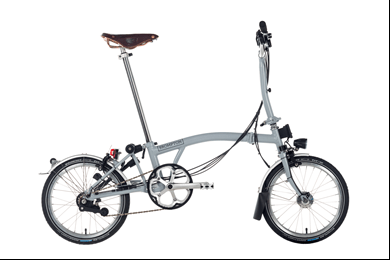
Recall Details
Units: About 8,400 (In addition, about 1,300 were sold in Canada)
Description: This recall involves Folding Brompton bicycles with “Brompton” printed on the bicycle’s frame. Only bicycles with serial numbers 1403284144 to 1705150001 (manufactured from April 2014 through May 2017) are included in the recall. The serial number is printed on a curved plate or sticker, applied to the rear of the seat tube. If the barcode sticker on the bike is faded or rubbed off, submit the six digit frame number stamped into the metal plate behind the bottom bracket and seat tube via email to support@brompton.com to receive the correlating serial number.
Incidents/Injuries: None reported
Sold At: Specialty bicycle stores and Brompton dealers nationwide from April 2014 through September 2017 for between $1,200 and $3,000
Importer(s): Brompton Bicyle Inc., of Brooklyn, New York
Manufactured In: Great Britain
Retailers: If you are a retailer of a recalled product you have a duty to notify your customers of a recall. If you can, email your clients or include the recall information in your next marketing communication to your clients. Post any Recall Poster at your stores and contact the manufacturer to determine how you will handle any recalls.
For more information on this see:
For Retailers
Recalls Call for Retailer Action
Combination of a Products Liability statute, an Expert Witness Report that was just not direct enough and odd facts holds a retailer liable as manufacture for product defect.
Product Liability takes a different turn. You must pay attention, just not rely on the CPSC.
Retailer has no duty to fit or instruct on fitting bicycle helmet
Summary Judgment granted for bicycle manufacturer and retailer on a breach of warranty and product liability claim.
For Manufacturers
The legal relationship created between manufactures and US consumers
 What do you think? Leave a comment.
If you like this let your friends know or post it on FB, Twitter or LinkedIn
Author: Outdoor Recreation Insurance, Risk Management and Law
Copyright 2017 Recreation Law (720) Edit Law
Email: Rec-law@recreation-law.com
Google+: +Recreation
Twitter: RecreationLaw
Facebook: Rec.Law.Now
Facebook Page: Outdoor Recreation & Adventure Travel Law
Blog:
www.recreation-law.com
Mobile Site: http://m.recreation-law.com
By Recreation Law Rec-law@recreation-law.com James H. Moss
#AdventureTourism, #AdventureTravelLaw, #AdventureTravelLawyer, #AttorneyatLaw, #Backpacking, #BicyclingLaw, #Camps, #ChallengeCourse, #ChallengeCourseLaw, #ChallengeCourseLawyer, #CyclingLaw, #FitnessLaw, #FitnessLawyer, #Hiking, #HumanPowered, #HumanPoweredRecreation, #IceClimbing, #JamesHMoss, #JimMoss, #Law, #Mountaineering, #Negligence, #OutdoorLaw, #OutdoorRecreationLaw, #OutsideLaw, #OutsideLawyer, #RecLaw, #Rec-Law, #RecLawBlog, #Rec-LawBlog, #RecLawyer, #RecreationalLawyer, #RecreationLaw, #RecreationLawBlog, #RecreationLawcom, #Recreation-Lawcom, #Recreation-Law.com, #RiskManagement, #RockClimbing, #RockClimbingLawyer, #RopesCourse, #RopesCourseLawyer, #SkiAreas, #Skiing, #SkiLaw, #Snowboarding, #SummerCamp, #Tourism, #TravelLaw, #YouthCamps, #ZipLineLawyer, Recall, CPSC, Consumer Product Safety Council, Brompton, Bicycles, Bottom Bracket,


UIAA Newsletter_December 2017
Posted: December 15, 2017 Filed under: Uncategorized | Tags: Mountain Climbing, Mountaineering, Mountains, UIAA Leave a comment
|


|
Virus-free. www.avast.com |
Omega Pacific Recalls G-First Carabiners Due to Risk of Injury or Death Hazard: The carabiner can break while in use, posing a risk of injury or death to the user.
Posted: November 30, 2017 Filed under: Uncategorized | Tags: Carabiner, Consumer Product Safety Council, CPSC, G-FIRST, G-FIRST Carabiner, Omega Pacific, Recall Leave a commentRemedy: Refund, Replace: Consumers should immediately stop using the recalled carabiners and contact Omega Pacific to receive a free replacement or a full refund.
Consumer Contact: Omega Pacific at 800-360-3990 from 7 a.m. to 4 p.m. PT Monday through Friday, email info@omegapac.com, or online at http://www.omegapac.com and click on the Voluntary Recall banner at the top of the page, or click on “Notices & Recalls” at the bottom of the page for more information.
Pictures available here: https://www.cpsc.gov/Recalls/2018/Omega-Pacific-Recalls-Carabiners-Due-to-Risk-of-Injury-or-Death
Recall Details
Units: About 1,900
Description: This recall involves six models of Omega Pacific G-FIRST series aluminum carabiners. They are typically used to allow ropes and harnesses to be linked together. “Omega-17 UL Classified USA” is printed on the front and “Meets NFPA 1983 17ED MBS kN 40 G” statement is located on the back side. The 2-digit lot code “OD” is embedded on the bottom side of the carabiner spine. They were sold individually in silver, black and red colors.
Incidents/Injuries: None Reported
Sold At: Arizona Hiking Shack, Atlantic Diving Supply, Austin Canoe & Kayak, Columbus Supply, Dvbe Supply, Evac
Systems, General Factory/WD Supply, Lafco Outillage, The Rescue Source, Witmer Associates (Firestone) stores nationwide and online at omega.com from February 2017 through October 2017 for between $31 and $51.
Manufacturer(s): Omega Pacific Inc., of Airway Heights, Wash.
Manufactured In: U.S.
Recall Date: November 21, 2017
Recall Number: 18-041
Retailers: If you are a retailer of a recalled product you have a duty to notify your customers of a recall. If you can, email your clients or include the recall information in your next marketing communication to your clients. Post any Recall Poster at your stores and contact the manufacturer to determine how you will handle any recalls.
For Retailers
Recalls Call for Retailer Action
Combination of a Products Liability statute, an Expert Witness Report that was just not direct enough and odd facts holds a retailer liable as manufacture for product defect.
Product Liability takes a different turn. You must pay attention, just not rely on the CPSC.
Retailer has no duty to fit or instruct on fitting bicycle helmet
Summary Judgment granted for bicycle manufacturer and retailer on a breach of warranty and product liability
claim.
For Manufacturers
The legal relationship created between manufactures and US consumers

What do you think? Leave a comment.
If you like this let your friends know or post it on FB, Twitter or LinkedIn
Author: Outdoor Recreation Insurance, Risk Management and Law
Copyright 2017 Recreation Law (720) Edit Law
Email: Rec-law@recreation-law.com
Google+: +Recreation
Twitter: RecreationLaw
Facebook: Rec.Law.Now
Facebook Page: Outdoor Recreation & Adventure Travel Law
Mobile Site: http://m.recreation-law.com
By Recreation Law Rec-law@recreation-law.com James H. Moss
#AdventureTourism, #AdventureTravelLaw,
#AdventureTravelLawyer, #AttorneyatLaw, #Backpacking, #BicyclingLaw, #Camps,
#ChallengeCourse, #ChallengeCourseLaw, #ChallengeCourseLawyer, #CyclingLaw,
#FitnessLaw, #FitnessLawyer, #Hiking, #HumanPowered, #HumanPoweredRecreation,
#IceClimbing, #JamesHMoss, #JimMoss, #Law, #Mountaineering, #Negligence,
#OutdoorLaw, #OutdoorRecreationLaw, #OutsideLaw, #OutsideLawyer, #RecLaw,
#Rec-Law, #RecLawBlog, #Rec-LawBlog, #RecLawyer, #RecreationalLawyer,
#RecreationLaw, #RecreationLawBlog, #RecreationLawcom, #Recreation-Lawcom,
#Recreation-Law.com, #RiskManagement, #RockClimbing, #RockClimbingLawyer,
#RopesCourse, #RopesCourseLawyer, #SkiAreas, #Skiing, #SkiLaw, #Snowboarding,
#SummerCamp, #Tourism, #TravelLaw, #YouthCamps, #ZipLineLawyer, Recall, CPSC,
Consumer Product Safety Council, Omega Pacific, G-FIRST, G-FIRST Carabiner, Carabiner,
U.S. Play Coalition Now Accepting Nominations for 2018 Outstanding Researcher and Youth Practitioner Awards
Posted: November 21, 2017 Filed under: Uncategorized | Tags: Play, U.S. Play Coalition Leave a commentSubject: Now Accepting Nominations for 2018 Outstanding Researcher and Youth Practitioner Awards
The U.S. Play Coalition is now accepting nominations for its 2018 awards program, recognizing outstanding play research and youth practitioners. First awarded at the 2017 Conference on the Value of Play, this new awards program honors exceptional individuals each year. The winners not only receive a physical award, but also have conference fees paid, hotel accommodations and up to $500 in travel to attend the 2018 Conference on the Value of Play: The Many Faces of Play. Deadline for nominations is 11:59pm EST on December 15. Learn more online at
https://usplaycoalition.org/2018awards-noms-open
2017 Winners of the National Outdoor Book Awards have been Announced.
Posted: November 16, 2017 Filed under: Uncategorized | Tags: Literature, National Outdoor Book Awards, NOBA, NOBA-Web, Outdoor Books Leave a comment
Outdoor Literature |
 Winner. A Fly Rod of Your Own. By John Gierach. Simon and Schuster, New York.
ISBN 9781451618341
There’s no better way to bring back memories of your own fishing trips than to read of some by John Gierach. He has a warm, inviting quality to his writing that makes him such a pleasure to read. In honoring this book, the judges also wanted to recognize Gierach’s body of work which now totals more than 20 previous books. His themes are simple: a favorite stream near home, a missed cast just when everything is perfect, a culinary misadventure on a trip. With a wave of his writer’s wand, simple stories become utterly absorbing, and you find yourself captured by his magic, reading well into the night.
 Winner. On Trails: An Exploration. By Robert Moor. Simon and Schuster, New York.
ISBN 9781476739236
Author Robert Moor has a thing with trails. It’s a fascination of sorts that began on a five-month, 2,200-mile hike of the Appalachian Trail. Those miles and miles of trail passing beneath his feet gave him plenty of time to think, and upon finishing the hike Moor set off on another journey, this one of the intellectual kind, researching the concept of trails. His investigations quickly move him beyond the realm of hiking to the use of trails by insects, mammals and ancient humans. Through it all, Moor’s observations on trails are fresh, thought provoking, erudite, and full of delightful surprises.
 Honorable Mention. No Barriers: A Blind Man’s Journey to Kayak the Grand Canyon. By Erik Weihenmayer and Buddy Levy. Thomas Dunne Books/St. Martin’s Press. New York.
ISBN 9781250088789
Imagine paddling a kayak into the biggest rapid in the Grand Canyon of the Colorado. The sound is deafening. Mammoth waves toss your kayak about like it’s a toy. Then imagine paddling into those waves completely blind, not knowing when the next wave is coming or from where. Born with a rare eye disease which left him blind at the age of 13, Erik Weihenmayer takes on the rapids of the Colorado—and other adventures—in this stirring and inspiring book. It may be a cliché, but not for Weihenmayer. He turns the notion of impossible upside down and reveals that all is possible.

History/Biography |
 Winner. Art of Freedom: The Life and Climbs of Voytek Kurtyka. By Bernadette McDonald. Rocky Mountain Books, Vancouver, BC.
ISBN 9781771602129
In this masterpiece of a biography, Bernadette McDonald chronicles the life of Voytek Kurtyka who pushed the boundaries of mountaineering to its very limits. He grew up in Poland and lived during a time of upheaval: of communist domination and its eventual downfall. Kurtyka is a reflection of those turbulent times, buying and selling on the black market to make a living, and scheming ways to outwit party bureaucrats to undertake climbing expeditions. Known for his bold and lightning-fast ascents of big, unclimbed walls in the Himalaya, Kurtyka is a thoughtful and private individual and has largely shunned the limelight. Fortunately, McDonald was able to conduct interviews with Kurtyka as well as undertake exhaustive research. The result of her efforts is a work of outstanding artistry and a powerful and moving portrait of Kurtyka’s life.
Natural History Literature |
 Winner. Tides: The Science and Spirit of the Ocean. By Jonathan White. Trinity University Press, San Antonio. ISBN 9781595348050
The regular ebb and flow of the ocean’s tide is not easily explained—unless it is Jonathan White who’s doing the explaining. In fact, White makes the science of tides an adventure. He takes you along as he travels the globe, seeking out the unusual and dangerous. In Alaska’s Kalinin Bay, he struggles to save his 65-foot wooden schooner which the tides have left laying on its side in the mud. With an Inuit hunter in northern Canada, he squeezes through a small hole into a cavity under the sea ice to gather mussels, nervously counting the minutes as the cavity begins filling with the incoming tide. And in China, he sprints to high ground to avoid a 25-foot tidal bore barreling up a river. White does what an excellent writer can do, lure you into an unfamiliar world, take you on adventures, change you with intriguing images and ideas.
Nature and the Environment |
 Winner. Monarchs and Milkweed. By Anurag Agrawal. Princeton University Press, Princeton. ISBN 9780691166353
Who can’t admit being captivated by the monarch? We are attracted by its beauty, of course, and by its amazing migration that can exceed 3,000 miles. But there is something else that makes the monarch fascinating, and that is its perilous relationship with its main food source, the milkweed. As it turns out, milkweed is toxic, and while monarchs have adapted to its toxicity, the plant is still able to marshall its defenses, killing off monarch larvae by various means. In this colorfully illustrated work, Agrawal covers the scientific work behind this combative relationship, among which includes some of his own pioneering studies. Monarchs and Milkweed is not only about a butterfly, but it also gives us a peek into the mind of an inventive scientist, one who clearly admires his subject and who guides us to a better understanding of this most remarkable creature.
 Honorable Mention. The Pipestone Wolves: The Rise and Fall of a Wolf Family. By Günther Bloch. Photography by John E. Marriott. Rocky Mountain Books, Vancouver, BC. ISBN 9781771601603
Some 20 years ago, a new wolf family moved into the Bow Valley of Banff National Park and ended up dominating the area for the next five years. This book is about the investigations of two dedicated field researchers into that wolf family, and thanks to their efforts we know a great deal more about the dynamics of wolf packs and wolf families. Later chapters deal with the eventual collapse of the Pipestone wolves and how human activity contributed to it. Researcher and writer, Günther Bloch pulls no punches when he discusses the management of wolves and other wildlife in Banff. It is the old dilemma of how to maintain a healthy environment for animals in the face of a growing human population. It is hoped that, at the least, key aspects of his research will lead to management improvements.
Classic Category |
 Winner. Kingbird Highway: The Biggest Year in the Life of an Extreme Birder. By Kenn Kaufman. Houghton Mifflin, Boston. ISBN 9780618709403
In January of 1972, a month shy of his 18th birthday, Kenn Kaufman left his home in Kansas and hitched a ride to Texas. He was a high school dropout with little money and few prospects for the future. Nevertheless, driven and single-minded, Kaufman was embarking on a quest, a quest far removed from that of a typical 18-year old. He was out to establish the record for the most birds identified in the US in one year. This is the story of that year-long quest: of living on pennies a day, of hitch hiking from one end of the country to the other, and of sleeping under bridges—and yet slowly, he filled his lists with birds. And what of his uncertain future? He didn’t do too badly. Have you heard of the Kaufman guides, that popular series of bird, mammal and insect guides which have sold in the thousands? Oh yes, that’s the same Kaufman.
Design & Artistic Merit |
 Winner. Wild Encounters: Iconic Photographs of the World’s Vanishing Animals and Cultures. Photography and Commentary by David Yarrow. Rizzoli, New York.
ISBN 9780847858323
David Yarrow is one of the virtuosos of black and white wildlife photography. His art has graced galleries from Europe to North America. In this large format, portfolio-sized book, you’ll be treated to some of his finest work. Arranged by the latitude of locale, his dramatic monochromatic photographs of wild and endangered animals appear to leap from the page. Some of the most powerful images are tightly framed close-ups in which almost every hair of the animal can be seen. The emphasis of the book is on wildlife, but he also features people who live in close proximity with the creatures he photographs, and included among those are stunning portrayals of the Inuit in northern Canada and the stately Dinka people of the South Sudan. You won’t be disappointed. This is truly the work of an artist at the height of his powers.
Children’s Category |
 Winner. Pup the Sea Otter. By Jonathan London. Illustrated by Sean London. WestWinds Press/Graphic Arts Books, Portland.
ISBN 978194332887
This delightful book, the work of a father and son team, is about a ball of fur called Pup. Jonathan London tells the story of a newly born sea otter, while his son Sean, a gifted illustrator, provides color and form to the story with his tender and eye-catching paintings. Pup grows and learns how to forage for food, all under the watchful eye of his mom. Children will love the dialog: slurp, slurp, slurp; munch, crunch, munch. There’s even some danger and excitement when a shark appears, but it all turns out fine when—you guessed it—mom comes to the rescue. For ages 4-8.
 Honorable Mention. Treecology: 30 Activities and Observations for Exploring the World of Trees and Forests. By Monica Russo. Photographs by Kevin Byron. Chicago Review Press, Chicago. ISBN 9871613733967
This wonderful learning book about trees is for budding naturalists age seven and older. Chapters typically start with a discussion of some aspect of tree biology which, in turn, is followed by one or more hands-on activities related to the discussion. The activities are fun and designed to help children develop their own writing, drawing and literacy skills. It is colorful, nicely designed, and perfect for a learning adventure in a nearby woods.
Instructional |
 Winner. Backpacker Long Trails: Mastering the Art of the Thru-hike. By Liz Thomas. Falcon Guides, Lanham, MD. ISBN 9871493028726
Every so often a book comes along, finds broad acceptance, and becomes the bible of a sport. This book is destined to rise to that position among long-trail hiking guides. Authored by Liz Thomas who has hiked the big three—Appalachian, Continental Divide and Pacific Crest—this comprehensive work is literally brimming full of practical advice for backpackers planning to spend weeks on the trail. In addition to Thomas’s fine writing, sidebars written by other experienced hikers offer alternative ideas and strategies. If you have a hankering to go on a long hike, there’s no question about it. This is the one book that you’ll want to read before you go.
 Winner. Big Walls, Swift Waters: Epic Stories from Yosemite Search and Rescue. By Charles R. “Butch” Farabee. Yosemite Conservancy, Yosemite National Park, CA. ISBN 9781930238749
Big Walls, Swift Waters is a little bit of everything. It’s a history, a compilation of case studies, and an instructional guide about rescue equipment and techniques. Well illustrated with photographs from past rescues, author Charles “Butch” Farabee documents many of the classic search and rescues that have occurred in Yosemite National Park. It’s a fascinating, insider’s view of rescue, and you’ll find yourself rappelling out of helicopters, hanging on granite walls, and plunging into icy waters.
Nature Guidebooks |
 Winner. The Scout’s Guide to Wild Edibles. By Mike Krebill. St. Lynn’s Press, Pittsburg.
ISBN 9781943366064
Sometimes good guidebooks come in small packages. The Scout’s Guide to Wild Edibles almost fits in a back pocket, and yet, for its relatively small size, it packs in a lot of information. Author Mike Krebill knows his wild edibles, and he knows how to make a guidebook fun for young people. A wild food expert and a Scout leader, he divides the book into two parts: the first is the identification guide profiling 40 widely found edible wild plants and mushrooms. The second half consists of recipes and ways of cooking wild foods. In this last half boys and girls are pictured preparing and cooking plants that they have gathered on their outdoor forays. It’s oriented to the younger set, of course, but adults just might want to sneak one along on the next outing. They’ll find it pretty handy too.
 Winner. Butterflies of Pennsylvania: A Field Guide. By James L. Monroe and David M. Wright. University of Pittsburg Press, Pittsburg.
ISBN 9780822964551
Butterflies of Pennsylvania is one of those guidebooks that sets out with a purpose and ends up doing it well. What appealed to the judges is that all of the information on a butterfly species is covered on a single page or a two-page spread. There’s no need to look elsewhere for maps and other information. The photos are crisp. The text is clear, and the maps and charts easy to use. If you live in Pennsylvania or in surrounding states, this fine guidebook is a must-have.
Outdoor Adventure Guidebooks |
 Winner. Outdoor Adventures, Acadia National Park: Your Guide to the Best Hiking, Biking and Paddling. By Jerry and Marcy Monkman. Appalachian Mountain Club, Boston.
ISBN 9781628420579
Situated along the rugged coastline of Maine, Acadia National Park is truly a Northeast treasure. It’s the oldest designated national park area east of the Mississippi River and has a little of everything: 125 miles of hiking trails, 45 miles of historic carriage roads, rocky mountains, ponds, islands and dense evergreen forests. One of the best ways to enjoy it is with this guidebook by Jerry and Marcy Monkman. The Monkman’s are accomplished Eastern writers and photographers, and in this guide, they have detailed 50 choice hiking, biking and paddling trips. There’s even a two-sided 20” x 25” full color map which can be removed from the back cover and which shows all of the routes covered in the book.
VeloSwap Online Registration Up 35%, See you there
Posted: October 25, 2017 Filed under: Uncategorized | Tags: Acessories, Bicycle Parts, Bicycles, Cycling, Mountain biking, Velo Swap, Veloswap Leave a comment
|


Mount Everest Biogas Project wins UIAA Mountain Protection Award
Posted: October 24, 2017 Filed under: Uncategorized | Tags: Dan Mazur, Gary Porter, Mount Everest Biogas Project, Mountain Protection style='font-size:10.0pt;font-family:"Courier New";color:#1F497D'>, UIAA Leave a comment
|


|
Virus-free. www.avast.com |
If you have had Toliosis in the Grand Canyon, take this Survey
Posted: October 18, 2017 Filed under: Uncategorized | Tags: Coconino County, Colorado River, Grand Canyon, Tolio, Toliosis Leave a commentThe Coconino County Public Services Health District is working to identify how tolio is and has been affecting river runners. A survey for do-it-yourself river runners has been set up to get your feedback on this condition that can impact river runners feet and hands.
Please click on the link below and fill out the survey if you have ever had the skin affliction commonly being referred to as tolio. The purpose of this survey is to get some baseline information about how tolio has recently been affecting people.
Here is the link: https://www.surveymonkey.com/r/DIY-tolio
For additional information, contact
Matthew Maurer, MPH, REHS
Epidemiologist
Coconino County Public Health Services District
2625 N. King Street, Flagstaff, AZ 86004
Phone: 928-679-7332
UIAA News Release_Nominees for 2017 UIAA Mountain Protection Award
Posted: October 17, 2017 Filed under: Uncategorized | Tags: Mountain Protection Award, UIAA Leave a comment
|


|
Virus-free. www.avast.com |
SIA (Snowsports Industry Association) is Hosting Town Halls Across the US
Posted: September 29, 2017 Filed under: Uncategorized | Tags: Retailers, SIA, ski area, skiing, Snowsports, Snowsports Industry Association, Snowsports Retailer, Town Hall Leave a comment
|


|
Virus-free. www.avast.com |
Mountainsmith Sample Sale September 8th
Posted: September 5, 2017 Filed under: Uncategorized | Tags: Colorado, Golden, Mountainsmith, Sample Sale Leave a comment


 Recreation Law
Information on National Park Entrance Fees increase to $70 Comment period closes November 23, 2018
Posted: October 27, 2017 | Author: Recreation Law | Filed under: Uncategorized | Tags: Comment Period, Entrance Fee, National Park Service, National Parks | Leave a comment$70 to visit Grand Canyon? There is a 30 days comment period underway right now where the public (and that means you) can weigh in on a significant entrance fee proposal that would affect a number of national parks inclu ding Grand Canyon. See this link for details and to access the website for submitting comments. https://www.nps.gov/…/1…/10-24-2017-fee-changes-proposal.htm
Will lower income and under-served populations be priced out? Shouldn’t national parks be affordable and accessible to everyone? But how do we pay for the massive maintenance backlog that exists in our national parks? Our parks belong to ALL Americans, not just those who visit them, and our administration should be boosting park budgets, not cutting them. Congress should also support the bipartisan legislation introduced specifically to address the NPS maintenance backlog — the National Parks Legacy Act (HR 2584 and SB 751) which is currently pending.
Also, please read these related blogs from our good friends at the National Parks Conservation Association:
https://www.npca.org/articles/1669-administration-proposes-massive-park-fee-increase
https://www.npca.org/articles/1508-sens-warner-portman-introduce-bipartisan-legislation-to-address-national
“We should not increase fees to such a degree as to make these places — protected for all Americans to experience — unaffordable for some families to visit,” NPCA president and CEO Theresa Pierno said in a statement. “The solution to our parks’ repair needs cannot and should not be largely shouldered by its visitors.”
Rate this:
Share this: