
185 Mile Running Race release was clear and under Washington, law was sufficient to beat a Public Policy & ambiguous argument by plaintiff
Posted: December 5, 2016 Filed under: Racing, Washington | Tags: #race, Exculpatory clause, Gross negligence, Race Handbook, Release, Waiver Clause, Washington Leave a commentDecision clearly sets forth the requirements for the plaintiff to prove her claims which she failed to do.
State: Washington, Court of Appeals of Washington, Division Three
Plaintiff: Robin Johnson and Craig Johnson
Defendant: Spokane to Sandpoint, LLC, et al.
Plaintiff Claims: Negligence & Gross Negligence
Defendant Defenses: Release
Holding: for the defendant
Year: 2013
The plaintiff, an attorney signed up for the Spokane to Sandpoint race. The race is a team race run over two days and nights. The race is 185 miles long and an open course, meaning there is traffic on the course.
Spokane to Sandpoint promotes a long-distance relay race from the Spokane area to Sandpoint, Idaho, involving teams running a 185-mile course over two days, day and night. The course is open, meaning it is not closed to public traffic.
The racers sign up online and sign an electronic release. The racers also receive a race handbook. The handbook explains the race and includes sections on crossing roads, highways and train tracks.
The plaintiff was crossing a highway, and she was hit by a car. The driver of the car stated the plaintiff walked out in front of her without looking. The plaintiff settled with the driver before this appeal.
As Ms. Johnson was crossing U.S. Route 2, Madilyn Young was driving about 63 miles per hour southbound in the outside lane on U.S. Route 2, approaching the Colbert Road intersection. Ac-cording to Ms. Young’s statement to the police, she saw Ms. Johnson crossing the northbound lanes of U.S. Route 2 and saw her continue into the southbound lanes without looking for cars. Ms. Young was unable to stop in time to avoid a collision. Ms. Johnson suffered severe injuries.
The defendant filed a motion for summary judgment, which was granted and this appeal followed.
Analysis: making sense of the law based on these facts.
The appellate court first looked at the requirements for the plaintiff to survive and proceed to trial.
To prevail on a negligence claim against Spokane to Sandpoint, the Johnsons must establish Spokane to Sandpoint owed them a duty. Whether such a duty exists is a question of law. Id. The parties may, subject to certain exceptions, expressly agree in advance that one party is under no obligation of care to the other, and shall not be held liable for ordinary negligence.
The court then looked at the requirements for releases to be valid under Washington’s law. (Of note, the court calls the exculpatory clause a waiver clause. However, the court refers to the agreement as a release.)
The function of a waiver provision is “to deny an injured party the right to recover damages from the person negligently causing the injury.” The general rule in Washington is that a waiver provision is enforceable unless (1) it violates public policy, (2) the negligent act falls greatly below the legal standard for protection of others, or (3) it is inconspicuous.
Under Washington’s law, releases are valid, unless they violate public policy. There are six different factors identified as attributable to public policy in Washington.
Six factors are considered in determining whether exculpatory agreements violate public policy. The court considers whether (1) the agreement concerns an endeavor of a type generally thought suitable for public regulation; (2) the party seeking exculpation is engaged in performing a service of great importance to the public, which is often a matter of practical necessity for some members of the public; (3) such party holds itself out as willing to perform this service for any member of the public who seeks it, or at least for any member coming within certain established standards; (4) because of the essential nature of the service, in the economic setting of the transaction, the party invoking exculpation possesses a decisive advantage of bargaining strength against any member of the public who seeks the services; (5) in exercising a superior bargaining power, the party confronts the public with a standardized adhesion contract of exculpation, and makes no provision whereby a purchaser may pay additional reasonable fees and obtain protection against negligence; and (6) the person or property of members of the public seeking such services must be placed under the control of the furnisher of the services, subject to the risk of carelessness on the part of the furnisher, its employees, or agents.
The court then went through all six factors and eliminated them all in one paragraph.
First, 185-mile relay races are not regulated; second, Spokane to Sandpoint is not performing an important public service such as a school; third, not all members of the public participate in relay races, unlike schools; fourth, Spokane to Sandpoint had no control over how Ms. Johnson ran or when she decided to cross U.S. Route 2; fifth, there was no inequality of bargaining since Ms. Johnson could have easily chosen not to participate and could have selected a different event; and sixth, while Spokane to Sandpoint set up the course, it did not control in what manner Ms. Johnson ran the race.
Generally, Washington law looks at whether the issues that identify a public policy issue are those that affect the majority of the public in Washington. The court also found that other Washington decisions have found that recreational activities were not a public interest.
The second issue was the plaintiff’s claim the defendant was grossly negligent. Like most states, a release in Washington will not stop a claim for gross negligence. Gross negligence is greater than ordinary negligence and is care appreciably less than care required in an ordinary negligence claim.
“Gross negligence” is “negligence substantially and appreciably greater than ordinary negligence,” i.e., “care substantially or appreciably less than the quantum of care inhering in ordinary negligence.” (“gross negligence” is “the failure to exercise slight care”). A plaintiff seeking to overcome an exculpatory clause by proving gross negligence must supply “substantial evidence” that the defendant’s act or omission represented care appreciably less than the care inherent in ordinary negligence. To meet this burden of proof on summary judgment, the plaintiff must offer something more substantial than mere argument that the defendant’s breach of care rises to the level of gross negligence.
The court then went through the facts and found that nothing required the defendant to do more than what the defendant did. Consequently, since there was no duty to do more, there was no breach of a duty, let alone acts, which were substantially below the duty.
The final argument the plaintiff argued was the release was ambiguous and not conspicuous. Here again, Washington’s law set forth the requirements for ambiguous and conspicuous quite clearly.
Factors in deciding whether a waiver and release provision is conspicuous include whether the waiver is set apart or hidden within other provisions, whether the heading is clear, whether the waiver is set off in capital letters or in bold type, whether there is a signature line below the waiver provision, what the language says above the signature line, and whether it is clear that the signature is related to the waiver.
The requirements basically require the release to be seen by the signor and not hidden. The exculpatory provisions must be evident, conspicuous and not hidden. The language must stand out so it is easily recognized with capital letters and/or bold type and there must be a signature line below the exculpatory provisions so that you can see your signature is related to the exculpatory provisions.
In this case, the release provisions were found not to be ambiguous. Additionally, the plaintiff admitted in her deposition that she understood from a legal perspective that the release would release her from claiming damages for any injuries.
The appellate court agreed with the trial court and affirmed the decision.
So Now What?
This decision is refreshing because it clearly sets out the requirements needed to prove a release valid and invalid. The definition of gross negligence also easily defined to that you can understand your duties and a substantial breach of your duties leading to a gross negligence claim.
Also of note, which the court pointed out was the information provided to the plaintiff and other racers in the racer handbook. Although not an express assumption of risk agreement, the handbook was still proof, the plaintiff assumed the risk, even though that issue was not argued. The risks of the race were set forth as well as the steps taken by the defendant to protect the runners in the handbook.
Again, the more information you provide to your clients, the more information you give them the better your chances of winning if your release fails.
What do you think? Leave a comment.
If you like this let your friends know or post it on FB, Twitter or LinkedIn.
Author: Outdoor Recreation Insurance, Risk Management and Law
Copyright 2016 Recreation Law (720) Edit Law
Email: Rec-law@recreation-law.com
Google+: +Recreation
Twitter: RecreationLaw
Facebook: Rec.Law.Now
Facebook Page: Outdoor Recreation & Adventure Travel Law
Blog: www.recreation-law.com
Mobile Site: http://m.recreation-law.com
By Recreation Law Rec-law@recreation-law.com James H. Moss
#AdventureTourism, #AdventureTravelLaw, #AdventureTravelLawyer, #AttorneyatLaw, #Backpacking, #BicyclingLaw, #Camps, #ChallengeCourse, #ChallengeCourseLaw, #ChallengeCourseLawyer, #CyclingLaw, #FitnessLaw, #FitnessLawyer, #Hiking, #HumanPowered, #HumanPoweredRecreation, #IceClimbing, #JamesHMoss, #JimMoss, #Law, #Mountaineering, #Negligence, #OutdoorLaw, #OutdoorRecreationLaw, #OutsideLaw, #OutsideLawyer, #RecLaw, #Rec-Law, #RecLawBlog, #Rec-LawBlog, #RecLawyer, #RecreationalLawyer, #RecreationLaw, #RecreationLawBlog, #RecreationLawcom, #Recreation-Lawcom, #Recreation-Law.com, #RiskManagement, #RockClimbing, #RockClimbingLawyer, #RopesCourse, #RopesCourseLawyer, #SkiAreas, #Skiing, #SkiLaw, #Snowboarding, #SummerCamp, #Tourism, #TravelLaw, #YouthCamps, #ZipLineLawyer, Race, Washington, Release, Waiver Clause, Exculpatory Clause, Race Handbook, Gross Negligence,
2017 Pathways Conference presented by Colorado State University, US Fish & Wildlife Service and Rocky Mountain National Park
Posted: December 2, 2016 Filed under: Uncategorized | Tags: #CU, National Park Service, NPS, US Fish & Wildlife Service, USFW Leave a comment|
Pathways Conference 2017 https://pathways2017.exordo.com Join us for the Pathways 2017 conference hosted by Colorado State University, in partnership with the US Fish and Wildlife Service in Rocky Mountain National Park, Colorado! Abstract due date: April 24, 2017 (Call for abstracts Dec. 1)Theme: Futures
Website: www.HDFWConference.org
Mark your Calendar: September 17 – 20, 2017 Location: This year we return to the YMCA of the Rockies, Estes Park/Rocky Mountain National Park, Colorado. Nestled in the outskirts of the beautiful town of Estes Park, the YMCA of the Rockies is surrounded by Rocky Mountain National Park on three sides. This venue provides a fantastic setting with abundant wildlife viewing opportunities at your doorstep. |
2017 Cycling Pro Tour Announced, includes a race in Colorado!
Posted: December 1, 2016 Filed under: Uncategorized | Tags: Bicycle Racing, Cycling, UCI, USA Cycling Leave a comment|
|
|||||||||||||||||||||||||||||||||||||||||||||||||||||||||||||||||||||||||||||||||||||||||||||
|
|
|
|
|||||||||||||||||||||||||||||||||||||||||||||||||||||||||||||||||||||||||||||||||||||||||||


Additional Insured Certificates: they are just a piece of paper, unless they are part of a contract or there is an insurable interest
Posted: November 30, 2016 Filed under: Contract, Insurance | Tags: Additional Insured, Certificate of Insurance, Insurable Interest, Insurance Company Leave a commentThere seems to be a hue and cry about collecting additional insured certificates. Unless you need TP or want to wall paper an office wall, they are worthless unless the insurance company/business issuing the certificate recognizes an insurance defined insurable interest, in advance, or you have a contract that identifies an insurable interest and recognizes the need for the certificate.
The latest catch word after this fall’s conferences runs seems to be collect additional insured certificates from everyone. Although this sound’s good and an easy way to solve a problem, legally, it is just another way to kill trees. If nothing else, it will keep you in litigation for another decade between your insurance company and the one issuing the certificate fighting over whether it is valid.
Most Additional Insured Certificates of Zero value to you from an insurance standpoint.
The basis for issuing a certificate listing someone else as an additional insured, or covered by a particular policy is there must be an insurable interest.
Indemnity – Insurable Interest
Insurable interest arose out of defining indemnity. You agree to indemnify another party of their loss. The simplest way to look at this is your relationship with you and your automobile insurance policy. If you have a loss to your car, your insurance policy will indemnify you for that loss. Insurance companies have taken that one step further these days by taking over the loss and doing all the legwork, including paying the repair facility directly.
When those indemnification agreements were larger than the money on hand or the value of the business issuing the indemnification, other ways were developed to “come up with the money” to cover the indemnification. Eventually, insurance played a role in indemnifying a third party for the losses they might incur, even though the insurance policy is issued in the name of the insured.
Think about you, a certificate of insurance is issued to the insured, which was underwritten and covers someone else who was not. Don’t you think there is more to this than just issuing a piece of paper?
Issuing Policy must cover risks of the claims identified in the certificate or the agreement.
By the very nature of the definition, simplified above, you can see there are several issues present. The insurance policy is only going to cover the third party for risks that are insured. That means if the policy issued to you says it will only cover A, B and C as risks, then a claim of Z by the third party will not be covered. No matter what the certificate of insurance says, it only covers the risks insured by the original policy for the original insured.
So even before we get to whether the certificate is valid, you must make sure the policy issuing the certificate lists the claims that the certificate is expected to cover.
You have to look at the certificate itself and see if it covers anything, let alone what you need.
Legally recognizable insurable interest
The next issue is insurance policies only cover if there is a legally recognizable interest in the possible loss. That is called an “insurable interest.”
An insurable interest means the person buying the policy has a legally recognized loss that the policy will cover. The best examples are in the negative. I cannot buy an insurance policy on my neighbor’s house. I don’t own the house; the house does not secure a debt the neighbor owes me. I have nothing invested in the neighbor’s house; therefore, I have no insurable interest in the neighbor’s house.
Another example would be life insurance. I do not have an insurable interest that would be recognized to buy a life insurance policy on my neighbor. My neighbor’s death would not cause me a loss.
Normally, life insurance policies are only issued to relatives of the insured. The exception is if you could prove an economic loss to you because someone died. So business partners can buy life insurance policies on each other because if one partner died, the other would have to hire someone to do that partners work, and you might have to buy the surviving family members of the deceased interest in the business.
Example; my neighbor and I contractually agreed upon the death of one of us to take care of the other’s property. I would then suffer a loss if my neighbor died so I might be able to purchase a life insurance policy on my neighbor. I would have to prove the contract existed and that a real value existed for the loss I might incur. I would have to prove by contract that I have an insurable interest in my neighbor.
I’m using examples in property insurance, life and health insurance and liability insurance to get these points across. An insurable interest is different in the different types of polices, health, life, property or liability, but not enough to worry about for this discussion.
Insurable interest
Insurable interests arise “naturally” in the law. When a building is purchased the bank making the loan to finance the purchase has an insurable interest. If the property is destroyed, then the banks’ chances of receiving the rest of the loan are diminished, therefore, there is an insurable interest in the bank to insure against loss. Either the bank can buy a policy covering the property or the bank can require as part of the loan that the owner/borrower insure the property for the value of the property listing the bank as an additional insured.
Landlords have a similar insurable interest. They are listed as additional insured’s under their tenant’s policy. If the property is destroyed by actions of the tenant, the landlord will lose the property or at least the rental income. Therefore, they have an insurable interest recognized by the insurance company issuing the tenant’s policy.
Another example is a ski area operating on US Forest Service land. The US Forest Service is the landowner or landlord, and the ski area is the tenant. If the ski area destroys the property, the US Forest Service suffers a loss. So the US Forest Service is listed under the ski area’s policy as an additional insured, and the Forest Service is reimbursed for the loss of value to their land.
This particular insurable interest covers two issues for the US Forest Service. It covers any loss to the property the Forest Service may have, and it protects them from lawsuits if they are joined in a suit with the ski area. The ski area, as the permittee (or tenant) was responsible for the property at the time of the injury to the guest skiing. The US Forest Service did not make the snow, groom or run the lifts; however, as the landlord or owner of the property, the Forest Service maybe sued. As such, the US Forest Service has an insurable interest covered by the ski area for a possible lawsuit.
General or Special Liability Policies and Insurable Interest
Liability interests work the same way. If a skier hits a tree in the ski area and suffers injury, the skier can sue the ski area or the US Forest Service. The ski area is the tenant who received value for the skier being on the land, and the US Forest Service owns the tree. Both can be sued. The agreement between the Forest Service and the ski area then says the ski area must protect the Forest Service from any lawsuit due to the ski area’s occupation or control of the land. By contract and law, the Forest Service has an insurable interest that will be recognized by the ski area’s insurance company.
The owner of the land where a rafting company takes their passenger’s and boats out of the water has an insurable interest. If someone falls down getting out of the boat, both may be sued. Was it the rafting companies fault for where they put the boat or the landowner’s for how the takeout was created? Since the landowner has limited control over the takeout while being used by the rafting company, he should be covered as an additional insured because he has an insurable interest. The chance of a lost due to the acts of someone he contracts with creating liability for him.
What about a restaurant that provides lunches to the rafting company? Who should receive the certificate of additional insured from whom? The rafting company could be sued because the lunch made a customer ill. The rafting company should receive a certificate of insurance from the lunch provider. At the same time, the illness may have been caused by the way the lunch was stored or prepared, so therefore the lunch provider should be an additional insured on the Rafting company’s policy.
It is these situations where both insurance companies can struggle during litigation or a contract properly written in advance might save one or both company’s time and money.
What if the rafting company stops and has their customers walk up the bank and have lunch in a restaurant at the side of the river? If the lunches are part of the trip and the restaurant is the only option, maybe the rafting company should receive a certificate of insurance from the restaurant. However, if the customer is free to pick any meal, they want from one of the several restaurants, probably not. That would be like a restaurant on the side of an interstate asking for certificates of insurance from all trucking companies.
Would the possible insurable interest change if the rafting company received a commission from the restaurant? Yes, the insurable interest would be more compelling because there is a clear financial benefit flowing between the parties. What if the restaurant provided free lunches to the raft guides?
Unless the insurance company recognizes, either by industry or insurance practice that an insurable interest exists or that one is created by contract, that is covered under the policy, having a piece of paper with additional insured on it with you name means nothing. You must prove an insurable interest to prove legal coverage.
(And that is not even getting into the disclaimers listed on many certificates.)
Where are certificates of insurance valid by practice in the outdoor recreation industry? Between:
· Retailers and Manufacturers
· Landlords and Tenants
· Federal Land Managers and Concession or Permit Holders
· Contractors and the Hiring Company
Every other situation you should check with your attorney or get a contract that identifies the insurable interest and requires a certificate of insurance is issued with coverage for the issue. Even better, require that the contract be given to the insuring insurance company and the necessary language into the contract be incorporated into the certificate of insurance. Otherwise, you may spend more time and money litigating with the certificate issues covers the issue that was litigated.
Issuing additional insured certificates without thinking the process through is also a risk. First insurance companies look at how many and who you issue certificates too. If they see large number or risks or big risks, they can and do increase your premium to cover the additional risks. So make sure you understand why and the value of issuing a certificate of insurance from your policy also.
Every year when prior to your policy coming up for renewal, you should look through your list of parties you issue certificates of insurance to and see if they still need to be issued. Once you list someone the list is never reduced or culled except by you. I’ve seen insurance policies with over a hundred business listed as insurable interests. When we got done, we only had twenty certificates to issue. Many of the old certificates were issued to companies the client was no longer doing business with or with business who had gone out of business.
This does affect your premium so be aware!
Do Something
Without an insurable interest, a certificate of insurance is worthless and probably is going to be costly. Any insurance company paying a claim is going to look for anyone else to share in that claim. Consequently, they will pull the insured into the claim knowing it may not be valid, but willing to fight that issue out in later years. You requesting your insurance company to issue certificates could pull you into litigation both the original and the later certificate validity litigation for years, for something you had no legal interest in.
Just issuing the certificate or receiving one is not enough. You must identify when and how it is valid. That requires a contract. That contract must say more than you will issue a certificate of insurance. It must identify what the certificate is insuring and why. It must identify an insurable interest.
Insurance companies are not going to issue a check just because they issued a certificate. Make sure everyone understands how, when and why, and you’ll make that process quicker, easier and without litigation.
Think about all the work you had to go through to purchase the policy in the first place. Do you believe your insurance company is going to issue another policy just because you said so? Not unless the insurance company believes the chances of paying a claim under the certificate is very very slim.
What do you think? Leave a comment.
If you like this let your friends know or post it on FB, Twitter or LinkedIn
Author: Outdoor Recreation Insurance, Risk Management and Law
Copyright 2016 Recreation Law (720) Edit Law
Email: Rec-law@recreation-law.com
Google+: +Recreation
Twitter: RecreationLaw
Facebook: Rec.Law.Now
Facebook Page: Outdoor Recreation & Adventure Travel Law
Blog: www.recreation-law.com
Mobile Site: http://m.recreation-law.com
By Recreation Law Rec-law@recreation-law.com James H. Moss
#AdventureTourism, #AdventureTravelLaw, #AdventureTravelLawyer, #AttorneyatLaw, #Backpacking, #BicyclingLaw, #Camps, #ChallengeCourse, #ChallengeCourseLaw, #ChallengeCourseLawyer, #CyclingLaw, #FitnessLaw, #FitnessLawyer, #Hiking, #HumanPowered, #HumanPoweredRecreation, #IceClimbing, #JamesHMoss, #JimMoss, #Law, #Mountaineering, #Negligence, #OutdoorLaw, #OutdoorRecreationLaw, #OutsideLaw, #OutsideLawyer, #RecLaw, #Rec-Law, #RecLawBlog, #Rec-LawBlog, #RecLawyer, #RecreationalLawyer, #RecreationLaw, #RecreationLawBlog, #RecreationLawcom, #Recreation-Lawcom, #Recreation-Law.com, #RiskManagement, #RockClimbing, #RockClimbingLawyer, #RopesCourse, #RopesCourseLawyer, #SkiAreas, #Skiing, #SkiLaw, #Snowboarding, #SummerCamp, #Tourism, #TravelLaw, #YouthCamps, #ZipLineLawyer, Certificate of Insurance, Additional Insured, Insurance Company, Insurable Interest,
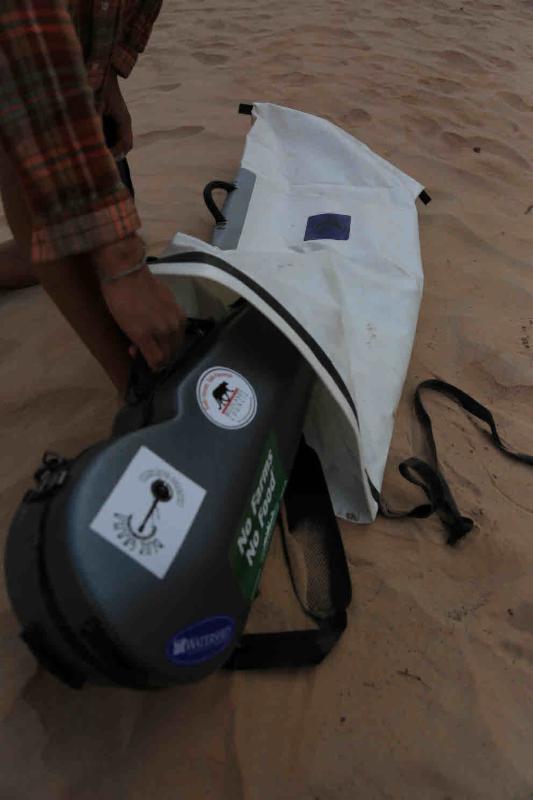
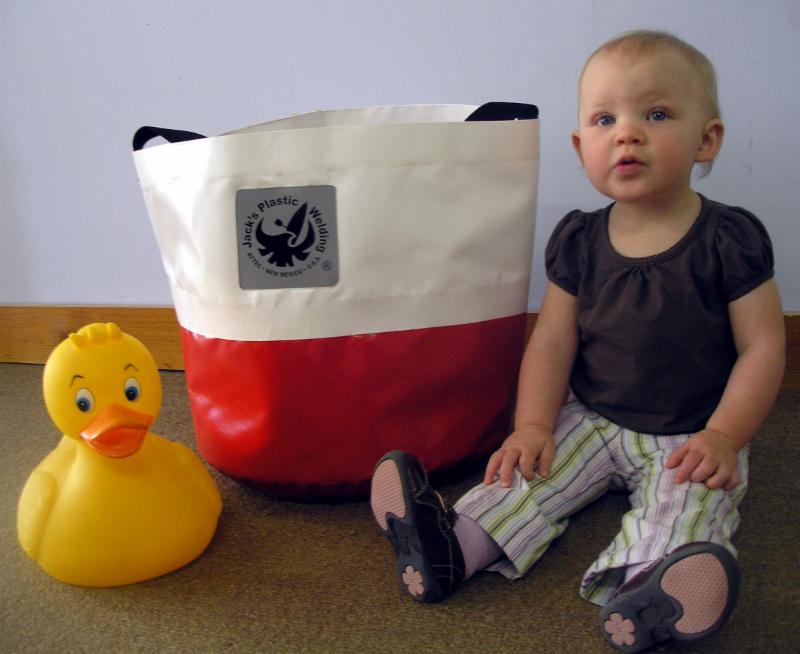
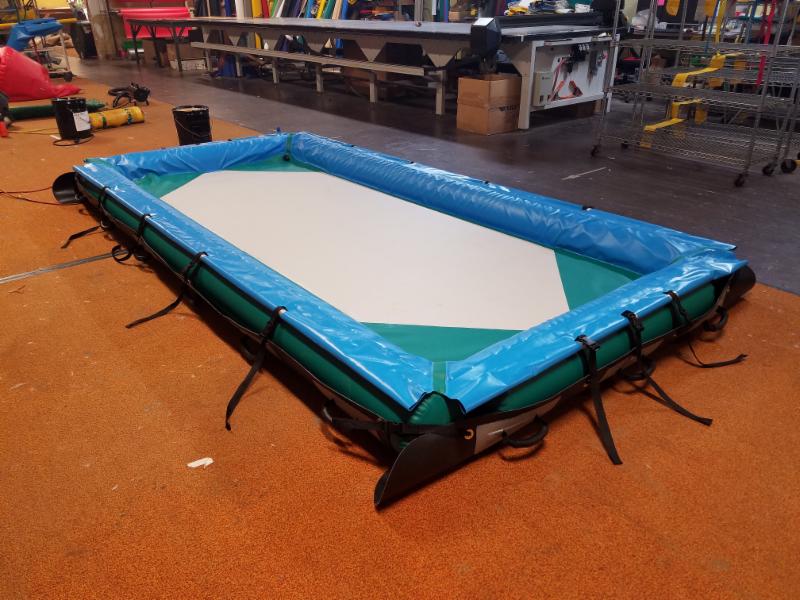
This marketing email was too funny, the Rest too Heart Warming. I just had to share
Posted: November 29, 2016 Filed under: Uncategorized | Tags: Jack's Plastic Welding, JPW Leave a comment|
|
|




Doctrine of Primary Assumption of Risk precludes a student for suing for injuries in a for credit college karate class
Posted: November 28, 2016 Filed under: Assumption of the Risk, Ohio | Tags: Class, For Credit, Karate, Kent State University, Recreation, Sport Leave a commentOhio holds there is no difference between a sport and recreation and a for credit class sport, assumption of the risk applies evenly to both.
Morgan, v. Kent State University et al., 2016-Ohio-3303; 54 N.E.3d 1284; 2016 Ohio App. LEXIS 2160
State: Ohio, Court of Appeals of Ohio, Tenth Appellate District, Franklin County
Plaintiff: Aaron S. Morgan
Defendant: Kent State University et al.
Plaintiff Claims: Negligence
Defendant Defenses: primary assumption of the risk and release
Holding: for the Defendant
Year: 2016
The plaintiff enrolled in a for credit karate class with the defendant university. The syllabus stated the students would be using holds, releases, throwing punches and kicks, that the students were expected to protect themselves from. Students were also expected to wear a mouth guard and padded gloves.
The course syllabus for beginning karate listed objectives for the students, including: “[d]emonstrat[ing] basic self-defense techniques including release from various holds and counter attacks, joint locks and throws.” Additionally, the syllabus listed a variety of fighting techniques, including punches and kicks, that the students were expected to perform. Students enrolled in the class were required to wear a mouth guard and padded gloves.
One day the plaintiff was sparring with the instructor. The instructor was not wearing padded gloves. The student was expected to protect himself from punches. If the student dropped their guard, normally the exercise was paused till the student was able to protect themselves again.
In this case as the plaintiff lost his footing he dropped his guard and the instructor punched him in the face.
On October 24, 2012, while appellant was sparring with Malecki, he lost his balance and dropped his guard. When appellant dropped his guard, Malecki punched appellant in the face. According to appellant, Malecki’s palm struck him on the nose. Malecki was not wearing padded gloves when he struck appellant. Appellant’s nose immediately started bleeding. Malecki and a student employee helped to stop appellant’s bleeding and then filled out an incident report. Appellant later sought medical care and was told that he suffered a nasal fracture.
The student suffered injuries from the punch and sued. Lawsuits in against the State of Ohio are brought in the Ohio Court of Claims. Kent State University is a state school, owned by the State of Ohio.
The Court of Claims granted the defendants motion for summary judgment and the student appealed to the Ohio Appellate Court.
Analysis: making sense of the law based on these facts.
The plaintiff argued four different reasons why the Court of Claims decision should be reversed. The appellate court looked at the second argument first. That argument was the doctrine of primary assumption of risk as defined in Ohio did not apply to his claim.
The court first examined the requirements to establish a negligence claim under Ohio law.
“[I]n order to establish actionable negligence, one seeking recovery must show the existence of a duty, the breach of the duty, and injury resulting proximately therefrom.” “Under the law of negligence, a defendant’s duty to a plaintiff depends on the relationship between the parties and the foreseeability of injury to someone in the plaintiff’s position.”
A defendant has a duty to plead assumption of the risk if it is applicable in a case. That duty means the defense is an affirmative defense and must be plead with the answer or lost.
Ohio recognizes three different Assumption of the Risk defenses.
Ohio law recognizes three categories of assumption of the risk as defenses to a negligence claim: express, primary, and implied or secondary.” Ohio courts have historically applied the doctrine of primary assumption of the risk to cases involving sporting events and recreational activities.
Primary assumption of the risk is the defense that is argued when a participant in a sporting event is injured by an inherent risk of the activity.
“Under the doctrine of primary assumption of the risk, a plaintiff who voluntarily engages in a recreational activity or sporting event assumes the inherent risks of that activity and cannot recover for injuries sustained in engaging in the activity unless the defendant acted recklessly or intentionally in causing the injuries.”
An inherent risk in a sport or activity is one that is so much a part of the sport that to eliminate the risk, the sport would not exist. If there is not inherent risk, then a claim of negligence may occur.
When applied to sporting events in Ohio, the knowledge or consent of the injured plaintiff is not at issue. It is not what the plaintiff knew or assumed that is important, it is solely a question of the risks of the sport.
When considering a defense of primary assumption of the risk, “the injured plaintiff’s subjective consent to and appreciation for the inherent risks are immaterial to the analysis.” Thus, even persons “‘entirely ignorant of the risks of a sport, still assume the risk * * * by participating in a sport or simply by attending the game. The law simply deems certain risks as accepted by plaintiff regardless of actual knowledge or consent.
Primary assumption of the risk is a look at the sport or activity, not the plaintiff, the plaintiff’s knowledge or ascent to the activity.
…’primary assumption of [the] risk requires an examination of the activity itself and not plaintiff’s conduct. If the activity is one that is inherently dangerous and from which the risks cannot be eliminated, then a finding of primary assumption of [the] risk is appropriate.’
If the risk is an inherent risk of the activity, then the doctrine of primary assumption of the risk applies and the defendant did not owe a duty to the plaintiff. If no duty is owed, then no breach occurred. If no duty is owed then no negligence occurred.
“The affirmative defense of primary assumption of the risk completely negates a negligence claim because the defendant owes no duty to protect the plaintiff against the inherent risks of the recreational activity in which the plaintiff engages.” “‘Because a successful primary assumption of risk defense means that the duty element of negligence is not established as a matter of law, the defense prevents the plaintiff from even making a prima facie case.'”
The court found the risks the plaintiff suffered were an inherent risk of karate and the plaintiff assumed the inherent risks of the sport.
The Court of Claims found that “[t]here is no question that the martial arts class was a sports or recreational activity with an inherent risk of injury.” Furthermore, the Court of Claims found that “[p]hysical contact between participants during karate sparring is simply a foreseeable hazard of the activity.”
Karate is a recreational activity involving physical contact in the form of punches, kicks, and other techniques as detailed in the course outline for the beginning karate course in which appellant was enrolled. Thus, by its very nature, karate, as a martial art, is an inherently dangerous activity from which the risk of harm cannot be eliminated. Indeed, the course outline notes that a “mouthguard; sparring gloves; athletic supporter w/cup” are required. As danger is inherent in karate, it is common knowledge that such danger exists, and appellant’s injury occurred during the course of participating in the inherently dangerous activity, we find that the doctrine of primary assumption of the risk applies in this case.
Because the risk was inherent, it was assumed and the plaintiff had no claim because there was no negligence.
Under the doctrine of primary assumption of the risk, KSU owed no duty to protect appellant from the inherent risks of the activity. As a result, appellant is precluded from establishing a prima facie case of negligence, and the trial court did not err in granting KSU’s motion for summary judgment.
After making this finding, the court held that the plaintiff’s first and third assignment of error were moot. Moot meaning no longer at issue because of the finding on the second assignment of error by the court.
The fourth assignment of error was a procedural claim for attorney fees and the court ruled no attorney fees were to be paid to the plaintiff.
The appellate court agreed with the lower courts and the case was dismissed.
So Now What?
First it is always interesting to see how a court will rule when a student is injured in a for credit class at a college or university. The syllabus is always entered as an exhibit. Consequently, as a professor, lecturer, instructor, adjunct or whatever word someone has coined to describe the person in front of a classroom out of high school, make sure you syllabus includes the risk of the activity.
This might mean your syllabus becomes an assumption of the risk document. A syllabus in many states is an agreement between the student and the college (without a signature, but never the less a contract). Consequently use that opportunity to inform the student of the risks they may encounter in your class.
Second, if you are doing an activity where the court may not fully understand the risks of the activity, you need to prepare that defense in advance of any litigation. Do not limit your documents to identifying just the inherent risks of an activity, but all of the risks of an activity. Have videos available or on your website for your guests to review so they understand what is going to happen and what the real risks are.
Most importantly, do what you do best. Educate. The more your students know before their desks, they should fully understand all aspects of what they are going to encounter.
What do you think? Leave a comment.
If you like this let your friends know or post it on FB, Twitter or LinkedIn
Author: Outdoor Recreation Insurance, Risk Management and Law

Copyright 2016 Recreation Law (720) Edit Law
Email: Rec-law@recreation-law.com
Google+: +Recreation
Twitter: RecreationLaw
Facebook: Rec.Law.Now
Facebook Page: Outdoor Recreation & Adventure Travel Law
Blog: www.recreation-law.com
Mobile Site: http://m.recreation-law.com
By Recreation Law Rec-law@recreation-law.com James H. Moss
#AdventureTourism, #AdventureTravelLaw, #AdventureTravelLawyer, #AttorneyatLaw, #Backpacking, #BicyclingLaw, #Camps, #ChallengeCourse, #ChallengeCourseLaw, #ChallengeCourseLawyer, #CyclingLaw, #FitnessLaw, #FitnessLawyer, #Hiking, #HumanPowered, #HumanPoweredRecreation, #IceClimbing, #JamesHMoss, #JimMoss, #Law, #Mountaineering, #Negligence, #OutdoorLaw, #OutdoorRecreationLaw, #OutsideLaw, #OutsideLawyer, #RecLaw, #Rec-Law, #RecLawBlog, #Rec-LawBlog, #RecLawyer, #RecreationalLawyer, #RecreationLaw, #RecreationLawBlog, #RecreationLawcom, #Recreation-Lawcom, #Recreation-Law.com, #RiskManagement, #RockClimbing, #RockClimbingLawyer, #RopesCourse, #RopesCourseLawyer, #SkiAreas, #Skiing, #SkiLaw, #Snowboarding, #SummerCamp, #Tourism, #TravelLaw, #YouthCamps, #ZipLineLawyer, Karate, Sport, Recreation, Kent State University, for credit, class,
CAIC 9th Annual Benefit Bash is coming December 3
Posted: November 26, 2016 Filed under: Avalanche | Tags: avalanche, Benefit, CAIC, Colorado, Colorado Avalanche Information Center Leave a commentTickets are selling quickly. Do you have yours?
Join us on Saturday, December 3, at the Riverwalk Center in Breckenridge and support the CAIC in their continued efforts in avalanche forecasting and education throughout Colorado. We hope you can join us! Tickets are on sale now! Get yours today.
Saturday, December 3
9th Annual CAIC Benefit Bash
Breckenridge Riverwalk Center
5:00pm – 10:00pm
Tickets: http://caicbenefitbash.eventbrite.com/?aff=email1
More info: http://avalanche.state.co.us/about-us/events/
Here are few things you have to look forward to:
• Live music from Pearl and Wood and The Davenports.
• Fantastic beer from Breckenridge Brewery, Broken Compass Brewing Company, Backcountry Brewery, Pug Ryan’s Brewing Company, Dillon Dam Brewery, and The Baker’s Brewery.
• Amazing catered dinner from Food Hedz.
• Over $60,000 in our silent auction and door prizes that must go home with our guests!
It’s That Time of Year: CAIC Backcountry Weather Forecasting has started, Send in some money & Get on the list
Posted: November 25, 2016 Filed under: Avalanche | Tags: avalanche, Backcountry Weather Forecast, CAIC, Colorado Avalanche Information Center, Forecast Leave a comment
© 2008-2014 Colorado Avalanche Information Center. All rights reserved. |
||||||||||||||||||||||||||||||||||||||||||||||||||||||||||||||||||||||||||||||||||||||||||||||||||||||||||||||||||||||||||||||||||||||||||||||||||||||||||||||||||||||||||||||||||||||||||||||||||||||||||||||||||||||||||||||||||||||||||||||||||||||||||||||||||||||||||||||||||||||||||||||||||||||||||||||||||||||||||||||||||||||||||||||||||||||||||||||||||||||||||||||||||||||||||||||||||||||||||||||||||||||||||||||||||||||||||||||||||||||||||||||

Happy Thanksgiving
Posted: November 24, 2016 Filed under: Uncategorized | Tags: Happy Thanksgiving, Thanksgiving Leave a comment
Happy Thanksgiving. Have a Wonderful Time with Friends and Family

Shop G3 and G3 will donate to your local Avalanche Center. Good deal for All
Posted: November 24, 2016 Filed under: Uncategorized | Tags: avalanche, Avalanche Center, CAIC, Colorado Avalanche Information Center, G3 Genuine Guide Gear Leave a comment
|


Do You Understand Inbound Marketing? Pimping a Book for a Friend, But a Good Book
Posted: November 22, 2016 Filed under: Uncategorized | Tags: Eric Pratt, Inbound Marketing, Marketing, Marketing and Advertsing, Revenue River Leave a commentHow to Lead and Compete in a Digital Universe: Growing Your Business in a Digitally Distracted World
http://rec-law.us/2fnqw5s
Preparing business leaders with the big-picture understanding needed in order to lead sales and marketing efforts in our digitally distracted world.
Written by sales and marketing expert and Revenue River Marketing’s founder and managing partner Eric Pratt, How to Lead & Compete in a Digital Universe lays out the components for a hyper-digital strategy to help organizations compete for new business in the places their prospects frequent. To prepare you to lead organizational change, Eric defines the big decisions business executives face around their growth strategies in a digital marketplace. By understanding our complex marketplace, mobile landscape, and need for instant gratification you’ll be prepared to lead the organization towards a successful set of strategies and tactics to help you compete in our digital universe.
Buy it today, it’s less than a buck!
Revenue River Marketing, LLC
| Web www.revenueriver.co | Blog www.revenueriver.co/blog
| Office 303.945.4341 | Mobile 303.519.3600
Connecticut court determines that a release will not bar a negligent claim created by statute.
Posted: November 21, 2016 Filed under: Assumption of the Risk, Connecticut, Minors, Youth, Children, Release (pre-injury contract not to sue), Ski Area, Skiing / Snow Boarding | Tags: Connecticut Skier Safety Act, High School Team, Minor, parent, Release, ski area, skiing, Snow Making Leave a commentStatute requires ski area to mark equipment on the slope. The ski area argued the release protected them from negligence claims based on the statute, and the court disagreed.
Laliberte v. White Water Mountain Resorts, 2004 Conn. Super. LEXIS 2194
State: Connecticut, Superior Court of Connecticut, Judicial District of Tolland, Complex Litigation Docket at Rockville
Plaintiff: Alexandra Laliberte
Defendant: White Water Mountain Resorts
Plaintiff Claims: negligence
Defendant Defenses: Connecticut Skier Safety Act & release
Holding: for the plaintiff
Year: 2004
The plaintiff was skiing as part of a high school varsity ski team. She hit a snow making device which was inadequately identified and placed on the trail according to the plaintiff.
The defendant moved for summary judgment based on the Connecticut Skier Safety Act and a release the plaintiff had signed to participate on the ski team.
The release had been signed when the plaintiff was a minor, however, she did not rescind the release when she became an adult.
As noted above, the plaintiffs concede that the release was signed by the plaintiffs knowingly and willingly. Also, the plaintiffs make no attack on the efficacy of the waiver because Ms. Laliberte was a minor at the time of its execution.
Analysis: making sense of the law based on these facts.
The first argument was whether the Connecticut Skier Safety Act shielded the defendant from liability. The act requires the ski area operator to mark conspicuously the location of snow making equipment.
Sec. 29-211. (Formerly Sec. 19-418k). Duties of operator of passenger tramway or ski area.
In the operation of a passenger tramway or ski area, each operator shall have the obligation to perform certain duties including, but not limited to: (1) Conspicuously marking all trail maintenance vehicles and furnishing the vehicles with flashing or rotating lights which shall be operated whenever the vehicles are working or moving within the skiing area; (2) conspicuously marking the entrance to each trail or slope with a symbol, adopted or approved by the National Ski Areas Association, which identifies the relative degree of difficulty of such trail or slope or warns that such trail or slope is closed; (3) ensuring that any lift tower that is located on a trail or slope is padded or otherwise protected; (4) maintaining one or more trail boards, at prominent locations within the ski area, displaying such area’s network of ski trails and slopes, designating each trail or slope in the same manner as provided in subdivision (2) of this section and notifying each skier that the wearing of ski retention straps or other devices used to prevent runaway skis is required by section 29-213, as amended by this act; (5) in the event maintenance personnel or equipment are being employed on any trail or slope during the hours at which such trail or slope is open to the public, conspicuously posting notice thereof at the entrance to such trail or slope; (6) conspicuously marking trail or slope intersections; (7) ensuring that passenger tramways, as defined in subparagraph (D) of subdivision (1) of section 29-201, as amended by this act, are equipped with restraint devices; (8) at the entrance of a passenger tramway, as defined in subparagraph (D) of subdivision (1) of section 29-201, as amended by this act, conspicuously posting instructions regarding the proper use of a restraint device on such passenger tramway and notice that the use of a restraint device on such passenger tramway is required by section 29-213, as amended by this act; and (9) ensuring that any hydrant, snow-making equipment and pipes that are located within the borders of a designated slope, trail or area that is approved and open for skiing by the operator and regularly groomed as part of the operator’s normal maintenance activities are padded or marked by portable fencing or a similar device.
Emphasize (bold) added
The plaintiff’s argued it was not marked. The ski area argued that the snow making device was not located on a ski trail or slope. Consequently, the court held that because there was a factual dispute, this matter had to go to trial.
The next issue was whether the release stopped claims created or based upon the statute. Normally, these claims are called negligence per se claims. (See Instructional Colorado decision Negligence, Negligence Per Se and Premises Liability or Motion for Summary Judgement failed because the plaintiff’s claim was based upon a failure to follow a statute or rule creating a negligence per se defense to the release in this Pennsylvania sailing case for more on Negligence Per Se claims.) Negligence per se claims are negligence claims based on a statute or rule created to protect people. Normally, releases do not work against negligence per se claims. That wording or pleading in describing the claim was not used in this case.
The parties agreed that the release itself was valid. The issue was what the release applied to.
“The interpretation of an exculpatory contract is colored by two diametrically opposed legal principles: the first, that it is against public policy to contract away one’s liability for negligent acts in advance and the second, that the court will enforce agreements of the parties made with consideration.”
Squarely presented, however, is the issue of whether a preinjury release is enforceable to relieve the defendant of civil liability for an alleged negligent violation of a statutorily created duty with respect to the operation of a recreational facility.
The court first looked at the Connecticut Skier Safety Act and found the act was silent on the effect of a release. The court then reviewed other Connecticut cases and decisions from other states where a release was raised as a defense to a negligence claim based upon a statute. Generally, the court found “… the statute created a public duty which the tenant had no power to extinguish. Private parties cannot “suspend the law by waiver or express consent.” Quoting from another case the court found ““parties may not stipulate for protection against liability for negligence in the performance of a duty imposed by law or where public interest requires performance.”
The court found two bases for invalidating releases when argued to bar claims like this.
These cases invalidating preinjury waivers where the basis of liability is a violation of a statute appear to be based either on a presumption that such releases are against public policy or on the legal inability of the releasor to waive a duty which protects the public or a class of persons of which the releasor is only one member.
Here the court found using a release to avoid liability for a statutory duty would allow defendants to have free reign to ignore the statute.
If liability for breach of statutory duty may be waived preinjury, the operator of a recreational facility could design, construct, and run a facility in total disregard of the legislatively prescribed rules with impunity, as to civil damages, simply by restricting use of the facility to those patrons willing to sign a release. In other words, the operator could repeal the protection of the legislatively selected class member by member.
The motion for summary judgment was denied and the case set for trial.
So Now What?
This result is probably the result you will find in all cases where the release is raised as a defense to a statutory duty. The only way to avoid this is to have the statute that creates the duty, include a clause that states the release is still valid.
Similar arguments are used by courts when they have determined that a statute that may have statutory duties and also has statutory protections eliminates the use of a release in full. Meaning the statute provided the protection the legislature wanted, that is all you get. Hawaii did this (Hawaii attempts to limit liability increases the amount of money every injured party will recover. Legislation to limit liability lost recreation business the opportunity to use a release) and New Mexico in Berlangieri v. Running Elk Corporation, 132 N.M. 332; 2002 NMCA 60; 48, P.3d 70; 2002 N.M. App. 39; 41 N.M. St. B. Bull. 25.
What do you think? Leave a comment.
If you like this let your friends know or post it on FB, Twitter or LinkedIn
Author: Outdoor Recreation Insurance, Risk Management and Law
Copyright 2016 Recreation Law (720) Edit Law
Email: Rec-law@recreation-law.com
Google+: +Recreation
Twitter: RecreationLaw
Facebook: Rec.Law.Now
Facebook Page: Outdoor Recreation & Adventure Travel Law
Blog: www.recreation-law.com
Mobile Site: http://m.recreation-law.com
By Recreation Law Rec-law@recreation-law.com James H. Moss
#AdventureTourism, #AdventureTravelLaw, #AdventureTravelLawyer, #AttorneyatLaw, #Backpacking, #BicyclingLaw, #Camps, #ChallengeCourse, #ChallengeCourseLaw, #ChallengeCourseLawyer, #CyclingLaw, #FitnessLaw, #FitnessLawyer, #Hiking, #HumanPowered, #HumanPoweredRecreation, #IceClimbing, #JamesHMoss, #JimMoss, #Law, #Mountaineering, #Negligence, #OutdoorLaw, #OutdoorRecreationLaw, #OutsideLaw, #OutsideLawyer, #RecLaw, #Rec-Law, #RecLawBlog, #Rec-LawBlog, #RecLawyer, #RecreationalLawyer, #RecreationLaw, #RecreationLawBlog, #RecreationLawcom, #Recreation-Lawcom, #Recreation-Law.com, #RiskManagement, #RockClimbing, #RockClimbingLawyer, #RopesCourse, #RopesCourseLawyer, #SkiAreas, #Skiing, #SkiLaw, #Snowboarding, #SummerCamp, #Tourism, #TravelLaw, #YouthCamps, #ZipLineLawyer, Release, Minor, Skiing, Ski Area, High School Team, Parent, Snow Making, Connecticut Skier Safety Act,
Support Your Local Avalanche Center By Shopping G3
Posted: November 18, 2016 Filed under: Uncategorized Leave a comment
|
Congratulations to the winners of the 2016 National Outdoor book Awards
Posted: November 17, 2016 Filed under: Uncategorized | Tags: Literature, National Outdoor Book Awards, NOBA Leave a commenthttp://www.noba-web.org/books16.htm
Outdoor Literature |
|

Winner. Fast Into the Night: A Woman, Her Dogs, and Their Journey North on the Iditarod Trail. By Debbie Clarke Moderow. Houghton Mifflin Harcourt, Boston. ISBN 978054448412
In this beautifully written and moving account, Debbie Moderow whisks you away on a dogsled across Alaska. Her interest in dogs began quite innocently when a friend gave their family a “retired” sled dog by the name of Salt. Salt came just at a perfect time, helping Moderow recover from the depression following a second miscarriage. The family took in more dogs, and in a roundabout way, Moderow ended up entering Alaska’s famous Iditarod race. There’s adventure, of course, and plenty of it on the thousand-mile Iditarod trail, but what makes this book so appealing is the connection between Moderow and her dogs. We come to learn their names, their personality quirks, and the warmth and love that she shares with each of them.

Honorable Mention. Portage: A Family, a Canoe and the Search for the Good Life. By Sue Leaf. University of Minnesota Press, Minneapolis. ISBN 9780816698547
Sue Leaf knows her way around a canoe, but what’s even better from our standpoint is that she is a gifted story teller. In this collection of writings spanning 35 years, Leaf takes ordinary canoe trips and brings them alive. Weaving the stories around family life, and natural and cultural history, her trips range from her home state of Minnesota to Canada to the bayous of Louisiana. Yes, it is all about the good life, and one that Leaf has captured so well.

Natural History Literature |
|
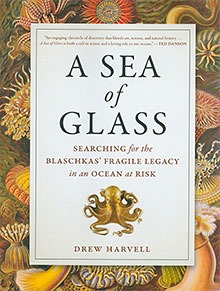
Winner. A Sea of Glass: Searching for the Blaschkas’ Fragile Legacy in an Ocean at Risk. By Drew Harvell. University of California Press, Oakland, CA. ISBN 9780520285682
They were very old, created in the mid 1800’s, but they were absolutely exquisite. Stored away in a Cornell University warehouse for years, they were glass replicas of marine invertebrates, the spineless creatures of the sea. They had been created by the great glass flower artists Leopold and Rudolf Blaschka of central Europe. The delicate replicas were so life-like that upon first seeing them author Drew Harvell was mesmerized by their beauty. As a professor of evolutionary biology, Harvell was well acquainted with the invertebrates, and she began to wonder if man’s activities in connection with the ocean have had any effect on the populations of animals represented by Blaschkas’ replicas. That sets Harvell off on a journey of discovery, one in which you become an eyewitness, as she dives into the mysterious depths of the seas.
![clip_image003[1]](https://recreation-law.com/wp-content/uploads/2016/11/clip_image0031.gif "clip_image003[1]")
|
History/Biography |
|

Winner. The Ghosts of K2: The Epic Saga of the First Ascent. By Mick Conefrey. Oneworld Publications, London. ISBN 9781780745954
Of all the highest mountains in the world, K2 ranks among the most difficult and dangerous. It’s not only the peak’s rarified air and exposed flanks that are responsible for its reputation, but violent storms can suddenly materialize, trapping climbers for days on end. Using newly available source materials and interviews with surviving team members of past expeditions, author Mick Conefrey skillfully re-constructs a vivid and gripping history of the mountain.
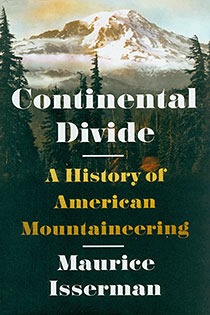
Honorable Mention. Continental Divide: A History of American Mountaineering. By Maurice Isserman. W. W. Norton, New York. ISBN 9780393068504
There are several comprehensive historic works on American mountaineering and climbing, but Maurice Isserman ups the ante with this book. Part of the book’s appeal is the way he approaches the subject, deftly blending notable achievements in the climbing world with social and cultural history. Works such as this can easily drag after the first couple of chapters, but not this one. Isserman has a lively and engaging writing style which holds one’s attention and keeps the pages turning.
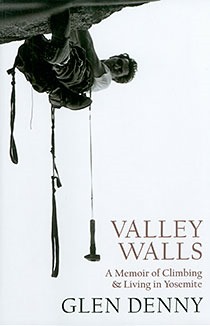
Honorable Mention. Valley Walls: A Memoir of Climbing & Living in Yosemite. By Glen Denny. Yosemite Conservancy. Yosemite National Park. ISBN 9781930238633
They were an unkempt bunch. Some of them went days on end without bathing. They were the denizens of that notorious campground in Yosemite called Camp 4 who pioneered the techniques and equipment of modern day big wall climbing. In the 1960’s, author Glen Denny was there, taking many of the era’s iconic photographs and making some of his own notable first ascents. Valley Walls is his engrossing and memorable story of those raucous days.
![clip_image003[2]](https://recreation-law.com/wp-content/uploads/2016/11/clip_image0032.gif "clip_image003[2]")
|
Design and Artistic Merit |
|

Winner. The Living Bird: 100 Years of Listening to Nature. Photography by Gerrit Vyn. Design by Jane Jeszeck. Essays by Scott Weidensaul, Lyanda Lynn Haupt, John W. Fitzpatrick, and Jared Diamond. Mountaineers Books (Seattle) in conjunction with The Cornell Lab of Ornithology (New York). ISBN 9781594859656
From one of the leading ornithology labs comes a book with extraordinary design and breathtaking imagery. Within the pages of this elegant book, master photographer Gerrit Vyn and leading naturalists, explore the fascinating world of birds. It’s not just Vyn’s accomplished photography — though the book could stand alone on Vyn’s art alone — it is also filled with up-to-date facts, and insightful and satisfying writing. This is a superior production in every respect. If you have just one book on birds in your library, you can’t make a better choice than this one.
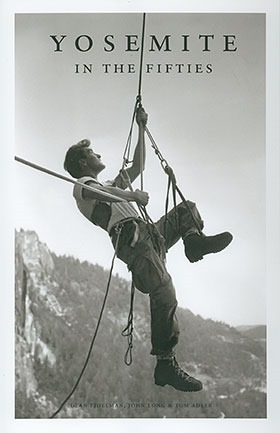
Winner. Yosemite in the Fifties: The Iron Age. Design by Tom Adler and Evan Backes. Photo Editing by Dean Fidelman. Edited by John Long. Patagonia Books, Ventura, CA. ISBN 9781938340482
Two words come to mind in describing this handsomely done, large format book: visual celebration. What it celebrates are the highly inventive years of the 1950’s when climbers in Yosemite pushed the boundaries of what was possible, all the while experimenting and creating new tools of the trade. The photos are drawn from a wide variety of original sources and fit comfortably into the book’s crisp graphic design. Enhancing the overall appeal of the book is the inclusion of classic writings authored by climbers of the time period. All in all, it’s a striking work which captivates from the first page all the way to the last thought-provoking photograph on the back cover.

Honorable Mention. Todd and Brad Reed’s Michigan: Wednesdays in the Mitten. Photography by Todd & Brad Reed. Design by Todd & Brad Reed, Sarah Genson and Rachel Gaudette. Cover by Misty Reed. Todd & Brad Reed Photography, LCC., Ludington, MI. ISBN 9781495152139.
Page through this book and you’ll be immediately impressed: both with its beauty and its size. It is large, larger than typical large format books. That’s because the father and son team of Todd and Brad Reed deserve an expansive canvas on which to display their art. Within the book’s covers are a series of stunning photographs that were taken on every Wednesday throughout a one year period. This is photographic virtuosity of the highest order and a compelling tribute to the state of Michigan
![clip_image003[3]](https://recreation-law.com/wp-content/uploads/2016/11/clip_image0033.gif "clip_image003[3]")
|
Nature and the Environment |
|

Winner. Victory Gardens for Bees: A DIY Guide to Saving the Bees. By Lori Weidenhammer. Douglas & McIntyre, Madeira Park, BC. ISBN 9781771620536
During World War I and II, many people planted “victory gardens.” It was way in which individuals could help the war effort by supplementing their country’s food supply. In this splendidly designed and photographed book, Lori Weidenhammer suggests that victory gardens are again necessary, but for a different reason: to help resolve the shortage of forage and shelter faced by bees. The book serves as an instructional guide — text, graphics and photographs perfectly meshing together — describing how anyone, even with limited space, can create their own sanctuary for bees.
![clip_image003[4]](https://recreation-law.com/wp-content/uploads/2016/11/clip_image0034.gif "clip_image003[4]")
|
Children’s Category |
|

Winner. Chasing at the Surface: A Novel. By Sharon Mentyka. WestWinds Press/Graphic Arts Books, Portland. ISBN 9781943328604
In this 220-page novel for young adults, 12-year old Marisa’s world is thrown into confusion when her mom leaves on a mysterious trip. A school science project monitoring a pod of whales helps take her mind off her worries. As Marisa learns more about whales, she begins to understand the delicate life-and-death balance facing these creatures of the deep. Her interest and passion for the whales grows, but events take a turn for the worse when the whales become trapped because of human activity. The story comes to a climax as Marisa plays a role in helping the whales escape back into the wild, and her mother returns and reveals a long held secret.

Honorable Mention. Wake Up, Island. By Mary Casanova. Woodcuts by Nick Wroblewski. University of Minnesota Press, Minneapolis. ISBN 9780816689354
If you’re looking for the perfect book to read aloud to young children, look no further. The story is about the natural world coming awake in the early morning: the sun peeking above the horizon, pine trees stretching,and deer rising from their grassy beds. Wake Up, Island is a joy to read with its fun word play and animal
sounds — like: squirrels chattering chitter-chee and chickadees calling dee dee dee. Nick Wroblewski’s gorgeous woodcuts are the icing on the cake and will have children wide-eyed and eager to point out their favorite creatures.
![clip_image003[5]](https://recreation-law.com/wp-content/uploads/2016/11/clip_image0035.gif "clip_image003[5]")
|
Classic |
|

Winner. Over the Edge: Death in Grand Canyon. By Michael P. Ghiglieri and Thomas M. Myers. Puma Press, Flagstaff, AZ. ISBN 9780984785803
Originally published in 2001, Over the Edge has since sold well over a quarter million copies. Meticulously researched, it categorizes fatalities and near misses into several groupings including falls, flash floods, river running accidents, and freak mishaps such as lightning and rock falls. Yes, it is fascinating reading — if somewhat chilling, especially if you happen to be hiking or boating in the Grand Canyon area while reading it. But its true value lies in the authors’ thoughtful analysis of accidents and their causes — most of which, we learn, are preventable and occur again and again. There’s no such thing as perfect safety in the desert and canyon environment, but by learning from exceptional works as this one, we can certainly tip the odds in our favor.
![clip_image003[6]](https://recreation-law.com/wp-content/uploads/2016/11/clip_image0036.gif "clip_image003[6]")
|
Nature Guidebooks |
|

Winner. Mushrooms of the Northeast: A Simple Guide to Common Mushrooms. By Teresa Marrone and Walt Sturgeon. Adventure Publications, Cambridge, MN. ISBN 9781591935919
There’s a lot to like about this small guide, starting with its size — it will fit easily in the pocket of a pack for use in the field. The book is nicely organized into sections by the mushroom’s shape for ease of identification. Safety is front and center throughout, and that’s underscored with the two most important categories leading off the identification chapters: edible and toxic mushrooms. Moreover, from start to finish the authors are careful to point out when an edible mushroom might be confused with a toxic one. Written in a straightforward, no-nonsense style, this is the right book for aspiring mushroomers.
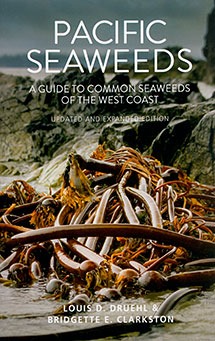
Honorable Mention. Pacific Seaweeds: A Guide to the Common Seaweeds of the West Coast. By Louis D. Druehl and Bridgette E. Clarkston. Harbour Publishing, Madeira Park, BC. ISBN 9781550177374
If you’ve ever wondered about the names of seaweeds that have washed up on shore, this is the guide to reach for. Of the several methods employed by the authors to aid your identification efforts, one of the most clever is the way seaweeds are photographed. The book often portrays a seaweed held in a hand or draped over a finger. That not only helps provide size perspective but it also personalizes the process of identifying it. It’s what you would see when holding a specimen in your own hand. What plainly comes through in this book is that the authors are enthusiastic and passionate about these plants of the sea. They’ve even included an extra treat for your culinary pleasure: a series of sea vegetable recipes. Bon appétit!
![clip_image003[7]](https://recreation-law.com/wp-content/uploads/2016/11/clip_image0037.gif "clip_image003[7]")
|
Outdoor Adventure Guidebooks |
|
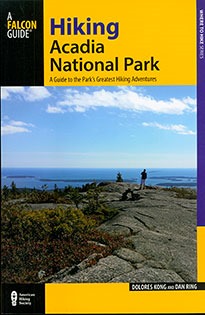
Winner. Hiking Acadia National Park: A Guide to the Park’s Greatest Hiking Adventures. By Dolores Kong and Dan Ring. Falcon Guides, Guilford, CT. ISBN 9781493016617
There’s nothing like Maine’s Acadia National Park. From its shoreside walks to the commanding view from the highest mountain on the Atlantic seaboard, it’s a place that inspires and regenerates the soul. One nice feature to Dolores Kong and Dan Ring’s guidebook is the way they have organized hikes according to interest: best hikes for great views, or hikes for children, or dogs, history buffs, peak baggers, or ocean lovers. It’s all there in one compact package with thoughtful design, clear maps, and straightforward trail descriptions.
![clip_image003[8]](https://recreation-law.com/wp-content/uploads/2016/11/clip_image0038.gif "clip_image003[8]")
|
Instructional |
|

Honorable Mention. Winter in the Wilderness: A Field Guide to Primitive Survival Skills. By Dave Hall with Jon Ulrich. Cornell University Press, Ithaca, NY. ISBN 9780801479953
There’s nothing fancy here. No frills. No colorful graphics. How best to describe it? It’s is like having a conversation with Northeastern survival expert Dave Hall. You ask a question and Hall responds with his thoughts. He might explain the finer points of building a fire (which he demonstrates using what he calls a “fire burrito”). Or he might offer his opinion on the pros and cons of different snow shelters. It’s informal, unaffected, and plain good advice.
![clip_image003[9]](https://recreation-law.com/wp-content/uploads/2016/11/clip_image0039.gif "clip_image003[9]")
Official NOBA reviews prepared by Ron Watters. Reviews are based on comments and insights provided by members of the judging panels. A special thanks to Katherine Daly for her editorial work.
|
Judges Crystal Atamian, Spokane Valley, WA Natalie Bartley, Boise, ID Virginia Barlow, Corinth, VT Jeff Cramer, Lincoln, MA Val Cunningham, St. Paul, MN Jim & Sara Fullerton, St. Petersburg, FL Past president of the Association of Outdoor Recreation and Education. Doctorate in Human Sciences from the University of Nebraska-Lincoln. Assistant Professor for management and leadership development at the College of Coastal Georgia. Twenty years experience as an outdoor adventure leader. His wife Sara who assists with judging the children’s category is an elementary school teacher and has worked in a children’s bookstore. Dale Harrington, Boone, NC Rob Jones, Salt Lake City, UT Rodney Ley, Fort Collins, CO Kate Mapp, Heber City, UT John Miles, El Prado, NM Jill Morgan, Cynthiana, KY Susanne Dubrouillet Morais, Raleigh, NC James Moss, Littleton, CO Tom Mullin, Unity ME Tammie L. Stenger-Ramsey, Bowling Green, KY Ron Watters, Pocatello, ID Ingrid Wicken, Norco, CA Melanie Wulf, St. Charles, IL
|
BSA (Cub Scout) volunteer was not liable for injuries to cub because cub assumed the risk of his injuries. The BSA & Council were not liable because volunteer was not an agent.
Posted: November 14, 2016 Filed under: Assumption of the Risk, Minors, Youth, Children, Ohio | Tags: Boy Scouts, Boy Scouts of America, BSA, Cub Scout, Den Leader, Ice skating, Scouting Leave a commentA volunteer is not an employee or under the control of the sponsoring organization or BSA councils. Additionally, the plaintiff was injured due to an inherent risk of the sport and therefore the defendants owed him no duty because of the doctrine of primary assumption of risk.
State: Ohio, Court of Appeals of Ohio, Tenth Appellate District, Franklin County
Plaintiff: Lynn and Rick Santho, on behalf of their son, Jamie Santho
Defendant: Boy Scouts of America, Simon Kenton Council, Prince of Peace Lutheran Church, and the Chiller Ice Rink
Plaintiff Claims: negligence, reckless/intentional conduct, respondeat superior, and loss of consortium
Defendant Defenses: Assumption of the Risk, No Duty
Holding: For the defendant
Year: 2006
A Cub Scout & his family went on a Cub Scout event at a skating rink. The Defendant volunteer of the Cub Scout Pack was a contractor for the skating rink, but not working at the time. She was a Den Mother in the Cub Pack.
The plaintiff played hockey. On the night in question, the plaintiff was racing with his friends, and he crashed into the boards suffering a concussion. The Defendant Ice Rink had rules that prohibited racing.
The plaintiff sued the Ice Rink, the Volunteer, the BSA Council and the Chartered Organization, a church.
The defendants filed various motions for summary judgment, but not all. A trial was held and at close of arguments, the court granted the defendant volunteer a directed verdict.
A directed verdict is one that after all the evidence has been presented at trial, the plaintiff has failed to prove their case, and the court directs a verdict for the defendant.
Motions for summary judgment and for directed verdict address the same issue, albeit at different times during the process of litigation. Whether in summary judgment proceedings or during trial, the ultimate issue under either Civ.R. 56 or 50 is whether the evidence is sufficient to present an issue for determination by the trier of fact. Summary judgment raises this question prior to trial; directed verdict raises the question during trial. A court does not consider the weight of the evidence or credibility of the witnesses in ruling on either a motion for summary judgment under Civ.R. 56, or in ruling on a motion for directed verdict under Civ.R. 50. The question is whether there is sufficient evidence to create a genuine issue for a jury to decide.
The plaintiff appealed the directed verdict and various motions for summary judgment that were granted.
Analysis: making sense of the law based on these facts.
The appellate court started by reviewing the motions for summary judgment based on primary assumption of the risk. In Ohio, primary assumption of risk is a defense to claims for injuries from recreational activities.
Under the doctrine of primary assumption of the risk, an individual injured in the course of a recreational activity is presumed to have assumed the ordinary risks of that activity unless it can be shown that another actor acted recklessly or intentionally in causing the injury. The doctrine serves to remove liability for negligence under these circumstances.
Proof of primary assumption of the risk is a three-part test.
The test requires that: (1) the danger is ordinary to the game; (2) it is common knowledge that the danger exists; and (3) the injury occurs as a result of the danger during the course of the game.
The court found that it was foreseeable that anytime a person was ice skating or stepping on ice that falls or coming into contact with barriers was real.
There is no question that Jamie was participating in a recreational activity at the time he was injured. Falling is an ordinary danger of ice-skating. Colliding with the perimeter boards is an ordinary danger of ice rink skating. It was during the course of ice-skating and participating in the relay race that Jamie was injured.
In reviewing the facts of the defense presented and the arguments made supporting the doctrine of primary assumption of the risk, the age of the plaintiff as well as the knowledge of the plaintiff are not factors. Meaning in primary assumption of the risk there is no requirement to prove the plaintiff knew in advance of the risks they may encounter in the activity.
The appellant’s age and ability to appreciate the danger involved is immaterial to the doctrine of primary assumption of the risk. Only the conduct of defendant is relevant to recovery.
If the court finds that the doctrine of primary assumption of the risk has been found, then there is not negligence. That is because the first requirement to prove negligence, a duty, does not exist. If the recreational activity has risks, the plaintiff assumes those risks; consequently, there is no duty to protect the plaintiff from the risks on the part of the defendant.
However, a recreation provider ordinarily owes no duty to a participant or spectator of an active sport to eliminate the risks inherent in the sport. Here, Bennett organized the fun skate for Pack 210, as she had on several previous occasions. That was her main project for the pack. Therefore, Bennett qualifies as a recreation provider.
The next issue was whether the volunteer acted recklessly. In Ohio, recklessness is defined as:
The actor’s conduct is in reckless disregard of the safety of another if he does an act or intentionally fails to do an act which it is his duty to the other to do, knowing or having reason to know of facts which would lead a reasonable man to realize, not only that his conduct creates an unreasonable risk of physical harm to another, but also that such risk is substantially greater than that which is necessary to make his conduct negligent.
Violating a rule or a statute is not enough to create a recklessness claim. Recklessness is an intentional act in creating a higher risk resulting in serious harm.
Furthermore, the Restatement notes that simply violating a statute or rule is not enough to constitute a reckless disregard for safety. The violation of the rule must (1) be intentional; and (2) be recognized as resulting in a significantly higher risk that serious harm will occur. A plaintiff cannot recover from any injuries that stemmed from “conduct that is a foreseeable, customary part” of the activity in which the plaintiff was injured.
Because the defendant volunteer did not increase the risk of harm by organizing the event or the race that injured the plaintiff, the defendant was not reckless. Nor did not require the plaintiff to wear a helmet constitute recklessness.
Appellants further argue that Bennett was reckless in not requiring Jamie to wear a helmet. No evidence was submitted to support this claim. Jamie’s father testified that he allowed his son to participate in the recreational skate without a helmet. Other testimony presented at trial showed that no fun skate participants were wearing helmets and that helmets are typically worn only while playing hockey. Finally, there was evidence that requiring helmets is not an industry standard.
The remaining defendants were part of the case because the plaintiff argued they were liable based on vicarious liability. There was no evidence that the defendant was an agent because they had no control over the volunteer defendant.
In contrast, there is no evidence to suggest that Bennett was acting as the agent of the BSA, SKC or POPLC. Bennett organized the family fun skate outside the framework of the BSA organization. The fun skate was held at a facility completely independent of the BSA. There is no evidence that the BSA, SKC or POPLC were aware of or had any control over the conduct of either Bennett or the fun skate. There is no evidence that Bennett acted as an agent of the Boy Scouts or any of the other organizations.
The ice rink was also not liable for the defendant based on the theory of respondeat superior. Respondeat superior states an employer is liable for the acts of its employee. However, at the time of the accident, the defendant ice rink was not paying or employing the defendant volunteer.
At the time of the fun skate, Bennett was not being paid by the Chiller. She was not acting as a rink guard. According to the evidence presented by the trial court, rink guards wore distinctive clothing that identified them in that capacity. There is no evidence that Bennett was acting as, or held herself out as a rink guard for the Chiller. Instead, the evidence supports only that Bennett was acting as a den mother of Pack 210 and organized the fun skate for Pack 210. She was there as a volunteer for Pack 210 and as a parent. Therefore, the trial court did not err in finding that there was insufficient evidence to show that Bennett was an agent of the Chiller and acting on behalf of the Chiller at the time Jamie was injured.
Because the volunteer defendant was found not to be reckless, the remaining defendants were not liable based on claims of vicarious liability.
So Now What?
The outcome of this case was first based upon an understanding of the relationship between a volunteer, the chartering organization, the BSA Council and the Boy Scouts of America by the appellate court. It is always important for the court to understand the legal relationship between the parties.
Volunteers are under the supervision and control, if any, of the chartering organization. The National Council of the Boy Scouts of America grants to the chartering organization the right to use its program. That grant is through, he local council who approves the chartering organization. Neither the National Council nor the local council have any real control over the volunteers the chartering organization approves.
Again primary assumption of the risk prevented the claims of the plaintiff because the plaintiff was participating in a sport or recreational activity and the injury the plaintiff suffered was an inherent risk of the sport or recreational activity.
What do you think? Leave a comment.
If you like this let your friends know or post it on FB, Twitter or LinkedIn
Author: Outdoor Recreation Insurance, Risk Management and Law
Copyright 2016 Recreation Law (720) Edit Law
Email: Rec-law@recreation-law.com
Google+: +Recreation
Twitter: RecreationLaw
Facebook: Rec.Law.Now
Facebook Page: Outdoor Recreation & Adventure Travel Law
Blog: www.recreation-law.com
Mobile Site: http://m.recreation-law.com
By Recreation Law Rec-law@recreation-law.com James H. Moss
#AdventureTourism, #AdventureTravelLaw, #AdventureTravelLawyer, #AttorneyatLaw, #Backpacking, #BicyclingLaw, #Camps, #ChallengeCourse, #ChallengeCourseLaw, #ChallengeCourseLawyer, #CyclingLaw, #FitnessLaw, #FitnessLawyer, #Hiking, #HumanPowered, #HumanPoweredRecreation, #IceClimbing, #JamesHMoss, #JimMoss, #Law, #Mountaineering, #Negligence, #OutdoorLaw, #OutdoorRecreationLaw, #OutsideLaw, #OutsideLawyer, #RecLaw, #Rec-Law, #RecLawBlog, #Rec-LawBlog, #RecLawyer, #RecreationalLawyer, #RecreationLaw, #RecreationLawBlog, #RecreationLawcom, #Recreation-Lawcom, #Recreation-Law.com, #RiskManagement, #RockClimbing, #RockClimbingLawyer, #RopesCourse, #RopesCourseLawyer, #SkiAreas, #Skiing, #SkiLaw, #Snowboarding, #SummerCamp, #Tourism, #TravelLaw, #YouthCamps, #ZipLineLawyer, BSA, Boy Scouts, Boy Scouts of America, Cub Scout, Scouting, Ice Skating, Den Leader,
Elliott, v. Carter, 2016 Va. LEXIS 151
Posted: November 11, 2016 Filed under: Camping, Legal Case, Minors, Youth, Children, Virginia | Tags: Boy Scouts of America, BSA, Gross negligence, Heart of Virginia Council, Rappahannock River, Senior Patrol Leader, SPL, VA, Virginia Leave a commentChancy M. Elliott, Administrator of the Estate of Caleb Mckinley Smith, Deceased v. Trevor Carter
Record No. 160224
SUPREME COURT OF VIRGINIA
October 27, 2016, Decided
PRIOR HISTORY: [*1] FROM THE CIRCUIT COURT OF RICHMOND COUNTY. Harry T. Taliaferro, III, Judge.
Elliott v. Carter, 2016 Va. LEXIS 49 (Va., Apr. 12, 2016)
DISPOSITION: Affirmed.
COUNSEL: David R. Simonsen, Jr. (Keith B. Marcus; ParisBlank, on briefs), for appellant.
W.F. Drewry Gallalee (Harold E. Johnson; Williams Mullen, on brief), for appellee.
JUDGES: OPINION BY JUSTICE S. BERNARD GOODWYN. JUSTICE McCULLOUGH, with whom JUSTICE MIMS joins, dissenting.
OPINION BY: S. BERNARD GOODWYN
OPINION
PRESENT: All the Justices.
OPINION BY JUSTICE S. BERNARD GOODWYN
In this appeal, we consider the evidence required to submit a question of gross negligence to a jury.
Background
This matter arises from a wrongful death suit brought by Chancy M. Elliott (Elliott) on behalf of the estate of Caleb McKinley Smith (Caleb), alleging gross negligence on the part of Trevor Carter (Carter), the peer leader of Caleb’s Boy Scout troop, after Caleb drowned on a Scout camping trip. The material facts are not in dispute.
On June 25, 2011, Caleb was a 13-year-old Boy Scout on an overnight camping trip with his troop along the Rappahannock River near Sharps, Virginia. Carter, then 16 years old, was the Senior Patrol Leader, the troop’s peer leader. Caleb had been taking lessons to learn how to swim–he had had one from Carter that morning–but he could [*2] not yet swim.
At about 11:00 a.m., Carter led Caleb and two other Boy Scouts into the river along a partially submerged sandbar. One of the other two Scouts could swim (Scott), and the other could not (Elijah).
When they were approximately 150 yards into the river, Carter and Scott decided to swim back to shore. Carter told Caleb and Elijah to walk back to shore the way they had come, along the sandbar. As Caleb and Elijah walked back to shore along the sandbar, they both fell into deeper water. Caleb yelled to Carter for help and Carter attempted to swim back and rescue him. Although Elijah was rescued, neither Carter nor three adult Scout leaders, who attempted to assist, were able to save Caleb.
Elliott filed a wrongful death action in the Circuit Court of Richmond County against Carter, four adult Scout leaders, the Boy Scouts of America, and the affiliated Heart of Virginia Council, Inc. (collectively, Defendants), alleging that they had failed to adequately supervise Caleb. The court granted the Defendants’ demurrer asserting charitable immunity.
Elliott amended her complaint to allege both gross and willful and wanton negligence by Carter and gross negligence by the four adult Scout [*3] leaders, and demanded a jury trial.* Defendants filed a motion for summary judgment arguing that, based upon undisputed material facts, there was no gross negligence because there was no complete lack of care alleged and the danger of drowning was open and obvious. Defendants relied upon Elliott’s responses to requests for admission and allegations in the amended complaint in establishing the undisputed material facts.
* Elliott non-suited the actions against the Boy Scouts of America and the Heart of Virginia Council, Inc.
Following a hearing and supplemental briefing, the court granted the motion for summary judgment as to all Defendants. It found that, while the undisputed material facts would be sufficient to submit the question regarding a claim of simple negligence to a jury, the facts did not support a claim for gross negligence, because in Virginia, “there is not gross negligence as a matter of law where there is even the slightest bit of care regardless of how insufficient or ineffective it may have been,” and there was evidence that Carter did try to save Caleb.
Elliott appeals the ruling of the circuit court only as to Carter. On appeal, she argues that the circuit court erred [*4] in granting summary judgment and in concluding that, as a matter of law, a jury could not find Carter’s actions constituted gross negligence.
Analysis
[HN1] “In an appeal from a circuit court’s decision to grant or deny summary judgment, this Court reviews the application of law to undisputed facts de novo.” St. Joe Co. v. Norfolk Redev’t & Hous. Auth., 283 Va. 403, 407, 722 S.E.2d 622, 625 (2012).
[HN2] Gross negligence is “a degree of negligence showing indifference to another and an utter disregard of prudence that amounts to a complete neglect of the safety of such other person.” Cowan v. Hospice Support Care, Inc., 268 Va. 482, 487, 603 S.E.2d 916, 918 (2004).
It is a heedless and palpable violation of legal duty respecting the rights of others which amounts to the absence of slight diligence, or the want of even scant care. Several acts of negligence which separately may not amount to gross negligence, when combined may have a cumulative effect showing a form of reckless or total disregard for another’s safety. Deliberate conduct is important evidence on the question of gross negligence.
Chapman v. City of Virginia Beach, 252 Va. 186, 190, 475 S.E.2d 798, 800-01 (1996) (citations and internal quotation marks omitted). [HN3] Gross negligence “requires a degree of negligence that would shock fair-minded persons, although demonstrating something less than willful recklessness.” Cowan, 268 Va. at 487, 603 S.E.2d at 918; see also Thomas v. Snow, 162 Va. 654, 661, 174 S.E. 837, 839 (1934) (“Ordinary and gross negligence differ in degree of inattention”; [*5] while “[g]ross negligence is a manifestly smaller amount of watchfulness and circumspection than the circumstances require of a person of ordinary prudence,” “it is something less than . . . willful, wanton, and reckless conduct.”).
[HN4] “Ordinarily, the question whether gross negligence has been established is a matter of fact to be decided by a jury. Nevertheless, when persons of reasonable minds could not differ upon the conclusion that such negligence has not been established, it is the court’s duty to so rule.” Frazier v. City of Norfolk, 234 Va. 388, 393, 362 S.E.2d 688, 691, 4 Va. Law Rep. 1220 (1987). Because “the standard for gross negligence [in Virginia] is one of indifference, not inadequacy,” a claim for gross negligence must fail as a matter of law when the evidence shows that the defendants exercised some degree of care. Kuykendall v. Young Life, 261 Fed. Appx. 480, 491 (4th Cir. 2008) (relying on Frazier, 234 Va. at 392, 362 S.E.2d at 690-91, Chapman, 252 Va. at 190, 475 S.E.2d at 801, and Cowan, 268 Va. at 486-87, 603 S.E.2d at 918 to interpret Virginia law); see, e.g., Colby v. Boyden, 241 Va. 125, 133, 400 S.E.2d 184, 189, 7 Va. Law Rep. 1368 (1991) (affirming the circuit court’s ruling that the plaintiff failed to establish a prima facie case of gross negligence when the evidence showed that the defendant “‘did exercise some degree of diligence and care’ and, therefore, as a matter of law, his acts could not show ‘utter disregard of prudence amounting to complete neglect of the safety of another'”).
Here, even viewing the evidence in the [*6] light most favorable to Elliott, the non-moving party, as required in considering a motion for summary judgment, Commercial Business Systems v. Bellsouth Services, 249 Va. 39, 41-42, 453 S.E.2d 261, 264 (1995), the undisputed material facts support the conclusion that Carter exercised some degree of care in supervising Caleb. Therefore, his conduct did not constitute gross negligence.
First, it is not alleged that Caleb had any difficulty walking out along the sandbar with Carter. Second, there is no allegation that Carter was aware of any hidden danger posed by the sandbar, the river or its current. Third, Carter instructed Caleb to walk back to shore along the same route he had taken out into the river, and there was no evidence that conditions changed such that doing so would have been different or more dangerous than initially walking out, which was done without difficulty. Finally, Carter tried to swim back and assist Caleb once Caleb slipped off the sandbar, which is indicative that Carter was close enough to attempt to render assistance when Caleb fell into the water, and that Carter did attempt to render such assistance. Thus, although Carter’s efforts may have been inadequate or ineffectual, they were not so insufficient as to constitute the indifference and utter disregard [*7] of prudence that would amount to a complete neglect for Caleb’s safety, which is required to establish gross negligence.
Because a claim of gross negligence must fail as a matter of law when there is evidence that the defendant exercised some degree of diligence and care, the circuit court did not err in finding that no reasonable jurist could find that Carter did nothing at all for Caleb’s care. As such, there was no question for the jury, and the circuit court properly granted Carter’s motion for summary judgment.
Accordingly, the judgment of the circuit court will be affirmed.
Affirmed.
DISSENT BY: McCULLOUGH
DISSENT
JUSTICE McCULLOUGH, with whom JUSTICE MIMS joins, dissenting.
Ordinarily, whether gross negligence has been established is a matter of fact to be decided by a jury. Frazier v. City of Norfolk, 234 Va. 388, 393, 362 S.E.2d 688, 691, 4 Va. Law Rep. 1220 (1987). Of course, when “persons of reasonable minds could not differ upon the conclusion that such negligence has not been established, it is the court’s duty to so rule.” Id. In my view, the facts presented in this tragic case were sufficient to present a jury question. Accordingly, I respectfully dissent.
Here, Caleb could not swim, a fact that was known to the defendants. He did not walk out on his own into the river. Rather, he was [*8] led, without a life jacket or other safety equipment, over a partially submerged sandbar far into the river. The complaint alleges that “the Rappahannock River . . . is a major river with a strong current.” Caleb was then abandoned on a sandbar in the middle of the river and told to walk back. A partially submerged sandbar in the middle of a river with a strong current is a very dangerous place to be, particularly for a non-swimmer without a life vest. Ever-shifting sandbars, obviously, are not stable structures. They can easily dissipate. A major river with strong currents like the Rappahannock presents a different situation than a tranquil pond. Carter then swam away too far to effectuate a rescue should Caleb slip and fall into the river. In my view, “reasonable persons could differ upon whether the cumulative effect of these circumstances constitutes a form of recklessness or a total disregard of all precautions, an absence of diligence, or lack of even slight care.” Chapman v. City of Virginia Beach, 252 Va. 186, 191, 475 S.E.2d 798, 801 (1996).
I would also find that the purported acts of slight care, separated in time and place from the gross negligence at issue, do not take the issue away from the jury. The only two acts of slight care the defendants identify [*9] are the fact that Caleb was given a swimming lesson before he drowned — but there is no indication that Caleb could swim — and that Carter, after swimming too far away to make any rescue effectual, tried to swim back to save Caleb after he had fallen into the river. Significantly, Carter led Caleb into danger in the first place. When the defendant has led the plaintiff into danger, an ineffectual and doomed to fail rescue attempt does not in my judgment take away from the jury the question of gross negligence. Accordingly, I would reverse and remand the case for a trial by jury.
Trek Recalls Farley Bicycles Due to Fall Hazard
Posted: November 10, 2016 Filed under: Uncategorized | Tags: Consumer Product Safety Council, CPSC, Front Fork, Recall, Shock, Trek Leave a commentHazard: The fork can separate from the steer tube, posing a fall hazard to the rider.
Recall Summary
Name of Product: Trek Farley bicycles and framesets
Remedy: Repair
Consumers should immediately stop using the recalled bicycles and framesets and return the bicycles to a Trek retailer for a free inspection and repair.
Consumer Contact: Trek at 800-373-4594 from 8 a.m. to 6 p.m. CT Monday through Friday or online at http://www.trekbikes.com and click on Safety & Recalls at the bottom of the page for more information.
Photos available at https://cpsc.gov/Recalls/2017/Trek-Recalls-Farley-Bicycles
Recall Details
Units: About 2,600 (in addition, about 360 units were sold in Canada)
Description: This recall involves model year 2014 Trek Farley bicycles and framesets and 2015 Trek Farley 6 bicycles and framesets. The 2014 Trek Farley is black with green decals with an aluminum frame and fork. The 2014 frameset is sky blue with orange decals. The 2015 Trek Farley 6 is black with blue decals with an aluminum frame and fork. Both bicycle models were sold in 14.5 through 21.5 inch sizes. “Trek” is printed across the bicycle frame.
Incidents/Injuries: The firm has received five reports of the bicycle fork separating from the steer tube. No injuries have been reported.
Sold at: Bicycle stores nationwide from September 2013 through August 2016 for between $1,700 and $2,600.
Importer: Trek Bicycle Corp., of Waterloo, Wis.
Manufactured in: Taiwan
Retailers: If you are a retailer of a recalled product you have a duty to notify your customers of a recall. If you can, email your clients or include the recall information in your next marketing communication to your clients. Post any Recall Poster at your stores and contact the manufacturer to determine how you will handle any recalls.
For more information on this see:
For Retailers
Recalls Call for Retailer Action
A recall leads to lawsuits because injuries are connected to the product being recalled thus a lawsuit. Plaintiff’s hope the three can be connected
Combination of a Products Liability statute, an Expert Witness Report that was just not direct enough and odd facts holds a retailer liable as manufacture for product defect.
Product Liability takes a different turn. You must pay attention, just not rely on the CPSC.
Retailer has no duty to fit or instruct on fitting bicycle helmet
Summary Judgment granted for bicycle manufacturer and retailer on a breach of warranty and product liability claim.
For Manufacturers
The legal relationship created between manufactures and US consumers
A recall leads to lawsuits because injuries are connected to the product being recalled thus a lawsuit. Plaintiff’s hope the three can be connected
Combination of a Products Liability statute, an Expert Witness Report that was just not direct enough and odd facts holds a retailer liable as manufacture for product defect.
What do you think? Leave a comment.
If you like this let your friends know or post it on FB, Twitter or LinkedIn
Author: Outdoor Recreation Insurance, Risk Management and Law
To Purchase Go Here:
Copyright 2016 Recreation Law (720) Edit Law
Email: Rec-law@recreation-law.com
Google+: +Recreation
Twitter: RecreationLaw
Facebook: Rec.Law.Now
Facebook Page: Outdoor Recreation & Adventure Travel Law
Blog: http://www.recreation-law.com
Mobile Site: http://m.recreation-law.com
By Recreation Law Rec-law@recreation-law.com James H. Moss
#AdventureTourism, #AdventureTravelLaw, #AdventureTravelLawyer, #AttorneyatLaw, #Backpacking, #BicyclingLaw, #Camps, #ChallengeCourse, #ChallengeCourseLaw, #ChallengeCourseLawyer, #CyclingLaw, #FitnessLaw, #FitnessLawyer, #Hiking, #HumanPowered, #HumanPoweredRecreation, #IceClimbing, #JamesHMoss, #JimMoss, #Law, #Mountaineering, #Negligence, #OutdoorLaw, #OutdoorRecreationLaw, #OutsideLaw, #OutsideLawyer, #RecLaw, #Rec-Law, #RecLawBlog, #Rec-LawBlog, #RecLawyer, #RecreationalLawyer, #RecreationLaw, #RecreationLawBlog, #RecreationLawcom, #Recreation-Lawcom, #Recreation-Law.com, #RiskManagement, #RockClimbing, #RockClimbingLawyer, #RopesCourse, #RopesCourseLawyer, #SkiAreas, #Skiing, #SkiLaw, #Snowboarding, #SummerCamp, #Tourism, #TravelLaw, #YouthCamps, #ZipLineLawyer, Recall, CPSC, Consumer Product Safety Council,
Fox Factory Recalls Mountain Bike Shock Absorbers Due to Fall and Injury Hazards
Posted: November 8, 2016 Filed under: Uncategorized | Tags: Consumer Product Safety Council, CPSC, Cycling, Fox, Mountain biking, Rear Shock, Recall, Shock Leave a commentHazard: The bicycle’s rear shock absorber outer sleeve can rupture, allowing the sleeve to come in contact with other bicycle parts or the rider, posing a fall and injury hazard.
Remedy: Repair
Consumers should immediately stop using bicycles with the recalled rear shock absorbers and return them to the place of purchase for a free repair. Consumers unable to return their bicycles should contact Fox for instructions on receiving a free repair.
Name of Product: Mountain bike rear shock absorbers
Consumer Contact: Fox toll-free at 855-360-3488 from 8 a.m. to 5 p.m. PT Monday through Friday, email at recall@ridefox.com or online at http://ridefox.com/recall and click on the recall link for more information.
Pictures available here: https://cpsc.gov/Recalls/2017/Fox-Factory-Recalls-Mountain-Bike-Shock-Absorbers-Due-to-Fall-and-Injury-Hazards
Units: About 6,100 (in addition, about 1,200 were sold in Canada)
Description: This recall involves all model year 2016 and some 2017 FLOAT X2 bicycle rear shock absorbers sold both individually and installed on YT, Giant, Pivot, Intense, Ibis, Scott, Trek, GT, Knolly, Norco, Rocky Mountain, Diamondback, Morpheus, Foes Racing, Orbea and Canyon full-suspension mountain bikes and frames. The solid black or black and gold FLOAT X2 shocks have an air sleeve construction. FLOAT X2 is printed on the external reservoir connected to the blue compression and red rebound adjusters that have X2 and RVS laser etched on them. Recalled shocks do not have a “250 psi max” label directly under the air fill boss on the outer sleeve of the shock. Recalled shocks and bike models can be identified at http://ridefox.com/recall.
Incidents/Injuries: The firm has received seven reports of the shock absorber outer sleeve rupturing. No injuries have been reported.
Sold at: Independent bike stores nationwide, online at Jenson USA, Pro Bike Supply, Universal Cycles, Go-ride.com and other online bike retailers from March 2015 through September 2016. The shocks were installed as original equipment on full-suspension mountain bikes and frames sold for between about $2,700 to $10,000 and sold individually as an aftermarket accessory for about $600.
Manufacturer: Fox Factory, Watsonville, Calif.
Manufactured in: United States
Retailers: If you are a retailer of a recalled product you have a duty to notify your customers of a recall. If you can, email your clients or include the recall information in your next marketing communication to your clients. Post any Recall Poster at your stores and contact the manufacturer to determine how you will handle any recalls.
For more information on this see:
For Retailers
Recalls Call for Retailer Action
Combination of a Products Liability statute, an Expert Witness Report that was just not direct enough and odd facts holds a retailer liable as manufacture for product defect.
Product Liability takes a different turn. You must pay attention, just not rely on the CPSC.
Retailer has no duty to fit or instruct on fitting bicycle helmet
Summary Judgment granted for bicycle manufacturer and retailer on a breach of warranty and product liability claim.
For Manufacturers
The legal relationship created between manufactures and US consumers
What do you think? Leave a comment.
If you like this let your friends know or post it on FB, Twitter or LinkedIn
Author: Outdoor Recreation Insurance, Risk Management and Law
Copyright 2016 Recreation Law (720) Edit Law
Email: Rec-law@recreation-law.com
Google+: +Recreation
Twitter: RecreationLaw
Facebook: Rec.Law.Now
Facebook Page: Outdoor Recreation & Adventure Travel Law
Blog: www.recreation-law.com
Mobile Site: http://m.recreation-law.com
By Recreation Law Rec-law@recreation-law.com James H. Moss
#AdventureTourism, #AdventureTravelLaw, #AdventureTravelLawyer, #AttorneyatLaw, #Backpacking, #BicyclingLaw, #Camps, #ChallengeCourse, #ChallengeCourseLaw, #ChallengeCourseLawyer, #CyclingLaw, #FitnessLaw, #FitnessLawyer, #Hiking, #HumanPowered, #HumanPoweredRecreation, #IceClimbing, #JamesHMoss, #JimMoss, #Law, #Mountaineering, #Negligence, #OutdoorLaw, #OutdoorRecreationLaw, #OutsideLaw, #OutsideLawyer, #RecLaw, #Rec-Law, #RecLawBlog, #Rec-LawBlog, #RecLawyer, #RecreationalLawyer, #RecreationLaw, #RecreationLawBlog, #RecreationLawcom, #Recreation-Lawcom, #Recreation-Law.com, #RiskManagement, #RockClimbing, #RockClimbingLawyer, #RopesCourse, #RopesCourseLawyer, #SkiAreas, #Skiing, #SkiLaw, #Snowboarding, #SummerCamp, #Tourism, #TravelLaw, #YouthCamps, #ZipLineLawyer, Recall, CPSC, Consumer Product Safety Council, Mountain Biking, Shock, Rear Shock, Fox, Cycling
Releases work for exercise programs when a mall, for free, opens up early to help people age in Massachusetts
Posted: November 7, 2016 Filed under: Massachusetts, Release (pre-injury contract not to sue) | Tags: Comprehensive, Mall, Release, Shopping Center, Walking Leave a commentAny exception to a release in Massachusetts must be specifically identified in the release. This means that if a plaintiff wants to argue the release does not apply to “this” which caused my injury; “this” must be identified as something the release does not apply to.
Bastable v. Liberty Tree Mall Limited Partnership, 6 Mass. L. Rep. 217; 1996 Mass. Super. LEXIS 64
State: Massachusetts; Superior Court of Massachusetts, at Middlesex
Plaintiff: Rosamond Bastable
Defendant: Liberty Tree Mall Limited Partnership
Plaintiff Claims: negligence
Defendant Defenses: release
Holding: for the Defendant
Year: 1996
Outdoor recreation normally does not cover walking indoors; however, it is an important component for a lot of former recreationists (and it is probably in all of our futures). In this case, the local hospital and the mall teamed up to offer seniors the opportunity to exercise indoors in the mall before it opened.
On September 12, 1993, Bastable enrolled in the “STEPPIN’ OUT!” walking program sponsored by Liberty Tree Mall and Beverly Hospital. The program permitted people in the community to walk in the mall for exercise each day prior to the mall opening to the public. In order to participate in the program, Bastable was required to sign a release.
While exciting the mall one day after walking, the plaintiff fell. The plaintiff argued cracked tile caused her fall and injuries. She sued, and the court dismissed her complaint based on the release.
Analysis: making sense of the law based on these facts.
The first issue addressed by the court was the issue of validity of releases in Massachusetts. Releases are valid in Massachusetts.
The release Bastable signed was a valid and lawful waiver. “There is no rule of general application that a person cannot contract for exemption from liability for his own negligence. Moreover, a release which allocates risk is not against public policy.
In an effect to have the release not apply to the plaintiff’s injuries; she argued the release only applied to “general maintenance activities,’ which she described as now removal and landscaping. The plaintiff’s injuries did not arise from that general maintenance but from specific failed maintenance issues. Meaning the release was written for water on the floor rather than a tile the needed repaired. However, that did not work.
Bastable does not allege that the release was unlawful; rather, she claims that the release applies only to injuries caused by general maintenance activities (such as snow removal and landscaping) and that her injury did not arise from these activities.
Under Massachusetts law, releases are to be interpreted broadly if the language of the release is comprehensive in nature. Any exception to a release must be specifically identified in the release as an exception. “Additionally, Massachusetts courts have held that if the parties intend that an exception to a general release exists, they must include that exception in the release.”
Meaning if the drafters and parties to the release wanted a broadly written comprehensive release not to cover a specific issue or possible risk, it must be identified in the release as not being covered in the release.
If Liberty had intended to limit its liability to only those accidents arising from maintenance tasks, it would have specifically stated so in its release. Instead, the release holds Liberty harmless for “any . . . injury that may take place on mall property” whether or not it results from a maintenance activity.
Because the damaged tile or this type of maintenance was not identified in the release as not being covered by the release, the release prevented the suit for those issues also.
The defendant won this case because the release was written broadly enough to cover all issues.
So Now What?
A policy under release law would eliminate numerous arguments made by plaintiff’s that the release did not affect their claim because their claim was not specifically or generally contemplated by the release. Here, the courts said the release was written broadly, and that breadth covered your injuries.
This is not something can be easily changed in a state, as it is a court policy decided over the years. However, it is possibly an issue that should be brought up and argued in release cases so courts understand it should be an issue they review.
What do you think? Leave a comment.
If you like this let your friends know or post it on FB, Twitter or LinkedIn
Author: Outdoor Recreation Insurance, Risk Management and Law
Copyright 2016 Recreation Law (720) Edit Law
Email: Rec-law@recreation-law.com
Google+: +Recreation
Twitter: RecreationLaw
Facebook: Rec.Law.Now
Facebook Page: Outdoor Recreation & Adventure Travel Law
Blog: www.recreation-law.com
Mobile Site: http://m.recreation-law.com
By Recreation Law Rec-law@recreation-law.com James H. Moss
#AdventureTourism, #AdventureTravelLaw, #AdventureTravelLawyer, #AttorneyatLaw, #Backpacking, #BicyclingLaw, #Camps, #ChallengeCourse, #ChallengeCourseLaw, #ChallengeCourseLawyer, #CyclingLaw, #FitnessLaw, #FitnessLawyer, #Hiking, #HumanPowered, #HumanPoweredRecreation, #IceClimbing, #JamesHMoss, #JimMoss, #Law, #Mountaineering, #Negligence, #OutdoorLaw, #OutdoorRecreationLaw, #OutsideLaw, #OutsideLawyer, #RecLaw, #Rec-Law, #RecLawBlog, #Rec-LawBlog, #RecLawyer, #RecreationalLawyer, #RecreationLaw, #RecreationLawBlog, #RecreationLawcom, #Recreation-Lawcom, #Recreation-Law.com, #RiskManagement, #RockClimbing, #RockClimbingLawyer, #RopesCourse, #RopesCourseLawyer, #SkiAreas, #Skiing, #SkiLaw, #Snowboarding, #SummerCamp, #Tourism, #TravelLaw, #YouthCamps, #ZipLineLawyer, Walking, Mall, Shopping Center, Release, Comprehensive,
Johnson et al., v. Spokane to Sandpoint, LLC, et al., 176 Wn. App. 453; 309 P.3d 528; 2013 Wash. App. LEXIS 1696
Posted: November 2, 2016 Filed under: Legal Case, Racing, Release (pre-injury contract not to sue), Washington | Tags: #race, Exculpatory clause, Gross negligence, Race Handbook, Release, Waiver Clause, Washington Leave a commentJohnson et al., v. Spokane to Sandpoint, LLC, et al., 176 Wn. App. 453; 309 P.3d 528; 2013 Wash. App. LEXIS 1696
Robin Johnson et al., Appellants, v. Spokane to Sandpoint, LLC, et al., Respondents.
No. 31042-6-III
COURT OF APPEALS OF WASHINGTON, DIVISION THREE
July 23, 2013, Filed
NOTICE: Order Granting Motion to Publish September 10, 2013.
SUBSEQUENT HISTORY: Reported at Johnson v. Spokane to Sandpoint, LLC, 175 Wn. App. 1054, 2013 Wash. App. LEXIS 1835 (2013)
Ordered published by Johnson v. Spokane to Sandpoint, LLC, 2013 Wash. App. LEXIS 2129 (Wash. Ct. App., Sept. 10, 2013)
PRIOR HISTORY: [***1]
Appeal from Spokane Superior Court. Docket No: 10-2-05387-0. Date filed: 07/09/2012. Judge signing: Honorable Gregory D Sypolt.
SUMMARY:
WASHINGTON OFFICIAL REPORTS SUMMARY Nature of Action: A participant in a long-distance relay race who was struck by a moving vehicle sought damages for personal injury from the race promoter.
Nature of Action: A participant in a long-distance relay race who was struck by a moving vehicle sought damages for personal injury from the race promoter.
Superior Court: The Superior Court for Spokane County, No. 10-2-05387-0, Gregory D. Sypolt, J., on July 9, 2012, entered a summary judgment in favor of the race promoter.
Court of Appeals: Holding that a preinjury release and waiver signed by the runner precluded her recovering for ordinary negligence, the court affirms the judgment.
HEADNOTES WASHINGTON OFFICIAL REPORTS HEADNOTES
[1] Negligence — Duty — Necessity. The threshold question in a negligence action is whether the defendant owed a duty of care to the plaintiff.
[2] Negligence — Duty — Question of Law or Fact — In General. For purposes of a negligence cause of action, the existence of a duty of care is a question of law.
[3] Torts — Limitation of Liability — Validity — In General. Subject to certain exceptions, parties may expressly agree in advance that one is under no obligation of care to the other and shall not be liable for ordinary negligence.
[4] Torts — Limitation of Liability — Purpose. The function of a contractual waiver of negligence liability is to deny an injured party the right to recover damages from the person negligently causing the injury.
[5] Torts — Limitation of Liability — Validity — Test. A contractual waiver of negligence liability is enforceable unless (1) it violates public policy, (2) the negligent act falls greatly below the legal standard for the protection of others, or (3) it is inconspicuous.
[6] Torts — Limitation of Liability — Validity — Public Policy — Factors. In determining whether an agreement exculpating a party from liability for its future conduct violates public policy, a court will consider whether (1) the agreement concerns an endeavor of a type generally thought suitable for public regulation; (2) the party seeking exculpation is engaged in performing a service of great importance to the public, which is often a matter of practical necessity for some members of the public; (3) such party holds itself out as willing to perform this service for any member of the public who seeks it, or at least for any member coming within certain established standards; (4) because of the essential nature of the service, in the economic setting of the transaction, the party invoking exculpation possesses a decisive advantage of bargaining strength against any member of the public who seeks the services; (5) in exercising a superior bargaining power, the party confronts the public with a standardized adhesion contract of exculpation, and makes no provision whereby a purchaser may pay additional reasonable fees and obtain protection against negligence; and (6) the person or property of members of the public seeking such services must be placed under the control of the furnisher of the services, subject to the risk of carelessness on the part of the furnisher, its employees, or its agents.
[7] Torts — Limitation of Liability — Validity — Public Policy — Public Interest — Recreational Activities. For purposes of determining the validity of a liability release clause under a public policy analysis, Washington courts do not favor finding a public interest in adult recreational activities.
[8] Torts — Limitation of Liability — Applicability — Gross Negligence. A preinjury waiver and release will not exculpate a defendant from liability for damages resulting from gross negligence. “Gross negligence” is negligence substantially and appreciably greater than ordinary negligence, i.e., care substantially or appreciably less than the quantum of care inhering in ordinary negligence, or a failure to exercise slight care. A plaintiff seeking to overcome an exculpatory clause by proving gross negligence must supply substantial evidence that the defendant’s act or omission represented care appreciably less than the care inherent in ordinary negligence. To meet this burden of proof on summary judgment, a plaintiff must offer something more substantial than mere argument that the defendant’s breach of care rises to the level of gross negligence.
[9] Negligence — Proof — Higher Standard — Summary Judgment — Prima Facie Case — Necessity. When the standard of proof in a negligence action is higher than ordinary negligence, in order to avoid an adverse summary judgment, a plaintiff must show that it can support its claim with prima facie proof supporting the higher level of proof.
[10] Torts — Limitation of Liability — Validity — Conspicuous Nature — Factors. The conspicuousness of a contractual liability waiver or release provision is determined by considering such factors as whether the provision is set apart or hidden within other provisions, whether the provision heading is clear, whether the waiver is set off in capital letters or in bold type, whether there is a signature line below the waiver provision, what the language says above the signature line, and whether it is clear that the signature is related to the waiver. Brown, J., delivered the opinion for a unanimous court.
COUNSEL: Martin A. Peltram, for appellants.
Thomas C. Stratton (of Rockey Stratton PS), for respondents.
JUDGES: Authored by Stephen M. Brown. Concurring: Laurel H. Siddoway, Kevin M. Korsmo.
OPINION BY: Stephen M. Brown
OPINION
[*455] [**530] ¶1 Brown, J. — Robin Johnson and Craig Johnson appeal the dismissal of their personal injury suit against Spokane to Sandpoint LLC after the trial court ruled the preinjury release and waiver Ms. Johnson signed precluded recovery. The Johnsons contend the release is unenforceable because it is ambiguous, offends public policy, and because Spokane to Sandpoint was grossly negligent. We disagree and affirm.
FACTS
¶2 Spokane to Sandpoint promotes a long-distance relay race from the Spokane area to Sandpoint, Idaho, involving teams running a 185-mile course over two days, day and [**531] night. The course is open, meaning it is not closed to public traffic.
¶3 When registering on line, the runners must electronically acknowledge a release of liability and waiver, which states:
I understand that by registering I have accepted and agreed to the waiver [***2] and release agreement(s) presented to me during registration and that these documents include a release of liability and waiver of legal rights and deprive me of the right to sue certain parties. By agreeing electronically, I have acknowledged that I have both read and understood any waiver and release agreement(s) presented to me as part of the registration process and accept the inherent dangers and risks which may or may not be readily foreseeable, including without limitation personal injury, property damage or death that arise from participation in the event.
[*456] Clerk’s Papers (CP) at 246. Ms. Johnson, an attorney, registered on line for the 2010 Spokane to Sandpoint race and acknowledged the above waiver, plus she agreed to “waive and release Spokane to Sandpoint … from any and all claims or liability of any kind arising out of my participation in this event, even though that liability may arise out negligence or carelessness on the part of persons on this waiver.” CP at 246. Ms. Johnson agreed she read the agreement carefully and understood the terms and she signed the agreement, “FREELY AND VOLUNTARILY, WITHOUT ANY INDUCEMENT, ASSURANCE OR GUARANTEE” and that her signature was [***3] “TO SERVE AS CONFIRMATION OF MY COMPLETE AND UNCONDITIONAL ACCEPTANCE OF THE TERMS, CONDITIONS, AND PROVISIONS OF THIS AGREEMENT.” CP at 248.
¶4 Spokane to Sandpoint provided a race handbook to Ms. Johnson, explaining all facets of the race, including crossing public highways and train tracks. The fourth leg of the race crossed U.S. Route 2 at its intersection with Colbert Road. At that location, U.S. Route 2 is a divided highway that runs north and south. It has two lanes in each direction, separated by a median strip. A sign was posted on Colbert Road telling the runners “caution crossing highway.” CP at 128. Signs were posted along the race route informing drivers that runners were running along the race route roads.
¶5 As Ms. Johnson was crossing U.S. Route 2, Madilyn Young was driving about 63 miles per hour southbound in the outside lane on U.S. Route 2, approaching the Colbert Road intersection. According to Ms. Young’s statement to the police, she saw Ms. Johnson crossing the northbound lanes of U.S. Route 2 and saw her continue into the southbound lanes without looking for cars. Ms. Young was unable to stop in time to avoid a collision. Ms. Johnson suffered severe injuries.
¶6 The Johnsons sued Spokane [***4] to Sandpoint, Ms. Young, and Ms. Young’s parents. The Johnsons dismissed their [*457] claims against Ms. Young and her parents following a settlement.
¶7 During Ms. Johnson’s deposition, counsel for Spokane to Sandpoint asked her if she understood that the release she signed “would … release the entities for any personal injury that might occur to you during the activity?” CP at 138. Ms. Johnson replied, “Yes, I understand that from a legal perspective completely.” CP at 139. When questioned about the on line registration process, counsel asked:
Q. Do you recall whether you clicked yes to the waiver language at all on the registration process?
A. On the registration process I assume I must have clicked because all that information is there and I did it. Nobody else did it for me.
CP at 156.
¶8 Spokane to Sandpoint requested summary judgment dismissal, arguing the preinjury waiver and release agreed to by Ms. Johnson was conspicuous and not against public policy and the Johnsons lacked the evidence of gross negligence necessary to overcome the release. The trial court agreed and dismissed the Johnsons’ complaint.
ANALYSIS
¶9 The issue is whether the trial court erred in summarily dismissing the [**532] Johnsons’ [***5] negligence complaint. The Johnsons contend the release and waiver signed by Ms. Johnson prior to her injury was invalid and unenforceable because it was ambiguous and against public policy, and because Spokane to Sandpoint was grossly negligent.
¶10 [HN1] We review summary judgment de novo and engage in the same inquiry as the trial court. Heath v. Uraga, 106 Wn. App. 506, 512, 24 P.3d 413 (2001). [HN2] Summary judgment is appropriate if, in view of all the evidence, reasonable persons could reach only one conclusion. Hansen v. Friend, 118 Wn.2d 476, 485, 824 P.2d 483 (1992). Where different [*458] competing inferences may be drawn from the evidence, the issue must be resolved by the trier of fact. Kuyper v. Dep’t of Wildlife, 79 Wn. App. 732, 739, 904 P.2d 793 (1995).
[1-3] ¶11 [HN3] To prevail on a negligence claim against Spokane to Sandpoint, the Johnsons must establish Spokane to Sandpoint owed them a duty. Chauvlier v. Booth Creek Ski Holdings, Inc., 109 Wn. App. 334, 339, 35 P.3d 383 (2001) (citing Tincani v. Inland Empire Zoological Soc’y, 124 Wn.2d 121, 128, 875 P.2d 621 (1994)). Whether such a duty exists is a question of law. Id. The parties may, subject to certain exceptions, expressly agree in advance that one [***6] party is under no obligation of care to the other, and shall not be held liable for ordinary negligence. Chauvlier, 109 Wn. App. at 339.
[4, 5] ¶12 [HN4] The function of a waiver provision is “to deny an injured party the right to recover damages from the person negligently causing the injury.” Scott v. Pac. W. Mountain Resort, 119 Wn.2d 484, 491, 834 P.2d 6 (1992). The general rule in Washington is that a waiver provision is enforceable unless (1) it violates public policy, (2) the negligent act falls greatly below the legal standard for protection of others, or (3) it is inconspicuous. Stokes v. Bally’s Pacwest, Inc., 113 Wn. App. 442, 445, 54 P.3d 161 (2002).
[6] ¶13 [HN5] In Washington, contracts releasing liability for negligence are valid unless a public interest is involved. Hewitt v. Miller, 11 Wn. App. 72, 521 P.2d 244 (1974). [HN6] Six factors are considered in determining whether exculpatory agreements violate public policy. The court considers whether (1) the agreement concerns an endeavor of a type generally thought suitable for public regulation; (2) the party seeking exculpation is engaged in performing a service of great importance to the public, which is often a matter of practical necessity for some members [***7] of the public; (3) such party holds itself out as willing to perform this service for any member of the public who seeks it, or at least for any member coming within certain established [*459] standards; (4) because of the essential nature of the service, in the economic setting of the transaction, the party invoking exculpation possesses a decisive advantage of bargaining strength against any member of the public who seeks the services; (5) in exercising a superior bargaining power, the party confronts the public with a standardized adhesion contract of exculpation, and makes no provision whereby a purchaser may pay additional reasonable fees and obtain protection against negligence; and (6) the person or property of members of the public seeking such services must be placed under the control of the furnisher of the services, subject to the risk of carelessness on the part of the furnisher, its employees, or agents. Wagenblast v. Odessa Sch. Dist. 105-157-166J, 110 Wn.2d 845, 851-55, 758 P.2d 968 (1988) (citing Tunkl v. Regents of Univ. of Cal., 60 Cal. 2d 92, 98-101, 383 P.2d 441, 32 Cal. Rptr. 33 (1963)). The Johnsons fail to establish all six factors.
¶14 First, 185-mile relay races are not regulated; [***8] second, Spokane to Sandpoint is not performing an important public service such as a school; third, not all members of the public participate in relay races, unlike schools; fourth, Spokane to Sandpoint had no control over how Ms. Johnson ran or when she decided to cross U.S. Route 2; fifth, there was no inequality of bargaining since Ms. Johnson could have easily chosen not to participate and could have selected a different event; and sixth, while Spokane to Sandpoint set up the course, it did not control in what manner Ms. Johnson ran the race.
[7] ¶15 [HN7] Washington courts have not favored finding a public interest in adult recreational activities. As noted in Hewitt, 11 Wn. App. [**533] at 74, “[e]xtended discussion is not required to conclude that instruction in scuba diving does not involve a public duty.” Similarly, “[a]lthough a popular sport in Washington, mountaineering, like scuba diving, does not involve public interest.” Blide v. Rainier Mountaineering, Inc., 30 Wn. App. 571, 574, 636 P.2d 492 (1981). Washington courts have come to the same conclusion regarding [*460] tobogganing and demolition car racing. Broderson v. Rainer Nat’l Park Co., 187 Wash. 399, 406, 60 P.2d 234 (1936), overruled in part by [***9] Baker v. City of Seattle, 79 Wn.2d 198, 484 P.2d 405 (1971); Conradt v. Four Star Promotions, Inc., 45 Wn. App. 847, 853, 728 P.2d 617 (1986).
[8] ¶16 [HN8] A preinjury waiver and release will not exculpate a defendant from liability for damages resulting from gross negligence. Vodopest v. MacGregor, 128 Wn.2d 840, 853, 913 P.2d 779 (1996). “Gross negligence” is “negligence substantially and appreciably greater than ordinary negligence,” i.e., “care substantially or appreciably less than the quantum of care inhering in ordinary negligence.” Nist v. Tudor, 67 Wn.2d 322, 331, 407 P.2d 798 (1965); see 6 Washington Practice: Washington Pattern Jury Instructions: Civil 10.07 (6th ed. 2012) (“gross negligence” is “the failure to exercise slight care”). A plaintiff seeking to overcome an exculpatory clause by proving gross negligence must supply “substantial evidence” that the defendant’s act or omission represented care appreciably less than the care inherent in ordinary negligence. Boyce v. West, 71 Wn. App. 657, 665, 862 P.2d 592 (1993). To meet this burden of proof on summary judgment, the plaintiff must offer something more substantial than mere argument that the defendant’s breach of care rises [***10] to the level of gross negligence. CR 56(e); Boyce, 71 Wn. App. at 666.
¶17 Spokane to Sandpoint marked the roadways to warn both drivers and runners of danger and provided a handbook to each runner advising about crossing busy roadways and highways. Nothing in this record establishes any duty to do more.
¶18 Our case is somewhat like Conradt, where Mr. Conradt was hurt in an auto race. 45 Wn. App. at 848. He signed a release before being told of a change in the race direction. Id. Mr. Conradt argued the risk had been materially altered by that change after he signed the release. Id. at 850. He explained he could not corner as well and he had not understood the additional risk. Id. The race promoter [*461] requested summary judgment based on the release. Id. at 848. The trial court dismissed Mr. Conradt’s complaint, finding the release was valid and the promoter’s action did not amount to gross negligence. Id. at 852. The Conradt court affirmed, holding the promoter’s “conduct was not so substantially and appreciably substandard that it rendered the release invalid.” Id.
[9] ¶19 Similarly, the Johnsons fail to show Spokane to Sandpoint committed gross negligence by failing to exercise slight care. See Woody v. Stapp, 146 Wn. App. 16, 22, 189 P.3d 807 (2008) [***11] (When a standard of proof is higher than ordinary negligence, the nonmoving parties must show that they can support their claim with prima facie proof supporting the higher level of proof.). Spokane to Sandpoint’s conduct does not reach gross negligence under the circumstances presented here.
[10] ¶20 Finally, the Johnsons argue the release was ambiguous and not conspicuous. Several Washington courts have analyzed waiver provisions to determine whether the language was conspicuous. [HN9] Factors in deciding whether a waiver and release provision is conspicuous include whether the waiver is set apart or hidden within other provisions, whether the heading is clear, whether the waiver is set off in capital letters or in bold type, whether there is a signature line below the waiver provision, what the language says above the signature line, and whether it is clear that the signature is related to the waiver. See Baker, 79 Wn.2d at 202; McCorkle v. Hall, 56 Wn. App. 80, 83, 782 P.2d 574 (1989); Chauvlier, 109 Wn. App. at 342; Stokes, 113 Wn. App. at 448.
[**534] ¶21 The release executed by Ms. Johnson on line clearly sets apart the release language in either italicized letters or in all capital letters or both. The [***12] document was conspicuous with a header stating, “WAIVER AND RELEASE OF LIABILITY, ASSUMPTION OF RISK AND INDEMNITY AGREEMENT.” CP at 246. The waiver repeatedly warned Ms. Johnson that she was giving up her legal rights by [*462] signing the waiver, with this clearly indicated above the signature line. Although the Johnsons argue the waiver was ambiguous and, therefore, inconspicuous, Ms. Johnson (an attorney) acknowledged in her deposition that from a “legal perspective” she understood the release she signed “would … release the entities for any personal injury that might occur … during the activity.” CP at 138-39. Thus, no genuine issues of material fact remain regarding ambiguity or conspicuousness.
¶22 Given our analysis, we hold reasonable minds can reach but one conclusion; the preinjury release and waiver signed by Ms. Johnson precludes her from claiming an ordinary negligence duty by Spokane to Sandpoint, thus preventing her from seeking liability damages for her injuries. The trial court correctly concluded likewise in summarily dismissing the Johnsons’ complaint.
¶23 Affirmed. [***13]
Korsmo, C.J., and Siddoway, J., concur.
Boisson v. Arizona Board Of Regents, et. al., 236 Ariz. 619; 343 P.3d 931; 2015 Ariz. App. LEXIS 36; 708 Ariz. Adv. Rep. 7
Posted: November 2, 2016 Filed under: Adventure Travel, Arizona, Legal Case | Tags: College, duty, Duty Owed, Negligence, No Duty Owed, Study Abroad, University, Wrongful Death Leave a commentBoisson v. Arizona Board Of Regents, et. al., 236 Ariz. 619; 343 P.3d 931; 2015 Ariz. App. LEXIS 36; 708 Ariz. Adv. Rep. 7
Elizabeth Boisson, individually and on behalf of all statutory beneficiaries, Plaintiff/Appellant, v. Arizona Board Of Regents, a public entity; State of Arizona, a public entity; Nanjing American University, L.L.C., an Arizona corporation doing business as, or under the trade name of Yangtze International Study Abroad, Defendants/Appellees.
No. 1 CA-CV 13-0588
Court of Appeals of Arizona, Division One
236 Ariz. 619; 343 P.3d 931; 2015 Ariz. App. LEXIS 36; 708 Ariz. Adv. Rep. 7
March 10, 2015, Filed
SUBSEQUENT HISTORY: Review denied by , , 2015 Ariz. LEXIS 348 (Ariz., Dec. 1, 2015)
PRIOR HISTORY: [***1] Appeal from the Superior Court in Maricopa County. No. CV2010-025607. The Honorable Douglas L. Rayes, Judge.
DISPOSITION: AFFIRMED.
COUNSEL: Knapp & Roberts, P.C., Scottsdale, By Craig A. Knapp, Dana R. Roberts, David L. Abney, Counsel for Plaintiffs/Appellants.
Garrey, Woner, Hoffmaster & Peshek, P.C., Scottsdale, By Shawna M. Woner, Stephanie Kwan, Counsel for Defendants/Appellees Arizona Board of Regents and State of Arizona.
Udall Law Firm, LLP, Tucson, By Peter Akmajian, Janet Linton, Counsel for Defendants/Appellees Nanjing American University, L.L.C., dba Yangtze International Study Abroad.
Judge Samuel A. Thumma delivered the decision of the Court, in which Presiding Judge Margaret H. Downie and Judge Andrew W. Gould joined.
JUDGES: THUMMA, Judge.
OPINION BY: THUMMA
OPINION
[*621] [**933] THUMMA, Judge:
P1 Elizabeth Boisson appeals from a judgment dismissing a wrongful death negligence claim arising out of the death of her son Morgan Boisson. The judgment was based on the ground that Defendants owed no duty to Morgan when, while studying abroad in China, he traveled to Tibet and died of altitude sickness. Finding no error, this court affirms.
FACTS1 AND PROCEDURAL HISTORY
1 The superior court struck supplemental filings relating to the summary judgment [***2] briefing and, on Elizabeth’s motion, struck portions of certain declarations filed by Defendants. Because the judgment is properly affirmed on other grounds, this court does not address these issues or the finding that there were no disputed issues of material fact. See Monroe v. Basis School, Inc., 234 Ariz. 155, 157 n.1 ¶ 3, 318 P.3d 871, 873 n.1 (App. 2014).
P2 Morgan was an undergraduate student at the University of Arizona, which is governed by the Arizona Board of Regents (ABOR). In the fall of 2009, Morgan and 16 other university students spent the semester studying in China at Nanjing American University (NAU). This study-abroad program, sometimes referred to as Yangtze International Study Abroad (YISA), was a collaborative effort between ABOR and NAU.
P3 While in China, the study-abroad program included school-sponsored trips to various cities in China with NAU faculty. At other times, the students organized their own trips. During a student-organized trip, 14 study abroad students — including Morgan — flew to Lhasa, Tibet. The students then drove to the Mount Everest base camp a few days later. While at base camp, which is approximately 18,000 feet above sea level, Morgan developed and then died of altitude sickness.
P4 As relevant here, Elizabeth filed a complaint [***3] against the State of Arizona, ABOR and NAU (collectively Defendants), asserting a wrongful death negligence claim pursuant to Arizona Revised Statutes (A.R.S.) sections 12-611 to -613 (2015).2 After discovery, motion practice and oral argument, the superior court granted Defendants’ motions for summary judgment on the ground that Defendants “owed no affirmative duty of care to Morgan while he was a participant on the subject trip to Tibet.” After entry of judgment, Elizabeth timely appealed. This court has jurisdiction pursuant to the Arizona Constitution, Article 6, Section 9, [*622] [**934] and A.R.S. §§ 12-120.21(A)(1) and -2101(A)(1).
2 Absent material revisions after the relevant dates, statutes and rules cited refer to the current version unless otherwise indicated.
DISCUSSION
I. Duty In An Arizona Common Law Negligence Claim.3
3 Because the parties do not claim that any other law applies, this court applies Arizona law. See Gemstar Ltd. v. Ernst & Young, 185 Ariz. 493, 501, 917 P.2d 222, 230 (1996).
P5 Although described in various ways, [HN1] a plaintiff alleging a claim for negligence under Arizona common law has the burden to show: (1) duty; (2) breach of that duty; (3) cause-in-fact; (4) legal (or proximate) causation and (5) resulting damages. See, e.g., Gipson v. Kasey, 214 Ariz. 141, 143 ¶ 9, 150 P.3d 228, 230 (2007); Ontiveros v. Borak, 136 Ariz. 500, 504, 667 P.2d 200, 204 (1983); Wisener v. State, 123 Ariz. 148, 149, 598 P.2d 511, 512 (1979). “The first element, whether a duty exists, is a matter of law for the court to decide.” Gipson, 214 Ariz. at 143 ¶ 9, 150 P.3d at 230 (citation omitted).
[HN2] The existence of a duty of care is [***4] a distinct issue from whether the standard of care has been met in a particular case. As a legal matter, the issue of duty involves generalizations about categories of cases. Duty is defined as an “obligation, recognized by law, which requires the defendant to conform to a particular standard of conduct in order to protect others against unreasonable risks of harm.” . . . .
Whether the defendant owes the plaintiff a duty of care is a threshold issue; absent some duty, an action for negligence cannot be maintained. Thus, a conclusion that no duty exists is equivalent to a rule that, for certain categories of cases, defendants may not be held accountable for damages they carelessly cause, no matter how unreasonable their conduct.
Gipson, 214 Ariz. at 143–44 ¶¶ 10–11, 150 P.3d at 230–31 (citations omitted).
P6 As noted by the Arizona Supreme Court, pre-2007 case law addressing duty “created ‘some confusion and lack of clarity . . . as to what extent, if any, foreseeability issues bear on the initial legal determination of duty.'” Gipson, 214 Ariz. at 144 ¶ 15, 150 P.3d at 231 (citation omitted). Gipson, however, expressly held “that [HN3] foreseeability is not a factor to be considered by courts when making determinations of duty, and we reject any contrary suggestion in [***5] prior opinions.” 214 Ariz. at 144 ¶ 15, 150 P.3d at 231. Accordingly, foreseeability is not a part of the duty inquiry and those portions of pre-Gipson cases relying on foreseeability when addressing the issue are no longer valid.
P7 Although a duty can arise in various ways, Elizabeth argues: (1) the student-school relationship imposes a duty on Defendants here and (2) public policy imposes such a duty. [HN4] Recognizing the concept of duty is context dependent, Gipson indicates that duty may arise from the relationship between the parties or, alternatively, from public policy considerations. Gipson, 214 Ariz. at 145 ¶ 18, ¶ 23, 150 P.3d at 232; accord Monroe v. Basis School, Inc., 234 Ariz. 155, 157, 159 ¶ 5, ¶ 12, 318 P.3d 871, 873, 875 (App. 2014); see also Randolph v. Ariz. Bd. of Regents, 19 Ariz. App. 121, 123, 505 P.2d 559, 561 (App. 1973) (“No better general statement can be made, than that the courts will find a duty where, in general, reasonable men would recognize it and agree that it exists.”).
A. Duty Based On The Student-School Relationship.
1. Context Of The Duty.
P8 [HN5] “The student-school relationship is one that can impose a duty within the context of the relationship.” Monroe, 234 Ariz. at 157 ¶ 5, 318 P.3d at 873. Arizona case law shows the duty most clearly applies in on-campus activities in the primary and secondary school context, where the relationship is custodial. Monroe, 234 Ariz. at 158 ¶ 9, 318 P.3d at 874. Arizona case law is less clear whether and to what extent the duty applies in off-campus [***6] activities in the primary and secondary school context. See Alhambra Sch. Dist. v. Superior Court, 165 Ariz. 38, 41–42, 796 P.2d 470, 473–74 (1990) (holding school district owed duty to high school student injured in elementary school-created crosswalk); Collette v. Tolleson Unified Sch. Dist., No. 214, 203 Ariz. 359, 54 P.3d 828 (App. 2002) (holding school owed no [*623] [**935] duty to third party who was injured by high school student who left campus in violation of school policy).
P9 In the college and university context, courts in other jurisdictions “are split on whether a college owes an affirmative duty to its students.” Restatement (Third) of Torts: Physical and Emotional Harm § 40 Reporters’ Notes cmt. l (2012) (Restatement) (citing cases). [HN6] Arizona case law, however, indicates a college or university does owe its students a duty of reasonable care for on-campus activities. See Jesik v. Maricopa Cnty. Cmty. Coll. Dist., 125 Ariz. 543, 611 P.2d 547 (1980); see also Delbridge v. Maricopa Cnty. Cmty. Coll. Dist., 182 Ariz. 55, 58–59, 893 P.2d 55, 58–59 (App. 1994) (holding college owed duty to student for injury incurred during college class, even though college did “not have a permanent campus”). It is undisputed that the Tibet trip was not an on-campus activity.
P10 The parties have cited, and the court has found, no Arizona case addressing whether a college or university owes its students a duty of reasonable care for off-campus activities. Section 40(b)(5) of the Restatement, applied by the Arizona Supreme Court in a different context, imposes a “duty of reasonable care with [***7] regard to risks that arise within the scope of the relationship” for “a school with its students.” Restatement § 40(a), (b)(5).4 As framed by the parties, Restatement § 40 provides that a college or university may owe a duty to its student “to risks that occur while the student is at school or otherwise engaged in school activities.” Restatement § 40 cmt. l (emphasis added). No Arizona case has recognized a duty by a university or a college in any context comparable to this case. In addition, Restatement § 40, in its final form, was promulgated in 2012, meaning there is comparatively little guidance in construing “otherwise engaged in school activities.” Restatement § 40 cmt. l. This lack of authority is significant given that Elizabeth has the burden to show the existence of a duty. Gipson, 214 Ariz. at 143 ¶ 9, 150 P.3d at 230.
4 In the common carrier context, Nunez v. Professional Transit Mgmt. of Tucson, Inc., applied Restatement § 40 Proposed Final Draft No. 1 (2007). 229 Ariz. 117, 121 ¶¶ 17–18 & n.2, , 271 P.3d 1104, 1108 & n.2 (2012); see also Monroe, 234 Ariz. at 157 ¶ 5, 318 P.3d at 873 (citing Restatement § 40 in primary school context).
P11 [HN7] Recognizing that the existence of duty is a legal, not a factual, matter, Gipson cautioned against “a fact-specific analysis of the relationship between the parties” in determining whether a duty of care exists. Gipson, 214 Ariz. at 145 ¶ 21, 150 P.3d at 232 (considering whether duty existed in a case not involving a categorical relationship). Accordingly, [***8] this court does not look at “the parties’ actions” alleged to determine “if a duty exists.” Id. at 145 ¶ 21, 150 P.3d at 232. Instead, this court looks to the legal factors identified elsewhere to determine whether the Tibet trip was an off-campus school activity for which Defendants owed Morgan a duty of reasonable care. See Barkhurst v. Kingsmen of Route 66, Inc., 234 Ariz. 470, 472–75 ¶¶ 10–18, 323 P.3d 753, 755–58 (App. 2014) (citing cases); Wickham v. Hopkins, 226 Ariz. 468, 471–73 ¶¶ 13–23, 250 P.3d 245, 248–50 (App. 2011) (citing cases); see also Monroe, 234 Ariz. at 157-59 ¶¶ 5-11, 318 P.3d at 873-75.
2. The Trip Was Not An Off-Campus School Activity For Which Defendants Owed Morgan A Duty.
P12 [HN8] In the college and university setting, duty is not governed by custody or in loco parentis concepts. Delbridge, 182 Ariz. at 59, 893 P.2d at 59; see also Randolph v. Ariz. Bd. of Regents, 19 Ariz. App. 121, 123, 505 P.2d 559, 561 (App. 1973) (“There comes a time when an individual must take it upon himself to be responsible for his own education and well-being. No person can be insulated against all the risks of living.”). Similarly, “[t]he scope of the duty imposed by the student-school relationship is not limitless.” Monroe, 234 Ariz. at 157 ¶ 6, 318 P.3d at 873. “[T]he duty is tied to expected activities within the relationship. Therefore, in the student-school relationship, the duty of care is bounded by geography and time, encompassing risks such as those that occur while the student is at school or otherwise under the school’s control.” Id. at [*624] [**936] 157–58 ¶ 6, 318 P.3d at 873–74 (citing cases and Restatement § 40(b)(5) cmts. f, l).
P13 In what are at best analogous [***9] contexts, Arizona cases have identified the following factors [HN9] in determining whether an off-campus activity is deemed a school activity: (1) the purpose of the activity, Collette, 203 Ariz. at 363 ¶ 16, 54 P.3d at 832; (2) whether the activity was part of the course curriculum, Delbridge, 182 Ariz. at 59, 893 P.2d at 59; (3) whether the school had supervisory authority and responsibility during the activity, id.; Monroe, 234 Ariz. at 161 ¶ 18, 318 P.3d at 877; and (4) whether the risk students were exposed to during the activity was independent of school involvement, Collette, 203 Ariz. at 365 ¶ 23, 54 P.3d at 834. Courts elsewhere also have looked at whether (5) the activity was voluntary or was a required school activity; (6) whether a school employee was present at or participated in the activity or was expected to do so and (7) whether the activity involved a dangerous project initiated at school but built off campus. See 5 James A. Rapp & Jonathan M. Astroth, Education Law § 12.09[6][c] (2014) (citing cases).
P14 Applying these factors, the Tibet trip was conceived by exchange students who wanted to see Mount Everest, not for any NAU-related purpose. After doing some research, a student made arrangements directly with Tibettours, a Tibet-based tour company, which then set the itinerary, arranged trip details and served as a guide during the trip. Fourteen [***10] of the 17 study abroad students then went on the trip and paid Tibettours directly, or through the coordinating students. The trip, details of the trip and the cost of the trip were not part of the study-abroad program or any course curriculum, and no academic credit was awarded for the trip. At the students’ request, NAU student liaison Zhang Fan helped the students communicate with Tibettours and arrange flights, and also provided a letter, required by the Chinese government to secure required permits, stating the students were NAU students. At the students’ request, the professors agreed to allow the students to make up classes they missed if they participated in the trip. Defendants had no supervisory authority over, or responsibility for, the trip, and no faculty or staff went on the trip. The risk of altitude sickness was present independent of any involvement by Defendants and the trip did not involve a potentially dangerous project initiated at school but built off campus. Accordingly, applying these factors, the Tibet trip was not an off-campus school activity for which Defendants owed Morgan a duty under Arizona law. See Monroe, 234 Ariz. at 159 ¶ 11, 318 P.3d at 875; Collette, 203 Ariz. at 363 ¶ 16, 54 P.3d at 832; Delbridge, 182 Ariz. at 59, 893 P.2d at 59; see also Rapp & Astroth, Education [***11] Law § 12.09[6][c] (citing cases).5
5 This does not mean that a university or college lacks a duty to protect its students for activities occurring off campus on property owned or controlled by the university or college, or for off-campus functions controlled or regulated by the university or college. See, e.g., Barkhurst, 234 Ariz. at 473–74 ¶¶ 12–14, 323 P.3d at 756–57 (discussing Estate of Hernandez v. Ariz. Bd. of Regents, 177 Ariz. 244, 866 P.2d 1330 (1994)); accord Monroe, 234 Ariz. at 157–58 ¶ 6 n.2, 318 P.3d at 873–74 n.2 (citing Delbridge, 182 Ariz. at 59, 893 P.2d at 59).
P15 Elizabeth argues that the Tibet trip was a school activity because: (1) Defendants “knew that study-abroad programs pose dangers,” and issued students cell phones to “safeguard . . . [them] during their study-abroad program;” (2) 14 of the 17 exchange students participated in the trip; (3) Defendants let students make up the classes they missed during the trip and (4) the trip would not have been possible without Fan’s assistance.
P16 Defendants’ purported knowledge that participating in the study-abroad program would involve “risks not found in study at” the University of Arizona in Tucson does not help answer whether the trip was a school activity. See Gipson, 214 Ariz. at 144 ¶ 15, 150 P.3d at 231 (rejecting foreseeability as factor in determining duty). Similarly, providing the students cell phones “with which they can contact faculty and staff to answer [***12] questions and solve problems day or night from any part of China” does not make the Tibet trip a school activity. And although many study-abroad students decided to go on the trip, some did not. Allowing [*625] [**937] classes to be made up at the students’ request similarly does not mean the trip was a school activity and the record suggests that students would have gone to Tibet even if it meant they could not make up classes they missed. Finally, it may be that the trip would not have been possible but for Fan’s assistance in response to the students’ request. That, however, does not mean Defendants owed Morgan a duty while on the trip. No authority cited holds the existence of a duty turns on whether a defendant made something possible. Indeed, such a rule would mean an almost unlimited number of individuals and entities could be found to have owed a duty here, including the airline that flew the students to Tibet, the manufacturer of that airplane and the provider of the airplane fuel. [HN10] Although a “but for” inquiry often is relevant in determining whether a plaintiff has shown causation after a duty and its breach are established, it does not address whether a duty exists. See id. at 145 ¶ 21, 150 P.3d at 232.
P17 Nor [***13] does Elizabeth’s reliance on 2007 and 2009 YISA brochures and an affiliation agreement between YISA and the University of Arizona alter the analysis. The substance of the 2009 brochure is not contained in the record. The description attributed to the brochure (“Additional Travel Opportunities,” noting “that students in past programs had visited Tibet”) does not make the trip here a school activity. Presuming the 2007 brochure applied to the Fall 2009 program, that document states: (1) “[i]ncluded in your program fee will be trips to important cities or sites in China;” (2) in addition, “students will have a week or more of time off to travel on their own” and (3) “[o]ur staff will help with all aspects of planning these trips throughout China.” That Defendants may have helped students plan “travel on their own” does not impose on Defendants a duty for the student-planned Tibet trip. Similarly, YISA agreeing to provide “student support services — translation assistance, travel planning, and emergency assistance” — does not impose upon Defendants a duty to protect students from harms in the student-planned Tibet trip.
P18 Elizabeth also argues on appeal that selected excerpts from ABOR’s internal [***14] code of conduct mean the Tibet trip was a school activity. Although Elizabeth cited this document in superior court to show that the exchange program was an ABOR-sponsored activity, she did not argue it established a duty. By not pressing that argument then, Elizabeth cannot do so now. See Fisher v. Edgerton, 236 Ariz. 71, 75 n.2 ¶ 9, 336 P.3d 167, 171 n.2 (App. 2014).6 Even absent waiver, Elizabeth has not shown how ABOR’s code of conduct — addressing “misconduct . . . subject to disciplinary action” and “the promotion and protection” of “an environment that encourages reasoned discourse, intellectual honesty, openness to constructive change and respect for the rights of all” at state universities — makes the Tibet trip a school activity imposing a duty on Defendants.
6 Similarly, Elizabeth alleged negligence per se in superior court based on ABOR’s internal code of conduct, but did not further develop that claim. See Fisher, 236 Ariz. at 75 n.2 ¶ 9, 336 P.3d at 171 n.2; see also Steinberger v. McVey, 234 Ariz. 125, 139 ¶ 56, 318 P.3d 419, 433 (App. 2014) (noting negligence per se claim “must be based on a statute enacted ‘for the protection and safety of the public'”) (citation omitted).
P19 Finally, Elizabeth relies on the opinions of Dr. William W. Hoffa, her “standard of care” expert, who took the position that study-abroad programs should categorically owe a duty to students [***15] throughout all aspects of the program. But the question of whether a duty exists is an issue of law for the court to decide, not experts. Badia v. City of Casa Grande, 195 Ariz. 349, 354 ¶ 17, 988 P.2d 134, 139 (App. 1999) ( [HN11] “The issue of whether a duty exists is a question of law for the court, unaffected by expert opinion.”); see also Monroe, 234 Ariz. at 157 ¶ 4, 318 P.3d at 873 (existence of duty “is a matter of law for the court to decide”) (citing Gipson, 214 Ariz. at 143 ¶ 9, 150 P.3d at 230). Moreover, as Elizabeth concedes, Dr. Hoffa’s testimony goes to the standard of care and other issues that are premised on the existence of a duty. See Gipson, 214 Ariz. at 143–44 ¶¶ 10–11, 150 P.3d at 230–31 (citations omitted). Accordingly, Dr. Hoffa’s opinions do not resolve the question of whether a duty exists.
[*626] [**938] P20 For these reasons, the superior court properly concluded that the Tibet trip was not an off-campus school activity for which Defendants owed Morgan a duty.
B. Duty Based On Public Policy.
P21 In discussing whether public policy should recognize a duty here, Elizabeth
cites no public policy authority, and we are aware of none, supporting a general duty of care against harm away from school premises, absent a school-supervised activity or a particular statute. To hold otherwise would imply that the student-school relationship extends to situations where the school lacks custody [***16] over the student and the student is not participating in a school-sponsored activity. We decline to define the scope of duty in such broad terms.
Monroe, 234 Ariz. at 161 ¶ 20, 318 P.3d at 877. For these reasons, Elizabeth has not shown that public policy considerations result in Defendants owing Morgan a duty for the Tibet trip.
II. Other Issues On Appeal.
P22 Having found Defendants did not owe Morgan a duty for the Tibet trip, this court affirms the judgment and need not address the other issues raised on appeal. ABOR’s request for taxable costs on appeal is granted contingent upon its compliance with Arizona Rule of Civil Appellate Procedure 21.
CONCLUSION
P23 The judgment in favor of Defendants is affirmed.
Laliberte v. White Water Mountain Resorts, 2004 Conn. Super. LEXIS 2194
Posted: November 1, 2016 Filed under: Connecticut, Legal Case, Release (pre-injury contract not to sue), Ski Area, Skiing / Snow Boarding | Tags: Connecticut Skier Safety Act, High School Team, Minor, parent, Release, ski area, skiing, Snow Making Leave a commentLaliberte v. White Water Mountain Resorts, 2004 Conn. Super. LEXIS 2194
Alexandra Laliberte v. White Water Mountain Resorts
X07CV030083300S
Superior Court of Connecticut, Judicial District of Tolland, Complex Litigation Docket at Rockville
2004 Conn. Super. LEXIS 2194
August 2, 2004, Decided
August 2, 2004, Filed
Notice: [*1] This decision is unreported and may be subject to further appellate review. Counsel is cautioned to make an independent determination of the status of this case.
Judges: Sferrazza, J.
Opinion By: Sferrazza
Opinion: Memorandum of Decision
The defendant, White Water Mountain Resorts, Inc., moves for summary judgment as to all counts in this action filed by the plaintiff Suzanne Bull, individually and as next friend of her daughter, Alexandra Laliberte. The plaintiffs’ complaint alleges that the defendant, a ski area operator, negligently failed to mark a snow-making device conspicuously so as to comply with General Statutes § 29-211.
The movant contends that judgment ought to enter in its favor because General Statutes § 29-212 exempts the defendant from liability and because the plaintiffs executed a valid waiver of liability. The plaintiffs argue that a genuine factual dispute exists which puts into doubt the applicability of § 29-212 and that the plaintiffs had no power to waive liability for any statutory obligation imposed by § 29-211.
Summary judgment shall be granted if the pleadings and documentary proof submitted demonstrate that [*2] no genuine dispute as to material fact exists and that the movant is entitled to judgment as a matter of law. Practice Book § 17-49.
It is undisputed that on January 13, 2003, Alexandra Laliberte sustained serious injury to her left leg while engaged in ski practice, as a member of the Glastonbury High School varsity ski team, while at the defendant’s ski area. The plaintiffs’ complaint avers that this injury was caused when Laliberte struck a snow-making machine which was inadequately identified and which was positioned upon a portion of a ski trail or slope.
On November 14, 2002, the plaintiffs knowingly and voluntarily signed an anticipatory release of liability absolving the defendant from any claims by the plaintiffs resulting from participation in the ski team practices or events at the defendant’s ski facility, even if such “injury is caused by the negligence” of the defendant. It is uncontroverted that, if this waiver is enforceable, it would exonerate the defendant from the liability on the plaintiffs’ claims.
I
The court first addresses the movant’s contention that § 29-212 exempts the defendant from liability. Section 29-212 must be examined in conjunction with [*3] § 29-211 because these related provisions “form a consistent, rational whole.” Jagger v. Mohawk Mountain Ski Area, 269 Conn. 672, 681, 849 A.2d 813 (2004). These statutes were enacted to delineate the respective responsibilities of the skier and the ski area operator. Id., 682. Section 29-212 enumerates a nonexhaustive list of risks inherent in the sport of skiing for which ski area operators bear no responsibility if injury ensues. Id. Section 29-211, on the other hand, imposes specified duties upon ski area operators. Id., 681.
Subsection 29-211(2) obligates the operator to mark conspicuously the location of snow- making devices that are placed on a trail or slope. A review of the pleadings and documents submitted discloses that a genuine factual dispute exists as to whether the particular device which Laliberte struck was sited on a ski trail or slope. Consequently, summary judgment is unavailable on this ground.
II
The enforceability of the preinjury release poses a more difficult question.
“The interpretation of an exculpatory contract is colored by two diametrically opposed legal principles: the first, that it is [*4] against public policy to contract away one’s liability for negligent acts in advance and the second, that the court will enforce agreements of the parties made with consideration.” Fischer v. Rivest, Superior Court, New Britain J.D. Complex Litigation, dn. X05-CV00-509627, 33 Conn. L. Rptr. 119 (August 15, 2002), Aurigemma, J.
As noted above, the plaintiffs concede that the release was signed by the plaintiffs knowingly and willingly. Also, the plaintiffs make no attack on the efficacy of the waiver because Ms. Laliberte was a minor at the time of its execution. Squarely presented, however, is the issue of whether a preinjury release is enforceable to relieve the defendant of civil liability for an alleged negligent violation of a statutorily created duty with respect to the operation of a recreational facility.
The statutes regarding skiing and ski area operations, General Statutes §§ 29-211 though 29-214 are silent as to whether waiver of the duties imposed on ski area operators are permitted or forbidden.
In Hyson v. White Water Mountain Resorts, 265 Conn. 636, 829 A.2d 827 (2003), our Supreme Court held that a preinjury waiver [*5] which omitted express reference to negligence was insufficient to absolve the ski area operator, the same defendant as in the present case, from liability for negligence. Id., 643.
The majority explicitly stated that its decision ventured no opinion regarding the viability of an anticipatory release should it include the missing language.
Id., 640 and 643, fn. 11. Despite this disclaimer, the Hyson case, supra, does provide some guidance bearing on the issue before this court because the majority reiterated the proposition that a preinjury release from liability for negligent acts “is scrutinized with particular care.” Id., 642.
The two dissenting justices in Hyson, supra, indicated that such preinjury releases are valid despite the absence of the use of a form of the word negligence expressly. Id., 649. Implicit in the dissenters’ position is that such waiver is possible as to violations of the duties imposed by § 29-211.
While a plausible argument can be made that this implication supports the movant ‘s contention, this Court is reluctant to harvest precedential value on this issue from that dissent [*6] because the precise claim of unenforceability raised in the present case was never raised in Hyson, supra.
In L’Heureux v. Hurley, 117 Conn. 347, 168 A. 8 (1933), the Supreme Court ruled that where a statute compels a landlord to illuminate a common stairwell, a tenant cannot waive that burden and could, indeed, sue the landlord for injury caused by that statutory violation. Id., 355-56. The Supreme Court determined that the statute created a public duty which the tenant had no power to extinguish. Id. Private parties cannot “suspend the law by waiver or express consent.” Id., 357. Of course, L’Heureux, supra, involved a tenancy and not recreational activity.
A similar case is Panaroni v. Johnson, 158 Conn. 92, 256 A.2d 246 (1969). There, another tenant was permitted to sue a landlord based on housing code violations despite a written lease containing a waiver clause. Id., 104. Again, Panaroni v. Johnson, supra, did not involve a recreational activity waiver.
A Connecticut case closer to the facts of the present one is Fedor v. Mauwehu Council, 21 Conn.Sup. 38, 143 A.2d 466 (1958). [*7] The trial court granted a demurrer to a special defense based on a written waiver signed by the injured boy’s father, which waiver purported to release a boy scout camp from liability.
The court stated that “parties may not stipulate for protection against liability for negligence in the performance of a duty imposed by law or where public interest requires performance.” Id., 39.
On the national level, some jurisdictions invalidate recreational activity releases if the negligent conduct contravenes public policy as embodied in statutorily imposed duties while other jurisdictions recognize the enforceability of such preinjury waivers. See 54 A.L.R.5th 513 (2004), §§ 5[a] and [b].
In McCarthy v. National Association for Stock Car Auto Racing, 48 N.J. 539, 226 A.2d 713 (1967), the New Jersey Supreme Court affirmed a trial court’s invalidation of a preinjury release in a case where the plaintiff was allegedly harmed by the defendants’ failure to comply with a state regulation governing the placement of fuel lines in racing cars. That Court stated that the “prescribed safety requirements may not be contracted away, for if they could be, [*8] the salient protective purposes of the legislation would largely be nullified.” Id. 54. That opinion recognized that such anticipatory releases are enforceable when they relate to strictly private affairs, however the Court remarked that the “situation becomes an entirely different one in the eye of the law when the legislation in question is . . . a police measure obviously intended for the protection of human life; in such event public policy does not permit an individual to waive the protection which the statute is designed to afford him.” Id.
The West Virginia Supreme Court reached a similar result in Murphy v. American River Runners, Inc., 186 W.Va. 310, 412 S.E.2d 504 (1991). West Virginia has a statutory scheme regarding the division of responsibility for harm resulting from the risks of whitewater rafting. That scheme immunizes commercial rafting operators from liability for risks inherent in that activity but “imposes in general terms certain statutory duties upon commercial whitewater outfitters.” Id., 317. A rafter suffered injuries when the outfitter ‘s employee attempted to use one raft to dislodge another which was hung up on some rocks. Id., 313-14. [*9] That Court concluded “when a statute imposes a standard of care, a clause in an agreement purporting to exempt a party from tort liability to a member of the protected class for failure to conform to that statutory standard is unenforceable.” Id., 318. The West Virginia Supreme Court also observed that that state’s skiing statutes were very similar to their whitewater rafting legislation. Id., 317.
These cases invalidating preinjury waivers where the basis of liability is a violation of a statute appear to be based either on a presumption that such releases are against public policy or on the legal inability of the releasor to waive a duty which protects the public or a class of persons of which the releasor is only one member. The court finds this reasoning persuasive.
Common-law negligence is a breach of a duty to exercise reasonable care with respect to another when confronting a particularized and individualized set of surrounding circumstances which may never arise again. A party is entitled to contract away the right to hold the releasee responsible for careless conduct peculiar to the releasor’s situation.
On the other hand, statutory negligence [*10] is based on deviation from a legislatively mandated course of conduct which governs a generalized set of circumstances. The statutory rule applies in every case in which those generic circumstances may exist and where the injured party falls within the class the statute was designed to protect. Coughlin v. Peters, 153 Conn. 99, 101, 214 A.2d 127 (1965). The doctrine of statutory negligence applies to create liability regardless of whether the defendant acted with reasonable prudence. Jacobs v. Swift & Co., 141 Conn. 276, 279, 105 A.2d 658 (1954).
If liability for breach of statutory duty may be waived preinjury, the operator of a recreational facility could design, construct, and run a facility in total disregard of the legislatively prescribed rules with impunity, as to civil damages, simply by restricting use of the facility to those patrons willing to sign a release. In other words, the operator could repeal the protection of the legislatively selected class member by member.
Given our Supreme Court’s reluctance to afford liberal recognition to preinjury waivers and the need to prevent the undermining of statutorily defined duties, the court holds [*11] as a matter of law, that the plaintiffs’ release in this case is unenforceable to defeat the claims of a violation of § 29-211.
The motion for summary judgment is, therefore, denied.
Sferrazza, J.
Virgin Islands court upholds release to stop claims by a minor against a program providing benefits for youth
Posted: October 31, 2016 Filed under: Minors, Youth, Children, Release (pre-injury contract not to sue) | Tags: Custodial Release, Parental Rights, Release, Summer Work Program, US Virgin Islands, Virgin Islands, Youth Work Program Leave a commentThe courts’ analysis concludes if a parent has the right to sue for a minor, because of injuries the minor receives, the parent has the right to sign a release for a minor and give up that right to sue.
State: Virgin Islands, Superior Court of the Virgin Islands, Division of St. Croix
Plaintiff: Brandon Walker
Defendant: Virgin Islands Waste Management Authority, Government of the Virgin Islands, Department of Human Services, Latrell Jacobs and Kareem Casimir, Defendants
Plaintiff Claims:
Defendant Defenses:
Holding: For the Defendant
Year: 2015
The actual facts of the case are not in the opinion, including what the defendant’s program was or the benefits it provided as well as the injury suffered by the minor. It is also unclear if the defendant is a non-profit. However, reviewing the defendant’s website it is clear it is a for-profit business in conjunction or partnership with the government is running a program to employee youth during the summer.
The program was called the YES program. The program hires youth and counselors for the summer to provide employment for them. The program is tax payor funded.
The plaintiff was a minor who entered into a program offered by the defendant. For the plaintiff to participate in the program, the plaintiff’s mother had to sign a release. While in the program, the minor suffered an injury, and the plaintiff, through his mother, sued. The defendant filed a motion for summary judgement, which was granted based on the release signed by the mother.
This appeal followed.
Analysis: making sense of the law based on these facts.
The court first looked at the release to determine if it was valid and supported by Virgin Island law. A release pursuant to the Virgin Islands must first be clear and unequivocal (meaning not ambiguous).
First, the Court examines the language of the Release Agreement pursuant to basic contract law to determine if it is “clear and unequivocal.” A contract is ambiguous “if it is reasonably susceptible of different constructions and capable of being understood in more than one sense.”
Virgin Island law does not allow a release to shield a defendant against gross negligence claims. This was specifically set forth in the release.
The Release Agreement is less than one page long and contains the following relevant language: “In consideration for being permitted to participate in the Youth Environmental Summer Program (YES) the undersigned hereby releases and holds harmless the Virgin Islands Waste Management authority … as well as their employees, agents … FROM ANY AND ALL CLAIMS, DAMAGES (INCLUDING PERSONAL INJURY, PROPERTY OR CONSEQUENTIAL DAMAGES), LIABILITY AND/OR CAUSES OF ACTION, whether resulting from negligence,….
In Booth v. Bowen, the District Court upheld the traditional standard that any portion of a release barring claims of gross negligence is unenforceable, but did not address acts of ordinary negligence.
After reviewing the language of the release the court found it was a valid release under Virgin Island law.
On the basis of the record, the Court finds that the Release Agreement contains broad and unambiguous language that specifically, clearly and unequivocally releases VIWMA from any liability for claims resulting from negligence related to its Youth Environmental Summer Program.
The court then looked at the public policy considerations to determine if a parent or as identified in this case, custodial parent could sign away a minor’s right to sue. Because there was no prior decision concerning this issue in the Virgin Islands, the court undertook a “Banks analysis” to determine the correct common law to apply. This analysis was also used to support the court’s creation of common law. The analysis considered the following issues.
The Court considers three factors in deciding what common law rule to adopt as the applicable standard for an issue in dispute: “(1) whether any Virgin Islands courts have previously adopted a particular rule; (2) the position taken by a majority of courts from other jurisdictions; and (3) most importantly, which approach represents the soundest rule for the Virgin Islands.”
The court then looked at other releases in the Virgin Islands. The release the court found was an admiralty case which had a two-part test to determine if the release was valid and enforceable.
In an admiralty personal injury claim, the District Court upheld the rule that “to be valid, the release must: (1) clearly and unequivocally indicate the intentions of the parties, and (2) not be inflicted by a monopoly, or a party with excessive bargaining power.”
The court then looked at how other jurisdictions had ruled on releases. The court reviewed cases in New Jersey, Ohio, Florida and Michigan to determine how and why those courts had ruled the way those courts ruled. (See States that allow a parent to sign away a minor’s right to sue.)
The court found in its review that courts upheld releases when a non-profit institution was the defendant.
A survey of how other jurisdictions approach the public policy considerations involving a parental guardian’s waiver of her minor child’s future right to bring an action for ordinary negligence suggests that a majority of courts uphold such waivers in the limited circumstance when a waiver protects a non-profit institution from lawsuits based on ordinary negligence.
After making this determination the court then had to apply the law in the way best for the Virgin Islands.
Finally, and most importantly, this Court must examine which approach represents the soundest rule for the Virgin Islands. In this regard, the public policy considerations of the noted jurisdictions are persuasive. The Court notes that there are limited opportunities in the Virgin Islands for elementary and secondary school children to participate in summer and afterschool activities. Many parents do not have the financial resources to take advantage of programs and activities requiring payment of fees or tuition of participants.
If the program were to fail, the burden of employing youth for the summer would shift back to the state.
Because the risk of exposure to liability carries with it the real possibility that VIWMA may be unable or unwilling to provide YES Program tuition-free to its participants, the Court finds that the public interest is best served by upholding the Release Agreement according to its terms.
The court then analyzed the relationship of the parent to the child, from a legal perspective, and made a statement I’ve never seen in a decision before. However, the decision is brilliant in its simplicity and argument that a parent can sign away a minor’s right to sue.
Custodial parents may, as did Alesia Jerrels in this case, lawfully prosecute personal injury claims on behalf of their minor children who have been harmed by the tortious act of third parties, as part of their obligation to provide support. The same provisions that allow a custodial parent to sue on behalf of a minor child conversely permit the parent to enter into a contractual agreement on behalf of the child to agree to forgo the right to sue in exchange for the right to participate in a not-for-profit educational program.
If the parent has the right to sue on behalf of a child, then the parent should have the right to sign away a child’s right to sue.
The court then concluded its analysis with a review of how it found the release was valid.
The release from liability provided in this case in exchange for the right to participate in the YES Program sufficiently protected Plaintiff’s interests from overreaching on the part of VIWMA. To be effective, the Release Agreement must be clear and unambiguous. It may only shield VIWMA from ordinary negligence, but not from gross negligence or the reckless conduct of VIWMA, its agents or employees. The Release Agreement in favor of VIWMA is upheld only because and to the extent that VIWMA acts as a non-profit providing a program of benefit to the community.
Then the court made the same analysis of the value of upholding the release signed by a parent under the laws of the Virgin Islands. Meaning the first analysis was the overall validity of the release, and the second was to the specific issue of the parent signing away the minor’s right to sue.
In balancing the benefits and potential detriments to upholding the Release Agreement, the Court concludes that the soundest rule for the Virgin Islands, and the common law rule it adopts follows the majority of other jurisdictions to uphold the Release Agreement signed by Plaintiff’s custodial parental guardian during his minority, which waives his claims for ordinary negligence against VIWMA, operating as a not-for-profit organization providing a service benefiting the community of the Virgin Islands.
The court upheld the release and dismissed the claims relating to negligence of the plaintiff.
So Now What?
Here is a decision upholding the right of a parent to sue and to release a possible lawsuit from a US territory. The analysis was very different from how courts in other states would have written their decision, but the results were the same.
If, as a parent, you can sue on behalf of your child, then as a parent, you can give up that right to sue on behalf of your child and your child’s right to sue.
What do you think? Leave a comment.
If you like this let your friends know or post it on FB, Twitter or LinkedIn
Author: Outdoor Recreation Insurance, Risk Management and Law
Copyright 2016 Recreation Law (720) Edit Law
Email: Rec-law@recreation-law.com
Google+: +Recreation
Twitter: RecreationLaw
Facebook: Rec.Law.Now
Facebook Page: Outdoor Recreation & Adventure Travel Law
Blog: www.recreation-law.com
Mobile Site: http://m.recreation-law.com
By Recreation Law Rec-law@recreation-law.com James H. Moss
#AdventureTourism, #AdventureTravelLaw, #AdventureTravelLawyer, #AttorneyatLaw, #Backpacking, #BicyclingLaw, #Camps, #ChallengeCourse, #ChallengeCourseLaw, #ChallengeCourseLawyer, #CyclingLaw, #FitnessLaw, #FitnessLawyer, #Hiking, #HumanPowered, #HumanPoweredRecreation, #IceClimbing, #JamesHMoss, #JimMoss, #Law, #Mountaineering, #Negligence, #OutdoorLaw, #OutdoorRecreationLaw, #OutsideLaw, #OutsideLawyer, #RecLaw, #Rec-Law, #RecLawBlog, #Rec-LawBlog, #RecLawyer, #RecreationalLawyer, #RecreationLaw, #RecreationLawBlog, #RecreationLawcom, #Recreation-Lawcom, #Recreation-Law.com, #RiskManagement, #RockClimbing, #RockClimbingLawyer, #RopesCourse, #RopesCourseLawyer, #SkiAreas, #Skiing, #SkiLaw, #Snowboarding, #SummerCamp, #Tourism, #TravelLaw, #YouthCamps, #ZipLineLawyer, Virgin Islands, US Virgin Islands, Release, Parental Rights, Custodial Release, Youth Work Program, Summer Work Program,
TUSA Recalls Diving Computers Due to Drowning and Injury Hazards
Posted: October 25, 2016 Filed under: Scuba Diving | Tags: #scuba, Consumer Product Safety Council, CPSC, Diving, Diving Computers, drowning, Recall, scuba diving, TUSA Leave a commentHazard: The dive computer can malfunction and display an incorrect reading to the diver, posing a drowning and injury hazard due to decompression sickness.
Remedy: Replace
Consumers should immediately stop using the recalled diving computers and contact TUSA to receive a free replacement diving computer.
Consumer Contact: TUSA at 800-482-2282 from 8 a.m. to 5 p.m. PT Monday through Friday or online at http://www.tusa.com/us-en and click on “Recall” for more information.
Photos available at: https://www.cpsc.gov/Recalls/2017/TUSA-Recalls-Diving-Computers
Units: About 175
Description: This recall involves TUSA DC Solar Link IQ1204 diving computers. The black or white and blue wrist-watch style diving computers have a digital screen. TUSA is printed on the front of the diving computer. The model number and serial number is printed on the back of the diving computer below “TUSA DC Solar Link.” Recalled diving computers have serial numbers 6TA0001 – 6TA2864.
Incidents/Injuries: None reported
Sold at: Sporting goods stores nationwide from March 2016 through June 2016 for about $750.
Importer/Distributor: Tabata USA Inc. (TUSA), of Long Beach, Calif.
Manufactured in: Japan
Retailers: If you are a retailer of a recalled product you have a duty to notify your customers of a recall. If you can, email your clients or include the recall information in your next marketing communication to your clients. Post any Recall Poster at your stores and contact the manufacturer to determine how you will handle any recalls.
For more information on this see:
For Retailers
Recalls Call for Retailer Action
Combination of a Products Liability statute, an Expert Witness Report that was just not direct enough and odd facts holds a retailer liable as manufacture for product defect.
Product Liability takes a different turn. You must pay attention, just not rely on the CPSC.
Retailer has no duty to fit or instruct on fitting bicycle helmet
Summary Judgment granted for bicycle manufacturer and retailer on a breach of warranty and product liability claim.
For Manufacturers
The legal relationship created between manufactures and US consumers
 What do you think? Leave a comment.
If you like this let your friends know or post it on FB, Twitter or LinkedIn
Author: Outdoor Recreation Insurance, Risk Management and Law
Copyright 2016 Recreation Law (720) Edit Law
Email: Rec-law@recreation-law.com
Google+: +Recreation
Twitter: RecreationLaw
Facebook: Rec.Law.Now
Facebook Page: Outdoor Recreation & Adventure Travel Law
Blog: www.recreation-law.com
Mobile Site: http://m.recreation-law.com
By Recreation Law Rec-law@recreation-law.com James H. Moss
#AdventureTourism, #AdventureTravelLaw, #AdventureTravelLawyer, #AttorneyatLaw, #Backpacking, #BicyclingLaw, #Camps, #ChallengeCourse, #ChallengeCourseLaw, #ChallengeCourseLawyer, #CyclingLaw, #FitnessLaw, #FitnessLawyer, #Hiking, #HumanPowered, #HumanPoweredRecreation, #IceClimbing, #JamesHMoss, #JimMoss, #Law, #Mountaineering, #Negligence, #OutdoorLaw, #OutdoorRecreationLaw, #OutsideLaw, #OutsideLawyer, #RecLaw, #Rec-Law, #RecLawBlog, #Rec-LawBlog, #RecLawyer, #RecreationalLawyer, #RecreationLaw, #RecreationLawBlog, #RecreationLawcom, #Recreation-Lawcom, #Recreation-Law.com, #RiskManagement, #RockClimbing, #RockClimbingLawyer, #RopesCourse, #RopesCourseLawyer, #SkiAreas, #Skiing, #SkiLaw, #Snowboarding, #SummerCamp, #Tourism, #TravelLaw, #YouthCamps, #ZipLineLawyer, Recall, CPSC, Consumer Product Safety Council, TUSA, , Diving Computers, Drowning, Scuba, Diving, Scuba Diving,
Defendants awarded attorney fees in California cycling race. One unique argument was raised; the plaintiff signed the release on the wrong line
Posted: October 24, 2016 Filed under: California, Cycling, Release (pre-injury contract not to sue), Utah | Tags: Attorney Fees, Bicycle Race, Masters Race, Release, Senior Race, USA Cycling Leave a commentPlaintiff sued for her injuries she occurred when she crashed with male rider in the race. The release she signed was upheld including the provision that the plaintiff pay the defendant’s costs and fees if they won the case.
Kendall v. USA Cycling, Inc. et al., 2005 Cal. App. Unpub. LEXIS 5025
State: California; Court of Appeal of California, Second Appellate District, Division Eight
Plaintiff: Judith Kendall
Defendant: for USA Cycling, Inc. and Huntsman World Senior Games
Plaintiff Claims: Release not valid
Defendant Defenses: Release
Holding: for the defendants
Year: 2005
The legal issues in this case are not ground breaking, except for where the plaintiff signed the release. The court did a good job of explaining the reasoning for opposing the plaintiff’s arguments on why the release should be thrown out. However, the court did award attorney fees to the defendant for having to defend this case as per the release.
The plaintiff was cycling in the defendant Huntsman World Senior Games. The race was in Utah, and the plaintiff lived in California. To enter the race, the plaintiff signed a release for USA Cycling, and one for the Huntsman race.
The race was started at different starting times for the different categories and sexes of racers. Senior female racers started first with senior male racers starting five minutes later. During the race, a male racer overtook the plaintiff, and they tangled with the plaintiff falling and receiving injuries.
The plaintiff sued for her injuries and the two defendants, USA Cycling and the Huntsman filed motions for summary judgment based on the releases the plaintiff had signed. The trial court granted the defendant’s motion. One of the releases, the USA Cycling release included a provision that said the plaintiff if she sued would pay the defendant’s attorney fees and costs. The judge awarded $32,000 in fees against the plaintiff also.
The plaintiff appealed the dismissal and the award of attorney fees.
Analysis: making sense of the law based on these facts.
The first issue the plaintiff argued was the court should have applied Utah’s law to the case because that is where the accident occurred. (Remember the plaintiff started the lawsuit in California.) In order to determine what law that is to be applied to a case, the court must first look at whether or not there is a difference between the laws of the two states, California and Utah.
The plaintiff argued that Utah’s law was different because it prohibited cycling road races. However, the court investigated this claim and found that bicycle races were not prohibited; they only had to have the requisite permits. The permit process did not affect the facts in this case according to the judge, only traffic control so this issue had no effect on the outcome of the case.
Outside of traffic effects, and the concomitant general safety concerns whenever bicycles and motor vehicles are in close proximity, nothing within the permitting scheme suggests Utah authorities concerned themselves with a race’s details beyond its being “reasonably safe” for all concerned. Nothing hints that the approval of Utah authorities depended on the number of riders, their gender, or their starting times
The plaintiff also brought up that Utah treats releases differently. However, the court found although that may be true, the release in question would pass muster both in Utah and California so this issue was also not going to affect the outcome of the case.
But even if suspicion of preinjury releases existed in Utah law, the releases here would pass muster. Hawkins noted that Utah permits preinjury releases except when the activity affects the public interest. The Hawkins court explained, “It is generally held that those who are not engaged in public service may properly bargain against liability for harm caused by their ordinary negligence in performance of contractual duty . . . . Thus, most courts allow release of liability for prospective negligence, except where there is a strong public interest in the services provided.”
The court then looked into the requirements for a release to be valid.
The elements of a valid release are well established. First, it must be clear and unambiguous. Second, it must not violate public policy-an element we can quickly pass over here because a release covering recreational sports is not against public policy or the public interest. [bicycle racing does not involve public interest].) And third, the injury at issue must be reasonably related to the release’s object and purpose.
The plaintiff then argued the USA Cycling release was ambiguous because it had two signature lines. One line was for racers, and one line was for the parents of racers if the racer was a minor. The plaintiff signed the wrong line, signing as a parent for a racer.
Kendall’s assertion that the USA Cycling release was ambiguous turns on its placement of two signature lines: a signature line for the entrant, and, if the entrant were a minor, a signature line for the minor’s parent or guardian. Kendall signed on the parent’s line, not, as one might suppose, the entrant’s line. She argues her signature’s placement makes the release ambiguous.
This is a unique and new argument I’ve never seen before in arguing the validity of a release. It may be something to look for in the future, as some states may not rule the same as this court.
This argument did not matter also because the plaintiff could not argue that signing at the wrong place on a contract invalidated the release. Nor could she argue that she intended to sign the release to enter the event.
She offers no explanation to challenge the obvious inference that she simply misplaced her signature. She does not deny that she wanted to enter the race, and does not dispute that she needed to sign the form to be allowed in. Never does she claim she was signing on a minor’s behalf. In short, she offers no interpretation of her signature’s placement on the parental consent line other than her innocent mistake. As such, her signature is not susceptible to more than one interpretation.
The plaintiff then argued that the release should be viewed based on her intent, not the subjective intent. Again, the court rejected this argument finding that her intent was to sign the release to enter the race which required her to sign the release to do so.
Kendall notes that we must interpret the release by objective manifestations of her intent, not her subjective intent. Hence, according to her, it does not matter what she subjectively intended when she signed the release; what matters is the objective manifestation of her signature on the parental release line, which she argues compels us to find the release did not bind her (or at best was ambiguous) because she did not sign it as an entrant.
This argument rarely, if ever, works because the intent of a contract that is signed is evidenced by the contract. No other intent or even testimony on the intent can be taken except for what is found “within the four corners of the document.”
We conclude that the objective manifestation of Kendall’s intent cuts the other way. Although the face of the release shows she signed as a parent, she offers no explanation for her signature being there other than her desire to join the race. The objective manifestation of her intent, therefore, is she signed as an entrant-albeit on the wrong line.
In another interesting argument, actually a more interesting response the plaintiff argued the Huntsman release should be thrown out because it was ambiguous. (And possibly was.) However, the court said it did not matter because the USA Cycling release was enough.
We need not address possible drafting errors in the Huntsman release because the USA Cycling release covered all organizations involved in the race. The USA Cycling release stated it covered the “organizations . . . and their respective agents, officials, and employees through or by which the events will be held . . . .” Such language encompassed Huntsman, making Huntsman’s own release superfluous as to this point.
The plaintiff then argued she thought she would be in a women’s only race and by allowing men into the race the organizers substantially increased the risk. The court found this argument to miss the mark because the foreseeability issue was not whether it was foreseeable men would be in the race but whether or not it was foreseeable that she could crash.
Kendall contends the releases did not apply to her because she did not know or reasonably foresee she would be sharing the road with male racers in what she believed was a women-only race. She argues respondents thus wrongfully increased the risk she had assumed in entering an all-female race. Kendall’s focus on whether she could have foreseen colliding with a male racer misses the mark because foreseeability is irrelevant when a tortfeasor relies on an express, written release.
The court found this argument to miss the mark because the foreseeability issue was not whether it was foreseeable men would be in the race but whether or not it was foreseeable that she could crash.
For a written release, the focus instead is whether Kendall’s injuries related to the release’s object and purpose. When a risk is expressly assumed, the assumption is a complete defense against a negligence claim. Here, the release covered anyone participating in the Huntsman World Senior Games and included collisions with “other racers,” not just female racers. The release’s language thus covered Kendall’s accident.
On top of this, the plaintiff knew she would be on the same course as male racers. Additionally, being hit by another racer is inherent in bicycle racing.
Kendall received a race map and brochure when she submitted her race application. Those documents showed men and women would be using the same road course, and would be segregated by age, but not sex. That Kendall apparently chose not to read the documents (an inference we draw from her professed ignorance that men would be on the same course) does not make male racers unforeseeable or the scope of the release narrower. Moreover, the court here found the risk of being hit by another racer is inherent to bicycle racing.
The final issue was the award of attorney fees to the defendants as based on the language in the release.
The plaintiff argued that the award of attorney fees should be denied because only the USA Cycling release that the attorney fee award language in it, therefore, the issue should be thrown out. “Kendall notes that only the USA Cycling release had an attorney’s fee provision. She contends that even if USA Cycling is entitled to its fees, the motion should have been denied as to Huntsman.”
The plaintiff also argued the attorney fees should be thrown out because the award was for two releases and only one awarded attorney fees. The amount should be reduced for the work down for the release that did not have the language in the release.
Neither argument prevailed. The same law firm defended both motions and the work to defend both motions was indistinguishable from one motion to the other. The legal and factual issues in defending both releases overlapped legally and factually. It would be impossible to separate out the work, and the law does not require it.
Kendall filed one complaint against respondents, to which they replied with a shared answer and defeated with a shared motion for summary judgment. The evidence and legal arguments in support of respondents’ motion for summary judgment overlapped substantively and procedurally. The record does not show that respondents’ counsel would have spent any less time or that its arguments would have been any different if only USA Cycling had been a defendant. Because it is not fatal to a fee award if apportionment between issues and arguments is difficult, or even impossible, the court did not abuse its discretion in awarding fees for counsel’s work representing USA Cycling and Huntsman.
The dismissal of the complaint based on a release, the USA Cycling release, and the award of attorney fees and costs was upheld by the California Appellate Court.
So Now What?
There were some interesting issues in this case. Two releases are always a possible way to lose a case, as well as win one in this case. (See Too many contracts can void each other out; two releases signed at different times can render both releases void.) In fact, the race organizer should be happy his race was a USA Cycling release, or he may have been writing a check.
The award of attorney fees is rare, and arises occasionally. (Federal Court in Texas upholds clause in release requiring the plaintiff to pay defendants costs of defending against plaintiff’s claims.) Only California does not quibble about the specific language in the release. Most courts discourage the award of legal fees in release cases and examine the language in the document to find anyway not to award the fees.
At the same time, but for the USA Cycling release, this case would have gone the other direction.
What do you think? Leave a comment.
If you like this let your friends know or post it on FB, Twitter or LinkedIn.
Author: Outdoor Recreation Insurance, Risk Management and Law
Copyright 2016 Recreation Law (720) Edit Law
Email: Rec-law@recreation-law.com
Google+: +Recreation
Twitter: RecreationLaw
Facebook: Rec.Law.Now
Facebook Page: Outdoor Recreation & Adventure Travel Law
Blog: www.recreation-law.com
Mobile Site: http://m.recreation-law.com
By Recreation Law Rec-law@recreation-law.com James H. Moss
#AdventureTourism, #AdventureTravelLaw, #AdventureTravelLawyer, #AttorneyatLaw, #Backpacking, #BicyclingLaw, #Camps, #ChallengeCourse, #ChallengeCourseLaw, #ChallengeCourseLawyer, #CyclingLaw, #FitnessLaw, #FitnessLawyer, #Hiking, #HumanPowered, #HumanPoweredRecreation, #IceClimbing, #JamesHMoss, #JimMoss, #Law, #Mountaineering, #Negligence, #OutdoorLaw, #OutdoorRecreationLaw, #OutsideLaw, #OutsideLawyer, #RecLaw, #Rec-Law, #RecLawBlog, #Rec-LawBlog, #RecLawyer, #RecreationalLawyer, #RecreationLaw, #RecreationLawBlog, #RecreationLawcom, #Recreation-Lawcom, #Recreation-Law.com, #RiskManagement, #RockClimbing, #RockClimbingLawyer, #RopesCourse, #RopesCourseLawyer, #SkiAreas, #Skiing, #SkiLaw, #Snowboarding, #SummerCamp, #Tourism, #TravelLaw, #YouthCamps, #ZipLineLawyer, USA Cycling, Bicycle Race, Masters Race, Senior Race, Release, Attorney Fees,


 Recreation Law