
It is that time of year, release stops lawsuit against ski club
Posted: November 19, 2012 Filed under: Illinois, Skiing / Snow Boarding | Tags: AdventureTravel, Attorney at law, Chicago Metropolitan Ski Council, Indianhead Mountain, Jim Moss, RecreationLaw, Release, Ski Racing, skiing Leave a commentMasciola, v. Chicago Metropolitan Ski Council, 257 Ill. App. 3d 313; 628 N.E.2d 1067; 1993 Ill. App. LEXIS 2011; 195 Ill. Dec. 603
Illinois’s decision holds that the release in question covered the issue complained of by the plaintiff who caused his injuries.
The plaintiff in this case was a member of the Chicago Metropolitan Ski Council, a ski club. The plaintiff entered a race put on by the defendant ski council at Indianhead Mountain, Michigan. To enter the race the plaintiff had to sign a release.
While racing the plaintiff hit a compression area in the race course which caused him to be thrown into telephone poles that marked the finish line. The plaintiff’s injuries were never specified in the decision.
The plaintiff alleged the unsafe conditions of the race course were not contemplated by the release, and the parties were acting under a mutual mistake of fact.
Summary of the case

A mutual mistake of fact is usually a way to void a contract. Remember a contract, which a release is, requires a meeting of the minds. Normally, with a release, you write the release so the meeting of the minds is agreed to when the guest signs the agreement.
If the parties do not agree on the specific issues of a contract, the reasons for a contract, then a contract is void. An example would be party A wants to sell his beat up second car. Party A tells party B that his car is for sale. Party B has never seen the second car and assumes party A is selling his good car; the only one party B, thinks party A, owns.
The contract between party A and party B would be void because of mistake of fact. Party A and Party B never had a meeting of the minds on what was being bought/sold so there was no contract.
Under Illinois’s law, like in most states, releases are disfavored, but upheld if there is no fraud, willful and wanton conduct [on the part of the defendant] or legislation prohibiting releases. If those requirements are met the court next looks at the position of the parties to make sure there is no disparity in the bargaining power between the parties. Here because skiing and ski racing is recreational and the plaintiff did not have to race, there was no disparity.
The next requirement is different.
…the question of whether or not an exculpatory clause will be enforced depends upon whether or not defendant’s conduct and the risk of injury inherent in said conduct was of a type intended by the parties to fall within the scope of the clause.
The risk which caused the injury must not be set out specifically in the release; the release must just show that the risk was contemplated by the parties to the release. The court found the release covered the problems the plaintiff claimed injured him.
So Now What?

Simply put make sure your release has a broad description of the risk intended to be covered by the release. First start with the life-changing events, death, quadriplegia, and work your way done to those things that although not of high severity do occur with high frequency.
If you do keep accident reports (see Why accident reports can come back to haunt you.) go through the reports to identify the risks that should be in your release. Always include the loss of property. Dropped phones while riding a ski lift and lost sunglasses whitewater rafting are probably the number one issue that irritates guests. Cover those issues, other minor issues and major problems in your release.
 |
Jim Moss is an attorney specializing in the legal issues of the outdoor recreation community. He represents guides, guide services, outfitters both as businesses and individuals and the products they use for their business. He has defended Mt. Everest guide services, summer camps, climbing rope manufacturers; avalanche beacon manufactures and many more manufacturers and outdoor industries. Contact Jim at Jim@Rec-Law.us |
Jim is the author or co-author of six books about the legal issues in the outdoor recreation world; the latest is Outdoor Recreation Insurance, Risk Management and Law.
To see Jim’s complete bio go here and to see his CV you can find it here. To find out the purpose of this website go here.
G-YQ06K3L262
What do you think? Leave a comment.
If you like this let your friends know or post it on FB, Twitter or LinkedIn
Author: Outdoor Recreation Insurance, Risk Management and Law
Facebook Page: Outdoor Recreation & Adventure Travel Law
Email: Jim@Rec-Law.US
By Recreation Law Rec-law@recreation-law.com James H. Moss
@2023 Summit Magic Publishing, LLC
#RecreationLaw, #@RecreationLaw, #Cycling.Law #Fitness.Law, #Ski.Law, #Outside.Law, #Recreation.Law, #Recreation-Law.com, #Outdoor Law, #Recreation Law, #Outdoor Recreation Law, #Adventure Travel Law, #law, #Travel Law, #Jim Moss, #James H. Moss, #Attorney at Law, #Tourism, #Adventure Tourism, #Rec-Law, #Rec-Law Blog, #Recreation Law, #Recreation Law Blog, #Risk Management, #Human Powered, #Human Powered Recreation,# Cycling Law, #Bicycling Law, #Fitness Law, #Recreation-Law.com, #Backpacking, #Hiking, #Mountaineering, #Ice Climbing, #Rock Climbing, #Ropes Course, #Challenge Course, #Summer Camp, #Camps, #Youth Camps, #Skiing, #Ski Areas, #Negligence, #Snowboarding, #RecreationLaw, #@RecreationLaw, #Cycling.Law #Fitness.Law, #SkiLaw, #Outside.Law, #Recreation.Law, #RecreationLaw.com, #OutdoorLaw, #RecreationLaw, #OutdoorRecreationLaw, #AdventureTravelLaw, #Law, #TravelLaw, #JimMoss, #JamesHMoss, #AttorneyatLaw, #Tourism, #AdventureTourism, #RecLaw, #RecLawBlog, #RecreationLawBlog, #RiskManagement, #HumanPowered, #HumanPoweredRecreation,# CyclingLaw, #BicyclingLaw, #FitnessLaw, #RecreationLaw.com, #Backpacking, #Hiking, #Mountaineering, #IceClimbing, #RockClimbing, #RopesCourse, #ChallengeCourse, #SummerCamp, #Camps, #YouthCamps, #Skiing, #Ski Areas, #Negligence, #Snowboarding, sport and recreation laws, ski law, cycling law, Colorado law, law for recreation and sport managers, bicycling and the law, cycling and the law, ski helmet law, skiers code, skiing accidents, Recreation Lawyer, Ski Lawyer, Paddlesports Lawyer, Cycling Lawyer, Recreational Lawyer, Fitness Lawyer, Rec Lawyer, Challenge Course Lawyer, Ropes Course Lawyer, Zip Line Lawyer, Rock Climbing Lawyer, Adventure Travel Lawyer, Outside Lawyer, Recreation Lawyer, Ski Lawyer, Paddlesports Lawyer, Cycling Lawyer, #RecreationalLawyer, #FitnessLawyer, #RecLawyer, #ChallengeCourseLawyer, #RopesCourseLawyer, #ZipLineLawyer, #RockClimbingLawyer, #AdventureTravelLawyer, #OutsideLawyer, Chicago Metropolitan Ski Council, Indianhead Mountain, Ski Club, Ski Council,
WordPress Tags: lawsuit,Masciola,Chicago,Metropolitan,Council,LEXIS,Illinois,decision,plaintiff,injuries,member,defendant,Indianhead,Mountain,Michigan,compression,area,fact,Summary,Remember,guest,agreement,example,sale,Under,fraud,legislation,requirements,Here,requirement,clause,injury,scope,description,life,events,death,frequency,accident,sunglasses,whitewater,guests,Cover,Leave,FaceBook,Twitter,LinkedIn,Recreation,Edit,Email,RecreationLaw,Page,Outdoor,Adventure,Travel,Blog,Mobile,Site,Outside,Moss,James,Attorney,Tourism,Risk,Management,Human,Rock,Ropes,Course,Challenge,Summer,Camp,Camps,Youth,Areas,Negligence,SkiLaw,OutdoorLaw,OutdoorRecreationLaw,AdventureTravelLaw,TravelLaw,JimMoss,JamesHMoss,AttorneyatLaw,AdventureTourism,RecLaw,RecLawBlog,RecreationLawBlog,RiskManagement,HumanPoweredRecreation,CyclingLaw,BicyclingLaw,FitnessLaw,RopesCourse,ChallengeCourse,SummerCamp,YouthCamps,Colorado,managers,helmet,accidents,Lawyer,Paddlesports,Recreational,Line,RecreationalLawyer,FitnessLawyer,RecLawyer,ChallengeCourseLawyer,RopesCourseLawyer,ZipLineLawyer,RockClimbingLawyer,AdventureTravelLawyer,OutsideLawyer,Club,whether

Masciola, v. Chicago Metropolitan Ski Council, 257 Ill. App. 3d 313; 628 N.E.2d 1067; 1993 Ill. App. LEXIS 2011; 195 Ill. Dec. 603
Posted: November 19, 2012 Filed under: Illinois, Legal Case, Racing, Skiing / Snow Boarding | Tags: Chicago Metropolitan Ski Council, Indianhead Mountain, Ski Club, Ski Council, Ski Racing, skiing Leave a commentMasciola, v. Chicago Metropolitan Ski Council, 257 Ill. App. 3d 313; 628 N.E.2d 1067; 1993 Ill. App. LEXIS 2011; 195 Ill. Dec. 603
An analysis of this case can be found at It is that time of year, release stops lawsuit against ski club
David R. Masciola, Plaintiff-Appellant, v. Chicago Metropolitan Ski Council, an Illinois not-for-profit corporation, Defendant-Appellee.
No. 1-91-3909
APPELLATE COURT OF ILLINOIS, FIRST DISTRICT, THIRD DIVISION
257 Ill. App. 3d 313; 628 N.E.2d 1067; 1993 Ill. App. LEXIS 2011; 195 Ill. Dec. 603
December 29, 1993, Decided
SUBSEQUENT HISTORY: [***1] Released for Publication March 9, 1994. As Corrected August 2, 1994.
PRIOR HISTORY: APPEAL FROM THE CIRCUIT COURT OF COOK COUNTY. HONORABLE PADDY H. McNAMARA, JUDGE PRESIDING.
DISPOSITION: AFFIRMED.
COUNSEL: John Thomas Moran, Jr., of Chicago, for appellant.
Pretzel & Stouffer, Chartered, of Chicago (Edward H. Nielsen, Robert Marc Chemers, and Ann S. Johnson, of counsel), for appellee.
JUDGES: RIZZI, TULLY, CERDA
OPINION BY: RIZZI
OPINION
[*314] [**1068] JUSTICE RIZZI delivered the opinion of the court:
Plaintiff, David R. Masciola, filed a complaint against defendant, the Chicago Metropolitan Ski Council (Ski Council) and others. Plaintiff sought damages for personal injuries allegedly sustained by him while he was participating in a ski race sponsored by defendant. Counts I and II of the complaint alleged negligence and willful and wanton conduct, respectively. The trial court dismissed [**1069] count II of the complaint and granted summary judgment to defendant on count I. Plaintiff appeals the trial court’s award of summary judgment. We affirm.
Plaintiff alleges that trial court’s grant of summary judgment was erroneous (1) with respect to both counts of the complaint, on the basis of its finding that an exculpatory clause was enforceable and barred to the complaint, because the unsafe conditions of the racecourse [***2] exceeded the scope of the contemplated risks encompassed by the exculpatory clause which demonstrates that the parties were acting under a mutual mistake of material fact as to the safety of the racecourse; and (2) with respect to count II of the complaint because exculpatory clauses are void and against public policy when applied to willful and wanton conduct.
On December 21, 1985, plaintiff participated in a ski race sponsored by defendant at the ski resort of Indianhead Mountain in Wakefield, Gogebic County, Michigan. As a sponsor of the race, defendant required each participant to sign a “waiver of liability” prior to participating in the race. Plaintiff signed the waiver. The waiver form provided as follows:
The undersigned hereby acknowledges that ski racing is a dangerous sport which can lead to serious injury, or even death. The undersigned hereby understands and agrees to personally assume any and all of the liability and risks of alpine racing.
Further, the undersigned hereby agrees to hold harmless the CHICAGO METROPOLITAN SKI COUNCIL, its officers and the Senior Alpine Racing Committee from any responsibility or liability for any and all personal injuries or death which [***3] may occur during the 1985-86 CMSC Racing Series.
On March 16, 1988, plaintiff filed a 10-count complaint against Ski Council and other defendants who are no longer a part of this action, for damages for personal injuries sustained while participating in the ski race sponsored by defendant. Plaintiff alleged that his injuries are the result of a fall from a compression area in the ski racecourse which caused him to be thrown into the poles marking the finish line. Counts I and II of the complaint alleged negligence and willful and wanton conduct respectively, on the part of defendant.
[*315] Defendant filed a motion to dismiss count II of plaintiff’s complaint on the basis that he failed to comply with section 2-604.1 of the Code of Civil Procedure (Code). Ill Rev. Stat. 1987, ch. 110, par. 2-604.1. On May 19, 1988, the court entered an order granting defendant’s motion to dismiss count II without prejudice. Count II was dismissed on the ground that willful and wanton misconduct constitutes negligence for purposes of claiming punitive damages and a hearing was necessary under section 2-604.1 and absent a hearing, dismissal was required.
Defendant then filed a motion for summary judgment [***4] with respect to count I. Plaintiff in his complaint alleged that defendant owed him a duty of reasonable care in supervising, inspecting, setting up and maintaining the racecourse and its attendant markers, gates and poles. In its motion, defendant argued, and the trial court agreed, that the release form signed by plaintiff barred plaintiff’s action. The motion was granted pursuant to an order entered on April 25, 1991. Plaintiff now appeals the grant of summary judgment.
First, plaintiff contends that trial court’s grant of summary judgment was erroneous (1) with respect to both counts of the complaint against defendant on the basis of its finding that an exculpatory clause was enforceable and therefore barred to the complaint, because the unsafe conditions of the racecourse exceeded the scope of the contemplated risks encompassed by the exculpatory clause which demonstrates that the parties were acting under a mutual mistake of material fact as to the implicit material term of their agreement, which was that the racecourse was presumptively safe; and (2) that the judgment was erroneous with respect to count II of the complaint alleging willful and wanton misconduct on the part [***5] of defendant because exculpatory clauses are void and against public policy when applied to willful and wanton conduct.
In addition to arguing that the trial court erred in granting defendant summary judgment [**1070] as to count I of the complaint, plaintiff now argues for the first time that the grant of summary judgment as to count II of his complaint was improper in that it alleged willful and wanton misconduct. The record shows that pursuant to an order entered on May 19, 1988, count II of plaintiff’s complaint alleging willful and wanton misconduct was dismissed for failure to comply with section 2-604.1 of the Code.
[HN1] Section 2-604.1 of the Code provides that no complaint based upon bodily injury shall contain a prayer for punitive damages. The section further provides that a plaintiff may move for a pretrial hearing thereby seeking leave to amend the complaint to include a prayer for punitive damages within 30 days after the close of discovery. Ill Rev. Stat. 1987, ch. 110, par. 2-604.1.
[*316] In the present case, the order dismissing count II of plaintiff’s complaint was without prejudice, therefore, plaintiff could have sought leave to amend the complaint to include the prayer for punitive [***6] damages. Plaintiff, however, failed to do so. At no point during the trial court proceeding did plaintiff argue that a grant of summary judgment would be improper in light of the complaint alleging willful and wanton misconduct.
Furthermore, in support of his allegation that the trial court’s grant of summary judgment was erroneous with respect to count II, plaintiff now asks us to review the deposition testimony of himself and Ardwell Kidwell as well as the International Ski Competition Rules. Each of these deposition transcripts are attached to plaintiff’s motion for reconsideration of the summary judgment order, but neither of the transcripts was before the trial court when it initially ruled on the summary judgment. At the hearing on the motion for reconsideration of summary judgment, the trial court refused to consider these items on the basis that they were not properly before the court.
[HN2] The scope of an appellate court’s review of a grant of summary judgment is limited to the matters considered by the trial court in ruling on the motion for summary judgment. Certified Mechanical Contractors, Inc. v. Wight & Co., Inc. (1987), 162 Ill. App. 3d 391, 397, 515 N.E.2d 1047, 1051. [***7] Upon review of a summary judgment ruling, an appellate court may only refer to the record as it existed at the time the trial court ruled, outline the arguments made at that time and explain why the trial court erred in granting summary judgment. Rayner Covering Systems, Inc. v. Danvers Farmers Elevator Co. (1992), 226 Ill. App. 3d 507, 509-10, 589 N.E.2d 1034, 1036.
In the present case, the allegations in count II were not before the trial court at the time of its ruling upon defendant’s motion for summary judgment because count II had been dismissed and thus they may not be considered by this court.
We will, however, address plaintiff’s allegation that the trial court’s grant of summary judgment was erroneous with respect to count I of the complaint. Plaintiff argues that the exculpatory clause was not enforceable because the existence of compression bumps at the end of a racecourse and the use of telephone poles as a finish line marker are not within the scope of possible dangers accompanying an alpine ski race. Plaintiff further contends that defendant was not entitled to summary judgment because the parties were acting under a mutual [***8] mistake of material fact as to whether the racecourse was “safe” because the definition of “safe” arguably did not include compression bumps on the course and telephone poles as finish line markers.
[*317] [HN3] Although exculpatory agreements are not favored and will be strictly construed against the benefitting party ( Scott & Fetzer Co. v. Montgomery Ward & Co. (1986), 112 Ill. 2d 378, 395, 493 N.E.2d 1022, 1029), parties may allocate the risk of negligence as they see fit and exculpatory clauses are not violative of public policy as a matter of law. Reuben H. Donnelley Corp. v. Krasny Supply Co., Inc. (1991), 227 Ill. App. 3d 414, 419, 592 N.E.2d 8, 11.
Under certain circumstances, exculpatory clauses may bar a plaintiff’s negligence claim. Harris v. Walker (1988), 119 Ill. 2d 542, 548, 519 [**1071] N.E.2d 917, 919. [HN4] Exculpatory clauses will be upheld in the absence of fraud; willful and wanton conduct; legislation to the contrary; where the exculpatory clause is not contrary to the settled public policy of this State; where there is no substantial disparity in the [***9] bargaining position of the parties; and where there is nothing in the social relationship of the parties which militates against upholding the agreement. Harris, 119 Ill. 2d at 548, 519 N.E.2d at 919; Reuben H. Donnelley Corp., 227 Ill. App. 3d at 419, 592 N.E.2d at 11; Garrison v. Combined Fitness Centre, Ltd. (1990), 201 Ill. App. 3d 581, 584, 559 N.E.2d 187, 189-90.
Absent any of the above factors, [HN5] the question of whether or not an exculpatory clause will be enforced depends upon whether or not defendant’s conduct and the risk of injury inherent in said conduct was of a type intended by the parties to fall within the scope of the clause. See Larsen v. Vic Tanny, International (1984), 130 Ill. App. 3d 574, 577, 474 N.E.2d 729, 731; see also Simpson v. Byron Dragway, Inc. (1991), 210 Ill. App. 3d 639, 647, 569 N.E.2d 579, 584. The precise occurrence which results in injury need not have been contemplated by the parties at the time the agreement was entered [***10] into. Garrison, 201 Ill. App. 3d at 585, 559 N.E.2d at 190.
In the present case, plaintiff’s injury is a type that was intended to fall in the scope of the exculpatory clause thereby entitling defendant to summary judgment. The exculpatory provision provides as follows:
The undersigned hereby acknowledges that ski racing is a dangerous sport which can lead to serious injury, or even death. The undersigned hereby understands and agrees to personally assume any and all of the liability and risks of alpine racing.
Further, the undersigned hereby agrees to hold harmless [defendants] * * * from any responsibility or liability for any and all personal injuries or death which may occur during the 1985-86 CMSC Racing Series. (Emphasis added.)
While the parties may not have contemplated that plaintiff would be injured by skiing over a compression area in the ski racecourse, they [*318] could and did contemplate a broad range of accidents which occur during skiing, including problems with the surface of the ski racecourse.
The present case is analogous to Schlessman v. Henson (1980), 83 Ill. 2d 82, 86, 413 N.E.2d 1252, 1254, [***11] wherein this court held that a problem with an automobile race track surface was the type of risk which the exculpatory agreement was intended to cover. Although the parties may not have contemplated that a section of the race track would collapse during the race, they did contemplate a “broad range of accidents which occur in auto racing.” See also Garrison v. Combined Fitness Centre (1990), 201 Ill. App. 3d 581, 585, 559 N.E.2d 187, 190 (exculpatory clause contained in health club membership agreement relieved club from liability for injury caused by allegedly defective equipment, where clause stated that each member bore the “sole risk” of injury that might result from use of weights, equipment or other apparatus provided); Neumann v. Gloria Marshall Figure Salon (1986), 149 Ill. App. 3d 824, 827, 500 N.E.2d 1011, 1014 (exculpatory clause which expressly covered all risks of injury “while using any equipment” at the salon was enforceable because an injury to plaintiff resulting from the use of the machines was encompassed in the release).
Cases in which this court has found an exculpatory [***12] clause to be insufficient to release a defendant from liability for personal injuries to plaintiff are distinguishable from the present case. One line of cases wherein an exculpatory clause has been found ineffective have involved injuries or fatalities which clearly do not ordinarily accompany the activity which is the subject of the release. See Simpson v. Byron Dragway, Inc. (1991), 210 Ill. App. 3d 639, 649-50, 569 N.E.2d 579, 585-86 (a question of fact existed as to whether or not striking a deer while operating a race car on a drag strip was the type of risk which ordinarily accompanies the sport of racing); Larsen v. Vic Tanny, International (1984), 130 Ill. App. 3d 574, 578, 474 [**1072] N.E.2d 729, 732 (exposure to noxious fumes which injured plaintiff’s respiratory system was not a foreseeable risk related to the use of a health club). In the present case, however, the injuries to plaintiff resulting from a fall from a compression area in the ski course is a risk inherent in ski racing and as such falls within the scope of the exculpatory clause.
Another line of cases has held that the language of [***13] an exculpatory clause did not shield a defendant from liability that the language of the exculpatory clause was ambiguous with respect to which activities were covered. See Macek v. Schooner’s, Inc. (1991), 224 Ill. App. 3d 103, 106, 586 N.E.2d 442, 444-45 (genuine [*319] issue of material fact precluded summary judgment for sponsors of arm wrestling contest in personal injury action brought against it by a participant who was injured in the contest, existed as to whether the intent of the clause was to release the promoter of liability when injury resulted from the participant’s physical condition, or when injury resulted from the promoter’s negligence); Calarco v. YMCA of Greater Metropolitan Chicago (1986), 149 Ill. App. 3d 1037, 1043, 501 N.E.2d 268, 272 (statement that “participation in any of the activities of the YMCA” was ambiguous in that it could be read to mean that the exculpatory clause only pertained to participating in activities at the YMCA but not to liability from the use of equipment at the YMCA). The language of the exculpatory clause at issue in the present case is [***14] explicit and unambiguous and is thus sufficient as a matter of law to relieve defendant from liability.
Accordingly, the trial court’s grant of summary judgment to defendant was proper as there was no genuine issue of material fact as to whether the exculpatory agreement encompassed plaintiff’s injuries.
For the above reasons, we affirm the trial court’s grant of summary judgment.
AFFIRMED.
TULLY, P.J. and CERDA, J., concur.
WordPress Tags: Masciola,Chicago,Metropolitan,Council,LEXIS,David,Plaintiff,Appellant,Illinois,corporation,Defendant,Appellee,APPELLATE,COURT,DISTRICT,THIRD,DIVISION,December,SUBSEQUENT,HISTORY,Publication,March,August,PRIOR,APPEAL,FROM,CIRCUIT,COOK,HONORABLE,PADDY,McNAMARA,JUDGE,DISPOSITION,COUNSEL,John,Thomas,Moran,Pretzel,Stouffer,Edward,Nielsen,Robert,Marc,Chemers,Johnson,JUDGES,RIZZI,CERDA,OPINION,JUSTICE,complaint,injuries,Counts,negligence,judgment,basis,clause,racecourse,scope,fact,clauses,policy,resort,Indianhead,Mountain,Wakefield,Gogebic,Michigan,participant,waiver,injury,death,Further,officers,Senior,Alpine,Committee,CMSC,Series,defendants,action,compression,area,Code,Civil,Procedure,Stat,Count,misconduct,purposes,dismissal,markers,gates,April,agreement,addition,failure,Section,prayer,discovery,allegation,testimony,Ardwell,Kidwell,International,Competition,Rules,transcripts,reconsideration,items,Mechanical,Contractors,Upon,arguments,Rayner,Systems,Danvers,Farmers,Elevator,allegations,existence,marker,dangers,definition,Although,agreements,Scott,Fetzer,Montgomery,Ward,Reuben,Donnelley,Corp,Krasny,Under,Harris,Walker,Exculpatory,absence,fraud,legislation,State,relationship,Garrison,Centre,Absent,factors,Larsen,Tanny,Simpson,Byron,Dragway,occurrence,provision,Emphasis,accidents,Schlessman,Henson,automobile,auto,health,membership,equipment,member,weights,apparatus,Neumann,Gloria,Marshall,Figure,Salon,Cases,exposure,system,Another,Macek,Schooner,promoter,Calarco,YMCA,Greater,statement,participation,enforceable,hereby,pursuant,whether
Colorado Resorts Offering a Flurry of Early Season Ski Deals
Posted: November 13, 2012 Filed under: Ski Area | Tags: Arapahoe Basin, Aspen Mountain, Colorado, Copper Mountain, Crested Butte Mountain Resort, Deals, Durango Mountain Resort, Ski, Ski Areas, Ski Cooper, Ski Country USA, skiing, Snowboard Leave a comment
Colorado Resorts Offering a Flurry of Early Season Ski Deals
Skiers can save with special offers on multi-day lift tickets, lessons, rentals, lodging, and a snow guarantee
DENVER, Colo. – November 9, 2012 – As the 2012/13 ski season gets underway in Colorado, Colorado Ski Country USA (CSCUSA) resorts are rolling out early season deals and incentives that underscore Colorado as a very attainable and affordable winter ski destination.
With the variety of discounted products recently released, savvy skiers will find that doing a little research can pay big dividends. “Guests have learned that by taking advantage of early season deals and booking their ski vacation early, they will yield the biggest savings and end up with a ski trip that fits their budget and needs,” explained Melanie Mills, president and CEO, Colorado Ski Country USA. “Resorts are able to leverage their partners in lodging, ski school and equipment rentals and put together some very creative and attractive packages.”
A sampling of resort early season deals is below and more can be found on www.ColoradoSki.com/deals.
Passes & Lift Tickets

East Wall at Arapahoe Basin (Photo credit: Wikipedia)
Arapahoe Basin offers The Legend’s 4 Pass which is valid for four days of skiing or riding at Arapahoe Basin. The cost is $158 and the pass is non-transferable (this is a hard-card product that requires a photo) and available for purchase until December 14, 2012. Valid all season with no blackout dates, guests can purchase The Legend’s 4 online at Arapahoebasin.com or via phone by calling 888-ARAPAHOE.
Colorado Gems Card
The Colorado Gems Card is a discount card for use at the eight Colorado Gem resorts (Arapahoe Basin, Eldora, Loveland, Monarch, Powderhorn, Ski cooper, Ski Granby Ranch, and Sunlight). It offers deals and discounts that appeal to skiers and riders of all ages and abilities. In addition to the resorts’ upgraded season-long deals, there is a new component to this year’s Gems Card: Flash Deals. Flash Deals are special promotions and ways to save that are unique to each Gem resort and will be announced last minute throughout the season. CSCUSA will announce Flash Deals in the Gems newsletter, on social media, and on the Gems website www.ColoradoSki.com/gems. Only Colorado Gems Card holders will be able to take advantage of Flash Deals.
Powderhorn
The Powderhorn P-Card is neither a season pass nor a lift ticket, but still offers flexibility and savings. The P-Card is a $69 product that allows the purchaser one free day of skiing or snowboarding and additional days at 20 percent off a regular single day adult lift ticket for the rest of the season. Complementary to the P-Card is the Deca Card. The Deca Card can be used for gifts, families, groups, and friends. The Deca Card is $170 and allows the holder to purchase 10 half-price lift tickets, one at a time, all in one day, or any combination in between. It is transferable with no blackout dates. Details and more information can be found at www.Powderhorn.com.
New this season is Ski Cooper’s XP 4 Day Pass for $99. Providing direct-to-lift access (pass will be scanned at the lift), no blackout dates or restrictions, and the flexibility to not be used on consecutive days, this deal breaks down to skiing or riding for less than $25 a day. The XP 4 Pass is non-transferable. The $99 purchase price is good until opening day (November 22 as conditions permit) and then the pass can be purchased for $119 while supplies last. For details and more information please visit www.SkiCooper.com.
Steamboat
Guests are invited to spend the early season in Ski Town USA with the Boat Launch pass that offers three days of skiing and riding from November 22 – December 14. The pass is $129, but with snow in the forecast, Steamboat is offering discounted passes for the next week. For details and more information please visit www.steamboat.com/boatlaunch.
Sunlight
Sunlight offers a free lift ticket to Powderhorn passholders until December 20, 2012. Skiers and riders need to show their Powderhorn season pass at the Sunlight ticket window to receive a lift ticket for the day. This offer is valid for all ages and available from opening day at Sunlight (scheduled for Dec. 7) until December 20, 2012. For details and more information please visit www.Sunlightmtn.com.
Lift & Lodging Packages

Aerial view of Ski Cooper. (Photo credit: Wikipedia)
Aspen/Snowmass
This year the Limelight Hotel in Aspen, where dogs are welcome, offers deals such as its Ski Free package* where guests can receive up to two lift tickets per day with a three night minimum stay, based on availability, and some blackout dates apply. Details and more information can be found at www.limelighthotel.com.
*Lift tickets do not have a dollar value and are non-refundable. Lift tickets are good at all four Aspen/Snowmass ski areas, including Aspen Mountain, Aspen Highlands, Buttermilk and Snowmass.
Copper Mountain
Copper Mountain’s Powder to the Pillow deal gives guests overnight stays in their back pocket to use at any point in time. Guests can pre-purchase three to six nights of lodging and reserve the rooms throughout the season. Visit www.CopperColorado.com for more information.
Crested Butte
A destination known for their past ski free promotions, Crested Butte Mountain Resort offers free skiing for everyone on Opening Day of the 2012-2013 winter season. On November 21, 2012, everyone skis for free, no strings attached. If guests want to stay longer and still receive free skiing, they can book the Ski Free with Lodging package with Crested Butte Vacations at www.skicb.com or call 800-600-2803. Stay one night and receive a free day of skiing for each person on the reservation. This package is available November 21 – December 19, 2012.
Purgatory
Skiers and riders can escape to the scenic Colorado Rocky Mountains for $95 per person/per night with Purgatory’s Rocky Mountain Getaway. The package includes two days of lift tickets and two nights lodging at Durango Mountain Resort. For more information and to book, guests can call 800-525-0892 and mention the “Rocky Mountain Getaway.” Details and more information can be found at www.DurangoMountainResort.com.
*Price is per person, per night, based on double occupancy, minimum two-night stay. Packages may be further customized. Not valid 12/24/2012 – 1/4/2013. Other restrictions may apply.
Steamboat
Steamboat believes that the early bird gets the worm through early rewards package. Travelers can save 20 percent on lifts and lodging for four nights and three days, as low as $394 per adult. A minimum four nights’ lodging and three day lift ticket is required for all guests. Additional savings can be found with Steamboat’s Airfare Sale, with flights as low as $150 into Steamboat’s Hayden Airport. United, Delta and American Airlines have deals from locations including Atlanta, New York, Chicago, Los Angeles, Orlando and more. Travelers need to book by November 30, 2012 for the best savings. For details and more information please visit http://www.steamboat.com/plan-your-trip/deals-and-packages/early-rewards.aspx.
Winter Park
Guest can book five flexible nights of lodging for $169 per night at The Vintage Hotel and they will receive a free Winter Park Season Pass. The season pass allows unrestricted access to Winter Park’s cruisers and Mary Jane’s famous mogul runs all season long. Lodging must book buy December 12, 2012.
New this year, Winter Park is offering a Snow Guarantee. With the guarantee, previously booked vacations can be rescheduled for later in the season if snow conditions are not up to guest’s standards. Trips must be booked for arrival/departure between November 14 – December, 20 2012. Notification of rescheduling must be made 48 hours prior to arrival (by 4 p.m., two days prior to arrival) and will be on a space available basis. Rescheduled trip must be used by April 21, 2013. The cost of the early season vacation will be applied to the later dates and any difference in cost will be paid by the guest and no refund will be offered.
This season Winter Park is offering 25 percent off nightly lodging at the resort. The discount applies to Winter Park Resort properties including Zephyr Mountain Lodge, Fraser Crossing, Founders Point, and Vintage Hotel. Offer is not valid December 26 – 31, 2012 and March 10 – 14, 2013 and must be booked by December 12, 2012. Details and more information can be found at www.WinterParkResort.com.
Lift/Lessons
Aspen/Snowmass
Aspen/Snowmass invites guest who are new to the sports of skiing and snowboarding to take advantage of a lift and lesson package and get on the slopes in the early season. Right now, guests can buy 2, get 3 on lift tickets, equipment rentals, and group lessons (all kids group lessons ages 5 – 17 and adult group lessons level 4 and up). Packages must be booked by November 19, 2012 and are valid November 22 – December 20, 2012. To book this package and get more information please visit www.stayaspensnowmass.com.
Loveland
Loveland has a deal for those who have never tried skiing or riding before but always wanted to. With Loveland’s 3-Class Pass, guests can learn a new sport and receive an Unrestricted Loveland Season Pass to enjoy and practice turns all season long. Guests can simply sign up for three ski or snowboard full lesson packages, which include lesson, all day lift ticket and equipment rental. Once they complete the third lesson, they will receive a season pass. Additional charges apply for novice and low intermediate adults. Prices and more information can be found at http://www.skiloveland.com/skischool/3_class_pass.aspx
Ski Granby Ranch
Ski Granby Ranch (formerly SolVista Basin) offers the Get On the Snow (GOTS) program for never-ever-before skiers or riders. With Ski Granby Ranch’s GOTS Program, guests can learn a new sport and receive a season pass to practice everything they learned. The program includes two full days of lessons and equipment rentals. Once the second lesson has been completed, guests will receive a season pass. For more information, please visit http://www.granbyranch.com/colorado-skiing-snowboarding-ski-resorts-ski-and-ride-school.html.
Wolf Creek
The Beginner Package at Wolf Creek Ski Area offers never-ever skiers and snowboarders a combination lift and group lesson ticket to keep it easy on the first day. The $56 price includes four hours in a group ski lesson and access to the beginner Nova double chairlift. For $66 the same deal can be used for snowboarders. This package is offered to adult skiers/boarders, as well as children ages nine and up. For details and more information please visit www.WolfCreekSki.com
Anniversary Deals
Copper Mountain
Copper Mountain welcomes its 40th season in the skiing business December 7 – 9 with throwback deals. All weekend long, Copper is offering anniversary themed specials; $40 lift tickets, $.72 beer at Endo’s, $40 equipment rental for two and $40 Ski & Ride School and Woodward at Copper packages and much more. Retro snow suits are requested but not required; visit www.CopperColorado.com for more details.
-

- powderhorn
-

- copper mountain
-
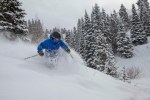
- crestebutte nathan bilow 01
-
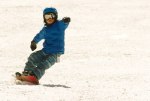
- loveland dustin schaefer
GEMS card now available at Credit Union of Colorado
Posted: October 30, 2012 Filed under: Youth Camps, Zip Line | Tags: Arapahoe Basin, Credit Union, Gem’s Card, Ski Cooper, Ski Resort, skiing Leave a commentColorado Ski Country USA Gems Cards Now Available at Credit Union of Colorado
New Flash Deals Headline 2012/13 Season Gems Card
East Wall at Arapahoe Basin
DENVER, Colo, – Oct. 26, 2012 -Skiers and snowboarders can now benefit from saving on winter ski deals by purchasing a Colorado Gems Card for $10 at any of the Credit Union of Colorado’s 15 statewide locations. The cards are issued by Colorado Ski Country USA, and provide a variety of discounts – including new, time-sensitive Flash Deals – at eight of Colorado’s ski areas.
Credit Union of Colorado is a CSCUSA corporate partner, as well as a Gems program partner, and the primary retail outlet for the cards while supplies last. The Credit Union’s branch locations can be found at www.CUofCO.org.
Credit Union of Colorado also is an official partner for CSCUSA’s 5th and 6th Grade Passport Program, which provides free skiing and snowboarding for 5th graders and inexpensive access for 6th graders. For details on the Passport programs please visit www.ColoradoSki.com/Passport.
The Gems ski areas are Arapahoe Basin, Eldora, Loveland, Monarch, Powderhorn, Ski Cooper, Ski Granby Ranch and Sunlight Mountain. Gems Card offerings vary at each ski area. For details or to purchase a card online please visit www.ColoradoSki.com/Gems.
Opening Day for Ski Resorts in the West have been announced
Posted: October 9, 2012 Filed under: Ski Area, Skiing / Snow Boarding | Tags: ArapahoeBasin, Aspen Highlands, Aspen Mountain, Colorado, Copper Mountain, Loveland, Opening Day, Resort, ski area, skiing, Snow, snowboarding Leave a commentTake your gear into the shop and get it tuned up, Snow is coming (might be man-made but it is still coming!)
Opening day is always subject to weather and snow. Several resorts such as Arapahoe Basin, Loveland, Copper Mountain and Wolf Creek will open earlier if they get good snowfall. Log on to your local resorts website and sign up for announcements on when the actual opening day may be.
California
Alpine Meadows December 7, 2012

Heavenly November 16, 2012
Kirkwood November 21, 2012
Mammoth Mountain November 08, 2012
Northstar November 16, 2012
Squaw Valley November 21, 2012
Colorado
Arapahoe Basin Mid October 2012 – Early June, 2013
Aspen Highlands December 8, 2012 – April 21, 2013
Aspen Mountain November 22, 2012 – April 14, 2013
Beaver Creek November 21, 2012
Breckenridge November 9, 2012
Buttermilk December 15, 2012 – April 7, 2013
Copper Mountain November 2, 2012 – April 14, 2013
Crested Butte November 21, 2012 – April 7, 2013
Echo Mountain December 5, 2012 – April 7, 2013
Eldora November 16, 2012 – April 14, 2013
Howelsen Hill December 1, 2012 – March 17, 2013
Keystone November 2, 2012
Loveland Mid October 2012 – Early May, 2013
Monarch Mountain November 21, 2012 – April 14, 2013
Powderhorn December 13, 2012 – March 31, 2013
Purgatory at DMR November 23, 2012 – March 31, 2013
Silverton Mountain December 1, 2012 – April 14, 2013
Ski Cooper November 22 – November 25, 2012
Ski Granby Ranch December 12, 2012 – March 31, 2013
Snowmass November 22, 2012 – April 14, 2013
Steamboat November 21, 2012 – April 14, 2013
Sunlight December 7, 2012 – March 31, 2013
Telluride November 22, 2012 – April 7, 2013
Vail November 16, 2012
Winter Park November 14, 2012 – April 21, 2013

Wolf Creek November 2, 2012 – April 7, 2013
Utah
Alta November 16, 2012
Beaver Mountain TBA
Brian Head November 16, 2012
Brighton TBA
Canyons November 23, 2012
Deer Valley December 8, 2012
Eagle Point December 21, 2012
Park City November 17, 2012
Powder Mountain November 21, 2012
Snowbasin November 25, 2012
Snowbird November 17, 2012

Solitude November 15, 2012
Sundance December 7, 2012
Wolf Mountain November 23, 2012
Thanks to Get Outdoors for some of the dates on this list.
What do you think? Leave a comment.
If you like this let your friends know or post it on FB, Twitter or LinkedIn
Copyright 2012 Recreation Law (720) Edit Law
Twitter: RecreationLaw
Facebook: Rec.Law.Now
Facebook Page: Outdoor Recreation & Adventure Travel Law
Mobile Site: http://m.recreation-law.com
#RecreationLaw, #@RecreationLaw, #Cycling.Law #Fitness.Law, #Ski.Law, #Outside.Law, #Recreation.Law, #Recreation-Law.com, #Outdoor Law, #Recreation Law, #Outdoor Recreation Law, #Adventure Travel Law, #law, #Travel Law, #Jim Moss, #James H. Moss, #Attorney at Law, #Tourism, #Adventure Tourism, #Rec-Law, #Rec-Law Blog, #Recreation Law, #Recreation Law Blog, #Risk Management, #Human Powered, #Human Powered Recreation,# Cycling Law, #Bicycling Law, #Fitness Law, #Recreation-Law.com, #Backpacking, #Hiking, #Mountaineering, #Ice Climbing, #Rock Climbing, #Ropes Course, #Challenge Course, #Summer Camp, #Camps, #Youth Camps, #Skiing, #Ski Areas, #Negligence, #Snowboarding, #RecreationLaw, #@RecreationLaw, #Cycling.Law #Fitness.Law, #SkiLaw, #Outside.Law, #Recreation.Law, #RecreationLaw.com, #OutdoorLaw, #RecreationLaw, #OutdoorRecreationLaw, #AdventureTravelLaw, #Law, #TravelLaw, #JimMoss, #JamesHMoss, #AttorneyatLaw, #Tourism, #AdventureTourism, #RecLaw, #RecLawBlog, #RecreationLawBlog, #RiskManagement, #HumanPowered, #HumanPoweredRecreation,# CyclingLaw, #BicyclingLaw, #FitnessLaw, #RecreationLaw.com, #Backpacking, #Hiking, #Mountaineering, #IceClimbing, #RockClimbing, #RopesCourse, #ChallengeCourse, #SummerCamp, #Camps, #YouthCamps, #Skiing, #Ski Areas, #Negligence, #Snowboarding, sport and recreation laws, ski law, cycling law, Colorado law, law for recreation and sport managers, bicycling and the law, cycling and the law, ski helmet law, skiers code, skiing accidents, Recreation Lawyer, Ski Lawyer, Paddlesports Lawyer, Cycling Lawyer, Recreational Lawyer, Fitness Lawyer, Rec Lawyer, Challenge Course Lawyer, Ropes Course Lawyer, Zip Line Lawyer, Rock Climbing Lawyer, Adventure Travel Lawyer, Outside Lawyer, Recreation Lawyer, Ski Lawyer, Paddlesports Lawyer, Cycling Lawyer, #RecreationalLawyer, #FitnessLawyer, #RecLawyer, #ChallengeCourseLawyer, #RopesCourseLawyer, #ZipLineLawyer, #RockClimbingLawyer, #AdventureTravelLawyer, #OutsideLawyer, Skiing, Snowboarding, Opening Day, Ski, Ski Area,
WordPress Tags: Resorts,West,Take,gear,Several,Arapahoe,Basin,Loveland,Copper,Mountain,Wolf,Creek,snowfall,announcements,California,Alpine,Meadows,December,November,Kirkwood,Mammoth,Northstar,Squaw,Valley,Colorado,October,June,Aspen,Highlands,April,Beaver,Breckenridge,Buttermilk,Butte,Echo,Eldora,Howelsen,Hill,March,Monarch,Powderhorn,Purgatory,Silverton,Cooper,Granby,Ranch,Snowmass,Steamboat,Telluride,Vail,Winter,Park,Utah,Alta,Brian,Head,Brighton,Canyons,Deer,Eagle,Point,Powder,Snowbasin,Snowbird,Solitude,Sundance,Thanks,Outdoors,Leave,Twitter,LinkedIn,Recreation,Edit,RecreationLaw,Facebook,Page,Outdoor,Adventure,Travel,Blog,Mobile,Site,Outside,Moss,James,Attorney,Tourism,Risk,Management,Human,Rock,Ropes,Course,Challenge,Summer,Camp,Camps,Youth,Areas,Negligence,SkiLaw,OutdoorLaw,OutdoorRecreationLaw,AdventureTravelLaw,TravelLaw,JimMoss,JamesHMoss,AttorneyatLaw,AdventureTourism,RecLaw,RecLawBlog,RecreationLawBlog,RiskManagement,HumanPoweredRecreation,CyclingLaw,BicyclingLaw,FitnessLaw,RopesCourse,ChallengeCourse,SummerCamp,YouthCamps,managers,helmet,accidents,Lawyer,Paddlesports,Recreational,Line,RecreationalLawyer,FitnessLawyer,RecLawyer,ChallengeCourseLawyer,RopesCourseLawyer,ZipLineLawyer,RockClimbingLawyer,AdventureTravelLawyer,OutsideLawyer,Area
Michigan appellate court supports dismissal of a case based on Michigan Ski Area Safety Act
Posted: October 1, 2012 Filed under: Michigan, Ski Area, Skiing / Snow Boarding | Tags: Anderson, Boyne Mountain, Boyne USA, Jackson Hole Mountain Resort, Michigan, Michigan Supreme Court, Ski, Ski Resort, skiing, snowboarding, Terrain park Leave a commentAnderson v Boyne USA, Inc., 2012 Mich. App. LEXIS 1725
Decision is definitive about the issues identifying how the Michigan Ski Area Safety Act is to be interpreted.
This decision is recent and can still be appealed by the plaintiff. However, the decision is written well, short, and thorough. In the case, the plaintiff was paralyzed on a jump in the terrain park at Boyne Mountain Ski Area. The trial court dismissed the plaintiff’s lawsuit based on the Michigan Ski Safety Act, (SASA), MCL 408.341 et seq.
The plaintiff had been skiing at Boyne the prior day and had boarded through the terrain park. The terrain park was marked and had warning signs posted near the entrance into the terrain park. The court stated, “The jump was not a hidden feature of the park, and plaintiff would have seen it had he heeded all posted signs and warnings, as required by the statute.”
Summary of the case
The court in the first paragraph stated the Michigan Ski Safety Act barred the plaintiff’s claims because the jump was “an inherent, obvious, and necessary danger of snowboarding.” The reasoning was based on the SASA MCL 408.342 which states:
(1) While in a ski area, each skier shall do all of the following:
(a) Maintain reasonable control of his or her speed and course at all times.
(b) Stay clear of snow-grooming vehicles and equipment in the ski area.
(c) Heed all posted signs and warnings.
(d) Ski only in ski areas which are marked as open for skiing on the trail board described in section 6a(e).
(2) Each person who participates in the sport of skiing accepts the dangers that inhere in that sport insofar as the dangers are obvious and necessary. Those dangers include, but are not limited to, injuries which can result from variations in terrain; surface or subsurface snow or ice conditions; bare spots; rocks, trees, and other forms of natural growth or debris; collisions with ski lift towers and their components, with other skiers, or with properly marked or plainly visible snowmaking or snow-grooming equipment.
The court then interpreted a prior Michigan Supreme Court decision Anderson v Pine Knob Ski Resort, Inc, 469 Mich 20; 664 NW2d 756 (2003) which stated: “in the hazards is that they all inhere in the sport of skiing and, as long as they are obvious and necessary to the sport, there is immunity from suit.”
The court looked at the jump in the terrain park as a “variation of terrain” which is listed as an inherent risk of skiing in the SASA. The jump was also something the plaintiff should expect to see if one entered the terrain park. A skier or snowboarder must accept the risks associated with the sport, whether going down the slope or “performing tricks in a terrain park.”
The court also looked at the terrain park not as some special part of the ski area but as part of the ski area. The following quote should be used in every motion over terrain park injuries in the future. It shows a true understanding of what a terrain park is.
While it is true, one can snowboard without jumps, a snowboarder enters a terrain park expecting to use jumps, rails, and boxes. Without those features, there would not be a terrain park. If a snowboarder did not want to use those features, he or she would not enter a terrain park. Instead, the snowboarder would simply propel down a ski hill. Therefore, a jump is a necessary feature of a terrain park.
The court looked at the jump the plaintiff was injured jumping and found it was obvious. The plaintiff also knew of the jump, seeing it the previous day.
The court also took on the plaintiff’s expert witness. The plaintiff, through its expert argued the jump was designed or constructed incorrectly. The court found this to be irrelevant. How it was constructed does not matter because it is a risk that the plaintiff assumed as set forth in the statute. The Michigan legislature removed this argument from the case when it passed the law.
So Now What?
Finally, a decision concerning a terrain park from a court that understands what a terrain park is, part of a ski area. However, as stated above, this decision could still be appealed, which may result in a different decision.
This case shows an evolution of the courts understanding of snowboarding and terrain parks. Decisions in the past either failed to comprehend what a terrain park was or held the resort liable because the terrain park was outside the protection of the statute and obviously dangerous. See Dunbar v. Jackson Hole Mountain Resort Corporation, 2004 U.S. App. LEXIS 25807 where the court found the half pipe to be a high-risk feature when the plaintiff fell into it (not fell while in it, but fell from the berm into it.)
Here the court saw the park as just another part of the ski area. Like a roller or a bump made by grooming outside of the terrain park, whether or not the injury was caused in or out of the terrain, park does not matter. The jump is part of the resort as such covered by the definitions in the Michigan Ski Area Safety Act.
|
Jim Moss is an attorney specializing in the legal issues of the outdoor recreation community. He represents guides, guide services, outfitters both as businesses and individuals and the products they use for their business. He has defended Mt. Everest guide services, summer camps, climbing rope manufacturers; avalanche beacon manufactures and many more manufacturers and outdoor industries. Contact Jim at Jim@Rec-Law.us |
Jim is the author or co-author of six books about the legal issues in the outdoor recreation world; the latest is Outdoor Recreation Insurance, Risk Management and Law.
To see Jim’s complete bio go here and to see his CV you can find it here. To find out the purpose of this website go here.
G-YQ06K3L262
What do you think? Leave a comment.
If you like this let your friends know or post it on FB, Twitter or LinkedIn
Author: Outdoor Recreation Insurance, Risk Management and Law

Outdoor Recreation Insurance, Risk Management and Law
Facebook Page: Outdoor Recreation & Adventure Travel Law
Email: Jim@Rec-Law.US
By Recreation Law Rec-law@recreation-law.com James H. Moss
@2023 Summit Magic Publishing, LLC
#RecreationLaw, #@RecreationLaw, #Cycling.Law #Fitness.Law, #Ski.Law, #Outside.Law, #Recreation.Law, #Recreation-Law.com, #Outdoor Law, #Recreation Law, #Outdoor Recreation Law, #Adventure Travel Law, #law, #Travel Law, #Jim Moss, #James H. Moss, #Attorney at Law, #Tourism, #Adventure Tourism, #Rec-Law, #Rec-Law Blog, #Recreation Law, #Recreation Law Blog, #Risk Management, #Human Powered, #Human Powered Recreation,# Cycling Law, #Bicycling Law, #Fitness Law, #Recreation-Law.com, #Backpacking, #Hiking, #Mountaineering, #Ice Climbing, #Rock Climbing, #Ropes Course, #Challenge Course, #Summer Camp, #Camps, #Youth Camps, #Skiing, #Ski Areas, #Negligence, #Snowboarding, #RecreationLaw, #@RecreationLaw, #Cycling.Law #Fitness.Law, #SkiLaw, #Outside.Law, #Recreation.Law, #RecreationLaw.com, #OutdoorLaw, #RecreationLaw, #OutdoorRecreationLaw, #AdventureTravelLaw, #Law, #TravelLaw, #JimMoss, #JamesHMoss, #AttorneyatLaw, #Tourism, #AdventureTourism, #RecLaw, #RecLawBlog, #RecreationLawBlog, #RiskManagement, #HumanPowered, #HumanPoweredRecreation,# CyclingLaw, #BicyclingLaw, #FitnessLaw, #RecreationLaw.com, #Backpacking, #Hiking, #Mountaineering, #IceClimbing, #RockClimbing, #RopesCourse, #ChallengeCourse, #SummerCamp, #Camps, #YouthCamps, #Skiing, #Ski Areas, #Negligence, #Snowboarding, sport and recreation laws, ski law, cycling law, Colorado law, law for recreation and sport managers, bicycling and the law, cycling and the law, ski helmet law, skiers code, skiing accidents, Recreation Lawyer, Ski Lawyer, Paddlesports Lawyer, Cycling Lawyer, Recreational Lawyer, Fitness Lawyer, Rec Lawyer, Challenge Course Lawyer, Ropes Course Lawyer, Zip Line Lawyer, Rock Climbing Lawyer, Adventure Travel Lawyer, Outside Lawyer, Recreation Lawyer, Ski Lawyer, Paddlesports Lawyer, Cycling Lawyer, #RecreationalLawyer, #FitnessLawyer, #RecLawyer, #ChallengeCourseLawyer, #RopesCourseLawyer, #ZipLineLawyer, #RockClimbingLawyer, #AdventureTravelLawyer, #OutsideLawyer, Boyne Mountain Ski Area, Boyne, Michigan, SASA, Michigan Ski Area Safety Act, Ski Area Safety Act, Terrain Park, Jump,
What’s new at Colorado Ski Resorts for the 2012-13 Ski Season
Posted: September 11, 2012 Filed under: Ski Area, Uncategorized | Tags: Alpine skiing, Arapahoe Basin, Colorado, Copper Mountain, Crested Butte Mountain Resort, ski area, skiing, snowboarding, United States Ski Team 1 Comment
Unrivaled Guest Experience at the Core of Colorado Ski Country USA Resort Enhancements
For the 2012-13 ski season, Colorado Ski Country USA (CSCUSA) resorts are dedicated to solidifying Colorado as the top ski vacation destination, including exceeding guest expectations for services, amenities and resort facilities.
Colorado is synonymous with skiing because guests know they will find consistent powder snow framed by top-notch services. As part of their commitment, resorts are enhancing their profiles this season, adding new infrastructural components that will make visitors’ time on the slopes more efficient and rewarding. Improved snow making and maintenance at a number of resorts is calculated to enhance skiing and riding, while guest-facing developments such as new restaurants, increased terrain and additional built-in activities will supplement the overall guest experience.
These capabilities, along with numerous other additions and renovations throughout Colorado Ski Country, are intended to usher in a new era of guest service and help maintain Colorado’s position as the nation’s leading state for winter activities. Below is a complete round-up of the 2012-13 capital improvements.
New Infrastructural Improvements
Howelsen Hill, the oldest continuous resort in operation west of the Mississippi, is building a $1.75 million HS45 (Hill Size 45) ski jump that will be fully functional in summer and winter. Owned by the City of Steamboat Springs, Howelsen anticipates finishing this intensive project prior to this winter. When completed, the HS45 Ski Jump’s plastic surface will be sprayed with water, enabling skiers to slide on the surface and allowing youth level competitors to jump at Howelsen Hill in both the summer and winter. This will provide training for young athletes from around the nation to be competitive on a national and international basis.
Wolf Creek’s new Race Hutch will debut this season, located at the bottom of Charisma where the race-course finishes. Race equipment, fencing, gates, sound system and banners will be located in this small building. Also, new water-free composting restrooms will be installed at the base of the Alberta Lift replacing the current temporary port-a-potties.
Snowmass will add 230 acres of new terrain on Burnt Mountain this season, bringing total skiable acreage to 3,362 acres, making it the second largest ski area in Colorado. The terrain on Burnt Mountain features rolling, low-angle meadows, glades and spectacular views into the valleys between Snowmass and Buttermilk.
Loveland’s new on-mountain developments include complete renovations on The Ptarmigan Roost Cabin at the top of Chair 2 and The Rockhouse at the top of Chair 1. The interiors have been redone and the decks expanded to create more space for skiers and riders to take a break between runs and enjoy the views. The resort will also reconfigure Chair 2 to add an off-load station below the current re-load station, allowing the area to offer early and late season lessons for beginner skiers and snowboarders when Loveland Valley is closed.
In addition to its new on-mountain developments, Loveland will utilize its new snowcat to take guests up to The Ridge, a free ride designed to grant convenient access to its wider terrain.
Monarch received Forest Service acceptance of its new master plan last November. The Base Lodge expansion and remodel is the first project, a $2.3 million investment. An additional 16,000 square feet of space will enhance the facilities and services. The improvements include rejuvenation of the entire lodge, including creating indoor stairs to all levels, a handicap elevator, a fire suppression system and more seating throughout the Lodge.
Guests will notice the newly expanded Base Lodge upon arrival. On the right side of the building at the parking level there is now a direct-to-mountain walk-thru entrance.
As part of its commitment to improving the experience for beginners and introducing newbies to the sport, Arapahoe Basin is adding an $80,000 conveyor lift in the Pika Place Learning Arena. Already home to North America’s highest terrain park, the resort will prepare to open the 2012-13 season with the addition of a beginner-level terrain park, called Ace’s Kids Park, which will be adjacent to the new lift.
Winter Park Resort will add a new Tube Park for the upcoming season. This family-friendly amenity will give guests yet another exciting activity in the Village during the day and into the evening. Opening in December 2012, the new park will feature four lanes, conveyor lift access and a state-of-the-art warming structure with restrooms, hot chocolate service and flexible space available for groups.
Launched for the summer of 2012, Copper Mountain’s newest attraction – the Alpine Rush Zip Line – will continue to operate throughout the 2012-13 winter ski season. This family-friendly ride features a unique dueling-design which allows two guests to fly side-by-side as they soar 30 feet above Copper’s bustling West Lake ice skating rink. The flight travels 300 feet across the lake, reaching speeds of up to 30mph. Alpine Rush makes the perfect addition to Copper’s intimate, pedestrian-only Village, which also features restaurants, shopping and comfortable lodging, all within walking distance to the lifts.
Snowmaking Improvements
Colorado is known for having consistent snow conditions and the 2012-13 season will be no exception as a number of resorts invested in snowmaking equipment. Arapahoe Basin has purchased a new $250,000 snowcat, and Winter Park Resort will replace two of its snowcats, resulting in improved snow maintenance at both resorts. Steamboat Resort will add a new Bison groomer to its fleet, expanding and upgrading snowmaking capabilities, and will also add new 4-stroke energy efficient snowmobiles. Howelsen Hill will be introducing a new Super PoleCat snow gun to facilitate the hill’s snowmaking ability, complementing its new ski jump.
Last season, Copper Mountain partnered with the U.S. Ski and Snowboard Association (USSA) to create the U.S. Ski Team Speed Center, an exclusive on-snow alpine ski racing venue designed to provide full length downhill training by early November each season. For the 2012-13 season Copper will fine-tune the automated snowmaking system for the Speed Center.
New snowmaking pipes are being installed at Crested Butte Mountain Resort, adding more acreage and more capacity to the East River a rea. Enhanced
snowmaking will allow the resort to open this area sooner, with better coverage in the early winter season. The resort has also leased a new Prinoth snow groomer, the Bison X,which will maintain one of the state’s best corduroy.
During the off-season, Telluride completed an operational and energy analysis on existing snowmaking equipment. After this study, the resort received a snowmaking grant through National Ski Areas Association’s (NSAA) Sustainable Slopes Program that includes five high-efficiency snowmaking guns. These new guns will be a significant addition to the 10 high-efficiency guns purchased last season, and complement the three new Piston Bully snowcat groomers that Telluride’s grooming department has added to its fleet to improve terrain grooming.
Wolf Creek not only purchased a new Piston Bully 400 Snowcat to improve terrain options, but has installed two more Gazex exploders, one in the Horseshoe Bowl and one on the Knife Ridge. The Gazex and Aviblasters are an integral part of Wolf Creek’s Avalanche Hazard Reduction Program.
Partnerships, Rental Fleets, Ski School Improvements and New Access
Copper Mountain, home of the unique Woodward at Copper, has acquired a 14’x14’ Super Tramp at the facility for the upcoming season. There are only three Super Tramps in the country. Woodward, dedicated to park and pipe progression, has also added a portable skate mini-ramp.
Silverton Mountain will begin hiking access, and heli drops for an upgrade fee, to new runs that require rappels in or out of couloirs and/or big snowy aprons. This will allow access to places like the Mad Dog, Close Out Couloirs off Storm Peak, and the Hidden Valley – a large, open powdery bowl with no accessibility except via a 100 ft. rappel. The new activity is $425 per person and promises the adventure of a lifetime.
Steamboat Resort has partnered with ski manufacturer Rossignol to create the Rossignol Experience Center. Rossignol’s line of Experience Skis were created to fit the needs of skiers ranging from novice to expert, making the progression easier, faster and more fun. Similarly, the upcoming season will see yet another step in the progression of Durango Mountain Resort as it has also partnered with ski manufacturer Rossignol to open a Rossignol Experience Center. The Durango Mountain Resort Ski School has been trained by Rossignol to incorporate the new Experience technology into their lesson programs, minimizing the learning curve and getting resort skiers out and enjoying the entire mountain quicker than ever. Crested Butte Mountain Resort will also introduce its new partnership with Rossignol this season, and the resort’s Rental and Demo Center will utilize Rossignol’s Experience Demo program to aid in the learning process.
Monarch is investing an additional $300,000 to improve the guest experience by expanding its rental and demo fleet of skis, snowboards and boots. Additionally, the Monarch ski school staff will don new highly visible green uniforms, and ski patrol will add new snowmobiles to assist guests and open terrain quickly and more efficiently.
Winter Park Resort has grown its rental fleet by adding new helmets, boots, skis and snowboards to ensure guests can enjoy the newest equipment available, while Wolf Creek has also invested heavily in its rental fleet to provide the same opportunity.
Helmets: why cycling, skiing, skateboarding helmets don’t work
Posted: August 15, 2012 Filed under: Cycling, Skiing / Snow Boarding | Tags: Bicycle helmet, Bike Helmet, biking, CPSC, Cycling, Cycling Helmet, helmet, Helmets, skiing, UIAA 3 CommentsThanks to Brad Waldron at Kali Protectives for giving me the visual to explain this.
A helmet needs to absorb energy to work. The more energy a helmet absorbs the more protection a helmet provides. If you look at the inside of your helmet

what is there to absorb energy?
A helmet does not work by being a hard surface to protect your head from head injuries. Hard surfaces protect your head from pointed objects. Think Knights of the Round Table and spears and arrows. If you are riding a bike or skiing and someone is shooting arrows at you, you need a hard helmet.
Hitting the ground is different. Your brain bounces around inside your skill causing damage; a concussion. You need something to absorb the impact and soften the blow or extend the time the impact (force) is being applied to your head, which softens the blow. Helmets as they are currently used, do not do that.
Think about the issue this way. If you drop a weight on an egg, say 11 pounds from 4 feet the egg is going to smash. If you put a book on top of the egg and drop the 11-pound weight the egg is still going to smash. The amount of energy transmitted to the egg maybe reduced by the book; however, the energy reduction is not enough to protect the egg.
A Bicycle or ski helmet is the same way. There is some energy absorption, but not enough to protect your brain.
If you want to know why I picked 11 pounds from 4 feet that is the test for helmets. Watch Video of cycling helmet testing. No one is testing the force on the head, if the helmet absorbs any of the force, or if the impact broke your neck.
On top of that, always remember the helmet is tested with the impact landing in the center top of the helmet. When you fall to make sure you drive your head into the ground hitting the helmet in the center on top of your head to receive the maximum protection.
See for yourself. This is the UIAA (European) Test for Helmets.

This test is for climbing and some European ski helmets. In the US, a bike helmet and ski helmets are not tested for lateral force, slippage or chin strap strength.
There are some organizations that test the helmets to greater extremes such as Consumer Reports, but all they are doing is testing the helmet. They are not looking at whether the helmet protects your head. See Consumer Reports Bike Helmet Testing.
We are not testing whether a helmet looks good after an impact. We are testing whether the helmet protects your head from an impact and the drop test does not test that sufficiently, if at all.
If you want to test this yourself, figure a way to stick an egg under a helmet and drop a weight on the helmet. The egg is still going to crack or break.
Yes, your head is not an egg. It is just easier to see the results with an egg. The helmet did not decrease the pressure enough to protect the egg. The injury still occurred. If you could take the time to measure the breaking strength of an egg and then start below that number and drop weights on the helmet you would see a difference eventually which would be the amount of protections the helmet provides. However, that number would be small and probably no different from what a plastic bowl would do.
If you really want to test this, go buy two eggs. Drop one from 15 feet and see what happens to the egg. Tape the other one in your helmet and drop it from the same height. The egg will crack (and make a real mess in your helmet).
Want more laughs about this? Watch this video where a cardboard helmet does a better job of protecting your head, by absorbing more force, than a bicycle helmet. See Kranium helmet Crash Test
Yes, your head is not an egg. Yes, a helmet will protect you from minor hits. Yes, a helmet is probably better than not using a helmet, unless the process stops you from riding a bike or skiing. The health benefits of activity out weight the risk of a head injury.
If that is the case, then why not wear a helmet when you drive, shower or work in the kitchen. All three have a far greater risk of head injuries then cycling.
However, we have not looked at whether using helmets deters activities. See TEDxCopenhagen – Mikael Colville-Andersen – Why We Shouldn’t Bike with a Helmet. I love the fact the in the video Mr. Colville-Andersen lets you know that the helmet tests were designed for pedestrians wearing helmets. Also he points out that helmet laws do not reduce head injuries. They reduce the total number of people riding bikes, which results in a reduction of head injuries.
Nor have we looked at the issue of the advertised protection versus the real protection afforded by a helmet.
Finally, we have not looked at whether wearing a helmet makes you react in a way to protect other parts of your body rather than your head. If you fall you natural protect your head. Your arms go out to keep your head form hitting the ground and then your cradle your head from being hit or hitting the ground. This accounts for tons of videos and statements when people hold up their battered helmet and say my helmet saved my life.
However, a helmet will not save your life. If you want to be cool and have a helmet that might protect your head watch this video: Hövding krocktest
But without bike and ski helmets where would we mount our video cameras?
References:

Gourley, Jim, Bicycle Times August 1, 2011, Pull Your Head Out of Your…Helmet
Kim Gorgens: Protecting the brain against concussion
A.J. Jacobs: How healthy living nearly killed me
TEDxCopenhagen – Mikael Colville-Andersen – Why We Shouldn’t Bike with a Helmet
Other Articles on Helmets:
A father of a deceased skier pushing for a helmet law in New Jersey.
A helmet manufacture understands the issues(Uvex, Mouthguards)
A new idea that makes sense in helmets: the Bern Hard Hat
Does being safe make us stupid? Studies say yes.
Great article on why helmet laws are stupid
Great editorial questioning why we need laws to “protect” us from ourselves.
Helmet death ignited by misconception and famous personalities
Helmets do not increase risk of a neck injury when skiing
I could not make my son wear a helmet so I’m going to make you wear one
Mixed emotions, but a lot of I told you so.
OSHA Officially recommending helmets for ski area employees
Other Voice on the Helmet Debate
Recent UK poll shows that 10% of cyclists would quite biking if there was a compulsory helmet law.
Skiing/Boarding Helmets and what is the correct message
Survey of UK physicians shows them against mandatory bicycle helmet laws.
What do you think? Leave a comment.
If you like this let your friends know or post it on FB, Twitter or LinkedIn
Copyright 2012 Recreation Law (720) Edit Law
Twitter: RecreationLaw
Facebook: Rec.Law.Now
Facebook Page: Outdoor Recreation & Adventure Travel Law
Mobile Site: http://m.recreation-law.com
#RecreationLaw, #@RecreationLaw, #Cycling.Law #Fitness.Law, #Ski.Law, #Outside.Law, #Recreation.Law, #Recreation-Law.com, #Outdoor Law, #Recreation Law, #Outdoor Recreation Law, #Adventure Travel Law, #law, #Travel Law, #Jim Moss, #James H. Moss, #Attorney at Law, #Tourism, #Adventure Tourism, #Rec-Law, #Rec-Law Blog, #Recreation Law, #Recreation Law Blog, #Risk Management, #Human Powered, #Human Powered Recreation,# Cycling Law, #Bicycling Law, #Fitness Law, #Recreation-Law.com, #Backpacking, #Hiking, #Mountaineering, #Ice Climbing, #Rock Climbing, #Ropes Course, #Challenge Course, #Summer Camp, #Camps, #Youth Camps, #Skiing, #Ski Areas, #Negligence, #Snowboarding, #RecreationLaw, #@RecreationLaw, #Cycling.Law #Fitness.Law, #SkiLaw, #Outside.Law, #Recreation.Law, #RecreationLaw.com, #OutdoorLaw, #RecreationLaw, #OutdoorRecreationLaw, #AdventureTravelLaw, #Law, #TravelLaw, #JimMoss, #JamesHMoss, #AttorneyatLaw, #Tourism, #AdventureTourism, #RecLaw, #RecLawBlog, #RecreationLawBlog, #RiskManagement, #HumanPowered, #HumanPoweredRecreation,# CyclingLaw, #BicyclingLaw, #FitnessLaw, #RecreationLaw.com, #Backpacking, #Hiking, #Mountaineering, #IceClimbing, #RockClimbing, #RopesCourse, #ChallengeCourse, #SummerCamp, #Camps, #YouthCamps, #Skiing, #Ski Areas, #Negligence, #Snowboarding, sport and recreation laws, ski law, cycling law, Colorado law, law for recreation and sport managers, bicycling and the law, cycling and the law, ski helmet law, skiers code, skiing accidents, Recreation Lawyer, Ski Lawyer, Paddlesports Lawyer, Cycling Lawyer, Recreational Lawyer, Fitness Lawyer, Rec Lawyer, Challenge Course Lawyer, Ropes Course Lawyer, Zip Line Lawyer, Rock Climbing Lawyer, Adventure Travel Lawyer, Outside Lawyer, Recreation Lawyer, Ski Lawyer, Paddlesports Lawyer, Cycling Lawyer, #RecreationalLawyer, #FitnessLawyer, #RecLawyer, #ChallengeCourseLawyer, #RopesCourseLawyer, #ZipLineLawyer, #RockClimbingLawyer, #AdventureTravelLawyer, #OutsideLawyer, Helmet, Helmets, Testing, UIAA, CPSC, Bicycle, Ski,
WordPress Tags: Helmets,Thanks,Brad,Waldron,Kali,helmet,energy,protection,injuries,Hard,Think,Knights,Round,Table,arrows,bike,brain,skill,impact,feet,reduction,Bicycle,absorption,Watch,Video,neck,UIAA,European,Test,chin,strength,extremes,Consumer,Reports,injury,weights,difference,protections,Drop,Tape,Want,Kranium,Crash,health,kitchen,TEDxCopenhagen,Mikael,Colville,Andersen,Shouldn,fact,pedestrians,Also,laws,bikes,statements,life,References,Gourley,Times,August,Pull,Head,Gorgens,Jacobs,Articles,Jersey,Uvex,Mouthguards,Bern,California,boarders,governor,signature,Does,Studies,Great,article,death,misconception,personalities,legislator,emotions,information,hour,National,Goods,Association,Areas,OSHA,area,employees,Voice,Debate,Recent,message,Survey,physicians,Leave,Twitter,LinkedIn,Recreation,Edit,RecreationLaw,Facebook,Page,Outdoor,Adventure,Travel,Blog,Mobile,Site,Outside,Moss,James,Attorney,Tourism,Risk,Management,Human,Rock,Ropes,Course,Challenge,Summer,Camp,Camps,Youth,Negligence,SkiLaw,OutdoorLaw,OutdoorRecreationLaw,AdventureTravelLaw,TravelLaw,JimMoss,JamesHMoss,AttorneyatLaw,AdventureTourism,RecLaw,RecLawBlog,RecreationLawBlog,RiskManagement,HumanPoweredRecreation,CyclingLaw,BicyclingLaw,FitnessLaw,RopesCourse,ChallengeCourse,SummerCamp,YouthCamps,Colorado,managers,accidents,Lawyer,Paddlesports,Recreational,Line,RecreationalLawyer,FitnessLawyer,RecLawyer,ChallengeCourseLawyer,RopesCourseLawyer,ZipLineLawyer,RockClimbingLawyer,AdventureTravelLawyer,OutsideLawyer,CPSC,concussion,whether,skiers

Attorney and client do not understand how ski bindings work
Posted: June 26, 2012 Filed under: Skiing / Snow Boarding | Tags: Four Seasons, Jackson Hole, Jackson Hole Mountain Resort, Jim Moss, Lawsuit, RecreationLaw, Ski binding, skiing Leave a comment
Complaint alleges that a binding failed during a slow fall.
Torque, pressure is the reason why ski bindings release. If there is not enough torque, then the binding will not release. Slow falls do not produce enough torque to release a binding. The overall pressure may be enough; however, the pressure is over a longer period of time which never meets the limits that release the binding.
Consequently, slow falls may not release a ski binding.
The plaintiff was skiing slowly when she fell according to the article. Her binding failed to release resulting in a knee injury and a severely broken leg. The plaintiff’s complaint alleges that skiing slowly should have prevented the injuries. Consequently, the rented binding was at fault.
Because plaintiff was skiing at such a low rate of speed on an easy run, the injuries she suffered could not have been caused in the absence of the negligence of the defendants.
The plaintiff rented the skis and bindings from the Four Seasons Resort at Jackson Hole Resort.
This is going to be interesting.
What do you think? Leave a comment.
If you like this let your friends know or post it on FB, Twitter or LinkedIn
Copyright 2012 Recreation Law (720) Edit Law
Twitter: RecreationLaw
Facebook: Rec.Law.Now
Facebook Page: Outdoor Recreation & Adventure Travel Law
Mobile Site: http://m.recreation-law.com
#RecreationLaw, #@RecreationLaw, #Cycling.Law #Fitness.Law, #Ski.Law, #Outside.Law, #Recreation.Law, #Recreation-Law.com, #Outdoor Law, #Recreation Law, #Outdoor Recreation Law, #Adventure Travel Law, #law, #Travel Law, #Jim Moss, #James H. Moss, #Attorney at Law, #Tourism, #Adventure Tourism, #Rec-Law, #Rec-Law Blog, #Recreation Law, #Recreation Law Blog, #Risk Management, #Human Powered, #Human Powered Recreation,# Cycling Law, #Bicycling Law, #Fitness Law, #Recreation-Law.com, #Backpacking, #Hiking, #Mountaineering, #Ice Climbing, #Rock Climbing, #Ropes Course, #Challenge Course, #Summer Camp, #Camps, #Youth Camps, #Skiing, #Ski Areas, #Negligence, #Snowboarding, #RecreationLaw, #@RecreationLaw, #Cycling.Law #Fitness.Law, #SkiLaw, #Outside.Law, #Recreation.Law, #RecreationLaw.com, #OutdoorLaw, #RecreationLaw, #OutdoorRecreationLaw, #AdventureTravelLaw, #Law, #TravelLaw, #JimMoss, #JamesHMoss, #AttorneyatLaw, #Tourism, #AdventureTourism, #RecLaw, #RecLawBlog, #RecreationLawBlog, #RiskManagement, #HumanPowered, #HumanPoweredRecreation,# CyclingLaw, #BicyclingLaw, #FitnessLaw, #RecreationLaw.com, #Backpacking, #Hiking, #Mountaineering, #IceClimbing, #RockClimbing, #RopesCourse, #ChallengeCourse, #SummerCamp, #Camps, #YouthCamps, #Skiing, #Ski Areas, #Negligence, #Snowboarding, sport and recreation laws, ski law, cycling law, Colorado law, law for recreation and sport managers, bicycling and the law, cycling and the law, ski helmet law, skiers code, skiing accidents, Jackson Hole Resort, Four Seasons Resort, Ski Binding, Binding,
WordPress Tags: Attorney,client,bindings,Complaint,Torque,plaintiff,article,knee,injury,injuries,absence,negligence,defendants,Four,Seasons,Resort,Jackson,Hole,rental,Leave,Twitter,LinkedIn,Recreation,Edit,RecreationLaw,Facebook,Page,Outdoor,Adventure,Travel,Blog,Mobile,Site,Outside,Moss,James,Tourism,Risk,Management,Human,Rock,Ropes,Course,Challenge,Summer,Camp,Camps,Youth,Areas,SkiLaw,OutdoorLaw,OutdoorRecreationLaw,AdventureTravelLaw,TravelLaw,JimMoss,JamesHMoss,AttorneyatLaw,AdventureTourism,RecLaw,RecLawBlog,RecreationLawBlog,RiskManagement,HumanPoweredRecreation,CyclingLaw,BicyclingLaw,FitnessLaw,RopesCourse,ChallengeCourse,SummerCamp,YouthCamps,Colorado,managers,helmet,accidents
Client dies, be banned from your occupation for five years.
Posted: May 10, 2012 Filed under: Avalanche, Skiing / Snow Boarding | Tags: Adventure travel, Criminal, Europe, Jim Moss, Ski, ski instructor, skiing, skiing accidents Leave a commentOnce you leave the US, you are no longer protected by US laws.
Two ski instructors are facing a five year ban from skiing and a fine for the death of a client in an Avalanche. The ski instructors had taken the client into a known danger zone where the client was caught and died.
See Prosecutor wants 5 year ban for ESF instructors

What do you think? Leave a comment.
If you like this let your friends know or post it on FB, Twitter or LinkedIn
Copyright 2012 Recreation Law (720) Edit Law
Twitter: RecreationLaw
Facebook: Rec.Law.Now
Facebook Page: Outdoor Recreation & Adventure Travel Law
Mobile Site: http://m.recreation-law.com
#RecreationLaw, #@RecreationLaw, #Cycling.Law #Fitness.Law, #Ski.Law, #Outside.Law, #Recreation.Law, #Recreation-Law.com, #Outdoor Law, #Recreation Law, #Outdoor Recreation Law, #Adventure Travel Law, #law, #Travel Law, #Jim Moss, #James H. Moss, #Attorney at Law, #Tourism, #Adventure Tourism, #Rec-Law, #Rec-Law Blog, #Recreation Law, #Recreation Law Blog, #Risk Management, #Human Powered, #Human Powered Recreation,# Cycling Law, #Bicycling Law, #Fitness Law, #Recreation-Law.com, #Backpacking, #Hiking, #Mountaineering, #Ice Climbing, #Rock Climbing, #Ropes Course, #Challenge Course, #Summer Camp, #Camps, #Youth Camps, #Skiing, #Ski Areas, #Negligence, #Snowboarding, #RecreationLaw, #@RecreationLaw, #Cycling.Law #Fitness.Law, #SkiLaw, #Outside.Law, #Recreation.Law, #RecreationLaw.com, #OutdoorLaw, #RecreationLaw, #OutdoorRecreationLaw, #AdventureTravelLaw, #Law, #TravelLaw, #JimMoss, #JamesHMoss, #AttorneyatLaw, #Tourism, #AdventureTourism, #RecLaw, #RecLawBlog, #RecreationLawBlog, #RiskManagement, #HumanPowered, #HumanPoweredRecreation,# CyclingLaw, #BicyclingLaw, #FitnessLaw, #RecreationLaw.com, #Backpacking, #Hiking, #Mountaineering, #IceClimbing, #RockClimbing, #RopesCourse, #ChallengeCourse, #SummerCamp, #Camps, #YouthCamps, #Skiing, #Ski Areas, #Negligence, #Snowboarding, sport and recreation laws, ski law, cycling law, Colorado law, law for recreation and sport managers, bicycling and the law, cycling and the law, ski helmet law, skiers code, skiing accidents, skiing, ski instructor, Europe, Criminal,
WordPress Tags: Client,occupation,Once,laws,instructors,death,Avalanche,danger,Prosecutor,Leave,Twitter,LinkedIn,Recreation,Edit,RecreationLaw,Facebook,Page,Outdoor,Adventure,Travel,Blog,Mobile,Site,Outside,Moss,James,Attorney,Tourism,Risk,Management,Human,Rock,Ropes,Course,Challenge,Summer,Camp,Camps,Youth,Areas,Negligence,SkiLaw,OutdoorLaw,OutdoorRecreationLaw,AdventureTravelLaw,TravelLaw,JimMoss,JamesHMoss,AttorneyatLaw,AdventureTourism,RecLaw,RecLawBlog,RecreationLawBlog,RiskManagement,HumanPoweredRecreation,CyclingLaw,BicyclingLaw,FitnessLaw,RopesCourse,ChallengeCourse,SummerCamp,YouthCamps,Colorado,managers,helmet,accidents,instructor,Europe,Criminal,five
LaFond v. Salomon North America, Inc. et al., 2011 Mass. Super. LEXIS 344
Posted: March 25, 2012 Filed under: Legal Case, Massachusetts, Skiing / Snow Boarding | Tags: Jurisdiction, Massachusetts, Personal jurisdiction, Salomon, Salomon SAS, Ski binding, skiing, United States, Venue Leave a commentGary LaFond v. Salomon North America, Inc. et al.1
1 Amer Sports Winter & Outdoor Company, and Salomon S.A.
Opinion No.: 118812, Docket Number: SUCV2008-01383
SUPERIOR COURT OF MASSACHUSETTS, AT SUFFOLK
2011 Mass. Super. LEXIS 344
December 19, 2011, Decided
December 20, 2011, File
JUDGES: [*1] Elizabeth M. Fahey, Justice of the Superior Court.
OPINION BY: Elizabeth M. Fahey
OPINION
MEMORANDUM OF DECISION AND ORDER ON DEFENDANT SALOMON S.A.’S MOTION TO DISMISS FOR LACK OF PERSONAL JURISDICTION
The plaintiff, Gary LaFond (“LaFond”), was injured when one of his ski bindings broke while he was skiing in Utah. LaFond brought this action against Salomon North America, Inc., Amer Sports Winter & Outdoor Company (“ASWO”), and Salomon S.A., asserting claims of negligence, breach of implied warranty of merchantability, and violation of G.L.c. 93A. The action is now before the court on Salomon, SA’s motion to dismiss for lack of personal jurisdiction. For the following reasons, the motion is DENIED.
BACKGROUND
The following relevant jurisdictional facts are taken from the materials before the court. LaFond is a resident of Massachusetts. Salomon S.A. is a French corporation with its principal place of business in Annecy, France.2 According to the declaration of the senior legal counsel for Salomon S.A.’s European legal department, Laurence Grollier (“Grollier”), Salomon S.A. does not maintain an office, employees, agents, or real property in Massachusetts. It distributes its Salomon-branded products in the [*2] United States through a single entity, ASWO, which submits orders to Salomon S.A. in France. Salomon S.A. then ships the products to AWSO in Ogden, Utah, but it has no further involvement or control over the resale and distribution of the shipped products. Salomon S.A. has not entered into any contracts to perform services in Massachusetts.
– – – – – – – – – – – – – – Footnotes – – – – – – – – – – – – – – –
2 The corporation states that LaFond has mistakenly referred to it as Salomon S.A., whereas its title should be Salomon S.A.S. Given that the corporation has been entered into the court’s docket as Salomon S.A., the court will use that title.
– – – – – – – – – – – – End Footnotes- – – – – – – – – – – – – –
Salomon S.A. has not visited Massachusetts to market, promote, or solicit sales of its products, including the binding that allegedly caused LaFond’s injury. Salomon S.A. does maintain a website, http://www.salomon.com (“Website”), which is accessible (presumably all the time) in Massachusetts. The Website includes information on Salomon products, but U.S. consumers may not purchase such products directly through the Website. If a consumer wishes to purchase a Salomon product, however, the Website includes a search function whereby said consumer can locate area retail stores that sell Salomon-branded products. Counsel [*3] for LaFond avers in an affidavit that she conducted such a search on the website and located fifty-six Massachusetts retailers that sell Salomon products.
In June 2004, LaFond accessed the Website and researched different Salomon alpine ski bindings. Based in part on the information the Website provided, LaFond decided to buy Salomon 912Ti alpine ski bindings. Knowing that Bob Smith’s Wilderness House (“Wilderness House”) sold Salomon products at its Boston location, he visited that store to buy the Salomon 912Ti bindings, doing so in June 2004.
LaFond alleges that he was skiing in Alta, Utah on January 20, 2007, when the heel plate of his left ski binding broke, causing him to fall and injure himself seriously. Upon returning to Massachusetts, LaFond brought the defective binding back to Wilderness House, reported his January 20, 2007 accident to the store, and requested that the defective binding be replaced with a new Salomon binding. The materials before the court indicate that a new binding was shipped to Wilderness House, but it is not clear who shipped the binding.
DISCUSSION
HN1Go to this Headnote in the case.In order for a Massachusetts court to exercise personal jurisdiction over a non-resident defendant, the [*4] defendant’s conduct must fall within the limits of the Massachusetts long-arm statute, G.L.c. 223A, §3(a)-(h). See Good Hope Indus., Inc. v. Ryder Scott Co., 378 Mass. 1, 5-6, 389 N.E.2d 76 (1979). In addition, the exercise of personal jurisdiction must comply with the due process requirements of the U.S. Constitution. See id. at 5-6. These two parts often converge into a single inquiry, because G.L.c. 223A “functions as ‘an assertion of jurisdiction over the person to the limits allowed by the Constitution of the United States.'” Id. at 6, quoting “Automatic” Sprinkler Corp. of Am. v. Seneca Foods Corp., 361 Mass. 441, 443, 280 N.E.2d 423 (1972).
HN2Go to this Headnote in the case.When confronted with a motion to dismiss under Mass.R.Civ.P. 12(b)(2), the plaintiff bears the burden of establishing facts sufficient to show that the Massachusetts’ court has personal jurisdiction over the defendant. See Droukas v. Divers Training Academy, Inc., 375 Mass. 149, 151, 376 N.E.2d 548 (1978). The court views the jurisdictional facts in the light most favorable to the plaintiff. See Cepeda v. Kass, 62 Mass.App.Ct. 732, 738, 819 N.E.2d 979 (2004). Nevertheless, the court does not have to “credit conclusory allegations or draw farfetched inferences.” Workgroup Tech. Corp. v. MGM Grand Hotel, LLC, 246 F.Sup.2d 102, 108 (D.Mass. 2003) [*5] (citations omitted).
I. Long-Arm Statute
LaFond argues that this court may exercise personal jurisdiction over Salomon S.A. based on three provisions of the long-arm statute, G.L.c. 223A, §3(a), (b), and (f). Because this court finds that jurisdiction is appropriate under G.L.c. 223A, §3(a), it will not address the other provisions.
A. G.L.c. 223A, §3(a
HN3Go to this Headnote in the case.”A court may exercise personal jurisdiction over a person, who acts directly or by an agent, as to a cause of action in law or equity arising from the person’s (a) transacting any business in this commonwealth . . .” G.L.c. 223A, §3(a). The “transacting any business” language is construed broadly. See Tatro v. Manor Care, Inc., 416 Mass. 763, 767, 625 N.E.2d 549 (1994). “Although an isolated (and minor) transaction with a Massachusetts resident may be insufficient, generally the purposeful and successful solicitation of business from residents of the Commonwealth, by a defendant or its agent, will suffice to satisfy this requirement.” Id.
This court concludes that Salomon S.A. has engaged in such purposeful and successful solicitation of business from Massachusetts residents via the Website.3 The Website is not merely a passive instrument that only presents [*6] information about Salomon products. See McBee v. Delica Co., 417 F.3d 107, 124 (1st Cir. 2005) (“[T]he mere existence of a website that is visible in a forum and that gives information about a company and its products is not enough, by itself, to subject a defendant to personal jurisdiction in that forum”); Zippo Mfg. Co. v. Zippo Dot Com, Inc., 952 F.Sup. 1119, 1124 (W.D.Pa. 1997) (“A passive Web site that does little more than make information available to those who are interested in it is not grounds for the exercise of personal jurisdiction”). Rather, it explicitly solicits business from Massachusetts residents by directing them to Massachusetts’ retailers that sell Salomon products.
– – – – – – – – – – – – – – Footnotes – – – – – – – – – – – – – – –
3 It appears that the question of whether a website may confer specific personal jurisdiction over a defendant pursuant to G.L.c. 223A, §3(a) is one of first impression in Massachusetts state courts. The parties did not cite, and this court could not find any Supreme Judicial Court or Appeals Court case addressing the question. This court considered reporting to the Appeals Court the correctness of its decision regarding personal jurisdiction over Salomon S.A., but, after thoroughly examining the relevant [*7] facts and law, ultimately decided not to do so
– – – – – – – – – – – – End Footnotes- – – – – – – – – – – – – –
By thus soliciting business, Salomon S.A. purposefully targets Massachusetts’ residents through the Website. Compare Comer v. Comer, 295 F. Supp. 2d 201, 209-10 (D.Mass. 2003) (no personal jurisdiction over defendant pursuant to G.L.c. 223A, §3(a) where “website is ‘passive’—i.e., it only posts information for those who are interested and, admittedly, makes no mention of any ties to Massachusetts”); Berry v. Cook, 2011 WL 5841768 at *4 (Mass.Super. 2011) [29 Mass. L. Rptr. 97] (advertisement of vacation home through website does not confer personal jurisdiction pursuant to G.L.c. 223A, §3(a) where no evidence that website specifically targeted Massachusetts residents). Cf. Roberts v. Legendary Marine Sales, 447 Mass. 860, 864-65, 857 N.E.2d 1089 (2006) (no personal jurisdiction over defendant pursuant to G.L.c. 223A, §3(d) where website only provided information and did not solicit business in Massachusetts). Accordingly, Salomon S.A. transacts business in Massachusetts.
Further, LaFond’s claims against Salomon S.A. arise out of this business where he stated in an affidavit that he purchased the binding at issue in part based on research he conducted on the [*8] Website. See Tatro, 416 Mass. at 771 (construing §3(a)’s “arising from” language as broadly as “transacting business” language, and holding that “a claim arises from a defendant’s transaction of business in the forum State if the claim was made possible by, or lies in the wake of, the transaction of business in the forum State” (citation omitted)).
The literal requirements of the long-arm statute have therefore been satisfied.
II. Due Process
HN4Go to this Headnote in the case.In addition to fulfilling the statutory requirement of G.L.c. 223A, §3, an assertion of personal jurisdiction over the defendant must also comply with the due process requirements of the United States Constitution. See Good Hope Indus., Inc., 378 Mass. at 5-6. Due process requires that the non-resident defendant have “some minimum contact with the Commonwealth which resulted from an affirmative, intentional act of the defendant, such that it is fair and reasonable to require the defendant to come into the State to defend the action.” Id. at 7. In determining whether the exercise of specific jurisdiction comports with due process, the court must first examine whether “the defendant purposely avails itself of the privilege of conducting activities [*9] in the forum State, thus invoking the benefits and protections of its laws.” Hanson v. Denckla, 357 U.S. 235, 253, 78 S. Ct. 1228, 2 L. Ed. 2d 1283 (1958). The lawsuit must also arise from or relate to the defendant’s specific conduct in the forum state. Burger King Corp. v. Rudzewicz, 471 U.S. 462, 472-73, 105 S. Ct. 2174, 85 L. Ed. 2d 528 (1985). Finally, the court may not exercise personal jurisdiction over the defendant under circumstances “that would offend ‘traditional notions of fair play and substantial justice.'” Asahi Metal Indus. Co. v. Superior Court, 480 U.S. 102, 113, 107 S. Ct. 1026, 94 L. Ed. 2d 92 (1987), quoting International Shoe Co. v. Washington, 326 U.S. 310, 316, 66 S. Ct. 154, 90 L. Ed. 95 (1945).
A. Purposeful Availment
As discussed above, via the website, Salomon specifically targets Massachusetts’ residents and solicits their business. The evidence before this court also indicates that Salomon S.A. fulfills orders it receives from ASWO, the sole distributor of Salomon products in the United States, which then distributes those products to retailers in various states, including Massachusetts. Salomon S.A. lists fifty-six Massachusetts retailers on the Website, and it has clearly not instructed ASWO to refrain from distributing Salomon products to Massachusetts. As such, viewing the facts [*10] in the light most favorable to LaFond, Salomon S.A. purposefully avails itself of the benefits of doing business in Massachusetts by placing its products in the stream of commerce with the intention of reaching consumers, including consumers in Massachusetts.
As the United States District Court in Massachusetts has stated, HN5Go to this Headnote in the case.the purposeful availment “requirement goes beyond simple ‘foreseeability’ to ensure that only those defendants that willingly and purposefully avail themselves of the benefits of a state will be brought to court there.” Hasbro, Inc. v. Clue Computing, Inc., 994 F.Sup. 34, 44-45 (D.Mass. 1997) (personal jurisdiction over defendant complied with due process where it directed its advertising website to all states, doing nothing to avoid Massachusetts); see also Gather, Inc. v. Gatheroo, LLC, 443 F.Sup.2d 108, 117-18 (D.Mass. 2006) (distinguishing case where defendant prohibited sales in forum state and noting that “[n]o such limitation is found in Gatheroo’s [web]site”). Compare Accutest Corp. v. Accu Test Sys., Inc., 532 F.Sup. 416, 420 (D.Mass. 1982) (no personal jurisdiction where, “by instructing its underwriters not to sell stock in Massachusetts, defendant seems [*11] to have purposefully sought to avoid activity in this forum”). Salomon S.A.’s contacts with Massachusetts comply with this requirement.
B. Relatedness
This court has already concluded that LaFond’s claims against Salomon S.A. arise from the latter’s contacts with Massachusetts, so this due process requirement is fulfilled. See Back Bay Farm, LLC v. Collucio, 230 F.Sup.2d 176, 186 (D.Mass. 2002) (“Here, as the court has already determined, Plaintiff’s claim arises from Defendant’s Massachusetts activity. The relatedness element has thus been met”).
C. Fair Play and Substantial Justice
HN6Go to this Headnote in the case.In determining whether its exercise of personal jurisdiction over a defendant constitutes fair play and substantial justice, a court examines the following factors: “(1) the burden on the defendant in appearing; (2) the interest of the forum state in adjudicating the dispute; (3) the interest of the plaintiff in obtaining convenient and effective relief: (4) the interest of the judicial system in obtaining the most effective resolution of the controversy; and (5) the interests common to all sovereigns in promoting substantive social policies.” Back Bay Farm, LLC, 230 F.Sup.2d at 187.
HN7Go to this Headnote in the case.As for the first factor, [*12] it “is only meaningful where a party can demonstrate some kind of special or unusual burden.” Hasbro, Inc., 994 F.Sup. at 45, quoting Pritzker v. Yari, 42 F.3d 53, 64 (1st Cir. 1994). While Salomon S.A. claims that because it is a French company with no office or personnel located in Massachusetts, having to defend itself in Massachusetts would put it at a severe disadvantage, it does not differentiate itself from any other alien corporation with no presence in the forum state.4 As such, Salomon S.A. has not shown any special or unusual burden, and the first factor holds no significance.
– – – – – – – – – – – – – – Footnotes – – – – – – – – – – – – – – –
4 Additionally, the case Salomon S.A. cites to support its assertion that its status as a French company with no Massachusetts presence provides a basis to deny personal jurisdiction is not a personal jurisdiction case. Rather, the case, The Bremen v. Zapata Off-Shore Co., 407 U.S. 1, 92 S. Ct. 1907, 32 L. Ed. 2d 513 (1972), deals with a forum selection clause in a contract between the parties.
– – – – – – – – – – – – End Footnotes- – – – – – – – – – – – – –
The court finds that the next four factors weigh in favor of this court asserting personal jurisdiction over Salomon S.A. First, Massachusetts clearly has an interest in adjudicating the claims of one of its residents injured by a product sold [*13] in Massachusetts and provided by a company that specifically solicits Massachusetts business. Second, as the United States District Court in Massachusetts has recognized, “[t]he average consumer who is injured by a defective product generally lacks the resources necessary to enable him to prosecute his claim effectively against the manufacturer who is situated in a distant jurisdiction.” Mark v. Obear & Sons, Inc., 313 F.Sup. 373, 376 (D.Mass. 1970). This is especially true here where Salomon S.A. is located in a distant foreign country. Third, because witnesses, medical records, documents, and other evidence in this case are likely scattered among Utah (where LaFond’s accident occurred), Massachusetts (where LaFond resides and where the binding was sold), and France (presumably where Salomon S.A. designed and manufactured the binding), Massachusetts is as effective a forum location as Utah or France. Similarly, while Massachusetts and France both have an interest in promoting substantive social policies, Massachusetts’ interest is stronger here given the facts of this case.
Finally, this court notes that failing to assert personal jurisdiction over Salomon S.A. in this case would in [*14] fact not comply with traditional notions of fair play and substantial justice. This court declines to permit “a manufacturer such as [Salomon S.A.] whose plant is a great distance from the State where it causes its products to be marketed . . . as a practical matter [to] insulate itself against suits by injured consumers by the simple expedient of [providing] its products through an independent distributor.” Mark, 313 F.Sup. at 376.
ORDER
Based on the foregoing, it is hereby ORDERED that Salomon S.A.’s motion to dismiss for lack of personal jurisdiction is DENIED.
Elizabeth M. Fahey
Justice of the Superior Court
Dated: December 19, 2011
Every time someone comes to your business or every time they sign up again they should sign a release. This time it got rid of a major problem.
Posted: March 19, 2012 Filed under: New Jersey, Release (pre-injury contract not to sue), Ski Area | Tags: Adhesion Contract, Exculpatory Agreement, Federal Rules of Civil Procedure, Injury, Mountain Creek, Plaintiff, Pre-injury Release, Release, ski area, skiing, Summary judgment, Unconscionability Leave a commentDearnley v. Mountain Creek, 2012 N.J. Super. Unpub. LEXIS 527
Releases work for future injuries and for injuries that may have all ready occurred.
This is a case where as part of the employment at a ski area, the family of the employee was able to get season passes. A requirement for the season pass was to sign a release.
In this case, the plaintiff was injured skiing on a season pass issued to the family member of an employee. The plaintiff sued the ski resort for his injuries. After the lawsuit had commenced but before trial, the plaintiff got another season pass and signed another release. The second release language was sufficient to stop the lawsuit.
The release was called a post injury release now because it stopped a lawsuit after the injury. Normally, I discuss pre-injury releases. Pre-Injury releases are releases that are signed in case someone is injured in a negligent manner.
Summary of the case
After it was discovered the plaintiff had signed a second release, the defense moved to amend their answer and filed a motion for summary judgment. The trial court granted the motion to amend and add the defense of release and accord and satisfaction. The plaintiff appealed.
“Release” is an affirmative defense. An affirmative defense is one that must be plead immediately in the answer of the defendant or the defense is waived. Release as a defense means that the parties have executed an agreement that releases the defendant from any claims.
“Accord and Satisfaction” are also an affirmative defense. Accord and Satisfaction means the party have come to an agreement, an accord and resolved their differences to the satisfaction of all parties.
The plaintiff argued that the post injury release was unconscionable. The contract should not be enforced because of:
“….inadequacies, such as age, literacy, lack of sophistication, hidden or unduly complex contract terms, bargaining tactics, and the particular setting existing during the contract formation process.”
An unconscionable contract or a contract of adhesion is one that the terms were offered on a take or leave it basis the terms are unjust to the point the court cannot allow the contract to stand. The contract must be so bad as to shock the conscience of the court. However, the contract cannot just be bad to one party.
Here, there are several factors that would not make the contract unconscionable. The contract is not for a necessary service. The services could be received from the same party in other ways. (Instead of signing a release and getting a season pass, the plaintiff could have purchased daily lift tickets and not signed a release.) The services were available from other providers.
The court found there were no coercion, duress, fraud or “sharp practices” by the defendant. The agreement did not change the duty of care nor did it “incentivize negligence.” Each of the contracting parties gained or gave away something of value.
So Now What?
Here the defendant was lucky. The plaintiff unknowingly signed a release to get his season pass that had the language necessary to stop a claim that had already occurred. There are two important points to bring up from this case.
1 Make sure your release has language to top future claims and past claims.
2. Every single time have every single-person sign a release. Get a new season pass, you sign the release again. Go rafting again, you sign the release. Buy another widget sign the release.
You just never know when a release from the future may stop a claim from the past.
What do you think? Leave a comment.
If you like this let your friends know or post it on FB, Twitter or LinkedIn
Copyright 2012 Recreation Law (720) Edit Law
Twitter: RecreationLaw
Facebook: Rec.Law.Now
Facebook Page: Outdoor Recreation & Adventure Travel Law
Mobile Site: http://m.recreation-law.com
#RecreationLaw, #@RecreationLaw, #Cycling.Law #Fitness.Law, #Ski.Law, #Outside.Law, #Recreation.Law, #Recreation-Law.com, #Outdoor Law, #Recreation Law, #Outdoor Recreation Law, #Adventure Travel Law, #law, #Travel Law, #Jim Moss, #James H. Moss, #Attorney at Law, #Tourism, #Adventure Tourism, #Rec-Law, #Rec-Law Blog, #Recreation Law, #Recreation Law Blog, #Risk Management, #Human Powered, #Human Powered Recreation,# Cycling Law, #Bicycling Law, #Fitness Law, #Recreation-Law.com, #Backpacking, #Hiking, #Mountaineering, #Ice Climbing, #Rock Climbing, #Ropes Course, #Challenge Course, #Summer Camp, #Camps, #Youth Camps, #Skiing, #Ski Areas, #Negligence, #Snowboarding, #RecreationLaw, #@RecreationLaw, #Cycling.Law #Fitness.Law, #SkiLaw, #Outside.Law, #Recreation.Law, #RecreationLaw.com, #OutdoorLaw, #RecreationLaw, #OutdoorRecreationLaw, #AdventureTravelLaw, #Law, #TravelLaw, #JimMoss, #JamesHMoss, #AttorneyatLaw, #Tourism, #AdventureTourism, #RecLaw, #RecLawBlog, #RecreationLawBlog, #RiskManagement, #HumanPowered, #HumanPoweredRecreation,# CyclingLaw, #BicyclingLaw, #FitnessLaw, #RecreationLaw.com, #Backpacking, #Hiking, #Mountaineering, #IceClimbing, #RockClimbing, #RopesCourse, #ChallengeCourse, #SummerCamp, #Camps, #YouthCamps, #Skiing, #Ski Areas, #Negligence, #Snowboarding, sport and recreation laws, ski law, cycling law, Colorado law, law for recreation and sport managers, bicycling and the law, cycling and the law, ski helmet law, skiers code, skiing accidents, Mountain Creek, Adhesion Contract, Pre-Injury, Post-Injury, Pre-Injury Release, Post Injury Release, Employee Benefit, #Unconscionable, #Exculpatory, Exculpatory Agreement, #Adhesion,
WordPress Tags: Dearnley,Mountain,Creek,Super,Unpub,LEXIS,Releases,injuries,employment,area,employee,requirement,plaintiff,member,resort,lawsuit,injury,manner,Summary,judgment,satisfaction,Release,defendant,agreement,Accord,differences,inadequacies,literacy,sophistication,tactics,formation,adhesion,basis,conscience,Here,factors,Instead,tickets,providers,coercion,fraud,negligence,Make,person,widget,Leave,Twitter,LinkedIn,Recreation,Edit,RecreationLaw,Facebook,Page,Outdoor,Adventure,Travel,Blog,Mobile,Site,Outside,Moss,James,Attorney,Tourism,Risk,Management,Human,Rock,Ropes,Course,Challenge,Summer,Camp,Camps,Youth,Areas,SkiLaw,OutdoorLaw,OutdoorRecreationLaw,AdventureTravelLaw,TravelLaw,JimMoss,JamesHMoss,AttorneyatLaw,AdventureTourism,RecLaw,RecLawBlog,RecreationLawBlog,RiskManagement,HumanPoweredRecreation,CyclingLaw,BicyclingLaw,FitnessLaw,RopesCourse,ChallengeCourse,SummerCamp,YouthCamps,Colorado,managers,helmet,accidents,Contract,Post,Benefit,Unconscionable,Exculpatory
Dearnley v. Mountain Creek, 2012 N.J. Super. Unpub. LEXIS 527
Posted: March 19, 2012 Filed under: Legal Case, Release (pre-injury contract not to sue), Ski Area | Tags: Adhesion Contract, Appeal, Defendant, Exculpatory Agreement, Law Division, Mountain Creek, New Jersey Superior Court, Pre-injury Release, Release, ski area, skiing, Summary judgment, Unpub Leave a commentDearnley v. Mountain Creek, 2012 N.J. Super. Unpub. LEXIS 527
Derek Dearnley and Vicky Dearnley, his wife, Plaintiffs-Appellants, v. Mountain Creek, its agents, servants and employees, Defendant-Respondent.
Docket no. A-5517-10T1
Superior Court of New Jersey, Appellate Division
2012 N.J. Super. Unpub. LEXIS 527
February 29, 2012, Argued
March 12, 2012, Decided
Notice: not for publication without the approval of the appellate division.
Please consult new jersey rule 1:36-3 for citation of unpublished opinions.
Prior History: [*1]
On appeal from the Superior Court of New Jersey, Law Division, Sussex County, Docket No. L-540-09.
CORE TERMS: season, summary judgment, ski area, unconscionability, unconscionable, affirmative defenses, resort, Law Division, contract of adhesion, exculpatory provisions, releasor’s, surgery, ski, pass holder, bold, tort liability, de novo, contracting party’s, public policy, sliding scale, unenforceable, snowboarding, exculpatory, non-moving, favorable, equitable, adhesion, binding, bargain, quod
COUNSEL: Evan D. Baker argued the cause for appellants (Law Offices of Rosemarie Arnold, attorneys; Mr. Baker, of counsel and on the brief).
Samuel J. McNulty argued the cause for respondent (Hueston McNulty, P.C., attorneys; Mr. McNulty, of counsel and on the brief; John F. Gaffney and Stephen H. Shaw on the brief).
JUDGES: Before Judges Harris and Koblitz.
OPINION
PER CURIAM
Plaintiffs Derek Dearnley and Vicky Dearnley appeal from the June 16, 2011, summary judgment dismissal of their six-count complaint. Plaintiffs sought tort remedies for injuries suffered by Mr. Dearnley while snowboarding at defendant Mountain Creek Resort, Inc.’s ski area in Vernon. We affirm.
I.1
1 This appeal arises from the motion court’s grant of summary judgment in defendant’s favor. Accordingly, we present the evidence in the light most favorable to plaintiffs. See Durand v. The Nutley Sun, N.J. , (2012) (slip op. at 3 n.1) (citing G.D. v. Kenny, 205 N.J. 275, 304 (2011) (citations omitted); R. 4:46-2(c)).
Between 1998 and 2010, Mrs. Dearnley was employed by defendant in its retail department. As part of her compensation benefits, [*2] she and her family members were entitled to apply for, and obtain, a free season pass to use defendant’s facilities at its Vernon ski resort. On November 25, 2008, because her husband desired to take advantage of this benefit for the 2008-2009 winter season, Mrs. Dearnley applied for, and obtained, the pass. She signed, on his behalf, a document entitled, “Season Pass Contract, Student Ski & Ride Voucher Program, Rules and Conditions of Sale, Release of Liability and Indemnity Agreement” (the 2008 agreement). The 2008 agreement contained exculpatory provisions purporting to release tort claims before they occurred. For example, the pass holder “fully release[d] Mountain Creek FROM ANY AND ALL LIABILITY for personal injury, death or property damage arising out of or resulting from [the pass holder’s] participation in this sport, MOUNTAIN CREEK’S NEGLIGENCE, conditions on or about the premises and facilities or the operations of the ski area” (capitalization in the original). The outcome of this appeal, however, does not turn on this language.
On January 4, 2009, Mr. Dearnley was snowboarding at the Mountain Creek ski area when he suffered an accident that he attributes to defendant’s [*3] negligence and breach of its duties under N.J.S.A. 5:13-1 to -11 (the Ski Act). As a result of the accident, Mr. Dearnley incurred serious injuries, which required immediate emergency surgery to stabilize his back by the implantation of metal rods and screws. According to his answers to interrogatories, Mr. Dearnley ultimately spent approximately six weeks in the hospital, had to endure three surgeries, and underwent weeks of physical therapy and rehabilitation.
On October 13, 2009, plaintiffs filed their personal injury and per quod complaint against defendant in the Law Division, Sussex Vicinage. Defendant’s answer listed ten affirmative defenses, but did not assert that the 2008 agreement’s exculpatory provisions barred the action.
Two months later, on December 21, 2009, while his wife was still employed by defendant, Mr. Dearnley applied for a season pass for the 2009-2010 winter season. He was presented with, and signed, a two-page document entitled, “Mountain Creek Resort, Inc. 2009-’10 Season Pass Wavier” (the 2009 agreement). In bold, capitalized print at the top of the first page, the 2009 agreement stated, “RELEASE, WARNINGS AND DISCLAIMERS ON SKIING.”
At the top of the second [*4] page, to which Mr. Dearnley affixed his signature, the following appeared in bold typeface:
I FURTHER RELEASE AND GIVE UP ANY AND ALL CLAIMS AND RIGHTS THAT I MAY NOW HAVE AGAINST MOUNTAIN CREEK RESORT, INC. THIS RELEASES ALL CLAIMS, INCLUDING THOSE OF WHICH I AM NOT AWARE AND THOSE NOT MENTIONED IN THIS RELEASE. THIS RELEASE APPLIES TO CLAIMS RESULTING FROM ANYTHING WHICH HAS HAPPENED UP TO NOW.
The 2009 agreement also stated in bold typeface: “I AM AWARE THAT THIS CONTRACT IS LEGALLY BINDING AND THAT I AM RELEASING LEGAL RIGHTS BY SIGNING IT.”
During discovery, the 2008 and 2009 agreements were exchanged between the parties’ attorneys. Upon the realization of what Mr. Dearnley had signed, plaintiffs filed a motion “for an Order barring the affirmative defenses related to two adhesion contracts.” Defendant filed a cross-motion seeking (1) summary judgment, (2) permission to file an amended answer, and (3) denial of plaintiffs’ motion.
On April 29, 2011, Judge Edward V. Gannon heard oral argument. The judge granted defendant’s motion to amend its answer to permit the pleading of (1) release and (2) accord and satisfaction as affirmative defenses. The judge noted that the 2009 agreement [*5] was executed after both the filing of plaintiffs’ complaint and defendant’s answer, and therefore could not have been contemplated by the first exchange of pleadings. Reciprocally, he denied plaintiff’s motion to bar the affirmative defenses. Finally, he reserved decision on what he called “a matter of first impression with regard to this particular type of release.”
On June 16, 2011, Judge Gannon entered an order granting summary judgment dismissing plaintiffs’ complaint with prejudice. He explained his decision in a thorough ten-page statement of reasons, taking pains to carefully explicate the two agreements and then analyze them under the lens of applicable law. This appeal ensued.
II.
Orders granting summary judgment pursuant to Rule 4:46-2 are reviewed de novo, and we apply the same legal standard employed by the Law Division. Canter v. Lakewood of Voorhees, 420 N.J. Super. 508, 515 (App. Div. 2011). In performing our appellate function we consider, as did the motion court, “‘whether the competent evidential materials presented, when viewed in the light most favorable to the non-moving party, are sufficient to permit a rational factfinder to resolve the alleged disputed issue in [*6] favor of the non-moving party.'” Advance Hous., Inc. v. Twp. of Teaneck, 422 N.J. Super. 317, 327 (App. Div. 2011) (quoting Brill v. Guardian Life Ins. Co. of Am., 142 N.J. 520, 540 (1995)), certif. granted, N.J. (Jan. 24, 2012).
Similarly, when the legal conclusions of a motion court’s Rule 4:46-2 summary judgment decision are reviewed on appeal, “‘[a] trial court’s interpretation of the law and the legal consequences that flow from established facts are not entitled to any special deference[,]’ and, hence, an ‘issue of law is subject to de novo plenary appellate review.'” Estate of Hanges v. Metro. Prop. Cas. Ins. Co., 202 N.J. 369, 382-83 (2010) (quoting City of Atl. City v. Trupos, 201 N.J. 447, 463 (2010)).
Judge Gannon dismissed plaintiffs’ claims based upon the release contained in the 2009 agreement, which was personally executed by Mr. Dearnley months after his injuries and surgeries, months after he hired a lawyer, and months after he filed suit. From our review of the undisputed factual record, we are satisfied that this case does not present any novel or first impression issues. Rather, it revolves around an ordinary release —- not exculpatory —- clause and is governed [*7] by familiar principles of contract interpretation. As Judge Gannon stated,
Invalidating the agreed upon waiver would signal judicial mistrust of our citizen’s ability to intelligently enter contracts, in which benefits derive from the assumptions of burdens. In this case, Mr. Dearnley surrendered his right to maintain this suit in exchange for the benefits afforded to season pass holders. A contracting party’s assumption of a substantial burden is no basis for interfering with our citizens’ right to freely contract.
We affirm substantially for the reasons expressed by Judge Gannon, and add only the following brief comments.
Plaintiffs condemn the 2009 agreement as a contract of adhesion, fraught with unconscionabilty, and contrary to public policy. We emphasize that our review is limited to the 2009 agreement, not the 2008 agreement. We are not concerned with defendant’s efforts to exculpate itself from tort liability before an invitee becomes injured at its ski area. Instead, we parse Mr. Dearnley’s release of a claim after it allegedly accrued.
We begin our analysis of the enforceability of the release contained in the 2009 agreement with recognition of the deep-seated principle that [*8] contracts will be enforced as written. Vasquez v. Glassboro Serv. Ass’n, Inc., 83 N.J. 86, 98-100 (1980). Ordinarily, courts will not rewrite contracts to favor a party, for the purpose of giving that party a better bargain. Relief is not available merely because enforcement of the contract causes oppression, improvidence, or unprofitability, or because it produces hardship to one of the parties. Brunswick Hills Racquet Club, Inc. v. Route 18 Shopping Ctr. Assocs., 182 N.J. 210, 223 (2005). A court cannot “‘abrogate the terms of a contract unless there is a settled equitable principle, such as fraud, mistake, or accident, allowing for such intervention.'” Id. at 223-24 (quoting Dunkin’ Donuts of America, Inc. v. Middletown Donut Corp., 100 N.J. 166, 183-84 (1985)).
Rational personal and economic behavior in the modern post-industrial world is only possible if agreements between parties are respected. The reasonable expectations created by mutual assent ought to receive the protection of the law and courts should not be encouraged to fashion a better arrangement for a party because of a gaffe to which the other party is not privy. In other words, avoidance of a contract is a very stern [*9] remedy that requires clear evidence demonstrating that the consequences of the mistake are so grave that enforcement of the contract would be unconscionable. That formidable threshold has not been surmounted here.
Notwithstanding the foregoing, a contract provision that is procedurally and substantively unconscionable can be set aside. See Muhammad v. Cnty. Bank of Rehoboth Beach, 189 N.J. 1, 15 (2006), cert. denied, 549 U.S. 1338, 127 S. Ct. 2032, 167 L. Ed. 2d 763 (2007). “[P]rocedural unconscionability . . . ‘can include a variety of inadequacies, such as age, literacy, lack of sophistication, hidden or unduly complex contract terms, bargaining tactics, and the particular setting existing during the contract formation process[.]'” Ibid. (quoting Sitogum Holdings, Inc. v. Ropes, 352 N.J. Super. 555, 564-66 (Ch. Div. 2002). A contract of adhesion, presented by the drafting party to the other party on a take-it-or-leave-it basis, as here, typically involves “some characteristics of procedural unconscionability[.]” Id. at 16. The determination “that a contract is one of adhesion, however, ‘is the beginning, not the end, of the inquiry’ into whether a contract, or any specific term therein, [*10] should be deemed unenforceable based on policy considerations.” Id. at 28 (citing Rudbart v. N. Jersey Dist. Water Supply Comm., 127 N.J. 344 (1992)).
Substantive unconscionability essentially refers to the inclusion within a contract of “harsh or unfair one-sided terms.” Id. at 15 (citing Sitogum, supra, 352 N.J. Super. at 564-66). It is also described as “‘the exchange of obligations so one-sided as to shock the court’s conscience.'” B & S Ltd., Inc. v. Elephant & Castle Intern., Inc., 388 N.J. Super. 160, 176 (Ch. Div. 2006)(quoting Sitogum, supra, 352 N.J. Super. at 565).
Generally, courts must undertake “a careful fact sensitive examination into [claims of] substantive unconscionability.” Id. at 16 (footnote omitted). “When making the determination that a contract of adhesion is unconscionable and unenforceable, we consider, using a sliding scale analysis, the way in which the contract was formed and, further, whether enforcement of the contract implicates matters of public interest.” Stelluti v. Casapenn Enters., LLC, 203 N.J. 286, 301 (2010).
The release provisions of the 2009 agreement are not the analytical equivalent of its exculpatory provisions. “The law does not favor exculpatory [*11] agreements because they encourage a lack of care.” Gershon v. Regency Diving Ctr., Inc., 368 N.J. Super. 237, 247 (App. Div. 2004). For that reason, courts closely scrutinize attempts to contract in advance to release tort liability. “‘[C]ourts have not hesitated to strike limited liability clauses that are unconscionable or in violation of public policy.'” Hojnowski v. Vans Skate Park, 187 N.J. 323, 333 (2004) (quoting Lucier v. Williams, 366 N.J. Super. 485, 491 (App. Div. 2004)).
The subject release does not call forth any of the foregoing concerns. Mr. Dearnley’s 2009 agreement with defendant neither eroded defendant’s duty of care nor did it incentivize negligence. Each of the contracting parties gained or gave away something of value. There was no coercion, duress, fraud, or sharp practices afoot. Public policy is not offended by requiring a non-incapacitated adult to honor the type of promise given here. See Raroha v. Earle Fin. Corp., 47 N.J. 229, 234 (1966) (holding that in the absence of fraud, misrepresentation or overreaching by the releasee, in the absence of a showing that the releasor was suffering from an incapacity affecting his ability to understand the meaning of [*12] the release and in the absence of any other equitable ground, it is the law of this State that the release is binding and that the releasor will be held to the terms of the bargain he willingly and knowingly entered).
Judge Gannon properly calibrated the “sliding scale” of our unconscionabilty jurisprudence and correctly determined that the 2009 agreement’s release was enforceable. Mr. Dearnley’s releasor’s remorse is an insufficient basis to return this matter to the Law Division for trial.2
2 Mrs. Dearnley’s claims are entirely derivative of her husband’s and consequently her per quod action must fall in the wake of Mr. Dearnley’s release. See Ryan v. Renny, 203 N.J. 37, 62 n.1 (2011) (noting that “the viability of [that claim] is subject to the survival of [her husband]’s claim” (quoting Sciarrotta v. Global Spectrum, 194 N.J. 345, 350 n.3 (2008)).)
Affirmed.
CSCUSA PR reminds people to be safe
Posted: March 13, 2012 Filed under: Avalanche, Colorado, Ski Area | Tags: #Avalanche, #Safety, CAIC, Colorado, CSCUSA, Loveland Ski Area, Resort, Ski, ski area, skiing Leave a commentColorado Ski Country USA Reminds Skiers & Snowboarders to be Safe on the Slopes
Resorts Emphasize Safe Skiing, Prepare for Busy Holiday
Aspen Highlands, Michael Neumann
DENVER, Colo. – February 17, 2012– Colorado Ski Country USA (CSCUSA) and its 22 member resorts remind skiers and snowboarders to practice safe skiing and riding, know and follow Your Responsibility Code, be aware of surroundings and obey terrain closures.
“Guest safety is always the number one priority of our members,” explained Melanie Mills, CSCUSA president and CEO. “President’s Day weekend is a popular time to go skiing, and our resorts are doing absolutely everything they can to make sure guests are safe and have an enjoyable time on the slopes during this busy weekend.”
Individual skier and snowboarder responsibility is the foundation for safe skiing. Loveland Ski Area assistant patrol director and CSCUSA Ski Patroller of the Year, Joey Riefenberg, stresses the importance of being aware of your surroundings, “Skiers and snowboarders need to be proactive about safety, pay attention to who is skiing around you and always look downhill. Go slow and give yourself time to stop. Know that little kids are out and about and need a wide berth, watch where the flows are.”
CSCUSA member resorts across the state are taking extra measures to provide safe skiing environments, including constantly reassessing conditions. “Resorts are working super hard to make sure it’s safe. Everyone is super conscientious of that, and the snowpack,” said Riefenberg. “It’s a funny snowpack this year, really odd, and resorts are on alert, busy knocking all the air out of the snowpack and making sure everything is safe.”
Skiers and snowboarders are also reminded to obey all signage and be especially alert to obeying terrain closures. As snow continues to fall in Ski Country, resorts will open more terrain as conditions safely allow. “We’d love to open everything but things are closed for a reason, because it’s unsafe for you and unsafe for those who have to rescue you,” Riefenberg explained. “Nothing is being saved, we want everyone to have fun, but be safe doing it.”
Ultimately, it is the responsible behavior of skiers and riders that make the slopes safe. Knowing the nationally recognized Your Responsibility Code is crucial to skier and rider responsibility. Referred to simply as The Code, it is comprised of seven principles that collectively outline on-mountain skier etiquette and safe skiing practices.
Responsibilities within The Code include:

Image via Wikipedia
- Always stay in control, and be able to stop or avoid other people or objects.
- People ahead of you have the right of way. It is your responsibility to avoid them.
- You must not stop where you obstruct a trail, or are not visible from above.
- Whenever starting downhill or merging into a trail, look uphill and yield to others.
- Always use devices to help prevent runaway equipment.
- Observe all posted signs and warnings. Keep off closed trails and out of closed areas.
- Prior to using any lift, you must have the knowledge and ability to load, ride and unload safely.
CSCUSA also reminds skiers, snowboarders and other snowsports enthusiasts heading into the backcountry to check with the Colorado Avalanche Information Center (CAIC) on the magnitude and nature of avalanche hazard they may encounter, do not venture out alone, and have proper equipment and education for the conditions. “Backcountry avalanche danger right now is considerable,” states Ethan Greene, director of CAIC. “With the holiday weekend there’s going to be powder snow and nice weather, but don’t be fooled that the hazard is anything less than very serious.”
More information on backcountry conditions can be found at the CAIC website, www.avalanche.state.co.us or by calling 303-499-9650.

Skier/Boarder Fatalities 2011-2012 Ski Season 2/15/12
Posted: February 29, 2012 Filed under: Ski Area | Tags: Fatalities, helmet, Rock climbing, Ski, ski area, Ski Resort, skiing, Snowboard, snowboarding, Sport, Sports, Vail Colorado, Winter sport, winter sports Leave a commentThis list is not guaranteed to be accurate. The information is found from web searches and news dispatches. If you have a source for information on any fatality please leave a comment.
If this information is incorrect or incomplete please let me know. This is up to date as of February 15, 2012. Thanks.
|
# |
Date |
Resort |
Age |
Skier Ability |
Ski/ Tele /Boarder |
Reference |
|
|
1 |
11/18/2011 |
62 |
Skier |
Yes |
|||
|
2 |
11/18/2011 |
Breckenridge |
19 |
Expert |
Boarder |
Yes |
|
|
3 |
11/27/2011 |
Mountain High ski resor |
23 |
Beginner |
Boarder |
Yes |
|
|
4 |
12/18/2011 |
Sugar Bowl ski resort |
7 |
Expert |
Skier |
|
|
|
5 |
1/4/2012 |
Ski Ward |
19 |
Expert |
Skier |
||
|
6 |
1/11/2012 |
Ski Apache |
29 |
Skier |
No |
||
|
7 |
1/12/2012 |
Sugarloaf ski resort |
41 |
Skier |
Yes |
||
|
8 |
1/14/2012 |
Silverton Mountain Ski Area |
25 |
Expert |
Skier |
||
|
9 |
1/17/2012 |
Heavenly Mountain Resort |
34 |
Boarder |
Yes |
||
|
10 |
1/18/2012 |
Aspen Highlands |
30 |
Boarder |
Yes |
||
|
11 |
1/18/2012 |
Mt. Hood Meadows Ski Resort |
15 |
Boarder |
No |
||
|
12 |
1/19/2012 |
Park City |
29 |
Boarder |
Yes |
||
|
13 |
1/20/2012 |
Copper Mountain |
51 |
Yes |
|||
|
14 |
1/20/2012 |
Whiteface Mountain |
25 |
Yes |
|||
|
15 |
1/21/2012 |
Vail |
13 |
Expert |
Skier |
||
|
16 |
1/22/2012 |
Winter Park |
28 |
Expert |
Skier |
||
|
17 |
1/24/2012 |
Steamboat Ski Area |
32 |
Boarder |
|||
|
18 |
1/24/2012 |
Taos Ski Valley |
60 |
Skier |
|||
|
19 |
1/25/2012 |
Keystone Ski Area |
54 |
Skier |
|||
|
20 |
1/27/2012 |
Mt. Hood Skibowl |
17 |
Boarder |
|||
|
21 |
1/29/2012 |
Canyons Ski Resort |
19 |
||||
|
22 |
1/30/2012 |
Seven Springs Mountain Resort |
36 |
Skier |
|||
|
27 |
1/31/2012 |
Solitude Ski Resort |
74 |
Skier |
No |
||
|
23 |
2/1/2012 |
Squaw Valley |
51 |
Skier |
|||
|
26 |
2/4/2012 |
Sugarbush Resort |
41 |
Skier |
Yes |
||
|
33 |
2/4/2012 |
Ski Windham Mountain Resor |
54 |
Skier |
|||
|
24 |
2/5/2012 |
Keystone Ski Area |
58 |
Skier |
No |
||
|
25 |
2/5/2012 |
Ski Windham Mountain Resort |
54 |
Skier |
|||
|
30 |
2/6/2012 |
Mount Snow |
33 |
||||
|
28 |
2/8/2012 |
Vail |
37 |
Yes |
|||
|
29 |
2/9/2012 |
Keystone Ski Area |
72 |
Yes |
|||
|
31 |
2/11/2012 |
Jay Peak Resort |
29 |
Boarder |
Yes |
||
|
32 |
2/11/2012 |
Terry Peak Ski Area |
24 |
Skier |
No |
What do you think? Leave a comment.
If you like this let your friends know or post it on FB, Twitter or Linkedin
Copyright 2012 Recreation Law (720) Edit Law
Twitter: RecreationLaw
Facebook: Rec.Law.Now
Facebook Page: Outdoor Recreation & Adventure Travel Law
#RecreationLaw, #@RecreationLaw, #Cycling.Law #Fitness.Law, #Ski.Law, #Outside.Law, #Recreation.Law, #Recreation-Law.com, #Outdoor Law, #Recreation Law, #Outdoor Recreation Law, #Adventure Travel Law, #law, #Travel Law, #Jim Moss, #James H. Moss, #Attorney at Law, #Tourism, #Adventure Tourism, #Rec-Law, #Rec-Law Blog, #Recreation Law, #Recreation Law Blog, #Risk Management, #Human Powered, #Human Powered Recreation,# Cycling Law, #Bicycling Law, #Fitness Law, #Recreation-Law.com, #Backpacking, #Hiking, #Mountaineering, #Ice Climbing, #Rock Climbing, #Ropes Course, #Challenge Course, #Summer Camp, #Camps, #Youth Camps, #Skiing, #Ski Areas, #Negligence, #Snowboarding, #RecreationLaw, #@RecreationLaw, #Cycling.Law #Fitness.Law, #SkiLaw, #Outside.Law, #Recreation.Law, #RecreationLaw.com, #OutdoorLaw, #RecreationLaw, #OutdoorRecreationLaw, #AdventureTravelLaw, #Law, #TravelLaw, #JimMoss, #JamesHMoss, #AttorneyatLaw, #Tourism, #AdventureTourism, #RecLaw, #RecLawBlog, #RecreationLawBlog, #RiskManagement, #HumanPowered, #HumanPoweredRecreation,# CyclingLaw, #BicyclingLaw, #FitnessLaw, #RecreationLaw.com, #Backpacking, #Hiking, #Mountaineering, #IceClimbing, #RockClimbing, #RopesCourse, #ChallengeCourse, #SummerCamp, #Camps, #YouthCamps, #Skiing, #Ski Areas, #Negligence, #Snowboarding, sport and recreation laws, ski law, cycling law, Colorado law, law for recreation and sport managers, bicycling and the law, cycling and the law, ski helmet law, skiers code, skiing accidents, #Vail, #Breckenridge, #Mountain High Ski Resort, #Ski Ward, #Sugarloaf, #Silverton, Ski Apache, #Sugarloaft, #Heavenly, #Aspen, Mt Hood, Park City, #Copper, #Whiteface, Winter Park, #Steamboat, #Taos, #Keystone, #Canyons, Seven Springs, #Solitude, Ski Windham, Mount Snow, Jay Peak Terry Peak,
WordPress Tags: Skier,Boarder,Fatalities,Season,information,news,February,Thanks,Date,Resort,Tele,Helmet,Reference,Vail,Breckenridge,Expert,Mountain,High,Beginner,Sugar,Bowl,Ward,Apache,Sugarloaf,Silverton,Area,Aspen,Highlands,Meadows,Park,Copper,Whiteface,Winter,Steamboat,Taos,Valley,AihrSt,Skibowl,Canyons,Seven,Springs,Solitude,Squaw,Sugarbush,Windham,Resor,Mount,ABqYPQ,Peak,Terry,Leave,Twitter,Linkedin,Recreation,Edit,RecreationLaw,Facebook,Page,Outdoor,Adventure,Travel,Blog,Outside,Moss,James,Attorney,Tourism,Risk,Management,Human,Rock,Ropes,Course,Challenge,Summer,Camp,Camps,Youth,Areas,Negligence,SkiLaw,OutdoorLaw,OutdoorRecreationLaw,AdventureTravelLaw,TravelLaw,JimMoss,JamesHMoss,AttorneyatLaw,AdventureTourism,RecLaw,RecLawBlog,RecreationLawBlog,RiskManagement,HumanPoweredRecreation,CyclingLaw,BicyclingLaw,FitnessLaw,RopesCourse,ChallengeCourse,SummerCamp,YouthCamps,Colorado,managers,accidents,Sugarloaft
How And Why Americans Engage With Winter Sports Brands: Research Reveals Social Networking Plays A Major Role In Activity
Posted: February 23, 2012 Filed under: Skiing / Snow Boarding | Tags: Harris Interactive, ski area, skiing, snowboarding, social media, Winter sport, winter sports, X Games Leave a comment
Nearly Half of Winter Sports Participants Recommend Image via Wikipedia Products or Brands to Peers |
Slightly over one in five American adults (21 percent) revealed that they ever participate in any winter sport, according to new research released from IMRE Sports, and conducted on their behalf by Harris Interactive. Among those who ever participate in winter sports, 47 percent make recommendations to their peers about their favorite winter sports products or brands.The research also indicated that among those who ever participate in winter sports, 74 percent use social media sites. Interestingly enough, of that 74 percent, 84 percent utilize the platform to follow brands.Harris Interactive conducted this survey online among 2,292 adult Americans ages 18 and older between December 19 and 21, 2011. The research was spearheaded by the Maryland-based sports marketing agency, IMRE Sports.Coupons and Giveaways atop the type of information Americans prefer from brands via social media channelsThe type of information Americans prefer to receive from brands through social media sites (e.g., Facebook, Twitter) reveals a variety of trends that brands can leverage via promotions and advertising. The research revealed that even more opportunity lies among those Americans who have ever participated in winter sports.Among those who use social media sites and who ever participate in winter sports, coupons (49 percent) and giveaways (41 percent) are the most popular types of information users would prefer to receive from the brands they follow or connect with via social media sites.The research revealed the following statistics among adult Americans who used social media sites, as well as those who used social media sites and ever participated in winter sports:Types of Information / Use social media sites / Use social media sites and participate in winter sportsCoupons, sales or discounts / 45% / 49%
|

Leitner-Poma will be building the new WiFi enabled Gondola at Vail
Posted: February 2, 2012 Filed under: Ski Area | Tags: Colorado, Gondola, Grand Junction, Leitner-Poma, Outdoor recreation, ski area, skiing, Vail, Vail Colorado, Wi-Fi Leave a comment
Image via Wikipedia
Good job Tom!
Leitner-Poma just announced it got the contract to build the new gondola at the Vail Ski area. See Leitner-Poma to build the state-of-the-art gondola in Vail to read the announcement. See Vail installing new Gondolas for the 50th Anniversary with WiFi for more information about the Gondola and Vail’s decision to put the new lift in.
Heated seats, Kenwood radio and Wi-Fi will be in each gondola cabin. Where else but Vail would this even be considered! “Like nothing on earth” will take on a new meaning.
The gondola will be ready for the 2012-2013 ski season which will also be Vail’s 50th anniversary.
What do you think? Leave a comment.
If you like this let your friends know or post it on FB, Twitter or LinkedIn
Copyright 2012 Recreation Law (720) Edit Law
Twitter: RecreationLaw
Facebook: Rec.Law.Now
Facebook Page: Outdoor Recreation & Adventure Travel Law
Mobile Site: http://m.recreation-law.com
#RecreationLaw, #@RecreationLaw, #Cycling.Law #Fitness.Law, #Ski.Law, #Outside.Law, #Recreation.Law, #Recreation-Law.com, #Outdoor Law, #Recreation Law, #Outdoor Recreation Law, #Adventure Travel Law, #law, #Travel Law, #Jim Moss, #James H. Moss, #Attorney at Law, #Tourism, #Adventure Tourism, #Rec-Law, #Rec-Law Blog, #Recreation Law, #Recreation Law Blog, #Risk Management, #Human Powered, #Human Powered Recreation,# Cycling Law, #Bicycling Law, #Fitness Law, #Recreation-Law.com, #Backpacking, #Hiking, #Mountaineering, #Ice Climbing, #Rock Climbing, #Ropes Course, #Challenge Course, #Summer Camp, #Camps, #Youth Camps, #Skiing, #Ski Areas, #Negligence, #Snowboarding, #RecreationLaw, #@RecreationLaw, #Cycling.Law #Fitness.Law, #SkiLaw, #Outside.Law, #Recreation.Law, #RecreationLaw.com, #OutdoorLaw, #RecreationLaw, #OutdoorRecreationLaw, #AdventureTravelLaw, #Law, #TravelLaw, #JimMoss, #JamesHMoss, #AttorneyatLaw, #Tourism, #AdventureTourism, #RecLaw, #RecLawBlog, #RecreationLawBlog, #RiskManagement, #HumanPowered, #HumanPoweredRecreation,# CyclingLaw, #BicyclingLaw, #FitnessLaw, #RecreationLaw.com, #Backpacking, #Hiking, #Mountaineering, #IceClimbing, #RockClimbing, #RopesCourse, #ChallengeCourse, #SummerCamp, #Camps, #YouthCamps, #Skiing, #Ski Areas, #Negligence, #Snowboarding, sport and recreation laws, ski law, cycling law, Colorado law, law for recreation and sport managers, bicycling and the law, cycling and the law, ski helmet law, skiers code, skiing accidents, #Vail, #Leitner-Poma, #Gondola, #lift, Chair Lift, Grand Junction,
WordPress Tags: Leitner,Poma,WiFi,Gondola,Vail,area,announcement,Gondolas,Anniversary,information,decision,Kenwood,radio,cabin,Where,earth,Leave,Twitter,LinkedIn,Recreation,Edit,RecreationLaw,Facebook,Page,Outdoor,Adventure,Travel,Blog,Mobile,Site,Outside,Moss,James,Attorney,Tourism,Risk,Management,Human,Rock,Ropes,Course,Challenge,Summer,Camp,Camps,Youth,Areas,Negligence,SkiLaw,OutdoorLaw,OutdoorRecreationLaw,AdventureTravelLaw,TravelLaw,JimMoss,JamesHMoss,AttorneyatLaw,AdventureTourism,RecLaw,RecLawBlog,RecreationLawBlog,RiskManagement,HumanPoweredRecreation,CyclingLaw,BicyclingLaw,FitnessLaw,RopesCourse,ChallengeCourse,SummerCamp,YouthCamps,Colorado,managers,helmet,accidents,Chair,Lift,Grand,Junction
New Mexico Skier Safety Act
Posted: January 23, 2012 Filed under: New Mexico, Ski Area | Tags: Chairlift, New Mexico, Ski lift, Ski Resort, skiing Leave a commentNew Mexico Skier Safety Act
Chapter 24. Health and Safety
Article 15. Ski Safety
Go to the New Mexico Code Archive Directory
Contents
§ 24-15-6. Provisions in lieu of others
§ 24-15-7. Duties of ski area operators with respect to skiing areas
§ 24-15-8. Duties of ski area operators with respect to ski lifts
§ 24-15-9. Duties of passengers
§ 24-15-10. Duties of the skiers
§ 24-15-11. Liability of ski area operators
§ 24-15-12. Liability of passengers
§ 24-15-13. Liability of skiers
§ 24-15-14. Limitation of actions; notice of claim
§ 24-15-1. Short title
Chapter 24, Article 15 NMSA 1978 may be cited as the “Ski Safety Act”.
§ 24-15-2. Purpose of act
A. In order to safeguard life, health, property and the welfare of this state, it is the policy of New Mexico to protect its citizens and visitors from unnecessary hazards in the operation of ski lifts and passenger aerial tramways and to require liability insurance to be carried by operators of ski lifts and tramways. The primary responsibility for the safety of operation, maintenance, repair and inspection of ski lifts and tramways rests with the operators of such devices. The primary responsibility for the safety of the individual skier while engaging in the sport of skiing rests with the skier himself. The state, through the Ski Safety Act [24-15-1 NMSA 1978], recognizes these responsibilities and duties on the part of the ski area operator and the skier.
B. It is recognized that there are inherent risks in the sport of skiing, which should be understood by each skier and which are essentially impossible to eliminate by the ski area operator. It is the purpose of the Ski Safety Act [24-15-1 NMSA 1978] to define those areas of responsibility and affirmative acts for which ski area operators shall be liable for loss, damage or injury and those risks which the skier or passenger expressly assumes and for which there can be no recovery.
§ 24-15-3. Definitions
As used in the Ski Safety Act [24-15-1 NMSA 1978]:
A. “ski lift” means any device operated by a ski area operator used to transport passengers by single or double reversible tramway, chair lift or gondola lift, T-bar lift, J-bar lift, platter lift or similar device or a fiber rope tow;
B. “passenger” means any person, at any time in the year, who is lawfully using a ski lift or is waiting to embark or has recently disembarked from a ski lift and is in its immediate vicinity;
C. “ski area” means the property owned, permitted, leased or under the control of the ski area operator and administered as a single enterprise within the state;
D. “ski area operator” means any person, partnership, corporation or other commercial entity and its agents, officers, employees or representatives who has operational responsibility for any ski area or ski lift;
E. “skiing” means participating in the sport in which a person slides on snow, ice or a combination of snow and ice while using skis;
F. “skiing area” means all slopes, trails, terrain parks and competition areas, not including any ski lift;
G. “skier” means any person, including a person enrolled in ski school or other class for instruction, who is on skis and present at a skiing area under the control of a ski area operator for the purpose of engaging in the sport of skiing by utilizing the ski slopes and trails and does not include a passenger;
H. “ski slopes and trails” means those areas designated by the ski area operator to be used by skiers for the purpose of participating in the sport of skiing;
I. “ski retention device” means a device designed to help prevent runaway skis; and
J. “skis” means any device used for skiing, including alpine skis, telemark skis, cross-country skis, mono-skis, snowboards, bladerunners, adaptive devices used by disabled skiers, or tubes, sleds or any other device used to accomplish the same or a similar purpose to participate in the sport of skiing.
§ 24-15-4. Insurance
A. Every operator shall file with the state corporation commission [public regulation commission] and keep on file therewith proof of financial responsibility in the form of a current insurance policy in a form approved by the commission, issued by an insurance company authorized to do business in the state, conditioned to pay, within the limits of liability herein prescribed, all final judgments for personal injury or property damage proximately caused or resulting from negligence of the operator covered thereby, as such negligence is defined and limited by the Ski Safety Act [24-15-1 NMSA 1978]. The minimum limits of liability insurance to be provided by operators shall be as follows:
SKI SAFETY ACT
Liability insurance
Limits of Liability
Required Minimum Coverage’s
For Injuries, Death or Damages
|
Kind and Number of Lifts Operated |
Limits for Bodily Injury to or Death of Property One Person Damage |
Limits for Bodily Injury to or Death of All Persons Injured or Killed in Any One Accident |
Property Damage |
|
Not more than three surface lifts |
$ 100,000 |
$ 300,000 |
$ 5,000 |
|
Not more than three ski lifts, including one or more chair lifts |
250,000 |
500,000 |
25,000 |
|
More than three ski lifts or one or more tramways |
500,000 |
1,000,000 |
50,000. |
B. No ski lift or tramway shall be operated in this state after the effective date of the Ski Safety Act [24-15-1 NMSA 1978] unless a current insurance policy as required herein is in effect and properly filed with the state corporation commission [public regulation commission]. Each policy shall contain a provision that it cannot be canceled prior to its expiration date without thirty days’ written notice of intent to cancel served by registered mail on the insured and on the commission.
§ 24-15-5. Penalty
Any operator convicted of operating a ski lift or aerial passenger tramway without having obtained and kept in force an insurance policy as required by the Ski Safety Act [24-15-1 NMSA 1978] is guilty of a misdemeanor punishable by a fine of not more than five hundred dollars ($ 500) for each day of illegal operation. The attorney general or the district attorney of the county where the ski area is located has the power to bring proceedings in the district court of the county in which the ski area is located to enjoin the operation of any ski lift or tramway being operated without a current insurance policy, in the amounts prescribed herein, being obtained and kept in force and covering the operator concerned.
§ 24-15-6. Provisions in lieu of others
Provisions of the Ski Safety Act [24-15-1 NMSA 1978] are in lieu of all other regulations, registration or licensing requirements for ski areas, ski lifts and tramways. Ski lifts and tramways shall not be construed to be common carriers within the meaning of the laws of New Mexico.
§ 24-15-7. Duties of ski area operators with respect to skiing areas
Every ski area operator shall have the following duties with respect to the operation of a skiing area:
A. to mark all snow-maintenance vehicles and to furnish such vehicles with flashing or rotating lights, which shall be in operation whenever the vehicles are working or are in movement in the skiing area;
B. to mark with a visible sign or other warning implement the location of any hydrant or similar equipment used in snow-making operations and located on ski slopes and trails;
C. to mark in a plainly visible manner the top or entrance to each slope, trail or area with the appropriate symbol for its relative degree of difficulty, using the symbols established or approved by the national ski areas association; and those slopes, trails or areas which are closed, or portions of which present an unusual obstacle or hazard, shall be marked at the top or entrance or at the point of the obstacle or hazard with the appropriate symbols as are established or approved by the national ski areas association or by the New Mexico ski area operators association;
D. to maintain one or more trail boards at prominent locations at each ski area displaying that area’s network of ski trails and slopes with each trail and slope rated in accordance with the symbols and containing a key to the symbols;
E. to designate by trail board or otherwise at the top of or entrance to the subject trail or slope which trails or slopes are open or closed;
F. to place or cause to be placed, whenever snow-maintenance vehicles or snow-making operations are being undertaken upon any trail or slope while such trail or slope is open to the public, a conspicuous notice to that effect at or near the top or entrance of such trail or slope;
G. to provide ski patrol personnel trained in first aid, which training meets at least the requirements of the national ski patrol outdoor emergency care course, and also trained in winter rescue and toboggan handling to serve the anticipated number of injured skiers and to provide personnel trained for the evacuation of passengers from stalled aerial ski lifts. A first aid room or building shall be provided with adequate first aid supplies, and properly equipped rescue toboggans shall be made available at all reasonable times at the top of ski slopes and trails to transport injured skiers from the ski slopes and trails to the first aid room;
H. to post notice of the requirements of the Ski Safety Act [24-15-1 NMSA 1978] concerning the use of ski retention devices;
I. to warn of or correct particular hazards or dangers known to the operator where feasible to do so; and
J. to warn of snowmobiles or all-terrain vehicles (ATV’s) operated on the ski slopes or trails with at least one lighted headlamp, one lighted red tail lamp, a brake system and a fluorescent flag that is at least forty square inches and is mounted at least six feet above the bottom of the tracks or tires.
§ 24-15-8. Duties of ski area operators with respect to ski lifts
Every ski area operator shall have the duty to operate, repair and maintain all ski lifts in safe condition. The ski area operator, prior to December 1 of each year, shall certify to the state corporation commission [public regulation commission] the policy number and name of the company providing liability insurance for the ski area and the date of the ski lift inspections and the name of the person making such inspections.
§ 24-15-9. Duties of passengers
Every passenger shall have the duty to conduct himself carefully and not to:
A. board or embark upon or disembark from a ski lift except at an area designated for such purpose;
B. drop, throw or expel any object from a ski lift;
C. do any act which shall interfere with the running or operation of a ski lift;
D. use any ski lift unless the passenger has the ability to use it safely without any instruction on its use by the ski area operator or requests and receives instruction before boarding the ski lift;
E. willfully or negligently engage in any type of conduct which contributes to or causes injury to any person;
F. embark on a ski lift without the authority of the ski area operator;
G. use any ski lift without engaging such safety or restraining devices as may be provided; or
H. wear skis without properly securing ski retention devices; or
I. use a ski lift while intoxicated or under the influence of any controlled substance.
§ 24-15-10. Duties of the skiers
A. It is recognized that skiing as a recreational sport is inherently hazardous to skiers, and it is the duty of each skier to conduct himself carefully.
B. A person who takes part in the sport of skiing accepts as a matter of law the dangers inherent in that sport insofar as they are obvious and necessary. Each skier expressly assumes the risk of and legal responsibility for any injury to person or property which results from participation in the sport of skiing, in the skiing area, including any injury caused by the following: variations in terrain; surface or subsurface snow or ice conditions; bare spots; rocks, trees or other forms of forest growth or debris; lift towers and components thereof, pole lines and snow-making equipment which are plainly visible or are plainly marked in accordance with the provisions of Section 24-15-7 NMSA 1978; except for any injuries to persons or property resulting from any breach of duty imposed upon ski area operators under the provisions of Sections 24-15-7 and 24-15-8 NMSA 1978. Therefore, each skier shall have the sole individual responsibility for knowing the range of his own ability to negotiate any slope or trail, and it shall be the duty of each skier to ski within the limits of the skier’s own ability, to maintain reasonable control of speed and course at all times while skiing, to heed all posted warnings, to ski only on a skiing area designated by the ski area operator and to refrain from acting in a manner which may cause or contribute to the injury of anyone.
C. Responsibility for collisions by any skier while actually skiing, with any person or object, shall be solely that of each individual involved in the collision, except where an employee, agent or officer of the ski area operator is personally involved in a collision while in the course and scope of his employment or where a collision resulted from any breach of duty imposed upon a ski area operator under the provisions of Sections 24-15-7 or 24-15-8 NMSA 1978. Each skier has the duty to stay clear of and avoid collisions with snow-maintenance equipment, all-terrain vehicles and snowmobiles marked in compliance with the provisions of Subsections A and J of Section 24-15-7 NMSA 1978, all other vehicles, lift towers, signs and any other structures, amenities or equipment on the ski slopes and trails or in the skiing area.
D. No person shall:
(1)place any object in the skiing area or on the uphill track of any ski lift which may cause a passenger or skier to fall;
(2)cross the track of any T-bar lift, J-bar lift, platter lift or similar device or a fiber rope tow, except at a designated location;
(3)when injured while skiing or using a ski lift or, while skiing, when involved in a collision with any skier or object in which an injury results, leave the ski area before giving his name and current address to the ski area operator, or representative or employee of the ski area operator, and the location where the injury or collision occurred and the circumstances thereof; provided, however, in the event a skier fails to give the notice required by this paragraph, a court, in determining whether or not such failure constitutes a violation of the Ski Safety Act [24-15-1 NMSA 1978], may consider the reasonableness or feasibility of giving such notice; or
(4)use a ski lift, skiing area, slopes or trails while intoxicated or under the influence of any controlled substance.
E. No skier shall fail to wear retention straps or other ski retention devices to help prevent runaway skis.
F. Any skier upon being injured shall indicate, to the ski patrol personnel offering first aid treatment or emergency removal to a first aid room, his acceptance or rejection of such services as provided by the ski area operator. If such service is not refused or if the skier is unable to indicate his acceptance or rejection of such service, the acceptance of the service is presumed to have been accepted by the skier. Such acceptance shall not constitute a waiver of any action for negligent provision of the service by the ski patrol personnel.
§ 24-15-11. Liability of ski area operators
Any ski area operator shall be liable for loss or damages caused by the failure to follow the duties set forth in Sections 24-15-7 and 24-15-8 NMSA 1978 where the violation of duty is causally related to the loss or damage suffered, and shall continue to be subject to liability in accordance with common-law principles of vicarious liability for the willful or negligent actions of its principals, agents or employees which cause injury to a passenger, skier or other person. The ski area operator shall not be liable to any passenger or skier acting in violation of his duties as set forth in Sections 24-15-9 and 24-15-10 NMSA 1978 where the violation of duty is causally related to the loss or damage suffered.
§ 24-15-12. Liability of passengers
Any passenger shall be liable for loss or damages resulting from violations of the duties set forth in Section 24-15-9 NMSA 1978, and shall not be able to recover from the ski area operator for any losses or damages where the violation of duty is causally related to the loss or damage suffered.
§ 24-15-13. Liability of skiers
Any skier shall be liable for loss or damages resulting from violations of the duties set forth in Section 24-15-10 NMSA 1978, and shall not be able to recover from the ski area operator for any losses or damages where the violation of duty is causally related to the loss or damage suffered.
§ 24-15-14. Limitation of actions; notice of claim
A. Unless a ski area operator is in violation of the Ski Safety Act [24-15-1 NMSA 1978], with respect to the skiing area and ski lifts, and the violation is a proximate cause of the injury complained of, no action shall lie against such ski area operator by any skier or passenger or any representative of a skier or passenger. This prohibition shall not prevent the bringing of an action against a ski area operator for damages arising from injuries caused by negligent operation, maintenance or repair of the ski lift.
B. No suit or action shall be maintained against any ski area operator for injuries incurred as a result of the use of a ski lift or ski area unless the same is commenced within three years of the time of the occurrence of the injuries complained of.
Created January 9, 2012
Safety First Mantra Highlighted At Colorado Ski Resorts
Posted: January 13, 2012 Filed under: Ski Area, Skiing / Snow Boarding | Tags: Arapahoe Basin, Aspen Highlands, CSCUSA, National Ski Patrol, Ski, Ski Resort, skiing, Terrain park, United States Forest Service, Winter sport 2 Comments
Safety First Mantra Highlighted At Colorado Ski Resorts
Safety Week Features Knowing the Code Giveaways, Safety Events, and Artistic Showcases
Colorado Ski Country USA (CSCUSA) and its 22 member resorts, in conjunction with the National Ski Areas Association (NSAA), have teamed up to promote National Safety Awareness Week, which begins tomorrow, January 14, and runs through January 21.
With fresh snow on the mountains from the past week, CSCUSA member resorts across the state will host events, clinics and other activities designed to educate and remind skiers and riders of the importance of slope safety. These programs, promotions and prizes motivate safe skiing and riding behavior, and highlight the Skier Responsibility Code and various resort safety measures.
“This week reinforces the value of safety that our member resorts prioritize for our consumers,” said Melanie Mills, CSCUSA president and CEO. “Guest safety is number one at our resorts and this week is an excellent chance to refresh awareness about skiing and snowboarding responsibly, which is the best way for everyone to enjoy a day on the slopes.”
For CSCUSA member resorts, every week is safety week as resorts have safety measures in place permanently during the season. Examples of how resorts raise awareness about safety include providing information about snow safety and avalanches, educating guests about helmet use, posting reminders about proper hydration and sunscreen use, and designating slow skiing zones.
Ultimately, it is the responsible behavior of skiers and riders that make the slopes safe. Knowing the nationally recognized Your Responsibility Code is crucial to skier and rider responsibility. Referred to simply as The Code, it is comprised of seven principles that collectively outline on-mountain skier etiquette and safe skiing practices.
Responsibilities within The Code include:
-
Always stay in control, and be able to stop or avoid other people or objects.
-
People ahead of you have the right of way. It is your responsibility to avoid them.
-
You must not stop where you obstruct a trail, or are not visible from above.
-
Whenever starting downhill or merging into a trail, look uphill and yield to others.
-
Always use devices to help prevent runaway equipment.
-
Observe all posted signs and warnings. Keep off closed trails and out of closed areas.
-
Prior to using any lift, you must have the knowledge and ability to load, ride and unload safely.
Below are details about resort-specific events happening for National Safety Awareness Week:
Arapahoe Basin
Arapahoe Basin is hosting a safety weekend on January 14-15 starting at 10 a.m. The base area will be filled with booths focusing on the terrain park, ski patrol, snowsports, and more. One of the sponsors will also be giving away 100 helmets each day, along with a raffle and cake.
Copper Mountain
Copper Mountain will showcase its year-long safety efforts with Copper Safety Fest on January 14-16 in Copper’s Center Village. Along with kid-friendly signage and messaging throughout the West Village, Copper is showing off artwork created by Frisco Elementary School third-graders that focuses on the Responsibility Code and Terrain Park Safety. Copper has also teamed up with many community safety entities like the National Ski Patrol, Copper Mountain Ski Patrol and Avalanche Dogs, US Forest Service, and more to offer tips and information during its family-friendly Safety Fest.
Safety Fest will also have a Flight-For-Life helicopter fly-over on January 15, as well as Avalanche Dog drills and an open house at Ski Patrol Headquarters. There will be daily prize drawings in Burning Stones Plaza.
Copper Ski Patrol is also inviting guests to join in sweeping the mountain during Safety Fest. Each day at 4:15 p.m., Ski Patrol will sweep the trails to make sure that all guests are safely off the mountain before it closes. Guest can sign-up to follow a patroller as they clear the mountain. Spots are limited, so guests must sign up by 2 p.m. that day. For more information and to sign up, call 970.968.2318 x 66124.
Echo Mountain
Echo Mountain celebrates National Safety Awareness Week with activities on January 14-21. Activities include a kids’ poster contest, an on mountain slope-safety scavenger hunt, a stretching session, Responsibility Code trivia and prizes, a Never Summer demo day, and more. Helmet discounts of up to 10 percent will also be offered to Echo Mountain pass holders at participating stores. For more information, visit http://www.echomt.com/.
Loveland
Loveland is kicking off Safety Week on Saturday, January 14 with a visit from Neptune Mountaineering and Pieps, who will join with the Loveland Ski Patrol to give guests avalanche awareness information and beacon training. The ski area’s terrain park crew will also be giving information on the Smart Style Program. Loveland will also feature a manned booth to give information on the skier responsibility code, the importance of sun safety with help from Rocky Mountain Sun Screen, and hydration issues with support from Vitamin Water.
Steamboat
Safety Week at Steamboat will feature a variety of safety messages and activities listed below:
§ Park Rangers: The designers, testers and maintainers of Steamboat’s Terrain Parks will be in Gondola Square January 14-16 sharing the PARKWISE code.
§ Meet Patrol: The men and women who help keep the mountain safe will be onsite in Gondola Square January 14-16 to provide additional information and answer any questions guests may have about mountain safety.
§ Bear the Safety Dog: Steamboat’s Safety Mascot will be in Gondola Square January 14-16.
§ Snow Safety/Avalanche Awareness: On Saturday and Sunday, January 14 and 15, Steamboat Ski Patrol will host special seminars on snow safety and avalanche awareness. The seminars are free to the public and meet at Patrol Headquarters at the top of Sundown Express Chairlift at 1:00 p.m. both days.
§ Know the Code Contest: Skiers and Riders will randomly be stopped on the slopes by members of Steamboat’s Patrol. If they know at least three of the seven parts to the Responsibility Code they’ll receive a prize. The contest runs January 14-22.
§ Billy Kidd One O’Clock Run: This is a free clinic by Steamboat’s director of skiing, who will be joined by Patrol.
§ Free Mountain Tours: Guests c join Steamboat’s Ambassadors with SlopeWise & Safety Information from Patrol at 10:30 a.m. at the top of Vagabond Trail.
§ Free Racing: Any guests who can tell the attendant one of the seven topics of the Responsibility Code races free at the NASTAR training course.
Sunlight
The Sunlight Ski Patrol and Valley View Hospital are hosting Safety Awareness Day at Sunlight Mountain Resort on January 21. As a part of the event, $2,000 worth of helmets will be given to kids in the valley. Visit http://www.sunlightmtn.com/ for more information on the day’s events.
Winter Park
During Safety Week, employees of Winter Park will be out on the mountain, around the Winter Park Resort base and in The Village at Winter Park, sporadically wearing their “Know the Code” arm bands. Guests that talk about the Code with Winter Park employees will be entered into a drawing for a 2012-13 Winter Park Resort adult season pass. During the weekends, Winter Park Resort will have tents set up at the bases of Winter Park and Mary Jane with NSAA giveaways.
Skier/Boarder Fatalities 2011-2012 Ski Season
Posted: January 11, 2012 Filed under: Ski Area, Skiing / Snow Boarding | Tags: Fatalities, Ski Resort, skiing, Sports, Terrain park, United States, winter sports Leave a commentThis list is not guaranteed to be accurate. The information is found from web searches and news dispatches. If you have a source for information on any fatality please leave a comment.
If this information is incorrect or incomplete please let me know. Thanks.
|
# |
Date |
Resort |
Run |
Run Difficulty |
Age |
Skier Ability |
Ski/ Tele /Boarder |
Cause of Death |
Helmet |
Reference |
|
1 |
11/18 |
Vail |
Gitalong Road |
Beginner |
62 |
Skier |
Yes |
|||
|
2 |
11/18 |
Breckenridge |
Northstar |
Intermediate |
19 |
Expert |
Boarder |
suffered massive internal injuries |
Yes |
|
|
3 |
11/27 |
Mountain High ski resort |
Chisolm trail |
Beginner |
23 |
Beginner |
Boarder |
internal injuries |
Yes |
|
|
4 |
12/18 |
Sugar Bowl |
Chair Lift |
|
7 |
Expert |
Skier |
fell off chair lift |
|
|
| 5 | 1/4 | Ski Ward | Chair Lift | 19 | Expert | Skier | fell of chair lift | http://rec-law.us/y3sOtx |
What do you think? Leave a comment.
If you like this let your friends know or post it on FB, Twitter or Linked In
Copyright 2012 Recreation Law (720) Edit Law
Twitter: RecreationLaw
Facebook: Rec.Law.Now
Facebook Page: Outdoor Recreation & Adventure Travel Law
#RecreationLaw, #@RecreationLaw, #Cycling.Law #Fitness.Law, #Ski.Law, #Outside.Law, #Recreation.Law, #Recreation-Law.com, #Outdoor Law, #Recreation Law, #Outdoor Recreation Law, #Adventure Travel Law, #law, #Travel Law, #Jim Moss, #James H. Moss, #Attorney at Law, #Tourism, #Adventure Tourism, #Rec-Law, #Rec-Law Blog, #Recreation Law, #Recreation Law Blog, #Risk Management, #Human Powered, #Human Powered Recreation,# Cycling Law, #Bicycling Law, #Fitness Law, #Recreation-Law.com, #Backpacking, #Hiking, #Mountaineering, #Ice Climbing, #Rock Climbing, #Ropes Course, #Challenge Course, #Summer Camp, #Camps, #Youth Camps, #Skiing, # Sugar BowlWordPress Tags: Skier,Boarder,Fatalities,Season,information,news,Thanks,Date,Resort,Tele,Cause,Death,Helmet,Reference,Vail,Gitalong,Road,Beginner,Brecken,Northstar,Intermediate,Expert,injuries,Mountain,High,Chisolm,Ward,Leave,Twitter,Linkedin,Recreation,Edit,RecreationLaw,Facebook,Page,Outdoor,Adventure,Travel,Blog,Outside,Moss,James,Attorney,Tourism,Risk,Management,Human,Rock,Ropes,Course,Challenge,Summer,Camp,Camps,Youth,Areas,Negligence,SkiLaw,OutdoorLaw,OutdoorRecreationLaw,AdventureTravelLaw,TravelLaw,JimMoss,JamesHMoss,AttorneyatLaw,AdventureTourism,RecLaw,RecLawBlog,RecreationLawBlog,RiskManagement,HumanPoweredRecreation,CyclingLaw,BicyclingLaw,FitnessLaw,RopesCourse,ChallengeCourse,SummerCamp,YouthCamps,Colorado,managers,accidents,Breckenridge
Great article on why helmet laws are stupid
Posted: December 14, 2011 Filed under: Skiing / Snow Boarding | Tags: Helmets, legislation, skiing, statute Leave a commentEither that or we should be wearing helmets at dinner.
Yes I know I write a lot about helmets. However the most important issue I write about is to make people think about what they do and why. In this case you are not solving any problems and you are creating greater liability issues.
The article was written because a new law in Nova Scotia requires skiers and riders to wear helmets. The law carries a $250 fine. On top of that, there “will, indeed, be helmet cops on the slopes. The minimum fine is $250.”
The head injury rate is pretty low. “…since 2000, 11 helmetless skiers and snowboarders have suffered such an injury on the slopes of Nova Scotia.” That is one head injury per year in Nova Scotia from head injuries.
Simply put the article looks at the risks of a head injury in Nova Scotia from skiing based on the injury stats of Canada.
In 2003-04, one in 4,100 Canadians was admitted to hospital for head trauma suffered in a fall, and one in 5,300 for head trauma suffered in a car accident. Bill 131 proposes to offset, by 60%, a risk of roughly one in the population of Nova Scotia, which is 945,000.
If you want to stop head injuries, you would legislate wearing a helmet while driving. That would prevent more head injuries.
The articles intent is to point out there is no logical basis in the way laws are created. Instead of asking “why” they need a new law, legislators are asking “why not.”
Or as I say, what can I do, no matter how stupid, that will put me on the front page of a newspaper to help me get reelected.
It’s a great article. See Why not enact pointless ski helmet law?
What do you think? Leave a comment.
Copyright 2011 Recreation Law (720) Edit Law, blog@Rec-law.us
Twitter: RecreationLaw
Facebook: Rec.Law.Now
Facebook Page: Outdoor Recreation & Adventure Travel Law
Mobile Site: http://m.recreation-law.com
#RecreationLaw, #@RecreationLaw, #Cycling.Law #Fitness.Law, #Ski.Law, #Outside.Law, #Recreation.Law, #Recreation-Law.com, #Outdoor Law, #Recreation Law, #Outdoor Recreation Law, #Adventure Travel Law, #law, #Travel Law, #Jim Moss, #James H. Moss, #Attorney at Law, #Tourism, #Adventure Tourism, #Rec-Law, #Rec-Law Blog, #Recreation Law, #Recreation Law Blog, #Risk Management, #Human Powered, #Human Powered Recreation,# Cycling Law, #Bicycling Law, #Fitness Law, #Recreation-Law.com, #Backpacking, #Hiking, #Mountaineering, #Ice Climbing, #Rock Climbing, #Ropes Course, #Challenge Course, #Summer Camp, #Camps, #Youth Camps, #Skiing, #Ski Areas, #Negligence, #Snowboarding, #RecreationLaw, #@RecreationLaw, #Cycling.Law #Fitness.Law, #SkiLaw, #Outside.Law, #Recreation.Law, #RecreationLaw.com, #OutdoorLaw, #RecreationLaw, #OutdoorRecreationLaw, #AdventureTravelLaw, #Law, #TravelLaw, #JimMoss, #JamesHMoss, #AttorneyatLaw, #Tourism, #AdventureTourism, #RecLaw, #RecLawBlog, #RecreationLawBlog, #RiskManagement, #HumanPowered, #HumanPoweredRecreation,# CyclingLaw, #BicyclingLaw, #FitnessLaw, #RecreationLaw.com, #Backpacking, #Hiking, #Mountaineering, #IceClimbing, #RockClimbing, #RopesCourse, #ChallengeCourse, #SummerCamp, #Camps, #YouthCamps, #Skiing, #Ski Areas, #Negligence, #Snowboarding, #Canada, #Helmets, #Laws, #NovaScotia, #Why, #WhyNot,
WordPress Tags: Great,article,helmet,laws,Either,helmets,dinner,Nova,Scotia,riders,injury,injuries,Canada,Canadians,hospital,trauma,accident,Bill,population,basis,Instead,legislators,newspaper,Leave,Recreation,Edit,Twitter,RecreationLaw,Facebook,Page,Outdoor,Adventure,Travel,Blog,Mobile,Site,Outside,Moss,James,Attorney,Tourism,Risk,Management,Human,Rock,Ropes,Course,Challenge,Summer,Camp,Camps,Youth,Areas,Negligence,SkiLaw,OutdoorLaw,OutdoorRecreationLaw,AdventureTravelLaw,TravelLaw,JimMoss,JamesHMoss,AttorneyatLaw,AdventureTourism,RecLaw,RecLawBlog,RecreationLawBlog,RiskManagement,HumanPoweredRecreation,CyclingLaw,BicyclingLaw,FitnessLaw,RopesCourse,ChallengeCourse,SummerCamp,YouthCamps,NovaScotia,skiers
Wright et al. v. Mt. Mansfield Lift, Inc., et al. 96 F. Supp. 786; 1951 U.S. Dist. LEXIS 2524
Posted: October 24, 2011 Filed under: Legal Case, Ski Area, Vermont | Tags: Federal Supplement, Mansfield, Mount Mansfield, ski area, skiing, Skiing / Snow Boarding, United States, Vermont, Wright Leave a commentWright et al. v. Mt. Mansfield Lift, Inc., et al. 96 F. Supp. 786; 1951 U.S. Dist. LEXIS 2524
Civ. A. No. 1101
United States District Court for the District of Vermont
96 F. Supp. 786; 1951 U.S. Dist. LEXIS 2524
April 16, 1951
Counsel: [**1]
Justin G. Cavanaugh and William H. Cooney, Springfield, Mass., for plaintiffs Florine Wright and Robert B. Wright, Jr.
McNamara & Larrow, Burlington, Vt., Frank G. Sterritte, New York City, for defendants Mt. Mansfield Lift, Inc. and Mt. Mansfield Hotel, Inc.
Clifton G. Parker, Morrisville, Vt., for defendant Stowe-Mansfield Ass’n, Inc.
OPINION BY:
GIBSON
OPINION:
This is an action for damages resulting from a skiing accident brought by Florine and Robert B. Wright, Jr., husband and wife, of Springfield, Mass., against the Mt. Mansfield Lift, Inc., Mt. Mansfield Association, Inc. The case was heard on its merits at the February term, 1951, U.S. District Court, District of Vermont. At the conclusion of the plaintiff’s case, each of the three defendants filed a motion for a directed verdict. The motion, in each instance, is hereby granted.
The plaintiff, Mrs. Florine Wright, in her complaint, alleged that on January 23, 1949, she was skiing at the Mt. Mansfield ski area in Stowe, Vermont; that she had paid the required fee to one of the defendants, Mt. Mansfield Lift, Inc., hereinafter called Lift; had been transported to the top of Mt. Mansfield by this chair lift and [**2] having reached the top, started to ski down a marked trail; that on her way down the mountain, at a certain point on a ski trail, she ran against or collided with a snow-covered stump of a tree and thereby caused a serious fracture of her left leg.
The evidence viewed in the light most favorable to the plaintiff revealed the following situation. Stowe, Vermont, has become one of the largest winter sports areas of the eastern United States. The area of [*788] Mt. Mansfield is a snow bowl. In fact, the slogan of the area is ‘There is always snow in Stowe, you know’. Lift, Inc. was a Vermont corporation which owned or controlled land running up Mt. Mansfield on which it had erected a modern chair lift for skiers, the lift itself being better than a mile long.
In January, 1949, those who desired to ski down the trails of Mt. Mansfield in this area purchased a ticket at the bottom of the mountain where the lift commenced, the ticket costing 75 cents for a single ride up the mountain. After purchasing the ticket, the prospective skier stood in line and as the skier’s turn came, sat in the ski chair, generally with skis on. The skier was then hoisted better than 2,000 feet above the [**3] elevation of the bottom of the ski lift and deposited at the top of the ski lift at the top of Mt. Mansfield.
At the top of the ski lift, there was what is known as the Octogon House, made of stone, in which was served refreshments and also in which was a blackboard or chart on which were listed the particular trails which were open for skiing.
There were also located in this general area at the top of the lift signs pointing to the starting points of various trails down the mountain, each trail bearing a different name, such as Nosedive, Skimeister, Toll Road, etc. Most of these trails started on land that was owned or controlled by Lift, Inc. As these trails wended their way down Mt. Mansfield, they twisted their way, on occasion, onto lands owned or controlled by others. Defendant Mt. Mansfield Hotel, Inc., hereinafter called Hotel, Inc., at the time of the accident, owned and operated a hotel which at that time cared for approximately 20 guests. Most of these guests were ski enthusiasts. The Skimeister trail, as it came down Mt. Mansfield, came onto land of the Hotel, Inc. The Skimeister trail had been in operation for many years before this accident with the full knowledge and [**4] approval of Hotel, Inc. The trails were areas cleared down the rough mountain side of Mt. Mansfield by cutting trees, by bulldozing and by other methods. The trails are of varying width, some of trails being much more crooked than others.
The maintenance of the trails in the summertime consisted of mowing and cutting the brush and trees and of widening existing trails. Various residents, interested innkeepers in and about Stowe, men from the Forestry Department of the State of Vermont and workers provided by Lift, Inc., Hotel, Inc., and other organizations interested in skiing, did the summer maintenance work on these trails.
Generally speaking, there were three classes of trails on Mt. Mansfield which those who used the ski lift might choose. There was one class of trails known as expert trails. To maneuver these trails required a high degree of skiing ability. The second class of trails were known as the intermediate trails. These trails were less hazardous and less difficult than the expert trails, but one to negotiate them safely needed to be a fairly good skier. The third class of trails were known as the novice trails. These trails were for those who had skied but little. [**5]
During the winter of 1948-1949, the policing of the trails was done by an association known as the Mt. Mansfield Ski Patrol. This ski patrol consisted of five or six good skiers who were paid by the Mt. Mansfield Ski Club. This club, in turn, raised its funds by contributions from individuals, corporations, innkeepers and the like. Its total budget for the winter season of 1948-1949 was in the vicinity of $ 3,000. Of this, about $ 1,000 was contributed by the Hotel, Inc. and another substantial sum by the Lift, Inc.
The duties of this Ski Patrol were many. It was the Patrol’s duty each day to inspect each trail to determine which trails were suitable for skiing and which were not. Having done this, the patrol would see to it that the blackboard in the Octagon House which listed the trails open for skiing would properly list those that were open for skiing on this particular day. The patrol would also see to it that such trails as were adjudged by it as unsafe for skiing were closed off by chain or rope and that warning signs were put up at the start of the trail and at other places warning that this particular trail was not open.
In addition, members of the patrol skied down the [**6] trails [*789] and kept their eyes open for any unsafe conditions that appeared on open trails. If there were any, patrol members took steps to put up proper warning flags or proper safeguards or notified officials of the lift that there was a dangerous spot at a certain place on a certain trail so that steps would be taken immediately either to erect proper warning notices or to close off the trail.
The main purpose of the members of the ski patrol was to be available in case of any injury to any skier. Ski patrol members were trained in first aid and had equipment staged at various places on Mt. Mansfield for the purpose of removing injured skiers safely and expeditiously to the bottom of the mountain and if necessary to a hospital.
On January 23, 1949, Mr. and Mrs. Wright, accompanied by Mr. Abrams, went from Fayston, Vermont, where the Wrights were both working at this time, to Stowe, Vermont, for skiing purposes. Mr. Wright was an expert skier, having been certified as such, and was engaged as a ski instructor at the Mad River Valley ski project. Mrs. Wright had been skiing for 2-3 years and had taken lessons from her husband and others. She was not what is known as an expert [**7] skier, but was in what is generally termed as the intermediate ski class. Mr. Abrams was not as good a skier as Mr. and Mrs. Wright, but was generally able to negotiate intermediate trails.
On the day in question, this party arrived at the foot of Mt. Mansfield around noon. Mrs. Wright and Mr. Abrams purchased a ticket for 75 cents apiece to ride to the top of Mt. Mansfield on the ski lift. Mr. Wright being a professional was not required to buy a ticket. This was a courtesy extended by the lift to professional skiers. In due time, the party arrived at the top of Mt. Mansfield via the lift. Mr. Wright checked to see what trails were open and the group then went to the start of the Toll Road trail. The Toll Road trail down Mt. Mansfield is a gravelled road used by automobiles during the summertime. It is about four miles in length and one who goes down the Toll Road all the way, comes out at a point about two miles from the bottom of the lift and to get back to the lift, has to either walk or go by taxi. This Toll Road is classified as a novice trail. The party skied down the Toll Road until they came to a cut-off from the Toll Road, known as the 5th Avenue Cut-off. The party then [**8] turned onto this cut-off and skied down the cut-off until they arrived at the Skimeister trail. They then swung down the Skimeister trail until they came to the head of an open slope known as the T-bar slope, thence down that slope to the foot of the mountain. In coming down the mountain, Mr. Wright would lead the way, followed by Mrs. Wright and then followed in turn by Mr. Abrams. They would ski a distance of 200-300 feet, more or less, then stop and visit and then after resting a little, Mr. Wright would start off again followed in due time by Mrs. Wright and Mr. Abrams. Mr. Wright would ski as far as he thought wise on a given lap, stop and Mrs. Wright would come up behind him, stop, and Mr. Abrams the same. The first trip down these trails on Mr. Mansfield was uneventful. The party then got back onto the lift, again Mrs. Wright and Mr. Abrams purchasing tickets for 75 cents and were conveyed to the top of Mr. Mansfield once more.
The three of them started once again down the identical route they had taken on the first descent; down the Toll Raod to the 5th Avenue Cut-off, down the 5th Avenue Cut-off to the Skimeister trail, down the Skimeister trail to the top of the T-bar and [**9] the open slopes. The 5th Avenue Cut-off is just what the name implies, a cut-off from the Toll Road trail to another trail. It was an easy trail, a novice trail. The Skimeister trail, on the other hand, was an intermediate trail. The second trip down the mountain by this party was uneventful until the party came onto the Skimeister trail. There, a couple of hundred feet from where the Skimeister trail ran into the open slope and the T-bar lift, the party stopped for a rest and visit. Then Mr. Wright, as was the procedure on this particular day, skied down about 120 [*790] feet or so to within sight of the head of the T-bar lift, and also within sight of the hut called the Christienda hut, which is located near the top of the T-bar lift. He stopped and turned around and watched his wife come along. As Mrs. Wright began to approach him, she went into what is known as a snow-plow. This is a procedure used by skiers for stopping. It consists of turning the toes in to about an angle of 30 degrees each and putting more pressure on the inside runner of each ski. As she was snow-plowing to a stop, she suddenly fell and began to cry out in pain for help. Mr. Abrams, in the meantime, was [**10] standing at the spot they had last stopped. He then skied to the spot where Mrs. Wright had fallen.
Mr. Wright rushed up from a spot 15-20 feet away. Shortly a member of the ski patrol arrived with a toboggan. Mrs. Wright was in pain and was loaded onto the toboggan, tied onto the toboggan and thus taken down to the foot of the mountain and thence by automobile to the Morrisville Hospital.
The trail at the point of the accident was of good width and was more or less level land. It wasn’t hazardous or steep in any way at this spot. No stump showed above the snow. There was a smooth snow surface. Indeed the Skimeister trail had ample snow. The witness Abrams testified that at the point of the plaintiff’s fall, he got down and brushed the snow aside with his hand. He then found a stump 4-5 inches high from the ground- definitely a cut tree- no jagged edges. From the evidence one could infer that it was this obstacle that caused Mrs. Wright to fall and break her left leg.
From this recitation of the facts, as viewed in the light most favorable to the plaintiffs, it is apparent that there is no evidence of any nature that connects the defendant, Stowe-mansfield Association, Inc., with [**11] this case. Stowe-Mansfield Association, Inc. neither owned or controlled any of the land on which this accident happened. It was merely a promotional enterprise for the Stowe-Mansfield area. Indeed, the plaintiffs make no claim, that as the evidence stands, there is liability upon Stowe-Mansfield Association, Inc.
Therefore, a directed verdict on this defendant’s part is granted.
The situation is different, however, in regard to the Lift Company and the Hotel Company.
In the eyes of the law, the plaintiffs were invitees of the Lift and Hotel Companies. Whenever one makes such use of another’s premises as the owner intends he shall, or such as he is reasonably justified in understanding that the owner intended, this is an implied invitation to enter onto the land of anther. Wool v. Larner, 112 Vt. 431, 436, 26 A.2d 89.
The Lift Company invited the plaintiffs to the top of the lift. It maintained on its premises a record as to which trails were open and had signs on its property for the purpose of leading the plaintiffs to their choice of trail, in this case the Toll Road Trail. Once on the trail and heading down onto the Skimeister Trail, part of which was on land of the Hotel Company. [**12] This trail the Hotel Company had sanctioned for years. Indeed, the reason for each of the trails mentioned being open was to financially benefit both the Lift Company and the Hotel Company.
The duty owed the plaintiffs, invitees, by each of these two defendants was to advise them of any dangers which reasonable prudence would have foreseen and corrected. Slattery v. Marra Bros., 2 Cir., 186 F.2d 134, 136.
Skiing is a sport; a sport that entices thousands of people; a sport that requires an ability on the part of the skier to handle himself or herself under various circumstances of grade, boundary, mid-trail obstructions, corners and varied conditions of the snow. Secondly, it requires good judgment on the part of the skier and recognition of the existing circumstances and conditions. Only the skier knows his own ability to cope with a certain piece of trail. Snow, ranging from powder to ice, can be of infinite kinds. Breakable crust may be encountered where soft snow is expected. Roots and rocks may be hidden [*791] under a thin cover. A single thin stubble of cut brush can trip a skier in the middle of a turn. Sticky snow may follow a fast running surface without warning.
[**13] Skiing conditions may change quickly. What was, a short time before, a perfect surface with a soft cover on all bumps may fairly rapidly become filled with ruts, worn spots and other manner of skier created hazards.
The doctrine of volenti non fit injuria applies. One who takes part in such a sport accepts the dangers that inhere in it so far as they are obvious and necessary. Thus one who goes ice skating on a rink assumes the ordinary risks of the sport which includes inequalities of surface. Oberheim v. Pennsylvania Sports and Enterprises. 358 Pa. 62, 55 A.2d 766, 769; Shields v. Van-Kelton Amusement Corp., 228 N.Y. 396, 127 N.E. 261; McCullough v. Omaha Coliseum Corp., 144 Neb. 92, 12 N.W.2d 639, 643. One who goes to a swimming beach as an invitee accepts the dangers that inhere in it so far as they are obvious and necessary. McGraw v. District of Columbia, 3 App.D.C. 405, 25 L.R.A. 691, 692-693. A passenger who rides on a scenic railway and falls off, through no unusual action of the railway, may not recover. The passenger has placed himself in a position of obvious danger for the purpose of receiving the sensation caused by the sudden and violent motion of the car. He assumed [**14] the risk. Lumsden v. L. A. Thompson Scenic Railway Company, 130 App.Div. 209, 114 N.Y.S. 421, 423.
One who had participated in bobsledding and had followed that sport for some years assumes the risk attendant upon participation of that sport. The bobsled enthusiast knew that bobsled racing was a dangerous sport and could not recover for such injuries received. Clark v. State, 195 Misc. 581, 89 N.Y.S.2d 132, 139.
In this skiing case, there is no evidence of any dangers existing which reasonable prudence on the parts of the defendants would have foreseen and corrected. It isn’t as though a tractor was parked on a ski trail around a corner or bend without warning to skiers coming down. It isn’t as though on a trail that was open work was in progress of which the skier was unwarned. It isn‘t as though a telephone wire had fallen across the ski trail of which the defendant knew or ought to have known and the plaintiff did not know.
The trail at the point of the accident was smooth and covered with snow. There were no unexpected obstructions showing. The plaintiff, in hitting the snow-covered stump as she claims to have hit, was merely accepting a danger that inheres in the sport of skiing. [**15] To hold that the terrain of a ski trail down a mighty mountain, with fluctuation in weather and snow conditions that constantly change its appearance and slipperiness, should be kept level and smooth, free from holes or depressions, equally safe for the adult or the child, would be to demand the impossible. It cannot be that there is any duty imposed on the owner and operator of a ski slope that charges it with the knowledge of these mutations of nature and requires it to warn the public against such. Chief Justice Cardozo in the case of Murphy v. Steeplechase Amusement Co., Inc., 250 N.Y. 479, 166 N.E. 173, 174, discusses the law, which I hold to be applicable to ski accident cases and I quote:
‘Volenti non fit injuria. One who takes part in such a sport accepts the dangers that inhere in it so far as they are obvious and necessary, just as a fencer accepts the risk of a thrust by his antagonist or a spectator at a ball game the chance of contract with the ball. * * * The antics of the clown are not the paces of the cloistered cleric. The rough and boisterous joke, the horseplay of the crowd, evokes its own guffaws, but they are not the pleasures of tranquillity. The plaintiff was [**16] not seeking a retreat for meditation.
Visitors were tumbling about the belt to the merriment of onlookers when he made his choice to join them. He took the chance of a like fate, with whatever damage to his body might ensue from such a fall. The timorous may stay at home.
‘A different case would be here if the dangers inherent in the sport were obscure or unobserved. * * * Nothing happened to the plaintiff except what common [*792] experience tells us may happen at any time as the consequence of a sudden fall. Many a skater or a horseman can rehearse a tale of equal woe.’
The verdict is therefore directed for each defendant.
Neustadter v. Mountain Creek Resort, Inc., 2008 N.J. Super. Unpub. LEXIS 1584
Posted: October 16, 2011 Filed under: Assumption of the Risk, Legal Case, New Jersey, Ski Area, Skiing / Snow Boarding | Tags: additionally, Assumption of risk, case-in-chief, correctly, essential element, expert testimony, failed to present, fence post, fencing, Hazard, hazardous, inflexible, involuntary dismissal, legitimate inferences, man-made, photographs, pole, practicable, reasonable time, reconstructed, Ski, ski area, Ski Resort, Skier, skiing, Slope, Snow, Snowboarders, sufficient evidence, Trail Leave a commentNeustadter v. Mountain Creek Resort, Inc., 2008 N.J. Super. Unpub. LEXIS 1584
Mark Neustadter and Katherine Neustadter, Plaintiffs-Appellants, v. Mountain Creek Resort, Inc., Defendant-Respondent.
DOCKET NO. A-5671-05T5
Superior Court of New Jersey, Appellate Division
2008 N.J. Super. Unpub. LEXIS 1584
September 11, 2007, Argued
February 15, 2008, Decided
NOTICE: NOT FOR PUBLICATION WITHOUT THE APPROVAL OF THE APPELLATE DIVISION.
PLEASE CONSULT NEW JERSEY RULE 1:36-3 FOR CITATION OF UNPUBLISHED OPINIONS.
SUBSEQUENT HISTORY: Certification denied by Neustadter v. Mountain Creek Resort, 195 N.J. 521, 950 A.2d 907, 2008 N.J. LEXIS 721 (2008)
PRIOR HISTORY: [*1]
On appeal from the Superior Court of New Jersey, Law Division, Sussex County, L-670-03.
CORE TERMS: pole, man-made, hazard, ski, skier, trail, sufficient evidence, involuntary dismissal, expert testimony, failed to present, fence post, fencing, slope, ski resort, assumption of risk, photographs, correctly, hazardous, skiing, snow, reconstructed, snowboarders, ski area, reasonable time, legitimate inferences, essential element, case-in-chief, additionally, practicable, inflexible
COUNSEL: John R. Lanza argued the cause for the appellants (Lanza & Lanza, LLP, attorneys; John R. Lanza, of counsel; Mr. Lanza and Kenneth W. Thomas, on the brief).
Samuel J. McNulty argued the cause for the respondent (Hueston McNulty, attorneys; Mr. McNulty, of counsel and on the brief).
JUDGES: Before Judges Skillman, Yannotti and LeWinn.
OPINION
PER CURIAM
Plaintiffs, husband and wife, appeal from the trial court’s grant of an involuntary dismissal at the end of their case seeking damages for injuries allegedly sustained by plaintiff-husband, Mark Neustadter (hereinafter “plaintiff”), in an accident on defendant’s premises, a ski resort.
On January 7, 2002, plaintiff, an acknowledged snowboarding expert, was injured while snowboarding at defendant’s resort when he collided with a post supporting orange netting on the slope. The gravamen of his negligence claim was that the post was so deeply embedded in snow, and of such an inflexible material, that it was immovable and took the full force of his body, resulting in a shattered knee.
At the conclusion of plaintiff’s case, the trial judge determined that plaintiff had not presented [*2] sufficient evidence to allow the jury reasonably to find liability on defendant’s part. The judge also concluded that plaintiff had failed to adduce any evidence to show the injury in question was caused by the collision with the identified fence post. Accordingly, the judge dismissed the complaint.
Plaintiff raises the following points on appeal:
POINT I: THE TRIAL COURT ERRED IN GRANTING DEFENDANTS’ [SIC] MOTION FOR AN INVOLUNTARY DISMISSAL PURSUANT TO R. 4:37-2(b)
A. AS TO THE MEDICAL EXPERT, DR. WEISS
B. AS TO THE LIABILITY EXPERT, MR. HANST
1. THE PHOTOGRAPHS
2. THE ALLEGED NET OPINION
POINT II: THE TRIAL COURT IMPROPERLY LIMITED THE EXPERT TESTIMONY OF DR. WEISS AND MR. HANST
POINT III: THE TRIAL COURT ERRED BY PERMITTING DEFENDANT TO CROSS-EXAMINE PLAINTIFF’S EXPERT WITH A DOCUMENT IT FAILED TO PRODUCE IN DISCOVERY
POINT IV: THE TRIAL COURT IMPROPERLY EXCLUDED THE INTRODUCTION OF PLAINTIFF’S MEDICAL BILLS INTO EVIDENCE
POINT V: THE TRIAL COURT SHOULD NOT HAVE PERMITTED DEFENDANT TO NAME A MEDICAL EXPERT AFTER THE CONCLUSION OF THE ARBITRATION
Having thoroughly reviewed the trial record, we are convinced the judge properly limited the testimony of plaintiff’s liability expert and correctly [*3] concluded that plaintiff had not presented sufficient evidence to allow the jury reasonably to find liability on defendant’s part. This conclusion makes it unnecessary to reach the other issues raised on appeal.
In his complaint, plaintiff claimed defendant “negligently, carelessly, and/or recklessly designed, constructed, supervised, operated and/or maintained the premises so as to create and/or allow a dangerous and hazardous condition to exist.” He set forth the “particulars” of defendant’s negligence as follows:
a) Defendant knew, or in the exercise of reasonable care should have known, that the unprotected pole was dangerous, and Defendant failed to warn Plaintiff of that condition;
b) Defendant failed to cover the pole with a material in order to protect Plaintiff from being injured should Plaintiff come into contact with the pole;
c) Defendant knew, or should have known, that the pole, if left open and exposed was likely to be dangerous to ski[ers] and snowboarders, and with such knowledge Defendant failed to cover the pole or use any other means to keep it safe for its business invitees;
d) Defendant failed to cover the pole with a protective covering for the protection of skiers [*4] and snowboarders; and
e) Defendant permitted the pole to be left unprotected and defective and dangerous knowing that the pole would necessarily pose a risk of harm to Plaintiff and other business invitees, skiers, and snowboarders.
Plaintiff proffered John H. Hanst as his liability expert. Hanst rendered a report on May 21, 2005. Other than his review of documents, Hanst’s opinions were based solely upon his one and only site visit to the ski resort on March 24, 2005, more than three years after plaintiff’s accident.
During that site visit Hanst “reconstructed” the accident with plaintiff and described the reconstruction in his report as follows: “We walked up the trail to the area where the incident occurred. The area was modestly changed. . . . A few of the fence posts have been covered with padding although the majority of them were not padded.” (Emphasis added). Hanst included photographs of the reconstructed accident scene in his report.
Defendant challenged Hanst’s report and testimony in an in limine motion. Defendant contended that Hanst described “conditions that were not those described by the Plaintiff. . . . H[is report] talk[ed] about a condition that did not exist and [wa]s [*5] not relevant or material to the case that w[ould] be before th[e] Court.”
In ruling on that motion, the trial judge found that Hanst’s report described conditions that were not in existence “on the date of [plaintiff’s] . . . accident. . . . They were at a [much later] time . . . when the conditions on the slope were not the same. Nobody can say they were the same.” (Emphasis added).
The judge limited Hanst’s testimony to “what conditions should exist on a ski slope and how the conditions on the day in question deviated, based upon the testimony of Mr. Neustadter.” The judge also ruled Hanst’s photographs of the reconstructed accident scene inadmissible because they “specifically show poles that are different from those that are described by Mr. Neustadter as existing in the area where he was injured on the day in question.” In the course of his ruling, the judge noted that Hanst’s report did not address plaintiff’s claim that “the poles had been in the snow too long and ice had formed around them and possibly they didn’t flex the way they should.”
At trial, plaintiff testified that he swerved to avoid a cluster of skiers ahead of him. This caused him to collide with a PVC pole, one to [*6] two inches in diameter, that was supporting orange mesh fencing erected to distinguish the expert trail from the novice trail.
At the conclusion of Hanst’s voir dire, the judge limited his qualification as an expert to the area of alpine skiing, and excluded him from giving expert testimony on the subject of “mountain management” since he had no experience in that field. The sum total of Hanst’s liability testimony was that a rigid pole was a “man-made hazard,” and the ski operator had an obligation to reduce or eliminate that hazard.
After plaintiff had completed presentation of his case-in-chief, defendant moved for involuntary dismissal of the complaint pursuant to Rule 4:37-2(b). The judge granted the motion finding that plaintiff failed to present sufficient evidence to establish liability under the Ski Statute, N.J.S.A. 5:13-1 to -11. The judge additionally found that plaintiff failed to present sufficient evidence to show that any negligence on the part of defendant was a proximate cause of his injury. On June 23, 2006, the judge entered an order memorializing his findings. This appeal followed.
Plaintiff argues that the judge erred by granting defendant’s motion for involuntary [*7] dismissal of their complaint. He maintains that defendant had a duty under the Ski Statute to remove any “obvious man-made hazard” from the premises. Plaintiff contends that he presented evidence showing that he struck a man-made fence pole. He contends further that, because his evidence showed that the post was rigid, thereby constituting a “hazard,” the jury should have been permitted to determine whether defendant failed to discharge its duty to remove the pole. We disagree.
Rule 4:37-2(b) provides that, upon completion of a plaintiff’s case-in-chief,
the defendant . . . may move for dismissal of the action or of any claim on the ground that upon the facts and upon the law the plaintiff has shown no right to relief. . . . [S]uch motion shall be denied if the evidence, together with the legitimate inferences therefrom, could sustain a judgment in plaintiff’s favor.
In other words, dismissal is appropriate where the court determines that no rational jury could conclude from the evidence that an essential element of plaintiff’s case is present. “The trial court is not concerned with the worth, nature or extent . . . of the evidence, but only with its existence, viewed most favorably to [*8] the party opposing the motion.” Dolson v. Anastasia, 55 N.J. 2, 5-6, 258 A.2d 706 (1969). Where, as here, plaintiff failed to adduce expert testimony on the essential element of liability, such failure will warrant dismissal of his personal injury action.
The Ski Statute clearly defines the respective liabilities of skiers and ski operators, and sets forth the duties of both and the assumption of risk borne by skiers. N.J.S.A. 5:13-1 to -5. The statute states that a skier’s assumption of risk under N.J.S.A. 5:13-5 bars recovery for injuries sustained due to “the inherent risks of skiing . . . created by weather conditions, conditions of snow, trails, slopes, other skiers, and all other inherent conditions.” N.J.S.A. 5:13-6 states that a skier’s assumption of risk:
shall be a complete bar of suit and shall serve as a complete defense to a suit against an operator by a skier for injuries resulting from the assumed risks, . . . unless an operator has violated his duties or responsibilities under this act, in which case the provisions of [comparative negligence] shall apply.
The Ski Statute imposes upon the ski operator a duty to “[r]emove as soon as practicable obvious, man-made hazards.” N.J.S.A. 5:13-3(a)(3). [*9] However, the statute expressly exempts a ski operator from liability for its failure to remove man-made hazards such as fencing or poles which are necessary for the normal operation of a ski resort, as follows:
No operator shall be responsible to any skier or other person because of its failure to [remove obvious man-made hazards] if such failure was caused by . . . the location of man-made facilities and equipment necessary for the ordinary operation of the ski area, such as . . . fencing of any type, racing poles, or any other object or piece of equipment utilized in connection with the maintenance of trails . . . used in connection with skiing.
[N.J.S.A. 5:13-3(b)(3) (emphasis added).]
In addition, a ski operator shall not be held liable for failure to remove obvious, man-made hazards unless the operator “has knowledge of the failure to [remove man-made hazards]” or “should have reasonably known of such condition and having such knowledge has had a reasonable time in which to correct [the] condition.” N.J.S.A. 5:13-3(d).
Plaintiff failed to present any evidence to support his allegations that the fence post was an obvious, man-made hazard; or that defendant had actual or constructive [*10] knowledge of an obvious, man-made hazard relating to plaintiff’s injuries; or that defendant failed to remove such a hazard within a reasonable time. Therefore, the trial judge correctly found that plaintiff failed to present sufficient evidence from which a jury could reasonably find that defendant failed to meet its duty under N.J.S.A. 5:13-3(a)(3) to “[r]emove as soon as practicable obvious, man-made hazards.” As the trial judge recognized, liability may not be imposed under the Ski Statute if a ski operator’s failure to comply with N.J.S.A. 5:13-3(a)(3) was caused by the “location of man-made facilities” that are “necessary for the ordinary operation of the ski area[.]”
In his decision on the record, the judge aptly observed that there was nothing inappropriate about the placement of the fence posts delineating the expert trail and the novice trail; and it was plaintiff’s burden to show, through expert testimony, that something had happened to the poles after their installation which rendered them hazardous and not “necessary for the ordinary operation” of the facility. The judge properly determined that plaintiff had not met his burden in this regard. Moreover, the judge rightly [*11] found that plaintiff had not presented any evidence to show that defendant was aware, or reasonably should have been aware, that the poles had become hazardous for a reasonable period of time in which to address that condition. Therefore, the judge correctly determined that the evidence presented by plaintiff, and the “legitimate inferences” that could be drawn from that evidence, were insufficient to “sustain a judgment in plaintiff’s favor.” R. 4:37-2(b).
Plaintiff additionally argues that the judge erred by limiting Hanst’s testimony at trial. Again, we disagree. A trial judge has the discretion to determine whether an expert is competent to testify. Carey v. Lovett, 132 N.J. 44, 64, 622 A.2d 1279 (1993). As we stated previously, the judge barred Hanst from testifying concerning the fencing on defendant’s premises because Hanst’s opinions were not based on the conditions that existed at the time plaintiff was injured. At trial, the judge also precluded Hanst from testifying that defendant should have had special “break away poles” and refused to permit Hanst to speculate as to whether weather conditions that might have existed at the time of the accident caused the PVC poles to become inflexible. [*12] None of those issues had been addressed in Hanst’s report. We are convinced that the judge did not abuse his discretion by limiting Hanst’s testimony.
Affirmed.
Whitman et al., v. Zeidman, 16 A.D.3d 197; 791 N.Y.S.2d 54; 2005 N.Y. App. Div. LEXIS 2505
Posted: October 10, 2011 Filed under: Assumption of the Risk, Legal Case, New York, Skier v. Skier, Skiing / Snow Boarding | Tags: arranging, assumption of the risk, bunny, canceled, causal, Downhill, essons, failed to raise, instructing, interrupted, issue of fact, Negligence, novices, reasonable care, Reckless, risk of injury, risk-enhancing, ski area, Skier, skiing, Slope, snowboarding, sponsored, Sport, Summary judgment, supervising, trip Leave a commentWhitman et al., v. Zeidman, 16 A.D.3d 197; 791 N.Y.S.2d 54; 2005 N.Y. App. Div. LEXIS 2505
Harrison Whitman et al., Appellants, v. Michael Zeidman, an Infant, by Sarit Zeidman, His Parent and Legal Guardian, et al., Respondents.
5616
SUPREME COURT OF NEW YORK, APPELLATE DIVISION, FIRST DEPARTMENT
16 A.D.3d 197; 791 N.Y.S.2d 54; 2005 N.Y. App. Div. LEXIS 2505
March 15, 2005, Decided
March 15, 2005, Entered
CORE TERMS: lessons, snowboarding, risk of injury, summary judgment, failed to raise, issue of fact, reasonable care, risk-enhancing, supervising, instructing, interrupted, sponsored, arranging, downhill, reckless, canceled, skiing, novices, causal, skier, bunny, slope, sport, trip
COUNSEL: Law Offices of Renee Simon Lesser, P.C., New York (W. Matthew Sakkas of counsel), for appellants.
Acito, Klein & Candiloros, New York (Francesca A. Sabbatino of counsel), for Zeidman respondents.
Carol R. Finocchio, New York (Mary Ellen O’Brien of counsel), for National Council of Young Israel, respondent.
JUDGES: Concur–Buckley, P.J., Andrias, Friedman, Gonzalez, Sweeny, JJ.
OPINION
[*197] [**55] Order, Supreme Court, New York County (Shirley Werner Kornreich, J.), entered January 9, 2004, which granted defendants’ motion and cross motion for summary judgment dismissing the complaint, unanimously affirmed, without costs.
Plaintiff Harrison Whitman was injured in a collision with defendant Michael Zeidman while snowboarding. By “engaging in a sport or recreational activity, a participant consents to those commonly appreciated risks which are inherent in and arise out of the nature of the sport generally and flow from such participation” ( [***2] Morgan v State of New York, 90 NY2d 471, 484, 685 NE2d 202, 662 NYS.2d 421 [1997]). The risk of injury caused by another skier is inherent in downhill skiing (General Obligations Law § 18-101). Defendant submitted proof that he did not engage in instances of reckless, intentional or other risk-enhancing conduct not inherent in snowboarding that might have caused the accident, and plaintiff failed to raise an issue of fact (see Kaufman v Hunter Mtn. Ski Bowl, 240 AD2d 371, 657 NYS2d 773 [1997], lv denied 91 NY2d 805, 668 NYS2d 560, 691 NE2d 632 [1998]).
Although defendant National Council of Young Israel sponsored the trip, it exercised reasonable care in supervising the participants by arranging for lessons to be provided, and once the lessons were canceled, instructing those who were novices to stay on the “bunny” slope (see generally Fintzi v New Jersey YMHA-YWHA Camps, 97 NY2d 669, 765 NE2d 288, 739 NYS2d 85 [2001]). Furthermore, the actions of the participants interrupted the causal link between National Council’s alleged negligence and plaintiff’s injury (see [***3] Boltax v Joy Day Camp, 67 NY2d 617, 490 NE2d 527, 499 NYS2d 660 [1986]). Concur–Buckley, P.J., Andrias, Friedman, Gonzalez and Sweeny, JJ.
Ski Area Fatalities -2010-11 Ski Season to date: 4/18/11
Posted: April 18, 2011 Filed under: Skiing / Snow Boarding | Tags: fatality, helmet, ski area, skiing, snowboarding Leave a commentThis list is not guaranteed to be accurate. The information is found from web searches and news dispatches. If you have a source for information on any fatality please leave a comment.
Yellow Highlighted Fatality was an employee at work
If this information is incorrect or incomplete please let me know. Thanks.
| # | Date | Resort | State | Age | Skier Ability | Ski/ Tele /Boarder | Cause of Death | Helmet |
| 1 | 11/22 | Wolf Creek Ski Area | CO | 41 | Expert | Skier | No | |
| 2 | 12/2 | Snowmass | CO | 22 | Skier | Yes | ||
| 3 | 12/12 | Cannon Mountain | NH | 18 | Skier | No | ||
| 4 | 12/18 | Wolf Creek Ski Area | CO | 35 | Expert | Boarder | hyperextended his neck backward, rupturing an artery | |
| 5 | 12/19 | Cannon Mountain ski resort | NH | 31 | Boarder | |||
| 6 | 12/21 | Beaver Creek Ski Area | CO | 59 | Skier | blunt force trauma | Yes | |
| 7 | 12/24 | Hogadon Ski Area | WY | 5 | Skier | massive chest injuries | Yes | |
| 8 | 12/24 | Hogadon Ski Area | WY | 22 | Boarder | massive chest injuries | No | |
| 9 | 12/26 | Aspen Mountain | CO | 77 | Expert | Skier | suffering a broken | |
| 10 | 12/27 | Mountain High ski resort | CA | 24 | Beginner | Boarder | No | |
| 11 | 12/28 | Discovery Ski Area | MT | 21 | Expert | Skier | blunt force trauma injuries | Yes |
| 12 | 12/29 | China Peak Ski Area | CA | 29 | Boarder | asphyxiation | ||
| 13 | 12/29 | Whitefish Mountain Resort | MT | 16 | Skier | Taken off life support 1/2/11 | ||
| 14 | 1/2 | Keystone Ski Resort | CO | 38 | Boarder | blunt force trauma | Yes | |
| 15 | 1/9 | Whitefish Mountain Resort | MT | 29 | Boarder | Yes | ||
| 16 | 1/9 | Snowbowl | AZ | 22 | Boarder | |||
| 17 | 1/11 | Heavenly Mountain Resort | 57 | blunt force trauma to the left side of her chest | ||||
| 18 | 1/12 | Jackson Hole Mountain Resort | WY | 18 | Skier | Instantly upon hitting tree | ||
| 19 | 1/15 | Sugarloaf | ME | 16 | Skier | Yes | ||
| 20 | 1/16 | Windham Mountain | NY | 18 | Beginner | Skier | Extensive Head Injuries | No |
| 21 | 1/19 | Mt. Rose Resort | NV | 15 | Boarder | Head injuries | No | |
| 22 | 1/22 | Granlibakken Resort | CA | 22 | Boarder | blunt force trauma | ||
| 23 | 1/26 | Keystone Resort | CO | 22 | severe blunt force trauma | No | ||
| 24 | 1/27 | Anthony Lakes Ski Area | OR | 24 | collided with a tree and suffered head and neck injuries | |||
| 25 | 1/28 | Crystal Mountain | WA | 67 | severed his spinal cord | |||
| 26 | 1/30 | Mount Hood Meadows Ski Resort | OR | 41 | Skier | No | ||
| 27 | 2/4 | Hunt Hollow | NY | 54 | Yes | |||
| 28 | 2/4 | Hunt Hollow Ski Club | NY | 54 | Skier | Yes | ||
| 29 | 2/6 | Eldora Mountain Resort | CO | 35 | Expert | Boarder | ||
| 30 | 2/9 | Sun Valley Resort | ID | 49 | Skier | trauma to his head and chest | No | |
| 31 | 2/11 | Windham Mountain Ski Resort | NY | 69 | Novice | Skier | extensive head injuries | No |
| 32 | 2/11 | Cooper Mountain Ski Area | CO | 21 | fractured skull, a fractured right knee, a broken leg, a broken wrist, many facial fractures and lacerations to his liver and kidney | |||
| 33 | 2/12 | Snowshoe Mountain Resort | WV | 22 | ||||
| 34 | 2/16 | Sun Valley Resort | ID | |||||
| 35 | 2/17 | The Yellowstone Club | MT | 45 | ||||
| 36 | 2/18 | Spirit Mountain | WI | 12 | Skier | |||
| 37 | 2/20 | Mount Shasta | CA | 23 | ||||
| 38 | 2/23 | Arapahoe Basin | CO | 32 | Skier | blunt force trauma to the chest | No | |
| 39 | 2/27 | Northstar-at-Tahoe | CA | 30 | Boarder | impact of hitting a tree or suffocation from landing headfirst in the snow bank | No | |
| 40 | 2/28 | California’s Kirkwood Ski area | CA | 25 | Skier | internal bleeding | ||
| 41 | 3/11 | Snowmass Mtn | CO | 73 | Skier | multiple systems trauma | ||
| 42 | 3/14 | Beaver Creek Ski Area | CO | 18 | Expert | Skier | died from head trauma | Yes |
| 43 | 3/16 | Welch Village Ski Area | MN | 65 | Skier | |||
| 44 | 3/16 | Alyeska Resort | AK | 53 | Skier | |||
| 45 | 3/17 | Howelsen Hill Ski Area | CO | 19 | Skier | |||
| 46 | 3/4 | Blue Mountain Ski Resort | PA | 73 | Skier | head injury | Yes | |
| 47 | 3/22 | Eldora Mountain Resort | CO | 21 | Skier | No | ||
| 48 | 3/26 | West Mountain Ski Resort | NY | 17 | Skier | head injuries and went into cardiac arrest | No | |
| 49 | 3/25 | Winter Park Resort | CO | 39 | Skier | Hit a tree | Yes | |
| 50 | 4/8 | Winter Park Resort | CO | 11 | Skier | Collision with 2 other skiers | Yes |
First Update: Ski Area Fatalities -2010-11 Ski Season
Second Update: Ski Area Fatalities -2010-11 Ski Season to date: 1/5/1
Third Update: Ski Area Fatalities -11 Ski Season to date: 1/14/11
Fourth Update: Ski Area Fatalities 2010 -11 Ski Season to date: 3/2/11
Fifth Update: Ski Area Fatalities -2010-11 Ski Season to date: 3/26/11
What do you think? Leave a comment.
Copyright Recreation Law (720) Edit Law, Recreation.Law@Gmail.com
Twitter: RecreationLaw
Facebook: Rec.Law.Now
Facebook Page: Outdoor Recreation & Adventure Travel Law
Blog: http://www.recreation-law.com
Keywords: #recreation-law.com, #outdoor law, #recreation law, #outdoor recreation law, #adventure travel law, #law, #travel law, #Jim Moss, #James H. Moss, #attorney at law, #tourism, #adventure tourism, #rec-law, #rec-law blog, #recreation law, #recreation law blog, #risk management, #Human Powered, #human powered recreation,# cycling law, #bicycling law, #fitness law, #recreation-law.com, #backpacking, #hiking, #Mountaineering, #ice climbing, #rock climbing, #ropes course, #challenge course, #summer camp, #camps, #youth camps, #skiing, #ski areas, #negligence, #skiing, #ski areas, #negligence, #skiing, #ski area, #snowboarding, #fatality, #skier, #helmet,
Technorati Tags: Area,Fatalities,Season,information,news,employee,Thanks,Date,Resort,State,Skier,Tele,Boarder,Cause,Death,Helmet,Wolf,Creek,Expert,Snowmass,Cannon,Mountain,neck,artery,Beaver,trauma,Hogadon,chest,injuries,Aspen,High,Beginner,Discovery,China,Peak,asphyxiation,Whitefish,Taken,life,Snowbowl,Jackson,Hole,tree,Sugarloaf,Windham,Extensive,Head,Rose,Granlibakken,Anthony,Lakes,Crystal,cord,Mount,Meadows,Hunt,Club,Eldora,Valley,Novice,Cooper,skull,knee,facial,lacerations,kidney,Snowshoe,Spirit,Shasta,Arapahoe,Basin,Northstar,Tahoe,impact,suffocation,California,Kirkwood,systems,Welch,Village,Alyeska,Howelsen,Hill,Blue,injury,West,Winter,Park,Collision,Update,Second,Third,Fourth,Fifth,Leave,Recreation,Edit,Gmail,Twitter,RecreationLaw,Facebook,Page,Outdoor,Adventure,Travel,Blog,Keywords,Moss,James,attorney,tourism,management,Human,youth,areas,negligence
Windows Live Tags: Area,Fatalities,Season,information,news,employee,Thanks,Date,Resort,State,Skier,Tele,Boarder,Cause,Death,Helmet,Wolf,Creek,Expert,Snowmass,Cannon,Mountain,neck,artery,Beaver,trauma,Hogadon,chest,injuries,Aspen,High,Beginner,Discovery,China,Peak,asphyxiation,Whitefish,Taken,life,Snowbowl,Jackson,Hole,tree,Sugarloaf,Windham,Extensive,Head,Rose,Granlibakken,Anthony,Lakes,Crystal,cord,Mount,Meadows,Hunt,Club,Eldora,Valley,Novice,Cooper,skull,knee,facial,lacerations,kidney,Snowshoe,Spirit,Shasta,Arapahoe,Basin,Northstar,Tahoe,impact,suffocation,California,Kirkwood,systems,Welch,Village,Alyeska,Howelsen,Hill,Blue,injury,West,Winter,Park,Collision,Update,Second,Third,Fourth,Fifth,Leave,Recreation,Edit,Gmail,Twitter,RecreationLaw,Facebook,Page,Outdoor,Adventure,Travel,Blog,Keywords,Moss,James,attorney,tourism,management,Human,youth,areas,negligence
WordPress Tags: Area,Fatalities,Season,information,news,employee,Thanks,Date,Resort,State,Skier,Tele,Boarder,Cause,Death,Helmet,Wolf,Creek,Expert,Snowmass,Cannon,Mountain,neck,artery,Beaver,trauma,Hogadon,chest,injuries,Aspen,High,Beginner,Discovery,China,Peak,asphyxiation,Whitefish,Taken,life,Snowbowl,Jackson,Hole,tree,Sugarloaf,Windham,Extensive,Head,Rose,Granlibakken,Anthony,Lakes,Crystal,cord,Mount,Meadows,Hunt,Club,Eldora,Valley,Novice,Cooper,skull,knee,facial,lacerations,kidney,Snowshoe,Spirit,Shasta,Arapahoe,Basin,Northstar,Tahoe,impact,suffocation,California,Kirkwood,systems,Welch,Village,Alyeska,Howelsen,Hill,Blue,injury,West,Winter,Park,Collision,Update,Second,Third,Fourth,Fifth,Leave,Recreation,Edit,Gmail,Twitter,RecreationLaw,Facebook,Page,Outdoor,Adventure,Travel,Blog,Keywords,Moss,James,attorney,tourism,management,Human,youth,areas,negligence
Blogger Labels: Area,Fatalities,Season,information,news,employee,Thanks,Date,Resort,State,Skier,Tele,Boarder,Cause,Death,Helmet,Wolf,Creek,Expert,Snowmass,Cannon,Mountain,neck,artery,Beaver,trauma,Hogadon,chest,injuries,Aspen,High,Beginner,Discovery,China,Peak,asphyxiation,Whitefish,Taken,life,Snowbowl,Jackson,Hole,tree,Sugarloaf,Windham,Extensive,Head,Rose,Granlibakken,Anthony,Lakes,Crystal,cord,Mount,Meadows,Hunt,Club,Eldora,Valley,Novice,Cooper,skull,knee,facial,lacerations,kidney,Snowshoe,Spirit,Shasta,Arapahoe,Basin,Northstar,Tahoe,impact,suffocation,California,Kirkwood,systems,Welch,Village,Alyeska,Howelsen,Hill,Blue,injury,West,Winter,Park,Collision,Update,Second,Third,Fourth,Fifth,Leave,Recreation,Edit,Gmail,Twitter,RecreationLaw,Facebook,Page,Outdoor,Adventure,Travel,Blog,Keywords,Moss,James,attorney,tourism,management,Human,youth,areas,negligence


 Recreation Law