
News Week of June 10, 2013
Posted: June 15, 2013 Filed under: Uncategorized | Tags: Climbing Wall, Colorado, Health club, Lawsuit, Paramount Pictures, Rogue River – Siskiyou National Forest, Rogue River National Forest, Vinson Leave a commentUpdate on what is happening outside with a legal and risk management slant
Legal
Inflatable climbing wall case injury from a party thrown by a health club stretched the release
It took an appeal of the issues to win, the trial court held for the plaintiff.
Citation: Vinson v. Paramount Pictures Corporation et al., 2013 Cal. App. Unpub. LEXIS 3380
If you don’t want hurt by a tree, don’t camp under one
This is a follow up on a lawsuit filed by a man injured when a tree fell on him at a #BSA camp. It is said that he suffered such traumatic injuries, however the facts still remain. You cannot see the rot, death or decay of trees as they stand. If you do not want to be hit by a tree if it falls, don’t camp under any trees.
If a tree falls in the woods, is there someone around to start a lawsuit?

English: Kalmiopsis Wilderness in the Rogue River-Siskiyou National Forest of southwest Oregon. (Photo credit: Wikipedia)
It’s the woods, where do you think, you are?
Another person has filed a lawsuit claiming injuries from a tree that fell on them. In this case, the person was driving through the Rogue River National Forest when a tree fell and hit his truck.
Strava wins, cyclists still dead
Strava wins lawsuit claim it was responsible for cyclist death. Claim was strava induced cyclists to ride recklessly which killed him.
Hopefully, Strava can receive sanctions for defending against this stupid suit.
2 different Hot Air Balloon crashes injured 6 people in one day in Jefferson and Boulder

English: The Saturday morning launch, overlooking Prospect Lake, in downtown Colorado Springs. (Photo credit: Wikipedia)
counties, Colorado.
1 #Scout Leader dead, 5 other youth and adults with heat related injuries.
Paddlesports
Everyone needs to read this. This describes what actually occurs when someone is drowning. It is NOT what you have seen on TV and in movies. Read and memorize this.
Lawsuit filed over rafting death. Allegations are supposedly “misrepresented the danger of the rafting and navigated through Seidel Suck Hole and Twin Falls carelessly.”
Cycling
Park your bike.
Here are 6 solutions to parking bikes. When cycling is a real mode of transportation, solutions can become real, elegant, part of the cityscape and in a few cases beautiful.
Good luck and great riding!
10 @Scouts and 2 leaders are cycling from coast to coast. Every couple of years this @BSA unit tackles this trip to raise money for the North Carolina Lineberger Comprehensive Cancer Center.
You can follow the @Scouts through their website: http://www.lucky13biketrip.com/
See http://blog.scoutingmagazine.org/2013/06/10/lucky13/
Moab is going to have a new 3 day stage mountain bike race this October. Called Moab Rocks, the race

moab-60 (Photo credit: AndrewSBishop)
will average 30 miles a day with 3-5000 feet of climbing each day.
15 seconds including a crash
15 second video of a mountain bike crash. Read the story below it adds to the pain and fun.
A new The Spokesmen.com podcast is out. Bunching and Chafeeing with @carltonreid @RecreationLaw @bikehugger @Rich_Kelly @DonnaTocci @neilroad and the fearless leader @Fredcast
#Tour of Utah scores a major coup with the tour going through several National Parks. The tour is going through Cedar Breaks National Monument, Bryce Canyon National Park and the Grand Staircase-Escalante National Monument. This will be a great ride both for riders and spectators.
Peregrine Falcon chases a mountain biker. #Bikehugger always finds great stories.

Peregrine Falcon (Falco peregrinus) (Photo credit: Wikipedia)
Challenge Courses/Zip Lines
Let’s see when we get married let’s….
Zip line and wedding, yes recipe for online video disaster
College course in movie.
The Georgia Tech Leadership Challenge Course is in the background of the new film Internship.
Mountaineering/Climbing
#Yosemite’s El Capitan has been mapped……geologically.
Environment
Those pretty things that amazed us as kids are disappearing

BUTTERFLIES OF FLORIDA (Photo credit: cuatrok77)
2 #butterflies are now considered extinct in Southern Florida. The Zestos and rockland grass skippers are gone.
Beautiful “full size” photos of #whales.
First Aid/Wilderness Medicine
Rare but still possible, what to do if you are bit by a venomous snake.
This site is from a friend of mine, an expert on venomous snake bites. Forget everything from prior to 2000 and anything you ever saw on TV and read this. Thanks @Keith
Outdoor Life
Great video of how storm cells develop.
The FDA issued new rules for sunscreen labeling this year. #TheAdventurePost has a great article on understanding the rules.
What do you think? Leave a comment.
If you like this let your friends know or post it on FB, Twitter or LinkedIn
Copyright 2013 Recreation Law (720) Edit Law
Email: Rec-law@recreation-law.com
Google+: +Recreation
Twitter: RecreationLaw
Facebook: Rec.Law.Now
Facebook Page: Outdoor Recreation & Adventure Travel Law
Mobile Site: http://m.recreation-law.com
By Recreation Law Rec-law@recreation-law.com James H. Moss #Authorrank
<rel=”author” link=” https://plus.google.com/u/0/b/112453188060350225356/” />
#RecreationLaw, #@RecreationLaw, #Cycling.Law #Fitness.Law, #Ski.Law, #Outside.Law, #Recreation.Law, #Recreation-Law.com, #Outdoor Law, #Recreation Law, #Outdoor Recreation Law, #Adventure Travel Law, #law, #Travel Law, #Jim Moss, #James H. Moss, #Attorney at Law, #Tourism, #Adventure Tourism, #Rec-Law, #Rec-Law Blog, #Recreation Law, #Recreation Law Blog, #Risk Management, #Human Powered, #Human Powered Recreation,# Cycling Law, #Bicycling Law, #Fitness Law, #Recreation-Law.com, #Backpacking, #Hiking, #Mountaineering, #Ice Climbing, #Rock Climbing, #Ropes Course, #Challenge Course, #Summer Camp, #Camps, #Youth Camps, #Skiing, #Ski Areas, #Negligence, #Snowboarding, #RecreationLaw, #@RecreationLaw, #Cycling.Law #Fitness.Law, #SkiLaw, #Outside.Law, #Recreation.Law, #RecreationLaw.com, #OutdoorLaw, #RecreationLaw, #OutdoorRecreationLaw, #AdventureTravelLaw, #Law, #TravelLaw, #JimMoss, #JamesHMoss, #AttorneyatLaw, #Tourism, #AdventureTourism, #RecLaw, #RecLawBlog, #RecreationLawBlog, #RiskManagement, #HumanPowered, #HumanPoweredRecreation,# CyclingLaw, #BicyclingLaw, #FitnessLaw, #RecreationLaw.com, #Backpacking, #Hiking, #Mountaineering, #IceClimbing, #RockClimbing, #RopesCourse, #ChallengeCourse, #SummerCamp, #Camps, #YouthCamps, #Skiing, #Ski Areas, #Negligence, #Snowboarding, sport and recreation laws, ski law, cycling law, Colorado law, law for recreation and sport managers, bicycling and the law, cycling and the law, ski helmet law, skiers code, skiing accidents, Recreation Lawyer, Ski Lawyer, Paddlesports Lawyer, Cycling Lawyer, Recreational Lawyer, Fitness Lawyer, Rec Lawyer, Challenge Course Lawyer, Ropes Course Lawyer, Zip Line Lawyer, Rock Climbing Lawyer, Adventure Travel Lawyer, Outside Lawyer, Recreation Lawyer, Ski Lawyer, Paddlesports Lawyer, Cycling Lawyer, #RecreationalLawyer, #FitnessLawyer, #RecLawyer, #ChallengeCourseLawyer, #RopesCourseLawyer, #ZipLineLawyer, #RockClimbingLawyer, #AdventureTravelLawyer, #OutsideLawyer, News, Update,
WordPress Tags: News,Week,June,Update,management,Legal,Inflatable,injury,health,plaintiff,Citation,Vinson,Paramount,Pictures,Corporation,Unpub,LEXIS,tree,lawsuit,injuries,death,trees,woods,Another,person,Rogue,River,National,Forest,truck,Strava,Claim,Balloon,Jefferson,Boulder,counties,Colorado,Scout,Leader,youth,adults,Paddlesports,movies,Read,Allegations,danger,Seidel,Suck,Hole,Twin,Falls,Park,bike,Here,solutions,bikes,mode,transportation,luck,Scouts,leaders,unit,money,North,Carolina,Lineberger,Comprehensive,Cancer,Center,Moab,mountain,October,Rocks,feet,Spokesmen,RecreationLaw,DonnaTocci,Fredcast,Tour,Utah,coup,Parks,Cedar,Breaks,Monument,Bryce,Canyon,Grand,Staircase,Escalante,riders,spectators,Peregrine,Falcon,biker,Bikehugger,Challenge,Courses,Lines,recipe,disaster,College,movie,Georgia,Tech,Leadership,Course,Internship,Yosemite,Capitan,Environment,Headline,butterflies,Southern,Florida,Zestos,skippers,Beautiful,size,photos,whales,Medicine,Rare,friend,Forget,Thanks,Keith,Outdoor,Life,Great,cells,TheAdventurePost,article,Leave,Twitter,LinkedIn,Recreation,Edit,Email,Google,Facebook,Page,Adventure,Travel,Blog,Mobile,Site,James,Moss,Authorrank,author,Outside,Attorney,Tourism,Risk,Human,Rock,Ropes,Summer,Camp,Camps,Areas,Negligence,SkiLaw,OutdoorLaw,OutdoorRecreationLaw,AdventureTravelLaw,TravelLaw,JimMoss,JamesHMoss,AttorneyatLaw,AdventureTourism,RecLaw,RecLawBlog,RecreationLawBlog,RiskManagement,HumanPoweredRecreation,CyclingLaw,BicyclingLaw,FitnessLaw,RopesCourse,ChallengeCourse,SummerCamp,YouthCamps,managers,helmet,accidents,Lawyer,Recreational,Line,RecreationalLawyer,FitnessLawyer,RecLawyer,ChallengeCourseLawyer,RopesCourseLawyer,ZipLineLawyer,RockClimbingLawyer,AdventureTravelLawyer,OutsideLawyer,cyclists
State laws that affect the relationship between a manufacturer and a commissioned independent sales representative
Posted: June 12, 2013 Filed under: Uncategorized | Tags: Commission (remuneration), Contract, Independent Rep, Independent Sales Rep. Independent Sales Representative, Iowa, Lawsuit, Manufacturer, Principal, Rep, Sales, Sales Rep, statute, Termination of employment Leave a commentYou need to make sure you understand the law if you are a manufacturer or an independent sales representative. For this chart, the following definitions shall apply.
|
Referenced in a Statute as: |
Referred to Here as: |
|
Manufacturer, Principal or Employer |
Mfg. |
|
Commissioned Sales Person, Wholesale Sales Representative, Sales Representative, Employee (Iowa) |
Rep |
|
Contract |
K |
The Headings used are defined or explained as:
State: This is the state where the law is applicable. Most of the statutes, however, say that a rep can sue for unpaid commissions in this state for money owed by the manufacturer in other states. Eleven states require a written contract between the Mfg. and the Rep. Three states probably require a written contract between a Mfg. and Rep. All states say that a request to pay a person a commission for a sale is a contract.
Statute Name & Number: This is the name of the statute and number of the statute. This is always linked to the statute.
K Required: This means the burden is on the Manufacturer to create a written contract. Many of the statutes require not only a signature of both parties but proof in the form of a receipt that the rep has received a copy of the contract.
Written K Controls (except non-payment issues): If there is a dispute or the written contract is different from the statute the written contract controls the payment of commissions upon termination.
Other K Requirements: Any special or unique issues in the statute that may be of importance.
Pay upon Termination: This is what the statute requires as far as commissions paid upon termination of the contract with the Rep.
Damages: If the Rep is not paid as per the contract or the statute, this sets forth the damages that a rep can recover for non-payment. Most states this is a factor of the commissions owed, which can be as much as four times the commissions owed. Iowa, Michigan, Minnesota and Missouri have more complicated ways of determining damages based upon the time until paid or other ways to calculate the damages.
Most states allow a rep, if successful in a suit to recover unpaid commission’s damages in excess of the commissions owed. In several cases that amount totals four times the commissions owed. If the rep is successful in recovering damages, the rep can also recover attorney fees and court costs.
Eight states allow the Mfg. to recover attorney fees and court costs if the lawsuit filed by the Rep was frivolous. Frivolous in a legal context means there was no basis for the suit. Have a claim and losing it for some reason, is not frivolous.
Most states require commissions that were earned but not due until after the termination of the Contact between the Mfg., and the Rep must be paid to the Rep.
Court Costs & Atty Fees: Either the Rep or in a few cases, the Prevailing party (winner) can recover court costs and attorney’s fees if they successfully sue for unpaid commissions.
Suit brought in a state of Rep Choice: This statute states that even though the Mfg. may not have a business location within the state, which would normally be needed to establish venue and jurisdiction over the manufacturer, the statute provides the necessary venue and jurisdiction. That means the manufacturer can be brought to suit in that state.
K can waive the statute: This means that a contract between the Rep and the Mfg. cannot waive parts of the statute, specifically the requirement on how commissions are to be paid on termination, damages, attorney fees and costs and whether and jurisdiction and venue are established.
Misc.: More unique or important sections of the statute you should know about.
This information is here as a starting point. Contact your attorney for additional information.
Click here to download a copy of this chart
27 state laws and short interpretations are listed below.
| State | Statute Name & Number | K Required | Written K Controls (except non-payment issues) | Other K Requirements | Pay upon Termination | Damages | Court Costs & Atty Fees | Suit brought in state of Rep Choice | K can waive statute | Misc |
| Alabama | Alabama Code Annotated § 8-24-1 | Maybe§ 8-24-2 | Yes§ 8-24-2 | Contract must set forth how commission calculated and to be paid. Mft must provide copy of contract to rep§ 44-1798.01 | 30 Days after termination30 Days post termination§ 8-24-2(c) | Three times damages§ 8-24-3 | Reasonable Attorney fees and Costs§ 8-24-3 | Yes§ 8-24-4 | No§ 8-24-5 | Rep can bring all claims against mfg in this action§ 8-24-5 |
| Arizona | Arizona Revised Statutes § 44-1798.01 | Yes§ 44-1798.01 A | Rep must receive a signed copy of the contract and sign a receipt acknowledging receipt of signed copy§ 44-1798.01 B | Paid within 30 days§ 44-1798.02 A14 days on commissions due after termination§ 44-1798.02 B | Three times the unpaid commissions owed§ 44-1798.02 C | Reasonable attorney fees and costs§ 44-1798.02 D | Final Settlement null & void unless paid in full§ 44-1798.02 F | |||
| Arkansas | Arkansas Code of 1987 4-70-301 |
Yes4-70-302(a) | Method of computation and payment must be in written contract4-70-302(a)Rep must receive copy of contract 4-70-302(b) | If not written contract, all commissions must be paid within 30 days after termination4-70-303 | 3 times damages4-70-306 | Reasonable attorney fees and costs4-70-306 | Yes4-70-302(c)4-70-304 | Waiver of statute is void4-70-305 | ||
| California | California Codes Annotated § 1738.10Independent Wholesale Sales Representatives Contractual Relations Act of 1990§ 1738.11 | Yes§ 1738.13(a) | Commission Rate, Payment dates, Territory, Territory Exceptions, ChargebacksRep must be given a copy of the contract, sign it and sign a receipt acknowledging receipt of the signed contract§ 1738.13(b) | Treble DamagesFailure to pay or Failure to have written contract§ 1738.15 | The Prevailing Party can recover Reasonable Attorney Fees & Costs§ 1738.16 | Yes§ 1738.14 | No§ 1738.13(e) | Rep must receive written info of all orders, customer name and invoice numberCommission rate on each order§ 1738.13(c) | ||
| Colorado | Colorado Revised Statutes 12-66-101 | Probably§ 12-66-103 | Treble damages12-66-103(1) | Prevailing Party receives Reasonable attorney fees and costs | Yes12-66-102 | |||||
| Illinois | Sales Representative Act. Illinois Compiled Statutes Annotated § 820 ILCS 120/0.01. | 13 days after termination and 13 days if commissions become payable after termination§ 820 ILCS 120/2 | Exemplary damages of 3 times commissions owed§ 820 ILCS 120/3 | Reasonable attorney fees and court costs to rep§ 820 ILCS 120/3 | No§ 820 ILCS 120/2 | |||||
| Indiana | Indiana Statutes Annotated 24-4-7-0.1 | Must be paid within 14 days24-4-7-5(a) | Exemplary Damages Three times the commissions owed24-4-7-5(b) | If exemplary damages awarded, the sales rep receives reasonable attorney fees and costs24-4-7-5(c)If suit is frivolous, the mfg can receive reasonable attorney fees and costs 24-4-7-5(c) | Yes24-4-7-6 | No24-4-7-8 | If you make an offer to pay commissions you cannot revoke the offer once the commissions are earned 24-4-7-7 | |||
| Iowa | Iowa Wage Payment Collection Law Iowa Code 91A.1 |
5% per day for every day not paid91A.2 6 | Yes if intentionally failed to pay91A.8 | Only disputed amounts can be withheld, all non-disputed amounts of commissions must be paid91A.7 | ||||||
| Louisiana | Louisiana Revised Statutes § 51:441 | Yes§ 51:442 | A written contract supersedes statute on payment of wages§ 51:442 | Rep must receive a copy of the contract§ 51:442 | Per the contract or On the 30th working day after termination§ 51:443 | Treble damages§ 51:444 | Rep’s Attorney fees§ 51:444 | Yes§ 51:445 A§ 51:445 C | No§ 51:445 B | Sales Rep can sue for all money owed under this statute.Statute does not prohibit other seeking other forms of relief§ 51:445 D |
| Maine | Maine Revised Statutes Annotated § 1341 | Unless otherwise in contract requires 14 days’ notice to terminate§ 1342 | Payment within 30 days of termination§ 1343 | Exemplary damages of 3 times commissions owed§ 1344 1 | Reasonable attorney fees and costs§ 1344 1 | Yes§ 1344 4 | Yes§ 1343 | If action was frivolous mfg can recover actual attorney fees and costs§ 1344 2 | ||
| Maryland | Annotated Code of Maryland § 3-601 |
Commissions must be paid within 45 days of termination§ 3-604 | Can recover up to 3 times the commissions due§ 3-605(a)(1) | Reasonable attorney fees and costs§ 3-605(b) | Yes§ 3-606 | Law cannot be waived§ 3-603 | Rep must give mfg 10 days’ | |||
| Massachusetts | Annotated Laws of Massachusetts Chpt 104 § 7 |
YesChpt 104 § 8 | Commissions must be paid within 14 days of terminationChpt 104 § 8Commissions that come due after termination must be paid within 14 daysChpt 104 § 8 | Willfully or knowingly fails to pay, rep can recover an additional 3 times the amount dueChpt 104 § 9 | Rep can recover reasonable attorney fees and court costsChpt 104 § 9 | Yes104 § 9 | NoChpt 104 § 9 | |||
| Michigan | Michigan Compiled Laws § 600.2961 | YesSec. 2961(e)(2) | Commissions must be paid within 45 days of termination§ 600.2961(e)(4) | Actual damages plus 2 times amount of commissions or $100K or whatever is less§ 600.2961(e)(5)(b) | Rep can recover reasonable attorney fees and costs§ 600.2961(e)(5) | No§ 600.2961(e)(8) | ||||
| Minnesota | Minnesota Statutes 181.13 | Yes§ 407.912 | 3 days after termination181.145 Subd 2 | Penalty of 1/15 per day not to exceed 15 days181.145 Subd 3 | Yes181.171 Subd 3 | Sales made before termination must be paid after termination181.145 Subd 5 | ||||
| Missouri | Missouri § 407.911 | Yes§ 407.912 | Within 30 days of termination§ 407.912 | Based on the time due till paid§ 407.913 | Reasonable attorney fees and costs§ 407.913 | Yes§ 407.914 | No§ 407.915 | Rep to be paid on commissions earned before termination but not due until after termination§ 407.912 2 | ||
| Nebraska | Nebraska Wage Payment and Collection Act Nebraska Revised Statutes Annotated § 48-1229 | 30 days after termination§ 48-1231(1) | Court Costs and attorney fees of not less than 25% of damages§ 48-1231(1) | Damages are increased if case appealed§ 48-1231(1) | ||||||
| New Hampshire | Sales Representatives and Post-Termination Commissions New Hampshire Revised Statutes Annotated 339-E:1 | Yes339-E:2 | Commissions must be paid within 45 days of termination339-E:2 | Exemplary damages of 3 times commission339-E:3 | Reasonable attorney fees and costs339-E:3 | Yes339-E:4 | No339-E:2 & 339-E:6 | Commissions must be paid on orders before termination§ 2A:61A-2If Sales Rep brings frivolous suit mfg. can recover attorney fees§ 2A:61A-3 | ||
| New Jersey | New Jersey Annotated Statutes § 2A:61A-1. |
Must be paid within 30 days§ 2A:61A-2 | Exemplary damages of 3 times amount of commissions owed§ 2A:61A-3 | Actual and reasonable attorney fees and costs§ 2A:61A-3 | Yes§ 2A:61A-5 | No§ 2A:61A-6 | ||||
| New York | New York Consolidated Laws § 190 |
Yes§ 191-b 1 | Yes, K must be signed by both parties and kept on file at mfg. for 3 years§ 191 b | Must be paid within 5 business days§ 191-c 1 | Double damages§ 191-c 3 | Prevailing party receives reasonable attorney fees and costs§ 191-c 3 | Commissions must be paid at least monthly§ 191 cCommissions earned after termination must be paid§ 191-a (b) | |||
| North Carolina | General Statutes of North Carolina § 66-190 | Yes§ 66-190.1 | 30 days after termination unless rep commits malfeasance§ 66-191 | 2 times damages§ 66-192(a) | Attorney fees actually and reasonably incurred and court costs§ 66-192(c) | Yes§ 66-192(c) | No§ 66-193 | Commissions that come due after termination must be paid within 15 days§ 66-191 | ||
| Oklahoma | Sales Representatives Recognition Act Oklahoma Statutes Annotated § 675 | Yes§ 677 1 | 14 days after termination14 days on commissions that come due after termination§ 678 A | Prevailing party reasonable attorney fees and costs§ 678 B | Yes§ 679 A | No§ 679 B | Rep can recover all claims in OK case against mfg§ 679 C | |||
| Pennsylvania | Commissioned Sales Representatives Pennsylvania Statutes Annotated § 1471 | Yes§ 1472 | Yes§ 1475.1 | 14 days after termination§ 147314 days on commissions earned after termination§ 1474 | 2 times the commissions due§ 1475(a)(1) | Cost of the suit and reasonable attorney fees§ 1475(a)(2) | No§ 1476 | If case is frivolous then mfg can recover reasonable attorney fees and costs§ 1475(b) | ||
| South Carolina | Payment Of Post-Termination Claims To Sales Representatives South Carolina Code of Laws § 39-65-10 | Seems to be.§ 39-65-20 | Yes§ 39-65-20 | Paid as terms of the contract§ 39-65-20 | Commissions due plus 3 times damages§ 39-65-30(1) | Actually and reasonably incurred attorney fees and court costs§ 39-65-30(2) | Yes§ 39-65-50 | No§ 39-65-70 | If the suit brought by the Rep is frivolous the mfg may recover attorney fees and costs§ 39-65-40Rep may bring all actions against mfg in SC§ 39-65-60 | |
| Tennessee | Tennessee Code Annotated § 47-50-114 | Yes47-50-114 (b) (1) | Yes§ 47-50-114(b)(1) | 14 days after termination§ 47-50-114(b)(c) | Mfg acting in bad faith liable for exemplary damages of treble the amount of commissions§ 47-50-114(d) | Reasonable attorney’s fees and court costs§ 47-50-114(d) | Yes§ 47-50-114(e) | No§ 47-50-114(f) | Commissions earned after termination must be paid within 14 days§ 47-50-114(b)(c)If action brought by Rep is frivolous mfg can recover attorney fees and court costs47-50-114(d) | |
| Virginia | Code of Virginia § 59.1-455 | Yes§ 59.1-456 | Yes§ 59.1-457 | Per contract but not later than 30 days§ 59.1-457 | No§ 59.1-458 | Post termination commissions must be paid within 30 days§ 59.1-457 | ||||
| Washington | Annotated Revised Code of Washington §49.48.150 | Yes§49.48.160(1) | Yes§49.48.160(1) | Per contract but no later than 30 days§49.48.160(3) | Yes§49.48.180 | No§49.48.160(1) §49.48.190 |
All commissions including commissions earned by not due must be paid upon termination§49.48.160 | |||
| Wisconsin | Wisconsin Statute § 134.93 | Yes§ 134.93(3) | Due upon termination§ 134.93(4) | Exemplary damages 200% of the commission owed§ 134.93(5) | 90 days written notice of termination must be given to rep§ 134.93(3) |
If you are a manufacturer, distributor or importer hiring independent reps, make sure you have a contract that protects you from being sued in 27 other states.
If you are a rep, insist on a contract with every manufacturer you represent.
Either way, you both will be better off.
What do you think? Leave a comment.
If you like this let your friends know or post it on FaceBook, Twitter or LinkedIn
Copyright 2013 Recreation Law (720) Edit Law
Email: jim@rec-law.us
Twitter: RecreationLaw
Facebook: Rec.Law.Now
Facebook Page: Outdoor Recreation & Adventure Travel Law
Blog: www.recreation-law.com
Mobile Site: http://m.recreation-law.com
#RecreationLaw, #@RecreationLaw, #Cycling.Law #Fitness.Law, #Ski.Law, #Outside.Law, #Recreation.Law, #Recreation-Law.com, #Outdoor Law, #Recreation Law, #Outdoor Recreation Law, #Adventure Travel Law, #law, #Travel Law, #Jim Moss, #James H. Moss, #Attorney at Law, #Tourism, #Adventure Tourism, #Rec-Law, #Rec-Law Blog, #Recreation Law, #Recreation Law Blog, #Risk Management, #Human Powered, #Human Powered Recreation,# Cycling Law, #Bicycling Law, #Fitness Law, #Recreation-Law.com, #Backpacking, #Hiking, #Mountaineering, #Ice Climbing, #Rock Climbing, #Ropes Course, #Challenge Course, #Summer Camp, #Camps, #Youth Camps, #Skiing, #Ski Areas, #Negligence, #Snowboarding, #RecreationLaw, #@RecreationLaw, #Cycling.Law #Fitness.Law, #SkiLaw, #Outside.Law, #Recreation.Law, #RecreationLaw.com, #OutdoorLaw, #RecreationLaw, #OutdoorRecreationLaw, #AdventureTravelLaw, #Law, #TravelLaw, #JimMoss, #JamesHMoss, #AttorneyatLaw, #Tourism, #AdventureTourism, #RecLaw, #RecLawBlog, #RecreationLawBlog, #RiskManagement, #HumanPowered, #HumanPoweredRecreation,# CyclingLaw, #BicyclingLaw, #FitnessLaw, #RecreationLaw.com, #Backpacking, #Hiking, #Mountaineering, #IceClimbing, #RockClimbing, #RopesCourse, #ChallengeCourse, #SummerCamp, #Camps, #YouthCamps, #Skiing, #Ski Areas, #Negligence, #Snowboarding, sport and recreation laws, ski law, cycling law, Colorado law, law for recreation and sport managers, bicycling and the law, cycling and the law, ski helmet law, skiers code, skiing accidents, Recreation Lawyer, Ski Lawyer, Paddlesports Lawyer, Cycling Lawyer, Recreational Lawyer, Fitness Lawyer, Rec Lawyer, Challenge Course Lawyer, Ropes Course Lawyer, Zip Line Lawyer, Rock Climbing Lawyer, Adventure Travel Lawyer, Outside Lawyer, Recreation Lawyer, Ski Lawyer, Paddlesports Lawyer, Cycling Lawyer, #RecreationalLawyer, #FitnessLawyer, #RecLawyer, #ChallengeCourseLawyer, #RopesCourseLawyer, #ZipLineLawyer, #RockClimbingLawyer, #AdventureTravelLawyer, #OutsideLawyer, Rep, Independent Rep, Sales Rep, Independent Sales Rep. Independent Sales Representative, Manufacturer, Principal, Contract.
WordPress Tags: State,laws,relationship,manufacturer,sales,definitions,Statute,Here,Principal,Employer,Person,Wholesale,Representative,Employee,Iowa,Contract,Headings,Most,statutes,money,Eleven,Three,sale,Name,Number,Many,signature,receipt,Written,Controls,payment,termination,Requirements,importance,Damages,factor,Michigan,Minnesota,Missouri,attorney,lawsuit,Frivolous,context,basis,Contact,Court,Costs,Fees,Either,winner,Suit,Choice,location,venue,jurisdiction,requirement,Misc,information,interpretations,Alabama,Code,Maybe,Reasonable,action,Arizona,Paid,Final,Settlement,Arkansas,Method,computation,Waiver,California,Codes,Independent,Contractual,Relations,Commission,Rate,Territory,Exceptions,Chargebacks,Treble,Failure,info,customer,Colorado,Illinois,ILCS,Exemplary,Indiana,Wage,Collection,amounts,Louisiana,relief,Maine,Maryland,Commissions,Massachusetts,Chpt,Actual,Subd,Within,Nebraska,Hampshire,Post,Jersey,York,Double,North,Carolina,General,Oklahoma,Recognition,Pennsylvania,Cost,South,Claims,Seems,Tennessee,faith,Virginia,Washington,Wisconsin,distributor,importer,reps,Leave,FaceBook,Twitter,LinkedIn,Recreation,Edit,Email,RecreationLaw,Page,Outdoor,Adventure,Travel,Blog,Mobile,Site,Outside,Moss,James,Tourism,Risk,Management,Human,Rock,Ropes,Course,Challenge,Summer,Camp,Camps,Youth,Areas,Negligence,SkiLaw,OutdoorLaw,OutdoorRecreationLaw,AdventureTravelLaw,TravelLaw,JimMoss,JamesHMoss,AttorneyatLaw,AdventureTourism,RecLaw,RecLawBlog,RecreationLawBlog,RiskManagement,HumanPoweredRecreation,CyclingLaw,BicyclingLaw,FitnessLaw,RopesCourse,ChallengeCourse,SummerCamp,YouthCamps,managers,helmet,accidents,Lawyer,Paddlesports,Recreational,Line,RecreationalLawyer,FitnessLawyer,RecLawyer,ChallengeCourseLawyer,RopesCourseLawyer,ZipLineLawyer,RockClimbingLawyer,AdventureTravelLawyer,OutsideLawyer,upon,four
Strava wins lawsuit claim it was responsible for cyclist death
Posted: June 11, 2013 Filed under: Assumption of the Risk, California, Cycling | Tags: assumption of the risk, Berkeley California, Cycling, Flint, King of the Mountain, Law, Lawsuit, Litigation, Plaintiff, Strava, Summary judgment Leave a commentHopefully, Strava can receive sanctions for defending against this stupid suit.
Background:
Strava is an online website where cyclists and/or runners can post their ride/run information, track changes, share their ride/run information and on certain sections of the country be rated as the “king” of the section. The plaintiff was king of the mountain which is the shortest amount of time to climb and descend.
The plaintiff lost his ranking as king of a mountain. He was attempting to regain this title when he was struck and killed by a car.
His family filed suit claim that Strava was liable.
Stupid right!
Strava filed a motion for summary judgment, which was granted by the court. Simply, the deceased assumed the risk of his injuries, or in this case, the plaintiff assumed the risk of his death. “Plaintiff’s claim is precluded as a matter of law because Mr. Flint impliedly assumed the risks of bicycling…” and “that the defendant (Strava) has shown that bicycling is an inherent risky activity.”
As part of its defense, Strava countersued the plaintiffs. I was never able to find a specific statement as to the claims of the countersuit. The status of those claims is unknown. However, I hope they are still alive and Strava can recover its costs and attorney’s fees for defending this action.
This from a guy who hates lawsuits, but once in a while, for both sides, it should be done.
See Strava wins dismissal of civil suit over Berkeley deathor One-year-old lawsuit against Strava dismissed
What do you think? Leave a comment.
If you like this let your friends know or post it on FB, Twitter or LinkedIn
Copyright 2013 Recreation Law (720) Edit Law
Email: Rec-law@recreation-law.com
Google+: +Recreation
Twitter: RecreationLaw
Facebook: Rec.Law.Now
Facebook Page: Outdoor Recreation & Adventure Travel Law
Mobile Site: http://m.recreation-law.com
By Recreation Law Rec-law@recreation-law.com James H. Moss #Authorrank
<rel=”author” link=” https://plus.google.com/u/0/b/112453188060350225356/” />
#RecreationLaw, #@RecreationLaw, #Cycling.Law #Fitness.Law, #Ski.Law, #Outside.Law, #Recreation.Law, #Recreation-Law.com, #Outdoor Law, #Recreation Law, #Outdoor Recreation Law, #Adventure Travel Law, #law, #Travel Law, #Jim Moss, #James H. Moss, #Attorney at Law, #Tourism, #Adventure Tourism, #Rec-Law, #Rec-Law Blog, #Recreation Law, #Recreation Law Blog, #Risk Management, #Human Powered, #Human Powered Recreation,# Cycling Law, #Bicycling Law, #Fitness Law, #Recreation-Law.com, #Backpacking, #Hiking, #Mountaineering, #Ice Climbing, #Rock Climbing, #Ropes Course, #Challenge Course, #Summer Camp, #Camps, #Youth Camps, #Skiing, #Ski Areas, #Negligence, #Snowboarding, #RecreationLaw, #@RecreationLaw, #Cycling.Law #Fitness.Law, #SkiLaw, #Outside.Law, #Recreation.Law, #RecreationLaw.com, #OutdoorLaw, #RecreationLaw, #OutdoorRecreationLaw, #AdventureTravelLaw, #Law, #TravelLaw, #JimMoss, #JamesHMoss, #AttorneyatLaw, #Tourism, #AdventureTourism, #RecLaw, #RecLawBlog, #RecreationLawBlog, #RiskManagement, #HumanPowered, #HumanPoweredRecreation,# CyclingLaw, #BicyclingLaw, #FitnessLaw, #RecreationLaw.com, #Backpacking, #Hiking, #Mountaineering, #IceClimbing, #RockClimbing, #RopesCourse, #ChallengeCourse, #SummerCamp, #Camps, #YouthCamps, #Skiing, #Ski Areas, #Negligence, #Snowboarding, sport and recreation laws, ski law, cycling law, Colorado law, law for recreation and sport managers, bicycling and the law, cycling and the law, ski helmet law, skiers code, skiing accidents, Recreation Lawyer, Ski Lawyer, Paddlesports Lawyer, Cycling Lawyer, Recreational Lawyer, Fitness Lawyer, Rec Lawyer, Challenge Course Lawyer, Ropes Course Lawyer, Zip Line Lawyer, Rock Climbing Lawyer, Adventure Travel Lawyer, Outside Lawyer, Recreation Lawyer, Ski Lawyer, Paddlesports Lawyer, Cycling Lawyer, #RecreationalLawyer, #FitnessLawyer, #RecLawyer, #ChallengeCourseLawyer, #RopesCourseLawyer, #ZipLineLawyer, #RockClimbingLawyer, #AdventureTravelLawyer, #OutsideLawyer, Strava, King of the Mountain, Litigation, Lawsuit,
WordPress Tags: Strava,lawsuit,death,Background,runners,information,plaintiff,mountain,Stupid,judgment,injuries,Flint,defendant,plaintiffs,statement,status,attorney,action,lawsuits,dismissal,Berkeley,Leave,Twitter,LinkedIn,Recreation,Edit,Email,Google,RecreationLaw,Facebook,Page,Outdoor,Adventure,Travel,Blog,Mobile,Site,James,Moss,Authorrank,author,Outside,Tourism,Risk,Management,Human,Rock,Ropes,Course,Challenge,Summer,Camp,Camps,Youth,Areas,Negligence,SkiLaw,OutdoorLaw,OutdoorRecreationLaw,AdventureTravelLaw,TravelLaw,JimMoss,JamesHMoss,AttorneyatLaw,AdventureTourism,RecLaw,RecLawBlog,RecreationLawBlog,RiskManagement,HumanPoweredRecreation,CyclingLaw,BicyclingLaw,FitnessLaw,RopesCourse,ChallengeCourse,SummerCamp,YouthCamps,Colorado,managers,helmet,accidents,Lawyer,Paddlesports,Recreational,Line,RecreationalLawyer,FitnessLawyer,RecLawyer,ChallengeCourseLawyer,RopesCourseLawyer,ZipLineLawyer,RockClimbingLawyer,AdventureTravelLawyer,OutsideLawyer,Litigation
If a tree falls in the woods, is there someone around to start a lawsuit?
Posted: June 11, 2013 Filed under: Oregon | Tags: Biology, Branch, Falling, Forest, Jack London, Lawsuit, Oregon, Tree, United States Forest Service, US Forest Service 1 CommentIt’s the woods, where do you think, you are?
English: Kalmiopsis Wilderness in the Rogue River-Siskiyou National Forest of southwest Oregon. (Photo credit: Wikipedia)
Another person has filed a lawsuit claiming injuries from a tree that fell on them. In this case, the person was driving through the Rogue River National Forest when a tree fell and hit his truck.
He is suing the US Forest Service and a lumber company that was supposed to cut the tree down. By failing to cut the tree down, the USFS and lumber company are allegedly liable.
Trees fall over. If you don’t want to get hit by a tree, stay out of the woods.
Jack London wrote about trees falling in the woods, and I suspect that trees have been falling a lot longer than that, and they will continue to fall in the future. When a tall thing no longer has support, it falls over. If you don’t believe this, go to any bar where tall people drink excessively.
Please fight this one and do not settle. Unless the US Forest service and the lumber company fight this lawsuit, eventually the woods will be closed or woods will be a field. The government does not like paying out money, and it will be easy to close anyplace that has any commercial activity in it rather than deal with idiots who claim the government should have made the place safe.
See Oregon man sues over tree that fell and hurt him.

Fallen Tree (Photo credit: cliff1066™)
What do you think? Leave a comment.
If you like this let your friends know or post it on FB, Twitter or LinkedIn
Copyright 2013 Recreation Law (720) Edit Law
Email: Rec-law@recreation-law.com
Google+: +Recreation
Twitter: RecreationLaw
Facebook: Rec.Law.Now
Facebook Page: Outdoor Recreation & Adventure Travel Law
Mobile Site: http://m.recreation-law.com
By Recreation Law Rec-law@recreation-law.com James H. Moss #Authorrank
<rel=”author” link=” https://plus.google.com/u/0/b/112453188060350225356/” />
#RecreationLaw, #@RecreationLaw, #Cycling.Law #Fitness.Law, #Ski.Law, #Outside.Law, #Recreation.Law, #Recreation-Law.com, #Outdoor Law, #Recreation Law, #Outdoor Recreation Law, #Adventure Travel Law, #law, #Travel Law, #Jim Moss, #James H. Moss, #Attorney at Law, #Tourism, #Adventure Tourism, #Rec-Law, #Rec-Law Blog, #Recreation Law, #Recreation Law Blog, #Risk Management, #Human Powered, #Human Powered Recreation,# Cycling Law, #Bicycling Law, #Fitness Law, #Recreation-Law.com, #Backpacking, #Hiking, #Mountaineering, #Ice Climbing, #Rock Climbing, #Ropes Course, #Challenge Course, #Summer Camp, #Camps, #Youth Camps, #Skiing, #Ski Areas, #Negligence, #Snowboarding, #RecreationLaw, #@RecreationLaw, #Cycling.Law #Fitness.Law, #SkiLaw, #Outside.Law, #Recreation.Law, #RecreationLaw.com, #OutdoorLaw, #RecreationLaw, #OutdoorRecreationLaw, #AdventureTravelLaw, #Law, #TravelLaw, #JimMoss, #JamesHMoss, #AttorneyatLaw, #Tourism, #AdventureTourism, #RecLaw, #RecLawBlog, #RecreationLawBlog, #RiskManagement, #HumanPowered, #HumanPoweredRecreation,# CyclingLaw, #BicyclingLaw, #FitnessLaw, #RecreationLaw.com, #Backpacking, #Hiking, #Mountaineering, #IceClimbing, #RockClimbing, #RopesCourse, #ChallengeCourse, #SummerCamp, #Camps, #YouthCamps, #Skiing, #Ski Areas, #Negligence, #Snowboarding, sport and recreation laws, ski law, cycling law, Colorado law, law for recreation and sport managers, bicycling and the law, cycling and the law, ski helmet law, skiers code, skiing accidents, Recreation Lawyer, Ski Lawyer, Paddlesports Lawyer, Cycling Lawyer, Recreational Lawyer, Fitness Lawyer, Rec Lawyer, Challenge Course Lawyer, Ropes Course Lawyer, Zip Line Lawyer, Rock Climbing Lawyer, Adventure Travel Lawyer, Outside Lawyer, Recreation Lawyer, Ski Lawyer, Paddlesports Lawyer, Cycling Lawyer, #RecreationalLawyer, #FitnessLawyer, #RecLawyer, #ChallengeCourseLawyer, #RopesCourseLawyer, #ZipLineLawyer, #RockClimbingLawyer, #AdventureTravelLawyer, #OutsideLawyer, Tree, Oregon, Forest, Falling, Branch, Lawsuit
WordPress Tags: tree,woods,lawsuit,Another,person,injuries,Rogue,River,National,Forest,truck,Service,USFS,Trees,Jack,London,government,money,Oregon,Leave,Twitter,LinkedIn,Recreation,Edit,Email,Google,RecreationLaw,Facebook,Page,Outdoor,Adventure,Travel,Blog,Mobile,Site,James,Moss,Authorrank,author,Outside,Attorney,Tourism,Risk,Management,Human,Rock,Ropes,Course,Challenge,Summer,Camp,Camps,Youth,Areas,Negligence,SkiLaw,OutdoorLaw,OutdoorRecreationLaw,AdventureTravelLaw,TravelLaw,JimMoss,JamesHMoss,AttorneyatLaw,AdventureTourism,RecLaw,RecLawBlog,RecreationLawBlog,RiskManagement,HumanPoweredRecreation,CyclingLaw,BicyclingLaw,FitnessLaw,RopesCourse,ChallengeCourse,SummerCamp,YouthCamps,Colorado,managers,helmet,accidents,Lawyer,Paddlesports,Recreational,Line,RecreationalLawyer,FitnessLawyer,RecLawyer,ChallengeCourseLawyer,RopesCourseLawyer,ZipLineLawyer,RockClimbingLawyer,AdventureTravelLawyer,OutsideLawyer,Branch
Release for bicycle tour wins on appeal but barely
Posted: May 20, 2013 Filed under: Cycling, Florida, Release (pre-injury contract not to sue) | Tags: Defendant, Florida, Law, Lawsuit, Negligence, Plaintiff, Trial court, United States Leave a commentIf the release were written properly, the appeal would not have occurred; maybe the lawsuit would not have occurred.
The decision from the Florida Court of Appeals looks at a release sued by the defendant bicycle tour company. An accident occurred when the front wheel fell off the bike injuring the plaintiff.
There are few facts in the decision. It is not clear if it was purely a bike rental or was a bike tour that included bikes. It appears it was a tour. Nor does the case describe how the wheel fell off or the injuries of the plaintiff.
At the trial court, the case went to trial with a jury decision for the defendant.
The jury found that the agreement signed by the Schecters released Travent from “any acts of negligence,” and that there was no negligence on Travent’s part legally causing damage to the Schecters.
Post-trial the plaintiff filed several motions to have the jury verdict reversed for a new trial. A new judge granted the motion for a new trial finding the release at issue failed to contain specific unambiguous language needed under Florida’s law for a release to be valid.
The defendant appealed.
Summary of the case
The plaintiff’s argument on appeal was the language of the release at issue did not have the necessary language. However, the court found the argument and the cases cited by the plaintiff to not be similar to the release at question.
Releases are valid under Florida’s law: “… waivers or exculpatory clauses are “valid and enforceable in Florida if the intent to relieve a party of its own negligence is clear and unequivocal.”
The release in question used the word negligence and relieved the defendant of all liability.
So Now What?
The entire release quoted by the court consisted of one paragraph. It is not clear if the release was longer or contained any other language; however, based on how the court quoted the release it does not appear to be.
The release squeaked through after spending thousands of dollars to defend and probably three or more years of time.
If you have your release properly written it is going to be much longer than one paragraph. That length may add three or more years to your life that do not contain litigation.
Plaintiff: Mark Schecter and Karen Schecter
Defendant: Travent, Ltd.
Plaintiff Claims: Negligence
Defendant Defenses: Release
Holding: For the defendant. The release was sufficient to stop the claims.
What do you think? Leave a comment.
If you like this let your friends know or post it on FaceBook, Twitter or LinkedIn
Copyright 2013 Recreation Law (720) Edit Law
Email: Rec-law@recreation-law.com
Google+: +Recreation
Twitter: RecreationLaw
Facebook: Rec.Law.Now
Facebook Page: Outdoor Recreation & Adventure Travel Law
Blog: www.recreation-law.com
Mobile Site: http://m.recreation-law.com
By Recreation Law Rec-law@recreation-law.com James H. Moss #Authorrank
<rel=”author” link=” https://plus.google.com/u/0/b/112453188060350225356/” />
#RecreationLaw, #@RecreationLaw, #Cycling.Law #Fitness.Law, #Ski.Law, #Outside.Law, #Recreation.Law, #Recreation-Law.com, #Outdoor Law, #Recreation Law, #Outdoor Recreation Law, #Adventure Travel Law, #law, #Travel Law, #Jim Moss, #James H. Moss, #Attorney at Law, #Tourism, #Adventure Tourism, #Rec-Law, #Rec-Law Blog, #Recreation Law, #Recreation Law Blog, #Risk Management, #Human Powered, #Human Powered Recreation,# Cycling Law, #Bicycling Law, #Fitness Law, #Recreation-Law.com, #Backpacking, #Hiking, #Mountaineering, #Ice Climbing, #Rock Climbing, #Ropes Course, #Challenge Course, #Summer Camp, #Camps, #Youth Camps, #Skiing, #Ski Areas, #Negligence, #Snowboarding, #RecreationLaw, #@RecreationLaw, #Cycling.Law #Fitness.Law, #SkiLaw, #Outside.Law, #Recreation.Law, #RecreationLaw.com, #OutdoorLaw, #RecreationLaw, #OutdoorRecreationLaw, #AdventureTravelLaw, #Law, #TravelLaw, #JimMoss, #JamesHMoss, #AttorneyatLaw, #Tourism, #AdventureTourism, #RecLaw, #RecLawBlog, #RecreationLawBlog, #RiskManagement, #HumanPowered, #HumanPoweredRecreation,# CyclingLaw, #BicyclingLaw, #FitnessLaw, #RecreationLaw.com, #Backpacking, #Hiking, #Mountaineering, #IceClimbing, #RockClimbing, #RopesCourse, #ChallengeCourse, #SummerCamp, #Camps, #YouthCamps, #Skiing, #Ski Areas, #Negligence, #Snowboarding, sport and recreation laws, ski law, cycling law, Colorado law, law for recreation and sport managers, bicycling and the law, cycling and the law, ski helmet law, skiers code, skiing accidents, Recreation Lawyer, Ski Lawyer, Paddlesports Lawyer, Cycling Lawyer, Recreational Lawyer, Fitness Lawyer, Rec Lawyer, Challenge Course Lawyer, Ropes Course Lawyer, Zip Line Lawyer, Rock Climbing Lawyer, Adventure Travel Lawyer, Outside Lawyer, Recreation Lawyer, Ski Lawyer, Paddlesports Lawyer, Cycling Lawyer, #RecreationalLawyer, #FitnessLawyer, #RecLawyer, #ChallengeCourseLawyer, #RopesCourseLawyer, #ZipLineLawyer, #RockClimbingLawyer, #AdventureTravelLawyer, #OutsideLawyer, Travent, Ltd., Bicycle Tour, Florida, Schecter,
WordPress Tags: Release,bicycle,Travent,Schecter,LEXIS,lawsuit,decision,Florida,Court,Appeals,defendant,accident,bike,plaintiff,rental,bikes,injuries,jury,agreement,Schecters,negligence,Post,verdict,Summary,argument,Releases,waivers,clauses,paragraph,dollars,length,life,litigation,Mark,Karen,Claims,Defenses,Leave,FaceBook,Twitter,LinkedIn,Recreation,Edit,Email,Google,RecreationLaw,Page,Outdoor,Adventure,Travel,Blog,Mobile,Site,James,Moss,Authorrank,author,Outside,Attorney,Tourism,Risk,Management,Human,Rock,Ropes,Course,Challenge,Summer,Camp,Camps,Youth,Areas,SkiLaw,OutdoorLaw,OutdoorRecreationLaw,AdventureTravelLaw,TravelLaw,JimMoss,JamesHMoss,AttorneyatLaw,AdventureTourism,RecLaw,RecLawBlog,RecreationLawBlog,RiskManagement,HumanPoweredRecreation,CyclingLaw,BicyclingLaw,FitnessLaw,RopesCourse,ChallengeCourse,SummerCamp,YouthCamps,Colorado,managers,helmet,accidents,Lawyer,Paddlesports,Recreational,Line,RecreationalLawyer,FitnessLawyer,RecLawyer,ChallengeCourseLawyer,RopesCourseLawyer,ZipLineLawyer,RockClimbingLawyer,AdventureTravelLawyer,OutsideLawyer,Tour,three
Georgia does not have a lot of skiing, but you can rent skis there.
Posted: March 18, 2013 Filed under: Georgia, Release (pre-injury contract not to sue), Skiing / Snow Boarding | Tags: Defendant, GA, Georgia, Inc., Lawsuit, Negligence, Plaintiff, RDL, Rocky Mountain Ski Shop, Ski Rental, skiing, Summary judgment Leave a commentRelease for renting skis stops litigation over failing of the binding to release.
In this case, the plaintiff rented skis from the defendant in Georgia. The plaintiff completed the rental agreement which included a fairly well-written release. The rental company from the decision, asked the proper questions to calculate the DIN setting which in this case was 5 ½.
The plaintiff took the rented equipment on a ski trip. He made several runs, falling “uneventfully” the first day. None of those falls released the plaintiff from the bindings. On the last run while attempting to stop he fell releasing one binding but not the other. The leg in binding that failed to release suffered the classic skiing injury, torn ligaments in the plaintiff’s knee.
After the injury, the ski rental shop tested the binding which the test showed the binding passed.
The plaintiff sued for “breach of warranty, breach of contract, and negligence” and the plaintiff’s spouse sued for loss of a consortium. The defendant used the defense of release, and the trial court granted the defense motion for summary judgment.
Summary of the case
The first area of the law the court spoke to was the fact the relationship between the plaintiff and the defendant were bailor-bailee. Normally, this term is applied to someone in possession of another’s property. A valet is the bailee of your car when you hand over the keys. You are the bailor, the legal owner who has given temporary possession to another.
Once the court determined the relationship between the parties, then the court could conclude that the relationship was governed by the rental agreement.
The court then found that the plaintiff had failed to produce any evidence of negligence upon the part of the defendant. Then in a footnote, the court found that if the plaintiff had found evidence of negligence, the plaintiff still would have been bound by assumption of the risk. The court then went back to release and stated that even if negligence had been shown, the release would have prevented the suit.
“…in Georgia, the general rule is that a party may exempt himself by contract from liability to the other party for injuries caused by his negligence, and the agreement is not void for contravening public policy.”
The court then concluded the release did just that.
The remaining claims of the plaintiff were dismissed based on the analysis or the release.
The court finished with this line.
It is difficult to envision how the waiver language here could have been any clearer.
So Now What?
Get a good release written. Have your clients sign the release. Make sure your equipment meets the standards of the industry and maybe if you are faced with this issue, you will see this short and sweat answer to any litigation.
Plaintiff: Mr. and Mrs. Benford, no first name was ever given
Defendant: RDL, Inc. d/b/a Rocky Mountain Ski Shop
Plaintiff Claims: breach of warranty, breach of contract, and negligence and Mrs. Benford’s claim of loss of consortium
Defendant Defenses: Release
Holding: For the defendant on the release
 |
Jim Moss is an attorney specializing in the legal issues of the outdoor recreation community. He represents guides, guide services, outfitters both as businesses and individuals and the products they use for their business. He has defended Mt. Everest guide services, summer camps, climbing rope manufacturers; avalanche beacon manufactures and many more manufacturers and outdoor industries. Contact Jim at Jim@Rec-Law.us |
Jim is the author or co-author of six books about the legal issues in the outdoor recreation world; the latest is Outdoor Recreation Insurance, Risk Management and Law.
To see Jim’s complete bio go here and to see his CV you can find it here. To find out the purpose of this website go here.
G-YQ06K3L262
What do you think? Leave a comment.
If you like this let your friends know or post it on FB, Twitter or LinkedIn
Author: Outdoor Recreation Insurance, Risk Management and Law

Outdoor Recreation Insurance, Risk Management and Law
Facebook Page: Outdoor Recreation & Adventure Travel Law
Email: Jim@Rec-Law.US
By Recreation Law Rec-law@recreation-law.com James H. Moss
@2013-2023 Summit Magic Publishing, LLC
#RecreationLaw, #@RecreationLaw, #Cycling.Law #Fitness.Law, #Ski.Law, #Outside.Law, #Recreation.Law, #Recreation-Law.com, #Outdoor Law, #Recreation Law, #Outdoor Recreation Law, #Adventure Travel Law, #law, #Travel Law, #Jim Moss, #James H. Moss, #Attorney at Law, #Tourism, #Adventure Tourism, #Rec-Law, #Rec-Law Blog, #Recreation Law, #Recreation Law Blog, #Risk Management, #Human Powered, #Human Powered Recreation,# Cycling Law, #Bicycling Law, #Fitness Law, #Recreation-Law.com, #Backpacking, #Hiking, #Mountaineering, #Ice Climbing, #Rock Climbing, #Ropes Course, #Challenge Course, #Summer Camp, #Camps, #Youth Camps, #Skiing, #Ski Areas, #Negligence, #Snowboarding, #RecreationLaw, #@RecreationLaw, #Cycling.Law #Fitness.Law, #SkiLaw, #Outside.Law, #Recreation.Law, #RecreationLaw.com, #OutdoorLaw, #RecreationLaw, #OutdoorRecreationLaw, #AdventureTravelLaw, #Law, #TravelLaw, #JimMoss, #JamesHMoss, #AttorneyatLaw, #Tourism, #AdventureTourism, #RecLaw, #RecLawBlog, #RecreationLawBlog, #RiskManagement, #HumanPowered, #HumanPoweredRecreation,# CyclingLaw, #BicyclingLaw, #FitnessLaw, #RecreationLaw.com, #Backpacking, #Hiking, #Mountaineering, #IceClimbing, #RockClimbing, #RopesCourse, #ChallengeCourse, #SummerCamp, #Camps, #YouthCamps, #Skiing, #Ski Areas, #Negligence, #Snowboarding, sport and recreation laws, ski law, cycling law, Colorado law, law for recreation and sport managers, bicycling and the law, cycling and the law, ski helmet law, skiers code, skiing accidents, Recreation Lawyer, Ski Lawyer, Paddlesports Lawyer, Cycling Lawyer, Recreational Lawyer, Fitness Lawyer, Rec Lawyer, Challenge Course Lawyer, Ropes Course Lawyer, Zip Line Lawyer, Rock Climbing Lawyer, Adventure Travel Lawyer, Outside Lawyer, Recreation Lawyer, Ski Lawyer, Paddlesports Lawyer, Cycling Lawyer, #RecreationalLawyer, #FitnessLawyer, #RecLawyer, #ChallengeCourseLawyer, #RopesCourseLawyer, #ZipLineLawyer, #RockClimbingLawyer, #AdventureTravelLawyer, #OutsideLawyer, Skiing, Ski Rental, RDL, Inc., Rocky Mountain Ski Shop, GA, Georgia,
WordPress Tags: Georgia,Benford,LEXIS,Fulton,Release,litigation,plaintiff,defendant,rental,agreement,decision,equipment,bindings,injury,ligaments,knee,negligence,spouse,consortium,judgment,Summary,area,fact,relationship,possession,owner,Once,footnote,assumption,injuries,policy,analysis,waiver,clients,Make,industry,Rocky,Mountain,Shop,Claims,Defenses,Leave,FaceBook,Twitter,LinkedIn,Recreation,Edit,Email,RecreationLaw,Page,Outdoor,Adventure,Travel,Blog,Mobile,Site,Outside,Moss,James,Attorney,Tourism,Risk,Management,Human,Rock,Ropes,Course,Challenge,Summer,Camp,Camps,Youth,Areas,SkiLaw,OutdoorLaw,OutdoorRecreationLaw,AdventureTravelLaw,TravelLaw,JimMoss,JamesHMoss,AttorneyatLaw,AdventureTourism,RecLaw,RecLawBlog,RecreationLawBlog,RiskManagement,HumanPoweredRecreation,CyclingLaw,BicyclingLaw,FitnessLaw,RopesCourse,ChallengeCourse,SummerCamp,YouthCamps,Colorado,managers,helmet,accidents,Lawyer,Paddlesports,Recreational,Line,RecreationalLawyer,FitnessLawyer,RecLawyer,ChallengeCourseLawyer,RopesCourseLawyer,ZipLineLawyer,RockClimbingLawyer,AdventureTravelLawyer,OutsideLawyer,skis,bailor,bailee
Indemnification agreements? What are you signing?
Posted: March 13, 2013 Filed under: Contract, Insurance | Tags: Business, Contract, Indemnification, Indemnification Agreement, Indemnification Contract, Indemnity, Insurance, Insurance policy, Lawsuit, Manufacturer, Product liability Leave a commentSuddenly, indemnification agreements are flying around the outdoor industry. Make sure you know what you are signing.
Indemnification agreements, either as part of another document or individually are being tossed around the outdoor industry. So far, they have all been written by non-attorneys. By that I mean they are written badly or by someone who does not understand what they are and how they work. Before you sign an indemnification agreement, you need to understand what you are signing and the ramifications of signing it.
An indemnification agreement is similar, not like, but similar, to an insurance policy. Most times an indemnification agreement says you will pay us (indemnify) for any money we spend because of your actions that have cost us money, including our costs and attorney’s fees.
An insurance policy is slightly different than indemnification policy for two reasons.
1. An insurance policy is very specific on what if covers. If it is not written in the policy as something that is insured, then you will not get money.
2. You pay for a policy. The amount of money you pay is based on the risk; the greater the risk, the more money you pay for the policy.
Indemnification agreements in the past have been narrow and focused on specific issues that the parties negotiate. The indemnification agreement said if something you did brings us into a lawsuit, you have to reimburse us for our costs if we are sued because of what you did. Indemnification agreements were written into contracts as part of the overall deal.
An Example would be:
A manufacturer makes a product with a defect, and the retailer is sued because of the defect by the consumer who purchased the product. The liability issues are set forth because the agreement says the retailer must be sued or there must be liability or a claim.
First Problem: Consideration
For a contract to be valid there must be consideration. Consideration is a benefit flowing from one party to the other party. Normally, consideration is money. If a contract and a course of dealing exist between two parties, if one party now wants an indemnification agreement signed, there must be new consideration. You have to pay for the new agreement to be a contract and to be binding. No consideration, no contract.
Second Problem: Overly Broad
The indemnification agreements I am seeing recently have been very broad and cover everything. There are major issues with a document this broad because it is impossible to comply with. By that I mean there are realistic limits to what can be indemnified. The major item controlling indemnification agreements is money. If you don’t have a bank account with enough cash in the account to cover the indemnification bill when it comes due, why sign the agreement to begin with?
1. You can only sign what you can pay for.
Unless you are dealing with broken products (replacement) or fixed amounts (breach of contract), you can only sign an indemnification agreement that has limits that you can afford. If you sign an indemnification agreement knowing there are no way you can pay for it, you are creating additional problems; misrepresentation and fraud (see below). If you can’t pay the bill when it comes due, you will either file bankruptcy and or go out of business.
Make sure you know how much indemnification will cost you and whether or not you can deal with the bill. If you don’t have the cash, then you better have an insurance policy.
2. You can only sign what your insurance policy says it will cover.
99% of the time, an indemnification agreement is really based on your insurance company stepping up and writing a check. The insurance company does that because:
A. There is a legitimate claim covered by the policy.
B. The claim is within the limits of the policy.
C. The insurance company knew about the indemnification and agreed to it in advance! (Oh?)
If your policy is not broad enough, does not cover everything covered in the indemnification, you are again on the hook yourself. Your commercial policy is very different from your homeowner’s policy. Your commercial policy says it covers everything on the list of covered items in the policy. If the claim is not on the list, you have no insurance coverage.
Your insurance policy is written to pay claims, not necessarily contracts. If the indemnification is not based on a claim or legal liability, your insurance policy may just ignore the issue. The insurance company is not contractually required to pay what is not covered in the policy.
3. If your insurance company does not know about the indemnification and agree to it, you still may not have coverage. You are back to writing a check.
Your insurance company in many cases can cover indemnification; however, many policies require knowledge in advance or in some cases need to approve indemnification. Sending an indemnification claim to an insurance company based on a contract you signed without the insurance company knowing about the indemnification agreement in advance is an easy way to get the claim denied or the policy non-renewed the next time it comes up for renewal.
4. Signing an indemnification agreement without the ability to back it up is a misrepresentation in some states.
Misrepresentation pierces the corporate veil making you personally liable for the claims. (The sole exception to this MAYBE if you are an LLC; however several states have not ruled that an LLC can be pierced for misrepresentation and fraud.) Simply put, you sign a contract knowing you cannot complete the contract that is called misrepresentation and maybe fraud. Misrepresentation and fraud on the part of the owner of a corporation, when dealing with monetary issues, is a way to pierce the corporate veil. Piercing the corporate veil is one way of making your personal assets liable for the claims against your business.
This might be a stretch in some cases, but it is clearly within the realm of possibilities, especially if you have a lot of personal assets. Attorneys and insurance companies work harder if they know there is a payoff.
If you can’t fulfill the indemnification agreement, and you have no insurance to cover it, you better not sign it.
5. You should not indemnify someone for something that you are not liable for.
This is simple. If you don’t owe the money, why would you say you owe the money? Many of these agreements are asking for indemnification for issues that you have no legal liability for. It is hard to be liable for how a product is used if they do not read the instructions. An example would be an employee of a retailer store is demonstrating your product without reading the instructions, attending the tech clinic or understanding the product. During the demonstration to the consumer, he injures the consumer.
Why would that be your fault and why should you pay for it? Yet a few indemnification agreements I’ve read lately would require the manufacture to pay for the injuries.
As a manufacturer you are not legally liable for that claim. It is not your fault; you were not negligent. However, the indemnification agreement you signed said you would pay for any claim based on your product. The consumer has a claim against the retailer, because of the product, but not because the product was defective. The retailer is solely liable for the claim, and you should not be.
A. You should only indemnify someone for what you are responsible for.
Conversely, you should agree to indemnify someone for what you are liable for. If it is your fault, you should pay. Many indemnification agreements are being written because the cost of getting a manufacturer or liable party to pay up exceeds the amount owed. I understand that reasoning, and it is sound and smart.
A good example of these is: you are running an event on property owned by a third party. You accept the money for the event, set up the course, review the entrants and totally control the event. The landowner’s sole responsibility in the event was providing the land and pointing out any known or reasonably foreseeable dangers on the land.
If someone is hurt in the event and sues the landowner, the event promoter should protect the landowner.
B. You should not indemnify someone for what you do not have control over.
If the landowner is told by the event promoter that he cannot tell the event promoter how to run the event, the landowner should not be liable. The landowner has no control over the event. Therefore, the landowner should not be liable.
The manufacturer can only be liable for the product. If the sales person working for the retailer tells the consumer that this product will save their lives and prevent all injuries contrary to the manufacturer’s warnings, manual, instructions and marketing, then the manufacturer should not pick up the tab for the injured consumer. The manufacturer had no control over the salesperson, did not even know the salesperson existed, and therefore, should not be liable for someone they have no control over.
A manufacture could be liable if they have not disclaimed the warranty of merchantability or the warranty of fitness for a particular purpose, but that is for another article.
C. You should only indemnify someone for what your insurance company agrees to indemnify someone for.
That means you should only indemnify someone for:
a. What you can control.
b. What you are liable for.
c. What insurance policy says it will cover?
But they are my friends; they would never sue me based on the agreement!
They might not, but your friend may not always be in control of that agreement. Anyone who becomes a beneficiary or an owner of the contract can use the indemnification to sue you. The two best examples of this are:
A Bankruptcy Trustee: A bankruptcy trustee is an attorney whose job is to find every dime that may be owed to the bankrupt business. Any contract that has not been fulfilled, any invoice that has not been paid, and any indemnification agreement that may have money tied available, will be fair game. If the Bankruptcy Trustee can determine if the business that signed the indemnification agreement owes the bankrupt business money, the Trustee by law, must get the money back.
The Bankruptcy Trustee will sue in the name of the Bankrupt Company claiming indemnification for an earlier claim. You will think you are free and clear because the company you signed the indemnification agreement with filed bankruptcy. However, the Bankruptcy Trustee will come rowing back to the courtroom and hold you liable to the point of forcing you to file bankruptcy.
The Insurance Company under the Subrogation clause of an insurance policy believing the indemnification agreement allows them to collect from you. Every insurance policy has a subrogation clause. That means that the insurance company has the right to recover from anyone who caused the claim that the insurance company wrote a check for. Insurance companies will spend days looking for anyone who they can recover money from, and an indemnification agreement is a perfect opportunity. I would guess that 30% or more of the lawsuits in the US are insurance company subrogation claims.
Subrogation claims can be filed by worker’s comp accidents, car accidents, general liability or health insurance claims.
Again, the lawsuit will be in the name of the company you signed the indemnification agreement with, and that company has no choice. If the company does not cooperate with the insurance company, the original claim may not get paid. Insurance companies will finance the lawsuit, so there are no legal games to be played; they know what they want, and they understand the cost of getting it.
If you want Indemnification Agreements…. And you should then get them in a way that works for everyone.
Spending time money legal fees on an agreement that won’t be used or cannot be collected on is a waste of time.
1. Be realistic.
a. With you asking to indemnify for what
b. What they can pay or what insurance they can purchase and afford.
c. With what you need indemnified, with what someone other than you is legally liable for.
2. Be prepared to offer one in return. Why should I sign yours if you are going to leave me out in the cold for any claim or liability you cause? Besides mutual indemnification, agreements take out the consideration issue if written correctly.
3. Make sure it is signed by the right person. A corporation has officers. The board of directors of the corporation authorizes the officers to sign agreements for the corporation. An indemnification agreement is a big deal so make sure the person signing it has the authority to sign the agreement. Having a sales person or sales manager sign the agreement is a waste of trees.
4. An indemnification agreement without a Certificate of Insurance or an Additional Insured document that is tied to the Indemnification Agreement, not just with it, is worthless.
The certificate of insurance must be legally tied to the indemnification agreement or both are worthless. There is no insurance to cover the indemnification and not money to indemnify the problem.
5. Have an attorney write your indemnification agreement so it works.
One last point
Signing indemnification agreements may increase your insurance rates. Basically, instead of insuring you, your policy is not insuring dozens of other businesses and their employees. Your insurance company, if they continue to renew your policy, may increase your premium because the risk has increased.
(Insurance companies also do this based on the number of Additional Insured’s you issue and the coverage you make available to the Additional insured’s. Again, that is another article for another day.)
Indemnification agreements work, but only if written correctly and written with knowledge of how and why they work.
What do you think? Leave a comment.
If you like this let your friends know or post it on FB, Twitter or LinkedIn
Copyright 2012 Recreation Law (720) Edit Law
Twitter: RecreationLaw
Facebook: Rec.Law.Now
Facebook Page: Outdoor Recreation & Adventure Travel Law
Mobile Site: http://m.recreation-law.com
By Recreation Law Rec-law@recreation-law.com James H. Moss Jim Moss
#RecreationLaw, #@RecreationLaw, #Cycling.Law #Fitness.Law, #Ski.Law, #Outside.Law, #Recreation.Law, #Recreation-Law.com, #Outdoor Law, #Recreation Law, #Outdoor Recreation Law, #Adventure Travel Law, #law, #Travel Law, #Jim Moss, #James H. Moss, #Attorney at Law, #Tourism, #Adventure Tourism, #Rec-Law, #Rec-Law Blog, #Recreation Law, #Recreation Law Blog, #Risk Management, #Human Powered, #Human Powered Recreation,# Cycling Law, #Bicycling Law, #Fitness Law, #Recreation-Law.com, #Backpacking, #Hiking, #Mountaineering, #Ice Climbing, #Rock Climbing, #Ropes Course, #Challenge Course, #Summer Camp, #Camps, #Youth Camps, #Skiing, #Ski Areas, #Negligence, #Snowboarding, #RecreationLaw, #@RecreationLaw, #Cycling.Law #Fitness.Law, #SkiLaw, #Outside.Law, #Recreation.Law, #RecreationLaw.com, #OutdoorLaw, #RecreationLaw, #OutdoorRecreationLaw, #AdventureTravelLaw, #Law, #TravelLaw, #JimMoss, #JamesHMoss, #AttorneyatLaw, #Tourism, #AdventureTourism, #RecLaw, #RecLawBlog, #RecreationLawBlog, #RiskManagement, #HumanPowered, #HumanPoweredRecreation,# CyclingLaw, #BicyclingLaw, #FitnessLaw, #RecreationLaw.com, #Backpacking, #Hiking, #Mountaineering, #IceClimbing, #RockClimbing, #RopesCourse, #ChallengeCourse, #SummerCamp, #Camps, #YouthCamps, #Skiing, #Ski Areas, #Negligence, #Snowboarding, sport and recreation laws, ski law, cycling law, Colorado law, law for recreation and sport managers, bicycling and the law, cycling and the law, ski helmet law, skiers code, skiing accidents, Recreation Lawyer, Ski Lawyer, Paddlesports Lawyer, Cycling Lawyer, Recreational Lawyer, Fitness Lawyer, Rec Lawyer, Challenge Course Lawyer, Ropes Course Lawyer, Zip Line Lawyer, Rock Climbing Lawyer, Adventure Travel Lawyer, Outside Lawyer, Recreation Lawyer, Ski Lawyer, Paddlesports Lawyer, Cycling Lawyer, #RecreationalLawyer, #FitnessLawyer, #RecLawyer, #ChallengeCourseLawyer, #RopesCourseLawyer, #ZipLineLawyer, #RockClimbingLawyer, #AdventureTravelLawyer, #OutsideLawyer, Indemnity, Indemnification, Indemnification Agreement, Indemnification Contract, Insurance, Insurance Policy, Manufacturer, Product Liability,
WordPress Tags: Indemnification,agreements,industry,Make,attorneys,agreement,ramifications,insurance,policy,Most,money,cost,attorney,lawsuit,Example,manufacturer,product,retailer,consumer,Problem,Consideration,Second,Broad,item,account,cash,products,amounts,misrepresentation,fraud,bankruptcy,homeowner,items,coverage,policies,knowledge,renewal,exception,MAYBE,owner,corporation,assets,realm,possibilities,payoff,Many,instructions,employee,clinic,injuries,event,entrants,landowner,dangers,promoter,sales,person,warnings,salesperson,purpose,article,friend,beneficiary,examples,Trustee,Bankrupt,Company,Subrogation,clause,lawsuits,worker,accidents,health,Again,Besides,officers,directors,manager,trees,Certificate,Additional,dozens,employees,Leave,Twitter,LinkedIn,Recreation,Edit,RecreationLaw,Facebook,Page,Outdoor,Adventure,Travel,Blog,Mobile,Site,Outside,Moss,James,Tourism,Risk,Management,Human,Rock,Ropes,Course,Challenge,Summer,Camp,Camps,Youth,Areas,Negligence,SkiLaw,OutdoorLaw,OutdoorRecreationLaw,AdventureTravelLaw,TravelLaw,JimMoss,JamesHMoss,AttorneyatLaw,AdventureTourism,RecLaw,RecLawBlog,RecreationLawBlog,RiskManagement,HumanPoweredRecreation,CyclingLaw,BicyclingLaw,FitnessLaw,RopesCourse,ChallengeCourse,SummerCamp,YouthCamps,Colorado,managers,helmet,Lawyer,Paddlesports,Recreational,Line,RecreationalLawyer,FitnessLawyer,RecLawyer,ChallengeCourseLawyer,RopesCourseLawyer,ZipLineLawyer,RockClimbingLawyer,AdventureTravelLawyer,OutsideLawyer,Contract
Issue of whether avalanches are an inherent risk of skiing in Colorado headed for appeal.
Posted: January 16, 2013 Filed under: Assumption of the Risk, Avalanche, Colorado, Ski Area | Tags: avalanche, Colorado, Lawsuit, Outdoor recreation, Vail, Vail Resort, Winter Park Leave a commentCourt in Vail case holds they are not, and court in Winter Park case holds they are an inherent risk.
A classic issue is going to be working itself up the appeal ladder in Colorado. In the two lawsuits over deaths in

English: A person cutting a sample from a snow pit in order to evaluate the risk of avalanches (Photo credit: Wikipedia)
avalanches, one court has ruled that avalanches are an inherent risk of skiing and therefore under the Co Skier Safety Act you cannot sue. The other court has ruled that avalanches are not covered under the act, and the lawsuit can continue.
The court in Winter Park held that avalanches are an inherent risk. The case against Vail ruled that avalanches are not an inherent risk.
The Vail case is about a 13-year-old boy who was killed in an Avalanche in January of 2012. See Judge: Vail Resorts can be sued for avalanche death. The Intrawest/Winter Park lawsuit is over a death of a man last year also. See Family of avalanche victim sues Winter Park
Probably, because of the different ruling, if the parties do not settle the suit, the Winter Park lawsuit will appeal the case which will affect the Vail litigation eventually.
One effect of the suit is Winter Park changed its release for season passes this year to include a risk that the release covers, and the signor assumes.
Attached is the order in the Winter Park case from the trial court.
What do you think? Leave a comment.
If you like this let your friends know or post it on FB, Twitter or LinkedIn
Copyright 2013 Recreation Law (720) Edit Law
Twitter: RecreationLaw
Facebook: Rec.Law.Now
Facebook Page: Outdoor Recreation & Adventure Travel Law
Mobile Site: http://m.recreation-law.com
#RecreationLaw, #@RecreationLaw, #Cycling.Law #Fitness.Law, #Ski.Law, #Outside.Law, #Recreation.Law, #Recreation-Law.com, #Outdoor Law, #Recreation Law, #Outdoor Recreation Law, #Adventure Travel Law, #law, #Travel Law, #Jim Moss, #James H. Moss, #Attorney at Law, #Tourism, #Adventure Tourism, #Rec-Law, #Rec-Law Blog, #Recreation Law, #Recreation Law Blog, #Risk Management, #Human Powered, #Human Powered Recreation,# Cycling Law, #Bicycling Law, #Fitness Law, #Recreation-Law.com, #Backpacking, #Hiking, #Mountaineering, #Ice Climbing, #Rock Climbing, #Ropes Course, #Challenge Course, #Summer Camp, #Camps, #Youth Camps, #Skiing, #Ski Areas, #Negligence, #Snowboarding, #RecreationLaw, #@RecreationLaw, #Cycling.Law #Fitness.Law, #SkiLaw, #Outside.Law, #Recreation.Law, #RecreationLaw.com, #OutdoorLaw, #RecreationLaw, #OutdoorRecreationLaw, #AdventureTravelLaw, #Law, #TravelLaw, #JimMoss, #JamesHMoss, #AttorneyatLaw, #Tourism, #AdventureTourism, #RecLaw, #RecLawBlog, #RecreationLawBlog, #RiskManagement, #HumanPowered, #HumanPoweredRecreation,# CyclingLaw, #BicyclingLaw, #FitnessLaw, #RecreationLaw.com, #Backpacking, #Hiking, #Mountaineering, #IceClimbing, #RockClimbing, #RopesCourse, #ChallengeCourse, #SummerCamp, #Camps, #YouthCamps, #Skiing, #Ski Areas, #Negligence, #Snowboarding, sport and recreation laws, ski law, cycling law, Colorado law, law for recreation and sport managers, bicycling and the law, cycling and the law, ski helmet law, skiers code, skiing accidents, Recreation Lawyer, Ski Lawyer, Paddlesports Lawyer, Cycling Lawyer, Recreational Lawyer, Fitness Lawyer, Rec Lawyer, Challenge Course Lawyer, Ropes Course Lawyer, Zip Line Lawyer, Rock Climbing Lawyer, Adventure Travel Lawyer, Outside Lawyer, Recreation Lawyer, Ski Lawyer, Paddlesports Lawyer, Cycling Lawyer, #RecreationalLawyer, #FitnessLawyer, #RecLawyer, #ChallengeCourseLawyer, #RopesCourseLawyer, #ZipLineLawyer, #RockClimbingLawyer, #AdventureTravelLawyer, #OutsideLawyer, Winter Park, Vail, Avalanche, Lawsuit,
WordPress Tags: Issue,avalanches,Colorado,Court,Vail,Winter,Park,lawsuits,deaths,Skier,lawsuit,Avalanche,January,Judge,Resorts,death,Intrawest,victim,litigation,Leave,Twitter,LinkedIn,Recreation,Edit,RecreationLaw,Facebook,Page,Outdoor,Adventure,Travel,Blog,Mobile,Site,Outside,Moss,James,Attorney,Tourism,Risk,Management,Human,Rock,Ropes,Course,Challenge,Summer,Camp,Camps,Youth,Areas,Negligence,SkiLaw,OutdoorLaw,OutdoorRecreationLaw,AdventureTravelLaw,TravelLaw,JimMoss,JamesHMoss,AttorneyatLaw,AdventureTourism,RecLaw,RecLawBlog,RecreationLawBlog,RiskManagement,HumanPoweredRecreation,CyclingLaw,BicyclingLaw,FitnessLaw,RopesCourse,ChallengeCourse,SummerCamp,YouthCamps,managers,helmet,accidents,Lawyer,Paddlesports,Recreational,Line,RecreationalLawyer,FitnessLawyer,RecLawyer,ChallengeCourseLawyer,RopesCourseLawyer,ZipLineLawyer,RockClimbingLawyer,AdventureTravelLawyer,OutsideLawyer
A default judgment does not mean you won, it means the other side lost
Posted: October 24, 2012 Filed under: Cycling | Tags: BRAIN, Cycling, Cyclingnews, Default Judgment, Journalists, Lance Armstrong, Lawsuit, Litigation, Velonews Leave a commentWhenever you see someone touting their win with a default, they are manipulating the

system.
Lately, a lot of press releases and articles have been written about “winning” lawsuits when the other side does not show up. Nobody won a lawsuit in that situation; the
other side lost. You only win when you can present your evidence to a court of law AND rebut the evidence presented by your opponent.
Failing to appear may mean you lost the lawsuit; it may also mean you don’t want to spend the money in a case you can’t win. (See Lance Armstrong not arbitrating.) It may mean that the cost of winning or defending is more than the other side can win or that the winning side can never get its money. (See Floyd Landis and the UCI.)
It does not mean that the person who shows up to court, and wins does not win as much as it does not support all the allegations, statements and their positions. Nor does it mean that the loser admits to everything the winner is now proclaiming.
It’s understandable to the masses, but crap JOURNALISTS SHOULD FIGURE THIS OUT and write what really occurred, not just what the winning press release says.
Hint Hint Velonews and BRAIN and CyclingNews.com
At the same time, if you are sued, show up and fight. In the US, in a courtroom, you have a fair chance if you have any defense and if nothing else you can probably
negotiate a lower amount to what you may owe. Arbitration where the other side makes the rules, foreign courts that can never come back to the US to get anything, smile and have a beer.
What do you think? Leave a comment.
If you like this let your friends know or post it on FB, Twitter or LinkedIn
Copyright 2012 Recreation Law (720) Edit Law
Twitter: RecreationLaw
Facebook: Rec.Law.Now
Facebook Page: Outdoor Recreation & Adventure Travel Law
Mobile Site: http://m.recreation-law.com
#RecreationLaw, #@RecreationLaw, #Cycling.Law #Fitness.Law, #Ski.Law, #Outside.Law, #Recreation.Law, #Recreation-Law.com, #Outdoor Law, #Recreation Law, #Outdoor Recreation Law, #Adventure Travel Law, #law, #Travel Law, #Jim Moss, #James H. Moss, #Attorney at Law, #Tourism, #Adventure Tourism, #Rec-Law, #Rec-Law Blog, #Recreation Law, #Recreation Law Blog, #Risk Management, #Human Powered, #Human Powered Recreation,# Cycling Law, #Bicycling Law, #Fitness Law, #Recreation-Law.com, #Backpacking, #Hiking, #Mountaineering, #Ice Climbing, #Rock Climbing, #Ropes Course, #Challenge Course, #Summer Camp, #Camps, #Youth Camps, #Skiing, #Ski Areas, #Negligence, #Snowboarding, #RecreationLaw, #@RecreationLaw, #Cycling.Law #Fitness.Law, #SkiLaw, #Outside.Law, #Recreation.Law, #RecreationLaw.com, #OutdoorLaw, #RecreationLaw, #OutdoorRecreationLaw, #AdventureTravelLaw, #Law, #TravelLaw, #JimMoss, #JamesHMoss, #AttorneyatLaw, #Tourism, #AdventureTourism, #RecLaw, #RecLawBlog, #RecreationLawBlog, #RiskManagement, #HumanPowered, #HumanPoweredRecreation,# CyclingLaw, #BicyclingLaw, #FitnessLaw, #RecreationLaw.com, #Backpacking, #Hiking, #Mountaineering, #IceClimbing, #RockClimbing, #RopesCourse, #ChallengeCourse, #SummerCamp, #Camps, #YouthCamps, #Skiing, #Ski Areas, #Negligence, #Snowboarding, sport and recreation laws, ski law, cycling law, Colorado law, law for recreation and sport managers, bicycling and the law, cycling and the law, ski helmet law, skiers code, skiing accidents, Recreation Lawyer, Ski Lawyer, Paddlesports Lawyer, Cycling Lawyer, Recreational Lawyer, Fitness Lawyer, Rec Lawyer, Challenge Course Lawyer, Ropes Course Lawyer, Zip Line Lawyer, Rock Climbing Lawyer, Adventure Travel Lawyer, Outside Lawyer, Recreation Lawyer, Ski Lawyer, Paddlesports Lawyer, Cycling Lawyer, #RecreationalLawyer, #FitnessLawyer, #RecLawyer, #ChallengeCourseLawyer, #RopesCourseLawyer, #ZipLineLawyer, #RockClimbingLawyer, #AdventureTravelLawyer, #OutsideLawyer, Velonews, BRAIN, CyclingNews.com, Default Judgment, Lawsuit,
WordPress Tags: judgment,system,lawsuits,Nobody,lawsuit,situation,opponent,money,Lance,Armstrong,cost,Floyd,Landis,person,allegations,statements,loser,winner,JOURNALISTS,SHOULD,FIGURE,Hint,Velonews,BRAIN,CyclingNews,Leave,Twitter,LinkedIn

Attorney and client do not understand how ski bindings work
Posted: June 26, 2012 Filed under: Skiing / Snow Boarding | Tags: Four Seasons, Jackson Hole, Jackson Hole Mountain Resort, Jim Moss, Lawsuit, RecreationLaw, Ski binding, skiing Leave a comment
Complaint alleges that a binding failed during a slow fall.
Torque, pressure is the reason why ski bindings release. If there is not enough torque, then the binding will not release. Slow falls do not produce enough torque to release a binding. The overall pressure may be enough; however, the pressure is over a longer period of time which never meets the limits that release the binding.
Consequently, slow falls may not release a ski binding.
The plaintiff was skiing slowly when she fell according to the article. Her binding failed to release resulting in a knee injury and a severely broken leg. The plaintiff’s complaint alleges that skiing slowly should have prevented the injuries. Consequently, the rented binding was at fault.
Because plaintiff was skiing at such a low rate of speed on an easy run, the injuries she suffered could not have been caused in the absence of the negligence of the defendants.
The plaintiff rented the skis and bindings from the Four Seasons Resort at Jackson Hole Resort.
This is going to be interesting.
What do you think? Leave a comment.
If you like this let your friends know or post it on FB, Twitter or LinkedIn
Copyright 2012 Recreation Law (720) Edit Law
Twitter: RecreationLaw
Facebook: Rec.Law.Now
Facebook Page: Outdoor Recreation & Adventure Travel Law
Mobile Site: http://m.recreation-law.com
#RecreationLaw, #@RecreationLaw, #Cycling.Law #Fitness.Law, #Ski.Law, #Outside.Law, #Recreation.Law, #Recreation-Law.com, #Outdoor Law, #Recreation Law, #Outdoor Recreation Law, #Adventure Travel Law, #law, #Travel Law, #Jim Moss, #James H. Moss, #Attorney at Law, #Tourism, #Adventure Tourism, #Rec-Law, #Rec-Law Blog, #Recreation Law, #Recreation Law Blog, #Risk Management, #Human Powered, #Human Powered Recreation,# Cycling Law, #Bicycling Law, #Fitness Law, #Recreation-Law.com, #Backpacking, #Hiking, #Mountaineering, #Ice Climbing, #Rock Climbing, #Ropes Course, #Challenge Course, #Summer Camp, #Camps, #Youth Camps, #Skiing, #Ski Areas, #Negligence, #Snowboarding, #RecreationLaw, #@RecreationLaw, #Cycling.Law #Fitness.Law, #SkiLaw, #Outside.Law, #Recreation.Law, #RecreationLaw.com, #OutdoorLaw, #RecreationLaw, #OutdoorRecreationLaw, #AdventureTravelLaw, #Law, #TravelLaw, #JimMoss, #JamesHMoss, #AttorneyatLaw, #Tourism, #AdventureTourism, #RecLaw, #RecLawBlog, #RecreationLawBlog, #RiskManagement, #HumanPowered, #HumanPoweredRecreation,# CyclingLaw, #BicyclingLaw, #FitnessLaw, #RecreationLaw.com, #Backpacking, #Hiking, #Mountaineering, #IceClimbing, #RockClimbing, #RopesCourse, #ChallengeCourse, #SummerCamp, #Camps, #YouthCamps, #Skiing, #Ski Areas, #Negligence, #Snowboarding, sport and recreation laws, ski law, cycling law, Colorado law, law for recreation and sport managers, bicycling and the law, cycling and the law, ski helmet law, skiers code, skiing accidents, Jackson Hole Resort, Four Seasons Resort, Ski Binding, Binding,
WordPress Tags: Attorney,client,bindings,Complaint,Torque,plaintiff,article,knee,injury,injuries,absence,negligence,defendants,Four,Seasons,Resort,Jackson,Hole,rental,Leave,Twitter,LinkedIn,Recreation,Edit,RecreationLaw,Facebook,Page,Outdoor,Adventure,Travel,Blog,Mobile,Site,Outside,Moss,James,Tourism,Risk,Management,Human,Rock,Ropes,Course,Challenge,Summer,Camp,Camps,Youth,Areas,SkiLaw,OutdoorLaw,OutdoorRecreationLaw,AdventureTravelLaw,TravelLaw,JimMoss,JamesHMoss,AttorneyatLaw,AdventureTourism,RecLaw,RecLawBlog,RecreationLawBlog,RiskManagement,HumanPoweredRecreation,CyclingLaw,BicyclingLaw,FitnessLaw,RopesCourse,ChallengeCourse,SummerCamp,YouthCamps,Colorado,managers,helmet,accidents

This case is a summer camp lawsuit and the decision looks at venue and jurisdiction; however the complaint alleges medical malpractice against a camp!
Posted: February 13, 2012 Filed under: Jurisdiction and Venue (Forum Selection), New York, Pennsylvania, Summer Camp | Tags: American Camp Association, Camp, Lawsuit, Medical Malpractice, New York, parent, Physician, summer camp, United States Leave a commentI really wish I could find out how this case resolved
This case covers a fact pattern that probably occurs weekly during the summer. The camper started suffering some illness. The camper was treated at camp by the camp physician and camp nurse then sent to a local hospital.
The parents sued the camp, camp physician, camp nurse and the treating physicians at the hospital for medical malpractice. The specific claim against the camp and its nurse and physician was a failure to “…timely recognize and properly care for and treat Jordan’s condition.”
In order to enroll the child in the camp, the parents were required to sign a camp contract. The contract covered many different details but was never identified by the court as a release.
The mother sued the camp in New York for the alleged injuries to her son.
So?
The second paragraph of the camp contract gave the camp permission to treat the child for any medical surgical or dental issues.
If it is necessary to obtain off-camp medical/surgical/dental services for the camper, such as expenses shall be paid by the parent except the portion supplied by the camp medical staff. Authority is granted without limitation to the camp/assigns in all medical matters to hospitalize/treat/order injections/anesthesia/surgery for the camper. The parent is responsible for all pre-existing medical conditions, out of camp medical/surgical/hospital/pharmaceutical/allergy expenses and for providing adequate quantities of necessary medications and allergy serums to camp in pharmacy containers with doctor’s instructions. The parent(s) or legal guardian(s) hereby states that the camper is in good, normal health and has no abnormal physical, emotional, or mental handicaps”.
(For other articles looking at the medical issues of camps and outdoor activities see Texas makes it easier to write a release because the law is clear, North Carolina may allow a parent to sign away a minor’s right to sue for injuries when the minor is engaged in non-profit activities sponsored by schools, volunteers, or community organizations, ACA Standards are used by Expert for the Plaintiff in a lawsuit against a Camp, Adult volunteer responsibility ends when the minor is delivered back to his parents.)
The basis of the legal arguments on appeal were the jurisdiction and venue of the lawsuit. (For more articles on venue and jurisdiction see Four releases signed and all of them thrown out because they lacked one simple sentence!, A Recent Colorado Supreme Court Decision lowers the requirements to be brought into the state to defend a lawsuit., Jurisdiction in Massachusetts allows a plaintiff to bring in Salomon France to the local court., The legal relationship created between manufactures and US consumers.). The camp was located in Pennsylvania and the jurisdiction and venue clause required any suit to be in Pennsylvania.
The venue of any dispute that may arise out of this agreement or otherwise between the parties to which the camp or its agents is a party shall be either the local District Justice Court or the Court of Common Pleas, Wayne County, Pennsylvania”
The camp operated out of an office in Pennsylvania in the summer where the camp was located, but it had an office in New York during the winter. When the child was ill, he was taken to a hospital which was located in New York.
The camp, camp nurse and camp physician filed motions to dismiss the complaint based on the jurisdiction and venue clause in the contract. The hospital and other physicians being sued also filed motions to dismiss based on the jurisdiction and venue clause in the contract. The contract stated, “the forum selection clause applies to “any dispute that may arise out of this agreement or otherwise between the parties to which the camp or its agents is a party”
To void a jurisdiction and/or venue clause the party opposing it must prove that the clause is:
…unreasonable, unjust, in contravention of public policy, invalid due to fraud or overreaching, or it is shown that a trial in the selected forum would be so gravely difficult that the challenging party would, for all practical purposes, be deprived of its day in court.
Without proof of such an issue, then jurisdiction and venue clause are valid and enforceable and will not be set aside. The plaintiff did not prove to the court any of the necessary elements to have the clause set aside.
Thus, the contract allowed the court to dismiss the camp, camp nurse and camp physician’s as defendant and force the plaintiff to re-file the lawsuit in the Wayne County Pennsylvania court. “Accordingly, since the forum selection clause addresses jurisdiction and contains mandatory venue language, the clause fixing venue is enforceable…”
Third Parties – non camp employees
The physicians and hospital argued the language in the contact and the relationship between themselves and the camp then extended the jurisdiction and venue of the contact to them. As such they should be sued in the Common Pleas court of Wayne County Pennsylvania. However, the court found the parties to the original contract, the camp and the parents did not foresee the contract extending that far to third parties.
To reach to third parties in such a case the contract must.
…there are three sets of circumstances under which a non-party may invoke a forum selection clause: First, it is well settled that an entity or individual that is a third-party beneficiary of the agreement may enforce a forum selection clause found within the agreement. Second, parties to a ‘global transaction’ who are not signatories to a specific agreement within that transaction may nonetheless benefit from a forum selection clause contained in such agreement if the agreements are executed at the same time, by the same parties or for the same purpose. Third, a nonparty that is ‘closely related’ to one of the signatories can enforce a forum selection clause. The relationship between the nonparty and the signatory in such cases must be sufficiently close so that enforcement of the clause is foreseeable by virtue of the relationship between them.
Because the parties to the original contract did not contemplate in their formation of the contract, that hospital and physicians would be part of the agreement, the court could not extend the agreement to them in the suit.
So Now What?
This is a good discussion and points out the importance of having a forum selection clause in your documents and especially your release.
The scary and still unanswered part of the decision is the claims of medical malpractice can still be raised against the camp in Pennsylvania.
Make sure you contact your insurance agent and verify that you would be covered if a medical-malpractice claim is brought against you in a case like this. If you have or employee physicians, nurses or other licensed health care providers, you will need to have specific medical-malpractice coverage to cover them if you are sued. However, coverage for a non-entity such as a camp is rarely written into a policy.
What do you think? Leave a comment.
If you like this let your friends know or post it on FB, Twitter or LinkedIn
Copyright 2012 Recreation Law (720) Edit Law
Twitter: RecreationLaw
Facebook: Rec.Law.Now
Facebook Page: Outdoor Recreation & Adventure Travel Law
Mobile Site: http://m.recreation-law.com
#RecreationLaw, #@RecreationLaw, #Cycling.Law #Fitness.Law, #Ski.Law, #Outside.Law, #Recreation.Law, #Recreation-Law.com, #Outdoor Law, #Recreation Law, #Outdoor Recreation Law, #Adventure Travel Law, #law, #Travel Law, #Jim Moss, #James H. Moss, #Attorney at Law, #Tourism, #Adventure Tourism, #Rec-Law, #Rec-Law Blog, #Recreation Law, #Recreation Law Blog, #Risk Management, #Human Powered, #Human Powered Recreation,# Cycling Law, #Bicycling Law, #Fitness Law, #Recreation-Law.com, #Backpacking, #Hiking, #Mountaineering, #Ice Climbing, #Rock Climbing, #Ropes Course, #Challenge Course, #Summer Camp, #Camps, #Youth Camps, #Skiing, #Ski Areas, #Negligence, #Snowboarding, #RecreationLaw, #@RecreationLaw, #Cycling.Law #Fitness.Law, #SkiLaw, #Outside.Law, #Recreation.Law, #RecreationLaw.com, #OutdoorLaw, #RecreationLaw, #OutdoorRecreationLaw, #AdventureTravelLaw, #Law, #TravelLaw, #JimMoss, #JamesHMoss, #AttorneyatLaw, #Tourism, #AdventureTourism, #RecLaw, #RecLawBlog, #RecreationLawBlog, #RiskManagement, #HumanPowered, #HumanPoweredRecreation,# CyclingLaw, #BicyclingLaw, #FitnessLaw, #RecreationLaw.com, #Backpacking, #Hiking, #Mountaineering, #IceClimbing, #RockClimbing, #RopesCourse, #ChallengeCourse, #SummerCamp, #Camps, #YouthCamps, #Skiing, #Ski Areas, #Negligence, #Snowboarding, sport and recreation laws, ski law, cycling law, Colorado law, law for recreation and sport managers, bicycling and the law, cycling and the law, ski helmet law, skiers code, skiing accidents, camp, summer camp, medical, first aid, medical malpractice, camp nurse, camp physician, camp doctor, jurisdiction, venue, Pennsylvania, New York, PA, NY,
WordPress Tags: lawsuit,decision,venue,jurisdiction,complaint,malpractice,Bernstein,Wysoki,LEXIS,Slip,fact,camper,physician,hospital,parents,physicians,failure,Jordan,York,injuries,paragraph,permission,limitation,injections,surgery,allergy,quantities,medications,pharmacy,instructions,guardian,health,Texas,North,Carolina,Standards,Expert,Plaintiff,Camp,Adult,basis,arguments,Four,Recent,Colorado,Supreme,Court,requirements,Massachusetts,Salomon,France,relationship,consumers,Pennsylvania,clause,agreement,agents,District,Justice,Common,Pleas,Wayne,office,winter,forum,selection,contravention,policy,fraud,purposes,Thus,defendant,Third,Parties,employees,beneficiary,Second,transaction,signatories,agreements,purpose,signatory,enforcement,virtue,formation,discussion,importance,Make,insurance,agent,employee,providers,coverage,Leave,Twitter,LinkedIn,Recreation,Edit,RecreationLaw,Facebook,Page,Outdoor,Adventure,Travel,Blog,Mobile,Site,Outside,Moss,James,Attorney,Tourism,Risk,Management,Human,Rock,Ropes,Course,Challenge,Summer,Camps,Youth,Areas,Negligence,SkiLaw,OutdoorLaw,OutdoorRecreationLaw,AdventureTravelLaw,TravelLaw,JimMoss,JamesHMoss,AttorneyatLaw,AdventureTourism,RecLaw,RecLawBlog,RecreationLawBlog,RiskManagement,HumanPoweredRecreation,CyclingLaw,BicyclingLaw,FitnessLaw,RopesCourse,ChallengeCourse,SummerCamp,YouthCamps,managers,helmet,accidents,dental,enforceable
Tough fight on a case, release used to stop all but one claim for a CO ski accident
Posted: February 6, 2012 Filed under: Colorado, Release (pre-injury contract not to sue), Skiing / Snow Boarding | Tags: Adventure travel, AEE, Alpine skiing, BOEC, Breckenridge Outdoor Education Center, Breckenridge Ski Area, Camp Fire USA, Colorado, Lawsuit, Marketing, PSIA, Standards, Summary judgment Leave a commentSquires v. Goodwin, 2011 U.S. Dist. LEXIS 129234
But for an outrageous expert opinion, the release would have ended this lawsuit.
This case is a lawsuit against Breckenridge Outdoor Education Center (BOEC) and two of its employees by a disabled skier. Also sued was the manufacturer of the bi-ski, a device that allows people with no mobility to experience skiing. BOEC is a non-profit that provides tons of great services for people, most of whom are disabled. In this case, the plaintiff was a “legally blind, cognitively delayed, and physically limited by cerebral palsy” minor.
The plaintiff went to BOEC with a group people from Kansas, the Adventure Fitness Program at Camp Fire USA. Before going on the trip the plaintiff’s mother signed the necessary documents, including a release and reviewed the marketing and other information provided to her. Upon arrival, the plaintiff was taken to Breckenridge Ski Area with two BOEC employees. She was skiing in a bi-ski with the two defendant skiers. One was a lookout or later termed blocker in the case and one held tethers, which controlled the bi-ski.
On the second run, the three were skiing down a blue or intermediate ski run. A third party not part of the suit lost control and skied between the defendant employee and the bi-ski into the tethers. This separated the BOEC employee from the bi-ski. The bi-ski proceeded down the ski slope, out of control hitting a tree. The injuries to the plaintiff were not described.
The plaintiff through her mother sued the bi-ski manufacture, BOEC and the two BOEC employees. The plaintiff claimed four counts of negligence per se because of violations of the Colorado Skier Safety Act against the defendant employee who was holding the tethers. (To see a definition of Negligence Per Se under Colorado law see Instructional Colorado decision Negligence, Negligence Per Se and Premises Liability.) The plaintiff argued another claim sounding in “negligence, willful and wanton, reckless, and/or gross negligence” against BOEC. The remaining claims were against the manufacturer of the bi-ski which was dismissed in another action not the subject of this opinion.
This motion was a motion for Summary Judgment filed by BOEC to eliminate the fifth claim, the negligence, willful and wanton, reckless, and/or gross negligence of BOEC.
Validity of a Release for a minor signed by a parent under the CO Statute
The court first looked at the requirements for a release signed by a parent to be upheld under Colo. Rev. Stat. § 13-22-107, generally that the parent’s signature must be voluntary and informed. Prior to this decision, the only case that has taken a look at this issue was Wycoff v. Grace Community Church of the Assemblies of God, 251 P.3d 1260, 1277 (Colo. App. 2010) which I reviewed in Releases are legal documents and need to be written by an attorney that understands the law and the risks of your program/business/activity and your guests/members/clientele.
In Wycoff, the release signed by the mother for the child was not upheld. The Wycoff release only had one sentence referring to releasing any claims. Here, the BOEC release had a minimum of six paragraphs informing the plaintiff’s mother that she was waiving her daughter and her legal rights.
Colorado law does not require the specific use of the word negligence in a release. However, all Supreme Court decisions to date had some language referencing waiving personal injury claims based on the activity the release covered.
The court concluded that the plaintiff’s mother signed a document that was clearly identified as a release, and thus she signed it voluntarily.
The court then looked at the release to see if it informed the plaintiff’s mother of the risks of the activity. The release had one full page that explained in detail the degree of risk involved in the BOEC programs. On top of that, the plaintiff’s mother had called and talked to the staff at BOEC as well as the staff of Adventure Fitness Program at Camp Fire USA that was taking her daughter on the trip.
After all of this, the plaintiff’s mother the court concluded was informed of the risks of the trip and the activity.
Validity of the Release
The court started by reviewing the Colorado requirements on how a release will be reviewed under Colorado law. This is fairly standard in all legal decisions.
Exculpatory agreements are construed strictly against the party seeking to limit its liability.” Hamill v. Cheley Colorado Camps, Inc., P. 3d , 2011 Colo. App. LEXIS 495, 2011 WL 1168006, (Colo. App. March 31, 2011) (Reviewed here in Release stops suit for falling off horse at Colorado summer Camp.)
The determination of the sufficiency and validity of an exculpatory agreement is a question of law for the court to determine. B & B Livery, Inc. v. Riehl, 960 P.2d 134, 136 (Colo. 1998)
Although an exculpatory agreement that attempts to insulate a party from liability for his own simple negligence” is disfavored, “it is not necessarily void as against public policy . . . as long as one party is not at such obvious disadvantage in bargaining power that the effect of the contract is to put him at the mercy of the other’s negligence. Chadwick v. Colt Ross Outfitters, Inc., 100 P.3d 465, 467 (Colo. 2004)
To be effective, the release must meet four criteria: (i) there must not have been an obvious disparity in bargaining power between the releasor and releasee; (ii) the agreement must set forth the parties’ intentions in clear and unambiguous language; (iii) the circumstances and the nature of the service must indicate that the agreement was fairly entered into; and (iv) the agreement may not violate public policy. Robinette, 2009 U.S. Dist. LEXIS 34873, 2009 WL 1108093
BOEC bears the burden of proving each of these elements
The court then went through each of the four steps to make sure this release met the requirements.
(i) there must not have been an obvious disparity in bargaining power between the releasor and releasee;
(ii) the agreement must set forth the parties’ intentions in clear and unambiguous language;
(iii) the circumstances and the nature of the service must indicate that the agreement was fairly entered into; and
(iv) the agreement may not violate public policy
Other courts had found that recreation services are not essential services and there is no unfair bargaining advantage in these types of services. Those recreational services in Colorado where courts had made this decision included mountain biking, bicycle rental, skydiving, handicapped downhill ski racing, and rental of ski equipment.
The issue of whether the party’s intentions are clear and unambiguous requires a review of the document. To do that the court looked at the requirements for a contract in general. (A release is a contract, an agreement between two parties with consideration flowing between the parties.) “Interpretation of a written contract and the determination of whether a provision in the contract is ambiguous are questions of law.“
In determining whether a provision in a contract is ambiguous, the instrument’s language must be examined and construed in harmony with the plain and generally accepted meanings of the words used, and reference must be made to all the agreement’s provisions.
The meaning and effect of a contract is to be determined from a review of the entire instrument, not merely from isolated clauses or phrases.
Here, the release was written in simple and clear terms that were free from legal jargon, not inordinately long and/or complicated. Finally, the fact that the plaintiff’s mother indicated she understood the release satisfied this requirement.
The third requirement requires that the contract be fairly entered into. That means that one party is not so obviously disadvantaged that they are at the mercy of the other party. Because recreational activities are not essential services, and those services can be found through other parties who offer them this requirement is always met in the recreational setting. Essential services are those necessary for life. Examples are public transportation, utilities or food.
The last requirement is that the release does not violate public policy. This means that the release does not waive a duty of BOEC’s which cannot be waived. Again, recreational services do not make up a public policy or violate a public policy. In fact, under Colorado law, the public policy is to support recreational activities and thus have parent’s sign releases.
The expressed public policy in Colorado is “to encourage the affordability and availability of youth activities in this state by permitting a parent of a child to release a prospective negligence claim of the child against certain persons and entities involved in providing the opportunity to participate in the activities. Colo. Rev. Stat. § 13-22-107(1)(a)(VI)
Was there a Material Misrepresentation or Fraud in the Inducement in the relationship between the plaintiff and her mother and the defendant BOEC.
or
Marketing makes promises that Risk Management must pay for.
A release is voidable if it was secured based on a material misrepresentation or fraud in the inducement. Here, the plaintiff argued that BOEC claimed it met the highest standards of the Association of Experiential Education (AEE), which it did not. The plaintiff claimed that BOEC claimed that it was accredited by AEE when it was not, and it met the standards of AEE for adaptive ski programs when there was not any standard for that program.
BOEC stated that at the time of the accident, BOEC did not have any written ski lesson policies and procedures for the adaptive ski program. BOEC also admitted that at the time of the accident the accreditation was for other programs of BOEC, and that AEE did not accredit adaptive ski programs.
Based on these two representations, the plaintiff then argued that BOEC misrepresented itself to the plaintiff.
To establish fraud, a plaintiff has to prove that
(1) a fraudulent misrepresentation of material fact was made by the defendant;
(2) at the time the representation was made, the defendant knew the representation was false or was aware that he did not know whether the representation was true or false;
(3) the plaintiff relied on the misrepresentation;
(4) the plaintiff had the right to rely on, or was justified in relying on, the misrepresentation; and
(5) the reliance resulted in damages.
Here, the plaintiff could not prove that it relied on the misrepresentations of the BOEC and that the reliance was justified. The court did not find that BOEC had not misrepresented itself or its credentials. The court found the plaintiff had not proven reliance the final step needed to prove fraud.
The court also found that BOEC had not misrepresented the facts to the extent needed to be an intentional fraudulent misrepresentation.
At the time, BOEC followed the adaptive ski standards of the Professional Ski Instructors of America, (PSIA). BOEC was accredited by AEE for its other programs. The letter which had the critical information in it about standards, and accreditation was a letter used for all BOEC programs.
Was the conduct of the parties Willful and Wanton rising to the level of Gross Negligence?
This is always an issue when a release is signed because if the actions of the defendant rise to this level than the release cannot be used to stop claims for gross negligence or intentional acts.
“Gross negligence is willful and wanton conduct; that is, action committed recklessly, with conscious disregard for the safety of others.”
The court then reviewed the opinion of the plaintiff’s expert witness. His report labeled the BOEC program as inherently unsafe and went on from there. (See Come on! Expert’s will say anything sometimes.)
Based on the expert witness report, the court did not dismiss the last claim of the plaintiffs for gross negligence. The opinion of the expert raised enough facts to create an issue that could not be decided by the court.
All but this final claim was dismissed by the court.
A well-written release in this case almost won the day; it definitely took a lot of fight out of the plaintiff’s case. The only issue the release could not beat was an outrageous opinion by the plaintiff’s expert witness.
So Now What?
1. Don’t make the court look for a clause to support your release. Put in the release the magic word negligence and that the signor is giving up their legal rights for any injury or claims based on your negligence. Here, the court was able to find six paragraphs that did the same thing. You can eliminate a few paragraphs if you are up front and honest. You are giving up your right to sue me for any claim or loss based on my negligence.
2. Identify your document as a release. The court based its decision upholding the release based on the language in the release, and because it was labeled a release.
3. If you communicate with a client in advance of the activity about the risks or the release, make a note of it. This again was important to the court in proving the mother was not misled and knew what she was signing.
4. Besides specifically informing the signor of the fact they are giving up their right to sue, your release needs to point out the risks of your activity. Here, the court points out the page long list of risks as important in upholding the release. Too many releases do not include the risks.
5. Make it easy for your guests to contact you and ask questions about your release, your activity and the risks. Again, the court pointed this out as a specific issue that was important in the court finding for the defendant in this case.
6. The burden on proving that the release meets the requirements needed in a specific state is on the defendant. Consequently, it behooves the defendant recreation provider to place those requirements in the release so the plaintiff, upon signing, helps prove the document is valid.
7. Marketing sinks more ships in the outdoor recreation industry than injuries. Make sure your marketing matches who you are and what you do, and that you are not misrepresenting who you are and what you can do. In this case, BOEC escaped a disaster with its marketing of standards and accreditation that either did not exist, or that it did not have.
|
Jim Moss is an attorney specializing in the legal issues of the outdoor recreation community. He represents guides, guide services, outfitters both as businesses and individuals and the products they use for their business. He has defended Mt. Everest guide services, summer camps, climbing rope manufacturers; avalanche beacon manufactures and many more manufacturers and outdoor industries. Contact Jim at Jim@Rec-Law.us |
Jim is the author or co-author of six books about the legal issues in the outdoor recreation world; the latest is Outdoor Recreation Insurance, Risk Management and Law.
To see Jim’s complete bio go here and to see his CV you can find it here. To find out the purpose of this website go here.
G-YQ06K3L262
What do you think? Leave a comment.
If you like this let your friends know or post it on FB, Twitter or LinkedIn
Author: Outdoor Recreation Insurance, Risk Management and Law
Facebook Page: Outdoor Recreation & Adventure Travel Law
Email: Jim@Rec-Law.US
By Recreation Law Rec-law@recreation-law.com James H. Moss
@2023 Summit Magic Publishing, LLC
WordPress Tags: Tough,accident,Squires,Goodwin,Dist,LEXIS,opinion,lawsuit,Breckenridge,Outdoor,Education,Center,BOEC,employees,Also,manufacturer,device,plaintiff,Kansas,Adventure,Program,Camp,Fire,information,Upon,arrival,Area,defendant,lookout,employee,tree,injuries,negligence,violations,Colorado,Skier,definition,Instructional,decision,Premises,action,Summary,Judgment,Release,Statute,requirements,Colo,Stat,signature,Prior,Wycoff,Grace,Church,Assemblies,Releases,attorney,guests,clientele,Here,paragraphs,daughter,Supreme,Court,decisions,injury,degree,Exculpatory,agreements,Hamill,Cheley,Camps,March,horse,determination,sufficiency,agreement,Livery,Riehl,Although,policy,disadvantage,mercy,Chadwick,Colt,Ross,Outfitters,criteria,intentions,Robinette,recreation,advantage,mountain,bicycle,rental,equipment,Interpretation,provision,instrument,harmony,meanings,reference,clauses,jargon,fact,requirement,Essential,life,Examples,transportation,utilities,food,Again,youth,entities,Material,Misrepresentation,Fraud,Inducement,relationship,Risk,Management,Association,Experiential,lesson,policies,procedures,accreditation,representations,representation,reliance,misrepresentations,credentials,extent,Professional,Instructors,America,PSIA,letter,Willful,Wanton,Gross,Come,Expert,plaintiffs,clause,Identify,client,Besides,Make,provider,industry,disaster,Leave,Twitter,LinkedIn,Edit,RecreationLaw,Facebook,Page,Travel,Blog,Mobile,Site,Outside,Moss,James,Tourism,Human,Rock,Ropes,Course,Challenge,Summer,Areas,SkiLaw,OutdoorLaw,OutdoorRecreationLaw,AdventureTravelLaw,TravelLaw,JimMoss,JamesHMoss,AttorneyatLaw,AdventureTourism,RecLaw,RecLawBlog,RecreationLawBlog,RiskManagement,HumanPoweredRecreation,CyclingLaw,BicyclingLaw,FitnessLaw,RopesCourse,ChallengeCourse,SummerCamp,YouthCamps,managers,helmet,accidents,skiers,third,four,releasor,releasee,whether,adaptive,signor
Jurisdiction in Massachusetts allows a plaintiff to bring in Salomon France to the local court.
Posted: January 9, 2012 Filed under: Jurisdiction and Venue (Forum Selection), Massachusetts, Skiing / Snow Boarding | Tags: Due Process, Lawsuit, Litigation, Long-Arm Jurisdiction, Massachusetts, Motion (legal), Plaintiff, Product liability, Salomon North America, Ski binding, Summary judgment Leave a commentLafond v. Salomon North America Inc. et al, Superior Court County of Suffolk, Commonwealth of Massachusetts.
Although not a Precedent setting decision, it is indicative of where the courts are going.
This is a decision in the trial court of Massachusetts over ski bindings. The bindings broke injuring the plaintiff while he was skiing in Utah. He sued Salomon in the US and Salomon SAS, the French parent company based on Annecy France. The retailer, Bob Smith’s Wilderness House was brought in as a third party defendant.
The defendants filed a Motion to Dismiss, or what is referred to as a Rule 12(b)(2) motion. A Motion to Dismiss is granted only if the pleadings of the plaintiff do not state a legal claim or the defendant can’t be sued in this case. No evidence is reviewed by the court; it is purely a simple legal argument based on the laws of procedure.
Salomon SAS argued that it had no business in France, did no business in any country other than with Salomon North America based in Ogden Utah. Therefore, because it did no business in Massachusetts, it should not be brought into the litigation in Massachusetts.
So?

Image via Wikipedia
The plaintiff claimed it went to the Salomon SAS website to research different bindings. The Salomon SAS website directed the plaintiff to the third party defendant Bob Smith’s Wilderness House as a retailer the plaintiff could from whom he could purchase the bindings.
The broken bindings were replaced by Salomon, although it is not known in the motion if it was Salmon SAS or Salomon North America.
The issue is whether court has the legal right to require a defendant to submit to its jurisdiction. The limits or requirements the court must follow are set usually set out in a long-arm statute. That is the name given to the statute that controls whether the long arm of the law can extend outside of the state.
To exercise out of state jurisdiction over a defendant located in another state or country the defendant must have engaged in “purposeful and successful solicitation of business from Massachusetts residents.”
A website alone is not enough to bring a foreign or out of court defendant into the jurisdiction of a Massachusetts court. However, because the plaintiff identified the store where he purchased the bindings based on his actions on the Salomon SAS website that was enough to subject the foreign defendant to the jurisdiction of the Massachusetts court.
There are numerous other tests the court must review to subject a foreign business the jurisdiction of the court. However, this one act of directing the plaintiff to a local retailer was enough to subject the defendant to the jurisdiction of the Massachusetts court.
So Now What?
This is a crap decision. When a website brings you into court, a website alone, the purpose of long arm statutes has faded considerably.
However, this is just the first step in a long line of steps before the case is decided. Rarely is a Rule 12(b)(2) motion granted. Motions for Summary Judgment, other defense motions and a trial are all next, then appeals. Hopefully, an appellate court will look at this say the original decision must be overturned.
What can you do? In this case, maybe not a lot can be done, but there are something’s that might assist in some circumstances.
In every sale or contract, put into the agreement a jurisdiction and indemnification clause. You can use them in retail sales agreements with consumers, to some extent.
You also might consider an indemnification agreement between your US based distributor and yourself if you are a foreign, non US based, manufacture. The agreement would say that you would be 100% indemnified for any US based lawsuits, other than product recalls. This might encourage US plaintiff’s not to drag you into a US court.
Make sure your agreement with your US based distributor is not a big target for lawsuits. Identify when the inventory transfers to the US subsidiary and when payment is owed for the inventory.
Set up a defense program with your US Distributor, Reps and all retailers. The program should incorporate the use of a release. The program should make sure three things happen to help eliminate several of the issues in this case.
1. It requires the use of a release by all parties at all times. You can even put one on your website. Releases are not 100% effective in product liability cases, but their jurisdiction and venue clauses may at least get the suit back to your home state.
2. The agreement identifies who shall be protected who and for what reasons. The manufacture of a product in a product liability claim is going to be holding the bag in most cases so this is not a big deal. More importantly it keeps the retailer in your camp in litigation and prevents the embarrassment of brining in the retailer as a third party defendant, making them mad and making you look bad, that occurred in this case.
3. It requires the retailer to notify you immediately of any problems so you can get ahead of the curve.
4. It puts you in control of your litigation destiny and makes you look like the good guy when you are sued to all distributors and retailers in the industry.
For more cases on Jurisdiction and Venue see:
The legal relationship created between manufactures and US consumers
Four releases signed and all of them thrown out because they lacked one simple sentence!
What do you think? Leave a comment.
If you like this let your friends know or post it on FB, Twitter or LinkedIn
Copyright 2012 Recreation Law (720) Edit Law
Twitter: RecreationLaw
Facebook: Rec.Law.Now
Facebook Page: Outdoor Recreation & Adventure Travel Law
Mobile Site: http://m.recreation-law.com
#RecreationLaw, #@RecreationLaw, #Cycling.Law #Fitness.Law, #Ski.Law, #Outside.Law, #Recreation.Law, #Recreation-Law.com, #Outdoor Law, #Recreation Law, #Outdoor Recreation Law, #Adventure Travel Law, #law, #Travel Law, #Jim Moss, #James H. Moss, #Attorney at Law, #Tourism, #Adventure Tourism, #Rec-Law, #Rec-Law Blog, #Recreation Law, #Recreation Law Blog, #Risk Management, #Human Powered, #Human Powered Recreation,# Cycling Law, #Bicycling Law, #Fitness Law, #Recreation-Law.com, #Backpacking, #Hiking, #Mountaineering, #Ice Climbing, #Rock Climbing, #Ropes Course, #Challenge Course, #Summer Camp, #Camps, #Youth Camps, #Skiing, #Ski Areas, #Negligence, #Snowboarding, #RecreationLaw, #@RecreationLaw, #Cycling.Law #Fitness.Law, #SkiLaw, #Outside.Law, #Recreation.Law, #RecreationLaw.com, #OutdoorLaw, #RecreationLaw, #OutdoorRecreationLaw, #AdventureTravelLaw, #Law, #TravelLaw, #JimMoss, #JamesHMoss, #AttorneyatLaw, #Tourism, #AdventureTourism, #RecLaw, #RecLawBlog, #RecreationLawBlog, #RiskManagement, #HumanPowered, #HumanPoweredRecreation,# CyclingLaw, #BicyclingLaw, #FitnessLaw, #RecreationLaw.com, #Backpacking, #Hiking, #Mountaineering, #IceClimbing, #RockClimbing, #RopesCourse, #ChallengeCourse, #SummerCamp, #Camps, #YouthCamps, #Skiing, #Ski Areas, #Negligence, #Snowboarding, sport and recreation laws, ski law, cycling law, Colorado law, law for recreation and sport managers, bicycling and the law, cycling and the law, ski helmet law, skiers code, skiing accidents, #Salomon, Salomon N.A., Salomon SAS, #Ski, #binding, #Massachusetts, Bob Smith’s Wilderness House,
WordPress Tags: Jurisdiction,Massachusetts,plaintiff,Salomon,France,Lafond,North,America,Superior,Court,Suffolk,Commonwealth,Although,Precedent,decision,bindings,Utah,French,Annecy,retailer,Smith,House,defendant,defendants,Motion,Dismiss,Rule,argument,laws,procedure,Ogden,litigation,Salmon,requirements,statute,residents,purpose,statutes,Motions,Summary,Judgment,sale,agreement,clause,sales,agreements,consumers,extent,distributor,lawsuits,product,Make,Identify,inventory,payment,Reps,retailers,Releases,venue,clauses,embarrassment,destiny,distributors,industry,relationship,Four,Recent,Colorado,Supreme,lawsuit,Leave,Twitter,LinkedIn,Recreation,Edit,RecreationLaw,Facebook,Page,Outdoor,Adventure,Travel,Blog,Mobile,Site,Outside,Moss,James,Attorney,Tourism,Risk,Management,Human,Rock,Ropes,Course,Challenge,Summer,Camp,Camps,Youth,Areas,Negligence,SkiLaw,OutdoorLaw,OutdoorRecreationLaw,AdventureTravelLaw,TravelLaw,JimMoss,JamesHMoss,AttorneyatLaw,AdventureTourism,RecLaw,RecLawBlog,RecreationLawBlog,RiskManagement,HumanPoweredRecreation,CyclingLaw,BicyclingLaw,FitnessLaw,RopesCourse,ChallengeCourse,SummerCamp,YouthCamps,managers,helmet,accidents,third,website,whether,indemnification
Poorly written release gave the plaintiffs the only chance they had to win
Posted: November 14, 2011 Filed under: Climbing Wall, Michigan | Tags: Climbing, Climbing Wall, Gross negligence, Lawsuit, Michigan, Negligence, Release, Summary judgment Leave a commentLucas v Norton Pines Athletic Club, Inc., 2010 Mich. App. LEXIS 1066
A release should be written to stop litigation, not encourage it.

Wood climbing wall at a camp in Wisconsin,USA (Photo credit: Wikipedia)
In Lucas v. Norton Pines Athletic Club, Inc. the lawsuit stems from the plaintiff falling from the climbing wall in the club. The club was using auto-belay systems, which worked. However, the plaintiff failed to clip into the carabiner on the auto-belay.
When the plaintiff joined the athletic club, he signed a release titled Participant Release of Liability and Assumption of Risk Agreement. To climb on the climbing wall, he had to sign a second release titled Climbing Wall Release of Liability.
The first release, the general club release had a clause that stated release specifically did not cover claims “arising from the willful or wanton negligence of Norton Pines Athletic Club or its officers, agents, or employees.”
The defendant filed a motion for summary judgment based on the releases. The court granted the motion for summary judgment. The plaintiff appealed. The only issue was whether the actions of the defendant were willful or wanton negligence.
The factual issue giving rise to the willful and wanton claim was the club had rules on how to use the climbing wall. The rules required that a member of the club had to have an employee of the club clip them and out of the carabiner before and after climbing.
The plaintiff was an accomplished climber and had developed a routine where he would look at the employee on duty who would visually inspect the carabiner connection to his harness and not physical inspect it.
The plaintiff on this climb did not check with the employee and climbed. Approximately, 20’ up the wall he fell to the ground.
So?
Under Michigan’s law, a release stops claims for ordinary negligence but not for gross negligence. Willful and wanton negligence is the same as gross negligence under Michigan’s law. See Utah’s decision upholds a release for simple negligence but not gross negligence in a ski accident, Good Release stops lawsuit against Michigan bicycle renter based on marginal acts of bicycle renter and Gross Negligence beats a release…but after the trial.
Willful or wanton negligence under Michigan’s law is “if the conduct alleged shows an intent to harm or if not that, such indifference to whether harm will result as to be the equivalent of a willingness that it does.”
One who is properly charged with recklessness or wantonness is not simply more careless than one who is only guilty of negligence. His conduct must be such as to put him in the class with the willful doer of wrong. The only respect in which his attitude is less blameworthy than that of the intentional wrongdoer is that, instead of affirmatively wishing to injure another, he is merely willing to do so. The difference is that between him who casts a missile intending that it shall strike another and him who casts it where he has reason to believe it will strike another, being indifferent whether it does so or not.”
Because the plaintiff’s only pleaded general negligence and reckless misconduct, the release stopped the claims. On top of that, there was no evidence that the club employee acted intentional or affirmatively, only negligently.
So Now What?
There were two major mistakes in this case that in another state or even another judge could have gone the wrong way.
First never tell the person signing your release how to sue you. You want the release to say to everyone who signs it, that you cannot be sued. If you tell them in the release, the release is not good against X, Y and Z, the claims of the plaintiff will be pled to show you did X, Y and Z. Why not, the plaintiff has nothing to lose. But, for the education you provided in the release, you would not have been sued.
Second if you make rules, they cannot be ignored. More so, when the rules you make are tied to your release. Here, the rule was that employees have to clip people in. If you make a rule, and you do not follow it, you set yourself up for a lawsuit.
Releases work if you do not do something that voids them. Always make sure when you have your release written that everything makes sense and does not create a situation where you can void your own release.
What do you think? Leave a comment.
Copyright 2011 Recreation Law (720) Edit Law, Recreation.Law@Gmail.com
Twitter: RecreationLaw
Facebook: Rec.Law.Now
Facebook Page: Outdoor Recreation & Adventure Travel Law
Blog: http://www.recreation-law.com
Mobile Site: http://m.recreation-law.com
Keywords: #RecreationLaw, #@RecreationLaw, #Cycling.Law #Fitness.Law, #Ski.Law, #Outside.Law, #Recreation.Law, #Recreation-Law.com, #Outdoor Law, #Recreation Law, #Outdoor Recreation Law, #Adventure Travel Law, #law, #Travel Law, #Jim Moss, #James H. Moss, #Attorney at Law, #Tourism, #Adventure Tourism, #Rec-Law, #Rec-Law Blog, #Recreation Law, #Recreation Law Blog, #Risk Management, #Human Powered, #Human Powered Recreation,# Cycling Law, #Bicycling Law, #Fitness Law, #Recreation-Law.com, #Backpacking, #Hiking, #Mountaineering, #Ice Climbing, #Rock Climbing, #Ropes Course, #Challenge Course, #Summer Camp, #Camps, #Youth Camps, #Skiing, #Ski Areas, #Negligence, #Snowboarding, #RecreationLaw, #@RecreationLaw, #Cycling.Law #Fitness.Law, #SkiLaw, #Outside.Law, #Recreation.Law, #RecreationLaw.com, #OutdoorLaw, #RecreationLaw, #OutdoorRecreationLaw, #AdventureTravelLaw, #Law, #TravelLaw, #JimMoss, #JamesHMoss, #AttorneyatLaw, #Tourism, #AdventureTourism, #RecLaw, #RecLawBlog, #RecreationLawBlog, #RiskManagement, #HumanPowered, #HumanPoweredRecreation,# CyclingLaw, #BicyclingLaw, #FitnessLaw, #RecreationLaw.com, #Backpacking, #Hiking, #Mountaineering, #IceClimbing, #RockClimbing, #RopesCourse, #ChallengeCourse, #SummerCamp, #Camps, #YouthCamps, #Skiing, #Ski Areas, #Negligence, #Snowboarding, #MI, #Michigan, #Climbing, #ClimbingWall, #NortonPinesAthleticClub,
Technorati Tags: plaintiff,Lucas,Norton,Pines,Athletic,Club,Mich,LEXIS,litigation,lawsuit,auto,systems,Participant,Release,Assumption,Risk,Agreement,Wall,clause,negligence,officers,agents,employees,defendant,judgment,member,employee,climber,connection,Under,Michigan,Willful,Utah,decision,accident,bicycle,renter,Gross,indifference,doer,attitude,wrongdoer,difference,missile,misconduct,person,education,Second,Here,Releases,situation,Leave,Recreation,Edit,Gmail,Twitter,RecreationLaw,Facebook,Page,Outdoor,Adventure,Travel,Blog,Mobile,Site,Keywords,Outside,Moss,James,Attorney,Tourism,Management,Human,Rock,Ropes,Course,Challenge,Summer,Camp,Camps,Youth,Areas,SkiLaw,OutdoorLaw,OutdoorRecreationLaw,AdventureTravelLaw,TravelLaw,JimMoss,JamesHMoss,AttorneyatLaw,AdventureTourism,RecLaw,RecLawBlog,RecreationLawBlog,RiskManagement,HumanPoweredRecreation,CyclingLaw,BicyclingLaw,FitnessLaw,RopesCourse,ChallengeCourse,SummerCamp,YouthCamps,ClimbingWall,NortonPinesAthleticClub,belay,carabiner,whether
Windows Live Tags: plaintiff,Lucas,Norton,Pines,Athletic,Club,Mich,LEXIS,litigation,lawsuit,auto,systems,Participant,Release,Assumption,Risk,Agreement,Wall,clause,negligence,officers,agents,employees,defendant,judgment,member,employee,climber,connection,Under,Michigan,Willful,Utah,decision,accident,bicycle,renter,Gross,indifference,doer,attitude,wrongdoer,difference,missile,misconduct,person,education,Second,Here,Releases,situation,Leave,Recreation,Edit,Gmail,Twitter,RecreationLaw,Facebook,Page,Outdoor,Adventure,Travel,Blog,Mobile,Site,Keywords,Outside,Moss,James,Attorney,Tourism,Management,Human,Rock,Ropes,Course,Challenge,Summer,Camp,Camps,Youth,Areas,SkiLaw,OutdoorLaw,OutdoorRecreationLaw,AdventureTravelLaw,TravelLaw,JimMoss,JamesHMoss,AttorneyatLaw,AdventureTourism,RecLaw,RecLawBlog,RecreationLawBlog,RiskManagement,HumanPoweredRecreation,CyclingLaw,BicyclingLaw,FitnessLaw,RopesCourse,ChallengeCourse,SummerCamp,YouthCamps,ClimbingWall,NortonPinesAthleticClub,belay,carabiner,whether
WordPress Tags: plaintiff,Lucas,Norton,Pines,Athletic,Club,Mich,LEXIS,litigation,lawsuit,auto,systems,Participant,Release,Assumption,Risk,Agreement,Wall,clause,negligence,officers,agents,employees,defendant,judgment,member,employee,climber,connection,Under,Michigan,Willful,Utah,decision,accident,bicycle,renter,Gross,indifference,doer,attitude,wrongdoer,difference,missile,misconduct,person,education,Second,Here,Releases,situation,Leave,Recreation,Edit,Gmail,Twitter,RecreationLaw,Facebook,Page,Outdoor,Adventure,Travel,Blog,Mobile,Site,Keywords,Outside,Moss,James,Attorney,Tourism,Management,Human,Rock,Ropes,Course,Challenge,Summer,Camp,Camps,Youth,Areas,SkiLaw,OutdoorLaw,OutdoorRecreationLaw,AdventureTravelLaw,TravelLaw,JimMoss,JamesHMoss,AttorneyatLaw,AdventureTourism,RecLaw,RecLawBlog,RecreationLawBlog,RiskManagement,HumanPoweredRecreation,CyclingLaw,BicyclingLaw,FitnessLaw,RopesCourse,ChallengeCourse,SummerCamp,YouthCamps,ClimbingWall,NortonPinesAthleticClub,belay,carabiner,whether
Colorado Appellate Court finds Vail’s boundary marking not enough to prevent a lawsuit.
Posted: November 1, 2010 Filed under: Colorado, Ski Area | Tags: Appellate Court, Colorado, James H. Moss, JimMoss, Lawsuit, Recreational Equipment Incorporated, Ski Resort, Summary judgment, Vail, Vail & Associates Leave a commentTwo nearly identical mishaps at the same location bring two suits where the skier was able to overturn a motion for summary judgment.
Ciocian v. Vail Corporation, 2010 Colo. App. LEXIS 1353
In Ciocian v. Vail Corporation and Anderson v. Vail Corporation the decisions from the court were identical. The two cases had almost identical accidents against the same defendant, at the same place, within six days of each other. The parties were all represented by the same attorneys so the court issued one opinion to apply to both cases.
The case involved skiers who skied through the ski area boundary, out of bounds, on to private land. The skiers were injured when they skied over a 19’ embankment onto a driveway. The issue was whether the skiers saw the ski area boundary markers and if they did not, whether the boundary was marked correctly under the Colorado Skier Safety Act.
The Colorado Skier Safety Act requires that all boundaries of ski areas be marked. Colorado Revised Statute (C.R.S.) §§ 33-44-107. Duties of ski area operators – signs and notices required for skiers’ information states:
(6) The ski area operator shall mark its ski area boundaries in a fashion readily visible to skiers under conditions of ordinary visibility. Where the owner of land adjoining a ski area closes all or part of his land and so advises the ski area operator, such portions of the boundary shall be signed as required by paragraph (e) of subsection (2) of this section. This requirement shall not apply in heavily wooded areas or other nonskiable terrain.
In the case in these two accidents, the downhill border of a catwalk was the boundary of the ski area. Soon thereafter there is a 19’ drop onto a driveway. The area on the uphill side of the catwalk and the two runs the catwalk connected were in bounds. The uphill side of the catwalk was open for tree skiing. In both cases, the plaintiff skied over the catwalk without seeing the boundary signs.
The skiers skied through the trees and across the catwalk passing the boundary.
The boundary was marked part of the way on the entrance and exit of the catwalk with ropes and signs. The center part of the catwalk, approximately 303 yards, was marked with nine signs.
The issue brought before the court was whether the signs were enough under the act to be seen by skiers warning them that they were about to go outside of the ski area boundary.
Any violation of the Colorado Skier Safety Act is negligence on the part of the ski area: C.R.S. §§ 33-44-104. Negligence – civil actions.
(1) A violation of any requirement of this article shall, to the extent such violation causes injury to any person or damage to property, constitute negligence on the part of the person violating such requirement.
The plaintiffs argued the ski area failed to mark the boundary in a fashion that was visible to the skiers as required by C.R.S. §§ 33-44-107(6) and therefore, the ski area was negligent under C.R.S. §§ 33-44-104(1). If the negligence of the defendant is based on a violation of a statute (negligence per se) then a release is not effective to stop a lawsuit. This also became an issue for the ski area.
The court first looked at the statute to determine if the statute was clear or if the statute needed interpretation by the courts to be effective. In making that determination the court’s duty is to “to effectuate the intent of the General Assembly, looking first to the statute’s plain language.” If the language of the statute was not plan, or if it is ambiguous the duty is to “construe the statute in light of the General Assembly’s objective, employing the presumption that the legislature intended a consistent, harmonious, and sensible effect.”
The court found the language of the statute was plain and upheld the interpretation of the statute put forth above.
The court also pointed out statements made by the ski patrol about the incident.
With respect to skier # 1, a responding member of the ski patrol testified in his deposition that he “could see how this happened” and responded affirmatively to the question, “you didn’t believe that it was sufficiently clear that that was the area boundary?” With respect to skier # 2, the ski patrol supervisor confirmed that he probably told her that there was “no way she could have known the trees were beyond the ski area boundary and, therefore, it was not her fault,” or words to that effect.
The Appellate Court over turned the trial court’s grant of the defendant’s motion for summary judgment and sent the case back to the trial court for trial. However, this case was decided on September 16, 2010 and there is still time for the Defendant Vail Corporation to appeal the decision so this decision may not be final. If not appealed and taken to trial, there is still a long way to go before a decision is handed down by the court.
So?
There are still several things to learn from this decision.
If you are subject to a statute, you must make sure you meet all the requirements of the statute. Failure to do so will not only find you are negligent it will also stop most if not all of your defenses.
You also have to be aware that employees are going to answer questions honestly. The ski patrollers that answered the questions that assisted the plaintiff’s cases were doing so because they must tell the truth first and help their employer second. If your case is such that your employees may believe the plaintiff’s claim, you need to evaluate your case.
At the same time, no matter how much an employee may agree that the company did something wrong, that does not mean that they agree with the amount of money the plaintiff is asking for.
One interesting note, the court in a footnote referenced REI’s www.rei.com glossary in its expert advice section to define a catwalk. It’s not every day that a retailer’s website is referenced in a lawsuit as being a definitive way to define something.
For Other Colorado Decisions see:
Aspen Skiing Company Release stops claim by injured guest hit by an employee on snowmobile.
What do you think? Leave a comment.
 Jim Moss |
Jim Moss is an attorney specializing in the legal issues of the outdoor recreation community. He represents guides, guide services, and outfitters both as businesses and individuals and the products they use for their business. He has defended Mt. Everest guide services, summer camps, climbing rope manufacturers; avalanche beacon manufacturers, and many more manufacturers and outdoor industries. Contact Jim at Jim@Rec-Law.us |
Jim is the author or co-author of eight books about legal issues in the outdoor recreation world; the latest is Outdoor Recreation Insurance, Risk Management,
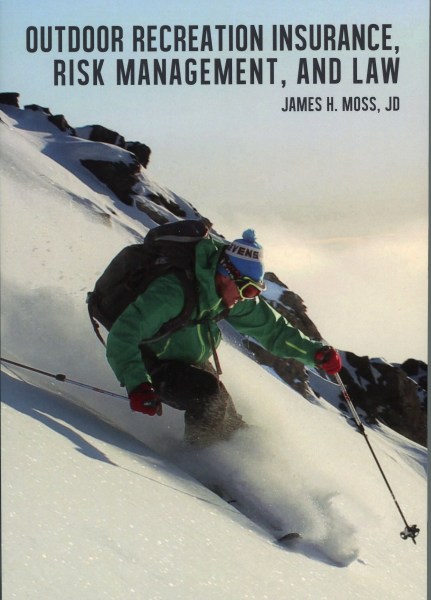
Outdoor Recreation Insurance, Risk Management and Law
To see Jim’s complete bio go here and to see his CV you can find it here. To find out the purpose of this website go here.
If you are interested in having me write your release, download the form and return it to me.
Connect
If you like this let your friends know or post it on FB, Twitter, or LinkedIn
Facebook Page: Outdoor Recreation & Adventure Travel Law
LinkedIn https://www.linkedin.com/in/recreationlaw/
Threads https://www.threads.net/@recreation_law
X https://twitter.com/RecreationLaw
Email: Jim@Rec-Law.US
By Recreation Law Rec-law@recreation-law.com James H. Moss
@2010-2023 Summit Magic Publishing, LLC
G-YQ06K3L262
#recreation-law.com, #outdoor law, #recreation law, #outdoor recreation law, #adventure travel law, #law, #travel law, #Jim Moss, #James H. Moss, #attorney at law, #tourism, #adventure tourism, #rec-law, #rec-law blog, #recreation law, #recreation law blog, #risk management, #Human Powered, #human powered recreation,# cycling law, #bicycling law, #fitness law, #recreation-law.com, #backpacking, #hiking, #Mountaineering, #ice climbing, #rock climbing, #ropes course, #challenge course, #summer camp, #camps, #youth camps, #skiing, #ski areas, #negligence, #REI, #Recreational Equipment Incorporated, #Vail, #Colorado, #Colorado Skier Safety Statute, #Skier Safety Statute, Vail Incorporated, #ski area boundary,
WordPress Tags: Colorado,Appellate,Court,Vail,boundary,lawsuit,recreation,adventure,Moss,James,attorney,tourism,management,Human,youth,areas,negligence,Recreational,Equipment,Skier,Statute,area,blog
What is a Release?
Posted: October 27, 2010 Filed under: Release (pre-injury contract not to sue) | Tags: Business, Connecticut, covenant, Lawsuit, Legal release, Outdoor recreation, Release, Releases / Waivers, Waiver, Wisconsin Leave a commentAll outdoor recreation, travel, tourism and fitness businesses use a release, (or should use a release). However, the legal description of what is a release is rarely explained to the business clients using them or the clients of the business signing them.
A Release can be known as Waiver although there are some issues with this term, Waivers are revocable. Some parts of the country also use the term Covenant Not to Sue to identify the clause in a release that prevents lawsuits. The Negligence Clause is another term for the actual part of the contract that prevents the possible lawsuit. Therefore, in most cases the term Release, Waiver or Covenant Not to Sue to some are interchangeable and have more of a geographic definition rather than a different legal definition.
Release is the word that is adopted as the term to describe the types of agreements we are discussing here by the majority of states. Waiver and covenant not to sue are used by a few southern states to describe these documents.
A release is a contract. A contract is an agreement between two or more parties, with consideration flowing to both parties and a meeting of the minds as to the terms of the contract. Contracts cannot be for illegal activities or things and most be enforceable by the courts.
Contracts are the basis for commerce in the world; how one party sells goods or services and the other party buys goods or services.
There must be two and can be thousands of parties to a contract. Each party must receive something of value or benefit. Each party must understand the basic terms of the contract. Not every term must be known or understood in the contract.
Consideration, the benefit or value in a contract, is easily defined as money, and in most contacts makes up one part of the transaction. With a local shopkeeper, a contact to buy a t-shirt consists of consideration (money) flowing to the shopkeeper and the purchaser receiving the t-shirt. Both parties knew the terms of the contract and both understood that was the purpose of the contract. The contract by the way was oral. Contracts can be in writing or can be oral. Oral contacts are hard to prove in a court.
In an outdoor recreation case, the consideration is money flowing to the outfitter and the opportunity to engage in the activity by the guest.
Contracts cannot be for illegal activities. Gambling debts are not enforceable in most states so a contract to pay a gambling debt is illegal. Most states, but not all, have done away with contracts for marriage also. (Marriage is not illegal, just to contract for a marriage is illegal.) Courts are reluctant to force people to act or do something specific such as standing on their head as an easy example.
A release then is a contract that covers something that may or may not happen in the future. It is the fact that the contract may not actually be enforced because of some future date that gives releases their special place in the law.
A release is also different from most contracts because the release is a contract where one party gives up or releases a future right, the right to sue. This possibility of giving up a future right is one of the issues that courts are divided and that cause courts problems. The right is the right to sue, a right that is given to US citizens in our constitution. As such, the courts scrutinize any constitutional right that is given up by someone. However, most courts have agreed that if the right is in writing and voluntarily given up for consideration, the release will be upheld. The right to contract between parties is greater and more important than the right to sue in most, but not all state supreme courts.
As stated earlier, contracts can be oral or written. Because a future right is at stake in releases, most courts will not enforce an oral release, such as reading the release over the phone to someone and having them agree to the terms of the release. At the same time, you should review electronic contracts and agreements, which are valid.
Release law is determined by each state; as such, it is difficult to define a release in an article written for the masses because of the different requirements of some states. In addition, some states have different requirements or statutory requirements for releases in some activities or recreational sports then other. Also, states are changing their stands on releases each year. Wisconsin, Arizona and Connecticut have done so in the past couple of years.
However, there are some general issues common to all releases and required in most states that support releases.
A release should use the magic word negligence. Negligence is the legal term for an accident (4-step test) that gives rise to a lawsuit. The release should state that your guests release you from any negligence on your part. Lacking this term, your release is a piece of paper with little value in the majority of states.
The second most important clause is the jurisdiction and venue clause. This clause defines the law of the state that will be applied to the case to interpret the release and the place where the lawsuit will be held. Your state law may uphold releases. However, your customer maybe from a state that does not support releases. Jurisdiction and venue clauses prevent your customer from dragging you into a different state and voiding your release.
The signature is also critical. For someone to sue on a breach of contract or to enforce a contract, the person who is being sued or the release that is being enforced must be signed. Therefore, the injured guest is the person who must sign the contract to have the release enforced. It is not necessary to witness the signature. The date and time of the accident along with the type of payment, usually a credit card will confirm the person was there and signed a release. In addition, handwriting experts can verify a signature.
Initialing paragraphs is also of no value and may cause problems. The courts look for a signature and nothing else. It does not matter to the courts if the release has been read. Initialing paragraphs may create a problem if one paragraph is not initialed. Does that mean that paragraph does not apply? Nor has the author ever found a case where the court commented on the initialed paragraphs as being necessary or important.
Initials, however, may be necessary if the paper that is being used has different contracts on it. The classic is a car rental contract. Part of the contract is a release and a promise to pay. That gets a signature. Declining additional insurance or promising to bring the car back full of gas are different contracts and as such initials might help prove those parts of the contract. However, if your document is one or two pieces of paper with one purpose and no white spaces or added information, you only need a signature.
There is a real difference of opinions between some attorneys as to the need to identify the risks of the activity. Most activities have so many possible risks that the release would be endless if it listed them all. However, there are two valid reasons for putting at least some of the possible risks in a release. The release has better “legal balance” if some of the risks are listed. It provides a background or a basis for the release if the document states some of the reasons for the reason behind the release. Courts always comment that the injury the plaintiff is complaining about was listed in the release.
A release with risks in it can also be used as assumption of the risk document. If the release is thrown out, the release can be used to prove the person assumed the risks and either eliminate a lawsuit or reduce the damages. For this to work, the risks of the activity must be in the release.
Because of state and federal laws concerning a release of medical information and the possibility of an injury, you should probably include a release for first aid care and release of medical information. Although federal HIPPA laws may not affect you, many states medical information privacy acts may. First aid negligence lawsuits rare, but they occur occasionally and are very dangerous. As such, you should include a release for any medical care you provide and any medical information you collect or pass on to other people.
There are dozens of other factors and clauses that may need to be included in your release. These are going to be dependent the state that is identified in your jurisdiction and venue clause, any state statutes that control releases or state laws that control the activity that the release covers. The type of activity you are providing, the guests you are recruiting and how close medical care is, may also change your release. Finally, any release for activities outside of the US must be written carefully.
Any article about releases always ends with a disclaimer and an admonition. The disclaimer is releases work in most states. However, release law changes every month. New state statures or Supreme Court justices can change the law affecting releases and subsequently your business.
The admonition is your release must be written by an attorney. The easiest example of this admonition is the courts. Releases written by attorneys are rarely contested in court. The releases you see in appellate and Supreme Court decisions are always those written by non-attorneys. The attorney you choose should also be one that understands release law and your business to give you the best chance at staying out of court.
To learn more about releases see:
Tennessee Supreme Court makes writing releases a little trickier.
What do you think? Leave a comment.
© 2010-2023 Recreation Law (720) Edit Law, Recreaton.Law@Gmail.com
#recreation-law.com, #outdoor law, #recreation law, #outdoor recreation law, #adventure travel law, #law, #travel law, #Jim Moss, #James H. Moss, #attorney at law, #tourism, #adventure tourism, #rec-law, #rec-law blog, #recreation law, #recreation law blog, #risk management, #Human Powered, #human powered recreation,# cycling law, #bicycling law, #fitness law, #recreation-law.com, #backpacking, #hiking, #Mountaineering, #ice climbing, #rock climbing, #ropes course, #challenge course, #summer camp, #camps, #youth camps, #skiing, #ski areas, #negligence, #covenant not to sue, #waiver, Technorati Tags: Release,recreation,adventure,Moss,James,attorney,tourism,management,Human,youth,areas,negligence,covenant,waiver,blog
Windows Live Tags: Release,recreation,adventure,Moss,James,attorney,tourism,management,Human,youth,areas,negligence,covenant,waiver,blog
WordPress Tags: Release,recreation,adventure,Moss,James,attorney,tourism,management,Human,youth,areas,negligence,covenant,waiver,blog
Blogger Labels: Release,recreation,adventure,Moss,James,attorney,tourism,management,Human,youth,areas,negligence,covenant,waiver,blog
Aspen Skiing Company Release stops claim by injured guest hit by an employee on snowmobile.
Posted: September 6, 2010 Filed under: Release (pre-injury contract not to sue), Ski Area, Skiing / Snow Boarding | Tags: Aspen, Aspen Skiing Company, Lawsuit, Litigation, Snowmobile Leave a commentRobinette v. Aspen Skiing Company, L.L.C., 2009 U.S. Dist. Lexis 34873 (Colo)
Colorado Release law dismisses claim for what could have been a nasty outcome.
The Plaintiff in this case Robinette was snowboarding and approaching an incline attempting to perform a jump. An Aspen Skiing Company employee was driving a snowmobile uphill on the other side of the incline. The guest and the snowmobile collided causing serious injuries to the guest.
The guest was skiing on a season pass purchased from Aspen Skiing Company. As with most ski resorts, the guest was required to sign a release as part of the season pass purchase.
The Plaintiff argued the defendant Aspen Skiing Company was negligent. The negligence was based on a violation of the Colorado Snowmobile Act, C.R.S. § 33-14-116. The specific statute states:
33-14-116. Other operating restrictions
(1) No person shall operate a snowmobile in a careless or imprudent manner without due regard for width, grade, corners, curves, or traffic of trails, the requirements of section 33-14-110 (3), nd all other attendant circumstances.
(2) No person shall operate a snowmobile in such a manner as to indicate either a wanton or a willful disregard for the safety of persons or property.
(3) No person shall operate a snowmobile while under the influence of alcohol, a controlled substance, as defined in section 12-22-303 (7), C.R.S., r any other drug, or any combination thereof, which renders him incapable of the safe operation of a snowmobile.
(4) No owner shall permit such snowmobile, while under his control, to be operated in violation of the provisions of this article.
(5) Any person who violates subsection (1) of this section is guilty of a class 2 petty offense and, upon conviction, shall be punished by a fine of one hundred dollars.
(6) Any person who violates subsection (2) or (3) of this section is guilty of a misdemeanor and, upon conviction, shall be punished by a fine of not less than two hundred dollars nor more than one thousand dollars, or by imprisonment in the county jail for not more than one year, or by both such fine and imprisonment.
(7) Any person who violates subsection (4) of this section is guilty of a class 2 petty offense and, upon conviction, shall be punished by a fine of fifty dollars.
The plaintiff argued that the statute creates a duty for snowmobile operators to operate in a safe manner. The plaintiff argued duty cannot be waived by a release by cause the duty is imposed by statute. The plaintiff also argued the release was ambiguous as to this type of accident.
The court outlined the four requirements for a release to be valid in the State of Colorado.
(i) There must not have been an obvious disparity in bargaining power between the releasor and releasee;
(ii) The agreement must set forth the parties’ intentions in clear and unambiguous language;
(iii) The circumstances and the nature of the service must indicate that the agreement was fairly entered into; and
(iv) The agreement may not violate public policy.
The burden of proving all of these elements is met is upon the party trying to enforce the release. In this case, it was the defendant Aspen Skiing Company. The court accepted Aspen’s arguments on the first and third steps and analyzed the second and fourth elements in its decision.
The first argument and analysis centered on whether the language in the release covered being hit by a snowmobile. This is an important analysis for everyone in the recreation industry. To name all the possible ways you can be injured would require a multi volume encyclopedia with a signature at the end. The court found the risk did not have to be identified in the release because it was identified in the Colorado Skier Safety Act C.R.S. § 33-44-108(3), which requires snowmobiles to have specific equipment on it to be operated at a resort. Because the statute looked at the risks of a skier being hit by a snowmobile, it was within the scope of the activity and the release.
The main argument that the defendant’s employee violated the Colorado Snowmobile statute creates an interesting argument. A release cannot void the obligations created by a state law, which is true. You cannot contract for something, which is illegal, and you cannot contract to do a crime, and you cannot contract away a statutory duty. The snowmobile licensing statute imposes a criminal penalty for anyone who violates it. However, the court found that the two could exist without a problem. The release attempts to prevent liability for a tort, and the statute imposes criminal liability for criminal acts. The release does not prohibit the state from imposing criminal liability on the driver of the snowmobile.
Aspen moved for Summary Judgment based on the release, and the court upheld the motion dismissing the plaintiff’s claims.
However, this decision might not have had the same outcome in many other states. Most states look at a statute that imposes criminal liability for an act or failure to act as something a release cannot protect. If the act was negligence per se, a violation of a statute, then most states do not allow a release to be used as a defense.
So?
The decision provides a good framework for understanding the steps necessary for a defendant to rely on one as a defense. Specifically, the analysis of who has the burden of proving the release is valid and whether or not the language of a release is clear. This also shows how other statutes can be used to assist in the defense of a lawsuit.
However, the public policy answer, step IV of the four parts necessary for a release to be valid in Colorado is contrary to the law in most other states.
This case can still be appealed; the District Court is just the first step, the trial court in the Federal court system. If this case is appealed and upheld at the appellate level, it will be a significant strengthening of the law of releases in Colorado.
This is also significant because guest collisions with snowmobiles have been costly to the ski industry.
|
Jim Moss is an attorney specializing in the legal issues of the outdoor recreation community. He represents guides, guide services, outfitters both as businesses and individuals and the products they use for their business. He has defended Mt. Everest guide services, summer camps, climbing rope manufacturers; avalanche beacon manufactures and many more manufacturers and outdoor industries. Contact Jim at Jim@Rec-Law.us |
Jim is the author or co-author of six books about the legal issues in the outdoor recreation world; the latest is Outdoor Recreation Insurance, Risk Management and Law.
To see Jim’s complete bio go here and to see his CV you can find it here. To find out the purpose of this website go here.
G-YQ06K3L262
What do you think? Leave a comment.
If you like this let your friends know or post it on FB, Twitter or LinkedIn
Author: Outdoor Recreation Insurance, Risk Management and Law
Facebook Page: Outdoor Recreation & Adventure Travel Law
Email: Jim@Rec-Law.US
By Recreation Law Rec-law@recreation-law.com James H. Moss
@2023 Summit Magic Publishing, LLC
#recreation-law.com, #outdoor law, #recreation law, #outdoor recreation law, #adventure travel law, #law, #travel law, #Jim Moss, #James H. Moss, #attorney at law, #tourism, #adventure tourism, #rec-law, #rec-law blog, #recreation law, #recreation law blog, #risk management, #Human Powered, #human powered recreation,# cycling law, #bicycling law, #fitness law, #recreation-law.com, #backpacking, #hiking, #Mountaineering, #ice climbing, #rock climbing, #ropes course, #challenge course, #summer camp, #camps, #youth camps, #skiing, #ski areas, #negligence, #Aspen, #Aspen Skiing Co., #snowmobile, #collision, #release, #negligence, #negligence per se, #public policy, # statute, #Colorado Skier Safety Act, #Colorado, #Colorado Snowmobile Act, Technorati Tags: Aspen,Company,Release,guest,employee,recreation,adventure,Moss,James,attorney,tourism,management,Human,ropes,youth,negligence,collision,policy,statute,Colorado,Skier,Snowmobile,areas,blog
Windows Live Tags: Aspen,Company,Release,guest,employee,recreation,adventure,Moss,James,attorney,tourism,management,Human,ropes,youth,negligence,collision,policy,statute,Colorado,Skier,Snowmobile,areas,blog
WordPress Tags: Aspen,Company,Release,guest,employee,recreation,adventure,Moss,James,attorney,tourism,management,Human,ropes,youth,negligence,collision,policy,statute,Colorado,Skier,Snowmobile,areas,blog
Why do people sue? Not for the money.
Posted: July 20, 2010 Filed under: Swimming | Tags: Adventure travel, Attorney at law, city, drowning, Lawsuit, Outdoor recreation, parents, summer camp, swimming pool Leave a commentAnswer their questions and you don’t give someone a reason to find a lawyer.
The headline is Parents file suit against city and club. The lawsuit is over the death of a 6 year old boy who drowned in a city pool less than a month before.
Could you predict this lawsuit was going to happen? I think you could if you were the city. Here are four hints that maybe you are going to be sued.
Hint #1 Even the attorney says the lawsuit is to get information.
“From the family’s point of view, it has been three weeks (since their son died) and they have no information on what happened,” Whitaker said.
“They still don’t know what actually happened.”
He said the lawsuit seeks monetary damages for wrongful death, but a big part of the filing is to have access to information about how the child died.
“All my clients are hearing right now is second-hand,” he said. “It’s terrible for them.”
Hint #2 If you plan to get sued you will get sued.
City officials referred all questions regarding the lawsuit to City Attorney Allen Betz. An employee at Betz’s office said he was out of the office Friday and could not be reached for comment.
Hint #3 If you don’t answer a parent’s questions you are going to get a lawsuit.
“We just want to know what happened. The family feels the only way they will get answers is through the lawsuit.”
Parents wanted to know what happened to their child and the only answers they received was “call the city’s attorney.” There are three major and stupid reasons for doing this.
1. The attorney was not there and therefore, can’t answer any questions.
2. Attorneys don’t answer questions anyway.
3. Attorneys intimidate people. Who wants to talk to an attorney?
I know, I’m an attorney!
What was another hint?
Hint #4 The lawsuit was filed 25 days after the death. People never file lawsuits that soon.
Within three weeks of the death, the family has all ready hired an attorney. Whether because they felt so frustrated that they felt they had no choice, or because they had to fight fire with fire (attorney v. attorney) or a combination of reasons, that should be a hint you need to do something or pay attorneys!
The only real legal issue in the article is the miscommunication between the parents and the pool employees.
In the lawsuit, Whitaker said Terry Lavka told a woman stationed at the sign-in table when he took his son there for the summer day camp that Samuel Lavka was afraid of water, could not swim and should not be allowed near the big pool.
“They didn’t want him in the pool because he couldn’t swim,” Whitaker said. “They were told that, and the parents believed those instructions would be followed.
If someone tells you or one of your employees something about their concerns, fees or beliefs about what you are going to do, you need to correct them or pay attention to them. Here the parents believed that because they had told the pool employees something that was the way it was going to be.
This is a tragic accident. A six year old boy drowns in a city pool. The tragedy is compounded because the parents still don’t know what happened to their son. Their grief will not end but be compounded for years as the litigation drags on, and they grasp tidbits of answers about what happened.
For other articles about this issue see: It’s Not Money and Serious Disconnect: Why people sue.
What do you think? Leave a comment.
Copyright 2010 Recreation Law (720) Edit Law, Recreaton.Law@Gmail.com
Twitter: RecreationLaw
Facebook: Rec.Law.Now
Facebook Page: Outdoor Recreation & Adventure Travel Law
Blog: www.recreation-law.com
Mobile Site: http://m.recreation-law.com
#RecreationLaw, #@RecreationLaw, #Cycling.Law #Fitness.Law, #Ski.Law, #Outside.Law, #Recreation.Law, #Recreation-Law.com, #Outdoor Law, #Recreation Law, #Outdoor Recreation Law, #Adventure Travel Law, #law, #Travel Law, #Jim Moss, #James H. Moss, #Attorney at Law, #Tourism, #Adventure Tourism, #Rec-Law, #Rec-Law Blog, #Recreation Law, #Recreation Law Blog, #Risk Management, #Human Powered, #Human Powered Recreation,# Cycling Law, #Bicycling Law, #Fitness Law, #Recreation-Law.com, #Backpacking, #Hiking, #Mountaineering, #Ice Climbing, #Rock Climbing, #Ropes Course, #Challenge Course, #Summer Camp, #Camps, #Youth Camps, #Skiing, #Ski Areas, #Negligence, #Snowboarding, #RecreationLaw, #@RecreationLaw, #Cycling.Law #Fitness.Law, #SkiLaw, #Outside.Law, #Recreation.Law, #RecreationLaw.com, #OutdoorLaw, #RecreationLaw,
Technorati Tags: outdoor law, recreation law, outdoor recreation law, adventure travel law, fatality, city pool, litigation, why people sue, lawsuit,recreation,adventure,litigation,lawsuit
Windows Live Tags: outdoor law, recreation law, outdoor recreation law, adventure travel law, fatality, city pool, litigation, why people sue, lawsuit,recreation,adventure,litigation,lawsuit
WordPress Tags: outdoor law, recreation law, outdoor recreation law, adventure travel law, fatality, city pool, litigation, why people sue, lawsuit,recreation,adventure,litigation,lawsuit
Blogger Labels: outdoor law, recreation law, outdoor recreation law, adventure travel law, fatality, city pool, litigation, why people sue, lawsuit,recreation,adventure,litigation,lawsuit
Ten Reasons Why Retailers should use a release
Posted: November 18, 2009 Filed under: Release (pre-injury contract not to sue) | Tags: Customer, Demo, Lawsuit, Manufacturer, Product Demo, Release, Retailer Leave a commentWhy retailers should use a release
-
You can track who is coming to your store.
-
You will learn how many people demoed a product and whether the event was a success
-
You will get the name, address, phone and email of everyone who demoed a product so you can start a contact list
-
You can learn if the customer liked the product, even if they don’t buy the product that day
-
You can stop yourself from getting sued.
-
You can educate your customers to some of the risks of the sport
-
You can educate the customers to the risks of the new product
-
You can rent anything to customers if you have the right release
-
You can keep manufactures from sharing the defendant’s table with you in a lawsuit.
-
You can help customers move into bigger and/or better products because you can run a demo program for every product in your store.
Update on SBTW right to raft case
Posted: July 31, 2008 Filed under: Whitewater Rafting | Tags: Camp, Lawsuit, Pennsylvania, Recreation, Rock climbing, summer camp, Tribune Democrat 1 CommentI reported in an early article Historical Use v. Money, Control & Power that a summer camp in Pennsylvania was suing the state to regain access to raft in a

Image via Wikipedia
state park. The Tribune Democrat is reporting that the summer camp, Summer’s Best Two Weeks lost their attempt to receive an injunction. The article, Raft trip runs aground in court states a three judge panel denied the injunction.
An injunction is as it sounds, an immediate court order requiring someone to do or not to do something.
The article is unclear and I have not seen pleadings to determine if the attempts by SBTW are over or they are continuing their suit. Many times you can be successful on the main litigation after you have lost the injunction motion.
Another Litigation versus Criminal example
Posted: July 22, 2008 Filed under: Uncategorized | Tags: Asia, Business, Canada, Court, Japan, Jet Ski, Law, Lawsuit Leave a commentI’ve all ready commented about this issue length in Litigation v. Jail Time; however this article caught my eye. At the very bottom it

Image via Wikipedia
mentions another boating accident. The owner of the jet skis who rented the jet skis was fined £450 for renting the jet skis.
Again another example of how in the US we sue, in Europe they charge criminally. Although in this case a £450 fine is probably much easier to deal with than protracted litigation, it still is a criminal charge that will be on someone’s record for life.
However the basic issue is who is going to take responsibility for dealing with problems. In Europe the government deals with the liability between two people. In the US, most of the time the victim is in charge of his life and any money someone may owe him.
See: Brit held after death of Cypriot diver
Lawsuit settles
Posted: June 26, 2008 Filed under: Skier v. Skier | Tags: Colorado, Denver Post, Lawsuit, Sports 1 Comment
A lawsuit we wrote about in “8 Year old boy sued in Colorado for ski collision” has settled according to the Denver Post
Boy’s family settles skiing suit . The Denver Post is reporting the suit settled for $25,000.
Lawsuit update: Utah Bear Attack
Posted: May 12, 2008 Filed under: Utah | Tags: Bear attack, Lawsuit, Salt Lake City Leave a comment
We reported in The State of Utah is now responsible for what bears do that the state of Utah was being sued along with the Federal

West of Marysvale, Utah (Photo credit: brewbooks)
Government (USFS) over the death of a child killed by a bear.
The State of Utah has filed their answer to the lawsuit saying that the Forest Service is responsible for the bear. See State denies responsibility for fatal bear attack on boy. The state is also claiming the Utah Governmental Immunity act protects it as well as the family of the deceased brought food into the campsite.
Copyright 2011 Recreation Law 720 Edit Law, Recreaton.Law@Gmail.com

Image via Wikipedia
‘TIS THE SEASON FOR INJURIES…. possibly Leading to the season of lawsuits!
Posted: April 29, 2008 Filed under: Skydiving, Paragliding, Hang gliding | Tags: Defendant, Insurance, Lawsuit, Parachuting, Plaintiff Leave a commentSeveral news reports have described lawsuits between skydivers who collide. In one case, one skydiver had logged 1800 jumps when he was hit in midair and injured by another skydiver. The injuries ended his skydiving and work career. A judge ruled the skydiver (and friend) who hit the Plaintiff (the injured skydiver) was negligent and awarded the Plaintiff $748,000. See Skydiver Wins Lawsuit Against Teammate. Yet skydivers hit each other every once in a while. See Skydivers injured in midair collision and YouTube has several videos of skydivers colliding.
The accident occurred when an eight-man team including the Plaintiff and Defendant, ended a formation and broke apart to open their chutes. The Plaintiff and Defendant where both members of the team and had been practicing these maneuvers. The Defendant’s elbow hit the plaintiff in the head, knocking the Plaintiff unconscious and tangling the chutes. The Defendant was able to free himself from the tangled chutes and landed safely. The Plaintiff was not and fell suffering broken bones and brain injuries.
The lawsuit seems to be full of folly. (A politically correct term in this case.) Immediately what comes to mind is that someone with 1800 jumps knows, understands and assumes the risk of an injury. The judge did not see it this way. For this discussion, however, a different point needs to be discussed. Does your release protect your customers from this type of lawsuit?
Your customers can be involved in lawsuits in three ways:
- As the Plaintiff – the person initiating the lawsuit.
- As a witness to the incident which caused the lawsuit.
- Rarely do we think of our customers as a Defendant in the lawsuit. However as rare as we may think it is, it is more common then you would imagine. (Co-participant liability)
Numerous articles have discussed the first case, i.e. as a Plaintiff, previously in this newsletter and it will continue to be our focus, however, the 2nd and 3rd ways your clients can be sued are also important. That your clients may be brought into a lawsuit as either a witness or a defendant is also quite important to you and can have a tremendous impact on your business. Some examples of how your clients can be involved as witnesses or defendants follow.
Having your customers called as witnesses can create significant public relations problems: You have six customers in a boat. One is injured and sues another customer. You have four other customers who are subpoenaed as witnesses. I can foretell that you now have six angry former customers. There is not much you can do which will appease everyone involved, except to end the lawsuit quickly; assuring the other witnesses they are not going to be brought into the suit as parties. (“Parties” is the term that defines Plaintiffs and Defendants).
In the 3rd scenario, your customer could be sued in part because you can’t and the injured person is looking for money: The future plaintiff walks into an attorney’s office and describes his injuries and the accident to an attorney. The attorney, after discovering a release, (and realizing he cannot sue the outfitter) decides to sue the person who caused the injury, your customer. Your customer fell off the raft, knocking the injured person into the water; or started the avalanche while backcountry skiing; or the youth who while playing falls on a tent injuring the occupants inside.
For whatever reason, your customer is now in a precarious situation. They may or may not be liable for the injuries. In the latter instance, they are upset over lost time and money. If they are liable for the injuries, they may be confused as to why someone would sue them for an accident while recreating. Either way, they may be mad at you for not helping them out of a bad situation.
Worse, the defendant/customer may not have insurance to cover the cost of the defense or any judgement. Normally homeowner’s insurance will cover this type of claim, however not all homeowner’s policies may cover this and not everyone has homeowner’s (or condor or renter’s) insurance.
Other than moral support, you cannot provide much help – except from your own pocket. Your insurance policy is only available if you or your employees are the named defendants. No matter what you may want to do, you are paying your own bills for attending the courtroom drama, (which is nothing like TV, in real life, the main problem is always keeping the judge and jury awake!).
However, your insurance company should be paying your attorney to be their. There are probably going to be several issues that could lead to problems if your attorney is not on top of the case.
Bad press is also going to accompany any lawsuit between your clients. The press will jump on this and wonder why you are not involved. The defendant client will bring in the press to ask the question of why you have not been named as a defendant as well. Either way, from the sideline you appear uncaring or apathetic while your clients beat each other up in court.
But this can be prevented. When your release is being written, make sure the “people” covered by the release includes everyone. Not just the employees, but Directors, Officers and Agents of the corporation, employees, managers and owners of the business, and “OTHER PARTICIPANTS.” This is a very simple solution to what can be a disastrous affair.
EXAMPLE
You are running a Mountaineering course and one climber slips, fails to self-arrest and slams into another climber. Besides sixteen puncture wounds from the crampon points, the injured participant has a broken ankle and no insurance. There is a question as to who failed to keep the tension between the falling client and the guide who was first on the rope. Did the guide slow down, did the student speed up or did they both fail to be observant.
You and the client who fell are sued.
In the normal scenarios the insurance company lawyer files a motion. Based on the release, the company is dismissed leaving a very angry student to stand alone for the damages.
In scenario #2, you are not dismissed from the suit. Your defense is to try to blame the client who fell. You now have a very mad student and a bad reputation in the industry.
Scenario #3: The falling client with no money forms an alliance with the injured client to testify against you and leave you holding an empty money bag.
Scenario #4: Your release defends both you and the falling student thus protecting that student from liability. You have a good witness on your side rather than one running to offer their cooperation to the opposition and between the release, assumption of risk, and the guide and client as witnesses you have a good defense.
The simple inclusion of language protecting everyone in the lawsuit can keep your and your clients coming back for more accidents in the wilderness.
Here, the release covering everyone shows the witnesses they are not going to be drug into the suit. Also, the release helps your clients understand the suit should end quickly. However your clients feel, whether the injured party needs money or is wrong, NO ONE wants to be involved in litigation.
The State of Utah is now responsible for what bears do
Posted: April 7, 2008 Filed under: Uncategorized | Tags: American Fork Canyon, Lawsuit, Provo Utah, US Forest Service, USFS, Utah, Utah State 1 CommentA family from Provo Utah is suing the State of Utah and the US Forest Service for the death of their son by a bear. Samuel Ives was killed at a campground in American Fork Canyon by a nuisance bear. The family is claiming the State of Utah who “own” the wildlife and the US Forest Service on whose ground the bear was roaming and the campground was located.
The family says they are experienced campers and understood the risk. However if they had known that a nuisance bear was in the area they would not have stayed 15 minutes.
The state and the USFS had two chances to warn them of the fact that a dangerous bear was in the area.
See Family files lawsuits over fatal bear attack and Family to file lawsuits over fatal bear attack


 Recreation Law