
USA Pro Challenge brought $99.6 million to Colorado!!!!!
Posted: November 7, 2012 Filed under: Colorado, Cycling | Tags: Aspen, August, August 2012, Bicycle Racing, Colorado, Colorado Springs, Cycling, Denver, Denver Post, Economic Impact, United States, USA Pro Cycling Challenge, USA ProChallenge Leave a commentThis is pretty amazing and backed up by the research done by the Denver Post.
This article by the Denver Post reports about a great bicycle race. However, the article goes beyond that and backs up the press release with additional research. Thanks

Denver Post and Thanks USA Pro Challenge.
Please read the entire article, but here are some of the highlights.
Organizers said the privately funded race stirred $99.6 million in spending, up from $83.5 million last year.
The private firm hired to do the study surveyed 2,000 attendees in host cities and along the route to establish an economic impact of $81.5 million spent on lodging, food, transportation and entertainment. The rest came from race support.
The Denver Post found that visitation was around 5,000 to 7,500 at each of the first few stops of the race in Telluride, Montrose, Crested Butte and Gunnison. Crowds began swelling, with 10,000 to 15,000 in Aspen, Beaver Creek and Breckenridge.
Numbers for the first half of the race fell below expectations. Leaders in some communities said they were prepared for at least twice as many spectators.
The Forest Service was braced for tens of thousands atop Independence Pass outside Aspen and counted fewer than 1,500, (which happens when you make too many rules and make it a bad place to watch the race USFS!)
….all host cities embraced the race, noting the long-term value from the race’s exposure and televised coverage.
Boulder’s Open Space and Mountain Parks counted 10,000 spectators lining Boulder’s climactic finish on Flagstaff Mountain, roughly a third of the number expected for the final 4-mile ascent. (Again, Boulder made the mountain inhospitable (a pain in the butt to get too) so no one went up to watch the race.)
Most host cities across Colorado reported increased sales-tax collections for August.

Durango’s sales and use tax for August 2012 was $1.27 million, a 5.7 percent increase from the previous August. August 2012 sales tax collections for Durango were the highest for the month since 2008.
The Town of Telluride, where local organizers estimated the Pro Challenge drew about 6,000 for the finish of Stage 1 on Monday Aug. 20, saw a 21 percent jump in sales tax revenue in August,….
City of Montrose estimated 5,000 spectators watched the start of Stage 2 on Tuesday, Aug. 21. The city saw its August sales tax climb 0.8 percent over the previous August….
Town of Crested Butte saw its sales tax collections increase 1.7 percent in August 2012,… The local Mountain Express bus service saw a 25 percent increase in ridership on race day.
Aspen sold out every one of its 3,200 rentable units in the city on Aug. 22, the afternoon racers finished Stage 3 in Aspen and the night before the downtown Stage 4 start. … August lodging tax collections (2 percent of total lodging spending) climb 23 percent in August….
The Town of Avon saw an 8.4 percent annual bump in its August 2012 sales tax and a 12.2 percent bump
Breckenridge saw spending on retail, restaurant and lodging climb 6 percent in August 2012….
Colorado Springs had 15,000 people gathered in downtown Colorado Springs to watch the race and another 35,000 lined city streets
Denver‘s lodging tax collections reached $6.3 million in August 2012, compared to $5.9 million in August 2011 and $4.7 million in 2010.
That is a substantial jump in tax for municipalities, cities and the state as well as the cause for the taxation, a lot of money flowing into the area.
How this is the number that is surprising! The people who watched the race were from 25 states, and 53 percent of spectators came from outside Colorado. Come on Colorado, you just got your butt kicked by tourists!
Remember this next spring when the RFP goes out to host the race next year. This race brings money and people to Colorado!

See USA Pro Challenge saw 1 million spectators and $99.6 million impact
What do you think? Leave a comment.
If you like this let your friends know or post it on FB, Twitter or LinkedIn
Copyright 2012 Recreation Law (720) Edit Law
Twitter: RecreationLaw
Facebook: Rec.Law.Now
Facebook Page: Outdoor Recreation & Adventure Travel Law
Blog: www.recreation-law.com
Mobile Site: http://m.recreation-law.com
#RecreationLaw, #@RecreationLaw, #Cycling.Law #Fitness.Law, #Ski.Law, #Outside.Law, #Recreation.Law, #Recreation-Law.com, #Outdoor Law, #Recreation Law, #Outdoor Recreation Law, #Adventure Travel Law, #law, #Travel Law, #Jim Moss, #James H. Moss, #Attorney at Law, #Tourism, #Adventure Tourism, #Rec-Law, #Rec-Law Blog, #Recreation Law, #Recreation Law Blog, #Risk Management, #Human Powered, #Human Powered Recreation,# Cycling Law, #Bicycling Law, #Fitness Law, #Recreation-Law.com, #Backpacking, #Hiking, #Mountaineering, #Ice Climbing, #Rock Climbing, #Ropes Course, #Challenge Course, #Summer Camp, #Camps, #Youth Camps, #Skiing, #Ski Areas, #Negligence, #Snowboarding, #RecreationLaw, #@RecreationLaw, #Cycling.Law #Fitness.Law, #SkiLaw, #Outside.Law, #Recreation.Law, #RecreationLaw.com, #OutdoorLaw, #RecreationLaw, #OutdoorRecreationLaw, #AdventureTravelLaw, #Law, #TravelLaw, #JimMoss, #JamesHMoss, #AttorneyatLaw, #Tourism, #AdventureTourism, #RecLaw, #RecLawBlog, #RecreationLawBlog, #RiskManagement, #HumanPowered, #HumanPoweredRecreation,# CyclingLaw, #BicyclingLaw, #FitnessLaw, #RecreationLaw.com, #Backpacking, #Hiking, #Mountaineering, #IceClimbing, #RockClimbing, #RopesCourse, #ChallengeCourse, #SummerCamp, #Camps, #YouthCamps, #Skiing, #Ski Areas, #Negligence, #Snowboarding, sport and recreation laws, ski law, cycling law, Colorado law, law for recreation and sport managers, bicycling and the law, cycling and the law, ski helmet law, skiers code, skiing accidents, Recreation Lawyer, Ski Lawyer, Paddlesports Lawyer, Cycling Lawyer, Recreational Lawyer, Fitness Lawyer, Rec Lawyer, Challenge Course Lawyer, Ropes Course Lawyer, Zip Line Lawyer, Rock Climbing Lawyer, Adventure Travel Lawyer, Outside Lawyer, Recreation Lawyer, Ski Lawyer, Paddlesports Lawyer, Cycling Lawyer, #RecreationalLawyer, #FitnessLawyer, #RecLawyer, #ChallengeCourseLawyer, #RopesCourseLawyer, #ZipLineLawyer, #RockClimbingLawyer, #AdventureTravelLawyer, #OutsideLawyer,
WordPress Tags: Challenge,million,Colorado,Denver,Post,article,bicycle,Thanks,Organizers,cities,impact,food,transportation,visitation,Telluride,Montrose,Butte,Gunnison,Crowds,Aspen,Beaver,Creek,Breckenridge,Numbers,expectations,Leaders,spectators,Forest,Service,Independence,Pass,USFS,exposure,coverage,Boulder,Open,Space,Mountain,Parks,Flagstaff,ascent,Again,Most,sales,collections,August,Durango,Town,Stage,revenue,units,racers,downtown,Avon,restaurant,Springs,streets,municipalities,taxation,money,area,Come,tourists,Remember,Leave,Twitter,LinkedIn,Recreation,Edit,RecreationLaw,Facebook,Page,Outdoor,Adventure,Travel,Blog,Mobile,Site,Outside,Moss,James,Attorney,Tourism,Risk,Management,Human,Rock,Ropes,Course,Summer,Camp,Camps,Youth,Areas,Negligence,SkiLaw,OutdoorLaw,OutdoorRecreationLaw,AdventureTravelLaw,TravelLaw,JimMoss,JamesHMoss,AttorneyatLaw,AdventureTourism,RecLaw,RecLawBlog,RecreationLawBlog,RiskManagement,HumanPoweredRecreation,CyclingLaw,BicyclingLaw,FitnessLaw,RopesCourse,ChallengeCourse,SummerCamp,YouthCamps,managers,helmet,accidents,Lawyer,Paddlesports,Recreational,Line,RecreationalLawyer,FitnessLawyer,RecLawyer,ChallengeCourseLawyer,RopesCourseLawyer,ZipLineLawyer,RockClimbingLawyer,AdventureTravelLawyer,OutsideLawyer

Capitol Christmas Tree Sendoff Celebration
Posted: November 6, 2012 Filed under: Youth Camps, Zip Line | Tags: x, y, z Leave a comment
Capitol Christmas Tree Sendoff Celebration and Donation Drop Off LocationSunday, November 11, 2012
|


Tubing brings in a lot of money for a small space, and a well-written release keeps the money flowing
Posted: November 5, 2012 Filed under: Pennsylvania, Snow Tubing | Tags: Eagles, Pennsylvania, Ski Shawnee, Snow Tubing, Tubing Leave a commentMazza v. Ski Shawnee Inc., 2005 Pa. Dist. & Cnty. Dec. LEXIS 113; 74 Pa. D. & C.4th 416
Release stops the lawsuit in this case; however, if written better there might not have been a lawsuit.
Tubing brings in a lot of money for minimal investment and space for an area with snow. On top of that tubing requires no skills and can be done even when you are

exhausted, and you can still have fun. Consequently, tubing hills are showing up everywhere, and at all ski areas.
In this case, the plaintiff’s tube appears to have become detached from the lift and she “catapulted” over an embankment causing her injuries. Normally, the term catapulted means some force was applied to launch the projectile, but when you don’t have a solid legal case, you sometimes pump up the facts.
Summary of the case
The tubing trip was put together by the Fraternal Order of the Eagles. The plaintiff signed a release for the Eagles and for Ski Shawnee. Both releases were reviewed by the courts. Under Pennsylvania law, a release is defined as “a contractual provision relieving a party from any liability resulting from a negligent or wrongful act.” After looking at the releases the court stated the four-part test in Pennsylvania to determine if a release was valid. The ways to invalidate a release under Pennsylvania law are almost identical to the ways releases are invalidated in other states.
(1) The contract must not violate any policy of the law;
(2) The contract must be between individuals and relate to their private affairs;
(3) Each party must be a free bargaining agent rather than one drawn into a contract of adhesion;
(4) The agreement must express the intent of the parties with the utmost particularity.
The court looked at the activity and the releases and found the releases valid. The parties were private parties; the contract was not one of adhesion; the language was conspicuous and expressed the intent of the parties, and snow tubing is a recreational activity.
The plaintiff’s claims were the tubing facility was designed negligently, and the lift was operated negligently. Neither of these issues was identified in the release. However, the court was able to find language in the release which the court found protected the defendants from these claims. The court first found the issues were part of snow tubing and consequently, were an inherent risk of the sport and the release mentioned the lift in it.
So Now What?

Tubing is going to continue to grow as a sport. This is a great decision in Pennsylvania to help a tubing operation write a release and a great decision in other states to argue what the risks of tubing are and as such which ones are inherent to the sport.
However, both releases did not point out the risks of the sport who allowed the plaintiff the slightly open door to start their suit. The better your release is written the greater the chance that an injured and unhappy plaintiff can find a way to test your release.
What do you think? Leave a comment.
If you like this let your friends know or post it on FaceBook, Twitter or LinkedIn
Copyright 2012 Recreation Law (720) Edit Law
Email: blog@rec-law.us
Twitter: RecreationLaw
Facebook: Rec.Law.Now
Facebook Page: Outdoor Recreation & Adventure Travel Law
Blog: www.recreation-law.com
Mobile Site: http://m.recreation-law.com
#RecreationLaw, #@RecreationLaw, #Cycling.Law #Fitness.Law, #Ski.Law, #Outside.Law, #Recreation.Law, #Recreation-Law.com, #Outdoor Law, #Recreation Law, #Outdoor Recreation Law, #Adventure Travel Law, #law, #Travel Law, #Jim Moss, #James H. Moss, #Attorney at Law, #Tourism, #Adventure Tourism, #Rec-Law, #Rec-Law Blog, #Recreation Law, #Recreation Law Blog, #Risk Management, #Human Powered, #Human Powered Recreation,# Cycling Law, #Bicycling Law, #Fitness Law, #Recreation-Law.com, #Backpacking, #Hiking, #Mountaineering, #Ice Climbing, #Rock Climbing, #Ropes Course, #Challenge Course, #Summer Camp, #Camps, #Youth Camps, #Skiing, #Ski Areas, #Negligence, #Snowboarding, #RecreationLaw, #@RecreationLaw, #Cycling.Law #Fitness.Law, #SkiLaw, #Outside.Law, #Recreation.Law, #RecreationLaw.com, #OutdoorLaw, #RecreationLaw, #OutdoorRecreationLaw, #AdventureTravelLaw, #Law, #TravelLaw, #JimMoss, #JamesHMoss, #AttorneyatLaw, #Tourism, #AdventureTourism, #RecLaw, #RecLawBlog, #RecreationLawBlog, #RiskManagement, #HumanPowered, #HumanPoweredRecreation,# CyclingLaw, #BicyclingLaw, #FitnessLaw, #RecreationLaw.com, #Backpacking, #Hiking, #Mountaineering, #IceClimbing, #RockClimbing, #RopesCourse, #ChallengeCourse, #SummerCamp, #Camps, #YouthCamps, #Skiing, #Ski Areas, #Negligence, #Snowboarding, sport and recreation laws, ski law, cycling law, Colorado law, law for recreation and sport managers, bicycling and the law, cycling and the law, ski helmet law, skiers code, skiing accidents, Recreation Lawyer, Ski Lawyer, Paddlesports Lawyer, Cycling Lawyer, Recreational Lawyer, Fitness Lawyer, Rec Lawyer, Challenge Course Lawyer, Ropes Course Lawyer, Zip Line Lawyer, Rock Climbing Lawyer, Adventure Travel Lawyer, Outside Lawyer, Recreation Lawyer, Ski Lawyer, Paddlesports Lawyer, Cycling Lawyer, #RecreationalLawyer, #FitnessLawyer, #RecLawyer, #ChallengeCourseLawyer, #RopesCourseLawyer, #ZipLineLawyer, #RockClimbingLawyer, #AdventureTravelLawyer, #OutsideLawyer, Ski Shawnee, Tubing, Snow Tubing, Penslvania, Release, Eagles, Fraternal Order of the Eagles,
WordPress Tags: money,Mazza,Shawnee,Dist,LEXIS,Release,lawsuit,investment,area,skills,hills,areas,plaintiff,tube,embankment,injuries,projectile,Summary,Fraternal,Order,Eagles,Both,Under,Pennsylvania,provision,policy,individuals,affairs,agent,adhesion,agreement,Neither,defendants,decision,door,Leave,FaceBook,Twitter,LinkedIn,Recreation,Edit,Email,RecreationLaw,Page,Outdoor,Adventure,Travel,Blog,Mobile,Site,Outside,Moss,James,Attorney,Tourism,Risk,Management,Human,Rock,Ropes,Course,Challenge,Summer,Camp,Camps,Youth,Negligence,SkiLaw,OutdoorLaw,OutdoorRecreationLaw,AdventureTravelLaw,TravelLaw,JimMoss,JamesHMoss,AttorneyatLaw,AdventureTourism,RecLaw,RecLawBlog,RecreationLawBlog,RiskManagement,HumanPoweredRecreation,CyclingLaw,BicyclingLaw,FitnessLaw,RopesCourse,ChallengeCourse,SummerCamp,YouthCamps,Colorado,managers,helmet,accidents,Lawyer,Paddlesports,Recreational,Line,RecreationalLawyer,FitnessLawyer,RecLawyer,ChallengeCourseLawyer,RopesCourseLawyer,ZipLineLawyer,RockClimbingLawyer,AdventureTravelLawyer,OutsideLawyer,Penslvania
Mazza v. Ski Shawnee Inc., 2005 Pa. Dist. & Cnty. Dec. LEXIS 113; 74 Pa. D. & C.4th 416
Posted: November 5, 2012 Filed under: Legal Case, Pennsylvania, Ski Area, Snow Tubing | Tags: Bensalem Township School District, Eagle, Fraternal Order of Eagles, Mazza, Pennsylvania, Ski, ski area, Ski Shawnee, Snow Tubing, Tubing, United States Leave a commentMazza v. Ski Shawnee Inc., 2005 Pa. Dist. & Cnty. Dec. LEXIS 113; 74 Pa. D. & C.4th 416
Mazza v. Ski Shawnee Inc.
no. 10506 CV 2004
COMMON PLEAS COURT OF MONROE COUNTY, PENNSYLVANIA
2005 Pa. Dist. & Cnty. Dec. LEXIS 113; 74 Pa. D. & C.4th 416
June 29, 2005, Decided
COUNSEL: [*1] Eric W. Wassel, for plaintiffs.
Hugh M. Emory, for defendant.
JUDGES: CHESLOCK, J.
OPINION BY: CHESLOCK, J.
OPINION
[**417] CHESLOCK, J., June 29, 2005 Plaintiffs Jean Mazza and Mark Mazza, h/w, commenced this action by complaint filed on December 29, 2004. The complaint seeks damages for personal injuries stemming from a snow tubing accident which occurred on January 10, 2003. The complaint avers that plaintiff Jean Mazza’s snow tube broke loose from the tubing lift, causing her to be catapulted over an embankment, resulting in significant personal injuries. On February 11, 2005, defendant Ski Shawnee Inc. filed an answer with new matter. On April 25, 2005, defendant filed a motion for judgment on the pleadings. Defendant filed a brief in support of its motion on May 17, 2005. Plaintiffs filed their brief in opposition to defendant’s motion for judgment on the pleadings on June 1, 2005. We heard oral arguments from counsel on June 6, 2005, and we are now prepared to dispose of this matter.
Pa.R.C.P. 1034 provides as follows:
[HN1] “(a) After the relevant pleadings are closed, but within such time as not to unreasonably delay the trial, any party may move for judgment on the pleadings.
[*2] “(b) The court shall enter such judgment or order as shall be proper on the pleadings.”
[HN2] Pa.R.C.P. 1034 provides for a motion for judgment on the pleadings to be used to test whether such a cause [**418] of action as pleaded exists at law. Bensalem Township School District v. Commonwealth of Pennsylvania, 518 Pa. 581, 544 A.2d 1318 (1988). A judgment on the pleadings may be entered where there are no disputed issues of fact and the moving party is entitled to judgment as a matter of law. Kosor v. Harleysville Mutual Insurance Company, 407 Pa. Super. 68, 595 A.2d 128 (1991). In determining if there is a dispute as to facts, the court must confine its consideration to the pleadings and relevant documents. DiAndrea v. Reliance Savings and Loan Association, 310 Pa. Super. 537, 456 A.2d 1066 (1983). “The court must accept as true all well pleaded statements of fact, admissions, and any documents properly attached to the pleadings presented by the party against whom the motion is filed, considering only those facts which were specifically admitted.” Conrad v. Bundy, 777 A.2d 108, 110 (Pa. Super. 2001).
The pleadings [*3] establish that Mazza signed two releases, one provided by defendant and the other provided by the Fraternal Order of Eagles who arranged to use the snow tubing facility on January 10, 2004. Plaintiffs agree that Mazza signed a “Snow tubing acknowledgement of risk and agreement not to sue” (release) which was provided by defendant. The release contains the following language, in relevant part:
“Snow Tubing Acknowledgement Of Risk And Agreement Not To Sue This Is A Contract Read It!
“(1) I understand and acknowledge that snow tubing is a dangerous, risk sport and that there are inherent and other risks associated with the sport and that all of these risks can cause serious and even fatal injuries. . . .
[**419] “(3) I acknowledge and understand that some, but not necessarily all, of the risks of snow tubing are the following: . . .
“*the use of the snow tubing lift or tow, including falling out of a tube, coasting backwards, becoming entangled with equipment and other risks. . . .
“(5) I agree and understand that snow tubing is a purely voluntary recreational activity and that if I am not willing to acknowledge the risks and agree not to sue, I should not go snow tubing.
“(6) [*4] In Consideration Of The Above And Of Being Allowed To Participate In The Sport Of Snow Tubing, I Agree That I Will Not Sue And Will Release From Any And All Liability Ski Shawnee Inc. If I Or Any Member Of My Family Is Injured While Using Any Of The Snow Tubing Facilities Or While Being Present At The Facilities, Even If I Contend That Such Injuries Are The Result Of Negligence Or Any Other Improper Conduct On The Part Of The Snow Tubing Facility.
“(7)I Further Agree That I Will Indemnify And Hold Harmless Ski Shawnee Inc. from any loss, liability, damage or cost of any kind that may incur as the result of any injury to myself, to any member of my family or to any person for whom I am signing this agreement, even if it is contended that any such injury as caused by the negligence or other improper conduct on the part of Ski Shawnee Inc.
“(10) I have read and understood the foregoing acknowledgement of risks and agreement not to sue and am voluntarily signing below, intending to be legally bound thereby.”
[**420] Mazza also signed a release form from the Eagles which provides, in relevant part:
“(1) The Eagle member and guest agrees and understands that snow tubing is [*5] an inherently dangerous sport. Trail conditions vary constantly because of weather conditions and snow tubing and other obstacles and hazards may exist throughout the area. The member voluntarily assumes the risk of injury while participating in the sport. In consideration of using Shawnee Mountain snow tubing facilities the user agrees to accept the risks and agrees not to sue F.O.E. no. 1106 or Ski Shawnee Inc. or its employees or agents if hurt while using the facility regardless of any negligence of F.O.E. no. 1106 or Ski Shawnee Inc. or its employees or agents. . . . The user voluntarily assumes the risk of injury while participating in the sport. . . .
“(3) I have read and understand the foregoing regulations and release agreement and am voluntarily signing below intending to be legally bound thereby.”
The standard of review for a valid release agreement is set forth in Zimmer v. Mitchell and Ness, 253 Pa. Super. 474, 385 A.2d 437 (1978), affirmed, 490 Pa. 428, 416 A.2d 1010 (1980) (citation omitted); see also, Kotovsky v. Ski Liberty Operating Corp., 412 Pa. Super. 442, 447, 603 A.2d 663, 665 (1992). The Superior Court in [*6] Zimmer set forth [HN3] the following four-part test to determine the validity of exculpatory clauses:
(1) The contract must not violate any policy of the law;
(2) The contract must be between individuals and relate to their private affairs;
[**421] (3) Each party must be a free bargaining agent rather than one drawn into a contract of adhesion;
(4) The agreement must express the intent of the parties with the utmost particularity. 253 Pa. Super. at 478, 385 A.2d at 439.
[HN4] As a general rule, exculpatory disclaimers between private parties are enforceable in Pennsylvania and are not viewed as violating public policy. Missar v. Camelback Ski Resort, 30 D.&C.3d 579, 581 (Monroe Cty. 1984). An exculpatory clause is defined as “a contractual provision relieving a party from any liability resulting from a negligent or wrongful act.” Black’s Law Dictionary, 240 (Pocket ed. 1996).
In similar cases, our court has upheld that [HN5] the release language on the back of the ticket constitutes a valid waiver of liability. See generally, Venn v. Shawnee Mountain Ski Area, 5109 Civil 2002 (Monroe Cty. 2004) (Vican, P.J.); King v. Resorts USA Inc. d/b/a Rank Anhert, 8937 Civil [*7] 2001 (Monroe Cty. 2003) (O’Brien, J.); Catanna v. Camelback Ski Corp, 1340 Civil 1992 (Monroe Cty. 2001) (O’Brien, J.); Lee v. Camelback Ski Corp. a/k/a Camelback Ski Area, 8324 Civil 2001 (Monroe Cty. 2002) (Miller, J.); and Nisbett v. Camelback Ski Corp., 2226 Civil 1992 (Monroe Cty. 1996) (Miller, J.). We have held that [HN6] if an exculpatory agreement meets the four-prong test set forth in Zimmer, then the agreement is valid and enforceable.
In the instant case, we believe that the release does not violate any public policy. First, it is between private parties and relates to their private affairs. Second, we [**422] find that it is not a contract of adhesion, the language on the release is clear that if the person is not willing to acknowledge the risks and agree not to sue, he/she should not go snow tubing. (Release P 5.) Mazza was not required to enter into the contract, but she did so voluntarily in order to snow tube at the facility. The language contained on the release is conspicuous and expresses the intent of the parties with the requisite particularity. Furthermore, Mazza’s decision to go snow tubing was an activity which is not essential to plaintiff’s [*8] personal or economic well-being but was purely a recreational activity. See Kotovsky, supra at 447, 603 A.2d at 665. [HN7] An activity is purely recreational if it is not essential to one’s personal or economic well-being. Kotovsky, supra at 447, 603 A.2d at 665. (citation omitted)
Plaintiffs argue that we must deny defendant’s motion because the language contained in the release did not specifically exculpate itself from liability relating to the design of the facility and the lift mechanism. We do not agree. The release specifically set forth that there are many inherent dangers involved in snow tubing. The release specifically identifies the use of the snow tubing lift or tow. Further, Mazza signed the release which specifically sets forth that, even if it is contended that any such injury as caused by the negligence or other improper conduct on the part of Ski Shawnee Inc., she agrees to release and not sue defendant. Moreover, we are not bound by the holding in Martin v. Montage Mountain, 46 D.&C.4th 225 (Lackawanna Cty. 2000), the case cited by plaintiffs. The Martin case involved a [**423] plaintiff who signed a release which was specific [*9] that he would not sue for damages related to the use of a snow tube or lift. Id. at 230. Instantly, we believe that the release was clear that Mazza would not sue for any injuries resulting while using any of the snow tubing facilities or from any injuries sustained while present at the facilities.
For these reasons, we find that judgment on the pleadings may be entered due to the lack of disputed issues of fact and defendant is entitled to judgment as a matter of law. Accordingly, we entered judgment on the pleadings in favor of defendant.
ORDER
And now, June 29, 2005, upon consideration of defendant’s motion for judgment on the pleadings and any response thereto, it is hereby ordered and decreed that defendant Ski Shawnee Inc.’s motion for judgment on the pleadings is hereby granted and judgment is entered in favor of defendant, Ski Shawnee Inc., and against plaintiffs, Jean Mazza and Mark Mazza.
WordPress Tags: Mazza,Shawnee,Dist,LEXIS,COMMON,PLEAS,COURT,MONROE,PENNSYLVANIA,June,COUNSEL,Eric,Wassel,plaintiffs,Hugh,Emory,defendant,JUDGES,CHESLOCK,OPINION,Jean,Mark,action,complaint,December,injuries,accident,January,plaintiff,tube,embankment,February,April,judgment,opposition,arguments,Bensalem,Township,School,District,Commonwealth,fact,Kosor,Harleysville,Mutual,Insurance,Company,Super,DiAndrea,Reliance,Savings,Loan,Association,statements,admissions,Conrad,Bundy,Fraternal,Order,Eagles,agreement,Acknowledgement,Risk,Contract,Read,equipment,Consideration,Above,Participate,Sport,Agree,Release,From,Member,Facilities,Present,Contend,Result,Negligence,Improper,Conduct,Part,Further,Indemnify,Hold,cost,injury,person,Eagle,guest,Trail,obstacles,area,Mountain,user,employees,agents,Zimmer,Mitchell,citation,Kotovsky,Corp,Superior,clauses,policy,individuals,affairs,agent,adhesion,disclaimers,Missar,Camelback,Resort,clause,provision,Black,Dictionary,Pocket,ticket,waiver,Venn,Civil,Vican,Resorts,Rank,Anhert,Brien,Catanna,Miller,Nisbett,prong,Second,decision,mechanism,dangers,Moreover,Martin,Montage,Lackawanna,response,pleadings,whom,four,exculpatory,enforceable,supra,hereby
CAIC Starting Morning Backcountry Weater Forecasts. If you DO you should Become a Member!
Posted: November 2, 2012 Filed under: Avalanche | Tags: avalanche, Avalanche Forecast, Avalanche Forecasting, Colorado, Colorado Avalanche Information Center, Temperature, weather forecast, Wind, Wind speed, x, y, z Leave a comment |
Morning Backcountry Weather Forecast |
 |
|
||||||||||||||||||||||||||||||||||||||||||||||||||||||||||||||||||||||||||||||||||||||||||||||||||||||||||||||||||||||||||||||||||||||||||||||||||||||||||||||||||||||||||||||||||||||||||||||||||||||||||||||||||||||||||||||||||||||||||||||||||||||||||||||||||||||||||
| © 2008 – 2012 Colorado Avalanche Information Center. All rights reserved. Powered by Metlogic media solutions. |
Go to CAIC to become a member!
Also go like CAIC on Facebook
Equine laws stop suit against horse, outfitter still sued.
Posted: October 31, 2012 Filed under: Equine Activities (Horses, Donkeys, Mules) & Animals, Montana | Tags: Equestrianism, Equine, Horse, Law, Montana, MT, Trail Ride, Trail riding Leave a commentThose familiar with the legal system are more likely to sue, and physicians are very familiar with the system.
The plaintiff and her family went to Montana to vacation and rented horses from the defendant. During the ride, the plaintiff fell off her horse. The article describes numerous damages and loss of income claims before getting to the legal issues of the case. I suspect the plaintiff’s attorney is pushing this issue or even issued a press release to validate to the jury pool how valuable this claim is. (Jury Pool is the group of potential jurors who could be called for a trial.)
Before the trail ride the plaintiff told the guide she had previous experience. Allegedly, she told the guide before the start that her horse was difficult to control. During the ride, her horse “crowded” the horse in front of her. “Eventually, the horse in front of Plaskon [plaintiff] got tired of being crowded and kicked at her horse, which started bucking and threw her off.” The allegations went on to claim:
She claims the lodge, and outfitters were negligent and displayed “willful or wanton disregard” for her safety. Along with seeking actual damages for her medical costs and loss of income, [plaintiff] is asking to be awarded punitive damages.
The defense attorney responded to the reporter by stating that the plaintiff “…signed a waiver of liability and indemnity agreement prior to going on the horseback ride.”
The first problem not brought up in this article is Montana has two statutes that seem to prohibit the use of a release, Mont. Code Anno., § 27-1-701 Liability for negligence as well as willful acts. Which states:
Except as otherwise provided by law, each person is responsible not only for the results of the person’s willful acts but also for an injury occasioned to another by the person’s want of ordinary care or skill in the management of the person’s property or person except so far as the person has willfully or by want of ordinary care brought the injury upon the person.
“Want of ordinary care or skill” is a term that could be closely defined as negligence.
And Mont. Code Anno., § 28-2-702 Contracts that violate policy of law — exemption from responsibility.
All contracts that have for their object, directly or indirectly, to exempt anyone from responsibility for the person’s own fraud, for willful injury to the person or property of another, or for violation of law, whether willful or negligent, are against the policy of the law.
This statute says that releases, or waivers, are void in Montana. (See States that do not Support the Use of a Release.) And although in most states, a definition of willful injury would mean greater than normal negligence, the statute later says negligence.

Montana does have an equine liability statute that may provide a defense in this case.
Where is this going? Its litigation so that it can go anywhere. Probably, the case will settle, but possibly we may see this posted here after a trial or hearing, and the case is appealed. Either way there was a probably a lack of understanding or too much involvement in the legal profession. (See People familiar with the legal system are more likely to sue) Physicians between training and experience are very familiar with the legal system and in some surveys is the most frequent group of plaintiffs in the US. Lawyers and people with lawyers in their family are also very likely to sue. Be aware when dealing with groups of people familiar with the legal system.
Furthermore, understand what state you are in and what laws may apply to your situation.
See Chico Hot Springs, outfitter sued by surgeon who fell from horse
What do you think? Leave a comment.
If you like this let your friends know or post it on FB, Twitter or LinkedIn
Copyright 2012 Recreation Law (720) Edit Law
Twitter: RecreationLaw
Facebook: Rec.Law.Now
Facebook Page: Outdoor Recreation & Adventure Travel Law
Blog: www.recreation-law.com
Mobile Site: http://m.recreation-law.com
#RecreationLaw, #@RecreationLaw, #Cycling.Law #Fitness.Law, #Ski.Law, #Outside.Law, #Recreation.Law, #Recreation-Law.com, #Outdoor Law, #Recreation Law, #Outdoor Recreation Law, #Adventure Travel Law, #law, #Travel Law, #Jim Moss, #James H. Moss, #Attorney at Law, #Tourism, #Adventure Tourism, #Rec-Law, #Rec-Law Blog, #Recreation Law, #Recreation Law Blog, #Risk Management, #Human Powered, #Human Powered Recreation,# Cycling Law, #Bicycling Law, #Fitness Law, #Recreation-Law.com, #Backpacking, #Hiking, #Mountaineering, #Ice Climbing, #Rock Climbing, #Ropes Course, #Challenge Course, #Summer Camp, #Camps, #Youth Camps, #Skiing, #Ski Areas, #Negligence, #Snowboarding, #RecreationLaw, #@RecreationLaw, #Cycling.Law #Fitness.Law, #SkiLaw, #Outside.Law, #Recreation.Law, #RecreationLaw.com, #OutdoorLaw, #RecreationLaw, #OutdoorRecreationLaw, #AdventureTravelLaw, #Law, #TravelLaw, #JimMoss, #JamesHMoss, #AttorneyatLaw, #Tourism, #AdventureTourism, #RecLaw, #RecLawBlog, #RecreationLawBlog, #RiskManagement, #HumanPowered, #HumanPoweredRecreation,# CyclingLaw, #BicyclingLaw, #FitnessLaw, #RecreationLaw.com, #Backpacking, #Hiking, #Mountaineering, #IceClimbing, #RockClimbing, #RopesCourse, #ChallengeCourse, #SummerCamp, #Camps, #YouthCamps, #Skiing, #Ski Areas, #Negligence, #Snowboarding, sport and recreation laws, ski law, cycling law, Colorado law, law for recreation and sport managers, bicycling and the law, cycling and the law, ski helmet law, skiers code, skiing accidents, Recreation Lawyer, Ski Lawyer, Paddlesports Lawyer, Cycling Lawyer, Recreational Lawyer, Fitness Lawyer, Rec Lawyer, Challenge Course Lawyer, Ropes Course Lawyer, Zip Line Lawyer, Rock Climbing Lawyer, Adventure Travel Lawyer, Outside Lawyer, Recreation Lawyer, Ski Lawyer, Paddlesports Lawyer, Cycling Lawyer, #RecreationalLawyer, #FitnessLawyer, #RecLawyer, #ChallengeCourseLawyer, #RopesCourseLawyer, #ZipLineLawyer, #RockClimbingLawyer, #AdventureTravelLawyer, #OutsideLawyer, Montana, Equine, Horseback, Stable, Trail Ride, Release,
WordPress Tags: Equine,laws,horse,system,physicians,plaintiff,Montana,vacation,horses,defendant,article,income,attorney,jury,Pool,jurors,Plaskon,allegations,Along,reporter,waiver,agreement,statutes,Mont,Code,Anno,negligence,Except,person,injury,skill,management,Want,Contracts,policy,exemption,fraud,violation,statute,waivers,States,Support,Release,definition,Where,litigation,Either,involvement,profession,People,plaintiffs,Lawyers,situation,Chico,Springs,surgeon,Leave,Twitter,LinkedIn,Recreation,Edit,RecreationLaw,Facebook,Page,Outdoor,Adventure,Travel,Blog,Mobile,Site,Outside,Moss,James,Tourism,Risk,Human,Rock,Ropes,Course,Challenge,Summer,Camp,Camps,Youth,Areas,SkiLaw,OutdoorLaw,OutdoorRecreationLaw,AdventureTravelLaw,TravelLaw,JimMoss,JamesHMoss,AttorneyatLaw,AdventureTourism,RecLaw,RecLawBlog,RecreationLawBlog,RiskManagement,HumanPoweredRecreation,CyclingLaw,BicyclingLaw,FitnessLaw,RopesCourse,ChallengeCourse,SummerCamp,YouthCamps,Colorado,managers,helmet,accidents,Lawyer,Paddlesports,Recreational,Line,RecreationalLawyer,FitnessLawyer,RecLawyer,ChallengeCourseLawyer,RopesCourseLawyer,ZipLineLawyer,RockClimbingLawyer,AdventureTravelLawyer,OutsideLawyer,Horseback,Stable,Trail,Ride,outfitter
GEMS card now available at Credit Union of Colorado
Posted: October 30, 2012 Filed under: Youth Camps, Zip Line | Tags: Arapahoe Basin, Credit Union, Gem’s Card, Ski Cooper, Ski Resort, skiing Leave a commentColorado Ski Country USA Gems Cards Now Available at Credit Union of Colorado
New Flash Deals Headline 2012/13 Season Gems Card

East Wall at Arapahoe Basin
DENVER, Colo, – Oct. 26, 2012 -Skiers and snowboarders can now benefit from saving on winter ski deals by purchasing a Colorado Gems Card for $10 at any of the Credit Union of Colorado’s 15 statewide locations. The cards are issued by Colorado Ski Country USA, and provide a variety of discounts – including new, time-sensitive Flash Deals – at eight of Colorado’s ski areas.
Credit Union of Colorado is a CSCUSA corporate partner, as well as a Gems program partner, and the primary retail outlet for the cards while supplies last. The Credit Union’s branch locations can be found at www.CUofCO.org.
Credit Union of Colorado also is an official partner for CSCUSA’s 5th and 6th Grade Passport Program, which provides free skiing and snowboarding for 5th graders and inexpensive access for 6th graders. For details on the Passport programs please visit www.ColoradoSki.com/Passport.
The Gems ski areas are Arapahoe Basin, Eldora, Loveland, Monarch, Powderhorn, Ski Cooper, Ski Granby Ranch and Sunlight Mountain. Gems Card offerings vary at each ski area. For details or to purchase a card online please visit www.ColoradoSki.com/Gems.
New York case looks whether plaintiff could read and understand the agreement and held for the defendant.
Posted: October 29, 2012 Filed under: Camping, New York | Tags: American Arbitration Association, Appellate Court, Arbitration, Arbitration clause, camping, Language Barrier, New York Leave a commentAyzenberg v Bronx House Emauel Campus, Inc., etc., 93 A.D.3d 607; 941 N.Y.S.2d 106; 2012 N.Y. App. Div. LEXIS 2316; 2012 NY Slip Op 2396
The court also looked at the arbitration clause in the release and found it required arbitration.
This is another short New York Decision that was decided by the New York Appellate Court. The plaintiffs sustained an unknown injury while attending or staying at the defendant’s camp facility. The plaintiffs filed a complaint, and the defendants moved to compel arbitration as required in the application.
Summary of the case
The lower court denied the defendant’s motion to compel arbitration, and the defendant appealed. The plaintiff argued three theories on why the arbitration clause did not apply to them.
The first was a “language barrier” kept the plaintiffs from understanding what they were signing and that there was an arbitration clause. The court held the parties were bound by the agreement, including the arbitration clause even though they did not understand it.
The second was only the husband signed the agreement. The wife argued the husband could not sign for her. However, the court held the wife was bound by the agreement because the husband at the very least had apparent authority to sign for her. Apparent authority is an agency type of argument where by the actions of one party acting on behalf of the other party the defendant relied on the actions believing the first party had authority to act for the second party. The second party also took advantage of the benefits of the agreement or failed to reject the agreement and therefore, cannot reject the agreement now or say the first party could not sign on their behalf.
If you act like you are responsible and no one questions your authority, including the person you say you are responsible of, you are responsible.
The final argument put forth by the plaintiff was the agreement compelled arbitration by the Commercial Rules of the American Arbitration Association, and the claims of the plaintiffs were personal not commercial. Here the court found the argument failed because the agreement said the parties had to arbitrate any dispute between them.
So Now What?
The first thing that caught my eye was the plaintiffs did not understand the agreement, but understood enough English to get an attorney.

Arbitration is cheaper, faster and normally arbitrators can only award limited damages. Arbitration is usually a great idea. Always combine arbitration with mediation. The parties to an agreement must mediate their dispute first. If that does not work, then they can arbitrate.
Arbitration may have one downfall, and that would be in a state that supports releases. Arbitration is cheaper than a trial; it still usually ends up awarding the plaintiff some money. If your release is solid, you may want to avoid arbitration and rely on your release. It could be faster and probably cheaper. However, it is always a toss-up that you should review with your attorney.
The other point is the plaintiff signed the agreement with a language barrier. This different from signing and not reading the agreement or arguing you did not understand the agreement which courts always throw out. This is a great decision. Whether or not you can rely on it in your state is still, I suspect, up in the air.
However, this is a start.
 |
Jim Moss is an attorney specializing in the legal issues of the outdoor recreation community. He represents guides, guide services, outfitters both as businesses and individuals and the products they use for their business. He has defended Mt. Everest guide services, summer camps, climbing rope manufacturers; avalanche beacon manufactures and many more manufacturers and outdoor industries. Contact Jim at Jim@Rec-Law.us |
Jim is the author or co-author of six books about the legal issues in the outdoor recreation world; the latest is Outdoor Recreation Insurance, Risk Management and Law.
To see Jim’s complete bio go here and to see his CV you can find it here. To find out the purpose of this website go here.
G-YQ06K3L262
What do you think? Leave a comment.
If you like this let your friends know or post it on FB, Twitter or LinkedIn
Author: Outdoor Recreation Insurance, Risk Management and Law

Outdoor Recreation Insurance, Risk Management and Law
Facebook Page: Outdoor Recreation & Adventure Travel Law
Email: Jim@Rec-Law.US
By Recreation Law Rec-law@recreation-law.com James H. Moss
@2023 Summit Magic Publishing, LLC
#RecreationLaw, #@RecreationLaw, #Cycling.Law #Fitness.Law, #Ski.Law, #Outside.Law, #Recreation.Law, #Recreation-Law.com, #Outdoor Law, #Recreation Law, #Outdoor Recreation Law, #Adventure Travel Law, #law, #Travel Law, #Jim Moss, #James H. Moss, #Attorney at Law, #Tourism, #Adventure Tourism, #Rec-Law, #Rec-Law Blog, #Recreation Law, #Recreation Law Blog, #Risk Management, #Human Powered, #Human Powered Recreation,# Cycling Law, #Bicycling Law, #Fitness Law, #Recreation-Law.com, #Backpacking, #Hiking, #Mountaineering, #Ice Climbing, #Rock Climbing, #Ropes Course, #Challenge Course, #Summer Camp, #Camps, #Youth Camps, #Skiing, #Ski Areas, #Negligence, #Snowboarding, #RecreationLaw, #@RecreationLaw, #Cycling.Law #Fitness.Law, #SkiLaw, #Outside.Law, #Recreation.Law, #RecreationLaw.com, #OutdoorLaw, #RecreationLaw, #OutdoorRecreationLaw, #AdventureTravelLaw, #Law, #TravelLaw, #JimMoss, #JamesHMoss, #AttorneyatLaw, #Tourism, #AdventureTourism, #RecLaw, #RecLawBlog, #RecreationLawBlog, #RiskManagement, #HumanPowered, #HumanPoweredRecreation,# CyclingLaw, #BicyclingLaw, #FitnessLaw, #RecreationLaw.com, #Backpacking, #Hiking, #Mountaineering, #IceClimbing, #RockClimbing, #RopesCourse, #ChallengeCourse, #SummerCamp, #Camps, #YouthCamps, #Skiing, #Ski Areas, #Negligence, #Snowboarding, sport and recreation laws, ski law, cycling law, Colorado law, law for recreation and sport managers, bicycling and the law, cycling and the law, ski helmet law, skiers code, skiing accidents, Recreation Lawyer, Ski Lawyer, Paddlesports Lawyer, Cycling Lawyer, Recreational Lawyer, Fitness Lawyer, Rec Lawyer, Challenge Course Lawyer, Ropes Course Lawyer, Zip Line Lawyer, Rock Climbing Lawyer, Adventure Travel Lawyer, Outside Lawyer, Recreation Lawyer, Ski Lawyer, Paddlesports Lawyer, Cycling Lawyer, #RecreationalLawyer, #FitnessLawyer, #RecLawyer, #ChallengeCourseLawyer, #RopesCourseLawyer, #ZipLineLawyer, #RockClimbingLawyer, #AdventureTravelLawyer, #OutsideLawyer, Camping, Camp, Arbitration, Language Barrier,
WordPress Tags: York,plaintiff,agreement,defendant,Ayzenberg,Bronx,House,Emauel,Campus,LEXIS,Slip,arbitration,clause,Decision,Appellate,Court,plaintiffs,injury,complaint,defendants,Summary,theories,barrier,husband,wife,Apparent,agency,argument,advantage,person,Commercial,Rules,American,Association,Here,English,attorney,arbitrators,mediation,downfall,money,Whether,Leave,FaceBook,Twitter,LinkedIn,Recreation,Edit,Email,RecreationLaw,Page,Outdoor,Adventure,Travel,Blog,Mobile,Site,Outside,Moss,James,Tourism,Risk,Management,Human,Rock,Ropes,Course,Challenge,Summer,Camp,Camps,Youth,Areas,Negligence,SkiLaw,OutdoorLaw,OutdoorRecreationLaw,AdventureTravelLaw,TravelLaw,JimMoss,JamesHMoss,AttorneyatLaw,AdventureTourism,RecLaw,RecLawBlog,RecreationLawBlog,RiskManagement,HumanPoweredRecreation,CyclingLaw,BicyclingLaw,FitnessLaw,RopesCourse,ChallengeCourse,SummerCamp,YouthCamps,Colorado,managers,helmet,accidents,Lawyer,Paddlesports,Recreational,Line,RecreationalLawyer,FitnessLawyer,RecLawyer,ChallengeCourseLawyer,RopesCourseLawyer,ZipLineLawyer,RockClimbingLawyer,AdventureTravelLawyer,OutsideLawyer,Language,behalf
Ayzenberg v Bronx House Emauel Campus, Inc., etc., 93 A.D.3d 607; 941 N.Y.S.2d 106; 2012 N.Y. App. Div. LEXIS 2316; 2012 NY Slip Op 2396
Posted: October 29, 2012 Filed under: Camping, Legal Case, New York | Tags: American Arbitration Association, Arbitration, camping, Federal Arbitration Act, Mound Cotton Wollan & Greengrass, New York Leave a commentTo Read an Analysis of this decision see: New York case looks whether plaintiff could read and understand the agreement and held for the defendant.
Ayzenberg v Bronx House Emauel Campus, Inc., etc., 93 A.D.3d 607; 941 N.Y.S.2d 106; 2012 N.Y. App. Div. LEXIS 2316; 2012 NY Slip Op 2396
Roza Ayzenberg, Plaintiff-Respondent-Appellant, v Bronx House Emauel Campus, Inc., etc., Defendant-Appellant-Respondent.
7224, 116013/10
SUPREME COURT OF NEW YORK, APPELLATE DIVISION, FIRST DEPARTMENT
93 A.D.3d 607; 941 N.Y.S.2d 106; 2012 N.Y. App. Div. LEXIS 2316; 2012 NY Slip Op 2396
March 29, 2012, Decided
March 29, 2012, Entered
NOTICE:
THE LEXIS PAGINATION OF THIS DOCUMENT IS SUBJECT TO CHANGE PENDING RELEASE OF THE FINAL PUBLISHED VERSION. THIS OPINION IS UNCORRECTED AND SUBJECT TO REVISION BEFORE PUBLICATION IN THE OFFICIAL REPORTS.
COUNSEL: [***1] Mound Cotton Wollan & Greengrass, Garden City (Rodney E. Gould of counsel), for appellant-respondent.
Hill & Moin, LLP, New York (Cheryl Eisberg Moin of counsel), for respondent-appellant.
JUDGES: Mazarelli J.P., Andrias, Moskowitz, Acosta, Abdus-Salaam, JJ.
OPINION
[*607] [**107] Order, Supreme Court, New York County (Milton A. Tingling, J.), entered October 13, 2011, which denied defendant’s motion to stay the proceeding and compel arbitration pending further discovery, unanimously reversed, on the law, without costs, the motion to compel arbitration granted, and the action stayed.
In this action for personal injuries allegedly suffered by plaintiff while she and her husband were guests at defendant’s camp facility, defendant moved to stay the proceeding and compel arbitration based on an arbitration clause contained in the application for defendant’s camp program that was filled out by plaintiff’s husband and bears his signature. We find that the arbitration clause is binding on plaintiff. Irrespective of whether there [**108] was a language barrier that precluded plaintiff and her husband from understanding the content of the application, they are bound by its enforceable terms (see Shklovsky v Kahn, 273 AD2d 371, 372, 709 N.Y.S.2d 208 [2000]). [***2] Although plaintiff’s husband signed the application, which provided for the couples’ joint participation in defendant’s program, plaintiff is bound by it since her husband had, at the very least, apparent authority to sign for her (see Restatement, Agency 2d,§ 8 and § 27).
Plaintiff’s assertion that the arbitration clause does not apply to this personal injury action because it provides for the submission of claims “pursuant to the Commercial Rules of the American Arbitration Association,” is unavailing. The clause provides for arbitration of “any dispute resulting from [their] stay at” defendant’s facility (italics supplied), and thus, this matter is not excluded (see Marmet Health Care Center, Inc., et al. v Brown, US , 132 S Ct 1201, 182 L. Ed. 2d 42 [2012]; see also Remco Maintenance, LLC v CC Mgt. & Consulting, Inc., 85 AD3d 477, 925 N.Y.S.2d 30 [2011]).
Contrary to plaintiff’s argument, we find that the sale/purchase of the services defendant provided constitutes a transaction “involving commerce” within the meaning of the Federal Arbitration Act (see Citizens Bank v Alafabco, 539 U.S. 52, 56, 123 S. Ct. 2037, 156 L. Ed. 2d 46 [*608] [2003]). Thus, we find that to the extent GBL § 399-c may prohibit the subject arbitration clause, it is preempted [***3] by federal law.
We have reviewed plaintiff’s remaining contentions and find them unavailing.
THIS CONSTITUTES THE DECISION AND ORDER OF THE SUPREME COURT, APPELLATE DIVISION, FIRST DEPARTMENT.
ENTERED: MARCH 29, 2012
WordPress Tags: Ayzenberg,Bronx,House,Emauel,Campus,LEXIS,Slip,Roza,Plaintiff,Respondent,Appellant,Defendant,SUPREME,COURT,YORK,APPELLATE,DIVISION,DEPARTMENT,March,NOTICE,PAGINATION,DOCUMENT,SUBJECT,CHANGE,RELEASE,FINAL,VERSION,OPINION,REVISION,PUBLICATION,OFFICIAL,REPORTS,COUNSEL,Mound,Cotton,Wollan,Greengrass,Garden,Rodney,Gould,Hill,Moin,Cheryl,Eisberg,JUDGES,Mazarelli,Andrias,Moskowitz,Acosta,Abdus,Salaam,Order,Milton,October,arbitration,discovery,action,injuries,husband,guests,clause,signature,Irrespective,barrier,Shklovsky,Kahn,Although,participation,Restatement,Agency,assertion,injury,submission,Commercial,Rules,American,Association,Marmet,Health,Care,Center,Brown,Remco,Maintenance,Contrary,argument,sale,transaction,commerce,Federal,Citizens,Bank,Alafabco,Thus,extent,contentions,CONSTITUTES,DECISION
River Runner Film Festival and Silent Auction to Benefit Grand Canyon Youth!
Posted: October 26, 2012 Filed under: Uncategorized | Tags: Arts, Film, Film Festival, Flagstaff, Grand Canyon, Northern Arizona University Leave a commentJOIN US & HELP SPREAD THE WORD!

Grand Canyon Youth’s 13th Annual River Runner Film Festival & Auction is Saturday, November 3rd!
Join us for a fun filled evening! Here are some of the highlights:
· A silent auction and raffle featuring over 100 items including:

DEADLINE: MON, OCT. 29- EPA Small Grants Program in Colorado
Posted: October 25, 2012 Filed under: Youth Camps, Zip Line | Tags: CAEE, Colorado Alliance of Environmental Education, EPA, Grants Leave a commentDEADLINE: MON, OCT. 29- EPA Small Grants Program in Colorado
The Colorado Alliance for Environmental Education is coordinating Colorado proposals for the EPA Region 8 Small Grants Programs.
The deadline to submit a proposal is Monday, October 29.
This grant is seeking proposals that demonstrate inclusive environmental education that addresses strategies outlined in the Colorado Environmental Education Plan and includes a component that can be disseminated among the environmental education community. You can find a brief summary of the request for proposals below.
You can find more information and download the grant application from the Colorado section of the Region 8 Small Grants Website. http://usee.org/resources/region8grants
If you have any questions, it is preferred that you email questions initially to outreach
Request for Proposals Summary:
The primary goal of this program is to deliver high quality coordinated environmental education across the states in EPA Region 8. All of the states in this region have been working towards assessment-driven environmental literacy initiatives that serve EPA’s educational and environmental priorities.
Environmental Literacy in Colorado is defined as an individual’s understanding of how their actions and decisions affect the environment so they can act on that understanding in a responsible and effective manner. The Colorado Environmental Education Plan, expected to be adopted in 2012, is setting the direction for environmental literacy initiatives in the state. Strategies in the plan include building awareness and sharing standards-based environmental education tools, resources, and expertise, which is the focus of this request for proposals. Find out more about the strategies in the Draft Colorado Environmental Education Plan athttp://www.cde.state.co.us/otl/environmentaleducationplan.htm. Successful proposals will address strategies outlined in the plan, demonstrate inclusive environmental education, and include a component that can be shared or disseminated among the environmental education community and through the Online Network for Environmental Education at www.coloradoee.org
Thank you! Malinda
A default judgment does not mean you won, it means the other side lost
Posted: October 24, 2012 Filed under: Cycling | Tags: BRAIN, Cycling, Cyclingnews, Default Judgment, Journalists, Lance Armstrong, Lawsuit, Litigation, Velonews Leave a commentWhenever you see someone touting their win with a default, they are manipulating the

system.
Lately, a lot of press releases and articles have been written about “winning” lawsuits when the other side does not show up. Nobody won a lawsuit in that situation; the
other side lost. You only win when you can present your evidence to a court of law AND rebut the evidence presented by your opponent.
Failing to appear may mean you lost the lawsuit; it may also mean you don’t want to spend the money in a case you can’t win. (See Lance Armstrong not arbitrating.) It may mean that the cost of winning or defending is more than the other side can win or that the winning side can never get its money. (See Floyd Landis and the UCI.)
It does not mean that the person who shows up to court, and wins does not win as much as it does not support all the allegations, statements and their positions. Nor does it mean that the loser admits to everything the winner is now proclaiming.
It’s understandable to the masses, but crap JOURNALISTS SHOULD FIGURE THIS OUT and write what really occurred, not just what the winning press release says.
Hint Hint Velonews and BRAIN and CyclingNews.com
At the same time, if you are sued, show up and fight. In the US, in a courtroom, you have a fair chance if you have any defense and if nothing else you can probably
negotiate a lower amount to what you may owe. Arbitration where the other side makes the rules, foreign courts that can never come back to the US to get anything, smile and have a beer.
What do you think? Leave a comment.
If you like this let your friends know or post it on FB, Twitter or LinkedIn
Copyright 2012 Recreation Law (720) Edit Law
Twitter: RecreationLaw
Facebook: Rec.Law.Now
Facebook Page: Outdoor Recreation & Adventure Travel Law
Mobile Site: http://m.recreation-law.com
#RecreationLaw, #@RecreationLaw, #Cycling.Law #Fitness.Law, #Ski.Law, #Outside.Law, #Recreation.Law, #Recreation-Law.com, #Outdoor Law, #Recreation Law, #Outdoor Recreation Law, #Adventure Travel Law, #law, #Travel Law, #Jim Moss, #James H. Moss, #Attorney at Law, #Tourism, #Adventure Tourism, #Rec-Law, #Rec-Law Blog, #Recreation Law, #Recreation Law Blog, #Risk Management, #Human Powered, #Human Powered Recreation,# Cycling Law, #Bicycling Law, #Fitness Law, #Recreation-Law.com, #Backpacking, #Hiking, #Mountaineering, #Ice Climbing, #Rock Climbing, #Ropes Course, #Challenge Course, #Summer Camp, #Camps, #Youth Camps, #Skiing, #Ski Areas, #Negligence, #Snowboarding, #RecreationLaw, #@RecreationLaw, #Cycling.Law #Fitness.Law, #SkiLaw, #Outside.Law, #Recreation.Law, #RecreationLaw.com, #OutdoorLaw, #RecreationLaw, #OutdoorRecreationLaw, #AdventureTravelLaw, #Law, #TravelLaw, #JimMoss, #JamesHMoss, #AttorneyatLaw, #Tourism, #AdventureTourism, #RecLaw, #RecLawBlog, #RecreationLawBlog, #RiskManagement, #HumanPowered, #HumanPoweredRecreation,# CyclingLaw, #BicyclingLaw, #FitnessLaw, #RecreationLaw.com, #Backpacking, #Hiking, #Mountaineering, #IceClimbing, #RockClimbing, #RopesCourse, #ChallengeCourse, #SummerCamp, #Camps, #YouthCamps, #Skiing, #Ski Areas, #Negligence, #Snowboarding, sport and recreation laws, ski law, cycling law, Colorado law, law for recreation and sport managers, bicycling and the law, cycling and the law, ski helmet law, skiers code, skiing accidents, Recreation Lawyer, Ski Lawyer, Paddlesports Lawyer, Cycling Lawyer, Recreational Lawyer, Fitness Lawyer, Rec Lawyer, Challenge Course Lawyer, Ropes Course Lawyer, Zip Line Lawyer, Rock Climbing Lawyer, Adventure Travel Lawyer, Outside Lawyer, Recreation Lawyer, Ski Lawyer, Paddlesports Lawyer, Cycling Lawyer, #RecreationalLawyer, #FitnessLawyer, #RecLawyer, #ChallengeCourseLawyer, #RopesCourseLawyer, #ZipLineLawyer, #RockClimbingLawyer, #AdventureTravelLawyer, #OutsideLawyer, Velonews, BRAIN, CyclingNews.com, Default Judgment, Lawsuit,
WordPress Tags: judgment,system,lawsuits,Nobody,lawsuit,situation,opponent,money,Lance,Armstrong,cost,Floyd,Landis,person,allegations,statements,loser,winner,JOURNALISTS,SHOULD,FIGURE,Hint,Velonews,BRAIN,CyclingNews,Leave,Twitter,LinkedIn
Snooze you lose or actually in this case you do it wrong to begin with then you won’t correct it, then you fight about it for a decade, then you lose.
Posted: October 23, 2012 Filed under: Challenge or Ropes Course, Zip Line | Tags: AdventureTravel, Attorney at law, Jim Moss, Outdoor recreation, Ropes course Leave a commentASTM committee approves standards for zip lines, rope’s courses, challenge courses,

aerial trekking courses, and canopy tours.
Sid Roslund the National Ski Area Associations Technical Guru announced the other day that ASTM (American Society of Testing and Materials) F24 committee on Amusement Rides and Devices had approved new standards for Aerial Adventure Courses. An aerial adventure course is defined as zip lines, ropes courses, challenge courses, aerial trekking courses, and canopy tours.
This should effectively make the ACCT and the PRCA obsolete.
See http://rec-law.us/T7EAKf
What do you think? Leave a comment.
If you like this let your friends know or post it on FaceBook, Twitter or LinkedIn
Copyright 2012 Recreation Law (720) Edit Law
Email: blog@rec-law.us
Twitter: RecreationLaw
Facebook: Rec.Law.Now
Facebook Page: Outdoor Recreation & Adventure Travel Law
Blog:www.recreation-law.com
Mobile Site: http://m.recreation-law.com
#RecreationLaw, #@RecreationLaw, #Cycling.Law #Fitness.Law, #Ski.Law, #Outside.Law, #Recreation.Law, #Recreation-Law.com, #Outdoor Law, #Recreation Law, #Outdoor Recreation Law, #Adventure Travel Law, #law, #Travel Law, #Jim Moss, #James H. Moss, #Attorney at Law, #Tourism, #Adventure Tourism, #Rec-Law, #Rec-Law Blog, #Recreation Law, #Recreation Law Blog, #Risk Management, #Human Powered, #Human Powered Recreation,# Cycling Law, #Bicycling Law, #Fitness Law, #Recreation-Law.com, #Backpacking, #Hiking, #Mountaineering, #Ice Climbing, #Rock Climbing, #Ropes Course, #Challenge Course, #Summer Camp, #Camps, #Youth Camps, #Skiing, #Ski Areas, #Negligence, #Snowboarding, #RecreationLaw, #@RecreationLaw, #Cycling.Law #Fitness.Law, #SkiLaw, #Outside.Law, #Recreation.Law, #RecreationLaw.com, #OutdoorLaw, #RecreationLaw, #OutdoorRecreationLaw, #AdventureTravelLaw, #Law, #TravelLaw, #JimMoss, #JamesHMoss, #AttorneyatLaw, #Tourism, #AdventureTourism, #RecLaw, #RecLawBlog, #RecreationLawBlog, #RiskManagement, #HumanPowered, #HumanPoweredRecreation,# CyclingLaw, #BicyclingLaw, #FitnessLaw, #RecreationLaw.com, #Backpacking, #Hiking, #Mountaineering, #IceClimbing, #RockClimbing, #RopesCourse, #ChallengeCourse, #SummerCamp, #Camps, #YouthCamps, #Skiing, #Ski Areas, #Negligence, #Snowboarding, sport and recreation laws, ski law, cycling law, Colorado law, law for recreation and sport managers, bicycling and the law, cycling and the law, ski helmet law, skiers code, skiing accidents, Recreation Lawyer, Ski Lawyer, Paddlesports Lawyer, Cycling Lawyer, Recreational Lawyer, Fitness Lawyer, Rec Lawyer, Challenge Course Lawyer, Ropes Course Lawyer, Zip Line Lawyer, Rock Climbing Lawyer, Adventure Travel Lawyer, Outside Lawyer, Recreation Lawyer, Ski Lawyer, Paddlesports Lawyer, Cycling Lawyer, #RecreationalLawyer, #FitnessLawyer, #RecLawyer, #ChallengeCourseLawyer, #RopesCourseLawyer, #ZipLineLawyer, #RockClimbingLawyer, #AdventureTravelLawyer, #OutsideLawyer, ASTM, NSAA, zip lines, ropes courses, challenge courses, aerial trekking courses, and canopy tours,
WordPress Tags: Snooze,decade,ASTM,committee,canopy,Roslund,National,Area,Associations,Technical,Guru,American,Materials,Amusement,Rides,Devices,Aerial,Adventure,Courses,ACCT,PRCA,Leave,Twitter,LinkedIn,Recreation,Edit,RecreationLaw,Facebook,Page,Outdoor,Travel,Blog,Mobile,Site,Outside,Moss,James,Attorney,Tourism,Risk,Management,Human,Rock,Ropes,Course,Challenge,Summer,Camp,Camps,Youth,Areas,Negligence,SkiLaw,OutdoorLaw,OutdoorRecreationLaw,AdventureTravelLaw,TravelLaw,JimMoss,JamesHMoss,AttorneyatLaw,AdventureTourism,RecLaw,RecLawBlog,RecreationLawBlog,RiskManagement,HumanPoweredRecreation,CyclingLaw,BicyclingLaw,FitnessLaw,RopesCourse,ChallengeCourse,SummerCamp,YouthCamps,Colorado,managers,helmet,accidents,Lawyer,Paddlesports,Recreational,Line,RecreationalLawyer,FitnessLawyer,RecLawyer,ChallengeCourseLawyer,RopesCourseLawyer,ZipLineLawyer,RockClimbingLawyer,AdventureTravelLawyer,OutsideLawyer,NSAA

Decision concerning bicycle race clarifies Illinois release law.
Posted: October 22, 2012 Filed under: Cycling, Illinois, Racing | Tags: Bicycle Racing, Cycling, Illinois, Negligence, USA, USA Cycling Leave a commentHellweg v. Special Events Management, 956 N.E.2d 954; 2011 Ill. App. LEXIS 725; 2011 IL App (1st) 103604; 353 Ill. Dec. 826
The court looked at whether the risk that caused the injury to the plaintiff was listed in the release.
The facts in this case are pretty simple. The plaintiff was a participant in a cycling race on a closed course. A closed course in cycling means that no cars or pedestrians are on the course. The cyclists do not have to worry about traffic laws or hitting someone on a closed course.
While practicing for the race, the plaintiff hit a minor on a bicycle who got on the course. The plaintiff had signed the 2009 USA Cycling Event Release Form, which is required before being allowed to race. The plaintiff filed his claim and the defendants, twelve of them, including the minor he hit, moved to dismiss the case based on the release.
The trial court dismissed all twelve defendants, and the plaintiff appealed.
Summary of the case
There are several interesting facts in this case that were not discussed in the appeal that stood out. In the group of twelve defendants, one was the business that put on the race; five were employees and/or agents of the business; one was the city where the race was held and one was a hospital, as well as the minor and his mother.
It is unclear what the claims against the city and the hospital were, however, it appears from the decision that all the plaintiff’s claims were dismissed including those claims. The mother and the minor were all dismissed. The release is the “usually” USA Cycling release, which did not identify the hospital or city individually or in the people protected by the release.
… RELEASE FROM LIABILITY THE ORGANIZERS OF THIS EVENT AND USA CYCLING, INC. (USAC), ITS ASSOCIATIONS AND THEIR RESPECTIVE

AGENTS, EMPLOYEES, VOLUNTEERS, MEMBERS, CLUBS, SPONSORS, PROMOTERS AND AFFILIATES (COLLECTIVELY ‘RELEASEES’)….
The second major issue is the event organizer, and all of these people relied on the USA Cycling Release to protect them. The release is a general release that does not cover anyone, specifically except USA Cycling. It has no jurisdiction and venue class to speak off and does not cover any specific issues of the individual courses. If you are running an event that has something different from the normal race, different type of course, participants, etc. that is something that you would want to make sure you have covered. The court even pointed out how important those issues were in the release. In this case, the USA Cycling release did cover the issues generally, which gave the plaintiff the basis for his appeal.
The plaintiff argued that since the minor on the course was not something that was ordinary in a cycling race like this, he could not envision that was a risk he was accepting when he signed the release. He argued it could not be foreseen that the defendants would fail to close the course.
The court found that the phrase “ANY AND ALL CLAIMS ARISING FROM THE [DEFENDANT’S] OWN NEGLIGENCE.” was sufficient to protect the defendants from the suit. The court also said the test of the issue was not whether or not the risk was foreseen by the defendants but whether the broad language of the agreement would allow the court to say the risks were contemplated by the release.
“[A] myriad of factors, which are either obvious or unknown, may singly or in combination result in unexpected and freakish racing accidents. The parties may not have contemplated the precise occurrence which resulted in the plaintiff’s accident, but this does not render the exculpatory clause inoperable. In adopting the broad language employed in the agreement, it seems reasonable to conclude that the parties contemplated the similarly broad range of accidents, which occur in auto racing.
In coming to this decision the appellate court reviewed the way Illinois reviews a release. As in the majority of the states, releases are valid. They are not favored and construed against the person requesting protection by the release. However, if a release must be given fair and reasonable interpretation.
The court then went through the three issues that void releases in Illinois.
[A]bsent fraud or wilful and wanton negligence, the contract will be valid and enforceable unless:
(1) there is a substantial disparity in the bargaining position of the two parties;
(2) to uphold the exculpatory clause would be violative of public policy; or
(3) there is something in the social relationship between the two parties that would militate against upholding the clause.
The releases or ways to void a release in Illinois are no different than in the majority of other states that have been discussed here before. The court went on to explain the specifics required for a release to be enforceable in Illinois:
An exculpatory clause, to be valid and enforceable, should contain clear, explicit, and unequivocal language referencing the types of activities, circumstances, or situations that it encompasses and for which the plaintiff agrees to relieve the defendant from a duty of care. In this way the plaintiff will be put on notice of the range of dangers for which he assumes the risk of injury, enabling him to minimize the risks by exercising a greater degree of caution. The precise occurrence which results in injury need not have been contemplated by the parties at the time the contract was entered into. It should only appear that the injury falls within the scope of possible dangers ordinarily accompanying the activity and, thus, reasonably contemplated by the plaintiff.”
This section is a little different from most decisions about releases. The specific language I’m speaking to is “should contain clear, explicit, and unequivocal language referencing the types of activities, circumstances, or situations that it encompasses and for which the plaintiff agrees to relieve the defendant from a duty of care.…” Many courts mention that the injury was caused by a risk specifically set forth in the release. Here the court said that a release must set forth those risks.
This is a specific issue I push. I believe in doing this for more than a requirement by the courts. 1. If the release is thrown out for any reason, the document may still be used as proof of assumption of the risk. 2. If your guests read the release, it may help them understand the risks or self-filter from the activity.
The court also looked at the argument of the plaintiff, that the risks that caused his injury were not foreseeable and dismissed that argument. The court stated the language stating the release covered all claims arising from the defendant’s negligence was broad enough to warn the plaintiff of the risks.
So Now What?
This is a great case that is easy to read if you are working in Illinois in preparing a release for your business or activity.
This is also an added point to make sure your release identifies the risks of your activity to warn the guests of what may befall them.
If you are creating, running or the owner of an event that is “sanctioned” so that everyone who attends has signed someone else’s event, has your own release created. You need to make sure that you and your employees, volunteers, etc. are protected from the unique or different risks of your event. The perfect example of this would be any race above 8000 feet. At that level, there are increased issues with altitude. A normal race would not cover that because those issues could only occur in Colorado. However, that is specifically an issue that someone from sea level could argue was an issue that you failed to warn them about and could not prove you had warned them because you had not had them sign a release that reviewed the risks.
Furthermore, let people know that nothing is perfect. No matter how high the fence, how much police or protective the barriers, people will find a way to get on the course, sneak on the hill, or break into your program.
Better to waste an extra sheet of paper having guests sign a release than reams of paper to defend a lawsuit.
For General Information on Releases see:
Release/Waivers: The basics, the very basics!
States that allow a parent to sign away a minor’s right to sue
States that do not Support the Use of a Release
What is a Release?
For specific articles about releases and specific activities see:
Connecticut court works hard to void a release for a cycling event
Four releases were signed and all of them were thrown out because they lacked one simple sentence!
Gross Negligence beats a release…but after the trial
Maine upholds release in a mountain bike race and awards defendants’ costs and attorney fees
Ohio Appellate decision upholds the use of a release for a minor for a commercial activity.
PA court upholds release in bicycle race.
Poorly written release gave the plaintiffs the only chance they had to win
Release stops suit for falling off horse at Colorado Summer Camp.
Texas makes it easier to write a release because the law is clear.
Tough fight on a case, release used to stop all but one claim for a CO ski accident
Wrong release for the activity almost sinks YMCA
For more articles on the issues of cycling see:
Good Release stops lawsuit against Michigan bicycle renter based on marginal acts of bicycle renter
How to fight a Bicycle Product Liability case in New York. One step at a time.
New York Decision explains the doctrine of Primary Assumption of the Risk for cycling.
Release for training ride at Triathlon training camp stops lawsuit
|
James H. “Jim” Moss |
Jim Moss is an attorney specializing in the legal issues of the outdoor recreation community. He represents guides, guide services, outfitters both as businesses and individuals and the products they use for their business. He has defended Mt. Everest guide services, summer camps, climbing rope manufacturers, avalanche beacon manufacturers, and many more manufacturers and outdoor industries. Contact Jim at Jim@Rec-Law.us |
Jim is the author or co-author of six books about the legal issues in the outdoor recreation world; the latest is Outdoor Recreation Insurance, Risk Management
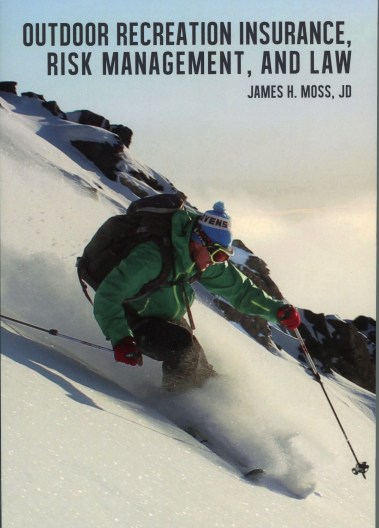
Outdoor Recreation Insurance, Risk Management, and Law
To see Jim’s complete bio go here and to see his CV you can find it here. To find out the purpose of this website go here.
G-YQ06K3L262
What do you think? Leave a comment.
If you like this let your friends know or post it on FB, Twitter or LinkedIn
 |
 |
 Threads |
 X (formerly known as Twitter) logo |
 Stimulus |
 Blue Sky |
Author: Outdoor Recreation Insurance, Risk Management and Law
Facebook Page: Outdoor Recreation & Adventure Travel Law
Email: Jim@Rec-Law.US
By Recreation Law Rec-law@recreation-law.com James H. Moss
@2024 Summit Magic Publishing, LLC
#RecreationLaw, #@RecreationLaw, #Cycling.Law #Fitness.Law, #Ski.Law, #Outside.Law, #Recreation.Law, #Recreation-Law.com, #Outdoor Law, #Recreation Law, #Outdoor Recreation Law, #Adventure Travel Law, #law, #Travel Law, #Jim Moss, #James H. Moss, #Attorney at Law, #Tourism, #Adventure Tourism, #Rec-Law, #Rec-Law Blog, #Recreation Law, #Recreation Law Blog, #Risk Management, #Human Powered, #Human Powered Recreation,# Cycling Law, #Bicycling Law, #Fitness Law, #Recreation-Law.com, #Backpacking, #Hiking, #Mountaineering, #Ice Climbing, #Rock Climbing, #Ropes Course, #Challenge Course, #Summer Camp, #Camps, #Youth Camps, #Skiing, #Ski Areas, #Negligence, #Snowboarding, #RecreationLaw, #@RecreationLaw, #Cycling.Law #Fitness.Law, #SkiLaw, #Outside.Law, #Recreation.Law, #RecreationLaw.com, #OutdoorLaw, #RecreationLaw, #OutdoorRecreationLaw, #AdventureTravelLaw, #Law, #TravelLaw, #JimMoss, #JamesHMoss, #AttorneyatLaw, #Tourism, #AdventureTourism, #RecLaw, #RecLawBlog, #RecreationLawBlog, #RiskManagement, #HumanPowered, #HumanPoweredRecreation,# CyclingLaw, #BicyclingLaw, #FitnessLaw, #RecreationLaw.com, #Backpacking, #Hiking, #Mountaineering, #IceClimbing, #RockClimbing, #RopesCourse, #ChallengeCourse, #SummerCamp, #Camps, #YouthCamps, #Skiing, #Ski Areas, #Negligence, #Snowboarding, sport and recreation laws, ski law, cycling law, Colorado law, law for recreation and sport managers, bicycling and the law, cycling and the law, ski helmet law, skiers code, skiing accidents, Recreation Lawyer, Ski Lawyer, Paddlesports Lawyer, Cycling Lawyer, Recreational Lawyer, Fitness Lawyer, Rec Lawyer, Challenge Course Lawyer, Ropes Course Lawyer, Zip Line Lawyer, Rock Climbing Lawyer, Adventure Travel Lawyer, Outside Lawyer, Recreation Lawyer, Ski Lawyer, Paddlesports Lawyer, Cycling Lawyer, #RecreationalLawyer, #FitnessLawyer, #RecLawyer, #ChallengeCourseLawyer, #RopesCourseLawyer, #ZipLineLawyer, #RockClimbingLawyer, #AdventureTravelLawyer, #OutsideLawyer, Special Events Management, Chicago Special Events Management, bicycle race, cycling, closed course,
WordPress Tags: Decision,bicycle,Illinois,Hellweg,Special,Events,Management,LEXIS,Court,injury,plaintiff,participant,cars,pedestrians,laws,Event,Release,Form,defendants,Summary,employees,agents,hospital,FROM,ORGANIZERS,USAC,ASSOCIATIONS,RESPECTIVE,VOLUNTEERS,MEMBERS,CLUBS,SPONSORS,PROMOTERS,AFFILIATES,RELEASEES,organizer,jurisdiction,venue,participants,basis,CLAIMS,DEFENDANT,NEGLIGENCE,agreement,factors,combination,accidents,occurrence,accident,clause,auto,person,protection,interpretation,fraud,policy,relationship,specifics,situations,dangers,degree,scope,decisions,Many,Here,requirement,assumption,guests,self,argument,owner,example,feet,altitude,Colorado,barriers,hill,Better,sheet,paper,reams,lawsuit,General,Information,Releases,Waivers,basics,States,Support,Connecticut,Four,Gross,Maine,mountain,bike,attorney,Michigan,climber,injuries,Ohio,Appellate,horse,Camp,clientele,Texas,Tough,Wrong,YMCA,renter,Product,York,doctrine,Primary,Risk,Triathlon,Judgment,manufacturer,retailer,Leave,Twitter,LinkedIn,Recreation,Edit,RecreationLaw,Facebook,Page,Outdoor,Adventure,Travel,Blog,Mobile,Site,Outside,Moss,James,Tourism,Human,Rock,Ropes,Course,Challenge,Summer,Camps,Youth,Areas,SkiLaw,OutdoorLaw,OutdoorRecreationLaw,AdventureTravelLaw,TravelLaw,JimMoss,JamesHMoss,AttorneyatLaw,AdventureTourism,RecLaw,RecLawBlog,RecreationLawBlog,RiskManagement,HumanPoweredRecreation,CyclingLaw,BicyclingLaw,FitnessLaw,RopesCourse,ChallengeCourse,SummerCamp,YouthCamps,managers,helmet,Lawyer,Paddlesports,Recreational,Line,RecreationalLawyer,FitnessLawyer,RecLawyer,ChallengeCourseLawyer,RopesCourseLawyer,ZipLineLawyer,RockClimbingLawyer,AdventureTravelLawyer,OutsideLawyer,Chicago,whether,twelve,exculpatory,enforceable
Hellweg v. Special Events Management, 956 N.E.2d 954; 2011 Ill. App. LEXIS 725; 2011 IL App (1st) 103604; 353 Ill. Dec. 826
Posted: October 22, 2012 Filed under: Cycling, Illinois, Legal Case, Racing | Tags: Bike Racing, Closed Course, Cycle Racing, Cycling, Illinois, Release Leave a commentTo Read an Analysis of this decision see: Decision concerning bicycle race clarifies Illinois release law.
Brian Hellweg, Plaintiff-Appellant, v. Special Events Management; Chicago Special Events Management; Henry Richard Zemola, Individually and as an Agent and/or Employee of Special Events Management and Chicago Special Events Management; Anthony w. Abruscato, Individually and as an Agent and/or Employee of Special Events Management and Chicago Special Events Management; Steven J. Hansen, Individually and as an Agent and/or Employee of Special Events Management and Chicago Special Events Management; Joshua L. Ruston, Individually and as an Agent and/or Employee of Special Events Management and Chicago Special Events Management; Peter G. Vanderhye, Individually and as an Agent and/or Employee of Special Events Management and Chicago Special Events Management; The Village of Elk Grove; Craig B. Johnson, individually and as an Agent and/or Employee of The Village of Elk Grove; Alexian Brothers Hospital Network, and Claudine Quevedo, as Mother and Next of Friend of Greg B. Quevedo, a Minor, Defendants-Appellees.
No. 1-10-3604
APPELLATE COURT OF ILLINOIS, FIRST DISTRICT, FIFTH DIVISION
956 N.E.2d 954; 2011 Ill. App. LEXIS 725; 2011 IL App (1st) 103604; 353 Ill. Dec. 826
July 8, 2011, Decided
SUBSEQUENT HISTORY: Released for Publication August 26, 2011.
Appeal denied by Hellweg v. Special Events Mgmt., 2011 Ill. LEXIS 1963 (Ill., Nov. 30, 2011)
PRIOR HISTORY: [**1]
Appeal from the Circuit Court of Cook County. 10 L 1057. Honorable James D. Egan, Judge Presiding.
DISPOSITION: Affirmed.
COUNSEL: COUNSEL FOR APPELLANT: Carolyn Daley Scott.
COUNSEL FOR APPELLEE: Ronald G. Zamarin.
JUDGES: JUDGE EPSTEIN delivered the judgment of the court, with opinion. Justices Joseph Gordon and Howse concurred in the judgment and opinion.
OPINION BY: EPSTEIN
OPINION
[*956] JUDGE EPSTEIN delivered the judgment of the court, with opinion.
Justices Joseph Gordon and Howse concurred in the judgment and opinion.
OPINION
[***P1] Plaintiff, Brian Hellweg, appeals the involuntary dismissal of his negligence claims pursuant to section 2-619 of the Illinois Code of Civil Procedure (735 ILCS 5/2-619 (West 2008)). He maintains the trial court relied on an unenforceable release to dismiss his claims. We affirm.
[***P2] BACKGROUND
[***P3] Plaintiff filed the instant lawsuit seeking to recover damages he sustained while preparing for a 2009 bicycling race organized by defendants Special Events Management, Henry Zemola, Anthony Abruscato, Steven Hansen, Joshua Ruston, Peter Vanderhye, Village of Elk Grove, Craig Johnson, and Alexian Brothers Hospital Network. The race was held on municipal streets advertised as a “closed course,” an undefined term. Plaintiff was injured [**2] when he collided with a nonparticipating bicyclist, Greg B. Quevedo, a minor, while participating in a warm-up session organized by defendants. Plaintiff alleges they collided as a result of defendants’ failure to close the course as promised prior to the session. Defendants moved to dismiss plaintiff’s negligence claims with prejudice pursuant to section 2-619, arguing, inter alia, that plaintiff signed a “2009 USA Cycling Event Release Form” (the Release) exculpating them from liability. Plaintiff responded the Release was unenforceable because his collision with Quevedo was not foreseeable. The trial court disagreed, granting defendants’ motions. Plaintiff appealed pursuant to Supreme Court Rule 304(a) (Ill. S. Ct. R. 304(a) (eff. Feb. 26, 2010)).
[***P4] ANALYSIS
[***P5] [HN1] “The purpose of a section 2-619 motion to dismiss is to dispose of issues of law and easily proved issues of fact at the outset of litigation.” Van Meter v. Darien Park District, 207 Ill. 2d 359, 367, 799 N.E.2d 273, 278 Ill. Dec. 555 (2003). Section 2-619 allows the involuntarily dismissal of released claims. 735 ILCS 5/2-619(a)(9) (West 2008). We review such dismissals de novo and must determine “whether a genuine issue of material fact exists and whether the defendant [**3] is entitled to judgment as a matter of law.” Saichek v. Lupa, 204 Ill. 2d 127, 134, 787 N.E.2d 827, 272 Ill. Dec. 641 (2003). We accept “as true all well-pleaded facts, along with all reasonable inferences that can be gleaned from those facts,” and we “interpret all pleadings and supporting documents in the light most favorable to the nonmoving party.” Porter v. Decatur Memorial Hospital, 227 Ill. 2d 343, 352, 882 N.E.2d 583, 317 Ill. Dec. 703 (2008).
[***P6] [HN2] Parties in Illinois may generally contract away liability for their own negligence. Garrison v. Combined Fitness Centre, Ltd, 201 Ill. App. 3d 581, 584, 559 N.E.2d 187, 147 Ill. Dec. 187 (1990). Such “agreements are not favored by the law and are strictly construed against the party they benefit.” Falkner v. Hinckley Parachute Center, Inc., 178 Ill. App. 3d 597, 603, 533 N.E.2d 941, 127 Ill. Dec. 859 (1989). However, they “must be given a fair and reasonable interpretation based upon a consideration of all of [the] language and provisions.” Id.
[HN3] “[A]bsent fraud or wilful and wanton negligence, the contract will be valid and enforceable unless: (1) there is a substantial disparity in the bargaining position of the two parties; (2) to uphold the exculpatory clause would be violative of public policy; or (3) there is something in the social relationship between the [*957] two parties [**4] that would militate against upholding the clause. [Citations.] The rationale for this rule is that courts should not interfere with the right of two parties to contract with one another if they freely and knowingly enter into the agreement.” Garrison, 201 Ill. App. 3d at 584.
Plaintiff here does not claim fraud, wilful and wanton negligence, a special relationship with defendants, substantial disparity in bargaining power, or a public policy violation. He argues only that the risk at issue was not foreseeable and thus not assumed by him.
[HN4] “[A]n exculpatory clause, to be valid and enforceable, should contain clear, explicit, and unequivocal language referencing the types of activities, circumstances, or situations that it encompasses and for which the plaintiff agrees to relieve the defendant from a duty of care. [Citation.] In this way the plaintiff will be put on notice of the range of dangers for which he assumes the risk of injury, enabling him to minimize the risks by exercising a greater degree of caution. [Citation.] The precise occurrence which results in injury need not have been contemplated by the parties at the time the contract was entered into. [Citation.] It should only [**5] appear that the injury falls within the scope of possible dangers ordinarily accompanying the activity and, thus, reasonably contemplated by the plaintiff.” Id. at 585.
[HN5] “Foreseeability of a specific danger is thus an important element of the risk which a party assumes, and, for this reason, serves to define the scope of an exculpatory clause. This is but another way of stating that, although the type of negligent acts from which a person expressly agrees to excuse another need not be foreseen with absolute clarity, such acts cannot lie beyond the reasonable contemplation of the parties ***.” Larsen v. Vic Tanny International, 130 Ill. App. 3d 574, 577, 474 N.E.2d 729, 85 Ill. Dec. 769 (1984).
[HN6] “Whether a particular injury is one which ordinarily accompanies a certain activity and whether a plaintiff appreciates and assumes the risks associated with the activity often constitute a question of fact.” Simpson v. Byron Dragway, Inc., 210 Ill. App. 3d 639, 647, 569 N.E.2d 579, 155 Ill. Dec. 398 (1991). Here, plaintiff’s release provides, in pertinent part:
“I ACKNOWLEDGE THAT BY SIGNING THIS DOCUMENT, I AM ASSUMING RISKS, AND AGREEING TO INDEMNIFY, NOT TO SUE AND RELEASE FROM LIABILITY THE ORGANIZERS OF THIS EVENT AND USA CYCLING, INC. (USAC), ITS ASSOCIATIONS [**6] *** AND THEIR RESPECTIVE AGENTS, EMPLOYEES, VOLUNTEERS, MEMBERS, CLUBS, SPONSORS, PROMOTERS AND AFFILIATES (COLLECTIVELY ‘RELEASEES’), AND THAT I AM GIVING UP SUBSTANTIAL LEGAL RIGHTS. THIS RELEASE IS A CONTRACT WITH LEGAL AND BINDING CONSEQUENCES AND IT APPLIES TO ALL RACES AND ACTIVITIES ENTERED AT THE EVENT REGARDLESS WHETHER OR NOT LISTED ABOVE. I HAVE READ IT CAREFULLY BEFORE SIGNING, AND I UNDERSTAND WHAT IT MEANS AND WHAT I AM AGREEING TO BY SIGNING.
In consideration of the issuance of a license to me by one or more of Releasees or the acceptance of my application for entry in the above event, I hereby freely agree to and make the following contractual representations [*958] and agreements. I ACKNOWLEDGE THAT CYCLING IS AN INHERENTLY DANGEROUS SPORT AND FULLY REALIZE THE DANGERS OF PARTICIPATING IN THIS EVENT, whether as a rider, official, coach, mechanic, volunteer, or otherwise, and FULLY ASSUME THE RISKS ASSOCIATED WITH SUCH PARTICIPATION INCLUDING, by way of example, and not limitation: *** dangers of collision with pedestrians, vehicles, other riders, and fixed or moving objects; *** THE RELEASEES’ OWN NEGLIGENCE, the negligence of others ***; and the possibility of serious physical [**7] and/or mental trauma or injury, or death associated with the event. *** I HEREBY WAIVE. RELEASE, DISCHARGE, HOLD HARMLESS, AND PROMISE TO INDEMNIFY AND NOT TO SUE the Releasees and all sponsors, organizers, promoting organizations, property owners, law enforcement agencies, public entities, special districts and properties that are in any manner connected with this event, and their respective agents, officials, and employees through or by which the event will be held, (the foregoing are also collectively deemed to be Releasees), FROM ANY AND ALL RIGHTS AND CLAIMS INCLUDING CLAIMS ARISING FROM THE RELEASEES’ OWN NEGLIGENCE, which I have or may hereafter accrue to me, and from any and all damages which may be sustained by me directly or indirectly in connection with, or arising out of, my participation in or association with the event, or travel to or return from the event. I agree it is my sole responsibility to be familiar with the event course and agenda, the Releasees’ rules, and any special regulations for the event and agree to comply with all such rules and regulations. I understand and agree that situations may arise during the event which may be beyond the control of Releasees, [**8] and I must continually ride and otherwise participate so as to neither endanger myself nor others.” (Emphasis in original.)
This agreement unambiguously absolves defendants of all claims arising out of the event even if caused by their own negligence. Plaintiff maintains the Release is nevertheless unenforceable because the presence of a nonparticipant bicyclist on the course is not a risk ordinarily attendant to closed course races. According to plaintiff:
“When a cycling race is advertised as closed course, it means that all intersections and streets are closed and barricaded to ensure that no one, other than those participating and involved in the race, are permitted onto the course. This enables the cyclists to ride along the streets and through the intersections on the course without having to worry that there will be another vehicle or non-participating cyclist crossing through the intersection.”
The presence of nonparticipants in bicycle races conducted on municipal streets is an inherent and reasonably foreseeable risk. Even assuming, arguendo, that such risk is absent in closed course races, a matter of dispute, plaintiff nevertheless assumed that allegedly extraordinary risk [**9] here by expressly agreeing to absolve defendants of liability for “collision with pedestrians, vehicles, other riders, and fixed or moving objects.” Closed course or not, plaintiff’s release plainly contemplates the possibility of pedestrians, vehicles, other riders, and/or fixed or moving objects on the course. The Release encompasses plaintiff’s collision.
[***P7] Plaintiff disagrees, arguing that “the language ‘other riders or moving or fixed [*959] objects’ does not reasonably encompass a minor who was able to ride his bicycle onto the course due to the Defendants failing to properly close the streets.” According to plaintiff, he “did not nor could he have foreseen that Defendants would negligently fail to close the course,” and “there is no possible way that he could have contemplated that the Defendants intended that the release encompass their negligent conduct in failing to close the course.” We disagree. The Release unambiguously states plaintiff is relinquishing “ANY AND ALL *** CLAIMS ARISING FROM THE [DEFENDANT’S] OWN NEGLIGENCE.” (Emphasis in original.) Moreover, the relevant inquiry for purposes of enforcing the Release is not whether plaintiff foresaw defendants’ exact act of negligence [**10] or his exact collision. It is whether plaintiff knew or should have known colliding with a nonparticipant on the course was a risk encompassed by his release. As our supreme court explained in the context of automobile racing:
[HN7] “[A] myriad of factors, which are either obvious or unknown, may singly or in combination result in unexpected and freakish racing accidents. *** The parties may not have contemplated the precise occurrence which resulted in plaintiff’s accident, but this does not render the exculpatory clause inoperable. In adopting the broad language employed in the agreement, it seems reasonable to conclude that the parties contemplated the similarly broad range of accidents which occur in auto racing.” Schlessman v. Henson, 83 Ill. 2d 82, 86, 413 N.E.2d 1252, 46 Ill. Dec. 139 (1980).
Similarly, bicycle racing on municipal streets undoubtably poses risk of injury to the public, riders, and race personnel, even when the course is closed. Various scenarios could arise in which a rider is injured, including, as in this case, collision with a nonparticipant. All such scenarios need not be enumerated in the release. It is sufficient if the language used therein is broad enough to reasonably demonstrate the parties [**11] contemplated the risk at issue. The release here plainly assigns plaintiff the risk of collision on the course, including, but not limited to, “collision with pedestrians, vehicles, other riders, and fixed or moving objects.” This includes plaintiff’s collision with Quevedo. Even if it did not, the Release was manifestly “designed to encompass all claims against defendant[s] based on [their] negligence, even though the precise cause of the accident may have been extraordinary,” Id. at 86. We affirm the dismissal of plaintiff’s claims with prejudice. The trial court properly concluded as a matter of law that plaintiff’s negligence claims are barred by the Release.
[***P8] CONCLUSION
[***P9] We affirm the dismissal of plaintiff’s claims with prejudice. The Release is enforceable.
[***P10] Affirmed.
G-YQ06K3L262
Thursday, November 29 – 7 pm Fashion Show, Auction, Retro-Party and Avalanche Fundraiser
Posted: October 19, 2012 Filed under: Avalanche | Tags: Colorado, Colorado Avalanche Information Center, Jim Moss, Neptune, Recreation Leave a commentNeptune Mountaineering, Boulder

It’s the party of the year and you’re invited! The lovely ladies of Neptune Mountaineering have recruited the beautiful people (who also happen to rip on a pair of skis) to strut their stuff on the runway for the Fall 2012 Neptune Mountaineering Fashion Show. They’ll be showing off the hottest outdoor ski fashion and gear for the upcoming season. Of course, this is not just a fashion show -it’s a party – and not the milk and cookies type. It’s a costume party with a retro ski wear theme, so be sure to wear your Scott Schmidt one-piece and rear-entry boots. We’ll also be hosting a silent auction on ski gear, clothes and other items from sponsors of the event, so bring your bidding hat and your wallet! There will be adult beverages, an avalanche shaped cake, ski flicks on the big screen, music and good times for all. All proceeds from the night go to the Colorado Avalanche Information Center, who work hard day and night to make sure you stay alive. Party starts at 7 pm and ends who-knows-when.
Don’t miss the Soiree supporting Colorado Avalanche Information Center.
For more information on Neptune Mountaineering Events go here.
What do you think? Leave a comment.
If you like this let your friends know or post it on FB, Twitter or LinkedIn
Copyright 2012 Recreation Law (720) Edit Law
Twitter: RecreationLaw
Facebook: Rec.Law.Now
Facebook Page: Outdoor Recreation & Adventure Travel Law
Blog: www.recreation-law.com
Mobile Site: http://m.recreation-law.com
#RecreationLaw, #@RecreationLaw, #Cycling.Law #Fitness.Law, #Ski.Law, #Outside.Law, #Recreation.Law, #Recreation-Law.com, #Outdoor Law, #Recreation Law, #Outdoor Recreation Law, #Adventure Travel Law, #law, #Travel Law, #Jim Moss, #James H. Moss, #Attorney at Law, #Tourism, #Adventure Tourism, #Rec-Law, #Rec-Law Blog, #Recreation Law, #Recreation Law Blog, #Risk Management, #Human Powered, #Human Powered Recreation,# Cycling Law, #Bicycling Law, #Fitness Law, #Recreation-Law.com, #Backpacking, #Hiking, #Mountaineering, #Ice Climbing, #Rock Climbing, #Ropes Course, #Challenge Course, #Summer Camp, #Camps, #Youth Camps, #Skiing, #Ski Areas, #Negligence, #Snowboarding, #RecreationLaw, #@RecreationLaw, #Cycling.Law #Fitness.Law, #SkiLaw, #Outside.Law, #Recreation.Law, #RecreationLaw.com, #OutdoorLaw, #RecreationLaw, #OutdoorRecreationLaw, #AdventureTravelLaw, #Law, #TravelLaw, #JimMoss, #JamesHMoss, #AttorneyatLaw, #Tourism, #AdventureTourism, #RecLaw, #RecLawBlog, #RecreationLawBlog, #RiskManagement, #HumanPowered, #HumanPoweredRecreation,# CyclingLaw, #BicyclingLaw, #FitnessLaw, #RecreationLaw.com, #Backpacking, #Hiking, #Mountaineering, #IceClimbing, #RockClimbing, #RopesCourse, #ChallengeCourse, #SummerCamp, #Camps, #YouthCamps, #Skiing, #Ski Areas, #Negligence, #Snowboarding, sport and recreation laws, ski law, cycling law, Colorado law, law for recreation and sport managers, bicycling and the law, cycling and the law, ski helmet law, skiers code, skiing accidents, Recreation Lawyer, Ski Lawyer, Paddlesports Lawyer, Cycling Lawyer, Recreational Lawyer, Fitness Lawyer, Rec Lawyer, Challenge Course Lawyer, Ropes Course Lawyer, Zip Line Lawyer, Rock Climbing Lawyer, Adventure Travel Lawyer, Outside Lawyer, Recreation Lawyer, Ski Lawyer, Paddlesports Lawyer, Cycling Lawyer, #RecreationalLawyer, #FitnessLawyer, #RecLawyer, #ChallengeCourseLawyer, #RopesCourseLawyer, #ZipLineLawyer, #RockClimbingLawyer, #AdventureTravelLawyer, #OutsideLawyer,
WordPress Tags: November,Fashion,Auction,Retro,Avalanche,Fundraiser,Neptune,Boulder,ladies,runway,Fall,gear,costume,theme,Scott,Schmidt,items,event,wallet,beverages,music,Colorado,Information,Center,Soiree,Events,Leave,Twitter,LinkedIn,Recreation,Edit,RecreationLaw,Facebook,Page,Outdoor,Adventure,Travel,Blog,Mobile,Site,Outside,Moss,James,Attorney,Tourism,Risk,Management,Human,Rock,Ropes,Course,Challenge,Summer,Camp,Camps,Youth,Areas,Negligence,SkiLaw,OutdoorLaw,OutdoorRecreationLaw,AdventureTravelLaw,TravelLaw,JimMoss,JamesHMoss,AttorneyatLaw,AdventureTourism,RecLaw,RecLawBlog,RecreationLawBlog,RiskManagement,HumanPoweredRecreation,CyclingLaw,BicyclingLaw,FitnessLaw,RopesCourse,ChallengeCourse,SummerCamp,YouthCamps,managers,helmet,accidents,Lawyer,Paddlesports,Recreational,Line,RecreationalLawyer,FitnessLawyer,RecLawyer,ChallengeCourseLawyer,RopesCourseLawyer,ZipLineLawyer,RockClimbingLawyer,AdventureTravelLawyer,OutsideLawyer
Mountain Weather Workshop: Nov 2-4: Its getting to be that time of year!!!!
Posted: October 18, 2012 Filed under: Avalanche | Tags: Atmospheric Sciences, avalanche, BBC, CAIC, Colorado Avalanche Information Center, Earth Sciences, Meteorology, Meterology, Mountain Meterology, Silverton Avalanche School, Weather, weather forecast Leave a commentMountain Weather Workshop

Register online here:
The Colorado Avalanche Information Center (CAIC) and the Silverton Avalanche School are offering a three day workshop on Mountain Meteorology. Morning sessions
will provide a basic understanding of meteorological principles applied to weather in mountainous areas. Afternoon sessions will focus on using publicly available weather information to create a local forecast. Participants will interact with experienced weather forecasters and work in small groups to generate and present their own forecasts. The workshop is designed for avalanche practitioners and avid recreationalists. Anyone interested in mountain weather phenomena is welcome and no previous meteorological education is required. Participants are encouraged to bring their own laptop computer with wireless capability for the small group exercises.
This course is intended for anyone who wants a deeper understanding of weather processes and the products available for forecasting. Ski patrol, mountain guides, avalanche forecasters, natural resource managers, avid recreationalists and mountain pilots would all benefit from this course.
Instructors
Dr. John Snook, Mountain Weather and Avalanche Forecaster, CAIC – Boulder
Dr. Ethan Greene, Director, CAIC
Students receive a mountain weather workbook as a part of the course. We highly recommend bringing a laptop with wireless networking capability.
Workshop Summary
A commonly practiced weather forecast strategy is to take a systematic approach to organizing forecast information by spatial scale. The approach starts by analyzing large-scale hemispheric information and then working downscale to high-resolution information. The workshop schedule reflects this strategy with a focus on big picture weather basics and phenomena on day one, followed by regional-scale weather on day two, and then mountain-scale weather on day three. Morning sessions will provide an understanding of meteorological systems at these particular scales. Afternoon sessions will apply this understanding to prediction techniques typically used by professional weather forecasters. Participants will gain practical skills through small group forecast preparation exercises at the end of each day.
Course Goals:

• Provide a basic understanding of meteorology
• Apply that understanding to mountain weather
• Learn mountain weather forecasting techniques
Specifically, the Mountain Weather curriculum addresses:
• A general approach to weather forecasting
• Basic forecasting strategies and processes
• Meteorology basics
• Observational meteorology components
• Introduction to weather computer models
• Hemispheric to regional to mountain scale weather processes
• Precipitation mechanics
• Interpretation of weather products
Upon completion of the course, students will have had the opportunity to:
• Learn and utilize a framework and checklist for mountain scale weather forecasting
• Access and interpret available weather resources and models in forecasting exercises
• Develop a list of resources and forecasting approach to a specific area(s) of interest
George Wendt, Founder of OARS will receive the Mark Dubois Award
Posted: October 17, 2012 Filed under: Whitewater Rafting | Tags: AdventureTravel, George Wendt, Jim Moss, OARS, River Conservation, Wendt, Whitewater Rafting Leave a commentGeorge deserves it!
The Mark Dubois Award is given by the Friends of the River for accomplishments in saving rivers in California.
This is what the award announcement says about George.
George Wendt’s passion for running rivers was born in the 60’s when he became one of the first 1100 people to descend the seldom-traveled Colorado River through the Grand Canyon. In the decades since, his rafting company, O.A.R.S., has been an industry leader in environmentally and culturally responsible travel on over 35 rivers and coastlines worldwide. In 2008 and 2009 the company was recognized by National Geographic Adventure as “The Best River & Sea Outfitter on Earth” and George was a recent recipient of the Adventure Travel Trade Association’s Lifetime Achievement award. Over the past four decades, George has donated countless hours and river trips in support of youth, community and conservation causes and his company has introduced more than half a million travelers to the beauty of rivers and the natural world.
The announcement misses a couple of big points.
First, George is a nice guy. You cannot walk into a room and find George and not get a smile on your face. He is always glad to see you, and he is genuine.
First, 2, George made whitewater rafting a business. He took a hobby by many introduced it to 500,000 people over the past 50 years. George started out taking Boy Scouts down the river and has taken everyone from 11 Scouts to heads of state, Hollywood celebrities and everyone in between.
First, 3, George was the first rafting company owner to realize that the voices necessary to keep rivers open and free flowing where on his rafts.
George’s “Firsts” don’t stop there, they go on for five decades.
George is a great guy and deserves this like no one else. His work in saving rivers, his understanding of the connection between his guests and keeping rivers free flowing, his commitment to his staff is amazing.
To watch George talk about his accomplishments see http://rec-law.us/P7qZrt.
Send George a congratulations: george@oars.com
Congratulations George.
What do you think? Leave a comment.
If you like this let your friends know or post it on FB, Twitter or LinkedIn
Copyright 2012 Recreation Law (720) Edit Law
Twitter: RecreationLaw
Facebook: Rec.Law.Now
Facebook Page: Outdoor Recreation & Adventure Travel Law
Blog: www.recreation-law.com
Mobile Site: http://m.recreation-law.com
#RecreationLaw, #@RecreationLaw, #Cycling.Law #Fitness.Law, #Ski.Law, #Outside.Law, #Recreation.Law, #Recreation-Law.com, #Outdoor Law,
#Recreation Law, #Outdoor Recreation Law, #Adventure Travel Law, #law, #Travel Law, #Jim Moss, #James H. Moss, #Attorney at Law, #Tourism, #Adventure Tourism, #Rec-Law, #Rec-Law Blog, #Recreation Law, #Recreation Law Blog, #Risk Management, #Human Powered, #Human Powered Recreation,# Cycling Law, #Bicycling Law, #Fitness Law, #Recreation-Law.com, #Backpacking, #Hiking, #Mountaineering, #Ice Climbing, #Rock Climbing, #Ropes Course, #Challenge Course, #Summer Camp, #Camps, #Youth Camps, #Skiing, #Ski Areas, #Negligence, #Snowboarding, #RecreationLaw, #@RecreationLaw, #Cycling.Law #Fitness.Law, #SkiLaw, #Outside.Law, #Recreation.Law, #RecreationLaw.com, #OutdoorLaw, #RecreationLaw, #OutdoorRecreationLaw, #AdventureTravelLaw, #Law, #TravelLaw, #JimMoss, #JamesHMoss, #AttorneyatLaw, #Tourism, #AdventureTourism, #RecLaw, #RecLawBlog, #RecreationLawBlog, #RiskManagement, #HumanPowered, #HumanPoweredRecreation,# CyclingLaw, #BicyclingLaw, #FitnessLaw, #RecreationLaw.com, #Backpacking, #Hiking, #Mountaineering, #IceClimbing, #RockClimbing, #RopesCourse, #ChallengeCourse, #SummerCamp, #Camps, #YouthCamps, #Skiing, #Ski Areas, #Negligence, #Snowboarding, sport and recreation laws, ski law, cycling law, Colorado law, law for recreation and sport managers, bicycling and the law, cycling and the law, ski helmet law, skiers code, skiing accidents, Recreation Lawyer, Ski Lawyer, Paddlesports Lawyer, Cycling Lawyer, Recreational Lawyer, Fitness Lawyer, Rec Lawyer, Challenge Course Lawyer, Ropes Course Lawyer, Zip Line Lawyer, Rock Climbing Lawyer, Adventure Travel Lawyer, Outside Lawyer, Recreation Lawyer, Ski Lawyer, Paddlesports Lawyer, Cycling Lawyer, #RecreationalLawyer, #FitnessLawyer, #RecLawyer, #ChallengeCourseLawyer, #RopesCourseLawyer, #ZipLineLawyer, #RockClimbingLawyer, #AdventureTravelLawyer, #OutsideLawyer, OARS, George Wendt, Whitewater Rafting, Rafting, Rivers, Conversation, River Conservation,
WordPress Tags: George,Wendt,Founder,OARS,Mark,Dubois,Award,Friends,River,rivers,California,announcement,passion,Colorado,Grand,Canyon,decades,industry,leader,coastlines,National,Geographic,Adventure,Best,Outfitter,Earth,recipient,Travel,Trade,Association,Lifetime,Achievement,Over,hours,youth,conservation,million,room,whitewater,hobby,Scouts,Hollywood,celebrities,owner,connection,guests,commitment,Send,Congratulations,Leave,Twitter,LinkedIn,Recreation,Edit,RecreationLaw,Facebook,Page,Outdoor,Blog,Mobile,Site,Outside,Moss,James,Attorney,Tourism,Risk,Management,Human,Rock,Ropes,Course,Challenge,Summer,Camp,Camps,Areas,Negligence,SkiLaw,OutdoorLaw,OutdoorRecreationLaw,AdventureTravelLaw,TravelLaw,JimMoss,JamesHMoss,AttorneyatLaw,AdventureTourism,RecLaw,RecLawBlog,RecreationLawBlog,RiskManagement,HumanPoweredRecreation,CyclingLaw,BicyclingLaw,FitnessLaw,RopesCourse,ChallengeCourse,SummerCamp,YouthCamps,managers,helmet,accidents,Lawyer,Paddlesports,Recreational,Line,RecreationalLawyer,FitnessLawyer,RecLawyer,ChallengeCourseLawyer,RopesCourseLawyer,ZipLineLawyer,RockClimbingLawyer,AdventureTravelLawyer,OutsideLawyer,Conversation
Job! Montana Conservation Associate
Posted: October 16, 2012 Filed under: Uncategorized | Tags: Bozeman, Bozeman Montana, Conservation and Endangered Species, Environment, Gallatin Range, Montana, United States Leave a commentBelow you will see a great employment opportunity. Please share this announcement with all interested parties.
Montana Conservation Associate
Bozeman MT
Greater Yellowstone Coalition (GYC) seeks a Montana Conservation Associate in Bozeman, MT to join our team. This position will work collaboratively with local residents, agency staff, and conservation organizations to build community-based campaigns that protect the wild lands and iconic wildlife of Southwest Montana. S/he represents GYC in the media and to the public, and works to develop and implement GYC’s programs for protecting the Gallatin Range, grizzly bears and wolves. Required experience includes public land and/or wildlife conservation, organizing grassroots citizen action and the ability to work well with people who hold a broad range of opinions. This is a full-time position reporting to GYC’s Montana Director. Excellent compensation package.
View the complete job description and application instructions at greateryellowstone.org. Application due 11-02-12. No phone calls please. EOE

Decision explains the liability in New Hampshire of a land owner allowing kids to sled on their land
Posted: October 15, 2012 Filed under: New Hampshire | Tags: Boy Scout, Boy Scouts of America, BSA, Daniel Webster Council, Eagle Scout, Jump, New Hampshire, Recreation, Recreational Use, Recreational Use Statute, Scout, Scout Leader, Sledding, snowboarding Leave a commentReed v. National Council of the Boy Scouts of America, Inc., 2010 DNH 18; 706 F. Supp. 2d 180; 2010 U.S. Dist. LEXIS 9236
Decision was a rare case were lawsuit was not brought until after the injured minor reached age 18

In this decision, the plaintiff was an 11-year-old Boy Scout a camping trip. During the camp out the trip went sledding on a hill at a local Boy Scout Council camp. The
camp was not owned by a council that was not the chartering council of the scout troop. While sledding, the boys built a jump. Around lunch time the adult leaders left to go prepare lunch leaving the scouts unattended.
The court noted that this was in violation of the Guide to Safe Scouting, a set of procedures developed by the BSA to keep kids safer. (Safer, kids get hurt, it is part of growing up.)
The plaintiff sued the council that owned the camp, Boston Minuteman Council, the landowner and the National Council, BSA. The National Council grants charters to local groups, councils in a specific geographic area to offer the Scouting program to youth in their area. The local council, in this case Daniel Webster Council issued a charter to the group of parents who ran the troop the plaintiff was part of.
The court took note of the fact that neither volunteers scoutmasters nor the local council Daniel Webster Council.
The plaintiff was only 11 and the youngest scout on the camp out. He had watched other scouts go over the jump and fall. He had gone over the jump once when the scoutmaster was present and fell on his back but did not suffer any injuries. After the adult, volunteers left the area the plaintiff went over the jump again breaking his leg.
Summary of the case
The case has two major parts in the decision. The first is the decision over the land owner’s liability. The second is a motion in limine over the future or potential earnings and medical bills of the plaintiff. For the purpose of this article, the second part of the discussion will be ignored because it is not relevant.
The first point of interest in this decision is one sentence. The plaintiff did not sue until after he had turned age 18. Under the law a minor, someone under the age of 18 can sue by and through their parents in most states, any time after their injury, or they can wait until they turn age 18 and sue then. The parental lawsuit has a statute of limitation, in NH two years, because it is an adult suit on behalf of the minor child. The minor child when he reaches the age of majority, 18, then also has two years to sue after turning age 18.
The defendant land owner filed this motion for summary judgment based on the New Hampshire Recreational Use statute and fact the risk was an open and obvious danger.
The New Hampshire recreational use statute protects land owners from lawsuits brought by people who are using the land for free. The exception to the rule is if the injury to the plaintiff was caused intentionally by the land owner.
508:14 Landowner Liability Limited.
I. An owner, occupant, or lessee of land, including the state or any political subdivision, who without charge permits any person to use land for recreational purposes or as a spectator of recreational activity, shall not be liable for personal injury or property damage in the absence of intentionally caused injury or damage.
II. Any individual, corporation, or other nonprofit legal entity, or any individual who performs services for a nonprofit entity, that constructs, maintains, or improves trails for public recreational use shall not be liable for personal injury or property damage in the absence of gross negligence or willful or wanton misconduct.
III. An owner of land who permits another person to gather the produce of the land under pick-your-own or cut-your-own arrangements, provided said person is not an employee of the landowner and notwithstanding that the person picking or cutting the produce may make remuneration for the produce to the landowner, shall not be liable for personal injury or property damage to any person in the absence of willful, wanton, or reckless conduct by such owner.
The plaintiff argued the defendant land owner should be held liable because only scouts were allowed on the land; therefore, the land was not open to the public, part of the statute. Court held that the statute had latitude or a land owner would lose all control over his or her land. The court held that the landowner could not be held liable because it was protected by the New Hampshire recreational sue statute.
The second defense brought by the landowner was the “open and obvious” defense.
“a defendant generally has no duty to warn and instruct a plaintiff of obvious dangers about which the plaintiff’s knowledge and appreciation equal the defendant’s.”
The “open and obvious” defense is similar to an assumption of risk defense. If you can see or understand the dangerous situation on the land, then the landowner has no duty to warn you of the dangers.
The open and obvious defense requires that the dangerous condition be recognizable by the reasonable person. In the case of a minor the reasonable person test is changed to a reasonable person of the same age, intelligence and experience. A jump created by the other youth would have been obvious to the plaintiff even at age 11. Jumps are made to throw people into the air. Many courts have found that sledding and snowboarding over jumps is something a person of the plaintiff’s age, intelligence and experience should recognize so the court found that the defendant did not owe a duty to warn of the dangers of sledding or snowboarding over a jump.
So Now What?
This is an interesting and odd case. Not suing the local council or the scoutmasters is confusing. Waiting until the plaintiff turned 18 is even more confusing.
However, you can gain a few things from this case.
1. If you are a volunteer unit leader understand the rules by which the parent organization expects you to operate and do not violate those rules.
2. If you are a landowner who knows that people use your land for free without charging them for it, do two things.
a. Make sure your state recreational use statute is broad enough to protect you from litigation.
b. Make sure your liability policy provides you with coverage for allowing people to use your land.
Please, do NOT stop people from using your land, Please!
What do you think? Leave a comment.
If you like this let your friends know or post it on FB, Twitter or LinkedIn
Copyright 2012 Recreation Law (720) Edit Law
Twitter: RecreationLaw
Facebook: Rec.Law.Now
Facebook Page: Outdoor Recreation & Adventure Travel Law
Mobile Site: http://m.recreation-law.com
#RecreationLaw, #@RecreationLaw, #Cycling.Law #Fitness.Law, #Ski.Law, #Outside.Law, #Recreation.Law, #Recreation-Law.com, #Outdoor Law, #Recreation Law, #Outdoor Recreation Law, #Adventure Travel Law, #law, #Travel Law, #Jim Moss, #James H. Moss, #Attorney at Law, #Tourism, #Adventure Tourism, #Rec-Law, #Rec-Law Blog, #Recreation Law, #Recreation Law Blog, #Risk Management, #Human Powered, #Human Powered Recreation,# Cycling Law, #Bicycling Law, #Fitness Law, #Recreation-Law.com, #Backpacking, #Hiking, #Mountaineering, #Ice Climbing, #Rock Climbing, #Ropes Course, #Challenge Course, #Summer Camp, #Camps, #Youth Camps, #Skiing, #Ski Areas, #Negligence, #Snowboarding, #RecreationLaw, #@RecreationLaw, #Cycling.Law #Fitness.Law, #SkiLaw, #Outside.Law, #Recreation.Law, #RecreationLaw.com, #OutdoorLaw, #RecreationLaw, #OutdoorRecreationLaw, #AdventureTravelLaw, #Law, #TravelLaw, #JimMoss, #JamesHMoss, #AttorneyatLaw, #Tourism, #AdventureTourism, #RecLaw, #RecLawBlog, #RecreationLawBlog, #RiskManagement, #HumanPowered, #HumanPoweredRecreation,# CyclingLaw, #BicyclingLaw, #FitnessLaw, #RecreationLaw.com, #Backpacking, #Hiking, #Mountaineering, #IceClimbing, #RockClimbing, #RopesCourse, #ChallengeCourse, #SummerCamp, #Camps, #YouthCamps, #Skiing, #Ski Areas, #Negligence, #Snowboarding, sport and recreation laws, ski law, cycling law, Colorado law, law for recreation and sport managers, bicycling and the law, cycling and the law, ski helmet law, skiers code, skiing accidents, Recreation Lawyer, Ski Lawyer, Paddlesports Lawyer, Cycling Lawyer, Recreational Lawyer, Fitness Lawyer, Rec Lawyer, Challenge Course Lawyer, Ropes Course Lawyer, Zip Line Lawyer, Rock Climbing Lawyer, Adventure Travel Lawyer, Outside Lawyer, Recreation Lawyer, Ski Lawyer, Paddlesports Lawyer, Cycling Lawyer, #RecreationalLawyer, #FitnessLawyer, #RecLawyer, #ChallengeCourseLawyer, #RopesCourseLawyer, #ZipLineLawyer, #RockClimbingLawyer, #AdventureTravelLawyer, #OutsideLawyer, landowner, land owner, BSA, Boy Scouts of America, Council, Daniel Webster Council, Boston Minuteman Council, National Council, Scoutmaster, Recreational Use, Recreational Use Statute,
WordPress Tags: Decision,Hampshire,owner,National,Council,Scouts,America,Supp,Dist,LEXIS,lawsuit,plaintiff,Scout,hill,boys,Around,leaders,violation,Guide,Safe,procedures,Safer,Boston,Minuteman,landowner,councils,area,youth,Daniel,Webster,parents,fact,injuries,Summary,earnings,purpose,article,discussion,Under,injury,statute,limitation,defendant,judgment,Recreational,danger,owners,lawsuits,exception,occupant,lessee,subdivision,person,purposes,spectator,absence,corporation,negligence,misconduct,employee,remuneration,Court,latitude,dangers,knowledge,assumption,situation,intelligence,Jumps,Many,unit,leader,Make,litigation,policy,coverage,Leave,Twitter,LinkedIn,Recreation,Edit,RecreationLaw,Facebook,Page,Outdoor,Adventure,Travel,Blog,Mobile,Site,Outside,Moss,James,Attorney,Tourism,Risk,Management,Human,Rock,Ropes,Course,Challenge,Summer,Camp,Camps,Areas,SkiLaw,OutdoorLaw,OutdoorRecreationLaw,AdventureTravelLaw,TravelLaw,JimMoss,JamesHMoss,AttorneyatLaw,AdventureTourism,RecLaw,RecLawBlog,RecreationLawBlog,RiskManagement,HumanPoweredRecreation,CyclingLaw,BicyclingLaw,FitnessLaw,RopesCourse,ChallengeCourse,SummerCamp,YouthCamps,Colorado,managers,helmet,accidents,Lawyer,Paddlesports,Line,RecreationalLawyer,FitnessLawyer,RecLawyer,ChallengeCourseLawyer,RopesCourseLawyer,ZipLineLawyer,RockClimbingLawyer,AdventureTravelLawyer,OutsideLawyer,Scoutmaster,scoutmasters
Reed v. National Council of the Boy Scouts of America, Inc., 2010 DNH 18; 706 F. Supp. 2d 180; 2010 U.S. Dist. LEXIS 9236
Posted: October 15, 2012 Filed under: Legal Case | Tags: Boston, Boy Scouts of America, BSA, Daniel Webster Council, Eagle Scout, New Hampshire, Scout, Scout Leader Leave a commentReed v. National Council of the Boy Scouts of America, Inc., 2010 DNH 18; 706 F. Supp. 2d 180; 2010 U.S. Dist. LEXIS 9236
Brahms Reed v. National Council of the Boy Scouts of America, Inc. and Boston Minuteman Council, Inc.
Civil No. 08-cv-45-JL
UNITED STATES DISTRICT COURT FOR THE DISTRICT OF NEW HAMPSHIRE
2010 DNH 18; 706 F. Supp. 2d 180; 2010 U.S. Dist. LEXIS 9236
February 3, 2010, Decided
COUNSEL: [**1] For Brahms Reed, Plaintiff: John W. Laymon, LEAD ATTORNEY, PRO HAC VICE, Laymon, John W. Law Offices, Boston, MA; Francis X. Quinn, Jr., Boynton Waldron Doleac Woodman & Scott, Portsmouth, NH.
For National Council of the Boy Scouts of America, Inc., Defendant: Jonathan M. Shirley, Devine Millimet & Branch PA (Manchester), Manchester, NH.
For Boston Minuteman Council, Inc. BSA, Defendant: Michael J. Mazurczak, LEAD ATTORNEY, PRO HAC VICE, Erin J. M. Alarcon, Melick Porter & Shea LLP, Boston, MA.
JUDGES: Joseph N. Laplante, United States District Judge.
OPINION BY: Joseph N. Laplante
OPINION
[*183] OPINION AND ORDER
This personal injury action raises questions about the liability of a landowner who allows sledding on its property, as well as New Hampshire’s application of the collateral source rule. Brahms Reed has sued the National Council of the Boy Scouts of America, Inc. (the “BSA”) and one of its affiliated entities, the Boston Minuteman Council, to recover for serious injuries he suffered falling off a sled during an outing with another one of BSA’s chartered organizations, Troop 469, headquartered in Portsmouth, New Hampshire. Reed, who was eleven years old at the time, alleges that these injuries occurred because scoutmasters [**2] from the troop failed to supervise him and because Boston Minuteman, who owns the property where Reed’s accident occurred, failed to warn him of the dangers of sledding.
[*184] Boston Minuteman has moved for summary judgment, arguing that the dangers of sledding were obvious, even to an eleven-year old, so it had no duty to warn of them. In the alternative, Boston Minuteman argues that Reed’s claims against it are barred by New Hampshire’s recreational use statute, N.H. Rev. Stat. Ann. § 508:14. BSA, whose own motion for summary judgment was denied in an oral order, 1 has moved in limine to exclude evidence of Reed’s medical expenses and lost earnings from the upcoming trial. This court has diversity jurisdiction over this action between Reed, a New Hampshire citizen, and the defendants, out-of-state corporations. See 28 U.S.C. § 1332(a)(1).
1 Document no. 28.
After oral argument, the court grants Boston Minuteman’s motion for summary judgment because, as a matter of law, it had no duty to warn Reed of the risks of sledding and, in the alternative, there is no dispute that Boston Minuteman allowed members of the general public to use the land in question for recreational purposes, conferring [**3] immunity under the recreational use statute. As to BSA’s motions in limine, the court rules that (1) Reed cannot recover the medical expenses he incurred before he reached the age of majority in this action, because the financial responsibility for those expenses fell to his mother, who is not a party here, (2) under the collateral source rule, Reed may introduce evidence of any post-majority medical bills, even if they were “written off” by his providers as a result of their agreements with his insurers, and (3) Reed cannot recover future lost wages because he lacks the necessary expert testimony discounting those sums to net present value.
I. Background
The facts relevant to the pending motions are more or less undisputed. At the beginning of the 2000-2001 school year, when Reed was eleven years old, his mother registered him to participate in scouting activities with Troop 469, which had been organized by a group of parents at Portsmouth Middle School. The troop was what the BSA refers to as a “chartered organization,” meaning that the parents had received a charter from the BSA that entitled the troop to make use of BSA emblems, uniforms, scouting manuals, and other literature. Under [**4] the charter, though, the troop retained “considerable flexibility in determining what portions of the Scouting program should be emphasized in [its] activities.” For example, BSA exercised no authority over the troop’s day-to-day activities or the selection, training, or supervision of its scout leaders.
Even the decision to issue the charter to Troop 469 was not made by the BSA, but by Daniel Webster Council, a non-profit organization itself chartered by the BSA. Like the BSA, the council had no involvement in the troop’s day-to-day operations or the selection of its scout leaders. The council did, however, provide some training to Troop 469’s adult scoutmaster at a weekend course covering subjects like leading a troop, organizing activities, and handling emergencies. For reasons that are not apparent from the record, neither Troop 469 nor the Daniel Webster Council was named as a defendant here.
In January 2001, Troop 469 embarked on an overnight camping trip to T.L. Storer Camp in Barnstead, New Hampshire, a facility owned by defendant Boston Minuteman. Reed was the youngest scout to make the trip; the boys were joined by their scoutmaster and assistant scoutmaster, both adults with [**5] minor sons in the [*185] troop. While T.L. Storer charges for the use of its cabins–and Troop 469 had to pay a “facilities fee” to use them–members of the general public who wish to use the property for recreational purposes are allowed to do so for free.
The morning after their arrival, the scouts, accompanied by their scoutmasters, began sledding and snowboarding down a hill at the camp. At some point, the boys began building a jump out of snow near the bottom of the hill; at some later point, both the scoutmaster and the assistant scoutmaster returned to the cabins to begin preparing lunch, leaving the scouts without adult supervision. This was done in derogation of the BSA’s Guide to Safe Scouting, which provides that “winter activities must be supervised by mature and conscientious adults (at least one of whom must be age 21 or older) who understand and knowingly accept responsibility for the well-being and safety of the youth in their care . . . . Direct supervision should be maintained at all times by two or more adults when Scouts are ‘in the field.'” Nobody from Boston Minuteman warned the scouts of the dangers of sledding or snowboarding, and there were no signs to that effect [**6] posted anywhere at T.L. Storer.
Before the scoutmasters left, many of the scouts were sledding over the jump, while either sitting or standing on toboggans. During this period, Reed noticed that some of the other scouts had stumbled, but not fallen, in attempting the jump while standing. When Reed first attempted the jump while standing, he slipped and landed on his back, but was not hurt.
After the scoutmasters left, Reed attempted the jump a second time while standing. This time, he landed awkwardly, breaking his right leg and injuring the growth plate. This caused Reed’s right leg to stop growing at the same rate as his left leg, necessitating a number of corrective surgeries and other interventions, the vast majority of which occurred while he was still a minor. For reasons that are not apparent from the record, this action was not brought until after Reed had reached the age of majority. See N.H. Rev. Stat. Ann. § 508:8 (tolling the limitations period on actions by a minor until two years after he reaches the age of majority).
II. Analysis
A. Boston Minuteman’s motion for summary judgment
[HN1] Summary judgment is appropriate where the “pleadings, the discovery and disclosure materials on [**7] file, and any affidavits show that there is no genuine issue as to any material fact and that the movant is entitled to a judgment as a matter of law.” Fed. R. Civ. P. 56(c). In making this determination, the “court must scrutinize the record in the light most flattering to the party opposing the motion, indulging all reasonable inferences in that party’s favor.” Mulvihill v. Top-Flite Golf Co., 335 F.3d 15, 19 (1st Cir. 2003).
Boston Minuteman moves for summary judgment on two independent grounds: first, that Reed’s claim against it is barred by New Hampshire’s recreational use statute and, second, that Boston Minuteman had no duty to warn Reed of the risks of sledding because those risks are obvious, even to an eleven-year old. Boston Minuteman is correct on both counts.
1. The recreational use statute
[HN2] The New Hampshire recreational use statute provides that “[a]n owner . . . who without charge permits any person to use land for recreational purposes . . . shall not be liable for personal injury . . . in the absence of intentionally caused injury or damage.” N.H. Rev. Stat. Ann. (“RSA”) § 508:14, I. The New Hampshire Supreme Court has interpreted the phrase “any person,” as it appears [**8] here, to mean [*186] “any person as a member of the general public. Thus, for RSA 508:14, I to grant immunity, private landowners must permit members of the general public to use their land for recreational purposes.” Estate of Gordon-Couture v. Brown, 152 N.H. 265, 271, 876 A.2d 196 (2005) (citation omitted).
Reed acknowledges that he is seeking to hold Boston Minuteman liable, as the owner of the T.L. Storer Camp, for personal injury that was negligently, as opposed to intentionally, caused. He argues, however, that § 508:14 does not apply because Boston Minuteman does not “permit members of the general public to use T.L. Storer for recreational purposes.” As noted above, members of the general public who wish to use T.L. Storer for recreational purposes are allowed to do so free of charge, according to an affidavit submitted by a Boston Minuteman executive. To attempt to dispute this, Reed relies on solely on the testimony of the T.L. Storer “campmaster,” that “[o]nly Boy Scouts and Cub Scouts can stay at the camp.” 2
2 Reed also relies on the campmaster’s testimony that, during Troop 469’s trip to T.L. Storer, the only people using the grounds were scouts and their leaders. That does not serve to dispute [**9] Boston Minuteman’s statement that it permits not only scouts, but members of the general public, to use the property.
A limitation on who can “stay at the camp,” though, is not the same as a limitation on who can “use [the] land for recreational purposes,” which is the relevant inquiry under the statute. Gordon-Couture, 152 N.H. at 271. As one of the decisions cited approvingly in Gordon-Couture makes clear, [HN3] “a landowner need not allow all persons to use the property at all times” for recreational use immunity to apply. Snyder ex rel. Snyder v. Olmstead, 261 Ill. App. 3d 986, 634 N.E.2d 756, 761, 199 Ill. Dec. 703 (Ill. App. Ct. 1994) (citing Johnson v. Stryker Corp., 70 Ill. App. 3d 717, 388 N.E.2d 932, 934, 26 Ill. Dec. 931 (Ill. App. Ct. 1979)); see also Holden ex rel. Holden v. Schwer, 242 Neb. 389, 495 N.W.2d 269, 274 (Neb. 1993) (“a landowner need allow only some members of the public, on a casual basis, to enter and use his land for recreational purposes to enjoy the protection” of recreational use immunity). Rather, a landowner may place certain “limitations on the use of the property, such as age restrictions, or hours of use,” without forfeiting the protections of the statute. Johnson, 388 N.E.2d at 935.
Otherwise, owners would have to relinquish all control of their [**10] premises in order to attain recreational use immunity, with the likely result that most would simply declare their property completely off-limits to the public. See id. That result would contravene what the New Hampshire Supreme Court has identified as the purpose of recreational use immunity statutes, i.e., to encourage the opening of private lands for public recreation. Gordon-Couture, 152 N.H. at 268-269. Because Boston Minuteman indisputably “permit[s] members of the general public to use [T.L. Storer] for recreational purposes,” id. at 271, the recreational use statute applies, despite the fact that only scouts are permitted to spend the night at the camp. 3
3 Furthermore, Troop 469’s payment of a “facilities fee” for the use of the cabins also does not negate Boston Minuteman’s immunity. The court of appeals has held that, [HN4] as used in New Hampshire’s recreational use statute, “‘charge’ means an actual admission fee paid for permission to enter the land for recreational purposes,” not a fee for a specific service available after entering. Hardy v. Loon Mt. Recreation Corp., 276 F.3d 18, 20-21 (1st Cir. 2002). Indeed, one of the cases cited for this proposition in Hardy specifically [**11] ruled that a per-person, per-night charge to Boy Scouts staying overnight in a building on government property had no effect on the government’s recreational use immunity, since there was no charge to enter or use the property itself. Wilson v. United States, 989 F.2d 953, 956-57 (8th Cir. 1993).
Relying on Soraghan v. Mt. Cranmore Ski Resort, Inc., 152 N.H. 399, 881 A.2d 693 [*187] (2005), Reed points out that recreational use immunity does not apply when “the injured entrant was on the property for a purpose related to the landowner’s business for which the landowner customarily charges.” Id. at 403. In Soraghan, the New Hampshire Supreme Court ruled that the statute did not bar a claim against the defendant ski resort by a plaintiff who had fallen on its property while walking to her car to retrieve her ski equipment, even though, because she had entered the property that day to watch her daughter participate in a race, the plaintiff had not paid the resort’s entrance fee. Id. at 400-04. The court reasoned that “[w]here [**12] the landowner customarily charges for access to its recreational facilities, the property is not being held open without charge to any member of the general public for recreational use.” Id. at 403.
Here, though, it is undisputed that Boston Minuteman does not “customarily charge for access to its recreational facilities” at T.L. Storer, so Soraghan is inapposite. 4 Boston Minuteman is entitled to summary judgment on the ground that New Hampshire’s recreational use statute bars Reed’s claim.
4 Reed nevertheless argues that Boston Minuteman allows access to the camp only “to further scouting objectives,” which is consistent with Boston Minuteman’s “business purposes” and therefore tantamount to a “charge” because “consideration need not be monetary.” Assuming, dubitante, that a “charge” for purposes of § 508:14 includes a non-monetary condition on an entrant’s “objectives,” there is simply no evidence that Boston Minuteman imposes any such restriction on the entrants to T.L. Storer. Cf. Wilson, 989 F.2d at 957-58 (rejecting the argument that recreational use immunity does not apply because the government’s “purpose in allowing admission to [an open military installation] is to develop [**13] public goodwill” in the armed services, at least without evidence that visitors to the property were “encouraged in any way to join the Army”).
2. The open and obvious danger doctrine
Boston Minuteman is also entitled to summary judgment on the alternative ground that it had no duty to warn Reed of the dangers of sledding. [HN5] Whether a duty exists in a particular set of circumstances is a question of law to be decided by the court. See, e.g., Everitt v. Gen. Elec. Co., 159 N.H. 232, 979 A.2d 760, 762 (N.H. 2009). [HN6] As a matter of law, “a defendant generally has no duty to warn and instruct a plaintiff of obvious dangers about which the plaintiff’s knowledge and appreciation equal the defendant’s.” Allen v. Dover Co-Recreational Softball League, 148 N.H. 407, 422, 807 A.2d 1274 (2002). Thus, in the case of a dangerous condition on the landowner’s premises, “the fact that the condition is obvious is usually sufficient to apprise [the plaintiff], as fully as the possessor, of the full extent of the risk involved in it,” relieving the landowner of any duty to warn. Dunleavy v. Constant, 106 N.H. 64, 67, 204 A.2d 236 (1964) (quoting Maxfield v. Maxfield, 102 N.H. 101, 103-04, 151 A.2d 226 (1959)).
In this context, “‘[o]bvious’ means that [**14] both the condition and the risk are apparent to and would be recognized by a reasonable man, in the position of the visitor, exercising ordinary perception, intelligence, and judgment.” Restatement (Second) of Torts § 343A(1) cmt. b (1965). Because Reed was a child at the time of the accident, however, he is not held to the standard of conduct of “a reasonable man,” but rather “a reasonable person of like age, intelligence, and experience under the circumstances.” Id. § 283A; accord Dunleavy, 106 N.H. at 67 (noting [*188] that children “may fail to observe conditions which an adult might reasonably be expected to discover”).
There is no question that the danger of sledding over the jump while standing would have been apparent to a reasonable person of Reed’s age, intelligence, and experience, particularly in light of the circumstances. Reed had seen other scouts stumble in attempting to negotiate the jump while standing and, when he tried it himself the first time, slipped and landed on his back. 5 This is not a case, then, where the nature of the hazard could reasonably have been overlooked, even by a child. Cf. Wheeler v. Monadnock Cmty. Hosp., 103 N.H. 306, 308, 171 A.2d 23 (1961) (ruling that a retaining [**15] wall “was a known dangerous condition not likely to be appreciated by young children” where “from the side from which [the child] approached it had the appearance of a low curb”); Dunleavy, 106 N.H. at 68 (refusing “to assume that the risk of falling over [a] jack-handle in the dark was one a child of six would appreciate even though he might be assumed to appreciate the risk of falling over it in the daylight”).
5 There is no evidence that the T.L. Storer campmaster or anyone else from Boston Minuteman knew that the scouts had built the jump, or that any similar activity had occurred on the property previously. Thus, while Reed argues that the obvious nature of a danger does not negate the property owner’s nature to warn of it when the owner “should anticipate the harm despite such knowledge or obviousness,” Restatement (Second) of Torts § 343A(1), there is no evidence that Boston Minuteman should have anticipated such a danger here.
Even aside from Reed’s immediate experience with the jump, moreover, “common experience in sledding suggests that sledding over a hill, mound, or similar terrain has a tendency to cause the sledder to go into the air.” Gould v. United States, 994 F. Supp. 1177, 1183-85 (W.D. Mo.) [**16] (ruling that the danger of injury from sledding over a terrace was open and obvious), rev’d in part, 160 F.3d 1194 (8th Cir. 1998). 6 Sledders build and use jumps for the very purpose of “going into the air”–and experiencing the concomitant challenge of trying to land successfully. It is hard to imagine that any sledder (except for perhaps the very young) needs to be told that such success is not guaranteed, and that failure may cause serious injury.
6 While the district court in Gould ruled that neither of the two plaintiffs could recover due to the obviousness of the danger, the appeals court upheld that ruling as to one plaintiff but reversed it as to the other. 160 F.3d at 1197. As the appeals court reasoned, the difference was that, after sledding over the terrace, the first plaintiff had merely “become airborne” but the second plaintiff had been launched at least four feet in the air. Id. at 1196. The appeals court ruled that the second plaintiff “could not reasonably have been expected to discover[] the risk of being propelled more than four feet high,” such that it was not open and obvious. Id. at 1196-97. Here, though, there is no evidence that Reed came off the jump at an [**17] unexpected height or, indeed, higher than he or any of the other scouts had in their previous attempts.
Consistent with this view, courts have generally found the danger of various sledding-related mishaps to be obvious–even to children–and therefore necessitating no warning as a matter of law. See, e.g., Barnett v. City of Lynn, 433 Mass. 662, 745 N.E.2d 344, 348 (Mass. 2001) (“[c]ommon sense dictates that the danger of sledding down stairs leading to a road well traveled by motor vehicles would be open and obvious even to an eleven or twelve year old child”); Mothershead v. Greenbriar Country Club, Inc.. 994 S.W.2d 80, 88 (Mo. App. Ct. 1999) (ruling that the danger of serious injury from sledding into trees at the bottom of a slope was obvious to a 16 year-old); Offringa v. Borough of Westwood, 132 N.J.L. 493, 41 A.2d 18, 20 (N.J. 1945) (ruling [*189] that 18 year-old plaintiffs, “blessed with the understanding and the mentality of the average boy and girl of their age group,” would appreciate the danger of sledding around a barrier and into a street); see also Friedman ex rel. Friedman v. Park Dist. of Highland Park, 151 Ill. App. 3d 374, 502 N.E.2d 826, 834, 104 Ill. Dec. 329 (Ill. App. Ct. 1986) (upholding verdict for defendant landowner on 8-year-old plaintiff’s [**18] claim arising out of her sledding into a fence post because that danger was obvious, particularly in light of the plaintiff’s prior knowledge of the hill); Pitre v. La. Tech. Univ., 673 So. 2d 585, 596 (La. 1996) (relying on the “obvious and apparent” danger of sledding into a utility pole at the bottom of a hill to rule that the property owner had no duty to warn a college student of it).
Accordingly, the court rules that Boston Minuteman had no duty to warn Reed of the danger of sledding over the jump while standing, because that danger would have been obvious to a reasonable person of Reed’s age, intelligence, and experience under the circumstances. On this basis, as well as on the basis of the recreational use immunity statute, Boston Minuteman is entitled to summary judgment on Reed’s failure to warn claim. 7
7 While Reed’s second amended complaint alleges that Boston Minuteman “failed to provide adequate safety personnel to assist [him] in obtaining medical assistance[] following his traumatic fall,” he affirmatively disclaimed any such theory against Boston Minuteman in his surreply to its summary judgment motion. Furthermore, Reed essentially conceded at oral argument that he [**19] lacked the expert medical testimony necessary to recover on that theory or, indeed, anything but speculation to support it. Cf. Room v. Caribe Hilton Hotel, 659 F.2d 5, 7-8 (1st Cir. 1981) (upholding direct verdict for defendant on claim for negligent delay in providing medical care in the absence of expert testimony that it caused plaintiff any further physical injury).
B. The BSA’s motions in limine
1. The motions to exclude Reed’s medical bills
The BSA has filed two motions in limine seeking to exclude evidence of Reed’s medical expenses from the upcoming trial. First, the BSA argues that only Reed’s mother–who is not a plaintiff here–can recover for the medical expenses incurred on his behalf before he reached the age of majority. Second, the BSA argues that, insofar as Reed seeks to recover medical expenses he incurred after he reached the age of majority (which appear to amount to no more than $ 1,000 of the nearly $ 70,000 in medical expenses allegedly caused by the sledding accident) he should not be allowed to introduce the medical bills as proof of those expenses, because much of those charges was “written off” by Reed’s providers under their contracts with his insurers.
[HN7] Under [**20] New Hampshire law, “a parent rather than a minor is liable for the minor’s medical or hospital expenses when the minor is living with or supported by his parents. As result, . . . the parent, rather than the child, is entitled to recover the medical expenses . . . incurred on his behalf during his minority due to [an] accident” negligently caused by another. Blue Cross/Blue Shield of N.H.-Vt. v. St. Cyr, 123 N.H. 137, 141, 459 A.2d 226 (1983). So it is Reed’s mother, rather than Reed himself, who has the right to recover against the BSA for the medical expenses, caused by its alleged negligence, that he incurred as a minor; there is no dispute that Reed was living with and supported by his mother during that time. But it is Reed, and not his mother, who is the plaintiff here. 8 Accordingly, there is simply no claim in this action for recovery of the medical [*190] expenses incurred on Reed’s behalf while he was a minor. The BSA’s motion to exclude evidence of those expenses is granted. 9
8 Because, as noted supra, this case was not brought until after Reed attained the age of majority–and thus nearly seven years after the accident–the statute of limitations had already run on any claim by Reed’s mother. [**21] See, e.g., Garay v. Overholtzer, 332 Md. 339, 631 A.2d 429, 436-40 (Md. 1993) (collecting cases).
9 As Reed suggests in his objection to the motion, he may still introduce evidence of the medical care he received during that time as proof of the pain and suffering and lost enjoyment of life he experienced during that period.
That does not stop Reed from attempting to recover the medical expenses he incurred after he reached the age of majority (though, again, those expenses total only around $ 1,000). Even as to those expenses, though, the BSA argues that Reed may not introduce the corresponding medical bills, because “the medical providers will testify that they agreed to ‘write off’ all amounts in excess of the contract rate” established by their contract with Reed’s health insurers. The BSA argues that the contract rate, rather than the face amount of the bills, is therefore all Reed can recover.
As the BSA acknowledges, this court has rejected similar arguments as at odds with New Hampshire’s collateral source rule. See Aumand v. Dartmouth Hitchcock Med. Ctr., 611 F. Supp. 2d 78, 90-92 (D.N.H. 2009) (Laplante, J.); Williamson v. Odyssey House, Inc., 2000 DNH 238, 1-3 (DiClerico, J.). [HN8] That rule “provides [**22] that ‘if a plaintiff is compensated in whole or part for his damages by some source independent of the tort-feasor, he is still permitted to make full recovery against the tort-feasor.'” Aumand, 611 F. Supp. 2d at 90 (quoting Williamson, 2000 DNH 238, 2 (further quotation marks and bracketing omitted)). Thus, this court has refused “to exclude evidence of the billed cost of medical services” in favor of “the amounts actually paid” in satisfaction of those costs by the plaintiff’s health insurers. Aumand, 611 F. Supp. 2d at 91; Williamson, 2000 DNH 238, 1.
The BSA nevertheless argues that the collateral source rule does not apply to charges billed but later “written off” by a plaintiff’s medical provider, since those amounts were never “paid” by a collateral source or, indeed, anybody. This argument has found favor in several unpublished decisions by the New Hampshire Superior Court, cited by the BSA, that excluded evidence of such “written off” sums. See Taranov v. Vella, No. 05-C-302, slip op. at 2 (N.H. Super. Ct. Aug. 12, 2009) (Lynn, C.J.); Sica v. Britton, No. 05-C-213, 2007 WL 1385661 (N.H. Super. Ct. Feb. 1, 2007) (Houran, J.); Cook v. Morin-Binder, No. 05-C-319, 2007 WL 6624298 (N.H. Super. Ct. Jan. 12, 2007) [**23] (Houran, J.); Debski v. JMC Equities Corp., No. 97-C-1161, slip op. at 5 (N.H. Super. Ct. July 7, 1999) (Sullivan, J.). But there are also a number of other unpublished New Hampshire Superior Court decisions to the contrary, which the BSA does not cite. See Michaud v. Bridges, No. 07-C-055, 2008 WL 4829387 (N.H. Super. Ct. June 30, 2008) (Brown, J.); Veilleux v. Noonan, No. 06-C-207, 2008 Extra LEXIS 60, 2008 WL 6016234 (N.H. Super. Ct. Apr. 7, 2008) (Houran, J.); Gulluscio v. Hall, No. 06-C-0045, 2007 Extra LEXIS 31, 2007 WL 6647429 (N.H. Super. Ct. Oct. 1, 2007) (Mohl, J.); Plummer v. Optima Health-Catholic Med. Ctr., No. 98-C-1010, 2000 WL 35730973 (N.H. Super. Ct. Nov. 13, 2000) (McHugh, J.). 10
10 It should be noted that the same judge who issued Sica and Cook, which the BSA cites in support of its position, later explained that those orders do not approve “a sweeping proposition of law that only those medical bills actually paid by or for a plaintiff may be claimed at trial,” but simply that “the law permits, in appropriate circumstances as determined on a case by case basis, consideration of write offs by a plaintiff[‘]s health care provider.” Veilleux, 2008 Extra LEXIS 60, 2008 WL 6016234, at *1 n.3. In Veilleux, then, that judge refused [**24] to grant the very same relief the BSA seeks here, i.e., to “bar the plaintiffs from introducing evidence of medical bills in excess of amounts actually paid by a third party and accepted as payment in full by medical providers.” 2008 Extra LEXIS 60, [WL] at *1 (footnote omitted).
[*191] The BSA also relies on cases from other jurisdictions to support its position. See Hanif v. Hous. Auth., 200 Cal. App. 3d 635, 246 Cal. Rptr. 192, 195-97 (Cal. Ct. App. 1988); Coop. Leasing, Inc. v. Johnson, 872 So.2d 956, 958-60 (Fla. App. Ct. 2004); Bates v. Hogg, 22 Kan. App. 2d 702, 921 P.2d 249, 252-53 (Kan. App. Ct. 1996); Moorhead v. Crozer Chester Med. Ctr., 564 Pa. 156, 765 A.2d 786, 790-91 (Pa. 2001). 11 Again, though, there is substantial caselaw to the contrary. See, e.g., Pipkins v. TA Operating Corp., 466 F. Supp. 2d 1255, 1259-62 (D.N.M. 2006); Lopez v. Safeway Stores, Inc., 212 Ariz. 198, 129 P.3d 487, 496 (Ariz. Ct. App. 2006); Mitchell v. Haldar, 883 A.2d 32, 40 (Del. 2005); Hardi v. Mezzanotte, 818 A.2d 974, 985 (D.C. 2003); Olariu v. Marrero, 248 Ga. App. 824, 549 S.E.2d 121, 123 (Ga. Ct. App. 2001); Bynum v. Magno, 106 Haw. 81, 101 P.3d 1149, 1159-60 (Haw. 2004); Wills v. Foster, 229 Ill. 2d 393, 892 N.E.2d 1018, 1033, 323 Ill. Dec. 26 (Ill. 2008); White v. Jubitz Corp., 347 Ore. 212, 219 P.3d 566, 583 (Or. 2009); Haselden v. Davis, 353 S.C. 481, 579 S.E.2d 293, 295 (S.C. 2003); [**25] Papke v. Harbert, 2007 SD 87, 738 N.W.2d 510, 536 (S.D. 2007); Acuar v. Letourneau, 260 Va. 180, 531 S.E.2d 316, 322-23 (Va. 2000); Leitinger v. DBart, Inc., 2007 WI 84, 302 Wis. 2d 110, 736 N.W.2d 1, 13-14 (Wis. 2007).
11 The court notes that, of these cases, only Moorhead in fact supports the BSA’s position here. Cooperative Leasing applied a Florida statute that, in essence, rejects the collateral source rule, reducing a plaintiff’s damages award “‘by the total of all amounts which have been paid for [his] benefit,'” but also providing that “‘benefits received under Medicare . . . shall not be considered a collateral source.'” 872 So. 2d at 959-60 (quoting Fla. Stat. § 768.76). Reasoning that the statute “excludes Medicare benefits as a collateral source because the federal government has a right to reimbursement . . . for payments it has made on [a plaintiff’s] behalf,” the court held that, as used in the statute, the term “benefits received” does not include “the amount that was written off by her medical providers” because “the government’s right to reimbursement does not extend to amounts never actually paid.” Id. Thus, allowing a plaintiff to recover those amounts “would result in a windfall that is contrary to the legislative policy [**26] evidenced by” the statute. Id. New Hampshire, of course, has no such statute, but follows the common-law collateral source rule. In that version, the collateral source rule contemplates just such a windfall to the plaintiff, as discussed infra.
And both Hanif and Bates have since been restricted so as to make them inapposite here. As discussed infra at note 11, the Kansas Supreme Court has clarified that “the Bates decision is limited to cases involving Medicaid” as the third-party payor, so that the collateral source rule does apply to billed amounts written off by any other public or private insurer, including Medicare. Rose v. Via Christi Health Sys., Inc., 276 Kan. 539, 78 P.3d 798, 803 (Kan. 2003). The California Court of Appeals has since clarified that Hanif did not prevent plaintiffs from introducing “evidence of the amounts billed, as they reflected on the nature and extent of plaintiffs’ injuries and were therefore relevant to their assessment of the an overall general damage award.” Katiuzhinsky v. Perry, 152 Cal. App. 4th 1288, 62 Cal. Rptr. 3d 309, 314 (Cal. Ct. App. 2007). Here, in contrast, the BSA wants to exclude evidence of Reed’s medical bills altogether. While Hanif does hold that a plaintiff cannot [**27] recover for medical bills in excess of “the actual amount paid” by a third-party insurer, 246 Cal. Rptr. at 197, this court disagrees with that understanding of the collateral source rule, as explained supra.
The New Hampshire Supreme Court appears to take the majority view. That court has expressly rejected the argument that
the plaintiff cannot recover unless he has paid for the services rendered or [*192] incurred a legal liability therefor. On principle it should make no difference to the defendants whether the payment was made by virtue of friendship, philanthropy or contract with a third party . . . . It is no concern of the wrongdoer whether the bills for medical expenses were paid by an indulgent uncle, a liberal employer or a relief association.
Clough v. Schwartz, 94 N.H. 138, 141, 48 A.2d 921 (1946) (emphasis added). The BSA does not explain, with reference to the cases it cites or otherwise, why it nevertheless should make a difference that a plaintiff’s providers agreed to accept less for their services from third parties paying on the plaintiff’s behalf than the provider would have accepted from the plaintiff himself.
And the vast majority of courts have held that it makes no difference, because–consistent [**28] with the view of the New Hampshire Supreme Court in Clough– [HN9] “the focal point of the collateral source rule is not whether an injured party has ‘incurred’ certain medical expenses. Rather, it is whether a tort victim has received benefits from a collateral source,” and “amounts written off are as much of a benefit” to the plaintiff “as are the actual cash payments made by his health insurance carrier to the health care providers.” Acuar, 531 S.E.2d at 322; see also, e.g., Pipkins, 466 F. Supp. 2d at 1260-61; Lopez, 129 P.3d at 495; Bynum, 101 P.3d at 1156; Wills, 892 N.E.2d at 1030; White, 219 P.3d at 579-80.
Indeed, even if a provider agrees to accept less from the plaintiff himself by “forgiving” all or part of a bill–a scenario identical to a “write-off” in the sense that not all of the billed amount is ever paid by anyone–the collateral source rule would still apply to the forgiven amount, because “the fact that the doctor did not charge for his services . . . does not prevent [the plaintiff’s] recovery for the reasonable value of the medical services.” Restatement (Second) of Torts § 920A cmt. c(3), at 515 (1979). Not only has the New Hampshire Supreme Court cited approvingly [**29] to § 920A of the Restatement in explaining this state’s verison of the collateral source rule, see Moulton v. Groveton Papers Co., 114 N.H. 505, 509, 323 A.2d 906 (1974), that court has recognized that a plaintiff who receives medical care for less than its reasonable value is nevertheless “entitled to recover the full value of the services from the third-party tort-feasor.” Lefebvre v. Gov’t Employees Ins. Co., 110 N.H. 23, 25, 259 A.2d 133 (1969) (noting that, under the collateral source rule, a plaintiff who received medical care with a reasonable value of $ 918 in a military hospital but had to pay only $ 31.50 for it could have recovered $ 918 from the party who injured her).
A number of courts have reasoned that because “write-offs” are the same as free medical services in this sense, the collateral source rule applies to both. See, e.g., Pipkins, 466 F. Supp. 2d at 1260-61; Lopez, 129 P.3d at 495; Bynum, 101 P.3d at 1156; Wills, 892 N.E.2d at 1030-31; White, 219 P.3d at 579-80. 12 The BSA [*193] and the cases it cites do not question that the collateral source rule encompasses medical services for which the provider collects no fee–as opposed to a reduced fee–nor do they explain why these two materially identical [**30] situations should lead to opposite outcomes.
12 Other courts characterize “write-offs” as flowing from the plaintiff’s insurance policy, reasoning that to deprive the plaintiff of the benefit of the write-offs would be to deprive him of the benefit of his insurance contract in violation of the collateral source rule. See, e.g., Hardi, 818 A.2d at 985; Olariu, 549 S.E.2d at 123; Acuar, 531 S.E.2d at 322. Relying on this analogy, at least one court has reasoned that the collateral source rule applies to write-offs by private insurers (and Medicare, which the court considered to be materially the same as private insurance because it requires enrollees to pay premiums) but not Medicaid. See Rose, 78 P.3d at 806. But this court need not decide here whether New Hampshire would follow that unique approach, because there is no indication in the record that Medicaid was the insurer in question.
Instead, the BSA and most of its authorities rely on comment h to § 911 of the Restatement (Second) of Torts. See Hanif, 246 Cal. Rptr. at 196; Coop. Leasing, 872 So.2d at 958; Moorhead, 765 A.2d at 790; Sica, No. 05-C-213, slip op. at 3; Cook, No. 05-C-319, 2007 WL 6624298, slip op. at 4; Debski, No. 97-C-1161, [**31] slip op. at 5. That comment, entitled “Value of services rendered,” appears in the section of the Restatement defining “Value,” and provides in relevant part that
The measure of recovery of a person who sues for the value of his services tortiously obtained by the defendant’s fraud or duress, or for the value of services rendered in an attempt to mitigate damages, is the reasonable exchange value of the services at the place and time . . . .
. . .
When the plaintiff seeks to recover for expenditures made or liability incurred to third persons for services rendered, normally the amount recoverable is the reasonable value of the services rather than the amount paid or charged. If, however, the injured person paid less than the exchange rate, he can recover no more than the amount paid, except when the low rate was intended as a gift to him.
Restatement (Second) of Torts § 911 cmt. h, at 476-77.
The BSA and its authorities, however, ignore the first sentence of this comment, which makes clear that it applies only in valuing services the plaintiff gave as a result of the defendant’s tort, or that the plaintiff obtained “in an attempt to mitigate damages.” And insofar as medical care necessitated [**32] by the plaintiff’s injury could be considered part of “an attempt to mitigate damages” within the meaning of this comment, see id. § 919(2), at 507, the Restatement elsewhere makes clear that “[t]he value of medical expenses made necessary by the tort can ordinarily be recovered although they have created no liability or expense to the injured person, as when a physician donates his services. (See § 920A).” Id. § 924 cmt. f, at 527. So even if § 911 comment h generally limits the plaintiff’s recovery for the services he obtained from a third party to “the amount paid, except when the low rate was intended as a gift,” then § 924 comment f creates an exception to that rule for “medical expenses.” See Lopez, 129 P.3d at 493-94; Bynum, 101 P.3d at 1159-60; Wills, 892 N.E.2d at 1028; White, 219 P.3d at 581 n.15; Moorhead, 765 A.2d at 795 (Nigro, J., dissenting).
The BSA makes no attempt to reconcile § 924 comment f with its reading of § 911 comment h–in fact, neither the BSA nor any of the cases it cites but one even acknowledges § 924 comment f, and that case, Moorhead, simply declares without explaining that the court finds § 911 comment h “to be more applicable to the instant case.” 765 A.2d at 791 n.4. [**33] The BSA’s proposed reading would nullify not only § 924 comment f, but also § 920A comment c(3), which, again, specifically provides that “the fact that a doctor did not charge for his services or the plaintiff was treated [for free] in a veterans hospital does not prevent his recovery for the reasonable value of the services.” It would rob that provision of all meaning if § 911 comment h indeed limited recovery in this context to “no more than the amount paid” because “the injured person paid less than the exchange rate.” There is no reason to think the New Hampshire [*194] Supreme Court would read the Restatement in this self-contradictory manner. Cf. LaChance v. U.S. Smokeless Tobacco Co., 156 N.H. 88, 97, 931 A.2d 571 (2007) (noting the court’s “practice of attempting to construe statutes that deal with similar subject matter harmoniously”).
The BSA and some of the cases it cites also point out that requiring the defendant to compensate the plaintiff for sums he or she never paid in the first place provides the plaintiff with a “windfall.” See, e.g., Moorhead, 765 A.2d at 790; Taranov, No. 05-C-302, slip op. at 2. But awarding that windfall to the plaintiff, rather than to the defendant, is one of the [**34] principal aims of the collateral source rule. See Aumand, 611 F. Supp. 2d at 91 (citing Restatement (Second) of Torts § 920A cmt. b, at 514). Yet, the BSA protests, when medical charges have been “written off” rather than paid, exempting them from plaintiffs’ recovery does not in fact award any windfall on defendants–“it merely means that they will not have to pay for expenses that have not been incurred.” Taranov, No. 05-C-302, slip op. at 2.
This argument ignores the reality that, as just discussed, when a medical provider agrees to “write-off” an amount it would otherwise charge, that confers just as much of a benefit on the plaintiff (and, if disallowed as an element of damages, would in fact confer just as much of a windfall on the defendant) as if the “written off” amount had been paid by a third party. See, e.g., Acuar, 531 S.E.2d at 322. As the New Hampshire Supreme Court’s decision in Clough teaches, [HN10] the collateral source rule applies to all benefits the plaintiff receives from third parties as a result of his injuries by the defendant, regardless of their nature. 94 N.H. at 141. In other words, the rule “does not differentiate between the nature of the benefits, so long as [**35] they did not come from the defendant or a person acting for him.” Restatement (Second) of Torts § 920A cmt. b, at 514.
Accordingly, the BSA has failed to convince this court that its decisions in Aumand and Williamson were wrong in refusing to exclude evidence of the billed cost of medical services in favor of the amounts actually paid in satisfaction of those costs by the plaintiff’s health insurers. This is not to say, as this court explained in Aumand, that New Hampshire’s collateral source rule bars a defendant from “questioning the face amounts of the medical bills as equivalent to the reasonable value of [the plaintiff’s] medical services,” which, of course, is the proper measure of those damages under New Hampshire law. 611 F. Supp. 2d at 90-92 & n.13. But unless and until this state’s version of the collateral source rule is changed by the New Hampshire legislature or New Hampshire Supreme Court, this court will continue to apply it to billed amounts “written off” [**36] by a plaintiff’s providers, in accordance with existing law here and in the vast majority of other jurisdictions. The BSA’s motion to exclude Reed’s post-majority medical bills from evidence on this basis is denied.
2. The motion to exclude evidence of Reed’s lost wages
Finally, the BSA moves to preclude Reed from offering evidence as to any future lost wages he has suffered as a result of the accident. The BSA points out that, [HN11] under New Hampshire law, “an award for future damages must be reduced to present value and, given the complexity of the modern economic environment, . . . the reduction must be based upon specific economic evidence and not merely upon personal knowledge the jury may or may not possess.” Hutton v. Essex Group, Inc., 885 F. Supp. 331, 334 (D.N.H. 1994). [*195] Furthermore, “the plaintiff bears the burden of coming forward with evidence of the proper rate of discounting,” either through the testimony of an economic expert or other “economic data” supported by “a proper foundation.” Id. at 334-35. Reed does not dispute these requirements, nor does he claim to have any evidence to satisfy them. So he cannot seek recovery for any lost wages he allegedly will suffer in the [**37] future, i.e., from the time of trial going forward. The BSA’s motion to exclude evidence of future lost wages is granted.
III. Conclusion
Boston Minuteman’s motion for summary judgment 13 is GRANTED. The BSA’s first and third motions in limine 14 are GRANTED but its second motion in limine 15 is DENIED.
13 Document no. 28.
14 Document nos. 46, 48.
15 Document no. 47.
SO ORDERED.
/s/ Joseph N. Laplante
Joseph N. Laplante
United States District Judge
Dated: February 3, 2010
Denver Derailer Bicycle Collective is closing its doors.
Posted: October 12, 2012 Filed under: Colorado, Cycling | Tags: bicycle, Collective, Cycling, Denver, Jim Moss Leave a commentCollective looking for “others” to take over work or tools and gear
Hello Friends! Hello Allies!
It’s been awhile since we’ve talked but we have some big news.
The Derailer Bicycle Collective is transitioning. We love and have loved the work that we do and the people that we work with but after 10 years of operation, we no longer have the dedicated people-power to continue our bicycle programming in Denver. We are putting out a Request For Proposals (RFP) to accept serious proposals from groups who want to use Derailer’s resources (tools/parts/materials) in the future.
Why are we doing this? Most of the people who organize Derailer’s operations are moving on to other things in the near future. By the beginning of 2013, we won’t have the dedicated people-power to run the shop as it is. We feel strongly about finding a good home or homes for Derailer’s infrastructure that has been built over the past decade. We are doing this because we love Derailer, what it has meant to each of us personally, the thousands of people who have learned mechanics here, and the thousands of bikes that were put back on the streets because of it.
Why are we telling you about this? First, we want the Denver community to know about our plans.
And second, we want to find the best way to give our tools, parts, knowledge and connections a new, useful life and WE NEED YOUR HELP finding applicants. For example, if you have a cool bike program for kids, but need tool sets and brake parts, submit a proposal! If you want to open an affordable bike project in your neighborhood and need the materials to start it, submit a proposal! If you teach mechanics classes in Spanish and need bikes to work on, submit a proposal!
If you, your program, or someone you know has a vision and passion for using our resources, please submit a proposal by December 1, 2012. (http://www.derailerbicyclecollective.org/p/request-for-proposals.html)
So thanks for the good times! (Truly. Amazing times!) We’ll keep the website updated with information about the proposal process, ways to help, where we’re at, and whatever comes next.
Much Love,
The Derailer Bicycle Collective
Proposal Voicemail: 720.722.4114
http://www.derailerbicyclecollective.org
Got the urge to help, then Help!
What do you think? Leave a comment.
If you like this let your friends know or post it on FB, Twitter or LinkedIn
Copyright 2012 Recreation Law (720) Edit Law
Twitter: RecreationLaw
Facebook: Rec.Law.Now
Facebook Page: Outdoor Recreation & Adventure Travel Law
Blog: www.recreation-law.com
Mobile Site: http://m.recreation-law.com
#RecreationLaw, #@RecreationLaw, #Cycling.Law #Fitness.Law, #Ski.Law, #Outside.Law, #Recreation.Law, #Recreation-Law.com, #Outdoor Law, #Recreation Law, #Outdoor Recreation Law, #Adventure Travel Law, #law, #Travel Law, #Jim Moss, #James H. Moss, #Attorney at Law, #Tourism, #Adventure Tourism, #Rec-Law, #Rec-Law Blog, #Recreation Law, #Recreation Law Blog, #Risk Management, #Human Powered, #Human Powered Recreation,# Cycling Law, #Bicycling Law, #Fitness Law, #Recreation-Law.com, #Backpacking, #Hiking, #Mountaineering, #Ice Climbing, #Rock Climbing, #Ropes Course, #Challenge Course, #Summer Camp, #Camps, #Youth Camps, #Skiing, #Ski Areas, #Negligence, #Snowboarding, #RecreationLaw, #@RecreationLaw, #Cycling.Law #Fitness.Law, #SkiLaw, #Outside.Law, #Recreation.Law, #RecreationLaw.com, #OutdoorLaw, #RecreationLaw, #OutdoorRecreationLaw, #AdventureTravelLaw, #Law, #TravelLaw, #JimMoss, #JamesHMoss, #AttorneyatLaw, #Tourism, #AdventureTourism, #RecLaw, #RecLawBlog, #RecreationLawBlog, #RiskManagement, #HumanPowered, #HumanPoweredRecreation,# CyclingLaw, #BicyclingLaw, #FitnessLaw, #RecreationLaw.com, #Backpacking, #Hiking, #Mountaineering, #IceClimbing, #RockClimbing, #RopesCourse, #ChallengeCourse, #SummerCamp, #Camps, #YouthCamps, #Skiing, #Ski Areas, #Negligence, #Snowboarding, sport and recreation laws, ski law, cycling law, Colorado law, law for recreation and sport managers, bicycling and the law, cycling and the law, ski helmet law, skiers code, skiing accidents, Recreation Lawyer, Ski Lawyer, Paddlesports Lawyer, Cycling Lawyer, Recreational Lawyer, Fitness Lawyer, Rec Lawyer, Challenge Course Lawyer, Ropes Course Lawyer, Zip Line Lawyer, Rock Climbing Lawyer, Adventure Travel Lawyer, Outside Lawyer, Recreation Lawyer, Ski Lawyer, Paddlesports Lawyer, Cycling Lawyer, #RecreationalLawyer, #FitnessLawyer, #RecLawyer, #ChallengeCourseLawyer, #RopesCourseLawyer, #ZipLineLawyer, #RockClimbingLawyer, #AdventureTravelLawyer, #OutsideLawyer, Denver, Bicycle Collective,
The 2013 Whale Foundation Calendar is Spectacular
Posted: October 11, 2012 Filed under: Uncategorized | Tags: Arizona, Colorado River, Flagstaff, Flagstaff Arizona, Grand Canyon Leave a comment
Support the Whale Foundation supported by Grand Canyon River Guides.
![BW LOGO [Converted]](https://recreation-law.com/wp-content/uploads/2012/10/gcrgbwlogohighres.jpg "BW LOGO [Converted]")
Order yours today!
Calendars are $12/ea and $3/ea shipping.
Order now by sending a check and your address to:
The Whale Foundation
P.O. Box 855
Flagstaff, AZ 86002
If you are thinking about giving them as gifts, that is a fantastic idea! There are discounts for orders over ten, contact the office through our email for details.
Go to our Facebook site to find a list of retailers carrying our calendar.
There are also more photos from the calendar for your viewing pleasure at:
http://www.facebook.com/WhaleFoundation
OR
Email us at:

OR
Pick one up at our office and save the shipping costs. We are at the same address as the Grand Canyon River Guides office,
515 W. Birch Street, Flagstaff
WordPress Tags: Whale,Foundation,Calendar,Spectacular,Support,Grand,Canyon,River,Guides,Order,Calendars,Flagstaff,office,Facebook,retailers,photos,WhaleFoundation,Email,Pick,Birch,Street
Presentation: National Cave Association Risk Management and Law
Posted: October 10, 2012 Filed under: Risk Management, South Dakota | Tags: Confernece, Deadwood, Presenation, Risk Management, SD Leave a commentI gave this presentation to the National Cave Association at its 2012 Annual Conference in Deadwood, SD. A great group of people.
Opening Day for Ski Resorts in the West have been announced
Posted: October 9, 2012 Filed under: Ski Area, Skiing / Snow Boarding | Tags: ArapahoeBasin, Aspen Highlands, Aspen Mountain, Colorado, Copper Mountain, Loveland, Opening Day, Resort, ski area, skiing, Snow, snowboarding Leave a commentTake your gear into the shop and get it tuned up, Snow is coming (might be man-made but it is still coming!)
Opening day is always subject to weather and snow. Several resorts such as Arapahoe Basin, Loveland, Copper Mountain and Wolf Creek will open earlier if they get good snowfall. Log on to your local resorts website and sign up for announcements on when the actual opening day may be.
California
Alpine Meadows December 7, 2012

Heavenly November 16, 2012
Kirkwood November 21, 2012
Mammoth Mountain November 08, 2012
Northstar November 16, 2012
Squaw Valley November 21, 2012
Colorado
Arapahoe Basin Mid October 2012 – Early June, 2013
Aspen Highlands December 8, 2012 – April 21, 2013
Aspen Mountain November 22, 2012 – April 14, 2013
Beaver Creek November 21, 2012
Breckenridge November 9, 2012
Buttermilk December 15, 2012 – April 7, 2013
Copper Mountain November 2, 2012 – April 14, 2013
Crested Butte November 21, 2012 – April 7, 2013
Echo Mountain December 5, 2012 – April 7, 2013
Eldora November 16, 2012 – April 14, 2013
Howelsen Hill December 1, 2012 – March 17, 2013
Keystone November 2, 2012
Loveland Mid October 2012 – Early May, 2013
Monarch Mountain November 21, 2012 – April 14, 2013
Powderhorn December 13, 2012 – March 31, 2013
Purgatory at DMR November 23, 2012 – March 31, 2013
Silverton Mountain December 1, 2012 – April 14, 2013
Ski Cooper November 22 – November 25, 2012
Ski Granby Ranch December 12, 2012 – March 31, 2013
Snowmass November 22, 2012 – April 14, 2013
Steamboat November 21, 2012 – April 14, 2013
Sunlight December 7, 2012 – March 31, 2013
Telluride November 22, 2012 – April 7, 2013
Vail November 16, 2012
Winter Park November 14, 2012 – April 21, 2013

Wolf Creek November 2, 2012 – April 7, 2013
Utah
Alta November 16, 2012
Beaver Mountain TBA
Brian Head November 16, 2012
Brighton TBA
Canyons November 23, 2012
Deer Valley December 8, 2012
Eagle Point December 21, 2012
Park City November 17, 2012
Powder Mountain November 21, 2012
Snowbasin November 25, 2012
Snowbird November 17, 2012

Solitude November 15, 2012
Sundance December 7, 2012
Wolf Mountain November 23, 2012
Thanks to Get Outdoors for some of the dates on this list.
What do you think? Leave a comment.
If you like this let your friends know or post it on FB, Twitter or LinkedIn
Copyright 2012 Recreation Law (720) Edit Law
Twitter: RecreationLaw
Facebook: Rec.Law.Now
Facebook Page: Outdoor Recreation & Adventure Travel Law
Mobile Site: http://m.recreation-law.com
#RecreationLaw, #@RecreationLaw, #Cycling.Law #Fitness.Law, #Ski.Law, #Outside.Law, #Recreation.Law, #Recreation-Law.com, #Outdoor Law, #Recreation Law, #Outdoor Recreation Law, #Adventure Travel Law, #law, #Travel Law, #Jim Moss, #James H. Moss, #Attorney at Law, #Tourism, #Adventure Tourism, #Rec-Law, #Rec-Law Blog, #Recreation Law, #Recreation Law Blog, #Risk Management, #Human Powered, #Human Powered Recreation,# Cycling Law, #Bicycling Law, #Fitness Law, #Recreation-Law.com, #Backpacking, #Hiking, #Mountaineering, #Ice Climbing, #Rock Climbing, #Ropes Course, #Challenge Course, #Summer Camp, #Camps, #Youth Camps, #Skiing, #Ski Areas, #Negligence, #Snowboarding, #RecreationLaw, #@RecreationLaw, #Cycling.Law #Fitness.Law, #SkiLaw, #Outside.Law, #Recreation.Law, #RecreationLaw.com, #OutdoorLaw, #RecreationLaw, #OutdoorRecreationLaw, #AdventureTravelLaw, #Law, #TravelLaw, #JimMoss, #JamesHMoss, #AttorneyatLaw, #Tourism, #AdventureTourism, #RecLaw, #RecLawBlog, #RecreationLawBlog, #RiskManagement, #HumanPowered, #HumanPoweredRecreation,# CyclingLaw, #BicyclingLaw, #FitnessLaw, #RecreationLaw.com, #Backpacking, #Hiking, #Mountaineering, #IceClimbing, #RockClimbing, #RopesCourse, #ChallengeCourse, #SummerCamp, #Camps, #YouthCamps, #Skiing, #Ski Areas, #Negligence, #Snowboarding, sport and recreation laws, ski law, cycling law, Colorado law, law for recreation and sport managers, bicycling and the law, cycling and the law, ski helmet law, skiers code, skiing accidents, Recreation Lawyer, Ski Lawyer, Paddlesports Lawyer, Cycling Lawyer, Recreational Lawyer, Fitness Lawyer, Rec Lawyer, Challenge Course Lawyer, Ropes Course Lawyer, Zip Line Lawyer, Rock Climbing Lawyer, Adventure Travel Lawyer, Outside Lawyer, Recreation Lawyer, Ski Lawyer, Paddlesports Lawyer, Cycling Lawyer, #RecreationalLawyer, #FitnessLawyer, #RecLawyer, #ChallengeCourseLawyer, #RopesCourseLawyer, #ZipLineLawyer, #RockClimbingLawyer, #AdventureTravelLawyer, #OutsideLawyer, Skiing, Snowboarding, Opening Day, Ski, Ski Area,
WordPress Tags: Resorts,West,Take,gear,Several,Arapahoe,Basin,Loveland,Copper,Mountain,Wolf,Creek,snowfall,announcements,California,Alpine,Meadows,December,November,Kirkwood,Mammoth,Northstar,Squaw,Valley,Colorado,October,June,Aspen,Highlands,April,Beaver,Breckenridge,Buttermilk,Butte,Echo,Eldora,Howelsen,Hill,March,Monarch,Powderhorn,Purgatory,Silverton,Cooper,Granby,Ranch,Snowmass,Steamboat,Telluride,Vail,Winter,Park,Utah,Alta,Brian,Head,Brighton,Canyons,Deer,Eagle,Point,Powder,Snowbasin,Snowbird,Solitude,Sundance,Thanks,Outdoors,Leave,Twitter,LinkedIn,Recreation,Edit,RecreationLaw,Facebook,Page,Outdoor,Adventure,Travel,Blog,Mobile,Site,Outside,Moss,James,Attorney,Tourism,Risk,Management,Human,Rock,Ropes,Course,Challenge,Summer,Camp,Camps,Youth,Areas,Negligence,SkiLaw,OutdoorLaw,OutdoorRecreationLaw,AdventureTravelLaw,TravelLaw,JimMoss,JamesHMoss,AttorneyatLaw,AdventureTourism,RecLaw,RecLawBlog,RecreationLawBlog,RiskManagement,HumanPoweredRecreation,CyclingLaw,BicyclingLaw,FitnessLaw,RopesCourse,ChallengeCourse,SummerCamp,YouthCamps,managers,helmet,accidents,Lawyer,Paddlesports,Recreational,Line,RecreationalLawyer,FitnessLawyer,RecLawyer,ChallengeCourseLawyer,RopesCourseLawyer,ZipLineLawyer,RockClimbingLawyer,AdventureTravelLawyer,OutsideLawyer,Area


 Recreation Law