
Heavenly (Vail) being sued for off duty employee hitting a skier
Posted: July 3, 2012 Filed under: Skier v. Skier | Tags: Brazil, Employment, Heavenly Mountain Resort, Heavenly Ski Area, Skier, Snowboarder, Vail, Vail Resorts 1 CommentLawsuit claims heavenly is liable for not teaching the employee how to board?
What appears to be a beginner skier was hit by a snowboarder at Heavenly Ski Resort. Heavenly is owned by Vail Resorts. The article refers to

both resorts interchangeably. The snowboarder was an off duty Heavenly employee. The employee was working as a temporary seasonal employee and from Brazil.
The lawsuit claims that Heavenly is liable because:
…Heavenly solicits foreign employees, offers free season ski passes for use when they’re off duty, discounted merchandise, food and beverage, and low-cost housing that the company is responsible for their presence on the slopes.
Sullivan argues that the resort doesn’t provide adequate training to the employees on skiing and boarding skills and the need to follow the resort’s responsibility code.
I think that is a stretch. I think that claim has been stretched to Brazil and back. If Vail is liable for not teaching an employee how to ski, McDonald’s is in big trouble for not teaching its employees how to i.
See Gardnerville couple suing ski resort in accident or Second skier sues Vail Resorts claiming a Heavenly employee injured him while snowboarding out of control.
What do you think? Leave a comment.
If you like this let your friends know or post it on FB, Twitter or LinkedIn
Copyright 2012 Recreation Law (720) Edit Law
Twitter: RecreationLaw
Facebook: Rec.Law.Now
Facebook Page: Outdoor Recreation & Adventure Travel Law
Mobile Site: http://m.recreation-law.com
#RecreationLaw, #@RecreationLaw, #Cycling.Law #Fitness.Law, #Ski.Law, #Outside.Law, #Recreation.Law, #Recreation-Law.com, #Outdoor Law, #Recreation Law, #Outdoor Recreation Law, #Adventure Travel Law, #law, #Travel Law, #Jim Moss, #James H. Moss, #Attorney at Law, #Tourism, #Adventure Tourism, #Rec-Law, #Rec-Law Blog, #Recreation Law, #Recreation Law Blog, #Risk Management, #Human Powered, #Human Powered Recreation,# Cycling Law, #Bicycling Law, #Fitness Law, #Recreation-Law.com, #Backpacking, #Hiking, #Mountaineering, #Ice Climbing, #Rock Climbing, #Ropes Course, #Challenge Course, #Summer Camp, #Camps, #Youth Camps, #Skiing, #Ski Areas, #Negligence, #Snowboarding, #RecreationLaw, #@RecreationLaw, #Cycling.Law #Fitness.Law, #SkiLaw, #Outside.Law, #Recreation.Law, #RecreationLaw.com, #OutdoorLaw, #RecreationLaw, #OutdoorRecreationLaw, #AdventureTravelLaw, #Law, #TravelLaw, #JimMoss, #JamesHMoss, #AttorneyatLaw, #Tourism, #AdventureTourism, #RecLaw, #RecLawBlog, #RecreationLawBlog, #RiskManagement, #HumanPowered, #HumanPoweredRecreation,# CyclingLaw, #BicyclingLaw, #FitnessLaw, #RecreationLaw.com, #Backpacking, #Hiking, #Mountaineering, #IceClimbing, #RockClimbing, #RopesCourse, #ChallengeCourse, #SummerCamp, #Camps, #YouthCamps, #Skiing, #Ski Areas, #Negligence, #Snowboarding, sport and recreation laws, ski law, cycling law, Colorado law, law for recreation and sport managers, bicycling and the law, cycling and the law, ski helmet law, skiers code, skiing accidents, #skiing, #boarding, #snowboarding, Heavenly, Vail, Skier v. Skier collision
WordPress Tags: Vail,employee,Lawsuit,beginner,Resort,Resorts,article,Brazil,employees,food,beverage,cost,presence,Sullivan,skills,McDonald,Gardnerville,accident,Second,Leave,Twitter,LinkedIn,Recreation,Edit,RecreationLaw,Facebook,Page,Outdoor,Adventure,Travel,Blog,Mobile,Site,Outside,Moss,James,Attorney,Tourism,Risk,Management,Human,Rock,Ropes,Course,Challenge,Summer,Camp,Camps,Youth,Areas,Negligence,SkiLaw,OutdoorLaw,OutdoorRecreationLaw,AdventureTravelLaw,TravelLaw,JimMoss,JamesHMoss,AttorneyatLaw,AdventureTourism,RecLaw,RecLawBlog,RecreationLawBlog,RiskManagement,HumanPoweredRecreation,CyclingLaw,BicyclingLaw,FitnessLaw,RopesCourse,ChallengeCourse,SummerCamp,YouthCamps,Colorado,managers,helmet,accidents,Skier,collision,snowboarder

Maine upholds release in a mountain bike race and awards defendants costs and attorney fees
Posted: July 2, 2012 Filed under: Cycling, Maine, Racing | Tags: MAINE, ME, Mountain Bike Racing, Mountain biking, Negligence, Racing, Release, Sugarloaf Mountain Leave a commentLloyd v. Sugarloaf Mountain Corp. et al., 2003 ME 117; 833 A.2d 1; 2003 Me. LEXIS 131
The plaintiff argued the release was not valid because the injury occurred during a practice run.
In this case, the plaintiff was injured during a practice run for a mountain-bike race. The plaintiff sued the ski area, Sugarloaf Mountain and the organization that sponsored the race National Off-Road Bicycle Association (NORBA). NORBA is now part of USA Cycling. The name of the race was the Widowmaker Challenge mountain bicycle race. The name was mentioned several times in the opinion.
Before racing the plaintiff had to sign a release to join NORBAwhere he signed a release. He also signed a release to enter the race. The lower court granted the defendants motion for summary judgment and based on an indemnification clause in one of the releases granted the defendants judgment against the plaintiff for $18,420.50.

The plaintiff argued the first release was superseded by the second release, and the second release was ambiguous and vague. He also argued that because the injury occurred during a practice run, the releases did not apply. All parties agreed that the racers had to participate in the practice session.
The NORBA release was a well-written release and excluded claim for liability for negligence of any person or organization. The race release simply said discharge the defendant for all claims and liability and promise not to sue. However, the race release contained indemnification language that allowed the defendants to counterclaim for the costs and attorney fees for defending the lawsuit.
The plaintiff sued for negligence and willful and wanton negligence. The race release gave the plaintiff the idea to sue for willful and wanton negligence I suspect because in the indemnification clause language, it excluded claims for willful and wanton negligence.
However, Maine does not support claims for willful and wanton negligence.
Summary
The court first looked at the releases to see if one release superseded the prior release. To supersede another agreement one agreement must be inconsistent with the other agreement. The court found this was not the case. Although they were similar and overlapped, and one was more specific than the other was not enough to make the releases inconsistent. Nor was there anything in either agreement to indicate that one release was to supersede the other release.
The next issue the court reviewed was whether the releases were valid under Maine law. Maine like most states holds that a release “…must “expressly spell out with the greatest particularity the intention of the parties contractually to extinguish negligence liability.”” Releases are strictly construed against the party seeking immunity from liability.
The court found the membership release, the NORBA release that referenced negligence in the release “…sufficiently spells out the parties’ intent to extinguish the negligence liability of NORBA and Sugarloaf”
The court then examined the claim that the practice run where the plaintiff was injured was not sufficiently connected to the race to be covered by the release. However, the court found that since the practice session was mandatory the release covered it. The court also found the language in the release covered the practice run.
The final argument made by the plaintiff was the release was against public policy in Maine. The court stated it would be “hard-pressed” to conclude that an event titled Widowmaker Challenge is a public service or that there was a compulsion on the part of the participants to sign that would make the release void as against public policy.
Finally, the court looked at the indemnification clause in the second or race release. The court found the language was unambiguous and that the plaintiff was contractually bound to indemnify the defendants.
There was a dissent in the case. The dissent argued the release should be upheld but that the indemnification clause in the release was unclear and ambiguous. Under Maine’s law to be clear the language of the release must be unequivocal in its intent:
…on the part of the parties to provide indemnity for loss caused by negligence of the party to be indemnified that liability for such damages will be fastened on the indemnitor, and words of general import will not be read as expressing such an intent and establishing by inference such liability.
The dissent also found the indemnification clause to be ambiguous. A contractual provision is “ambiguous if it is reasonably possible to give that provision at least two different meanings.”
The dissent found two different meanings to the clause in the defendant’s motions. NORBA’ s briefs argued the clause one way and Sugarloaf’s brief interpreted the clause a different way.
So Now What?
This case is pretty simple and quite clear.
1. Your release needs to include the word negligence under Maine law.
2. Your release must not be written to conflict with any other release that may be used in the same case to prevent litigation. If you are aware of two or more releases being signed by the parties for the same event, make sure the releases do not cancel each other out.
3. Make sure your release covers all aspects of the activity. You can never tell when an accident will occur, where a person will be injured or whether or not someone may sue because of those issues.
4. Although upheld by the majority a dissent always should be read to make sure your release or language incorporates any of those issues in the future. Dissents with a change of the court can become a majority opinion in the future, even with the legal precedent of stare decisis.
5. If you name your event with a scary name, there is a better chance that participants and the courts will understand it was a risk event.
6. Make sure your release is clearly written and written so that the person signing the release cannot argue they did not understand the release.
Sugarloaf needs to thank NORBA for writing a release that protected both of them. NORBA should thank Sugarloaf for at least writing an indemnification clause that worked.
What do you think? Leave a comment.
If you like this let your friends know or post it on FB, Twitter or LinkedIn
Copyright 2012 Recreation Law (720) Edit Law
Twitter: RecreationLaw
Facebook: Rec.Law.Now
Facebook Page: Outdoor Recreation & Adventure Travel Law
Blog: www.recreation-law.com
Mobile Site: http://m.recreation-law.com
#RecreationLaw, #@RecreationLaw, #Cycling.Law #Fitness.Law, #Ski.Law, #Outside.Law, #Recreation.Law, #Recreation-Law.com, #Outdoor Law, #Recreation Law, #Outdoor Recreation Law, #Adventure Travel Law, #law, #Travel Law, #Jim Moss, #James H. Moss, #Attorney at Law, #Tourism, #Adventure Tourism, #Rec-Law, #Rec-Law Blog, #Recreation Law, #Recreation Law Blog, #Risk Management, #Human Powered, #Human Powered Recreation,# Cycling Law, #Bicycling Law, #Fitness Law, #Recreation-Law.com, #Backpacking, #Hiking, #Mountaineering, #Ice Climbing, #Rock Climbing, #Ropes Course, #Challenge Course, #Summer Camp, #Camps, #Youth Camps, #Skiing, #Ski Areas, #Negligence, #Snowboarding, #RecreationLaw, #@RecreationLaw, #Cycling.Law #Fitness.Law, #SkiLaw, #Outside.Law, #Recreation.Law, #RecreationLaw.com, #OutdoorLaw, #RecreationLaw, #OutdoorRecreationLaw, #AdventureTravelLaw, #Law, #TravelLaw, #JimMoss, #JamesHMoss, #AttorneyatLaw, #Tourism, #AdventureTourism, #RecLaw, #RecLawBlog, #RecreationLawBlog, #RiskManagement, #HumanPowered, #HumanPoweredRecreation,# CyclingLaw, #BicyclingLaw, #FitnessLaw, #RecreationLaw.com, #Backpacking, #Hiking, #Mountaineering, #IceClimbing, #RockClimbing, #RopesCourse, #ChallengeCourse, #SummerCamp, #Camps, #YouthCamps, #Skiing, #Ski Areas, #Negligence, #Snowboarding, sport and recreation laws, ski law, cycling law, Colorado law, law for recreation and sport managers, bicycling and the law, cycling and the law, ski helmet law, skiers code, skiing accidents, Recreation Lawyer, Ski Lawyer, Paddlesports Lawyer, Cycling Lawyer, Recreational Lawyer, Fitness Lawyer, Rec Lawyer, Challenge Course Lawyer, Ropes Course Lawyer, Zip Line Lawyer, Rock Climbing Lawyer, Adventure Travel Lawyer, Outside Lawyer, Recreation Lawyer, Ski Lawyer, Paddlesports Lawyer, Cycling Lawyer, #RecreationalLawyer, #FitnessLawyer, #RecLawyer, #ChallengeCourseLawyer, #RopesCourseLawyer, #ZipLineLawyer, #RockClimbingLawyer, #AdventureTravelLawyer, #OutsideLawyer, #NORBA, Mountain Bike, Mountain Biking, Mountain Bike Race, #Sugarloaf, #Maine, #ME,
WordPress Tags: Maine,mountain,bike,defendants,attorney,Lloyd,Sugarloaf,Corp,LEXIS,plaintiff,injury,area,National,Road,Bicycle,Association,NORBA,Widowmaker,Challenge,opinion,judgment,clause,racers,session,negligence,person,defendant,lawsuit,Summary,agreement,Although,intention,Releases,membership,argument,policy,event,compulsion,participants,Under,inference,provision,meanings,litigation,Make,aspects,accident,Dissents,precedent,Leave,Twitter,LinkedIn,Recreation,Edit,RecreationLaw,Facebook,Page,Outdoor,Adventure,Travel,Blog,Mobile,Site,Outside,Moss,James,Tourism,Risk,Management,Human,Rock,Ropes,Course,Summer,Camp,Camps,Youth,Areas,SkiLaw,OutdoorLaw,OutdoorRecreationLaw,AdventureTravelLaw,TravelLaw,JimMoss,JamesHMoss,AttorneyatLaw,AdventureTourism,RecLaw,RecLawBlog,RecreationLawBlog,RiskManagement,HumanPoweredRecreation,CyclingLaw,BicyclingLaw,FitnessLaw,RopesCourse,ChallengeCourse,SummerCamp,YouthCamps,laws,Colorado,managers,helmet,accidents,Lawyer,Paddlesports,Recreational,Line,RecreationalLawyer,FitnessLawyer,RecLawyer,ChallengeCourseLawyer,RopesCourseLawyer,ZipLineLawyer,RockClimbingLawyer,AdventureTravelLawyer,OutsideLawyer,Race,indemnification,whether
Lloyd v. Sugarloaf Mountain Corp. et al. 2003 ME 117; 833 A.2d 1; 2003 Me. LEXIS 131
Posted: July 2, 2012 Filed under: Legal Case, Maine, Mountain Biking, Release (pre-injury contract not to sue) Leave a commentLloyd v. Sugarloaf Mountain Corp. et al. 2003 ME 117; 833 A.2d 1; 2003 Me. LEXIS 131
C. Gary Lloyd v. Sugarloaf Mountain Corp. et al.
Docket: Han-03-76
SUPREME JUDICIAL COURT OF MAINE
2003 ME 117; 833 A.2d 1; 2003 Me. LEXIS 131
June 10, 2003, Argued
September 25, 2003, Decided
PRIOR HISTORY: Lloyd v. Bourassa, 2002 Me. Super. LEXIS 132 (Me. Super. Ct., Aug. 20, 2002)
DISPOSITION: [***1] Affirmed. Remanded.
COUNSEL: Attorneys for plaintiff: Arthur J. Greif, Esq. (orally), Julie D. Farr, Esq., Gilbert & Greif, P.A., Bangor, ME.
Attorneys for defendants: Evan M. Hansen, Esq. (orally), Preti Flaherty Beliveau Pachios & Haley, LLC, Portland, ME, (for Sugarloaf Mountain Corp.).
Stephen J. Burlock, Esq., [John A. Woodcock Jr., Esq (orally), withdrew June 24, 2003], Weatherbee & Burlock, P.A., Bangor, ME, (for USA Cycling).
JUDGES: Panel: SAUFLEY, C.J., and CLIFFORD, RUDMAN, DANA, ALEXANDER, CALKINS, and LEVY, JJ. Majority: SAUFLEY, C.J., and CLIFFORD, RUDMAN, and DANA, JJ. Dissenting: ALEXANDER, CALKINS, and LEVY, JJ.
OPINION BY: RUDMAN
OPINION
[**2] RUDMAN, J.
[*P1] C. Gary Lloyd appeals from a summary judgment entered in Superior Court (Hancock County, Gorman, J.) in favor of Sugarloaf Mountain Corp. and U.S.A. Cycling, Inc., d/b/a National Off-Road Bicycle Association (NORBA), on Lloyd’s negligence complaint and on their counterclaims for indemnification. Lloyd argues that the two releases he signed prior to the Widowmaker Challenge mountain bicycle [***2] race did not effectively discharge Sugarloaf and NORBA from liability for his injury. He contends that the first release, which he signed when he became a member of NORBA, was superseded by the second release, a race entry release he signed a few days before the race, and the entry release was ambiguous and too vague to exonerate Sugarloaf and NORBA from their own negligence. He further argues that because his injury occurred during a practice run instead of the race itself, the releases are inapplicable, and that, in any event, the releases should be unenforceable as contrary to public policy. In addition, Lloyd argues that a summary judgment should not have been granted to Sugarloaf and NORBA on their claims for indemnification. We affirm the judgment for Sugarloaf and NORBA on the complaint because the membership release unambiguously discharged them from liability for damages caused by their negligence, and affirm the judgment for Sugarloaf and NORBA on their claims for indemnification and the award of attorney fees because the indemnification clause is clear and unambiguous.
I. BACKGROUND
[*P2] Lloyd alleges that he was injured in a bicycle accident in August 1995, when [***3] he was participating in a practice session prior to the Widowmaker Challenge at Sugarloaf ski resort. The race was sponsored by NORBA. The injury occurred in a collision with another participant. 1 All parties agreed that race entrants were required [**3] to participate in the practice session.
1 The other participant was also initially named a defendant but was later dismissed from the suit.
[*P3] Lloyd became a member of NORBA and signed a membership release in June 1995, in which he acknowledged that cycling is an inherently dangerous sport and that his participation was at his own risk. In the membership release, he stated:
I release and forever discharge [NORBA, its employees, agents, members, sponsors, promoters and affiliates from any and all liability, claim, loss, cost or expense, and waive and promise not to sue on any such claims against any such person or organization, arising directly or indirectly from or attributable in any legal way to any negligence, action or omission to act of any such person [***4] or organization in connection with sponsorship, organization or execution of any bicycle racing or sporting event, including travel to and from such event, in which I may participate as a rider, team member or spectator.
[*P4] Lloyd signed another release a few days before the Widowmaker Challenge was to take place. In this entry release, Lloyd again acknowledged the dangers of participating in a bicycle event and the possibility of serious injury. The entry release provided:
I hereby waive, release and discharge . . . any and all rights and claims . . . against the sponsors of this event, [NORBA, the promoter and any promoting organizations(s), property owners . . . through or by which the events will be held for any and all damages which may be sustained by me directly or indirectly in connection with, or arising out of, my participation in or association with the event, or travel to or return from the event.
The entry release also contained an indemnification provision:
Should I or my successors assert my claim in contravention of this agreement, I or my successors shall be liable for the expenses (including legal fees) incurred by the other party or parties in defending, [***5] unless the other party or parties are financially adjudged liable on such claim for wilful and wanton negligence.
[*P5] Several years after his injury, Lloyd filed this action against Sugarloaf and NORBA in which he alleges that both entities acted negligently and with willful and wanton negligence. Both entities defended on the ground that the releases barred any claims, and both counterclaimed for indemnification. Lloyd sought a summary judgment on the counterclaims, and Sugarloaf and NORBA sought a summary judgment on the complaint. The court granted a summary judgment to Sugarloaf and NORBA on both the complaint and counterclaims. The court thereafter approved $ 18,420.50 in attorney fees and an additional amount in costs against Lloyd.
II. DISCUSSION
A. The Exculpatory Releases
[*P6] Lloyd first argues that the membership release was superseded, replaced, and discharged by the entry release because the entry release is more recent and applies to a specific race, and because the two releases are inconsistent. Lloyd claims that the membership release specifically releases claims of negligence whereas the entry release more generally releases “any and all” claims. Additionally, [***6] the entry release contains the indemnification clause providing for legal fees to be assessed against the releaser unless damages for willful and wanton negligence are awarded.
[*P7] While these two releases overlap, they are not inconsistent. The fact that [**4] one release specifies negligence and the other is more general does not create an inconsistency nor does the fact that the entry release contains an indemnification clause. There is nothing in the parties’ statements of material fact that indicates they intended the entry release to supersede or replace the membership release. In fact, the entry release affirmatively states that only NORBA members, that is, people who had signed a membership release, are allowed to sign up for the Widowmaker Challenge. We fail to discern any inconsistency that would demonstrate that the parties intended that the execution of the entry release would abrogate the membership release. The entry release is unambiguous and consistent with the membership release. Thus, we reject Lloyd’s argument that the membership release is inapplicable.
[*P8] [HN1] In order for the releases signed by Lloyd to absolve Sugarloaf and NORBA of their own negligence, [***7] they must “expressly spell out with the greatest particularity the intention of the parties contractually to extinguish negligence liability.” Doyle v. Bowdoin Coll., 403 A.2d 1206, 1208 (Me. 1979) (internal quotation marks omitted). We strictly construe such releases against the party seeking immunity from liability. Id. at 1207-08; see also Hardy v. St. Clair, 1999 ME 142, P6, 739 A.2d 368, 370. The membership release declares with specificity that Lloyd releases and discharges NORBA, as well as any sponsors and promoters, from all liability that arises directly or indirectly from the negligence of anyone connected with the sponsorship, organization, or execution of any bicycle race. Unlike the release in the Doyle case, 403 A.2d at 1208, but similar to the release in the Hardy case, 1999 ME 142, P4, 739 A.2d at 369, there is a specific reference in the membership release to the negligence of the parties seeking immunity. We conclude that the membership release, with its express reference to negligence, sufficiently spells out the parties’ intent to extinguish the negligence liability of NORBA [***8] and Sugarloaf.
[*P9] Lloyd contends the practice or inspection run in which he was injured was not sufficiently connected to the race to be covered by the releases. Given that the parties agree that the practice session was mandatory to participation in the race itself, it would be disingenuous to conclude that the practice run was not, in the words of the membership release, “arising directly or indirectly from or attributable . . . to any negligence . . . in connection with . . . any bicycle racing or sporting event,” and, therefore, we reject this contention. See Hardy, 1999 ME 142, P5, 739 A.2d at 370; see also Barnes v. New Hampshire Karting Ass’n, 128 N.H. 102, 509 A.2d 151, 155-56 (N.H. 1986) (holding that participation in a practice lap came within release language of “participating in the event”). Because the practice run was mandatory, any negligence occurring during the practice run was attributable to the bicycle racing event.
[*P10] Lloyd also argues that if the releases are otherwise valid we should nonetheless reject them as violating public policy. We have held that [HN2] releases saving a party from damages due to that party’s [***9] own negligence are not against public policy. Hardy, 1999 ME 142, P3 n.1, 739 A.2d at 369 (citing Emery Waterhouse Co. v. Lea, 467 A.2d 986, 993 (Me. 1983)).
[*P11] Generally speaking, courts holding that similar releases for recreational activities are void as against public policy do so because they find that the activity is a public service or open to the public; the facility invites persons of every skill level to participate; the facility has the expertise and opportunity to control hazards and guard against negligence; the facility is in [**5] a better position to ensure against risks; and broad releases of liability would remove incentives for the facility to manage risks, thereby requiring the public generally to bear the costs. See Spencer v. Killington, Ltd., 702 A.2d 35, 36-38 (Vt. 1997) (holding entry form release for ski racing event void as against public policy); Umali v. Mount Snow, Ltd., 247 F. Supp. 2d 567, 575 (D. Vt. 2003) (applying Vermont law and finding NORBA releases for mountain bike races void as against public policy). An example of an analysis by a jurisdiction holding that releases [***10] are not against public policy is Barnes, 128 N.H. 102, 509 A.2d 151. In holding that a release of liability of a kart racing facility was valid, the New Hampshire Supreme Court found that the provision of kart racing was neither a public service nor a practical necessity, that the plaintiff was under no compulsion to participate in racing, and, therefore, under no compulsion to sign the release. Id. at 155. See also Schutkowski v. Carey, 725 P.2d 1057, 1060 (Wyo. 1986); Jones v. Dressel, 623 P.2d 370, 375 (Colo. 1981).
[*P12] Even if we had no precedent stating that releases like these are not violative of public policy, we would be hard-pressed on this record to conclude that provision of an event entitled “Widowmaker Challenge” is a public service or that its entrants were under any compulsion to sign the release. We do not accept Lloyd’s invitation to overturn our previous decisions.
B. The Indemnification Provision
[*P13] Lloyd’s final argument is that judgment should not have been granted to Sugarloaf and NORBA on their counterclaims for indemnification. The court held that Sugarloaf and NORBA were [***11] entitled to an award of fees because of the indemnification language in the entry release: ”
I . . . shall be liable for the expenses (including legal fees) incurred by the other party or parties in defending, unless the other party or parties are financially adjudged liable on such claim for willful and wanton negligence.”
[*P14] The language in the entry release could not have been clearer. In his application for membership in NORBA, Lloyd not only released both NORBA and Sugarloaf from any and all liability, but also waived and promised not to sue on any such claims. Lloyd, in spite of the fact that he had signed two waivers, asserted claims against both Sugarloaf and NORBA. As we note, the releases signed by Lloyd prevent him from pursuing claims against either Sugarloaf or NORBA. Therefore, neither Sugarloaf nor NORBA will be “financially liable” on any basis, let alone “for willful and wanton negligence.” The language of the indemnification clause is unambiguous. Lloyd is contractually bound to indemnify the parties defending for the expense they incurred. The trial court appropriately enforced the contractual obligation assumed by Lloyd.
The entry is:
Judgment for NORBA [***12] and Sugarloaf on the complaint and the counterclaims are affirmed. Remand for assessment of attorney fees on the appeal.
DISSENT BY: CALKINS
DISSENT
CALKINS, J., with whom ALEXANDER and LEVY, JJ., join, dissenting.
[*P15] Although I agree with the Court that the membership release, which is unambiguous and specifically refers to negligence, absolves Sugarloaf and NORBA of their own negligence, I write separately because I believe that we should vacate the summary judgment granted to Sugarloaf and NORBA on their counterclaims for indemnification. In my opinion, the indemnification clause, which is contained [**6] in the entry release form, cannot support the judgment for attorney fees against Lloyd because it is unclear and ambiguous.
[*P16] In my analysis, I start with the principle that contracts indemnifying a party from the party’s own negligence are strictly construed against the indemnitee. In Emery Waterhouse Co. v. Lea, 467 A.2d 986 (Me. 1983), we said that such contractual provisions are looked upon with disfavor and are construed strictly. Id. at 993.
It is only where the contract on its face by its very terms clearly and unequivocally reflects [***13] a mutual intention on the part of the parties to provide indemnity for loss caused by negligence of the party to be indemnified that liability for such damages will be fastened on the indemnitor, and words of general import will not be read as expressing such an intent and establishing by inference such liability.
Id. In that case, the tenant had indemnified the landlord “against any and all claims” from damages “arising from or out of any occurrence in, upon or at the leased premises.” Id. However, because another portion of the indemnification clause “inferentially suggested” that attorney fees would be incurred only if the landlord was without fault, we found that the clause was inadequate. Id. In McGraw v. S.D. Warren Co., 656 A.2d 1222 (Me. 1995), we held that the contract indemnifying the defendant by a third party for “any claims” caused by anyone employed by the third party or the defendant was not sufficiently specific to indemnify the defendant for its own negligence. Id. at 1224.
[*P17] Secondly, just as with other contracts, we interpret a particular provision in light of the entirety of the agreement between [***14] the parties. See Crowe v. Bolduc, 334 F.3d 124, 137 (1st Cir. 2003) (applying Maine law and finding ambiguity in two agreements read in conjunction). Here, that means that the indemnification clause must be construed in the context of the contract in which it appears. That contract is the entry release.
[*P18] Thus, I look at the indemnification clause through the lens of strict construction, knowing that we disfavor such clauses, and in the context of the entire contract, and I proceed to decide whether the indemnification clause is clear and unambiguous. In doing so, I consider whether there are different interpretations that can be given reasonably to the contract. “[A contractual provision is considered ambiguous if it is reasonably possible to give that provision at least two different meanings.” Villas by the Sea Owners Ass’n v. Garrity, 2000 ME 48, P9, 748 A.2d 457, 461.
[*P19] The indemnification clause states: ”
I . . . shall be liable for the expenses (including legal fees) incurred by the other party or parties in defending, unless the other party or parties are financially adjudged liable on such claim for willful and wanton [***15] negligence.” Several lines above the indemnification clause and in close proximity to it, there is other language in the entry release that discharges NORBA and Sugarloaf from “any and all damages” for “any and all claims.” Lloyd suggests that the indemnification clause is ambiguous and equivocal because it contains an exception for willful and wanton negligence, whereas the other provision in the entry release exculpates NORBA and Sugarloaf from “any and all claims.”
[*P20] There are several possible constructions of the indemnification clause. First, there is the interpretation urged by Sugarloaf that the exception for willful and wanton negligence is inapplicable because Maine does not recognize the tort of willful and wanton negligence. Thus, Sugarloaf and NORBA cannot be found liable by a Maine court for willful and wanton negligence, [**7] and, therefore, the indemnification clause is consistent with the remainder of the release. NORBA proposes a slightly different interpretation: it could never be found liable for willful and wanton negligence because the entry release excuses it from “any and all claims,” which must include willful and wanton negligence. Although both of these [***16] interpretations have the effect of negating the willful and wanton exception in the clause, they are reasonable interpretations.
[*P21] A third reasonable interpretation is that although the entry release speaks to “any and all claims,” it only applies to claims for ordinary negligence. This construction recognizes the principle enunciated in a number of cases and commentaries that exculpatory releases, which immunize a party from its own gross negligence or willful and wanton negligence, are void as against public policy. Farina v. Mt. Bachelor, Inc., 66 F.3d 233, 235 (9th Cir. 1995); Schutkowski v. Carey, 725 P.2d 1057, 1059 (Wyo. 1986); Mary Ann Connell & Frederick G. Savage, Releases: Is There Still a Place for Their Use by Colleges and Universities?, 29 J.C. & U.L. 579, 603 (2003) (“Courts generally agree that one may not exonerate [oneself from liability for willful or wanton misconduct, for gross negligence, or for intentional torts, even if there is broad exculpatory language.”); Walter T. Champion, Jr., Fundamentals of Sports Law § 11:2 at 209 (1990) (“It is universally held that a release will not bar a claim for gross negligence. [***17] “). This interpretation anticipates that Maine courts would hold that Sugarloaf and NORBA are not exempt from willful and wanton negligence even though the release may excuse them from all other claims.
[*P22] Where the terms of an indemnification clause are not clear and unequivocal, the clause will not suffice to indemnify. Emery Waterhouse Co., 467 A.2d at 993. The indemnification clause here is equivocal, unclear, and ambiguous because it is susceptible to reasonable and differing interpretations. The membership release stands in sharp contrast to the entry release. The former clearly and unambiguously releases NORBA and Sugarloaf for “any and all liability” arising from “any negligence, action or omission to act.” The indemnification clause in the entry release provides for the payment of attorney fees “unless the other party or parties are financially adjudged liable on such claim for willful and wanton negligence,” but that same document discharges the indemnitees from “any and all claims.” The entry release does not unequivocally state that the bringing of a negligence claim against the indemnitee will result in the imposition of costs and attorney fees [***18] against the claimant. For this reason, it cannot be the basis for the imposition of an award for attorney fees. 2 Thus, I would vacate the summary judgment on the counterclaim and the award of attorney fees assessed against Lloyd.
2 At least one jurisdiction has held that an indemnity clause with an attorney fee provision in a recreational activity release is void as against public policy. Dare v. Freefall Adventures, Inc., 349 N.J. Super. 205, 793 A.2d 125, 136 (N.J. Super. Ct. App. Div. 2002).
Freya Hoffmeister joins Point 65 Kayaks Sweden
Posted: June 29, 2012 Filed under: Uncategorized | Tags: Freya, Freya Hoffmeister, Kayak, Nigel Foster, Point 65, South America Leave a commentFreya Hoffmeister, world famous or her circumnavigation of Australia joins Point 65 Kayaks Sweden
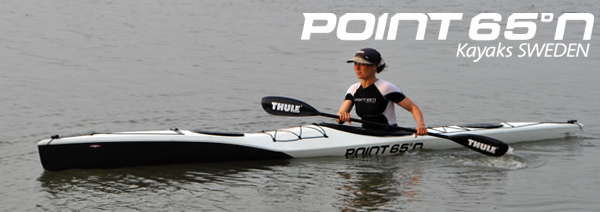
Point 65 Kayaks Sweden is proud to welcome Freya Hoffmeister, the world-renowned expedition kayaker who is currently circumnavigating South America. Freya brings unparalleled experience and expertise to the Point 65 team which will be extremely valuable in developing great kayaks. Her first design project is the POINT 65 FREYA, an 18-foot expedition kayak that Freya will use for her long-distance expeditions.
The adventures
In 2009 Freya circumnavigated Australia becoming the second and the fastest person ever to do so and the first woman and unassisted paddler to complete the unbelievable trip. In January 2008 Freya circumnavigated the South Island of New Zealand, again unassisted and again the fastest to do so. She was the first woman completing this achievement as well and, she also completed her circumnavigation of Iceland in 2007 as the fastest, male or female, to do so.
 South America
In August 2011 Freya began her circumnavigation of South America, a feat never before achieved or even attempted. Her plan is to paddle in three steps.
She finished the first 8000 km from Buenos Aires to Valparaiso in May 2012, rounding Cape Horne—the difficult way—on what must be one of the greatest paddling adventures in kayaking history.
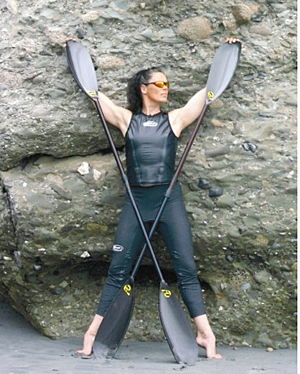
After a summer break Freya will resume the trip in September 2012, paddling north past Peru, Ecuador, and Colombia and through the Panama Canal. Then heading south, past Venezuela, she will finish the second 8000 km leg in Guyana. On the third and final 8000 km leg, starting in September 2013, she will paddle past Suriname, Brazil, and Uruguay, returning to Buenos Aires in time to celebrate her 50th birthday on May 10, 2014.
The new POINT 65 FREYA Expedition Kayak
In September 2012 Freya will start the second leg in her custom designed Point 65 FREYA 18-foot expedition kayak, designed in collaboration with Swedish designer Magnus de Brito (Porsche, Agapi Marine, Pirelli Boats, Point 65). The FREYA compiles all Freya’s experiences from years of extreme long-distance expedition paddling, and the result is a kayak with unbelievable speed vis-á-vis stability and comfort. It is designed to consume miles of paddling with extreme ease and speed while being totally safe, comfortable and stable in the worst and scariest conditions. The FREYA is packed with several groundbreaking innovations and will be unveiled at the Outdoor Retailer trade show in Salt Lake City on August 1st, 2012. The FREYA will be available in limited edition and on special preseason order.
“We are very proud to have Freya on board! Her trust in our products and her commitment to developing the POINT 65 FREYA says a lot about Point 65’s manufacturing quality and innovative capabilities. Freya’s experiences from multi- year expeditions circumnavigating continents, is completely unique. Nobody can better assess and advise on what abuse a kayak has to withstand. Freya is an incredible addition to Point 65.”
Nigel Foster, Point 65’s VP of R&D and head
of the Point 65 sponsored paddler program
“I’m extremely happy to become a part of the Point 65 family where I can play a role in influencing the products I use. Point 65 has proven unique innovative design skills as well as commitment to quality which will make my expeditions so much easier. With Point 65 and Thule, I have two Swedish leading brands as main sponsors, which is more than a coincidence.”
Freya Hoffmeister
New App Coming that will allow you to use your phone to find any park within 25 miles of our location
Posted: June 28, 2012 Filed under: Uncategorized | Tags: android, Facebook, Global Positioning System, iPhone, Park, Smartphone, Twitter Leave a comment
ParksNReviews.com Launches Park Finder App
More Than 13,000 Parks Already Participating
ParksNReviews.com, a constantly growing online database of more than 13,000 parks in the U.S. and Canada, is launching a mobile app later this summer. When available, the app will offer iPhone and Android customers an easy way to find parks within a 25-mile radius of their current location and/or complete a custom search for any location.
Parks are able to be sorted by more than 200 possible amenities (playground types, trail types, waterfront activities, sports fields, pools, etc.) and come complete with user-provided reviews and ratings. If a park has added them, you can even see photos and videos of parks you’re interested in visiting.
Special features of the app include:
· Park Search – Intuitive search based on your location
· Park Rankings – Colors of the park pin indicate how often folks have visited
· Park Badges – Earn badges by checking in to parks and amenities
· Park Ratings – Users can view and/or supply ratings
· Park Reviews – Users can view and/or supply reviews
· Shake, Rattle & Roll – Shake your phone and we’ll supply a wild card search
· Facebook Photo Frames – Take a picture, choose your custom photo frame and share
· Twitter – Click and “tweet” your park experience
· Track Your Park Visits – View a map of where you’ve been to help you plan where you’re going
· Find Your Car – Get lost on the trail? Enable this feature to find your way back to the car
· Park Photos & Videos – Only available if the park owner has added them
· And much, much more.
As we build to the launch, we’re asking all park patrons to check out ParksNReviews.com and see if their favorite parks are already listed. If not, click the “Suggest A Park” link and email us the info – we’ll get it added for you.
If you’re a park owner/manager, take a look at the site and see if we’ve already discovered you. If we have, click the “Claim A Park” link and we’ll get you set up to manage your existing listings and add new ones. If we haven’t, create an account, log in and add your parks.
What do you think? Leave a comment.
If you like this let your friends know or post it on FB, Twitter or LinkedIn
Copyright 2012 Recreation Law (720) Edit Law
Twitter: RecreationLaw
Facebook: Rec.Law.Now
Facebook Page: Outdoor Recreation & Adventure Travel Law
Mobile Site: http://m.recreation-law.com
#RecreationLaw, #@RecreationLaw, #Cycling.Law #Fitness.Law, #Ski.Law, #Outside.Law, #Recreation.Law, #Recreation-Law.com, #Outdoor Law, #Recreation Law, #Outdoor Recreation Law, #Adventure Travel Law, #law, #Travel Law, #Jim Moss, #James H. Moss, #Attorney at Law, #Tourism, #Adventure Tourism, #Rec-Law, #Rec-Law Blog, #Recreation Law, #Recreation Law Blog, #Risk Management, #Human Powered, #Human Powered Recreation,# Cycling Law, #Bicycling Law, #Fitness Law, #Recreation-Law.com, #Backpacking, #Hiking, #Mountaineering, #Ice Climbing, #Rock Climbing, #Ropes Course, #Challenge Course, #Summer Camp, #Camps, #Youth Camps, #Skiing, #Ski Areas, #Negligence, #Snowboarding, #RecreationLaw, #@RecreationLaw, #Cycling.Law #Fitness.Law, #SkiLaw, #Outside.Law, #Recreation.Law, #RecreationLaw.com, #OutdoorLaw, #RecreationLaw, #OutdoorRecreationLaw, #AdventureTravelLaw, #Law, #TravelLaw, #JimMoss, #JamesHMoss, #AttorneyatLaw, #Tourism, #AdventureTourism, #RecLaw, #RecLawBlog, #RecreationLawBlog, #RiskManagement, #HumanPowered, #HumanPoweredRecreation,# CyclingLaw, #BicyclingLaw, #FitnessLaw, #RecreationLaw.com, #Backpacking, #Hiking, #Mountaineering, #IceClimbing, #RockClimbing, #RopesCourse, #ChallengeCourse, #SummerCamp, #Camps, #YouthCamps, #Skiing, #Ski Areas, #Negligence, #Snowboarding, sport and recreation laws, ski law, cycling law, Colorado law, law for recreation and sport managers, bicycling and the law, cycling and the law, ski helmet law, skiers code, skiing accidents, Recreation Lawyer, Ski Lawyer, Paddlesports Lawyer, Cycling Lawyer, Recreational Lawyer, Fitness Lawyer, Rec Lawyer, Challenge Course Lawyer, Ropes Course Lawyer, Zip Line Lawyer, Rock Climbing Lawyer, Adventure Travel Lawyer, Outside Lawyer, Recreation Lawyer, Ski Lawyer, Paddlesports Lawyer, Cycling Lawyer, #RecreationalLawyer, #FitnessLawyer, #RecLawyer, #ChallengeCourseLawyer, #RopesCourseLawyer, #ZipLineLawyer, #RockClimbingLawyer, #AdventureTravelLawyer, #OutsideLawyer, Parks and Rec Business, Parks, App,
WordPress Tags: park,location,ParksNReviews,Launches,Finder,Parks,Already,database,Canada,Android,customers,radius,custom,amenities,playground,user,ratings,photos,Special,Search,Intuitive,Rankings,Colors,Badges,Earn,Users,Reviews,Shake,Rattle,Roll,card,Facebook,Photo,Frames,Take,Twitter,Click,Track,Visits,View,Find,Enable,Videos,owner,patrons,Suggest,info,manager,Claim,listings,haven,account,Leave,LinkedIn,Recreation,Edit,RecreationLaw,Page,Outdoor,Adventure,Travel,Blog,Mobile,Site,Outside,Moss,James,Attorney,Tourism,Risk,Management,Human,Rock,Ropes,Course,Challenge,Summer,Camp,Camps,Youth,Areas,Negligence,SkiLaw,OutdoorLaw,OutdoorRecreationLaw,AdventureTravelLaw,TravelLaw,JimMoss,JamesHMoss,AttorneyatLaw,AdventureTourism,RecLaw,RecLawBlog,RecreationLawBlog,RiskManagement,HumanPoweredRecreation,CyclingLaw,BicyclingLaw,FitnessLaw,RopesCourse,ChallengeCourse,SummerCamp,YouthCamps,Colorado,managers,helmet,accidents,Lawyer,Paddlesports,Recreational,Line,RecreationalLawyer,FitnessLawyer,RecLawyer,ChallengeCourseLawyer,RopesCourseLawyer,ZipLineLawyer,RockClimbingLawyer,AdventureTravelLawyer,OutsideLawyer
Articles from the Summer 2012 Wilderness & Environmental Medicine
Posted: June 27, 2012 Filed under: Uncategorized | Tags: British Columbia, first aid, High Altitude Pulmonary Edema, National Ski Patrol, Wilderness Medical Society (WMS), Wilderness Medicine Leave a commentIf you are in the Outdoor Recreation industry you should be a member of the Wilderness Medical Society
This issue has it all, altitude issues, canoeing issues, mountain biking injuries, insect and snake bikes, CPR and the National Ski Patrol round out the articles.
Oximetry Fails to Predict Acute Mountain Sickness or Summit Success During a Rapid Ascent to 5640 Meters
Change in Oxygen Saturation Does Not predict Acute Mountain Sickness on Jade Mountain
Rare Mitochondrial DNA Polymorphisms are Associated with High Altitude Pulmonary Edema (HAPE) Susceptibility in Han Chinese
The Hawkesbury Canoe Classic: Musculoskeletal Injury Surveillance and Risk Factors Associated with Marathon Paddling
The Epidemiology of Mountain Bike Park Injuries at the Whistler Bike Park, British Columbia (BC), Canada
Fatalities from Venomous and Nonvenomous Animals in the United States (1999 – 2007)
Hyponatremia in an 85 Year old Hiker: When Depletion Plus Dilution Produces Delirium
Black Widow Spider Envenomation, a Rare Cause of Horner’s Syndrome
Effects of Cardiopulmonary Resuscitation at High Altitudes on the Physical Condition of Untrained and Unacclimatized Rescuers
Prehospital Medical Care and the National Ski Patrol
You are going to get great information by reading the newsletter, website and journal of the WMS. More importantly, I find the information is just as critical in telling you what not to do.
You can become a member of the WMS by going here. Sign up today and learn for the rest of the year.
What do you think? Leave a comment.
If you like this let your friends know or post it on FB, Twitter or LinkedIn
Copyright 2012 Recreation Law (720) Edit Law
Twitter: RecreationLaw
Facebook: Rec.Law.Now
Facebook Page: Outdoor Recreation & Adventure Travel Law
Mobile Site: http://m.recreation-law.com
#RecreationLaw, #@RecreationLaw, #Cycling.Law #Fitness.Law, #Ski.Law, #Outside.Law, #Recreation.Law, #Recreation-Law.com, #Outdoor Law, #Recreation Law, #Outdoor Recreation Law, #Adventure Travel Law, #law, #Travel Law, #Jim Moss, #James H. Moss, #Attorney at Law, #Tourism, #Adventure Tourism, #Rec-Law, #Rec-Law Blog, #Recreation Law, #Recreation Law Blog, #Risk Management, #Human Powered, #Human Powered Recreation,# Cycling Law, #Bicycling Law, #Fitness Law, #Recreation-Law.com, #Backpacking, #Hiking, #Mountaineering, #Ice Climbing, #Rock Climbing, #Ropes Course, #Challenge Course, #Summer Camp, #Camps, #Youth Camps, #Skiing, #Ski Areas, #Negligence, #Snowboarding, #RecreationLaw, #@RecreationLaw, #Cycling.Law #Fitness.Law, #SkiLaw, #Outside.Law, #Recreation.Law, #RecreationLaw.com, #OutdoorLaw, #RecreationLaw, #OutdoorRecreationLaw, #AdventureTravelLaw, #Law, #TravelLaw, #JimMoss, #JamesHMoss, #AttorneyatLaw, #Tourism, #AdventureTourism, #RecLaw, #RecLawBlog, #RecreationLawBlog, #RiskManagement, #HumanPowered, #HumanPoweredRecreation,# CyclingLaw, #BicyclingLaw, #FitnessLaw, #RecreationLaw.com, #Backpacking, #Hiking, #Mountaineering, #IceClimbing, #RockClimbing, #RopesCourse, #ChallengeCourse, #SummerCamp, #Camps, #YouthCamps, #Skiing, #Ski Areas, #Negligence, #Snowboarding, sport and recreation laws, ski law, cycling law, Colorado law, law for recreation and sport managers, bicycling and the law, cycling and the law, ski helmet law, skiers code, skiing accidents, Recreation Lawyer, Ski Lawyer, Paddlesports Lawyer, Cycling Lawyer, Recreational Lawyer, Fitness Lawyer, Rec Lawyer, Challenge Course Lawyer, Ropes Course Lawyer, Zip Line Lawyer, Rock Climbing Lawyer, Adventure Travel Lawyer, Outside Lawyer, Recreation Lawyer, Ski Lawyer, Paddlesports Lawyer, Cycling Lawyer, #RecreationalLawyer, #FitnessLawyer, #RecLawyer, #ChallengeCourseLawyer, #RopesCourseLawyer, #ZipLineLawyer, #RockClimbingLawyer, #AdventureTravelLawyer, #OutsideLawyer, CPR, Ski Patrol, National Ski Patrol, Wilderness Medical Society, #WMS, Pulse Oximetry, AMS, Accute Mountain Sickness, #HAPE, High Altitude Pulmonary Edema, Marathon Paddling, Canoeing, Mountain Biking, Black Widow Spider,
WordPress Tags: Articles,Summer,Environmental,Medicine,Outdoor,Recreation,industry,member,Medical,altitude,mountain,injuries,insect,bikes,National,Patrol,Oximetry,Fails,Predict,Acute,Summit,Rapid,Ascent,Meters,Change,Oxygen,Saturation,Does,Jade,Rare,Mitochondrial,Polymorphisms,High,Pulmonary,Edema,HAPE,Chinese,Hawkesbury,Canoe,Classic,Musculoskeletal,Injury,Surveillance,Risk,Factors,Marathon,Epidemiology,Bike,Park,Whistler,British,Columbia,Canada,Fatalities,Venomous,Nonvenomous,Animals,States,Hyponatremia,Hiker,Depletion,Plus,Dilution,Produces,Delirium,Black,Spider,Envenomation,Cause,Horner,Syndrome,Effects,Cardiopulmonary,Resuscitation,Altitudes,Physical,Condition,Rescuers,Prehospital,Care,information,newsletter,journal,Sign,Leave,Twitter,LinkedIn,Edit,RecreationLaw,Facebook,Page,Adventure,Travel,Blog,Mobile,Site,Outside,Moss,James,Attorney,Tourism,Management,Human,Rock,Ropes,Course,Challenge,Camp,Camps,Youth,Areas,Negligence,SkiLaw,OutdoorLaw,OutdoorRecreationLaw,AdventureTravelLaw,TravelLaw,JimMoss,JamesHMoss,AttorneyatLaw,AdventureTourism,RecLaw,RecLawBlog,RecreationLawBlog,RiskManagement,HumanPoweredRecreation,CyclingLaw,BicyclingLaw,FitnessLaw,RopesCourse,ChallengeCourse,SummerCamp,YouthCamps,Colorado,managers,helmet,accidents,Lawyer,Paddlesports,Recreational,Line,RecreationalLawyer,FitnessLawyer,RecLawyer,ChallengeCourseLawyer,RopesCourseLawyer,ZipLineLawyer,RockClimbingLawyer,AdventureTravelLawyer,OutsideLawyer,Pulse,Accute

Navajo Nation attempting to build a tramway to the Little Colorado River
Posted: June 27, 2012 Filed under: Uncategorized | Tags: Arizona, Colorado, Colorado River, Grand Canyon, Little Colorado River, Memorandum of Understanding, Navajo Nation Leave a comment
PO Box 1934

Flagstaff, AZ 86002
(928) 773-1075 phone
(928) 773-8523 fax
Yá’át’ééh fellow river guides, boaters and Canyon lovers,
As I am writing this note, the Navajo Nation government is seriously contemplating approving a multi-million dollar tourism development at the Confluence of the Little Colorado and Colorado Rivers called “Grand Canyon Escalade.” This past spring Navajo Nation President Ben Shelly signed a non-binding Memorandum of Understanding with Confluence Partners, LLC. to conduct a feasibility study of the proposed development which would include:
· 420 acres on the rim (resort hotel, commercial/retail space, RV park and other amenities)
· 3.5 acres down at river level (including an aerial tramway with gondolas to transport people from the rim down to the river, a restaurant, an 1100 ft. elevated “river walk” along the river, and an amphitheater).
If approved, the tribal government expects 3 million visitors as soon as 2015* on the East Rim of Grand Canyon – one of the last areas with no significant development.
Why should you be concerned?
Well, if the potential visual impact of a tramway snaking its way down the canyon walls and a restaurant at the bottom of Grand Canyon isn’t enough to concern you greatly, here are a few more reasons….
· First and foremost – this is GRAND CANYON – one of the seven NATURAL wonders of the world. It is Grand Canyon River Guides’ belief that the Grand Canyon and the Colorado River offer an experience of wildness and connection between the human spirit and the land that can be equaled in few places on earth today. We are caretakers of this wilderness experience so it is up to us to raise our voices. If the Navajo Nation government approves this development, the integrity and sanctity of the visitor experience to the Confluence of the Little Colorado and Colorado Rivers will be severely compromised and degraded.
· The Little Colorado River corridor and confluence is culturally and spiritually significant to ALL of the affiliated tribes who hold Grand Canyon sacred. Grand Canyon is the place of emergence into this world for the Hopi and Zuni tribes, it is the homeland for the Navajo, Paiute, Hualapai and Havasupai peoples, and it is a living, sacred place for all affiliated tribes encompassing the springs, the plants, the animals and other resources that are such an important part of traditional and ceremonial practices.
· A fragile, delicately balanced ecosystem is at stake. Development of this magnitude cannot occur without significant adverse impacts that are exacerbated by associated problems such as light and noise pollution. The Little Colorado River confluence area is also home to the endangered humpback chub.
· The National Park Service (NPS) and the Navajo Nation disagree on the boundary issue. The NPS contends that the boundary is located one-quarter mile east from the historic high water line on the Colorado River’s eastern bank. The Department of the Interior’s Solicitor’s Opinion upholds this interpretation as does the BLM which critically reviewed the opinion during the construction of the new Marble Canyon bridge, and again found it valid. The developer contends that the boundary is where the vegetation ends at the water line.
· Navajo Nation residents in the former Bennett Freeze area are in danger of being evicted if the development moves forward. It is important to note that the Bodaway/Gap Chapter of the Navajo Nation recently voted against the proposed tourism development, so there is not a blanket mandate from the Navajo people to support this plan.
What can YOU do?
Although this issue seems so outlandish that it couldn’t possibly happen, we cannot ignore it for fail to speak out. This is not just a Navajo issue. This is a Grand Canyon protection issue we all should be concerned about and one that NEEDS your voice of opposition.
Write an email AND a letter to:
ADDRESS: ADDRESS:
President Ben Shelly The Navajo Times
Post Office Box 7440 Highway 264 & Route 12
Window Rock, Navajo Nation, AZ 86515 Window Rock, AZ 86515–0310
EMAIL: president.benshelly@navajo-nsn.gov Email: duane@navajotimes.com
We also encourage you to write a letter voicing your concerns to the Superintendent of Grand Canyon National Park. We want him to know he has our support for preserving park values and resources for future generations. He must stand firm.
ADDRESS:
Superintendent David Uberuaga
Grand Canyon National Park
PO Box 129
Grand Canyon, AZ 86023-0129
How can you learn more about this issue?
Articles:
*An AP article with the artist’s rendering of the aerial tramway can be found at:
Websites:
https://www.facebook.com/SavetheConfluence

Attorney and client do not understand how ski bindings work
Posted: June 26, 2012 Filed under: Skiing / Snow Boarding | Tags: Four Seasons, Jackson Hole, Jackson Hole Mountain Resort, Jim Moss, Lawsuit, RecreationLaw, Ski binding, skiing Leave a comment
Complaint alleges that a binding failed during a slow fall.
Torque, pressure is the reason why ski bindings release. If there is not enough torque, then the binding will not release. Slow falls do not produce enough torque to release a binding. The overall pressure may be enough; however, the pressure is over a longer period of time which never meets the limits that release the binding.
Consequently, slow falls may not release a ski binding.
The plaintiff was skiing slowly when she fell according to the article. Her binding failed to release resulting in a knee injury and a severely broken leg. The plaintiff’s complaint alleges that skiing slowly should have prevented the injuries. Consequently, the rented binding was at fault.
Because plaintiff was skiing at such a low rate of speed on an easy run, the injuries she suffered could not have been caused in the absence of the negligence of the defendants.
The plaintiff rented the skis and bindings from the Four Seasons Resort at Jackson Hole Resort.
This is going to be interesting.
What do you think? Leave a comment.
If you like this let your friends know or post it on FB, Twitter or LinkedIn
Copyright 2012 Recreation Law (720) Edit Law
Twitter: RecreationLaw
Facebook: Rec.Law.Now
Facebook Page: Outdoor Recreation & Adventure Travel Law
Mobile Site: http://m.recreation-law.com
#RecreationLaw, #@RecreationLaw, #Cycling.Law #Fitness.Law, #Ski.Law, #Outside.Law, #Recreation.Law, #Recreation-Law.com, #Outdoor Law, #Recreation Law, #Outdoor Recreation Law, #Adventure Travel Law, #law, #Travel Law, #Jim Moss, #James H. Moss, #Attorney at Law, #Tourism, #Adventure Tourism, #Rec-Law, #Rec-Law Blog, #Recreation Law, #Recreation Law Blog, #Risk Management, #Human Powered, #Human Powered Recreation,# Cycling Law, #Bicycling Law, #Fitness Law, #Recreation-Law.com, #Backpacking, #Hiking, #Mountaineering, #Ice Climbing, #Rock Climbing, #Ropes Course, #Challenge Course, #Summer Camp, #Camps, #Youth Camps, #Skiing, #Ski Areas, #Negligence, #Snowboarding, #RecreationLaw, #@RecreationLaw, #Cycling.Law #Fitness.Law, #SkiLaw, #Outside.Law, #Recreation.Law, #RecreationLaw.com, #OutdoorLaw, #RecreationLaw, #OutdoorRecreationLaw, #AdventureTravelLaw, #Law, #TravelLaw, #JimMoss, #JamesHMoss, #AttorneyatLaw, #Tourism, #AdventureTourism, #RecLaw, #RecLawBlog, #RecreationLawBlog, #RiskManagement, #HumanPowered, #HumanPoweredRecreation,# CyclingLaw, #BicyclingLaw, #FitnessLaw, #RecreationLaw.com, #Backpacking, #Hiking, #Mountaineering, #IceClimbing, #RockClimbing, #RopesCourse, #ChallengeCourse, #SummerCamp, #Camps, #YouthCamps, #Skiing, #Ski Areas, #Negligence, #Snowboarding, sport and recreation laws, ski law, cycling law, Colorado law, law for recreation and sport managers, bicycling and the law, cycling and the law, ski helmet law, skiers code, skiing accidents, Jackson Hole Resort, Four Seasons Resort, Ski Binding, Binding,
WordPress Tags: Attorney,client,bindings,Complaint,Torque,plaintiff,article,knee,injury,injuries,absence,negligence,defendants,Four,Seasons,Resort,Jackson,Hole,rental,Leave,Twitter,LinkedIn,Recreation,Edit,RecreationLaw,Facebook,Page,Outdoor,Adventure,Travel,Blog,Mobile,Site,Outside,Moss,James,Tourism,Risk,Management,Human,Rock,Ropes,Course,Challenge,Summer,Camp,Camps,Youth,Areas,SkiLaw,OutdoorLaw,OutdoorRecreationLaw,AdventureTravelLaw,TravelLaw,JimMoss,JamesHMoss,AttorneyatLaw,AdventureTourism,RecLaw,RecLawBlog,RecreationLawBlog,RiskManagement,HumanPoweredRecreation,CyclingLaw,BicyclingLaw,FitnessLaw,RopesCourse,ChallengeCourse,SummerCamp,YouthCamps,Colorado,managers,helmet,accidents
Short and Sweet Michigan case backs up the Michigan Ski Area Safety Act
Posted: June 25, 2012 Filed under: Michigan, Ski Area | Tags: Appellate Court, Boyne Mountain, Half Pipe, Michigan, Michigan Ski Safety Act, Ski, Ski Resort, Terrain park, Winter sport Leave a commentMarshall v. Boyne USA, Inc., 2012 Mich. App. LEXIS 928
If you have seen the terrain park and half pipe in the morning, it is hard to argue it was not marked in the afternoon.
The Michigan Appellate Court in a concise three-page decision overruled the lower court and held that the Michigan Ski Safety Act bars the plaintiff’s claims.
The plaintiff was skiing at Boyne Mountain ski area in Michigan. He skied into the Terrain Park earlier in the day. He had seen, but not read the warning sign before entering the park. After lunch, he and his friend went back into the park. After going off several jumps the plaintiff skied across the slope and went off another jump. As he was stopping he slid over the lip of the half pipe and fell into the half pipe suffering severe injuries. (This is the second case I’ve read where the person was injured in the half pipe not by going into the half pipe, but by falling into the half pipe from the berm. The first was Dunbar v. Jackson Hole Mountain Resort Corporation, 2004 U.S. App. LEXIS 25807.)
The court correctly described the half pipe in its decision. “The terrain park contained a half pipe that was about twenty feet deep. A half pipe is a ski attraction created by a trench in the snow that extends downhill. Skier’s ski inside of the half pipe.” In the Dunbar case, where the court held for the plaintiff, the court had no idea what a half pipe was based on the description of the half pipe.
The plaintiff sued for negligently failing to adequately mark the boundaries of the half pipe. The defendants argued the Michigan Ski Safety Act, MCL 408.321 et seq., and two releases signed by the plaintiff protected them from suit.
So?
The court’s analysis of the legal issues was short and sweet. The court looked at the Michigan Ski Safety Act (SASA) and found no violation of the act and found nothing done by the ski area created liability not imposed by the act.
The SASA imposes a duty in the ski area to identify unnecessary or not obvious dangers. The act requires skiers to assume the risks of numerous items, including variations in terrain. The half pipe the court found was not unnecessary and was obvious because the plaintiff had seen it in the morning and because the terrain park had the required warning sign at the top of the ski run. The SASA requires that hazards involve equipment and fixtures to be marked. The terrain park was neither.
By choosing to ski in the terrain park, which was marked with signage as required by the SASA, and which contained the half pipe that plaintiff saw earlier that day, plaintiff is held to have accepted the danger as a matter of law.
The ski area did not violate the SASA.
The court after coming to this conclusion did not look at the other defenses of the defendant, the two releases. One release had been signed by the plaintiff when he rented his ski equipment and one release was on the back of the lift ticket. The second argument would have been interesting; only one court has found the lift ticket to be a contract which could hold the defendant not liable. Most courts hold the language is simply warning language because there is not meeting of the minds to create a contract when you are just handed a piece of paper.
So Now What?
It is quite clear here that one of the reasons why the court held the way it did was because it understood what a half pipe was. In a similar case where the plaintiff got lost in the terrain park and fell into the half pipe the court held for the plaintiff, however, it was obvious from the decision the court had no clue about what a half pipe was or why the resort had one. (Dunbar v. Jackson Hole Mountain Resort Corporation, 2004 U.S. App. LEXIS 25807)
It is important to remember that you need to educate the courts, the same way you educate your clients if you expect to keep both happy. Clients who do not understand what they are about to experience are more susceptible to getting hurt (based on my experience) and are not prepared for the experience. If your documentation shows you educated the client, the court in reviewing the evidence is more likely to also understand what the plaintiff knew and can easily find on your behalf.
If you did not adequately educate your client, then you leave it to your attorney to educate the court. This means you have to educate two people. You have to make sure your attorney understands what you do and why, and then you have to make sure your attorney can pass that information on to the court.
If your client does not understand the risks, then your attorney and the court are not going to understand leaving you writing a check for any injuries.
Education is important even after school is over.
What do you think? Leave a comment.
If you like this let your friends know or post it on FB, Twitter or LinkedIn
Copyright 2012 Recreation Law (720) Edit Law
Twitter: RecreationLaw
Facebook: Rec.Law.Now
Facebook Page: Outdoor Recreation & Adventure Travel Law
Mobile Site: http://m.recreation-law.com
#RecreationLaw, #@RecreationLaw, #Cycling.Law #Fitness.Law, #Ski.Law, #Outside.Law, #Recreation.Law, #Recreation-Law.com, #Outdoor Law, #Recreation Law, #Outdoor Recreation Law, #Adventure Travel Law, #law, #Travel Law, #Jim Moss, #James H. Moss, #Attorney at Law, #Tourism, #Adventure Tourism, #Rec-Law, #Rec-Law Blog, #Recreation Law, #Recreation Law Blog, #Risk Management, #Human Powered, #Human Powered Recreation,# Cycling Law, #Bicycling Law, #Fitness Law, #Recreation-Law.com, #Backpacking, #Hiking, #Mountaineering, #Ice Climbing, #Rock Climbing, #Ropes Course, #Challenge Course, #Summer Camp, #Camps, #Youth Camps, #Skiing, #Ski Areas, #Negligence, #Snowboarding, #RecreationLaw, #@RecreationLaw, #Cycling.Law #Fitness.Law, #SkiLaw, #Outside.Law, #Recreation.Law, #RecreationLaw.com, #OutdoorLaw, #RecreationLaw, #OutdoorRecreationLaw, #AdventureTravelLaw, #Law, #TravelLaw, #JimMoss, #JamesHMoss, #AttorneyatLaw, #Tourism, #AdventureTourism, #RecLaw, #RecLawBlog, #RecreationLawBlog, #RiskManagement, #HumanPowered, #HumanPoweredRecreation,# CyclingLaw, #BicyclingLaw, #FitnessLaw, #RecreationLaw.com, #Backpacking, #Hiking, #Mountaineering, #IceClimbing, #RockClimbing, #RopesCourse, #ChallengeCourse, #SummerCamp, #Camps, #YouthCamps, #Skiing, #Ski Areas, #Negligence, #Snowboarding, sport and recreation laws, ski law, cycling law, Colorado law, law for recreation and sport managers, bicycling and the law, cycling and the law, ski helmet law, skiers code, skiing accidents, Recreation Lawyer, Ski Lawyer, Paddlesports Lawyer, Cycling Lawyer, Recreational Lawyer, Fitness Lawyer, Rec Lawyer, Challenge Course Lawyer, Ropes Course Lawyer, Zip Line Lawyer, Rock Climbing Lawyer, Adventure Travel Lawyer, Outside Lawyer, Recreation Lawyer, Ski Lawyer, Paddlesports Lawyer, Cycling Lawyer, #RecreationalLawyer, #FitnessLawyer, #RecLawyer, #ChallengeCourseLawyer, #RopesCourseLawyer, #ZipLineLawyer, #RockClimbingLawyer, #AdventureTravelLawyer, #OutsideLawyer, Boyne USA, Inc, #Boyne, Boyne Mountain, Ski Area, #Skiing, Half Pipe, Terrain Park, Assumption of the Risk, #Michigan, MI, Ski Area Safety Act, #SASA,
WordPress Tags: Short,Sweet,Michigan,Area,Marshall,Boyne,Mich,LEXIS,terrain,park,Appellate,Court,decision,plaintiff,Mountain,friend,injuries,person,Dunbar,Jackson,Hole,Resort,Corporation,feet,attraction,trench,Skier,description,boundaries,defendants,analysis,SASA,violation,dangers,items,variations,equipment,fixtures,danger,conclusion,defendant,ticket,argument,Most,paper,clue,clients,documentation,client,attorney,information,Education,Leave,Twitter,LinkedIn,Recreation,Edit,RecreationLaw,Facebook,Page,Outdoor,Adventure,Travel,Blog,Mobile,Site,Outside,Moss,James,Tourism,Risk,Management,Human,Rock,Ropes,Course,Challenge,Summer,Camp,Camps,Youth,Areas,Negligence,SkiLaw,OutdoorLaw,OutdoorRecreationLaw,AdventureTravelLaw,TravelLaw,JimMoss,JamesHMoss,AttorneyatLaw,AdventureTourism,RecLaw,RecLawBlog,RecreationLawBlog,RiskManagement,HumanPoweredRecreation,CyclingLaw,BicyclingLaw,FitnessLaw,RopesCourse,ChallengeCourse,SummerCamp,YouthCamps,Colorado,managers,helmet,accidents,Lawyer,Paddlesports,Recreational,Line,RecreationalLawyer,FitnessLawyer,RecLawyer,ChallengeCourseLawyer,RopesCourseLawyer,ZipLineLawyer,RockClimbingLawyer,AdventureTravelLawyer,OutsideLawyer,Half,Pipe,Assumption,skiers
Michigan Ski Safety Act
Posted: June 25, 2012 Filed under: Michigan | Tags: Colorado, Michigan Compiled Laws, Michigan Ski Safety Act, MSSA, Piste, Ski, Ski Resort, Sports, United States, winter sports Leave a commentMichigan Ski Safety Act
CHAPTER 408 LABOR
SKI AREA SAFETY ACT
MCL § 408.321
Preceding § 408.321
An act to provide for the inspection, licensing, and regulation of ski areas and ski lifts; to provide for the safety of skiers, spectators, and the public using ski areas; to provide for certain presumptions relative to liability for an injury or damage sustained by skiers; to prescribe the duties of skiers and ski area operators; to create a ski area safety board; to provide for the disposition of revenues; to provide for liability for damages which result from a violation of this act; to provide civil fines for certain violations of this act; and to provide criminal penalties for certain violations of this act. (Amended by Pub Acts 1981, No. 86, imd eff July 2, 1981; 1995, No. 120, imd eff June 30, 1995.)
MCL § 408.321
§ 408.321. Short title.
Sec. 1. This act shall be known and may be cited as the “ski area safety act of 1962”.
MCL § 408.322
§ 408.322. Definitions.
Sec. 2. As used in this act:
(a) “Board” means the ski area safety board.
(b) “Commissioner” means the director of commerce or an authorized representative of the director.
(c) “Department” means the state department of commerce.
(d) “Operator” means a person who owns or controls, or who has operational responsibility for, a ski area or ski lift. An operator includes this state or a political subdivision of this state.
(e) “Passenger” means a person, skier or nonskier, who boards, disembarks from, or is transported by a ski lift, regardless of whether the ski lift is being used during the skiing season or nonskiing season, and includes a person waiting for or moving away from the loading or unloading point of ski lift.
(f) “Ski area” means an area used for skiing and served by 1 or more ski lifts.
(g) “Skier” means a person wearing skis or utilizing a device that attaches to at least 1 foot or the lower torso for the purpose of sliding on a slope. The device slides on the snow or other surface of a slope and is capable of being maneuvered and controlled by the person using the device. Skier includes a person not wearing skis or a skiing device while the person is in a ski area for the purpose of skiing.
(h) “Ski lift” means a device for transporting persons uphill on skis, or in cars on tracks, or suspended in the air by the use of cables, chains, belts, or ropes, and usually supported by trestles or towers with 1 or more spans. Ski lift includes a rope tow.
MCL § 408.323
§ 408.323. Safety board; members.
Sec. 3. A ski area safety board consisting of 7 members is created within the office of the commissioner. The board consists of 3 ski area managers, 1 from the Upper Peninsula and 2 from the Lower Peninsula; 1 engineer with skiing experience; 1 member of the central United States ski association, a nonprofit corporation; 1 person with skiing experience from the Upper Peninsula representing the general public; and 1 with skiing experience from the Lower Peninsula representing the general public. The commissioner and an officer of the Michigan tourist council are ex officio members of the board without vote.
MCL § 408.324
§ 408.324. Safety board members; appointment; term; filling of vacancies.
Sec. 4. Members of the board shall be appointed by the governor with the advice and consent of the senate for terms of 4 years and until their successors are appointed and qualified. Vacancies in the board shall be filled for the unexpired term.
MCL § 408.325
§ 408.325. Officers; quorum; meetings; compensation and expenses; compliance with Open Meetings Act.
Sec. 5. (1) The business which the board may perform shall be conducted at a public meeting of the board held in compliance with Act No. 267 of the Public Acts of 1976, being sections 15.261 to 15.275 of the Michigan Compiled Laws. Public notice of the time, date, and place of the meeting shall be given in the manner required by Act No. 267 of the Public Acts of 1976. The board shall elect a chairperson and other officers it considers necessary to perform its duties between meetings. A majority of the 7 voting members shall constitute a quorum. The board shall meet not less than once yearly on the call of the chairperson or by written request of not less than 3 members.
(2) The per diem compensation of the members of the board, other than the commissioner, and the schedule for reimbursement of expenses shall be established annually by the legislature.
MCL § 408.326
§ 408.326. Rules; fee schedules.
Sec. 6. (1) The board shall promulgate rules for the safe construction, installation, repair, use, operation, maintenance, and inspection of all ski areas and ski lifts as the board finds necessary for protection of the general public while using ski areas and ski lifts. The rules shall be reasonable and based upon generally accepted engineering standards, formulas, and practices.
(2) The board, with the advice of the commissioner, shall propose legislation to establish the fee schedule for permits, inspections, and plan review activities. The fees shall reflect the actual costs and expenses of the department for issuing permits and conducting inspections and plan reviews.
MCL § 408.326a
§ 408.326a. Duties of ski area operators.
Sec. 6a. Each ski area operator shall, with respect to operation of a ski area, do all of the following:
(a) Equip each snow-grooming vehicle and any other authorized vehicle, except a snowmobile, with a flashing or rotating yellow light conspicuously located on the vehicle, and operate the flashing or rotating yellow light while the vehicle is moving on, or in the vicinity of, a ski run. A snowmobile operated in a ski area shall be operated with at least 1 operating white light located on the front of the snowmobile.
(b) Mark with a visible sign or other warning device the location of any hydrant or similar fixture or equipment used in snow-making operations located on a ski run, as prescribed by rules promulgated under section 20(3).
(c) Mark the top of or entrance to each ski run, slope, and trail to be used by skiers for the purpose of skiing, with an appropriate symbol indicating the relative degree of difficulty of the run, slope, or trail, using a symbols code prescribed by rules promulgated under section 20(3).
(d) Mark the top of or entrance to each ski run, slope, and trail which is closed to skiing, with an appropriate symbol indicating that the run, slope, or trail is closed, as prescribed by rules promulgated under section 20(3).
(e) Maintain 1 or more trail boards at prominent locations in each ski area displaying that area’s network of ski runs, slopes, and trails and the relative degree of difficulty of each ski run, slope, and trail, using the symbols code required under subdivision (c) and containing a key to that code, and indicating which runs, slopes, and trails are open or closed to skiing.
(f) Place or cause to be placed, if snow-grooming or snowmaking operations are being performed on a ski run, slope, or trail while the run, slope, or trail is open to the public, a conspicuous notice at or near the top of or entrance to the run, slope, or trail indicating that those operations are being performed.
(g) Post the duties of skiers and passengers as prescribed in sections 21 and 22 and the duties, obligations, and liabilities of operators as prescribed in this section in and around the ski area in conspicuous places open to the public.
(h) Maintain the stability and legibility of all required signs, symbols, and posted notices.
MCL § 408.327
§ 408.327. Promulgation of rules.
Sec. 7. The rules shall be promulgated pursuant to Act No. 306 of the Public Acts of 1969, as amended, being sections 24.201 to 24.315 of the Michigan Compiled Laws.
MCL § 408.328
§ 408.328. Administration and enforcement of act.
Sec. 8. The commissioner, subject to the limitations herein contained and the rules and regulations of the board, shall administer and enforce the provisions of this act.
MCL § 408.329
§ 408.329. Ski lifts, permits required; inspections, original and annual.
Sec. 9. No person shall operate a ski lift without a permit issued by the commissioner. On or before October 1 of each year an operator shall apply for a permit to the commissioner on a form furnished by the commissioner and containing such information as the board may require. All ski lifts shall be inspected before they are originally put into operation for the public’s use and thereafter at least once every 12 months, unless permitted to operate on a temporary permit.
MCL § 408.330
§ 408.330. Temporary permits.
Sec. 10. The commissioner may issue a temporary permit for 30 calendar days to an operator, who has previously been operating in this state on a regular or annual basis, to continue operation. An inspection of his ski lifts shall be made within 30 days from the issuance of the permit. A ski lift inspected and covered by a permit in the preceding year may operate on a temporary basis until further inspected.
MCL § 408.331
§ 408.331. Permit; issuance; expiration.
Sec. 11. If upon inspection a ski lift is found to comply with the rules and regulations of the board, the commissioner shall issue a permit to operate. A permit shall expire on September 30 of the following year.
MCL § 408.332
§ 408.332. Ski lifts; construction, moving, alteration; plans and specifications, filing, approval; permit for work; exclusions.
Sec. 12. Before a new ski lift is erected, or before a presently existing ski lift is moved to a different location, or whenever any additions or alterations are made which change the structure, mechanism, classification or capacity of any ski lift, the operator shall file with the department detailed, duplicate plans and specifications of such work. The plans and specifications shall be prepared by a qualified tramway firm or by an engineer, licensed in this state as a professional engineer, in accordance with Act No. 240 of the Public Acts of 1937, as amended, being sections 338.551 to 338.576 of the Compiled Laws of 1948. Upon approval of plans and specifications, the department shall issue a permit for such work. All rope tows shall be excluded from this section.
MCL § 408.333
§ 408.333. Temporary cessation of operations; resumption.
Sec. 13. The commissioner or board may order, in writing, a temporary cessation of operation of a ski lift if it has been determined after inspection to be hazardous or unsafe. Operation shall not resume until such conditions are corrected to the satisfaction of the commissioner or board.
MCL § 408.334
§ 408.334. Preexisting structures.
Sec. 14. This act shall not be construed to prevent the use of any existing installation, upon inspection found to be in a safe condition and to conform with the rules and regulations of the board.
MCL § 408.335
§ 408.335. Noncomplying operators; modification of rules.
Sec. 15. If there are practical difficulties or unnecessary hardships for an operator to comply with the rules and regulations under this act, the commissioner, with the approval of the board, may modify the application of such rules or regulations to such a situation, if the spirit of the provisions shall be observed and the public safety is secured. Any operator may make a written request to the board stating his grounds and applying for such modification. Any authorization by the commissioner and the board shall be in writing and shall describe the conditions under which the modification is permitted. A record of all modifications shall be kept in the department and open to the public.
MCL § 408.336
§ 408.336. Fees; authorized inspectors; receipts.
Sec. 16. (a) An application for a permit shall be accompanied by fees of:
$25.00 for an annual permit; or
$2.00 for each rope tow,
$5.00 for each T bar, J bar or platter pull,
$15.00 for each chair lift or skimobile, and
$30.00 for each aerial tramway,if greater than the $25.00 annual permit fee.
(b) Inspection fees shall be as follows:
$8.00 for each rope tow,
$20.00 for each T bar, J bar or platter pull,
$60.00 for each chair lift or skimobile,
$120.00 for each aerial tramway, and
$50.00 for reinspections or special inspections at an operator’s request. Any operator may employ any person, partnership or corporation, approved by the commissioner and board, to make the inspections. Inspections made by any person, partnership, or corporation, that may be employed by an operator, shall be on forms furnished or approved by the department. Inspection fees shall be waived when the annual permit application is accompanied by such an inspection report.
(c) Fees for review and approval of plans prior to construction shall be $200.00 for a chair lift, T bar, J bar, platter pull or tramway.Fees for review and approval of plans for modification and alteration of an existing lift shall be $50.00.
(d) Fees shall be paid to the department, which shall give receipts therefor.
MCL § 408.337
§ 408.337. Chief inspector; other employees.
Sec. 17. The department, with the advice and consent of the board, shall employ or retain a person qualified in engineering and training who shall be designated chief inspector. The chief inspector and such additional inspectors and other employees as may be necessary to properly administer this act may be hired on a temporary basis or borrowed from other state departments, or the department may contract with persons, partnerships or corporations for such inspection services on an independent basis.
MCL § 408.338
§ 408.338. Disposition of fees; payment of expenses.
Sec. 18. All fees for permits or inspections, or any other income received under this act, shall be paid into the general fund. All salaries and other moneys expended under this act shall be paid by the state treasurer from a fund appropriated by the legislature.
MCL § 408.339
§ 408.339. Notices; publication.
Sec. 19. (1) In addition to the notice prescribed in section 5(1) notice of a public hearing held under this act shall be published not less than once and not less than 10 days before the hearing, in newspapers of general circulation prescribed by the commissioner.
MCL § 408.340
§ 408.340. Violations; violations of Open Meetings Act, penalties; implementation; maximum penalties.
Sec. 20. (1) Except for sections 21 to 24, and except as provided in subsection (2), a person who violates this act, or a rule or order promulgated or issued pursuant to this act, or a person who interferes with, impedes, or obstructs the commissioner, an authorized representative of the commissioner, or a board member in the performance of duties prescribed by this act, is guilty of a misdemeanor. Each day a violation or other act continues shall be considered a separate offense.
(2) A member of the board who intentionally violates section 5(1) shall be subject to the penalties prescribed in Act No. 267 of the Public Acts of 1976, as amended.
(3) Not more than 270 days after the effective date of this subsection, the board shall, pursuant to section 7, promulgate rules consistent with this act to implement this act, except for subsection (2) and sections 21, 22, 23, and 24, not to exceed $50.00 for each violation.
MCL § 408.341
§ 408.341. Conduct of skier; prohibited acts.
Sec. 21. (1) A skier shall conduct himself or herself within the limits of his or her individual ability and shall not act or ski in a manner that may contribute to his or her injury or to the injury of any other person. A skier shall be the sole judge of his or her ability to negotiate a track, trail, or slope.
(2) While in a ski area, a skier or passenger shall not do any of the following:
(a) Board a ski lift which has been designated as closed.
(b) Wilfully board or embark upon, or disembark from, a ski lift, except at an area designated for those purposes.
(c) Intentionally drop, throw, or expel an object from a ski lift while riding on the lift.
(d) Do any act which interferes with the running or operation of a ski lift, such as, but not limited to: swinging or bouncing on an aerial lift, attempting to contact supporting towers, machinery, guides, or guards while riding on a ski lift; or skiing out of the designated ski track on a surface lift or tow.
(e) Use a ski lift, unless the skier or passenger has the ability to use the lift safely without instruction on use of the lift by a ski area owner, manager, operator, or employee, or unless the skier or passenger requests and receives instruction before entering the boarding area of the ski lift.
(f) Use a ski lift or ski without properly engaging and using ski restraining devices, brakes, or restraining straps.
MCL § 408.342
§ 408.342. Duties of skier; acceptance of inherent dangers.
Sec. 22. (1) While in a ski area, each skier shall do all of the following:
(a) Maintain reasonable control of his or her speed and course at all times.
(b) Stay clear of snow-grooming vehicles and equipment in the ski area.
(c) Heed all posted signs and warnings.
(d) Ski only in ski areas which are marked as open for skiing on the trail board described in section 6a(e).
(2) Each person who participates in the sport of skiing accepts the dangers that inhere in that sport insofar as the dangers are obvious and necessary. Those dangers include, but are not limited to, injuries which can result from variations in terrain; surface or subsurface snow or ice conditions; bare spots; rocks, trees, and other forms of natural growth or debris; collisions with ski lift towers and their components, with other skiers, or with properly marked or plainly visible snow-making or snow-grooming equipment.
MCL § 408.343
§ 408.343. Accident causing injury to another person, notification; identification; penalty for wilful failure to give identification or notification; accident causing injury to skier, notification of hazardous condition.
Sec. 23. (1) A skier involved in an accident causing an injury to another person shall to the extent that he or she is reasonably able to do so immediately notify the ski patrol or the operator, or law enforcement or emergency personnel, and shall clearly identify himself or herself. A skier who wilfully fails to give identification after involvement in a skiing accident with another person, or a skier who is reasonably able to do so who fails to notify the proper authorities or to obtain assistance when the skier knows that another person involved in the accident is in need of medical or other assistance, is guilty of a misdemeanor, punishable by imprisonment for not more than 30 days, or a fine of not more than $100.00, or both.
(2) A skier involved in an accident causing an injury to himself or herself, but not to another person, shall immediately notify the ski patrol or the operator, or law enforcement or emergency personnel, if the accident created a known hazardous condition in the area where the accident occurred.
MCL § 408.344
§ 408.344. Violations of act, liability for resulting damage.
Sec. 24. A skier or passenger who violates this act, or an operator who violates this act shall be liable for that portion of the loss or damage resulting from that violation.
Dunbar v. Jackson Hole Mountain Resort Corporation, 2004 U.S. App. LEXIS 25807
Posted: June 25, 2012 Filed under: Legal Case, Ski Area | Tags: Dunbar, Half Pipe, Jackson Hole, Jackson Hole Mountain Resort, Jackson Wyoming, Plaintiff-Appellant, ski area, Terrain park, Wyoming, Wyoming Supreme Court Leave a commentDunbar v. Jackson Hole Mountain Resort Corporation, 2004 U.S. App. LEXIS 25807
Camie R. Dunbar and Douglas Dunbar, Plaintiffs-Appellants, v. Jackson Hole Mountain Resort Corporation, a Wyoming Corporation, Defendant-Appellee.
No. 03-8057
United States Court of Appeals for the Tenth Circuit
2004 U.S. App. LEXIS 25807
December 14, 2004, Filed
Prior History: [*1] Appeal from the United States District Court for the District of Wyoming. (D.C. No. 02-CV-123D).
Disposition: Reversed.
Counsel: Robert E. Schroth Sr. (Robert E. Schroth Jr. and W. Keith Goody, with him on the briefs), Jackson, Wyoming, for Plaintiff-Appellant.
Mikel L. Moore (James K. Lubing, Jackson, Wyoming, with him on the brief), Christensen, Moore, Cockrell, Cummings & Axelberg, P.C., Kalispell, Montana, for Defendant-Appellee.
JUDGES: Before SEYMOUR, HENRY, and LUCERO, Circuit Judges.
OPINION BY: LUCERO
OPINION: LUCERO, Circuit Judge.
While skiing at the Jackson Hole Mountain Ski Resort, Camie Dunbar fell approximately twelve feet into a snowboard half-pipe, suffering severe injuries for which she alleges negligence on the part of Jackson Hole. At the time of her accident, Dunbar was attempting to exit a specially designated ski and snowboard terrain park. Finding that Jackson Hole did not owe Dunbar a duty of care for risks inherent to her chosen recreational activity under the Wyoming Recreational Safety Act, the district court granted summary judgment for the resort. Dunbar now appeals, arguing that the risks inherent to alpine skiing do not include the risk of falling into the side of a snowboard [*2] half-pipe when following a Jackson Hole employee’s instructions on how to exit the terrain park. We exercise jurisdiction under 28 U.S.C. § 1291 and REVERSE.
I
In March 2001, Camie Dunbar suffered the stated injuries when she skied off a snow ledge in a specially designed “terrain park” at the Jackson Hole Mountain Resort in Jackson Hole, Wyoming. A 33-year-old self-described intermediate skier from South Florida, Dunbar skied into the terrain park area with other members of her group who were part of a promotional ski trip sponsored by her employer Clear Channel Communications.
Containing various man made features such as a table top jump and a snowboard half-pipe, the Jackson Hole terrain park is designed for advanced skiers and snowboarders who choose to recreate in a very challenging risk-filled environment. The terrain park is separated by a fence and a boundary rope from an intermediate ski run. To enter the terrain park, skiers must pass through a gate marked with a warning sign, alerting them that they are entering an advanced ski area where “serious injuries, death, and equipment damage can occur.” At the time of the accident, the terrain [*3] park had been relocated to its position in an intermediate ski run, and did not appear on the Resort’s trail maps.
On the last day of her trip, Dunbar, along with Dave Dresher and Mike Jennings, went up the mountain intending to “investigate” the terrain park. In proceeding down an intermediate ski run, they skied through an initial gate providing a warning sign that they were entering a double black diamond “terrain feature trail.” After stopping adjacent to a red tram car which served as the office for the “pipe and park” crew who were responsible for maintenance of the terrain park, Dunbar observed other skiers and snowboarders maneuver various features in the terrain park.
Based on their observations, Dunbar and her companions decided that they did not want to try any of the features. In her deposition, Dunbar attested to thinking “this is my last day [and] I want to go home in one piece.” She stated that she did not know that there was a snowboard half-pipe in the terrain park, and believed instead that the area included only the jumps she observed from the red gondola. There is no suggestion by either party that Dunbar intended to jump any of the terrain jumps or intended [*4] to try her hand at stunts as a skier in a snowboard half-pipe. Having decided that she did not want to ski any of the double-black diamond features, she asked a Jackson Hole employee how to exit that area “if you don’t want to take this terrain park.” She was told either to take off her skis and hike back to the gate through which she had entered or to proceed in the direction of a “catwalk” to which the employee pointed.
Unbeknownst to Dunbar, the “catwalk” led to a side entrance to the snowboard half-pipe.
Ms. Dunbar along with her companions skied along the “catwalk.” Although it is a matter of some dispute between the parties, in order to proceed down the catwalk, skiers had to pass warning signs indicating that they were approaching a snowboard half-pipe area. Both Dunbar and her companions claim not to have noticed the signs. Dunbar and Jennings went along the catwalk, up an incline, across a flat deck, and fell approximately twelve feet into the half-pipe.
Jennings managed to maneuver his snowboard in such a way as to avoid injury.
Dunbar was not so fortunate. As a consequence of her fall into the half-pipe, she suffered severe injuries to her pelvis and thigh requiring surgery [*5] and intensive physical therapy. Dunbar testified that she will neither be able to return to her pre-injury range of motion, nor will she be capable of having a natural childbirth as a result of the injury to her hip.
Asserting that Jackson Hole’s negligence caused her injuries, Dunbar filed suit in district court. Jackson Hole filed a motion for summary judgment and a motion to strike portions of Dunbar’s affidavits as attempts to create sham factual issues in order to survive summary judgment. The district court granted both motions for Jackson Hole on the basis that portions of Dunbar’s affidavit were inconsistent with her deposition testimony. Dunbar now appeals.
II
We review a grant of summary judgment de novo, applying the same legal standards as the district court pursuant to Fed. R. Civ. P. 56(c). Chickasaw Nation v. United States, 208 F.3d 871, 875 (10th Cir. 2000). Summary judgment is appropriate “if the pleadings, depositions, answers to interrogatories, and admissions on file, together with the affidavits, if any, show that there is no genuine issue as to any material fact and that the moving party is entitled [*6] to judgment as a matter of law.” Fed.R.Civ.P. 56(c). We must look carefully to determine if existing factual disputes are material, because “only disputes over facts that might affect the outcome of the suit under the governing law will properly preclude the entry of summary judgment.” Anderson v. Liberty Lobby, Inc., 477 U.S. 242, 248, 91 L. Ed. 2d 202, 106 S. Ct. 2505 (1986). A court may not grant summary judgment when “a material fact is ‘genuine,’ that is, if the evidence is such that a reasonable jury could return a verdict for the nonmoving party.” Id. When the moving party has informed the district court of the basis for its motion, however, a nonmoving party may not stand merely on its pleadings, but must set forth “specific facts showing that there is a genuine issue for trial.” Celotex Corp. v. Catrett, 477 U.S. 317, 324, 91 L. Ed. 2d 265, 106 S. Ct. 2548 (1986) (citing Fed.R.Civ.P. 56(e)). In our application of this standard, we view the evidence and draw reasonable inferences therefrom in the light most favorable to the nonmoving party. Simms v. Oklahoma ex rel. Department of Mental Health & Substance Abuse Servs., 165 F.3d 1321, 1326 (10th Cir. 1999). [*7] Furthermore, as a federal court sitting in diversity, we must ascertain the applicable Wyoming law as announced by the Wyoming Supreme Court so that the substantive law applied in federal court does not differ from what would apply in state court. Wood v. Eli Lilly & Co., 38 F.3d 510, 512 (10th Cir. 1994).
A
To protect providers of recreational sports and activities from liability for alpine skiing, equine activities, and other outdoor pursuits in the state, the Wyoming legislature limited their duty of care by enacting the Wyoming Recreation Safety Act. Wyo. Stat. Ann. § 1-1-121 et. seq.; see Sapone v. Grand Targhee, Inc., 308 F.3d 1096, 1101 (10th Cir. 2002). As a matter of common law, in order to prevail in a negligence action, a plaintiff would first have to demonstrate that the defendant owed her a duty to act with reasonable care. See, e.g., Erpelding v. Lisek, 2003 WY 80, 71 P.3d 754, 757 (Wyo. 2003). The Safety Act is designed to limit the duty a provider of recreational sports and activities owes to participants.
Under the Safety Act, a provider of a recreational opportunity has no duty [*8] to protect participants from “inherent risks” of the particular sport or recreational opportunity. Wyo. Stat. Ann. § 1-1-123. In relevant part, the act provides:
(a) Any person who takes part in any sport or recreational opportunity assumes the inherent risks in that sport or recreational opportunity, whether those risks are known or unknown, and is legally responsible for any and all damage, injury or death to himself or other persons or property that results from the inherent risks in that sport or recreational opportunity.
(b) A provider of any sport or recreational opportunity is not required to eliminate, alter or control the inherent risks within the particular sport or recreational opportunity.
§ 1-1-123. Wyoming defines inherent risks as “those dangers or conditions which are characteristic of, intrinsic to, or an integral part of any sport or recreational opportunity.” Wyo. Stat. Ann. § 1-1-122(a)(i). Wyoming further defines “Sport or recreational opportunity” as meaning “commonly understood sporting activities,” which include “alpine skiing.” § 1-1-122(a)(iii). Thus, for example, a provider of an [*9] alpine skiing opportunity will not be liable for a duty of care with regard to dangers that are “characteristic of” or “intrinsic to” or “an integral part” of the sport of alpine skiing. However, the act does provide for a cause of action based on the negligence of the recreational opportunity provider when the injury is not the result of an inherent risk of the sport or recreational opportunity: “Actions based upon negligence of the provider wherein the damage, injury or death is not the result of an inherent risk of the sport or recreational opportunity shall be preserved.
. . .” § 1-1-123(c). Thus, whether a recreation provider owes its patrons a duty of care depends entirely on whether the specific risks can be characterized as inherent to the sport or activity.
What is inherent to a sport or activity, however, is far from self-evident. In Sapone, we defined “inherent” under the Wyoming Safety Act as either “’those risks which are essential characteristics of a sport and those which participants desire to confront,’ or they are undesirable risks which are simply a collateral part of the recreation activity.” Sapone, 308 F.3d at 1103 (citation omitted). We [*10] have further defined a risk that is not inherent as “a risk that was atypical, uncharacteristic, [and] not intrinsic to the recreational activity. . . .” Id. at 1104. Although equine activities are among those the Wyoming legislature clearly meant to protect, and although horseback riding indubitably involves inherent risks, we have concluded, following the Wyoming Supreme Court, that not all risks of horseback riding are inherent risks. Cooperman v. David, 214 F.3d 1162, 1167 (10th Cir. 2000); Halpern v. Wheeldon, 890 P.2d 562, 566 (Wyo. 1995). Some risks may occur from the choices a recreation provider makes on behalf of the participant and from the conditions in which the recreational opportunity is provided. Thus, atypical or uncharacteristic risks can arise even in those specific sports the Wyoming legislature clearly intended to exempt from liability for inherent risks.
Following the Wyoming Supreme Court in Halpern, we have held that “where genuine issues of material fact exist, the determination of whether something is or is not an inherent risk is a factual question that must be sent to the jury for determination.” [*11] Sapone, 308 F.3d at 1102.
As a preliminary matter, what sport or activity characterizes Camie Dunbar’s behavior is a matter of considerable dispute. Most generally, she was engaged in alpine skiing – a sport clearly covered by the Safety Act. If we were to analyze the risk at this level of generality, then it would certainly appear that falling twelve feet into a trench in the middle of an intermediate ski-run would decidedly not constitute an inherent risk of alpine skiing. Such a level of generality, however, is not appropriate. To determine what risk is inherent to Dunbar’s activity, we must go beyond a broad characterization and inquire into the specific circumstances of both her actions and those of the recreation provider.
When the Cooperman court examined the risks of horseback riding in the context of the specific facts of that case, for example, it employed a different analytical framework than if it had merely asked the abstract question whether falling off a horse is an inherent risk of horseback riding. Cooperman, 214 F.3d at 1167. Because a determination of what risks are inherent to a sport or activity may change by descriptive [*12] differences, we have stated that “when attempting to determine whether a risk is inherent to a sport, we can not look at the risk in a vacuum, apart from the factual setting to which the [participant] was exposed.” Cooperman, 214 F.3d at 1167. Instead, we must analyze the risk “at the greatest level of specificity permitted by the factual record.” Id. As an example of this principle, we have explained:
If the only fact presented to the court is that the horse bucked while the rider was properly sitting on the horse, we would frame the duty question as whether a bucking horse is an inherent risk of horseback riding. However, if the facts established that the owner of the horse lit firecrackers next to the horse and the horse bucked, we would ask whether a horse bucking when firecrackers are lit next to the horse is an inherent risk of horseback riding. Id.
For instance, in Cooperman, we determined that the risk of a slipping saddle, in light of the lack of scientific precision in hand cinching, is inherent to horseback riding. Id. at 1168. However, in Sapone, we concluded that a child sustaining injuries when falling [*13] from the saddle during a trail-riding lesson was not an inherent risk when there was evidence that the horse was too large, that the instructions were inadequate, that no headgear was provided, and that the route was too dangerous. Sapone, 308 F.3d at 1104. Similarly, in Madsen v. Wyoming River Trips, Inc., 31 F. Supp. 2d 1321, 1329 (D. Wyo. 1999), the district court determined that the risks inherent to white-water rafting did not include risks of injury resulting from the recreation provider’s overcrowding the boat. See also Carden v. Kelly, 175 F. Supp. 2d. 1318, 1329 (2001) (finding a genuine issue of material fact whether, given the actions and inactions of the recreation provider, a horse’s stumbling and falling was an inherent risk of horseback riding).
In the present case, the district court’s order hinged on a determination of where Ms. Dunbar was located when she made her choice to proceed down the catwalk. Thus, not simply a question of alpine skiing, but of alpine skiing in a designated terrain park became the significant “factual setting” the district court used to examine the inherent risks to which Dunbar was exposed. [*14]
In its order granting Jackson Hole’s motion for summary judgment, the district court stressed, and Jackson Hole urges on appeal, the need to focus on the choices that Dunbar made when entering the terrain park. Reasoning that an inherent risk analysis could not properly be conducted without considering Dunbar’s choices, the district court focused on the facts of Dunbar’s conduct as the recreational participant. Central to the district court’s determination of inherent risk was the simple fact of Dunbar’s choice to enter the terrain park.
The court found that “a terrain feature such as a half-pipe located within a fenced terrain park is an inherent risk to a skier that voluntarily and knowingly enters that park.” Dunbar v. Jackson Hole, No. 02-CV-123-D, slip op. at 14-15 (D. Wyo. June 16, 2003). Furthermore, the court concludes that having entered the terrain park, Dunbar “decided to enter the [metaphorical] ‘rodeo’ and thus assumed the risk associated with that activity.” Id. at 15. We disagree.
First, we note that the plain language of the Safety Act focuses on “any person who takes part in any sport or recreational opportunity,” Wyo. Stat. Ann. § 1-1-123 [*15] , and does not mention the location of the sport or activity.
We fail to see how simply being present in the terrain park redefines the sport or activity in which Dunbar is engaged, especially absent further choices to take part in any of the terrain park features. No doubt location may have a bearing on how to characterize a participant’s activity, but it is not automatically determinative as the district court suggests. n1 Indeed, from the record, it is not clear whether the double black diamond designation applied to the area of the intermediate ski run from the putative entrance to the terrain park to the red tram car and from the tram car to the catwalk. There seems to be no dispute that in the areas Dunbar traversed a skier would not confront any unusual risks or features that differed from those elsewhere on the intermediate ski run (at least until the point where Dunbar fell into the half-pipe). Thus it would seem to be an open question whether the warning signs and double black designation properly applied to the area that Dunbar actually traversed or if they were limited to the physical space containing the dangerous terrain features. If the double black diamond designation [*16] applies only to the specific terrain features and if the warnings apply only to those skiers and snowboarders who attempt to maneuver over and among the trail features down the fall line of the mountain, then it may be difficult to conclude that Dunbar assumed a double black diamond risk simply by skiing across the fall line on an intermediate slope to the tram car and then proceeding, as directed, by way of the catwalk. Proper resolution of these factual questions concerning the impact of Dunbar’s specific location on Jackson Hole’s duty, however, are for a jury, not for the court, to decide.
– – – – – – – – – – – – – – Footnotes – – – – – – – – – – – – – – –
n1 As to the issue of whether or not Dunbar had actually entered the park, we note that the district court is itself not descriptively clear, stating at one point that “she had misgivings about entering and asked a JHMR employee how to get out of the terrain park.” Dunbar, slip op. at 13. Of course, if she had not “entered” she could not ask how to “get out.” We conclude from this only that mere presence in the terrain park may be too fine a reed to hang a determination that Dunbar was engaged in a categorically different recreational activity which contained greater inherent risks than does ordinary alpine skiing.
– – – – – – – – – – – – End Footnotes- – – – – – – – – – – – – – [*17]
Second, we conclude that there is a difference between the consequences of conduct chosen by Dunbar, and risks that are inherent to that choice. It does not necessarily follow, as the district court finds, that having entered the terrain park, Dunbar also chose to confront all the features and conditions present within it. Although the district court emphasized the choices and conduct of the plaintiff in determining what risks she assumed, the court makes no distinction between the risks that are inherent to her actual choices – to ski into the terrain park area, but not to “take” any of the features – and risks that are inherent to choices one would make when actually intending to ski over the specific features.
Indeed, a reasonable person who entered the general area of the terrain park would stop first to view the features and decide whether or not to attempt to maneuver over or through any of them. In fact, Jackson Hole’s warning signs, the presence of which figure prominently in this dispute, direct skiers and snowboarders to “please observe terrain features, their risks, and their degree of difficulty before using.” That is precisely what Ms. Dunbar did. She chose to enter [*18] the area of the terrain park – if not the terrain park itself – but specifically chose not to “use” or “take” any of the terrain park features after doing exactly what Jackson Hole’s signs advised her to do: “observe . . . before using.” Presumably, Jackson Hole does not wish to claim that it operates like the Hotel California – where you can check in any time you like but you can never leave. Accordingly, it was error for the district court to conclude that having followed Jackson Hole’s instructions, having assessed the risks and decided not to use the terrain features, that there is no material issue of fact concerning whether a skier could leave without accruing those very risks. Having “entered” the terrain park, Dunbar did not “use” the terrain park as a terrain park—viz., she did not attempt to jump the table top jump nor did she attempt to do stunts in the snowboard half-pipe. She attempted to exit the terrain park without “taking” any of the features, and followed instructions from a Jackson Hole employee on how to exit the park. Given the specific factual setting of this case, what risks are associated with Dunbar’s actual choices and what duty Jackson Hole owed her are [*19] properly questions for the jury.
Accordingly, we conclude that the district court erred when it found that the risk of falling twelve feet into a snowboard half-pipe was an inherent risk of Dunbar’s alpine skiing when she had stopped and observed double diamond terrain features and had chosen not to “take” those features. When, as is here, genuine issues of material fact exist, it is properly a question for the jury to determine whether dangers that are “characteristic of” or “intrinsic to” or “an integral part” of the sport of alpine skiing evaluated under the specific factual circumstances of this case include those encountered by Dunbar in skiing from the main intermediate run to the tram car and from the tram car along the catwalk. Sapone, 308 F.3d at 1102 (“whether something is or is not an inherent risk is a factual question that must be sent to the jury for determination”); see also, Dillworth v. Gambardella, 970 F.2d 1113, 1123 (2d Cir. 1992) (holding under a Vermont statute similar to Wyoming’s, that determination of inherent danger “is a question of fact properly submitted to the jury”).
B
As we have observed, inquiry into what [*20] dangers constitute an inherent risk under the Safety Act is inextricably intertwined with an inquiry into what duty the recreation provider owes to the participant, and whether that question is properly one for the judge or jury. If Dunbar’s accident was not the product of an inherent risk of her recreational activity, then a question remains for the fact finder concerning what duty was owed her and whether Jackson Hole fulfilled that duty. We conclude that the district court improperly analyzed the issue of Jackson Hole’s duty.
When the issue of duty involves questions of fact, as is the case with “inherent risks,” the Wyoming Supreme Court has held that the question of a defendant’s duty should be resolved by a jury. Halpern, 890 P.2d at 565. However, in certain instances where no material questions of fact exist – e.g., if the risk is clearly one inherent to the sport – the district court may decide as a matter of law that a provider does not owe a duty to the participant under the Safety Act. Halpern, 890 P.2d at 566 (noting that “in appropriate cases where no genuine issues of material fact exist, the district court may decide as a matter of [*21] law that the provider does not owe a duty to the participant.“). Such was not the case here.
How the district court framed the statement of Jackson Hole’s duty is crucial to a proper disposition of this case. It has become something of a standard analysis in this line of cases for a district court to frame the question of duty, in addition to the question of inherent risk, in the form of a fact-specific inquiry. Indeed, as the district court noted in another Safety Act case, “the Court cannot stress how important it is to frame the duty question correctly. If the duty question is framed incorrectly, the legislature’s intent to allow a cause of action for negligence will be lost.” Madsen, 31 F. Supp. 2d. at 1329.
In the present case, the district court framed the question of duty as follows:
Whether Camie Dunbar’s injuries occurred as a result of the inherent risk of alpine skiing when this thirty-three year-old experienced skier knowingly entered a specially designated terrain park, skied past five warning signs, made the choice not to exit by way of the gate she entered understanding that she would encounter expert and double expert terrain features, [*22] skied up the visible half-pipe wall, and across a fourteen-foot platform.
Dunbar, slip op. at 14. We have already concluded that Dunbar’s mere presence in the entrance area of the terrain park does not give rise as a matter of law to a heightened risk above what is normal to alpine skiing. We now conclude that the question of Jackson Hole’s duty was improperly framed because it employs facts in dispute, and does not view the facts in the light most favorable to the non-moving party.
Specifically, the district court’s finding that Dunbar chose not to exit the terrain park area via the gate by which she entered understanding that she would encounter expert and double expert terrain features is itself a fact open to dispute. Whether or not her choice was made with that understanding is a disputed fact, and read in the light most favorable to the plaintiff, the district court improperly incorporated a disputed fact in a light favoring the defendant. Second, the district court frames the duty question by stating that Dunbar “skied up the visible half-pipe wall.” Id. Whether or not what she skied up was in fact visibly a half-pipe wall is itself a disputed fact, and inclusion [*23] of this fact in a light most favorable to the defendant was improper.
Finally, the district court states that Dunbar “skied past five warning signs,” which although perhaps true (though contested), shades the “duty question” in a way that ignores the factual issues of the content and import of each of those signs in the context of the Jackson Hole employee’s instructions on how to exit the park. Given the fact that we have previously held that the question of a provider’s duty is partially determined by a fact-specific framing of inherent risk, we conclude that the district court erred in making factual findings that are properly findings for a jury. See Sapone, 308 F.3d at 1102.
Finally, we note that whatever risks Dunbar assumed herself, it seems clear that she did not also assume the risk of needing to interpret the delphic statements of Jackson Hole’s employees. Both Jackson Hole and the district court focus on the issue of choices that Dunbar made, ignoring the choice that Jackson Hole made for her in directing her to exit the terrain park area by either hiking out the main entrance or skiing along the catwalk. We have made clear that a duty of care may arise [*24] from choices made for the participant by the recreation provider. Sapone, 308 F.3d at 1104; see also, Madsen, 31 F. Supp. 2d at 1328-29; Carden, 175 F. Supp. 2d. at 1328-29. Absent from the district court’s order is any recognition that once Dunbar asked a Jackson Hole employee how to exit the terrain park area without “taking” any of the features, Jackson Hole owed a duty to provide her with appropriate instructions, which might have included a specific warning to beware of the drop into the half-pipe at the end of the catwalk. Whether or not they fulfilled that duty is a question for the jury. Accordingly, the district court erred when it framed the question of Jackson Hole’s duty by incorporating facts in dispute and when it failed to submit the question of duty to the fact finder pursuant to Wyoming Supreme Court precedent.
On appeal, Dunbar also raises as error the district court’s granting Jackson Hole’s motion to strike portions of her affidavit as creating sham factual issues to survive summary judgment. Those supposed sham facts dealt with Dunbar ‘s understanding of whether she had entered the actual terrain park (the [*25] area including the jumps) when located at the tram car. Because we conclude that summary judgment was inappropriate, the issue of Dunbar’s affidavit is now moot.
III
For the reasons set forth above, we REVERSE the district court and REMAND for further proceedings consistent with this opinion.
Volunteer! Adopt-A-Trail: Straight Creek, Summit County this Sunday
Posted: June 22, 2012 Filed under: Camping | Tags: Adaopt-A-Trail, Colorado, Dillon, Environment, Straight Creek Trail, Summit County, Trail, United States Forest Service, USFS, Volunteer Leave a comment
|
 |
|
 |
||
 We need you on Straight Creek TrailAdopt-A-Trail this Sunday, 9-3!

Way to go Primal Wear! and the Denver Area Council of the BSA!
Posted: June 21, 2012 Filed under: Cycling | Tags: Badge Program, Boy Scout, Boy Scouts of America, BSA, Cycling, Cycling Merit Badge, Denver Area Council, merit badges, Primal Wear, Recreation, Scout, Scout Troop Leave a commentDenver Cycling Wear Manufacturer Primal Wear is sponsoring a BSA Cycling Merit Badge Clinic
Cycling apparel maker teams up with Boy Scouts for Merit Badge and Jersey
Primal Wear has teamed up with the Boy Scouts of America, Denver Area Council for a merit badge clinic. The clinic will take place over 16 weeks and has been limited to 20 scouts. Courses and rides will be bi-weekly and will complete individual requirements of the merit badge per session. “It’s great being able to provide a cycling program for the Scouts with Primal, one of the recognized leaders in the cycling community.” Said Dave Whitner, Denver Area Council Program Director.
In addition to the cycling merit badge program, Primal has produced a cycling jersey that is available for purchase online at http://rec-law.us/M5JzaI. The jersey is a sport cut raglan design featuring the BSA logo. The proceeds from the purchase of the jersey go to benefit the Denver Area Council.
For Information on the 16 Week Program go HERE.

Merit badge (Boy Scouts of America) (Photo credit: Wikipedia)
If you want to purchase the Denver Area Council Cycling Jersey with 15% of the proceeds go HERE. It is a beautiful Jersey! Order a Jersey, look good when you ride and support Primal Wear and the Denver Area Council of the Boy Scouts of America.
What do you think? Leave a comment.
If you like this let your friends know or post it on FB, Twitter or LinkedIn
Copyright 2012 Recreation Law (720) Edit Law
Twitter: RecreationLaw
Facebook: Rec.Law.Now
Facebook Page: Outdoor Recreation & Adventure Travel Law
Mobile Site: http://m.recreation-law.com
#RecreationLaw, #@RecreationLaw, #Cycling.Law #Fitness.Law, #Ski.Law, #Outside.Law, #Recreation.Law, #Recreation-Law.com, #Outdoor Law, #Recreation Law, #Outdoor Recreation Law, #Adventure Travel Law, #law, #Travel Law, #Jim Moss, #James H. Moss, #Attorney at Law, #Tourism, #Adventure Tourism, #Rec-Law, #Rec-Law Blog, #Recreation Law, #Recreation Law Blog, #Risk Management, #Human Powered, #Human Powered Recreation,# Cycling Law, #Bicycling Law, #Fitness Law, #Recreation-Law.com, #Backpacking, #Hiking, #Mountaineering, #Ice Climbing, #Rock Climbing, #Ropes Course, #Challenge Course, #Summer Camp, #Camps, #Youth Camps, #Skiing, #Ski Areas, #Negligence, #Snowboarding, #RecreationLaw, #@RecreationLaw, #Cycling.Law #Fitness.Law, #SkiLaw, #Outside.Law, #Recreation.Law, #RecreationLaw.com, #OutdoorLaw, #RecreationLaw, #OutdoorRecreationLaw, #AdventureTravelLaw, #Law, #TravelLaw, #JimMoss, #JamesHMoss, #AttorneyatLaw, #Tourism, #AdventureTourism, #RecLaw, #RecLawBlog, #RecreationLawBlog, #RiskManagement, #HumanPowered, #HumanPoweredRecreation,# CyclingLaw, #BicyclingLaw, #FitnessLaw, #RecreationLaw.com, #Backpacking, #Hiking, #Mountaineering, #IceClimbing, #RockClimbing, #RopesCourse, #ChallengeCourse, #SummerCamp, #Camps, #YouthCamps, #Skiing, #Ski Areas, #Negligence, #Snowboarding, sport and recreation laws, ski law, cycling law, Colorado law, law for recreation and sport managers, bicycling and the law, cycling and the law, ski helmet law, skiers code, skiing accidents, Recreation Lawyer, Ski Lawyer, Paddlesports Lawyer, Cycling Lawyer, Recreational Lawyer, Fitness Lawyer, Rec Lawyer, Challenge Course Lawyer, Ropes Course Lawyer, Zip Line Lawyer, Rock Climbing Lawyer, Adventure Travel Lawyer, Outside Lawyer, Recreation Lawyer, Ski Lawyer, Paddlesports Lawyer, Cycling Lawyer, #RecreationalLawyer, #FitnessLawyer, #RecLawyer, #ChallengeCourseLawyer, #RopesCourseLawyer, #ZipLineLawyer, #RockClimbingLawyer, #AdventureTravelLawyer, #OutsideLawyer, Primal Wear, #BSA, Denver Area Council, Cycling Merit Badge, Merit Badge, BSA Jersey,
WordPress Tags: Primal,Wear,Denver,Area,Council,Manufacturer,Merit,Badge,Clinic,apparel,maker,teams,Scouts,Jersey,America,Courses,requirements,session,leaders,Said,Dave,Whitner,Program,Director,addition,logo,Information,Week,HERE,Order,Leave,Twitter,LinkedIn,Recreation,Edit,RecreationLaw,Facebook,Page,Outdoor,Adventure,Travel,Blog,Mobile,Site,Outside,Moss,James,Attorney,Tourism,Risk,Management,Human,Rock,Ropes,Course,Challenge,Summer,Camp,Camps,Youth,Areas,Negligence,SkiLaw,OutdoorLaw,OutdoorRecreationLaw,AdventureTravelLaw,TravelLaw,JimMoss,JamesHMoss,AttorneyatLaw,AdventureTourism,RecLaw,RecLawBlog,RecreationLawBlog,RiskManagement,HumanPoweredRecreation,CyclingLaw,BicyclingLaw,FitnessLaw,RopesCourse,ChallengeCourse,SummerCamp,YouthCamps,Colorado,managers,helmet,accidents,Lawyer,Paddlesports,Recreational,Line,RecreationalLawyer,FitnessLawyer,RecLawyer,ChallengeCourseLawyer,RopesCourseLawyer,ZipLineLawyer,RockClimbingLawyer,AdventureTravelLawyer,OutsideLawyer
Article attempts to describe people dying on Everest as part psychological trap
Posted: June 20, 2012 Filed under: Mountaineering | Tags: Climbing, Everest, Mount Everest, Mountain Climbing, Mountaineering, Mt Everest, Nepal, South Col Leave a commentProbably, the article is right; however, the article misses one major issue; a lot of people climbing Everest are there because they can afford it, not because they know what they are doing.
This past 2012 Everest season garnered a lot of press. A month of slow news days put Everest back in the spotlight. When four people died in one

Mount Everest from Kalapatthar. (Photo credit: Wikipedia)
day, it made everyone’s news radar. This article, Everest’s Psychological Trap: How the tallest mountain warps climbers’ minds attempts to describe how people believe they can get beyond their turnaround time and still survive.
I believe the article is right.
The article describes the phenomenon as a mind trap. There are several different variations to the mind trap, one which the author calls the red lining. Red lining is having a turnaround time, a drop-dead time as I call you. (If you don’t turn around, then, you will drop dead.)
The author then explains that once you pass your turnaround time, there is nothing to stop you or make you think. There are no more deadlines. When you are sleeping and you hit the snooze button, you still have to be at work by 8:00 AM. On Everest once you pass your turn-around time; you still have the rest of your life, which you may be counting in hours rather than in a year.
The problem is that once we go over the red line, there are no more boundaries. Nothing calling you back to the safe side. And in a brutally tough environment like Everest, once Mother Nature’s jaws slam shut, there may be no one to help you.
The article does miss that last sentence which to this day is miss understood by everyone who has not been above tree line and a lot of people on Everest. By help, the only thing that can be done is to yell at you. There is no one above the South Col that can drag you down from there. That can assist you in getting down. It is physically impossible. Once you hit the snow, you are going to lay there until you die or until you regain enough to stand up again and walk back. However, this last thing has only been accomplished by two climbers on Everest that I know about.
One of the four victims supposedly asked for help as her last words. There is no help at 28000’. See ‘Save me’: last words of Mount Everest climber.
I also believe the article applies to people who are attempting to the highest mountain on the Earth the cheapest way possible. A guide can’t save your life once you hit the ground. A guide can tell you to turn around when you hit your time deadline and keep yelling and pulling on you until you do turn around.
If you have the money to hire a better company, you get a better guide to climber ratio. You get someone who by the summit day knows you, understands you a little and can continuously pester you into turning around rather than running off to check on several other people. Someone who can get in your face and turn you around physically and mentally.
Do Something
Climbers who did not hire guides got to Everest by turning around a lot. If you did not learn your body and did not learn to turn around, you did not live long enough to get to Everest. Even so, Everest is littered with bodies of guides and successful mountaineers, who did not understand, chose to ignore or just could only see the summit.
Read the article, it is interesting, whether you are going to Nepal or just watching a Discovery Channel special on Everest.
What do you think? Leave a comment.
If you like this let your friends know or post it on FB, Twitter or LinkedIn
Copyright 2012 Recreation Law (720) Edit Law
Twitter: RecreationLaw
Facebook: Rec.Law.Now
Facebook Page: Outdoor Recreation & Adventure Travel Law
Mobile Site: http://m.recreation-law.com
#RecreationLaw, #@RecreationLaw, #Cycling.Law #Fitness.Law, #Ski.Law, #Outside.Law, #Recreation.Law, #Recreation-Law.com, #Outdoor Law, #Recreation Law, #Outdoor Recreation Law, #Adventure Travel Law, #law, #Travel Law, #Jim Moss, #James H. Moss, #Attorney at Law, #Tourism, #Adventure Tourism, #Rec-Law, #Rec-Law Blog, #Recreation Law, #Recreation Law Blog, #Risk Management, #Human Powered, #Human Powered Recreation,# Cycling Law, #Bicycling Law, #Fitness Law, #Recreation-Law.com, #Backpacking, #Hiking, #Mountaineering, #Ice Climbing, #Rock Climbing, #Ropes Course, #Challenge Course, #Summer Camp, #Camps, #Youth Camps, #Skiing, #Ski Areas, #Negligence, #Snowboarding, #RecreationLaw, #@RecreationLaw, #Cycling.Law #Fitness.Law, #SkiLaw, #Outside.Law, #Recreation.Law, #RecreationLaw.com, #OutdoorLaw, #RecreationLaw, #OutdoorRecreationLaw, #AdventureTravelLaw, #Law, #TravelLaw, #JimMoss, #JamesHMoss, #AttorneyatLaw, #Tourism, #AdventureTourism, #RecLaw, #RecLawBlog, #RecreationLawBlog, #RiskManagement, #HumanPowered, #HumanPoweredRecreation,# CyclingLaw, #BicyclingLaw, #FitnessLaw, #RecreationLaw.com, #Backpacking, #Hiking, #Mountaineering, #IceClimbing, #RockClimbing, #RopesCourse, #ChallengeCourse, #SummerCamp, #Camps, #YouthCamps, #Skiing, #Ski Areas, #Negligence, #Snowboarding, sport and recreation laws, ski law, cycling law, Colorado law, law for recreation and sport managers, bicycling and the law, cycling and the law, ski helmet law, skiers code, skiing accidents, Recreation Lawyer, Ski Lawyer, Paddlesports Lawyer, Cycling Lawyer, Recreational Lawyer, Fitness Lawyer, Rec Lawyer, Challenge Course Lawyer, Ropes Course Lawyer, Zip Line Lawyer, Rock Climbing Lawyer, Adventure Travel Lawyer, Outside Lawyer, Recreation Lawyer, Ski Lawyer, Paddlesports Lawyer, Cycling Lawyer, #RecreationalLawyer, #FitnessLawyer, #RecLawyer, #ChallengeCourseLawyer, #RopesCourseLawyer, #ZipLineLawyer, #RockClimbingLawyer, #AdventureTravelLawyer, #OutsideLawyer, Red Lining, Mind Trap, Mt Everest, #Everest, Mount Everest, #Nepal, #Guide,
WordPress Tags: Article,Everest,news,radar,Psychological,Trap,mountain,climbers,turnaround,phenomenon,variations,author,deadlines,life,hours,boundaries,environment,Mother,Nature,tree,South,Once,victims,Save,Mount,climber,Earth,deadline,money,ratio,summit,mountaineers,Read,Nepal,Discovery,Channel,Leave,Twitter,LinkedIn,Recreation,Edit,RecreationLaw,Facebook,Page,Outdoor,Adventure,Travel,Blog,Mobile,Site,Outside,Moss,James,Attorney,Tourism,Risk,Management,Human,Rock,Ropes,Course,Challenge,Summer,Camp,Camps,Youth,Areas,Negligence,SkiLaw,OutdoorLaw,OutdoorRecreationLaw,AdventureTravelLaw,TravelLaw,JimMoss,JamesHMoss,AttorneyatLaw,AdventureTourism,RecLaw,RecLawBlog,RecreationLawBlog,RiskManagement,HumanPoweredRecreation,CyclingLaw,BicyclingLaw,FitnessLaw,RopesCourse,ChallengeCourse,SummerCamp,YouthCamps,Colorado,managers,helmet,accidents,Lawyer,Paddlesports,Recreational,Line,RecreationalLawyer,FitnessLawyer,RecLawyer,ChallengeCourseLawyer,RopesCourseLawyer,ZipLineLawyer,RockClimbingLawyer,AdventureTravelLawyer,OutsideLawyer,Mind,Guide,four
Bikes Belong Coalition does Great Things
Posted: June 19, 2012 Filed under: Uncategorized | Tags: Bikes Belong, Cycling, Grants Leave a comment
|
|||||||||||||||

|

Electronic release upheld in Florida federal court for surfing on a cruise ship
Posted: June 18, 2012 Filed under: Florida, Release (pre-injury contract not to sue) | Tags: #Cruise, #FlowRider, Admiralty and Maritime Law, Admiralty Law, Electronic Release, Law, MS Oasis of the Seas, Negligence, Oasis of the Seas, Release, Royal Caribbean Cruises, Royal Caribbean International, Wave Loch Leave a commentJohnson v. Royal Caribbean Cruises, Ltd., 2011 U.S. Dist. LEXIS 28128; 2011 AMC 1171
Electronic releases are slowly gathering judicial precedent if you can save paper and go electronic.

English: The Flowrider aboard the Royal Caribbean cruiseliner Freedom of the Seas (Photo credit: Wikipedia)
The defendant Royal Caribbean Cruises, Ltd had a ship, the Oasis of the Seas which had a FlowRider on it. A FlowRider is a wakeboard surfing device/pool/wave. The FlowRider was an amusement that was not part of the fees charged for the cruise but required a separate sign-up and fee payment by people wanting to ride the device.
The plaintiff rode the FlowRider for approximately 45 minutes, falling several times. On her last fall, she hit the rear wall and fractured her ankle. Before her injury, she had allegedly watched a safety video that was on the ship’s cabin TVs. She also watched other riders ride.
To ride the FlowRider the plaintiff had to read and sign an electronic release. The release was three pages long and designed so the readers had to scroll through all three of the pages before it could be signed. The plaintiff scrolled through all three pages and electronically signed the release. The plaintiff later argued she thought she was signing a room charge. (Room charges are three pages long?)
The plaintiff argued that admiralty law applied, which would prevent the use of the release, and that the release was void based on equitable grounds. The decision was later overturned because the court found the admiralty statute was vague and the issue of whether the release worked in this case was an issue that should be litigated.
So?
The admiralty law argument states that if admiralty law applies, releases cannot be used to defeat a claim. The legal relationship is similar to the common carrier’s duty to protect passengers because the control of the transportation is outside of the ability of the passenger to control, the common carrier owes the highest degree of care to the passengers. You are not driving; you are a passenger. You can’t slow down, turn, or hit the break from the rear of the cabin.
For admiralty law to apply it must meet a two-prong test. The incident causing the harm:
(1) must have a potentially disruptive impact on maritime commerce, and
(2) the activity must bear a substantial relationship to traditional maritime activity.
The judge quickly denied that argument. He found that the cruise line industry would not be disrupted because of FlowRider injuries in the future, and the activity is purely recreational and has no relationship to navigation, piloting, or shipping: “…as the FlowRider can hardly be considered essential functions of a common carrier…”
The court then looked at whether the release was valid on equitable grounds. The release used bold language to point out the different important sections. The bold language also indicated the nature and purpose of the document. One page explained the potential risks associated with the activity.
The court found it irrelevant that the plaintiff had not been provided a hard copy of the release and found the plaintiff’s attempt to characterize the release as a room charge as a failure to read the language “clearly presented to her.”
So Now What?

Royal Caribbean International’s, “MS Oasis of the Seas” (Photo credit: Wikipedia)
If you do operate in a legal environment where all or part of your activities may be held to a higher standard of care such as admiralty law or as a common carrier, you can use a release to eliminate claims for associated or side-line activities. To do so you will need to identify the actual nature of the activity and why it is not associated with the higher degree of care needed by the other part of the activity.
What also proved instrumental to the court was the video which was available to everyone on the ship and which the plaintiff said she had watched when she signed the release. It is difficult to argue you did not understand the risk when you agreed to watch a video that explained the exact risk that you are claiming is the cause of your injury.
The Waiver further provides that the passenger agrees not to use the FlowRider until she has watched a safety video. At the time of the alleged incident, the FlowRider safety video was in circulation on the stateroom channel, which is available to all passengers on their cabin TVs.
Another factor the court found important was the fact that the release could not be signed without scrolling through all three of the electronic pages.
The Waiver is three pages long and is designed so that passengers must scroll through all of its language before execution; otherwise it is simply impossible to execute the Waiver.
The issue that the release was electronic was never brought up.
Also of importance and pointed out by the court several times was the fact the plaintiff had watched other riders on the FlowRider and had watched them fall as well as having ridden the FlowRider for 40 minutes before suffering her only injury. It is difficult to argue you did not assume the risk when you clearly saw then experienced the risk.
Even though the release was held effective in stopping the suit, the judge pointed out the assumption of risk issues and the fact the injury the plaintiff claimed was pointed out both in the waiver and in the video.
· Electronic Releases are accepted and used.
· Include the risks in your release as well as the necessary legal language
· Make sure the important sections are not hidden but specifically pointed out to the participant.
· If you can, and you should have the participant watch a video of the risks and acknowledge that they watched the video in the release.
· Be able to prove other issues or facts that support the fact the participant knew and understood the risks of the activity.
However, this decision was overturned in Johnson v. Royal Caribbean Cruises, Ltd, 449 Fed. Appx. 846; 2011 U.S. App. LEXIS 25240 because of the lack of clarity in the US Admiralty Statutes. The basis for overturning the decision was:
(1) the waiver was clearly a contract with a provision that limited the liability of the owner for personal injury or death caused by the negligence or fault of the owner or the owner’s employees or agents,
(2) the cruise ship owner undoubtedly was the owner of a vessel transporting passengers between a port in the United States and a port in a foreign country, and
(3) the statute contained no exceptions regarding the type of activity in which the passenger is partaking when the injury occurs nor where the particular provision is found.
The court did not overturn the issue of whether the electronic part of the waiver was at issue.
 Jim Moss |
Jim Moss is an attorney specializing in the legal issues of the outdoor recreation community. He represents guides, guide services, outfitters both as businesses and individuals and the products they use for their business. He has defended Mt. Everest guide services, summer camps, climbing rope manufacturers, avalanche beacon manufacturers, and many more manufacturers and outdoor industries. Contact Jim at Jim@Rec-Law.us |
Outdoor Recreation Insurance, Risk Management, and Law
Jim is the author or co-author of six books about the legal issues in the outdoor recreation world; the latest is Outdoor Recreation Insurance, Risk Management and Law.
To see Jim’s complete bio go here and to see his CV you can find it here. To find out the purpose of this website go here.
G-YQ06K3L262
What do you think? Leave a comment.
If you like this let your friends know or post it on FB, Twitter or LinkedIn
 |
 |
 Threads |
 X (formerly known as Twitter) logo |
 Blue Sky |
 Stimulus |
Author: Outdoor Recreation Insurance, Risk Management and Law
Facebook Page: Outdoor Recreation & Adventure Travel Law
Email: Jim@Rec-Law.US
By Recreation Law Rec-law@recreation-law.com James H. Moss
@2024 Summit Magic Publishing, LLC
#RecreationLaw, #@RecreationLaw, #Cycling.Law #Fitness.Law, #Ski.Law, #Outside.Law, #Recreation.Law, #Recreation-Law.com, #Outdoor Law, #Recreation Law, #Outdoor Recreation Law, #Adventure Travel Law, #law, #Travel Law, #Jim Moss, #James H. Moss, #Attorney at Law, #Tourism, #Adventure Tourism, #Rec-Law, #Rec-Law Blog, #Recreation Law, #Recreation Law Blog, #Risk Management, #Human Powered, #Human Powered Recreation,# Cycling Law, #Bicycling Law, #Fitness Law, #Recreation-Law.com, #Backpacking, #Hiking, #Mountaineering, #Ice Climbing, #Rock Climbing, #Ropes Course, #Challenge Course, #Summer Camp, #Camps, #Youth Camps, #Skiing, #Ski Areas, #Negligence, #Snowboarding, #RecreationLaw, #@RecreationLaw, #Cycling.Law #Fitness.Law, #SkiLaw, #Outside.Law, #Recreation.Law, #RecreationLaw.com, #OutdoorLaw, #RecreationLaw, #OutdoorRecreationLaw, #AdventureTravelLaw, #Law, #TravelLaw, #JimMoss, #JamesHMoss, #AttorneyatLaw, #Tourism, #AdventureTourism, #RecLaw, #RecLawBlog, #RecreationLawBlog, #RiskManagement, #HumanPowered, #HumanPoweredRecreation,# CyclingLaw, #BicyclingLaw, #FitnessLaw, #RecreationLaw.com, #Backpacking, #Hiking, #Mountaineering, #IceClimbing, #RockClimbing, #RopesCourse, #ChallengeCourse, #SummerCamp, #Camps, #YouthCamps, #Skiing, #Ski Areas, #Negligence, #Snowboarding, sport and recreation laws, ski law, cycling law, Colorado law, law for recreation and sport managers, bicycling and the law, cycling and the law, ski helmet law, skiers code, skiing accidents, Recreation Lawyer, Ski Lawyer, Paddlesports Lawyer, Cycling Lawyer, Recreational Lawyer, Fitness Lawyer, Rec Lawyer, Challenge Course Lawyer, Ropes Course Lawyer, Zip Line Lawyer, Rock Climbing Lawyer, Adventure Travel Lawyer, Outside Lawyer, Recreation Lawyer, Ski Lawyer, Paddlesports Lawyer, Cycling Lawyer, #RecreationalLawyer, #FitnessLawyer, #RecLawyer, #ChallengeCourseLawyer, #RopesCourseLawyer, #ZipLineLawyer, #RockClimbingLawyer, #AdventureTravelLawyer, #OutsideLawyer, #FlowRider, Royal Caribbean Cruise Line, Oasis of the Seas, #Cruise, #Cruise Line, Release, Assumption of the Risk, #Video, #Wakeboarding, #Wakeboard, #Surfing, Cruise Ship,
WordPress Tags: Electronic,Florida,Johnson,Royal,Caribbean,Cruises,Dist,LEXIS,precedent,paper,defendant,Oasis,Seas,FlowRider,device,amusement,payment,plaintiff,Prior,injury,cabin,riders,readers,scroll,room,argument,relationship,carrier,passengers,transportation,degree,prong,incident,impact,commerce,industry,injuries,navigation,purpose,failure,environment,Waiver,circulation,stateroom,Another,factor,fact,execution,Also,importance,assumption,Releases,Include,Make,participant,Leave,Twitter,LinkedIn,Recreation,Edit,RecreationLaw,Facebook,Page,Outdoor,Adventure,Travel,Blog,Mobile,Site,Outside,Moss,James,Attorney,Tourism,Risk,Management,Human,Rock,Ropes,Course,Challenge,Summer,Camp,Camps,Youth,Areas,Negligence,SkiLaw,OutdoorLaw,OutdoorRecreationLaw,AdventureTravelLaw,TravelLaw,JimMoss,JamesHMoss,AttorneyatLaw,AdventureTourism,RecLaw,RecLawBlog,RecreationLawBlog,RiskManagement,HumanPoweredRecreation,CyclingLaw,BicyclingLaw,FitnessLaw,RopesCourse,ChallengeCourse,SummerCamp,YouthCamps,Colorado,managers,helmet,accidents,Lawyer,Paddlesports,Recreational,Line,RecreationalLawyer,FitnessLawyer,RecLawyer,ChallengeCourseLawyer,RopesCourseLawyer,ZipLineLawyer,RockClimbingLawyer,AdventureTravelLawyer,OutsideLawyer,Cruise,Release,Video,Wakeboard,Ship,three
Johnson v. Royal Caribbean Cruises, Ltd., 2011 U.S. Dist. LEXIS 28128; 2011 AMC 1171
Posted: June 18, 2012 Filed under: Florida, Legal Case, Release (pre-injury contract not to sue) | Tags: #Cruise, #FlowRider, Assumption of risk, Electronic Release, Miami, Negligence, Release, Royal Caribbean Cruises, Royal Caribbean International, Summary judgment, Waiver 2 CommentsTo Read an Analysis of this decision see: Electronic release upheld in Florida federal court for surfing on a cruise ship
Johnson v. Royal Caribbean Cruises, Ltd., 2011 U.S. Dist. LEXIS 28128; 2011 AMC 1171
Charlene I. Johnson, Plaintiff, vs. Royal Caribbean Cruises, Ltd., Defendant.
Case Number: 10-21650-CIV-MORENO
UNITED STATES DISTRICT COURT FOR THE SOUTHERN DISTRICT OF FLORIDA, MIAMI DIVISION
2011 U.S. Dist. LEXIS 28128; 2011 AMC 1171
March 18, 2011, Decided
March 18, 2011, Filed
COUNSEL: [*1] For Charlene I. Johnson, Plaintiff: Jonathan Bruce Aronson, ARONSON LAW FIRM, Miami, FL; James Madison Walker, Walker & O’Neill PA, South Miami, FL.
For Royal Caribbean Cruises, Ltd., a Liberian corporation, Defendant: Curtis Jay Mase, LEAD ATTORNEY, Lauren E DeFabio, Scott P. Mebane, Valentina M. Tejera, Mase, Lara, Eversole PA, Miami, FL.
JUDGES: FEDERICO A. MORENO, UNITED STATES DISTRICT JUDGE.
OPINION BY: FEDERICO A. MORENO
OPINION
ORDER GRANTING DEFENDANT’S MOTION FOR SUMMARY JUDGMENT; ORDER DENYING PLAINTIFF’S MOTION FOR SUMMARY JUDGMENT
This is a personal injury action against the cruise line arising out of an accident that occurred while Plaintiff was taking a private lesson on the FlowRider, a simulated surfing activity onboard the Defendant’s cruise ship. Defendant argues that Plaintiff’s suit is barred by her execution of a waiver which released Defendant from liability for any negligence or damages associated with Plaintiff’s use of the FlowRider. Plaintiff contends that the waiver is void under 46 U.S.C. § 30509 and general maritime law, and in the alternative, that the waiver should not be enforced on equitable grounds. Both parties have moved for summary judgment. Because the simulated surfing activity [*2] is inherently dangerous and is not an essential function of a common carrier, the Court finds that the waiver is valid and enforceable, and accordingly, GRANTS Defendant’s Motion for Summary Judgment and DENIES Plaintiff’s Motion for Summary Judgment.
I. Background
On January 30, 2010, Plaintiff Charlene Johnson, a 35-year-old woman, departed on a seven-day cruise aboard the M/S Oasis of the Seas (“the vessel”), a cruise ship owned and operated by Defendant Royal Caribbean Cruises, Ltd. On January 31, 2010 Plaintiff purchased a private lesson on the FlowRider. Passenger participation in the FlowRider is voluntary and requires payment of a fee that is separate and distinct from the cruise fare. Prior to using the FlowRider, passengers must sign an electronic Onboard Activity Waiver (“Waiver”), which is presented to passengers in color on an electronic screen. The Waiver is attached hereto as Exhibit “A.” The Waiver states at the top in bold, “Express Assumption of Risk – Waiver & Release of Liability.” The Waiver is three pages long and is designed so that passengers must scroll through all of its language before execution; otherwise it is simply impossible to execute the Waiver.
Plaintiff [*3] signed and executed the Waiver, thereby agreeing to “fully release and forever discharge” Defendant from “any and all actions” arising from “any accident [or] injury” in any way connected to Plaintiff’s use of the FlowRider. The Waiver expressly warns passengers that the “rider/participant can, intentionally or inadvertently, move quickly and unexpectedly from side to side or any direction, which will necessarily result in falls [or wipeouts] from the bodyboard” and which may cause serious injury. The Waiver further provides that the passenger agrees not to use the FlowRider until she has watched a safety video. At the time of the alleged incident, the FlowRider safety video was in circulation on the stateroom channel, which is available to all passengers on their cabin TVs. 1
1 Barbara Cobas, one of the defense witnesses, initially testified in her deposition that the safety video was not in circulation on the vessel at the time of the alleged incident. Ms. Cobas subsequently discovered that she was mistaken and that the video was in fact in circulation. Defendant accordingly filed an errata sheet, which Plaintiff then moved to strike. The Court, finding sufficient justification for [*4] the change, has denied Plaintiff’s motion.
Before her private lesson on the FlowRider, Plaintiff had observed others using the device, and throughout her lesson she had ridden the FlowRider and fallen off her board multiple times. Approximately forty minutes into her private lesson, Plaintiff was instructed to stand on the board, and once Plaintiff was standing, the instructor let go of the board. Plaintiff immediately fell off the board and hit the back wall of the FlowRider, fracturing her right ankle. As a result, Plaintiff filed the instant negligence action against Defendant.
II. Standard of Review
[HN1] Summary judgment is authorized when there is no genuine issue of material fact. Fed. R. Civ. P. 56(c). [HN2] The party seeking summary judgment bears the initial burden of demonstrating the absence of a genuine issue of material fact. Adickes v. S.H. Kress & Co., 398 U.S. 144, 157, 90 S. Ct. 1598, 26 L. Ed. 2d 142 (1970). The burden then shifts to the party opposing the motion, who must set forth specific facts and establish the essential elements of the case on which it will bear the burden of proof at trial. Celotex Corp. v. Catrett, 477 U.S. 317, 106 S. Ct. 2548, 91 L. Ed. 2d 265 (1986); Matsushita Elec. Indus. Co. v. Zenith Radio Corp., 475 U.S. 574, 587, 106 S. Ct. 1348, 89 L. Ed. 2d 538 (1986). [*5] The nonmoving party may not simply rest upon mere allegations or denials of the pleadings; it must present more than a scintilla of evidence in support of its position. A jury must be able reasonably to find for the nonmovant. Anderson v Liberty Lobby, Inc., 477 U.S. 242, 254, 106 S. Ct. 2505, 91 L. Ed. 2d 202 (1986). [HN3] In reviewing a motion for summary judgment, the Court must view the evidence and draw all reasonable inferences in the light most favorable to the non-moving party. Id. at 255.
III. Discussion
The parties have not cited any case with facts similar to this one-where the injury resulted from a recreational and inherently dangerous activity on board a cruise ship, for which a waiver was executed. The core issue presented by the parties’ Motions for Summary Judgment is the validity and enforceability of the Waiver. Plaintiff argues that the Waiver is void under 46 U.S.C. § 30509 and general maritime law, and in the alternative, that the Waiver should not be enforced on equitable grounds. Defendant argues that general maritime law does not apply under the facts of this case, and even if it does, 46 U.S.C. § 30509 does not apply to invalidate the Waiver. Defendant also argues that equity does not prevent enforcement [*6] of the Waiver.
A. Whether General Maritime Law Applies
At the outset, the Court notes that [HN4] admiralty jurisdiction must exist before the Court may apply admiralty law. See Doe v. Celebrity Cruises, Inc., 394 F.3d 891, 899 (11th Cir. 2004). Whether admiralty jurisdiction exists is an independent determination that must be made by the Court. See id. at 900. In order for admiralty jurisdiction to exist, two tests must be satisfied: the location test and the connection test. See Jerome B. Grubart, Inc. v. Great Lakes Dredge & Dock Co., 513 U.S. 527, 534, 115 S. Ct. 1043, 130 L. Ed. 2d 1024 (1995) (“[A] party seeking to invoke federal admiralty jurisdiction . . . over a tort claim must satisfy conditions both of location and of connection with maritime activity.”). The location test, requiring that the incident causing the alleged harm occurred in navigable waters, is plainly satisfied.
The connection test has two prongs, both of which must be met: (1) the incident causing the alleged harm must have a potentially disruptive impact on maritime commerce; and (2) the activity giving rise to the incident must bear a substantial relationship to traditional maritime activity. See id.; Doe, 394 F.3d at 900. The Court finds that neither [*7] prong of the connection test is met. While the cruise line industry is itself maritime commerce, it is unlikely that the cruise line industry would be disrupted by future FlowRider-related injuries, as falling off the board and injuring oneself is an inherent and unavoidable risk of using the FlowRider, an activity which is completely voluntary and must be purchased separately from the cruise fare. Even assuming, arguendo, that the first prong of the connection test is satisfied, the second prong is clearly not, as the FlowRider is a purely recreational activity that bears no relationship to traditional maritime activities such as navigation, piloting, and shipping. See Foster v. Peddicord, 826 F.2d 1370, 1376 (4th Cir. 1987) (“[T]his case is about swimming and diving . . . It is not about piloting, shipping, or navigational error, or other aspects of traditional maritime activity. There is simply no predicative relationship upon which an otherwise typical tort claim may properly be described as relating to ‘matters with which admiralty is basically concerned.'”) (quoting Exec. Jet Aviation, Inc. v. City of Cleveland, Ohio, 409 U.S. 249, 270, 93 S. Ct. 493, 34 L. Ed. 2d 454 (1972)). Therefore, because neither prong [*8] of the connection test is satisfied, Federal admiralty jurisdiction is not invoked and general maritime law does not apply.
B. Whether 46 U.S.C. § 30509 Applies
Even assuming, however, that admiralty jurisdiction exists and general maritime law applies, 46 U.S.C. § 30509-the statute under which Plaintiff challenges the Waiver-is inapplicable here. 46 U.S.C. § 30509, formerly cited as 46 U.S.C. § 183(c), reads in pertinent part as follows:
[HN5] (a) Prohibition.–
(1) In general.– The owner, master, manager, or agent of a vessel transporting passengers between ports in the United States, or between a port in the United States and a port in a foreign country, may not include in a regulation or contract a provision limiting–
(A) the liability of the owner, master, or agent for personal injury or death caused by the negligence or fault of the owner or the owner’s employees or agents; or
(B) the right of a claimant for personal injury or death to a trial by court of competent jurisdiction.
(2) Voidness.–A provision described in paragraph (1) is void.
Plaintiff argues that the Waiver in this case is void under § 30509 because it attempts to absolve Defendant from its own negligence in the operation, design, [*9] maintenance, and supervision of the FlowRider. This argument, however, ignores [HN6] the policy rationale behind the statute, which is that common carriers should not be able to secure immunity from liability for their own negligence in providing transportation and other essential functions of common carriers. See Chervy v. Peninsular & Oriental Steam Navigation. Co., 243 F. Supp. 654, 655 (S.D. Cal. 1964) (“[T]he provisions of Title [46 U.S.C. § 30509]… were intended to apply as between common carrier and passengers.”); Weade v. Dichmann, Wright & Pugh, 337 U.S. 801, 807, 69 S. Ct. 1326, 93 L. Ed. 1704 (1949) (“The duty of a common carrier . . . is to transport for hire whoever employs it.”); Liverpool & G. W. Steam Co. v. Phenix Ins. Co., 129 U.S. 397, 441, 9 S. Ct. 469, 32 L. Ed. 788 (1889) (“[T]he law does not allow a public carrier to abandon altogether his obligations to the public, and to stipulate for exemptions which are unreasonable and improper, amounting to an abnegation of the essential duties of his employment.”); Shultz v. Florida Keys Dive Ctr, Inc., 224 F.3d 1269, 1271 (11th Cir. 2000) (“Congress enacted [§ 30509]… to put a stop to practices like providing [exculpatory clauses] on the reverse side of steamship tickets.”) (internal [*10] quotations omitted); Chan v. Society Expeditions, Inc., 123 F.3d 1287, 1292 (9th Cir. 1997) (“[A]dmiralty law has generally prohibited carriers from limiting their liability for transporting passengers from ship to shore.”); Kornberg v. Carnival Cruise Lines, Inc., 741 F.2d 1332, 1336 (11th Cir. 1984) (relying on § 30509 in holding that the provision of an adequate sanitary system on a cruise ship is an “essential function” for which a sea carrier cannot disclaim responsibility).
[HN7] While courts have expanded the essential functions of a ship as common carrier to include the provision of “comfortable accommodations” to passengers, see id. at 1334, recreational and inherently dangerous activities such as the FlowRider can hardly be considered essential functions of a common carrier, nor are they at all related to a carrier’s duty to provide safe transportation to its passengers. Plaintiff has cited to no case suggesting otherwise.
On the other hand, Defendant has cited to two scuba diving cases which, though not directly on point, are particularly illustrative. In Shultz, 224 F.3d at 1269, a widower sued a dive center for the wrongful death of his wife, who died of an apparent drowning while [*11] scuba diving on a trip conducted by the dive center. Id. at 1270. The district court granted summary judgment for the dive center on the basis of a liability release signed by the decedent which the court determined to be valid under 46 U.S.C. § 30509. The Eleventh Circuit, after examining the legislative history of § 30509, affirmed, finding that the statute did not cover the release. In particular, the court stated:
[HN8] Congress enacted [§ 30509] . . . to ‘put a stop to’ practices like ‘providing on the reverse side of steamship tickets that in the event of damage or injury caused by the negligence or fault of the owner or his servants, the liability of the owner shall be limited.’ That ‘practice’ that Congress intended to outlaw was much different than the practice here-requiring a signed liability release to participate in the recreational and inherently risky activity of scuba diving.
Id. at 1271 (internal quotations omitted).
In Borden v. Phillips, 752 So. 2d 69 (Fla. 1st DCA 2000), a decedent’s personal representative sued the defendant boat owner and operator for the wrongful death of the decedent, who died while participating in an advanced scuba diving course taught by the defendant. [*12] Prior to participating in the course, the decedent had signed a waiver releasing the defendant from liability for injuries related to the decedent’s participation in the course. The court held that although 46 U.S.C. § 30509 applied to the dive boat’s voyage because it was a vessel engaged in passenger transportation, id. at 72, the waiver was not void under § 30509, as the alleged negligence was related solely to the activity of scuba diving and the decedent’s death had no relationship to the defendant’s operation or maintenance of the vessel, id. at 73.
While both Shultz and Borden are distinguishable in several respects, as neither involved an injury on board a cruise ship, the Court nonetheless finds their reasoning persuasive and wholly applicable to the instant case. The FlowRider, like scuba diving, is a recreational and inherently dangerous activity. The alleged negligence here is related solely to the FlowRider, and Plaintiff’s injury stems entirely from her use of the FlowRider and has no relationship to the operation or navigation of the cruise ship. The Waiver does not attempt to limit Defendant’s liability associated with its duty to provide safe transport or any other [*13] essential functions, but applies solely to limit Defendant’s liability associated with Plaintiff’s use of the FlowRider, a recreational and inherently dangerous activity that Defendant would simply not be able to offer its passengers otherwise.
Moreover, [HN9] courts have upheld waivers releasing land-based operators from liability for similarly inherently dangerous activities. See In re. Compl. of Royal Caribbean Cruises, Ltd., 403 F. Supp. 2d 1168 (S.D. Fla. 2005)(jet-skiing); Waggoner v. Nags Head Water Sports, Inc., 141 F.3d 1162 (4th Cir. 1998) (same); Theis v. J & J Racing Promotions, 571 So. 2d 92 (Fla. 2d DCA 1990) (race car driving). [HN10] To declare void an otherwise valid waiver simply because the complained-of injury occurred on board a cruise ship, even though the activity giving rise to the injury was totally unrelated to the ship’s duty to provide safe transport or other essential functions, defies both the legislative history of § 30509 as well as common sense. Accordingly, the Court finds that 46 U.S.C. § 30509 does not apply to invalidate the Waiver here.
C. Whether the Waiver is Valid on Equitable Grounds
Finally, the Court rejects Plaintiff’s argument that the Waiver should not [*14] be enforced on equitable grounds. The Waiver clearly and unambiguously released Defendant from liability for any negligence or damages associated with Plaintiff’s use of the FlowRider. The bolded language at the top of the first page of the Waiver conspicuously indicated the nature and purpose of the document, and the second page of the Waiver specifically explained the potential risks associated with using the FlowRider. Furthermore, Plaintiff had observed others using the FlowRider, and had ridden the FlowRider and fallen off her board multiple times throughout her private lesson before injuring herself, so she clearly knew or should have known that she could fall and consequently injure herself while using the FlowRider. That Plaintiff was not provided a hard copy of the Waiver is irrelevant, as the Waiver is only three pages long and Plaintiff had to scroll through its entire language in order to execute her full signature on the third and final page. Moreover, it is Defendant’s policy not to provide a hard copy of the Waiver to any of its passengers. Finally, while Plaintiff asserts she thought she was signing for a room charge when executing the Waiver, this mistaken belief is [*15] solely the result of [HN11] her own failure to read the contractual language clearly presented to her, for which the law of equity provides no remedy.
IV. Conclusion
The Court finds the Waiver here-limited to the inherently dangerous simulated surfing activity-to be valid and enforceable. Because Plaintiff’s execution of the Waiver released the cruise line from liability for any negligence or damages associated with Plaintiff’s use of the FlowRider, Plaintiff’s suit for negligence is barred. Accordingly, it is
ADJUDGED that Defendant’s Motion for Summary Judgment (D.E. 93), filed on January 28, 2011, is GRANTED. Further, it is
ADJUDGED that Plaintiff’s Motion for Summary Judgment (D.E. 90), filed on January 28, 2011, is DENIED.
DONE AND ORDERED in Chambers at Miami, Florida, this 18th day of March, 2011.
/s/ Federico A. Moreno
FEDERICO A. MORENO
UNITED STATES DISTRICT JUDGE
G-YQ06K3L262
Colorado Sees Skier Visits Recede for 2011/12 Season
Posted: June 14, 2012 Filed under: Colorado, Skiing / Snow Boarding | Tags: Adventure travel, Colorado, Resort, Rocky Mountain, Ski, Ski Resort, ski season, Snow, United States Leave a commentFOR IMMEDIATE RELEASE
http://www.coloradoski.com/media/press-releases

(Photo credit: Wikipedia)
Colorado Sees Skier Visits Recede for 2011/12 Season
Bright Spots in Colorado Ski Country USA amid Lackluster Winter
Boulder, Colo. – June 6, 2012 – Colorado Ski Country USA (CSCUSA) announced today at its 49th Annual Meeting, that its 22 member resorts hosted an estimated 6.16 million skier visits during the 2011-12 ski season. This represents a decrease of 11.4 percent, or approximately 790,000 skier visits, compared to last season, which was the fourth best season on record. Compared to the five year average, CSCUSA member resort skier visits are down 11.9 percent. The overall snow related decline interrupted the recovery resorts had been building since 2008/09.
In an indication of the extreme weather impacting Colorado resorts this season, Colorado’s western slope experienced its third driest and seventh warmest winter in records going back to 1895. Precipitation on the Western Slope this winter was 43 percent below average, and down every month of the winter. In Colorado overall, March 2012 was the driest in more than 100 years, and we experienced the second warmest March on record. President and CEO of Colorado Ski Country USA Melanie Mills noted, “Fortunately, seasons such as the one just ended have proved to be historically rare and the ski industry has exhibited a remarkable ability to bounce back after poor snow years in the past.”
Mills continued, “Much of the ski industry in the US was confronted with weather challenges last year, but several of our resorts bucked the national trend and showed signs of resilience during what was clearly an uninspiring winter.”
The diversity of ski resorts in Colorado saw some areas post increases and even records in visitation. Colorado Ski Country resorts also saw strength in both domestic and international destination visitors which helped soften the economic impacts to resort operators and resort communities of the overall decline in visitation.
Colorado is favorably positioned for rare dry spells given that resorts are at higher elevations where the air is dryer and colder, therefore allowing the snow to maintain consistency. Aided by colder temperatures favorable for snowmaking, resort snowmakers and slope groomers were able to maintain a quality snow surface throughout most of the season.
Momentum going into the season was strong after seeing an uptick in visitation last year, and economic conditions generally improved during the season. Abundant amounts of snow came in the fall, allowing some resorts to open earlier than planned, but the uncharacteristic precipitation deficit brought that momentum to a standstill. Snow came in the middle of the season and several resorts broke single day snowfall totals, but perception of an underperforming winter was already set in skiers’ minds. “We’ve had dry years in the past, and we’ll have dry years again,” Mills explained. “Not every year can be a record breaking year, and with nary a snowflake in what is normally our snowiest month in Colorado, season visitation numbers are disappointing, but not unexpected.”
CSCUSA resorts upheld their dedication to providing guests with a quality product and superior service which sets Colorado apart from other ski destinations, and keeps the state’s appeal as the premiere place for winter travelers. “Our resorts have so much to offer visitors that in some cases the world class skiing is just one of a menu of activities. And for many people, the season was more about being outside and spending time with friends and family taking in the beautiful outdoors and wonderful amenities of our resorts.”
With certain assumptions in place, statewide skier visits for Colorado are estimated at 11,010,584 million. This estimation shows Colorado being down 9.8 percent, or approximately 1,195,000 visits, compared to last season. On a national level, skier visits overall are down 15.7 percent with the Rocky Mountainregion seeing a decrease of 7.2 percent.

Skier carving a turn off piste (Photo credit: Wikipedia)
Skier visits are the metric used to track participation in skiing and snowboarding. A skier visit represents a person participating in the sport of skiing or snowboarding for any part of one day at a mountain resort.
These numbers are preliminary results and subject to final adjustments by CSCUSA members. The decision to release individual numbers is up to each individual resort.
If your organization says you do something and you are a member of the organization you better do it or be able to explain why you did not
Posted: June 13, 2012 Filed under: Zip Line | Tags: ACCT, Hawaii, OSHA, Risk Management, Trade association, Zip-line Leave a commentOn a fatality, it does not matter why you did not do, only what the organization says you do.
You open a business, and you decided to join the trade associationfor your industry. That is a good thing. You can learn about new trends and

(Image credit: Getty Images via @daylife)
ideas. You can stay current on what is going on. You have someone’s speaking for you with local, state and federal governments. Most times being a member of a trade association is a great thing!
You need to be aware though, when the organization creates procedures, guidelines, standards or rules that it says its members agree to abide by. Or you agree to those guidelines, standards or rules by joining.
More so, you should be super aware when you say you work according to those procedures, guidelines, standards or rules. If your marketing program includes your membership and/or adherence to the organization’s guidelines, standards or rules, then you are also going to be held to those guidelines, standards or rules.
Marketing makes promises that Risk Management has to pay for!
This is a tragic case where an employee died and another was seriously injured while re-building a zip line. The trade association was touted by the builder and subsequently by the state as the organization (standards) that had the information needed to build the zip line. However, from the report of the state, which is still being appealed, the builder failed to follow the guidelines to which he said he subscribed.
Here, the trade association had standards for the construction of the zip line. The builder touted his experience as a member of the trade association in selling himself to the owner and as a defense to the state agency. However, the state agency found the builder did not follow the trade association’s guidelines (standards) and used that to prove the builder was wrong.
Do Something
1. Don’t allow your trade association to box you into a corner. There is always more than one way of doing everything.
2. Don’t box yourself into a corner with a marketing program that makes promises you do not keep.
3. Don’t box yourself into a corner by agreeing to a trade association’s rules, guidelines, standards or procedures you don’t intend to follow.
4. If you do, you better D@#M well follow them.
5. Don’t play contractor when you should be hiring an engineer.
See State finds violations in zip line investigation after employee fatality.
What do you think? Leave a comment.
If you like this let your friends know or post it on FB, Twitter or LinkedIn
Copyright 2012 Recreation Law (720) Edit Law
Twitter: RecreationLaw
Facebook: Rec.Law.Now
Facebook Page: Outdoor Recreation & Adventure Travel Law
Mobile Site: http://m.recreation-law.com
#RecreationLaw, #@RecreationLaw, #Cycling.Law #Fitness.Law, #Ski.Law, #Outside.Law, #Recreation.Law, #Recreation-Law.com, #Outdoor Law, #Recreation Law, #Outdoor Recreation Law, #Adventure Travel Law, #law, #Travel Law, #Jim Moss, #James H. Moss, #Attorney at Law, #Tourism, #Adventure Tourism, #Rec-Law, #Rec-Law Blog, #Recreation Law, #Recreation Law Blog, #Risk Management, #Human Powered, #Human Powered Recreation,# Cycling Law, #Bicycling Law, #Fitness Law, #Recreation-Law.com, #Backpacking, #Hiking, #Mountaineering, #Ice Climbing, #Rock Climbing, #Ropes Course, #Challenge Course, #Summer Camp, #Camps, #Youth Camps, #Skiing, #Ski Areas, #Negligence, #Snowboarding, #RecreationLaw, #@RecreationLaw, #Cycling.Law #Fitness.Law, #SkiLaw, #Outside.Law, #Recreation.Law, #RecreationLaw.com, #OutdoorLaw, #RecreationLaw, #OutdoorRecreationLaw, #AdventureTravelLaw, #Law, #TravelLaw, #JimMoss, #JamesHMoss, #AttorneyatLaw, #Tourism, #AdventureTourism, #RecLaw, #RecLawBlog, #RecreationLawBlog, #RiskManagement, #HumanPowered, #HumanPoweredRecreation,# CyclingLaw, #BicyclingLaw, #FitnessLaw, #RecreationLaw.com, #Backpacking, #Hiking, #Mountaineering, #IceClimbing, #RockClimbing, #RopesCourse, #ChallengeCourse, #SummerCamp, #Camps, #YouthCamps, #Skiing, #Ski Areas, #Negligence, #Snowboarding, sport and recreation laws, ski law, cycling law, Colorado law, law for recreation and sport managers, bicycling and the law, cycling and the law, ski helmet law, skiers code, skiing accidents, Recreation Lawyer, Ski Lawyer, Paddlesports Lawyer, Cycling Lawyer, Recreational Lawyer, Fitness Lawyer, Rec Lawyer, Challenge Course Lawyer, Ropes Course Lawyer, Zip Line Lawyer, Rock Climbing Lawyer, Adventure Travel Lawyer, Outside Lawyer, Recreation Lawyer, Ski Lawyer, Paddlesports Lawyer, Cycling Lawyer, #RecreationalLawyer, #FitnessLawyer, #RecLawyer, #ChallengeCourseLawyer, #RopesCourseLawyer, #ZipLineLawyer, #RockClimbingLawyer, #AdventureTravelLawyer, #OutsideLawyer, #ACCT, Association of Challenge Course Technology, Zip Line GoZip LLC, #Hawaii, #HI, #OSHA, KapohoKine Adventures,
WordPress Tags: member,association,industry,trends,governments,Most,procedures,guidelines,membership,adherence,Risk,Management,employee,builder,information,Here,construction,owner,agency,contractor,State,violations,investigation,Leave,Twitter,LinkedIn,Recreation,Edit,RecreationLaw,Facebook,Page,Outdoor,Adventure,Travel,Blog,Mobile,Site,Outside,Moss,James,Attorney,Tourism,Human,Rock,Ropes,Course,Challenge,Summer,Camp,Camps,Youth,Areas,Negligence,SkiLaw,OutdoorLaw,OutdoorRecreationLaw,AdventureTravelLaw,TravelLaw,JimMoss,JamesHMoss,AttorneyatLaw,AdventureTourism,RecLaw,RecLawBlog,RecreationLawBlog,RiskManagement,HumanPoweredRecreation,CyclingLaw,BicyclingLaw,FitnessLaw,RopesCourse,ChallengeCourse,SummerCamp,YouthCamps,Colorado,managers,helmet,accidents,Lawyer,Paddlesports,Recreational,Line,RecreationalLawyer,FitnessLawyer,RecLawyer,ChallengeCourseLawyer,RopesCourseLawyer,ZipLineLawyer,RockClimbingLawyer,AdventureTravelLawyer,OutsideLawyer,ACCT,Technology,GoZip,Hawaii,OSHA,KapohoKine,Adventures
2012 Amgen Tour of California Professional Cycling Race Draws More than 2 Million Spectators
Posted: June 12, 2012 Filed under: Cycling | Tags: #Tour, Amgen, Cycling, Home Depot Center, Los Angeles, Rabobank, Tour of California Leave a comment |
2012 amgen tour of california professional cycling race draws more than 2 million spectators during eight-day competition
In its Seventh Year, America’s Greatest Race Continues to Captivate Fans Around the World with Best Field of Cyclists Ever Assembled

(Photo credit: Jerad Hill Photographer)
LOS ANGELES (May 31, 2012) – The 2012 Amgen Tour of California once again drew more than 2 million spectators during the annual eight-day race, which featured the best field of international and domestic professional cycling teams ever assembled for a U.S. stage race. The cyclists competed over a challenging, nearly 750-mile course from May 13-20. Additionally, just prior to the start of the eighth and final stage, on Sunday, May 20, 10,000 fans, families, residents and cycling enthusiasts participated in the first-ever ‘Nissan Ride Before the Pros,’ a free-to-the-public “mass participation ride” which allowed ‘anyone with a bicycle’ to ride on the same five-mile downtown Los Angeles circuit that the pros would compete on later in the morning.
“The Amgen Tour of California continues to grow in size, stature and international attention year after year, and that’s something we are very proud of,” said Kristin Bachochin, executive director of the race and senior vice president of AEG Sports. “From attendance, sponsorship and internationally ranked competitors, along with the continued economic impact on the state of California and specifically our Host Cities, we have again this year seen growth in every important, measureable category.”
Over the course of eight days, the race partnered with 14 Host Cities for official stage starts, finishes and official activities, including Santa Rosa, San Francisco, Santa Cruz County, San Jose, Livermore, Sonora, Clovis, Bakersfield, Palmdale, Big Bear Lake, Ontario, Mt. Baldy, Beverly Hills and Los Angeles, drawing massive crowds throughout. The race, which ended at L.A. LIVE in downtown Los Angeles on Sunday, May 20, was won by Dutch cyclist Robert Gesink of the Rabobank Cycling Team. Americans and Garmin-Barracuda teammates David Zabriskie and Tom Danielson placed second and third overall.
Broadcast live in HD on NBC and NBC Sports Network, the race was seen in 216 countries and territories worldwide through more than 28 hours of coverage. Also, for the first time in race history, the 2012 Amgen Tour of California aired live for two hours on NBC during the final stage of the race.
The official race website saw nearly one million visitors during race week, and the official race app, the RadioShack Tour Tracker, was downloaded by 36,500 users, compared to 6,726 users in 2011. Additionally, the average rating for iOS App users averaged five (5) stars, based on 504 submitted ratings.
“As we begin to evaluate every aspect of this year’s event and start to plan the 2013 Amgen Tour of California, we remain committed to using all of our resources, input from the cyclists, teams, Host Cities, fans and sponsors to create an even better race experience and overall event for the millions of fans and followers around the world who look forward to the race every year,” Bachochin added.
About the Amgen Tour of California
The largest cycling event in America, the 2012 Amgen Tour of California is a Tour de France-style cycling road race, created and presented by AEG, that challenged the world’s top professional cycling teams to compete along a demanding course from May 13-20, 2012.
About Amgen
Amgen discovers, develops, manufactures, and delivers innovative human therapeutics. A biotechnology pioneer since 1980, Amgen was one of the first companies to realize the new science’s promise by bringing safe, effective medicines from lab to manufacturing plant to patient. Amgen therapeutics have changed the practice of medicine, helping millions of people around the world in the fight against cancer, kidney disease, rheumatoid arthritis, bone disease and other serious illnesses. With a deep and broad pipeline of potential new medicines, Amgen remains committed to advancing science to dramatically improve people’s lives. To learn more about our pioneering science and vital medicines, visit http://www.amgen.com. Follow us on www.twitter.com/amgen.
About AEG
AEG is one of the leading sports and entertainment presenters in the world. AEG, a wholly owned subsidiary of The Anschutz Company, owns or controls a collection of companies including facilities such as STAPLES Center, The Home Depot Center, Sprint Center, The O2, Nokia Theatre L.A. LIVE and Best Buy Theater Times Square; sports franchises including the Los Angeles Kings (NHL), two Major League Soccer franchises, two hockey franchises operated in Europe, management of privately held shares of the Los Angeles Lakers, the ING Bay to Breakers foot race, and the Amgen Tour of California cycling road race; AEG Live, the organization’s live-entertainment division, is a collection of companies dedicated to all aspects of live contemporary music performance, touring, and a variety of programming and multi-media production. For more information, visit AEG today at www.aegworldwide.com.
# # #
Media Contacts:
AEG GolinHarris
Michael Roth Erin Barrier
213-742-7155 213-438-8707
mroth ebarrier
Steven Gregory Bram
Associate, Consumer Marketing
GolinHarris
T. +1 213.438.8818
E. sbram
Ohio Appellate decision upholds the use of a release for a minor for a commercial activity.
Posted: June 11, 2012 Filed under: Minors, Youth, Children, Ohio, Release (pre-injury contract not to sue) | Tags: #OH, Minor, Ohio, Release Leave a commentWolfe v. AmeriCheer, Inc., 2012 Ohio 941; 2012 Ohio App. LEXIS 827
More support that the original Zivich decision did not just apply to non-profits or charities.
Many decisions from other states have dismissed Ohio’s court decision upholding the right of a parent to sign away a minor’s right to sue. Several other state courts have dismissed the Ohio decision Zivich v. Mentor Soccer Club, Inc., 696 N.E.2d 201, 82 Ohio St.3d 367 (1998), decision as “non-persuasive.” These courts have identified the decision as applying only to charities or non-profits to keep insurance costs down.
This decision from an Ohio Appellate court dismisses those ideas and holds a release used by a commercial enterprise signed by a parent on behalf of minor stops the lawsuit by the minor.
This case involved an accident at a cheerleading competition. (Yes, it is outside the normal range of cases I write about; however, it is valuable to the outdoor recreation community.) The plaintiff was 13 years of age and part of a cheerleading team sponsored by a commercial business. This team was not part of a public or private school.
The competition was put on by the defendant. To enter the competition the mother of the plaintiff had to sign a Medical Treatment Authorization and Release of Liability. The language of the release part of the form is included in the decision, but that language barely makes the minimum language necessary to be a release.
The plaintiff was a “base” who supported and lifted other cheerleaders into the air. In this case, the “flyer” fell landing on the plaintiff injuring her. She suffered a T8 spinal compression fracture.
The plaintiff sued based on the:
…wreckless, wanton and complete disregard for the safety of Plaintiff, Defendant failed to provide the proper spotters and coaching, as a result Plaintiff was caused to sustain severe and permanent injuries to her person when her team members fell onto her person.
She claimed the failure of the spotters to be in a proper position was more than negligence it “constituted reckless and wanton disregard for Lindsay’s [the plaintiff] safety.” These allegations would take the issue out of simple negligence, which can be protected by a release, to an issue that must be decided by a jury.
The defendants argued the release and the doctrine of primary assumption of the risk. The trial court granted the defendants motion for summary judgment holding both the release and the doctrine of primary assumption of the risk barred the plaintiff’s claims.
So?
In Ohio, the doctrine of Primary Assumption of the risk is occurs when a plaintiff:
…voluntarily engaged in a recreational activity assumes the inherent risks of that activity and cannot recover for injuries sustained while engaging in that activity unless the defendant acted recklessly or intentionally in causing the injuries
As long as the rules of the game or sport are being followed or someone is acting recklessly or intentionally, a player cannot recover from their injuries.
Negligence is synonymous with:
…with heedlessness, thoughtlessness, inattention, inadvertence, and oversight, and conveys the idea of inadvertence as distinguished from premeditated or formed intention, or a conscious purpose to do a wrong act or to omit the performance of a duty.
Negligence is not converted into wanton misconduct unless the evidence establishes a disposition to perversity on the part of the tortfeasor.
Contrast negligence with Willful, wanton or reckless conduct which is defined by Ohio’s law as:
….a failure to exercise any care whatsoever by one who owes a duty of care to another, and the failure must occur under circumstances where there is a great probability that harm will result from the lack of care
Evidence of willful, wanton or reckless conduct can be shown by acts of “…stubbornness, obstinacy, or persistency in opposing that which is right, reasonable, correct, or generally accepted as a course to follow in protecting the safety of others.”
Reckless disregard for the safety of another occurs if one does an act or intentionally fails to do an act which it is his duty to the other to do, knowing or having reason to know of facts which would lead a reasonable person to realize, not only that his conduct creates an unreasonable risk of harm to another, but also that such risk is substantially greater than that which is necessary to make his conduct negligent.
The court characterized the cheerleading competition as a sporting event. As such, unreasonable risk by participants at a sporting event must take into account the way the particular game is played, including the rules, customs and foreseeable conduct of the participants.
To continue her claim based on the greater than simple negligence allegations, the complaint and motions of the plaintiff must assert acts or omissions on the part of the defendant that prove the willful, wanton or reckless conduct or misconduct. The court could not find anything in the pleadings or the motions that supported those claims.
These facts do not demonstrate a disposition to perversity on the part of the spotters or a failure to exercise any care whatsoever. Therefore, an issue as to whether the spotters’ conduct was wanton does not exist.
The court upheld the lower court decision. In doing so the court did make one statement, which was quite interesting.
It is unfortunate that Lindsay was seriously injured at the competition, and we realize that, because of the accident, she has suffered a great deal. However, there was no evidence of recklessness or wantonness that renders AmeriCheer [Defendant] liable for damages.
So Now What?
This decision upholds the prior decision in Zivich. Decisions that I’ve written about where Zivich was dismissed will not be changed, but those decisions will have a lesser effect in the future. See Delaware holds that mothers signature on contract forces change of venue for minors claims and Alabama follows the majority of states and does not allow a parent to sign away a minor’s right to sue, (Zivich only applies to charities), Texas follows majority with appellate court decision holding a parent cannot sign away a minor’s right to sue and Iowa does not allow a parent to sign away a minor’s right to sue (Zivich only applies to protect volunteers).
This case also supports the use of a release in Ohio to stop a lawsuit by a minor when a minor is injured and the release is signed by a parent or guardian.
What do you think? Leave a comment.
If you like this let your friends know or post it on FB, Twitter or LinkedIn
Copyright 2012 Recreation Law (720) Edit Law
Twitter: RecreationLaw
Facebook: Rec.Law.Now
Facebook Page: Outdoor Recreation & Adventure Travel Law
Blog: www.recreation-law.com
Mobile Site: http://m.recreation-law.com
#RecreationLaw, #@RecreationLaw, #Cycling.Law #Fitness.Law, #Ski.Law, #Outside.Law, #Recreation.Law, #Recreation-Law.com, #Outdoor Law, #Recreation Law, #Outdoor Recreation Law, #Adventure Travel Law, #law, #Travel Law, #Jim Moss, #James H. Moss, #Attorney at Law, #Tourism, #Adventure Tourism, #Rec-Law, #Rec-Law Blog, #Recreation Law, #Recreation Law Blog, #Risk Management, #Human Powered, #Human Powered Recreation,# Cycling Law, #Bicycling Law, #Fitness Law, #Recreation-Law.com, #Backpacking, #Hiking, #Mountaineering, #Ice Climbing, #Rock Climbing, #Ropes Course, #Challenge Course, #Summer Camp, #Camps, #Youth Camps, #Skiing, #Ski Areas, #Negligence, #Snowboarding, #RecreationLaw, #@RecreationLaw, #Cycling.Law #Fitness.Law, #SkiLaw, #Outside.Law, #Recreation.Law, #RecreationLaw.com, #OutdoorLaw, #RecreationLaw, #OutdoorRecreationLaw, #AdventureTravelLaw, #Law, #TravelLaw, #JimMoss, #JamesHMoss, #AttorneyatLaw, #Tourism, #AdventureTourism, #RecLaw, #RecLawBlog, #RecreationLawBlog, #RiskManagement, #HumanPowered, #HumanPoweredRecreation,# CyclingLaw, #BicyclingLaw, #FitnessLaw, #RecreationLaw.com, #Backpacking, #Hiking, #Mountaineering, #IceClimbing, #RockClimbing, #RopesCourse, #ChallengeCourse, #SummerCamp, #Camps, #YouthCamps, #Skiing, #Ski Areas, #Negligence, #Snowboarding, sport and recreation laws, ski law, cycling law, Colorado law, law for recreation and sport managers, bicycling and the law, cycling and the law, ski helmet law, skiers code, skiing accidents, Recreation Lawyer, Ski Lawyer, Paddlesports Lawyer, Cycling Lawyer, Recreational Lawyer, Fitness Lawyer, Rec Lawyer, Challenge Course Lawyer, Ropes Course Lawyer, Zip Line Lawyer, Rock Climbing Lawyer, Adventure Travel Lawyer, Outside Lawyer, Recreation Lawyer, Ski Lawyer, Paddlesports Lawyer, Cycling Lawyer, #RecreationalLawyer, #FitnessLawyer, #RecLawyer, #ChallengeCourseLawyer, #RopesCourseLawyer, #ZipLineLawyer, #RockClimbingLawyer, #AdventureTravelLawyer, #OutsideLawyer, #AmeriCheer, #Cheerleading, Cheerleading Compeition, Competition, Minor, Ohio, OH, Release, Zivich, #Wiffful, #Wanton, #Reckless,
WordPress Tags: Ohio,Appellate,decision,Wolfe,AmeriCheer,LEXIS,Zivich,charities,Many,decisions,Several,Mentor,Soccer,Club,insurance,enterprise,lawsuit,accident,competition,recreation,plaintiff,team,defendant,Medical,Treatment,Authorization,Release,cheerleaders,compression,injuries,person,failure,negligence,Lindsay,allegations,jury,defendants,doctrine,assumption,judgment,Primary,player,inattention,inadvertence,intention,purpose,performance,misconduct,disposition,Contrast,Willful,Evidence,obstinacy,event,participants,account,complaint,omissions,statement,Delaware,signature,venue,minors,Alabama,Texas,Iowa,guardian,Leave,Twitter,LinkedIn,Edit,RecreationLaw,Facebook,Page,Outdoor,Adventure,Travel,Blog,Mobile,Site,Outside,Moss,James,Attorney,Tourism,Risk,Management,Human,Rock,Ropes,Course,Challenge,Summer,Camp,Camps,Youth,Areas,SkiLaw,OutdoorLaw,OutdoorRecreationLaw,AdventureTravelLaw,TravelLaw,JimMoss,JamesHMoss,AttorneyatLaw,AdventureTourism,RecLaw,RecLawBlog,RecreationLawBlog,RiskManagement,HumanPoweredRecreation,CyclingLaw,BicyclingLaw,FitnessLaw,RopesCourse,ChallengeCourse,SummerCamp,YouthCamps,laws,Colorado,managers,helmet,accidents,Lawyer,Paddlesports,Recreational,Line,RecreationalLawyer,FitnessLawyer,RecLawyer,ChallengeCourseLawyer,RopesCourseLawyer,ZipLineLawyer,RockClimbingLawyer,AdventureTravelLawyer,OutsideLawyer,Compeition,Minor,Wiffful,Wanton,spotters
Wolfe v. AmeriCheer, Inc., 2012 Ohio 941; 2012 Ohio App. LEXIS 827
Posted: June 11, 2012 Filed under: Legal Case, Minors, Youth, Children, Ohio, Release (pre-injury contract not to sue) | Tags: #Cheerleading, #OH, Minor, Ohio, Release, Summary judgment Leave a commentWolfe v. AmeriCheer, Inc., 2012 Ohio 941; 2012 Ohio App. LEXIS 827
Lindsay M. Wolfe, Plaintiff-Appellant, v. AmeriCheer, Inc., Defendant-Appellee.
No. 11AP-550
COURT OF APPEALS OF OHIO, TENTH APPELLATE DISTRICT, FRANKLIN COUNTY
2012 Ohio 941; 2012 Ohio App. LEXIS 827
March 8, 2012, Rendered
PRIOR HISTORY: [**1]
APPEAL from the Franklin County Court of Common Pleas. (C.P.C. No. 10CVH-05-7045).
DISPOSITION: Judgment affirmed.
COUNSEL: Plevin & Gallucci Co., LPA, Michael D. Shroge, and Frank L. Gallucci, III, for appellant.
Reminger Co., L.P.A., Martin T. Galvin and Rafael P. McLaughlin, for appellee.
JUDGES: TYACK, J. BROWN, P.J., and DORRIAN, J., concur.
OPINION BY: TYACK
OPINION
(REGULAR CALENDAR)
DECISION
TYACK, J.
[*P1] Plaintiff-appellant, Lindsay M. Wolfe, was seriously injured while competing in a cheerleading event. She appeals from the May 24, 2011 decision and entry granting defendant-appellee AmeriCheer, Inc.’s (“AmeriCheer”) motion for summary judgment. For the reasons that follow, we affirm.
[*P2] Lindsay M. Wolfe, then 13 years old, participated in a cheerleading competition on February 2, 2003 at the Columbus Convention Center. Americheer sponsored the competition known as the 2003 Winter Championship. As a prerequisite to Lindsay being allowed to participate in the competition, Lindsay’s mother, Barbara Wolfe, signed a “Medical Treatment Authorization and Release of Liability” before the competition. The release contained, in pertinent part, the following language:
I further release AmeriCheer and its representatives from any claims for injury [**2] or illness that may be sustained as a result of their participation in this event. I acknowledge and understand that in participating in this event, there is the possibility they may sustain physical illness or injury in connection with his or her participation. I further understand and acknowledge that my daughter [or] [son] and I assume the full risk of physical injury by their participation and I further release the event location, AmeriCheer, Inc., as well as it’s [sic] representatives, from any claims for personal injury, [or] illness that they may sustain during camp.
[*P3] Lindsay was a member of the Xtreme Team Athletics All-Star Cheer & Dance, a private all-star cheerleading team. Xtreme team members trained and competed in a style of cheerleading characterized by gymnastic-type stunts. At the time of her injury, Lindsay was acting as a “base” who, along with others, supported and lifted another cheerleader, the “flyer,” into the air. At a point in the routine where Lindsay had assisted in raising the flyer, the flyer slipped or lost her balance and fell, landing on Lindsay. Lindsay sustained a T8 spinal compression fracture as a result of the fall.
[*P4] Teams use spotters when cheerleaders [**3] are learning new skills, practicing, or performing stunts in which one or more cheerleaders are elevated above the floor. The spotters are there to catch a cheerleader in case of a fall. AmeriCheer provided the spotters used for the 2003 Winter Championship. In her complaint, Lindsay alleged that:
[D]ue to the wreckless [sic], wanton and complete disregard for the safety of Plaintiff, Defendant failed to provide the proper spotters and coaching, as a result Plaintiff was caused to sustain severe and permanent injuries to her person when her team members fell onto her person.
(Complaint, at ¶ 3.)
[*P5] AmeriCheer moved for summary judgment on the grounds that the release signed by Lindsay’s mother barred any negligence claims. Additionally, AmeriCheer argued that the doctrine of primary assumption of risk also acted to bar Lindsay’s claims.
[*P6] Lindsay responded that the spotters’ failure to be properly positioned and failure to move in when the team started the stunt constituted reckless and wanton disregard for Lindsay’s safety, not mere negligence. Therefore, she argued there existed a genuine issue of material fact as to whether the conduct of the spotters was wanton or reckless.
[*P7] The trial [**4] court found that the release signed by Barbara Wolfe on behalf of her daughter was valid, and therefore, the trial court concluded that Lindsay was precluded, by operation of the lease, from bringing any negligence claims against AmeriCheer related to her injuries. The court also agreed with AmeriCheer that the doctrine of primary assumption of risk precluded the negligence claims. Lindsay has not challenged those issues on appeal.
[*P8] The trial court then considered whether there existed a genuine issue of material fact concerning the issue of willful, wanton, or reckless conduct. The court found that Lindsay had failed to present evidence that satisfied the threshold required for a showing of wanton or reckless conduct.
[*P9] On appeal, Lindsay assigns the following as error:
I. The trial court erred in granting Defendant’s Motion for Summary Judgment because material facts of willful, wanton or reckless conduct exist, placing that issue in dispute for a jury to determine.
II. The trial court erred in concluding that Plaintiff set forth no facts other than those alleged by Plaintiff herself. The trial court’s own Order citing statements garnered from the deposition testimony of Defendant’s President [**5] and CEO clearly establishe a question of fact for which a jury is to determine.
[*P10] At the outset, we address the issue of the deposition testimony of Elizabeth Rossetti, the president and CEO of AmeriCheer. Ms. Rossetti’s deposition was not filed with the court of common pleas. AmeriCheer attached a few pages of excerpts from Ms. Rossetti’s deposition as an exhibit to its reply in support of summary judgment, but the deposition itself was never filed with the court of common pleas. Only the following three depositions were made part of the record: 1) Lindsay Wolfe’s deposition taken on Friday, October 10, 2008; 2) Barbara Wolfe’s deposition taken on December 9, 2008; and 3) Lindsay Wolfe’s second deposition taken on March 15, 2011. A copy of Ms. Rossetti’s entire deposition was attached as part of AmeriCheer’s appendix to its appellate brief. However, since the complete deposition was not made part of the record, we will not consider the entirety of Ms. Rossetti’s deposition.
[*P11] Nevertheless, both parties and the trial court relied on the excerpts of Ms. Rossetti’s deposition without objection in the summary judgment proceedings. The trial court could and did rely on those representations [**6] when it quoted some of Ms. Rossetti’s testimony. Sicard v. Univ. of Dayton, 104 Ohio App.3d 27, 30, 660 N.E.2d 1241 (2d Dist.1995), fn. 1. [HN1] “A trial court, however, can consider non-complying documents in adjudicating a summary judgment motion when no objection to the documents is raised.” New Falls Corp. v. Russell-Seitz, 10th Dist. No. 08AP-397, 2008 Ohio 6514, ¶ 12. “Absent an objection, a trial court has the discretion to consider unauthenticated documents when rendering summary judgment.” Columbus v. Bahgat, 10th Dist. No 10AP-943, 2011 Ohio 3315, ¶ 16. Accordingly, we shall consider the deposition excerpts as well since both parties argue that Ms. Rossetti’s deposition supports their respective arguments.
[*P12] Lindsay’s assignments of error challenge the trial court’s ruling on AmeriCheer’s motion for summary judgment. We [HN2] review the trial court’s grant of summary judgment de novo. Coventry Twp. v. Ecker, 101 Ohio App.3d 38, 41, 654 N.E.2d 1327 (9th Dist.1995). [HN3] Summary judgment is proper only when the party moving for summary judgment demonstrates: (1) no genuine issue of material fact exists; (2) the moving party is entitled to judgment as a matter of law; and (3) reasonable minds could come to but one conclusion, [**7] and that conclusion is adverse to the party against whom the motion for summary judgment is made, when the evidence is construed in a light most favorable to the non-moving party. Civ.R 56(C); State ex rel. Grady v. State Emp. Relations Bd., 78 Ohio St. 3d 181, 1997 Ohio 221, 677 N.E.2d 343 (1997).
[*P13] [HN4] Under summary judgment motion practice, the moving party bears an initial burden to inform the trial court of the basis for its motion and to point to portions of the record that indicate that there are no genuine issues of material fact on a material element of the non-moving party’s claim. Dresher v. Burt, 75 Ohio St.3d 280, 1996 Ohio 107, 662 N.E.2d 264 (1996). Once the moving party has met its initial burden, the non-moving party must produce competent evidence establishing the existence of a genuine issue for trial. Id. Additionally, a moving party cannot discharge its burden under Civ.R. 56 simply by making conclusory assertions that the non-moving party has no evidence to prove its case. Id. Rather, the moving party must point to some evidence that affirmatively demonstrates that the non-moving party has no evidence to support his or her claims. Id. “Permitting a nonmoving party to avoid summary judgment by asserting nothing more than ‘bald contradictions [**8] of the evidence offered by the moving party’ would necessarily abrogate the utility of the summary judgment exercise. C.R. Withem Enterprises v. Maley, 5th dist. No. 01 CA 54, 2002 Ohio 5056, at ¶24. Courts would be unable to use Civ.R. 56 as a means of assessing the merits of a claim at an early stage of the litigation and unnecessary dilate the civil process.” Greaney v. Ohio Turnpike Comm., 11th Dist. No. 2005-P-0012, 2005 Ohio 5284, ¶ 16. Bearing this standard in mind, we shall address the two assignments of error as one.
[*P14] Because of the release signed by Lindsay’s mother and the doctrine of primary assumption of risk, Lindsay is precluded from bringing a negligence action against AmeriCheer. [HN5] Under the doctrine of primary assumption of the risk, a plaintiff voluntarily engaged in a recreational activity assumes the inherent risks of that activity and cannot recover for injuries sustained while engaging in that activity unless the defendant acted recklessly or intentionally in causing the injuries. Marchetti v. Kalish, 53 Ohio St.3d 95, 559 N.E.2d 699 (1990), syllabus; Crace v. Kent State Univ., 185 Ohio App.3d 534, 2009 Ohio 6898, ¶ 13, 924 N.E.2d 906 (10th Dist.).
[*P15] In Crace, this court found that the doctrine [**9] of primary assumption of risk barred a negligence claim against a university in connection with a cheerleading injury. Crace, the captain of the Kent State University varsity cheerleading team, was the flyer during a human pyramid stunt. The first two attempts failed, and both times Crace fell from around 15 feet in the air where the spotter at the front of the formation caught her. On the third attempt the stunt failed again. When Crace came down for the third time, the spotter behind her panicked, shielded his eyes and moved out of the way. As a result, Crace’s fall was unbroken, and caused catastrophic injuries. Id. at ¶ 7.
[*P16] As was the case with Crace, Lindsay can only proceed with her personal injury claims if AmeriCheer acted willfully, wantonly, or recklessly. The issue is whether Lindsay has set forth competent evidence establishing a genuine issue of material fact on the issue of willful, wanton, or reckless conduct.
[*P17] [HN6] Ordinarily, the issue of willful, wanton, or reckless conduct is a question for the jury. Matkovitch v. Penn Cent. Transp. Co., 69 Ohio St. 2d 210, 214, 431 N.E.2d 652 (1982). In order to find wanton misconduct, there must be a failure to exercise any care whatsoever by one who [**10] owes a duty of care to another, and the failure must occur under circumstances where there is a great probability that harm will result from the lack of care. Hawkins v. Ivy, 50 Ohio St.2d 114, 363 N.E.2d 367 (1977). By way of contrast, the term “negligence” is synonymous with heedlessness, thoughtlessness, inattention, inadvertence, and oversight, and conveys the idea of inadvertence as distinguished from premeditated or formed intention, or a conscious purpose to do a wrong act or to omit the performance of a duty. Tighe v. Diamond, 149 Ohio St. 520, 525, 80 N.E.2d 122 (1948). Negligence is not converted into wanton misconduct unless the evidence establishes a disposition to perversity on the part of the tortfeasor. Roszman v. Sammett, 26 Ohio St.2d 94, 96-97, 269 N.E.2d 420, (1971), paragraph two of the syllabus. Evidence of a disposition to perversity may be shown by acts of stubbornness, obstinacy, or persistency in opposing that which is right, reasonable, correct, or generally accepted as a course to follow in protecting the safety of others. Id.
[*P18] [HN7] Reckless disregard for the safety of another occurs if one does an act or intentionally fails to do an act which it is his duty to the other to do, knowing or having reason to know [**11] of facts which would lead a reasonable person to realize, not only that his conduct creates an unreasonable risk of harm to another, but also that such risk is substantially greater than that which is necessary to make his conduct negligent. Thompson v. McNeill, 53 Ohio St.3d 102, 104-05, 559 N.E.2d 705 (1990).
[*P19] “What constitutes an unreasonable risk under the circumstances of a sporting event must be delineated with reference to the way the particular game is played, i.e., the rules and customs that shape the participants’ ideas of foreseeable conduct in the course of a game.” Id.
[*P20] Examining the evidence in the light most favorable to the non-moving party, Lindsay has set forth evidence that two of the three spotters provided by AmeriCheer were not in the positions they should have been at the time of the injury. Whether those actions or inactions create a factual issue as to wanton or reckless misconduct must be determined by applying the evidence to the standards for wanton or reckless disregard for safety. Only one of the spotters was on the mat during the formation of the stunt. The videotape of the competition was not made part of the record, and therefore it is not possible to determine the exact [**12] placement of the spotters during Lindsay’s routine. All that is known is that at least one spotter was standing on the edge of the mat, and two others were observing in the back. (Barbara Wolfe Depo., at 36.) According to Ms. Rossetti’s testimony while watching the video, the middle spotter was moving forward as the team was preparing to execute the mount. Barbara Wolfe estimated the spotters were at the edge of the mat approximately six to eight feet from the cheerleaders. (Barbara Wolfe Depo., at 72.) Lindsay estimated the spotters were 25 feet from where the cheerleaders were forming the stunt. (Lindsay Wolfe Depo., at 165.)
[*P21] Ms. Rossetti testified that spotters were not even necessary at AmeriCheer competitions, but were there to provide additional lines of safety and to help prevent injuries if they were able to do so. (Elizabeth Rossetti Depo., at 17.) When the cheerleaders are about to perform a stunt like the one in which Lindsay was injured, Ms. Rossetti said: “They should be present, near the – – on the mat. If they’re on the mat, they’re close enough to be at a given particular time, if they’re needed.” When asked where on the mat they should be positioned, Ms. Rossetti answered: [**13] “Well, it depends on the routine. It’s hard to point out. But there’s no – – again, it’s judgment on their part. It’s not trained; it’s learned. It’s judgment. If they feel that they can be there or they’re there, then it’s their judgment to make that call. * * * It’s not my judgment to make that call. * * * It’s their judgment to be on the mat and provide an additional level of safety, yes.” (Elizabeth Rossetti Depo, at 52.)
[*P22] In Dresher, 75 Ohio St.3d at 292, the Supreme Court of Ohio explicitly stated that [HN8] when a court receives a properly presented motion for summary judgment, a non-moving party may not rely upon the mere allegations of its complaint, but, instead, must demonstrate that a material issue of fact exists by directing the court’s attention to evidentiary materials of the type listed in Civ.R. 56(C). Id. Here, Lindsay has failed to cite to facts that support her contention. For example, Lindsay argues that there was a great probability that harm would result from lack of care. She claims that the spotters’ failure to move in when Lindsay’s team began the stunt is a perverse act and conscious disregard of their duty to provide safety. These types of statements add nothing [**14] to the analysis required by a court in addressing a motion for summary judgment.
[*P23] There is no evidence in the record that supports these assertions. Cheerleading carries inherent risks to those participants engaging in stunts of the kind performed at the Winter Championship. (Barbara Wolfe Depo., at 36; see Crace at ¶ 34, 35.) There was no evidence that in 2003 there were standards for spotters or even how many spotters were needed. (Elizabeth Rossetti Depo., at 17, 60.) The only evidence put forth was testimony that two of the spotters were not standing on the mat. Ms. Rossetti watched the video during her deposition, and testified that one spotter was moving in. (Elizabeth Rossetti Depo., at 90.) There was no testimony that the spotters had a duty to move closer when the team began the stunt apart from Lindsay’s observation that at every competition she attended the spotters would walk up. (Lindsay Wolfe Depo., at 66-67.) Lindsay claims that when the cheerleaders were practicing or learning stunts that the coaches stood on the mat and spotted for them. While for summary judgment purposes this statement is taken as true, it is somewhat of a red herring. Ms. Rossetti testified that, [**15] at camp, the spotters can be close by, but, in a competition, they cannot always be on top of them because they will interfere with something else going on. (Elizabeth Rossetti Depo., at 91.) Lindsay also testified that the coaches spotted them during practices. She then stated: “Once we were comfortable with, you know, and they were comfortable with us doing it, yes, they would like stand on the edge of the mat and watch.” (Lindsay Wolfe Depo., at 66.) Taken at face value, by the time a team is ready to perform the routine in competition, the coaches, who formerly spotted, would stand at the edge of the mat. Thus, the evidence suggests the spotters were properly positioned. Even if, as Lindsay testified, the spotters should have moved closer in preparation for the stunt, at least one of them did. These facts do not demonstrate a disposition to perversity on the part of the spotters or a failure to exercise any care whatsoever. Therefore, an issue as to whether the spotters’ conduct was wanton does not exist.
[*P24] Similarly, evidence regarding reckless misconduct is lacking. As stated above, in order to show reckless misconduct, one must act or intentionally fail to act when it is his duty [**16] to the other to do so, knowing or having reason to know of facts which would lead a reasonable person to realize, not only that his conduct creates an unreasonable risk of harm to another, but also that such risk is substantially greater than that which is necessary to make his conduct negligent. Thompson, 53 Ohio St.3d at 104-05.
[*P25] The [**17] unrefuted evidence is that in 2003 AmeriCheer was under no duty to provide spotters at its competitions, but did provide them to create an additional layer of safety. There was testimony that the spotters were, themselves, trained cheerleaders from AmeriCheer’s summer camp. There was no evidence that AmeriCheer inadequately trained its spotters. According to Lindsay, the spotters were in a location where coaches would stand after they were comfortable with how the cheerleaders were performing the routine. Lindsay testified that she had no opportunity to catch the flyer as she was falling. Lindsay’s mother believed that if the spotters had been doing their job the accident probably would not have been as severe or have happened. She also acknowledged that it was possible that the spotter could have been right there and not have been able to stop the accident.
[*P26] There is no evidence that the spotters themselves recognized any facts that would lead them to believe that their conduct could or did create an unreasonable risk of harm to another. There was no evidence at all from the spotters at the event. At best, their actions could be considered negligent. Therefore, Lindsay has failed to [**18] establish a genuine issue of material fact with regard to recklessness.
[*P27] The first assignment of error is overruled. The second assignment of error is also overruled since all parties relied on the deposition testimony of Ms. Rossetti and, as discussed above, it was not error for the trial court to rely on the excerpts. Since our review is de novo and we considered all the evidence that was in the record, there was no error.
[*P28] It is unfortunate that Lindsay was seriously injured at the competition, and we realize that, because of the accident, she has suffered a great deal. But there was no evidence of recklessness or wantonness that renders AmeriCheer liable for damages.
[*P29] Accordingly, appellant’s assignments of error are overruled and the judgment of the Franklin County Court of Common Pleas is affirmed.
Judgment affirmed.
BROWN, P.J., and DORRIAN, J., concur.
Zivich v. Mentor Soccer Club, Inc., 696 N.E.2d 201, 82 Ohio St.3d 367 (1998)
Posted: June 11, 2012 Filed under: Legal Case, Minors, Youth, Children, Ohio, Sports | Tags: #Soccer, #Zivich, Minor, Ohio, Release, Supreme Court of Ohio Leave a commentZivich v. Mentor Soccer Club, Inc., 696 N.E.2d 201, 82 Ohio St.3d 367 (1998)
696 N.E.2d 201
ZIVICH ET AL., APPELLANTS, v. MENTOR SOCCER CLUB, INC., APPELLEE, ET AL.
No. 97-1128
Submitted April 21, 1998 –
Decided June 29, 1998.
APPEAL from the Court of Appeals for Lake County, No. 95-L-184.
In May 1993, appellant Pamela Zivich registered her seven-year-old son, appellant Bryan Zivich, for soccer with Mentor Soccer Club, Inc. (“Club”), appellee, for the 1993-1994 season. The Club is a nonprofit organization that provides children in the greater Mentor area with the opportunity to learn and play soccer. The Club is primarily composed of parents and other volunteers who provide their time and talents to help fulfill the Club’s mission. The Club’s registration form, signed by Mrs. Zivich, contained the following language:
“Recognizing the possibility of physical injury associated with soccer and for the Mentor Soccer Club, and the USYSA [United States Youth Soccer Association] accepting the registrant for its soccer programs and activities, I hereby release, discharge and/or otherwise indemnify the Mentor Soccer Club and the USYSA, its affiliated organizations and sponsors, their employees, and associated personnel, including the owners of the fields and facilities utilized by the Soccer Club, against any claim by or on behalf of the registrant as a result of the registrant’s participation in the Soccer Club * * *.”
On October 7, 1993, Bryan attended soccer practice. During practice, the boys participated in an intrasquad scrimmage. Bryan’s team won. After the scrimmage, Bryan ran to his father, who was standing on the sidelines and talking with the coach. Excited about the win, Bryan, unsupervised, jumped on the goal and swung back and forth on it. The goal, which was not anchored down, tipped backward. Bryan fell, and the goal came down on his chest, breaking three of his ribs and collarbone, and severely bruising his lungs.
In January 1995, Bryan’s parents, Philip and Pamela Zivich, appellants, sued the Club[fn1] for injuries sustained by Bryan. The complaint alleged negligence and reckless misconduct.[fn2] The Club moved for summary judgment on the ground that the release executed by Bryan’s mother barred the claims. The trial court agreed and granted the Club’s summary judgment motion.
The court of appeals affirmed, albeit partly on different grounds. In Judge Nader’s majority opinion, in which Judge Christley “reluctantly” joined, he said that the exculpatory agreement was effective against Mr. and Mrs. Zivich, but not against Bryan. Thus, while the trial court was correct to grant summary judgment, Bryan still had a cause of action which a guardian could bring on his behalf or which he could assert once he gained the age of majority. Judge Nader acknowledged the public policy in favor of enforcing the agreement against Bryan, but found that that decision was best left to the General Assembly or this court. Additionally, Judge Nader’s majority opinion found no evidence to support the willful and wanton misconduct claim. Concurring in the result only, Judge Ford opined that the public policy of Ohio favors enforcement of the agreement against Bryan as well as his parents. Judge Christley “wholehearted[ly] endorse[d]” the policy advocated by Judge Ford, but agreed with Judge Nader that the issue should be resolved by the General Assembly or this court.
The cause is now before this court pursuant to the allowance of a discretionary appeal.
[fn1] Appellants also sued the city of Mentor, which owned the park where practice was held. The city settled with appellants, and this court dismissed it from the lawsuit in December 1997. 80 Ohio St.3d 1474, 687 N.E.2d 471.
[fn2] Other claims were asserted, but they are not at issue here.
Svete, McGee & Carrabine Co., L.P.A., and James W. Reardon, for appellants.
Reminger & Reminger Co., L.P.A., George S. Coakley, Laura M. Sullivan and Brian D. Sullivan, for appellee.
FRANCIS E. SWEENEY, SR., J.
We are asked to decide whether the exculpatory agreement[fn3] executed by Mrs. Zivich on behalf of her minor son released the Club from liability for the minor child’s claims and the parents’ claims as a matter of law. We find that the exculpatory agreement is valid as to all claims. Summary judgment was appropriately entered in the Club’s favor. The judgment of the court of appeals is affirmed.
Pursuant to Civ.R. 56, summary judgment is appropriate when (1) there is no genuine issue of material fact, (2) the moving party is entitled to judgment as a matter of law, and (3) reasonable minds can come to but one conclusion and that conclusion is adverse to the nonmoving party, said party being entitled to have the evidence construed most strongly in his favor. Horton v. Harwick Chem. Corp. (1995), 73 Ohio St.3d 679, 653 N.E.2d 1196, paragraph three of the syllabus. The party moving for summary judgment bears the burden of showing that there is no genuine issue of material fact and that it is entitled to judgment as a matter of law. Dresher v. Burt (1996), 75 Ohio St.3d 280, 292-293, 662 N.E.2d 264, 273-274.
Appellants argue that since practice had concluded, the injury occurred outside the scope of the exculpatory agreement. We find this contention meritless. We quote, with approval, Judge Nader’s majority opinion rejecting this argument: “It should not come as any great surprise for a parent to learn that, during a period of inactivity at a soccer practice, his or her child fiddled with loose equipment, climbed on nearby bleachers, or scaled the goal. It should be equally clear that coaches supervising the practices will not be able to completely prevent such unauthorized activity, as some degree of bedlam is unavoidable, when children of tender years are brought together to play a game, and when their emotions are aroused. The risk of a seven[-]year[-]old child climbing on a goal shortly after winning an intrasquad scrimmage is, therefore, a natural incident of his participation in soccer practice. Thus, Bryan’s injuries fall within the ambit of the release.”
We next consider whether the release is valid. With respect to adult participants, the general rule is that releases from liability for injuries caused by negligent acts arising in the context of recreational activities are enforceable. Bowen v. Kil-Kare, Inc. (1992), 63 Ohio St.3d 84, 90, 585 N.E.2d 384, 390; Simmons v. Am. Motorcyclist Assn., Inc. (1990), 69 Ohio App.3d 844, 846, 591 N.E.2d 1322, 1324; Cain v. Cleveland Parachute Training Ctr. (1983), 9 Ohio App.3d 27, 9 OBR 28, 457 N.E.2d 1185. These holdings recognize the importance of individual autonomy and freedom of contract. Here, however, the exculpatory agreement was executed by a parent on behalf of the minor child.
Appellants contend that the release is invalid on public policy grounds. In support of their argument, they refer to the general principle that contracts entered into by a minor, unless for “necessaries,” are voidable by the minor, once the age of majority is reached, or shortly thereafter. Restatement of the Law 2d, Contracts (1979), Sections 7, 12, and 14, and Comment f to Section 12. Appellants urge us to apply the seminal case of Wagenblast v. Odessa School Dist. No. 105-157-166J (1988), 110 Wn.2d 845, 851-852, 758 P.2d 968, 971, where the Washington Supreme Court relied upon Tunkl v. Regents of Univ. of California (1963), 60 Cal.2d 92, 32 Cal.Rptr. 33, 383 P.2d 441, and set forth a six-part test to determine whether a particular release violates public policy. The Club, however, argues that the proper focus is not whether the release violates public policy but rather that public policy itself justifies the enforcement of this agreement. This is also the position advocated by Judge Ford in his concurring opinion. We agree with the Club and Judge Ford.[fn4]
The General Assembly has enacted statutes designed to encourage landowners to open their land to public use for recreational activities without fear of liability. Moss v. Dept. of Natural Resources (1980), 62 Ohio St.2d 138, 142, 16 O.O.3d 161, 164, 404 N.E.2d 742, 745. See R.C. 1533.18 and 1533.181, which together provide that private entities that hold land open for recreational use without charge are immune from tort liability for any injury caused by a recreational user. Then, in 1996, R.C. 2305.381 and 2305.382[fn5] were enacted, effective January 27, 1997. Together, these statutes accord qualified immunity to unpaid athletic coaches and sponsors of athletic events. Hence, the General Assembly has articulated its intent of encouraging the sponsorship of sports activities and protecting volunteers. However, R.C. 2305.381 and 2305.382 were enacted after this cause of action arose. Thus, our role is to render a decision that fills the gap left open before the effective date of the statutory enactments.
It cannot be disputed that volunteers in community recreational activities serve an important function. Organized recreational activities offer children the opportunity to learn valuable life skills. It is here that many children learn how to work as a team and how to operate within an organizational structure. Children also are given the chance to exercise and develop coordination skills. Due in great part to the assistance of volunteers, nonprofit organizations are able to offer these activities at minimal cost. In fact, the American Youth Soccer Organization pays only nineteen of its four hundred thousand staff members. The Little League pays only seventy of its 2.5 million members. See King, Exculpatory Agreements for Volunteers in Youth Activities – The Alternative to “Nerf” Tiddlywinks (1992), 53 Ohio St.L.J. 683, 759, fns. 208 and 209. Clearly, without the work of its volunteers, these nonprofit organizations could not exist, and scores of children would be without the benefit and enjoyment of organized sports. Yet the threat of liability strongly deters many individuals from volunteering for nonprofit organizations. Developments in the Law – Nonprofit Corporations – Special Treatment and Tort Law (1992), 105 Harv.L.Rev. 1667, 1682. Insurance for the organizations is not the answer, because individual volunteers may still find themselves potentially liable when an injury occurs. Markoff, Liability Threat Looms: A Volunteer’s Thankless Task (Sept. 19, 1988), 11 Natl.L.J. 1, 40. Thus, although volunteers offer their services without receiving any financial return, they place their personal assets at risk. See Developments, supra, 105 Harv.L.Rev. at 1692.
Therefore, faced with the very real threat of a lawsuit, and the potential for substantial damage awards, nonprofit organizations and their volunteers could very well decide that the risks are not worth the effort. Hence, invalidation of exculpatory agreements would reduce the number of activities made possible through the uncompensated services of volunteers and their sponsoring organizations.
Therefore, we conclude that although Bryan, like many children before him, gave up his right to sue for the negligent acts of others, the public as a whole received the benefit of these exculpatory agreements. Because of this agreement, the Club was able to offer affordable recreation and to continue to do so without the risks and overwhelming costs of litigation. Bryan’s parents agreed to shoulder the risk. Public policy does not forbid such an agreement. In fact, public policy supports it. See Hohe v. San Diego Unified School Dist. (1990), 224 Cal.App.3d 1559, 1564, 274 Cal.Rptr. 647, 649. Accordingly, we believe that public policy justifies giving parents authority to enter into these types of binding agreements on behalf of their minor children. We also believe that the enforcement of these agreements may well promote more active involvement by participants and their families, which, in turn, promotes the overall quality and safety of these activities. See King, supra, 53 Ohio St. L.J. at 709.
Another related concern is the importance of parental authority. Judge Ford’s concurring opinion also embraces this notion. Citing In re Perales (1977), 52 Ohio St.2d 89, 96, 6 O.O.3d 293, 296-297, 369 N.E.2d 1047, 1051, fn. 9; In re Murray (1990), 52 Ohio St.3d 155, 157, 556 N.E.2d 1169, 1171; and State ex rel. Heller v. Miller (1980), 61 Ohio St.2d 6, 8, 15 O.O.3d 3, 4-5, 399 N.E.2d 66, 67, Judge Ford found that the right of a parent to raise his or her child is a natural right subject to the protections of due process. Additionally, parents have a fundamental liberty interest in the care, custody, and management of their offspring. Further, the existence of a fundamental, privacy-oriented right of personal choice in family matters has been recognized under the Due Process Clause by the United States Supreme Court. See Meyer v. Nebraska (1923), 262 U.S. 390, 43 S.Ct. 625, 67 L.Ed. 1042; Santosky v. Kramer (1982), 455 U.S. 745, 102 S.Ct. 1388, 71 L.Ed.2d 599.
Based upon these protections, Judge Ford believes that many decisions made by parents “fall within the penumbra of parental authority, e.g., the school that the child will attend, the religion that the child will practice, the medical care that the child will receive, and the manner in which the child will be disciplined.” He found it notable that the law empowers a parent to consent to medical procedures for a minor child (R.C. 2317.54[C]), gives a parent the general authority to decide to decline medical treatment for the child, and destroys the child’s cause of action for battery when consent is given. See Lacey v. Laird (1956), 166 Ohio St. 12, 19, 1 O.O.2d 158, 161, 139 N.E.2d 25, 30 (Hart, J., concurring). Thus, Judge Ford believes that invalidating the release as to the minor’s claim is inconsistent with conferring other powers on parents to make important life choices for their children.
Nor is it appropriate to equate a preinjury release with a postinjury release. As one commentator aptly explains:
“The concerns underlying the judiciary’s reluctance to allow parents to dispose of a child’s existing claim do not arise in the situation where a parent waives a child’s future claim. A parent dealing with an existing claim is simultaneously coping with an injured child; such a situation creates a potential for parental action contrary to that child’s ultimate best interests.
“A parent who signs a release before her child participates in a recreational activity, however, faces an entirely different situation. First, such a parent has no financial motivation to sign the release. To the contrary, because a parent must pay for medical care, she risks her financial interests by signing away the right to recover damages. Thus, the parent would better serve her financial interests by refusing to sign the release.
“A parent who dishonestly or maliciously signs a preinjury release in deliberate derogation of his child’s best interests also seems unlikely. Presumably parents sign future releases to enable their children to participate in activities that the parents and children believe will be fun or educational. Common sense suggests that while a parent might misjudge or act carelessly in signing a release, he would have no reason to sign with malice aforethought.
“Moreover, parents are less vulnerable to coercion and fraud in a preinjury setting. A parent who contemplates signing a release as a prerequisite to her child’s participation in some activity faces none of the emotional trauma and financial pressures that may arise with an existing claim. That parent has time to examine the release, consider its terms, and explore possible alternatives. A parent signing a future release is thus more able to reasonably assess the possible consequences of waiving the right to sue.” Purdy, Scott v. Pacific West Mountain Resort: Erroneously Invalidating Parental Releases of a Minor’s Future Claim (1993), 68 Wn.L.Rev. 457, 474.
These comments were made in a law review article criticizing the Washington Supreme Court’s decision in Scott v. Pacific W. Mountain Resort (1992), 119 Wn.2d 484, 834 P.2d 6. In that case, the court found that a release, signed by the mother so that her son could take ski-racing lessons, was invalid as to the minor’s claim. In Scott, the court had reasoned that it made no sense to treat a child’s preinjury and postinjury property rights differently. Id. at 494, 834 P.2d at 11-12. The article criticized this decision, noting that when the mother signed the release, she gave her son the opportunity to ski. She gained no financial advantage for herself, nor did she suffer from fraud or collusion. She was under no financial or emotional pressure when she signed. The article states that “while she may have misjudged the risk to her son, Mrs. Scott did not mismanage or misappropriate Justin’s property. She did her best to protect Justin’s interests, and the court need not step in to do so.” Id., 68 Wn.L.Rev. at 474-475.
We agree with Judge Ford’s concurring opinion and the reasoning contained in the foregoing law review article. When Mrs. Zivich signed the release she did so because she wanted Bryan to play soccer. She made an important family decision and she assumed the risk of physical injury on behalf of her child and the financial risk on behalf of the family as a whole. Thus, her decision to release a volunteer on behalf of her child simply shifted the cost of injury to the parents. Apparently, she made a decision that the benefits to her child outweighed the risk of physical injury. Mrs. Zivich did her best to protect Bryan’s interests and we will not disturb her judgment. In fact, the situation is more analogous to Ohio’s informed consent law than to the law governing children’s property rights. See R.C. 2317.54(C), which gives parents the authority to consent to medical procedures on a child’s behalf. In both cases, the parent weighs the risks of physical injury to the child and the attendant costs to herself against the benefits of a particular activity.
Therefore, we hold that parents have the authority to bind their minor children to exculpatory agreements in favor of volunteers and sponsors of nonprofit sport activities where the cause of action sounds in negligence. These agreements may not be disaffirmed by the child on whose behalf they were executed.
Having upheld the release agreement against Bryan’s claims, we find it also valid as to Mr. and Mrs. Zivich’s claims for loss of consortium. Mrs. Zivich, the signatory on the agreement, acknowledged that she had read its contents and did not ask any questions about them. Parents may release their own claims growing out of injury to their minor children. See, e.g., Simmons v. Parkette Natl. Gymnastic Training Ctr. (E.D.Pa. 1987), 670 F. Supp. 140, 142; Childress v. Madison Cty. (Tenn.App. 1989), 777 S.W.2d 1, 6; Scott, supra, 119 Wn.2d 484, 834 P.2d 6. We adopt this rule of law, finding it consistent with principles of freedom of contract. Thus, we hold that parents may release their own claims arising out of the injury to their minor children. Accordingly, we find that Mrs. Zivich is barred from recovery as to her claims.
We further find that Philip Zivich’s[fn6] loss of consortium claim is also barred as a matter of law. Although Mr. Zivich did not personally sign the release agreement, he accepted and enjoyed the benefits of the contract. In fact, when the injury occurred, Mr. Zivich was the parent who was at the practice field that evening. Thus, Mr. Zivich’s conduct conveys an intention to enjoy the benefits of his wife’s agreement and be bound by it. Under the doctrine of estoppel by acquiescence, Mr. Zivich may not assert his rights against the Club. Natl. Football League v. Rondor, Inc. (N.D.Ohio 1993), 840 F. Supp. 1160, 1167.
As a separate ground for recovery, appellants also contend that the injury was caused by the Club’s willful and wanton misconduct. In McKinney v. Hartz & Restle Realtors, Inc. (1987), 31 Ohio St.3d 244, 246, 31 OBR 449, 451, 510 N.E.2d 386, 388-389, this court defined “willful” misconduct as conduct involving “`an intent, purpose or design to injure.'” Id., quoting Denzer v. Terpstra (1934), 129 Ohio St. 1, 1 O.O. 303, 193 N.E. 647, paragraph two of the syllabus. “Wanton” misconduct was defined as conduct where one “`fails to exercise any care whatsoever toward those to whom he owes a duty of care, and [t]his failure occurs under circumstances in which there is a great probability that harm will result.'” McKinney, 31 Ohio St.3d at 246, 31 OBR at 451, 510 N.E.2d at 388-389, quoting Hawkins v. Ivy (1977), 50 Ohio St.2d 114, 4 O.O.3d 243, 363 N.E.2d 367, syllabus. We have held that while a participant in recreational activities can contract with the proprietor to relieve the proprietor from any damages or injuries he may negligently cause, the release is invalid as to willful and wanton misconduct. Bowen, supra, 63 Ohio St. 3d at 90, 585 N.E.2d at 390.
To support this claim, appellants assert that the Club’s former president, David Bolsen, attended a seminar just before his term of office ended. It was at the seminar that he learned of the need to anchor the goals and to post warning labels on them. Bolsen testified that because his term expired two weeks later, he had time to relay the information only to a few persons. However, no action was taken to secure the goals.
Appellants argue that Bolsen’s failure to take more affirmative steps to ensure that the Club and the city implemented the safety recommendations amounts to willful and wanton misconduct. Like the court of appeals, we reject this argument.
There is no evidence that the former president intended that Bryan should be injured. Nor did the former president utterly fail to exercise any care whatsoever. Even accepting as true the appellants’ claim that club officials knew about the safety problems but failed to act, this action does not amount to willful and wanton misconduct. As noted by the appellate court, “Park officials testified that the City never had anchored the goals in the past, and, apparently, of the thousands of young boys and girls playing soccer in the youth league throughout the years, no other child had been injured in this manner.” Thus, reasonable minds could not conclude that the risk posed by the unanchored goal was so great as to require immediate remedial action.
Moreover, the evidence established that the city, not the Club, was responsible for the upkeep of the soccer fields and the purchase, storage, maintenance, and placement of the soccer goals.
We find that appellants failed to produce sufficient evidence to present a jury question on the claim of willful and wanton misconduct.
Accordingly, we affirm the court of appeals’ judgment, albeit on somewhat different grounds. We uphold its decision that the release is valid as to the parents’ claims. However, we hold that the release is also valid as to the minor child’s claim.
Judgment affirmed.
MOYER, C.J., RESNICK, COOK and LUNDBERG STRATTON, JJ., concur.
DOUGLAS and PFEIFER, JJ., concur in judgment only.
[fn3] The words “release,” “waiver” and “exculpatory agreement” have been used interchangeably by the courts. These defenses are based on contract principles. “Exculpatory agreements, also called `releases’ or `waivers,’ are basically written documents in which one party agrees to release, or `exculpate,’ another from potential tort liability for future conduct covered in the agreement.” King, Exculpatory Agreements for Volunteers in Youth Activities – The Alternative to “Nerf” Tiddlywinks (1992), 53 Ohio St. L.J. 683.
[fn4] The majority opinion stated that an intermediate appellate court was not the appropriate forum to decide public policy. However, in a common-law system, a judicial decision declaring the rights of the parties can be based on several grounds, one of which is public policy. Hopkins, Public Policy and the Formation of a Rule of Law (1971), 37 Brooklyn L.Rev. 323, 330. Therefore, public policy is an appropriate device to be used by an appellate court to decide a case.
[fn5] Am.Sub.H.B. No. 350, 146 Ohio Laws, Part II, 3867, 3931. Our statutory law is in line with the many “volunteer statutes” passed by other states. See McCaskey and Biedzynski, A Guide to the Legal Liability of Coaches for a Sports Participant’s Injuries (1996), 6 Seton Hall J. of Sport L. 7, 62-63 (citing statutes).
[fn6] In the court of appeals, Mr. Zivich also argued that summary judgment was improper as to his claim for negligent infliction of emotional distress. However, he does not raise this claim here. Accordingly, we do not address this issue.
COOK, J., concurring.
I join in the well-reasoned majority opinion. I write separately only to point out that today’s decision is firmly grounded in the public policy of the General Assembly, as evinced by the legislative enactments cited by the majority.
I found this to be striking, heart warming, and truly a celebration. If you are close, attend
Posted: June 9, 2012 Filed under: Uncategorized | Tags: GCRGA, Grand Canyon, Havasupai, Uranium Mining Leave a comment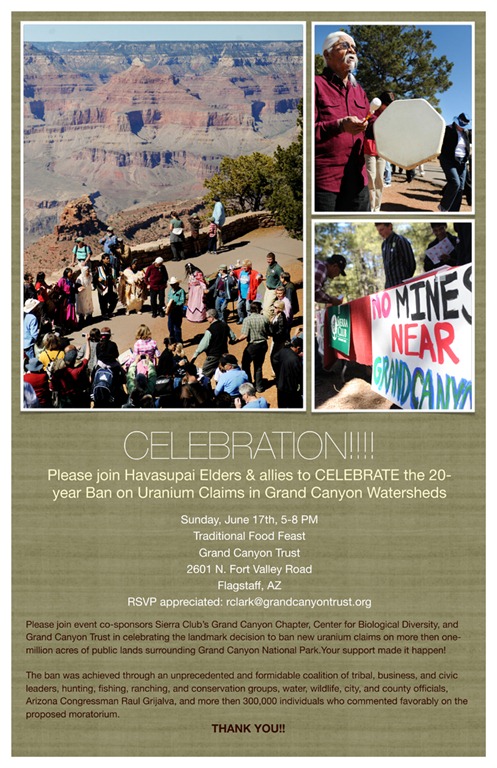
NSGA Research Newsletter: May 2012 Running is growing and Bicycle Imports up slightly!
Posted: June 8, 2012 Filed under: Cycling | Tags: bicycle, Blue Nose Marathon, Cycling, National Sporting Goods Association, Newsletter, NSGA, Sport, Sports, Team sport, training Leave a commentNSGA
National Sporting Goods Association
Research Newsletter Compliments of the National Sporting Goods Association
Running/Jogging Participation Shows Strong Growth: Team Sports Mixed
Running/Jogging, which grew by 10.3% in 2010, continued its strong growth in 2011. Data in NSGA’s annual “Sports Participation – Series I and II” reports, now available, shows running/jogging with 38.7 million participants in 2011, an increase of 8.9% compared to 35.5 million in 2010. Since the association began surveying running/jogging in 1984 (29.5 million participants), participation has grown by 30.9%.Among sports and activities with 10 million or more participants, the overall percentage leaders were aerobic exercising and running jogging, both showing an 8.9% increase. Aerobic exercising increased from 38.5 million participants in 2010 to 42.0 million participants in 2011. Tennis (13.1 million) showed a 7.0% increase, followed by yoga (21.6 million), 6.9%; hiking (39.1 million), 3.8%; and backpack/wilderness camping (11.6 million), 3.7%.
The overall percentage leader was kayaking, which showed a 26.6% increase to 7.1 million participants. Several other activities with fewer than 10 million participants showed increases in 2011, including cross country skiing (2.3 million), 11.5%; and target shooting-shotgun (9.5 million), 2.0%.
Among traditional team sports, wrestling led with a strong increase of 9.4% to 3.2 million. Gymnastics continued to increase, up 7.6% to 5.1 million and soccer was up 3.0% to 13.9 million. Among the team sports showing a decline, ice hockey (3.0 million) was down 9.2%; volleyball (10.1 million) down 5.1%; softball (10.4 million) down 4.2%; tackle football (9.0 million) down 3.0%; basketball (26.1 million) down 2.9%; and baseball (12.3 million) down 1.9%. This contrasts with 2010 increases in basketball (10.1%), baseball (8.9%), ice hockey (7.9%), and tackle football (4.8%).
For this survey, a participant is someone age seven or older who takes part in the sport or activity more than once in a calendar year. “Sports Participation in 2011 — Series I and II” cover 47 sports, recreation and fitness activities.
These reports have been published by NSGA for more than 25 years. They provide data on total 2011 participation, frequency of participation, and mean (average) and median (mid-point) number of participation days. Single-time participation, which is not counted in the total, is included separately.
Demographic data on participants includes gender, age, mean and median age by gender, gender by age, household income, and education of male and female head of household. Geographic analysis includes nine census regions and metro area size.
For more information and/or pricing for these and other NSGA research reports, please contact the NSGA Research Department, (847) 296-6742, ext. 108.
Bicycle Imports Up Slightly but Unit Value Down
Bicycle imports rose only 2% through February 2012 Year-to-Date compared to February 2011 according to U.S. Department of Commercedata. Total units imported through February were 2,027,404 up 34,575 from February 2011.Imports of kids’ bikes were up 29% to 604,645 with a value of $18.3 million, through February.
Among adult bikes, imports of mountain and comfort bikes decreased 17% to 545,548 units, with a value of $72.7 million.
Imports of 27-inch and 700C bikes were basically flat at 235,713 (valued at $69.5 million) for the second month of 2012, compared to 236,624 units through February last year.
Average unit value of an imported bicycle fell 8% for 2012 from $103.00 in 2011 to $95.00 in 2012.
In 2011, 15.65 million bicycles were imported into the U.S., with a value of $1.40 billion. Unit imports decreased 21.0% but their value increased 23.6%.
In 2010, 19.77 million bicycles were imported into the U.S., with a value of $1.43 billion. Unit imports increased 33.2% but their value dropped 1.7%.


 Recreation Law