
You cannot answer a question by filing a lawsuit.
Posted: May 17, 2012 Filed under: Scuba Diving | Tags: #scuba, Cabo San Lucas, fatality, Litigation, Mexico, scuba diving Leave a commentMan suing for answers on how his wife died.
Here is the quote from the article: “Grieving husband Colin Cross is taking legal action in his quest for answers as to how his wife died in Mexico

Arch of Cabo San Lucas (Photo credit: Wikipedia)
earlier this month.”
A San Diego attorney suing a Mexican company for a Canadian. That set of circumstances alone will probably prevent any real resolution. On top of that, how are you going to collect from a Mexican defendant.
Finally, lawsuits don’t answer questions. Lawsuits move money around.
See Man takes legal action in wife’s Mexico scuba death
What do you think? Leave a comment.
If you like this let your friends know or post it on FB, Twitter or LinkedIn
Copyright 2012 Recreation Law (720) Edit Law
Twitter: RecreationLaw
Facebook: Rec.Law.Now
Facebook Page: Outdoor Recreation & Adventure Travel Law
Mobile Site: http://m.recreation-law.com
#RecreationLaw, #@RecreationLaw, #Cycling.Law #Fitness.Law, #Ski.Law, #Outside.Law, #Recreation.Law, #Recreation-Law.com, #Outdoor Law, #Recreation Law, #Outdoor Recreation Law, #Adventure Travel Law, #law, #Travel Law, #Jim Moss, #James H. Moss, #Attorney at Law, #Tourism, #Adventure Tourism, #Rec-Law, #Rec-Law Blog, #Recreation Law, #Recreation Law Blog, #Risk Management, #Human Powered, #Human Powered Recreation,# Cycling Law, #Bicycling Law, #Fitness Law, #Recreation-Law.com, #Backpacking, #Hiking, #Mountaineering, #Ice Climbing, #Rock Climbing, #Ropes Course, #Challenge Course, #Summer Camp, #Camps, #Youth Camps, #Skiing, #Ski Areas, #Negligence, #Snowboarding, #RecreationLaw, #@RecreationLaw, #Cycling.Law #Fitness.Law, #SkiLaw, #Outside.Law, #Recreation.Law, #RecreationLaw.com, #OutdoorLaw, #RecreationLaw, #OutdoorRecreationLaw, #AdventureTravelLaw, #Law, #TravelLaw, #JimMoss, #JamesHMoss, #AttorneyatLaw, #Tourism, #AdventureTourism, #RecLaw, #RecLawBlog, #RecreationLawBlog, #RiskManagement, #HumanPowered, #HumanPoweredRecreation,# CyclingLaw, #BicyclingLaw, #FitnessLaw, #RecreationLaw.com, #Backpacking, #Hiking, #Mountaineering, #IceClimbing, #RockClimbing, #RopesCourse, #ChallengeCourse, #SummerCamp, #Camps, #YouthCamps, #Skiing, #Ski Areas, #Negligence, #Snowboarding, sport and recreation laws, ski law, cycling law, Colorado law, law for recreation and sport managers, bicycling and the law, cycling and the law, ski helmet law, skiers code, skiing accidents, #scuba, scuba diving, Cabo San Lucas, fatality
WordPress Tags: lawsuit,wife,Here,article,husband,Colin,Cross,action,Mexico,Diego,attorney,Mexican,Canadian,defendant,lawsuits,money,death,Leave,Twitter,LinkedIn,Recreation,Edit,RecreationLaw,Facebook,Page,Outdoor,Adventure,Travel,Blog,Mobile,Site,Outside,Moss,James,Tourism,Risk,Management,Human,Rock,Ropes,Course,Challenge,Summer,Camp,Camps,Youth,Areas,Negligence,SkiLaw,OutdoorLaw,OutdoorRecreationLaw,AdventureTravelLaw,TravelLaw,JimMoss,JamesHMoss,AttorneyatLaw,AdventureTourism,RecLaw,RecLawBlog,RecreationLawBlog,RiskManagement,HumanPoweredRecreation,CyclingLaw,BicyclingLaw,FitnessLaw,RopesCourse,ChallengeCourse,SummerCamp,YouthCamps,Colorado,managers,helmet,accidents,Cabo,Lucas,scuba

Client dies, be banned from your occupation for five years.
Posted: May 10, 2012 Filed under: Avalanche, Skiing / Snow Boarding | Tags: Adventure travel, Criminal, Europe, Jim Moss, Ski, ski instructor, skiing, skiing accidents Leave a commentOnce you leave the US, you are no longer protected by US laws.
Two ski instructors are facing a five year ban from skiing and a fine for the death of a client in an Avalanche. The ski instructors had taken the client into a known danger zone where the client was caught and died.
See Prosecutor wants 5 year ban for ESF instructors

What do you think? Leave a comment.
If you like this let your friends know or post it on FB, Twitter or LinkedIn
Copyright 2012 Recreation Law (720) Edit Law
Twitter: RecreationLaw
Facebook: Rec.Law.Now
Facebook Page: Outdoor Recreation & Adventure Travel Law
Mobile Site: http://m.recreation-law.com
#RecreationLaw, #@RecreationLaw, #Cycling.Law #Fitness.Law, #Ski.Law, #Outside.Law, #Recreation.Law, #Recreation-Law.com, #Outdoor Law, #Recreation Law, #Outdoor Recreation Law, #Adventure Travel Law, #law, #Travel Law, #Jim Moss, #James H. Moss, #Attorney at Law, #Tourism, #Adventure Tourism, #Rec-Law, #Rec-Law Blog, #Recreation Law, #Recreation Law Blog, #Risk Management, #Human Powered, #Human Powered Recreation,# Cycling Law, #Bicycling Law, #Fitness Law, #Recreation-Law.com, #Backpacking, #Hiking, #Mountaineering, #Ice Climbing, #Rock Climbing, #Ropes Course, #Challenge Course, #Summer Camp, #Camps, #Youth Camps, #Skiing, #Ski Areas, #Negligence, #Snowboarding, #RecreationLaw, #@RecreationLaw, #Cycling.Law #Fitness.Law, #SkiLaw, #Outside.Law, #Recreation.Law, #RecreationLaw.com, #OutdoorLaw, #RecreationLaw, #OutdoorRecreationLaw, #AdventureTravelLaw, #Law, #TravelLaw, #JimMoss, #JamesHMoss, #AttorneyatLaw, #Tourism, #AdventureTourism, #RecLaw, #RecLawBlog, #RecreationLawBlog, #RiskManagement, #HumanPowered, #HumanPoweredRecreation,# CyclingLaw, #BicyclingLaw, #FitnessLaw, #RecreationLaw.com, #Backpacking, #Hiking, #Mountaineering, #IceClimbing, #RockClimbing, #RopesCourse, #ChallengeCourse, #SummerCamp, #Camps, #YouthCamps, #Skiing, #Ski Areas, #Negligence, #Snowboarding, sport and recreation laws, ski law, cycling law, Colorado law, law for recreation and sport managers, bicycling and the law, cycling and the law, ski helmet law, skiers code, skiing accidents, skiing, ski instructor, Europe, Criminal,
WordPress Tags: Client,occupation,Once,laws,instructors,death,Avalanche,danger,Prosecutor,Leave,Twitter,LinkedIn,Recreation,Edit,RecreationLaw,Facebook,Page,Outdoor,Adventure,Travel,Blog,Mobile,Site,Outside,Moss,James,Attorney,Tourism,Risk,Management,Human,Rock,Ropes,Course,Challenge,Summer,Camp,Camps,Youth,Areas,Negligence,SkiLaw,OutdoorLaw,OutdoorRecreationLaw,AdventureTravelLaw,TravelLaw,JimMoss,JamesHMoss,AttorneyatLaw,AdventureTourism,RecLaw,RecLawBlog,RecreationLawBlog,RiskManagement,HumanPoweredRecreation,CyclingLaw,BicyclingLaw,FitnessLaw,RopesCourse,ChallengeCourse,SummerCamp,YouthCamps,Colorado,managers,helmet,accidents,instructor,Europe,Criminal,five
So will this kill the rental market or just prove that life happens
Posted: May 7, 2012 Filed under: Paddlesports, Sea Kayaking | Tags: Admiralty Law, Landowner, Rental Property, sit on top 2 CommentsLandowner, who rented cottage to married couple sued for death, when groom drowns in landowner kayak
According to the article, the landowner rented her cottage to a couple on their honeymoon. On the last day of their stay the deceased took a kayak out on the ocean that was at the cottage. The deceased was wearing a PFD (life jacket).
He was found dead floating in the bay with his PFD on after the weather changed.
So anticipating a lawsuit, the landowner filed a notice of claim under Admiralty law. Admiralty law says the claim of the injured (or deceased) is limited to the value of the vessel after the accident. In her filing she states she paid indicates she purchased the vessel, manufactured by Ocean Kayak, in May 2009 for $297 for the kayak three years ago.
If the federal district court accepts the notice, then the lawsuit is effectively ended and the plaintiff’s will receive $297.

two Ocean Kayak sit-on-tops for two paddlers each. (Photo credit: Wikipedia)
It is a great move in anticipation of litigation.
However
It is stupid that a person who is renting out their cottage on the ocean has to do this. What was the negligent act that she did? The kayak was still good, it was found floating, there was a PFD for the victim and he was wearing it. What else could you be liable for?
A property owner, landowner, has a duty of care to keep the property reasonably safe and to inform guests or invitees of any dangers. The deceased left the property!
See Kayak owner may face lawsuit over groom’s death or Property owner seeks liability protection in case of kayaker’s death.
What do you think? Leave a comment.
If you like this let your friends know or post it on FB, Twitter or LinkedIn
Copyright 2012 Recreation Law (720) Edit Law
Twitter: RecreationLaw
Facebook: Rec.Law.Now
Facebook Page: Outdoor Recreation & Adventure Travel Law
Mobile Site: http://m.recreation-law.com
#RecreationLaw, #@RecreationLaw, #Cycling.Law #Fitness.Law, #Ski.Law, #Outside.Law, #Recreation.Law, #Recreation-Law.com, #Outdoor Law, #Recreation Law, #Outdoor Recreation Law, #Adventure Travel Law, #law, #Travel Law, #Jim Moss, #James H. Moss, #Attorney at Law, #Tourism, #Adventure Tourism, #Rec-Law, #Rec-Law Blog, #Recreation Law, #Recreation Law Blog, #Risk Management, #Human Powered, #Human Powered Recreation,# Cycling Law, #Bicycling Law, #Fitness Law, #Recreation-Law.com, #Backpacking, #Hiking, #Mountaineering, #Ice Climbing, #Rock Climbing, #Ropes Course, #Challenge Course, #Summer Camp, #Camps, #Youth Camps, #Skiing, #Ski Areas, #Negligence, #Snowboarding, #RecreationLaw, #@RecreationLaw, #Cycling.Law #Fitness.Law, #SkiLaw, #Outside.Law, #Recreation.Law, #RecreationLaw.com, #OutdoorLaw, #RecreationLaw, #OutdoorRecreationLaw, #AdventureTravelLaw, #Law, #TravelLaw, #JimMoss, #JamesHMoss, #AttorneyatLaw, #Tourism, #AdventureTourism, #RecLaw, #RecLawBlog, #RecreationLawBlog, #RiskManagement, #HumanPowered, #HumanPoweredRecreation,# CyclingLaw, #BicyclingLaw, #FitnessLaw, #RecreationLaw.com, #Backpacking, #Hiking, #Mountaineering, #IceClimbing, #RockClimbing, #RopesCourse, #ChallengeCourse, #SummerCamp, #Camps, #YouthCamps, #Skiing, #Ski Areas, #Negligence, #Snowboarding, sport and recreation laws, ski law, cycling law, Colorado law, law for recreation and sport managers, bicycling and the law, cycling and the law, ski helmet law, skiers code, skiing accidents, #kayak, #PFD, Sit on top, cottage, rental property,
WordPress Tags: rental,life,Landowner,cottage,death,article,jacket,lawsuit,vessel,accident,Ocean,Kayak,district,plaintiff,anticipation,litigation,person,victim,owner,guests,dangers,protection,Leave,Twitter,LinkedIn,Recreation,Edit,RecreationLaw,Facebook,Page,Outdoor,Adventure,Travel,Blog,Mobile,Site,Outside,Moss,James,Attorney,Tourism,Risk,Management,Human,Rock,Ropes,Course,Challenge,Summer,Camp,Camps,Youth,Areas,Negligence,SkiLaw,OutdoorLaw,OutdoorRecreationLaw,AdventureTravelLaw,TravelLaw,JimMoss,JamesHMoss,AttorneyatLaw,AdventureTourism,RecLaw,RecLawBlog,RecreationLawBlog,RiskManagement,HumanPoweredRecreation,CyclingLaw,BicyclingLaw,FitnessLaw,RopesCourse,ChallengeCourse,SummerCamp,YouthCamps,Colorado,managers,helmet,accidents
Aspen adding $100K to its budget for the USA Pro Challenge
Posted: May 3, 2012 Filed under: Cycling | Tags: 2011 USA Pro Cycling Challenge, Aspen, Aspen Colorado, Bicycle Racing, Colorado, Cycle Racing, USA Pro Challenge Leave a commentGreat for Aspen and Pitkin County

Hotel Jerome, Aspen, CO, USA (Photo credit: Wikipedia)
This article is interesting in that it explains how pro-cycling works in the US. The cities involved in the USA Pro Challenge pay to have the race come to their town.
The article shows where the money is coming from and why and how much is being contributed by government and how much is being raised by the community.
This article is also interesting because Aspen reported that it lost money on the 2011 USA Pro Challenge when it came to town. See $83.5 million brought to Colorado by the USA Pro Challenge!
See Aspen’s Pro Cycling budget increases by $100K
What do you think? Leave a comment.
If you like this let your friends know or post it on FB, Twitter or LinkedIn
Copyright 2012 Recreation Law (720) Edit Law
Twitter: RecreationLaw
Facebook: Rec.Law.Now
Facebook Page: Outdoor Recreation & Adventure Travel Law
Mobile Site: http://m.recreation-law.com

Colombian cyclist Rafel Infantino, in the 2011 USA Pro Cycling Challenge Español: Ciclista colombiano Rafael Infantino, durante el USA Pro Cycling Challenge 2011 (Photo credit: Wikipedia)
#RecreationLaw, #@RecreationLaw, #Cycling.Law #Fitness.Law, #Ski.Law, #Outside.Law, #Recreation.Law, #Recreation-Law.com, #Outdoor Law, #Recreation Law, #Outdoor Recreation Law, #Adventure Travel Law, #law, #Travel Law, #Jim Moss, #James H. Moss, #Attorney at Law, #Tourism, #Adventure Tourism, #Rec-Law, #Rec-Law Blog, #Recreation Law, #Recreation Law Blog, #Risk Management, #Human Powered, #Human Powered Recreation,# Cycling Law, #Bicycling Law, #Fitness Law, #Recreation-Law.com, #Backpacking, #Hiking, #Mountaineering, #Ice Climbing, #Rock Climbing, #Ropes Course, #Challenge Course, #Summer Camp, #Camps, #Youth Camps, #Skiing, #Ski Areas, #Negligence, #Snowboarding, #RecreationLaw, #@RecreationLaw, #Cycling.Law #Fitness.Law, #SkiLaw, #Outside.Law, #Recreation.Law, #RecreationLaw.com, #OutdoorLaw, #RecreationLaw, #OutdoorRecreationLaw, #AdventureTravelLaw, #Law, #TravelLaw, #JimMoss, #JamesHMoss, #AttorneyatLaw, #Tourism, #AdventureTourism, #RecLaw, #RecLawBlog, #RecreationLawBlog, #RiskManagement, #HumanPowered, #HumanPoweredRecreation,# CyclingLaw, #BicyclingLaw, #FitnessLaw, #RecreationLaw.com, #Backpacking, #Hiking, #Mountaineering, #IceClimbing, #RockClimbing, #RopesCourse, #ChallengeCourse, #SummerCamp, #Camps, #YouthCamps, #Skiing, #Ski Areas, #Negligence, #Snowboarding, sport and recreation laws, ski law, cycling law, Colorado law, law for recreation and sport managers, bicycling and the law, cycling and the law, ski helmet law, skiers code, skiing accidents, USA Pro Challenge, Bicycle Racing, Cycle Racing, #Aspen, #Pitkin, Pitkin County
WordPress Tags: Aspen,Challenge,Great,Pitkin,article,cities,money,government,million,Colorado,Leave,Twitter,LinkedIn,Recreation,Edit,RecreationLaw,Facebook,Page,Outdoor,Adventure,Travel,Blog,Mobile,Site,Outside,Moss,James,Attorney,Tourism,Risk,Management,Human,Rock,Ropes,Course,Summer,Camp,Camps,Youth,Areas,Negligence,SkiLaw,OutdoorLaw,OutdoorRecreationLaw,AdventureTravelLaw,TravelLaw,JimMoss,JamesHMoss,AttorneyatLaw,AdventureTourism,RecLaw,RecLawBlog,RecreationLawBlog,RiskManagement,HumanPoweredRecreation,CyclingLaw,BicyclingLaw,FitnessLaw,RopesCourse,ChallengeCourse,SummerCamp,YouthCamps,managers,helmet,accidents,Bicycle,Cycle
2011-2012 Ski Season Skier/Boarder Fatalities
Posted: May 2, 2012 Filed under: Skiing / Snow Boarding | Tags: helmet, Ski, Ski Resort, Vail Colorado, Winter sport Leave a commentThis list is not guaranteed to be accurate. The information is found from web searches and news dispatches. If you have a source for information on any fatality please leave a comment.
Several Corrections have been made to items reported earlier.
If this information is incorrect or incomplete please let me know. This is up to date as of April 15, 2012. Thanks.
|
# |
Date |
Resort |
Age |
Skier Ability |
Ski/ Tele /Boarder |
Helmet |
Reference |
|
1 |
11/18/2011 |
62 |
Skier |
Yes |
|||
|
2 |
11/18/2011 |
Breckenridge |
19 |
Expert |
Boarder |
Yes |
|
|
3 |
11/27/2011 |
Mountain High ski resort |
23 |
Beginner |
Boarder |
Yes |
|
|
4 |
12/18/2011 |
Sugar Bowl ski resort |
7 |
Expert |
Skier |
||
|
1/4/2012 |
Medical |
||||||
|
5 |
1/11/2012 |
Ski Apache |
29 |
Skier |
No |
||
|
6 |
1/12/2012 |
Sugarloaf ski resort |
41 |
Skier |
Yes |
||
|
7 |
1/14/2012 |
Silverton Mountain Ski Area |
25 |
Expert |
Skier |
||
|
8 |
1/17/2012 |
Heavenly Mountain Resort |
34 |
Boarder |
Yes |
||
|
9 |
1/18/2012 |
Aspen Highlands |
30 |
Boarder |
Yes |
||
|
10 |
1/18/2012 |
Mt. Hood Meadows Ski Resort |
15 |
Boarder |
No |
||
|
11 |
1/19/2012 |
Park City |
29 |
Boarder |
Yes |
||
|
12 |
1/20/2012 |
Copper Mountain |
51 |
Yes |
|||
|
13 |
1/20/2012 |
Whiteface Mountain |
25 |
Yes |
|||
|
14 |
1/21/2012 |
Vail |
13 |
Expert |
Skier |
||
|
15 |
1/22/2012 |
Winter Park |
28 |
Expert |
Skier |
||
|
16 |
1/24/2012 |
Steamboat Ski Area |
32 |
Boarder |
|||
|
17 |
1/24/2012 |
Taos Ski Valley |
60 |
Skier |
|||
|
18 |
1/25/2012 |
Keystone Ski Area |
54 |
Skier |
|||
|
19 |
1/27/2012 |
Mt. Hood Skibowl |
17 |
Boarder |
|||
|
1/29/2012 |
Medical |
19 |
|||||
|
20 |
1/30/2012 |
Seven Springs Mountain Resort |
36 |
Skier |
|||
|
21 |
1/31/2012 |
Solitude Ski Resort |
74 |
Skier |
No |
||
|
22 |
2/1/2012 |
Squaw Valley |
51 |
Skier |
|||
|
23 |
2/4/2012 |
Sugarbush Resort |
41 |
Skier |
Yes |
||
|
24 |
2/4/2012 |
Ski Windham Mountain Resor |
54 |
Skier |
|||
|
25 |
2/5/2012 |
Keystone Ski Area |
58 |
Skier |
No |
||
|
26 |
2/5/2012 |
Ski Windham Mountain Resort |
54 |
Skier |
|||
|
27 |
2/6/2012 |
Mount Snow |
33 |
||||
|
28 |
2/8/2012 |
Vail |
37 |
Yes |
|||
|
29 |
2/9/2012 |
Keystone Ski Area |
72 |
Yes |
|||
|
30 |
2/11/2012 |
Jay Peak Resort |
29 |
Boarder |
Yes |
||
|
31 |
2/11/2012 |
Terry Peak Ski Area |
24 |
Skier |
No |
||
|
32 |
2/11/2012 |
Terry Peak Ski Area |
24 |
Skier |
No |
||
|
33 |
2/18/2012 |
Sun Valley |
|||||
|
34 |
2/19/2012 |
Copper Mountain |
15 |
Boarder |
Yes |
||
|
35 |
2/26/2012 |
Keystone Ski Area |
24 |
Yes |
|||
|
36 |
2/23/2012 |
Northstar California |
52 |
Yes |
|||
|
37 |
3/1/2012 |
Burke Mountain Ski Resort |
70 |
Yes |
|||
|
38 |
3/8/2012 |
Copper Mountain |
18 |
Skier |
Yes |
||
|
39 |
3/9/2012 |
Keystone Ski Area |
23 |
Skier |
No |
||
|
40 |
3/10/2012 |
Terry Peak Ski Area |
54 |
Skier |
|||
|
41 |
3/10/2012 |
Loveland Ski Area |
71 |
Skier |
No |
||
|
42 |
3/14/2012 |
Crested Butte Mountain Resort |
36 |
Skier |
No |
||
|
43 |
3/16/2012 |
Northstar California |
51 |
Skier |
Yes |
||
|
44 |
3/18/2012 |
China Peak Ski Resort |
30 |
Boarder |
|||
|
45 |
3/18/2012 |
Sierra-at-Tahoe |
54 |
Skier |
|||
|
46 |
3/19/2012 |
Sugar Bowl Ski Resort |
20 |
Boarder |
|||
|
47 |
3/21/2012 |
Mt. Hood Skibowl recreational area |
38 |
Yes |
|||
|
48 |
3/24/2012 |
Wold Creek Ski Area |
19 |
No |
|||
|
3/23/2012 |
Medical |
Yes |
|||||
|
49 |
3/28/2012 |
Skibowl |
37 |
Yes |
|||
|
50 |
3/31/2012 |
White Pass Ski Area |
22 |
What do you think? Leave a comment.
If you like this let your friends know or post it on FB, Twitter or Linkedin
Copyright 2012 Recreation Law (720) Edit Law
Twitter: RecreationLaw
Facebook: Rec.Law.Now
Facebook Page: Outdoor Recreation & Adventure Travel Law
#RecreationLaw, #@RecreationLaw, #Cycling.Law #Fitness.Law, #Ski.Law, #Outside.Law, #Recreation.Law, #Recreation-Law.com, #Outdoor Law, #Recreation Law, #Outdoor Recreation Law, #Adventure Travel Law, #law, #Travel Law, #Jim Moss, #James H. Moss, #Attorney at Law, #Tourism, #Adventure Tourism, #Rec-Law, #Rec-Law Blog, #Recreation Law, #Recreation Law Blog, #Risk Management, #Human Powered, #Human Powered Recreation,# Cycling Law, #Bicycling Law, #Fitness Law, #Recreation-Law.com, #Backpacking, #Hiking, #Mountaineering, #Ice Climbing, #Rock Climbing, #Ropes Course, #Challenge Course, #Summer Camp, #Camps, #Youth Camps, #Skiing, #Ski Areas, #Negligence, #Snowboarding, #RecreationLaw, #@RecreationLaw, #Cycling.Law #Fitness.Law, #SkiLaw, #Outside.Law, #Recreation.Law, #RecreationLaw.com, #OutdoorLaw, #RecreationLaw, #OutdoorRecreationLaw, #AdventureTravelLaw, #Law, #TravelLaw, #JimMoss, #JamesHMoss, #AttorneyatLaw, #Tourism, #AdventureTourism, #RecLaw, #RecLawBlog, #RecreationLawBlog, #RiskManagement, #HumanPowered, #HumanPoweredRecreation,# CyclingLaw, #BicyclingLaw, #FitnessLaw, #RecreationLaw.com, #Backpacking, #Hiking, #Mountaineering, #IceClimbing, #RockClimbing, #RopesCourse, #ChallengeCourse, #SummerCamp, #Camps, #YouthCamps, #Skiing, #Ski Areas, #Negligence, #Snowboarding, sport and recreation laws, ski law, cycling law, Colorado law, law for recreation and sport managers, bicycling and the law, cycling and the law, ski helmet law, skiers code, skiing accidents, #Vail, #Breckenridge, #Mountain High Ski Resort, #Ski Ward, #Sugarloaf, #Silverton, Ski Apache, #Sugarloaft, #Heavenly, #Aspen, Mt Hood, Park City, #Copper, #Whiteface, Winter Park, #Steamboat, #Taos, #Keystone, #Canyons, Seven Springs, #Solitude, Ski Windham, Mount Snow, Jay Peak Terry Peak,
WordPress Tags: Skier,Boarder,Fatalities,Season,information,news,Several,Corrections,items,April,Thanks,Date,Resort,Tele,Helmet,Reference,Vail,Breckenridge,Expert,Mountain,High,Beginner,Sugar,Bowl,Medical,Apache,Sugarloaf,Silverton,Area,Aspen,Highlands,Meadows,Park,Copper,Whiteface,Winter,Steamboat,Taos,Valley,AihrSt,Skibowl,Seven,Springs,Solitude,Squaw,Sugarbush,Windham,Resor,Mount,ABqYPQ,Peak,Terry,Northstar,California,Burke,ADkQWq,Loveland,Ajhcko,Butte,China,Sierra,Tahoe,GAucKe,Wold,Creek,White,Pass,Leave,Twitter,Linkedin,Recreation,Edit,RecreationLaw,Facebook,Page,Outdoor,Adventure,Travel,Blog,Outside,Moss,James,Attorney,Tourism,Risk,Management,Human,Rock,Ropes,Course,Challenge,Summer,Camp,Camps,Youth,Areas,Negligence,SkiLaw,OutdoorLaw,OutdoorRecreationLaw,AdventureTravelLaw,TravelLaw,JimMoss,JamesHMoss,AttorneyatLaw,AdventureTourism,RecLaw,RecLawBlog,RecreationLawBlog,RiskManagement,HumanPoweredRecreation,CyclingLaw,BicyclingLaw,FitnessLaw,RopesCourse,ChallengeCourse,SummerCamp,YouthCamps,Colorado,managers,accidents,Ward,Sugarloaft,Canyons
The National Bike Challenge
Posted: May 1, 2012 Filed under: Cycling | Tags: Bike, biking, Cycling, Kimberly-Clark, League of American Bicyclist, League of American Bicyclists, Moab, Sports Leave a comment
|
|
|||||||||||


|
|
Inc has a great article on fitness, CO2 reduction and employees
Posted: April 26, 2012 Filed under: Cycling | Tags: Adventure travel, Bike to Work, biking, Cycling, Outdoor recreation Leave a commentThe article tells you how to encourage your employees to bike to work.
The article Get Your Employees Biking to Work is actually full of great information. The article not only talks about the reasons why you as an employer want to encourage your employees to bike but what your employees may want to ride their bikes to work.
Do Something
Read the article, follow the advice, and encourage your employees to ride their bikes to work.

Cover via Amazon
Read the article: Get Your Employees Biking to Work
What do you think? Leave a comment.
If you like this let your friends know or post it on FB, Twitter or LinkedIn
Copyright 2012 Recreation Law (720) Edit Law
Twitter: RecreationLaw
Facebook: Rec.Law.Now
Facebook Page: Outdoor Recreation & Adventure Travel Law
Mobile Site: http://m.recreation-law.com
#RecreationLaw, #@RecreationLaw, #Cycling.Law #Fitness.Law, #Ski.Law, #Outside.Law, #Recreation.Law, #Recreation-Law.com, #Outdoor Law, #Recreation Law, #Outdoor Recreation Law, #Adventure Travel Law, #law, #Travel Law, #Jim Moss, #James H. Moss, #Attorney at Law, #Tourism, #Adventure Tourism, #Rec-Law, #Rec-Law Blog, #Recreation Law, #Recreation Law Blog, #Risk Management, #Human Powered, #Human Powered Recreation,# Cycling Law, #Bicycling Law, #Fitness Law, #Recreation-Law.com, #Backpacking, #Hiking, #Mountaineering, #Ice Climbing, #Rock Climbing, #Ropes Course, #Challenge Course, #Summer Camp, #Camps, #Youth Camps, #Skiing, #Ski Areas, #Negligence, #Snowboarding, #RecreationLaw, #@RecreationLaw, #Cycling.Law #Fitness.Law, #SkiLaw, #Outside.Law, #Recreation.Law, #RecreationLaw.com, #OutdoorLaw, #RecreationLaw, #OutdoorRecreationLaw, #AdventureTravelLaw, #Law, #TravelLaw, #JimMoss, #JamesHMoss, #AttorneyatLaw, #Tourism, #AdventureTourism, #RecLaw, #RecLawBlog, #RecreationLawBlog, #RiskManagement, #HumanPowered, #HumanPoweredRecreation,# CyclingLaw, #BicyclingLaw, #FitnessLaw, #RecreationLaw.com, #Backpacking, #Hiking, #Mountaineering, #IceClimbing, #RockClimbing, #RopesCourse, #ChallengeCourse, #SummerCamp, #Camps, #YouthCamps, #Skiing, #Ski Areas, #Negligence, #Snowboarding, sport and recreation laws, ski law, cycling law, Colorado law, law for recreation and sport managers, bicycling and the law, cycling and the law, ski helmet law, skiers code, skiing accidents, #Employees, #cycling, #bicycle,
WordPress Tags: article,reduction,employees,bike,Work,information,employer,bikes,Read,advice,Leave,Twitter,LinkedIn,Recreation,Edit,RecreationLaw,Facebook,Page,Outdoor,Adventure,Travel,Blog,Mobile,Site,Outside,Moss,James,Attorney,Tourism,Risk,Management,Human,Rock,Ropes,Course,Challenge,Summer,Camp,Camps,Youth,Areas,Negligence,SkiLaw,OutdoorLaw,OutdoorRecreationLaw,AdventureTravelLaw,TravelLaw,JimMoss,JamesHMoss,AttorneyatLaw,AdventureTourism,RecLaw,RecLawBlog,RecreationLawBlog,RiskManagement,HumanPoweredRecreation,CyclingLaw,BicyclingLaw,FitnessLaw,RopesCourse,ChallengeCourse,SummerCamp,YouthCamps,Colorado,managers,helmet,accidents,bicycle
USA Pro-Challenge Route Announced
Posted: April 25, 2012 Filed under: Cycling | Tags: Bicycle Race, Bicycle Racing, Blue Mesa Reservoir, Cottonwood Pass, Glossary of bicycling, Gunnison, Independence Pass, Levi Leipheimer, Lizard Head Pass, USA Pro Challenge Leave a commentThese cyclists are going to work hard this year.
To see a map of each stage of the race go here.
Stage 1: Durango to Telluride – Monday, Aug. 20

This year’s Grand Depart will begin with a unique start of two neutral laps through downtown, followed by a larger 6.5-mile racing loop that encompasses most of town and then heads back through downtown for the first Sprint Line of 2012. A few bumpy feet of road as the racers cross the tracks of Durango’s famous Narrow Gauge Railroad will send the riders on their way out of town toward Telluride. On the ride out of LaPlata County the racers will have to tackle the Hesperus Climb on US 160. After a challenging, rolling ride across the high windswept plains and the second Sprint Line in the town of Dolores, the riders start a gradual canyon climb that lasts more than 30 miles. Topping out over Lizard Head Pass at 10,222 ft., any time gaps gained going up must be maintained on the 15-mile descent into Telluride. A tight and technical finish awaits the riders in the small, scenic town and they must navigate a small round-about and four turns in the last mile before sprinting to the finish line.
Stage 2: Montrose to Crested Butte – Tuesday, Aug. 21
At 99 miles, Stage 2 is a mix of old and new. Beginning with a new course for the first 65 miles, the race then visits familiar territory as it passes through Gunnison and retraces the 2011 route up to the grueling finish in Mt. Crested Butte. Beginning at Montrose Pavilion, the stage will begin with a quick neutral lap, then the riders head east out of town. As Montrose fades into the distance, the short but challenging climbs over Cerro Summit and Blue Mesa Summit await and make for early launch pads for the breakaway specialists.
As the road levels giving way to the picturesque twists and turns along the shores of Blue Mesa Reservoir, the riders approach the first Sprint Line of the day in Gunnison, 65 miles away from the start in Montrose. Gunnison will host the race two days in a row, first as a pass-through in Stage 2 and then as a start city in Stage 3. Moving north out of Gunnison breakaway time gaps will shrink, team leaders will move to the front and domestiques will protect and position their leaders. As the riders head into downtown Crested Butte, they face the day’s last Sprint Line. From there it’s a 2-mile climb to the line at Mt. Crested Butte. A dynamic and exciting uphill finish, this short, but steep hill gave Levi Leipheimer the leader’s jersey in 2011.
Stage 3: Gunnison to Aspen– Wednesday, Aug. 22

In 2011, U.S. stage racing saw one of its toughest days with the ride from Gunnison to Aspen and in 2012 the “Queen Stage” will again feature two of the highest climbs in professional racing. The stage starts in downtown Gunnison with a short neutral section leading out of town; however, as soon as the racing begins, so do the challenges. Just after the first right turn the riders face the first Sprint Line of the day in the small community of Almont. This will most likely be the last time the true sprinters will play a part in this stage, as the race quickly turns uphill and heads toward the first King of the Mountain (KOM) of the day near Taylor Park Reservoir.
A short, flat section on the north side of the reservoir will be the last pavement the field will see for almost 14 miles, as the dirt climb that follows will take the race to 12,126 ft. and the highest point of the week at Cottonwood Pass. A beautiful, twisting descent will take the peloton down into the town of Buena Vista and the second sprint line of the day before heading north on US 24 to Twin Lakes. The left towards Twin Lakes will show the field what is to come as they see the massive ridge in front of them. Although the climb up Independence Pass is paved and not quite as high as Cottonwood, it is sure to produce fireworks again this year. Lined with fans in 2011, the climb to 12,095 ft. caused several gaps in the field that led to an exciting finish in Aspen, which will no doubt be duplicated in 2012.
Stage 4: Aspen to Beaver Creek – Thursday, Aug. 23
Elevation is the main story for Stage 4 because with much of the course above 9,000 ft., it will be anything but easy. Those who conquered Independence Pass on Stage 3 will see it again very early in Stage 4, with the climb starting almost immediately after several neutral start laps in downtown Aspen. Unlike the previous day, the climb may not decide the winner, but will be an ideal launching point for a breakaway or possibly an overall contender to lose time.
Anyone who is brave enough to attack over Independence Pass will be faced with more than 75 miles of racing at altitude. Along the way they will compete for a sprint in the historic town of Leadville, the highest incorporated city in the United States at 10,152 ft. Next on the agenda will be the climb over the Continental Divide at Tennessee Pass (10,424 ft.) before descending into Minturn and tackling the rolling run toward the final climb to Beaver Creek. Passing through the 2011 start city of Avon, the peloton will be faced by a stiff 2.5-mile climb that rises almost 1,000 ft. to the ski resort of Beaver Creek. Although not the fiercest climb on the route, the finale is sure to produce exciting racing, especially among those fighting for the overall lead.
Stage 5: Breckenridge to Colorado Springs – Friday, Aug. 24
Stage 5 will see two returning host cities, but in new roles. A rude awakening is the only way to describe the start of Stage 5 in Breckenridge. After a short flat section through downtown, the riders will have to face the daunting 10-mile climb up Hoosier Pass, which tops out at 11,500 ft. The summit is followed by a fast descent into Fairplay and with that, the high mountains are left behind and a day for the sprinters and breakaway specialists awaits. A fast rush across Colorado’s high plains end with a Sprint Line in Woodland Park where the riders may hit their fastest speeds of the week, and from there they continue downhill to Colorado Springs through the shadow of Pikes Peak. Once in Colorado Springs the route will take a technical uphill run through the Garden of the Gods, home of the 2011 Prologue. From there the route takes a quick downhill run to downtown for the 2012 race’s only finishing circuits. With the peloton passing through the finish line three times as they blast around downtown Colorado Springs, spectators will be treated to a thrilling high-speed, elbow-to-elbow competition.
Stage 6: Golden to Boulder – Saturday, Aug. 25
Stage 6 will depart from Golden, a second-year host city and site of one of the largest crowds in the 2011 race, but not before several circuit laps around downtown provide fans with the chance to cheer on their favorite riders. The peloton will then head north on CO 93 en route to Boulder, a city very well known for its bicycle culture. Upon arrival in downtown Boulder, the sprinters will have an opportunity to earn valuable points with a sprint line adjacent to the Pearl Street Mall and the USA Pro Challenge expo area.
After the sprint points have been awarded, the route will head up Boulder Canyon along CO 119 towards Nederland and the day’s first KOM competition. Joining the cycling fans in this small mountain town will be the 14th Annual Nedfest, a music, arts and microbrew festival. Riders will continue climbing as they are faced with ascents exceeding 9,300 ft. on the incredible Peak to Peak Highway before a long and fast descent into the town of Lyons, where they will encounter another sprint line and the annual Rocky Mountain Folk Festival.
Classic local climbs up Lefthand Canyon and Lee Hill Rd. present the next set of challenges for the riders before they return for one final pass through downtown Boulder. In a dramatic race to the finish, the riders will head up “The Hill” to Flagstaff Mountain where a 3.5-mile vertical, dramatic race to the finish line at Sunrise Amphitheater will commence.
Stage 7: Denver Individual Time Trial – Sunday, Aug. 26
After a week of tough week of racing over mountains at altitude, the Stage 7 Individual Time Trial will be a completely different kind of race – and one that could dramatically change the results. By taking the team factor out of the race, this flat and fast course in downtown Denver will have those looking to take the overall win facing a tough individual test, making this one of the most exciting finishes possible.
Using many of the same roads as the final Denver finish circuits of 2011, the course will provide a challenge for the riders and fantastic viewing opportunities for race fans. Starting at one-minute intervals, with the final riders going off at two minutes, near the State Capitol Building in Denver’s Civic Center Park, the riders will first face a familiar out-and-back section along Speer Blvd. and Colfax Ave., with a slight detour through the entertainment district along Larimer Street.
Returning toward the start area on Colfax, the riders will turn north to 17th Ave. and a long section of straight road, eventually delivering them to City Park. A short, but technical run through the park will return the riders to 17th Ave., allowing spectators to see their favorite riders pass by again. Two quick turns will put the riders back on Broadway headed south to the finish line adjacent to Civic Center Park.
The USA Pro Challenge will be a great race this year!
What do you think? Leave a comment.
If you like this let your friends know or post it on FB, Twitter or LinkedIn
Copyright 2012 Recreation Law (720) Edit Law
Twitter: RecreationLaw
Facebook: Rec.Law.Now
Facebook Page: Outdoor Recreation & Adventure Travel Law
Mobile Site: http://m.recreation-law.com
#RecreationLaw, #@RecreationLaw, #Cycling.Law #Fitness.Law, #Ski.Law, #Outside.Law, #Recreation.Law, #Recreation-Law.com, #Outdoor Law, #Recreation Law, #Outdoor Recreation Law, #Adventure Travel Law, #law, #Travel Law, #Jim Moss, #James H. Moss, #Attorney at Law, #Tourism, #Adventure Tourism, #Rec-Law, #Rec-Law Blog, #Recreation Law, #Recreation Law Blog, #Risk Management, #Human Powered, #Human Powered Recreation,# Cycling Law, #Bicycling Law, #Fitness Law, #Recreation-Law.com, #Backpacking, #Hiking, #Mountaineering, #Ice Climbing, #Rock Climbing, #Ropes Course, #Challenge Course, #Summer Camp, #Camps, #Youth Camps, #Skiing, #Ski Areas, #Negligence, #Snowboarding, #RecreationLaw, #@RecreationLaw, #Cycling.Law #Fitness.Law, #SkiLaw, #Outside.Law, #Recreation.Law, #RecreationLaw.com, #OutdoorLaw, #RecreationLaw, #OutdoorRecreationLaw, #AdventureTravelLaw, #Law, #TravelLaw, #JimMoss, #JamesHMoss, #AttorneyatLaw, #Tourism, #AdventureTourism, #RecLaw, #RecLawBlog, #RecreationLawBlog, #RiskManagement, #HumanPowered, #HumanPoweredRecreation,# CyclingLaw, #BicyclingLaw, #FitnessLaw, #RecreationLaw.com, #Backpacking, #Hiking, #Mountaineering, #IceClimbing, #RockClimbing, #RopesCourse, #ChallengeCourse, #SummerCamp, #Camps, #YouthCamps, #Skiing, #Ski Areas, #Negligence, #Snowboarding, sport and recreation laws, ski law, cycling law, Colorado law, law for recreation and sport managers, bicycling and the law, cycling and the law, ski helmet law, skiers code, skiing accidents, USA Pro Challenge, Bike Race,
Law requires helmets, injuries down fatalities up?
Posted: April 23, 2012 Filed under: Cycling | Tags: bicycle, Bicycle helmet, British Columbia, Canada, Cycling, Cycling Helmet, Head injury, Helmets, Law Leave a commentHowever the article eventually does explain some great ideas about helmets.
An article Injuries have dropped since mandatory rule came in, but fatalities remain the same was written to look at the effects of a mandatory helmet law in British Columbia, Canada. The law was enacted in 1996. Riding a bike without a helmet can get you a $40 ticket.
One part of the article says that fatalities are down. The article also states:
Statistics compiled by the Bicycle Helmet Research Foundation show that injuries from cyclists involved in collisions did decrease from 35% of all police attended collisions in 1995 to 31% of those collisions by 1999.
However, a Canadian ministry says that bicycle fatalities have not decreased. “However in 2010, the Superintendent of Motor Vehicles admitted that fatalities had not decreased since the introduction of the helmet law.”
The article then states:
Bicycle helmet proponents are the subject of a great number of myths and exaggerations, some of which feature prominently in the promotion of helmets, according to the foundation.
These proponents claim that helmets prevent 85% of head injuries and 88% of brain injuries. But the foundation claims that where helmet use has become significant, there has been no detectable reduction in head injuries relative to cycle use.
Another myth, according to the foundation, is that bicycle helmets prevent 90% of fatalities.
“This prediction comes from a single source and is not reflected by real-world experience. Fatality trends in countries where helmet use has become significant give no reason to believe that helmets have saved even a single life,” the foundation states at http://www.cyclehelmets.org.
The article is full of confusing facts. However at least the article tackles the issues concerning helmets and dispels a few myths.
I suspect that injuries are down; however attributing that to helmets is difficult. Why injuries are up, could just be a factor of more people riding bikes, bikes that enable riders to go a lot faster or more cars on the road, as well as any number of different reasons.
Bicycle helmets may prevent a minor head injury, however most people do not believe that helmet may save your life.
What do you think? Leave a comment.
If you like this let your friends know or post it on FB, Twitter or LinkedIn
Copyright 2012 Recreation Law (720) Edit Law
Twitter: RecreationLaw
Facebook: Rec.Law.Now
Facebook Page: Outdoor Recreation & Adventure Travel Law
Mobile Site: http://m.recreation-law.com
#RecreationLaw, #@RecreationLaw, #Cycling.Law #Fitness.Law, #Ski.Law, #Outside.Law, #Recreation.Law, #Recreation-Law.com, #Outdoor Law, #Recreation Law, #Outdoor Recreation Law, #Adventure Travel Law, #law, #Travel Law, #Jim Moss, #James H. Moss, #Attorney at Law, #Tourism, #Adventure Tourism, #Rec-Law, #Rec-Law Blog, #Recreation Law, #Recreation Law Blog, #Risk Management, #Human Powered, #Human Powered Recreation,# Cycling Law, #Bicycling Law, #Fitness Law, #Recreation-Law.com, #Backpacking, #Hiking, #Mountaineering, #Ice Climbing, #Rock Climbing, #Ropes Course, #Challenge Course, #Summer Camp, #Camps, #Youth Camps, #Skiing, #Ski Areas, #Negligence, #Snowboarding, #RecreationLaw, #@RecreationLaw, #Cycling.Law #Fitness.Law, #SkiLaw, #Outside.Law, #Recreation.Law, #RecreationLaw.com, #OutdoorLaw, #RecreationLaw, #OutdoorRecreationLaw, #AdventureTravelLaw, #Law, #TravelLaw, #JimMoss, #JamesHMoss, #AttorneyatLaw, #Tourism, #AdventureTourism, #RecLaw, #RecLawBlog, #RecreationLawBlog, #RiskManagement, #HumanPowered, #HumanPoweredRecreation,# CyclingLaw, #BicyclingLaw, #FitnessLaw, #RecreationLaw.com, #Backpacking, #Hiking, #Mountaineering, #IceClimbing, #RockClimbing, #RopesCourse, #ChallengeCourse, #SummerCamp, #Camps, #YouthCamps, #Skiing, #Ski Areas, #Negligence, #Snowboarding, sport and recreation laws, ski law, cycling law, Colorado law, law for recreation and sport managers, bicycling and the law, cycling and the law, ski helmet law, skiers code, skiing accidents, #helmets, #cycling, #Canada, British Columbia, Helmet law, bicycle helmets, cycling helmets.
WordPress Tags: helmets,injuries,article,helmet,British,Columbia,Canada,bike,ticket,Statistics,Bicycle,Research,Foundation,collisions,Canadian,ministry,Superintendent,Motor,Vehicles,proponents,myths,exaggerations,promotion,brain,reduction,Another,myth,prediction,trends,life,factor,bikes,riders,cars,road,injury,Leave,Twitter,LinkedIn,Recreation,Edit,RecreationLaw,Facebook,Page,Outdoor,Adventure,Travel,Blog,Mobile,Site,Outside,Moss,James,Attorney,Tourism,Risk,Management,Human,Rock,Ropes,Course,Challenge,Summer,Camp,Camps,Youth,Areas,Negligence,SkiLaw,OutdoorLaw,OutdoorRecreationLaw,AdventureTravelLaw,TravelLaw,JimMoss,JamesHMoss,AttorneyatLaw,AdventureTourism,RecLaw,RecLawBlog,RecreationLawBlog,RiskManagement,HumanPoweredRecreation,CyclingLaw,BicyclingLaw,FitnessLaw,RopesCourse,ChallengeCourse,SummerCamp,YouthCamps,Colorado,managers,accidents
Posts will keep coming but I’m in the Grand Canyon
Posted: April 20, 2012 Filed under: Arizona, Rivers and Waterways, Whitewater Rafting | Tags: Grand Canyon, Grand Canyon National Park Leave a commentSorry, but you can’t turn down a Grand Canyon Trip
My posts will keep coming, I’ve scheduled them in advance and however comments will not get approved.
I’ll be back after May 13th.
What do you think? Leave a comment.
If you like this let your friends know or post it on FB, Twitter or LinkedIn
Copyright 2012 Recreation Law (720) Edit Law
Twitter: RecreationLaw
Facebook: Rec.Law.Now
Facebook Page: Outdoor Recreation & Adventure Travel Law
Mobile Site: http://m.recreation-law.com

Poster for Grand Canyon National Park, Arizona, USA (Photo credit: Wikipedia)
#RecreationLaw, #@RecreationLaw, #Cycling.Law #Fitness.Law, #Ski.Law, #Outside.Law, #Recreation.Law, #Recreation-Law.com, #Outdoor Law, #Recreation Law, #Outdoor Recreation Law, #Adventure Travel Law, #law, #Travel Law, #Jim Moss, #James H. Moss, #Attorney at Law, #Tourism, #Adventure Tourism, #Rec-Law, #Rec-Law Blog, #Recreation Law, #Recreation Law Blog, #Risk Management, #Human Powered, #Human Powered Recreation,# Cycling Law, #Bicycling Law, #Fitness Law, #Recreation-Law.com, #Backpacking, #Hiking, #Mountaineering, #Ice Climbing, #Rock Climbing, #Ropes Course, #Challenge Course, #Summer Camp, #Camps, #Youth Camps, #Skiing, #Ski Areas, #Negligence, #Snowboarding, #RecreationLaw, #@RecreationLaw, #Cycling.Law #Fitness.Law, #SkiLaw, #Outside.Law, #Recreation.Law, #RecreationLaw.com, #OutdoorLaw, #RecreationLaw, #OutdoorRecreationLaw, #AdventureTravelLaw, #Law, #TravelLaw, #JimMoss, #JamesHMoss, #AttorneyatLaw, #Tourism, #AdventureTourism, #RecLaw, #RecLawBlog, #RecreationLawBlog, #RiskManagement, #HumanPowered, #HumanPoweredRecreation,# CyclingLaw, #BicyclingLaw, #FitnessLaw, #RecreationLaw.com, #Backpacking, #Hiking, #Mountaineering, #IceClimbing, #RockClimbing, #RopesCourse, #ChallengeCourse, #SummerCamp, #Camps, #YouthCamps, #Skiing, #Ski Areas, #Negligence, #Snowboarding, sport and recreation laws, ski law, cycling law, Colorado law, law for recreation and sport managers, bicycling and the law, cycling and the law, ski helmet law, skiers code, skiing accidents, Grand Canyon, Whitewater, Rafting, Grand Canyon National Park,
WordPress Tags: Posts,Grand,Canyon,Sorry,Trip,Leave,Twitter,LinkedIn,Recreation,Edit,RecreationLaw,Facebook,Page,Outdoor,Adventure,Travel,Blog,Mobile,Site,Outside,Moss,James,Attorney,Tourism,Risk,Management,Human,Rock,Ropes,Course,Challenge,Summer,Camp,Camps,Youth,Areas,Negligence,SkiLaw,OutdoorLaw,OutdoorRecreationLaw,AdventureTravelLaw,TravelLaw,JimMoss,JamesHMoss,AttorneyatLaw,AdventureTourism,RecLaw,RecLawBlog,RecreationLawBlog,RiskManagement,HumanPoweredRecreation,CyclingLaw,BicyclingLaw,FitnessLaw,RopesCourse,ChallengeCourse,SummerCamp,YouthCamps,Colorado,managers,helmet,accidents,Whitewater,National,Park
New Giordana Velodrome in Rock Hill, S.C.
Posted: April 19, 2012 Filed under: Cycling | Tags: #Giordana, #SC, #Velodrome, Bicycle Racing, Cycling, Giordana Velodrome, Racing, Rock Hill, Rock Hill South Carolina, South Carolina, Track cycling Leave a comment |
||||
 |
|
|||
Bicycling Magazine, May 2012: Safe for Any Speed
Posted: April 18, 2012 Filed under: Cycling | Tags: Adventure travel, ASTM International, Bicycle helmet, Bicycle Magazine, Cycling, Cycling Helmet, helmet, Letter to the Editor, Outdoor recreation, Rock climbing, Ropes course Leave a commentThere is no government involvement in cycling (or any other) helmets
April 3, 2012
Peter Flax, Editor in Chief
Bicycling
400 South 10th Street
Emmaus, PA 18098
Via Email: Bicycling@rodale.com

A bicycling helmet. (Photo credit: Wikipedia)
Re: Bicycling Magazine, May 2012: Safe for Any Speed
Dear Editor Flax:
Love your magazine; however your article Safe for Any Speed in the May 2012 edition incorrectly stated that bicycle helmets were controlled by government standards. No US government, state or federal or agency of a state or the federal government controls or has anything to do with standards for bicycle helmets.
The standards for Bicycle helmets are set by the ASTM International (formerly American Society for Testing and Material), Committee F08 on Sports Equipment and Facilities. Specifically Committee F08.53 on Headgear and Helmets (F1447-06 Standard Specification for Helmets Used in Recreational Bicycling or Roller Skating) is responsible for the standard and how the standard will be tested. For more information on this standard you can go to the ASTM and purchase the standard.
More importantly the standards are voluntary. No government, body, agency or board on a federal level requires any standard. Some state laws refer to the standards for cycling helmet laws.
Sincerely,
What do you think? Leave a comment.
If you like this let your friends know or post it on FB, Twitter or LinkedIn
Copyright 2012 Recreation Law (720) Edit Law
Twitter: RecreationLaw
Facebook: Rec.Law.Now
Facebook Page: Outdoor Recreation & Adventure Travel Law
Mobile Site: http://m.recreation-law.com
#RecreationLaw, #@RecreationLaw, #Cycling.Law #Fitness.Law, #Ski.Law, #Outside.Law, #Recreation.Law, #Recreation-Law.com, #Outdoor Law, #Recreation Law, #Outdoor Recreation Law, #Adventure Travel Law, #law, #Travel Law, #Jim Moss, #James H. Moss, #Attorney at Law, #Tourism, #Adventure Tourism, #Rec-Law, #Rec-Law Blog, #Recreation Law, #Recreation Law Blog, #Risk Management, #Human Powered, #Human Powered Recreation,# Cycling Law, #Bicycling Law, #Fitness Law, #Recreation-Law.com, #Backpacking, #Hiking, #Mountaineering, #Ice Climbing, #Rock Climbing, #Ropes Course, #Challenge Course, #Summer Camp, #Camps, #Youth Camps, #Skiing, #Ski Areas, #Negligence, #Snowboarding, #RecreationLaw, #@RecreationLaw, #Cycling.Law #Fitness.Law, #SkiLaw, #Outside.Law, #Recreation.Law, #RecreationLaw.com, #OutdoorLaw, #RecreationLaw, #OutdoorRecreationLaw, #AdventureTravelLaw, #Law, #TravelLaw, #JimMoss, #JamesHMoss, #AttorneyatLaw, #Tourism, #AdventureTourism, #RecLaw, #RecLawBlog, #RecreationLawBlog, #RiskManagement, #HumanPowered, #HumanPoweredRecreation,# CyclingLaw, #BicyclingLaw, #FitnessLaw, #RecreationLaw.com, #Backpacking, #Hiking, #Mountaineering, #IceClimbing, #RockClimbing, #RopesCourse, #ChallengeCourse, #SummerCamp, #Camps, #YouthCamps, #Skiing, #Ski Areas, #Negligence, #Snowboarding, sport and recreation laws, ski law, cycling law, Colorado law, law for recreation and sport managers, bicycling and the law, cycling and the law, ski helmet law, skiers code, skiing accidents, Bicycling Magazine, Safe for Any Speed, #BicyclingMagazine, #helmets, cycling helmets, #magazine,
WordPress Tags: Magazine,Safe,government,involvement,helmets,April,Peter,Flax,Editor,Chief,South,Street,Emmaus,Email,Dear,Love,article,edition,bicycle,agency,ASTM,International,American,Material,Committee,Sports,Equipment,Facilities,Headgear,Standard,Specification,Recreational,Roller,information,Some,laws,helmet,Leave,Twitter,LinkedIn,Recreation,Edit,RecreationLaw,Facebook,Page,Outdoor,Adventure,Travel,Blog,Mobile,Site,Outside,Moss,James,Attorney,Tourism,Risk,Management,Human,Rock,Ropes,Course,Challenge,Summer,Camp,Camps,Youth,Areas,Negligence,SkiLaw,OutdoorLaw,OutdoorRecreationLaw,AdventureTravelLaw,TravelLaw,JimMoss,JamesHMoss,AttorneyatLaw,AdventureTourism,RecLaw,RecLawBlog,RecreationLawBlog,RiskManagement,HumanPoweredRecreation,CyclingLaw,BicyclingLaw,FitnessLaw,RopesCourse,ChallengeCourse,SummerCamp,YouthCamps,Colorado,managers,accidents,BicyclingMagazine
Pathways to Natural Resources Careers Summit
Posted: April 17, 2012 Filed under: Youth Camps, Zip Line | Tags: #BLM, #CYCA, Bureau of Land Management, Careers, Colorado Parks & Wildlife, Colorado State University, Cornell University, Employment, Natural resource, Natural Resources, Youth Leave a commentI am pleased to announce that we will be holding our follow-up meeting to the Pathways to Natural Resources Careers Summit on April 24th from 9:00 to 11:30 in the Hunter Education Room of the Colorado Parks & Wildlife building located at 6060 Broadway, Denver, CO 80216. The agenda for this event was generated by participants who attended the Pathways to Natural Resources Careers Summit held on February 23rd, co-hosted by CYCA and BLM.. With record numbers of Agency staff poised to retire and youth and young adult unemployment at 20%, this issue is of great importance.
The primary request at the conclusion of the February Summit was to conduct an inventory of existing resources for assisting young people to chart careers in natural resources – especially in State and Federal agencies. To that end, on April 24 we will:
1 – conduct a resource inventory
2 – identify resource gaps (by geographic area, age group, and target population)

Bureau of Land Management logo (Photo credit: Wikipedia)
3 – identify 2-3 action steps we can take in the next 12 months to fill those gaps
As such, please bring any and all of the electronic or hard copy resources you have that pertain to creating a path to employment in the natural resources sector. We will have laptops, and a projector and screen to enable review of electronic resources; please bring several copies of your hard copy materials for review by small groups. Load e-resources on a flash drive. If you are not able to attend, we encourage you to submit resources to us in advance so that they can be considered during the meeting. Please send them to Grant Sanford (gsanford).
Even if you were not able to attend the February Summit, we encourage you to attend this meeting and offer your insight on the topic.
I have attached the summary document from the first Pathways Summit compiled by facilitator Wendy Newman. As this summary illustrates, there are a number of short-term goals that we can collectively achieve through a focused effort. The first step is determining what resources are immediately available and what remains to be created, refined, and implemented. Your assistance and contributions are critical in achieving these goals and ultimately providing natural resource career opportunities to a broad base of young people.
There is no charge for the meeting. To RSVP, follow this link: nweil or 303-863-0603.
Light breakfast refreshments along with coffee and tea will be provided; please bring your own beverage container. RSVP by Tuesday, April 17, 2012.
Feel free to forward this email to other interested individuals.
Pathways_ConclusionsFINAL.docx
Summer Camp, Zip line injury and confusing legal analysis in Washington
Posted: April 16, 2012 Filed under: Minors, Youth, Children, Summer Camp, Washington, Youth Camps, Zip Line | Tags: Defendant, Duty of care, Plaintiff, Ropes course, Summary judgment, Summer Camp, zip line, Zip-line, Zipline Leave a comment
A 200′ Mammoth Deluxe zip line installed over a pond. (Photo credit: Wikipedia)
Facts, no prepared defense and the plaintiff will get to go to trial.
In this case, I think the parents of a child who was attending the summer camp opted to ride the camp zip line. The zip line had two ropes that attached the rider to the haul line. The adult plaintiff when getting ready to ride wrapped one rope around his fingers. When he launched, the rope tightened almost severing his fingers.
The defendant filed a motion for summary judgment. However, the analysis by the court did not read like the normal decisions on motions for summary judgment and started out by denying part of the plaintiff’s argument.
Summary of the case
The plaintiff argued the summer camp, landowner, owed him a duty of ordinary care. The court found this really did not apply to this case, and the duty was a duty to disclose rather than a duty of ordinary care. However, the court allowed this argument to proceed.
Under Washington’s law, the duty of ordinary care is defined as:
a) knows or has reason to know that the chattel is or is likely to be dangerous for the use for which it is supplied, and
b) has no reason to believe that those for whose use the chattel is supplied will realize its dangerous condition, and
c) fails to exercise reasonable care to inform them of its dangerous condition or of the facts which make it likely to be dangerous.
The court then argued that the plaintiff was arguing the wrong legal issues because the plaintiff was arguing the plaintiff was a landowner; however, the injury did not occur on the land.
Because the injury the plaintiff received was based on the acts of the plaintiff, wrapping a rope around his hand, there was no violation of a duty by the defendant.
Plaintiff’s injury was the natural result of wrapping a rope around one’s hand and then suspending one’s body from that rope. This was not a latent or hidden condition that only defendant could know. Common sense of a capable adult is sufficient to inform a rider of this danger. Plaintiff admitted as much in his deposition:
Q. Did you know that if you wrapped the rope around your fingers, and then you put weight on the rope, that would tighten and cinch around your fingers?
A. The thought did not cross my mind.
Q. Okay. You didn’t think about that correct?
A. Correct.
Q. But if you had thought about it, you would have been able to figure that out, correct?
A. If someone asked me?
Q. Yes.
A. Yes.
Because the plaintiff admitted that if he thought about it, he would have realized that his actions would injure his hand, the defendant did not owe him a greater duty than it had done.
The plaintiff then stretched with two additional causes or claims. The first was the defendant had violated a state statute because the zip line was not inspected by the state. However, the statute that the plaintiff tried to apply, the amusement ride statute, did not include zip lines in its definitions until after the plaintiff’s accident. The statute at the time the plaintiff was injured did not apply to zip lines.
The next argument is farther out there, and exponentially scarier. The plaintiff argued that a zip line should be classified as a common carrier. A common carrier under most state interpretations are airlines, trains, buses, etc. Those types of transportation, carriers for hire, where the customer pays to be moved from one place to the next owe their customers the highest degree of care. The transportation must be for the purpose of movement, not amusement. The scary part is a common carrier owes the highest degree of care to its customers.
This definition means that a common carrier is liable in most situations for any injury to its passengers.
However, the court did not find a zip line was a common carrier. Thankfully.
So Now What?
The obvious issue that was missed, was the camp should have been using a release. An adult is on the property having fun; an injury will occur.
A motion for summary judgment is used when the legal arguments against a claim are sufficient to eliminate that claim. In most cases, this ends the lawsuit as long as all claims are ruled in favor of the defendant. Here the one claim, no matter how sketchy is probably going to allow the plaintiff to recover some amount of money.
Based on the ruling, the plaintiff will get his day in court or be paid not to go to court. A slip when someone is loading a zip line, no release and a traumatic injury add up to a big lawsuit.
What do you think? Leave a comment.
If you like this let your friends know or post it on FB, Twitter or LinkedIn
Copyright 2012 Recreation Law (720) Edit Law
Twitter: RecreationLaw
Facebook: Rec.Law.Now
Facebook Page: Outdoor Recreation & Adventure Travel Law
Mobile Site: http://m.recreation-law.com
#RecreationLaw, #@RecreationLaw, #Cycling.Law #Fitness.Law, #Ski.Law, #Outside.Law, #Recreation.Law, #Recreation-Law.com, #Outdoor Law, #Recreation Law, #Outdoor Recreation Law, #Adventure Travel Law, #law, #Travel Law, #Jim Moss, #James H. Moss, #Attorney at Law, #Tourism, #Adventure Tourism, #Rec-Law, #Rec-Law Blog, #Recreation Law, #Recreation Law Blog, #Risk Management, #Human Powered, #Human Powered Recreation,# Cycling Law, #Bicycling Law, #Fitness Law, #Recreation-Law.com, #Backpacking, #Hiking, #Mountaineering, #Ice Climbing, #Rock Climbing, #Ropes Course, #Challenge Course, #Summer Camp, #Camps, #Youth Camps, #Skiing, #Ski Areas, #Negligence, #Snowboarding, #RecreationLaw, #@RecreationLaw, #Cycling.Law #Fitness.Law, #SkiLaw, #Outside.Law, #Recreation.Law, #RecreationLaw.com, #OutdoorLaw, #RecreationLaw, #OutdoorRecreationLaw, #AdventureTravelLaw, #Law, #TravelLaw, #JimMoss, #JamesHMoss, #AttorneyatLaw, #Tourism, #AdventureTourism, #RecLaw, #RecLawBlog, #RecreationLawBlog, #RiskManagement, #HumanPowered, #HumanPoweredRecreation,# CyclingLaw, #BicyclingLaw, #FitnessLaw, #RecreationLaw.com, #Backpacking, #Hiking, #Mountaineering, #IceClimbing, #RockClimbing, #RopesCourse, #ChallengeCourse, #SummerCamp, #Camps, #YouthCamps, #Skiing, #Ski Areas, #Negligence, #Snowboarding, sport and recreation laws, ski law, cycling law, Colorado law, law for recreation and sport managers, bicycling and the law, cycling and the law, ski helmet law, skiers code, skiing accidents, #zipline, Zip Line, Summer Camp, #Camp,
WordPress Tags: Summer,Camp,injury,analysis,Washington,Oldja,Warm,Beach,Christian,Camps,Conference,Center,Supp,Dist,LEXIS,Facts,plaintiff,parents,rider,defendant,judgment,decisions,argument,Summary,landowner,Under,violation,Common,danger,Okay,Correct,statute,amusement,definitions,accident,carrier,interpretations,airlines,transportation,carriers,customer,customers,degree,purpose,definition,situations,passengers,arguments,lawsuit,Here,money,Leave,Twitter,LinkedIn,Recreation,Edit,RecreationLaw,Facebook,Page,Outdoor,Adventure,Travel,Blog,Mobile,Site,Outside,Moss,James,Attorney,Tourism,Risk,Management,Human,Rock,Ropes,Course,Challenge,Youth,Areas,Negligence,SkiLaw,OutdoorLaw,OutdoorRecreationLaw,AdventureTravelLaw,TravelLaw,JimMoss,JamesHMoss,AttorneyatLaw,AdventureTourism,RecLaw,RecLawBlog,RecreationLawBlog,RiskManagement,HumanPoweredRecreation,CyclingLaw,BicyclingLaw,FitnessLaw,RopesCourse,ChallengeCourse,SummerCamp,YouthCamps,Colorado,managers,helmet,accidents,Line,chattel

Oldja v.Warm Beach Christian Camps and Conference Center, 793 F. Supp. 2d 1208; 2011 U.S. Dist. LEXIS 67966
Posted: April 16, 2012 Filed under: Legal Case, Minors, Youth, Children, Summer Camp, Washington, Youth Camps, Zip Line | Tags: Camp, SEATTLE, Summer Camp, zip line Leave a commentOldja v.Warm Beach Christian Camps and Conference Center, 793 F. Supp. 2d 1208; 2011 U.S. Dist. LEXIS 67966
Ted Oldja, Plaintiff, v. Warm Beach Christian Camps and Conference Center, Defendant.
CASE NO. C09-0122-JCC
United States District Court for the Western District of Washington
793 F. Supp. 2d 1208; 2011 U.S. Dist. LEXIS 67966
June 24, 2011, Decided
June 24, 2011, Filed
COUNSEL: [**1] For Ted Oldja, Plaintiff: Kenneth R Friedman, LEAD ATTORNEY, FRIEDMAN RUBIN, BREMERTON, WA; Michael N White, FRIEDMAN RUBIN, (BREMERTON), BREMERTON, WA.
For Warm Beach Christian Camps and Conference Center, Defendant: David R Goodnight, Vanessa Soriano Power, STOEL RIVES (WA), SEATTLE, WA; Francis S Floyd, Nicholas L Jenkins, FLOYD PFLUEGER & RINGER PS, SEATTLE, WA.
JUDGES: John C. Coughenour, UNITED STATES DISTRICT JUDGE.
OPINION BY: John C. Coughenour
OPINION
[*1209] ORDER
This matter comes before the Court on Defendant’s motion for summary judgment (Dkt. No. 49), Plaintiff’s response (Dkt. No. 53), and Defendant’s reply. (Dkt. No. 59.) Having thoroughly considered the parties’ briefing and the relevant record, the Court finds oral argument unnecessary and hereby GRANTS the motion for the reasons explained herein.
I. BACKGROUND
In the summer of 2007, Ted Oldja attended a camp at Warm Beach Christian Camp (“Warm Beach”) in Stanwood, Washington. Mr. and Mrs. Oldja decided to ride on the zip line operated by Warm Beach. The zip line carried riders in a harness suspended from a cable by two ropes: a white rope, which acts as the primary connection between the harness and the cable, and bears the load of the rider’s weight; and [**2] a black rope, which acts as a secondary connection between the harness and the cable, and can be used as a safety line to slow the rider down.
Before a user rides the zip line, it is the job of the launch facilitator to follow a safety procedure. First, the facilitator tells the rider that they can hold on to either the white and black ropes during the ride, or just the white rope. The facilitator instructs riders not to hold only the black secondary line, because it will slow them down or stop them completely. The facilitator then double-checks the harness configuration, pulley attachments, safety helmet, and carabiners. The launch facilitator calls “zip clear” to the landing facilitator to communicate that the rider is ready, and the landing facilitator responds “zip clear” to communicate that the path is clear for the rider.
After watching his wife on the ride, it was Mr. Oldja’s turn. The launch facilitator, Paul Matthewson, testified that he followed the proper safety procedures. (Dkt. No. 49 Ex. 2 at 51- 53.) Matthewson testified that he did not see Oldja wrap his fingers in the white primary rope, and that Oldja’s fingers were not wrapped in the rope when Matthewson cleared him [**3] to go. (Id. at 60.) Sometime after Matthewson called “zip clear,” Mr. Oldja, a mechanical engineer, wrapped his fingers in the white primary rope, and stepped off the platform. The load-bearing rope tightened [*1210] around his hand and crushed his fingers. Mr. Oldja was rushed to a hospital and has had several surgeries on his hand. Plaintiff filed suit against Warm Beach for negligence, product liability, and negligence per se under a variety of theories. Defendant now moves for summary judgment dismissal of all three of these claims. Plaintiff does not oppose summary judgment on the product liability claim.
II. APPLICABLE LAW
[HN1] Federal Rule of Civil Procedure 56(c) mandates that a motion for summary judgment be granted when “the pleadings, the discovery and disclosure materials on file, and any affidavits show that there is no genuine issue as to any material fact and that the movant is entitled to judgment as a matter of law.” Fed. R. Civ. P. 56(c). There exists a genuine issue as to a particular fact–and hence that fact “can be resolved only by a finder of fact” at trial–when “[it] may reasonably be resolved in favor of either party”; conversely, there exists no genuine issue when reasonable [**4] minds could not differ as to the import of the evidence. Anderson v. Liberty Lobby, Inc., 477 U.S. 242, 250-52, 106 S. Ct. 2505, 91 L. Ed. 2d 202 (1986). Whether a particular fact is material, in turn, is determined by the substantive law of the case: “Only disputes over facts that might affect the outcome of the suit under the governing law will properly preclude the entry of summary judgment. Factual disputes that are irrelevant or unnecessary will not be counted.” Id. at 248. Summary judgment, then, demands an inquiry into “whether the evidence presents a sufficient disagreement to require submission to a jury or whether it is so one-sided that one party must prevail as a matter of law”; if applying the relevant law to those facts about which no two reasonable factfinders could disagree dictates that the moving party must prevail, then a motion for summary judgment must be granted. Id. at 250-52.
III. DISCUSSION
A. Duty of Ordinary Care
Plaintiff argues that it is well established that every business has a duty to use ordinary care in keeping its premises reasonably safe for use by business invitees. (Dkt. No. 53 at 10.) Defendant argues that Section 388 of the Second Restatement of Torts should govern the analysis. [**5] The Court addresses Section 388 below, but Section 388 governs only the duty to disclose and does not govern the duty of ordinary care. Defendant has not shown an absence of a genuine issue of material fact with respect to its alleged breach of the duty of ordinary care. Accordingly, summary judgment dismissal of this claim is denied.
B. Duty to Disclose
[HN2] With reference to a duty to disclose, The Supreme Court of Washington has adopted Section 388 of the Second Restatement of Torts, which states that the supplier is liable if he:
a) knows or has reason to know that the chattel is or is likely to be dangerous for the use for which it is supplied, and
b) has no reason to believe that those for whose use the chattel is supplied will realize its dangerous condition, and
c) fails to exercise reasonable care to inform them of its dangerous condition or of the facts which make it likely to be dangerous.
Fleming v. Stoddard Wendle Motor Co., 70 Wn.2d 465, 423 P.2d 926, 928 (Wash. 1967).
Plaintiff argues that he is choosing not to pursue his claims under Section 388. Rather, Plaintiff argues that the Court [*1211] should consider Section 343A, which creates a duty to protect invitees from known or obvious dangers when the [**6] landowner should anticipate the harm despite such knowledge and obviousness.
Plaintiff is misguided. [HN3] He may choose the claims he brings, but he cannot choose the standard the Court will apply to those claims. Section 343 governs liability for an activity or condition on the land. Section 388 governs liability for use of a chattel. “Chattel” means movable or transferable property. Black’s Law Dictionary (9th ed. 2009). Defendant argues that the zip line is movable property, and Plaintiff does not challenge this characterization. The Court agrees. Plaintiff’s injury was caused by equipment on the land, not the land itself. Accordingly, Section 388 governs Plaintiff’s claims. Lunt v. Mt. Spokane Skiing Corp., 62 Wn. App. 353, 814 P.2d 1189, 1192 (Wash. Ct. App. 1991) (where injury arises from equipment not land, Section 388 not Section 343 governs).
[HN4] Each of the three criteria in Section 388 must be satisfied. The Court will begin with consideration of the second criterion. To prevail on this element at the summary judgment phase, Plaintiff must show some evidence that Defendant had no reason to believe that riders of the zip line would realize the dangerous condition. This is a dense piece of legal language, [**7] so an illustration is helpful.
In Fleming v. Stoddard Wendle Motor Co., 70 Wn.2d 465, 423 P.2d 926 (Wash. 1967), a man disabled a safety feature on a truck that was designed to prevent the motor from starting if the car was in gear. He sold the truck to a mechanic and did not disclose that the safety feature had been disabled. When the purchaser started the truck, it lurched forward, striking and injuring the plaintiff. The Supreme Court of Washington noted that the man who had sold the car had no reason to believe that any future operator of the car would know that the safety feature had been disabled. Id. at 928. Because the seller had no reason to believe the defect would be discovered, he had a duty to warn of that defect. The defect was latent and no amount of common sense or automotive knowledge could inform a driver about that particular hazard. Dismissal of the seller was reversed.
In contrast, Mele v. Turner, 106 Wn.2d 73, 720 P.2d 787 (Wash. 1986) concerns a case where a young man borrowed a lawn mower from his neighbors, inserted his hand into the mower housing to clean out some wet grass, and injured four fingers. The young man admitted in an affidavit: “I obviously realized that one should not put [**8] his hand under the machine where the blade runs . . . .” Id. at 790. The Court held that because the dangerous condition was obvious and known, defendants had no legal duty to warn. Id. There was nothing latent about the defect, and common sense would inform the user of the hazard.
The present case is much closer to Mele than Fleming. Plaintiff’s injury was the natural result of wrapping a rope around one’s hand and then suspending one’s body from that rope. This was not a latent or hidden condition that only Defendant could know. Common sense of a capable adult is sufficient to inform a rider of this danger. Plaintiff admitted as much in his deposition:
Q. Did you know that if you wrapped the rope around your fingers and then you put weight on the rope, that that would tighten and cinch around your fingers?
A. The thought did not cross my mind.
Q. Okay. You didn’t think about that correct?
A. Correct.
Q. But if you had thought about it, you would have been able to figure that out, correct?
[*1212] A. If someone asked me?
Q. Yes.
A. Yes.
(Dkt. No. 50 at Ex. A 196:14-197:1.) Given Plaintiff’s admission that he would have realized the danger if he had thought about it, Plaintiff cannot credibly argue [**9] that Defendant had no reason to believe that he would realize the danger.
The only evidence Plaintiff offers on this point is the testimony of Dr. Richard Gill, a Human Factors Engineering consultant. Dr. Gill was disclosed as a rebuttal expert, and testified that the scope of his work was to provide rebuttal testimony to the three defense experts. (Dkt. No. 60 at Ex. 1, Ex 2 16:8-9.) Dr. Gill’s expert report provides a series of conclusions about the behavior of zip line riders that does not rebut any of the testimony of Defendant’s experts. Rather, this type of testimony should have been disclosed in the initial expert discovery responses and is therefore untimely. Accordingly, Dr. Gill’s testimony regarding the behavioral tendencies of zip line or challenge course participants is STRICKEN. Plaintiff has failed to demonstrate a genuine issue of material fact with respect to Defendant’s liability under Section 388.
C. Liability for violation of state regulations
Plaintiff’s next argument is that Defendant was negligent pursuant to RCW 5.40.050 for violation of a state statute. [HN5] WAC 296-403A-190 states that amusement rides must be inspected by certified inspectors. RCW 67.42.010 and [**10] WAC 296-403A-100(2) provide the definition of amusement rides, but do not mention zip lines. Plaintiff argues that these definitions do include zip lines, and relies on a series of communications with the State of Washington Department of Labor and Industries (“L&I”) in 2009 and 2010 in support of this contention. (Dkt. No. 50 at Ex. 11.)
The Court interprets these communications very differently from Plaintiff. It is clear from these emails that the decision to include zip lines in the definition of “amusement ride” under WAC 296-403A-100(2) was not made until late 2009 or early 2010, more than two years after Plaintiff injured his hand on Defendant’s zip line. (Dkt. No. 50 at Ex. 11.) Plaintiff does not address this chronology in his briefing. It is misleading in the extreme for Plaintiff to characterize Defendant’s zip line as “unlicensed” when the licensing body had not yet decided that a license was required. Plaintiff has failed to show a genuine issue of material fact with respect to Defendant’s failure to comply with licensing requirements.
D. Common Carrier Liability
Plaintiff’s third argument is that Defendant is subject to common carrier liability. [HN6] Under Washington law, the duty [**11] of a common carrier to safeguard passengers from injury requires the carrier to exercise the highest degree of care consistent with the practical operation of its business or its type of transportation. Benjamin v. Seattle, 74 Wn.2d 832, 447 P.2d 172 (1968). Plaintiff acknowledges that there is no Washington caselaw addressing the issue of whether a zip line qualifies as a “common carrier,” but argues that this Court should expand the definition to include zip lines and similar amusement rides. In support of this argument, Plaintiff mentions a series of California decisions holding that a higher standard of care applies to amusement rides. Gomez v. Superior Court, 35 Cal. 4th 1125, 29 Cal. Rptr. 3d 352, 113 P.3d 41, 47 (Cal. 2005) (holding that the same high standard of care applied to carriers of passengers should also apply to operators of roller [*1213] coasters); Neubauer v. Disneyland, 875 F. Supp. 672, 673 (C.D. Cal. 1995) (holding that under California’s broad common carrier statute, a Disneyland amusement ride may be a common carrier).
This argument stumbles into the yawning gap between the Washington and California common-carrier statutes. [HN7] California’s common carrier statute is broad: Everyone who offers to the public to carry persons, [**12] property, or messages, excepting only telegraphic messages, is a common carrier of whatever he thus offers to carry. Cal Civ Code § 2168. Washington’s common carrier statute is narrow and exhaustive:
“Common carrier” includes all railroads, railroad companies, street railroads, street railroad companies, commercial ferries, motor freight carriers, auto transportation companies, charter party carriers and excursion service carriers, private nonprofit transportation providers, solid waste collection companies, household goods carriers, hazardous liquid pipeline companies, and every corporation, company, association, joint stock association, partnership, and person, their lessees, trustees, or receivers appointed by any court whatsoever, and every city or town, owning, operating, managing, or controlling any such agency for public use in the conveyance of persons or property for hire within this state.
RCW 81.04.010(11). Plaintiff offers no argument or evidence for the proposition that this definition includes a zip line. Again, Plaintiff has failed to show a genuine issue of material fact with respect to Defendant’s liability as an alleged common carrier.
IV. CONCLUSION
Defendant’s motion [**13] for Summary Judgment (Dkt. No. 49) is GRANTED in part and DENIED in part. Plaintiff’s claims for breach of the duty of ordinary care survive summary judgment. Plaintiff’s claims for breach of the duty to disclose, claims relating to the violation of the WAC, and claims relating to common carrier liability are DISMISSED.
DATED this 24th day of June 2011.
/s/ John C. Coughenour
John C. Coughenour
UNITED STATES DISTRICT JUDGE
Ecotourism and Sustainable Tourism Conference 2012
Posted: April 12, 2012 Filed under: Youth Camps, Zip Line | Tags: #Ecotourism, #ESTC12, #Sustainable, #Tourism, Conference, Ecotourism and Sustainable Tourism Conference 2012, Recreation, Travel Leave a commentEcotourism and Sustainable Tourism Conference 2012
The Ecotourism and Sustainable Tourism Conference 2012 has officially released its Call of Posters. Please help us get the word out. Here is the link: http://www.ecotourismconference.org/estc12-poster-session. The registration for the conference is also open at this time. Please feel free to contact me with any questions.
Thanks!
Mercedes Hunt, Events Manager
The International Ecotourism Society | www.ecotourism.org
p: +1 202 506 5033 ext x12
e: mhunt
ESTC on Facebook: ESTC.Tourism
ESTC on Twitter: @ESTC_Tourism | Join the Conversation! #ESTC12
Ecotourism and Sustainable Tourism Conference (ESTC) |www.ecotourismconference.org
The ESTC brings together innovative minds from across the industry to discuss practical ideas and solutions that inspire positive changes. Sept 17-19, 2012, Monterey, California, USA
NSGA stats say skiing is flat, numbers are right, why?
Posted: April 11, 2012 Filed under: Skiing / Snow Boarding | Tags: Alpine, Downhill, National Sporting Goods Association, Ski, Ski Resort, Sports, winter sports Leave a commentNational Sporting Goods Association (NSGA) have numbers you can rely on.
NSGA numbers for Downhill (alpine) skiing participation show the following for the past 8 years.
|
2002 |
2004 |
2006 |
2008 |
2010 |
|
|
Total Skiers |
7.4% |
5.9% |
6.4% |
6.5% |
7.4% |
|
% of US Population |
9.1% |
10.0% |
12.9% |
6.7% |
7.9% |
|
Avg # of days |
9.1% |
10.0% |
12.9% |
6.7% |
7.9% |
Over the past ten years the number of people skiing has changed Zero Percent. The total fluctuation over ten years is 1.5%. Skiing is not growing, even though the US population is growing. As a percentage of population skiing has dropped 1.2% and fluctuated 2.1%.
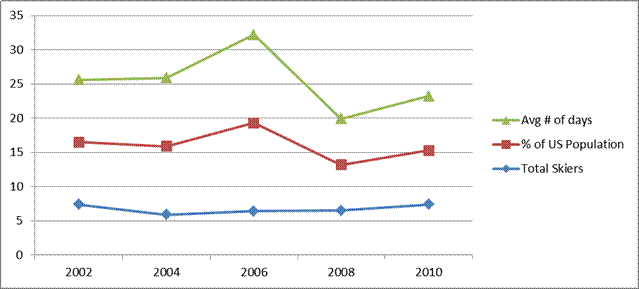

Andrej Šporn at the 2010 Winter Olympic downhill. (Photo credit: Wikipedia)
As the population goes up, skiing is keeping up.
Even worse, the age group that the growth in in skiing should be coming from is dropping.
Here is a scary number
|
2002 |
2004 |
2006 |
2008 |
2010 |
|
|
Age 25 or Older |
71.7% |
60.6% |
62.4% |
53.2% |
58.3% |
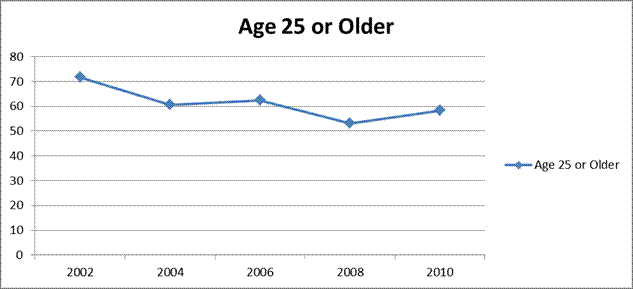
72 percent of skiers used to be 25 or younger. Now that number is 13% and again, not in line with the current us population. Growth comes from the young, or at least growth that skiing needs and can count on for years to come.
Snowboarding is saving ski areas, but not by much.
|
2002 |
2004 |
2006 |
2008 |
2010 |
|
|
Snowboard Participation |
5.9% |
6.3% |
5.2% |
5.8% |
6.1% |
However that “growth” is only .2% over 10 years with a fluctuation of .4%. Smaller fluctuation occurs in snowboarding however there is some growth.
I’m speculating that snowboarders are not as finicky about snow conditions?
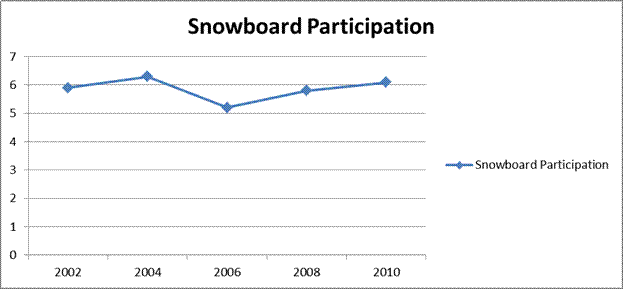
As you can see, over the past four years snowboarding is growing. Why?

Freestyle skiing jump (Photo credit: Wikipedia)
Snowboarder participation growth is from those 24 and younger.
|
2002 |
2004 |
2006 |
2008 |
2010 |
|
|
Age 24 or Younger |
56.2% |
60.6% |
49.4% |
57.8% |
68.3% |
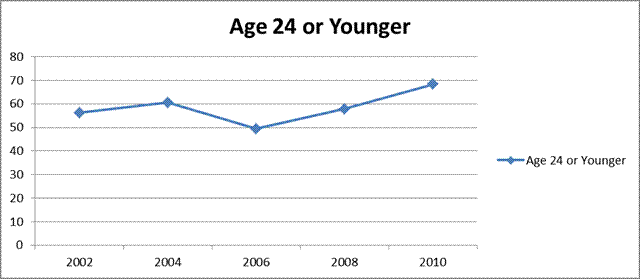
|
2002 |
2004 |
2006 |
2008 |
2010 |
|
|
Skier Visits |
54.4% |
57.1% |
55.1% |
57.1% |
60.5% |
|
Boarder Visits |
11.5% |
10.5% |
9.8% |
20.0% |
24.5% |

So
Skiing is not a growing sport. Thirty years ago it was the glamor sport. Twenty years ago it was thing to do. What has changed?
What do you think? Leave a comment.
If you like this let your friends know or post it on FB, Twitter or LinkedIn
Copyright 2012 Recreation Law (720) Edit Law
Twitter: RecreationLaw
Facebook: Rec.Law.Now
Facebook Page: Outdoor Recreation & Adventure Travel Law
Mobile Site: http://m.recreation-law.com
#RecreationLaw, #@RecreationLaw, #Cycling.Law #Fitness.Law, #Ski.Law, #Outside.Law, #Recreation.Law, #Recreation-Law.com, #Outdoor Law, #Recreation Law, #Outdoor Recreation Law, #Adventure Travel Law, #law, #Travel Law, #Jim Moss, #James H. Moss, #Attorney at Law, #Tourism, #Adventure Tourism, #Rec-Law, #Rec-Law Blog, #Recreation Law, #Recreation Law Blog, #Risk Management, #Human Powered, #Human Powered Recreation,# Cycling Law, #Bicycling Law, #Fitness Law, #Recreation-Law.com, #Backpacking, #Hiking, #Mountaineering, #Ice Climbing, #Rock Climbing, #Ropes Course, #Challenge Course, #Summer Camp, #Camps, #Youth Camps, #Skiing, #Ski Areas, #Negligence, #Snowboarding, #RecreationLaw, #@RecreationLaw, #Cycling.Law #Fitness.Law, #SkiLaw, #Outside.Law, #Recreation.Law, #RecreationLaw.com, #OutdoorLaw, #RecreationLaw, #OutdoorRecreationLaw, #AdventureTravelLaw, #Law, #TravelLaw, #JimMoss, #JamesHMoss, #AttorneyatLaw, #Tourism, #AdventureTourism, #RecLaw, #RecLawBlog, #RecreationLawBlog, #RiskManagement, #HumanPowered, #HumanPoweredRecreation,# CyclingLaw, #BicyclingLaw, #FitnessLaw, #RecreationLaw.com, #Backpacking, #Hiking, #Mountaineering, #IceClimbing, #RockClimbing, #RopesCourse, #ChallengeCourse, #SummerCamp, #Camps, #YouthCamps, #Skiing, #Ski Areas, #Negligence, #Snowboarding, sport and recreation laws, ski law, cycling law, Colorado law, law for recreation and sport managers, bicycling and the law, cycling and the law, ski helmet law, skiers code, skiing accidents,
WordPress Tags: NSGA,National,Goods,Association,Downhill,participation,Total,Skiers,Population,Over,Zero,Percent,fluctuation,percentage,growth,Here,Older,areas,Snowboard,Smaller,Snowboarder,Younger,Skier,Visits,Boarder,glamor,Leave,Twitter,LinkedIn,Recreation,Edit,RecreationLaw,Facebook,Page,Outdoor,Adventure,Travel,Blog,Mobile,Site,Outside,Moss,James,Attorney,Tourism,Risk,Management,Human,Rock,Ropes,Course,Challenge,Summer,Camp,Camps,Youth,Negligence,SkiLaw,OutdoorLaw,OutdoorRecreationLaw,AdventureTravelLaw,TravelLaw,JimMoss,JamesHMoss,AttorneyatLaw,AdventureTourism,RecLaw,RecLawBlog,RecreationLawBlog,RiskManagement,HumanPoweredRecreation,CyclingLaw,BicyclingLaw,FitnessLaw,RopesCourse,ChallengeCourse,SummerCamp,YouthCamps,Colorado,managers,helmet,accidents
Colorado Alliance Experiential Education Environmental Ed Conference-Teaching Outside the Box Conference
Posted: April 10, 2012 Filed under: Youth Camps, Zip Line | Tags: CAEE, Colorado Alliance of Experiential Education, education, Environment, Environmental Education, Massachusetts, Organizations, Outdoor Programs, Professional development, Teaching Outside the Box Leave a commentPlease find information below about the Colorado Alliance for Environmental Education‘s annual Environmental Education Conference-Teaching Outside the Box. The deadline to register with the early bird rates is April 1. Please find more details below and visit our website. Have a great day! http://www.caee.org/civicrm/event/info?reset=1&id=2
Teaching OUTSIDE the Box 2012
April 27- April 29, 2012 ~ Loveland, CO
La Quinta Inn’s and Suites
What is Teaching OUTSIDE the Box?
Teaching OUTSIDE the Box is an action-packed workshop that brings together the best in environmental education for a weekend of engaging presentations, networking, resource sharing, and more…
This conference is for:
Teachers, Interpreters, Environmental Educators, Youth Group Leaders, Naturalists, anyone who appreciates and wants to learn about environmental education – and YOU!
Workshop Topics include…
Nature and the Outdoors * Stewardship and Sustainability * Research, Trends and Techniques * Arts and Culture * Technology * And More!
Click here for more information on the sessions being offered: http://www.caee.org/schedule-and-sessions
The conference is full of professional development opportunities including sessions:
· With fresh ideas for your classroom (hands-on activities, service learning, climate change, and more)
· About new trends in environmental education (certification, quality assurance)
· To make your life easier (communications, grant writing, volunteer management, publicity)
· To inspire you (successful EE collaborations, nature journaling)
· To rejuvenate you (yoga, movement, astronomy)
Become a member and get a discount of up to $50 on registration.
For more information and to register: http://www.caee.org/civicrm/event/info?reset=1&id=2
When
April 27th, 2012 9:00 AM through April 29th, 2012 5:00 PM
Location
La Quinta Inn and Suites 1450 Cascade Ave Loveland, CO 80537
Contact Phone: info
Connecticut court works hard to void a release for a cycling event
Posted: April 9, 2012 Filed under: Connecticut, Cycling | Tags: Connecticut, Cycling, Cycling Event, Fund Raiser, Habitat Bicycle Challenge, Habitat for Humanity, HBC, SAG Wagon, United States Leave a commentLewis v. Habitat for Humanity of Greater New Haven, Inc., 2012 Conn. Super. LEXIS 146
Based on this decision you cannot right a release that will prevent a lawsuit for any fund raising or any other event in Connecticut.
This case is scary if you run fund-raising events or any event in Connecticut. Connecticut is quickly eliminating a release as a defense to claims.
In this case, Habitat for Humanity created a cross country bicycle race to raise money. Participants raised money for their ride and then rode across the US over a nine-week period. The event was called the Habitat Bicycle Challenge.
After a participant signed up and “was qualified” to participate, the defendants provided a SAG van and trailer for the event.
The court then listed the rest of the facts it found relevant. You can tell from the restatement of the facts where the court was going with this decision. These statements are fairly leading:
Despite having a history of injuries and deaths during prior HBC events, the defendant made the decision to organize, promote and sanction another HBC event in 2007.
At all relevant times, the defendant was in control of said event and was responsible for taking the necessary precautions to provide for the safety needs of the bicycle riders participating in the HBC. The defendant was responsible for selecting “trip leaders” with sufficient skill, maturity, knowledge and training to appropriately and safely coordinate the HBC. The defendant was also responsible for properly evaluating prospective participants for the HBC event and for making sure that all participants had a sufficient skill level to safely participate in the HBC event.
….he complied with the application and training requirements to participate in the event, including signing all the paper work presented by the defendant without any opportunity to negotiate or modify any of the terms.
The defendant had not made any provision for signage along the route or any other means of warning or advising the public, including drivers on the highway, of the presence of the cyclists.
The defendant did not coordinate efforts with local or state public-safety officials to implement any safety precautions for the bicycle riders. The HBC scheduled the cyclists to ride fifty to seventy miles per day with only one day of rest out of thirty-five days of travel.
[Emphasize added]
Either the court pulled specific negative facts from the briefs in this case or the defendants had created a situation where they took this responsibility in writing.
The plaintiff was injured when he was acting as a sweep rider for the day in Kansas. The SAG van had taken someone to the hospital so there was no van behind the riders. The plaintiff “realized” that his sweep partner was no longer with him. He crossed the highway and started riding eastbound. He was struck by a vehicle traveling eastbound.
What is striking is how traveling the write way on a road is subject to liability for an organization in Connecticut.
Summary of the case
The plaintiff argued that it was foreseeable that he would be hit by a car. More than 700 people die each year in the US when they are struck by cars. The plaintiff also argued that the defendant did nothing to minimize the risks to the riders. The plaintiff argued the defendant was negligent in.
organizing the event with knowledge that there had been two fatalities and other injuries in the past; failing to restrict the size or scope of the event to maximize safety; failing to properly supervise and train the participants; failing to properly gauge the skill level of the participants; failing to supervise and train the trip leaders; failing to limit days when dangerous weather conditions existed; failing to provide proper ongoing oversight and safety policy enforcement by experienced individuals during the event; failing to coordinate [*5] with public safety officials; failing to clearly post warnings and other signs about the event, in advance of and during the event, to alert the public of the presence of the cyclists; failing to require the cyclists to stay together to increase visibility; allowing financial and public relations aspects to outweigh prudent safety concerns and; choosing to conduct three separate trips when there were inadequate resources.
The defendant claimed that the plaintiff was comparative negligent (similar to assumption of the risk) and his claims were barred because he signed a release. The defendant then filed a motion for summary judgment based on the release.
Supposedly, under Connecticut law the language in a release must specifically provide that the defendant will be exculpated for his own negligence. A Connecticut release must also be clear and consistent with public policy.
First, the court looked at the clarity issue. A release under Connecticut law must “plainly and precisely that the limitation of liability extends to negligence or other fault of the party attempting to shed his ordinary responsibility….” This means the terms used must be unambiguous and understandable. The provisions in the release must be clear and coherent. The issue then is whether “an ordinary person of reasonable intelligence would understand that, by signing the agreement, he or she was releasing the defendants from liability for their future negligence.”
The court then found that the language releasing the party from liability must be conspicuous. Conspicuous means:
(A) A heading in capitals equal to or greater in size than the surrounding text, or in contrasting type, font or color to the surrounding text of the same or lesser size; and (B) Language in the body of a record or display in larger type than the surrounding text, or in contrasting type, font or color to the surrounding text of the same size, or set off from surrounding text of the same size by symbols or other marks that call attention to the language.”
However, the court capped off all of these requirements by finding that the term “ordinary negligence” was confusing to people.
The language in the release, releasing liability was:
I agree, for myself, my heirs, executors and administrators, to not sue and to release, indemnify and hold harmless Habitat for Humanity of Greater New Haven, its affiliates, officers, directors, volunteers and employees and all sponsoring businesses and organizations and their agents and employees, from any and all liability, [*16] claims, demands and causes of action whatsoever, arising out of my participation in the Challenge and related activities–whether it results from the negligence of any of the above or from any other cause. I agree not to make a claim against or sue Habitat for Humanity or other sponsors or affiliated organizations for injuries or damages related to bicycling and/or other activities during the Challenge.”
The court found this language was not clear and thus could not relieve the defendant of liability. The court stated:
The language waiving the plaintiffs’ right to sue the defendants for the defendants negligence is not conspicuous, as no effort has been made to set the word negligence off from the rest of the text. Furthermore, the particular paragraph in which the provision appears is not set off by headings or any other marker from the remainder of the two-page agreement. The court concludes that a reasonable individual [*17] reading such an agreement would not be sufficiently informed that he or she is waiving the right to sue the defendant for its own negligent conduct.
However, the court then should be flagged for piling on. It found the release violated public policy. In Connecticut, the release would violate public policy because it would unfairly shift the loss to the wrong party, and it would eliminate an incentive to prevent future harm.
The court then found that because the defendant was a charity, its work was important and thus subject to the public policy exclusion. All other courts have found public policy to be the delivery of necessary services such as utilities or public transportation. (For six pages it evaluated this issue.)
The plaintiff hired an expert who testified that the trip would cause physical and mental fatigue. As such, the event should be organized to allow the cyclists to make as “few decisions as possible, including whether they should have a break or drink water.” [Emphasize added]
So Now What?
If you are based in Connecticut, there is not much you can do. The short list of options would be…….move.
This court did point out an issue that has been occurring more often of late. Courts want the release or negligence language emphasized for the reader. This can be done by either by a heading, larger type or bolding the print; you may want to review your release, (or have one professionally written) that makes this apparent to all readers.
What do you think? Leave a comment.
If you like this let your friends know or post it on FB, Twitter or LinkedIn
Copyright 2012 Recreation Law (720) Edit Law
Twitter: RecreationLaw
Facebook: Rec.Law.Now
Facebook Page: Outdoor Recreation & Adventure Travel Law
Mobile Site: http://m.recreation-law.com
#RecreationLaw, #@RecreationLaw, #Cycling.Law #Fitness.Law, #Ski.Law, #Outside.Law, #Recreation.Law, #Recreation-Law.com, #Outdoor Law, #Recreation Law, #Outdoor Recreation Law, #Adventure Travel Law, #law, #Travel Law, #Jim Moss, #James H. Moss, #Attorney at Law, #Tourism, #Adventure Tourism, #Rec-Law, #Rec-Law Blog, #Recreation Law, #Recreation Law Blog, #Risk Management, #Human Powered, #Human Powered Recreation,# Cycling Law, #Bicycling Law, #Fitness Law, #Recreation-Law.com, #Backpacking, #Hiking, #Mountaineering, #Ice Climbing, #Rock Climbing, #Ropes Course, #Challenge Course, #Summer Camp, #Camps, #Youth Camps, #Skiing, #Ski Areas, #Negligence, #Snowboarding, #RecreationLaw, #@RecreationLaw, #Cycling.Law #Fitness.Law, #SkiLaw, #Outside.Law, #Recreation.Law, #RecreationLaw.com, #OutdoorLaw, #RecreationLaw, #OutdoorRecreationLaw, #AdventureTravelLaw, #Law, #TravelLaw, #JimMoss, #JamesHMoss, #AttorneyatLaw, #Tourism, #AdventureTourism, #RecLaw, #RecLawBlog, #RecreationLawBlog, #RiskManagement, #HumanPowered, #HumanPoweredRecreation,# CyclingLaw, #BicyclingLaw, #FitnessLaw, #RecreationLaw.com, #Backpacking, #Hiking, #Mountaineering, #IceClimbing, #RockClimbing, #RopesCourse, #ChallengeCourse, #SummerCamp, #Camps, #YouthCamps, #Skiing, #Ski Areas, #Negligence, #Snowboarding, sport and recreation laws, ski law, cycling law, Colorado law, law for recreation and sport managers, bicycling and the law, cycling and the law, ski helmet law, skiers code, skiing accidents, #Connecticut, #CN, Habitat for Humanity, #Charity, #HBC, fund raiser,
WordPress Tags: Connecticut,event,Lewis,Habitat,Greater,Haven,Conn,Super,LEXIS,decision,lawsuit,events,bicycle,money,Participants,Challenge,participant,defendants,trailer,restatement,statements,Despite,history,injuries,deaths,defendant,precautions,riders,leaders,skill,knowledge,requirements,paper,provision,drivers,highway,presence,efforts,officials,Emphasize,Either,situation,plaintiff,rider,Kansas,hospital,vehicle,road,Summary,cars,size,scope,policy,enforcement,individuals,warnings,relations,aspects,resources,assumption,judgment,negligence,limitation,person,intelligence,agreement,Conspicuous,capitals,text,Language,symbols,attention,heirs,executors,administrators,officers,directors,employees,agents,action,participation,plaintiffs,effort,paragraph,headings,marker,remainder,incentive,exclusion,utilities,transportation,fatigue,decisions,options,Courts,reader,readers,Leave,Twitter,LinkedIn,Recreation,Edit,RecreationLaw,Facebook,Page,Outdoor,Adventure,Travel,Blog,Mobile,Site,Outside,Moss,James,Attorney,Tourism,Risk,Management,Human,Rock,Ropes,Course,Summer,Camp,Camps,Youth,Areas,SkiLaw,OutdoorLaw,OutdoorRecreationLaw,AdventureTravelLaw,TravelLaw,JimMoss,JamesHMoss,AttorneyatLaw,AdventureTourism,RecLaw,RecLawBlog,RecreationLawBlog,RiskManagement,HumanPoweredRecreation,CyclingLaw,BicyclingLaw,FitnessLaw,RopesCourse,ChallengeCourse,SummerCamp,YouthCamps,Colorado,managers,helmet,accidents,cyclists,eastbound,whether
Lewis v. Habitat for Humanity of Greater New Haven, Inc., 2012 Conn. Super. LEXIS 146
Posted: April 9, 2012 Filed under: Connecticut, Cycling, Legal Case | Tags: Assumption of risk, Charity, Connecticut, Cycling, Cycling Event, Fun Raiser, Habitat for Humanity, Summary judgment Leave a commentLewis v. Habitat for Humanity of Greater New Haven, Inc., 2012 Conn. Super. LEXIS 146
Daniel Lewis v. Habitat for Humanity of Greater New Haven, Inc.
CV095030268S
SUPERIOR COURT OF CONNECTICUT, JUDICIAL DISTRICT OF NEW HAVEN AT NEW HAVEN
2012 Conn. Super. LEXIS 146
January 9, 2012, Decided
January 9, 2012, Filed
NOTICE: THIS DECISION IS UNREPORTED AND MAY BE SUBJECT TO FURTHER APPELLATE REVIEW. COUNSEL IS CAUTIONED TO MAKE AN INDEPENDENT DETERMINATION OF THE STATUS OF THIS CASE.
JUDGES: [*1] Matthew E. Frechette, J.
OPINION BY: Matthew E. Frechette
OPINION
MEMORANDUM OF DECISION RE RULING ON DEFENDANT MOTION FOR SUMMARY JUDGMENT
Presently before the court is the defendant Habitat for Humanity of Greater New Haven, Inc.’s motion for summary judgment filed on June 10, 2011. For the reasons set forth herein, the defendant’s motion for summary judgment is denied.
PROCEDURAL HISTORY
The plaintiffs, Daniel Lewis, as well as Hal C. Lewis and Jeanne Dise-Lewis, co-conservators of Daniel Lewis, bring this action against the defendant, Habitat for Humanity of Greater New Haven, Inc.1 for alleged negligence that resulted in severe bodily injuries to Daniel Lewis while he was participating in an event known as the 2007 Habitat Bicycle Challenge (“HBC”). On October 20, 2009, the plaintiffs submitted a revised two-count complaint in response to the defendant’s request to revise. The first count of the revised complaint alleges the following facts.
1 Habitat for Humanity International, Inc. is also a defendant in the present case. Nevertheless, only Habitat for Humanity of Greater New Haven, Inc., moves for summary judgment in the present motion, and it is referred to as the defendant in this memorandum.
The defendant [*2] organized, promoted and sanctioned the HBC, which is an annual fund-raising cycling event which required all participants to cycle across the entire country during a time period of approximately nine weeks. Despite having a history of injuries and deaths during prior HBC events, the defendant made the decision to organize, promote and sanction another HBC event in 2007. That year, the cross county ride began in New Haven, Connecticut on June 2, 2007. At all relevant times, the defendant was in control of said event and was responsible for taking the necessary precautions to provide for the safety needs of the bicycle riders participating in the HBC. The defendant was responsible for selecting “trip leaders” with sufficient skill, maturity, knowledge and training to appropriately and safely coordinate the HBC. The defendant was also responsible for properly evaluating prospective participants for the HBC event and for making sure that all participants had a sufficient skill level to safely participate in the HBC event. In the fall of 2006, Daniel Lewis applied to participate, and he complied with the application and training requirements to participate in the event, including signing [*3] all the paper work presented by the defendant without any opportunity to negotiate or modify any of the terms.
The defendant chose Daniel Lewis to participate in the “south” team, which commenced on its cross-country ride on June 2, 2007, from New Haven, and was intended to culminate in San Francisco, California, at the end of the summer. The south team was provided with a support van known as the “SAG” van, which pulled a trailer with a sign for the HBC event. The defendant had not made any provision for signage along the route or any other means of warning or advising the public, including drivers on the highway, of the presence of the cyclists. The defendant did not coordinate efforts with local or state public safety officials to implement any safety precautions for the bicycle riders. The HBC scheduled the cyclists to ride fifty to seventy miles per day with only one day of rest out of thirty-five days of travel.
On the day in question, Daniel Lewis was acting as one of two sweep riders, riding at the end of the group traveling westward on Kansas Highway 18. There was no SAG van traveling behind them because someone was being taken to the hospital. When Daniel Lewis realized his [*4] sweep partner, Liana Woskie, was no longer immediately behind him, he crossed the highway and began cycling in an eastbound direction, and he was struck by a vehicle also traveling in an eastbound direction. As a result, Daniel Lewis suffered catastrophic and life-altering injuries.
The plaintiffs further allege that it was reasonably foreseeable that HBC participants were at risk of significant injury or death, and the defendant continued to promote and sanction the event without taking reasonable and prudent steps to minimize that risk. Particularly, the plaintiffs assert that the accident was caused by the defendant’s negligence including: organizing the event with knowledge that there had been two fatalities and other injuries in the past; failing to restrict the size or scope of the event to maximize safety; failing to properly supervise and train the participants; failing to properly gauge the skill level of the participants; failing to supervise and train the trip leaders; failing to limit days when dangerous weather conditions existed; failing to provide proper ongoing oversight and safety policy enforcement by experienced individuals during the event; failing to coordinate [*5] with public safety officials; failing to clearly post warnings and other signs about the event, in advance of and during the event, to alert the public of the presence of the cyclists; failing to require the cyclists to stay together to increase visibility; allowing financial and public relations aspects to outweigh prudent safety concerns and; choosing to conduct three separate trips when there were inadequate resources. As a direct and proximate result of the defendant’s negligence, Daniel Lewis sustained serious injuries of a permanent nature, and the plaintiffs seek damages for the costs already expended in his care and the future loss of his wages.
On December 12, 2009, the defendant filed an answer, which included a special defense alleging Daniel Lewis’ comparative negligence as well as one stating that the plaintiffs’ claims are contractually barred due to Daniel Lewis’ signing of a Release and Waiver of Liability, Assumption of Risk and Indemnity Agreement (“exculpatory agreement”). On June 10, 2011, the defendant filed a motion for summary judgment, asserting that it is entitled to judgment as a matter of law because Daniel Lewis signed the exculpatory agreement. Furthermore, [*6] the defendant argues that it did not owe a duty to Daniel Lewis, and his injuries were not caused by the defendant’s conduct. In support of its motion, the defendant submitted evidence, which included affidavits and the accident report. On August 8, 2011, the plaintiffs objected to the defendant’s motion on the grounds that the exculpatory agreement is invalid and against public policy, that the defendant owes the plaintiffs a duty of care, and that the defendant’s negligence was the legal cause of Daniel Lewis’s injuries. The plaintiffs submitted exhibits in support of their objection that included affidavits, deposition transcripts, as well as promotional materials and policy manuals distributed by the defendant. The defendant submitted a reply on August 22, 2011. The plaintiffs filed a surreply on September 22, 2011, and submitted additional exhibits including tax returns and other financial information about the defendant and the HBC fundraiser. On October 3, 2011, oral arguments were held, and the plaintiff submitted an additional page of deposition testimony by John Allen, an expert on the bicycle industry. On October 11, 2011, the plaintiffs submitted an affidavit of Craig Clark, [*7] a participant in the 2007 HBC.
DISCUSSION
[HN1] “Practice Book §17-49 provides that summary judgment shall be rendered forthwith if the pleadings, affidavits and any other proof submitted show that there is no genuine issue as to any material fact and that the moving party is entitled to judgment as a matter of law. In deciding a motion for summary judgment, the trial court must view the evidence in the light most favorable to the nonmoving party.” (Internal quotation marks omitted.) Brooks v. Sweeney, 299 Conn. 196, 210, 9 A.3d 347 (2010). “[S]ince litigants ordinarily have a constitutional right to have issues of fact decided by a jury . . . the moving party for summary judgment is held to a strict standard . . . of demonstrating his entitlement to summary judgment.” (Citation omitted; internal quotation marks omitted.) Kakadelis v. DeFabritis, 191 Conn. 276, 282, 464 A.2d 57 (1983). “Summary judgment in favor of the defendant is properly granted if the defendant in its motion raises at least one legally sufficient defense that would bar the plaintiff’s claim and involves no triable issue of fact.” (Internal quotation marks omitted.) Serrano v. Burns, 248 Conn. 419, 424, 727 A.2d 1276 (1999). [*8] “Only one of the [defendant’s] defenses needs to be valid in order to overcome [a] motion for summary judgment. [S]ince a single valid defense may defeat recovery, [a movant’s] motion for summary judgment should be denied when any defense presents significant fact issues that should be tried.” (Internal quotation marks omitted.) Union Trust Co. v. Jackson, 42 Conn.App. 413, 417, 679 A.2d 421 (1996).
In the present case, the defendant moves for summary judgment on the ground that Daniel Lewis signed an exculpatory agreement that releases the defendant from liability. The plaintiffs have objected on the grounds that the exculpatory agreement is not sufficiently clear to avoid liability, and furthermore, that the agreement is void as against public policy. The defendant further argues that it did not owe Daniel Lewis a duty of care to prevent injuries that he sustained and its actions were not the proximate cause of his injuries. The court first examines the threshold issue of whether the exculpatory agreement is valid before addressing the nature of the duties owed to the plaintiffs.
I. Exculpatory Agreement
[HN2] In deciding whether to enforce an exculpatory agreement, Connecticut courts first [*9] look at whether the language of the agreement expressly provides that the party will be exculpated for its own negligence. See Hanks v. Powder Ridge Restaurant Corp., 276 Conn. 314, 321-22, 885 A.2d 734 (2005). If the agreement is clear, it must nevertheless be consistent with public policy. Id., 326-27. The agreement in the present case is unenforceable for both lack of clarity and public policy reasons.
A. Lack of Clarity
[HN3] “[U]nless the intention of the parties is expressed in unmistakable language, an exculpatory clause will not be deemed to insulate a party from liability for his own negligent acts . . . [I]t must appear plainly and precisely that the limitation of liability extends to negligence or other fault of the party attempting to shed his ordinary responsibility . . .” (Internal quotation marks omitted.) Hanks v. Powder Ridge Restaurant Corp., supra, 276 Conn. 322. “[A] party cannot be released from liability for injuries resulting from its future negligence in the absence of language that expressly so provides.” Hyson v. White Water Mountain Resorts of Connecticut Inc., 265 Conn. 636, 643, 829 A.2d 827 (2003).
At oral arguments on October 3, 2011, the plaintiffs argued that [*10] the waiver was not valid because it was not a clear and conspicuous waiver of the plaintiffs’ rights. They argued that the language in the exculpatory agreement was not as strong as the language in cases where courts have found such agreements enforceable.2
2 The plaintiffs also argued that the waiver did not effectively include “conservators” among the group of individuals that were barred from bringing suit, so even if it were effective against Daniel Lewis, his parents, as conservators would be able to bring this claim against the defendant. Since the agreement is deemed unenforceable for other reasons, this court need not address whether a conservator is included within this particular agreement.
In Hyson v. White Water Mountain Resorts of Connecticut, Inc., supra, 265 Conn. 636, the court held that it could not enforce an exculpatory agreement which only referred to the risks involved in snowtubing, but which made no reference to the possible negligence of the defendant. Id., 643. In Hanks, in contrast, the court found that an exculpatory agreement that explicitly used the word “negligence” several times, and in all capital letters in contrast to the surrounding test, was sufficiently [*11] clear to be enforceable, but disallowed the agreement as invalid under public policy considerations. Hanks v. Powder Ridge Restaurant Corp., supra, 276 Conn. 324. A subsequent exculpatory agreement case, Reardon v. Windswept Farm, LLC, 280 Conn. 153, 162, n.9, 905 A.2d 1156 (2006), dealt with an agreement that used the word negligence, but did not highlight or emphasize the text in the agreement. The Reardon court, however, did not address whether the exculpatory agreement was sufficiently explicit, but found that public policy dictated that it was unenforceable. Reardon v. Windswept Farm, LLC, supra, 280 Conn. 158. Thus, [HN4] our appellate courts have left open the question of whether a mere mention of negligence is always sufficient to make an exculpatory agreement enforceable.
There is nevertheless helpful language throughout the cases. Terms must be unambiguous as well as understandable. Hanks v. Powder Ridge Restaurant Corp., supra, 276 Conn. 322. “[T]his does not imply that only simple or monosyllabic language can be used in such clauses. Rather, what the law demands is that such provisions be clear and coherent . . .” (Internal quotation marks omitted.) Id. The question is whether [*12] “an ordinary person of reasonable intelligence would understand that, by signing the agreement, he or she was releasing the defendants from liability for their future negligence.” Id., 324-25.
In absence of further illumination, the Supreme Court has referred to statutory authority as well as treatises and other persuasive decisions indicating that [HN5] conspicuousness was a requirement for enforcing such a waiver. See Hyson v. White Water Mountain Resorts of Connecticut, Inc. supra, 265 Conn. 641-43. The court has relied on the Restatement (Second) of Contracts, which provides that “[l]anguage inserted by a party in an agreement for the purpose of exempting him from liability for negligent conduct is scrutinized with particular care and a court may require specific and conspicuous reference to negligence under the general principle that language is interpreted against the draftsman.” Id., 642, citing 2 Restatement (Second), Contracts §195, comment (b) (1981). Additionally, while not binding, General Statutes §42a-1-201(b)(10), which is part of the Uniform Commercial Code, provides persuasive guidance. It provides: “‘Conspicuous’, with reference to a term, means so written, displayed or [*13] presented that a reasonable person against which it is to operate ought to have noticed it. Whether a term is conspicuous or not is a decision for the court. Conspicuous terms include the following: (A) A heading in capitals equal to or greater in size than the surrounding text, or in contrasting type, font or color to the surrounding text of the same or lesser size; and (B) Language in the body of a record or display in larger type than the surrounding text, or in contrasting type, font or color to the surrounding text of the same size, or set off from surrounding text of the same size by symbols or other marks that call attention to the language.” General Statutes §42a-1-201(b)(10); see also Emlee Equipment Leasing Corp. v. Waterbury Transmission, Inc., 31 Conn.App. 455, 471, 626 A.2d 307 (1993) (applying §42a-l-201(10) to determine the validity of a disclaimer, and finding that the relevant language was sufficiently conspicuous because it was capitalized and set off from the rest of the text).
Additionally, a comment to the Restatement (Third), Torts, Apportionment of Liability §2, on Contractual Limitations on Liability, states: [HN6] “A party invoking a contractual limitation on liability [*14] must prove the existence and application of the contract . . . A contract that limits liability must be expressed in clear, definite, and unambiguous language and cannot be inferred from general language . . . When an individual plaintiff passively accepts a contract drafted by the defendant, the contract is construed strictly, favoring reasonable interpretations against the defendant. A contract is not unenforceable merely because it fails to use specific language naming the causes of action to which it applies. In a written consumer contract, the fact that language is in small print or otherwise is not conspicuous is a factor in determining whether the agreement is enforceable.” Restatement (Third), Torts, Apportionment of Liability §2, comment (d).
[HN7] Judges of this court have reached different outcomes in evaluating whether exculpatory agreements are sufficiently clear. While “[i]t is clear that explicit reference to negligence is required to render valid an agreement releasing a party from liability for his/her own negligence”; Colagiovanni v. New Haven Acquisition Corp., Superior Court, judicial district of New Haven, Docket No. CV 03 048041 (November 15, 2006, Robinson, J.) (42 Conn. L. Rptr. 423, 425, 2006 Conn. Super. LEXIS 3387, *13); [*15] it is not clear whether that is always sufficient. For instance it has been held that the phrase “ordinary negligence,” contained within an exculpatory agreement, is confusing and does not “unambiguously and explicitly [purport] to release the defendants from their prospective liability for negligence as required by Hanks.” Schneeloch v. Glastonbury Fitness & Wellness, Inc., Superior Court, judicial district of Hartford, Docket No. CV 06 5007348 (February 2, 2009, Domnarski, J.) (47 Conn. L. Rptr. 183, 185, 2009 Conn. Super. LEXIS 191, *7); but see Corso v. United States Surgical Corp., Superior Court, judicial district of New Haven at New Haven, Docket No. 487002, 2005 Conn. Super. LEXIS 1373 (May 25, 2005, Levin, J.) (granting summary judgment in favor of a defendant because the release waiver explicitly referred to the defendant’s future negligence).
In the present case, the agreement’s language states in relevant part: “I agree, for myself, my heirs, executors and administrators, to not sue and to release, indemnify and hold harmless Habitat for Humanity of Greater New Haven, its affiliates, officers, directors, volunteers and employees and all sponsoring businesses and organizations and their agents and employees, from any and all liability, [*16] claims, demands and causes of action whatsoever, arising out of my participation in the Challenge and related activities–whether it results from the negligence of any of the above or from any other cause. I agree not to make a claim against or sue Habitat for Humanity or other sponsors or affiliated organizations for injuries or damages related to bicycling and/or other activities during the Challenge.”
The court agrees with the plaintiff that the agreement does not meet the level of clarity that was present in the agreement in Hanks. Here, the mere use of the word “negligence of any of the above,” within the text of a lengthy sentence consisting of multiple interrelated clauses, does not rise to the level of clarity required to enforce an exculpatory agreement against an individual. The language waiving the plaintiffs’ right to sue the defendants for the defendants negligence is not conspicuous, as no effort has been made to set the word negligence off from the rest of the text. Furthermore, the particular paragraph in which the provision appears is not set off by headings or any other marker from the remainder of the two-page agreement. The court concludes that a reasonable individual [*17] reading such an agreement would not be sufficiently informed that he or she is waiving the right to sue the defendant for its own negligent conduct. On the face of the agreement, it is insufficiently clear or explicit to be enforceable. Accordingly, the defendant may not prevail on its motion for summary judgment on the basis of the agreement.
B. Public Policy
[HN8] Even if an exculpatory agreement is clear enough to be enforced, it is nevertheless unenforceable if it violates public policy. See Hanks v. Powder Ridge Restaurant Corp., supra, 276 Conn. 326. The defendant argues that the exculpatory agreement does not violate public policy under the circumstances and thus bars the plaintiffs from bringing a claim for negligence. The plaintiffs argue that the exculpatory agreement violates public policy under Connecticut law. The court agrees with the plaintiffs.
[HN9] “Although it is well established that parties are free to contract for whatever terms on which they may agree . . . it is equally well established that contracts that violate public policy are unenforceable . . . [T]he question [of] whether a contract is against public policy is [a] question of law dependent on the circumstances of the [*18] particular case . . .” (Citations omitted; internal quotation marks omitted.) Hanks v. Powder Ridge Restaurant Corp., supra, 276 Conn. 326-27. The Supreme Court has adopted the six-factor test established in Tunkl v. Regents of the University of California, 60 Cal.2d 92, 383 P.2d 441, 32 Cal. Rptr. 33 (1963), as part of the standard for establishing whether a exculpatory agreement violates public policy. Hanks v. Powder Ridge Restaurant Corp., supra, 276 Conn. 328-30.
[HN10] The six factors that the Tunkl court established, and the Supreme Court has adopted for application in Connecticut are: “[1] [The agreement] concerns a business of a type generally thought suitable for public regulation. [2] The party seeking exculpation is engaged in performing a service of great importance to the public, which is often a matter of practical necessity for some members of the public. [3] The party holds himself out as willing to perform this service for any member of the public who seeks it, or at least for any member coming within certain established standards. [4] As a result of the essential nature of the service, in the economic setting of the transaction, the party invoking exculpation possesses a [*19] decisive advantage of bargaining strength against any member of the public who seeks his services. [5] In exercising a superior bargaining power the party confronts the public with a standardized adhesion contract of exculpation, and makes no provision whereby a purchaser may pay additional reasonable fees and obtain protection against negligence. [6] Finally, as a result of the transaction, the person or property of the purchaser is placed under the control of the seller, subject to the risk of carelessness by the seller or his agents.” (Internal quotation marks omitted.) Id., 328.
[HN11] The Tunkl factors, however, are not purely dispositive of this issue as “[t]he ultimate determination of what constitutes the public interest must be made considering the totality of the circumstances of any given case against the backdrop of current societal expectations.” (Internal quotation marks omitted.) Id., 330. Whether an exculpatory agreement is enforceable may be further determined by “any other factors that may be relevant given the factual circumstances of the case and current societal expectations.” Id. “[A]n exculpatory agreement may affect the public interest adversely even if some of the Tunkl [*20] factors are not satisfied.” Id., 328.
[HN12] “Exculpatory provisions, in general, undermine the public policy considerations governing our tort system. ‘[T]he fundamental policy purposes of the tort compensation system [are] compensation of innocent parties, shifting the loss to responsible parties or distributing it among appropriate entities, and deterrence of wrongful conduct . . . It is sometimes said that compensation for losses is the primary function of tort law . . . [but it] is perhaps more accurate to describe the primary function as one of determining when compensation [is] required. An equally compelling function of the tort system is the prophylactic factor of preventing future harm . . . The courts are concerned not only with compensation of the victim, but with admonition of the wrongdoer.’ (Citations omitted; internal quotation marks omitted.) Lodge v. Arett Sales Corp., 246 Conn. 563, 578-79, 717 A.2d 215 (1998).” Colagiovanni v. New Haven Acquisition Corp., supra, 42 Conn. L. Rptr. 426, 2006 Conn. Super. LEXIS 3387, *18. “[I]t is consistent with public policy to posit the risk of negligence upon the actor and, if this policy is to be abandoned, it has generally been to allow or require that the risk shift [*21] to another party better or equally able to bear it, not to shift the risk to the weak bargainer.” (Internal quotation marks omitted.) Dow-Westbrook, Inc. v. Candlewood Equine Practice, LLC., 119 Conn.App. 703, 716, 989 A.2d 1075 (2010).
Analysis under the Tunkl factors and the totality of the circumstances weighs in favor of the plaintiffs, and against enforcement of the exculpatory agreement that Daniel Lewis signed before embarking on the HBC. The facts relating to each individual factors are not always clearly delineated and tend to overlap, but overall the factors weigh against enforcing the present exculpatory agreement under the circumstances.
The court first looks at the first factor, which concerns whether “[the agreement] concerns a business of a type generally thought suitable for public regulation.” Hanks v. Powder Ridge Restaurant Corp., supra, 276 Conn. 328. Regarding the first factor, the agreement concerns the HBC, where the defendant was engaged in an activity suitable for public regulation. The defendant was raising funds for a charitable purpose, recruiting students to act as volunteer fundraisers and representatives while they engaged in a cycling expedition across [*22] the continental United States. The HBC is a fund raising program for a not-for-profit organization, and such organizations are susceptible to rules and regulations in order to maintain their tax exempt status. Moreover, the specific activity central to the parties’ agreement involved travel on public highways used for motor vehicles. [HN13] Highway travel and related public safety issues are areas which are subject to heavy regulation on a state and federal level. See e.g., General Statutes §§14-1 through 14-249 (regulating the areas of motor vehicles and use of the highway by vehicles).
In the present case, the defendant argues that organized bicycle racing is not a subject of public regulation. The defendant cites foreign case law, including Okura v. United States Cycling Federation, Inc. 186 Cal.App.3d 1462, 1465-68, 231 Cal. Rptr. 429 (1986), for this premise. While the HBC was organized around cycling, the event in question was not the same as an ordinary sporting competition. Here, the participants were not simply engaging in a recreational bicycle ride, but were involved in the larger mission of the defendant, raising funds and awareness through presentations; P. Exh. 7, Affidavit [Af.] [*23] of Sara Barz; participating at building sites across the country; P. Exh. 4, Af. of Liana Woskie; Defendant’s [D] Exh. 2, Af. of William Casey; Exh. 6, Af. of Patrick Muha ¶16; and complying with specific conduct requirements for participants in the event. P. Exh. 5, Af. of Christopher Gombeski.
The second factor weighs whether “[t]he party seeking exculpation is engaged in performing a service of great importance to the public, which is often a matter of practical necessity for some members of the public.” Hanks v. Powder Ridge Restaurant Corp., supra, 276 Conn. 328. The defendant is engaged, ultimately, in a service that is important to the public, namely fund-raising to meet the goal of building houses for the poor. Nevertheless, the HBC may be somewhat tangential to that defendant’s central charitable goals. The defendant argues that this case does not involve an issue of great importance because the HBC was similar to an organized leisure time activity. However, as discussed above, the participants in the HBC were working not only on their trip across the country, but making daily presentations, building houses, and raising funds to build homes for the poor. Thus, the HBC did involve [*24] tasks and goals that are important to the public rather than just cycling for its own sake.
Thirdly, the court evaluates whether “[t]he party holds himself out as willing to perform this service for any member of the public who seeks it, or at least for any member coming within certain established standards.” Hanks v. Powder Ridge Restaurant Corp., supra, 276 Conn. 328. In the present case, any individual could apply to participate in the HBC.3 There were certain criteria for admissions, but the court credits the plaintiffs’ argument that the admissions criteria did “not negate the public aspect of the event.” The evidence shows that the event was roughly comprised half of Yale students and half of “distant” riders, who were individuals that did not attend Yale and applied to be a part of the event.4 See P. Exh. 10, pp.4-6. While HBC applicants had to meet certain criteria in order to ultimately participate, it was not so limiting as to remove the event from the public sphere. This was therefore a situation in which the defendant sought participation of members of the public meeting certain established standards.
3 The criteria for selecting applicants indicates that a wide range of individuals [*25] would apply to the program, and instructs the group leaders to choose individuals within a certain age range to avoid group dynamics that may develop with older participants. See P. Exh. 14, p. 16.
4 It is also worth noting that “distant” participants were subject to different training regimens, and largely had to find ways of training on their own in their location. See P. Exh. 14.
The last three Tunkl factors are as follows: “[4] As a result of the essential nature of the service, in the economic setting of the transaction, the party invoking exculpation possesses a decisive advantage of bargaining strength against any member of the public who seeks his services. [5] In exercising a superior bargaining power the party confronts the public with a standardized adhesion contract of exculpation, and makes no provision whereby a purchaser may pay additional reasonable fees and obtain protection against negligence. [6] Finally, as a result of the transaction, the person or property of the purchaser is placed under the control of the seller, subject to the risk of carelessness by the seller or his agents.” (Internal quotation marks omitted.) Hanks v. Powder Ridge Restaurant Corp., supra, 276 Conn. 328.
In [*26] analyzing these elements, the Supreme Court’s decision in Brown v. Soh is instructive. In that case, the court held “that [HN14] exculpatory agreements in the employment context violate Connecticut public policy.” Brown v. Soh, supra, 280 Conn. 503. In reaching that conclusion, the court stated: “We further note than an employer . . . possesses a decisive advantage of bargaining strength against the plaintiff employee. Considering the economic compulsion facing those in search of employment . . . [t]o suppose that [a] plaintiff . . . had any bargaining power whatsoever defies reality . . . It is also highly significant that, in exercising this superior bargaining power, the [defendant] confronted the plaintiff with a standardized adhesion contract of exculpation. The agreement signed by the plaintiff was offered . . . on a ‘take it or leave it’ basis . . . The most salient feature [of adhesion contracts] is that they are not subject to the normal bargaining processes of ordinary contracts, and they tend to involve standard form contract[s] prepared by one party, to be signed by the party in a weaker position, [usually] a consumer, who has little choice about the terms . . . [I]t would ignore [*27] reality to conclude that the plaintiff wielded the same bargaining power to determine the terms of the exculpatory agreement as the [defendant], which required him to sign it. He had nearly zero bargaining power with respect to the negotiation of the [exculpatory agreement] and in order to participate in the activity [the plaintiff] was required to assume the risk of the defendants’ negligence . . . [HN15] Another important consideration in deciding if an exculpatory agreement violates public policy is whether the signatory will be under the control of the person seeking exculpation from negligence and subject to the risk of that person’s carelessness. By definition, an employee agrees to be under the control of the employer and is therefore exposed to the employer’s carelessness . . . In the employment context, the employer generally has the greater ability to avoid harm because the employer chooses the workplace and assigns tasks to the employees. As we previously have noted, it is consistent with public policy to posit the risk of negligence upon the actor and, if this policy is to be abandoned, it has generally been to allow or require that the risk shift to another party better or equally [*28] able to bear it, not to shift the risk to the weak bargainer . . . If employers were permitted to obtain broad waivers of their liability, an important incentive to manage risk would be removed. It would be unwise, in these circumstances, to undermine the public policy underlying the allocation of risk in tort law by allowing employees to bear risks they have no ability or right to control. Moreover, we note that our conclusion is consistent with the view of the American Law Institute, as embodied in 2 Restatement (Second), Contracts §195 (1981), and 2 Restatement (Second), Torts §496B, comment (f) (1965).” (Citations omitted; internal quotation marks omitted.) Brown v. Soh, supra, 280 Conn. 504-06.
The analysis of the Brown court applies to the facts of the present case as well. While there was not a formal employment relationship between Daniel Lewis and the defendant, it is apparent that the defendant had control over the plaintiff in many aspects of the relationship. Firstly, the defendant had power in selection and dismissal over the participants in the HBC. During the course of the summer-long event, all of the participants were subject to the defendant’s control. While the defendant [*29] could not control weather or other road conditions, it did control most other aspects of the cross-country event. The defendant determined the route of travel, the daily mileage traveled, availability of signage warning drivers of the cyclists’ presence, notification of local authorities who could coordinate safety measures on the local level, the selection of trip leaders and sweep riders, the presence of support vehicles, the participants’ training and riding tests, and finally, the locations of the stops along the way and the time table which set the pace by which the cyclists had to reach each destination. There were many factors that participants could not adjust even if based on a participant’s own judgment or knowledge.
The “HBC Rules and Policies” offered into evidence by the plaintiffs illustrate that the defendant was indeed in control of Daniel Lewis while he was engaged in the HBC. There were prohibited behaviors and language specifically stating that the riders “represent Habitat for Humanity.” There were specific rules regarding safety on the cycling path and the conduct of participants, including regimented daily schedules, rules regarding relationships between participants, [*30] language, alcohol and drug use, and how participants were to conduct themselves in the presence of their hosts along the route. See P. Exh. 10. The cyclists wore jerseys with the defendant’s logo on them; P. Exh. 15, Photographs of Habitat Shirts; and rode bicycles that were purchased for them by the defendant. See P. Exh. 14, pp. 39-42. Participants had to comply with these requirements and rules in order to continue their journey.5 Even though there is some evidence that the policies were inadequately enforced, the participants were not completely free actors of their own will and they were similar to employees in that many aspects of their participation were under the defendant’s control and they could be dismissed by the defendant for violation of policies.
5 The materials in evidence stated: “Reckless biking will not be tolerated and is grounds for immediate expulsion from the trip . . . Helmet use is required at all times while riding on the Habitat Bicycle Challenge. No riding while intoxicated or under the influence of any drug. Not only is this dangerous, it is also illegal almost everywhere and it is grounds for immediate expulsion from the trip. No riding after dark. No riding [*31] while wearing headphones . . . Never ride on an interstate unless a leader tells you to and the leader has checked with the state police . . . Never ride more than double file . . . Bike in the shoulder, not in the lane with traffic . . . Never cross the yellow line into oncoming traffic . . . Only leaders can drive the van. This is for insurance reasons.” P. Exh. 14 p. 64, HBC Rules and Policies.
It is also apparent that, as a prospective applicant for the HBC, Daniel Lewis would have been subject to a power imbalance when presented with an exculpatory agreement. Applicants were required to sign the exculpatory agreement before being allowed to participate. As in Brown, this created a “take it or leave it” situation in which HBC participants were virtually powerless in affecting the terms of the exculpatory agreement. Moreover, there is no evidence that there was a possibility of negotiation between the parties before the exculpatory agreement was signed by Daniel Lewis or any other participant.6
6 The defendant argues that the plaintiffs fail to offer any evidence that Daniel Lewis ever attempted to negotiate the contract or that other participants had made such an attempt. The court [*32] notes, however, that [HN16] “[i]n seeking summary judgment, it is the movant who has the burden of showing the nonexistence of any issue of fact. The courts are in entire agreement that the moving party for summary judgment has the burden of showing the absence of any genuine issue as to all the material facts, which, under applicable principles of substantive law, entitle him to a judgment as a matter of law. The courts hold the movant to a strict standard. To satisfy his burden the movant must make a showing that it is quite clear what the truth is, and that excludes any real doubt as to the existence of any genuine issue of material fact.” (Internal quotation marks omitted.) Ramirez v. Health Net of the Northeast, Inc., 285 Conn. 1, 10-11, 938 A.2d 576 (2008). Accordingly, it is incumbent on the defendant, as the summary judgment movant, to establish that individuals were in fact able to negotiate the exculpatory agreement before signing it.
Daniel Lewis was clearly in the relatively weaker position as an individual student applicant when compared to a not-for-profit organization that had arranged and managed this expansive event for several years. Furthermore, there is no indication that [*33] Daniel Lewis had an opportunity to raise more funds or pay a fee in exchange for more protection from the defendant’s negligence or even to obtain from the defendant additional insurance to cover himself while he was traveling on its behalf.7 The facts presented by the record indicate that this agreement was indeed an adhesion contract, and not an agreement that was negotiated between two parties on equal footing.
7 The training materials state that “Habitat for Humanity provides a supplemental insurance policy which will help cover medical expenses your personal insurance does not.” P. Exh. 10, Rider Manual, p. 30. There is no indication what the scope of this insurance was, and the defendant has not provided evidence that the participants were indeed able to purchase additional coverage.
In addition to the Tunkl factors, the totality of the circumstances indicate that this exculpatory agreement is unenforceable as a matter of public policy. While it is noteworthy that the defendant was engaged in a worthwhile cause, namely, alleviating poverty and homelessness, there is no indication that the organization should be allowed to place the risk of its potential negligence on the individual [*34] participants if there was no way to organize this event in a safer manner. Placing the burden of the defendant’s potential negligent conduct on the individual participants who are attempting to contribute to a charitable cause flies in the face of current societal expectations.
Furthermore, the defendant maintains a $5 million insurance policy, which further indicates the defendant’s status as the party in the best position to assume the risk of its own negligence.8 In this case, given the totality of the circumstances, the defendant should not be allowed to be exculpated from its potential negligence in hosting and organizing the HBC. Ultimately, enforcing this agreement would effectively allow the defendant to receive all of the benefits of having individuals raise money through the HBC event, but bear none of the risks caused by its own actions in organizing such an event. Accordingly, the court finds, based on the guidance provided in Tunkl and established in Connecticut law by Hanks and Brown, that the exculpatory provision in this case violates public policy and thus is unenforceable.
8 [HN17] The Supreme Court has considered insurance coverage, or the ability to carry insurance as a factor [*35] in deciding whether to uphold an exculpatory agreement. See Hanks v. Powder Ridge Restaurant Corp., supra, 276 Conn. 332-33 (finding that an agreement was unenforceable where the party excusing itself was more able to insure itself and spread the cost of insurance than the signatory).
II. Duty
The defendant argues that it is entitled to summary judgment because it did not owe Daniel Lewis a duty of care. The plaintiffs argue in response that the defendant owed Daniel Lewis a duty to exercise reasonable care to protect his safety because his injuries were foreseeable and because public policy supports recognition of a duty under the circumstances presented here.
[HN18] “Negligence involves the violation of a legal duty [that] one owes to another, in respect to care for the safety of the person or property of that other . . . The essential elements of a cause of action in negligence are well established: duty; breach of that duty; causation; and actual injury.” O’Donnell v. Feneque, 120 Conn.App. 167, 171, 991 A.2d 643, cert. denied, 297 Conn. 909, 995 A.2d 637 (2010). “Issues of negligence are ordinarily not susceptible of summary adjudication but should be resolved by trial in the ordinary manner.” [*36] (Internal quotation marks omitted.) Fogarty v. Rashaw, 193 Conn. 442, 446, 476 A.2d 582 (1984). “Summary judgment procedure is especially ill-adapted to negligence cases, where . . . the ultimate issue in contention involves a mixed question of fact and law, and requires the trier of fact to determine whether the standard of care was met in a specific situation . . . [T]he conclusion of negligence is necessarily one of fact . . .” (Citations omitted; internal quotation marks omitted.) Michaud v. Gurney, 168 Conn. 431, 434, 362 A.2d 857 (1975).
However, [HN19] “[t]he issue of whether a defendant owes a duty of care is an appropriate matter for summary judgment because the question is one of law.” (Internal quotation marks omitted.) Mozeleski v. Thomas, 76 Conn.App. 287, 290, 818 A.2d 893, cert. denied, 264 Conn. 904, 823 A.2d 1221 (2003). “The existence of a duty is a question of law and only if such a duty is found to exist does the trier of fact then determine whether the defendant violated that duty in the particular situation at hand.” (Internal quotation marks omitted.) Neuhaus v. Decholnoky, 280 Conn. 190, 217, 905 A.2d 1135 (2006). “Duty is a legal conclusion about relationships between [*37] individuals, made after the fact, and imperative to a negligence cause of action. The nature of the duty, and the specific persons to whom it is owed, are determined by the circumstances surrounding the conduct of the individual.” (Internal quotation marks omitted.) Allen v. Cox, 285 Conn. 603, 609, 942 A.2d 296 (2008).
[HN20] “The test for determining legal duty is a two-pronged analysis that includes: (1) a determination of foreseeability; and (2) public policy analysis.” Monk v. Temple George Associates, LLC, 273 Conn. 108, 114, 869 A.2d 179 (2005). “[O]ur threshold inquiry has always been whether the specific harm alleged by the plaintiff was foreseeable to the defendant. The ultimate test of the existence of the duty to use care is found in the foreseeability that harm may result if it is not exercised . . . By that is not meant that one charged with negligence must be found actually to have foreseen the probability of harm or that the particular injury which resulted was foreseeable, but the test is, would the ordinary [person] in the defendant’s position, knowing what he knew or should have known, anticipate that harm of the general nature of that suffered was likely to result?” (Citations [*38] omitted; internal quotation marks omitted.) Allen v. Cox, supra, 285 Conn. 610.
The defendant and plaintiffs disagree on the scope of foreseeability in this instance. The defendant argues that, in order for it to have owed Daniel Lewis a duty of care, it must have been specifically foreseeable that Daniel Lewis would suddenly veer in front of a car when participating in the HBC. The plaintiffs, on the other hand, argue that the foreseeability requirement is met if it was reasonably foreseeable to the defendant that, if it did not take additional steps to ensure the safety of cyclists, it increases the likelihood that cyclists would be struck by vehicles and seriously injured, regardless of the exact chain of events leading to the collision. The court agrees with the plaintiffs.
As previously stated, it is well established Connecticut law that “the test [for foreseeability] is, would the ordinary [person] in the defendant’s position, knowing what he knew or should have known, anticipate that harm of the general nature of that suffered was likely to result?” (Emphasis added; internal quotation marks omitted.) Allen v. Cox, supra, 285 Conn. 610. Accordingly, there is no legal basis for [*39] the defendant’s assertion that Daniel Lewis’ injuries in the present case were unforeseeable because the defendant could not have foreseen the very specific mechanism by which the injuries occurred, namely, that Daniel Lewis suddenly and without warning veered in front of a moving vehicle. Rather, the question for the court to determine is whether an ordinary person in the defendant’s position, knowing what the defendant knew or should have known, would have anticipated that serious injuries to cyclists were likely to occur as a result of collisions with motor vehicles. The evidence submitted in connection with the present motion leads to a conclusion that such injuries were reasonably foreseeable.
The evidence shows that the defendant had experience in planning the HBC as an annual event for many years before the 2007 event was organized, so it was in the position to know more about the risks and dangers that were foreseeable with the event. See D. Exh. 2, Af. of William Casey. The HBC event had resulted in past injuries and deaths including the death of a cyclist as a result of a collision with a vehicle during the 2005 HBC. P. Exh. 8, Af. of Sam Gutner; P. Exh. 20, HBC Risk Management [*40] document. There is also evidence of an additional death associated with the HBC. P. Exh. 9, Af. of Andrew Wagner; P. Exh. 20, HBC Risk Management document. Several of the participants had accidents during the 2007 HBC including one individual being swiped by a car, and one “flipping” over the handlebars when losing concentration. P. Exh. 9, Af. of Andrew Wagner.
Notwithstanding this past history of serious injuries and death associated with the event, there was little to no coordination with law enforcement agencies or officials along the HBC south route. Moreover, other than the Habitat for Humanity sign on the back of the support van and the HBC jerseys worn by the riders, there were no signs or other notices to the public along the route warning of the presence of cyclists. P. Exh. 8, Af. of Sam Gutner.
The plaintiffs have provided further evidence that on the day in question, the temperature was high and there was low humidity. See P. Exh. 8, Af. of Sam Gutner; Exh. 6, Af. of Patrick Muha. Other conditions along the route in Kansas included winds and nearly continuous sun exposure along the route. Id. The south route was considered the most difficult and challenging of the HBC routes. [*41] P. Exh. 8; P. Exh. 9, Af. of Andrew Wagner; P. Exh. 14. The plaintiffs offer testimony that Kansas in particular was difficult because it was “boring and monotonous” and because of the “long stretches of low hills, the heat and the wind, and the fact that it occurs after several weeks of cycling.” P. Exh. 6; P. Exh. 8; P. Exh. 9. There is evidence that cyclists can suffer from “Directed Attention Fatigue” as a complication of cycling over long distances in monotonous circumstances. P. Exh. 22, Af. of Glen Steimling, Ph.D. ¶9; P. Exh. 27, Af. of Jeffry L. Kashuk, M.D., ¶¶17-21. The participants were never trained in rural conditions outside of New Haven before embarking on the HBC in 2007. See P. Exh. 17, Af. of Elizabeth J. Sanders. A participant has stated she felt unprepared and that she did not think the trip was a safe venture. Id.
In sum, the plaintiff has submitted ample evidence indicating that the defendant was aware of prior injuries, including deaths, that had occurred as a result of collisions between cyclists and vehicles during the HBC in years prior to 2007. The plaintiffs’ evidence also indicates that, notwithstanding the defendant’s knowledge of these past serious injuries, [*42] it continued to hold the cross-country cycling event, along a very difficult route, without significant coordination with local law enforcement authorities, and without instituting measures to provide signs or other notices along the route cautioning drivers of the presence of cyclists. While not conclusive at this stage in the proceedings, this evidence, when viewed in the light most favorable to the plaintiff, demonstrates that it was foreseeable to the defendant, in light of all of the information available to it at the time that there was a likelihood of future serious injuries to cyclists caused by collisions with vehicles during the HBC. The defendant has failed to demonstrate the nonexistence of a duty on foreseeability grounds.
Nor can the defendant prevail on its argument that there is no duty as a matter of public policy. [HN21] “Foreseeability notwithstanding, it is well established that Connecticut courts will not impose a duty of care on the defendants if doing so would be inconsistent with public policy.” (Citations omitted; internal quotation marks omitted.) Monk v. Temple George Associates, LLC, supra, 273 Conn. 116. “[I]n considering whether public policy suggests the imposition [*43] of a duty, we . . . consider the following four factors: (1) the normal expectations of the participants in the activity under review; (2) the public policy of encouraging participation in the activity, while weighing the safety of the participants; (3) the avoidance of increased litigation; and (4) the decisions of other jurisdictions.” (Internal quotation marks omitted.) Id., 118.
These enumerated factors weigh heavily in support of recognizing a duty in the present case. The normal expectation of volunteers in a cross-country cycling event organized by a not-for-profit organization for fund raising and awareness purposes would be that the organization will take reasonable steps for their safety while participating in the event. At the same time, the organizers of the event should expect that such an event creates countless opportunities for injuries and should expect to have to take such reasonable steps to promote safety. Furthermore, imposing a duty that the organizer exercise due care to keep participants safe will both encourage participation in such events and increase the safety of participants. While imposing a duty could be expected to increase litigation somewhat, the type [*44] of event organized by the defendant is not so common that there is any serious risk of an unreasonable or inappropriate increase in litigation. See Jagger v. Mohawk Mountain Ski Area, Inc., 269 Conn. 672, 703, 849 A.2d 813 (2004) (“this third factor focuses upon the diminishment of an inappropriate flood of litigation” [emphasis in original]). Finally, due to the very unique facts of the present case, there is a dearth of case law from other jurisdictions shedding light on this issue. Nevertheless, because all of the other prongs of the public policy analysis strongly favor recognition of a duty in the present case, the defendant cannot prevail on its argument that it owed Daniel Lewis no duty.
III. Causation
The defendant argues that it is entitled to summary judgment because any negligence on its part was not a proximate cause of Daniel Lewis’ injuries. Specifically, the defendant repeats its argument that the immediate cause of Daniel Lewis’ injuries was the plaintiff veering into oncoming traffic, which was too remote and unforeseeable from any actions of the defendant to provide a basis for liability. The defendant also argues that all of the allegations of negligence against it [*45] are premised on the inherent and unavoidable risks of long distance cycling. The plaintiffs respond that they have alleged specific acts of negligence by the defendant that created or increased the risk that Daniel Lewis would collide with a vehicle, and that there is evidence supporting a conclusion that such negligence was a substantial factor in causing his injuries.
[HN22] To show legal cause, “[a] plaintiff must establish that the defendant’s conduct legally caused the injuries . . . The first component of legal cause is causation in fact. Causation in fact is the purest legal application of . . . legal cause. The test for cause in fact is, simply, would the injury have occurred were it not for the actor’s conduct . . . The second component of legal cause is proximate cause . . . [T]he test of proximate cause is whether the defendant’s conduct is a substantial factor in bringing about the plaintiff’s injuries . . . The existence of the proximate cause of an injury is determined by looking from the injury to the negligent act complained of for the necessary causal connection . . . This causal connection must be based upon more than conjecture and surmise.” O’Donnell v. Feneque, supra, 120 Conn.App. 172. [*46] “[T]he question of proximate causation generally belongs to the trier of fact because causation is essentially a factual issue . . . It becomes a conclusion of law only when the mind of a fair and reasonable [person] could reach only one conclusion; if there is room for a reasonable disagreement the question is one to be determined by the trier as a matter of fact.” (Internal quotation marks omitted.) Levesque v. Bristol Hospital, Inc., 286 Conn. 234, 249, 943 A.2d 430 (2008). Compare Kumah v. Brown, 130 Conn.App. 343, 351, 23 A.3d 758 (2011) (finding that the defendant could not have reasonably been found to be the proximate cause of the plaintiff’s injuries when the defendant was involved in a motor vehicle accident several hours beforehand).
The defendant’s argument regarding foreseeability of the particular accident that occurred in the present case has already been addressed in the section of this memorandum dealing with duty. As stated there, the evidence, when viewed in the light most favorable to the plaintiff, demonstrates that it was foreseeable that there was a likelihood of future serious injuries to cyclists caused by collisions with vehicles during the HBC if the defendant [*47] failed to exercise reasonable care to provide for the safety of participants. The defendant need not have anticipated the exact scenario under which the collision actually occurred.
Furthermore, the court disagrees with the defendant that all of the allegations of negligence here are based on inherent and unavoidable risks of long distance cycling. On the contrary, the gravamen of the allegations of negligence is that the risks associated with the HBC could have been lessened or eliminated had the defendant not been negligent. For example, as stated previously, the plaintiffs allege that the defendant could have taken actions such as restricting the size or scope of the event to maximize safety, limiting cyclists’ exposure to extreme weather conditions, coordinating with local public safety officials, and posting warnings and other signs about the event to alert the public of the presence of the cyclists.
Although the defendant asserts that the plaintiff has failed to demonstrate causation, “[i]n seeking summary judgment, it is the movant who has the burden of showing the nonexistence of any issue of fact. The courts are in entire agreement that the moving party for summary judgment [*48] has the burden of showing the absence of any genuine issue as to all the material facts, which, under applicable principles of substantive law, entitle him to a judgment as a matter of law. The courts hold the movant to a strict standard. To satisfy his burden the movant must make a showing that it is quite clear what the truth is, and that excludes any real doubt as to the existence of any genuine issue of material fact.” (Emphasis added; internal quotation marks omitted.) Ramirez v. Health Net of the Northeast, Inc., 285 Conn. 1, 10-11, 938 A.2d 576 (2008). [HN23] “On a motion by the defendant for summary judgment the burden is on [the] defendant to negate each claim as framed by the complaint . . . It necessarily follows that it is only [o]nce [the] defendant’s burden in establishing his entitlement to summary judgment is met [that] the burden shifts to [the] plaintiff to show that a genuine issue of fact exists justifying a trial.” (Emphasis added; internal quotation marks omitted.) Baldwin v. Curtis, 105 Conn.App. 844, 850-51, 939 A.2d 1249 (2008).
Accordingly, on the causation issue, it is the defendant’s burden to negate each claim set forth in the plaintiff’s complaint by submitting [*49] evidence that establishes the nonexistence of any genuine issue of fact. In other words, the defendant must demonstrate that Daniel Lewis’ injuries were not proximately caused by any of the alleged negligent acts or omissions set forth in the plaintiffs’ complaint. The defendant has failed to do so. For example, to take just two of the allegations of the complaint, the defendant has not submitted evidence demonstrating that the lack of signs along the event route or the failure of the defendant to coordinate with local authorities were not substantial factors in bringing about Daniel Lewis’ injuries. See O’Donnell v. Feneque, supra, 120 Conn.App. 172 (“[t]he test of proximate cause is whether the defendant’s conduct is a substantial factor in bringing about the plaintiff’s injuries”).
Moreover, even if the defendant had made a sufficient showing to meet its burden as the movant for summary judgment, the plaintiff’s evidence presents issues of material fact as to the proximate cause of Daniel Lewis’s injuries. The plaintiff’s have presented evidence and testimony of experts and witnesses that could support a finding that the defendant’s actions proximately caused the alleged injuries. [*50] See P. Exh. 21 Af. and Supplemental Af. of W. Preston Tyree, III; P. Exh. 22, Af. of Glenn Steimling, Ph.D; P. Exh. 27, Af. of Jeffry Kashuk, MD. The plaintiffs provide the testimony of Preston Tyree, an expert on cycling safety, which states that the way the event was organized, including the routes and the lengths of the days, was of such a nature that it could reasonably be expected to cause physical and mental fatigue that could affect cyclists’ alertness and judgment. He also testifies that races and long-term cycling should be organized to allow the cyclists to make as few decisions as possible including whether they should have a break or drink water. P. Exh. 23, transcript of deposition of Tyree. There is evidence that on the day in question, the conditions were “brutal” where it was hot and “very, very windy” in addition to the monotony of the Kansas roads. P. Exh. 6 ¶18; P. Exh. 8 ¶¶24-25. Daniel Lewis is unable to testify as to his condition or mental state at the time of the accident, but the plaintiffs have offered evidence that there is potentially a causal link between the actions of the defendant and the injuries sustained by Daniel Lewis, particularly in planning the [*51] event, providing the participants support and adjusting for the conditions the participants were facing.
Because the defendant has failed to demonstrate that, as a matter of law, its alleged acts and omissions were not substantial factors in causing Daniel Lewis’ injuries, the court will not grant summary judgment on the basis of causation.
CONCLUSION
For the foregoing reasons, the motion for summary judgment filed by the defendant Habitat for Humanity of Greater New Haven, Inc. is denied.
Frechette, J.
Delaware holds that mothers signature on contract forces change of venue for minors claims.
Posted: April 2, 2012 Filed under: California, Delaware, Jurisdiction and Venue (Forum Selection), Summer Camp | Tags: American Arbitration Association, Arbitration, California, Minor, Summer Camp, Youth Camp Leave a commentDoe v. Cedars Academy, LLC, 2010 Del. Super. LEXIS 559
Court recognizes that you can’t argue rights under the contract and void other parts of the contract in the same lawsuit.
This case alleges that the minor was assaulted at a school for students who have a need for academic and social skills development. To be enrolled in the school the mother had to sign a substantial contract. The contract included a release of liability (pre-injury release) and a venue and jurisdiction clause.
The minor was allegedly threatened and sexually assaulted by another student. The mother and son sued for.
“….negligence, gross negligence, and recklessness; one count raises a breach of contract claim, and one count raises a claim that Defendants violated John Doe’s substantive due process right to bodily integrity.”
The defendants, the school and the parent company of the school moved to dismiss the complaint for lack of personal jurisdiction. This means the contract says the jurisdiction is located in another state, therefor this court does not have the legal right to hear the claim. i.e. the jurisdiction clause in the contract between the parties.
Summary of the case
The school was located in Delaware; however, the agreement required arbitration in California. The venue and jurisdiction clause was extensive in the contract.
21. Governing Law/Venue: This Agreement, and all matters relating hereto, including any matter or dispute arising between the parties out of this Agreement, tort or otherwise, shall be interpreted, governed and enforced according to the laws of the State of California; and the parties consent and submit to the exclusive jurisdiction and venue of the California Courts in Los Angeles County, California, and any qualified (American Arbitration Association-approved) arbitration service in the State of California, County of Los Angeles, to enforce this Agreement. The parties acknowledge that this Agreement constitutes a business transaction within the State of California. 10
The court looked at four issues in reviewing the contract and the claims of the plaintiffs:
(A) whether the Agreement is binding as to Jane Doe; [the mother]
(B) whether the Agreement is binding as to John Doe; [the son]
(C) whether the pre-injury release provision renders the entire Agreement unenforceable; and, if not
(D) whether the choice of law, choice of forum, and/or arbitration provisions of the Agreement are controlling.
The issue of whether the contract is binding on the mother. The court found it was because the mother also sued for damages under the contract. Here the court found if you are suing for damages under the contract, you cannot claim you are not part of the contract.
The court also held, in what was one of the clearest statements on this issue I’ve read, that the mother could not avail herself of the services of the defendant and put her son in the school and then claim the contract did not apply to her. If the contract allowed her to put her son in the school, then the contract applied to her.
But for the right to contact as a mother, there would be no services for children.
This same analysis was applied to whether or not the minor was bound by the agreement. If the minor could attend the school, based on the contract, then the minor had to be bound by the contract.
To conclude that John Doe is not bound by the Agreements otherwise enforceable terms, as Plaintiffs contend, simply because he is a minor would be tantamount to concluding that a parent can never contract with a private school (or any other service provider) on behalf and for the benefit of her child. As a practical matter, no service provider would ever agree to a contract with a parent if a child could ignore the provisions of the contract that pertain to him without recourse.
The court did not determine or decided if a parent can bind a minor to a pre-injury release. The court held that the contract allowed the court to exclude for the sake of argument, any part of the contract that it felt was unenforceable and therefore, the court could decide the issue without deciding the release issue.
The court then found the jurisdiction and venue clause were valid, and the case must be sent to California. Whether that was going to be a California court or arbitration, as required by the contract, in California was up to the California court.
At this point, the plaintiff argued the minute aspects of the contract did not force the case to be sent to California. This forced the court to scrutinize the agreement, down to the placement of a semi-colon. The court determined the jurisdiction and venue portion of the agreement applied.
Unless the forum selection clause “is shown by the resisting party to be unreasonable under the circumstances,” such clauses are prima facie valid. A choice of forum provision will be deemed “unreasonable” only when its enforcement would seriously impair the plaintiff’s ability to pursue its cause of action.” Mere inconvenience or additional expense is not sufficient evidence of unreasonableness.
So Now What?
Over and over I have stressed the importance of a well-written jurisdiction and venue (choice of forums) clause in your release and in all documents. Here again, this clause will make litigation more difficult for the plaintiff.
You want the lawsuit in your community. Most of the witnesses are usually located there, the business is there, and you are better prepared to defend a claim there.
Another issue that was not brought up the court, but is present in the case is the decision on arbitration. Arbitration may be a great item for you to use if you are dealing with minors for several reasons.
Arbitration is cheaper and quicker than a trial. The rules governing arbitration have a shorter time frame and do not allow as much time for discovery.
Arbitrators, by statute, are usually limited on the type of amount of damages that they can award. As such, punitive or other excessive damages may not be awarded by an arbitrator.
However, arbitration is not necessarily the way to go in every case. Arbitration does not allow, normally for motions for summary judgment. If you have a well-written release in a state that allows the use of releases, you will have a faster and better result going to court and filing a motion for summary judgment.
Whether or not to put arbitration in a release or other contract is one to be carefully reviewed based on your state, your state law and your situation with your attorney.
What do you think? Leave a comment.
 James H. “Jim” Moss |
Jim Moss is an attorney specializing in the legal issues of the outdoor recreation community. He represents guides, guide services, and outfitters both as businesses and individuals and the products they use for their business. He has defended Mt. Everest guide services, summer camps, climbing rope manufacturers; avalanche beacon manufacturers, and many more manufacturers and outdoor industries. Contact Jim at Jim@Rec-Law.us |
Jim is the author or co-author of eight books about legal issues in the outdoor recreation world; the latest is Outdoor Recreation Insurance, Risk Management,
Outdoor Recreation Insurance, Risk Management, and Law
To see Jim’s complete bio go here and to see his CV you can find it here. To find out the purpose of this website go here.
If you are interested in having me write your release, download the form and return it to me.
Connect
If you like this let your friends know or post it on FB, Twitter, or LinkedIn
 X, Formerly Twitter |
 Facebook Logo |
 Threads |
 Recreation Law |
By Recreation Law Rec-law@recreation-law.com James H. Moss
@2012-2023 Summit Magic Publishing, LLC
G-YQ06K3L262
#RecreationLaw, #@RecreationLaw, #Cycling.Law #Fitness.Law, #Ski.Law, #Outside.Law, #Recreation.Law, #Recreation-Law.com, #Outdoor Law, #Recreation Law, #Outdoor Recreation Law, #Adventure Travel Law, #law, #Travel Law, #Jim Moss, #James H. Moss, #Attorney at Law, #Tourism, #Adventure Tourism, #Rec-Law, #Rec-Law Blog, #Recreation Law, #Recreation Law Blog, #Risk Management, #Human Powered, #Human Powered Recreation,# Cycling Law, #Bicycling Law, #Fitness Law, #Recreation-Law.com, #Backpacking, #Hiking, #Mountaineering, #Ice Climbing, #Rock Climbing, #Ropes Course, #Challenge Course, #Summer Camp, #Camps, #Youth Camps, #Skiing, #Ski Areas, #Negligence, #Snowboarding, #RecreationLaw, #@RecreationLaw, #Cycling.Law #Fitness.Law, #SkiLaw, #Outside.Law, #Recreation.Law, #RecreationLaw.com, #OutdoorLaw, #RecreationLaw, #OutdoorRecreationLaw, #AdventureTravelLaw, #Law, #TravelLaw, #JimMoss, #JamesHMoss, #AttorneyatLaw, #Tourism, #AdventureTourism, #RecLaw, #RecLawBlog, #RecreationLawBlog, #RiskManagement, #HumanPowered, #HumanPoweredRecreation,# CyclingLaw, #BicyclingLaw, #FitnessLaw, #RecreationLaw.com, #Backpacking, #Hiking, #Mountaineering, #IceClimbing, #RockClimbing, #RopesCourse, #ChallengeCourse, #SummerCamp, #Camps, #YouthCamps, #Skiing, #Ski Areas, #Negligence, #Snowboarding, sport and recreation laws, ski law, cycling law, Colorado law, law for recreation and sport managers, bicycling and the law, cycling and the law, ski helmet law, skiers code, skiing accidents, #arbitration,
WordPress Tags: Delaware,signature,venue,Cedars,Academy,Super,LEXIS,Court,lawsuit,students,skills,development,injury,jurisdiction,clause,student,negligence,Defendants,John,complaint,Summary,agreement,arbitration,California,tort,laws,State,Courts,Angeles,American,Association,transaction,plaintiffs,Jane,provision,forum,Here,statements,avail,defendant,analysis,Agreements,provider,recourse,argument,Whether,plaintiff,aspects,placement,selection,clauses,enforcement,action,Mere,expense,Over,importance,forums,litigation,Most,Another,decision,item,minors,discovery,Arbitrators,statute,arbitrator,judgment,situation,attorney,Leave,Twitter,LinkedIn,Recreation,Edit,RecreationLaw,Facebook,Page,Outdoor,Adventure,Travel,Blog,Mobile,Site,Outside,Moss,James,Tourism,Risk,Management,Human,Rock,Ropes,Course,Challenge,Summer,Camp,Camps,Youth,Areas,SkiLaw,OutdoorLaw,OutdoorRecreationLaw,AdventureTravelLaw,TravelLaw,JimMoss,JamesHMoss,AttorneyatLaw,AdventureTourism,RecLaw,RecLawBlog,RecreationLawBlog,RiskManagement,HumanPoweredRecreation,CyclingLaw,BicyclingLaw,FitnessLaw,RopesCourse,ChallengeCourse,SummerCamp,YouthCamps,Colorado,managers,helmet,accidents,unenforceable
Doe v. Cedars Academy, LLC, 2010 Del. Super. LEXIS 559
Posted: April 2, 2012 Filed under: California, Delaware, Jurisdiction and Venue (Forum Selection), Legal Case, Summer Camp | Tags: Aspen Education Group, California, Delaware, Minor, Parol evidence rule, Summer Camp, Youth Camp Leave a commentTo Read an Analysis of this decision see
Delaware holds that mothers signature on contract forces change of venue for minors claims.
Doe v. Cedars Academy, LLC, 2010 Del. Super. LEXIS 559
John Doe and Jane Doe, individually, and as Guardian and Next Friend of John Doe, a minor, Plaintiffs, v. Cedars Academy, LLC, and Aspen Education Group, Inc., Defendants.
C.A. No. 09C-09-136 JRS
Superior Court of Delaware, New Castle
2010 Del. Super. LEXIS 559
July 20, 2010, Submitted
October 27, 2010, Decided
Notice:
This opinion has not been released for publication. Until released, it is subject to revision or withdrawal.
SUBSEQUENT HISTORY: Reargument denied by Doe v. Cedars Acad., LLC, 2011 Del. Super. LEXIS 18 (Del. Super. Ct., Jan. 19, 2011)
PRIOR HISTORY: [*1]
Upon Consideration of Defendants’ Motions to Dismiss.
DISPOSITION: GRANTED.
CASE SUMMARY:
PROCEDURAL POSTURE: The court considered a motion to dismiss (Del. Super. Ct. R. Civ. P. 12(b)(6)) filed by the defendants, a limited liability company (LLC) and a corporation, seeking an order dismissing a complaint filed by plaintiffs, a mother and her son, in which plaintiffs alleged the mother entered into a contract with the LLC to enroll her son in a boarding school and that, while a student there, he was sexually assaulted and threatened by a fellow student.
OVERVIEW: A fair reading of the complaint indicated plaintiffs alleged defendants were liable for damages for breach of the contract and for breach of common law duties of care. The court found a reasonable person would conclude that the mother objectively manifested her assent to be bound by the terms of the contract by paying tuition to the school and entrusting her son to the school as contemplated by the contract. The son, a minor, was also bound by the agreement, entered into on his behalf. Even if a pre-injury release was invalid, it would not render the entire agreement unenforceable. After reviewing the provisions within the four corners of the contract, the court concluded the parties intended to consent to the exclusive jurisdiction of California courts or arbitration panels to litigate their claims, based on a forum selection clause. Other than arguing that the contract was invalid because it was unconscionable, plaintiffs did not provide any support for their claim that the court should ignore the forum selection clause. Given the law in Delaware that choice of forum provisions were enforceable absent a showing of unreasonableness, the court declined to exercise jurisdiction.
OUTCOME: The motion to dismiss was granted.
COUNSEL: Joseph J. Rhoades, Esquire, Stephen T. Morrow, Esquire, LAW OFFICE OF JOSEPH J. RHOADES, Wilmington, Delaware. Attorneys for Plaintiffs.
Norman H. Brooks, Jr., MARKS, O’NEILL, O’BRIEN & COURTNEY, P.C., Wilmington, Delaware. Attorney for Defendants.
JUDGES: Joseph R. Slights, III, Judge.
OPINION BY: Joseph R. Slights, III
OPINION
MEMORANDUM OPINION
SLIGHTS, J.
I.
Before the Court is a Motion to Dismiss filed by the Defendants, Cedars Academy, LLC (“Cedars”) and Aspen Education Group, Inc. (“Aspen”) (collectively “the Defendants”). The motion seeks an order dismissing the Complaint filed by John Doe and his mother Jane Doe (collectively “Plaintiffs”), 1 in which Plaintiffs allege that Jane Doe entered into a contract with Cedars to enroll her son in the Cedars Academy Boarding School (“Cedars Academy”) and that, while a student there, John Doe was sexually assaulted and threatened by a fellow student. 2
1 Plaintiffs have used pseudonyms, presumably because of the sensitive nature of the allegations.
2 Compl. ¶ 7.
The Complaint contains five counts: three counts raise tort-based claims including negligence, gross negligence, and recklessness; 3 one count raises a [*2] breach of contract claim, 4 and one count raises a claim that Defendants violated John Doe’s substantive due process right to bodily integrity. 5 Defendants move to dismiss all counts for lack of subject matter jurisdiction and improper venue, and also based on a pre-injury release signed by Jane Doe. Defendant Aspen also moves to dismiss for lack of personal jurisdiction. Upon review of the motion, and the responses thereto, the Court determines that the forum selection clause of the operative contract (selecting California as the exclusive forum) is enforceable as to all of the parties and, as such, the motion to dismiss this action must be GRANTED.
3 Compl. ¶¶ 11-20, 26-29, 30-31.
4 Compl. ¶¶ 21-25.
5 Compl. ¶¶ 32-39.
II.
On September 15, 2007, Jane Doe entered into a contract with Cedars (hereinafter “the Agreement”) to enroll her minor son, John Doe, as a full time student at the Cedars Academy in Bridgeville, Delaware. 6 Cedars Academy is a private preparatory boarding school for students who demonstrate a need for academic and social skill development. 7 The Agreement between Ms. Doe and Cedars contained the following provisions relevant to the controversy sub judice:
5. Assumption of [*3] the Risks; Releases and Indemnities: Sponsor acknowledges serious hazards and dangers, known and unknown, inherent in the Program, including but not limited to vocational activities, emotional and physical injuries, illness or death that may arise from strenuous hiking, climbing, camping in a natural environment, exposure to the elements, plants and animals, running away from the Program, “acts of God” (nature), physical education activities, water sports, stress, involvement with other students, self-inflicted injuries, and transportation to and from activities. Sponsor understands that in participating in the Program Student will be in locations and using facilities where many hazards exist and is aware of and appreciates the risks, [sic] which may result. Sponsor understands that accidents occur during such activities due to the negligence of others, which may result in death or serious injury. Sponsor and Student are voluntarily participating in the Program with knowledge of the dangers involved and agree to accept any and all risks. In consideration for being permitted to participate in the Program, Sponsor agrees to not sue, to assume all risks and to release, hold harmless, [*4] and indemnify Cedars and any and all of its predecessors, successors, officers, directors, trustees, insurers, employees … including, but not limited to, Aspen Education Group, Inc. (collectively all of these above persons and entities shall be referred to as the “Released Parties” hereafter) who, through negligence, carelessness or any other cause might otherwise be liable to Sponsor or Student under theories of contract or tort law. Sponsor intends by this Waiver and Release to release, in advance, and to waive his or her rights and discharge each and every one of the Released Parties, from any and all claims for damages for death, personal injury or property damage which Sponsor may have, or which may hereafter accrue as a result of Student’s participation in any aspect of the Program, even though that liability may arise from negligence or carelessness on the part of the persons or entities being released, from dangerous or defective property or equipment owned, maintained, or controlled by them, or because of their possible liability without fault. Additionally, Sponsor covenants not to sue any of the Released Parties based upon their breach of any duty owed to Sponsor or Student [*5] as a result of their participation in any aspect of the Program. Sponsor understands and agrees that this Waiver and Release is binding on his or her heirs, assigns and legal representatives. 8
15. Binding Arbitration: Any controversy or claim arising out of or relating to this contract, except at Cedars’ option the collection of monies owed by Sponsor to Cedars, shall be settled by binding arbitration conducted in the State of California in accordance with the rules of the American Arbitration Association; 9 and
21. Governing Law/Venue: This Agreement, and all matters relating hereto, including any matter or dispute arising between the parties out of this Agreement, tort or otherwise, shall be interpreted, governed and enforced according to the laws of the State of California; and the parties consent and submit to the exclusive jurisdiction and venue of the California Courts in Los Angeles County, California, and any qualified (American Arbitration Association-approved) arbitration service in the State of California, County of Los Angeles, to enforce this Agreement. The parties acknowledge that this Agreement constitutes a business transaction within the State of California. 10
6 Compl. [*6] ¶ 2.
7 Pls.’ Resp. Defs.’ Mot. to Dismiss Ex. A.
8 Agreement ¶ 5.
9 Agreement ¶ 15.
10 Agreement ¶ 21.
On September 21, 2007, John Doe began attending Cedars Academy and residing in one of its dormitories. 11 While there, John Doe was propositioned by another student to perform sexual acts. According to the Complaint, on one or more occasion, the other student (not named as a defendant or otherwise in the Complaint) entered John Doe’s dormitory room, threatened him and sexually assaulted him. 12 Plaintiffs allege that these sexual assaults resulted in physical and emotional injuries to John Doe and economic damages to both Plaintiffs. 13 A fair reading of the Complaint indicates that Plaintiffs allege Defendants are liable for their damages both as a result of having breached the Agreement and having breached common law duties of care. 14
11 Compl. ¶ 7.
12 Id.
13 Compl. ¶¶ 7-10.
14 See Id. (Counts I through IV).
III.
In support of their motion, Defendants argue that the Agreement is enforceable against Jane Doe as the signatory and John Doe as a third party beneficiary. 15 Because both parties are bound by the Agreement, Defendants argue that Delaware’s preference for enforcing choice of forum provisions [*7] should prevail when, as here, the selected jurisdiction (California) has a “material connection” with the transaction. 16 Finally, Defendants assert that the arbitration provision of the Agreement should be honored because Jane Doe freely entered into the Agreement for the benefit of her minor son and John Doe received the benefit of the Agreement in the form of student housing, meals, and education. 17 According to the Defendants, he “who accepts the benefits of the contract, is also bound by any burdens or restrictions created by it.” 18
15 Defs.’ Letter Mem. pgs. 1-4.
16 Id. at 5.
17 Id. at 4.
18 Id.
In response, Plaintiffs first argue that the Agreement is not enforceable as to Jane Doe or John Doe because its “assumption of the risks; releases and indemnities” provision is invalid as a matter of law. According to Plaintiffs, Delaware courts look with disfavor upon clauses which exculpate a party from the consequences of that party’s own negligence. 19 Moreover, Plaintiffs argue that parents do not have the authority to execute a pre-injury release on behalf of their children. Such pre-injury releases “deprive children of the legal relief necessary to redress negligently inflicted injuries,” [*8] according to Plaintiffs, and are thus void as against public policy. 20 Because the Agreement contains a pre-injury release provision that purports to release a minor’s claim, and an invalid indemnification provision, Plaintiffs contend that the entire Agreement is unenforceable. 21
19 Pls.’ Resp. Defs.’ Letter Mem. pg. 2.
20 Id. at 7.
21 Id. at 6-7.
Plaintiffs next argue that even if the Agreement is enforceable against Jane Doe, it is not enforceable against John Doe because he is not a party to the Agreement. In this regard, Plaintiffs contend that the Agreement fails to identify John Doe as a party to the Agreement, that John Doe is not a signatory to the Agreement, and that there is no language in the Agreement to suggest that Jane Doe was contracting on John Doe’s behalf. 22 Thus, according to the Plaintiffs, the Agreement is between Jane Doe and Cedars only and does not bind John Doe. 23 Plaintiffs further contend that even if John Doe is considered a third party beneficiary, he is still not bound to the Agreement because he did not sign it. 24
22 Id. at 4.
23 Id.
24 Id. at 6.
Finally, Plaintiffs assert that the choice of forum and arbitration provisions of the Agreement are unenforceable [*9] against both Plaintiffs because the Agreement is over-broad and unconscionable. 25 The Plaintiffs contend that the Agreement is too broad because there is no evidence that the parties contemplated “Cedars’ common law duty to prevent sexual assaults on John Doe or the manner in which breaches of that duty would be redressed when they entered into the Agreement.” 26 In addition, they argue that the Agreement is unconscionable because “John Doe was in need of specialized care and Cedars purported to be uniquely qualified to render such care,” leaving Jane Doe with little choice but to “sign on the dotted line.” 27
25 Id. at 8-10.
26 Id. at 9.
27 Id. at 10.
IV.
[HN1] In evaluating a Motion to Dismiss under Superior Court Civil Rule 12(b)(6), the Court must assume all well plead facts in the complaint to be true. 28 A complaint will not be dismissed unless the plaintiff would not be entitled to recover under any reasonable set of circumstances susceptible of proof. 29 Stated differently, a complaint may not be dismissed unless it is clearly not viable, which may be determined as a matter of law or fact. 30
28 Ramunno v. Cawley, 705 A.2d 1029, 1034 (Del. 1998).
29 Nix v. Sawyer, 466 A.2d 407, 410 (Del. Super. 1983).
30 Diamond State Tel. Co. v. Univ. of Del., 269 A.2d 52, 58 (Del. 1970).
V.
Plaintiffs’ [*10] Motion and the Defendants’ response implicate the following issues, which the Court will address seriatim: (A) whether the Agreement is binding as to Jane Doe; (B) whether the Agreement is binding as to John Doe; (C) whether the pre-injury release provision renders the entire Agreement unenforceable; and, if not (D) whether the choice of law, choice of forum, and/or arbitration provisions of the Agreement are controlling.
A. Jane Doe Is Bound By The Agreement She Entered Into With Cedars On Behalf Of Her Son
[HN2] Both Delaware and California measure the formation of a contract by an objective test. 31 Specifically, a contract is formed if “a reasonable person would conclude, based on the objective manifestations of assent and the surrounding circumstances, that the parties intended to be bound to their agreement on all essential terms.” 32 At the outset, the Court notes that [HN3] it is counter-intuitive to seek enforcement of an agreement that one alleges to be invalid. Stated differently, a party cannot “simultaneously seek to avoid the contract … and at the same time sue for damages for breach of [that] contract ….” 33 And yet, this is precisely what the Plaintiffs are attempting to do in [*11] this case. 34
31 The Court has considered both Delaware and California law in construing the Agreement given the Agreement’s choice of California law. See Leeds v. First Allied Conn. Corp., 521 A.2d 1095, 1097 (Del. Ch. 1986); Founding Members of Newport Beach Country Club v. Newport Beach Country Club, Inc., 109 Cal. App. 4th 944, 955, 135 Cal. Rptr. 2d 505 (Cal. Ct. App. 2003).
32 Leeds, 521 A.2d at 1101. See also Founding Members, 109 Cal. App. 4th at 955 (“California recognizes the objective theory of contracts, under which [it] is the objective intent, as evidenced by the words of the contract, rather than the subjective intent of one of the parties, that controls interpretation.”).
33 In re Verilink Corp., 405 B.R. 356, 378 (N.D. Ala. 2009).
34 Compl. ¶¶ 21-25.
Moreover, a reasonable person would conclude that Jane Doe objectively manifested her assent to be bound by the terms of the Agreement by paying tuition to Cedars Academy as required by the Agreement and entrusting her son to the school as contemplated by the Agreement. 35 As a person with the capacity to contract, and in the absence of allegations of fraud, duress, or undue influence, Jane Doe is bound to the Agreement she signed with Cedars so that [*12] her son could attend Cedars Academy. 36
35 Compl. ¶¶ 5 and 22.
36 2 Williston on Contracts § 6:44 (4th ed.) (“Because the offeree’s action naturally indicates assent, at least in the absence of an invalidating cause such as fraud, duress, mutual mistake, or unconscionability, where an offeree signs a document it is generally held to be bound by the document’s terms, even if the offeree signs in ignorance of those terms.”). See, e.g., Indus. Am., Inc v. Fulton Indus., Inc., 285 A.2d 412, 415 (Del. 1971) (“Where an offeror requests an act in return for his promise and the act is performed, the act performed becomes the requisite overt manifestation of assent if the act is done intentionally; i.e., if there is a ‘conscious will’ to do it.”); Main Storage & Trucking Inc. v. Benco Contracting and Eng’g Inc., 89 Cal. App. 4th 1042, 1049, 107 Cal. Rptr. 2d 645 (Cal. Ct. App. 2001)( [HN4] “Every contract requires mutual assent or consent, and ordinarily one who signs an instrument which on its face is a contract is deemed to assent to all its terms.”).
B. John Doe Is Bound By The Agreement Entered Into On His Behalf By His Mother
The parties focused much of their energy on whether John Doe should be considered a third party [*13] beneficiary of the Agreement. This focus, however, misses the mark in that it ignores the realities of the relationship between parent and child. As a matter of law, and as a practical matter, John Doe, a minor, could not obtain a private boarding school education from a facility like Cedars Academy without his mother contracting for such services on his behalf. 37 As the guardian of John Doe, Jane Doe was authorized to provide for her minor son’s education in the manner she saw fit. 38
37 6 Del. C. § 2705 ( [HN5] A person does not have the capacity to contract until he or she reaches the age of majority); Cal. Fam. Code Ann. § 6700 (West 1994)(“A minor may make a contract … subject to the power of disaffirmance.”); Cal. Fam. Code Ann. § 6500 (“A minor is an individual who is under 18 years of age.”).
38 Ide v. Brown, 178 N.Y. 26, 70 N.E. 101, 102 ( N.Y.1904) (“As guardian, we assume that [father] had the power to provide for her support and maintenance during [daughter’s] minority.”); Pierce v. Soc’y of the Sisters of the Holy Names of Jesus & Mary, 268 U.S. 510, 534-35, 45 S. Ct. 571, 69 L. Ed. 1070 (1925) (Parents have the liberty “to direct the upbringing and education of children under their control.”); Hohe v. San Diego Unified Sch. Dist., 224 Cal. App. 3d 1559, 1565, 274 Cal. Rptr. 647 (Cal. Ct. App. 1990)(same).
To [*14] conclude that John Doe is not bound by the Agreement’s otherwise enforceable terms, as Plaintiffs contend, simply because he is a minor would be tantamount to concluding that a parent can never contract with a private school (or any other service provider) on behalf and for the benefit of her child. As a practical matter, no service provider would ever agree to a contract with a parent if a child could ignore the provisions of the contract that pertain to him without recourse. 39 Such a result is inconsistent with the law’s concept of the family which “rests on a presumption that parents possess what a child lacks in maturity, experience, and capacity for judgment required for making life’s difficult decisions.” 40 In this case, as a parent, Jane Doe was authorized to enter into the Agreement with Cedars on behalf of her minor son and to bind him to its enforceable terms.
39 For instance, in this case, Cedars reserved the right to terminate John Doe’s enrollment in Cedars Academy if he engaged in “illegal, uncontrollable, or dangerous behavior” or “for any other reason … deem[ed] necessary for the protection of [John Doe], any other student(s) or the integrity of Cedar’s program.” [*15] Agreement, ¶ 9. This provision implicitly imposes upon John Doe certain obligations to behave in an appropriate manner. If this obligation was deemed by the Court to be non-binding upon John Doe simply because he is a minor, then Cedars, in turn, would lose its authority to discharge him or any other student whose behavior justified termination from the program. No private school would ever enroll a student under such circumstances.
40 Parham v. J.R., 442 U.S. 584, 602, 99 S. Ct. 2493, 61 L. Ed. 2d 101 (1979).
C. Even If The Pre-Injury Release Provision Is Invalid, It is Severable and Does Not Affect The Overall Enforceability Of The Agreement
Plaintiffs argue that parents do not possess the authority to bind their children to pre-injury releases. 41 According to Plaintiffs, the pre-injury release is invalid, 42 and, therefore, John Doe should not be bound by the balance of the Agreement’s terms. 43
41 Agreement ¶ 5.
42 Pls.’ Resp. Defs.’ Letter Mem. pg. 7.
43 Pls.’ Resp. Defs.’ Mot. to Dismiss ¶ 8.
It appears that no Delaware court has specifically addressed whether parents can bind their children to a pre-injury release. Further, it appears that there is a split among those jurisdictions that have addressed the issue. 44 This [*16] Court need not weigh in on behalf of Delaware, however, because even if the pre-injury release is invalid, the presence of the provision would not render the entire Agreement unenforceable. 45 [HN6] When “determining whether a contract is divisible … the essential question … is ‘did the parties give a single assent to the whole transaction, or did they assent separately to several things?'” 46 If there is evidence that clearly shows that the parties intended to enter into an integrated contract, then the contract should be read in its entirety. 47 In this regard, Delaware courts recognize that “[t]he parties’ intent to enter into a divisible contract may be expressed in the contract directly, through a severability clause.” 48 The Agreement between the parties in this case contains a clear and unambiguous severability clause. 49 Accordingly, the invalidity of the pre-injury release would not render the remainder of the Agreement unenforceable.
44 Compare Cooper v. Aspen Skiing Co., 48 P.3d 1229 (Colo. 2002)(holding that Colorado’s public policy affords minors significant protections which preclude parents or guardians from releasing a minor’s own prospective claim for negligence); Hawkins ex rel. Hawkins v. Peart, 2001 UT 94, 37 P.3d 1062 (Utah 2001)(holding [*17] that a parent cannot release a child’s causes of action against a third party before or after an injury); with Sharon v. City of Newton, 437 Mass. 99, 769 N.E.2d 738 (Mass. 2002)(holding that releases of liability for ordinary negligence involving private parties are valid as a general proposition in the Commonwealth and, thus, it was not contrary to the purposes of the Tort Claims Act to allow city to use releases as a precondition for student’s participation in voluntary, nonessential activities, such as cheerleading at public school activities); Zivich v. Mentor Soccer Club, Inc., 82 Ohio St. 3d 367, 1998 Ohio 389, 696 N.E.2d 201 (Ohio 1998) (Holding that mother had authority to bind her minor child to exculpatory agreement in favor of volunteers and sponsors of nonprofit soccer organization, where cause of action sounded in negligence; agreement could not be disaffirmed by child on whose behalf it was executed).
45 See McInerney v. Slights, 1988 Del. Ch. LEXIS 47, 1988 WL 34528, *7 (Del. Ch. Apr. 13, 1988)(“… where a contract as negotiated cannot be enforced by reason of a legally-recognized policy, a court should simply [imply] a severability clause in the contract if to enforce such an implied term may be done sensibly.”); Abramson v. Juniper Networks, Inc. 115 Cal. App. 4th 638, 658-59, 9 Cal. Rptr. 3d 422 (Cal. Ct. App. 2004)(“Where [*18] a contract has several distinct objects, of which one at least is lawful, and one at least is unlawful, in whole or in part, the contract is void as to the latter and valid as to the rest.”).
46 Orenstein v. Kahn, 13 Del. Ch. 376, 119 A. 444, 446 (Del. Ch. 1922) (“Although the consideration is apportioned on the face of a contract, if there be a special agreement to take the whole or nothing, or if the evidence clearly shows that such was the purpose of the parties, the contract should be entire.”).
47 Id.
48 15 Williston on Contracts § 45:6 (4th ed.). See also Evans, 872 A.2d at 552 (“Generally, a severability clause is enforceable.”).
49 Agreement ¶ 22 (“In the event that any provision of this agreement, or any operation contemplated hereunder, is found by a court of competent jurisdiction to be inconsistent with or contrary to any law, ordinance, or regulation, the latter shall be deemed to control and the Agreement shall be regarded as modified accordingly and, in any event, the remainder of this agreement shall continue in full force and effect.”).
D. The Choice of Forum Provision is Controlling
Having determined that the pre-injury release provision may be excised, the Court now turns to the balance of [*19] the Agreement to determine if any remaining provisions support the Defendants’ motion. In this regard, the Court’s attention is drawn immediately to provisions of the Agreement which suggest that the parties intended to resolve their disputes in California, not Delaware. Not surprisingly, Defendants interpret these provisions as requiring the Court to dismiss this action so that Plaintiffs’ claims may be brought in California as intended. Plaintiffs, not surprisingly, argue that the Agreement’s arbitration and choice of forum provisions do not apply here. The parties’ differing views of these provisions require the Court to interpret the Agreement and to determine in which forum this controversy belongs.
[HN7] Both Delaware and California courts honor the parol evidence rule. 50 This rule provides that “[w]hen two parties have made a contract and have expressed it in a writing to which they have both assented as to the complete and accurate integration of that contract, evidence . . . of antecedent understandings and negotiations will not be admitted for the purpose of varying or contradicting the writing.” 51 To ensure compliance with the parol evidence rule, the court first must determine [*20] whether the terms of the contract it has been asked to construe clearly state the parties’ agreement. 52 In this regard, the court must remember that a contract is not rendered ambiguous simply because the parties disagree as to the meaning of its terms. 53 “Rather, a contract is ambiguous only when the provisions in controversy are reasonably or fairly susceptible of different interpretations or may have two or more different meanings.” 54 Upon concluding that the contract clearly and unambiguously reflects the parties’ intent, the court’s interpretation of the contract must be confined to the document’s “four corners.” 55 The court will interpret the contract’s terms according to the meaning that would be ascribed to them by a reasonable third party. 56
50 See Rhone-Poulenc Basic Chem. Co. v. American Motorists Ins. Co., 616 A.2d 1192, 1196 (Del. 1992); Wolf v. Walt Disney Pictures & Television, 162 Cal. App. 4th 1107, 1126, 76 Cal. Rptr. 3d 585 (Cal. Ct. App. 2008).
51 26 Corbin on Contracts § 573 (1960).
52 Comrie v. Enterasys Networks, Inc., 837 A.2d 1, 13 (Del. Ch. 2003)(citing In Re. Explorer Pipeline Co., 781 A.2d 705, 713 (Del. Ch. 2001)); Wolf, 162 Cal. App. 4th at 1126 (“[w]hen a contract is reduced [*21] to writing, the intention of the parties is to be ascertained from the writing alone, if possible….”)(citation omitted).
53 See Rhone-Poulenc Basic Chem. Co. v. American Motorists Ins. Co., 616 A.2d 1192, 1196 (Del. 1992)(“A contract is not rendered ambiguous simply because the parties do not agree upon its proper construction.”); Curry v. Moody, 40 Cal. App. 4th 1547, 1552, 48 Cal. Rptr. 2d 627 (Cal. Ct. App. 1995)(“When the parties dispute the meaning of a contract term, the trial court’s first step is to determine whether the term is ambiguous … “).
54 Id. (citation omitted).
55 See O’Brien v. Progressive Northern, Ins. Co., 785 A.2d 281, 288-89 (Del. 2001); Wolf, 162 Cal. App.4th at 1126.
56 Comrie, 837 A.2d at 13 (citations omitted); Wolf, 162 Cal. App. 4th at 1126.
As directed by the parol evidence rule, the Court looks first to the Agreement itself (the text within the “four corners”) to determine if it unambiguously reflects the parties’ intent with respect to choice of forum. To discern the parties’ intent, the Court has utilized certain settled tenets of contract interpretation. 57 The first, and [HN8] perhaps most fundamental, tenet of contract interpretation requires the court to render a “reasonable, [*22] fair and practical” interpretation of the contract’s clear and unambiguous terms. 58 In addition, the court must be mindful that “[a] contract should be read as a whole and every part should be interpreted with reference to the whole, and if possible should be so interpreted as to give effect to its general purpose.” 59 In this regard, the court must interpret the contract “so as to conform to an evident consistent purpose” and “in a manner that makes the contract internally consistent.” 60
57 “An abstract distinction exists between ‘construction’ and ‘interpretation,’ in that ‘construction’ is the drawing of conclusions from elements known from, given in, and indicated by the language used, while ‘interpretation’ is the art of finding the true sense of the language itself ….” 17A Am. Jur. 2d Contracts §328.
58 Id. at §338.
59 Id. at §376.
60 Id.
Here, the Agreement’s choice of law and choice of forum provisions are combined in one paragraph, and together they state, in pertinent part, as follows: “This Agreement, and all matters pertaining hereto, including any matter or dispute arising between the parties out of this Agreement, tort or otherwise, shall be interpreted, governed and enforced [*23] according to the laws of the State of California; and the Parties consent and submit to the exclusive jurisdiction and venue of the California Courts … to enforce this Agreement.” 61 After reading this provision, the Court can mine only two sources of possible ambiguity in relation to the facts sub judice: (1) whether the choice of forum provision applies only to actions “to enforce the Agreement;” and, if not (2) whether Plaintiffs’ claims, including their tort claims, “aris[e] out of the Agreement” such that they implicate the choice of law and choice of forum provisions. As discussed below, neither of these phrases render the Agreement ambiguous.
61 Agreement ¶ 21.
As the Court considers whether Plaintiffs’ claims implicate the Agreement’s choice of forum provision, the Court takes notice of the placement of the semicolon to separate the choice of law and choice of forum provisions. At first glance, the semicolon might suggest an intent to separate the two provisions such that one will not modify the other. And, if the provisions are separated, one might read the choice of forum provision as applying only to actions “to enforce the Agreement.” But this reading would run counter to [*24] the theme of the entire Agreement, which is designed to ground all aspects of the parties’ relationship in California. For instance, the Agreement provides that payments, notices, and correspondence between Jane Doe and Cedars are to be mailed to a California location; 62 disputes between the parties are to be resolved by arbitration that must occur in California; and California law is to apply to all disputes between the parties, whether based in tort or contract. 63 Given the parties’ clear intent to base their relationship in California, the Court will not read the placement of a semicolon as an intent to limit the scope of the choice of forum provision. 64
62 Id. at ¶ 17.
63 Id. at ¶ 21.
64 See Reliance-Grant Elevator Equipment Corp. v. Reliance Ball-Bearing Door Hanger Co., 205 A.D. 320, 199 N.Y.S. 476, 478 (N.Y. App. Div. 1923) (“If for the comma we substitute a period, and make the phrase an independent sentence, all ambiguity will disappear, and the cancellation proviso will clearly refer to the duration of the agreement, and not to the making of extensions.”). See also 11 Williston on Contracts § 32:9 (4th ed.) (“Attention is often paid to grammar and punctuation in determining the proper interpretation [*25] of a contract, but a court will disregard both grammatical constructs and the punctuation used in the written agreement where the context of the contract shows that grammatical or punctuation errors have occurred.”); 17A Am. Jur. 2d Contracts § 365 ( [HN9] “while a court, in construing a contract, will give due force to the grammatical arrangement of the clauses, it will disregard the grammatical construction if it is at variance with the intent of the parties as indicated by the contract as a whole.”).
The semicolon issue aside, the choice of law/choice of forum paragraph, according to its terms, applies to all actions that “aris[e] out of the Agreement.” The question, then, is whether Plaintiffs’ tort and contract claims may properly be said to “aris[e] out of the Agreement.” [HN10] “Where there is a contractual relationship between the parties, a cause of action in tort may sometimes arise out of the negligent manner in which the contractual duty is performed, or out of a failure to perform such duty.” 65 The Agreement mandates that “[o]n the arrival date, [Jane Doe] shall transfer, by a Power of Attorney … temporary custody of the Student [John Doe] to Cedars ….” 66 From the moment Jane Doe [*26] dropped her son off at Cedars Academy, therefore, the school was entrusted with “duties correspondent to the role of a caregiver.” 67 All of Plaintiffs’ claims, based as they are on an alleged failure to protect John Doe while he resided in a Cedars Academy dormitory, directly involve Cedars’ contractual undertaking to care for John Doe as “temporary custod[ian].” As such, the Court is satisfied that the claims “aris[e] out of the Agreement.”
65 Eads v. Marks, 39 Cal. 2d 807, 810-11, 249 P.2d 257 (Cal.1952). See also N. Am. Chem. Co. v. Superior Court, 59 Cal. App. 4th 764, 775, 69 Cal. Rptr. 2d 466(Cal. Ct. App. 1997); Southgate Recreation & Park Dist. v. California Assn. for Park & Recreation Ins., 106 Cal. App. 4th 293, 301-02, 130 Cal. Rptr. 2d 728 (Cal. Ct. App. 2003).
66 Agreement ¶ 3.
67 People v. Toney, 76 Cal. App. 4th 618, 621-22, 90 Cal. Rptr. 2d 578 (Cal. Ct. App. 1999)(citing People v. Cochran, 62 Cal.App. 4th 826, 832, 73 Cal. Rptr. 2d 257 (Cal. Ct. App. 1998))(” The terms ‘care or custody’ do not imply a familial relationship but only a willingness to assume duties correspondent to the role of a caregiver.”).
After reviewing all of the provisions within the four corners of the Agreement, the Court concludes that the parties intended to consent to the exclusive jurisdiction [*27] of California courts or arbitration panels to litigate their claims. [HN11] When “there is a forum selection clause in a contract, even when the venue where the suit is filed is proper, the court should decline to proceed when the parties freely agreed that litigation should be conducted in another forum.” 68 Unless the forum selection clause “is shown by the resisting party to be unreasonable under the circumstances,” such clauses are prima facie valid. 69 A choice of forum provision will be deemed “unreasonable” only when its enforcement would seriously impair the plaintiff’s ability to pursue its cause of action.” 70 Mere inconvenience or additional expense is not sufficient evidence of unreasonableness. 71
68 Eisenmann Corp. v. Gen. Motors Corp., 2000 Del. Super. LEXIS 25, 2000 WL 140781, *7 (Del. Super. Jan. 28, 2000) (citing Elia Corp. v. Paul N. Howard Co., 391 A.2d 214, 216 (Del. Super. 1978)).
69 Id. (citing M/S Bremen v. Zapata Off-Shore Co., 407 U.S. 1, 10, 92 S. Ct. 1907, 32 L. Ed. 2d 513 (1972)). Defendants have argued that the forum selection provision should be enforced if California has a “material connection” to the controversy. This inquiry is implicated by a choice of law analysis, but not by a choice of forum analysis. See Weil v. Morgan Stanley DW, Inc., 877 A.2d 1024 (Del. Ch. 2005).
70 Id.
71 Elia Corp., 391 A.2d at 216.
Other [*28] than arguing that the Agreement is invalid in its entirety because it is unconscionable, Plaintiffs do not provide any support for their contention that the Court should ignore the forum selection clause. 72 They have not, for instance, pointed to any circumstance that would suggest that litigating their claims in California “would seriously impair [their] ability to pursue [their] cause of action.” 73 Having determined that the Agreement is valid and enforceable as to both Jane Doe and John Doe, the Court is left with no basis in fact or law to suggest that the forum selection clause seriously impairs the Plaintiffs’ ability to pursue their cause of action. 74 Accordingly, given the well settled law [HN12] in Delaware that choice of forum provisions are enforceable absent a showing of unreasonableness, the Court must enforce the provision here and decline to exercise jurisdiction in this matter.
72 Beyond the pre-injury release provision, Plaintiffs have pointed to nothing in the Agreement to support an unconscionability argument, and the Court has discerned no basis for the argument on its own.
73 Eisenmann Corp., 2000 Del. Super. LEXIS 25, 2000 WL 140781 at 7 (citing M/S Bremen, 407 U.S. 1 at 10, 92 S. Ct. 1907, 32 L. Ed. 2d 513).
74 Here again, Plaintiffs [*29] have not argued that their ability to pursue their claims in California would be “seriously impaired,” e.g. by virtue of a statute of limitations that would bar their claims there or otherwise, and the Court can fathom no reason why the identical claims sub judice could not be raised in California.
Since the Court has determined that it should decline to exercise its jurisdiction over this dispute for the reasons set forth above, the Court need not decide the validity of the mandatory arbitration provision, nor whether Aspen should be dismissed based upon a lack of personal jurisdiction. These questions will be left to the California forum (be it a court or arbitration panel) that ultimately decides this case.
VI.
Based on the foregoing, Defendants’ Motion to Dismiss is hereby GRANTED.
IT IS SO ORDERED.
/s/ Joseph R. Slights, III
Joseph R. Slights, III, Judge
Amgen Tour of California Slects 2012 teams
Posted: March 29, 2012 Filed under: California, Cycling, Racing | Tags: Amgen, Amgen Tour of California, Bicycle Racing, BMC Racing Team, California, Chris Horner, Cycling, Liquigas-Cannondale, Los Angeles, Robbie McEwen, Tour of California, USA Leave a comment
sixteen teams selected to compete in 2012 amgen tour of california
World Class Field Assembled for America’s Premier Cycling RaceSet for May

Image via Wikipedia
LOS ANGELES (March 13, 2012) – Race organizers have named the 16 teams, including some of the world’s best international and domestic squads, to compete in the 2012 Amgen Tour of California, which will take place May 13 to 20. Comprised of United Cycling International (UCI) Pro, Pro Continental and Continental squads, the 16 world class teams chosen to participate in the 2012 race will include Olympic hopefuls and Tour de France contenders representing more than 20 countries, giving fans around the world a preview of what is to come in July in both France and London.
Since the inaugural race in 2006, the Amgen Tour of California has consistently drawn the world’s best cycling talent while growing to become one of the most important races on the international calendar. In 2012, the race will play an even more significant role as it will be where top competitors test themselves in preparation for the Tour de France and the 2012 Summer Olympic Games taking place in London this summer.
As previously announced by race presenters AEG, the 2012 Amgen Tour of California will start in Santa Rosa on May 13 and travel more than 750 miles throughout some of California’s most majestic and iconic highways, roadways and coastlines before the final stage on May 20 when the race will start in Beverly Hills on Rodeo Drive and finish at L.A. LIVE in downtown Los Angeles.
The 16 elite teams include the newly restructured RadioShack-Nissan-Trek, whose roster includes Amgen Tour of California defending champion Chris Horner, Jens Voigt and current U.S. National Road Race Champion, Matthew Busche who will compete against a field that includes the No. 1-ranked team in the world, Omega Pharma – QuickStep, featuring three-time Amgen Tour of California winner Levi Leipheimer and Tom Boonen; Garmin-Barracuda, featuring Amgen Tour of California veterans Dave Zabriskie and Tom Danielson; and 2011 Tour de France champion BMC Racing including veteran cyclist and fan favorite George Hincapie and one of the fastest rising stars in cycling today, Tejay van Garderen. Also, competing in California for the seventh consecutive year will be the Rabobank Cycling Team, featuring Laurens Ten Dam and Luis Leon Sanchez. Liquigas-Cannondale is set to compete as well, featuring American cyclists, Ted King and Timothy Duggan, as well as Peter Sagan, who has taken multiple stages in previous editions of the Amgen Tour of California. Competing in California for the first time will be the Australian GreenEDGE Cycling Team, who plan to bring Luke Durbridge and Robbie McEwen. AG2R La Mondiale is also on the roster, featuring Nicolas Roche and Rinaldo Nocentini.
The 2012 Amgen Tour of California roster includes the following 16 teams:
UCI ProTeams
- BMC Racing Team (USA)
- Rabobank Cycling Team (NED)
- Garmin- Barracuda (USA)
- RadioShack-Nissan-Trek (LUX)
- Liquigas-Cannondale (ITA)
- Omega Pharma – QuickStep (BEL)
- AG2R La Mondiale (FRA)
- GreenEDGE Cycling Team (AUS)
UCI Professional Continental Teams
- Team Spidertech Powered By C10 (CAN)
- UnitedHealthcare Pro Cycling Team (USA)
- Project 1t4i (NED)
- Colombia-Coldeportes (COL)
UCI Continental Teams
- Team Optum Presented By Kelly Benefit Strategies (USA)
- Bissell Pro Cycling (USA)
- Team Exergy (USA)
- Bontrager Livestrong Team (USA)
“These 16 teams represent the most prestigious field of talent ever to compete in our race and we are honored to have them join us for the seventh edition of the Amgen Tour of California,” said Kristin Bachochin, executive director of the race and senior vice president of AEG Sports. “Cycling fans will see some favorite and familiar faces back in California this May, as well as a few new teams who will be racing with us for the first time. We look forward to presenting another impressive race for fans around the world.”
There are a total of 11 teams returning to the Amgen Tour of California for 2012, including AG2R La Mondiale (FRA); BMC Racing Team (USA); Rabobank Cycling Team (NED); Garmin- Barracuda (USA); RadioShack-Nissan-Trek (LUX); Omega Pharma – QuickStep (BEL); Liquigas-Cannondale (ITA); Team Spidertech Powered By C10 (CAN); UnitedHealthcare Pro Cycling Team (USA); Team Optum Presented By Kelly Benefit Strategies (USA) and Bissell Pro Cycling (USA).
“Amgen Tour of California has always been a first class event, with great courses, amazing organization, and incredible fans,” said Chris Horner, Amgen Tour of California’s defending champion.
“This year’s event looks to be the best ever, with an even more challenging route and a roster of 16 of the best teams in the world. I’m looking forward to coming back to defend my title – it promises to be a fantastic eight days in California!”
“The Amgen Tour of California is always a big goal for our team,” said Jonathan Vaughters, CEO, Slipstream Sports and Director Sportif, Team Garmin-Barracuda. “The Amgen Tour of California is one of the premier races in the U.S. and one we take a lot of pride in. Every year, the competition is intense, the crowds get even bigger, and this year will be no exception. We’re very excited to get back to California and we hope to give fans plenty of reasons to cheer.”
Teams new to the Amgen Tour of California roster include the newly formed GreenEDGE Cycling Team (AUS); Project 1t4i (NED); Colombia-Coldeportes (COL) Team Exergy (USA); and Bontrager Livestrong Team (USA).
“We are thrilled to ride the Amgen Tour of California in our debut season,” said Shayne Bannan, General Manager, GreenEDGE. “It’s a great race and a fantastic event. It’s real priority for us to bring a strong team to California and the riders really want to go there and make their mark for GreenEDGE. There are a lot of races that stand out on the calendar and the Amgen Tour of California is one of those we don’t want to miss. Having it as Robbie McEwen’s last race, will make it extra special for us as an Australian team.”
In addition to the pro cycling teams confirmed for the 2012 Amgen Tour of California, Amgen’s Breakaway from Cancer® team will also be returning, traveling with the race from start to finish to celebrate cancer survivors and raise awareness about the free support services available to people affected by cancer from the four non-profit Breakaway from Cancer partner organizations.
“At Amgen, we are excited for our seventh Amgen Tour and impressed by the caliber of the cycling teams joining the field this year,” said Stuart Arbuckle, vice president and general manager, Amgen Oncology. “We are even more excited about how Amgen’s Breakaway from Cancer initiative has taken off since we launched it in 2006, the inaugural year of the Tour. This year we will host Breakaway Mile events and recognize Breakaway from Cancer Champions in four host cities: Santa Rosa, Livermore, Clovis and Los Angeles, and our Breakaway from Cancer partner organizations will join Amgen to host our Breakaway from Cancer tent in the festival area in every finish city.”
For more information about the teams competing in the 2012 Amgen Tour of California, please visit the official race website, www.AmgenTourofCalifornia.com. For more information about Breakaway from Cancer, visit breakawayfromcancer.com.
About the Amgen Tour of California
The largest cycling event in America, the 2012 Amgen Tour of California is a Tour de France-style cycling road race, presented by AEG that challenges the world’s top professional cycling teams to compete along a demanding course from May 13-20, 2012. In a 2011 poll conducted by CyclingNews.com, the Amgen Tour of California was voted the fourth best race in the world, and the No. 1 race in America.
About AmgenAmgen discovers, develops, manufactures, and delivers innovative human therapeutics. A biotechnology pioneer since 1980, Amgen was one of the first companies to realize the new science’s promise by bringing safe, effective medicines from lab to manufacturing plant to patient. Amgen therapeutics have changed the practice of medicine, helping millions of people around the world in the fight against cancer, kidney disease, rheumatoid arthritis, bone disease and other serious illnesses.
With a deep and broad pipeline of potential new medicines, Amgen remains committed to advancing science to dramatically improve people’s lives. To learn more about our pioneering science and vital medicines, visit http://www.amgen.com. Follow us on www.twitter.com/amgen.
About AEG
AEG is one of the leading sports and entertainment presenters in the world. AEG, a wholly owned subsidiary of The Anschutz Company, owns or controls a collection of companies including facilities such as STAPLES Center, The Home Depot Center, Sprint Center, The O2, NOKIA Theatre L.A. LIVE and Best Buy Theater Times Square; sports franchises including the Los Angeles Kings (NHL), two Major League Soccer franchises, two hockey franchises operated in Europe, management of privately held shares of the Los Angeles Lakers, the ING Bay to Breakers foot race and the Amgen Tour of California cycling road race; AEG Live, the organization’s live-entertainment division, is a collection of companies dedicated to all aspects of live contemporary music performance, touring and a variety of programming and multi-media production. For more information, visit AEG today at www.aegworldwide.com.
About Breakaway from Cancer®
Founded in 2005 by Amgen, Breakaway from Cancer® is a national initiative to increase awareness of important resources available to people affected by cancer – from prevention through survivorship. Breakaway from Cancer is a collaboration between Amgen and four nonprofit partner organizations: Prevent Cancer Foundation, Cancer Support Community (formerly known as The Wellness Community), Patient Advocate Foundation, and National Coalition for Cancer Survivorship. These organizations offer a broad range of support services complementing those provided by a patient’s team of healthcare professionals. For more
information, please visit www.breakawayfromcancer.com or follow us @BreakawayCancer on Twitter.
# # #
Media Contacts: Michael Roth, AEG Steven Bram, GolinHarris
213-742-7155 213-438-8818
mroth sbram
Steven Gregory Bram
Associate, Consumer Marketing
GolinHarris
T. +1 213.438.8818
E. sbram
Skier/Boarder Fatalities 2011-2012 Ski Season 3/15/12
Posted: March 28, 2012 Filed under: Skiing / Snow Boarding | Tags: fatality, helmet, Inbounds, Ski, ski area, Ski Resort, snowboarding, Sport, Vail Colorado, Winter sport Leave a commentThis list is not guaranteed to be accurate. The information is found from web searches and news dispatches. If you have a source for information on any fatality please leave a comment.
If this information is incorrect or incomplete please let me know. This is up to date as of March 15, 2012. Thanks.
|
# |
Date |
Resort |
Age |
Skier Ability |
Ski/ Tele /Boarder |
Helmet |
Reference |
|
1 |
11/18/2011 |
62 |
Skier |
Yes |
|||
|
2 |
11/18/2011 |
Breckenridge |
19 |
Expert |
Boarder |
Yes |
|
|
3 |
11/27/2011 |
Mountain High ski resor |
23 |
Beginner |
Boarder |
Yes |
|
|
4 |
12/18/2011 |
Sugar Bowl ski resort |
7 |
Expert |
Skier |
||
|
6 |
1/11/2012 |
Ski Apache |
29 |
Skier |
No |
||
|
7 |
1/12/2012 |
Sugarloaf ski resort |
41 |
Skier |
Yes |
||
|
8 |
1/14/2012 |
Silverton Mountain Ski Area |
25 |
Expert |
Skier |
||
|
9 |
1/17/2012 |
Heavenly Mountain Resort |
34 |
Boarder |
Yes |
||
|
10 |
1/18/2012 |
Aspen Highlands |
30 |
Boarder |
Yes |
||
|
11 |
1/18/2012 |
Mt. Hood Meadows Ski Resort |
15 |
Boarder |
No |
||
|
12 |
1/19/2012 |
Park City |
29 |
Boarder |
Yes |
||
|
13 |
1/20/2012 |
Copper Mountain |
51 |
Yes |
|||
|
14 |
1/20/2012 |
Whiteface Mountain |
25 |
Yes |
|||
|
15 |
1/21/2012 |
Vail (skied into closed area) |
13 |
Expert |
Skier |
||
|
16 |
1/22/2012 |
Winter Park |
28 |
Expert |
Skier |
||
|
17 |
1/24/2012 |
Steamboat Ski Area |
32 |
Boarder |
|||
|
18 |
1/24/2012 |
Taos Ski Valley |
60 |
Skier |
|||
|
19 |
1/25/2012 |
Keystone Ski Area |
54 |
Skier |
|||
|
20 |
1/27/2012 |
Mt. Hood Skibowl |
17 |
Boarder |
|||
|
22 |
1/30/2012 |
Seven Springs Mountain Resort |
36 |
Skier |
|||
|
27 |
1/31/2012 |
Solitude Ski Resort |
74 |
Skier |
No |
||
|
23 |
2/1/2012 |
Squaw Valley |
51 |
Skier |
|||
|
26 |
2/4/2012 |
Sugarbush Resort |
41 |
Skier |
Yes |
||
|
33 |
2/4/2012 |
Ski Windham Mountain Resor |
54 |
Skier |
|||
|
24 |
2/5/2012 |
Keystone Ski Area |
58 |
Skier |
No |
||
|
30 |
2/6/2012 |
Mount Snow |
33 |
||||
|
28 |
2/8/2012 |
Vail |
37 |
Yes |
|||
|
29 |
2/9/2012 |
Keystone Ski Area |
72 |
Yes |
|||
|
31 |
2/11/2012 |
Jay Peak Resort |
29 |
Boarder |
Yes |
||
|
32 |
2/11/2012 |
Terry Peak Ski Area |
24 |
Skier |
No |
||
|
34 |
2/18/2012 |
Sun Valley |
http://rec-law.us/GB3TCy | ||||
|
35 |
2/19/2012 |
Copper Mountain |
15 |
Boarder |
Yes |
||
|
36 |
2/26/2012 |
Keystone Ski Area |
24 |
Yes |
|||
|
37 |
2/23/2012 |
Northstar California |
52 |
Yes |
|||
|
38 |
3/1/2012 |
Burke Mountain Ski Resort |
70 |
Yes |
|||
|
39 |
3/8/2012 |
Copper Mountain |
18 |
Skier |
Yes |
||
|
40 |
3/9/2012 |
Keystone Ski Area |
23 |
Skier |
No |
||
|
41 |
3/10/2012 |
Terry Peak Ski Area |
54 |
Skier |
|||
|
42 |
3/10/2012 |
Loveland Ski Area |
71 |
Skier |
No |
||
|
43 |
3/14/2012 |
Crested Butte Mountain Resort |
36 |
Skier |
No |
||
|
44 |
3/16/2012 |
Northstar California |
51 |
Skier |
Yes |
||
|
45 |
3/18/2012 |
China Peak Ski Resort |
30 |
Boarder |
|||
|
46 |
3/18/2012 |
Sierra-at-Tahoe |
54 |
Skier |
|||
|
47 |
3/19/2012 |
Sugar Bowl Ski Resort |
20 |
Boarder |
What do you think? Leave a comment.
If you like this let your friends know or post it on FB, Twitter or Linkedin
Copyright 2012 Recreation Law (720) Edit Law

Skier carving a turn off piste (Photo credit: Wikipedia)
Twitter: RecreationLaw
Facebook: Rec.Law.Now
Facebook Page: Outdoor Recreation & Adventure Travel Law
#RecreationLaw, #@RecreationLaw, #Cycling.Law #Fitness.Law, #Ski.Law, #Outside.Law, #Recreation.Law, #Recreation-Law.com, #Outdoor Law, #Recreation Law, #Outdoor Recreation Law, #Adventure Travel Law, #law, #Travel Law, #Jim Moss, #James H. Moss, #Attorney at Law, #Tourism, #Adventure Tourism, #Rec-Law, #Rec-Law Blog, #Recreation Law, #Recreation Law Blog, #Risk Management, #Human Powered, #Human Powered Recreation,# Cycling Law, #Bicycling Law, #Fitness Law, #Recreation-Law.com, #Backpacking, #Hiking, #Mountaineering, #Ice Climbing, #Rock Climbing, #Ropes Course, #Challenge Course, #Summer Camp, #Camps, #Youth Camps, #Skiing, #Ski Areas, #Negligence, #Snowboarding, #RecreationLaw, #@RecreationLaw, #Cycling.Law #Fitness.Law, #SkiLaw, #Outside.Law, #Recreation.Law, #RecreationLaw.com, #OutdoorLaw, #RecreationLaw, #OutdoorRecreationLaw, #AdventureTravelLaw, #Law, #TravelLaw, #JimMoss, #JamesHMoss, #AttorneyatLaw, #Tourism, #AdventureTourism, #RecLaw, #RecLawBlog, #RecreationLawBlog, #RiskManagement, #HumanPowered, #HumanPoweredRecreation,# CyclingLaw, #BicyclingLaw, #FitnessLaw, #RecreationLaw.com, #Backpacking, #Hiking, #Mountaineering, #IceClimbing, #RockClimbing, #RopesCourse, #ChallengeCourse, #SummerCamp, #Camps, #YouthCamps, #Skiing, #Ski Areas, #Negligence, #Snowboarding, sport and recreation laws, ski law, cycling law, Colorado law, law for recreation and sport managers, bicycling and the law, cycling and the law, ski helmet law, skiers code, skiing accidents, #Vail, #Breckenridge, #Mountain High Ski Resort, #Ski Ward, #Sugarloaf, #Silverton, Ski Apache, #Sugarloaft, #Heavenly, #Aspen, Mt Hood, Park City, #Copper, #Whiteface, Winter Park, #Steamboat, #Taos, #Keystone, #Canyons, Seven Springs, #Solitude, Ski Windham, Mount Snow, Jay Peak Terry Peak,
WordPress Tags: Skier,Boarder,Fatalities,Season,information,news,February,Thanks,Date,Resort,Tele,Helmet,Reference,Vail,Breckenridge,Expert,Mountain,High,Beginner,Sugar,Bowl,Ward,Apache,Sugarloaf,Silverton,Area,Aspen,Highlands,Meadows,Park,Copper,Whiteface,Winter,Steamboat,Taos,Valley,AihrSt,Skibowl,Canyons,Seven,Springs,Solitude,Squaw,Sugarbush,Windham,Resor,Mount,ABqYPQ,Peak,Terry,Northstar,California,Burke,ADkQWq,Loveland,Ajhcko,Butte,China,Sierra,Tahoe,GAucKe,Leave,Twitter,Linkedin,Recreation,Edit,RecreationLaw,Facebook,Page,Outdoor,Adventure,Travel,Blog,Outside,Moss,James,Attorney,Tourism,Risk,Management,Human,Rock,Ropes,Course,Challenge,Summer,Camp,Camps,Youth,Areas,Negligence,SkiLaw,OutdoorLaw,OutdoorRecreationLaw,AdventureTravelLaw,TravelLaw,JimMoss,JamesHMoss,AttorneyatLaw,AdventureTourism,RecLaw,RecLawBlog,RecreationLawBlog,RiskManagement,HumanPoweredRecreation,CyclingLaw,BicyclingLaw,FitnessLaw,RopesCourse,ChallengeCourse,SummerCamp,YouthCamps,Colorado,managers,accidents,Sugarloaft
Summer Camp not liable for injuries of camper inflicted by another camper.
Posted: March 26, 2012 Filed under: Summer Camp | Tags: Camp, first aid, Injury, Medical Care, New York, Plaintiff, Recreation, summer camp Leave a commentMurawski v. Camp Nageela, 4 Misc. 3d 1025A; 798 N.Y.S.2d 346; 2004 N.Y. Misc. LEXIS 1542; 2004 NY Slip Op 51045U
No advance knowledge of the possible assault does not make camp liable.
The plaintiff was a ten-year-old boy attending a multi-week summer camp. The plaintiff was attached by a smaller camper causing minor injuries and a broken finger. The plaintiff sued for “improper supervision and a failure to provide proper medical care after the assault.”
The defendants were the camp, camp employees and church officials who ran the camp. The defendants raised the defense of a spontaneous altercation that could not have been anticipated, and any delay in medical treatment caused no adverse effect upon the plaintiff.
The plaintiff shared a cabin with the camper who assaulted him. There had been a yelling altercation between the two boys prior to this incident. Generally, the two boys did not get along. The plaintiff was in the cabin looking for something. The smaller camper thought that the plaintiff was holding something of his when the two started yelling. The smaller camper eventually hit the plaintiff with a hockey stick.
The plaintiff did not complain to anyone about the other camper. The camp had no record of any problems and no one who saw the prior exchanges between thought those exchanges amounted to a major problem.
After the assault, the camp nurse splinted the finger of the plaintiff and followed up with the plaintiff twice. Each time the plaintiff informed the nurse his finger was feeling better. Two days later the plaintiff’s mother came to camp and took the plaintiff away for several hours. When she came back she asked the plaintiff’s finger be x-rayed. (For some reason, some reason this seems like a red flag to me.)
So?
For camps, the first hurdle that is always misunderstood by parents, rarely understood by camps and sometimes missed by courts is the standard of care that a camp owes to a camper. That standard is that of a reasonably prudent parent. That standard does not require constant supervision. The court found that constant supervision would not be a desirable situation because it would not foster self-reliance in the campers.
Camps, like schools are not insurers of safety for they cannot reasonably be expected to continuously supervise and control all movements and activities of the campers. . . .. In order to establish a breach of the duty to provide adequate supervision a plaintiff must show that the camp authorities had sufficient specific knowledge or notice of the dangerous conduct which caused the injury; that is, that the third-party acts could have reasonably been anticipated
Because constant supervision is not required, to be liable under New York law, the plaintiff must prove the camp was on notice that there was a problem or that a camper had exhibited dangerous conduct.
….there is no factual basis to conclude either that the camp’s agents had knowledge constituting notice of a particular danger to the infant plaintiff prior to the incident or that the incident that caused the infant plaintiff’s injuries was anything other than a sudden, unanticipated independent act by a fellow camper.
Thus without knowledge of prior bad acts or an intent on the part of the attacking camper, the camp is not liable for the acts of the smaller camper.
The next issue the court reviewed was the medical care. Several issues supported the camps’ defense.
The camper was inspected by a nurse initially and twice with follow ups. Each time the plaintiff told the nurse he was getting better. There was also no long-term damage to the plaintiff’s finger which would give rise to a claim or greater damages. Also, the plaintiff could not prove that the failure to provide immediate care did not cause injury upon the plaintiff.
So Now What?
You cannot rely on courts to inform parents of the standard of care that you must use with their children. That will eventually lead to insurance premiums you cannot afford.
Nor can you tell parents that you will treat their child with the same care they would. Again, parents never do anything that injures their child and any injury will create a problem for you.
What you can do is inform the parents of two things.
· How hard you work to keep kids safe.
· Kids get hurt.
As I have said repeatedly, absent foam rubber on every tree and trial, kids are going to find a way to get hurt. You need to make sure that parents know that the adventures and excitement that draw kids to your camp are the same things that may issue them. Like riding a bike, it takes a few crashes to learn how to ride a bike, and as you get better you push your limits more and crash some more.
If you do not get this idea across to parents, every time a kid is hurt, you may have to have a judge prove to the parent you are not liable. That is costs too much time and money.
The scary aspect of this case is the issue of medical care. Twenty years ago when I first started looking at cases in the outdoor recreation community, I never saw any allegations concerning medical care or first aid. Recently, I’ve written about two cases where it was an issue, and it seems to be a growing issue.
What do you think? Leave a comment.
If you like this let your friends know or post it on FB, Twitter or LinkedIn
Copyright 2012 Recreation Law (720) Edit Law
Twitter: RecreationLaw
Facebook: Rec.Law.Now
Facebook Page: Outdoor Recreation & Adventure Travel Law
Mobile Site: http://m.recreation-law.com
#RecreationLaw, #@RecreationLaw, #Cycling.Law #Fitness.Law, #Ski.Law, #Outside.Law, #Recreation.Law, #Recreation-Law.com, #Outdoor Law, #Recreation Law, #Outdoor Recreation Law, #Adventure Travel Law, #law, #Travel Law, #Jim Moss, #James H. Moss, #Attorney at Law, #Tourism, #Adventure Tourism, #Rec-Law, #Rec-Law Blog, #Recreation Law, #Recreation Law Blog, #Risk Management, #Human Powered, #Human Powered Recreation,# Cycling Law, #Bicycling Law, #Fitness Law, #Recreation-Law.com, #Backpacking, #Hiking, #Mountaineering, #Ice Climbing, #Rock Climbing, #Ropes Course, #Challenge Course, #Summer Camp, #Camps, #Youth Camps, #Skiing, #Ski Areas, #Negligence, #Snowboarding, #RecreationLaw, #@RecreationLaw, #Cycling.Law #Fitness.Law, #SkiLaw, #Outside.Law, #Recreation.Law, #RecreationLaw.com, #OutdoorLaw, #RecreationLaw, #OutdoorRecreationLaw, #AdventureTravelLaw, #Law, #TravelLaw, #JimMoss, #JamesHMoss, #AttorneyatLaw, #Tourism, #AdventureTourism, #RecLaw, #RecLawBlog, #RecreationLawBlog, #RiskManagement, #HumanPowered, #HumanPoweredRecreation,# CyclingLaw, #BicyclingLaw, #FitnessLaw, #RecreationLaw.com, #Backpacking, #Hiking, #Mountaineering, #IceClimbing, #RockClimbing, #RopesCourse, #ChallengeCourse, #SummerCamp, #Camps, #YouthCamps, #Skiing, #Ski Areas, #Negligence, #Snowboarding, sport and recreation laws, ski law, cycling law, Colorado law, law for recreation and sport, managers, bicycling and the law, cycling and the law, ski helmet law, skiers code, skiing accidents, summer camp, youth camp, #camper, #kids, #minors, Minor Camper.
WordPress Tags: Summer,Camp,injuries,camper,Murawski,Nageela,Misc,LEXIS,Slip,knowledge,plaintiff,supervision,failure,defendants,employees,officials,altercation,treatment,cabin,boys,incident,hours,parents,situation,self,reliance,campers,Camps,insurers,injury,York,basis,agents,danger,infant,Thus,Several,Also,insurance,premiums,Again,Kids,rubber,tree,adventures,excitement,bike,money,aspect,recreation,allegations,Leave,Twitter,LinkedIn,Edit,RecreationLaw,Facebook,Page,Outdoor,Adventure,Travel,Blog,Mobile,Site,Outside,Moss,James,Attorney,Tourism,Risk,Management,Human,Rock,Ropes,Course,Challenge,Youth,Areas,Negligence,SkiLaw,OutdoorLaw,OutdoorRecreationLaw,AdventureTravelLaw,TravelLaw,JimMoss,JamesHMoss,AttorneyatLaw,AdventureTourism,RecLaw,RecLawBlog,RecreationLawBlog,RiskManagement,HumanPoweredRecreation,CyclingLaw,BicyclingLaw,FitnessLaw,RopesCourse,ChallengeCourse,SummerCamp,YouthCamps,Colorado,managers,helmet,accidents,minors,Minor,upon


 Recreation Law