
Colorado State Comprehensive Outdoor Recreation Plan Executive Summary
Posted: February 20, 2014 Filed under: Colorado | Tags: #EE, CAEE, Colorado Association of Environmental Educators, Colorado Environmental Education Leadership Council, Environmental Education, SCORP, State Comprehensive Outdoor Recreation Plan Leave a comment




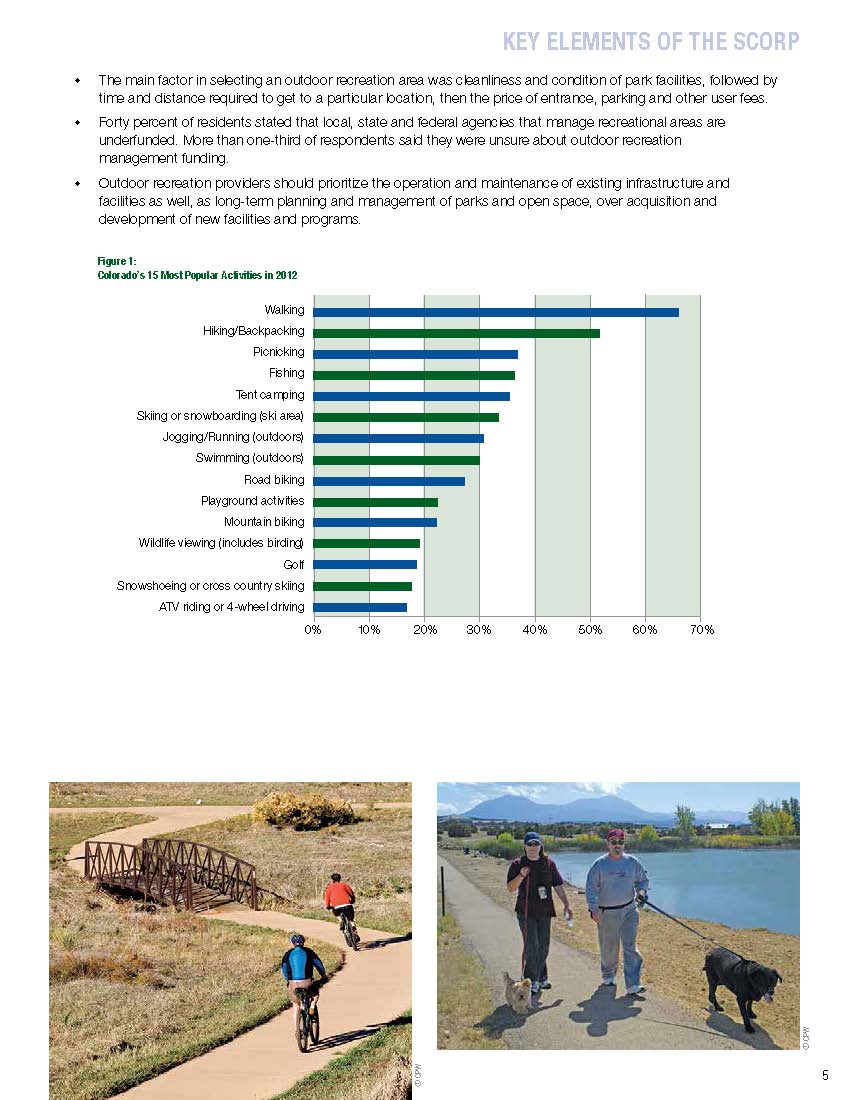

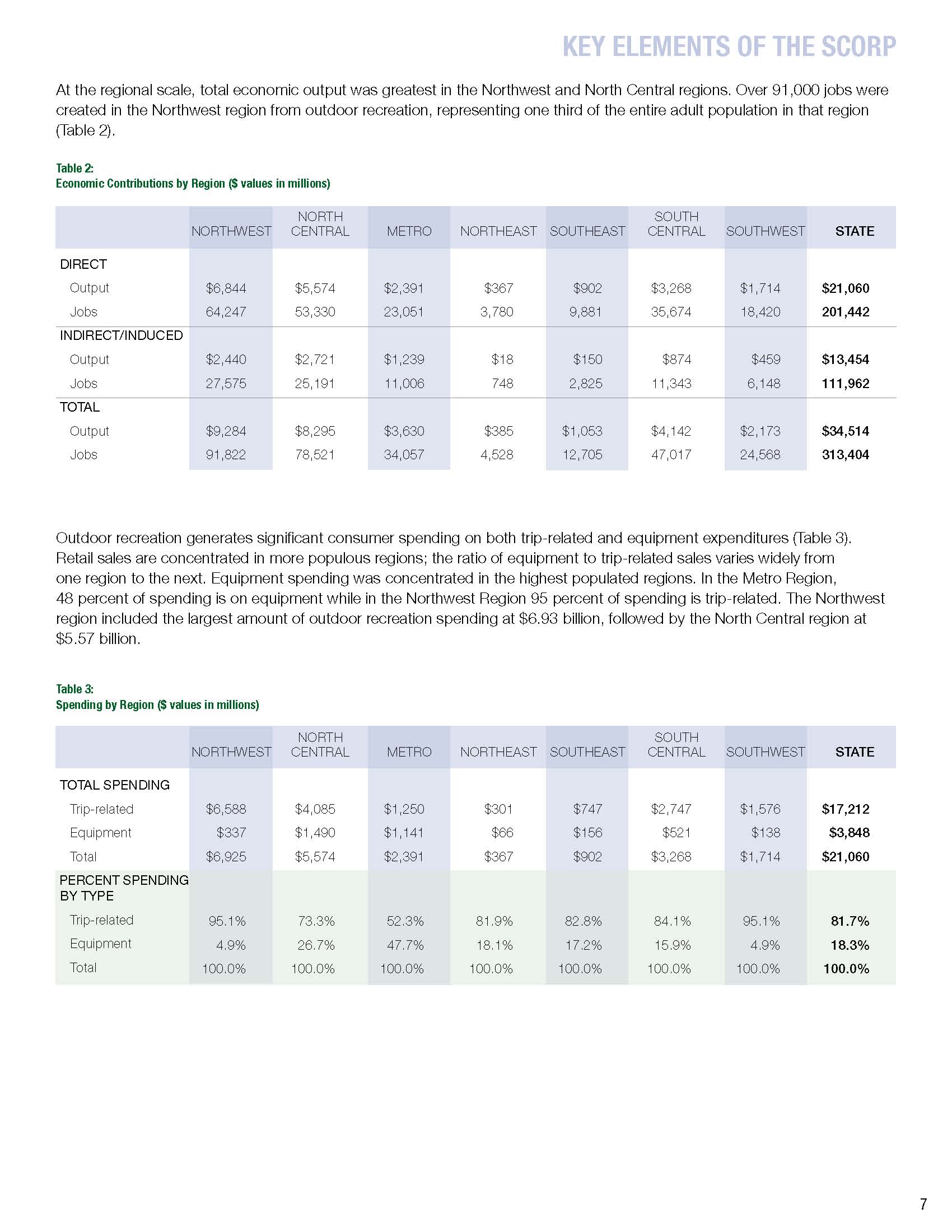

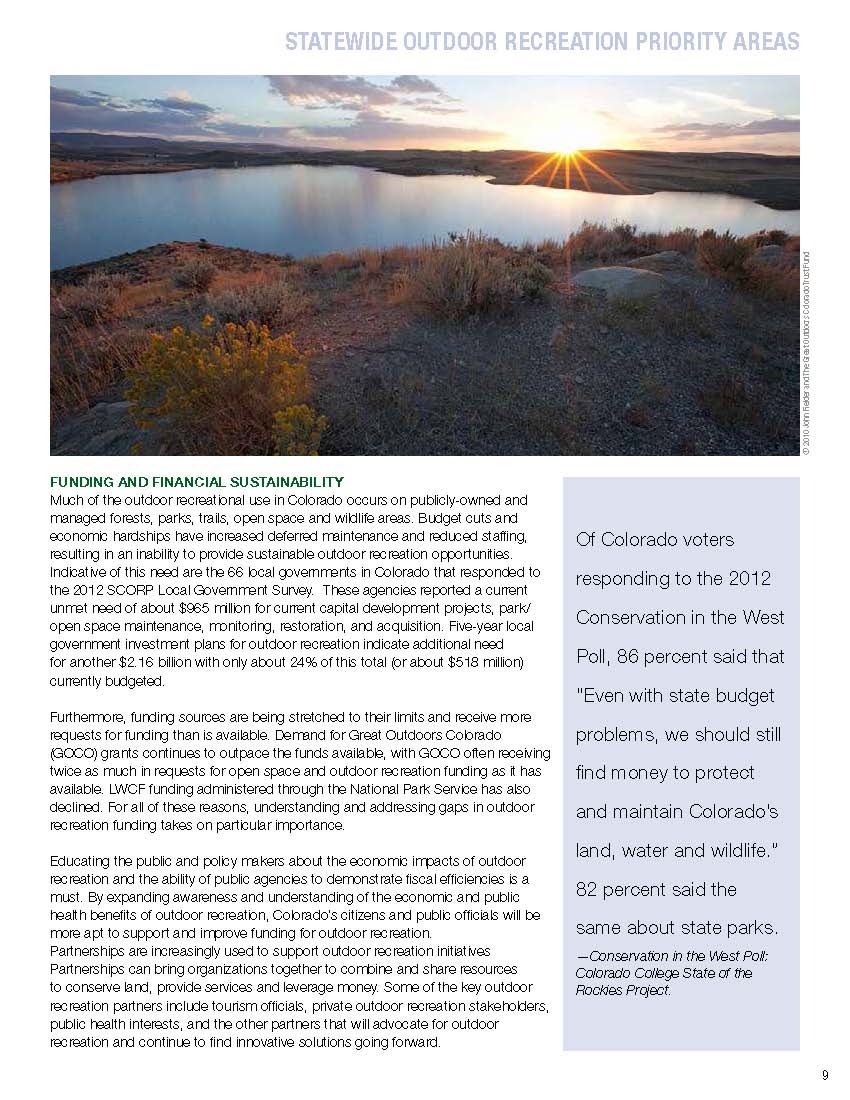





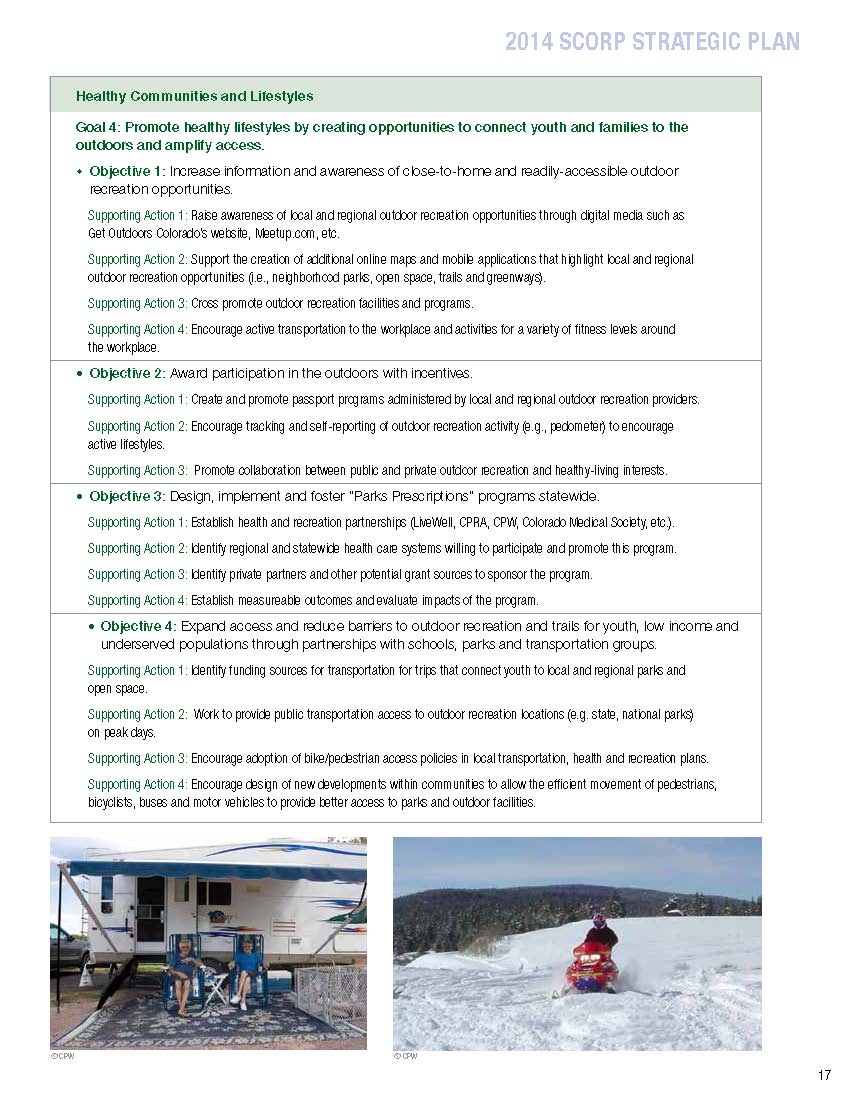



Colorado’s SCORP includes Environmental Education in its plan. Thanks to the CAEE for moving EE into the forefront of education for Colorado’s Youth.
Executive Summary and the whole SCORP document are available on the public website. Check this out!
• Objective 3: Enhance knowledge and appreciation of the outdoors and outdoor skills.
Supporting Action 1: Collaborate with the Colorado Environmental Education Leadership Council and implementation of the Colorado
Environmental Education Plan to enlist the support of schools to educate children about outdoor recreation and conservation ethics.
Provide resources for teachers on how to better integrate into their curriculum and resources for programs on how to work with schools.
What do you think? Leave a comment.
If you like this let your friends know or post it on FB, Twitter or LinkedIn
Copyright 2014 Recreation Law (720) Edit Law
Email: Rec-law@recreation-law.com
Google+: +Recreation
Twitter: RecreationLaw
Facebook: Rec.Law.Now
Facebook Page: Outdoor Recreation & Adventure Travel Law
Mobile Site: http://m.recreation-law.com
By Recreation Law Rec-law@recreation-law.com James H. Moss #Authorrank
<rel=”author” link=” https://plus.google.com/u/0/b/112453188060350225356/” />
#RecreationLaw, #Recreation-Law.com, #OutdoorLaw, #OutdoorRecreationLaw, #AdventureTravelLaw, #law, #TravelLaw, #JimMoss, #JamesHMoss, #Tourism, #AdventureTourism, #Rec-Law, #RiskManagement, #CyclingLaw, #BicyclingLaw, #FitnessLaw, #Recreation-Law.com, #Backpacking, #Hiking, #Mountaineering, #IceClimbing, #RockClimbing, #RopesCourse, #ChallengeCourse, #SummerCamp, #Camps, #YouthCamps, #Skiing, #Ski Areas, #Negligence, #Snowboarding, #RecreationLaw, #@RecreationLaw, #Cycling.Law, #SkiLaw, #Outside.Law, #Recreation.Law, #RecreationLaw.com, #OutdoorLaw, #RecreationLaw, #OutdoorRecreationLaw, #AdventureTravelLaw, #Law, #TravelLaw, #JimMoss, #JamesHMoss, #AttorneyatLaw, #Tourism, #AdventureTourism, #RecLaw, #RecLawBlog, #RecreationLawBlog, #RiskManagement, #HumanPowered, #HumanPoweredRecreation,# CyclingLaw, #BicyclingLaw, #FitnessLaw, #RecreationLaw.com, #Backpacking, #Hiking, #Mountaineering, #IceClimbing, #RockClimbing, #RopesCourse, #ChallengeCourse, #SummerCamp, #Camps, #YouthCamps, #Skiing, #Ski Areas, #Negligence, #Snowboarding, sport and recreation laws, ski law, cycling law, Colorado law, law for recreation and sport managers, bicycling and the law, cycling and the law, ski helmet law, skiers code, skiing accidents, Recreation Lawyer, Ski Lawyer, Paddlesports Lawyer, Cycling Lawyer, Recreational Lawyer, Fitness Lawyer, Rec Lawyer, Challenge Course Lawyer, Ropes Course Lawyer, Zip Line Lawyer, Rock Climbing Lawyer, Adventure Travel Lawyer, Outside Lawyer, Recreation Lawyer, Ski Lawyer, Paddlesports Lawyer, Cycling Lawyer, #RecreationalLawyer, #FitnessLawyer, #RecLawyer, #ChallengeCourseLawyer, #RopesCourseLawyer, #ZipLineLawyer, #RockClimbingLawyer, #AdventureTravelLawyer, #OutsideLawyer, Good Samaritan, Samaritan, First Aid, Environmental Education, EE, SCORP, CAEE, Colorado Association of Environmental Educators, Colorado Environmental Education Leadership Council, State Comprehensive Outdoor Recreation Plan,
WordPress Tags: Colorado,State,Comprehensive,Outdoor,Recreation,Plan,Executive,Summary,SCORP,Environmental,Education,Thanks,CAEE,forefront,Youth,Check,Objective,Enhance,knowledge,skills,Action,Collaborate,Leadership,Council,implementation,conservation,ethics,Provide,resources,teachers,curriculum,Leave,Twitter,LinkedIn,Edit,Email,Google,RecreationLaw,Facebook,Page,Adventure,Travel,Blog,Mobile,Site,James,Moss,Authorrank,author,OutdoorLaw,OutdoorRecreationLaw,AdventureTravelLaw,TravelLaw,JimMoss,JamesHMoss,Tourism,AdventureTourism,RiskManagement,CyclingLaw,BicyclingLaw,FitnessLaw,RopesCourse,ChallengeCourse,SummerCamp,Camps,YouthCamps,Areas,Negligence,SkiLaw,Outside,AttorneyatLaw,RecLaw,RecLawBlog,RecreationLawBlog,HumanPoweredRecreation,managers,helmet,accidents,Lawyer,Paddlesports,Recreational,Challenge,Course,Ropes,Line,Rock,RecreationalLawyer,FitnessLawyer,RecLawyer,ChallengeCourseLawyer,RopesCourseLawyer,ZipLineLawyer,RockClimbingLawyer,AdventureTravelLawyer,OutsideLawyer,Samaritan,Association,Educators
American Alpine Club library contains one of the Top Ten Collections in Library collections in Colorado
Posted: January 16, 2014 Filed under: Colorado | Tags: American Alpine Club, American Alpine Club Library, American Mountaineering Center, Colorado, Colorado Railroad Museum, Denver Museum of Nature & Science, Henry Hall Library Leave a commentYou can listen to Colorado Public Radio Colorado Matters talk about the collection today, Thursday, January 16, 2014 at 10:30 AM here, go to the bottom of the page and click on News, turn your speakers on.
The AAC library is a special place for climbers, mountaineers and Coloradans. It should be on any visitors to do list if you are heading to this great state.
Colorado’s Top 10 Significant Artifacts selected by public vote Denver, Colorado,
Winners of the 2013 Colorado’s Top 10 Significant Artifacts campaign was announced today.
Colorado Connecting to Collections sponsors the Top 10 Significant Artifacts campaign “to honor and recognize Colorado’s cultural heritage organizations that care and preserve documents, films, diaries, books and other artifacts.
Each item tells a story and collectively, represent the diverse history of Colorado.” The general public voted on the Top 10 and a committee of well-‐known historians, museum directors, archivists and librarians selected 17 additional artifacts as campaign Honoree’s.
To view all finalists, honorees and the stories behind each, go to http://collectioncare.auraria.edu and click Read More at the bottom of the home page.
COLORADO’S 2013 TOP 10 SIGNIFICANT ARTIFACTS ARE
1. Albert Ellingwood’s journal and scrapbook: American Alpine Club Library, American Mountaineering Center, Golden
2. Denver & Rio Grande Western 346 steam locomotive: Colorado Railroad Museum, Golden
3. Kit Carson’s will: Pueblo City-‐County Library District
4. Yucca woven sandal from Franktown Cave: University of Denver Museum of Anthropology
5. 1860 Archbishop Lamy / Joseph Machebeuf documents: Archdiocese of Denver, Archives
6. Colorado’s last know grizzly bear, the Wiseman Grizzly: Denver Museum of Nature & Science
7. Ute boy’s cradleboard: Ute Pass Historical Society, Woodland Park
8. Film depicting discovery of 1st projectile point in mammoth ribs in Colorado: Denver Museum of Nature and Science
9. Ute Indian Leader Ouray’s pipe and pipe bag: History Colorado, Denver
10. Colorado River Compact Agreement: Water Resources Archive, Colorado State University, Fort Collins
11. The Colorado Connecting to Collections initiative is made possible by a grant from the U.S. Institute of Museum and Library Services (IMLS).
The grant operates under the direction of the Center for Colorado & the West at Auraria Library and is a collaborative partnership with the Colorado Wyoming Association of Museums (CWAM), the Society of Rocky Mountain Archivists (SRMA), the Colorado State Library (CSL) and History Colorado.
Too understand a little more why the Albert Ellingwood’s Journals are so important go to: Albert Ellingwood’s Journal and Scrapbook.
What do you think? Leave a comment.
If you like this let your friends know or post it on FB, Twitter or LinkedIn
Copyright 2013 Recreation Law (720) Edit Law
Email: Rec-law@recreation-law.com
Google+: +Recreation
Twitter: RecreationLaw
Facebook: Rec.Law.Now
Facebook Page: Outdoor Recreation & Adventure Travel Law
Mobile Site: http://m.recreation-law.com
By Recreation Law Rec-law@recreation-law.com James H. Moss #Authorrank
<rel=”author” link=” https://plus.google.com/u/0/b/112453188060350225356/” />
#RecreationLaw, #Recreation-Law.com, #OutdoorLaw, #OutdoorRecreationLaw, #AdventureTravelLaw, #law, #TravelLaw, #JimMoss, #JamesHMoss, #Tourism, #AdventureTourism, #Rec-Law, #RiskManagement, #CyclingLaw, #BicyclingLaw, #FitnessLaw, #Recreation-Law.com, #Backpacking, #Hiking, #Mountaineering, #IceClimbing, #RockClimbing, #RopesCourse, #ChallengeCourse, #SummerCamp, #Camps, #YouthCamps, #Skiing, #Ski Areas, #Negligence, #Snowboarding, #RecreationLaw, #@RecreationLaw, #Cycling.Law, #SkiLaw, #Outside.Law, #Recreation.Law, #RecreationLaw.com, #OutdoorLaw, #RecreationLaw, #OutdoorRecreationLaw, #AdventureTravelLaw, #Law, #TravelLaw, #JimMoss, #JamesHMoss, #AttorneyatLaw, #Tourism, #AdventureTourism, #RecLaw, #RecLawBlog, #RecreationLawBlog, #RiskManagement, #HumanPowered, #HumanPoweredRecreation,# CyclingLaw, #BicyclingLaw, #FitnessLaw, #RecreationLaw.com, #Backpacking, #Hiking, #Mountaineering, #IceClimbing, #RockClimbing, #RopesCourse, #ChallengeCourse, #SummerCamp, #Camps, #YouthCamps, #Skiing, #Ski Areas, #Negligence, #Snowboarding, sport and recreation laws, ski law, cycling law, Colorado law, law for recreation and sport managers, bicycling and the law, cycling and the law, ski helmet law, skiers code, skiing accidents, Recreation Lawyer, Ski Lawyer, Paddlesports Lawyer, Cycling Lawyer, Recreational Lawyer, Fitness Lawyer, Rec Lawyer, Challenge Course Lawyer, Ropes Course Lawyer, Zip Line Lawyer, Rock Climbing Lawyer, Adventure Travel Lawyer, Outside Lawyer, Recreation Lawyer, Ski Lawyer, Paddlesports Lawyer, Cycling Lawyer, #RecreationalLawyer, #FitnessLawyer, #RecLawyer, #ChallengeCourseLawyer, #RopesCourseLawyer, #ZipLineLawyer, #RockClimbingLawyer, #AdventureTravelLawyer, #OutsideLawyer, Good Samaritan, Samaritan, First Aid, American Alpine Club, Henry Hall Library, American Alpine Club Library, Colorado, American Mountaineering Center,
WordPress Tags: American,Alpine,Club,library,Collections,Colorado,climbers,mountaineers,Coloradoans,visitors,Significant,Artifacts,Denver,Winners,heritage,diaries,item,history,committee,museum,directors,Honoree,finalists,Read,Albert,Ellingwood,journal,scrapbook,Center,Golden,Grande,Western,steam,locomotive,Railroad,Carson,Pueblo,District,Yucca,Franktown,Cave,Anthropology,Archbishop,Lamy,Joseph,Machebeuf,Archdiocese,Wiseman,Nature,Science,Pass,Historical,Woodland,Park,Film,discovery,projectile,Indian,Leader,Ouray,River,Compact,Agreement,Water,Resources,Archive,State,Fort,Collins,initiative,Institute,Services,IMLS,direction,West,Auraria,partnership,Association,Museums,CWAM,Rocky,Mountain,Archivists,SRMA,Leave,Twitter,LinkedIn,Recreation,Edit,Email,Google,RecreationLaw,Facebook,Page,Outdoor,Adventure,Travel,Blog,Mobile,Site,James,Moss,Authorrank,author,OutdoorLaw,OutdoorRecreationLaw,AdventureTravelLaw,TravelLaw,JimMoss,JamesHMoss,Tourism,AdventureTourism,RiskManagement,CyclingLaw,BicyclingLaw,FitnessLaw,RopesCourse,ChallengeCourse,SummerCamp,Camps,YouthCamps,Areas,Negligence,SkiLaw,Outside,AttorneyatLaw,RecLaw,RecLawBlog,RecreationLawBlog,HumanPoweredRecreation,managers,helmet,accidents,Lawyer,Paddlesports,Recreational,Challenge,Course,Ropes,Line,Rock,RecreationalLawyer,FitnessLawyer,RecLawyer,ChallengeCourseLawyer,RopesCourseLawyer,ZipLineLawyer,RockClimbingLawyer,AdventureTravelLawyer,OutsideLawyer,Samaritan,Henry,Hall

Colorado Ski Country USA brings back the 5th Grade Beginner Ski & Snowboard Lesson
Posted: December 19, 2013 Filed under: Colorado, Ski Area | Tags: skiing, snowboarding Leave a commentColorado Ski Country USA’s First Class Program Kicks off in January
Complimentary Beginner Ski or Snowboard Lesson for Never-ever 5th Graders Returns
 Colorado Ski Country USA (CSCUSA) announced the return of the complimentary lesson component to its popular 5th Grade Passport program: First Class. Launched in 2010, First Class provides one free beginner ski or snowboard lesson, including rental equipment, for 5th Grade Passport holders who are new to both the sports of skiing and snowboarding. These lessons, in coordination with Learn to Ski and Snowboard Month, are provided at CSCUSA resorts during the month of January.
Detailed program information about First Class has been provided to parents of 5th graders who are currently signed up for the Colorado Ski Country 5th Grade Passport, including which of the 17 participating Colorado Ski Country USA member resorts parents can choose from for their child to have their introductory experience on snow.
“Skiing and snowboarding are Colorado’s signature sports, and we want to ensure that every child in Colorado has the opportunity to participate in our great winter pastime,” explained Melanie Mills, CSCUSA’s president and CEO. “The First Class program is so valuable for kids and parents alike because it makes that first ever day on the mountain a safe and fun experience. Proper equipment and professional instruction are paramount for a kid’s first day on the slopes, and First Class assures parents that their “never-evers” are introduced into the sport in a structured, enjoyable environment.”
The Colorado Ski Country USA 5th Grade Passport program provides three free lift tickets at each participating CSCUSA member resort to the state’s 5th graders. The 6th Grade Passport program provides four lift tickets at the same resorts for $99 to the state’s 6th graders.
More information on 2013-14 5th and 6th Grade Passports and First Class is available at http://www.coloradoski.com/passport or by calling 303-866-9707.
What do you think? Leave a comment.
If you like this let your friends know or post it on FB, Twitter or LinkedIn
Copyright 2013 Recreation Law (720) Edit Law
Email: Rec-law
Twitter: RecreationLaw
Facebook: Rec.Law.Now
Facebook Page: Outdoor Recreation & Adventure Travel Law
Blog: www.recreation-law.com
Mobile Site: http://m.recreation-law.com
By Recreation Law Rec-law James H. Moss #Authorrank
<rel=”author” link=” https://plus.google.com/u/0/b/112453188060350225356/” />
#RecreationLaw, #Recreation-Law.com, #OutdoorLaw, #OutdoorRecreationLaw, #AdventureTravelLaw, #law, #TravelLaw, #JimMoss, #JamesHMoss, #Tourism, #AdventureTourism, #Rec-Law, #RiskManagement, #CyclingLaw, #BicyclingLaw, #FitnessLaw, #Recreation-Law.com, #Backpacking, #Hiking, #Mountaineering, #IceClimbing, #RockClimbing, #RopesCourse, #ChallengeCourse, #SummerCamp, #Camps, #YouthCamps, #Skiing, #Ski Areas, #Negligence, #Snowboarding, #RecreationLaw, #@RecreationLaw, #Cycling.Law, #SkiLaw, #Outside.Law, #Recreation.Law, #RecreationLaw.com, #OutdoorLaw, #RecreationLaw, #OutdoorRecreationLaw, #AdventureTravelLaw, #Law, #TravelLaw, #JimMoss, #JamesHMoss, #AttorneyatLaw, #Tourism, #AdventureTourism, #RecLaw, #RecLawBlog, #RecreationLawBlog, #RiskManagement, #HumanPowered, #HumanPoweredRecreation,# CyclingLaw, #BicyclingLaw, #FitnessLaw, #RecreationLaw.com, #Backpacking, #Hiking, #Mountaineering, #IceClimbing, #RockClimbing, #RopesCourse, #ChallengeCourse, #SummerCamp, #Camps, #YouthCamps, #Skiing, #Ski Areas, #Negligence, #Snowboarding, sport and recreation laws, ski law, cycling law, Colorado law, law for recreation and sport managers, bicycling and the law, cycling and the law, ski helmet law, skiers code, skiing accidents, Recreation Lawyer, Ski Lawyer, Paddlesports Lawyer, Cycling Lawyer, Recreational Lawyer, Fitness Lawyer, Rec Lawyer, Challenge Course Lawyer, Ropes Course Lawyer, Zip Line Lawyer, Rock Climbing Lawyer, Adventure Travel Lawyer, Outside Lawyer, Recreation Lawyer, Ski Lawyer, Paddlesports Lawyer, Cycling Lawyer, #RecreationalLawyer, #FitnessLawyer, #RecLawyer, #ChallengeCourseLawyer, #RopesCourseLawyer, #ZipLineLawyer, #RockClimbingLawyer, #AdventureTravelLawyer, #OutsideLawyer, Good Samaritan, Samaritan, First Aid, Skiing, Ski Area, Snowboarding, Colorado,
Giebink v. Fischer, 709 F. Supp. 1012; 1989 U.S. Dist. LEXIS 7791
Posted: December 9, 2013 Filed under: Colorado, Legal Case, Ski Area, Skiing / Snow Boarding | Tags: Colorado Ski Safety Act, Premises Liability Act, Safety Act, ski lesson, Ski Safety Act, Snowmass Ski Area Leave a commentTo Read an Analysis of this decision see
Attractive Nuisance cases are rare, even rarer when it involves a ski area and ski lessons, let alone a collision case
Giebink v. Fischer, 709 F. Supp. 1012; 1989 U.S. Dist. LEXIS 7791
James C. Giebink and Roxanne Johnson-Giebink, as parents and natural guardians of Michael Giebink, a minor; James C. Giebink, individually and Roxanne Johnson Giebink, individually, Plaintiffs, v. Robert Fischer, as parent and natural guardian of Kevin Fischer, a minor; Robert Fischer, an individual and Aspen Skiing Corporation, a Colorado corporation, aka Aspen Skiing Company, and Jennifer Catherine Lang, Defendants
Civil Action No. 88-A-766
UNITED STATES DISTRICT COURT FOR THE DISTRICT OF COLORADO
709 F. Supp. 1012; 1989 U.S. Dist. LEXIS 7791
March 22, 1989, Decided
March 22, 1989, Filed
COUNSEL: [**1] Scott R. Larson, Esq., Scott R. Larson, P.C., Denver, Colorado, Attorney for Plaintiffs.
Thomas E. Hames, Esq., Inman, Erickson & Flynn, P.C., Denver, Colorado, Attorney for Defendants Fischers.
Paul D. Nelson, Esq., Hancock, Rothert & Bunshoft, San Francisco, California, Scott S. Barker, Esq., Mary D. Metzger, Esq., Perry L. Glantz, Esq., Holland & Hart, Englewood, Colorado, Attorneys for Defendants Aspen Skiing Co. and Jennifer Catherine Lang.
JUDGES: Alfred A. Arraj, United States District Judge.
OPINION BY: ARRAJ
OPINION
[*1013] MEMORANDUM OPINION AND ORDER ON MOTION TO DISMISS
ALFRED A. ARRAJ, UNITED STATES DISTRICT JUDGE.
This matter is before the court on defendants Aspen Skiing Company’s (“ASC”) and Jennifer Catherine Lang’s (“Lang”) Motion to dismiss the Third, Fifth, Sixth, Seventh and Portions of the Fourth Claim For Relief Contained in Plaintiffs’ Second Amended Complaint. This is the second motion to dismiss filed in this case.
In order to understand the procedural posture of this motion, it is helpful to first set out the factual events upon which plaintiffs’ claims arose. According to plaintiffs, defendant Kevin Fischer, minor son of defendant Robert Fischer, collided with plaintiff Michael Giebink (“Michael”) in a skiing accident at Snowmass Ski Area on or about March 29, 1988. As a result, Michael was seriously injured. At [**2] the time of the accident it is alleged that Michael was an invited guest and customer at Snowmass Mountain Resort which is owned by ASC.
Plaintiffs’ Third Claim in its Second Amended Complaint is based upon ASC’s alleged negligent maintenance of the premises. Plaintiffs’ Fourth Claim is apparently pled under C.R.S. 13-21-115, alleging that ASC “deliberately failed to exercise reasonable care to protect persons such as the minor Plaintiff, Michael Giebink, against dangers which were not ordinarily present on the aforesaid property despite the fact that Defendant actually knew or should have known of said dangers.” Second Amended Complaint para. 3 at 4. Plaintiffs’ Seventh Claim is also based upon the condition [*1014] of ASC’s premises under an attractive nuisance theory.
Plaintiffs further claim that Michael was enrolled in the Snowmass Ski School at the time of his accident. Defendant Jennifer Lang, an employee of ASC, was the skiing instructor. Plaintiffs’ Fifth Claim asserts that ASC is liable for the negligent supervision of Michael by its agents and/or employees during the course of Michael’s ski lesson. Plaintiffs’ Sixth Claim is against Lang, individually, for negligent supervision [**3] and instruction of Michael while enrolled in the ski school.
In its first motion to dismiss, defendant ASC moved to dismiss those of plaintiffs’ claims which were pled under theories of common law negligence. Defendant argued that C.R.S. § 13-21-115, the Colorado premises liability statute, abrogated common law claims and that the statute was plaintiffs’ exclusive means of remedy. Plaintiffs opposed dismissal on several grounds, including their contention that C.R.S. § 13-21-115 was unconstitutional. At a hearing held on July 15, 1988, this court denied ASC’s first motion without prejudice. Certification of the constitutional questions raised by plaintiffs was made to the Colorado Supreme Court on November 1, 1988. The Supreme Court declined to answer the certified questions on December 12, 1988.
The present motion to dismiss was filed January 24, 1989. In it, defendants move for dismissal of the Third, Fifth, Sixth and Seventh Claims and portions of the Fourth claim as contained in plaintiffs’ Second Amended Complaint. Defendants renew their argument that C.R.S. § 13-21-115 is plaintiffs’ exclusive remedy. They conclude that because § 13-21-115 abrogates common law claims against [**4] landowners, that plaintiffs’ Third, Fifth, and Sixth Claims, founded on common law negligence theories, fail to state a claim upon which relief can be granted. Defendants also urge this court to dismiss the Seventh Claim because it is admitted that Michael was not a trespasser, and, according to defendants, the doctrine of attractive nuisance only applies to trespassers. Finally, defendants argue that the Fourth Claim should be dismissed to the extent that, contrary to § 13-21-115, the complaint implies that liability may be imposed against a landowner for failure to exercise reasonable care to protect an invited plaintiff against dangers of which it “should have known.”
ANALYSIS
I) “Conflict” between the Colorado Ski Safety Act and Premises Liability Statute.
It is plaintiffs’ position that the premises liability statute, C.R.S. § 13-21-115, does not apply to this case involving a skiing accident because the Colorado Ski Safety Act (“Ski Safety Act”), C.R.S. §§ 33-44-101 to -111, is a specific statute which applies to ski areas and prevails over the general premises liability statute which applies to “any civil action brought against a landowner.” § 13-21-115(2). Plaintiffs contend [**5] that the Ski Safety Act authorizes negligence actions, and to the extent that § 13-21-115 abrogates common law negligence claims there is a conflict. Consequently, plaintiffs conclude that the specific statute prevails and that their negligence claims are viable under the Ski Safety Act.
My analysis begins with [HN1] C.R.S. § 2-4-205, which provides in full:
“If a general provision conflicts with a special or local provision, it shall be construed, if possible, so that effect is given to both. If the conflict between the provisions is irreconcilable, the special or local provision prevails as an exception to the general provision, unless the general provision is the later adoption and the manifest intent is that the general provision prevail.”
It is the court’s duty to construe statutes to avoid inconsistency if it is reasonably possible. Marshall v. City of Golden, 147 Colo. 521, 363 P.2d 650, 652 (1961). In the instant case the two statutes may reasonably be interpreted to avoid conflict. They apply to different activities and conditions.
The Ski Safety Act has an express purpose “to further define the legal responsibilities [*1015] of ski area operators 1 and their agents and employees; to define [**6] the responsibilities of skiers using such ski areas; and to define the rights and liabilities existing between the skier and the ski area operator and between skiers.” C.R.S. § 33-44-102. [HN2] The only responsibilities imposed upon operators by the Ski Safety Act relate to posting signs, §§ 33-44-106, 33-44-107, and providing lighting and other conspicuous markings for snow-grooming vehicles and snowmobiles. C.R.S. § 33-44-108. “A violation by a ski area operator of any requirement of this article or any rule or regulation promulgated by the passenger tramway safety board pursuant to section 25-5-710(a), C.R.S., shall, to the extent such violation causes injury to any person or damage to property, constitute negligence on the part of such operator.” C.R.S. § 33-44-104(2). Thus, the duties imposed upon ski operators by the Ski Safety Act, a breach of which constitutes actionable negligence, concern a very limited number of specifically identified activities and conditions.
1 “‘Ski area operator’ means ‘operator’ as defined in section 25-5-702(3), C.R.S., and any person, partnership, corporation, or other commercial entity having operational responsibility for any ski areas, including an agency of this state or a political subdivision thereof.” C.R.S. § 33-44-103(7).
[**7] The Ski Safety Act imposes specific duties upon ski operators as a means of protecting skiers against dangerous conditions that are commonly present at ski areas. See Pizza v. Wolf Creek Ski Development Corp., 711 P.2d 671, 678 (Colo. 1985) (“the legislature has attempted to identify those dangers which can reasonably be eliminated or controlled by the ski area operator.”). In general, it does not protect against dangers arising from conditions or activities which are not ordinarily present at ski areas. 2
2 Conceivably, a conflict could exist between the two statutes, as in a case where a ski operator fails to mark a man-made structure as required by § 33-44-107(7). If the structure was one not ordinarily present at a ski area, a conflict would exist. However, the instant case does not present the court with this situation.
In contrast, [HN3] the premises liability statute imposes liability against all landowners for conditions, or activities conducted on, or circumstances existing on his or her property. C.R.S. § 13-21-115(2). “If the landowner has expressly or impliedly invited the plaintiff onto the real property for the purposes of the landowner, the plaintiff may recover [**8] for damages caused by the landowner’s deliberate failure to exercise reasonable care to protect against dangers which are not ordinarily present on property of the type involved and of which he actually knew.” C.R.S. § 13-21-115(3)(c) (emphasis added). 3 Thus, it is clear that the statutes are directed at two different types of dangerous activities and conditions, ordinary and out of the ordinary.
3 It is the judge’s duty to determine which subsection of § 13-21-115(3) is applicable in each action. § 13-21-115(4). The parties do not dispute that if the premises liability statute does indeed control, that § 13-21-115(3)(c) is the applicable subsection.
In Calvert v. Aspen Skiing Company, 700 F. Supp. 520 (D. Colo. 1988), the court held that the two statutes did conflict and that the specific Ski Safety Act prevailed. Accordingly, the court denied the defendant’s motion to dismiss plaintiff’s negligence claims. The conflict, according to the court, was that the premises liability statute abrogates all common law claims for negligence while the Ski Safety Act does not. Id. at 522. However, the two statutes may be interpreted consistently in light of the different scope [**9] of activities and conditions addressed by each.
It would be contrary to the Legislature’s intent to expose ski operators to greater liability than other landowners. To sustain plaintiffs’ claims founded on negligence would have exactly that effect. The Colorado Supreme Court has addressed at least one of the Legislature’s purposes in enacting the Ski Safety Act, stating:
Indisputably, the ski industry is an important part of the Colorado economy. . . . The legislative history indicates that one of the purposes underlying the [presumption provided in § 33-44-109(2) which imposes a presumption that the [*1016] responsibility for collisions by skiers with any person, natural object, or man-made structure marked in accordance with the Act is solely that of the skier and not the ski area operator] is to reduce the number of frivolous lawsuits and, accordingly, the rapidly rising cost of liability insurance accruing to ski area operators.
Pizza, 711 P.2d at 679 (citation omitted). The Legislature intended to protect ski operators from the increasing burden of litigation by passing the Ski Safety Act. There is no reason to believe that it intended to single out ski operators as a subgroup [**10] of landowners who would be held to a higher standard of care.
While the Ski Safety Act does not abrogate common law causes of action for negligence, neither does it expressly or implicitly create a general negligence action for all injuries sustained at ski areas. In the present case plaintiffs have not alleged any facts that would be actionable as a violation of the specific duties imposed upon ski operators by the Ski Safety Act. Their common law negligence claims, therefore, cannot be sustained under the umbrella of the Act. 4
4 Defendants pose a second argument which leads to the same conclusion. The premises liability statute was adopted subsequent to the Ski Safety Act and contains the “manifest intent” to apply to “any civil action.” C.R.S. § 13-21-115(2) (emphasis added). Accordingly, the premises liability statute, which expressly abrogates common law claims, would prevail even if the two statutes did conflict. C.R.S. § 2-4-205.
II) Premises Liability Statute
I must now consider to what extent the premises liability statute applies to plaintiffs’ claims. The language of the statute appears to embrace a broad range of conditions and activities that exist or are [**11] conducted on a landowner’s property. C.R.S. § 13-21-115(2). However, the court in Geringer v. Wildhorn Ranch, Inc., 706 F. Supp. 1442 (D. Colo. 1988), noted that [HN4] “the statutory classification ‘activities conducted or circumstances existing on such property’ must be read narrowly with careful regard for the intent of the legislature to re-establish common law distinctions in the law of premises liability.” Id. at 1446.
In Geringer, the plaintiff brought a wrongful death action for the death of her husband and son in a drowning accident which occurred at the defendant’s guest ranch. The two drowned during a boating accident involving a peddleboat supplied by the defendant corporation. The court struck plaintiff’s claims founded on the premises liability statute. Following a jury verdict in favor of the plaintiff, the defendants made motions for judgment notwithstanding the verdict, for new trial, and for amended judgment. Defendants contended that they were prejudiced by the trial court’s failure to instruct the jury in accordance with the premises liability statute which provides a more difficult standard for plaintiffs to overcome. Defendants argued that the [**12] premises liability statute was plaintiff’s exclusive remedy. The court disagreed:
Traditionally, the activities for which a defendant is liable as a landowner are inherently related to the land — construction, landscaping or other activities treating the land. . . .
The causation evidence in this case focused on defendants’ maintenance of the peddleboats and on defendants’ knowledge of their condition following purported repairs. The duty litigated in this case was that of a supplier of chattel to provide its user with chattel that was not defective. . . . The statute does not reflect an intention to extend the application of premises liability doctrine to the negligent supply of chattel by a landowner.
Id. at 1446. The distinction between activities “inherently related to the land” and other activities which do not fall within the scope of the premises liability statute logically follows from the court’s conclusion that “the statute does not establish a feudal realm of absolute protection from liability for simple negligence based only on a defendant’s status as a landowner.” [*1017] Id. at 1446. 5
5 To hold otherwise would shield all types of negligent activities from the negligence standard, such as in a case where a doctor negligently treats a patient at his privately owned clinic. This result could not have been intended by the Legislature.
[**13] In the present case plaintiff’s Fifth and Sixth Claims are based upon the alleged negligent supervision of Michael during the course of his skiing instruction. Instructing people in the sport of skiing is not inherently related to the land. Therefore, plaintiffs’ Fifth and Sixth Claims should not be dismissed.
On the other hand, plaintiffs’ Third Claim is founded on defendant’s negligent maintenance of conditions at the ski area. Conditions of property clearly fall within the scope of the premises liability statute. C.R.S. § 13-21-115(2). Therefore, the Third Claim must be dismissed for failure to state a claim upon which relief can be granted.
III) Constitutionality of the Premises Liability Statute
Plaintiffs contest the constitutionality of C.R.S. § 13-21-115 on several grounds. [HN5] Statutes are presumed constitutional and the plaintiff, as the party attacking the statute, must prove the statute unconstitutional beyond a reasonable doubt. Bedford Motors, Inc. v. Harris, 714 P.2d 489, 491 (Colo. 1986).
Plaintiffs argue that the phrase “deliberate failure to exercise reasonable care,” as provided in C.R.S. § 13-21-115(3)(c), is unconstitutionally vague. It is plaintiffs’ position [**14] that the terms “deliberate” and “reasonable care” are contradictory. I disagree.
The premises liability statute is basically an economic regulation, designed to limit the liability of landowners. Therefore, the vagueness standard which must be applied in this case is less exacting than in a case involving a penal statute or laws regulating first amendment rights. Pizza, 711 P.2d at 676.
“Deliberate” is a common word used frequently in every-day experience and readily understood. [HN6] “The probable legislative intent in using such a word may be determined by resorting to a standard dictionary.” Pizza, at 676. Webster’s New World Dictionary (2nd ed. 1972) defines “deliberate” as “carefully thought out and formed, or done on purpose; premeditated; careful in considering, judging, or deciding; not rash or hasty.” [HN7] “Reasonable care” is obviously a common tort standard associated with negligence which requires a degree of care which an ordinarily prudent person would exercise under the same or similar circumstances. See Safeway Stores, Inc. v. Langdon, 187 Colo. 425, 532 P.2d 337, 339 (1975). Thus, in order to incur liability under § 13-21-115(3)(c), a landowner must purposely fail to act [**15] as an ordinarily prudent person would in a like situation.
Plaintiffs also argue that the statute denies them a right to a remedy for injury as guaranteed by [HN8] Article II, Section 6 of the Colorado Constitution. Article II, Section 6 provides:
Courts of justice shall be open to every person, and a speedy remedy afforded for every injury to person, property or character; and right and justice should be administered without sale, denial or delay.
As noted in Goldberg v. Musim, 162 Colo. 461, 427 P.2d 698, 702 (1967), this provision is a mandate to the judiciary, not the legislature. “The power of the legislature to abolish substantive common law rights including those vouch-safed by the common law of England, in order to attain a permissible legislative object, has already been decided by this court. . . .” Id. at 470. Thus, the Legislature’s enactment of § 13-21-115 does not violate the Colorado Constitution.
Next plaintiffs argue that the statute violates [HN9] Article V, Section 25 of the Colorado Constitution which prohibits the general assembly from passing special laws for the benefit of any corporation, association or individuals. The constitutional inhibition against class legislation [**16] arises “when the effect of the law is to prohibit a carrying on of a legitimate business [*1018] or occupation while allowing other businesses or occupations not reasonably to be distinguished from those prohibited to be carried on freely.” Dunbar v. Hoffman, 171 Colo. 481, 468 P.2d 742, 745 (1970). However, a statute is not special when “it is general and uniform in its operation upon all in like situation.” McCarty v. Goldstein, 151 Colo. 154, 376 P.2d 691, 693 (1962). The premises liability statute applies uniformly to all landowners to limit liability for injuries resulting from conditions and activities which are inherently related to ownership of property. It is, therefore, not a special law.
Plaintiffs’ equal protection challenge also fails. [HN10] The statutory classification need only be reasonably related to a legitimate state objective in order to pass constitutional muster because no fundamental right or suspect class is involved. Yarbro v. Hilton Hotels Corp., 655 P.2d 822, 827 (Colo. 1982). In this case the Legislature could have reasonably enacted the premises liability statute as a means of reducing liability of landowners for certain injuries occurring on their property. The Colorado [**17] Supreme Court has recognized that the Legislature has a legitimate interest in protecting the state economy. Pizza, 711 P.2d at 679. Providing limited protection to landowners is reasonably related to that end.
IV) Plaintiffs’ Fourth Claim
Defendants argue that plaintiffs’ Fourth Claim should be dismissed to the extent that it alleges that defendant ASC is liable for failure to exercise reasonable care to protect Michael against dangers of which it “should have known.” 6 Plaintiffs’ Fourth Claim is based on § 13-21-115(3)(c), which, by its express terms, requires actual knowledge. Plaintiffs’ Fourth Claim is dismissed to the extent that it seeks to impose liability for dangers of which ASC should have known.
6 Plaintiffs’ Fourth Claim alleges that ASC is liable because it “deliberately failed to exercise reasonable care to protect persons such as the minor Plaintiff, Michael Giebink, against dangers which were not ordinarily present on the aforesaid property despite the fact that Defendant actually knew or should have known of said dangers.”
V) Attractive Nuisance
Finally, defendants move to dismiss plaintiffs’ Seventh Claim which is founded upon the doctrine of attractive [**18] nuisance, 7 arguing that it only applies to situations involving trespassers, and that according to plaintiffs’ allegations Michael was not a trespasser. 8 In an attempt to strike a reasonable compromise between the conflicting interests between the freedom of land use and the protection of children, courts have recognized the attractive nuisance doctrine. [HN11] The doctrine imposes a higher standard of care on landowners toward children than would otherwise be owed to a trespasser. 9
7 In their Seventh Claim, plaintiffs accuse defendant ASC of maintaining an unreasonably dangerous and hazardous condition in the form of a roll jump. The roll jump is made entirely of earth. Skiers use it to perform aerial maneuvers.
8 The Colorado Legislature clearly provided that attractive nuisance, as it applies to persons under fourteen years of age, is not abrogated by the premises liability statute. C.R.S. § 13-21-115(2).
9 Prior to the Colorado Supreme Court’s decision in Mile High Fence Co. v. Radovich, 175 Colo. 537, 489 P.2d 308 (1971), landowners generally owed no duty to make or keep property safe for trespassers. See Staley v. Security Athletic Association, 152 Colo. 19, 380 P.2d 53, 54 (1963).
[**19] The purpose of the doctrine is to protect children from hazards which tend to attract them onto property. By allowing the doctrine to survive the enactment of the premises liability statute, the Legislature evidenced an intent to give children under the age of fourteen protection beyond that which is now available to other persons. This protection logically should extend to children, regardless of their status as a trespasser, licensee, or invitee. See W. Prosser & W. Keeton, Prosser and Keeton on Torts, § 59 at 402 (5th ed. 1984) (“In any case where the child could recover if he were a trespasser, he can recover at least as well when he is a licensee or an invitee [*1019] on the premises.”); Restatement (Second) of Torts § 343B (1977) (“In any case where a possessor of land would be subject to liability to a child for physical harm caused by a condition on the land if the child were a trespasser, the possessor is subject to liability if the child is a licensee or an invitee.”); State v. Juengel, 15 Ariz. App. 495, 489 P.2d 869, 873 (1971). See also CJI-Civ. 2d 12:6A (Supp. 1988).
However, plaintiffs’ Seventh Claim fails for several other reasons. Plaintiffs’ counsel made [**20] it clear at the March 17, 1989 hearing that it was not Michael that was lured to the accident scene by the roll jump; it was Kevin Fischer, the other youth allegedly involved in the collision, who was drawn to the location by the roll jump. The doctrine of attractive nuisance simply does not apply under these facts.
A second, related argument, also leads me to the conclusion that the doctrine should not be applied in this case. [HN12] The doctrine requires that the object be unnatural and unusual. This limitation protects landowners from liability for conditions which are present on their property of which children should reasonably recognize the associated dangers. See Esquibel v. City and County of Denver, 112 Colo. 546, 151 P.2d 757, 759 (1944) (attractive nuisance doctrine did not apply where child was injured while climbing on automobile bodies piled in an unstable heap). The Esquibel court cited the Restatement of Torts § 339 Comment on Clause (c):
A possessor of land is . . . under a duty to keep so much of his land as he knows to be subject to the trespasses of young children, free from artificial conditions which involve an unreasonable risk of death or serious bodily harm to [**21] them. This does not require him to keep his land free from conditions which even young children are likely to observe and the full extent of the risk involved in which they are likely to realize. The purpose of the duty is to protect children from dangers which they are unlikely to appreciate and not to protect them against harm resulting from their own immature recklessness in the case of known danger. Therefore, even though the condition is one which the possessor should realize to be such that young children are unlikely to realize the full extent of the danger of meddling with it or encountering it, the possessor is not subject to liability to a child who in fact discovers the condition and appreciates the full risk involved therein but none the less chooses to encounter it out of recklessness or bravado.
Other conditions which have been held to be common and obvious include an artificial pond, Phipps v. Mitze, 116 Colo. 288, 180 P.2d 233 (1947), an icy slope used for sledding, Ostroski v. Mount Prospect Shop-Rite, Inc., 94 N.J. Super. 374, 228 A.2d 545 (1967), a sand pile, Knight v. Kaiser Co., 48 Cal. 2d 778, 312 P.2d 1089 (1957), and a steep bluff, Zagar v. Union Pacific R. Co., [**22] 113 Kan. 240, 214 P. 107 (1923).
Defendants in this case had a right to expect youngsters who were actively participating in the sport of skiing to understand the dangers of conditions such as the roll jump. The dangers associated with the roll jump are apparent, not latent. It is not an “unusual condition.” Therefore, the doctrine of attractive nuisance is not available to the plaintiffs.
CONCLUSION
Accordingly,
IT IS ORDERED that plaintiffs’ Third and Seventh Claims be, and the same hereby are, DISMISSED with prejudice.
IT IS FURTHER ORDERED that plaintiffs’ Fourth Claim, to the extent that it seeks to impose liability for dangers of which ASC ‘should have known,’ be, and the same hereby is, DISMISSED with prejudice.
IT IS FURTHER ORDERED that defendants’ motion to dismiss to the extent that it requests dismissal of plaintiffs’ Fifth and Sixth Claims be, and the same hereby is, DENIED.
DATED at Denver, Colorado this 22nd day of March, 1989.
G-YQ06K3L262
http://www.recreation-law.com
WordPress Tags: Giebink,Fischer,Supp,Dist,LEXIS,James,Roxanne,Johnson,parents,guardians,Michael,Plaintiffs,Robert,guardian,Kevin,Aspen,Corporation,Colorado,Company,Jennifer,Catherine,Lang,Defendants,Civil,Action,STATES,DISTRICT,COURT,March,COUNSEL,Scott,Larson,Denver,Attorney,Thomas,Hames,Inman,Erickson,Flynn,Fischers,Paul,Nelson,Hancock,Rothert,Bunshoft,Francisco,California,Barker,Mary,Metzger,Perry,Glantz,Holland,Hart,Englewood,Attorneys,JUDGES,Arraj,Judge,OPINION,MEMORANDUM,ORDER,MOTION,DISMISS,Third,Fifth,Sixth,Seventh,Portions,Fourth,Claim,Relief,Second,Complaint,posture,events,defendant,plaintiff,accident,Snowmass,Area,guest,customer,Mountain,Resort,maintenance,premises,dangers,fact,nuisance,theory,School,employee,instructor,supervision,agents,employees,lesson,instruction,theories,negligence,statute,dismissal,contention,Certification,Supreme,November,December,January,Claims,argument,landowners,trespasser,doctrine,trespassers,extent,landowner,failure,ANALYSIS,Conflict,areas,provision,exception,adoption,statutes,inconsistency,Marshall,Golden,Colo,purpose,operators,liabilities,operator,markings,vehicles,violation,requirement,article,regulation,injury,person,Thus,duties,partnership,agency,subdivision,Pizza,Wolf,Creek,Development,Corp,legislature,situation,purposes,emphasis,subsection,Calvert,scope,industry,history,presumption,collisions,accordance,lawsuits,cost,insurance,citation,litigation,subgroup,injuries,umbrella,conclusion,Geringer,Wildhorn,Ranch,classification,distinctions,death,husband,jury,verdict,judgment,construction,causation,knowledge,supplier,user,intention,distinction,realm,protection,status,clinic,Conditions,Bedford,Motors,Harris,laws,amendment,Deliberate,dictionary,Webster,World,Reasonable,tort,degree,Safeway,Stores,Langdon,Section,Constitution,Courts,justice,sale,denial,Goldberg,Musim,judiciary,England,enactment,association,individuals,inhibition,legislation,occupation,occupations,Dunbar,Hoffman,Goldstein,ownership,Yarbro,Hilton,Hotels,Attractive,situations,allegations,freedom,earth,Skiers,Prior,decision,Mile,High,Fence,Radovich,Staley,Athletic,licensee,Prosser,Keeton,Torts,Restatement,possessor,State,Juengel,Ariz,youth,collision,location,limitation,Esquibel,automobile,Comment,Clause,danger,bravado,pond,Phipps,Mitze,Ostroski,Mount,Prospect,Shop,Rite,Super,Kaiser,Zagar,Union,Pacific,youngsters,FURTHER,upon,skier,chattel,invitee,hereby
Colorado Secretary of State has created Webinars for Non-Profits
Posted: December 5, 2013 Filed under: Colorado | Tags: Colorado, Non-Profit, Secretary of State Leave a commentThe first is titled Board Education and Effectiveness
On Wednesday, November 13, 2013, the Colorado Secretary of State’s office announced its release of a free eLearning program for directors of nonprofit corporations, entitled “Board Education and Effectiveness.” The first part of this five-part series is called “Fiduciary Duties of Nonprofit Directors,” and is available online through the Secretary of State’s website.
The board effectiveness training program was developed through a series of meetings between the Secretary of State’s office and nonprofit community leaders. The program is designed in hopes of strengthening nonprofits in Colorado through education. The Secretary of State noted that not all nonprofit directors are clear in understanding their roles and responsibilities, so education is a key component to help instill best practices in these directors.
The remaining four segments will be released in the coming months, and the entire course should be available to the public by mid-2014.
See Secretary of State Releases First Part of Series of Webinars for Nonprofit Directors
What do you think? Leave a comment.
If you like this let your friends know or post it on FB, Twitter or LinkedIn
Copyright 2013 Recreation Law (720) Edit Law
Email: Rec-law@recreation-law.com
Google+: +Recreation
Twitter: RecreationLaw
Facebook: Rec.Law.Now
Facebook Page: Outdoor Recreation & Adventure Travel Law
Mobile Site: http://m.recreation-law.com
By Recreation Law Rec-law@recreation-law.com James H. Moss #Authorrank
<rel=”author” link=” https://plus.google.com/u/0/b/112453188060350225356/” />
#RecreationLaw, #Recreation-Law.com, #OutdoorLaw, #OutdoorRecreationLaw, #AdventureTravelLaw, #law, #TravelLaw, #JimMoss, #JamesHMoss, #Tourism, #AdventureTourism, #Rec-Law, #RiskManagement, #CyclingLaw, #BicyclingLaw, #FitnessLaw, #Recreation-Law.com, #Backpacking, #Hiking, #Mountaineering, #IceClimbing, #RockClimbing, #RopesCourse, #ChallengeCourse, #SummerCamp, #Camps, #YouthCamps, #Skiing, #Ski Areas, #Negligence, #Snowboarding, #RecreationLaw, #@RecreationLaw, #Cycling.Law, #SkiLaw, #Outside.Law, #Recreation.Law, #RecreationLaw.com, #OutdoorLaw, #RecreationLaw, #OutdoorRecreationLaw, #AdventureTravelLaw, #Law, #TravelLaw, #JimMoss, #JamesHMoss, #AttorneyatLaw, #Tourism, #AdventureTourism, #RecLaw, #RecLawBlog, #RecreationLawBlog, #RiskManagement, #HumanPowered, #HumanPoweredRecreation,# CyclingLaw, #BicyclingLaw, #FitnessLaw, #RecreationLaw.com, #Backpacking, #Hiking, #Mountaineering, #IceClimbing, #RockClimbing, #RopesCourse, #ChallengeCourse, #SummerCamp, #Camps, #YouthCamps, #Skiing, #Ski Areas, #Negligence, #Snowboarding, sport and recreation laws, ski law, cycling law, Colorado law, law for recreation and sport managers, bicycling and the law, cycling and the law, ski helmet law, skiers code, skiing accidents, Recreation Lawyer, Ski Lawyer, Paddlesports Lawyer, Cycling Lawyer, Recreational Lawyer, Fitness Lawyer, Rec Lawyer, Challenge Course Lawyer, Ropes Course Lawyer, Zip Line Lawyer, Rock Climbing Lawyer, Adventure Travel Lawyer, Outside Lawyer, Recreation Lawyer, Ski Lawyer, Paddlesports Lawyer, Cycling Lawyer, #RecreationalLawyer, #FitnessLawyer, #RecLawyer, #ChallengeCourseLawyer, #RopesCourseLawyer, #ZipLineLawyer, #RockClimbingLawyer, #AdventureTravelLawyer, #OutsideLawyer, Good Samaritan, Samaritan, First Aid, non-profit, Colorado, Secretary of State,
WordPress Tags: Colorado,Secretary,State,Webinars,Profits,Board,Education,November,office,directors,corporations,series,Fiduciary,Duties,Nonprofit,meetings,leaders,roles,component,segments,Releases,Part,Leave,Twitter,LinkedIn,Recreation,Edit,Email,Google,RecreationLaw,Facebook,Page,Outdoor,Adventure,Travel,Blog,Mobile,Site,James,Moss,Authorrank,author,OutdoorLaw,OutdoorRecreationLaw,AdventureTravelLaw,TravelLaw,JimMoss,JamesHMoss,Tourism,AdventureTourism,RiskManagement,CyclingLaw,BicyclingLaw,FitnessLaw,RopesCourse,ChallengeCourse,SummerCamp,Camps,YouthCamps,Areas,Negligence,SkiLaw,Outside,AttorneyatLaw,RecLaw,RecLawBlog,RecreationLawBlog,HumanPoweredRecreation,managers,helmet,accidents,Lawyer,Paddlesports,Recreational,Challenge,Course,Ropes,Line,Rock,RecreationalLawyer,FitnessLawyer,RecLawyer,ChallengeCourseLawyer,RopesCourseLawyer,ZipLineLawyer,RockClimbingLawyer,AdventureTravelLawyer,OutsideLawyer,Samaritan
Navigate Colorado state parks with new trail maps
Posted: November 22, 2013 Filed under: Colorado, Cycling, Mountain Biking | Tags: Bicycle Colorado, Bike Trails, Colorado State Parks, Parks, Trails Leave a commentColor-coded to make finding the right trail easier.
If you’re a frequent user of trails in Colorado’s state parks, here’s great news: Colorado Parks and Wildlife has created 60 new trail maps that use color coding to show allowable uses on specific trails, indicated by mile marker.
The new maps include information such as elevation, trail length, trail surface and GPS grids, similar to USGS 24k topographic maps.
The free maps are available on the Colorado Parks and Wildlife website.
From:
What do you think? Leave a comment.
If you like this let your friends know or post it on FB, Twitter or LinkedIn
Copyright 2013 Recreation Law (720) Edit Law
Email: Rec-law@recreation-law.com
Google+: +Recreation
Twitter: RecreationLaw
Facebook: Rec.Law.Now
Facebook Page: Outdoor Recreation & Adventure Travel Law
Mobile Site: http://m.recreation-law.com
By Recreation Law Rec-law@recreation-law.com James H. Moss #Authorrank
<rel=”author” link=” https://plus.google.com/u/0/b/112453188060350225356/” />
#RecreationLaw, #Recreation-Law.com, #OutdoorLaw, #OutdoorRecreationLaw, #AdventureTravelLaw, #law, #TravelLaw, #JimMoss, #JamesHMoss, #Tourism, #AdventureTourism, #Rec-Law, #RiskManagement, #CyclingLaw, #BicyclingLaw, #FitnessLaw, #Recreation-Law.com, #Backpacking, #Hiking, #Mountaineering, #IceClimbing, #RockClimbing, #RopesCourse, #ChallengeCourse, #SummerCamp, #Camps, #YouthCamps, #Skiing, #Ski Areas, #Negligence, #Snowboarding, #RecreationLaw, #@RecreationLaw, #Cycling.Law, #SkiLaw, #Outside.Law, #Recreation.Law, #RecreationLaw.com, #OutdoorLaw, #RecreationLaw, #OutdoorRecreationLaw, #AdventureTravelLaw, #Law, #TravelLaw, #JimMoss, #JamesHMoss, #AttorneyatLaw, #Tourism, #AdventureTourism, #RecLaw, #RecLawBlog, #RecreationLawBlog, #RiskManagement, #HumanPowered, #HumanPoweredRecreation,# CyclingLaw, #BicyclingLaw, #FitnessLaw, #RecreationLaw.com, #Backpacking, #Hiking, #Mountaineering, #IceClimbing, #RockClimbing, #RopesCourse, #ChallengeCourse, #SummerCamp, #Camps, #YouthCamps, #Skiing, #Ski Areas, #Negligence, #Snowboarding, sport and recreation laws, ski law, cycling law, Colorado law, law for recreation and sport managers, bicycling and the law, cycling and the law, ski helmet law, skiers code, skiing accidents, Recreation Lawyer, Ski Lawyer, Paddlesports Lawyer, Cycling Lawyer, Recreational Lawyer, Fitness Lawyer, Rec Lawyer, Challenge Course Lawyer, Ropes Course Lawyer, Zip Line Lawyer, Rock Climbing Lawyer, Adventure Travel Lawyer, Outside Lawyer, Recreation Lawyer, Ski Lawyer, Paddlesports Lawyer, Cycling Lawyer, #RecreationalLawyer, #FitnessLawyer, #RecLawyer, #ChallengeCourseLawyer, #RopesCourseLawyer, #ZipLineLawyer, #RockClimbingLawyer, #AdventureTravelLawyer, #OutsideLawyer, Good Samaritan, Samaritan, First Aid, Bicycle Colorado, Trails, Colorado State Parks, Parks, Bike Trails
WordPress Tags: Navigate,Colorado,parks,Color,user,news,Wildlife,marker,information,elevation,length,grids,USGS,From,Leave,Twitter,LinkedIn,Recreation,Edit,Email,Google,RecreationLaw,Facebook,Page,Outdoor,Adventure,Travel,Blog,Mobile,Site,James,Moss,Authorrank,author,OutdoorLaw,OutdoorRecreationLaw,AdventureTravelLaw,TravelLaw,JimMoss,JamesHMoss,Tourism,AdventureTourism,RiskManagement,CyclingLaw,BicyclingLaw,FitnessLaw,RopesCourse,ChallengeCourse,SummerCamp,Camps,YouthCamps,Areas,Negligence,SkiLaw,Outside,AttorneyatLaw,RecLaw,RecLawBlog,RecreationLawBlog,HumanPoweredRecreation,managers,helmet,accidents,Lawyer,Paddlesports,Recreational,Challenge,Course,Ropes,Line,Rock,RecreationalLawyer,FitnessLawyer,RecLawyer,ChallengeCourseLawyer,RopesCourseLawyer,ZipLineLawyer,RockClimbingLawyer,AdventureTravelLawyer,OutsideLawyer,Samaritan,Bicycle,Trails,State,Bike
USA Pro Challenge gets jump on 2014 and announces host cities
Posted: November 5, 2013 Filed under: Colorado, Cycling | Tags: #ProChallenge, Aspen, Bicycle Racing, Breckenridge, Colorado, Colorado Springs, Crested Butte, Cycling, Denver, Gunnison, USA Pro Challenge, Vail, Woodland Park Leave a commentLast day of race to be voted on by viewers and cyclists and Tom Danielson got his wish
The USA Pro Challenge has announced the 2014 race. The host start and finish cities are:
Stage 1: Monday, Aug. 18 – Aspen Circuit Race
Stage 2: Tuesday, Aug. 19 – Aspen to Mt. Crested Butte
Stage 3: Wednesday, Aug. 20 – Gunnison to Monarch Mountain (mountaintop finish)
Stage 4: Thursday, Aug. 21 – Colorado Springs Circuit Race
Stage 5: Friday, Aug. 22 – Woodland Park to Breckenridge
Stage 6: Saturday, Aug. 23 – Vail Individual Time Trial
Stage 7: Sunday, Aug. 24 – ???
The question mark for the final stage is a pretty neat finish idea. The public will get to vote for the final stage they want. The choices are:
Denver Circuit Race similar to the final stage of the 2013 race
Start in Golden (2012 Stage 6 start city) and finish in Denver
Start in Boulder (2012 Stage 6 finish city) and finish in Denver
Start in Boulder and end in Golden
Go here to vote on the race you want. What’s Your Vote For Stage 7? Voting gets you a 15% discount off USA Pro Challenge items in the store.
The course:
The course is similar to the very successful 2013 race. Cities with two things; money and people who want to watch a bicycle race are involved. So Aspen and Vail are probably always going to be on the race circuit. The turn out and support in Gunnison, Crested Butte and Mt Crested Butte is 100%, even though that is only 20% of what Vail turns out. Breckenridge and Colorado Springs are next as far as both and the perennial Denver is becoming the home to great cycling because of work of past volunteers and the USA Pro Challenge.
Merry Christmas Tom Danielson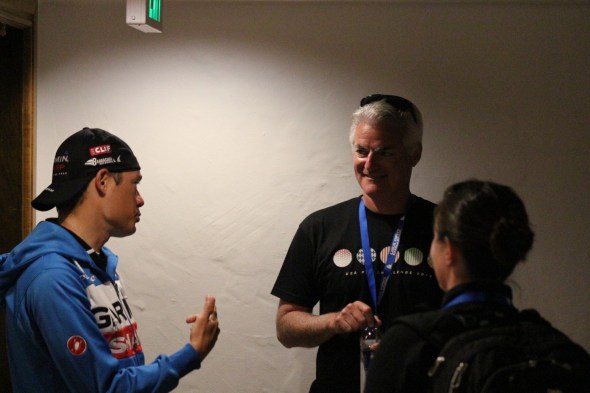
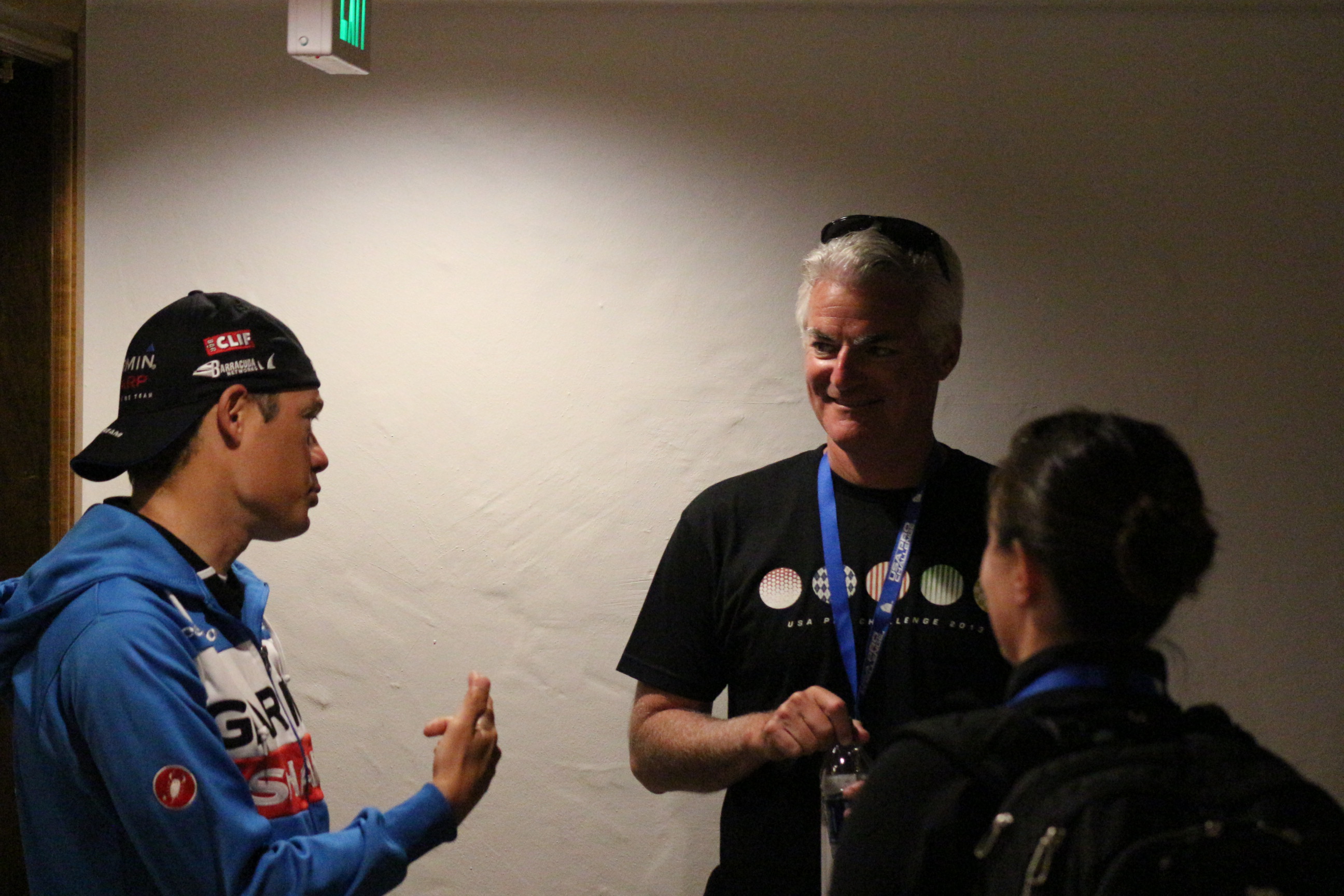
The only location with issues will be the finish on Monarch Mountain. This finish is a long way from Gunnison and close to Chaffee County, but still lacking in numbers of people. However it fulfills team Garmin Sharp’s Tom Danielson’s Christmas wish to have a mountain stage win at the Pro Challenge. Now he better win that stage!
But that will be a great finish no matter how many people. If you are a fan of the tour in Europe everyone watches, this will become a classic just like those finishes. It is a long and grueling climb. Probably only Wolf Creek Pass from the west is steeper. Finding a good place to see the race is going to be tough so get their early to stake out your spot.
Overall the race course looks fantastic so far. Until we see the actual routes we’ll not know the elevation or distances, however with the starts and finishes already picked this is destined to be another great week of cycling in Colorado.
It is going to be a great week of bicycle racing in Colorado.
See Host Cities Announced for 2014 USA Pro Challenge
What do you think? Leave a comment.
If you like this let your friends know or post it on FB, Twitter or LinkedIn
Copyright 2013 Recreation Law (720) Edit Law
Email: Rec-law@recreation-law.com
Google+: +Recreation
Twitter: RecreationLaw
Facebook: Rec.Law.Now
Facebook Page: Outdoor Recreation & Adventure Travel Law
Mobile Site: http://m.recreation-law.com
By Recreation Law Rec-law@recreation-law.com James H. Moss #Authorrank
<rel=”author” link=” https://plus.google.com/u/0/b/112453188060350225356/” />
#RecreationLaw, #Recreation-Law.com, #OutdoorLaw, #OutdoorRecreationLaw, #AdventureTravelLaw, #law, #TravelLaw, #JimMoss, #JamesHMoss, #Tourism, #AdventureTourism, #Rec-Law, #RiskManagement, #CyclingLaw, #BicyclingLaw, #FitnessLaw, #Recreation-Law.com, #Backpacking, #Hiking, #Mountaineering, #IceClimbing, #RockClimbing, #RopesCourse, #ChallengeCourse, #SummerCamp, #Camps, #YouthCamps, #Skiing, #Ski Areas, #Negligence, #Snowboarding, #RecreationLaw, #@RecreationLaw, #Cycling.Law, #SkiLaw, #Outside.Law, #Recreation.Law, #RecreationLaw.com, #OutdoorLaw, #RecreationLaw, #OutdoorRecreationLaw, #AdventureTravelLaw, #Law, #TravelLaw, #JimMoss, #JamesHMoss, #AttorneyatLaw, #Tourism, #AdventureTourism, #RecLaw, #RecLawBlog, #RecreationLawBlog, #RiskManagement, #HumanPowered, #HumanPoweredRecreation,# CyclingLaw, #BicyclingLaw, #FitnessLaw, #RecreationLaw.com, #Backpacking, #Hiking, #Mountaineering, #IceClimbing, #RockClimbing, #RopesCourse, #ChallengeCourse, #SummerCamp, #Camps, #YouthCamps, #Skiing, #Ski Areas, #Negligence, #Snowboarding, sport and recreation laws, ski law, cycling law, Colorado law, law for recreation and sport managers, bicycling and the law, cycling and the law, ski helmet law, skiers code, skiing accidents, Recreation Lawyer, Ski Lawyer, Paddlesports Lawyer, Cycling Lawyer, Recreational Lawyer, Fitness Lawyer, Rec Lawyer, Challenge Course Lawyer, Ropes Course Lawyer, Zip Line Lawyer, Rock Climbing Lawyer, Adventure Travel Lawyer, Outside Lawyer, Recreation Lawyer, Ski Lawyer, Paddlesports Lawyer, Cycling Lawyer, #RecreationalLawyer, #FitnessLawyer, #RecLawyer, #ChallengeCourseLawyer, #RopesCourseLawyer, #ZipLineLawyer, #RockClimbingLawyer, #AdventureTravelLawyer, #OutsideLawyer, Good Samaritan, Samaritan, First Aid, USA Pro Challenge, #ProChallenge, Cycling, Bicycle Racing, Colorado, Aspen, Vail, Breckenridge, Gunnison, Crested Butte, Colorado Springs, Denver, Woodland Park
WordPress Tags: Challenge,cities,Last,viewers,Danielson,Stage,Aspen,Circuit,Race,Butte,Gunnison,Monarch,Mountain,mountaintop,Colorado,Springs,Woodland,Park,Breckenridge,Vail,Individual,Time,Trial,Denver,Start,Golden,Boulder,Vote,items,money,bicycle,location,Chaffee,team,Garmin,Sharp,Christmas,Europe,Wolf,Creek,Pass,Overall,elevation,Host,Leave,Twitter,LinkedIn,Recreation,Edit,Email,Google,RecreationLaw,Facebook,Page,Outdoor,Adventure,Travel,Blog,Mobile,Site,James,Moss,Authorrank,author,OutdoorLaw,OutdoorRecreationLaw,AdventureTravelLaw,TravelLaw,JimMoss,JamesHMoss,Tourism,AdventureTourism,RiskManagement,CyclingLaw,BicyclingLaw,FitnessLaw,RopesCourse,ChallengeCourse,SummerCamp,Camps,YouthCamps,Areas,Negligence,SkiLaw,Outside,AttorneyatLaw,RecLaw,RecLawBlog,RecreationLawBlog,HumanPoweredRecreation,managers,helmet,accidents,Lawyer,Paddlesports,Recreational,Course,Ropes,Line,Rock,RecreationalLawyer,FitnessLawyer,RecLawyer,ChallengeCourseLawyer,RopesCourseLawyer,ZipLineLawyer,RockClimbingLawyer,AdventureTravelLawyer,OutsideLawyer,Samaritan,ProChallenge,week
Are You Familiar with the Dolores River? Then you should be a member of the Dolores River Boating Advocates
Posted: October 18, 2013 Filed under: Colorado, Rivers and Waterways, Whitewater Rafting | Tags: #BLM, Dolores, Dolores River, Fishing, Whitewater Leave a comment
|
|||||||||
|
|||||||||
|
|||||||||
|
|||||||||

 Last month, the long-awaited San Juan National Forest Plan and the Bureau of Land Management’s Tres Rios Resource Management Plan were released. These plans will help guide the management of the Dolores River for the next twenty years and beyond. Local stakeholder efforts will also play into the fate of the Dolores. And while the federal government is “shutdown,” local discussions about Dolores River management continue on subjects as varied as Land Use Codes, the Dolores River Valley Plan, and the Lower Dolores River Implementation, Monitoring and Evaluation Plan (Implementation Plan). This month, we at DRBA are diving deeper into the topic of native fish in the Lower Dolores River, and how enhanced flows can improve their natural habitat while simultaneously providing recreational opportunities. Re-establishing a flow regime that mimics historical hydrography is a vital step towards restoring the natural balance of the river. Colorado Parks and Wildlife Biologist Jim White joined us on The River Trip on KSJD this month to discuss the status of native fish in the Dolores River. Jim’s research and experience illustrates that mindful management of the river is warranted to save native species and habitat. He also pointed out the need to do this in concert with community water allocation needs. These efforts are symbiotic. As a civilization, we need to support healthy rivers, clean water, and strong natural processes as all of that, in turn, supports us. Native fish flows and whitewater rafting flows are also symbiotic in terms of being mutually beneficial, as discussed in the following feature by DRBA Board Member Sam Carter. Management plans offer prime opportunities to actualize a balance for the cultural ecology of the Dolores River watershed. Read on, and join us in our efforts and enthusiasm in protecting the Dolores River. *Links for italicized plans are at the bottom of the page.

 We want to hear from you!
Risk Management is Customer Service
Posted: October 16, 2013 Filed under: Colorado, Ski Area | Tags: Customer service, Guest Services, Loveland Ski Area, Risk Management, skiing Leave a commentLoveland Ski Area 2013
PowerPoint Presentation given to the Loveland Ski Area Management Team in preparation for the 2013-2014 ski season.
Risk Management is Customer Service
What do you think? Leave a comment.
If you like this let your friends know or post it on FB, Twitter or LinkedIn
Copyright 2013 Recreation Law (720) Edit Law
Email: Rec-law@recreation-law.com
Google+: +Recreation
Twitter: RecreationLaw
Facebook: Rec.Law.Now
Facebook Page: Outdoor Recreation & Adventure Travel Law
Mobile Site: http://m.recreation-law.com
By Recreation Law Rec-law@recreation-law.com James H. Moss #Authorrank
<rel=”author” link=” https://plus.google.com/u/0/b/112453188060350225356/” />
#RecreationLaw, #@RecreationLaw, #Cycling.Law #Fitness.Law, #Ski.Law, #Outside.Law, #Recreation.Law, #Recreation-Law.com, #Outdoor Law, #Recreation Law, #Outdoor Recreation Law, #Adventure Travel Law, #law, #Travel Law, #Jim Moss, #James H. Moss, #Attorney at Law, #Tourism, #Adventure Tourism, #Rec-Law, #Rec-Law Blog, #Recreation Law, #Recreation Law Blog, #Risk Management, #Human Powered, #Human Powered Recreation,# Cycling Law, #Bicycling Law, #Fitness Law, #Recreation-Law.com, #Backpacking, #Hiking, #Mountaineering, #Ice Climbing, #Rock Climbing, #Ropes Course, #Challenge Course, #Summer Camp, #Camps, #Youth Camps, #Skiing, #Ski Areas, #Negligence, #Snowboarding, #RecreationLaw, #@RecreationLaw, #Cycling.Law #Fitness.Law, #SkiLaw, #Outside.Law, #Recreation.Law, #RecreationLaw.com, #OutdoorLaw, #RecreationLaw, #OutdoorRecreationLaw, #AdventureTravelLaw, #Law, #TravelLaw, #JimMoss, #JamesHMoss, #AttorneyatLaw, #Tourism, #AdventureTourism, #RecLaw, #RecLawBlog, #RecreationLawBlog, #RiskManagement, #HumanPowered, #HumanPoweredRecreation,# CyclingLaw, #BicyclingLaw, #FitnessLaw, #RecreationLaw.com, #Backpacking, #Hiking, #Mountaineering, #IceClimbing, #RockClimbing, #RopesCourse, #ChallengeCourse, #SummerCamp, #Camps, #YouthCamps, #Skiing, #Ski Areas, #Negligence, #Snowboarding, sport and recreation laws, ski law, cycling law, Colorado law, law for recreation and sport managers, bicycling and the law, cycling and the law, ski helmet law, skiers code, skiing accidents, Recreation Lawyer, Ski Lawyer, Paddlesports Lawyer, Cycling Lawyer, Recreational Lawyer, Fitness Lawyer, Rec Lawyer, Challenge Course Lawyer, Ropes Course Lawyer, Zip Line Lawyer, Rock Climbing Lawyer, Adventure Travel Lawyer, Outside Lawyer, Recreation Lawyer, Ski Lawyer, Paddlesports Lawyer, Cycling Lawyer, #RecreationalLawyer, #FitnessLawyer, #RecLawyer, #ChallengeCourseLawyer, #RopesCourseLawyer, #ZipLineLawyer, #RockClimbingLawyer, #AdventureTravelLawyer, #OutsideLawyer, Good Samaritan, Samaritan, First Aid, EMS, Emergency Medical Systems, Loveland Ski Area, Skiing, Customer Service, Guest Services, Risk Management,
WordPress Tags: Risk,Management,Customer,Service,Loveland,Area,PowerPoint,Presentation,Team,preparation,Leave,Twitter,LinkedIn,Recreation,Edit,Email,Google,RecreationLaw,Facebook,Page,Outdoor,Adventure,Travel,Blog,Mobile,Site,James,Moss,Authorrank,author,Outside,Attorney,Tourism,Human,Rock,Ropes,Course,Challenge,Summer,Camp,Camps,Youth,Areas,Negligence,SkiLaw,OutdoorLaw,OutdoorRecreationLaw,AdventureTravelLaw,TravelLaw,JimMoss,JamesHMoss,AttorneyatLaw,AdventureTourism,RecLaw,RecLawBlog,RecreationLawBlog,RiskManagement,HumanPoweredRecreation,CyclingLaw,BicyclingLaw,FitnessLaw,RopesCourse,ChallengeCourse,SummerCamp,YouthCamps,Colorado,managers,helmet,accidents,Lawyer,Paddlesports,Recreational,Line,RecreationalLawyer,FitnessLawyer,RecLawyer,ChallengeCourseLawyer,RopesCourseLawyer,ZipLineLawyer,RockClimbingLawyer,AdventureTravelLawyer,OutsideLawyer,Samaritan,Emergency,Medical,Systems,Guest,Services
Colorado Inaugurates 2013-14 Ski Season
Posted: October 13, 2013 Filed under: Colorado, Ski Area, Skiing / Snow Boarding | Tags: A Basin, Arapahoe Basin, Colorado, ski area, skiing, snowboarding 1 CommentResort Opening Dates Available.
Arapahoe Basin First Ski Resort in the Nation to Open for the Season
Colorado’s 2013/14 ski season is underway today as Arapahoe Basin opened its chair lift to crowds of animated skiers and snowboarders. At 8:30a.m., with an 18-inch base and lifts running, Arapahoe Basin became the first resort in North America to open for the 2013/14 ski season. Arapahoe Basin’s opening, along with recently announced pass deals and new improvements at Colorado resorts, has skiers and riders eager for the season ahead.
Several resorts in Colorado have taken advantage of cold nighttime temperatures and ideal humidity conditions over the past several weeks. Arapahoe Basin and Loveland Ski Area began making snow on the evening of Friday, September 27, and have made snow or received natural snow most days since then. New snowmaking equipment upgrades, ideal snowmaking conditions, and recent natural snowfall have added to Arapahoe Basin’s base accumulation resulting in the resort’s current packed powder conditions. Today skiers and riders accessed the Black Mountain Express lift and enjoyed skiing on intermediate run High Noon.
For Colorado Ski Country USA (CSCUSA), today’s exciting opening brings optimism for the season ahead. “Seeing skiers and snowboarders taking their first turns of the season is one of the highlights of the year,” said Colorado Ski Country USA President and CEO, Melanie Mills. “Since the first high country snowstorms several weeks ago, we’ve seen the enthusiasm in skiers and snowboarders building towards this day. Thanks to helpful weather patterns and the hard work of Snowmakers and groomers, all of Colorado’s resorts will open with top notch products our guests will enjoy.”
The recent autumn snow storms and early winter season conditions brought a robust crowd to Arapahoe Basin today, signifying skiers and riders are more than ready to enjoy Colorado’s signature winter sports. “Resorts continue to focus on the guest experience, with everything from safety to service,” continued Mills. “Whether the emphasis is on families, learning or value, visitors can expect the same qualities from resorts this year that keep them coming back to Colorado season after season.”
Amid all of the Opening Day celebrations, Colorado’s Governor, John Hickenlooper, congratulated Arapahoe Basin on being first to open saying, “It’s still fall but the 2013/14 ski and snowboard season is open for business in Colorado.” He continued, “Tourism and recreation are some of our most visible and important industries in Colorado, not to mention key economic drivers, and with today’s grand opening we are looking forward to a fun-filled and snowy year on the slopes.”
The race to host Opening Day is one of the highlights of the ski season, a title often held by Colorado’s Arapahoe Basin or Loveland. Both resorts are perched atop the Continental Divide giving them higher elevations, earlier frosts and colder temperatures. This also allows them to stay open long into the spring giving Colorado one of the longest ski seasons in the country.
Below is a current list of scheduled opening dates for CSCUSA member resorts*.
Resort Opening (and closing) Dates
Arapahoe Basin: October 13, 2013 – Early June 2014
Aspen Highlands: December 14, 2013 – April 13, 2014
Aspen Mountain: November 28, 2013 – April 20, 2014
Buttermilk: December 14, 2013 – April 6, 2014
Copper Mountain: November 1, 2013 – April 13, 2014
Crested Butte: November 27, 2013 – April 6, 2014
Eldora: November 22, 2013 – April 13, 2014
Howelsen Hill: November 30, 2013 – March 16, 2014
Loveland: Mid October 2013 – Early May 2014
Monarch Mountain: Mid November 2013 – April 13, 2014
Powderhorn: December 12, 2013 – March 30, 2014
Purgatory: November 29, 2013 – March 30, 2014
Silverton: December 21, 2013 – April 13, 2014
Ski Cooper: December 14, 2013 – April 6, 2014
Ski Granby Ranch: December 11, 2013 – April 6, 2014
Snowmass: November 28, 2013 – April 20, 2014
Steamboat: November 27, 2013 – April 13, 2014
Sunlight: December 6, 2013 – March 30, 2014
Telluride: November 28, 2013 – April 6, 2014
Winter Park: November 13, 2013 – April 20, 2014
Wolf Creek: November 8, 2013 – April 6, 2014
*Dates are subject to change.
What do you think? Leave a comment.
If you like this let your friends know or post it on FB, Twitter or LinkedIn
Copyright 2013 Recreation Law (720) Edit Law
Email: Rec-law@recreation-law.com
Google+: +Recreation
Twitter: RecreationLaw
Facebook: Rec.Law.Now
Facebook Page: Outdoor Recreation & Adventure Travel Law
Mobile Site: http://m.recreation-law.com
By Recreation Law Rec-law@recreation-law.com James H. Moss #Authorrank
<rel=”author” link=” https://plus.google.com/u/0/b/112453188060350225356/” />
#RecreationLaw, #@RecreationLaw, #Cycling.Law #Fitness.Law, #Ski.Law, #Outside.Law, #Recreation.Law, #Recreation-Law.com, #Outdoor Law, #Recreation Law, #Outdoor Recreation Law, #Adventure Travel Law, #law, #Travel Law, #Jim Moss, #James H. Moss, #Attorney at Law, #Tourism, #Adventure Tourism, #Rec-Law, #Rec-Law Blog, #Recreation Law, #Recreation Law Blog, #Risk Management, #Human Powered, #Human Powered Recreation,# Cycling Law, #Bicycling Law, #Fitness Law, #Recreation-Law.com, #Backpacking, #Hiking, #Mountaineering, #Ice Climbing, #Rock Climbing, #Ropes Course, #Challenge Course, #Summer Camp, #Camps, #Youth Camps, #Skiing, #Ski Areas, #Negligence, #Snowboarding, #RecreationLaw, #@RecreationLaw, #Cycling.Law #Fitness.Law, #SkiLaw, #Outside.Law, #Recreation.Law, #RecreationLaw.com, #OutdoorLaw, #RecreationLaw, #OutdoorRecreationLaw, #AdventureTravelLaw, #Law, #TravelLaw, #JimMoss, #JamesHMoss, #AttorneyatLaw, #Tourism, #AdventureTourism, #RecLaw, #RecLawBlog, #RecreationLawBlog, #RiskManagement, #HumanPowered, #HumanPoweredRecreation,# CyclingLaw, #BicyclingLaw, #FitnessLaw, #RecreationLaw.com, #Backpacking, #Hiking, #Mountaineering, #IceClimbing, #RockClimbing, #RopesCourse, #ChallengeCourse, #SummerCamp, #Camps, #YouthCamps, #Skiing, #Ski Areas, #Negligence, #Snowboarding, sport and recreation laws, ski law, cycling law, Colorado law, law for recreation and sport managers, bicycling and the law, cycling and the law, ski helmet law, skiers code, skiing accidents, Recreation Lawyer, Ski Lawyer, Paddlesports Lawyer, Cycling Lawyer, Recreational Lawyer, Fitness Lawyer, Rec Lawyer, Challenge Course Lawyer, Ropes Course Lawyer, Zip Line Lawyer, Rock Climbing Lawyer, Adventure Travel Lawyer, Outside Lawyer, Recreation Lawyer, Ski Lawyer, Paddlesports Lawyer, Cycling Lawyer, #RecreationalLawyer, #FitnessLawyer, #RecLawyer, #ChallengeCourseLawyer, #RopesCourseLawyer, #ZipLineLawyer, #RockClimbingLawyer, #AdventureTravelLawyer, #OutsideLawyer, Good Samaritan, Samaritan, First Aid, EMS, Emergency Medical Systems, Skiing, Snowboarding, Colorado,A-Basin, Arapahoe Basin, Ski Area,
WordPress Tags: Colorado,Inaugurates,Season,Resort,Dates,Available,Arapahoe,Basin,Nation,Open,North,America,improvements,resorts,riders,Several,advantage,temperatures,Loveland,Area,September,equipment,snowfall,accumulation,Black,Mountain,High,Noon,Country,CSCUSA,optimism,President,Melanie,Mills,snowstorms,enthusiasm,Thanks,Snowmakers,products,guests,autumn,winter,signature,guest,Whether,emphasis,families,visitors,Amid,celebrations,Governor,John,Hickenlooper,Tourism,recreation,industries,drivers,Both,Continental,Divide,elevations,frosts,member,October,June,Aspen,Highlands,December,April,November,Buttermilk,Copper,Butte,Eldora,Howelsen,Hill,March,Monarch,Powderhorn,Purgatory,Silverton,Cooper,Granby,Ranch,Snowmass,Steamboat,Telluride,Park,Wolf,Creek,Leave,Twitter,LinkedIn,Edit,Email,Google,RecreationLaw,Facebook,Page,Outdoor,Adventure,Travel,Blog,Mobile,Site,James,Moss,Authorrank,author,Outside,Attorney,Risk,Management,Human,Rock,Ropes,Course,Challenge,Summer,Camp,Camps,Youth,Areas,Negligence,SkiLaw,OutdoorLaw,OutdoorRecreationLaw,AdventureTravelLaw,TravelLaw,JimMoss,JamesHMoss,AttorneyatLaw,AdventureTourism,RecLaw,RecLawBlog,RecreationLawBlog,RiskManagement,HumanPoweredRecreation,CyclingLaw,BicyclingLaw,FitnessLaw,RopesCourse,ChallengeCourse,SummerCamp,YouthCamps,managers,helmet,accidents,Lawyer,Paddlesports,Recreational,Line,RecreationalLawyer,FitnessLawyer,RecLawyer,ChallengeCourseLawyer,RopesCourseLawyer,ZipLineLawyer,RockClimbingLawyer,AdventureTravelLawyer,OutsideLawyer,Samaritan,Emergency,Medical,Systems,skiers,snowboarders,weeks
Colorado Gems Card now Available with some added Features
Posted: September 12, 2013 Filed under: Colorado, Ski Area, Skiing / Snow Boarding | Tags: "sans-serif";color:black'>Colorado Ski Country USA, <span style='font-family:"Arial", Colorado, Gems, Ski, ski area, Snowboard Leave a commentSkiers and Riders Save on Lift Tickets and Explore Colorado’s Gem Resorts with New 2013/14 Colorado Ski Country USA Gems Card Program
Now On Sale, 2013/14 Season Gems Card Features Two-For-One Ticket Deals and Exclusive Promotions

Photo credit: Colorado Ski Country USA
Denver, Colo. – September 4, 2013 – Colorado Ski Country USA (CSCUSA) today unveiled the new 2013/14 Colorado Gems Card program and announced that cards are now available for purchase. For the 2013/14 season, the revised Gems Card program features two-for-one lift tickets at eight signature Colorado Gem ski resorts and exclusive Flash Deals promotions offered at Gem resorts throughout the season.
The new Gems Card program makes it easy to save on lift tickets. At any Gem resort, card holders can purchase one adult full day lift ticket and receive another adult full day lift ticket for free. Each Gems Card is good for one use per Gem resort, per season, and only a limited number of Gems Cards are available for sale.
In addition to the season-long, buy-one-get-one lift ticket deal, Gems Card holders also have exclusive access to Flash Deals. Flash Deals are special promotions and additional ways to save that are unique to each Gem resort and will be announced last minute throughout the season. CSCUSA will announce Flash Deals in the Gems newsletter, on social media, and on the Gems website www.ColoradoSki.com/gems. Only Colorado Gems Card holders will be able to take advantage of Flash Deals.
For savvy skiers and riders, the Colorado Gems Card is essential to enjoying the powder, terrain, and scenery that Colorado Ski Country has to offer. Available for $20, the 2013/14 Gems Card puts Colorado’s world-renowned skiing within reach for skiers and riders from Colorado and elsewhere. Card holders can take advantage of a day of two-for-one skiing at each of the eight participating resorts, redeeming the cost of the card after just one use.
By definition, a gem is a jewel; something prized especially for great beauty or perfection. There are eight Gems that add to the sparkle of Colorado’s crown of resorts and, in many ways, outshine their world famous neighbors. These Gems epitomize Colorado’s ski culture with their western authenticity, artisanal charm, and nostalgic skiing. Like diamonds in the rough, these resorts are strikingly beautiful, individually unique and not to be overlooked. The Colorado Gem resorts are: Arapahoe Basin, Eldora Mountain Resort, Loveland Ski Area, Monarch Mountain, Powderhorn Resort, Ski Cooper, Ski Granby Ranch, and Sunlight Mountain Resort.
For more information, or to purchase a Gems Card, visit www.ColoradoSki.com/Colorado-Gems-Card. Cards are available now and will be available throughout the upcoming ski season until they are sold out.
The Colorado Gems program is presented by Icelantic Boards; a Colorado based ski company that represents skis, art, adventure creativity, passion and innovation. More information on Icelantic can be found at www.IcelanticBoards.com
9.4.13 Skiers and Riders Save on Lift Tickets and Explore Colorado’s Gem Resorts.pdf
Colorado’s Passport Programs Introduce Colorado Kids to Skiing and Snowboarding
Posted: September 6, 2013 Filed under: Colorado, Skiing / Snow Boarding | Tags: Arapahoe Basin, Aspen Highlands, Colorado, Colorado Ski Country, Copper Mountain, Durango Mountain Resort, Ski, Ski Cooper, skiing, snowboarding Leave a commentColorado Ski Country USA’s Passport Programs Introduce Colorado Kids to Skiing and Snowboarding
First Class Program and Lift Access to Twenty Resorts an Unmatched Value for Families

Aspen Snowmass Jeremy Swanson
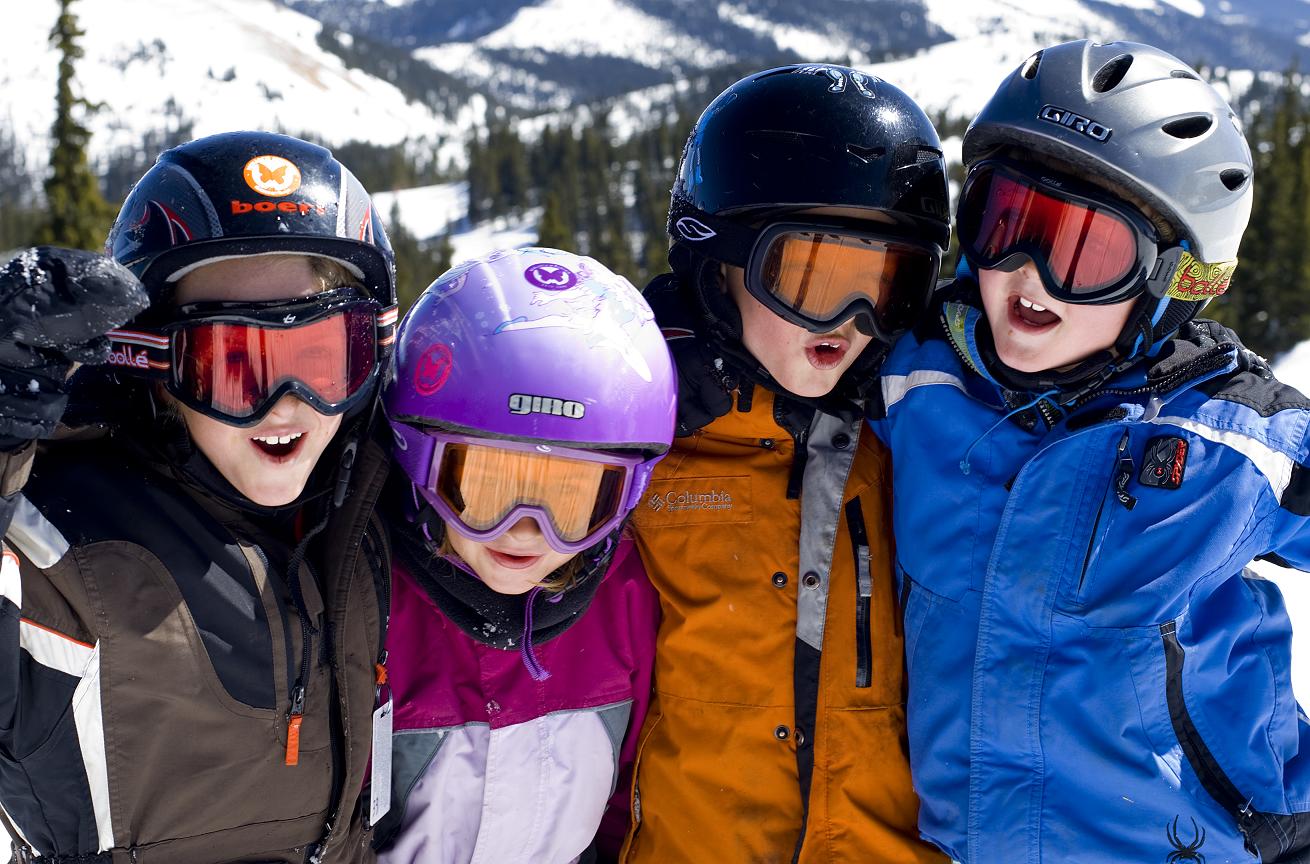
Monarch
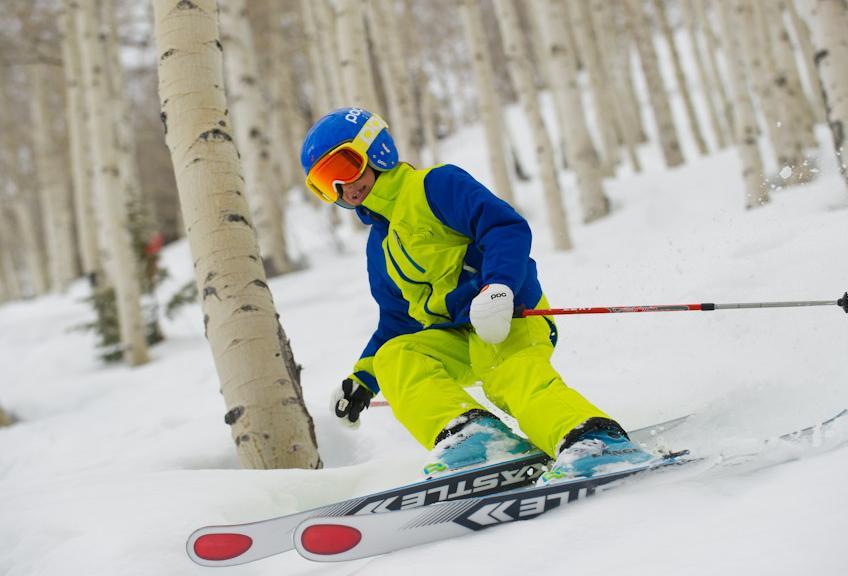
Photo credits: (L-R) Aspen/Snowmass, Jeremy Swanson; Scott Markewitz; Monarch Mountain
Denver, Colo. – September 2, 2013 – Colorado Ski Country USA (CSCUSA) announced today the Association’s popular 5th and 6th Grade Passport Programs are available for the 2013/14 ski season. The Passport Programs introduce fifth and sixth grade kids to skiing and snowboarding by giving fifth graders free access, and sixth graders discounted access, to twenty of Colorado’s finest ski resorts.
As the industry’s most influential program, the CSCUSA 5th Grade Passport allows fifth graders three days of free skiing at each of the twenty CSCUSA participating member resorts. The 6th Grade Passport allows sixth graders four days of skiing at the same twenty resorts for $99, which amounts to 80 days on the slopes for less than $1.25 each day.
Additionally, CSCUSA will offer First Class Lessons to complement the 5th Grade Passport Program. First Class provides fifth graders who are new to skiing and snowboarding the opportunity to learn the sport from some of the best instructors in the industry. Registered 5th Grade Passport holders who have never skied nor snowboarded, and are therefore considered “never-evers”, are eligible to receive a free ski or snowboard lesson and rental equipment during the month of January, which is also Learn to Ski and Snowboard Month. Fifth graders who qualify for First Class have the option of seventeen different resorts to have their introductory experience on snow. Advance reservations are required for First Class Lessons.
“Colorado Ski Country’s Passport Programs have introduced an entire generation of youngsters to skiing and snowboarding,” said Melanie Mills, president and CEO of Colorado Ski Country USA. “By giving 5th and 6th graders the opportunity to ski and ride, we’re helping kids to become lifelong skiers and snowboarders. The First Class Lesson program ensures that novice young skiers and snowboarders will enjoy their introductory on-snow experience and grow to become ambassadors of the state’s signature sports.”
To register kids for the Passport Programs, parents can visit www.ColoradoSki.com/Passport. Details on the First Class Program can also be found at ColoradoSki.com/Passport. The CSCUSA Passport Programs enjoy the support of presenting sponsor, Chipotle, and of program partners Christy Sports and Credit Union of Colorado.
Participating resorts in the 2013-14 Passport programs include: Arapahoe Basin, Aspen Highlands, Aspen Mountain, Buttermilk, Copper Mountain, Crested Butte, Purgatory at Durango Mountain Resort, Eldora, Howelsen Hill, Loveland, Monarch, Powderhorn, Ski Cooper, Ski Granby Ranch, Snowmass, Steamboat, Sunlight, Telluride, Winter Park and Wolf Creek.
For more details please visit www.ColoradoSki.com/Passport or call 303-866-9707.

GOCO has announced $500,000 for Youth Corps Projects on Land Trust, Open Space, & Local Government Properties
Posted: August 29, 2013 Filed under: Colorado | Tags: #CYCA, Colorado, Colorado Youth Corps Association, GOCO, Great Outdoors Colorado, Jennifer Freeman, Land trust, Youth Conservation Corps, Youth Corps Leave a commentGot Work? GOCO has announced $500,000 for Youth Corps Projects on Land Trust, Ope n Space, & Local Government Properties
Great Outdoors Colorado (GOCO) and the Colorado Youth Corps Association (CYCA) have announced that a RFP is available for$500,000 in GOCO/Lottery funds for open space, local government, and land trust organizations to hire youth conservation corps. In addition to public parks and open spaces, youth corps projects can occur on private lands protected by a conservation easement. The RFP can be found at www.CYCA.org and requires a brief 3-page narrative. The application deadline is Sept. 27, 2013. Successful projects will be announced in December 2013 and crews will complete the proposed work in 2014. Matching funds/support not required, but encouraged. Applicants can apply for youth corps crews (ages 16 – 25) to complete a variety of stewardship projects including:
· Trail construction and maintenance
· Tamarisk, Russian olive, and other invasive species mitigation–chainsaw crews, including pesticide/herbicide application, are available.
· Fence installation and de-installation
· Wildlife habitat improvement

Green jobs now! – Denver, CO (Photo credit: greenforall.org)
· Riparian restoration
· Beetle kill hazard mitigation – chainsaw crews available
· Fire fuels mitigation – chainsaw crews available
Youth corps crews work on a “per week” basis. One week of a youth corps crew includes 8-10 people that work at least 320 hours. They arrive on site with skilled adult supervision, basic hand tools, transportation, and camping gear. Day crews are also available.
To find the youth corps that serves your area, go to jfreeman or 303-863-0602 with questions.
Jennifer Freeman, Executive Director
Colorado Youth Corps Association
1640 Grant Street, Suite 210
Denver, CO 80203
Direct – 303-863-0602
Main – 303-863-0600
Cell – 720-273-9861
Fax – 303-863-0610
Subscribe to The Corps Report (monthly e-news)
Like us on Facebook
Follow us on Twitter
The
promotes youth development & conservation by strengthening Colorado corps.
Volunteers for Outdoor Colorado
Posted: August 20, 2013 Filed under: Colorado | Tags: Colorado, Dean Winstanley, Land management, Philanthropy, September, Stewardship, Volunteering, x, y, z Leave a comment
|

 This spring the


Marketing Makes Promises that Risk Management (or in this case an insurance policy) must pay for.
Posted: August 12, 2013 Filed under: Colorado, Release (pre-injury contract not to sue), Skiing / Snow Boarding | Tags: Accredited, AEE, BOEC, Breckenridge Outdoor Education Center, Colorado, Denver, Fraud, Magistrate, Misrepresentation, Release, Sit-Ski, Ski, skiing, Standards, Tether, United States district court 1 CommentThe release stopped the claims, which were thought out and tried to exploit the “accreditation” and “standards” created by a third party association.
Squires, v. Breckenridge Outdoor Education Center, 2013 U.S. App. LEXIS 9249 (10th Cir. 2013)
Plaintiff: Kimberly N. Squires
Defendant: Breckenridge Outdoor Education Center
Plaintiff Claims:
(1) The Release is as an invalid exculpatory agreement;
(2) Plaintiff’s decision to sign the Release was not voluntary and informed, as required by Colorado Revised Statute Section 13-22-107;
(3) Release was voidable because it was procured through fraud
Defendant Defenses: Release
Holding: for the defendant, the release was upheld
This case has been working its way through the courts for five years. The plaintiff was a legally blind child with cerebral palsy and cognitive delays. Her mother signed the necessary documentation to take a trip west with Camp Fire USA. Camp Fire USA contracted with the Breckenridge Outdoor Education Center (BOEC) to provide five days of skiing, a rope’s course and snow tubing.
The plaintiff was in a bi-ski which has an instructor holding tethers behind the skier. The BOEC instructor and the plaintiff were on their second run of the day. A third party skier lost control and skied into the tethers causing the BOEC instructor to lose the tethers. The plaintiff went down the hill unrestrained into a group of trees sustaining her injuries.
The plaintiff sued in Federal District Court located in Denver. A magistrate based upon a motion filed by the defendant dismissed the plaintiff’s negligence claim based on a release signed by the Plaintiff and her mother. The defendant’s motion also argued there was no evidence to support a gross negligence claim, which the magistrate did not deny.
The case proceeded to trial on the gross negligence claim. The jury returned a verdict for the defendant. The plaintiff then appealed the dismissal of the negligence claim based upon the release.
A magistrate is a quasi-judge. Magistrates in the Federal Court System are not appointed by the President and approved by the Senate, as all federal court judges are; but are appointed by the Chief Judge of the Federal District Court. The magistrate’s powers come from specific powers given to the magistrate by the judge who assigns a case to a magistrate or from an overall order from the Chief Judge of the court. Normally, a judge appoints a magistrate to handle all pre-trial matters. This frees up the judge to handle trials and those issues that may be appealed from the magistrate.
Summary of the case
The plaintiff appealed three issues concerning the validity of the release:
(1) the Release is as an invalid exculpatory agreement;
(2) [Plaintiff’s mother’s] decision to sign the Release was not voluntary and informed, as required by Colorado Revised Statute Section 13-22-107; [statute allowing a parent to sign away a child’s right to sue] and
(3) to the extent the Release is otherwise enforceable; it is, nevertheless, voidable because it was procured through fraud.
The 10th Circuit Court of Appeals went through a fairly in-depth analysis of release law in Colorado in making its decision. The court first looked into the requirements for a release to be valid under Colorado law. Releases are disfavored under Colorado law; however, they are not void. To be valid a Colorado Court must consider four factors:
(1) the existence of a duty to the public;
(2) the nature of the service performed;
(3) whether the contract was fairly entered into; and
(4) whether the intention of the parties is expressed in clear and unambiguous language
It was the fourth factor, whether the intent of the parties is set forth in clear and unambiguous language that is usually at issue. That means the language is clear and understandable so that the plaintiff when reading the document knew he or she was giving up their right to sue or recover for their injuries. The factor does not require the specific use of the word negligence and/or breach of warranty under Colorado law. However, the language of the release must express that the “intent of the parties was to extinguish liability and whether this intent was clearly and unambiguously expressed.”
Colorado courts look at the actual language of the release for “legal jargon” length, complication any likelihood of confusion or failure of the plaintiff to recognize the full extent of the release provisions. The court found that BOEC’s release met all of the requirements and was valid.
The plaintiff argued that the release failed to tell them that the plaintiff would be using a bi-ski and failed to disclose specific risks of this type of adaptive skiing. The court found that Colorado law did not require releases to refer to the specific activity that injured the plaintiff. Rather a release bars a claim if the release “clearly reflects the parties’ intent to extinguish liability for that type of claim.”
Note: the relaxed language allowed under Colorado law is not the same in other courts.
The plaintiff also developed a novel argument, which I have touched on before.
Plaintiff additionally argues the Release is ambiguous because it does not specifically release claims resulting from the negligence of third parties, such as the skier who collided with Plaintiff, and because it inconsistently allocates risks between herself and Defendant.
Many times a third party or even another participant is the reason for the plaintiff’s injury. I write about injured parties suing other guests or third parties, such as skier v. skier collisions. Although the complaint does not name the outdoor recreation provider, specifically as a defendant, it does bring them in tangentially to a lawsuit. Here, the plaintiff argued the release failed because it did not notice the plaintiff of the risks brought to skiing by third parties.
However, the argument was not properly preserved or argued in the lower court so this court did not look at the argument. Appellate courts only will hear arguments that have been heard or argued in the lower court. Brand new arguments are ignored on appeal. It is important to argue everything you can in the lower court, to preserve all issues for appeal. This works both for claims of the plaintiff or defenses of the defendant.
The next argument, was there was not enough information in the release to satisfy the requirements of the statute which allows a parent to sign away a minor’s right to sue (C.R.S. 13-22-107). The plaintiff argued that because the risks of skiing in a bi-ski were not understood by the mother then the release should fail.
The court looked at two prior cases in Colorado that had looked at this issue: Wycoff v. Grace Cmty. Church of the Assemblies of God, 251 P.3d 1260, 1264 (Colo. App. 2010) and Hamill v. Cheley Colo. Camps, Inc., 262 P.3d 945, 952 (Colo. App. 2011) which I discuss in Releases are legal documents and need to be written by an attorney that understands the law and the risks of your program/business/activity and your guests/members/clientele and Release stops suit for falling off horse at Colorado summer Camp.
Because the release did not state the risks of the activity, the court had to decide if it could look at extrinsic (other) evidence. The court in Hamel, allowed the defendant to show that prior experience of the parent in sending her daughter to camp and knowledge of other people who had been injured horseback riding was enough to show the mother knew the risks.
The court then allowed the knowledge of the mother and the letter sent with the release by BOEC to show the mother knew the general risks of skiing.
The final issue was the Fraudulent Inducement claim. The letter said the following:
(1) “All of [Defendant’s] activities are conducted in a manner consistent with the highest standards, as defined by the Association for Experiential Education (AEE)”; (2) “The BOEC is accredited by AEE”; and (3) AEE “independently reviews the policies, practices and educational components of applicant organizations and accredits those that meet their high standards.
The mother made the following statements concerning what she believed based upon the letter.
Rather, she [plaintiff] relies on her mother’s statements that she “believed that BOEC was an accredited program,” and “that they had an [sic] accredited certified instructors that would manage a safe program.”
(“[T]hey were, you know, accredited and certified and they’d been doing it for a number of years.”), 356 (“That she would be with certified accredited people in a safe program that they could supervise appropriately.”).)
Although BOEC may or may not have been accredited by the AEE, the issue was the AEE did not have standards for skiing or adaptive skiing. The plaintiff argued that the letter, on one side of the release contradicted the release which was on the other side of the paper.
Add to the issue that BOEC admitted that it did not have what it advertised.
BOEC representative and Ski Program Director Paul Gamber testified that on the day of the Accident, BOEC did not have any written ski lesson policies and procedures for the adaptive ski program. Ski Program Director, Jeffrey Inouye, testified that the AEE accreditation related to programs other than the adaptive [*30] ski program that Ms. Squires attended.
Marketing makes promises that Risk Management has to pay for.
The plaintiff argued that there was fraud in the inducement and because BOEC had advertised standards, BOEC did not have. On top of that the plaintiff argued that because BOEC did not have standards as they advertised BOEC was also misleading the plaintiff.
Ms. Squires argues that based upon the lack of written safety standards, “it is not a stretch to conclude that the adaptive skiing program was not conducted in a manner consistent with the highest standards of the AEE, contrary to the representations made by BOEC in its Greetings Letter.”
The letter and marketing of BOEC were enough to establish a fraud claim.
To establish fraud, a plaintiff has to prove that (1) a fraudulent misrepresentation of material fact was made by the defendant; (2) at the time the representation was made, the defendant knew the representation was false or was aware that he did not know whether the representation was true or false; (3) the plaintiff relied on the misrepresentation; (4) the plaintiff had the right to rely on, or was justified in relying on, the misrepresentation; and (5) the reliance resulted in damages.
The release was presented to the plaintiff’s mother along with a “LETTER TO STUDENTS, PARENTS AND GUARDIANS.” The letter made several statements which the plaintiff brought to the attention of the court, which created legal issues that in many courts in other states, would have found for the plaintiff. Some of the parts of the letter were:
All of our activities are conducted in a manner consistent with the highest standards, as defined by the Association for Experiential Education (AEE). The BOEC is accredited by AEE, who independently reviews the policies, practices and educational components of applicant organizations and accredits those that meet their high standards.
Your ski lesson or course will involve risk, which may be greater than most people encounter in their daily lives. Providing high quality programs in a risk-managed environment is a priority at the BOEC. It is, however, impossible to eliminate all risks.
While the BOEC maintains rigorous standards, it is in everyone’s best interest that risks are disclosed, understood, and assumed prior to participation.
The plaintiff could not prove that she had relied on the misstatements of BOEC. On top of the necessary requirement that there be reliance, the fraud or action of BOEC must be intentional.
Ms. Squires has not produced any evidence that BOEC made the alleged misrepresentations with the intent to deceive. For failure to demonstrate this element, Ms. Squires’ argument that the Release is voidable based on material misrepresentation and fraud in the inducement must fail.
Because the fourth element could not be provided the fraud claim was dismissed.
The final argument made by the plaintiff was the actions of BOEC were willful and wanton. The statute Colo. Rev. Stat. § 13-22-107(4) specifically prohibited releases signed by parents based to stop willful and wanton conduct.
Nothing in this section shall be construed to permit a parent acting on behalf of his or her child to waive the child’s prospective claim against a person or entity for a willful and wanton act or omission, a reckless act or omission, or a grossly negligent act or omission.
Court defined willful and wanton conduct by relating the conduct to gross negligence.
“Gross negligence is willful and wanton conduct; that is, action committed recklessly, with conscious disregard for the safety of others.” “Willful and wanton conduct is purposeful conduct committed recklessly that exhibits an intent consciously to disregard the safety of others. Such conduct extends beyond mere unreasonableness.” (“Conduct is willful and wanton if it is a dangerous course of action that is consciously chosen with knowledge of facts, which to a reasonable mind creates a strong probability that injury to others will result.”)
However, here again the plaintiff failed to show conduct that was purposeful or reckless. The court found the record was “devoid of sufficient evidence to raise a factual issue” at trial. Finding that the court held that claim was not met by the plaintiff.
So Now What?
The release in this case met the requirements of Colorado law. However, most other states, the release would not have been sufficient to stop the claims of the plaintiff. Besides, few states allow a parent to sign away a minor’s right to sue. See States that allow a parent to sign away a minor’s right to sue.
BOEC does great work and does a good job. This like most facts giving rise to litigation are rare, even very rare. However, your release needs to be written to cover everything you possibly can. You can include a prohibition against injuries or claims caused by third parties. Would the outcome of this case been different if the third party who skied into the tethers been another BOEC student or instructor?
Releases can also be used to educate. If you do a good job of describing the risks in the release, then parents cannot make valid decisions, on whether or not they want to risk your kid with them. The defendant should have done a better job of explaining the risks of all activities within the program.
It is risky to rely upon outside information to prove knowledge of a release, unless you can prove the person saw and knew the information and have that proof in the release. This creates a 2-step process. 1.) You must prove you educated the customer or guest and 2.) You must prove the guest or customer was educated. The easiest way is to place this information on your website and then have your release reference the information.
Marketing makes promises that Risk Management must pay for. The advertising and statements made by the defendant in this case in many other jurisdictions would have gone the other way. Seriously, to make statements about awards, accreditation, or standards that do not exist are a great way to void a release and in many states increase the damages you may pay.
Other Cases: Squires v. Goodwin, 2011 U.S. Dist. LEXIS 129234 (Dist Colo 2011)
Other articles where standards played a part in the decision in a negative way.
ACA Standards are used by Expert for the Plaintiff in a lawsuit against a Camp
Plaintiff uses standards of ACCT to cost defendant $4.7 million
Trade Association Standards sink a Summer Camp when plaintiff uses them to prove Camp was negligent
What do you think? Leave a comment.
If you like this let your friends know or post it on FaceBook, Twitter or LinkedIn
Copyright 2013 Recreation Law (720) Edit Law
Email: Rec-law@recreation-law.com
Google+: +Recreation
Twitter: RecreationLaw
Facebook: Rec.Law.Now
Facebook Page: Outdoor Recreation & Adventure Travel Law
Blog: www.recreation-law.com
Mobile Site: http://m.recreation-law.com
By Recreation Law Rec-law@recreation-law.com James H. Moss #Authorrank
<rel=”author” link=” https://plus.google.com/u/0/b/112453188060350225356/” />
#RecreationLaw, #@RecreationLaw, #Cycling.Law #Fitness.Law, #Ski.Law, #Outside.Law, #Recreation.Law, #Recreation-Law.com, #Outdoor Law, #Recreation Law, #Outdoor Recreation Law, #Adventure Travel Law, #law, #Travel Law, #Jim Moss, #James H. Moss, #Attorney at Law, #Tourism, #Adventure Tourism, #Rec-Law, #Rec-Law Blog, #Recreation Law, #Recreation Law Blog, #Risk Management, #Human Powered, #Human Powered Recreation,# Cycling Law, #Bicycling Law, #Fitness Law, #Recreation-Law.com, #Backpacking, #Hiking, #Mountaineering, #Ice Climbing, #Rock Climbing, #Ropes Course, #Challenge Course, #Summer Camp, #Camps, #Youth Camps, #Skiing, #Ski Areas, #Negligence, #Snowboarding, #RecreationLaw, #@RecreationLaw, #Cycling.Law #Fitness.Law, #SkiLaw, #Outside.Law, #Recreation.Law, #RecreationLaw.com, #OutdoorLaw, #RecreationLaw, #OutdoorRecreationLaw, #AdventureTravelLaw, #Law, #TravelLaw, #JimMoss, #JamesHMoss, #AttorneyatLaw, #Tourism, #AdventureTourism, #RecLaw, #RecLawBlog, #RecreationLawBlog, #RiskManagement, #HumanPowered, #HumanPoweredRecreation,# CyclingLaw, #BicyclingLaw, #FitnessLaw, #RecreationLaw.com, #Backpacking, #Hiking, #Mountaineering, #IceClimbing, #RockClimbing, #RopesCourse, #ChallengeCourse, #SummerCamp, #Camps, #YouthCamps, #Skiing, #Ski Areas, #Negligence, #Snowboarding, sport and recreation laws, ski law, cycling law, Colorado law, law for recreation and sport managers, bicycling and the law, cycling and the law, ski helmet law, skiers code, skiing accidents, Recreation Lawyer, Ski Lawyer, Paddlesports Lawyer, Cycling Lawyer, Recreational Lawyer, Fitness Lawyer, Rec Lawyer, Challenge Course Lawyer, Ropes Course Lawyer, Zip Line Lawyer, Rock Climbing Lawyer, Adventure Travel Lawyer, Outside Lawyer, Recreation Lawyer, Ski Lawyer, Paddlesports Lawyer, Cycling Lawyer, #RecreationalLawyer, #FitnessLawyer, #RecLawyer, #ChallengeCourseLawyer, #RopesCourseLawyer, #ZipLineLawyer, #RockClimbingLawyer, #AdventureTravelLawyer, #OutsideLawyer, Release, BOEC, Breckenridge Outdoor Education Center, Sit-Ski, Tether, Misrepresentation, Fraud, Standards, AEE, Accredited, Skiing, Ski,
WordPress Tags: Makes,Promises,Risk,Management,insurance,policy,accreditation,association,Squires,Breckenridge,Outdoor,Education,Center,LEXIS,Plaintiff,Defendant,Claims,Release,agreement,decision,Colorado,Statute,Section,fraud,Defenses,documentation,Camp,Fire,BOEC,instructor,hill,trees,injuries,Federal,District,Court,Denver,magistrate,negligence,jury,verdict,dismissal,Magistrates,System,President,Senate,Chief,Judge,trials,Summary,extent,Circuit,Appeals,depth,analysis,requirements,Releases,factors,existence,intention,fourth,factor,jargon,length,complication,failure,Rather,Note,argument,Many,participant,injury,guests,collisions,Although,complaint,recreation,provider,lawsuit,Here,Appellate,arguments,Brand,information,Wycoff,Grace,Church,Assemblies,Colo,Hamill,Cheley,Camps,attorney,clientele,horse,Hamel,daughter,knowledge,letter,Fraudulent,Inducement,manner,Experiential,policies,components,applicant,statements,instructors,paper,Program,Director,Paul,Gamber,Accident,lesson,procedures,Jeffrey,Inouye,representations,Greetings,misrepresentation,fact,representation,reliance,STUDENTS,PARENTS,GUARDIANS,attention,Some,environment,participation,requirement,action,misrepresentations,Stat,person,omission,Gross,Willful,Conduct,Besides,States,litigation,prohibition,outcome,student,decisions,customer,guest,reference,jurisdictions,Cases,Goodwin,Dist,Standards,Expert,Report,ACCT,cost,million,Trade,Summer,Leave,FaceBook,Twitter,LinkedIn,Edit,Email,Google,RecreationLaw,Page,Adventure,Travel,Blog,Mobile,Site,James,Moss,Authorrank,author,Outside,Tourism,Human,Rock,Ropes,Course,Challenge,Youth,Areas,SkiLaw,OutdoorLaw,OutdoorRecreationLaw,AdventureTravelLaw,TravelLaw,JimMoss,JamesHMoss,AttorneyatLaw,AdventureTourism,RecLaw,RecLawBlog,RecreationLawBlog,RiskManagement,HumanPoweredRecreation,CyclingLaw,BicyclingLaw,FitnessLaw,RopesCourse,ChallengeCourse,SummerCamp,YouthCamps,managers,helmet,accidents,Lawyer,Paddlesports,Recreational,Line,RecreationalLawyer,FitnessLawyer,RecLawyer,ChallengeCourseLawyer,RopesCourseLawyer,ZipLineLawyer,RockClimbingLawyer,AdventureTravelLawyer,OutsideLawyer,Tether,third,exculpatory,voidable,five,skier,upon,whether,adaptive
Squires v. Breckenridge Outdoor Education Center, 715 F.3d 867; 2013 U.S. App. LEXIS 9249 (Co Dist 2013)
Posted: August 12, 2013 Filed under: Colorado, Legal Case, Skiing / Snow Boarding | Tags: Accredited, AEE, BOEC, Breckenridge Outdoor Education Center, Colorado, Denver, Fraud, Magistrate, Misrepresentation, Release, Sit-Ski, Ski, skiing, Standards, Tether, United States district court Leave a commentSquires v. Breckenridge Outdoor Education Center, 715 F.3d 867; 2013 U.S. App. LEXIS 9249 (Co Dist 2013)
KIMBERLY N. SQUIRES, Plaintiff – Appellant, v. BRECKENRIDGE OUTDOOR EDUCATION CENTER, Defendant – Appellee.
No. 12-1199
UNITED STATES COURT OF APPEALS FOR THE TENTH CIRCUIT
715 F.3d 867; 2013 U.S. App. LEXIS 9249
May 7, 2013, Filed
PRIOR HISTORY: [**1]
APPEAL FROM THE UNITED STATES DISTRICT COURT FOR THE DISTRICT OF COLORADO. (D.C. No.1:10-CV-00309-CBS-BNB).
Squires v. Goodwin, 829 F. Supp. 2d 1062, 2011 U.S. Dist. LEXIS 129234 (D. Colo., 2011)
COUNSEL: Michael A. Sink of Perkins Coie LLP, Denver, Colorado (Robert N. Miller and Stephanie E. Dunn of Perkins Coie LLP, Denver, Colorado; Gregory A. Gold of The Gold Law Firm, LLC, Greenwood Village, Colorado; and T. Thomas Metier of Metier Law Firm, LLC, Fort Collins, Colorado, with him on the brief), for Plaintiff – Appellant.
David Werber (John W. Grund, Deana R. Dagner, and Joan S. Allgaier on the brief) of Grund ” Dagner, P.C., Denver, Colorado, for Defendant – Appellee.
JUDGES: Before HARTZ, McKAY, and O’BRIEN, Circuit Judges.
OPINION BY: McKAY
OPINION
Plaintiff Kimberly Squires filed this diversity action against Defendant Breckenridge Outdoor Education Center asserting claims for negligence and gross negligence following a ski accident in which she was injured. The magistrate judge granted Defendant’s motion for summary judgment in part, concluding Plaintiff’s mother, Sara Squires, had validly released any claim for negligence against Defendant by signing an acknowledgment of risk and release of liability. Plaintiff now appeals, arguing summary judgment was inappropriate because the Release [**2] is unenforceable for three reasons: (1) the Release is as an invalid exculpatory agreement; (2) Mrs. Squires’s decision to sign the Release was not voluntary and informed, as required by [*870] Colorado Revised Statute Section 13-22-107; and (3) to the extent the Release is otherwise enforceable, it is nevertheless voidable because it was procured through fraud.
Background
In 2008, Plaintiff, a legally blind child with cerebral palsy and cognitive delays, was severely injured while skiing at Breckenridge Ski Resort in Colorado. Plaintiff was in Breckenridge on a ski trip with the group Camp Fire USA, a non-profit organization dedicated to providing children, including children with disabilities, with opportunities and experiences for growth. Camp Fire USA had contracted with Defendant for a five-day wilderness program that included skiing, a ropes course, and snow tubing.
Before the trip, Defendant sent documents regarding the trip to Camp Fire USA, which in turn circulated them to the participants’ parents, including Mrs. Squires. The documents included a “Letter to Students, Parents and Guardians” (App. at 209 (capitalization omitted)) with an accompanying “Acknowledg[]ment of Risk & Release [**3] of Liability” (App. at 210 (capitalization omitted)).1 The Letter states, in pertinent part:
LETTER TO STUDENTS, PARENTS AND GUARDIANS
Greetings from Breckenridge! The BOEC staff looks forward to having you, your child or your family member join us on a course and would like to share the following information about who we are, what we do and the risks involved.
The Breckenridge Outdoor Education Center (BOEC), a non-profit organization in operation since 1976, provides outdoor adventure programs for people of all abilities. We offer programs for groups and individuals. All courses are tailored to the specific goals and abilities of our students.
. . . .
All of our activities are conducted in a manner consistent with the highest standards, as defined by the Association for Experiential Education (AEE). The BOEC is accredited by AEE, who independently reviews the policies, practices and educational components of applicant organizations and accredits those that meet their high standards. All activities offered are designed to pose appropriate challenges for students. These challenges provide a medium for adventure, learning and personal growth. Your ski lesson or course will involve risk, [**4] which may be greater than most people encounter in their daily lives. Providing high quality programs in a risk-managed environment is a priority at the BOEC. It is, however, impossible to eliminate all [*871] risks. It is very important that you follow all directions given by staff and that you ask questions whenever a procedure or activity is unclear to you.
While the BOEC maintains rigorous standards, it is in everyone’s best interest that risks are disclosed, understood, and assumed prior to participation. After you have reviewed the acknowledg[]ment of risk and waiver of liability on the reverse side of this letter and if you understand and agree with its contents, please sign in the appropriate places. If you are the parent or legal guardian of a student, please read both sides of this document to the student, and if you both agree and understand their content, place YOUR signature in the three appropriate places.
If you have any questions or comments, please do not hesitate to contact us. We welcome your suggestions and feedback.
(App. at 209.)
– – – – – – – – – – – – – – Footnotes – – – – – – – – – – – – – – –
1 It is somewhat unclear whether the Release signed by Mrs. Squires was presented to her as a separate document from the Letter or as a single document [**5] with the Letter printed on one side and the Release printed on the reverse. The Letter itself refers to the Release “on the reverse side of this letter.” (App. at 209.) Plaintiff likewise initially represented the Release appeared on the reverse of the Letter. (Appellant’s Opening Br. at 6 (“On the back of the form cover letter, is a standardized “Acknowledg[]ment of Risk & Release of Liability” . . . .).) However, during oral argument, Plaintiff’s counsel maintained this was a disputed issue. (Oral Argument at 4:03-18 (“Some copies of the Release are standalone copies, and one copy happens to have a bleed-over language from the cover letter. It’s not clear . . . that that’s how that actually occurred when the Release was given to [Mrs. Squires] for signature.”) It is undisputed, however, that the Release the director of Camp Fire USA sent to the participants “included the cover letter that explained the waiver” (App. at 207), and that the two documents were sent as a single attachment (App. at 404, 407, 408).
– – – – – – – – – – – – End Footnotes- – – – – – – – – – – – – –
The accompanying Release provides:
ACKNOWLEDGMENT OF RISK AND RELEASE OF LIABILITY (REQUIRED)
In consideration of being allowed to participate in any way in Breckenridge Outdoor [**6] Education Center (BOEC) programs, and related events and activities . . . I, and/or the minor student, . . . the undersigned:
1. Understand that although the BOEC has taken precautions to provide proper organization, supervision, instruction and equipment for each course, it is impossible for the BOEC to guarantee absolute safety. Also, I understand that I share the responsibility for safety during all activities, and I assume that responsibility. I will make my instructors aware to the best of my ability of any questions or concerns regarding my understanding of safety standards, guidelines, procedures and my ability to participate at any point during any activity.
2. Understand that risks during outdoor programs include but are not limited to loss or damage to personal property, injury, permanent disability, fatality, exposure to inclement weather, slipping, falling, insect or animal bites, being struck by falling objects, immersion in cold water, hypothermia (cold exposure), hyperthermia (heat exposure), and severe social or economic losses that may result from any such incident. I also understand that such accidents or illnesses may occur in remote areas without easy access to medical [**7] facilities or while traveling to and from the activity sites. Further, there may be other risks not known to me or not reasonably foreseeable at this time.
3. Agree that prior to participation, I will inspect, to the best of my ability, the facilities and equipment to be used. If I believe anything is unsafe, I will immediately advise the BOEC staff present of such condition and refuse to participate.
4. Assume all the foregoing risks and accept personal responsibility for the damages due to such injury, permanent disability or death resulting from participating in any BOEC activity.I hereby release the BOEC, its successors, representatives, assigns, and employees from any and all claims, demands, and causes of action, whether resulting from negligence or otherwise, of every nature and in conjunction with a BOEC activity.
(App. at 210.)
Plaintiff and her mother signed the Release on January 13, 2008. On that date, Mrs. Squires was admittedly aware that her daughter’s trip to Breckenridge and participation in Defendant’s program [*872] would include skiing, although she claims she was unaware of the precise equipment and methods her daughter would be using. Once in Breckenridge, Plaintiff was [**8] paired with a BOEC instructor and equipped with a bi-ski. On the second run of the first day of skiing, Plaintiff was injured when another, unrelated, skier lost control and skied into the tethers connecting Plaintiff and her instructor. The force of the collision caused the instructor to lose control of the tethers, and Plaintiff continued unrestrained down the trail and into a group of trees. She was injured when her bi-ski collided with a tree.
Following the accident, Plaintiff filed this action claiming Defendant’s negligence and gross negligence caused her injuries. Defendant moved for summary judgment, arguing the Release barred Plaintiff’s negligence claim and there was no evidence to support her gross negligence claim. The magistrate judge granted summary judgment in favor of Defendant on Plaintiff’s negligence claim, concluding Plaintiff’s mother had executed an enforceable exculpatory agreement that clearly and unambiguously expressed the parties’ intent to extinguish Defendant’s liability, and her decision to do so was voluntary and informed. The magistrate judge, however, denied Defendant’s motion on Plaintiff’s gross negligence claim. This claim proceeded to a jury, which [**9] found Defendant not liable. Plaintiff now appeals the grant of summary judgment on her negligence claim.
Discussion
HN1 “We review a district court’s decision to grant summary judgment de novo, applying the same standard as the district court.” Lundstrom v. Romero, 616 F.3d 1108, 1118 (10th Cir. 2010) (internal quotation marks omitted). Summary judgment is appropriate if “there is no genuine dispute as to any material fact and the movant is entitled to judgment as a matter of law.” Fed. R. Civ. P. 56(a). Colorado law applies in this diversity case.
I. Enforceability of the Release
Plaintiff argues the Release is unenforceable and, therefore, does not bar her negligence claim. She reasons that the Release is invalid under the four-part test articulated in Jones v. Dressel, 623 P.2d 370 (Colo. 1981), and that her mother did not make an informed decision, as required by Colorado Revised Statute Section 13-22-107.
A. Validity Under Jones
HN2In Colorado, “[a]greements attempting to exculpate a party from that party’s own negligence have long been disfavored.” Heil Valley Ranch, Inc. v. Simkin, 784 P.2d 781, 783 (Colo. 1989). However, “[e]xculpatory agreements are not necessarily void.” Id. at 784. In [**10] determining whether an exculpatory agreement is valid, Colorado courts consider four factors: “(1) the existence of a duty to the public; (2) the nature of the service performed; (3) whether the contract was fairly entered into; and (4) whether the intention of the parties is expressed in clear and unambiguous language.” Jones, 623 P.2d at 376. Plaintiff challenges only the magistrate judge’s conclusion on the fourth factor.
Under the fourth factor, “use of the specific terms ‘negligence’ and ‘breach of warranty’ are not invariably required for an exculpatory agreement to shield a party from claims based on negligence and breach of warranty.” Heil Valley, 784 P.2d at 785. Rather, “[t]he inquiry should be whether the intent of the parties was to extinguish liability and whether this intent was clearly and unambiguously expressed.” Id. In making this determination, [*873] Colorado courts examine “the actual language of the agreement for legal jargon, length and complication, and any likelihood of confusion or failure of a party to recognize the full extent of the release provisions.” Chadwick v. Colt Ross Outfitters, Inc., 100 P.3d 465, 467 (Colo. 2004).
The Release signed by Plaintiff and her [**11] mother clearly and unambiguously waives any negligence claims Plaintiff might have brought against Defendant. The Release begins by indicating it is signed “[i]n consideration of being allowed to participate in any way in Breckenridge Outdoor Education Center (BOEC) programs, and related events and activities.” (App. at 104.) It then warns that “it is impossible for the BOEC to guarantee absolute safety,” and identifies the potential risk of “loss or damage to personal property, injury, permanent disability, [and] fatality.” (Id.) The Release concludes, after only five short paragraphs, by stating in plain terms that the signor “hereby release[s] the BOEC, its successors, representatives, assigns, and employees from any and all claims, demands and causes of action, whether resulting from negligence or otherwise, of every nature and in conjunction with a BOEC activity.” (Id. (emphasis added).) We perceive no ambiguity in this language. See Mincin v. Vail Holdings, Inc., 308 F.3d 1105, 1113 (10th Cir. 2002) (“The agreement covers ‘any and all claims I might state . . . including those claims based on negligence or breach of warranty.’ . . . There is nothing ambiguous about this portion [**12] of the agreement.” (first alteration in original)).
Plaintiff, however, contends the Release does not satisfy the fourth Jones factor because it failed to include that Plaintiff would be skiing using a bi-ski and failed to disclose specific risks associated with this form of adaptive skiing. She argues that Colorado law requires the Release to identify the specific activity being engaged in and describe specific associated risks. In support of this position, Plaintiff quotes from several other releases that have been upheld and claims it was their adequate detailing of risks that led the courts to conclude they were valid under the fourth Jones factor. However, even though the releases quoted by Plaintiff contain more detailed descriptions of the associated risks, their validity did not turn on this fact. Notably, none of the cases Plaintiff relies on evaluated the sufficiency of the description of the risks.
Contrary to Plaintiff’s argument, HN3Colorado law does not require that exculpatory agreements refer to the specific activity in which the plaintiff participated and was injured. See Forman v. Brown, 944 P.2d 559, 563-64 (Colo. App. 1996) (concluding a release that did not mention [**13] the specific activity in which the plaintiff was injured was nevertheless valid because it “unambiguously released defendants from liability for injuries occurring during associated scheduled or unscheduled activities”); Brooks v. Timberline Tours, Inc., 127 F.3d 1273, 1274-75 (10th Cir. 1997) (concluding a release that did not include the specific activity and referred only to “the activity I am about to voluntarily engage in” was valid under Jones). Nor does it require “that an exculpatory agreement describe in detail each specific risk that the signor might encounter. Rather, an exculpatory agreement bars a claim if the agreement clearly reflects the parties’ intent to extinguish liability for that type of claim.” Lahey v. Covington, 964 F. Supp. 1440, 1445 (D. Colo. 1996), aff’d sub nom. Lahey v. Twin Lakes Expeditions, Inc., No. 96-1438, 1997 U.S. App. LEXIS 11807, 1997 WL 265093 (10th Cir. May 20, 1997) (unpublished) (citation omitted). The Release clearly reflects precisely such an intent—Plaintiff and her mother agreed, “[i]n consideration of being [*874] allowed to participate in . . . [Defendant’s] programs, and related events and activities” to “release [Defendant] from any and all claims . . . and causes [**14] of action, whether resulting from negligence or otherwise, of every nature and in conjunction with a [BOEC] activity.” (App. at 104.)
Plaintiff additionally argues the Release is ambiguous because it does not specifically release claims resulting from the negligence of third parties, such as the skier who collided with Plaintiff, and because it inconsistently allocates risks between herself and Defendant. Plaintiff raises her first theory of ambiguity for the first time on appeal. Because this argument was not properly preserved, we do not consider it. Lyons v. Jefferson Bank & Trust, 994 F.2d 716, 721 (10th Cir. 1993) (HN4“[A] party may not lose in the district court on one theory of the case, and then prevail on appeal on a different theory.”). Turning then to Plaintiff’s second theory of ambiguity, we agree with the magistrate judge’s conclusion that the Release is not reasonably susceptible to her interpretation, which strains logic. Plaintiff specifically argues the portion of the Release that releases Defendant from liability is rendered ambiguous by the following sentence: “I [**15] understand that I share the responsibility for safety during all activities, and I assume that responsibility.” (App. at 104.) She contends that by “discussing two alternate allocations of risk in the same document, the Release does not clearly and unambiguously express the intent of the parties, and thus, is unenforceable.” (Appellant’s Opening Br. at 23.) However, these two provisions create no such ambiguity. The sentence on which Plaintiff relies clearly expresses the participant’s agreement to share in the responsibility of participating in a safe manner, whereas the release provision clearly expresses the participant’s intent to release Defendant from liability. As the magistrate judge concluded, the two are not mutually exclusive, and the first provision makes it no less clear that Plaintiff’s mother intended to release Defendant from liability for any negligence claim.
Because the Release contains clear and unambiguous language demonstrating Plaintiff’s mother intended to release any negligence claims Plaintiff might have against Defendant, it is valid and enforceable under Jones.
B. Informed Decision Under Colorado Revised Statute Section 13-22-107
We turn then to whether Mrs. [**16] Squires’s consent to the Release was voluntary and informed, as required by Section 13-22-107. Plaintiff argues it was not because her mother did not understand the risks involved with adaptive skiing and, specifically, the use of bi-skis.
In 2002, the Colorado Supreme Court held “that Colorado’s public policy disallows a parent or guardian to execute exculpatory provisions on behalf of his minor child for a prospective claim based on negligence.” Cooper v. Aspen Skiing Co., 48 P.3d 1229, 1237 (Colo. 2002), superseded by statute, Colo. Rev. Stat. § 13-22-107(3). The following year, the General Assembly superseded Cooper through enactment of Section 13-22-107(3). Under this section,HN5 “[a] parent of a child may, on behalf of the child, release or waive the child’s prospective claim for negligence.” Colo. Rev. Stat. § 13-22-107(3). The statute “declare[s] that parents have a fundamental right to make decisions on behalf of their children, including deciding whether the children should participate in risky activities.” Wycoff v. Grace Cmty. Church of the Assemblies of God, 251 P.3d 1260, 1264 (Colo. App. 2010). “So long as the decision is voluntary and informed, the decision should be given [**17] the same dignity as decisions [*875] regarding schooling, medical treatment, and religious education . . . .” Colo. Rev. Stat. § 13-22-107(1)(a)(V).
The Colorado Court of Appeals has “assume[d] that the General Assembly was aware of the Jones test when it enacted section 13-22-107(1)(a)(V), but required something more for the waiver of a minor’s prospective negligence claims.” Hamill v. Cheley Colo. Camps, Inc., 262 P.3d 945, 952 (Colo. App. 2011) (citation omitted). In addition to the Jones factors, “[t]he General Assembly required that the consent to waiver by a parent be ‘voluntary and informed.'” Id. “A parent’s decision is informed when the parent has sufficient [*876] information to assess the potential degree of risks involved, and the extent of possible injury.” Id.
Since the enactment of Section 13-22-107, the Colorado Supreme Court has not addressed whether a release satisfies the voluntary and informed requirement of Section 13-22-107(1)(a)(V). We must therefore attempt to predict how Colorado’s highest court would interpret this Section. See FDIC v. Schuchmann, 235 F.3d 1217, 1225 (10th Cir. 2000). In doing so, we “consider . . . cases from the Colorado Court of Appeals only as they may [**18] aid our ability to predict how the Colorado Supreme Court might decide.” Browning v. Am. Family Mut. Ins. Co., 396 F. App’x 496, 502 n.14 (10th Cir. 2010).
The Colorado Court of Appeals has twice considered whether a parent’s consent to release prospective negligence claims on behalf of a minor child was voluntary and informed, as required by Section 13-22-107(1)(a)(V). On the first occasion, the Colorado Court of Appeals determined it “need not set forth . . . precisely how much information is required for a parental release to satisfy the statute” because “[t]here is no information in [the] one-page registration form describing the event activities, much less their associated risks.” Wycoff, 251 P.3d at 1264. There, the plaintiff was injured while being towed in an innertube behind an ATV on a frozen lake as part of her participation in a three-day event called “Winterama 2005.” Id. at 1263. Before attending the event, the plaintiff’s mother signed a one-page registration and information form, which contained a purported release in the following paragraph:
I give permission for my child to participate in . . . Winterama 2005 and all activities associated with it. I further give consent [**19] for any medical treatment necessary to be given to my child in case of injury or sickness. I will not hold Grace Community Church or it’s [sic] participants responsible for any liability which may result from participation. I also agree to come and pick up my child should they not obey camp rules.
Id. (emphasis and correction in original). Although the plaintiff knew the Winterama activities would include riding on an ATV-towed innertube, her mother did not. The court concluded that the mother’s waiver was not informed because the registration and information form did “not indicate what the activities would involve and certainly d[id] not suggest they would include ATV-towed inner-tube excursions around a frozen lake.” Id. at 1264. As a result, there was no information from which the plaintiff’s parents could “assess the degree of risk and the extent of possible injuries” from her participation in Winterama. Id. at 1265.
Shortly after the Wycoff decision, the Colorado Court of Appeals again addressed whether a parent’s consent to release prospective negligence claims on behalf of her child was informed. Borrowing from the language used in Wycoff, the court began by stating, HN6“A parent’s [**20] decision is informed when the parent has sufficient information to assess the potential degree of risks involved, and the extent of possible injury.” Hamill, 262 P.3d at 952 (citing Wycoff, 251 P.3d at 1265). In addressing the degree of risk, the court concluded the plaintiff’s mother was sufficiently informed about the risks involved in horseback riding, the activity in which the plaintiff was injured, because she “knew her daughter would be riding horses and she was advised that there were risks, known and unknown, associated with the activity.” Id. at 953. In reaching this conclusion, the court first relied on the undisputed fact that the plaintiff’s mother “knew the activities [the camp] offered,” because her daughter “had attended [the camp] and ridden the camp horses for two years before the accident.” Id. at 952. In addition, “[t]he agreement clearly indicated that horseback riding was an activity available to campers.” Id. The agreement further identified some of the “risks associated with participation in any camping activities,” and emphasized that “a complete listing of inherent and other risks is not possible” and there are even “risks which cannot be anticipated.” Id. at 949 [**21] (emphasis omitted). The court finally considered the fact that the plaintiff’s mother “never contacted [the camp] to discuss the release form, and had no questions about the language of the release form when she signed it.” Id. at 953. In light of all of this evidence, the court concluded the plaintiff’s mother was adequately informed of the risks involved with horseback riding. The fact that she “may not have contemplated the precise mechanics of her daughter’s fall d[id] not invalidate the release and d[id] not create a genuine issue of material fact.” Id. The relevant inquiry was whether the plaintiff’s mother was aware the plaintiff would be riding horses and was advised there were risks associated with that activity, which she was.
The court then turned to whether the plaintiff’s mother was provided with sufficient information “to assess the extent of possible injuries to [her daughter].” Id. In making this determination, the court again considered both the language of the release and the plaintiff’s mother’s independent knowledge and experience. The release contained broad language waiving “any claims of liability, for any injury, even death.” Id. (internal quotation marks omitted). [**22] The plaintiff’s mother was further aware that Christopher Reeve, whom she knew personally, had been injured falling off a horse, and was therefore “aware that there were significant risks associated with horseback riding.” Id. The court thus concluded that the agreement adequately disclosed the extent of potential injuries; it “did not need to include an exhaustive list of particularized injury scenarios to be effective.” Id.
Before turning to whether Plaintiff’s mother’s consent to release prospective negligence claims against Defendant was informed, we must first address the scope of the evidence we may consider in making this determination. The Colorado courts have yet to specifically address this issue. In Wycoff, the court “assume[d] for purposes of th[e] case that a facially deficient exculpatory contract could be cured by extrinsic evidence.” 251 P.3d at 1264. Relying on this statement, Plaintiff contends our evaluation under Section 13-22-107(1)(a)(V) must be limited to the four corners of the Release unless we first determine that the Release itself is facially deficient, in which case the Release would be invalid under Jones. Defendant, on the other hand, maintains we may [**23] properly consider the Letter that accompanied the Release as well as Mrs. Squires’s actual knowledge on the day she signed the Release.
[*877] We predict the Colorado Supreme Court would likely follow the approach advocated by Defendant and adopted by the Colorado Court of Appeals in Hamill—in determining whether a parent’s consent to release prospective negligence claims is voluntary and informed, the parent’s actual knowledge and the information provided in connection with the release should be considered in addition to the language of the release itself. Unlike the fourth factor of the common-law Jones test, which focuses on whether the agreement itself expressed the parties’ intention in clear and unambiguous terms, the focus of the voluntary and informed requirement of Section 13-22-107(1)(a)(V) is on the parent’s decision. If we were to limit our review to the language of the Release itself, we would not be in a position to adequately evaluate whether the parent’s decision was informed. HN7To “give[] effect to the General Assembly’s intent in enacting” Section 13-22-107, Carlson v. Ferris, 85 P.3d 504, 508 (Colo. 2003)—that a parent’s decision to release his or her child’s prospective negligence [**24] claims be honored “[s]o long as the decision is voluntary and informed,” Colo. Rev. Stat. § 13-22-107(1)(a)(V)—we must be able to consider the relevant information the parent had and was provided in order to make that decision. Indeed, were we to limit our review to the language of the Release itself, it would put the General Assembly’s enactment of § 13-22-107 at odds with Jones. Providers of recreational activities would be required to incorporate all relevant information they supplied to parents within the release itself while simultaneously ensuring the release is not “inordinately long or complicated,” Heil Valley, 784 P.2d at 785. To avoid such a result and give the fullest effect to the General Assembly’s intent, we consider not only the language of the Release, but also the information Defendant provided to Plaintiff and Mrs. Squires in connection with the Release as well as Mrs. Squire’s actual knowledge on the date she signed the Release.
Considering this evidence, we conclude Mrs. Squires’s decision to release Plaintiff’s prospective negligence claims against Defendant was informed. Mrs. Squires had sufficient information from which to evaluate the degree of risk Plaintiff [**25] faced. She admittedly knew “when she signed the document . . . that her daughter was going on a ski trip.” (App. at 139.) The Letter addressed to the students and their parents specifically referred to “[y]our ski lesson” (App. at 209), and the accompanying participant application identified “Sit-Down” and “Bi-ski” as among the “Adaptive Ski Method[s]” (App. at 410) offered by Defendant. The Letter further informed Mrs. Squires that Plaintiff’s “ski lesson . . . will involve risk, which may be greater than most people encounter in their daily lives.” (App. at 209.) The Release reaffirmed that “it is impossible for BOEC to guarantee absolute safety,” and warned that in addition to the “risks during outdoor programs,” including “falling,” “there may be other risks not known . . . or not reasonable foreseeable at this time.” (App. at 210.) After receiving this information, Mrs. Squires did not contact Defendant to discuss the Release and did not inquire as to the risks that were going to be involved with the ski trip. Although Mrs. Squires “may not have contemplated the precise mechanics of her daughter’s fall,” including the precise mechanics of skiing with a bi-ski, this fact “does [**26] not invalidate the release.” Hamill, 262 P.3d at 953. Like the mother in Hamill, Mrs. Squires “knew her daughter would be [skiing] and she was advised that there were risks, known and unknown, associated with the activity.” Id.
Mrs. Squires likewise had sufficient information from which to assess the extent [*878] of possible injuries to Plaintiff. The Release contained broad language releasing “any and all claims,” “of every nature,” “whether resulting from negligence or otherwise.” (App. at 210.) The Release additionally specifically warned of the possibility of “injury, permanent disability, fatality . . . and severe social or economic losses that may result from any such incident.” (Id.) Contrary to Plaintiff’s argument, the Release “did not need to include an exhaustive list of particularized injury scenarios,” such as the possibility of colliding with a tree after the instructor lost control of the tethers, “to be effective.” Hamill, 262 P.3d at 953.
We conclude the Release satisfies both the Jones test and the voluntary and informed requirement of Section 13-22-107 and is, therefore, enforceable.
II. Fraudulent Inducement
Plaintiff argues in the alternative that even if the Release is [**27] enforceable, it should nevertheless be set aside because it was procured through fraud.2 HN8“A release is an agreement to which the general contract rules of interpretation and construction apply. Like any contract, a release procured through fraud can be set aside.” Chase v. Dow Chem. Co., 875 F.2d 278, 281 (10th Cir. 1989) (internal quotation marks and citation omitted). To establish fraud, a plaintiff must prove
(1) a fraudulent misrepresentation of material fact was made by the defendant; (2) at the time the representation was made, the defendant knew the representation was false or was aware that he did not know whether the representation was true or false; (3) the plaintiff relied on the misrepresentation; (4) the plaintiff had the right to rely on, or was justified in relying on, the misrepresentation; and (5) the reliance resulted in damages.
Barfield v. Hall Realty, Inc., 232 P.3d 286, 290 (Colo. App. 2010). Furthermore, “[t]he misrepresentation must be made with the intent to deceive.” Club Valencia Homeowners Ass’n, Inc. v. Valencia Assocs., 712 P.2d 1024, 1026 (Colo. App. 1985).
– – – – – – – – – – – – – – Footnotes – – – – – – – – – – – – – – –
2 Plaintiff first alluded to this argument in the hearing on Defendant’s motion for summary judgment. [**28] The magistrate judge then allowed supplemental briefing on the issue. In its response to Plaintiff’s supplemental brief, Defendant argued Plaintiff’s late reliance on the fraud defense “is neither proper nor excusable.” (App. at 378.) In its order, the magistrate judge considered Plaintiff’s fraud defense without discussing its timeliness or procedural propriety. Defendant has not argued on appeal that the magistrate judge erred in considering Plaintiff’s argument. We therefore have no occasion to address whether Plaintiff’s belated fraud defense was properly considered in the first instance.
– – – – – – – – – – – – End Footnotes- – – – – – – – – – – – – –
Plaintiff contends the Letter, which accompanied the Release, contained three fraudulent misrepresentations: (1) “All of [Defendant’s] activities are conducted in a manner consistent with the highest standards, as defined by the Association for Experiential Education (AEE)”; (2) “The BOEC is accredited by AEE”; and (3) AEE “independently reviews the policies, practices and educational components of applicant organizations and accredits those that meet their high standards.” (App. at 209.) However, Plaintiff has offered no evidence that statements two and three were false; that is, Plaintiff has [**29] pointed to no evidence that Defendant, generally, was not accredited by AEE or that AEE does not perform the functions described in statement three. Plaintiff’s argument then, hinges on the allegedly fraudulent misrepresentation in the first statement.
Plaintiff maintains the first statement constitutes a fraudulent misrepresentation because AEE does not have standards for [*879] adaptive skiing, and Defendant’s adaptive ski program is therefore at least one activity that is not “conducted in a manner consistent with the highest standards, as defined by [AEE].” (Id.) Accepting, without deciding, that this statement constitutes a fraudulent material misrepresentation, Plaintiff has failed to provide any evidence that Mrs. Squires relied on this misrepresentation in deciding to sign the Release. Plaintiff points to no evidence that Mrs. Squires relied on the representation that Defendant’s adaptive ski program was conducted in a manner consistent with AEE standards. Rather, she relies on her mother’s statements that she “believed that BOEC was an accredited program” (App. at 354), and “that they had an [sic] accredited certified instructors that would manage a safe program” (App. at 357). (See [**30] also App. at 353 (“[T]hey were, you know, accredited and certified and they’d been doing it for a number of years.”), 356 (“That she would be with certified accredited people in a safe program that they could supervise appropriately.”).) These statements, even when viewed in the light most favorable to Plaintiff, do not support her position that Mrs. Squires relied on the representation that Defendant’s adaptive ski program was conducted in a manner consistent with AEE’s standards.3 Notably, Mrs. Squires made no mention of AEE or its standards when discussing her beliefs about Defendant’s program. Because Plaintiff has failed to provide any evidence that Mrs. Squires relied on a material misrepresentation made by Defendant in the Letter, the magistrate judge properly concluded Plaintiff failed to establish Mrs. Squires was fraudulently induced to sign the Release.
– – – – – – – – – – – – – – Footnotes – – – – – – – – – – – – – – –
3 While Mrs. Squires’s testimony may suggest she believed that Defendant’s adaptive ski program was accredited by AEE, the Letter made no such representation. Rather, this purported representation was inferred by Mrs. Squires from the three statements listed above in connection with the representation that “all courses are [**31] tailored to the specific goals and abilities of [the] students, all activities offered are designed to pose appropriate challenges for students, and the BOEC maintains rigorous standards.” (Appellant’s Opening Br. at 31 (internal quotation marks and brackets omitted).) Mrs. Squires’s misunderstanding of Defendant’s Letter does not excuse her from the consequences of signing the Release. See Shoels v. Klebold, 375 F.3d 1054, 1070 (10th Cir. 2004) (“Misunderstanding, not misrepresentation, was the basis for Appellants’ acceptance, and so they cannot evade the normal limitations on relief from the consequences of their mistake.”).
– – – – – – – – – – – – End Footnotes- – – – – – – – – – – – – –
Conclusion
For the foregoing reasons, we AFFIRM the magistrate judge’s order granting summary judgment to Defendant on Plaintiff’s negligence claim.

WordPress Tags: Squires,Breckenridge,Outdoor,Education,Center,LEXIS,Dist,Plaintiff,Appellant,Defendant,Appellee,STATES,COURT,APPEALS,TENTH,CIRCUIT,PRIOR,HISTORY,APPEAL,FROM,DISTRICT,COLORADO,Goodwin,Supp,Colo,CASE,SUMMARY,PROCEDURAL,POSTURE,negligence,accident,judgment,OVERVIEW,agreement,decision,Stat,extent,fraud,agreements,information,degree,misrepresentation,letter,OUTCOME,TERMS,daughter,instructor,manner,quotation,guardian,horse,action,LexisNexis,Headnotes,Civil,Procedure,Appellate,Review,Standards,General,fact,Torts,Defenses,Exculpatory,Clauses,factors,existence,intention,Under,fourth,factor,Rather,determination,jargon,length,complication,failure,theory,Interpretation,statute,parents,decisions,treatment,addition,Jones,waiver,injury,Contracts,Contract,Conditions,Provisions,Waivers,construction,representation,reliance,COUNSEL,Michael,Sink,Perkins,Coie,Denver,Robert,Miller,Stephanie,Dunn,Gregory,Gold,Firm,Greenwood,Village,Thomas,Metier,Fort,Collins,David,Werber,John,Grund,Deana,Dagner,Joan,Allgaier,JUDGES,HARTZ,McKAY,BRIEN,OPINION,Judge,magistrate,Sara,Release,Section,Background,Resort,Camp,Fire,disabilities,opportunities,growth,participants,Students,Guardians,Acknowledg,Risk,Greetings,BOEC,member,adventure,abilities,individuals,goals,Association,Experiential,policies,components,applicant,lesson,environment,participation,student,signature,suggestions,feedback,Footnotes,argument,Oral,Some,director,attachment,ACKNOWLEDGMENT,events,Understand,precautions,supervision,instruction,equipment,Also,instructors,guidelines,procedures,exposure,insect,immersion,incident,accidents,illnesses,areas,facilities,Further,Agree,Assume,death,successors,employees,conjunction,January,Once,collision,trees,tree,injuries,jury,Discussion,Lundstrom,Romero,Dressel,Heil,Valley,Ranch,Simkin,conclusion,Chadwick,Colt,Ross,Outfitters,paragraphs,emphasis,Mincin,Vail,Holdings,alteration,descriptions,sufficiency,description,Contrary,Forman,Brown,defendants,Brooks,Timberline,Tours,Lahey,Covington,Twin,Lakes,Expeditions,citation,Lyons,Jefferson,Bank,Trust,logic,allocations,participant,provision,Supreme,policy,Cooper,Aspen,enactment,Wycoff,Grace,Church,Assemblies,Hamill,Cheley,Camps,requirement,FDIC,Schuchmann,registration,event,Winterama,paragraph,permission,correction,Although,tube,horses,campers,mechanics,knowledge,Christopher,Reeve,scenarios,scope,purposes,statement,evaluation,connection,Carlson,Ferris,odds,Providers,Squire,Down,Adaptive,Method,Fraudulent,Inducement,Chase,Chem,Barfield,Hall,Club,Valencia,Homeowners,Assocs,response,instance,misrepresentations,statements,hinges,testimony,consequences,Shoels,Klebold,basis,Appellants,acceptance,limitations,relief,AFFIRM,unenforceable,three,enforceable,voidable,horseback,novo,movant,whether,four,signor,behalf,five,capitalization,hereby,skier,innertube
Colorado Ski Safety Act
Posted: July 22, 2013 Filed under: Colorado | Tags: Alpine skiing, Colorado, Outdoors, Recreation, Ski, ski area, Ski Resort, Ski Safety Act, Skier, Snowboarder, Sports Leave a commentARTICLE 44
SKI SAFETY AND LIABILITY
33-44-102. Legislative declaration. 1
33-44-104. Negligence – civil actions. 3
33-44-105. Duties of passengers. 3
33-44-106. Duties of operators – signs. 4
33-44-107. Duties of ski area operators – signs and notices required for skiers’ information. 5
33-44-108. Ski area operators – additional duties. 7
33-44-109. Duties of skiers – penalties. 8
33-44-110. Competition and freestyle terrain. 9
33-44-111. Statute of limitation. 9
33-44-112. Limitation on actions for injury resulting from inherent dangers and risks of skiing. 10
33-44-113. Limitation of liability. 10
33-44-114. Inconsistent law or statute. 10
33-44-101. Short title.
This article shall be known and may be cited as the “Ski Safety Act of 1979”.
33-44-102. Legislative declaration.
The general assembly hereby finds and declares that it is in the interest of the state of Colorado to establish reasonable safety standards for the operation of ski areas and for the skiers using them. Realizing the dangers that inhere in the sport of skiing, regardless of any and all reasonable safety measures which can be employed, the purpose of this article is to supplement the passenger tramway safety provisions of part 7 of article 5 of title 25, C.R.S.; to further define the legal responsibilities of ski area operators and their agents and employees; to define the responsibilities of skiers using such ski areas; and to define the rights and liabilities existing between the skier and the ski area operator and between skiers.
33-44-103. Definitions.
As used in this article, unless the context otherwise requires:
(1) “Base area lift” means any passenger tramway which skiers ordinarily use without first using some other passenger tramway.
(2) “Competitor” means a skier actually engaged in competition, a special event, or training or practicing for competition or a special event on any portion of the area made available by the ski area operator.
(3) “Conditions of ordinary visibility” means daylight and, where applicable, nighttime in nonprecipitating weather.
(3.1) “Extreme terrain” means any place within the ski area boundary that contains cliffs with a minimum twenty-foot rise over a fifteen-foot run, and slopes with a minimum fifty-degree average pitch over a one-hundred-foot run.
(3.3) “Freestyle terrain” includes, but is not limited to, terrain parks and terrain park features such as jumps, rails, fun boxes, and all other constructed and natural features, half-pipes, quarter-pipes, and freestyle-bump terrain.
(3.5) “Inherent dangers and risks of skiing” means those dangers or conditions that are part of the sport of skiing, including changing weather conditions; snow conditions as they exist or may change, such as ice, hard pack, powder, packed powder, wind pack, corn, crust, slush, cut-up snow, and machine-made snow; surface or subsurface conditions such as bare spots, forest growth, rocks, stumps, streambeds, cliffs, extreme terrain, and trees, or other natural objects, and collisions with such natural objects; impact with lift towers, signs, posts, fences or enclosures, hydrants, water pipes, or other man-made structures and their components; variations in steepness or terrain, whether natural or as a result of slope design, snowmaking or grooming operations, including but not limited to roads, freestyle terrain, jumps, and catwalks or other terrain modifications; collisions with other skiers; and the failure of skiers to ski within their own abilities. The term “inherent dangers and risks of skiing” does not include the negligence of a ski area operator as set forth in section 33-44-104 (2). Nothing in this section shall be construed to limit the liability of the ski area operator for injury caused by the use or operation of ski lifts.
(4) “Passenger” means any person who is lawfully using any passenger tramway.
(5) “Passenger tramway” means a device as defined in section 25-5-702 (4), C.R.S.
(6) “Ski area” means all ski slopes or trails and all other places within the ski area boundary, marked in accordance with section 33-44-107 (6), under the control of a ski area operator and administered as a single enterprise within this state.
(7) “Ski area operator” means an “area operator” as defined in section 25-5-702 (1), C.R.S., and any person, partnership, corporation, or other commercial entity having operational responsibility for any ski areas, including an agency of this state or a political subdivision thereof.
(8) “Skier” means any person using a ski area for the purpose of skiing, which includes, without limitation, sliding downhill or jumping on snow or ice on skis, a toboggan, a sled, a tube, a snowbike, a snowboard, or any other device; or for the purpose of using any of the facilities of the ski area, including but not limited to ski slopes and trails.
(9) “Ski slopes or trails” means all ski slopes or trails and adjoining skiable terrain, including all their edges and features, and those areas designated by the ski area operator to be used by skiers for any of the purposes enumerated in subsection (8) of this section. Such designation shall be set forth on trail maps, if provided, and designated by signs indicating to the skiing public the intent that such areas be used by skiers for the purpose of skiing. Nothing in this subsection (9) or in subsection (8) of this section, however, shall imply that ski slopes or trails may not be restricted for use by persons using skis only or for use by persons using any other device described in subsection (8) of this section.
33-44-104. Negligence – civil actions.
(1) A violation of any requirement of this article shall, to the extent such violation causes injury to any person or damage to property, constitute negligence on the part of the person violating such requirement.
(2) A violation by a ski area operator of any requirement of this article or any rule or regulation promulgated by the passenger tramway safety board pursuant to section 25-5-704 (1) (a), C.R.S., shall, to the extent such violation causes injury to any person or damage to property, constitute negligence on the part of such operator.
(3) All rules adopted or amended by the passenger tramway safety board on or after July 1, 1979, shall be subject to sections 24-4-103 (8) (c) and (8) (d) and 24-34-104 (9) (b) (II), C.R.S.
33-44-105. Duties of passengers.
(1) No passenger shall board a passenger tramway if he does not have sufficient physical dexterity, ability, and knowledge to negotiate or use such facility safely or until such passenger has asked for and received information sufficient to enable him to use the equipment safely. A passenger is required to follow any written or verbal instructions that are given to him regarding the use of the passenger tramway.
(2) No passenger shall:
(a) Embark upon or disembark from a passenger tramway except at a designated area except in the event of a stoppage of the passenger tramway (and then only under the supervision of the operator) or unless reasonably necessary in the event of an emergency to prevent injury to the passenger or others;
(b) Throw or expel any object from any passenger tramway while riding on such device, except as permitted by the operator;
(c) Act, while riding on a passenger tramway, in any manner that may interfere with proper or safe operation of such passenger tramway;
(d) Engage in any type of conduct that may contribute to or cause injury to any person;
(e) Place in an uphill track of a J-bar, T-bar, platter pull, rope tow, or any other surface lift any object that could cause another skier to fall;
(f) Embark upon a passenger tramway marked as closed;
(g) Disobey any instructions posted in accordance with this article or any verbal instructions by the ski area operator regarding the proper or safe use of a passenger tramway unless such verbal instructions are contrary to this article or the rules promulgated under it, or contrary to posted instructions.
33-44-106. Duties of operators – signs.
(1) Each ski area operator shall maintain a sign system with concise, simple, and pertinent information for the protection and instruction of passengers. Signs shall be prominently placed on each passenger tramway readable in conditions of ordinary visibility and, where applicable, adequately lighted for nighttime passengers. Signs shall be posted as follows:
(a) At or near the loading point of each passenger tramway, regardless of the type, advising that any person not familiar with the operation of the device shall ask the operator of the device for assistance and instruction;
(b) At the interior of each two-car and multicar passenger tramway, showing:
(I) The maximum capacity in pounds of the car and the maximum number of passengers allowed;
(II) Instructions for procedures in emergencies;
(c) In a conspicuous place at each loading area of two-car and multicar passenger tramways, stating the maximum capacity in pounds of the car and the maximum number of passengers allowed;
(d) At all chair lifts, stating the following:
(I) “Prepare to Unload”, which shall be located not less than fifty feet ahead of the unloading area;
(II) “Keep Ski Tips Up”, which shall be located ahead of any point where the skis may come in contact with a platform or the snow surface;
(III) “Unload Here”, which shall be located at the point designated for unloading;
(IV) “Safety Gate”, which shall be located where applicable;
(V) “Remove Pole Straps from Wrists”, which shall be located prominently at each loading area;
(VI) “Check for Loose Clothing and Equipment”, which shall be located before the “Prepare to Unload” sign;
(e) At all J-bars, T-bars, platter pulls, rope tows, and any other surface lift, stating the following:
(I) “Remove Pole Straps from Wrists”, which shall be placed at or near the loading area;
(II) “Stay in Tracks”, “Unload Here”, and “Safety Gate”, which shall be located where applicable;
(III) “Prepare to Unload”, which shall be located not less than fifty feet ahead of each unloading area;
(f) Near the boarding area of all J-bars, T-bars, platter pulls, rope tows, and any other surface lift, advising passengers to check to be certain that clothing, scarves, and hair will not become entangled with the lift;
(g) At or near the boarding area of all lifts, regarding the requirements of section 33-44-109 (6).
(2) Other signs not specified by subsection (1) of this section may be posted at the discretion of the ski area operator.
(3) The ski area operator, before opening the passenger tramway to the public each day, shall inspect such passenger tramway for the presence and visibility of the signs required by subsection (1) of this section.
(4) The extent of the responsibility of the ski area operator under this section shall be to post and maintain such signs as are required by subsection (1) of this section in such condition that they may be viewed during conditions of ordinary visibility. Evidence that signs required by subsection (1) of this section were present, visible, and readable where required at the beginning of the passenger tramway operation on any given day raises a presumption that all passengers using said devices have seen and understood said signs.
33-44-107. Duties of ski area operators – signs and notices required for skiers’ information.
(1) Each ski area operator shall maintain a sign and marking system as set forth in this section in addition to that required by section 33-44-106. All signs required by this section shall be maintained so as to be readable and recognizable under conditions of ordinary visibility.
(2) A sign shall be placed in such a position as to be recognizable as a sign to skiers proceeding to the uphill loading point of each base area lift depicting and explaining signs and symbols which the skier may encounter at the ski area as follows:
(a) The ski area’s least difficult trails and slopes, designated by a green circle and the word “easiest”;
(b) The ski area’s most difficult trails and slopes, designated by a black diamond and the words “most difficult”;
(c) The ski area’s trails and slopes which have a degree of difficulty that falls between the green circle and the black diamond designation, designated by a blue square and the words “more difficult”;
(d) The ski area’s extreme terrain shall be signed at the commonly used access designated with two black diamonds containing the letters “E” in one and “X” in the other in white and the words “extreme terrain”. The ski area’s specified freestyle terrain areas shall be designated with an orange oval.
(e) Closed trails or slopes, designated by an octagonal-shaped sign with a red border around a white interior containing a black figure in the shape of a skier with a black band running diagonally across the sign from the upper right-hand side to the lower left-hand side and with the word “Closed” printed beneath the emblem.
(3) If applicable, a sign shall be placed at or near the loading point of each passenger tramway, as follows:
“WARNING: This lift services (most difficult) or (most difficult and more difficult) or (more difficult) slopes only.”
(4) If a particular trail or slope or portion of a trail or slope is closed to the public by a ski area operator, such operator shall place a sign notifying the public of that fact at each identified entrance of each portion of the trail or slope involved. Alternatively, such a trail or slope or portion thereof may be closed with ropes or fences.
(5) The ski area operator shall place a sign at or near the beginning of each trail or slope, which sign shall contain the appropriate symbol of the relative degree of difficulty of that particular trail or slope as set forth by subsection (2) of this section. This requirement shall not apply to a slope or trail designated “easiest” which to a skier is substantially visible in its entirety under conditions of ordinary visibility prior to his beginning to ski the same.
(6) The ski area operator shall mark its ski area boundaries in a fashion readily visible to skiers under conditions of ordinary visibility. Where the owner of land adjoining a ski area closes all or part of his land and so advises the ski area operator, such portions of the boundary shall be signed as required by paragraph (e) of subsection (2) of this section. This requirement shall not apply in heavily wooded areas or other nonskiable terrain.
(7) The ski area operator shall mark hydrants, water pipes, and all other man-made structures on slopes and trails which are not readily visible to skiers under conditions of ordinary visibility from a distance of at least one hundred feet and shall adequately and appropriately cover such obstructions with a shock-absorbent material that will lessen injuries. Any type of marker shall be sufficient, including but not limited to wooden poles, flags, or signs, if the marker is visible from a distance of one hundred feet and if the marker itself does not constitute a serious hazard to skiers. Variations in steepness or terrain, whether natural or as a result of slope design or snowmaking or grooming operations, including but not limited to roads and catwalks or other terrain modifications, are not man-made structures, as that term is used in this article.
(8) (a) Each ski area operator shall post and maintain signs which contain the warning notice specified in paragraph (c) of this subsection (8). Such signs shall be placed in a clearly visible location at the ski area where the lift tickets and ski school lessons are sold and in such a position to be recognizable as a sign to skiers proceeding to the uphill loading point of each base area lift. Each sign shall be no smaller than three feet by three feet. Each sign shall be white with black and red letters as specified in this paragraph (a). The words “WARNING” shall appear on the sign in red letters. The warning notice specified in paragraph (c) of this subsection (8) shall appear on the sign in black letters, with each letter to be a minimum of one inch in height.
(b) Every ski lift ticket sold or made available for sale to skiers by any ski area operator shall contain in clearly readable print the warning notice specified in paragraph (c) of this subsection (8).
(c) The signs described in paragraph (a) of this subsection (8) and the lift tickets described in paragraph (b) of this subsection (8) shall contain the following warning notice:
WARNING
Under Colorado law, a skier assumes the risk of any injury to person or property resulting from any of the inherent dangers and risks of skiing and may not recover from any ski area operator for any injury resulting from any of the inherent dangers and risks of skiing, including: Changing weather conditions; existing and changing snow conditions; bare spots; rocks; stumps; trees; collisions with natural objects, man-made objects, or other skiers; variations in terrain; and the failure of skiers to ski within their own abilities.
33-44-108. Ski area operators – additional duties.
(1) Any motorized snow-grooming vehicle shall be equipped with a light visible at any time the vehicle is moving on or in the vicinity of a ski slope or trail.
(2) Whenever maintenance equipment is being employed to maintain or groom any ski slope or trail while such ski slope or trail is open to the public, the ski area operator shall place or cause to be placed a conspicuous notice to that effect at or near the top of that ski slope or trail. This requirement shall not apply to maintenance equipment transiting to or from a grooming project.
(3) All snowmobiles operated on the ski slopes or trails of a ski area shall be equipped with at least the following: One lighted headlamp, one lighted red tail lamp, a brake system maintained in operable condition, and a fluorescent flag at least forty square inches mounted at least six feet above the bottom of the tracks.
(4) The ski area operator shall have no duty arising out of its status as a ski area operator to any skier skiing beyond the area boundaries marked as required by section 33-44-107 (6).
(5) The ski area operator, upon finding a person skiing in a careless and reckless manner, may revoke that person’s skiing privileges. This subsection (5) shall not be construed to create an affirmative duty on the part of the ski area operator to protect skiers from their own or from another skier’s carelessness or recklessness.
33-44-109. Duties of skiers – penalties.
(1) Each skier solely has the responsibility for knowing the range of his own ability to negotiate any ski slope or trail and to ski within the limits of such ability. Each skier expressly accepts and assumes the risk of and all legal responsibility for any injury to person or property resulting from any of the inherent dangers and risks of skiing; except that a skier is not precluded under this article from suing another skier for any injury to person or property resulting from such other skier’s acts or omissions. Notwithstanding any provision of law or statute to the contrary, the risk of a skier/skier collision is neither an inherent risk nor a risk assumed by a skier in an action by one skier against another.
(2) Each skier has the duty to maintain control of his speed and course at all times when skiing and to maintain a proper lookout so as to be able to avoid other skiers and objects. However, the primary duty shall be on the person skiing downhill to avoid collision with any person or objects below him.
(3) No skier shall ski on a ski slope or trail that has been posted as “Closed” pursuant to section 33-44-107 (2) (e) and (4).
(4) Each skier shall stay clear of snow-grooming equipment, all vehicles, lift towers, signs, and any other equipment on the ski slopes and trails.
(5) Each skier has the duty to heed all posted information and other warnings and to refrain from acting in a manner which may cause or contribute to the injury of the skier or others. Each skier shall be presumed to have seen and understood all information posted in accordance with this article near base area lifts, on the passenger tramways, and on such ski slopes or trails as he is skiing. Under conditions of decreased visibility, the duty is on the skier to locate and ascertain the meaning of all signs posted in accordance with sections 33-44-106 and 33-44-107.
(6) Each ski or snowboard used by a skier while skiing shall be equipped with a strap or other device capable of stopping the ski or snowboard should the ski or snowboard become unattached from the skier. This requirement shall not apply to cross country skis.
(7) No skier shall cross the uphill track of a J-bar, T-bar, platter pull, or rope tow except at locations designated by the operator; nor shall a skier place any object in such an uphill track.
(8) Before beginning to ski from a stationary position or before entering a ski slope or trail from the side, the skier shall have the duty of avoiding moving skiers already on the ski slope or trail.
(9) No person shall move uphill on any passenger tramway or use any ski slope or trail while such person’s ability to do so is impaired by the consumption of alcohol or by the use of any controlled substance, as defined in section 12-22-303 (7), C.R.S., or other drug or while such person is under the influence of alcohol or any controlled substance, as defined in section 12-22-303 (7), C.R.S., or other drug.
(10) No skier involved in a collision with another skier or person in which an injury results shall leave the vicinity of the collision before giving his or her name and current address to an employee of the ski area operator or a member of the ski patrol, except for the purpose of securing aid for a person injured in the collision; in which event the person so leaving the scene of the collision shall give his or her name and current address as required by this subsection (10) after securing such aid.
(11) No person shall knowingly enter upon public or private lands from an adjoining ski area when such land has been closed by its owner and so posted by the owner or by the ski area operator pursuant to section 33-44-107 (6).
(12) Any person who violates any of the provisions of subsection (3), (9), (10), or (11) of this section is guilty of a class 2 petty offense and, upon conviction thereof, shall be punished by a fine of not more than three hundred dollars.
33-44-110. Competition and freestyle terrain.
(1) The ski area operator shall, prior to use of any portion of the area made available by the ski area operator, allow each competitor an opportunity to reasonably visually inspect the course, venue, or area.
(2) The competitor shall be held to assume the risk of all course, venue, or area conditions, including, but not limited to, weather and snow conditions; obstacles; course or feature location, construction, or layout; freestyle terrain configuration and conditions; and other courses, layouts, or configurations of the area to be used. No liability shall attach to a ski area operator for injury or death to any competitor caused by course, venue, or area conditions that a visual inspection should have revealed or by collisions with other competitors.
33-44-111. Statute of limitation.
All actions against any ski area operator or its employees brought to recover damages for injury to person or property caused by the maintenance, supervision, or operation of a passenger tramway or a ski area shall be brought within two years after the claim for relief arises and not thereafter.
33-44-112. Limitation on actions for injury resulting from inherent dangers and risks of skiing.
Notwithstanding any judicial decision or any other law or statute to the contrary, including but not limited to sections 13-21-111 and 13-21-111.7, C.R.S., no skier may make any claim against or recover from any ski area operator for injury resulting from any of the inherent dangers and risks of skiing.
33-44-113. Limitation of liability.
The total amount of damages which may be recovered from a ski area operator by a skier who uses a ski area for the purpose of skiing or for the purpose of sliding downhill on snow or ice on skis, a toboggan, a sled, a tube, a ski-bob, a snowboard, or any other device and who is injured, excluding those associated with an injury occurring to a passenger while riding on a passenger tramway, shall not exceed one million dollars, present value, including any derivative claim by any other claimant, which shall not exceed two hundred fifty thousand dollars, present value, and including any claim attributable to noneconomic loss or injury, as defined in sections 13-21-102.5 (2), C.R.S., whether past damages, future damages, or a combination of both, which shall not exceed two hundred fifty thousand dollars. If, upon good cause shown, the court determines that the present value of the amount of lost past earnings and the present value of lost future earnings, or the present value of past medical and other health care costs and the present value of the amount of future medical and other health care costs, or both, when added to the present value of other past damages and the present value of other future damages, would exceed such limitation and that the application of such limitation would be unfair, the court may award damages in excess of the limitation equal to the present value of additional future damages, but only for the loss of such excess future earnings, or such excess future medical and other health care costs, or both. For purposes of this section, “present value” has the same meaning as that set forth in section 13-64-202 (7), C.R.S., and “past damages” has the same meaning as that set forth in section 13-64-202 (6), C.R.S. The existence of the limitations and exceptions thereto provided in this section shall not be disclosed to a jury.
33-44-114. Inconsistent law or statute.
Insofar as any provision of law or statute is inconsistent with the provisions of this article, this article controls.
Colorado Revised Statutes 13-22-107 (Parents Right to Sign away a Minor’s Right to Sue
Posted: July 19, 2013 Filed under: Colorado Leave a commentCOLORADO REVISED STATUTES
TITLE 13. COURTS AND COURT PROCEDURE
CONTRACTS AND AGREEMENTS
ARTICLE 22. AGE OF COMPETENCE – ARBITRATION – MEDIATION
PART 1. AGE OF COMPETENCE – TRANSPLANT AND TRANSFUSION LIMITATION
C.R.S. 13-22-107 (2012)
13-22-107. Legislative declaration – definitions – children – waiver by parent of prospective negligence claims
(1) (a) The general assembly hereby finds, determines, and declares it is the public policy of this state that:
(I) Children of this state should have the maximum opportunity to participate in sporting, recreational, educational, and other activities where certain risks may exist;
(II) Public, private, and non-profit entities providing these essential activities to children in Colorado need a measure of protection against lawsuits, and without the measure of protection these entities may be unwilling or unable to provide the activities;
(III) Parents have a fundamental right and responsibility to make decisions concerning the care, custody, and control of their children. The law has long presumed that parents act in the best interest of their children.
(IV) Parents make conscious choices every day on behalf of their children concerning the risks and benefits of participation in activities that may involve risk;
(V) These are proper parental choices on behalf of children that should not be ignored. So long as the decision is voluntary and informed, the decision should be given the same dignity as decisions regarding schooling, medical treatment, and religious education; and
(VI) It is the intent of the general assembly to encourage the affordability and availability of youth activities in this state by permitting a parent of a child to release a prospective negligence claim of the child against certain persons and entities involved in providing the opportunity to participate in the activities.
(b) The general assembly further declares that the Colorado supreme court’s holding in case number 00SC885, 48 P.3d 1229 (Colo. 2002), has not been adopted by the general assembly and does not reflect the intent of the general assembly or the public policy of this state.
(2) As used in this section, unless the context otherwise requires:
(a) “Child” means a person under eighteen years of age.
(b) For purposes of this section only, “parent” means a parent, as defined in section 19-1-103 (82), C.R.S., a person who has guardianship of the person, as defined in section 19-1-103 (60), C.R.S., a person who has legal custody, as defined in section 19-1-103 (73), C.R.S., a legal representative, as defined in section 19-1-103 (73.5), C.R.S., a physical custodian, as defined in section 19-1-103 (84), C.R.S., or a responsible person, as defined in section 19-1-103 (94), C.R.S.
(3) A parent of a child may, on behalf of the child, release or waive the child’s prospective claim for negligence.
(4) Nothing in this section shall be construed to permit a parent acting on behalf of his or her child to waive the child’s prospective claim against a person or entity for a willful and wanton act or omission, a reckless act or omission, or a grossly negligent act or omission.
HISTORY: Source: L. 2003: Entire section added, p. 1721, § 1, effective May 14.
ANNOTATION
Law Reviews. For article, “Recreational Waivers in Colorado: Playing at Your Own Risk“, see 32 Colo. Law. 77 (August 2003).
Section may not be applied retrospectively to cause of action accruing prior to its effective date. Absent express legislative intent to the contrary, a statute is presumed to apply only prospectively. Pollock v. Highlands Ranch Cmty. Ass’n, 140 P.3d 351 (Colo. App. 2006).
Where registration form made no reference to the relevant activity or to waiving personal injury claims, the form is legally insufficient to release plaintiff’s personal injury claims. Wycoff v. Grace Cmty. Church, 251 P.3d 1260 (Colo. App. 2010).
Applied in Hamill v. Cheley Colo. Camps, Inc., 262 P.3d 945 (Colo. App. 2011).
What do you think? Leave a comment.
If you like this let your friends know or post it on FB, Twitter or LinkedIn
Copyright 2013 Recreation Law (720) Edit Law
Email: Rec-law@recreation-law.com
Google+: +Recreation
Twitter: RecreationLaw
Facebook: Rec.Law.Now
Facebook Page: Outdoor Recreation & Adventure Travel Law
Mobile Site: http://m.recreation-law.com
By Recreation Law Rec-law@recreation-law.com James H. Moss #Authorrank
<rel=”author” link=” https://plus.google.com/u/0/b/112453188060350225356/” />
#RecreationLaw, #@RecreationLaw, #Cycling.Law #Fitness.Law, #Ski.Law, #Outside.Law, #Recreation.Law, #Recreation-Law.com, #Outdoor Law, #Recreation Law, #Outdoor Recreation Law, #Adventure Travel Law, #law, #Travel Law, #Jim Moss, #James H. Moss, #Attorney at Law, #Tourism, #Adventure Tourism, #Rec-Law, #Rec-Law Blog, #Recreation Law, #Recreation Law Blog, #Risk Management, #Human Powered, #Human Powered Recreation,# Cycling Law, #Bicycling Law, #Fitness Law, #Recreation-Law.com, #Backpacking, #Hiking, #Mountaineering, #Ice Climbing, #Rock Climbing, #Ropes Course, #Challenge Course, #Summer Camp, #Camps, #Youth Camps, #Skiing, #Ski Areas, #Negligence, #Snowboarding, #RecreationLaw, #@RecreationLaw, #Cycling.Law #Fitness.Law, #SkiLaw, #Outside.Law, #Recreation.Law, #RecreationLaw.com, #OutdoorLaw, #RecreationLaw, #OutdoorRecreationLaw, #AdventureTravelLaw, #Law, #TravelLaw, #JimMoss, #JamesHMoss, #AttorneyatLaw, #Tourism, #AdventureTourism, #RecLaw, #RecLawBlog, #RecreationLawBlog, #RiskManagement, #HumanPowered, #HumanPoweredRecreation,# CyclingLaw, #BicyclingLaw, #FitnessLaw, #RecreationLaw.com, #Backpacking, #Hiking, #Mountaineering, #IceClimbing, #RockClimbing, #RopesCourse, #ChallengeCourse, #SummerCamp, #Camps, #YouthCamps, #Skiing, #Ski Areas, #Negligence, #Snowboarding, sport and recreation laws, ski law, cycling law, Colorado law, law for recreation and sport managers, bicycling and the law, cycling and the law, ski helmet law, skiers code, skiing accidents, Recreation Lawyer, Ski Lawyer, Paddlesports Lawyer, Cycling Lawyer, Recreational Lawyer, Fitness Lawyer, Rec Lawyer, Challenge Course Lawyer, Ropes Course Lawyer, Zip Line Lawyer, Rock Climbing Lawyer, Adventure Travel Lawyer, Outside Lawyer, Recreation Lawyer, Ski Lawyer, Paddlesports Lawyer, Cycling Lawyer, #RecreationalLawyer, #FitnessLawyer, #RecLawyer, #ChallengeCourseLawyer, #RopesCourseLawyer, #ZipLineLawyer, #RockClimbingLawyer, #AdventureTravelLawyer, #OutsideLawyer, Release, Waiver, Parental Rights, Guardian, Minor’s right to sue,
WordPress Tags: COLORADO,STATUTES,TITLE,COURTS,COURT,PROCEDURE,CONTRACTS,AGREEMENTS,ARTICLE,COMPETENCE,ARBITRATION,MEDIATION,PART,TRANSPLANT,TRANSFUSION,LIMITATION,Legislative,declaration,definitions,waiver,negligence,policy,Children,Public,entities,protection,lawsuits,Parents,decisions,custody,participation,decision,treatment,education,youth,Colo,context,Child,person,purposes,guardianship,custodian,omission,HISTORY,Source,Entire,ANNOTATION,Reviews,Recreational,Waivers,Risk,August,Section,action,Absent,statute,Pollock,Highlands,Ranch,Where,registration,reference,injury,plaintiff,Wycoff,Grace,Church,Hamill,Cheley,Camps,Leave,Twitter,LinkedIn,Recreation,Edit,Email,Google,RecreationLaw,Facebook,Page,Outdoor,Adventure,Travel,Blog,Mobile,Site,James,Moss,Authorrank,author,Outside,Attorney,Tourism,Management,Human,Rock,Ropes,Course,Challenge,Summer,Camp,Areas,SkiLaw,OutdoorLaw,OutdoorRecreationLaw,AdventureTravelLaw,TravelLaw,JimMoss,JamesHMoss,AttorneyatLaw,AdventureTourism,RecLaw,RecLawBlog,RecreationLawBlog,RiskManagement,HumanPoweredRecreation,CyclingLaw,BicyclingLaw,FitnessLaw,RopesCourse,ChallengeCourse,SummerCamp,YouthCamps,managers,helmet,accidents,Lawyer,Paddlesports,Line,RecreationalLawyer,FitnessLawyer,RecLawyer,ChallengeCourseLawyer,RopesCourseLawyer,ZipLineLawyer,RockClimbingLawyer,AdventureTravelLawyer,OutsideLawyer,Release,Parental,Rights,Guardian,Minor,behalf
States that allow a parent to sign away a minor’s right to sue
Posted: June 26, 2013 Filed under: Alaska, California, Colorado, Delaware, Minnesota, Minors, Youth, Children, North Dakota, Ohio, Release (pre-injury contract not to sue) Leave a commentIf your state is not listed here, you should assume a parent cannot waive a minor’s right to sue in your state.
What do you think? Leave a comment.
If you like this let your friends know or post it on FB, Twitter or LinkedIn
Copyright 2013 Recreation Law (720) Edit Law
Email: Rec-law@recreation-law.com
Google+: +Recreation
Twitter: RecreationLaw
Facebook: Rec.Law.Now
Facebook Page: Outdoor Recreation & Adventure Travel Law
Blog: www.recreation-law.com
Mobile Site: http://m.recreation-law.com
By Recreation Law Rec-law@recreation-law.com James H. Moss #Authorrank
<rel=”author” link=” https://plus.google.com/u/0/b/112453188060350225356/” />
Keywords: #RecreationLaw, #@RecreationLaw, #Cycling.Law #Fitness.Law, #Ski.Law, #Outside.Law, #Recreation.Law, #Recreation-Law.com, #Outdoor Law, #Recreation Law, #Outdoor Recreation Law, #Adventure Travel Law, #law, #Travel Law, #Jim Moss, #James H. Moss, #Attorney at Law, #Tourism, #Adventure Tourism, #Rec-Law, #Rec-Law Blog, #Recreation Law, #Recreation Law Blog, #Risk Management, #Human Powered, #Human Powered Recreation,# Cycling Law, #Bicycling Law, #Fitness Law, #Recreation-Law.com, #Backpacking, #Hiking, #Mountaineering, #Ice Climbing, #Rock Climbing, #Ropes Course, #Challenge Course, #Summer Camp, #Camps, #Youth Camps, #Skiing, #Ski Areas, #Negligence, #Snowboarding, #RecreationLaw, #@RecreationLaw, #Cycling.Law #Fitness.Law, #SkiLaw, #Outside.Law, #Recreation.Law, #RecreationLaw.com, #OutdoorLaw, #RecreationLaw, #OutdoorRecreationLaw, #AdventureTravelLaw, #Law, #TravelLaw, #JimMoss, #JamesHMoss, #AttorneyatLaw, #Tourism, #AdventureTourism, #RecLaw, #RecLawBlog, #RecreationLawBlog, #RiskManagement, #HumanPowered, #HumanPoweredRecreation,# CyclingLaw, #BicyclingLaw, #FitnessLaw, #RecreationLaw.com, #Backpacking, #Hiking, #Mountaineering, #IceClimbing, #RockClimbing, #RopesCourse, #ChallengeCourse, #SummerCamp, #Camps, #YouthCamps, #Skiing, #Ski Areas, #Negligence, #Snowboarding, #minor, #release, #ParentSignature, #NC, #NorthCarolina,#Alaska, #AK, #AZ, #Arizona, #CO, #Colorado, #Florida, #FL, #CA, #California, #MA, #Massachusetts, #Minnesota, #MN, #ND, #NorthDakota, #OH, #Ohio, #WI, #Wisconsin, #Hohe, #SanDiego, #SanDiegoUnifiedSchoolDistrict, #GlobalTravelMarketing, #Shea, #Gonzalez, #CityOfCoralGables, #Sharon, #CityofNewton, #Moore, #MinnesotaBaseballInstructionalSchool, #McPhail, #BismarkParkDistrict, #Zivich, #MentorSoccerClub, #Osborn, #CascadeMountain, #Atkins, #SwimwestFamilyFitnessCenter, Delware,
WordPress Tags: States,State,Statute,Restrictions,Alaska,areas,injuries,Arizona,Equine,Activities,Colorado,Release,horse,Camp,Florida,Case,California,Hohe,Diego,Dist,Rptr,Delaware,Hong,Hockessin,Athletic,Club,Super,LEXIS,decision,signature,venue,minors,Global,Travel,Shea,Allows,arbitration,Gonzalez,Coral,Gables,government,entities,Massachusetts,Sharon,Newton,Mass,Minnesota,Baseball,Instructional,School,Minn,Unpub,North,Dakota,McPhail,Bismarck,Park,District,Ohio,Zivich,Mentor,Soccer,Appellate,Wisconsin,Osborn,Cascade,Mountain,Wisc,Atkins,Swimwest,Center,Edge,Carolina,America,Federal,Court,Leave,Recreation,Edit,Gmail,Twitter,RecreationLaw,Facebook,Page,Outdoor,Adventure,Blog,Mobile,Site,Keywords,Outside,Moss,James,Attorney,Tourism,Risk,Management,Human,Rock,Ropes,Course,Challenge,Summer,Camps,Youth,Negligence,SkiLaw,OutdoorLaw,OutdoorRecreationLaw,AdventureTravelLaw,TravelLaw,JimMoss,JamesHMoss,AttorneyatLaw,AdventureTourism,RecLaw,RecLawBlog,RecreationLawBlog,RiskManagement,HumanPoweredRecreation,CyclingLaw,BicyclingLaw,FitnessLaw,RopesCourse,ChallengeCourse,SummerCamp,YouthCamps,ParentSignature,NorthCarolina,NorthDakota,SanDiego,SanDiegoUnifiedSchoolDistrict,CityOfCoralGables,CityofNewton,MinnesotaBaseballInstructionalSchool,BismarkParkDistrict,MentorSoccerClub,CascadeMountain,SwimwestFamilyFitnessCenter,Delware
Colorado Department of Transportation looking to hire a Bicycle/Pedestrian Specialized Analyst
Posted: June 14, 2013 Filed under: Colorado, Cycling | Tags: AdventureTravel, Attorney at law, Bicycling, Colorado, Colorado Department of Transportation, Cycling, Denver, Department of Transportation, Jim Moss, Pedistrian, Rock climbing Leave a commentYou’ll be dodging big trucks but making a difference!

Colorado Department of Transportation (Photo credit: Wikipedia)
Class Title: GENERAL PROFESSIONAL IV
Type of Announcement: This position is open only to Colorado state residents.
Closing Date/Time: Wed. 06/26/13 11:59 PM Mountain Time
Primary Physical Work Address: 4201 East Arkansas Ave., Denver, CO 80222
Salary: $4,733.00 – $6,828.00 Monthly
FLSA Status: Exempt; position is not eligible for overtime compensation.
Job Type: Full Time
Location: Denver Metro, Colorado
How To Apply: Thank you for your interest. Submit an on-line application by clicking the link below or submit a State of Colorado Application for Announced Vacancy and all supplemental questions according to the instructions provided below. Failure to submit a complete and timely application may result in the rejection of your application. Applicants are responsible for ensuring that application materials are received by the appropriate Human Resources office before the closing date and time listed above.
If not applying on-line, submit application to: CDOT Workforce Staffing Attn: Erin Hardin, 4201 E. Arkansas Ave. Suite 290, Denver, CO 80222
Department Contact Information: Erin Hardin, 303.757.9797, erin.hardin@state.co.us
Methods of Appointment: Appointment to the vacancy or vacancies represented by this announcement is expected to be from the eligible list created. However, at the discretion of the appointing authority, the position(s) may be filled by another method of appointment for a valid articulated business reason.
Transcripts Required: An unofficial copy of transcripts must be submitted at the time of application. Transcripts from colleges or universities outside the United States must be assessed for U.S. equivalency by a NACES educational credential evaluation service. This documentation is the responsibility of the applicant and must be included as part of your application materials. Failure to provide a transcript or credential evaluation report may result in your application being rejected and you will not be able to continue in the selection process for this announcement.
For more information and to apply go to: http://rec-law.us/12HqwTG
What do you think? Leave a comment.
If you like this let your friends know or post it on FB, Twitter or LinkedIn
Copyright 2013 Recreation Law (720) Edit Law
Email: Rec-law@recreation-law.com
Google+: +Recreation
Twitter: RecreationLaw
Facebook: Rec.Law.Now
Facebook Page: Outdoor Recreation & Adventure Travel Law
Blog: www.recreation-law.com
Mobile Site: http://m.recreation-law.com
By Recreation Law Rec-law@recreation-law.com James H. Moss #Authorrank
<rel=”author” link=” https://plus.google.com/u/0/b/112453188060350225356/” />
#RecreationLaw, #@RecreationLaw, #Cycling.Law #Fitness.Law, #Ski.Law, #Outside.Law, #Recreation.Law, #Recreation-Law.com, #Outdoor Law, #Recreation Law, #Outdoor Recreation Law, #Adventure Travel Law, #law, #Travel Law, #Jim Moss, #James H. Moss, #Attorney at Law, #Tourism, #Adventure Tourism, #Rec-Law, #Rec-Law Blog, #Recreation Law, #Recreation Law Blog, #Risk Management, #Human Powered, #Human Powered Recreation,# Cycling Law, #Bicycling Law, #Fitness Law, #Recreation-Law.com, #Backpacking, #Hiking, #Mountaineering, #Ice Climbing, #Rock Climbing, #Ropes Course, #Challenge Course, #Summer Camp, #Camps, #Youth Camps, #Skiing, #Ski Areas, #Negligence, #Snowboarding, #RecreationLaw, #@RecreationLaw, #Cycling.Law #Fitness.Law, #SkiLaw, #Outside.Law, #Recreation.Law, #RecreationLaw.com, #OutdoorLaw, #RecreationLaw, #OutdoorRecreationLaw, #AdventureTravelLaw, #Law, #TravelLaw, #JimMoss, #JamesHMoss, #AttorneyatLaw, #Tourism, #AdventureTourism, #RecLaw, #RecLawBlog, #RecreationLawBlog, #RiskManagement, #HumanPowered, #HumanPoweredRecreation,# CyclingLaw, #BicyclingLaw, #FitnessLaw, #RecreationLaw.com, #Backpacking, #Hiking, #Mountaineering, #IceClimbing, #RockClimbing, #RopesCourse, #ChallengeCourse, #SummerCamp, #Camps, #YouthCamps, #Skiing, #Ski Areas, #Negligence, #Snowboarding, sport and recreation laws, ski law, cycling law, Colorado law, law for recreation and sport managers, bicycling and the law, cycling and the law, ski helmet law, skiers code, skiing accidents, Recreation Lawyer, Ski Lawyer, Paddlesports Lawyer, Cycling Lawyer, Recreational Lawyer, Fitness Lawyer, Rec Lawyer, Challenge Course Lawyer, Ropes Course Lawyer, Zip Line Lawyer, Rock Climbing Lawyer, Adventure Travel Lawyer, Outside Lawyer, Recreation Lawyer, Ski Lawyer, Paddlesports Lawyer, Cycling Lawyer, #RecreationalLawyer, #FitnessLawyer, #RecLawyer, #ChallengeCourseLawyer, #RopesCourseLawyer, #ZipLineLawyer, #RockClimbingLawyer, #AdventureTravelLawyer, #OutsideLawyer, CDOT, Colorado, Department of Transportation, Colorado Department of Transportation, Bicycling, Cycling, Pedistrian,
WordPress Tags: Colorado,Department,Transportation,Bicycle,Pedestrian,Analyst,trucks,difference,Class,Title,GENERAL,PROFESSIONAL,Type,Announcement,residents,Date,Time,Mountain,Primary,Physical,Work,East,Arkansas,Denver,Salary,FLSA,Status,Exempt,compensation,Full,Location,Metro,Thank,Submit,State,Application,Vacancy,instructions,Failure,rejection,Applicants,Human,Resources,office,CDOT,Workforce,Attn,Erin,Hardin,Suite,Contact,Information,Methods,Appointment,vacancies,discretion,method,Transcripts,colleges,universities,States,NACES,credential,evaluation,documentation,applicant,transcript,selection,Leave,Twitter,LinkedIn,Recreation,Edit,Email,Google,RecreationLaw,Facebook,Page,Outdoor,Adventure,Travel,Blog,Mobile,Site,James,Moss,Authorrank,author,Outside,Attorney,Tourism,Risk,Management,Rock,Ropes,Course,Challenge,Summer,Camp,Camps,Youth,Areas,Negligence,SkiLaw,OutdoorLaw,OutdoorRecreationLaw,AdventureTravelLaw,TravelLaw,JimMoss,JamesHMoss,AttorneyatLaw,AdventureTourism,RecLaw,RecLawBlog,RecreationLawBlog,RiskManagement,HumanPoweredRecreation,CyclingLaw,BicyclingLaw,FitnessLaw,RopesCourse,ChallengeCourse,SummerCamp,YouthCamps,laws,managers,helmet,accidents,Lawyer,Paddlesports,Recreational,Line,RecreationalLawyer,FitnessLawyer,RecLawyer,ChallengeCourseLawyer,RopesCourseLawyer,ZipLineLawyer,RockClimbingLawyer,AdventureTravelLawyer,OutsideLawyer,Pedistrian
Be Part of a World Record of People Wearing PFD’s (life jackets)
Posted: May 16, 2013 Filed under: Colorado | Tags: Boat, BSA, Life Jacket, Lifejacket, National Safe Boating Council, National Safe Boating Week, Paddlesports, PFD, Scouting, Sea Scout, United States Coast Guard Auxiliary Leave a commentCALLING ALL DENVER AREA COUNCIL CUB SCOUTS, BOY SCOUTS, VARSITY TEAMS, VENTURING CREWS AND SEA SCOUTS SHIPS —

National Safe Boating Council (Photo credit: Wikipedia)
YOU ARE INVITED TO COME JOIN THE COAST GUARD AUXILIARY AT CHATFIELD STATE PARK, SATURDAY, MAY 18, @ THE SOUTH MARINA RAMP AREA
TO HELP SET A NEW WORLD RECORD OF PEOPLE WEARING LIFE JACKETS.
This event is the kickoff to National Safe Boating Week, May 18-24, 2013, by the National Safe Boating Council. All Scouts in full uniform (bring your life jacket with you though) will be admitted at the Park’s entrance on Saturday morning for this photo opportunity. Arrive prior to 11:45 a.m. to allow time for parking. Gather by 11:45 a.m. at the grassy area adjacent to the South Marina ramp area. There will be Auxiliary signs posted for your convenience. A group photo, like the one above, will be taken at Noon and submitted later to the National Safe Boating Council so they can add up the numbers. LET’S BREAK 4,000 THIS YEAR!
Auxiliarists will be on hand to answer questions from scouts and parents about Recreational Boating Safety as well as be available for vessel safety checks on any and all boats you or your unit might be using this boating season. The Auxiliary hopes to have their Patrol Boats in the water on Saturday as well. Scouts would be allowed to view these facilities and ask questions about what the Auxiliary members do while on patrol on our reservoirs. (However, U.S.C.G. regulations prohibit anyone other than Auxiliarists be on board these facilities. Sorry Scouts.)
Any questions or concerns please call Amy McNeil at (303) 973-6207. Hope to see you all there.

English: United States Coast Guard Chief Director Auxiliary (“The Director of the Auxiliary is the direct representative of the Commandant of the United States Coast Guard to the United States Coast Guard Auxiliary” (Title 14 United States Code Chapter 23) (Photo credit: Wikipedia)
2012-2013 In bound ski/board fatalities
Posted: May 15, 2013 Filed under: Avalanche, California, Colorado, Michigan, Ski Area, Skiing / Snow Boarding | Tags: Alanson Michigan, alpine Meadwos, Aspen Mountain, Auburn California, Boyne Highlands Resort, Breckenridge, Copper Mountain, Donner Ski Ranch, helmet, Houston, Keystone Ski Resort, Mammoth Lakes, Pagosa Springs Colorado, Rockville, Rockville Maryland, Ski, Ski Patrol, ski season, Snowboard, Snowmass, Sports, Squaw Valley, Squaw Valley Ski Resort, Sun Valley ski resort, Vail, Winter sport, winter sports Leave a commentThis list is not guaranteed to be accurate. The information is found from web searches and news dispatches. Those references are part of the chart. If you have a source for information on any fatality please leave a comment or contact me. Thank you.
Several Corrections have been made to items reported earlier.
If this information is incorrect or incomplete please let me know. This is up to date as of March 28, 2013. Thanks.
Skiing and Snowboarding are still safer than your kitchen or bathroom. This information is not to scare you away from skiing but to help you understand the risks and to study.
2012 – 2013 Ski Season Deaths
Blue is a death of an employee while working
| # | Date | State | Resort | Where | How | Ski / Board | Age | Sex | Hometown | Helmet | Ref | Ref |
| 1 | 12/2 | MI | Boyne Highlands Resort | Camelot | fell within the slope boundaries and did not collide with any type of obstacle | Boarder | 17 | F | Alanson, MI | http://rec-law.us/11JFVOo | ||
| 2 | 12/21 | CA | Squaw Valley | KT-22 | strike the tree | Skier | 71 | M | Auburn, CA | Yes | http://rec-law.us/10ctrSt | |
| 3 | 12/24 | CA | Donner Ski Ranch | Avalanche | Boarder | 49 | M | Hirschdale, CA | http://rec-law.us/UCaHJz | http://rec-law.us/Sgjsbi | ||
| 4 | 12/24 | CA | Alpine Meadows | Sherwood Bowl | Avalanche | Skier | 53 | M | http://rec-law.us/13eiU72 | http://rec-law.us/VGsqh5 | ||
| 5 | 12/30 | CO | Snowmass | Hanging Valley Headwall | Avalanche, swept over cliff | Skier | 49 | F | Patricia Hileman | http://rec-law.us/RCv6fd | http://rec-law.us/VOCr8H | |
| 6 | 1/4 | CO | Copper Mountain | Vein Glory | Hit Tree | M | Houston, TX | No | http://rec-law.us/RCy03u | http://rec-law.us/VyzVnU | ||
| 7 | 1/9 | CO | Keystone | Frenchman | Hit Tree | Skier | 20 | F | Austin, TX | No | http://rec-law.us/VSGVvz | http://rec-law.us/WGPsjQ |
| 8 | 1/9 | CO | Wolf Creek | Hit Tree | Skier | 70 | M | Pagosa Springs, CO | http://rec-law.us/XVWEj2 | |||
| 9 | 1/19 | MD | Wisp | Squirrel Cage | Hit tree | Skier | 40 | M | Rockville, MD | http://rec-law.us/XPB9wz | http://rec-law.us/UJnfeK | |
| 10 | 1/21 | UT | Park City | Silver King | Hit tree | Skier | 67 | M | NJ | No | http://rec-law.us/YchKpN | http://rec-law.us/Wm6mrQ |
| 11 | 2/3 | CA | Mammoth Lakes | Wipe Out 2 | Fell | Skier | M | http://rec-law.us/14BKzzk | ||||
| 12 | 2/4 | CO | Aspen Mountain | Jackpot run | Collision | Skier | 48 | F | Philadelphia, PA | Yes | http://rec-law.us/YCh1hM | http://rec-law.us/YChb8O |
| 13 | 2/8 | CO | Keystone | Porcupine | Hit Tree | Skier | 27 | M | Palos Hills, IL (Hillman AFB NM) | Yes | http://rec-law.us/XbsYsL | http://rec-law.us/XPtHkJ |
| 14 | 2/10 | CO | Breckenridge | Columbia | Hit Tree | Skier | 45 | M | Reston, VA | Yes | http://rec-law.us/YtRJ3y | http://rec-law.us/Ujx85e |
| 15 | 2/22 | MD | Wisp | Squirrel Cage | Hit Tree | Skier | 38 | M | Upper Arlington, OH | http://rec-law.us/133BO30 | http://rec-law.us/UZfW57 | |
| 16 | 3/2 | WI | Devils Head Ski Resort | Hit Tree | Skier | 30 | M | Madison, WI | http://rec-law.us/13Grw9f | http://rec-law.us/WUwUUw | ||
| 17 | NJ | Mountain Creek | Hit surface | Skier | M | No | ||||||
| 18 | 3/13 | ID | Sun Valley Resort | Roundhouse Lane | Hit Tree | Skier | 38 | F | Hailey, ID | Yes | http://rec-law.us/140BJ0o | |
| 19 | 3/16 | CA | China Peak Mountain Resort | Fell and/or hit stump | Skier | 49 | M | Fresno, CA | Yes | http://rec-law.us/YOYIHa | ||
| 20 | 3/21 | CO | Steamboat Springs Ski Resort | Hit Tree | Skier | 35 | M | http://rec-law.us/105wEOX | ||||
| 21 | 3/22 | CO | Snowmass Ski Area | Coney Glade run & Lunchline trails | Hit Tree | Skier | 42 | M | Kensington, Md | Yes | http://rec-law.us/ZkmHej | http://rec-law.us/13pmmPR |
| 22 | 3/27 | UT | Brighton Ski Area | Found wrapped around tree | Boarder | 26 | M | Sandy, UT | Yes | http://rec-law.us/10m67gi | http://rec-law.us/X0cqY7 | |
| 23 | 3/3 | UT | Deer Valley | Little Bell | Hit Tree | Skier | 33 | M | No | http://rec-law.us/13W2zI7 | http://rec-law.us/16ztlSh | |
| 24 | 4/12 | OR | Mt Hood Meadows | Hit Tree | Skier | 51 | M | Yes | http://rec-law.us/15aIFse |
There is a rumor, unsubstantiated of a fatality at a Colorado Ski Area. Supposedly a skier hit a tree.
Our condolences go to the families of the deceased. Our thoughts extend to the families and staff at the areas who have to deal with these tragedies.
What do you think? Leave a comment.
If you like this let your friends know or post it on FB, Twitter or LinkedIn
Copyright 2013 Recreation Law (720) Edit Law
Twitter: RecreationLaw
Facebook: Rec.Law.Now
Facebook Page: Outdoor Recreation & Adventure Travel Law
Mobile Site: http://m.recreation-law.com
#RecreationLaw, #@RecreationLaw, #Cycling.Law #Fitness.Law, #Ski.Law, #Outside.Law, #Recreation.Law, #Recreation-Law.com, #Outdoor Law, #Recreation Law, #Outdoor Recreation Law, #Adventure Travel Law, #law, #Travel Law, #Jim Moss, #James H. Moss, #Attorney at Law, #Tourism, #Adventure Tourism, #Rec-Law, #Rec-Law Blog, #Recreation Law, #Recreation Law Blog, #Risk Management, #Human Powered, #Human Powered Recreation,# Cycling Law, #Bicycling Law, #Fitness Law, #Recreation-Law.com, #Backpacking, #Hiking, #Mountaineering, #Ice Climbing, #Rock Climbing, #Ropes Course, #Challenge Course, #Summer Camp, #Camps, #Youth Camps, #Skiing, #Ski Areas, #Negligence, #Snowboarding, #RecreationLaw, #@RecreationLaw, #Cycling.Law #Fitness.Law, #SkiLaw, #Outside.Law, #Recreation.Law, #RecreationLaw.com, #OutdoorLaw, #RecreationLaw, #OutdoorRecreationLaw, #AdventureTravelLaw, #Law, #TravelLaw, #JimMoss, #JamesHMoss, #AttorneyatLaw, #Tourism, #AdventureTourism, #RecLaw, #RecLawBlog, #RecreationLawBlog, #RiskManagement, #HumanPowered, #HumanPoweredRecreation,# CyclingLaw, #BicyclingLaw, #FitnessLaw, #RecreationLaw.com, #Backpacking, #Hiking, #Mountaineering, #IceClimbing, #RockClimbing, #RopesCourse, #ChallengeCourse, #SummerCamp, #Camps, #YouthCamps, #Skiing, #Ski Areas, #Negligence, #Snowboarding, sport and recreation laws, ski law, cycling law, Colorado law, law for recreation and sport managers, bicycling and the law, cycling and the law, ski helmet law, skiers code, skiing accidents, Recreation Lawyer, Ski Lawyer, Paddlesports Lawyer, Cycling Lawyer, Recreational Lawyer, Fitness Lawyer, Rec Lawyer, Challenge Course Lawyer, Ropes Course Lawyer, Zip Line Lawyer, Rock Climbing Lawyer, Adventure Travel Lawyer, Outside Lawyer, Recreation Lawyer, Ski Lawyer, Paddlesports Lawyer, Cycling Lawyer, #RecreationalLawyer, #FitnessLawyer, #RecLawyer, #ChallengeCourseLawyer, #RopesCourseLawyer, #ZipLineLawyer, #RockClimbingLawyer, #AdventureTravelLawyer, #OutsideLawyer, Copper Mountain, Snowmass, alpine Meadwos, Donner Ski Ranch, Donner Ski Ranch, Helmet, Vail, Boyne Highlands Resort, Sun Valley ski resort, Keystone Ski Resort, Aspen Mountain, Mammoth Lakes, Breckenridge, wish, Hit Tree,
WordPress Tags: information,news,references,Thank,Several,Corrections,items,January,Thanks,kitchen,bathroom,Season,Deaths,death,Blue,employee,Date,State,Resort,Where,Cause,Board,Hometown,Helmet,Boyne,Highlands,Camelot,boundaries,obstacle,Boarder,Alanson,Squaw,Valley,tree,Skier,Auburn,Donner,Ranch,Avalanche,Hirschdale,UCaHJz,Sgjsbi,Alpine,Meadows,Sherwood,Bowl,Snowmass,Headwall,Swept,cliff,Patricia,Hileman,Copper,Mountain,Vein,Glory,Houston,VyzVnU,Frenchman,Austin,VSGVvz,condolences,families,areas,tragedies,Leave,Twitter,LinkedIn,Recreation,Edit,RecreationLaw,Facebook,Page,Outdoor,Adventure,Travel,Blog,Mobile,Site,Outside,Moss,James,Attorney,Tourism,Risk,Management,Human,Rock,Ropes,Course,Challenge,Summer,Camp,Camps,Youth,Negligence,SkiLaw,OutdoorLaw,OutdoorRecreationLaw,AdventureTravelLaw,TravelLaw,JimMoss,JamesHMoss,AttorneyatLaw,AdventureTourism,RecLaw,RecLawBlog,RecreationLawBlog,RiskManagement,HumanPoweredRecreation,CyclingLaw,BicyclingLaw,FitnessLaw,RopesCourse,ChallengeCourse,SummerCamp,YouthCamps,Colorado,managers,accidents,Lawyer,Paddlesports,Recreational,Line,RecreationalLawyer,FitnessLawyer,RecLawyer,ChallengeCourseLawyer,RopesCourseLawyer,ZipLineLawyer,RockClimbingLawyer,AdventureTravelLawyer,OutsideLawyer,Meadwos,Vail
WordPress Tags: information,news,references,Thank,Several,Corrections,items,January,Thanks,kitchen,bathroom,Season,Deaths,death,Blue,employee,Date,State,Resort,Where,Board,Hometown,Helmet,Boyne,Highlands,Camelot,boundaries,obstacle,Boarder,Alanson,Squaw,Valley,tree,Skier,Auburn,Donner,Ranch,Avalanche,Hirschdale,UCaHJz,Sgjsbi,Alpine,Meadows,Sherwood,Bowl,Snowmass,Headwall,cliff,Patricia,Hileman,Copper,Mountain,Vein,Glory,Houston,VyzVnU,Frenchman,Austin,VSGVvz,WGPsjQ,Wolf,Creek,Pagosa,Springs,Wisp,Squirrel,Cage,Rockville,UJnfeK,Park,Silver,YchKpN,Mammoth,Lakes,Wipe,Fell,Aspen,Jackpot,Collision,Philadelphia,Porcupine,Palos,Hills,Hillman,XbsYsL,XPtHkJ,Breckenridge,Columbia,Reston,Upper,Arlington,condolences,families,areas,tragedies,Leave,Twitter,LinkedIn,Recreation,Edit,RecreationLaw,Facebook,Page,Outdoor,Adventure,Travel,Blog,Mobile,Site,Outside,Moss,James,Attorney,Tourism,Risk,Management,Human,Rock,Ropes,Course,Challenge,Summer,Camp,Camps,Youth,Negligence,SkiLaw,OutdoorLaw,OutdoorRecreationLaw,AdventureTravelLaw,TravelLaw,JimMoss,JamesHMoss,AttorneyatLaw,AdventureTourism,RecLaw,RecLawBlog,RecreationLawBlog,RiskManagement,HumanPoweredRecreation,CyclingLaw,BicyclingLaw,FitnessLaw,RopesCourse,ChallengeCourse,SummerCamp,YouthCamps,laws,Colorado,managers,accidents,Lawyer,Paddlesports,Recreational,Line,RecreationalLawyer,FitnessLawyer,RecLawyer,ChallengeCourseLawyer,RopesCourseLawyer,ZipLineLawyer,RockClimbingLawyer,AdventureTravelLawyer,OutsideLawyer,Meadwos,Vail,Tags,Cause,Swept
Fort Collins named Platinum-level Bicycle Friendly Community
Posted: May 15, 2013 Filed under: Colorado, Cycling | Tags: Boulder, Colorado, Fat Tire, Fort Collins, Fort Collins Colorado, League of American Bicyclists, New Belgium Brewing Leave a commentCongratulations to Fort Collins and all Colorado communities that received awards from the League of American Bicyclists
Fort Collins Mayor Karen Weitkunat and New Belgium Brewing‘s Mike Craft toast news of the city’s Platinum award
We’re thrilled by the news that Fort Collins has been named a Platinum-level Bicycle Friendly Community by the League of American Bicyclists. The city moved up from Gold level.
Colorado is now the only state boasting two Platinum-level communities–Boulder is the other. Davis, Calif., and Portland, Ore., round out the list of four communities at the top.
The award process is rigorous. You can watch a video the City of Fort Collins produced and read its application, which details the work done to improve their community through better bicycling.
Two other Colorado communities joined the ranks of Bicycle Friendly Communities.
• Crested Butte debuted at the Gold level (Colorado has the most Gold-level communities)
• Greeley debuted at the Bronze level
Our state now has 19 Bicycle Friendly Communities, which we think says amazing things about riding bicycles for fun, transportation, health and competition.
What do you think? Leave a comment.
If you like this let your friends know or post it on FB, Twitter or LinkedIn
Copyright 2013 Recreation Law (720) Edit Law
Email: Rec-law@recreation-law.com
Google+: +Recreation
Twitter: RecreationLaw
Facebook: Rec.Law.Now
Facebook Page: Outdoor Recreation & Adventure Travel Law
Mobile Site: http://m.recreation-law.com
By Recreation Law Rec-law@recreation-law.com James H. Moss #Authorrank
<rel=”author” link=” https://plus.google.com/u/0/b/112453188060350225356/” />
#RecreationLaw, #@RecreationLaw, #Cycling.Law #Fitness.Law, #Ski.Law, #Outside.Law, #Recreation.Law, #Recreation-Law.com, #Outdoor Law, #Recreation Law, #Outdoor Recreation Law, #Adventure Travel Law, #law, #Travel Law, #Jim Moss, #James H. Moss, #Attorney at Law, #Tourism, #Adventure Tourism, #Rec-Law, #Rec-Law Blog, #Recreation Law, #Recreation Law Blog, #Risk Management, #Human Powered, #Human Powered Recreation,# Cycling Law, #Bicycling Law, #Fitness Law, #Recreation-Law.com, #Backpacking, #Hiking, #Mountaineering, #Ice Climbing, #Rock Climbing, #Ropes Course, #Challenge Course, #Summer Camp, #Camps, #Youth Camps, #Skiing, #Ski Areas, #Negligence, #Snowboarding, #RecreationLaw, #@RecreationLaw, #Cycling.Law #Fitness.Law, #SkiLaw, #Outside.Law, #Recreation.Law, #RecreationLaw.com, #OutdoorLaw, #RecreationLaw, #OutdoorRecreationLaw, #AdventureTravelLaw, #Law, #TravelLaw, #JimMoss, #JamesHMoss, #AttorneyatLaw, #Tourism, #AdventureTourism, #RecLaw, #RecLawBlog, #RecreationLawBlog, #RiskManagement, #HumanPowered, #HumanPoweredRecreation,# CyclingLaw, #BicyclingLaw, #FitnessLaw, #RecreationLaw.com, #Backpacking, #Hiking, #Mountaineering, #IceClimbing, #RockClimbing, #RopesCourse, #ChallengeCourse, #SummerCamp, #Camps, #YouthCamps, #Skiing, #Ski Areas, #Negligence, #Snowboarding, sport and recreation laws, ski law, cycling law, Colorado law, law for recreation and sport managers, bicycling and the law, cycling and the law, ski helmet law, skiers code, skiing accidents, Recreation Lawyer, Ski Lawyer, Paddlesports Lawyer, Cycling Lawyer, Recreational Lawyer, Fitness Lawyer, Rec Lawyer, Challenge Course Lawyer, Ropes Course Lawyer, Zip Line Lawyer, Rock Climbing Lawyer, Adventure Travel Lawyer, Outside Lawyer, Recreation Lawyer, Ski Lawyer, Paddlesports Lawyer, Cycling Lawyer, #RecreationalLawyer, #FitnessLawyer, #RecLawyer, #ChallengeCourseLawyer, #RopesCourseLawyer, #ZipLineLawyer, #RockClimbingLawyer, #AdventureTravelLawyer, #OutsideLawyer, Cycling, Fort Collins, Fat Tire, New Belgium Brewing, League of American Bicyclists,
WordPress Tags: Fort,Collins,Platinum,Bicycle,Congratulations,Collorado,League,American,Bicyclists,Mayor,Karen,Weitkunat,Belgium,Mike,Craft,news,Gold,Colorado,Boulder,Davis,Calif,Portland,Communities,Butte,Greeley,Bronze,bicycles,transportation,health,competition,Leave,Twitter,LinkedIn,Recreation,Edit,Email,Google,RecreationLaw,Facebook,Page,Outdoor,Adventure,Travel,Blog,Mobile,Site,James,Moss,Authorrank,author,Outside,Attorney,Tourism,Risk,Management,Human,Rock,Ropes,Course,Challenge,Summer,Camp,Camps,Youth,Areas,Negligence,SkiLaw,OutdoorLaw,OutdoorRecreationLaw,AdventureTravelLaw,TravelLaw,JimMoss,JamesHMoss,AttorneyatLaw,AdventureTourism,RecLaw,RecLawBlog,RecreationLawBlog,RiskManagement,HumanPoweredRecreation,CyclingLaw,BicyclingLaw,FitnessLaw,RopesCourse,ChallengeCourse,SummerCamp,YouthCamps,managers,helmet,accidents,Lawyer,Paddlesports,Recreational,Line,RecreationalLawyer,FitnessLawyer,RecLawyer,ChallengeCourseLawyer,RopesCourseLawyer,ZipLineLawyer,RockClimbingLawyer,AdventureTravelLawyer,OutsideLawyer,Tire
C.R.S. §§13-22-107. Legislative declaration – definitions – children – waiver by parent of prospective negligence claims
Posted: May 13, 2013 Filed under: Colorado | Tags: Children Youth and Family, Colo, Colorado, Definition, Negligence, parent, Waiver Leave a commentC.R.S. §§13-22-107. Legislative declaration – definitions – children – waiver by parent of prospective negligence claims
(1) (a) The general assembly hereby finds, determines, and declares it is the public policy of this state that:
(I) Children of this state should have the maximum opportunity to participate in sporting, recreational, educational, and other activities where certain risks may exist;
(II) Public, private, and non-profit entities providing these essential activities to children in Colorado need a measure of protection against lawsuits, and without the measure of protection these entities may be unwilling or unable to provide the activities;
(III) Parents have a fundamental right and responsibility to make decisions concerning the care, custody, and control of their children. The law has long presumed that parents act in the best interest of their children.
(IV) Parents make conscious choices every day on behalf of their children concerning the risks and benefits of participation in activities that may involve risk;
(V) These are proper parental choices on behalf of children that should not be ignored. So long as the decision is voluntary and informed, the decision should be given the same dignity as decisions regarding schooling, medical treatment, and religious education; and
(VI) It is the intent of the general assembly to encourage the affordability and availability of youth activities in this state by permitting a parent of a child to release a prospective negligence claim of the child against certain persons and entities involved in providing the opportunity to participate in the activities.
(b) The general assembly further declares that the Colorado supreme court’s holding in case number 00SC885, 48 P.3d 1229 (Colo. 2002), has not been adopted by the general assembly and does not reflect the intent of the general assembly or the public policy of this state.
(2) As used in this section, unless the context otherwise requires:
(a) “Child” means a person under eighteen years of age.
(b) For purposes of this section only, “parent” means a parent, as defined in section 19-1-103 (82), C.R.S., a person who has guardianship of the person, as defined in section 19-1-103 (60), C.R.S., a person who has legal custody, as defined in section 19-1-103 (73), C.R.S., a legal representative, as defined in section 19-1-103 (73.5), C.R.S., a physical custodian, as defined in section 19-1-103 (84), C.R.S., or a responsible person, as defined in section 19-1-103 (94), C.R.S.
(3) A parent of a child may, on behalf of the child, release or waive the child’s prospective claim for negligence.
(4) Nothing in this section shall be construed to permit a parent acting on behalf of his or her child to waive the child’s prospective claim against a person or entity for a willful and wanton act or omission, a reckless act or omission, or a grossly negligent act or omission.
WordPress Tags: Legislative,declaration,definitions,waiver,negligence,policy,Children,Public,entities,Colorado,protection,lawsuits,Parents,decisions,custody,participation,decision,treatment,education,youth,Colo,context,Child,person,purposes,guardianship,custodian,omission,behalf
Amazing Off Road Maps on your phone….even with no bars!
Posted: May 2, 2013 Filed under: Colorado | Tags: App, Colorado, Colorado Parks and Wildlife, Geospatial PDF, Global Mapper, Global Positioning System, Google Maps, Maps, MVUM, Off Road, Stay the Trail, Stay the Trail Colorado, United States Forest Service, United States National Forest, US Forest Service, UTM 1 CommentStay the Trail Colorado did a great job with these!

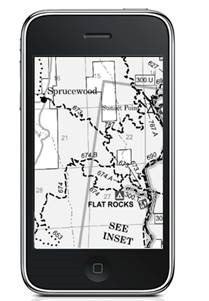 Check Out New Smart MVUM Maps for Colorado National Forests!
Stay the Trail Colorado provides a central webpage where the public, organizations and agencies can download all US Forest Service Motor Vehicle Use Maps (MVUM) for National Forests and Grasslands located in Colorado. These maps are kept up to date as the US Forest Service updates their maps. Funding for this effort is provided by Colorado Parks and Wildlife in the form of grant funding that comes from registration of OHVs in Colorado. Stay the Trail and Great Outdoors Consultants have made the MVUMs “smarter” by making sure they all have geospatial information (the map knows where it’s located in the World) and by providing them in multiple formats. Smart MVUMs are provided in the following formats.
Geospatial PDF Files
Some National Forests are publishing PDF versions of MVUMs that are already geospatial which means that you can see map coordinates in Acrobat Reader using the geospatial location tool (found in the analysis toolbar/ menu). These maps can also be imported into some mapping programs such as Global Mapper. MVUMs that did not have geospatial information were processed to add geospatial information using Global Mapper software. All PDF MVUMs were exported in the following coordinate system: UTM – Zone 13 North – NAD1983 – meters

http://www.avenza.com/pdf-maps
Geospatial PDFs can also be used on Apple and Android smart phones/tablets using Avenza’s free application call PDF Maps. After the PDF MVUM is downloaded on the mobile device, cellular coverage is not needed to use it. This application shows the current GPS location of the user on the map and allows them to perform some basic GPS recording tasks! The application allows you to show the location of geotagged photos you’ve taken with your mobile device right on the MVUM map. PDF Maps has an online map store that allows users of the app to find MVUMs by name or their current location! This app is being used to distribute free maps for the National Park Service, USGS Topo maps and other free maps. The store also allows for sale of commercial maps such as National Geographic maps. All MVUMs found on the Stay the Trail webpage are now also available through the Avenza map store for free!
1. Go to “App Store”, search for “PDF Maps” and install
2. Open “PDF Maps”, select “Store” function from the lower bar
3. Select the search function in top right corner.
4. Search for “Stay The Trail” or “MVUM” or a Ranger District, select from the pins that appear
5. Use the “Free” button to download to the phone.
6. Downloaded maps show up in the “Maps” list on the lower left
7. Select appropriate map for the district’s trails you will be using. Your location appears using GPS sensor.
Note: The android version of the PDF Maps app is a beta version and is not currently linked to the Avenza map store. Maps can be loaded in the Android version by linking to the Stay the Trail webpage MVUMs, by emailing the PDF file or a link to it.
Weblinks:
http://staythetrail.org/mvum/index.php – All Colorado PDF MVUMs on one webpage
http://www.avenza.com/pdf-maps – information about the application
http://www.pdf-maps.com/get-maps – search for Colorado MVUMs on your computer – preview only
Google Earth Files
Geospatial PDF MVUM files were rasterized in Global Mapper software and then clipped to the map frame (excluded the legend). The rasterized MVUM files were then exported to Google Earth .kmz files. These files can be loaded into Google Earth desktop and mobile applications. To load a .kmz file on your mobile device, email yourself the appropriate .kmz file or a link to the .kmz file on the Stay the Trail webpage. Google Earth mobile will show your current location on the MVUMs. MVUMs in this format allow the user to load adjacent MVUMs and look at them in 3D. Google Earth also allows the user to add other vector data on top of the MVUM such as trails or other data they have. A brief description of the MVUM file and a link to the Stay the Trail webpage are included in the .kmz files so the user can access the legend and other information that has been removed from the .kmz version of the MVUMs. All Google Earth MVUMs were exported in the following coordinate system: Latitude-Longitude – WGS84 – decimal degrees.
Weblink:
http://www.staythetrail.org/mvum/kmz/ – All Colorado Google Earth MVUMs on one webpage
Geotiff Files
Geospatial PDF MVUM files were rasterized in Global Mapper software and then clipped to the map frame (excluded the legend). The rasterized MVUM files were then exported to geotiff (.tif) files. Geotiffs are raster files that include geospatial information. These files can be loaded into Arcmap, Global Mapper, Terrasync, Arcpad and other GIS/GPS programs. They can also be loaded into Avenza PDF Maps mobile application! MVUMs in this format allow the user to load adjacent MVUMs and look at them side-by-side. GIS programs allow the user to add other vector data on top of the MVUM such as trails or other data. A brief description of the MVUM file and a link to the Stay the Trail webpage are included as text files so the user can access the legend and other information that has been removed from the .tif version of the MVUMs. All geotiff MVUMs were exported in the following coordinate system: UTM – Zone 13 North – NAD1983 – meters.
Weblink:
http://www.staythetrail.org/mvum/geotiff/ – All Colorado Geotiff MVUMs on one webpage
Check these and to make sure you know where you are and where you should not be when off road in Colorado.
What do you think? Leave a comment.
If you like this let your friends know or post it on FB, Twitter or LinkedIn
Copyright 2013 Recreation Law (720) Edit Law
Email: Rec-law@recreation-law.com
Google+: +Recreation
Twitter: RecreationLaw
Facebook: Rec.Law.Now
Facebook Page: Outdoor Recreation & Adventure Travel Law
Mobile Site: http://m.recreation-law.com
By Recreation Law Rec-law@recreation-law.com James H. Moss #Authorrank
<rel=”author” link=” https://plus.google.com/u/0/b/112453188060350225356/” />
#RecreationLaw, #@RecreationLaw, #Cycling.Law #Fitness.Law, #Ski.Law, #Outside.Law, #Recreation.Law, #Recreation-Law.com, #Outdoor Law, #Recreation Law, #Outdoor Recreation Law, #Adventure Travel Law, #law, #Travel Law, #Jim Moss, #James H. Moss, #Attorney at Law, #Tourism, #Adventure Tourism, #Rec-Law, #Rec-Law Blog, #Recreation Law, #Recreation Law Blog, #Risk Management, #Human Powered, #Human Powered Recreation,# Cycling Law, #Bicycling Law, #Fitness Law, #Recreation-Law.com, #Backpacking, #Hiking, #Mountaineering, #Ice Climbing, #Rock Climbing, #Ropes Course, #Challenge Course, #Summer Camp, #Camps, #Youth Camps, #Skiing, #Ski Areas, #Negligence, #Snowboarding, #RecreationLaw, #@RecreationLaw, #Cycling.Law #Fitness.Law, #SkiLaw, #Outside.Law, #Recreation.Law, #RecreationLaw.com, #OutdoorLaw, #RecreationLaw, #OutdoorRecreationLaw, #AdventureTravelLaw, #Law, #TravelLaw, #JimMoss, #JamesHMoss, #AttorneyatLaw, #Tourism, #AdventureTourism, #RecLaw, #RecLawBlog, #RecreationLawBlog, #RiskManagement, #HumanPowered, #HumanPoweredRecreation,# CyclingLaw, #BicyclingLaw, #FitnessLaw, #RecreationLaw.com, #Backpacking, #Hiking, #Mountaineering, #IceClimbing, #RockClimbing, #RopesCourse, #ChallengeCourse, #SummerCamp, #Camps, #YouthCamps, #Skiing, #Ski Areas, #Negligence, #Snowboarding, sport and recreation laws, ski law, cycling law, Colorado law, law for recreation and sport managers, bicycling and the law, cycling and the law, ski helmet law, skiers code, skiing accidents, Recreation Lawyer, Ski Lawyer, Paddlesports Lawyer, Cycling Lawyer, Recreational Lawyer, Fitness Lawyer, Rec Lawyer, Challenge Course Lawyer, Ropes Course Lawyer, Zip Line Lawyer, Rock Climbing Lawyer, Adventure Travel Lawyer, Outside Lawyer, Recreation Lawyer, Ski Lawyer, Paddlesports Lawyer, Cycling Lawyer, #RecreationalLawyer, #FitnessLawyer, #RecLawyer, #ChallengeCourseLawyer, #RopesCourseLawyer, #ZipLineLawyer, #RockClimbingLawyer, #AdventureTravelLawyer, #OutsideLawyer, Stay the Trail, Colorado, Stay the Trail Colorado, App, Maps, Off Road, Colorado Parks and Wildlife, MVUM, Google Maps, UTM,
WordPress Tags: Road,Maps,Stay,Trail,Colorado,Check,Smart,MVUM,National,Forests,agencies,Forest,Service,Motor,Vehicle,Grasslands,effort,Parks,Wildlife,registration,OHVs,Great,Outdoors,Consultants,MVUMs,information,World,Geospatial,Files,Some,versions,Acrobat,Reader,location,tool,analysis,menu,Global,Mapper,system,North,meters,PDFs,Apple,Android,tablets,Avenza,device,coverage,user,tasks,photos,users,Park,USGS,Topo,sale,Geographic,Open,Select,Search,Ranger,District,Free,sensor,Note,version,Weblinks,index,computer,Google,Earth,legend,vector,data,description,Latitude,Longitude,decimal,degrees,Weblink,Geotiff,Geotiffs,Arcmap,Terrasync,Arcpad,text,Leave,Twitter,LinkedIn,Recreation,Edit,Email,RecreationLaw,Facebook,Page,Outdoor,Adventure,Travel,Blog,Mobile,Site,James,Moss,Authorrank,author,Outside,Attorney,Tourism,Risk,Management,Human,Rock,Ropes,Course,Challenge,Summer,Camp,Camps,Youth,Areas,Negligence,SkiLaw,OutdoorLaw,OutdoorRecreationLaw,AdventureTravelLaw,TravelLaw,JimMoss,JamesHMoss,AttorneyatLaw,AdventureTourism,RecLaw,RecLawBlog,RecreationLawBlog,RiskManagement,HumanPoweredRecreation,CyclingLaw,BicyclingLaw,FitnessLaw,RopesCourse,ChallengeCourse,SummerCamp,YouthCamps,managers,helmet,accidents,Lawyer,Paddlesports,Recreational,Line,RecreationalLawyer,FitnessLawyer,RecLawyer,ChallengeCourseLawyer,RopesCourseLawyer,ZipLineLawyer,RockClimbingLawyer,AdventureTravelLawyer,OutsideLawyer,webpage,software,staythetrail


 Recreation Law