
Group Rossignol Recalls LOOK Pivot Ski Bindings Due to Fall Hazard
Posted: April 18, 2018 Filed under: Skiing / Snow Boarding | Tags: Look, Pivot Ski Bindings, Rossignol Leave a commentThe heel piece on the ski binding can come loose, posing a fall hazard to the skier.
Name of Product: LOOK Pivot Ski Bindings
Recall Date: April 16, 2018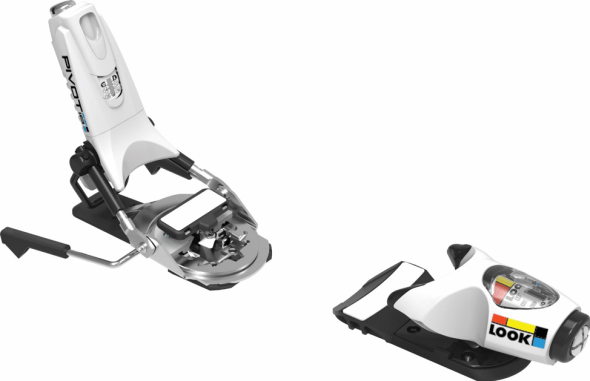
Recall Number: 18-139
Remedy: Replace. Consumers should immediately stop using the recalled ski bindings and contact LOOK to arrange for a free inspection and replacement.
Consumer Contact: LOOK toll-free at 888-243-6722 from 9 a.m. to 5 p.m. MT Monday through Friday, email at plefler@rossignol.com or online at https://m.rossignol.com/US and click on “Look Bindings Safety Recall” or http://www.look-bindings.com and click on “Recall” for more information.
Pictures available here: https://www.cpsc.gov/Recalls/2018/Group-Rossignol-Recalls-LOOK-Pivot-Ski-Bindings-Due-to-Fall-Hazard
Units: About 6,900 (In addition, 590 were sold in Canada)
Description: This recall involves 2017-2018 model year LOOK Pivot brand ski bindings. The heel piece can loosen and allow the boot to detach from the ski. The LOOK Pivot ski bindings were sold in black, white and yellow. LOOK is written on the front of the binding and Pivot is written on the side of the heel piece. Only date codes of H7, I7 or J7, without the letter ‘V” stamped on the black plastic piece behind the turntable heel unit are included in the recall. Date codes can be found on the bottom of the heel piece and can be viewed by rotating the turntable heel unit 90 degrees.
Model Number Model Name
FCFA002 0000TU PIVOT 18 B115 WHITE ICON
FCFA003 0000TU PIVOT 18 B95 WHITE ICON
FCFA004 0000TU PIVOT 18 B75 WHITE ICON
FCFA006 0000TU PIVOT 14 DUAL WTR B115 W. ICON
FCFA008 0000TU PIVOT 14 DUAL WTR B75 W. ICON
FCFA013 0000TU PIVOT 14 DUAL WTR B115 BLACK
FCFA014 0000TU PIVOT 14 DUAL WTR B95 BLACK
FCFA016 0000TU PIVOT 12 DUAL WTR B95 Y/BK
FCFA017 0000TU PIVOT 12 DUAL WTR B115 BLACK
FCFA018 0000TU PIVOT 12 DUAL WTR B95 BLACK
Incidents/Injuries: None reported
Sold At: Specialty ski stores including Christy Sports, REI, Retail Concepts and Vail Resorts nationwide and online at Backcountry.com and Evo.com from September 2017 through November 2017 for between $375 to $475.
Manufacturer(s): Look Fixations S.A.S., of France
Importer(s): Group Rossignol USA Inc., of Park City, Utah
Distributor(s): Group Rossignol USA Inc., of Park City, Utah
Manufactured In: France
Retailers: If you are a retailer of a recalled product you have a duty to notify your customers of a recall. If you can, email your clients or include the recall information in your next marketing communication to your clients. Post any Recall Poster at your stores and contact the manufacturer to determine how you will handle any recalls.
For more information on this see:
For Retailers
Recalls Call for Retailer Action
Combination of a Products Liability statute, an Expert Witness Report that was just not direct enough and odd facts holds a retailer liable as manufacture for product defect.
Product Liability takes a different turn. You must pay attention, just not rely on the CPSC.
Retailer has no duty to fit or instruct on fitting bicycle helmet
Summary Judgment granted for bicycle manufacturer and retailer on a breach of warranty and product liability claim.
For Manufacturers
The legal relationship created between manufactures and US consumers
 What do you think? Leave a comment.
If you like this let your friends know or post it on FB, Twitter or LinkedIn
Author: Outdoor Recreation Insurance, Risk Management and Law
Copyright 2017 Recreation Law (720) Edit Law
Email: Rec-law@recreation-law.com
Google+: +Recreation
Twitter: RecreationLaw
Facebook: Rec.Law.Now
Facebook Page: Outdoor Recreation & Adventure Travel Law
Blog:
www.recreation-law.com
Mobile Site: http://m.recreation-law.com
By Recreation Law Rec-law@recreation-law.com James H. Moss
#AdventureTourism, #AdventureTravelLaw, #AdventureTravelLawyer, #AttorneyatLaw, #Backpacking, #BicyclingLaw, #Camps, #ChallengeCourse, #ChallengeCourseLaw, #ChallengeCourseLawyer, #CyclingLaw, #FitnessLaw, #FitnessLawyer, #Hiking, #HumanPowered, #HumanPoweredRecreation, #IceClimbing, #JamesHMoss, #JimMoss, #Law, #Mountaineering, #Negligence, #OutdoorLaw, #OutdoorRecreationLaw, #OutsideLaw, #OutsideLawyer, #RecLaw, #Rec-Law, #RecLawBlog, #Rec-LawBlog, #RecLawyer, #RecreationalLawyer, #RecreationLaw, #RecreationLawBlog, #RecreationLawcom, #Recreation-Lawcom, #Recreation-Law.com, #RiskManagement, #RockClimbing, #RockClimbingLawyer, #RopesCourse, #RopesCourseLawyer, #SkiAreas, #Skiing, #SkiLaw, #Snowboarding, #SummerCamp, #Tourism, #TravelLaw, #YouthCamps, #ZipLineLawyer, Recall, CPSC, Consumer Product Safety Council,
Staten Et. Al. v. The City of New York Et. Al., 2013 N.Y. Misc. LEXIS 4257; 2013 NY Slip Op 32252(U)
Posted: April 17, 2018 Filed under: Legal Case, Minors, Youth, Children, New York, Summer Camp, Youth Camps | Tags: ACA, Adult, American Camp Association, breached, building code, bunk, Cabin, Coach, constructive notice, cross-claims, engaging, fellow, fighting, Football Camp, glass, hazardous, high school, horseplay, individual capacity, Infant, inter alia, Leader, negligent supervision, Notice, safety glass, severed, speculative, spontaneous, sudden, Summary judgment, Summer Camp, supervising, Supervision, window, Youth Camp Leave a commentStaten Et. Al. v. The City of New York Et. Al., 2013 N.Y. Misc. LEXIS 4257; 2013 NY Slip Op 32252(U)
[**1] Marvin Staten, an Infant Over the Age of 14 years by his Parent and Natural Guardian Cassandra Dozier and Cassandra Dozier, Individually, Plaintiffs, -against- The City of New York, The New York City Department of Education, Camp Chen-A-Wanda, Inc., Louis Cintron, Sr., Louis Cintron, Jr., an infant over the age of 14 years by his Parent and Natural Guardian, Louis Cintron, Sr., Barbara Rose Cintron and Louis Cintron, Jr. an infant over the age of 14 years by his Parent and Natural guardian, Barbara Rose Cintron, Defendants.
Index No. 104585/07
SUPREME COURT OF NEW YORK, RICHMOND COUNTY
2013 N.Y. Misc. LEXIS 4257; 2013 NY Slip Op 32252(U)
August 18, 2013, Decided
NOTICE: THIS OPINION IS UNCORRECTED AND WILL NOT BE PUBLISHED IN THE PRINTED OFFICIAL REPORTS
SUBSEQUENT HISTORY: Affirmed in part and reversed in part by, Summary judgment granted by, Dismissed by, in part Staten v. City of New York, 2015 N.Y. App. Div. LEXIS 3334 (N.Y. App. Div. 2d Dep’t, Apr. 22, 2015)
PRIOR HISTORY: Staten v. City of New York, 90 A.D.3d 893, 935 N.Y.S.2d 80, 2011 N.Y. App. Div. LEXIS 9134 (N.Y. App. Div. 2d Dep’t, 2011)
CORE TERMS: window, glass, summary judgment, inter alia, bunk, high school, supervision, severed, horseplay, cabin, spontaneous, hazardous, engaging, breached, sudden, coach, adult, individual capacity, safety glass, building code, constructive notice, supervising, speculative, fighting, infant, fellow, leader, notice, cross claims, negligent supervision
JUDGES: [*1] Present: HON. THOMAS P. ALIOTTA
OPINION BY: THOMAS P. ALIOTTA
OPINION
DECISION AND ORDER
[**2] Upon the foregoing papers, the motion for summary judgment (No. 1415-005) of defendant Camp Chen-A-Wanda, Inc. (hereinafter the “Camp”) is granted; the cross motion for summary judgment (No. 1471-006) of defendants The City of New York and The New York City Department of Education (hereinafter “City”) is granted to the extent of dismissing the claims of the individual plaintiff, Cassandra Dozier. The balance of the cross motion is denied.
This matter arises out of an incident which occurred on August 25, 2007 at the Camp’s premises in Pennsylvania, where the infant plaintiff, Marvin Staten (hereinafter “plaintiff”) was enrolled in a week-long football camp with the balance of his high school football team. Plaintiff, who was entering his sophomore year at Tottenville High School on Staten Island, claims to have sustained extensive injuries to his left eye when he was struck by glass from a window pane which had allegedly been broken by a punch thrown by defendant and fellow teammate, Louis Cintron, Jr. (hereinafter “Cintron”). It appears undisputed that the window broke while plaintiff and/or Cintron were engaging in [*2] “horseplay.”
At his deposition, plaintiff testified that shortly after dinner on the date of the accident, he was standing outside his cabin, looking in through a window at eye-level to “see if anybody was messing around with [his] stuff” when, after a few seconds, defendant Cintron “punched [through] the glass” (see Plaintiff’s March 27, 2009 EBT, pp 70-71; Camp’s Exhibit F). No criminal charges were filed against plaintiff’s teammate, who was, however, dismissed from the camp, “cut” from his high school team, and suspended from Tottenville High School following the incident.
The claims against the Camp and the City are grounded in allegations of negligent supervision and maintenance of the premises where the incident occurred (see Plaintiffs’ Amended Verified Complaint, Camp’s Exhibit A, para “Thirty-Sixth”).
[**3] It is noted that prior to this incident, i.e., on February 14, 2006, Cintron had been disciplined by Tottenville High School for engaging in disruptive conduct with another student (see City’s Exhibit I; see also Staten v. City of New York, 90 AD3d 893, 935 N.Y.S.2d 80). It is likewise noted that pursuant to a written contract drawn on Camp Chen-A-Wanda letterhead, dated and signed August 20, [*3] 2007, Tottenville High School coach Jim Munson agreed that “each bunk will be supervised by a coach, former player, or other adult who is at least nineteen years of age” (see City’s Exhibit C). To the extent relevant, the bunk “leaders” supervising plaintiff’s bunk were two seniors, one of whom was defendant Cintron.
In moving for summary judgment, Camp argues, inter alia, that: (1) it owed no duty to supervise plaintiff or to otherwise protect him from horseplay; (2) no facts have been adduced in support of plaintiffs’ claim that the subject window constituted a “defective condition”; and (3) since the proximate cause of the accident was the sudden, unanticipated independent actions of Cintron (i.e., punching the glass), the Camp cannot be found liable for plaintiff’s injury.
In opposition to the motion, plaintiff alleges, inter alia, that not only was the Camp negligent in its maintenance of the premises, but that it was negligent: (1) per se in using ordinary or “annealed” glass for the cabin windows rather than safety glass, in violation of Pennsylvania State and International Building Codes (see June 12, 2013 affidavit of Plaintiff’s Expert, Michael J. Peterson, Plaintiff’s Exhibit [*4] H); (2) in failing to properly exercise risk management, and (3) in failing to supervise its post-season campers and protect them against horseplay. Plaintiff further argues that while Cintron’s actions might be considered “intervening,” his conduct was not a superseding cause of the accident. Notably, plaintiff submits the affidavit of Michael J. Peterson (see Plaintiffs’ Exhibit H), an “expert with 44 years in the camping industry and a co-author of the American Camp Association’s ‘2006 Camp Accreditation Process Guide'” (see Plaintiffs’ [**4] Memorandum of Law), who opined, inter alia, “with a reasonable degree of professional certainty of the camping industry…that [the Camp] should have begun and completed replacement of all non-reinforced glass in hazardous or even marginally hazardous locations within [its] camp with safety impact rated glass, plexi glass (plastic),…safety film, or…reinforced…small gauge hardware cloth wire a full two decades before this accident.” The expert further opined that had these steps been taken, the punch “would not [have] shattered safety impact rated glass, plexi-glass, glass covered with safety film or reinforced glass” (id.).
As previously indicated, [*5] the Camp’s motion for summary judgment is granted, and the complaint and any cross claims as against this defendant are hereby severed and dismissed.
In the opinion of this Court, it is constrained by the 2005 decision of the Court of Appeals in Buchholz v. Trump 767 Fifth Avenue, (5 NY3d 1, 831 N.E.2d 960, 798 N.Y.S.2d 715) to hold that the “conclusory testimony” offered by plaintiff’s expert was “insufficient to raise a question of fact as to whether [the Camp] breached its duty to maintain[] [its] property in a reasonably safe condition in view of all the circumstances, including the likelihood of injury to others, the seriousness of the injury, and the burden of avoiding the risk” and, further, that the failure of plaintiff’s expert to quote any “authority, treatise [or] standard” in support thereof rendered his ultimate opinion speculative and/or “unsupported by any evidentiary foundation…[sufficient] to withstand summary judgment (id. at 9 [internal quotation marks omitted]; see Diaz v. New York Downtown Hosp., 99 NY2d 542, 544, 784 N.E.2d 68, 754 N.Y.S.2d 195).1
1 The decedent in Buchholz was pushed and fell through an office window after engaging in “play fighting” with three co-workers following their attendance at a St. Patrick’s Day Parade [*6] in 1999 (id. at 4). Plaintiff alleged that the premises’ owner was negligent, inter alia, in failing to furnish shatterproof glass windows and a safety rail across the window’s face in contravention of certain sections of the New York City Administrative Code, particularly §27-651 (“Panels subject to human impact loads”). Plaintiff’s expert, a registered architect and licensed engineer, submitted an affidavit opining that the window’s very low sill was problematic, and further, that “good and accepted engineering and building safety practices dictated that a protective barrier bar be installed” (id. at 6). Nevertheless, the trial court’s denial of the owner’s summary judgment motion was reversed on appeal (see Buchholz v. Trump 767 Fifth Ave., LLC, 4 AD3d 178, 772 N.Y.S.2d 257) and affirmed by the Court of Appeals based, inter alia, on the speculative nature of the opinion of plaintiff’s expert.
[**5] Here, plaintiff’s expert placed substantial reliance on the language of the 2006 American Camp Association Accreditation Process Guide in formulating his opinion. However, although alleged to have been tested “numerous times in litigation”, Mr. Peterson failed to demonstrate, e.g., where or when this guide has [*7] been accepted as an authoritative reference work in any court of law, or its applicability to a camp constructed in the 1940s. Moreover, his opinion that the failure to replace unannealed windows violated certain Pennsylvania codes or statutes is not compelling or binding upon this Court. To the contrary, Peterson’s reliance on 34 Pa. Admin. Code §47.398, to require the use of “safety glass” in bunk windows represents a misreading of the statute, as the provision in question was not adopted until 1972 (some thirty years after the Camp began its operations), and neither it nor any other Pennsylvania building code or regulation has been cited requiring that bunk windows be retrofitted to conform to the 1972 requirements (cf. Buchholz v. Trump 767 Fifth Avenue, 5 NY3d at 9). Moreover, he failed to show that the window in question was actually in a “hazardous” location for purposes of the cited codes, i.e., within 24 inches of the bunkhouse door. In fact, no measurement was provided. “Although noncompliance with…a customary practice or industry standard may be evidence of negligence, the failure to abide by guidelines or recommendations that are not generally-accepted standards in an [*8] industry will not suffice to raise an issue of fact as to a defendant’s negligence” (Diaz v. New York Downtown Hosp., 287 AD2d 357, 358, 731 N.Y.S.2d 694, affd 99 NY2d 542, 784 N.E.2d 68, 754 N.Y.S.2d 195 [citations omitted]; see also Ambrosio v. South Huntington Union Free School Dist., 249 AD2d 346, 671 N.Y.S.2d 110). This, similarly to Buchholz, is just such a case2.
2 Also worthy of note is the Camp’s uncontroverted representation that no similar incidents (other than, e.g., windows broken by vandalism) occurred during its sixty-year history (see February 3, 2010 EBT of Craig Neier, Camp’s Exhibit C).
The City’s cross motion for summary judgment is granted in part, and denied, in part, as hereinafter provided.
[**6] In arguing for dismissal of the negligent supervision claim, the City argues that (1) it provided more than enough chaperones at the training camp, (2) issued oral and written instructions against the type of conduct which caused plaintiff’s injury; (3) the sudden, spontaneous and unforeseeable nature of defendant Cintron’s actions were such that no reasonable amount of supervision could have prevented the injury, and (4) it had no prior notice of the latter’s propensity to engage in the type of conduct that caused plaintiff’s injury. Moreover, [*9] the City maintains that it did not legally own, occupy, or control the Camp; that Cintron’s independent and spontaneous actions breached any chain of causation connected to the condition or maintenance of the camp and/or its cabin windows; and that it possessed no actual or constructive notice of any dangerous condition regarding the composition of the window itself.
In opposition, plaintiffs argue, inter alia, that the lack of supervision which encouraged the horseplay causing the injury is evident by the City’s failure to (1) place an adult in each cabin, as required under plaintiff’s interpretation of the terms of its contract with the Camp (see City’s Exhibit C); (2) adhere to the Regulations of the Chancellor governing adult supervision on school trips (see City’s Exhibit D), and (3) comply with American Camp Association standard HR-10A and 10B regarding the supervision of campers (see June 12, 2013 affidavit of plaintiffs’ expert, Michael J. Peterson, “Opinions 1”).
Here, the duty of supervising the student/athletes was contractually assumed by the City. In determining whether the duty to provide adequate supervision has been breached in the context of injuries caused by the acts [*10] of fellow students, it must be established that school authorities had sufficiently specific knowledge or notice of the dangerous conduct which caused the injury. Put simply, the third-party acts must reasonably have been anticipated (see Brandy B. v. Eden Cent. School Dist., 15 NY3d 297, 302, 934 N.E.2d 304, 907 N.Y.S.2d 735; Mirand v. City of New York, 84 NY2d 44, 49, 637 N.E.2d 263, 614 N.Y.S.2d 372; [**7] Shannea M. v. City of New York, 66 AD3d 667, 886 N.Y.S.2d 483; Doe v. Department of Educ. of City of NY, 54 AD3d 352, 862 N.Y.S.2d 598). In this regard, actual or constructive notice to the school of prior similar conduct is generally required, since school personnel cannot be reasonably expected to guard against all of the sudden and spontaneous acts that take place among students on a daily basis.
Here, the proof of Cintron’s 2006 suspension for fighting at school serves to preclude the City from demonstrating prima facie that his designation as bunk “leader” was reasonable as a matter of law (see Staten v. City of New York and Camp Chen-A-Wanda, Inc., 90 AD3d 893, 935 N.Y.S.2d 80; see also September 16, 2009 EBT of James Munson, pp 16, 33, 39-42; the Camp’s Exhibit E). Neither is Coach Munson’s investigation purportedly uncovering a conflicting version of the events in which the breaking of the glass [*11] is attributed to plaintiff “put[ting] his face” against it (see EBT of James Munson, p 54) sufficient to warrant dismissal of the cause of action pleaded on behalf of the infant plaintiff.
However, it is well settled that a parent cannot recover for the loss of society and companionship of a child who was negligently injured (see White v. City of New York, 37 AD2d 603, 322 N.Y.S.2d 920), while a claim for the loss of a child’s services must be capable of monetarization in order to be compensable (see DeVito v. Opatich, 215 AD2d 714, 627 N.Y.S.2d 441). Here, plaintiff’s mother has offered no proof of the value of any services rendered to her by her son. As a result, so much of the complaint as seeks an award of damages in her individual capacity for the loss of her son’s services must be severed and dismissed.
Accordingly, it is
ORDERED, that the motion for summary judgment of defendant Camp Chen-A-Wanda Inc. is granted, and the complaint and any cross claims as against this defendant are hereby severed and dismissed; and it is further
[**8] ORDERED, that the cross motion for summary judgment of defendants The City of New York and The New York City Department of Education is granted to the extent that the cause(s) of action asserted [*12] by plaintiff Cassandra Dozier in her individual capacity are hereby severed and dismissed, and it is further
ORDERED that the remainder of the cross motion for summary judgment is denied.
ENTER,
/s/
Hon. Thomas P. Aliotta
J.S.C.
Dated: September 18, 2013
Ellis v. YMCA Camp Mohawk, Inc., 615 Fed. Appx. 697; 2015 U.S. App. LEXIS 16057
Posted: April 17, 2018 Filed under: Connecticut, Equine Activities (Horses, Donkeys, Mules) & Animals, Legal Case | Tags: Diversity, equestrian, expert testimony, Expert Witness, expertise, familiarity, horseback riding, horsemanship, issues of material fact, juror, Membership, Pony, qualification, resume, specialized knowledge, Standard of Care, state law, Summary judgment Leave a commentTo Read an Analysis of this decision see
Expert testimony is needed when the activity is beyond the scope of the general knowledge of a juror in Connecticut.
and
Summer camp being sued for injury from falling off horse wins lawsuit because the plaintiff failed to find an expert to prove their case.
Ellis v. YMCA Camp Mohawk, Inc., 615 Fed. Appx. 697; 2015 U.S. App. LEXIS 16057
Louisa R. Ellis, ppa Elizabeth Ellis, Elizabeth Ellis, Plaintiff-Appellant, -v.- YMCA Camp Mohawk, Inc., Defendant-Appellee.
14-3460
UNITED STATES COURT OF APPEALS FOR THE SECOND CIRCUIT
615 Fed. Appx. 697; 2015 U.S. App. LEXIS 16057
September 10, 2015, Decided
NOTICE: PLEASE REFER TO FEDERAL RULES OF APPELLATE PROCEDURE RULE 32.1 GOVERNING THE CITATION TO UNPUBLISHED OPINIONS.
PRIOR HISTORY: [**1] Appeal from a judgment of the United States District Court for the District of Connecticut (Thompson, J.).
Ellis v. Y.M.C.A. Camp Mohawk, Inc., 2014 U.S. Dist. LEXIS 110403 (D. Conn., Aug. 11, 2014)
CASE SUMMARY:
OVERVIEW: HOLDINGS: [1]-A claim that a summer camp operator was negligent in offering horseback riding instruction required the support of expert testimony, as the intricacies of horseback riding technique and horsemanship were no longer within the bounds of ordinary knowledge or experience of judges and jurors; [2]-The proffered expert witness was not qualified under Fed. R. Evid. 702, as he claimed a generalized familiarity with camp education but had practically no knowledge or experience relating to horsemanship.
OUTCOME: Judgment affirmed.
CORE TERMS: expert testimony, summary judgment, state law, standard of care, specialized knowledge, horsemanship, expertise, juror, horseback riding, expert witness, issues of material fact, qualification, familiarity, membership, diversity, resume, equestrian, pony
COUNSEL: FOR APPELLANT: Megan L. Piltz, Sabatini and Associates, LLC, Newington, Connecticut.
FOR APPELLEES: Renee W. Dwyer and Katherine L. Matthews, Gordon, Muir and Foley, LLP, Hartford, Connecticut.
JUDGES: PRESENT: RALPH K. WINTER, JOHN M. WALKER, JR., DENNIS JACOBS, Circuit Judges.
OPINION
[*697] SUMMARY ORDER
UPON DUE CONSIDERATION, IT IS HEREBY ORDERED, ADJUDGED AND DECREED that the judgment of the district court be AFFIRMED.
Louisa Ellis and Elizabeth Ellis (“Appellants”) appeal from the judgment of the United States District Court for the District of Connecticut (Thompson, J.), dismissing [*698] on summary judgment their diversity action alleging negligence against YCMA Camp Mohawk, Inc. (“YMCA”). Appellants argue that the district court abused its discretion in determining that their expert, Corey Andres, was not qualified to render an expert opinion regarding the standard of care for an equestrian course at the YMCA camp at which twelve-year-old Louisa was injured. Appellants also argue that the district court erred in determining that all of the issues presented require expert testimony. We assume the parties’ [**2] familiarity with the underlying facts, the procedural history, and the issues presented for review.
On July 18, 2011, Louisa Ellis fell from a pony while taking horseback riding lessons at YMCA Camp Mohawk. Ellis sustained injuries to her hand and elbow that required surgery and therapy. Appellants identified Andres, an employee of Robson Forensic, to investigate the claims and to provide expert testimony. Andres claimed his expertise based on his membership in the American Camp Association (“ACA”) and his study of therapeutic education at Ohio State, University of Toledo, including a study pertaining to equestrian matters. Andres’s investigation concluded that YMCA was negligent in failing to provide complete and proper instruction as to how to fall from a horse in a way that minimizes injury.
The district court excluded Andres’s expert testimony on the ground that he had limited experience in the field of horseback riding. Therefore, appellants’ failure to produce an expert where expert testimony was required led the district court to grant summary judgment.
[HN1] A grant of summary judgment is reviewed de novo to determine whether any genuine issues of material fact would bar summary judgment. [**3] Zurich Am. Ins. Co. v. ABM Indus., Inc., 397 F.3d 158, 164 (2d Cir. 2005). [HN2] We review the district court’s evidentiary ruling under an abuse-of-discretion standard. See id. at 171-72. “Either an error of law or a clear error of fact may constitute an abuse of discretion.” Schering Corp. v. Pfizer, Inc., 189 F.3d 218, 224 (2d Cir. 1999) (internal quotation marks and citations omitted). [HN3] A district court’s qualification of an expert witness will only be overturned if it is manifestly erroneous. United States v. Barrow, 400 F.3d 109, 123 (2d Cir. 2005).
[HN4] In a diversity action, whether expert testimony is required is a matter of state law, whereas the admissibility of a given expert witness is governed by the Federal Rules of Evidence. See 29 Charles Alan Wright & Arthur R. Miller, Federal Practice and Procedure § 6263; see also Beaudette v. Louisville Ladder Inc., 462 F.3d 22, 27 (1st Cir. 2006). [HN5] Under Connecticut state law, expert testimony is required when a matter goes “beyond the ordinary knowledge and experience of judges or jurors.” LePage v. Horne, 262 Conn. 116, 809 A.2d 505, 511 (Conn. 2002). Connecticut courts have held, on similar facts, that the general public is no longer as familiar with horsemanship as it arguably was at the beginning of the twentieth century, and that expert testimony is necessary to establish a standard of care and a breach of that standard. Keeney v. Mystic Valley Hunt Club, Inc., 93 Conn. App. 368, 889 A.2d 829, 833-34 (Conn. App. Ct. 2006).
As the district court held, Appellants’ claims required the support of expert testimony. The intricacies of horseback riding technique and horsemanship [**4] are no longer within the bounds of ordinary knowledge or experience of judges and jurors. Questions [*699] such as whether the stirrups were improperly installed and whether the pony was of sufficient size to carry the rider are not questions that the average juror can decide based on past knowledge or experience. We therefore agree that Ellis needed expert testimony to show both a standard of care and a breach of that standard.
Andres claimed a generalized familiarity with camp education. However, [HN6] Federal Rule of Evidence 702 requires expertise based on specialized knowledge and experience, not a mere understanding derived from others’ publications. “A witness who is qualified as an expert by knowledge, skill, experience, training, or education may testify in the form of an opinion if the expert’s scientific, technical, or other specialized knowledge will help the trier of fact to understand the evidence or to determine a fact in issue.” Fed. R. Evid. 702(a); see also Marvel Characters, Inc. v. Kirby, 726 F.3d 119, 135 (2d Cir. 2013). Andres does not rise to the level of expertise required to opine on the matters at hand. Andres has practically no knowledge or experience relating to horsemanship — his resume makes no reference to any such knowledge, and his investigation merely points to three publications [**5] that he relied on when preparing his report. Andres’s resume instead highlights a wide array of fields and organizations in which he has obtained certifications or is a member. Appellants argue that Andres’s membership in the ACA broadly reaches all camp recreations. This broad qualification falls well short of the specialized knowledge that Federal Rule of Evidence 702 demands. The district court therefore did not abuse its discretion in its decision to exclude Andres’s testimony.
Appellants’ failure to provide necessary expert testimony precludes them from presenting these claims under Connecticut state law. See LePage, 809 A.2d at 511. Thus, there are no issues of material fact raised to challenge the district court’s entry of summary judgment.
For the foregoing reasons, and finding no merit in Appellant’s other arguments, we hereby AFFIRM the judgment of the district court.
G-YQ06K3L262
http://www.recreation-law.com
Under Pennsylvania law, a collision with other skiers or boarders is an inherent risk of skiing. Skiing off the trail because of the collision is also an inherent risk of skiing.
Posted: April 16, 2018 Filed under: Assumption of the Risk, Pennsylvania, Ski Area, Skier v. Skier, Skiing / Snow Boarding | Tags: assumption of the risk, att, Collision, daughter, Downhill, drop-off, edge, elevation, experienced, foot, genuine, inherent, Inherent Risk, knee-jerk, Lift Ticket, matter of law, Pennsylvania Skier Safety Act, pile, Resort, rocks, Ski, skied, Skier, Skier's Responsibility Act, skiing, Slope, Snow, Snowboarder, specific risk, Sport, Summary judgment, Trail, veering Skier Safety Act Leave a commentThe terrain off of the trail was different than normally found at a ski area. A 3-4 drop off into a pile of rocks. However, the risk is skiing off the trail, not what you run into when you do.
Vu v. Ski Liberty Operating Corp., et. al., 2018 U.S. Dist. LEXIS 49013
State: Pennsylvania, United States District Court for the Middle District of Pennsylvania
Plaintiff: Quan Vu and May Siew
Defendant: Ski Liberty Operating Corp., et. al.
Plaintiff Claims: Negligence and Loss of Consortium
Defendant Defenses: Release
Holding: For the defendant
Year: 2018
Summary
The definition of an inherent risk when skiing is not what causes the injury, only the risk that led to the injury. Under Pennsylvania law, there is a broad definition of inherent risks and this case was dismissed because the plaintiff assumed those inherent risks, and the defendant did not owe a duty to protect him from those risks.
Facts
The plaintiff was an experienced skier, who had been skiing for twenty years. He was skiing behind his daughter at the defendant’s ski area. A snowboarder came close to the plaintiff or hit the plaintiff sending or causing him to ski off the trail. He went off the trail, over a 3-4 drop and landed in a pile of rocks.
…Mr. Vu does not recall much detail about his accident. Mr. Vu testified: “I believe there was a snowboarder involved and I — the snowboarder got — either cut me off or got awfully close and I had a knee-jerk reaction to veer because the last thing I want to do is ram into somebody. So I — my knee-jerk reaction is to veer.” However, Mr. Vu could not recall what he saw that caused him to veer, whether he veered to the right or to the left, or whether the snowboarder was above or below him on the hill. The last thing that Mr. Vu remembered was skiing with his daughter.
He sued the defendant ski area because it was:
…negligent in the design, construction, and maintenance of the ski slope, failure to warn Mr. Vu of the dangerous condition, failure to construct a barrier to stop skiers from going over the edge into the pile of rocks, failure to inspect the scope and detect the defective condition, and failure to repair that condition.
The court granted the defendants motion for summary judgment.
Analysis: making sense of the law based on these facts.
The decision was based on the Pennsylvania Skier’s Responsibility Act. The court had to decide if the risks encountered by the plaintiff were inherent risks of skiing.
The Pennsylvania General Assembly expressly preserved the doctrine of assumption of the risk as a defense in downhill skiing cases in the Skier’s Responsibility Act, recognizing that “there are inherent risks in the sport of downhill skiing. As the Supreme Court of Pennsylvania explained, “[t]he assumption of the risk defense, as applied to sports and places of amusement, has also been described as a ‘no-duty’ rule, i.e., as the principle that an owner or operator of a place of amusement has no duty to protect the user from any hazards inherent in the activity.”
If there is no duty, then there can be no negligence.
Where there is no duty, there can be no negligence, and thus when inherent risks are involved, negligence principles are irrelevant–the Comparative Negligence Act is inapplicable–and there can be no recovery based on allegations of negligence.
Pennsylvania has a two-part test to determine if the defendant owed the plaintiff a duty.
First, this Court must determine whether [the plaintiff] was engaged in the sport of downhill skiing at the time of her injury.” “If that answer is affirmative, we must then determine whether the risk” of the circumstance that caused the plaintiff’s injury “is one of the ‘inherent risks’ of down-hill skiing.” If so, then summary judgment must be awarded against the plaintiff as a matter of law.
The first test was met; the plaintiff was skiing at the time of his accident.
The court then had to determine if the risks the plaintiff encountered were inherent to skiing. Under Pennsylvania law, inherent risks “are those that are “common, frequent, and expected” in downhill skiing.”
The plaintiff argued that because the plaintiff was no specifically aware of the risk of the 3-4-foot drop off and the pile of rocks, he could not assume the risk.
Plaintiffs argue that while Mr. Vu “was generally aware of the dangers of downhill skiing,” he was not aware “of the specific hazard of being ejected from the ski trail due to a steep 3 to 4 foot drop-off on that particular slope’s trail edge.” (emphasis in original). Because there is no evidence that Mr. Vu had subjective awareness of these risks, Plaintiffs argue, the doctrine of assumption of the risk cannot apply.
In many cases, assumption of the risk would not be a defense if the injured plaintiff had no specific knowledge of the risk. However, it was not the case here under the statute. It did not matter if the Plaintiff had specific knowledge of the risk or a general knowledge of the risks of skiing, he assumed those risks.
The court then looked at the facts and found there were two circumstances that gave rise to the plaintiff’s injuries, veering to avoid a collision and skiing over the drop off.
The first is an inherent risk of skiing in Pennsylvania.
We can easily conclude that the first risk is inherent and gives rise to no duty on behalf of Defendants. The Supreme Court of Pennsylvania has specifically determined that the risk of collision with another person on the slope is inherent to the sport of downhill skiing: “the risk of colliding with an-other skier is one of the common, frequent and expected risks ‘inherent’ in downhill skiing. Indeed, other skiers are as much a part of the risk in downhill skiing, if not more so, than the snow and ice, elevation, contour, speed and weather conditions.
The next issue was whether skiing over the drop off into a pile of rocks was an inherent risk of skiing. Here again, the court found skiing off the trail, no matter what you may encounter once you are off the trail, is an inherent risk of skiing. The court backed its point up quite interestingly.
We struggled to find case law on point to support our holding because we believe it to be such a common sense and logical conclusion that does not require in-depth analysis.
The court found the defendant did not owe the plaintiff a duty because he assumed the risks of his injury under the Pennsylvania Skier’s Responsibility Act.
So Now What?
Actually, an easy case. Easy under Pennsylvania law because of the Pennsylvania Supreme Courts interpretation of the Pennsylvania Skier’s Responsibility Act. When skiing in Pennsylvania collisions with other skiers or boarders are an inherent risk of skiing and skiing off the trail is also.
What do you think? Leave a comment.
Copyright 2018 Recreation Law (720) 334 8529
If you like this let your friends know or post it on FB, Twitter or LinkedIn


Author: Outdoor Recreation Insurance, Risk Management and Law
Facebook Page: Outdoor Recreation & Adventure Travel Law
Email: Rec-law@recreation-law.com
By Recreation Law Rec-law@recreation-law.com James H. Moss
#AdventureTourism, #AdventureTravelLaw, #AdventureTravelLawyer, #AttorneyatLaw, #Backpacking, #BicyclingLaw, #Camps, #ChallengeCourse, #ChallengeCourseLaw, #ChallengeCourseLawyer, #CyclingLaw, #FitnessLaw, #FitnessLawyer, #Hiking, #HumanPowered, #HumanPoweredRecreation, #IceClimbing, #JamesHMoss, #JimMoss, #Law, #Mountaineering, #Negligence, #OutdoorLaw, #OutdoorRecreationLaw, #OutsideLaw, #OutsideLawyer, #RecLaw, #Rec-Law, #RecLawBlog, #Rec-LawBlog, #RecLawyer, #RecreationalLawyer, #RecreationLaw, #RecreationLawBlog, #RecreationLawcom, #Recreation-Lawcom, #Recreation-Law.com, #RiskManagement, #RockClimbing, #RockClimbingLawyer, #RopesCourse, #RopesCourseLawyer, #SkiAreas, #Skiing, #SkiLaw, #Snowboarding, #SummerCamp, #Tourism, #TravelLaw, #YouthCamps, #ZipLineLawyer, #RecreationLaw, #OutdoorLaw, #OutdoorRecreationLaw, #SkiLaw,
Vu v. Ski Liberty Operating Corp., et. al., 2018 U.S. Dist. LEXIS 49013
Posted: April 15, 2018 Filed under: Assumption of the Risk, Legal Case, Pennsylvania, Ski Area, Skier v. Skier, Skiing / Snow Boarding | Tags: assumption of the risk, att, Collision, daughter, Downhill, drop-off, edge, elevation, experienced, foot, genuine, inherent, Inherent Risk, knee-jerk, Lift Ticket, matter of law, Pennsylvania Skier Safety Act, pile, Resort, rocks, Ski, skied, Skier, Skier Safety Act, Skier's Responsibility Act, skiing, Slope, Snow, Snowboarder, specific risk, Sport, Summary judgment, Trail, veering Leave a commentVu v. Ski Liberty Operating Corp., et. al., 2018 U.S. Dist. LEXIS 49013
Quan Vu and May Siew, Plaintiffs, v. Ski Liberty Operating Corp., et. al., Defendants,
1:16-cv-2170
UNITED STATES DISTRICT COURT FOR THE MIDDLE DISTRICT OF PENNSYLVANIA
2018 U.S. Dist. LEXIS 49013
March 26, 2018, Decided
COUNSEL: [*1] For Quan VU, May Siew, Plaintiffs: D. Aaron Rihn, Mark D. Troyan, LEAD ATTORNEYS, Robert Peirce & Associates, P.C., Pittsburgh, PA USA.
For Ski Liberty Operating Corp. doing business as Liberty Mountain Resort, Defendant: Anthony W. Hinkle, Snow Time, Inc., Cipriani & Werner, P.C., Philadelphia, PA, USA.
For Snow Time, Inc., Ski Liberty Operating Corp., Counterclaim Plaintiffs: Anthony W. Hinkle, Cipriani & Werner, P.C., Philadelphia, PA USA.
For Snow Time, Inc., Ski Liberty Operating Corp., Counterclaim Defendants: Anthony W. Hinkle, Cipriani & Werner, P.C., Philadelphia, PA USA.
JUDGES: Hon. John E. Jones III, United States District Judge.
OPINION BY: John E. Jones III
OPINION
MEMORANDUM
Plaintiffs are Quan Vu and his wife, May Siew. (“Plaintiffs”). Defendants are Ski Liberty Operating Corp. and Snow Time, Inc., operating as Liberty Mountain Resort. (“Defendants”). This action arises out of a skiing accident at Liberty Mountain that left Mr. Vu severely injured. The complaint brings one count of negligence on behalf of Mr. Vu and one count of loss of consortium on behalf of Mrs. Siew, both alleging that the accident was caused by the Defendants’ negligence in maintaining the ski slope and failing to warn Mr. Vu of [*2] the slope’s hazardous condition. (Doc. 1). Presently pending before the Court is the Defendants’ motion for summary judgment. (the “Motion”) (Doc. 36). The Motion has been fully briefed and is therefore ripe for our review. (Docs. 38, 42, 43). For the reasons that follow, the Motion shall be granted.
I. BACKGROUND
On January 23, 2015, Mr. Vu was downhill skiing with his daughter at Liberty Mountain. (Doc. 41, ¶ 24). Mr. Vu was following his daughter from behind as they skied down the Lover Heavenly trail, a blue square intermediate hill, when he had his accident. (Id. at ¶¶ 24-25). Due to his injuries, Mr. Vu does not recall much detail about his accident. (Doc. 37, ¶ 11). Mr. Vu testified: “I believe there was a snowboarder involved and I — the snowboarder got — either cut me off or got awfully close and I had a knee-jerk reaction to veer because the last thing I want to do is ram into somebody. So I — my knee-jerk reaction is to veer.” (Doc. 37, att. 1, pp. 65-66). However, Mr. Vu could not recall what he saw that caused him to veer, whether he veered to the right or to the left, or whether the snowboarder was above or below him on the hill. (Id. at pp. 65-66). The last thing that Mr. Vu remembered [*3] was skiing with his daughter. (Id. at p. 66).
Mr. Vu’s daughter testified: “I saw someone get really close to him and he was trying to avoid them and it was either ramming into him, the snowboarder, or person who was trying to get really close to him, or veering off path.” (Doc. 42, att. 2, p. 8). “He — there was someone trying to kind of get really close to him. And he didn’t want to ram into him. So he — I don’t really understand — know what happened. But he tried to avoid it. And there was like a big ditch or something there. And he tried to stop and tried to avoid the person who was trying to cut him off.” (Id.). “My dad was — the snowboarder was — my dad was kind of like the ham in the middle of a sandwich. Between the end of the trail, the edge of the trail and the snowboarder.” (Id. at p. 9). “I just felt that the snowboarder was getting quite close to my dad and I didn’t want a collision to happen or the snowboarder to ram into my dad.” (Id. at p. 10).
Ultimately, whether he did so intentionally or not, Mr. Vu skied off of the edge of the trail and suffered catastrophic injuries. There was a drop-off at the edge of the ski trail of about three to four feet. (Doc. 41, ¶ 32). Below that drop-off was a large pile [*4] of rocks. (Id. at ¶ 31). Mr. Vu skied off of the edge of the trail, off of the embankment, and landed on the pile of rocks. (Doc. 37, ¶ 11).
Mr. Vu was an experienced skier at the time of his accident. He had skied for over twenty years and was capable of skiing black diamond slopes. (Id. at P 6). Mr. Vu testified that he was familiar with the Skier’s Responsibility Code and understood that he was responsible for skiing in control and in such a manner that he could stop or avoid other skiers. (Id.). Mr. Vu also testified that he understood that skiing is a dangerous sport and that he could get hurt if he skied out of control or if he fell. (Id.).
On the day of his accident, Mr. Vu’s wife purchased his Liberty Mountain Resort Lift Ticket. (Id. at ¶ 18). The back of the lift ticket reads as follows:
PLEASE READ
Acceptance of this ticket constitutes a contract. The conditions of the contract are stated on this ticket & will prevent or restrict your ability to sue Liberty Mountain Resort. If you do not agree with these conditions, then do not use the facility. Snowsports in their various forms, including the use of lifts, are dangerous sports with inherent and other risks. These risks include but are [*5] not limited to: variations in snow, steepness & terrain, ice & icy conditions, moguls, rocks, trees & other forms of forest growth or debris (above or below the surface), bare spots, lift towers, utility lines & poles, fencing or lack of fencing, snowmaking & snowgrooming equipment & component parts, on-snow vehicles & other forms of natural or man-made obstacles, and terrain features on or off designated trails as well as collisions with equipment, obstacles or other snowsport participants. Trail conditions vary constantly because of weather changes and use. All the inherent and other risks involved present the risk of permanent catastrophic injury or death. In consideration of using Liberty’s facilities, the purchaser or user of this ticket agrees to accept the risks of snowsports and understands and agrees that they are hazardous and further agrees NOT TO SUE Ski Liberty Operating Corp., its owners or employees if injured while using the facilities regardless of any negligence, including gross negligence, on the part of the resort, and/or its employees or agents. The purchaser or user of this ticket voluntarily assumes the risk of injury while participating in the sport, and agrees [*6] to report all injuries before leaving the resort . . .
(Doc. 37, Ex. D) (emphasis in original). Though Mr. Vu was uncertain if he read the language on the lift ticket on the day of his accident, he testified that he had read it at some point prior to his accident. (Doc. 37, ¶ 20). At his deposition, Mr. Vu was asked to read portions of the lift ticket and he had trouble doing so because the font was too small. (Doc. 37, att. 1, p. 70).
Mr. Vu and his wife initiated this action with the filing of a complaint on October 27, 2016. (Doc. 1). Plaintiffs allege that Defendants were negligent in the design, construction, and maintenance of the ski slope, failure to warn Mr. Vu of the dangerous condition, failure to construct a barrier to stop skiers from going over the edge into the pile of rocks, failure to inspect the scope and detect the defective condition, and failure to repair that condition. Defendants filed the instant motion for summary judgment on January 31, 2018. (Doc. 36).
I II. LEGAL STANDARD
Summary judgment is appropriate if the moving party establishes “that there is no genuine dispute as to any material fact and the movant is entitled to judgment as a matter of law.” Fed. R. Civ. P. 56(a). A dispute [*7] is “genuine” only if there is a sufficient evidentiary basis for a reasonable jury to find for the non-moving party, and a fact is “material” only if it might affect the outcome of the action under the governing law. See Sovereign Bank v. BJ’s Wholesale Club, Inc., 533 F.3d 162, 172 (3d Cir. 2008) (citing Anderson v. Liberty Lobby, Inc., 477 U.S. 242, 248 (1986)). A court should view the facts in the light most favorable to the non-moving party, drawing all reasonable inferences therefrom, and should not evaluate credibility or weigh the evidence. See Guidotti v. Legal Helpers Debt Resolution, L.L.C., 716 F.3d 764, 772 (3d Cir. 2013) (citing Reeves v. Sanderson Plumbing Prods., Inc., 530 U.S. 133, 150 (2000)).
Initially, the moving party bears the burden of demonstrating the absence of a genuine dispute of material fact, and upon satisfaction of that burden, the non-movant must go beyond the pleadings, pointing to particular facts that evidence a genuine dispute for trial. See id. at 773 (citing Celotex Corp. v. Catrett, 477 U.S. 317, 324 (1986)). In advancing their positions, the parties must support their factual assertions by citing to specific parts of the record or by “showing that the materials cited do not establish the absence or presence of a genuine dispute, or that an adverse party cannot produce admissible evidence to support the fact.” FED. R. Civ. P. 56(c)(1).
A court should not grant summary judgment when there is a disagreement about the facts or the proper inferences that a factfinder could draw from them. See Reedy v. Evanson, 615 F.3d 197, 210 (3d Cir. 2010) (citing Peterson v. Lehigh Valley Dist. Council, 676 F.2d 81, 84 (3d Cir. 1982)). Still, “the [*8] mere existence of some alleged factual dispute between the parties will not defeat an otherwise properly supported motion for summary judgment.” Layshock ex rel. Layshock v. Hermitage Sch. Dist., 650 F.3d 205, 211 (3d Cir. 2011) (quoting Anderson, 477 U.S. at 247-48) (internal quotation marks omitted).
III. DISCUSSION
Defendants move for summary judgment on two legal bases. First, Defendants argue that Plaintiffs’ claims are barred as a matter of law because Mr. Vu’s injuries were caused by an inherent risk of skiing. Second, Defendants argue that Plaintiffs’ claims are barred by the exculpatory release language contained on the Liberty Mountain lift ticket. Because we find that Mr. Vu’s injuries arose out of risks inherent to the sport of downhill skiing, we hold that Defendants are entitled to summary judgment as a matter of law without even considering the exculpatory release language of the lift ticket.
The material facts surrounding Mr. Vu’s accident are not in dispute. Though Mr. Vu and his daughter are unclear on the specifics, it is undisputed that Mr. Vu ended up skiing off of the trail, over a drop-off, and into a pile of rocks. (Doc. 37, ¶ 11). Mr. Vu testified that a snowboarder was getting too close to him and his “knee-jerk” reaction was to veer to avoid a collision, causing him [*9] to ski off of the trail and over the embankment. (Doc. 37, att. 1, pp. 65-66). Mr. Vu’s daughter also testified that her father’s accident occurred when he tried to avoid a collision with a snowboarder. (Doc. 42, att. 2, p. 8). While Defendants argumentatively refer to this person as the “phantom snowboarder” and question the credibility of the testimony, for purposes of this Motion we can take Plaintiffs’ facts as true and assume that Mr. Vu skied off of the trail, either intentionally or as a result of a knee-jerk reaction, to avoid colliding with a snowboarder. Even so, summary judgment must be granted in favor of the Defendants because Mr. Vu’s accident occurred as a result of inherent risks of downhill skiing.
The Pennsylvania General Assembly expressly preserved the doctrine of assumption of the risk as a defense in downhill skiing cases in the Skier’s Responsibility Act, recognizing that “there are inherent risks in the sport of downhill skiing.” 42 Pa. C.S. § 7102(c). As the Supreme Court of Pennsylvania explained, “[t]he assumption of the risk defense, as applied to sports and places of amusement, has also been described as a ‘no-duty’ rule, i.e., as the principle that an owner or operator of a [*10] place of amusement has no duty to protect the user from any hazards inherent in the activity.” Chepkevich v. Hidden Valley Resort, L.P., 2 A.3d 1174, 1186 (2010) (citing Restatement (Second) of Torts, § 496A, cmt. C, 2). “Where there is no duty, there can be no negligence, and thus when inherent risks are involved, negligence principles are irrelevant–the Comparative Negligence Act is inapplicable–and there can be no recovery based on allegations of negligence.” Id.
In Hughes v. Seven Springs Farm, Inc., the Supreme Court of Pennsylvania established a two-part test for courts to use to determine whether a plaintiff’s claims are barred by the no duty rule of the Skier’s Responsibility Act. 762 A.2d 339, 343 (2000). “First, this Court must determine whether [the plaintiff] was engaged in the sport of downhill skiing at the time of her injury.” Id. at 344. “If that answer is affirmative, we must then determine whether the risk” of the circumstance that caused the plaintiff’s injury “is one of the ‘inherent risks’ of downhill skiing.” Id. If so, then summary judgment must be awarded against the plaintiff as a matter of law. Id. In the case at-bar, there can be no dispute that Mr. Vu was engaged in the sport of downhill skiing at the time of his accident. The salient question, therefore, becomes whether veering off-trail and over a drop-off into a pile [*11] of rocks to avoid a collision with a snowboarder are inherent risks of downhill skiing. If those risks are inherent to skiing, then Defendants had no duty to protect Mr. Vu. Chepkevich, 2 A.3d at 1186. If those risks are not inherent, traditional principles of negligence apply and we must determine what duty the Defendants owed Mr. Vu, whether the Defendants breached that duty, and whether the breach caused Mr. Vu’s injuries.
We begin with a discussion of what it means for a risk to be “inherent.” The Hughes court explained that “inherent” risks are those that are “common, frequent, and expected” in downhill skiing. Id. In interpreting risks, the Supreme Court of Pennsylvania has instructed that “the clear legislative intent to preserve the assumption of the risk doctrine in this particular area, as well as the broad wording of the Act itself, dictates a practical and logical interpretation of what risks are inherent to the sport.” Chepkevich, 2 A.3d at 1187-88. “Accordingly, courts have rejected attempts by plaintiffs to define the injury producing risks in very a specific and narrow manner.” Cole v. Camelback Mountain Ski Resort, 2017 WL 4621786, at *4 (M.D. Pa. Oct. 16, 2017) (Mariani, J.). For example, the Supreme Court of Pennsylvania in Chepkevich rejected the plaintiff’s argument that she did not assume the “specific [*12] risk” involved, looking instead to the “general risk” that gave rise to the accident. 2 A.3d at 1188. A number of courts have addressed the scope of the Skier’s Responsibility Act and have concluded that some of the inherent risks of downhill skiing include: lack of netting, improper course plotting, or soft snow1; skiing off trail and striking a tree2; collisions with unpadded snow equipment poles3; striking a fence on the edge of the trail4; and collisions with other skiers or snowboarders.5
1 Bjorgung v. Whitetail Resort, L.P., 550 F.3d 263 (3d Cir. 2008).
2 Id.
3 Smith v. Seven Springs Farm, Inc., 716 F.2d 1002 (3d Cir. 1983).
4 Cole, 2017 WL 4621786, at *5.
5 Hughes, 762 A.2d 339.
Before addressing the risks that Mr. Vu encountered, we must address Plaintiffs’ initial argument that the assumption of the risk doctrine is inapplicable. Plaintiffs argue that while Mr. Vu “was generally aware of the dangers of downhill skiing,” he was not aware “of the specific hazard of being ejected from the ski trail due to a steep 3 to 4 foot drop-off on that particular slope’s trail edge.” (Doc. 42, p. 8) (emphasis in original). Because there is no evidence that Mr. Vu had subjective awareness of these risks, Plaintiffs argue, the doctrine of assumption of the risk cannot apply. (Id. at pp. 9-13). For support of this argument, Plaintiffs cite several cases that are materially distinct from the case at-bar. First, Plaintiffs [*13] quote Barillari v. Ski Shawnee, Inc., “[i]t is not enough that the plaintiff was generally aware that the activity in which he was engaged had accompanying risks.” 986 F. Supp. 2d 555, 563 (M.D. Pa. 2013). Importantly, the court made this statement when analyzing the doctrine of voluntary assumption of the risk after determining that the Skier’s Responsibility Act was not applicable because the plaintiff was not engaged in the sport of downhill skiing at the time of the accident. Id. at 561. The instruction of this quote is inapplicable to our consideration of the no duty doctrine of assumption of the risk.
Next, Plaintiffs rely heavily on Bolyard v. Wallenpaupack Lake Estates, Inc., 2012 WL 629391(M.D. Pa. Feb. 27, 2012) (Caputo, J.). In Bolyard, the plaintiff sued the defendant for negligence after sustaining injuries while snow tubing on the defendant’s property. Id. at *1. The court recognized that while the plaintiff had “general knowledge” of the dangers of snow tubing on the hill, she did not assume the risk because “there is no evidence in the record that she had any knowledge of the specific hazards of that particular slope.” Id. at *6. Plaintiffs argue that “[s]imilar to the patron in Bolyard,” Mr. Vu was only generally aware of the risks he could suffer while skiing and thus assumption of the risk is inapplicable. (Doc. [*14] 42, p. 8). We disagree.
Notably, the slope in Bolyard was an old slope that was not currently in operation. 2012 WL 629391, at *1. The court used principles of negligence as applicable to landowners and licensees to determine the duty owed to the plaintiff and, consequently, considered the doctrine of voluntary assumption of the risk as a defense. Id. at **3-6. Analyzing the present action under the no duty rule, we do not consider the defense of voluntary assumption of the risk; instead, we must determine whether Mr. Vu’s injuries arose out of an inherent risk of the sport of skiing such that the Defendants had no duty at all. Pursuant to Hughes and the Skier’s Responsibility Act, there is no duty to protect a skier from the inherent risks of skiing and therefore, “when inherent risks are involved, negligence principles are irrelevant.” Id.
Finally, Plaintiffs cite Perez v. Great Wolf Lodge of the Poconos LLC,6
Staub v. Toy Factory, Inc.,7
Jones v. Three Rivers Mgmt. Corp,8 and Telega v. Sec. Bureau, Inc.9 in support of their position that assumption of the risk does not apply because Mr. Vu did not appreciate the specific risks that caused his accident. To start, none of these cases address the Skier’s Responsibility [*15] Act. These cases discuss appreciation of specific risk only after determining that the no duty rule was inapplicable because the risk encountered was not inherent. Again, we reiterate that “[n]egligence principles are irrelevant where the ‘no duty’ rule applies.” Lin v. Spring Mountain Adventures, Inc., 2010 WL 5257648, at *7 (E.D. Pa. Dec. 23, 2010). Whether the no duty rule applies turns on whether Mr. Vu’s particular injuries arose out of risks inherent in the sport of skiing — an issue that is not dependent on a plaintiff’s subjective awareness of those specific risks.
6 200 F. Supp. 3d 471, 478 (M.D. Pa. 2016) (Mariani, J.).
7 749 A.2d 522, (Pa. Super. 2000).
8 483 Pa. 75, 85, 394 A.2d 546, 551 (1978).
9 719 A.2d 372, 376 (Pa. Super. Ct. 1998).
We now turn to the risks involved in Mr. Vu’s accident. The facts reveal two circumstances that gave rise to Mr. Vu’s injuries: (1) veering to avoid a collision with a snowboarder; and (2) skiing over the drop-off at the edge of the trail and into a pile of rocks. If these risks are inherent to the sport of downhill skiing, Plaintiffs’ claims cannot stand.
We can easily conclude that the first risk is inherent and gives rise to no duty on behalf of Defendants. The Supreme Court of Pennsylvania has specifically determined that the risk of collision with another person on the slope is inherent to the sport of downhill skiing: “the risk of colliding with another skier is one of the common, frequent and expected [*16] risks ‘inherent’ in downhill skiing. Indeed, other skiers are as much a part of the risk in downhill skiing, if not more so, than the snow and ice, elevation, contour, speed and weather conditions.” Hughes, 762 A.2d at 344. Likely in recognition of the clear case law, Plaintiffs do not argue in their brief in opposition to the Motion that avoiding a collision with a snowboarder is a risk that would give rise to a duty on behalf of Defendants. To the extent that Plaintiffs’ claims of negligence are premised on Mr. Vu’s avoidance of a collision with the snowboarder, those claims must fail.
Next, we consider whether skiing over the edge of the trail and encountering a three to four foot drop-off into a pile of rocks is an inherent risk of downhill skiing. Plaintiffs frame this risk as the primary cause of Mr. Vu’s injuries.10 “Simply put, the risk of ejectment from a ski trail due to a 3 to 4 foot drop off and striking one’s head on rocks and/or boulders . . . is not an inherent, frequent, common, and expected risk of skiing.” (Doc. 42, p. 11). All parties recognize that the drop-off was at the edge of the trail rather than a ditch or hole in the slope itself. Though Plaintiffs stress that Mr. Vu did not “willingly [*17] decide to ski off trail,” the distinction is of no consequence. Plaintiffs describe the incident in terms of Mr. Vu being “ejected” from the trail due to the embankment, but it is illogical to argue that the existence of the drop-off itself would cause a skier to go over it. Whether Mr. Vu did so intentionally, accidentally, or as a means of avoiding a collision, the incontrovertible fact is that Mr. Vu did, ultimately, ski off of the three to four foot edge of the trail.
10 “. . . the specific hazard of being ejected from the ski trail due to a steep 3 to 4 foot drop-off on that particular slope’s trail edge.” (Doc. 42, p. 8); “Even if Defendant could establish that having a 3 to 4 foot trail edge drop presents a danger inherent to the sport of skiing . . .” (Id. at p. 9); “. . . he was ejected from the trail when attempting to avoid a collision and was confronted with a 3 to 4 foot drop in elevation from the ski trail.” (Id. at p. 11).
We hold that the risk of skiing off trail and suffering from the change of elevation between the trail and surrounding terrain is an inherent risk of downhill skiing. Mr. Vu was an experienced skier who was well aware of the risks of skiing off the designated slope; he testified repeatedly that he “would never ski off-trail.” (Doc. 41, att. 1, p. 43). He had previously skied at Liberty Mountain on multiple occasions and could not remember ever complaining about the trail or trail markings. (Id. at pp. 35-36). Additionally, Mr. Vu’s daughter testified that she did not have any difficulty discerning the edge of the slope where her father went off trail the evening of the accident. (Doc. 41, att. 2, p. 14). It would be irrational for [*18] any court to hold that skiing off trail and encountering dangerous terrain is not an inherent risk of the sport of downhill skiing — ski slopes are marked and maintained in appreciation of this risk, and beginner and experienced skiers alike know to stay within the trail limits to avoid injury. Mr. Vu himself testified that he understood that he could run into trees, rocks, boulders, or snowmaking equipment if he skied off trail. (Doc. 37, att. 1, p. 71).
We struggled to find case law on point to support our holding because we believe it to be such a common sense and logical conclusion that does not require in-depth analysis. One case from the New York appellate court, however, was particularly analogous. In Atwell v. State, the plaintiff was skiing near the edge of the trail when he observed a “floundering” skier in his path. 645 N.Y.S.2d 658, 659 (1996). Plaintiff “instinctively reacted and turned without thinking” to avoid a collision and ended up skiing off trail and into a tree. Id. The court easily found that plaintiff’s injuries were due to inherent risks of skiing. Id. at 650. “[F]rom claimant’s own description of the accident, there can be no dispute that everything he encountered, including the skier he turned [*19] to avoid hitting, the berm at the edge of the trail referred to by claimant’s expert and the tree with which he collided, are all statutorily recognized as inherent dangers of skiing.” The court noted that “[c]laimant chose to ski near the edge of the trail and there is nothing in the record to indicate that the location of the edge of the trail was not readily observable to him.” Id. Similarly here, Mr. Vu was an experienced skier who chose to ski near the edge of the slope. He had a knee-jerk reaction to avoid a skier, and ended up veering off of the trail and suffering from the elevation change and his collision with rocks. Not only is there a lack of any evidence that the edge of the trail was difficult to discern, but Mr. Vu’s daughter testified at length about how her father was close to the edge of the trail and specifically stated that she could observe the edge of the slope without difficulty. (Doc. 41, att. 2, p. 14).
We agree with the Supreme Court of New Hampshire, which simply held: “Even the most generous reading of the plaintiff’s pleadings reveals the chief cause of his injuries to be an unenumerated, yet quintessential risk of skiing: that a skier might lose control [*20] and ski off the trail. By participating in the sport of skiing, a skier assumes this inherent risk and may not recover against a ski area operator for resulting injuries.” Nutbrown v. Mount Cranmore, Inc., 140 N.H. 675, 684, 671 A.2d 548, 553 (1996).
IV. CONCLUSION
For the foregoing reasons, the Motion shall be granted. A separate order shall issue in accordance with this memorandum.
ORDER
Presently before the Court is Defendants’ motion for summary judgment. (Doc. 36). In conformity with the Memorandum issued on today’s date, IT IS HEREBY ORDERED THAT:
1. Defendants’ motion for summary judgment (Doc. 36) is GRANTED.
2. The Clerk of the Court SHALL CLOSE the file on this case.
/s/ John E. Jones III
John E. Jones III
United States District Judge
Results of this injury during a sailing race are scary. Federal judge unloaded on the defendant when a girl could not figure out to move when the boom shifts. Judge wanted to see safety orientation and warning labels on a personal sailboat!
Posted: April 9, 2018 Filed under: South Carolina | Tags: admiralty, Admiralty Law, Boat, BRAIN, captain, citation omitted, Concussion, crew members, Duty of care, emotional, experienced, Guest, gybe, headaches, hit, lookout, maneuver, medication, opined, pain, passenger, present value, safe, Sailboat, Sailboat Race, Sailing, sheet, sit, sitting, suffering, Symptoms, traumatic, vessel Leave a commentThe liability created by this decision will hopefully remain off shore and solely related to sailing and admiralty law; If not, never take someone outdoors again.
When your buddy wants to bring his bartender your boat for a sailing race, don’t let him. Court created liability when it found no safety training or warning labels for a group of people going sailing.
Ray v. Lesniak, 2018 U.S. Dist. LEXIS 28301
State: South Carolina, United States District Court for the District of South Carolina, Charleston Division
Plaintiff: Raven Renee Ray
Defendant: Steve A. Lesniak
Plaintiff Claims: Negligence
Defendant Defenses: never could figure that out
Holding: for the plaintiff
Year: 2018
Summary
Either the defendant failed to present a defense or the court ignored it. Either way, this decision creates massive liability on the part of a trip leader in what was once referred to as common adventure activities. A group of people going out to recreate together on the weekend.
Facts
It is going to be easier to pull quotes from the decision than to outline the facts in this case. It will also give you a better understanding of the court’s position from the beginning.
At the time of the incident at issue, Ray was a 29-year-old female working two jobs in the food and beverage industry, volunteering at an acupuncture clinic, and simultaneously pursuing advanced degrees in psychology and clinical counseling at The Citadel. Ray had never been on a sailboat before the day of the incident.
Colin Skinner (“Skinner”), who Ray knew as a “regular” customer at the Oak Bar Tavern where she worked. Skinner was a crew member on the Celadon. Skinner has been sailing with Lesniak for “[r]oughly five years.” Lesniak allowed Skinner to invite a guest on the boat.
Lesniak did not give safety instructions to any of the guests, including Ray, who was on the Celadon. He also did not give any written instructions to guests. Furthermore, he did not have a written safety checklist or conduct a safety and operational briefing before the Celadon left the marina. At the time of the incident, there were no safety placards or visual displays on the Celadon stating that there were dangerous places to sit on the boat, such as “around any rope, boom.” Lesniak delegated the giving of safety instructions to two crew members, neither of whom testified during the trial.
Lesniak testified that members of his crew told Ray to move “several times” and that the crew members were aware that she did not move–even after Lesniak had called for the gybe maneuver. For example, Truog was aware that Ray was sitting in front of the main sheet when Lesniak gybed. Truog saw “the boom [come] over, and that [Ray] was pushed down to the side of the boat.”
If Lesniak had waited to gybe or made sure that Ray was in a safe location, Ray would not have been hit by the main sheet.
After Lesniak did the gybe maneuver, Ray was hit by the main sheet, the force of which threw her from her seated position onto the deck of the boat.
The plaintiff said she was OK; the race continued. Later that day and the next week she again said she was OK. However, eventually, she sued.
Analysis: making sense of the law based on these facts.
The defendant, owner of the board, did not put up a good defense. In fact, the way the court restated his positions, it seemed the court thought he was pretty arrogant. The plaintiff hired an expert witness who started out stating the personal sailboat should be labeled like an amusement ride.
There were also no written instructions on the “hull or deck of the boat or bow or the stern, starboard side” that said where to sit, and no one gave written instructions to Ray when she was on the boat. There was also no formal verbal safety briefing.
The plaintiff’s expert further stated that only experts should have been on the boat.
Wahl opined that competitive sailboat racing “requires a large number of experienced crew to adequately handle the fast-paced activities normally observed during this often dangerous and close quarters style of competitive sailing.” Wahl further opined that “[o]nly highly experienced persons should be aboard for these events.” Id. Based on his review of the evidence, Wahl testified that “there appeared to be a lot of people” on the Celadon, and that “safe places . . . were probably a little bit difficult to find.”
Based on the one-sided statement of facts and testimony only from the plaintiff’s expert, the court easily found the defendant liable.
Lesniak had a duty to: (1) properly administer safety briefings to Ray that included where the safe places to sit on the boat were during the race; (2) warn Ray that the gybe maneuver was going to be undertaken; (3) not gybe until Ray was no longer sitting in front of the main sheet; and (4) not hit Ray with the main sheet rope during the gybe maneuver.
The court then piled it on, following basic first-year law school tort classes in explaining why the defendant was liable.
The court further finds that it was completely foreseeable to Lesniak that Ray could be injured by his failure to warn her that a gybe maneuver was going to be undertaken that would involve moving the main sheet that she was sitting directly in front of, and his failure to prevent the main sheet from hitting Ray. Lesniak’s negligence was a proximate cause of Ray’s injuries; but for this breach of duty, Ray’s injuries would not have occurred.
The court then proceeded to find all four required components of negligence were proven. The first was whether the defendant owed the plaintiff a duty.
It is well-established in general maritime law that a vessel operator has a duty to exercise reasonable care for the safety of his passengers. Lesniak was the captain, and so was in charge of the vessel at the time of Ray’s injury. As such, he was charged with a duty of care to his passengers. This standard of care owed to a passenger by a vessel operator under maritime law is reasonable care under the circumstances at that particular time in each case. “The extent to which circumstances surrounding maritime travel are different than those encountered in daily life and involve more danger to passengers, will deter-mine how high a degree is reasonable in each case.
However, the court’s findings were just out there. The court found the defendant had a duty to determine if the plaintiff had any prior sailing experience.
In this case, the circumstances surrounding a sailboat participating in a race in the Charleston harbor call for a heightened degree of care. Additionally, before stepping on board the Celadon, Ray had never before been on a sailboat, a fact of which Lesniak was unaware of and failed to inquire about.
Second was whether the defendant had breached that duty to the plaintiff.
The court finds that Lesniak failed to act as a prudent mariner in failing to: (1) provide adequate posted, written, or verbal warnings to Ray regarding the potential dangers of movement and position on the Celadon and how to avoid those dangers; and (2) in failing to make sure that his passengers were in a safe location at all times, especially before performing a gybe maneuver which causes the boom and its related parts to swing quickly from port to starboard or vice versa. The court finds that these acts and omissions constitute a breach of Rule 5 of the Inland Navigation Rules, the common-law lookout duty, and the general duty of due care under Admiralty and South Carolina law.
For causation, the court determined it was the defendant’s job to prove there was no causation. That is not how causation normally works!
The court’s determination that Lesniak breached his duty to keep a proper lookout imposes upon him the burden to show by clear and convincing evidence that his breach of duty did not contribute to the incident. The record here does not support such a showing. Therefore, the court concludes that Lesniak’s negligence caused the main sheet to strike Ray’s head and, therefore, Ray’s resulting injuries.
The judge did find the plaintiff was 25% liable for her injuries under the theory of comparative negligence.
Specifically, Ray failed to pay attention to warnings from multiple crew members to move from her position in front of the main sheet rope. Ray was to blame, in part, for being hit by the main sheet. The court finds that Ray was 25% to blame, and so reduces her damages by 25%.
The court found the following four specific times when the plaintiff was liable.
1. Ray was told to move away from the main sheet by multiple crew members, including Truog and Becker, but did not move.
2. After getting hit by the main sheet, Ray did not ask anyone for medical attention and did not appear to be in need of any medical attention.
3. When Ray got off the Celadon at the conclusion of the race, Lesniak asked her if she was “okay” and she replied that “she was fine.”
4. A few days after the incident, Lesniak contacted Ray to give her the option of going to see Bill Lynch, a crew member on the Celadon during the incident and a doctor, at no cost. Ray declined.
The judge then started looking at damages and found every single medical damage the plaintiff had presented had been proved and gave the plaintiff all the damages she requested including pain and suffering, past and future emotional distress and loss of enjoyment of life. Basically, the trifecta of damages.
Those damages totaled:
$958,758.15,6 plus prejudgment interest in the amount of twenty-two thousand, nine-hundred and fifty-two dollars and forty-four cents $22,151.44, and postjudgment interest at the legal rate from the date of this order.
So Now What?
The defendant did not put up a fight, or if he did it was ignored by the court. In fact, the entire decision is a review of the plaintiff’s case and nothing more.
What is scary, is the requirements that a trip leader on a common adventure now has a duty to enquire, duty to educate and a duty to warn.
Sailboats are not going to come with stickers and warning labels.
What do you think? Leave a comment.
Copyright 2018 Recreation Law (720) 334 8529
If you like this let your friends know or post it on FB, Twitter or LinkedIn


Author: Outdoor Recreation Insurance, Risk Management and Law
Facebook Page: Outdoor Recreation & Adventure Travel Law
Email: Rec-law@recreation-law.com
By Recreation Law Rec-law@recreation-law.com James H. Moss
#AdventureTourism, #AdventureTravelLaw, #AdventureTravelLawyer, #AttorneyatLaw, #Backpacking, #BicyclingLaw, #Camps, #ChallengeCourse, #ChallengeCourseLaw, #ChallengeCourseLawyer, #CyclingLaw, #FitnessLaw, #FitnessLawyer, #Hiking, #HumanPowered, #HumanPoweredRecreation, #IceClimbing, #JamesHMoss, #JimMoss, #Law, #Mountaineering, #Negligence, #OutdoorLaw, #OutdoorRecreationLaw, #OutsideLaw, #OutsideLawyer, #RecLaw, #Rec-Law, #RecLawBlog, #Rec-LawBlog, #RecLawyer, #RecreationalLawyer, #RecreationLaw, #RecreationLawBlog, #RecreationLawcom, #Recreation-Lawcom, #Recreation-Law.com, #RiskManagement, #RockClimbing, #RockClimbingLawyer, #RopesCourse, #RopesCourseLawyer, #SkiAreas, #Skiing, #SkiLaw, #Snowboarding, #SummerCamp, #Tourism, #TravelLaw, #YouthCamps, #ZipLineLawyer, #RecreationLaw, #OutdoorLaw, #OutdoorRecreationLaw, #SkiLaw,
Ray v. Lesniak, 2018 U.S. Dist. LEXIS 28301
Posted: April 8, 2018 Filed under: Legal Case, Racing, South Carolina | Tags: admiralty, Admiralty Law, Boat, BRAIN, captain, citation omitted, Concussion, crew members, Duty of care, emotional, experienced, Guest, gybe, headaches, hit, lookout, maneuver, medication, opined, pain, passenger, present value, safe, Sailboat, Sailboat Race, Sailing, sheet, sit, sitting, suffering, Symptoms, traumatic, vessel Leave a commentRay v. Lesniak, 2018 U.S. Dist. LEXIS 28301
Raven Renee Ray, Plaintiff, v. Steve A. Lesniak, Defendant.
No.: 2:16-cv-1752-DCN
UNITED STATES DISTRICT COURT FOR THE DISTRICT OF SOUTH CAROLINA, CHARLESTON DIVISION
2018 U.S. Dist. LEXIS 28301
February 22, 2018, Decided
February 22, 2018, Filed
CORE TERMS: sheet, boat, brain, crew members, traumatic, pain, sailboat, captain, gybe, admiralty, passenger, maneuver, sailing, vessel, medication, symptoms, present value, guest, experienced, emotional, headaches, safe, hit, suffering, lookout, sit, citation omitted, concussion, sitting, opined
COUNSEL: [*1] For Raven Renee Ray, Plaintiff: Benjamin Catlett Smoot, II, William P Early, LEAD ATTORNEY, Pierce Herns Sloan and McLeod, Charleston, SC; Theodore Augustus Consta Hargrove, II, Pierce Herns Sloan and Wilson LLC, Charleston, SC.
For Steve A Lesniak, Defendant: Joseph R Weston, Stephanie A Phillips, LEAD ATTORNEYS, Weston Law Firm, Mt Pleasant, SC.
JUDGES: DAVID C. NORTON, UNITED STATES DISTRICT JUDGE.
OPINION BY: DAVID C. NORTON
OPINION
Plaintiff Raven Renee Ray (“Ray”) brought this admiralty action against Defendant Steve A. Lesniak (“Lesniak”) pursuant to Federal Rule of Civil Procedure 9(h). Ray is suing Lesniak for personal injuries and other damages she sustained as a result of being struck by the main sheet during a sailing race on Lesniak’s boat “the Celadon.”
The court tried this case without a jury on September 18, 2017. Having considered the testimony and the exhibits admitted at trial, as well as the parties’ pre-trial briefs and post-trial proposed findings and conclusions, the court now makes the following findings of fact and conclusions of law in accordance with Federal Rule of Civil Procedure 52(a). It finds that Lesniak was negligent in his captaining of the Celadon, that Ray suffered an injury while an invited guest on the Celadon as a result of Lesniak’s negligence, and [*2] that as a result of this injury Ray has a permanent traumatic brain injury. It awards $958,758.15 in damages. This award, in the court’s eyes, gives Ray what she deserves–“just some justice, some recognition and help.” Tr. 135:24.
FINDINGS OF FACT1
1 These findings are based on the preponderance of the evidence presented to the court.
1. At the time of the incident at issue, Ray was a 29-year-old female working two jobs in the food and beverage industry, volunteering at an acupuncture clinic, and simultaneously pursuing advanced degrees in psychology and clinical counseling at The Citadel. Ray had never been on a sailboat before the day of the incident.
2. At the time of the incident, 57-year-old Lesniak was the owner, operator, and captain of the sailboat Celadon on which the incident occurred. Lesniak is an experienced captain, who has 35 years of sailing experience–including 25 years of sailing experience in Charleston. Tr. 205:15-17. He has captained “several hundred, maybe a thousand” sailboat races. Tr. 205:18-20. He has been sailing with some of the crew members that were on the Celadon at the time of the incident for “15, 20 years.” Tr. 205:24-206:7.
3. The sailboat Celadon on which the incident occurred is a fifty-one foot, 1995 Beneteau Oceanis 510 registered in [*3] Charleston County, South Carolina. At the time of the incident, Lesniak had owned and operated the Celadon for approximately fifteen years.
4. Operation of the sailboat during a race requires several crewmembers. Thirteen crewmembers and a number of guests were aboard the sailboat on the day of the incident. Tr. 182:1-183:1.
A. The Accident:
1. The court now turns to the day of the incident, May 21, 2014. Ray was invited to a sailboat race by Colin Skinner (“Skinner”), who Ray knew as a “regular” customer at the Oak Bar Tavern where she worked. Tr. 106:14-20. Skinner was a crew member on the Celadon. Tr. 184:3-6. Skinner has been sailing with Lesniak for “[r]oughly five years.” Tr. 206:20-22. Lesniak allowed Skinner to invite a guest on the boat. Tr. 184:5-6.
2. The other crew members who were on the Celadon during the incident had years of sailing experience, many as crew members with Lesniak. Tr. 206:10-208:4. Of the crew members on the boat at the time of the incident, at least three had medical backgrounds, ranging from Emergency Room nurse to thoracic surgeon. Tr. 206:10-208:9. Lesniak testified that these crew members had previously taken action if anyone suffered an injury on the [*4] boat during sailing races and trips. Tr. 209:21-210:5.
3. Lesniak testified that all of his crew members “[knew] to look after new people.” Tr. 208:18-21.
4. Lesniak authorized crew members to perform tasks during the race, including telling guests when and where to move during the course of the race. Tr. 209:1-20.
5. Ray and Skinner arrived at the Carolina Yacht Club, the marina where the yacht was docked. Tr. 107:7-12. When she got to the boat, there were “many” people on the boat, including crew members and guests. Tr. 108:1-4. Ray testified that she did not know anyone on the boat other than Skinner. Tr. 108:5-6.
6. Before May 21st, 2014, Ray had never been on a sailboat. Tr. 106:21-107:1. She knew nothing about how a sailboat worked. Tr. 107:2-4.
7. Lesniak did not give safety instructions to any of the guests, including Ray, who was on the Celadon. Tr. 184:12-17. He also did not give any written instructions to guests. Tr. 187:2-6. Furthermore, he did not have a written safety checklist or conduct a safety and operational briefing before the Celadon left the marina. Tr. 187:16-21. At the time of the incident, there were no safety placards or visual displays on the Celadon stating [*5] that there were dangerous places to sit on the boat, such as “around any rope, boom.” Tr. 186:20-187:1. Lesniak delegated the giving of safety instructions to two crew members, neither of whom testified during the trial. Tr. 14:16-185:6. Lesniak did not hear what safety talks were given to guests because he was at the helm of the boat. Tr. 185:5-9.
8. Ray was late to the start of the boat race and was given an abbreviated version of the “safety talk” by crew members, which involved an instruction on where not to sit on the boat. Tr. 192:10-18.
9. Upon arriving on the Celadon, Skinner placed Ray at the position where she was sitting when the main sheet hit her. Tr. 264:8-265:19. Ray was seated on the deck of the Celadon, near the main sheet. Ex. 13.
10. The crew was aware of where Ray was sitting. Tr. 204:4-6.
11. Within 5-10 minutes of Ray stepping on board the Celadon, the incident occurred. Tr. 194:2-5.
12. Before she was hit, Ray was given instructions by crew members to “get more neighborly, get closer together.” Tr. 114:2-3. Specifically, crew member Dawn Truog (“Truog”) asked Ray, who was sitting in front of the main sheet, to “move back from the [main] sheet.” Tr. 250:16-25. There [*6] was no evidence presented that Ray knew what a “main sheet” was. Crew member Mary Anne Becker (“Becker”) also testified, stating that she “told [Ray] specifically to move, move up front, move forward” multiple times, because Ray “was going to be brushed by the sheets” when the boat gybed. Tr. 257:6-12. Becker further testified that even after these verbal warnings to move, Ray “didn’t move,” and “the next thing” Becker knew was Ray “down on the gutter” of the boat. Tr. 257:17-20.
13. Lesniak made the decision to gybe, which is the action that caused the main sheet to strike Ray. Tr. 199:16-17. When the captain executes a gybe maneuver, as Lesniak did here, the main sheet moves across the deck of the boat. Tr. 221:14-25.
14. Lesniak testified that members of his crew told Ray to move “several times” and that the crew members were aware that she did not move–even after Lesniak had called for the gybe maneuver. Tr. 213:22-214:5. For example, Truog was aware that Ray was sitting in front of the main sheet when Lesniak gybed. Tr. 254:25-255:3. Truog saw “the boom [come] over, and that [Ray] was pushed down to the side of the boat.” Tr. 251:9-18.
15. If Lesniak had waited to gybe or made sure [*7] that Ray was in a safe location, Ray would not have been hit by the main sheet. Tr. 202:9-13.
16. After Lesniak did the gybe maneuver, Ray was hit by the main sheet, the force of which threw her from her seated position onto the deck of the boat. Tr. 115:14-20. The main sheet carries a significant amount of pressure, “absolutely” enough to cause a serious injury. Tr. 237:6-25. Lesniak saw the main sheet strike Ray. Tr. 198:25-199:6.
17. The court considered the testimony of various crew members who were on the Celadon during the incident. For example, Dr. Bill Lynch testified about the main sheet hitting Ray. Additionally, he testified that he did not give any safety instructions to Ray, and was not aware of any sailing experience that she had. Tr. 247:1-6.
18. Ray was left with an abrasion on her forehead as a result of the main sheet hitting her. Pl.’s Ex. 2.
19. After Ray was injured, Lesniak did not turn the boat around. Tr. 117:5-12. Lesniak continued with the boat race. Tr. 148:10-18.
B. Breach of Safety Protocol:
1. Ray testified about the instructions she was given when she got on the Celadon. Specifically, Ray stated that she was “told where the lines were” and where to sit. Tr. [*8] 109:18-23. She was given these instructions and told where to sit by a crew member, “Peggy.” Tr. 110:6-9. She was not warned that she “might get hit in the head with a boom or a rope or anything like that.” Tr. 110:10-17. There were also no written instructions on the “hull or deck of the boat or bow or the stern, starboard side” that said where to sit, and no one gave written instructions to Ray when she was on the boat. Tr. 110:18-24. There was also no formal verbal safety briefing. Tr. 111:4-7.
2. Ray did not hear, and “wouldn’t have understood” any instructions on whether the boom or main sheet were going to swing during the course of the race. Tr. 115:1-4.
3. The court also credits the testimony of Ray’s expert Captain Ken Wahl (“Wahl”), who the court qualified as a boating expert and marine safety consultant. Tr. 214:20-215:9. Wahl opined that competitive sailboat racing “requires a large number of experienced crew to adequately handle the fast-paced activities normally observed during this often dangerous and close quarters style of competitive sailing.” Ex. 1 at 8. Wahl further opined that “[o]nly highly experienced persons should be aboard for these events.” Id. Based on his [*9] review of the evidence, Wahl testified that “there appeared to be a lot of people” on the Celadon, and that “safe places . . . were probably a little bit difficult to find.” Tr. 220:1-9.
4. Wahl opined that Lesniak, who had captained hundreds of races, became “complacent” by delegating the “safety orientation” for guests to crew members. Tr. 225:9-226:3.
5. Wahl testified that when a boat race begins, “[t]here’s some very dangerous places to be on board the boat . . . [a]nd it’s certainly not a safe place to be right near the main sheet.” Tr. 221:10-13. Accordingly, Ray, who was seated on the deck of the boat near the main sheet, was in a dangerous position. Tr. 222:1-6.
6. Specifically, Wahl opined that “[m]oving isn’t quite enough” “when somebody doesn’t know anything about a sailboat, because they don’t know where to move to.” Tr. 223:23-25. The proper procedure for a crew member to ensure that Ray was moved safely to another area of the boat was for Lesniak or a crew member to physically ensure that she had been moved to a safer place. Tr. 226:14-227:16. Simply telling a novice passenger like Ray who had never been on a sailboat to move was insufficient, and a breach of safety protocol. [*10] Tr. 227:9-21.
7. Wahl further opined that it was in contravention of boat safety protocol for Lesniak to gybe while Ray was sitting next to the main sheet, as gybing the boat necessarily causes a movement of the main sheet. Tr. 223:14-19. Wahl offered suggestions on what safety protocol Lesniak should have followed in that scenario, such as “[d]elay the gybe, get somebody to move that person, tell them where to sit, where the safe spot is.” Tr. 223:16-22. Lesniak did none of these things.
8. When a captain changes the position of the sails, such as the gybe maneuver that Lesniak performed, Wahl testified that the captain “typically” will call out to the crew and let the crew members know that he will be changing the position of the sails. Tr. 238:16-239:4.
C. Comparative Negligence:
1. Ray was told to move away from the main sheet by multiple crew members, including Truog and Becker, but did not move. Tr. 257:17-20.
2. After getting hit by the main sheet, Ray did not ask anyone for medical attention and did not appear to be in need of any medical attention. Tr. 210:6-23.
3. When Ray got off the Celadon at the conclusion of the race, Lesniak asked her if she was “okay” and she replied that [*11] “she was fine.” Tr. 210:24-25.
4. A few days after the incident, Lesniak contacted Ray to give her the option of going to see Bill Lynch, a crew member on the Celadon during the incident and a doctor, at no cost. Tr. 210:1-5. Ray declined. Tr. 210:1-5.
D. Causation of Traumatic Brain Injury:
1. Two days after the incident, Ray went to Nason Medical Center because she was experiencing “extreme body pain.” Tr. 119:17-24. Within seven days of the incident, Ray began experiencing different symptoms–namely, debilitating nausea and headaches. Tr. 120:11-21. Ray was “extremely” confused when she went to the Medical University of South Carolina (“MUSC”) the week after the incident as a result of her new symptoms. Tr. 121:1-6. At MUSC, Ray was referred to a neurologist who diagnosed Ray with a concussion and prescribed medications for a head injury. Tr. 121:7-25.
2. The only medical expert who testified during the trial was Dr. Marshall Allen White (“Dr. White”), a board-certified neurologist.2 Tr. 8:15-16. Dr. White treats patients with traumatic brain injuries as part of his practice on “nearly a daily basis,” and has done so since 1991. Dr. White has testified in the past as to both the diagnoses [*12] and causation of traumatic brain injuries. The court credits Dr. White as an expert in the field of traumatic brain injuries. Tr. 9:21-10:17. Dr. White examined Ray, and reviewed the following medical records: (1) Nason Medical Center; (2) MUSC; (3) Dr. Jeffrey Buncher, a pain management physician in Charleston, South Carolina; (4) physical therapy records; (5) acupuncture records; (6) neuropsychological testing performed by Dr. Randolph Waid; and (7) psychiatric records from Dr. Kurtzman. Tr. 11:1-21. Dr. White testified that, based on his examination of Ray, a review of her medical records, and consulting with peer-reviewed articles, Ray sustained a traumatic brain injury. Tr. 12:5-12. Specifically, Dr. White testified that Ray had the symptoms of a concussion immediately following the incident, in that she was “dazed, confused,” and the morning after the event she felt “that she was not going to be able to wake up,” which Dr. White testified indicated “a level of hypersomnolence, which is typical following a concussion.” Tr. 12:17-13:1. Dr. White further testified that compared to “baseline records” that were “pretty close in proximity” to the incident, he observed that Ray had [*13] “heightened levels of anxiety, trepidation, moodiness, difficulty sleeping after the period of hypersomnolence, difficulty focusing, poor memory, and anxiety levels which were dramatically increased from her baseline levels.” Tr. 13:2-10. All of these symptoms of traumatic brain injury, according to Dr. White, were caused by the head trauma that Ray suffered during the incident. Tr. 13:11-15.
3. According to Dr. White, Ray’s traumatic brain injury is “permanent.” Tr. 13:16-18. All three of these opinions–that Ray had a traumatic brain injury, that the brain injury was permanent, and that the brain injury was the result of the incident on the Celadon–Dr. White testified that he held to a “reasonable degree of medical certainty.” Tr. 13:19-22. Specifically, in his report, Dr. White states that:
It is my opinion to a reasonable degree of medical certainty that Ms. Ray experienced traumatic brain injury as a result of her sailing incident, which occurred in 2014. There is ample evidence of headache, nausea, vomiting, and worsening in her neuropsychiatric syndrome and cognitive abilities following the incident . . . It is further my opinion that Ms. Ray would clearly have academic, social [*14] and occupational difficulties throughout every facet of her life.
Pl.’s Ex. 4. Dr. White further testified that when he examined Ray, she was having emotional and concentration issues that he attributed to her “residual [traumatic brain injury] symptomology,” and that this was consistent with a patient with her level of brain injury. Tr. 28:13-23.
4. Dr. White also testified at length about Ray’s post-incident treatment in the week after the incident, based on his review of her medical records. At Nason, Dr. White testified that no diagnostic testing was performed, and instead Nason “basically gave her pain medicine and sent her home.” Tr. 17:9-11. Then, Ray went to the MUSC emergency room, where she was “evaluated and treated” for “neck and back pain.” Tr. 17:14-15. Ray then returned to MUSC with “complaints of pain,” and returned once again within five days of the injury “complaining of headaches” as well as nausea and vomiting. Tr. 17:19-23. These symptoms of headaches, nausea, and vomiting, were, Dr. White testified, symptoms of a concussion. Tr. 18:11-14. Based on his review of Ray’s medical records and after taking her medical history, Dr. White concluded that Ray had “a lot” of [*15] the symptoms of the postconcussive syndrome. Tr. 20:5-9.
5. Lesniak argued at various points during the bench trial that Ray did not immediately experience any symptoms of headaches, nausea, and vomiting while on the Celadon or the next day. However, Dr. White testified that there can be “delayed effects from concussion.” Tr. 35:24. Furthermore, Ray had consumed at least one beer immediately before the incident. Alcohol consumption, Dr. White testified, would impair Ray’s ability to recognize her symptoms. Tr. 36:6-11.
6. Dr. White testified that postconcussive headaches such as the ones that Ray experienced can be developed “within seven days of the concussion itself.” Tr. 18:22-24. Indeed, Dr. White testified on the types of symptoms during the “days and weeks” after a concussion, and stated that there can be “difficulty concentrating, moodiness, hypersomnolence . . . [a]nxiety . . . headaches, nausea, and vomiting.” Tr. 19:1-17.
7. Ray had a CT scan done at MUSC, which had normal results, but Dr. White testified that the normal CT scan did not disturb his opinion that Ray had a traumatic brain injury, as mild traumatic brain injury patients will have “under almost all circumstances [*16] . . . normal imaging.” Tr. 21:18-22:2. Indeed, Dr. White testified that a normal CT scan was “expected” for patients with mild traumatic brain injury. Tr. 22:3-6.
8. The court considered that Ray was not diagnosed with traumatic brain injury, or indeed any injury at all, by any emergency room physicians in her visits to Nason or the MUSC ER. But, according to Dr. White, the peer-reviewed literature in the field is clear that mild traumatic brain injuries “can be overlooked,” even by emergency room physicians. Tr. 36:2-5. Furthermore, in none of the medical visits that Ray had in the immediate aftermath of the incident did she have any cognitive testing done that would have detected such cases of traumatic brain injury. Tr. 52:11-60:4.
9. Dr. Kurtzman, a psychiatrist who examined Ray on May 1st before the incident, indicated that Ray was working on her graduate thesis and had no “uncontrolled anxiety or crying spells.” This psychiatric record is closest in proximity to the incident. Tr. 14:13-15:11. Dr. Kurtzman’s psychiatric record further indicates that as of May 1st, Ray was a “student, working doing marketing, volunteering, and doing research–all while supporting herself financially.” [*17] Tr. 15:12-20. In his treatment notes for Ray after the incident, Dr. Kurtzman stated that Ray had “suffered . . . emotionally and physically from an injury sustained from being hit by a sailboat boom . . . I’m concerned about her emotional prognosis and her emotional upset secondary to the accident.” Tr. 23:6-24:4. Dr. Kurtzman also prescribed Ray the medication Adderall, which Dr. White testified is an “amphetamine stimulant” that is “used for patients with [traumatic brain injury] who are having difficulty concentrating.” Tr. 24:5-15. Concentration and attention problems such as those treated with Adderall are consistent with the diagnosis of mild traumatic brain injury, Dr. White testified. Tr. 24:16. Dr. White further testified that during his examination and interview with Ray, she stated that she experienced those symptoms for the first time after the date of the incident. Tr. 24:19-22. Ray testified that she had never been prescribed Adderall or psychostimulants before the incident. Tr. 101:14-102:7. At the direction of her doctor, Ray has been taking Adderall in increasing doses since the incident. Tr. 126:22-11.
10. The court acknowledges that prior to the incident, Ray was [*18] on the medication Klonopin to treat anxiety. Tr. 16:2-9. However, Dr. Kurtzman was on a successful program to wean Ray off of Klonopin. Tr. 16:10-16. Ray testified that she was in the process of “taper[ing] off” the anti-anxiety medication. Tr. 102:16-103:4. The court also acknowledges that Ray suffered from general anxiety disorder, which can have symptoms similar to those found in someone with a concussion. Relatedly, the court has considered Ray’s testimony about the circumstances of her unfortunate upbringing, including her time in foster care and her intermittent history with prescribed antidepressants and anti-anxiety medication. Tr. 92:1-99:3. The court credits Dr. White’s opinion–that the temporal relationship between the incident and the onset of symptoms supports a finding that Ray was not suffering from her historical general anxiety disorder, but from the head trauma she received as a result of the incident. Tr. 48:4-20.
11. Ray was seen by Dr. Woodard, a neurologist at MUSC, “several months” after the incident. Dr. Woodard also diagnosed Ray as having postconcussion syndrome, and placed her on gabapentin and nortriptyline. Nortriptyline is used to treat headaches, while [*19] gabapentin is used to treat headaches, mood disturbances, and sleep. Tr. 20:12-21:14.
12. On July 28, 2015, Ray had neuropsychological testing, which discerns whether there are “cognitive or emotional deficits related to injury” performed by Dr. Randolph Waid. Tr. 25:1-14. Specifically, Dr. Waid employed the Conners Continuous Performance Test II to assess Ray’s “attentional abilities.” Tr. 25:14-24. Based on Ray’s pre-incident level of functioning, Dr. Waid felt that Ray’s concentration abilities, which were in the ninth percentile, were low. Tr. 26:2-5. Ray had a “very high GPA” in her college and graduate work before the incident. Tr. 26:11-12. Ray had a 3.7 GPA at the College of Charleston. Tr. 101:5-7. The cause of the decrease in Ray’s attention between college and the day that Dr. Waid performed his neurophysical testing was, in Dr. White’s opinion, the traumatic brain injury that she suffered as a result of the incident. Tr. 26:15-18.
13. Ray also saw Dr. Jeffrey Buncher for injuries related to the incident. Ray had pain management issues before the incident, specifically with chronic neck and back pain. Ex. 8. But Ray’s pain problems with her sacrum were, in Dr. White’s opinion, [*20] “exacerbated” by the incident. Tr. 27:1-21.
14. Dr. White offered a future treatment plan to treat Ray’s permanent condition and opined that “there are a number of interventions that ought to be taken in her care that are currently not being taken” and that Ray was not receiving treatment from any doctors who treated traumatic brain injuries. Tr. 30:1-32:2. Dr. White also testified about the cash prices of the drugs necessary for the future treatment plan. Tr. 32:14-33:15.
15. The court also considered the testimony of Chad Houfek (“Houfek”), an acupuncturist and the owner of Charleston Community Acupuncture. Tr. 81:11-23. Houfek knew Ray as a patient as well as a volunteer at Charleston Community Acupuncture. Tr. 82:2. In her capacity as a volunteer, Ray worked answering phones, scheduling appointments, and also helped with bookkeeping. Tr. 82:11-83:8. Houfek testified about how Ray was different after the incident, from a treatment perspective, explaining that she came in for acupuncture a week after the incident, and that “she had a big mark on her temple, and she was very upset, she was crying and very scared, didn’t really know what to do, and she had a lot of neck pain.” Tr. 83:9-19. [*21] When Ray had her acupuncture appointment on May 28th, approximately one week after the incident, Houfek recorded in his session notes that Ray was “postconcussion,” and that what she was experiencing included sensitivity to stimulus and headaches. Tr. 84:9-18. After the incident, Houfek continued to treat Ray, and stated that he was treating her mostly for neck pain and lower back pain, as well as insomnia, and “extreme emotional.” Tr. 87:4-9.
16. Houfek also testified about the changes in Ray as a volunteer after the incident. Before the incident, Houfek described Ray as “awesome,” as an employee who was “very friendly,” who “always showed up on time,” and “took initiative.” Tr. 85:7-15. But after the incident, Houfek testified that Ray was “always late,” “very very scattered,” and that “communicating with her was difficult.” Tr. 85:17-25. Houfek further testified that he had not experienced any of those problems with Ray before the incident. Tr. 86:2-4.
17. The court has considered the reports and treatments notes of the doctors, including pain management specialists and neurologists, that Ray has seen since the incident. Ex. 10. In conjunction with Dr. White’s testimony, these medical [*22] documents support the conclusion that Ray suffered a traumatic brain injury as a result of the injury she suffered on the Celadon.
18. Prior to the incident, Ray testified that “[l]ife was great,” and that she “was excited for finishing” her master’s thesis at the Citadel and continuing on for her Ph.D. Tr. 103:18-25. In addition to being in the master’s program at the Citadel, Ray was also working at the restaurant Oak Barrel four nights a week, Tr. 104:19-24, in the tasting room at the restaurant Freehouse two nights a week, Tr. 104:15-105:1. She was also volunteering with Charleston Community Acupuncture and doing research. Tr. 105:17-24. She testified that despite this busy schedule she never had any problems with attention before the incident. Tr. 106:1-11.
19. Since the incident, Ray has had suicidal ideations. Tr. 124:22-125:9. She has also been suffering from giggling issues and other inappropriate responses to stimuli, which never occurred before the incident. Tr. 127:19-25. As a result of these issues, as well as the problems in concentration and attention, her professors at the Citadel have expressed “legitimate concerns” about her ability to complete the graduate program. [*23] Tr. 127:19-25; 132:1-9. Furthermore, since the incident Ray has lost her jobs at the Oak Barrel and the Freehouse. Tr. 128:16-19. Ray attributes both of these job losses to the incident. For example, as a result of the injuries she sustained, Ray has had to ask her customers and friends to come and help her while she was at the bar. Tr. 129:1-10. Additionally, when there were stimuli such as music or “certain sounds,” Ray would run out of the bar and “leave the entire bar empty, and cry in the alley.” Tr. 129:4-11. Before the incident, Ray did not have these problems at work.
20. Since the incident, Ray has had physical and psychological problems. Physically, she has had trouble sleeping, has “nerve pain down the back of her leg,” and tension headaches. Tr. 130:13-131:21. She now also has communication issues, which have affected her interpersonal, professional, and educational goals. Tr. 136:21-137:13.
21. The court considered the medical bills that Ray has incurred, between the date of the incident and present. Pl.’s Ex. 10. Ray does not have health insurance. Tr. 123:4-7. The total medical bills for her injury totaled $20, 480.70. Pl.’s Ex. 10. By the time of trial, Ray had incurred [*24] the following expenses to treat her injuries:
| a. | Nason Medical Center | $127.00 |
| b. | MUSC | $4,654.00 |
| c. | MUSC Physicians | $1,194.00 |
| d. | Dr. Waid | $1,125.00 |
| e. | Dr. Kurtzman | $2,050.00 |
| f. | Dr. Buncher | $5,945.00 |
| g. | Charleston Community Acunpuncture | $3,130.00 |
| h. | EnterpriseRx | $74.82 |
| i. | Publix Pharmacy | $228.36 |
| j. | Walgreens Pharmacy | $1,952.52 |
| Total: $20,480.70 |
2 Lesniak objects to allowing Dr. White to testify on the subject of future treatment. However, Ray disclosed Dr. White as one of her treating physicians and produced Dr. White’s medical evaluation of Ray, wherein Dr. White opined that Ray had sustained a permanent traumatic brain injury. The court is convinced that Dr. White’s written report and opinion of Ray’s permanent injury gave Lesniak adequate notice that Ray would need continued medical evaluation and treatment for her condition for the rest of her life. Ray disclosed Dr. White as an expert in neurological medicine and pain management in compliance with all relevant expert disclosure requirements and deadlines. Lesniak made the decision to decline to take Dr. White’s deposition, offer his own medical expert disputing the diagnosis of traumatic brain injury or offer an alternative future treatment plan, or to request any additional information from Dr. White regarding his evaluation of Ray. At the very least, Lesniak was on notice that as a result of the incident, Ray had already spent a significant amount of money on medical treatment including $2,255.70 on medication alone. Certainly, Ray’s medical bills were turned over during discovery. Therefore, the court overrules Lesniak’s objection.
III. CONCLUSIONS OF LAW
Based on the testimony of all of Lesniak’s crew members and all experts, including Ray’s expert Captain Wahl, Lesniak was negligent in doing a gybe maneuver when he and his crew members knew or should have known that Ray was sitting in front of the main sheet which is a dangerous place to sit. Prior to undertaking the gybe maneuver during the sailboat race, Lesniak had a duty to: (1) properly administer safety briefings to Ray that included where the safe places to sit on the boat were during the race; (2) warn Ray that the gybe maneuver was going to be undertaken; (3) not gybe until Ray was no longer sitting in front of the main sheet; and (4) not hit Ray with the main sheet rope during the gybe maneuver. A failure to follow safety precautions, including telling Ray where to move and delaying the gybe maneuver until Ray had moved to a safe place, was [*25] a breach of Lesniak’s duty to Ray. The court further finds that it was completely foreseeable to Lesniak that Ray could be injured by his failure to warn her that a gybe maneuver was going to be undertaken that would involve moving the main sheet that she was sitting directly in front of, and his failure to prevent the main sheet from hitting Ray. Lesniak’s negligence was a proximate cause of Ray’s injuries; but for this breach of duty, Ray’s injuries would not have occurred.
However, Lesniak has presented sufficient evidence to support the allegation in his Answer that Ray was comparatively negligent. Specifically, Ray failed to pay attention to warnings from multiple crew members to move from her position in front of the main sheet rope. Ray was to blame, in part, for being hit by the main sheet. The court finds that Ray was 25% to blame, and so reduces her damages by 25%.
As a direct result of Lesniak’s failure to exercise the proper degree of skill required, Ray sustained injuries and damages, as discussed below. In making the above findings of fact, reference has been made to pertinent portions of the testimony and exhibits introduced into evidence; however, the court has taken [*26] into consideration all of the evidence presented. The court specifically finds the evidence, after considering the appearance, demeanor and qualifications of the witnesses and the testimony as a whole, supports each of its findings by a preponderance of the evidence.
A. Jurisdiction and Applicable Law
Federal admiralty jurisdiction exists where, as here, conditions of both (1) location and (2) a connection with maritime activity are satisfied. Jerome B. Grubart, Inc. v. Great Lakes Dredge & Dock Co., 513 U.S. 527, 534, 115 S. Ct. 1043, 130 L. Ed. 2d 1024, (1995). Admiralty jurisdiction extends to injuries involving recreational vessels such as the Celadon. See Oliver by Oliver v. Hardesty, 745 F.2d 317, 320 (4th Cir. 1984) (admiralty jurisdiction exists over a case involving a collision between a swimmer and a pleasure boat because the claim was based on an allegation of negligent navigation of the boat). The portion of the Charleston Harbor where the incident occurred constitutes navigable waters of the United States, and being struck by the main sheet of a racing sailboat has a connection to maritime activity. Accordingly, the court has subject matter jurisdiction of this action pursuant to 28 U.S.C. § 1333. See Sisson v. Ruby, 497 U.S. 358, 364-65, 110 S. Ct. 2892, 111 L. Ed. 2d 292 (1990).
Cases involving a tort committed on navigable waters are governed by federal admiralty law. Byrd v. Byrd, 657 F.2d 615, 617 (4th Cir. 1981) (citation omitted). However, if there is no admiralty rule for a particular [*27] issue, the court looks to state law to supply the rule of decision. Id. “This rule is especially true in negligence causes of action,” which is the cause of action that Ray asserts. Schumacher v. Cooper, 850 F. Supp. 438, 447 (D.S.C. 1994) (citation omitted). Therefore, to the extent admiralty law is not directly on point, ordinary negligence law applies.
B. Lesniak’s Liability
To establish her claim, Ray must prove that Lesniak’s negligent operation of the Celadon harmed her. The elements of negligence are duty, a breach of that duty, proximate cause, and resulting injury. Schumacher, 850 F.Supp. at 447 (internal citations omitted).
a. Duty
It is well-established in general maritime law that a vessel operator has a duty to exercise reasonable care for the safety of his passengers. See Bubla v. Bradshaw, 795 F.2d 349, 353 (4th Cir. 1986) (quoting Kermarec v. Compagnie Generale Transatlantique, 358 U.S. 625, 630, 79 S. Ct. 406, 3 L. Ed. 2d 550 (1959)). Lesniak was the captain, and so was in charge of the vessel at the time of Ray’s injury. As such, he was charged with a duty of care to his passengers. This standard of care owed to a passenger by a vessel operator under maritime law is reasonable care under the circumstances at that particular time in each case. Id. “The extent to which circumstances surrounding maritime travel are different than those encountered in daily life and involve more danger to passengers, will determine [*28] how high a degree is reasonable in each case.” Keefe v. Bahama Cruise Line, Inc., 867 F.2d 1318, 1322 (11th Cir. 1989) (quoting Rainey v. Paquet Cruises, Inc., 709 F.2d 169, 172 (2nd Cir. 1983)). In this case, the circumstances surrounding a sailboat participating in a race in the Charleston harbor call for a heightened degree of care. Additionally, before stepping on board the Celadon, Ray had never before been on a sailboat, a fact of which Lesniak was unaware of and failed to inquire about.
A vessel operator also “has a duty to maintain a proper lookout by sight and by hearing” while the boat is travelling through navigable waters. Schumacher, 850 F.Supp. at 447. “This duty stems from general concepts of prudent seamanship as well as from the [regulations] governing the navigation of vessels.” Id. As a matter of prudent seamanship, “the performance of lookout duty is an inexorable requirement of prudent navigation.” Anthony v. Int’l Paper Co., 289 F.2d 574, 580 (4th Cir. 1961). Rule 5 of the Inland Navigation Rules states that “[e]very vessel shall at all times maintain a proper look-out by sight and hearing as well as by all available means appropriate in the prevailing circumstances and conditions so as to make a full appraisal of the situation and of the risk of collision.” 33 C.F.R. § 83.05. Rule 5 perpetuates the common-law duty discussed in Anthony. Schumacher, 850 F.Supp. at 448 (citation omitted). It imposes a duty of proper lookout upon the operator of a pleasure [*29] craft such as the Celadon. See Todd v. Schneider, 2003 U.S. Dist. LEXIS 25192, 2003 WL 23514560, at *11 (D.S.C. Dec. 8, 2003). Importantly, “[w]hoever is keeping a lookout must be able to give proper attention to that task and should not . . . undertake duties that would interfere with this function.” Schumacher, 850 F.Supp. at 448 (citation omitted).
“The duty to maintain a proper look-out, whether regulatory or customary, varies with the circumstances of each situation. When circumstances demand unusual care in navigation, such care should be used.” Id. at 449-50 (internal citations omitted). That higher level of care was required here, as Ray was an invited guest aboard a sailboat involved in a race in the Charleston harbor.
Lesniak was the owner, captain, and operator of the sailboat and was in control of its operation at all times. Ray was Lesniak’s passenger and guest. Although Lesniak designated his crewmembers to administer safety instructions to the passengers, as captain, Lesniak was ultimately responsible for the safety of the crewmembers and guests. Thus, Lesniak owed Ray a duty to maintain a proper lookout at all times during the Celadon’s outing.
b. Breach
Ray offered the testimony of Captain Wahl as her liability expert with regard to safe vessel operation. Captain Wahl has extensive knowledge about the safe [*30] operation of vessels. He obtained this knowledge from his many years of personally operating vessels, obtaining credentials, holding an array of maritime positions, authoring several books, and teaching well over 18,000 students in the subject. The court finds the testimony of Captain Wahl to be credible. Lesniak offered no liability expert at trial.
Captain Wahl testified that as the captain of the Celadon at the time of the incident, good seamanship practices required Lesniak to have the ultimate responsibility to look out for persons aboard his vessel–even if he delegated some of those responsibilities to crew members. Wahl testified that this ultimate responsibility includes providing adequate instructions, warnings, guidance, or lessons to all passengers, including late arriving ones, regarding the potential dangers of movement and position on his vessel and how to avoid those dangers. He also testified that looking out for passengers aboard a vessel includes refraining from performing a gybe maneuver until ensuring that all of the passengers are seated safely out of the path of the boom and its related parts such as the main sheet. Captain Wahl further testified that, even if [*31] a passenger is told verbally to move from a certain spot before a maneuver is performed, it would be a best practice to physically ensure that the person, especially if that person is a novice passenger with no sailing experience, has been moved to a safer place on the sailboat before proceeding to perform the maneuver. It is also Captain Wahl’s opinion that only highly experienced persons should be aboard for racing events, because inexperienced persons may not be able to handle the fast-paced activities normally observed during competitive sailing.
The court finds that Lesniak failed to act as a prudent mariner in failing to: (1) provide adequate posted, written, or verbal warnings to Ray regarding the potential dangers of movement and position on the Celadon and how to avoid those dangers; and (2) in failing to make sure that his passengers were in a safe location at all times, especially before performing a gybe maneuver which causes the boom and its related parts to swing quickly from port to starboard or vice versa. The court finds that these acts and omissions constitute a breach of Rule 5 of the Inland Navigation Rules, the common-law lookout duty, and the general duty of due care [*32] under Admiralty and South Carolina law.
c. Causation
General tort principles require a plaintiff asserting a negligence claim to show that the defendant’s breach of duty proximately caused her injuries. Schumacher, 850 F.Supp. at 451. However, a finding that the defendant breached his duty to maintain a proper lookout imposes upon him the burden of showing by clear and convincing evidence that such failure did not contribute to the accident. Id. This burden shift occurs regardless of whether the breach is viewed as a violation of Rule 5 or as breach of the common-law lookout duty. Id.
The court’s determination that Lesniak breached his duty to keep a proper lookout imposes upon him the burden to show by clear and convincing evidence that his breach of duty did not contribute to the incident. The record here does not support such a showing. Therefore, the court concludes that Lesniak’s negligence caused the main sheet to strike Ray’s head and, therefore, Ray’s resulting injuries.
d. Comparative Negligence
Since jurisdiction is premised upon admiralty, federal common law governs. As such, the doctrine of comparative negligence applies. See, e.g., Mullenix v. United States, 984 F.2d 101, 104 (4th Cir. 1993) (citing United States v. Reliable Transfer Co., 421 U.S. 397, 407, 411, 95 S. Ct. 1708, 44 L. Ed. 2d 251, (1975)). Thus, in the context of an admiralty case, damages should “[b]e allocated [*33] among the parties proportionately to the comparative degree of their fault.” Reliable Transfer Co., Inc. 421 U.S. at 411, 95 S.Ct. 1708.
The court finds that Ray’s recovery should be reduced because Ray shares in the fault attributable as a result of the incident. Lesniak is required to prove the elements of duty, breach, causation, and injury as to Ray’s alleged negligence. Schumacher, 850 F. Supp. at 452 (citing Wilson v. Marshall, 260 S.C. 271, 195 S.E.2d 610, 612 (S.C. 1973)). Namely, an individual has a “duty to exercise due care for one’s own safety.” Id. The court finds that Ray’s conduct contributed to her injuries, and reduces her damages by 25%.
The court finds that Ray was instructed by multiple crew members on multiple occasions on safety protocol, including where to sit. Ray admits that she was aware of potential dangers on the Celadon, and that she was told to “get closer together” and to “get more neighborly” in the moments immediately before the main sheet hit her. Lesniak and all four members of his crew who testified at trial indicated that there was a safety protocol, that Becker, an individual with sixty plus years of sailing experience, and her fellow crew member Truog, were delegated the duty of administering safety instructions and watching out for new, inexperienced passengers. Becker and Truog testified at trial [*34] that these were duties bestowed by their captain, Lesniak, and that they had a present-day recollection of communicating with Ray directly. The court further finds that Ray did not follow the instructions to move. Thus, Ray failed to take responsibility for herself, a duty which is imposed under the law. However, the court considers Ray’s inaction against the backdrop of Captain Wahl’s testimony that Ray as a novice passenger would not know what the safe places were on the boat without being physically guided to those places.
C. Damages
Substantive admiralty law governs all cases brought under federal admiralty jurisdiction; however, it does not automatically displace state law. Yamaha Motor Corp., U.S.A. v. Calhoun, 516 U.S. 199, 116 S. Ct. 619, 133 L. Ed. 2d 578 (1996). If there is no admiralty law on point, the court may look to the laws enacted by the state legislature or declared to be law by the state’s highest courts. Byrd v. Byrd, 657 F.2d 615, 617 (4th Cir. 1981). Accordingly, the court may look to the law of the State of South Carolina in regard to the award of damages arising out of a negligence cause of action in admiralty. Id.
In a personal injury case such as this, the elements of damages potentially recoverable “include past and future medical expenses, past and future pain and suffering, past and future loss [*35] of income and earning power, disfigurement, loss of enjoyment of life, and loss of family services.” Schumacher, 850 F.Supp. at 453 (citing Watson v. Wilkinson Trucking Co., 244 S.C. 217, 136 S.E.2d 286, 291 (S.C. 1964)). Mathematical precision in ascertaining damages is not required. Brooks v. United States, 273 F.Supp. 619, 629 (D.S.C. 1967). Instead, the injured party must be awarded damages sufficiently proportionate to the injuries sustained. Drennan v. Southern Railway, 91 S.C. 507, 75 S.E. 45 (S.C. 1912).
The evidence in this case reveals Ray has suffered and will suffer such past and future damages, and she is entitled to recover for all of them.
a. Past Medical Expenses
Ray seeks to recover certain expenses for her prior medical care. At trial, she submitted a medical bill summary totaling $20,480.70 in prior care. Those expenses are recoverable, as they consist of services such as emergency medical treatment, imaging, physical therapy, psychiatric treatment, and pain management. Those expenses resulted from Lesniak’s negligence and were reasonably necessary. See Sossamon v. Nationwide Mut. Ins. Co., 243 S.C. 552, 135 S.E.2d 87, 91 (S.C. 1964). Moreover, the court is satisfied that the invoiced amounts are reasonable. See Haselden v. Davis, 353 S.C. 481, 579 S.E.2d 293, 295 (S.C. 2003) (citation omitted). Therefore, the court awards Ray $20,480.70 in past medical expenses.
b. Future Medical Expenses
Ray seeks damages to cover her anticipated future medical expenses. “[R]ecovery of damages based on future consequences of an injury may be had only if [*36] such consequences are reasonably probable or reasonably certain.” Lohrmann v. Pittsburgh Corning Corp., 782 F.2d 1156, 1160 (4th Cir. 1986). “Reasonably certain” is “a consequence ‘which follows the original act complained of in the usual, ordinary, and experienced course of events.'” Rabb v. Orkin Exterminating Co., 677 F.Supp. 424, 426 (D.S.C. 1987) (quoting Ford v. AAA Highway Express, Inc., 204 S.C. 433, 29 S.E.2d 760, 762 (S.C. 1944)). In other words, damages can be recovered only if there is “[a] greater than 50% chance that a future consequence will occur.” Lohrmann, 782 F.2d at 1160.
Dr. White, the only medical expert offered in this case, testified at trial that Ray’s condition is permanent and will require ongoing future treatment and medication. The court concludes that Ray has established a reasonable certainty that her condition is permanent and will require ongoing future treatment, including seeing a psychiatrist and a neurologist quarterly, and medication, potentially including anti-inflammatories (anti-inflammatory patch), amphetamines or an amphetamine substitute (Nuvigil), a benzodiazepine (Klonopin), a sedative-hypnotic (Belsomra), an anxiolytic (Buspar), and a selective serotonin reuptake inhibitor (Cymbalta). Dr. White testified that Nuvigil costs approximately $800.00 per month, Cymbalta costs approximately $200.00-300.00 per month, and Belsomra costs approximately $400.00-500.00 per month.
Ray’s birthday [*37] is May 8, 1985. At the time of the incident she was 29 years old. Thus, at the time of the incident, Ray had a life expectancy of 52.53 years, or 630.36 months, under S.C. Code Ann. § 19-1-150.
Adjusted for present value,3 the future medications, frequency, current cost, duration, and present value are as follows:
| Medication | Frequency | Current Cost | Duration | Present Value |
| Nuvigil | annual | $9,600/yr | 2018-life | $330,345 |
| Cymbalta | annual | $2,400-$3,600/yr | 2018-life | $82,585-$123,870 |
| Belsomra | annual | $4,800-$6,000/yr | 2018-life | $165,170-$206,465 |
3 Lesniak contends that Ray needs an expert economist on the issue of present value of future damages and needed to present evidence at trial on the calculation of present value discounts. However, he cites no caselaw–and the court is aware of none–that there is a requirement of obtaining expert testimony on the issue of present value of future damages. The court can find no clear requirement in relevant federal case law that plaintiff must present expert evidence of the present value of her claim for future damages. The court draws guidance from the Western District of North Carolina’s recent opinion in Talley v. City of Charlotte, 2016 U.S. Dist. LEXIS 17604, 2016 WL 1212369, at *2 (W.D.N.C. Feb. 12, 2016), appeal dismissed (Aug. 31, 2016), which observed:
[t]he courts are split on whether it is necessary to introduce expert testimony to explain the concept of discounting an award to present value or to supply suggested discount and inflation rates and/or mathematical calculations. While some courts have permitted, for example, a local banker to testify as to the fair return on a safe investment, or a mathematician an actuary, or an accountant to testify concerning the procedure by which the reduction to present value should be calculated, other courts have held that expert testimony is permitted but not required, and that the jury should generally be left to its own discretion as to what discount factors should be used.
Here, the court calculated the present value discounts employing a discount rate of five percent to damages for future medical care. See Faust v. S.C. State Highway Dep’t, 527 F. Supp. 1021, 1036 (D.S.C. 1981), rev’d on other grounds, 721 F.2d 934 (4th Cir. 1983) (“I find that he is entitled to be properly compensated for his pain, suffering, damages and permanent partial disability, before and after trial, and taking into consideration future pain and suffering and discomfort, and reducing that amount to its present cash value by use of a discount rate of five (5%) percent, which this court feels is reasonable and fair.”).
Future [*38] medication costs are increased at an expected inflation rate for prescription drugs of 3.61 percent, compounded annually.4 The present value of the total future medications that Dr. White opined were reasonable and necessary for Ray’s treatment ranges in cost from $578,100 (using the low figures of the cost of medicine needed) to $660,689 (using the high figures of the cost of medicine needed).5 The court awards the average of the cost of medicine needed, and so awards $619,394.50 for future medical expenses associated with her injuries resulting from the May 21, 2014, incident.
4 This rate is based on inflation rates as reported by the Bureau of Labor Statistics for the period 1992-2016.
5 All future medication costs are discounted to present value at a rate of 5 percent, compounded annually. This is a rate that an ordinary person with average financial knowledge, with access to commonly available investment outlets, and facing the full range of financial risks might be expected to earn over a long period of time.
d. Pain and Suffering
Ray’s pain and suffering because of this incident is well documented through her deposition and trial testimony as well as her medical records. She endured months of frequent headaches, nausea, muscle pain, and back pain as a result of her physical injuries. Raven Ray seeks $75,000.00 for past and future pain and suffering. Based on the entire record, the court concludes that $50,000.00 is the appropriate amount of compensation for both past and future pain and suffering. See Schumacher, 850 F.Supp. at 453.
e. Past and Future Emotional Distress
Injured plaintiffs are entitled to recover for mental anguish and permanent emotional [*39] scarring. Steeves v. United States, 294 F. Supp. 446, 458 (D.S.C. 1968). Ray’s severe psychological and emotional injuries because of this incident are well-documented by Houfek. Testimony from Ray and Houfek, in addition to Dr. Kurtzman’s and Dr. Waid’s records, show the extent and severity of Ray’s psychological and emotional injuries proximately caused by Lesniak’s negligence. After a careful review of the entire record, the court finds $75,000.00 for her psychological and emotional injuries reasonable. Therefore, it awards judgment against Lesniak in the amount of $75,000.00 for Ray’s past and future psychological and emotional injuries.
f. Loss of Enjoyment of Life and Permanent Impairment
Next, Ray seeks $100,000.00 as compensation for losing her ability to enjoy the athletic and recreational activities in which she used to participate, as well as her loss of enjoyment of other normal activities of life. Based on the entire record, the court concludes that $100,000.00 is the appropriate amount of compensation for this loss.
Additionally, Ray is permanently impaired due to this traumatic brain injury and must be compensated for her permanent impairment. Ray’s birthday is May 8, 1985. At the time of the incident, she was 29 years old. Thus, [*40] at the time of the incident, Ray had a life expectancy of 52.53 years, or 19,173.45 days, under S.C. Code Ann. § 19-1-150. Finding a valuation of a traumatic brain injury at $20.00 per day to be reasonable, the court awards Ray $383,469.00 for her impairment. In sum, the Court awards Raven Ray $483,469.00 for her loss of enjoyment of life and permanent impairment.
g. Lost Wages/Inconvenience and Disruption of Normal Daily Life
At the time of the incident, Ray was working in the food and beverage industry and attending The Citadel to obtain a graduate degree. Because of her injuries resulting from Lesniak’s negligence, Ray was forced to miss work and experienced difficulty in completing her graduate coursework at The Citadel. The court finds $30,000.00 to be appropriate compensation for Ray’s lost wages and difficulties experienced in completing her graduate coursework at The Citadel. See Schumacher, 850 F.Supp. at 453.
D. Prejudgment Interest
Ray asks the court to add prejudgment interest to her damages. In maritime injury cases, “the awarding of prejudgment interest is the rule rather than the exception, and, in practice, is well-nigh automatic.” U.S. Fire Ins. Co. v. Allied Towing Corp., 966 F.2d 820, 828 (4th Cir. 1992) (citation omitted). The court may decline to award prejudgment interest when it finds that “peculiar [*41] circumstances” would make such relief inequitable. Id. This is an action instituted under the court’s admiralty jurisdiction and no peculiar or exceptional circumstances existed that would prevent Ray from recovering pre-judgment interest. This court, in its discretion, finds no such peculiar circumstances here and finds that Ray is entitled to pre-judgment interest in the amount of $22,952.44 from the date of the accident until the date of this order.
IV. CONCLUSION
Based on the foregoing, it is ORDERED that judgment be entered for Ray against Lesniak in the sum of nine-hundred and fifty-eight, and seven-hundred and fifty-eight dollars and fifteen cents $958,758.15,6 plus prejudgment interest in the amount of twenty-two thousand, nine-hundred and fifty-two dollars and forty-four cents $22,151.44, and postjudgment interest at the legal rate from the date of this order.
6 The tabulation of damages is $1,278,344.20 before the application of a 25% reduction in proportion to Ray’s comparative negligence. After applying the 25% reduction, the total damages award is $958, 758.15.
AND IT IS SO ORDERED.
/s/ David C. Norton
DAVID C. NORTON
UNITED STATES DISTRICT JUDGE
February 22, 2018
Charleston, South Carolina
I took my Garmin Vivosport off. In fact, I’m done with it.
Posted: April 4, 2018 Filed under: Uncategorized | Tags: #Vivosport, Fitbit, Garmin, Sync Leave a commentYes, the Garmin Vivosport can still record information, and if you recharge on a computer, you can sync the information. However, that is not what a fitness tracker is made for.
As it sits back on my desk, my Vivosport is a brick. A $200 brick actually a $169.99 brick if you go to the Garmin Vivosport website. I rounded up……
I flew to a different time zone. I landed and missed my first meetings because I did not realize my Vivosport did not automatically update. I did make happy hour!
I spent 20 minutes getting the date changed. I have four watches at home; it would have taken 20 seconds to change the date on them. I normally change the time when the plan leaves the runway. I’m ready when I walk down the gangway to be where I need to be when I need to be. I got use to my fitness trackers updating the time.
Upon arriving home, I quickly changed the Vivosport back to the right date.
I then synched my Vivosport, and it fixed the date automatically, there went 35 minutes of frustration, but then I did not pay to have a watch only be correct when it is hooked to a machine.
I took it off. It is plugged into my desk, still with the wrong date on it; it did not update for daylight saving’s time. If I sync it, it probably will. However, there is no reason to sync it.
The Garmin Vivosport is not my first fitness tracker. I had a Fitbit for 20 months. However, it literally fell off my wrist. The band where it connected to the Fitbit just disintegrated. Fitbit still works, but there was nothing I could do to put it back on my arm. Hence, the reason why I purchased the Garmin Vivosport. Never had a Garmin product fall apart, so it had to be better.
Fitbit for $100 for 20 months. Garmin Vivosport for four months for $200. Not thinking I made the right move.
Synching a fitness tracker is like watching a friend’s vacation photos, not videos, photos! At best, it is a history that I no longer recognize or know about. I know I’ve been there done that it’s just too late; it no longer has interest 2-4 days later.
What it is not doing, what I paid the money for it to do, is tell me in real time what I am doing, or not doing. Yes, it still comes on and says to move, but how much? What I have I done today, how long have I been sitting, how much more do I need to do? Is today a good day or a bad day, do I need to change some things around to catch up? My working Vivosport answered a lot of questions that I enjoyed and wanted to know. Now, it answers nothing. It provides no information without the manual and smaller fingers to help you learn how to find it.
I’m spoiled. I like a screen that I got to know that said to get off your butt and do something. It also told me how much of that something I needed to do.
I’m going to start working to send it back. It might be a hurdle, but between persistence and my law degree, I’ll get my money back. When I do, I’ll tell you how I got it done so you can get your money back also.
Unless you like your paperweight.
Update on my Garmin 1000
Keeping it plugged into a computer all the time, catching the occasional update also does not work. It just doesn’t seem to like it. When I check to see if it is charged and up to date, Garmin Express can’t find it, and the Edge 1000 needs to be turned off, reset or restarted.
So now it sits on my desk, with me hoping to remember to plug it in before in enough time to top off the charge and catch any updates.
Both situations seem to need software fixes. The Velosport I can understand dealing with Verizon, I don’t like Verizon either half the time. The Edge, I don’t understand why they can’t fix that issue. I know Garmin knows about it.
What do you think? Leave a comment.
Copyright 2018 Recreation Law (720) 334 8529
If you like this let your friends know or post it on FB, Twitter or LinkedIn


Author: Outdoor Recreation Insurance, Risk Management and Law
Facebook Page: Outdoor Recreation & Adventure Travel Law
Email: Rec-law@recreation-law.com
Google+: +Recreation
Twitter: RecreationLaw
Facebook: Rec.Law.Now
Facebook Page: Outdoor Recreation & Adventure Travel Law
Blog:
www.recreation-law.com
Mobile Site: http://m.recreation-law.com
By Recreation Law Rec-law@recreation-law.com James H. Moss
#AdventureTourism, #AdventureTravelLaw, #AdventureTravelLawyer, #AttorneyatLaw, #Backpacking, #BicyclingLaw, #Camps, #ChallengeCourse, #ChallengeCourseLaw, #ChallengeCourseLawyer, #CyclingLaw, #FitnessLaw, #FitnessLawyer, #Hiking, #HumanPowered, #HumanPoweredRecreation, #IceClimbing, #JamesHMoss, #JimMoss, #Law, #Mountaineering, #Negligence, #OutdoorLaw, #OutdoorRecreationLaw, #OutsideLaw, #OutsideLawyer, #RecLaw, #Rec-Law, #RecLawBlog, #Rec-LawBlog, #RecLawyer, #RecreationalLawyer, #RecreationLaw, #RecreationLawBlog, #RecreationLawcom, #Recreation-Lawcom, #Recreation-Law.com, #RiskManagement, #RockClimbing, #RockClimbingLawyer, #RopesCourse, #RopesCourseLawyer, #SkiAreas, #Skiing, #SkiLaw, #Snowboarding, #SummerCamp, #Tourism, #TravelLaw, #YouthCamps, #ZipLineLawyer,
NASTAR release was held by the Michigan Appellate court to be written narrowly and only protect the ski area when the guest was racing or training.
Posted: April 2, 2018 Filed under: Assumption of the Risk, Michigan, Release (pre-injury contract not to sue), Ski Area, Skiing / Snow Boarding | Tags: Inherent Risk, Michigan, Michigan Ski Safety Act, NASTAR, Release, SASA, Ski Area Safety Act 1 CommentMichigan Ski Safety Act did not apply because it was too early in the proceedings to determine if a rope hanging below the chairlift was an inherent risk of skiing under the act.
Ritari, JR v Peter E. O’dovero, Inc., 2017 Mich. App. LEXIS 1711
State: Michigan, Court of Appeals of Michigan
Plaintiff: Ronald Ritari, JR. and Tama Ritari
Defendant: Peter E. O’dovero, Inc., doing business as Marquette Mountain
Plaintiff Claims: was negligent by having ropes in the area of the chair lift, failing to post warnings of the danger, failing to take measures to prevent plaintiff from catching his skis on the rope, failing to employ the emergency stop when plaintiff yelled for help, and failing to adequately supervise and control the chair lift
Defendant Defenses: Release and Michigan Ski Area Safety Act (SASA)
Holding: For the Plaintiff
Year: 2017
Summary
Your release must be written to cover the risks and activities you need to cover. If your release fails, as in this case, then you are faced with proving the activity that injured your guest was an inherent risk of skiing.
A rope hanging below a lift, low enough a ski could be caught in the lift is going to be an interesting argument at trial to prove it is an inherent risk of skiing.
Facts
The plaintiff was a season pass holder at the ski area and enjoyed racing NASTAR. One evening while riding the chair lift his skis were caught on a nylon rope hanging below the lift when a gust of wind pulled the chair down. The plaintiff was pulled out of the chair by the rope where he fell 12′ to the ground sustaining a fractured pelvis and fracture ribs.
The plaintiff filed suit. The Defendant ski area filed a motion for summary judgment based on the NASTAR release and the Michigan Ski Area Safety Act. The plaintiff seems to have signed two releases, one when he purchased a season pass, however, only the NASTAR release was argued at trial.
The trial court dismissed the defendant’s motion for summary judgment finding the release was ambiguous, and the rope hanging below the chairlift was not an inherent risk of skiing. The defendant appealed the trial court’s decision.
Analysis: making sense of the law based on these facts.
The court first looked at the release. The trial court had found the release was ambiguous. “A contract is ambiguous only if its language is reasonably susceptible to more than one interpretation.”
The scope of a release is governed by the intent of the parties as it is expressed in the release. If the text in the release is unambiguous, the parties’ intentions must be ascertained from the plain, ordinary meaning of the language of the release. A contract is ambiguous only if its language is reasonably susceptible to more than one interpretation. The fact that the parties dispute the meaning of a release does not, in itself, establish an ambiguity.
To determine if a contract is valid the contract “…must be read as a whole, construed so as to give effect to every word or phrase as far as practicable…” An ambiguous contract is also referred to as a contract “…reasonable susceptible to more than one interpretation.”
The appellate court found the release was not ambiguous.
We conclude that, when read as a whole and interpreted in conjunction with the NASTAR registration form on its reverse side, the language of the Participant release is unambiguous and in-tended to relieve defendant of “all liability” for injuries suffered during training for or participating in a racing competition.
The plaintiff also argued that the release only applied when the plaintiff was racing or training for NASTAR. Here the court found for the plaintiff. On this issue, the appellate court agreed with the trial court and held that the release could be interpreted to only be for racing or training for NASTAR events.
A rope hanging below the chairlift was not a listed risk in the Michigan Ski Area Safety Act. Therefore, the court needed to determine if the ski area safety act applied to this risk.
There is no dispute that the nylon rope that entangled plaintiff is a hazard not listed in MCL 408.342(2). Thus, the question is whether the placement of a nylon rope under a chair lift is inherent to skiing and, if so, whether placement of the rope in this case was obvious and necessary. For defendant to be entitled to summary disposition under MCR 2.116(C)(10), these material facts must be undisputed and defendant must be entitled to judgment as a matter of law.
The court held the jury had to determine if the risk was obvious and necessary and inherent to skiing.
The appellate court sent the case back to the trial court for additional discovery by the parties and trial.
So Now What?
Any time you have an incident on the lift outside of the loading and unloading area it is going to create a problem for the courts and a question of fact. In several states, like Colorado, the operator of a lift owes the highest degree of care to the lift riders. In Colorado, this case would be based on how much the check would be, not if there was going to be a check.
Furthermore, a rope hanging below a lift that a skier could catch a ski or board with is also suspect. Whether the riders were bouncing on the lift or a gust of wind did force the chair down, that is a risk that needed to be looked at from all angles. Skiers running into people and legs extending from the chair and people on the chair catching their fee in it is a risk of roping off an area under a lift.
What do you think? Leave a comment.
Copyright 2018 Recreation Law (720) 334 8529
If you like this let your friends know or post it on FB, Twitter or LinkedIn


Author: Outdoor Recreation Insurance, Risk Management and Law
Facebook Page: Outdoor Recreation & Adventure Travel Law
Email: Rec-law@recreation-law.com
By Recreation Law Rec-law@recreation-law.com James H. Moss
#AdventureTourism, #AdventureTravelLaw, #AdventureTravelLawyer, #AttorneyatLaw, #Backpacking, #BicyclingLaw, #Camps, #ChallengeCourse, #ChallengeCourseLaw, #ChallengeCourseLawyer, #CyclingLaw, #FitnessLaw, #FitnessLawyer, #Hiking, #HumanPowered, #HumanPoweredRecreation, #IceClimbing, #JamesHMoss, #JimMoss, #Law, #Mountaineering, #Negligence, #OutdoorLaw, #OutdoorRecreationLaw, #OutsideLaw, #OutsideLawyer, #RecLaw, #Rec-Law, #RecLawBlog, #Rec-LawBlog, #RecLawyer, #RecreationalLawyer, #RecreationLaw, #RecreationLawBlog, #RecreationLawcom, #Recreation-Lawcom, #Recreation-Law.com, #RiskManagement, #RockClimbing, #RockClimbingLawyer, #RopesCourse, #RopesCourseLawyer, #SkiAreas, #Skiing, #SkiLaw, #Snowboarding, #SummerCamp, #Tourism, #TravelLaw, #YouthCamps, #ZipLineLawyer, #RecreationLaw, #OutdoorLaw, #OutdoorRecreationLaw, #SkiLaw,
Ritari, JR v Peter E. O’dovero, Inc., 2017 Mich. App. LEXIS 1711
Posted: April 1, 2018 Filed under: Legal Case, Michigan, Release (pre-injury contract not to sue), Ski Area, Skiing / Snow Boarding | Tags: Chair Lift, Inherent Risk, Michigan, skiing Leave a commentRitari, JR v Peter E. O’dovero, Inc., 2017 Mich. App. LEXIS 1711
Ronald Ritari, JR. and Tama Ritari, Plaintiffs-Appellees, v Peter E. O’dovero, Inc., doing business as Marquette Mountain, Defendant-Appellant.
No. 335870
COURT OF APPEALS OF MICHIGAN
2017 Mich. App. LEXIS 1711
October 24, 2017, Decided
NOTICE: THIS IS AN UNPUBLISHED OPINION. IN ACCORDANCE WITH MICHIGAN COURT OF APPEALS RULES, UNPUBLISHED OPINIONS ARE NOT PRECEDENTIALLY BINDING UNDER THE RULES OF STARE DECISIS.
SUBSEQUENT HISTORY: Motion granted by Ritari v. Peter E. O’Dovero, 2018 Mich. LEXIS 90 (Mich., Jan. 12, 2018)
PRIOR HISTORY: [*1] Marquette Circuit Court. LC No. 16-054384-NO.
CORE TERMS: skiing, nastar, rope, training, ski, chair lift, racing, placement, sport, registration form, hazard, recreational, ski area, participating, skier, lift, competitive, competitor, hazardous, alpine, matter of law, clearance, snowboarding, season, risks associated, reverse side, unambiguous, susceptible, entangled, ambiguous
JUDGES: Before: K. F. KELLY, P.J., and BECKERING and RIORDAN, JJ.
OPINION
Per Curiam.
In this interlocutory appeal,1 defendant, Peter E. O’Dovero, Inc, d/b/a Marquette Mountain, challenges the trial court’s order denying defendant’s motion for summary disposition under MCR 2.116(C)(7) (release, immunity granted by law) and (C)(10) (no genuine issue of material fact, movant entitled to judgment as a matter of law). The case arises out of an incident at Marquette Mountain ski resort that occurred when plaintiff, Ronald Ritari, Jr., was riding up the ski hill on a chair lift and became entangled in a rope that had been installed underneath the lift, which pulled him off the lift and caused him to sustain serious injuries in the ensuing fall.2 Because material questions of fact remain, we agree with the trial court that summary disposition is inappropriate at this time.
1 Ronald Ritari Jr v Peter E O’Dovero, Inc, unpublished order of the Court of Appeals, entered April 20, 2017 (Docket No. 335870).
2 Plaintiff Tama Ritari’s claim is derivative of her husband’s; therefore, “plaintiff” refers to Ronald Ritari, Jr.
I. PERTINENT FACTS AND PROCEDURAL HISTORY
On the evening of January 29, 2015, plaintiff went to Marquette Mountain to ski. He was a season pass holder there and enjoyed NASTAR3 racing. According to plaintiff’s complaint and affidavit, at around 6:45 p.m. he and his son boarded [*2] a chair lift to reach the top of the hill for their first run of the evening. They planned to take a couple of pleasure runs down the hill before their Thursday night ski league began. When his chair was approximately 20 yards from the loading zone, a gust of wind pulled the chair down and the tips of plaintiff’s skis became entangled in a nylon rope attached to the ground by two poles directly below the chair lift. Plaintiff was able to free the tip of his left ski from the rope, but he was unable to free the tip of his right ski, and he felt his leg being pulled backward as his chair continued to move up the hill. Plaintiff grabbed the middle pole of the chair to keep from falling and screamed as loudly as he could for the chair lift operator to stop the lift. But the chair lift did not stop, and plaintiff was pulled out of his chair by the rope. He fell approximately 12 feet to the ground and sustained a fractured pelvis and fractured ribs.
3 According to its website, NASTAR is the “largest public grassroots ski racing program in the world” and “gives recreational racers an opportunity to compete and compare their scores to friends and family regardless of when and where they race using the NASTAR handicap system.” NASTAR competitions typically occur on grand slalom and slalom courses laid out by the host ski resorts in accordance with NASTAR’s instructions. http://www.nastar.com (accessed 9/15/17).
Plaintiff filed suit against defendant, alleging that the ski area was negligent by having ropes in the area of the chair lift, failing to post warnings of the danger, failing to take measures to prevent plaintiff from catching his skis on the [*3] rope, failing to employ the emergency stop when plaintiff yelled for help, and failing to adequately supervise and control the chair lift. Before any discovery began by way of interrogatories, depositions, or otherwise, defendant moved for summary disposition under MCR 2.116(C)(7) and (C)(10), contending that plaintiff had signed releases broad enough to bar any claim for injuries arising out of the incident. Defendant relied on three forms signed by plaintiff.
Specifically, On December 13, 2014, in conjunction with purchasing an annual ski pass at Marquette Mountain for the 2014-2015 season, plaintiff signed a release wherein he agreed to assume “the risk of any injury to person or property resulting from any of the inherent dangers and risks of skiing/snowboarding . . . .” On December 16, 2014, he filled out a document in order to participate in NASTAR races. The document, a single sheet of paper, contains two forms, one on the front and one on the back. Hand-printed vertically in capital letters along the right side of both forms are the instructions, “FILL OUT BOTH SIDES.”
On the front side of the NASTAR document is a registration form. The form has headings entitled “Registration Form,” “Racer Information,” [*4] “Team Information,” and “Waiver and Release of Liability.” According to the release language on this form, plaintiff, “in exchange for being permitted to participate in NASTAR events (the “Event”),” assumes all risks associated with his involvement in the event and the “risk of injury caused by the condition of any property, facilities, or equipment used during the Event, whether foreseeable or unforeseeable.”
On the reverse side of the NASTAR document is a release entitled “Marquette Mountain Ski Area, and Competition Participant” (henceforth, the “Participant release”). According to the relevant terms of this release, “Participant, the undersigned, being at least 18 years old . . . agrees and understands that alpine skiing and snowboarding in its various forms (hereinafter the “Activity”) is HAZARDOUS4 and may involve the risk of physical injury or death.” The Participant also agrees that “training or racing competitively is more HAZARDOUS than recreational skiing,” that he or she is “a competitor at all times, whether practicing for competition or in competition.” According to the release, the Participant assumes all risks associated with the Activity, including but not limited to [*5] the risk of all course conditions, course construction or layout and obstacles, risks associated with riding the lifts, and risks associated with ski lift operations and acts or omissions of employees. The Participant agrees to release defendant from “all liabilities” arising from engagement in “the Activity,” including any injuries caused by the actual negligence of defendant’s employees. In its motion for summary disposition, defendant contended that, by signing this release, plaintiff assumed “all” risks, argued that “all” left no room for exceptions, and stressed that the terms of this release barred plaintiff’s claim for negligence as a matter of law.
4 A fold or wrinkle in the copy of the release that is in the record obscures this word. However, defendant quotes the relevant section of the release in its motion for summary disposition as “I further agree and understand that training or racing competitively is more HAZARDOUS than recreational skiing.”
In support of its motion, defendant also argued that MCL 408.342(2), the assumption of risk provision in the Ski Area Safety Act of 1962 (SASA), MCL 408.321 et seq., operated to bar plaintiff’s claim because risks associated with fencing and falling from a chair lift inhere in the sport of skiing.
Plaintiff countered that neither the season-pass release nor the assumption of risk provision in SASA barred his claim because the inappropriate placement of a rope directly under the chair lift was not an inherent risk of skiing. Additionally, plaintiff argued that the [*6] rope was not necessary because its placement violated the standards governing minimum clearance between a chair lift and an obstacle below, and it was not obvious because he neither saw it nor expected it to be placed where it was. He further argued that neither side of the executed NASTAR document barred his claim because he was not engaged in a NASTAR event, nor was he training for such an event when he was injured. Finally, plaintiff contended that there remained genuine issues of material fact regarding whether defendant’s chair lift personnel were inattentive and failed to timely shut off the chair lift when the rope entangled him, and that this was not a risk assumed pursuant to the assumption of risk provision of SASA.
At the motion hearing, defendant argued that the Participant release on the back side of the NASTAR document applied not just to competitions and training for competitions, but to “skiing in all its forms.” Accordingly, the Participant release controlled resolution of the matter and insulated defendant from any alleged negligent placement of the nylon rope. At the same time, defendant insisted that it had not been negligent in placement of the rope at issue because [*7] the rope’s location complied with required clearance standards and was necessary to the safety of skiers.5 Plaintiff reiterated his argument that the forms on both sides of the NASTAR document pertained to participation in competition-related skiing, and that the rope at issue was neither necessary nor obvious with respect to any assumption of the risk plaintiff assumed when signing up for his season pass or through SASA.
5 Defendant acknowledged plaintiff’s argum
Accreditation is marketing. In fact, it may be why you are being sued.
Marketing is not a way to manage risks or stop lawsuits. Marketing Makes Promises that Risk Management Must Pay For.
Accreditation is marketing. In fact, it may be why you are being sued.
Marketing is not a way to manage risks or stop lawsuits. Marketing Makes Promises that Risk Management Must Pay For.ent about the front side of the NASTAR document focusing on event racing and the fact that the release language there and in the season pass document coincides with the language of SASA, which is commonly referred to as the assumption of the risk clause. As such, while arguing that the rope at issue was a necessary and obvious danger, defendant focused on the back side of the NASTAR document and its “sweeping” release of defendant’s own negligence for the purpose of his motion for summary disposition at such an early stage in the litigation.
Ruling from the bench, the trial court noted that construing the viability of plaintiff’s claim under SASA turned on necessary factual findings yet to be made, rendering summary disposition inappropriate at that point in the proceedings. With regard to the releases, the trial court observed that the parties’ arguments were geared toward the form on the reverse side of the NASTAR document. The trial court easily dispensed with the front page as being race-related. As for the back side, the Participant release, the trial court concluded that there were questions about the extent to which the release might apply to relieve defendant of liability outside the context of racing or training.
In addition to its location on the back of the NASTAR form, the trial court pointed [*8] to three phrases in the Participant release that seem to limit the scope of that release to training for or participating in a competition. The first is the phrase in which the participant agrees with the premise “that Participant is a competitor at all times, whether practicing for competition or in competition.” The second is the provision, “Participant is always provided an opportunity to and will conduct a reasonable visual inspection of the training or racecourse.” The third phrase is, “I further agree and understand that training or racing competitively is more [hazardous] . . . than recreational skiing.” The trial court described the language of the release as “a little ambiguous” and concluded that in light of the questions about the extent to which the release might apply to relieve defendant of all liability at any time, even when the person who signed it is simply recreationally skiing, summary disposition was premature.
II. ANALYSIS
Defendant contends that the trial court erred in denying its motion for summary disposition because the unambiguous language of the December 16, 2014 Participant release releases it from all liability regardless of whether plaintiff was injured [*9] while practicing for a competition, in competition, or simply skiing recreationally. It also claims that it is entitled to summary disposition under the assumption of the risk statute in SASA, MCL 408.343(2). We conclude that defendant is racing too quickly to the finish line in this case, to which it may or may not be entitled a victory.
We review de novo a trial court’s ruling on a motion for summary disposition, Casey v Auto Owners Ins Co, 273 Mich App 388, 393; 729 NW2d 277 (2006), as well as issues involving contractual and statutory interpretation, Rodgers v JPMorgan Chase Bank NA, 315 Mich App 301, 307; 890 NW2d 381 (2016).
A. RELEASE
Summary disposition under MCR 2.116(C)(7) is appropriate where the terms of a release bar a claim. As this Court has explained,
The scope of a release is governed by the intent of the parties as it is expressed in the release. If the text in the release is unambiguous, the parties’ intentions must be ascertained from the plain, ordinary meaning of the language of the release. A contract is ambiguous only if its language is reasonably susceptible to more than one interpretation. The fact that the parties dispute the meaning of a release does not, in itself, establish an ambiguity. [Cole v Ladbroke Racing Michigan, Inc, 241 Mich App 1, 13-14; 614 NW2d 169 (2000).]
In addition, a contract must be read as a whole, Dobbelaere v Auto-Owners Ins Co, 275 Mich App 527, 529; 740 NW2d 503 (2007), and “construed so as to give effect to every word or phrase as far as practicable,” Klapp v United Ins Group Agency, Inc, 468 Mich 459, 467; 663 NW2d 447 (2003). See [*10] also Restatement Contracts, 2d, § 202, p 86 (“a writing is interpreted as a whole, and all writings that are part of the same transaction are interpreted together.”).6 The interpretation of an unambiguous contract is a matter of law. Mich Nat’l Bank, 228 Mich App 710, 714; 580 NW2d 8 (1998).
6 See also Restatement Contracts, 1st, § 235 (“A writing is interpreted as a whole and all writings forming part of the same transaction are interpreted together.”).
After our review of the language of the Participant release, we disagree with the trial court’s conclusion that the language of the release is ambiguous, or in other words, “reasonably susceptible to more than one interpretation.” Xu v Gay, 257 Mich App 263, 272 668 NW2d 166 (2003) (“A contract is ambiguous only if its language is reasonably susceptible to more than one interpretation.”). However, we agree with plaintiff, not defendant, as to its meaning and scope. Several factors indicate that the NASTAR registration and Participant release were part of the same transaction–which is in fact undisputed–and therefore, should be read and interpreted together: the “Participant” release is on the reverse side of the NASTAR registration form, both forms bear the handwritten instruction to “fill out both sides,” and plaintiff executed both releases on the same date specifically in order to participate in NASTAR races. We conclude that, when read as a whole and interpreted in conjunction with the NASTAR registration form on its reverse side, [*11] the language of the Participant release is unambiguous and intended to relieve defendant of “all liability” for injuries suffered during training for or participating in a racing competition.
As noted above, the trial court identified three examples where the language of the release focuses specifically on competitive skiing. After identifying the “Activity” in which the Participant is participating as “alpine skiing and snowboarding in its various forms” and noting that it may involve physical injury or death, the release requires the participant to “agree and understand that training and racing competitively is more [hazardous] than recreational skiing” (emphasis added). In addition, the release requires the participant to “agree with the Premise that Participant is a competitor at all times, whether practicing for competition or in competition” (emphasis added). Note that it does not also say when simply pleasure skiing or taking the children out for lessons on the bunny hill. Further, the Participant is required to “agree that Participant is always provided an opportunity to and will conduct a reasonable visual inspection of the training or racecourse” (emphasis added). This focuses [*12] on race-related activities. Even without consideration of the NASTAR release, the fact that the Participant release requires the participant to agree expressly to statements emphasizing the dangers of training for and participating in competitive racing specifically renders the release susceptible to the interpretation that its focus is on insulating defendant from liability for injuries sustained by participants when training for or competing in races.
Defendant contends that the Participant release’s acknowledgement that competitive racing is more hazardous than recreational skiing does not restrict the release’s scope to competitive skiing. However, the release does more than merely acknowledge the dangers of competitive skiing; it requires the Participant to expressly agree that competitive skiing is more hazardous than recreational skiing. Moreover, under the defendant’s alleged interpretation, the Participant’s acknowledgement that he or she is a competitor at all times renders it impossible for the person who signs the release as a “Participant” to ever ski recreationally. According to the logic of defendant’s argument, once a person fills out the NASTAR registration form and [*13] accompanying Participant release, he or she is a “competitor” indefinitely, regardless of whether he or she is actually competing or training for a competition.7
7 Under defendant’s proposed at-all-times interpretation, there is no time frame for how long someone is considered to be a Participant if that word is not tied to actual racing or training. Are they deemed to be a Participant for the rest of the season? Indefinitely? What if they only participated in one race? In doing so, have they given up all rights they might otherwise have had as a recreational skier? And where does it say that in the release? Defendant’s proposed interpretation creates an ambiguity that it cannot resolve within the confines of the agreement.
Other portions of the Participant release also support the conclusion that the unambiguous language limits its scope to liability for injuries suffered during or while training for a ski or snowboard competition. The heading contains what one might reasonably construe as an identification of the parties to the release, “Marquette Mountain Ski Area, and Competition Participant.” The comma inserted between “Marquette Mountain Ski Area” and “Competition Participant” suggests that the release involves Marquette Mountain Ski Area on one side, and a “competition participant” on the other. Defendant urges this Court to ignore the “competition participant” designation, arguing that it is not part of the four corners of the agreement and is neither used nor defined in the release. However, interpreting the NASTAR release and the Participant release together makes clear that “competition participant” refers to the person participating in the NASTAR competition that defendant is hosting.8 Further, if “competition” refers only to the NASTAR [*14] event, but “participant” can have more than one referent,9 it seems reasonable that the release would focus on defining “participant” to ensure inclusion of all the word’s possible meanings. Additionally, that the participant is “a competitor at all times” harkens back to “competition participant” in the heading, again allowing one to reasonably interpret the release to pertain only to the release of liability arising from injuries associated with training for or racing in a competition.
8 The mere fact that the release uses the word “Participant” conjures up images of participation in something; it would not lead the reader to conclude that one is a Participant whenever they are on the slopes, even when they are not actually participating in anything or training for anything.
9 E.g., “participant” includes a person at least 18-years old, a participating minor, and the parents or legal guardian of as well as his or her parent or legal guardian.
Moreover, the Participant warrants in the Participant release that he or she is in good health and has left no special instructions “that have not been listed on the registration form.” Although the Participant release makes no further mention of a registration form, the NASTAR document on the reverse side is both a registration form and a release, and it contains a ‘Physically Challenged” heading where competitors may identify their physical or intellectual challenges.
Finally, defendant asserts that “alpine skiing and snowboarding” is not limited to competitive racing. This is true; “alpine skiing” may refer to downhill skiing for sport or recreation. However, interpreting the Participant release with [*15] the NASTAR release renders the phrase “alpine skiing and snowboarding in its various forms” susceptible to the interpretation that it refers specifically to the three downhill disciplines from which participants may choose to compete at a NASTAR event: alpine skiing, snowboarding, and telemarker (which combines elements of Alpine and Nordic skiing).
Given the foregoing analysis, we conclude that the trial court correctly denied defendant’s motion for summary disposition associated with the Participant release, but it erred to the extent it deemed the release language ambiguous. Assuming factual development establishes that plaintiff was not engaged in training for or competing in racing activities at the time of his injury, as plaintiff contends it will, the Participant release does not apply. Moreover, for the reasons set forth below, determination of whether the release language in plaintiff’s season pass bars his claim–which entails an assumption of the risks inherent in skiing analysis–will depend on further factual development gleaned from discovery, which has not yet begun.
B. MCL 408.342(2)
A motion for summary disposition under MCR 2.116(C)(10) tests the factual sufficiency of a claim. Smith v Globe Life Ins Co, 460 Mich 446, 454; 597 NW2d 28 (1999). Summary disposition [*16] under (C)(10) is proper if the documentary evidence filed by the parties and viewed in the light most favorable to the party opposing the motion fails to show a genuine issue of material fact, and the moving party is entitled to judgment as a matter of law. Quinto v Cross & Peters Co, 451 Mich 358, 362; 547 NW2d 314 (1996).
The Legislature enacted SASA in 1962, and amended it in 1981. Kent v Alpine Valley Ski Area, Inc, 240 Mich App 731, 737; 613 NW2d 383 (2000) (quotation marks and citation omitted). One of the purposes of the Legislature’s amendment was “to make the skier, rather than the ski area operator, bear the burden of damages from injuries.” Id. Thus, among the provisions in the 1981 amendment was one for the acceptance of risk by skiers, MCL 408.342(2), which provides as follows:
(2) Each person who participates in the sport of skiing accepts the dangers that inhere in that sport insofar as the dangers are obvious and necessary. Those dangers include, but are not limited to, injuries which can result from variations in terrain; surface or subsurface snow or ice conditions; bare spots; rocks, trees, and other forms of natural growth or debris; collisions with ski lift towers and their components, with other skiers, or with properly marked or plainly visible snowmaking or snow-grooming equipment.
Where, as here, an injury results [*17] from a hazard not listed in the statute, Michigan’s Supreme Court has established a test to determine whether a defendant ski resort is nevertheless immune on grounds that the hazard is of the same type as those listed in the statute. Anderson v Pine Knob Ski Resort, 469 Mich 20, 24-25; 664 NW2d 756 (2003).
At issue in Anderson was whether the assumption of risk provision barred the plaintiff’s suit for injuries suffered when he collided with a timing shack during a skiing race. The Supreme Court determined that the different types of hazards listed in MCL 408.342(2) had in common “that they all inhere in the sport of skiing and, as long as they are obvious and necessary to the sport, there is immunity from suit.” Id. at 25. Thus, once a hazard is determined to be inherent to the sport of skiing, “only if [it is] unnecessary or not obvious is the ski operator liable.” Id. at 26. Applying the facts of Anderson to its legal conclusion, the Supreme Court reasoned:
There is no disputed issue of fact in this matter that in ski racing, timing, as it determines who is the winner, is necessary. Moreover, there is no dispute that for the timing equipment to function, it is necessary that it be protected from the elements. This protection was afforded by the shack that all also agree was obvious [*18] in its placement at the end of the run. We have then a hazard of the same sort as the ski towers and snow-making and grooming machines to which the statute refers us. As with the towers and equipment, this hazard inheres in the sport of skiing. The placement of the timing shack is thus a danger that skiers such as Anderson are held to have accepted as a matter of law. [Id. at 25-26.]
Accordingly, the Supreme Court concluded that the ski operator was immune from suit because the timing shack was a hazard inherent to skiing, and it was necessary and obvious.
We conclude that the trial court did not err in finding that, at this early stage of the proceedings, the record facts are simply insufficient to determine whether SASA applies to bar plaintiff’s claim. There is no dispute that the nylon rope that entangled plaintiff is a hazard not listed in MCL 408.342(2). Thus, the question is whether the placement of a nylon rope under a chair lift is inherent to skiing and, if so, whether placement of the rope in this case was obvious and necessary. For defendant to be entitled to summary disposition under MCR 2.116(C)(10), these material facts must be undisputed and defendant must be entitled to judgment as a matter of law. Quinto, 451 Mich at 362.
However, [*19] the parties dispute the material facts. And the record evidence–given that discovery has not yet begun–is not sufficient to resolve their disputes. For example, although both parties agree that the American National Standards Institute (ANSI) standard B77.1-2006 governs the construction, installation, and operation of a ski lift, they dispute whether defendant’s positioning of the rope violated the clearance requirements set forth in ANSI, and whether such violation renders defendant liable for injuries attributable to the violation. In fact, there is no record evidence as to what the rope was even for, making impossible at this point a determination of whether it was a necessary part of skiing. Plaintiff asserts that defendant’s placement of the rope “in an area directly below the chair lift” violated the ANSI standards, and that the rope was neither obvious nor necessary. Defendant contends that plaintiff’s allegation that his fall to the ground was approximately 12 feet demonstrates that defendant complied with the requirement to have a clearance of at least 8 feet between the lowest point of the carrier and the terrain. In addition, defendant characterizes the rope as a “fence,” [*20] and asserts, “fencing and its risks are intrinsic in the sport of skiing,” and further asserts that the rope/fence was absolutely needed to prevent skiers from traveling under the chair lift and being injured.” However, because there is nothing in the record evidence indicating the rope’s purpose or its location relative to the chair lift and the terrain, it is impossible to determine where the rope was placed and whether it was necessary. Defendant contends that plaintiff’s description of his fall in his affidavit demonstrates that there was at least an 8-foot clearance between the carrier, but defendant has not eliminated the possibility that the rope was too close to the carrier when it caught plaintiff’s skis, and it begs the question of why there was a rope if the minimum clearance did not require one. In short, defendant has not met its burden to submit affirmative evidence indicating that it was entitled to summary disposition on grounds that the dangers posed by the nylon rope at issue were inherent to skiing, and that they were necessary and obvious.10
Quinto, 451 Mich at 362.
10 Because we conclude that defendant’s motion for summary disposition was properly denied at this stage of the case, we need not address plaintiff’s additional argument that SASA does not bar his claim arising from the chair lift operator’s alleged failure to stop the chair lift after plaintiff became entangled in the rope.
Affirmed.
/s/ Kirsten Frank Kelly
/s/ Jane M. Beckering
/s/ Michael J. Riordan
Avoiding a Lawsuit: Deal with your guest’s problems, don’t pass the buck to someone who can only create a lawsuit.
Posted: March 28, 2018 Filed under: Uncategorized | Tags: Adjuster, Claim, Client, Friend, Guest, Insurance Company, Lawsuit, Litigation, Problem, Settlement 1 CommentAs you prepare for the upcoming season, checking each piece of equipment and training staff, your personal pre-season checklist needs to be updated: how will you handle an emergency? Each member of your staff must be prepared, trained in First Aid and CPR and know how to respond to a crisis. But are you prepared for the responsibilities of making sure an injured guest will not sue you?
As you prepare for the upcoming season, checking each piece of equipment and training your staff, your personal pre-season checklist needs to be updated: how will you handle an emergency? Each member of your staff must be prepared, trained in First Aid and CPR and know how to respond to a crisis. But are you prepared for the responsibilities of making sure an injured guest will not sue you? This article will probably be the exact opposite of how you have approached problems in the past. I suggest, however, that you read and think, and then call your insurance agent.
Most times, we, the soon-to-be-defendant, place the idea of a lawsuit in the mind of an injured party. I was once involved in a lawsuit that started when the defendant called the plaintiff and offered to settle the lawsuit. The plaintiff hadn’t started a lawsuit, but like everyone today, had threatened to get an attorney. Because the defendant believed he had a lawsuit, the plaintiff called an attorney, and a lawsuit was started. Too often, we have been trained by our auto insurance cards to say nothing, get names and addressees, and tell the injured parties that our insurance companies or adjusters will call. Try this test. Get your staff together and ask them to say the first word that comes to mind after you say adjuster, settlement, claim, or insurance company. Eventually, the words remind them of money. We have, by following the advice of our insurance carriers, put the idea of money into the minds of injured parties.
By immediately bringing in third parties to handle problems, we remove the caring attitude on which the outdoor industry was founded and bring in strangers to handle a problem. Our care for the environment and its relationship with human’s dissolves when a human is injured by or in the environment. The majority of people that sue over an injury do not want money; they want their problems taken care of. Think about the last car accident you were involved in. Did you want a check or did you want your car fixed? If the inconvenience you encounter is eliminated, and you are returned to your situation prior to the accident, you won’t worry about the accident or getting money. Our first goal should be to place people in the position they were in before they were injured, not with money, but with the ability to get along, get well, and get back to the program.
How often do we shun an injured guest? Don’t shun them, get them back. Fulfill your commitment to provide them with the adventure and the relationship your course or brochure promised. This effort to bring back an injured participant will bring additional rewards.
When a guest is injured on a trip, he/she is dealing with an instructor and organization that he/she knows and trusts. The guests won’t worry about money. Put yourself in an injured party’s place. Who would you rather deal with, the guide and company with whom you have spent four days and have gotten to know and trust, or an adjuster that you don’t know? How would you feel if the people with whom you have just spent time building trust disappear? Don’t disappear.
Try this. When someone gets hurt, call your insurance agent, notify your attorney, and go to the hospital to tell them you are sorry that their vacation was ruined. Ask them if there is anything they need. Help them arrange special transportation home. Help them get back into the program or catch up with the trip. Give them a rain check, ask them to come back and use it, send them flowers, and help them get well. Double check their insurance form with the information from their medical release form (Outdoor Network, Winter 1990, Volume 1, Issue 8), make sure the deductible is covered under your liability med-pay, and help them recover. Why should they sue you? You are now a friend helping them, not someone who disappeared when the injury occurred to be replaced by a clipboard-carrying adjuster.
When you get mad at a friend, what do you feel? Anger. When you get mad at someone, you don’t know, you get an attorney. Prevent the lawsuit from arising by making an injured guest comfortable, make them like you, keep the adjuster who only talks money out of the equation. Insurance companies can only pay; they can’t eliminate the emotional problems. You can.
Too often, we are afraid of saying anything, for fear that it will come back and haunt us in a courtroom. That fear alienates us from someone we just spent days trying to get to know. We have to know our guests to help them get the most from the experience, and yet we run for cover when they get injured. A rafting company had an attorney that was injured on a rafting trip. The attorney was air-lifted out of the canyon and taken to the hospital. the staff visit her and made her hospital stay more comfortable. For the price of some flowers, and the time it cost to stop by and say hello before and after work, they made a friend. The attorney walked back into the canyon after she got well and rejoined the trip. She never sued.
The rafting company took a potentially devastating incident and turned it into a minor incident. Also, it was probably great advertising: “The trip was rough and exciting. I was injured, and the staff was super. I even hiked back in order to rejoin the trip.”
Clearing this with your insurance company will be the biggest hurdle. Walking into a hospital room and showing someone, you care will remind you of the first time you strapped on a climbing harness. Some of my clients and I have developed a program with the insurance companies that makes them less concerned. After an accident occurs, the insured, the insurance company, and I get on the phone and plan a procedure for helping the insured. Coverage is reviewed, and limits are set on the amount of money to be spent in covering the insured’s expenses and my fees. The insurance company is not left in the dark, and the insured knows that we are only a phone call away to answer questions and provide support. Call your insurance agent and find out how they feel about a program like this.
Next time one of your guests is injured, think about how they feel. They are probably a long way from home, alone, in a strange hospital. How much better would you feel if someone stopped by once in a while and asked about you? How more secure would you be if you knew you could call someone and ask them to pick up another book for you on their way home from work? How mad could you get if they sympathized with your injury, wanted you to get well, and wanted you to come back and see them again?
What do you think? Leave a comment.
Copyright 2018 Recreation Law (720) 334 8529
If you like this let your friends know or post it on FB, Twitter or LinkedIn


Author: Outdoor Recreation Insurance, Risk Management and Law
Facebook Page: Outdoor Recreation & Adventure Travel Law
Email: Rec-law@recreation-law.com
By Recreation Law Rec-law@recreation-law.com James H. Moss
#AdventureTourism, #AdventureTravelLaw, #AdventureTravelLawyer, #AttorneyatLaw, #Backpacking, #BicyclingLaw, #Camps, #ChallengeCourse, #ChallengeCourseLaw, #ChallengeCourseLawyer, #CyclingLaw, #FitnessLaw, #FitnessLawyer, #Hiking, #HumanPowered, #HumanPoweredRecreation, #IceClimbing, #JamesHMoss, #JimMoss, #Law, #Mountaineering, #Negligence, #OutdoorLaw, #OutdoorRecreationLaw, #OutsideLaw, #OutsideLawyer, #RecLaw, #Rec-Law, #RecLawBlog, #Rec-LawBlog, #RecLawyer, #RecreationalLawyer, #RecreationLaw, #RecreationLawBlog, #RecreationLawcom, #Recreation-Lawcom, #Recreation-Law.com, #RiskManagement, #RockClimbing, #RockClimbingLawyer, #RopesCourse, #RopesCourseLawyer, #SkiAreas, #Skiing, #SkiLaw, #Snowboarding, #SummerCamp, #Tourism, #TravelLaw, #YouthCamps, #ZipLineLawyer, #RecreationLaw, #OutdoorLaw, #OutdoorRecreationLaw, #SkiLaw,
Applications being accepted through April 5, 2018 for A3 Executive Director position. Position announcement below employment listing
Posted: March 27, 2018 Filed under: Uncategorized | Tags: American Avalanche Association, American Avalanche Association (A3), avalanche, Executive Director Leave a comment
|

 |
Virus-free. www.avast.com |
Louisiana does not allow the use or releases. A trampoline park tried to use an assumption of risk agreement with an arbitration clause and liquidated damage’s clause which the LA Supreme Court found to be a contract of Adhesion.
Posted: March 26, 2018 Filed under: Louisiana | Tags: Adhesion Contract, Contract of Adhesion, Indoor Trampoline Park, Louisiana, Louisiana Supreme Court, Trampoline, Trampoline Park Leave a commentIf you are going to have check boxes, then every paragraph has to have check boxes.
Duhon v. Activelaf, LLC and Lloyds, London, 2016-0818 (La. 10/19/16); 2016 La. LEXIS 2089
State: Louisiana, Supreme Court of Louisiana
Plaintiff: James Duhon
Defendant: Activelaf, LLC, D/B/A Skyzone Lafayette and Underwriters at Lloyds, London
Plaintiff Claims: Negligence
Defendant Defenses: Mandatory Arbitration
Holding: for the Plaintiff
Year: 2016
Summary
Louisiana does not allow the use of a release so amusement and recreation businesses always scramble to find ways to protect themselves. However, you can go too far.
This trampoline park had an arbitration clause hidden in a paragraph. The Louisiana Supreme Court determined that made the agreement and adhesion contract and voided the agreement.
Facts
The plaintiff sued. The defendant filed a motion to require mandatory arbitration as required under the agreement. The trial court denied the motion, and the defendant appealed. The defendant appealed the trial court decision to the appellate court which upheld the mandatory arbitration clause. The plaintiff appealed, and the Supreme Court of Louisiana reversed the appellate court and held the arbitration clause was not enforceable.
Louisiana does not allow the use of a release. See States that do not Support the Use of a Release. Louisiana Civil Code Art. 2004 (2015) voids all releases.
The contract, as explained by the court, has terms that become important in this decision’s analysis. The contract included a video and photography release, allowed the defendant to email the signors, waives the signor’s right to sue, mandatory arbitration clause and a liquidated damage’s clause requiring the signor to pay the defendant $5,000 if the plaintiff sued.
Three paragraphs then had boxes next to them had that to be checked. The rest of the paragraphs did not.
The total issues of the agreement, the fact the important clauses were not identified, and only three paragraphs required check boxes were of issue before the court.
Analysis: making sense of the law based on these facts.
The court found that signing the agreement electronically did not mean anything.
As an initial matter, we note the electronic nature of the Agreement in this case is of no legal consequence and does not fundamentally change the principles of contract. Louisiana law gives legal effect to both electronic contracts and signatures. We interpret and analyze the terms of the Agreement using the same rules that we would apply to oral and written contracts.
Louisiana law, like federal law, favor arbitration clauses. Arbitration does not require on the court system, allows hiring of an agreeable arbiter by the parties, is much cheaper and much quicker than a trial.
The plaintiff argued the agreement in this case was adhesive. If a contract is found to be an adhesion contract, the contract is void. The court defined an adhesion contract as:
Broadly defined, a contract of adhesion is a standard contract, usually in printed form, prepared by a party of superior bargaining power for adherence or rejection of the weaker party. Often in small print, these contracts sometimes raise a question as to whether or not the weaker party actually consented to the terms.
The court stated that just because a contract was a standard form contract does not immediately mean it was an adhesion contract. “Therefore, we are not willing to declare all standard form contracts adhesionary; rather, we find standard form serves merely as a possible indicator of adhesion.”
The court then looked at other cases and came up with the following test to determine if the arbitration clause in a contract was adhesionary. The court must look at:
(1) the physical characteristics of the arbitration clause, (2) the distinguishing features of the arbitration clause, (3) the mutuality of the arbitration clause, and (4) the relative bargaining strength of the parties.
The test is not a definitive test, but one that the court must use and apply to all arbitration clauses and evaluate each clause.
Using those four requirements the court looked at the clause in this agreement.
The first problem the court found was the arbitration clause was hidden in the agreement. There was no check box for the paragraph which contained the clause, no heading, no bold type, nothing to indicate there was an important clause in the paragraph.
However, the lack of distinguishing features and the specific placement of the arbitration clause serve to conceal the arbitration language from Sky Zone patrons. The Agreement is structured with check boxes next to the first three paragraphs, followed by five additional paragraphs without corresponding check boxes.
Additionally, the paragraph containing the arbitration clause contained several different legal points. Consequently, the court thought the arbitration clause was hidden in the agreement and difficult to find.
Thus, looking at the Agreement as a whole, the arbitration language appears to be the only specific provision not relegated to a separate paragraph or set apart in some explicit way. Here, the two-sentence provision mandating arbitration is camouflaged within the confines of an eleven-sentence paragraph, nine of which do not discuss arbitration. The effect of the placement of the arbitration language is to cloak it within a blanket of boilerplate language regarding rules and risks of participating in the Sky Zone activities.
Consequently, the court held the plaintiff did not consent to the arbitration clause.
The court then went on to find more issues with the agreement. The court found there was no mutuality in the arbitration clause. Meaning the plaintiff was bound to arbitrate and the defendants were not.
The court was also disturbed when it found a punitive provision which required an injured patron, if they sued, to pay the defendant $5,000.00 within sixty days of filing a lawsuit. The $5,000 would earn interest at 12% per year.
Even more troublesome in this case is the punitive provision compelling patrons to pay Sky Zone liquidated damages of $5,000 within sixty days should the patron file suit, with legal interest added at 12% per year. Sky Zone has no mutual obligation in the Agreement.
The court found the arbitration clause was adhesionary and unenforceable.
Considering the lack of mutuality together with the obscure placement of the arbitration language in the Agreement, and in comparison to the contract in Aguillard, we are compelled to find the arbitration clause in the Sky Zone Agreement is adhesionary and unenforceable.
The case could proceed to trial.
The decision had two short concurring decisions and one dissenting decision.
So Now What?
Here three items doomed the defendant. The first was the check boxes. Electronically, the check boxes do not provide the same problems as with a paper agreement. However, having three check boxes next to relatively unimportant clauses and no check boxes next to the clause at issue disturbed the court and found it an attempt to hide the arbitration clause from signors.
The second was the fact a major clause in a contract was hidden. It was mixed in a paragraph with other legal clauses and not pointed out as an important clause.
The third was the clause requiring the plaintiff to pay the defendant if they filed suit. Honestly, this one caught me off guard. There was no legal basis for it. Nothing was required by a party to do or not to do such as sue and lose. Filing a lawsuit was going to cost the plaintiff $5,000.
Arbitration clauses are good in those states that do not recognize a release. See States that do not Support the Use of a Release. You do not want to use an arbitration clause if you are in a state where releases are valid. Arbitration does not allow motions; you just go to a hearing. When you have the opportunity to win by using the release, the arbitration clause may set you up for a longer fight. Also, arbitrators are more than likely to split decisions, providing some benefit to both sides of the arbitration.
Many state laws encouraging arbitration clauses also limit the types of damages an arbitrator can award. Many do not allow an arbitrator to award punitive damages. If you are in a recreation industry where damages may be excessive, arbitration may provide a benefit.
A release allows you to win without having to pay the plaintiff anything. If you have a state that supports a release, use a release.
Arbitration clauses require more work than simply requiring arbitration. You need to define what type of arbitration, where and how the rules will be applied. You just can’t require it without knowing what you are getting yourself into.
For other cases looking at Louisiana law on releases and recreation see:
Louisiana State University loses climbing wall case because or climbing wall manual and state law.
Articles looking at arbitration clauses in outdoor recreation.
What do you think? Leave a comment.
 James H. “Jim” Moss |
Jim Moss is an attorney specializing in the legal issues of the outdoor recreation community. He represents guides, guide services, and outfitters both as businesses and individuals and the products they use for their business. He has defended Mt. Everest guide services, summer camps, climbing rope manufacturers; avalanche beacon manufacturers, and many more manufacturers and outdoor industries. Contact Jim at Jim@Rec-Law.us |
Jim is the author or co-author of eight books about legal issues in the outdoor recreation world; the latest is Outdoor Recreation Insurance, Risk Management,
Outdoor Recreation Insurance, Risk Management, and Law
To see Jim’s complete bio go here and to see his CV you can find it here. To find out the purpose of this website go here.
If you are interested in having me write your release, download the form and return it to me.
Connect
If you like this let your friends know or post it on FB, Twitter, or LinkedIn
 Recreation Law |
 Threads |
 X, Formerly Twitter |
 Facebook Logo |
By Recreation Law Rec-law@recreation-law.com James H. Moss
@2018-2023 Summit Magic Publishing, LLC
G-YQ06K3L262
#AdventureTourism, #AdventureTravelLaw, #AdventureTravelLawyer, #AttorneyatLaw, #Backpacking, #BicyclingLaw, #Camps, #ChallengeCourse, #ChallengeCourseLaw, #ChallengeCourseLawyer, #CyclingLaw, #FitnessLaw, #FitnessLawyer, #Hiking, #HumanPowered, #HumanPoweredRecreation, #IceClimbing, #JamesHMoss, #JimMoss, #Law, #Mountaineering, #Negligence, #OutdoorLaw, #OutdoorRecreationLaw, #OutsideLaw, #OutsideLawyer, #RecLaw, #Rec-Law, #RecLawBlog, #Rec-LawBlog, #RecLawyer, #RecreationalLawyer, #RecreationLaw, #RecreationLawBlog, #RecreationLawcom, #Recreation-Lawcom, #Recreation-Law.com, #RiskManagement, #RockClimbing, #RockClimbingLawyer, #RopesCourse, #RopesCourseLawyer, #SkiAreas, #Skiing, #SkiLaw, #Snowboarding, #SummerCamp, #Tourism, #TravelLaw, #YouthCamps, #ZipLineLawyer, #RecreationLaw, #OutdoorLaw, #OutdoorRecreationLaw, #SkiLaw,
Accreditation is marketing. In fact, it may be why you are being sued.
Posted: March 21, 2018 Filed under: Uncategorized | Tags: ACA, Accreditation, American Camp Association, Check Lists, education, Marketing, Standards, training 3 CommentsMarketing is not a way to manage risks or stop lawsuits. Marketing Makes Promises that Risk Management Must Pay For.
In an effort to sell services and promote their organization, many trade associations accredit, certify or anoint its members, with various titles, quasi degrees and paper to put on their wall and website. There is always a charge for the program and in many cases; the trade association’s budget is based on selling this program. Many times, these new programs are sold as a cure-all or at least help in risk management or litigation defense.
They are neither. At best, these are training programs; generally, they have little value other than for marketing. Worse, an accreditation can help you lose a lawsuit.
Several trade associations offer this marketing program as a way to show your future clients that you uphold the standards, or whatever of the trade association. (Ignoring the issue that people want to know if you meet their standards, not those of a trade association.) If you pay for the program you will be inspected/reviewed by “trained” members of the association who, then say you have a qualifying program or not. A trade organization will offer the idea that accreditation can provide risk management or better defenses to litigation. Because the program is up to speed on the latest and greatest or at least the tried and true for its industry.
These generally fail for several reasons.
- Because no trade association represents a large segment of the industry and in most cases, they represent less than half of the trade. Granted, the better programs are usually members of the trade association, but that still does give them the clout or numbers needed to dictate how a member should run its business.
- There are dozens of instances where a different way is being used, successfully by other members or non-members of the association. Consequently, the association’s way is proved ineffective or just not the only way.
- State laws and prior litigation have changed the standards, and the trade association has not caught up making their standards look dated.
On top of that, trade associates move by their members. A new idea developed and used by one member needs to float t the surface and be discovered by the group writing the standards. By the time that happens, the standard is written, vetted, reviewed and published several years have passed. You need to react immediately to changes in your industry, not wait for someone to write it down.
Worse no new ideas are created because of fear that the idea will not qualify under the accreditation program creating liability for the member. If you develop a new way to run a program, that is safer but requires less people, you will be liable if you run the program without the required number of people because the association standard requires it. Even if your new idea has that extra person just standing around.
Marketing is not a defense against a lawsuit.
As much as we may wish, showing that an organization may hold itself to a higher standard to prevent litigation or help win a lawsuit, does not work. Standards of care or levels of doing something are not created by trade associations. The issue at trial is whether or not the defendant in litigation is determined by the jury to have met the standard of care proposed by the Expert Witnesses in the trial. Trying does not change that; trying to be good, trying to stay on top of things, trying to be educated does not cause a change.
In reality, it is a minimum two-step process that keeps one from losing in court. The first step is staying current. The second step is staying above the minimum required level of care a jury will accept. However, even these two steps may not be enough with the volume of information that flows today, and the speed which things change. Again the definition of the problem with trade associations and accreditation. The process to create the process is always behind the time curve. As such, the program that received the blessings of the trade association is probably out of date in a courtroom.
Marketing is simply an attempt to influence the decision making of someone. If that person believes that you are a better organization or offer a better program than your competitor, then your marketing was successful. Factors too numerous to discuss and of little relevance to this article go into marketing and how it influences a person’s decision. If you believe the seal on the door or the diploma on the wall going to influence someone to try your program, then take that route, just make sure you understand what you are buying and why.
On a side note, when I had an office, I had art on the walls, Not a single degree or diploma. In twenty years, only one person asked me where my diplomas were. I did not care to look at diplomas; I wanted to look at wildlife and nature scenes. I was spending more time in the office than anyone. Twenty years and only one person cared what diploma I had.
Someone who arrives at your business is going to have higher expectations. The person who sees the promises your marketing makes is going to expect that level or greater service. That expectation will apply, even if the accreditation has nothing to do with the program or the issues of your guests. You are accredited; therefore, I should not have been hurt.
That does not mean you should not tell the world how great you are. It means you must meet the marketing you are promoting.
Marketing also affects and to some extent, shows the world how you think of yourself. A current example is zip lines. For fifty years zip lines were used by the military to train recruits and by movies about the military to thrill viewers. The next twenty years zip lines were used in team building programs as part of a ropes or challenge course. Now zip lines have been used purely as an amusement device. People go out for a day of zip lining like they used to rent go karts or play a round of golf. Your marketing efforts to steer your possible clients back to the idea of team building are going to interfere and have to overcome the general expectations that zip lines are just fun.
Accreditation meets that same issue in the minds of the people coming to your program. Is the certificate on the wall to show me how good you are or on the wall to convince me not to sue? Alternatively, is the certificate proof that you did not take the proper care of me causing my injury. Marketing to cross purposes or marketing to reverse community beliefs is difficult.
Marketing makes Promises that Risk Management has to Pay For.
As stated earlier, the expectations of someone who has researched your diplomas, seals and other marketing accomplishments are going to have a higher expectation that you are not going to injure them. Your commitment to staying current, your efforts to obtain the seal of approval and the paper on the wall are proof, in your guest’s minds, that you are better than your competitors. Better may mean to provide a better program or service. It better definitely means your participants will not be injured.
The American Camp Association (ACA) has an accreditation program that the ACA recognizes for what it is, a marketing program. “ACA Accreditation: Valuable Marketing Tools.” The web page even makes that known. (http://www.acacamps.org/accreditation/marketing). Numerous other instances can be found where accreditation is synonymous with marketing.
- Private Duty Service Expansion through Accreditation and Marketing Excellence
- Importance of Accreditation as a Marketing Strategy
- Use CLE Accreditation as a Marketing Tool
Marketing is not risk management and not good at providing a defense to litigation. The two are opposite in purpose. Marketing is trying to bring people to the program by telling people the program is great and to some extent, safe. If someone is injured, then the program was not safe and the marketing was not true. Having your marketing turn on you while you are a defendant is one of the worst situations to find yourself when involved in litigation. Having your marketing prove that you were a bad operator is the worst.
That does not mean you should not get the best training you can receive in running your business, no matter what the name of the certificate you receive at the end.
Accreditation does have a legal definition and support.
Accreditation from a legal standpoint is defined by Federal Statutes. The Department of Education oversees accreditation of colleges and universities in the United States. A list of accredited college and universities and the agencies that can accredit a college or university can be found at the Department’s website. (There is also a list of those colleges that are no longer recognized.) The department of education also has a statutory scheme for determining how an educational organization will be accredited, which can be found at USC § 1099b. Recognition of accrediting agency or association.
From a legal standpoint, an accredited educational intuition is on that list. It is eligible for federal and state assistance and students of those colleges are eligible for federal financial aid.
Accreditation from any other organization for any other purpose is done to enhance or market the organization seeking the approval and the agency granting the approval. Let’s first look at what this means.
If you are not seeking to offer federal financial aid to your students or receive federal aid, then accreditation can be anything you want. If you want to be accredited, send me $10.00, and I will accredit you. (You have been accredited by James H. Moss) My accreditation has the same legal value and possibly the same marketing value as any other accreditation you can receive. The issues are not. What was done, but what can you hang on your wall and advertise to prospective clients who make you look good? (The $10 will get you a cheap diploma you have to print yourself.)
A good attorney will always look behind the diploma to see what is being covered up. Throw rugs hide spots on carpets, and pictures hide holes on the wall. Attorneys know that paperwork on the wall may be covering up something that the program felt they lacked. In some cases, he or she may only find a hole in the wall. In many cases, he will see that the accreditation is just marketing. Even without an injury that can be associated with a violation of the accreditation requirements, the attorney will use the accreditation against the organization. As the owner proudly runs through his accomplishments on the witness stand, mentioning that his organization is accredited by XYZ trade association the plaintiffs’ attorney will be prepared.
The plaintiff’s attorney will have gone through each of the accreditation requirements that the organization no longer meets or violated and have the owner admit to the problems. If the accreditation is not really based on any real requirements, (like mine), then that will also be pointed out. Either the organization manager or owner will come away looking like they bought the paper to impress guests, or they earned it and then ignored it. A marketing program gone awry.
In many cases, this “accreditation mills” type of accreditation may be probably safer from a legal perspective. There is no list of items or requirements that can be used to show you violated that as an accredited organization, you should not have broken.
You are, in fact, buying marketing when you seek accreditation. This purchase works both ways providing the accrediting agency with value because they can list the organizations that have received accreditation, thus promoting themselves. The organizations that receive accreditation have come to the trade association for its seal of approval boosting the association’s standings the eyes of the industry.
However, accreditation can have a negative side also. Accreditation usually is accompanied by a list of the requirements that must be met. The more the accrediting organization wants to promote itself the longer the list. For an agency that has been accredited, this list then becomes a set of rules which they have agreed to meet. Any failure to meet these rules or regulations cannot be violated. Example:
If the accreditation says you will have one guide per five guests any variation from this at the time of an injury, and the plaintiffs (injured person) attorney has proof that you violated your own rules or standards of operation. In effect, you have provided the plaintiffs with a list of rules which you have agreed not to violate at risk of losing your accreditation.
If accreditation was a true accreditation, it would be removed when an accredited organization fails to continue to meet accreditation. Remember the Department of Education has that list of colleges that no longer are accredited. I’ve never seen a trade association do this (doesn’t mean they don’t).
By providing the plaintiff’s attorney with a list of requirements for accreditation you have also provided the plaintiff’s attorney with the standards that you have breached. The standard is what a reasonable man or organization would do in your situation. Instead of having to dig and hire expects to achieve that information, the plaintiff only has to look up the requirements for accreditation. If the injured guest, the plaintiff’s attorney’s client, was injured when something on that list was not met, then the attorney has proof of a breach of a standard.
It is irritating to see an expert witness report from the plaintiff that goes through each of the points the defendant missed for the diploma hanging on the wall. Most times the plaintiff’s expert witness was trained by the trade association that created the accreditation.
How do you think the Defendant feels watching someone trained by an association he paid money to join and more money to receive their marketing program testify against them?
In the above case, if the accreditation required one guide per five guests and there were twenty guests than the program needs four guides. If one guide stops to look at a flower or slows to tie his shoe, the program now has one guide per 6 or seven guests. If a guest is injured at that moment, the plaintiff’s attorney will argue that the injury could have been prevented with more guides, the standard required a specific number of guides, the defendant organization knew it needed more guides, (it was accredited) and if failed to provide the necessary number of guides.
Accreditation, like any outside review can cost you.
Whenever you have someone come into a program and provide you with a review of your program, that review may come back to haunt you. It is subject to discovery in litigation. Discovery means any document or witness that may have information that may lead to information about the case must be provided to the opposing side. Any document, such as an accreditation review, whether you passed it or not, must be given to the opposing side. Consequently, you want to make sure that any outside review is done in a professional manner and that negative comments and issues are either handled correctly, fixed immediately, or are not part of the written review.
Accreditation has greater value, greater weight for the plaintiff when you have failed to meet the requirements you paid to have reviewed. If the accreditation was so valuable to you, it cost you time and money to receive, how could you, then ignore it without violating the rules?
An example of this that went wrong is the case of Adam Dzialo. (See Marketing is marketing and Risk Management is not marketing, http://rec-law.us/1bPWl1c; Money is important in some lawsuits, but the emotions that start a lawsuit., http://rec-law.us/xbSs4M; Serious Disconnect: Why people sue., http://rec-law.us/wm2cBn, Wow, someone apologized, http://rec-law.us/xEIujw) Adam was enrolled in a summer camp run by Greenfield Community College. The college had just undergone a review to achieve accreditation. The accreditation report stated the number of instructors for the whitewater class was insufficient. Adam suffered a leg entrapment during a whitewater class suffering permanent brain injuries. The number of instructors for the class was below the number required to achieve accreditation, and this became a major issue during the litigation. The review provided in the accreditation process was used by the plaintiff to argue the defendant was negligent.
The defendant was told their program was insufficient, and they ignored that notice. Is the defendant liable?!
Accreditation from the perspective of an advanced degree
If you do not want your program to be marketed as an amusement but something that provides greater benefits, you might align yourself with educational organizations. As such, an “accreditation” may add that aura of validity as an educational organization rather than a summer camp. No matter that most kids would rather go to a fun summer camp than an educational one. (Not that those concepts are totally separate.)
In a courtroom, however, the marketing will be stripped bare and what you are will be laid out in the courtroom. No matter how much money you spend on marketing, if the jury sees you as an amusement park, you are an amusement park, and your marketing program will be exposed as a ruse.
It is easy to strip away an accreditation program. A plaintiff’s lawyer simply goes to the list of developed by the US Department of Education of accreditation agencies and looks for the association that accredited you. As the defendant, you are then in a position of trying to prove the value of your accreditation or diploma on the wall. What did you pay for it and why? What value does it really have? If it is not recognized, isn’t it no more than a marketing program or worse a scam.
The department of education has a statutory scheme for determining how an educational organization will be accredited. USC § 1099b. Recognition of accrediting agency or association. The department of education itself does not accredit educational institutions.
Many times an accrediting association believes that by creating a list of objectives, rules and items to meet the accrediting goals, they have done a good job. In essence, the more rules and paper the better the accreditation. However, as the Department of Education and as most people already know, more does not mean better. The accreditation is based on the “the institution’s mission, goals and objectives, resources and resource allocation, student admission requirements, student support services and the quality of the faculty and educational offerings.” The accreditation is based on the college’s goals as well as the accrediting organizations’ goals.
More may mean very bad.
One of the basic tenets of education is teaching. Helping the student understand, comprehend and be able to use the knowledge gained. One of the tenets of accreditation is the educational organization employs instructors who know the subject matter of what they are teaching but also employs people who have been trained to teach. Very few association accreditation checklists look at whether the instructors have degrees in teaching.
Accreditation at best is just one of many ways an organization can show they strive to be as good as they can and to maintain good practices. It is among a list of things that an organization can do. That other equally important, if not more important items include constant training of employees, maintain professional relationships with trade associations and attending conferences, staying current in the industry. However, the paper on the wall or the seal of approval on the front door, do not prove that this was either effective or provides any protection. The issue is and always has been doing the defendant organization breach a duty of care to the injured plaintiff.
So, what does it mean when you do not meet the standards or accreditation of the trade association when someone was injured?
A legal duty is the duty owed to the plaintiff or what would a reasonable person do in the defendant’s situation. Duty is the first of four steps that the plaintiff must prove to prove negligence. Those steps are:
- Duty
- Breach of a duty
- Injury proximately caused by the breach of duty.
- Damages from the injury
For the plaintiff to win his or her lawsuit, the plaintiff must prove all four elements of negligence. As you can see, nothing in the definition of negligence is based on the diplomas on the wall or the certificates in a file.
The hardest part of any negligence suit to prove for the plaintiff is, was there a duty and a breach of the duty. Duty is defined as the standard of care of a reasonable person or organization in the same position as the defendant. Normally, the plaintiff and his or her attorney would hire expert witnesses to determine if the duty was breached. However, if there is a written document which the defendant has agreed to abide by in running his or her organization, the written document will be substituted by the plaintiff as the standard of care. Those requirements that you met to be accredited are then transposed by the plaintiff as the standards of care that you agreed to meet. Your agreement to meet those requirements is evidence by you proclaiming them to the guests.
By agreeing to them or by calling them standards, it is a foregone conclusion, almost, that, that is the standard of care you breached.
In effect, once accreditation is obtained, it becomes the level of operation that the organization can never fall below. It becomes a list of requirements the organization must always meet every day.
Accreditation or lack thereof, can also come back to haunt you in another way. Like any misrepresentation, if you claim you have a level of training or skill, and you don’t. That is misrepresentation or fraud. Even if the accreditation has no value as a defense and is only a marketing ploy, failure to have what you claim is fraud, and you are liable for any injury your misrepresentation caused.
A good example of that is you are accredited by XYZ Association on January 1, 2012 for a three-year term. Your accreditation says you have your staff trained in current CPR. In January of 2014, the American Red Cross changes how CPR is taught, and none of your staff are current. In fact, 99% of the people trained in CPR are no longer current. If on January 2, 2014, you have someone have a heart attack on your property who dies, are you liable because you stated and held yourself out as being accredited and yet you were not?
Professional relationships, membership in trade associations, employee training and staying current rarely have the possible kick back that the certificate on the wall may have. Those ways of maintaining professionalism do not come with a list of ways that you have failed to be professional.
Another way that any type of training can come back to haunt an industry is in raising the expectation of the guests of the industry above the normal level of care.
Any value of accreditation that once existed has been diluted by its adoption by numerous other industries. Once the sole domain of higher education, as stated earlier anyone and everyone are now offering accreditation for anything and everything. As such, the term has lost any significance in its value to the public. And that value has always been as a marketing tool rather than a legal defense.
Accreditation to be valuable must occur regularly and be current.
Another major issue is once a program receives accreditation. The program ceases to stay current. The program rests on its laurels on in this case the accreditation. The accreditation provides a false sense of accomplishment and finality, when just the opposite is true.
Staying current in an industry is the only way to stay in the winning column in litigation.
Major Organizations do not offer Accreditation.
Very few trade associations offer accreditation. They know that the cost of keeping the accreditation up to the level it should be along with the risk it subjects its membership too, do not justify the time and expense. Some of the organizations that do not offer accreditation in the outdoor recreation industry are the National Ski Area Association, Boy Scouts of America, Girl Scouts of America and America Outdoors. All of these organizations represent large groups of people. Commercial or business ventures that are serious about their business and represent a large segment of their industry.
Is Accreditation bad?
No accreditation is not a bad thing, unless you are sold on the idea and achieve the accreditation on a mistaken theory that it will assist in either staying out of court or winning in court.
However, like all programs you must know what you are buying. No longer are the days of caveat emptor the rule of the day. That legal pronouncement was created when determining the age of your transportation consisted of looking at the horse’s teeth and walking around the animal. Now days you can look at a car engine for hours and never know if it will run for a day or a lifetime.
The plaintiff is opening your program’s hood and looking forward to seeing if your program runs. You are saying it will because of the paper on the wall or the seal on your website. The trade association went through a checklist of items and issues to hand you a piece of paper. None of those items can guaranty the safety of the guest. All of those items can be used by the guest to prove the program liable and hold you and the trade association accountable.
As it applies to you when you are looking at marketing your program as well as when your clients are looking at your program. If you believe that a marketing program will protect you, you are not studying the program hard enough. Neither will accreditation guaranty the safety of your guests.
- Make sure you know what you are accomplishing before you start.
- Justify why you are going down that route.
- Make sure if your path can be interpreted two ways, that you cover both options to make them good ideas.
- If you find problems fix them immediately.
- You understand the difference between risk management and marketing.
References:
The Database of Accredited Postsecondary Institutions and Programs
What do you think? Leave a comment.
If you like this let your friends know or post it on FB, Twitter or LinkedIn.
Copyright 2018 Recreation Law (720) Edit Law
Email: Rec-law@recreation-law.com
Google+: +Recreation
Twitter: RecreationLaw
Facebook: Rec.Law.Now
Facebook Page: Outdoor Recreation & Adventure Travel Law
Blog: www.recreation-law.com
Mobile Site: http://m.recreation-law.com
© 2018 Recreation Law Rec-law@recreation-law.com James H. Moss
Best Climbing Skin Promotion going, G3 Show Skin is Back!
Posted: March 20, 2018 Filed under: Uncategorized | Tags: Climbing Skin, G3, G3 Genuine Guide Gear, G3 Show Skin is Back Leave a comment
|


Only a New York City bike share case create a 34-page opinion on just motions that are filed. The results are all over the board, both the defendants and the plaintiff winning issues on an electronic release
Posted: March 19, 2018 Filed under: Assumption of the Risk, Cycling, New York, Release (pre-injury contract not to sue) | Tags: affirmative defenses, Assumption of risk, bicycle, Bike, Bike Share, Citi Bike, Contractor, Cyclists, genuine, helmet, Immunity, installation, installed, lane, matter of law, Membership, municipality, negligence claims, New York City Bike Share, Notice, Open and Obvious, parking, planning, Primary Assumption of the Risk, Public Policy, Qualified Immunity, recreational, Release, Release / Waiver, release agreement, rider, riding, roadway, safe, station, street, Summary judgment, Traffic, user, wear, Wheel Leave a commentA Ten-page release was upheld as valid. But the process was full of enough holes the plaintiff is still in the game.
Corwin, et al., v. NYC Bike Share, LLC, et al., 238 F. Supp. 3d 475; 2017 U.S. Dist. LEXIS 29034
State: New York: United States District Court for the Southern District of New York
Plaintiff: Ronald D. Corwin, et al
Defendant: NYC Bike Share, LLC, et al
Plaintiff Claims: was improperly designed, installed, and maintained, Corwin brought claims for common-law and gross negligence, professional negligence, and malpractice
Defendant Defenses: Release, Assumption of the Risk Immunity
Holding: Mixed
Year: 2017
Summary
Extremely complicated decision because of the number of claims of the plaintiff and the number of defendants in the case. Each defendant has a different perspective on the defenses.
The decision looks at what happens if you are not wearing a helmet while cycling and you receive a head injury as well as how assumption of the risk and open and obvious defenses are dealt with in a city and against city agencies.
The last issue is electronic releases in New York City.
Facts
The plaintiff had signed up for a year-long bike share rental agreement with New York City bike share. He did that online and, in the process, agreed to a release that was ten pages.
He rented a bike one day and was riding on the street. He felt pressure from traffic on his left. A bike share area was coming up on his right and he rode into it. The bike share locations must be on the streets in New York. He continued through the area and at the end hit a concrete wheel stop. He crashed suffering injuries.
Ronald D. Corwin, an annual member of the Citi Bike bicycle sharing program, was riding a Citi Bike in Midtown Manhattan. Upon passing through a Citi Bike station located on East 56th Street and Madison Avenue, he collided with a concrete wheel stop and violently hit his head against the cement. Alleging that the Citi Bike station in question was improperly designed, installed, and maintained, Corwin brought claims for common-law and gross negligence and professional negligence and malpractice, and Beth Blumenthal, Corwin’s wife, brought derivative claims for loss of her husband’s services, society, companionship, and consortium.
He sued everyone there was in New York. Sixteen different law firms are listed in the case. The plaintiff sued:
City of New York (“City”), who planned, oversaw, and collaborated with the other defendants in implementing the Citi Bike program
NYC Bike Share, LLC (“NYCBS”), the company operating the Citi Bike system
New York City Department of Transportation
Alta Bicycle Share, Inc. (now named “Motivate, Inc.”), which is NYCBS’s parent company
Alta Planning + Design (“APD”)
Alta Planning + Design + Architecture of New York (“APDNY”), a design company and its wholly-owned subsidiary who drafted site plans for the Citi Bike system
Metro Express Services, Inc. (“Metro Express”) installation
Sealcoat USA, Inc. (“Sealcoat”) installation
The lawsuit was in Federal District Court. This opinion is the magistrate’s opinion on the motions filed by the parties. Judge assign non-trial work, such as deciding motions to magistrates. After the magistrate’s opinion is filed the parties have X days to respond/object. The judge then reviews and either adopts, modifies, or writes his own opinion.
When the judge rules on the magistrate’s opinion there is usually a written record of the ruling. There are two additional motions the magistrate writes about that are in the record, but no ruling from the court.
Probably the parties settled based on this ruling.
There are a lot of arguments in this 34-page ruling. I’m only going to write about the ones that are important to the outdoor recreation and cycling community.
Analysis: making sense of the law based on these facts.
The first defense discussed here is the electronic release signed by the plaintiff to become a bike share member and rent bikes.
The first issue was plaintiff did not remember signing the release, but did sign up and admitted that he probably agreed to things.
The Bike Share program could not produce a release “signed” by the plaintiff. They produced a release that was in use at the time the plaintiff signed the release and the produced testimony of a former manager to testify that the only way the plaintiff could have become a member and ride bikes was if he had agreed to the release.
The plaintiff also argued the release was Unconscionable.
A contract or clause is unconscionable when it was “both procedurally and substantively unconscionable when made–i.e., some showing of an absence of meaningful choice on the part of one of the parties together with contract terms which are unreasonably favorable to the other party
The court first went into the issue of whether the release existed and was signed. The release was determined to be a “clickwrap” agreement.
Such an agreement requires the user to take an affirmative action, usually, the clicking of a box that states that he or she has read and agrees to the terms of service. “[U]nder a clickwrap arrangement, potential licensees are presented with the proposed license terms and forced to expressly and unambiguously manifest either assent or rejection prior to being given access to the product.”
The court found clickwrap agreements were enforceable.
Clickwrap agreements are “more readily enforceable [than online contracts that do not require the user to take an affirmative action], since they ‘permit courts to infer that the user was at least on inquiry notice of the terms of the agreement, and has outwardly manifested consent by clicking a box.
However, the presumption of enforceability is based on several factors.
The touchstone in most courts’ analysis of the enforceability of clickwrap contracts turns on whether the website provided “reasonably conspicuous notice that [users] are about to bind themselves to contract terms
In New York, the courts have already set a group of tests to determine if a clickwrap agreement is enforceable.
First, terms of use should not be enforced if a reasonably prudent user would not have had at the very least inquiry notice of the terms of the agreement.
Second, terms should be enforced when a user is encouraged by the design and content of the website and the agreement’s webpage to examine the terms, such as when they are clearly available through hyperlink.
Conversely, terms should not be enforced when they are “buried at the bottom of a webpage” or “tucked away in obscure corners.” (collecting cases refusing to enforce such agreements).
Special attention should be paid to whether the site design brought the consumer’s attention to “material terms that would alter what a reasonable consumer would understand to be her default rights when initiating an online [transaction],” and, in appropriate cases, such terms should not be enforced even when the contract is otherwise enforceable (“When contractual terms as significant as . . . the right to sue in court are accessible only via a small and distant hyperlink . . . with text about agreement thereto presented even more obscurely, there is a genuine risk that a fundamental principle of contract formation will be left in the dust: the requirement for a manifestation of mutual assent.”) (internal quotation marks and citation omitted).
Broad exculpatory clauses waiving liability for negligence would certainly qualify as material terms that alter a contracting party’s commonly-understood default rights.
Using this set of parameters, the magistrate reviewed the bike Share release and found it was not unconscionable.
The plaintiff then argued the release was not clear, coherent, or unambiguous.
To be enforceable, an exculpatory agreement must be stated in clear, coherent, unambiguous language and expressly release a defendant from ordinary claims.
This ambiguity was based on contradictions between two sections in the ten-page release. However, the court found there was no ambiguity.
Then the plaintiff argued the release was void on public policy grounds.
The plaintiff raised three arguments on why the release violated public policy. It violated New York City Administrative Code, it violated New York General Obligations law § 5-326 and it violated the cities common law duty to maintain roads.
The court found New York City administrative code could not serve as a basis for invalidating a release.
New York General Obligations law § 5-326 is the statute that restricts on who can use a release. The language of the statutes says that “operator of any pool, gymnasium, place of amusement or recreation, or similar establishment and the user of such facilities” can’t use a release. Since the bike share program was not a facility, the release was valid.
Finally, the common law duty the city of New York had to maintain the roads did not violate the release because “…the Citi Bike station, including all of its on-street equipment located in the parking lane, falls within the City’s non-delegable duty to maintain the public roads.”
The release was not void based on public policy considerations.
However, the release did not apply to the city of New York because that would be contrary to public policy.
In the end, the negligence claims of the plaintiff were denied because of the release. The gross negligence claims were still valid. Under New York Law and the law of most states, claims for gross negligence cannot be stopped by a release.
The next issue was how the fact the plaintiff did not wear a helmet, at the time of his injury, would be used in the case.
The defendants argued that the plaintiff not wearing a helmet should be used by the defendants to show the plaintiff was liable for his injuries, (that the plaintiff was comparative negligence), to prove assumption of the risk, and to mitigate the damages he incurred.
The plaintiff argued that since there was no statutory duty to wear a helmet, the defendants could not make their arguments.
The court applied the same rationale to wearing a bike helmet as the courts had done in New York to wear a seat belt in a car crash. Not wearing a bike helmet, could not be used to prove liability on the part of the plaintiff but it could be used to reduce damages.
…the Appellate Division explicitly applied this reasoning to bicycle helmets, noting that “[Corwin’s] failure to use a helmet is akin to a plaintiff’s failure to use a seatbelt in a motor vehicle case. It is well settled that any such failure does not go to comparative liability, but rather to how damages, if any, should be assessed.
The defendant then argued they should have qualified immunity on the plaintiff’s claims of failing to provide a bike helmet to him while renting a bike.
Immunity is granted by statute to governments and their agencies for the decisions they make. As long as the decisions are not intentional and thought out the immunity applies. The immunity then stops the courts from reviewing those decisions as long as the decisions are made under the guidelines the law has set out.
Although the city may use the fact the plaintiff did not wear a helmet to reduce any damages the city might owe to the plaintiff. The plaintiff cannot use that argument to say the city was liable for not providing helmets. Nor can the plaintiff argue that his not wearing a helmet was unreasonable and did not breach a duty of care.
Corwin will, of course, be free to demonstrate that his “conduct was not unreasonable under the circumstances and that he did not breach a duty of care because adults are not required to wear helmets while riding bicycles in New York City and the Citi Bike program does not provide helmets.
Here those guidelines were made by the city in its decision to not include helmets in the rentals of the bikes.
He may not, however, seek to hold the City liable for what was a well-reasoned and studied determination made in the public interest. (“[C]ourts should not be permitted to review determinations of governmental planning bodies under the guise of allowing them to be challenged in negligence suits.”). Accordingly, the City is granted summary judgment on Corwin’s negligence claim regarding its failure to provide helmets because it has qualified immunity on this issue.
Assumption of the Risk
The defendants moved for summary judgment because the plaintiff assumed the risk of his injuries while riding a bike. Primary assumption of the risk is defined as:
In voluntarily undertaken recreational activities, the duty of a defendant is “to make the conditions as safe as they appear to be. If the risks of the activity are fully comprehended or perfectly obvious, plaintiff has consented to them and defendant has performed its duty.
The risks were also identified in the release the plaintiff signed which had been accepted by the court.
Member agrees that riding a Citi Bike bicycle involves many obvious and not-so-obvious risks, dangers, and hazards, which may result in injury or death . . . and that such risks, dangers, and hazards cannot always be predicted or avoided. Member agrees that such risks, dangers, and hazards are Member’s sole responsibility.”
However, the court rejected the defense because the plaintiff at the time of his injury was not engaged in a sporting activity.
Accordingly, the assumption of the risk doctrine is not applicable to this case. “In determining whether a bicycle rider has subjected himself or herself to the doctrine of primary assumption of risk, we must consider whether the rider is engaged in a sporting activity, such that his or her consent to the dangers inherent in the activity may reasonably be inferred.” Courts have consistently held that riding a bicycle on a paved road is not such a “sporting activity.” The fact that an individual may be engaging in a recreational or leisure activity is not enough because the doctrine “is not designed to relieve a municipality of its duty to maintain its roadways in a safe condition.
So, assumption of the risk only applies to recreation and sports in New York? If you are walking down a sidewalk and see a hole in the sidewalk, on your way to work you don’t assume the risk if you fall into the hole?
The next argument by the defendants is not liable because the danger the plaintiff encountered was open and obvious.
The Open and Obvious defense seems fairly simple. If the thing or condition that injured the plaintiff was open and obvious then the plaintiff cannot sue for his injuries. It is very similar to an assumption of the risk defense.
A defendant has “no duty to protect or warn against an open and obvious condition which is not inherently dangerous. Whether a condition was open and obvious is generally a question of fact inappropriate for summary judgment and “depends on the totality of the specific facts of each case.” Nevertheless, “a court may determine that a risk was open and obvious as a matter of law when the established facts compel that conclusion
The defendants argue the concrete wheel stop was open and obvious.
…because the concrete wheel stop, located in a striped white box with “zebra” cross-hatching underneath and surrounded by four three-foot-tall flexible delineators, was “open and obvious.
The plaintiff’s argument, based on the testimony of his expert witness was the wheel stop was not open and obvious because it was too big was located in the travel lane and had been camouflaged, in the way it was put in and painted.
The declaration of James M. Green, Corwin’s engineering expert, brings forth various issues relevant in this analysis. First, Green alleges that the Citi Bike station in question was wider than the specifications required, presenting Corwin with the “choice of continuing through the bike parking facility, or turning out into traffic, with only approximately 0.75 feet between [him] and moving vehicular traffic.” hour-long traffic study conducted by Green found that “cyclists circulate through the [Citi Bike] station with regularity” and that this was a “foreseeable consequence of this Station design.” Green therefore argues that the wheel stop, though in a parking lane, was placed within the foreseeable path of a cyclist. He further concluded that various factors, including the wheel stop’s partial obscuring by parked bicycles, its lack of contrast against the grey asphalt, and a cyclist’s need simultaneously to pay attention to dynamic vehicular and pedestrian traffic, would have made the wheel stop inconspicuous, not “open and obvious.”.
How something could be too big and then not be open and obvious is confusing. This was enough for the court to deny motion for summary judgment based on the open and obvious theory.
Gross Negligence of the Bike Share Defendant
Gross negligence under New York law is
…conduct that evinces a reckless disregard for the rights of others or ‘smacks’ of intentional wrongdoing.” “[T]he act or omission must be of an aggravated character, as distinguished from the failure to exercise ordinary care.” “In order to establish a prima facie case in gross negligence, a plaintiff ‘must prove by a fair preponderance of the credible evidence’ that the defendant ‘not only acted carelessly in making a mistake, but that it was so extremely careless that it was equivalent to recklessness.
The plaintiff’s expert opined that the defendants ignored sound engineering practices when creating and installing the wheel stop and that it was foreseeable that the injuries would occur when the wheel stop was placed in the cycling path. Based on that language, the court found that the actions of the defendants could be defined as gross negligence.
The defendant won most of the decisions, however, the plaintiff won enough and won significant ones that allowed the litigation to continue.
So Now What?
The final paragraph of the decision has a review of all decisions for the plaintiff and the defendants if you would like to keep a tally. However, there are several decisions concerning plaintiffs that were not reviewed here because they had no relationship to outdoor recreation or the legal issues commonly faced in outdoor recreation.
Obviously, the injuries to the plaintiff are significant to bring such forces to this litigation to justify this much work. The amount of effort put into prosecuting a case for a plaintiff can SOMETIMES be an indication of the damages to the plaintiff when those damages are not identified in the decision.
More importantly, the legal issues of suing New York City and its agencies are far more complex than found in most cities.
There are some interesting points worth noting. You could guess that the judge thought a ten-page release was long since she pointed it out. However, you cannot argue that your release is too long. Especially since electronically, they do not have a length that is measured so easily.
Not wearing a helmet can be an issue in cycling and possibly skiing, even though the effectiveness of wearing one can be disputed. I suspect the next step would be to find a helmet expert for the plaintiff to argue that a helmet would not have prevented the damages the plaintiff received and the defendants will find an expert to argue the opposite.
The failure to provide proof that the plaintiff signed the release was overcome. However, design your system so you don’t have to jump through these hurdles. Create a system that matches the signing to the credit card or other way of showing that on this date at this time the person entered his name address, and credit card number and clicked on this button saying he accepted the release. Then you add, that his credit card would not have been charged unless he agreed to the release.
If you are designing bike share locations, do so in a way that people on bikes can assume they can ride through them.
What do you think? Leave a comment.
|
James H. “Jim” Moss |
Jim Moss is an attorney specializing in the legal issues of the outdoor recreation community. He represents guides, guide services, and outfitters both as businesses and individuals and the products they use for their business. He has defended Mt. Everest guide services, summer camps, climbing rope manufacturers; avalanche beacon manufacturers, and many more manufacturers and outdoor industries. Contact Jim at Jim@Rec-Law.us |
Jim is the author or co-author of eight books about legal issues in the outdoor recreation world; the latest is Outdoor Recreation Insurance, Risk Management,
Outdoor Recreation Insurance, Risk Management, and Law
To see Jim’s complete bio go here and to see his CV you can find it here. To find out the purpose of this website go here.
If you are interested in having me write your release, download the form and return it to me.
Connect
If you like this let your friends know or post it on FB, Twitter, or LinkedIn
Facebook Page: Outdoor Recreation & Adventure Travel Law
LinkedIn https://www.linkedin.com/in/recreationlaw/
Threads https://www.threads.net/@recreation_law
X https://twitter.com/RecreationLaw
Email: Jim@Rec-Law.US
By Recreation Law Rec-law@recreation-law.com James H. Moss
@2018-2023 Summit Magic Publishing, LLC
G-YQ06K3L262
#AdventureTourism, #AdventureTravelLaw, #AdventureTravelLawyer, #AttorneyatLaw, #Backpacking, #BicyclingLaw, #Camps, #ChallengeCourse, #ChallengeCourseLaw, #ChallengeCourseLawyer, #CyclingLaw, #FitnessLaw, #FitnessLawyer, #Hiking, #HumanPowered, #HumanPoweredRecreation, #IceClimbing, #JamesHMoss, #JimMoss, #Law, #Mountaineering, #Negligence, #OutdoorLaw, #OutdoorRecreationLaw, #OutsideLaw, #OutsideLawyer, #RecLaw, #Rec-Law, #RecLawBlog, #Rec-LawBlog, #RecLawyer, #RecreationalLawyer, #RecreationLaw, #RecreationLawBlog, #RecreationLawcom, #Recreation-Lawcom, #Recreation-Law.com, #RiskManagement, #RockClimbing, #RockClimbingLawyer, #RopesCourse, #RopesCourseLawyer, #SkiAreas, #Skiing, #SkiLaw, #Snowboarding, #SummerCamp, #Tourism, #TravelLaw, #YouthCamps, #ZipLineLawyer, #RecreationLaw, #OutdoorLaw, #OutdoorRecreationLaw, #SkiLaw,
Louis Garneau Recalls Bicycle Helmets Due to Risk of Head Injury
Posted: March 16, 2018 Filed under: Uncategorized | Tags: Bicycle helmet, Bicycle Helmet Recall, Louis Garneau, Louis Garneau Bicycle Helmet, Louis Garneau Course Helmet, Recall Leave a commentHazard: The bicycle helmets do not comply with the impact requirements of the federal safety standard for bicycle helmets, posing a risk of head injury.
Remedy: Replace. Consumers should immediately stop using the recalled helmets and contact Louis Garneau for instructions on how to receive a free replacement helmet.
Consumer Contact: Louis Garneau at 800-448-1984 from 8 a.m. to 6 p.m. ET Monday through Friday or online at http://www.garneau.com/us/en/ and click on “Recall Notice” at the bottom of the page for more information.
Photos available at: https://www.cpsc.gov/Recalls/2018/Louis-Garneau-Recalls-Bicycle-Helmets-Due-to-Risk-of-Head-Injury
Units: About 650 in the U.S. (In addition, about 550 were sold in Canada.)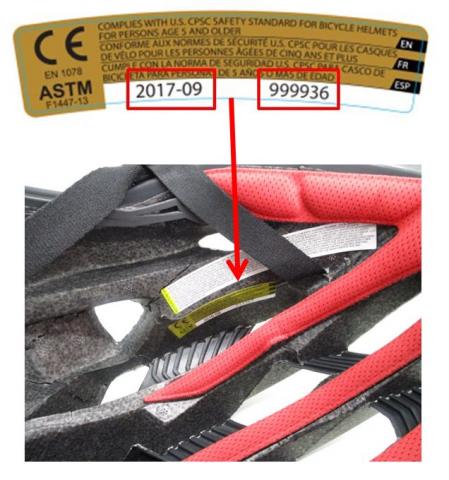
Description: This recall involves Louis Garneau Course Helmets with model number LG1261 printed on the inside of the helmet. “Garneau,” “Course” and “LG” are printed on both sides of the recalled bicycle helmets. They were sold in matte black and matte fluo yellow. The manufacturer’s date and serial number are printed on a sticker inside the helmet.
Only lot and serial numbers listed below are included in the recall.
Helmet Lot/ Manufacturer’s Date/ Serial Number Range available here: https://www.cpsc.gov/Recalls/2018/Louis-Garneau-Recalls-Bicycle-Helmets-Due-to-Risk-of-Head-Injury
Incidents/Injuries: None reported
Sold At: Authorized bicycle dealers nationwide from December 2015 through January 2018 for between $180 and $240.
Importer: Louis Garneau USA Inc., of Derby, Vt.
Manufacturer: Strategic Sports Limited, of China
Manufactured in: China
Retailers: If you are a retailer of a recalled product you have a duty to notify your customers of a recall. If you can, email your clients or include the recall information in your next marketing communication to your clients. Post any Recall Poster at your stores and contact the manufacturer to determine how you will handle any recalls.
For more information on this see:
For Retailers
Recalls Call for Retailer Action
Combination of a Products Liability statute, an Expert Witness Report that was just not direct enough and odd facts holds a retailer liable as manufacture for product defect.
Product Liability takes a different turn. You must pay attention, just not rely on the CPSC.
Retailer has no duty to fit or instruct on fitting bicycle helmet
Summary Judgment granted for bicycle manufacturer and retailer on a breach of warranty and product liability claim.
For Manufacturers
The legal relationship created between manufactures and US consumers
 What do you think? Leave a comment.
If you like this let your friends know or post it on FB, Twitter or LinkedIn
Author: Outdoor Recreation Insurance, Risk Management and Law
Copyright 2018 Recreation Law (720) Edit Law
Email: Rec-law@recreation-law.com
Google+: +Recreation
Twitter: RecreationLaw
Facebook: Rec.Law.Now
Facebook Page: Outdoor Recreation & Adventure Travel Law
Blog:
www.recreation-law.com
Mobile Site: http://m.recreation-law.com
By Recreation Law Rec-law@recreation-law.com James H. Moss
#AdventureTourism, #AdventureTravelLaw, #AdventureTravelLawyer, #AttorneyatLaw, #Backpacking, #BicyclingLaw, #Camps, #ChallengeCourse, #ChallengeCourseLaw, #ChallengeCourseLawyer, #CyclingLaw, #FitnessLaw, #FitnessLawyer, #Hiking, #HumanPowered, #HumanPoweredRecreation, #IceClimbing, #JamesHMoss, #JimMoss, #Law, #Mountaineering, #Negligence, #OutdoorLaw, #OutdoorRecreationLaw, #OutsideLaw, #OutsideLawyer, #RecLaw, #Rec-Law, #RecLawBlog, #Rec-LawBlog, #RecLawyer, #RecreationalLawyer, #RecreationLaw, #RecreationLawBlog, #RecreationLawcom, #Recreation-Lawcom, #Recreation-Law.com, #RiskManagement, #RockClimbing, #RockClimbingLawyer, #RopesCourse, #RopesCourseLawyer, #SkiAreas, #Skiing, #SkiLaw, #Snowboarding, #SummerCamp, #Tourism, #TravelLaw, #YouthCamps, #ZipLineLawyer, Recall, CPSC, Consumer Product Safety Council,
There may be a new dawn in river and stream access in Colorado or access may forever disappear.
Posted: March 14, 2018 Filed under: Colorado, Rivers and Waterways | Tags: bottom, Colorado Water Law, Fishing, Float, Fly Fishing, Recreation, River Bed, Stream Bed, Water Law Leave a commentIn the west, Whiskey is for drinking and water is for fighting.
When I moved to Colorado several decades ago, the biggest shock, I received was learning or attempting to understand Colorado’s water laws. In the Midwest, where I’m from, water was a problem: we worked to get rid of. My property law professor was an expert in field pipes. Water Pipes were pipes put into the ground by the federal government to help drain water from the fields. Any issues were over ownership, control and maintenance of the pipes, not the water that came out of them.
Colorado Water Laws were developed when the only use of water was for drinking, (when no whiskey was around), irrigating crops and mining. Until the last decade, use of water for any other purpose was not only a civil issue subjecting you to a suit for the loss of the water, but possible criminal action for theft.
In 1979 the Colorado Supreme Court Decision People v. Emmert, 198 Colo. 137; 597 P.2d 1025; 1979 Colo. LEXIS 814; 6 A.L.R.4th 1016 was decided, which allowed people to float on the surface, but not touch the sides or the banks of a river. That decision created an uneasiness that has survived, mostly allowing whitewater rafting, kayaking and canoeing in many areas.
Even so, many landowners disagreed with the decision. That disagreement was based on owning both sides of the land or “touching” the bottom of the river. Landowners would build dams so that a kayaker had no choice but to “touch” the bottom to get around the dam. When you saw a dam, you usually saw a sheriff’s deputy at the takeout ready to issue you a ticket.
If a landowner owned both sides of the river another trick, you would see is fencing strung across the river, sometimes with railroad ties attached to prevent boaters from paddling down the river. Most boaters called them death traps because getting caught in one could kill a kayaker.
However, the worst was paddling down the river and hearing shots or looking to the bank and see someone pointing a gun at you. At least once a year I would receive a call from a kayaker who had been threatened at the end of a gun for floating on a river or creek. Generally, there was nothing you could do. The district attorneys did not like prosecuting paddlers for trespass, (after a lot of phone calls form a lot of CO attorneys). At the same time, it was more difficult for them to prosecute a voter for “defending” their property.
The city of Golden took a bold step and was able to convince the Colorado Supreme Court that water had a recreation purpose. That allowed Golden and a dozen other cities to put in kayak parks. Until that decision, the park could be built, but there might not be any water in the park to float a boat.
However, in the rule areas, fencing and guns still ruled. However, this may be coming to a head. In an article published February 3, Who owns the bottom of the river? Lawsuit pitting fisherman against landowner on the Arkansas River could answer the question
a fisherman has taken the issue to court. The article exams a lawsuit filed by a fisherman against a landowner. Read the article to get the facts straight, but generally the fisherman was tired of having rocks thrown at him and threatened by a gun when he enters the river at a public location, a river put in and walks downstream fishing.
The landowner may not own the water, but he owns the bottom of the river, or so he claims. (The landowner was prosecuted for shooting at the fisherman!)
The Utah Supreme Court looked at this same issue several years ago and concluded the state owned the bottom of the river. Utah Stream Access Coalition, v. Orange Street Development, 2017 UT 82; 852 Utah Adv. Rep. 69; 2017 Utah LEXIS 200. However, the legislature then passed a law overturning the decision. See Recreational Use of Public Water on Private Property. You can’t fish on a stream in Utah, but Utah believes you should be able to mine our National Parks and Monuments.
How will the Federal District Court, where this case has been filed, rule? I have no idea; I’m not a court watcher. I want them to rule that standing on a river bottom is not a reason to get shot. I want them to rule that putting your hands down to get over a manmade dam is not a reason to be arrested for trespass. I want them to rule that it is 2018 and tourism is the larger employer, largest generator of jobs and the basis for Colorado’s economy and shooting tourists and locals should not be allowed because they can’t walk on the water.
Go here to read the complaint filed in this case: Complaint
Do Something
Keep your finger’s crossed, not much else we can do except watch and wait for the decision.
What do you think? Leave a comment.
Copyright 2017 Recreation Law (720) 334 8529
If you like this let your friends know or post it on FB, Twitter or LinkedIn


Author: Outdoor Recreation Insurance, Risk Management and Law
Facebook Page: Outdoor Recreation & Adventure Travel Law
Email: Rec-law@recreation-law.com
Google+: +Recreation
Twitter: RecreationLaw
Facebook: Rec.Law.Now
Facebook Page: Outdoor Recreation & Adventure Travel Law
Blog:
www.recreation-law.com
Mobile Site: http://m.recreation-law.com
© 2018 Recreation Law Rec-law@recreation-law.com James H. Moss
#AdventureTourism, #AdventureTravelLaw, #AdventureTravelLawyer, #AttorneyatLaw, #Backpacking, #BicyclingLaw, #Camps, #ChallengeCourse, #ChallengeCourseLaw, #ChallengeCourseLawyer, #CyclingLaw, #FitnessLaw, #FitnessLawyer, #Hiking, #HumanPowered, #HumanPoweredRecreation, #IceClimbing, #JamesHMoss, #JimMoss, #Law, #Mountaineering, #Negligence, #OutdoorLaw, #OutdoorRecreationLaw, #OutsideLaw, #OutsideLawyer, #RecLaw, #Rec-Law, #RecLawBlog, #Rec-LawBlog, #RecLawyer, #RecreationalLawyer, #RecreationLaw, #RecreationLawBlog, #RecreationLawcom, #Recreation-Lawcom, #Recreation-Law.com, #RiskManagement, #RockClimbing, #RockClimbingLawyer, #RopesCourse, #RopesCourseLawyer, #SkiAreas, #Skiing, #SkiLaw, #Snowboarding, #SummerCamp, #Tourism, #TravelLaw, #YouthCamps, #ZipLineLawyer,
You Should Subscribe to Expedition News: Informative, Upbeat and Helping Push the Boundaries
Posted: March 13, 2018 Filed under: Uncategorized | Tags: Blumenfeld and Associates, Expedition News, Expeditions, Jeff Blumenfeld Leave a comment
|
|||||||
|






|
Virus-free. www.avast.com |
One box was unchecked in the release which was signed online, and the court would not grant the motion for summary judgment of the defendant because whether or not the release was valid was a decision for the jury.
Posted: March 12, 2018 Filed under: Assumption of the Risk, Florida, Montana, Release (pre-injury contract not to sue), Triathlon | Tags: affirmative defenses, Black’s Law Dictionary, box, Causation, Check Box, Choice of Law, concurrent tortfeasors, decedent, designated, fault, health care providers, last act, Lawsuit, material fact, medical attention, movant's, necessary to complete, nonmoving party, off-campus, online, printout, registered, Registration, Release, releases, Sanctioning, sole cause, tortfeasor, Triathlon, undis-puted, USA Triathlon, usage, Void, Voidable, waived, willful Leave a commentThis judge was either not going to make a decision or only allow the plaintiff to win. However, the defendants set themselves up to lose by having a check box in the release.
Moore v. North America Sports, Inc., et al., 2009 U.S. Dist. LEXIS 134557
State: Florida: United States District Court for the Northern District of Florida, Panama City Division
Plaintiff: Brian Moore
Defendant: North America Sports, Inc., USA Triathlon
Plaintiff Claims:
Defendant Defenses: Assumption of the risk, Release
Holding: for the Plaintiff
Year: 2009
Summary
Having a box unchecked on a release sent the case to trial because the judge would not decide if that made the release valid. Having no jurisdiction and venue clause also created an opening, left unresolved on whether Florida or Montana’s law would apply. If Montana’s law, the releases would be void.
Overall, a poorly prepared or thought-out motion and supporting documents that helped the plaintiff more than the defendant left the defendant in a worse position than before they filed the motion.
Facts
The deceased lived in Montana and signed up in Montana to enter a triathlon in Panama City Beach Florida. In the process of signing up, he signed two releases. One for the website and one for the triathlon. The defendant also stated that the deceased signed two more releases upon registering for the event in Florida. The release signed for the website was not a factor in this decision.
During the swim portion of the triathlon the deceased experienced distress and died three days later.
His survivors filed this lawsuit.
Analysis: making sense of the law based on these facts.
The first issue reviewed by the court was the defense of assumption of the risk. The court resolved this issue in favor of the plaintiff in a short paragraph. Whether or not the deceased assumed the risk of his injury is a question for the jury. It cannot be resolved in a Motion for Summary Judgment.
When a participant volunteers to take certain chances, he waives his right to be free from those bodily contacts inherent in the chances taken.” However, it is the jury’s function to determine whether a participant should have anticipated the particular risk, and whether the defendant made the activity as safe as possible.
The second argument made by the plaintiff was whether or not the USA Triathlon was liable as a sanctioning body. “In order for a sanctioning organization, or sponsoring organization, to be liable, it must have some control over the event.” USA Triathlon argued they did not control the event and should be dismissed.
Again, the court stated whether or not USA Triathlon had any control over the event was a question of fact for the jury.
The next issues were the releases. The first issue was what law applied to the releases. There was obviously no jurisdiction and venue clause in the release or because there was an issue of the validity of the release, the court took it upon itself to determine what law applied.
The plaintiff’s argued that Montana’s law should apply. Montana does not allow the use of a release. See Montana Statutes Prohibits Use of a Release.
All contracts which have for their object, directly or indirectly, to exempt anyone from responsibility for his own fraud, for willful injury to the person or property of another, or for violation of law, whether willful or negligent, are against the policy of the law.” Mont. Code Ann. § 28-2-702 (2007). However, Plaintiff fails to take into account that first the applicable choice-of-law must be determined, and then the contract is interpreted according to that state’s substantive law.
Since this decision, the statute has been amended to allow the use of releases for sport or recreational opportunities. See Montana Recreation Responsibility Act.
However, the court never made a definitive statement as to whose law would be applied to the releases in this situation.
The next issue was a review of the releases signed on-line when the deceased registered for the event. The on-line release required a box to be checked. In the discovery process, the defendant provided a copy of the release signed by the deceased that had a box that was unchecked.
Defendants provide a printout showing an electronic signature. However, in order to properly exe-cute the waiver, the waivers state that the participant must check the box. Defendants fail to pro-vide any evidence to show a connection between checking the box and an electronic signature appearing in the printout. This lack of evidence leaves us just short of the finish line. Had a proper showing been made, summary judgment for the Defendants might have been warranted. Whether the online wavier was properly executed is a material fact for the jury to decide.
Again, the court saved this issue for the jury. Somehow the deceased was able to register for the event and leave a box unchecked; consequently, the court found one unchecked box was enough to deny a motion for summary judgment as to the validity of the release.
The defendant then argued that there were two additional releases signed by the deceased that would have stopped the plaintiff’s claims. However, the copies the defendant provided did not have signatures on them.
Defendants claim that Rice would have been required to sign two additional waivers in order to complete the onsite registration and be allowed to participate. Defendants do not provide signed copies of these waivers, only blank copies. Plaintiff denies that Rice signed any waiver on the day of the race. The fact that Defendants cannot provide a signed waiver does not exclude testimony on this matter; it merely goes to the weight of the evidence for the jury to consider.
This allowed the plaintiff to plead the deceased never signed the documents and the court again through the decision to the jury.
So Now What?
Remember this decision was decided nine years ago. At that time, the law concerning assumption of the risk has changed, and more courts are determining that the risk the plaintiff suffered was inherent in the sport. Therefore, the plaintiff assumed the risk. Whether or not that evolution in the law has occurred in Florida. I have not researched.
I suspect that USA Triathlon now has written agreements with all races it sanctions setting forth the legal requirements of the relationship. Absent an agreement, an industry practice can easily be proven, but not in a motion for summary judgement. A contract outlining the legal responsibilities between the parties can be used in a motion for summary judgment.
Check Boxes in a Release are landmines waiting to explode.
Why do you have boxes to be checked in a release? They do not support a contract, they only support the theory that the unchecked section is not valid or as in this case the entire release is not valid.
It was just stupid not to have your ducks in a row as a defendant when filing or defending motions for summary judgment. Here the defendants looked bad. Their arguments were strong, but they had no proof to support their arguments. For more on how check boxes can void your release see Trifecta of stupidity sinks this dive operation. Too many releases, operation standards and dive industry standards, along with an employee failing to get releases signed, sunk this ship on appeal.
You can prove the deceased signed a release if you don’t have a copy of the signature on the release, however, to do so you have to be able to prove that your system would not have allowed the deceased to race unless he signed. Nothing like that was introduced for all three of the releases the defense argued the decedent signed.
That does not even take into account novation. The second and third release might have been void because they were not signed for consideration. Only the first release had consideration, a benefit flowing to the decedent, entrance into the race. The decedent was in the race when he signed the second and third release, so there was no new consideration. See Too many contracts can void each other out; two releases signed at different times can render both release’s void.
Two many releases, no contracts between the defendants and this order made the defendants look bad and guaranteed a trial.
Honestly, the decision reads like either a judge, who does not want to make a decision or one that was heavily leaning towards the Plaintiff. At the same time, the defendants made easy for the judge to rule this way. However, there is not much choice, you have to play with the cards the court clerk gives you.
What do you think? Leave a comment.
Copyright 2018 Recreation Law (720) 334 8529
If you like this let your friends know or post it on FB, Twitter or LinkedIn


Author: Outdoor Recreation Insurance, Risk Management and Law
Facebook Page: Outdoor Recreation & Adventure Travel Law
Email: Rec-law@recreation-law.com
By Recreation Law Rec-law@recreation-law.com James H. Moss
#AdventureTourism, #AdventureTravelLaw, #AdventureTravelLawyer, #AttorneyatLaw, #Backpacking, #BicyclingLaw, #Camps, #ChallengeCourse, #ChallengeCourseLaw, #ChallengeCourseLawyer, #CyclingLaw, #FitnessLaw, #FitnessLawyer, #Hiking, #HumanPowered, #HumanPoweredRecreation, #IceClimbing, #JamesHMoss, #JimMoss, #Law, #Mountaineering, #Negligence, #OutdoorLaw, #OutdoorRecreationLaw, #OutsideLaw, #OutsideLawyer, #RecLaw, #Rec-Law, #RecLawBlog, #Rec-LawBlog, #RecLawyer, #RecreationalLawyer, #RecreationLaw, #RecreationLawBlog, #RecreationLawcom, #Recreation-Lawcom, #Recreation-Law.com, #RiskManagement, #RockClimbing, #RockClimbingLawyer, #RopesCourse, #RopesCourseLawyer, #SkiAreas, #Skiing, #SkiLaw, #Snowboarding, #SummerCamp, #Tourism, #TravelLaw, #YouthCamps, #ZipLineLawyer, #RecreationLaw, #OutdoorLaw, #OutdoorRecreationLaw, #SkiLaw,
February 2018 UIAA Newsletter, Please Subscriber to keep current in the Mountains!
Posted: March 9, 2018 Filed under: Uncategorized | Tags: Mountains, UIAA Leave a comment
|


|
Virus-free. www.avast.com |
We are getting closer; New Helmet from 6D is pretty amazing and adds the most protections for head injuries of any helmet on the market.
Posted: March 7, 2018 Filed under: Uncategorized | Tags: 6D Helmets, Bern, Bern Hard Hat, Concussions, Helmets, Technology Leave a commentStill no third-party testing to confirm any statements made by any helmet manufacturer; however, from my view, the engineer looks solid. It is the helmet I would wear. 6D Helmets does post testing from NIST (U.S. Commerce Department’s National Institute of Standards and Technology).
The 6D Helmet was tested by Dynamic Research, located in Torrance, California, again a rare occurrence to identify the testing lab that developed the data, lending more credibility to the data.
Summary
6D Helmets evolved from motorcycle helmets so the company’s background is solid. However, the forces on the head and brain in a motorcycle crash are quite different from those of a cycling crash. 6D seems to have taken this into consideration in the design of its cycling helmets. 6D refers to all the directions that the brain can be subject to impact including rotational.
6D Helmets advertises its helmets can deal with Low, Mid, and High-Velocity impacts with its designs. Low speed impacts have been the major issue in current ASTM helmet standards because under that standard, there is not enough pressure to crack the helmet, therefore, no dissipation. Basically, the EPS density used in helmets is too high to affect low-speed crashes.
There is also an argument that the venting in cycling helmets increases the issue because the engineering for the venting increases the issues the EPS can deal with, increases the EPS density to sustain an impact.
One of the big issues with EPS helmets is after a crash, determining if the EPS is intact and is the helmet still viable. 6D Helmets‘ mountain-bike helmet as a removable liner so you can inspect the EPS to determine if it has been compromised.
The information on the website contains a ton of testing information, and as stated above, testing from U.S. Commerce Department’s National Institute of Standards and Technology (NIST). The testing of the 6D Helmets is done against other unnamed helmets.
How I found out about 6D Helmets was a press release where they announced they had received a $250,000 grant as one of the finalists for a helmet competition. 6D Helmets won the competition.
However, that announcement that 6D Helmets won the competition listed the research lab doing the testing Dynamic Research, as a co-winner of the competition.
There is a lot of engineering, a lot of data and the classic website charts on the 6D Helmets website. I’ve looked it over and if true, it means another leap forward in helmet technology for human-powered recreation. You should read the information and study it for yourself as I’m not an engineer, and I could be wrong. I don’t think so……, but I could be.
Currently, 6D Helmets has helmets available for downhill and trail cycling. However, they hope to expand into ski soon and other sports also.
So?
I’m going to get one. I’m still going to wear my Bern Hard Hat (See A new idea that makes sense in helmets: the Bern Hard Hat), which is no longer produced I’ve been told, while skiing, if I wear a helmet. I believe that the Bern Hard Hat, like the 6D Helmet does a better job of protecting against concussions, the real issue with any head injury.
No helmet is going to keep you alive if you crash hard. Internal bleeding, a torn ascending aorta, is probably how you are going to die, no matter what is on your head. However, these helmets extend the protection from tree branch hits to maybe protecting your brain from a concussion.
What do you think? Leave a comment.
To Comment Click on the Heading and go to the bottom of the page.
Copyright 2017 Recreation Law (720) 334 8529
If you like this let your friends know or post it on FB, Twitter or LinkedIn


Author: Outdoor Recreation Insurance, Risk Management and Law
Facebook Page: Outdoor Recreation & Adventure Travel Law
Email: Rec-law@recreation-law.com
Google+: +Recreation
Twitter: RecreationLaw
Facebook: Rec.Law.Now
Facebook Page: Outdoor Recreation & Adventure Travel Law
Blog:
www.recreation-law.com
Mobile Site: http://m.recreation-law.com
By Recreation Law Rec-law@recreation-law.com James H. Moss
#AdventureTourism, #AdventureTravelLaw, #AdventureTravelLawyer, #AttorneyatLaw, #Backpacking, #BicyclingLaw, #Camps, #ChallengeCourse, #ChallengeCourseLaw, #ChallengeCourseLawyer, #CyclingLaw, #FitnessLaw, #FitnessLawyer, #Hiking, #HumanPowered, #HumanPoweredRecreation, #IceClimbing, #JamesHMoss, #JimMoss, #Law, #Mountaineering, #Negligence, #OutdoorLaw, #OutdoorRecreationLaw, #OutsideLaw, #OutsideLawyer, #RecLaw, #Rec-Law, #RecLawBlog, #Rec-LawBlog, #RecLawyer, #RecreationalLawyer, #RecreationLaw, #RecreationLawBlog, #RecreationLawcom, #Recreation-Lawcom, #Recreation-Law.com, #RiskManagement, #RockClimbing, #RockClimbingLawyer, #RopesCourse, #RopesCourseLawyer, #SkiAreas, #Skiing, #SkiLaw, #Snowboarding, #SummerCamp, #Tourism, #TravelLaw, #YouthCamps, #ZipLineLawyer, 6D Helmets, Helmets, Concussions, Technology,
A parked snowmobile is an inherent risk of skiing for which all skiers assume the risk under Colorado Ski Area Safety Act.
Posted: March 5, 2018 Filed under: Colorado, Ski Area, Skiing / Snow Boarding | Tags: avalanche, Collision, Colorado Skier Safety Act, de novo review, deceleration, enlargement, exhaustive, feet, inherent dangers, Inherent Risks, lamp, man-made, Negligence per se, parked, recommendation, Respondeat Superior, right to appeal, Ski, Ski Areas, Ski Resort, ski run, Ski Safety Act, Skier, skiing, Slope, Snow, Snowmobile, Sport, statutory definition, Steamboat, Steamboat Ski Area, Terrain, Trail Leave a commentA Steamboat ski area employee parked a snowmobile at the bottom of a run. The plaintiff came down the run and hit the snowmobile injuring herself. She claimed the snowmobile was not visible from 100′ and was in violation of the Colorado Skier Safety Act. The Federal District Court for Colorado Disagreed.
Schlumbrecht-Muniz v. Steamboat Ski & Resort Corporation, 2015 U.S. Dist. LEXIS 30484
State: Colorado, United States District Court for the District of Colorado
Plaintiff: Linda Schlumbrecht-Muniz, M.D.
Defendant: Steamboat Ski & Resort Corporation, a Delaware Corporation d/b/a STEAMBOAT
Plaintiff Claims: negligence, negligence per se, and respondeat superior
Defendant Defenses: Colorado Skier Safety Act
Holding: for the Defendant
Year: 2015
The plaintiff was skiing down a run at Steamboat Ski Area. (Steamboat is owned by Intrawest Resorts, Inc.) On that day, an employee of Steamboat parked a snowmobile at the bottom of that run. The snowmobile was not visible for 100′. The plaintiff collided with the vehicle incurring injury.
The plaintiff sued claiming simple negligence, negligence per se and respondeat superior. The Negligence per se claim was based on an alleged failure of the ski area to follow the Colorado Skier Safety Act.
The ski area filed a motion for summary judgment arguing the claims of the plaintiff failed to plead the information needed to allege a violation of the Colorado Skier Safety Act.
Analysis: making sense of the law based on these facts.
The court first looked at the requirements necessary to properly plead a claim.
“…the mere metaphysical possibility that some plaintiff could prove some set of facts in support of the pleaded claims is insufficient; the complaint must give the court reason to believe that this plaintiff has a reasonable likelihood of mustering factual support for these claims.” The ultimate duty of the court is to “determine whether the complaint sufficiently alleges facts supporting all the elements necessary to establish an entitlement to relief under the legal theory proposed.”
This analysis requires the plaintiff to plead facts sufficient to prove her claims to some certainty that the court can see without a major stretch of the imagination.
The ordinary negligence claims were the first to be reviewed and dismissed. The Colorado Skier Safety Act states that the defendant ski area is “immune from any claim for damages resulting from “…the inherent dangers and risks of skiing…”
Notwithstanding any judicial decision or any other law or statute, to the contrary, … no skier may make any claim against or recover from any ski area operator for injury resulting from any of the inherent dangers and risks of skiing.
Although the law allows suits against ski areas for violation of the act, those claims must be plead specifically and fit into the requirements set forth in the act. As such the court found the defendant Steamboat could be liable if:
Accordingly, Steamboat may be liable under one of two theories: a skier may recover if her injury resulted from an occurrence not considered an inherent danger or risk of skiing; or a skier may recover if the ski operator violated a provision of the Act and that violation resulted in injury.
The first claim of an injury that was not an inherent risk of skiing would hold the defendant ski area liable for a negligence claim. The second requires specific violation of the Colorado Skier Safety Act.
Steamboat argued that pursuant to the Colorado Skier Safety Act, the term inherent risks as defined in the act were to be read broadly and a parked snowmobile was an inherent risk of skiing.
The Ski Safety Act defines “inherent dangers and risks of skiing” to mean:
…those dangers or conditions that are part of the sport of skiing, including changing weather conditions; snow conditions as they exist or may change, such as ice, hard pack, powder, packed powder, wind pack, corn, crust, slush, cut-up snow, and machine-made snow; surface or subsurface conditions such as bare spots, forest growth, rocks, stumps, streambeds, cliffs, extreme terrain, and trees, or other natural objects, and collisions with such natural objects; impact with lift towers, signs, posts, fences or enclosures, hydrants, water pipes, or other man-made structures and their components; variations in steepness or terrain, whether natural or as a result of slope design, snowmaking or grooming operations, including but not limited to roads, freestyle terrain, jumps, and catwalks or other terrain modifications; collisions with other skiers; and the failure of skiers to ski within their own abilities.
The court then looked at decisions interpreting the inherent risk section to determine if the act was to be construed narrowly or broadly.
In all cases, Colorado courts looked at the act as a list of the possible risks of skiing but not all the possible risks. As such, a snowmobile parked at the bottom of the slope was an inherent risk of skiing.
I am also persuaded that the presence of a parked snow mobile at the end of a ski run is an inherent risk of the sport of skiing. While Steamboat cites Fleury for that court’s description of the “common understanding of a ‘danger,'” and analogizes the presence of a snowmobile to cornices, avalanches, and rubber deceleration mats for tubing, I find that a parked snowmobile is not analogous to those examples because a snowmobile is not part of the on-course terrain of the sport.
The court also found that even if the snowmobile parked on a run was not an inherent risk, the statute required skiers to stay away from vehicles and equipment on the slopes. “Each skier shall stay clear of snow-grooming equipment, all vehicles, lift towers, signs, and any other equipment on the ski slopes and trails.”
The plaintiff’s argument was the violation of the statute was failing to properly for failing to properly outfit the snowmobile.
Plaintiff clarifies in her Response that the negligence per se claim is for violation of section 33-44-108(3), which requires snowmobiles operated “on the ski slopes or trails of a ski area” to be equipped with “[o]ne lighted headlamp, one lighted red tail lamp, a brake system maintained in operable condition, and a fluorescent flag at least forty square inches mounted at least six feet above the bottom of the tracks.”
Plaintiff also argued the statute was violated because the snowmobile was not visible for 100′ as required by the statute. However, this put the plaintiff in a catch 22. If the plaintiff was not a vehicle, then it was a man-made object which was an inherent risk of skiing. If she pleads the snowmobile was a vehicle and not properly equipped, then she failed to stay away from it.
Neither approach leads Plaintiff to her desired result. Steamboat correctly asserts that if the snow-mobile is characterized as a man-made object, Plaintiff’s impact with it was an inherent danger and risk pursuant to section, and Steamboat is immune to liability for the resulting injuries. If Plaintiff intends for her Claim to proceed under the theory that Steamboat violated section 33-44-108(3) by failing to equip the snowmobile with the proper lighting, she did not plead that the parked vehicle lacked the required items, and mentions only in passing in her Response that the vehicle “did not have an illuminated head lamp or trail lamp because it was not operating.”
The final claim was based on respondeat superior.
Plaintiff has alleged that the Steamboat employee was acting within the scope of her employment when she parked the snowmobile at the base of Bashor Bowl. See id. (“Under the theory of respondeat superior, the question of whether an employee is acting within the scope of the employment is a question of fact”)
Because the respondeat claim was derivative of the prior claims, and they were dismissed, the respondeat superior claim must fail. Derivative means that the second claim is wholly based on the first claim. If the first claim fails, the second claim fails.
So Now What?
This is another decision in a long line of decisions expanding the risks a skier assumes on Colorado slopes. The inherent risks set forth in Colorado Skier Safety Act are examples of the possible risks a skier can assume, not the specific set of risks.
 What do you think? Leave a comment.
If you like this let your friends know or post it on FB, Twitter or LinkedIn
Author: Outdoor Recreation Insurance, Risk Management and Law
Copyright 2018 Recreation Law (720) Edit Law
Email: Rec-law@recreation-law.com
Google+: +Recreation
Twitter: RecreationLaw
Facebook: Rec.Law.Now
Facebook Page: Outdoor Recreation & Adventure Travel Law
Blog: www.recreation-law.com
Mobile Site: http://m.recreation-law.com
By Recreation Law Rec-law@recreation-law.com James H. Moss
#AdventureTourism, #AdventureTravelLaw, #AdventureTravelLawyer, #AttorneyatLaw, #Backpacking, #BicyclingLaw, #Camps, #ChallengeCourse, #ChallengeCourseLaw, #ChallengeCourseLawyer, #CyclingLaw, #FitnessLaw, #FitnessLawyer, #Hiking, #HumanPowered, #HumanPoweredRecreation, #IceClimbing, #JamesHMoss, #JimMoss, #Law, #Mountaineering, #Negligence, #OutdoorLaw, #OutdoorRecreationLaw, #OutsideLaw, #OutsideLawyer, #RecLaw, #Rec-Law, #RecLawBlog, #Rec-LawBlog, #RecLawyer, #RecreationalLawyer, #RecreationLaw, #RecreationLawBlog, #RecreationLawcom, #Recreation-Lawcom, #Recreation-Law.com, #RiskManagement, #RockClimbing, #RockClimbingLawyer, #RopesCourse, #RopesCourseLawyer, #SkiAreas, #Skiing, #SkiLaw, #Snowboarding, #SummerCamp, #Tourism, #TravelLaw, #YouthCamps, #ZipLineLawyer, Steamboat, Steamboat Ski Area, Colorado Skier Safety Act, snowmobile,
Allen Sports Recalls Folding Bicycles Due to Fall Hazard
Posted: March 1, 2018 Filed under: Uncategorized | Tags: Allen Sports, Folding, Folding Bicycles, Folding Bikes, Recall, UltaX, Ultra1 Leave a commentName of Product: UltraX and Ultra1 Folding Bicycles
Hazard: The bike’s frame can break during use causing the bicycle to collapse, posing a fall hazard to consumers.
Recall Number: 18-108
Remedy: Refund
Consumers should immediately stop using the recalled bicycles and email Allen Sports at customerservice@allensportsusa.com with photo of the bicycle to receive full refund instructions.
Consumer Contact: Allen Sports at 800-722-5536 between 8 a.m. and 4 p.m. ET Monday through Friday, or email customerservice@allensportsusa.com and online at allensportsusa.com and click on “Important safety notice on Allen Sports Ultra1 and UltraX Folding Bicycles” for more information.
Pictures available here: https://www.cpsc.gov/Recalls/2018/Allen-Sports-Recalls-Folding-Bicycles-Due-to-Fall-Hazard
Units: About 150
Description: This recall involves Allen Sports model Ultra1 and UltraX carbon fiber folding bicycles. “ULTRA X” or “ULTRA ONE” are printed on the bicycle’s frame. Both bicycles were sold in black, have 20 speeds and wheel sizes of 451MM. The Ultra One weighs about 21 pounds and the Ultra X weighs about 18 pounds.
Incidents/Injuries: The firm has received two reports of the frame breaking causing the rider to fall. No injuries have been reported.
Sold At: Online at Amazon.com and eBay from May 2014 through July 2017 for between $500 and $4,000.
Importer(s): The R. A. Allen Company, Inc. of Portsmouth, N.H., dba Allen Sports
Manufactured In: Taiwan
Retailers: If you are a retailer of a recalled product you have a duty to notify your customers of a recall. If you can, email your clients or include the recall information in your next marketing communication to your clients. Post any Recall Poster at your stores and contact the manufacturer to determine how you will handle any recalls.
For more information on this see:
For Retailers
Recalls Call for Retailer Action
Combination of a Products Liability statute, an Expert Witness Report that was just not direct enough and odd facts holds a retailer liable as manufacture for product defect.
Product Liability takes a different turn. You must pay attention, just not rely on the CPSC.
Retailer has no duty to fit or instruct on fitting bicycle helmet
Summary Judgment granted for bicycle manufacturer and retailer on a breach of warranty and product liability claim.
For Manufacturers
The legal relationship created between manufactures and US consumers
 What do you think? Leave a comment.
If you like this let your friends know or post it on FB, Twitter or LinkedIn
Author: Outdoor Recreation Insurance, Risk Management and Law
Copyright 2017 Recreation Law (720) Edit Law
Email: Rec-law@recreation-law.com
Google+: +Recreation
Twitter: RecreationLaw
Facebook: Rec.Law.Now
Facebook Page: Outdoor Recreation & Adventure Travel Law
Blog:
www.recreation-law.com
Mobile Site: http://m.recreation-law.com
By Recreation Law Rec-law@recreation-law.com James H. Moss
#AdventureTourism, #AdventureTravelLaw, #AdventureTravelLawyer, #AttorneyatLaw, #Backpacking, #BicyclingLaw, #Camps, #ChallengeCourse, #ChallengeCourseLaw, #ChallengeCourseLawyer, #CyclingLaw, #FitnessLaw, #FitnessLawyer, #Hiking, #HumanPowered, #HumanPoweredRecreation, #IceClimbing, #JamesHMoss, #JimMoss, #Law, #Mountaineering, #Negligence, #OutdoorLaw, #OutdoorRecreationLaw, #OutsideLaw, #OutsideLawyer, #RecLaw, #Rec-Law, #RecLawBlog, #Rec-LawBlog, #RecLawyer, #RecreationalLawyer, #RecreationLaw, #RecreationLawBlog, #RecreationLawcom, #Recreation-Lawcom, #Recreation-Law.com, #RiskManagement, #RockClimbing, #RockClimbingLawyer, #RopesCourse, #RopesCourseLawyer, #SkiAreas, #Skiing, #SkiLaw, #Snowboarding, #SummerCamp, #Tourism, #TravelLaw, #YouthCamps, #ZipLineLawyer, Recall, CPSC, Consumer Product Safety Council,


 Recreation Law