Stand Up Paddleboard case. Rental company was not liable for the death of renter who could not swim.
Posted: October 14, 2019 Filed under: Assumption of the Risk, California, Paddlesports, Release (pre-injury contract not to sue) | Tags: Admiralty Law, drowning, Leash, PFD, Release, Rental, Stand Up Paddleboard, SUP, Waiver Leave a commentRelease and assumption of the risk were both used to defeat the plaintiff’s claims.
Citation: Kabogoza v. Blue Water Boating, Inc., et al
State: California, United States District Court, E.D. California
Plaintiff: Mary Bacia Kabogoza, on behalf of herself and the Estate of Davies Khallit Kabogoza
Defendant: Blue Water Boating, Inc., Skip Abed and ten “Roe” defendants
Plaintiff Claims: wrongful death, negligence, and gross negligence
Defendant Defenses: Assumption of the Risk and Release
Holding: For the Defendant
Year: 2019
Summary
A renter of a stand-up paddleboard drowned after falling off his board. He did not use the free leash and wore his inflatable PFD incorrectly so it did not work.
The court found the plaintiff assumed the risk and had signed a release preventing his survivors from suing.
Facts
In April 2017, Davies Kabogoza and his friend, Laura Tandy, rented stand-up paddleboards from Defendant Blue Water Boating. Kabogoza had rented paddleboards from this rental company before. He was familiar with the staff, but had never told them that he could not swim.
Kabogoza and Tandy signed a rental agreement before taking out the paddleboards. The one-page agreement included several general and SUP-specific safety rules, along with a release of liability. Upon signing the agreement, the rental company-per Kabogoza’s request-gave him and Tandy intermediate-level paddleboards and belt-pack flotation devices. Regular life vests were also available, but Defendants allow their customers to choose between the two options. Belt-pack flotation devices are “very popular” among paddle boarders, but customers often wear them incorrectly, with the flotation portion of the device facing backwards. Id. Plaintiff alleges that Kabogoza was wearing his incorrectly at the time of the accident.
Defendants also gave its customers the option of using a paddleboard leash. Defendant Skip Abed, the owner of Blue Water Boating, told an investigator that 9 out of 10 times, customers do not want a leash. Neither Kabogoza nor Tandy used a leash while paddleboarding.
Shortly after Kabogoza and Tandy began using their paddleboards in the Santa Barbara Harbor, the wind increased, and the water became choppy. Tandy was in front of Kabogoza when she heard a splash behind her. When she turned around, she saw that Kabogoza had fallen off his board, and was struggling to keep his head above water. Tandy was unable to reach Kabogoza and prevent him from drowning. A dive team later found his body at the bottom of the ocean in about 30 feet of water. Id. When the divers found him, Kabogoza’s flotation device was attached to his waist, but in the backwards position. An inspection revealed that the device was in “good working order.”
The defendants filed a motion to dismiss, which was granted by the district court.
Analysis: making sense of the law based on these facts.
The court first looked at the gross negligence claim of the plaintiffs. Under California law, gross negligence is defined as “the want of even scant care or an extreme departure from the ordinary standard of conduct.” The court then went on to reiterate the California Supreme Court issue of disposing of gross negligence claims that do not meet the definition.
The court then looked at the defense of assumption of the risk. The plaintiffs plead admiralty and state law claims in this lawsuit. Each has different types of claims and different defenses and defenses to state law claims do not work in admiralty cases and vice versa. The court waded through the differences in each of the defenses presented by the defendant.
Assumption of the risk is not a defense to an admiralty law claim. Assumption of the risk is a defense to state law claims. The court then went back to the gross negligence claim and found the facts pleaded by the plaintiff did not rise to the level of gross negligence.
The next claim of the plaintiffs was a wrongful death claim. A wrongful death claim is a claim of the survivors of the deceased. However, any defense to a claim by the deceased is a bar to a wrongful death claim.
Because the rental agreement signed by the deceased included release language, it was a bar to the wrongful death claim of the deceased survivors.
So Now What?
First, this is a stand-up paddleboard rental; however, the court did not treat it any differently than the rental of any other boat.
The knowledge that renters might wear their PFDs incorrectly is disconcerting. I would counsel clients to at least post a sign or something showing people the proper way to wear their PFDs.
I also think a leash would be required to make sure the boards come back. Fall off your board and the currents will send it away faster than you can swim and the rental company has lost another SUP.
However, tragic this accident, legally the result was correct I believe.
 James H. “Jim” Moss |
Jim Moss is an attorney specializing in the legal issues of the outdoor recreation community. He represents guides, guide services, and outfitters both as businesses and individuals and the products they use for their business. He has defended Mt. Everest guide services, summer camps, climbing rope manufacturers, avalanche beacon manufacturers, and many more manufacturers and outdoor industries. Contact Jim at Jim@Rec-Law.us |

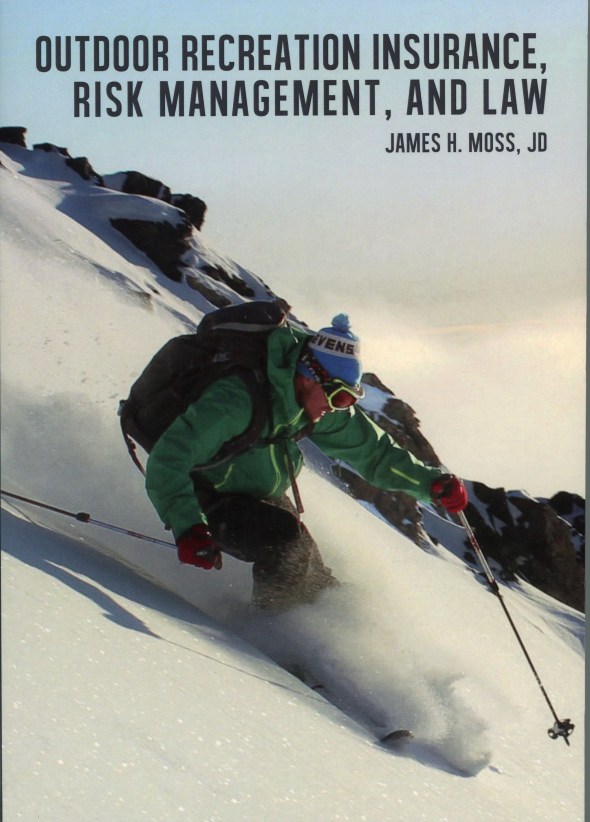
Outdoor Recreation Insurance, Risk Management, and Law
Jim is the author or co-author of six books about legal issues in the outdoor recreation world; the latest is Outdoor Recreation Insurance, Risk Management, and Law.
To see Jim’s complete bio go here and to see his CV you can find it here. To find out the purpose of this website go here.
G-YQ06K3L262
What do you think? Leave a comment.
If you like this let your friends know or post it on FB, Twitter or LinkedIn
 Threads |
 X (formerly known as Twitter) logo |
 Mastodon |
 |
 |
 Blue Sky |
Author: Outdoor Recreation Insurance, Risk Management, and Law To Purchase Go Here:
Facebook Page: Outdoor Recreation & Adventure Travel Law
Email: Jim@Rec-Law.US
By Recreation Law Rec-law@recreation-law.com James H. Moss
@2008-2024 Summit Magic Publishing, LLC
#AdventureTourism, #AdventureTravelLaw, #AdventureTravelLawyer, #AttorneyatLaw, #Backpacking, #BicyclingLaw, #Camps, #ChallengeCourse, #ChallengeCourseLaw, #ChallengeCourseLawyer, #CyclingLaw, #FitnessLaw, #FitnessLawyer, #Hiking, #HumanPowered, #HumanPoweredRecreation, #IceClimbing, #JamesHMoss, #JimMoss, #Law, #Mountaineering, #Negligence, #OutdoorLaw, #OutdoorRecreationLaw, #OutsideLaw, #OutsideLawyer, #RecLaw, #Rec-Law, #RecLawBlog, #Rec-LawBlog, #RecLawyer, #RecreationalLawyer, #RecreationLaw, #RecreationLawBlog, #RecreationLawcom, #Recreation-Lawcom, #Recreation-Law.com, #RiskManagement, #RockClimbing, #RockClimbingLawyer, #RopesCourse, #RopesCourseLawyer, #SkiAreas, #Skiing, #SkiLaw, #Snowboarding, #SummerCamp, #Tourism, #TravelLaw, #YouthCamps, #ZipLineLawyer, #RecreationLaw, #OutdoorLaw, #OutdoorRecreationLaw, #SkiLaw,
Kalter, et al., v. Grand Circle Travel, et al., 631 F.Supp.2d 1253 (C.D.Cal. 2009)
Posted: October 9, 2019 Filed under: Adventure Travel, Assumption of the Risk, California | Tags: assumption of the risk, Climbing, Hiking, Machu Picchu, Open and Obvious, Peru, stone steps, tour operator, Walking Leave a commentTo Read an Analysis of this decision see: Even hikers sue for their injuries.
Kalter, et al., v. Grand Circle Travel, et al., 631 F.Supp.2d 1253 (C.D.Cal. 2009)
631 F.Supp.2d 1253 (C.D.Cal. 2009)
Jill Kalter, et al., Plaintiffs,
v.
Grand Circle Travel, et al., Defendants.
No. CV 08-02252 SJO (AGRx).
United States District Court, C.D. California.
June 24, 2009
David B. Leichenger, Jon Matthew Steiner, Levitt Leichenger and Aberle, Beverly Hills, CA, for Plaintiffs.
John S. Murray, Mary Agnes Watson, Walsworth Franklin Bevins & McCall LLP, Orange, CA, Robert Mueller, Rodney E. Gould, Rubin Hay and Gould PC, Framingham, MA, for Defendants.
ORDER GRANTING DEFENDANT’S MOTION FOR SUMMARY JUDGMENT
[Docket No. 57]
S. JAMES OTERO, District Judge.
This matter is before the Court on Defendants Grand Circle, LLC (erroneously sued as Grand Circle Travel, Overseas Adventure Travel and Overseas Adventure Travel Partners, Inc.) and Grand Circle Corporation’s (collectively, ” Grand Circle” ) Motion for Summary Judgment, filed May 13, 2009. Plaintiffs Jill and Scott Kalter (collectively, ” Plaintiffs” ) filed an Opposition, to which Grand Circle replied. The Court found this matter suitable for disposition without oral argument and vacated the hearing set for June 1, 2009. See Fed.R.Civ.P. 78(b). For the following reasons, Grand Circle’s Motion is GRANTED.
I. BACKGROUND
Grand Circle is a tour operator that arranges vacation packages to destinations around the world. (Olson Decl., filed as Gould Decl. Ex D, ¶ ¶ 2, 8; Pls.’ Separate Statement of Undisputed and Disputed Material Fact (” Statement” ) ¶ 1.) Jill Kalter (” Kalter” ) purchased a Grand Circle ” Amazon River Cruise & Rain Forest” tour, along with an optional post-trip extension to visit the Inca ruins at Machu Picchu. (Olson Decl. ¶ 13; Pls.’ Statement ¶ 2.) Prior to departing on her trip, Kalter received from Grand Circle an itinerary of the Machu Picchu trip extension (the ” Itinerary” ), which stated that her group would visit Machu Picchu on two consecutive days, and that on the second day she would have the option of remaining with a guide or exploring the ruins on her own. (Kalter Dep., filed as Gould Decl. Ex. A, 35:5-35:7, 36:15-20; 44:19-45:22; Itinerary, filed as Leichenger Decl. ” Kalter Dep. Ex. 20″ ; Pls.’ Statement ¶ ¶ 3-4.) The Itinerary also stated: ” [t]hese Inca sites are not like ancient squares in Europe; they are spread out over steep hillsides with large stone steps and uneven surfaces…. In the ruins, there are no handrails some places where you might like one.” (Itinerary at 65.) Kalter received and read the itinerary prior to departing on her trip. (Kalter Dep. 36: 15-20.) In addition, the tour guide, Jesus Cardenas, distributed a map of Machu Picchu to the tour participants prior to entering the park.[1] (Cardenas Decl. ¶ 20; Kalter Dep. 59:18-20.) The map includes a section entitled ” Visit Regulations,” which states, among other things, ” Do not climb the walls,” and ” Follow only designated routes according to arrows.” (Map, filed as Cardenas Decl. Ex. C.)
It was raining on both days Kalter was at Machu Picchu. (Kalter Dep. 54:12-16, 71:8-11.) The first day, she remained with Cardenas and walked on the stone paths. Id. 52:22-25, 64:11-16. The second day, she opted to explore on her own, and ventured off the established paths. Id. 67:24-68:1, 126:4-6; Supplemental Cardenas Decl. ¶ 11-12. Cardenas states that he gave verbal warnings to the group to use caution due to wet and slippery conditions. (Cardenas Decl. ¶ 13.) Kalter states that she did not hear Cardenas give these warnings, but that she ” has no reason to doubt” that he did so. (Kalter Decl. ¶ 7; Kalter Dep. 54:24-55:2.) Kalter went to an area known as the ” terraces,” filled with vertical rock walls that contain small stone protrusions called ” floating steps.” (Kalter Dep. 8:5-14; Pls.’ Statement ¶ 10; see Supplemental Cardenas Decl. ¶ 12, Ex. C (photographs of only set of floating steps above the location where Kalter was found after the fall).[2]) Some of these terraces are along paths color-coded by length, and no paths at Machu Picchu require traversing floating steps. (Cardenas Decl. ¶ 5.) Approximately one hour after venturing out on her own, Kalter became lost and disoriented, and was concerned about connecting with her group so that she would not miss the train. (Kalter Decl. ¶ 10; Kalter Dep. 85:11-13, 101:20-21.) In an effort to get a better view of where she was, Kalter stepped up onto the bottom two floating steps of a vertical wall. (Kalter Decl. ¶ ¶ 10-11; Kalter Dep. 8:16-20; Supplemental Cardenas Decl. Ex. C.) Kalter did not think this was a dangerous act. (Kalter Decl. ¶ 11.) As a result, Kalter fell and suffered serious injuries, and is now a quadriplegic.[3] (Pl.’s Opp’n 3.)
Grand Circle now moves for summary judgment on the grounds that: (1) Plaintiffs’ claims are barred under the doctrine of primary assumption of the risk; (2) Grand Circle had no duty to warn Kalter of the dangerous nature of the floating steps because it was open and obvious; and (3) Grand Circle is not liable for the actions of Cardenas because he is an independent contractor.
II. DISCUSSION
Summary judgment is proper only if ” the pleadings, the discovery and disclosure materials on file, and any affidavits show that there is no genuine issue as to any material fact and that the moving party is entitled to a judgment as a matter of law.” Fed.R.Civ.P. 56(c). A ” material” fact is one that could affect the outcome of the case, and an issue of material fact is ” genuine” if ” the evidence is such that a reasonable jury could return a verdict for the nonmoving party.” Anderson v. Liberty Lobby, Inc., 477 U.S. 242, 248, 106 S.Ct. 2505, 91 L.Ed.2d 202 (1986). In determining whether a genuine issue of material fact exists, courts view the evidence in the light most favorable to the nonmoving party. Id. at 255, 106 S.Ct. 2505.
A. Primary Assumption of the Risk Bars Plaintiffs’ Claims.
” The question of the existence and scope of a defendant’s duty of care is a legal question which depends on the nature of the sport or activity in question and on the parties’ general relationship to the activity, and is an issue to be decided by the court, rather than the jury.” Knight v. Jewett, 3 Cal.4th 296, 313, 11 Cal.Rptr.2d 2, 834 P.2d 696 (1992). The doctrine of primary assumption of the risk applies where ” the defendant owes no legal duty to protect the plaintiff from the particular risk of harm that caused the injury.” Id. at 314-315, 11 Cal.Rptr.2d 2, 834 P.2d 696. To determine if primary assumption of the risk applies, courts look to the nature of the activity, and the parties’ relationship to that activity. Branco v. Kearny Moto Park, Inc., 37 Cal.App.4th 184, 190, 43 Cal.Rptr.2d 392 (1995). The question turns on whether the plaintiff’s injury is within the ” inherent” risk of the activity. Neinstein v. Los Angeles Dodgers, Inc., 185 Cal.App.3d 176, 182, 229 Cal.Rptr. 612 (1986). A risk is inherent to an activity if its elimination would chill vigorous participation in the activity and thereby alter the fundamental nature of the activity. Knight, 3 Cal.4th at 318, 11 Cal.Rptr.2d 2, 834 P.2d 696. Accordingly, ” the doctrine of primary assumption of risk applies where ‘ conditions or conduct that otherwise might be viewed as dangerous often are an integral part’ of the activity itself.” Andia v. Full Serv. Travel, No. 06-437, 2007 WL 4258634, at *4, 2007 U.S. Dist. LEXIS 88247, at *13 (S.D.Cal. Nov. 29, 2007) (citing Knight, 3 Cal.4th at 315, 11 Cal.Rptr.2d 2, 834 P.2d 696). When primary assumption of the risk applies, a defendant is only liable for a plaintiff’s injuries ” if the defendant ‘ engages in conduct so reckless as to be totally outside the range of the ordinary activity involved in the sport or activity’ or increases the inherent risk involved in the activity.” Id. (citing Saville v. Sierra College, 133 Cal.App.4th 857, 866, 36 Cal.Rptr.3d 515 (Cal.Ct.App.2005)).
If, on the other hand, ” the defendant does owe a duty of care to the plaintiff, but the plaintiff proceeds to encounter a known risk imposed by the defendant’s breach of duty,” the doctrine of secondary assumption of the risk applies, which is analyzed under comparative fault principles. Knight, 3 Cal.4th at 315, 11 Cal.Rptr.2d 2, 834 P.2d 696. In such a case, ” the trier of fact, in apportioning the loss resulting from the injury, may consider the relative responsibility of the parties.” Id.
Here, Kalter was engaged in the activity of hiking on uneven terrain amongst ancient ruins. Inherent in this activity is the risk that one will fall and become injured. ( See Andia, 2007 WL 4258634, at *5, 2007 U.S. Dist. LEXIS 88247, at *15) (holding that ” falling is always a risk when engaging in any kind of strenuous hike on steep and uneven terrain” ). The Itinerary Kalter received prior to the tour informed her that the Inca sites at Machu Picchu ” are spread out over steep hillsides with large stone steps and uneven surfaces.” (Itinerary 65.) Eliminating tour participants’ access to these large stone steps and uneven surfaces in an attempt to protect against the risk of falling would eliminate the ability to view the Inca sites, and thus ” alter the fundamental nature of the activity.” SeeKnight, 3 Cal.4th at 318, 11 Cal.Rptr.2d 2, 834 P.2d 696. In other words, ” hiking across uneven and challenging natural terrain is an inherent risk of hiking to [the ancient ruins at Machu Picchu], without which the general public would be substantially deprived of viewing the … phenomenon.” Seeid. Moreover, as discussed further below, Kalter did not fall while engaging in the activities condoned by Defendants-she chose to leave the established stone pathway, and further endangered herself by stepping onto the floating steps. Accordingly, the Court finds that primary assumption of the risk applies to Kalter’s injuries from falling while hiking at Machu Picchu. Therefore, Grand Circle is only liable for only liable for Kalter’s injuries ” if [it] engage[d] in conduct so reckless as to be totally outside the range of the ordinary activity involved in [hiking amongst ancient ruins on uneven terrain] or increase[d] the inherent risk involved in the activity.” SeeSaville, 133 Cal.App.4th at 866, 36 Cal.Rptr.3d 515.
Plaintiffs argue that Grand Circle breached its duty to Kalter by ” encouraging and permitting her to roam the ruins of Machu Picchu on her own, then directing her to an area unknown, i.e. which was not explored with her Trip Leader the prior day, and given the conditions of that day, was dangerous and confusing.” (Pls.’ Opp’n 10.) Kalter was an experienced hiker, and prior to electing to explore the ruins on her own instead of remaining with Cardenas, she had read Grand Circle’s Itinerary informing her that she would encounter steep hillsides, large stone steps, and uneven surfaces. (Itinerary 65; Kalter Dep. 36: 15-20, 48:9-14.) She also received the map from Cardenas which stated ” Do not climb the walls” and ” Follow only designated routes according to arrows.” (Kalter Dep. 59:18-20; Cardenas Decl. Ex. C.) Moreover, Plaintiffs do not dispute that visitors to Machu Picchu often wander the ruins on their own, and that park regulations do not prohibit them from doing so. ( See Cardenas Decl. ¶ 15; Pls.’ Statement ¶ 26.) In addition, Plaintiffs provide no evidence that Cardenas or Grand Circle knew Kalter would attempt to climb the floating steps, and do not dispute Cardenas’ statement that Kalter ” never asked me if she could climb down from or up to any terraces. At no time did I tell Ms. Kalter that she should climb down or up the series of terraces, and at no time did I tell Ms. Kalter that it would be okay for her to climb up or down the stone terrace walls or on the ‘ floating steps.’ ” (Cardenas Decl. ¶ 16.)
Given these undisputed facts, Grand Circle’s act of allowing Kalter to explore on her own areas she had not been to with Cardenas was not ” so reckless as to be totally outside the range of ordinary activity” involved in the excursion, nor did it increase the inherent risk of falling and sustaining injury involved in hiking in this region. SeeSaville, 133 Cal.App.4th at 866, 36 Cal.Rptr.3d 515. The Court also notes that other participants in the tour stated that Cardenas was ” outstanding and the accident was not at all [his] fault. And of course, [Kalter] fell on a day of totally independent activities.” ( See Dobbins Dep. 13-25; see also Garvey Dep. 121:21- 25.) Moreover, even if Grand Circle or Cardenas erred in estimating Kalter’s ability to hike on her own across the uneven terrain at Machu Picchu in rainy weather, ” an instructor’s assessment errors-either in making the necessarily subjective judgment of skill level or the equally subjective judgment about the difficulty of conditions-are in no way ‘ outside the range of the ordinary activity involved in the sport.’ ” Kane v. Nat’l Ski Patrol, 88 Cal.App.4th 204, 214, 105 Cal.Rptr.2d 600 (Cal.Ct.App.2001); see also Andia, 2007 WL 4258634, at *5, 2007 U.S. Dist. LEXIS 88247, at *16 (holding that tour guide’s ” decision to allow Plaintiff to return to the Rangers station alone [during a guided hike to a lava flow] … at most constituted ‘ assessment errors,’ but these ‘ subjective judgments about the difficulty of the conditions were ‘ in no way so reckless as to be totally outside the range of the ordinary activity involved’ in the activity of lava hiking” ).
Plaintiffs have submitted a declaration by Alexander Anolik, a travel and tourism attorney, stating that Cardenas ” failed to insist, explain the need for or put together a ‘ buddy system’ whereby Ms. Kalter would not have to be in this strange and dangerous area by herself,” and contending that his conduct of allowing Kalter to explore on her own fell below the standard of care in the travel industry. (Anolik Decl. ¶ 4.) Anolik submits no case law or any other information to suggest that such conduct falls below a standard of care, or that any other tour companies or guides employ such practices. ( See Supplemental Cardenas Decl. ¶ 3, stating that he is unaware of any other tour guide at Machu Picchu that requires a buddy system.) Further, as explained above, allowing tour participants to hike on their own, even off trail on uneven terrain, is not so reckless as to be totally outside the range of the ordinary activity involved in hiking. See Andia, 2007 WL 4258634, at *5, 2007 U.S. Dist. LEXIS 88247, at *16. As such, the Court finds Anolik’s bare assertions insufficient to create a triable issue of fact regarding whether Defendants’ conduct was so reckless as to be totally outside the range of the ordinary activity or otherwise increased the inherent risk involved in the activity of hiking amongst ancient ruins in an undeveloped area. Accordingly, Grand Circle is not liable for Kalter’s injuries under the doctrine of primary assumption of the risk.
B. Grand Circle Had No Duty to Warn Kalter of the Open and Obvious Danger Posed by the Wet Floating Steps.
” It is established law, at least in the exercise of ordinary care, that one is under no duty to warn another of a danger equally obvious to both.” Andia, 2007 WL 4258634, at *6, 2007 U.S. Dist. 88247, at *18 (citing Marshall v. United Airlines, 35 Cal.App.3d 84, 90, 110 Cal.Rptr. 416 (1973)). Here, it was obvious to both Kalter and Cardenas that it was raining, and Kalter admitted at her deposition that she ” knew [the stones] were slippery and wet.” (Kalter Dep. 64:19-65:3, 71:14-15.) Moreover, the danger of slipping and falling from stepping on a small wet stone step protruding from a vertical wall is undoubtedly an obvious danger.
Plaintiffs conclusorily state that ” there are genuine issues of material fact regarding whether the conditions that caused Ms. Kalter’s injuries were open and obvious,” but offer no evidence to support this claim. (Pls.’ Opp’n 13.) Indeed, Kalter admits that it was ” raining on and off,” that she ” knew the rocks could be slippery” , and that before she started climbing she could see the third step was missing. (Kalter Dep. 71:8-15, 101:12-18.) Kalter offers no evidence to suggest that she believed climbing the floating steps was allowed or common, or that she saw anyone else climbing them. Further, it appears that the danger of climbing the steps was obvious to other members of Kalter’s tour; when asked whether he saw anyone climbing the steps, one member responded, ” Good Lord. Someone, probably the guide, said that the Indians might have used them.” (Dobbins Dep. 24:23-25.) In addition, the map Kalter received prior to entering the park instructed her not to climb the walls. (Cardenas Decl. Ex. C.) Kalter also testified at her deposition that she ” thought there would be some risk in climbing up the floating steps.” (Kalter Dep. 110:12-22.) Further, Plaintiffs offer no evidence that the risk of slipping on the wet floating steps was any less obvious to Kalter than to Cardenas, especially in light of the fact that Kalter had walked on stone with Cardenas the previous day and noted that the stone was ” slippery at times.” (Kalter Dep. 64:15-18.)
Plaintiffs also cite case law holding that ” although the obviousness of a danger may obviate the duty to warn of its existence, if it is foreseeable that the danger may cause injury despite the fact that it is obvious (e.g. when necessity requires persons to encounter it), there may be a duty to remedy the danger, and the breach of that duty may in turn form the basis for liability.” (Pls.’ Opp’n 12), citing Martinez v. Chippewa Entrps., Inc., 121 Cal.App.4th 1179, 1184, 18 Cal.Rptr.3d 152 (Cal.Ct.App.2004) (emphasis in original) (holding that trial court erred in granting summary judgment based on obvious danger where plaintiff slipped on water covering defendant landowner’s driveway.) While a landowner may be required to remedy a dangerous but obvious condition on his property, the situation differs with regards to a tour guide and tour company, where, as here, the dangerous condition is neither on the guide or company’s property nor within their control. Further, in Martinez, the plaintiff slipped on water in a defendant’s driveway that she had to cross to get by; in contrast, ” necessity” did not ” require [Kalter] to encounter” the floating steps. SeeMartinez, 121 Cal.App.4th at 1184, 18 Cal.Rptr.3d 152.
Moreover, numerous courts have held that tour companies and guides have no duty to warn of obvious dangers their customers encounter on trips. See, e.g.,Tei Yan Sun v. Governmental Auths. of Taiwain, 2001 U.S. Dist. 1160, at *31-32 (finding no liability for failure to disclose dangers of ” severe undertow, high waives, and strong surf” at beach, and noting that travel agents have no duty to disclose obvious dangers to travelers) (citing McCollum v. Friendly Hills Travel Ctr., 172 Cal.App.3d 83, 95, 217 Cal.Rptr. 919 (Cal.Ct.App.1985)); Passero v. DHC Hotels & Resorts, 981 F.Supp. 742, 744 (D.Conn.1996)(” A tour operator may be obligated, under some circumstances, to warn a traveler of a dangerous condition unknown to the traveler but known to it…. This doctrine applies to situations where a tour operator is aware of a dangerous condition not readily discoverable by the plaintiff. It simply does not apply to an obvious dangerous condition equally observable by plaintiff.” ); Stafford v. Intrav, Inc., 841 F.Supp. 284, 287 (E.D.Mo.1993) (noting that travel agents owe no duty to disclose information that is obvious and apparent to the traveler). Plaintiffs cite no cases in which courts have found tour companies or guides liable for failing to warn of or remedy open and obvious dangers.
Accordingly, the Court finds that Grand Circle had no duty to warn Kalter that the floating steps might be slippery and dangerous in the rain, as this danger was readily observable.
C. Since Neither Grand Circle Nor Cardenas Are Liable for Kalter’s Injuries, the Court Need Not Reach the Issue of Whether Cardenas Is an Employee or Independent Contractor.
As explained above, neither Grand Circle nor Cardenas are liable for Kalter’s injuries because the doctrine of primary assumption of the risk applies, and because neither had a duty to warn her of the open and obvious danger of falling while climbing wet stone steps protruding from a vertical wall. Further, Plaintiffs do not argue that Cardenas’ actions after Kalter fell caused or contributed to her injury. As such, whether Cardenas is Grand Circle’s employee or an independent contractor does not affect Grand Circle’s liability, and the Court need not reach the issue.
III. RULING
For the foregoing reasons, the Court GRANTS Grand Circle’s Motion for Summary Judgment.
IT IS SO ORDERED.
———
Notes:
[1] The map is produced by the Peru National Institute of Culture, not Grand Circle.
[2] Plaintiffs object to these photographs on the grounds that they ” lack proper foundation, are misleading in that the angles from which most are taken (particularly the closeups) and the two-dimensional nature of them cannot fairly (and accurately) depict how Ms. Kalter viewed the conditions at the time that she stepped on the two lowest steps.” (Pls.’ Objections to Evidence 2.) However, Cardenas states in his declaration that he took all of the photographs, and that they fairly and accurately reflect the conditions and terrain at Machu Picchu. (Supplemental Cardenas Decl. ¶ 8.) The Court finds these photographs to fairly and accurately represent the floating steps.
[3] It is unclear exactly how Kalter fell, as she does not remember and there were apparently no witnesses. (Kalter Dep. 12:22-13:5.)
G-YQ06K3L262
Kabogoza v. Blue Water Boating, Inc., et al.,
Posted: October 9, 2019 Filed under: Assumption of the Risk, California, Legal Case, Paddlesports, Release (pre-injury contract not to sue) | Tags: assumption of the risk, Gross negligence, Leash, Negligence, PFD, Release, Rental, Stand Up Paddleboard, SUP, Surivors, Wrongful Death Leave a commentTo Read an Analysis of this decision see: Stand Up Paddleboard case. Rental company was not liable for the death of renter who could not swim.
Kabogoza v. Blue Water Boating, Inc., et al.,
Mary Bacia Kabogoza, on behalf of herself and the Estate of Davies Khallit Kabogoza, Plaintiff,
v.
Blue Water Boating, Inc., et al., Defendants.
No. 2:18-cv-02722-JAM-KJN
United States District Court, E.D. California
April 5, 2019
ORDER GRANTING DEFENDANTS’ MOTION TO DISMISS AND DECLARING PLAINTIFFS’ CROSS-MOTION FOR SUMMARY JUDGMENT MOOT
JOHN A. MENDEZ, UNITED STATES DISTRICT JUDGE.
On October 9, 2018, Mary Kabogoza (“Plaintiff”) filed a complaint against Blue Water Boating, Inc., Skip Abed, and ten “Roe” defendants (“Defendants”). Compl., ECF No. 1. Plaintiff brought a wrongful death claim on her own behalf, and a survival action for negligence on behalf of her deceased husband, Davies Kabogoza. Compl. ¶¶ 8-17. She amended the complaint a month later to replace the negligence claim with a claim for gross negligence. See First Am. Compl. (“FAC”) ¶ 22-29, ECF No. 4. Plaintiff properly invokes the Court’s diversity jurisdiction and admiralty jurisdiction. FAC ¶ 1 (citing 28 U.S.C. §§ 1332, 1333).[1]
Defendants filed a motion to dismiss both of Plaintiff’s claims. Mot. to Dismiss (“Mot.”), ECF No. 6. Plaintiff opposed Defendants’ motion, and filed a Motion for Partial Summary Judgment. Opp’n to Mot. to Dismiss and Cross-Mot. for Partial Summ. J. (“Cross-Mot.”), ECF No. 8. Defendants opposed Plaintiff’s motion. Opp’n to Cross-Mot. and Reply (“Opp’n”), ECF No. 9. Plaintiff, however, never filed a reply to Defendants’ opposition.
For the reasons discussed below, the Court grants in part and denies in part Defendants’ Motion to Dismiss. The Court denies Plaintiff’s Motion for Summary Judgment.
I. FACTUAL ALLEGATIONS
In April 2017, Davies Kabogoza and his friend, Laura Tandy, rented stand-up paddleboards from Defendant Blue Water Boating. FAC ¶ 6. Kabogoza had rented paddleboards from this rental company before. FAC ¶ 7. He was familiar with the staff, but had never told them that he could not swim. FAC ¶ 14.
Kabogoza and Tandy signed a rental agreement before taking out the paddleboards. FAC ¶ 18. The one-page agreement included several general and SUP-specific safety rules, along with a release of liability. FAC, Ex. A. Upon signing the agreement, the rental company-per Kabogoza’s request-gave him and Tandy intermediate-level paddleboards and belt-pack flotation devices. FAC ¶¶ 7, 10, 15. Regular life vests were also available, but Defendants allow their customers to choose between the two options. FAC ¶ 14. Belt-pack flotation devices are “very popular” among paddle boarders, but customers often wear them incorrectly, with the flotation portion of the device facing backwards. Id. Plaintiff alleges that Kabogoza was wearing his incorrectly at the time of the accident. FAC. ¶ 13.
Defendants also gave its customers the option of using a paddleboard leash. FAC ¶ 16. Defendant Skip Abed, the owner of Blue Water Boating, told an investigator that 9 out of 10 times, customers do not want a leash. Id. Neither Kabogoza nor Tandy used a leash while paddleboarding. FAC ¶ 19.
Shortly after Kabogoza and Tandy began using their paddleboards in the Santa Barbara Harbor, the wind increased, and the water became choppy. FAC ¶ 9. Tandy was in front of Kabogoza when she heard a splash behind her. Id. When she turned around, she saw that Kabogoza had fallen off his board, and was struggling to keep his head above water. Id. Tandy was unable to reach Kabogoza and prevent him from drowning. Id. A dive team later found his body at the bottom of the ocean in about 30 feet of water. Id. When the divers found him, Kabogoza’s flotation device was attached to his waist, but in the backwards position. FAC ¶ 12. An inspection revealed that the device was in “good working order.” Id.
II. OPINION
A. Defendants’ Motion to Dismiss
1. Legal Standard
Federal Rule of Civil Procedure 8(a)(2) requires a “short and plain statement of the claim showing that the pleader is entitled to relief.” A court will dismiss a suit if the plaintiff fails to “state a claim upon which relief can be granted.” Fed.R.Civ.P. 12(b)(6). When considering a motion to dismiss, the Court “must accept as true all of the allegations contained in a complaint.” Ashcroft v. Iqbal, 556 U.S. 662, 678 (2009). It is not, however, “bound to accept as true a legal conclusion couched as a factual allegation.” Id. A court may consider documents whose contents are alleged in or attached to the complaint if no party questions the documents’ authenticity. Knievel v. ESPN, 393 F.3d 1068, 1076 (9th Cir. 2005).
2. Analysis
a. Choice of Law
Plaintiff’s claims arise out of this Court’s admiralty jurisdiction as well as its diversity jurisdiction. A claim arising in admiralty is governed by federal admiralty law. Yamaha Motor Corp., U.S.A. v. Calhoun, 516 U.S. 199, 206 (1996). Ordinarily, a court may not supplement maritime law with state law when the state’s law “will not work material prejudice to the characteristic features of the general maritime law, nor interfere with the proper harmony and uniformity of that law.” Id. at 207 (quoting Western Fuel Co. v. Garcia, 257 U.S. 233, 242 (1921)). However, admiralty law does not provide a cause of action for wrongful death or survival suits independent of the remedies provided by state law. Id. at 206. Thus, in admiralty, “state statutes provide the standard of liability as well as the remedial regime” for wrongful death and survival actions. Id. To the extent that Plaintiff’s claims arise under the Court’s admiralty jurisdiction, California law applies.
When a claim arises out of the court’s diversity jurisdiction, the court applies the substantive law of the forum state. Erie R. Co. v. Tompkins, 304 U.S. 64, 78 (1938). But if the dispute is covered by a valid choice-of-law clause, the laws of the contractually-designated state applies. PAE Government Services, Inc. v. MPRI, Inc., 514 F.3d 856, 860 (9th Cir. 2007). Here, the law of the forum and the law designated by the rental agreement’s choice-of-law clause are the same. See FAC, Ex. A. California law applies to the claims arising out of this Court’s diversity jurisdiction.
b. Gross Negligence
Plaintiff has not stated a claim for gross negligence. Gross negligence is defined as “the want of even scant care or an extreme departure from the ordinary standard of conduct.” Id. (quoting Kearl v. Board of Med. Quality Assurance, Cal.App.3d 1040, 1052-53 (1986). The California Supreme Court has emphasized “the importance of maintaining a distinction between ordinary and gross negligence, ” and disposing of cases on that bases “in appropriate circumstances.” City of Santa Barbara, 41 Cal.4th at 766.
Defendants first argue that Plaintiff’s claim should be dismissed because it is barred by the assumption-of-risk doctrine. Mot. at 9-11. The Court disagrees. To the extent that the claim is arising out of the Court’s admiralty jurisdiction, maritime tort law does not adopt California’s approach to this doctrine. Barber v. Marina Sailing, Inc., 36 Cal.App.4th 558, 568-69 (1995). Assumption of risk, be it express or implied, may not serve as a bar to claims that arise under admiralty law. Id. at 568 (“Numerous federal cases have held in a variety of contexts that assumption of [] risk is not permitted as an affirmative defense in admiralty law.”). While true that California law governs the standard of liability and the remedial regime for survival actions, Defendants do not identify any cases to suggest that Yamaha likewise intended state law to modify the defenses available in admiralty. To the extent that Plaintiff’s gross negligence claim arises under the Court’s admiralty jurisdiction, assumption of risk does not bar the action.
Assumption of risk likewise does not preclude Plaintiff’s gross negligence claim arising under the Court’s diversity jurisdiction. Although California law recognizes assumption of risk as a bar to recovery under some circumstances, it does not allow a party to release itself from liability for gross negligence. City of Santa Barbara v. Super. Ct., 41 Cal.4th 747, 779 (2007). To the extent that Plaintiff’s gross negligence claim arises under the Court’s diversity jurisdiction, assumption of risk, again, does not bar the action. For the same reason, the exculpatory clause in Defendants’ rental agreement does not bar Plaintiff’s survival action for gross negligence. So long as the allegations in the complaint support a plausible claim for relief, Plaintiff’s claim must survive Defendant’s motion to dismiss.
But even when accepted as true, Plaintiff’s allegations do not state a plausible gross negligence claim. Plaintiff alleges that Defendants’ gross negligence is reflected in the following omissions:
• Failing to ask Kabogoza about his swimming abilities before renting him a paddleboard;
• Failing to warn Kabogoza of the danger of using and/or misusing the paddleboard and belt-pack flotation device;
• Failing to ensure that Kabogoza was leashed to the paddleboard while using it; and
• Failing to ensure that Kabogoza knew how to use the paddleboard and belt-pack flotation device.
FAC ¶ 25.[2]
These omissions, when viewed in light of the circumstances surrounding this incident, might give rise to a colorable negligence claim had Kabogoza not released Defendants of liability. But they do not rise to the level of culpability found in the cases Plaintiff cites where gross negligence claims survived motions to dismiss. See Cross-Mot. at 10-11. In City of Santa Barbara, the court found that the plaintiff’s claim for gross negligence properly fell outside the defendant’s exculpatory clause when a young girl with epilepsy drowned at defendant’s camp for developmentally-disabled children. 41 Cal.4th at 751-52. The girl’s parents had told the city that their daughter was prone to seizures while in the water and required constant supervision. Id. at 752. Even so, a camp supervisor- knowing the girl had suffered from a seizure less than an hour earlier-diverted her attention while the child was swimming. Id. The girl had a seizure and drowned. Id.Mayall v. USA Water Polo,Inc., 909 F.3d 1055 (9th Cir. 2018) and Lewis v. Mammoth Mountain Ski Area, No. 1:07-cv-00497-OWW-GSA, 2009 WL 426595 (E.D. Cal. Feb. 20, 2009) involved similarly culpable omissions.
The defendants here differ from the defendants in City of Santa Barbara, Mayall, and Lewis in several important respects. First, Defendants knew that Kabogoza had safely engaged in paddleboarding before. FAC ¶ 9. Unlike in City of Santa Barbara, where defendant knew the decedent had a history of having seizures in the water; Mayall, where defendant knew water-polo players were dangerously returning to play after suffering concussions; and Lewis, where the employee knew he was leading beginner snowmobilers, Defendants had no reason to know that Kabogoza was at an increased risk of harm. In fact, Defendants knew that he had a history of safely participating in this activity. FAC ¶ 9. Kabogoza rented paddleboards from Blue Water Boating on up to three previous occasions. Id.
Furthermore, Defendants equipped all of their customers with safety information and safety equipment regardless of their skill level. FAC ¶¶ 6, 16. Defendants made sure that each renter signed a rental agreement that included clear safety instructions about the products it rented. FAC, Ex. A. Defendants gave each of their customers flotation devices to protect against the inherent and inevitable risk of falling into the ocean. FAC ¶ 6. They also made paddleboard leashes available to all their customers even though nine out of ten renters opted not to use them. FAC ¶ 16.
Plaintiff makes much of the fact that Defendants did not ask about each customer’s swimming abilities or require each customer to have use a leash. FAC ¶ 25; Cross-Mot. at 11. Nor did Defendants specifically work with its customers to ensure they were correctly using the flotation devices. FAC ¶ 25; Cross-Mot. at 11. Rental companies can, of course, always do more to ensure that their customers have the safest possible experience. And when those companies’ rentals involve the level of risk that gives way to this sort of tragedy, they likely should. But the law does not task the Court with answering that question today. Here, the question is whether Defendants acted with “a ‘want of even scant care’ or ‘an extreme departure from the ordinary standard of conduct.’ ” Based on Plaintiff’s pleadings, the Court cannot find that they did.
The Court dismisses Plaintiff’s gross negligence claim without prejudice.
c. Wrongful Death
Plaintiff has not stated a wrongful death claim. Nor did she meaningfully oppose Defendants’ motion to dismiss this claim. California law governs wrongful death claims regardless of whether the claim arises under the court’s diversity or admiralty jurisdiction. Yamaha Motor Corp., 516 U.S. At 206-07. To support a claim of negligent wrongful death under California law, “a plaintiff must establish the standard elements of negligence: defendants owed a duty of care; defendants breached their duty; and defendants’ breach caused plaintiff’s injury.” Hayes v. Cnty.of San Diego, 736 F.3d 1223, 1231 (9th Cir. 2013) (citing Wright v. City of Los Angeles, 219 Cal.App.3d 318, 344 (1990)).
A wrongful death action-unlike claims brought under the state’s survival statute-belong to the decedent’s heirs, not to the decedent. Madison v. Super. Ct., 203 Cal.App.3d 589, 596 (1988). All the same, “a plaintiff in a wrongful death action is subject to any defenses which could have been asserted against the decedent.” Id. at 597. These defenses include a decedent’s decision “to waive the defendant’s negligence and assume all risks.” Id.
Here, Kabogoza signed a rental agreement where he expressly assumed the risks of paddleboarding and released Defendants of liability. FAC, Ex. A. To the extent that the assumption-of-risk and exculpatory clauses purport to release Defendants from liability for ordinary negligence, they are valid. See FAC, Ex. A. See also City of Santa Barbara, 41 Cal.4th at 755-58; Knight v. Jewett, 3 Cal.4th 296, 319-21 (1992). And as already discussed, Plaintiff does not make a showing of gross negligence that would bring her wrongful death action outside the rental agreement’s scope.
The rental agreement precludes Plaintiff from making out a claim of ordinary negligence. To the extent that her wrongful death claim is predicated on Defendants’ ordinary negligence, the Court dismisses it with prejudice.
B. Plaintiff’s Cross-Motion for Summary Judgment
The Court has dismissed the gross negligence claim covered by Plaintiff’s Motion for Partial Summary Judgment. The arguments raised in Plaintiff’s motion are, therefore, moot.
III. ORDER
For the reasons set forth above, the Court GRANTS Defendants’ Motion to Dismiss. Plaintiff’s gross negligence claim is DISMISSED WITHOUT PREJUDICE. If Plaintiffs elect to amend their complaint with respect to these claims, they shall file a Second Amended Complaint within twenty (20) days of this Order. Defendants’ responsive pleading is due twenty (20) days thereafter. Plaintiff’s wrongful death claim is DISMISSED WITH PREJUDICE to the extent that it is based on Defendants’ ordinary negligence.
The Court DENIES AS MOOT Plaintiff’s Motion for Summary Judgment on her gross negligence claim.
IT IS SO ORDERED.
———
Notes:
[1] This motion was determined to be suitable for decision without oral argument. E.D. Cal. L.R. 230(g). The hearing was scheduled for February 19, 2019.
[2] Plaintiff also alleges that Defendants breached a duty to Kabogoza by failing to safely manufacture the paddleboard and flotation device, and by failing to timely issue recalls of the defective products. FAC ¶ 25. But to date, Plaintiff has not joined any manufacturers or distributors as defendants.
G-YQ06K3L262
New Book Aids Both CEOs and Students
Posted: August 1, 2019 Filed under: Adventure Travel, Assumption of the Risk, Camping, Challenge or Ropes Course, Climbing, Climbing Wall, Contract, Cycling, Equine Activities (Horses, Donkeys, Mules) & Animals, First Aid, Insurance, Jurisdiction and Venue (Forum Selection), Legal Case, Medical, Mountain Biking, Mountaineering, Paddlesports, Release (pre-injury contract not to sue), Risk Management, Rivers and Waterways, Rock Climbing, Sea Kayaking, Ski Area, Skiing / Snow Boarding, Skydiving, Paragliding, Hang gliding, Swimming, Whitewater Rafting, Zip Line | Tags: Adventure travel, and Law, assumption of the risk, camping, Case Analysis, Challenge or Ropes Course, Climbing, Climbing Wall, Contract, Cycling, Desk Reference, Donkeys, Equine Activities (Horses, first aid, Good Samaritan Statutes, Hang gliding, Insurance, James H. Moss, Jurisdiction and Venue (Forum Selection), Law, Legal Case, Medical, Mountain biking, Mountaineering, Mules) & Animals, Negligence, Outdoor Industry, Outdoor recreation, Outdoor Recreation Insurance, Outdoor Recreation Risk Management, Paddlesports, Paragliding, Recreational Use Statute, Reference Book, Release (pre-injury contract not to sue), Reward, Risk, Risk Management, Rivers and Waterways, Rock climbing, Sea Kayaking, ski area, Ski Area Statutes, Skiing / Snow Boarding, Skydiving, swimming, Textbook, Whitewater Rafting, zip line Leave a comment“Outdoor Recreation Insurance, Risk Management, and Law” is a definitive guide to preventing and overcoming legal issues in the outdoor recreation industry

Outdoor Recreation Insurance, Risk Management, and Law
Denver based James H. Moss, JD, an attorney who specializes in the legal issues of outdoor recreation and adventure travel companies, guides, outfitters, and manufacturers, has written a comprehensive legal guidebook titled, “Outdoor Recreation Insurance, Risk Management, and Law”. Sagamore Publishing, a well-known Illinois-based educational publisher, distributes the book.
Mr. Moss, who applied his 30 years of experience with the legal, insurance, and risk management issues of the outdoor industry, wrote the book in order to fill a void.
“There was nothing out there that looked at case law and applied it to legal problems in outdoor recreation,” Moss explained. “The goal of this book is to provide sound advice based on past law and experience.”
The Reference book is sold via the Summit Magic Publishing, LLC.
While written as a college-level textbook, the guide also serves as a legal primer for executives, managers, and business owners in the field of outdoor recreation. It discusses how to tackle, prevent, and overcome legal issues in all areas of the industry.
The book is organized into 14 chapters that are easily accessed as standalone topics, or read through comprehensively. Specific topics include rental programs, statues that affect outdoor recreation, skiing and ski areas, and defenses to claims. Mr. Moss also incorporated listings of legal definitions, cases, and statutes, making the book easy for laypeople to understand.
PURCHASE
TABLE OF CONTENTS
Table of Cases
Introduction
Outdoor Recreation Law and Insurance: Overview
Risk
Risk
Perception versus Actual Risk
Risk v. Reward
Risk Evaluation
Risk Management Strategies
Humans & Risk
Risk = Accidents
Accidents may/may not lead to litigation
How Do You Deal with Risk?
How Does Acceptance of Risk Convert to Litigation?
Negative Feelings against the Business
Risk, Accidents & Litigation
No Real Acceptance of the Risk
No Money to Pay Injury Bills
No Health Insurance
Insurance Company Subrogation
Negative Feelings
Litigation
Dealing with Different People
Dealing with Victims
Develop a Friend & Eliminate a Lawsuit
Don’t Compound Minor Problems into Major Lawsuits
Emergency Medical Services
Additional Causes of Lawsuits in Outdoor Recreation
Employees
How Do You Handle A Victim?
Dealing with Different People
Dealing with Victims
Legal System in the United States
Courts
State Court System
Federal Court System
Other Court Systems
Laws
Statutes
Parties to a Lawsuit
Attorneys
Trials
Law
Torts
Negligence
Duty
Breach of the Duty
Injury
Proximate Causation
Damages
Determination of Duty Owed
Duty of an Outfitter
Duty of a Guide
Duty of Livery Owner
Duty of Rental Agent
Duty of Volunteer Youth Leader
In Loco Parentis
Intentional Torts
Gross Negligence
Willful & Wanton Negligence
Intentional Negligence
Negligence Per Se
Strict Liability
Attractive Nuisance
Results of Acts That Are More than Ordinary Negligence
Product Liability
Contracts
Breach of Contract
Breach of Warranty
Express Warranty
Implied Warranty
Warranty of Fitness for a Particular Purpose
Warranty of Merchantability
Warranty of Statute
Detrimental Reliance
Unjust Enrichment
Liquor Liability
Food Service Liability
Damages
Compensatory Damages
Special Damages
Punitive Damages
Statutory Defenses
Skier Safety Acts
Whitewater Guides & Outfitters
Equine Liability Acts
Legal Defenses
Assumption of Risk
Express Assumption of Risk
Implied Assumption of Risk
Primary Assumption of Risk
Secondary Assumption of Risk
Contributory Negligence
Assumption of Risk & Minors
Inherent Dangers
Assumption of Risk Documents.
Assumption of Risk as a Defense.
Statutory Assumption of Risk
Express Assumption of Risk
Contributory Negligence
Joint and Several Liability
Release, Waivers & Contracts Not to Sue
Why do you need them
Exculpatory Agreements
Releases
Waivers
Covenants Not to sue
Who should be covered
What should be included
Negligence Clause
Jurisdiction & Venue Clause
Assumption of Risk
Other Clauses
Indemnification
Hold Harmless Agreement
Liquidated Damages
Previous Experience
Misc
Photography release
Video Disclaimer
Drug and/or Alcohol clause
Medical Transportation & Release
HIPAA
Problem Areas
What the Courts do not want to see
Statute of Limitations
Minors
Adults
Defenses Myths
Agreements to Participate
Parental Consent Agreements
Informed Consent Agreements
Certification
Accreditation
Standards, Guidelines & Protocols
License
Specific Occupational Risks
Personal Liability of Instructors, Teachers & Educators
College & University Issues
Animal Operations, Packers
Equine Activities
Canoe Livery Operations
Tube rentals
Downhill Skiing
Ski Rental Programs
Indoor Climbing Walls
Instructional Programs
Mountaineering
Retail Rental Programs
Rock Climbing
Tubing Hills
Whitewater Rafting
Risk Management Plan
Introduction for Risk Management Plans
What Is A Risk Management Plan?
What should be in a Risk Management Plan
Risk Management Plan Template
Ideas on Developing a Risk Management Plan
Preparing your Business for Unknown Disasters
Building Fire & Evacuation
Dealing with an Emergency
Insurance
Theory of Insurance
Insurance Companies
Deductibles
Self-Insured Retention
Personal v. Commercial Policies
Types of Policies
Automobile
Comprehension
Collision
Bodily Injury
Property Damage
Uninsured Motorist
Personal Injury Protection
Non-Owned Automobile
Hired Car
Fire Policy
Coverage
Liability
Named Peril v. All Risk
Commercial Policies
Underwriting
Exclusions
Special Endorsements
Rescue Reimbursement
Policy Procedures
Coverage’s
Agents
Brokers
General Agents
Captive Agents
Types of Policies
Claims Made
Occurrence
Claims
Federal and State Government Insurance Requirements
Bibliography
Index
The 427-page volume is sold via Summit Magic Publishing, LLC.
What is a Risk Management Plan and What do You Need in Yours?
Posted: July 25, 2019 Filed under: Activity / Sport / Recreation, Adventure Travel, Assumption of the Risk, Avalanche, Camping, Challenge or Ropes Course, Climbing, Climbing Wall, Contract, Cycling, Equine Activities (Horses, Donkeys, Mules) & Animals, First Aid, Health Club, Indoor Recreation Center, Jurisdiction and Venue (Forum Selection), Legal Case, Medical, Minors, Youth, Children, Mountain Biking, Mountaineering, Paddlesports, Playground, Racing, Racing, Release (pre-injury contract not to sue), Risk Management, Rivers and Waterways, Rock Climbing, Scuba Diving, Sea Kayaking, Search and Rescue (SAR), Ski Area, Skier v. Skier, Skiing / Snow Boarding, Skydiving, Paragliding, Hang gliding, Snow Tubing, Sports, Summer Camp, Swimming, Triathlon, Whitewater Rafting, Youth Camps, Zip Line | Tags: #ORLawTextbook, #ORRiskManagment, #OutdoorRecreationRiskManagementInsurance&Law, #OutdoorRecreationTextbook, @SagamorePub, Adventure travel, and Law, assumption of the risk, camping, Case Analysis, Challenge or Ropes Course, Climbing, Climbing Wall, Contract, Cycling, Donkeys, Equine Activities (Horses, first aid, General Liability Insurance, Good Samaritan Statutes, Guide, Hang gliding, http://www.rec-law.us/ORLawTextbook, Insurance, Insurance policy, James H. Moss, James H. Moss J.D., Jim Moss, Jurisdiction and Venue (Forum Selection), Legal Case, Liability insurance, Medical, Mountain biking, Mountaineering, Mules) & Animals, Negligence, OR Textbook, Outdoor Recreation Insurance, Outdoor Recreation Law, Outdoor Recreation Risk Management, Outfitter, Paddlesports, Paragliding, Recreational Use Statute, Release (pre-injury contract not to sue), Risk Management, risk management plan, Rivers and Waterways, Rock climbing, Sea Kayaking, ski area, Ski Area Statutes, Skiing / Snow Boarding, Skydiving, swimming, Textbook, Understanding, Understanding Insurance, Understanding Risk Management, Whitewater Rafting, zip line Leave a commentEveryone has told you, that you need a risk management plan. A plan to follow if you have

Outdoor Recreation Insurance, Risk Management, and Law
a crisis. You‘ve seen several and they look burdensome and difficult to write. Need help writing a risk management plan? Need to know what should be in your risk management plan? Need Help?
This book can help you understand and write your plan. This book is designed to help you rest easy about what you need to do and how to do it. More importantly, this book will make sure your plan is a workable plan, not one that will create liability for you.

Table of Contents
Chapter 1 Outdoor Recreation Risk Management, Law, and Insurance: An Overview
Chapter 2 U.S. Legal System and Legal Research
Chapter 3 Risk 25
Chapter 4 Risk, Accidents, and Litigation: Why People Sue
Chapter 5 Law 57
Chapter 6 Statutes that Affect Outdoor Recreation
Chapter 7 PreInjury Contracts to Prevent Litigation: Releases
Chapter 8 Defenses to Claims
Chapter 9 Minors
Chapter 10 Skiing and Ski Areas
Chapter 11 Other Commercial Recreational Activities
Chapter 12 Water Sports, Paddlesports, and water-based activities
Chapter 13 Rental Programs
Chapter 14 Insurance
$130.00 plus shipping

Can’t Sleep? Guest was injured, and you don’t know what to do? This book can answer those questions for you.
Posted: July 23, 2019 Filed under: Adventure Travel, Assumption of the Risk, Avalanche, Camping, Climbing, Climbing Wall, Contract, Criminal Liability, Cycling, Equine Activities (Horses, Donkeys, Mules) & Animals, First Aid, Health Club, How, Indoor Recreation Center, Insurance, Jurisdiction and Venue (Forum Selection), Medical, Minors, Youth, Children, Mountain Biking, Mountaineering, Paddlesports, Playground, Racing, Racing, Release (pre-injury contract not to sue), Risk Management, Rivers and Waterways, Rock Climbing, Scuba Diving, Sea Kayaking, Search and Rescue (SAR), Ski Area, Skier v. Skier, Skiing / Snow Boarding, Skydiving, Paragliding, Hang gliding, Snow Tubing, Sports, Summer Camp, Swimming, Triathlon, Whitewater Rafting, Youth Camps, Zip Line | Tags: #ORLawTextbook, #ORRiskManagment, #OutdoorRecreationRiskManagementInsurance&Law, #OutdoorRecreationTextbook, @SagamorePub, Accidents, Angry Guest, Dealing with Claims, General Liability Insurance, Guide, http://www.rec-law.us/ORLawTextbook, Injured Guest, Insurance policy, James H. Moss J.D., Jim Moss, Liability insurance, OR Textbook, Outdoor Recreation Insurance, Outdoor Recreation Law, Outdoor Recreation Risk Management, Outfitter, RecreationLaw, Risk Management, risk management plan, Textbook, Understanding, Understanding Insurance, Understanding Risk Management, Upset Guest Leave a comment An injured guest is everyone’s business owner’s nightmare. What happened, how do you make sure it does not happen again, what can you do to help the guest, can you help the guests are just some of the questions that might be keeping you up at night.
This book can help you understand why people sue and how you can and should deal with injured, angry or upset guests of your business.
This book is designed to help you rest easy about what you need to do and how to do it. More importantly, this book will make sure you keep your business afloat and moving forward.
You did not get into the outdoor recreation business to worry or spend nights staying awake. Get prepared and learn how and why so you can sleep and quit worrying.

Table of Contents
Chapter 1 Outdoor Recreation Risk Management, Law, and Insurance: An Overview
Chapter 2 U.S. Legal System and Legal Research
Chapter 3 Risk 25
Chapter 4 Risk, Accidents, and Litigation: Why People Sue
Chapter 5 Law 57
Chapter 6 Statutes that Affect Outdoor Recreation
Chapter 7 Pre-injury Contracts to Prevent Litigation: Releases
Chapter 8 Defenses to Claims
Chapter 9 Minors
Chapter 10 Skiing and Ski Areas
Chapter 11 Other Commercial Recreational Activities
Chapter 12 Water Sports, Paddlesports, and water-based activities
Chapter 13 Rental Programs
Chapter 14 Insurance
$130.00 plus shipping

Need a Handy Reference Guide to Understand your Insurance Policy?
Posted: July 18, 2019 Filed under: Adventure Travel, Assumption of the Risk, Avalanche, Challenge or Ropes Course, Climbing, Contract, Cycling, Equine Activities (Horses, Donkeys, Mules) & Animals, Health Club, Indoor Recreation Center, Insurance, Jurisdiction and Venue (Forum Selection), Minors, Youth, Children, Mountain Biking, Mountaineering, Paddlesports, Racing, Release (pre-injury contract not to sue), Risk Management, Rivers and Waterways, Rock Climbing, Scuba Diving, Sea Kayaking, Ski Area, Skier v. Skier, Skiing / Snow Boarding, Skydiving, Paragliding, Hang gliding, Snow Tubing, Sports, Summer Camp, Swimming, Whitewater Rafting, Youth Camps, Zip Line | Tags: #ORLawTextbook, #ORRiskManagment, #OutdoorRecreationRiskManagementInsurance&Law, #OutdoorRecreationTextbook, @SagamorePub, Adventure travel, and Law, assumption of the risk, camping, Case Analysis, Challenge or Ropes Course, Climbing, Climbing Wall, Contract, Cycling, Donkeys, Equine Activities (Horses, first aid, General Liability Insurance, Good Samaritan Statutes, Guide, Hang gliding, http://www.rec-law.us/ORLawTextbook, Insurance, Insurance policy, James H. Moss, James H. Moss J.D., Jim Moss, Jurisdiction and Venue (Forum Selection), Legal Case, Liability insurance, Medical, Mountain biking, Mountaineering, Mules) & Animals, Negligence, Outdoor Recreation Insurance, Outdoor Recreation Law, Outdoor Recreation Risk Management, Outfitter, Paddlesports, Paragliding, Recreational Use Statute, Release (pre-injury contract not to sue), Risk Management, Rivers and Waterways, Rock climbing, Sea Kayaking, ski area, Ski Area Statutes, Skiing / Snow Boarding, Skydiving, swimming, Whitewater Rafting, zip line Leave a commentThis book should be on every outfitter and guide’s desk. It will answer your questions, help you sleep at night, help you answer your guests’ questions and allow you to run your business with less worry.

Table of Contents
Chapter 1 Outdoor Recreation Risk Management, Law, and Insurance: An Overview
Chapter 2 U.S. Legal System and Legal Research
Chapter 3 Risk 25
Chapter 4 Risk, Accidents, and Litigation: Why People Sue
Chapter 5 Law 57
Chapter 6 Statutes that Affect Outdoor Recreation
Chapter 7 PreInjury Contracts to Prevent Litigation: Releases
Chapter 8 Defenses to Claims
Chapter 9 Minors
Chapter 10 Skiing and Ski Areas
Chapter 11 Other Commercial Recreational Activities
Chapter 12 Water Sports, Paddlesports, and water-based activities
Chapter 13 Rental Programs
Chapter 14 Insurance
$99.00 plus shipping

Marino v. Morrison, 2008 N.Y. Misc. LEXIS 10971, 2008 N.Y. Misc. LEXIS 10971, 2016 NY Slip Op 31876(U
Posted: July 15, 2019 Filed under: Assumption of the Risk, Legal Case, New York | Tags: All Terrain Vehicle, assumption of the risk, ATV, Doctrine of Primary Assumption of the Risk, Infant, Minor, Negligence, New York, Primary Assumption of the Risk Leave a commentMarino v. Morrison, 2008 N.Y. Misc. LEXIS 10971, 2008 N.Y. Misc. LEXIS 10971, 2016 NY Slip Op 31876(U
Michael Marino, an infant under the age of 18, by his Mother and Natural Guardian, Elena Marino, and Elena Marino, Individually, Plaintiffs,
v.
Richard Morrison, Jr, Carmela Morrison and Richard Bedrosian, Defendants.
No. 2016-31876
Index No. 10-11831
CAL. No. 15-00738OT
Supreme Court, Suffolk County
September 8, 2016
Unpublished Opinion
MOTION DATE 9-15-15
ADJ. DATE 3-1-16
SURIS & ASSOCIATES, P.C. Attorney for Plaintiffs.
JOHN T. McCARRON, PC Attorney for Defendant C. Morrison.
PENINO & MOYNIHAN, LLP Attorney for Defendant Bedrosian.
PRESENT: Hon. PETER H. MAYER, Justice
PETER H. MAYER, J.S.C.
Upon the reading and filing of the following papers in this matter: (1) Notice of Motion/Order to Show Cause by defendant Carmela Morrison, dated August 19, 2015, and supporting papers; (2) Notice of Cross Motion by defendant Richard Bedrosian, dated August 19, 2015, and supporting papers; (3) Affirmation in Opposition by plaintiffs, dated December 1, 2015, and supporting papers; (4) Reply Affirmations by defendants, dated February 28, 2016 and January 4, 2016, and supporting papers; (and after hearing counsels’ oral arguments in support of and opposed to the motion); and now
UPON DUE DELIBERATION AND CONSIDERATION BY THE COURT of the foregoing papers, the motion is decided as follows: it is
ORDERED that the motion (seq. 001) by defendant Carmela Morrison and the motion (seq, 002) by defendant Richard Bedrosian are consolidated for purposes of this determination; and it is
ORDERED that the motion by defendant Carmela Morrison for summary judgment dismissing the complaint against her is granted; and it is further
ORDERED that the motion by defendant Richard Bedrosian for summary judgment dismissing the complaint against him is granted.
This action was commenced by plaintiff to recover damages for injuries infant plaintiff Michael Marino allegedly sustained as a result of an accident involving an all-terrain vehicle (ATV) on July 28. 2009. The complaint alleges that Mr. Marino was a passenger on the rear seat of the ATV, that he was caused to be ejected from the ATV, and that the accident took place on property located behind the address known as 29 Buckingham Drive, Dix Hills, New York. Elena Marino individually asserts a derivative claim for loss of love, services, companionship, and household support. Defendant Richard Bedrosian asserts cross claims against defendant Richard Morrison, Jr., who has tailed to appear in this action.
Defendant Carmela Morrison now moves for summary judgment in her favor on the grounds that she is exempt from liability pursuant to General Obligations Law §9-103. that Mr. Marino assumed the risk inherent in the activity, and that plaintiffs lack knowledge as to the location of the alleged accident or the manner in which it occurred. In support of her motion, Ms. Morrison submits copies of the pleadings and transcripts of the deposition testimony of Michael Marino, Richard Bedrosian, and herself.
Defendant Richard Bedrosian also moves for summary judgment in his favor on the grounds that he is exempt from liability pursuant to General Obligations Law § 9-103, plaintiffs lack knowledge as to the location of the alleged accident or die maimer in which it occurred, and he had no knowledge that Mr. Marino was present on his property, and Mr. Marino assumed the risk inherent in the activity. In support of his motion, he submits copies of the pleadings and transcripts of the deposition testimony of himself and Michael Marino.
At his deposition, infant plaintiff Michael Marino testified that, on the date in question, he was 15 years old and was spending time at the house of his school friend, Richie Morrison. Mr. Marino indicated that Mr. Morrison’s father purchased an ATV for Mr. Morrison “a few years” prior, which was parked on the premises next to a shed. Mr. Marino explained that he, Mr. Morrison, and Mr. Morrison’s cousin were waiting for a few friends to arrive at Morrison’s house. Mr. Marino testified that at some point, after it had gotten dark outside and when Mr. Morrison’s parents were not home, Mr. Morrison and his cousin began drinking liquor they had stolen from Mr. Morrison’s parents’ liquor cabinet, Mr. Marino explained that the young men had been playing video games in Mr. Morrison’s basement for a number of hours, but eventually went into the backyard, at which time Mr. Morrison and Mr. Morrison’s cousin began driving the ATV in question around the backyard of the premises. Mr. Marino, upon being offered a ride on the ATV, stated that he climbed aboard and sat behind Mr. Morrison and that neither one of them wore a helmet. Mr. Marino testified that after he sat down on the ATV, Mr. Morrison began driving it on the premises and the next thing he remembers is waking up in a basement with people “picking branches out of [his] head.” He stated that although they started out riding the ATV in Mr. Morrison’s backyard, due to his losing consciousness he is unable to identify exactly where the accident took place. Mr. Marino testified that he later came to learn from “mutual friends” that the accident occurred due to the ATV’s brakes failing, the ATV hitting something, and he and Mr. Morrison being thrown off the ATV. Mr. Marino further testified that he was later informed by his friend, Peter Frisina, that he, too, was injured in a similar way on that same ATV.
Regarding his experience with ATVs. Mr. Marino testified that his father owned one and he had both driven it and been a passenger on it “since [he] was young, ” Mr. Marino stated that neither Carmela Morrison nor Richard Bedrosian ever gave him permission to ride on Mr. Morrison’s ATV, and that neither parent was aware of any alcohol consumption by the young men.
At her deposition, Carmela Morrison testified that her partner, Richard Bedrosian, owns the subject premises. She further testified that she was not home at the time of the alleged ATV accident, but was told by various parties that, contrary to plaintiffs’ allegations, Mr. Marino had been the driver of the ATV and that her son was the rear passenger. Ms. Morrison indicated that she had taken her son and Mr. Marino to the beach earlier in the day with Mr. Marino’s mother’s permission. She stated that at approximately 6:00 p.m., after they all had returned to the subject premises, she left the house in order to attend a networking event. She explained that she asked Mr, Marino if his mother was coming to pick him up and he said “yes.” She informed him that he was welcome to stay to eat some pizza that she had recently ordered. She testified that she then left the young men at the premises with Mr. Morrison’s 20-year-old sister, Kristina, who was preparing to go out and was not present at the time of the accident. Carmela Morrison indicated that at approximately 8:00 p.m. she received a call saying that there had been an accident at the premises and she went home immediately. When asked whether her son obtained permission from her to use the ATV on the date in question, she replied “[a]bsolutely not.” Regarding prior accidents involving the ATV, Ms. Morrison testified that a few months prior to the date in question, Mr. Morrison’s friend, Peter, was driving it, fell off of it, and sustained scratch to his face. She further testified that after Peter’s fall, she “took the key and gave it to Bedrosian and said T don’t want this ATV used at alt.'”
At his deposition, Richard Bedrosian testified that he is the owner of the subject premises, but does not know exactly where the accident in question occurred, although he was told by his girlfriend, Carmela Morrison, that it happened “off property, ” on state land behind his backyard. He stated that his property is approximately 1.9 acres in size, completely fenced, with the backyard consuming % of that land. Of that backyard, he explained, Vi of it is ungroomed woods. Regarding the ATV in question, Mr. Bedrosian testified that it was a Christmas gift from Mr. Morrison’s biological father, defendant Richard Morrison, Jr., to Mr. Morrison, which he received approximately seven months before the accident. Mr. Bedrosian testified that he strongly disapproved of the ATV being on his property, but was told by Mr. Morrison’s father that he had no place to store it. Mr. Bedrosian indicated that Mr. Morrison would occasionally drive it around the backyard in circles or into the wooded area, but that Mr. Morrison’s father promised Mr. Bedrosian that he would take Mr. Morrison to off-premises locations to ride it and, based on that proviso, Mr. Bedrosian allowed the ATV to be stored on his property. Mr. Bedrosian testified that Mr. Morrison was forbidden from operating it if he or Carmela Morrison were not home.
Regarding the date in question, Mr. Bedrosian testified that he was told by Carmela Morrison, Mr. Morrison, and Tony Yacende that Mr. Marino was the driver of the ATV at the time and that Mr. Morrison was the passenger. Also, Mr. Bedrosian explained that no one was permitted to operate the ATV on the date in question because he had taken its only key and put it in a desk in his home office- a location that was “off limits to everybody.”
A party moving for summary judgment must make a prima facie showing of entitlement to judgment as a matter of law, tendering sufficient evidence to demonstrate the absence of any material issues of fact (Nomura Asset Capital Corp. v Cadwalader, Wickersham & Taft LLP, 26 NY3d 40, 19 N.Y.S.3d 488 [2015]; Alvarez v Prospect Hosp., 68 N.Y.2d 320, 508 N.Y.S.2d 923 [1986]). If the moving party produces the requisite evidence, the burden then shifts to the nonmoving party to establish the existence of material issues of fact which require a trial of the action (Nomura, supra; see also Vega v Restani Constr. Corp., 18 N.Y.3d 499, 942 N.Y.S.2d 13 [2012]). Mere conclusions or unsubstantiated allegations are insufficient to raise a triable issue (Daliendo v Johnson, 147 A.D.2d 312, 543 N.Y.S.2d 987 [2d Dept 1989]). In deciding the motion, the Court must view all evidence in the light most favorable to the nonmoving party (Nomura, supra; see also Ortiz v. Varsity Holdings, LLC, 18 N.Y.3d 335, 339, 937 N.Y.S.2d 157 [2011]).
It is axiomatic that for a plaintiff to recover against a defendant in a negligence action, plaintiff must prove defendant owed plaintiff a duty and that the breach of that duty resulted in the injuries sustained by plaintiff (see Lugo v Brentwood Union Free School Dist, 212 A.D.2d 582, 622 N.Y.S.2d 553 [2d Dept 1995]; Kimbar v.Estis, 1 N.Y.2d 399, 153 N.Y.S.2d 197 [1956]).
“The doctrine of primary assumption of risk provides that a voluntary participant in a sporting or recreational activity consents to those commonly appreciated risks which are inherent in and arise out of the nature of die sport generally and flow from such participation” (Shivers v Elwood Union Free Sch. Dist, 109 A.D.3d 977, 978 [2d Dept 2013] [internal quotation omitted]; see Trupia v Lake George Cent. School Dist, 14 N.Y.3d 392, 901 N.Y.S.2d 127 [2010]; Morgan v State of New York, 90 N.Y.2d 471, 662 N.Y.S.2d 421 [1997]). “A plaintiff is barred from recovery for injuries which occur during voluntary sporting or recreational activities if it is determined that he or she assumed the risk as a matter of law” (id at 978; see Leslie v. Splish Splash at Adventureland, 1 A.D.3d 320, 766 N.Y.S.2d 599 [2d Dept 2003]; Morgan v State of New York, supra). “It is not necessary to the application of the doctrine that the injured plaintiff should have foreseen the exact manner in which the injury occurred so long as he or she is aware of the potential for injury of the mechanism from which the injury results” (Cruz v Longwood Cent Sch. Dist., 110 A.D.3d 757, 758, 973 N.Y.S.2d 260 [2d Dept 2013] [internal quotation omitted]).
“There is … a duty by a parent to protect third parties from harm resulting from [his or her] infant child’s improvident use of a dangerous instrument, at least, and perhaps especially, when the parent is aware of and capable of controlling its use” (Nolechek vGesuale, 46 N.Y.2d 332, 336, 413 N.Y.S.2d 340 [1978]), “Parents are permitted to delegate to their children the decision to participate in dangerous activities, but they are not absolved from liability for harm incurred by third parties when the parents as adults unreasonably, with respect to such third parties, permit their children to use dangerous instruments” (id. at 339). “In order for a third-party claim of this kind against a parent or guardian . . . negligence must be alleged and pleaded with some reasonable specificity, beyond mere generalities” (LaTorre v Genesee Mgmt, 90 N.Y.2d 576, 584, 665 N.Y.S.2d 1 [1997]).
Defendants Carmela Morrison and Richard Bedrosian, both relying on nearly identical arguments in support of their motions, have established a prima facie case of entitlement to summary judgment by offering sufficient proof that Mr. Marino voluntarily assumed die risks inherent in riding an ATV (see Shivers v Elwood Union Free Sch. Dist., supra; see generally Alvarez v Prospect Hosp., supra). Moving defendants proved that Mr. Marino voluntarily boarded the ATV, either as a driver or a passenger, having possessed significant prior experience with such machines. Further, there is nothing in the record indicating that Mr. Marino did not have full awareness of Mr. Morrison’s consumption of alcohol, if true, the weather and lighting conditions, and the landscaping of the backyard prior to riding on the ATV. Even if the Court were to assume, for the purposes of this decision, that Mr. Morrison’s consumption of alcohol, or some other factor, exceeded the level of risk Mr. Marino can be said to have assumed, plaintiffs have not proven the manner in which Mr. Marino allegedly sustained his injuries or even that Mr. Marino’s injuries were sustained on Mr. Bedrosian’s property. Accordingly, moving defendants, having established their entitlement to summary judgment on the ground of Mr. Marino’s primary assumption of the risk, the Court need not reach defendants’ other arguments.
Defendant having established a prima facie case entitlement to summary judgment, the burden shifted to plaintiff to raise an issue of fact necessitating a trial (see Alvarez v Prospect Hosp., supra). Plaintiffs argue that: (1) General Obligations Law § 9-103 does not apply to the facts of this case; (2) that enhanced risks were present at the time of Mr. Marino’s alleged injury, which he cannot be expected to assume; and (3) defendants owed a duty of care to Mr. Marino and failed to supervise him properly. In opposition, plaintiffs submit a copy of the Bill of Particulars and Michael Marino’s own affidavit.
Generally, “a plaintiff who suffers from amnesia as the result of the defendant’s conduct is not held to as high a degree of proof in establishing [his or her] right to recover for [his or her] injuries as a plaintiff who can describe the events in question” (Menekou v Crean, 222 A.D.2d 418, 419, 634 N.Y.S.2d 532 [2d Dept 1995]; Sawyer v Dreis & Krump Mfg. Co., 67 N.Y.2d 328, 502 N.Y.S.2d 696 [1986]; Santiago v Quattrociocchi, 91 A.D.3d 747, 937 N.Y.S.2d 119 [2d Dept 2012]). However, in order to invoke that lower burden of proof, plaintiff must not only make a prima facie case, but must also submit an expert’s affidavit demonstrating the amnesia through clear and convincing evidence (Menekou v Crean, supra). Plaintiffs have failed to meet that burden here. Therefore, plaintiffs’ attempts to raise triable issues will be evaluated in the usual manner (see Alvarez v Prospect Hosp., supra).
As Richie Morrison, Tony Yacende, and Peter Frisina have not been deposed, the Court must decide this matter solely on the three deposition transcripts and single affidavit submitted by the parties herein. The undisputed facts can be summarized as follows: (I) Mr. Bedrosian owned the subject premises, but was unaware of Mr. Marino’s presence there at the time of the incident; (2) Mr. Marino, Mr. Morrison, and Mr. Yacende were unsupervised for a period of time on the evening in question; (3) Mr. Marino voluntarily rode on an ATV while not wearing protective equipment; (4) Mr. Marino was knocked unconscious at some point in the evening and awoke in a basement surrounded by friends and his father; (5) Mr. Marino was transported to the hospital via ambulance; (6) Peter Frisina sustained an injury while riding the subject ATV on an occasion prior to plaintiffs alleged injuries; and (7) Ms. Morrison and Mr. Bedrosian took the keys for the ATV away from Mr. Morrison and forbade Mr, Morrison using the ATV after Peter Frisina’s injury.
Here, plaintiffs rely almost entirely on hearsay not subject to any exception, in an attempt to raise triable issues. Any reference by plaintiffs’ counsel to “defective” brakes is unfounded and speculative (see Daliendo v Johnson, supra). Further, plaintiffs have failed to provide any proof as to the mechanism of Mr. Marino’s alleged injury (see Passaro v Bouquio, 79 A.D.3d 1114, 914 N.Y.S.2d 905 [2d Dept 2010]}. Based upon the admissible, non-hearsay evidence submitted, it is just as likely that Mr. Marino jumped from the moving ATV; took an uneventful ride on the ATV, then attempted to climb a tree and fell to the ground; or was hit in the head by some unknown object, causing him to become unconscious, as it is that the ATV crashed and he was thrown from it. Furthermore, the “dangerous instrument” exception is inapplicable here, as plaintiffs have not submitted evidence that movants gave Mr. Morrison permission to use the ATV or supplied him with access to it (see Nolechek v Gesuale, supra). Instead, uncontroverted evidence has been submitted that movants took affirmative steps to deny use of the ATV to Richie Morrison.
Accordingly, the motions by defendants Carmela Morrison and Richard Bedrosian for summary judgment in their favor dismissing the complaint against them is granted.
If you can see that you can get hurt and you admit that you saw and knew that you assume the risk of your injuries.
Posted: July 8, 2019 Filed under: Assumption of the Risk, New York, Racing | Tags: activities, assumes, assumption of the risk, consented, Damages, defendants', deposition testimony, designated, doctrine of assumption of risk, injured plaintiff, marks, Mats, obstacle, participants, permanent, personal injury, quotation, Risks, sponsored, Sport, Summary judgment, summary judgment motion, triable issue of fact, unreasonably Leave a commentIn this obstacle course race the plaintiff could see if she fell off the apparatus she would land on a road and could get hurt. She also admitted she undertook the climb of the apparatus voluntarily, so she lost her lawsuit.
State: New York, Supreme Court of New York, Second Department
Plaintiff: Monica Ramos, et al.
Defendant: Michael Epstein Sports Productions, Inc., et al.
Plaintiff Claims: Negligence
Defendant Defenses: Assumption of the Risk
Holding: For the Defendant
Year: 2019
Facts
The plaintiffs commenced this action, inter alia, to recover damages for personal injuries allegedly sustained by the plaintiff Monica Ramos (hereinafter the injured plaintiff) while participating in an obstacle course race held at a public park in the Bronx. The event was organized and operated by the defendant Michael Epstein Sports Productions, Inc., and sponsored by the defendant Wolverine World Wide, Inc. The injured plaintiff allegedly fell when she was attempting to navigate the final portion of a rope obstacle called the “Monster Climb,” sustaining serious injuries.
The defendants moved for summary judgment dismissing the complaint on the basis that the action was barred by the doctrine of assumption of risk. In opposition, the plaintiffs argued that the assumption of risk doctrine cannot apply unless the sport or recreational activity takes place at a permanent, designated facility. They also argued that there were triable issues of fact as to whether the defendants unreasonably increased the risk of the Monster Climb obstacle by erecting it on a roadway without protective mats underneath it, by allowing an unlimited number of participants on the obstacle’s cargo nets at the same time, and by having staffers shout at the injured plaintiff to turn her body and hurry up.
Analysis: making sense of the law based on these facts.
The court started by explaining the Doctrine of Assumption of the Risk as applied in New York.
The “assumption of risk doctrine applies where a consenting participant in sporting and amusement activities ‘is aware of the risks; has an appreciation of the nature of the risks; and voluntarily assumes the risks'”. “If the risks of the activity are fully comprehended or perfectly obvious, plaintiff has consented to them and defendant has performed its duty”. Risks which are “commonly encountered” or “inherent” in a sport, as well as risks “involving less than optimal conditions,” are risks which participants have accepted and are encompassed by the assumption of risk doctrine. “It is not necessary . . . that the injured plaintiff have foreseen the exact manner in which his or her injury occurred, so long as he or she is aware of the potential for injury of the mechanism from which the injury results”. A participant’s awareness of risk is “to be assessed against the background of the skill and experience of the particular plaintiff”
Then the court reviewed the plaintiff’s deposition where she stated.
She testified that she saw that there were no mats under the Monster Climb, knew that she could fall and be hurt, and knew that she did not have to attempt the obstacle, but decided to anyway.
The plaintiff argued the Doctrine of Assumption of the Risk only applied to permanent designated venues. The court quickly threw out this argument. The plaintiff also did not submit any evidence showing the defendant had concealed or increased the risk of the activity.
The plaintiff lost.
So Now What?
So why write about this case? Because it shows how you can win if you just don’t try and hide the risks of the activity. In most states Assumption of the Risk is a defense to a negligence claim second to that of a release. In 7-8 states it is the only difference to an outdoor recreation negligence claim. Meaning Assumption of the risk is a defense that is good in all 50 states.
In the majority of states, it is the only defense to a claim by a minor.
Consequently, you should always create a situation where your customers can see the risk in advance, understand the danger presented by the risk and as in this case, opt out of the risk if they want.
If you do that, you create a simply effective defense that results in a simply easy to defend case and a short-written decision from the court in your favor.
What do you think? Leave a comment.
Copyright 2019 Recreation Law (720) 334 8529
If you like this let your friends know or post it on FB, Twitter or LinkedIn


Author: Outdoor Recreation Insurance, Risk Management and Law
Facebook Page: Outdoor Recreation & Adventure Travel Law
Email: Jim@Rec-Law.US
By Recreation Law Rec-law@recreation-law.com James H. Moss
#AdventureTourism, #AdventureTravelLaw, #AdventureTravelLawyer, #AttorneyatLaw, #Backpacking, #BicyclingLaw, #Camps, #ChallengeCourse, #ChallengeCourseLaw, #ChallengeCourseLawyer, #CyclingLaw, #FitnessLaw, #FitnessLawyer, #Hiking, #HumanPowered, #HumanPoweredRecreation, #IceClimbing, #JamesHMoss, #JimMoss, #Law, #Mountaineering, #Negligence, #OutdoorLaw, #OutdoorRecreationLaw, #OutsideLaw, #OutsideLawyer, #RecLaw, #Rec-Law, #RecLawBlog, #Rec-LawBlog, #RecLawyer, #RecreationalLawyer, #RecreationLaw, #RecreationLawBlog, #RecreationLawcom, #Recreation-Lawcom, #Recreation-Law.com, #RiskManagement, #RockClimbing, #RockClimbingLawyer, #RopesCourse, #RopesCourseLawyer, #SkiAreas, #Skiing, #SkiLaw, #Snowboarding, #SummerCamp, #Tourism, #TravelLaw, #YouthCamps, #ZipLineLawyer, #RecreationLaw, #OutdoorLaw, #OutdoorRecreationLaw, #SkiLaw,
Stay away from Grooming Machines when you are skiing and boarding. They are dangerous!
Posted: June 10, 2019 Filed under: Assumption of the Risk, Michigan, Ski Area, Skiing / Snow Boarding | Tags: Assumption of risk, assumption of the risk, Blue Slope, bunny slope, Genuine Issue of Material Fact, Green Slope, Groomer, grooming, Grooming Machine, Inherent Risk, Michigan SASA, Michigan's Ski Area Safety Act, Motion for Summary Judgment, Motion to Strike, Mt. Brighton, Pump House, Ski Area Safety Act, ski lesson, Ski Slope, Ski Trip, Snow Groomer, Summary judgment Leave a commentSki area safety acts were written, no matter what anyone says, to protect ski areas. However, if the ski area does not follow the statutes, then they cannot use the statute as a defense.
Dawson et al., v. Mt. Brighton, Inc. et al., 2013 U.S. Dist. LEXIS 43730, 2013 WL 1276555
State: Michigan, United States District Court, E.D. Michigan, Southern Division
Plaintiff: Corinne Dawson et al.
Defendant: Mt. Brighton, Inc. et al.
Plaintiff Claims: Negligence
Defendant Defenses: Michigan Ski Safety Act
Holding: for the plaintiff
Year: 2013
Summary
Michigan Ski Safety Act lists grooming machines as an inherent risk of skiing. The act also requires signs to be posted on slopes where groomers are operating. Failure to have the proper sign creates an issue as to whether the inherent risk applies defeating the ski areas’ motion for summary judgment.
Facts
A.M., a 12 year old minor and a beginner skier, was at Mt. Brighton participating in a school sponsored ski trip on January 30, 2008. The temperature the day before and early morning hours was over 40 degrees, but by 8:00 a.m. the temperature was less than 10 degrees, with strong winds. Mt. Brighton began grooming the grounds later than normal on January 30, 2008, because of the poor conditions the day before. Only two ski slopes were open, the two rope beginner ski slopes.
An employee of Mt. Brighton for about 8 years, Sturgis operated the grooming machine that day. (Sturgis Dep. at 19) Sturgis indicated that his main concern when operating the machine was the safety of skiers around the grooming machine while in operation. (Sturgis Dep. at 52) Sturgis was grooming with another operator, Mike Bergen. (Sturgis Dep. at 83) Bergen led the grooming, followed by Sturgis. They began by grooming the bunny slopes and intermediate slopes which were groomed prior to the opening of the resort that day. (Sturgis Dep. at 66-67, 83, 86)
Sturgis and Bergen also groomed the area described as the “black and red” slopes, which were closed. (Sturgis Dep. at 86) Sturgis and Bergen then went to groom the area called the “blue” slope, which was closed. (Sturgis Dep. at 87) The resort had opened by this time. The route to the blue slope from the black and red slopes took them along the Main Lodge. Sturgis testified that his groomer passed well below the bunny hill slope, located to his left. (Sturgis Dep. at 96-98) Sturgis saw two individuals on top of the bunny hill and two girls next to a pump house to his right. Sturgis maintained eye contact with the girls because they were closer to the grooming machine than the individuals on top of the bunny hill. (Sturgis Dep. at 98) As Sturgis was going around the pump house, a boy alongside the groomer was saying something about the tiller. Sturgis jumped out and saw A.M. under the tiller. Sturgis lifted up the tiller, shut the machine off and sought first-aid. Sturgis had no idea from whence A.M. had come. (Sturgis Dep. at 104-05)
A.M. testified that he received a lesson that day on how to start and stop on skis and had skied down the bunny slope several times with his friends. (A.M. Dep. at 30-31, 33-34). This was A.M.’s second time skiing. A.M. had been skiing in the beginner area and had seen the snow groomers. (A.M. Dep. at 32-33) A.M. indicated he was racing with another boy down the hill. When he reached the bottom, he turned around to say “I won” and that was the last thing he remembered. A.M. testified that as he was going down the hill, he was trying to stop, “was slipping and trying to grab something.” (A.M. Dep. at 32-33) A.M. struck the groomer and was entrapped in the tiller. A.M. was dragged over 200 feet by the groomer.
Analysis: making sense of the law based on these facts.
The only real defense the defendant ski area had was the Michigan Ski Safety Act. The plaintiffs argue that because the defendants had violated the act, they could not use the act to protect them from a lawsuit.
The court then went through the act looking at the purpose for its creation and the protections it affords ski areas. One specific part of the act’s states that snow-grooming equipment is a risk.
MCL § 408.342. Duties of skier; acceptance of inherent dangers.
(2) Each person who participates in the sport of skiing accepts the dangers that inhere in that sport insofar as the dangers are obvious and necessary. Those dangers include, but are not limited to, injuries which can result from variations in terrain; surface or subsurface snow or ice conditions; bare spots; rocks, trees, and other forms of natural growth or debris; collisions with ski lift towers and their components, with other skiers, or with properly marked or plainly visible snow-making or snow-grooming equipment.
However, the act also requires that when snow grooming equipment is on the slope. there must be a sign posted.
MCL § 408.326a. Duties of ski area operators.
(f) Place or cause to be placed, if snow-grooming or snowmaking operations are being performed on a ski run, slope, or trail while the run, slope, or trail is open to the public, a conspicuous notice at or near the top of or entrance to the run, slope, or trail indicating that those operations are being performed.
The plaintiff argued the signs were not posted on the run.
The issue for the court was, did the violation of the duty created by the statute remove the defense the Michigan Ski Safety Act provides.
The assumption of the risk provision as to groomers specifically, is “broad” and “clear” and “contains no reservation or limitation of its scope.” However, “[t]he actions or inactions of a defendant cannot always be irrelevant, for if they were, the duties and liabilities placed on individual skiers would have no meaning.”
However, the court found that the issue presented by the plaintiff, that no sign was present created a genuine issue of material fact, which denies a motion for summary judgment.
In this case, it is clear A.M. assumed the risk of skiing. However, A.M. has created a genuine issue of material fact as to whether there was a notice at or near the top of or entrance to the ski run, slope, or trail indicating that snow grooming operations were being performed as set forth in M.C.L. § 408.236a(f). There remains a genuine issue of material fact as to whether the incident occurred falls within the phrase, “ski run, slope, or trail.”
The case went on to discuss other motions filed that did not relate to the facts or legal issues of interest.
So Now What?
A Colorado ski area had a multi-year nasty battle over that same issue eleven years earlier. Now signs are permanently posted at all lift loading areas and the at the tops of unloading areas so you know you can realize that groomers may be on the slopes.
At the same time, most ski areas have worked hard to remove snow groomers from the slopes when skiers are present.
For another case, colliding with a snow cat see: The actual risk causing the injury to the plaintiff was explicitly identified in the release and used by the court as proof it was a risk of skiing and snowboarding. If it was in the release, then it was a risk.
What do you think? Leave a comment.
 Jim Moss |
Jim Moss is an attorney specializing in the legal issues of the outdoor recreation community. He represents guides, guide services, and outfitters both as businesses and individuals and the products they use for their business. He has defended Mt. Everest guide services, summer camps, climbing rope manufacturers; avalanche beacon manufacturers, and many more manufacturers and outdoor industries. Contact Jim at Jim@Rec-Law.us |
Jim is the author or co-author of eight books about legal issues in the outdoor recreation world; the latest is Outdoor Recreation Insurance, Risk Management, and Law. To Purchase Go Here:
To see Jim’s complete bio go here and to see his CV you can find it here. To find out the purpose of this website go here.
Outdoor Recreation Insurance, Risk Management, and Law
If you are interested in having me write your release, download the form and return it to me.
Connect
If you like this let your friends know or post it on FB, Twitter, or LinkedIn
 X, Formerly Twitter |
 Facebook Logo |
 |
 Threads |
By Recreation Law Rec-law@recreation-law.com James H. Moss
@2023 Summit Magic Publishing, LLC
G-YQ06K3L262
#AdventureTourism, #AdventureTravelLaw, #AdventureTravelLawyer, #AttorneyatLaw, #Backpacking, #BicyclingLaw, #Camps, #ChallengeCourse, #ChallengeCourseLaw, #ChallengeCourseLawyer, #CyclingLaw, #FitnessLaw, #FitnessLawyer, #Hiking, #HumanPowered, #HumanPoweredRecreation, #IceClimbing, #JamesHMoss, #JimMoss, #Law, #Mountaineering, #Negligence, #OutdoorLaw, #OutdoorRecreationLaw, #OutsideLaw, #OutsideLawyer, #RecLaw, #Rec-Law, #RecLawBlog, #Rec-LawBlog, #RecLawyer, #RecreationalLawyer, #RecreationLaw, #RecreationLawBlog, #RecreationLawcom, #Recreation-Lawcom, #Recreation-Law.com, #RiskManagement, #RockClimbing, #RockClimbingLawyer, #RopesCourse, #RopesCourseLawyer, #SkiAreas, #Skiing, #SkiLaw, #Snowboarding, #SummerCamp, #Tourism, #TravelLaw, #YouthCamps, #ZipLineLawyer, #RecreationLaw, #OutdoorLaw, #OutdoorRecreationLaw, #SkiLaw,
Appellate court slams climbing gym, all climbing gyms in New York with decision saying no climbing gym can use a release.
Posted: May 20, 2019 Filed under: Assumption of the Risk, Climbing Wall, New York, Release (pre-injury contract not to sue) | Tags: action to recover, appeals, appreciated, Climbing, consented, cross-appeal, cross-motion, engaging, gap, Inherent Risk, Inherent Risks, injured plaintiff, inter alia, leave to amend, Mats, personal injuries, personal injury damages, plaintiffs', Prima facie, Punitive damages, recover damages, recreational, Risks, rock, Rock climbing, Sport, Summary judgment 2 CommentsA climbing gym is a recreational facility. As such, under New York law, the court found all releases fail at climbing gyms. Short, simple and broad statement leaves little room to defend using a release in New York.
Citation: Lee, et al., v Brooklyn Boulders, LLC, 156 A.D.3d 689; 67 N.Y.S.3d 67; 2017 N.Y. App. Div. LEXIS 8723; 2017 NY Slip Op 08660
State: New York; Supreme Court of New York, Appellate Division, Second Department
Plaintiff: Jennifer Lee, et al.
Defendant: Brooklyn Boulders, LLC
Plaintiff Claims: Negligence
Defendant Defenses: Release and Assumption of the Risk
Holding: For the Plaintiff
Year: 2017
Summary
A climber fell between the mats at a climbing gym injuring her ankle. The release was thrown out because a climbing gym is a recreational facility and assumption of the risk did not prevail because the Velcro holding the mats together hid the risk.
Facts
The plaintiff Jennifer Lee (hereinafter the injured plaintiff) allegedly was injured at the defendant’s rock climbing facility when she dropped down from a climbing wall and her foot landed in a gap between two mats. According to the injured plaintiff, the gap was covered by a piece of Velcro.
Analysis: making sense of the law based on these facts.
The trial court dismissed the defendant’s motion for summary judgment, and the defendant appealed. There were two issues the defendant argued on appeal: Release and Assumption of the Risk.
The court threw out the release in a way that makes using a release in New York at a climbing gym difficult if not impossible.
Contrary to the defendant’s contention, the release of liability that the injured plaintiff signed is void under General Obligations Law § 5-326 because the defendant’s facility is recreational in nature. Therefore, the release does not bar the plaintiffs’ claims.
The court threw out the release with a very far-reaching statement. “the defendant’s facility is recreational in nature.” It is unknown if the defendant tried to argue educational issues such as in Lemoine v Cornell University, 2 A.D.3d 1017; 769 N.Y.S.2d 313; 2003 N.Y. App. Div. LEXIS 13209 (NY 2003)
The court then looked at the defense of assumption of the risk.
Relieving an owner or operator of a sporting venue from liability for inherent risks of engaging in a sport is justified when a consenting participant is aware of the risks; has an appreciation of the nature of the risks; and voluntarily assumes the risks. If the risks of the activity are fully comprehended or perfectly obvious, plaintiff has consented to them and defendant has performed its duty. Moreover, “by engaging in a sport or recreational activity, a participant consents to those commonly appreciated risks which are inherent in and arise out of the nature of the sport generally and flow from such participation
This court would seem to agree with an assumption of the risk defense based on statements made in case law set out above.
However, the facts in this case do not lead to such a clear decision. Because the gap between the mats was covered by Velcro, the court thought the Velcro concealed the risk.
Here, the defendant failed to establish, prima facie, that the doctrine of primary assumption of risk applies. The defendant submitted the injured plaintiff’s deposition testimony, which reveals triable issues of fact as to whether the gap in the mats constituted a concealed risk and whether the injured plaintiff’s accident involved an inherent risk of rock climbing.
The Velcro, which was designed to keep the mats from separating, concealed the gap, which injured the plaintiff’s foot, when she landed between the mats. The defense of assumption of the risk was not clear enough for the court to decided the issue. Therefore assumption of the risk must be decided by a jury.
Since the defendant failed to establish its prima facie entitlement to judgment as a matter of law, its motion was properly denied, regardless of the sufficiency of the opposition papers
So Now What?
It is getting tough to defend against claims and injuries in New York, specifically in climbing gyms. For an almost identical case factually see: Employee of one New York climbing wall sues another NYC climbing wall for injuries when she fell and her foot went between the mats.
Obviously, the facts in the prior New York climbing gym case, where the plaintiff fell between the mats provided the “track” used by this plaintiff in this lawsuit.
If your climbing gym has mats held together with Velcro or some other material, paint the material yellow or orange and identify that risk in your release or assumption of the risk agreement.
Assumption of the risk may still be a valid defense see NY determines that falling off a wall is a risk that is inherent in the sport. Unless you are teaching a class or some other way to differentiate your gym or that activity from a recreational activity, you are going to have to beef up your assumption of the risk paperwork and information to stay out of court.
What do you think? Leave a comment.
Copyright 2019 Recreation Law (720) 334 8529
If you like this let your friends know or post it on FB, Twitter or LinkedIn


Author: Outdoor Recreation Insurance, Risk Management and Law
Facebook Page: Outdoor Recreation & Adventure Travel Law
Email: Jim@Rec-Law.US
By Recreation Law Rec-law@recreation-law.com James H. Moss
#AdventureTourism, #AdventureTravelLaw, #AdventureTravelLawyer, #AttorneyatLaw, #Backpacking, #BicyclingLaw, #Camps, #ChallengeCourse, #ChallengeCourseLaw, #ChallengeCourseLawyer, #CyclingLaw, #FitnessLaw, #FitnessLawyer, #Hiking, #HumanPowered, #HumanPoweredRecreation, #IceClimbing, #JamesHMoss, #JimMoss, #Law, #Mountaineering, #Negligence, #OutdoorLaw, #OutdoorRecreationLaw, #OutsideLaw, #OutsideLawyer, #RecLaw, #Rec-Law, #RecLawBlog, #Rec-LawBlog, #RecLawyer, #RecreationalLawyer, #RecreationLaw, #RecreationLawBlog, #RecreationLawcom, #Recreation-Lawcom, #Recreation-Law.com, #RiskManagement, #RockClimbing, #RockClimbingLawyer, #RopesCourse, #RopesCourseLawyer, #SkiAreas, #Skiing, #SkiLaw, #Snowboarding, #SummerCamp, #Tourism, #TravelLaw, #YouthCamps, #ZipLineLawyer, #RecreationLaw, #OutdoorLaw, #OutdoorRecreationLaw, #SkiLaw,
leave to amend, punitive damages, sport, gap, recover damages, personal injuries, summary judgment, rock climbing, inherent risks, prima facie, cross-appeal, recreational, engaging, mats, inter alia
risks, sport, injured plaintiff, punitive damages, leave to amend, cross motion, cross-appeal, consented, climbing, gap, personal injury damages, action to recover, summary judgment, inherent risk, prima facie, inter alia, recreational, appreciated, plaintiffs’, engaging, appeals, mats, rock
Dawson et al., v. Mt. Brighton, Inc. et al., 2013 U.S. Dist. LEXIS 43730, 2013 WL 1276555
Posted: May 6, 2019 Filed under: Assumption of the Risk, Legal Case, Michigan, Ski Area, Skiing / Snow Boarding | Tags: Assumption of risk, assumption of the risk, Blue Slope, bunny slope, Genuine Issue of Material Fact, Green Slope, Groomer, grooming, Grooming Machine, Inherent Risk, Michigan SASA, Michigan's Ski Area Safety Act, Motion for Summary Judgment, Motion to Strike, Mt. Brighton, Pump House, Ski Area Safety Act, ski lesson, Ski Slope, Ski Trip, Snow Groomer, Summary judgment Leave a commentTo Read an Analysis of this decision see
Stay away from Grooming Machines when you are skiing and boarding. They are dangerous!
Dawson et al., v. Mt. Brighton, Inc. et al., 2013 U.S. Dist. LEXIS 43730, 2013 WL 1276555
Corinne Dawson et al., Plaintiffs, v. Mt. Brighton, inc. et al., Defendants.
Civil Action No. 11-10233
United States District Court, E.D. Michigan, Southern Division.
March 27, 2013
ORDER DENYING MOTION FOR SUMMARY JUDGMENT, ORDER GRANTING IN PART AND DENYING IN PART MOTION FOR SANCTIONS AND ORDER SETTING FINAL PRETRIAL CONFERENCE AND TRIAL DATES
DENISE PAGE HOOD, District Judge.
I. BACKGROUND
On August 10, 2011, a First Amended Complaint was filed by Plaintiffs Corinne Dawson, individually and as co-Next Friend of A.M., a minor, Peter Miles, co-Next Friend of A.M., a minor, Justine Miles and Dwaine Dawson against Defendants Mt. Brighton, Inc. and Robert Sturgis alleging: By A.M., by and through his Co-Next Friends, Statute Violations against All Defendants under the Michigan Ski Area Safety Act, M.C.L. § 408.326a (Count I); By Corinne Dawson, Dwaine Dawson and Justine Miles, Statute Violations by All Defendants under the Michigan Ski Area Safety Act, M.C.L. § 408.326a (Count II); By A.M., by and through his Co-Next Friends, Common Law Premises Liability against All Defendants (Count III); and, By Corinne Dawson, Dwaine Dawson and Justine Miles, Common Law Premises Liability against All Defendants (Count IV).
A.M., a 12 year old minor and a beginner skier, was at Mt. Brighton participating in a school sponsored ski trip on January 30, 2008. The temperature the day before and early morning hours was over 40 degrees, but by 8:00 a.m. the temperature was less than 10 degrees, with strong winds. Mt. Brighton began grooming the grounds later than normal on January 30, 2008, because of the poor conditions the day before. Only two ski slopes were open, the two rope beginner ski slopes.
An employee of Mt. Brighton for about 8 years, Sturgis operated the grooming machine that day. (Sturgis Dep. at 19) Sturgis indicated that his main concern when operating the machine was the safety of skiers around the grooming machine while in operation. (Sturgis Dep. at 52) Sturgis was grooming with another operator, Mike Bergen. (Sturgis Dep. at 83) Bergen led the grooming, followed by Sturgis. They began by grooming the bunny slopes and intermediate slopes which were groomed prior to the opening of the resort that day. (Sturgis Dep. at 66-67, 83, 86)
Sturgis and Bergen also groomed the area described as the “black and red” slopes, which were closed. (Sturgis Dep. at 86) Sturgis and Bergen then went to groom the area called the “blue” slope, which was closed. (Sturgis Dep. at 87) The resort had opened by this time. The route to the blue slope from the black and red slopes took them along the Main Lodge. Sturgis testified that his groomer passed well below the bunny hill slope, located to his left. (Sturgis Dep. at 96-98) Sturgis saw two individuals on top of the bunny hill and two girls next to a pump house to his right. Sturgis maintained eye contact with the girls because they were closer to the grooming machine than the individuals on top of the bunny hill. (Sturgis Dep. at 98) As Sturgis was going around the pump house, a boy alongside the groomer was saying something about the tiller. Sturgis jumped out and saw A.M. under the tiller. Sturgis lifted up the tiller, shut the machine off and sought first-aid. Sturgis had no idea from whence A.M. had come. (Sturgis Dep. at 104-05)
A.M. testified that he received a lesson that day on how to start and stop on skis and had skied down the bunny slope several times with his friends. (A.M. Dep. at 30-31, 33-34). This was A.M.’s second time skiing. A.M. had been skiing in the beginner area and had seen the snow groomers. (A.M. Dep. at 32-33) A.M. indicated he was racing with another boy down the hill. When he reached the bottom, he turned around to say “I won” and that was the last thing he remembered. A.M. testified that as he was going down the hill, he was trying to stop, “was slipping and trying to grab something.” (A.M. Dep. at 32-33) A.M. struck the groomer and was entrapped in the tiller. A.M. was dragged over 200 feet by the groomer.
This matter is now before the Court on Defendants’ Motion for Summary Judgment. Plaintiffs filed a response, along with various documents, including “Plaintiffs’ Separate Statement of Facts”, Declaration of Larry Heywood, and Declaration of Timothy A. Loranger. Defendants filed a reply. Plaintiffs also filed a document titled “Plaintiffs’ Evidentiary Objections and Motion to Strike” portions of Defendants’ summary judgment motion. Defendants replied to this motion. Defendants filed a Motion to Adjourn Scheduling Order Dates seeking adjournment of the December 4, 2012 trial date, to which Plaintiffs submitted a response that they did not object to the motion.
II. MOTION FOR SUMMARY JUDGMENT
A. Standard of Review
Rule 56(a) of the Rules of Civil Procedures provides that the court “shall grant summary judgment if the movant shows that there is no genuine dispute as to any material fact and the movant is entitled to judgment as a matter of law.” Fed.R.Civ.P. 56(a). The presence of factual disputes will preclude granting of summary judgment only if the disputes are genuine and concern material facts. Anderson v. Liberty Lobby, Inc., 477 U.S. 242, 248 (1986). A dispute about a material fact is “genuine” only if “the evidence is such that a reasonable jury could return a verdict for the nonmoving party.” Id. Although the Court must view the motion in the light most favorable to the nonmoving party, where “the moving party has carried its burden under Rule 56(c), its opponent must do more than simply show that there is some metaphysical doubt as to the material facts.” Matsushita Electric Industrial Co. v. Zenith Radio Corp., 475 U.S. 574, 586 (1986); Celotex Corp. v. Catrett, 477 U.S. 317, 323-24 (1986). Summary judgment must be entered against a party who fails to make a showing sufficient to establish the existence of an element essential to that party’s case, and on which that party will bear the burden of proof at trial. In such a situation, there can be “no genuine issue as to any material fact, ” since a complete failure of proof concerning an essential element of the nonmoving party’s case necessarily renders all other facts immaterial. Celotex Corp., 477 U.S. at 322-23. A court must look to the substantive law to identify which facts are material. Anderson, 477 U.S. at 248.
B. Michigan’s Ski Area Safety Act
Defendants argue they are entitled to summary judgment under Michigan’s Ski Area Safety Act (“SASA”) which bars recovery for any injuries under common law premises liability or negligence claims. Plaintiffs respond that because of Defendants’ violation of SASA, specifically failing to post any signs that grooming was taking place, Defendants are not immune from liability under SASA. Plaintiffs also argue that SASA does not apply since the place where the incident occurred was not a ski run, slope or trail.
SASA was enacted in 1962. The purposes of SASA include, inter alia, safety, reduced litigation, and economic stabilization of an industry which contributes substantially to Michigan’s economy. Shukoski v. Indianhead Mountain Resort, Inc., 166 F.3d 848, 850 (6th Cir. 1999). The Michigan legislature perceived a problem with respect to the inherent dangers of skiing and the need to promote safety, coupled with the uncertain and potentially enormous ski area operators’ liability. Id. (citation omitted) Given the competing interests between safety and liability, the legislature decided to establish rules regulating ski operators and the ski operators’ and skiers’ responsibilities in the area of safety. Id. The Legislature decided that all skiers assume the obvious and necessary dangers of skiing, limiting ski area operators’ liability and promoting safety. Id. The statute states:
(1) While in a ski area, each skier shall do all of the following:
(a) Maintain reasonable control of his or her speed and course at all times.
(b) Stay clear of snow-grooming vehicles and equipment in the ski area.
(c) Heed all posted signs and warnings.
(d) Ski only in areas which are marked as open for skiing on the trial board…
(2) Each person who participates in the sport of skiing accepts the dangers that inhere in that sport insofar as the dangers are obvious and necessary. Those dangers include, but are not limited to, injuries which can result from variations in terrain; surface or subsurface snow or ice conditions; bare spots; rocks, trees and other forms of natural growth or debris; collisions with ski lift towers and their components, with other skiers, or with properly marked or plainly visible snow-making or snow-grooming equipment.
M.C.L. § 408.342. This subjection identifies two types of dangers inherent in the sport. Anderson v. Pine Knob Ski Resort, Inc., 469 Mich. 20, 24 (2003). The first is described as natural hazards and the second as unnatural hazards. Id. Both types of examples are only examples because the Legislature used the term “dangers include, but are not limited to.” Id. at 25.
A.M. was injured by snow-grooming equipment, which is expressly noted in SASA. Plaintiffs argue that there was no sign posted regarding the use of snow-grooming equipment, as required in the statute, M.C.L. § 408.326(a), which states,
Each Ski Area operator shall, with respect to operation of a ski area, do all of the following:
* * *
(f) Place or case to be placed, if snow grooming or snow making operations are being performed on a ski run, slope, or trial while the run, slope, or trial is open to the public, a conspicuous notice at or near the top of the entrance to the run, slope, or trail indicating that those operations are being performed.
M.C.L. § 408.326(a).
The Michigan courts have held that even if there are allegations that provisions of SASA were violated which may have caused injury, there is no limitation in SASA as to the risks assumed. Rusnak v. Walker, 273 Mich.App. 299, 307 (2006). Rusnak was a suit under SASA involving a collision between two skiers. In Rusnak, the Michigan Court of Appeals noted that, “the Legislature did not start off the subsection by stating except for violations of other sections of this act, ‘ the skier assumes the obvious and necessary dangers inherent in the sport.” Id . (italics added). The assumption of the risk provision in M.C.L. § 408.342 is “clear and unambiguous, providing that a skier assumes the risk of obvious and necessary dangers that inhere in the sport, and [t]hose dangers’ specifically include collisions” with snow groomers. Id.
The Michigan Supreme Court has made clear that the Legislature created a certainty concerning a ski area operator’s liability risks. Anderson, 469 Mich. at 26. In a case where a skier collided at the end of a ski run with a shack that housed race timing equipment, the Michigan Supreme Court noted:
To adopt the standard plaintiff urges would deprive the statute of the certainty the Legislature wished to create concerning liability risks. Under plaintiff’s standard, after any accident, rather than immunity should suit be brought, the ski-area operator would be engaged in the same inquiry that would have been undertaken if there had been no statute ever enacted. This would mean that, in a given case, decisions regarding the reasonableness of the place of lift towers or snow groomers, for example, would be placed before a jury or judicial fact-finder. Yet it is just this process that the grant of immunity was designed to obviate. In short, the Legislature has indicated that matters of this sort are to be removed from the common-law arena, and it simply falls to us to enforce the statute as written. This we have done.
Id. There is no need to consider whether the ski operator retains a duty under common-law premises liability. Id. at 26-27. Plaintiffs’ argument that Defendants violated SASA by failing to post the appropriate sign that snow grooming was taking place does not override the express assumption of the risk by the skier enacted by the Legislature.
The assumption of the risk provision as to groomers specifically, is “broad” and “clear” and “contains no reservation or limitation of its scope.” Rusnak, 273 Mich.App. at 309. However, “[t]he actions or inactions of a defendant cannot always be irrelevant, for if they were, the duties and liabilities placed on individual skiers would have no meaning.” Id. “Indeed, we cannot favor one section, such as the assumption-of-risk provision, over other equally applicable sections, such as the duty and liability provisions.” Id. The Rusnak panel held that a plaintiff does assume the risks set forth in the statute. Id. The provisions must be read together while giving them full force and effect. Id. However, a plaintiff can still recover limited damages against a defendant if the plaintiff can prove that a defendant violated SASA, causing the injuries suffered by the plaintiff. Id. In such a situation, the defendant’s acts would be relevant for a “comparative negligence” evaluation. Id. at 311. Depending on the facts, the actions of a defendant may be relevant for purposes of determining the allocation of fault and, perhaps damages. Id. at 313. Reading the provisions together is consistent with the plain language of the two provisions at issue, which conform to the legislative purpose of SASA – to reduce the liability of ski operators, while at the same time placing many, but not all, risks of skiing on the individual skiers. Id. at 314.
In this case, it is clear A.M. assumed the risk of skiing. However, A.M. has created a genuine issue of material fact as to whether there was a notice at or near the top of or entrance to the ski run, slope, or trail indicating that snow grooming operations were being performed as set forth in M.C.L. § 408.236a(f). There remains a genuine issue of material fact as to whether the incident occurred falls within the phrase, “ski run, slope, or trail.” The State of Michigan Investigator and Defendants’ expert, Mark Doman, stated at his deposition that the area where the incident occurred could be described as a “ski run, slope, or trail” even though Defendants argue that this area is a “transition area.” (Doman Dep., p. 74) Summary judgment on the issue of notice under M.C.L. § 408.236a(f) is denied. Although there is no genuine issue of material fact that A.M. assumed the risk as to snow groomers under SASA, Defendants’ actions as to their duties under M.C.L. § 408.236a(f) as to notice is relevant for purposes of determining the allocation of fault and damages under a comparative negligence analysis.
III. SANCTIONS
Defendants seek sanctions against Plaintiffs under the Court’s inherent power. Defendants argue that Plaintiffs have no intention to follow applicable well established court and ethical rules, including: page limit; entering onto Mt. Brighton for inspection in violation of Fed.R.Civ.P. 34 without notice to Defendants; and having contact with the owner of Mt. Brighton without counsel in violation of the Michigan Rules of Professional Conduct 4.1 and 4.2. Defendants seek dismissal based on Plaintiffs’ alleged pattern of discovery abuse. Defendants claim that Plaintiffs’ counsel took an oath in this Circuit to follow the rules and practice with integrity, yet counsel had no plans to follow the oath and this Court must sanction Plaintiffs’ counsel to deter any further continued conduct. Plaintiffs respond that they did not violate the court or ethical rules.
A. Page Limit
As to the page limit claim, Defendants argue that Plaintiffs violated Local Rule 7.1 regarding page limits since Plaintiffs submitted separate documents setting forth their version of “material facts” separate from Plaintiffs’ response brief, in addition to other documents including “objection” to the summary judgment motion and “declarations” by Plaintiffs’ experts.
Plaintiffs respond that as to the page limit issue, this matter was argued at the time the Court heard the summary judgment motion. In any event, Plaintiffs claim they did not exceed the page limit since Local Rule 7.1(d)(3) states that the text of a brief may not exceed 20 pages and that Plaintiffs’ response brief was only 19 pages. Plaintiffs agree that the accompanying documents in support of their brief included declaration of expert witness, list of material facts, a motion to Defendants’ report and objections to Defendants’ purported “evidence.” These documents are not part of their response “brief” but other documents supporting Plaintiffs’ arguments. Plaintiffs argue that while there is nothing in the rules which requires the filing of a separate document of undisputed facts, there is nothing prohibiting such a filing.
Local Rule 7.1(d)(3) provides, “[t]he text of a brief supporting a motion or response, including footnotes and signatures, may not exceed 20 pages. A person seeking to file a longer brief may apply ex parte in writing setting forth the reasons.” E.D. Mich. LR 7.1(d)(3). A review of Plaintiffs’ “Response” to the Motion for Summary Judgment (Doc. #28) shows that the brief is only 19 pages, which does not violate Local Rule 7.1(d)(3). However, Plaintiffs did file other documents supporting their opposition including a separate document entitled “Plaintiffs’ Separate Statement of Material Facts” (Doc. #29) which consists of 14 pages. This document highlights facts and source of the facts, including declarations and deposition page numbers. Plaintiffs also filed a separate document entitled “Plaintiffs’ Evidentiary Objections and Motion to Strike” (Doc. #30) which consists of 9 pages. Plaintiffs also filed two documents entitled “Declaration of Larry Heywood” (Doc. #31) and “Declaration of Timothy A. Loranger, Esq.” (Doc. #32).
Defendants did not cite to any authority, other than the Court’s inherent power, that violation of a Local Rule must result in dismissal of a case. It is noted that at the time of the filing of the response and other documents in September 2012, Defendants did not object to these filings by a separate motion until the instant motion which was filed on November 26, 2012. Defendants addressed the documents Plaintiffs filed in Defendants’ reply brief and so argued at oral arguments. Generally, exhibits and declarations supporting motions or response briefs are “attached” as exhibits to the main brief. As to Plaintiffs’ Separate Statement of Material Facts and Evidentiary Objections and Motion to Strike, these arguments should have been made in Plaintiffs’ main brief.[1] These documents may have been filed to circumvent the page limit requirement. However, the Court has the discretion to allow filings separate from the parties’ main brief. A violation of the page limit local rule does not support dismissal of the case as sanctions.
B. Rule 34
Defendants argue that Plaintiffs violated Fed.R.Civ.P. Rule 34 regarding inspection of land when Plaintiffs’ counsel went to Mt. Brighton, without notice to Defendants and their counsel on two occasions.
Plaintiffs admit that counsel visited Mt. Brighton property without providing any notice to the defense because Plaintiffs believed no such notice was necessary since Mt. Brighton was open to the public for business when they visited. Plaintiffs argue that Rule 34 only states that a party “may” serve a request to permit entry and that the rule does not state “must.” Plaintiffs admit photographs were taken at that time, but that taking photographs was not prohibited by Mt. Brighton. Plaintiffs claim that admissions of these photographs at trial should be brought as motions in limine.
Rule 34 of the Rules of Civil Procedure provides:
(a) In General. A party may serve on any other party a request within the scope of Rule 26(b):
* * *
(2) to permit entry onto designated land or other property possessed or controlled by the responding party, so that the requesting party may inspect, measure, survey, photograph, test, or sample the property or any designated object or operation on it.
Fed. R. Civ. P. 34(a)(2).
Generally, if a party seeks protection from certain discovery matters, that party usually files a Motion for protective order under Fed.R.Civ.P. Rule 26(c). Here, Defendants did not seek such protection, nor did Defendants object to Plaintiffs’ entry of the land once they learned of the first instance in June 29, 2012 during the deposition of David Mark Doman wherein Plaintiffs’ counsel admitted he had sent an agent to take pictures of Defendant’s premises without notice to defense counsel. The instant Motion as filed in November 2012. Discovery rule violations are usually addressed under Rule 37. Defendants did not file a motion under Rule 37 to prohibit Plaintiffs from using any photographs they took in connection with any pre-trial proceedings at that time.
The second incident occurred on November 14, 2012, the same day oral argument was heard on the summary judgment motion. Joseph Bruhn, owner of Mt. Brighton, indicated he met three gentlemen who did not identify themselves but indicated they were there for “breakfast” even though it was 11:00 a.m. (Bruhn Aff., ¶ 5) Mr. Bruhn indicated the restaurant was not open and later noticed the gentlemen were taking pictures from the deck. (Bruhn Aff., ¶ 8) Mr. Bruhn learned the gentlemen were lawyers from Los Angeles in town to attend facilitation of this matter to be held the next day, November 15, 2012. (Bruhn, Aff., ¶9) This second incident is troublesome. Although Mr. Bruhn did not identify himself as the owner of Mt. Brighton, Plaintiffs’ counsel themselves knew the purpose of their visit – to inspect the property and take pictures.
In general, Rule 37(b)(2)(B) of the Rules of Civil Procedure provides for sanctions where a party fails to comply with a court order requiring the party to produce another person for examination, including prohibiting the disobedient party from introducing matters in evidence, striking pleadings, rendering default judgment against the disobedient party, treating as contempt of court the failure to obey an order or any further “just orders.” Fed.R.Civ.P. 37(b)(2)(B); 37(b)(2)(A). Here, no order has been entered by the Court striking the photographs or finding that Plaintiffs violated Rule 34. The “spirit” of Rule 34 was violated in that Plaintiffs did not notify the defense they were inspecting the premises for discovery purposes, even if the property is open to the public. The property is private property, but open to the public. The lay of the land is at the core of these proceedings. Plaintiffs should have notified the defense they sought to inspect the land as required under Rule 34. “Trial by surprise” is not a tactic in civil actions and related discovery proceedings. However, dismissal of the case is not warranted at this time, but the Court will consider this matter at trial by way of a motion in limine or objection if any testimony or exhibit is sought to be introduced relating to Plaintiffs’ first visit to Mt. Brighton. The second visit is addressed below.
C. Violation of Michigan Rules of Professional Responsibility
Defendants seek dismissal as sanctions because they allege that Plaintiffs’ counsel violated the Michigan Rules of Professional Responsibility (“MRPC”) by contacting Mt. Brighton’s owner without counsel. Plaintiffs respond that when counsel visited Mt. Brighton unannounced, counsel did not know that the gentleman greeting him at the Mt. Brighton restaurant was Mr. Bruhn, the owner of Mt. Brighton. Mr. Bruhn informed counsel that the kitchen was not open but he never indicated that Mt. Brighton was closed. Plaintiffs’ counsel then went out onto the patio to take a few photographs of the ski/golf area. Plaintiffs claim that Defendants admit in their moving papers that Plaintiffs did not violate MRPC 4.2 since there was no discussion of any aspect of the “subject of the representation” but that because counsel did not identify himself to Mr. Bruhn. Mr. Bruhn indicated in an affidavit that he did not learn of Plaintiffs’ counsel identity until the facilitation in this matter the day after.
MRPC 4.2 provides, “In representing a client, a lawyer shall not communicate about the subject of the representation with a party whom the lawyer knows to be represented in the matter by another lawyer, unless the lawyer has the consent of the other lawyer or is authorized by law to do so.” Although Defendants admit that “arguably” Plaintiffs did not directly speak with Mr. Bruhn as to the “subject of the representation, ” Plaintiffs’ counsel knew the reason they were on the premises was to take photographs of the property. Defendants seek an order from this Court finding that Defendants violated Rule 4.2 and that the proper sanction is to dismiss the case.
Although Plaintiffs’ counsel, as noted by the defense, did not “arguably” violate Rule 4.2, the Court cannot expressly so find. Violations of the professional responsibility code must be brought under E.D. Mich. LR 83.22. Defendants have not sought such a formal request. The Court, however, under Fed.R.Civ.P. 37(b)(2), will not allow Plaintiffs to offer any photographs taken of the property during the second visit to Mt. Brighton on November 14, 2012 since they knew the purpose of their visit was to take photographs and could have so indicated to opposing counsel, Mr. Bruhn or to any of Defendants’ agents. Plaintiffs had notice since June 2012 and under the discovery rules that they were required to notify Defendants of any access to Defendants’ property.
D. Rule 11 Sanctions
In Plaintiffs’ response, they indicate they may seek sanctions under Rule 11 themselves. Generally, Rule 11 provides that prior to requesting/filing a Motion for sanctions under this rule, the party must serve notice to the opposing party under the safe harbor provision of Rule 11. Fed.R.Civ.P. 11(c)(1)(A). Rule 11(c) states that the Motion shall not be filed if not submitted to the opposing party. Pursuant to the “safe harbor” provision in Rule 11, a party seeking sanctions under the rule must first serve notice to the opposing party that such a Motion will be filed. If either party seeks to file such Rule 11 sanctions, they must do so with the “safe harbor” provision in mind.
IV. CONCLUSION
For the reasons set forth above,
IT IS ORDERED that Defendants’ Motion for Summary Judgment (Doc. No. 21) is DENIED as more fully set forth above.
IT IS FURTHER ORDERED that the Motion to Adjourn Scheduling Order Dates (Doc. No. 23) is MOOT.
IT IS FURTHER ORDERED that the Motion to Strike Portions of Defendants’ Summary Judgment Motion or Submit Evidence (Doc. No. 30) is DENIED.
IT IS FURTHER ORDERED that the Motion for Sanctions (Doc. No. 39) is GRANTED IN PART and DENIED IN PART. The second set of photographs is disallowed to be used as evidence in this case. The request for dismissal as sanctions is denied.
IT IS FURTHER ORDERED that a Final Pretrial Conference date is scheduled for Monday, June 10, 2013, 2:30 p.m. The parties must submit a proposed Joint Final Pretrial Order by June 3, 2013 in the form set forth in Local Rule 16.2. All parties with authority to settle must appear at the conference. The Magistrate Judge may reschedule the cancelled facilitation and submit a notice to the Court by June 3, 2013 once facilitation is complete.
IT IS FURTHER ORDERED that Trial is scheduled for Tuesday, July 9, 2013, 9:00 a.m.
Notes:
[1] The parties are referred to E.D. Mich. LR 7.1 and CM/ECF Pol. & Proc. R5 and R18 governing filing of motions, briefs and exhibits. See, http://www.mied.usourts.gov.
G-YQ06K3L262
http://www.recreation-law.com
It sucks when you lose a case and in a separate case, the decision in the first case you lost is used against you in the second case.
Posted: May 6, 2019 Filed under: Assumption of the Risk, Delaware, Mountain Biking, Release (pre-injury contract not to sue) | Tags: activities, allegations, applies, Assumption of risk, Bike Race, Business Invitee, courts, defendants', Dirt Bike, Dirt Bike Race, doctrine of primary assumption, Doctrine of Primary Assumption of the Risk, Genuine Issue of Material Fact, Gross negligence, Inherent Risk, inspect, Mountain Bike Race, Off Road, Off Road Dirt Bike, Off Road Dirt Bike Race, participants, permission, Primary Assumption of Risk, recklessness, Release, release of liability, relieve, restricted area, secondary assumption, Secondary Assumption of Risk, Sport, sporting event, sports-related, Summary judgment, waiver form Leave a commentBlue Diamond MX Park was sued by a participant in a race for the injuries he received during a race. The release he signed and assumption of the risk did not stop his claim for recklessness.
Citation: Barth v. Blue Diamond, LLC (d/b/a Blue Diamond MX Park), 2017 Del. Super. LEXIS 615, 2017 WL 5900949
State: Delaware, Superior Court of Delaware
Plaintiff: Scott Barth
Defendant: Blue Diamond, LLC (d/b/a Blue Diamond MX Park), a Delaware corporation, The East Coast Enduro Association, Inc., a New Jersey corporation, and Delaware Enduro Riders, Inc., a Delaware corporation
Plaintiff Claims: negligent and reckless failure to properly mark the race’s course caused his injuries
Defendant Defenses: Release and Primary Assumption of the Risk
Holding: for the Plaintiff
Year: 2017
Summary
This case is another mountain-bike race case with the same defendant as an earlier case in Delaware. Delaware allows a release to be used; however, in both of these cases, the appellate court worked hard to find a way around the release.
Facts
The only facts in the case are: “The plaintiff, Scott Barth, suffered serious injuries during an off-road dirt-bike race.”
Analysis: making sense of the law based on these facts.
The court started its analysis looking at Primary Assumption of the Risk.
In Delaware, “primary assumption of the risk is implicated when the plaintiff expressly consents ‘to relieve the defendant of an obligation of conduct toward him, and to take his chances of injury from a known risk arising from what the defendant is to do or leave undone.'”[7] When primary assumption of risk exists, “the defendant is relieved of legal duty to the plaintiff; and being under no legal duty, he or she cannot be charged with negligence.”
The court then looked at the release.
The plaintiff argued the release was not valid because it lacked consideration, and the release does not release the defendant from liability for recklessness.
To be enforceable under Delaware law, releases of liability “must be crystal clear and unequivocal” and “unambiguous, not unconscionable, and not against public policy.” Barth does not (and cannot) argue that the waiver form at issue does not meet this standard. In Lynam v. Blue Diamond LLC, this Court found a virtually identical release form valid.
The plaintiff argued the release was not valid based on lack of consideration. The lack of consideration was based on the fact he did not walk or ride the course in advance. Another case in Delaware had held the release was invalid because the riders were required to walk the course and never given the opportunity to do so.
In this case the riders were told, they could walk or ride the course. The plaintiff never did. Not taking advantage of the offer is not a case for claiming the release is invalid.
Barth cannot claim he was denied permission if he never asked for it. Additionally, the “failure to apprise himself of, or otherwise understand the language of a release that he is asked to sign is insufficient as a matter of law to invalidate the release.” The Court finds that Barth’s own failure to perform a permissive part of the agreement does not make the waiver invalid.
The court then switched back to the issue of recklessness and held the release could not preclude a claim for recklessness. “The Court finds that the waiver form releases the defendants from their liability for negligence, but not for recklessness.”
The court then went back to primary assumption of the risk and found that primary assumption of the risk does not bar a claim for recklessness.
Primary assumption of the risk in Delaware applies to sports-related activities that involve physical skill and pose a significant risk of injury to participants. Primary assumption of the risk in can be only with specific activities.
Delaware cases have noted that primary assumption of risk commonly applies to “sports-related activities that ‘involv[e] physical skill and challenges posing significant risk of injury to participants in such activities, and as to which the absence of such a defense would chill vigorous participation in the sporting activity and have a deleterious effect on the nature of the sport as a whole.'”
So far, Delaware has found that primary assumption of the risk applies to:
(1) being a spectator at a sporting event such as a baseball or hockey game or tennis match where projectiles may be launched into the audience; (2) participating in a contact sporting event; (3) bungee jumping or bungee bouncing; (4) operating a jet-ski, or engaging in other noncompetitive water sports such as water-skiing, tubing, or white-water rafting; (5) drag racing; and (6) skydiving.[
Relying on a California case, the court looked at the requirements for an activity. That analysis must cover the nature of the activity and the relationship between the parties.
An analysis of the nature of the activities the courts must consider:
what conditions, conduct or risks that might be viewed as dangerous in other contexts are so integral to or inherent in the activity itself that imposing a duty of care would either require that an essential aspect of the sport be abandoned, or else discourage vigorous participation therein. In such cases, defendants generally do not have a duty to protect a plaintiff from the inherent risks of the sport, or to eliminate all risk from the sport.
In reviewing the relationship of the parties, the court must look at:
the general duty of due care to avoid injury to others does not apply to coparticipants in sporting activities with respect to conditions and conduct that might otherwise be viewed as dangerous but upon examination are seen to be an integral part of the sport itself.
In Delaware, secondary assumption of the risk was incorporated into Delaware’s contributory negligence statute and is no longer available as a complete defense. Secondary Assumption of the Risk occurs when “the plaintiffs conduct in encountering a known risk may itself be unreasonable, because the danger is out of proportion to the advantage which he is seeking to obtain.”
The court then found that primary assumption of the risk is still a valid defense to negligence. The court then found that the release the plaintiff signed was the same as primary assumption of the risk.
The Court finds that implied primary assumption of risk is a valid affirmative defense to negligence. Because Barth signed a valid release of liability for Defendants’ negligence, the remaining issue in this case is whether implied primary assumption of risk is a valid affirmative defense to allegations of recklessness as well.
As in other states, the defense provided by primary assumption of the risk is based on the duty of the defendants not to increase the harm beyond what is inherent in the sport.
Though defendants do not owe a duty to protect a plaintiff from the risks inherent in an activity to which the doctrine of implied primary assumption of risk applies, “defendants do have a duty not to increase the risk of harm beyond what is inherent in the sport through intentional or reckless behavior that is completely outside the range of the ordinary activity in the sport.”
The issue of recklessness came back, and the court seemed to combine that issue as one where the defendant increased the risks to the plaintiff.
Here, the Court has ruled as a matter of law that a genuine issue of material fact exists as to whether Defendants recklessly marked the course with inadequate signage. The Court finds there is a genuine issue of material fact as to whether the Defendants committed reckless conduct, which increased the race’s risk of harm. Further, the Court holds that the doctrine of implied primary assumption of risk does not insulate a tortfeasor from liability for intentional or reckless conduct.
The case continued with an unknown final outcome.
So Now What?
Because of these two cases, I think first I would require all participants in the race to ride or walk the course. This would reinforce the assumption of risk argument. I would then write the release to point out the fact the rider had seen the course and had no problems with it.
The analysis of primary assumption of risk in this and many other cases creates a gap in the defenses of many activities that can only be covered by a release, even in Delaware. Primary Assumption of the risk covers the inherent risks of the activity. Defendants are liable for any increase in the risk to the plaintiffs. There is an ocean of risks that a court can find that are not inherent in the activities that are not really under the control or something the defendant can do to decrease and/or is something the defendant has not done that increased the risks.
 |
Jim Moss is an attorney specializing in the legal issues of the outdoor recreation community. He represents guides, guide services, outfitters both as businesses and individuals and the products they use for their business. He has defended Mt. Everest guide services, summer camps, climbing rope manufacturers; avalanche beacon manufactures and many more manufacturers and outdoor industries. Contact Jim at Jim@Rec-Law.us |
Jim is the author or co-author of six books about the legal issues in the outdoor recreation world; the latest is Outdoor Recreation Insurance, Risk Management and Law.
To see Jim’s complete bio go here and to see his CV you can find it here. To find out the purpose of this website go here.
G-YQ06K3L262
What do you think? Leave a comment.
If you like this let your friends know or post it on FB, Twitter or LinkedIn
Author: Outdoor Recreation Insurance, Risk Management and Law

Outdoor Recreation Insurance, Risk Management and Law
Facebook Page: Outdoor Recreation & Adventure Travel Law
Email: Jim@Rec-Law.US
By Recreation Law Rec-law@recreation-law.com James H. Moss
@2019-2023 Summit Magic Publishing, LLC
#AdventureTourism, #AdventureTravelLaw, #AdventureTravelLawyer, #AttorneyatLaw, #Backpacking, #BicyclingLaw, #Camps, #ChallengeCourse, #ChallengeCourseLaw, #ChallengeCourseLawyer, #CyclingLaw, #FitnessLaw, #FitnessLawyer, #Hiking, #HumanPowered, #HumanPoweredRecreation, #IceClimbing, #JamesHMoss, #JimMoss, #Law, #Mountaineering, #Negligence, #OutdoorLaw, #OutdoorRecreationLaw, #OutsideLaw, #OutsideLawyer, #RecLaw, #Rec-Law, #RecLawBlog, #Rec-LawBlog, #RecLawyer, #RecreationalLawyer, #RecreationLaw, #RecreationLawBlog, #RecreationLawcom, #Recreation-Lawcom, #Recreation-Law.com, #RiskManagement, #RockClimbing, #RockClimbingLawyer, #RopesCourse, #RopesCourseLawyer, #SkiAreas, #Skiing, #SkiLaw, #Snowboarding, #SummerCamp, #Tourism, #TravelLaw, #YouthCamps, #ZipLineLawyer, #RecreationLaw, #OutdoorLaw, #OutdoorRecreationLaw, #SkiLaw,
Lee, et al., v Brooklyn Boulders, LLC, 156 A.D.3d 689; 67 N.Y.S.3d 67; 2017 N.Y. App. Div. LEXIS 8723; 2017 NY Slip Op 08660
Posted: May 1, 2019 Filed under: Assumption of the Risk, Climbing Wall, Legal Case, New York, Release (pre-injury contract not to sue) | Tags: assumption of the risk, Climbing Gym, Climbing Wall, cross-appeal, gap, Inherent Risks, inter alia, leave to amend, Mats, personal injuries, Prima facie, Punitive damages, recover damages, recreational, Release, Rock climbing, Sport, Summary judgment, Velcro Leave a commentLee, et al., v Brooklyn Boulders, LLC, 156 A.D.3d 689; 67 N.Y.S.3d 67; 2017 N.Y. App. Div. LEXIS 8723; 2017 NY Slip Op 08660
Jennifer Lee, et al., respondents-appellants, v Brooklyn Boulders, LLC, appellant-respondent. (Index No. 503080/13)
2016-04353
SUPREME COURT OF NEW YORK, APPELLATE DIVISION, SECOND DEPARTMENT
156 A.D.3d 689; 67 N.Y.S.3d 67; 2017 N.Y. App. Div. LEXIS 8723; 2017 NY Slip Op 08660
December 13, 2017, Decided
NOTICE:
THE LEXIS PAGINATION OF THIS DOCUMENT IS SUBJECT TO CHANGE PENDING RELEASE OF THE FINAL PUBLISHED VERSION. THIS OPINION IS UNCORRECTED AND SUBJECT TO REVISION BEFORE PUBLICATION IN THE OFFICIAL REPORTS.
CORE TERMS: leave to amend, punitive damages, sport, gap, recover damages, personal injuries, summary judgment, rock climbing, inherent risks, prima facie, cross-appeal, recreational, engaging, mats, inter alia
COUNSEL: [***1] Lewis Brisbois Bisgaard & Smith, LLP, New York, NY (Nicholas P. Hurzeler of counsel), for appellant-respondent.
Carman, Callahan & Ingham, LLP, Farmingdale, NY (James M. Carman and Anne P. O’Brien of counsel), for respondents-appellants.
JUDGES: WILLIAM F. MASTRO, J.P., CHERYL E. CHAMBERS, HECTOR D. LASALLE, VALERIE BRATHWAITE NELSON, JJ. MASTRO, J.P., CHAMBERS, LASALLE and BRATHWAITE NELSON, JJ., concur.
OPINION
[**68] [*689] DECISION & ORDER
In an action to recover damages for personal injuries, etc., the defendant appeals, as limited by its brief, from so much of an order of the Supreme Court, Kings County (Toussaint, J.), dated April 20, 2016, as denied its motion for summary judgment dismissing the complaint, and the plaintiffs cross-appeal, as limited by their brief, from so much of the same order as denied their cross motion pursuant to CPLR 3025(b) for leave to amend the complaint to add a demand for punitive damages.
ORDERED that the order is affirmed insofar as appealed and cross-appealed from, without costs or disbursements.
The plaintiff Jennifer Lee (hereinafter the injured plaintiff) allegedly was injured at the defendant’s rock climbing facility when she dropped down from a climbing wall and her foot landed in a gap [***2] between two mats. According to the injured plaintiff, the gap was covered by a piece of velcro.
[**69] [*690] The plaintiffs commenced this action to recover damages for personal injuries, etc. The defendant moved for summary judgment dismissing the complaint, and the plaintiffs, inter alia, cross-moved for leave to amend the complaint to add a demand for punitive damages. The Supreme Court, inter alia, denied the motion and the cross motion. The defendant appeals and the plaintiffs cross-appeal.
Contrary to the defendant’s contention, the release of liability that the injured plaintiff signed is void under General Obligations Law § 5-326 because the defendant’s facility is recreational in nature (see Serin v Soulcycle Holdings, LLC, 145 AD3d 468, 469, 41 N.Y.S.3d 714; Vanderbrook v Emerald Springs Ranch, 109 AD3d 1113, 1115, 971 N.Y.S.2d 754; Debell v Wellbridge Club Mgt., Inc., 40 AD3d 248, 249, 835 N.Y.S.2d 170; Miranda v Hampton Auto Raceway, 130 AD2d 558, 558, 515 N.Y.S.2d 291). Therefore, the release does not bar the plaintiffs’ claims.
“Relieving an owner or operator of a sporting venue from liability for inherent risks of engaging in a sport is justified when a consenting participant is aware of the risks; has an appreciation of the nature of the risks; and voluntarily assumes the risks” (Morgan v State of New York, 90 NY2d 471, 484, 685 N.E.2d 202, 662 N.Y.S.2d 421; see Koubek v Denis, 21 AD3d 453, 799 N.Y.S.2d 746). “If the risks of the activity are fully comprehended or perfectly obvious, plaintiff has consented to them and defendant has performed its duty” (Turcotte v Fell, 68 NY2d 432, 439, 502 N.E.2d 964, 510 N.Y.S.2d 49; see Morgan v State of New York, 90 NY2d at 484; Joseph v New York Racing Assn., 28 AD3d 105, 108, 809 N.Y.S.2d 526). Moreover, “by engaging in a sport or recreational [***3] activity, a participant consents to those commonly appreciated risks which are inherent in and arise out of the nature of the sport generally and flow from such participation” (Morgan v State of New York, 90 NY2d at 484; see Simone v Doscas, 142 AD3d 494, 494, 35 N.Y.S.3d 720).
Here, the defendant failed to establish, prima facie, that the doctrine of primary assumption of risk applies. The defendant submitted the injured plaintiff’s deposition testimony, which reveals triable issues of fact as to whether the gap in the mats constituted a concealed risk and whether the injured plaintiff’s accident involved an inherent risk of rock climbing (see Siegel v City of New York, 90 N.Y.2d 471, 488, 685 N.E.2d 202, 662 N.Y.S.2d 421; Georgiades v Nassau Equestrian Ctr. at Old Mill, Inc., 134 AD3d 887, 889, 22 N.Y.S.3d 467; Dann v Family Sports Complex, Inc., 123 AD3d 1177, 1178, 997 N.Y.S.2d 836; Segal v St. John’s Univ., 69 AD3d 702, 704, 893 N.Y.S.2d 221; Demelio v Playmakers, Inc., 63 AD3d 777, 778, 880 N.Y.S.2d 710). Since the defendant failed to establish its prima facie entitlement to judgment as a matter of law, its motion was properly denied, [*691] regardless of the sufficiency of the opposition papers (see Winegrad v New York Univ. Med. Ctr., 64 NY2d 851, 853, 476 N.E.2d 642, 487 N.Y.S.2d 316).
The Supreme Court providently exercised its discretion in denying the plaintiffs’ cross motion for leave to amend the complaint to add a demand for punitive damages (see Jones v LeFrance Leasing Ltd. Partnership, 127 AD3d 819, 7 N.Y.S.3d 352; Hylan Elec. Contr., Inc. v MasTec N. Am., Inc., 74 AD3d 1148, 903 N.Y.S.2d 528; Kinzer v Bederman, 59 AD3d 496, 873 N.Y.S.2d 692).
[**70] MASTRO, J.P., CHAMBERS, LASALLE and BRATHWAITE NELSON, JJ., concur.
Do Releases Work? Should I be using a Release in my Business? Will my customers be upset if I make them sign a release?
Posted: April 30, 2019 Filed under: Activity / Sport / Recreation, Adventure Travel, Assumption of the Risk, Avalanche, Camping, Challenge or Ropes Course, Climbing, Climbing Wall, Contract, Cycling, Equine Activities (Horses, Donkeys, Mules) & Animals, First Aid, Health Club, Indoor Recreation Center, Insurance, Jurisdiction and Venue (Forum Selection), Medical, Minors, Youth, Children, Mountain Biking, Mountaineering, Paddlesports, Playground, Racing, Racing, Release (pre-injury contract not to sue), Risk Management, Rivers and Waterways, Rock Climbing, Scuba Diving, Sea Kayaking, Search and Rescue (SAR), Ski Area, Skier v. Skier, Skiing / Snow Boarding, Skydiving, Paragliding, Hang gliding, Snow Tubing, Sports, Summer Camp, Swimming, Triathlon, Whitewater Rafting, Youth Camps, Zip Line | Tags: #ORLawTextbook, #ORRiskManagment, #OutdoorRecreationRiskManagementInsurance&Law, #OutdoorRecreationTextbook, @SagamorePub, Accidents, Angry Guest, Dealing with Claims, General Liability Insurance, Guide, http://www.rec-law.us/ORLawTextbook, Injured Guest, Insurance policy, James H. Moss J.D., Jim Moss, Liability insurance, OR Textbook, Outdoor Recreation Insurance, Outdoor Recreation Law, Outdoor Recreation Risk Management, Outfitter, RecreationLaw, Risk Management, risk management plan, Textbook, Understanding, Understanding Insurance, Understanding Risk Management, Upset Guest Leave a comment These and many other questions are answered in my book Outdoor Recreation Risk Management, Insurance and Law.
Releases, (or as some people incorrectly call them waivers) are a legal agreement that in advance of any possible injury identifies who will pay for what. Releases can and to stop lawsuits.
This book will explain releases and other defenses you can use to put yourself in a position to stop lawsuits and claims.
This book can help you understand why people sue and how you can and should deal with injured, angry or upset guests of your business.
This book is designed to help you rest easy about what you need to do and  how to do it. More importantly, this book will make sure you keep your business afloat and moving forward.
You did not get into the outdoor recreation business to worry or spend nights staying awake. Get prepared and learn how and why so you can sleep and quit worrying.

Table of Contents
Chapter 1 Outdoor Recreation Risk Management, Law, and Insurance: An Overview
Chapter 2 U.S. Legal System and Legal Research
Chapter 3 Risk 25
Chapter 4 Risk, Accidents, and Litigation: Why People Sue
Chapter 5 Law 57
Chapter 6 Statutes that Affect Outdoor Recreation
Chapter 7 Pre-injury Contracts to Prevent Litigation: Releases
Chapter 8 Defenses to Claims
Chapter 9 Minors
Chapter 10 Skiing and Ski Areas
Chapter 11 Other Commercial Recreational Activities
Chapter 12 Water Sports, Paddlesports, and water-based activities
Chapter 13 Rental Programs
Chapter 14 Insurance
$99.00 plus shipping

Artwork by Don Long donaldoelong@earthlink.net
Can’t Sleep? Guest was injured, and you don’t know what to do? This book can answer those questions for you.
Posted: April 16, 2019 Filed under: Adventure Travel, Assumption of the Risk, Avalanche, Camping, Climbing, Climbing Wall, Contract, Criminal Liability, Cycling, Equine Activities (Horses, Donkeys, Mules) & Animals, First Aid, Health Club, How, Indoor Recreation Center, Insurance, Jurisdiction and Venue (Forum Selection), Medical, Minors, Youth, Children, Mountain Biking, Mountaineering, Paddlesports, Playground, Racing, Racing, Release (pre-injury contract not to sue), Risk Management, Rivers and Waterways, Rock Climbing, Scuba Diving, Sea Kayaking, Search and Rescue (SAR), Ski Area, Skier v. Skier, Skiing / Snow Boarding, Skydiving, Paragliding, Hang gliding, Snow Tubing, Sports, Summer Camp, Swimming, Triathlon, Whitewater Rafting, Youth Camps, Zip Line | Tags: #ORLawTextbook, #ORRiskManagment, #OutdoorRecreationRiskManagementInsurance&Law, #OutdoorRecreationTextbook, @SagamorePub, Accidents, Angry Guest, Dealing with Claims, General Liability Insurance, Guide, http://www.rec-law.us/ORLawTextbook, Injured Guest, Insurance policy, James H. Moss J.D., Jim Moss, Liability insurance, OR Textbook, Outdoor Recreation Insurance, Outdoor Recreation Law, Outdoor Recreation Risk Management, Outfitter, RecreationLaw, Risk Management, risk management plan, Textbook, Understanding, Understanding Insurance, Understanding Risk Management, Upset Guest Leave a commentAn injured guest is everyone’s business owner’s nightmare. What happened, how do you make sure it does not happen again, what can you do to help the guest, can you help the guests are just some of the questions that might be keeping you up at night.
This book can help you understand why people sue and how you can and should deal with injured, angry or upset guests of your business.
This book is designed to help you rest easy about what you need to do and how to do it. More importantly, this book will make sure you keep your business afloat and moving forward.
You did not get into the outdoor recreation business to worry or spend nights staying awake. Get prepared and learn how and why so you can sleep and quit worrying.
Table of Contents
Chapter 1 Outdoor Recreation Risk Management, Law, and Insurance: An Overview
Chapter 2 U.S. Legal System and Legal Research
Chapter 3 Risk 25
Chapter 4 Risk, Accidents, and Litigation: Why People Sue
Chapter 5 Law 57
Chapter 6 Statutes that Affect Outdoor Recreation
Chapter 7 Pre-injury Contracts to Prevent Litigation: Releases
Chapter 8 Defenses to Claims
Chapter 9 Minors
Chapter 10 Skiing and Ski Areas
Chapter 11 Other Commercial Recreational Activities
Chapter 12 Water Sports, Paddlesports, and water-based activities
Chapter 13 Rental Programs
Chapter 14 Insurance
$130.00 plus shipping
What is a Risk Management Plan and What do You Need in Yours?
Posted: April 11, 2019 Filed under: Activity / Sport / Recreation, Adventure Travel, Assumption of the Risk, Avalanche, Camping, Challenge or Ropes Course, Climbing, Climbing Wall, Contract, Cycling, Equine Activities (Horses, Donkeys, Mules) & Animals, First Aid, Health Club, Indoor Recreation Center, Jurisdiction and Venue (Forum Selection), Legal Case, Medical, Minors, Youth, Children, Mountain Biking, Mountaineering, Paddlesports, Playground, Racing, Racing, Release (pre-injury contract not to sue), Risk Management, Rivers and Waterways, Rock Climbing, Scuba Diving, Sea Kayaking, Search and Rescue (SAR), Ski Area, Skier v. Skier, Skiing / Snow Boarding, Skydiving, Paragliding, Hang gliding, Snow Tubing, Sports, Summer Camp, Swimming, Triathlon, Whitewater Rafting, Youth Camps, Zip Line | Tags: #ORLawTextbook, #ORRiskManagment, #OutdoorRecreationRiskManagementInsurance&Law, #OutdoorRecreationTextbook, @SagamorePub, Adventure travel, and Law, assumption of the risk, camping, Case Analysis, Challenge or Ropes Course, Climbing, Climbing Wall, Contract, Cycling, Donkeys, Equine Activities (Horses, first aid, General Liability Insurance, Good Samaritan Statutes, Guide, Hang gliding, http://www.rec-law.us/ORLawTextbook, Insurance, Insurance policy, James H. Moss, James H. Moss J.D., Jim Moss, Jurisdiction and Venue (Forum Selection), Legal Case, Liability insurance, Medical, Mountain biking, Mountaineering, Mules) & Animals, Negligence, OR Textbook, Outdoor Recreation Insurance, Outdoor Recreation Law, Outdoor Recreation Risk Management, Outfitter, Paddlesports, Paragliding, Recreational Use Statute, Release (pre-injury contract not to sue), Risk Management, risk management plan, Rivers and Waterways, Rock climbing, Sea Kayaking, ski area, Ski Area Statutes, Skiing / Snow Boarding, Skydiving, swimming, Textbook, Understanding, Understanding Insurance, Understanding Risk Management, Whitewater Rafting, zip line Leave a commentEveryone has told you, you need a risk management plan. A plan to follow if you have  a crisis. You‘ve seen several and they look burdensome and difficult to write. Need help writing a risk management plan? Need to know what should be in your risk management plan? Need Help?
This book can help you understand and write your plan. This book is designed to help you rest easy about what you need to do and how to do it. More importantly, this book will make sure you plan is a workable plan, not one that will create liability for you.
Table of Contents
Chapter 1 Outdoor Recreation Risk Management, Law, and Insurance: An Overview
Chapter 2 U.S. Legal System and Legal Research
Chapter 3 Risk 25
Chapter 4 Risk, Accidents, and Litigation: Why People Sue
Chapter 5 Law 57
Chapter 6 Statutes that Affect Outdoor Recreation
Chapter 7 PreInjury Contracts to Prevent Litigation: Releases
Chapter 8 Defenses to Claims
Chapter 9 Minors
Chapter 10 Skiing and Ski Areas
Chapter 11 Other Commercial Recreational Activities
Chapter 12 Water Sports, Paddlesports, and water-based activities
Chapter 13 Rental Programs
Chapter 14 Insurance
$99.00 plus shipping
Need a Handy Reference Guide to Understand your Insurance Policy?
Posted: April 2, 2019 Filed under: Adventure Travel, Assumption of the Risk, Avalanche, Challenge or Ropes Course, Climbing, Contract, Cycling, Equine Activities (Horses, Donkeys, Mules) & Animals, Health Club, Indoor Recreation Center, Insurance, Jurisdiction and Venue (Forum Selection), Minors, Youth, Children, Mountain Biking, Mountaineering, Paddlesports, Racing, Release (pre-injury contract not to sue), Risk Management, Rivers and Waterways, Rock Climbing, Scuba Diving, Sea Kayaking, Ski Area, Skier v. Skier, Skiing / Snow Boarding, Skydiving, Paragliding, Hang gliding, Snow Tubing, Sports, Summer Camp, Swimming, Whitewater Rafting, Youth Camps, Zip Line | Tags: #ORLawTextbook, #ORRiskManagment, #OutdoorRecreationRiskManagementInsurance&Law, #OutdoorRecreationTextbook, @SagamorePub, Adventure travel, and Law, assumption of the risk, camping, Case Analysis, Challenge or Ropes Course, Climbing, Climbing Wall, Contract, Cycling, Donkeys, Equine Activities (Horses, first aid, General Liability Insurance, Good Samaritan Statutes, Guide, Hang gliding, http://www.rec-law.us/ORLawTextbook, Insurance, Insurance policy, James H. Moss, James H. Moss J.D., Jim Moss, Jurisdiction and Venue (Forum Selection), Legal Case, Liability insurance, Medical, Mountain biking, Mountaineering, Mules) & Animals, Negligence, Outdoor Recreation Insurance, Outdoor Recreation Law, Outdoor Recreation Risk Management, Outfitter, Paddlesports, Paragliding, Recreational Use Statute, Release (pre-injury contract not to sue), Risk Management, Rivers and Waterways, Rock climbing, Sea Kayaking, ski area, Ski Area Statutes, Skiing / Snow Boarding, Skydiving, swimming, Whitewater Rafting, zip line Leave a commentThis book should be on every outfitter and guide’s desk. It will answer your questions, help you sleep at night, help you answer your guests’ questions and allow you to run your business with less worry.
Table of Contents
Chapter 1 Outdoor Recreation Risk Management, Law, and Insurance: An Overview
Chapter 2 U.S. Legal System and Legal Research
Chapter 3 Risk 25
Chapter 4 Risk, Accidents, and Litigation: Why People Sue
Chapter 5 Law 57
Chapter 6 Statutes that Affect Outdoor Recreation
Chapter 7 PreInjury Contracts to Prevent Litigation: Releases
Chapter 8 Defenses to Claims
Chapter 9 Minors
Chapter 10 Skiing and Ski Areas
Chapter 11 Other Commercial Recreational Activities
Chapter 12 Water Sports, Paddlesports, and water-based activities
Chapter 13 Rental Programs
Chapter 14 Insurance
$99.00 plus shipping
Assumption of the Risk is a defense to negligence and gross negligence claims in this case against a college offering for credit tour abroad study.
Posted: April 1, 2019 Filed under: Assumption of the Risk, Georgia, Swimming | Tags: #AdventureTourism, #JamesHMoss, #Rec-Law, #RecLaw, assumption of the risk, beach, Coasta Rica, Coercion, College, College Course, Course, Current, Drowned, drowning, duty, For Credit, Gross negligence, Inc., Inherent Risk, JimMoss, Knowledge, Law, Legal Duty, Lifeguard, Negligence, Ocean, Oglethorpe University, OutdoorLaw, OutdoorRecreationLaw, Pacific Ocean, Playa Ventanas, Professor, RecreationLaw, Rip Tide, Student, Study Abroad, Summary judgment, Swimmer, Swimmers, swimming Leave a commentStudent died swimming in the Pacific Ocean and his parents sued the college for his death. College was dismissed because student was an adult and assumed the risk that killed him.
Downes et al. v. Oglethorpe University, Inc., 342 Ga.App. 250 (Ga.App. 2017)
State: Georgia, Court of Appeals of Georgia
Plaintiff: Elvis Downes and Myrna Lintner (parents of the deceased)
Defendant: Oglethorpe University, Inc.
Plaintiff Claims: Negligence and Gross Negligence
Defendant Defenses: Assumption of the Risk
Holding: for the Defendant
Year: 2017
Summary
There are some risks that the courts say you understand and accept the risks because we know of them. Examples are cliffs and water. Here, the family of a student who died on a study abroad trip while swimming in the ocean could not sue because the student assumed the risks of swimming.
What is interesting is the assumption of the risk defense was used to defeat a claim of negligence and Gross Negligence.
Facts
During the 2010-2011 academic year, Oglethorpe offered to their students a 12-day study-abroad trip to Costa Rica. The students were charged a fee for the trip to pay for expenses such as airfare, lodging, and food. The students were also required to pay the ” per credit tuition rate” and were to receive four credits toward their degree for academic work associated with the trip. Oglethorpe retained Horizontes, a Costa Rican tour operator, to coordinate the trip and to provide transportation and an English-speaking guide.
Dr. Jeffrey Collins was then the director of Oglethorpe’s study-abroad program. According to Collins, Oglethorpe tried to follow ” best practices,” which is ” defined as those protocols, procedures that as best and as far as possible ensure[ ] the safety of students.” He acknowledged that students would swim on the trips. Collins was not aware of any potential dangers in Costa Rica and did no investigation to ascertain if there were potential dangers in Costa Rica.
During pre-trip meetings with Downes and the five other students who had registered for the program, Dr. Roark Donnelly and Dr. Cassandra Copeland, the two professors who accompanied the students on the trip, asked the students if everyone was a good swimmer, and the students agreed that they were. The group also discussed swimming in the ocean, including ” that there are going to be currents.” One of the professors told the students that, during a previous study-abroad trip to another location, a student had recognized that he was a weak swimmer and was required to wear a life jacket during all water activities. After hearing this, the students continued to express that they were good swimmers. Before leaving on the trip, the students were required to sign a release agreement which included an exculpatory clause pertaining to Oglethorpe.
The students and professors flew to Costa Rica on December 28, 2010. During the course of the trip, on the afternoon of January 4, 2011, the group arrived at a hotel on the Pacific coast. The six students, two professors, the guide, and the driver got into their bus and drove to a nearby beach, Playa Ventanas, which had been recommended by the hotel. Upon their arrival, there were other people on the beach and in the water. There were no warning signs posted on the beach, nor any lifeguards or safety equipment present.
The students swam in the ocean, staying mostly together, and eventually ventured out into deeper water. After about 20 minutes, Dr. Donnelly yelled for the students to move closer to shore. Shortly thereafter, student Robert Cairns, a former lifeguard, heard a female student screaming. Cairns swam toward the screams, and the student informed him that Downes needed help. Cairns realized that ” some kind of current … had pulled us out.” Cairns swam to within ten feet of Downes and told him to get on his back and try to float. Downes could not get on his back, and Cairns kept telling him he had to try. After some time, Downes was struck by a wave, went under the water, and disappeared from Cairns’s view. Downes’s body was recovered from the ocean three days later.
Analysis: making sense of the law based on these facts.
The deceased student signed a release in this case, however the trial court and the appellate court made their decisions based on assumption of the risk.
Under Georgia law, assumption of the risk is a complete bra to a recovery.
The affirmative defense of assumption of the risk bars a plaintiff from recovering on a negligence claim if it is established that he[,] without coercion of circumstances, chooses a course of action with full knowledge of its danger and while exercising a free choice as to whether to engage in the act or not.
Absent a showing by the plaintiff of coercion or a lack of free choice assumption of the risk prevents the plaintiff from recovery any damages for negligence from the defendant.
To prove the deceased assumed the risk the college must show:
A defendant asserting an assumption of the risk defense must establish that the plaintiff (i) had knowledge of the danger; (ii) understood and appreciated the risks associated with such danger; and (iii) voluntarily exposed himself to those risks.
The plaintiff does not have to know and understand every aspect and facet of the risk. The knowledge can be that there are inherent risks in an activity even if the specifics of those risks are not known.
The knowledge requirement does not refer to a comprehension of general, non-specific risks. Rather, the knowledge that a plaintiff who assumes the risk must subjectively possess is that of the specific, particular risk of harm associated with the activity or condition that proximately causes injury.
Assumption of the risk is usually a jury decision because the jury must weigh whether or not the plaintiff truly understood the risks. However, if the risk is such that there is undisputed evidence that it exists and the plaintiff knew or should have known about it, the court can act.
As a general rule, whether a party assumed the risk of his injury is an issue for the jury that should not be decided by summary judgment unless the defense is conclusively established by plain, palpable and undisputed evidence.
Drowning is a known and understood risk under Georgia law of being in the water.
It is well established under Georgia law that ” [t]he danger of drowning in water is a palpable and manifest peril, the knowledge of which is chargeable to [persons] in the absence of a showing of want of ordinary capacity.
Because the deceased student was a competent adult, meaning over the age of 18 and not mentally informed or hampered, the risk was known to him. “As Downes was a competent adult, he was necessarily aware of the risk of drowning when he voluntarily entered the Pacific Ocean.”
The plaintiff’s argued the college created the risk because they did not investigate the beach, have an emergency preparedness plan, ensure the professors had adequate training and did not supply safety equipment. However, the court did not buy this because there was nothing in the record to show the College created or agreed to these steps to create an additional duty on the colleges part.
Assuming that Oglethorpe, having undertaken a study-abroad program, was under a duty to act with reasonable care, and that there is evidence of record that Oglethorpe failed to do so, assumption of risk is nevertheless a defense to negligence.
The college was under not statutory or common law duty to provide any of the issues the plaintiff argued. Nor did the college create a duty by becoming an insurer of the students.
Appellants do not show, however, that Oglethorpe was under a statutory or common law duty to provide safety equipment to its students during an excursion to the beach, or that the ocean is analogous to a nonresidential swimming pool. Nor can we conclude that Oglethorpe became an insurer for the safety of its students by undertaking a study-abroad program, or that it was responsible for the peril encountered by Downes in that it transported him to the beach.
Even then the assumption of the risk defense would apply because assuming the risk relieves the defendant of any negligence.
Even if a defendant is negligent, a determination that a plaintiff assumed the risk or failed to exercise ordinary care for [his] own safety bars recovery for the resulting injury suffered by the plaintiff, unless the injury was wilfully and wantonly inflicted.
The defendant was not liable because the student, as an adult would have appreciated the risks of drowning in the Pacific Ocean.
Because he was a competent adult, Downes would have appreciated the specific risk of drowning posed by entering a body of water so inherently dangerous as the Pacific Ocean. As Downes voluntarily did so, Oglethorpe established that he assumed that risk. Although Downes’s death was undeniably tragic, we are constrained to conclude that the trial court correctly granted Oglethorpe’s motion for summary judgment.
So Now What?
There are two important points in this decision.
First, although not discussed, the court allowed assumption of the risk to stop a claim for gross negligence. Normally, like assumption of the risk, whether or not a defendant was grossly negligent requires a review by the jury to determine if the facts alleged meet the definition of gross negligence in the state.
Second is the issue that the less you do the less liability you create. In the pre-trip briefing with the students the risks of swimming in the ocean were discussed. The students all stated they were strong swimmers and nothing more was done.
If the college had made them take a swim test, further questioned their swimming skills by requiring more information or making sure a professor who was a lifeguard was on the trip, the college would have created an additional duty owed to the students.
What do you think? Leave a comment.
|
James H. “Jim” Moss |
Jim Moss is an attorney specializing in the legal issues of the outdoor recreation community. He represents guides, guide services, and outfitters both as businesses and individuals and the products they use for their business. He has defended Mt. Everest guide services, summer camps, climbing rope manufacturers; avalanche beacon manufacturers, and many more manufacturers and outdoor industries. Contact Jim at Jim@Rec-Law.us |
Jim is the author or co-author of eight books about legal issues in the outdoor recreation world; the latest is Outdoor Recreation Insurance, Risk Management,

Outdoor Recreation Insurance, Risk Management, and Law
To see Jim’s complete bio go here and to see his CV you can find it here. To find out the purpose of this website go here.
If you are interested in having me write your release, download the form and return it to me.
Connect
If you like this let your friends know or post it on FB, Twitter, or LinkedIn
|
X, Formerly Twitter |
 Threads |
Facebook Logo |
Recreation Law |
By Recreation Law Rec-law@recreation-law.com James H. Moss
@2023 Summit Magic Publishing, LLC
G-YQ06K3L262
#AdventureTourism, #AdventureTravelLaw, #AdventureTravelLawyer, #AttorneyatLaw, #Backpacking, #BicyclingLaw, #Camps, #ChallengeCourse, #ChallengeCourseLaw, #ChallengeCourseLawyer, #CyclingLaw, #FitnessLaw, #FitnessLawyer, #Hiking, #HumanPowered, #HumanPoweredRecreation, #IceClimbing, #JamesHMoss, #JimMoss, #Law, #Mountaineering, #Negligence, #OutdoorLaw, #OutdoorRecreationLaw, #OutsideLaw, #OutsideLawyer, #RecLaw, #Rec-Law, #RecLawBlog, #Rec-LawBlog, #RecLawyer, #RecreationalLawyer, #RecreationLaw, #RecreationLawBlog, #RecreationLawcom, #Recreation-Lawcom, #Recreation-Law.com, #RiskManagement, #RockClimbing, #RockClimbingLawyer, #RopesCourse, #RopesCourseLawyer, #SkiAreas, #Skiing, #SkiLaw, #Snowboarding, #SummerCamp, #Tourism, #TravelLaw, #YouthCamps, #ZipLineLawyer, #RecreationLaw, #OutdoorLaw, #OutdoorRecreationLaw, #SkiLaw,
College, For Credit, Course, College Course, Study Abroad, Coasta Rica, Pacific Ocean, Swimmer, Lifeguard, Assumption of the Risk, Duty, Negligence, Gross Negligence, Summary Judgment, Professor, Student, Playa Ventanas, Oglethorpe University, Inc., Oglethorpe University, Swimmers, Swimming, Rip Tide, Current, Ocean, Drowned, Drowning, Inherent Risk, Beach, Legal Duty, Coercion, Knowledge, Duty, AdventureTourism, JamesHMoss, JimMoss, Law, OutdoorLaw, OutdoorRecreationLaw, RecLaw, Rec-Law, RecreationLaw
Minnesota Supreme Court allows skier v. skier lawsuits in MN. Colliding with a tree is an inherent risk but colliding with a person is not?
Posted: March 25, 2019 Filed under: Assumption of the Risk, Minnesota, Skier v. Skier, Skiing / Snow Boarding | Tags: appreciated, assume a risk, ball, Baseball, Collisions, Court of Appeals, district court, doctrine, Downhill, flying, Hazard, Hockey, injuries, instructor, Law, participants, patron's, Primary Assumption of Risk, recreational, rider's, secondary assumption, Skating, skier collision, skier v. skier, skier's, skiing, Snowboarder v. Skier, snowboarding, Snowmobiling, Spectator, Sport, Summary judgment, trick Leave a commentNSSA website that describes skiing as safe if done under control contributes to the reasoning that skiers should be able to sue other skiers in a sport.
Soderberg, v. Anderson, 906 N.W.2d 889, 2018 Minn. App. LEXIS 47 (Minn. Ct. App., Jan. 16, 2018)
State: Minnesota; Supreme Court of Minnesota
Plaintiff: Julie A. Soderberg
Defendant: Lucas Anderson
Plaintiff Claims: Negligence
Defendant Defenses: Primary Assumption of the Risk
Holding: For the Plaintiff
Year: 2019
Summary
Primary Assumption of the Risk does not apply to collisions between skiers on the slopes in Minnesota. Any collision between two people using a ski area will now result in lawsuits.
The Minnesota Supreme Court believed that skiing, and snowboarding were not inherently dangerous because they could be done with common sense and awareness to reduce the risk, as quoted from the NSAA website.
Facts
On the morning of January 3, 2016, appellant Lucas Anderson, age 35, went snowboarding at Spirit Mountain near Duluth. Spirit Mountain welcomes both skiers and snowboarders to enjoy runs marked “easiest,” “more difficult,” and “difficult.” Anderson considered himself to be an expert snowboarder. He began skiing in elementary school and took up snowboarding when he was 15.
When Anderson snowboarded at Spirit Mountain, he typically warmed up by going down less challenging runs. That morning, Anderson went down part of a “more difficult” run called Scissor Bill, which merges with an “easiest” run called Four Pipe. As he left Scissor Bill and entered Four Pipe, Anderson slowed down, looked up for other skiers and snowboarders coming down the hill, and proceeded downhill.
Anderson then increased his speed, used a hillock as a jump, and performed an aerial trick called a backside 180. To perform the trick, Anderson-riding his snowboard “regular”-went airborne, turned 180 degrees clockwise, and prepared to land “goofy.” Halfway through the trick, Anderson’s back was fully facing downhill. He could not see what was below him.
Respondent Julie Soderberg was below him. A ski instructor employed by Spirit Mountain, she was giving a lesson to a six-year-old child in an area of Four Pipe marked “slow skiing area.” At the moment when Anderson launched his aerial trick, Soderberg’s student was in the center of the run. Soderberg was approximately 10 to 15 feet downhill from, and to the left of, her student. She was looking over her right shoulder at her student.
As Anderson came down from his aerial maneuver, he landed on Soderberg, hitting her behind her left shoulder. Soderberg lost consciousness upon impact. She sustained serious injuries.
Soderberg sued Anderson for negligence. Anderson moved for summary judgment, arguing that, based on undisputed facts and the doctrine of implied primary assumption of risk, he owed Soderberg no duty of care and was entitled to judgment as a matter of law.
Analysis: making sense of the law based on these facts.
The court first looked at Assumption of the risk and the differences between Primary Assumption of the Risk and Secondary Assumption of the Risk.
Secondary assumption of risk is an affirmative defense that may be invoked when the plaintiff has unreasonably and voluntarily chosen to encounter a known and appreciated danger created by the defendant’s negligence. Secondary assumption of risk is “an aspect of contributory negligence,” and is part of the calculation of comparative fault. Id.
By contrast, primary assumption of risk is not a defense and applies only in limited circumstances. Unlike secondary assumption, primary assumption of risk “completely bars a plaintiff’s claim because it negates the defendant’s duty of care to the plaintiff.” Therefore, primary assumption of risk precludes liability for negligence, and is not part of the calculation of comparative fault. Primary assumption of risk “arises ‘only where parties have voluntarily entered a relationship in which plaintiff assumes well-known, incidental risks.'”
The court found the ski instructor did not assume the risk of being hit. “Here, the parties agree that Soderberg did not expressly assume the risk of being hit by Anderson. So, the issue is whether she assumed the risk by implication.”
This first step in the analysis, that the ski instructor did not assume the risk of being hit, which the defense agreed to, sealed the fate of the decision. I think now days; most people consider the risk of a collision to be possible on the slopes.
So, the court then went through the history of primary assumption of the risk in Minnesota and how it was applied in baseball, skating and other sports. It then related why it has not applied primary assumption of the risk to snowmobiling.
Recreational snowmobiling, though, is a different matter. We have consistently declined to apply the doctrine to bar claims arising out of collisions between snowmobilers. In Olson v. Hansen, 216 N.W.2d 124 we observed that, although snowmobiles can tip or roll, such a hazard “is one that can be successfully avoided. A snowmobile, carefully operated, is no more hazardous than an automobile, train, or taxi.” Id. at 128. Similarly, we “refused to relieve [a] defendant of the duty to operate his snowmobile reasonably and analyzed the defendant’s conduct under the doctrine of secondary assumption of risk.” In 2012, we reaffirmed that snowmobiling is not an inherently dangerous sporting activity.
The court found that although skiers do collide with each other, it is not so frequent that it is considered an inherent risk of the sport.
First, although there is no question that skiers can and do collide with one another, the record does not substantiate that injurious collisions between skiers are so frequent and damaging that they must be considered inherent in the sport. As the National Ski Areas Association has recognized through its seven-point Responsibility Code (adopted by Spirit Mountain), skiing and snowboarding contain “elements of risk,” but “common sense and personal awareness can help reduce” them. This recognition counsels against a flat no-duty rule that would benefit those who ski negligently. As the Connecticut Supreme Court has explained, “If skiers act in accordance with the rules and general practices of the sport, at reasonable speeds, and with a proper lookout for others on the slopes, the vast majority of contact between participants will be eliminated. The same may not be said of soccer, football, basketball and hockey . . . .”
The National Ski Area Association, (NSAA) has this statement on their website:
Common Sense, it’s one of the most important things to keep in mind and practice when on the slopes. The National Ski Areas Association (NSAA) believes education, helmet use, respect and common sense are very important when cruising down the mountain. NSAA developed Your Responsibility Code to help skiers and boarders be aware that there are elements of risk in snowsports that common sense and personal awareness can help reduce.
The National Ski Patrol, which probably has a better understanding of the risks of skiing does not have that statement on its website. The good news is both the NSAA, and the NSP now at least have the same code on their websites. That was not true in the past.
The court then stated it just did not want to extend primary assumption of the risk to another activity.
Second, even though today we do not overrule our precedent regarding flying sports objects and slippery rinks, we are loathe to extend the doctrine of implied primary assumption to yet another activity. “The doctrine of assumption of risk is not favored, and should be limited rather than extended.”
Finally, the court stated that it did not believe this decision would lead to fewer Minnesotans skiing. It will, but not by much. However, what it will do will be to increase litigation amount skiers and boarders. And if you are looking at going to a state to ski, knowing you can be sued if you hit someone else on the slopes might have you ski in another state.
Minnesota now joins Colorado in having billboards you can see leaving the ski areas asking if you have been hurt while skiing.
So Now What?
The court used an interesting analysis coupled with language from the NSAA website to determine that skiing was like snowmobiling and totally controllable, therefore, it was not a sport where you assume the risk of your injuries.
This is a minority opinion. Something this court did not even consider in its opinion. Most states you assume the risk of a collision. This decision was clearly written to increase the litigation in the state.
What do you think? Leave a comment.
Copyright 2019 Recreation Law (720) 334 8529
If you like this let your friends know or post it on FB, Twitter or LinkedIn


Author: Outdoor Recreation Insurance, Risk Management and Law
Facebook Page: Outdoor Recreation & Adventure Travel Law
Email: Jim@Rec-Law.US
By Recreation Law Rec-law@recreation-law.com James H. Moss
#AdventureTourism, #AdventureTravelLaw, #AdventureTravelLawyer, #AttorneyatLaw, #Backpacking, #BicyclingLaw, #Camps, #ChallengeCourse, #ChallengeCourseLaw, #ChallengeCourseLawyer, #CyclingLaw, #FitnessLaw, #FitnessLawyer, #Hiking, #HumanPowered, #HumanPoweredRecreation, #IceClimbing, #JamesHMoss, #JimMoss, #Law, #Mountaineering, #Negligence, #OutdoorLaw, #OutdoorRecreationLaw, #OutsideLaw, #OutsideLawyer, #RecLaw, #Rec-Law, #RecLawBlog, #Rec-LawBlog, #RecLawyer, #RecreationalLawyer, #RecreationLaw, #RecreationLawBlog, #RecreationLawcom, #Recreation-Lawcom, #Recreation-Law.com, #RiskManagement, #RockClimbing, #RockClimbingLawyer, #RopesCourse, #RopesCourseLawyer, #SkiAreas, #Skiing, #SkiLaw, #Snowboarding, #SummerCamp, #Tourism, #TravelLaw, #YouthCamps, #ZipLineLawyer, #RecreationLaw, #OutdoorLaw, #OutdoorRecreationLaw, #SkiLaw,
doctrine, primary assumption of risk, skiing, snowboarding, sport, skiers, court of appeals, recreational, snowmobiling, ball, collisions, downhill, summary judgment, patrons, rider’s, skating, secondary assumption, district court, assume a risk, law, participants, instructor, spectator, flying, hazard, hockey, trick, appreciated, Baseball, injuries
Downes et al. v. Oglethorpe University, Inc., 342 Ga.App. 250 (Ga.App. 2017)
Posted: March 12, 2019 Filed under: Assumption of the Risk, Georgia, Legal Case, Swimming | Tags: #AdventureTourism, #JamesHMoss, #Rec-Law, #RecLaw, assumption of the risk, beach, Coasta Rica, Coercion, College, College Course, Course, Current, Drowned, drowning, duty, For Credit, Gross negligence, Inc., Inherent Risk, JimMoss, Knowledge, Law, Legal Duty, Lifeguard, Negligence, Ocean, Oglethorpe University, OutdoorLaw, OutdoorRecreationLaw, Pacific Ocean, Playa Ventanas, Professor, RecreationLaw, Rip Tide, Student, Study Abroad, Summary judgment, Swimmer, Swimmers, swimming Leave a commentDownes et al. v. Oglethorpe University, Inc., 342 Ga.App. 250 (Ga.App. 2017)
342 Ga.App. 250 (Ga.App. 2017)
802 S.E.2d 437
Downes et al. v. Oglethorpe University, Inc
A17A0246
Court of Appeals of Georgia
June 30, 2017
Assumption of the risk. DeKalb State Court. Before Judge Polk, pro hac vice.
Katherine L. McArthur, Caleb F. Walker, for appellants.
Swift, Currie, McGhee & Hiers, David M. Atkinson, for appellee.
OPINION
[802 S.E.2d 438]
Ellington, Presiding Judge.
Erik Downes, then a 20-year-old college student, drowned in the Pacific Ocean on January 4, 2011, while he was in Costa Rica attending a study-abroad program organized by Oglethorpe University, Inc. Elvis Downes and Myrna Lintner (the ” Appellants” ), as Downes’s parents and next of kin, and in their capacity as administrators of Downes’s estate, brought this wrongful death action alleging that Oglethorpe’s negligence and gross negligence were the proximate cause of Downes’s drowning. The trial court granted Oglethorpe’s motion for summary judgment, and the Appellants appeal. We affirm because, as a matter of law, Downes assumed [802 S.E.2d 439] the risk of drowning when he chose to swim in the Pacific Ocean.
Under OCGA § 9-11-56 (c), [s]ummary judgment is warranted if the pleadings, depositions, answers to interrogatories, and admissions on file, together with the affidavits, if any, show that there is no genuine issue as to any material fact and that the moving party is entitled to a judgment as a matter of law. We review the grant or denial of a motion for summary judgment de novo, and we view the evidence, and the reasonable inferences drawn therefrom, in a light most favorable to the nonmovant. (Citations and punctuation omitted.) Assaf v. Cincinnati Ins. Co., 327 Ga.App. 475, 475-476 (759 S.E.2d 557) (2014). See also Johnson v. Omondi, 294 Ga. 74, 75-76 (751 S.E.2d 288) (2013) (accord).
So viewed, the evidence shows the following. During the 2010-2011 academic year, Oglethorpe offered to their students a 12-day study-abroad trip to Costa Rica. The students were charged a fee for the trip to pay for expenses such as airfare, lodging, and food. The students were also required to pay the ” per credit tuition rate” and were to receive four credits toward their degree for academic work associated with the trip. Oglethorpe retained Horizontes, a Costa Rican tour operator, to coordinate the trip and to provide transportation and an English-speaking guide.
Dr. Jeffrey Collins was then the director of Oglethorpe’s study-abroad program. According to Collins, Oglethorpe tried to follow ” best practices,” which is ” defined as those protocols, procedures that as best and as far as possible ensure[ ] the safety of students.” He acknowledged that students would swim on the trips. Collins was not aware of any potential dangers in Costa Rica and did no investigation to ascertain if there were potential dangers in Costa Rica.
During pre-trip meetings with Downes and the five other students who had registered for the program, Dr. Roark Donnelly and Dr. Cassandra Copeland, the two professors who accompanied the students on the trip, asked the students if everyone was a good swimmer, and the students agreed that they were. The group also discussed swimming in the ocean, including ” that there are going to be currents.” One of the professors told the students that, during a previous study-abroad trip to another location, a student had recognized that he was a weak swimmer and was required to wear a life jacket during all water activities. After hearing this, the students continued to express that they were good swimmers. Before leaving on the trip, the students were required to sign a release agreement which included an exculpatory clause pertaining to Oglethorpe.
The students and professors flew to Costa Rica on December 28, 2010. During the course of the trip, on the afternoon of January 4, 2011, the group arrived at a hotel on the Pacific coast. The six students, two professors, the guide, and the driver got into their bus and drove to a nearby beach, Playa Ventanas, which had been recommended by the hotel. Upon their arrival, there were other people on the beach and in the water. There were no warning signs posted on the beach, nor any lifeguards or safety equipment present.
The students swam in the ocean, staying mostly together, and eventually ventured out into deeper water. After about 20 minutes, Dr. Donnelly yelled for the students to move closer to shore. Shortly thereafter, student Robert Cairns, a former lifeguard, heard a female student screaming. Cairns swam toward the screams, and the student informed him that Downes needed help. Cairns realized that ” some kind of current … had pulled us out.” Cairns swam to within ten feet of Downes and told him to get on his back and try to float. Downes could not get on his back, and Cairns kept telling him he had to try. After some time, Downes was struck by a wave, went under the water, and disappeared from Cairns’s view. Downes’s body was recovered from the ocean three days later.
The Appellants filed this wrongful death action claiming that Downes’s death was the proximate result of Oglethorpe’s negligence and gross negligence. Evidence adduced during discovery included the testimony of Dr. John Fletemeyer, the Appellants’ expert in [802 S.E.2d 440] coastal sciences, that Downes had been caught in a ” rip current” [1] when he became distressed and ultimately drowned. Dr. Fletemeyer opined that some beaches on the western coast of Costa Rica are particularly dangerous ” mainly [because of] the lack of lifeguards,” but also because of physical conditions such as ” high wave energy force” and ” pocket beaches,” and that Playa Ventanas was a pocket beach.[2] He also testified that, in the context of the ocean, ” every beach you go to is extremely dangerous.” Other testimony showed that a continuing problem with drownings on beaches along the Pacific coast of Costa Rica was well publicized in Costa Rica, and that the United States Consular Authority in Costa Rica had ” published statistics about the danger of swimming on Costa Rica’s beaches and identified specifically the west coast beaches as being the most dangerous.” [3]
Following discovery, Oglethorpe moved for summary judgment and argued that (i) Oglethorpe owed no legal duty to Downes; (ii) the Appellants’ negligence claims are barred by Downes’s written waiver of liability and there is a lack of evidence that Oglethorpe was grossly negligent; and (iii) Downes assumed the risk of swimming in the ocean. The trial court granted Oglethorpe’s motion for summary judgment.
1. The Appellants contend that Oglethorpe was not entitled to summary judgment on the ground that Downes, as a matter of law, assumed the risk of drowning when he swam in the ocean.[4]
The affirmative defense of assumption of the risk bars a plaintiff from recovering on a negligence claim if it is established that he[,] without coercion of circumstances, chooses a course of action with full knowledge of its danger and while exercising a free choice as to whether to engage in the act or not. (Citation and punctuation omitted.) Vaughn v. Pleasent, 266 Ga. 862, 864 (1) (471 S.E.2d 866) (1996).
A defendant asserting an assumption of the risk defense must establish that the plaintiff (i) had knowledge of the danger; (ii) understood and appreciated the risks associated with such danger; and (iii) voluntarily exposed himself to those risks. The knowledge requirement does not refer to a comprehension of general, non-specific risks. Rather, the knowledge that a plaintiff who assumes the risk must subjectively possess is that of the specific, particular risk of harm associated with the activity or condition that proximately causes injury.
(Citation and punctuation omitted.) Gilreath v. Smith, 340 Ga.App. 265, 268 (1) (797 S.E.2d 177) (2017). ” As a general rule, whether a party assumed the risk of his injury is an issue for the jury that should not be decided by summary judgment unless the defense is conclusively established by plain, palpable and undisputed evidence.” (Citation and punctuation omitted.) Findley v. Griffin, 292 Ga.App. 807, 809 (2) (666 S.E.2d 79) (2008).
[342 Ga.App. 254] It is well established under Georgia law that ” [t]he danger of drowning in water is a palpable and manifest peril, the knowledge of which is chargeable to [persons] in the absence of a showing of want of ordinary capacity.” Bourn v. Herring, 225 Ga. 67, 69 (2) (166 S.E.2d 89) (1969). See, e.g., White v.
[802 S.E.2d 441]Ga. Power Co., 265 Ga.App. 664, 666 (1) (595 S.E.2d 353) (2004) (the ” [p]erils of deep water are instinctively known” ). The record does not show that Downes was aware of the presence of rip currents in the waters off the beach; however, ” [i]t is the body of water per se that presents an obvious risk of drowning, not its attendant conditions such as a strong unseen current or a deep unknown hole.” Id. at 667 (1). As Downes was a competent adult, he was necessarily aware of the risk of drowning when he voluntarily entered the Pacific Ocean.
The Appellants contend that Oglethorpe had a duty to exercise ordinary care in the planning and implementing of its study-abroad program to avoid exposing the students to a risk of drowning. Because Oglethorpe owed this duty, they contend, the fact that Downes entered the water voluntarily does not establish as a matter of law that he assumed the risk of drowning. Rather, they contend, Oglethorpe created the dangerous situation by taking Downes to the beach without investigating its dangers, adopting an emergency preparedness plan, ensuring the professors in charge had adequate training and procedures for supervising swimming students, and supplying safety equipment.
Assuming that Oglethorpe, having undertaken a study-abroad program, was under a duty to act with reasonable care, and that there is evidence of record that Oglethorpe failed to do so, assumption of risk is nevertheless a defense to negligence. ” Even if a defendant is negligent, a determination that a plaintiff assumed the risk or failed to exercise ordinary care for [his] own safety bars recovery for the resulting injury suffered by the plaintiff, unless the injury was wilfully and wantonly inflicted.” (Citation omitted.) City of Winder v. Girone, 265 Ga. 723, 724 (2) (462 S.E.2d 704) (1995). In Rice v. Oaks Investors II, 292 Ga.App. 692, 693-694 (1) (666 S.E.2d 63) (2008), the defendant was entitled to a directed verdict where, notwithstanding evidence that the defendants were negligent per se in failing to properly enclose the pool in which the ten-year-old decedent drowned, the child’s own negligence was the sole proximate cause of her death because the risk of swimming in the pool was obvious as a matter of law. Similarly, notwithstanding whether a defendant breached a duty to care for or supervise a decedent, the decedent’s assumption of the risk of injury may bar recovery. See Sayed v. Azizullah, 238 Ga.App. 642, 643-644 (519 S.E.2d 732) (1999) (finding no need to reach the issue [342 Ga.App. 255] of whether a duty was owed by the defendant to care for the 17-year-old decedent because the decedent was charged with appreciating the risk of swimming in the lake as a matter of law, and he voluntarily assumed that risk); Riley v. Brasunas, 210 Ga.App. 865, 868 (2) (438 S.E.2d 113) (1993) (any failure of the defendant to exercise the duty of an ordinary responsible guardian in watching over the seven-year-old child, who was injured using a trampoline, could not be the proximate cause of the child’s injuries where the child knowingly exposed himself to the obvious danger). See also Bourn v. Herring, 225 Ga. at 69-70 (2) (as the decedent, who was over 14 years old, was chargeable with diligence for his own safety against palpable and manifest peril, plaintiff could not recover against defendants for failure to exercise ordinary care in supervising the decedent in and around the lake in which he drowned).
As Appellants show, a decedent’s decision to enter a body of water with awareness of the physical circumstances is not necessarily determinative of whether the decedent assumed the risk of drowning. For example, the breach of a duty to provide statutorily required safety equipment may be ” inextricable from the proximate cause of the damage.” (Citation and punctuation omitted.) Holbrook v. Exec. Conference Center, 219 Ga.App. 104, 107 (2) (464 S.E.2d 398) (1995) (finding that a jury could determine that the absence of statutorily mandated safety equipment was the proximate cause of the decedent’s drowning in the defendant’s pool). See Alexander v. Harnick, 142 Ga.App. 816, 817 (2) (237 S.E.2d 221) (1977) (where the decedent drowned after she jumped from the defendant’s houseboat into the water in an attempt to rescue her dog, and the defendant did not have any throwable life preservers on board, nor readily accessible life vests, as required by law, ” a jury would not be precluded [802 S.E.2d 442] from finding that the absence of the safety equipment was the proximate cause of the decedent’s death merely because she entered the water voluntarily” ). And in premises liability actions, the general rule is ” that owners or operators of nonresidential swimming facilities owe an affirmative duty to exercise ordinary and reasonable care for the safety and protection of invitees swimming in the pool.” Walker v. Daniels, 200 Ga.App. 150, 155 (1) (407 S.E.2d 70) (1991).
Appellants do not show, however, that Oglethorpe was under a statutory or common law duty to provide safety equipment to its students during an excursion to the beach, or that the ocean is analogous to a nonresidential swimming pool. Nor can we conclude that Oglethorpe became an insurer for the safety of its students by undertaking a study-abroad program, or that it was responsible for the peril encountered by Downes in that it transported him to the beach. Compare Alexander v. Harnick, 142 Ga.App. at 817 (3) (an issue of fact remained as to whether, by taking decedent onto the water without the statutorily required safety equipment, defendant helped to create her peril). Because he was a competent adult, Downes would have appreciated the specific risk of drowning posed by entering a body of water so inherently dangerous as the Pacific Ocean. As Downes voluntarily did so, Oglethorpe established that he assumed that risk. Although Downes’s death was undeniably tragic, we are constrained to conclude that the trial court correctly granted Oglethorpe’s motion for summary judgment.
2. The Appellants’ other claims of error are moot.
Judgment affirmed.
Andrews and Rickman, JJ., concur.
Notes:
[1]The evidence showed that ” [a] rip current is a strong outflow or stream of water usually beginning at the beach, moving perpendicular to the beach, beginning with the neck and then terminating at some point beyond the surf line[.]”
[2]Fletemeyer’s testimony is not explicit as to why pocket beaches are dangerous to swimmers, although, in the context of the line of questioning, his testimony implies that the physical characteristics of pocket beaches are associated with the formation of rip currents.
[3]The evidence did not show that Playa Ventanas, in particular, had an unusually high number of drownings.
[4]The Appellants also contend that the trial court erred in granting Oglethorpe’s motion for summary judgment (1) because Oglethorpe owed a duty to exercise ordinary care for the safety of its students in the planning and implementation of its study-abroad program, and material issues of fact remain regarding Oglethorpe’s negligence, (2) the exculpatory clause in the release agreement signed by Downes is not enforceable, and (3) gross negligence cannot be waived by an exculpatory clause, and material issues of fact remain as to whether Oglethorpe was grossly negligent.
Interesting decision only real defense was the Wyoming’s Recreation Safety Act, which provides little if any real defense.
Posted: January 22, 2019 Filed under: Assumption of the Risk, Paddlesports, Rivers and Waterways, Wyoming | Tags: #AdventureTourism, #AdventureTravelLaw, #AdventureTravelLawyer, #AttorneyatLaw, #BicyclingLaw, #ChallengeCourse, #ChallengeCourseLaw, #ChallengeCourseLawyer, #CyclingLaw, #FitnessLaw, #FitnessLawyer, #HumanPowered, #HumanPoweredRecreation, #IceClimbing, #JamesHMoss, #OutsideLawyer, #Rec-Law, #RecLaw, #RecLawBlog, #RecLawyer, #Recreation-Lawcom, #RecreationalLawyer, #RecreationLawBlog, #RecreationLawcom, #RiskManagement, #RockClimbing, #RockClimbingLawyer, #RopesCourse, #RopesCourseLawyer, #SkiAreas, #SkiLaw, #SummerCamp, #Tourism, #YouthCamps, #ZipLineLawyer, Backpacking, Camps, channel, Choice of Law, Common Carrier, Federal Law, Float, floating, genuine, Guest, Hiking, horseback riding, Inherent Risk, Issue of Material Fact, jam, JimMoss, joint venture, Law, lodge, log, matter of law, Mountaineering, Negligence, OutdoorLaw, OutdoorRecreationLaw, OutsideLaw, preempt, provider, Punitive damages, Raft, Rafting, Rec-LawBlog, Recreation, Recreation-Law.com, recreational, recreational opportunity, RecreationLaw, River, Saddle, skiing, snowboarding, Sport, Summary judgment, tour operator, TravelLaw, trip Leave a commentDefendants are the company that booked the trip (Vail through Grand Teton Lodge Company) and the travel agent who booked the trip.
Rizas et. al. v. Vail Resorts, Inc.; et. al., 2009 U.S. Dist. LEXIS 139788
State: Wyoming
Plaintiff: Alexis R. Rizas, Individually and as the Personal Representative of the Wrongful Death Beneficiaries of John J. Rizas, deceased; John Friel, Individually and as the Personal Representative of the Wrongful Death Beneficiaries of Elizabeth A. Rizas, Deceased; Ronald J. Miciotto, as the Per-sonal Representative of the Wrongful Death Beneficiaries of Linda and Lewis Clark, Deceased; James Clark; Lawrence Wilson; and Joyce Wilson, Plaintiffs
Defendant: Vail Resorts, Inc.; Grand Teton Lodge Company; Tauck, Inc., a.k.a. Tauck World Discovery, Inc., a.k.a. Tauck Tours, Inc.
Plaintiff Claims: Negligence, Punitive damages
Defendant Defenses: Wyoming’s Recreation Safety Act
Holding: Mixed, mostly for the plaintiff
Year: 2009
Summary
Decision looks at the liability of the travel agency and the hotel that booked a rafting float trip where three people died. The only defenses of available were the Wyoming’s Recreation Safety Act which helped keep the lawsuit in Wyoming applying Wyoming law, but was ineffective in assisting in the defense of the lawsuit.
The rafting company is not part of this decision so probably the raft company settled with the defendants before the case was filed or this motion was heard.
Facts
Tauck is a corporation formed under the laws of New Jersey and primarily doing business in Connecticut. Stipulated Facts, Docket Entry 108. Tauck is in the business of selling tour packages to its clients, one of which in 2006 was a tour called the “Yellowstone & Grand Teton – North.” This tour began in Salt Lake City, Utah and ended in Rapid City, South Dakota. Id. The tour included a two-night stay at the Jackson Lake Lodge in the Grand Teton National Park, and the Lodge was operated by GTLC. GTLC is organized under the laws of Wyoming and operates within the Grand Teton National Park pursuant to a concessionaire agreement with the National Park Service. Among the services that GTLC offered its guests is a 10-mile float trip along the Snake River from Deadman’s Bar to the Moose Landing. Tauck’s 2006 promotional materials contains the following sentence: “Take a scenic ten-mile raft trip on the Snake River as it meanders through spectacular mountain scenery alive with wildlife, including moose, elk, deer, and many species of birds.”
On June 2, 2006, a tour group gathered at the Lodge at approximately 8:00 a.m. They traveled via several vans to the rafting launch site at Deadman’s Bar. The trip took approximately one hour. There the larger group was split into four smaller groups, one for each raft provided. Raft No. 1 was guided by Wayne Johnson, an employee of GTLC. The raft at issue, Raft No. 2, had 11 passengers: John Rizas, Elizabeth Rizas, Patricia Rizas, Linda Clark, James Clark, Lawrence “Bubba” Wilson, Joyce Wilson, Tom Rizas, Ruth Rizas, Jon Shaw, and Maria Urrutia. The raft guide was Daniel Hobbs, who was also a GTLC employee and had been for four years.
During the float trip, Raft No. 2 struck a log jam. The collision occurred in the Funnelcake channel, which was one of several braided channels of the river. The raft upended as a result and all passengers were thrown into the river. John Rizas, Elizabeth Rizas, and Linda Clark died as a result.
Analysis: making sense of the law based on these facts.
The first issue was a choice of laws (jurisdiction and venue) provision in the agreement with the travel agency Tauck, which stated venue was to be in Connecticut. The plaintiff was arguing that the case should be moved to Connecticut, which is odd, because the plaintiff’s filed the case to start in Wyoming. However, since they sued in Wyoming, the plaintiff is still arguing that Connecticut law should apply.
Tauck argued the choice of law provisions was for its benefit, and it had the right to waive that provision in the agreement. The court found that Tauck had the right to waive a provision in the agreement that was there for its benefit.
In Wyoming, a contract must be construed according to the law of the place where it was made. There is no evidence indicating where the contract at issue was formed, but that makes little difference because the law of waiver of contract provisions is widespread and well accepted. “A party to a contract may waive a provision of the contract that was included for his benefit.”
The court held that the provision was for Tauck’s benefit because the living plaintiffs were residents of Georgia and Louisiana.
The court also stated, even it had not found for Tauck on this issue this way; it would have still used Wyoming law because of Wyoming’s strong public policy of recreational immunity.
Even if Tauck had not waived its right to enforce the choice-of-law provision, this Court would not enforce this provision due to Wyoming’s strong public policy of recreational immunity. Plaintiffs seek application of Connecticut law largely to avoid the effects of. The Court will discuss the Act in detail below; it is sufficient here to note that the Act provides a near-total elimination liability of a recreation provider where a person is injured because of an “inherent risk” of a recreational activity. River floating is specifically named as a qualifying recreational activity. Consequently, Plaintiffs seek application of Connecticut law because Connecticut is not so protective of its recreational providers as Wyoming.
Choice of law provisions are usually upheld by the courts; however, there are ways to get around them as this court explained.
The tour members and Tauck agreed that Connecticut law would apply, and Connecticut has a significant connection to the contract because of Tauck’s operation there. Nevertheless, Wyoming’s interest in the resolution of this issue is significantly greater because important Wyoming policy concerns are involved in the question of whether a provider of recreation opportunities should be subject to liability for injury from inherent risks. Absent a Connecticut plaintiff, Connecticut has no interest in whether a Wyoming corporation is held liable. Indeed, Connecticut’s interest in this case, if any, is probably more closely aligned with Tauck, which operates in that state.
The Court’s analysis is further informed by the fact that that Wyoming’s public policy in this matter is a strong one. Initially, the Act was less protective of recreation service providers, defining an “inherent risk” as “any risk that is characteristic of or intrinsic to any sport or recreational opportunity and which cannot reasonably be eliminated, altered or controlled.” In 1996, the Wyoming Legislature eliminated the clause, “and which cannot reasonably be eliminated, altered or controlled.” Subsequent to the amendment, this Court recognized the extraordinary protection offered to recreation providers in Wyoming:
Given this extraordinary protection, this Court must conclude that the Wyoming Legislature views immunity for recreation providers to be an important state interest. Wyoming law should apply in this case.
The court then reviewed the Wyoming’s Recreation Safety Act. The plaintiff’s argued the Wyoming’s Recreation Safety Act did not apply for three reasons.
First, they contend that Connecticut law applies–an argument that the Court has already resolved in favor of Defendants.
Second, Plaintiffs argue that Tauck is not a “provider” as defined in the Act.
Third, they assert that federal law preempts the Act.
The court found the first argument was already resolved in its analysis of jurisdiction above.
The second argument was the Wyoming’s Recreation Safety Act did not apply to the defendant Tauck, because it was a travel agent in Connecticut and not a “provider” as defined under the act. The court found that Tauck was a provider under the act because as part of its package. Provider is defined as “[A]ny person or governmental entity which for profit or otherwise offers or conducts a sport or recreational opportunity.”
The final issue was the argument that the state law was pre-empted by federal law. The argument was based on the concessionaire agreement the defendant had with the NPS. Although the concession agreement with the NPS provided for visitor safety, there was nothing in the agreement showing intent to pre-empt the Wyoming’s Recreation Safety Act.
The court then looked to see if the Wyoming’s Recreation Safety Act provided a defense in this case. The court first defined Inherent Risk under Wyoming law.
‘Inherent risk’ with regard to any sport or recreational opportunity means those dangerous conditions which are characteristic of, intrinsic to, or an integral part of any sport or recreational opportunity.”
[As you can see, the definition of inherent risk is not a broad definition it narrowly defines the risks to those intrinsic or integral to the activity. That leaves out thousands of risks created by man such as steering the raft, water releases, choosing the run, etc. which are probably not protected by the act.]
Outside of the inherent risks, to thwart the act, the plaintiff only needs to argue the risk was not inherent and the case would proceed to trial because the Wyoming’s Recreation Safety Act does not provide a defense to any risk not inherent in the sport. Because the court could not determine what risks were inherent what were not, it held the Wyoming’s Recreation Safety Act did not apply in this case.
In any case, this Court is bound to apply Sapone. Plaintiffs have submitted evidence that tends to show that the river, on the day of the river float trip, was running higher and faster so as to result in an activity with some greater risk to the participants. In addition, Plaintiffs submitted evidence suggesting that this stretch of river was generally believed to be a dangerous one. Specifically, a National Park Service publication entitled “Floating the Snake River” states that the area from Deadman’s Bar to Moose Landing “is the most challenging stretch of river in the park, and most accidents occur here. The river drops more steeply, with faster water than in other sections south of Pacific Creek. Complex braiding obscures the main channel, and strong currents can sweep boaters into side channels blocked by logjams.” Id. This evidence is not uncontested, of course, but it is sufficient to preclude summary judgment on this issue. The Court finds that there is a genuine issue of material fact regarding whether colliding with the log jam was an inherent risk of the river float trip undertaken by the tour members on June 2, 2006.
The court moved on to Tauck’s motion for summary judgment because as a tour agency is was not liable for the negligent acts of third parties, it dealt with. The law supports that argument. “As a general rule, a tour operator is not liable for injuries caused by the negligence of third parties over which the tour operator did not exercise ownership or control.”
However, that general rules does not apply if a contract with the travel agency or marketing state the travel agency will undertake a duty. (Always remember Marketing makes Promises Risk Management has to Pay for.)
Here the court found the promotional materials were marketing and did not rise to the level to be promises to be kept.
The plaintiff also argued Tauck took on a greater duty to the guests when it undertook the duty to have the guests sign the defendant GTLC’s acknowledgment of risk forms. That duty included duty to inform the guests of the risk associated with river rafting. However, the court could find nothing in Tauck’s action indicating it was accepting a greater duty when it handed out the assumption of the risk forms.
The plaintiff’s created a fraud argument. Under Montana’s law:
To prove fraud, the plaintiff must show by clear and convincing evidence that (1) the defendant made a false representation intended to induce action by the plaintiff; (2) the plaintiff reasonably believed the representation to be true; and (3) the plaintiff suffered damages in relying upon the false representation
The plaintiff’s argued that the defendants made all sorts of statements and advertising that the float trip was a leisurely scenic trip. The channel the raft guide took was not leisurely but was a dangerous channel by some authorities. However, the issue was, did the defendants intentionally made the statements about the river to induce the plaintiffs to the trip.
The defendants wanted the plaintiff’s claim for punitive damages dismissed. In Wyoming, punitive damages appear to be a claim much like negligence. The punitive damages claim was based on the same allegations that the fraud claim was made, that the defendants misrepresented the nature of the float trip.
Punitive damages in Wyoming are:
We have approved punitive damages in circumstances involving outrageous conduct, such as intention-al torts, torts involving malice and torts involving willful and wanton misconduct.” Willful and wanton misconduct is the intentional doing, or failing to do, an act in reckless disregard of the consequences and under circumstances and conditions that a reasonable person would know that such conduct would, in a high degree of probability, result in harm to another. “The aggravating factor which distinguishes willful misconduct from ordinary negligence is the actor’s state of mind. In order to prove that an actor has engaged in willful misconduct, one must demonstrate that he acted with a state of mind that approaches intent to do harm.”
Failing to advise the plaintiffs that the river was running higher than normal because of the spring run off did not rise to a level to be reckless and willful misconduct. The one channel of several the one guide went down was a negligent decision, not a willful one.
So Now What?
Fairly simple, use a release. It would have stopped this lawsuit sooner. If the outfitter would have used a release, it could have protected the lodge and the travel agent. I’m sure the lodge is going to use one now, which will probably just muddy the water because of multiple releases and defendants.
There are very few statutes that provide any real protection in the outdoor recreation industry. Most, in fact, make it easier for the plaintiffs to win. The exception to the rule is a few of the Ski Area Safety Statutes.
Be prepared and do more than rely on a week statute.
What do you think? Leave a comment.
Copyright 2018 Recreation Law (720) 334 8529
If you like this let your friends know or post it on FB, Twitter or LinkedIn


Author: Outdoor Recreation Insurance, Risk Management and Law
Facebook Page: Outdoor Recreation & Adventure Travel Law
Email: Rec-law@recreation-law.com
By Recreation Law Rec-law@recreation-law.com James H. Moss
#AdventureTourism, #AdventureTravelLaw, #AdventureTravelLawyer, #AttorneyatLaw, #Backpacking, #BicyclingLaw, #Camps, #ChallengeCourse, #ChallengeCourseLaw, #ChallengeCourseLawyer, #CyclingLaw, #FitnessLaw, #FitnessLawyer, #Hiking, #HumanPowered, #HumanPoweredRecreation, #IceClimbing, #JamesHMoss, #JimMoss, #Law, #Mountaineering, #Negligence, #OutdoorLaw, #OutdoorRecreationLaw, #OutsideLaw, #OutsideLawyer, #RecLaw, #Rec-Law, #RecLawBlog, #Rec-LawBlog, #RecLawyer, #RecreationalLawyer, #RecreationLaw, #RecreationLawBlog, #RecreationLawcom, #Recreation-Lawcom, #Recreation-Law.com, #RiskManagement, #RockClimbing, #RockClimbingLawyer, #RopesCourse, #RopesCourseLawyer, #SkiAreas, #Skiing, #SkiLaw, #Snowboarding, #SummerCamp, #Tourism, #TravelLaw, #YouthCamps, #ZipLineLawyer, #RecreationLaw, #OutdoorLaw, #OutdoorRecreationLaw, #SkiLaw,
A fly-fishing lawsuit, a first.
Posted: January 14, 2019 Filed under: Assumption of the Risk, Montana, Paddlesports, Whitewater Rafting | Tags: abnormally, amend, Assumption of risk, bridge, drowning, emotional distress, Fishing, Float Trip, Fly Fishing, genuine, Inherent Risks, Issue of Material Fact, James Yeager, Jim Yeager Outfitters, loss of consortium, matter of law, negligence claim, Personal Flotation Device, PFD, provider's, Raft, reasonable care, Recreation, recreational, recreational opportunity, recreationists, River, secondary, severe, Skier, skiing, Sport, Summary judgment, unconstitution-ally vague, Whitewater, Wyoming Act's 3 CommentsMontana Federal Court covers a lot of interesting legal issues for the OR industry in this decision. However, defendant is in a tough position because the statutes provide no help, he can’t use a release and probably like most fly-fishing guides; he believes he won’t be sued.
McJunkin v. James Yeager d/b/a Jim Yeager Outfitters, 2018 U.S. Dist. LEXIS 169321
State: Montana
Plaintiff: Charles P. McJunkin, deceased, by and through his executor and personal representative, Rhett McJunkin, and Rhett McJunkin, executor and personal representative, on behalf of the heirs of Charles P. McJunkin
Defendant: James Yeager d/b/a Jim Yeager Outfitters
Plaintiff Claims: negligence, negligent infliction of emotional distress, and loss of consortium
Defendant Defenses: Montana Recreation Responsibility Act
Holding: Split, mostly for the defendant
Year: 2018
Summary
At the end of a float fly fishing trip, the boat hit a rock throwing the deceased into the river. While attempting to get the deceased back in the boat the deceased partner fell in. The deceased yelled to grab her because she could not swim. The defendant grabbed the girlfriend and maneuvered the boat through rapids.
The deceased drowned, (supposedly). Neither were wearing PFDs.
Facts
Yeager is a professional fishing guide and outfitter. On July 17, 2014, Yeager took a paying client, Charles P. McJunkin on a guided fishing trip in a raft on the Stillwater River. As Yeager was guiding and operating the raft, McJunkin fell into the river and drowned. McJunkin was 81 years old at the time of his death.
McJunkin had gone on similar guided fishing trips with Yeager for approximately 20 years. In fact, in the week preceding the July 17, 2014 accident, McJunkin had floated and fished the Stillwater River three times with Yeager. On each occasion, Yeager put-in at the Johnson Bridge Fishing Access, and used the Swinging Bridge Fishing Access Site for a take-out at the end of the day. The Swinging Bridge take-out is approximately one-quarter mile above a set of rapids known as the Beartooth Drop. Yeager had never floated through the Beartooth Drop with McJunkin.
On the date of the accident, Yeager was guiding McJunkin and his partner, Julia Garner (“Garner”). The plan was to again float from Johnson Bridge to the Swinging Bridge take-out. The river conditions encountered by Yeager that day were characteristic of, and consistent with conditions he previously encountered on that stretch of the river. Yeager approached the Swinging Bridge take-out in the same manner as he had on the three earlier days of fishing. As he approached the take-out, the raft crossed an underwater shelf of rocks. When the rear of the raft passed the shelf, the boat rocked and McJunkin fell into the water. Although the raft was equipped with personal floatation devices (PFDs), McJunkin was not wearing one at the time.
McJunkin swam toward the raft, and Yeager attempted to position the raft so that McJunkin could grab ahold of the side. During this process, the party floated past the Swinging Bridge take-out. To complicate matters further, as Yeager attempted to pull McJunkin into the raft, Garner fell into the water. The parties dispute what caused Garner’s fall. Plaintiffs contend Yeager accidentally hit her with an oar. Yeager indicated he didn’t know what caused her to fall in, testifying “I don’t know if I hit a rock or a wave or whatever, Julie went in.” Garner yelled to Yeager that she could not swim. Yeager made the split-second decision to let go of McJunkin and attempt to save Garner, fearing she would drown otherwise. Yeager was able to pull her back into the raft as they entered the Beartooth Drop. Meanwhile, McJunkin lost contact with Yeager and the raft and floated through the rapid. He ultimately did not survive.
Analysis: making sense of the law based on these facts.
Only the legal issues affecting fly fishing or the outdoor industry will be reviewed. This decision is a result of both parties filing motions for summary judgment, so there is no chronological hierarchy of how the decision is written. Each motion is tackled by the judge in the order to make the following arguments more manageable.
A few things to remember. Montana does not allow an outfitter or guide to use a release. See Montana Statutes Prohibits Use of a Release.
Both parties filed motions concerning the Montana Recreation Responsibility Act (MRRA). The MRRA is similar to the Wyoming Recreational Safety Act, both of which are solely assumption of the risk statutes and weak overall. The plaintiff argued the MRRA was unconstitutional on several grounds, all of which were denied. The defendant argued the MRRA should bar the plaintiff’s claims which were also denied.
The first issue was inherent risks under the MRRA are not defined per activity or in general.
Under the plain language of the MRRA, a risk must satisfy two requirements to constitute an “inherent risk” and thus fall within the Act’s protection. There must be (1) a danger or condition that is characteristic of, or intrinsic to the activity, and (2) the danger or condition must be one that cannot be prevented by the use of reasonable care. Mont. Code Ann. § 27-1-752(2).
This leaves a monstrous gap in the protection it affords, in fact, does not afford outfitters and guides in Montana any real protection.
The court did not agree that the MRRA was broad enough to protect the defendant in this case.
Here, there are genuine issues of material fact regarding whether the risk encountered by McJunkin was an inherent risk to the sport of float fishing, or whether Yeager could have prevented the risk using reasonable care. Yeager’s expert opined that drowning is an inherent risk of floating in a raft on a river, and McJunkin’s death was a result of that inherent risk. But Plaintiffs’ expert states the risk of drowning can be prevented by the use of reasonable care. Plaintiffs’ expert also opined that Yeager increased the risks to McJunkin, and failed to adhere to industry standards by not taking basic safety precautions and not having a plan or equipment to retrieve McJunkin from the water.
Because there was a genuine issue of material fact (a mix of plausible opinions) the MRRA was not broad or strong enough to stop the plaintiff’s claims and the defendant’s motion failed.
The plaintiff argued the MRRA was void because it was vague, it did not define inherent risk.
The void-for-vagueness doctrine chiefly applies to criminal statutes, but can apply to civil laws as well. Civil statutes, however, generally receive less exacting vagueness scrutiny. The United States Supreme Court has held “[t]o find a civil statute void for vagueness, the statute must be so vague and indefinite as really to be no rule or standard at all.” The Montana Supreme Court has similarly declared that a statute is unconstitutionally vague on its face only if it is shown “that the statute is vague ‘in the sense that no standard of conduct is specified at all.'” “[P]erfect clarity and precise guidance are not required.” A statute is not vague “simply because it can be dissected or subject to different interpretations.”
The plaintiff also argued that because the MRRA did not define risk that it was void.
A person of common intelligence can understand the risks associated with river sports or activities. There is no indication McJunkin would not have been able to appreciate such risks, including the potential risk involved in floating and fishing. Indeed, in their depositions Plaintiffs were able to articulate risks associated with floating on a river, such as falling out of the boat and drowning.
The plaintiff argued they should be able to sue for negligent infliction of emotional distress (“NEID”).
To constitute ‘serious’ or ‘severe,’ the emotional distress must be ‘so severe no reasonable person could be expected to endure it.'” The question of whether the threshold level of emotional dis-tress can be found is for the Court to determine. (“It is for the court to determine whether on the evidence severe [serious] emotional distress can be found; it is for the jury to determine whether, on the evidence, it has in fact existed.”).
In Feller, the Montana Supreme Court considered several factors in determining whether there is sufficient evidence of severe emotional distress, including: (1) whether the plaintiff had any physical manifestations of grief; (2) whether counseling was sought or recommended; (3) whether the plaintiff took medication or the use of medication dramatically increased; (4) whether the plain-tiff had continuous nights of sleeplessness or days without appetite; (5) whether the plaintiff maintained close relationships with family members and friends; (6) the duration of the emotional dis-tress; and (7) the circumstances under which the infliction incurred, including whether the plaintiff witnessed the distressing event.
The plaintiff also argued they should be able to sue for loss of consortium.
Montana law recognizes loss of consortium claims by an adult child of an injured parent. In Stucky, the Montana Supreme Court held an adult child must meet the following two-part test to establish a claim for loss of parental consortium: “1) a third party tortuously caused the parent to suffer a serious, permanent and disabling mental or physical injury compensable under Montana law; and 2) the parent’s ultimate condition of mental or physical impairment was so overwhelming and severe that it has caused the parent-child relationship to be destroyed or nearly destroyed.”
In establishing a loss of parental consortium claim, the plaintiff may present evidence of the following factors, which the jury may consider in determining both whether the two-part test has been satisfied, and what damages are appropriate: “the severity of injury to the parent; the actual effect the parent’s injury has had on the relationship and is likely to have in the future; the child’s age; the nature of the child’s relationship with the parent; and the child’s emotional, physical and geographic characteristics.”
The court then looked at the issue of abnormally dangerous. A finding of that an activity is abnormally dangerous brings more damages and fewer requirements to prove part of the negligence of the defendant.
“Whether an activity is abnormally dangerous is a question of law.” No court has held float fly fishing is an abnormally dangerous activity, and this Court declines Plaintiffs’ invitation to be the first to do so.
So Now What?
A statute that protects defendants based on assumption of the risk does so because it identifies specific risk and broadens the definitions of what an inherent risk is. An example would be the Colorado Skier Safety Act. That act describes the inherent risk of skiing and then adds dozens of more risk, which are beyond the normal scope of inherent.
Both the MRRA and the Wyoming Recreational Safety Act statutorily defines the common law but does nothing to broaden or strengthen the common law. They could better be defined as politically pandering, an attempt by a politician to make constituents feel better by giving them something, which, in reality, has no value.
The fly-fishing outfitter was caught in Montana’s lack of available defenses, no statutory protection and no availability of a release. He might be able to strengthen his defenses by having his clients sign an Assumption of the Risk Document. He also might offer them PFDs.
Furthermore, remember in most whitewater or cold-water deaths drowning is not the cause of the death. Most people die of a heart attack. risk or Wikipedia: Cold Shock Response.
What do you think? Leave a comment.
Copyright 2018 Recreation Law (720) 334 8529
If you like this let your friends know or post it on FB, Twitter or LinkedIn


Author: Outdoor Recreation Insurance, Risk Management and Law
Facebook Page: Outdoor Recreation & Adventure Travel Law
Email: Rec-law@recreation-law.com
By Recreation Law Rec-law@recreation-law.com James H. Moss
#AdventureTourism, #AdventureTravelLaw, #AdventureTravelLawyer, #AttorneyatLaw, #Backpacking, #BicyclingLaw, #Camps, #ChallengeCourse, #ChallengeCourseLaw, #ChallengeCourseLawyer, #CyclingLaw, #FitnessLaw, #FitnessLawyer, #Hiking, #HumanPowered, #HumanPoweredRecreation, #IceClimbing, #JamesHMoss, #JimMoss, #Law, #Mountaineering, #Negligence, #OutdoorLaw, #OutdoorRecreationLaw, #OutsideLaw, #OutsideLawyer, #RecLaw, #Rec-Law, #RecLawBlog, #Rec-LawBlog, #RecLawyer, #RecreationalLawyer, #RecreationLaw, #RecreationLawBlog, #RecreationLawcom, #Recreation-Lawcom, #Recreation-Law.com, #RiskManagement, #RockClimbing, #RockClimbingLawyer, #RopesCourse, #RopesCourseLawyer, #SkiAreas, #Skiing, #SkiLaw, #Snowboarding, #SummerCamp, #Tourism, #TravelLaw, #YouthCamps, #ZipLineLawyer, #RecreationLaw, #OutdoorLaw, #OutdoorRecreationLaw, #SkiLaw,