
AMGA Terrain and Supervision Guidelines? Making more rules does not make things safer. Rarely does that work, look at the laws concerning our highways and the highway deaths. Making more rules does lead to more lawsuits. Again, look at our highways.
Posted: December 5, 2014 Filed under: Mountaineering | Tags: American Mountain Guides Association, AMGA, Bureau of Land Management, Guidelines, IFMGA, International Federation of Mountain Guides Associations, Mountaineering, National Park Service, National Wilderness Preservation System, Terrain, UIAGM, United States Congress, United States Department of the Interior, United States Fish and Wildlife Service, United States Forest Service 8 CommentsThe latest actions of AMGA hit a lot of nerves and rightfully so. As usual, the lack of understanding and the desire to create something (not sure what) labeled standards are going to create lawsuits. The new Terrain & Supervision Guidelines won’t solve any problems; they’ll only create new ones.
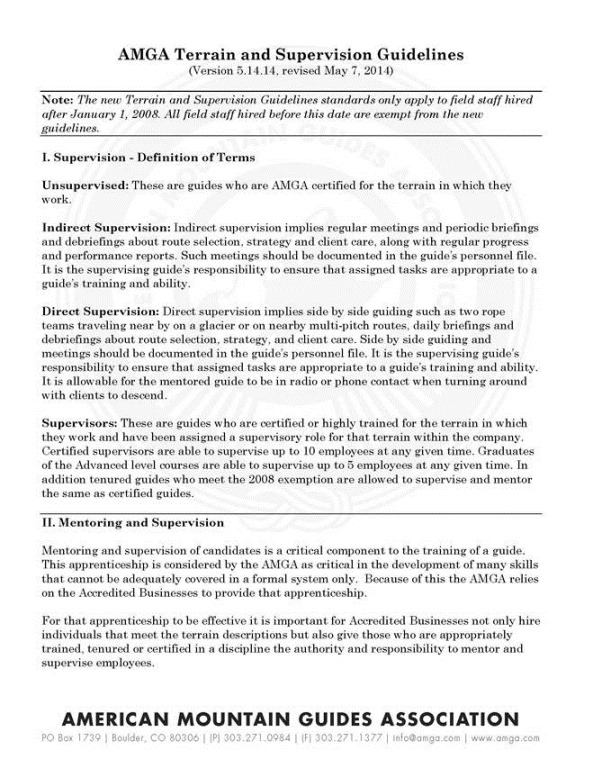
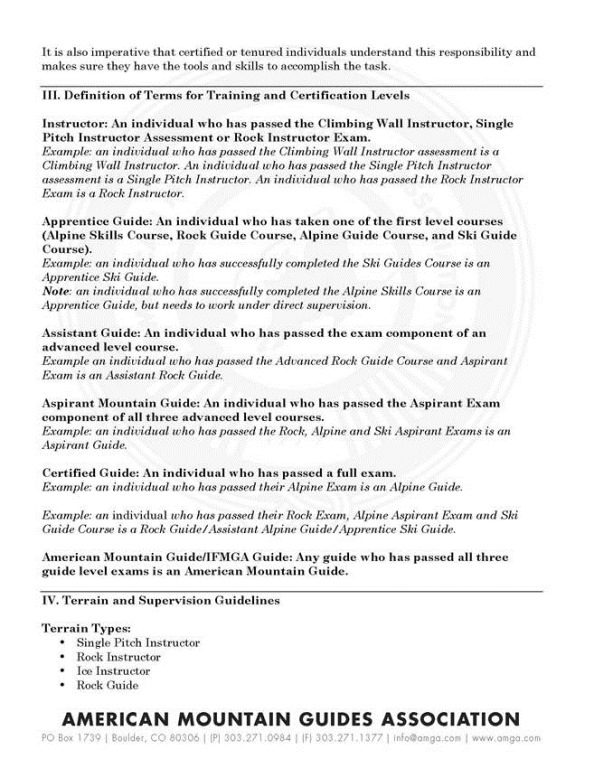
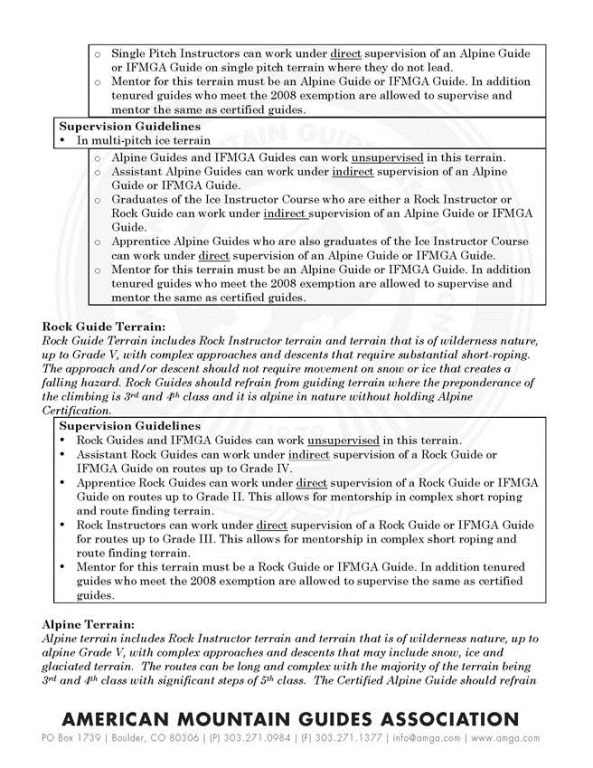
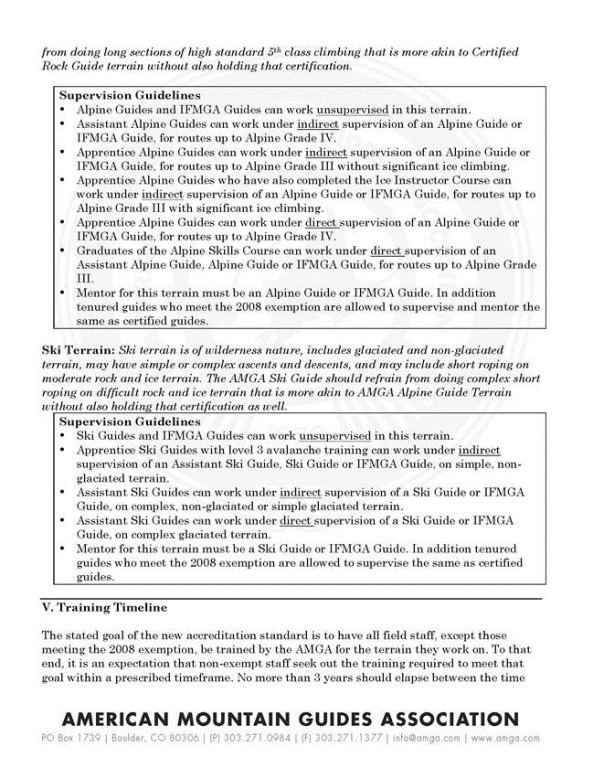
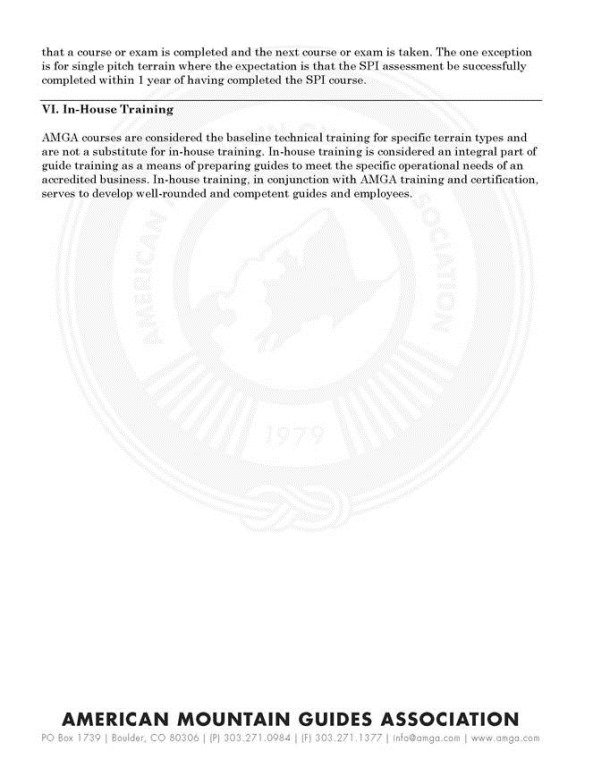
I’ve attached the new requirements here below, so you can review them yourself. If not, you can download your own set here: Terrain & Supervision Guidelines. I’m not sure why the AMGA has created the new requirements. I’ve been told it is a money thing, I’ve been told it is a safety thing, I’ve been told it is a back door into trying to get permits on NPS lands; I have no real idea. I do know it won’t accomplish any of those goals. I did not contact the AMGA to find out what or why.
Attorneys love to deal in fuzzy it gives them latitude to litigate. The only time they don’t like fuzzy is when something is solid and proves their case without having to work very hard. The new Terrain & Supervision Guidelines are the classic sharp line to help prove the defendant was wrong and everything else is fuzzy so no one really knows how to help the defendant.
Let me reminisce.
I quit providing pro bono legal work to the AMGA over fifteen years ago when another attorney said he could get the AMGA into national parks. I told the AMGA that would never happen. I moved on. Fifteen years later and at least two attorneys failing to pull AMGA guides into parks, the AMGA might be going around to the back door believing the back door will open.
Back doors meaning the NPS employees in individual parks who lead the rescues have to deal with the current concessionaires; who they don’t like (familiarity breed’s contempt). It is always easier to like someone who is sucking up in the belief; you can get them in a park to guide.
The problem is the door is not at any park; the door is in Washington DC no matter what the AMGA wants to believe. It doesn’t start at 1849 C St NW, Washington, DC 20240, the Department of the Interior address, either, but at Congress. Congress made the laws the NPS, and the USFS are enforcing on commercial guides on Federal lands. Until the AMGA can raise millions, probably $10 million dollars to lobby Congress, nothing will even look like it is going to change. And I suspect that the $10 million is not enough because the current companies that own permits and concessions will lobby against it, and they are bigger. Remember the big hotel concessions in the parks also run raft trips, trail rides and work with climbing guides.
However, I’ve also been told that the AMGA has backed off from the position that AMGA guides should be allowed to guide in National Parks.
I have found some legal disasters in the new Terrain & Supervision Guidelines.
The guidelines won’t apply to staff hired prior to 2008. An arbitrary number I guess, or probably the number when the last member of the committee became certified and was hired. I sat through board meetings when the first date of guides to be grandfathered under the UIAGM was determined. It was ugly, funny and basically a turf war. Trial attorneys will tear this up. (How come Guide X made it and Guide Y did not. Guide Y has thousands of year’s more recent experience, and Guide X has not been on a mountain since 08?)
The guidelines require that everything has to be documented “in the guide’s personnel file.” Thank heavens the AMGA has reviewed all HR laws in the US and knows this will not create problems. If personal files are paper, then you better get accordion files. To back this up, you’ll have to collect all the information supporting the requirements in the guidelines first, and then add the review of the supervising guides and the evaluations. Weather conditions, snow conditions, terrain maps, route maps, etc., can take a lot of space in a file folder.
My favorite rule is one that requires a guide who has not made the qualifications yet, must be under the direct supervision of a guide who has met the qualifications. Unless the guide, who has met the qualifications, has to take guests down the mountain, then the two guides can be in radio contact. The rules allow the least experienced guide to remain up high, alone.
Direct Supervision: Direct supervision implies side by side guiding such as two rope teams traveling near by on a glacier or on nearby multi-pitch routes, daily briefings and debriefings about route selection, strategy, and client care. Side by side guiding and meetings should be documented in the guide’s personnel file. It is the supervising guide’s responsibility to ensure that assigned tasks are appropriate to a guide’s training and ability. It is allowable for the mentored guide to be in radio or phone contact when turning around with clients to descend.
What if the guide who has been certified, leaves to summit with a group of clients, can the one who hasn’t been certified stay with the clients who don’t/can’t summit. They’ll be in radio contact?
So you make a rule, then you make an exception to the rule. On Denali in a few years, this will be a disaster. The new concession requirements for climbing concessions are going to reduce the number of guides with a commercial group. Rescues will be done without commercial guides because a guide won’t be able to leave the group and work the rescue with these guidelines. (Rescues in the future on Denali are going to be a mess with the latest version of the commercial rules anyway, that is a whole other article.)
The languages of the guidelines are full of legal land mines. Here are some of my favorites.
…who are appropriately trained, tenured or certified
It is the supervising guide’s responsibility to ensure that assigned tasks are appropriate to a guide’s training and ability.
Certified supervisors
…is not of wilderness in nature
My favorite are the terms applied to different people.
Apprentice Guide
Assistant Guide
Aspirant Mountain Guide
Certified Guide
So does that mean you are a patrol leader or a star scout? More importantly do you get a badge?
Here are some more phrases that seem innocuous but don’t make sense.
The stated goal of the new accreditation standard is to have all field staff, except those meeting the 2008 exemption, be trained by the AMGA for the terrain they work on.
So guides who met the requirements prior to 2008 cannot have a lick of training, sense or experience now and not be up to date on the requirements.
How is this going to happen? So I have a concession to guide on Denali. Am I supposed to bring you on one of my trips to tell me that you can train me on this terrain? What about the NPS on this issue and their current regulations. I guess you can come, go sign up and pay the fee, and I’ll take you where I am permitted to go.
AMGA courses are considered the baseline technical training for specific terrain types and are not a substitute for in-house training.
Yet above, they said this is the best you can get? What is this going to mean in court? The AMGA is just the baseline, yet the states the IFMGA (UIAGM) are now the baseline.
(The IFMGA (UIAGM) was founded to allow guides in Europe to guide everywhere and is the International Organization the AMGA must follow.)
I doubt that this has been run by the IFMGA (UIAGM).
Do Something
What’s going to happen? The big concessionaire members of the AMGA are either going to leave and financially sink the AMGA or revolt. No one will be happy either way. They don’t need greater chances of being sued. People die on mountains, and I would guess these new guidelines are not going to change that. They know the terrain and have in place, with NPS approval a way of guiding customers and training staff.
I have not taken the time to compare these guidelines with current NPS regulations for various mountains. I suspect there may be some conflicts. What is a concessionaire supposed to do, not follow the NPS and lose their permit or not follow these. Let’s see I pay money to the AMGA I make money with my NPS permit. Who am I going to follow?
These guidelines, like all standards for people, will only create a checklist for the attorney representing an injured client to sue. The guidelines will be taken and incorporated in interrogatories about each member of the guiding team. One misstep on the mountain or in discovery and these guidelines will change the lawsuit from what we can defend to how much we have to pay.
Don’t get me wrong. The American Mountain Guides Association has some of the greatest people I know as members and as an organization has accomplished tons. However, it is faced with an impossible job with no money to accomplish the job: the promise the AMGA made to the IFMGA in 1993 is never going to come through.
However, making standards, guidelines for people do not stop lawsuits; they only help the plaintiff’s win lawsuits.
Click on the link to download your own copy of the Terrain & Supervision Guidelines.
See the following articles where association guidelines were used to sue the association member:
ACA Standards are used by Expert for the Plaintiff in a lawsuit against a Camp http://rec-law.us/zmKgoi
Great article about the risks of an organization creating standards for members of the industry – and I did not write it http://rec-law.us/1rk8oHR
If your organization says you do something and you are a member of the organization you better do it or be able to explain why you did not http://rec-law.us/1gOLpju
Expert Witness Report: ACA “Standards” are used by Expert for the Plaintiff in a lawsuit against a Camp http://rec-law.us/y7QlJ3
Industry standards are proof of gross negligence and keep defendant in lawsuit even with good release http://rec-law.us/1dqBdxo
Plaintiff uses standards of ACCT to cost defendant $4.7 million http://rec-law.us/11UdbEn
So if you write standards, you can, then use them to make money when someone sues your competitors http://rec-law.us/1gCGce8
Trade Association Standards sink a Summer Camp when plaintiff uses them to prove Camp was negligent http://rec-law.us/wszt7N

What do you think? Leave a comment.
If you like this let your friends know or post it on FB, Twitter or LinkedIn
Copyright 2013 Recreation Law (720) Edit Law
Email: Rec-law@recreation-law.com
Google+: +Recreation
Twitter: RecreationLaw
Facebook: Rec.Law.Now
Facebook Page: Outdoor Recreation & Adventure Travel Law
Blog: www.recreation-law.com
University climbing wall release along with Texas Recreational Use Act and Texas Tort Claims Act defeat injured climber’s lawsuit
Posted: December 4, 2014 Filed under: Climbing Wall, Contract, Release (pre-injury contract not to sue), Texas | Tags: Appeal, Attorney's fee, Climbing, Climbing Wall, Figure 8 Knot, Harness, Rec Center, Recreational Use Act, Tort Claims Act, University, University of Texas, University Rec Center Leave a commentCourt looks at whether a release will defeat a claim for gross negligence but does not decide the case on that issue. Case is confusing, because court discussed defenses that were not applicable. Plaintiff waived all but the gross negligence claims.
Benavidez v. The University of Texas — Pan American, 2014 Tex. App. LEXIS 11940
State: Texas, Court of Appeals
Plaintiff: Rolando Benavidez
Defendant: The University of Texas — Pan American
Plaintiff Claims: failure to properly use the climbing equipment and properly supervise [Benavidez] during the climb, Under the theory of respondeat superior, Benavidez claimed that his injuries were caused by the negligence and gross negligence of UTPA (University of Texas– Pan American), negligent use of tangible personal property in that UTPA breached its “legal duty to [Benavidez] to provide supervision of [Benavidez], use safe equipment with [Benavidez], and to properly secure [Benavidez’s] harness prior to climbing.” negligent use or condition of real property in that UTPA breached its duty to provide a safe climbing wall for Benavidez and failed to use ordinary care to protect Benavidez from an unreasonably dangerous condition. UTPA had subjective awareness of a high degree of risk and acted with “conscious indifference to the rights, safety, or welfare of [Benavidez] or others similarly situated.
Defendant Defenses: Release, Recreational Use Statute and the Texas Tort Claims Act
Holding: For the defendant
Year: 2014
The plaintiff was climbing at the university’s climbing wall. He signed a release to climb. On the back of the release was a set of rules about climbing that the plaintiff also had to sign. i.e. Two legal documents on one sheet of paper.
The plaintiff argued the rules on the backside of the agreement were part of the contract. Because the climbing wall had not followed the rules, the release was no longer valid and the defendant had acted negligently and gross negligently.
While climbing the plaintiff reached the top of the wall and was told to lean back while he was lowered. The plaintiff fell 33’ suffering injuries. Based on witness statements of other employees of the wall, it appeared the figure 8 (knot) used to tie the plaintiff’s harness to the rope had been tied incorrectly.
The trial court dismissed the case, awarded costs against the plaintiff based on the Texas Tort Claims Act, and the plaintiff appealed.
Analysis: making sense of the law based on these facts.
The court first looked at the Texas Tort Claim Act and its application to the case.
As a governmental unit, UTPA is immune from both suit and liability unless the Tort Claims Act has waived that immunity. Section 101.021 of the Tort Claims Act has been interpreted as waiving sovereign immunity in three general areas: “use of publicly owned automobiles, premises defects, and injuries arising out of conditions or use of property.”
The court then brought in the Texas Recreational Use Statute. Under the Texas Recreational Use Statute, a state landowner (governmental entity) can only be liable for gross negligence.
When injury or death results on state-owned, recreational land, the recreational use statute limits the state’s duty even further to that owed by a landowner to a trespasser, which means that the State only waives immunity for conduct that rises to the level of gross negligence.
The university is state land, and the climbing wall is on the land. It was used for recreation and probably as a student for free, although this was not discussed in the case. Consequently, the Texas Recreational Use Act protected the university from negligence claims.
With the ordinary negligence claims gone, the court turned to the gross negligence claims and looked at the release. Under Texas law to be valid, a release must:
(1) provide fair notice by being conspicuous, and (2) comply with the express negligence doctrine. To be conspicuous, a release must be written, displayed, or presented such that a reasonable person against whom it is to operate ought to have noticed it. A release satisfies the express negligence doctrine if it expresses the intent of the parties to exculpate a party for its own negligence.
The burden is on the defendant, the person relying on the defense of release, to prove the validity of the release and the requirements set forth by the court.
The court then looked at whether the release then barred the claim for gross negligence. The court reviewed several Texas cases; however, the court did not decide whether a release in this situation barred a claim for gross negligence. The court found the gross negligence claim was not raised on the appeal.
For a legal argument to be argued in the court, there are two basic components that must be met before any argument can be made. The argument must be made in the trial court and in many cases an objection to the court’s ruling made. Second the issue must be argued in the statements (pleadings) at the appellate court also. Here, although argued in the trial court the issue was not argued or probably raised at the appellate court.
The court then went back to the release to see if the release was still valid. The plaintiff claimed the defendant violated the release because it failed to follow the rules on the reverse side of the release. Because the rules were on the document called the release the plaintiff argued they were part of the release. Those rules set forth how the climbers and allegedly the gym was supposed to act. One of the rules required all knots to be checked by specific persons at the gym, which was not done in this case, and allegedly not done at all until after the plaintiff’s injury.
Arguing the rules and release were one document, the plaintiff stated the failure to follow the rules was a material breach of the contract. A material breach or avoidance of the contract voids it.
Under Texas law, a release is a contract and is subject to avoidance just like any other contract. When construing a contract, the court’s primary concern is to give effect to the written expression of the parties’ intent. This court is bound to read all parts of a contract together to ascertain the agreement of the parties. The contract must be considered as a whole. Moreover, each part of the contract should be given full effect.
A prior material breach one that occurs before the execution of the contract discharges the parties from the contractual obligations. “Under the theory of prior material breach, a party is discharged from its contractual obligations based on the other party’s material breach of the contract.”
Execution of the contract means the contract by its terms has not been completed. Meaning there is part so the contract that have not been complied with by one or more parties. Here the failure of the gym to check the plaintiff’s knot was prior to the climbing of the plaintiff. “Under the theory of prior material breach, a party is discharged from its contractual obligations based on the other party’s material breach of the contract.”
Under Texas law for a court to determine if a prior material breach to occur the court must determine the following:
(1) the extent to which the injured party will be deprived of the benefit which he reasonably expected;
(2) the extent to which the injured party can be adequately compensated for the part of that benefit of which he will be deprived;
(3) the extent to which the party failing to perform or to offer performance will suffer forfeiture;
(4) the likelihood that the party failing to perform or to offer to perform will cure his failure, taking account of all the circumstances including any reasonable assurances; and
(5) the extent to which the behavior of the party failing to perform or to offer to perform comports with standards of good faith and fair dealing.
This court also examined whether or not checking the knot was a condition precedent. A condition precedent requires one thing to occur before the rest of the contract must be done.
Alternatively, a condition precedent is an event that must occur or act that must be per-formed before rights can accrue to enforce an obligation. Ordinarily, terms such as “if,” “provided that,” “on condition that,” or similar conditional language indicate the intent to create a condition precedent. Conditions precedent, which can cause forfeiture of a contractual right, are not favored under the law, and we will not construe a contract provision as a condition precedent unless we are compelled to do so by language that may be construed in no other way.
However, the court found that the language of the safety rules did not relate to the language of the release. The safety rules, overall, were simply rules the plaintiff was to follow and was not part of the contract. “…the safety policy’s side of the document, by its clear language, does not indicate that UTPA promised to comply with the policies or that compliance with the policies by UTPA…”
However, reading the safety policies document as a whole, we find that the language of the agreement placed the sole responsibility on the climber to ensure that the procedures in the safety polices were followed.
Because we find that, by its clear language, the waiver and release form did not express the intent of either party to condition the release from liability on any performance by UTPA and did not include a promise by UTPA to follow the safety policies as consideration for the contract, we conclude that UTPA did not breach or fail to satisfy a condition of the release contract.
The remaining issues before the court were dismissed because without a negligence claim, they were also decided. The appellate court affirmed the trial court’s dismissal of the plaintiff’s claims and the award of costs under the Texas rules of civil procedure.
Costs are not attorney fees. Costs are the cost of going to trial, the filing fee, witness fees, possibly deposition costs, etc. Most states allow the winning side to recover costs of a trial.
So Now What?
This was close. It was obvious by the amount of time the court spend discussing the issue of a material breach that the language on the back of the release was an issue for the court. Always remember a release is a contract. You don’t buy a house with a laundry list on the back. You don’t rent an apartment with state driving laws on the back. Releases are contracts, and you need to make sure there is no issue that the document you are having your guests sign. A Release must be a contract and nothing else.
The university, because it was a state college was subject to broader and more protective statutes that provided defenses, than a private commercial gym or a private college. A state’s tort claims act provides a broad range for protection.
Whether or not a state’s recreational use statute provides protection for governmental agencies is different in each state. If you are in this position, you should check with counsel to see what protection any state statutes may provide.
#Ad
 |
Jim Moss is an attorney specializing in the legal issues of the outdoor recreation community. He represents guides, guide services, outfitters both as businesses and individuals and the products they use for their business. He has defended Mt. Everest guide services, summer camps, climbing rope manufacturers; avalanche beacon manufactures and many more manufacturers and outdoor industries. Contact Jim at Jim@Rec-Law.us |
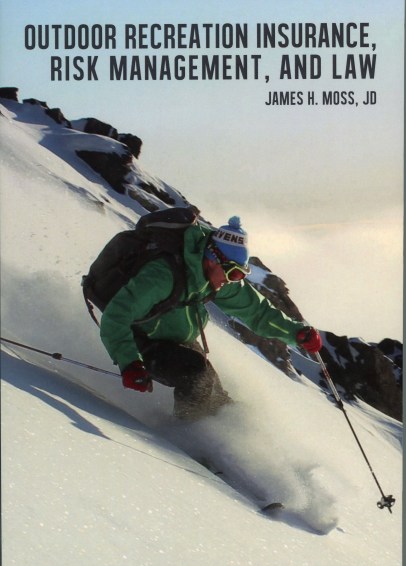
Jim is the author or co-author of six books about the legal issues in the outdoor recreation world; the latest is Outdoor Recreation Insurance, Risk Management and Law.
To see Jim’s complete bio go here and to see his CV you can find it here. To find out the purpose of this website go here.
G-YQ06K3L262
What do you think? Leave a comment.
If you like this let your friends know or post it on FB, Twitter or LinkedIn
Author: Outdoor Recreation Insurance, Risk Management and Law

Outdoor Recreation Insurance, Risk Management and Law
Facebook Page: Outdoor Recreation & Adventure Travel Law
Email: Jim@Rec-Law.US
By Recreation Law Rec-law@recreation-law.com James H. Moss
@2014-2023 Summit Magic Publishing, LLC
ventureTourism, #AdventureTravelLaw, #AdventureTravelLawyer, #AttorneyatLaw, #Backpacking, #BicyclingLaw, #Camps, #ChallengeCourse, #ChallengeCourseLaw, #ChallengeCourseLawyer, #CyclingLaw, #FitnessLaw, #FitnessLawyer, #Hiking, #HumanPowered, #HumanPoweredRecreation, #IceClimbing, #JamesHMoss, #JimMoss, #Law, #Mountaineering, #Negligence, #OutdoorLaw, #OutdoorRecreationLaw, #OutsideLaw, #OutsideLawyer, #RecLaw, #Rec-Law, #RecLawBlog, #Rec-LawBlog, #RecLawyer, #RecreationalLawyer, #RecreationLaw, #RecreationLawBlog, #RecreationLawcom, #Recreation-Lawcom, #Recreation-Law.com, #RiskManagement, #RockClimbing, #RockClimbingLawyer, #RopesCourse, #RopesCourseLawyer, #SkiAreas, #Skiing, #SkiLaw, #Snowboarding, #SummerCamp, #Tourism, #TravelLaw, #YouthCamps, #ZipLineLawyer, Climbing Wall, Climbing, University, Rec Center, University Rec Center, University of Texas, Recreational Use Act, Tort Claims Act, Figure 8 Knot, Harness,
Colorado District court judge rules a ski area release does not cover the back entrance to a restaurant
Posted: December 3, 2014 Filed under: Colorado, Release (pre-injury contract not to sue), Ski Area | Tags: Alpine skiing, ASC, Aspen Highlands, Aspen Skiing Company, Assumption of risk, backdoor, Cloud 9, Cloud 9 restaurant, Release, restaurant, Ski Resort, SkiCo, skiing, Winter sport Leave a commentSeason pass holder went in the back door of restaurant to warm up. Slipped and fell in kitchen on way back out. Ski area sued for broken elbow.
This case has a long way to go as the trial has not even occurred. However it is sort of interesting based on the limited information available. Basically the language of the release was not enough to stop a lawsuit over a slip and fall in a building on the mountain.
The basis for the judge’s ruling, based on the article, is the term “facility” is not defined in the release to include restaurants. More importantly no release probably covers the back door entrance.
Bigger will be the response by the ski area.
· Will they put “employee only signs” on the back doors of all their buildings?
· Will they modify their release to provide better coverage for their buildings
· Will they put signs and mats down as the court seems to want?
Let me know your picks!
See Judge rules against SkiCo’s waiver in lawsuit
What do you think? Leave a comment.
If you like this let your friends know or post it on FB, Twitter or LinkedIn
Copyright 2013 Recreation Law (720) Edit Law
Email: Rec-law@recreation-law.com
Google+: +Recreation
Twitter: RecreationLaw
Facebook: Rec.Law.Now
Facebook Page: Outdoor Recreation & Adventure Travel Law
Blog: www.recreation-law.com
Mobile Site: http://m.recreation-law.com
#AdventureTourism, #AdventureTravelLaw, #AdventureTravelLawyer, #AttorneyatLaw, #Backpacking, #BicyclingLaw, #Camps, #ChallengeCourse, #ChallengeCourseLaw, #ChallengeCourseLawyer, #CyclingLaw, #FitnessLaw, #FitnessLawyer, #Hiking, #HumanPowered, #HumanPoweredRecreation, #IceClimbing, #JamesHMoss, #JimMoss, #Law, #Mountaineering, #Negligence, #OutdoorLaw, #OutdoorRecreationLaw, #OutsideLaw, #OutsideLawyer, #RecLaw, #Rec-Law, #RecLawBlog, #Rec-LawBlog, #RecLawyer, #RecreationalLawyer, #RecreationLaw, #RecreationLawBlog, #RecreationLawcom, #Recreation-Lawcom, #Recreation-Law.com, #RiskManagement, #RockClimbing, #RockClimbingLawyer, #RopesCourse, #RopesCourseLawyer, #SkiAreas, #Skiing, #SkiLaw, #Snowboarding, #SummerCamp, #Tourism, #TravelLaw, #YouthCamps, #ZipLineLawyer, Release, Aspen Skiing Company, ASC, SkiCo, Cloud 9 restaurant, Cloud 9, Aspen Highlands, backdoor, restaurant,
Martin Litton, the man who Saved the Grand Canyon has rowed on
Posted: December 1, 2014 Filed under: Paddlesports | Tags: Dories, Grand Canyon Grand Canyon Dories, Martin Litton Leave a commentMartin Litton, the man who turned the Sierra Club around and saved the Grand Canyon Passes Away in his sleep yesterday.

gcimage
Thanks for everything you did.
Buy something online and you may not have any recourse if it breaks or you are hurt. Sell stuff without a plan to sell in a specific state may prevent you from being sued in that state.
Posted: December 1, 2014 Filed under: Jurisdiction and Venue (Forum Selection), New York | Tags: Cycling, Fourteenth Amendment, Handlebar, Long Arm Statute, Minimum Contacts, New York, New York City, US Constitution Leave a commentPersonal jurisdiction is the term given to whether or not a defendant can be sued in a particular location. What that means is the legal issue is whether the court has the legal right to have the defendant brought before it. Another way of defining it is whether or not the defendant has done enough to have the minimum contacts with the state or the people of the state to be brought into the state for a lawsuit.
Boyce v. Cycle Spectrum, Inc., et al., 2014 U.S. Dist. LEXIS 96545
State: New York, US District Court for the Eastern District of New York
Plaintiff: Timothy Boyce and Courtney Boyce
Defendant: HL Corp is the party in the motion. The following defendants were sued: Cycle Spectrum, Inc.; AZ Velo Imports, Inc.; CS Velo AZ Inc.; AZ Desert Velo, Inc.; CS Bike, Inc.; CS Velo HT, Inc.; Velo Bdbi Support, Inc.; Cycle Support, Inc.; Spratt Cycle Support, Inc.; Windsor America Corporation; and (USA)
Plaintiff Claims: Probably negligence but it does not say
Defendant Defenses: Jurisdiction, whether the court has the legal authority to compel the defendant HL Corp to a trial in New York
Holding: for the defendant
Year: 2014
This is a mixed emotion’s case, but it is also an “I told you so” case. The plaintiff purchased a bicycle online. While riding the bike the handlebars broke injuring the plaintiff. The defendant HL Corp manufactures and sells bicycle parts, and the plaintiff attempted to sue the defendant.
The defendant, however, did not sell parts in New York or to someone knowing that they would be sold in New York. The defendant HL filed a motion to dismiss for lack of personal jurisdiction.
Analysis: making sense of the law based on these facts.
Whether a court has jurisdiction over a defendant is a two-part test. The first is whether the law of the state, the long-arm statute, allows the defendant to be brought to a local court and how. The second is whether bringing the defendant to a local court would violate the defendant’s 14th Amendment of the US Constitution.
Under New York Law jurisdiction is established when the defendant “…”expects or should reasonably expect [its actions] to have consequences in the state and derives substantial revenue from interstate or international commerce.” The test for this has five steps.
(1) the defendant’s tortious act was committed outside New York, (2) the cause of action arose from that act, (3) the tortious act caused an injury to a person or property in New York, (4) the defendant expected or should reasonably have expected that his or her action would have consequences in New York, and (5) the defendant derives substantial revenue from interstate or international commerce.
The fourth element was at issue here, “the defendant expected or should reasonably have expected that his or her action would have consequences in New York”
The court found that bicycles are a local product, not like cars, which can be sold in one state and the seller can reasonably expect to show up in another state. Therefore, there was no reasonable expectation that a product sold for a bicycle in one state would show up in another state. Nor did the defendant have distribution or sales agreements with its customers who would create an expectation that the defendants’ products would show up in New York.
Consequently, it was not foreseeable or reasonable under New York law that the defendants’ products would show up in New York.
The allegations and conceivable facts are insufficient to establish specific jurisdiction under New York law. (“The ‘reasonable expectation’ test . . . is not satisfied by ‘[t]he mere likelihood that a product will find its way into the forum state . . . .”
The next issue was whether or not by allowing the defendant to be sued in New York it would violate the defendant’s Fourteenth Amendment. The Fourteenth Amendment is:
All persons born or naturalized in the United States, and subject to the jurisdiction thereof, are citizens of the United States and of the state wherein they reside. No state shall make or enforce any law which shall abridge the privileges or immunities of citizens of the United States; nor shall any state deprive any person of life, liberty, or property, without due process of law; nor deny to any person within its jurisdiction the equal protection of the laws.
Section 2.
Representatives shall be apportioned among the several states according to their respective numbers, counting the whole number of persons in each state, excluding Indians not taxed. But when the right to vote at any election for the choice of electors for President and Vice President of the United States, Representatives in Congress, the executive and judicial officers of a state, or the members of the legislature thereof, is denied to any of the male inhabitants of such state, being twenty-one years of age, and citizens of the United States, or in any way abridged, except for participation in rebellion, or other crime, the basis of representation therein shall be reduced in the proportion which the number of such male citizens shall bear to the whole number of male citizens twenty-one years of age in such state.
Section 3.
No person shall be a Senator or Representative in Congress, or elector of President and Vice President, or hold any office, civil or military, under the United States, or under any state, who, having previously taken an oath, as a member of Congress, or as an officer of the United States, or as a member of any state legislature, or as an executive or judicial officer of any state, to support the Constitution of the United States, shall have engaged in insurrection or rebellion against the same, or given aid or comfort to the enemies thereof. But Congress may by a vote of two-thirds of each House, remove such disability.
Section 4.
The validity of the public debt of the United States, authorized by law, including debts incurred for payment of pensions and bounties for services in suppressing insurrection or rebellion, shall not be questioned. But neither the United States nor any state shall assume or pay any debt or obligation incurred in aid of insurrection or rebellion against the United States, or any claim for the loss or emancipation of any slave; but all such debts, obligations and claims shall be held illegal and void.
Section 5.
The Congress shall have power to enforce, by appropriate legislation, the provisions of this article.
The Fourteenth Amendment is usually heard in modern society when looking at voting laws and laws that may treat a member of another state differently than the residents of a state. More importantly, it is the civil rights amendment.
The jurisdiction test under the Fourteenth Amendment has been defined as:
In a recent opinion, a plurality of the Supreme Court addressed this argument: “The principal inquiry in cases of this sort is whether the defendant’s activities manifest an intention to submit to the power of a sovereign. . . . [A]s a general rule, it is not enough that the defendant might have predicted that its goods will reach the forum State.”
The Fourteenth Amendment protects defendants “without meaningful ties to the forum state from being subjected to binding judgments within in its jurisdiction” This is a two-part test, whether the defendant has (1) minimum contacts and (2) whether this analysis is reasonable. The test for minimum contacts is whether the defendant has sufficient contacts with the state to “justify the court’s exercise of personal jurisdiction.”
The reasonableness test is:
..whether the assertion of personal jurisdiction comports with ‘traditional notions of fair play and substantial justice’–that is, whether it is reasonable to exercise personal jurisdiction under the circumstances of the particular case.”
Again, the court found that the requirements for the defendant to be sued in New York in this case would violate the defendant’s Constitutional rights under the Fourteenth Amendment.
So Now What?
It is extremely difficult to explain, “minimum contacts” and how someone in one state can be sued in another. It is a nightmare in law school and one of the basic hurdles for first-year law students. students. Understand minimum contacts and continue moving down the path to being a lawyer.
Here is what you should come away with. As much as a manufacturer wants to sell products, doing so may cost you more than it is worth. Investigate the liability of selling in a state by looking at how easy it is to be drawn into a state court there, the number of products you have to sell there to justify the risk and whether your products are already there.
From a consumer standpoint, remember no matter how good the deal, if it goes bad, you just can’t walk down the street and exchange the broken product for a new one. Not much comes from China, Taiwan or Vietnam with a warranty. Any warranty is going to come from the US business that brings it in. If you bring it in, you are supplying the warranty.
No insurance follows most products from the foreign manufacturer as exemplified here. Consequently, if you are injured, you better have good health insurance because you won’t be recovering from the manufacturer. Make sure the money you save, pays for the health, life and disability insurance you may need.
|
Jim Moss is an attorney specializing in the legal issues of the outdoor recreation community. He represents guides, guide services, outfitters both as businesses and individuals and the products they use for their business. He has defended Mt. Everest guide services, summer camps, climbing rope manufacturers; avalanche beacon manufactures and many more manufacturers and outdoor industries. Contact Jim at Jim@Rec-Law.us |
Jim is the author or co-author of six books about the legal issues in the outdoor recreation world; the latest is Outdoor Recreation Insurance, Risk Management and Law.
To see Jim’s complete bio go here and to see his CV you can find it here. To find out the purpose of this website go here.
G-YQ06K3L262
What do you think? Leave a comment.
Outdoor Recreation Insurance, Risk Management and Law
If you like this let your friends know or post it on FB, Twitter or LinkedIn
Author: Outdoor Recreation Insurance, Risk Management and Law
Facebook Page: Outdoor Recreation & Adventure Travel Law
Email: Jim@Rec-Law.US
By Recreation Law Rec-law@recreation-law.com James H. Moss
@2014-2023 Summit Magic Publishing, LLC
#AdventureTourism, #AdventureTravelLaw, #AdventureTravelLawyer, #AttorneyatLaw, #Backpacking, #BicyclingLaw, #Camps, #ChallengeCourse, #ChallengeCourseLaw, #ChallengeCourseLawyer, #CyclingLaw, #FitnessLaw, #FitnessLawyer, #Hiking, #HumanPowered, #HumanPoweredRecreation, #IceClimbing, #JamesHMoss, #JimMoss, #Law, #Mountaineering, #Negligence, #OutdoorLaw, #OutdoorRecreationLaw, #OutsideLaw, #OutsideLawyer, #RecLaw, #Rec-Law, #RecLawBlog, #Rec-LawBlog, #RecLawyer, #RecreationalLawyer, #RecreationLaw, #RecreationLawBlog, #RecreationLawcom, #Recreation-Lawcom, #Recreation-Law.com, #RiskManagement, #RockClimbing, #RockClimbingLawyer, #RopesCourse, #RopesCourseLawyer, #SkiAreas, #Skiing, #SkiLaw, #Snowboarding, #SummerCamp, #Tourism, #TravelLaw, #YouthCamps, #ZipLineLawyer, New York, Minimum Contacts, Fourteenth Amendment, Cycling, Handlebar, Long Arm Statute, US Constitution,
Goal Zero Sherpa brand 50 and 120 rechargeable battery packs
Posted: November 29, 2014 Filed under: Uncategorized | Tags: Battery, Battery (electricity), Battery Pack, Bluffdale, Goal Zero, GoalZero.com, Lithium Ion, Recall, Sherpa, UT Leave a commentManufacturer: Goal Zero
Goal Zero and Sherpa 50 or 120 are printed on one side of the battery pack. The serial number is printed on the other side. Serial numbers that start with S/N 11002 or S/N 11102 are included in the recall. Sherpa 50 battery packs with serial numbers starting with S50 are not included in this recall.
Remedy: Consumers should immediately stop using the recalled battery packs and contact Goal Zero for a free replacement battery pack.
Recall Information: Contact: Goal Zero toll-free at (877) 897-3193 from 6 a.m. to 6 p.m. MT Monday through Friday or online at http://www.goalzero.com and click on “Product Notifications” for more information.
Units: About 10,000 in the U.S. and 110 in Canada
Year Manufactured: March 2010 through November 2013
Incidents/Injuries: One fire, no injuries
Sold: REI and other sporting goods stores nationwide and online at Amazon.com and Goalzero.com
This recall involves Goal Zero’s Sherpa brand 50 and 120 rechargeable battery packs that are used to charge cell phones, tablets, laptops and other devices. The battery packs can be plugged into an A/C wall outlet, a 12 volt car charger or an attachable solar panel for recharging. The lithium ion iron phosphate battery packs are silver and black.
Retailers: If you are a retailer of a recalled product you have a duty to notify your customers of a recall. If you can, email your clients or include the recall information in your next marketing communication to your clients. Post any Recall Poster at your stores and contact the manufacturer to determine how you will handle any recalls.
For more information on this see:
For Retailers
Recalls Call for Retailer Action
Combination of a Products Liability statute, an Expert Witness Report that was just not direct enough and odd facts holds a retailer liable as manufacture for product defect.
Product Liability takes a different turn. You must pay attention, just not rely on the CPSC.
Retailer has no duty to fit or instruct on fitting bicycle helmet
Summary Judgment granted for bicycle manufacturer and retailer on a breach of warranty and product liability claim.
For Manufacturers
The legal relationship created between manufactures and US consumers
What do you think? Leave a comment.
If you like this let your friends know or post it on FB, Twitter or LinkedIn
Copyright 2013 Recreation Law (720) Edit Law
Email: Rec-law@recreation-law.com
Google+: +Recreation
Twitter: RecreationLaw
Facebook: Rec.Law.Now
Facebook Page: Outdoor Recreation & Adventure Travel Law
Blog: www.recreation-law.com
Mobile Site: http://m.recreation-law.com
#AdventureTourism, #AdventureTravelLaw, #AdventureTravelLawyer, #AttorneyatLaw, #Backpacking, #BicyclingLaw, #Camps, #ChallengeCourse, #ChallengeCourseLaw, #ChallengeCourseLawyer, #CyclingLaw, #FitnessLaw, #FitnessLawyer, #Hiking, #HumanPowered, #HumanPoweredRecreation, #IceClimbing, #JamesHMoss, #JimMoss, #Law, #Mountaineering, #Negligence, #OutdoorLaw, #OutdoorRecreationLaw, #OutsideLaw, #OutsideLawyer, #RecLaw, #Rec-Law, #RecLawBlog, #Rec-LawBlog, #RecLawyer, #RecreationalLawyer, #RecreationLaw, #RecreationLawBlog, #RecreationLawcom, #Recreation-Lawcom, #Recreation-Law.com, #RiskManagement, #RockClimbing, #RockClimbingLawyer, #RopesCourse, #RopesCourseLawyer, #SkiAreas, #Skiing, #SkiLaw, #Snowboarding, #SummerCamp, #Tourism, #TravelLaw, #YouthCamps, #ZipLineLawyer, Recall, Goal Zero, Sherpa, Battery Pack, Bluffdale, UT, Lithium Ion, Battery, GoalZero.com
Some People can Never wait for Winter and G3 Knows Them
Posted: November 28, 2014 Filed under: Skiing / Snow Boarding | Tags: Backcountry skiing, G3, Genuine Guide Gear Leave a comment
|


Happy Thanksgiving
Posted: November 27, 2014 Filed under: Uncategorized | Tags: Thanksgiving Leave a commentHappy Thanksgiving
If you are reading this you either better be from someplace other than the US or here by accident
:)
SOME REAL WINNING LINES IF FOUND IN RELEASES
Posted: November 26, 2014 Filed under: Release (pre-injury contract not to sue) | Tags: Gross negligence, Release Leave a commentI can’t believe attorneys write these lines, which means injured people sue because their attorneys can see the stupidity in the release. Alternatively, probably the release was not written by an attorney but cobbled together from stuff the operation owner finds on laying around the office.
Here are some specific lines from releases that I found quite interesting.
COMPANY DOES NOT SUPPLY HELMETS. This followed a paragraph requiring you two initial twice that climbing without a helmet is dangerous. I do not know for sure, but I suspect the company supplies ropes. I have yet to see a climbing wall that did not. I also suspect that the company also rents shoes or harnesses. I have yet to see one that did not offer those either for a fee or for free. However, the piece of safety equipment that they admit in writing is necessary they do not provide!
Does anyone else see anything wrong with this? You state in your release a helmet is a necessary piece of climbing safety equipment, and you do not provide the helmet. Next time someone has a head injury hand them the keys to the building and tells them to forward your mail. You can rent a car without seatbelts; you can rent a boat without a life jacket, and you can run a climbing wall without helmets!
In that regard, I have also seen climbing gyms require you to sign a release if you do not want to use a helmet. The release outlines the dangers of not using a helmet, and you are strongly encouraged to wear a helmet. When you ask for one, they charge you a rental fee. IF YOU RUN AN OUTDOOR RECREATION BUSINESS, YOU BETTER PROVIDE THE REQUIRED SAFETY GEAR FOR FREE! No judge is going to allow that release to stand, where you waived the use of a helmet if you charged for it. That would be like renting canoes or kayaks without supplying life jackets. Inline skates without pads and helmets or bicycles without helmets.
We will provide the Release; you provide the Boats!
I just came back from the big industry trade show where all the new gear is displayed each year. A company that puts on tradeshows hosts the event. One day was a “demo day” on the lake. Most of the boat manufacturers and many other exhibitors had their boats on the lake to be tested by retailers. To enter the site you had to sign a release. After signing the release, you received a little wristband that allowed you to walk around and test boats.
The Release DID NOT PROTECT THE EXHIBITORS!
Now I am sure that a good defense attorney would piece together the list of people covered by the release and argue either the Exhibitors were covered or that the words “sponsors, advertisers, or others associated with the Exhibition” covered the exhibitors. However, it could be a little tough. In all the documents presented by the tradeshow company about the event, the referred to the people in booths and at the demo as Exhibitors. Because the Exhibitors are the people with the real risk, you would want them covered.
One release could cover everyone. You would not want to sign a different release for each exhibitor; you would have writer’s cramp and never be in a boat. Adding the term exhibitor to the list of terms describing the people to be covered would have been easy. Adding the term exhibitors, boat manufacturers and other persons displaying product or offering products for use at the event would have been better.
Because water was involved, I would also suggest adding a few rules the participants should be required to follow. “I agree to wear a PFD (personal flotation device or life jacket) whenever I am demonstrating any vessel on the lake.” I agree to follow the directions and recommendations of the manufactures in regard to the operation of their vessels while testing any vessel on the lake.”
Manufactures, who paid to be there, where there, with their collective wallets blowing in the wind. As a manufacture, you should make sure you’re covered when in any situation like that. Ask for a copy of the release in advance and make sure your assets are protected.
Other Great Lines in Releases
Other than Gross Negligence. Releases in all states do not stop claims for gross negligence. Because the releasor is worried people will not like their release, they attempt to soften the document by telling signors what the release won’t cover: gross negligence. Consequently, even the dumbest attorney the injured guest sees can figure out how to beat the release. Sue for gross negligence. Even if the law is fuzzy in a state, the release says you can’t sue me for gross negligence.
That is like locking the door but keeping the key to the door outside so anyone can unlock the door!
What do you think? Leave a comment.
If you like this let your friends know or post it on FB, Twitter or LinkedIn
Copyright 2014 Recreation Law (720) Edit Law
Email: Rec-law@recreation-law.com
Google+: +Recreation
Twitter: RecreationLaw
Facebook: Rec.Law.Now
Facebook Page: Outdoor Recreation & Adventure Travel Law
Blog: www.recreation-law.com
Mobile Site: http://m.recreation-law.com
By Recreation Law Rec-law@recreation-law.com James H. Moss #Authorrank
<rel=”author” link=” https://plus.google.com/u/0/b/112453188060350225356/” />
#AdventureTourism, #AdventureTravelLaw, #AdventureTravelLawyer, #AttorneyatLaw, #Backpacking, #BicyclingLaw, #Camps, #ChallengeCourse, #ChallengeCourseLaw, #ChallengeCourseLawyer, #CyclingLaw, #FitnessLaw, #FitnessLawyer, #Hiking, #HumanPowered, #HumanPoweredRecreation, #IceClimbing, #JamesHMoss, #JimMoss, #Law, #Mountaineering, #Negligence, #OutdoorLaw, #OutdoorRecreationLaw, #OutsideLaw, #OutsideLawyer, #RecLaw, #Rec-Law, #RecLawBlog, #Rec-LawBlog, #RecLawyer, #RecreationalLawyer, #RecreationLaw, #RecreationLawBlog, #RecreationLawcom, #Recreation-Lawcom, #Recreation-Law.com, #RiskManagement, #RockClimbing, #RockClimbingLawyer, #RopesCourse, #RopesCourseLawyer, #SkiAreas, #Skiing, #SkiLaw, #Snowboarding, #SummerCamp, #Tourism, #TravelLaw, #YouthCamps, #ZipLineLawyer, Release, Gross Negligence,
Colorado Avalanche Information Center has a new Email Design: Informative and Easy to Understand
Posted: November 25, 2014 Filed under: Avalanche | Tags: avalanche, backcountry, CAIC, Colorado, Colorado Avalanche Information Center, Forecast Leave a comment
Weather Forecast for 11,000ftIssued Thursday, November 20, 2014 at 6:36 AM by Scott Toepfer
© 2008-2014 Colorado Avalanche Information Center. All rights reserved. |


Georgia court finds no requirement for an employee to intervene when higher trained first aid providers are present.
Posted: November 24, 2014 Filed under: Georgia, Health Club, Minors, Youth, Children | Tags: American Heart Association, Automated external defibrillator, duty, first aid, Fraud, GA, Georgia, Higher Medical Authority, Negligence, Proximate Causation, Proximate Cause, y, YMCA Leave a commentSixteen-year-old collapsed at the defendant’s YMCA. A sheriff’s deputy and EMT provided CPR. The court held that the congenital heart disease had no causal connection to Y’s negligence if there was any. The court also held the Y was not negligent because the employees did nothing, because highly trained medical personnel were already attending to the victim.
Goins et al. v. The Family Y et al. 326 Ga. App. 522; 757 S.E.2d 146; 2014 Ga. App. LEXIS 216; 2014 Fulton County D. Rep. 909
State: Georgia, Court of Appeals
Plaintiff: James and Jennifer Goins
Defendant: The Family YMCA
Plaintiff Claims: negligence and fraud
Defendant Defenses: No duty and proximate causation
Holding: for the defendant
Year: 2014
The plaintiffs are the parents of a sixteen-year-old who died walking on a treadmill at the defendant Family Y (YMCA). It was determined the deceased died from congenital heart disease.
The plaintiffs brought their son to the YMCA to get ready for baseball season and to lose some weight. They chose the Y because it was a safe and positive environment with adequate well-trained employees “on hand at all times and that these employees would have access to life-saving equipment and would know how to use it.”
(This is an example of looking at the website and brochure post-accident and looking for information or is this why they picked the Y?)
An employee of the Y saw the deceased fall and immediately called 911. She did not go to the deceased because she said there was a sheriff’s deputy who was a first responder and had another first aid training attending to the deceased. Soon thereafter, an EMT also assisted the deceased.
The parents, plaintiff’s, sued the defendant because their son:
…was under the “personal care” of a Y employee who had no CPR or first aid training, in spite of representations made by the fitness center. The Goins also claimed that the Y employees stood around and did nothing after Brant collapsed. The complaint alleged that the AED or defibrillator was locked away and not available in case of emergency. There was also a fraud count in which the Goins contended that the Y made misrepresentations to them that led them to believe that the Y was a “safe and positive” environment for their son.
The trial court dismissed their claims, and the plaintiff’s appealed.
Analysis: making sense of the law based on these facts.
The first issue was whether there was a duty to render first aid and whether the representations that the Y misled the parents. The court first outlined the requirements to prove negligence in Georgia.
The essential elements of a negligence claim are the existence of a legal duty; breach of that duty; a causal connection between the defendant’s conduct and the plaintiff’s injury; and damages. Thus, the threshold issue in a negligence action is whether and to what extent the defendant owes a legal duty to the plaintiff. This issue is a question of law.
The plaintiffs argued there was a special relationship between themselves and the Y because the Y assumed a special duty to supervise minor children. The appellate court shot down that argument with one sentence. “Brant Goins was 16 years of age and the only duty undertaken by the Y was to provide him with a personal trainer to help him lose weight. It is undisputed that this is what occurred.”
The second issue on appeal was the negligence claim. As stated above to prove negligence, there must be a connection between the injury and the breach of the duty. Here the duty was alleged to be a lack of training, as advertised by the Y., However, the court could not find a connection. CPR would not have saved the deceased’s life and the people attempting to do so were better trained then the employees. “…the [plaintiff’s] cannot show a causal connection between Mason’s or any other employee’s lack of CPR training and Brant Goins’ death.” A casual connection is less than the proximate causation required to prove negligence.
It is undisputed that there was an emergency medical technician, and a deputy sheriff trained as a first-responder present at the time of Brant’s collapse. There would have been no reason for a Y employee to interfere with the care being given by the two qualified first responders.
The final issue was the fraud claim. The fraud claim was based on the allegations that the Y promised the plaintiff’s that the YMCA was a safe and positive environment and that there would be adequate and well-trained employees, and the employees would have access to life-saving equipment.
There was not argument that this did not occur. The plaintiff’s then tried to tie together the fact these things did not occur and that because their son had died, proving negligence. (The absence of facts does not prove a point in most cases and those facts that exist must link to each other in a legal way.) However, the court did not find this to be proved either.
Even assuming that the Goins could establish the other elements of their fraud claim, they can show no damage as the result of this claimed fraud. The EMT and the deputy were clearly the most highly trained people present in administering CPR. Neither called for a defibrillator and both testified that a defibrillator, would not be used on someone with a pulse who was still breathing.
Not brought up in the decision on this argument was proximate causation. There was no connection between the facts that if the Y had not done any of the issues pled in the fraud that the misrepresentation had anything to do with the death of their son.
The appellate court affirmed the lower court’s decision.
So Now What?
First, it is great to have a court require a special relationship or acceptance of a duty that can be proved, not just argued and based on trying to tie loose facts together. The Y’s acceptance of the deceased minor to provide a trainer came with no other requirements, and the Y did nothing to create additional duties which it could be held too.
This is critical that in bringing in business, you don’t make promises that either you can’t complete or that may come back to haunt you.
Second, although specifically identified, the issue of higher medical care prevailed. I’ve never seen this issue argued in a case, that the person with the higher medical care, once they step in, are in charge and owes any duty. We are all taught this issue in first aid classes, but courts have never identified it. Here the court uses the argument and supports it.
Too often we start any defense of a lawsuit by lining up the defenses. All too often in the outdoor recreation community, we need to see if (1) we did anything wrong and (2) is there a connection with what was done incorrectly or not done and the injury. That is, was a duty breached and was there a proximate connection between the breach and the injury.
Amazing how a well-argued decision can be so short.
What do you think? Leave a comment.
 Jim Moss |
Jim Moss is an attorney specializing in the legal issues of the outdoor recreation community. He represents guides, guide services, and outfitters both as businesses and individuals and the products they use for their business. He has defended Mt. Everest guide services, summer camps, climbing rope manufacturers; avalanche beacon manufacturers, and many more manufacturers and outdoor industries. Contact Jim at Jim@Rec-Law.us |

Outdoor Recreation Insurance, Risk Management, and Law
Jim is the author or co-author of eight books about legal issues in the outdoor recreation world; the latest is Outdoor Recreation Insurance, Risk Management, and Law. To Purchase Go Here:
To see Jim’s complete bio go here and to see his CV you can find it here. To find out the purpose of this website go here.
If you are interested in having me write your release, download the form and return it to me.
If you like this let your friends know or post it on FB, Twitter, or LinkedIn
By Recreation Law Rec-law@recreation-law.com James H. Moss
@2023 Summit Magic Publishing, LLC
G-YQ06K3L262
 Blue Sky Logo |
 |
 |
 Recreation Law logo |
 Mastodon |
 X (formerly known as Twitter) logo |
 Stimulus |
 Threads |
#AdventureTourism, #AdventureTravelLaw, #AdventureTravelLawyer, #AttorneyatLaw, #Backpacking, #BicyclingLaw, #Camps, #ChallengeCourse, #ChallengeCourseLaw, #ChallengeCourseLawyer, #CyclingLaw, #FitnessLaw, #FitnessLawyer, #Hiking, #HumanPowered, #HumanPoweredRecreation, #IceClimbing, #JamesHMoss, #JimMoss, #Law, #Mountaineering, #Negligence, #OutdoorLaw, #OutdoorRecreationLaw, #OutsideLaw, #OutsideLawyer, #RecLaw, #Rec-Law, #RecLawBlog, #Rec-LawBlog, #RecLawyer, #RecreationalLawyer, #RecreationLaw, #RecreationLawBlog, #RecreationLawcom, #Recreation-Lawcom, #Recreation-Law.com, #RiskManagement, #RockClimbing, #RockClimbingLawyer, #RopesCourse, #RopesCourseLawyer, #SkiAreas, #Skiing, #SkiLaw, #Snowboarding, #SummerCamp, #Tourism, #TravelLaw, #YouthCamps, #ZipLineLawyer, Negligence, Duty, Proximate Causation, Proximate Cause, YMCA, Y, Fraud, Georgia, GA, First Aid, Higher Medical Authority,
International Mountain Guides has Trips All Over the World
Posted: November 22, 2014 Filed under: Mountaineering | Tags: Aconcagua, Boliva, Everest, Himalayas, IMG, Mountaineering, Rainier Leave a comment
|
||||||||


 Quick Links
Bergans having Warehouse Sale November 21 and 22
Posted: November 21, 2014 Filed under: Uncategorized | Tags: Bergans, Wahreshouse Sale Leave a comment
Whippet Ski Poles
Posted: November 20, 2014 Filed under: Uncategorized | Tags: Black Diamond, Black Diamond Equipment Company, Recall, Whippet, Whippet Ski Poles Leave a commentBlack Diamond Equipment
Identifying Information
Remedy: free replacement for the upper shaft
Contact Info: Black Diamond Equipment at (800) 775-5552 from 8 a.m. to 5 p.m. MT Monday through Friday or
online at www.blackdiamondequipment.com and select Customer Service at the top of the page then click on Product Recalls in the drop-down menu for more information
or http://blackdiamondequipment.com/en/whippet-recall.html.
Units: 3,000
Year Manufactured: 2013-2014
Incidents/Injuries: None
Sold: May 2013 through January 2014
The Whippet is gray with two telescoping shafts and the Carbon Whippet is black with three telescoping shafts.
The upper shaft of both models is made of aluminum and has a black and orange rubber handgrip with a built-in, stainless steel, serrated pick and a black nylon wrist strap with a an orange Black Diamond logo. “Black Diamond” and the Black Diamond logo are on the upper shaft of both models.
The Whippet has an aluminum lower shaft with an orange and silver locking mechanism. “Whippet” and the logo are on the lower shaft. The middle and lower shafts of the Carbon Whippet are made of carbon fiber and have orange and silver locking mechanisms. “Carbon Whippet” and the logo are on the lower shaft.
Both models have a 4-inch plastic powder basket on the lower shaft near the tip and graduation marks on the shafts to show the various lengths of the pole in centimeters. The Whippet can be extended from 99 centimeters (39 inches) to 142 centimeters (56 inches) long. The Carbon Whippet can be extended from 67.9 centimeters (26.75 inches) to 142 centimeters (56 inches) long.
Recalled poles have picks with polished surfaces, a notch in the top of the pick and a date code between 13121 and 14015 etched on the pole. The date code can be found by removing the locking mechanism on the middle shaft of the Carbon Whippet and the lower shaft of the Whippet.
Retailers: If you are a retailer of a recalled product you have a duty to notify your customers of a recall. If you can, email your clients or include the recall information in your next marketing communication to your clients. Post any Recall Poster at your stores and contact the manufacturer to determine how you will handle any recalls.
For more information on this see: http://blackdiamondequipment.com/en/whippet-recall.html
For Retailers
Recalls Call for Retailer Action
Combination of a Products Liability statute, an Expert Witness Report that was just not direct enough and odd facts holds a retailer liable as manufacture for product defect.
Product Liability takes a different turn. You must pay attention, just not rely on the CPSC.
Retailer has no duty to fit or instruct on fitting bicycle helmet
Summary Judgment granted for bicycle manufacturer and retailer on a breach of warranty and product liability claim.
For Manufacturers
The legal relationship created between manufactures and US consumers
What do you think? Leave a comment.
If you like this let your friends know or post it on FB, Twitter or LinkedIn
Copyright 2013 Recreation Law (720) Edit Law
Email: Rec-law@recreation-law.com
Google+: +Recreation
Twitter: RecreationLaw
Facebook: Rec.Law.Now
Facebook Page: Outdoor Recreation & Adventure Travel Law
Blog: www.recreation-law.com
Mobile Site: http://m.recreation-law.com
#AdventureTourism, #AdventureTravelLaw, #AdventureTravelLawyer, #AttorneyatLaw, #Backpacking, #BicyclingLaw, #Camps, #ChallengeCourse, #ChallengeCourseLaw, #ChallengeCourseLawyer, #CyclingLaw, #FitnessLaw, #FitnessLawyer, #Hiking, #HumanPowered, #HumanPoweredRecreation, #IceClimbing, #JamesHMoss, #JimMoss, #Law, #Mountaineering, #Negligence, #OutdoorLaw, #OutdoorRecreationLaw, #OutsideLaw, #OutsideLawyer, #RecLaw, #Rec-Law, #RecLawBlog, #Rec-LawBlog, #RecLawyer, #RecreationalLawyer, #RecreationLaw, #RecreationLawBlog, #RecreationLawcom, #Recreation-Lawcom, #Recreation-Law.com, #RiskManagement, #RockClimbing, #RockClimbingLawyer, #RopesCourse, #RopesCourseLawyer, #SkiAreas, #Skiing, #SkiLaw, #Snowboarding, #SummerCamp, #Tourism, #TravelLaw, #YouthCamps, #ZipLineLawyer, Recall, Black Diamond, Black Diamond Equipment Company, Whippet, Whippet Ski Poles,
The harder a court works to justify its decision the more suspect the reasoning. In this case, a ski area is liable for injuries to a spectator no matter what risks she knew and assumed.
Posted: November 17, 2014 Filed under: Assumption of the Risk, Pennsylvania, Ski Area, Skiing / Snow Boarding | Tags: assumption of the risk, Doctrine of Voluntary Assumption of Risk, Inc., No Duty Rule, Pennsylvania, Pennsylvania Skier's Responsibility Act, Restatement (Second) of Torts, ski area, Ski Shawnee, skiing 2 CommentsNeither the Pennsylvania Skier’s Responsibility Act, assumption of the risk, nor the No Duty Rule were enough to stop this lawsuit. Spectators are always at risk. Either that or the defense attorneys failed to discover the necessary elements to prove their case in a deposition.
Barillari v. Ski Shawnee, Inc., 986 F. Supp. 2d 555; 2013 U.S. Dist. LEXIS 161029
State: Pennsylvania, US District Court for the Middle District of Pennsylvania
Plaintiff: Colleen Barillari and William Barillari
Defendant: Ski Shawnee, Inc.
Plaintiff Claims: negligence
Defendant Defenses: Pennsylvania Skier’s Responsibility Act and Assumption of the Risk
Holding: for the plaintiff
Year: 2013
The plaintiff was a skier. On the day in question, she was not skiing but was watching her husband take a lesson. She was standing on the snow but not close enough, in her opinion, to be at risk. She was behind a tape that separated the ski run from the instruction area. She was standing on a ski run though.
The plaintiffs are residents of New Jersey; Ski Shawnee is located in Pennsylvania. Residents of two different states gave the Federal District Court jurisdiction for the case. The federal court system was created so residents of two different states involved in litigation did not feel like the home state was favoring the person who lived there.
Standing there a skier collided with her. She filed a complaint alleging negligence and her husband filed a claim for loss of consortium. The ski area filed a motion for summary judgment based on the Pennsylvania Skier’s Responsibility Act and assumption of the risk which the court denied with this decision.
Analysis: making sense of the law based on these facts.
The defense relied upon two distinct but similar theories for its case, The Pennsylvania Skier’s Responsibility Act and assumption of the risk. The court went through an extensive analysis of the law and other, mostly conflicting case law in its decision. What was even more interesting though was the court applied traditional definitions of assumption of the risk in its analysis of the Pennsylvania Skier’s Responsibility Act even though the act defines the risks assumed by a skier as under the doctrine of voluntary assumption of the risk.
(c) Downhill skiing.
(2) The doctrine of voluntary assumption of risk as it applies to downhill skiing injuries and damages is not modified by subsections (a) and (a.1).
The doctrine of voluntary assumption of risk has been defined by Pennsylvania courts as “where one, with full knowledge or full opportunity of knowledge, voluntarily-assumes a danger he is barred from recovery under the doctrine of voluntary assumption of risk:” As interpreted by another decision “plaintiff knew of the risk, appreciated its character and voluntarily chose to accept it.”
Here the court started with the RESTATEMENT (SECOND) OF TORTS, § 496A which defines the doctrine of assumption of risk as “”[a] plaintiff who voluntarily assumes a risk of harm arising from the negligent or reckless conduct of the defendant cannot recover for such harm.” The Restatement of Torts is a compendium of the law put together by experts, mostly legal professors who have reviewed the law of the states in their area of expertise and put it down in the restatement. It is the basis of research and provides a foundation for understanding the law on a particular subject. Rarely do courts adopt the restatement as is. It is modified and adapted based on prior case law in the state and how the state supreme court follows the law.
The court then stated that when this definition and defense, assumption of the risk, is applied to sport it is called the No Duty Rule, “the principle that an owner or operator of a place of amusement has no duty to protect the user from any hazards inherent in the activity.”
Under Pennsylvania law when applied to ski areas this has been interpreted to mean “ski resorts have no duty to protect skiers from risks that are ‘common, frequent, and expected,’ and thus ‘inherent’ to the sport of downhill skiing.”
Consequently, “[w]here there is no duty, there can be no negligence, and thus when inherent risks are involved, negligence principles are irrelevant–the Comparative Negligence Act is inapplicable–and there can be no recovery based on allegations of negligence.
The court stated Pennsylvania had a two-step analysis to determine whether a plaintiff is subject to the rule.
First, this Court must determine whether [the Plaintiff] was engaged in the sport of downhill skiing at the time of her injury. If that answer is affirmative, we must then determine whether the risk of being hit . . . by another skier . . . is one of the ‘inherent risks’ of downhill skiing . . .
The court then looked at several if not all instances where Pennsylvania courts had determined someone was skiing and assumed the risk. At the end of the analysis, the court stated the plaintiff was a spectator at the time of the incident. Then the court stated that the plaintiff could assume the risk of a collision with another skier, but did not assume the risk of a collision with a skier when she was a spectator because she did not know she could be hit by a skier as a spectator…..standing on a run at the base of a hill.
Because the court found the spectator, who was a skier did not understand that standing on a ski run would be subject to the possibility of being hit by another skier, she did not know the risk and therefore, could not assume the risk. Under the Pennsylvania Skier’s Responsibility Act the plaintiff did not assume the risk and the defendant would not rely on the protection it afforded.
The court then analyzed whether the plaintiff assumed the risk with a traditional definition.
The decision spent two paragraphs describing the defense as a hydra that would not die. Under Pennsylvania law, there are four different types of assumption of risk. The court defined two of them: “One form of this polymorphic doctrine is a voluntary assumption of the risk, where the plaintiff makes a conscious, voluntary decision to encounter a risk of which he is aware.”
A second related corollary of the assumption of risk doctrine is sometimes titled the “no-duty rule.” It applies when a plaintiff tacitly agrees to relieve the defendant of a duty by entering a certain relationship with the defendant, when the plaintiff is then injured by an inherent risk of that activity, such as a spectator at a sporting event.
The court determined the two remaining types of assumption of the risk did not apply in this case in a footnote.
The two remaining forms of assumption of the risk do not apply to this case. These are i) express assumption of the risk; and, ii) situations in which the plaintiff’s conduct in voluntarily encountering a known risk is itself unreasonable.
Under Pennsylvania law assumption of the risk is a three-step process (even though the decision stated earlier it was only two):
[t]o grant summary judgement on [that basis] the court must conclude, as a matter of law: (1) the party consciously appreciated the risk that attended a certain endeavor; (2) assumed the risk of injury by engaging in the endeavor despite the appreciation of the risk involved; and (3) that injury sustained was, in fact, the same risk of injury that was appreciated and assumed. This assumption of risk defense is established as a matter of law “only where it is beyond question that the plaintiff voluntarily and knowingly proceeded in the face of an obvious and dangerous condition.” Moreover, “[t]he mere fact one engages in activity that has some inherent danger does not mean that one cannot recover from a negligent party when injury is subsequently sustained.”
The court focused on the knowledge of the plaintiff. “Rather, the plaintiff must be aware of “the particular danger” from which he is subsequently injured in order to voluntarily assume that risk as a matter of law.”
Again, the court went through several Pennsylvania cases distinguishing the definition of assumption of the risk the judge wanted to use from the other cases in Pennsylvania. The court then held:
Mrs. Barillari did not voluntarily assume the risk of her injury under this doctrine because there are no facts demonstrating she was specifically aware of the risk of the type of harm she suffered–namely, a skier crashing into a spectator.
This decision was based on the plaintiff’s statement:
Rather, Mrs. Barillari stated she was not worried about a skier crashing into her, “because [she] was close enough to the ribbon and [she] was with other people that were just watching. [She] wasn’t standing with a bunch of skiers. [She] was standing with spectators.”
Under this logic, you would not know you could be hit skiing by a skier if you were standing in a group of trees……on the side of a run.
Like the plaintiffs in Bolyard and Handschu, Mrs. Barillari did not possess the requisite conscious appreciation of the specific risk of harm that caused her injury.
The court then went back and looked at whether the No Duty Rule applied in this case. The No Duty Rule is defined as:
…the plaintiff has entered voluntarily into some relation with the defendant which he knows to involve the risk, and so is regarded as tacitly or impliedly agreeing to relieve the defendant of responsibility, and to take his own chances.
Again, the court wove its way through the Pennsylvania case law, even at one point stating the No Duty Rule applied to spectators. However, the court found the rule did not apply in this case because there was a difference in the risk the rule applied to. The risk the rule applied to must be a necessary element of the sport, not just a possible risk.
Applying these principles to the case before the Court, the no-duty rule cannot protect the Defendant and bar Mrs. Barillari’s claim. The Defendant asserts that this case is directly analogous to the example of a spectator at a baseball game being hit by a foul ball–Mrs. Barillari was a spectator by a ski slope that was hit by a skier. Although a skier crashing into spectators may be a foreseeable risk inherent in the sport of skiing, it is not a necessary and inherent element of that sport
The court summed up its decision by stating the burden on ski areas to protect spectators would not be that great.
Furthermore, charging ski facilities with the ordinary duty of care to protect spectators from ski crashes, rather than shielding them with “no-duty,” will not in any way affect the essence of skiing. The ski resort may erect mesh fences, snow walls, ropes, and other sorts of precautions around the sides and at the base of the slopes without impeding the rhythmic descent of countless alpine enthusiasts.
So Now What?
Spectators will be protected because in the future I’m sure they will not be allowed anywhere near the slopes in Pennsylvania for fear of being sued.
One of the biggest holes in all ski area defenses is spectators. Either watching friends or loved one’s ski or attending an event or race, spectators are always subject to injury. I believe only the Colorado Skier Safety act has been interpreted broadly enough, because it is written broadly enough to protect the ski area from suits by spectators.
Not only do spectators get hit by skiers, they get knocked by racers who leave the trail and plow into them. The slip and fall getting on or off the slope, and they get lost hiking up or down the hill appearing suddenly on an open run or not appearing for hours.
This case is a great look at the law of Assumption of the Risk in Pennsylvania. Other than that, it is a judicial greased pig to reach a decision that the court wanted.
|
Jim Moss is an attorney specializing in the legal issues of the outdoor recreation community. He represents guides, guide services, outfitters both as businesses and individuals and the products they use for their business. He has defended Mt. Everest guide services, summer camps, climbing rope manufacturers; avalanche beacon manufactures and many more manufacturers and outdoor industries. Contact Jim at Jim@Rec-Law.us |
Jim is the author or co-author of six books about the legal issues in the outdoor recreation world; the latest is Outdoor Recreation Insurance, Risk Management and Law.
To see Jim’s complete bio go here and to see his CV you can find it here. To find out the purpose of this website go here.
G-YQ06K3L262
What do you think? Leave a comment.
If you like this let your friends know or post it on FB, Twitter or LinkedIn
Author: Outdoor Recreation Insurance, Risk Management and Law
Outdoor Recreation Insurance, Risk Management and Law
Facebook Page: Outdoor Recreation & Adventure Travel Law
Email: Jim@Rec-Law.US
By Recreation Law Rec-law@recreation-law.com James H. Moss
@2014-2023 Summit Magic Publishing, LLC
#AdventureTourism, #AdventureTravelLaw, #AdventureTravelLawyer, #AttorneyatLaw, #Backpacking, #BicyclingLaw, #Camps, #ChallengeCourse, #ChallengeCourseLaw, #ChallengeCourseLawyer, #CyclingLaw, #FitnessLaw, #FitnessLawyer, #Hiking, #HumanPowered, #HumanPoweredRecreation, #IceClimbing, #JamesHMoss, #JimMoss, #Law, #Mountaineering, #Negligence, #OutdoorLaw, #OutdoorRecreationLaw, #OutsideLaw, #OutsideLawyer, #RecLaw, #Rec-Law, #RecLawBlog, #Rec-LawBlog, #RecLawyer, #RecreationalLawyer, #RecreationLaw, #RecreationLawBlog, #RecreationLawcom, #Recreation-Lawcom, #Recreation-Law.com, #RiskManagement, #RockClimbing, #RockClimbingLawyer, #RopesCourse, #RopesCourseLawyer, #SkiAreas, #Skiing, #SkiLaw, #Snowboarding, #SummerCamp, #Tourism, #TravelLaw, #YouthCamps, #ZipLineLawyer, No Duty Rule, Assumption of the Risk, Pennsylvania Skier’s Responsibility Act, Pennsylvania, Skiing, Ski Area, Ski Shawnee, Inc., Restatement (Second) of Torts, Doctrine of Voluntary Assumption of Risk,
Recall of Detonators used in Ski Patrol Avalanche Work: Snowlauncher Avalauncher System
Posted: November 14, 2014 Filed under: Avalanche, Ski Area | Tags: Avaluncher, Detonator, Recall, Ski Patrol Avalanche, Snowlauncher, Snowlauncher Avalauncher Leave a comment
It’as Brand New World Out There for the Ropes Course Industry: New F24 sub-committee; F24.61 on Adventure Attractions
Posted: November 14, 2014 Filed under: Challenge or Ropes Course, Zip Line | Tags: x, y, z Leave a commentAt the October meeting in Scottsdale, the Executive Committee approved the addition of a new F24 sub-committee; F24.61 on Adventure Attractions. This sub-committee will be chaired by Phil Slaggert and will include the following activities: trampoline courts, aerial adventure courses, inflatable amusement devices and the walk on water ball activity.
If you would like to be added to this sub-committee you need to login to your account and join F24.61. I have included a screenshot below so you can see where the link is to join additional committees. If you have any trouble, please let me know.
Texas Recreational Use Statute
Posted: November 14, 2014 Filed under: Texas | Tags: Immunity, Limitation of Landowner's Liability, Recreation, Recreational Use Act, statute 2 CommentsCivil Practice and Remedies Code
Title 4. Liability in Tort
Chapter 75. Limitation of Landowners’ Liability
Go to Texas Code Archive Directory
Tex. Civ. Prac. & Rem. Code § 75.001 (2014)
§ 75.001. Definitions
In this chapter:
(1) “Agricultural land” means land that is located in this state and that is suitable for:
(A) use in production of plants and fruits grown for human or animal consumption, or plants grown for the production of fibers, floriculture, viticulture, horticulture, or planting seed;
(B) forestry and the growing of trees for the purpose of rendering those trees into lumber, fiber, or other items used for industrial, commercial, or personal consumption; or
(C) domestic or native farm or ranch animals kept for use or profit.
(2) “Premises” includes land, roads, water, watercourse, private ways, and buildings, structures, machinery, and equipment attached to or located on the land, road, water, watercourse, or private way.
(3) “Recreation” means an activity such as:
(A) hunting;
(B) fishing;
(C) swimming;
(D) boating;
(E) camping;
(F) picnicking;
(G) hiking;
(H) pleasure driving, including off-road motorcycling and off-road automobile driving and the use of all-terrain vehicles;
(I) nature study, including bird-watching;
(J) cave exploration;
(K) waterskiing and other water sports;
(L) any other activity associated with enjoying nature or the outdoors;
(M) bicycling and mountain biking;
(N) disc golf;
(O) on-leash and off-leash walking of dogs; or
(P) radio control flying and related activities.
(4) “Governmental unit” has the meaning assigned by Section 101.001.
§ 75.002. Liability Limited
(a) An owner, lessee, or occupant of agricultural land:
(1) does not owe a duty of care to a trespasser on the land; and
(2) is not liable for any injury to a trespasser on the land, except for wilful or wanton acts or gross negligence by the owner, lessee, or other occupant of agricultural land.
(b) If an owner, lessee, or occupant of agricultural land gives permission to another or invites another to enter the premises for recreation, the owner, lessee, or occupant, by giving the permission, does not:
(1) assure that the premises are safe for that purpose;
(2) owe to the person to whom permission is granted or to whom the invitation is extended a greater degree of care than is owed to a trespasser on the premises; or
(3) assume responsibility or incur liability for any injury to any individual or property caused by any act of the person to whom permission is granted or to whom the invitation is extended.
(c) If an owner, lessee, or occupant of real property other than agricultural land gives permission to another to enter the premises for recreation, the owner, lessee, or occupant, by giving the permission, does not:
(1) assure that the premises are safe for that purpose;
(2) owe to the person to whom permission is granted a greater degree of care than is owed to a trespasser on the premises; or
(3) assume responsibility or incur liability for any injury to any individual or property caused by any act of the person to whom permission is granted.
(d) Subsections (a), (b), and (c) shall not limit the liability of an owner, lessee, or occupant of real property who has been grossly negligent or has acted with malicious intent or in bad faith.
(e) In this section, “recreation” means, in addition to its meaning under Section 75.001, the following activities only if the activities take place on premises owned, operated, or maintained by a governmental unit for the purposes of those activities:
(1) hockey and in-line hockey;
(2) skating, in-line skating, roller-skating, skateboarding, and roller-blading;
(3) soap box derby use; and
(4) paintball use.
(f) Notwithstanding Subsections (b) and (c), if a person enters premises owned, operated, or maintained by a governmental unit and engages in recreation on those premises, the governmental unit does not owe to the person a greater degree of care than is owed to a trespasser on the premises.
(g) Any premises a governmental unit owns, operates, or maintains and on which the recreational activities described in Subsections (e)(1)–(4) are conducted shall post and maintain a clearly readable sign in a clearly visible location on or near the premises. The sign shall contain the following warning language:
WARNING
TEXAS LAW (CHAPTER 75, CIVIL PRACTICE AND REMEDIES CODE) LIMITS THE LIABILITY OF A GOVERNMENTAL UNIT FOR DAMAGES ARISING DIRECTLY FROM HOCKEY, IN-LINE HOCKEY, SKATING, IN-LINE SKATING, ROLLER-SKATING, SKATEBOARDING, ROLLER-BLADING, PAINTBALL USE, OR SOAP BOX DERBY USE ON PREMISES THAT THE GOVERNMENTAL UNIT OWNS, OPERATES, OR MAINTAINS FOR THAT PURPOSE.
(h) An owner, lessee, or occupant of real property in this state is liable for trespass as a result of migration or transport of any air contaminant, as defined in Section 382.003(2), Health and Safety Code, other than odor, only upon a showing of actual and substantial damages by a plaintiff in a civil action.
(i) Subsections (b) and (c) do not affect any liability of an owner, lessee, or occupant of real property for an injury occurring outside the boundaries of the real property caused by an activity described by Section 75.001(3)(P) that originates within the boundaries of the real property.
§ 75.003. Application and Effect of Chapter
(a) This chapter does not relieve any owner, lessee, or occupant of real property of any liability that would otherwise exist for deliberate, wilful, or malicious injury to a person or to property.
(b) This chapter does not affect the doctrine of attractive nuisance, except:
(1) as provided by Section 75.0022(g); and
(2) the doctrine of attractive nuisance may not be the basis for liability of an owner, lessee, or occupant of agricultural land for any injury to a trespasser over the age of 16 years.
(c) Except for a governmental unit, this chapter applies only to an owner, lessee, or occupant of real property who:
(1) does not charge for entry to the premises;
(2) charges for entry to the premises, but whose total charges collected in the previous calendar year for all recreational use of the entire premises of the owner, lessee, or occupant are not more than 20 times the total amount of ad valorem taxes imposed on the premises for the previous calendar year; or
(3) has liability insurance coverage in effect on an act or omission described by Section 75.004(a) and in the amounts equal to or greater than those provided by that section.
(d) This chapter does not create any liability.
(e) Except as otherwise provided, this chapter applies to a governmental unit.
(f) This chapter does not waive sovereign immunity.
(g) To the extent that this chapter limits the liability of a governmental unit under circumstances in which the governmental unit would be liable under Chapter 101, this chapter controls.
(h) In the case of agricultural land, an owner, lessee, or occupant of real property who does not charge for entry to the premises because the individuals entering the premises for recreation are invited social guests satisfies the requirement of Subsection (c)(1).
§ 75.004. Limitation on Monetary Damages for Private Landowners
(a) Subject to Subsection (b), the liability of an owner, lessee, or occupant of agricultural land used for recreational purposes for an act or omission by the owner, lessee, or occupant relating to the premises that results in damages to a person who has entered the premises is limited to a maximum amount of $ 500,000 for each person and $ 1 million for each single occurrence of bodily injury or death and $ 100,000 for each single occurrence for injury to or destruction of property. In the case of agricultural land, the total liability of an owner, lessee, or occupant for a single occurrence is limited to $ 1 million, and the liability also is subject to the limits for each single occurrence of bodily injury or death and each single occurrence for injury to or destruction of property stated in this subsection.
(b) This section applies only to an owner, lessee, or occupant of agricultural land used for recreational purposes who has liability insurance coverage in effect on an act or omission described by Subsection (a) and in the amounts equal to or greater than those provided by Subsection (a). The coverage may be provided under a contract of insurance or other plan of insurance authorized by statute. The limit of liability insurance coverage applicable with respect to agricultural land may be a combined single limit in the amount of $ 1 million for each single occurrence.
(c) This section does not affect the liability of an insurer or insurance plan in an action under Chapter 541, Insurance Code, or an action for bad faith conduct, breach of fiduciary duty, or negligent failure to settle a claim.
(d) This section does not apply to a governmental unit.
§ 75.007. Trespassers
(a) In this section, “trespasser” means a person who enters the land of another without any legal right, express or implied.
(b) An owner, lessee, or occupant of land does not owe a duty of care to a trespasser on the land and is not liable for any injury to a trespasser on the land, except that an owner, lessee, or occupant owes a duty to refrain from injuring a trespasser wilfully, wantonly, or through gross negligence.
(c) Notwithstanding Subsection (b), an owner, lessee, or occupant of land may be liable for injury to a child caused by a highly dangerous artificial condition on the land if:
(1) the place where the artificial condition exists is one upon which the owner, lessee, or occupant knew or reasonably should have known that children were likely to trespass;
(2) the artificial condition is one that the owner, lessee, or occupant knew or reasonably should have known existed, and that the owner, lessee, or occupant realized or should have realized involved an unreasonable risk of death or serious bodily harm to such children;
(3) the injured child, because of the child’s youth, did not discover the condition or realize the risk involved in intermeddling with the condition or coming within the area made dangerous by the condition;
(4) the utility to the owner, lessee, or occupant of maintaining the artificial condition and the burden of eliminating the danger were slight as compared with the risk to the child involved; and
(5) the owner, lessee, or occupant failed to exercise reasonable care to eliminate the danger or otherwise protect the child.
(d) An owner, lessee, or occupant of land whose actions are justified under Subchapter C or D, Chapter 9, Penal Code, is not liable to a trespasser for damages arising from those actions.
(e) This section does not affect Section 75.001, 75.002, 75.0021, 75.003, or 75.004 or create or increase the liability of any person.
Benavidez v. The University of Texas — Pan American, 2014 Tex. App. LEXIS 11940
Posted: November 14, 2014 Filed under: Climbing Wall, Release (pre-injury contract not to sue), Texas | Tags: Climbing, Climbing Wall, Rec Center, University, University of Texas, University Rec Center Leave a commentTo Read an Analysis of this decision see: University climbing wall release along with Texas Recreational Use Act and Texas Tort Claims Act defeat injured climber’s lawsuit
Benavidez v. The University of Texas — Pan American, 2014 Tex. App. LEXIS 11940
Rolando Benavidez, Appellant, v. The University of Texas — Pan American, Appellee.
NUMBER 13-13-00006-CV
COURT OF APPEALS OF TEXAS, THIRTEENTH DISTRICT, CORPUS CHRISTI – EDINBURG
2014 Tex. App. LEXIS 11940
October 30, 2014, Delivered
October 30, 2014, Filed
PRIOR HISTORY: [*1] On appeal from the 92nd District Court of Hidalgo County, Texas.
COUNSEL: FOR APPELLANT: Hon. Russell Jackson, Law Office of Thomas J. Henry, Corpus Christi, TX.
FOR APPELLEE: Hon. Elsa Giron Nava, Tort Litigation Division, Austin, TX.
JUDGES: Before Chief Justice Valdez and Justices Rodriguez and Garza. Memorandum Opinion by Chief Justice Valdez.
OPINION BY: ROGELIO VALDEZ
OPINION
MEMORANDUM OPINION
Memorandum Opinion by Chief Justice Valdez
By three issues, which we construe as four, appellant Rolando Benavidez, challenges the trial court’s order granting appellee The University of Texas-Pan American’s (UTPA) plea to the jurisdiction. Benavidez argues that: (1) the release form he signed did not preclude his lawsuit because UTPA did not abide by the safety policies listed on the back of the form; (2) the Texas Recreational Use Statute did not preclude the lawsuit because Benavidez’s pleadings at least raised a fact issue regarding gross negligence; (3) the trial court erred by granting UTPA’s objections to his evidence; and (4) the trial court erred by ordering Benavidez to pay UTPA’s court costs. We affirm.
I. Background
This suit arises out of injuries sustained by Benavidez after falling from a climbing wall on the campus of UTPA. Prior to climbing the wall, the belayer, an employee of UTPA, tied a rope to a harness attached to Benavidez. While Benavidez climbed the wall, the belayer [*2] held on to the opposite end of the rope. After reaching the top of the wall, the belayer instructed Benavidez to “let go.” Subsequently, Benavidez fell thirty-three feet from the top of the wall, breaking his ankle in multiple places and suffering a lumbar spine compression fracture. Another employee of UTPA witnessed Benavidez fall and immediately came to his aid. She provided deposition testimony in which she explained that the figure eight-knot which is used to tie the rope to the harness was “either not tied properly, or not tied at all.”
Before he climbed the wall, Benavidez signed a waiver/release from liability. On the front of the page, the form stated:
By signing this agreement you give up your right to bring a court action to recover compensation or obtain any other remedy for any injury to yourself or your property or for your death however caused arising out of your use of the University of Texas Pan-American Climbing Wall now or any time in the future.
Also on the front of the page, under the heading, “Release/Indemnification and Covenant Not to Sue”, the form stated:
In consideration of my use of the Climbing Wall, I the undersigned user, . . . HEREBY DO RELEASE University [*3] of Texas Pan American . . . from any cause of action, claims, or demands of any nature whatsoever, including but not limited to a claim of negligence . . . against the University on account for personal injury, property damage, death or accident of any kind arising out of or in any way related to my use of the Climbing Wall, whether that use is SUPERVISED OR UNSUPERVISED, howsoever the injury or damages is caused, including, but not limited to the negligence of the University.
Benavidez initialed under this clause in the blank provided. Benavidez then initialed in the spaces provided under paragraphs stating that he: (1) would indemnify and hold harmless UTPA from all causes of action; (2) had full knowledge of the risks associated with climbing the wall; (3) was in good health and had no physical limitations precluding his safe use of the climbing wall; and (4) was of lawful age and was competent to enter into a legally binding agreement. Appellee signed and dated the bottom of the front page of the document in the space provided.
On the backside of the Waiver and Release from Liability, under the title “SAFETY POLICIES AND RULES”, it stated, inter alia:
I Rolando Benavidez [name written [*4] by Benavidez in space provided] accept full responsibility for my own safety while in the UTPA climbing Wall area. I agree to abide by, and help enforce the following safety policies and rules:
o To enter the climbing area, you must have signed a waiver of liability/assumption of the risk and turn into the climbing wall Supervisor.
o Climbers must check in/out at the Climbing Wall desk during operation hours.
o Before each climbing the entrance instructor and belayer must check each climber to ensure that the knot and harness buckle are correctly fastened and that the belay system and belayers harness buckles are safe.
o The belayer must keep their brake hand on the rope and eyes on the climber at all times.
o Belayers must belay while standing up: NO belaying from benches, seated, or in a reclined position.
. . . .
o No food or open drink containers allowed in the climbing wall area.
o No loose chalk.
o No obscene language.
. . . .
o No Jewelry
. . . .
o Any infraction of these rules will result in loss of climbing privileges. Repeated infractions will result in loss of future privileges for inappropriate or unsafe behavior.
These rules were included in a list of twenty-four safety policies and [*5] rules, all listed as bullet points. At the bottom of the document in bold letters, the document stated, “I acknowledge that I have read and agree to abide by the Wellness and recreational Sports Complex safety polices and Rules.” Underneath this statement, Benavidez printed and signed his name.
At the hearing on the plea to the jurisdiction, deposition testimony was admitted in which the belayer explained that although he believed at the time that he tied the knot securing the rope to the harness properly, he must not have appropriately tied a double figure-eight knot as he was instructed to do. The belayer also testified that an entrance examiner did not check the knot before Benavidez began his climb and that UTPA never followed that policy until after Benavidez’s accident occurred.
Benavidez filed suit under section 101.021 of the Texas Tort Claims Act. In his pleadings, Benavidez alleged that his injuries resulted from the belayer’s “failure to properly use the climbing equipment and properly supervise [Benavidez] during the climb.” Under the theory of respondeat superior, Benavidez claimed that his injuries were caused by the negligence and gross negligence of UTPA. Benavidez alleged a cause of [*6] action for negligent use of tangible personal property in that UTPA breached its “legal duty to [Benavidez] to provide supervision of [Benavidez], use safe equipment with [Benavidez], and to properly secure [Benavidez’s] harness prior to climbing.” Benavidez also alleged a cause of action for negligent use or condition of real property in that UTPA breached its duty to provide a safe climbing wall for Benavidez and failed to use ordinary care to protect Benavidez from an unreasonably dangerous condition. In addition, Benavidez alleged that UTPA had subjective awareness of a high degree of risk and acted with “conscious indifference to the rights, safety, or welfare of [Benavidez] or others similarly situated.”
UTPA filed a plea to the jurisdiction alleging that it did not waive immunity under the Texas Tort Claims Act because (1) Benavidez signed a waiver of liability prior to climbing the wall releasing UTPA from liability “for all damages complained of” by Benavidez, and (2) pursuant to the Texas Recreational Use Statute, which further limits a State entity’s waiver of immunity to circumstances in which the State entity fails to exercise a duty of care owed by a landowner to trespasser, [*7] Benavidez was required to demonstrate gross negligence in his pleadings and failed to do so. Benavidez responded by conceding that the Texas Recreational Use Statute applied to his claim and required him to prove gross negligence. Benavidez however contended that, (1) by his pleadings, he raised a fact issue on gross negligence; and (2) he could avoid enforcement of the release from liability as to all of his claims because UTPA committed a prior material breach or failed to satisfy a precondition of the contract by failing to comply with the safety polices.
After holding a hearing, the trial court entered an order granting UTPA’s plea to the jurisdiction and ordered Benavidez to pay UTPA’s court costs. This appeal followed.
II. Standard of Review
[HN1] We review a plea to the jurisdiction under a de novo standard of review. Westbrook v. Penley, 231 S.W. 3d 389, 394 (Tex. 2007). A plea to the jurisdiction seeks to dismiss a case for want of jurisdiction. Tex. Dep’t of Parks & Wildlife v. Miranda, 133 S.W.3d 217, 226-27 (Tex. 2004). When reviewing whether a plea was properly granted, we first look to the pleadings to determine if jurisdiction is proper, construing them liberally in favor of the plaintiff and looking to the pleader’s intent. Id. at 226. “If a plea to the jurisdiction challenges the existence of jurisdictional facts, [*8] we consider relevant evidence submitted by the parties when necessary to resolve the jurisdictional issues raised,” even where those facts may implicate the merits of the cause of action. Id. at 227. If that evidence creates a fact issue as to the jurisdictional issue, then it is for the fact-finder to decide. Id. at 227-28. “However, if the relevant evidence is undisputed or fails to raise a fact question on the jurisdictional issue, the trial court rules on the plea to the jurisdiction as a matter of law.” Id. at 228. In considering this evidence, we “take as true all evidence favorable to the nonmovant” and “indulge every reasonable inference and resolve any doubts in the nonmovant’s favor.” City of Waco v. Kirwan, 298 S.W.3d 618, 621-22 (Tex. 2009).
III. Texas Torts Claim Act
[HN2] As a governmental unit, UTPA is immune from both suit and liability unless the Tort Claims Act has waived that immunity. See Tex. Civ. Prac. & Rem. Code Ann. § 101.001(3)(A) (West, Westlaw through 2013 3d C.S.). Section 101.021 of the Tort Claims Act has been interpreted as waiving sovereign immunity in three general areas: “use of publicly owned automobiles, premises defects, and injuries arising out of conditions or use of property.” Tex. Dep’t of Transp. v. Able, 35 S.W.3d 608, 611 (Tex. 2000). Pursuant to section 101.021, a governmental unit in the state is liable for:
[HN3] (1) property damage, personal [*9] injury, and death proximately caused by the wrongful act or omission or the negligence of an employee acting within his scope of employment if:
(A) the property damage, personal injury, or death arises from the operation or use of a motor-driven vehicle or motor-driven equipment; and
(B) the employee would be personally liable to the claimant according to Texas law; and
(2) personal injury and death so caused by a condition or use of tangible personal or real property if the governmental unit would, were it a private person, be liable to the claimant according to Texas law.
Tex. Civ. Prac. & Rem. Code Ann. § 101.021 (West, Westlaw through 2013 3d C.S.).
In addition, the parties do not dispute that the Texas Recreational Use Statute applies to this case. [HN4] When injury or death results on state-owned, recreational land, the recreational use statute limits the state’s duty even further to that owed by a landowner to a trespasser, which means that the State only waives immunity for conduct that rises to the level of gross negligence. Id. § 75.002 (West, Westlaw through 2013 3d C.S.); see also id. [HN5] §§ 75.003(g) (“To the extent that this chapter limits the liability of a governmental unit under circumstances in which the governmental [*10] unit would be liable under [the Tort Claims Act], this chapter controls.”), 101.058 (same); State v. Shumake, 199 S.W.3d 279, 283 (Tex. 2006).
IV. Release/Waiver of Liability
a. Applicable Law
[HN6] A release operates to extinguish a claim or cause of action and is an absolute bar to the released matter. See Dresser Indus., Inc. v. Page Petroleum, Inc., 853 S.W.2d 505, 509 (Tex. 1993). The Texas Supreme Court has held that in order to be valid, a release must (1) provide fair notice by being conspicuous, and (2) comply with the express negligence doctrine. Id. To be conspicuous, a release must be written, displayed, or presented such that a reasonable person against whom it is to operate ought to have noticed it. See id. 510 (adopting the definition from Tex. Bus. & Com. Code Ann. § 1.201(b)(1) (West, Westlaw through 2013 3d C.S.)). A release satisfies the express negligence doctrine if it expresses the intent of the parties to exculpate a party for its own negligence. Atl. Richfield Co. v. Petroleum Pers., Inc., 768 S.W.2d 724, 726 (Tex. 1989).
The party seeking the protections of a release asserts an affirmative defense. Dresser, 853 S.W.2d at 509. It is therefore the defendant’s burden to establish all elements of the affirmative defense. Id. UTPA argues that it did not waive immunity under the Texas Tort Claims Act because it would not be liable as a private party as it established an affirmative defense as a matter of law. See [*11] Tex. Civ. Prac. & Rem. Code Ann. § 101.021. Accordingly, we apply a traditional summary judgment evidentiary burden to the UTPA’s contention as we would to a private party’s reliance on a release from liability prior to trial. See Tex. Dep’t of Parks & Wildlife v. Miranda, 133 S.W.3d 217, 226 (Tex. 2004); Galveston Indep. Sch. Dist. v. Clear Lake Rehab. Hosp., L.L.C., 324 S.W.3d 802, 807 (Tex. App.–Houston [14th Dist.] 2010, no pet.) (reasoning that [HN7] a governmental entity’s challenge to jurisdictional facts implicating the merits of the plaintiff’s lawsuit “mirrors traditional summary-judgment practice”). The burden was therefore on UTPA to provide evidence establishing that Benavidez had released it from liability on the claims before the court. Clear Lake Rehab. Hosp., L.L.C., 324 S.W.3d at 811.
b. Discussion
In its plea to the jurisdiction, UTPA argued that it did not waive immunity from Benavidez’s Texas Tort Claims Act suit because Benavidez executed the release contract, which “released [UTPA] of all liability for the damage complained of in [Benavidez’s] cause of action.”1 Specifically, UTPA asserted that because the release was executed, Benavidez’s “suit is barred in its entirety and [UTPA] moves for dismissal as a matter of law.” Moreover, both in its plea to the jurisdiction and on appeal UTPA described the release from liability as the “real issue before the court,” and UTPA framed its Texas Recreational Use Statute defense as an alternative [*12] argument, asking the trial court to address the issue if it found that the release was not enforceable. In his appellate brief, Benavidez concedes that UTPA’s plea to the jurisdiction was based on two alternative defenses: “(1) [Benavidez] waived all personal injury claims in a waiver/release from liability form . . . ; and (2) [Benavidez’s] claims are barred by the recreational use statute.”
1 This Court has never held that a state entity’s affirmative defense is a proper basis for granting a plea to the jurisdiction. In its plea to the jurisdiction, UTPA relied on Texas Engineering Extension Service v. Gifford, in which the Waco Court of appeals reversed a denial of a plea to the jurisdiction because it found that the plaintiff had executed a release from liability. No. 10-11-00242-CV, 2012 Tex. App. LEXIS 2030, 2012 WL 851742, at *4 (Tex. App.–Waco Mar. 14, 2012, no pet.) (mem. op.). The Gifford court reasoned that under the Texas Tort Claims Act:
A governmental unit is liable for personal injury if the government would be liable, were it a private person, according to Texas law. [The plaintiff’s] execution of the release and indemnity agreement extinguished any liability owed by [the defendant]. Because a private person would not be liable for [the [*13] plaintiff’s] personal injuries, [the defendant] has not waived its sovereign immunity.
Id. (citing Tex. Civ. Prac. & Rem. Code Ann. § 101.021 (West, Westlaw through 2013 3d C.S.)). In this appeal, we need not determine whether we agree with this analysis. Benavidez does not argue that UTPA’s affirmative defense of release is an improper basis for an order granting a plea to the jurisdiction; therefore, we cannot reverse the trial court’s judgment on this basis and we decline to consider this issue. Tex. R. App. P. 47.1. Accordingly, for purposes of this appeal only, we assume without deciding that the affirmative defense of release, if established as a matter of law, may be a valid basis upon which to grant a plea to the jurisdiction.
Notably, while Benavidez did not specifically plead separable causes of action for negligence and gross negligence, he did claim that the injuries alleged were caused by the negligence and gross negligence of UTPA and that UTPA exhibited “conscious indifference to the rights, safety, or welfare of [Benavidez] or others similarly situated.” Moreover, in his motion for summary judgment, response to the plea to the jurisdiction, and appellate brief and at the hearing on [*14] the plea and at oral arguments on appeal, Benavidez conceded that the Texas Recreational Use Statue applied to his lawsuit, which required him to show gross negligence. He thereby effectively abandoned any separate claim of ordinary negligence, to the extent that it was originally pleaded, and proceeded only with a suit for gross negligence.
By granting the plea to the jurisdiction, which alleged that Benavidez released all claims against UTPA, the trial court therefore held that Benavidez released UTPA from liability for gross negligence. There is some disagreement among the courts of appeals as to whether a party may validly release claims of gross negligence. Some courts have held that negligence and gross negligence are not separable claims and that therefore a release of liability for negligence also releases a party from liability for gross negligence. Tesoro Petroleum Corp. v. Nabors Drilling U.S., 106 S.W.3d 118, 127 (Tex. App.–Houston [1st Dist.] 2002, pet. denied); Newman v. Tropical Visions, Inc., 891 S.W.2d 713, 722 (Tex. App.–San Antonio 1994, writ denied). In contrast, the Dallas Court of Appeals recently held that a plaintiff’s execution of a contract specifically releasing a defendant from liability for negligence did not release the defendant from liability for gross negligence. Van Voris v. Team Chop Shop, LLC, 402 S.W.3d 915, 926 (Tex. App.–Dallas 2013, no pet.). The Dallas Court reasoned that the public policy requiring an express release from negligence [*15] also requires an express release from gross negligence. See id. Other courts have held that pre-accident waivers of gross negligence are invalid as against public policy. Sydlik v. REEIII, Inc., 195 S.W.3d 329, 336 (Tex. App.–Houston [14th Dist.] 2006, no pet.); Smith v. Golden Triangle Raceway, 708 S.W.2d 574, 576 (Tex. App.–Beaumont 1986, no writ).
This Court has never addressed the issue of whether a release from liability for gross negligence is separable from a release of liability from negligence, or whether a release of liability for gross negligence violates public policy. See Blankenship v. Spectra Energy Corp., 13-12-00546-CV, 2013 Tex. App. LEXIS 10169, 2013 WL 4334306, at *5 n.6 (Tex. App.–Corpus Christi Aug. 15, 2013, no pet.) (declining to decide whether a party may release claims of gross negligence because the release was unenforceable for failure to satisfy fair notice requirements and because summary judgment evidence conclusively negated the gross negligence claim). Here, we cannot decide this issue because it has not been raised. Tex. R. App. P. 47.1. On appeal, Benavidez effectively concedes that the release form purports to release UTPA from liability for all personal injury claims, but relies solely on contract defenses as an attempt to avoid enforcement of the release. He does not challenge enforcement of the release on the ground that it was inapplicable to his gross negligence claims; similarly [*16] he does not argue that the release of his gross negligence claims was invalid because it did not comply with fair notice requirements or because it violated public policy. See id. Moreover, Benavidez did not present any of these arguments to the trial court. See. id. R. 33.1.
Accordingly, we now address Benavidez’s first issue, in which he contends that he can avoid enforcement of the release contract because the belayer failed to properly tie the knot, and because UTPA failed to follow its own policy that required an entrance instructor to check the knot after it was tied. Benavidez argues that these actions constituted either a prior material breach of the release contract or a failure to satisfy a precondition of the contract. We disagree.
[HN8] Under Texas law, a release is a contract and is subject to avoidance just like any other contract. Williams v. Glash, 789 S.W.2d 261, 264 (Tex. 1990). When construing a contract, the court’s primary concern is to give effect to the written expression of the parties’ intent. Forbau v. Aetna Life Ins. Co., 876 S.W.2d 132, 133 (Tex. 1994). This court is bound to read all parts of a contract together to ascertain the agreement of the parties. See Royal Indem. Co. v. Marshall, 388 S.W.2d 176, 180 (Tex.1965). The contract must be considered as a whole. Reilly v. Rangers Management, Inc., 727 S.W.2d 527, 529 (Tex.1987); Coker v. Coker, 650 S.W.2d 391, 393 (Tex.1983). Moreover, each part of the contract should be given full effect. [*17] See Barnett v. Aetna Life Ins. Co., 723 S.W.2d 663, 666 (Tex.1987).
[HN9] Under the theory of prior material breach, a party is discharged from its contractual obligations based on the other party’s material breach of the contract. See Mustang Pipeline Co. v. Driver Pipeline Co., 134 S.W.3d 195, 198 (Tex. 2004) (determining that a party was released from further contractual obligations when the other party materially breached). In order for a material breach of contract to occur, the party seeking avoidance must be deprived of part of its consideration or an expected benefit of the contract.2 See id. at 199.
2 [HN10] Texas courts have adopted the factors set forth in the Restatement (Second) of Contracts for determining the materiality of a breach:
(1) the extent to which the injured party will be deprived of the benefit which he reasonably expected;
(2) the extent to which the injured party can be adequately compensated for the part of that benefit of which he will be deprived;
(3) the extent to which the party failing to perform or to offer performance will suffer forfeiture;
(4) the likelihood that the party failing to perform or to offer to perform will cure his failure, taking account of all the circumstances including any reasonable assurances; and
(5) the extent to which the behavior of the party failing to perform or to offer to perform comports [*18] with standards of good faith and fair dealing.
Mustang Pipeline Co., v. Driver Pipeline Co., 134 S.W.3d 195, 199 (Tex. 2004); Restatement (Second) of Contracts § 241(a) (1981).
Alternatively, [HN11] a condition precedent is an event that must occur or act that must be performed before rights can accrue to enforce an obligation. See Centex Corp. v. Dalton, 840 S.W.2d 952, 956 (Tex. 1992). Ordinarily, terms such as “if,” “provided that,” “on condition that,” or similar conditional language indicate the intent to create a condition precedent. Criswell v. European Crossroads Shopping Ctr., 792 S.W.2d 945, 948 (Tex.1990). Conditions precedent, which can cause forfeiture of a contractual right, are not favored under the law, and we will not construe a contract provision as a condition precedent unless we are compelled to do so by language that may be construed in no other way. See Reilly, 727 S.W.2d at 530.
As an initial matter, we cannot conclude that under the plain language of the contract, the safety policies listed on the back of the waiver are part of Benavidez’s agreement to release UTPA from liability on the front of the document; therefore, UTPA could not breach or fail to satisfy a condition of the release contract by failing to follow the safety policies. See Mustang Pipeline Co., 134 S.W.3d at 198; Criswell, 792 S.W.2d at 948. Here, the separate sides of the document constitute separate agreements that were each signed separately by Benavidez; moreover, they contain separate promises to perform [*19] distinct duties. In the agreement on the front of the page, Benavidez agreed to release UTPA from liability for its own negligence resulting from any injury. In the agreement on the back of the page, Benavidez again agreed to accept full responsibility for any accident and agreed to comply with the safety policies listed on the form. In addition, the language of the document reveals that the safety policies referred to the release clause only by requiring the prospective climber to complete the release form before climbing the wall. This in no way indicates that the safety policies are part of the consideration or a condition of the waiver/release from liability.3
3 Benavidez also refers us to deposition testimony from the coordinator of campus activities in which he agreed that both the back and front of the document are part of one agreement. This testimony however does not indicate that the safety policies were consideration for or a precondition of the release from liability. Moreover, the coordinator’s testimony did not indicate that he was giving a legal opinion on whether both sides of the agreement constitute one contract.
In fact, the language of the release clause explicitly states [*20] that the consideration for the release is the climber’s opportunity to climb the wall. Further, the clause stipulates, in capital letters, that the release applies whether climbing is “SUPERVISED OR UNSUPERVISED,” which indicates that UTPA was not promising to undertake any duty or conditioning the release on any action other than providing the climber with access to the climbing wall.
Moreover, even if we were to consider the two sides of the document as one agreement, the safety policies side of the document, by its clear language, does not indicate that UTPA promised to comply with the policies or that compliance with the policies by UTPA was consideration for or a condition precedent of Benavidez’s agreement to release UTPA from liability. See Forbau, 876 S.W.2d at 133. Benavidez argues that the bullet point stating, “Before each climbing the entrance instructor and belayer must check each climber to ensure that the knot and harness buckle are correctly fastened” indicates that UTPA undertook an affirmative contractual duty to follow this policy as part of Benavidez’s agreement to waive liability.4 However, reading the safety policies document as a whole, we find that the language of the agreement placed [*21] the sole responsibility on the climber to ensure that the procedures in the safety polices were followed. See Reilly, 727 S.W.2d at 529. At the top of the safety policy side of the document, it specifically states, “I Rolando Benavidez [name written by Benavidez in the space provided] accept full responsibility for my own safety while in the UTPA climbing Wall area. I agree to abide by, and help enforce the following safety policies and rules.” The safety policies are listed as bullet points beneath this agreement. The language Benavidez refers to is listed among multiple bullet points mostly relating to Benavidez’s conduct, such as “no jewelry” and “no obscene language.” As is clear from the plain language of the agreement, these are policies that Benavidez agreed to abide by and help enforce; no language indicates that UTPA agreed to comply with the policies or that the policies were consideration for or a condition precedent of the release from liability.
4 On appeal, Benavidez claims that the word “before”, used as part of the safety polices, indicates that the bullet point was a condition precedent of the contract. Criswell v. European Crossroads Shopping Ctr., 792 S.W.2d 945, 948 (Tex. 1990). However, the term indicates that the safety policies were to be complied with before Benavidez [*22] climbed the wall not before he released UTPA from liability or before the contract could be enforceable. See id.
Further, the final bullet point of the safety policies stated that, “Any infraction of these rules will result in loss of climbing privileges. Repeated infractions will result in loss of future privileges and possibly additionally sanctions . . . .” The fact that the climber was subject to punishment for failure to follow the policies further indicates that the document was intended to require the climber to comply with and ensure compliance with the safety polices, and was not a promise to comply with the policies by UTPA.
Finally, at the bottom of the safety policies, directly before Benavidez’s signature, it explicitly states: “I acknowledge that I have read and agree to abide by the Wellness and recreational Sports Complex safety polices and Rules.” Neither this language nor any other language on either side of the document indicates that Benavidez premised his acceptance of responsibility on or expected the benefit of the performance of any duty on the part of UTPA. See Mustang Pipeline Co., 134 S.W.3d at 198; Criswell, 792 S.W.2d at 948.
Because we find that, by its clear language, the waiver and release form did not express the intent [*23] of either party to condition the release from liability on any performance by UTPA and did not include a promise by UTPA to follow the safety policies as consideration for the contract, we conclude that UTPA did not breach or fail to satisfy a condition of the release contract. See Forbau, 876 S.W.2d at 133. Therefore, Benavidez could not avoid enforcement of the release. See Mustang Pipeline Co., 134 S.W.3d at 198; Criswell, 792 S.W.2d at 948. We overrule Benavidez’s first issue.
V. Remaining Issues
Because we are affirming the order granting the plea to the jurisdiction based on the trial court’s finding that Benavidez released UTPA from liability on all of his claims, we need not address Benavidez’s second issue in which he argues that the Texas Recreational Use Statute does not bar his suit because he pleaded facts sufficient to raise a fact issue on gross negligence. Tex. R. App. P. 47.1. Moreover, we assume without deciding that all of the evidence presented by Benavidez was admissible; therefore, we need not address Benavidez’s third issue in which he argues that the trial court erred by sustaining UTPA’s objections to his evidence. Id.
Finally, Benavidez argues that the trial court erred by awarding UTPA court costs. [HN12] Under Texas Rule of Civil Procedure 131, the “successful party to a suit shall recover [*24] court costs incurred therein, except where otherwise provided.” Tex. R. Civ. P. 131. A successful party, under the rule, has been defined as “one that obtains a judgment vindicating a civil right.” Bayer Corp. v. DX Terminals, Ltd., 214 S.W.3d 586, 612 (Tex. App.–Houston [14th Dist.] 2006, pet. denied). Benavidez argues that the trial court could not award court costs because to this date, no judgment has been issued by the trial court. However, Benavidez cites no law, and we find none, indicating that the trial court may not award court costs pursuant to Texas Rule of Civil Procedure 131 in an order granting a plea to the jurisdiction. See Tex. R. Civ. P. 131. Accordingly, we overrule Benavidez’s fourth issue.
VI. Conclusion
We affirm the trial court’s order granting UTPA’s plea to the jurisdiction
/s/ Rogelio Valdez
ROGELIO VALDEZ
Chief Justice
Delivered and filed the 30th day of October, 2014.
Colorado Electronic Signature Act
Posted: November 14, 2014 Filed under: Colorado, Contract | Tags: CO, Colorado, Colorado Electronic Signature Act, Contract, Electronic Signature, Electronic Signatures 2 CommentsColorado Electronic Signature Act
24-71-101. Electronic signatures – construction with other laws
(1) As used in this article, “electronic signature” means an electronic sound, symbol, or process attached to or logically associated with a record and executed or adopted by a person with the intent to sign the record.
(2) In any written communication in which a signature is required or used, any party to the communication may affix a signature by use of an electronic signature that complies with the requirements of article 71.3 of this title for electronic signatures.
(3) The use or acceptance of an electronic signature shall be at the option of the parties. Nothing in this section shall require any person to use or permit the use of an electronic signature.
(4) In the event of any conflict between article 71.3 of this title and this article, said article 71.3 shall control, but only to the extent of such conflict.
24-71.3-102. Definitions
As used in this article, unless the context otherwise requires:
(1) “Agreement” means the bargain of the parties in fact, as found in their language or inferred from other circumstances and from rules, regulations, and procedures given the effect of agreements under laws otherwise applicable to a particular transaction.
(2) “Automated transaction” means a transaction conducted or performed, in whole or in part, by electronic means or electronic records in which the acts or records of one or both parties are not reviewed by an individual in the ordinary course in forming a contract, performing under an existing contract, or fulfilling an obligation required by the transaction.
(3) “Computer program” means a set of statements or instructions to be used directly or indirectly in an information processing system in order to bring about a certain result.
(4) “Contract” means the total legal obligation resulting from the parties’ agreement as affected by this article and other applicable law.
(5) “Electronic” means relating to technology having electrical, digital, magnetic, wireless, optical, electromagnetic, or similar capabilities.
(6) “Electronic agent” means a computer program or an electronic or other automated means used independently to initiate an action or respond to electronic records or performances, in whole or in part, without review or action by an individual.
(7) “Electronic record” means a record created, generated, sent, communicated, received, or stored by electronic means.
(8) “Electronic signature” means an electronic sound, symbol, or process attached to or logically associated with a record and executed or adopted by a person with the intent to sign the record.
(9) “Governmental agency” means an executive agency, department, board, commission, authority, institution, or instrumentality of the federal government or of a state or of a county, municipality, or other political subdivision of a state.
(10) “Information” means data, text, images, sounds, codes, computer programs, software, databases, or the like.
(11) “Information processing system” means an electronic system for creating, generating, sending, receiving, storing, displaying, or processing information.
(12) “Person” means an individual, corporation, business trust, estate, trust, partnership, limited liability company, association, joint venture, governmental agency, public corporation, or any other legal or commercial entity.
(13) “Record” means information that is inscribed on a tangible medium or that is stored in an electronic or other medium and is retrievable in perceivable form.
(14) “Security procedure” means a procedure employed for the purpose of verifying that an electronic signature, record, or performance is that of a specific person or for detecting changes or errors in the information in an electronic record. The term includes a procedure that requires the use of algorithms or other codes, identifying words or numbers, encryption, or callback or other acknowledgment procedures.
(15) “State” means a state of the United States, the District of Columbia, Puerto Rico, the United States Virgin Islands, or any territory or insular possession subject to the jurisdiction of the United States. The term includes an Indian tribe or band, or Alaskan native village, that is recognized by federal law or formally acknowledged by a state.
(16) “Transaction” means an action or set of actions occurring between two or more persons relating to the conduct of business, commercial, charitable, or governmental affairs. For the purpose of this article, “transaction” shall not mean any ballot cast in any election or any petition related to any department, board, commission, authority, institution, or instrumentality of the state or any county, municipality, or of their political subdivisions, or any of their instrumentalities.
(1) Except as otherwise provided in subsection (2) of this section, this article applies to electronic records and electronic signatures relating to a transaction.
(2) This article does not apply to a transaction to the extent it is governed by:
(a) A law governing the creation and execution of wills, codicils, or testamentary trusts;
(b) The “Uniform Commercial Code”, title 4, C.R.S., other than sections 4-1-107 and 4-1-206, C.R.S., and articles 2 and 2.5 of title 4, C.R.S.
(3) Additional exceptions. This article shall not apply to:
(a) Court orders or notices or official court documents, including briefs, pleadings, and other writings, required to be executed in connection with court proceedings;
(b) Any notice of:
(I) The cancellation or termination of utility services, including water, heat, and power;
(II) Default, acceleration, repossession, foreclosure, or eviction, or the right to cure, under a credit agreement secured by, or a rental agreement for, a primary residence of an individual;
(III) The cancellation or termination of health insurance or benefits or life insurance benefits, excluding annuities; or
(IV) Recall of a product, or material failure of a product, that risks endangering health or safety; or
(c) Any document required to accompany any transportation or handling of hazardous materials, pesticides, or other toxic or dangerous materials.
(4) This article applies to an electronic record or electronic signature otherwise excluded from the application of this article under subsection (2) of this section to the extent it is governed by a law other than those specified in said subsection (2).
(5) A transaction subject to this article is also subject to other applicable substantive law.
(6) (a) This article is not intended to limit, modify, or supercede the requirements of section 101 (d), 101 (e), 102 (c), 103 (a), or 103 (b) of the federal “Electronic Signatures in Global and National Commerce Act”, 15 U.S.C. sec. 7001 (d), 7001 (e), 7002 (c), 7003 (a), and 7003 (b).
(b) The consumer disclosures contained in section 101 (c) of the federal “Electronic Signatures in Global and National Commerce Act”, 15 U.S.C. sec. 7001 (c), are incorporated by reference and shall also apply to intrastate transactions.
24-71.3-104. Prospective application
This article applies to any electronic record or electronic signature created, generated, sent, communicated, received, or stored on or after May 30, 2002.
24-71.3-105. Use of electronic records and electronic signatures – variation by agreement
(1) This article does not require a record or signature to be created, generated, sent, communicated, received, stored, or otherwise processed or used by electronic means or in electronic form.
(2) This article applies only to transactions between parties each of which has agreed to conduct transactions by electronic means. Whether the parties agree to conduct a transaction by electronic means is determined from the context and surrounding circumstances, including the parties’ conduct.
(3) A party that agrees to conduct a transaction by electronic means may refuse to conduct other transactions by electronic means. The right granted by this subsection (3) may not be waived by agreement.
(4) Except as otherwise provided in this article, the effect of any of its provisions may be varied by agreement. The presence in certain provisions of this article of the words “unless otherwise agreed”, or words of similar import, does not imply that the effect of other provisions may not be varied by agreement.
(5) Whether an electronic record or electronic signature has legal consequences is determined by this article and other applicable law.
24-71.3-106. Construction and application
(1) This article must be construed and applied:
(a) To facilitate electronic transactions consistent with other applicable law;
(b) To be consistent with reasonable practices concerning electronic transactions and with the continued expansion of those practices; and
(c) To effectuate its general purpose to make uniform the law with respect to the subject of this article among states enacting it.
24-71.3-107. Legal recognition of electronic records, electronic signatures, and electronic contracts
(1) A record or signature may not be denied legal effect or enforceability solely because it is in electronic form.
(2) A contract may not be denied legal effect or enforceability solely because an electronic record was used in its formation.
(3) If a law requires a record to be in writing, an electronic record satisfies the law.
(4) If a law requires a signature, an electronic signature satisfies the law.
24-71.3-108. Provision of information in writing – presentation of records
(1) If parties have agreed to conduct a transaction by electronic means and a law requires a person to provide, send, or deliver information in writing to another person, the requirement is satisfied if the information is provided, sent, or delivered, as the case may be, in an electronic record capable of retention by the recipient at the time of receipt. An electronic record is not capable of retention by the recipient if the sender or its information processing system inhibits the ability of the recipient to print or store the electronic record.
(2) If a law other than this article requires a record to be posted or displayed in a certain manner, to be sent, communicated, or transmitted by a specified method, or to contain information that is formatted in a certain manner, the following rules apply:
(a) The record must be posted or displayed in the manner specified in the other law.
(b) Except as otherwise provided in paragraph (b) of subsection (4) of this section, the record must be sent, communicated, or transmitted by the method specified in the other law.
(c) The record must contain the information formatted in the manner specified in the other law.
(3) If a sender inhibits the ability of a recipient to store or print an electronic record, the electronic record is not enforceable against the recipient.
(4) The requirements of this section may not be varied by agreement, but:
(a) To the extent a law other than this article requires information to be provided, sent, or delivered in writing but permits that requirement to be varied by agreement, the requirement under subsection (1) of this section that the information be in the form of an electronic record capable of retention may also be varied by agreement; and
(b) A requirement under a law other than this article to send, communicate, or transmit a record by first-class mail, postage prepaid, or regular United States mail may be varied by agreement to the extent permitted by the other law.
24-71.3-109. Attribution and effect of electronic record and electronic signature
(1) An electronic record or electronic signature is attributable to a person if it was the act of the person. The act of the person may be shown in any manner, including a showing of the efficacy of any security procedure applied to determine the person to which the electronic record or electronic signature was attributable.
(2) The effect of an electronic record or electronic signature attributed to a person under subsection (1) of this section is determined from the context and surrounding circumstances at the time of its creation, execution, or adoption, including the parties’ agreement, if any, and otherwise as provided by law.
24-71.3-110. Effect of change or error
(1) If a change or error in an electronic record occurs in a transmission between parties to a transaction, the following rules apply:
(a) If the parties have agreed to use a security procedure to detect changes or errors and one party has conformed to the procedure, but the other party has not, and the nonconforming party would have detected the change or error had that party also conformed, the conforming party may avoid the effect of the changed or erroneous electronic record.
(b) In an automated transaction involving an individual, the individual may avoid the effect of an electronic record that resulted from an error made by the individual in dealing with the electronic agent of another person if the electronic agent did not provide an opportunity for the prevention or correction of the error and, at the time the individual learns of the error, the individual:
(I) Promptly notifies the other person of the error and that the individual did not intend to be bound by the electronic record received by the other person;
(II) Takes reasonable steps, including steps that conform to the other person’s reasonable instructions, to return to the other person or, if instructed by the other person, to destroy the consideration received, if any, as a result of the erroneous electronic record; and
(III) Has not used or received any benefit or value from the consideration, if any, received from the other person.
(c) If neither paragraph (a) nor paragraph (b) of this subsection (1) applies, the change or error has the effect provided by other law, including the law of mistake, and the parties’ contract, if any.
(d) Paragraphs (b) and (c) of this subsection (1) may not be varied by agreement.
24-71.3-111. Notarization and acknowledgment
If a law requires a signature or record to be notarized, acknowledged, verified, or made under oath, the requirement is satisfied if the electronic signature of the person authorized to perform those acts, together with all other information required to be included by other applicable law, is attached to or logically associated with the signature or record.
24-71.3-112. Retention of electronic records – originals
(1) If a law requires that a record be retained, the requirement is satisfied by retaining an electronic record of the information in the record that:
(a) Accurately reflects the information set forth in the record after it was first generated in its final form as an electronic record or otherwise; and
(b) Remains accessible for later reference.
(2) A requirement to retain a record in accordance with subsection (1) of this section does not apply to any information the sole purpose of which is to enable the record to be sent, communicated, or received.
(3) A person may satisfy subsection (1) of this section by using the services of another person if the requirements of said subsection (1) are satisfied.
(4) If a law requires a record to be presented or retained in its original form, or provides consequences if the record is not presented or retained in its original form, that law is satisfied by an electronic record retained in accordance with subsection (1) of this section.
(5) If a law requires retention of a check, that requirement is satisfied by retention of an electronic record of the information on the front and back of the check in accordance with subsection (1) of this section.
(6) A record retained as an electronic record in accordance with subsection (1) of this section satisfies a law requiring a person to retain a record for evidentiary, audit, or like purposes unless a law enacted after May 30, 2002, specifically prohibits the use of an electronic record for the specified purpose.
(7) This section does not preclude a governmental agency of this state from specifying additional requirements for the retention of a record subject to the agency’s jurisdiction.
24-71.3-113. Admissibility in evidence
In a proceeding, evidence of a record or signature may not be excluded solely because it is in electronic form.
24-71.3-114. Automated transaction
(1) In an automated transaction, the following rules apply:
(a) A contract may be formed by the interaction of electronic agents of the parties, even if no individual was aware of or reviewed the electronic agents’ actions or the resulting terms and agreements.
(b) A contract may be formed by the interaction of an electronic agent and an individual, acting on the individual’s own behalf or for another person, including by an interaction in which the individual performs actions that the individual is free to refuse to perform and that the individual knows or has reason to know will cause the electronic agent to complete the transaction or performance.
(c) The terms of the contract are determined by the substantive law applicable to it.
24-71.3-115. Time and place of sending and receipt
(1) Unless otherwise agreed between the sender and the recipient, an electronic record is sent when it:
(a) Is addressed properly or otherwise directed properly to an information processing system that the recipient has designated or uses for the purpose of receiving electronic records or information of the type sent and from which the recipient is able to retrieve the electronic record;
(b) Is in a form capable of being processed by that system; and
(c) Enters an information processing system outside the control of the sender or of a person that sent the electronic record on behalf of the sender or enters a region of the information processing system designated or used by the recipient that is under the control of the recipient.
(2) Unless otherwise agreed between a sender and the recipient, an electronic record is received when:
(a) It enters an information processing system that the recipient has designated or uses for the purpose of receiving electronic records or information of the type sent and from which the recipient is able to retrieve the electronic record; and
(b) It is in a form capable of being processed by that system.
(3) Subsection (2) of this section applies even if the place the information processing system is located is different from the place the electronic record is deemed to be received under subsection (4) of this section.
(4) Unless otherwise expressly provided in the electronic record or agreed between the sender and the recipient, an electronic record is deemed to be sent from the sender’s place of business and to be received at the recipient’s place of business. For purposes of this subsection (4), the following rules apply:
(a) If the sender or recipient has more than one place of business, the place of business of that person is the place having the closest relationship to the underlying transaction.
(b) If the sender or the recipient does not have a place of business, the place of business is the sender’s or recipient’s residence, as the case may be.
(5) An electronic record is received under subsection (2) of this section even if no individual is aware of its receipt.
(6) Receipt of an electronic acknowledgment from an information processing system described in subsection (2) of this section establishes that a record was received but, by itself, does not establish that the content sent corresponds to the content received.
(7) If a person is aware that an electronic record purportedly sent under subsection (1) of this section or purportedly received under subsection (2) of this section was not actually sent or received, the legal effect of the sending or receipt is determined by other applicable law. Except to the extent permitted by the other law, the requirements of this subsection (7) may not be varied by agreement.
24-71.3-116. Transferable records
(1) In this section, “transferable record” means an electronic record that:
(a) Would be a note under article 3 of the “Uniform Commercial Code”, title 4, C.R.S., or a document under article 7 of the “Uniform Commercial Code”, if the electronic record were in writing; and
(b) The issuer of the electronic record expressly has agreed is a transferable record.
(2) A person has control of a transferable record if a system employed for evidencing the transfer of interests in the transferable record reliably establishes that person as the person to which the transferable record was issued or transferred.
(3) A system satisfies subsection (2) of this section, and a person is deemed to have control of a transferable record, if the transferable record is created, stored, and assigned in such a manner that:
(a) A single authoritative copy of the transferable record exists that is unique, identifiable, and, except as otherwise provided in paragraphs (d), (e), and (f) of this subsection (3), unalterable;
(b) The authoritative copy identifies the person asserting control as:
(I) The person to which the transferable record was issued; or
(II) If the authoritative copy indicates that the transferable record has been transferred, the person to which the transferable record was most recently transferred;
(c) The authoritative copy is communicated to and maintained by the person asserting control or its designated custodian;
(d) Copies or revisions that add or change an identified assignee of the authoritative copy can be made only with the consent of the person asserting control;
(e) Each copy of the authoritative copy and any copy of a copy is readily identifiable as a copy that is not the authoritative copy; and
(f) Any revision of the authoritative copy is readily identifiable as authorized or unauthorized.
(4) Except as otherwise agreed, a person having control of a transferable record is the holder, as defined in section 4-1-201 (20), C.R.S., of the transferable record and has the same rights and defenses as a holder of an equivalent record or writing under the “Uniform Commercial Code”, title 4, C.R.S., including, if the applicable statutory requirements under section 4-3-302 (a), 4-7-501, or 4-9-308, C.R.S., are satisfied, the rights and defenses of a holder in due course, a holder to which a negotiable document of title has been duly negotiated, or a purchaser, respectively. Delivery, possession, and indorsement are not required to obtain or exercise any of the rights under this subsection (4).
(5) Except as otherwise agreed, an obligor under a transferable record has the same rights and defenses as an equivalent obligor under equivalent records or writings under the “Uniform Commercial Code”, title 4, C.R.S.
(6) If requested by a person against which enforcement is sought, the person seeking to enforce the transferable record shall provide reasonable proof that the person is in control of the transferable record. Proof may include access to the authoritative copy of the transferable record and related business records sufficient to review the terms of the transferable record and to establish the identity of the person having control of the transferable record.
24-71.3-117. Creation and retention of electronic records by political subdivisions
Each department, board, commission, authority, institution, or instrumentality of the state, in accordance with the policies, standards, and guidelines set forth by the office of innovation and technology of this state, may determine whether, and the extent to which, such department, board, commission, authority, institution, or instrumentality shall create and retain electronic records and convert written records to electronic records. A county, municipality, or other political subdivision, or any of their instrumentalities, shall have the general power, in relation to the administration of the affairs of a county, municipality, or other political subdivision, or any of their instrumentalities, to determine the extent to which it will create and retain electronic records and electronic signatures.
24-71.3-118. Acceptance and distribution of electronic records by governmental agencies – rules
(1) Except as otherwise provided in section 24-71.3-112 (6), each department, board, commission, authority, institution, or instrumentality of the state may determine the extent to which such department, board, commission, authority, institution, or instrumentality shall send and accept electronic records and electronic signatures to and from other persons and otherwise create, generate, communicate, store, process, use, and rely upon electronic records and electronic signatures. A county, municipality, or other political subdivision, or any of their instrumentalities, shall have the general power, in relation to the administration of the affairs of a county, municipality, or of their political subdivision, or any of their instrumentalities, to determine the extent to which it will send and accept electronic records and electronic signatures to and from other persons and otherwise create, generate, communicate, store, process, use, and rely upon electronic records and electronic signatures.
(2) Except in relation to electronic payments, which shall be governed by the state treasurer, to the extent that a department, board, commission, authority, institution, or instrumentality of this state uses electronic records and electronic signatures under subsection (1) of this section, the secretary of state, giving due consideration to security, shall by rule specify:
(a) The manner and format in which the electronic records must be created, generated, sent, communicated, received, and stored and the systems established for those purposes;
(b) If electronic records must be signed by electronic means, the type of electronic signature required, the manner and format in which the electronic signature must be affixed to the electronic record, and the identity of, or criteria that must be met by, any third party used by a person filing a document to facilitate the process;
(c) Control processes and procedures as appropriate to ensure adequate preservation, disposition, integrity, security, confidentiality, and auditability of electronic records; and
(d) Any other required attributes for electronic records that are specified for corresponding nonelectronic records or reasonably necessary under the circumstances.
(3) Except as otherwise provided in section 24-71.3-112 (6), this article does not require a governmental agency of this state to use or permit the use of electronic records or electronic signatures.
(4) Repealed.
The secretary of state may, in adopting rules promulgated pursuant to section 24-71.3-118, encourage and promote consistency and interoperability with similar requirements adopted by other governmental agencies of this and other states and the federal government and nongovernmental persons interacting with governmental agencies of this state. If appropriate, such rules may specify differing levels of standards from which governmental agencies of this state may choose in implementing the most appropriate standard for a particular application.
24-71.3-120. Severability clause
If any provision of this article or its application to any person or circumstance is held invalid, the invalidity shall not affect other provisions or applications of this article that can be given effect without the invalid provision or application, and to this end the provisions of this article are hereby expressly declared to be severable.
24-71.3-121. Construction with other laws
In the event of any conflict between article 71 of this title and this article, this article shall control, but only to the extent of such conflict.
13-25-134. Electronic records and signatures – admissibility in evidence – originals
Pursuant to the provisions of article 71.3 of title 24, C.R.S., in any legal proceeding, nothing in the application of the rules of evidence shall apply so as to deny the admissibility of an electronic record or electronic signature into evidence on the sole ground that it is an electronic record or electronic signature or on the grounds that it is not in its original form or is not an original.
South Carolina Uniform Electronic Transactions Act
Posted: November 12, 2014 Filed under: Contract, South Carolina | Tags: #SC, Electronic Signature, Electronic Signature Act, South Carolina Leave a commentSouth Carolina Uniform Electronic Transactions Act
TITLE 26. NOTARIES PUBLIC AND ACKNOWLEDGMENTS
CHAPTER 6. UNIFORM ELECTRONIC TRANSACTIONS ACT
Contents
§ 26-6-10. Short title; purpose.
§ 26-6-40. Prospective application of chapter.
§ 26-6-50. Agreement of parties to conduct transactions by electronic means.
§ 26-6-60. Construction and application.
§ 26-6-70. Legality of electronic contracts, records, and signatures.
§ 26-6-110. Satisfying requirement that signature or record be notarized.
§ 26-6-120. Satisfying law requiring a record to be maintained; checks.
§ 26-6-130. Admissibility as evidence.
§ 26-6-140. Automated transactions; formation of contract.
§ 26-6-150. When electronic record sent and received.
§ 26-6-170. Creation and retention of electronic records by government agencies.
§ 26-6-180. Government agencies sending and accepting electronic records and signatures; format.
§ 26-6-190. Development of standards and procedures; service of process.
§ 26-6-195. Service of process to e-mail address by government agency.
§ 26-6-210. Applicability of Computer Crime Act.
§ 26-6-10. Short title; purpose.
(A) This chapter may be cited as the “Uniform Electronic Transactions Act”.
(B) Consistent with the provisions of the Electronic Signatures in Global and National Commerce Act, 15 U.S.C. Section 7002(a), this chapter provides alternative procedures or requirements for the use of electronic records to establish the legal effect or validity of records in electronic transactions.
As used in this chapter:
(1) “Agreement” means the bargain of the parties in fact, as found in their language or inferred from other circumstances and from rules, regulations, and procedures giving the effect of agreements under law otherwise applicable to a particular transaction.
(2) “Automated transaction” means a transaction conducted or performed, in whole or in part, by electronic means or electronic records, in which the acts or records of any of the parties are not reviewed by an individual in the ordinary course in forming a contract, performing under an existing contract, or fulfilling an obligation required by the transaction.
(3) “Computer program” means a set of statements or instructions used directly or indirectly in an information processing system to bring about a certain result.
(4) “Contract” means the total legal obligation resulting from the agreement of the parties as affected by this chapter and other applicable law.
(5) “Electronic” means relating to technology having electrical, digital, magnetic, wireless, optical, electromagnetic, or similar capabilities.
(6) “Electronic agent” means a computer program or an electronic or other automated means used independently to initiate an action or respond to electronic records or performances in whole or in part, without review or action by an individual.
(7) “Electronic record” means a record created, generated, sent, communicated, received, or stored by electronic means.
(8) “Electronic signature” means an electronic sound, symbol, or process attached to or logically associated with a record and executed or adopted by a person with the intent to sign the record.
(9) “Governmental agency” means an executive, legislative, or judicial agency, department, board, commission, authority, institution, or instrumentality of the federal government or of a state or of a county, municipality, or other political subdivision of a state.
(10) “Individual” means a single natural person; one human being.
(11) “Information” means data, text, images, sounds, codes, computer programs, software, databases, or other forms for the communication or reception of knowledge.
(12) “Information processing system” means an electronic system for creating, generating, sending, receiving, storing, displaying, or processing information.
(13) “Person” means an individual, corporation, business trust, estate, trust, partnership, limited liability company, association, joint venture, governmental agency, public corporation, or other legal or commercial entity.
(14) “Record” means information that is inscribed on a tangible medium or that is stored in an electronic or other medium and is retrievable in perceivable form.
(15) “Security procedure” means a procedure employed for the purpose of verifying that an electronic signature, record, or performance is that of a specific person or for detecting changes or errors in the information in an electronic record. The term includes a procedure that requires the use of algorithms or other codes, identifying words or numbers, encryption, or callback or other acknowledgment procedures.
(16) “State” means a state of the United States, the District of Columbia, Puerto Rico, the United States Virgin Islands, or any territory or insular possession subject to the jurisdiction of the United States. The term includes an Indian tribe or band, or Alaskan native village, which is recognized by federal law or formally acknowledged by a state.
(17) “Transaction” means an action or set of actions occurring between two or more persons relating to the conduct of business, commercial, or governmental affairs.
(18) “United States Postal Service Electronic Postmark” means an electronic service provided by the United States Postal Service that provides evidentiary proof that an electronic document existed in a certain form at a certain time and the electronic document was opened or the contents of the electronic document were displayed at a time and date documented by the United States Post Office.
§ 26-6-30. Applicability to electronic records and electronic signatures relating to transaction; exceptions.
(A) Except as otherwise provided in subsection (B), this chapter applies to electronic records and electronic signatures relating to a transaction.
(B) This chapter does not apply to a transaction:
(1) in connection with an order for prescription drugs; or
(2) to the extent the transaction is governed by:
(a) a law governing the creation and execution of wills, codicils, or testamentary trusts;
(b) the Uniform Commercial Code, other than Sections 36-1-107 and 36-1-206, Chapter 2 of Title 36, and Chapter 2A of Title 36; or
(c) the Electronic Signatures in Global and National Commerce Act, 114 Stat. 464, 15 U.S.C. at 7001 et seq., but it is not intended to limit, modify, or supersede Section 101(c) of the act, and to the extent that the notices exempted below are excluded from the scope of the Electronic Signatures in Global and National Commerce Act, 114 Stat. 464, 15 U.S.C. at 7003, this chapter of Title 26 does not apply to a notice required by law regarding:
(i) the cancellation or termination of utility services (including water, heat, and power);
(ii) default, acceleration, repossession, foreclosure, eviction, or the right to cure under a credit agreement secured by a primary residence of an individual or a rental agreement for a primary residence of an individual;
(iii) the cancellation or termination of health insurance or benefits or life insurance benefits, excluding annuities;
(iv) the recall of a product or material failure of a product, that risks endangering health or safety; or
(v) a law requiring a document to accompany any transportation or handling of hazardous materials, pesticides, or other toxic or dangerous materials.
(C) This chapter applies to an electronic record or electronic signature otherwise excluded from the application of the chapter pursuant to subsection (B) to the extent it is governed by a law other than those specified in subsection (B).
(D) A transaction subject to this chapter is also subject to other applicable substantive law.
§ 26-6-40. Prospective application of chapter.
This chapter applies to an electronic record or electronic signature created, generated, sent, communicated, received, or stored on or after the effective date of this chapter.
§ 26-6-50. Agreement of parties to conduct transactions by electronic means.
(A) This chapter does not require a record or signature to be created, generated, sent, communicated, received, stored, or otherwise processed or used by electronic means or in electronic form.
(B) This chapter applies only to transactions between parties who agree to conduct transactions by electronic means. Whether the parties agree to conduct a transaction by electronic means is determined from the context and surrounding circumstances, including the conduct of the parties.
(C) A party that agrees to conduct a transaction by electronic means may refuse to conduct other transactions by electronic means. This right of refusal shall not be waived by agreement.
(D) Except as otherwise provided in this chapter, the effect of its provisions may be varied by agreement. The presence in certain provisions of this chapter of the words “unless otherwise agreed”, or words of similar import, does not imply that the effect of other provisions may not be varied by agreement.
(E) Whether an electronic record or electronic signature has legal consequences is determined by this chapter and other applicable laws.
§ 26-6-60. Construction and application.
This chapter must be construed and applied to:
(1) facilitate electronic transactions consistent with other applicable law;
(2) be consistent with reasonable practice concerning electronic transactions and with continued expansion of those practices; and
(3) effectuate its general purpose to make uniform the law with respect to the subject of this chapter among states enacting it.
§ 26-6-70. Legality of electronic contracts, records, and signatures.
(A) A record or signature must not be denied legal effect or enforceability solely because it is in electronic form.
(B) A contract must not be denied legal effect or enforceability solely because an electronic record is used in its formation.
(C) An electronic record satisfies a law requiring a record to be in writing.
(D) An electronic signature satisfies a law requiring a signature.
§ 26-6-80. Satisfying requirement that information be in writing; complying with manner of transmission and format requirements; exceptions.
(A) If parties agree to conduct a transaction by electronic means and a law requires a person to provide, send, or deliver information in writing to another person, the requirement is satisfied if the information is provided, sent, or delivered in an electronic record capable of retention by the recipient at the time of receipt. An electronic record is not capable of retention by the recipient if the sender or its information processing system inhibits the ability of the recipient to print or store the electronic record.
(B) If another provision of law requires a record to be posed or displayed in a certain manner, be sent, communicated, or transmitted by a specified method, or contain information formatted in a certain manner, the record must:
(1) be posted or displayed in the manner specified in the other law;
(2) be sent, communicated, or transmitted by the method specified in the other law, except as otherwise provided in subsection (D)(2); and
(3) contain the information formatted in the manner specified in the other law.
(C) The electronic record is not enforceable against the recipient if a sender inhibits the ability of a recipient to store or print an electronic record.
(D) The requirements of this section shall not be varied by agreement, except that:
(1) to the extent a law other than this chapter requires information to be provided, sent, or delivered in writing but permits that requirement to be varied by agreement, the requirement pursuant to subsection (A) that the information be in the form of an electronic record capable of retention also may be varied by agreement; and
(2) a requirement pursuant to a law other than this chapter to send, communicate, or transmit a record by first-class mail, postage prepaid, or regular United States mail, may be varied by agreement to the extent permitted by the other law.
§ 26-6-90. Showing that electronic record or signature is attributable to a person; effect of electronic record or signature.
(A) An electronic record or electronic signature is attributable to a person if it is the act of the person. The act of the person may be shown in any manner, including a showing of the efficacy of a security procedure applied to determine the person to which the electronic record or electronic signature was attributable.
(B) The effect of an electronic record or electronic signature attributed to a person pursuant to subsection (A) is determined from the context and surrounding circumstances at the time of its creation, execution, or adoption, including the parties’ agreement, if any, and as otherwise provided by law.
§ 26-6-100. Change or error in transmission of electronic record; circumstances under which effect may be avoided; applicability of other law.
(A) If a change or error occurs in the transmission of an electronic record between parties to a transaction:
(1) the conforming party may avoid the effect of the changed or erroneous electronic record, if the parties have agreed to use a security procedure to detect changes or errors and one party has conformed to the procedure but the other party has not and the nonconforming party would have detected the change or error had he also conformed;
(2) an individual may avoid the effect of an electronic record that resulted from an error made by the individual in dealing with the electronic agent of another person if the electronic agent did not provide an opportunity for the prevention or correction of the error and, at the time the individual learns of the error, the individual:
(a) promptly notifies the other person of the error and that the individual did not intend to be bound by the electronic record received by the other person;
(b) takes reasonable steps, including steps that conform to the reasonable instructions of the other person, to return or destroy, as instructed, the consideration received as a result of the erroneous electronic record; and
(c) has not used or received any benefit or value from the consideration received from the other person.
(B) If subsection (A) does not apply, the change or error has the effect provided by other law, including the law of mistake, and the parties’ contract, if any.
(C) The provisions of subsections (A)(2) and (B) shall not be varied by agreement.
§ 26-6-110. Satisfying requirement that signature or record be notarized.
A law requiring a signature or record to be notarized, acknowledged, verified, or made under oath is satisfied if the electronic signature of the person authorized to perform those acts, together with all other information required to be included by other applicable law, is attached to or logically associated with the signature or record.
§ 26-6-120. Satisfying law requiring a record to be maintained; checks.
(A) A law requiring a record to be retained is satisfied by retaining an electronic record of the information that:
(1) accurately reflects the information in the record after it was first generated in its final form as an electronic record or otherwise; and
(2) remains accessible for later reference.
(B) A requirement to retain a record in accordance with subsection (A) does not apply to information whose only purpose is to enable the record to be sent, communicated, or received.
(C) A person may satisfy subsection (A) by using the services of another person if the requirements of that subsection are satisfied otherwise.
(D) A law requiring a record to be presented or retained in its original form, or providing consequences if the record is not presented or retained in its original form, is satisfied by an electronic record retained in accordance with subsection (A).
(E) A law requiring retention of a check is satisfied by retention of an electronic record of the information on the front and back of the check in accordance with subsection (A).
(F) A record retained as an electronic record in accordance with subsection (A) satisfies a law requiring a person to retain a record for evidentiary, audit, or like purposes, unless a law enacted after the effective date of this chapter specifically prohibits the use of an electronic record for the specified purpose.
(G) This section does not preclude a governmental agency of this State from specifying additional requirements for the retention of a record subject to the agency’s jurisdiction.
§ 26-6-130. Admissibility as evidence.
Evidence of a record or signature may not be excluded in a proceeding solely because the record or signature is in electronic form.
§ 26-6-140. Automated transactions; formation of contract.
In an automated transaction:
(1) a contract may be formed by the interaction of electronic agents of the parties, even if an individual was not aware of or reviewed the electronic agents’ actions or the resulting terms and agreements;
(2) a contract may be formed by the interaction of an electronic agent and an individual, acting on the individual’s own behalf or for another person, including by an interaction in which the individual performs actions that the individual is free to refuse to perform and which the individual knows or has reason to know will cause the electronic agent to complete the transaction or performance; and
(3) the terms of the contract are determined by the substantive law applicable to it.
§ 26-6-150. When electronic record sent and received.
(A) Unless otherwise agreed between the sender and the recipient, an electronic record is sent when it:
(1) is addressed properly or otherwise directed properly to an information processing system that the recipient has designated or uses for the purpose of receiving electronic records or information of the type sent and from which the recipient is able to retrieve the electronic record;
(2) is in a form capable of being processed by that system; and
(3) enters an information processing system outside the control of the sender or of a person that sent the electronic record on behalf of the sender or enters a region of the information processing system designated or used by the recipient and under the control of the recipient.
(B) Unless otherwise agreed between a sender and the recipient, an electronic record is received when it:
(1) enters an information processing system that the recipient has designated or uses for the purpose of receiving electronic records or information of the type sent and from which the recipient is able to retrieve the electronic record; and
(2) is in a form capable of being processed by that system.
(C) Subsection (B) applies even if the place the information processing system is located is different from the place the electronic record is considered to be received pursuant to subsection (D).
(D) Unless otherwise expressly provided in the electronic record or agreed between the sender and the recipient, an electronic record is considered to be sent from the sender’s place of business and to be received at the recipient’s place of business. For purposes of this subsection, the place of business is:
(1) the place having the closest relationship to the underlying transaction, if the sender or recipient has more than one place of business; and
(2) the sender’s or recipient’s residence, if the sender or the recipient does not have a place of business.
(E) An electronic record is received pursuant to subsection (B) even if an individual is not aware of its receipt.
(F) Receipt of an electronic acknowledgment from an information processing system described in subsection (B) establishes that a record was received but is not sufficient to establish that the content sent corresponds to the content received.
(G) If a person is aware that an electronic record purportedly sent pursuant to subsection (A), or purportedly received pursuant to subsection (B), was not actually sent or received, the legal effect of the sending or receipt is determined by other applicable law. Except to the extent permitted by the other law, the requirements of this subsection shall not be varied by agreement.
§ 26-6-160. Establishing person as having control of transferable record; rights and defenses; proof of control.
(A) In this section, “transferable record” means an electronic record that:
(1) would be a negotiable instrument under Chapter 3 of Title 36 or a document of title under Chapter 7 of Title 36 if the electronic record were in writing; and
(2) the issuer of the electronic record expressly has agreed is a transferable record.
(B) A person has control of a transferable record if a system employed for evidencing the transfer of interests in the transferable record reliably establishes that person as the person to which the transferable record was issued or transferred.
(C) A system satisfies subsection (B), and a person is considered to have control of a transferable record, if the transferable record is created, stored, and assigned in such a manner that:
(1) there exists a single authoritative copy of the transferable record that is unique, identifiable, and, except as otherwise provided in items (4), (5), and (6), unalterable;
(2) the authoritative copy identifies the person asserting control as the person to which the transferable record was:
(a) issued; or
(b) most recently transferred, if the authoritative copy indicates that the transferable record has been transferred;
(3) the authoritative copy is communicated to and maintained by the person asserting control or its designated custodian;
(4) copies or revisions that add or change an identified assignee of the authoritative copy are made only with the consent of the person asserting control;
(5) each copy of the authoritative copy and a copy of a copy are readily identifiable as copies that are not the authoritative copy; and
(6) a revision of the authoritative copy is readily identifiable as authorized or unauthorized.
(D) Except as otherwise agreed, a person having control of a transferable record is the holder, as defined in Section 36-1-201(20), of the transferable record and has the same rights and defenses as a holder of an equivalent record or writing pursuant to Title 36, including the rights and defenses of a holder in due course, a holder to which a negotiable document of title has been duly negotiated, or a purchaser, respectively if the applicable statutory requirements pursuant to Section 36-3-302, 36-7-501, or 36-9-308 are satisfied. Delivery, possession, and endorsement are not required to obtain or exercise the rights pursuant to this subsection.
(E) Except as otherwise agreed, an obligor under a transferable record has the same rights and defenses as an equivalent obligor under equivalent records or writings pursuant to Title 36.
(F) The person seeking to enforce the transferable record shall provide, upon request, reasonable proof that he is in control of the transferable record. Proof may include access to the authoritative copy of the transferable record and related business records sufficient to review the terms of the transferable record and to establish the identity of the person having control of the transferable record.
§ 26-6-170. Creation and retention of electronic records by government agencies.
Each governmental agency of this State shall determine if, and the extent to which, it will create and retain electronic records and convert written records to electronic records.
§ 26-6-180. Government agencies sending and accepting electronic records and signatures; format.
(A) Each governmental agency of this State shall determine if, and the extent to which, it will send and accept electronic records and electronic signatures to and from other persons and otherwise create, generate, communicate, store, process, use, and rely upon electronic records and electronic signatures.
(B) To the extent that a governmental agency uses electronic records and electronic signatures pursuant to subsection (A), the governmental agency, in consultation with the South Carolina State Budget and Control Board, giving due consideration to security, may specify:
(1) the manner and format in which the electronic records must be created, generated, sent, communicated, received, and stored and the systems established for those purposes;
(2) if electronic records must be signed by electronic means, the type of electronic signature required, the manner and format in which the electronic signature must be affixed to the electronic record, and the identity of, or criteria that must be met by, a third party used by a person filing a document to facilitate the process;
(3) control processes and procedures appropriate to ensure adequate preservation, disposition, integrity, security, confidentiality, and auditability of electronic records; and
(4) other attributes required for electronic records which are specified for corresponding nonelectronic records or reasonably necessary under the circumstances.
(C) Except as otherwise provided in Section 26-6-120, this chapter does not require a governmental agency of this State to use or permit the use of electronic records or electronic signatures.
§ 26-6-190. Development of standards and procedures; service of process.
(A) The South Carolina State Budget and Control Board shall adopt standards to coordinate, create, implement, and facilitate the use of common approaches and technical infrastructure, as appropriate, to enhance the utilization of electronic records, electronic signatures, and security procedures by and for public entities of the State. Local political subdivisions may consent to be governed by these standards.
(B) The Secretary of State may develop, implement, and facilitate the use of model procedures for the use of electronic records, electronic signatures, and security procedures for all other purposes, including private commercial transactions and contracts. The Secretary of State also may promulgate regulations as to methods, means, and standards for secure electronic transactions including administration by the Secretary of State or the licensing of third parties to serve in that capacity, or both.
(C) In accordance with Sections 26-6-20(18) and 26-6-195, and in reference to all South Carolina laws, rules, and regulations pertaining to service of process where service shall be made on entities described in Rule 4(d)(3) of the South Carolina Rules of Civil Procedure, those entities shall be served under Rule 4(d)(8) of the South Carolina Rules of Civil Procedure by:
(1) registered or certified mail-return receipt requested, addressed to the office of the registered agent;
(2) registered or certified mail-return receipt requested, addressed to the office of the secretary of the corporation at its principal office;
(3) e-mailing the service of process that has been postmarked by a United States Postal Service Electronic Postmark in a manner approved by the South Carolina Supreme Court to an e-mail address registered with the Secretary of State for the corporation; or
(4) e-mailing the service of process that has been postmarked by a United States Postal Service Electronic Postmark in a manner approved by the South Carolina Supreme Court to an e-mail address registered with the Secretary of State for the agent for service of process for the corporation.
§ 26-6-195. Service of process to e-mail address by government agency.
Notwithstanding any other provisions in this chapter, a governmental agency may use, in accordance with policies and procedures developed by the South Carolina Budget and Control Board and as circumstances allow, in order to perfect service of process of any communication, an e-mail address from any vendor, entity, or individual the governmental agency regulates or does business with, or an e-mail address from the agent for service of process of that vendor, entity, or individual. Such communication postmarked by a United States Postal Service Electronic Postmark shall have the same force of law as the United States Post Office certified mail-return receipt requested. The South Carolina Budget and Control Board shall devise policies and procedures for the use of the United States Postal Service Electronic Postmark in respect to state agencies and operations. These policies and procedures, where necessary, must consider the persons or entities which do not have an e-mail address.
§ 26-6-210. Applicability of Computer Crime Act.
The Computer Crime Act, as contained in Chapter 16 of Title 16, is expressly made applicable to and incorporated into this chapter.
Electronic Signature in Global and National Commerce Act
Posted: November 12, 2014 Filed under: Contract | Tags: Contracts, Electronic Signatures, Email, Federal Leave a comment15 U.S.C. §§ 7001. General rule of validity
(a) In general. Notwithstanding any statute, regulation, or other rule of law (other than this title and title II [15 USCS §§ 7001 et seq. and 15 USCS § 7021]), with respect to any transaction in or affecting interstate or foreign commerce—
(1) a signature, contract, or other record relating to such transaction may not be denied legal effect, validity, or enforceability solely because it is in electronic form; and
(2) a contract relating to such transaction may not be denied legal effect, validity, or enforceability solely because an electronic signature or electronic record was used in its formation.
(b) Preservation of rights and obligations. This title [15 USCS §§ 7001 et seq.] does not—
(1) limit, alter, or otherwise affect any requirement imposed by a statute, regulation, or rule of law relating to the rights and obligations of persons under such statute, regulation, or rule of law other than a requirement that contracts or other records be written, signed, or in nonelectronic form; or
(2) require any person to agree to use or accept electronic records or electronic signatures, other than a governmental agency with respect to a record other than a contract to which it is a party.
(c) Consumer disclosures.
(1) Consent to electronic records. Notwithstanding subsection (a), if a statute, regulation, or other rule of law requires that information relating to a transaction or transactions in or affecting interstate or foreign commerce be provided or made available to a consumer in writing, the use of an electronic record to provide or make available (whichever is required) such information satisfies the requirement that such information be in writing if—
(A) the consumer has affirmatively consented to such use and has not withdrawn such consent;
(B) the consumer, prior to consenting, is provided with a clear and conspicuous statement—
(i) informing the consumer of (I) any right or option of the consumer to have the record provided or made available on paper or in nonelectronic form, and (II) the right of the consumer to withdraw the consent to have the record provided or made available in an electronic form and of any conditions, consequences (which may include termination of the parties’ relationship), or fees in the event of such withdrawal;
(ii) informing the consumer of whether the consent applies (I) only to the particular transaction which gave rise to the obligation to provide the record, or (II) to identified categories of records that may be provided or made available during the course of the parties’ relationship;
(iii) describing the procedures the consumer must use to withdraw consent as provided in clause (i) and to update information needed to contact the consumer electronically; and
(iv) informing the consumer (I) how, after the consent, the consumer may, upon request, obtain a paper copy of an electronic record, and (II) whether any fee will be charged for such copy;
(C) the consumer—
(i) prior to consenting, is provided with a statement of the hardware and software requirements for access to and retention of the electronic records; and
(ii) consents electronically, or confirms his or her consent electronically, in a manner that reasonably demonstrates that the consumer can access information in the electronic form that will be used to provide the information that is the subject of the consent; and
(D) after the consent of a consumer in accordance with subparagraph (A), if a change in the hardware or software requirements needed to access or retain electronic records creates a material risk that the consumer will not be able to access or retain a subsequent electronic record that was the subject of the consent, the person providing the electronic record—
(i) provides the consumer with a statement of (I) the revised hardware and software requirements for access to and retention of the electronic records, and (II) the right to withdraw consent without the imposition of any fees for such withdrawal and without the imposition of any condition or consequence that was not disclosed under subparagraph (B)(i); and
(ii) again complies with subparagraph (c).
(2) Other rights.
(A) Preservation of consumer protections. Nothing in this title [15 USCS §7001 et seq.] affects the content or timing of any disclosure or other record required to be provided or made available to any consumer under any statute, regulation, or other rule of law.
(B) Verification or acknowledgment. If a law that was enacted prior to this Act [enacted June 30, 2000] expressly requires a record to be provided or made available by a specified method that requires verification or acknowledgment of receipt, the record may be provided or made available electronically only if the method used provides verification or acknowledgment of receipt (whichever is required).
(3) Effect of failure to obtain electronic consent or confirmation of consent. The legal effectiveness, validity, or enforceability of any contract executed by a consumer shall not be denied solely because of the failure to obtain electronic consent or confirmation of consent by that consumer in accordance with paragraph (1)(c)(ii).
(4) Prospective effect. Withdrawal of consent by a consumer shall not affect the legal effectiveness, validity, or enforceability of electronic records provided or made available to that consumer in accordance with paragraph (1) prior to implementation of the consumer’s withdrawal of consent. A consumer’s withdrawal of consent shall be effective within a reasonable period of time after receipt of the withdrawal by the provider of the record. Failure to comply with paragraph (1)(D) may, at the election of the consumer, be treated as a withdrawal of consent for purposes of this paragraph.
(5) Prior consent. This subsection does not apply to any records that are provided or made available to a consumer who has consented prior to the effective date of this title to receive such records in electronic form as permitted by any statute, regulation, or other rule of law.
(6) Oral communications. An oral communication or a recording of an oral communication shall not qualify as an electronic record for purposes of this subsection except as otherwise provided under applicable law.
(d) Retention of contracts and records.
(1) Accuracy and accessibility. If a statute, regulation, or other rule of law requires that a contract or other record relating to a transaction in or affecting interstate or foreign commerce be retained, that requirement is met by retaining an electronic record of the information in the contract or other record that—
(A) accurately reflects the information set forth in the contract or other record; and
(B) remains accessible to all persons who are entitled to access by statute, regulation, or rule of law, for the period required by such statute, regulation, or rule of law, in a form that is capable of being accurately reproduced for later reference, whether by transmission, printing, or otherwise.
(2) Exception. A requirement to retain a contract or other record in accordance with paragraph (1) does not apply to any information whose sole purpose is to enable the contract or other record to be sent, communicated, or received.
(3) Originals. If a statute, regulation, or other rule of law requires a contract or other record relating to a transaction in or affecting interstate or foreign commerce to be provided, available, or retained in its original form, or provides consequences if the contract or other record is not provided, available, or retained in its original form, that statute, regulation, or rule of law is satisfied by an electronic record that complies with paragraph (1).
(4) Checks. If a statute, regulation, or other rule of law requires the retention of a check, that requirement is satisfied by retention of an electronic record of the information on the front and back of the check in accordance with paragraph (1).
(e) Accuracy and ability to retain contracts and other records. Notwithstanding subsection (a), if a statute, regulation, or other rule of law requires that a contract or other record relating to a transaction in or affecting interstate or foreign commerce be in writing, the legal effect, validity, or enforceability of an electronic record of such contract or other record may be denied if such electronic record is not in a form that is capable of being retained and accurately reproduced for later reference by all parties or persons who are entitled to retain the contract or other record.
(f) Proximity. Nothing in this title [15 USCS §§ 7001 et seq.] affects the proximity required by any statute, regulation, or other rule of law with respect to any warning, notice, disclosure, or other record required to be posted, displayed, or publicly affixed.
(g) Notarization and acknowledgment. If a statute, regulation, or other rule of law requires a signature or record relating to a transaction in or affecting interstate or foreign commerce to be notarized, acknowledged, verified, or made under oath, that requirement is satisfied if the electronic signature of the person authorized to perform those acts, together with all other information required to be included by other applicable statute, regulation, or rule of law, is attached to or logically associated with the signature or record.
(h) Electronic agents. A contract or other record relating to a transaction in or affecting interstate or foreign commerce may not be denied legal effect, validity, or enforceability solely because its formation, creation, or delivery involved the action of one or more electronic agents so long as the action of any such electronic agent is legally attributable to the person to be bound.
(i) Insurance. It is the specific intent of the Congress that this title and title II [15 USCS §§ 7001 et seq. and 15 USCS § 7021] apply to the business of insurance.
(j) Insurance agents and brokers. An insurance agent or broker acting under the direction of a party that enters into a contract by means of an electronic record or electronic signature may not be held liable for any deficiency in the electronic procedures agreed to by the parties under that contract if—
(1) the agent or broker has not engaged in negligent, reckless, or intentional tortious conduct;
(2) the agent or broker was not involved in the development or establishment of such electronic procedures; and
(3) the agent or broker did not deviate from such procedures.
HISTORY: (June 30, 2000, P.L. 106-229, Title I, § 101, 114 Stat. 464.)
HISTORY; ANCILLARY LAWS AND DIRECTIVES Effective date of section:
This section took effect on October 1, 2000, subject to certain exceptions, pursuant to § 107 of Act June 30, 2000, P.L. 106-229, which appears as a note to this section.
Short titles:
Act June 30, 2000, P.L. 106-229, Title I, § 1, 114 Stat. 464, provides: “This Act [15 USCS §§ 7001 et seq. and 47 USCS § 231 note] may be cited as the ‘Electronic Signatures in Global and National Commerce Act’.”
What do you think? Leave a comment.
If you like this let your friends know or post it on FB, Twitter or LinkedIn
Copyright 2013 Recreation Law (720) Edit Law
Email: Rec-law@recreation-law.com
Google+: +Recreation
Twitter: RecreationLaw
Facebook: Rec.Law.Now
Facebook Page: Outdoor Recreation & Adventure Travel Law
Blog: www.recreation-law.com
Mobile Site: http://m.recreation-law.com
#AdventureTourism, #AdventureTravelLaw, #AdventureTravelLawyer, #AttorneyatLaw, #Backpacking, #BicyclingLaw, #Camps, #ChallengeCourse, #ChallengeCourseLaw, #ChallengeCourseLawyer, #CyclingLaw, #FitnessLaw, #FitnessLawyer, #Hiking, #HumanPowered, #HumanPoweredRecreation, #IceClimbing, #JamesHMoss, #JimMoss, #Law, #Mountaineering, #Negligence, #OutdoorLaw, #OutdoorRecreationLaw, #OutsideLaw, #OutsideLawyer, #RecLaw, #Rec-Law, #RecLawBlog, #Rec-LawBlog, #RecLawyer, #RecreationalLawyer, #RecreationLaw, #RecreationLawBlog, #RecreationLawcom, #Recreation-Lawcom, #Recreation-Law.com, #RiskManagement, #RockClimbing, #RockClimbingLawyer, #RopesCourse, #RopesCourseLawyer, #SkiAreas, #Skiing, #SkiLaw, #Snowboarding, #SummerCamp, #Tourism, #TravelLaw, #YouthCamps, #ZipLineLawyer, Federal, Electronic Signatures, Contracts, Email,
Ouray Ice Climbing Festival Schedule is UP. The biggest Ice Climbing event in North America
Posted: November 11, 2014 Filed under: Climbing, Rock Climbing | Tags: Carlos Buhler, Conrad Anker, Ice climbing, Jeff Lowe (climber), la sportiva Leave a comment
|


 Recreation Law