
Do Releases Work? Should I be using a Release in my Business? Will my customers be upset if I make them sign a release?
Posted: April 30, 2019 Filed under: Activity / Sport / Recreation, Adventure Travel, Assumption of the Risk, Avalanche, Camping, Challenge or Ropes Course, Climbing, Climbing Wall, Contract, Cycling, Equine Activities (Horses, Donkeys, Mules) & Animals, First Aid, Health Club, Indoor Recreation Center, Insurance, Jurisdiction and Venue (Forum Selection), Medical, Minors, Youth, Children, Mountain Biking, Mountaineering, Paddlesports, Playground, Racing, Racing, Release (pre-injury contract not to sue), Risk Management, Rivers and Waterways, Rock Climbing, Scuba Diving, Sea Kayaking, Search and Rescue (SAR), Ski Area, Skier v. Skier, Skiing / Snow Boarding, Skydiving, Paragliding, Hang gliding, Snow Tubing, Sports, Summer Camp, Swimming, Triathlon, Whitewater Rafting, Youth Camps, Zip Line | Tags: #ORLawTextbook, #ORRiskManagment, #OutdoorRecreationRiskManagementInsurance&Law, #OutdoorRecreationTextbook, @SagamorePub, Accidents, Angry Guest, Dealing with Claims, General Liability Insurance, Guide, http://www.rec-law.us/ORLawTextbook, Injured Guest, Insurance policy, James H. Moss J.D., Jim Moss, Liability insurance, OR Textbook, Outdoor Recreation Insurance, Outdoor Recreation Law, Outdoor Recreation Risk Management, Outfitter, RecreationLaw, Risk Management, risk management plan, Textbook, Understanding, Understanding Insurance, Understanding Risk Management, Upset Guest Leave a comment These and many other questions are answered in my book Outdoor Recreation Risk Management, Insurance and Law.
Releases, (or as some people incorrectly call them waivers) are a legal agreement that in advance of any possible injury identifies who will pay for what. Releases can and to stop lawsuits.
This book will explain releases and other defenses you can use to put yourself in a position to stop lawsuits and claims.
This book can help you understand why people sue and how you can and should deal with injured, angry or upset guests of your business.
This book is designed to help you rest easy about what you need to do and  how to do it. More importantly, this book will make sure you keep your business afloat and moving forward.
You did not get into the outdoor recreation business to worry or spend nights staying awake. Get prepared and learn how and why so you can sleep and quit worrying.

Table of Contents
Chapter 1 Outdoor Recreation Risk Management, Law, and Insurance: An Overview
Chapter 2 U.S. Legal System and Legal Research
Chapter 3 Risk 25
Chapter 4 Risk, Accidents, and Litigation: Why People Sue
Chapter 5 Law 57
Chapter 6 Statutes that Affect Outdoor Recreation
Chapter 7 Pre-injury Contracts to Prevent Litigation: Releases
Chapter 8 Defenses to Claims
Chapter 9 Minors
Chapter 10 Skiing and Ski Areas
Chapter 11 Other Commercial Recreational Activities
Chapter 12 Water Sports, Paddlesports, and water-based activities
Chapter 13 Rental Programs
Chapter 14 Insurance
$99.00 plus shipping

Artwork by Don Long donaldoelong@earthlink.net
Lynam v. Blue Diamond LLC, 2016 Del. Super. LEXIS 495
Posted: April 25, 2019 Filed under: Cycling, Delaware, Legal Case, Minors, Youth, Children, Mountain Biking, Release (pre-injury contract not to sue) | Tags: clear and unequivocal, Cycling, Delaware, Dirt Bike, Minor, Motion for Judgment on the Pleadings, Motorcross, Motorcross Track, Negligence, Public Policy, Reckless Conduct, recklessness, Release, Unambigous, Unconscionable, Unequivocal, Waiver Leave a commentLynam v. Blue Diamond LLC, 2016 Del. Super. LEXIS 495
Thomas A Lynam, III and Antoinette M. Lynam, as Parents and Natural Guardians of Thomas A. Lynam, IV, a minor,
v.
Blue Diamond LLC and Parkway Gravel Inc. and Houghton’s Amusement Park, LLC
C.A. No. N14C-11-121 RRC
Superior Court of Delaware, New Castle
October 4, 2016
Submitted: July 6, 2016
On Defendants Blue Diamond LLC’s and Parkway Gravel, Inc.’s Motion for Judgment on the Pleadings.
Tabatha L. Castro, Esquire The Castro Firm, Inc. Attorney for Plaintiffs
Leonard G. Villari, Esquire Villari, Lentz & Lynam, LLC Attorney Pro Hac Vice for Plaintiffs
Marc S. Casarino, Esquire Dana Spring Monzo, Esquire Nicholas Wynn, Esquire White and Williams, LLP Attorneys for Defendants Blue Diamond LLC and Parkway Gravel, Inc.
Dear Counsel:
I. INTRODUCTION
Pending before this Court is Defendants Blue Diamond LLC’s and Parkway Gravel, Inc.’s (“Defendants”)[1] Motion for Judgment on the Pleadings. In their complaint, Plaintiffs allege that minor Thomas Lynam, IV (“Tommy”) was riding his motocross bicycle on Defendants’ motocross track. After riding off a jump, Tommy landed, lost control of his motocross bicycle, and collided with a metal shipping container near the track. Tommy apparently sustained serious injuries. Plaintiffs’ complaint raises one count of “negligence” as a theory for liability.[2]Although not listed as a separate count in their complaint, Plaintiffs allude in their general “negligence” claim to a theory of reckless conduct by Defendants in connection with the operation of the motocross track.
In their motion, Defendants assert that their alleged behavior was, as a matter of fact and law, neither negligent nor reckless. Alternatively, Defendants raise an affirmative defense that they are released from any liability for negligent or reckless conduct due to a release agreement (the “Release”) signed by the Plaintiffs. Additionally, Defendants raise the doctrine of assumption of the risk as a separate affirmative defense as a bar to recovery.
Plaintiffs agree that they released Defendants from liability for Defendants’ own “negligence.” However, Plaintiffs contend that Defendants’ conduct amounted to recklessness, and that Plaintiffs never released Defendants from liability for their allegedly reckless conduct. In response to Defendants’ claim that Plaintiffs assumed the risk of injury, Plaintiffs contend that the risk of a collision with a metal shipping container was not contemplated at either the signing of the Release or when Tommy began using the facilities.
This Court concludes that the Release was not specifically tailored so as to release Defendants from liability for their allegedly reckless conduct. The Court also finds that the factual record is insufficiently developed to make a legal determination of whether Defendants’ conduct as a matter of law amounted to recklessness. Finally, the Court concludes that it is premature at this juncture to consider Defendant’s affirmative defense. Accordingly, the Court denies Defendants’ Motion for Judgment on the Pleadings.
II.FACTUAL AND PROCEDURAL HISTORY
On January 6, 2013, Tommy, then thirteen years old, was riding a motocross bicycle at Blue Diamond Motocross near New Castle. Plaintiffs allege that the track was advertised as being composed of “safe jumps.”[3] While riding, Tommy rode off a jump, made a hard landing, and was unable to stop in time before colliding with a large metal shipping container.
Prior to granting Tommy admission to the Blue Diamond facilities to ride his motocross bicycle, Blue Diamond required Tommy’s father to sign a release agreement. The Release, entitled “Parental Consent, Release and Waiver of Liability, Assumption of Risk and Indemnity Agreement, ” stated that Plaintiffs understood the “risks and dangers of serious bodily injury” posed by motocross and relieved Defendants from liability for their own negligence.[4] The Release also released Defendants from liability for injuries suffered by Plaintiffs through their own negligence.[5]
In their complaint, Plaintiffs allege that Defendants negligently allowed the container to remain on the premises at an unsafe distance from the motocross track.[6] While Plaintiffs do not specifically allege recklessness as a separate claim for recovery, but rather include it in a single count of “Negligence, ” Plaintiffs’ complaint references reckless conduct as another potential theory of recovery.[7]Plaintiffs, however, now agree that their claims of negligence are barred by the Release.[8] But Plaintiffs assert that the Release did not specifically address or contemplate potential claims against Defendants for “reckless” behavior.[9]
III. ANALYSIS
A. Standard of Review
Under Superior Court Civil Rule 12(c), a party may move for judgment on the pleadings after the pleadings are closed.[10] The standard of review in the context of a motion for judgment on the pleadings requires a court to “accept all the complaint’s well-pleaded facts as true and construe all reasonable inferences in favor of the non-moving party.”[11] “The motion will be granted when no material issues of fact exist, and the moving party is entitled to judgment as a matter of law.”[12] “The standard for a motion for judgment on the pleadings is almost identical to the standard for a motion to dismiss.”[13]
B. The Parties Agree that the Release Bars Plaintiffs’ Recovery Against Defendants for Any Negligence
Defendants contend that the executed Release bars recovery for negligence. At oral argument on this motion, Plaintiffs agreed (Plaintiffs’ filings were not explicit on this point) that the Release bars recovery for injuries resulting from Defendants’ allegedly negligent conduct.[14] Although Plaintiffs are residents of Pennsylvania, the parties agree that Delaware law applies to the present motion, as Defendants are Delaware businesses and the incident giving rise to the case at bar occurred in Delaware.
Under Delaware law, parties may enter into an agreement that relieves a business owner of liability for injuries to business invitees that result from the owner’s negligent conduct.[15] However, the release must be unambiguous, not unconscionable, and not against public policy. [16] Further, the release must be “‘crystal clear and unequivocal’ to insulate a party from liability for possible future negligence.”[17]
In Ketler v. PFPA, LLC, the Delaware Supreme Court recently determined the validity of a release waiving liability for negligence.[18] The release in Ketler provided:
‘I understand and voluntarily accept this risk and agree that [the defendant] . . . will not be liable for any injury, including, without limitation, personal, bodily, or mental injury . . . resulting from the negligence of [the defendant] or anyone on [the defendant’s] behalf whether related to exercise or not. Accordingly, I do hereby forever release and discharge [the defendant] from any and all claims, demands, injuries, damages, actions, or causes of action.'[19]
The Delaware Supreme Court held that the release was sufficiently clear and unequivocal, and that it expressly released the defendant from any and all causes of actions relating to the defendant’s own negligence.[20] Defendants rely heavily on this case, asserting that it applies to claims of reckless conduct.[21]
The Release that Plaintiffs executed in this case is also sufficiently “clear and unequivocal.” The Release provides:
3. I consent to the Minor’s participation in the Event(s) and/or entry into restricted areas and HEREBY ACCEPT AND ASSUME ALL SUCH RISKS, KNOWN AND UNKNOWN, AND ASSUME ALL RESPONSIBILITY FOR THE LOSSES, COSTS, AND/OR DAMAGES FOLLOWING SUCH INJURY, DISABILITY, PARALYSIS OR DEATH, EVEN IF CAUSED, IN WHOLE OR IN PART, BY THE NEGLIGENCE OF THE “RELEASEES” NAMED BELOW.
4. I HEREBY RELEASE, DISCHARGE AND COVENANT NOT TO SUE the . . . track owners, [and] owners and lessees of premises used to conduct the Event(s) . . . all for the purposes herein referred to as “Releasees, ” FROM ALL LIABILITY TO ME, THE MINOR, [and] my and the minor’s personal representatives . . . FOR ANY AND ALL CLAIMS, DEMANDS, LOSSES, OR DAMAGES ON ACCOUNT OF INJRY, including, but not limited to, death or damage to property, CAUSED . . . BY THE NEGLIGENCE OF THE “RELEASEES” OR OTHERWISE.[22]
Similar to the language at issue in Ketler, the Release expressly states that the signor assumes responsibility for injuries caused by Defendants’ own negligent conduct. The release also expressly states that the Defendants are released from any and all causes of action that may arise from Defendants’ negligent conduct. Accordingly, this Court agrees with the parties that the Release validly exculpates Defendants from liability for their own negligence.
Defendants also rely on Lafate v. New Castle County[23] and Devecchio v. Delaware Enduro Riders, Inc.[24] to support their position that the Release waives claims of reckless conduct. Both Lafate and Devecchio concern agreements that released the tortfeasors from liability for their own negligent conduct. Both cases also discussed whether the language of the releases was sufficiently tailored to release the tortfeasor’s negligent conduct. In Lafate, this Court refused to grant the defendant’s motion for summary judgment on grounds that the release did not clearly and unambiguously release the tortfeasor from claims that it was negligent.[25] In Devecchio, this Court granted the defendant’s motion for summary judgment because the plaintiff signed a valid covenant not to sue for injury resulting from the plaintiffs own negligence.[26]
Defendants’ reliance on these cases in light of Plaintiffs’ potential claim of reckless conduct is inapposite. Because the parties have agreed that Defendants are insulated from claims of negligence, the question of whether the release clearly and unambiguously insulates the defendants from liability for their own negligent conduct is moot. Neither the holding in Lafate nor in Devecchio relate to allegations of reckless conduct. Accordingly, because Plaintiffs now assert that Defendant’s conduct was reckless, Lafate and Devecchio are distinguishable from the case at bar.
Finally, the Court considers whether, for purposes of this motion, recklessness is subsumed in negligence, and is therefore barred as a form of negligence. Prosser and Keeton on Torts is particularly informative, providing that “such [exculpatory] agreements [that expressly exempt defendants from liability for their negligent conduct] generally are not construed to cover the more extreme forms of negligence, described as willful, wanton, reckless or gross, and to any conduct which constitutes an intentional tort.”[27] Adopting Prosser and Keeton’s interpretation, this Court finds that although the Release does insulate Defendants from liability for negligent conduct, it does not bar claims of “more extreme forms of negligence, ” such as “reckless” conduct.[28]
C. A Motion for Judgment on the Pleadings is Inappropriate at this Juncture in Light of any Undeveloped Claims of Reckless Conduct
Although Tommy’s father’s execution of the Release precludes recovery from Defendants on a theory of “negligence, ” Plaintiffs assert that the Defendants’ conduct was “reckless.” Plaintiffs did not explicitly allege in a separate count of the complaint that Defendant’s conduct was reckless, but Plaintiffs did make it apparent in the complaint that it was an intended theory of liability.[29] In their briefing and at oral argument, Plaintiffs suggested that Defendants, among other things, had been aware of previous collisions with the shipping container, and that their ignorance of these prior incidents amounts to reckless behavior.[30]Accordingly, the Court must determine whether the Release bars Plaintiffs from asserting claims resulting from injuries caused by Defendants’ reckless conduct.
Courts in Delaware have a strong preference for resolving cases on their merits, or at least allowing discovery to proceed such that additional evidence in support of the parties’ contentions can be developed.[31] While this preference is not outcome-determinative, the preference for resolving cases on the merits is a strong factor in determining whether to grant or deny a dispositive motion.
Plaintiffs, at oral argument and in their response to the motion, argue that they are entitled to recovery based on Defendants’ allegedly reckless conduct. The parties agree that this theory is separate from the one count of “negligence” listed in the complaint.[32] The operative language of the Release does not explicitly enumerate or contemplate recklessness as a theory of recovery barred by the Release. Under Delaware law, as provided in Ketler, a release must be “clear and unambiguous” in order to effectively release the business owner from liability.[33]
This Court finds that the language of the release is not “clear and unambiguous” with respect to Defendants’ liability for their own allegedly reckless conduct. In Ketler, the release at issue specifically used the word “negligence, ” and stated that Defendants “will not be liable for any injury, including, without limitation, personal, bodily, or mental injury . . . resulting from the negligence of [the defendants].” The Delaware Supreme Court held that this language satisfied the “clear and unequivocal” standard and upheld the language of the agreement.
Turning to the Release that Plaintiffs executed, this Court finds that the Release is silent as to claims of recklessness. The Release does not mention “reckless” conduct, and instead only expressly refers to injury caused by Defendants’ “negligence.” In the absence of such language, the Release does not clearly and unambiguously exculpate Defendants from liability for their own reckless conduct. Accordingly, the Release does not operate to bar Plaintiffs’ claim of recklessness.[34]
This Court holds that the Release does not bar claims of reckless conduct. This Court expresses no opinion at this juncture as to whether Plaintiffs ultimately can establish claims against for recklessness. Accordingly, the Court denies Defendants’ Motion for Judgment on the Pleadings, and will grant Plaintiffs leave to conduct further discovery with the option of potentially amending the complaint in support of their contention that Defendants’ conduct was “reckless.”[35]
D. The Court does Not Reach Defendant’s Argument under the Doctrine of Assumption of the Risk
Finally, Defendants’ contend that Plaintiffs assumed the risk of injury from Defendants’ alleged reckless conduct. However, the record has not been sufficiently developed to determine whether Defendants’ conduct was reckless or whether Plaintiffs assumed the risk of injury from Defendants’ allegedly reckless conduct.[36] Accordingly, the Court does not reach this contention at this stage of the litigation.
IV. CONCLUSION
Defendant’s Motion for Judgment on the Pleadings is DENIED. The Court has enclosed an Order establishing a Scheduling Conference in this case.
Very truly yours,
Richard R. Cooch Resident Judge
Notes:
[1] Defendant Houghton’s Amusement Park, LLC did not make an appearance in this case and had a default judgment taken against it on June 21, 2016.
[2]Compl. ¶¶ 79-87.
[3]Compl. ¶ 48.
[4]Defs.’ Mot. for J. on the Pleadings, Ex. A.
[5]Defs.’ Mot. for J. on the Pleadings, Ex. A. Tommy also signed an agreement, titled “Minor’s Assumption of the Risk Acknowledgment, ” that Defendants reference in their motion as another reason they are not liable for Plaintiffs’ injuries. However, it appears from the motion and subsequent filings that the release signed by Tommy is only mentioned in passing, and is not relied upon by Defendants. The release signed by Tommy’s father is the determinative release in the case at bar.
[6]Compl. ¶¶ 79-87.
[7]Compl. ¶¶ 49, 51, 77, 87. Specifically, the Complaint alleges that “Defendants’ failure to exercise reasonable care as alleged above comprised outrageous conduct under the circumstances, manifesting a wanton and reckless disregard of the rights of the Plaintiffs.” Compl. ¶ 87. The Complaint also alleges that Tommy’s injuries were caused by the “reckless indifference” of Defendants. Compl. ¶¶ 51, 77. Moreover, the Complaint alleges that the track was “reckless[ly] design[ed].” Compl. ¶ 49.
[8]At oral argument, Plaintiffs’ counsel answered in the affirmative when the Court asked “Am I understanding Plaintiffs’ position correctly when I read the papers to say that Plaintiffs are not alleging ordinary negligence, but rather recklessness?” Lynam et al. v. Blue Diamond LLC Motocross et al, C.A. No. N14C-11-121 RRC, at 6 (Del. Super. July 6, 2016) (TRANSCRIPT) [hereinafter Oral Arg. Tr.].
[9] Defs.’ Mot. for J. on the Pleadings, Ex. A.
[10] A judgment on the pleadings is based only upon a review of Plaintiffs’ complaint and Defendants’ answer. However, under Rule 12(c), “If, on a motion for judgment on the pleadings, matters outside the pleadings are presented to and not excluded by the Court, the motion shall be treated as one for summary judgment.” Super. Ct. Civ. R. 12(c). In the case at bar, Defendants introduced the two executed releases as exhibits to their motion. However, the releases were not a part of the pleadings. Nevertheless, the parties agree that this motion should be treated as a motion for judgment on the pleadings.
[11] Silver Lake Office Plaza, LLC v. Lanard & Axilbund, Inc., 2014 WL 595378, at *6 (Del. Super. Jan. 17, 2014) (quoting Blanco v. AMVAC Chem. Corp., 2012 WL 3194412, at *6 (Del. Super. Aug. 8, 2012)).
[12] Id. (quoting Velocity Exp., Inc. v. Office Depot, Inc., 2009 WL 406807, at *3 (Del. Super. Feb. 4, 2009).
[13] Id. (internal quotation marks omitted).
[14] See Oral Arg. Tr. at 6.
[15] Ketler v. PFPA, LLC, 132 A.3d 746 (Del. 2016) (upholding “hold harmless” agreements and releases that relieve a proprietor from liability for its own negligent activities).
[16] Id. at 747-48.
[17] Riverbend Cmty., LLC v. Green Stone Eng’g, LLC, 55 A.3d 330, 336 (Del. 2012) (internal quotation marks omitted) (quoting State v. Interstate Amiesite Corp., 297 A.2d 41, 44 (Del. 1972)).
[18] Ketler, 132 A.3d at 747.
[19] Id.
[20] Id.
[21] Oral Arg. Tr. at 14-16.
[22] Defs.’ Mot. for J. on the Pleadings, Ex. A (emphasis added).
[23] 1999 WL 1241074 (Del. Super. Oct. 22, 1999).
[24] 2004 Del. Super. LEXIS 444 (Del. Super. Nov. 30, 2004).
[25] The plaintiff in Lafate was injured by a metal bar used to divide a basketball court. This Court found that while the agreement did “speak[] of ‘any and all injuries which may be suffered by [players] during [their] participation, ‘” the absence of the word “negligence” insufficiently insulated the defendants from liability for their own negligent conduct. Lafate, 1999 WL 1241074, at *4.
[26] In Devecchio, the defendant owned a motorcycle race track that required riders to sign agreements releasing the defendant from liability for injuries resulting from both the riders and the defendant’s negligence. The release pertaining to the defendant’s negligence expressly used the word “negligence.” This Court found that the release using the word “negligence” was sufficiently clear and unambiguous, and therefore insulated the defendant from liability for its own negligent conduct. Devecchio v. Enduro Riders, Inc., 2004 Del. Super. LEXIS 444 (Del. Super. Nov. 30, 2004).
[27] W. Page Keeton, et al., Prosser and Keeton on Torts, § 68 at 483-84 (5th ed. 1984)). Delaware courts often rely on Prosser and Keeton on Torts in reaching their conclusions. See, e.g., Culver v. Bennett, 588 A.2d 1094, 1097 (Del. 1991); Lafate v. New Castle County, 1999 WL 1241074 (Del. Super. Oct. 22, 1999); Brzoska v. Olson, 668 A.2d 1355, 1360 (Del. 1995).
[28] Additionally, the Delaware Civil Pattern Jury Instructions for negligence and recklessness are substantially different. The Delaware Civil Pattern Jury Instruction for negligence provides:
This case involves claims of negligence. Negligence is the lack of ordinary care; that is, the absence of the kind of care a reasonably prudent and careful person would exercise in similar circumstances. That standard is your guide. If a person’s conduct in a given circumstance doesn’t measure up to the conduct of an ordinarily prudent and careful person, then that person was negligent. On the other hand, if the person’s conduct does measure up to the conduct of a reasonably prudent and careful person, the person wasn’t negligent.
Del. Super. P.J.I. Civ. § 5.1 (2003), http://courts.delaware.gov/forms/download.aspx?id=85928. On the other hand, the Delaware Civil Pattern Jury Instruction for reckless conduct states:
Reckless conduct reflects a knowing disregard of a substantial and unjustifiable risk. It amounts to an “I don’t care” attitude. Recklessness occurs when a person, with no intent to cause harm, performs an act so unreasonable and so dangerous that he or she knows, or should know, that harm will probably result.
Del. Super. P.J.I. Civ. § 5.9 (2003), http://courts.delaware.gov/forms/download.aspx?id=85928. It is apparent from a comparison of the two different jury instructions that negligence conduct requires a departure from the ordinary standard of care exhibited by the reasonably prudent person, an objective standard. However, in contrast, it appears from the pattern jury instructions that reckless conduct requires a subjective “I don’t care” attitude that evidences an even greater departure from the ordinary standard of care, amounting to an unreasonable conscious disregard of a known risk.
[29] Compl. ¶¶ 49, 51, 77, 87. For example, Plaintiffs allege that “The reckless design of the track, which was intentionally constructed next to the pre-existing intermodal container, requires riders to land from a jump and immediately decelerate in order to execute a 90° right turn.” Compl. ¶ 49. Moreover, Plaintiffs allege that Tommy’s injuries were “a direct and proximate result of the negligence, carelessness and reckless indifference of Defendants.” Compl. ¶ 77.
[30] Pl.’s Suppl. Resp. in Opp’n to the Mot. for J. on the Pleadings, at 2.
[31] Keener v. Isken, 58 A.3d 407, 409 (Del. 2013); see also Wallace v. Wood, 2007 WL 3331530 (Del. Ch. Oct. 31, 2007); DeSantis v. Chilkotowsky, 2004 WL 2914314, at *2 (Del. Super. Nov. 18, 2004), Sup. Ct. Civ. R. 56.
[32] Plaintiffs did not plead any explicit claim of recklessness. See, e.g., J.L. v. Barnes, 33 A.3d 902, 916 n.77 (De. 2011) (treating recklessness and gross negligence as interchangeable and noting, “In order for a plaintiff to plead gross negligence with the requisite particularity, the plaintiff must articulate ‘facts that suggest a wide disparity between the process [] used . . . and that which would have been rational.'” J.L. states that a complaint pleading ten pages of facts to support a claim of gross negligence or recklessness was sufficient to meet the pleading standard). Defendants argue that Plaintiffs have not properly pleaded reckless conduct under Superior Court Civil Rule 9(b). However, the Court need not reach that issue since it will give Plaintiffs the opportunity to amend their complaint.
[33] Ketler, 132 A.3d at 747.
[34] Because the Court finds that Defendants’ release does not explicitly bar claims of “reckless” conduct, this Court does not reach the question of whether such a release is potentially permissible under Delaware law. However, this Court notes that other jurisdictions have differing perspectives on whether exculpatory agreements barring claims for recklessness, gross negligence, willful acts, or strict liability are enforceable. See Randy J. Sutton, Annotation, Validity, Construction, and Effect of Agreement Exempting Operator of Amusement Facility from Liability for Personal Injury or Death of Patron, 54 A.L.R.5th 513 (1997). For example, in Barker v. Colo. Region-Sports Car Club of Am., the Colorado Court of Appeals held that exculpatory agreements can release a party only for simple negligence, and not from willful and wanton negligence. 532 P.2d 372, 377 (Colo.App. 1974). Similarly, in Wheelock v. Sport Kites, Inc., the United States District Court for the District of Hawaii held that a release was invalid with respect to claims of gross negligence and strict liability. 839 F.Supp. 730, 736 (D. Haw. 1993). The above annotation suggests that a common reason to not enforce such an agreement is because they are void against the state’s public policy.
Alternatively, other jurisdictions have upheld agreements that exculpate business owners for reckless conduct or strict liability. For example, in Murphy v. N. Am. River Runners, Inc., the West Virginia Supreme Court discussed the matter, stating:
Generally, in the absence of an applicable safety statute, a plaintiff who expressly and, under the circumstances, clearly agrees to accept a risk of harm arising from the defendant’s negligent or reckless conduct may not recover for such harm, unless the agreement is contrary to public policy. When such an express agreement is freely and fairly made, between two parties who are in equal bargaining position, and there is no public interest with which the agreement interferes, it will generally be upheld.
412 S.E.2d 504, 508-09 (W.Va. 1991).
[35]Delaware Courts have previously allowed such an amendment to be made. As this Court held in Guy v. Phillips, a party may amend a complaint following additional discovery when the amended count arises out of the same factual basis for the original complaint. 1997 WL 524124 (Del. Super. July 2, 1997).
[36] In support of this defense, the Court notes that Defendants rely solely on Deuley v. DynCorp Int’l, Inc., 2010 WL 704895 (Del. Super. Feb. 26, 2010). However, Deuley is distinguishable from the case at bar. In Deuley, surviving relatives of decedents killed by an improvised explosive device (“IED”) in Afghanistan filed a wrongful death action. As part of the employment agreement, the decedents signed an agreement that provided employees expressly assumed the risk of injury or death. In reaching its conclusion that the decedents assumed the risk of death, the Court found that “when [the decedents] signed the releases, even a poorly informed American had to have appreciated that working in Afghanistan involved the general risk of insurgent or terrorist attacking by an IED.” Deuley, 2010 WL 704895, at *4. “The complaint offers no reason to find that any plaintiff here was probably unaware of the general risk of being injured or killed by a bomb.” Id. In the case at bar, drawing inferences in the light most favorable to the Plaintiffs, it is unlikely that Plaintiffs were aware of the risk posed by the shipping container, since they allege that they were unable to inspect the track prior to Tommy using it. Accordingly, Defendants’ reliance on Deuley is inapposite since it could be determined that a collision with the metal shipping container was not contemplated by the Plaintiffs when they signed the Release.
Can’t Sleep? Guest was injured, and you don’t know what to do? This book can answer those questions for you.
Posted: April 16, 2019 Filed under: Adventure Travel, Assumption of the Risk, Avalanche, Camping, Climbing, Climbing Wall, Contract, Criminal Liability, Cycling, Equine Activities (Horses, Donkeys, Mules) & Animals, First Aid, Health Club, How, Indoor Recreation Center, Insurance, Jurisdiction and Venue (Forum Selection), Medical, Minors, Youth, Children, Mountain Biking, Mountaineering, Paddlesports, Playground, Racing, Racing, Release (pre-injury contract not to sue), Risk Management, Rivers and Waterways, Rock Climbing, Scuba Diving, Sea Kayaking, Search and Rescue (SAR), Ski Area, Skier v. Skier, Skiing / Snow Boarding, Skydiving, Paragliding, Hang gliding, Snow Tubing, Sports, Summer Camp, Swimming, Triathlon, Whitewater Rafting, Youth Camps, Zip Line | Tags: #ORLawTextbook, #ORRiskManagment, #OutdoorRecreationRiskManagementInsurance&Law, #OutdoorRecreationTextbook, @SagamorePub, Accidents, Angry Guest, Dealing with Claims, General Liability Insurance, Guide, http://www.rec-law.us/ORLawTextbook, Injured Guest, Insurance policy, James H. Moss J.D., Jim Moss, Liability insurance, OR Textbook, Outdoor Recreation Insurance, Outdoor Recreation Law, Outdoor Recreation Risk Management, Outfitter, RecreationLaw, Risk Management, risk management plan, Textbook, Understanding, Understanding Insurance, Understanding Risk Management, Upset Guest Leave a comment An injured guest is everyone’s business owner’s nightmare. What happened, how do you make sure it does not happen again, what can you do to help the guest, can you help the guests are just some of the questions that might be keeping you up at night.
This book can help you understand why people sue and how you can and should deal with injured, angry or upset guests of your business.
This book is designed to help you rest easy about what you need to do and how to do it. More importantly, this book will make sure you keep your business afloat and moving forward.
You did not get into the outdoor recreation business to worry or spend nights staying awake. Get prepared and learn how and why so you can sleep and quit worrying.

Table of Contents
Chapter 1 Outdoor Recreation Risk Management, Law, and Insurance: An Overview
Chapter 2 U.S. Legal System and Legal Research
Chapter 3 Risk 25
Chapter 4 Risk, Accidents, and Litigation: Why People Sue
Chapter 5 Law 57
Chapter 6 Statutes that Affect Outdoor Recreation
Chapter 7 Pre-injury Contracts to Prevent Litigation: Releases
Chapter 8 Defenses to Claims
Chapter 9 Minors
Chapter 10 Skiing and Ski Areas
Chapter 11 Other Commercial Recreational Activities
Chapter 12 Water Sports, Paddlesports, and water-based activities
Chapter 13 Rental Programs
Chapter 14 Insurance
$130.00 plus shipping

What is a Risk Management Plan and What do You Need in Yours?
Posted: April 11, 2019 Filed under: Activity / Sport / Recreation, Adventure Travel, Assumption of the Risk, Avalanche, Camping, Challenge or Ropes Course, Climbing, Climbing Wall, Contract, Cycling, Equine Activities (Horses, Donkeys, Mules) & Animals, First Aid, Health Club, Indoor Recreation Center, Jurisdiction and Venue (Forum Selection), Legal Case, Medical, Minors, Youth, Children, Mountain Biking, Mountaineering, Paddlesports, Playground, Racing, Racing, Release (pre-injury contract not to sue), Risk Management, Rivers and Waterways, Rock Climbing, Scuba Diving, Sea Kayaking, Search and Rescue (SAR), Ski Area, Skier v. Skier, Skiing / Snow Boarding, Skydiving, Paragliding, Hang gliding, Snow Tubing, Sports, Summer Camp, Swimming, Triathlon, Whitewater Rafting, Youth Camps, Zip Line | Tags: #ORLawTextbook, #ORRiskManagment, #OutdoorRecreationRiskManagementInsurance&Law, #OutdoorRecreationTextbook, @SagamorePub, Adventure travel, and Law, assumption of the risk, camping, Case Analysis, Challenge or Ropes Course, Climbing, Climbing Wall, Contract, Cycling, Donkeys, Equine Activities (Horses, first aid, General Liability Insurance, Good Samaritan Statutes, Guide, Hang gliding, http://www.rec-law.us/ORLawTextbook, Insurance, Insurance policy, James H. Moss, James H. Moss J.D., Jim Moss, Jurisdiction and Venue (Forum Selection), Legal Case, Liability insurance, Medical, Mountain biking, Mountaineering, Mules) & Animals, Negligence, OR Textbook, Outdoor Recreation Insurance, Outdoor Recreation Law, Outdoor Recreation Risk Management, Outfitter, Paddlesports, Paragliding, Recreational Use Statute, Release (pre-injury contract not to sue), Risk Management, risk management plan, Rivers and Waterways, Rock climbing, Sea Kayaking, ski area, Ski Area Statutes, Skiing / Snow Boarding, Skydiving, swimming, Textbook, Understanding, Understanding Insurance, Understanding Risk Management, Whitewater Rafting, zip line Leave a commentEveryone has told you, you need a risk management plan. A plan to follow if you have  a crisis. You‘ve seen several and they look burdensome and difficult to write. Need help writing a risk management plan? Need to know what should be in your risk management plan? Need Help?
This book can help you understand and write your plan. This book is designed to help you rest easy about what you need to do and how to do it. More importantly, this book will make sure you plan is a workable plan, not one that will create liability for you.

Table of Contents
Chapter 1 Outdoor Recreation Risk Management, Law, and Insurance: An Overview
Chapter 2 U.S. Legal System and Legal Research
Chapter 3 Risk 25
Chapter 4 Risk, Accidents, and Litigation: Why People Sue
Chapter 5 Law 57
Chapter 6 Statutes that Affect Outdoor Recreation
Chapter 7 PreInjury Contracts to Prevent Litigation: Releases
Chapter 8 Defenses to Claims
Chapter 9 Minors
Chapter 10 Skiing and Ski Areas
Chapter 11 Other Commercial Recreational Activities
Chapter 12 Water Sports, Paddlesports, and water-based activities
Chapter 13 Rental Programs
Chapter 14 Insurance
$99.00 plus shipping

Weed v. Sky NJ, LLC., 2018 N.J. Super. Unpub. LEXIS 410, 2018 WL 1004206
Posted: April 2, 2019 Filed under: Contract, Indoor Recreation Center, Legal Case, Minors, Youth, Children, New Jersey | Tags: Arbitration, bind, Binding Arbitration, defendants', Minor, New Jersey, parent, Right to Sue, Skyzone, Trampoline, Trampoline facility, Trampoline Park, waiving Leave a commentWeed v. Sky NJ, LLC., 2018 N.J. Super. Unpub. LEXIS 410, 2018 WL 1004206
Lorianne Weed and Scott Trefero as parents and natural guardians of A.M., a minor, Plaintiffs-Respondents, v. Sky NJ, LLC a/k/a and/or d/b/a Skyzone Moorestown and/or a/k/a and/or d/b/a Skyzone and David R. Agger, Defendants-Appellants.
No. A-4589-16T1
Superior Court of New Jersey, Appellate Division
February 22, 2018
NOT FOR PUBLICATION WITHOUT THE APPROVAL OF THE APPELLATE DIVISION
Argued January 18, 2018
On appeal from Superior Court of New Jersey, Law Division, Atlantic County, Docket No. L-2790-16.
Marco P. DiFlorio argued the cause for appellants (Salmon, Ricchezza, Singer & Turchi LLP, attorneys; Joseph A. Ricchezza and Marco P. DiFlorio, on the briefs).
Iddo Harel argued the cause for respondents (Ross Feller Casey, LLP, attorneys; Joel J. Feller and Iddo Harel, on the brief).
Before Judges Currier and Geiger.
PER CURIAM
Defendants Sky NJ, LLC a/k/a/ Sky Zone Moorestown and David Agger (defendants) appeal from the May 19, 2017 order denying their motion to compel arbitration in this personal injury suit brought by plaintiffs after A.M.[1] suffered severe injuries while jumping on a trampoline at defendants’ facility. After a review of the presented arguments in light of the record before us and applicable principles of law, we affirm.
Plaintiff visited the trampoline facility in July 2016. Entrance to the park is conditioned on all participants signing a “Conditional Access Agreement, Pre-Injury Waiver of Liability, and Agreement to Indemnity, Waiver of Trial, and Agreement to Arbitrate” (the Agreement). Weed executed the agreement on behalf of her son in July 2016.
Plaintiff returned to the facility with a friend in November 2016, and was injured while using the trampolines during a “Glow” event, which plaintiff submits used different and less lighting than was present at his earlier visit. Plaintiff entered the facility in November with an agreement signed by his friend’s mother on behalf of both her daughter and A.M.[2] In an affidavit submitted by Weed in opposition to the motion, she stated that she was unaware that her son was going to the facility at the time of the November visit.
Both agreements required the submission of all claims to binding arbitration and contained the following pertinent language:
I understand that this Agreement waives certain rights that I have in exchange for permission to gain access to the [l]ocation. I agree and acknowledge that the rights I am waiving in exchange for permission to gain access to the [l]ocation include but may not be limited to the following:
a. the right to sue [defendants] in a court of law;
b. the right to a trial by judge or jury;
c. the right to claim money from [defendants] for accidents causing injury within the scope of the risk assumed by myself;
d. the right to claim money from [defendants] for accidents causing injury unless [defendants] committed acts of gross negligence or willful and wanton misconduct; and
e. the right to file a claim against [defendants] if I wait more than one year from . . . the date of this Agreement.
Waiver of Trial, and Agreement to Arbitrate
IF I AM INJURED AND WANT TO MAKE A CLAIM AND/OR IF THERE ARE ANY DISPUTES REGARDING THIS AGREEMENT, I HEREBY WAIVE ANY RIGHT I HAVE TO A TRIAL IN A COURT OF LAW BEFORE A JUDGE AND JURY. I AGREE THAT SUCH DISPUTE SHALL BE BROUGHT WITHIN ONE YEAR OF THE DATE OF THIS AGREEMENT AND WILL BE DETERMINED BY BINDING ARBITRATION BEFORE ONE ARBITRATOR TO BE ADMINISTERED BY JAMS[3] PURSUANT TO ITS COMPREHENSIVE ARBITRATIONRULES AND PROCEDURES.I further agree that the arbitration will take place solely in the state of New Jersey and that the substantive law of New Jersey shall apply. I acknowledge that if I want to make a claim against [defendants], I must file a demand before JAMS. … To the extent that any claim I have against [defendants] has not been released or waived by this Agreement, I acknowledge that I have agreed that my sole remedy is to arbitrat[e] such claim, and that such claim may only be brought against [defendants] in accordance with the above Waiver of Trial and Agreement to Arbitrate.
After Weed filed suit on behalf of her son, defendants moved to compel arbitration pursuant to the agreement. Defendants argued that the agreements contained “straightforward, clear, and unequivocal” language that a participant was waiving their right to present claims before a jury in exchange for conditional access to the facility. They asserted that the first agreement signed by Weed remained in effect at the time of plaintiff’s subsequent visit in November as there was no indication that it was only valid for the one day of entry in July. Finally, defendants contended that any dispute as to a term of the agreement should be resolved in arbitration.
Plaintiff opposed the motion, asserting that nothing in the first agreement alerted Weed that it would remain in effect for either a certain or an indefinite period of time. To the contrary, defendants’ policy of requiring a new agreement to be signed each time a participant entered the park belied its argument that a prior agreement remained valid for a period of time.
On May 19, 2017, Judge Joseph L. Marczyk conducted oral argument and denied the motion in an oral decision issued the same day. The judge determined that the first agreement did not apply to the November visit because it did not contain any language that it would remain valid and applicable to all future visits. Therefore, there was no notice to the signor of the agreement that it would be in effect beyond that specific day of entry, and no “meeting of the minds” that the waiver and agreement to arbitrate pertained to all claims for any future injury.
As for the second agreement, the judge found that there was no precedent to support defendants’ contention that an unrelated person could bind plaintiff to an arbitration clause. This appeal followed.
“[O]rders compelling or denying arbitration are deemed final and appealable as of right as of the date entered.” GMAC v. Pittella, 205 N.J. 572, 587 (2011). We review the judge’s decision to compel arbitration de novo. Frumer v. Nat’1 Home Ins. Co., 420 N.J.Super. 7, 13 (App. Div. 2011). The question of whether an arbitration clause is enforceable is an issue of law, which we also review de novo. Atalese v. U.S. Legal Servs. Group, L.P., 219 N.J. 430, 445-46 (2014). We owe no deference to the trial court’s “interpretation of the law and the legal consequences that flow from established facts.” Manalapan Realty v. Twp. Comm., 140 N.J. 366, 378 (1995).
Defendants argue that the trial court erred when it determined that the first arbitration agreement signed by Weed four months before plaintiff’s injury was no longer binding on the parties at the time of plaintiff’s injury. We disagree.
While we are mindful that arbitration is a favored means of dispute resolution in New Jersey, the threshold issue before us is whether Weed’s signature on the July agreement would be binding on plaintiff for all subsequent visits. We apply well-established contract principles, and ascertain the parties’ intent from a consideration of all of the surrounding circumstances. James Talcott, Inc. v. H. Corenzwit & Co., 76 N.J. 305, 312 (1978). “An agreement must be construed in the context of the circumstances under which it was entered into and it must be accorded a rational meaning in keeping with the express general purpose.” Tessmar v. Grosner, 23 N.J. 193, 201 (1957).
It is undisputed that neither agreement contains any reference to a term of validity. The parties submitted conflicting affidavits in support of their respective positions. Weed stated there was nothing in the agreement she signed to apprise a participant that the agreement was in effect for longer than the day of entry. Defendants contend that plaintiff did not need a second agreement signed for the November visit as the initial agreement remained in effect.
There is no evidence in the record before us to support defendants’ argument as the agreements are silent as to any period of validity. Defendants drafted these agreements and required a signature from all participants waiving certain claims and requiring submission to arbitration prior to permitting access to the facility. Any ambiguity in the contract must be construed against defendants. See Moscowitz v. Middlesex Borough Bldq. & Luan Ass’n, 14 N.J.Super. 515, 522 (App. Div. 1951) (holding that where a contract is ambiguous, it will be construed against the drafting party). We are satisfied that Judge Marczyk’s ruling declining enforcement of the July agreement was supported by the credible evidence in the record.
We further find that defendants’ argument regarding the November agreement lacks merit. The signor of that agreement was neither a parent, a legal guardian, nor the holder of a power of attorney needed to bind the minor plaintiff to the arbitration agreement. Defendants’ reliance on Hojnowski v. Vans Skate Park, 187 N.J. 323, 346 (2006) is misplaced. While the Court found that a parent had the authority to waive their own child’s rights under an arbitration agreement in Hojnowski, there is no suggestion that such authority would extend to a non-legal guardian. Not only would such a holding bind the minor to an arbitration agreement, it would also serve to bind the minor’s parents, waiving their rights to bring a claim on behalf of their child. We decline to so hold. See Moore v. Woman to Woman Obstetrics & Gynecology, LLC, 416 N.J.Super. 30, 45 (App. Div. 2010) (holding there is no legal theory that would permit one spouse to bind another to an agreement waiving the right to trial without securing consent to the agreement).
As we have concluded the threshold issue that neither the July nor the November agreement is enforceable as to the minor plaintiff, we do not reach the issue of whether the arbitration provision contained within the agreement accords with our legal standards and case law. Judge Marczyk’s denial of defendants’ motion to compel arbitration was supported by the evidence in the record.
Affirmed.
Notes:
[1] Lorianne Weed is A.M.’s mother. Because A.M. is a minor, we use initials in respect of his privacy and we refer to him hereafter as plaintiff.
[2] The agreement required the adult to “certify that [she was] the parent or legal guardian of the child(ren) listed [on the agreement] or that [she had] been granted power of attorney to sign [the] Agreement on behalf of the parent or legal guardian of the child(ren) listed.” There were no proofs presented that the adult met any of these requirements.
[3] JAMS is an organization that provides alternative dispute resolution services, including mediation and arbitration.
Need a Handy Reference Guide to Understand your Insurance Policy?
Posted: April 2, 2019 Filed under: Adventure Travel, Assumption of the Risk, Avalanche, Challenge or Ropes Course, Climbing, Contract, Cycling, Equine Activities (Horses, Donkeys, Mules) & Animals, Health Club, Indoor Recreation Center, Insurance, Jurisdiction and Venue (Forum Selection), Minors, Youth, Children, Mountain Biking, Mountaineering, Paddlesports, Racing, Release (pre-injury contract not to sue), Risk Management, Rivers and Waterways, Rock Climbing, Scuba Diving, Sea Kayaking, Ski Area, Skier v. Skier, Skiing / Snow Boarding, Skydiving, Paragliding, Hang gliding, Snow Tubing, Sports, Summer Camp, Swimming, Whitewater Rafting, Youth Camps, Zip Line | Tags: #ORLawTextbook, #ORRiskManagment, #OutdoorRecreationRiskManagementInsurance&Law, #OutdoorRecreationTextbook, @SagamorePub, Adventure travel, and Law, assumption of the risk, camping, Case Analysis, Challenge or Ropes Course, Climbing, Climbing Wall, Contract, Cycling, Donkeys, Equine Activities (Horses, first aid, General Liability Insurance, Good Samaritan Statutes, Guide, Hang gliding, http://www.rec-law.us/ORLawTextbook, Insurance, Insurance policy, James H. Moss, James H. Moss J.D., Jim Moss, Jurisdiction and Venue (Forum Selection), Legal Case, Liability insurance, Medical, Mountain biking, Mountaineering, Mules) & Animals, Negligence, Outdoor Recreation Insurance, Outdoor Recreation Law, Outdoor Recreation Risk Management, Outfitter, Paddlesports, Paragliding, Recreational Use Statute, Release (pre-injury contract not to sue), Risk Management, Rivers and Waterways, Rock climbing, Sea Kayaking, ski area, Ski Area Statutes, Skiing / Snow Boarding, Skydiving, swimming, Whitewater Rafting, zip line Leave a commentThis book should be on every outfitter and guide’s desk. It will answer your questions, help you sleep at night, help you answer your guests’ questions and allow you to run your business with less worry.

Table of Contents
Chapter 1 Outdoor Recreation Risk Management, Law, and Insurance: An Overview
Chapter 2 U.S. Legal System and Legal Research
Chapter 3 Risk 25
Chapter 4 Risk, Accidents, and Litigation: Why People Sue
Chapter 5 Law 57
Chapter 6 Statutes that Affect Outdoor Recreation
Chapter 7 PreInjury Contracts to Prevent Litigation: Releases
Chapter 8 Defenses to Claims
Chapter 9 Minors
Chapter 10 Skiing and Ski Areas
Chapter 11 Other Commercial Recreational Activities
Chapter 12 Water Sports, Paddlesports, and water-based activities
Chapter 13 Rental Programs
Chapter 14 Insurance
$99.00 plus shipping

States that allow a parent to sign away a minor’s right to sue.
Posted: March 12, 2019 Filed under: Minors, Youth, Children, Release (pre-injury contract not to sue) | Tags: #AZ, #FL, #OH, #Zivich, AK, Alaska, Arizona, Atkins, Bismark Park District, CA, California, Cascade Mountain, City Of Coral Gables, City of Newton, CO, Colorado, Equine, Equine Safety Act, Florida, Global Travel Marketing, Gonzalez, Hohe, MA, Massachusetts, McPhail, Mentor Soccer Club, Minnesota, Minnesota Baseball Instructional School, Minor, minors, MN, Moore, NC, ND, New York, North Carolina, North Dakota, Ohio, Osborn, Parent Signature, Right to Sue, San Diego, San Diego Unified School District, Sharon, Shea, Swimwest Family Fitness Center, UT, Utah, WI, Wisconsin Leave a commentIf your state is not listed here, you should assume a parent cannot waive a minor’s right to sue in your state.
What do you think? Leave a comment.
Copyright 2019 Recreation Law (720) Edit Law, Recreation.Law@Gmail.com
Twitter: RecreationLaw
Facebook: Rec.Law.Now
Facebook Page: Outdoor Recreation & Adventure Travel Law
Blog:
www.recreation-law.com
#AdventureTourism, #AdventureTravelLaw, #AdventureTravelLawyer, #AttorneyatLaw, #Backpacking, #BicyclingLaw, #Camps, #ChallengeCourse, #ChallengeCourseLaw, #ChallengeCourseLawyer, #CyclingLaw, #FitnessLaw, #FitnessLawyer, #Hiking, #HumanPowered, #HumanPoweredRecreation, #IceClimbing, #JamesHMoss, #JimMoss, #Law, #Mountaineering, #Negligence, #OutdoorLaw, #OutdoorRecreationLaw, #OutsideLaw, #OutsideLawyer, #RecLaw, #Rec-Law, #RecLawBlog, #Rec-LawBlog, #RecLawyer, #RecreationalLawyer, #RecreationLaw, #RecreationLawBlog, #RecreationLawcom, #Recreation-Lawcom, #Recreation-Law.com, #RiskManagement, #RockClimbing, #RockClimbingLawyer, #RopesCourse, #RopesCourseLawyer, #SkiAreas, #Skiing, #SkiLaw, #Snowboarding, #SummerCamp, #Tourism, #TravelLaw, #YouthCamps, #ZipLineLawyer, minor, release, Parent Signature, NC, North Carolina, Alaska, AK, AZ, Arizona, CO, Colorado, Florida, FL, CA, California, MA, Massachusetts, Minnesota, MN, ND, North Dakota, OH, Ohio, WI, Wisconsin, Hohe, San Diego, San Diego Unified School District, Global Travel Marketing, Shea, Gonzalez, City Of Coral Gables, Sharon, City of Newton, Moore, Minnesota Baseball Instructional School, McPhail, Bismark Park District, Zivich, Mentor Soccer Club, Osborn, Cascade Mountain, Atkins, Swimwest Family Fitness Center, Minor, Minors, Right to Sue, Utah, UT, Equine, Equine Safety Act, North Carolina, New York,
Paperwork, the death of trees and in this case the only defense the defendant had at this stage of the trial because the paperwork was not taken care of properly.
Posted: March 11, 2019 Filed under: Jurisdiction and Venue (Forum Selection), Minors, Youth, Children, Pennsylvania, Summer Camp | Tags: 1.I.L., applies, conspicuous, enforceability, factors, Forum selection clause, improper venue, Inc., Independent Lake Camp, invalid, legible, Motion to Dismiss, Notice, parties, print, terms, Venue Leave a commentThe youth camp failed to keep a good copy of the registration paperwork. What was presented to the court as a forum selection clause was illegible so the court held it was not valid.
State: Pennsylvania, United States District Court, Eastern District of Pennsylvania
Plaintiff: Ben Epps, et al.
Defendant: 1.I.L., INC., d/b/a Independent Lake Camp
Plaintiff Claims: Negligence
Defendant Defenses: Motion to Dismiss because of improper venue
Holding: For the Plaintiff
Year: 2007
Summary
Lawsuits are not games; they are not invitations to parties, there is a lot of money riding on the outcome in most cases. Documents needed for the case must be given to the attorneys defending the case in the condition in which they are maintained. In this case, a document was faxed to the defense attorneys and in such a bad way the court could not read the document. Since the court could not read the document, the court assumed the original was the same, and therefore, the document was not valid.
At the same time, if you are collecting and keeping documents that may end up in court, you need to create a system that preserves these documents in perfect condition so if they do get to court the judge can read them.
Finally, you must get the documents from the people you need a signature from in a condition the court will accept.
Facts
Plaintiffs allege that on June 24, 2005, their son, Axel, fell from a bike and was seriously injured while attending Defendant’s Independent Lake Camp located in Orson, Wayne County, Pennsylvania. Plaintiffs allege that Axel’s accident was caused by Defendant’s negligence while Defendant was acting in loco parentis. Specifically, Plaintiffs allege that Defendant: 1) failed to provide proper supervision and safeguards; 2) gave Axel a bike, helmet, and other equipment without properly training him to use them; 3) allowed Axel to use a bike track, which was inappropriate for his age and experience; and 4) failed to obtain parental consent for its actions.
Plaintiffs further allege that Axel suffered serious and permanent physical injuries, including permanent cognitive and psychological damage, several fractures, lacerations resulting in scarring, cervical and lumbar sprain, and a shock to his nervous system. Plaintiffs also claim that Axel’s injuries include severe financial losses in the form of future costs of treatment and therapy, loss of earnings, and loss of earning capacity.
Defendant brought its motion to dismiss for improper venue alleging that the Registration Agreement, which Plaintiffs had to sign for Axel to attend camp, contained a forum selection clause. Defendant attached a blank, unsigned version of the Independent Lake Camp Registration 2005 (“Registration Agreement”) to its motion to dismiss. Defendant alleges that under the Registration Agreement, the proper forum would be a court in Wayne County, which is located in the Middle District of Pennsylvania.
In Plaintiffs’ response to Defendant’s motion to dismiss, Plaintiffs argued that the blank Registration Agreement was unsigned and thus that Defendant failed to show that Plaintiffs had agreed to the terms in the document, including the forum selection clause. Plaintiffs averred by affidavit that they did not agree and would not have agreed to such a forum selection clause.
Defendant then provided a signed copy of the Registration Agreement, in which the information requested had been filled in and which was signed by Plaintiff Ben Epps. Defendant submitted an affidavit by Daniel Gould, the president of Defendant and Director of Independent Lake Camp. Mr. Gould avers that, after an exhaustive and diligent search, Defendant could only locate a photocopy of the signed Registration Agreement and was unable to locate the original. He avers that the original agreement is presumed lost and/or destroyed through no bad faith or improper act on the part of Defendant. The photocopy of the agreement provided to the court also appears to be a faxed copy, as evident from a fax header across the top margin.
In the copy of the signed Registration Agreement submitted by Defendant, the small print containing the terms of the agreement is blurry and barely legible. As Defendant concedes, the right-side margin, toward the bottom, is cut off, truncating the forum selection clause.
Analysis: making sense of the law based on these facts.
The defendants filed a motion to dismiss because the plaintiffs had filed the case in the wrong court according to the agreement, the registration form signed by the parents of the injured youth. The forum selection clause as defined by the courts or agreement to hold the trial at a specific court, allegedly stated the trial was to be held in Wayne County Court, Pennsylvania. The plaintiffs filed the case in the federal district our in Pennsylvania. The defendants filed a motion to dismiss from federal court and force the case to the state court.
The jurisdiction in the case was going to be Pennsylvania law no matter what; however, the trial would not be held in the back yard of the defendant, which is normally a good thing for the defendant.
When in the federal district court system, if a forum selection clause is upheld the case is simply transferred to the proper court. However, in this case because the selection clause stated a state court the case could not be transferred. The case would be dismissed at the federal court. The case could be refiled in the state court at that time if the statute of limitations had not run.
However, here, the document that was presented to the court that was the alleged agreement by the parents to only sue in state court was not legible.
The court agrees that the small print of the forum selection clause in the photocopied and faxed signed Registration Agreement is blurry and illegible, and does not provide reasonable notice of its terms. The court cannot assume that Mr. Epps signed a clear version of the agreement that became blurry and illegible upon subsequently being photocopied and faxed, because such evidence is not before the court. There is no evidence that Plaintiff Ben Epps signed any version of the Registration Agreement other than the document provided to the court.
Further, even if the forum selection clause were legible, it’s essential term, that any cause of action be brought in Wayne County, Pennsylvania, is cut off so as to be incomprehensible. Even if legible, the term “V– County Pennsylvania” in the forum selection clause gives no reasonable notice of the location of any agreed-upon forum.
The court concludes that the forum selection clause is inconspicuous and does not give notice of its terms to a reasonable person in violation of strong Pennsylvania public policy. The forum selection clause therefore is unreasonable, invalid, and unenforceable. Because the court finds that the forum selection clause is unreasonable and invalid, it does not address the private and public factors as transfer considerations under § 1404(a).
The agreement was a copy that had been faxed, was illegible and could not be read by the court.
Since the court could not read the document, the legal wording was incomplete and the entire document had sections missing the court could not find there was an agreement. The motion to change venue was dismissed.
So Now What?
I would guess the camp had received the faxed copy from the parents. There would be no need to fax the documents around the camp. The camp probably had sent the documents to the parents for their signature, and they had faxed them back. This was mistake one, because the camp accepted a badly faxed copy of the document.
- When you receive an email, fax, or original where you cannot make out what is going on, signature seems off, the document is unreadable, you must get a good copy. Tell the signor to do it again and make the copy legible.
- Set up a system to check documents when they come in.
- Set the system up with enough time so that is time to correct problems. Don’t place yourself in a position where you are balancing the money coming in versus proper paperwork you need.
Second, the camp seemed to not locate the original fax, but only had a copy of the faxed document.
- Develop a system to store and maintain the documents. Now day’s scanners are so efficient all the documents can be scanned and maintained in seconds. The original paper documents can be preserved and kept for the statue of limitations for the state, and a good electronic copy is also available.
Don’t allow a kid or adult to come to camp, attend the program, participate in the activity unless you have all the paperwork you need, signed and in a good legible condition. Then and only then cash the check and open the gates.
What do you think? Leave a comment.
 James H. “Jim” Moss |
Jim Moss is an attorney specializing in the legal issues of the outdoor recreation community. He represents guides, guide services, and outfitters both as businesses and individuals and the products they use for their business. He has defended Mt. Everest guide services, summer camps, climbing rope manufacturers; avalanche beacon manufacturers, and many more manufacturers and outdoor industries. Contact Jim at Jim@Rec-Law.us |
Jim is the author or co-author of eight books about legal issues in the outdoor recreation world; the latest is Outdoor Recreation Insurance, Risk Management,
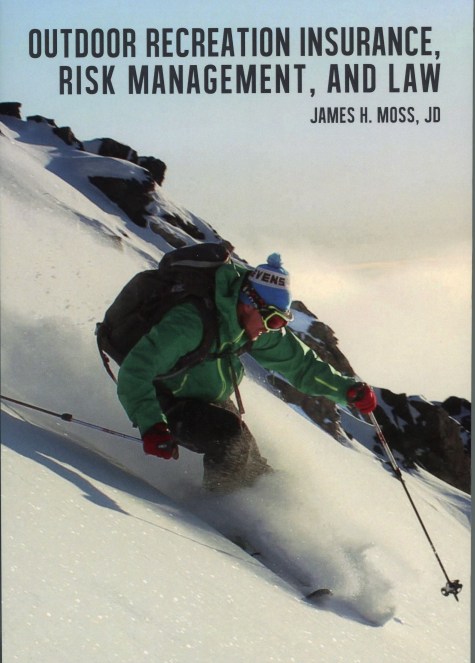
Outdoor Recreation Insurance, Risk Management, and Law
To see Jim’s complete bio go here and to see his CV you can find it here. To find out the purpose of this website go here.
If you are interested in having me write your release, download the form and return it to me.
Connect
If you like this let your friends know or post it on FB, Twitter, or LinkedIn
 Threads |
 Facebook Logo |
 X, Formerly Twitter |
 Recreation Law |
By Recreation Law Rec-law@recreation-law.com James H. Moss
@2019-2023 Summit Magic Publishing, LLC
G-YQ06K3L262
#AdventureTourism, #AdventureTravelLaw, #AdventureTravelLawyer, #AttorneyatLaw, #Backpacking, #BicyclingLaw, #Camps, #ChallengeCourse, #ChallengeCourseLaw, #ChallengeCourseLawyer, #CyclingLaw, #FitnessLaw, #FitnessLawyer, #Hiking, #HumanPowered, #HumanPoweredRecreation, #IceClimbing, #JamesHMoss, #JimMoss, #Law, #Mountaineering, #Negligence, #OutdoorLaw, #OutdoorRecreationLaw, #OutsideLaw, #OutsideLawyer, #RecLaw, #Rec-Law, #RecLawBlog, #Rec-LawBlog, #RecLawyer, #RecreationalLawyer, #RecreationLaw, #RecreationLawBlog, #RecreationLawcom, #Recreation-Lawcom, #Recreation-Law.com, #RiskManagement, #RockClimbing, #RockClimbingLawyer, #RopesCourse, #RopesCourseLawyer, #SkiAreas, #Skiing, #SkiLaw, #Snowboarding, #SummerCamp, #Tourism, #TravelLaw, #YouthCamps, #ZipLineLawyer, #RecreationLaw, #OutdoorLaw, #OutdoorRecreationLaw, #SkiLaw,
forum selection clause, venue, parties, improper venue, enforceability, terms, legible, notice, motion to dismiss, conspicuous, applies, factors, invalid, print, 1.I.L., INC., Independent Lake Camp, forum selection clause,
Epps, et al., v. 1.I.L., INC., d/b/a Independent Lake Camp, 2007 U.S. Dist. LEXIS 93335, 2007 WL 4463588
Posted: March 10, 2019 Filed under: Jurisdiction and Venue (Forum Selection), Legal Case, Minors, Youth, Children, Pennsylvania, Summer Camp | Tags: 1.I.L., applies, conspicuous, enforceability, factors, Forum selection clause, improper venue, Inc., Independent Lake Camp, invalid, legible, Motion to Dismiss, Notice, parties, print, terms, Venue Leave a commentTo Read an Analysis of this decision see
Paperwork, the death of trees and in this case the only defense the defendant had at this stage of the trial because the paperwork was not taken care of properly.
Epps, et al., v. 1.I.L., INC., d/b/a Independent Lake Camp, 2007 U.S. Dist. LEXIS 93335, 2007 WL 4463588
Ben Epps, et al., Plaintiffs, v. 1.I.L., INC., d/b/a Independent Lake Camp, Defendant.
Civil Action No. 07-02314
United States District Court, Eastern District of Pennsylvania
December 19, 2007
ORDER
MEMORANDUM
James T. Giles J.
I. Introduction
Before the court is Defendant 1.I.L., Inc.’s Motion to Dismiss for Improper Venue pursuant to Federal Rule of Civil Procedure 12(b)(3). Plaintiffs, Bens Epps and Amy Monroe, as parents and natural guardians of Axel Epps and in their own right, bring suit based in diversity jurisdiction, 28 U.S.C. § 1332, against Defendant 1.I.L. Inc. for personal injuries allegedly sustained by their son, Axel, while attending Defendant’s camp.
The primary issue raised by Defendant’s motion and determined by the court is whether the forum selection clause in the Registration Agreement at issue is valid and enforceable. The court finds that the forum selection clause contained in the signed Registration Agreement is not enforceable because it does not provide reasonable notice of its terms. The court concludes that Plaintiffs have brought suit in a proper venue and denies Defendant’s motion to dismiss for the reasons that follow.
II. Factual Background
Plaintiffs allege that on June 24, 2005, their son, Axel, fell from a bike and was seriously injured while attending Defendant’s Independant Lake Camp located in Orson, Wayne County, Pennsylvania. (Pls.’ Compl. ¶ 6.) Plaintiffs allege that Axel’s accident was caused by Defendant’s negligence while Defendant was acting in loco parentis. (Pls.’ Compl. ¶ 7.) Specifically, Plaintiffs allege that Defendant: 1) failed to provide proper supervision and safeguards; 2) gave Axel a bike, helmet, and other equipment without properly training him to use them; 3) allowed Axel to use a bike track, which was inappropriate for his age and experience; and 4) failed to obtain parental consent for its actions. (Pls.’ Compl. ¶ 8.)
Plaintiffs further allege that Axel suffered serious and permanent physical injuries, including permanent cognitive and psychological damage, several fractures, lacerations resulting in scarring, cervical and lumbar sprain, and a shock to his nervous system. (Pls.’ Compl. ¶ 9.) Plaintiffs also claim that Axel’s injuries include severe financial losses in the form of future costs of treatment and therapy, loss of earnings, and loss of earning capacity.
Plaintiffs, citizens of New York, brought suit in the Eastern District of Pennsylvania because Defendant is a citizen of Pennsylvania with offices in both Montgomery County and Wayne County. (Pls.’ Compl. ¶ 1-4; Pls.’ Br. in Supp. of Ans. to Mot. of Def. to Dismiss for Improper Venue (“Pls.’ Supp. Ans.”) 1; Def.’s Br. in Supp. of Mot. to Dismiss for Improper Venue (“Def.’s Supp.”) 1, 5.) Plaintiffs demand damages in excess of $150,000 for each of the two counts in the complaint as well as interest and costs of the suit.
III. Procedural History
Plaintiffs filed their Complaint on June 7, 2007. Defendant brought its motion to dismiss for improper venue alleging that the Registration Agreement, which Plaintiffs had to sign for Axel to attend camp, contained a forum selection clause. (Def.’s Mot. to Dismiss 2.) Defendant attached a blank, unsigned version of the Independent Lake Camp Registration 2005 (“Registration Agreement”) to its motion to dismiss. (Def.’s Mot. to Dismiss, Ex. A.) Defendant alleges that under the Registration Agreement, the proper forum would be a court in Wayne County, which is located in the Middle District of Pennsylvania. (Def.’s Mot. to Dismiss, Ex. A.) The blank Registration Agreement, in which the print is small but clear and legible, provides in part:
It is agreed that any dispute or cause of action arising between the parties, whether out of this agreement or other wise [sic], can only be brought in a court of competent jurisdiction located in Wayne County Pennsylvania [sic] and shall be construed in accordance with the laws of Pennsylvania.
(Def.’s Mot. to Dismiss, Ex. A.)
In Plaintiffs’ response to Defendant’s motion to dismiss, Plaintiffs argued that the blank Registration Agreement was unsigned and thus that Defendant failed to show that Plaintiffs had agreed to the terms in the document, including the forum selection clause. Plaintiffs averred by affidavit that they did not agree and would not have agreed to such a forum selection clause. (Pls.’ Supp. Ans. 2, Ex. B ¶¶ 2-3 (Ben Epps Aff.), Ex. C ¶¶ 2-3 (Amy Monroe Aff.).)
Defendant then provided a signed copy of the Registration Agreement, in which the information requested had been filled in and which was signed by Plaintiff Ben Epps. Defendant submitted an affidavit by Daniel Gould, the president of Defendant and Director of Independent Lake Camp. Mr. Gould avers that, after an exhaustive and diligent search, Defendant could only locate a photocopy of the signed Registration Agreement and was unable to locate the original. (Gould Aff. ¶¶ 5, 7-10.) He avers that the original agreement is presumed lost and/or destroyed through no bad faith or improper act on the part of Defendant. (Gould Aff. ¶ 10.) The photocopy of the agreement provided to the court also appears to be a faxed copy, as evident from a fax header across the top margin. (Gould Aff. Ex. A (Signed Registration Agreement).)
In the copy of the signed Registration Agreement submitted by Defendant, the small print containing the terms of the agreement is blurry and barely legible. As Defendant concedes, the right-side margin, toward the bottom, is cut off, truncating the forum selection clause. (Gould Aff. ¶ 6, Ex. A.) Consequently, if the print were clearly legible, when compared with the clear, blank version of the agreement, the forum selection clause would read:
It is agree [sic] any dispute or cause of action arising between the parties, whether out of this agreement or other wise [sic], can only be brought in a court of competent jurisdiction located in V [or three-quarters of a W] County Pennsylvania [sic] and shall be construed in accordance with the laws of Pennsylvania.
(Gould Aff. Ex. A.) Thus, if legible, most or all of the letters in the word “Wayne,” as in “Wayne County Pennsylvania,” are missing. (Gould Aff. ¶ 6, Ex. A.)
In Plaintiffs’ reply to Defendant’s affidavit, Plaintiffs do not dispute that Plaintiff Ben Epps’ signature appears on the copy of the Registration Agreement. Nor do Plaintiffs argue that the entire agreement itself is invalid. (Compare Pls.’ Supp. Ans. 2-3 (arguing, before Defendant’s production of a signed agreement, that the Registration Agreement was not enforceable because there was no objective manifestation of the parties’ intention to be contractually bound), with Pls.’ Reply to Def.’s Aff. 1 (arguing, after Defendant’s production of a signed Registration Agreement, that there was no meeting of the minds as to the forum selection clause because the wording of the clause was truncated and indiscernible).) Thus, the issue determined by the court is the enforceability of the forum selection clause.
III. Discussion
Federal law applies in the determination of the effect given to a forum selection clause in diversity cases. Jumara v. State Farm Ins. Co., 55 F.3d 873, 877 (3d Cir. 1995) (quoting Jones v. Weibrecht, 901 F.2d 17, 19 (2d Cir. 1990)). To evaluate the enforceability of the forum selection clause here, the court determines if the standard for dismissal or transfer is proper.[1] See id. at 877-78. If the standard for transfer applies, the court then determines if the forum selection clause is reasonable. See id. at 880 (citing M/S Bremen v. Zapata Off-Shore Co., 407 U.S. 1, 12-13 (1972)).
A. Dismissal or Transfer under 28 U.S.C. § 1404(a) or 1406.
Although dismissal is a “permissible means of enforcing a forum selection clause that allows suit to be filed in another federal forum,” the Third Circuit cautions that “as a general matter, it makes better sense, when venue is proper but the parties have agreed upon a not- unreasonable forum selection clause that points to another federal venue, to transfer rather than dismiss.” Salovaara v. Jackson Nat’l Life Ins. Co., 246 F.3d 289, 298-99 (3d Cir. 2001); see Stewart Org., Inc. v. Ricoh Corp., 487 U.S. 22, 28-29, 32 (1988) (holding that a federal court sitting in diversity jurisdiction should treat a request to enforce a forum selection clause in a contract as a motion to transfer venue under applicable federal law, 28 U.S.C. § 1404(a)); 15 Charles Alan Wright, Arthur R. Miller & Edward H. Cooper, Federal Practice and Procedure § 3803.1 (2d ed. 1986 & Supp. 2006).
Transfer, however, is not available when a forum selection clause specifies a non-federal forum. Salovaara, 246 F.3d at 298. The forum selection clause in the Registration Agreement, if valid and untruncated, would provide that “any dispute . . . can only be brought in a court of competent jurisdiction located in Wayne County Pennsylvania” and does not limit jurisdiction to state court. The provision’s plain language is construed to permit the action in any court of the county, including the federal court in the federal judicial district encompassing Wayne County, Pennsylvania, regardless of whether the federal court is physically located in the county. See Jumara, 55 F.3d at 881 (construing an arbitration provision requiring the action to transpire within a particular county to mean that the action would be permitted in any court, state or federal, with jurisdiction encompassing that county). Transfer is an available remedy because the forum selection clause, if valid and untruncated, includes a federal forum. See id. at 881-83 (applying the § 1404(a) analysis for transfer where a forum selection clause permitted any state or federal forum within a particular county).
Because transfer is the appropriate remedy, the court must then consider whether 28 U.S.C. § 1404(a) or § 1406 applies. “Section 1404(a) provides for the transfer of a case where both the original venue and the requested venue are proper. Section 1406, on the other hand, applies where the original venue is improper and provides for either transfer or dismissal of the case.” Id. at 878. Whether venue is proper in this district is governed by the federal venue statute, 28 U.S.C. § 1391. Id.
Without considering the forum selection clause, venue is proper in the Eastern District of Pennsylvania. Neither party disputes that Defendant is subject to personal jurisdiction in this district because Defendant transacts business here. See 28 U.S.C. § 1391(c); Jumara, 55 F.3d at 878-79; Stewart, 487 U.S. at 29 n.8 (“The parties do not dispute that the District Court properly denied the motion to dismiss the case for improper venue under 28 U.S.C. § 1406(a) because respondent apparently does business [there].”); see also (Pls.’ Supp. Ans. 1; Def.’s Supp. 3). This court therefore concludes that the appropriate analysis is whether the case should be transferred under § 1404(a). See Salovaara, 246 F.3d at 298-99.
B. Transfer under 1404(a) Is Improper Because the Forum Selection Clause Is Unreasonable and Unenforceable.
Section 1404(a) controls the inquiry of whether to give effect to a forum selection clause and to transfer a case.[2] Stewart, 487 U.S. at 29, 32. Before considering the factors under Section 1404(a), the court first examines the validity or reasonableness of the forum selection clause through application of the test in M/S Bremen v. Zapata Off-Shore Co., 407 U.S. 1, 12-13 (1972). “Where the forum selection clause is valid, which requires that there have been no ‘fraud, influence, or overweening bargaining power,’ the plaintiffs bear the burden of demonstrating why they should not be bound by their contractual choice of forum.” Jumara, 55 F.3d at 879-80 (quoting Bremen, 407 U.S. at 12-13).
A forum selection clause is unreasonable and invalid if the objecting party demonstrates that (1) the forum selection clause is the result of fraud or overreaching, (2) its enforcement would violate a strong public policy of the forum, or (3) its enforcement would result in litigation so seriously inconvenient and unreasonable that it would deprive a litigant of his or her day in court. Bremen, 407 U.S. at 15-17; In re Diaz Contracting, Inc., 817 F.2d 1047, 1051-52 (3d Cir. 1987).
To dispose of this issue, the court need only address whether the enforcement of the forum selection clause violates a strong public policy of the forum. Under Pennsylvania law, a clause in a contract must be conspicuous, so as to provide notice of its terms to a reasonable person. See, e.g., 13 Pa.C.S. § 2316 (requiring that limitation of warranties terms be conspicuous); 13 Pa.C.S. § 1201 (defining “conspicuous”); Beck-Hummel v. Ski Shawnee, Inc., 2006 Pa. Super 159, P23-24 & n.12-13 (Pa. Super. Ct. 2006) (relying on the requirement for conspicuous terms in the sale of goods context in a case involving the sale of services, and finding that disclaimer language on a ski ticket was not sufficiently conspicuous to put a purchaser on notice of its contents). Plaintiffs argue that the forum selection clause contained in the signed Registration Agreement is invalid because the wording of the clause is “truncated and indiscernible.” (Pls.’ Reply 1.)
The court agrees that the small print of the forum selection clause in the photocopied and faxed signed Registration Agreement is blurry and illegible, and does not provide reasonable notice of its terms. The court cannot assume that Mr. Epps signed a clear version of the agreement that became blurry and illegible upon subsequently being photocopied and faxed, because such evidence is not before the court. There is no evidence that Plaintiff Ben Epps signed any version of the Registration Agreement other than the document provided to the court.
Further, even if the forum selection clause were legible, its essential term, that any cause of action be brought in Wayne County, Pennsylvania, is cut off so as to be incomprehensible. Even if legible, the term “V– County Pennsylvania” in the forum selection clause gives no reasonable notice of the location of any agreed-upon forum.
The court concludes that the forum selection clause is inconspicuous and does not give notice of its terms to a reasonable person in violation of strong Pennsylvania public policy. The forum selection clause therefore is unreasonable, invalid, and unenforceable. Because the court finds that the forum selection clause is unreasonable and invalid, it does not address the private and public factors as transfer considerations under § 1404(a).
V. Conclusion
For the foregoing reasons, Defendant’s Motion to Dismiss for Improper Venue is denied. An appropriate order follows.
ORDER
AND NOW, this 19th day of December, 2007, upon consideration of Defendant 1.I.L., Inc.’s Motion to Dismiss for Improper Venue (Doc. No. 4), Plaintiffs’ Response in opposition thereto, Defendant’s Affidavit of Daniel Gould and Exhibits (Doc. Nos. 8 & 9), and Plaintiffs’ Reply, it is hereby ORDERED that said motion is DENIED for the reasons set forth in the attached memorandum.
Notes:
[1] Prior to Defendant’s production of a signed Registration Agreement, Plaintiffs argued that the forum selection clause should not be enforced because it did not meet the standard of reasonable communicativeness, as set forth in Marek v. Marpan Two, Inc., 817 F.2d 242, 245 (3d Cir. 1987), due to the agreement’s small print. Marek applies primarily in cases involving maritime law. See, e.g., Gibbs v. Carnival Cruise Lines, 314 F.3d 125, 130 (3d Cir. 2002); Hodes v. S. N.C. Achille Lauro ed Altri-Gestione, 858 F.2d 905, 906, 909-12 (3d Cir. 1988). As discussed below, the court follows more recent Third Circuit precedent on the enforceability of forum selection clauses.
[2] Section 1404(a) provides that “a district court may transfer any civil action to any other district or division where it might have been brought” for “the convenience of parties and witnesses” and “in the interest of justice.” 28 U.S.C. § 1404(a); see Stewart, 487 U.S. at 29. Courts must adjudicate motions to transfer based on an “individualized, case-by-case consideration of convenience and fairness,” weighing a number of factors. Id. (quoting Van Dusen v. Barrack, 376 U.S. 612, 622 (1964)). A court’s review is not limited to the three enumerated factors in § 1404(a) – convenience of the parties, convenience of witnesses, or interests of justice – and courts may consider various private and public interests. Jumara, 55 F.3d at 879-80.
The parties’ agreement as to the proper forum, although not dispositive, receives “substantial consideration” in the weighing of relevant factors. Id. at 880; see Stewart, 487 U.S. at 29-30 (“The presence of a forum selection clause . . . will be a significant factor that figures centrally in the district court’s calculus. . . . The flexible and individualized analysis Congress prescribed in § 1404(a) thus encompasses consideration of the parties’ private expression of their venue preferences.”). The deference generally given to a plaintiff’s choice of forum is “inappropriate where the plaintiff has already freely chosen an appropriate venue.” Jumara, 55 F.3d at 880.
G-YQ06K3L262
http://www.recreation-law.com
Need a Handy Reference Guide to Understand your Insurance Policy?
Posted: May 28, 2018 Filed under: Adventure Travel, Assumption of the Risk, Avalanche, Challenge or Ropes Course, Climbing, Contract, Cycling, Equine Activities (Horses, Donkeys, Mules) & Animals, Health Club, Indoor Recreation Center, Insurance, Jurisdiction and Venue (Forum Selection), Minors, Youth, Children, Mountain Biking, Mountaineering, Paddlesports, Racing, Release (pre-injury contract not to sue), Risk Management, Rivers and Waterways, Rock Climbing, Scuba Diving, Sea Kayaking, Ski Area, Skier v. Skier, Skiing / Snow Boarding, Skydiving, Paragliding, Hang gliding, Snow Tubing, Sports, Summer Camp, Swimming, Whitewater Rafting, Youth Camps, Zip Line | Tags: #ORLawTextbook, #ORRiskManagment, #OutdoorRecreationRiskManagementInsurance&Law, #OutdoorRecreationTextbook, @SagamorePub, and Law, General Liability Insurance, Guide, http://www.rec-law.us/ORLawTextbook, Insurance policy, James H. Moss J.D., Jim Moss, Liability insurance, Outdoor Recreation Insurance, Outdoor Recreation Law, Outdoor Recreation Risk Management, Outfitter, Risk Management Leave a commentThis book should be on every outfitter and guide’s desk. It will answer your questions, help you sleep at night, help you answer your guests’ questions and allow you to run your business with less worry.
Table of Contents
Chapter 1 Outdoor Recreation Risk Management, Law, and Insurance: An Overview
Chapter 2 U.S. Legal System and Legal Research
Chapter 3 Risk 25
Chapter 4 Risk, Accidents, and Litigation: Why People Sue
Chapter 5 Law 57
Chapter 6 Statutes that Affect Outdoor Recreation
Chapter 7 PreInjury Contracts to Prevent Litigation: Releases
Chapter 8 Defenses to Claims
Chapter 9 Minors
Chapter 10 Skiing and Ski Areas
Chapter 11 Other Commercial Recreational Activities
Chapter 12 Water Sports, Paddlesports, and water-based activities
Chapter 13 Rental Programs
Chapter 14 Insurance
$99.00 plus shipping
Plaintiff loses because experts could not prove his claims against a camp used for a football camp.
Posted: May 21, 2018 Filed under: New York, Pennsylvania, Summer Camp, Youth Camps | Tags: ACA, Adult, American Camp Association, breached, building code, bunk, Cabin, Coach, constructive notice, cross-claims, engaging, Expert Witness, fellow, fighting, Football Camp, glass, hazardous, high school, horseplay, individual capacity, Infant, inter alia, Leader, negligent supervision, Notice, safety glass, severed, speculative, spontaneous, sudden, Summary judgment, Summer Camp, supervising, Supervision, window Leave a commentACA trained expert witness was hired by injured plaintiff to prove a claim against a summer camp. Again, camp money is used to train expert who then is used against the camp.
Staten Et. Al. v. The City of New York Et. Al., 2013 N.Y. Misc. LEXIS 4257; 2013 NY Slip Op 32252(U)
State: New York, Supreme Court of New York, Richmond County
Plaintiff: Marvin Staten, an Infant Over the Age of 14 years by his Parent and Natural Guardian Cassandra Dozier and Cassandra Dozier, Individually
Defendant: The City of New York, The New York City Department of Education, Camp Chen-A-Wanda, Inc., Louis Cintron, Sr., Louis Cintron, Jr., an infant over the age of 14 years by his Parent and Natural Guardian, Louis Cintron, Sr., Barbara Rose Cintron and Louis Cintron, Jr. an infant over the age of 14 years by his Parent and Natural guardian, Barbara Rose Cintron, Defendants
Plaintiff Claims: Negligent supervision and maintenance of the premises
Defendant Defenses:
Holding: For the defendant Camp
Year: 2013
Summary
American Camp Association (ACA) trained expert witness used ACA material to try and prove the summer camp was liable for the injuries of a camper. The summer camp had passed the duty to control the kids to the school district that had rented the camp and as such was not liable.
To be able to sue for emotional damages under New York law, the parent must have financial damages also. Lacking that, the mother’s claims were dismissed.
Facts
This ruling is the result of several motions filed by different parties and can be confusing.
The minors were at a summer week long football camp. The camp was rented by the defendant New York Department of Education. The camp, Camp Chen-A-Wanda, Inc., was located in Pennsylvania.
The plaintiff was looking through the cabin window where he was bunking to see if anyone was messing with his stuff. The defendant minor punched the plaintiff through the window, injuring the plaintiff with the broken glass from the window. The plaintiff’s expert identified this action as horseplay?
At his deposition, plaintiff testified that shortly after dinner on the date of the accident, he was standing outside his cabin, looking in through a window to “see if anybody was messing around with [his] stuff” when, after a few seconds, defendant Cintron “punched [through] the glass”
The defendant minor had been disciplined before by the school district for fighting.
There was a written agreement between the Defendant Camp and the school district, where the school district agreed to provide one adult (person over age 19) per cabin. In the cabin where the incident took place, the supervisors were two seniors, one of whom was the defendant minor.
The agreement gave control of the people at the camp, including campers to the school district renting the facilities.
This is the decision concerning the various motions.
Analysis: making sense of the law based on these facts.
The camp filed a motion for summary judgment arguing:
(1) it owed no duty to supervise plaintiff or to otherwise protect him from horseplay; (2) no facts have been adduced in support of plaintiffs’ claim that the subject window constituted a “defective condition”; and (3) since the proximate cause of the accident was the sudden, unanticipated independent actions of Cintron (i.e., punching the glass), the Camp cannot be found liable for plaintiff’s injury.
The plaintiff argued the camp was negligent and negligent per se. The negligence per se claim was based on a regulation that required safety glass to be used in windows of bunkhouses. The plaintiff also argued the camp was negligent for failing to exercise risk management and supervise the campers.
I’ve never seen a claim that it was negligent to fail to exercise risk management.
The expert hired by the plaintiff had “44 years in the camping industry and a co-author of the American Camp Association’s ‘2006 Camp Accreditation Process Guide’.” However, the court found the testimony of the expert was conclusory and insufficient to raise a question of fact.
…”conclusory testimony” offered by plaintiff’s expert was “insufficient to raise a question of fact as to whether [the Camp] breached its duty to maintain[] [its] property in a reasonably safe condition in view of all the circumstances, including the likelihood of injury to others, the seriousness of the in-jury, and the burden of avoiding the risk” and, further, that the failure of plaintiff’s expert to quote any “authority, treatise [or] standard” in support thereof rendered his ultimate opinion speculative and/or “unsupported by any evidentiary foundation…[sufficient] to withstand summary judgment.
The basis of the plaintiff’s expert witness testimony was based on the 2006 American Camp Association Accreditation Process Guide. However, he failed to demonstrate how, where or when the guide had “been accepted as an authoritative reference work in any court of law, or its applicability to a camp constructed in the 1940s.”
The court also found the expert witnesses reliance on the building codes was misplaced because the camp had been built thirty years prior to the creation of the building code.
The court then stated, “the Camp’s motion for summary judgment is granted, and the complaint and any cross claims as against this defendant are hereby severed and dismissed.”
The court then looked at the cities (New York’s) motions. The court found the duty to supervise the youth was contractually assumed by the city in its contract with the camp. The school also had knowledge of the propensity of the defendant minor to get in fights.
In this regard, actual or constructive notice to the school of prior similar conduct is generally required, since school personnel cannot be reasonably expected to guard against all of the sudden and spontaneous acts that take place among students on a daily basis
The it was foreseeable the fight could occur.
The plaintiff’s mothers claim against the city were dismissed.
However, it is well settled that a parent cannot recover for the loss of society and companionship of a child who was negligently injured, while a claim for the loss of a child’s services must be capable of monetarization in order to be compensable. Here, plaintiff’s mother has offered no proof of the value of any services rendered to her by her son. As a result, so much of the complaint as seeks an award of damages in her individual capacity for the loss of her son’s services must be severed and dismissed.
The defendant camp was dismissed from the lawsuit. The mother’s claims were dismissed from the lawsuit because she could not prove actual damages, only emotional damages, which are not a cause of action in New York.
So Now What?
Here again an ACA trained expert witness tries to use ACA material to prove a camp is negligent. The expert would have been successful if he had better training as an expert witness and knew had to get his guide into evidence.
There are great organizations doing great things for their membership. ACA is one of those organizations. However, like others, the attempt to help their membership be better is making their lives in court a living hell.
What would you think if the person sitting across from you being deposed or on the witness stand says you are a crummy operation and negligent. And you know that your association money went into training him and creating the documents he is using to prove you were negligent.
The final issue is many states are reducing or eliminating who can sue for emotional damages when they witness or are relatives of the plaintiff. Here New York has said you can’t sue for emotional damages for the injury your child received if you don’t have financial damages in the game also.
What do you think? Leave a comment.
Copyright 2018 Recreation Law (720) 334 8529
If you like this let your friends know or post it on FB, Twitter or LinkedIn


Author: Outdoor Recreation Insurance, Risk Management and Law
Facebook Page: Outdoor Recreation & Adventure Travel Law
Email: Rec-law@recreation-law.com
By Recreation Law Rec-law@recreation-law.com James H. Moss
#AdventureTourism, #AdventureTravelLaw, #AdventureTravelLawyer, #AttorneyatLaw, #Backpacking, #BicyclingLaw, #Camps, #ChallengeCourse, #ChallengeCourseLaw, #ChallengeCourseLawyer, #CyclingLaw, #FitnessLaw, #FitnessLawyer, #Hiking, #HumanPowered, #HumanPoweredRecreation, #IceClimbing, #JamesHMoss, #JimMoss, #Law, #Mountaineering, #Negligence, #OutdoorLaw, #OutdoorRecreationLaw, #OutsideLaw, #OutsideLawyer, #RecLaw, #Rec-Law, #RecLawBlog, #Rec-LawBlog, #RecLawyer, #RecreationalLawyer, #RecreationLaw, #RecreationLawBlog, #RecreationLawcom, #Recreation-Lawcom, #Recreation-Law.com, #RiskManagement, #RockClimbing, #RockClimbingLawyer, #RopesCourse, #RopesCourseLawyer, #SkiAreas, #Skiing, #SkiLaw, #Snowboarding, #SummerCamp, #Tourism, #TravelLaw, #YouthCamps, #ZipLineLawyer, #RecreationLaw, #OutdoorLaw, #OutdoorRecreationLaw, #SkiLaw,
Staten Et. Al. v. The City of New York Et. Al., 2013 N.Y. Misc. LEXIS 4257; 2013 NY Slip Op 32252(U)
Posted: April 17, 2018 Filed under: Legal Case, Minors, Youth, Children, New York, Summer Camp, Youth Camps | Tags: ACA, Adult, American Camp Association, breached, building code, bunk, Cabin, Coach, constructive notice, cross-claims, engaging, fellow, fighting, Football Camp, glass, hazardous, high school, horseplay, individual capacity, Infant, inter alia, Leader, negligent supervision, Notice, safety glass, severed, speculative, spontaneous, sudden, Summary judgment, Summer Camp, supervising, Supervision, window, Youth Camp Leave a commentStaten Et. Al. v. The City of New York Et. Al., 2013 N.Y. Misc. LEXIS 4257; 2013 NY Slip Op 32252(U)
[**1] Marvin Staten, an Infant Over the Age of 14 years by his Parent and Natural Guardian Cassandra Dozier and Cassandra Dozier, Individually, Plaintiffs, -against- The City of New York, The New York City Department of Education, Camp Chen-A-Wanda, Inc., Louis Cintron, Sr., Louis Cintron, Jr., an infant over the age of 14 years by his Parent and Natural Guardian, Louis Cintron, Sr., Barbara Rose Cintron and Louis Cintron, Jr. an infant over the age of 14 years by his Parent and Natural guardian, Barbara Rose Cintron, Defendants.
Index No. 104585/07
SUPREME COURT OF NEW YORK, RICHMOND COUNTY
2013 N.Y. Misc. LEXIS 4257; 2013 NY Slip Op 32252(U)
August 18, 2013, Decided
NOTICE: THIS OPINION IS UNCORRECTED AND WILL NOT BE PUBLISHED IN THE PRINTED OFFICIAL REPORTS
SUBSEQUENT HISTORY: Affirmed in part and reversed in part by, Summary judgment granted by, Dismissed by, in part Staten v. City of New York, 2015 N.Y. App. Div. LEXIS 3334 (N.Y. App. Div. 2d Dep’t, Apr. 22, 2015)
PRIOR HISTORY: Staten v. City of New York, 90 A.D.3d 893, 935 N.Y.S.2d 80, 2011 N.Y. App. Div. LEXIS 9134 (N.Y. App. Div. 2d Dep’t, 2011)
CORE TERMS: window, glass, summary judgment, inter alia, bunk, high school, supervision, severed, horseplay, cabin, spontaneous, hazardous, engaging, breached, sudden, coach, adult, individual capacity, safety glass, building code, constructive notice, supervising, speculative, fighting, infant, fellow, leader, notice, cross claims, negligent supervision
JUDGES: [*1] Present: HON. THOMAS P. ALIOTTA
OPINION BY: THOMAS P. ALIOTTA
OPINION
DECISION AND ORDER
[**2] Upon the foregoing papers, the motion for summary judgment (No. 1415-005) of defendant Camp Chen-A-Wanda, Inc. (hereinafter the “Camp”) is granted; the cross motion for summary judgment (No. 1471-006) of defendants The City of New York and The New York City Department of Education (hereinafter “City”) is granted to the extent of dismissing the claims of the individual plaintiff, Cassandra Dozier. The balance of the cross motion is denied.
This matter arises out of an incident which occurred on August 25, 2007 at the Camp’s premises in Pennsylvania, where the infant plaintiff, Marvin Staten (hereinafter “plaintiff”) was enrolled in a week-long football camp with the balance of his high school football team. Plaintiff, who was entering his sophomore year at Tottenville High School on Staten Island, claims to have sustained extensive injuries to his left eye when he was struck by glass from a window pane which had allegedly been broken by a punch thrown by defendant and fellow teammate, Louis Cintron, Jr. (hereinafter “Cintron”). It appears undisputed that the window broke while plaintiff and/or Cintron were engaging in [*2] “horseplay.”
At his deposition, plaintiff testified that shortly after dinner on the date of the accident, he was standing outside his cabin, looking in through a window at eye-level to “see if anybody was messing around with [his] stuff” when, after a few seconds, defendant Cintron “punched [through] the glass” (see Plaintiff’s March 27, 2009 EBT, pp 70-71; Camp’s Exhibit F). No criminal charges were filed against plaintiff’s teammate, who was, however, dismissed from the camp, “cut” from his high school team, and suspended from Tottenville High School following the incident.
The claims against the Camp and the City are grounded in allegations of negligent supervision and maintenance of the premises where the incident occurred (see Plaintiffs’ Amended Verified Complaint, Camp’s Exhibit A, para “Thirty-Sixth”).
[**3] It is noted that prior to this incident, i.e., on February 14, 2006, Cintron had been disciplined by Tottenville High School for engaging in disruptive conduct with another student (see City’s Exhibit I; see also Staten v. City of New York, 90 AD3d 893, 935 N.Y.S.2d 80). It is likewise noted that pursuant to a written contract drawn on Camp Chen-A-Wanda letterhead, dated and signed August 20, [*3] 2007, Tottenville High School coach Jim Munson agreed that “each bunk will be supervised by a coach, former player, or other adult who is at least nineteen years of age” (see City’s Exhibit C). To the extent relevant, the bunk “leaders” supervising plaintiff’s bunk were two seniors, one of whom was defendant Cintron.
In moving for summary judgment, Camp argues, inter alia, that: (1) it owed no duty to supervise plaintiff or to otherwise protect him from horseplay; (2) no facts have been adduced in support of plaintiffs’ claim that the subject window constituted a “defective condition”; and (3) since the proximate cause of the accident was the sudden, unanticipated independent actions of Cintron (i.e., punching the glass), the Camp cannot be found liable for plaintiff’s injury.
In opposition to the motion, plaintiff alleges, inter alia, that not only was the Camp negligent in its maintenance of the premises, but that it was negligent: (1) per se in using ordinary or “annealed” glass for the cabin windows rather than safety glass, in violation of Pennsylvania State and International Building Codes (see June 12, 2013 affidavit of Plaintiff’s Expert, Michael J. Peterson, Plaintiff’s Exhibit [*4] H); (2) in failing to properly exercise risk management, and (3) in failing to supervise its post-season campers and protect them against horseplay. Plaintiff further argues that while Cintron’s actions might be considered “intervening,” his conduct was not a superseding cause of the accident. Notably, plaintiff submits the affidavit of Michael J. Peterson (see Plaintiffs’ Exhibit H), an “expert with 44 years in the camping industry and a co-author of the American Camp Association’s ‘2006 Camp Accreditation Process Guide'” (see Plaintiffs’ [**4] Memorandum of Law), who opined, inter alia, “with a reasonable degree of professional certainty of the camping industry…that [the Camp] should have begun and completed replacement of all non-reinforced glass in hazardous or even marginally hazardous locations within [its] camp with safety impact rated glass, plexi glass (plastic),…safety film, or…reinforced…small gauge hardware cloth wire a full two decades before this accident.” The expert further opined that had these steps been taken, the punch “would not [have] shattered safety impact rated glass, plexi-glass, glass covered with safety film or reinforced glass” (id.).
As previously indicated, [*5] the Camp’s motion for summary judgment is granted, and the complaint and any cross claims as against this defendant are hereby severed and dismissed.
In the opinion of this Court, it is constrained by the 2005 decision of the Court of Appeals in Buchholz v. Trump 767 Fifth Avenue, (5 NY3d 1, 831 N.E.2d 960, 798 N.Y.S.2d 715) to hold that the “conclusory testimony” offered by plaintiff’s expert was “insufficient to raise a question of fact as to whether [the Camp] breached its duty to maintain[] [its] property in a reasonably safe condition in view of all the circumstances, including the likelihood of injury to others, the seriousness of the injury, and the burden of avoiding the risk” and, further, that the failure of plaintiff’s expert to quote any “authority, treatise [or] standard” in support thereof rendered his ultimate opinion speculative and/or “unsupported by any evidentiary foundation…[sufficient] to withstand summary judgment (id. at 9 [internal quotation marks omitted]; see Diaz v. New York Downtown Hosp., 99 NY2d 542, 544, 784 N.E.2d 68, 754 N.Y.S.2d 195).1
1 The decedent in Buchholz was pushed and fell through an office window after engaging in “play fighting” with three co-workers following their attendance at a St. Patrick’s Day Parade [*6] in 1999 (id. at 4). Plaintiff alleged that the premises’ owner was negligent, inter alia, in failing to furnish shatterproof glass windows and a safety rail across the window’s face in contravention of certain sections of the New York City Administrative Code, particularly §27-651 (“Panels subject to human impact loads”). Plaintiff’s expert, a registered architect and licensed engineer, submitted an affidavit opining that the window’s very low sill was problematic, and further, that “good and accepted engineering and building safety practices dictated that a protective barrier bar be installed” (id. at 6). Nevertheless, the trial court’s denial of the owner’s summary judgment motion was reversed on appeal (see Buchholz v. Trump 767 Fifth Ave., LLC, 4 AD3d 178, 772 N.Y.S.2d 257) and affirmed by the Court of Appeals based, inter alia, on the speculative nature of the opinion of plaintiff’s expert.
[**5] Here, plaintiff’s expert placed substantial reliance on the language of the 2006 American Camp Association Accreditation Process Guide in formulating his opinion. However, although alleged to have been tested “numerous times in litigation”, Mr. Peterson failed to demonstrate, e.g., where or when this guide has [*7] been accepted as an authoritative reference work in any court of law, or its applicability to a camp constructed in the 1940s. Moreover, his opinion that the failure to replace unannealed windows violated certain Pennsylvania codes or statutes is not compelling or binding upon this Court. To the contrary, Peterson’s reliance on 34 Pa. Admin. Code §47.398, to require the use of “safety glass” in bunk windows represents a misreading of the statute, as the provision in question was not adopted until 1972 (some thirty years after the Camp began its operations), and neither it nor any other Pennsylvania building code or regulation has been cited requiring that bunk windows be retrofitted to conform to the 1972 requirements (cf. Buchholz v. Trump 767 Fifth Avenue, 5 NY3d at 9). Moreover, he failed to show that the window in question was actually in a “hazardous” location for purposes of the cited codes, i.e., within 24 inches of the bunkhouse door. In fact, no measurement was provided. “Although noncompliance with…a customary practice or industry standard may be evidence of negligence, the failure to abide by guidelines or recommendations that are not generally-accepted standards in an [*8] industry will not suffice to raise an issue of fact as to a defendant’s negligence” (Diaz v. New York Downtown Hosp., 287 AD2d 357, 358, 731 N.Y.S.2d 694, affd 99 NY2d 542, 784 N.E.2d 68, 754 N.Y.S.2d 195 [citations omitted]; see also Ambrosio v. South Huntington Union Free School Dist., 249 AD2d 346, 671 N.Y.S.2d 110). This, similarly to Buchholz, is just such a case2.
2 Also worthy of note is the Camp’s uncontroverted representation that no similar incidents (other than, e.g., windows broken by vandalism) occurred during its sixty-year history (see February 3, 2010 EBT of Craig Neier, Camp’s Exhibit C).
The City’s cross motion for summary judgment is granted in part, and denied, in part, as hereinafter provided.
[**6] In arguing for dismissal of the negligent supervision claim, the City argues that (1) it provided more than enough chaperones at the training camp, (2) issued oral and written instructions against the type of conduct which caused plaintiff’s injury; (3) the sudden, spontaneous and unforeseeable nature of defendant Cintron’s actions were such that no reasonable amount of supervision could have prevented the injury, and (4) it had no prior notice of the latter’s propensity to engage in the type of conduct that caused plaintiff’s injury. Moreover, [*9] the City maintains that it did not legally own, occupy, or control the Camp; that Cintron’s independent and spontaneous actions breached any chain of causation connected to the condition or maintenance of the camp and/or its cabin windows; and that it possessed no actual or constructive notice of any dangerous condition regarding the composition of the window itself.
In opposition, plaintiffs argue, inter alia, that the lack of supervision which encouraged the horseplay causing the injury is evident by the City’s failure to (1) place an adult in each cabin, as required under plaintiff’s interpretation of the terms of its contract with the Camp (see City’s Exhibit C); (2) adhere to the Regulations of the Chancellor governing adult supervision on school trips (see City’s Exhibit D), and (3) comply with American Camp Association standard HR-10A and 10B regarding the supervision of campers (see June 12, 2013 affidavit of plaintiffs’ expert, Michael J. Peterson, “Opinions 1”).
Here, the duty of supervising the student/athletes was contractually assumed by the City. In determining whether the duty to provide adequate supervision has been breached in the context of injuries caused by the acts [*10] of fellow students, it must be established that school authorities had sufficiently specific knowledge or notice of the dangerous conduct which caused the injury. Put simply, the third-party acts must reasonably have been anticipated (see Brandy B. v. Eden Cent. School Dist., 15 NY3d 297, 302, 934 N.E.2d 304, 907 N.Y.S.2d 735; Mirand v. City of New York, 84 NY2d 44, 49, 637 N.E.2d 263, 614 N.Y.S.2d 372; [**7] Shannea M. v. City of New York, 66 AD3d 667, 886 N.Y.S.2d 483; Doe v. Department of Educ. of City of NY, 54 AD3d 352, 862 N.Y.S.2d 598). In this regard, actual or constructive notice to the school of prior similar conduct is generally required, since school personnel cannot be reasonably expected to guard against all of the sudden and spontaneous acts that take place among students on a daily basis.
Here, the proof of Cintron’s 2006 suspension for fighting at school serves to preclude the City from demonstrating prima facie that his designation as bunk “leader” was reasonable as a matter of law (see Staten v. City of New York and Camp Chen-A-Wanda, Inc., 90 AD3d 893, 935 N.Y.S.2d 80; see also September 16, 2009 EBT of James Munson, pp 16, 33, 39-42; the Camp’s Exhibit E). Neither is Coach Munson’s investigation purportedly uncovering a conflicting version of the events in which the breaking of the glass [*11] is attributed to plaintiff “put[ting] his face” against it (see EBT of James Munson, p 54) sufficient to warrant dismissal of the cause of action pleaded on behalf of the infant plaintiff.
However, it is well settled that a parent cannot recover for the loss of society and companionship of a child who was negligently injured (see White v. City of New York, 37 AD2d 603, 322 N.Y.S.2d 920), while a claim for the loss of a child’s services must be capable of monetarization in order to be compensable (see DeVito v. Opatich, 215 AD2d 714, 627 N.Y.S.2d 441). Here, plaintiff’s mother has offered no proof of the value of any services rendered to her by her son. As a result, so much of the complaint as seeks an award of damages in her individual capacity for the loss of her son’s services must be severed and dismissed.
Accordingly, it is
ORDERED, that the motion for summary judgment of defendant Camp Chen-A-Wanda Inc. is granted, and the complaint and any cross claims as against this defendant are hereby severed and dismissed; and it is further
[**8] ORDERED, that the cross motion for summary judgment of defendants The City of New York and The New York City Department of Education is granted to the extent that the cause(s) of action asserted [*12] by plaintiff Cassandra Dozier in her individual capacity are hereby severed and dismissed, and it is further
ORDERED that the remainder of the cross motion for summary judgment is denied.
ENTER,
/s/
Hon. Thomas P. Aliotta
J.S.C.
Dated: September 18, 2013
The blurry line between agent, independent contractor and employee can be used against you if you do not understand the differences and put it in writing.
Posted: December 11, 2017 Filed under: Minors, Youth, Children, New Jersey, Summer Camp | Tags: Apparent Authority, appearance of authority, Brochure, campers, citation omitted, Contractor, discovery, Duty of care, genuine, golf, Golf Camp, golf club, hired, home builder, Independent Contractor, logo, Marketing, master-servant, minor child, mouth, New Jersey Professional Golf Association, NOLS, non-moving, Outward Bound, PGA NJPGA, planning, Professional Golf Association, professional golfer, renewed, Respondeat Superior, servant, Standard of review, Summary judgment, Summer Camp, supposed, YMCA, Youth Camp Leave a commentThe use of the PGA name was not enough to tie the PGA to a golf camp where they had no relationship or control. As such, they were dismissed from the suit because they had no duty to the injured minor.
Choi and Keane v. Hunterdon County YMCA, Inc., et. al., 2017 N.J. Super. Unpub. LEXIS 2737
State: New Jersey, Superior Court of New Jersey, Appellate Division
Plaintiff: Seung Yon Choi and Gerald J. Keane on behalf of E.K., a Minor as Guardian Ad Litem, and Seung Yon Choi, and Gerald J. Keane, individually, Plaintiffs-Appellants
Defendant: Hunterdon County YMCA, Inc., Michael Trianio, Chris Nallen, Alex Baker, Erica Croat, The New Jersey Professional Golfers Association, Inc. (NJPGA), James Mullen, Defendants, and The Professional Golfers Association, Inc.
Plaintiff Claims: negligent supervision
Defendant Defenses: no relationship to create an agency
Holding: for the defendant
Year: 2017
Summary
A minor was injured by another camper at a golf camp. The parents sued everyone involved including the PGA. The PGA filed a motion to dismiss because they had nothing to do with the camp.
The motion was granted because there was no legal relationship between the camp and the PGA. The use of the PGA logo by the camp in its brochure was not enough, if allowed by the PGA, to establish liability.
Facts
The minor, age 5, was enrolled in a YMCA golf camp. The golf camp in its brochure advertised the camp would be run or the instructors would be PGA professionals. The PGA logo was used on the brochure.
The minor was struck in the face by a golf club swung by another minor at the camp. The parents sued the defendants listed above for negligent supervision. Prior to this motion, the plaintiff settled with all the defendants except the PGA (Professional Golf Association). The PGA filed a motion for summary judgment arguing it owed no duty of care to the minor plaintiff. The motion was granted by the court, and the plaintiff’s appealed.
Analysis: making sense of the law based on these facts.
The issue was the involvement of the PGA in the operation and control of the camp. The PGA argued they had nothing to do with the camp, almost indicating their name and logo had been used without their permission.
The parents argued two issues. The PGA was liable under the theory of respondeat superior and camp, and the professional golfer hired by the camp had apparent authority to act for the PGA.
The phrase respondeat superior means the employer could be found liable for the acts of an employee, if at the time of the occurrence the employee was acting within the scope of his or her employment. The easiest example of this is you have an employee who in their personal car goes to collect the company mail at the post office. On the way back to the office the employee has a car accident where the employee is at fault. The employer is liable for the acts of the employee because he or she was working or doing work for the employer at the time of the accident.
Under respondeat superior, an employer can be found liable for the negligence of an employee causing injuries to third parties, if, at the time of the occurrence, the employee was acting within the scope of his or her employment.” To establish liability, a plaintiff must show “that a master-servant relationship existed.” “If no master-servant relationship exists, no further inquiry need take place because the master-servant relationship is sine qua non to the invocation of respondeat superior.”
If you have employees do this make sure you have non-owned auto coverage under your company business insurance or purchase a business automobile policy.
In this case, the professional golfer hired to instruct at the camp was an independent contractor of the YMCA and not employed by the PGA. The master servant relationship was created because the professional golfer was an independent contractor of the YMCA and did not work for the PGA.
The record indicates Nallen was hired by the NJ Golf Foundation as an independent contractor to run the YMCA’s Golf Camp. The NJ Golf Foundation paid Nallen $2700 for his services, which was reflected in an IRS form 1099-MISC used for reporting income paid to independent contractors. The PGA is not mentioned in the agreement signed by the YMCA and the NJPGA. Plaintiffs failed to offer any evidence that would show, or even create a
genuine dispute of fact, that Nallen was in a master-servant relationship with the PGA. We agree with the trial court that a master-servant relationship was not established merely because Nallen was a professional golfer who had competed in PGA events as a member of the PGA.
The second theory was there was an apparent agency between the PGA and the professional golfer.
If a principal cloaks an independent contractor with apparent authority or agency, the principal can be held liable as if the contractor were its own employee if it held out the contractor to the plaintiff as its own servant or agent.” Liability may be imposed on the principal based upon “apparent authority” when “the principal’s actions have misled a third-party into believing that a relationship of authority in fact exists.”
The issue is the principal, in this case the PGA must cloak the agent, the professional golfer with the authority to do something on behalf of the principal.
Liability arises if “the principal has by his voluntary act placed the agent in such a situation that a person of ordinary prudence, conversant with business uses, and the nature of the particular business, is justified in presuming that such agent has the authority to perform the particular act in question.”
Because the PGA did nothing, possibility did not even know about the camp, the PGA could and did not cloak the professional golfer with any authority to do anything.
To satisfy its burden of establishing the apparent authority or apparent agency relationship, plaintiffs had to establish: “(1) that the appearance of authority has been created by the conduct of the alleged principal and it cannot be established ‘alone and solely by proof of [conduct by] the supposed agent,’ (2) that a third party has relied on the agent’s apparent authority to act for a principal, and (3) that the reliance was reasonable under the circumstances.”
This prevents the principals of the world from being drug into every lawsuit any blowhard could create. You have no control over the people walking around saying they work for you, you may not even know they are saying it let alone even know they exist. Therefore, their actions cannot drag you into litigation that you have no knowledge of.
By contrast, there was no evidence of voluntary conduct on the part of the PGA to create an appearance that the YMCA or Nallen had authority to act for the PGA. Indeed, there was no evidence the PGA was involved in any aspect of the planning or administration of the YMCA’s camp. There was no evidence the PGA was even aware of the use of its logo or name in the YMCA’s brochure prior to this lawsuit, let alone that it authorized its use for the YMCA’s marketing purposes. Again, the appearance of authority “cannot be established ‘alone and solely by proof of [conduct by] the supposed agent[.]'”
Since there were no acts or actions on the part of the PGA they were allowed to be dismissed from the suit.
So Now What?
I suspect that the PGA is going to maintain a closer hold on the use of its name in the future. I also suspect that in a couple of states, this might have had more traction. The PGA, like many other organizations, works hard to uphold the values and qualifies its name represents. Consequently, legitimacy can be provided to a program or camp by using its name.
The same issues appear in the outdoor recreation world. I just finished an article where name NOLS was used to describe a program, that was not a NOLS program. NOLS and Outward Bound represent the top tier of outdoor training in the US short of the AMGA for more technical skills. As such always be a little suspicious when their names are bandied about. Is it truly a course being offered by them or are they using the name to provide legitimacy to what they are trying to do.
The other issue is who has authority to do what for your business or program. Keep your eyes and ears open for the use of your name by anyone.
Finally, this might have gone another way if there was not a written agreement between the professional golfer and the camp. Everyone wants to blur the lines when there is an injury. The IRS lives on blurred lines when taxes are not filed. If you hire independent contractors, you should look at hiring them with a written contract.
At the same time, hiring independent contractors to do the work of employees will also get you in hot water. If in the industry, normally employees do the work that your “independent contractors” are doing, you will be writing big checks to the IRS, Workers Compensation and to the employees themselves.
What do you think? Leave a comment.
Copyright 2017 Recreation Law (720) 334 8529
If you like this let your friends know or post it on FB, Twitter or LinkedIn


Author: Outdoor Recreation Insurance, Risk Management and Law
Facebook Page: Outdoor Recreation & Adventure Travel Law
Email: Rec-law@recreation-law.com
By Recreation Law Rec-law@recreation-law.com James H. Moss
#AdventureTourism, #AdventureTravelLaw,
#AdventureTravelLawyer, #AttorneyatLaw, #Backpacking, #BicyclingLaw, #Camps,
#ChallengeCourse, #ChallengeCourseLaw, #ChallengeCourseLawyer, #CyclingLaw,
#FitnessLaw, #FitnessLawyer, #Hiking, #HumanPowered, #HumanPoweredRecreation,
#IceClimbing, #JamesHMoss, #JimMoss, #Law, #Mountaineering, #Negligence,
#OutdoorLaw, #OutdoorRecreationLaw, #OutsideLaw, #OutsideLawyer, #RecLaw,
#Rec-Law, #RecLawBlog, #Rec-LawBlog, #RecLawyer, #RecreationalLawyer,
#RecreationLaw, #RecreationLawBlog, #RecreationLawcom, #Recreation-Lawcom,
#Recreation-Law.com, #RiskManagement, #RockClimbing, #RockClimbingLawyer,
#RopesCourse, #RopesCourseLawyer, #SkiAreas, #Skiing, #SkiLaw, #Snowboarding,
#SummerCamp, #Tourism, #TravelLaw, #YouthCamps, #ZipLineLawyer, #RecreationLaw,
#OutdoorLaw, #OutdoorRecreationLaw, #SkiLaw, golf, independent contractor,
apparent authority, logo, summary judgment, master-servant, brochure,
professional golfer, citation omitted, summer camp, duty of care, standard of
review, respondeat superior, appearance of authority, home builder, contractor,
non-moving, marketing, supposed, planning, servant, genuine, hired, golf club,
minor child, discovery, renewed, campers, mouth, PGA NJPGA, Professional Golf
Association, New Jersey Professional Golf Association, YMCA, Golf Camp, Summer
Camp, Youth Camp, NOLS, Outward Bound,
You cannot assume the risk of a recreational activity if the defendant alters the activity and adds risk that he does not inform the guest about.
Posted: September 11, 2017 Filed under: Assumption of the Risk, Minors, Youth, Children, New York, Ski Area, Skiing / Snow Boarding | Tags: #AssumptionoftheRisk, #SkiLaw, Assumption of risk, assumption of the risk, beginner, belt, bunny slope, Chairlift, corral, daughter, netting, novice, OutdoorLaw, OutdoorRecreationLaw, pipes, plumbing, RecreationLaw, Ski, ski area, skier's, Slope, Summary judgment Leave a commentIf you run PVC pipe across the slope that blends in with the slope, a skier coming down the hill does not assume the risk of hitting PVC pipe. PVC does not fall from the sky, is not natural, and in 50 years of skiing it not something I’ve ever seen on a slope.
State: New York
Plaintiff: Judy Zhou, et al
Defendant: Tuxedo Ridge, LLC, et al.
Plaintiff Claims: negligence
Defendant Defenses: assumption of the risk and the mother should have watched her daughter more closely
Holding: for the defendant
Year: 2017
Summary
There are two defenses in this case. The first is assumption of the risk. The standard defense used for injuries arising from activities in outdoor recreational activities. The second is not discussed by the court but one we have all wanted to argue at least once.
The defendant makes several arguments in support of summary judgment, including that the mother of the plaintiff should have supervised her daughter more closely and assumption of risk.
The defendant is not at risk because the mother let the child do what the child wanted and did not supervise the child. Ski areas are not baby sitters. If you buy a minor a lift ticket, the ski area knows the lift ticket allows access by the minor to whatever lift the minor wanted to ride and to come down any hill the minor wants to ride.
However, if that child is injured, the ski area should not have allowed that child on the lift because it was too dangerous.
That argument is a landmine to make in court. Mothers of injured children are liked by juries because they feel for the pain the mother is suffering. And who in their right mind would say that a mother is doing a bad job of raising their kids.
The other defense assumption of the risk would have won the case if the defendant had not laid down PVC pipe on the slope in a way that no one could see the pipe. The pipe was there to create a coral to lead skiers back to the lift. However, when you can’t see it, don’t know it’s there, and hit it, it is hard to argue that PVC is a natural risk of skiing.
Facts
The facts are quite simple.
…the defendants cut a portion of the Bunny Hill slope by installing white PVC plumbing pipes to create a corral line leading to the chairlift. The PVC pipes were as hard as metal plumbing pipes and, at the same time, blended into the slope’s white snow and were not clearly visible to a skier in motion, let alone a novice skier such as the plaintiff infant. These obstructions blocked a portion of the snowy slope and were in the path of a skier’s descent. Although the defendants maintained nylon netting at the site, it did not place a fence or netting on the slope above the area to prevent and catch children and novice skiers from coming into contact with the corral line’s PVC posts.
Analysis: making sense of the law based on these facts.
The court started its analysis of the case with the famous Cardozo quote that created the defense of assumption of the risk.
The plaintiff was not seeking a retreat for meditation. Visitors were tumbling about the belt to the merriment of onlookers when he made his choice to join them. He took the chance of a like fate, with whatever damage to his body might ensue from such a fall. The timorous may stay at home.” Murphy v. Steeplechase Amusement Co., 250 NY 479, 483, 166 N.E. 173 (1929)
However, the court quickly shifted its analysis to whether the injured minor plaintiff could have assumed the risk.
A seven-year-old skier could not assume the risk of a risk she was not properly educated about. Unless the risk is inherent, part of skiing, or known, understood and accepted by the plaintiff, or part of the risk of the sport, the plaintiff cannot assume the risk.
So Now What?
If the PVC pipe were visible; fenced, painted red, behind warning signs, this case would have gone the other direction. However, when you hide a risk not only do you lose the assumption of risk defense, but you might also set yourself up for a reckless or willful charge that could lead to greater damages.
Seriously, don’t be stupid is the bigger thing to learn from this case.
What do you think? Leave a comment.
To Comment Click on the Heading and go to the bottom of the page.
Copyright 2017 Recreation Law (720) 334 8529
If you like this let your friends know or post it on FB, Twitter or LinkedIn


Author: Outdoor Recreation Insurance, Risk Management and Law
Facebook Page: Outdoor Recreation & Adventure Travel Law
Email: Rec-law@recreation-law.com
By Recreation Law Rec-law@recreation-law.com James H. Moss
#AdventureTourism, #AdventureTravelLaw,
#AdventureTravelLawyer, #AttorneyatLaw, #Backpacking, #BicyclingLaw, #Camps,
#ChallengeCourse, #ChallengeCourseLaw, #ChallengeCourseLawyer, #CyclingLaw,
#FitnessLaw, #FitnessLawyer, #Hiking, #HumanPowered, #HumanPoweredRecreation,
#IceClimbing, #JamesHMoss, #JimMoss, #Law, #Mountaineering, #Negligence,
#OutdoorLaw, #OutdoorRecreationLaw, #OutsideLaw, #OutsideLawyer, #RecLaw,
#Rec-Law, #RecLawBlog, #Rec-LawBlog, #RecLawyer, #RecreationalLawyer,
#RecreationLaw, #RecreationLawBlog, #RecreationLawcom, #Recreation-Lawcom,
#Recreation-Law.com, #RiskManagement, #RockClimbing, #RockClimbingLawyer,
#RopesCourse, #RopesCourseLawyer, #SkiAreas, #Skiing, #SkiLaw, #Snowboarding,
#SummerCamp, #Tourism, #TravelLaw, #YouthCamps, #ZipLineLawyer, summary
judgment, skier’s, chairlift, slope, daughter, novice, pipes, assumption of
risk, belt, ski, plumbing, netting, corral, ski area, bunny slope, beginner,
Assumption of the Risk, #RecreationLaw, #OutdoorLaw, #OutdoorRecreationLaw, #SkiLaw, #AssumptionoftheRisk,
Just because you have a piece of paper saying you are an additional insured, it does not mean there is any coverage under any policy to protect you.
Posted: August 14, 2017 Filed under: Challenge or Ropes Course, Insurance, Minors, Youth, Children, Missouri, Summer Camp, Youth Camps, Zip Line | Tags: Additional Insured, Ambiguity, Ambiguous, Camper, certificate, Certificate of Insurance, challenge course, church, Church Camp, coverage, declarations, denial letter, dining hall, duty to defend, endorsement, Guest, Insurance policy, insured, latent ambiguity, Lawsuit, lease, leased, liability arising, liability coverage, Liability insurance, lodge, lodging, meal, named insured, ordinary person, owes, Ropes course, space, Summary judgment, tenant, Youth Camp, zip line Leave a commentAdditional insured certificates are limited by two things, what the underlying policy provides coverage for and what the certificate of insurance says it will cover. Lacking coverage under the policy or lacking the necessary language in the additional insured certificate you are hanging in the wind without any insurance coverage.
For an additional insured certificate to be valid, you must put together three things. A contract which identifies the requirements or insurance you are looking for. An insurance policy that insures those requirements and a certificate of insurance that covers those requirements or better states as the requirements are set forth in the original contract. Lacking any, one of those and you are just wasting paper.
When you get a certificate of insurance, you must then read it to make sure you meet the requirements it may set out. If there is a limitation on the amount of time you have to file a claim or a specific way to notify the insured, make sure you follow those procedures.
Finally, whenever you file any claim with any insurance company for coverage, follow the procedures the policy requires then follow up with a letter providing notice the insurance company in writing.
State: Missouri, United States District Court for the Western District of Missouri, Central Division
Plaintiff: Great American Alliance Insurance Company
Defendant: Windermere Baptist Conference Center, Inc., et al.
Plaintiff Claims: Great American now moves for summary judgment on its requested declaratory judgment that: (1) no liability coverage exists under its policy issued to Student Life for any claims asserted in the underlying lawsuit against Windermere or Windermere’s employees, including Kendra Brown; (2) Great American owes no duty to defend Windermere, Kendra Brown, or any other Windermere employees in the underlying lawsuit; and
(3) no medical payments coverage exists for Karlee Richards.
Defendant Defenses: No coverage provided under the policy or certificate of insurance
Holding: Split decision, however the insurance company will not pay anything under the certificate of insurance
Year: 2017
This is a legally complicated case with simple facts. A church rented a camp from Student Life, which had contracted with a church camp called Windermere. The reservation form and simple agreement between the camp and the church required the issuance of a certificate of insurance.
A camper, part of the church group fell while riding the zip line. She sued. That lawsuit was still pending when this lawsuit was started to determine whose insurance was required to defend against the camper’s lawsuit.
In that case, damages are being sought against them for injuries sustained by Karlee Richards after she fell while zip-lining at The Edge, a ropes course at Windermere’s Conference Center. Kendra Brown was an employee of Windermere, working at the Edge at the time of the accident.
The injured camper Richards was with the Searcy Baptist Church. They rented the camp through Student Life. Student Life rented the camp from Windermere. The contract between Student Life and Windermere is the one at question here. Windermere required a certificate of insurance from Student Life.
June 2014, Karlee Richards and her Searcy Baptist Church youth group were attending a summer camp at Windermere’s Conference Center, which was sponsored by Lifeway Christian Resources of the Southern Baptist Conference, d.b.a. Student Life. Student Life contracted with Windermere to hold the church camp at Windermere’s facility in Missouri. Student Life had a liability policy with Great American, and Windermere was an additional insured on that policy. The additional insured endorsement provides that the additional insured, in this case Windermere, is only covered for “liability arising out of the ownership, maintenance or use of that portion of the premises leased to Great American contends that Windermere is not entitled to coverage for Kaylee Richards’s injuries because Windermere did not “lease” the Edge to Student Life because the Edge was not specifically mentioned in Student Life’s written agreement with Windermere.
The first issue the court skipped was the policy that Student Life had, was restrictive and had minimal coverage. It had a requirement that all claims had to be made in one year. This may not be bad, but if the statute of limitations for the type of injury is two years or three, you may not have coverage for a claim because you did not know you had one until after the time period had run.
Student Life is the named insured on a Commercial General Liability policy with Great American. The policy requires that all requests for medical payments be made within one year of the accident that gives rise to the insurance claim. Also, when there is other valid and collectible excess insurance coverage, the Great American policy provides that Great American will have no duty to defend its insured against a claim for damages.
On top of the claim limitation period, the coverage was solely excess coverage. Meaning the coverage did on top of any other coverage the insured had and had no duty to defend or pay for attorneys. It only had to pay for a claim after the
limits of the underlying policy were exhausted. No underlying policy was ever mentioned in the case so it is unknown if one existed.
If this is the only policy, Student Life purchased, they bought the wrong one!
Another issue was whether the student life policy would provide coverage for employees of Windermere that were sued based on the accident.
This suit was brought by the Student Life insurance company, Great American Alliance Insurance Company, asking the court to tell Student Life it was not going to pay or defend any of the claims brought by the injured camper against Windermere.
Analysis: making sense of the law based on these facts.
The court first looked at whether the additional insured certificate was ambiguous. If so, then the court had to interpret the ambiguity under Missouri’s law.
An ambiguity is an uncertainty in the meaning of the policy.
If an ambiguity exists, the policy language will be construed against the insurer. Mendota, “‘An ambiguity exists when there is
duplicity, indistinctness, or uncertainty in the meaning of the language of the policy.'” “‘To test whether the language used in the policy is ambiguous, the language is considered in the light in which it would normally be understood by the lay person who bought and paid for the policy.'” Whether an insurance policy is ambiguous is a question of law.”
The burden of proving there is coverage falls on the party seeking it, in this case, Windermere. An ambiguity exists if there are different interpretations of the language in the policy. There are two types of Ambiguities, Latent and patent.
A policy is ambiguous if it is “fairly open to different interpretations” because it contains “duplicity, indistinctness, or uncertainty of meaning.” Importantly, there are two types of ambiguities in the law: patent and latent. “A patent ambiguity is detected from the face of the document, whereas a latent ambiguity is found ‘when the particular words of a document apply equally well to two different objects or some external circumstances make their meaning uncertain.'”
Here the court found that a patent ambiguity existed.
For these reasons, a patent ambiguity exists. The disputed phrase not only should be interpreted in favor of the Defendants, but the Defendants’ interpretation is arguably the only one that would make sense to an ordinary person under these circumstances.
The court also found a latent ambiguity existed in the certificate of insurance.
A latent ambiguity exists when a contract “on its face appears clear and unambiguous, but some collateral matter makes the meaning
uncertain.” Id. In other words, an ambiguity is “latent if language, which is plain on its face, becomes uncertain upon application.”
If an ambiguity is found in an insurance policy, the ambiguity is construed against the insurance company. “In the
alternative, it is well-settled that an ambiguity within an insurance policy must be construed against the insurer.”
Consequently, the court ruled on this issue, that there was coverage for Windermere from the Student Life Policy. However, the court found against Student Life and Windermere on the other issues.
Windermere requested coverage for defending its employees, which the court denied.
Great American argues that no coverage exists for Brown or any other Windermere employee because the Additional Insured Endorsement does not provide additional insured status and/or coverage for an additional insured’s employees. Brown is not identified anywhere in Student Life’s Great American policy nor is she listed as an Additional Insured on a Certificate of Liability. Therefore, any coverage for Brown would necessarily derive from her status as Windermere’s employee, and employees are not covered as insureds by the Additional Insured Endorsement.
The court agreed with Great American that no coverage was described in the certificate of insurance.
The next issue was, whether or not there was a duty to defend. A duty to defend is to pay the cost of the lawsuit; attorney fees, expert witness fees, etc.
Under Missouri law, the duty to defend “arises whenever there is a potential or possible liability to pay based on the facts at the outset of the case and is not dependent on the probable liability to pay based on the facts ascertained through trial.”
Because there was no coverage for the Windermere employees, there was no duty to defend them either. A duty to defend must be specifically identified in the policy. In this case the policy specifically stated, there was no duty to defend.
As to whether Great American owes a duty to defend Windermere, the Endorsement makes clear that any coverage for Windermere as an additional insured would be excess, and the policy does not afford a defense when (1) its coverage is excess and (2) when the insured is being provided a defense by another carrier.
The last issue was whether medical expenses of the injured camper were owed by Great American to Windermere. Again, since the policy specifically stated there was no coverage for medical expenses this was denied. The court also found the
requirement under the policy to make a claim for medical expenses had to be done within one year, and that time had lapsed; therefore, no medical expenses were owed by the Student Life Policy with Great American.
The decision was split, however, in reality; Windermere got nothing from the decision. If Windermere lost its suit or exhausted its own liability insurance policy protection, it could, then see money from the Student Life policy with Great American, but no other coverage was owed by Great American. However, that meant the camper was going to have to win millions probably to exhaust the Windermere policy and Windermere or its insurance company was going to foot the bill with no help from the policy under the certificate of insurance.
So Now What?
This is a classic case were not knowing or checking what happens when you receive an additional insured certificate ends up costing you more money than not having one.
The underlying policy by the group coming into the camp was crap. On top of that it had major restrictions on when it would pay. Add to those issues the certificate of insurance was badly written and the company receiving the additional insured certificate received a worthless piece of paper. On top of that it cost them a lot of money I’m guessing to sue to find out they were not going to get anything from the policy.
1. Issue a request for a Certificate of Insurance in a contract or the contract. Set forth in the contract everything you must have and the type of insurance policy that must be underlying the certificate of insurance.
2. Request a copy of the insurance policy be delivered with the certificate of insurance. Again, if the policy is crap, you are getting crap.
3. Make sure the insurance policy covers what the contract says it should cover.
4. Make sure the certificate of insurance covers what the contract says it must cover.
Just collecting certificates of insurance to put in a box or file cabinet are only killing trees. It is probably not providing you any protection as in this case.
What do you think? Leave a comment.
To Comment Click on the Heading and go to the bottom of the page.
Copyright 2017 Recreation Law (720) 334 8529
If you like this let your friends know or post it on FB, Twitter or LinkedIn


Author: Outdoor Recreation Insurance, Risk Management and Law To Purchase Go Here:
Facebook Page: Outdoor Recreation & Adventure Travel Law
Email: Rec-law@recreation-law.com
By Recreation Law Rec-law@recreation-law.com James H. Moss
#AdventureTourism, #AdventureTravelLaw,
#AdventureTravelLawyer, #AttorneyatLaw, #Backpacking, #BicyclingLaw, #Camps,
#ChallengeCourse, #ChallengeCourseLaw, #ChallengeCourseLawyer, #CyclingLaw,
#FitnessLaw, #FitnessLawyer, #Hiking, #HumanPowered, #HumanPoweredRecreation,
#IceClimbing, #JamesHMoss, #JimMoss, #Law, #Mountaineering, #Negligence,
#OutdoorLaw, #OutdoorRecreationLaw, #OutsideLaw, #OutsideLawyer, #RecLaw,
#Rec-Law, #RecLawBlog, #Rec-LawBlog, #RecLawyer, #RecreationalLawyer,
#RecreationLaw, #RecreationLawBlog, #RecreationLawcom, #Recreation-Lawcom,
#Recreation-Law.com, #RiskManagement, #RockClimbing, #RockClimbingLawyer,
#RopesCourse, #RopesCourseLawyer, #SkiAreas, #Skiing, #SkiLaw, #Snowboarding,
#SummerCamp, #Tourism, #TravelLaw, #YouthCamps, #ZipLineLawyer,
When an organization makes rules and regulations that a subsidiary organization is supposed to obey, and then fails to follow, both organizations are liable to any plaintiff injured due to the failure to follow or enforce the organizational rules, policies, regulations or standards.
Posted: July 31, 2017 Filed under: Illinois, Minors, Youth, Children, Youth Camps | Tags: ACA, American Camping Association, Boy Scouts of America, Boys & Girls Clubs, Boys & Girls Clubs of America, Child Care, Child Care Facility, cognizable, conscious disregard, exclusive control, factual allegations, farm, GSS, Guide to Safe Scouting, Guidelines, indifference, legal conclusions, Licensed Child Care, Licensed Child Care Facility, medical expenses, National Organization, negligence claims, Negligence per se, Notice, owed, pleaded, Policies, public highway, public road, pulled, pulling, Reckless, Regulations, res ipsa loquitur, right to relief, Rules, seat, speculative, Standards, supervise, Supervision, trailer, Transport, Wanton, wanton misconduct, willful Leave a commentIn this case, the national organization was also sued for failing to instruct and enforce the regional organization in the rules, regulations, standards or policies. If you are going to make rules, and you say the rules must be followed you have to make sure you train in the rules and that everyone follows the rules.
If you make a rule you have to enforce it if you are in charge of making rules.
Otherwise, don’t make rules!
T.K., a minor, v. Boys & Girls Clubs of America, et. al. 2017 U.S. Dist. LEXIS 87005
State: Illinois, United States District Court for the Central District of Illinois, Springfield Division
Plaintiff: T.K., a minor, by and through his natural Father and Next Friend, Timothy Killings, and Timothy Killings, individually
Defendant: Boys & Girls Clubs of America, Boys and Girls Club of Decatur, Inc., and Mary K. Paulin
Plaintiff Claims: negligence and willful and wanton misconduct
Defendant Defenses: Failure to state a claim upon which relief can be granted filed in a Motion to dismiss
Holding: for the plaintiff
Year: 2017
This case is a federal diversity case. That means the plaintiff(s) and the defendant(s) were legally residents of different states, and the amount claimed by the plaintiff was greater than $75,000.00. In this case, the plaintiff was from California, and the Defendant was located in Illinois.
The plaintiff was in Illinois and attending the Decatur Boys & Girls Club, which was part of the America Boys & Girls Club. America Boys & Girls Club was based in Georgia.
America Boys & Girls Club provided policies, procedures, rules, guidelines and instructions to the Decatur Boys & Girls Clubs, and all other Boys & Girls Clubs. The Boys & Girls Clubs are required to follow the operating policies, procedures, rules, guidelines, and instructions.
While attending the club, the plaintiff was taken to a local farm. Neither of the defendants had permission to transport the minor plaintiff to the farm. While there the plaintiff was riding on a trailer (probably a hay ride)that did not have guardrails, seats, seatbelts or other equipment designed from keeping people from falling off. (But then very few hay rides do.) The tractor and trailer were pulled onto a public highway with 15-20 children on it. While on the highway the plaintiff either jumped or fell off or might have been pushed
off sustaining injuries.
The farm trailer was not designed or intended to transport people, and the trailer lacked guardrails, seats, seatbelts, and other equipment that might prevent people from falling off it. Defendant Paulin pulled the trailer, with T.K. and 15 to 20 additional children riding on it, onto a public highway with a tractor defendant.
The issue that the trailer was not designed to be on a highway and did not have seats, seatbelts or other equipment to keep people from falling off was repeatedly brought up by the court.
The defendants filed a motion to dismiss, and this opinion is court’s response to that motion.
Analysis: making sense of the law based on these facts.
A motion to dismiss is a preliminary motion filed when the allegations in the complaint do not meet the minimum requirements to make a legally recognizable claim.
“To survive a motion to dismiss, a complaint must contain sufficient factual matter, accepted as true, to state a claim to relief that is plausible on its face.” Plausibility means alleging factual content that allows a court to reasonably infer that the defendant is liable for the alleged misconduct. A plaintiff’s complaint must suggest a right to relief, “raising that possibility above a speculative level.” “The required level of factual specificity rises with the complexity of the claim.”
When reviewing a motion to dismiss the court must look at the plaintiff’s pleadings as true and any inference that must be drawn from the pleadings is done so in favor of the plaintiff.
To plead negligence under Illinois’s law the plaintiff must prove “…that the defendant owed plaintiff a duty, it breached that duty, and the breach proximately caused plaintiff’s injury.” In Illinois, every person owes all other persons “a duty to exercise ordinary care to guard against injury which naturally flows as a reasonably probable and foreseeable consequence of his act.”
Whether this duty arises in a particular context depends on “the reasonable foreseeability of the injury, the likelihood of the injury, the magnitude of the burden of guarding against the injury, and the consequences of placing the burden on defendants.” Id. A child’s caretaker has a duty to protect the child from harm.
It is a legal question to be decided by the court if a legal duty exists.
…the relationship between him and America Boys & Girls Club and Decatur Boys & Girls Club imposed on the two organizations a duty of care to adequately supervise him and protect him from harm, any unreasonable risk of harm, dangerous instrumentalities, and dangerous conditions.
The plaintiffs argued the duty of care of the two organizations was breached by:
(1) negligently supervising him, (2) allowing and causing him to be placed on a farm trailer that was not designed for transporting children and was therefore dangerous and not reasonably safe for him, (3) failing to warn or failing to adequately warn him of the potential for injury before putting him on the trailer, (4) failing to properly supervise the minors they placed on the trailer, and (5) failing to provide enough staff members to monitor the children they placed on the trailer.
The plaintiff’s also argued there was a greater responsibility and as such duty on the part of the America Boys & Girls Club to train the Decatur club on its rules, regulations and policies and failing to train on them was also negligent.
T.K. further alleges that it failed to properly train Decatur Boys & Girls Club on the operating policies, procedures, rules, guidelines, and instructions of America Boys & Girls Club, and that it failed to supervise Decatur Boys & Girls Club to ensure that the operating policies, procedures, rules, guidelines, and instructions were followed.
In this case, the duty of care was created by the rules, regulations, policies and procedures created by the America Boys & Girls Clubs upon the Decatur Boys & Girls Club.
The plaintiff went on to argue, and since it was quoted by the court, accepted by the court that:
Defendant Paulin put him on the farm trailer even though Defendant Paulin did not have the requisite permission to give him a ride on the trailer. Defendant Paulin towed the trailer, while T.K. and 15 to 20 additional children were on board, with a tractor onto a public highway. According to T.K., Defendant Paulin owed him a duty of care to protect him from any unreasonable risk of harm and breached that duty by (1) allowing and causing him to be placed on a farm trailer that was not designed for transporting children and was therefore dangerous and not reasonably safe for him; (2)
failing to warn him of the potential for injury before putting him on the trailer and pulling the trailer onto a public highway; (3) failing to warn him that the trailer was dangerous and not reasonably safe given that the trailer had no railings, barriers, walls, or seats; and (4) creating a dangerous condition by placing him on the trailer and pulling it onto a public highway.
The court held this was enough to create a duty of care and proved a possible negligence claim.
Furthermore, of note was a statement that a statutory violation of a statute in Illinois does not create a negligence per se claim.
A violation of a statute or ordinance designed to protect human life or property is prima facie evidence of negligence. . . . The violation does not constitute negligence per se, however, and therefore the defendant may prevail by showing that he acted reasonably under the circumstances.”
The court then looked at the minor plaintiff’s father claims to see if those met the requirements to prove negligence in Illinois.
To state a negligence cause of action, Mr. Killings must plead enough facts to make it plausible that he was harmed as a proximate result of Defendants’ breach of a duty they owed to him.
However, the father was not able to prove his claim because it is separate and distinct from the minor’s claim. “The fact that Defendants were responsible for T.K.’s well-being on July 17, 2015, does not mean that Defendants had any duty to Mr. Killings.”
It was T.K., not Mr. Killings, who was placed on an unsafe farm trailer and pulled onto a public road. Defendants, therefore, had a duty to exercise ordinary care to prevent injury to T.K., not Mr. Killings. Further, Mr. Killings does not claim that he was physically injured as a result of Defendants’ negligence; his only claimed injury is the money he has spent and the money he will spend in the future for T.K.’s past and future medical treatment. In short, Mr. Killings has not met the pleading requirements for a negligence claim against any Defendant.
The father also pleaded a claim for loss of aid, comfort, society and companionship of his child. However, Illinois’s law does not allow for recovery of those emotional damages unless the child’s injury is a fatality.
The claim is not one for damages stemming from the child’s physical injury, but one founded on the parents’ liability for the minor’s medical expenses under the Illinois Family Expense Act.
However, the father did have a claim for the medical expenses the father paid on behalf of his minor son for the injuries he incurred.
The plaintiff also pleaded res ipsa loquitur.
Res ipsa loquitur allows “proof of negligence by circumstantial evidence when the direct evidence concerning cause of injury is primarily within the knowledge and control of the defendant.” The doctrine “is meant to bridge an evidentiary gap when an injury could not have happened but for the defendant’s negligence.” Accordingly, res ipsa lo-quitur applies only when the facts “admit of the single inference that the accident would not have happened unless the defendant had been negligent.”
Res ipsa loquitur is a claim that when an incident has occurred, the control of the instrumentality was solely within the control of the defendant.
Under Illinois law, a plaintiff bringing a negligence claim based on the doctrine of res ipsa loquitur must plead that he was injured “in an occurrence that ordinarily does not happen in the absence of negligence” and that it was caused “by an agency or instrumentality within the defendant’s exclusive control.
An example of res ipsa loquitur is a passenger in an airplane that crashes. The pilot is the defendant, and the
control of the airplane is solely with the pilot.
Indeed, the doctrine of res ipsa loquitur can be appropriate if the instrument that caused the injury was in the defendant’s exclusive control “at a time prior to the injury and there is no change in conditions or intervening act that could reasonably have caused the event resulting in the injury.
However, the allegations of the plaintiff did not meet the requirements of res ipsa loquitur in Illinois.
Plaintiff’s final allegation discussed in the opinion was one for willful and wanton misconduct on the part of the defendants. Under Illinois’s law to establish a claim for willful and wanton conduct, the plaintiff must.
…plead facts establishing the elements of a negligence claim–duty, breach, proximate causation, and harm–and “either a deliberate intention to harm or an utter indifference to or conscious disregard for the welfare of the plaintiff.
Generally, this is the same standard to prove willful and wanton conduct in most states. Once the negligence claim is proved, then the allegations only need to support the additional acts as willful and wanton.
Therefore, to state claims for willful and wanton misconduct against Defendants, T.K. need only additionally allege either intentional or reckless willful and wanton misconduct committed by Defendants.
The court defined willful and wanton conduct.
Reckless willful and wanton misconduct is conduct committed with an utter indifference of or a conscious disregard for the safety of others. To meet this standard, the defendant “must be conscious of his conduct, and, though having no intent to injure, must be conscious, from his knowledge of the surrounding circumstances and existing conditions, that his conduct will naturally and probably result in injury.
With the allegations plead, the court found sufficient information to confirm the plaintiff going forward with willful and wanton claims. Those allegations include:
Decatur Boys & Girls Club and America Boys & Girls Club placed him and 15 to 20 other minors on an unsafe farm trailer with no guardrails, sidewalls, barriers, or seats while providing inadequate supervision. T.K. further alleges that the trailer was not designed to transport people.
Putting kids on a trailer was a major issue for the court. Kids on a highway on a vehicle not created to transport people were enough to create willful and wanton conduct.
The defendant argued that the allegations that created the negligence claim were also allowed to be the same facts. No new allegations needed to be plead to support the claims for willful and wanton conduct.
Under Illinois’s law, “[t]he same acts by a defendant, if sufficiently egregious, can constitute both negligence and willful and wanton conduct.” Therefore, “one can plead the same facts in two counts, one characterizing them as negligence and the other as willful and wanton conduct, if the same facts could support both theories.
The plaintiff had pled enough facts that the court found relevant and substantial to continue with the negligence and willful and wanton claim.
So Now What?
The actual rules, regulations, procedures were not identified by the court in making its decision. However, the continuous restatement of the plaintiff’s allegations in the same order and words. However, the court specifically stated the defendants failed to follow their own rules.
If you have rules, regulations, policies, procedures, or you must abide by such you MUST follow them. There are no loop holes, exceptions or “just this one time” when dealing with rules, policies and procedures that affect safety or affect minors. If you make them, you must follow them.
If you make them, you must make sure everyone is trained on them. One of the big issues the plaintiff pleads and the court accepted was the rules made by the parent organization were not known or followed by the subsidiary organization. The parent organization when making rules is under a requirement to make sure
the rules are understood and followed according to this decision in Tennessee.
The other major issue was transporting the plaintiff away from the location where the parents thought the plaintiff would be without their permission and then transporting the plaintiff on a road without meeting the requirements of state law, seats, seat belts, etc.
When you have minors, especially minors under the age of ten, you are only acting within the realm and space permitted by the parents. The line that makes me cringe every time I hear it on the news is “If I would have known they were going to do ______________, I never would have let me kid go.” Listen and you
will realize you will hear it a lot when a minor is injured.
You need to prepare your program and your parents so that line is never spoken about you.
If you are interested in having me write your release, fill out this Information Form and Contract and send it to me.
What do you think? Leave a comment.
If you like this let your friends know or post it on FB, Twitter or LinkedIn
Author: Outdoor Recreation Insurance, Risk Management and Law
Copyright 2017 Recreation Law (720) Edit Law
Email: Rec-law@recreation-law.com
Google+: +Recreation
Twitter: RecreationLaw
Facebook: Rec.Law.Now
Facebook Page: Outdoor Recreation & Adventure Travel Law
Mobile Site: http://m.recreation-law.com
By Recreation Law Rec-law@recreation-law.com James H. Moss
#AdventureTourism, #AdventureTravelLaw,
#AdventureTravelLawyer, #AttorneyatLaw, #Backpacking, #BicyclingLaw, #Camps,
#ChallengeCourse, #ChallengeCourseLaw, #ChallengeCourseLawyer, #CyclingLaw,
#FitnessLaw, #FitnessLawyer, #Hiking, #HumanPowered, #HumanPoweredRecreation,
#IceClimbing, #JamesHMoss, #JimMoss, #Law, #Mountaineering, #Negligence,
#OutdoorLaw, #OutdoorRecreationLaw, #OutsideLaw, #OutsideLawyer, #RecLaw,
#Rec-Law, #RecLawBlog, #Rec-LawBlog, #RecLawyer, #RecreationalLawyer,
#RecreationLaw, #RecreationLawBlog, #RecreationLawcom, #Recreation-Lawcom,
#Recreation-Law.com, #RiskManagement, #RockClimbing, #RockClimbingLawyer,
#RopesCourse, #RopesCourseLawyer, #SkiAreas, #Skiing, #SkiLaw, #Snowboarding,
#SummerCamp, #Tourism, #TravelLaw, #YouthCamps, #ZipLineLawyer, trailer,
willful, farm, wanton misconduct, res ipsa loquitur, negligence claims, pleaded,
cognizable, exclusive control, wanton, medical expenses, supervision, pulled,
negligence per se, public road, legal conclusions, pulling, seat, factual
allegations, right to relief, conscious disregard, indifference, speculative,
supervise, reckless, notice, owed, public highway, guidelines, transport, Guide
to Safe Scouting, GSS, Standards, Rules, Regulations, Policies, National
Organization, Boy Scouts of America, Boys & Girls Clubs of America, Boys
& Girls Clubs, Child Care, ACA, American Camping Association, Child Care
Facility, Licensed Child Care, Licensed Child Care Facility,
Colorado Supreme Court Determines that a Piece of Playground Equipment on School Property Is Not Protected by the Colorado Governmental Immunity Act
Posted: July 25, 2017 Filed under: Minors, Youth, Children, Playground | Tags: Colorado governemental Immunities Act, Colorado Supreme Court, Governement Immunity, playground, playground equipment, St. Vrain Valley School District, Supreme Court Leave a commentColorado Supreme Court Determines that a Piece of Playground Equipment on School Property Is Not Protected by the Colorado Governmental Immunity Act, Sports Litigation Alert Vol. 14, Iss. 13
In St. Vrain Valley Sch. Dist. RE-1J v. A.R.L., 2014 CO 33; 325 P.3d 1014; 2014 Colo. LEXIS 362, the plaintiff was playing on a piece of school equipment called a zip line when she fell and fractured her wrist. The court described the playground equipment as an apparatus. The defendants, who included the principal of the school where the playground was located, filed a motion to dismiss based on C.R.C.P. 12(b)(1) stating the court lacked jurisdiction based on the Colorado Governmental Immunities Act, (CGIA).
To read more (Subscription Service)
T.K., a minor, v. Boys & Girls Clubs of America, et. al. 2017 U.S. Dist. LEXIS 87005
Posted: July 18, 2017 Filed under: Illinois, Minors, Youth, Children, Youth Camps | Tags: ACA, American Camping Association, Boys & Girls Clubs, Boys & Girls Clubs of America, Child Care, Child Care Facility, cognizable, conscious disregard, exclusive control, factual allegations, farm, GSS, Guide to Safe Scouting, Guidelines, Hay Ride, Hayride, indifference, legal conclusions, Licensed Child Care, Licensed Child Care Facility, medical expenses, National Organization, negligence claims, Negligence per se, Notice, owed, pleaded, Policies, public highway, public road, pulled, pulling, Reckless, Regulations, res ipsa loquitur, right to relief, Rules, seat, speculative, Standards, supervise, Supervision, Tractor, trailer, Transport, Wanton, wanton misconduct, willful Leave a commentT.K., a minor, v. Boys & Girls Clubs of America, et. al. 2017 U.S. Dist. LEXIS 87005
T.K., a minor, by and through his natural Father and Next Friend, Timothy Killings, and Timothy Killings, individually, Plaintiffs, v. Boys & Girls Clubs of America, Boys and Girls Club of Decatur, Inc., and Mary K. Paulin, Defendants.
Case No. 16-cv-03056
UNITED STATES DISTRICT COURT FOR THE CENTRAL DISTRICT OF ILLINOIS, SPRINGFIELD DIVISION
2017 U.S. Dist. LEXIS 87005
June 6, 2017, Decided
June 7, 2017, E-Filed
CORE TERMS: trailer, willful, farm, wanton misconduct, res ipsa loquitur, negligence claims, pleaded, cognizable, exclusive control, wanton, medical expenses, supervision, pulled, negligence per se, public road, legal conclusions, pulling, seat, factual allegations, right to relief, conscious disregard, indifference, speculative, supervise, reckless, notice, owed, public highway, guidelines, transport
COUNSEL: [*1] For T.K., a Minor, By And Through His Natural Father and Next Friend, Timothy Killings, Timothy Killings, Plaintiffs: Christopher Ryan Dixon, THE DIXON INJURY FIRM, St Louis, MO.
For Boys & Girls Club of America, Boys and Girls Club of Decatur, Inc., Defendants: Randall A Mead, LEAD ATTORNEY, DRAKE NARUP & MEAD PC, Springfield, IL.
For Mary K Paulin, Defendant: Daniel R Price, LEAD ATTORNEY, WHAM & WHAM, Centralia, IL.
JUDGES: SUE E. MYERSCOUGH, UNITED STATES DISTRICT JUDGE.
OPINION BY: SUE E. MYERSCOUGH
OPINION
SUE E. MYERSCOUGH, U.S. District Judge:
Before the Court are Defendants Boys & Girls Clubs of America and Boys & Girls Club of Decatur, Inc.’s Combined Rule 12(b)(6) Motion to Dismiss Complaint and Alternative Rule 12(f) Motion to Strike Portions of Count I of the Second Amended Complaint (d/e 32) and Defendant Mary K. Paulin’s Combined Rule 12(b)(6) Motion to Dismiss Complaint and Alternative Rule 12(f) Motion to Strike Portions of Count IV of the Second Amended Complaint (d/e 33). The motion filed by Defendants Boys and Girls Club of Decatur, Inc. (Decatur Boys & Girls Club) and Boys & Girls Clubs of America (America Boys & Girls Club) is GRANTED IN PART and DENIED IN PART. Defendant Paulin’s motion is DENIED. In the Second Amended Complaint, T.K., a [*2] minor, through his father, Timothy Killings, sufficiently pleads negligence and willful and wanton misconduct causes of action against all Defendants. In addition, Mr. Killings pleads cognizable claims for T.K.’s past and future medical expenses against all Defendants. However, the allegations of the Second Amended Complaint are not sufficient to render the doctrine of res ipsa loquitur applicable against Decatur Boys & Girls Club or America Boys & Girls Club.
I. BACKGROUND
The following facts come from Plaintiffs’ Second Amended Complaint. The Court accepts them as true at the motion to dismiss stage. Tamayo v. Blagojevich, 526 F.3d 1074, 1081 (7th Cir. 2008).
On July 17, 2015, T.K., a then-eight-year-old resident of California, was a member of Decatur Boys & Girls Club, a corporate citizen of Illinois and a licensed child-care facility. On that same date, Decatur Boys & Girls Club was operating a summer camp through its agents and employees, and T.K. was under the paid care and supervision of Decatur Boys & Girls Club and America Boys & Girls Club. America Boys & Girls Club, a corporate citizen of Georgia, provides operating policies, procedures, rules, guidelines, and instructions regarding how Decatur Boys & Girls Club is to operate. Decatur [*3] Boys & Girls Club is required to follow these operating policies, procedures, rules, guidelines, and instructions.
On July 17, 2015, T.K. was taken from the premises of Decatur Boys & Girls Club in Decatur, Illinois, to property in Clinton, Illinois, owned by Defendant Paulin, an Illinois citizen. Neither Decatur Boys & Girls Club nor America Boys & Girls Club had permission to transport T.K. from Decatur to Defendant Paulin’s property in Clinton. Defendants,1 again without permission, put T.K. on a farm trailer owned by Defendant Paulin and located on Defendant Paulin’s property. The farm trailer was not designed or intended to transport people, and the trailer lacked guardrails, seats, seatbelts, and other equipment that might prevent people from falling off it. Defendant Paulin pulled the trailer, with T.K. and 15 to 20 additional children riding on it, onto a public highway with a tractor Defendant Paulin owned. The trailer was not being used in connection with a parade or a farm-related activity.
1 The use of “Defendants” in this Opinion will refer collectively to Decatur Boys & Girls Club, America Boys & Girls Club, and Mary K. Paulin.
While riding on the trailer, T.K. fell or jumped off the trailer or was pushed off. As a result, T.K. sustained injuries to his head, face, eyes, chest, neck, back, arms, lungs, hands, legs, [*4] and feet. T.K. underwent medical treatment for his injuries and will have to undergo additional treatment in the future. T.K’s father, Timothy Killings, a citizen of California, has incurred expenses related to his son’s medical care and will incur additional expenses in the future for his son’s future medical care.
On March 3, 2016, Plaintiffs filed their Complaint (d/e 1) against Defendants. Plaintiffs subsequently filed their First Amended Complaint (d/e 26) on May 23, 2016, and their Second Amended Complaint (d/e 31) on June 17, 2016. The Second Amended Complaint contains five counts. Counts 1 through 3 allege claims against Decatur Boys & Girls Club and America Boys & Girls Club for, respectively, negligence, negligence based on the doctrine of res ipsa loquitur, and willful and wanton misconduct. Counts 4 and 5 allege negligence and willful and wanton misconduct claims, respectively, against Defendant Paulin.
On June 27, 2016, Decatur Boys & Girls Club and America Boys & Girls Club filed their Combined Rule 12(b)(6) Motion to Dismiss Complaint and Alternative Rule 12(f) Motion to Strike Portions of Count I of the Second Amended Complaint, asking the Court to dismiss Counts 1 through 3 for failing to [*5] state cognizable claims or, in the alternative, to strike certain paragraphs of the Second Amended Complaint. On June 30, 2017, Defendant Paulin filed her Combined Rule 12(b)(6) Motion to Dismiss Complaint and Alternative Rule 12(f) Motion to Strike Portions of Count IV of the Second Amended Complaint, asking the Court to dismiss Counts 4 and 5 for failing to state cognizable claims or, in the alternative, to strike certain paragraphs of the Second Amended Complaint.
II. JURISDICTION
This Court has original jurisdiction over Plaintiffs’ claims because no Plaintiff is a citizen of the same state as any Defendant and Plaintiffs are seeking damages in excess of $75,000. See 28 U.S.C. § 1332(a)(1); McMillian v. Sheraton Chi. Hotel & Towers, 567 F.3d 839, 844 (7th Cir. 2009) (“When the jurisdictional threshold is uncontested, we generally will accept the plaintiff’s good faith allegation of the amount in controversy unless it appear[s] to a legal certainty that the claim is really for less than the jurisdictional amount.”) (internal quotation marks omitted).
III. LEGAL STANDARD
“To survive a motion to dismiss, a complaint must contain sufficient factual matter, accepted as true, to state a claim to relief that is plausible on its face.” Ashcroft v. Iqbal, 556 U.S. 662, 678, 129 S. Ct. 1937, 173 L. Ed. 2d 868 (2009). Plausibility means alleging factual content that allows a court to reasonably infer [*6] that the defendant is liable for the alleged misconduct. See Bell Atlantic Corp. v. Twombly, 550 U.S. 544, 547, 127 S. Ct. 1955, 167 L. Ed. 2d 929 (2007). A plaintiff’s complaint must suggest a right to relief, “raising that possibility above a speculative level.” Kubiak v. City of Chicago, 810 F.3d 476, 480 (7th Cir. 2016). “The required level of factual specificity rises with the complexity of the claim.” McCauley v. City of Chicago, 671 F.3d 611, 616-17 (7th Cir. 2011).
When faced with a Rule 12(b)(6) motion to dismiss, the Court “accept[s] as true all of the well-pleaded facts in the complaint and draw[s] all reasonable inferences in favor of the plaintiff.” Roberts v. City of Chicago, 817 F.3d 561, 564 (7th Cir. 2016). “[L]egal conclusions and conclusory allegations merely reciting the elements of the claim are not entitled to this presumption of truth.” McCauley, 671 F.3d at 616. Further, the Court is “not obliged to ignore any facts set forth in the complaint that undermine the plaintiff’s claim.” R.J.R. Servs., Inc. v. Aetna Cas. & Sur. Co., 895 F.2d 279, 281 (7th Cir. 1989). The Court may “strike from a pleading . . . any redundant, immaterial, impertinent, or scandalous matter.” Fed. R. Civ. Pro. 12(f).
IV. ANALYSIS
A. Count I and Count IV Sufficiently Plead Negligence and Medical Expense Claims Against All Defendants.
1. T.K. has pleaded cognizable negligence claims against all Defendants.
In a case where federal jurisdiction is based on diversity of citizenship under 28 U.S.C. § 1332, “[s]tate substantive law applies, but federal procedural rules govern.” Doermer v. Callen, 847 F.3d 522, 529 (7th Cir. 2017). “To state a claim for negligence under Illinois law, a plaintiff must plead [*7] that the defendant owed plaintiff a duty, it breached that duty, and the breach proximately caused plaintiff’s injury.” Allstate Indem. Co. v. ADT LLC, 110 F. Supp. 3d 856, 862-63 (N.D. Ill. 2015) (citing Simpkins v. CSX Transp., Inc., 2012 IL 110662, 965 N.E.2d 1092, 1097, 358 Ill. Dec. 613 (Ill. 2012). In Illinois, “every person owes to all other persons a duty to exercise ordinary care to guard against injury which naturally flows as a reasonably probable and foreseeable consequence of his act.” Jane Doe-3 v. McLean Cnty. Unit Dist. No. 5 Bd. of Dirs., 2012 IL 112479, 973 N.E.2d 880, 890, 362 Ill. Dec. 484 (Ill. 2012). Whether this duty arises in a particular context depends on “the reasonable foreseeability of the injury, the likelihood of the injury, the magnitude of the burden of guarding against the injury, and the consequences of placing the burden on defendants.” Id. A child’s caretaker has a duty to protect the child from harm. Ryan v. Yarbrough, 355 Ill. App. 3d 342, 823 N.E.2d 259, 262, 291 Ill. Dec. 249 (Ill. App. Ct. 2005). Whether a duty exists is a question of law to be decided by the Court. Simpkins, 965 N.E.2d at 1096.
In support of his negligence claims against America Boys & Girls Club and Decatur Boys & Girls Club, T.K.2 alleges that he was a member of Decatur Boys & Girls Club and was entrusted to the care of both organizations on July 17, 2015. Sec. Am. Complaint, ¶¶ 15-16. America Boys & Girls Club and Decatur Boys & Girls Club agreed to accept the “care, custody, and control” of T.K. for the purpose of providing child care. Id. ¶ 16. T.K. also alleges [*8] that on July 17, 2015, the relationship between him and America Boys & Girls Club and Decatur Boys & Girls Club imposed on the two organizations a duty of care to adequately supervise him and protect him from harm, any unreasonable risk of harm, dangerous instrumentalities, and dangerous conditions. Id. ¶¶ 42-43.
2 Plaintiffs do not separate T.K’s claims from Mr. Killings’ claims in the Second Amended Complaint. To avoid confusion, the Court will address the allegations of the Second Amended Complaint as those of T.K. when analyzing T.K’s claims and as those of Mr. Killings when analyzing Mr. Killings’ claims.
Further, according to T.K., America Boys & Girls Club and Decatur Boys & Girls Club breached the duty of care they owed him in several ways, including by (1) negligently supervising him, (2) allowing and causing him to be placed on a farm trailer that was not designed for transporting children and was therefore dangerous and not reasonably safe for him, (3) failing to warn or failing to adequately warn him of the potential for injury before putting him on the trailer, (4) failing to properly supervise the minors they placed on the trailer, and (5) failing to provide enough staff members to monitor the children they placed on the trailer. Id. ¶ 45. With respect to America Boys & Girls Club, T.K. further alleges that it failed to properly train Decatur Boys & Girls Club on the operating policies, procedures, rules, guidelines, and instructions of America Boys & Girls Club and [*9] that it failed to supervise Decatur Boys & Girls Club to ensure that the operating policies, procedures, rules, guidelines, and instructions were followed. Id. ¶¶ 46-47. In addition, T.K. claims that the actions of America Boys & Girls Club and Decatur Boys & Girls Club proximately caused his injuries. Id. ¶¶ 33-39, 49.
In support of his negligence claim against Defendant Paulin, T.K. alleges that on July 17, 2015, Defendant Paulin put him on the farm trailer even though Defendant Paulin did not have the requisite permission to give him a ride on the trailer. Sec. Am. Complaint, ¶¶ 21, 23. Defendant Paulin towed the trailer, while T.K. and 15 to 20 additional children were on board, with a tractor onto a public highway. Id. ¶¶ 28-29. According to T.K., Defendant Paulin owed him a duty of care to protect him from any unreasonable risk of harm and breached that duty by (1) allowing and causing him to be placed on a farm trailer that was not designed for transporting children and was therefore dangerous and not reasonably safe for him; (2) failing to warn him of the potential for injury before putting him on the trailer and pulling the trailer onto a public highway; (3) failing to warn [*10] him that the trailer was dangerous and not reasonably safe given that the trailer had no railings, barriers, walls, or seats; and (4) creating a dangerous condition by placing him on the trailer and pulling it onto a public highway. Id. ¶¶ 72-73. In addition, T.K. alleges that the actions of Defendant Paulin proximately caused his injuries. Id. ¶¶ 33-39, 75.
Based on these allegations, T.K. has sufficiently pleaded negligence claims against Decatur Boys & Girls Club, America Boys & Girls Club, and Defendant Paulin. The allegations in Count I and Count IV of the Second Amended Complaint give Defendants notice of the basis for T.K.’s negligence claims against them and are sufficient to establish that T.K. has a plausible, as opposed to speculative, right to relief against Defendants. This is all that is required of a plaintiff under the federal notice pleading regime. See Iqbal, 556 U.S. at 678; Twombly, 550 U.S. at 547.
Defendants do not seem to dispute such a finding. Indeed, their arguments for the dismissal of Count I and Count IV focus on the allegations in the Second Amended Complaint relating to an alleged violation of 625 Ill. Comp. Stat. 5/11-1408, a provision of the Illinois Vehicle Code, and claims that their alleged statutory violations constitute [*11] negligence per se. See Mot. to Dismiss (d/e 32), at 1-2; Memorandum of Law (d/e 21), at 4-6; Mot. to Dismiss (d/e 33), at 1-2; Memorandum of Law (d/e 34), at 1-2. Defendants are correct that Illinois does not recognize statutory violations as negligence per se. See Kalata v. Anheuser-Busch Companies, Inc., 144 Ill. 2d 425, 581 N.E.2d 656, 661, 163 Ill. Dec. 502 (Ill. 1991) (“A violation of a statute or ordinance designed to protect human life or property is prima facie evidence of negligence. . . . The violation does not constitute negligence per se, however, and therefore the defendant may prevail by showing that he acted reasonably under the circumstances.”). But the inclusion of allegations regarding violations of 625 Ill. Comp. Stat. 5/11-1408 and negligence per se do not require the dismissal of Count I or Count IV. As the Court has explained above, T.K. has sufficiently pleaded negligence claims against Defendants without the allegations relating to statutory violations. Cf. Bartholet v. Reishauer A.G. (Zurich), 953 F.2d 1073, 1078 (7th Cir. 1992) (“[T]he complaint need not identify a legal theory, and specifying an incorrect theory is not fatal.”).
2. Timothy Killings has pleaded cognizable medical expense claims against all Defendants.
Just because T.K. has cognizable negligence claims against Defendants does not mean that Timothy Killings, T.K.’s father, also has such claims. To state a [*12] negligence cause of action, Mr. Killings must plead enough facts to make it plausible that he was harmed as a proximate result of Defendants’ breach of a duty they owed to him. Allstate, 110 F. Supp. 3d at 862-63. Mr. Killings has failed to meet his burden. The fact that Defendants were responsible for T.K.’s well-being on July 17, 2015, does not mean that Defendants had any duty to Mr. Killings. See Bruntjen v. Bethalto Pizza, LLC, 2014 IL App (5th) 120245, 385 Ill. Dec. 215, 18 N.E.3d 215, 231 (Ill. App. Ct. 2014) (“The criterion in a duty analysis is whether a plaintiff and a defendant stood in such a relationship to each other that the law imposed an obligation upon the defendant to act for the protection of the plaintiff.”). It was T.K., not Mr. Killings, who was placed on an unsafe farm trailer and pulled onto a public road. Defendants therefore had a duty to exercise ordinary care to prevent injury to T.K., not Mr. Killings. Further, Mr. Killings does not claim that he was physically injured as a result of Defendants’ negligence; his only claimed injury is the money he has spent and the money he will spend in the future for T.K.’s past and future medical treatment. See Sec. Am. Complaint, ¶¶ 38-39. In short, Mr. Killings has not met the pleading requirements for a negligence claim against any Defendant.
But just because Mr. [*13] Killings has not pleaded cognizable negligence claims against Defendants does not mean that he has pleaded no cognizable claims against them. In Illinois, parents have a cause of action against a tortfeasor who injures their child and causes them to incur medical expenses. Pirrello v. Maryville Acad., Inc., 2014 IL App (1st) 133964, 386 Ill. Dec. 108, 19 N.E.3d 1261, 1264 (Ill. App. Ct. 2014). The claim is not one for damages stemming from the child’s physical injury, but one founded on the parents’ liability for the minor’s medical expenses under the Illinois Family Expense Act. Id.; see also 750 Ill. Comp. Stat. 65/15(a)(1) (obligating parents to pay for the “expenses of the family”). T.K. has pleaded cognizable negligence claims against Defendants. Mr. Killings alleges that he has been saddled with bills stemming from T.K.’s medical care, some of which he has paid, and that he will incur additional medical bills in the future as a result of the injuries T.K. suffered on account of Defendants’ negligence. Sec. Am. Complaint, ¶¶ 38-39. Mr. Killings is the father of T.K., a minor, and is required by law to pay for T.K.’s medical expenses, Mr. Killings has adequately pleaded claims against Defendants for the recovery of the amounts paid or to be paid for T.K.’s past and future medical expenses stemming from Defendants’ negligence.
One [*14] final point merits a brief discussion. In the Second Amended Complaint, Mr. Killings alleges that he has suffered, as a result of T.K.’s injuries, “loss of aid, comfort, society, companionship, pleasure, and the family relationship.” Sec. Am. Complaint, ¶ 40. However, in Illinois, a parent may not “recover for loss of the society and companionship of a child who is nonfatally injured.” Vitro v. Mihelcic, 209 Ill. 2d 76, 806 N.E.2d 632, 633, 282 Ill. Dec. 335 (Ill. 2004). Therefore, Mr. Killings has no valid claim for loss of society and companionship in this case.
3. The Court strikes paragraph 27 from Plaintiffs’ Second Amended Complaint.
As an alternative to the dismissal of Count I of the Second Amended Complaint, Defendants Decatur Boys & Girls Club and America Boys & Girls Club ask the Court to strike paragraphs 50 through 55 of the Complaint. Mot. to Dismiss (d/e 32), at 2. Similarly, Defendant Paulin asks the Court, as an alternative to the dismissal of Count IV, to strike paragraphs 76 through 81 of the Second Amended Complaint. Mot. to Dismiss (d/e 33), at 1-2. According to Defendants, the Court should strike these paragraphs because they are ultimately used to claim that Defendants’ alleged statutory violations constitute negligence per se.
Additionally, Defendants [*15] Decatur Boys & Girls Club and America Boys & Girls Club request that the Court strike paragraph 27 from the Second Amended Complaint for being duplicative of paragraph 25 and strike paragraphs 42, 43, 44, 48, 68, 69, and 70 because those paragraphs are legal conclusions. Mot. to Dismiss (d/e 32), at 4. But even assuming that the aforementioned paragraphs are legal conclusions, as opposed to factual allegations, that is no reason to strike them from the Second Amended Complaint. Although Plaintiffs are required to plead facts that indicate they have a plausible, as opposed to a speculative, right to relief, see Iqbal, 556 U.S. at 678, they are not prohibited from also pleading legal conclusions that might help to provide Defendants with notice of the claims brought against them or provide context for the factual allegations. See State Farm Mut. Auto. Ins. Co. v. Riley, 199 F.R.D. 276, 278 (N.D. Ill. 2001) (citing Neitzke v. Williams, 490 U.S. 319, 325, 109 S. Ct. 1827, 104 L. Ed. 2d 338 (1989)) (noting that “legal conclusions are an integral part of the federal notice pleading regime” and that Rule 8(b) of the Federal Rules of Civil Procedure requires parties to respond to all allegations contained within a pleading, including legal conclusions). Therefore, the Court strikes only paragraph 27 of the Second Amended Complaint, as it is duplicative of paragraph 25.
B. The Allegations of Plaintiffs’ Second Amended [*16] Complaint Are Insufficient to Render the Doctrine of Res Ipsa Loquitur Applicable Against Decatur Boys & Girls Club and America Boys & Girls Club.
Res ipsa loquitur is a rule of evidence applicable to a negligence claim, not a distinct theory of recovery. Rice v. Burnley, 230 Ill. App. 3d 987, 596 N.E.2d 105, 108, 172 Ill. Dec. 826 (Ill. App. Ct. 1992). Res ipsa loquitur allows “proof of negligence by circumstantial evidence when the direct evidence concerning cause of injury is primarily within the knowledge and control of the defendant.” Metz v. Cent. Ill. Elec. & Gas Co., 32 Ill. 2d 446, 207 N.E.2d 305, 307 (Ill. 1965). The doctrine “is meant to bridge an evidentiary gap when an injury could not have happened but for the defendant’s negligence.” Buechel v. United States, 746 F.3d 753, 765 (7th Cir. 2014). Accordingly, res ipsa loquitur applies only when the facts “admit of the single inference that the accident would not have happened unless the defendant had been negligent.” Britton v. Univ. of Chi. Hosps., 382 Ill. App. 3d 1009, 889 N.E.2d 706, 709, 321 Ill. Dec. 441 (Ill. App. Ct. 2008). Whether the doctrine of res ipsa loquitur applies is a question of law to be determined by the Court. Imig v. Beck, 115 Ill. 2d 18, 503 N.E.2d 324, 329, 104 Ill. Dec. 767 (Ill. 1986).
Under Illinois law, a plaintiff bringing a negligence claim based on the doctrine of res ipsa loquitur must plead that he was injured “in an occurrence that ordinarily does not happen in the absence of negligence” and that it was caused “by an agency or instrumentality within the defendant’s exclusive control.” Avalos-Landeros v. United States, 50 F. Supp. 3d 921, 927 (N.D. Ill. 2014) (citing Heastie v. Roberts, 226 Ill. 2d 515, 877 N.E.2d 1064, 1076, 315 Ill. Dec. 735 (Ill. 2007)). Although, in the past, [*17] a plaintiff had to allege that the “the injury occurred under circumstances indicating that it was not due to any voluntary act or neglect on the part of the plaintiff,” this requirement was removed due to the adoption of comparative fault principles in Illinois. Heastie, 877 N.E.2d at 1076. With respect to the requirement of “exclusive control,” a defendant’s control over the instrumentality “at the time of the alleged negligence is not defeated by lack of control at the time of the injury.” Darrough v. Glendale Heights Cmty. Hosp., 234 Ill. App. 3d 1055, 600 N.E.2d 1248, 1252-53, 175 Ill. Dec. 790 (Ill. App. Ct. 1992). Indeed, the doctrine of res ipsa loquitur can be appropriate if the instrument that caused the injury was in the defendant’s exclusive control “at a time prior to the injury and there is no change in conditions or intervening act that could reasonably have caused the event resulting in the injury.” Id. at 1253.
T.K. alleges that “a minor child under the care and supervision of a registered, licensed professional child care facility does not ordinarily sustain serious injuries when properly supervised in the absence of negligence.” Sec. Am. Complaint, ¶ 60. Further, T.K. claims that at the time he sustained his injuries, the farm trailer that injured him was under the exclusive control of Decatur Boys & Girls Club and America Boys [*18] & Girls Club. Id. ¶ 61. These allegations are not sufficient to render the doctrine of res ipsa loquitur applicable here. See Twombly, 550 U.S. at 545 (noting that “a formulaic recitation of a cause of action’s elements” will not withstand a Rule 12(b)(6) motion to dismiss). And although the Second Amended Complaint contains numerous factual allegations regarding the incident in which T.K. was injured, those allegations do not indicate a plausible right to relief for T.K. under the doctrine of res ipsa loquitur.
Because the facts pleaded in Plaintiffs’ Second Amended Complaint provide no support for the second prong in the res ipsa loquitur analysis–whether an injury was caused by an object within the defendant’s exclusive control–the Court’s res ipsa loquitur analysis will begin and end with that prong. Even assuming that the incident in which T.K. was injured was one that does not ordinarily occur in the absence of negligence, T.K.’s account of the circumstances surrounding the accident indicate that it was Defendant Paulin, not Decatur Boys & Girls Club or America Boys & Girls Club, who had exclusive control of the farm trailer. According to the Second Amended Complaint, the farm trailer that injured T.K. was owned [*19] by Defendant Paulin and located on Defendant Paulin’s property. Defendant Paulin was the one who pulled the trailer onto a public road with T.K. and several other minor children on board. Defendant Paulin owned the tractor with which the trailer was pulled. Although T.K. claims that Decatur Boys & Girls Club and America Boys & Girls Club were responsible for placing him on the farm trailer, he makes the same allegation with respect to Defendant Paulin. See Sec. Am. Complaint, ¶¶ 22-23. In short, there is nothing in the Second Amended Complaint to support T.K.’s allegation that Decatur Boys & Girls Club and America Boys & Girls Club were in exclusive control of the farm trailer at any time.
Based on this analysis, the Court has determined that the factual allegations of the Second Amended Complaint are not sufficient to render the doctrine of res ipsa loquitur applicable. In doing so, the Court again notes that res ipsa loquitur is an evidentiary rule, not a distinct theory of recovery. If facts uncovered through the discovery process sufficiently support the application of res ipsa loquitur against any Defendant, the Court will allow T.K. to rely on the doctrine at the summary judgment [*20] stage and will allow the trier of fact to consider and apply the doctrine as to that Defendant.
C. Count III and Count V Sufficiently Plead Willful and Wanton Misconduct Claims Against the Defendants.
To state a claim under Illinois law for willful and wanton misconduct, a plaintiff must plead facts establishing the elements of a negligence claim–duty, breach, proximate causation, and harm–and “either a deliberate intention to harm or an utter indifference to or conscious disregard for the welfare of the plaintiff.” Kirwan v. Lincolnshire-Riverwoods Fire Protections Dist., 349 Ill. App. 3d 150, 811 N.E.2d 1259, 1263, 285 Ill. Dec. 380 (Ill. App. Ct. 2004) (quoting Adkins v. Sarah Bush Lincoln Health Ctr., 129 Ill. 2d 497, 544 N.E.2d 733, 743, 136 Ill. Dec. 47 (Ill. 1989)). As noted above, T.K. has sufficiently pleaded negligence causes of action against all Defendants. T.K. has incorporated the allegations comprising his negligence claims into his willful and wanton misconduct claims against Defendants. Therefore, to state claims for willful and wanton misconduct against Defendants, T.K. need only additionally allege either intentional or reckless willful and wanton misconduct committed by Defendants. Reckless willful and wanton misconduct is conduct committed with an utter indifference of or a conscious disregard for the safety of others. Kirwan, 811 N.E.2d at 1263. To meet this standard, the defendant “must be conscious of his conduct, [*21] and, though having no intent to injure, must be conscious, from his knowledge of the surrounding circumstances and existing conditions, that his conduct will naturally and probably result in injury.” Id.
In the Second Amended Complaint, T.K. alleges that on July 17, 2015, Decatur Boys & Girls Club and America Boys & Girls Club placed him and 15 to 20 other minors on an unsafe farm trailer with no guardrails, sidewalls, barriers, or seats while providing inadequate supervision. Sec. Am. Complaint, ¶¶ 22, 65. T.K. further alleges that the trailer was not designed to transport people. Id. ¶ 24. T.K claims that Decatur Boys & Girls Club and America Boys & Girls Club failed to take necessary safety precautions and operated their summer camp recklessly or with gross negligence. Id. ¶¶ 64, 68. According to T.K., the actions and inaction of Decatur Boys & Girls Club and America Boys & Girls Club were “willful, wanton, grossly negligent, careless, [and] reckless” and “showed an utter indifference to or conscious disregard for the safety of [T.K.].” Id. ¶ 70.
T.K. also includes several allegations in Count III about what Decatur Boys & Girls Club and America Boys & Girls Club “knew or should have [*22] known.” Specifically, according to T.K., Decatur Boys & Girls Club and America Boys & Girls Club knew or should have known that the farm trailer was unreasonably dangerous, that additional supervision was required for the 15 to 20 children riding on the farm trailer, and that there was no way for the children to be properly seated on the farm trailer. Id. ¶¶ 66-68. Decatur Boys & Girls Club and America Boys & Girls Club also knew or should have known that placing children on the farm trailer and pulling it with a tractor without proper supervision posed a high probability of serious physical harm to T.K. Id. ¶ 69.
With respect to Defendant Paulin, T.K. alleges that Defendant Paulin placed T.K. on a farm trailer that was not designed or intended to transport people and had no guardrails, seats, or seat belts to prevent people from falling off it. Id. ¶¶ 23, 25-26. Further, T.K. claims that Defendant Paulin had no intention of making sure that T.K. was safe when she placed him on the farm trailer and pulled it onto a public road. Id. ¶ 83. T.K. also claims that Defendant Paulin failed to take necessary safety precautions. Id. ¶ 85. Defendant Paulin’s conduct, according to T.K., was “willful, [*23] wanton, grossly negligent, careless, [and] reckless” and showed a “conscious disregard for the safety of [T.K.].” Id. ¶ 87.
As with Decatur Boys & Girls Club and America Boys & Girls Club, T.K. includes allegations in the Second Amended Complaint regarding what Defendant Paulin “knew or should have known.” Specifically, T.K. alleges that Defendant Paulin knew or should have known that the farm trailer was unreasonably dangerous, that pulling children onto a public road while on the trailer was unreasonably dangerous, and that placing children on the farm trailer and pulling the trailer onto a public roadway without proper supervision posed a high probability of serious physical harm or death. Id. ¶¶ 83-84, 86.
T.K.’s allegations are sufficient to plead willful and wanton misconduct claims against Defendants. The Federal Rules of Civil Procedure require that a pleading include “a short and plain statement of the claim showing that the pleader is entitled to relief.” Fed. R. Civ. Pro. 8(a)(2). A plaintiff need not plead enough facts to show that he is likely to prevail on his claim; rather, he is required only to include enough facts to raise his claim from speculative to plausible. See Iqbal, 556 U.S. at 678. The allegations set forth [*24] above are sufficient to make it plausible that Defendants committed willful and wanton misconduct when they put T.K. on an unsafe farm trailer not designed for transporting people, failed to take necessary safety precautions, and either failed to properly supervise T.K. or pulled the trailer, with T.K. on it, onto a public road. See Worthem v. Gillette Co., 774 F. Supp. 514, 517 (N.D. Ill. 1991) (holding that the plaintiff had sufficiently pleaded willful and wanton misconduct claims where she alleged that “willful and wanton acts or omissions [were] committed or omitted with conscious indifference to existing circumstances and conditions” and went on to “enumerate specific instances of willful and wanton conduct”).
Although T.K.’s “knew or should have known” allegations against Defendants may have been insufficient to meet his pleading burden with respect to willful and wanton misconduct claims, see id. (admitting that the court “might agree” with the defendant’s arguments that “knew or should have known” allegations are mere negligence allegations insufficient to merit punitive damages), T.K. does not rely solely on these allegations in his willful and wanton misconduct claims against Defendants. Indeed, as the Court has noted above, Count III [*25] and Count V of the Second Amended Complaint, which incorporate the allegations from the counts preceding them, contain specific factual allegations regarding the actions Defendants took. Further, the Court does not view T.K.’s “knew or should have known” allegations as completely irrelevant to a willful and wanton misconduct claim under Illinois law, which holds that willful and wanton misconduct can be found where there is a failure to discover a danger through carelessness when it could have been discovered through the exercise of ordinary care. Ziarko v. Soo Line R.R. Co., 161 Ill. 2d 267, 641 N.E.2d 402, 406, 204 Ill. Dec. 178 (Ill. 1994).
The fact that T.K. bases his willful and wanton claims on the same facts as his negligence claims is of no concern. Under Illinois law, “[t]he same acts by a defendant, if sufficiently egregious, can constitute both negligence and willful and wanton conduct.” Bastian v. TPI Corp., 663 F. Supp. 474, 476 (N.D. Ill. 1987) (citing Smith v. Seiber, 127 Ill. App. 3d 950, 469 N.E.2d 231, 235, 82 Ill. Dec. 697 (Ill. App. Ct. 1984). Therefore, “one can plead the same facts in two counts, one characterizing them as negligence and the other as willful and wanton conduct, if the same facts could support both theories.” Bastian, 663 F. Supp. at 476 (citing O’Brien v. Twp. High Sch. Dist. 214, 83 Ill. 2d 462, 415 N.E.2d 1015, 1018, 47 Ill. Dec. 702 (Ill. 1980).
V. CONCLUSION
For the foregoing reasons, Defendants Boys & Girls Club of America and Boys & Girls Club of Decatur, Inc.’s Combined Rule 12(b)(6) Motion to Dismiss Complaint and Alternative Rule 12(f) Motion [*26] to Strike Portions of Count I of the Second Amended Complaint (d/e 32) is GRANTED IN PART and DENIED IN PART. Count II of Plaintiffs’ Second Amended Complaint is DISMISSED WITHOUT PREJUDICE. Further, the Court STRIKES paragraph 27 of Plaintiffs’ Second Amended Complaint as duplicative. Defendant Mary K. Paulin’s Combined Rule 12(b)(6) Motion to Dismiss Complaint and Alternative Rule 12(f) Motion to Strike Portions of Count IV of the Second Amended Complaint (d/e 33) is DENIED. Pursuant to Rule 12(a)(4)(A) of the Federal Rules of Civil Procedure, Defendants have 14 days from the date they receive a copy of this Order to file an answer to Plaintiffs’ Second Amended Complaint.
ENTER: June 6, 2017.
/s/ Sue E. Myerscough
SUE E. MYERSCOUGH
UNITED STATES DISTRICT JUDGE
States that allow a parent to sign away a minor’s right to sue
Posted: June 7, 2017 Filed under: Alaska, California, Colorado, Florida, Maryland, Massachusetts, Minnesota, Minors, Youth, Children, North Dakota, Release (pre-injury contract not to sue) | Tags: #AZ, #FL, #OH, #Zivich, AK, Alaska, Arizona, Atkins, Bismark Park District, CA, California, Cascade Mountain, City Of Coral Gables, City of Newton, CO, Colorado, Equine, Equine Safety Act, Florida, Global Travel Marketing, Gonzalez, Hohe, MA, Massachusetts, McPhail, Mentor Soccer Club, Minnesota, Minnesota Baseball Instructional School, Minor, minors, MN, Moore, NC, ND, New York, North Carolina, North Dakota, Ohio, Osborn, Parent Signature, Release, Right to Sue, San Diego, San Diego Unified School District, Sharon, Shea, Swimwest Family Fitness Center, UT, Utah, WI, Wisconsin Leave a commentIf your state is not listed here, you should assume a parent cannot waive a minor’s right to sue in your state.
What do you think? Leave a comment.
Copyright 2017 Recreation Law (720) Edit Law, Recreation.Law@Gmail.com
Twitter: RecreationLaw
Facebook: Rec.Law.Now
Facebook Page: Outdoor Recreation & Adventure Travel Law
Blog: http://www.recreation-law.com
Mobile Site: http://m.recreation-law.com
#AdventureTourism, #AdventureTravelLaw, #AdventureTravelLawyer, #AttorneyatLaw, #Backpacking, #BicyclingLaw, #Camps, #ChallengeCourse, #ChallengeCourseLaw, #ChallengeCourseLawyer, #CyclingLaw, #FitnessLaw, #FitnessLawyer, #Hiking, #HumanPowered, #HumanPoweredRecreation, #IceClimbing, #JamesHMoss, #JimMoss, #Law, #Mountaineering, #Negligence, #OutdoorLaw, #OutdoorRecreationLaw, #OutsideLaw, #OutsideLawyer, #RecLaw, #Rec-Law, #RecLawBlog, #Rec-LawBlog, #RecLawyer, #RecreationalLawyer, #RecreationLaw, #RecreationLawBlog, #RecreationLawcom, #Recreation-Lawcom, #Recreation-Law.com, #RiskManagement, #RockClimbing, #RockClimbingLawyer, #RopesCourse, #RopesCourseLawyer, #SkiAreas, #Skiing, #SkiLaw, #Snowboarding, #SummerCamp, #Tourism, #TravelLaw, #YouthCamps, #ZipLineLawyer, minor, release, Parent Signature, NC, North Carolina, Alaska, AK, AZ, Arizona, CO, Colorado, Florida, FL, CA, California, MA, Massachusetts, Minnesota, MN, ND, North Dakota, OH, Ohio, WI, Wisconsin, Hohe, San Diego, San Diego Unified School District, Global Travel Marketing, Shea, Gonzalez, City Of Coral Gables, Sharon, City of Newton, Moore, Minnesota Baseball Instructional School, McPhail, Bismark Park District, Zivich, Mentor Soccer Club, Osborn, Cascade Mountain, Atkins, Swimwest Family Fitness Center, Minor, Minors, Right to Sue, Utah, UT, Equine, Equine Safety Act, North Carolina, New York,
New York Federal Magistrate in a Motion in Limine, hearing holds the New York Skier Safety Statute allows a parent to sign away a minor’s right to sue.
Posted: May 15, 2017 Filed under: Assumption of the Risk, Minors, Youth, Children, New York, Release (pre-injury contract not to sue), Ski Area, Skiing / Snow Boarding | Tags: Chair Lift, Minor, New York, Release, Ski Instruction, skiing, Uncle Leave a commentThis is not enough law to rely on, but it is a start to build upon to argue that a parent can sign a release for a minor for skiing activities, and the minor cannot sue.
DiFrancesco v. Win-Sum Ski Corp., Holiday Valley, Inc., 2017 U.S. Dist. LEXIS 39695
State: New York, United States District Court for the Western District of New York
Plaintiff: Bryan DiFrancesco as father and natural guardian of the infant minor, LD,
Defendant: Win-Sum Ski Corp., Holiday Valley, Inc.,
Plaintiff Claims: allege negligent instruction and supervision
Defendant Defenses: Child assumed the risk and release
Holding: Decision was mixed concerning the evidentiary issues
Year: 2017
This is a motion in limine decision. That means it was the judge’s response to motions by both sides to include or exclude evidence. Meaning one party files a motion in limine to prevent the other party from introducing a document, testimony or in some cases witnesses at trial.
This answer covered numerous motions for both parties. The analysis here will only cover issues relevant to the outdoor industry in general and not cover the purely legal arguments.
The case is about a five-year-old girl who suffered injuries when she fell out of the chairlift while taking a ski lesson from the defendant. The suit was filed in Federal District Court in New York because the plaintiffs are from Canada.
Analysis: making sense of the law based on these facts.
The first issue that the court reviewed was whether a five-year-old could assume the risk of her injury. Each state has different age groups that have been determined over the years for when a child can assume the risks of their injuries. In New York, a child cannot assume the risk of their injury under the age of 5. Children 5 and above, the issue has not been determined to set a real standard a court could rely upon. If there was a set age, a jury would still have to determine if the child assumed the risk.
The plaintiffs were arguing the plaintiff was too young to assume the risk.
Over the age of four, the status of a child is a question of fact regarding the particular child’s ability to comprehend danger and care for herself, younger than four years of age, “an infant . . . may be so young that he is unable to apprehend the existence of danger, take precautions against it and exercise any degree of care for his own safety.
The plaintiff argued that assumption of the risk should not be a defense in the case because the injured child was 5. Since the child had been skiing in the past, the defense wanted to bring the defense of assumption of the risk. The child has skied, been injured skiing previously and had written chairlifts before, although always with an adult. The court found it was a subject the jury had the right to determine.
One factual element in this case is the maturity and knowledge of LD as to whether she assumed the risk of riding the chairlift here despite being five years old. LD testified at her deposition that prior to the 2010 incident she rode chairlifts two or three other times, each time with her father plaintiff Bryan DiFrancesco who assisted her getting on and off the lift his ski pole over LD’s lap until it was time to get off the chairlift. Whether LD in her circumstances could assume the risk of riding and disembarking from the chairlift by herself is an issue of fact and evidence regarding her maturity, age, experience, intelligence, literacy, and mental capacity to understand the risks she faced is relevant and admissible. As a result, plaintiffs’ motion precluding evidence of LD assuming the risk is denied.
The next argument the plaintiff made was the release was void as against public policy in New York. This was confusing because no release was presented or explained. However, it appears that the New York Safety in Skiing code allows for releases in the statute. By the end of the discussion, it seems the uncle of the injured child signed a release on her behalf.
The plaintiff argued that the New York law that voided releases in general applied and should void this release, New York General Obligations Law § 5-326. However, the court agreed with the defendant that the New York Safety in Skiing code authorized the release and over ruling New York General Obligations Law § 5-326.
The plaintiff’s also argued that since the injured plaintiff has never read or signed the release, she could not be held to it.
The court broke down its analysis of the issue first by looking at whether the injured five-year-old disaffirmed the release. In this case, disaffirmance means the child can argue a release signed on their behalf is invalid. In New York that is normally the case. However, the legislature has created exceptions to that rule.
“The exception from this common law power of the infant to disaffirm written consents made on her behalf is where the New York State Legislature either abrogates this common law right or makes particular infant agreements binding upon the infant,….
While conceding that at common law an infant could disaffirm written consent made for her, the Court of Appeals in Shields recognized that the State Legislature could abrogate that right or create a right upon infants to enter into binding contracts. “Where a statute expressly permits a certain class of agreements to be made by infants that settles the question and makes the agreement valid and enforceable….
The court then looked at the New York Safety in Skiing code and found the statute specifically created that exception.
The Safety in Skiing Code and its regulations provide an abrogation of the common law right of an infant skier to disaffirm the release signed on her behalf. First, the State Legislature used the term “skier” without expressly distinguishing the age of skier. Second, the State Legislature authorized and directed the Commissioner of Labor to enact necessary rules and regulations. Pursuant to that authority, the Commissioner enacted 12 N.Y.C.R.R. § 54.1 to have the regulations under the Safety in Skiing Code apply to “all skiers,” again without distinction due to the age of the skier.
The court held that a minor could be held to a release signed by a parent or in this case, a temporary guarding uncle.
The Safety in Skiing Code statutory and regulatory scheme including “all skiers” makes releases signed by adults bind infant skiers and removes the infants’ common law right to disaffirm the releases executed in their minority. On this basis, plaintiffs’ motion in limine to exclude the Holiday Valley release is denied.
However, this was not a blanket decision saying the release eliminated all claims of the plaintiff. The court found the uncle had to have read the release to the injured plaintiff. Whether she understood its contents, and the risks outlined there was a question to be determined at trial.
This release itself raises factual issues, such as whether Uncle Dean DiFrancesco actually read the release to LD and whether she understood its contents, including the risks stated therein (particularly, the risks in riding and dismounting a chairlift).
The court then reviewed the defense’s motions in limine which were mostly legal in their scope and not of value here.
This case as of March 2017 is proceeding to trial.
So Now What?
First, this decision was made by a Federal District Court magistrate applying New York State law. The New York courts can ignore the law and until the New York Supreme court rules on the issues, this is not binding to any major degree on other courts. However, it is a start and quite interesting in the analysis of the issues.
The first is assumption of the risk is a valid defense in New York possibly applies to children as young as five. You can develop ways for five year olds to understand the risk; you can use that defense against claims. Probably the easiest way is a video, or maybe two videos. The first video is shown to the children which shows them the risk of the activity they are about to undertake. The second video is of the children watching the video.
This should always be backed up with as many other options as you can create. Have your release state the parent has explained the risks to the child and that the parent, and the child accept them. Put those risks in the release and have the parent state they reviewed the release with the child. Place the risks on your website in different ways and have the parent state they have reviewed the risks on the website with the child and agree to that in the release.
Any way you can show that the child knew of the risks, can create a defense for you for a claim by an injured minor.
The second issue is actually more interesting. 1.) that an adult can sign away a minor’s right to sue in New York and 2.) that adult does not have to be a parent as long as the adult reviews the release with the minor.
Again, this was a preliminary motion hearing in a Federal district court; however, the ruling was explained and supported by case law. As such, it may have some validity and lead to further decisions like this.
If you are interested in having me write your release, fill out this Information Form and Contract and send it to me.
What do you think? Leave a comment.
If you like this let your friends know or post it on FB, Twitter or LinkedIn
Author: Outdoor Recreation Insurance, Risk Management and Law
Copyright 2017 Recreation Law (720) Edit Law
Email: Rec-law@recreation-law.com
Google+: +Recreation
Twitter: RecreationLaw
Facebook: Rec.Law.Now
Facebook Page: Outdoor Recreation & Adventure Travel Law
Blog: http://www.recreation-law.com
Mobile Site: http://m.recreation-law.com
By Recreation Law Rec-law@recreation-law.com James H. Moss
#AdventureTourism, #AdventureTravelLaw, #AdventureTravelLawyer, #AttorneyatLaw, #Backpacking, #BicyclingLaw, #Camps, #ChallengeCourse, #ChallengeCourseLaw, #ChallengeCourseLawyer, #CyclingLaw, #FitnessLaw, #FitnessLawyer, #Hiking, #HumanPowered, #HumanPoweredRecreation, #IceClimbing, #JamesHMoss, #JimMoss, #Law, #Mountaineering, #Negligence, #OutdoorLaw, #OutdoorRecreationLaw, #OutsideLaw, #OutsideLawyer, #RecLaw, #Rec-Law, #RecLawBlog, #Rec-LawBlog, #RecLawyer, #RecreationalLawyer, #RecreationLaw, #RecreationLawBlog, #RecreationLawcom, #Recreation-Lawcom, #Recreation-Law.com, #RiskManagement, #RockClimbing, #RockClimbingLawyer, #RopesCourse, #RopesCourseLawyer, #SkiAreas, #Skiing, #SkiLaw, #Snowboarding, #SummerCamp, #Tourism, #TravelLaw, #YouthCamps, #ZipLineLawyer, New York, Skiing, Ski Instruction, Chair Lift, Minor, Release, Uncle,
Montreat College Virtuoso Series 2 Day Outdoor Recreation Management, Insurance & Law Program
Posted: February 12, 2017 Filed under: Assumption of the Risk, Avalanche, Challenge or Ropes Course, Climbing, Climbing Wall, Cycling, Medical, Minors, Youth, Children, Mountain Biking, Mountaineering, Paddlesports, Racing, Risk Management, Rock Climbing, Scuba Diving, Search and Rescue (SAR), Ski Area, Skier v. Skier, Skiing / Snow Boarding, Sports, Swimming, Whitewater Rafting, Zip Line | Tags: assumption of the risk, Certificate of Insurance, Insurance & Law, Montreat College, Outdoor Recreation Risk Management, releases, Risk Management, Risk Management Plans, Seminar, Virtuosos Series Leave a comment2 packed Days with information you can put to use immediately. Information compiled from 30 years in court and 45 years in the field.
Whatever type of Program you have, you’ll find information and answers to your risk management, insurance and legal questions.
 You’ll also receive a copy of my new book Outdoor Recreation Insurance, Risk Management, and Law
Get these Questions Answered
What has changed in the law Concerning Releases? What states still allow releases and which ones do not. What changes have been made in how releases are written? How can you make sure your release is not as affected by these changes?
Everyone is excited about Certificates of Insurance. Why this excitement is not valid and why most of them don’t work. What must you do to make a certificate of insurance work for your program?
What is an assumption of risk document and why are they important. How can your website be used to prove assumption of the risk.
How should you write a risk management plan that does not end up being used against you in court?
How do you handle an accident so it does not become a claim or a lawsuit.
Put February 24 & 25th on your Calendar Now.
Course Curriculum
1. Assumption of the Risk
1.1. Still a valid defense in all states
1.2. Defense for claims by minors in all states
1.3. Proof of your guests assuming the risk is the tough part.
1.3.1. Paperwork proves what they know
1.3.1.1. Applications
1.3.1.2. Releases
1.3.1.3. Brochures
1.3.2. The best education is from your website
1.3.2.1. Words
1.3.2.2. Pictures
1.3.2.3. Videos
2. Releases
2.1. Where they work
2.1.1. Where they work for kids
2.2. Why they work
2.2.1. Contract
2.2.2. Exculpatory Clause
2.2.3. Necessary Language
2.2.4. What kills Releases
2.2.4.1. Jurisdiction & Venue
2.2.4.2. Assumption of the Risk
2.2.4.3. Negligence Per Se
2.2.4.4.
3. Risk Management Plans
3.1. Why yours won’t work
3.2. Why they come back and prove your negligence in court
3.2.1. Or at least make you look incompetent
3.3. What is needed in a risk management plan
3.3.1. How do you structure and create a plan
3.3.2. Top down writing or bottom up.
3.3.2.1. Goal is what the front line employee knows and can do
4. Dealing with an Incident
4.1. Why people sue
4.2. What you can do to control this
4.2.1. Integration of pre-trip education
4.2.2. Post Incident help
4.2.3. Post Incident communication
You can decided how your program is going to run!

Put the date on your calendar now: February 24 and 25th 2017 at Montreat College, Montreat, NC 28757
$399 for both days and the book!
For more information contact Jim Moss rec.law@recreation.law.com
To register contact John Rogers , Montreat College Team and Leadership Center Director, jrogers@montreat.edu (828) 669- 8012 ext. 2761
It is not a perfect world and perfection is not required of camp counselors in New York.
Posted: January 30, 2017 Filed under: Minors, Youth, Children, New York, Summer Camp | Tags: Counselor, Horse Play, Negligence, Summer Camp Leave a commentThe camp counselor’s reaction when a large camper jumped on his back was not negligence. The injury the plaintiff received was from his own actions, not from the horseplay of others.
State: New York, Supreme Court of New York, Appellate Division, Third Department
Plaintiff: Benjamin W. Gibbud, an Infant, by Melissa H. Gibbud, His Parent, et al.,
Defendant: Camp Shane, Inc.
Plaintiff Claims: Negligence and Negligent Supervision
Defendant Defenses: No negligence
Holding: For the defendant
Year: 2006
This is a simple case. When a large, almost as large as the counselor, camper jumps on the counselor’s back, the counselor’s reaction as long as not overly violent or extreme, is not negligence.
In this case it was raining and the counselor and campers were in their cabin. The campers were baiting one another and one camper who was only 20 pounds lighter than the 335 counselor and one inch taller jumped on the counselor’s back. The counselor shrugged him off and either the camper hit the ground breaking his ankle or broke his ankle when the counselor shoved the camper.
The camper and his mother sued. The trial court granted the defendant summary judgment and the plaintiff’s appealed.
Analysis: making sense of the law based on these facts.
The court set out the various New York Laws affecting this case. New York law states the duty of care owed children by persons supervising them is one “is that which a reasonably prudent parent would observe under comparable circumstances.”
Horseplay is always found around groups of kids and is associated with camps. Horseplay is “only to be discouraged when it becomes dangerous.”
Moreover, a parent, teacher or other person entrusted [*867] with the care or supervision of a child may use such physical force as he or she reasonably believes to be necessary to maintain control and discipline
Moreover the court found the horse play which preceded the event giving rise to the injury of the plaintiff had nothing to do with the plaintiff getting injured. Horseplay was not the cause of the plaintiff’s injury. The case of the plaintiff’s injury was the plaintiff jumping on the back of the counselor, “it was the manner in which he did so, his own impulsive and reckless act of grabbing Wendorf [the counselor] from behind, that led to his injury.”
Given that Wendorf did not know who had suddenly jumped on his back, his reaction to being blindsided and having his arms pinned to his sides in a bear hug by the physically imposing plaintiff raises no issue of his inappropriate or unreasonable use of force.
The court found there was no duty or breach of duty and also found that the injury was not a result of any alleged breach of duty. Three of the four requirements to prove negligence were not met. The decision of the trial court was upheld.
So Now What?
It is also nice to see a case where common sense is obvious in the reasoning of the case. Kids will be kids and whenever there is a group of kids, there will be fooling around. Until the kidding and horse play get dangerous, there is no duty in New York to stop it.
On top of that, when you participate in horse play and get hurt, you can’t blame anyone but yourself.
What do you think? Leave a comment.
If you like this let your friends know or post it on FB, Twitter or LinkedIn
Author: Outdoor Recreation Insurance, Risk Management and Law
Copyright 2017 Recreation Law (720) Edit Law
Email: Rec-law@recreation-law.com
Google+: +Recreation
Twitter: RecreationLaw
Facebook: Rec.Law.Now
Facebook Page: Outdoor Recreation & Adventure Travel Law
Blog: www.recreation-law.com
Mobile Site: http://m.recreation-law.com
By Recreation Law Rec-law@recreation-law.com James H. Moss
#AdventureTourism, #AdventureTravelLaw, #AdventureTravelLawyer, #AttorneyatLaw, #Backpacking, #BicyclingLaw, #Camps, #ChallengeCourse, #ChallengeCourseLaw, #ChallengeCourseLawyer, #CyclingLaw, #FitnessLaw, #FitnessLawyer, #Hiking, #HumanPowered, #HumanPoweredRecreation, #IceClimbing, #JamesHMoss, #JimMoss, #Law, #Mountaineering, #Negligence, #OutdoorLaw, #OutdoorRecreationLaw, #OutsideLaw, #OutsideLawyer, #RecLaw, #Rec-Law, #RecLawBlog, #Rec-LawBlog, #RecLawyer, #RecreationalLawyer, #RecreationLaw, #RecreationLawBlog, #RecreationLawcom, #Recreation-Lawcom, #Recreation-Law.com, #RiskManagement, #RockClimbing, #RockClimbingLawyer, #RopesCourse, #RopesCourseLawyer, #SkiAreas, #Skiing, #SkiLaw, #Snowboarding, #SummerCamp, #Tourism, #TravelLaw, #YouthCamps, #ZipLineLawyer, Summer Camp, Horse Play, Counselor, Negligence,
Gibbud et al., v Camp Shane, Inc., 30 A.D.3d 865; 817 N.Y.S.2d 435; 2006 N.Y. App. Div. LEXIS 8254; 2006 NY Slip Op 5075
Posted: January 29, 2017 Filed under: Minors, Youth, Children, New York, Summer Camp | Tags: Counselor, Horse Play, Negligence, Summer Camp Leave a commentGibbud et al., v Camp Shane, Inc., 30 A.D.3d 865; 817 N.Y.S.2d 435; 2006 N.Y. App. Div. LEXIS 8254; 2006 NY Slip Op 5075
Benjamin W. Gibbud, an Infant, by Melissa H. Gibbud, His Parent, et al., Appellants, v Camp Shane, Inc., Respondent.
99126
SUPREME COURT OF NEW YORK, APPELLATE DIVISION, THIRD DEPARTMENT
30 A.D.3d 865; 817 N.Y.S.2d 435; 2006 N.Y. App. Div. LEXIS 8254; 2006 NY Slip Op 5075
June 22, 2006, Decided
June 22, 2006, Entered
Mercure, J.P., Peters, Spain and Kane, JJ., concur. Ordered that the order and judgment are affirmed, with costs.
COUNSEL: Keegan, Keegan & Strutt, L.L.P., White Plains (Barry R. Strutt of counsel), for appellants.
Gordon & Silber, P.C., New York City (Andrew B. Kaufman of counsel), for respondent.
JUDGES: Before: Mercure, J.P., Peters, Spain, Rose and Kane, JJ. Mercure, J.P., Peters, Spain and Kane, JJ., concur.
OPINION BY: Rose
OPINION
[*865] [**436] Rose, J. Appeals (1) from an order of the Supreme Court (Clemente, J.), entered March 9, 2005 in Sullivan County, which granted defendant’s motion for summary judgment dismissing the complaint, and (2) from the judgment entered thereon.
[*866] After being told that he and his bunkmates could “sleep in” one rainy morning at defendant’s summer camp, 15-year-old plaintiff Benjamin W. Gibbud (hereinafter plaintiff) fractured his right ankle when he attempted to engage in horseplay in his cabin by jumping on his counselor’s back. Alleging negligent supervision, plaintiff and his mother commenced this action against defendant. When defendant moved [***2] for summary dismissal of the complaint, Supreme Court granted the motion, finding, among other things, that defendant’s counselor was not shown to have been negligent. Plaintiffs appeal, and we affirm.
At the time of the incident, plaintiff was 6 feet 3 inches and weighed 302 pounds. Alex Wendorf, plaintiff’s cabin counselor, was 21 years old, 6 feet 2 inches and weighed 335 pounds. When another camper, Noah Zilberstein, tried to goad Wendorf into a wrestling match by snapping a rat-tailed bath towel at him, Wendorf grabbed the towel out of Zilberstein’s hand. In his deposition, plaintiff described the encounter between Wendorf and Zilberstein as “just horsing around,” which he later explained as “pushing back and forth” or “trying to grab each other.” Zilberstein then tried to induce the other campers in the cabin to join in and “get” Wendorf. Out of a dozen or so campers, [**437] plaintiff was the only one who responded. Approaching Wendorf from behind, he jumped on Wendorf’s back and grabbed him in a bear hug, pinning Wendorf’s arms to his sides. Wendorf immediately raised his arms, shrugging plaintiff off, and pivoted to see who it was. According to Wendorf and Zilberstein, [***3] plaintiff slid off Wendorf’s back and fell to the floor. Plaintiff’s own account is that Wendorf turned, grabbed him and “started to force [him] down to the ground.” In either event, plaintiff’s foot struck the floor in such a way as to fracture his ankle.
Plaintiffs contend that Supreme Court improperly discredited plaintiff’s account in finding no questions of fact as to whether Wendorf had acted negligently immediately before and after plaintiff jumped on his back. We disagree. [HN1] While the duty of care owed by persons supervising children in a summer camp setting is that which a reasonably prudent parent would observe under comparable circumstances (see Douglas v John Hus Moravian Church of Brooklyn, Inc., 8 AD3d 327, 328, 778 NYS2d 77 [2004]; Gustin v Association of Camps Farthest Out, 267 AD2d 1001, 1002, 700 NYS2d 327 [1999]), “[a] certain amount of horseplay is almost always to be found in gatherings of young people, and is generally associated with children’s camps. It is only to be discouraged when it becomes dangerous” (Kosok v Young Men’s Christian Assn. of Greater N.Y., 24 AD2d 113, 115, 264 NYS2d 123 [1965], affd 19 NY2d 935, 228 NE2d 398, 281 NYS2d 341 [1967]). [***4] Moreover, [HN2] a parent, teacher or other person entrusted [*867] with the care or supervision of a child may use such physical force as he or she reasonably believes to be necessary to maintain control and discipline (see Sindle v New York City Tr. Auth., 33 NY2d 293, 297, 307 NE2d 245, 352 NYS2d 183 [1973]; Matter of Collin H., 28 AD3d 806, 28 AD3d 806, 812 NYS2d 702 [2006]; see also Restatement [Second] of Torts § 147).
Viewing the record in a light most favorable to plaintiffs and accepting plaintiff’s account, we find no factual basis to conclude that Wendorf’s responses to either Zilberstein’s rat-tailing or having been set upon from behind by plaintiff were negligent. Despite plaintiffs’ argument to the contrary, the admissible evidence fails to show that Wendorf’s efforts to quell horseplay by Zilberstein were negligent. In any event, that conduct was not the proximate cause of plaintiff’s injury. While Zilberstein’s interaction with Wendorf may have furnished the occasion for plaintiff to decide to leave his bunk and join in, it was the manner in which he did so, his own impulsive and reckless act of grabbing Wendorf from behind, that led to his [***5] injury (see Lee v New York City Hous. Auth., 25 AD3d 214, 219, 803 NYS2d 538 [2005], lv denied 6 NY3d 708, 812 NYS2d 443, 845 NE2d 1274 [2006]; Loder v Greco, 5 AD3d 978, 979, 774 NYS2d 231 [2004]; Ascher v Scarsdale School Dist., 267 AD2d 339, 339, 700 NYS2d 210 [1999]. Given that Wendorf did not know who had suddenly jumped on his back, his reaction to being blindsided and having his arms pinned to his sides in a bear hug by the physically imposing plaintiff raises no issue of his inappropriate or unreasonable use of force. By plaintiff’s own account, Wendorf merely turned, grabbed him and pushed him down. Under these circumstances, we can draw no inference of negligence (compare Gonzalez v City of New York, 286 AD2d 706, 707-708, 730 NYS2d 154 [2001]).
Mercure, J.P., Peters, Spain and Kane, JJ., concur. ORDERED that the order and judgment are affirmed, with costs.


 Recreation Law