
New Wilderness Medical Society (WMS) guidelines for Care of Burns in the Wilderness
Posted: November 10, 2025 Filed under: First Aid, Medical | Tags: burn, firstaid, medical-standard, Wilderness First Aid, Wilderness Medical Society Leave a commentWilderness Medical Society Clinical Practice Guideline on Care of Burns in the Wilderness (You may need to be a member to subscribe.)
New Burn Care are guidelines for wilderness care, meaning this is the new standard in wilderness burn care:
Standards are a confusing issue in outdoor recreation. Standards can be created by your own organization, which only apply to you, but third parties think they are protecting you (rarely successful), and by how the world works. Standards are the lowest acceptable level of doing or not doing something as seen or reviewed by a reasonable person.
That means that a standard is the lowest level of acceptable doing something (or not doing something).
A standard is how you are going to be measured in the courtroom. Did you operate or perform at the level of the standard? If you did not, you are probably going to be found negligent, absent a defense, and writing a check.
Medical standards are nonexistent. Physicians are smart enough to know that creating a standard creates lawsuits. Creating standards also limits creativity. Being creative, not following the standard, can guarantee a lawsuit if someone is injured, so why be creative? Physicians do create guidelines. It gives other physicians and, in this case, first aid providers the best knowledge available at the time, knowing that not everyone may be able to meet the guidelines, and care is going to change, improve, and hopefully get better.
That is why you always need to be aware of any new standard, no matter who or how it was created. You may be held to that standard. In this case, because the New Wilderness Medical Society (WMS) knows what it is doing, they have not created a standard but a guideline. If you don’t follow the advice provided in the guideline, you have not breached the standard of care.
You can use this information to fight claims that you violated a standard, arguing that a group of physicians who specialize in the first aid in the wilderness have this guideline. Since the guideline was made by physicians, after months or even years of research, you were not negligent when you did not follow the “standard” created by another group.
These current burn guidelines have not changed much in how we practice burn treatments; they have just been put together for first aid providers in wilderness settings.
One thing you should always be aware of, how the words used in a guideline are defined. Wilderness, as defined by the New Wilderness Medical Society, may have a different definition from how the US Forest Service or the rest of the federal government defines wilderness. You can find the New Wilderness Medical Society definition of wilderness here: The Definition of Wilderness Medicine & Wilderness EMS.
You can find most of the New Wilderness Medical Society guidelines in Wilderness Medical Society Practice Guidelines for Wilderness Emergency Care; however, several guidelines have been created and updated since this book was published in 2006.
To stay up to date, to see research leading to new first aid guidelines, and to be able to read and stay current on all of the guidelines, you need to become a member of the Wilderness Medical Society (WMS).
Why Is This Interesting?
Because if you are providing first aid outside of the community, cities, towns, or the EMS area of operation, this will be one of the criteria used to judge how well you did.
Be prepared to defend what you did using the guidelines based on how your situation varied from the criteria the guidelines were developed for, if necessary.
First of all, take care of someone burned, wherever you find them.
To read more articles on Standards and Guidelines, see:
So, if you write standards, you can then use them to make money when someone sues your competitors.
Trade Association Standards sink a Summer Camp when the plaintiff uses them to prove the Camp was negligent
ACA Standards are used by the Expert for the Plaintiff in a lawsuit against a Camp
Plaintiff uses standards of ACCT to cost defendant $4.7 million
So, if you write standards, you can then use them to make money when someone sues your competitors.
@RecreationLaw #RecLaw #RecreationLaw #OutdoorRecreationLaw #OutdoorLaw #OutdoorIndustry
Jim Moss
I represent Manufacturers, Outfitters, Guides, Reps, Colleges & Universities, Camps, Youth Programs, Adventure Programs, and Businesses.
My CV
What do you think? Leave a comment below.
If you like this, let your friends know or post it on FB, Twitter or LinkedIn
Author: Outdoor Recreation Insurance, Risk Management, and Law To Purchase, Go Here
Facebook Page: Outdoor Recreation & Adventure Travel Law
Email: Jim@Rec-Law.US Recreation Law Rec-law@recreation-law.com James H. Moss
Jim is the author or co-author of six books about the legal issues in the outdoor recreation world; the latest is Outdoor Recreation Insurance, Risk Management and Law.
To see Jim’s complete bio, go here, and to see his CV, you can find it here. To find out the purpose of this website, go here.
Copyright 2025 Recreation Law (720) 334 8529
G-YQ06K3L262
@2025 Summit Magic Publishing, LLC
Do Releases Work? Should I be using a Release in my Business? Will my customers be upset if I make them sign a release?
Posted: May 18, 2021 Filed under: Activity / Sport / Recreation, Adventure Travel, Assumption of the Risk, Avalanche, Camping, Challenge or Ropes Course, Climbing, Climbing Wall, Contract, Cycling, Equine Activities (Horses, Donkeys, Mules) & Animals, First Aid, Health Club, Indoor Recreation Center, Insurance, Jurisdiction and Venue (Forum Selection), Medical, Minors, Youth, Children, Mountain Biking, Mountaineering, Paddlesports, Playground, Racing, Racing, Release (pre-injury contract not to sue), Risk Management, Rivers and Waterways, Rock Climbing, Scuba Diving, Sea Kayaking, Search and Rescue (SAR), Ski Area, Skier v. Skier, Skiing / Snow Boarding, Skydiving, Paragliding, Hang gliding, Snow Tubing, Sports, Summer Camp, Swimming, Triathlon, Whitewater Rafting, Youth Camps, Zip Line | Tags: #ORLawTextbook, #ORRiskManagment, #OutdoorRecreationRiskManagementInsurance&Law, #OutdoorRecreationTextbook, @SagamorePub, Accidents, Angry Guest, Dealing with Claims, General Liability Insurance, Guide, http://www.rec-law.us/ORLawTextbook, Injured Guest, Insurance policy, James H. Moss J.D., Jim Moss, Liability insurance, OR Textbook, Outdoor Recreation Insurance, Outdoor Recreation Law, Outdoor Recreation Risk Management, Outfitter, RecreationLaw, Risk Management, risk management plan, Textbook, Understanding, Understanding Insurance, Understanding Risk Management, Upset Guest Leave a comment These and many other questions are answered in my book Outdoor Recreation Risk Management, Insurance and Law.
Releases, (or as some people incorrectly call them waivers) are a legal agreement that in advance of any possible injury identifies who will pay for what. Releases can and to stop lawsuits.
This book will explain releases and other defenses you can use to put yourself in a position to stop lawsuits and claims.
This book can help you understand why people sue and how you can and should deal with injured, angry or upset guests of your business.
This book is designed to help you rest easy about what you need to do and  how to do it. More importantly, this book will make sure you keep your business afloat and moving forward.
You did not get into the outdoor recreation business to worry or spend nights staying awake. Get prepared and learn how and why so you can sleep and quit worrying.

Table of Contents
Chapter 1 Outdoor Recreation Risk Management, Law, and Insurance: An Overview
Chapter 2 U.S. Legal System and Legal Research
Chapter 3 Risk 25
Chapter 4 Risk, Accidents, and Litigation: Why People Sue
Chapter 5 Law 57
Chapter 6 Statutes that Affect Outdoor Recreation
Chapter 7 Pre-injury Contracts to Prevent Litigation: Releases
Chapter 8 Defenses to Claims
Chapter 9 Minors
Chapter 10 Skiing and Ski Areas
Chapter 11 Other Commercial Recreational Activities
Chapter 12 Water Sports, Paddlesports, and water-based activities
Chapter 13 Rental Programs
Chapter 14 Insurance
$130.00 plus shipping

Artwork by Don Long donaldoelong@earthlink.net
New Book Aids Both CEOs and Students
Posted: August 1, 2019 Filed under: Adventure Travel, Assumption of the Risk, Camping, Challenge or Ropes Course, Climbing, Climbing Wall, Contract, Cycling, Equine Activities (Horses, Donkeys, Mules) & Animals, First Aid, Insurance, Jurisdiction and Venue (Forum Selection), Legal Case, Medical, Mountain Biking, Mountaineering, Paddlesports, Release (pre-injury contract not to sue), Risk Management, Rivers and Waterways, Rock Climbing, Sea Kayaking, Ski Area, Skiing / Snow Boarding, Skydiving, Paragliding, Hang gliding, Swimming, Whitewater Rafting, Zip Line | Tags: Adventure travel, and Law, assumption of the risk, camping, Case Analysis, Challenge or Ropes Course, Climbing, Climbing Wall, Contract, Cycling, Desk Reference, Donkeys, Equine Activities (Horses, first aid, Good Samaritan Statutes, Hang gliding, Insurance, James H. Moss, Jurisdiction and Venue (Forum Selection), Law, Legal Case, Medical, Mountain biking, Mountaineering, Mules) & Animals, Negligence, Outdoor Industry, Outdoor recreation, Outdoor Recreation Insurance, Outdoor Recreation Risk Management, Paddlesports, Paragliding, Recreational Use Statute, Reference Book, Release (pre-injury contract not to sue), Reward, Risk, Risk Management, Rivers and Waterways, Rock climbing, Sea Kayaking, ski area, Ski Area Statutes, Skiing / Snow Boarding, Skydiving, swimming, Textbook, Whitewater Rafting, zip line Leave a comment“Outdoor Recreation Insurance, Risk Management, and Law” is a definitive guide to preventing and overcoming legal issues in the outdoor recreation industry
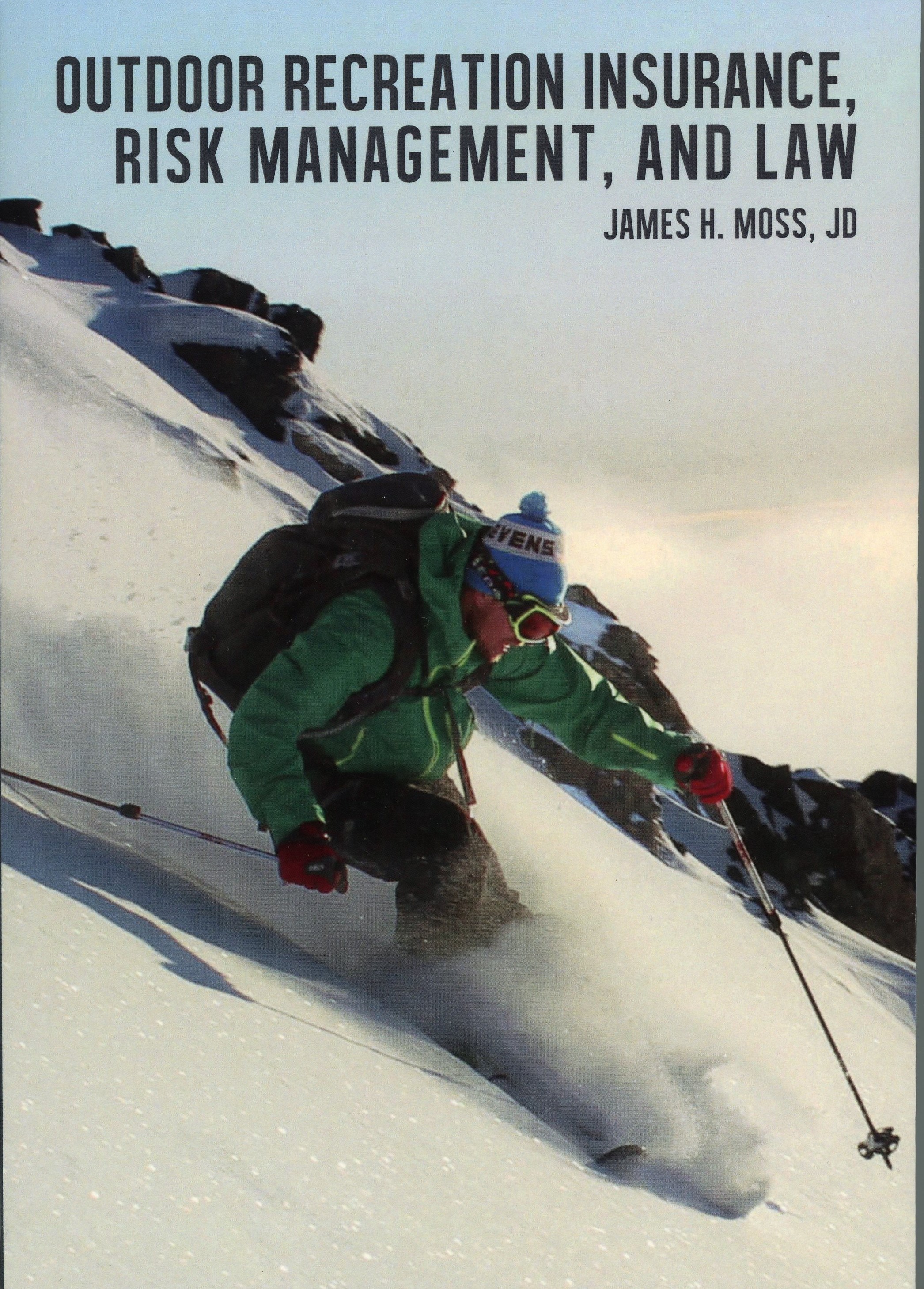
Outdoor Recreation Insurance, Risk Management, and Law
Denver based James H. Moss, JD, an attorney who specializes in the legal issues of outdoor recreation and adventure travel companies, guides, outfitters, and manufacturers, has written a comprehensive legal guidebook titled, “Outdoor Recreation Insurance, Risk Management, and Law”. Sagamore Publishing, a well-known Illinois-based educational publisher, distributes the book.
Mr. Moss, who applied his 30 years of experience with the legal, insurance, and risk management issues of the outdoor industry, wrote the book in order to fill a void.
“There was nothing out there that looked at case law and applied it to legal problems in outdoor recreation,” Moss explained. “The goal of this book is to provide sound advice based on past law and experience.”
The Reference book is sold via the Summit Magic Publishing, LLC.
While written as a college-level textbook, the guide also serves as a legal primer for executives, managers, and business owners in the field of outdoor recreation. It discusses how to tackle, prevent, and overcome legal issues in all areas of the industry.
The book is organized into 14 chapters that are easily accessed as standalone topics, or read through comprehensively. Specific topics include rental programs, statues that affect outdoor recreation, skiing and ski areas, and defenses to claims. Mr. Moss also incorporated listings of legal definitions, cases, and statutes, making the book easy for laypeople to understand.
PURCHASE
TABLE OF CONTENTS
Table of Cases
Introduction
Outdoor Recreation Law and Insurance: Overview
Risk
Risk
Perception versus Actual Risk
Risk v. Reward
Risk Evaluation
Risk Management Strategies
Humans & Risk
Risk = Accidents
Accidents may/may not lead to litigation
How Do You Deal with Risk?
How Does Acceptance of Risk Convert to Litigation?
Negative Feelings against the Business
Risk, Accidents & Litigation
No Real Acceptance of the Risk
No Money to Pay Injury Bills
No Health Insurance
Insurance Company Subrogation
Negative Feelings
Litigation
Dealing with Different People
Dealing with Victims
Develop a Friend & Eliminate a Lawsuit
Don’t Compound Minor Problems into Major Lawsuits
Emergency Medical Services
Additional Causes of Lawsuits in Outdoor Recreation
Employees
How Do You Handle A Victim?
Dealing with Different People
Dealing with Victims
Legal System in the United States
Courts
State Court System
Federal Court System
Other Court Systems
Laws
Statutes
Parties to a Lawsuit
Attorneys
Trials
Law
Torts
Negligence
Duty
Breach of the Duty
Injury
Proximate Causation
Damages
Determination of Duty Owed
Duty of an Outfitter
Duty of a Guide
Duty of Livery Owner
Duty of Rental Agent
Duty of Volunteer Youth Leader
In Loco Parentis
Intentional Torts
Gross Negligence
Willful & Wanton Negligence
Intentional Negligence
Negligence Per Se
Strict Liability
Attractive Nuisance
Results of Acts That Are More than Ordinary Negligence
Product Liability
Contracts
Breach of Contract
Breach of Warranty
Express Warranty
Implied Warranty
Warranty of Fitness for a Particular Purpose
Warranty of Merchantability
Warranty of Statute
Detrimental Reliance
Unjust Enrichment
Liquor Liability
Food Service Liability
Damages
Compensatory Damages
Special Damages
Punitive Damages
Statutory Defenses
Skier Safety Acts
Whitewater Guides & Outfitters
Equine Liability Acts
Legal Defenses
Assumption of Risk
Express Assumption of Risk
Implied Assumption of Risk
Primary Assumption of Risk
Secondary Assumption of Risk
Contributory Negligence
Assumption of Risk & Minors
Inherent Dangers
Assumption of Risk Documents.
Assumption of Risk as a Defense.
Statutory Assumption of Risk
Express Assumption of Risk
Contributory Negligence
Joint and Several Liability
Release, Waivers & Contracts Not to Sue
Why do you need them
Exculpatory Agreements
Releases
Waivers
Covenants Not to sue
Who should be covered
What should be included
Negligence Clause
Jurisdiction & Venue Clause
Assumption of Risk
Other Clauses
Indemnification
Hold Harmless Agreement
Liquidated Damages
Previous Experience
Misc
Photography release
Video Disclaimer
Drug and/or Alcohol clause
Medical Transportation & Release
HIPAA
Problem Areas
What the Courts do not want to see
Statute of Limitations
Minors
Adults
Defenses Myths
Agreements to Participate
Parental Consent Agreements
Informed Consent Agreements
Certification
Accreditation
Standards, Guidelines & Protocols
License
Specific Occupational Risks
Personal Liability of Instructors, Teachers & Educators
College & University Issues
Animal Operations, Packers
Equine Activities
Canoe Livery Operations
Tube rentals
Downhill Skiing
Ski Rental Programs
Indoor Climbing Walls
Instructional Programs
Mountaineering
Retail Rental Programs
Rock Climbing
Tubing Hills
Whitewater Rafting
Risk Management Plan
Introduction for Risk Management Plans
What Is A Risk Management Plan?
What should be in a Risk Management Plan
Risk Management Plan Template
Ideas on Developing a Risk Management Plan
Preparing your Business for Unknown Disasters
Building Fire & Evacuation
Dealing with an Emergency
Insurance
Theory of Insurance
Insurance Companies
Deductibles
Self-Insured Retention
Personal v. Commercial Policies
Types of Policies
Automobile
Comprehension
Collision
Bodily Injury
Property Damage
Uninsured Motorist
Personal Injury Protection
Non-Owned Automobile
Hired Car
Fire Policy
Coverage
Liability
Named Peril v. All Risk
Commercial Policies
Underwriting
Exclusions
Special Endorsements
Rescue Reimbursement
Policy Procedures
Coverage’s
Agents
Brokers
General Agents
Captive Agents
Types of Policies
Claims Made
Occurrence
Claims
Federal and State Government Insurance Requirements
Bibliography
Index
The 427-page volume is sold via Summit Magic Publishing, LLC.
What is a Risk Management Plan and What do You Need in Yours?
Posted: July 25, 2019 Filed under: Activity / Sport / Recreation, Adventure Travel, Assumption of the Risk, Avalanche, Camping, Challenge or Ropes Course, Climbing, Climbing Wall, Contract, Cycling, Equine Activities (Horses, Donkeys, Mules) & Animals, First Aid, Health Club, Indoor Recreation Center, Jurisdiction and Venue (Forum Selection), Legal Case, Medical, Minors, Youth, Children, Mountain Biking, Mountaineering, Paddlesports, Playground, Racing, Racing, Release (pre-injury contract not to sue), Risk Management, Rivers and Waterways, Rock Climbing, Scuba Diving, Sea Kayaking, Search and Rescue (SAR), Ski Area, Skier v. Skier, Skiing / Snow Boarding, Skydiving, Paragliding, Hang gliding, Snow Tubing, Sports, Summer Camp, Swimming, Triathlon, Whitewater Rafting, Youth Camps, Zip Line | Tags: #ORLawTextbook, #ORRiskManagment, #OutdoorRecreationRiskManagementInsurance&Law, #OutdoorRecreationTextbook, @SagamorePub, Adventure travel, and Law, assumption of the risk, camping, Case Analysis, Challenge or Ropes Course, Climbing, Climbing Wall, Contract, Cycling, Donkeys, Equine Activities (Horses, first aid, General Liability Insurance, Good Samaritan Statutes, Guide, Hang gliding, http://www.rec-law.us/ORLawTextbook, Insurance, Insurance policy, James H. Moss, James H. Moss J.D., Jim Moss, Jurisdiction and Venue (Forum Selection), Legal Case, Liability insurance, Medical, Mountain biking, Mountaineering, Mules) & Animals, Negligence, OR Textbook, Outdoor Recreation Insurance, Outdoor Recreation Law, Outdoor Recreation Risk Management, Outfitter, Paddlesports, Paragliding, Recreational Use Statute, Release (pre-injury contract not to sue), Risk Management, risk management plan, Rivers and Waterways, Rock climbing, Sea Kayaking, ski area, Ski Area Statutes, Skiing / Snow Boarding, Skydiving, swimming, Textbook, Understanding, Understanding Insurance, Understanding Risk Management, Whitewater Rafting, zip line Leave a commentEveryone has told you, that you need a risk management plan. A plan to follow if you have
Outdoor Recreation Insurance, Risk Management, and Law
a crisis. You‘ve seen several and they look burdensome and difficult to write. Need help writing a risk management plan? Need to know what should be in your risk management plan? Need Help?
This book can help you understand and write your plan. This book is designed to help you rest easy about what you need to do and how to do it. More importantly, this book will make sure your plan is a workable plan, not one that will create liability for you.

Table of Contents
Chapter 1 Outdoor Recreation Risk Management, Law, and Insurance: An Overview
Chapter 2 U.S. Legal System and Legal Research
Chapter 3 Risk 25
Chapter 4 Risk, Accidents, and Litigation: Why People Sue
Chapter 5 Law 57
Chapter 6 Statutes that Affect Outdoor Recreation
Chapter 7 PreInjury Contracts to Prevent Litigation: Releases
Chapter 8 Defenses to Claims
Chapter 9 Minors
Chapter 10 Skiing and Ski Areas
Chapter 11 Other Commercial Recreational Activities
Chapter 12 Water Sports, Paddlesports, and water-based activities
Chapter 13 Rental Programs
Chapter 14 Insurance
$130.00 plus shipping

Can’t Sleep? Guest was injured, and you don’t know what to do? This book can answer those questions for you.
Posted: July 23, 2019 Filed under: Adventure Travel, Assumption of the Risk, Avalanche, Camping, Climbing, Climbing Wall, Contract, Criminal Liability, Cycling, Equine Activities (Horses, Donkeys, Mules) & Animals, First Aid, Health Club, How, Indoor Recreation Center, Insurance, Jurisdiction and Venue (Forum Selection), Medical, Minors, Youth, Children, Mountain Biking, Mountaineering, Paddlesports, Playground, Racing, Racing, Release (pre-injury contract not to sue), Risk Management, Rivers and Waterways, Rock Climbing, Scuba Diving, Sea Kayaking, Search and Rescue (SAR), Ski Area, Skier v. Skier, Skiing / Snow Boarding, Skydiving, Paragliding, Hang gliding, Snow Tubing, Sports, Summer Camp, Swimming, Triathlon, Whitewater Rafting, Youth Camps, Zip Line | Tags: #ORLawTextbook, #ORRiskManagment, #OutdoorRecreationRiskManagementInsurance&Law, #OutdoorRecreationTextbook, @SagamorePub, Accidents, Angry Guest, Dealing with Claims, General Liability Insurance, Guide, http://www.rec-law.us/ORLawTextbook, Injured Guest, Insurance policy, James H. Moss J.D., Jim Moss, Liability insurance, OR Textbook, Outdoor Recreation Insurance, Outdoor Recreation Law, Outdoor Recreation Risk Management, Outfitter, RecreationLaw, Risk Management, risk management plan, Textbook, Understanding, Understanding Insurance, Understanding Risk Management, Upset Guest Leave a comment An injured guest is everyone’s business owner’s nightmare. What happened, how do you make sure it does not happen again, what can you do to help the guest, can you help the guests are just some of the questions that might be keeping you up at night.
This book can help you understand why people sue and how you can and should deal with injured, angry or upset guests of your business.
This book is designed to help you rest easy about what you need to do and how to do it. More importantly, this book will make sure you keep your business afloat and moving forward.
You did not get into the outdoor recreation business to worry or spend nights staying awake. Get prepared and learn how and why so you can sleep and quit worrying.

Table of Contents
Chapter 1 Outdoor Recreation Risk Management, Law, and Insurance: An Overview
Chapter 2 U.S. Legal System and Legal Research
Chapter 3 Risk 25
Chapter 4 Risk, Accidents, and Litigation: Why People Sue
Chapter 5 Law 57
Chapter 6 Statutes that Affect Outdoor Recreation
Chapter 7 Pre-injury Contracts to Prevent Litigation: Releases
Chapter 8 Defenses to Claims
Chapter 9 Minors
Chapter 10 Skiing and Ski Areas
Chapter 11 Other Commercial Recreational Activities
Chapter 12 Water Sports, Paddlesports, and water-based activities
Chapter 13 Rental Programs
Chapter 14 Insurance
$130.00 plus shipping

Do Releases Work? Should I be using a Release in my Business? Will my customers be upset if I make them sign a release?
Posted: April 30, 2019 Filed under: Activity / Sport / Recreation, Adventure Travel, Assumption of the Risk, Avalanche, Camping, Challenge or Ropes Course, Climbing, Climbing Wall, Contract, Cycling, Equine Activities (Horses, Donkeys, Mules) & Animals, First Aid, Health Club, Indoor Recreation Center, Insurance, Jurisdiction and Venue (Forum Selection), Medical, Minors, Youth, Children, Mountain Biking, Mountaineering, Paddlesports, Playground, Racing, Racing, Release (pre-injury contract not to sue), Risk Management, Rivers and Waterways, Rock Climbing, Scuba Diving, Sea Kayaking, Search and Rescue (SAR), Ski Area, Skier v. Skier, Skiing / Snow Boarding, Skydiving, Paragliding, Hang gliding, Snow Tubing, Sports, Summer Camp, Swimming, Triathlon, Whitewater Rafting, Youth Camps, Zip Line | Tags: #ORLawTextbook, #ORRiskManagment, #OutdoorRecreationRiskManagementInsurance&Law, #OutdoorRecreationTextbook, @SagamorePub, Accidents, Angry Guest, Dealing with Claims, General Liability Insurance, Guide, http://www.rec-law.us/ORLawTextbook, Injured Guest, Insurance policy, James H. Moss J.D., Jim Moss, Liability insurance, OR Textbook, Outdoor Recreation Insurance, Outdoor Recreation Law, Outdoor Recreation Risk Management, Outfitter, RecreationLaw, Risk Management, risk management plan, Textbook, Understanding, Understanding Insurance, Understanding Risk Management, Upset Guest Leave a commentThese and many other questions are answered in my book Outdoor Recreation Risk Management, Insurance and Law.
Releases, (or as some people incorrectly call them waivers) are a legal agreement that in advance of any possible injury identifies who will pay for what. Releases can and to stop lawsuits.
This book will explain releases and other defenses you can use to put yourself in a position to stop lawsuits and claims.
This book can help you understand why people sue and how you can and should deal with injured, angry or upset guests of your business.
This book is designed to help you rest easy about what you need to do and how to do it. More importantly, this book will make sure you keep your business afloat and moving forward.
You did not get into the outdoor recreation business to worry or spend nights staying awake. Get prepared and learn how and why so you can sleep and quit worrying.
Table of Contents
Chapter 1 Outdoor Recreation Risk Management, Law, and Insurance: An Overview
Chapter 2 U.S. Legal System and Legal Research
Chapter 3 Risk 25
Chapter 4 Risk, Accidents, and Litigation: Why People Sue
Chapter 5 Law 57
Chapter 6 Statutes that Affect Outdoor Recreation
Chapter 7 Pre-injury Contracts to Prevent Litigation: Releases
Chapter 8 Defenses to Claims
Chapter 9 Minors
Chapter 10 Skiing and Ski Areas
Chapter 11 Other Commercial Recreational Activities
Chapter 12 Water Sports, Paddlesports, and water-based activities
Chapter 13 Rental Programs
Chapter 14 Insurance
$99.00 plus shipping
Artwork by Don Long donaldoelong@earthlink.net
Can’t Sleep? Guest was injured, and you don’t know what to do? This book can answer those questions for you.
Posted: April 16, 2019 Filed under: Adventure Travel, Assumption of the Risk, Avalanche, Camping, Climbing, Climbing Wall, Contract, Criminal Liability, Cycling, Equine Activities (Horses, Donkeys, Mules) & Animals, First Aid, Health Club, How, Indoor Recreation Center, Insurance, Jurisdiction and Venue (Forum Selection), Medical, Minors, Youth, Children, Mountain Biking, Mountaineering, Paddlesports, Playground, Racing, Racing, Release (pre-injury contract not to sue), Risk Management, Rivers and Waterways, Rock Climbing, Scuba Diving, Sea Kayaking, Search and Rescue (SAR), Ski Area, Skier v. Skier, Skiing / Snow Boarding, Skydiving, Paragliding, Hang gliding, Snow Tubing, Sports, Summer Camp, Swimming, Triathlon, Whitewater Rafting, Youth Camps, Zip Line | Tags: #ORLawTextbook, #ORRiskManagment, #OutdoorRecreationRiskManagementInsurance&Law, #OutdoorRecreationTextbook, @SagamorePub, Accidents, Angry Guest, Dealing with Claims, General Liability Insurance, Guide, http://www.rec-law.us/ORLawTextbook, Injured Guest, Insurance policy, James H. Moss J.D., Jim Moss, Liability insurance, OR Textbook, Outdoor Recreation Insurance, Outdoor Recreation Law, Outdoor Recreation Risk Management, Outfitter, RecreationLaw, Risk Management, risk management plan, Textbook, Understanding, Understanding Insurance, Understanding Risk Management, Upset Guest Leave a commentAn injured guest is everyone’s business owner’s nightmare. What happened, how do you make sure it does not happen again, what can you do to help the guest, can you help the guests are just some of the questions that might be keeping you up at night.
This book can help you understand why people sue and how you can and should deal with injured, angry or upset guests of your business.
This book is designed to help you rest easy about what you need to do and how to do it. More importantly, this book will make sure you keep your business afloat and moving forward.
You did not get into the outdoor recreation business to worry or spend nights staying awake. Get prepared and learn how and why so you can sleep and quit worrying.
Table of Contents
Chapter 1 Outdoor Recreation Risk Management, Law, and Insurance: An Overview
Chapter 2 U.S. Legal System and Legal Research
Chapter 3 Risk 25
Chapter 4 Risk, Accidents, and Litigation: Why People Sue
Chapter 5 Law 57
Chapter 6 Statutes that Affect Outdoor Recreation
Chapter 7 Pre-injury Contracts to Prevent Litigation: Releases
Chapter 8 Defenses to Claims
Chapter 9 Minors
Chapter 10 Skiing and Ski Areas
Chapter 11 Other Commercial Recreational Activities
Chapter 12 Water Sports, Paddlesports, and water-based activities
Chapter 13 Rental Programs
Chapter 14 Insurance
$130.00 plus shipping
What is a Risk Management Plan and What do You Need in Yours?
Posted: April 11, 2019 Filed under: Activity / Sport / Recreation, Adventure Travel, Assumption of the Risk, Avalanche, Camping, Challenge or Ropes Course, Climbing, Climbing Wall, Contract, Cycling, Equine Activities (Horses, Donkeys, Mules) & Animals, First Aid, Health Club, Indoor Recreation Center, Jurisdiction and Venue (Forum Selection), Legal Case, Medical, Minors, Youth, Children, Mountain Biking, Mountaineering, Paddlesports, Playground, Racing, Racing, Release (pre-injury contract not to sue), Risk Management, Rivers and Waterways, Rock Climbing, Scuba Diving, Sea Kayaking, Search and Rescue (SAR), Ski Area, Skier v. Skier, Skiing / Snow Boarding, Skydiving, Paragliding, Hang gliding, Snow Tubing, Sports, Summer Camp, Swimming, Triathlon, Whitewater Rafting, Youth Camps, Zip Line | Tags: #ORLawTextbook, #ORRiskManagment, #OutdoorRecreationRiskManagementInsurance&Law, #OutdoorRecreationTextbook, @SagamorePub, Adventure travel, and Law, assumption of the risk, camping, Case Analysis, Challenge or Ropes Course, Climbing, Climbing Wall, Contract, Cycling, Donkeys, Equine Activities (Horses, first aid, General Liability Insurance, Good Samaritan Statutes, Guide, Hang gliding, http://www.rec-law.us/ORLawTextbook, Insurance, Insurance policy, James H. Moss, James H. Moss J.D., Jim Moss, Jurisdiction and Venue (Forum Selection), Legal Case, Liability insurance, Medical, Mountain biking, Mountaineering, Mules) & Animals, Negligence, OR Textbook, Outdoor Recreation Insurance, Outdoor Recreation Law, Outdoor Recreation Risk Management, Outfitter, Paddlesports, Paragliding, Recreational Use Statute, Release (pre-injury contract not to sue), Risk Management, risk management plan, Rivers and Waterways, Rock climbing, Sea Kayaking, ski area, Ski Area Statutes, Skiing / Snow Boarding, Skydiving, swimming, Textbook, Understanding, Understanding Insurance, Understanding Risk Management, Whitewater Rafting, zip line Leave a commentEveryone has told you, you need a risk management plan. A plan to follow if you have  a crisis. You‘ve seen several and they look burdensome and difficult to write. Need help writing a risk management plan? Need to know what should be in your risk management plan? Need Help?
This book can help you understand and write your plan. This book is designed to help you rest easy about what you need to do and how to do it. More importantly, this book will make sure you plan is a workable plan, not one that will create liability for you.
Table of Contents
Chapter 1 Outdoor Recreation Risk Management, Law, and Insurance: An Overview
Chapter 2 U.S. Legal System and Legal Research
Chapter 3 Risk 25
Chapter 4 Risk, Accidents, and Litigation: Why People Sue
Chapter 5 Law 57
Chapter 6 Statutes that Affect Outdoor Recreation
Chapter 7 PreInjury Contracts to Prevent Litigation: Releases
Chapter 8 Defenses to Claims
Chapter 9 Minors
Chapter 10 Skiing and Ski Areas
Chapter 11 Other Commercial Recreational Activities
Chapter 12 Water Sports, Paddlesports, and water-based activities
Chapter 13 Rental Programs
Chapter 14 Insurance
$99.00 plus shipping
Ever Wonder what an EMT is Legally allowed to do versus a EMT-IV or Paramedic?
Posted: April 25, 2018 Filed under: Colorado, First Aid, Medical | Tags: AEMT, Emergency medical technician, EMT, EMT-IV, first aid, Intermediate, Paramedic Leave a commentWell Colorado created a great chart so you can understand it.
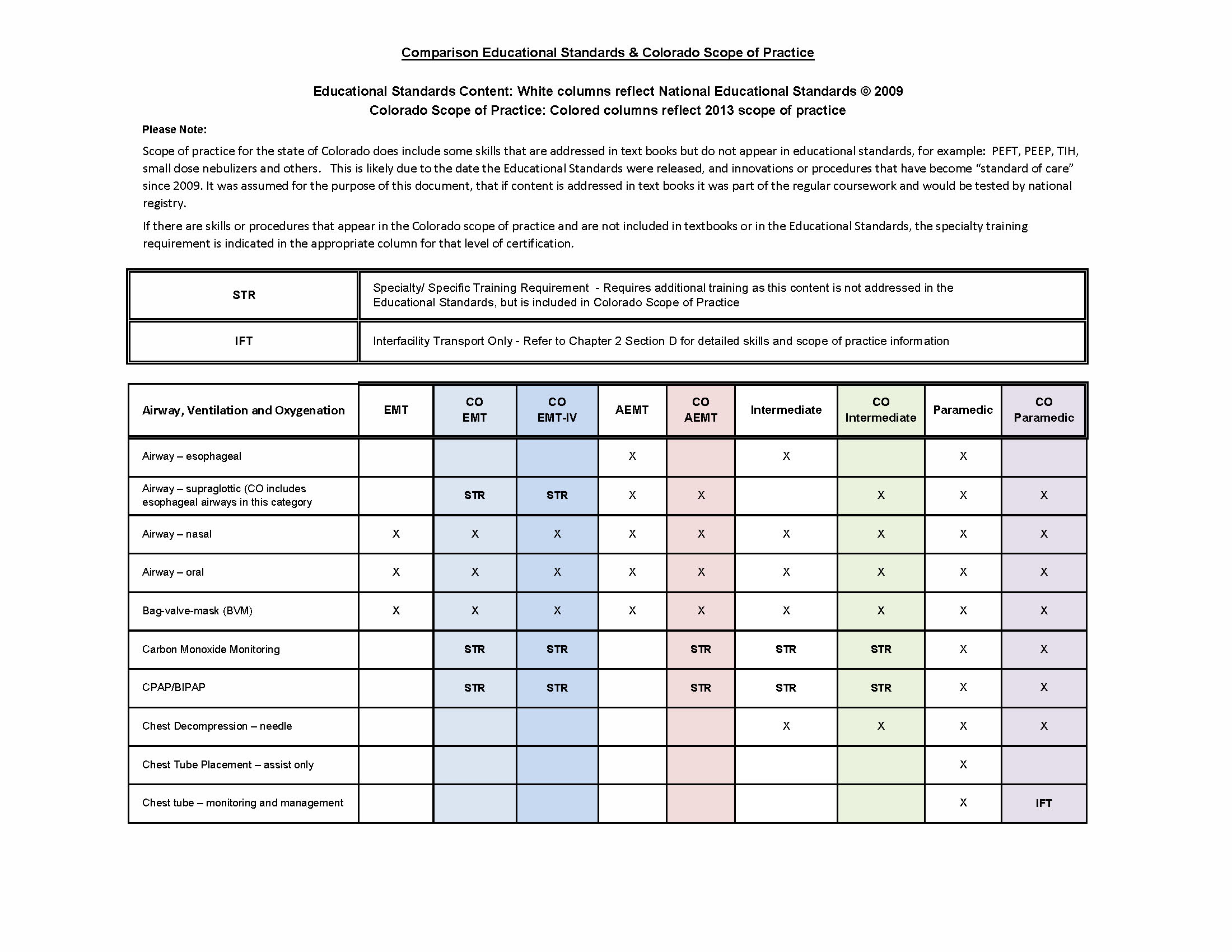
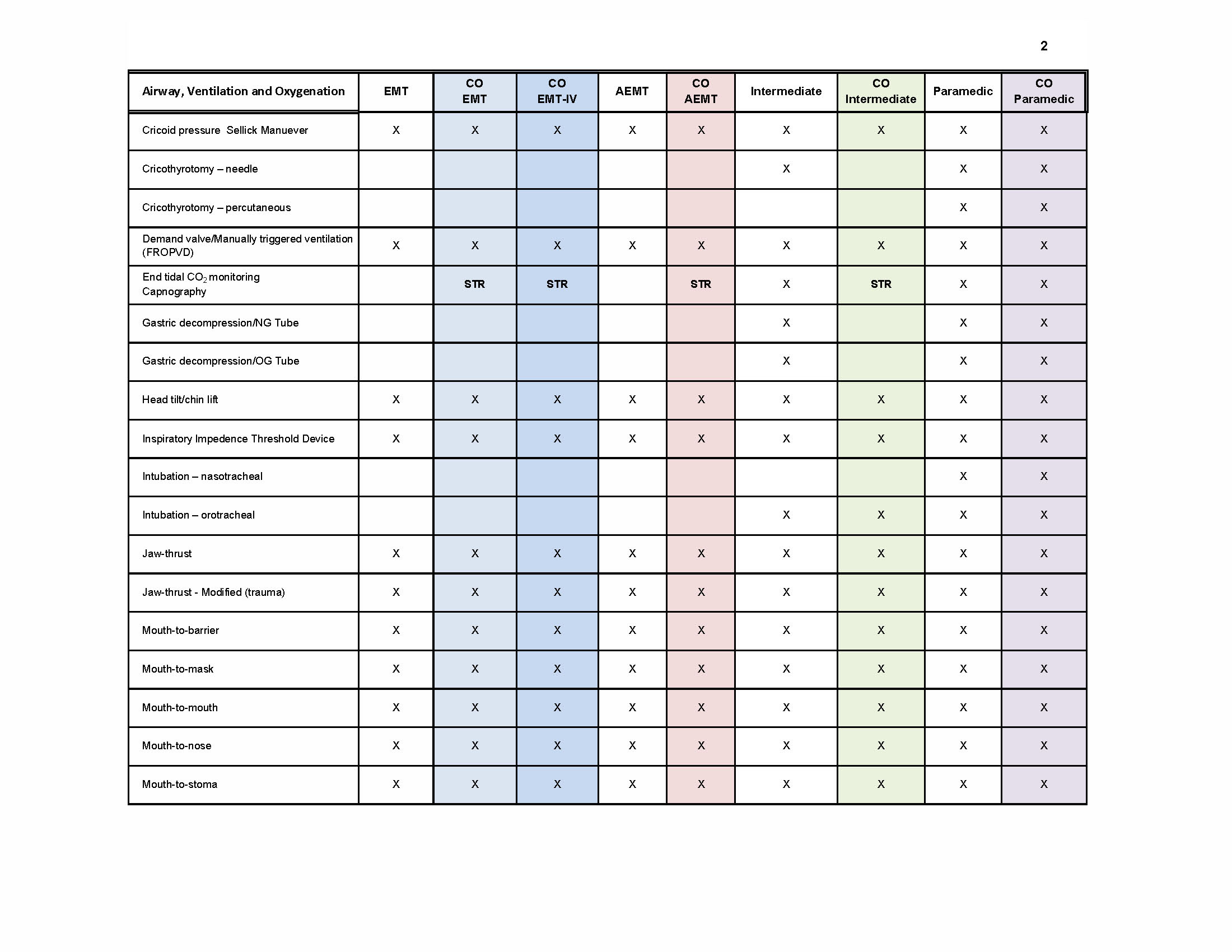
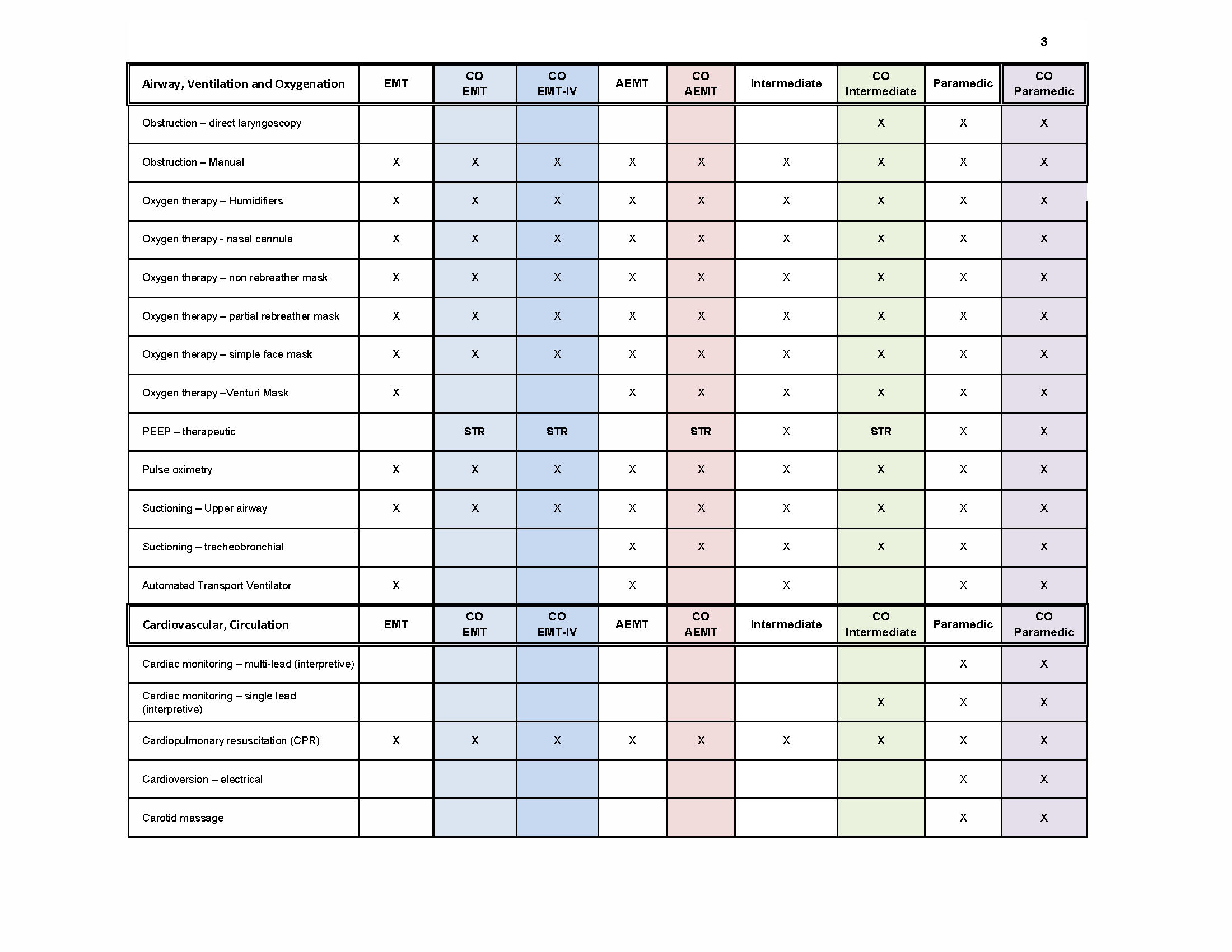
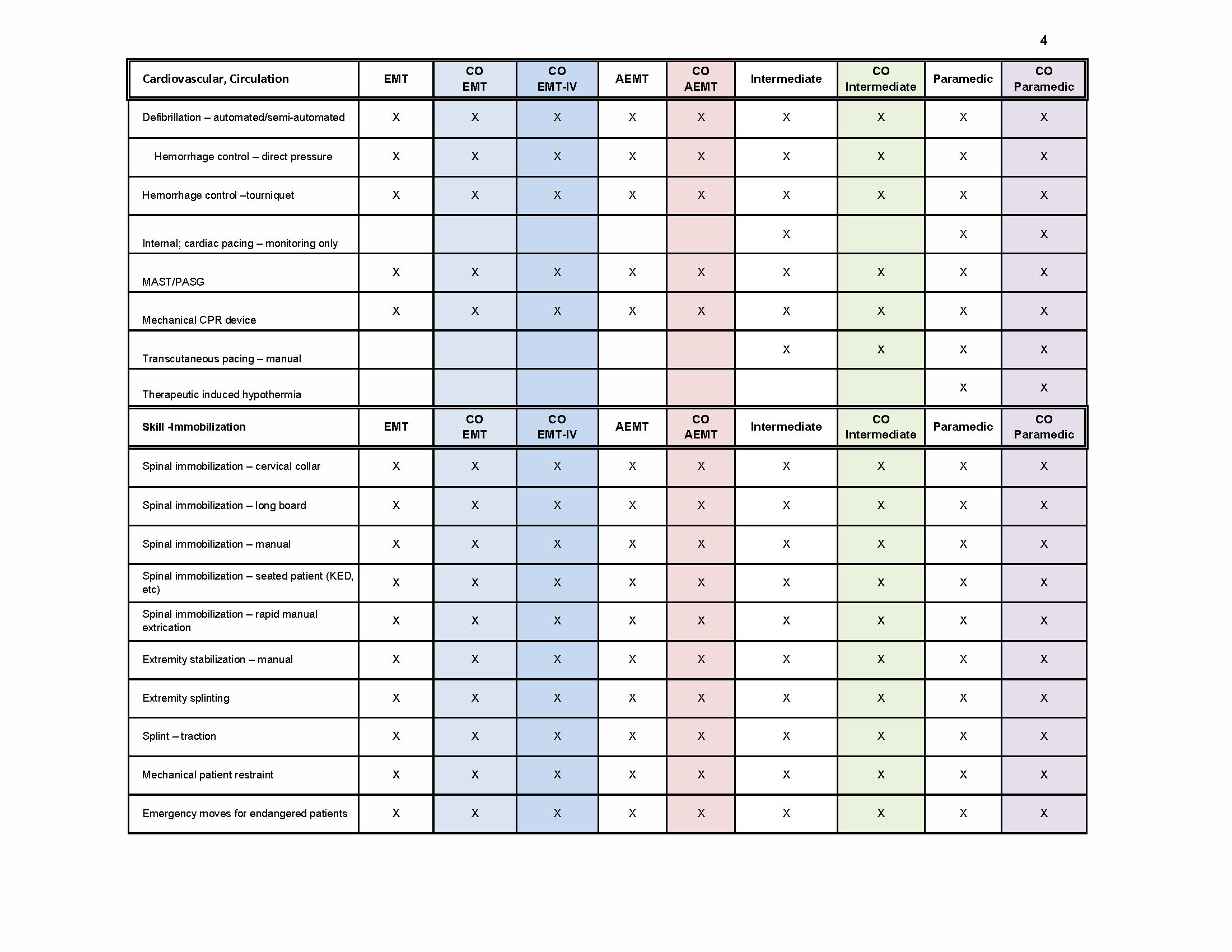

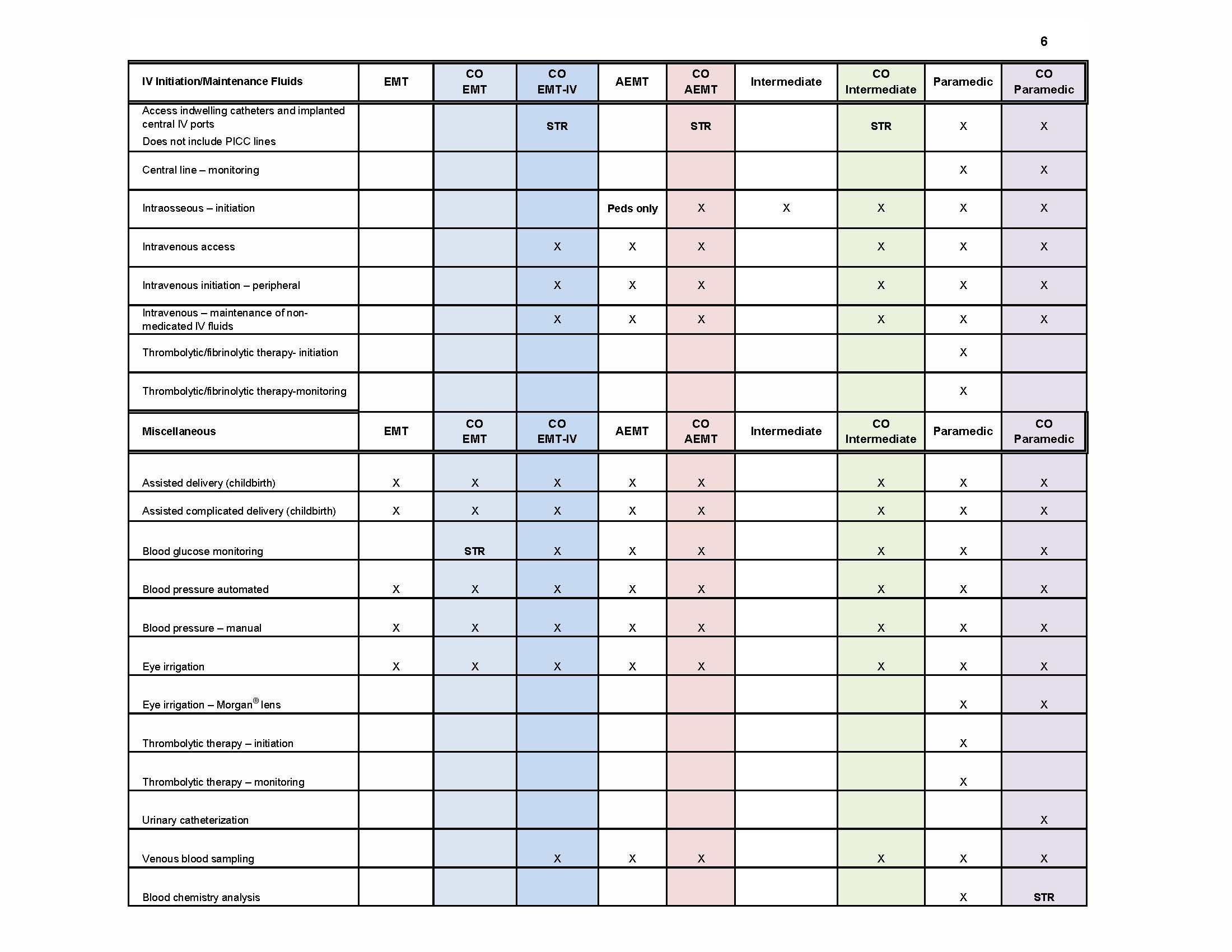
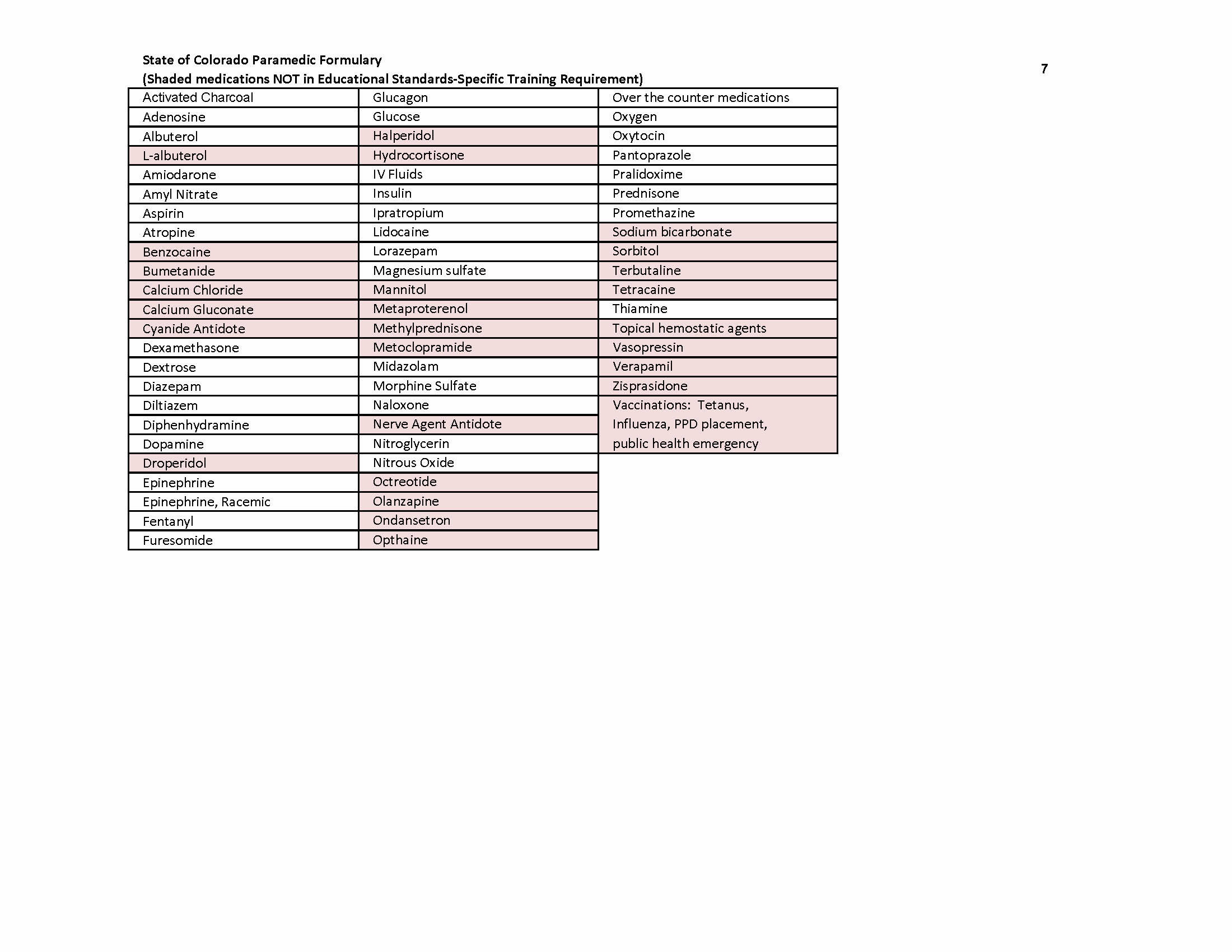
You can download your own copy of this chart here!
Wilderness Medical Society Trailblazer: If you work in Outdoor Recreation you should be a Member!
Posted: December 21, 2017 Filed under: First Aid, Medical | Tags: first aid, Leaches, Mt. Everest, Wilderness Medical Society, Wilderness Medicine, WMS Leave a comment
|
|||||||||||||||||||||||||||||||||||||||||||||||||||||||||





|
 |
Virus-free. www.avast.com |
State AED laws may create liability; make sure you understand what your state laws say. Florida, an AED law affecting high schools created liability for the HS.
Posted: December 19, 2016 Filed under: First Aid, Florida, Medical, Sports | Tags: #Soccer, AED, Automatic External Defibrillator, High School Team, Supervision, Use Leave a commentA Florida statute requiring schools to acquire and train all employees on the use of AED’s, created liability when the AED was not used.
State: Florida, Supreme Court of Florida
Plaintiff: Abel Limones, Sr., et al
Defendant: School District of Lee County et al.
Plaintiff Claims: Common Law negligence and breach of a duty required by statute, Florida Statute 1006.165
Defendant Defenses: No duty and Immune under 1006.165 and 768.1325
Holding: for the Plaintiff
Year: 2015
The deceased was a 15-year-old boy who played on a high school soccer team. While playing a high school soccer game he collapsed. His coach ran onto the field and started CPR and was assisted by two nurses who were sitting in the stands.
Allegedly, the coach asked several times for an AED (Automatic External Defibrillator). An AED was located in a storage are at the end of the field. However, no one ever retrieved the AED.
Ten minutes later, the fire department arrived and attempted to revive the student with their AED. That did not work. Twenty-six minutes later, an ambulance arrived and with the application of the ambulance AED and the application of drugs, EMS was able to restore the student’s heart rate.
The plaintiff’s expert witness testified that the 26 minutes without the use of the AED, not having a heartbeat, deprived the student of oxygen, which caused brain damage. The student was left in a persistent vegetative state.
The trial court granted the defendants motion for summary judgment. The plaintiff appealed and the Florida Appellate Court upheld the dismal by the trial court. The Florida Supreme Court then heard the appeal and issued this decision.
Analysis: making sense of the law based on these facts.
The Supreme Court of Florida first looked at basic negligence claims pursuant to Florida’s law. Florida’s law applies the same four steps to prove negligence as most other states.
We have long held that to succeed on a claim of negligence, a plaintiff must establish the four elements of duty, breach, proximate causation, and damages. Of these elements, only the existence of a duty is a legal question because duty is the standard to which the jury compares the conduct of the defendant.
A legal question is one that must be answered by the courts. So whether or not a duty existed, in proving negligence, is first reviewed by the trial judge. Factual questions are reviewed by the finder of fact, most commonly called the jury. Looking at the issue of duty, the court found under Florida Law, there were four sources of duty.
Florida law recognizes the following four sources of duty: (1) statutes or regulations; (2) common law interpretations of those statutes or regulations; (3) other sources in the common law; and (4) the general facts of the case.
Rarely do courts define how duties are created. Consequently, reviewing how a duty is created is interesting. The last way, general facts of the case, are how most duties are determined. The plaintiff argues there is a duty because of how others act or fail to act or based on the testimony from expert witnesses. Alternatively, an organization or trade association has published a list of the standards of care, which are then used to prove the duty failed.
The court then must examine if the minimum requirements for a duty have been met.
As in this case, when the source of the duty falls within the first three sources, the factual inquiry necessary to establish a duty is limited. The court must simply determine whether a statute, regulation, or the common law imposes a duty of care upon the defendant. The judicial determination of the existence of a duty is a minimal threshold that merely opens the courthouse doors.
In this case, the parties were relying on a statute; the Florida Statute that put AED’s in schools and required all school employees to be trained on their use, 768.1325. Once the court determines that a duty existed, then the jury must decide all other issues of the case.
Once a court has concluded that a duty exists, Florida law neither requires nor allows the court to further expand its consideration into how a reasonably prudent person would or should act under the circumstances as a matter of law. We have clearly stated that the remaining elements of negligence–breach, proximate causation, and damages–are to be resolved by the fact-finder.
The court then looked into the duty of schools with regard to students. A special relationship exists between a student (and their parents) and schools. A special relationship then takes the duty out from limited if any duty at all to a specific duty of care. Here that relationship creates a duty upon the school to act as a reasonable man would.
As a general principle, a party does not have a duty to take affirmative action to protect or aid another unless a special relationship exists which creates such a duty. When such a relationship exists, the law requires the party to act with reasonable care toward the person in need of protection or aid. As the Second District acknowledged below, Florida courts have recognized a special relationship between schools and their students based upon the fact that a school functions at least partially in the place of parents during the school day and school-sponsored activities.
The duty thus created or established requires a school to reasonably supervise students.
This special relationship requires a school to reasonably supervise its students during all activities that are subject to the control of the school, even if the activities occur beyond the boundaries of the school or involve adult students.
It should be noted, however, when referring to “school” in this manner; the courts are talking about public schools and students under the age of 18. Colleges have very different duties, especially outside of the classroom or off campus.
That supervision duty schools have, has five sub-elements or additional duties when dealing with student athletes.
Lower courts in Florida have recognized that the duty of supervision creates the following specific duties owed to student athletes: (1) schools must adequately instruct student athletes; (2) schools must provide proper equipment; (3) schools must reasonably match participants; (4) schools must adequately supervise athletic events; and (5) schools must take appropriate measures after a student is injured to prevent aggravation of the injury.
Here, several of the specific duties obviously could be applied to the case. Consequently, the court found the school owed a duty to the deceased.
Having determined the duty owed by the school to the deceased the court held that the school had a duty to the deceased that was breached. The use of an AED, required at the school by statute, was a reasonable duty owed to the deceased.
Therefore, we conclude that Respondent owed Abel a duty of supervision and to act with reasonable care under the circumstances; specifically, Respondent owed Abel a duty to take appropriate post-injury efforts to avoid or mitigate further aggravation of his injury. “Reasonable care under the circumstances” is a standard that may fluctuate with time, the student’s age and activity, the extent of the injury, the available responder(s), and other facts. Advancements with technology and equipment available today, such as a portable AED, to treat an injury were most probably unavailable twenty years ago, and may be obsolete twenty years from now.
The plaintiffs also argued there were additional duties owed based on the Florida School AED statute. However, the court declined to review this issue. Meaning, it is undecided and could go either way in the future.
The defendant then argued they were immune from suit based on the Florida AED Good Samaritan Act. The court then looked at the immunity statute set forth in the Florida School AED Statute. The Statute required schools to have AED’s and have to train all employees in the use of the AED. The court found that employees and volunteers could be covered under the Florida AED Good Samaritan Act. If they used the AED’s they would be immune from suit.
The court in reading the Florida AED Good Samaritan Act found two different groups of people were created by the act. However, only one was protected by the act and immune from suit. Those who use or attempt to use an AED are immune. Those that only acquire the AED, are not immune because they did not attempt to use the AED.
Users are clearly “immune from civil liability for any harm resulting from the use or attempted use” of an AED. § 768.1325(3), Fla. Stat. Additionally, acquirers are immune from “such liability,” meaning the “liability for any harm resulting from the use or attempted use” referenced in the prior sentence. Thus, acquirers are not immune due to the mere fact that they have purchased and made available an AED which has not been used; rather, they are entitled to immunity from the harm that may result only when an AED is actually used or attempted to be used.
That immunity only applied to the use of the AED. Here there was no use of the AED, so the statute did not provide any immunity.
It is undisputed that no actual or attempted use of an AED occurred in this case until emergency responders arrived. Therefore, we hold that Respondent is not entitled to immunity under section 768.1325 and such section has absolutely no application here.
The court summarized its analysis.
We hold that Respondent owed a common law duty to supervise Abel, and that once injured, Respondent owed a duty to take reasonable measures and come to his aid to prevent aggravation of his injury. It is a matter for the jury to determine under the evidence whether Respondent’s actions breached that duty and resulted in the damage that Abel suffered. We further hold Respondent is not entitled to immunity from suit under section 768.1325, Florida Statutes.
So Now What?
So in Florida, a statute that requires someone, such as a school to have AED’s then requires the school to use the AED’s and if they do not, they breach the common law duty of care to their students.
AED laws are going to become a carnival ride in attempting to understand and use them without creating liability or remaining immune from suit. You probably not only want to be on top of the law that is being passed in your state; you should probably go down and testify so the legislature in an attempt to save a life does not sink your business.
It is sad when a young man dies, especially, if he could have been saved. That issue is probably going to trial.
What do you think? Leave a comment.
If you like this let your friends know or post it on FB, Twitter or LinkedIn
Author: Outdoor Recreation Insurance, Risk Management and Law
Copyright 2016 Recreation Law (720) Edit Law
Email: Rec-law@recreation-law.com
Google+: +Recreation
Twitter: RecreationLaw
Facebook: Rec.Law.Now
Facebook Page: Outdoor Recreation & Adventure Travel Law
Blog: www.recreation-law.com
Mobile Site: http://m.recreation-law.com
By Recreation Law Rec-law@recreation-law.com James H. Moss
#AdventureTourism, #AdventureTravelLaw, #AdventureTravelLawyer, #AttorneyatLaw, #Backpacking, #BicyclingLaw, #Camps, #ChallengeCourse, #ChallengeCourseLaw, #ChallengeCourseLawyer, #CyclingLaw, #FitnessLaw, #FitnessLawyer, #Hiking, #HumanPowered, #HumanPoweredRecreation, #IceClimbing, #JamesHMoss, #JimMoss, #Law, #Mountaineering, #Negligence, #OutdoorLaw, #OutdoorRecreationLaw, #OutsideLaw, #OutsideLawyer, #RecLaw, #Rec-Law, #RecLawBlog, #Rec-LawBlog, #RecLawyer, #RecreationalLawyer, #RecreationLaw, #RecreationLawBlog, #RecreationLawcom, #Recreation-Lawcom, #Recreation-Law.com, #RiskManagement, #RockClimbing, #RockClimbingLawyer, #RopesCourse, #RopesCourseLawyer, #SkiAreas, #Skiing, #SkiLaw, #Snowboarding, #SummerCamp, #Tourism, #TravelLaw, #YouthCamps, #ZipLineLawyer, AED, Automatic External Defibrillator, Soccer, High School Team, Supervision, Use,
Limones, Sr., et al., v. School District of Lee County et al., 161 So. 3d 384; 2015 Fla. LEXIS 625; 40 Fla. L. Weekly S 182
Posted: December 18, 2016 Filed under: First Aid, Florida, Medical, Sports | Tags: #Soccer, AED, Automatic External Defibrillator, High School Team Leave a commentLimones, Sr., et al., v. School District of Lee County et al., 161 So. 3d 384; 2015 Fla. LEXIS 625; 40 Fla. L. Weekly S 182
Abel Limones, Sr., et al., Petitioners, vs. School District of Lee County et al., Respondents.
No. SC13-932
SUPREME COURT OF FLORIDA
161 So. 3d 384; 2015 Fla. LEXIS 625; 40 Fla. L. Weekly S 182
April 2, 2015, Decided
PRIOR HISTORY: [**1] Application for Review of the Decision of the District Court of Appeal – Direct Conflict of Decisions. Second District – Case No. 2D11-5191. (Lee County).
Limones v. Sch. Dist. of Lee County, 111 So. 3d 901, 2013 Fla. App. LEXIS 1821 (Fla. Dist. Ct. App. 2d Dist., 2013)
COUNSEL: David Charles Rash of David C. Rash, P.A., Weston, Florida, and Elizabeth Koebel Russo of Russo Appellate Firm, P.A., Miami, Florida, for Petitioners.
Traci McKee of Henderson, Franklin, Starnes & Holt, P.A., Fort Myers, Florida, and Scott Andrew Beatty of Henderson, Franklin, Starnes & Holt, P.A., Bonita Springs, Florida, for Respondents.
Jennifer Suzanne Blohm and Ronald Gustav Meyer of Meyer, Brooks, Demma and Blohm, P.A., Tallahassee, Florida, for Amicus Curiae Florida School Boards Association, Inc.
Leonard E. Ireland, Jr., Gainesville, Florida, for Amicus Curiae Florida High School Athletic Association, Inc.
Mark Miller and Christina Marie Martin, Pacific Legal Foundation, Palm Beach Gardens, Florida, for Amicus Curiae Pacific Legal Foundation.
JUDGES: LABARGA, C.J., and PARIENTE, QUINCE, and PERRY, JJ., concur. CANADY, J., dissents with an opinion, in which POLSTON, J., concurs.
OPINION BY: LEWIS
OPINION
[*387] LEWIS, J.
Petitioners Abel Limones, Sr., and Sanjuana Castillo seek review of the decision of the Second District Court of Appeal in Limones v. School District of Lee County, 111 So. 3d 901 (Fla. 2d DCA 2013), asserting that it expressly [**2] and directly conflicts with the decision of this Court in McCain v. Florida Power Corp., 593 So. 2d 500 (Fla. 1992), and several other Florida decisions.
BACKGROUND
At approximately 7:40 p.m. on November 13, 2008, fifteen-year-old Abel Limones, Jr., suddenly collapsed during a high school soccer game. There is no evidence in the record to suggest that Abel collapsed due to a collision with another player. The event involved a soccer game between East Lee County High School, Abel’s school, and Riverdale High School, the host school. Both schools belong to the School District of Lee County. When Abel was unable to rise, Thomas Busatta, the coach for East Lee County High School, immediately ran onto the field to check his player. Abel tried to speak to Busatta, but within three minutes of the collapse, he appeared to stop breathing and lost consciousness. Busatta was unable to detect a pulse. An administrator from Riverdale High School who called 911, and two parents in the stands who were nurses, joined Busatta on the field. Busatta and one nurse began to perform cardiopulmonary resuscitation (CPR) on Abel. Busatta, who was certified in the use of an automated external defibrillator (AED), testified that he yelled for an AED. The AED in the [**3] possession of Riverdale High School was actually at the game facility located at the end of the soccer field, but it was never brought on the field to Busatta to assist in reviving Abel.
Emergency responders from the fire department arrived at approximately 7:50 p.m. and applied their semi-automatic AED to revive Abel, but that was unsuccessful. Next, responders from the Emergency Medical Service (EMS) arrived and utilized a fully automatic AED on Abel and also administered several drugs in an attempt to restore his heartbeat. After application of shocks and drugs, emergency responders revived Abel, but not until approximately 8:06 p.m., which was twenty-six minutes after his initial collapse. Although Abel survived, he suffered a severe brain injury due to a lack of oxygen over the time delay involved. As a result, he now remains in a nearly persistent vegetative state that will require full-time care for the remainder of his life.
Petitioners, Abel’s parents, retained an expert, Dr. David Systrom, M.D., who determined that Abel suffered from a previously undetected underlying heart condition. Dr. Systrom further opined that if shocks from an AED had been administered earlier, oxygen [**4] would have been restored [*388] to Abel’s brain sooner and he would not have suffered the brain injury that left him in the current permanent vegetative state. Petitioners then filed an action against Respondent, the School Board of Lee County.1 They alleged that Respondent breached both a common law duty and a statutory duty as imposed by section 1006.165, Florida Statutes (2008),2 when it failed to apply an AED on Abel after his collapse. The School Board moved for summary judgment, which the trial court granted and entered final judgment.
1 Petitioners initially filed an action against the School District of Lee County and the School Board of Lee County. All parties conceded that the only proper respondent in this case is the School Board of Lee County.
2 [HN1] Section 1006.165, Florida Statutes, requires all public schools that participate in the Florida High School Athletic Association to acquire an AED, train personnel in its use, and register its location with the local EMS.
On appeal, the Second District recognized that Respondent owed a duty to supervise its students, which in the context of student athletes included a duty to prevent aggravation of an injury. Limones, 111 So. 3d at 904-05 (citing Rupp v. Bryant, 417 So. 2d 658 (Fla. 1982); Leahy v. Sch. Bd. of Hernando Cnty., 450 So. 2d 883, 885 (Fla. 5th DCA 1984)). However, the Second District proceeded to expand its consideration of the duty owed and enlarged [**5] its consideration into a factual scope, extent, and performance of that duty analysis. Id. at 905 (citing Cerny v. Cedar Bluffs Junior/Senior Pub. Sch., 262 Neb. 66, 628 N.W.2d 697, 703 (Neb. 2001)). In this analysis, the Second District considered and evaluated whether post-injury efforts in connection with satisfying the duty to Abel should have included making available, diagnosing the need for, or using an AED. Id. The Second District relied on the discussion provided by the Fourth District Court of Appeal in L.A. Fitness International, LLC v. Mayer, 980 So. 2d 550 (Fla. 4th DCA 2008), even though that case did not consider the same “duty” and the health club did not have a duty involving students or any similar relationship.
In L.A. Fitness, the Fourth District considered whether a health club breached its duty of reasonable care owed to a customer who was using training equipment when the health club failed to acquire or use an AED on a customer in cardiac distress. Id. at 556-57. After a review of the common law duties owed by a business owner to its invitees, the Fourth District determined that a health club owed no duty to provide or use an AED on a patron in cardiac distress. Id. at 562. The Second District in Limones found no distinction between L.A. Fitness and the present case, even though the differences are extreme, and concluded that reasonably prudent post-injury [**6] efforts did not require Respondent to provide, diagnose the need for, or use an AED. Limones, 111 So. 3d at 906. The Second District also determined that neither the undertaker’s doctrine3 nor section 1006.165, Florida Statutes, imposed a duty to use an AED on Abel. Id. at 906-07. Finally, after it concluded that Respondent was immune from civil liability under section 768.1325(3), Florida Statutes (2008), the Second District affirmed the decision [*389] of the trial court. Id. at 908-09. This review follows.
3 [HN2] The undertaker’s doctrine imposes a duty of reasonable care upon a party that freely or by contract undertakes to perform a service for another party. See, e.g., Clay Elec. Coop., Inc. v. Johnson, 873 So. 2d 1182, 1186 (Fla. 2003) (citing Restatement (Second) of Torts § 323 (1965)). The undertaker is subject to liability if: (a) he or she fails to exercise reasonable care, which results in increased harm to the beneficiary; or (b) the beneficiary relies upon the undertaker and is harmed as a result. See id.
ANALYSIS
Jurisdiction
We first consider whether jurisdiction exists to review this matter. Petitioners assert that the decision below expressly and directly conflicts with the decision of this Court in McCain and other Florida decisions. See art. V, § 3(b)(3), Fla. Const. Specifically, Petitioners claim that the Second District defined the duty in a manner that conflicts with the approach delineated in McCain. We agree.
We have long [**7] held that [HN3] to succeed on a claim of negligence, a plaintiff must establish the four elements of duty, breach, proximate causation, and damages. See, e.g., U.S. v. Stevens, 994 So. 2d 1062, 1065-66 (Fla. 2008). Of these elements, only the existence of a duty is a legal question because duty is the standard to which the jury compares the conduct of the defendant. McCain, 593 So. 2d at 503. Florida law recognizes the following four sources of duty: (1) statutes or regulations; (2) common law interpretations of those statutes or regulations; (3) other sources in the common law; and (4) the general facts of the case. Id. at 503 n.2. As in this case, when the source of the duty falls within the first three sources, the factual inquiry necessary to establish a duty is limited.4 The court must simply determine whether a statute, regulation, or the common law imposes a duty of care upon the defendant. The judicial determination of the existence of a duty is a minimal threshold that merely opens the courthouse doors. Id. at 502. Once a court has concluded that a duty exists, Florida law neither requires nor allows the court to further expand its consideration into how a reasonably prudent person would or should act under the circumstances as a matter of law.5 We have clearly stated that the [**8] remaining elements of negligence–breach, proximate causation, and damages–are to be resolved by the fact-finder. See Dorsey v. Reider, 139 So. 3d 860, 866 (Fla. 2014); Williams v. Davis, 974 So. 2d 1052, 1056 n.2 (Fla. 2007) (citing McCain, 593 So. 2d at 504); see also Orlando Exec. Park, Inc. v. Robbins, 433 So. 2d 491, 493 (Fla. 1983) (“[I]t is peculiarly a jury function to determine what precautions are reasonably required in the exercise of a particular duty of due care.” (citation omitted)), receded from on other grounds by Mobil Oil Corp. v. Bransford, 648 So. 2d 119, 121 (Fla. 1995).
4 [HN4] Even when the duty is rooted in the fourth prong, factual inquiry into the existence of a duty is limited to whether the “defendant’s conduct foreseeably created a broader ‘zone of risk’ that poses a general threat of harm to others.” McCain, 593 So. 2d at 502.
5 Of course, as McCain acknowledges, [HN5] some facts must be established to determine whether a duty exists, such as the identity of the parties, their relationship, and whether that relationship qualifies as a special relationship recognized by tort law and subject to heightened duties. See 593 So. 2d at 503-04. However, further factual inquiry risks invasion of the province of the jury.
The Second District determined that a clearly recognized common law duty existed under both Rupp and Leahy. Rupp established that [HN6] school employees must reasonably supervise students during activities that are subject to the control of the school. 417 So. 2d at 666; see also Leahy, 450 So. 2d at 885 (explaining [**9] that the duty of supervision owed by a school to its students included a duty to prevent aggravation of an injury). [HN7] However, the Second District incorrectly expanded Florida law and invaded the province of the [*390] jury when it further considered whether post-injury efforts required Respondent to make available, diagnose the need for, or use the AED on Abel. Limones, 111 So. 3d at 905. This detailed analysis exceeded the threshold requirement that this Court established in McCain. Therefore, conflict jurisdiction exists to consider the merits of this case and we choose to exercise our discretion to resolve this conflict. [HN8] We review de novo rulings on summary judgment with respect to purely legal questions. See, e.g., Clay Elec. Coop., Inc. v. Johnson, 873 So. 2d 1182, 1185 (Fla. 2003).
Common Law Duty
[HN9] As a general principle, a party does not have a duty to take affirmative action to protect or aid another unless a special relationship exists which creates such a duty. See Restatement (Second) of Torts § 314 cmt. a (1965). When such a relationship exists, the law requires the party to act with reasonable care toward the person in need of protection or aid. See id. § 314A cmt. e. As the Second District acknowledged below, Florida courts have recognized a special relationship between schools and their students based upon the fact that [**10] a school functions at least partially in the place of parents during the school day and school-sponsored activities. See, e.g., Nova Se. Univ., Inc. v. Gross, 758 So. 2d 86, 88-89 (Fla. 2000) (citing Rupp, 417 So. 2d at 666). Mandatory education of children also supports this relationship. Rupp, 417 So. 2d at 666.
[HN10] This special relationship requires a school to reasonably supervise its students during all activities that are subject to the control of the school, even if the activities occur beyond the boundaries of the school or involve adult students. See Nova Se. Univ., 758 So. 2d at 88-89 (applying the in loco parentis doctrine to a relationship between an adult student and a university when the university mandated participation by the student in an off-campus internship); Rupp, 417 So. 2d at 666-67 (concluding that a duty of supervision existed during an unsanctioned off-campus hazing event by a school-sponsored club); cf. Kazanjian v. Sch. Bd. of Palm Beach Cnty., 967 So. 2d 259, 268 (Fla. 4th DCA 2007) (finding that the duty of supervision did not extend to a student who was injured when she left school premises without authorization). This duty to supervise requires teachers and other applicable school employees to act with reasonable care under the circumstances. Wyke v. Polk Cnty. Sch. Bd., 129 F.3d 560, 571 (11th Cir. 1997) (citing Florida law); see also Nova Se. Univ., 758 So. 2d at 90 (noting that the university had a duty to use reasonable care when it assigned students to off-campus internships). Thereafter, it [**11] is for the jury to determine whether, under the relevant circumstances, the school employee has acted unreasonably and, therefore, breached the duty owed. See La Petite Acad., Inc. v. Nassef ex rel. Knippel, 674 So. 2d 181, 182 (Fla. 2d DCA 1996) (citing Benton v. Sch. Bd. of Broward Cnty., 386 So. 2d 831, 834 (Fla. 4th DCA 1980)); see also Zalkin v. Am. Learning Sys., 639 So. 2d 1020, 1021 (Fla. 3d DCA 1994) (concluding that whether alleged negligent supervision by school employees resulted in injury to a student was a jury issue).
[HN11] Lower courts in Florida have recognized that the duty of supervision creates the following specific duties owed to student athletes: (1) schools must adequately instruct student athletes; (2) schools must provide proper equipment; (3) schools must reasonably match participants; (4) schools must adequately supervise athletic events; and (5) schools must take appropriate measures after a student is injured to prevent aggravation of the injury. See [*391] Limones, 111 So. 3d at 904 (citing Leahy, 450 So. 2d at 885); see also Zalkin, 639 So. 2d at 1021. Other jurisdictions have acknowledged similar duties owed to student athletes. See Avila v. Citrus Cmty. Coll. Dist., 38 Cal. 4th 148, 41 Cal. Rptr. 3d 299, 131 P.3d 383, 392 (Cal. 2006) (“[I]n interscholastic and intercollegiate competition, the host school and its agents owe a duty to home and visiting players alike to, at a minimum, not increase the risks inherent in the sport.”); Kleinknecht v. Gettysburg Coll., 989 F.2d 1360, 1370 (3d Cir. 1993) (college owed duty to recruited athlete to take reasonable safety precautions against the risk of death); see also Jarreau v. Orleans Parish School Bd., 600 So. 2d 1389, 1393 (La. Ct. App. 1992) (school board owed duty to [**12] injured high school athlete to provide access to medical treatment); Stineman v. Fontbonne Coll., 664 F.2d 1082, 1086 (8th Cir. 1981) (college owed duty to provide medical assistance to injured student athlete).
In this case, Abel was a student who was injured while he participated in a school-sponsored soccer game under the supervision of school officials. Therefore, we conclude that Respondent owed Abel a duty of supervision and to act with reasonable care under the circumstances; specifically, Respondent owed Abel a duty to take appropriate post-injury efforts to avoid or mitigate further aggravation of his injury. See Rupp, 417 So. 2d at 666; Leahy, 450 So. 2d at 885. “Reasonable care under the circumstances” is a standard that may fluctuate with time, the student’s age and activity, the extent of the injury, the available responder(s), and other facts. Advancements with technology and equipment available today, such as a portable AED, to treat an injury were most probably unavailable twenty years ago, and may be obsolete twenty years from now. We therefore leave it to the jury to determine, under the evidence presented, whether the particular actions of Respondent’s employees satisfied or breached the duty of reasonable care owed.
For several reasons, we reject the decision of the Second [**13] District to narrowly frame the issue as whether Respondent had a specified duty to diagnose the need for or use an AED on Abel. First, as stated above, reasonable care under the circumstances is not and should not be a fixed concept. Such a narrow definition of duty, a purely legal question, slides too easily into breach, a factual matter for the jury. See McCain, 593 So. 2d at 502-04. We reject the attempt below to specifically define each element in the scope of the duty as a matter of law, as this case attempted to remove all factual elements from the law and digitalize every aspect of human conduct. We are also cognizant of the concern raised by Respondent and its amici that if a defined duty could require every high school to provide an AED at every athletic practice and contest, the result could be great expense. Instead, the flexible nature of reasonable care delineated here can be evaluated on a case by case basis. The duty does not change with regard to using reasonable care to supervise and assist students, but the methods and means of fulfilling that duty will depend on the circumstances.
Additionally, we reject the position of the Second District and Respondent that L.A. Fitness governs this case. [**14] The Fourth District in L.A. Fitness determined that the duty owed by a commercial health club to an adult customer only required employees of the club to reasonably summon emergency responders for a patron in cardiac distress. 980 So. 2d at 562; see also De La Flor v. Ritz-Carlton Hotel Co., 930 F. Supp. 2d 1325, 1330 (S.D. Fla. 2013) (citing L.A. Fitness, 980 So. 2d at 562). [*392] The adult customer and the health club stand in a far different relationship than a student involved in school activities with school board officials. Although some courts in other jurisdictions have determined that fitness clubs and other commercial entities do not owe a legal duty to provide AEDs to adult customers,6 the commercial context and relationship of parties in these cases is a critical distinction from the case before us. Despite the fact the business proprietor-customer and school district-student relationships are both recognized as relationships, these relationships are markedly different. We initially note that the proprietor-customer relationship most frequently involves two adult parties, whereas the school-student relationship usually involves a minor. Furthermore, the business invitee freely enters into a commercial relationship with the proprietor.
6 See, e.g., Verdugo v. Target Corp., 59 Cal. 4th 312, 173 Cal. Rptr. 3d 662, 327 P.3d 774, 792 (Cal. 2014) (holding that a retailer did not owe a common law duty to [**15] acquire and make available an AED to a patron); Miglino v. Bally Total Fitness of Greater N.Y., Inc., 20 N.Y.3d 342, 985 N.E.2d 128, 132, 961 N.Y.S.2d 364 (N.Y. 2013) (statute that required large health clubs to acquire an AED did not impose duty to use it); Rotolo v. San Jose Sports & Entm’t, LLC, 151 Cal. App. 4th 307, 59 Cal. Rptr. 3d 770, 774-75 (Cal. Ct. App. 2007) (refusing to impose a duty on owners of a sports facility to notify patrons of the existence and location of an AED), modified on other grounds by Verdugo, 327 P.3d at 784; Salte v. YMCA of Metro. Chi. Found., 351 Ill. App. 3d 524, 814 N.E.2d 610, 615, 286 Ill. Dec. 622 (Ill. App. Ct. 2004) (holding that a health club’s duty of reasonable care to its guests did not require it to obtain and use an AED on a guest).
By contrast, [HN12] Florida, along with the rest of the country, has mandated education of our minor children. § 1003.21, Fla. Stat. (2014). Compulsory schooling creates a unique relationship, a fact that has been recognized both by Florida courts and the Florida Legislature. Florida common law recognizes a specific duty of supervision owed to students and a duty to aid students that is not otherwise owed to the business customer. See Rupp, 417 So. 2d at 666-67. Furthermore, the Florida Legislature has specifically mandated that high schools that participate in interscholastic athletics acquire an AED and train appropriate personnel in its use. § 1006.165(1)-(2), Fla. Stat. Notably, the Legislature has not so regulated health clubs or other commercial facilities, even though the foreseeability for the need to use an AED may be similar in both contexts. See [**16] L.A. Fitness, 980 So. 2d at 561. The relationship between a commercial entity and its patron quite simply cannot be compared to that between a school and its students. We therefore conclude that the facts of this case are not comparable to those in L.A. Fitness.
Other Sources of Duty
Although Petitioners alleged in their pleadings that Respondent owed a statutory duty under section 1006.165, Florida Statutes, Petitioners did not clearly articulate before this Court the basis for such a duty. We therefore do not address it here. See, e.g., Chamberlain v. State, 881 So. 2d 1087, 1103 (Fla. 2004). Moreover, because we decide as a dispositive issue that Respondent’s motion for summary judgment was improperly granted because Respondent owed a common law duty to Abel, we decline to address Petitioners’ claim under the undertaker’s doctrine.
Immunity
Because we conclude that Respondent owed a common law duty to Abel, we must now consider whether Respondent is immune from suit under sections 1006.165 and 768.1325, Florida Statutes. [*393] See Wallace v. Dean, 3 So. 3d 1035, 1044 (Fla. 2009) (emphasizing that the existence of a duty is “conceptually distinct” from the determination of whether a party is entitled to immunity). Respondent claims that these statutory provisions grant it immunity. [HN13] The question of statutory immunity is a legal question that we review de novo. See, e.g., Found. Health v. Westside EKG Assocs., 944 So. 2d 188, 193-94 (Fla. 2006).
[HN14] Section 1006.165 requires all public schools [**17] that are members of the Florida High School Athletic Association to have an operational AED on school property and to train “all employees or volunteers who are reasonably expected to use the device” in its application. § 1006.165(1)-(2), Fla. Stat. Further, “[t]he use of [AEDs] by employees and volunteers is covered under [sections] 768.13 and 768.1325,” which generally regulate immunity under Florida’s Good Samaritan Act and the Cardiac Arrest Survival Act. § 1006.165(4).7 Subsection (3) of the Cardiac Arrest Survival Act states:
[HN15] Notwithstanding any other provision of law to the contrary, and except as provided in subsection (4), any person who uses or attempts to use an [AED] on a victim of a perceived medical emergency, without objection of the victim of the perceived medical emergency, is immune from civil liability for any harm resulting from the use or attempted use of such device. In addition, notwithstanding any other provision of law to the contrary, and except as provided in subsection (4), any person who acquired the device and makes it available for use, including, but not limited to, a community organization . . . is immune from such liability . . . .
§ 768.1325(3), Fla. Stat. (emphasis supplied). There is no immunity for criminal misuse, gross negligence, or similarly egregious misuse of an AED. § 768.1325(4)(a).
7 Although section 1006.165 references [**18] both the Good Samaritan Act, section 768.13, and the Cardiac Arrest Survival Act, section 768.1325, Respondent seeks immunity only under the Cardiac Arrest Survival Act. We therefore do not consider whether the Good Samaritan Act provides immunity under these circumstances. See, e.g., Chamberlain, 881 So. 2d at 1103.
[HN16] Under a plain reading of the statute, this subsection creates two classes of parties that may be immune from liability arising from the misuse of AEDs: users (actual or attempted), and acquirers. Users are clearly “immune from civil liability for any harm resulting from the use or attempted use” of an AED. § 768.1325(3), Fla. Stat. Additionally, acquirers are immune from “such liability,” meaning the “liability for any harm resulting from the use or attempted use” referenced in the prior sentence. Id. (emphasis supplied). Thus, acquirers are not immune due to the mere fact that they have purchased and made available an AED which has not been used; rather, they are entitled to immunity from the harm that may result only when an AED is actually used or attempted to be used. It is undisputed that no actual or attempted use of an AED occurred in this case until emergency responders arrived. Therefore, we hold that Respondent is not entitled to immunity under [**19] section 768.1325 and such section has absolutely no application here.
Despite the protests of Respondent and its amici, we do not believe that this straightforward reading of the statute defeats the legislative intent. The passage of section 1006.165 demonstrates that the Legislature was clearly concerned about the risk of cardiac arrest among high school athletes. The Legislature also explicitly [*394] linked this statute to the Cardiac Arrest Survival Act, which grants immunity for the use–actual or attempted–of an AED. The emphasis on the use or attempted use of an AED in the statute underscores the intent of the Legislature to encourage bystanders to use a potentially life-saving AED when appropriate. Without this grant of immunity, bystanders would arguably be more likely to hesitate to use an AED for fear of potential liability. To extend the shield of immunity to those who make no attempt to use an AED would defeat the intended purpose of the statute and discourage the use of AEDs in emergency situations. The argument that immunity applies when an AED is not used is spurious. The immunity is with regard to harm caused by the use of an AED, not a failure to otherwise use reasonable care.
CONCLUSION
We hold that Respondent [**20] owed a common law duty to supervise Abel, and that once injured, Respondent owed a duty to take reasonable measures and come to his aid to prevent aggravation of his injury. It is a matter for the jury to determine under the evidence whether Respondent’s actions breached that duty and resulted in the damage that Abel suffered. We further hold Respondent is not entitled to immunity from suit under section 768.1325, Florida Statutes. We therefore quash the decision below and remand this case for trial.
It is so ordered.
LABARGA, C.J., and PARIENTE, QUINCE, and PERRY, JJ., concur.
CANADY, J., dissents with an opinion, in which POLSTON, J., concurs.
DISSENT BY: CANADY
DISSENT
CANADY, J., dissenting.
Because I conclude that the decision of the district court of appeal, Limones v. School District of Lee County, 111 So. 3d 901 (Fla. 2d DCA 2013), does not expressly and directly conflict with McCain v. Florida Power Corp., 593 So. 2d 500 (Fla. 1992), I would dismiss review of this case for lack of jurisdiction under article V, section 3(b)(3), of the Florida Constitution. I therefore dissent.
In McCain, the plaintiff was injured when the blade of a trencher he was operating made contact with an underground electrical cable owned by Florida Power Corporation. The Court held that because cables transmitting electricity had “unquestioned power to kill or maim,” the defendant had created a “foreseeable zone of risk” and therefore, as a matter [**21] of law, had a duty to take reasonable precautions to prevent injury to others. McCain, 593 So. 2d at 503-04. In Limones, the district court of appeal held as a matter of law that a school district “had no common law duty to make available, diagnose the need for, or use” an automated external defibrillator on a student athlete who “collapsed on the field . . . stopped breathing and had no discernible pulse” during a high school soccer match. Limones, 111 So. 3d at 903, 906. The two decisions are clearly distinguishable based on their totally different facts. Therefore, there is no express and direct conflict and we lack jurisdiction to review the district court’s decision. POLSTON, J., concurs.
Florida AED Statute for Schools
Posted: December 18, 2016 Filed under: First Aid, Florida, Medical | Tags: AED, AED Good Samaritan Act, Automatic External Defibrillator, Good Samaritan law Leave a commentFla. Stat. § 1006.165 (2016)
§ 1006.165. Automated external defibrillator; user training.
(1) Each public school that is a member of the Florida High School Athletic Association must have an operational automated external defibrillator on the school grounds. Public and private partnerships are encouraged to cover the cost associated with the purchase and placement of the defibrillator and training in the use of the defibrillator.
(2) Each school must ensure that all employees or volunteers who are reasonably expected to use the device obtain appropriate training, including completion of a course in cardiopulmonary resuscitation or a basic first aid course that includes cardiopulmonary resuscitation training, and demonstrated proficiency in the use of an automated external defibrillator.
(3) The location of each automated external defibrillator must be registered with a local emergency medical services medical director.
(4) The use of automated external defibrillators by employees and volunteers is covered under ss. 768.13 and 768.1325.
Florida AED Good Samaritan Act
Posted: December 18, 2016 Filed under: First Aid, Florida, Medical | Tags: AED, AED Good Samaritan Act, Automatic External Defibrillator, Florida, Florida Supreme Court Leave a commentFla. Stat. § 768.1325 (2016)
§ 768.1325. Cardiac Arrest Survival Act; immunity from civil liability.
(1) This section may be cited as the “Cardiac Arrest Survival Act.”
(2) As used in this section:
(a) “Perceived medical emergency” means circumstances in which the behavior of an individual leads a reasonable person to believe that the individual is experiencing a life-threatening medical condition that requires an immediate medical response regarding the heart or other cardiopulmonary functioning of the individual.
(b) “Automated external defibrillator device” means a lifesaving defibrillator device that:
1. Is commercially distributed in accordance with the Federal Food, Drug, and Cosmetic Act.
2. Is capable of recognizing the presence or absence of ventricular fibrillation, and is capable of determining without intervention by the user of the device whether defibrillation should be performed.
3. Upon determining that defibrillation should be performed, is able to deliver an electrical shock to an individual.
(c) “Harm” means damage or loss of any and all types, including, but not limited to, physical, nonphysical, economic, noneconomic, actual, compensatory, consequential, incidental, and punitive damages or losses.
(3) Notwithstanding any other provision of law to the contrary, and except as provided in subsection (4), any person who uses or attempts to use an automated external defibrillator device on a victim of a perceived medical emergency, without objection of the victim of the perceived medical emergency, is immune from civil liability for any harm resulting from the use or attempted use of such device. In addition, notwithstanding any other provision of law to the contrary, and except as provided in subsection (4), any person who acquired the device and makes it available for use, including, but not limited to, a community association organized under chapter 617, chapter 718, chapter 719, chapter 720, chapter 721, or chapter 723, is immune from such liability, if the harm was not due to the failure of such person to:
(a) Properly maintain and test the device; or
(b) Provide appropriate training in the use of the device to an employee or agent of the acquirer when the employee or agent was the person who used the device on the victim, except that such requirement of training does not apply if:
1. The device is equipped with audible, visual, or written instructions on its use, including any such visual or written instructions posted on or adjacent to the device;
2. The employee or agent was not an employee or agent who would have been reasonably expected to use the device; or
3. The period of time elapsing between the engagement of the person as an employee or agent and the occurrence of the harm, or between the acquisition of the device and the occurrence of the harm in any case in which the device was acquired after engagement of the employee or agent, was not a reasonably sufficient period in which to provide the training.
(4) Immunity under subsection (3) does not apply to a person if:
(a) The harm involved was caused by that person’s willful or criminal misconduct, gross negligence, reckless disregard or misconduct, or a conscious, flagrant indifference to the rights or safety of the victim who was harmed;
(b) The person is a licensed or certified health professional who used the automated external defibrillator device while acting within the scope of the license or certification of the professional and within the scope of the employment or agency of the professional;
(c) The person is a hospital, clinic, or other entity whose primary purpose is providing health care directly to patients, and the harm was caused by an employee or agent of the entity who used the device while acting within the scope of the employment or agency of the employee or agent;
(d) The person is an acquirer of the device who leased the device to a health care entity, or who otherwise provided the device to such entity for compensation without selling the device to the entity, and the harm was caused by an employee or agent of the entity who used the device while acting within the scope of the employment or agency of the employee or agent; or
(e) The person is the manufacturer of the device.
(5) This section does not establish any cause of action. This section does not require that an automated external defibrillator device be placed at any building or other location or require an acquirer to make available on its premises one or more employees or agents trained in the use of the device.
(6) An insurer may not require an acquirer of an automated external defibrillator device which is a community association organized under chapter 617, chapter 718, chapter 719, chapter 720, chapter 721, or chapter 723 to purchase medical malpractice liability coverage as a condition of issuing any other coverage carried by the association, and an insurer may not exclude damages resulting from the use of an automated external defibrillator device from coverage under a general liability policy issued to an association.
Sometimes you wish the defendant would lose when a fireman prevents a rescue by someone who probably could have saved the deceased’s life
Posted: September 19, 2016 Filed under: California, First Aid, Paddlesports, Search and Rescue (SAR) | Tags: Duty to Rescue, Hazardous Recreational Activity, Immunity, No Duty to Rescue, Surfing 2 CommentsAt the same time, any claim for “negligent rescue” would put thousands of SAR volunteers at risk.
State: California, Court of Appeal of California, Fourth Appellate District, Division One
Plaintiff: Glenn A. Decker
Defendant: City of Imperial Beach
Plaintiff Claims: Failure to properly rescue and failure to allow rescue
Defendant Defenses:
Holding: For the Defendants
Year: 1989
The deceased and a friend went surfing off the city beach. There were no lifeguards on duty because it was not summer. Lifeguards were only at work during the summer season. The defendant city does not provide lifeguards for the beach except in the summer.
The defendant’s leash for his surfboard got caught on a line for a lobster trap and he eventually drowned.
While the deceased was still alive several people attempted to assist the deceased until the fire department showed up. On the scene the Fire Chief ordered no more rescues.
An Imperial Beach firefighter, Olin Golden, who was a water safety instructor and life guard, contacted Hewitt about the situation and borrowed Hewitt’s wet suit and surfboard. Imperial Beach Fire Chief Ronald Johnston ordered Hewitt and Golden and all other would-be rescuers to remain on the beach and not to attempt a rescue.
Eventually, the deceased died without being rescued and his body floated to shore. His mother sued the city for the botched rescue or actually no rescue. The trial court granted the cities motion for summary judgment.
This appeal then occurred.
Analysis: making sense of the law based on these facts.
The court first started looking at the requirements for summary judgment in California.
The aim of the summary judgment procedure is to discover whether the parties possess evidence requiring the fact-weighing procedures of a trial. “[The] trial court in ruling on a motion for summary judgment is merely to determine whether such issues of fact exist, and not to decide the merits of the issues themselves.” In reviewing the propriety of a summary judgment, the appellate court must resolve all doubts in favor of the party opposing the judgment.
A defendant is entitled to summary judgment if the record establishes as a matter of law that none of the plaintiff’s asserted causes of action can prevail.
The city first argued that it owed no duty because surfing was a hazardous recreational activity and there was a statute that protected it from liability issues of such activities.
Government Code 2 section 831.7 provides a public entity is not “liable to any person who participates in a hazardous recreational activity . . . for any damage or injury to property or persons arising out of that hazardous recreational activity.” Surfing is specifically included as a “hazardous recreational activity.” (§ 831.7, subd. (b)(3).)
In reviewing the statute the court found the legislature had you broad language in creating the statute in order to provide the broadest protection for the municipalities.
Instead, the Legislature used expansive language to describe the scope of the immunity, stating it applied to “any damage or injury to property or persons arising out of that hazardous recreational activity.” (Italics added.) This broad language is reasonably susceptible to an interpretation that it was intended to preclude liability for negligently inflicted injuries while rescuing a person who has been participating in a hazardous recreational activity since it can be said the rescue effort “arises out of” the individual’s participation in the hazardous recreational activity.
The court looked at the issues in the case and found the statute was created to encourage rescue. If any rescue was subject to litigation afterwards, no rescues would occur.
The act did seem to have an exception for gross negligence.
An interpretation of the hazardous recreational activities immunity to immunize public entities and their employees for acts of emergency rescue services unless there is gross negligence furthers the strong public policy encouraging rescues and emergency assistance.
However, no gross negligence claim was pled, and none was found in this case.
The court then looked at the Fire Chief “precluding other assistance.”
The facts show Imperial Beach firefighter Olin Golden borrowed Hewitt’s wet suit and requested permission to attempt a surf rescue of Gary. Decker states Golden “was a water safety instructor and a life guard trained in surf rescue.” While Decker presented evidence showing Golden was a water safety instructor and lifeguard, nothing in the record indicates Golden was experienced in surf rescue. Rather, the record indicates Golden had given swimming lessons at a high school pool and had guarded the pool; this was the information known to the fire chief at the time he told Golden to stay on the beach. Under these circumstances, it cannot be said the fire chief’s refusal to allow Golden to attempt a surf rescue constituted gross negligence.
Here the court found the duty of the fire chief in precluding the rescue was based on protecting the rescuer. As such the acts of preventing a possible rescue were not grossly negligent.
The next argument made by the plaintiff, was, the rescue technique used was antiquated and prevented a proper rescue.
Decker presented testimony by Charles Chase, an experienced lifeguard supervisor. Chase testified about the rescue method used by the Sheriff’s dive team (sending out a diver tethered to a rope) as follows: “A life line type rescue is used in special circumstances, but it would never be used with a strong side current [as was the case here] and it would never be used if you could get there quicker in a better way, and it’s a specialized form of rescue. Years and years ago the life line rescue was quite common, and that was prior to the use or the availability of, say, fins and also the availability of good swimmers. If you go back to the 20’s, they had a limited amount of people that could swim as well as a lot of people can swim now and fins weren’t available.”
The court found the technique was disfavored, but did not rise to the level of gross negligence in this case.
This testimony could support a finding that use of the lifeline rescue method is a disfavored surf rescue method and would not be used by an experienced, trained surf rescuer but it does not support a finding the sheriff’s dive team was grossly negligent for having used this method given their lack of training or experience in surf rescue.
Finding no gross negligence on the part of the fire chief or the fire department the appellate court upheld the trial court’s granting of the motion for summary judgment.
So Now What?
This is one of those cases that frustrated the heck out of me. Yet, overall, in hundreds of other situations, this is the good outcome. It will save a lot more other people because rescuing someone will not be a liability nightmare.
This is how the law is to be applied both as it applies to the individual parties who are in the case and future litigants, searches and victims of the city.
 What do you think? Leave a comment.
If you like this let your friends know or post it on FB, Twitter or LinkedIn
Author: Outdoor Recreation Insurance, Risk Management and Law
Copyright 2016 Recreation Law (720) Edit Law
Email: Rec-law@recreation-law.com
Google+: +Recreation
Twitter: RecreationLaw
Facebook: Rec.Law.Now
Facebook Page: Outdoor Recreation & Adventure Travel Law
Blog: www.recreation-law.com
Mobile Site: http://m.recreation-law.com
By Recreation Law Rec-law@recreation-law.com James H. Moss
#AdventureTourism, #AdventureTravelLaw, #AdventureTravelLawyer, #AttorneyatLaw, #Backpacking, #BicyclingLaw, #Camps, #ChallengeCourse, #ChallengeCourseLaw, #ChallengeCourseLawyer, #CyclingLaw, #FitnessLaw, #FitnessLawyer, #Hiking, #HumanPowered, #HumanPoweredRecreation, #IceClimbing, #JamesHMoss, #JimMoss, #Law, #Mountaineering, #Negligence, #OutdoorLaw, #OutdoorRecreationLaw, #OutsideLaw, #OutsideLawyer, #RecLaw, #Rec-Law, #RecLawBlog, #Rec-LawBlog, #RecLawyer, #RecreationalLawyer, #RecreationLaw, #RecreationLawBlog, #RecreationLawcom, #Recreation-Lawcom, #Recreation-Law.com, #RiskManagement, #RockClimbing, #RockClimbingLawyer, #RopesCourse, #RopesCourseLawyer, #SkiAreas, #Skiing, #SkiLaw, #Snowboarding, #SummerCamp, #Tourism, #TravelLaw, #YouthCamps, #ZipLineLawyer, Surfing, Hazardous Recreational Activity, Duty to Rescue, No Duty to Rescue, Immunity,
Decker, v. City of Imperial Beach, 209 Cal. App. 3d 349; 257 Cal. Rptr. 356; 1989 Cal. App. LEXIS 301
Posted: September 18, 2016 Filed under: California, First Aid, Legal Case, Medical, Paddlesports | Tags: Duty to Rescue, Hazardous Recreational Activity, Immunity, No Duty to Rescue, Surfing Leave a commentDecker, v. City of Imperial Beach, 209 Cal. App. 3d 349; 257 Cal. Rptr. 356; 1989 Cal. App. LEXIS 301
Glenn A. Decker, Plaintiff and Appellant, v. City of Imperial Beach, Defendant and Respondent
No. D007375
Court of Appeal of California, Fourth Appellate District, Division One
209 Cal. App. 3d 349; 257 Cal. Rptr. 356; 1989 Cal. App. LEXIS 301
April 4, 1989
PRIOR HISTORY: [***1]
Superior Court of San Diego County, No. 526147, Andrew G. Wagner, Judge.
DISPOSITION: The judgment is affirmed.
COUNSEL: Schall, Boudreau & Gore, W. Lee Hill and Robert J. Trentacosta for Plaintiff and Appellant.
Hollywood & Neil and Anton C. Gerschler for Defendant and Respondent.
JUDGES: Opinion by Kremer, P. J., with Nares, J., concurring. Separate concurring and dissenting opinion by Wiener, J.
OPINION BY: KREMER
OPINION
[*352] [**357] Glenn A. Decker appeals a summary judgment in favor of the City of Imperial Beach on his complaint for the wrongful death of his son, Gary Decker. On appeal, Decker contends the court erred in finding Imperial Beach was immune from liability because the death arose out of Gary’s participation in a “hazardous recreational activity” and in finding no “special relationship” existed between Gary and Imperial Beach. We conclude the trial court properly granted summary judgment and therefore affirm.
Facts
Around 5:30 p.m. on March 15, 1984, Gary and his friend Victor Hewitt went surfing off the 1600 block of Seacoast Drive in Imperial Beach. There were no lifeguard services provided at this beach during the nonsummer months. Soon after Gary entered the water, Gary’s surfboard leash became [***3] entangled in a nylon rope tether connecting a submerged lobster trap to a small floating surface buoy.
Bystanders noticed Gary appeared to be in trouble. They contacted Hewitt and called the county sheriff’s department. Hewitt twice attempted to paddle out to Gary on his surfboard to render assistance, but was unable to reach him. The sheriff’s department, which provided law enforcement support to Imperial Beach, called the City of Imperial Beach Fire Department to assist at the scene. Both agencies responded to the beach. 1 An announcement by bullhorn was made to Gary, telling him “help [was] on the way.”
1 Imperial Beach, in its brief, seems to suggest it had no liability because only county employees (i.e., sheriff department deputies) were involved. The record indicates, however, that the Imperial Beach Fire Department responded to the scene and participated in the rescue operation and that Imperial Beach contracted with the sheriff’s department to provide police services to the city. Thus, liability cannot be precluded on this basis.
An Imperial Beach firefighter, Olin Golden, who was a water safety instructor and life guard, contacted Hewitt about the situation and [*353] borrowed [***4] Hewitt’s wet suit and surfboard. Imperial Beach Fire Chief Ronald Johnston ordered Hewitt and Golden and all other would-be rescuers to remain on the beach and not to attempt a rescue.
At about 6:45 p.m., an ASTREA helicopter arrived and hovered over Gary for 15 to 20 minutes, shining a bright light on him. Eventually, a helicopter rescue was rejected. The sheriff’s dive team attempted to rescue Gary by tying a rope around one diver’s waist and anchoring him to the shore while he waded into the surf. There was evidence that this was an antiquated method of surf rescue that has been abandoned because it is ineffective. Shortly [**358] after this rescue attempt, Gary’s surf leash became disentangled and he floated to shore, unconscious. All attempts to revive him failed. He was pronounced dead at University of California at San Diego Medical Center.
Discussion
I
Summary Judgment Standard
(1) [HN1] The aim of the summary judgment procedure is to discover whether the parties possess evidence requiring the fact-weighing procedures of a trial. ( Chern v. Bank of America (1976) 15 Cal.3d 866, 873 [127 Cal.Rptr. 110, 544 P.2d 1310]; Corwin v. Los Angeles Newspaper Service Bureau, Inc. (1971) 4 Cal.3d 842, 851 [94 Cal.Rptr. 785, 484 P.2d 953].) [***5] “[The] trial court in ruling on a motion for summary judgment is merely to determine whether such issues of fact exist, and not to decide the merits of the issues themselves.” ( Molko v. Holy Spirit Assn. (1988) 46 Cal.3d 1092, 1107 [252 Cal.Rptr. 122, 762 P.2d 46].) (2) [HN2] In reviewing the propriety of a summary judgment, the appellate court must resolve all doubts in favor of the party opposing the judgment. (Palma v. U.S. Industrial Fasteners, Inc. (1984) 36 Cal.3d 171, 183 [203 Cal.Rptr. 626, 681 P.2d 893].) The reviewing court conducts a de novo examination to see whether there are any genuine issues of material fact or whether the moving party is entitled to summary judgment as a matter of law. ( Lichty v. Sickels (1983) 149 Cal.App.3d 696, 699 [197 Cal.Rptr. 137].) (3) While “[summary] judgment is a drastic procedure, should be used with caution [citation] and should be granted only if there is no issue of triable fact” ( Brose v. Union-Tribune Publishing Co. (1986) 183 Cal.App.3d 1079, 1081 [228 Cal.Rptr. 620]), it is also true “[justice] requires that a defendant be as much entitled to be rid of an unmeritorious lawsuit as a plaintiff is entitled to maintain a good [***6] one.” ( Larsen v. Johannes (1970) 7 Cal.App.3d 491, 507 [86 Cal.Rptr. 744].) “A defendant is entitled to summary judgment if the record establishes as a matter of law that none of the plaintiff’s asserted causes of action [*354] can prevail. [Citation.]” ( Molko v. Holy Spirit Assn., supra, 46 Cal.3d at p. 1107.)
II
Hazardous Recreational Activities Immunity
(4a) Imperial Beach argues it has no liability for Gary’s death because it arose out of Gary’s participation in a “hazardous recreational activity.”
[HN3] Government Code 2 section 831.7 provides a public entity is not “liable to any person who participates in a hazardous recreational activity . . . for any damage or injury to property or persons arising out of that hazardous recreational activity.” Surfing is specifically included as a “hazardous recreational activity.” (§ 831.7, subd. (b)(3).)
2 All statutory references are to the Government Code unless otherwise specified.
Decker argues section 831.7 does not bar his suit because Gary’s death was not “solely attributable” to surfing but was also due to Imperial Beach’s conduct during the rescue and section 831.7 provides immunity only for injuries caused by the hazardous recreational activity [***7] itself.
(5) ” [HN4] ‘The fundamental rule of statutory construction is that the court should ascertain the intent of the Legislature so as to effectuate the purpose of the law. [Citations.]'” ( T.M. Cobb Co. v. Superior Court (1984) 36 Cal.3d 273, 277 [204 Cal.Rptr. 143, 682 P.2d 338].) “In determining such intent, the court turns first to the words of the statute.” ( Regents of University of California v. Public Employment Relations Bd. (1986) 41 Cal.3d 601, 607 [224 Cal.Rptr. 631, 715 P.2d 590].) The court attempts to give effect to the usual, ordinary import of the language and seeks to avoid making any language mere surplusage. ( Fontana Unified School Dist. v. Burman (1988) 45 Cal.3d 208, 219 [246 Cal.Rptr. 733, 753 P.2d 689].) The words must be construed in context in light of the nature and obvious purpose of the statute where they appear. (Palos Verdes Faculty [**359] Assn. v. Palos Verdes Peninsula Unified Sch. Dist. (1978) 21 Cal.3d 650, 658-659 [147 Cal.Rptr. 359, 580 P.2d 1155].) (6) The various parts of a statutory enactment must be harmonized in context of the statutory framework as a whole. ( Moyer v. Workmen’s Comp. Appeals Bd. (1973) 10 Cal.3d 222, 230-231 [110 Cal.Rptr. 144, 514 P.2d 1224]; [***8] Long Beach Police Officers Assn. v. City of Long Beach (1988) 46 Cal.3d 736, 746 [250 Cal.Rptr. 869, 759 P.2d 504].) (7) The statute “. . . must be given a reasonable and commonsense interpretation consistent with the apparent purpose and intention of the Legislature, practical rather than technical in nature, and which, when [*355] applied, will result in wise policy rather than mischief or absurdity. [Citations.]” ( Beaty v. Imperial Irrigation Dist. (1986) 186 Cal.App.3d 897, 902 [231 Cal.Rptr. 128]; see also Webster v. Superior Court (1988) 46 Cal.3d 338, 344 [250 Cal.Rptr. 268, 758 P.2d 596].)
(4b) In defining the scope of the hazardous recreational activities immunity, the Legislature did not choose narrow language; the Legislature did not limit the immunity to injuries “solely attributable” to the hazardous recreational activity. Instead, the Legislature used expansive language to describe the scope of the immunity, stating it applied to “any damage or injury to property or persons arising out of that hazardous recreational activity.” (Italics added.) This broad language is reasonably susceptible to an interpretation that it was intended to preclude liability for negligently [***9] inflicted injuries while rescuing a person who has been participating in a hazardous recreational activity since it can be said the rescue effort “arises out of” the individual’s participation in the hazardous recreational activity.
Such an interpretation — that the immunity extends to rescue efforts, a foreseeable result of participating in a hazardous recreational activity — is consistent with the statutory scheme. Section 831.7 contains a number of exceptions to the rule of immunity. [HN5] Subdivision (c) of section 831.7 provides: “Notwithstanding the provisions of subdivision (a), this section does not limit liability which would otherwise exist for any of the following:
“(1) Failure of the public entity or employee to guard or warn of a known dangerous condition or of another hazardous recreational activity known to the public entity or employee that is not reasonably assumed by the participant as inherently a part of the hazardous recreational activity out of which the damage or injury arose.
“(2) Damage or injury suffered in any case where permission to participate in the hazardous recreational activity was granted for a specific fee. For the purpose of this paragraph, a ‘specific [***10] fee’ does not include a fee or consideration charged for a general purpose such as a general park admission charge, a vehicle entry or parking fee, or an administrative or group use application or permit fee, as distinguished from a specific fee charged for participation in the specific hazardous recreational activity out of which the damage or injury arose.
“(3) Injury suffered to the extent proximately caused by the negligent failure of the public entity or public employee to properly construct or maintain in good repair any structure, recreational equipment or machinery, or substantial work of improvement utilized in the hazardous recreational activity out of which the damage or injury arose.
[*356] “(4) Damage or injury suffered in any case where the public entity or employee recklessly or with gross negligence promoted the participation in or observance of a hazardous recreational activity. For purposes of this paragraph, promotional literature or a public announcement or advertisement which merely describes the available facilities and services on the property does not in itself constitute a reckless or grossly negligent promotion.
“(5) An act of gross negligence by a public entity or [***11] a public employee which is the proximate cause of the injury.
“Nothing in this subdivision creates a duty of care or basis of liability for personal injury or for damage to personal property.”
[**360] In reading the exceptions to the immunity, it is first apparent that the Legislature did not expressly exempt from the immunity liability for injuries caused by negligent rescue efforts. Liability for negligent conduct is provided for certain conduct by a public entity (failure to guard or warn of a known dangerous condition that is not reasonably assumed by a participant as an inherent part of the activity, sponsorship of a hazardous recreational activity by charging a fee, failure to maintain structures, equipment or improvements used in the activity) but not for a public entity’s conduct during a rescue.
[HN6] The language of subdivision (c)(5) of section 831.7 is sufficiently broad to encompass rescue activity. It states immunity is not limited for “[an] act of gross negligence by a public entity or a public employee which is the proximate cause of the injury.” (Italics added.) Clearly, the “act” delineated in this subdivision is not intended to duplicate those mentioned in the other immunity exemptions, [***12] i.e., a public entity’s promotion or sponsorship of a hazardous recreational activity, provision of improvements or equipment, or failure to warn of known risks which are not inherently a part of the sport. Among the most obvious other “acts” which would involve a public entity with hazardous recreational activity is the act of rescuing a person who has been injured by participation in a hazardous recreational activity.
An interpretation of section 831.7 that it was intended to grant immunity for emergency rescue services unless there is gross negligence is consistent with other statutes providing immunity to persons providing emergency assistance. The Legislature has enacted numerous statutes, both before and after the enactment of section 831.7, which provide immunity to persons providing emergency assistance except when there is gross negligence. (See Bus. & Prof. Code, § 2727.5 [immunity for licensed nurse who in good faith renders emergency care at the scene of an emergency occurring outside the [*357] place and course of nurse’s employment unless the nurse is grossly negligent]; Bus. & Prof. Code, § 2395.5 [immunity for a licensed physician who serves on-call in a hospital emergency [***13] room who in good faith renders emergency obstetrical services unless the physician was grossly negligent, reckless, or committed willful misconduct]; Bus. & Prof. Code, § 2398 [immunity for licensed physician who in good faith and without compensation renders voluntary emergency medical assistance to a participant in a community college or high school athletic event for an injury suffered in the course of that event unless the physician was grossly negligent]; Bus. & Prof. Code, § 3706 [immunity for certified respiratory therapist who in good faith renders emergency care at the scene of an emergency occurring outside the place and course of employment unless the respiratory therapist was grossly negligent]; Bus. & Prof. Code, § 4840.6 [immunity for a registered animal health technician who in good faith renders emergency animal health care at the scene of an emergency unless the animal health technician was grossly negligent]; Civ. Code, § 1714.2 [immunity to a person who has completed a basic cardiopulmonary resuscitation course for cardiopulmonary resuscitation and emergency cardiac care who in good faith renders emergency cardiopulmonary resuscitation at the scene of an emergency [***14] unless the individual was grossly negligent]; Health & Saf. Code, § 1799.105 [immunity for poison control center personnel who in good faith provide emergency information and advice unless they are grossly negligent]; Health & Saf. Code, § 1799.106 [immunity for a firefighter, police officer or other law enforcement officer who in good faith renders emergency medical services at the scene of an emergency unless the officer was grossly negligent]; Health & Saf. Code, § 1799.107 [immunity for public entity and emergency rescue personnel acting in good faith within the scope of their employment unless they were grossly negligent].)
Further, there are policy reasons supporting an interpretation extending immunity to public entities for negligence occurring during the course of a rescue effort. It is a matter of strong public policy to [**361] encourage emergency assistance and rescue. Just three months after the incident involved here, the Legislature enacted Health and Safety Code section 1799.107 expressly granting immunity to emergency rescue personnel for any action taken within the scope of their employment to provide emergency services unless the personnel acted in bad faith or in a grossly [***15] negligent manner. ( Health & Saf. Code, § 1799.107, subd. (b).) In enacting this statute, the Legislature declared: “The Legislature finds and declares that a threat to the public health and safety exists whenever there is a need for emergency services and that public entities and emergency rescue personnel should be encouraged to provide emergency services.” ( Health & Saf. Code, § 1799.107, subd. (a).)
[*358] An interpretation of the hazardous recreational activities immunity to immunize public entities and their employees for acts of emergency rescue services unless there is gross negligence furthers the strong public policy encouraging rescues and emergency assistance.
We conclude summary judgment was properly granted to Imperial Beach on Decker’s cause of action for negligence.
III
(8a) The question remains whether Decker may recover on a theory of gross negligence pursuant to subdivision (c)(5) of section 831.7.
In Gore v. Board of Medical Quality Assurance (1980) 110 Cal.App.3d 184, 197 [167 Cal.Rptr. 881], the court examined the meaning of the term “gross negligence”: “Prosser on Torts (1941) page 260, also cited by the Van Meter court [ Van Meter v. Bent Construction Co. (1956) 46 Cal.2d 588 [297 P.2d 644]] [***16] for its definition of gross negligence, reads as follows: ‘Gross Negligence. This is very great negligence, or the want of even scant care. It has been described as a failure to exercise even that care which a careless person would use. Many courts, dissatisfied with a term so devoid of all real content, have interpreted it as requiring wilful misconduct, or recklessness, or such utter lack of all care as will be evidence of either — sometimes on the ground that this must have been the purpose of the legislature. But most courts have considered that “gross negligence” falls short of a reckless disregard of consequences, and differs from ordinary negligence only in degree, and not in kind. So far as it has any accepted meaning, it is merely an extreme departure from the ordinary standard of care.’ (Italics added.)”
(9) [HN7] California courts require a showing of “‘the want of even scant care or an extreme departure from the ordinary standard of conduct'” in order to establish gross negligence. ( Franz v. Board of Medical Quality Assurance (1982) 31 Cal.3d 124, 138 [181 Cal.Rptr. 732, 642 P.2d 792]; De Vito v. State of California (1988) 202 Cal.App.3d 264, 272 [248 Cal.Rptr. 330].) [***17] (10) Generally it is a triable issue of fact whether there has been such a lack of care as to constitute gross negligence ( Pacific Bell v. Colich (1988) 198 Cal.App.3d 1225, 1240 [244 Cal.Rptr. 714]) but not always. ( De Vito v. State of California, supra, at p. 272.)
(8b) Decker argues Imperial Beach is liable because their rescue personnel responded to the scene within minutes in their official capacity to give aid to Gary; they took both actual and ostensible control of the rescue efforts, they required other would-be rescuers to remain on the beach, including firefighter Golden; and “[the] promise to ‘help’ arrived in the [*359] form of the Sheriff’s Department Dive Team which was not trained in surf rescue techniques” and used a technique which “was abandoned by life guards trained in surf rescue in the 1920’s.” Decker concludes: “Unfortunately, Gary Decker would have been better off if the City of Imperial Beach had not responded. Their presence (by creating the illusion of competent assistance and by preventing other rescue efforts) proved fatal to Gary.”
Precluding Other Assistance
The facts show Imperial Beach firefighter Olin Golden borrowed Hewitt’s wet [**362] suit and requested [***18] permission to attempt a surf rescue of Gary. Decker states Golden “was a water safety instructor and a life guard trained in surf rescue.” While Decker presented evidence showing Golden was a water safety instructor and lifeguard, nothing in the record indicates Golden was experienced in surf rescue. Rather, the record indicates Golden had given swimming lessons at a high school pool and had guarded the pool; this was the information known to the fire chief at the time he told Golden to stay on the beach. Under these circumstances, it cannot be said the fire chief’s refusal to allow Golden to attempt a surf rescue constituted gross negligence. Sending Golden, a person not known to be trained or experienced in surf rescue, into the water could have endangered Golden’s safety and been the basis for finding negligence had Golden been injured. Since the facts suggest negligence could be based on either the act or the omission, a finding of gross negligence by virtue of the omission is not warranted; the case is too closely balanced. In such a case, it cannot be said there is a “‘want of even scant care or an extreme departure from the ordinary standard of conduct.'”
This same reasoning [***19] applies even more strongly to the fire chief’s refusal to allow Hewitt or other bystanders to attempt a surf rescue. Hewitt had already demonstrated his lack of qualifications to rescue Gary; he had tried twice and failed both times. (11) As to other would-be rescuers, their training and experience was unknown and it certainly cannot be said that it is gross negligence to discourage persons with unknown qualifications from attempting a dangerous surf rescue.
Rescue Options
(8c) Decker presented testimony by Charles Chase, an experienced lifeguard supervisor. Chase testified about the rescue method used by the Sheriff’s dive team (sending out a diver tethered to a rope) as follows: “A life line type rescue is used in special circumstances, but it would never be used with a strong side current [as was the case here] and it would never be [*360] used if you could get there quicker in a better way, and it’s a specialized form of rescue. Years and years ago the life line rescue was quite common, and that was prior to the use or the availability of, say, fins and also the availability of good swimmers. If you go back to the 20’s, they had a limited amount of people that could swim as well as [***20] a lot of people can swim now and fins weren’t available.”
When asked why he thought the dive team was unable to reach Gary, Chase explained that “[the] buoyancy of the full dive suit would have made it hard to submerge one’s self and/or dive under the waves while you’re swimming out but also slow you down.” He stated the line tethering the diver to the shore would be pulled down by the side current, a “force which would impede the progress towards the rescue as far as getting to him.” When asked if he had any other opinions about why the attempts to reach Gary were unsuccessful, Chase responded: “Well, it would obviously be the lack of — the dive team’s lack of training in open surf conditions and what would have been a routine rescue for a lifeguard. I’d have to qualify that a little bit. The routine rescue meaning to reach the victim would have not been a difficult task at all. Whether they could have untangled the victim is — that’s hard to judge from a Monday morning quarterback type of situation.”
This testimony could support a finding that use of the lifeline rescue method is a disfavored surf rescue method and would not be used by an experienced, trained surf rescuer but it [***21] does not support a finding the sheriff’s dive team was grossly negligent for having used this method given their lack of training or experience in surf rescue.
Nor did Decker present evidence which would support a finding Imperial Beach was grossly negligent in its selection of rescue techniques, in particular, its failure to call off-duty lifeguards trained in surf rescue for assistance.
[**363] To the extent Decker seeks to impose liability based on Imperial Beach’s failure to adopt a policy requiring the training of firefighters and sheriff’s deputies in surf rescue or the calling of trained lifeguards for assistance, his claim must fail. The Legislature has provided immunity to public entities for such policy decisions. (§ 820.2; Nunn v. State of California (1984) 35 Cal.3d 616, 622 [200 Cal.Rptr. 440, 677 P.2d 846].)
Nor can a finding of gross negligence be premised on the failure of the Imperial Beach rescue personnel at the beach to call for the assistance of the off-duty lifeguards. First, the facts show the rescue personnel diligently pursued attempts to rescue Gary, both by helicopter and by use of the sheriff’s dive team. Decker presented no evidence contesting the validity of [***22] [*361] decision to first attempt a helicopter rescue. He does not claim the Imperial Beach rescue personnel were grossly negligent in calling for the helicopter or attempting to effectuate a rescue by helicopter. Decker appears to treat the helicopter rescue as a valid rescue method. Second, the record shows there were no existing procedures or centralized dispatcher available for contacting off-duty lifeguards. Thus, the rescue personnel cannot be said to have been grossly negligent for having failed to follow established procedures or for having failed to pursue a readily available option (i.e., the record indicates the lifeguards were not readily and easily accessible). (Compare Lowry v. Henry Mayo Newhall Memorial Hospital (1986) 185 Cal.App.3d 188, 196, fn. 7 [229 Cal.Rptr. 620, 64 A.L.R.4th 1191] [affirming summary judgment based on immunity under Health & Saf. Code, § 1317 for a hospital rescue team because there were no facts showing bad faith or gross negligence for deviating from American Heart Association guidelines].)
Decker’s argument would find gross negligence because the rescue personnel elected to try two methods to rescue Gary but failed to try a third method, i.e., [***23] contacting off-duty lifeguards. This failure to pursue this alternative, which may or may not have succeeded in saving Gary’s life, does not constitute gross negligence. (12) [HN8] To avoid a finding of gross negligence, it is not required that a public entity must pursue all possible options. It is required only that they exercise some care, that they pursue a course of conduct which is not “‘an extreme departure from the ordinary standard of conduct.'” ( Franz v. Board of Medical Quality Assurance, supra, 31 Cal.3d 124, 138.)
(8d) The essence of Decker’s complaint is not that the Imperial Beach rescue personnel were grossly negligent in failing to try to rescue Gary, but that they were not timely in their rescue of Gary. To the extent Decker’s claim is essentially that Imperial Beach was not timely in providing lifeguard services, his case is similar to County of Santa Cruz v. Superior Court (1988) 198 Cal.App.3d 999 [244 Cal.Rptr. 105]. In the Santa Cruz case, the court found summary judgment was properly granted on a claim for gross negligence for injuries due to diving into shallow water. The court explained: “The only basis for liability that Magana alleged against City . . . [***24] was that City lifeguards failed to provide adequate and safe extrication and first aid to him promptly after he was injured. . . . The allegation here is that the lifeguard assigned to the area where the injury occurred did not respond and offer aid for 20 minutes. This is insufficient to raise a triable issue of gross negligence or bad faith.” ( Id. at p. 1007.)
Here the facts supporting gross negligence are even weaker. In contrast to the Santa Cruz case where no rescue efforts were made for 20 minutes, here [*362] the rescue personnel arrived promptly and they diligently and continuously tried to rescue Gary. The facts in this case do not warrant a finding of gross negligence. Summary judgment was properly granted on Decker’s cause of action for gross negligence.
IV
Special Relationship
Imperial Beach also argues it had no liability for Gary’s death because no special [**364] relationship existed between Imperial Beach and Gary. We need not resolve this issue since we have held Imperial Beach has immunity under section 831.7.
The judgment is affirmed.
CONCUR BY: WIENER (In Part)
DISSENT BY: WIENER (In Part)
DISSENT
WIENER, J., Concurring and Dissenting. I agree that absent gross negligence, Government Code section 831.7 [***25] immunizes the City of Imperial Beach (City) from emergency rescue service. I disagree, however, that there are no triable factual issues as to the City’s gross negligence.
In the interest of brevity I will not belabor what I believe is the misapplication of the standards governing summary judgment to the facts here. (See maj. opn., ante, pp. 353-354.) I prefer to focus on the human aspects of this case.
Understanding the meaning of gross negligence in the context of this case does not require scholarly insight into an arcane legal subject. The simple question before us is whether there are triable factual issues relating to the City’s gross negligence. Significantly we are not asked to decide, as the majority would have us believe, whether Decker successfully established gross negligence. That determination is not required in a summary judgment proceeding. “[The] trial court in ruling on a motion for summary judgment is merely to determine whether such issues of fact exist, and not to decide the merits of the issues themselves.” ( Molko v. Holy Spirit Assn. (1988) 46 Cal.3d 1092, 1107 [252 Cal.Rptr. 122, 762 P.2d 46].)
Here without sufficient factual support the majority say as a [***26] matter of law that the action taken by the fire chief to prevent any rescue effort was perfectly proper. Perhaps they are correct. It may well be that the chief made a prudent judgment call or at worse acted only negligently. But from [*363] the information in the record before us I cannot say that this conduct did not represent a substantial departure from ordinary care. I do not know what objective criteria, if any, the fire chief used to formulate his decision barring everyone on the beach from trying to save Gary. What investigation did the fire chief take before issuing his blanket directive preventing anyone from attempting to rescue this drowning young man? What authority did he have to effectively intimidate those who were willing to be Good Samaritans from acting as such when there is nothing in this record to support a finding that their efforts would not have been successful? I would hate to think that bureaucratic considerations dominated the chief’s decision. We may never know. The summary judgment remedy, characterized as a drastic remedy to be used with caution, has replaced a trial on the merits.
Although the appellate record is purportedly cold I cannot leave this [***27] case without admitting that I will remain haunted by the specter of this young man’s lengthy, unsuccessful struggle against the power of the sea, fighting to stay afloat, emotionally assisted by what can only be described as a callous call from the beach that “help was on the way.” In no way can this case be compared to the drowning described in City of Santa Cruz v. Superior Court (1988) 198 Cal.App.3d 999 [244 Cal.Rptr. 105] where lifeguards came to assist the victim as soon as they were able to do so, about 20 minutes after the accident occurred. All those participating in the rescue efforts were certified emergency technicians. It was also undisputed that the lifeguard assigned to the area was elsewhere properly attending to another problem when the accident happened. (At p. 1002.) I agree the facts in City of Santa Cruz do not present triable factual issues on the question of the City’s gross negligence. I cannot agree here. This case should be decided on the evidence presented in a trial and not on the documents before us.
Providing First Aid in Colorado just got screwy. New law allows voluntary registration, but also places requirements on EMT’S & First Responders.
Posted: June 21, 2016 Filed under: Colorado, First Aid, Medical | Tags: Colorado, EMT, First Responder, Registration, Voluntary Leave a commentI’m not sure of the reasoning behind this law, it really does not do anything other than track EMT’s and “First Responders.”
House Bill 16-1034 was signed into law by the governor. I’ve attached a copy of the bill if you want to read it.
I’m not sure why the bill was needed. Until things shake out, I would advise my clients not to register. The only benefit to registering is you can say you are a registered EMT or registered first responder rather than saying you are an EMT or first responder?
Download a copy of the bill here: 1034_enr
 What do you think? Leave a comment.
If you like this let your friends know or post it on FB, Twitter or LinkedIn
Author: Outdoor Recreation Insurance, Risk Management and Law
Copyright 2016 Recreation Law (720) Edit Law
Email: Rec-law@recreation-law.com
Google+: +Recreation
Twitter: RecreationLaw
Facebook: Rec.Law.Now
Facebook Page: Outdoor Recreation & Adventure Travel Law
Blog: www.recreation-law.com
Mobile Site: http://m.recreation-law.com
By Recreation Law Rec-law@recreation-law.com James H. Moss
#AdventureTourism, #AdventureTravelLaw, #AdventureTravelLawyer, #AttorneyatLaw, #Backpacking, #BicyclingLaw, #Camps, #ChallengeCourse, #ChallengeCourseLaw, #ChallengeCourseLawyer, #CyclingLaw, #FitnessLaw, #FitnessLawyer, #Hiking, #HumanPowered, #HumanPoweredRecreation, #IceClimbing, #JamesHMoss, #JimMoss, #Law, #Mountaineering, #Negligence, #OutdoorLaw, #OutdoorRecreationLaw, #OutsideLaw, #OutsideLawyer, #RecLaw, #Rec-Law, #RecLawBlog, #Rec-LawBlog, #RecLawyer, #RecreationalLawyer, #RecreationLaw, #RecreationLawBlog, #RecreationLawcom, #Recreation-Lawcom, #Recreation-Law.com, #RiskManagement, #RockClimbing, #RockClimbingLawyer, #RopesCourse, #RopesCourseLawyer, #SkiAreas, #Skiing, #SkiLaw, #Snowboarding, #SummerCamp, #Tourism, #TravelLaw, #YouthCamps, #ZipLineLawyer, Colorado, EMT, First Responder, Voluntary, Registration,
Latest Wilderness Medical Society Journal Articles Jun-2016 (Volume 27, Issue 2)
Posted: June 16, 2016 Filed under: First Aid, Medical | Tags: First Ai, Wilderness Medical Society, WMS Leave a commentNew Practice Guidelines for the Prevention and Treatment of Drowning. If you have a pool, beach, swimming area as part of your program you need to know this!!!
You need to be a member to keep up to date with the latest medical and first aid issues.
Viewpoint
VIEW: Is Drinking to Thirst Adequate to Appropriately Maintain Hydration Status During Prolonged Endurance Exercise? Yes
Martin D. Hoffman, James D. Cotter, Éric D. Goulet, Paul B. Laursen
COUNTERVIEW: Is Drinking to Thirst Adequate to Appropriately Maintain Hydration Status During Prolonged Endurance Exercise? No
Lawrence E. Armstrong, Evan C. Johnson, Michael F. Bergeron
REBUTTAL from “Yes”
Martin D. Hoffman, James D. Cotter, Éric D. Goulet, Paul B. Laursen
REBUTTAL from “No”
Lawrence E. Armstrong, Evan C. Johnson, Michael F. Bergeron
Original Research
Risk of Avalanche Involvement in Winter Backcountry Recreation: The Advantage of Small Groups
Benjamin Zweifel, Emily Procter, Frank Techel, Giacomo Strapazzon, Roman Boutellier
Pulley Ruptures in Rock Climbers: Outcome of Conservative Treatment With the Pulley-Protection Splint—A Series of 47 Cases
Micha Schneeberger, Andreas Schweizer
An Analysis of Media-Reported Venomous Snakebites in the United States, 2011–2013
Dennis K. Wasko, Stephan G. Bullard
Outdoor Activity and High Altitude Exposure During Pregnancy: A Survey of 459 Pregnancies
Linda E. Keyes, Peter H. Hackett, Andrew M. Luks
Practice Guidelines
Wilderness Medical Society Practice Guidelines for the Prevention and Treatment of Drowning
Andrew C. Schmidt, Justin R. Sempsrott, Seth C. Hawkins, Ali S. Arastu, Tracy A. Cushing, Paul S. Auerbach
Concepts
Novel Technique for Epinephrine Removal in New Generation Autoinjectors
Patrick E. Robinson, Stephanie A. Lareau
Case Report
Subtle Cognitive Dysfunction in Resolving High Altitude Cerebral Edema Revealed by a Clock Drawing Test
Ian Quigley, Ken Zafren
Twostriped Walkingstick Targets Human Eye With Chemical Defense Spray
Ashley N. Ferrara, John B. Luck, Mark C. Chappell
First Reported Case of Fatal Stinging by the Large Carpenter Bee Xylocopa tranquebarica
Senanayake A.M. Kularatne, Sathasivam Raveendran, Jayanthi Edirisinghe, Inoka Karunaratne, Kosala Weerakoon
Snakebite by the Shore Pit Viper (Trimeresurus purpureomaculatus) Treated With Polyvalent Antivenom
Rupeng Mong, Hock Heng Tan
Fatal Honey Poisoning Caused by Tripterygium wilfordii Hook F in Southwest China: A Case Series
Qiang Zhang, Xinguang Chen, Shunan Chen, Zhitao Liu, Rong Wan, Juanjuan Li
Corneal Opacity in a Participant of a 161-km Mountain Bike Race at High Altitude
Morteza Khodaee, David R. Torres
Traumatic Amputation of Finger From an Alligator Snapping Turtle Bite
Robert D. Johnson, Cynthia L. Nielsen
Avalanche Survival After Rescue With the RECCO Rescue System: A Case Report
Katharina Grasegger, Giacomo Strapazzon, Emily Procter, Hermann Brugger, Inigo Soteras
Lightning Strike in Pregnancy With Fetal Injury
Kellen Galster, Ryan Hodnick, Ross P. Berkeley
Bitten by a Dragon
Stephen D. Ducey, Jeffrey S. Cooper, Michael C. Wadman
Case Series
The “Heel Hook”—A Climbing-Specific Technique to Injure the Leg
Volker Schöffl, Christoph Lutter, Dominik Popp
Brief Report
Acute Interstitial Nephritis Following Snake Envenomation: A Single-Center Experience
P.S. Priyamvada, Vijay Shankar, B.H. Srinivas, N.G. Rajesh, Sreejith Parameswaran
Sildenafil and Exercise Capacity in the Elderly at Moderate Altitude
George W. Rodway, Anne J. Lovelace, Michael J. Lanspa, Scott E. McIntosh, James Bell, Ben Briggs, Lindell K. Weaver, Frank Yanowitz, Colin K. Grissom
Cycling Injuries in Southwest Colorado: A Comparison of Road vs Trail Riding Injury Patterns
Simon Kotlyar
Body Positioning of Buried Avalanche Victims
Daniel K. Kornhall, Spencer Logan, Thomas Dolven
Clinical Images
A Wasp Sting and a Broken Heart
James H. Diaz
Mistaken Mushroom Poisonings
James H. Diaz
A Broken Leg in the Bugs
Alexander J. Martin-Bates
Letter to the Editor
Expanding Wilderness Medicine Fellowship Eligibility Beyond Emergency Medicine
Derek J. Meyer, Megann Young
In Response to ACE I/D Polymorphism and HAPE by Bhagi et al
Gaurav Sikri, Srinivasa A.B., Bikalp Thapa
In Reply to Dr Sikri et al
Swati Srivastava
Pitviper Envenomation Guidelines Should Address Choice Between FDA-approved Treatments for Cases at Risk of Late Coagulopathy
Leslie V. Boyer, Anne-Michelle Ruha
In Reply to Drs Boyer and Ruha
Nicholas C. Kanaan, Jeremiah Ray, Matthew Stewart, Matthew Fuller, E. Martin Caravati, Katie W. Russell, Sean P. Bush, Michael D. Cardwell, Robert L. Norris, Scott A. Weinstein
In response to Epidemiology of Search and Rescue in Baxter State Park: Dangers of Descent and Fatigue
Aaron Brillhart, Scott McIntosh, Jennifer Dow, Colin Grissom
In reply to Brillhart et al.
Chris R. Welter, J. Matthew Sholl, Tania D. Strout, Ben Woodard
Book Review
Book review
Aaron D. Campbell
Book review
Christopher Van Tilburg
Book review
Christopher Van Tilburg
Wilderness Image
Calotropis gigantea
Tanuj Kanchan, Alok Atreya
Erratum
Erratum
 What do you think? Leave a comment.
If you like this let your friends know or post it on FB, Twitter or LinkedIn
Author: Outdoor Recreation Insurance, Risk Management and Law
Copyright 2016 Recreation Law (720) Edit Law
Email: Rec-law@recreation-law.com
Google+: +Recreation
Twitter: RecreationLaw
Facebook: Rec.Law.Now
Facebook Page: Outdoor Recreation & Adventure Travel Law
Blog: www.recreation-law.com
Mobile Site: http://m.recreation-law.com
By Recreation Law Rec-law@recreation-law.com James H. Moss
#AdventureTourism, #AdventureTravelLaw, #AdventureTravelLawyer, #AttorneyatLaw, #Backpacking, #BicyclingLaw, #Camps, #ChallengeCourse, #ChallengeCourseLaw, #ChallengeCourseLawyer, #CyclingLaw, #FitnessLaw, #FitnessLawyer, #Hiking, #HumanPowered, #HumanPoweredRecreation, #IceClimbing, #JamesHMoss, #JimMoss, #Law, #Mountaineering, #Negligence, #OutdoorLaw, #OutdoorRecreationLaw, #OutsideLaw, #OutsideLawyer, #RecLaw, #Rec-Law, #RecLawBlog, #Rec-LawBlog, #RecLawyer, #RecreationalLawyer, #RecreationLaw, #RecreationLawBlog, #RecreationLawcom, #Recreation-Lawcom, #Recreation-Law.com, #RiskManagement, #RockClimbing, #RockClimbingLawyer, #RopesCourse, #RopesCourseLawyer, #SkiAreas, #Skiing, #SkiLaw, #Snowboarding, #SummerCamp, #Tourism, #TravelLaw, #YouthCamps, #ZipLineLawyer, WMS, Wilderness Medical Society, First Ai,
Pennsylvania Supreme Court decision on duty to have and use an AED defines how statutes are to be interpreted and when liability can attach and cannot attach to a statute.
Posted: February 22, 2016 Filed under: First Aid, Medical, Pennsylvania | Tags: AED, AED Good Samaritan, Automatic External Defibrillator, Good Samaritan, Gulph Mills Tennis Club, Immunity, Negligence, Pennsylvania Leave a commentThe law that creates a safe harbor from civil liability for being a Good Samaritan does not create a duty to act. There still is no legal requirement to act as a Good Samaritan, however, if you do, you cannot be sued.
Atcovitz v. Gulph Mills Tennis Club, Inc, 571 Pa. 580; 812 A.2d 1218; 2002 Pa. LEXIS 2832
State: Pennsylvania, Supreme Court of Pennsylvania
Plaintiff: Jerry Atcovitz and Roslyn Atcovitz
Defendant: Gulph Mills Tennis Club, Inc, Jkst, Inc. and Gulph Mills/Jkst Tennis Club, Inc., Lafayette Ambulance Rescue Squad I
Plaintiff Claims: whether a tennis club owes a duty of care to its members to acquire and maintain an automated external defibrillator, hereinafter “AED,” on its premises for emergency use
Defendant Defenses: No duty
Holding: for the defendant Tennis Club
Year: 2002
The plaintiff was playing tennis at the defendant’s tennis club. While playing he suffered a stroke which was secondary to a heart attack. Within one minute tennis club, members started CPR on the plaintiff and ten minutes later an ambulance arrived. The ambulance administered defibrillation and transported the plaintiff to the hospital.
The plaintiff had a history of heart problems for twenty years, including a previous heart attack and bypass surgery. The tennis club did not know of the plaintiff’s medical history.
The heart attack and stroke left the defendant unable to concentrate or think, is unable to walk or get out of bed and requires assistance in all aspects of his life.
The plaintiff and his wife sued the defendant tennis club for not having an AED and not using it: “…had [Gulph Mills] possessed an AED device and used it on [Atcovitz] promptly, his injuries would have been significantly less and; therefore, that [Gulph Mills] is liable to him for damages.”
The plaintiff’s moved for summary judgment to prevent the defendant from asserting the defenses. The defendant then cross-filed a motion for summary judgment which the trial court granted. The case was appealed and the Pennsylvania Appellate court, called the Superior Court, reversed. The case was then appealed to the Pennsylvania Supreme Court.
Between the incident that the plaintiff suffered and the decision by the trial court to dismiss the Pennsylvania legislature passed an AED Good Samaritan Act. The Appellate court based some of the reasoning for its decision on the AED Good Samaritan Act the legislature passed.
Analysis: making sense of the law based on these facts.
The court started out by defining the specific issues it would look at as well as the procedural definitions it must follow. This provides a clear look at how Pennsylvania courts make decisions.
The Supreme Court first reviewed the standard of review the court must use. “Our standard of review is clear: the trial court’s order will be reversed only where it is established that the court committed an error of law or clearly abused its discretion.”
The court then reviewed under Pennsylvania law the requirements for granting a motion for summary judgment.
Summary judgment is appropriate only in those cases where the record clearly demonstrates that there is no genuine issue of material fact and that the moving party is entitled to judgment as a matter of law. The reviewing court must view the record in the light most favorable to the nonmoving party, resolving all doubts as to the existence of a genuine issue of material fact against the moving party. When the facts are so clear that reasonable minds cannot differ, a trial court may properly enter summary judgment.
The court then defined the elements necessary to successfully plead a negligence claim under Pennsylvania.
The elements necessary to plead an action in negligence are: (1) the existence of a duty or obligation recognized by law, requiring the actor to conform to a certain standard of conduct; (2) a failure on the part of the defendant to conform to that duty, or a breach thereof; (3) a causal connection between the defendant’s breach and the resulting injury; and (4) actual loss or damage suffered by the complainant.
The court then further defined the element of duty in a negligence case. “A duty, in negligence cases, may be defined as an obligation, to which the law will give recognition and effect, to conform to a particular standard of conduct toward another.“
This definition was supported by the definition of duty in a legal treatise, Prosser and Keeton on the Law of Torts. This is the book referenced by courts in defining the law.
These are shifting sands, and no fit foundation. There is a duty if the court says there is a duty; the law, like the Constitution, is what we make it. Duty is only a word with which we state our conclusion that there is or is not to be liability; it necessarily begs the essential question. When we find a duty, breach and damage, everything has been said. The word serves a useful purpose in directing attention to the obligation to be imposed upon the defendant, rather than the causal sequence of events; beyond that it serves none. In the decision whether or not there is a duty, many factors interplay: The hand of history, our ideas of morals and justice, the convenience of administration of the rule, and our social ideas as to where the loss should fall. In the end, the court will decide whether there is a duty on the basis of the mores of the community, “always keeping in mind the fact that we endeavor to make a rule in each case that will be practical and in keeping with the general understanding of mankind.”
The bad news issue the law changes as everything else in the US changes, Public policy and public opinion are just some of the factors that affect the law. The good news is the law attempts to stay current with the changing issues facing the law. Albeit a lot slower than most might wish, but it does change. “Thus, the legal concept of duty is necessarily rooted in often amorphous public policy considerations, which may include our perception of history, morals, justice, and society.”
The care as defined by a legal duty was further broken down by the court.
In Althaus, this Court enunciated several discrete factors, derived from the aforementioned principles, that our courts are to balance [HN6] in determining whether a common law duty of care exists: (1) the relationship between the parties; (2) the social utility of the actor’s conduct; (3) the nature of the risk imposed and foreseeability of the harm incurred; (4) the consequences of imposing a duty upon the actor; and (5) the overall public interest in the proposed solution.
Thus the court takes in other issues in looking at determining how a case is to be decided, however, the law and prior decisions come first. Making a change requires a major commitment by the courts to go down a different path and dismiss the prior cases leading down the old path. Consequently, you rarely see these changes, what you do see is slight modifications of the direction the path is taking.
Major changes are left to the legislature to respond more quickly to the issues facing the public. In this case, the court looked at the legislature’s intent in creating an AED Good Samaritan Act.
…the overall public interest in the proposed solution. The Legislature’s enactments and the ensuing regulations reveal that acquisition, maintenance, and use of an AED, along with AED training requirements, are highly regulated. Where our lawmakers have so thoroughly considered the statewide application and implications of a subject, this Court must refrain from imposing additional requirements upon that legislation.
The appellate court used the newly enacted AED Good Samaritan Act to hold the defendant liable. The Supreme Court looked at the act differently in relation to this decision. The Supreme Court saw the act as proof that the legislature intended the issues surrounding AEDs was highly regulated. “Rather, they are relevant to demonstrate that the acquisition, maintenance, and use of an AED, along with AED training requirements, are highly regulated.”
When reviewing an act, the information within the law enacted by the legislature is the only information that can be reviewed. Anything not included in the act is therefore excluded from the analysis. “We must infer that, [HN11] under the doctrine of expressio unius est exclusio alterius, the inclusion of a specific matter in a statute implies the exclusion of other matters.”
The AED Act provides immunity for trained AED users and immunity for untrained users who use an AED in good faith.
The AED Good Samaritan Act, which was adopted two years after Atcovitz sustained his injuries, provides civil immunity for trained users of AEDs and requires that [HN12] “expected users shall complete training in the use of an AED. . . .” As an exception to that general rule, the AED Good Samaritan Act also provides civil immunity to untrained individuals who, in good faith, use an AED in an emergency as an ordinary, reasonably prudent individual would do under the same or similar circumstances. Significantly, the AED Good Samaritan Act defines “good faith” as including “a reasonable opinion that the immediacy of the situation is such that the use of an AED should not be postponed until emergency medical services personnel arrive or the person is hospitalized.”
The act, consequently, only creates a safe harbor for using an AED. It does not create liability for someone who does not use an AED.
Thus, the AED Good Samaritan Act merely creates an exception for imposing liability on an untrained individual who uses an AED in limited emergency situations; it does not authorize its use by any such individual.
In addition, it does not indicate that the Legislature aimed to dispense with the regulations governing the training and use of AEDs. Simply, the existence of a civil immunity provision for Good Samaritans who use an AED in an emergency situation cannot impose a duty on a business establishment to ac-quire, maintain, and use such a device on its premises.
The act cannot, then be used to create liability for not using an AED; it only removes liability for someone who does use an AED.
Neither the EMS Act nor the AED Good Samaritan Act imposed a duty upon Gulph Mills to acquire, maintain, and use an AED. Appellees do not cite any other case, statute, or regulation that would have imposed such a duty on Gulph Mills at the time of Atcovitz’s injuries in January 1996. Because Gulph Mills did not owe a duty to carry an AED, Appellees could not have established a prima facie claim of negligence.
There was a dissenting opinion, in this case. The dissent agreed with the majority opinion; it disagreed on how broad the decision was and thought several of the issues should be sent back for review by the trial court.
So Now What?
First understand there is a difference between what is moral, ethical, and legal. My job is not to help you decide on those issues. My job is to help you understand the law when you are faced with the issues. You can be morally and ethically right and be sued and lose. You can have no morals or ethics and be sued and lose. How you balance those aspects of your life, and how you approach the issues you face in your life is not the subject of these articles. How the law applies to the facts set forth in the specific cases may affect your choices is what the article is about.
The good news is the decision prevents lawsuits for not having an AED or using an AED in Pennsylvania.
This case also defines how it would look at the reverse. If the law restricted the use of a device, the application of the law would not only allow for civil liability but possibly criminal liability also.
 |
Jim Moss is an attorney specializing in the legal issues of the outdoor recreation community. He represents guides, guide services, outfitters both as businesses and individuals and the products they use for their business. He has defended Mt. Everest guide services, summer camps, climbing rope manufacturers; avalanche beacon manufactures and many more manufacturers and outdoor industries. Contact Jim at Jim@Rec-Law.us |
Jim is the author or co-author of six books about the legal issues in the outdoor recreation world; the latest is Outdoor Recreation Insurance, Risk Management and Law.
To see Jim’s complete bio go here and to see his CV you can find it here. To find out the purpose of this website go here.
G-YQ06K3L262
What do you think? Leave a comment.
If you like this let your friends know or post it on FB, Twitter or LinkedIn
Author: Outdoor Recreation Insurance, Risk Management and Law

Outdoor Recreation Insurance, Risk Management and Law
Facebook Page: Outdoor Recreation & Adventure Travel Law
Email: Jim@Rec-Law.US
By Recreation Law Rec-law@recreation-law.com James H. Moss
@2023 Summit Magic Publishing, LLC
#AdventureTourism, #AdventureTravelLaw, #AdventureTravelLawyer, #AttorneyatLaw, #Backpacking, #BicyclingLaw, #Camps, #ChallengeCourse, #ChallengeCourseLaw, #ChallengeCourseLawyer, #CyclingLaw, #FitnessLaw, #FitnessLawyer, #Hiking, #HumanPowered, #HumanPoweredRecreation, #IceClimbing, #JamesHMoss, #JimMoss, #Law, #Mountaineering, #Negligence, #OutdoorLaw, #OutdoorRecreationLaw, #OutsideLaw, #OutsideLawyer, #RecLaw, #Rec-Law, #RecLawBlog, #Rec-LawBlog, #RecLawyer, #RecreationalLawyer, #RecreationLaw, #RecreationLawBlog, #RecreationLawcom, #Recreation-Lawcom, #Recreation-Law.com, #RiskManagement, #RockClimbing, #RockClimbingLawyer, #RopesCourse, #RopesCourseLawyer, #SkiAreas, #Skiing, #SkiLaw, #Snowboarding, #SummerCamp, #Tourism, #TravelLaw, #YouthCamps, #ZipLineLawyer, Good Samaritan, AED Good Samaritan, Negligence, Immunity, AED, Automatic External Defibrillator,
Latest Wilderness Medical Society Journal is out with great articles for First Aid Providers in the Wilderness
Posted: December 15, 2015 Filed under: First Aid, Medical | Tags: first aid, Snake Bites, Wilderness Medical Society, WMS 1 CommentHere are the articles in the Wilderness Medical Society Journal that you should know if you provide First Aid outdoors.
Editor’s Note
Can We Get There From Here?
Martin D. Hoffman
Original Research
Predictive Factors for Determining the Clinical Severity of Pediatric Scorpion Envenomation Cases in Southeastern Turkey
Aykut Çağlar, Halil Köse, Aslan Babayiğit, Taliha Öner, Murat Duman
Circadian and Sex Differences After Acute High-Altitude Exposure: Are Early Acclimation Responses Improved by Blue Light?
Juan A. Silva-Urra, Cristian A. Núñez-Espinosa, Oscar A. Niño-Mendez, Héctor Gaitán-Peñas, Cesare Altavilla, Andrés Toro-Salinas, Joan R. Torrella, Teresa Pagès, Casimiro F. Javierre, Claus Behn, Ginés Viscor
Practice Guidelines
Wilderness Medical Society Practice Guidelines for the Treatment of Pitviper Envenomations in the United States and Canada
Nicholas C. Kanaan, Jeremiah Ray, Matthew Stewart, Katie W. Russell, Matthew Fuller, Sean P. Bush, E. Martin Caravati, Michael D. Cardwell, Robert L. Norris, Scott A. Weinstein
Case Reports
Marked Hypofibrinogenemia and Gastrointestinal Bleeding After Copperhead (Agkistrodon contortrix) Envenomation
Kathryn T. Kopec, May Yen, Matthew Bitner, C. Scott Evans, Charles J. Gerardo
A Case Study: What Doses of Amanita phalloides and Amatoxins Are Lethal to Humans?
Ismail Yilmaz, Fatih Ermis, Ilgaz Akata, Ertugrul Kaya
Case Series
California Sea Lion (Zalophus californianus) and Harbor Seal (Phoca vitulina richardii) Bites and Contact Abrasions in Open-Water Swimmers: A Series of 11 Cases
Thomas J. Nuckton, Claire A. Simeone, Roger T. Phelps
Brief Reports
A Novel Method to Decontaminate Surgical Instruments for Operational and Austere Environments
Randy W. Knox, Samandra T. Demons, Cord W. Cunningham
The Impact of Freeze-Thaw Cycles on Epinephrine
Heather Beasley, Pearlly Ng, Albert Wheeler, William R. Smith, Scott E. McIntosh
The Effects of Sympathetic Inhibition on Metabolic and Cardiopulmonary Responses to Exercise in Hypoxic Conditions
Rebecca L. Scalzo, Garrett L. Peltonen, Scott E. Binns, Anna L. Klochak, Steve E. Szallar, Lacey M. Wood, Dennis G. Larson, Gary J. Luckasen, David Irwin, Thies Schroeder, Karyn L. Hamilton, Christopher Bell
Prolonged Exposure Dermatosis: Reporting High Incidence of an Undiagnosed Facial Dermatosis on a Winter Wilderness Expedition
Jodie E. Totten, Douglas M. Brock, Tod D. Schimelpfenig, Justin L. Hopkin, Roy M. Colven
Emergency Medical Service in the US National Park Service: A Characterization and Two-Year Review, 2012–2013
Jeffrey P. Lane, Bonnaleigh Taylor, William R. Smith, Albert R. Wheeler
Epidemiological Trends in Search and Rescue Incidents Documented by the Alpine Club of Canada From 1970 to 2005
Gwynn M. Curran-Sills, Amalia Karahalios
Civilian Helicopter Search and Rescue Accidents in the United States: 1980 Through 2013
Gordon H. Worley
Epidemiology of Search and Rescue in Baxter State Park: Dangers of Descent and Fatigue
Chris R. Welter, J. Matthew Sholl, Tania D. Strout, Ben Woodard
Review Article
Lyme Disease: What the Wilderness Provider Needs to Know
Joseph D. Forrester, J. Priyanka Vakkalanka, Christopher P. Holstege, Paul S. Mead
Clinical Images
An Elderly Man from Solukhumbu, Nepal, with a Rash
Nishant Raj Pandey, Abhijit Adhikary, Sanjaya Karki
Lessons from History
Coca: High Altitude Remedy of the Ancient Incas
Amy Sue Biondich, Jeremy D. Joslin
Letters to the Editor
In Response to How Not To Train Your Dragon: A Case of Komodo Dragon Bite, by Borek and Charlton
Scott A. Weinstein, Julian White
In Reply to Drs Weinstein and White
Heather A. Borek, Nathan P. Charlton
The UPLOADS Project: Development of an Australian National Incident Dataset for Led Outdoor Activities
Natassia Goode, Paul M. Salmon, Michael G. Lenné, Caroline F. Finch
Race Medicine: A Novel Educational Experience for GME Learners
Jeremy Joslin, Joshua Mularella, Susan Schreffler, William F Paolo
Wilderness Medicine Curricular Content in Emergency Medicine Residency Programs
Elizabeth J. Aronstam, Mark L. Christensen, Michael P. Williams, David T. Overton
A Rare Case of Vaginal Bleeding in a Child Due to a Leech Bite and Review of the Literature
Anuruddha H. Karunaratne, Buddhika T.B. Wijerathne, Ravihar S. Wickramasinghe, Anura K. Wijesinghe, Aloka S.D. Liyanage
First Record of an Unusual Incident Between a Finfish—the White Snake Mackerel Thyrsitops lepidopoides (Teleostei, Gempylidae)—and a Surfer
Acacio R.G. Tomas
In Response to Snakebite Rebound Coagulopathy by Witham et al.
Michael E. Mullins, Anah J. Ali
In Reply to Drs Mullins and Ali
William R. Witham
Brown Bear Attacks in a Nepalese Scenario: A Brief Review
Alok Atreya, Tanuj Kanchan, Samata Nepal, Jenash Acharya
In Response to Ultraendurance Athletes With Type 1 Diabetes: Leadville 100 Experience, by Khodaee et al
Harvey V. Lankford
In Reply to Dr Lankford
Morteza Khodaee, Mark Riederer, Karin VanBaak, John C. Hill
Wilderness Images
Thevetia peruviana
GN Pramod Kumar, Alok Atreya, Tanuj Kanchan
Abstracts
Reliance on Technology Among Climbers on Mount Rainier
David C. Hile, Jessica J. Walrath, Aaron S. Birch, Lisa M. Hile
Altitude Illness on Mt. Rainier—Incidence and Climbers’ Cognizance
Lisa M. Hile, Aaron S. Birch, Jessica J. Walrath, David C. Hile
Civilian Helicopter Search and Rescue Accidents in the United States: 1980 Through 2013
Gordon H. Worley
Impact of Previous Concussion on Helmet Use and Risk Compensation
Alison D. Taylor, Megan L. Fix, Jeremy L. Davis, Stuart E. Willick, Graham E. Wagner
Epidemiology of the Pennsic Wars 2007–2013: A Medieval Mass Gathering Event
Philip S. Nawrocki, Peter Roolf, Morgan Garvin, John O’Neill
Bridging the Gap: Introducing Undergraduate Students to Wilderness and Emergency Medicine
Katie E. Joy,, Elaine M. Reno, Bonnie Kaplan, Todd Miner, Jay M. Lemery
The Effect of Helmet Cameras on Risk-Taking Behavior Among Mountain Bikers
Lauren M. Cantwell, Meredith Ray, Timothy J. Fortuna
The Influence of Hydration on Thermoregulation During a 161-km Ultramarathon
Taylor R. Valentino, Kristin J. Stuempfle, Marialice Kern, Martin D. Hoffman
Weight Change and Hydration Status During a 161-km Ultramarathon
Karin D. Van, Jack Spittler, Bjorn Irion, Martin D. Hoffman, Morteza Khodaee
Hydration Guidelines During Exercise: What Message Is the Public Receiving?
R. Tyler Hamilton, Theodore L. Bross, Martin D. Hoffman
Food and Fluid Intake During Extreme Heat: Experiences From The Badwater Ultramarathon
Jacqueline S. Brown, Declan Connolly
Body Mass Changes and Fluid Consumption During an 80.5-km Treadmill Time Trial
Hannah J. Moir, Christopher C.F. Howe
Energy Cost of Running During a Bout of 80.5-km Treadmill Running
Christopher C.F. Howe, Hannah J. Moir
In-task Assessment of Psychological Changes During an Ultramarathon Race
Dolores A. Christensen, Britton W. Brewer, Jasmin C. Hutchinson
Would You Stop Running if You Knew It Was Bad for You? The Ultramarathon Runner Response
Martin D. Hoffman
The Development and Initial Assessment of a Novel Heart Rate Training Formula
Tracy B. Høeg, Phil Maffetone
Medical Care and Runner Characteristics at a 161-km High Altitude Ultraendurance Run in Colorado, 2014
G. Clover, Laura Pyle, Leo Lloyd
Utility of Urine Dipstick for Detecting Runners With Acute Kidney Injury Following a 161-km Ultramarathon
Morteza Khodaee, Bjørn Irion, Jack Spittler, Martin D. Hoffman
Subscribe today!
Colorado has a new Epinephrine law allowing most outdoor programs the ability to stock and administer epinephrine without criminal liability
Posted: May 27, 2015 Filed under: Colorado, First Aid, Medical | Tags: Colorado, Epinephrine, Good Samaritan, Immunity Leave a comment
That means recreation camps, colleges and universities, day care facilities, youth sports leagues, amusement parks, restaurants, places of employment, ski areas, and sports arenas can carry epinephrine.
NOTE: The governor signed this measure on 5/14/2015.
|
|

HOUSE BILL 15-1232
BY REPRESENTATIVE(S) Ginal and Landgraf, Buckner, Esgar, Fields, Mitsch Bush, Pettersen, Primavera, Rosenthal, Ryden, Salazar, Tyler, Vigil, Williams, Young, Hullinghorst; also SENATOR(S) Todd and Martinez Humenik, Kefalas, Kerr, Newell.
CONCERNING THE EMERGENCY USE OF EPINEPHRINE AUTO–INJECTORS BY AUTHORIZED ENTITIES, AND, IN CONNECTION THEREWITH, MAKING AN APPROPRIATION.
Be it enacted by the General Assembly of the State of Colorado:
SECTION 1. In Colorado Revised Statutes, add article 47 to title 25 as follows:
ARTICLE 47 Use of Epinephrine Injectors by Authorized Entities
25-47-101. Definitions. AS USED IN THIS ARTICLE:
(1) “ADMINISTER“ MEANS TO DIRECTLY APPLY AN EPINEPHRINE AUTO–INJECTOR TO THE BODY OF AN INDIVIDUAL.
(2) “AUTHORIZED ENTITY“ MEANS AN ENTITY OR ORGANIZATION, OTHER THAN A SCHOOL DESCRIBED IN SECTION 22-1-119.5, C.R.S., OR A HOSPITAL LICENSED OR CERTIFIED PURSUANT TO SECTION 25-1.5-103 (1) (a)
(I) (A) OR 25-1.5-103 (1) (a) (II), AT WHICH ALLERGENS CAPABLE OF CAUSING ANAPHYLAXIS MAY BE PRESENT. THE TERM INCLUDES BUT IS NOT LIMITED TO RECREATION CAMPS, COLLEGES AND UNIVERSITIES, DAY CARE FACILITIES, YOUTH SPORTS LEAGUES, AMUSEMENT PARKS, RESTAURANTS, PLACES OF EMPLOYMENT, SKI AREAS, AND SPORTS ARENAS.
(3) “EMERGENCY PUBLIC ACCESS STATION“ OR “EPAS” MEANS A LOCKED, SECURE CONTAINER USED TO STORE EPINEPHRINE AUTO–INJECTORS FOR USE UNDER THE GENERAL OVERSIGHT OF A MEDICAL PROFESSIONAL, WHICH ALLOWS A LAY RESCUER TO CONSULT WITH A MEDICAL PROFESSIONAL IN REAL TIME BY AUDIO, TELEVIDEO, OR OTHER SIMILAR MEANS OF ELECTRONIC COMMUNICATION. UPON AUTHORIZATION OF THE CONSULTING MEDICAL PROFESSIONAL, AN EPAS MAY BE UNLOCKED TO MAKE AN EPINEPHRINE AUTO–INJECTOR AVAILABLE.
(4) “EPINEPHRINE AUTO–INJECTOR“ MEANS A SINGLE–USE DEVICE USED FOR THE AUTOMATIC INJECTION OF A PREMEASURED DOSE OF EPINEPHRINE INTO THE HUMAN BODY.
(5) “HEALTH CARE PRACTITIONER“ MEANS A PERSON AUTHORIZED BY LAW TO PRESCRIBE ANY DRUG OR DEVICE, ACTING WITHIN THE SCOPE OF HIS OR HER AUTHORITY.
(6) “MEDICAL PROFESSIONAL” MEANS A PHYSICIAN OR OTHER PERSON AUTHORIZED BY APPLICABLE LAW TO PRESCRIBE DRUGS IN THIS STATE OR ANOTHER STATE.
(7) “PHARMACIST“ HAS THE MEANING SET FORTH IN SECTION 12-42.5-102 (28), C.R.S.
(8) “PROVIDE“ MEANS TO SUPPLY ONE OR MORE EPINEPHRINE AUTO–INJECTORS TO AN INDIVIDUAL.
25-47-102. Stock supply of epinephrine auto-injectors emergency administration. (1) NOTWITHSTANDING ANY PROVISION OF LAW TO THE CONTRARY:
(a) Prescribing to an authorized entity permitted. A HEALTH
CARE PRACTITIONER MAY DIRECT THE DISTRIBUTION OF EPINEPHRINE AUTO–INJECTORS FROM AN IN–STATE PRESCRIPTION DRUG OUTLET TO AN AUTHORIZED ENTITY FOR USE IN ACCORDANCE WITH THIS ARTICLE, AND HEALTH CARE PRACTITIONERS MAY DISTRIBUTE EPINEPHRINE AUTO–INJECTORS TO AN AUTHORIZED ENTITY; AND
(b) Authorized entities permitted to maintain supply. AN AUTHORIZED ENTITY MAY ACQUIRE AND STOCK A SUPPLY OF EPINEPHRINE AUTO–INJECTORS PURSUANT TO A PRESCRIPTION ISSUED IN ACCORDANCE WITH THIS SECTION.
(2) EPINEPHRINE AUTO–INJECTORS MUST BE STORED:
(a) IN A LOCATION THAT WILL BE READILY ACCESSIBLE IN AN EMERGENCY;
(b) ACCORDING TO THE APPLICABLE INSTRUCTIONS FOR USE; AND
(c) IN COMPLIANCE WITH ANY ADDITIONAL REQUIREMENTS THAT MAY BE ESTABLISHED BY THE DEPARTMENT OF HEALTH.
(3) AN AUTHORIZED ENTITY SHALL DESIGNATE EMPLOYEES OR AGENTS WHO HAVE COMPLETED THE TRAINING REQUIRED BY SECTION 25-47-104 TO BE RESPONSIBLE FOR THE STORAGE, MAINTENANCE,CONTROL, AND GENERAL OVERSIGHT OF EPINEPHRINE AUTO–INJECTORS ACQUIRED BY THE AUTHORIZED ENTITY.
25-47-103. Use of epinephrine auto-injectors. (1) AN EMPLOYEE OR AGENT OF AN AUTHORIZED ENTITY OR OTHER INDIVIDUAL WHO HAS COMPLETED THE TRAINING REQUIRED BY SECTION 25-47-104 MAY USE EPINEPHRINE AUTO–INJECTORS PRESCRIBED PURSUANT TO SECTION 25-47-102 TO PROVIDE OR ADMINISTER AN EPINEPHRINE AUTO–INJECTOR TO ANY INDIVIDUAL WHO THE EMPLOYEE, AGENT, OR OTHER INDIVIDUAL BELIEVES IN GOOD FAITH IS EXPERIENCING ANAPHYLAXIS, REGARDLESS OF WHETHER THE INDIVIDUAL HAS A PRESCRIPTION FOR AN EPINEPHRINE AUTO–INJECTOR OR HAS PREVIOUSLY BEEN DIAGNOSED WITH AN ALLERGY, OR TO PROVIDE AN EPINEPHRINE AUTO–INJECTOR TO A FAMILY MEMBER, FRIEND, COLLEAGUE, CAREGIVER, OR PERSON WITH A SIMILAR RELATIONSHIP WITH THE INDIVIDUAL; AND
(2) THE ADMINISTRATION OF AN EPINEPHRINE AUTO–INJECTOR IN ACCORDANCE WITH THIS SECTION IS NEITHER THE PRACTICE OF MEDICINE NOR OF ANY OTHER PROFESSION THAT REQUIRES LICENSURE.
25-47-104. Training. (1) AN EMPLOYEE, AGENT, OR OTHER INDIVIDUAL MUST COMPLETE AN ANAPHYLAXIS TRAINING PROGRAM BEFORE USING AN EPINEPHRINE AUTO–INJECTOR. THE TRAINING MUST BE CONDUCTED BY A NATIONALLY RECOGNIZED ORGANIZATION EXPERIENCED IN TRAINING LAYPERSONS IN EMERGENCY HEALTH TREATMENT OR BY AN INDIVIDUAL OR ENTITY APPROVED BY THE DEPARTMENT OF HEALTH. THE DEPARTMENT OF HEALTH MAY APPROVE SPECIFIC ENTITIES OR INDIVIDUALS TO CONDUCT TRAINING OR MAY APPROVE SPECIFIC CLASSES BY INDIVIDUALS OR ENTITIES. THE TRAINING MAY BE CONDUCTED ON–LINE OR IN–PERSON AND, AT A MINIMUM, MUST COVER:
(a) HOW TO RECOGNIZE THE SIGNS AND SYMPTOMS OF SEVERE ALLERGIC REACTIONS, INCLUDING ANAPHYLAXIS;
(b) THE STANDARDS AND PROCEDURES FOR THE STORAGE AND ADMINISTRATION OF AN EPINEPHRINE AUTO–INJECTOR; AND
(c) EMERGENCY FOLLOW–UP PROCEDURES.
(2) THE INDIVIDUAL OR ENTITY THAT CONDUCTS THE ANAPHYLAXIS TRAINING PROGRAM SHALL ISSUE A CERTIFICATE, ON A FORM DEVELOPED OR APPROVED BY THE DEPARTMENT OF HEALTH, TO EACH PERSON WHO SUCCESSFULLY COMPLETES THE ANAPHYLAXIS TRAINING PROGRAM.
25-47-105. Reporting. AN AUTHORIZED ENTITY THAT POSSESSES AND MAKES AVAILABLE EPINEPHRINE AUTO–INJECTORS SHALL SUBMIT TO THE DEPARTMENT OF HEALTH, ON A FORM DEVELOPED BY THE DEPARTMENT OF HEALTH, A REPORT OF EACH INCIDENT ON THE AUTHORIZED ENTITY‘S PREMISES THAT INVOLVES THE ADMINISTRATION OF AN EPINEPHRINE AUTO–INJECTOR PURSUANT TO SECTION 25-47-103. THE DEPARTMENT OF HEALTH SHALL ANNUALLY PUBLISH A REPORT THAT SUMMARIZES AND ANALYZES ALL REPORTS SUBMITTED TO IT UNDER THIS SECTION.
25-47-106. Emergency public access stations – life-saving allergy medication. (1) NOTWITHSTANDING ANY LAW TO THE CONTRARY:
(a) A MEDICAL PROFESSIONAL MAY PRESCRIBE A STOCK SUPPLY OF EPINEPHRINE AUTO–INJECTORS TO ANY AUTHORIZED ENTITY FOR STORAGE IN AN EPAS, AND MAY PLACE A STOCK SUPPLY OF EPINEPHRINE AUTO–INJECTORS IN AN EPAS MAINTAINED BY AN AUTHORIZED ENTITY;
(b) A MEDICAL PROFESSIONAL MAY CONSULT THE USER OF AN EPAS AND MAKE THE EPINEPHRINE AUTO–INJECTORS STORED IN THE EPAS AVAILABLE TO THE USER; AND
(c) ANY PERSON MAY USE AN EPAS TO ADMINISTER OR PROVIDE AN EPINEPHRINE AUTO–INJECTOR TO AN INDIVIDUAL BELIEVED IN GOOD FAITH TO BE EXPERIENCING ANAPHYLAXIS OR TO PROVIDE AN EPINEPHRINE AUTO–INJECTOR TO A FAMILY MEMBER, FRIEND, COLLEAGUE, CAREGIVER, OR PERSON WITH A SIMILAR RELATIONSHIP WITH THE INDIVIDUAL.
(2) THE USE OF AN EPAS IN ACCORDANCE WITH THIS ARTICLE IS NEITHER THE PRACTICE OF MEDICINE NOR OF ANY OTHER PROFESSION THAT REQUIRES LICENSURE.
25-47-107. Good samaritan protections – liability. (1) THE FOLLOWING INDIVIDUALS AND ENTITIES ARE IMMUNE FROM CRIMINAL LIABILITY AND FROM SUIT IN ANY CIVIL ACTION BROUGHT BY ANY PERSON FOR INJURIES OR RELATED DAMAGES THAT RESULT FROM AN ACT OR OMISSION TAKEN PURSUANT TO THIS ARTICLE:
(a) AN AUTHORIZED ENTITY THAT POSSESSES AND MAKES AVAILABLE EPINEPHRINE AUTO–INJECTORS OR AN EPAS AND THE ENTITY‘S EMPLOYEES, AGENTS, AND OTHER INDIVIDUALS;
(b) AN AUTHORIZED ENTITY THAT DOES NOT POSSESS OR MAKE AVAILABLE EPINEPHRINE AUTO–INJECTORS OR AN EPAS AND THE ENTITY‘S EMPLOYEES, AGENTS, AND OTHER INDIVIDUALS;
(c) AN INDIVIDUAL OR ENTITY THAT CONDUCTS AN ANAPHYLAXIS TRAINING PROGRAM;
(d) AN INDIVIDUAL WHO PRESCRIBES OR DISPENSES AN EPINEPHRINE AUTO–INJECTOR;
(e) AN INDIVIDUAL WHO ADMINISTERS OR PROVIDES AN EPINEPHRINE AUTO–INJECTOR;
(f) A MEDICAL PROFESSIONAL WHO CONSULTS THE USER OF AN EPAS AND MAKES THE EPINEPHRINE AUTO–INJECTORS STORED IN THE EPAS AVAILABLE TO THE USER; OR
(g) AN INDIVIDUAL WHO USES AN EPAS.
(2) IMMUNITY UNDER SUBSECTION (1) OF THIS SECTION DOES NOT APPLY TO ACTS OR OMISSIONS THAT ARE GROSSLY NEGLIGENT OR WILLFUL AND WANTON.
(3) THIS SECTION DOES NOT ELIMINATE, LIMIT, OR REDUCE ANY OTHER IMMUNITY OR DEFENSE THAT MAY BE AVAILABLE UNDER STATE LAW, INCLUDING THE PROTECTIONS SET FORTH IN SECTION 13-21-108, C.R.S. PROVIDING OR ADMINISTERING AN EPINEPHRINE AUTO–INJECTOR BY AN ENTITY OR INDIVIDUAL IS DEEMED EMERGENCY CARE OR EMERGENCY ASSISTANCE FOR PURPOSES OF SECTION 13-21-108, C.R.S.
(4) AN AUTHORIZED ENTITY LOCATED IN THIS STATE THAT PROVIDES OR ADMINISTERS AN EPINEPHRINE AUTO–INJECTOR OUTSIDE OF THIS STATE IS NOT LIABLE FOR ANY RESULTING INJURIES OR RELATED DAMAGES IF THE AUTHORIZED ENTITY:
(a) WOULD NOT BE LIABLE FOR THE INJURIES OR RELATED DAMAGES IF THE EPINEPHRINE AUTO–INJECTOR HAD BEEN PROVIDED OR ADMINISTERED IN THIS STATE; OR
(b) IS NOT LIABLE FOR INJURIES OR RELATED DAMAGES UNDER THE LAW OF THE STATE WHERE THE AUTHORIZED ENTITY PROVIDED OR ADMINISTERED THE EPINEPHRINE AUTO–INJECTOR.
25-47-108. Health care professionals – hospitals – obligations under state and federal law. NOTHING IN THIS ARTICLE LIMITS THE OBLIGATIONS OF A HEALTH CARE PROFESSIONAL OR HOSPITAL UNDER STATE OR FEDERAL LAW IN PRESCRIBING, STORING, OR ADMINISTERING DRUGS OR DEVICES.
SECTION 2. In Colorado Revised Statutes, 12-36-117, amend
(1.8) as follows:
12-36-117. Unprofessional conduct. (1.8) A licensee shall IS not be subject to disciplinary action by the board for issuing standing orders and protocols regarding the use of epinephrine auto-injectors in a public or nonpublic school in accordance with the requirements of section 22-1-119.5, C.R.S., or for the actions taken by a school nurse or by any designated school personnel who administer epinephrine auto-injectors in accordance with the requirements of section 22-1-119.5, C.R.S., OR FOR PRESCRIBING EPINEPHRINE AUTO–INJECTORS IN ACCORDANCE WITH THE REQUIREMENTS OF ARTICLE 47 OF TITLE 25, C.R.S.
SECTION 3. In Colorado Revised Statutes, 12-38-125, add (1) (o) as follows:
12-38-125. Exclusions. (1) No provision of this article shall be construed to prohibit:
(o) A PRESCRIPTION BY AN ADVANCED PRACTICE NURSE WITH PRESCRIPTIVE AUTHORITY FOR THE USE OF EPINEPHRINE AUTO–INJECTORS BY AN AUTHORIZED ENTITY IN ACCORDANCE WITH ARTICLE 47 OF TITLE 25,
C.R.S.
SECTION 4. In Colorado Revised Statutes, 12-42.5-102, amend
(42) (b) (XV) as follows:
12-42.5-102. Definitions. As used in this article, unless the context otherwise requires or the term is otherwise defined in another part of this article:
(42) (b) “Wholesale distribution” does not include:
(XV) The distribution, donation, or sale by a manufacturer or wholesaler of a stock supply of epinephrine auto-injectors to public schools or nonpublic schools for emergency use by designated school personnel in accordance with the requirements of section 22-1-119.5, C.R.S., OR TO OTHER ENTITIES FOR EMERGENCY USE IN ACCORDANCE WITH THE REQUIREMENTS OF ARTICLE 47 OF TITLE 25, C.R.S.
SECTION 5. Appropriation. For the 2015-16 state fiscal year, $23,736 is appropriated to the department of public health and environment for use by the disease control and environmental epidemiology division.
This appropriation is from the general fund and is based on an assumption that the division will require an additional 0.4 FTE. To implement this act, the division may use this appropriation for costs to implement this act.
SECTION 6. Safety clause. The general assembly hereby finds, determines, and declares that this act is necessary for the immediate preservation of the public peace, health, and safety.
What do you think? Leave a comment.
If you like this let your friends know or post it on FB, Twitter or LinkedIn
Copyright 2015 Recreation Law (720) Edit Law
Email: Rec-law@recreation-law.com
Google+: +Recreation
Twitter: RecreationLaw
Facebook: Rec.Law.Now
Facebook Page: Outdoor Recreation & Adventure Travel Law
Blog: www.recreation-law.com
Mobile Site: http://m.recreation-law.com
By Recreation Law Rec-law@recreation-law.com James H. Moss
#AdventureTourism, #AdventureTravelLaw, #AdventureTravelLawyer, #AttorneyatLaw, #Backpacking, #BicyclingLaw, #Camps, #ChallengeCourse, #ChallengeCourseLaw, #ChallengeCourseLawyer, #CyclingLaw, #FitnessLaw, #FitnessLawyer, #Hiking, #HumanPowered, #HumanPoweredRecreation, #IceClimbing, #JamesHMoss, #JimMoss, #Law, #Mountaineering, #Negligence, #OutdoorLaw, #OutdoorRecreationLaw, #OutsideLaw, #OutsideLawyer, #RecLaw, #Rec-Law, #RecLawBlog, #Rec-LawBlog, #RecLawyer, #RecreationalLawyer, #RecreationLaw, #RecreationLawBlog, #RecreationLawcom, #Recreation-Lawcom, #Recreation-Law.com, #RiskManagement, #RockClimbing, #RockClimbingLawyer, #RopesCourse, #RopesCourseLawyer, #SkiAreas, #Skiing, #SkiLaw, #Snowboarding, #SummerCamp, #Tourism, #TravelLaw, #YouthCamps, #ZipLineLawyer, Epinephrine, Colorado, Good Samaritan, Immunity,
New Wilderness Medical Society Practice Guidelines: If you are an outdoor provider, these are you first aid standards of care.
Posted: February 11, 2015 Filed under: First Aid, Medical | Tags: Guidelines, Wilderness Medical Society, Wilderness Medicine, WMS Leave a commentNo matter what you think or what you have been told, these are how you will be judged based on your training
The Wilderness Medical Society has published updated and new Practice Guidelines for Wilderness Emergency Care. Those guidelines cover:
· Use of epinephrine in Outdoor Education and Wilderness Settings: 2014 Update
· Treatment of Eye Injuries and Illnesses in the Wilderness
· Treatment of Exercise-Associated Hyponatremia
· Prevention and Treatment of Frostbite
· Prevention and Treatment of Heat-Related Illness
· Out-of-Hospital Evaluation and Treatment of Accidental Hypothermia
· Prevention and Treatment of Lightning Injuries
· Treatment of Acute Pain in Remote Environments
· Spine Immobilization in the Austere Environment
· Basic Wound Management in the Austere Environment
As well as understanding the new guidelines, make sure you understand the conditions under which the guidelines should be used.
You can access these guidelines by joining the Wilderness Medical Society here: Join Wilderness Medical Society.
If you work in the outdoors and want to provide first aid care to your fellow workers, clients, participants and friends you should understand these new guidelines.
What do you think? Leave a comment.
If you like this let your friends know or post it on FB, Twitter or LinkedIn
Copyright 2015 Recreation Law (720) Edit Law
Email: Rec-law@recreation-law.com
Google+: +Recreation
Twitter: RecreationLaw
Facebook: Rec.Law.Now
Facebook Page: Outdoor Recreation & Adventure Travel Law
Blog: www.recreation-law.com
Mobile Site: http://m.recreation-law.com
By Recreation Law Rec-law@recreation-law.com James H. Moss #Authorrank
#AdventureTourism, #AdventureTravelLaw, #AdventureTravelLawyer, #AttorneyatLaw, #Backpacking, #BicyclingLaw, #Camps, #ChallengeCourse, #ChallengeCourseLaw, #ChallengeCourseLawyer, #CyclingLaw, #FitnessLaw, #FitnessLawyer, #Hiking, #HumanPowered, #HumanPoweredRecreation, #IceClimbing, #JamesHMoss, #JimMoss, #Law, #Mountaineering, #Negligence, #OutdoorLaw, #OutdoorRecreationLaw, #OutsideLaw, #OutsideLawyer, #RecLaw, #Rec-Law, #RecLawBlog, #Rec-LawBlog, #RecLawyer, #RecreationalLawyer, #RecreationLaw, #RecreationLawBlog, #RecreationLawcom, #Recreation-Lawcom, #Recreation-Law.com, #RiskManagement, #RockClimbing, #RockClimbingLawyer, #RopesCourse, #RopesCourseLawyer, #SkiAreas, #Skiing, #SkiLaw, #Snowboarding, #SummerCamp, #Tourism, #TravelLaw, #YouthCamps, #ZipLineLawyer, WMS, Wilderness Medical Society, Guidelines, Wilderness Medicine,
Journal of Emergency Medical Services article brings back the tourniquet for major blood loss wounds.
Posted: October 21, 2014 Filed under: First Aid, Medical | Tags: Direct Pressure, External Hemorrhage, first aid, JEMS, Journal of Emergency Medical Services, OutdoorLaw, OutdoorRecreationLaw, OutsideLaw, Rec-LawBlog, Tourniquet Leave a commentMilitary experience showed that to save lives you need to use tourniquets; direct pressure was not working.
This is a somewhat complicated article for a pretty simple issue. Wounds with major blood loss or External Hemorrhage as the article refers to them, do not respond to direct pressure: Tourniquet’s work.
If you are in the outdoors or SAR, you should read the article, check with your local physician advisor and counsel and see if this is a technique (and equipment) you should include in your first-aid kit.
See New External Hemorrhage Control Evidence-Based Guideline
What do you think? Leave a comment.
If you like this let your friends know or post it on FB, Twitter or LinkedIn
Copyright 2013 Recreation Law (720) Edit Law
Email: Rec-law@recreation-law.com
Google+: +Recreation
Twitter: RecreationLaw
Facebook: Rec.Law.Now
Facebook Page: Outdoor Recreation & Adventure Travel Law
Blog: www.recreation-law.com
Mobile Site: http://m.recreation-law.com
#AdventureTourism, #AdventureTravelLaw, #AdventureTravelLawyer, #AttorneyatLaw, #Backpacking, #BicyclingLaw, #Camps, #ChallengeCourse, #ChallengeCourseLaw, #ChallengeCourseLawyer, #CyclingLaw, #FitnessLaw, #FitnessLawyer, #Hiking, #HumanPowered, #HumanPoweredRecreation, #IceClimbing, #JamesHMoss, #JimMoss, #Law, #Mountaineering, #Negligence, #OutdoorLaw, #OutdoorRecreationLaw, #OutsideLaw, #OutsideLawyer, #RecLaw, #Rec-Law, #RecLawBlog, #Rec-LawBlog, #RecLawyer, #RecreationalLawyer, #RecreationLaw, #RecreationLawBlog, #RecreationLawcom, #Recreation-Lawcom, #Recreation-Law.com, #RiskManagement, #RockClimbing, #RockClimbingLawyer, #RopesCourse, #RopesCourseLawyer, #SkiAreas, #Skiing, #SkiLaw, #Snowboarding, #SummerCamp, #Tourism, #TravelLaw, #YouthCamps, #ZipLineLawyer, Tourniquet, JEMS, Journal of Emergency Medical Services, Direct Pressure, First Aid, External Hemorrhage,
Good Samaritan Laws by state
Posted: May 28, 2014 Filed under: First Aid | Tags: Emergency Medical Systems, EMS, first aid, Good Samaritan, Parable of the Good Samaritan, Samaritan 38 CommentsYou need to understand whether or not you will be protected and what you can and cannot do to afford yourself of the protection.
The statutes that are quoted below are just part of the statute. Consequently you should find the entire law and find out how it affects you.
Yellow highlight is interesting language
Green highlights are very interesting language in the statute
Red Text is important language defining whether it is only medical care or medical and emergency/rescue care.
Pink highlight is where must the first aid training come from or the standard of first aid training that the Samaritan must use.
Red highlight is language that is restrictive or of major concern.
Turquoise highlighting is restrictive language.
Blue highlighting is language covering AED’s
Gray Highlighting is language covering epinephrine
Good Samaritan State Laws
|
State |
Statute |
Interesting Section |
|
Alabama |
(e) A person or entity, who in good faith and without compensation renders emergency care or treatment to a person suffering or appearing to suffer from cardiac arrest, which may include the use of an automated external defibrillator, shall be immune from civil liability for any personal injury as a result of care or treatment or as a result of any act or failure to act in providing or arranging further medical treatment where the person acts as an ordinary prudent person would have acted under the same or similar circumstances, except damages that may result from the gross negligence of the person rendering emergency care. This immunity shall extend to the licensed physician or medical authority who is involved in automated external defibrillator site placement, the person who provides training in CPR and the use of the automated external defibrillator, and the person or entity responsible for the site where the automated external defibrillator is located. This subsection specifically excludes from the provision of immunity any designers, manufacturers, or sellers of automated external defibrillators for any claims that may be brought against such entities based upon current Alabama law. |
|
|
Alaska |
Sec. 09.65.090. Civil liability for emergency aid |
(a) A person at a hospital or any other location who renders emergency care or emergency counseling to an injured, ill, or emotionally distraught person` who reasonably appears to the person rendering the aid to be in immediate need of emergency aid in order to avoid serious harm or death is not liable for civil damages as a result of an act or omission in rendering emergency aid. (b) A member of an organization that exists for the purpose of providing emergency services is not liable for civil damages for injury to a person that results from an act or omission in providing first aid, search, rescue, or other emergency services to the person, regardless of whether the member is under a preexisting duty to render assistance, if the member provided the service while acting as a volunteer member of the organization; in this subsection, “volunteer” means a person who is paid not more than $ 10 a day and a total of not more than $ 500 a year, not including ski lift tickets and reimbursement for expenses actually incurred, for providing emergency services. (c) The immunity provided under (b) of this section does not apply to civil damages that result from providing or attempting to provide any of the following advanced life support techniques unless the person who provided them was authorized by law to provide them: (1) manual electric cardiac defibrillation; (2) administration of antiarrhythmic agents; (3) intravenous therapy; (4) intramuscular therapy; or (5) use of endotracheal intubation devices. (d) This section does not preclude liability for civil damages as a result of gross negligence or reckless or intentional misconduct. |
|
Alaska |
Sec. 09.65.090. Civil liability for emergency aid |
(a) A person at a hospital or any other location who renders emergency care or emergency counseling to an injured, ill, or emotionally distraught person who reasonably appears to the person rendering the aid to be in immediate need of emergency aid in order to avoid serious harm or death is not liable for civil damages as a result of an act or omission in rendering emergency aid. (b) A member of an organization that exists for the purpose of providing emergency services is not liable for civil damages for injury to a person that results from an act or omission in providing first aid, search, rescue, or other emergency services to the person, regardless of whether the member is under a preexisting duty to render assistance, if the member provided the service while acting as a volunteer member of the organization; in this subsection, “volunteer” means a person who is paid not more than $ 10 a day and a total of not more than $ 500 a year, not including ski lift tickets and reimbursement for expenses actually incurred, for providing emergency services. (c) The immunity provided under (b) of this section does not apply to civil damages that result from providing or attempting to provide any of the following advanced life support techniques unless the person who provided them was authorized by law to provide them: (1) manual electric cardiac defibrillation; (2) administration of antiarrhythmic agents; (3) intravenous therapy; (4) intramuscular therapy; or (5) use of endotracheal intubation devices. (d) This section does not preclude liability for civil damages as a result of gross negligence or reckless or intentional misconduct. |
|
Arizona |
§ 32-1471. Health care provider and any other person; emergency aid; nonliability |
Any health care provider licensed or certified to practice as such in this state or elsewhere, or a licensed ambulance attendant, driver or pilot as defined in section 41-1831, or any other person who renders emergency care at a public gathering or at the scene of an emergency occurrence gratuitously and in good faith shall not be liable for any civil or other damages as the result of any act or omission by such person rendering the emergency care, or as the result of any act or failure to act to provide or arrange for further medical treatment or care for the injured persons, unless such person, while rendering such emergency care, is guilty of gross negligence. |
|
|
§ 32-1472. Limited liability for emergency health care at amateur athletic events |
A health care provider licensed or certified pursuant to title 32 who agrees with any person or school to voluntarily attend an amateur athletic practice, contest or other event to be available to render emergency health care within the provider’s authorized scope of practice and without compensation to an athlete injured during such event is not liable for any civil or other damages as the result of any act or omission by the provider rendering the emergency care, or as the result of any act or failure to act to provide or arrange for further medical treatment or care for the injured athlete, if the provider acts in good faith without gross negligence. |
|
Arkansas |
17-95-101. “Good Samaritan” law. |
(a) Any health care professional under the laws of the State of Arkansas who in good faith lends emergency care or assistance without compensation at the place of an emergency or accident shall not be liable for any civil damages for acts or omissions performed in good faith so long as any act or omission resulting from the rendering of emergency assistance or services was not grossly negligent or willful misconduct. (b) Any person who is not a health care professional who is present at an emergency or accident scene and who: (1) Believes that the life, health, and safety of an injured person or a person who is under imminent threat of danger could be aided by reasonable and accessible emergency procedures under the circumstances existing at the scene thereof; and (2) Proceeds to lend emergency assistance or service in a manner calculated in good faith to lessen or remove the immediate threat to the life, health, or safety of such a person, shall not be held liable in civil damages in any action in this state for any act or omission resulting from the rendering of emergency assistance or services unless the act or omission was not in good faith and was the result of gross negligence or willful misconduct. (c) No health care professional who in good faith and without compensation renders voluntary emergency assistance to a participant in a school athletic event or contest at the site thereof or during transportation to a health care facility for an injury suffered in the course of the event or contest shall be liable for any civil damages as a result of any acts or omissions by that health care professional in rendering the emergency care. The immunity granted by this subsection shall not apply in the event of an act or omission constituting gross negligence.(d) For the purposes of this section, “health care professional” means a licensed physician, chiropractic physician, dentist, optometric physician, podiatric physician, and any other licensed health care professional. |
|
California |
§ 1799.102. Emergency care at scene of emergency |
(a) No person who in good faith, and not for compensation, renders emergency medical or nonmedical care at the scene of an emergency shall be liable for any civil damages resulting from any act or omission. The scene of an emergency shall not include emergency departments and other places where medical care is usually offered. This subdivision applies only to the medical, law enforcement, and emergency personnel specified in this chapter. (b) (1) It is the intent of the Legislature to encourage other individuals to volunteer, without compensation, to assist others in need during an emergency, while ensuring that those volunteers who provide care or assistance act responsibly. (2) Except for those persons specified in subdivision (a), no person who in good faith, and not for compensation, renders emergency medical or nonmedical care or assistance at the scene of an emergency shall be liable for civil damages resulting from any act or omission other than an act or omission constituting gross negligence or willful or wanton misconduct. The scene of an emergency shall not include emergency departments and other places where medical care is usually offered. This subdivision shall not be construed to alter existing protections from liability for licensed medical or other personnel specified in subdivision (a) or any other law. (c) Nothing in this section shall be construed to change any existing legal duties or obligations, nor does anything in this section in any way affect the provisions in Section 1714.5 of the Civil Code, as proposed to be amended by Senate Bill 39 of the 2009-10 Regular Session of the Legislature. (d) The amendments to this section made by the act adding subdivisions (b) and (c) shall apply exclusively to any legal action filed on or after the effective date of that act. |
|
|
§ 1799.108. Emergency field care treatment by certificate holder |
Any person who has a certificate issued pursuant to this division from a certifying agency to provide prehospital emergency field care treatment at the scene of an emergency, as defined in Section 1799.102, shall be liable for civil damages only for acts or omissions performed in a grossly negligent manner or acts or omissions not performed in good faith. |
|
|
§ 50086. Voluntary emergency services; Immunity from liability |
No person who is summoned by a county sheriff, city police department, fire department, park ranger, or other local agency to voluntarily assist in a search or rescue operation, who possesses first aid training equivalent to the Red Cross advanced first aid and emergency care training standards, and who in good faith renders emergency services to a victim prior to or during the evacuation or extrication of the victim, shall be liable for any civil damages as a result of any acts or omissions by such person in rendering such emergency services. For the purposes of this section, “emergency services” includes, but is not limited to, first aid and medical services, rescue procedures, and transportation or other related activities necessary to insure the safety of the victim who is the object of the search or rescue operation. |
|
Colorado |
13-21-108. Persons rendering emergency assistance exempt from civil liability |
(1) Any person licensed as a physician and surgeon under the laws of the state of Colorado, or any other person, who in good faith renders emergency care or emergency assistance to a person not presently his patient without compensation at the place of an emergency or accident, including a health care institution as defined in section 13-64-202 (3), shall not be liable for any civil damages for acts or omissions made in good faith as a result of the rendering of such emergency care or emergency assistance during the emergency, unless the acts or omissions were grossly negligent or willful and wanton. This section shall not apply to any person who renders such emergency care or emergency assistance to a patient he is otherwise obligated to cover. (2) Any person while acting as a volunteer member of a rescue unit, as defined in section 25-3.5-103 (11), C.R.S., notwithstanding the fact that such organization may recover actual costs incurred in the rendering of emergency care or assistance to a person, who in good faithrenders emergency care or assistance without compensation at the place of an emergency or accident shall not be liable for any civil damages for acts or omissions in good faith. (3) Any person, including a licensed physician, surgeon, or other medical personnel, while acting as a volunteer member of a ski patrol or ski area rescue unit, notwithstanding the fact that such person may receive free skiing privileges or other benefits as a result of his volunteer status, who in good faith renders emergency care or assistance without other compensation at the place of an emergency or accident shall not be liable for any civil damages for acts or omissions in good faith. (5) An employer shall not be liable for any civil damages for acts or omissions made by an employee while rendering emergency care or emergency assistance if the employee: (a) Renders the emergency care or emergency assistance in the course of his or her employment for the employer; and (b) Is personally exempt from liability for civil damages for the acts or omissions under subsection (1) of this section. |
|
Connecticut |
§ 52-557b. “Good Samaritan law”. Immunity from liability for emergency medical assistance, first aid or medication by injection. School personnel not required to administer or render. |
(a) A person licensed to practice medicine and surgery under the provisions of chapter 370 or dentistry under the provisions of section 20-106 or members of the same professions licensed to practice in any other state of the United States, a person licensed as a registered nurse under section 20-93 or 20-94 or certified as a licensed practical nurse under section 20-96 or 20-97, a medical technician or any person operating a cardiopulmonary resuscitator or an automatic external defibrillator, or a person trained in cardiopulmonary resuscitation or in the use of an automatic external defibrillator in accordance with the standards set forth by the American Red Cross or American Heart Association, who, voluntarily and gratuitously and other than in the ordinary course of such person’s employment or practice, renders emergency medical or professional assistance to a person in need thereof, shall not be liable to such person assisted for civil damages for any personal injuries which result from acts or omissions by such person in rendering the emergency care, which may constitute ordinary negligence. The immunity provided in this subsection does not apply to acts or omissions constituting gross, wilful or wanton negligence. Nothing in this subsection shall be construed to exempt paid or volunteer firefighters, police officers or emergency medical services personnel from completing training in cardiopulmonary resuscitation or in the use of an automatic external defibrillator in accordance with the standard set forth by the American Red Cross or American Heart Association. For the purposes of this subsection, “automatic external defibrillator” means a device that: (1) Is used to administer an electric shock through the chest wall to the heart; (2) contains internal decision-making electronics, microcomputers or special software that allows it to interpret physiologic signals, make medical diagnosis and, if necessary, apply therapy; (3) guides the user through the process of using the device by audible or visual prompts; and (4) does not require the user to employ any discretion or judgment in its use. (b) A paid or volunteer firefighter or police officer, a teacher or other school personnel on the school grounds or in the school building or at a school function, a member of a ski patrol, a lifeguard, a conservation officer, patrol officer or special police officer of the Department of Environmental Protection, or emergency medical service personnel, who has completed a course in first aid offered by the American Red Cross, the American Heart Association, the National Ski Patrol, the Department of Public Health or any director of health, as certified by the agency or director of health offering the course, and who renders emergency first aid to a person in need thereof, shall not be liable to such person assisted for civil damages for any personal injuries which result from acts or omissions by such person in rendering the emergency first aid, which may constitute ordinary negligence. No paid or volunteer firefighter, police officer or emergency medical service personnel who forcibly enters the residence of any person in order to render emergency first aid to a person whom such firefighter, police officer or emergency medical service personnel reasonably believes to be in need thereof shall be liable to such person for civil damages incurred as a result of such entry. The immunity provided in this subsection does not apply to acts or omissions constituting gross, wilful or wanton negligence. (e) (1) For purposes of this subsection, “cartridge injector” means an automatic prefilled cartridge injector or similar automatic injectable equipment used to deliver epinephrine in a standard dose for emergency first aid response to allergic reactions. (2) Any volunteer worker associated with, or any person employed to work for, a program offered to children sixteen years of age or younger by a corporation, other than a licensed health care provider, that is exempt from federal income taxation under Section 501 of the Internal Revenue Code of 1986, or any subsequent corresponding internal revenue code of the United States, as from time to time amended, who (A) has been trained in the use of a cartridge injector by a licensed physician, physician assistant, advanced practice registered nurse or registered nurse, (B) has obtained the consent of a parent or legal guardian to use a cartridge injector on his or her child, and (C) uses a cartridge injector on such child in apparent need thereof participating in such program, shall not be liable to such child assisted or to such child’s parent or guardian for civil damages for any personal injury or death which results from acts or omissions by such worker in using a cartridge injector which may constitute ordinary negligence. The immunity provided in this subsection does not apply to acts or omissions constituting gross, wilful or wanton negligence. (h) Any person who has completed a course in first aid offered by the American Red Cross, the American Heart Association, the National Ski Patrol, the Department of Public Health or any director of health, as certified by the agency or director of health offering the course, or has been trained in the use of a cartridge injector by a licensed physician, physician assistant, advanced practice registered nurse or registered nurse, and who, voluntarily and gratuitously and other than in the ordinary course of such person’s employment or practice, renders emergency assistance by using a cartridge injector on another person in need thereof, or any person who is an identified staff member of a before or after school program, day camp or day care facility, as provided in section 19a-900, and who renders emergency assistance by using a cartridge injector on another person in need thereof, shall not be liable to such person assisted for civil damages for any personal injuries which result from acts or omissions by such person in using a cartridge injector, which may constitute ordinary negligence. The immunity provided in this subsection does not apply to acts or omissions constituting gross, wilful or wanton negligence. For the purposes of this subsection, “cartridge injector” has the same meaning as provided in subdivision (1) of subsection (e) of this section.
|
|
Delaware |
§ 6801. Persons rendering emergency care exempt from liability; Advanced Life Support Standards Committee |
(a) Notwithstanding any inconsistent provisions of any public or private and special law, any person who voluntarily, without the expectation of monetary or other compensation from the person aided or treated, renders first aid, emergency treatment or rescue assistance to a person who is unconscious, ill, injured or in need of rescue assistance, or any person in obvious physical distress or discomfort shall not be liable for damages for injuries alleged to have been sustained by such person or for damages for the death of such person alleged to have occurred by reason of an act or omission in the rendering of such first aid, emergency treatment or rescue assistance, unless it is established that such injuries or such death were caused wilfully, wantonly or recklessly or by gross negligence on the part of such person. This section shall apply to members or employees of nonprofit volunteer or governmental ambulance, rescue or emergency units, whether or not a user or service fee may be charged by the nonprofit unit or the governmental entity and whether or not the members or employees receive salaries or other compensation from the nonprofit unit or the governmental entity. This section shall not be construed to require a person who is ill or injured to be administered first aid or emergency treatment if such person objects thereto on religious grounds. This section shall not apply if such first aid or emergency treatment or assistance is rendered on the premises of a hospital or clinic. |
|
Florida |
§ 768.13. Good Samaritan Act; immunity from civil liability |
(1) This act shall be known and cited as the “Good Samaritan Act.” (2) (a) Any person, including those licensed to practice medicine, who gratuitously and in good faith renders emergency care or treatment either in direct response to emergency situations related to and arising out of a public health emergency declared pursuant to s. 381.00315, a state of emergency which has been declared pursuant to s. 252.36 or at the scene of an emergency outside of a hospital, doctor’s office, or other place having proper medical equipment, without objection of the injured victim or victims thereof, shall not be held liable for any civil damages as a result of such care or treatment or as a result of any act or failure to act in providing or arranging further medical treatment where the person acts as an ordinary reasonably prudent person would have acted under the same or similar circumstances. (b) 1. Any health care provider, including a hospital licensed under chapter 395, providing emergency services pursuant to obligations imposed by 42 U.S.C. s. 1395dd,s. 395.1041, s. 395.401, or s. 401.45 shall not be held liable for any civil damages as a result of such medical care or treatment unless such damages result from providing, or failing to provide, medical care or treatment under circumstances demonstrating a reckless disregard for the consequences so as to affect the life or health of another. 2. The immunity provided by this paragraph applies to damages as a result of any act or omission of providing medical care or treatment, including diagnosis: a. Which occurs prior to the time the patient is stabilized and is capable of receiving medical treatment as a nonemergency patient, unless surgery is required as a result of the emergency within a reasonable time after the patient is stabilized, in which case the immunity provided by this paragraph applies to any act or omission of providing medical care or treatment which occurs prior to the stabilization of the patient following the surgery. b. Which is related to the original medical emergency. 3. For purposes of this paragraph, “reckless disregard” as it applies to a given health care provider rendering emergency medical services shall be such conduct that a health care provider knew or should have known, at the time such services were rendered, created an unreasonable risk of injury so as to affect the life or health of another, and such risk was substantially greater than that which is necessary to make the conduct negligent. 4. Every emergency care facility granted immunity under this paragraph shall accept and treat all emergency care patients within the operational capacity of such facility without regard to ability to pay, including patients transferred from another emergency care facility or other health care provider pursuant to Pub. L. No. 99-272, s. 9121. The failure of an emergency care facility to comply with this subparagraph constitutes grounds for the department to initiate disciplinary action against the facility pursuant to chapter 395. (c) 1. Any health care practitioner as defined in s. 456.001(4) who is in a hospital attending to a patient of his or her practice or for business or personal reasons unrelated to direct patient care, and who voluntarily responds to provide care or treatment to a patient with whom at that time the practitioner does not have a then-existing health care patient-practitioner relationship, and when such care or treatment is necessitated by a sudden or unexpected situation or by an occurrence that demands immediate medical attention, shall not be held liable for any civil damages as a result of any act or omission relative to that care or treatment, unless that care or treatment is proven to amount to conduct that is willful and wanton and would likely result in injury so as to affect the life or health of another. 2. The immunity provided by this paragraph does not apply to damages as a result of any act or omission of providing medical care or treatment unrelated to the original situation that demanded immediate medical attention. 3. For purposes of this paragraph, the Legislature’s intent is to encourage health care practitioners to provide necessary emergency care to all persons without fear of litigation as described in this paragraph. (d) Any person whose acts or omissions are not otherwise covered by this section and who participates in emergency response activities under the direction of or in connection with a community emergency response team, local emergency management agencies, the Division of Emergency Management of the Department of Community Affairs, or the Federal Emergency Management Agency is not liable for any civil damages as a result of care, treatment, or services provided gratuitously in such capacity and resulting from any act or failure to act in such capacity in providing or arranging further care, treatment, or services, if such person acts as a reasonably prudent person would have acted under the same or similar circumstances. (3) Any person, including those licensed to practice veterinary medicine, who gratuitously and in good faith renders emergency care or treatment to an injured animal at the scene of an emergency on or adjacent to a roadway shall not be held liable for any civil damages as a result of such care or treatment or as a result of any act or failure to act in providing or arranging further medical treatment where the person acts as an ordinary reasonably prudent person would have acted under the same or similar circumstances. |
|
Georgia |
§ 51-1-29. Liability of persons rendering emergency care |
Any person, including any person licensed to practice medicine and surgery pursuant to Article 2 of Chapter 34 of Title 43 and including any person licensed to render services ancillary thereto, who in good faith renders emergency care at the scene of an accident or emergency to the victim or victims thereof without making any charge therefor shall not be liable for any civil damages as a result of any act or omission by such person in rendering emergency care or as a result of any act or failure to act to provide or arrange for further medical treatment or care for the injured person. |
|
Hawaii |
§ 663-1.5. Exception to liability. |
(a) Any person who in good faith renders emergency care, without remuneration or expectation of remuneration, at the scene of an accident or emergency to a victim of the accident or emergency shall not be liable for any civil damages resulting from the person’s acts or omissions, except for such damages as may result from the person’s gross negligence or wanton acts or omissions. (c) Any physician licensed to practice under the laws of this State or any other state who in good faith renders emergency medical care in a hospital to a person, who is in immediate danger of loss of life, without remuneration or expectation of remuneration, shall not be liable for any civil damages, if the physician exercises that standard of care expected of similar physicians under similar circumstances. (d) Any person or other entity who as a public service publishes written general first aid information dealing with emergency first aid treatment, without remuneration or expectation of remuneration for providing this public service, shall not be liable for any civil damages resulting from the written publication of such first aid information except as may result from its gross negligence or wanton acts or omissions. (e) Any person who in good faith, without remuneration or expectation of remuneration, attempts to resuscitate a person in immediate danger of loss of life when administering any automated external defibrillator, regardless of where the automated external defibrillator that is used is located, shall not be liable for any civil damages resulting from any act or omission except as may result from the person’s gross negligence or wanton acts or omissions. Any person, including an employer, who provides for an automated external defibrillator shall not be vicariously liable for any civil damages resulting from any act or omission of the persons or employees who, in good faith and without remuneration or the expectation of remuneration, attempt to resuscitate a person in immediate danger of loss of life by administering an automated external defibrillator, except as may result from a person’s or employer’s gross negligence or wanton acts or omissions. (f) Any physician who administers an automated external defibrillator program without remuneration or expectation of remuneration shall not be liable for any civil damages resulting from any act or omission involving the use of an automated external defibrillator, except as may result from the physician’s gross negligence or wanton acts or omissions. (g) This section shall not relieve any person, physician, or employer of: (1) Any other duty imposed by law regarding the designation and training of persons or employees; (2) Any other duty imposed by provisions regarding the maintenance of equipment to be used for resuscitation; or (3) Liability for any damages resulting from gross negligence, or wanton acts or omissions. (h) For the purposes of this section: “Automated external defibrillator program” means an appropriate training course that includes cardiopulmonary resuscitation and proficiency in the use of an automated external defibrillator. “Good faith” includes but is not limited to a reasonable opinion that the immediacy of the situation is such that the rendering of care should not be postponed. “Rescue team” means a special group of physicians, basic life support personnel, advanced life support personnel, surgeons, nurses, volunteers, or employees of the owners or operators of the hospital or authorized emergency vehicle who have been trained in basic or advanced life support and have been designated by the owners or operators of the hospital or authorized emergency vehicle to attempt to provide such support and resuscitate persons who are in immediate danger of loss of life in cases of emergency. |
|
Idaho |
§ 5-330. Immunity of persons giving first aid from damage claim |
That no action shall lie or be maintained for civil damages in any court of this state against any person or persons, or group of persons, who in good faith, being at, or stopping at the scene of an accident, offers and administers first aid or medical attention to any person or persons injured in such accident unless it can be shown that the person or persons offering or administering first aid, is guilty of gross negligence in the care or treatment of said injured person or persons or has treated them in a grossly negligent manner. The immunity described herein shall cease upon delivery of the injured person to either a generally recognized hospital for treatment of ill or injured persons, or upon assumption of treatment in the office or facility of any person undertaking to treat said injured person or persons, or upon delivery of said injured person or persons into custody of an ambulance attendant. |
|
Illinois |
§ 745 ILCS 49/67. First aid providers; exemption for first aid |
Sec. 67. First aid providers; exemption for first aid. Any person who is currently certified in first aid by the American Red Cross, the American Heart Association, or the National Safety Council and who in good faith provides first aid without fee to any person shall not, as a result of his or her acts or omissions, except willful and wanton misconduct on the part of the person in providing the aid, be liable to a person to whom such aid is provided for civil damages. The provisions of this Section shall not apply to any health care facility as defined in Section 8-2001 of the Code of Civil Procedure [735 ILCS 5/8-2001] or to any practitioner as defined in Section 8-2003 of the Code of Civil Procedure [735 ILCS 5/8-2003] providing services in a hospital or health care facility. |
|
|
§ 745 ILCS 49/75. Employers and employees under the Health and Safety Act; exemption from civil liability for emergency care |
Immunity for Employees and Employers for first aid at work |
|
|
§ 745 ILCS 49/2. Legislative purpose |
Sec. 2. Legislative purpose. The General Assembly has established numerous protections for the generous and compassionate acts of its citizens who volunteer their time and talents to help others. These protections or good Samaritan provisions have been codified in many Acts of the Illinois Compiled Statutes. This Act recodifies existing good Samaritan provisions. Further, without limitation the provisions of this Act shall be liberally construed to encourage persons to volunteer their time and talents. |
|
|
§ 745 ILCS 49/10. Cardiopulmonary resuscitation; exemption from civil liability for emergency care |
Sec. 10. Cardiopulmonary resuscitation; exemption from civil liability for emergency care. Any person currently certified in basic cardiopulmonary resuscitation who complies with generally recognized standards, and who in good faith, not for compensation, provides emergency cardiopulmonary resuscitation to a person who is an apparent victim of acute cardiopulmonary insufficiency shall not, as the result of his or her acts or omissions in providing resuscitation, be liable for civil damages, unless the acts or omissions constitute willful and wanton misconduct. |
|
|
§ 745 ILCS 49/12. Use of an automated external defibrillator; exemption from civil liability for emergency care |
Sec. 12. Use of an automated external defibrillator; exemption from civil liability for emergency care. As provided in Section 30 of the Automated External Defibrillator Act, any automated external defibrillator user who in good faith and without fee or compensation renders emergency medical care involving the use of an automated external defibrillator in accordance with his or her training is not liable for any civil damages as a result of any act or omission, except for willful and wanton misconduct, by that person in rendering that care. |
|
|
§ 745 ILCS 49/65. Choking victim at food-service establishment; exemption from civil liability for emergency assistance |
Sec. 65. Choking victim at food-service establishment; exemption from civil liability for emergency assistance. Except as provided by law, no person shall be obligated to remove, assist in removing, or attempt to remove, food from another person’s throat, nor shall any person who in good faith removes or attempts to remove food in an emergency occurring at a food-service establishment as defined in the Choke-Saving Methods Act [410 ILCS 10/1 et seq.] be liable for any civil damages as a result of any acts or omissions by that person in rendering emergency assistance. |
|
|
§ 745 ILCS 49/67. First aid providers; exemption for first aid |
Sec. 67. First aid providers; exemption for first aid. Any person who is currently certified in first aid by the American Red Cross, the American Heart Association, or the National Safety Council and who in good faith provides first aid without fee to any person shall not, as a result of his or her acts or omissions, except willful and wanton misconduct on the part of the person in providing the aid, be liable to a person to whom such aid is provided for civil damages. The provisions of this Section shall not apply to any health care facility as defined in Section 8-2001 of the Code of Civil Procedure [735 ILCS 5/8-2001] or to any practitioner as defined in Section 8-2003 of the Code of Civil Procedure [735 ILCS 5/8-2003] providing services in a hospital or health care facility.
|
|
Indiana |
34-30-12-1. Immunity for providing emergency care. |
(a) This section does not apply to services rendered by a health care provider (as defined in IC 34-18-2-14 or IC 27-12-2-14 before its repeal) to a patient in a health care facility (as defined in IC 27-8-10-1). (b) Except as provided in subsection (c), a person who comes upon the scene of an emergency or accident or is summoned to the scene of an emergency or accident and, in good faith, gratuitously renders emergency care at the scene of the emergency or accident is immune from civil liability for any personal injury that results from: (1) any act or omission by the person in rendering the emergency care; or (2) any act or failure to act to provide or arrange for further medical treatment or care for the injured person; except for acts or omissions amounting to gross negligence or willful or wanton misconduct. (c) This subsection applies to a person to whom IC 16-31-6.5 applies. A person who gratuitously renders emergency care involving the use of an automatic external defibrillator is immune from liability for any act or omission not amounting to gross negligence or willful or wanton misconduct if the person fulfills the requirements set forth in IC 16-31-6.5. (d) This subsection applies to an individual, business, or organization to which IC 16-31-6.5 applies. An individual, business, or organization that allows a person who is an expected user to use an automatic external defibrillator of the individual, business, or organization to in good faith gratuitously render emergency care is immune from civil liability for any damages resulting from an act or omission not amounting to gross negligence or willful or wanton misconduct by the user or for acquiring or providing the automatic external defibrillator to the user for the purpose of rendering the emergency care if the individual, business, or organization and the user fulfill the requirements set forth in IC 16-31-6.5. (e) A licensed physician who gives medical direction in the use of a defibrillator or a national or state approved defibrillator instructor of a person who gratuitously renders emergency care involving the use of an automatic external defibrillator is immune from civil liability for any act or omission of the licensed physician or instructor if the act or omission of the licensed physician or instructor: (1) involves the training for or use of an automatic external defibrillator; and (2) does not amount to gross negligence or willful or wanton misconduct. |
|
Iowa |
613.17 Emergency assistance in an accident. |
A person, who in good faith renders emergency care or assistance without compensation, shall not be liable for any civil damages for acts or omissions occurring at the place of an emergency or accident or while the person is in transit to or from the emergency or accident or while the person is at or being moved to or from an emergency shelter unless such acts or omissions constitute recklessness. For purposes of this section, if a volunteer fire fighter, a volunteer operator or attendant of an ambulance or rescue squad service, a volunteer paramedic, a volunteer emergency medical technician, or a volunteer registered member of the national ski patrol system receives nominal compensation not based upon the value of the services performed, that person shall be considered to be receiving no compensation. The operation of a motor vehicle in compliance with section 321.231 by a volunteer fire fighter, volunteer operator, or attendant of an ambulance or rescue squad service, a volunteer paramedic, or volunteer emergency medical technician shall be considered rendering emergency care or assistance for purposes of this section. For purposes of this section, a person rendering emergency care or assistance includes a person involved in a workplace rescue arising out of an emergency or accident. |
|
Kansas |
65-2891. Emergency care by health care providers; liability; standards of care applicable. |
(a) Any health care provider who in good faith renders emergency care or assistance at the scene of an emergency or accident including treatment of a minor without first obtaining the consent of the parent or guardian of such minor shall not be liable for any civil damages for acts or omissions other than damages occasioned by gross negligence or by willful or wanton acts or omissions by such person in rendering such emergency care. (b) Any health care provider may render in good faith emergency care or assistance, without compensation, to any minor requiring such care or assistance as a result of having engaged in competitive sports, without first obtaining the consent of the parent or guardian of such minor. Such health care provider shall not be liable for any civil damages other than damages occasioned by gross negligence or by willful or wanton acts or omissions by such person in rendering such emergency care. (c) Any health care provider may in good faith render emergency care or assistance during an emergency which occurs within a hospital or elsewhere, with or without compensation, until such time as the physician employed by the patient or by the patient’s family or by guardian assumes responsibility for such patient’s professional care. The health care provider rendering such emergency care shall not be held liable for any civil damages other than damages occasioned by negligence. (d) Any provision herein contained notwithstanding, the ordinary standards of care and rules of negligence shall apply in those cases wherein emergency care and assistance is rendered in any physician’s or dentist’s office, clinic, emergency room or hospital with or without compensation. (e) As used in this section the term “health care provider” means any person licensed to practice any branch of the healing arts, licensed dentist, licensed optometrist, licensed professional nurse, licensed practical nurse, licensed podiatrist, licensed pharmacist, licensed physical therapist, and any physician assistant who has successfully completed an American medical association approved training program and has successfully completed the national board examination for physician assistants of the American board of medical examiners, any licensed athletic trainer, any licensed occupational therapist, any licensed respiratory therapist, any person who holds a valid attendant’s certificate under K.S.A. 65-6129, and amendments thereto, any person who holds a valid certificate for the successful completion of a course in first aid offered or approved by the American red cross, by the American heart association, by the mining enforcement and safety administration of the bureau of mines of the department of interior, by the national safety council or by any instructor-coordinator, as defined in K.S.A. 65-6112, and amendments thereto, and any person engaged in a postgraduate training program approved by the state board of healing arts. |
|
Kentucky |
KRS § 311.667 (2009) |
311.667. Requirements for person or entity acquiring an automated external defibrillator. In order to ensure public health and safety: (1) A person or entity who acquires an AED shall ensure that: (a) Expected AED users receive American Heart Association or American Red Cross training in CPR and AED use, or an equivalent nationally recognized course in CPR and AED use; (b) The AED is maintained and tested according to the manufacturer’s operational guidelines; (c) There is medical oversight of the AED program by a physician licensed in Kentucky to ensure compliance with requirements for training, maintenance, notification, and communication with the local emergency medical services system. The physician providing oversight shall also work with the AED site to establish protocols for AED deployment and conduct a review of each use of an AED; and (d) Any person who renders emergency care or treatment on a person in cardiac arrest by using an AED activates the local emergency medical services system as soon as possible and, if an entity with an AED program, reports any clinical use of the AED to the licensed physician. (2) Any person or entity who acquires an AED shall notify an agent of the local emergency medical services system and the local emergency communications or vehicle dispatch center of the existence, location, and type of AED acquired. |
|
|
KRS § 311.668 (2009) |
311.668. Immunity from civil liability for user of automated external defibrillator — Exemption from KRS 311.667 for Good Samaritan. (1) Any person or entity who, in good faith and without compensation, renders emergency care or treatment by the use of an AED shall be immune from civil liability for any personal injury as a result of the care or treatment, or as a result of any act or failure to act in providing or arranging further medical treatment, where the person acts as an ordinary, reasonable prudent person would have acted under the same or similar circumstances. (2) The immunity from civil liability for any personal injury under subsection (1) of this section includes the licensed physician who is involved with AED site placement, the person or entity who provides the CPR and AED site placement, the person or entity who provides the CPR and AED training, and the person or entity responsible for the site where the AED is located. (3) The immunity from civil liability under subsection (1) of this section does not apply if the personal injury results from the gross negligence or willful or wanton misconduct of the person rendering the emergency care. (4) The requirements of KRS 311.667 shall not apply to any individual using an AED in an emergency setting if that individual is acting as a Good Samaritan under KRS 411.148 and KRS 313.257. |
|
|
KRS § 313.257 (2009) |
313.257. Nonliability of licensees for emergency care. No person licensed under this chapter, who in good faith renders emergency care at the scene of the emergency, shall be liable for any civil damages as a result of any acts or omissions by such person in rendering the emergency care. |
|
|
KRS § 411.148 (2009) |
411.148. Nonliability of licensees and certified technicians for emergency care. (1) No physician licensed under KRS Chapter 311, registered or practical nurse licensed under KRS Chapter 314, person certified as an emergency medical technician by the Kentucky Cabinet for Health and Family Services, person certified by the American Heart Association or the American Red Cross to perform cardiopulmonary resuscitation, or employee of any board of education established pursuant to the provision of KRS 160.160, who has completed a course in first aid and who maintains current certification therein in accordance with the standards set forth by the American Red Cross shall be liable in civil damages for administering emergency care or treatment at the scene of an emergency outside of a hospital, doctor’s office, or other place having proper medical equipment excluding house calls, for acts performed at the scene of such emergency, unless such acts constitute willful or wanton misconduct. (2) Nothing in this section applies to the administering of such care or treatment where the same is rendered for remuneration or with the expectation of remuneration. (3) The administering of emergency care or treatment at the scene of an emergency by employees of a board of education shall not be considered to be rendered for remuneration or with the expectation of remuneration because such personnel perform such care as part of their regular professional or work responsibilities for which they receive their regular salaries from the school board which is their employer. |
|
Louisiana |
§ 9:2793. Gratuitous service at scene of emergency; limitation on liability |
A. No person who in good faith gratuitously renders emergency care, first aid or rescue at the scene of an emergency, or moves a person receiving such care, first aid or rescue to a hospital or other place of medical care shall be liable for any civil damages as a result of any act or omission in rendering the care or services or as a result of any act or failure to act to provide or arrange for further medical treatment or care for the person involved in the said emergency; provided, however, such care or services or transportation shall not be considered gratuitous, and this Section shall not apply when rendered incidental to a business relationship, including but not limited to that of employer-employee, existing between the person rendering such care or service or transportation and the person receiving the same, or when incidental to a business relationship existing between the employer or principal of the person rendering such care, service or transportation and the employer or principal of the person receiving such care, service or transportation. This Section shall not exempt from liability those individuals who intentionally or by grossly negligent acts or omissions cause damages to another individual. B. The immunity herein granted shall be personal to the individual rendering such care or service or furnishing such transportation and shall not inure to the benefit of any employer or other person legally responsible for the acts or omissions of such individual, nor shall it inure to the benefit of any insurer. |
|
|
§ 9:2793.2. Gratuitous emergency services rendered by American Red Cross volunteers; limitation of liability |
A. No person who in good faith gratuitously renders any emergency service as a volunteer on behalf of the American Red Cross shall be liable for any civil damages as a result of any act or omission in rendering such care or services or as a result of any act or failure to act or failure to provide or arrange for further services. B. The limitation of liability provided in Subsection A shall not apply if any of the following exists: (1) The emergency service provided was inconsistent with or a breach of policies or procedures taught in the current and most advanced national American Red Cross First Aid Training Course or American Red Cross Disaster Nursing Course, or both. (2) The emergency service provided was not supervised by a duly qualified employee or agent of the American Red Cross, as required by the policy and procedures of the American Red Cross. (3) The damages were caused by the intentional act or omission or gross negligence or willful or wanton misconduct of the volunteer. C. As used in this Section: (1) “Emergency service” means the immediate and temporary care rendered to a victim of injury or sudden illness consistent with the policies and procedures taught in the current and most advanced American Red Cross First Aid Training Course or the American Red Cross Disaster Nursing Course, or both. (2) “Volunteer” means a person who has successfully completed first aid training by the American Red Cross or other recognized emergency medical training program and whose certification is current. |
|
Maine |
§ 164. Immunity from civil liability |
Notwithstanding any inconsistent provisions of any public or private and special law, any person who voluntarily, without the expectation of monetary or other compensation from the person aided or treated, renders first aid, emergency treatment or rescue assistance to a person who is unconscious, ill, injured or in need of rescue assistance, shall not be liable for damages for injuries alleged to have been sustained by such person nor for damages for the death of such person alleged to have occurred by reason of an act or omission in the rendering of such first aid, emergency treatment or rescue assistance, unless it is established that such injuries or such death were caused willfully, wantonly or recklessly or by gross negligence on the part of such person. This section shall apply to members or employees of nonprofit volunteer or governmental ambulance, rescue or emergency units, whether or not a user or service fee may be charged by the nonprofit unit or the governmental entity and whether or not the members or employees receive salaries or other compensation from the nonprofit unit or the governmental entity. This section shall not be construed to require a person who is ill or injured to be administered first aid or emergency treatment if such person objects thereto on religious grounds. This section shall not apply if such first aid or emergency treatment or assistance is rendered on the premises of a hospital or clinic. |
|
Maryland |
§ 5-603. Emergency medical care |
(a) In general. — A person described in subsection (b) of this section is not civilly liable for any act or omission in giving any assistance or medical care, if: (1) The act or omission is not one of gross negligence; (2) The assistance or medical care is provided without fee or other compensation; and (3) The assistance or medical care is provided: (i) At the scene of an emergency; (ii) In transit to a medical facility; or (iii) Through communications with personnel providing emergency assistance. (b) Applicability. — Subsection (a) of this section applies to the following: (1) An individual who is licensed by this State to provide medical care; (2) A member of any State, county, municipal, or volunteer fire department, ambulance and rescue squad or law enforcement agency or of the National Ski Patrol System, or a corporate fire department responding to a call outside of its corporate premises, if the member: (i) Has completed an American Red Cross course in advanced first aid and has a current card showing that status; (ii) Has completed an equivalent of an American Red Cross course in advanced first aid, as determined by the Secretary of Health and Mental Hygiene; or (iii) Is certified or licensed by this State as an emergency medical services provider; (3) A volunteer fire department, ambulance and rescue squad whose members have immunity; and (4) A corporation when its fire department personnel are immune under paragraph (2) of this subsection. (c) Immunity for individual not covered by this section. — An individual who is not covered otherwise by this section is not civilly liable for any act or omission in providing assistance or medical aid to a victim at the scene of an emergency, if: (1) The assistance or aid is provided in a reasonably prudent manner; (2) The assistance or aid is provided without fee or other compensation; and (3) The individual relinquishes care of the victim when someone who is licensed or certified by this State to provide medical care or services becomes available to take responsibility. |
|
Massachusetts |
§ 12V. Exemption From Civil Liability for Rendering Emergency Cardiopulmonary Resuscitation. |
Any person, whose usual and regular duties do not include the provision of emergency medical care, and who, in good faith, attempts to render emergency care including, but not limited to, cardiopulmonary resuscitation or defibrillation, and does so without compensation, shall not be liable for acts or omissions, other than gross negligence or willful or wanton misconduct, resulting from the attempt to render such emergency care. |
|
Michigan |
§ 41.711a. Rendition of emergency care; civil liability. |
§ 41.711a. Rendition of emergency care; civil liability. Sec. 1 a. Any municipal or private ambulance driver or attendant or policeman or fireman engaged in emergency first aid service, who, in good faith renders emergency care at the scene of an emergency, shall not be liable for any civil damages as a result of acts or omissions in rendering the emergency care, except acts or omissions constituting gross negligence or willful and wanton misconduct. |
|
|
§ 691.1501. Physicians, physician’s assistant, or nurses rendering emergency care or determining fitness to engage in competitive sports; liability for acts or omissions; definitions. |
Sec. 1. (1) A physician, physician’s assistant, registered professional nurse, or licensed practical nurse who in good faith renders emergency care without compensation at the scene of an emergency, if a physician-patient relationship, physician’s assistant-patient relationship, registered professional nurse-patient relationship, or licensed practical nurse-patient relationship did not exist before the emergency, is not liable for civil damages as a result of acts or omissions by the physician, physician’s assistant, registered professional nurse, or licensed practical nurse in rendering the emergency care, except acts or omissions amounting to gross negligence or willful and wanton misconduct. |
|
|
§ 691.1502. Emergency care; exemption of certain persons from civil liability; exception; staffing hospital emergency facilities |
Sec. 2. (1) If an individual’s actual hospital duty does not require a response to the emergency situation, a physician, physician’s assistant, dentist, podiatrist, intern, resident, registered nurse, licensed practical nurse, registered physical therapist, clinical laboratory technologist, inhalation therapist, certified registered nurse anesthetist, x-ray technician, or paramedic, who in good faith responds to a life threatening emergency or responds to a request for emergency assistance in a life threatening emergency within a hospital or other licensed medical care facility, is not liable for civil damages as a result of an act or omission in the rendering of emergency care, except an act or omission amounting to gross negligence or willful and wanton misconduct. |
|
|
§ 691.1504. Rendering of cardiopulmonary resuscitation; applicability of subsection (1) to civil actions; use of automated external defibrillator; applicability of subsections (3) and (4). |
Sec. 4. (1) Subject to subsection (2), an individual who having no duty to do so in good faith voluntarily renders cardiopulmonary resuscitation to another individual is not liable in a civil action for damages resulting from an act or omission in rendering the cardiopulmonary resuscitation, except an act or omission that constitutes gross negligence or willful and wanton misconduct. |
|
|
§ 691.1505. Liability of block parent volunteer; definitions. |
Sec. 5. (1) A block parent volunteer who in good faith and while acting as a block parent volunteer renders assistance to a minor during an emergency shall not be liable for civil damages resulting from an act or omission in the rendering of that assistance, except an act or omission amounting to gross negligence or wilful and wanton misconduct. |
|
|
§ 691.1507. Member of national ski patrol system rendering emergency care; liability for acts or omissions. |
Sec. 7. A person who is a registered member of the national ski patrol system and who, in good faith and while on patrol as a member of the national ski patrol system, renders emergency care at the scene of an emergency shall not be liable for civil damages as a result of acts or omissions by the person in rendering the emergency care, except acts or omissions amounting to gross negligence or willful and wanton misconduct. |
|
Minnesota |
604A.01 Good Samaritan Law |
Subdivision 1. Duty to assist. A person at the scene of an emergency who knows that another person is exposed to or has suffered grave physical harm shall, to the extent that the person can do so without danger or peril to self or others, give reasonable assistance to the exposed person. Reasonable assistance may include obtaining or attempting to obtain aid from law enforcement or medical personnel. A person who violates this subdivision is guilty of a petty misdemeanor. Subd. 2. General immunity from liability. (a) A person who, without compensation or the expectation of compensation, renders emergency care, advice, or assistance at the scene of an emergency or during transit to a location where professional medical care can be rendered, is not liable for any civil damages as a result of acts or omissions by that person in rendering the emergency care, advice, or assistance, unless the person acts in a willful and wanton or reckless manner in providing the care, advice, or assistance. This subdivision does not apply to a person rendering emergency care, advice, or assistance during the course of regular employment, and receiving compensation or expecting to receive compensation for rendering the care, advice, or assistance. (b) For the purposes of this section, the scene of an emergency is an area outside the confines of a hospital or other institution that has hospital facilities, or an office of a person licensed to practice one or more of the healing arts under chapter 147, 147A, 148, 150A, or 153. The scene of an emergency includes areas threatened by or exposed to spillage, seepage, fire, explosion, or other release of hazardous materials, and includes ski areas and trails. (c) For the purposes of this section, “person” includes a public or private nonprofit volunteer firefighter, volunteer police officer, volunteer ambulance attendant, volunteer first provider of emergency medical services, volunteer ski patroller, and any partnership, corporation, association, or other entity. (d) For the purposes of this section, “compensation” does not include payments, reimbursement for expenses, or pension benefits paid to members of volunteer organizations. (e) For purposes of this section, “emergency care” includes providing emergency medical care by using or providing an automatic external defibrillator, unless the person on whom the device is to be used objects; or unless the person is rendering this care during the course of regular employment, the person is receiving or expects to receive compensation for rendering this care, and the usual and regular duties of the person include the provision of emergency medical care. “Automatic external defibrillator” means a medical device heart monitor and defibrillator that: (1) has received approval of its premarket notification, filed pursuant to United States Code, title 21, section 360(k), from the United States Food and Drug Administration; (2) is capable of recognizing the presence or absence of ventricular fibrillation or rapid ventricular tachycardia, and is capable of determining, without intervention by an operator, whether defibrillation should be performed; and (3) upon determining that defibrillation should be performed, automatically charges and requests delivery of an electrical impulse to an individual’s heart.
|
|
Mississippi |
§ 41-60-33. Requirements and training for use of automated external defibrillator |
Any person may use an automated external defibrillator for the purpose of saving the life of another person in sudden cardiac death, subject to the following requirements: (a) A Mississippi licensed physician must exercise medical control authority over the person using the AED to ensure compliance with requirements for training, emergency medical services (EMS) notification and maintenance; (b) The person using the AED must have received appropriate training in cardiopulmonary resuscitation (CPR) and in the use of an AED by the American Heart Association, American Red Cross, National Safety Council or other nationally recognized course in CPR and AED use; (c) The AED must not operate in a manual mode except when access control devices are in place or when appropriately licensed individuals such as registered nurses, physicians or emergency medical technician-paramedics utilize the AED; and (d) Any person who renders emergency care or treatment on a person in sudden cardiac death by using an AED must activate the EMS system as soon as possible, and report any clinical use of the AED to the licensed physician.
|
|
|
§ 73-25-37. Liability of physician, dentist, nurse, emergency medical technician, etc., for rendering emergency care; immunity from civil liability for good faith use of automated external defibrillator by person untrained in its use |
(1) No duly licensed, practicing physician, physician assistant, dentist, registered nurse, licensed practical nurse, certified registered emergency medical technician, or any other person who, in good faith and in the exercise of reasonable care, renders emergency care to any injured person at the scene of an emergency, or in transporting the injured person to a point where medical assistance can be reasonably expected, shall be liable for any civil damages to the injured person as a result of any acts committed in good faith and in the exercise of reasonable care or omissions in good faith and in the exercise of reasonable care by such persons in rendering the emergency care to the injured person. (2) (a) Any person who in good faith, with or without compensation, renders emergency care or treatment by the use of an automated external defibrillator (AED) in accordance with the provisions of Sections 41-60-31 through 41-60-35, as well as the person responsible for the site where the AED is located if the person has provided for compliance with the provisions of Sections 41-60-31 through 41-60-35, shall be immune from civil liability for any personal injury as a result of that care or treatment, or as a result of any act, or failure to act, in providing or arranging further medical treatment, where the person acts as an ordinary, reasonably prudent person would have acted under the same or similar circumstances and the person’s actions or failure to act does not amount to willful or wanton misconduct or gross negligence. (b) A person who has not complied with the provisions of Sections 41-60-31 through 41-60-35, but who has access to an AED and uses it in good faith in an emergency as an ordinary prudent person would have done in the same or similar circumstances, shall be immune from civil liability for any personal injury as a result of an act or omission related to the operation of or failure to operate an AED if the person’s actions or failure to act do not amount to willful or wanton misconduct or gross negligence. (3) The immunity from civil liability for any personal injury under subsection (2) of this section includes the licensed physician who authorizes, directs or supervises the installation or provision of AED equipment in or on any premises or conveyance other than a medical facility, the owner of the premises where an AED is used, the purchaser of the AED, a person who uses an AED during an emergency for the purpose of attempting to save the life of another person who is or who appears to be in cardiac arrest, and the person who provides the CPR and AED training. (4) The immunity from civil liability under subsection (2) of this section does not apply if the personal injury results from the gross negligence or willful or wanton misconduct of the person rendering the emergency care. |
|
Missouri |
§ 537.037. Emergency care, no civil liability, exceptions (Good Samaritan law) |
2. Any other person who has been trained to provide first aid in a standard recognized training program may, without compensation, render emergency care or assistance to the level for which he or she has been trained, at the scene of an emergency or accident, and shall not be liable for civil damages for acts or omissions other than damages occasioned by gross negligence or by willful or wanton acts or omissions by such person in rendering such emergency care. |
|
Montana |
27-1-714 Limits on liability for emergency care rendered at scene of accident or emergency. |
(1) Any person licensed as a physician and surgeon under the laws of the state of Montana, any volunteer firefighter or officer of any nonprofit volunteer fire company, or any other person who in good faith renders emergency care or assistance without compensation except as provided in subsection (2) at the scene of an emergency or accident is not liable for any civil damages for acts or omissions other than damages occasioned by gross negligence or by willful or wanton acts or omissions by such person in rendering such emergency care or assistance. (2) Subsection (1) includes a person properly trained under the laws of this state who operates an ambulance to and from the scene of an emergency or renders emergency medical treatment on a volunteer basis so long as the total reimbursement received for such volunteer services does not exceed 25% of his gross annual income or $ 3,000 a calendar year, whichever is greater. (3) If a nonprofit subscription fire company refuses to fight a fire on nonsubscriber property, such refusal does not constitute gross negligence or a willful or wanton act or omission. |
|
Nebraska |
25-21,186. Emergency care at scene of emergency; persons relieved of civil liability, when |
No person who renders emergency care at the scene of an accident or other emergency gratuitously, shall be held liable for any civil damages as a result of any act or omission by such person in rendering the emergency care or as a result of any act or failure to act to provide or arrange for medical treatment or care for the injured person. |
|
Nevada |
41.500. General rule; volunteers; members of search and rescue organization; persons rendering cardiopulmonary resuscitation or using defibrillator; presumptions relating to emergency care rendered on public school grounds or in connection with public school activities; business or organization that has defibrillator for use on premises. |
1. Except as otherwise provided in NRS 41.505, any person in this state who renders emergency care or assistance in an emergency, gratuitously and in good faith, is not liable for any civil damages as a result of any act or omission, not amounting to gross negligence, by him in rendering the emergency care or assistance or as a result of any act or failure to act, not amounting to gross negligence, to provide or arrange for further medical treatment for the injured person. 4. Any person who is a member of a search and rescue organization in this state under the direct supervision of any county sheriff who in good faith renders care or assistance in an emergency to any injured or ill person, whether at the scene of an emergency or while transporting an injured or ill person to or from any clinic, doctor’s office or other medical facility, is not liable for any civil damages as a result of any act or omission, not amounting to gross negligence, by him in rendering the emergency care or assistance, or as a result of any act or failure to act, not amounting to gross negligence, to provide or arrange for further medical treatment for the injured or ill person. 6. Any person who: (a) Has successfully completed a course in cardiopulmonary resuscitation according to the guidelines of the American National Red Cross or American Heart Association; (b) Has successfully completed the training requirements of a course in basic emergency care of a person in cardiac arrest conducted in accordance with the standards of the American Heart Association; or (c) Is directed by the instructions of a dispatcher for an ambulance, air ambulance or other agency that provides emergency medical services before its arrival at the scene of the emergency, and who in good faith renders cardiopulmonary resuscitation in accordance with his training or the direction, other than in the course of his regular employment or profession, is not liable for any civil damages as a result of any act or omission, not amounting to gross negligence, by that person in rendering that care. 7. For the purposes of subsection 6, a person who: (a) Is required to be certified in the administration of cardiopulmonary resuscitation pursuant to NRS 391.092; and (b) In good faith renders cardiopulmonary resuscitation on the property of a public school or in connection with a transportation of pupils to or from a public school or while on activities that are part of the program of a public school, shall be presumed to have acted other than in the course of his regular employment or profession. 8. Any person who gratuitously and in good faith renders emergency medical care involving the use of an automated external defibrillator is not liable for any civil damages as a result of any act or omission, not amounting to gross negligence, by that person in rendering that care. 9. A business or organization that has placed an automated external defibrillator for use on its premises is not liable for any civil damages as a result of any act or omission, not amounting to gross negligence, by the person rendering such care or for providing the automated external defibrillator to the person for the purpose of rendering such care if the business or organization: (a) Complies with all current federal and state regulations governing the use and placement of an automated external defibrillator; (b) Ensures that the automated external defibrillator is maintained and tested according to the operational guidelines established by the manufacturer; and (c) Establishes requirements for the notification of emergency medical assistance and guidelines for the maintenance of the equipment. 10. As used in this section, “gratuitously” means that the person receiving care or assistance is not required or expected to pay any compensation or other remuneration for receiving the care or assistance. |
|
New Hampshire |
508:12 Aid at Scene of Emergency or to Victim of Crime. |
I. If any person in good faith renders emergency care at the place of the happening of an emergency or to a victim of a crime or delinquent act or while in transit in an ambulance or rescue vehicle, to a person who is in urgent need of care as a result of the emergency or crime or a delinquent act, and if the acts of care are made in good faith and without willful or wanton negligence, the person who renders the care is not liable in civil damages for his acts or omissions in rendering the care, as long as he receives no direct compensation for the care from or on behalf of the person cared for. Any person rendering emergency care shall have the duty to place the injured person under the care of a physician, nurse, or other person qualified to care for such person as soon as possible and to obey the instructions of such qualified person. II. Nothing in this section shall be used to construe that the perpetrator of a crime or a delinquent act or his accomplice shall be rendered innocent of liability. III. A law enforcement officer acting in the line of duty who in good faith and without negligence renders emergency care or transport pursuant to paragraph I is exempt from civil liability under the provisions of paragraph I. |
|
New Jersey |
§ 2A:62A-1. Civil immunity for emergency care |
Any individual, including a person licensed to practice any method of treatment of human ailments, disease, pain, injury, deformity, mental or physical condition, or licensed to render services ancillary thereto, or any person who is a volunteer member of a duly incorporated first aid and emergency or volunteer ambulance or rescue squad association, who in good faith renders emergency care at the scene of an accident or emergency to the victim or victims thereof, or while transporting the victim or victims thereof to a hospital or other facility where treatment or care is to be rendered, shall not be liable for any civil damages as a result of any acts or omissions by such person in rendering the emergency care. |
|
New Mexico |
§ 24-10-3. Persons coming to aid or rescue of another rendering emergency care; release from liability |
No person who comes to the aid or rescue of another person by providing care or assistance in good faith at or near the scene of an emergency, as defined in Section 24-10-4 NMSA 1978, shall be held liable for any civil damages as a result of any action or omission by that person in providing that care or assistance, except when liable for an act of gross negligence; but nothing in this section applies to the provision of emergency care or assistance when it is rendered for remuneration or with the expectation of remuneration or is rendered by a person or agent of a principal who was at the scene of the accident or emergency because he or his principal was soliciting business or performing or seeking to perform some services for remuneration. |
|
New York |
§ 6547. Emergency services rendered by physician assistant |
Notwithstanding any inconsistent provision of any general, special or local law, any physician assistant properly registered in this state who voluntarily and without the expectation of monetary compensation renders first aid or emergency treatment at the scene of an accident or other emergency, outside a hospital, doctor’s office or any other place having proper and necessary medical equipment, to a person who is unconscious, ill or injured, shall not be liable for damages for injuries alleged to have been sustained by such person or for damages for the death of such person alleged to have occurred by reason of an act or omission in the rendering of such first aid or emergency treatment unless it is established that such injuries were or such death was caused by gross negligence on the part of such physician assistant. Nothing in this section shall be deemed or construed to relieve a licensed physician assistant from liability for damages for injuries or death caused by an act or omission on the part of a physician assistant while rendering professional services in the normal and ordinary course of his practice. |
|
|
NY CLS Educ § 6909 (2009) § 6909. Special provision |
1. Notwithstanding any inconsistent provision of any general, special, or local law, any licensed registered professional nurse or licensed practical nurse who voluntarily and without the expectation of monetary compensation renders first aid or emergency treatment at the scene of an accident or other emergency, outside a hospital, doctor’s office or any other place having proper and necessary medical equipment, to a person who is unconscious, ill or injured shall not be liable for damages for injuries alleged to have been sustained by such person or for damages for the death of such person alleged to have occurred by reason of an act or omission in the rendering of such first aid or emergency treatment unless it is established that such injuries were or such death was caused by gross negligence on the part of such registered professional nurse or licensed practical nurse. Nothing in this subdivision shall be deemed or construed to relieve a licensed registered professional nurse or licensed practical nurse from liability for damages for injuries or death caused by an act or omission on the part of such nurse while rendering professional services in the normal and ordinary course of her practice. 2. Nothing in this article shall be construed to confer the authority to practice medicine or dentistry. 3. An applicant for a license as a registered professional nurse or licensed practical nurse by endorsement of a license of another state, province or country whose application was filed with the department under the laws in effect prior to August thirty-first, nineteen hundred seventy-one shall be licensed only upon successful completion of the appropriate licensing examination unless satisfactory evidence of the completion of all educational requirements is submitted to the department prior to September one, nineteen hundred seventy-seven. 4. A certified nurse practitioner may prescribe and order a non-patient specific regimen to a registered professional nurse, pursuant to regulations promulgated by the commissioner, consistent with subdivision three of section six thousand nine hundred two of this article, and consistent with the public health law, for: (a) administering immunizations. (b) the emergency treatment of anaphylaxis. (c) administering purified protein derivative (PPD) tests. (d) administering tests to determine the presence of the human immunodeficiency virus. 5. A registered professional nurse may execute a non-patient specific regimen prescribed or ordered by a licensed physician or certified nurse practitioner, pursuant to regulations promulgated by the commissioner. 6. A registered professional nurse defined under subdivision one of section sixty-nine hundred two of this article may use accepted classifications of signs, symptoms, dysfunctions and disorders, including, but not limited to, classifications used in the practice setting for the purpose of providing mental health services. 7. [Expires and repealed March 31, 2012] A certified nurse practitioner may prescribe and order a non-patient specific regimen to a licensed pharmacist, pursuant to regulations promulgated by the commissioner, and consistent with the public health law, for administering immunizations. Nothing in this subdivision shall authorize unlicensed persons to administer immunizations, vaccines or other drugs.
|
|
|
NY CLS Gen Bus § 627-a (2009) § 627-a. Automated external defibrillator requirements |
1. Every health club as defined under paragraph b of subdivision one of section three thousand-d of the public health law whose membership is five hundred persons or more shall have on the premises at least one automated external defibrillator and shall have in attendance, at all times during business hours, at least one individual performing employment or individual acting as an authorized volunteer who holds a valid certification of completion of a course in the study of the operation of AEDs and a valid certification of the completion of a course in the training of cardiopulmonary resuscitation provided by a nationally recognized organization or association. |
|
|
NY CLS Pub Health § 3000-a (2009) § 3000-a. Emergency medical treatment |
1. Except as provided in subdivision six of section six thousand six hundred eleven, subdivision two of section six thousand five hundred twenty-seven, subdivision one of section six thousand nine hundred nine and sections six thousand five hundred forty-seven and six thousand seven hundred thirty-seven of the education law, any person who voluntarily and without expectation of monetary compensation renders first aid or emergency treatment at the scene of an accident or other emergency outside a hospital, doctor’s office or any other place having proper and necessary medical equipment, to a person who is unconscious, ill, or injured, shall not be liable for damages for injuries alleged to have been sustained by such person or for damages for the death of such person alleged to have occurred by reason of an act or omission in the rendering of such emergency treatment unless it is established that such injuries were or such death was caused by gross negligence on the part of such person. Nothing in this section shall be deemed or construed to relieve a licensed physician, dentist, nurse, physical therapist or registered physician’s assistant from liability for damages for injuries or death caused by an act or omission on the part of such person while rendering professional services in the normal and ordinary course of his or her practice. |
|
|
NY CLS Unconsol Ch 211-A, § 1 (2009) § 1. [Immunity from liability] |
Notwithstanding any inconsistent provision of any general, special or local law, any person who is registered as a member of the ski patrol with the National Ski Patrol System and who voluntarily and without the expectation of monetary compensation renders first aid, initial emergency medical aid procedures, or emergency treatment at a ski area to a person who is unconscious, ill or injured shall not be liable for damages for injuries alleged to have been sustained by such person or for damages for the death of such person alleged to have occurred by reason of an act or omission in the rendering of such first aid, initial emergency medical aid procedures or emergency treatment, unless it is established that such injuries were or such death was caused by gross negligence on the part of such person. |
|
North Carolina |
§ 20-166. Duty to stop in event of accident or collision; furnishing information or assistance to injured person, etc.; persons assisting exempt from civil liability |
(d) Any person who renders first aid or emergency assistance at the scene of a motor vehicle accident on any street or highway to any person injured as a result of the accident, shall not be liable in civil damages for any acts or omissions relating to the services rendered, unless the acts or omissions amount to wanton conduct or intentional wrongdoing. |
|
|
§ 90-21.14. First aid or emergency treatment; liability limitation |
(a) Any person, including a volunteer medical or health care provider at a facility of a local health department as defined in G.S. 130A-2 or at a nonprofit community health center or a volunteer member of a rescue squad, who receives no compensation for his services as an emergency medical care provider, who renders first aid or emergency health care treatment to a person who is unconscious, ill or injured, (1) When the reasonably apparent circumstances require prompt decisions and actions in medical or other health care, and (2) When the necessity of immediate health care treatment is so reasonably apparent that any delay in the rendering of the treatment would seriously worsen the physical condition or endanger the life of the person, shall not be liable for damages for injuries alleged to have been sustained by the person or for damages for the death of the person alleged to have occurred by reason of an act or omission in the rendering of the treatment unless it is established that the injuries were or the death was caused by gross negligence, wanton conduct or intentional wrongdoing on the part of the person rendering the treatment. (b) Nothing in this section shall be deemed or construed to relieve any person from liability for damages for injury or death caused by an act or omission on the part of such person while rendering health care services in the normal and ordinary course of his business or profession. Services provided by a volunteer health care provider who receives no compensation for his services and who renders first aid or emergency treatment to members of athletic teams are deemed not to be in the normal and ordinary course of the volunteer health care provider’s business or profession. |
|
North Dakota |
32-03.1-02. Actions barred. |
No person, or the person’s employer, subject to the exceptions in sections 32-03.1-03, 32-03.1-04, and 32-03.1-08, who renders aid or assistance necessary or helpful in the circumstances to other persons who have been injured or are ill as the result of an accident or illness, or any mechanical, external or organic trauma, may be named as a defendant or held liable in any personal injury civil action by any party in this state for acts or omissions arising out of a situation in which emergency aid or assistance is rendered, unless it is plainly alleged in the complaint and later proven that such person’s acts or omissions constituted intentional misconduct or gross negligence. |
|
|
32-03.1-07. Costs and fees. |
Notwithstanding any other provision in the laws of this state, or any court rules, if a party names a defendant in a suit alleging intentional misconduct or gross negligence, as described in section 32-03.1-01, and the trial judge dismisses the complaint or grants a defendant’s motion for judgment on the pleadings, or directs a verdict for a defendant, or grants a defendant’s motion for judgment notwithstanding the verdict, or at any point in the proceedings grants a plaintiff’s motion to discontinue the action against the defendant, the defendant shall be entitled to full costs and reasonable attorneys fees expended in connection with the defendant’s defense of the action. If good reason is shown, the trial judge may suspend the operation of this section. |
|
Ohio |
§ 2305.23. Liability for emergency care |
No person shall be liable in civil damages for administering emergency care or treatment at the scene of an emergency outside of a hospital, doctor’s office, or other place having proper medical equipment, for acts performed at the scene of such emergency, unless such acts constitute willful or wanton misconduct. |
|
Oklahoma |
§ 5. Responsibility for negligence–“Good Samaritan Act” |
(a) Everyone is responsible, not only for the result of his willful acts, but also for an injury occasioned to another by his want of ordinary care or skill in the management of his property or person, except so far as the latter has, willfully or by want of ordinary care, brought the injury upon himself, and except as hereinafter provided. |
|
Oregon |
30.800. Liability for emergency medical assistance. |
(1) As used in this section, “emergency medical assistance” means: (a) Medical or dental care not provided in a place where emergency medical or dental care is regularly available, including but not limited to a hospital, industrial first-aid station or a physician’s or dentist’s office, given voluntarily and without the expectation of compensation to an injured person who is in need of immediate medical or dental care and under emergency circumstances that suggest that the giving of assistance is the only alternative to death or serious physical after effects; or (b) Medical care provided voluntarily in good faith and without expectation of compensation by a physician licensed by the Board of Medical Examiners for the State of Oregon in the physician’s professional capacity as a team physician at a public or private school or college athletic event or as a volunteer physician at other athletic events. (2) No person may maintain an action for damages for injury, death or loss that results from acts or omissions of a person while rendering emergency medical assistance unless it is alleged and proved by the complaining party that the person was grossly negligent in rendering the emergency medical assistance. (3) The giving of emergency medical assistance by a person does not, of itself, establish the relationship of physician and patient, dentist and patient or nurse and patient between the person giving the assistance and the person receiving the assistance insofar as the relationship carries with it any duty to provide or arrange for further medical care for the injured person after the giving of emergency medical assistance.
|
|
Pennsylvania |
§ 8331. Medical good Samaritan civil immunity |
(a) GENERAL RULE.– Any physician or any other practitioner of the healing arts or any registered nurse, licensed by any state, who happens by chance upon the scene of an emergency or who arrives on the scene of an emergency by reason of serving on an emergency call panel or similar committee of a county medical society or who is called to the scene of an emergency by the police or other duly constituted officers of a government unit or who is present when an emergency occurs and who, in good faith, renders emergency care at the scene of the emergency, shall not be liable for any civil damages as a result of any acts or omissions by such physician or practitioner or registered nurse in rendering the emergency care, except any acts or omissions intentionally designed to harm or any grossly negligent acts or omissions which result in harm to the person receiving emergency care. |
|
|
§ 8332. Nonmedical good Samaritan civil immunity |
(a) GENERAL RULE.– Any person who renders emergency care, first aid or rescue at the scene of an emergency, or moves the person receiving such care, first aid and rescue to a hospital or other place of medical care, shall not be liable to such person for any civil damages as a result of any acts or omissions in rendering the emergency care, first aid or rescue, or moving the person receiving the same to a hospital or other place of medical care, except any acts or omissions intentionally designed to harm or any grossly negligent acts or omissions which result in harm to the person receiving the emergency care, first aid or rescue or being moved to a hospital or other place of medical care. (b) (b) EXCEPTIONS.— (c) (1) This section shall not relieve a driver of an ambulance or other emergency or rescue vehicle from liability arising from operation or use of such vehicle. |
|
Rhode Island |
§ 9-1-27.1. Good Samaritan — Immunity from liability |
No person who voluntarily and gratuitously renders emergency assistance to a person in need thereof including the administration of life saving treatment to those persons suffering from anaphylactic shock shall be liable for civil damages which result from acts or omissions by such persons rendering the emergency care, which may constitute ordinary negligence. This immunity does not apply to acts or omissions constituting gross negligence or willful or wanton conduct. |
|
South Carolina |
§ 15-1-310. Liability for emergency care rendered at scene of accident. |
Any person, who in good faith gratuitously renders emergency care at the scene of an accident or emergency to the victim thereof, shall not be liable for any civil damages for any personal injury as a result of any act or omission by such person in rendering the emergency care or as a result of any act or failure to act to provide or arrange for further medical treatment or care for the injured person, except acts or omissions amounting to gross negligence or wilful or wanton misconduct. |
|
South Dakota |
S.D. Codified Laws § 20-9-3 (2009) § 20-9-3. |
No physician, surgeon, osteopath, physician assistant, registered nurse or licensed practical nurse, licensed under the provisions of chapters 36-4, 36-4A and 36-9, who in good faith renders, in this state, emergency care at the scene of the emergency, shall be liable for any civil damages as a result of any acts or omissions by such person rendering the emergency care. |
|
|
S.D. Codified Laws § 20-9-4 (2009) § 20-9-4. |
No physician, surgeon, osteopath, registered nurse or licensed practical nurse duly licensed to practice his profession in another state of the United States, who renders in this state emergency care at the scene of the emergency, shall be liable as specified in § 20-9-3, nor shall he be deemed to be practicing medicine or nursing within this state as contemplated by chapters 36-2, 36-4 and 36-9. |
|
|
S.D. Codified Laws § 20-9-4.3 (2009) § 20-9-4.3. “AED” and “person” defined |
Terms used in §§ 20-9-4.3 to 20-9-4.8, inclusive, mean: (1) “AED,” an automated external defibrillator; (2) “Person,” a natural person, organization, corporation, partnership, limited partnership, joint venture, association, government entity, or any other legal or commercial entity.
|
|
|
S.D. Codified Laws § 20-9-4.4 (2009) § 20-9-4.4. Liability of person using or not using AED |
Any person, who in good faith obtains, uses, attempts to use, or chooses not to use an AED in providing emergency care or treatment, is immune from civil liability for any injury as a result of such emergency care or treatment or as a result of an act or failure to act in providing or arranging such medical treatment |
|
|
S.D. Codified Laws § 20-9-4.6 (2009) § 20-9-4.6. |
Any person who provides AED training is immune from civil liability for any personal injury that occurs as a result of emergency care or treatment rendered using the AED or as a result of an act or failure to act in providing or arranging such medical treatment. |
|
|
S.D. Codified Laws § 20-9-4.8 (2009) § 20-9-4.8. |
The immunity from civil liability under §§ 20-9-4.3 to 20-9-4.8, inclusive, does not apply if the personal injury results from the gross negligence or willful or wanton misconduct of the person rendering such emergency care |
|
|
§ 20-9-4.9. Applicability of AED provisions — Immunity from liability for use of over-the-counter AED in providing emergency care |
The provisions of this chapter do not apply to an over-the-counter AED purchased without a written prescription. However, any person, who in good faith obtains an over-the-counter AED for use in providing emergency care or treatment or utilizes an over-the-counter AED, is immune from civil liability for any injury as a result of such emergency care or treatment or as a result of an act or failure to act in providing or arranging such emergency care or treatment. The immunity from civil liability pursuant to this section does not apply if the personal injury results from the gross negligence or willful or wanton misconduct of the person rendering such emergency care. |
|
|
S.D. Codified Laws § 36-4A-26.3 (2009) § 36-4A-26.3. Liability and immunity |
No physician assistant licensed in this state or licensed or authorized to practice in other states of the United States who voluntarily and gratuitously, and other than in the ordinary course of employment or practice, renders emergency medical assistance is liable for civil damages for any personal injuries which result from acts or omissions by those persons in rendering emergency care which constitute ordinary negligence. The immunity granted by this section does not apply to acts or omissions constituting willful, or wanton negligence or if the medical assistance is rendered at any hospital, physician’s office, or other health care delivery entity where those services are normally rendered. No physician who supervises a physician assistant voluntarily and gratuitously providing emergency care as described in this section is liable for civil damages for any personal injuries which result from acts or omissions by the physician assistant rendering emergency care. |
|
Tennessee |
63-6-218.”Good Samaritan Law.” |
(a) This section shall be known and cited as the “Good Samaritan Law.” (b) Any person, including those licensed to practice medicine and surgery and including any person licensed or certified to render service ancillary thereto, or any member of a volunteer first aid, rescue or emergency squad that provides emergency public first aid and rescue services, who in good faith: (1) Renders emergency care at the scene of an accident, medical emergency and/or disaster, while en route from such scene to a medical facility and while assisting medical personnel at the receiving medical facility, including use of an automated external defibrillator, to the victim or victims thereof without making any direct charge for the emergency care; or (2) Participates or assists in rendering emergency care, including use of an automated external defibrillator, to persons attending or participating in performances, exhibitions, banquets, sporting events, religious or other gatherings open to the general public, with or without an admission charge, whether or not such emergency care is made available as a service, planned in advance by the promoter of the event and/or any other person or association, shall not be liable to such victims or persons receiving emergency care for any civil damages as a result of any act or omission by such person in rendering the emergency care, or as a result of any act or failure to act to provide or arrange for further medical treatment or care for the injured person, except such damages as may result from the gross negligence of the person rendering such emergency care. (c) A receiving medical facility shall not be liable for any civil damages as a result of any act or omission on the part of any member of a volunteer first aid, rescue or emergency squad that provides emergency public first aid and rescue services while such person is assisting medical personnel at the receiving medical facility. (d) If: (1) A volunteer fire squad is organized by a private company for the protection of the plant and grounds of such company; (2) Such squad is willing to respond and does respond to calls to provide fire protection for residents living within a six (6) mile radius of the county surrounding such plant; and (3) The plant is located in a county that does not otherwise provide fire protection to such residents; then the members of such volunteer fire squad, while providing fire protection within such area outside the plant, shall be liable to suit under the provisions of the Governmental Tort Liability Act, compiled in title 29, chapter 20, part 2. |
|
Texas |
§ 74.152. Unlicensed Medical Personnel |
Persons not licensed or certified in the healing arts who in good faith administer emergency care as emergency medical service personnel are not liable in civil damages for an act performed in administering the care unless the act is wilfully or wantonly negligent. This section applies without regard to whether the care is provided for or in expectation of remuneration. |
|
Utah |
§ 26-8a-601. Persons and activities exempt from civil liability |
(1) A licensed physician, physician’s assistant, or licensed registered nurse who, gratuitously and in good faith, gives oral or written instructions to an individual certified under Section 26-8a-302 or a person permitted to use a fully automated external defibrillator because of Section 26-8a-308 is not liable for any civil damages as a result of issuing the instructions, unless the instructions given were the result of gross negligence or willful misconduct. (2) An individual certified under Section 26-8a-302, during either training or after certification, a licensed physician, physician’s assistant, or a registered nurse who, gratuitously and in good faith, provides emergency medical instructions or renders emergency medical care authorized by this chapter is not liable for any civil damages as a result of any act or omission in providing the emergency medical instructions or medical care, unless the act or omission is the result of gross negligence or willful misconduct. (3) An individual certified under Section 26-8a-302 is not subject to civil liability for failure to obtain consent in rendering emergency medical services authorized by this chapter to any individual who is unable to give his consent, regardless of the individual’s age, where there is no other person present legally authorized to consent to emergency medical care, provided that the certified individual acted in good faith. (4) A principal, agent, contractor, employee, or representative of an agency, organization, institution, corporation, or entity of state or local government that sponsors, authorizes, supports, finances, or supervises any functions of an individual certified under Section 26-8a-302 is not liable for any civil damages for any act or omission in connection with such sponsorship, authorization, support, finance, or supervision of the certified individual where the act or omission occurs in connection with the certified individual’s training or occurs outside a hospital where the life of a patient is in immediate danger, unless the act or omission is inconsistent with the training of the certified individual, and unless the act or omission is the result of gross negligence or willful misconduct. (5) A physician who gratuitously and in good faith arranges for, requests, recommends, or initiates the transfer of a patient from a hospital to a critical care unit in another hospital is not liable for any civil damages as a result of such transfer where: (a) sound medical judgment indicates that the patient’s medical condition is beyond the care capability of the transferring hospital or the medical community in which that hospital is located; and (b) the physician has secured an agreement from the receiving facility to accept and render necessary treatment to the patient. (6) A person who is a registered member of the National Ski Patrol System (NSPS) or a member of a ski patrol who has completed a course in winter emergency care offered by the NSPS combined with CPR for medical technicians offered by the American Red Cross or American Heart Association, or an equivalent course of instruction, and who in good faith renders emergency care in the course of ski patrol duties is not liable for civil damages as a result of any act or omission in rendering the emergency care, unless the act or omission is the result of gross negligence or willful misconduct. (7) An emergency medical service provider who, in good faith, transports an individual against his will but at the direction of a law enforcement officer pursuant to Section 62A-15-629 is not liable for civil damages for transporting the individual. (8) A person who is permitted to use a fully automated external defibrillator because of Section 26-8a-308 is not liable for civil damages as a result of any act or omission related to the use of the defibrillator in providing emergency medical care gratuitously and in good faith to a person who reasonably appears to be in cardiac arrest, unless the act or omission is the result of gross negligence or wilful misconduct. |
|
|
§ 78-11-22. Good Samaritan Act |
(1) A person who renders emergency care at or near the scene of, or during an emergency, gratuitously and in good faith, is not liable for any civil damages or penalties as a result of any act or omission by the person rendering the emergency care, unless the person is grossly negligent or caused the emergency. As used in this section, “emergency” means an unexpected occurrence involving injury, threat of injury, or illness to a person or the public, including motor vehicle accidents, disasters, actual or threatened discharges, removal, or disposal of hazardous materials, and other accidents or events of a similar nature. “Emergency care” includes actual assistance or advice offered to avoid, mitigate, or attempt to mitigate the effects of an emergency. (2) A person who gratuitously, and in good faith, assists governmental agencies or political subdivisions in the activities described in Subsections (2)(a) through (c) is not liable for any civil damages or penalties as a result of any act or omission unless the person rendering assistance is grossly negligent in: (a) implementing measures to control the causes of epidemic and communicable diseases and other conditions significantly affecting the public health, or necessary to protect the public health as set out in Title 26A, Chapter 1, Local Health Departments; (b) investigating and controlling suspected bioterrorism and disease as set out in Title 26, Chapter 23b, Detection of Public Health Emergencies Act; and (c) responding to a national, state, or local emergency, a public health emergency as defined in Section 26-23b-102, or a declaration by the President of the United States or other federal official requesting public health-related activities. (3) The immunity in Subsection (2) is in addition to any immunity or protection in state or federal law that may apply. |
|
Vermont |
|
|
|
Virginia |
§ 8.01-225. Persons rendering emergency care, obstetrical services exempt from liability |
A. Any person who: 1. In good faith, renders emergency care or assistance, without compensation, to any ill or injured person at the scene of an accident, fire, or any life-threatening emergency, or en route therefrom to any hospital, medical clinic or doctor’s office, shall not be liable for any civil damages for acts or omissions resulting from the rendering of such care or assistance. 2. In the absence of gross negligence, renders emergency obstetrical care or assistance to a female in active labor who has not previously been cared for in connection with the pregnancy by such person or by another professionally associated with such person and whose medical records are not reasonably available to such person shall not be liable for any civil damages for acts or omissions resulting from the rendering of such emergency care or assistance. The immunity herein granted shall apply only to the emergency medical care provided. 3. In good faith and without compensation, including any emergency medical services technician certified by the Board of Health, administers epinephrine in an emergency to an individual shall not be liable for any civil damages for ordinary negligence in acts or omissions resulting from the rendering of such treatment if such person has reason to believe that the individual receiving the injection is suffering or is about to suffer a life-threatening anaphylactic reaction. 6. In good faith and without compensation, renders or administers emergency cardiopulmonary resuscitation, cardiac defibrillation, including, but not limited to, the use of an automated external defibrillator, or other emergency life-sustaining or resuscitative treatments or procedures which have been approved by the State Board of Health to any sick or injured person, whether at the scene of a fire, an accident or any other place, or while transporting such person to or from any hospital, clinic, doctor’s office or other medical facility, shall be deemed qualified to administer such emergency treatments and procedures and shall not be liable for acts or omissions resulting from the rendering of such emergency resuscitative treatments or procedures. 7. Operates an automated external defibrillator at the scene of an emergency, trains individuals to be operators of automated external defibrillators, or orders automated external defibrillators, shall be immune from civil liability for any personal injury that results from any act or omission in the use of an automated external defibrillator in an emergency where the person performing the defibrillation acts as an ordinary, reasonably prudent person would have acted under the same or similar circumstances, unless such personal injury results from gross negligence or willful or wanton misconduct of the person rendering such emergency care. 8. Is a volunteer in good standing and certified to render emergency care by the National Ski Patrol System, Inc., who, in good faith and without compensation, renders emergency care or assistance to any injured or ill person, whether at the scene of a ski resort rescue, outdoor emergency rescue or any other place or while transporting such injured or ill person to a place accessible for transfer to any available emergency medical system unit, or any resort owner voluntarily providing a ski patroller employed by him to engage in rescue or recovery work at a resort not owned or operated by him, shall not be liable for any civil damages for acts or omissions resulting from the rendering of such emergency care, treatment or assistance, including but not limited to acts or omissions which involve violations of any state regulation or any standard of the National Ski Patrol System, Inc., in the rendering of such emergency care or assistance, unless such act or omission was the result of gross negligence or willful misconduct. 9. Is an employee of a school board, authorized by a prescriber and trained in the administration of insulin and glucagon, who, upon the written request of the parents as defined in § 22.1-1, assists with the administration of insulin or administers glucagon to a student diagnosed as having diabetes who requires insulin injections during the school day or for whom glucagon has been prescribed for the emergency treatment of hypoglycemia shall not be liable for any civil damages for ordinary negligence in acts or omissions resulting from the rendering of such treatment if the insulin is administered according to the child’s medication schedule or such employee has reason to believe that the individual receiving the glucagon is suffering or is about to suffer life-threatening hypoglycemia. Whenever any employee of a school board is covered by the immunity granted herein, the school board employing him shall not be liable for any civil damages for ordinary negligence in acts or omissions resulting from the rendering of such insulin or glucagon treatment. B. Any licensed physician serving without compensation as the operational medical director for a licensed emergency medical services agency in this Commonwealth shall not be liable for any civil damages for any act or omission resulting from the rendering of emergency medical services in good faith by the personnel of such licensed agency unless such act or omission was the result of such physician’s gross negligence or willful misconduct. |
|
Washington |
§ 4.24.300. Immunity from liability for certain types of medical care |
(1) Any person, including but not limited to a volunteer provider of emergency or medical services, who without compensation or the expectation of compensation renders emergency care at the scene of an emergency or who participates in transporting, not for compensation, therefrom an injured person or persons for emergency medical treatment shall not be liable for civil damages resulting from any act or omission in the rendering of such emergency care or in transporting such persons, other than acts or omissions constituting gross negligence or willful or wanton misconduct. Any person rendering emergency care during the course of regular employment and receiving compensation or expecting to receive compensation for rendering such care is excluded from the protection of this subsection. (2) Any licensed health care provider regulated by a disciplining authority under RCW 18.130.040 in the state of Washington who, without compensation or the expectation of compensation, provides health care services at a community health care setting is not liable for civil damages resulting from any act or omission in the rendering of such care, other than acts or omissions constituting gross negligence or willful or wanton misconduct. |
|
|
§ 4.24.310. Persons rendering emergency care or transportation — Definitions |
For the purposes of RCW 4.24.300 the following words and phrases shall have the following meanings unless the context clearly requires otherwise: (1) “Compensation” has its ordinary meaning but does not include: Nominal payments, reimbursement for expenses, or pension benefits; payments made to volunteer part-time and volunteer on-call personnel of fire departments, fire districts, ambulance districts, police departments, or any emergency response organizations; or any payment to a person employed as a transit operator who is paid for his or her regular work, which work does not routinely include providing emergency care or emergency transportation. (2) “Emergency care” means care, first aid, treatment, or assistance rendered to the injured person in need of immediate medical attention and includes providing or arranging for further medical treatment or care for the injured person. Except with respect to the injured person or persons being transported for further medical treatment or care, the immunity granted by RCW 4.24.300 does not apply to the negligent operation of any motor vehicle. (3) “Scene of an emergency” means the scene of an accident or other sudden or unexpected event or combination of circumstances which calls for immediate action. |
|
West Virginia |
§ 55-7-15. Aid to victim of accident and victim of crime; immunity from civil liability. |
No person, including a person licensed to practice medicine or dentistry, who in good faith renders emergency care at the scene of an accident or to a victim at the scene of a crime, without remuneration, shall be liable for any civil damages as the result of any act or omission in rendering such emergency care. |
|
Wisconsin |
448.03. License or certificate required to practice; use of titles; civil immunity; practice of Christian Science. |
(1) LICENSE REQUIRED TO PRACTICE. (a) No person may practice medicine and surgery, or attempt to do so or make a representation as authorized to do so, without a license to practice medicine and surgery granted by the board. (2) EXCEPTIONS. Nothing in this subchapter shall be construed either to prohibit, or to require, a license or certificate under this subchapter for any of the following: (i) Any person furnishing medical assistance or first aid at the scene of an emergency. |
|
|
895.48. Civil liability exemption; emergency medical care. |
(1) Any person who renders emergency care at the scene of any emergency or accident in good faith shall be immune from civil liability for his or her acts or omissions in rendering such emergency care. This immunity does not extend when employees trained in health care or health care professionals render emergency care for compensation and within the scope of their usual and customary employment or practice at a hospital or other institution equipped with hospital facilities, at the scene of any emergency or accident, enroute to a hospital or other institution equipped with hospital facilities or at a physicians office. (1m) (a) Except as provided in par. (b), any physician or athletic trainer licensed under ch. 448, chiropractor licensed under ch. 446, dentist licensed under ch. 447, emergency medical technician licensed under s. 146.50, first responder certified under s. 146.50 (8), physician assistant licensed under ch. 448, registered nurse licensed under ch. 441, or a massage therapist or bodyworker issued a certificate under ch. 460 who renders voluntary health care to a participant in an athletic event or contest sponsored by a nonprofit corporation, as defined in s. 66.0129 (6) (b), a private school, as defined in s. 115.001 (3r), a public agency, as defined in s. 46.856 (1) (b), or a school, as defined in s. 609.655 (1) (c), is immune from civil liability for his or her acts or omissions in rendering that care if all of the following conditions exist: 1. The health care is rendered at the site of the event or contest, during transportation to a health care facility from the event or contest, or in a locker room or similar facility immediately before, during or immediately after the event or contest. 2. The physician, athletic trainer, chiropractor, dentist, emergency medical technician, first responder, physician assistant, registered nurse, massage therapist or bodyworker does not receive compensation for the health care, other than reimbursement for expenses. (b) Paragraph (a) does not apply to health care services provided by a volunteer health care provider under s. 146.89 (4) (ag) In this subsection: 1. “Cardiac arrest” means the sudden cessation of cardiac function and the disappearance of arterial blood pressure that connote ventricular fibrillation or pulseless ventricular tachycardia. 2. “Pulseless ventricular tachycardia” means a disturbance in the normal rhythm of the heart that is characterized by rapid electrical activity of the heart with no cardiac output. (am) Any of the following, other than an emergency medical technician or a first responder — defibrillation, is immune from civil liability for the acts or omissions of a person in rendering in good faith emergency care by use of an automated external defibrillator to an individual who appears to be in cardiac arrest: 1. The person who renders the care. 2. The owner of the automated external defibrillator. 3. The person who provides the automated external defibrillator for use, if the person ensures that the automated external defibrillator is maintained and tested in accordance with any operational guidelines of the manufacturer. 4. Any person who provides training in the use of an automated external defibrillator to the person who renders care. (b) The immunity specified in par. (am) does not extend to any of the following: 1. A person whose act or omission resulting from the use or the provision for use of the automated external defibrillator constitutes gross negligence. 2. A health care professional who renders emergency care for compensation and within the scope of his or her usual and customary employment or practice at a hospital or other institution equipped with hospital facilities, at the scene of an emergency or accident, enroute to a hospital or other institution equipped with hospital facilities or at a physicians office. |
|
Wyoming |
§ 1-1-120. Persons rendering emergency assistance exempt from civil liability. |
(a) Any person licensed as a physician and surgeon under the laws of the state of Wyoming, or any other person, who in good faith renders emergency care or assistance without compensation at the place of an emergency or accident, is not liable for any civil damages for acts or omissions in good faith. (b) Persons or organizations operating volunteer ambulances or rescue vehicles supported by public or private funds, staffed by unpaid volunteers, and which make no charge, or charge an incidental service or user fee, for services rendered during medical emergencies, and the unpaid volunteers who staff ambulances and rescue vehicles are not liable for any civil damages for acts or omissions in good faith in furnishing emergency medical services. This immunity does not apply to acts or omissions constituting gross negligence or willful or wanton misconduct. For purposes of this section, “unpaid volunteers” means persons who either receive incidental remuneration on a per call basis or receive no more than one thousand dollars ($1,000.00) annually for volunteer ambulance and rescue activities. The immunity provided by this subsection shall extend to a physician while serving in his capacity as medical director of any ambulance service, to hospitals and hospital employees for activities directly related to providing clinical training as part of an emergency medical service class approved by the department of health, and to students while participating in emergency medical services training approved by the department of health. If an unpaid volunteer’s, medical director’s, hospital’s or trainee’s acts or omissions are subject to the provisions of the Wyoming Governmental Claims Act, immunity under this section is waived to the extent of the maximum liability provided under W.S. 1-39-118. (c) Any person who provides assistance or advice without compensation other than reimbursement of out-of-pocket expenses in mitigating or attempting to mitigate the effects of an actual or threatened discharge of hazardous materials, or in preventing, cleaning up or disposing of or in attempting to prevent, clean up or dispose of any discharge of hazardous materials, is not liable for any civil damages for acts or omissions in good faith in providing the assistance or advice. This immunity does not apply to acts or omissions constituting gross negligence or willful or wanton misconduct. As used in this subsection: (i) “Discharge” includes leakage, seepage or other release; (ii) “Hazardous materials” includes all materials and substances which are now or hereafter designated or defined as hazardous by any state or federal law or by the regulations of any state or federal government agency. |
|
Washington, D.C. |
§ 7-401. Limitation on liability for medical care or assistance in emergency situations [Formerly § 2-1344] |
(a) Any person who in good faith renders emergency medical care or assistance to an injured person at the scene of an accident or other emergency in the District of Columbia outside of a hospital, without the expectation of receiving or intending to seek compensation from such injured person for such service, shall not be liable in civil damages for any act or omission, not constituting gross negligence, in the course of rendering such care or assistance. (b) In the case of a person who renders emergency medical care or assistance in circumstances described in subsection (a) of this section and who is not licensed or certified by the District of Columbia or by any state to provide medical care or assistance, the limited immunity provided in subsection (a) of this section shall apply to such persons; provided, that the person shall relinquish the direction of the care of the injured person when an appropriate person licensed or certified by the District of Columbia or by any state to provide medical care or assistance assumes responsibility for the care of the injured person. (c) A certified emergency medical technician/paramedic or emergency medical technician/intermediate paramedic who, in good faith and pursuant to instructions either directly or via telecommunication from a licensed physician, renders advanced emergency medical care or assistance to an injured person at the scene of an accident or other emergency or in transit from the scene of an accident or emergency to a hospital shall not be liable in civil damages for any act or omission not constituting gross negligence in the course of rendering such advanced emergency medical care or assistance. (d) A licensed physician who in good faith gives emergency medical instructions either directly or via telecommunication to a certified emergency medical technician/paramedic or emergency medical technician/intermediate paramedic for the purpose of providing advanced emergency medical care to an injured person at the scene of an accident or other emergency or in transit from the scene of an accident or emergency to a hospital shall not be liable in civil damages for any act or omission not constituting gross negligence in the course of giving such emergency medical instructions. (d-1) If the Mayor of the District of Columbia declares a state of emergency pursuant to § 7-2304, any act or omission of an emergency medical technician/paramedic (“Paramedic”), an emergency medical technician/intermediate paramedic (“EMT/I”), or an emergency medical technician (“EMT”), performed while providing advanced or basic life support to a patient or trauma victim shall not impose liability upon the Paramedic, EMT/I, or EMT, or any employer of the Paramedic, EMT/I, or EMT; provided, that the care is provided in good faith and does not constitute gross negligence. (e) For the purposes of this section, the terms “emergency medical technician/paramedic,” “emergency medical technician/intermediate paramedic,” and “emergency medical technician” mean a person who has been trained in advanced emergency medical care, employed in that capacity, and certified by the appropriate governmental certifying authority in the District of Columbia or in any state to: (1) Carry out all phases of basic life support; (2) Administer drugs under the written or oral authorization, including via telecommunication, of a licensed physician; (3) Administer intravenous solutions under the written or oral authorization, including via telecommunication, of a licensed physician; and (4) Carry out, either directly or via telecommunication instructions from a licensed physician, certain other phases of advanced life support as authorized by the appropriate governmental certifying authority.
|
What do you think? Leave a comment.
If you like this let your friends know or post it on FB, Twitter or LinkedIn
Copyright 2013 Recreation Law (720) Edit Law
Email: Rec-law@recreation-law.com
Google+: +Recreation
Twitter: RecreationLaw
Facebook: Rec.Law.Now
Facebook Page: Outdoor Recreation & Adventure Travel Law
Mobile Site: http://m.recreation-law.com
By Recreation Law Rec-law@recreation-law.com James H. Moss #Authorrank
<rel=”author” link=” https://plus.google.com/u/0/b/112453188060350225356/” />
#RecreationLaw, #@RecreationLaw, #Cycling.Law #Fitness.Law, #Ski.Law, #Outside.Law, #Recreation.Law, #Recreation-Law.com, #Outdoor Law, #Recreation Law, #Outdoor Recreation Law, #Adventure Travel Law, #law, #Travel Law, #Jim Moss, #James H. Moss, #Attorney at Law, #Tourism, #Adventure Tourism, #Rec-Law, #Rec-Law Blog, #Recreation Law, #Recreation Law Blog, #Risk Management, #Human Powered, #Human Powered Recreation,# Cycling Law, #Bicycling Law, #Fitness Law, #Recreation-Law.com, #Backpacking, #Hiking, #Mountaineering, #Ice Climbing, #Rock Climbing, #Ropes Course, #Challenge Course, #Summer Camp, #Camps, #Youth Camps, #Skiing, #Ski Areas, #Negligence, #Snowboarding, #RecreationLaw, #@RecreationLaw, #Cycling.Law #Fitness.Law, #SkiLaw, #Outside.Law, #Recreation.Law, #RecreationLaw.com, #OutdoorLaw, #RecreationLaw, #OutdoorRecreationLaw, #AdventureTravelLaw, #Law, #TravelLaw, #JimMoss, #JamesHMoss, #AttorneyatLaw, #Tourism, #AdventureTourism, #RecLaw, #RecLawBlog, #RecreationLawBlog, #RiskManagement, #HumanPowered, #HumanPoweredRecreation,# CyclingLaw, #BicyclingLaw, #FitnessLaw, #RecreationLaw.com, #Backpacking, #Hiking, #Mountaineering, #IceClimbing, #RockClimbing, #RopesCourse, #ChallengeCourse, #SummerCamp, #Camps, #YouthCamps, #Skiing, #Ski Areas, #Negligence, #Snowboarding, sport and recreation laws, ski law, cycling law, Colorado law, law for recreation and sport managers, bicycling and the law, cycling and the law, ski helmet law, skiers code, skiing accidents, Recreation Lawyer, Ski Lawyer, Paddlesports Lawyer, Cycling Lawyer, Recreational Lawyer, Fitness Lawyer, Rec Lawyer, Challenge Course Lawyer, Ropes Course Lawyer, Zip Line Lawyer, Rock Climbing Lawyer, Adventure Travel Lawyer, Outside Lawyer, Recreation Lawyer, Ski Lawyer, Paddlesports Lawyer, Cycling Lawyer, #RecreationalLawyer, #FitnessLawyer, #RecLawyer, #ChallengeCourseLawyer, #RopesCourseLawyer, #ZipLineLawyer, #RockClimbingLawyer, #AdventureTravelLawyer, #OutsideLawyer, Good Samaritan, Samaritan, First Aid, EMS, Emergency Medical Systems,


 Recreation Law