
This decision is either normal, or ground breaking. The release info is nothing new. However, the court found the language on the back of the lift ticket created a release which barred the plaintiff’s claims.
Posted: January 15, 2018 Filed under: Colorado, Release (pre-injury contract not to sue), Ski Area, Skiing / Snow Boarding | Tags: bargaining, common law, discovery, Equine, essential service, exculpatory, harmless, holder, inherent dangers, Inherent Risks, lesson, lift, Lift Ticket, Negligence per se, practical necessity, practically, public policies, quotation marks omitted, recreational, recreational activities, Release, riding, service provided, signer, Ski, ski area, ski lifts, Skier, skiing, Statutory Language, Summary judgment, unenforceable 11 Comments11th Circuit Court of Appeals upholds lower decision dismissing claims of a plaintiff who broke her femur unloading a lift during a ski lesson.
Lower Court decision was based on Colorado Premises Liability Act. This decision was based on the release the plaintiff signed to take the ski lesson.
For an analysis of the lower court decision see: Question answered; Colorado Premises Liability Act supersedes Colorado Ski Area Safety act. Standard of care owed skiers on chairlift’s reasonable man standard?
Brigance, v. Vail Summit Resorts, Inc., 2018 U.S. App. LEXIS 397
State: Colorado: United States Court of Appeals for the Tenth Circuit
Plaintiff: Teresa Brigance
Defendant: Vail Summit Resorts, Inc. (Keystone Ski Area)
Plaintiff Claims: (1) negligence, (2) negligence per se, (3) negligent supervision and training, (4) negligence (respondeat superior), (5) negligent hiring, and (6) violation of the Colorado Premises Liability Act (the “PLA”), Colo. Rev. Stat. § 13-21-115
Defendant Defenses: Release and the lift ticket
Holding: For the Defendant Ski Area, Vail
Year: 2018
This case looks at the law concerning releases in Colorado. Writing a release requires three skills. The first is an understanding of the law that will be applied to the release in question. The second is an understanding of the activity, and the risks associated with the activity the release must cover. The third is what do judges want to see in the release and what they don’t want to see.
The first and third items are what I specialize in. The second item is what we have to specialize in. Writing a release is not handing a contract job to an attorney. It is understanding how you want to run your business, the guests you want to serve and the types of problems you want to prevent from turning into litigation.
If you need a release for your business, activity or program consider working with me to design one. You also have the option of purchasing a pre-written release based upon the needs of your business, type of activity and the state where you are located.
To help you understand release law, here is an article about how a release was written correctly and then used to stop a claim.
Summary
This decision does not stand out among decisions concerning release law in Colorado. However, it is an extreme change from Colorado law and the law of most other states when it states the backside of a lift ticket is a release. The lower court decision was analyzed in Question answered; Colorado Premises Liability Act supersedes Colorado Ski Area Safety act. Standard of care owed skiers on chairlift’s reasonable man standard?
The plaintiff was taking a ski lesson when she fell getting off the lift. She sued for the normal negligent issues. The court throughout her claims based upon the release she signed to take the ski lesson.
Facts
The plaintiff signed up to take a ski lesson with Keystone Resorts, a ski area owned by the defendant Vail Summit Resorts, Inc. and ultimately by Vail Resorts Management Company. (There may be some more corporations or LLC’s in the middle.) When she signed up for the lesson, she signed a release which is a common practice at ski areas.
When she was unloading a lift, the edge of the chair caught the top of her ski boot, and she fell eventually breaking her femur.
She sued. Her case was thrown out by the trial court. See Brigance v. Vail Summit Resorts, Inc., 2016 U.S. Dist. LEXIS 31662 analyzed in Question answered; Colorado Premises Liability Act supersedes Colorado Ski Area Safety act. Standard of care owed skiers on chairlift’s reasonable man standard?
On a side note. One of her claims was the lift did not stop immediately. One defense I never see to this claim; lifts don’t stop immediately. If the lift stopped immediately, everyone riding the lift would be thrown off. Lift’s decelerate at a speed that allows the lift to stop as quickly as possible without ejecting everyone riding on the lift. If nothing else it is a save everyone else on the lift and sacrifice the person who can’t unload.
Analysis: making sense of the law based upon these facts.
The 10th Circuit Court of Appeals is a federal court. The plaintiff filed this case in federal court because she was from Florida. Vail and the locations of the accident are in Colorado. That allowed her to have federal jurisdiction in the case because the plaintiff and the defendant were from two different states.
When a federal court has a case like this, it applies the law of the state that has jurisdiction as if the case were not in federal court. In this case, the decision looks at Colorado law as it applies to ski areas and releases. There is no Federal law concerning ski areas, other than general laws on leasing Forest Service land for a ski area.
The court started its analysis by reviewing the release and Colorado law on releases.
Colorado has a tag it applies to releases; like a few other states, that releases are disfavored under Colorado law. However, disfavored a release may be; that statement seems to be something to provide the plaintiff with an idea of fairness rather than the reality that if you write your release correctly, it will be upheld in Colorado.
For a decision that was lost because the defendant did not write the release correctly see Colorado Appellate Court rules that fine print and confusing language found on most health clubs (and some climbing wall) releases is void because of the Colorado Premises Liability Act.
There are four tests a release must pass to be valid in Colorado.
(1) the existence of a duty to the public; (2) the nature of the service performed; (3) whether the contract was fairly entered into; and (4) whether the intention of the parties is expressed in clear and unambiguous language.
The court found plenty of Colorado law stating that a recreation service or activity does not owe a duty to the public and is not a service that should be questioned, which covers the first two requirements. The release was well-written, and the plaintiff did not argue that the release was not entered into fairly. Consequently, the court was able to state the release was valid the plaintiff’s claims were barred by the release.
One argument of the plaintiff’s the court did spend some time on was the Ski Area Safety Statute and the Passenger Tramway Safety Act created a public duty. Thus, the nature of the relationship between the ski area and a guest was one not of recreation but of a public duty, therefore, the release was not valid. This argument was an attempt to void the release based on the first two requirements set out above.
However, the court found that the creation of both statutes was done so that releases were not voided for skiing in Colorado. Looking at Colorado law the court found:
Our conclusion that the SSA and PTSA do not bar exculpatory agreements is supported by the Colorado Supreme Court’s regular enforcement of exculpatory agreements involving recreational activities, particularly in the context of equine activities, as well as the General Assembly’s relatively recent pronouncements regarding the public policy considerations involved in a parent’s ability to execute exculpatory agreements on behalf of its child with respect to prospective negligence claims.
The court found all four requirements for a release to be valid in Colorado were met.
What was exciting about this case wad the Court found the lift ticket was a release.
What is of note about this case is the Appellate Court like the lower court, looked at the language on the back side of the lift ticket as a release. The court starts by calling the language a “Lift Ticket Waiver.”
The Lift Ticket Waiver–approximately two paragraphs in length–is not as detailed as the Ski School Waiver, but contains somewhat similar language regarding the ticket holder’s assumption of risk and waiver of claims. After detailing some of the inherent dangers and risks of skiing that the holder of the ticket assumes, as well as identifying other risks and responsibilities, the Lift Ticket Waiver provides that the “Holder agrees to ASSUME ALL RISKS, inherent or otherwise” and “to hold the ski area harmless for claims to person and property.”
Emphasize added
No other court in Colorado has ever looked at the language on the back of the lift ticket as being a release. That language is there because it is required by statute. Colorado Ski Safety Act C.R.S. §§ 33-44-107. Duties of ski area operators – signs and notices required for skiers’ information. (8) states:
(8) (a) Each ski area operator shall post and maintain signs which contain the warning notice specified in paragraph (c) of this subsection (8). Such signs shall be placed in a clearly visible location at the ski area where the lift tickets and ski school lessons are sold and in such a position to be recognizable as a sign to skiers proceeding to the uphill loading point of each base area lift. Each sign shall be no smaller than three feet by three feet. Each sign shall be white with black and red letters as specified in this paragraph (a). The words “WARNING” shall appear on the sign in red letters. The warning notice specified in paragraph (c) of this subsection (8) shall appear on the sign in black letters, with each letter to be a minimum of one inch in height.
(b) Every ski lift ticket sold or made available for sale to skiers by any ski area operator shall contain in clearly readable print the warning notice specified in paragraph (c) of this subsection (8).
(c) The signs described in paragraph (a) of this subsection (8) and the lift tickets described in paragraph (b) of this subsection (8) shall contain the following warning notice:
WARNING
Under Colorado law, a skier assumes the risk of any injury to person or property resulting from any of the inherent dangers and risks of skiing and may not recover from any ski area operator for any injury resulting from any of the inherent dangers and risks of skiing, including: Changing weather conditions; existing and changing snow conditions; bare spots; rocks; stumps; trees; collisions with natural objects, man-made objects, or other skiers; variations in terrain; and the failure of skiers to ski within their own abilities.
Emphasize added
The court specifically stated the language highlighted above in yellow contains “waiver of claims.” Based on the statute and the language, this is solely a list of the risks a skier assumes by statute when skiing inbounds in Colorado. However, now this court has found more in the text.
For more on lift tickets baring claims see Lift tickets are not contracts and rarely work as a release in most states. The reason most courts find that the language on the back of a lift ticket is not a release is there is no meeting of the minds, no one points out to the purchaser of a lift ticket there is a contract they are agreeing to.
In this case that would be impossible because the case states the husband purchased the lift ticket so the plaintiff could not have agreed to the contract.
In addition, Dr. Brigance’s husband purchased a lift ticket enabling her to ride the ski lifts at Key-stone. Dr. Brigance received the ticket from her husband and used it to ride the Discovery Lift. The lift ticket contained a warning and liability waiver (the “Lift Ticket Waiver”) on its back side, which provides in pertinent part:
Emphasize added
As stated above, the court notes that the husband and not the plaintiff purchased the lift tickets. No contract could be created in this case, yet somehow; the court found the lift ticket was a contract and as such was a release of liability. There was no meeting of the minds and there was no consideration passing between the plaintiff and the ski area.
However, this has monstrous meaning to all other ski areas in Colorado. If the language required by statute to be placed on the back of lift tickets is also a release of liability, then a new defense is available to all injuries of any skier, boarder, tuber or other person on the ski area who purchases a lift ticket.
More importantly you could require everyone coming on to the ski area to purchase a lift ticket no matter the reason. The cost could only be one dollar, but the savings to the ski area would be immense. If you are skiing you lift ticket is $200. If you are just going to dinner or watching your kids ski the lift ticket is $1.00 and gives you a $1.00 discount on your first drink.
Everyone who has a lift ticket at a ski area has effectively signed a release now.
However, remember, this is a federal court interpreting state law, the law of Colorado. Until the Colorado Courts weight in on the subject and the Colorado Supreme Court decides the issue, its value may be suspect. It is reliable in Federal Court as this condition is precedent setting, however, I would lean hard on the decision, not stand on it.
The court concluded, and in doing so provided a better idea about how Colorado looks are releases, that:
In summary, Colorado’s “relatively permissive public policy toward recreational releases” is one “that, no doubt, means some losses go uncompensated.” And the Colorado Supreme Court and General Assembly may someday “prefer a policy that shifts the burden of loss to the service provider, ensuring compensation in cases like this.” Id. But “that decision is their decision to make, not ours, and their current policy is clear.” Id. As a result, for the reasons stated above, we conclude the Ski School Waiver and Lift Ticket Waiver are enforceable and accordingly bar Dr. Brigance’s claims.
So Now What?
Overall, the case has nothing new on release law and is another affirmation that releases in Colorado, if written correctly, will stop claims for negligence.
However, if the Colorado courts follow the reasoning contained in this decision about the validity of the language on the back of a lift ticket as a bar to claims, then this is the first step in making almost impossible to sue a ski area in Colorado for any reason.
What do you think? Leave a comment.
Copyright 2017 Recreation Law (720) 334 8529
If you like this let your friends know or post it on FB, Twitter or LinkedIn


Author: Outdoor Recreation Insurance, Risk Management and Law
To Purchase Go Here:
Facebook Page: Outdoor Recreation & Adventure Travel Law
Email: Rec-law@recreation-law.com
By Recreation Law Rec-law@recreation-law.com James H. Moss
#AdventureTourism, #AdventureTravelLaw, #AdventureTravelLawyer, #AttorneyatLaw, #Backpacking, #BicyclingLaw, #Camps, #ChallengeCourse, #ChallengeCourseLaw, #ChallengeCourseLawyer, #CyclingLaw, #FitnessLaw, #FitnessLawyer, #Hiking, #HumanPowered, #HumanPoweredRecreation, #IceClimbing, #JamesHMoss, #JimMoss, #Law, #Mountaineering, #Negligence, #OutdoorLaw, #OutdoorRecreationLaw, #OutsideLaw, #OutsideLawyer, #RecLaw, #Rec-Law, #RecLawBlog, #Rec-LawBlog, #RecLawyer, #RecreationalLawyer, #RecreationLaw, #RecreationLawBlog, #RecreationLawcom, #Recreation-Lawcom, #Recreation-Law.com, #RiskManagement, #RockClimbing, #RockClimbingLawyer, #RopesCourse, #RopesCourseLawyer, #SkiAreas, #Skiing, #SkiLaw, #Snowboarding, #SummerCamp, #Tourism, #TravelLaw, #YouthCamps, #ZipLineLawyer, #RecreationLaw, #OutdoorLaw, #OutdoorRecreationLaw, #SkiLaw, ski, exculpatory, skiing, lift ticket, recreational, lesson, lift, ski area, practical necessity, recreational activities, public policies, bargaining, skier, inherent dangers, unenforceable, service provided, essential service, inherent risks, discovery, holder, signer, summary judgment, riding, equine, common law, ski lifts, negligence per se, quotation marks omitted, practically, harmless, Release, Lift Ticket, Statutory Language,
Herb Appenzeller, founder and patriarch of the Sports and Recreation Legal and Education Community has died.
Posted: January 11, 2018 Filed under: Uncategorized | Tags: Herb Appenzeller, Legends from the Locker Room, Sports & Recreation Law Association, SRLA Leave a comment
|



|
New Definition of Via Ferrata will say it is a guided activity. No guide + Injury means via ferrata landowner is liable
Posted: January 10, 2018 Filed under: Climbing | Tags: Aerial Adventure Courses, American Society of Testing and Material, American Society of Testing and Materials, ASTM, Challenge Courses, Rock climbing, Ropes Courses, Via Ferrata Leave a commentThe ASTM committee is voting on adding Via Ferrata to the standards being created by the aerial adventure course committee, F2959-16. As such they are using a dictionary definition of via ferrata that states:
Guided mountain climbing and traversing route(s) equipped with progression aids (footsteps, handholds, ladders, bridges, handrails, etc.) and a wire rope/cable attached to a fixed anchor point.
Via ferrata’s are created to be an unguided activity. In fact, most in Europe and several in the US have no “owners” or guides. They are on federal land in the US and you can take your gear and go climbing on them like you hike on other federal land.
Whether it is owned/not owned or who owns it, the land owner could be liable if a party is injured on the via ferrata and no guide was present. The definition adopted by the standards committee of the ASTM says it is a guided activity, you did not provide me a guide, therefore you breached your duty to me resulting in an injury.
Do Something
If you are associated in any way with a via ferrata: owner, manager, retailer who sells gear, manufacturer who makes the gear or a guide service I urge you to join the ASTM and become involved in this or you may find yourself facing more lawsuits that expected. To find out more or join (for $75.00 a year) go to: https://www.astm.org/MEMBERSHIP/participatingmem.htm
What do you think? Leave a comment.
To Comment Click on the Heading and go to the bottom of the page.
Copyright 2017 Recreation Law (720) 334 8529
If you like this let your friends know or post it on FB, Twitter or LinkedIn


Author: Outdoor Recreation Insurance, Risk Management and Law
Facebook Page: Outdoor Recreation & Adventure Travel Law
Email: Rec-law@recreation-law.com
Google+: +Recreation
Twitter: RecreationLaw
Facebook: Rec.Law.Now
Facebook Page: Outdoor Recreation & Adventure Travel Law
Blog:
www.recreation-law.com
Mobile Site: http://m.recreation-law.com
By Recreation Law Rec-law@recreation-law.com James H. Moss
#AdventureTourism, #AdventureTravelLaw, #AdventureTravelLawyer, #AttorneyatLaw, #Backpacking, #BicyclingLaw, #Camps, #ChallengeCourse, #ChallengeCourseLaw, #ChallengeCourseLawyer, #CyclingLaw, #FitnessLaw, #FitnessLawyer, #Hiking, #HumanPowered, #HumanPoweredRecreation, #IceClimbing, #JamesHMoss, #JimMoss, #Law, #Mountaineering, #Negligence, #OutdoorLaw, #OutdoorRecreationLaw, #OutsideLaw, #OutsideLawyer, #RecLaw, #Rec-Law, #RecLawBlog, #Rec-LawBlog, #RecLawyer, #RecreationalLawyer, #RecreationLaw, #RecreationLawBlog, #RecreationLawcom, #Recreation-Lawcom, #Recreation-Law.com, #RiskManagement, #RockClimbing, #RockClimbingLawyer, #RopesCourse, #RopesCourseLawyer, #SkiAreas, #Skiing, #SkiLaw, #Snowboarding, #SummerCamp, #Tourism, #TravelLaw, #YouthCamps, #ZipLineLawyer, ASTM, Via Ferrata, Aerial Adventure Courses, Ropes Courses, Challenge Courses, Rock Climbing, American Society of Testing and Material,
Pathways – Human Dimensions of Fisheries and Wildlife Conference Europe
Posted: January 9, 2018 Filed under: Uncategorized | Tags: Conference, Europe, Human Dimensions of Fisheries and Wildlife, Pathways Leave a commentPathways Europe 2018 – Goslar, Germany
https://pathwayseurope2018.exordo.com
Conference Announcement and Call for Papers
Pathways – Human Dimensions of Fisheries and Wildlife Conference Europe
Conference Theme: Resurrecting the Wild!?
Goslar, Germany – September 16 – 19, 2018
Improving the understanding of human dimensions of natural resource management and conservation through the application of social and economic sciences in a sustainable use and conservation context is being perceived as a major prerequisite for a successful balance of stakeholder interests, as reflected in the United Nations’ recently adapted Sustainable Development Goals (SDGs) and in the EU Commission’s “Action Plan for nature, people and the economy.” However, crossing disciplinary boundaries and the effective engagement with the human dimensions of natural resources such as wildlife and fisheries is still uncommon, sometimes accredited to the lack of awareness about the scope and importance of social and economic sciences related to the environment. The Pathways – Human Dimensions of Fisheries and Wildlife Conference aims at bringing researchers and practitioners together that value the contributions of social, economic and social-ecological science to the improvement of natural resource management and conservation. The conference’s key target audiences are scientists, governmental and non-governmental natural resource managers, stakeholder groups, especially land and water users/land owners, and other practitioners in the field. It wants to attract enthusiastic presenters and trainers allowing professionals to participate and engage with like-minded professionals across national, state, and institutional boundaries.
Conference Subjects and Submission Deadlines
We are proposing four major content categories for thematic orientation:
- Social-ecological systems as a framework for conservation management
- Management of Human-Wildlife Conflicts: Large Carnivores in Europe (and beyond)
- Management of Human-Wildlife Conflicts: “Other” Species in Europe (and beyond)
- Natural Resource and Conservation Stakeholders: Managing Expectations and Engagement
For a detailed description of these subjects, the presentation formats and the submission instructions please visit the conference web site at https://sites.warnercnr.colostate.edu/pathways/ and https://www.nna.niedersachsen.de/pathways/ for further information.
Submission deadlines:
- Individual abstracts for oral or poster presentations: February 28, 2018
- All other formats: February 15, 2018
You may contact the organizers at pathways2018 in case of further questions.
Co-Hosted by Alfred Toepfer Academy for Nature Conservation and Colorado State University
Partners World Wildlife Fund and Leibniz Institute for Zoo and Wildlife Research (IZW)
Backcountry skier sues in Small Claims Court in San Miguel County Colorado for injuries she received when a backcountry snowboarder triggered an Avalanche that injured her.
Posted: January 8, 2018 Filed under: Assumption of the Risk, Avalanche, Colorado, Skiing / Snow Boarding | Tags: Agreed Upon Duty, avalanche, backcountry, Backcountry skiing, duty 17 CommentsThe defendant snowboarder had agreed not to descend the slope until the lower parties had called and told them they had cleared the area. The defendant failed to wait and admitted he had triggered the Avalanche.
BEFORE COMMENTING READ EVERYTHING. I WAS NOT THE ATTORNEY FOR EITHER PARTY IN THIS CASE. The defendant in his comments about this article made that statement that I was the plaintiff’s attorney. He was the one in court, not me. How he made that mistake I don’t know. But Sober Up!
State: Colorado, San Miguel Small Claims Court
Plaintiff: Jayleen Troutwin
Defendant: Christopher Parke
Plaintiff Claims: Negligence
Defendant Defenses:
Holding: for the plaintiff
Year: 2017
Facts
Under Colorado law, you can create a duty when you agree to act or not act. Here the defendant created a duty when he agreed not to descend the slope until he had received a phone call from the first party that they had cleared the danger area.
This is a first of its kind suit that I have found, and the judge’s decision in this case is striking in its clarity and reasoning. At the same time, it might open up backcountry injuries to more litigation. The facts that created this lawsuit are specific in how the duty was created, and that will be rare in 90% of the backcountry accidents.
I have attached the written decision of the court to this analysis, and I encourage you to read it.
Facts: taken from the complaint, the CAIC Report and The Order of Judgment
The plaintiff was skiing out of bounds in Bear Creek outside of the Telluride Ski Area. While skiing they ran into the defendant and his friend. The defendant and friend were not ready to go, so the plaintiff and friend took off. The plaintiff and friend stated they would call the defendant when they were out of the danger zone at the bottom of the chute they both intended to ski.
The defendant and his friend did not wait, and triggered an avalanche. Plaintiff was still repelling when the avalanche hit her sweeping her off the rappel, and she fell 1200 feet down the slope riding the avalanche. She survived on top of the snow with several injuries.
The defendant admitted that it was his fault, and he would pay for the plaintiff’s medical bills. He made one payment and no others. The Plaintiff’s medical bills were in excess of $50,000. However, she still skied out after the incident.
The plaintiff sued the defendant in Small Claims Court. Small Claims court is for parties without attorneys, and the judge can grant a maximum of $7500.00 in damages.
Analysis: making sense of the law based on these facts.
Normally, participants in sporting or outdoor recreation events assume the risks inherent in the sport. Avalanches are an inherent risk of skiing. The Colorado Supreme Court has stated that in Colorado Supreme Court rules that an inbounds Avalanche is an inherent risk assumed by skiers based upon the Colorado Skier Safety Act.
Under most circumstances, the plaintiff in this situation would have assumed the risk of her injuries. What sets this decision apart was the agreement at the top of the mountain between the two groups of people. One group agreed not to descend into the chute until the other group had cleared the chute.
This creates an assumed duty on the part of the defendant. By agreeing to the acts, the plaintiff assumed a duty to the defendant.
The assumed duty doctrine “must be predicated on two factual findings.” “A plaintiff must first show that the defendant, either through its affirmative acts or through a promise to act, undertook to render a service that was reasonably calculated to prevent the type of harm that befell the plaintiff.” “Second, a plaintiff must also show either that he relied on the defendant to perform the service or that defendant’s undertaking increased plaintiff’s risk.”
This assumed duty was done specifically to prevent injuries to the other skiers. The skiers also relied on this agreement when they skied down the slope.
This Court, therefore, finds that the Defendant assumed a duty of care in agreeing not to ski his chosen route while Troutwin and Hope were still skiing theirs in an effort to avoid a skier-triggered avalanche.
Thus, when the defendant started down the chute, he violated the agreed to duty of care to the skiers below them.
The next issue to prove negligence in this case is causation or proximate causation. The breach of the duty by the defendant must be related to the injury the plaintiff received. The court simply found but for the actions of the defendant, the injuries of the plaintiff would not have occurred.
The defendant admitted triggering the avalanche, and the avalanche is what swept the plaintiff off the rappel.
The defendant raised two defenses at trial. Comparative Negligence and Assumption of Risk.
Comparative negligence asks, “did the actions of the plaintiff create or expose the plaintiff to an unreasonable risk of harm?” Comparative negligence is applied to reduce the damages the plaintiff might receive if both parties are at fault in causing the injuries to the plaintiff.
The defendant argued the plaintiff assumed the risk of her injuries and was a partial cause of her injuries when she did not use a backup device on her rappel.
The court looked at the failure to use a backup system on rappel as the same as failing to wear a seatbelt in a car or failing to wear a helmet while riding a motorcycle. Both have been determined by the Colorado Supreme Court to not be a component contributing to comparative negligence.
The reasoning behind this is simple. The plaintiff should not be required to determine in advance the negligence of any third party. Meaning it is not the injured parties’ duty, in advance to determine and then deal with any possible negligence of any other person. If that was the case, you could never leave the house because you never guessed what injury you might have received.
…[f]irst, a defendant should not diminish the consequences of his negligence by the failure of the injured party to anticipate defendant’s negligence in causing the accident itself. Second, a defense premised on an injured party’s failure to wear a protective helmet would result in a windfall to tortfeasors who pay only partially for the harm their negligence caused. Third, allowing the defense would lead to a veritable battle of experts as to what injuries would have or have not been avoided had the plaintiff been wearing a helmet.
The court found that neither comparative negligence, nor assumption of the risk applied to these facts and were not a defense to the plaintiff’s claims.
The court also added a section to its opinion about the future of backcountry skiing and the Policy issues this decision might create. It is well-written and worth quoting here.
51. This Court has determined that Parke’s duty of care is a result of his express assumption of that duty, rather than broader policy concerns that are typically addressed in protracted discussions of legal duty. It is nevertheless, worth noting that given the increasing popularity of backcountry skiing and skiing into Bear Creek, in particular, the risk of skiers triggering avalanches above one-another is likely increasing. In situations where skiers have no knowledge of whether a group is below, the legal outcome of an accident may be different than the result reached here. A liability rule that thus encourages skiers to avoid investigating whether their descent might pose a risk to those below feels averse to sound public policy. Communication and coordination between groups of backcountry skiers is surely good practice.
52. But meaningful communication is not necessarily impossible in these circumstances. This Court is swayed by the availability of radios like that which Troutwin and Hope carried. These radios are a communication option that appears more reliable than cellular telephones. Perhaps if they become more prevalent, more communication between parties will take place. And it follows and is foreseeable that other communications platforms or safety standards will develop to address this specific risk. The liability rule discussed here does not necessarily foreclose those developments.
53. The ethics and liability rules associated with backcountry skiing are likely to continue to evolve as its popularity increases and safety standards emerge. The law is likely to continue to evolve in kind.
It is refreshing to see a judge look at the broader aspect of his or her decision as it applies to an evolving sport.
The court found that the plaintiff suffered $9,660.00 in damages. The jurisdictional limit a Colorado Small Claims court can issue is a maximum of $7,500.00, which is the amount the plaintiff was awarded.
So Now What?
If you say you are going to do something, do it. If you say you are going to wait, wait. It is that simple.
More importantly, litigation has now entered the realm of backcountry skiing. Will it create more litigation, probably? Backcountry skiers who have no health insurance or no income while they recover will be looking for a way to get hospital bill collectors off their phone and pizza coming to the front door. Worse, health insurance companies will look at a way through their subrogation clauses to try to recover the money they pay out on behalf of their insureds.
At the same time, based upon these facts, the defendant was the sole cause of the plaintiff’s injuries not because he triggered an avalanche, but because he agreed not to trigger an avalanche.
Documents Attached:
Notice, Claim and Summons to Appear for a Trial.
Trial Exhibits 1 through 9
What do you think? Leave a comment.
Copyright 2017 Recreation Law (720) 334 8529
If you like this let your friends know or post it on FB, Twitter or LinkedIn


Author: Outdoor Recreation Insurance, Risk Management and Law
Facebook Page: Outdoor Recreation & Adventure Travel Law
Email: Rec-law@recreation-law.com
By Recreation Law Rec-law@recreation-law.com James H. Moss
#AdventureTourism, #AdventureTravelLaw, #AdventureTravelLawyer, #AttorneyatLaw, #Backpacking, #BicyclingLaw, #Camps, #ChallengeCourse, #ChallengeCourseLaw, #ChallengeCourseLawyer, #CyclingLaw, #FitnessLaw, #FitnessLawyer, #Hiking, #HumanPowered, #HumanPoweredRecreation, #IceClimbing, #JamesHMoss, #JimMoss, #Law, #Mountaineering, #Negligence, #OutdoorLaw, #OutdoorRecreationLaw, #OutsideLaw, #OutsideLawyer, #RecLaw, #Rec-Law, #RecLawBlog, #Rec-LawBlog, #RecLawyer, #RecreationalLawyer, #RecreationLaw, #RecreationLawBlog, #RecreationLawcom, #Recreation-Lawcom, #Recreation-Law.com, #RiskManagement, #RockClimbing, #RockClimbingLawyer, #RopesCourse, #RopesCourseLawyer, #SkiAreas, #Skiing, #SkiLaw, #Snowboarding, #SummerCamp, #Tourism, #TravelLaw, #YouthCamps, #ZipLineLawyer, #RecreationLaw, #OutdoorLaw, #OutdoorRecreationLaw, #SkiLaw,
Rocky Mountain Bicycles Recall Mountain Bicycles Due to Crash Hazard
Posted: December 29, 2017 Filed under: Mountain Biking | Tags: Altitude, Brake Cable, Brake Cable Housing, Downtube, Instinct, logo, Pipeline, Rocky Mountain, Rocky Mountain Bicycles Leave a commentHazard: The brake cable housing was not secured properly during manufacturing, which can cause brake failure, posing a crash hazard to the rider.
Consumers should stop using the recalled bicycles immediately and contact an authorized Rocky Mountain dealer for free inspection and free repair.
Recall Date: December 27, 2017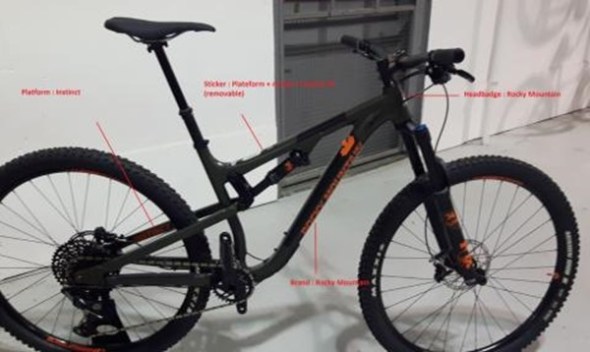
Recall Number: 18-069
Name of Product: Mountain bicycles
Remedy: Repair
Consumer Contact: Rocky Mountain at 866-522-2803 from 9 a.m. to  5 p.m. ET Monday through Friday, via email at info@bikes.comor online at http://www.bikes.com and click on Safety/Recall at the bottom of the page.
 Pictures available here: https://www.cpsc.gov/Recalls/2018/Rocky-Mountain-Bicycles-Recall-Mountain-Bicycles-Due-to-Crash-Hazard
Units: About 1,300 (in addition, 1,800 were sold in Canada)
Description: This recall involves all model year 2018 Altitude, Instinct and Pipeline mountain bicycles. The carbon fiber and aluminum bicycles were sold in different colors. The model name is printed on a sticker on the top tube of the bicycles. Rocky Mountain is printed on the down tube. The Rocky Mountain logo is also printed on the headbadge on the headtube. The specified platform family is also printed on the rear triangle of the bicycle at the seatstay.
Incidents/Injuries: None reported
Sold At: Rocky Mountain bicycle dealers nationwide from June 2017 through November 2017 for between $2,600 and $7,300.
Manufacturer(s): Rocky Mountain Bicycles, of Canada
Importer(s): Rocky Mountain Bicycles, of Canada
Distributor(s): Rocky Mountain Bicycles, of Canada
 Manufactured In: Taiwan and Canada
Retailers: If you are a retailer of a recalled product you have a duty to notify your customers of a recall. If you can, email your clients or include the recall information in your next marketing communication to your clients. Post any Recall Poster at your stores and contact the manufacturer to determine how you will handle any recalls.
For more information on this see:
For Retailers
Recalls Call for Retailer Action
Combination of a Products Liability statute, an Expert Witness Report that was just not direct enough and odd facts holds a retailer liable as manufacture for product defect.
Product Liability takes a different turn. You must pay attention, just not rely on the CPSC.
Retailer has no duty to fit or instruct on fitting bicycle helmet
Summary Judgment granted for bicycle manufacturer and retailer on a breach of warranty and product liability claim.
For Manufacturers
The legal relationship created between manufactures and US consumers
 What do you think? Leave a comment.
If you like this let your friends know or post it on FB, Twitter or LinkedIn
Author: Outdoor Recreation Insurance, Risk Management and Law
Copyright 2017 Recreation Law (720) Edit Law
Email: Rec-law@recreation-law.com
Google+: +Recreation
Twitter: RecreationLaw
Facebook: Rec.Law.Now
Facebook Page: Outdoor Recreation & Adventure Travel Law
Blog:
www.recreation-law.com
Mobile Site: http://m.recreation-law.com
By Recreation Law Rec-law@recreation-law.com James H. Moss
#AdventureTourism, #AdventureTravelLaw, #AdventureTravelLawyer, #AttorneyatLaw, #Backpacking, #BicyclingLaw, #Camps, #ChallengeCourse, #ChallengeCourseLaw, #ChallengeCourseLawyer, #CyclingLaw, #FitnessLaw, #FitnessLawyer, #Hiking, #HumanPowered, #HumanPoweredRecreation, #IceClimbing, #JamesHMoss, #JimMoss, #Law, #Mountaineering, #Negligence, #OutdoorLaw, #OutdoorRecreationLaw, #OutsideLaw, #OutsideLawyer, #RecLaw, #Rec-Law, #RecLawBlog, #Rec-LawBlog, #RecLawyer, #RecreationalLawyer, #RecreationLaw, #RecreationLawBlog, #RecreationLawcom, #Recreation-Lawcom, #Recreation-Law.com, #RiskManagement, #RockClimbing, #RockClimbingLawyer, #RopesCourse, #RopesCourseLawyer, #SkiAreas, #Skiing, #SkiLaw, #Snowboarding, #SummerCamp, #Tourism, #TravelLaw, #YouthCamps, #ZipLineLawyer, Recall, CPSC, Consumer Product Safety Council,
Survey of Small Businesses Along Continental Divide Trail Finds that Trail Users are an Economic Boon to Communities
Posted: December 28, 2017 Filed under: Uncategorized | Tags: Continental Divide Trail, Economic Boon Leave a comment
One-of-a-Kind Survey of Small Businesses Along Continental Divide Trail Finds that Trail Users are an Economic Boon to Communities
Continental Divide Trail Coalition surveys small businesses in four states—including Colorado—and 16 rural communities to assess trail’s economic impact. Business owners say trail users play an important role in their economic well-being
A one-of-a-kind survey of small business owners in 16 communities near the Continental Divide Trail throughout Colorado, New Mexico, Idaho and Wyoming shows the trail, the public lands it travels through and the hikers that use it are a vital and growing part of the economic activity in those towns.
The survey of 71 small business owners, conducted by the Continental Divide Trail Coalition (CDTC)—a nonprofit organization committed to constructing, promoting, and protecting the trail—during the fall of 2017, shows that small business owners see a strong correlation between the success and promotion of the trail and their bottom lines. The survey—the first of its kind to poll small business owners in small, often remote communities along the trail that runs from Canada to Mexico—unequivocally shows that business owners feel the trail puts their communities on the map as an outdoor recreation hub and draws trail users who spend money at restaurants, hotels, gear shops, grocery stores and other places of business in their communities:
- 77 percent of small business owners who responded to the survey say trail users spend money at their business and have had a positive impact on their business
- 88 percent say that trail users spend money in their community and have a positive impact on business in general
“The Continental Divide Trail and the hikers that use it are vital to my business. We are able to get through the winter because of the massive number of hikers coming through in the summer,” said Melanie Garr, the owner of Simple Lodge & Hostel in Salida, Colo., one of the communities surveyed. “Considering the positive impact the trail and the people who use it have on my business and our community, it is alarming to see the president roll back protections for public lands in the West. This is our livelihood and decisions like that threaten it.”
Business owners also report economic benefits since their towns gained the Continental Divide Trail Community designation from the CDTC. The designation recognizes communities that have committed to promoting and protecting the trail and providing an inviting environment for trail hikers:
- 67 percent report seeing an increase in trail users coming through their communities
- 42 percent report seeing an increase in traffic from trail users in their businesses
- 39 percent report an overall increase in business in their community
- 61 percent see an increase in awareness of their community as an outdoor recreation hub
“Small businesses keep local communities and economies thriving by providing jobs, financial stability and valuable services, and their collective activity boosts our national economy. The decision to reduce protections for the Bears Ears and Grand Staircase Escalante national monuments sent shockwaves through communities that rely on public lands for their economic wellbeing,” said Teresa Martinez, executive director of the Continental Divide Trail Coalition. “Small business owners in these towns are consistent in their belief that the Continental Divide Trail stimulates the economies of their communities. Our leaders must pursue policies that help these small businesses maintain and grow a healthy bottom line by preserving and enhancing the trail and the public lands it traverses.”
The survey provides a first-hand account of what economic reports on recreation have found—such as the 2017 Outdoor Industry Association report that shows the recreation economy drives $887 billion in consumer spending every year and supports 7.6 million jobs. As the popularity of the trail increases, Martinez expects the economic impact to grow.
“We have documented an exponential increase in the number of long-distance hikers attempting to hike from one end of the trail to the other over the past four years,” Martinez said. “In the first year, we documented 50 thru-hikers. In 2017, there were more than 300. We expect the numbers to keep growing and the positive economic impact on communities to grow with them.”
Seeing the positive economic impact the trail has on their businesses, it is not surprising that the survey also reveals that small business owners in trail communities believe protecting their region’s natural assets will enhance local economies.
A vast 88 percent of small business owners say that protecting, promoting and enhancing the Continental Divide Trail is important to the well-being of businesses, jobs and their community’s economy. An overwhelming 95 percent say that protecting, promoting and enhancing public lands in general is important to the well-being of businesses, jobs, and their community’s economy.
The entrepreneurs owned a variety of businesses: 36 percent own a hotel or motel; 28 percent own a restaurant, bar or similar business; 22 percent own an outdoor clothing or gear store; 6 percent own an outdoor guide service; 4 percent own a grocery or convenience store; and 4 percent own an RV park or campground.
The vast majority of respondents are small businesses with 98 percent reporting 50 or fewer employees during the peak season. Indeed, 71 percent have 10 or fewer employees.
Click here to ready the survey report.

 |
Virus-free. www.avast.com |
Recall: Folding Brompton bicycles
Posted: December 26, 2017 Filed under: Uncategorized | Tags: Bicycles, bottom bracket, Brompton, Consumer Product Safety Council, CPSC, Recall Leave a commentHazard: The bicycle’s bottom bracket can break during use, posing a fall hazard.
Remedy: Replace
Consumers should immediately stop using the recalled bicycles and contact an authorized Brompton dealer for free installation of a new bottom bracket cartridge.
Consumer Contact: Brompton at 800-578-6785 from 10 a.m. to 5 p.m. ET Monday through Friday or online at http://www.brompton.com and click on Voluntary recall for more information.
Pictures available here: https://www.cpsc.gov/Recalls/2018/Brompton-Bicycle-Recalls-Bicycles-Due-To-Fall-Hazard
Recall Details
Units: About 8,400 (In addition, about 1,300 were sold in Canada)
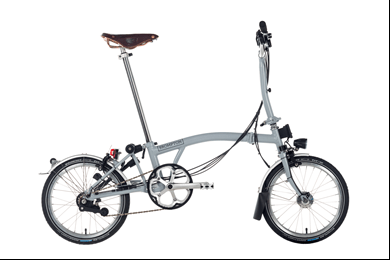
Description: This recall involves Folding Brompton bicycles with “Brompton” printed on the bicycle’s frame. Only bicycles with serial numbers 1403284144 to 1705150001 (manufactured from April 2014 through May 2017) are included in the recall. The serial number is printed on a curved plate or sticker, applied to the rear of the seat tube. If the barcode sticker on the bike is faded or rubbed off, submit the six digit frame number stamped into the metal plate behind the bottom bracket and seat tube via email to support@brompton.com to receive the correlating serial number.
Incidents/Injuries: None reported
Sold At: Specialty bicycle stores and Brompton dealers nationwide from April 2014 through September 2017 for between $1,200 and $3,000
Importer(s): Brompton Bicyle Inc., of Brooklyn, New York
Manufactured In: Great Britain
Retailers: If you are a retailer of a recalled product you have a duty to notify your customers of a recall. If you can, email your clients or include the recall information in your next marketing communication to your clients. Post any Recall Poster at your stores and contact the manufacturer to determine how you will handle any recalls.
For more information on this see:
For Retailers
Recalls Call for Retailer Action
Combination of a Products Liability statute, an Expert Witness Report that was just not direct enough and odd facts holds a retailer liable as manufacture for product defect.
Product Liability takes a different turn. You must pay attention, just not rely on the CPSC.
Retailer has no duty to fit or instruct on fitting bicycle helmet
Summary Judgment granted for bicycle manufacturer and retailer on a breach of warranty and product liability claim.
For Manufacturers
The legal relationship created between manufactures and US consumers
 What do you think? Leave a comment.
If you like this let your friends know or post it on FB, Twitter or LinkedIn
Author: Outdoor Recreation Insurance, Risk Management and Law
Copyright 2017 Recreation Law (720) Edit Law
Email: Rec-law@recreation-law.com
Google+: +Recreation
Twitter: RecreationLaw
Facebook: Rec.Law.Now
Facebook Page: Outdoor Recreation & Adventure Travel Law
Blog:
www.recreation-law.com
Mobile Site: http://m.recreation-law.com
By Recreation Law Rec-law@recreation-law.com James H. Moss
#AdventureTourism, #AdventureTravelLaw, #AdventureTravelLawyer, #AttorneyatLaw, #Backpacking, #BicyclingLaw, #Camps, #ChallengeCourse, #ChallengeCourseLaw, #ChallengeCourseLawyer, #CyclingLaw, #FitnessLaw, #FitnessLawyer, #Hiking, #HumanPowered, #HumanPoweredRecreation, #IceClimbing, #JamesHMoss, #JimMoss, #Law, #Mountaineering, #Negligence, #OutdoorLaw, #OutdoorRecreationLaw, #OutsideLaw, #OutsideLawyer, #RecLaw, #Rec-Law, #RecLawBlog, #Rec-LawBlog, #RecLawyer, #RecreationalLawyer, #RecreationLaw, #RecreationLawBlog, #RecreationLawcom, #Recreation-Lawcom, #Recreation-Law.com, #RiskManagement, #RockClimbing, #RockClimbingLawyer, #RopesCourse, #RopesCourseLawyer, #SkiAreas, #Skiing, #SkiLaw, #Snowboarding, #SummerCamp, #Tourism, #TravelLaw, #YouthCamps, #ZipLineLawyer, Recall, CPSC, Consumer Product Safety Council, Brompton, Bicycles, Bottom Bracket,


Wilderness Medical Society Trailblazer: If you work in Outdoor Recreation you should be a Member!
Posted: December 21, 2017 Filed under: First Aid, Medical | Tags: first aid, Leaches, Mt. Everest, Wilderness Medical Society, Wilderness Medicine, WMS Leave a comment
|
|||||||||||||||||||||||||||||||||||||||||||||||||||||||||


|
|
Virus-free. www.avast.com |
CAIC Benefit Bash raised over $100K, save the date for 2018 December 1, 2018
Posted: December 20, 2017 Filed under: Avalanche | Tags: Benefit Bash, CAIC, CAIC Benefit Bash, Colorado Avalanche Information Center Leave a comment
|


|
Virus-free. www.avast.com |
Forrester v. Sierra at Tahoe, 2017 Cal. App. Unpub. LEXIS 5204
Posted: December 19, 2017 Filed under: California, Legal Case, Ski Area, Skiing / Snow Boarding | Tags: Assumption of risk, Checklist, Collision, discarded, driver, Emergency, hit, Inherent Risk, instructional error, lift, patrol, patroller, Resort, risks inherent, secondary, siren, Ski, ski area, Ski Resort, Skier, skiing, Slope, Snowboarder, snowboarding, Snowmobile, Sport, suppression, Toboggan, tower, unreasonably Leave a commentForrester v. Sierra at Tahoe, 2017 Cal. App. Unpub. LEXIS 5204
Dominique Forrester, Plaintiff and Appellant, v. Sierra at Tahoe, Defendant and Respondent.
C079107
COURT OF APPEAL OF CALIFORNIA, THIRD APPELLATE DISTRICT
2017 Cal. App. Unpub. LEXIS 5204
July 27, 2017, Opinion Filed
NOTICE: NOT TO BE PUBLISHED IN OFFICIAL REPORTS. CALIFORNIA RULES OF COURT, RULE 8.1115(a), PROHIBITS COURTS AND PARTIES FROM CITING OR RELYING ON OPINIONS NOT CERTIFIED FOR PUBLICATION OR ORDERED PUBLISHED, EXCEPT AS SPECIFIED BY RULE 8.1115(b). THIS OPINION HAS NOT BEEN CERTIFIED FOR PUBLICATION OR ORDERED PUBLISHED FOR THE PURPOSES OF RULE 8.1115.
SUBSEQUENT HISTORY: Review denied by Forrester v. Sierra at Tahoe, 2017 Cal. LEXIS 7927 (Cal., Oct. 11, 2017)
PRIOR HISTORY: [*1] Superior Court of El Dorado County, No. PC20120138.
CORE TERMS: snowmobile, collision, ski, inherent risk, snowboarding, sport, checklist, toboggan, driver, ski resort, skiing, unreasonably, assumption of risk, slope, secondary, emergency, resort, ski area, skier, hit, snowboarder, patroller, patrol, risks inherent, instructional error, lift, discarded, siren, suppression, tower
JUDGES: Duarte, J.; Butz, Acting P. J., Mauro, J. concurred.
OPINION BY: Duarte, J.
OPINION
Plaintiff Dominique Forrester was injured while snowboarding at defendant ski resort Sierra-at-Tahoe (Sierra) on March 7, 2010. He claimed he was hit by a toboggan, that in turn was being towed by a snowmobile, while on a beginner slope. The trial court found assumption of the risk applied to the claim, and the case went to the jury to answer the question of whether Sierra unreasonably increased the risk to Forrester above that already inherent in the sport of snowboarding. By a vote of 10 to 2, the jury answered “no.”
On appeal, plaintiff contends the trial court erred in ruling that primary assumption of the risk applied to this case, and instructing the jury accordingly. Plaintiff argues a collision with a snowmobile is not an inherent risk of snowboarding. He further contends the court incorrectly instructed the jury on secondary assumption of the risk, and erred in refusing to instruct on the willful suppression of evidence.
As we will explain, this case is unusual among liability cases in general because the very existence of the alleged accident–the collision itself–was [*2] and remains in dispute. We first conclude that unwanted contact with a snowmobile (here encompassing a towed toboggan), on a ski slope at a ski resort, is indeed an inherent risk of snowboarding. Although Forrester argues the particular alleged circumstances of the operation of the snowmobile on the day of the incident took the collision outside the boundaries of inherent risk, that issue was tendered to the jury and the jury found Sierra did not unreasonably increase the risks already inherent in snowboarding
We assume instructional error on secondary assumption of the risk but find no prejudice, and conclude that the evidence did not support an instruction on willful suppression of the evidence.
Accordingly, we affirm the judgment.
FACTUAL AND PROCEDURAL BACKGROUND
The Alleged Accident
On Sunday, March 7, 2010, Forrester met his high school friend, Franklin Medina, for a day of snowboarding at Sierra. That day was the busiest of the year, with about 6,370 people at the resort. Forrester described himself as an intermediate snowboarder who does not perform jumps. He did not wear ear buds or ear phones while snowboarding and did not recall ever seeing a snowmobile in a ski area before that [*3] day.
At about 3:30 or 4:00 p.m., Forrester was filming Medina doing jumps. After the last jump, Medina snowboarded down the run to wait for Forrester. The bottom area of the ski run is known as Broadway; it is a beginner run near the teaching area and close to the lodge.
According to Forrester, as he began to snowboard down Broadway, he heard someone yell “hey.” He tried to turn around and was hit in the back of the legs. He went airborne and landed on his bottom and then hit his head. His goggles cut his face. He was hurt and dizzy. The snowmobile was 30 yards away when Forrester first saw it, and the driver “took off.” Forrester thought the driver’s jacket was orange or red, but he was not sure. He assumed only ski patrollers, who wear orange-red jackets, operated snowmobiles. He thought the snowmobile driver was wearing a beanie. Forrester did not hear the snowmobile. After the collision, Forrester slid down the mountain, and some other snowboarders asked if he was okay. He did not realize his equipment was broken until he later responded to special interrogatories.
Medina claimed he saw the incident, and that the snowmobile was in front of Forrester’s path and pulling a toboggan. [*4] He saw the toboggan clip Forrester’s feet and “take him out.” The snowmobile was going two or three times faster than Forrester. Forrester took his equipment off and walked down the mountain. Medina claimed the driver of the snowmobile was wearing a black and purple vest like the ones worn by terrain park employees (rather than the orange and red jacket described by Forrester). Medina did not see any lights on the snowmobile and did not notice a flag, nor did he hear a siren.
Forrester did not report the accident, but tried to “walk off” the injury. On the way home Forrester and Medina discussed that Forrester had been hit and decided they should call Sierra. Forrester called just after 5:00 p.m. and got an answering machine. Forrester began vomiting and they stopped in Placerville where Medina took pictures of his face. Medina drove Forrester home.
The next day, Monday, Forrester hurt all over his body, including a bad headache. He went to his doctor who ordered a CT scan, the results of which were normal. Over the next few days, Forrester’s back began to hurt. He was diagnosed with a concussion and a whiplash back injury. Forrester was later diagnosed with disc degeneration with a [*5] prognosis of ongoing pain.
Reporting the Accident
Forrester called Sierra again on Monday morning. He was told there was no one with whom he could discuss the incident and to call back on Wednesday. He called Wednesday and spoke with Evan MacClellan, the risk manager. MacClellan completed an incident report based on the phone call. The report described the injury as occurring at the bottom of Broadway near the terrain park. The report described that Forrester was hit by a “snowmobile (patroller),” got up after the incident, and did not report it. On the way home he started to vomit and went to the hospital the next day. The report listed Medina as a witness and included his telephone number.
Forrester contacted an attorney the same day he spoke with MacClellan. Forrester sent MacClellan a written report, in which he stated he “was involved in a collision with a Sierra Ski Patrol Officer (Ski Patroller) whom [sic] was driving a snow mobile, towing a stretcher. . . . The Ski Patroller was apparently attempting to cross from my left, which was behind me (I have a ‘regular’ board stance), across my face, to the right of me when he collided into me from my blind side. As a result I flew over [*6] him and crashed very hard into the mountain. I suffered a head injury, as well as whiplash, and subsequently blacked out for a short period of time.” The statement continued that Forrester did not see the “patroller” and heard no sirens; he heard only a brief “hey” right before the impact. His friend Medina had witnessed the collision and could not believe it; other snowboarders asked if Forrester was okay, but the ski patrol did not.
MacClellan spoke with the ski patrol and terrain park employees about Forrester’s claim. None of the ski patrollers on duty that day or others with whom they had spoken recalled any accident or collision. Both MacClellan and the general manager, John Rice, were suspicious of the claim; in 37 years in the ski industry, Rice had never seen a report made days after the incident. MacClellan did not call Medina, although Forrester had identified him as a witness. MacClellan could not determine that the accident actually took place. He first learned that Forrester claimed the collision was with a towed toboggan rather than the snowmobile itself after Forrester’s deposition.
The Lawsuit and Trial
Forrester brought suit against Sierra for general negligence and [*7] premises liability. The complaint stated: “Included in the Cause of Action for General Negligence are Claims for Breach of Statutory Duty; Negligence Per Se; Gross Negligence and/or Reckless Conduct; and/or Common Carrier Liability.” Forrester took some theories of liability “off the table” and the trial court granted defendant’s motion for nonsuit as to others. As we explain in more detail, post, the matter was submitted to the jury as an assumption of the risk case, with the jury asked to determine whether Sierra unreasonably increased the inherent risks of snowboarding
Snowmobile Evidence
Sierra requires its snowmobile drivers to follow a safety checklist and check lights, brakes, and other functions before a snowmobile is taken out. The checklist is a written form detailing the items to be checked and the name of the person taking out the snowmobile. The checklist is discarded on a daily basis unless an entry triggers a need for snowmobile maintenance. Due to this practice of discarding the checklist daily, no attempt was made to find the checklists for March 7, and the driver of the snowmobile allegedly involved in the accident was never found. At trial, Sierra stipulated that anyone [*8] driving a snowmobile at the resort that day would have been employed by Sierra. The checklist would not necessarily reveal the identity of the driver of the snowmobile in any event, because once the snowmobile is checked out others may use it without completing a new checklist. Sierra maintains no record showing who is using a snowmobile at a particular time on a specific date.
A snowmobile is a loud machine; its sound is comparable to a motorcycle or lawnmower. The flashing lights are always on if the snowmobile is running, but the siren can be turned on and off. It is against Sierra’s policy to operate a snowmobile without a siren when guests are present. The snowmobile has an attached fiberglass pole with a flag atop, to aid in visibility. March 7, 2010, was a peak day and there was a blackout on the use of snowmobiles in the ski areas except for emergencies. Rice defined emergencies as ski patrol rescue, lift evacuation, a fire or gas leak on the hill, and to carry law enforcement to an altercation. There were no documented emergencies the day of the incident. MacClellan testified that with 6,000 people on the ski slopes, it would be “virtually impossible” to drive a snowmobile [*9] through the Broadway area.
The ski patrol uses orange toboggans for rescue, which are stored in different locations on the mountain and used to transport injured guests. Patrollers take them uphill by chair lift or by snowmobile. Snowmobiles are rarely used to take a toboggan down the mountain; usually a patroller skis them down. Snowmobiles do not tow injured guests in a toboggan.
Plaintiff’s Experts
In addition to medical experts, plaintiff called a ski safety consultant and an accident reconstructionist. Richard Penniman testified as an expert on ski area mountain operations. He testified it was below industry standard to have a snowmobile on the ski slopes when a large number of people are present. On a run like Broadway that is designed for beginners, it was very dangerous to have anything present other than skiers and snowboarders. It was below the industry standard to use the Broadway area as a snowmobile route. Penniman added snowmobiles are only a convenience and a ski resort can operate without them. He conceded, however, that it was standard practice for ski areas to use snowmobiles and agreed they were extremely useful in an emergency where the risk they create might be worth [*10] it. He agreed with the policy of Sierra-at-Tahoe not to use snowmobiles on busy days except in the case of an emergency. In Penniman’s opinion, Sierra’s conduct in operating a snowmobile the day of the incident increased the risk of injury to skiers and snowboarders.
Jesse Wobrock, an accident reconstructionist and bioengineer, prepared an animation of the accident. He testified the accident had “an injury mechanism for both the lumbar spine and the traumatic brain injury.” The damage to Forrester’s left binding was consistent with the height of the toboggan, as was the orange color transfer on the binding. Wobrock testified the physical evidence corroborated the eyewitness testimony. In his opinion, the snowboard went between the tread of the snowmobile and the toboggan; the toboggan ran over the snowboard.
Defense Case
John Gardiner, a forensic engineer and biomechanic, testified for the defense. He opined there was neither consistent testimony nor sufficient physical evidence to conclude what occurred that day. Gardiner testified that if Forrester’s left binding made contact with a toboggan, the contact occurred at the rear portion of the toboggan. If the contact had been near the [*11] front of the toboggan, the snowboard would have hit the treads of the snowmobile and caused damage; there was no evidence of damage to the front of the snowboard. In Gardiner’s opinion, the force involved in Forrester’s fall would not have caused a lumbar disc injury and a concussion. Gardiner also testified that Medina’s view of the accident would have been obstructed by the snowmobile and its driver and that Wobrock’s animation of the incident was inconsistent with the laws of physics and Forrester’s testimony.
The defense pointed out the many inconsistencies between Medina’s deposition and his trial testimony, such as where he dropped off Forrester, whether Forrester wore a helmet, Forrester’s level of skill on a snowboard, the time they finished snowboarding, and whether Medina saw the snowmobile before the collision. Medina had changed his story only after talking to Forrester. The defense argued the differences between the testimony of Medina and Forrester as to the color of the snowmobile, the clothing of the driver, the location of the accident, and the timing showed that Forrester failed to carry his burden of proof as to what happened. The defense questioned how Forrester [*12] could fail to see or hear the snowmobile and offered three possibilities: (1) the collision had not happened; (2) Forrester was not paying attention; or (3) Forrester saw the snowmobile, but not the toboggan and tried to cut behind. The defense argued number three was the most reasonable and Forrester did not report the accident because he felt it was his fault.
Instructions
As relevant here, the court instructed the jury as follows:
“[CACI No.] 410. Dominique Forrester claims he was harmed while participating in snowboarding at the snow — at the Sierra at Tahoe Ski resort. To establish this claim Dominique Forrester must prove all of the following:
“1. That Sierra at Tahoe was the owner of the ski resort and that its employee was operating the snowmobile in issue in this case. Sierra at Tahoe admits that it is the owner of the ski resort and only its employee would have had access to and would have been operating a snowmobile on the ski resort.
“2. Dominique Forrester must also prove that Sierra at Tahoe unreasonably increased the risk to Dominique Forrester over and above those inherent in snowboarding;
“3. And Dominique Forrester must prove that Dominique Forrester was harmed; and lastly [*13]
“4. That Sierra at Tahoe’s conduct was a substantial factor in causing Dominique Forrester’s harm.
“[Modified CACI No.] 405. Sierra at Tahoe claims that Dominique contributed to his harm. To succeed on this claim, Sierra at Tahoe must prove the following:
“1. That Dominique Forrester assumed the risks that led to his injury; and
“2. That Dominique Forrester’s assumption of those risks was a substantial factor in causing his harm.
“If Sierra at Tahoe proves the above, Dominique Forrester’s damages are reduced by your determinations of the percentage of Dominique Forrester’s responsibility. I will calculate the actual reduction.”
Verdict and Motion for New Trial
During deliberations, the jury asked for a definition of “unreasonable” and to have Rice’s testimony about reports of emergencies that day reread. With the parties’ approval, the court responded to the first request as follows: “‘Unreasonable’ – is conduct that is contrary to conduct that a prudent person would exercise in the same or similar circumstances e.g. conduct that is careless, irrational, foolish, unwise, senseless, immoderate, exorbitant or arbitrary under the circumstances.”
By a vote of 10 to 2, the jury found Sierra did [*14] not unreasonably increase the risks to Forrester over and above those inherent in snowboarding in a ski area. Because the jury’s answer to this first question was “no,” it did not answer any additional questions contained in the verdict forms.
Forrester moved for a new trial, contending assumption of the risk did not apply to the case, there were evidentiary errors, and the court erred in not instructing on suppression of evidence. The court denied the motion.1
1 The record does not contain an order denying the motion. Under Code of Civil Procedure section 660, if there was no order, the effect is a denial of the motion.
DISCUSSION
I
Assumption of the Risk
A. The Law
“Primary assumption of risk is a complete bar to recovery. It applies when, as a matter of law, the defendant owes no duty to guard against a particular risk of harm.” (Gregory v. Cott (2014) 59 Cal.4th 996, 1001, 176 Cal. Rptr. 3d 1, 331 P.3d 179.) “Primary assumption of risk occurs where a plaintiff voluntarily participates in a sporting event or activity involving certain inherent risks. For example, an errantly thrown ball in baseball or a carelessly extended elbow in basketball are considered inherent risks of those respective sports.” (Wattenbarger v. Cincinnati Reds, Inc. (1994) 28 Cal.App.4th 746, 751, 33 Cal. Rptr. 2d 732.)
“The primary assumption of risk doctrine rests on a straightforward policy foundation: the need to avoid chilling vigorous participation in or sponsorship of recreational activities by imposing a tort duty to eliminate or [*15] reduce the risks of harm inherent in those activities. It operates on the premise that imposing such a legal duty ‘would work a basic alteration–or cause abandonment’ of the activity.” (Nalwa v. Cedar Fair, L.P. (2012) 55 Cal.4th 1148, 1156, 150 Cal. Rptr. 3d 551, 290 P.3d 1158.) “[U]nder the primary assumption of risk doctrine, operators, sponsors and instructors in recreational activities posing inherent risks of injury have no duty to eliminate those risks, but do owe participants the duty not to unreasonably increase the risks of injury beyond those inherent in the activity. (Id. at p. 1162.)
“Snowboarding is a classic example of a sport that requires participants to assume considerable risks.” (Vine v. Bear Valley Ski Co. (2004) 118 Cal.App.4th 577, 603, 13 Cal. Rptr. 3d 370 (Vine).) Courts have recognized many risks inherent in skiing and snowboarding. “Those risks include injuries from variations in terrain, surface or subsurface snow or ice conditions, moguls, bare spots, rocks, trees, and other forms of natural growth or debris. They also include collisions with other skiers, ski lift towers, and other properly marked or plainly visible objects and equipment.” (Lackner v. North (2006) 135 Cal.App.4th 1188, 1202, 37 Cal. Rptr. 3d 863.)
Whether the assumption of risk doctrine applies in a particular case is a question of law.”2 (Amezcua v. Los Angeles Harley-Davidson, Inc. (2011) 200 Cal.App.4th 217, 227, 132 Cal. Rptr. 3d 567.)
2 Although Forrester recognizes the question of whether assumption of the risk applies is a question of law reviewed de novo, he devotes a considerable portion of his briefing to arguing the trial court’s two analyses, first before trial and then on the motion for a new trial, were incorrect. “In reviewing a trial court’s decision, we review the result, not the reasoning.” (Florio v. Lau (1998) 68 Cal.App.4th 637, 653, 80 Cal. Rptr. 2d 409.)
B. Application to this Case
As we noted earlier, this case is unusual among liability cases in general because [*16] the collision itself was in dispute. Because the jury was not asked to make any preliminary factual findings, we cannot even assume that it found a collision occurred. We know only that the jury found Sierra did not unreasonably increase the inherent risk of snowboarding by its conduct on the day in question–whatever its conduct was found to be. With this in mind, we turn to Forrester’s first claim of error.
Forrester contends a collision with a snowmobile is not an inherent risk of snowboarding. He argues that although some collisions–such as with trees or other skiers or snowboarders–are inherent risks, the line should be drawn at a collision between an individual and a motorized vehicle. He asserts assumption of the risk has no role in the circumstances he claims were present here: an unmarked snowmobile with no lights, siren or flag, operated by a non-safety employee on a busy beginner slope, contrary to the safety policies of the ski resort.
Sierra counters that the circumstances Forrester claims were present here, outlined immediately above, would have unreasonably increased the risks undertaken by Forrester had the jury found the circumstances were as Forrester alleged. Sierra [*17] argues that it is apparent from the jury’s “no” vote that it found circumstances more closely aligned to those alleged by the defense, such as the absence of any collision (and even the absence of any snowmobile) whatsoever and other facts favorable to Sierra.
We first address the threshold question of whether unwanted contact with a snowmobile is, in general, an inherent risk of snowboarding. We conclude that it is.
On at least two occasions, this court has found a collision with resort equipment at a ski resort to be an inherent risk of the sport.
In Connelly v. Mammoth Mountain Ski Area (1995) 39 Cal.App.4th 8, 45 Cal. Rptr. 2d 855 (Connelly), the plaintiff collided with an unpadded ski lift tower while skiing. In affirming summary judgment for the defendant, we found this risk was inherent in the sport, and the obvious danger of the tower served as its own warning. (Id. at p. 12.) In concluding that contact with the tower was an inherent risk of the sport, the Connelly court relied on Danieley v. Goldmine Ski Associates, Inc. (1990) 218 Cal.App.3d 111, 266 Cal. Rptr. 749, where a skier collided with a tree. Danieley, in turn, relied on a Michigan statute that set forth certain inherent risks of skiing, including both trees and “‘collisions with ski lift towers and their components'” along with properly marked or plainly visible “‘snow-making or snow-grooming [*18] equipment.'” (Id. at p. 123.) “[B]ecause the Michigan Ski Area Safety Act purports to reflect the pre-existing common law, we regard its statutory pronouncements as persuasive authority for what the common law in this subject-matter area should be in California.” (Ibid.)
In Souza v. Squaw Valley Ski Corp. (2006) 138 Cal.App.4th 262, 41 Cal. Rptr. 3d 389 (Souza), a child skier collided with a plainly visible aluminum snowmaking hydrant located on a ski run. Following Connelly, we affirmed summary judgment for the defendant, finding the snowmaking hydrant was visible and a collision with it was an inherent risk of skiing. (Id. at p. 268.)
A snowmobile is not one of the risks specifically identified in the Michigan Ski Area Safety Act, and we have not found a published case specifically deciding whether a collision on a ski slope with a snowmobile is an inherent risk of skiing or snowboarding. Nevertheless, collision with certain vehicles has been included. While Souza involved only stationary equipment, the Michigan Ski Area Safety Act–which Danieley and Connelly accepted as reflecting the common law–included a collision with snow-grooming equipment as an inherent risk. Thus, collisions with some vehicles are recognized as inherent risks of the sports of skiing and snowboarding.
We recognize that assumption [*19] of the risk applies only to risks that are necessary to the sport. (Souza, supra, 138 Cal.App.4th at p. 268.) In Souza, snowmaking equipment was necessary to the sport of skiing because nature had failed to provide adequate snow. (Ibid.) As in Souza, we find the following quote from Verro v. New York Racing Ass’n, Inc. (1989) 142 A.D.2d 396, 400, 536 N.Y.S.2d 262 apt: “As is at least implicit in plaintiff’s argument, if only the risks of ordinary and necessary dangers inherent in a sport are deemed assumed, the doctrine of [primary] assumption of risk . . . would not apply to obvious, known conditions so long as a defendant could feasibly have provided safer conditions. Then, obviously, such risks would not be ‘necessary’ or ‘inherent’. This would effectively emasculate the doctrine, however, changing the critical inquiry . . . to whether the defendant had a feasible means to remedy [the dangers].”
Forrester’s expert Penniman claimed snowmobiles were merely a convenience and a ski resort could operate without them. He also testified, however, that the use of snowmobiles was a standard practice at ski resorts. Although critical of their overuse, Penniman recognized their usefulness in an emergency. He agreed with Sierra’s policy, which permitted snowmobiles to be used on the ski slopes in cases of emergency, [*20] even on the busiest days. Thus Penniman agreed generally that the use of snowmobiles was necessary to ski resorts, although he disputed the specific circumstances under which that use might be warranted.
There are many inherent risks of injury and emergency in skiing and snowboarding, and snowmobiles are used to respond quickly to injuries as well as to other emergencies such as lift malfunctions requiring evacuation, fire, gas leaks, and altercations. It appears to us that the use of snowmobiles on the ski slopes at ski resorts is at least as necessary to the sport as the snowmaking equipment in Souza or the directional signs acknowledged as “necessary” in Van Dyke v. S.K.I. Ltd. (1998) 67 Cal.App.4th 1310, 1317, 79 Cal. Rptr. 2d 775.
At least one unpublished federal case has found a collision with a snowmobile to be an inherent risk of skiing or snowboarding. In Robinette v. Aspen Skiing Co., L.L.C. (D. Colo., Apr. 23, 2009, No. 08-CV-00052-MSK-MJW, 2009 U.S. Dist. LEXIS 34873, affd sub nom. Robinette v. Aspen Skiing Co., L.L.C. (10th Cir. 2010) 363 Fed.Appx. 547, the court found “the specific risk of colliding with a snowmobile being operated by a ski resort employee is necessarily within the ‘risks of skiing/riding.'” (Id. at p. *7.) The court reasoned that since “the legislature has seen fit to specifically enact safety measures to prevent skier-snowmobile collisions, one can [*21] hardly argue that such a collision somehow falls outside of [plaintiff’s] express assumption of ‘all risks of skiing.'”3 (Ibid.)
3 Although California has no similar regulation of snowmobiles at ski slopes, the requirements of the Colorado law are similar to Sierra-at-Tahoe’s policy for snowmobile operation. “All snowmobiles operated on the ski slopes or trails of a ski area shall be equipped with at least the following: One lighted headlamp, one lighted red tail lamp, a brake system maintained in operable condition, and a fluorescent flag at least forty square inches mounted at least six feet above the bottom of the tracks.” (Colo. Rev. Stat. Ann. § 33-44-108, subd. (3).)
Based on the foregoing, we conclude the trial court did not err in ruling that primary assumption of the risk applies in this case and instructing the jury accordingly. To the extent that the evidence showed a snowmobile was operating at the resort and involved in an collision with Forrester that day, its presence and that of related equipment (here apparently a towed toboggan) on the slope was an inherent risk of snowboarding at the resort. However, that risk may well have been unreasonably increased by Sierra if the specific circumstances alleged by Forrester regarding the snowmobile’s use at the time of the alleged collision were believed by the jury. But the jury was presented with a variety of competing scenarios as to what happened at the resort that day. Although we do not know which evidence it credited and which it did not, we know that it did not consider the specific circumstances of the snowmobile’s operation that day to have unreasonably increased the risk already present from the necessary use of snowmobiles at resorts.4
4 The better practice in cases such as this one, where key facts–here even the preliminary fact as to whether there was a collision at all, let alone a collision between a snowboarder and a snowmobile towing a toboggan–are in dispute, is to craft the special verdict form to require the jury to make preliminary factual findings, here such as whether the alleged accident occurred at all and the particulars, if so. (See CACI No. 410, Directions for Use [“There may also be disputed facts that must be resolved by a jury before it can be determined if the doctrine applies”], citing Shin v. Ahn (2007) 42 Cal.4th 482, 486, 64 Cal. Rptr. 3d 803, 165 P.3d 581.)
In arguing that a collision [*22] with a motorized vehicle is not an inherent risk, Forrester relies on out-of-state cases, some unpublished. We find those cases distinguishable or not persuasive. In Verberkmoes v. Lutsen Mountains Corp. (D. Minn. 1994) 844 F.Supp. 1356, a skier collided with an unmarked all terrain vehicle (ATV) parked on or near a groomed trail. The court denied summary judgment for the defendant, finding the hazard of the parked ATV was within the control of the ski resort, not an obvious risk like a lift tower, and not a hidden risk like a snow-covered stump. (Id. at pp. 1358-1359.) Defendant’s “parking of the ATV on the trail during routine maintenance of the ski slope cannot be deemed, as a matter of law, an inherent risk of skiing.” (Id. at p. 1360.) Rather, it was “a danger that reasonable prudence on the part [of defendant] would have foreseen and corrected or at least placed a warning for skiers.” (Id. at p. 1359.) We find Verberkmoes distinguishable, largely because the decision was based on where the ATV was parked; the ski resort could have easily parked it elsewhere or warned against the hazard. Here, the question was whether the resort’s use of snowmobiles on the ski slopes and consequential possibility of contact with snowboarders was an inherent risk of snowboarding.
In Schlumbrecht-Muniz v. Steamboat Ski and Resort Corp. (D. Colo. 2015) 132 F.Supp.3d 1310, the defendant had argued that [*23] a collision with a snowmobile is an inherent danger and risk of skiing. The court had rejected this argument twice before, each time concluding “whether a collision with a snowmobile is an inherent danger or risk of skiing is not necessarily a question of law because what is an inherent danger or risk of skiing is not limited to the circumstances specifically enumerated in the [Ski Safety Act].” (Id. at p. 1316.) The court declined to address the argument again. (Ibid.)
We find this conclusory analysis unhelpful. For the reasons stated ante, we find a collision with a snowmobile is an inherent risk of snowboarding. As to whether this particular collision was the result of the inherent risk, the jury was properly tasked with determining whether Sierra’s operation of the snowmobile unreasonably increased the risk already inherent in snowboarding. This determination governed whether this particular collision was barred by the assumption of the risk doctrine.
Forrester also relies on an unpublished case from the state of Ohio, Coblentz v. Peters 2005 Ohio 1102, 2005 Ohio App. LEXIS 1073, that found use of a motorized golf cart was not “an actual part of the sport of golf,” so the risk of being struck and injured by a golf cart “is not an ordinary risk of the game.” [*24] (Id. at ¶ 21.) To the limited extent this case is analogous, we decline to apply its narrow analysis to the sport of snowboarding and the associated risk of encountering the resort’s necessary equipment when on the ski slopes. (See Souza, supra, 138 Cal.App.4th at p. 269 [finding snowmaking equipment necessary to the sport of skiing].)
As we have noted, unlike many assumption of the risk cases, including those cited ante, here there is a genuine factual dispute as to what happened to Forrester and caused his injuries. The jury needed to resolve this factual dispute in order to determine whether Sierra unreasonably increased the inherent risk. Accordingly, the issue of whether recovery is barred by assumption of the risk could not be determined as a matter of law, such as by a motion for summary judgment, as is often the case. Here, we need not decide if Forrester’s specific collision was an inherent risk, but only the broader question of whether a collision with a snowmobile operated on the ski slopes of a resort is an inherent risk of snowboarding. If so, recovery is still possible if Sierra unreasonably increased the risk by the specific circumstances surrounding its operation of the snowmobile.
“Although defendants generally [*25] have no legal duty to eliminate (or protect a plaintiff against) risks inherent in the sport itself, it is well established that defendants generally do have a duty to use due care not to increase the risks to a participant over and above those inherent in the sport. Thus, although a ski resort has no duty to remove moguls from a ski run, it clearly does have a duty to use due care to maintain its towropes in a safe, working condition so as not to expose skiers to an increased risk of harm.” (Knight v. Jewett (1992) 3 Cal.4th 296, 315-316, 11 Cal. Rptr. 2d 2, 834 P.2d 696.) Numerous cases have pondered the factual question of whether various ski resorts have increased the inherent risks of skiing or snowboarding. (See Vine, supra, 118 Cal.App.4th at p. 591 [redesign of snowboarding jump]; Solis v. Kirkwood Resort Co. (2001) 94 Cal.App.4th 354, 366, 114 Cal. Rptr. 2d 265 [construction of the unmarked race start area on the ski run]; Van Dyke v. S.K.I. Ltd., supra, 67 Cal.App.4th 1317 [placement of signs in ski run].)
Forrester contends that even if the ski patrol’s use of a snowmobile is necessary to support the sport of snowboarding, the evidence here showed the snowmobile was not used for that purpose. Indeed, he claims that because the members of the ski patrol on duty that day denied being involved in a collision, the evidence established that the snowmobile was driven by a non-safety employee. He argues the trial court was required [*26] to resolve factual questions as to whether a member of the ski patrol was using the snowmobile before it determined whether assumption of risk applied.
We disagree with Forrester that the trial court was required to resolve these factual questions before submitting the case to the jury. Resolution of the factual issues as to how and by whom the snowmobile was operated “requires application of the governing standard of care (the duty not to increase the risks inherent in the sport) to the facts of this particular case–the traditional role of the trier of fact.” (Luna v. Vela (2008) 169 Cal.App.4th 102, 112, 86 Cal. Rptr. 3d 588.) “Our conclusion it is for the trier of fact to determine whether Vela breached his limited duty not to increase the risks inherent in the sport of volleyball finds solid support in the Supreme Court’s most recent sports injury, primary assumption of the risk decision, Shin v. Ahn, supra, 42 Cal.4th 482 . . . . In Shin the Supreme Court affirmed the trial court’s denial of a motion for summary judgment brought by a golfer who had struck one of his own playing partners with a tee shot. The court held the primary assumption of the risk doctrine regulates the duty a golfer owes both to playing partners and to other golfers on the course, found being hit by a stray [*27] golf shot was an inherent risk of the sport and concluded ‘golfers have a limited duty of care to other players, breached only if they intentionally injure them or engage in conduct that is “so reckless as to be totally outside the range of the ordinary activity involved in the sport.”‘ [Citation.] However, the Court also held whether the defendant had breached that limited duty of care by engaging in reckless conduct was a question for the trier of fact: ‘In determining whether defendant acted recklessly, the trier of fact will have to consider both the nature of the game and the totality of circumstances surrounding the shot. . . . [¶] Many factors will bear on whether a golfer’s conduct was reasonable, negligent, or reckless. . . . [¶] . . . This record is simply too sparse to support a finding, as a matter of law, that defendant did, or did not, act recklessly. This will be a question the jury will ultimately resolve based on a more complete examination of the facts.’ [Citation.]” (Luna, at pp. 112-113.) “In light of the Supreme Court’s decision in Shin, we conclude as the Luna court did, that resolving the question of whether [defendant] increased the risk of falling is properly decided by the trier [*28] of fact.” (Fazio v. Fairbanks Ranch Country Club (2015) 233 Cal.App.4th 1053, 1062, 183 Cal. Rptr. 3d 566.)
Forrester’s argument about the circumstances of the snowmobile’s use that day is premised upon the jury’s accepting his version of events–that a snowmobile hit him from behind, while driven by a non-safety employee who was not responding to an emergency and who was operating without lights, siren, or flag and contrary to numerous safety policies of Sierra. In short, Forrester assumes that the snowmobile had no legitimate reason to be on Broadway at the time of the incident. But the state of the evidence was such that the jury could decide otherwise. Due to Forrester’s failure to report the accident when it happened, the conflicting testimony of Forrester and Medina, the conflict in expert testimony as to how a collision would have occurred and what caused Forrester’s injuries, and the absence of any independent witness who saw or even heard about the accident, the jury could have rationally concluded the accident did not happen at all. Alternatively, the jury could have concluded that Forrester hit the toboggan out of carelessness or recklessness, Forrester’s injuries were not from the collision, or simply that Forrester failed to prove his version of the accident.
This [*29] case turned in large part on the jury’s assessment of credibility. There was evidence from which the jury could conclude that the incident occurred as described by Forrester and Medina, and that Sierra unreasonably increased its visitors’ inherent risk of a collision with a snowmobile accordingly–because a non-safety employee, not responding to an emergency, drove a snowmobile at significant speed across a beginner run on the busiest day of the year without using lights, siren or a flag, and in contravention of numerous safety policies. These circumstances, or any combination thereof, could certainly constitute an unreasonable increase of the inherent risk by Sierra. Forrester’s theory was tendered to the jury and the jury decided adversely to his argument. Forrester does not challenge the sufficiency of the evidence to support the verdict.
The trial court did not err in determining assumption of the risk applied and submitting the case to the jury on the question of whether Sierra unreasonably increased the risk inherent in the sport of snowboarding.
II
Instruction on Secondary Assumption of the Risk
A. Background
As we set forth ante, the jury was also instructed pursuant to CACI No. 405–the comparative [*30] fault instruction modified by the trial court–as to secondary assumption of the risk. The jury was told that in order for Sierra to succeed on its claim that Forrester contributed to his own harm, Sierra would need to prove both that Forrester assumed the risks that led to his injury and that Forrester’s assumption of those risks was a substantial factor in causing his harm.
The term “assumption of risk” has been “used in connection with two classes of cases: those in which the issue to be resolved was whether the defendant actually owed the plaintiff a duty of care (primary assumption of risk), and those in which the defendant had breached a duty of care but where the issue was whether the plaintiff had chosen to face the risk of harm presented by the defendant’s breach of duty (secondary assumption of risk). [Citation.] In the latter class of cases, we concluded, the issue could be resolved by applying the doctrine of comparative fault, and the plaintiff’s decision to face the risk would not operate as a complete bar to recovery. In such a case, the plaintiff’s knowing and voluntary acceptance of the risk functions as a form of contributory negligence. [Citation.]” (Kahn v. East Side Union High School Dist. (2003) 31 Cal.4th 990, 1003, 4 Cal. Rptr. 3d 103, 75 P.3d 30.)
“Secondary assumption [*31] of risk [arises] where a defendant breaches a duty of care owed to the plaintiff but the plaintiff nevertheless knowingly encounters the risk created by the breach. Secondary assumption of risk is not a bar to recovery, but requires the application of comparative fault principles.” (Connelly, supra, 39 Cal.App.4th at p. 11.)
B. Analysis
Forrester contends the special instruction on secondary assumption of the risk was incorrect because it omitted the requirement that a plaintiff “knowingly” or “voluntarily” accept the increased risk, and because the court failed to set it apart from the instruction related to primary assumption of the risk. Forrester contends the error prejudiced him because it confused the jury on the law.
As Sierra does not defend the instruction, we will assume arguendo that it is incorrect for omitting “knowingly” or “voluntarily.” We reject, however, the argument that it was error to instruct on secondary assumption of the risk immediately after instructing in the language of CACI No. 410 on primary assumption of the risk. Each instruction begins by noting the party whose claim the instruction addresses and what each party must prove to succeed on its claim. The two claims are necessarily related. “Nevertheless, in [*32] certain circumstances primary and secondary assumption of risk are intertwined and instruction is required so the jury can properly determine whether the defendant did, in fact, increase the risks inherent in a hazardous sport so that secondary assumption of risk should be considered.” (Vine, supra, 118 Cal.App.4th at p. 592.)
“Cases like this one, where the plaintiff contends the defendant breached the duty not to increase the risks inherent in a hazardous sporting activity, present both aspects of the assumption of risk doctrine. If the plaintiff fails to show any increase in the inherent risks, or if the trial court determines that the only risks encountered were inherent in the sport, the defendant prevails based on primary assumption of risk. If the jury, properly instructed on the scope of the defendant’s duty, determines the defendant did increase the inherent risk, it then considers the plaintiff’s claim based on secondary assumption of risk as an aspect of the plaintiff’s comparative fault.” (Vine, supra, 118 Cal.App.4th at p. 593.)
“[T]here is no rule of automatic reversal or ‘inherent’ prejudice applicable to any category of civil instructional error, whether of commission or omission. A judgment may not be reversed for instructional error in a civil case [*33] ‘unless, after an examination of the entire cause, including the evidence, the court shall be of the opinion that the error complained of has resulted in a miscarriage of justice.’ (Cal. Const., art. VI, § 13.)” (Soule v. General Motors Corp. (1994) 8 Cal.4th 548, 580, 34 Cal. Rptr. 2d 607, 882 P.2d 298 (Soule).)
“Instructional error in a civil case is prejudicial ‘where it seems probable’ that the error ‘prejudicially affected the verdict.’ [Citations.]” (Soule, supra, 8 Cal.4th at p. 580.) Actual prejudice must be assessed in the context of the entire record using a multifactor test. (Ibid.) “Thus, when deciding whether an error of instructional omission was prejudicial, the court must also evaluate (1) the state of the evidence, (2) the effect of other instructions, (3) the effect of counsel’s arguments, and (4) any indications by the jury itself that it was misled.” (Id. at pp. 580-581.)
Forrester contends the record demonstrates prejudice because there was strong evidence that Sierra increased the risk by its operation of a snowmobile that day, the jury deliberated for two full days, and the request for a definition of “unreasonable” suggests the jury was confused as to the law.
We disagree that the record shows it was “probable” that the instructional error “prejudicially affected the verdict.” (Soule, supra, 8 Cal.4th at p. 580.) As we have discussed, the evidence raised questions [*34] of witness credibility, and the jury was also called upon to consider conflicting expert testimony. The jury heard five days of evidence and deliberated for two days. In that circumstance, the jury’s two days of deliberation may suggest its “conscientious performance of its civic duty, rather than its difficulty in reaching a decision.” (People v. Walker (1995) 31 Cal.App.4th 432, 439, 37 Cal. Rptr. 2d 167 [six and one-half hours of deliberation after two and one-half hours of presentation of evidence].) The jury’s request for a definition of “unreasonable” and its request for a reread of evidence as to whether there was an emergency that day indicate the jury was most likely focused on Sierra’s conduct, not Forrester’s.
The most useful guide for the jury in sorting through the issues of primary and secondary assumption of the risk was the verdict form that separated the issues. The verdict form asked six questions; only if the jury answered yes to a question was it to proceed to the next question. The questions were: (1) Did Sierra or its employee unreasonably increase the risks inherent in snowboarding? (2) Was this unreasonable increase in the risks a substantial factor in causing harm to Forrester? (3) What are Forrester’s total damages? (4) Did [*35] Forrester assume the risks that led to his injury? (5) Was that assumption of risk a substantial factor in causing his injury? (6) What percentage of responsibility for Forrester’s harm do you assign to Sierra, to Forrester? The jury answered the first question “no” and therefore did not answer any other questions. Accordingly, the jury never reached the issue of secondary assumption of risk and thus never had to apply the challenged jury instruction. Forrester has failed to show prejudicial instructional error. (See Caldwell v. Paramount Unified School Dist. (1995) 41 Cal.App.4th 189, 206, 48 Cal. Rptr. 2d 448 [error to grant new trial due to instructional error when jury never reached issue covered by instruction]; Vahey v. Sacia (1981) 126 Cal.App.3d 171, 179-180, 178 Cal. Rptr. 559 [purported instructional error on damages was not prejudicial where jury found the defendant was not negligent and never reached the issue of damages].)
III
Refusal to Instruct on Willful Suppression of Evidence
A. Background
At trial, Forrester made much of the fact that the snowmobile’s driver was never identified, which he blamed on Sierra’s failure to retain the daily checklist completed by the driver who had taken out the snowmobile that day. Before trial, Forrester sought to admit Sierra’s special ski permit and winter operation plan from the United States Forest [*36] Service. He argued Sierra was required to maintain the checklist under the document retention policy set forth in that plan. The trial court excluded the document, ruling that whether Sierra had a contractual duty to retain the report was irrelevant, particularly because–given the evidence that the snowmobile could be used by multiple people in the same day–the checklist would not necessarily indicate who was driving a snowmobile at the time of the alleged accident. The court noted that Sierra had provided Forrester with a list of 19 authorized drivers.
Forrester requested that the trial court give CACI No. 204, which provides: “You may consider whether one party intentionally concealed or destroyed evidence. If you decide that a party did so, you may decide that the evidence would have been unfavorable to that party.” The request was based on evidence that MacClellan failed to interview all 19 people authorized to use a snowmobile that day and the destruction of the checklist. The court denied Forrester’s request.
Forrester raised the failure to give CACI No. 204 in his motion for a new trial.
B. Analysis
Forrester contends it was error to refuse the requested instruction. For the first time on appeal, he asserts [*37] the snowmobile driver’s leaving the scene of the accident without identifying himself was sufficient evidence to support the instruction. As to the destruction of the checklist, the basis for instruction advanced at trial, Forrester argues there was no evidence the checklist was actually discarded, only that the practice was to discard the checklists daily. He contends he was prejudiced by lack of the instruction because he could not argue the presumption that the destroyed evidence was unfavorable to Sierra to offset the inability to identify the driver.
“A party is entitled to have the jury instructed on his theory of the case, if it is reasonable and finds support in the pleadings and evidence or any inference which may properly be drawn from the evidence.” (Western Decor & Furnishings Industries, Inc. v. Bank of America (1979) 91 Cal.App.3d 293, 309, 154 Cal. Rptr. 287.) An instruction on willful suppression of evidence is appropriate if there is evidence “that a party destroyed evidence with the intention of preventing its use in litigation.” (New Albertsons, Inc. v. Superior Court (2008) 168 Cal.App.4th 1403, 1434, 86 Cal. Rptr. 3d 457.)
First, Forrester did not rely at trial on the theory that evidence was destroyed when the snowmobile driver left without identifying himself. “‘A civil litigant must propose complete instructions in accordance with his or her theory of the litigation [*38] and a trial court is not “obligated to seek out theories [a party] might have advanced, or to articulate for him that which he has left unspoken.” [Citations.]’ [Citation.]” (Stevens v. Owens-Corning Fiberglas Corp. (1996) 49 Cal.App.4th 1645, 1653, 57 Cal. Rptr. 2d 525.) Thus we need not consider this new theory first advanced on appeal.
Further, the evidence established the checklist had been discarded shortly after the accident, before Forrester made his complaint. While there was no testimony from the person who discarded the checklist for that day and MacClellan testified he did not know if the specific checklist had been discarded, Rice testified the checklists were thrown out on a daily basis and MacClellan testified he knew they were thrown out shortly after they were filled out.
Forrester relies on Ventura v. ABM Industries Inc. (2012) 212 Cal.App.4th 258, 150 Cal. Rptr. 3d 861, claiming it is “right on point.” In Ventura, a negligent hiring and supervision case, the trial court gave the instruction at issue here based on testimony of the human resources director about redactions in personnel records and the defendant’s failure to interview certain witnesses during the investigation of plaintiff’s complaints. (Id. at p. 273.) The appellate court found no error, noting “Defendants were free to present the jury with evidence that (as counsel represented to the [*39] court), the redactions were only of telephone numbers, and that the failure to interview certain witnesses was proper, and to argue that evidence to the jury.” (Ibid.)
Ventura is distinguishable. There, the actions that supported the instruction occurred during the investigation of plaintiff’s claim, thus permitting an inference there was destruction of evidence to prevent its use in litigation. Here, the evidence was that the snowmobile checklists were routinely discarded each day long before the incident at issue here, unless information on the checklist triggered a need for maintenance. Because Forrester did not report his accident until multiple days had passed, Sierra did not become aware of Forrester’s claim until after the checklist at issue had been discarded. There was no evidence, either direct or from which the inference could be drawn, that the practice of discarding the checklists daily was intended to forestall their use in litigation.
The trial court did not err in declining to give CACI No. 204 on willful suppression of evidence.5
5 Further, Forrester’s claim of prejudice is unconvincing. The instruction permits the jury to draw the inference that the suppressed evidence would have been unfavorable to the party suppressing it. The checklist would have shown, at most, the name of the snowmobile driver. Sierra stipulated that the driver was one of its employees and provided Forrester with a list of authorized drivers.
DISPOSITION
The judgment is affirmed. Sierra shall recover costs on appeal. (Cal. Rules of Court, rule 8.278(a).)
/s/ Duarte, J.
We concur:
/s/ Butz, Acting P. J.
/s/ Mauro, J.
Stockdale v. Ellsworth, 2017 CO 109; 2017 Colo. LEXIS 1092
Posted: December 19, 2017 Filed under: Colorado, Legal Case | Tags: alter ego, attorneys' fees, checking account, corporate entity, corporate veil, entity, equitable, final judgment, frivolous, heirs, individual liability, individually liable, interpleader, join, joinder, joined, jointly, mineral deeds, Notice, oil, opportunity to contest, Personal jurisdiction, Personal Liability, pierce, piercing, post-judgment, properly joined, severally liable, shareholder, substituted service Leave a commentStockdale v. Ellsworth, 2017 CO 109; 2017 Colo. LEXIS 1092
Petitioners: Ruby D. Stockdale; Clara Cardwell, individually and as personal representative of Kenneth Ray Cardwell; Jennifer Lynn Lake; and Patricia Ann Rider Jones, a/k/a Patricia Ann Jones, v. Respondent: Chester J. Ellsworth. and Concerning: XTO Energy, Inc.
Supreme Court Case No. 16SC798
SUPREME COURT OF COLORADO
2017 CO 109; 2017 Colo. LEXIS 1092
December 18, 2017, Decided
NOTICE:
THIS OPINION IS NOT THE FINAL VERSION AND SUBJECT TO REVISION UPON FINAL PUBLICATION
PRIOR HISTORY: [**1] Certiorari to the Colorado Court of Appeals. Court of Appeals Case No. 15CA1114.
DISPOSITION: Judgment Reversed.
CORE TERMS: heirs, alter ego, corporate veil, attorneys’ fees, joinder, piercing, shareholder, mineral deeds, entity, corporate entity, personal jurisdiction, jointly, notice, individual liability, severally liable, personal liability, individually liable, post-judgment, interpleader, frivolous, pierce, join, oil, substituted service, opportunity to contest, final judgment, properly joined, checking account, equitable, joined
HEADNOTES
Stockdale v. Ellsworth–Corporations–Piercing the Corporate Veil–Attorneys’ Fees–Joinder
SYLLABUS
The supreme court reverses the court of appeals’ opinion vacating the trial court’s judgment awarding attorneys’ fees. The supreme court holds that the trial court properly pierced the corporate veil to impose joint and several liability on a limited liability company’s managing member for attorneys’ fees. The supreme court also holds that the managing member was properly joined as a party to the litigation, and that imposing such liability did not violate the managing member’s due process rights under the circumstances of this case.
COUNSEL: For Petitioners Ruby D. Stockdale, Clara Cardwell and Patricia Ann Jones: Law Office of John C. Seibert, LLC, John Seibert, Durango, Colorado.
For Petitioner Jennifer Lynn Lake: Law Office of David Liberman, LLC, David Liberman, Durango, Colorado.
No appearance on behalf of Respondent.
JUDGES: JUSTICE MÁRQUEZ delivered the Opinion of the Court.
OPINION BY: MÁRQUEZ
OPINION
en banc
JUSTICE MÁRQUEZ delivered the Opinion of the Court.
[*1] In 2009, XTO Energy, Inc., filed an interpleader action, seeking to resolve [**2] competing claims to oil and gas proceeds held by XTO. XTO named several potential claimants as defendants in the interpleader action, including Seawatch Royalty Partners, LLC (managed by Chester J. Ellsworth) and several alleged heirs of the record owner of the relevant oil and gas interests. After a bench trial, the court concluded that a group of individuals–deemed the true heirs of the record owner–were entitled to the proceeds. Pertinent here, the trial court also ruled that Seawatch’s claims and defenses were frivolous; that Seawatch was an alter ego of Ellsworth; and that Seawatch and Ellsworth were jointly and severally liable for any future award of attorneys’ fees. Ellsworth was subsequently joined as a party under C.R.C.P. 21 and served via substituted service. The post-judgment sanctions proceedings continued for another several years. During that time, Ellsworth contested his individual liability, arguing that the court lacked personal jurisdiction over him; that he had been improperly served; and that Seawatch was not, in fact, his alter ego. The trial court rejected these arguments and entered judgment jointly and severally against Seawatch and Ellsworth for approximately $1 million [**3] in attorneys’ fees. Ellsworth appealed pro se.
[*2] In an unpublished opinion, the court of appeals vacated the judgment against Ellsworth, holding that the district court lacked jurisdiction to hold him jointly and severally liable for the attorneys’ fee award because, as a nonparty, Ellsworth did not have notice and opportunity to contest his individual liability. XTO Energy, Inc. v. Ellsworth, No. 15CA1114, 2016 Colo. App. LEXIS 1205, slip op. at 1 (Colo. App. Aug. 25, 2016). Because we conclude that Ellsworth had adequate notice and opportunity to challenge the alter ego findings that established his individual liability, we reverse the judgment of the court of appeals.
I. Facts and Procedural History
[*3] In 2009, XTO Energy, Inc., a producer of oil and natural gas, filed an interpleader action to determine the rights to certain oil and gas proceeds held by XTO. At the time of filing, XTO operated two natural gas wells that were extracting gas from an area of pooled mineral interests in the Fruitland Formation in La Plata County. One of the record owners of a mineral interest within the pooled area was Roy P. Cardwell, who had recorded his title in 1938. Because Cardwell and his heirs could not be located in the 1990s when the Colorado Oil and Gas Conservation [**4] Commission authorized the pooling of interests in the area, the proceeds attributable to Cardwell’s interest were held in suspense as the natural gas wells were developed. When XTO filed the interpleader action in 2009, the proceeds attributable to Cardwell’s interest totaled approximately $2.7 million.
[*4] In its interpleader complaint, XTO sought a declaratory judgment as to who should receive the proceeds of Cardwell’s interest. XTO identified as potential claimants the heirs of a Roy P. Cardwell who died in California in 1971 (“California Heirs”); the heirs of a Roy P. Cardwell who died in Kansas in 1980 (“Kansas Heirs”); and two business entities managed by Chester Ellsworth: CEMPCO, Inc. and Seawatch Royalty Partners, LLC. CEMPCO and the Kansas Heirs withdrew their claims to the proceeds prior to trial, and the remaining parties–Seawatch and the California Heirs–stipulated that the California Heirs were the true heirs of the record owner. Seawatch claimed that it was entitled to the proceeds because it had obtained mineral deeds from the California Heirs. The California Heirs, however, claimed that they were entitled to the proceeds because Seawatch had obtained the mineral deeds [**5] from them through fraud or deceit.
[*5] After a seven-day bench trial, the trial court (Judge Dickinson) issued its Findings, Order, and Judgment on November 10, 2011. The trial court granted the California Heirs’ claims for rescission of the mineral deeds and assignments to Seawatch, concluding that Ellsworth had obtained them on behalf of Seawatch through fraud and misrepresentation. Specifically, Ellsworth told the California Heirs that there was no oil and gas production in the Cardwell interest and that there may be no minerals to extract, even though Ellsworth (or entities he controlled) had already received over $1 million in proceeds from mineral interests in adjoining lands. Ellsworth also falsely represented to the California Heirs that they could be liable for any costs of production or accidents associated with their interests.
[*6] The trial court found that Seawatch failed to produce any credible evidence to support its assertion that Ellsworth did not make material misstatements or unjustifiably conceal material facts; the court therefore ruled that Seawatch’s claims and defenses were frivolous and groundless. Pertinent here, the trial court also concluded that “Seawatch was at [**6] all material times an alter ego of Ellsworth,” thus piercing the corporate veil and rendering Seawatch and Ellsworth jointly and severally liable for attorneys’ fees incurred by XTO and the California Heirs in responding to Seawatch’s frivolous claims and defenses.
[*7] Seawatch appealed, raising several arguments. During this first appeal, Seawatch argued, among other things, that the trial court’s order holding Ellsworth individually liable for attorneys’ fees must be vacated because the court did not have personal jurisdiction over Ellsworth. The court of appeals affirmed the judgment against Seawatch in a unanimous, unpublished decision, but did not address the argument regarding Ellsworth because the trial court had not yet entered final judgment on attorneys’ fees. We denied certiorari review. XTO Energy, Inc. v. Seawatch Royalty Partners LLC, Nos. 11CA2388 & 12CA1159, 2013 Colo. App. LEXIS 312, (Colo. App. March 7, 2013), cert. denied, No. 13SC453 (Feb. 18, 2014).
[*8] While that appeal was pending, XTO and the California Heirs filed motions seeking attorneys’ fees and costs from Seawatch and Ellsworth. XTO and the California Heirs also filed a joint motion to join Ellsworth to the post-judgment proceedings pursuant [**7] to C.R.C.P. 21. The trial court granted the motion to join Ellsworth as a party “as authorized by C.R.C.P. 21 and City of Aurora v. Colorado State Engineer, 105 P.3d 595 (Colo. 2005).” After unsuccessful attempts to serve Ellsworth personally, XTO and the California Heirs moved for an order authorizing substituted service, which the trial court granted.
[*9] In 2013, Ellsworth, making what he called a “limited appearance,” filed numerous objections and motions in which he argued that the court lacked personal jurisdiction over him and that substituted service had been improper.
[*10] In an order dated April 10, 2014, the trial court denied several pending motions, including Ellsworth’s motion to dismiss for lack of personal jurisdiction. Judge Herringer, who presided over the case following Judge Dickinson’s retirement, held that Judge Dickinson’s corporate veil-piercing findings in his November 10, 2011 ruling were “law of the case.” Judge Herringer therefore incorporated the earlier findings into the April 2014 order–specifically, that “Seawatch was at all material times an alter ego of Ellsworth”; that Ellsworth, as Seawatch’s agent, “engaged in civil conspiracy” and “made material omission[s]”; and that Ellsworth’s statements “constitute[d] fraud.” The court articulated several [**8] additional findings relevant to whether piercing the corporate veil was necessary to achieve an equitable result. The court found, for example, that Seawatch’s sole business function was to acquire the mineral deeds from the California Heirs for Ellsworth’s benefit; that Seawatch had no business dealings outside the facts that gave rise to this litigation and was controlled entirely by Ellsworth; that Seawatch was apparently insolvent and had no assets, such that limiting liability to Seawatch would foreclose any meaningful opportunity for injured parties to recover for conduct for which Ellsworth was responsible; and that there was no indication that Seawatch’s litigation strategy was controlled by anyone other than Ellsworth.
[*11] Ultimately, the court held that Ellsworth was liable for attorneys’ fees after concluding that “[t]he only respect in which Ellsworth has treated Seawatch as a corporate entity, independent of him personally, is as a barrier to his personal liability.” As a result, “[t]o the extent that Seawatch advanced frivolous argument and made groundless claims,” the court ruled, “Ellsworth is the person who should ultimately be held responsible for that conduct.”
[*12] About [**9] a year later, in an April 8, 2015 order, the trial court awarded fees and costs to XTO and the California Heirs under section 13-17-102, C.R.S. (2017), holding Ellsworth and Seawatch jointly and severally liable. The court instructed XTO and the California Heirs to prepare proposed judgments consistent with its order. Notice of the proposed final judgments was served on Ellsworth. Ellsworth did not file any objections. The court entered separate judgments for XTO and the California Heirs in May 2015.
[*13] Ellsworth appealed pro se, arguing, in relevant part, that when Judge Dickinson initially determined that Seawatch was an alter ego of Ellsworth, he had not been made a party to the case, and therefore, to hold him jointly and severally liable for attorneys’ fees violated his right to due process. In a unanimous, unpublished opinion, the court of appeals agreed with Ellsworth and vacated the attorneys’ fee judgment with respect to him. XTO Energy, Inc. v. Ellsworth, No. 15CA1114, 2016 Colo. App. LEXIS 1205 (Colo. App. Aug. 25, 2016).
[*14] Despite his victory in the court of appeals, Ellsworth filed a petition for a writ of certiorari with this court, seeking “relief of manifest injustice to include $200,000,000 in exemplary damages pursuant to [**10] § 13-17-101 [C.R.S. (2017)] to punish the trial court’s and Respondent’s acts of frivolous, groundless and vexatious litigation in [the underlying cases] and the appellate courts [sic] acts of applying an incorrect standard of review and failure to order as adjudicated.”
[*15] XTO filed an opposition to Ellsworth’s petition, and the California Heirs filed a cross-petition for certiorari review, arguing that Ellsworth had been properly joined in the litigation under this court’s decision in City of Aurora ex rel. Utility Enterprise v. Colo. State Engineer, 105 P.3d 595 (Colo. 2005). Ellsworth subsequently filed several documents on behalf of Seawatch and CEMPCO, which this court struck under section 13-1-127(2), C.R.S. (2017). Finally, Ellsworth filed a “Motion to Declare . . . C.R.S. § 13-1-127 . . . Unconstitutional,” which this court denied.
[*16] Ultimately, we denied Ellsworth’s petition for a writ of certiorari, but granted the California Heirs’ cross-petition to review the court of appeals’ ruling on whether Ellsworth was properly joined in the case.1
1 We granted certiorari review of the following issues:
1. Whether the petitioner was properly joined in the sanctions proceedings pursuant to City of Aurora ex rel. Utility Enterprise v. Colorado State Engineer, 105 P.3d 595, 621-24 (Colo. 2005).
2. Whether piercing an entity’s corporate veil is a form of vicarious liability supporting joinder pursuant to City of Aurora ex rel. Utility Enterprise v. Colorado State Engineer, 105 P.3d 595 (Colo. 2005).
3. Whether service of a summons and an opportunity to be heard before entry of the sanctions [**11] judgments afforded the petitioner due process.
The California Heirs filed their opening brief on July 3, 2017. Pursuant to our May 22 scheduling order, Ellsworth had until August 7 to file an answer brief. On August 23, having not received an answer from Ellsworth, we ordered him to notify the court by August 30 whether he intended to file an answer brief, warning that if he did not comply, we would presume that he did not intend to file an answer brief, and the case would proceed. Ellsworth did not thereafter file any response.
II. Analysis
A. Piercing the Corporate Veil
[*17] We address first the merits of the trial court’s decision to pierce the corporate veil and hold Ellsworth individually liable for Seawatch’s litigation conduct. “Piercing the corporate veil involves a mixed question of law and fact.” Lester v. Career Bldg. Acad., 2014 COA 88, ¶ 42, 338 P.3d 1054, 1062. Accordingly, “[w]e defer to the trial court’s findings of fact if they are supported by the record, but review the trial court’s legal conclusions de novo.” See People v. Marquardt, 2016 CO 4, ¶ 8, 364 P.3d 499, 502.
[*18] A duly formed corporation is a legal entity distinct from its shareholders. Connolly v. Englewood Post No. 322 Veterans of Foreign Wars of the United States, Inc. (In re Phillips), 139 P.3d 639, 643 (Colo. 2006). This separate status normally insulates a corporation’s shareholders from personal liability for the debts of the corporation. Indeed, such “[i]nsulation from individual liability is an inherent purpose of incorporation; only extraordinary circumstances justify disregarding the corporate entity to impose personal liability.” Leonard v. McMorris, 63 P.3d 323, 330 (Colo. 2003).
[*19] However, in certain circumstances, a court will “pierce the veil of corporate entity” to expose the individuals “hiding behind” it. I.M. Wormser, Piercing the Veil of Corporate Entity, 12 Colum. L. Rev. 496, 515, 497 (1912); Phillips, 139 P.3d at 644. For instance, a shareholder may be individually liable for the corporation’s actions [**12] “when the corporation is merely the alter ego of the shareholder, and the corporate structure is used to perpetuate a wrong.” Phillips, 139 P.3d at 644 (citation omitted). “In such extraordinary circumstances, the courts may ignore the independent existence of the business entity and pierce the corporate veil to achieve an equitable result.” Id.; see also Griffith v. SSC Pueblo Belmont Operating Co. LLC, 2016 CO 60M, 381 P.3d 308, 313 (“The case law governing corporate veil-piercing applies to disregarding the LLC form as well.”)
[*20] A corporation is the alter ego of its shareholder or shareholders when it is a “mere instrumentality for the transaction of the shareholders’ own affairs, and there is such unity of interest in ownership that the separate personalities of the corporation and the owners no longer exist.” Id. (quoting Krystkowiak v. W.O. Brisben Co., 90 P.3d 859, 867 n.7 (Colo. 2004)). To determine whether a corporation is an alter ego, a court should consider a number of factors, including whether “(1) the corporation is operated as a distinct business entity, (2) funds and assets are commingled, (3) adequate corporate records are maintained, (4) the nature and form of the entity’s ownership and control facilitate misuse by an insider, (5) the business is thinly capitalized, (6) the corporation is used as a ‘mere shell,’ (7) shareholders disregard [**13] legal formalities, and (8) corporate funds or assets are used for noncorporate purposes.” Id. As we explained in Phillips, “[t]hese factors reflect the underlying principle that the court should only pierce when the corporate form has been abused.” Id.
[*21] Next, if the corporation is found to be merely the alter ego of a shareholder, the court must consider “whether justice requires recognizing the substance of the relationship between the shareholder and corporation over the form because the corporate fiction was used to perpetrate a fraud or defeat a rightful claim.” Id. (quotation marks omitted). “Only when the corporate form was used to shield a dominant shareholder’s improprieties may the veil be pierced.” Id.
[*22] Finally, “the court must evaluate whether an equitable result will be achieved by disregarding the corporate form and holding the shareholder personally liable for the acts of the business entity.” Id. “Achieving an equitable result is the paramount goal of traditional piercing of the corporate veil.” Id.
[*23] A claimant seeking to pierce the corporate veil must make a clear and convincing showing that each of the foregoing factors has been satisfied. Id. If a claimant satisfies [**14] this burden and the corporate veil is pierced, the court may ignore the independent existence of the corporate entity and hold the shareholder liable for the corporation’s actions. See id.
[*24] Here, the trial court held that Seawatch “was at all material times” the alter ego of Ellsworth. In its November 10, 2011 order, the trial court adopted XTO’s proposed findings of fact and conclusions of law, as well as portions of the California Heirs’ post-trial briefing. Specifically, the trial court found that Ellsworth was the sole managing partner of Seawatch, which he owned with his wife and two adult children; Ellsworth’s payments to the California Heirs for the mineral deeds were made from Ellsworth’s personal checking account or were cash; Seawatch did not have its own checking account, its own cash, or any loan agreements with Ellsworth; Seawatch did not own other property, had never received any income, and did not file tax returns; and Ellsworth used these alter ego entities to perpetuate a wrong.
[*25] Subsequently, after Judge Herringer took over the case for Judge Dickinson, the trial court incorporated these findings as law of the case in its April 10, 2014 order. In that order, the trial [**15] court also revisited the third requirement for piercing the corporate veil–i.e., whether piercing the veil is necessary to achieve an equitable result. On that point, the court found that “Seawatch was used by Ellsworth as an instrumentality for committing fraud” and that Seawatch’s “sole business function was to acquire mineral deeds from the California Heirs for the benefit of Ellsworth.” Indeed, according to the trial court, “Seawatch had no business dealings outside the facts that give rise to this litigation and it was entirely controlled by Ellsworth.” Moreover, the court found, “Seawatch is apparently insolvent and has no assets, not even its own checking account” and “when Ellsworth was purportedly conducting business on behalf of Seawatch, he used his personal checking account for transactions made by Seawatch.” Additionally, “there [was] no indication that Seawatch’s litigation strategy was controlled or dictated by anyone other than Ellsworth.”
[*26] Thus, the court reasoned, “if liability was limited to Seawatch, it would foreclose any meaningful opportunity for the injured parties to recover for conduct [for] which Ellsworth is responsible.” Because “[t]he record is devoid of [**16] any meaningful evidence that Seawatch was operated as a separate corporate entity apart from Ellsworth,” and “[t]he only respect in which Ellsworth has treated Seawatch as a corporate entity, independent of him personally, is as a barrier to his personal liability,” the court concluded, holding Ellsworth “liable for the actions of Seawatch is required to achieve fairness and reach a just result.”
[*27] As noted above, we “defer to the trial court’s findings of fact if they are supported by the record.” Marquardt, ¶ 8, 364 P.3d at 502. Here, the trial court’s findings are amply supported by the record. During the 2011 bench trial related to the mineral deeds, Ellsworth testified that he owned Seawatch with his wife and two children. Ellsworth testified that he had been the sole manager of Seawatch since its inception in 2007 and that he makes all the decisions for Seawatch. Ellsworth further testified that Seawatch did not have a checking account when he obtained the mineral deeds from the California Heirs; indeed, at least one California Heir testified that Ellsworth paid for the mineral deeds with a personal check. Ellsworth also testified that Seawatch had not received any income and had not filed tax [**17] returns.
[*28] Based on the above factual findings, and reviewing the trial court’s legal conclusion de novo, id., we conclude that the trial court did not err by piercing the corporate veil.
B. Joinder and Due Process
[*29] The court of appeals vacated the judgment against Ellsworth, holding that the trial court lacked personal jurisdiction over him because Ellsworth had not yet been joined as a party (and therefore had no notice or opportunity to contest personal liability) when the trial court entered the November 2011 order holding him individually liable. XTO Energy, slip op. at 1, 5-6. Consequently, the court of appeals reasoned, the initial order was void with respect to Ellsworth, and all subsequent orders and judgments based on the initial order were void as well. Id. at 14. The court of appeals rejected XTO’s argument that joinder “cured” this jurisdictional defect, because (1) joinder was improper; and (2) Ellsworth did not have a chance, after the joinder motion was filed, to contest the trial court’s alter ego findings or its imposition of joint and several liability. Id. at 10-14.
[*30] It is true that a person is not bound by a judgment if he was not “designated as a party or . . . made a party by service of process.” Zenith Radio Corp. v. Hazeltine Research, Inc., 395 U.S. 100, 110, 89 S. Ct. 1562, 23 L. Ed. 2d 129 (1969). But here, we conclude [**18] that Ellsworth was a party to the post-judgment proceedings. The court of appeals’ conclusion that Ellsworth was not properly joined because there was no pleaded “claim for relief” against Ellsworth, XTO Energy, slip op. at 10-12, is contrary to our decision in City of Aurora. There, after the trial court entered its order of dismissal following an eight-week trial, the prevailing party sought attorneys’ fees and costs under section 13-17-102(4), and moved to join Aurora solely “for purposes of collecting attorney fees and costs.” City of Aurora, 105 P.3d at 605. The court granted joinder, and we affirmed.
[*31] As we explained, under the Colorado Rules of Civil Procedure, “[p]arties may be dropped or added by order of the court on motion of any party . . . at any stage of the action and on such terms as are just.” Id. at 623 (emphasis in original) (quoting C.R.C.P. 21). Rules 20 and 21, which should be “liberally construed,” specifically “authorize joinder in situations where one party seeks to join a person who may be liable for the same debt or conduct that is already before the court.” Id. These rules “indicate clearly a general policy to disregard narrow technicalities and to bring about the final determination of justiciable controversies without undue delay.” Id. (quoting Swan v. Zwahlen, 131 Colo. 184, 280 P.2d 439, 441 (Colo. 1955)). Thus, we held, [**19] joinder of Aurora was not an abuse of discretion, even though the court had already entered judgment on the merits, “[b]ecause C.R.C.P. 20 allows joinder at any stage of the proceedings and because C.R.C.P. 21 anticipates joinder where there are joint liabilities, as well as common questions of law and fact,” and Aurora “was potentially liable for conduct that was already before the court.” Id.
[*32] Nor were XTO and the California Heirs required to amend their pleadings to add a “claim for relief” against Ellsworth, or file additional pleadings to the same effect, to join Ellsworth. Such a rule would be antithetical to the policy behind Rules 20 and 21, and would make little sense in situations where, like here and in City of Aurora, the trial court has already entered judgment on the underlying dispute. Additionally, in light of the unique factual circumstances of this case, any failure to amend the complaint to add Ellsworth as a party to the post-judgment sanctions proceedings would be, at most, harmless error. “The court at every stage of the proceeding must disregard all errors and defects that do not affect any party’s substantial rights.” C.R.C.P. 61. “[A]n error affects a substantial right only if it can be said with fair [**20] assurance that the error substantially influenced the outcome of the case or impaired the basic fairness of the trial itself.” Laura A. Newman, LLC v. Roberts, 2016 CO 9, ¶ 24, 365 P.3d 972, 978 (quotation marks omitted). By the time Ellsworth was joined as a party, he had already been heavily involved with the case for several years as Seawatch’s sole managing member. Indeed, he spent much of the trial at counsel’s table and also testified. He was then properly served with the joinder motion and summons. On this record, Ellsworth cannot establish that any error regarding amending the complaint substantially influenced the outcome of the case or impaired the basic fairness of the trial.
[*33] Furthermore, contrary to the court of appeals’ assertion, Ellsworth had an opportunity to contest his individual liability once he was joined as a party. The trial court found that Seawatch was Ellsworth’s alter ego in November 2011 and that, accordingly, Ellsworth would be jointly and severally liable for any award of attorneys’ fees. In December 2011, XTO and the California Heirs moved for judgment on attorneys’ fees and to join Ellsworth as a party to the post-judgment proceedings. The court granted the joinder motion in August 2012, and Ellsworth was served via [**21] substituted service in January 2013. The court did not enter final judgment awarding attorneys’ fees against Ellsworth, however, until May 2015. During the three years after Ellsworth was joined as a party and before the entry of final judgment, Ellsworth had ample opportunity to challenge the alter ego findings.
[*34] In fact, Ellsworth did offer arguments, however unartful, regarding the propriety of piercing the corporate veil. In 2013, Ellsworth, making what he called a “limited appearance,” argued that the court lacked personal jurisdiction over him and that the substituted service had been improper. In his motion to dismiss, Ellsworth, represented by the same attorney who represented Seawatch, “object[ed] to the validity of the Summons served by substitute service . . . and also on the basis that the Court lacks personal jurisdiction over Ellsworth.” Ellsworth’s motion to dismiss went on to address “the elements of ‘piercing the corporate veil,'” arguing that the trial court’s order holding Ellsworth individually liable “contains no record that [the relevant] elements were evaluated” and that the record was “also completely void of the analysis showing all elements satisfied a standard [**22] of ‘clear and convincing’ proof.” (citing Phillips, 139 P.3d at 644).
[*35] In a subsequent filing, Ellsworth argued against piercing the corporate veil under a section entitled “CEMPCO AND SEAWATCH ARE NOT AGENTS OR ALTER EGOS OF ELLSWORTH.” Ellsworth asserted that the “alter-ego theory of the trial court cannot be applied here” for various reasons, including that “the failure of a limited liability company to observe the formalities or requirements relating to the management of its business and affairs is not in itself a ground for imposing personal liability on the members for liabilities of the limited liability company.” (quoting § 7-80-107, C.R.S. (2017)). Ellsworth went on to address the “[c]ommon law Alter Ego elements,” reiterating that the trial court made, in his view, insufficient findings on the record. Based on this record, we disagree with the court of appeals that “Ellsworth did not have a chance, after the joinder motion was filed, to contest the court’s alter ego finding or its imposition of joint and several liability.” XTO Energy, slip op. at 13.
[*36] The court of appeals’ focus on the 2013 hearing on the motions for attorneys’ fees was misplaced. That hearing, the court of appeals asserted, was limited to “whether XTO could recover fees it [**23] had incurred by participating in the litigation more actively than a traditional interpleader plaintiff” and thus “did not provide any kind of belated opportunity for Ellsworth to challenge the court’s alter ego finding.” Id. However, this conclusion is belied by the transcripts of the hearing; it also discounts the time after joinder before the hearing, and the years after the hearing but before final judgment entered.
[*37] It is true that Judge Herringer ruled that Judge Dickinson’s findings were “law of the case.” But that doctrine did not prevent Ellsworth from challenging those findings. Generally speaking, the law of the case doctrine “provides that prior relevant rulings made in the same case are to be followed unless such application would result in error or unless the ruling is no longer sound due to changed conditions.” People v. Dunlap, 975 P.2d 723, 758 (Colo. 1999). However, the law of the case doctrine recognizes that “a trial court is not inexorably bound by its own precedents.” Brodeur v. Am. Home Assur. Co., 169 P.3d 139, 149 (Colo. 2007). That is, the law of the case doctrine does not “prevent[ ] a trial court from clarifying or even revisiting its prior rulings.” In re Bass, 142 P.3d 1259, 1263 (Colo. 2006). To the contrary, “[a] trial court has discretion to apply the law of the case doctrine to its own prior rulings.” [**24] San Antonio, Los Pinos & Conejos River Acequia Pres. Ass’n v. Special Improvement Dist. No. 1, 2015 CO 52, ¶ 31, 351 P.3d 1112, 1120. Thus, Judge Herringer was not bound by Judge Dickinson’s findings. And indeed, here, before addressing the merits of the trial court’s decision to pierce the corporate veil, Ellsworth argued that “the trial court always possesses the power to correct or re-direct a prior Order and . . . is ‘not’ to be trapped by the ‘law of the case’ doctrine while its case remains pending.” (emphasis in original) (citing Bass, 142 P.3d at 1263).
[*38] Ellsworth also could have filed a Rule 59(e) motion to alter or amend the judgment after the trial court entered judgment against him in May 2015. He did not do so. Nor did he move under Rule 60(b) to ask the court to relieve him from the final judgment. See Link v. Wabash R.R. Co., 370 U.S. 626, 632, 82 S. Ct. 1386, 8 L. Ed. 2d 734 (1962) (recognizing that “the availability of a corrective remedy such as is provided by Federal Rule of Civil Procedure 60(b)–which authorizes the reopening of cases in which final orders have been inadvisedly entered–renders the lack of prior notice of less consequence.”); see also Am. Sur. Co. v. Baldwin, 287 U.S. 156, 168, 53 S. Ct. 98, 77 L. Ed. 231 (1932) (“Due process requires that there be an opportunity to present every available defense; but it need not be before the entry of judgment.”). In sum, we disagree with the court of appeals that Ellsworth lacked notice and opportunity to contest his liability.
III. Conclusion
[*39] We conclude that the trial court [**25] properly pierced the corporate veil to hold Ellsworth individually liable for Seawatch’s, his alter ego, frivolous claims and defenses. Additionally, we hold that Ellsworth, who was properly joined to the post-judgment proceedings, had notice and opportunity to contest his individual liability. We therefore reverse the court of appeals and remand with instructions to reinstate the judgment awarding attorneys’ fees and costs.
275 cases have been reviewed on Recreation-Law.com
Posted: December 19, 2017 Filed under: Activity / Sport / Recreation, Legal Case | Tags: Colleges, Guides, Manufacturers, Outdoor recreation, Outdoor Recreation Law, Outfitters, Product liability, University Leave a commentThat means more than 275 articles have been written looking at the legal issues of Outdoor Recreation for Outfitters, Guides, Manufacturers, College & University for credit and non-credit programs and many other
Here are the cases I’ve reviewed:
A.M.D., a Minor, vs. Young Men’s Christian Association of Greater Indianapolis, 2013 Ind. App. Unpub. LEXIS 913; 990 N.E.2d 527 http://rec-law.us/2hVLLhm
Albert v. Ober Gatlinburg, Inc., 2006 U.S. Dist. LEXIS 100150 http://rec-law.us/1hRlKFP
Alexander v. The Sports Authority, Inc., et al., 2007 U.S. Dist. LEXIS 43317 http://rec-law.us/1idHb4V
Allison v. Charter Rivers Hospital, Inc, 334 S.C. 611; 514 S.E.2d 601; 1999 S.C. App. LEXIS 43 http://rec-law.us/1fpUgtf
Almquist v. Synergo, LLC, 2016 U.S. Dist. LEXIS 79261 http://rec-law.us/2b7Ik5b
Alvarez v LTF Club Operations Company Inc., 2016 Mich. App. LEXIS 2198 http://rec-law.us/2l0IwXz
Alvero v. Allen, Jr., 262 A.D.2d 434; 692 N.Y.S.2d 116; 1999 N.Y. App. Div. LEXIS 6634 http://rec-law.us/1ROrCW3
Anaya v Town Sports International, Inc., 2007 NY Slip Op 7875; 44 A.D.3d 485; 843 N.Y.S.2d 599; 2007 N.Y. App. Div. LEXIS 10819 http://rec-law.us/1npYR0s
Anderson v Boyne USA, Inc., 2012 Mich. App. LEXIS 1725 http://rec-law.us/ICcr07
Angland v. Mountain Creek Resort, Inc., 2011 N.J. Super. Unpub. LEXIS 2542 http://rec-law.us/Hc9ZqD
Atcovitz v. Gulph Mills Tennis Club, Inc, 571 Pa. 580; 812 A.2d 1218; 2002 Pa. LEXIS 2832 http://rec-law.us/1mslAfq
Atkins v. Swimwest Family Fitness Center, 2005 WI 4; 2005 Wisc. LEXIS 2 http://rec-law.us/12c3Ha1
Ayzenberg v Bronx House Emauel Campus, Inc., etc., 93 A.D.3d 607; 941 N.Y.S.2d 106; 2012 N.Y. App. Div. LEXIS 2316; 2012 NY Slip Op 2396 http://rec-law.us/VK2ocE
Azad v. Mill Creek Equestrian Center, Inc., 2004 Cal. App. Unpub. LEXIS 11218 http://rec-law.us/18IFVV8
Bagley v. Mt. Bachelor, Inc., 258 Ore. App. 390; 310 P.3d 692; 2013 Ore. App. LEXIS 1080 http://rec-law.us/1neytrW
Bagley v. Mt. Bachelor, Inc., dba Mt. Bachelor Ski and Summer Resort, 2014 Ore. LEXIS 994 http://rec-law.us/1xvOs9u
Barnes & a. v. New Hampshire Karting Association, Inc, 128 N.H. 102; 509 A.2d 151; 1986 N.H. LEXIS 254 http://rec-law.us/2jSMvAl
Barnes v. Dungan et al., 261 A.D.2d 797; 690 N.Y.S.2d 338; 1999 N.Y. App. Div. LEXIS 5556 http://rec-law.us/1c6hxjp
Bastable v. Liberty Tree Mall Limited Partnership, 6 Mass. L. Rep. 217; 1996 Mass. Super. LEXIS 64 http://rec-law.us/2dmBqnE
Bateman v. Sport Photo and EMS, Inc., 1983 U.S. Dist. LEXIS 15461 (S.D. New York 1983) http://rec-law.us/1aIBzyQ
Bayer v. Crested Butte Mountain Resort, 960 P.2d 70 (Colo. 1998) http://rec-law.us/2uRbdd1
Becker v. Hoodoo Ski Bowl Developers, Inc., 269 Ore. App. 877; 346 P.3d 620; 2015 Ore. App. LEXIS 319 http://rec-law.us/1lHMjET
Benavidez v. The University of Texas — Pan American, 2014 Tex. App. LEXIS 11940 http://rec-law.us/1vgi4sa
Benford et al. v. RDL, Inc., 223 Ga. App. 800; 479 S.E.2d 110; 1996 Ga. App. LEXIS 1284; 96 Fulton County D. Rep. 4312 http://rec-law.us/YBTceE
Bergin, et al., v. Wild Mountain, Inc. 2014 Minn. App. Unpub. LEXIS 212 http://rec-law.us/261enbO
Berlin v. Nassau County Council, Boy Scouts of America, 229 A.D.2d 414, 645 N.Y.S.2d 90 http://rec-law.us/1nqJGny
Bernstein v Wysoki et al., 77 A.D.3d 241; 907 N.Y.S.2d 49; 2010 N.Y. App. Div. LEXIS 6579; 2010 NY Slip Op 6475; 244 N.Y.L.J. 43 http://rec-law.us/GYdiUr
Bishop vs – Nelson Ledges Quarry Park, Limited, et al., 2005-Ohio-2656; 2005 Ohio App. LEXIS 2504 http://rec-law.us/2aTyYE2
BJ’s Wholesale Club, Inc. v. Rosen, 435 Md. 714; 80 A.3d 345; 2013 Md. LEXIS 897 http://rec-law.us/1bpyPHR
Blackwell, v. Sky High Sports Nashville Operations, LLC. 2017 Tenn. App. LEXIS 6 http://rec-law.us/2rY5rlU
Boisson v. Arizona Board of Regents, et. al., 236 Ariz. 619; 343 P.3d 931; 2015 Ariz. App. LEXIS 36; 708 Ariz. Adv. Rep. 7 http://rec-law.us/2enLvnY
Bonne, et al., v. Premier Athletics, LLC, et al., 2006 U.S. Dist. LEXIS 77802 http://rec-law.us/HeFemi
Bossi v. Sierra Nevada Recreation Corporation et al, 2004 Cal. App. Unpub. LEXIS 1992 http://rec-law.us/RaqgkN
Brett, v. Great American Recreation, Inc., et al., 279 N.J. Super. 306; 652 A.2d 774; 1995 N.J. Super. LEXIS 53 http://rec-law.us/1pi97g5
Brigance v. Vail Summit Resorts, Inc., 2016 U.S. Dist. LEXIS 31662 http://rec-law.us/2D24cYv
Brookner v New York Roadrunners Club, Inc., et al., 2008 NY Slip Op 4638; 51 A.D.3d 841; 858 N.Y.S.2d 348; 2008 N.Y. App. Div. LEXIS 4393 http://rec-law.us/1fzWlPL
Brush, v. Jiminy Peak Mountain Resort, Inc., Et Al, 626 F. Supp. 2d 139; 2009 U.S. Dist. LEXIS 52204 http://rec-law.us/11KEUsP
Buck, v. Camp Wilkes, Inc. 906 So. 2d 778; 2004 Miss. App. LEXIS 1141 http://rec-law.us/GYcpew
Buckel v. Tube Pro Inc., 2016 IL App (1st) 150427-U; 2016 Ill. App. Unpub. LEXIS 638 http://rec-law.us/1s09gqA
Burgad v. Jack L. Marcus, Inc., 345 F. Supp. 2d 1036; 2004 U.S. Dist. LEXIS 24491; CCH Prod. Liab. Rep. P17,226 https://rec-law.us/yck7cuvm
Cahill v. Ski Liberty Operating Corp., 2006 Pa. Dist. & Cnty. Dec. LEXIS 444; 81 Pa. D. & C.4th 344 http://rec-law.us/11JYZdA
Camire v. The Gunstock Area Commission, 166 N.H. 374; 97 A.3d 250; 2014 N.H. LEXIS 60 http://rec-law.us/1IuciVx
Camp Illahee Investors, Inc., v. Blackman, 870 So. 2d 80; 2003 Fla. App. LEXIS 17549; 28 Fla. L. Weekly D 2672 http://rec-law.us/Hb6hjG
Campbell v. Derylo, 75 Cal. App. 4th 823; 89 Cal. Rptr. 2d 519; 1999 Cal. App. LEXIS 915; 99 Cal. Daily Op. Service 8401; 99 Daily Journal DAR 10709 http://rec-law.us/1jWsf0S
Carrier v. City of Amite, 2010-0007 (La. 10/19/10); 50 So. 3d 1247; 2010 La. LEXIS 2251 http://rec-law.us/1bBuCex
Chapple, Et Al., v. Ultrafit Usa, Inc., Et Al., 2002 Ohio 1292; 2002 Ohio App. LEXIS 1366 http://rec-law.us/1cyVosh
Childress v. Madison County, 777 S.W.2d 1 (Tenn. Ct. App. 1989) http://rec-law.us/2sdIhMr
Choi and Keane v. Hunterdon County YMCA, Inc., et. al., 2017 N.J. Super. Unpub. LEXIS 2737 http://rec-law.us/2Af0j3S
Cobb v. Aramark Sports and Entertainment Services, LLC, 933 F. Supp. 2d 1295; 2013 U.S. Dist. LEXIS 20139; 2013 AMC 2563 http://rec-law.us/1WEeFwT
Cole v. Boy Scouts of America, 2011 S.C. LEXIS 383 http://rec-law.us/GXvqum
Cole, et al., v. Camelback Mountain Ski Resort, et al., 2017 U.S. Dist. LEXIS 100183 http://rec-law.us/2y9JMge
Colony Insurance Company v. Dover Indoor Climbing Gym & a., 158 N.H. 628; 974 A.2d 399; 2009 N.H. LEXIS 51 http://rec-law.us/2sNyfi8
Colyer v. First United Methodist Church of New Albany, 2016 Miss. App. LEXIS 160 http://rec-law.us/23ORxmL
Conning v. Dietrich, 2011 NY Slip Op 51340U; 32 Misc. 3d 1215A; 2011 N.Y. Misc. LEXIS 3481 http://rec-law.us/1jOJhZh
Cottom v. USA Cycling, Inc, 2002 U.S. Dist. LEXIS 6745 (W.D. Mich. 2002) http://rec-law.us/173kQld
Cotty v Town of Southampton, et al., 2009 NY Slip Op 4020; 64 A.D.3d 251; 880 N.Y.S.2d 656; 2009 N.Y. App. Div. LEXIS 3919 http://rec-law.us/MWodNV
Courbat v. Dahana Ranch, Inc., 111 Haw. 254; 141 P.3d 427; 2006 Haw. LEXIS 386 http://rec-law.us/Xm7L53
Cunningham v. Jackson Hole Mountain Resort Corporation, 2016 U.S. App. LEXIS 22608 http://rec-law.us/2qDmlWL
D’Amico, v. Great American Recreation, Inc., 265 N.J. Super. 496; 627 A.2d 1164; 1992 N.J. Super. LEXIS 499 http://rec-law.us/1UrOYl3
Davis, v. 3 Bar F Rodeo, 2007 Ky. App. LEXIS 423 http://rec-law.us/XjgsZB
De Castro v. Odetah Camping Resort, Inc., 2015 Conn. Super. LEXIS 2297 http://rec-law.us/1UYtPiD
Dearnley v. Mountain Creek, 2012 N.J. Super. Unpub. LEXIS 527 http://rec-law.us/1eA8RfR
Derienzo v. Trek Bicycle Corporation, 376 F. Supp. 2d 537; 2005 U.S. Dist. LEXIS 14402; 57 U.C.C. Rep. Serv. 2d (Callaghan) 863 http://rec-law.us/1dwyqyE
DeWitt, Jr. v. Felt Racing, LLC et al., 2017 Conn. Super. LEXIS 235 http://rec-law.us/2gMwDAg
DiFrancesco v. Win-Sum Ski Corp., Holiday Valley, Inc., 2017 U.S. Dist. LEXIS 39695 http://rec-law.us/2q7fJ5O
Dodge v. Grafton Zipline Adventures, LLC, 2015 IL App (5th) 140124-U; 2015 Ill. App. Unpub. LEXIS 1584 http://rec-law.us/1Hp65Pn
Doe v. Cedars Academy, LLC, 2010 Del. Super. LEXIS 559 http://rec-law.us/JsT2yI
Duchesneau v. Cornell University, et al., 2012 U.S. Dist. LEXIS 106412 http://rec-law.us/2mGxOkY
Dunbar v. Jackson Hole Mountain Resort Corporation, 2004 U.S. App. LEXIS 25807 http://rec-law.us/LwaCmb
Duncan, et al., v. Ryba Company, 1999 U.S. Dist. LEXIS 12424 http://rec-law.us/1hwbulZ
Elliott, v. Carter, 2016 Va. LEXIS 151 http://rec-law.us/2eNYr3F
Espinoza, Jr., v. Arkansas Valley Adventures, LLC, 2016 U.S. App. LEXIS 39 http://rec-law.us/1WxAdLI
Fecke v. The Board of Supervisors of Louisiana State University, 2015 0017 (La.App. 1 Cir. 07/07/15); 2015 La. App. LEXIS 1357 rec-law.us/1MSWIsZ
Fein, etc., v. Cook, 2017 N.Y. App. Div. LEXIS 6607; 2017 NY Slip Op 06603 http://rec-law.us/2iSOd75
Fisher v. Sierra Summit, Inc. et al., 2011 Cal. App. Unpub. LEXIS 185 http://rec-law.us/1aOOz1H
Fleury v. IntraWest Winter Park Operations Corporation, 2014 Colo. App. LEXIS 242 http://rec-law.us/M6gByP
Fleury v. IntraWest Winter Park Operations Corporation, 2016 CO 41; 2016 Colo. LEXIS 532 http://rec-law.us/1Us5zjP
Fontaine v. Boyd, 2011 R.I. Super. LEXIS 27 http://rec-law.us/1cw5KZA
Foster, et al., v. Alex Kosseff, et al., 2013 U.S. Dist. LEXIS 40566 (E.D. Wash. 2013) http://rec-law.us/11pcuzl
Galloway v. State of Iowa, 790 N.W.2d 252; 2010 Iowa Sup. LEXIS 109 http://rec-law.us/MsfCcE
Galvan, et al., v. The Salvation Army, 2011 U.S. Dist. LEXIS 47257 http://rec-law.us/GYhrrF
Gamze v Camp Sea-Gull, Inc., 2012 Mich. App. LEXIS 1227 (Mich App 2012) http://rec-law.us/17Xyy90
Ganz vs. United States Cycling Federation, 1994 Mont. Dist. LEXIS 756 http://rec-law.us/1fzW8vM
Gemmink v. Jay Peak Inc., 807 F.3d 46; 2015 U.S. App. LEXIS 20768 http://rec-law.us/20lYdSj
Geographic Expeditions, Inc., v. The Estate Of Jason Lhotka, 599 F.3d 1102; 2010 U.S. App. LEXIS 6606 http://rec-law.us/1xtn908
Gibbud et al., v Camp Shane, Inc., 30 A.D.3d 865; 817 N.Y.S.2d 435; 2006 N.Y. App. Div. LEXIS 8254; 2006 NY Slip Op 5075 rec-law.us/2k7MWZ1
Giebink v. Fischer, 709 F. Supp. 1012; 1989 U.S. Dist. LEXIS 7791 http://rec-law.us/1cyS6Fg
Gillette v. All Pro Sports, LLC., 2013 Fla. App. LEXIS 19432; 38 Fla. L. Weekly D 2573 http://rec-law.us/1UhpKkZ
Global Travel Marketing, Inc v. Shea, 2005 Fla. LEXIS 1454 http://rec-law.us/14ywoyb
Gomes v. Boy Scouts of America, et al., 2013 N.Y. Misc. LEXIS 4622; 2013 NY Slip Op 32453(U) http://rec-law.us/28K5ylz
Gomes v. Boy Scouts of America, et al., 51 Misc. 3d 1206(A); 2016 N.Y. Misc. LEXIS 1088; 2016 NY Slip Op 50444(U) http://rec-law.us/28K5ylz
Great American Alliance Insurance Company, Plaintiff, v. Windermere Baptist Conference Center, Inc., et al., 2017 U.S. Dist. LEXIS 103148 http://rec-law.us/2wWhuSQ
Gregorie v. Alpine Meadows Ski Corporation, 2011 U.S. Dist. LEXIS 20275 http://rec-law.us/HayvH7
Griffith v. Jumptime Meridian, LLC, 2017 Ida. LEXIS 90 http://rec-law.us/2oChhjb
Grotheer v. Escape Adventures, Inc., et al., 14 Cal. App. 5th 1283; 2017 Cal. App. LEXIS 764 http://rec-law.us/2yCMGar
Gwinner, v. Michael Matt, et al., 2012 U.S. Dist. LEXIS 108827 http://rec-law.us/2cE86vU
Gwyn v. Loon Mountain Corporation, 350 F.3d 212; 2003 U.S. App. LEXIS 23995 http://rec-law.us/1fR7z6Q
Hamill v. Cheley Colorado Camps, Inc., 2011 Colo. App. LEXIS 495 http://rec-law.us/wHui4x
Hanks v. Powder Ridge Restaurant Corporation et al., 276 Conn. 314; 885 A.2d 734; 2005 Conn. LEXIS 500 http://rec-law.us/177o3Fp
Harris v Five Point Mission–Camp Olmstedt, 73 A.D.3d 1127; 901 N.Y.S.2d 678; 2010 N.Y. App. Div. LEXIS 4526; 2010 NY Slip Op 4547 http://rec-law.us/1hA7aGR
Hatch v. V.P. Fair Foundation, Inc., 990 S.W.2d 126; 1999 Mo. App. LEXIS 315 http://rec-law.us/1LSY6fX
Hellweg v. Special Events Management, 956 N.E.2d 954; 2011 Ill. App. LEXIS 725; 2011 IL App (1st) 103604; 353 Ill. Dec. 826 http://rec-law.us/XLyHuF
Hembree v. Johnson et al., 224 Ga. App. 680; 482 S.E.2d 407; 1997 Ga. App. LEXIS 182; 97 Fulton County D. Rep. 622 http://rec-law.us/1lo1eCo
Henderson v. Quest Expeditions, Inc. 174 S.W.3d 730; 2005 Tenn. App. LEXIS 334 http://rec-law.us/1fjsSvW
Herbst v. L.B.O. Holding, Inc., 2011 DNH 72; 783 F. Supp. 2d 262; 2011 U.S. Dist. LEXIS 46977; 85 Fed. R. Evid. Serv. (Callaghan) 285 http://rec-law.us/HdbOY9
Hiett v. Lake Barcroft Community Association, Inc., et al., 244 Va. 191; 418 S.E.2d 894; 1992 Va. LEXIS 69; 8 Va. Law Rep. 3381 http://rec-law.us/2swyKQk
Hines v. City of New York, Korff Enterprises, Inc., 2016 N.Y. Misc. LEXIS 1015; 2016 NY Slip Op 30504(U) http://rec-law.us/2cnsDBE
Hogan v. Pat’s Peak Skiing, LLC, 2015 N.H. LEXIS 74 http://rec-law.us/1Qg0COq
Hohe v. San Diego Unified Sch. Dist., 224 Cal.App.3d 1559, 274 Cal.Rptr. 647 (1990) http://rec-law.us/17yfgqr
Hong v. Hockessin Athletic Club, 2012 Del. Super. LEXIS 340 http://rec-law.us/PiKdFq
Hoosier Mountain Bike Association, Inc., et. al., v. Kaler, 73 N.E.3d 712; 2017 Ind. App. LEXIS 133 http://rec-law.us/2yLQquv
Horowitz v Chen, 141 A.D.3d 410; 35 N.Y.S.3d 60; 2016 N.Y. App. Div. LEXIS 5179; 2016 NY Slip Op 05335 http://rec-law.us/2h6YRFJ
Horvath Et Al., v. Ish Et Al., 2012 Ohio 5333; 2012 Ohio LEXIS 2872 http://rec-law.us/UIMpde
In re Aramark Sports and Entertainment Services, LLC, 2014 U.S. Dist. LEXIS 121565 http://rec-law.us/2nvOQGK
J.T., Jr., a minor v. Monster Mountain, LLC, 2010 U.S. Dist. LEXIS 130407; 78 Fed. R. Serv. 3d (Callaghan) 182 http://rec-law.us/woiI3i
Jimenez et al., v. 24 Hour Fitness USA, Inc., 237 Cal. App. 4th 546; 188 Cal. Rptr. 3d 228; 2015 Cal. App. LEXIS 494 http://rec-law.us/1VS6X3L
Jiminy Peak Mountain Report, LLC, v. Wiegand Sports, LLC, 2016 U.S. Dist. LEXIS 34209
John v. CC Cyclery, 2017 N.Y. Misc. LEXIS 3213; 2017 NY Slip Op 31810(U) http://rec-law.us/2hDTEpb
Johnson et al., v. Spokane to Sandpoint, LLC, et al., 176 Wn. App. 453; 309 P.3d 528; 2013 Wash. App. LEXIS 1696 http://rec-law.us/2fEuzvg
Johnson v. Gibson, 358 Ore. 624; 369 P.3d 1151; 2016 Ore. LEXIS 129 http://rec-law.us/2la8bMy
Johnson v. Recreational Equipment, Inc., 2011 Wash. App. LEXIS 351 http://rec-law.us/N0zzbe
Johnson v. Royal Caribbean Cruises, Ltd., 2011 U.S. Dist. LEXIS 28128; 2011 AMC 1171
Jozewicz v. GGT Enterprises, LLC; 2010 U.S. Dist. LEXIS 53937 http://rec-law.us/Zp7LME
Karlsberg v Hunter Mountain Ski Bowl, Inc., 131 A.D.3d 1121; 2015 N.Y. App. Div. LEXIS 6806; 2015 NY Slip Op 06890; 16 N.Y.S.3d 746 rec-law.us/1RYr5wT
Kearney, v. Okemo Limited Liability Company, 2016 U.S. Dist. LEXIS 106011 http://rec-law.us/2mSLhLP
Keeter v. Alpine Towers International, Inc., 399 S.C. 179; 730 S.E.2d 890; 2012 S.C. App. LEXIS 171 http://rec-law.us/11Udj6C
Kelly v. United States of America, 2011 U.S. Dist. LEXIS 89741 http://rec-law.us/GUF3hI
Kendall v. USA Cycling, Inc. et al., 2005 Cal. App. Unpub. LEXIS 5025 http://rec-law.us/2elZ8kV
Ketler v. PFPA, LLC, 2016 Del. LEXIS 19 http://rec-law.us/1QbozXZ
Kidd v. Taos Ski Valley, Inc., 88 F.3d 848; 1996 U.S. App. LEXIS 16060; 34 Fed. R. Serv. 3d (Callaghan) 1440 http://rec-law.us/GVtgOF
King v. CJM Country Stables, 315 F. Supp. 2d 1061; 2004 U.S. Dist. LEXIS 7511 http://rec-law.us/1lo1yB2
Kirton vs. Fields, No. SC07-1739, No. SC07-1741, No. SC07-1742 (FL 2008) http://rec-law.us/1fqhT37
Knarr v. Chapman School Of Seamanship, 2000 U.S. Dist. LEXIS 5351 http://rec-law.us/2a3ZCuv
Knight v. Jewett, 3 Cal. 4th 296; 834 P.2d 696; 11 Cal. Rptr. 2d 2; 1992 Cal. LEXIS 3969; 92 Cal. Daily Op. Service 7261; 92 Daily Journal DAR 11765; 92 Daily Journal DAR 11870 http://rec-law.us/1fCbn5G
Kopeikin v. Moonlight Basin Management, LLC, 90 F. Supp. 3d 1103; 2015 U.S. Dist. LEXIS 15348 http://rec-law.us/1T9bmfp
Kosok v. Young Men’s Christian Association of Greater New York, 24 A.D.2d 113; 264 N.Y.S.2d 123; 1965 N.Y. App. Div. LEXIS 3042 http://rec-law.us/1c6hzI2
LaFond v. Salomon North America, Inc. et al., 2011 Mass. Super. LEXIS 344 http://rec-law.us/HeyzbL
Laliberte v. White Water Mountain Resorts, 2004 Conn. Super. LEXIS 2194 http://rec-law.us/2eXqBKZ
Lathrop vs. Century, Inc., 2002 Iowa App. LEXIS 1136 http://rec-law.us/2dIphMp
Lautieri v. Bae, 17 Mass. L. Rep. 4; 2003 Mass. Super. LEXIS 290 http://rec-law.us/1iPsNm3
Lemoine v Cornell University, 2 A.D.3d 1017; 769 N.Y.S.2d 313; 2003 N.Y. App. Div. LEXIS 13209 (NY 2003) http://rec-law.us/1ba9zQc
Lesser v. Camp Wildwood, 282 F. Supp. 2d 139; 2003 U.S. Dist. LEXIS 16170 http://rec-law.us/1lkld3V [53]
Lewis v. Habitat for Humanity of Greater New Haven, Inc., 2012 Conn. Super. LEXIS 146 http://rec-law.us/MvlsmW
Lewis v. Snow Creek, Inc., 6 S.W.3d 388; 1999 Mo. App. LEXIS 421 http://rec-law.us/VZUmgk
Lhotka v. Geographic Expeditions, Inc., 181 Cal. App. 4th 816; 104 Cal. Rptr. 3d 844; 2010 Cal. App. LEXIS 114 http://rec-law.us/1vqetEp
Limones, Sr., et al., v. School District of Lee County et al., 161 So. 3d 384; 2015 Fla. LEXIS 625; 40 Fla. L. Weekly S 182 http://rec-law.us/2hytohk
Linthwaite v. Mount Sinai Union Free School District, 2011 N.Y. Misc. LEXIS 6525; 2011 NY Slip Op 33569U http://rec-law.us/OjBp2d
Littlejohn v. Timberquest Park at Magic, LLC, et. al., 2015 U.S. Dist. LEXIS 96443 http://rec-law.us/1P0r5gf
Lizzol v. Brothers Property Management Corporation, Et. Al., 2016 DNH 199; 2016 U.S. Dist. LEXIS 150427 http://rec-law.us/2rAjfn7
Lloyd v. Bourassa, 2002 Me. Super. LEXIS 132 http://rec-law.us/MzwDm8
Lloyd v. Sugarloaf Mountain Corp. et al. 2003 ME 117; 833 A.2d 1; 2003 Me. LEXIS 131 http://rec-law.us/OcE1R7
Lombard v. Colorado Outdoor Education Center, Inc., 2011 Colo. App. LEXIS 1401 http://rec-law.us/1cNrWyz
Lucas v Norton Pines Athletic Club, Inc., 2010 Mich. App. LEXIS 1066 http://rec-law.us/GY61Vq
Mark, v. Moser, 46 N.E.2d 410; 2001 Ind. App. LEXIS 671 http://rec-law.us/ZFsVuR
Marsh v. Dixon, 707 N.E.2d 998; 1999 Ind. App. LEXIS 372; CCH Prod. Liab. Rep. P15,479 http://rec-law.us/2hX2Mq3
Marshall v Boyne USA, Inc., 2012 Mich. App. LEXIS 928 http://rec-law.us/OgqM2J
Masciola, v. Chicago Metropolitan Ski Council, 257 Ill. App. 3d 313; 628 N.E.2d 1067; 1993 Ill. App. LEXIS 2011; 195 Ill. Dec. 603 http://rec-law.us/Zp876f
Maurer, v. Cerkvenik-Anderson Travel, Inc., 181 Ariz. 294; 890 P.2d 69; 1994 Ariz. App. LEXIS 105; 165 Ariz. Adv. Rep. 51 http://rec-law.us/1mvvHRv
Mazza v. Ski Shawnee Inc., 2005 Pa. Dist. & Cnty. Dec. LEXIS 113; 74 Pa. D. & C.4th 416 http://rec-law.us/10dXBVq
Mcclure, et al., v. Life Time Fitness, Inc., 2014 U.S. Dist. LEXIS 167483 rec-law.us/1OD31l1
Mcdonald v. Whitewater Challengers, Inc., 2015 PA Super 104; 116 A.3d 99; 2015 Pa. Super. LEXIS 232 rec-law.us/1O3TXVW
McDonough v. National Off-Road Bicycle Assn. (NORBA), 1997 U.S. Dist. LEXIS 8036 (Dist. Del 1997) http://rec-law.us/1bXtzet
Mcgarry v. Philly Rock Corp., 2015 Pa. Super. Unpub. LEXIS 3767 http://rec-law.us/1JSr1dz
McGowan et al v. West End YMCA, 2002 Cal. App. Unpub. LEXIS 3018 http://rec-law.us/1k7VxqQ
McGrath v. SNH Development, Inc. 2008 N.H. Super. LEXIS 45 http://rec-law.us/10OjjNo
McPhail v. Bismarck Park District, 2003 ND 4; 655 N.W.2d 411; 2003 N.D. LEXIS 3 http://rec-law.us/1jSNEWi
Melendez v. Happy Trails and Riding Center, Inc., 2016 U.S. Dist. LEXIS 131576 http://rec-law.us/2s1sLD0
Merten v. Nathan, 108 Wis. 2d 205; 321 N.W.2d 173; 1982 Wisc. LEXIS 2740 http://rec-law.us/1fpNXpz
Miglino, Jr., etc., v Bally Total Fitness of Greater New York, Inc., et al., 2011 NY Slip Op 9603; 2011 N.Y. App. Div. LEXIS 9478 http://rec-law.us/GUrhNZ
Milne v. USA Cycling Inc., et. al., 575 F.3d 1120; 2009 U.S. App. LEXIS 17822 http://rec-law.us/2vgP1GF
Moore v. Boy Scouts of America Los Angeles Area Council, Inc., 2004 Cal. App. Unpub. LEXIS 11180 http://rec-law.us/XjoxuY
Moore v. Minnesota Baseball Instructional School, 2009 Minn. App. Unpub. LEXIS 299 http://rec-law.us/1haHVX7
Moore v. Sitzmark Corporation and Salomon North America, Inc., 555 N.E.2d 1305; 1990 Ind. App. LEXIS 769; CCH Prod. Liab. Rep. P12,523 http://rec-law.us/XFdhcm
Moore v. Waller, et al., 930 A.2d 176; 2007 D.C. App. LEXIS 476 http://rec-law.us/2syDySk
Morgan, v. Kent State University et al., 2016-Ohio-3303; 54 N.E.3d 1284; 2016 Ohio App. LEXIS 2160 http://rec-law.us/2eLmS3l
Morrison, v. Northwest Nazarene University, 273 P.3d 1253; 2012 Ida. LEXIS 82 http://rec-law.us/VEUrmX
Moser v. Ratinoff, 105 Cal. App. 4th 1211; 130 Cal. Rptr. 2d 198; 2003 Cal. App. LEXIS 138; 2003 Cal. Daily Op. Service 987; 2003 Daily Journal DAR 1320 http://rec-law.us/2arVDrM
Murawski v. Camp Nageela, 4 Misc. 3d 1025A; 798 N.Y.S.2d 346; 2004 N.Y. Misc. LEXIS 1542; 2004 NY Slip Op 51045U http://rec-law.us/GTzlJq
Myers v. Lutsen Mountains Corporation, 587 F.3d 891; 2009 U.S. App. LEXIS 25825 http://rec-law.us/2ngLDKL
N.H., a minor child, v. Sequoyah Council, Inc., Boy Scouts of America, 2012 U.S. Dist. LEXIS 87452 (ED Ten 2012) http://rec-law.us/1aueWYS
Nageotte v. Boston Mills Brandywine Ski Resort, et al., 2012 Ohio 6102; 2012 Ohio App. LEXIS 5266 (Ohio App 2012) http://rec-law.us/1aK5zeS
Neustadter v. Mountain Creek Resort, Inc., 2008 N.J. Super. Unpub. LEXIS 1584 http://rec-law.us/HgiwI5
Nutley v SkyDive the Ranch, 2009 NY Slip Op 6153; 883 N.Y.S.2d 530; 2009 N.Y. App. Div. LEXIS 5999 (N.Y. Appel. First 2009) http://rec-law.us/1kd4DzQ
O’Connell v. Killington, Ltd., 164 Vt. 73; 665 A.2d 39; 1995 Vt. LEXIS 74 http://rec-law.us/1bXtnvD
Ochall et al., v. McNamer et al., 2016-Ohio-8493; 2016 Ohio App. LEXIS 5337 http://rec-law.us/2u0tzVB
Okura v. United States Cycling Federation et al., 186 Cal. App. 3d 1462; 231 Cal. Rptr. 429; 1986 Cal. App. LEXIS 2178 http://rec-law.us/1feOLcP
Oldja v.Warm Beach Christian Camps and Conference Center, 793 F. Supp. 2d 1208; 2011 U.S. Dist. LEXIS 67966 http://rec-law.us/Lv1I4V
Osborn v. Cascade Mountain, Inc., 655 N.W.2d 546, 259 Wis. 2d 481, 2002 Wisc. App. LEXIS 1216, 2003 WI App 1 http://rec-law.us/1n1g5xY
Pagel v. Marcus Corporation, 2008 WI App 110; 313 Wis. 2d 78; 756 N.W.2d 447; 2008 Wisc. App. LEXIS 423 http://rec-law.us/wLWXQJ
Palmer v. Lakeside Wellness Center, 281 Neb. 780; 798 N.W.2d 845; 2011 Neb. LEXIS 62 http://rec-law.us/ZlrDDY
Pavane v. Marte, 37 Misc. 3d 1216A; 2012 N.Y. Misc. LEXIS 5128; 2012 NY Slip Op 52060U http://rec-law.us/1hRs5kC
Paz v. Life Time Fitness, Inc., et al., 2010 U.S. Dist. LEXIS 133058 rec-law.us/1OOun6d
Pearce v. Utah Athletic Foundation, 2008 UT 13; 179 P.3d 760; 597 Utah Adv. Rep. 13; 2008 Utah LEXIS 16 http://rec-law.us/1dQJeXn
Pellham, v. Let’s Go Tubing, Inc., et al., 199 Wn. App. 399; 2017 Wash. App. LEXIS 1525 http://rec-law.us/2wgH4ml
Perry v. Whitley County 4-H Clubs Inc., 931 N.E.2d 933; 2010 Ind. App. LEXIS 1501 http://rec-law.us/11EpBfs
Philippi v. Sipapu, Inc., 961 F.2d 1492; 1992 U.S. App. LEXIS 6973 http://rec-law.us/1f2kDmp
Powers v. Mukpo et al., 12 Mass. L. Rep. 517; 2000 Mass. Super. LEXIS 566 http://rec-law.us/1hQzwN9
Powers v. The Superior Court Of Sacramento County, 196 Cal. App. 3d 318; 242 Cal. Rptr. 55; 1987 Cal. App. LEXIS 2330 http://rec-law.us/18XIUsc
Raup, v. Vail Summit Resorts, Inc., 2016 U.S. Dist. LEXIS 11499 http://rec-law.us/1ZKGTYn
Ravey v. Rockworks, LLC, Et Al. 12-1305 (La.App. 3 Cir. 04/10/13); 2013 La. App. LEXIS 720 (La. App. 2013) http://rec-law.us/1kd4rR4
Reardon v. Windswept Farm, LLC, et al., 280 Conn. 153; 905 A.2d 1156; 2006 Conn. LEXIS 330 http://rec-law.us/2eo4X4G
Redmond v. Sirius International Insurance Corporation, 2014 U.S. Dist. LEXIS 5089 http://rec-law.us/1jKRtgb
Reed v. National Council of the Boy Scouts of America, Inc., 2010 DNH 18; 706 F. Supp. 2d 180; 2010 U.S. Dist. LEXIS 9236 http://rec-law.us/R6Y8QO
Ricci v. Schoultz, M.D., 963 P.2d 784; 348 Utah Adv. Rep. 24; 1998 Utah App. LEXIS 57; 75 A.L.R.5th 745 http://rec-law.us/1VM4DsO
Rice, Et Als, vs. American Skiing Company, Et Al, 2000 Me. Super. LEXIS 90 http://rec-law.us/1ff8r0a
Rich et. al., vs. Tee Bar Corp. et. al., 2013 U.S. Dist. LEXIS 10682 http://rec-law.us/YTaTj6
River Riders, Inc., and Matthew Knott, v. The Honorable Thomas W. Steptoe, et al, 223 W. Va. 240; 672 S.E.2d 376; 2008 W. Va. LEXIS 116; 2009 AMC 2157 http://rec-law.us/1nEaoen
Roberts v. T.H.E. Insurance Company, et al., 2016 WI 20; 2016 Wisc. LEXIS 121 rec-law.us/1TeD8F7
Robinette v. Aspen Skiing Company, L.L.C., 363 Fed. Appx. 547; 2010 U.S. App. LEXIS 1543 http://rec-law.us/1iPWrHS
Rogatkin v. Raleigh America Inc., 69 F. Supp. 3d 294; 2014 U.S. Dist. LEXIS 164154 rec-law.us/1QjdYGe
Roy v. The State of Rhode Island et al., 139 A.3d 480; 2016 R.I. LEXIS 88 http://rec-law.us/2xdRsLf
Rubenstein, v. United States of America, 488 F.2d 1071; 1973 U.S. App. LEXIS 6958 http://rec-law.us/1kcBBQA
Rumpf v. Sunlight, Inc., 2016 U.S. Dist. LEXIS 107946 http://rec-law.us/2vjm7J2
Salvini v. Ski Lifts, Inc., 2008 Wash. App. LEXIS 2506 http://rec-law.us/16mpY3U
Sanchez v. Project Adventure, Inc., 12 A.D.3d 208; 785 N.Y.S.2d 46; 2004 N.Y. App. Div. LEXIS 13184 http://rec-law.us/2bvoniY
Sanders v. Laurel Highlands River Tours, Incorporated, 1992 U.S. App. LEXIS 15094 (4th Cir 1992) http://rec-law.us/19l5IUq
Sanny, v. Trek Bicycle Corporation, 2013 U.S. Dist. LEXIS 65559 http://rec-law.us/1feLZ7o
Santho et al., v. Boy Scouts of America et al., 168 Ohio App. 3d 27; 2006-Ohio-3656; 857 N.E.2d 1255; 2006 Ohio App. LEXIS 3606 http://rec-law.us/2eyw5jq
Sauter v. Perfect North Slopes, et. al., 2014 U.S. Dist. LEXIS 468 http://rec-law.us/1dRY4ND
Schlumbrecht-Muniz v. Steamboat Ski & Resort Corporation, 2015 U.S. Dist. LEXIS 30484 http://rec-law.us/2alW5Kv
Schmidt v. United States of America, 1996 OK 29; 912 P.2d 871; 1996 Okla. LEXIS 38 (Okla 1996) http://rec-law.us/1lo696e
Schoeps v. Whitewater Adventures LLC; 136 Fed. Appx. 966; 2005 U.S. App. LEXIS 13181 http://rec-law.us/1w1K9xj
Schoonbeck v. Kelly, 2015 Mich. App. LEXIS 223 rec-law.us/1MAHh8E
Schorpp et al., Respondents, v Oak Mountain, LLC, et al., 143 A.D.3d 1136; 39 N.Y.S.3d 296; 2016 N.Y. App. Div. LEXIS 6784; 2016 NY Slip Op 06932 http://rec-law.us/2sckXOu
Scott v. Altoona Bicycle Club, d/b/a the Tour de-Toona, 2010 Pa. Commw. Unpub. LEXIS 513 http://rec-law.us/1o4tTZk
Sharon v. City of Newton, 437 Mass. 99; 769 N.E.2d 738; 2002 Mass. LEXIS 384 http://rec-law.us/12HioNa
Silva v. Mt. Bachelor, Inc., 2008 U.S. Dist. LEXIS 55942 http://rec-law.us/1kIJhgw
Son v. Kerzner International Resorts, Inc., et al., 2008 U.S. Dist. LEXIS 67482 http://rec-law.us/R0QXOB
Squires v. Breckenridge Outdoor Education Center, 715 F.3d 867; 2013 U.S. App. LEXIS 9249 (Co Dist 2013) http://rec-law.us/1dako4v
Squires v. Goodwin, 2011 U.S. Dist. LEXIS 129234 http://rec-law.us/HerasW
Stephenson v. Food Bank for New York City, 2008 NY Slip Op 52322U; 21 Misc. 3d 1132A; 875 N.Y.S.2d 824; 2008 N.Y. Misc. LEXIS 6704; 240 N.Y.L.J. 82 http://rec-law.us/1o4zFKp
Stolting, et al., v. Jolly Roger Amusement Park, Inc., 2001 U.S. Dist. LEXIS 26572 http://rec-law.us/265Iwqn
Stone Mountain Memorial Association v. Amestoy, 337 Ga. App. 467; 788 S.E.2d 110; 2016 Ga. App. LEXIS 358 http://rec-law.us/2yVbEGT
Stone v Neustradter, 129 A.D.3d 1615; 2015 N.Y. App. Div. LEXIS 5188; 2015 NY Slip Op 05327; 12 N.Y.S.3d 450 rec-law.us/1EL21rH
Stone v. Life Time Fitness, Inc., 2016 Colo. App. LEXIS 1829 http://rec-law.us/2hA8Owr
Strawbridge, Jr., v. Sugar Mountain Resort, Inc., 328 F. Supp. 2d 610; 2004 U.S. Dist. LEXIS 18644 http://rec-law.us/MlJsjF
SW, a minor v. Towers Boat Club, Inc., 2012 COA 77; 2012 Colo. App. LEXIS 642 http://rec-law.us/Nt2vGe
Sweeney v. Ragged Mountain Ski Area, Inc., 151 N.H. 239; 855 A.2d 427; 2004 N.H. LEXIS 126 http://rec-law.us/1RvYL3c
T.K., a minor, v. Boys & Girls Clubs of America, et. al. 2017 U.S. Dist. LEXIS 87005 http://rec-law.us/2uzF1eN
Taylor v. L.A. Fitness International, 2010 Phila. Ct. Com. Pl. LEXIS 252; 16 Pa. D. & C.5th 491 http://rec-law.us/1c8YEWD
Tedesco et al., v. Triborough Bridge and Tunnel Authority, 250 A.D.2d 758; 673 N.Y.S.2d 181; 1998 N.Y. App. Div. LEXIS 5801 http://rec-law.us/17BHwJT
The Estate of Joseph R. Kane, v. Epley’s Inc., 2017 U.S. Dist. LEXIS 48179 http://rec-law.us/2oFChGq
Tone v. Song Mountain Ski Center, et al., 37 Misc. 3d 1217A; 2012 N.Y. Misc. LEXIS 5136; 2012 NY Slip Op 52069U http://rec-law.us/ZmNWuZ
Travent, Ltd., v. Schecter, 718 So. 2d 939; 1998 Fla. App. LEXIS 12840; 23 Fla. L. Weekly D 2384 (Fl App 1998) http://rec-law.us/191FT95
Trinidad v. Capitol Indemnity Corporation, 2009 WI 8; 315 Wis. 2d 324; 759 N.W.2d 586; 2009 Wisc. LEXIS 3 http://rec-law.us/1guahzE
Troxel v. Granville, 530 U.S. 57; 120 S. Ct. 2054; 147 L. Ed. 2d 49; 2000 U.S. LEXIS 3767; 68 U.S.L.W. 4458 http://rec-law.us/2s4vsAX
Tunkl v. The Regents of the University of California, 60 Cal. 2d 92; 383 P.2d 441; 32 Cal. Rptr. 33; 1963 Cal. LEXIS 226; 6 A.L.R.3d 693 http://rec-law.us/1fzKfpB
Turnbough v. Ladner, 754 So. 2d 467; 1999 Miss. LEXIS 375 http://rec-law.us/1U9Iiau
Valentino v. Philadelphia Triathlon, LLC, 2016 PA Super 248; 2016 Pa. Super. LEXIS 663 http://rec-law.us/2pjl6ua
Vinson v. Paramount Pictures Corporation et al., 2013 Cal. App. Unpub. LEXIS 3380 http://rec-law.us/190yupL
Wabash County Young Men’s Christian Association, Inc. v. Thompson, 2012 Ind. App. LEXIS 428 http://rec-law.us/2rUpRyE
Walker v. UME, Inc. d/b/a Camp Huaco Springs, 2016 Tex. App. LEXIS 5934 http://rec-law.us/2mhbFdI
Walker vs. Virgin Islands Waste Management Authority, Government of the Virgin Islands, 2015 V.I. LEXIS 8; 62 V.I. 109 http://rec-law.us/2e6v8dG
Walton v. Oz Bicycle Club Of Wichita, 1991 U.S. Dist. LEXIS 17655 (Dist Kan 1991) http://rec-law.us/1bXuv2i
Weinrich v. Lehigh Valley Grand Prix Inc, 2015 Pa. Dist. & Cnty. Dec. LEXIS 7 http://rec-law.us/1OVPnFi
West Coast Life Insurance Company. Hoar, 558 F.3d 1151; 2009 U.S. App. LEXIS 5266 http://rec-law.us/1fc6RRz
Wethington v. Swainson, d/b/a/ Pegasus Airsport Center, 2015 U.S. Dist. LEXIS 169145 http://rec-law.us/1Y02f2r
Wheelock v. Sport Kites, Inc, 839 F. Supp. 730; 1993 U.S. Dist. LEXIS 17050 http://rec-law.us/MleV50
Whitman et al., v. Zeidman, 16 A.D.3d 197; 791 N.Y.S.2d 54; 2005 N.Y. App. Div. LEXIS 2505 http://rec-law.us/1nRYU2y
Wiemer v. Hoosier Heights Indoor Climbing Facility LLC, 2017 U.S. Dist. LEXIS 149663 http://rec-law.us/2wqzeWC
Wilkerson, v. The City of SeaTac, 2012 Wash. App. LEXIS 2592 rec-law.us/2cMikHq
Wilson v. Wal-Mart Stores, Inc., 161 So. 3d 1128; 2015 Miss. App. LEXIS 216 http://rec-law.us/2ddGzBI
Winiecki v. Wolf, 147 Mich. App. 742; 383 N.W.2d 119; 1985 Mich. App. LEXIS 3127 rec-law.us/1BssHLI
What do you think? Leave a comment.
To Comment Click on the Heading and go to the bottom of the page.
Copyright 2017 Recreation Law (720) 334 8529
If you like this let your friends know or post it on FB, Twitter or LinkedIn


Author: Outdoor Recreation Insurance, Risk Management and Law
Facebook Page: Outdoor Recreation & Adventure Travel Law
Email: Rec-law@recreation-law.com
Google+: +Recreation
Twitter: RecreationLaw
Facebook: Rec.Law.Now
Facebook Page: Outdoor Recreation & Adventure Travel Law
Blog:
www.recreation-law.com
Mobile Site: http://m.recreation-law.com
By Recreation Law Rec-law@recreation-law.com James H. Moss
#AdventureTourism, #AdventureTravelLaw, #AdventureTravelLawyer, #AttorneyatLaw, #Backpacking, #BicyclingLaw, #Camps, #ChallengeCourse, #ChallengeCourseLaw, #ChallengeCourseLawyer, #CyclingLaw, #FitnessLaw, #FitnessLawyer, #Hiking, #HumanPowered, #HumanPoweredRecreation, #IceClimbing, #JamesHMoss, #JimMoss, #Law, #Mountaineering, #Negligence, #OutdoorLaw, #OutdoorRecreationLaw, #OutsideLaw, #OutsideLawyer, #RecLaw, #Rec-Law, #RecLawBlog, #Rec-LawBlog, #RecLawyer, #RecreationalLawyer, #RecreationLaw, #RecreationLawBlog, #RecreationLawcom, #Recreation-Lawcom, #Recreation-Law.com, #RiskManagement, #RockClimbing, #RockClimbingLawyer, #RopesCourse, #RopesCourseLawyer, #SkiAreas, #Skiing, #SkiLaw, #Snowboarding, #SummerCamp, #Tourism, #TravelLaw, #YouthCamps, #ZipLineLawyer,
Cyclists looking for more insurance sought to prove he was employed at the time, court rules he was not. Therefore, he will defend a negligent homicide claim on his own.
Posted: December 18, 2017 Filed under: Cycling, Insurance, New York | Tags: Bicycling, Central Park, Crosswalk, Cycling, Employee, Employer, Excising Control, Exercise of Control, fatality, Negligent Hiring, Negligent Retention, Propensity, Riding Dangerously, Scope of Employment, Supervision and Control, vicarious liability, Vicariously Liable Leave a commentBy bringing a party to a lawsuit with more insurance or money, many times the defendant can escape with fewer damages. This can happen by the defendant’s actions or sometimes when the plaintiff and the defendant work together to create liability for a third party.
Fein, etc., v. Cook, 2017 N.Y. App. Div. LEXIS 6607; 2017 NY Slip Op 06603
State: New York
Plaintiff: Randall Fein, etc.,
Defendant: Neil L. Cook, Defendant, Asphalt Green, Inc., Defendant-Respondent
Plaintiff Claims: Negligence
Defendant Defenses: Was working for his employer at the time of the accident
Holding: Not working for his employer and not covered by his employer’s Insurance
Year: 2017
Summary
The plaintiff and/or defendant attempted to bring the defendant’s employer into the lawsuit as a way to bring more money to the settlement table. The defendant while riding a bicycle killed a pedestrian in a crosswalk in Central Park, New York.
The attempt failed because there was no indication the defendant was under the supervision and control of the employer at the time of the accident.
Facts
The defendant was riding his bicycle when he struck and killed a pedestrian in the crosswalk.
Decedent died from injuries sustained when, while in the middle of a crosswalk in Central Park, he was struck by a bike ridden by defendant Neil Cook, a bicyclist and coach employed by AGI, which operates, among other things, a fitness facility on the Upper East Side.
Defendant cyclists attempted to bring into the case his employer where he worked as a bicycle coach. His employer, Asphalt Green, Inc. (AGI), would have more insurance, more resources to pay off the plaintiff and possibly allow the defendant to escape damages he could never pay.
This decision was based on a motion for summary judgment filed by the Defendant/Respondent alleged employer AGI.
It cannot be determined from the decision if the employer AGI was brought in by the plaintiff or the defendant. Nor was it developed that the plaintiff and defendant had agreed to some type of reduction in damages against the defendant if the employee was found to be working for the defendant at the time, making the employer also liable.
Analysis: making sense of the law based on these facts.
Under New York law, to be working at the time the employer had to be exercising some control over the employee/defendant at the time of the accident. The court did not find any facts to support that allegation and found “there is no indication that AGI was exercising any control over Cook at the time of the accident.”
Nor was the employer separately liable for a claim of negligent hiring and retention of the defendant. To be liable under that theory the employee had to be working for the employer at the time of the accident and the employer had to have known of the employee’s propensity to ride dangerously in Central Park, where the accident happened.
There is no evidence that AGI knew or should have known of Cook’s alleged propensity to dangerously ride his bicycle in Central Park, an element necessary to support the claim for negligent hiring and retention.
The alleged employer was dismissed from the case.
So Now What?
This was a simple way to bring a lot more money to the table for the plaintiff. It might have been done so with the defendant’s help and/or consent. By agreeing to this the defendant might have been able to negotiate with the plaintiff a reduction in the damages he might owe or be completely dismissed from the case upon settlement with the alleged employer.
Although a scary set of facts, you actually see agreements like this often in litigation as the plaintiff’s attempt to get more money than the defendant might have or ever have and the defendant willing to throw his employer under the buss to save his own jersey.
Probably, the defendant already was terminated from his job. You would not want to employ a cycling coach who had killed someone while riding a bike.
What do you think? Leave a comment.
Copyright 2017 Recreation Law (720) 334 8529
If you like this let your friends know or post it on FB, Twitter or LinkedIn


Author: Outdoor Recreation Insurance, Risk Management and Law
Facebook Page: Outdoor Recreation & Adventure Travel Law
Email: Rec-law@recreation-law.com
By Recreation Law Rec-law@recreation-law.com James H. Moss
#AdventureTourism, #AdventureTravelLaw,
#AdventureTravelLawyer, #AttorneyatLaw, #Backpacking, #BicyclingLaw, #Camps,
#ChallengeCourse, #ChallengeCourseLaw, #ChallengeCourseLawyer, #CyclingLaw,
#FitnessLaw, #FitnessLawyer, #Hiking, #HumanPowered, #HumanPoweredRecreation,
#IceClimbing, #JamesHMoss, #JimMoss, #Law, #Mountaineering, #Negligence,
#OutdoorLaw, #OutdoorRecreationLaw, #OutsideLaw, #OutsideLawyer, #RecLaw,
#Rec-Law, #RecLawBlog, #Rec-LawBlog, #RecLawyer, #RecreationalLawyer,
#RecreationLaw, #RecreationLawBlog, #RecreationLawcom, #Recreation-Lawcom,
#Recreation-Law.com, #RiskManagement, #RockClimbing, #RockClimbingLawyer,
#RopesCourse, #RopesCourseLawyer, #SkiAreas, #Skiing, #SkiLaw, #Snowboarding,
#SummerCamp, #Tourism, #TravelLaw, #YouthCamps, #ZipLineLawyer, #RecreationLaw,
#OutdoorLaw, #OutdoorRecreationLaw, #SkiLaw, Cycling, Bicycling, Crosswalk,
Central Park, Fatality, Employee, Employer, Supervision and Control, Vicarious
Liability, Vicariously Liable, Scope of Employment, Propensity, Riding
Dangerously, Exercise of Control, Excising Control, Negligent Hiring, Negligent
Retention,
UIAA Newsletter_December 2017
Posted: December 15, 2017 Filed under: Uncategorized | Tags: Mountain Climbing, Mountaineering, Mountains, UIAA Leave a comment
|


|
Virus-free. www.avast.com |
The blurry line between agent, independent contractor and employee can be used against you if you do not understand the differences and put it in writing.
Posted: December 11, 2017 Filed under: Minors, Youth, Children, New Jersey, Summer Camp | Tags: Apparent Authority, appearance of authority, Brochure, campers, citation omitted, Contractor, discovery, Duty of care, genuine, golf, Golf Camp, golf club, hired, home builder, Independent Contractor, logo, Marketing, master-servant, minor child, mouth, New Jersey Professional Golf Association, NOLS, non-moving, Outward Bound, PGA NJPGA, planning, Professional Golf Association, professional golfer, renewed, Respondeat Superior, servant, Standard of review, Summary judgment, Summer Camp, supposed, YMCA, Youth Camp Leave a commentThe use of the PGA name was not enough to tie the PGA to a golf camp where they had no relationship or control. As such, they were dismissed from the suit because they had no duty to the injured minor.
Choi and Keane v. Hunterdon County YMCA, Inc., et. al., 2017 N.J. Super. Unpub. LEXIS 2737
State: New Jersey, Superior Court of New Jersey, Appellate Division
Plaintiff: Seung Yon Choi and Gerald J. Keane on behalf of E.K., a Minor as Guardian Ad Litem, and Seung Yon Choi, and Gerald J. Keane, individually, Plaintiffs-Appellants
Defendant: Hunterdon County YMCA, Inc., Michael Trianio, Chris Nallen, Alex Baker, Erica Croat, The New Jersey Professional Golfers Association, Inc. (NJPGA), James Mullen, Defendants, and The Professional Golfers Association, Inc.
Plaintiff Claims: negligent supervision
Defendant Defenses: no relationship to create an agency
Holding: for the defendant
Year: 2017
Summary
A minor was injured by another camper at a golf camp. The parents sued everyone involved including the PGA. The PGA filed a motion to dismiss because they had nothing to do with the camp.
The motion was granted because there was no legal relationship between the camp and the PGA. The use of the PGA logo by the camp in its brochure was not enough, if allowed by the PGA, to establish liability.
Facts
The minor, age 5, was enrolled in a YMCA golf camp. The golf camp in its brochure advertised the camp would be run or the instructors would be PGA professionals. The PGA logo was used on the brochure.
The minor was struck in the face by a golf club swung by another minor at the camp. The parents sued the defendants listed above for negligent supervision. Prior to this motion, the plaintiff settled with all the defendants except the PGA (Professional Golf Association). The PGA filed a motion for summary judgment arguing it owed no duty of care to the minor plaintiff. The motion was granted by the court, and the plaintiff’s appealed.
Analysis: making sense of the law based on these facts.
The issue was the involvement of the PGA in the operation and control of the camp. The PGA argued they had nothing to do with the camp, almost indicating their name and logo had been used without their permission.
The parents argued two issues. The PGA was liable under the theory of respondeat superior and camp, and the professional golfer hired by the camp had apparent authority to act for the PGA.
The phrase respondeat superior means the employer could be found liable for the acts of an employee, if at the time of the occurrence the employee was acting within the scope of his or her employment. The easiest example of this is you have an employee who in their personal car goes to collect the company mail at the post office. On the way back to the office the employee has a car accident where the employee is at fault. The employer is liable for the acts of the employee because he or she was working or doing work for the employer at the time of the accident.
Under respondeat superior, an employer can be found liable for the negligence of an employee causing injuries to third parties, if, at the time of the occurrence, the employee was acting within the scope of his or her employment.” To establish liability, a plaintiff must show “that a master-servant relationship existed.” “If no master-servant relationship exists, no further inquiry need take place because the master-servant relationship is sine qua non to the invocation of respondeat superior.”
If you have employees do this make sure you have non-owned auto coverage under your company business insurance or purchase a business automobile policy.
In this case, the professional golfer hired to instruct at the camp was an independent contractor of the YMCA and not employed by the PGA. The master servant relationship was created because the professional golfer was an independent contractor of the YMCA and did not work for the PGA.
The record indicates Nallen was hired by the NJ Golf Foundation as an independent contractor to run the YMCA’s Golf Camp. The NJ Golf Foundation paid Nallen $2700 for his services, which was reflected in an IRS form 1099-MISC used for reporting income paid to independent contractors. The PGA is not mentioned in the agreement signed by the YMCA and the NJPGA. Plaintiffs failed to offer any evidence that would show, or even create a
genuine dispute of fact, that Nallen was in a master-servant relationship with the PGA. We agree with the trial court that a master-servant relationship was not established merely because Nallen was a professional golfer who had competed in PGA events as a member of the PGA.
The second theory was there was an apparent agency between the PGA and the professional golfer.
If a principal cloaks an independent contractor with apparent authority or agency, the principal can be held liable as if the contractor were its own employee if it held out the contractor to the plaintiff as its own servant or agent.” Liability may be imposed on the principal based upon “apparent authority” when “the principal’s actions have misled a third-party into believing that a relationship of authority in fact exists.”
The issue is the principal, in this case the PGA must cloak the agent, the professional golfer with the authority to do something on behalf of the principal.
Liability arises if “the principal has by his voluntary act placed the agent in such a situation that a person of ordinary prudence, conversant with business uses, and the nature of the particular business, is justified in presuming that such agent has the authority to perform the particular act in question.”
Because the PGA did nothing, possibility did not even know about the camp, the PGA could and did not cloak the professional golfer with any authority to do anything.
To satisfy its burden of establishing the apparent authority or apparent agency relationship, plaintiffs had to establish: “(1) that the appearance of authority has been created by the conduct of the alleged principal and it cannot be established ‘alone and solely by proof of [conduct by] the supposed agent,’ (2) that a third party has relied on the agent’s apparent authority to act for a principal, and (3) that the reliance was reasonable under the circumstances.”
This prevents the principals of the world from being drug into every lawsuit any blowhard could create. You have no control over the people walking around saying they work for you, you may not even know they are saying it let alone even know they exist. Therefore, their actions cannot drag you into litigation that you have no knowledge of.
By contrast, there was no evidence of voluntary conduct on the part of the PGA to create an appearance that the YMCA or Nallen had authority to act for the PGA. Indeed, there was no evidence the PGA was involved in any aspect of the planning or administration of the YMCA’s camp. There was no evidence the PGA was even aware of the use of its logo or name in the YMCA’s brochure prior to this lawsuit, let alone that it authorized its use for the YMCA’s marketing purposes. Again, the appearance of authority “cannot be established ‘alone and solely by proof of [conduct by] the supposed agent[.]'”
Since there were no acts or actions on the part of the PGA they were allowed to be dismissed from the suit.
So Now What?
I suspect that the PGA is going to maintain a closer hold on the use of its name in the future. I also suspect that in a couple of states, this might have had more traction. The PGA, like many other organizations, works hard to uphold the values and qualifies its name represents. Consequently, legitimacy can be provided to a program or camp by using its name.
The same issues appear in the outdoor recreation world. I just finished an article where name NOLS was used to describe a program, that was not a NOLS program. NOLS and Outward Bound represent the top tier of outdoor training in the US short of the AMGA for more technical skills. As such always be a little suspicious when their names are bandied about. Is it truly a course being offered by them or are they using the name to provide legitimacy to what they are trying to do.
The other issue is who has authority to do what for your business or program. Keep your eyes and ears open for the use of your name by anyone.
Finally, this might have gone another way if there was not a written agreement between the professional golfer and the camp. Everyone wants to blur the lines when there is an injury. The IRS lives on blurred lines when taxes are not filed. If you hire independent contractors, you should look at hiring them with a written contract.
At the same time, hiring independent contractors to do the work of employees will also get you in hot water. If in the industry, normally employees do the work that your “independent contractors” are doing, you will be writing big checks to the IRS, Workers Compensation and to the employees themselves.
What do you think? Leave a comment.
Copyright 2017 Recreation Law (720) 334 8529
If you like this let your friends know or post it on FB, Twitter or LinkedIn


Author: Outdoor Recreation Insurance, Risk Management and Law
Facebook Page: Outdoor Recreation & Adventure Travel Law
Email: Rec-law@recreation-law.com
By Recreation Law Rec-law@recreation-law.com James H. Moss
#AdventureTourism, #AdventureTravelLaw,
#AdventureTravelLawyer, #AttorneyatLaw, #Backpacking, #BicyclingLaw, #Camps,
#ChallengeCourse, #ChallengeCourseLaw, #ChallengeCourseLawyer, #CyclingLaw,
#FitnessLaw, #FitnessLawyer, #Hiking, #HumanPowered, #HumanPoweredRecreation,
#IceClimbing, #JamesHMoss, #JimMoss, #Law, #Mountaineering, #Negligence,
#OutdoorLaw, #OutdoorRecreationLaw, #OutsideLaw, #OutsideLawyer, #RecLaw,
#Rec-Law, #RecLawBlog, #Rec-LawBlog, #RecLawyer, #RecreationalLawyer,
#RecreationLaw, #RecreationLawBlog, #RecreationLawcom, #Recreation-Lawcom,
#Recreation-Law.com, #RiskManagement, #RockClimbing, #RockClimbingLawyer,
#RopesCourse, #RopesCourseLawyer, #SkiAreas, #Skiing, #SkiLaw, #Snowboarding,
#SummerCamp, #Tourism, #TravelLaw, #YouthCamps, #ZipLineLawyer, #RecreationLaw,
#OutdoorLaw, #OutdoorRecreationLaw, #SkiLaw, golf, independent contractor,
apparent authority, logo, summary judgment, master-servant, brochure,
professional golfer, citation omitted, summer camp, duty of care, standard of
review, respondeat superior, appearance of authority, home builder, contractor,
non-moving, marketing, supposed, planning, servant, genuine, hired, golf club,
minor child, discovery, renewed, campers, mouth, PGA NJPGA, Professional Golf
Association, New Jersey Professional Golf Association, YMCA, Golf Camp, Summer
Camp, Youth Camp, NOLS, Outward Bound,
Omega Pacific Recalls G-First Carabiners Due to Risk of Injury or Death Hazard: The carabiner can break while in use, posing a risk of injury or death to the user.
Posted: November 30, 2017 Filed under: Uncategorized | Tags: Carabiner, Consumer Product Safety Council, CPSC, G-FIRST, G-FIRST Carabiner, Omega Pacific, Recall Leave a commentRemedy: Refund, Replace: Consumers should immediately stop using the recalled carabiners and contact Omega Pacific to receive a free replacement or a full refund.
Consumer Contact: Omega Pacific at 800-360-3990 from 7 a.m. to 4 p.m. PT Monday through Friday, email info@omegapac.com, or online at http://www.omegapac.com and click on the Voluntary Recall banner at the top of the page, or click on “Notices & Recalls” at the bottom of the page for more information.
Pictures available here: https://www.cpsc.gov/Recalls/2018/Omega-Pacific-Recalls-Carabiners-Due-to-Risk-of-Injury-or-Death
Recall Details
Units: About 1,900
Description: This recall involves six models of Omega Pacific G-FIRST series aluminum carabiners. They are typically used to allow ropes and harnesses to be linked together. “Omega-17 UL Classified USA” is printed on the front and “Meets NFPA 1983 17ED MBS kN 40 G” statement is located on the back side. The 2-digit lot code “OD” is embedded on the bottom side of the carabiner spine. They were sold individually in silver, black and red colors.
Incidents/Injuries: None Reported
Sold At: Arizona Hiking Shack, Atlantic Diving Supply, Austin Canoe & Kayak, Columbus Supply, Dvbe Supply, Evac
Systems, General Factory/WD Supply, Lafco Outillage, The Rescue Source, Witmer Associates (Firestone) stores nationwide and online at omega.com from February 2017 through October 2017 for between $31 and $51.
Manufacturer(s): Omega Pacific Inc., of Airway Heights, Wash.
Manufactured In: U.S.
Recall Date: November 21, 2017
Recall Number: 18-041
Retailers: If you are a retailer of a recalled product you have a duty to notify your customers of a recall. If you can, email your clients or include the recall information in your next marketing communication to your clients. Post any Recall Poster at your stores and contact the manufacturer to determine how you will handle any recalls.
For Retailers
Recalls Call for Retailer Action
Combination of a Products Liability statute, an Expert Witness Report that was just not direct enough and odd facts holds a retailer liable as manufacture for product defect.
Product Liability takes a different turn. You must pay attention, just not rely on the CPSC.
Retailer has no duty to fit or instruct on fitting bicycle helmet
Summary Judgment granted for bicycle manufacturer and retailer on a breach of warranty and product liability
claim.
For Manufacturers
The legal relationship created between manufactures and US consumers

What do you think? Leave a comment.
If you like this let your friends know or post it on FB, Twitter or LinkedIn
Author: Outdoor Recreation Insurance, Risk Management and Law
Copyright 2017 Recreation Law (720) Edit Law
Email: Rec-law@recreation-law.com
Google+: +Recreation
Twitter: RecreationLaw
Facebook: Rec.Law.Now
Facebook Page: Outdoor Recreation & Adventure Travel Law
Mobile Site: http://m.recreation-law.com
By Recreation Law Rec-law@recreation-law.com James H. Moss
#AdventureTourism, #AdventureTravelLaw,
#AdventureTravelLawyer, #AttorneyatLaw, #Backpacking, #BicyclingLaw, #Camps,
#ChallengeCourse, #ChallengeCourseLaw, #ChallengeCourseLawyer, #CyclingLaw,
#FitnessLaw, #FitnessLawyer, #Hiking, #HumanPowered, #HumanPoweredRecreation,
#IceClimbing, #JamesHMoss, #JimMoss, #Law, #Mountaineering, #Negligence,
#OutdoorLaw, #OutdoorRecreationLaw, #OutsideLaw, #OutsideLawyer, #RecLaw,
#Rec-Law, #RecLawBlog, #Rec-LawBlog, #RecLawyer, #RecreationalLawyer,
#RecreationLaw, #RecreationLawBlog, #RecreationLawcom, #Recreation-Lawcom,
#Recreation-Law.com, #RiskManagement, #RockClimbing, #RockClimbingLawyer,
#RopesCourse, #RopesCourseLawyer, #SkiAreas, #Skiing, #SkiLaw, #Snowboarding,
#SummerCamp, #Tourism, #TravelLaw, #YouthCamps, #ZipLineLawyer, Recall, CPSC,
Consumer Product Safety Council, Omega Pacific, G-FIRST, G-FIRST Carabiner, Carabiner,
No matter who created the activity or the risk on Town’s land, using the risk was an outdoor recreation activity and protected by the New Hampshire Recreational Use Statute.
Posted: November 27, 2017 Filed under: New Hampshire | Tags: constructive knowledge, Dangerous Condition, discovery, dock, enumerated, guard, Hazard, hazardous conditions, Immunity, intentional act, Landowner, matter of law, Outdoor, person using, pond, postpone, probable", quotation, recreational, recreational activity, Recreational Use, Recreational Use Statute, rope, Rope Swing, shallow water, swing, warn, Warning, Water Sports, willful, willfully Leave a commentBesides if you stand in front of a rope swinging when someone is using it attempting to slap the swinger’s feet as he goes by, and you get flattened by the swinger you should not be able to recover.
Kurowski v. Town of Chester, 2017 N.H. LEXIS 174
State: New Hampshire, Supreme Court of New Hampshire
Plaintiff: Jay Kurowski F/N/F Christopher Kurowski
Defendant: Town of Chester
Plaintiff Claims: acted negligently and willfully or intentionally by failing to remove the rope swing or post warning signs.
Defendant Defenses: New Hampshire Recreational Use Statute
Holding: For the Defendant Town
Year: 2017
Summary
The Town had a park with a pond. Someone had put up a rope swing that allowed you to swing into the pond. The town knew about the rope swing and knew that it was possibly hazardous. However, the town never removed the rope swing or posted signs about the hazards it presented.
The minor plaintiff was standing in front of someone using the rope swing attempting to hit the person’s feet when he was clobbered by the person on the swing suffering injuries.
The father of the plaintiff sued. The trial court and the appellate court dismissed the case because the New Hampshire Recreational Use Statute provided immunity to the Town for outdoor recreational activities such as this one.
Facts
The defendant city had a park with a pond. Someone put up a rope swing to use to swing into the pond. The city did not create the rope swing. Several people complained to the city about the rope swing and asked for it to be taken down or signs put up warning against its use.
The Town owns and maintains the Wason Pond Conservation and Recreation Area, which includes walking paths and Wason Pond, and is open to the public free of charge. Since approximately 2012, a rope swing has been attached to a tree overhanging the pond. Neither the plaintiff nor the Town constructed or maintained the swing. People use the rope swing to fling themselves over and into the pond.
The plaintiff, a minor, was at the rope swing. Another person was using the swing to enter the water. The plaintiff was attempting to hit the person’s feet. The person on the swing and the plaintiff collided injuring the plaintiff.
On August 20, 2015, Christopher was at the pond, standing in the path of a person using the swing. While Christopher was attempting to touch the feet of the person swinging on the rope, the two collided, and Christopher was seriously injured.
The father of the minor filed this lawsuit. The city filed a motion for summary judgment asking the compliant be dismissed because the city as the landowner was protected by the New Hampshire Recreational Use Statute.
The trial court agreed and dismissed the case. The plaintiff appealed.
Analysis: making sense of the law based on these facts.
The plaintiff first argued that using a rope swing to swing into a pond was not an outdoor recreation activity as defined under the New Hampshire Recreational Use Statute. The court quickly shot this down because the statute did not list everything that was to be protected by the statute it only listed a few things and started that list with the language “including, but not limited to….”
The court had found other decisions it had made where it interpreted outdoor recreation activities as covered under the statute even though they were not identified in the statute.
By its plain terms, the statute’s list of outdoor recreational activities is not exhaustive. Indeed, we have previously applied the principle of ejusdem generis to this provision and concluded that an activity not specifically enumerated — but similar in nature to the activities listed in the statute — may constitute an “outdoor recreational activity.” The principle of ejusdem generis provides that, when specific words in a statute follow general ones, the general words are construed to embrace only objects similar in nature to those enumerated by the specific words.
Looking at the statute and the activity the court found the activity was a water sport and thus covered under the statute.
We hold that Christopher was actively engaged in an outdoor recreational pursuit sufficiently similar in nature to the enumerated activity of “water sports” to constitute an “outdoor recreational activity” under RSA 212:34, I(c).
The next argument made by the plaintiff was because the town did not supply the swing, it was not covered under the New Hampshire Recreational Use Statute. The court quickly shot this down finding it does not matter what was used in an outdoor recreational activity or who supplied it.
However, the identity of the person or entity providing the equipment or structure used in an outdoor recreational activity is immaterial. See id. at 56 (finding immaterial the fact that playground equipment used in outdoor activity was provided by landowner rather than user). Indeed, many of the enumerated outdoor recreational activities, for example, hunting, camping, hiking, bicycling, and snowmobiling, see RSA 212:34, I(c),….
The plaintiff next argued the activity was not an outdoor recreational activity because the landowner did not authorize the activity and because the activity was hazardous. The court seemed a little irked when it shot this argument down.
In fact, the statute specifically contemplates that immunity will apply even if the activity at issue involves a known hazardous condition. See RSA 212:34, II (“A landowner owes no duty of care to keep the premises safe for entry or use by others for outdoor recreational activity or to give any warning of hazardous conditions, uses of, structures, or activities on such premises … . (emphasis added)).
The next argument made by the plaintiff centered around whether or not the actions of the town willful when it failed to post signs about hazards of the activity. The plaintiff argued one version of the definition of the term willful, and the town argued a second. The court found that under either definition, the town was still immune under the statute. Additionally, the court found the actions of the
town were not willful because the plaintiff could not establish the town knew or should have known that an injury would probably result from the activity.
An allegation that a landowner knew about a particular hazard and did nothing is insufficient to establish that the landowner knew or should have known that injury would probably result from that hazard. At most, such allegations sound in negligence. Therefore, even assuming that the Spires definition applies, we conclude that the plaintiff’s allegations are insufficient as a matter of law to establish that the Town acted “willfully.”
The plaintiff then argued the acts of the town were intentional. That part of the case was dismissed by the trial court because the court found the plaintiff had not alleged enough facts to prove a case of intentional acts on the part of the town. The plaintiff’s argument was:
The plaintiff argues that the Town’s conduct constituted an intentional act for the same reasons he asserts the Town’s conduct was willful — because the Town acknowledged that the rope swing was a hazard, was warned about that hazard on three occasions between 2012 and 2015, did nothing to remove it, and did not post warning signs.
The court did not agree. There was no proof or pleading that the town had actual or constructive knowledge that its conduct, in failing to post signs or take down the swing, was conduct that was a substantially certain to result in an injury.
At most, the plaintiff’s allegations — that the Town was aware of a hazardous condition or activity and failed to act — sound in negligence. (concluding that allegations that defendant disregarded a substantial risk and failed to act sound in negligence). Accordingly, we hold that the trial court did not err when it found that the plaintiff alleged
insufficient facts to show that the Town’s conduct was willful or intentional.
The decision of the trial court was upheld, and the complaint dismissed.
So Now What?
This case shows two simple truths for the outdoor recreation industry today. The first, plaintiffs are going to greater lengths to create arguments to litigate over outdoor recreation injuries. The work the plaintiff put in, in order to redefine each word of the statute in a way that did not protect the Town was
substantial and lengthy.
The second is the statutes have to be written in a way that broadens the protections the legislature intends to give the courts the leeway to dismiss frivolous claims like this. Frivolous because I believe assumption of the risk would be the next defense.
If you stand in front of someone who is holding on to a rope swinging in your direction, and you do so willingly, you assume the risk of getting flattened.
What do you think? Leave a comment.
Copyright 2017 Recreation Law (720) 334 8529
If you like this let your friends know or post it on FB, Twitter or LinkedIn


Author: Outdoor Recreation Insurance, Risk Management and Law
Facebook Page: Outdoor Recreation & Adventure Travel Law
Email: Rec-law@recreation-law.com
By Recreation Law Rec-law@recreation-law.com James H. Moss
#AdventureTourism, #AdventureTravelLaw,
#AdventureTravelLawyer, #AttorneyatLaw, #Backpacking, #BicyclingLaw, #Camps,
#ChallengeCourse, #ChallengeCourseLaw, #ChallengeCourseLawyer, #CyclingLaw,
#FitnessLaw, #FitnessLawyer, #Hiking, #HumanPowered, #HumanPoweredRecreation,
#IceClimbing, #JamesHMoss, #JimMoss, #Law, #Mountaineering, #Negligence,
#OutdoorLaw, #OutdoorRecreationLaw, #OutsideLaw, #OutsideLawyer, #RecLaw,
#Rec-Law, #RecLawBlog, #Rec-LawBlog, #RecLawyer, #RecreationalLawyer,
#RecreationLaw, #RecreationLawBlog, #RecreationLawcom, #Recreation-Lawcom,
#Recreation-Law.com, #RiskManagement, #RockClimbing, #RockClimbingLawyer,
#RopesCourse, #RopesCourseLawyer, #SkiAreas, #Skiing, #SkiLaw, #Snowboarding,
#SummerCamp, #Tourism, #TravelLaw, #YouthCamps, #ZipLineLawyer, #RecreationLaw,
#OutdoorLaw, #OutdoorRecreationLaw, #SkiLaw, swing, “outdoor, recreational
activity”, landowner”, rope, discovery, hazard, immunity, willful, intentional
act, pond, recreational use, constructive knowledge, enumerated, warning, water
sports, hazardous conditions, “willfully, quotation, postpone, probable”, warn,
dock, matter of law, person using, dangerous condition, shallow water,
recreational, “willful”, guard, Recreational Use, Recreational Use Statute, Rope
Swing,
New Hampshire Recreational Use Statute
Posted: November 26, 2017 Filed under: New Hampshire | Tags: city, New Hampshire, Park, pond, Recreational Use, Recreational Use Statute, Rope Swing Leave a commentNew Hampshire Recreational Use Statute
Title XVIII Fish and Game
Chapter 212 Propagation of Fish and Game
Liability of Landowners
RSA 212:34 (2017)
212:34. Duty of Care.
I. In this section:
(a) “Charge” means a payment or fee paid by a person to the landowner for entry upon, or use of the premises, for outdoor recreational activity.
(b) “Landowner” means an owner, lessee, holder of an easement, occupant of the premises, or person managing, controlling, or overseeing the premises on behalf of such owner, lessee, holder of an easement, or occupant of the
premises.
(c) “Outdoor recreational activity” means outdoor recreational pursuits including, but not limited to, hunting, fishing, trapping, camping, horseback riding, bicycling, water sports, winter sports, snowmobiling as defined in RSA 215-C:1, XV, operating an OHRV as defined in RSA 215-A:1, V, hiking, ice and rock climbing or bouldering, or sightseeing upon or removing fuel wood from the premises.
(d) “Premises” means the land owned, managed, controlled, or overseen by the landowner upon which the outdoor recreational activity subject to this section occurs.
(e) “Ancillary facilities” means facilities commonly associated with outdoor recreational activities, including but not limited to, parking lots, warming shelters, restrooms, outhouses, bridges, and culverts.
II. A landowner owes no duty of care to keep the premises safe for entry or use by others for outdoor recreational activity or to give any warning of hazardous conditions, uses of, structures, or activities on such premises to persons entering for such purposes, except as provided in paragraph V.
II-a. Except as provided in paragraph V, a landowner who permits the use of his or her land for outdoor recreational activity pursuant to this section and who does not charge a fee or seek any other consideration in exchange for allowing such use, owes no duty of care to persons on the premises who are engaged in the construction, maintenance, or expansion of trails or ancillary facilities for outdoor recreational activity.
III. A landowner who gives permission to another to enter or use the premises for outdoor recreational activity does not thereby:
(a) Extend any assurance that the premises are safe for such purpose;
(b) Confer to the person to whom permission has been granted the legal status of an invitee to whom a duty of care is owed; or
(c) Assume responsibility for or incur liability for an injury to person or property caused by any act of such person to whom permission has been granted, except as provided in paragraph V.
IV. Any warning given by a landowner, whether oral or by sign, guard, or issued by other means, shall not be the basis of liability for a claim that such warning was inadequate or insufficient unless otherwise required under subparagraph V(a).
V. This section does not limit the liability which otherwise exists:
(a) For willful or malicious failure to guard or warn against a dangerous condition, use, structure or activity;
(b) For injury suffered in any case where permission to enter or use the premises for outdoor recreational activity was granted for a charge other than the consideration if any, paid to said landowner by the state;
(c) When the injury was caused by acts of persons to whom permission to enter or use the premises for outdoor recreational activity was granted, to third persons as to whom the landowner owed a duty to keep the premises safe or to warn of danger; or
(d) When the injury suffered was caused by the intentional act of the landowner.
VI. Except as provided in paragraph V, no cause of action shall exist for a person injured using the premises as provided in paragraph II, engaged in the construction, maintenance, or expansion of trails or ancillary facilities as provided in paragraph II-a, or given permission as provided in paragraph III.
VII. If, as to any action against a landowner, the court finds against the claimant because of the application of this section, it shall determine whether the claimant had a reasonable basis for bringing the action, and if no reasonable basis is found, shall order the claimant to pay for the reasonable attorneys’ fees and costs incurred by the landowner in defending against the action.
VIII. It is recognized that outdoor recreational activities may be hazardous. Therefore, each person who participates in outdoor recreational activities accepts, as a matter of law, the dangers inherent in such activities, and shall not maintain an action against an owner, occupant, or lessee of land for any injuries which result from such inherent risks, dangers, or hazards. The categories of such risks, hazards, or dangers which the outdoor recreational participant assumes as a matter of law include, but are not limited to, the following: variations in terrain, trails, paths, or roads, surface or subsurface
snow or ice conditions, bare spots, rocks, trees, stumps, and other forms of forest growth or debris, structures on the land, equipment not in use, pole lines, fences, and collisions with other objects or persons.
Fein, etc., v. Cook, 2017 N.Y. App. Div. LEXIS 6607; 2017 NY Slip Op 06603
Posted: November 26, 2017 Filed under: Cycling, Legal Case, New York | Tags: Bicycling, Central Park, Crosswalk, Cycling, Employee, Employer, Excising Control, Exercise of Control, fatality, Negligent Hiring, Negligent Retention, Propensity, Riding Dangerously, Scope of Employment, Supervision and Control, vicarious liability, Vicariously Liable Leave a commentFein, etc., v. Cook, 2017 N.Y. App. Div. LEXIS 6607; 2017 NY Slip Op 06603
Randall Fein, etc., Plaintiff-Appellant, v Neil L. Cook, Defendant, Asphalt Green, Inc., Defendant-Respondent.
4478, 110902/10
SUPREME COURT OF NEW YORK, APPELLATE DIVISION, FIRST DEPARTMENT
2017 N.Y. App. Div. LEXIS 6607; 2017 NY Slip Op 06603
September 26, 2017, Decided
September 26, 2017, Entered
NOTICE:
THE LEXIS PAGINATION OF THIS DOCUMENT IS SUBJECT TO CHANGE PENDING RELEASE OF THE FINAL PUBLISHED VERSION. THIS OPINION IS UNCORRECTED AND SUBJECT TO REVISION BEFORE PUBLICATION IN THE OFFICIAL REPORTS.
COUNSEL: [*1] Clyde & Co., New York (Jeffrey J. Ellis of counsel), for appellant.
Rutherford & Christie, LLP, New York (Michael C. Becker of counsel), for respondent.
JUDGES: Sweeny, J.P., Renwick, Kapnick, Kern, Moulton, JJ.
OPINION
Order, Supreme Court, New York County (Richard F. Braun, J.), entered August 22, 2016, which granted defendant Asphalt Green, Inc.’s (AGI) motion for summary judgment, to the extent of dismissing the amended complaint as against it, unanimously affirmed, without costs.
Decedent died from injuries sustained when, while in the middle of a crosswalk in Central Park, he was struck by a bike ridden by defendant Neil Cook, a bicyclist and coach employed by AGI, which operates, among other things, a fitness facility on the Upper East Side.
The motion court correctly determined that AGI could not be held vicariously liable for Cook’s alleged negligence, as Cook was acting outside the scope of his employment. At the time of the accident, Cook was engaged in a weekend bicycle ride, in a public park, using a bicycle that he purchased and equipped, was alone and was not coaching anyone, and was not acting in furtherance of any duties owed to AGI (see Riviello v Waldron, 47 NY2d 297, 391 N.E.2d 1278, 418 N.Y.S.2d 300 [1979]; Weimer v Food Merchants, 284 AD2d 190, 726 N.Y.S.2d 423 [1st Dept 2001]).
Cook’s unsupported belief, as set forth in an [*2] affirmative defense, that his bicycle riding had a work component to it, and his unsworn Response to the Notice to Admit (see CPLR 3123[a]), which improperly sought admissions as to employment status, a contested issue central to the action (see Berg v Flower Fifth Ave. Hosp., 102 AD2d 760, 476 N.Y.S.2d 895 [1st Dept 1984]), do not create triable issues of fact as to whether Cook was acting in the scope of employment. Unlike in Aycardi v Robinson (128 AD3d 541, 9 N.Y.S.3d 262 [1st Dept 2015]), relied upon by plaintiff, there is no indication that AGI was exercising any control over Cook at the time of the accident (see Lundberg v State of New York, 25 NY2d 467, 255 N.E.2d 177, 306 N.Y.S.2d 947 [1969]).
The motion court correctly dismissed plaintiff’s direct negligence claim against AGI. There is no evidence that AGI knew or should have known of Cook’s alleged propensity to dangerously ride his bicycle in Central Park, an element necessary to support the claim for negligent hiring and retention (see White v Hampton Mgt. Co. L.L.C., 35 AD3d 243, 244, 827 N.Y.S.2d 120 [1st Dept 2006]), and plaintiff’s conclusory allegations of deficient training are insufficient to defeat summary judgment (see Richardson v New York Univ., 202 AD2d 295, 296-297, 609 N.Y.S.2d 180 [1st Dept 1994]).
We have considered plaintiff’s remaining arguments and find them unavailing.
THIS CONSTITUTES THE DECISION AND ORDER OF THE SUPREME COURT, APPELLATE DIVISION, FIRST DEPARTMENT.
ENTERED: SEPTEMBER 26, 2017
10th Annual CAIC Benefit Bash – Get your tickets now!
Posted: November 26, 2017 Filed under: Avalanche | Tags: 10th Annual CAIC Benefit Bash, avalanche, Breckenridge, CAIC, Friends of CAIC, Riverwalk Center Leave a commentTickets are selling quickly. Do you have yours?
Join the Friends of CAIC on Saturday, December 2, at the Riverwalk Center in Breckenridge and support the CAIC in their continued efforts in avalanche forecasting and education throughout Colorado. Get your tickets now before they sell out.
Saturday, December 2
10th Annual CAIC Benefit Bash
Breckenridge Riverwalk Center
5:00pm – 10:00pm
Tickets and more information: https://adecadedeep.eventbrite.com
Here are few things you have to look forward to:
-
Every guest will receive a Friends of CAIC stainless steel cup, Friends of CAIC ski strap, and Friends of CAIC buff!
-
Live music from Green Buddha
-
Fantastic beer from Breckenridge Brewery, Broken Compass Brewing, Pug Ryan’s Brewery,Dillon Dam Brewery, and The Bakers’ Brewery.
-
Amazing catered dinner from the local restaurant community.
-
Over $100,000 in our silent auction and door prizes that must go home with our guests!
We look forward to seeing you on December 2!
2 People have already died in Avalanches this Year. Sign up and Support the Colorado Avalanche Information Center
Posted: November 24, 2017 Filed under: Avalanche | Tags: avalanche, Avalanche Forecast, Backcountry Avalanche Forecast, CAIC, Colorado Avalanche Information Center Leave a comment
Weather Forecast for 11,000ftIssued Wednesday, November 22, 2017 at 6:33 AM by Brian Lazar
© 2008-2014 Colorado Avalanche Information Center. All rights reserved. |


U.S. Play Coalition Now Accepting Nominations for 2018 Outstanding Researcher and Youth Practitioner Awards
Posted: November 21, 2017 Filed under: Uncategorized | Tags: Play, U.S. Play Coalition Leave a commentSubject: Now Accepting Nominations for 2018 Outstanding Researcher and Youth Practitioner Awards
The U.S. Play Coalition is now accepting nominations for its 2018 awards program, recognizing outstanding play research and youth practitioners. First awarded at the 2017 Conference on the Value of Play, this new awards program honors exceptional individuals each year. The winners not only receive a physical award, but also have conference fees paid, hotel accommodations and up to $500 in travel to attend the 2018 Conference on the Value of Play: The Many Faces of Play. Deadline for nominations is 11:59pm EST on December 15. Learn more online at
https://usplaycoalition.org/2018awards-noms-open


 Recreation Law