
UIAA Updates: If you are a Rock Climber or Mountaineer this Great Organization is part of your Life.
Posted: December 8, 2015 Filed under: Climbing, Mountaineering | Tags: International Climbing and Mountaineering Federation, Mountain Climbing, Mountaineering, UIAA, Union Internationale des Associations d'Alpinisme Leave a comment
|
|||||||||||||||||||||||||||||||||||||||||||||||||


What happens when the trial judge rules correctly under the law but between the trial motions and the appeal the State Supreme Court Changes things? Things change
Posted: December 7, 2015 Filed under: Oregon, Release (pre-injury contract not to sue), Ski Area, Skiing / Snow Boarding | Tags: assumption of the risk, Chair Lift, Hoodoo Ski Bowl Developers, Inc., Oregon, Release Leave a commentOregon law allowed the language of the lift ticket on the back of the release to be a release. However, once releases where void as against public policy releases and lift tickets are invalid in Oregon.
State: Oregon, Court of Appeals of Oregon
Plaintiff: Tabitha Becker
Defendant: Hoodoo Ski Bowl Developers, Inc.
Plaintiff Claims: Negligence
Defendant Defenses: Release
Holding: For the Plaintiff
Year: 2015
The plaintiff was skiing at the defendant’s ski area. The plaintiff’s husband purchased the plaintiff a lift ticket. There was also a signed posted that said the ski area had to be notified within 180 days of any injury pursuant to the Oregon Ski Safety Act. The plaintiff did not notice or read the lift ticket. The plaintiff used the lift at issue several times. She was loading the lift when she noticed the seat was up and tried to get out of the way. The lift hit here causing her injuries.
She sued, and the trial court dismissed her case because of the release printed at the back of her lift ticket. Oregon was one of the few (two) states that allowed a lift ticket to serve as a release. (See Lift tickets are not contracts and rarely work as a release in most states.) The plaintiff appealed the trial court’s decision.
Between the time of the dismissal of the plaintiff’s lawsuit and the issuance of a ruling by the Oregon Appellate court the Oregon Supreme Court voided all releases. (See Oregon Supreme Court finds release signed at ski area is void as a violation of public policy.)
Analysis: making sense of the law based upon these facts.
This decision is based on timing. If the accident had occurred a year earlier the decision might have stood. However, as the court pointed out, the Supreme Court changed the law in Oregon between the time the trial court ruled and the appellate court ruled.
However, after the parties to this case briefed and argued this case to us, the Oregon Supreme Court reversed our decision in Bagley I. See Bagley II, 356 Ore. at 543. In so doing, the court explained that it would, “for the sake of convenience–if not doctrinal convergence–* * * address the parties’ public policy arguments in the context of [its] analysis of whether, in the particular circumstances of [that] case, enforcement of the release would be unconscionable.”
For a complete review of the Oregon Supreme Court decision see Oregon Supreme Court finds release signed at ski area is void as a violation of public policy. However, the appellate court in this case, summed up that decision as:
When analyzing the substantive considerations, the court stated that “the enforcement of the release would cause a harsh and inequitable result” to befall the plaintiff; that the “defendant’s business operation [was] sufficiently tied to the public interest as to require the performance of its private duties to its patrons[;]” and that “the fact that plaintiff’s claim [was] based on negligence rather than on more egregious conduct carries less weight than the other substantive factors[.]
Consequently, the appellate court did not have much it could do except reverse the trial court dismissal and send it back to the trial court for trial.
The release here is materially indistinguishable from the release at issue in Bagley, and, therefore, under the analysis set forth by the Oregon Supreme Court in Bagley II, we conclude that enforcement of the release in this case would likewise be unconscionable. Accordingly, Hoodoo is not entitled to prevail on its affirmative defense of release, and the trial court erred in granting Hoodoo’s motion for summary judgment, denying Becker’s cross-motion for partial summary judgment, and entering a judgment in favor of Hoodoo.
So Now What?
This is one of those rare (and frustrating) litigations where a win turns into a loss not because the trial court did not rule correctly, but because the law of the state changed.
Supposedly, the recreation providers throughout the state are moving to get a bill through the Oregon Legislature to reverse the effects of the Supreme Court Decision.
However, if changing the law is possible it will take at least a year, maybe more. In the meantime, anyone injured in Oregon by an outdoor recreation provider who relied upon a release as a defense to claims and lawsuits is going to be relying on assumption of the risk.
Outdoor recreation businesses and programs should create videos warning their guests of the hazards, have their guest’s sign assumption of risk documents that list the risks, have the guest state they know and understand the risks, and state they have seen the videos of the risks. For the time being, there is not much else you can do in Oregon.
 |
Jim Moss is an attorney specializing in the legal issues of the outdoor recreation community. He represents guides, guide services, outfitters both as businesses and individuals and the products they use for their business. He has defended Mt. Everest guide services, summer camps, climbing rope manufacturers; avalanche beacon manufactures and many more manufacturers and outdoor industries. Contact Jim at Jim@Rec-Law.us |
Jim is the author or co-author of six books about the legal issues in the outdoor recreation world; the latest is Outdoor Recreation Insurance, Risk Management and Law.
To see Jim’s complete bio go here and to see his CV you can find it here. To find out the purpose of this website go here.
G-YQ06K3L262
What do you think? Leave a comment.
If you like this let your friends know or post it on FB, Twitter or LinkedIn
Author: Outdoor Recreation Insurance, Risk Management and Law

Outdoor Recreation Insurance, Risk Management and Law
Facebook Page: Outdoor Recreation & Adventure Travel Law
Email: Jim@Rec-Law.US
By Recreation Law Rec-law@recreation-law.com James H. Moss
@2015-2023 Summit Magic Publishing, LLC
#AdventureTourism, #AdventureTravelLaw, #AdventureTravelLawyer, #AttorneyatLaw, #Backpacking, #BicyclingLaw, #Camps, #ChallengeCourse, #ChallengeCourseLaw, #ChallengeCourseLawyer, #CyclingLaw, #FitnessLaw, #FitnessLawyer, #Hiking, #HumanPowered, #HumanPoweredRecreation, #IceClimbing, #JamesHMoss, #JimMoss, #Law, #Mountaineering, #Negligence, #OutdoorLaw, #OutdoorRecreationLaw, #OutsideLaw, #OutsideLawyer, #RecLaw, #Rec-Law, #RecLawBlog, #Rec-LawBlog, #RecLawyer, #RecreationalLawyer, #RecreationLaw, #RecreationLawBlog, #RecreationLawcom, #Recreation-Lawcom, #Recreation-Law.com, #RiskManagement, #RockClimbing, #RockClimbingLawyer, #RopesCourse, #RopesCourseLawyer, #SkiAreas, #Skiing, #SkiLaw, #Snowboarding, #SummerCamp, #Tourism, #TravelLaw, #YouthCamps, #ZipLineLawyer, Oregon, Chair Lift, Hoodoo Ski Bowl Developers, Inc., Release, Assumption of the Risk,
Becker v. Hoodoo Ski Bowl Developers, Inc., 269 Ore. App. 877; 346 P.3d 620; 2015 Ore. App. LEXIS 319
Posted: December 6, 2015 Filed under: Legal Case, Oregon, Release (pre-injury contract not to sue), Ski Area, Skiing / Snow Boarding | Tags: assumption of the risk, Chair Lift, Hoodoo Ski Bowl Developers, Inc., Oregon, Release Leave a commentTo Read an Analysis of this decision see: What happens when the trial judge rules correctly under the law but between the trial motions and the appeal the State Supreme Court Changes things? Things change
Becker v. Hoodoo Ski Bowl Developers, Inc., 269 Ore. App. 877; 346 P.3d 620; 2015 Ore. App. LEXIS 319
Tabitha Becker, Plaintiff-Appellant, v. Hoodoo Ski Bowl Developers, Inc., an Oregon corporation, dba Hoodoo Ski Area, Defendant-Respondent.
A154563
COURT OF APPEALS OF OREGON
269 Ore. App. 877; 346 P.3d 620; 2015 Ore. App. LEXIS 319
November 4, 2014, Argued and submitted
March 18, 2015, Decided
PRIOR HISTORY: [***1] Linn County Circuit Court. 112557. DeAnn L. Novotny, Judge.
DISPOSITION: Reversed and remanded.
COUNSEL: Kathryn H. Clarke argued the cause for appellant. With her on the briefs was William A. Gaylord.
Andrew C. Balyeat argued the cause for respondent. With him on the brief was Balyeat & Eager, LLP.
JUDGES: Before Sercombe, Presiding Judge, and Hadlock, Judge, and Tookey, Judge.
OPINION BY: TOOKEY
OPINION
[**621] [*878] TOOKEY, J.
Plaintiff Becker, who was injured by a chair lift at Hoodoo’s ski area, brought this negligence action against defendant Hoodoo Ski Bowl Developers, Inc. (Hoodoo). Hoodoo filed a motion for summary judgment, arguing that it was entitled to the affirmative defense of release, and Becker filed a cross-motion for partial summary judgment, arguing that the release was unenforceable because it violated public policy and was procedurally and substantively unconscionable. The trial court granted Hoodoo’s motion for summary judgment, denied Becker’s cross-motion for partial summary judgment, and entered a judgment in favor of Hoodoo. Becker now appeals that judgment, renewing her argument that the release was unenforceable because it violated public policy and was procedurally and substantively unconscionable. For the reasons that follow, [***2] we reverse and remand.
[HN1] We review a trial court’s rulings on summary judgment to determine whether “there is no genuine issue as to any material fact” and whether “the moving party is entitled to prevail as a matter of law.” ORCP 47 C. “We view the historical facts set out in the summary judgment record, along with all reasonable inferences that may be drawn from them, in the light most favorable to the nonmoving party–plaintiff on defendant’s motion for summary judgment, and defendant on plaintiff’s cross-motion.” Bagley v. Mt. Bachelor, Inc., 356 Ore. 543, 545, 340 P3d 27 (2014) (Bagley II).
Becker’s husband purchased a lift ticket for Becker to ski at Hoodoo’s ski area. An anticipatory release, along with Hoodoo’s logo, appeared on the face of the lift ticket. The release read as follows:
“Release Agreement
“‘The purchaser or user of this ticket understands that skiing can be hazardous and accepts and assumes the inherent risks of skiing including but not limited to changing weather conditions, variations or steepness in terrain, snow or ice conditions, surface or subsurface conditions, bare sports [sic], creeks and gullies, forest growth, rocks, stumps, lift towers and other structures and their [*879] components, collisions with chairlifts, snow grooming equipment [***3] and other skiers, and a skier’s [**622] failure to ski within the skier[‘]s own ability. Always ski in control.’
“‘THE USER OF THIS TICKET HEREBY RELEASES HOODOO SKI BOWL DEVELOPERS, INC., d.b.a. HOODOO SKI AREA AND ITS AGENTS FROM ANY AND ALL CLAIMS AND LIABILITIES ARISING OUT OF OR IN CONNECTION WITH THE USE OF THIS TICKET INCLUDING BUT NOT LIMITED TO SKIING ACTIVITIES AND LOADING AND UNLOADING FROM LIFTS. THIS RELEASE INCLUDES CLAIMS BASED UPON NEGLIGENCE.[‘]
“The holder of this ticket as condition of being permitted to use the facilities of the area agrees to assume all risk of personal injury or loss of or damage to property and that the management is not responsible for ticket if lost or stolen. This ticket may be revoked without refund at any time for misconduct of or nuisance caused by the holder[.]
“NO REFUNDS NOT TRANSFERABLE”
(Capitalization in original; emphases added.) The release occupied approximately one-half of the face of the ticket, and the logo occupied the other half.1 Becker did not notice or read the release.
1 The lift ticket was “designed to have its backing removed, and to then be folded over a metal wicket so that the backs of each half stick together resulting in the Hoodoo [***4] logo being visible on one side and the release agreement visible on the other side.” That design allowed the user of the ticket to remove the backing and attach “the wicket to his or her clothing before using the ski lifts.”
A sign was also posted in Hoodoo’s ski area. The sign provided, in part, that
“[a] ski area operator shall be notified of any injury to a skier by registered or certified mail within 180 days after the injury or within 180 days after the skier discovers or reasonably should have discovered, such injury. ORS 30.980(1). Failure to give notice as required by this section bars a claim for injuries or wrongful death. ORS 30.980(4).
“The above notice is required by Oregon Law and is presented in a manner reasonably calculated to inform. It is in addition to other notices and specific release agreements you may have entered into with Ski Area Management.”
[*880] On the day in question, Becker used a chair lift several times without incident. While Becker was waiting to again board the lift, a chair came around to the boarding area with its seat bottom upright. Becker “tried to turn her skis and go off to the right[,]” but the chair struck Becker, and she was injured.2
2 Becker’s complaint alleges, in part, that [***5] Becker
“was struck, lifted, run over, dragged and dropped by a moving chair lift, causing tearing, twisting, wrenching, bruising and abrading to the bones, muscles, ligaments, tendons, joints and associated soft tissues of her right arm and shoulder and both lower extremities, from all of which she suffered a dislocated right shoulder and associated brachial plexus injury, with radiculopathy and nerve pain and numbness into the fingers of her right hand, requiring her to undergo surgery and to keep her right arm in a sling, resulting in a temporary partially frozen shoulder, and a permanent partial disability of her shoulder and in continuing and intermittent pain, weakness, and reduced range of motion of her right arm; a low-back injury, with sciatic pain down her left leg; injuries to both knees, with parasthesia into the three middle toes of the left foot; and left heel and ankle pain and instability; and exacerbation of a pre-existing plantar fasciitis in her left foot. As a further result of these injuries, plaintiff is now at risk of developing arthritis in the injured areas as she ages.”
Becker subsequently filed this action, alleging that Hoodoo was negligent in its operation [***6] of the chair lift and that its negligence caused her injuries. Hoodoo filed a motion for summary judgment, arguing that it was entitled to the affirmative defense of release based on the release that was printed on Becker’s lift ticket. Becker filed a cross-motion for partial summary judgment, arguing that the release violated public policy and was procedurally and substantively unconscionable. After a hearing on those motions, the trial court ruled in favor of Hoodoo as noted above, and Becker now appeals.
On appeal, Becker contends that the trial court erred in granting Hoodoo’s motion for summary judgment, denying her cross-motion [**623] for partial summary judgment, and entering a judgment in favor of Hoodoo, again arguing that the release was unenforceable because it violated public policy and was procedurally and substantively unconscionable.3 Hoodoo responds that the trial court did not err [*881] because the release at issue is not contrary to public policy and is not unconscionable. In their appellate briefs, both parties cite Bagley v. Mt. Bachelor, Inc., 258 Ore. App. 390, 310 P3d 692 (2013) (Bagley I), rev’d, 356 Ore. 543, 340 P3d 27 (2014)–a case that was decided by this court after the parties argued their motions to the trial court and after the trial court entered judgment in favor [***7] of Hoodoo.
3 Becker also argues that “[t]here was no agreement reached under the circumstances of this case.” However, we need not decide that issue because, assuming without deciding that an agreement was reached in this case, enforcement of such an agreement would be unconscionable, as we conclude below.
The plaintiff in Bagley I, who had signed a release agreement4 when he purchased a season ski pass from the defendant Mt. Bachelor, Inc., was injured while snowboarding over a jump in the defendant’s “‘terrain park'” and brought an action alleging negligence in the design, construction, maintenance, or inspection of that jump. Id. at [*882] 392. There, as here, the defendant moved for summary judgment based on the affirmative defense of release, and the plaintiff argued that the release was contrary to public policy and unconscionable. After analyzing the facts in Bagley I, this court concluded that the release in that case was not contrary to public policy and that the terms of the release were neither procedurally nor substantively unconscionable. Id. at 410.
4 The release agreement at issue in Bagley, which was signed by the plaintiff, read, in part:
“‘In consideration of the use of a Mt. Bachelor pass and/or Mt. Bachelor’s [***8] premises, I/we agree to release and indemnify Mt. Bachelor, Inc., its officers and directors, owners, agents, landowners, affiliated companies, and employees (hereinafter ‘Mt. Bachelor, Inc.’) from any and all claims for property damage, injury, or death which I/we may suffer or for which I/we may be liable to others, in any way connected with skiing, snowboarding, or snowriding. This release and indemnity agreement shall apply to any claim even if caused by negligence. The only claims not released are those based upon intentional misconduct.
“‘* * * *
“‘The undersigned(s) have carefully read and understand this agreement and all of its terms on both sides of this document. This includes, but is not limited to, the duties of skiers, snowboarders, or snowriders. The undersigned(s) understand that this document is an agreement of release and indemnity which will prevent the under-signed(s) or the undersigneds’ estate from recovering damages from Mt. Bachelor, Inc. in the event of death or injury to person or property. The undersigned(s), nevertheless, enter into this agreement freely and voluntarily and agree it is binding on the undersigned(s) and the undersigneds’ heirs and legal representatives. [***9]
“‘By my/our signature(s) below, I/we agree that this release and indemnity agreement will remain in full force and effect and I will be bound by its terms throughout this season and all subsequent seasons for which I/we renew this season pass.
“‘See reverse side of this sheet * * * for duties of skiers, snowboarders, or snow riders which you must observe.'”
Bagley I, 258 Ore. App. at 392-93. (Capitalization omitted.) The “crux of the release agreement was also printed” on the plaintiff’s ski pass. Id. at 394.
In addition, a sign was posted at each of the defendant’s ski lift terminals, providing, in part, that “‘YOUR TICKET IS A RELEASE'” and advising members of the public not to purchase tickets without agreeing to be bound by the terms and conditions of the release. Id. at 395 (capitalization in original).
However, after the parties in this case briefed and argued this case to us, the Oregon Supreme Court reversed our decision in Bagley I. See Bagley II, 356 Ore. at 543. In so doing, the court explained that it would, “for the sake of convenience–if not doctrinal convergence–* * * address the parties’ public policy arguments in the context of [its] analysis of whether, in the particular circumstances of [that] case, enforcement of the release would be unconscionable.” Id. at 554. The court then [***10] set forth the “procedural factors” and “substantive considerations” that it gleaned from its prior decisions involving unconscionable contracts, stating:
“We glean from those decisions that [HN2] relevant procedural factors in the determination of whether enforcement of an anticipatory release would violate public policy or be unconscionable include whether the re [**624] lease was conspicuous and unambiguous; whether there was a substantial disparity in the parties’ bargaining power; whether the contract was offered on a take-it-or-leave-it basis; and whether the contract involved a consumer transaction. Relevant substantive considerations include whether enforcement of the release would cause a harsh or inequitable result to befall the releasing party; whether the releasee serves an important public interest or function; and whether the release purported to disclaim liability for more serious misconduct than ordinary negligence. Nothing in our previous decisions suggests that any single factor takes precedence over the others or that the listed factors are exclusive. Rather, they indicate that a determination whether enforcement of an anticipatory release would violate public policy or be unconscionable [***11] must be based on the totality of the circumstances of a particular transaction. The analysis in that regard is guided, but not limited, by the factors that this court previously has identified; it is also informed by any [*883] other considerations that may be relevant, including societal expectations.”
Id. at 560 (emphases added).
The court then analyzed those factors and considerations as they pertained to the facts in that case. When analyzing the procedural factors, the court noted that one factor–whether the release was conspicuous and unambiguous–weighed in favor of enforcement, as the plaintiff did not contend that he was surprised by the terms of the release. Id. at 561. The court then stated that “[o]ther procedural factors * * * point[ed] in a different direction[,]” noting that this “was not an agreement between equals” as “[o]nly one party to the contract–defendant–was a commercial enterprise, and that party exercised its superior bargaining strength by requiring its patrons, including plaintiff, to sign an anticipatory release on a take-it-or-leave-it basis as a condition of using its facilities.” Id. The court also noted that “plaintiff had no opportunity * * * to negotiate for different terms or pay an additional [***12] fee for protection against defendant’s negligence.” Id. at 562.
When analyzing the substantive considerations, the court stated that “the enforcement of the release would cause a harsh and inequitable result” to befall the plaintiff; that the “defendant’s business operation [was] sufficiently tied to the public interest as to require the performance of its private duties to its patrons[;]” and that “the fact that plaintiff’s claim [was] based on negligence rather than on more egregious conduct carries less weight than the other substantive factors[.]” Id. at 565-70. The court concluded by stating, “Because the factors favoring enforcement of the release are outweighed by the countervailing considerations that we have identified, we conclude that enforcement of the release at issue in this case would be unconscionable.” Id. at 573.
The release here is materially indistinguishable from the release at issue in Bagley, and, therefore, under the analysis set forth by the Oregon Supreme Court in Bagley II, we conclude that enforcement of the release in this case would likewise be unconscionable. Accordingly, Hoodoo is not entitled to prevail on its affirmative defense of release, [*884] and the trial court erred in granting [***13] Hoodoo’s motion for summary judgment, denying Becker’s cross-motion for partial summary judgment, and entering a judgment in favor of Hoodoo.
Reversed and remanded.
Kona Recalls Bicycles Due to Fall Hazard
Posted: December 5, 2015 Filed under: Uncategorized | Tags: Bicycles, Consumer Product Safety Council, CPSC, Kona, Kona Wo bicycles, Recall Leave a commentName of Product: Kona Wo bicycles
http://www.cpsc.gov/en/Recalls/2016/Kona-Recalls-Bicycles/
Recall Summary
Hazard: The bicycle fork can crack or break, posing a fall hazard.
Remedy: Repair
Consumers should immediately stop using the recalled bicycles and contact Kona or an authorized Kona dealer for a free replacement and installation of the bicycle fork.
Consumer Contact: Kona at 800-566-2872 from 8:30 a.m. to 5 p.m. PT Monday through Friday, online at http://www.konaworld.com and click on the 2014 Kona Wo Recall link under the Support tab for more information.
Photos available at http://www.cpsc.gov/en/Recalls/2016/Kona-Recalls-Bicycles/
Recall Details
Units: About 530
Description: This recall involves all 2014 Kona Wo bicycles with a charcoal black frame and silver decals. The word “Wo” is on the top tube of the frame and the word “Kona” is on the down tube of the frame and on the side of the seat.
Incidents/Injuries: Kona has received one report of the bicycle fork breaking at the junction of the crown. No injuries have been reported.
Sold at: Authorized Kona dealers nationwide from September 2013 through July 2014 for about $1,700.
Distributor: Kona Bicycle Company, of Ferndale, Wash.
Manufactured in: Taiwan
Retailers: If you are a retailer of a recalled product you have a duty to notify your customers of a recall. If you can, email your clients or include the recall information in your next marketing communication to your clients. Post any Recall Poster at your stores and contact the manufacturer to determine how you will handle any recalls.
For more information on this see:
For Retailers
Recalls Call for Retailer Action
Combination of a Products Liability statute, an Expert Witness Report that was just not direct enough and odd facts holds a retailer liable as manufacture for product defect.
Product Liability takes a different turn. You must pay attention, just not rely on the CPSC.
Retailer has no duty to fit or instruct on fitting bicycle helmet
Summary Judgment granted for bicycle manufacturer and retailer on a breach of warranty and product liability claim.
For Manufacturers
The legal relationship created between manufactures and US consumers
 What do you think? Leave a comment.
If you like this let your friends know or post it on FB, Twitter or LinkedIn
Author: Outdoor Recreation Insurance, Risk Management and Law
Copyright 2015 Recreation Law (720) Edit Law
Email: Rec-law@recreation-law.com
Google+: +Recreation
Twitter: RecreationLaw
Facebook: Rec.Law.Now
Facebook Page: Outdoor Recreation & Adventure Travel Law
Blog: www.recreation-law.com
Mobile Site: http://m.recreation-law.com
By Recreation Law Rec-law@recreation-law.com James H. Moss
#AdventureTourism, #AdventureTravelLaw, #AdventureTravelLawyer, #AttorneyatLaw, #Backpacking, #BicyclingLaw, #Camps, #ChallengeCourse, #ChallengeCourseLaw, #ChallengeCourseLawyer, #CyclingLaw, #FitnessLaw, #FitnessLawyer, #Hiking, #HumanPowered, #HumanPoweredRecreation, #IceClimbing, #JamesHMoss, #JimMoss, #Law, #Mountaineering, #Negligence, #OutdoorLaw, #OutdoorRecreationLaw, #OutsideLaw, #OutsideLawyer, #RecLaw, #Rec-Law, #RecLawBlog, #Rec-LawBlog, #RecLawyer, #RecreationalLawyer, #RecreationLaw, #RecreationLawBlog, #RecreationLawcom, #Recreation-Lawcom, #Recreation-Law.com, #RiskManagement, #RockClimbing, #RockClimbingLawyer, #RopesCourse, #RopesCourseLawyer, #SkiAreas, #Skiing, #SkiLaw, #Snowboarding, #SummerCamp, #Tourism, #TravelLaw, #YouthCamps, #ZipLineLawyer, Recall, CPSC, Consumer Product Safety Council, Kona, Bicycles, Kona Wo bicycles,
Need a Really Great Summer Job? Working on the Colorado River in the Grand Canyon?
Posted: December 4, 2015 Filed under: Uncategorized | Tags: Boatman, Colorado River Fish Project, Employment, Grand Canyon, Job Leave a commentHello, everyone,
I am writing to let you know that FWS is now accepting applications for 2016 summer boat operators. The announcement will be open through December 11, and the link to the announcement is listed below. Please pass this on to any rafting-oriented people who may be interested.
This year we will be conducting a lot of our work early in the season (April-May) and may be able to hire a commercial guide who wants to return to guiding as the summer season picks up. Have them get in touch with me to discuss the details.
I hope you’re having a good start to winter. Let’s hope the snows come for a good boating season.
Cheers,
Tildon
M. Tildon Jones
Supervisory Fish Biologist, Colorado River Fish Project
U.S. Fish & Wildlife Service
1380 S 2350 W
Vernal, UT 84078
435.789.0351 x14
Good Morning!
Here is a link to your seasonal announcement on USAJobs:
https://www.usajobs.gov/GetJob/ViewDetails/422656300
16 Free Entrance Days at Our National Parks in 2016: Prepare now to Get Outdoors!
Posted: December 3, 2015 Filed under: Uncategorized | Tags: @NatlParkService, Free Day, National Parks, NPS Leave a comment
| All National Parks to Offer Free Admission on 16 Days in 2016
WASHINGTON – The National Park Service turns 100 years old in 2016 and wants everyone to celebrate! All national parks will waive their entrance fees on 16 special days in 2016. The 16 entrance fee-free days for 2016 will be:
“Fee-free days provide an extra incentive to visit a national park, especially during next year’s centennial celebration,” said National Park Service Director Jonathan B. Jarvis. “We added extra fee-free days so that everyone has a chance to join the party. With locations in every state, finding a national park is easy. The hard part might be deciding which ones to visit.” To honor the National Park Service’s centennial, the National Park Foundation has joined the National Park Service to launch a public engagement campaign called Find Your Park to help all Americans discover all the things that national parks can be. Visit FindYourPark.com for a list of Centennial special events across the country and to learn how to discover, explore, recreate, be inspired, or simply have fun in national parks. Usually, 127 of the 409 National Park Service sites charge entrance fees that range from $3 to $30. The entrance fee waiver for the fee-free days does not cover amenity or user fees for things like camping, boat launches, transportation, or special tours. To continue the national park adventure beyond these fee free days, the $80 America the Beautiful National Parks and Federal Recreation Lands Pass allows unlimited entrance to more than 2,000 sites, including all national parks, throughout the year. There are also a variety of free or discounted passes available for senior citizens, current military members, fourth grade students, and disabled citizens. On August 25, 1916, President Woodrow Wilson signed the act that created the National Park Service “to conserve the scenery and the natural and historic objects and the wild life therein and to provide for the enjoyment of the same in such manner and by such means as will leave them unimpaired for future generations.” Today, the National Park System includes more than 84 million acres and is comprised of 409 sites with 28 different designations, including national park, national historical park, national monument, national recreation area, national battlefield, and national seashore. Collectively, these sites contain more than 18,000 miles of trails, 27,000 historic and prehistoric structures, 247 species of threatened and endangered species, and 167 million museum items. Last year, almost 293 million people visited national parks. Those visitors spent $15.7 billion in local communities which supported 277,000 jobs and had a $29.7 billion effect on the economy. But the impact doesn’t stop there. In addition to national parks, the National Park Service works with tribes, local governments, nonprofit organizations, and businesses across the country to help preserve local history and create close-to-home recreational opportunities. Programs such as the National Register of Historic Places, National Heritage Areas, National Wild and Scenic Rivers, National Historic Landmarks, National Trails, and the Rivers, Trails, Conservation Assistance Program revitalize communities, preserve local history, celebrate local heritage, and provide places for children and families to get outside, be active, and have fun. |
Summer 2015 Commercial Fatalities
Posted: December 2, 2015 Filed under: Challenge or Ropes Course, Cycling, Whitewater Rafting, Zip Line | Tags: Cycling, Fatalities, fatality, Hiking, Ropes course, Whitewater Rafting, zip line Leave a commentThis list is not guaranteed to be accurate. The information is found from web searches and news dispatches. Those references are part of the chart. If you have a source for information on any fatality please leave a comment or contact me. Thank you.
If this information is incorrect or incomplete please let me know. This is up to date as of November 30, 2015. Thanks.
Rafting, Mountaineering and other summer sports are probably still safer than your kitchen or bathroom. This information is not to scare you away from any activity but to help you understand the risks and to study.
Red is a probable death due to medical issues unrelated to the activity
Dark blue is a death of an employee while working
|
Date |
Activity |
State |
Location |
What |
Age |
Sex |
Location 2 |
Reference |
|
3/2 |
Backcountry Skiing |
AK |
Chugach Mountains |
Calving Glacier |
28 |
M |
|
|
|
5/22 |
Whitewater Rafting |
CO |
Clear Creek |
Raft Flipped |
47 |
F |
M258.5 |
|
|
5/31 |
Whitewater Rafting |
MT |
Gallatin River |
Raft Flipped |
43 |
M |
House Rock |
|
|
6/5 |
Whitewater Rafting |
UT |
Colorado River, Westwater |
Raft Flipped |
50 |
M |
Funnel Falls |
|
|
6/10 |
Whitewater Rafting |
CO |
Arkansas River, Brown’s Canyon, |
Raft high sided |
11 |
M |
Big Drop |
|
|
6/11 |
Zip Line |
NC |
Camp Cheerio |
|
12 |
F |
|
|
|
|
Whitewater Rafting |
CO |
Arkansas River |
|
52 |
M |
Salt Lick |
|
|
|
Whitewater Rafting |
CO |
Animas |
|
|
M |
|
|
|
6/13 |
Whitewater Rafting |
CO |
Roaring Fork River |
|
44 |
F |
|
|
|
6/22 |
Hiking on Whitewater Rafting Trip |
AZ |
Colorado River |
Missing after hike |
22 |
M |
Pumpkin Springs, Swamper on trip |
|
|
6/23 |
Wakeboarding |
GA |
Carters Lake |
|
23 |
M |
|
|
|
|
Whitewater Rafting |
NM |
Rio Grande |
|
52 |
M |
|
|
|
7/4 |
Whitewater Rafting |
CO |
Clear Creek |
|
20 |
M |
|
|
|
7/6 |
Whitewater Rafting |
CO |
Poudre River |
Medical |
76 |
M |
|
|
|
7/13 |
Ropes Course |
SC |
Freebird |
|
16 |
F |
|
|
|
7/14 |
Zip Line |
UT |
Zip line |
Fell off platform |
54 |
M |
Grabbed guest who pulled him off |
|
|
7/18 |
Whitewater Rafting |
CO |
Dizzy Lizzy |
Fell out of raft |
35 |
M |
|
|
|
9/25/15 |
Zip Line |
MI |
Huron County |
Fell from zip line |
85 |
M |
|
|
|
9/27 |
Cycling Time Trial |
CA |
Yolo County |
Hit by car |
57 |
M |
County Road 19, west of Interstate 505 near Esparto |
If you are unable to read the chart, email me at jim@rec-law.us and I’ll send it to you as a PDF.
Our condolences go to the families of the deceased. Our thoughts extend to the families and staff at the areas who have to deal with these tragedies.
What do you think? Leave a comment.
If you like this let your friends know or post it on FB, Twitter or LinkedIn
Copyright 2015 Recreation Law (720) Edit Law
What do you think? Leave a comment.

If you like this let your friends know or post it on FB, Twitter or LinkedIn
Author: Outdoor Recreation Insurance, Risk Management and Law
Email: Rec-law@recreation-law.com
Google+: +Recreation
Twitter: RecreationLaw
Facebook: Rec.Law.Now
Facebook Page: Outdoor Recreation & Adventure Travel Law
Blog: www.recreation-law.com
Mobile Site: http://m.recreation-law.com
#AdventureTourism, #AdventureTravelLaw, #AdventureTravelLawyer, #AttorneyatLaw, #Backpacking, #BicyclingLaw, #Camps, #ChallengeCourse, #ChallengeCourseLaw, #ChallengeCourseLawyer, #CyclingLaw, #FitnessLaw, #FitnessLawyer, #Hiking, #HumanPowered, #HumanPoweredRecreation, #IceClimbing, #JamesHMoss, #JimMoss, #Law, #Mountaineering, #Negligence, #OutdoorLaw, #OutdoorRecreationLaw, #OutsideLaw, #OutsideLawyer, #RecLaw, #Rec-Law, #RecLawBlog, #Rec-LawBlog, #RecLawyer, #RecreationalLawyer, #RecreationLaw, #RecreationLawBlog, #RecreationLawcom, #Recreation-Lawcom, #Recreation-Law.com, #RiskManagement, #RockClimbing, #RockClimbingLawyer, #RopesCourse, #RopesCourseLawyer, #SkiAreas, #Skiing, #SkiLaw, #Snowboarding, #SummerCamp, #Tourism, #TravelLaw, #YouthCamps, #ZipLineLawyer, Fatality, Summer, 2015, Whitewater Rafting, Glacier, Calving, Flipped, Chugach Powder Guides, All American Adventures, Geyser Whitewater Expedition, Colorado River, Westwater Canyon, Funnel Falls, Bay Shore Camp
National Park Service Seeks Public Input on a Backcountry Management Plan and Draft Environmental Impact Statement for Grand Canyon National Park
Posted: December 1, 2015 Filed under: Uncategorized | Tags: Backcountry Management Plan, Draft Environmental Impact Statement, Grand Canyon, Grand Canyon National Park, National Park Service, Public Input 1 CommentGrand Canyon News Release
National Park Service Seeks Public Input on a Backcountry Management Plan and Draft Environmental Impact Statement for Grand Canyon National Park
Grand Canyon, Ariz. – The National Park Service (NPS) announced today another opportunity for the public to weigh in on revisions to Grand Canyon National Park’s Backcountry Management Plan (BMP). The NPS began developing a Draft Environmental Impact Statement (DEIS) for this plan in 2011 in compliance with the National Environmental Policy Act (NEPA). More than 580 public comments were submitted during the initial phases of the development of this DEIS.
The purpose of the BMP is to establish an up-to-date plan that addresses contemporary backcountry issues and provides an adaptable framework and continues to allow the public to experience and preserve Grand Canyon’s unique backcountry and wilderness. Grand Canyon’s existing BMP was completed in 1988 and requires revisions to comply with current NPS laws and policies and the park’s 1995 General Management Plan. The park’s backcountry encompasses over 1.1 million acres, most of which are proposed for wilderness designation.
Available for review and comment, the BMP DEIS evaluates four alternatives–a no-action alternative and three action alternatives. The comment period for the DEIS will close 90 days after the Notice of Availability (NOA) is published in the Environmental Protection Agency’s Federal Register.
Public participation is an integral part of this planning process and will help ensure the plan’s success. To facilitate public participation, the NPS will host open house meetings as follows:
Tuesday, December 2, 2015
Grand Canyon Village, South Rim
Shrine of the Ages
From 4 to 6 pm
Monday, December 7, 2015
DoubleTree Hotel, 1175 W. Route 66
Flagstaff, AZ
From 4 to 7 pm
The NPS will also hold at least one webinar to reach the broadest range of stakeholders and interested public. Information about the webinar will be announced at a later date.
All interested parties may submit comments in person at one of the open house meetings; on the Planning, Environment, and Public Comment (PEPC) website; or via the US Postal Service.
The PEPC database is the preferred method for submitting comments and can be accessed at www.parkplanning.nps.gov/grca. Click on the “Backcountry Management Plan” or “Open for Comments” tab on the left-hand side of the toolbar and then select the EIS link.
Comments can also be mailed to: Superintendent, Grand Canyon National Park, Attn: Backcountry Management Plan, PO Box 129, Grand Canyon, AZ 86023.
More information about the Backcountry Management Plan and DEIS, public scoping, and public meetings will be posted on the PEPC site as it becomes available.
Snowboarder, off-duty employee of defendant ski area, collides with a skier. New Hampshire Supreme Court finds a way different from what was argued at the trial court to decide the case.
Posted: November 30, 2015 Filed under: New Hampshire, Ski Area, Skier v. Skier, Skiing / Snow Boarding | Tags: Collision, New Hampshire, New Hampshire Ski Area Safety Act, skier collision, skier v. skier, Snowboarder v. Skier Leave a commentThe court looks at the New Hampshire Skier Safety Act signage posted at the ticket window and on the back of the lift ticket in reviewing the facts of the case but does not use that information in its decision. This is both rare and interesting in a Supreme Court decision.
Camire v. The Gunstock Area Commission, 166 N.H. 374; 97 A.3d 250; 2014 N.H. LEXIS 60
State: New Hampshire, Supreme Court of New Hampshire
Plaintiff: Diana Camire
Defendant: The Gunstock Area Commission
Plaintiff Claims: Three counts based upon vicarious liability for the instructor’s alleged negligent and reckless conduct, and one count alleging that Gunstock was directly liable for negligently hiring, training, and supervising the instructor
Defendant Defenses: Release and lack of liability because the employee was off duty at the time of the collision
Holding: for the defendant
Year: 2014
This is a simple case. However, how the New Hampshire Supreme Court decided the case is novel.
The plaintiff was skiing at the defendant’s ski area. While skiing she was hit by a snowboarder causing her injuries. At the time of the collision, the snowboarder was off duty but employed by the defendant as a snowboard instructor.
The plaintiff argued the defendant was vicariously liable for the actions of the snowboarder because he was an employee of the defendant. Vicarious liability is the liability of an employer for the actions of an employee while working or acting for the employer.
At the time of the collision, the snowboarder had not reported to work, which was supposed to be done in another 15 minutes.
The court pointed out the plaintiff purchased her lift ticket next to a 35” by 40” sign, which recited language of the New Hampshire Skier Safety Act. Additional language and warnings were printed on the backside of the lift ticket the plaintiff purchased.
The plaintiff sued the ski area for the actions of the snowboarder and for negligent hiring, training, and supervising the snowboarder. The trial court granted the defendant’s motion for summary judgment based on the release and the fact the snowboarder was not working for the defendant at the time of the accident.
Analysis: making sense of the law based on these facts.
The lower court granted the defendant ski area’s motion for summary judgment based on the release and the lack of duty because the snowboarder was not working at the time of the incident.
The Supreme Court ignored both of those legal issues and instead looked at whether the New Hampshire Skier Safety Act affected this case. Normally, an appeals court will only look at the issues specifically argued in the lower courts and prevent litigation over issues not presented at the trial court. Here the court held that failure to bring an argument at a lower court limits the parties from making the argument at the appellate court but does not prevent the appellate court from looking and ruling on the issue.
The court looked at the New Hampshire Skier Safety Act and found the act created immunity for the defendant’s ski area.
The issue of whether a ski area operator has statutory immunity under RSA 225-A:24, I, presents a question of law that, in this case, is dispositive of the plaintiff’s vicarious liability claims. Accordingly, in the interest of judicial economy, and because both parties addressed the issue during oral argument before this court, we will consider it.
The court quoted specific language in the act that prevented litigation for collisions.
Each person who participates in the sport of skiing, snowboarding, snow tubing, and snowshoeing accepts as a matter of law, the dangers inherent in the sport, and to that extent may not maintain an action against the operator for any injuries which result from such inherent risks, dangers, or hazards. The categories of such risks, hazards, or dangers which the skier or passenger assumes as a matter of law include but are not limited to the following: … collisions with other skiers or other persons . … [Emphasize added by the court.]
The plaintiff argued the statute did not apply in this case because the statute did not apply to employees of the ski area involved in a collision. The court did not read the statute with the limitation that the statute only applied to non-employees.
Thus, we hold that, based upon the plain language of the statute, the legislature intended to include, as a category of inherent risk, collisions with ski area employees, regardless of whether they were working at the time of the collision.
The court also pointed out that the New Hampshire Skier Safety Act did not apply only to the risks set forth in the statute. Additional risks, not identified by the New Hampshire Skier Safety Act, could be assumed by a skier at a resort.
Thus, we disagree with the plaintiff to the extent that she argues that “collisions with other skiers or other persons,” RSA 225-A:24, I, excludes collisions with ski area employees because the legislature did not specifically identify them as an inherent risk of skiing, snowboarding, snow tubing, and snowshoeing.
The court ruled the negligence claims of the plaintiff based on vicarious liability were properly dismissed because the New Hampshire Skier Safety Act created immunity to the ski area.
The final claim was the negligent hiring, supervision, or training claim. The defendant argued that the ski area was not liable because the plaintiff could establish a causal connection between her injury and the fact the snowboarder worked for the defendant’s ski area.
However, the court found that the plaintiff had “failed to brief this argument sufficiently for appellate review…” so the court declined to review the issue.
The motion for summary judgment in favor of the defendant ski area was upheld, and the plaintiff’s claims were dismissed.
So Now What?
In this one case, there are two examples of what could happen if a party to litigation did not adequately raise an issue and the trial court fully and properly briefed and argued the issue at the appellate court.
In one case, an issue not even reviewed at the lower court was used by the court to grant the defendant’s motion and in the other case, an issue that was raised but not adequately argued on appeal was dismissed.
Neither way is a reliable way to win a lawsuit. Always raise every possible claim and/or defense in your pleadings and at trial. Always get into the record either by witnesses, offers of proof, or other evidence sufficient facts and legal arguments to create a record on appeal that the appellate court cannot ignore.
The other issue that was brought out by the court but not raised in its decision was the language on a sign and the back of the lift ticket taken from the New Hampshire Skier Safety Act. This was in the first paragraphs of this decision, which usually indicates the court finds it important. However, none of the information was argued to support the decision on appeal.
What do you think? Leave a comment.
|
Jim Moss is an attorney specializing in the legal issues of the outdoor recreation community. He represents guides, guide services, and outfitters both as businesses and individuals and the products they use for their business. He has defended Mt. Everest guide services, summer camps, climbing rope manufacturers; avalanche beacon manufacturers, and many more manufacturers and outdoor industries. Contact Jim at Jim@Rec-Law.us |
Jim is the author or co-author of eight books about the legal issues in the outdoor recreation world; the latest is Outdoor Recreation Insurance, Risk
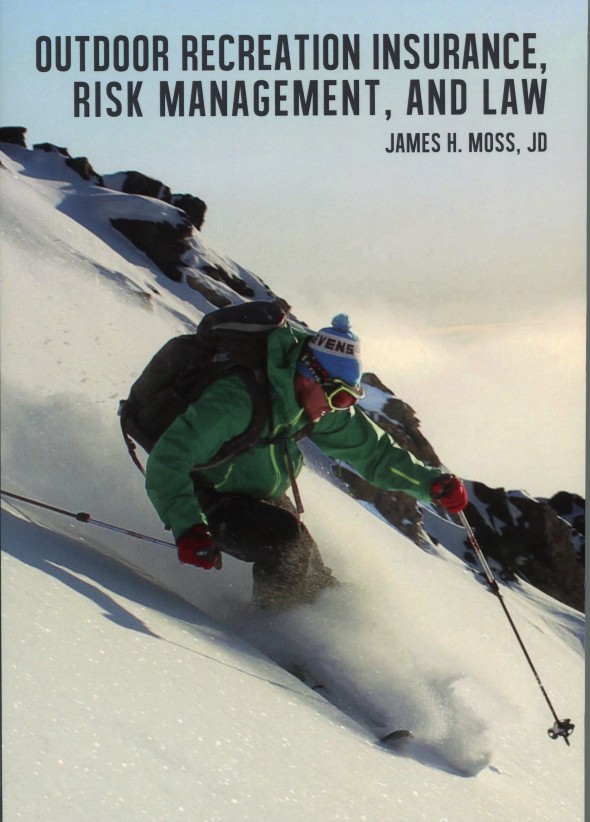
Outdoor Recreation Insurance, Risk Management and Law
To see Jim’s complete bio go here and to see his CV you can find it here. To find out the purpose of this website go here.
Author: Outdoor Recreation Insurance, Risk Management and Law To Purchase Go Here:
Connect
If you like this let your friends know or post it on FB, Twitter or LinkedIn
Facebook Page: Outdoor Recreation & Adventure Travel Law
LinkedIn https://www.linkedin.com/in/recreationlaw/
Threads https://www.threads.net/@recreation_law
X https://twitter.com/RecreationLaw
Email: Jim@Rec-Law.US
By Recreation Law Rec-law@recreation-law.com James H. Moss
@2015-2023 Summit Magic Publishing, LLC
G-YQ06K3L262
#AdventureTourism, #AdventureTravelLaw, #AdventureTravelLawyer, #AttorneyatLaw, #Backpacking, #BicyclingLaw, #Camps, #ChallengeCourse, #ChallengeCourseLaw, #ChallengeCourseLawyer, #CyclingLaw, #FitnessLaw, #FitnessLawyer, #Hiking, #HumanPowered, #HumanPoweredRecreation, #IceClimbing, #JamesHMoss, #JimMoss, #Law, #Mountaineering, #Negligence, #OutdoorLaw, #OutdoorRecreationLaw, #OutsideLaw, #OutsideLawyer, #RecLaw, #Rec-Law, #RecLawBlog, #Rec-LawBlog, #RecLawyer, #RecreationalLawyer, #RecreationLaw, #RecreationLawBlog, #RecreationLawcom, #Recreation-Lawcom, #Recreation-Law.com, #RiskManagement, #RockClimbing, #RockClimbingLawyer, #RopesCourse, #RopesCourseLawyer, #SkiAreas, #Skiing, #SkiLaw, #Snowboarding, #SummerCamp, #Tourism, #TravelLaw, #YouthCamps, #ZipLineLawyer, New Hampshire, New Hampshire Ski Area Safety Act, Skier v. Skier, Skier Collision, Snowboarder v. Skier, Collision,
Camire v. The Gunstock Area Commission, 166 N.H. 374; 97 A.3d 250; 2014 N.H. LEXIS 60
Posted: November 30, 2015 Filed under: Legal Case, New Hampshire, Ski Area, Skier v. Skier, Skiing / Snow Boarding | Tags: Collision, New Hampshire, New Hampshire Ski Area Safety Act, skier collision, skier v. skier, Snowboarder v. Skier Leave a commentTo Read an Analysis of this decision see
Snowboarder, off-duty employee of defendant ski area, collides with a skier. New Hampshire Supreme Court finds a way different from what was argued at the trial court to decide the case.
Camire v. The Gunstock Area Commission, 166 N.H. 374; 97 A.3d 250; 2014 N.H. LEXIS 60
Diana Camire v. The Gunstock Area Commission
No. 2013-258
SUPREME COURT OF NEW HAMPSHIRE
166 N.H. 374; 97 A.3d 250; 2014 N.H. LEXIS 60
February 26, 2014, Argued
June 18, 2014, Opinion Issued
PRIOR HISTORY: [***1]
Belknap
DISPOSITION: Affirmed.
HEADNOTES NEW HAMPSHIRE OFFICIAL REPORTS HEADNOTES
1. Appeal and Error–Questions Considered on Appeal–Questions Not Preserved, but Considered Ordinarily, an appellate court will not review arguments that were not timely raised before the trial court because trial forums should have an opportunity to rule on issues and to correct errors before they are presented to the appellate court, This rule, however, is not absolute. Preservation is a limitation on the parties to an appeal and not the reviewing court. [*375]
2. Torts–Defenses–Assumption of Risk The specification of “collisions with other skiers or other persons” in the enumerated categories of inherent risks in the statute regarding responsibilities of skiers and passengers plainly includes all person-to-person collisions. As the United States District Court for the District of New Hampshire has concluded, the plain and ordinary meaning of the statute’s immunity provision could hardly be clearer: it identifies collisions with other skiers or other persons as one of the risks, dangers, or hazards which the skier assumes as a matter of law. It makes no exception for collisions with skiers who are violating the statute, nor does it except collisions with ski area employees, even when those employees are themselves violating the statute or otherwise conducting themselves in a negligent or reckless fashion. RSA 225-A:24, I.
3. Torts–Defenses–Assumption of Risk Based upon the plain language of the statute regarding responsibilities of skiers and passengers, the legislature intended to include, as a category of inherent risk, collisions with ski area employees, regardless of whether they were working at the time of the collision. Thus, when a snowboarder collided with an instructor who was snowboarding prior to his scheduled “lineup,” the statute barred her vicarious liability claims as a matter of law. RSA 225-A:24, I.
4. Torts–Defenses–Assumption of Risk The current statute regarding responsibilities of skiers and passengers does not limit the risks assumed to those enumerated therein. Thus, “collisions with other skiers or other persons” does not exclude collisions with ski area employees because the legislature did not specifically identify them as an inherent risk of skiing, snowboarding, snow tubing, and snowshoeing. RSA 225-A:24, I.
5. Appeal and Error–Questions Considered on Appeal–Particular Cases Because plaintiff did not develop an argument as to why the trial court erred by granting summary judgment to defendant on her direct negligence claim, the court declined to review it.
COUNSEL: McLaughlin Law Office, P.C., of Laconia (Emily F. McLaughlin on the brief and orally), for the plaintiff.
Devine, Millimet & Branch, P.A., of Manchester (Thomas Quarles, Jr. and Leigh S. Willey on the brief, and Mr. Quarles orally), for the defendant.
JUDGES: CONBOY, J. DALIANIS, C.J., and HICKS, LYNN, and BASSETT, JJ., concurred.
OPINION BY: CONBOY
OPINION
[**252] Conboy, J. The plaintiff, Diana Martinez (formerly Diana Camire), appeals an order of the Superior Court (O’Neill, J.) granting summary judgment in favor of the defendant, The Gunstock Area Commission (Gunstock), on the plaintiff’s claims for damages for negligence and recklessness. We affirm.
The following facts are drawn from the trial court’s order and the record, or are otherwise undisputed. On February 13, 2010, the plaintiff, a snowboarder, visited Gunstock’s ski and snowboard area. Posted on the wall of the ticket kiosk was a thirty-five inch by forty inch sign that recited, in part, the language of RSA 225-A:24 and also stated: “By purchasing and/or affixing a ticket to use our facilities, you are agreeing to accept, as a matter of law, all inherent risks of winter sports activities and agree not [*376] to sue Gunstock for NEGLIGENCE or any other [***2] legal claim.” (Bolding omitted.). See RSA 225-A:24 (2011) (outlining responsibilities of skiers and passengers). In addition, the back of the lift ticket purchased by the plaintiff included language stating that, as a condition of using the ski area, the purchaser or user of the ticket agreed to release Gunstock, and its employees and agents from any legal liability, including, but not limited to, claims for negligence.
Later that day, between 11:15 a.m. and 11:30 a.m., the plaintiff was injured when she was snowboarding on a ski trail and another snowboarder struck her from behind. The snowboarder was employed by Gunstock during the 2009-2010 season as a snowboard instructor. At the time of the collision, he was snowboarding prior to his scheduled 11:45 a.m. “lineup” in anticipation of a 12:00 p.m. lesson. The plaintiff alleges that she suffered injuries as a result of the collision.
The plaintiff sued Gunstock, asserting three counts based upon vicarious liability for the instructor’s alleged negligent and reckless conduct, and one count alleging that Gunstock was directly liable for negligently hiring, training, and supervising the instructor. The trial court granted Gunstock’s motion [***3] for summary judgment on all of the claims. This appeal followed.
[HN1] “In reviewing the trial court’s grant of summary judgment, we consider the affidavits and other evidence, and all inferences properly drawn from them, in the light most favorable to the non-moving party.” Sanchez v. Candia Woods Golf Links, 161 N.H. 201, 203, 13 A.3d 268 (2010) (quotation omitted). “If our review of that evidence discloses no genuine issue of material fact, and if the moving party is entitled to judgment as a matter of law, we will affirm the grant of summary judgment.” Id. (quotation omitted). We review the trial court’s application of the law to the facts de novo. Id.
On appeal, the plaintiff argues that the trial court erred by determining that the liability releases barred her claims “in the absence of some evidence that [she] expressly agreed to [the] exculpatory language.” She also contends that the trial court erred in finding that, as a matter of law, the instructor was not in Gunstock’s employ at the time of the collision. She further asserts that RSA 225-A:24, I, “does not bar recovery for [a ski area] operator’s negligent supervision of its employees and the negligence of its agents in violation of their [***4] duties as employees.”
The defendant disputes the plaintiff’s contention that the releases do not preclude its liability and that the instructor was working at the time of the collision. The defendant further asserts that, even if the instructor had been “working at the time of the accident, because this accident was a skier-to-skier collision [–] an inherent [**253] risk of skiing, for which ski areas are immune [–] Gunstock would have immunity from [the plaintiff’s] claims.”
[*377] [1] We recognize that, in the trial court proceeding, neither party, nor the court, addressed the applicability of RSA 225-A:24, I, to the plaintiff’s claims. [HN2] Ordinarily, we will not review arguments that were not timely raised before the trial court, Baines v. N.H. Senate President, 152 N.H. 124, 128 (2005), because “trial forums should have an opportunity to rule on issues and to correct errors before they are presented to the appellate court,” Petition of Guardarramos-Cepeda, 154 N.H. 7, 9, 904 A.2d 609 (2006) (quotation omitted). This rule, however, is not absolute. Id. As we have previously recognized, preservation is a limitation on the parties to an appeal and not the reviewing court. Id. The issue of whether a ski area operator has statutory [***5] immunity under RSA 225-A:24, I, presents a question of law that, in this case, is dispositive of the plaintiff’s vicarious liability claims. Accordingly, in the interest of judicial economy, and because both parties addressed the issue during oral argument before this court, we will consider it. See id.
Whether RSA 225-A:24, I, precludes the plaintiff’s vicarious liability claims is a question of statutory interpretation. [HN3] “We are the final arbiter of the intent of the legislature as expressed in the words of the statute considered as a whole.” Martin v. Pat’s Peak, 158 N.H. 735, 738, 973 A.2d 333 (2009) (quotation omitted). “We first examine the language of the statute, and, where possible, we ascribe the plain and ordinary meanings to the words used.” Id. (quotation omitted). “Our goal is to apply statutes in light of the legislature’s intent in enacting them, and in light of the policy sought to be advanced by the entire statutory scheme.” Id. (quotation omitted).
RSA 225-A:24, I, provides, in pertinent part:
[HN4] Each person who participates in the sport of skiing, snowboarding, snow tubing, and snowshoeing accepts as a matter of law, the dangers inherent in the sport, and to that extent may not maintain [***6] an action against the operator for any injuries which result from such inherent risks, dangers, or hazards. The categories of such risks, hazards, or dangers which the skier or passenger assumes as a matter of law include but are not limited to the following: … collisions with other skiers or other persons . …
(Emphasis added.). The plaintiff argues that the statute does not bar her claims because “collisions with other skiers or other persons” does not include collisions with employees of the ski area operator.
[2, 3] Contrary to the plaintiff’s argument, [HN5] the specification of “collisions with other skiers or other persons” in the enumerated categories of inherent risks plainly includes all person-to-person collisions. Cf. LaChance v. U.S. Smokeless Tobacco Co., 156 N.H. 88, 94, 931 A.2d 571 (2007) (interpreting “any [*378] person injured” broadly within context of Consumer Protection Act). As the United States District Court for the District of New Hampshire recently concluded:
the “plain and ordinary meaning” of the [statute’s] immunity provision could hardly be clearer: it identifies “collisions with other skiers or other persons” as one of the “risks, dangers, or hazards which the skier assumes as a [***7] matter of law.” It makes no exception for collisions with skiers who are violating the [statute], nor does it except collisions with ski area employees, even when those employees are themselves violating [**254] the [statute] or otherwise conducting themselves in a negligent or reckless fashion.
Hanus v. Loon Mountain Recreation Corp., No. 13-cv-44-JL, 2014 U.S. Dist. LEXIS 52778, 2014 WL 1513232, at *3 (D.N.H. Apr. 16, 2014) (ellipsis omitted). If we were to conclude, as the plaintiff urges, that the legislature intended to exclude collisions with ski area employees, we would, in effect, be rewriting the statute. This we decline to do. See LaChance, 156 N.H. at 94. Thus, we hold that, [HN6] based upon the plain language of the statute, the legislature intended to include, as a category of inherent risk, collisions with ski area employees, regardless of whether they were working at the time of the collision.
The plaintiff relies upon Adie v. Temple Mt. Ski Area, 108 N.H. 480, 238 A.2d 738 (1968), to support her argument that a “ski area can be liable for an employee’s negligence, despite the existence of statutory immunity.” In Adie, we considered whether the statute barred “an action for negligent instruction against an operator who has undertaken [***8] to instruct skiers.” Adie, 108 N.H. at 482. We concluded that the statute did not bar recovery for a ski area operator’s negligence in ski instruction to a skier because “the statute does not regulate instruction in skiing by operators.” Id. at 483-84. We noted that “[i]f the Legislature had intended to bar skiers from actions against an operator for negligent instruction … , some regulation of their operations in th[is] area[ ] would have appeared in the statute.” Id. at 484. Here, unlike in Adie, the plaintiff’s vicarious liability claims allege injuries caused by a “collision[ ] with other skiers or other persons,” RSA 225-A:24, I; such claims are expressly addressed in the statute.
[4] Moreover, as we have previously explained, [HN7] the current statute “does not limit the risks assumed to those enumerated therein.” Rayeski v. Gunstock Area, 146 N.H. 495, 498, 776 A.2d 1265 (2001); see RSA 225-A:24, I (risks, hazards, or dangers “include but are not limited to” enumerated items). Thus, we disagree with the plaintiff to the extent that she argues that “collisions with other skiers or other persons,” RSA 225-A:24, I, excludes [*379] collisions with ski area employees because the legislature did not specifically [***9] identify them as an inherent risk of skiing, snowboarding, snow tubing, and snowshoeing.
Accordingly, because RSA 225-A:24, I, bars the plaintiff’s vicarious liability claims as a matter of law, the trial court properly granted summary judgment to Gunstock on those claims. In light of our holding, we need not decide whether the instructor was acting within the scope of his employment at the time of the collision or whether the claims are also barred by Gunstock’s liability releases.
[5] The final count of the plaintiff’s writ alleged negligence on the part of Gunstock in failing to properly hire, train, and supervise the instructor. Gunstock moved for summary judgment on this claim on the basis that the plaintiff could not establish a causal connection between her injury and the fact that the ski instructor worked for Gunstock. Although, on appeal, the plaintiff cites Trahan-Laroche v. Lockheed Sanders, 139 N.H. 483, 485, 657 A.2d 417 (1995), for the proposition that “[a]n employer may be directly liable for damages resulting from the negligent supervision of its employee’s activities,” she does not develop an argument as to why the trial court erred by granting summary judgment to the defendant on her [***10] direct negligence claim. As she has failed to brief this argument sufficiently for appellate review, we decline to review it. See Porter [**255] v. City of Manchester, 155 N.H. 149, 157, 921 A.2d 393 (2007); State v. Blackmer, 149 N.H. 47, 49, 816 A.2d 1014 (2003).
Affirmed.
Dalianis, C.J., and Hicks, Lynn, and Bassett, JJ., concurred.
Clean Trails: An Organization YOU should know about
Posted: November 27, 2015 Filed under: Uncategorized | Tags: Clean Trails, Hiking, Liter Leave a comment |
|
|


Happy Thanksgiving
Posted: November 26, 2015 Filed under: Uncategorized Leave a commentHere’s Hoping You are Having Fun with Friends and Family
Free Entrance to Colorado State Parks #FreshAirFriday instead of Black Friday
Posted: November 25, 2015 Filed under: Uncategorized | Tags: Admission, Colorado State Parks, Free Leave a comment
|


Email the Jefferson County, CO Commissioners and Encourage them to put in Bike Lanes
Posted: November 24, 2015 Filed under: Cycling | Tags: Bike Lanes, Bike Riding, biking, Cycling Leave a comment
|


Hitting a rock while skiing in Montana is an inherent risk of the sport. Other interesting statements by the court though create an interesting decision.
Posted: November 23, 2015 Filed under: Assumption of the Risk, Montana, Ski Area, Skiing / Snow Boarding | Tags: Inherent Risk Montana Skier Safety Act, Montana's skier responsibility statute, Moonlight Basin, ski area, skiing Leave a commentDecision looks at whether rocks are an inherent risk when they have been moved by the resort and determined the plaintiff was responsible for his injuries.
Kopeikin v. Moonlight Basin Management, LLC, 90 F. Supp. 3d 1103; 2015 U.S. Dist. LEXIS 15348
State: Montana, United States District Court for the District of Montana, Butte Division
Plaintiff: Brian Kopeikin, M.D.
Defendant: Moonlight Basin Management, LLC, D/B/A Moonlight Ba In Resort
Plaintiff Claims: for negligence sounding in premises liability and a claim for negligent hiring, training, supervision and management
Defendant Defenses: Montana Ski Safety Act
Holding: For the Defendant
Year: 2015
This is a basic case. The guest was skiing at the resort, hit a rock and was injured. The court looked at the facts, the Montana’s Skier Responsibility Statute and dismissed the case on a motion for summary judgment. What is interesting and educational about this case are the facts the court reports in its opinion.
Near the ticket booth where Kopeikin purchased his ticket is a sign warning skiers of unmarked hazards. Kopeikin is a very experienced skier, having skied at several ski resorts throughout the Rocky Mountain West over the past 36 years, and he had seen similar signs at other ski resorts warning patrons of unmarked hazards.
Skiing conditions at Moonlight on February 5, 2012, were generally good, with clear skies, calm winds, and temperatures near thirty-two degrees. However, it was a low snow coverage year, and Kopeikin acknowledges that prior to his accident he saw uncovered rocks on the sides of the ski runs. Rocks are prevalent at Moonlight.
Immediately before the entrance to Elkhorn, there is a sign indicating, again, that Elkhorn is designated a black diamond, or “most difficult,” run. As Kopeikin began skiing down Elkhorn, plainly visible grass and rocks could be seen poking through the snow on the side of the run.
The defendant filed a motion for summary judgment based on these facts, and the court granted the motion. Here is the court’s analysis in granting the motion.
Analysis: making sense of the law based on these facts.
The court first looked at the inherent risks and dangers of skiing. “The “inherent dangers and risks of skiing” are statutorily defined as “those dangers or conditions that are part of the sport of skiing“…” The court then compared this statement with the general requirements set forth in the Montana’s Skier Responsibility Statute.
However, the court also found the Montana’s Skier Responsibility Statute did not protect ski areas from their own negligence. “Montana’s skier responsibility statutes cannot be read to immunize ski resorts from their own negligent or intentional acts, because such an interpretation would violate Montana’s constitution.”
However, the stated purpose of Montana’s skier responsibility statutes is to “discourage claims based on damages resulting from the inherent risks of skiing.”
The court also looked at the ski area’s actions in warning its guests of the risks.
Moonlight warned generally of unmarked hazards. It posted multiple signs designating the run on which Kopeikin was injured a black diamond, or most difficult, run. With respect to the cat track, Moonlight had taken efforts to remove it and return the slope back to its natural condition.
In looking at the facts, the court concluded the plaintiff was responsible for his own injuries.
Furthermore, Kopeikin failed to negotiate the terrain safely and without injury. Notwithstanding his years of experience and expertise, he failed to ski in manner that avoided injury to himself and to be aware of the inherent dangers and risks of skiing.
The rock that the plaintiff hit was a natural rock, naturally occurring. (When you figure out how to make rocks let me know?) “…the rocks that Kopeikin collided with, like all the rocks on the Elkhorn run, were naturally occurring.”
The plaintiff argued the rocks were created when the ski area attempted to eliminate the cat track.
Without citation to any record evidence, Kopeikin asks the Court to infer that some of the rocks in the area where he fell unnaturally accumulated there through the process of removing the cat track back in 2007. The record evidence, however, establishes the opposite — the process of removing the cat track reduced the number of rocks in the area because many of the rocks were covered up during the cat track removal process.
The issue obviously is whether or not the Montana’s Skier Responsibility Statute. However, the statute specifically identifies rock as an inherent risk.
23-2-702 Definitions.
(d) collisions with natural surface or subsurface conditions, such as bare spots, forest growth, rocks, stumps, streambeds, cliffs, trees, and other natural objects; [Emphasize added]
Another fact pointed out by the court and obviously placed in the record were there had never been an accident at that location before. “Furthermore, with over 700,000 skier visits, there had never been another reported accident at the location of Kopeikin’s accident caused by a collision with rocks.”
The court also pointed out that the plaintiff was skiing the run he was injured on because he did not want to ski the run he had originally planned because of the rocks.
Because the rock the plaintiff encountered was an inherent risk of skiing under the Montana’s Skier Responsibility Statute, the motion for summary judgment of the defendant was granted.
Because Kopeikin’s injuries resulted only from the inherent dangers and risks of skiing and because Moonlight did not breach its duty of reasonable care, Moonlight is entitled to judgment as matter of law.
So Now What?
Remember Montana is a state that does not allow the use of a release and limits most defenses in most outdoor recreation activities. See States that do not Support the Use of a Release. This prohibition is set forth in the Montana constitution.
The decision makes sense; however, some of the statements in the decision were confusing.
Tracking where accidents happen can be good as in this case, or bad in most other cases. Remember foreseeability. If the accident which caused the injury was foreseeable, then the defendant might owe a duty to the plaintiff. Tracking accidents can prove foreseeability. If other accidents had occurred at this location, then having accident location information available would have proven that there was at least a problem and probably a place where the ski area might have owed a duty to its guests because of the number of accidents.
Tracking accidents can be good or be bad. Most times I would guess the tracking could be a problem not a help.
The argument that the rocks were not naturally occurring because they had been created in eliminating the cat track was very novel. The rock was there with, without or after the creation and removal of the cat track. A rock is a rock (I think?). Consequently, whether or not the rock was moved to the surface by actions of the ski area should not have been at issue. However, the court looked at the issue.
The final issue of interest was the statement from the court that the plaintiff had not skied the run safely. “…Kopeikin failed to negotiate the terrain safely and without injury.” Very rarely do courts state the plaintiff was at fault for their injury. Normally, the most the court states is that the defendant was not at fault and you can surmise from that statement the plaintiff was at fault.
However, to have the court state it is interesting and rare.
By the way, second post from Hawaii while on vacation. That is above and beyond for you guys, you owe me! 
 What do you think? Leave a comment.
If you like this let your friends know or post it on FB, Twitter or LinkedIn
Author: Outdoor Recreation Insurance, Risk Management and Law
Copyright 2015 Recreation Law (720) Edit Law
Email: Rec-law@recreation-law.com
Google+: +Recreation
Twitter: RecreationLaw
Facebook: Rec.Law.Now
Facebook Page: Outdoor Recreation & Adventure Travel Law
Blog: www.recreation-law.com
Mobile Site: http://m.recreation-law.com
By Recreation Law Rec-law@recreation-law.com James H. Moss
#AdventureTourism, #AdventureTravelLaw, #AdventureTravelLawyer, #AttorneyatLaw, #Backpacking, #BicyclingLaw, #Camps, #ChallengeCourse, #ChallengeCourseLaw, #ChallengeCourseLawyer, #CyclingLaw, #FitnessLaw, #FitnessLawyer, #Hiking, #HumanPowered, #HumanPoweredRecreation, #IceClimbing, #JamesHMoss, #JimMoss, #Law, #Mountaineering, #Negligence, #OutdoorLaw, #OutdoorRecreationLaw, #OutsideLaw, #OutsideLawyer, #RecLaw, #Rec-Law, #RecLawBlog, #Rec-LawBlog, #RecLawyer, #RecreationalLawyer, #RecreationLaw, #RecreationLawBlog, #RecreationLawcom, #Recreation-Lawcom, #Recreation-Law.com, #RiskManagement, #RockClimbing, #RockClimbingLawyer, #RopesCourse, #RopesCourseLawyer, #SkiAreas, #Skiing, #SkiLaw, #Snowboarding, #SummerCamp, #Tourism, #TravelLaw, #YouthCamps, #ZipLineLawyer, Skiing, Ski Area, Inherent Risk Montana Skier Safety Act, Moonlight Basin , Montana’s skier responsibility statute,
Kopeikin v. Moonlight Basin Management, LLC, 90 F. Supp. 3d 1103; 2015 U.S. Dist. LEXIS 15348
Posted: November 22, 2015 Filed under: Assumption of the Risk, Legal Case, Montana, Ski Area, Skiing / Snow Boarding | Tags: Inherent Risk Montana Skier Safety Act, Montana's skier responsibility statute, Moonlight Basin, ski area, skiing Leave a commentKopeikin v. Moonlight Basin Management, LLC, 90 F. Supp. 3d 1103; 2015 U.S. Dist. LEXIS 15348
Brian Kopeikin, M.D., Plaintiff, vs. Moonlight Basin Management, LLC, D/B/A Moonlight Ba In Resort, Defendant.
CV 13-C45-CBU-CDLC
UNITED STATES DISTRICT COURT FOR THE DISTRICT OF MONTANA, BUTTE DIVISION
90 F. Supp. 3d 1103; 2015 U.S. Dist. LEXIS 15348
February 9, 2015, Decided
February 9, 2015, Filed
PRIOR HISTORY: Kopeikin v. Moonlight Basin Mgmt., LLC, 981 F. Supp. 2d 936, 2013 U.S. Dist. LEXIS 160390 (D. Mont., 2013)
CORE TERMS: skier, skiing, rock, snow, elkhorn, ski, track, cat, terrain, inherent dangers, summary judgment, ski area, hazard, reasonable care, mountain, sport, hit, injuries resulted, surface, slope, skis, visible, ski resort, disputed, safely, skied, unmarked, matter of law, entitled to judgment, legal responsibility
COUNSEL: [**1] For Brian Kopeikin, M.D., Plaintiff: Edward P. Moriarity, MORIARITY BADARUDDIN & BOOKE, LLC, Missoula, MT.
For Moonlight Basin Management, LLC doing business as Moonlight Basin Resort, Defendant: Ian McIntosh, LEAD ATTORNEY, CROWLEY FLECK, Bozeman, MT.
JUDGES: Dana L. Christensen, Chief United States District Judge.
OPINION BY: Dana L. Christensen
OPINION
[*1104] ORDER
Before the Court is Defendant’s Motion for Summary Judgment. For the reasons explained, the Court grants the motion.
Synopsis
Plaintiff Dr. Brian Kopeikin (“Kopeikin”) was injured in a skiing accident in Montana. Kopeikin is a resident of California. He brought this diversity action against Defendant Montana ski area operator Moonlight Basin Management, LLC (“Moonlight”) asserting a claim for negligence sounding in premises liability and a claim for negligent hiring, training, supervision and management.
Earlier in the litigation, Moonlight moved to dismiss the Complaint asserting that it failed to state a claim under Montana’s skier responsibility statute, Montana Code Annotated § 23-2-736, because even as alleged all of Kopeikin’s injuries resulted from the inherent dangers and risks of skiing. The Court denied the motion.
Now before the Court is Moonlight’s motion for summary judgment, and a [**2] fully-developed record in which several of Kopeikin’s key allegations from the Complaint are conclusively rebutted. On this updated evidentiary record, the Court concludes that Moonlight acted consistent with its duty of reasonable care and that all of Kopeikin’s injuries resulted from the inherent dangers and risks of skiing. Accordingly, Moonlight is entitled to judgment as a matter of law and its motion for summary judgment is granted.
Factual Background1
1 Defendant filed its motion for summary judgment on June 23, 2014, and Kopeikin responded on July 25, 2014. In accordance with Local Rule 56.1(b), Kopeikin simultaneously filed a separate Statement of Disputed Facts with his brief in opposition to the motion for summary judgment. Then, on the afternoon of January 28, 2015, less than 24 hours prior to a hearing on the motion, Kopeikin filed a document styled as a “Supplement to Statement of Disputed Facts.” (Doc. 41.) Kopeikin did not seek leave of Court to file the “Supplement,” and the filing is not contemplated by Local Rules. Indeed, it is contrary to the Local Rule’s requirement that a Statement of Disputed Facts be filed “simultaneously with” the brief in opposition. L.R. 56.1(b). The filing is untimely by [**3] at least six months, and Kopekin has not sought leave to file it. Accordingly, its contents are not considered for purposes of deciding this motion.
On February 5, 2012, Kopeikin and his skiing partner, Sven Rose, purchased lift tickets to ski Moonlight Basin ski resort. Near the ticket booth where Kopeikin purchased his ticket is a sign warning skiers of unmarked hazards. Kopeikin is a very experienced skier, having skied at several ski resorts throughout the Rocky Mountain West over the past 36 years, and he had seen similar signs at other ski resorts warning patrons of unmarked hazards. Kopeikin knew that the presence of rocks is common at ski areas in the Rocky Mountains, such as Moonlight, and he did not expect that all hazards at Moonlight would be marked.
Skiing conditions at Moonlight on February 5, 2012, were generally good, with [*1105] clear skies, calm winds, and temperatures near thirty-two degrees. However, it was a low snow coverage year, and Kopeikin acknowledges that prior to his accident he saw uncovered rocks on the sides of the ski runs. Rocks are prevalent at Moonlight.
After skiing several easier warm-up runs, Kopeikin and Rose decided to take the Six Shooter chairlift up [**4] the mountain in an effort to access an area of more challenging, expert terrain known as Headwaters. Upon learning that hiking was required to access the terrain, and due to their concern about a lack of sufficient snow coverage, the two men decided not to ski Headwaters.
Instead, Kopeikin and Rose decided to ski a run called “Elkhorn.” At the unloading area for the Six Shooter chairlift there is a sign identifying Elkhorn as a black diamond, or “most difficult,” run. (Doc. 21-9; 30-7.) To access Elkhorn, Kopeikin and Rose began by skiing on an intermediate run called “Fast Lane.” On Fast Lane, there were plainly visible rocks above the snow surface that Kopeikin admits that he likely saw.
The two then approached the entrance to Elkhorn. Immediately before the entrance to Elkhorn, there is a sign indicating, again, that Elkhorn is designated a black diamond, or “most difficult,” run. (Doc. 21-13.) Kopeikin and Rose skied past this sign and onto Elkhorn. At this point, the terrain steepened and narrowed, and the ski run was occupied by obstacles such as moguls and snowdrifts.2 As Kopeikin began skiing down Elkhorn, plainly visible grass and rocks could be seen poking through the snow on [**5] the side of the run.
2 A snowdrift, or wind drift, is defined as “a heap of snow piled up by the wind.” Webster’s New World Dictionary (4th Ed., Wiley Publishing 2002). In his deposition, Kopeikin referred to the snowdrifts as “drift lumps.” (Doc. 25-4 at 93.)
Approximately 200 yards below the entrance of Elkhorn, there is an area where a cat track, or its remains, crosses Elkhorn. In 2007, after determining the cat track was not being used regularly, Moonlight removed the edges of the cat track where it crossed Elkhorn in an attempt to return the slope to its natural condition. The cat track, or what remains of it, partially obscures the terrain immediately below it.
Rose skied in front of Kopeikin and successfully navigated the cat track and the terrain immediately below it. Kopeikin estimates that he was skiing behind Rose at approximately 10 to 15 miles per hour. Kopeikin “came over the cat track and absorbed it[] and when [his] skis touched down both hit rocks,” and he was ejected from his skis. (Doc. 25-4 at 120.) He fell forward and landed in other rocks that were either visible or buried under the snow. As a result of his fall, Kopeikin suffered serious and disabling injuries that [**6] necessitated extensive medical care and treatment.
Kopeikin testified that he “would not have fallen because of the cat track,” id. at 124:1-2, but fell because his “skis hit rocks.” Id. at 124:2-3. The particular rock that caused him to be ejected from his ski was one that he could not see because it was under the snow and was “something you had to penetrate and hit with a little force.” Id. at 146:14-15.
From 2003, when Moonlight opened, through the end of the 2012 ski season, Moonlight had approximately 700,000 skier visits. Other than Kopeikin’s accident, there have been no other reported accidents due to rocks in the location of the subject accident.3
3 Kopeikin disputes whether any other accidents had been reported at the location of his accident, but he presents no contrary evidence. In an effort to show that the fact is disputed, Kopeikin cites to the Court three incident reports involving skiing or snowboarding accidents on the Elkhorn run generally. These include: (1) a 2013 accident that occurred somewhere on Elkhorn in which a woman with “no vision on one side” bumped into her daughter on her blind side and fell, (Doc. 25-11 at 3); (2) a 2011 accident in which a snowboarder “was [**7] going down of [sic] the second hill of elkhorn [and] rolled forward,” (Doc. 25-9 at 2-3.); and (3) a 2008 accident that occurred on the “left side on skiers L of Lower Elkhorn” in which a snowboarder “caught [his] edge on ice [and] fell forward,” (Doc. 25-10 at 2-3). None of these accident appear to have occurred at the location of Kopeikin’s accident, and all of them are, in any case, of such dissimilar nature as to be immaterial to the Court’s analysis.
[*1106] Legal Standard
A party is entitled to summary judgment if it can demonstrate that “there is no genuine dispute as to any material fact and the movant is entitled to judgment as a matter of law.” Fed. R. Civ. P. 56(a). Summary judgment is warranted where the documentary evidence produced by the parties permits only one conclusion. Anderson v. Liberty Lobby, Inc., 477 U.S. 242, 251, 106 S. Ct. 2505, 91 L. Ed. 2d 202 (1986). Only disputes over facts that might affect the outcome of the lawsuit will preclude entry of summary judgment; factual disputes that are irrelevant or unnecessary to the outcome are not considered. Id. at 248. In ruling on a motion for summary judgment, “[t]he evidence of the non-movant is to be believed, and all justifiable inferences are to be drawn in his favor.” Id. at 255. The “mere existence of a scintilla of evidence in support of the plaintiff’s [**8] position” is insufficient to defeat a properly supported motion for summary judgment. Id. at 252.
Discussion
In this diversity action, the Court applies Montana substantive law. Erie R.R. v. Tompkins, 304 U.S. 64, 79, 58 S. Ct. 817, 82 L. Ed. 1188 (1938).
Pursuant to Montana statute, “[a] skier shall accept all legal responsibility for injury or damage of any kind to the extent that the injury or damage results from inherent dangers and risks of skiing.” Mont. Code Ann. § 23-2-736(4). The “inherent dangers and risks of skiing” are statutorily defined as “those dangers or conditions that are part of the sport of skiing,” including in pertinent part:
. . .
(b) snow conditions as they exist or as they may change, . . .
. . .
(d) collisions with natural surface or subsurface conditions, such as bare spots, forest growth, rocks, stumps . . . and other natural objects;
. . .
(f) variations in steepness or terrain, whether natural or the result of slope design, snowmaking, or snow grooming operations, including but not limited to roads, freestyle terrain, ski jumps, catwalks,4 and other terrain modifications.
Id. at § 702(2).
4 Consistent with its Order of November 7, 2013, the Court interprets the term “catwalk” to be synonymous with the term “cat track.” No objection to this interpretation has been raised by the parties. [**9]
Under Montana statute, “[a] skier has the duty to ski at all times in a manner that avoids injury to the skier and others and to be aware of the inherent dangers and risks of skiing.” Id. at § 736(1). Additionally, Montana statute requires a skier to “know the range of the skier’s ability and safely ski within the limits of that ability . . . so as to negotiate any section of terrain or ski slope and trail safely and [*1107] without injury or damage.” Id. at 736(2)(a). A skier is also statutorily required to “know that the skier’s ability may vary because of ski slope and trail changes caused by weather, grooming changes, or skier use.” Id.
A ski area operator must act “consistent with the duty of reasonable care owed by a ski area operator to a skier.” Id. at § 733. Montana’s skier responsibility statutes cannot be read to immunize ski resorts from their own negligent or intentional acts, because such an interpretation would violate Montana’s constitution. Mead v. M.S.B., Inc., 264 Mont. 465, 872 P.2d 782, 788 (Mont. 1994). However, the stated purpose of Montana’s skier responsibility statutes is to “discourage[] claims based on damages resulting from the inherent risks of skiing.” Mont. Code Ann. § 23-2-731.
In ruling on Defendant’s motion to dismiss, the Court articulated an interpretation of Montana’s skier [**10] responsibility statutes that harmonizes the definition of the inherent dangers and risks of skiing with the requirement that a ski area operator act consistent with its duty of reasonable care. In so doing, the Court rejected the notion that a court’s only role in ski area liability cases is to inquire whether the plaintiff’s injuries resulted from a collision with a particular object appearing on the statutory list of inherent risks of skiing, because such an application would produce absurd results and render the statute unconstitutional. Kopeikin v. Moonlight Basin Management, LLC, 981 F.Supp.2d 936, 945 (D. Mont. 2013). At the same time, not every case involving hazards on a ski mountain presents a genuine dispute of fact appropriate for trial, and summary judgment will sometimes be appropriate. Id. at 943.
Ultimately, Montana’s skier responsibility statutes make clear that the duty of reasonable care owed by a ski area operator to a skier “must be viewed in the unique context of skiing.” Id. at 945. Skiing is a sport in which thrill-seeking skiers embrace its inherent dangers and risks. It is a sport that occurs on “a mighty mountain, with fluctuation in weather and snow conditions that constantly change.” Wright v. Mt. Mansfield Lift, Inc., 96 F.Supp. 786, 791 (D. Vt. 1951). “[A] ski area operator cannot be expected to expend all of its resources [**11] making every hazard or potential hazard safe, assuming such an end is even possible,” or desirable. Kopeikin, 981 F.Supp.2d at 946. “Ski areas encompass vast and unwieldy terrain and mother nature is always at play.” Id. The act of skiing in such terrain presents an obvious array of dangers to a skier, many of which the ski area operator has no duty to protect against under Montana law. Fundamentally, a skier bears much of the responsibility for avoiding injury to himself, which is a principal that is consistent with Montana law.
In this case, Kopeikin’s injuries resulted from the inherent dangers and risks of skiing. Without question, applying a plain language interpretation of Montana’s skier responsibility statutes leads to this conclusion. In snow conditions as they existed on February 4, 2012, Kopeikin skied over a variation in terrain and collided with a subsurface rock that caused him to fall and collide with other surface or subsurface rocks. Thus, the accident falls clearly within the definition of the inherent dangers and risks that are part of the sport of skiing. Mont. Code Ann. § 23-2-701(2)(b)(d)&(f). Furthermore, Kopeikin failed to negotiate the terrain safely and without injury. Notwithstanding his years of experience and expertise, [**12] he failed to ski in manner that avoided injury to himself and to be aware of the inherent dangers and risks of skiing. See id. at § 23-2-736. Accordingly, so long as Moonlight [*1108] acted consistent with its duty of reasonable care owed to Kopeikin, Kopeikin must accept all legal responsibility for his injuries. Id. at § 23-2-736(4).
It is clear that Moonlight acted consistent with its duty of reasonable care as a ski area operator with respect to Kopeikin. Moonlight warned generally of unmarked hazards. It posted multiple signs designating the run on which Kopeikin was injured a black diamond, or most difficult, run. With respect to the cat track, Moonlight had taken efforts to remove it and return the slope back to its natural condition.
Kopeikin did not suddenly and blindly encounter an unmarked cat track. Rather, Kopeikin admits that what remained of the cat track could be clearly seen from above. Also, the rocks that Kopeikin collided with, like all of the rocks on the Elkhorn run, were naturally occurring. Without citation to any record evidence, Kopeikin asks the Court to infer that some of the rocks in the area where he fell unnaturally accumulated there through the process of removing the cat track back [**13] in 2007. The record evidence, however, establishes the opposite — the process of removing the cat track reduced the number of rocks in the area because many of the rocks were covered up during the cat track removal process.
Furthermore, with over 700,000 skier visits, there had never been another reported accident at the location of Kopeikin’s accident caused by a collision with rocks. According to Kopeikin, the rock that he hit with his skis, which caused him to fall, was buried under the snow and “was something you had to penetrate and hit with a little force and then it was there.” (Doc. 25-4 at 147.) Thus, Kopeikin’s theory that Moonlight had a duty to warn of these specific rocks, is undermined by this specific accident’s unforeseeability, despite the fact that accidents of this general nature were foreseeable to skiers that were skiing on the mountain in low snow conditions. To impose a duty on Moonlight to mark or remove all submerged rocks, which are not readily visible, would be to require Moonlight to undertake an impossibility.
Kopeikin himself recognized that it was a low snow year. He had seen other rocks on other runs prior to skiing Elkhorn. He elected not to ski Headwaters [**14] in part because there was “no snow.” (Doc. 25-4 at 90.) He rightly did not expect that all hazards on the mountain would be marked. On Elkhorn, rocks and grass were plainly visible. When he approached the area of Elkhorn where the remains of the cat track obscured the terrain immediately below, he did not stop and assess what was below.
It is clear that Montana’s skier responsibility statutes apply to these facts, that Kopeikin encountered the inherent dangers and risks of skiing, and that he must therefore accept all legal responsibility for his injuries and damages. As was eloquently stated by Judge Gibson in granting a directed verdict for the defendant ski area operator against a claim by a plaintiff injured when her skis unexpectedly hit a tree stump buried under the snow:
Skiing is a sport; a sport that entices thousands of people; a sport that requires an ability on the part of the skier to handle himself or herself under various circumstances of grade, boundary, mid-trail obstructions, corners and varied conditions of the snow. Secondly, it requires good judgment on the part of the skier and recognition of the existing circumstances and conditions. Only the skier knows his own [**15] ability to cope with a certain piece of trail. Snow, ranging from powder to ice, can be of infinite kinds. Breakable crust may be encountered where soft snow is expected. [*1109] Roots and rocks may be hidden under a thin cover. A single thin stubble of cut brush can trip a skier in the middle of a turn. Sticky snow may follow a fast running surface without warning. Skiing conditions may change quickly. What was, a short time before, a perfect surface with a soft cover on all bumps may fairly rapidly become filled with ruts, worn spots and other manner of skier created hazards.
Wright, 96 F.Supp. at 790-91 (emphasis added).
The Montana Legislature has recognized these truths about skiing and codified them, so that a skier has a duty to ski safely and within his abilities, and accepts all responsibility for injuries resulting from the inherent dangers and risks of skiing. Because Kopeikin’s injuries resulted only from the inherent dangers and risks of skiing and because Moonlight did not breach its duty of reasonable care, Moonlight is entitled to judgment as matter of law.
IT IS ORDERED that Moonlight’s motion for summary judgment (Doc. 20) is GRANTED. IT IS FURTHER ORDERED that all other motions are DENIED AS MOOT. The [**16] clerk shall enter judgment in favor of Defendant and against Plaintiff. This case is CLOSED.
Dated this 9th day of February 2015.
/s/ Dana L. Christensen
Dana L. Christensen, Chief District Judge
United States District Court
My Adirondacks: Tales from the Wild Side
Posted: November 20, 2015 Filed under: Mountaineering, New York | Tags: Adirondack Park, Adirondacks, Erik Schlimmer, Upstate, Upstate New York Leave a comment
My Adirondacks
With six million acres of lakes and mountains, the Adirondack Park of Upstate New York is a big place ripe for big adventures, and few have adventured more there than author Erik Schlimmer. Highlights of his adventures include climbing more than 500 peaks, hiking across the entire Adirondack Park, and working as a trip leader and backountry ranger. In this new book he tells us what it’s like “to be out there – oftentimes alone – with the moose and the bugs and the nothingness.”
Published by Beechwood Books, My Adirondacks: Ten Stories from Twenty Years is Schlimmer’s fourth title and his third about the Adirondacks. He calls the Adirondacks a range that he “fell in love with” when his family relocated from the Hudson Valley to Upstate New York when he was 12 years old. “Since then,” he reports, “the mountains have been a significant and consistent part of my life. I attended school among them, worked in them, explored them, and now write about them. It’s really a good life.” In My Adirondacks Schlimmer shares part of this good life, his stories ranging from his first camping trip in 1989, to hiking with an Iraq combat veteran, to eating apple pie naked in the woods.
“Hiking and writing go together well – one leads to the other” says the 42-year-old Capital Region resident, who splits his time between writing, working for the Research Foundation for SUNY, and earning his masters degree in Social Work from the University at Albany. Schlimmer has but one wish for his readers: “I hope they enjoy reading it as much as I did writing it.”
My Adirondacks is available through select retailers and the author’s website, transadk.com.
Erik Schlimmer 12 Crockett Avenue, Second Floor Troy, NY 12180 transadk@gmail.com 607.434.5942
2016 Teaching and Research in Environmental Education (TREE) Semester Four-month Residential Fellowship
Posted: November 19, 2015 Filed under: Uncategorized | Tags: Catamount Center, Enivronmental Education, Teaching and Research in Environmental Education Leave a comment2016 Teaching and Research in Environmental Education (TREE) Semester Four-month Residential Fellowship
The Catamount Center, in partnership with Colorado College, is seeking applicants for their 2016 Environmental Education Fellowship. The Catamount Center is a 501(c)3 nonprofit organization dedicated to inspiring ecological stewardship through experiential outdoor and environmental education. The TREE (Teaching and Research in Environmental Education) Semester is a semester-long off-campus Colorado College academic program designed for undergraduate students of all majors.
Successful applicants will have a strong commitment to and knowledge of education, environmental studies, and environmental stewardship and are excited about the idea of working outdoors in a spectacular montane setting. Primary responsibilities include providing support to undergraduate students enrolled in the program for curriculum and inquiry activity planning, independent research, and teaching science and environmental studies to fifth graders in the outdoors and classrooms. Preference will be given to applicants who have relevant prior experience, especially working with children, and who will successfully promote Catamount Center’s atmosphere of collaboration and mutual learning.
Compensation:
$800 monthly stipend
Live in a spectacular mountain setting
Room and board expenses included
Certification as a Colorado Environmental Educator (pending CAEE portfolio completion)
Hiring Process:
Check out our website (www.catamountcenter.org) and Facebook page (www.facebook.com/TREESemester) to learn more about the TREE Semester
Submit transcript, resume, cover letter, and contact information for two professional or academic references to jaredmazurek@catamountcenter.org
Complete formal written application questions, found below.
If possible, arrange a visit to the Catamount Center in Woodland Park, CO for a campus tour and informal meeting with Program Director.
Fellowship dates are August 15 – December 23 (Includes two-week training and orientation). Fellows must commit to being present for full length of fellowship prior to hire.
Responsibilities:
Participate in and support undergraduate TREE students’ teaching development, including field days, course work, research projects, evening programs, teaching observations, and debriefs.
Assist TREE faculty, Columbine Elementary faculty, and Program Directors with coordinating and executing academic and research activities
Assist TREE students in curriculum planning, program delivery, academics, and management of 5th grade Outdoor School students for up to 100 hours teaching time during the fall semester 2016
Assist with undergraduate classes (e.g. Environmental Education, Foundations of Environmental Education, Independent Research) as needed.
Manage TREE student group dynamics and support student needs
Play a significant role in risk management, site maintenance, and marketing
Help shop and cook food under direction of Food Manager
Prepare a master level portfolio for submission to CAEE
Adhere to, actively model, and enforce Catamount Center and Colorado College policies, procedures, and codes of conduct
Qualifications:
Bachelor’s degree or higher, preferably in an environmentally or education-related field of study
Strong interest in supporting the growth and development of undergraduate educators
Working knowledge of educational strategy and pedagogy, and passion to learn more about these subjects
Excellent communication and interpersonal skills
Ability and willingness to take initiative, solve problems, and multi task effectively
Experience organizing and facilitating groups
Excitement for working untraditional work weeks and living on site with a small team of permanent staff, undergraduate students, and visiting faculty
WFR, First Aid, or similar training is a plus
Passion for outdoor education and conservation
Successful completion of a background check (required by Teller County schools)
Sense of humor
Deadline for Applications: Applications are due no later than February 15. We will select Fellows by March 7.
The Catamount Center is an equal opportunity employer with a drug-free and smoke free workplace. Successful applicants will be required to adhere to Catamount Center Policies and Codes of Conduct, as well as those found in Colorado College’s Pathfinder.
Application Questions
1. Given 15 5th graders, a forest, lake, unlimited equipment, and three hours, choose concepts on which you would base a lesson and describe a lesson plan to teach your concept.
2. What are your personal and professional goals as a TREE Fellow?
3. In what ways do you hope to impact the undergraduate and fifth grade students you would be working with?
Sincerely,
Jared Mazurek
Program Director
jaredmazurek@catamountcenter.org
719.687.0929
Catamount Center
3168 County Road 28
Woodland Park, CO 80863
http://www.catamountcenter.org
League of American Bicyclists announces announce 55 new and renewing Bicycle Friendly Communities
Posted: November 18, 2015 Filed under: Cycling | Tags: Bicycle Friendly Community, Bicycling, Cycling, League of American Cyclists Leave a comment
|
||||||||||||||||||||||||||||||

 The League of American Bicyclists is leading the movement to create a Bicycle Friendly America for everyone. As leaders, our commitment is to listen and learn, define standards and share best practices to engage diverse communities and build
 |
|
|

National Recreation & Parks Association daily email SmartBrief keeps you up todate.
Posted: November 17, 2015 Filed under: Uncategorized | Tags: National Recreation & Parks Assocation, NRPA, Parks & Rec, Smartbrief Leave a comment
|
||||||||||||||||||||||||||||||||||||||||||||||||||||||


Beaver Ponds Environmental Education Center is seeking a Director of Development
Posted: November 17, 2015 Filed under: Uncategorized | Tags: Beaver Ponds Environmental Education Center, Environmental Education Leave a commentBeaver Ponds Environmental Education Center is seeking a Director of Development to lead the development, marketing and fundraising activities for the organization. Beaver Ponds is located in the heart of the Rocky Mountains, 45 minutes south of Breckenridge. This new position will be responsible for building the development function and significantly contributing to the financial growth of the organization. It will require a dynamic, self-starter who is results oriented. To apply and view a complete job description see, visit BeaverPonds.org.
Position Description
Director of Development
Beaver Ponds Environmental Education Center
Fairplay, CO
Organization
Beaver Ponds opened in October 2012 and is located in the heart of the Rocky Mountains about 30 minutes from Breckenridge and 2 hours from Denver.
Mission
Our mission is to demonstrate alternative energy systems, agricultural sustainability, and ecology to instill in our visitors a balanced and respectful understanding of the intricacies of the earth’s interrelated systems. Using science-based education methods, we integrate scientific disciplines and collaborate with a number of organizations to create a teaching space that provides learning opportunities for everyone.
Vision
Our mission is to give individuals of all ages the tools and knowledge to become good stewards of the earth.
Principles
Be conversant in the educational resources that Beaver Ponds has to offer and share information that is factual and easily understood by a variety of audiences.
Preserve the ecological balance at Beaver Ponds through active forest management and monitoring environmental variables.
Educate people of all ages about the practices of ecological stewardship, energy self-sufficiency, sustainable high elevation agriculture and animal husbandry.
Engage academic communities through outreach and seminars that are mutually beneficial to them and the mission of Beaver Ponds.
Create enriching, high quality learning opportunities that benefit all people who visit Beaver Ponds.
Position
Beaver Ponds is looking for a dynamic, results-oriented individual who is a self-starter. The person will develop and spearhead all the development, marketing and fundraising activities for the organization. The person will report to and work in partnership with the President. The Director of Development will also work closely with and coordinate activities with the Executive Director and the Board of Directors. A new position in the organization, the Director of Development will build the development function. The Director of Development will be expected to significantly contribute to the organization’s financial growth and ensure that all fundraising events and initiatives have well-articulated goals and measures of success and are in alignment with the organization’s mission.The Director of Development goals would be to raise from new sources, a minimum of 20% of the operating budget in their first year, 35% in their second year, and 50% in their third year.
Responsibilities
· Develop and execute Beaver Pond’s annual fundraising plan
· Secure financial support from individuals, foundations and corporations
· Develop and maintain ongoing relationships with major donors
· Manage the Beaver Ponds contact database and its use
· Develop marketing materials
o Oversee production of print and electronic public relations and marketing materials, including newsletters, updates, and annual reports.
o Direct the maintenance and upgrades to the organization’s website and public information communications.
· Develop and oversee special events
o Establish goals and metrics for special events
· Develop and track proposals and reports for all fundraising activities
· Work with Executive Director to create volunteer activities and assist in recruiting and managing volunteers
· Other activities which will further Beaver Pond’s mission and meet its financial needs
Qualifications
· BA (required)
· 3-5 years minimum experience in development, fundraising and marketing
· Demonstrated excellence in organizational and managerial skills, and verbal and written communication
· Capable of using all common relevant software tools
· Familiar with using social media to obtain desired results
· Proven excellent people skills
Compensation
· Competitive based on
o Experience and achievement of results
o Time commitment- full versus part-time
Other
· Most activities can be done remotely
Please submit a letter of interest, along with examples of previous work, such as a grant or solicitation letter or marketing material. Submit letter of interest or other inquiries to:
Al Hershey
President
Beaver Ponds Environmental Education Center
The dissent in this case argues because the release was not presented to the plaintiff until he had traveled to the resort it should be void.
Posted: November 16, 2015 Filed under: Jurisdiction and Venue (Forum Selection), New York, Skiing / Snow Boarding | Tags: Equipment Release, Jurisdiction, Jurisdiction and Venue (Forum Selection), New York, Release, Ski Rental, Venue Leave a commentCase was moved from plaintiff’s town to the ski area home town based on the venue selection clause in equipment rental release. However the dissent would void venue selection clause because it was only presented to the plaintiff after the plaintiff traveled to the skis area. The dissenting judge had federal decisions that supported him.
State: New York, Supreme Court of New York, Appellate Division, Second Department
Plaintiff: David Karlsberg
Defendant: Hunter Mountain Ski Bowl, Inc., doing business as Hunter Mountain
Plaintiff Claims: failed to provide him with proper instruction, causing him to sustain injuries while snowboarding at the defendant’s facility
Defendant Defenses: Release changes the venue
Holding: For the Defendant, venue changed
Year: 2015
This is a simple case. The plaintiff traveled to Hunter Mountain Ski Bowl, in upper New York. Upon arrival the plaintiff signed an equipment release. He rented a snowboard and took a snowboarding lesson. How he was injured was not in the decision.
The plaintiff filed suit in Suffolk County New York (Long Island). The equipment release the plaintiff signed had a jurisdiction clause that stated any lawsuits had to “be litigated exclusively in the Supreme Court of the State of New York, County of Greene, or in the United States District Court for the Northern District of New York.”
The trial court transferred the case and the plaintiff appealed.
Analysis: making sense of the law based on these facts.
The decision, a New York Appellate court decision was short. It simply said the trial court was correct. The decision reviewed the claims of the plaintiff for the reasons why the release should be voided.
Contrary to the plaintiff’s contentions, the “Equipment Rental Form and Release of Liability” was not an unenforceable contract of adhesion, and enforcement of the forum selection clause contained therein does not contravene public policy Contrary to the plaintiff’s additional contention, the defendant’s motion was timely, inasmuch as it was made within a reasonable time after the commencement of the action
However, no reasons were given why the claims were denied.
The dissenting opinion was longer. The dissent basically argued “the better rule is one where forum selection clauses are not to be enforced if they are shown to consumers for the first time upon their arrival at a resort.”
The dissent then went through New York Law and case law from the federal courts in New York. The federal courts have upheld claims like the plaintiff’s that the release should be void because it was presented after the plaintiff had traveled and arrived at the destination.
However there was one prior case, almost identical to this one where the release was upheld even through claims of voiding the release because the plaintiff had traveled without knowing he or she would sign a jurisdiction and venue clause were denied. As such, the decisions from the state courts were controlling and basically “overruled” the federal court decisions because the decisions involved an interpretation of state law.
So Now What?
Avoid making the courts wonder about your relationship with the plaintiff and whether you attempted to hide information from the plaintiff or mislead the plaintiff. On your website and in your brochure tell prospective clients that they have to sign a release when they arrive.
Better, please the release online so they can review the release and see what they are signing. Releases are signed every day for all sorts of activities should it should be no shock that your clients will be signing one. Consequently don’t be afraid to be honest and tell them in advance.
If, upon arrival, a guest decides they don’t want to sign your release what are you going to do? The guest will have a valid claim for you to repay all of their money for the travel they incurred. Are you prepared to refund all of the money the guest spent with you and possibly repay what the guest spent to get to your destination?
Easier to post your release online and tell your clients in advance they have to sign it then to write a check when they find out and are upset about it.
 What do you think? Leave a comment.
If you like this let your friends know or post it on FB, Twitter or LinkedIn
Author: Outdoor Recreation Insurance, Risk Management and Law
Copyright 2015 Recreation Law (720) Edit Law
Email: Rec-law@recreation-law.com
Google+: +Recreation
Twitter: RecreationLaw
Facebook: Rec.Law.Now
Facebook Page: Outdoor Recreation & Adventure Travel Law
Blog: www.recreation-law.com
Mobile Site: http://m.recreation-law.com
By Recreation Law Rec-law@recreation-law.com James H. Moss
#AdventureTourism, #AdventureTravelLaw, #AdventureTravelLawyer, #AttorneyatLaw, #Backpacking, #BicyclingLaw, #Camps, #ChallengeCourse, #ChallengeCourseLaw, #ChallengeCourseLawyer, #CyclingLaw, #FitnessLaw, #FitnessLawyer, #Hiking, #HumanPowered, #HumanPoweredRecreation, #IceClimbing, #JamesHMoss, #JimMoss, #Law, #Mountaineering, #Negligence, #OutdoorLaw, #OutdoorRecreationLaw, #OutsideLaw, #OutsideLawyer, #RecLaw, #Rec-Law, #RecLawBlog, #Rec-LawBlog, #RecLawyer, #RecreationalLawyer, #RecreationLaw, #RecreationLawBlog, #RecreationLawcom, #Recreation-Lawcom, #Recreation-Law.com, #RiskManagement, #RockClimbing, #RockClimbingLawyer, #RopesCourse, #RopesCourseLawyer, #SkiAreas, #Skiing, #SkiLaw, #Snowboarding, #SummerCamp, #Tourism, #TravelLaw, #YouthCamps, #ZipLineLawyer, Release, Venue, Jurisdiction, Jurisdiction and Venue, New York, Equipment Release, Ski Rental,
Karlsberg v Hunter Mountain Ski Bowl, Inc., 131 A.D.3d 1121; 2015 N.Y. App. Div. LEXIS 6806; 2015 NY Slip Op 06890; 16 N.Y.S.3d 746
Posted: November 16, 2015 Filed under: Jurisdiction and Venue (Forum Selection), Legal Case, New York, Release (pre-injury contract not to sue), Skiing / Snow Boarding | Tags: Equipment Release, Jurisdiction, Jurisdiction and Venue (Forum Selection), New York, Release, Ski Rental, Venue Leave a commentKarlsberg v Hunter Mountain Ski Bowl, Inc., 131 A.D.3d 1121; 2015 N.Y. App. Div. LEXIS 6806; 2015 NY Slip Op 06890; 16 N.Y.S.3d 746
David Karlsberg, appellant, v Hunter Mountain Ski Bowl, Inc., doing business as Hunter Mountain, respondent. (Index No. 38816/11)
2014-05431
SUPREME COURT OF NEW YORK, APPELLATE DIVISION, SECOND DEPARTMENT
131 A.D.3d 1121; 2015 N.Y. App. Div. LEXIS 6806; 2015 NY Slip Op 06890; 16 N.Y.S.3d 746
September 23, 2015, Decided
COUNSEL: [*1] The Berkman Law Office, LLC, Brooklyn, N.Y. (Robert J. Tolchin and Meir Katz of counsel), for appellant.
Carol A. Schrager, New York, N.Y. (Beth A. Willensky of counsel), for respondent.
JUDGES: JOHN M. LEVENTHAL, J.P., THOMAS A. DICKERSON, SHERI S. ROMAN, SYLVIA O. HINDS-RADIX, JJ. LEVENTHAL, J.P., ROMAN, and HINDS-RADIX, JJ., concur.
OPINION
[***746] DECISION & ORDER
In an action to recover damages for personal injuries, the plaintiff appeals, as limited by his brief, from so much of an order of the Supreme Court, Suffolk County (Pastoressa, J.), entered March 24, 2014, as, upon reargument, adhered to a prior determination in an order of the same court dated December 3, 2012, granting that branch of the defendant’s motion which was pursuant to CPLR 501 and 511 to change the venue of the action from Suffolk County to Greene County.
ORDERED that the order entered March 24, 2014, is affirmed insofar as appealed from, with costs.
On March 19, 2011, the plaintiff sought beginner snowboarding lessons at the defendant’s facility, and signed an “Equipment Rental Form and Release of Liability” that provided, among other things, that
“all disputes arising under this contract and/or the use of this equipment and/or the use of the facilities [*2] at Hunter Mountain Ski Bowl, shall be litigated exclusively in the Supreme Court of the State of New York, County of Greene, or in the United States District Court for the Northern District of New York.”
In December 2011, the plaintiff commenced this action in the Supreme Court, Suffolk County, alleging that an instructor employed by the defendant failed to provide him with proper instruction, causing him to sustain injuries while snowboarding at the defendant’s facility. In September 2012, the defendant moved, inter alia, pursuant to CPLR 501 and 511 to change the venue of the action from Suffolk County to Greene County.
Upon reargument, the Supreme Court properly adhered to its original determination [***747] granting that branch of the defendant’s motion which was pursuant to CPLR 501 and 511 to change the venue of the action from Suffolk County to Greene County. Contrary to the plaintiff’s contentions, the “Equipment Rental Form and Release of Liability” was not an unenforceable contract of adhesion, and enforcement of the forum selection clause contained therein does not [**2] contravene public policy (see Molino v Sagamore, 105 AD3d 922, 923, 963 N.Y.S.2d 355; KMK Safety Consulting, LLC v Jeffrey M. Brown Assoc., Inc., 72 AD3d 650, 651, 897 N.Y.S.2d 649; LSPA Enter., Inc. v Jani-King of N.Y., Inc., 31 AD3d 394, 395, 817 N.Y.S.2d 657). Contrary to the plaintiff’s additional contention, the defendant’s motion was timely, inasmuch as it was [*3] made within a reasonable time after the commencement of the action (see CPLR 511[a]; Medina v Gold Crest Care Ctr., Inc., 117 AD3d 633, 634, 988 N.Y.S.2d 578; Bonilla v Tishman Interiors Corp., 100 AD3d 673, 953 N.Y.S.2d 870).
LEVENTHAL, J.P., ROMAN, and HINDS-RADIX, JJ., concur.
CONCUR BY: DICKERSON
CONCUR
DICKERSON, J., concurs in the result, on constraint of Molino v Sagamore (105 AD3d 922, 963 N.Y.S.2d 355), with the following memorandum:
I vote with the majority on constraint of this Court’s precedent, but I write separately to express my view that the better rule is one where forum selection clauses are not to be enforced if they are shown to consumers for the first time upon their arrival at a resort.
In Molino, the injured plaintiff made a reservation to stay as a guest at a resort in Warren County (see id.). Upon arrival, and while registering for the stay, the injured plaintiff signed a document, entitled “Rental Agreement,” containing a provision stating that “if there is a claim or dispute that arises out of the use of the facilities that results in legal action, all issues will be settled by the courts of the State of New York, Warren County” (id.). After the injured plaintiff allegedly tripped and fell on the resort’s property, she, and her husband suing derivatively, commenced an action against the resort in the Supreme Court, Queens County (see id.). This Court held that the Supreme [*4] Court should have granted the defendant’s motion pursuant to CPLR 501 and 511 to change the venue of the action from Queens County to Warren County, concluding that the plaintiffs failed to demonstrate that: (1) enforcement of the forum selection clause would be unreasonable, unjust, or would contravene public policy; (2) the clause was invalid because of fraud or overreaching; or (3) a trial in the selected forum of Warren County would, for all practical purposes, deprive them of their day in court (see id. at 923).
In so holding, the Molino Court cited Carnival Cruise Lines, Inc. v Shute (499 U.S. 585, 111 S. Ct. 1522, 113 L. Ed. 2d 622) for the proposition that “the fact that the Rental Agreement containing the forum selection clause was presented to the plaintiffs at registration and was not the product of negotiation does not render it unenforceable” (Molino v Sagamore, 105 AD3d at 923). In Carnival Cruise Lines, the United States Supreme Court concluded that the United States Court of Appeals for the Ninth Circuit erred in refusing to enforce a forum selection clause contained on the face of cruise tickets issued to the plaintiffs in that case. However, the United States Supreme Court noted that it did not “address the question of whether [the plaintiffs] [***748] had sufficient notice of the forum selection clause before [*5] entering the contract for passage” (Carnival Cruise Lines, Inc. v Shute, 499 US at 590) because the plaintiffs had essentially conceded that they had notice of the forum selection provision and the Ninth Circuit had evaluated the enforceability of the forum clause under the assumption, although ” doubtful,'” that the passengers could be deemed to have knowledge of the clause (id., quoting Shute v Carnival Cruise Lines, 897 F2d 377, 389 n 11 [9th Cir]).
In Sun Trust Bank v Sun Intl. Hotels Ltd. (184 F Supp 2d 1246 [SD Fla]) and Foster v Sun Intl. Hotels, Ltd. (2002 WL 34576251, 2002 US Dist LEXIS 28475 [SD Fla, No. 01-1290-CIV]), the United States District Court for the Southern District of Florida concluded that forum selection clauses set forth in reservation forms that were not shown to consumers until they arrived at a resort were unenforceable because the consumers were not given an adequate opportunity to consider the clause and reject their contracts with the resort (see Foster v Sun Intl. Hotels Ltd., 2002 WL 34576251, *1, 2002 US Dist LEXIS 28475 *3-4; Sun Trust Bank v Sun Intl. Hotels Ltd., 184 F Supp 2d at 1261-1262). Similarly, in Ward v Cross Sound Ferry (273 F3d 520 [2d Cir]), the United States Court of Appeals for the Second Circuit held that a contractual statute of limitations clause set forth in a ticket issued to a cruise passenger just minutes before she boarded a ship, and then collected at boarding, was not enforceable because the circumstances did not permit the passenger to become meaningfully informed of the contractual terms at stake (see id. at 523-526). By contrast, where forum selection clauses have been sent [*6] to consumers or travel agents prior to the [**3] consumer’s arrival at the subject resort, or where consumers had visited the subject resort on previous occasions and signed forms containing similar forum selection clauses, the United States Court of Appeals for the Eleventh Circuit has found that the clauses were reasonably communicated to the consumers and, thus, enforceable (see McArthur v Kerzner Intl. Bahamas Ltd., 607 Fed. Appx. 845, 2015 WL 1404409, *1-2, 2015 US App LEXIS 5058, *6-7 [11th Cir, No. 14-138897]; Pappas v Kerzner Intl. Bahamas Ltd., 585 Fed Appx 962, 965-966 [11th Cir]; Estate of Myhra v Royal Caribbean Cruises, Ltd., 695 F3d 1233, 1246 [11th Cir]; Krenkel v Kerzner Intl. Hotels Ltd., 579 F3d 1279, 1282 [11th Cir]).
While I believe that the federal cases discussed above set forth the better rule, the doctrine of stare decisis dictates that we follow our prior decision in Molino, which is factually indistinguishable from this case in all relevant respects (see Matter of State Farm Mut. Auto Ins. Co. v Fitzgerald, 25 NY3d 799, 2015 NY Slip Op 05626 [2015]; Eastern Consol. Props. v Adelaide Realty Corp., 95 NY2d 785, 788, 732 N.E.2d 948, 710 N.Y.S.2d 840). Accordingly, I agree with the majority that the subject forum selection clause was enforceable, notwithstanding the fact that it was shown to the plaintiff for the first time upon his arrival at the defendant’s facility. I also agree with the majority’s other conclusions, and that, upon reargument, the Supreme Court properly adhered to its prior determination granting that branch of the defendant’s motion which was pursuant to CPLR 501 and 511 to change the venue of the action from Suffolk County to Greene County.
Greatest Internship in the World: White River National Forest Wilderness Ranger! Apply now
Posted: November 13, 2015 Filed under: Uncategorized | Tags: Internship, USFS, White River National Forest, Wilderness Ranger Leave a comment“The White River National Forest in Colorado is recruiting applicants for several Wilderness Ranger internship positions for the summer of 2016. The ranger interns’ primary duty is to conduct educational patrols of the Forest’s Wilderness areas. The ideal applicant is an experienced outdoor leader who is passionate about the stewardship of wild lands and interested in a career in natural resource management. Interns will receive intensive training and education in natural resource management from an inter-disciplinary, field based perspective. This is a volunteer position that includes field per diem reimbursement ($140/week), housing, and an exceptional career/life experience. For more information on the position, view the 2014 Wilderness Program Report @ https://www.youtube.com/watch?v=VfJUNQgWRF8”
Thank you in advance for any recommendations or assistance you may offer,
 |
|


Wilderness Internship Outreach.pdf
2015 National Outdoor Book Award Winners have been Announced
Posted: November 12, 2015 Filed under: Uncategorized | Tags: Guide Book, Literature, National Outdoor Book Awards, NOBA, Outdoor literature Leave a commentSee who garnered national attention because of great writing, editing and photography.
See who won at the National Outdoor Book Awards website.
















 Recreation Law