
Environmental Education will be funded in 2014 by Congress!
Posted: February 7, 2014 Filed under: Youth Camps, Zip Line | Tags: Barack Obama, CAEE, Colorado Association of Environmental Educators, Environmental Education, Fiscal year, National Environmental Education Act, National Oceanic and Atmospheric Administration, NOAA, United States Congress Leave a comment
|


 Congress has once again continued funding in FY 2014 for the key federal environmental education programs. This is despite the fact that the Administration eliminated these programs from the

Vail ideas on staying safe on the slope
Posted: January 28, 2014 Filed under: Youth Camps, Zip Line | Tags: Mountain, Ski, Ski Resort, Sports, winter sports, x, y, z Leave a comment
|
|||||||||||||||||||||||


American Alpine Club Journal is Looking for your Stories
Posted: January 21, 2014 Filed under: Youth Camps, Zip Line | Tags: #AAC, AAC Journal, American Alpine Journal, Big wall climbing, Climb, Climbing, First ascent, Mountain Climbing, Mountaineering, Recreation, Rock climbing Leave a comment
|
|||||
|


2014 UIAA Ice Climbing World Cup set to begin
Posted: January 14, 2014 Filed under: Youth Camps, Zip Line | Tags: Climb, Ice climbing, International Olympic Committee, Mountaineering, North Face, UIAA, Union Internationale des Associations d'Alpinisme Leave a comment
|


Ice climbing (Photo credit: Wikipedia)
An Epic Ride Through the Grand Canyon Kevin Fedark presents his award winning book The Emeral Mile
Posted: December 31, 2013 Filed under: Youth Camps, Zip Line | Tags: Colorado River, Emerald Mile, Grand Canyon, Kevin Fedarko Leave a commentRegister to join us for this free reception and lecture by Kevin Fedarko, author of The Emerald Mile. CFWE is partnering with Metropolitan State University of Denver’s One World One Water Center to bring you this memorable evening– please join us on January 9, 2014 for a 6 pm reception and 7 pm lecture at the Marriott SpringHill Suites on the Auraria Campus of MSU Denver: 1190 Auraria Parkway, Denver, CO 80204.
Interested? The event is free, but you must RSVP here.

UIAA Holiday Card
Posted: December 24, 2013 Filed under: Youth Camps, Zip Line | Tags: International Mountaineering and Climbing Federation, UIAA, Union Internationale des Associations d'Alpinisme Leave a comment
Ice is Forming in Colorado and the Ouray Ice Fest is coming together
Posted: November 12, 2013 Filed under: Youth Camps, Zip Line | Tags: Ice climbing, Ice Fest, Ouray 1 Comment
|


CAEE Call for Presenters Teaching Outside the Box
Posted: November 2, 2013 Filed under: Youth Camps, Zip Line | Tags: CAEE Leave a comment
|



If you mix up your language, you will be held to the wrong standard in court
Posted: October 30, 2013 Filed under: Minors, Youth, Children, Summer Camp, Youth Camps | Tags: ACA, American Camp Association, Best Practices, Standard of Care, Standards, Summer Camp Leave a commentBest practices are not standards
A little piece popped up on an association website to try to convince people to buy into the association standards. Two of the statements, instead of solving problems as the piece was trying to do, will guaranty that members lose lawsuits. The statements that were posted were:
The media calls and asks what set of best practices/standards my camp follows.
I realize it is the professional standard of my profession.
Standards in court are the lowest acceptable level of doing (or not doing something). If you fall below the standard, then you have breached the duty of care that you owe to your guest. Duty is the first of four steps needed to prove you were negligent.
Best Practices are a good way of doing something, maybe not the absolute, but a very good way. Best practices are what you strive to achieve.

Best Practices and Standards are different. Different to the point that one is aimed at achieving the best you can and the other is the minimum that must be achieved.
Best Practices imply that there is more than one way to do something. Standards mean it is the way, usually the only way to do something.
That is how this confusion is going to affect a program that mixes these up and ends up in court. There are two possible outcomes from this mix. You write your standards and label them best practices, or you write best practices and label them as standards.
Problem 1: You write you standards and label them best practices
Someone is injured. This is an odd situation where you probably have not acted at the level you say you would. As an example, your best practices say that you want an average of three adults with every group of eight ten-year olds. You normally have two adults with a group like that, and the industry standard is one adult with a group of eight ten-year olds.
If a ten-year-old is injured you will have to show that you did not meet your best practices, but you probably did not fall below the standard.
Problem 2: You write best practices and label them as standards.
This is simple, no matter what you do, you will not be meeting the minimum acceptable level of doing (or not doing) something. Your standards will always be too high, and any injury will be proof that you have violated your own standards.
You must understand the difference between everything and standards from a legal point of view.
New Jersey Model Jury Instructions state:
5.10A NEGLIGENCE AND ORDINARY CARE – GENERAL
To summarize, every person is required to exercise the foresight, prudence and caution which a reasonably prudent person would exercise under the same or similar circumstances. Negligence then is a departure from that standard of care.
Restatement Second of Torts, section 282, defines negligence as “conduct which falls below the standard established by law for the protection of others against unreasonable risk of harm.”
These are just examples and when looking at the specific issues and instructions to be given, the law has much more depth. However, your own words will be used against you in the worst way by the opposing side if you are ever sued.
See ACA Standards Aren’t Important . . .
What do you think? Leave a comment.
If you like this let your friends know or post it on FB, Twitter or LinkedIn
Copyright 2013 Recreation Law (720) Edit Law
Email: Rec-law@recreation-law.com
Google+: +Recreation
Twitter: RecreationLaw
Facebook: Rec.Law.Now
Facebook Page: Outdoor Recreation & Adventure Travel Law
Mobile Site: http://m.recreation-law.com
By Recreation Law Rec-law@recreation-law.com James H. Moss #Authorrank
<rel=”author” link=” https://plus.google.com/u/0/b/112453188060350225356/” />
#RecreationLaw, #Recreation-Law.com, #OutdoorLaw, #OutdoorRecreationLaw, #AdventureTravelLaw, #law, #TravelLaw, #JimMoss, #JamesHMoss, #Tourism, #AdventureTourism, #Rec-Law, #RiskManagement, #CyclingLaw, #BicyclingLaw, #FitnessLaw, #Recreation-Law.com, #Backpacking, #Hiking, #Mountaineering, #IceClimbing, #RockClimbing, #RopesCourse, #ChallengeCourse, #SummerCamp, #Camps, #YouthCamps, #Skiing, #Ski Areas, #Negligence, #Snowboarding, #RecreationLaw, #@RecreationLaw, #Cycling.Law, #SkiLaw, #Outside.Law, #Recreation.Law, #RecreationLaw.com, #OutdoorLaw, #RecreationLaw, #OutdoorRecreationLaw, #AdventureTravelLaw, #Law, #TravelLaw, #JimMoss, #JamesHMoss, #AttorneyatLaw, #Tourism, #AdventureTourism, #RecLaw, #RecLawBlog, #RecreationLawBlog, #RiskManagement, #HumanPowered, #HumanPoweredRecreation,# CyclingLaw, #BicyclingLaw, #FitnessLaw, #RecreationLaw.com, #Backpacking, #Hiking, #Mountaineering, #IceClimbing, #RockClimbing, #RopesCourse, #ChallengeCourse, #SummerCamp, #Camps, #YouthCamps, #Skiing, #Ski Areas, #Negligence, #Snowboarding, sport and recreation laws, ski law, cycling law, Colorado law, law for recreation and sport managers, bicycling and the law, cycling and the law, ski helmet law, skiers code, skiing accidents, Recreation Lawyer, Ski Lawyer, Paddlesports Lawyer, Cycling Lawyer, Recreational Lawyer, Fitness Lawyer, Rec Lawyer, Challenge Course Lawyer, Ropes Course Lawyer, Zip Line Lawyer, Rock Climbing Lawyer, Adventure Travel Lawyer, Outside Lawyer, Recreation Lawyer, Ski Lawyer, Paddlesports Lawyer, Cycling Lawyer, #RecreationalLawyer, #FitnessLawyer, #RecLawyer, #ChallengeCourseLawyer, #RopesCourseLawyer, #ZipLineLawyer, #RockClimbingLawyer, #AdventureTravelLawyer, #OutsideLawyer, Good Samaritan, Samaritan, First Aid, ACA, American Camp Association, Standard of Care, Standards, Summer Camp, Best Practices,
WordPress Tags: Best,association,statements,lawsuits,media,profession,Standards,guest,Practices,Different,outcomes,Problem,situation,example,adults,industry,injury,difference,Jersey,Model,Jury,Instructions,NEGLIGENCE,ORDINARY,CARE,GENERAL,person,prudence,departure,Restatement,Second,Torts,protection,examples,depth,Aren,Important,Leave,Twitter,LinkedIn,Recreation,Edit,Email,Google,RecreationLaw,Facebook,Page,Outdoor,Adventure,Travel,Blog,Mobile,Site,James,Moss,Authorrank,author,OutdoorLaw,OutdoorRecreationLaw,AdventureTravelLaw,TravelLaw,JimMoss,JamesHMoss,Tourism,AdventureTourism,RiskManagement,CyclingLaw,BicyclingLaw,FitnessLaw,RopesCourse,ChallengeCourse,SummerCamp,Camps,YouthCamps,Areas,SkiLaw,Outside,AttorneyatLaw,RecLaw,RecLawBlog,RecreationLawBlog,HumanPoweredRecreation,Colorado,managers,helmet,accidents,Lawyer,Paddlesports,Recreational,Challenge,Course,Ropes,Line,Rock,RecreationalLawyer,FitnessLawyer,RecLawyer,ChallengeCourseLawyer,RopesCourseLawyer,ZipLineLawyer,RockClimbingLawyer,AdventureTravelLawyer,OutsideLawyer,Samaritan,American,Camp,Standard,Summer,olds
American Avalanche Association: AVPRO course location and dates
Posted: October 25, 2013 Filed under: Youth Camps, Zip Line | Tags: American Avalanche Association, avalanche, skiing, snowboarding Leave a comment
|
||||||||||||||||||||||||||||||

Help Save the Colorado River and maybe win a Raft Trip
Posted: July 9, 2013 Filed under: Youth Camps, Zip Line | Tags: Colorado River, OARS, Whitewater Rafting Leave a comment
Hello Friends of the Colorado River!Ready for some summer fun?! Today we are launching a photo contest, the winner of which will receive a free raft trip through the Gates of Lodore on the Green River in Dinosaur National Monument!
|


Want a job rowing a boat or motor rig in the Grand Canyon?
Posted: June 20, 2013 Filed under: Michigan, Triathlon, Youth Camps, Zip Line | Tags: Arizona, Boatman, Grand Canyon, Grand Canyon National Park, National Parks and Monuments, Park, Travel and Tourism, United States Leave a commentHello everyone,

Poster for Grand Canyon National Park, Arizona, USA (Photo credit: Wikipedia)
There are 2 small craft operator (whitewater boat operator) positions now open in Grand Canyon National Park. The positions opened today, June 17th and will be open for applications until July 12th. The positions have a 4 year term. You can access the job posting/descriptions/requirements and apply online at:
https://www.usajobs.gov/GetJob/ViewDetails/345603000
This information came from the Grand Canyon River Guides Association. If you love the Grand Canyon, you should be a member.

Camp held liable when a camper misunderstands instructions, and plaintiff was not paying attention.
Posted: May 13, 2013 Filed under: Michigan, Minors, Youth, Children, Summer Camp, Youth Camps | Tags: Camp Sea-Gull, Capture the Flag, duty, Emily Lisner, Inc., Jonathan C. Gamze, Julie Gamze, Proximate Cause, Summer Camp, William P. Schulman, Youth Camp Leave a commentGamze v Camp Sea-Gull, Inc., 2012 Mich. App. LEXIS 1227 (Mich App 2012)
Would you have ever guessed that capture the flag would lead to a lawsuit?
This case was dismissed by the trial court on a summary disposition which is called a motion for summary judgment in most jurisdictions. The case had been dismissed before trial because the trial court found that:
I can’t see where the camp and Mr. Schulman did anything wrong. I can’t see where this individual’s grabbing of the marker was a foreseeable event by the camp and those in charge of this particular camp and the camp’s owner.
The case arose at a summer camp when the campers were play capture the flag. At either end of the field, there was a circle with a pole and a flag on top of the pole. The pole was to locate the flag. The flag was a piece of cloth lying at the base on the ground within the circle.
One of the girls either was not told what the flag was or misunderstood what the flag was and instead of grabbing the flag lying on the ground grabbed the pole and started running. The plaintiff ran into the bottom of the pole which had a metal stake which hit her in the mount. The plaintiff lost one tooth, and three other teeth were broken.
The plaintiff sued claiming negligence and claims for premise’s liability. Premise’s liability is the legal theory that based on the type of person you are the duty owed by the land owner changes. Since the plaintiff was on the land, she claimed the landowner/defendant had not kept her safe to the legal standard required.
Summary of the case
The court first looked at the Definition of Negligence under Michigan Law. The elements to prove negligence in Michigan are identical to the majority of other states. “The elements of a negligence claim are “(1) a duty owed by the defendant to the plaintiff, (2) a breach of that duty, (3) causation, and (4) damages.”
The court then determined that the issue the trial court had decided was that there was no duty owed to the plaintiff. The court then defined how a duty was to be determined.
“When determining whether a duty should be imposed, the ultimate inquiry is “whether the social benefits of imposing a duty outweigh the social costs of imposing a duty.””
“This inquiry involves considering, among any other relevant considerations, the relationship of the parties, the foreseeability of the harm, the burden on the defendant, and the nature of the risk presented.” But the most important factor is the relationship of the parties.
The court found that the defendant owed a duty to provide proper instructions on how the game of capture the flag was to be played.
In 2007, Gamze was a summer camper at the Camp. She and her family entrusted defendants with her safety during her stay. It was foreseeable that if the campers were not properly instructed, then a camper could pick up the actual flagpole instead of picking up the flag/towel lying on the ground next to the flagpole. It is also foreseeable that, if a camper did remove the flagpole from the ground, the camper could injure another camper while running with the pole. Finally, the burden to properly instruct the campers to pick up the towel from the ground is negligible.
Once it is determined that the defendant owes the plaintiff a duty of care, then the reasonableness of the defendant’s conduct is a question of fact for the jury.
The court also looked at whether the injury was proximately caused by the actions of the defendant. “Proximate cause normally involves examining the foreseeability of consequences and whether a defendant should be held liable for those consequences.” However, the court held that proximate cause was a question for the jury.
The final issue was the premise’s liability claim. The court agreed with the trial court and upheld the dismissal of the claim. The plaintiff was an invitee to the land, and as such she was owed a “duty to “‘exercise reasonable care to protect [her] from an unreasonable risk of harm caused by a dangerous condition on the land.‘””
The court found that the plaintiff was not harmed by a dangerous condition on the land. The danger was solely caused by the actions of the other campers not an inherent condition of the premises.
The appellate court sent the case back to the trial court on the issue of whether the camp was negligent in the way it instructed and ran the capture the flag game.
So Now What?
Kids get hurt. There is not much you can do about that, and if you can, you have probably stopped the earth from rotating. There was not much you can do here from a legal perspective to stop this litigation except tell parent’s things they should already know.
Kids get hurt. When your bring child to this camp, we will do everything we can to keep your child safe. However, we cannot protect your child from everything, much of anything. Between the outdoors, you not being here and other campers all sorts of injuries occur.
Do you understand that when you bring your child to this camp, your child can be hurt?
You could keep campers from playing games, or you could keep young girls who are being chased from running without looking where they are going. However, I think that earth rotation thing will be easier.
Plaintiff: Jonathan C. Gamze, as Next Friend for Julie Gamze,
Defendant: Camp Sea-Gull, Inc. and William P. Schulman, Defendants-Appellees, and Emily Lisner, Defendant
Plaintiff Claims: negligence and premises liability
Defendant Defenses: No duty and injury not caused by the premises
Holding: Premises liability claim was dismissed and the case was returned for trial on the negligence claim.
What do you think? Leave a comment.
 Jim Moss |
Jim Moss is an attorney specializing in the legal issues of the outdoor recreation community. He represents guides, guide services, and outfitters both as businesses and individuals and the products they use for their business. He has defended Mt. Everest guide services, summer camps, climbing rope manufacturers; avalanche beacon manufacturers, and many more manufacturers and outdoor industries. Contact Jim at Jim@Rec-Law.us |
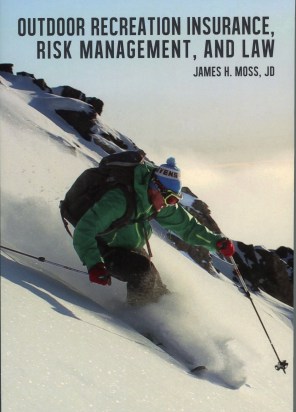
Outdoor Recreation Insurance, Risk Management, and Law
Jim is the author or co-author of eight books about legal issues in the outdoor recreation world; the latest is Outdoor Recreation Insurance, Risk Management, and Law. To Purchase Go Here:
To see Jim’s complete bio go here and to see his CV you can find it here. To find out the purpose of this website go here.
If you are interested in having me write your release, download the form and return it to me.
If you like this let your friends know or post it on FB, Twitter, or LinkedIn
By Recreation Law Rec-law@recreation-law.com James H. Moss
@2023 Summit Magic Publishing, LLC
G-YQ06K3L262
 |
 Stimulus |
 Mastodon |
 Recreation Law logo |
 |
 X (formerly known as Twitter) logo |
 Blue Sky Logo |
 Threads |
<rel=”author” link=” https://plus.google.com/u/0/b/112453188060350225356/” />
#RecreationLaw, #@RecreationLaw, #Cycling.Law #Fitness.Law, #Ski.Law, #Outside.Law, #Recreation.Law, #Recreation-Law.com, #Outdoor Law, #Recreation Law, #Outdoor Recreation Law, #Adventure Travel Law, #law, #Travel Law, #Jim Moss, #James H. Moss, #Attorney at Law, #Tourism, #Adventure Tourism, #Rec-Law, #Rec-Law Blog, #Recreation Law, #Recreation Law Blog, #Risk Management, #Human Powered, #Human Powered Recreation,# Cycling Law, #Bicycling Law, #Fitness Law, #Recreation-Law.com, #Backpacking, #Hiking, #Mountaineering, #Ice Climbing, #Rock Climbing, #Ropes Course, #Challenge Course, #Summer Camp, #Camps, #Youth Camps, #Skiing, #Ski Areas, #Negligence, #Snowboarding, #RecreationLaw, #@RecreationLaw, #Cycling.Law #Fitness.Law, #SkiLaw, #Outside.Law, #Recreation.Law, #RecreationLaw.com, #OutdoorLaw, #RecreationLaw, #OutdoorRecreationLaw, #AdventureTravelLaw, #Law, #TravelLaw, #JimMoss, #JamesHMoss, #AttorneyatLaw, #Tourism, #AdventureTourism, #RecLaw, #RecLawBlog, #RecreationLawBlog, #RiskManagement, #HumanPowered, #HumanPoweredRecreation,# CyclingLaw, #BicyclingLaw, #FitnessLaw, #RecreationLaw.com, #Backpacking, #Hiking, #Mountaineering, #IceClimbing, #RockClimbing, #RopesCourse, #ChallengeCourse, #SummerCamp, #Camps, #YouthCamps, #Skiing, #Ski Areas, #Negligence, #Snowboarding, sport and recreation laws, ski law, cycling law, Colorado law, law for recreation and sport managers, bicycling and the law, cycling and the law, ski helmet law, skiers code, skiing accidents, Recreation Lawyer, Ski Lawyer, Paddlesports Lawyer, Cycling Lawyer, Recreational Lawyer, Fitness Lawyer, Rec Lawyer, Challenge Course Lawyer, Ropes Course Lawyer, Zip Line Lawyer, Rock Climbing Lawyer, Adventure Travel Lawyer, Outside Lawyer, Recreation Lawyer, Ski Lawyer, Paddlesports Lawyer, Cycling Lawyer, #RecreationalLawyer, #FitnessLawyer, #RecLawyer, #ChallengeCourseLawyer, #RopesCourseLawyer, #ZipLineLawyer, #RockClimbingLawyer, #AdventureTravelLawyer, #OutsideLawyer, Jonathan C. Gamze, Julie Gamze, Camp Sea-Gull, Inc., William P. Schulman, Emily Lisner, Youth Camp, Summer Camp, Capture the Flag, duty, Proximate Cause,
WordPress Tags: Camp,camper,instructions,plaintiff,attention,Gamze,Gull,Mich,LEXIS,lawsuit,disposition,judgment,jurisdictions,Schulman,marker,event,owner,campers,cloth,girls,tooth,negligence,premise,theory,person,landowner,defendant,Summary,Definition,Michigan,causation,relationship,factor,defendants,flagpole,Once,fact,jury,injury,Proximate,consequences,dismissal,danger,premises,Kids,earth,perspective,litigation,injuries,rotation,Jonathan,Friend,Julie,William,Appellees,Lisner,Claims,Defenses,Leave,FaceBook,Twitter,LinkedIn,Recreation,Edit,Email,Google,RecreationLaw,Page,Outdoor,Adventure,Travel,Blog,Mobile,Site,James,Moss,Authorrank,author,Outside,Attorney,Tourism,Risk,Management,Human,Rock,Ropes,Course,Challenge,Summer,Camps,Youth,Areas,SkiLaw,OutdoorLaw,OutdoorRecreationLaw,AdventureTravelLaw,TravelLaw,JimMoss,JamesHMoss,AttorneyatLaw,AdventureTourism,RecLaw,RecLawBlog,RecreationLawBlog,RiskManagement,HumanPoweredRecreation,CyclingLaw,BicyclingLaw,FitnessLaw,RopesCourse,ChallengeCourse,SummerCamp,YouthCamps,Colorado,managers,helmet,accidents,Lawyer,Paddlesports,Recreational,Line,RecreationalLawyer,FitnessLawyer,RecLawyer,ChallengeCourseLawyer,RopesCourseLawyer,ZipLineLawyer,RockClimbingLawyer,AdventureTravelLawyer,OutsideLawyer,Capture,Flag,Cause,whether
Gamze v Camp Sea-Gull, Inc., 2012 Mich. App. LEXIS 1227 (Mich App 2012)
Posted: May 13, 2013 Filed under: Legal Case, Michigan, Summer Camp, Youth Camps | Tags: Camp, Camp Sea-Gull, Capture the Flag, duty, Emily Lisner, Inc., Jonathan C. Gamze, Julie Gamze, Michigan, Michigan Court of Appeals, Negligence, Proximate Cause, Standard of review, Summer Camp, William P. Schulman, Youth Camp Leave a commentTo Read an Analysis of this decision see
Camp held liable when a camper misunderstands instructions, and plaintiff was not paying attention.
Gamze v Camp Sea-Gull, Inc., 2012 Mich. App. LEXIS 1227 (Mich App 2012)
JONATHAN C. GAMZE, as Next Friend for JULIE GAMZE, a Minor, Plaintiff-Appellant, v CAMP SEA-GULL, INC. and WILLIAM P. SCHULMAN, Defendants-Appellees, and EMILY LISNER, Defendant.
No. 299433
COURT OF APPEALS OF MICHIGAN
2012 Mich. App. LEXIS 1227
June 21, 2012, Decided
NOTICE: THIS IS AN UNPUBLISHED OPINION. IN ACCORDANCE WITH MICHIGAN COURT OF APPEALS RULES, UNPUBLISHED OPINIONS ARE NOT PRECEDENTIALLY BINDING UNDER THE RULES OF STARE DECISIS.
PRIOR HISTORY: [*1]
Charlevoix Circuit Court. LC No. 09-054822-NO.
CORE TERMS: camper, flag, flagpole, towel, capture, foreseeable, premises liability, team’s, material fact, circle, lying, pole, matter of law, genuine issues, proximate cause, proximately, counselor, favorable, causation, grabbing, owed, top, pick, order granting, negligence claim, final order, proper instructions, dangerous condition, foreseeability, depositions
JUDGES: Before: WILDER, P.J., and HOEKSTRA and BORRELLO, JJ.
OPINION
Per Curiam.
In this case, plaintiff appeals from an order granting summary disposition in favor of defendants1 Camp Sea-Gull, Inc. (the Camp) and William Schulman, a part-owner and associate director of the Camp, on plaintiff’s claims of negligence and premises liability. Because genuine issues of material fact remain regarding plaintiff’s negligence claim, we affirm in part, reverse in part, and remand.2
1 Emily Lisner was dismissed by stipulation and is not involved in this appeal. Thus, our reference to “defendants” will refer to appellees.
2 Defendants have raised a question as to this Court’s jurisdiction over the appeal. Plaintiff filed the initial appeal of the order granting summary disposition before Lisner had been dismissed from the case. Accordingly, this Court dismissed the appeal for lack of jurisdiction. Gamze v Camp Sea-Gull, Inc, unpublished order of the Court of Appeals, entered July 13, 2010 (Docket No. 298202). We informed plaintiff, however, that he could seek to appeal the grant of summary disposition by filing a delayed application for leave under MCR 7.205(F). Defendants [*2] subsequently requested that the trial court tax their costs against plaintiff. On July 29, 2010, the trial court denied this motion except for a $20 motion fee. Plaintiff then filed the current appeal. The arguments on appeal do not concern the motion for costs but, instead, are exclusively aimed at the trial court’s decision to grant the motion for summary disposition.
When an appeal of right is dismissed for lack of jurisdiction or is not timely filed, an appellant may file an application for leave to appeal up to 12 months after entry of the final order to be appealed. MCR 7.205(F)(1) and (F)(3). Plaintiff filed this appeal on August 2, 2010, less than 12 months after May 21, 2010. Given the trial court’s notation in the orders below concerning which order was–or was not–intended as the final order in this case, we treat plaintiff’s claim of appeal as an application for leave and hereby grant it. MCR 7.205(D)(2); see also In re Morton, 258 Mich App 507, 508 n 2; 671 NW2d 570 (2003).
I. BASIC FACTS
Julie Gamze and defendant Emily Lisner were both campers at the Camp in the summer of 2007. As part of a “Pirate Day” on July 15, 2007, the Camp organized a game of capture the flag on a [*3] large field divided into two halves. In the middle of each half was a circle, and in the middle of the circle was a five-foot tall flagpole3 with a colored flag on top. While the object of the game was to “capture” the opposing team’s “flag,” the “flag” to be seized was actually a piece of cloth or towel lying on the ground at the base of the flagpole. Participants were not supposed to attempt to capture the flag on top of the pole or the pole itself. Lisner testified that no one told her that the flagpole flag was not the correct flag to capture, and the counselor who explained the rules does not remember if she clarified that point. In the course of the game, Lisner grabbed the flagpole and began running with it. Gamze was running nearby, being chased by another camper, and the metal stake at the bottom end of the flagpole hit her in the mouth. She lost one tooth, and three others were broken.
3 The flagpole also had a metal tapered end or “stake” so it could be inserted and anchored into the ground.
Plaintiff filed suit against defendants, alleging negligence and premises liability. The trial court granted defendants’ motion for summary disposition and stated the following at the hearing:
I [*4] can’t see where the camp and Mr. Schulman did anything wrong. I can’t see where this individual’s grabbing of the marker was a foreseeable event by the camp and those in charge of this particular camp and the camp’s owner.
Anything that they did or failed to do was not the proximate cause of this Plaintiff’s injury. And, I don’t believe there is any material facts that are in dispute that would prevent the granting for the Motion for Summary Disposition under [MCR 2.116(C)(10)]. So that’s my ruling.
II. STANDARD OF REVIEW
This Court reviews de novo a trial court’s decision on a motion for summary disposition. Auto Club Group Ins Co v Burchell, 249 Mich App 468, 479; 642 NW2d 406 (2001). When reviewing a motion brought under MCR 2.116(C)(10), we consider the pleadings, admissions, and other evidence submitted by the parties in the light most favorable to the nonmoving party. Brown v Brown, 478 Mich 545, 551-552; 739 NW2d 313 (2007). A grant of summary disposition “is appropriate if there is no genuine issue regarding any material fact and the moving party is entitled to judgment as a matter of law.” Id. at 552.
III. ANALYSIS
A. NEGLIGENCE
The elements of a negligence claim are “(1) a duty [*5] owed by the defendant to the plaintiff, (2) a breach of that duty, (3) causation, and (4) damages.” Case v Consumers Power Co, 463 Mich 1, 6; 615 NW2d 17 (2000). It is not entirely clear which element(s) the trial court found to be deficient in plaintiff’s claim. While only explicitly referencing causation, the trial court’s statement seemed to encompass three of the elements: duty (“I can’t see where this individual’s grabbing of the marker was a foreseeable event . . . .”; breach (“I can’t see where the [defendants] did anything wrong.”; and causation (“[a]nything that they did or failed to do was not the proximate cause of this Plaintiff’s injury.”). With the damages element not being disputed, we will address the remaining three elements.
The question of whether a defendant owes a plaintiff a duty of care is a question of law. Cummins v Robinson Twp, 283 Mich App 677, 692; 770 NW2d 421 (2009). When determining whether a duty should be imposed, the ultimate inquiry is “whether the social benefits of imposing a duty outweigh the social costs of imposing a duty.” In re Certified Question from Fourteenth Dist Court of Appeals of Texas, 479 Mich 498, 505; 740 NW2d 206 (2007). “This inquiry [*6] involves considering, among any other relevant considerations, the relationship of the parties, the foreseeability of the harm, the burden on the defendant, and the nature of the risk presented.” Id. (quotation marks omitted). But the most important factor is the relationship of the parties. Id.
Here, we conclude that defendants owed Gamze a duty to provide proper instructions for the game of “capture the flag.” In 2007, Gamze was a summer camper at the Camp. She and her family entrusted defendants with her safety during her stay. It was foreseeable that if the campers were not properly instructed, then a camper could pick up the actual flagpole instead of picking up the flag/towel lying on the ground next to the flagpole. It is also foreseeable that, if a camper did remove the flagpole from the ground, the camper could injure another camper while running with the pole.4 Finally, the burden to properly instruct the campers to pick up the towel from the ground is negligible.
4 This is especially foreseeable when the opposing team’s goal is to pursue and tag the flag carrier.
Once the existence of a duty toward Gamze is established, the reasonableness of the defendant’s conduct is a question [*7] of fact for the jury. Arias v Talon Development Group, Inc, 239 Mich App 265, 268; 608 NW2d 484 (2000). Thus, the next question is whether there is a genuine issue regarding whether defendants breached this duty by failing to provide the proper instructions.
In support of their motion for summary disposition, defendants provided, inter alia, the unsworn “statements” from two people who were camp counselors at the time of the accident. However, these statements do not comply with the requirements of MCR 2.116(G)(2) since they are not “affidavits, depositions, admissions, or other documentary evidence,” and consequently cannot be considered. Marlo Beauty Supply, Inc v Farmers Ins Group of Cos, 227 Mich App 309, 321; 575 NW2d 324 (2009). Moreover, even if the statements were considered, they would not support granting defendants’ motion for summary disposition. The first statement was by Leah Glowacki, who was the programming counselor at the time of the incident. With regard to the instructions, she stated, “I instructed the campers to attempt to obtain the flag that was inside the circle on the opposite side of the field from where their team was stationed.” This statement does not establish [*8] that the correct instructions were given. In fact, when viewing the statement in a light most favorable to plaintiff, one could conclude that Glowacki’s instructions might possibly have been construed by at least some campers as a directive to remove the flag itself instead of the towel on the ground. The other statement was provided by Stephanie Plaine, who stated that she instructed the campers “to capture the team’s flag on the other side of the field which was located inside the circles drawn onto the grass.” Again, this statement does not specify that the instruction was to get the towel lying next to the flag.
Defendants did properly submit the depositions of six people, however. But none of the submitted testimony indicated that the campers were instructed to ignore the flagpole and only pick up the towel on the ground: Gamze could not recall what specific instructions were given; Lisner testified that she did not hear any specific instructions to take the towel on the ground instead of the pole itself; Jack Schulman and William Schulman both admitted that they did not hear the instructions that Glowacki and Plaine provided; Marsha Schulman admitted that she was not present when [*9] the instructions were given; and Plaine, herself, testified that she could not recall the specifics of the instructions that she gave. Therefore, when viewing all of this evidence in a light most favorable to plaintiff, there is a question of material fact on whether the Camp instructed the campers to only take the towel lying at the base of the flagpole instead of the flag or flagpole itself.
Finally, the trial court indicated that it found as a matter of law that defendants could not have proximately caused plaintiff’s injuries. But proximate cause is a factual question for the jury unless reasonable minds could not differ. Lockridge v Oakwood Hosp, 285 Mich App 678, 684; 777 NW2d 511 (2009). Proximate cause normally involves examining the foreseeability of consequences and whether a defendant should be held liable for those consequences. Campbell v Kovich, 273 Mich App 227, 232; 731 NW2d 112 (2006). Here, a reasonable juror could have concluded that a failure to instruct the campers properly could foreseeably result in an enthusiastic camper grabbing and removing the flagpole in order to “capture the flag” affixed to the top of it. And because the object of the game was for the camper [*10] to run the flag back to her team’s territory while other campers tried to tag her, a reasonable person could conclude that it was foreseeable that other campers might be hit and injured by the five-foot tall flagpole as it was being moved. Therefore, the trial court erred by holding as a matter of law that defendants could not have proximately caused Gamze’s injuries.
B. PREMISES LIABILITY
We now turn to plaintiff’s premises liability claim. Because Gamze was an invitee on the Camp’s premises, defendants owed a duty to “‘exercise reasonable care to protect [her] from an unreasonable risk of harm caused by a dangerous condition on the land.'” Benton v Dart Properties, Inc, 270 Mich App 437, 440; 715 NW2d 335 (2006), quoting Lugo v Ameritech Corp, Inc, 464 Mich 512, 516; 629 NW2d 384 (2001) (emphasis added). Plaintiff must show that the duty was breached and that the breach proximately caused her injuries. Benton, 270 Mich App at 440.
However, Gamze was not harmed by a dangerous condition “on the land.” Instead, she was harmed when Lisner pulled the flagpole out of the ground and began running with it. The danger arose solely because of the actions of the participants and not because of [*11] an inherent condition of the premises. Thus, plaintiff’s claim properly sounds in negligence, not premises liability.
Affirmed in part, reversed in part, and remanded for further proceedings consistent with this opinion. We do not retain jurisdiction. No costs are taxable pursuant to MCR 7.219, neither party having prevailed in full.
/s/ Kurtis T. Wilder
/s/ Joel P. Hoekstra
/s/ Stephen L. Borrello
G-YQ06K3L262
http://www.recreation-law.com
WordPress Tags: Gamze,Camp,Gull,Mich,LEXIS,JONATHAN,Friend,JULIE,Minor,Plaintiff,Appellant,WILLIAM,SCHULMAN,Defendants,Appellees,LISNER,Defendant,COURT,APPEALS,MICHIGAN,June,NOTICE,OPINION,ACCORDANCE,RULES,OPINIONS,UNDER,STARE,DECISIS,PRIOR,HISTORY,Charlevoix,Circuit,TERMS,camper,flagpole,premises,team,fact,counselor,causation,negligence,instructions,JUDGES,WILDER,HOEKSTRA,BORRELLO,Curiam,disposition,owner,director,stipulation,Thus,reference,jurisdiction,Docket,arguments,decision,August,Given,notation,Morton,BASIC,FACTS,campers,Pirate,foot,cloth,Participants,tooth,marker,event,injury,Motion,Summary,STANDARD,REVIEW,Auto,Club,Group,Burchell,admissions,Brown,judgment,ANALYSIS,Case,Consumers,Power,statement,Cummins,Robinson,Question,Fourteenth,Dist,Texas,relationship,quotation,factor,Here,goal,carrier,Once,existence,jury,Arias,Talon,Development,statements,counselors,accident,requirements,affidavits,Marlo,Farmers,Moreover,Leah,Glowacki,incident,directive,Stephanie,Plaine,Again,instruction,testimony,Jack,Marsha,specifics,injuries,Lockridge,Oakwood,Hosp,Proximate,consequences,Campbell,Kovich,juror,failure,person,Benton,Dart,Properties,Lugo,Ameritech,Corp,emphasis,Instead,danger,proceedings,Kurtis,Joel,Stephen,months,five,three,whether
Companies Who Can Help Your Outdoor Business
Posted: May 9, 2013 Filed under: Youth Camps, Zip Line | Tags: Advertising, Business, Business and Economy, Web development, x, y, z Leave a comment
Seller Search | | Sign In | | FAQ | | About | | Contact Us OutdoorIndustryB2B.com – New Companies Ready To Do Business
|


Eighteen year old girl knocks speeding cyclists over to protect children; Sudden Emergency Doctrine stops suit
Posted: May 6, 2013 Filed under: Cycling, Minors, Youth, Children, New York, Summer Camp, Youth Camps | Tags: Central Park, Cycling, Cyclists, Day Camp, New York, New York City, NY, Oasis Children's Services, Recreation, Summer Camp, Summer Enrichment program Leave a commentPavane v. Marte, 37 Misc. 3d 1216A; 2012 N.Y. Misc. LEXIS 5128; 2012 NY Slip Op 52060U
Cyclists deserved it to.
This is a lawsuit over an injury a cyclist received when he crashed in New York City. He crashed because an eighteen year old summer enrichment program counselor shoved him over with her “Stop Children Crossing” sign when he failed to stop at a light.
A summer enrichment program is a day camp for kids when parents have to work. The kids are taken on tours, programs, exercise and many involve a lot of outdoor recreation. In this case, the kids with two counselors were walking to a swimming pool. The program was run by the defendant Oasis Children’s Services.
While crossing a street only half the students made it across the street before the light changed. The defendant counselor kept her students back until the light changed again. She then proceeded out to the middle of traffic and held up a sign which said Stop Children Crossing. As the students started to cross she noticed a group of cyclists coming towards the crosswalk. All but one of the cyclists stopped. The one who did not stop was the defendant.
As per the protocol of the program, the counselor was supposed to yell at cyclists who look like they are not going to stop. If the cyclists do not stop a counselor it to put their body between the bicycle and the kids. (That is asking a lot of an 18-year-old kid!)
The light was red; the cyclist was not stopping so the counselor put her body between the kids and the cyclists. The cyclists still did not stop. The counselor waived her sign and yelled at the cyclists. At the last moment, she jumped out of the way, and she pushed the cyclists arm with her sign.
He crashed!
The cyclists sued for negligence that he crashed because a girl pushed him with a sign. The defendants raised the defense of the Sudden Emergency Doctrine.
Summary of the case
The sudden emergency doctrine has many different names and variations across the US. You should check your state to determine if it is available as a defense how the defense is defined. Do not rely on the sudden emergency doctrine to save you, it rarely does.
In New York, the Sudden Emergency Doctrine is defined as:
A common law emergency doctrine is recognized in New York and it applies “when an actor is faced with a sudden and unexpected circumstance that leaves little or no time for thought, deliberation or consideration, or causes the actor to be reasonably so disturbed that the actor must make a speedy decision without weighing alternative courses of conduct. The actor may not be negligent if the actions taken are reasonable and prudent in the emergency context”.
Basically, it says you can be negligent for the greater good. If your negligence is less than the damage or problem that not being negligent will create, then the Sudden Emergency Doctrine provides you a defense to a negligence claim.
In this case, the court found the actions of the defendant counselor in pushing the cyclists saved the children. “The evidence is credible that Marte [Defendant] pushed Pavane [Plaintiff] from his bicycle in order to prevent children from getting injured.”
Application of the Sudden Emergency Doctrine is a balancing test to some extent. The harm created by the negligent act is less than the harm that would have occurred if the defendant had not acted. 99% of the time only a jury will make the decision, whether your actions where worth it.
As a further little hit, the court held “It is the finding of this Court that Mr. Pavane’s own failure to stop at the red light and yield to children crossing the street was the sole proximate cause of the incident.”
So Now What?
The sad thing is the program had so much experience with cyclist’s running lights; they had developed a program to deal with it.
Cyclists of New York, you should be embarrassed!
The classic case of where the Sudden Emergency Doctrine would work is portrayed in “Touching the Void” by Joe Simpson.
Do not rely on the sudden emergency doctrine as a defense in your program or activity.
Plaintiff: Martin Pavane and Merrill Pavane
Defendant: Samidra Marte, Oasis Community Corporation and Oasis Children’s Services
Plaintiff Claims: Negligence
Defendant Defenses: Sudden Emergency Doctrine
Holding: For the Defendant
What do you think? Leave a comment.
If you like this let your friends know or post it on FaceBook, Twitter or LinkedIn
Copyright 2013 Recreation Law (720) Edit Law
Email: Rec-law@recreation-law.com
Google+: +Recreation
Twitter: RecreationLaw
Facebook: Rec.Law.Now
Facebook Page: Outdoor Recreation & Adventure Travel Law
Blog: www.recreation-law.com
Mobile Site: http://m.recreation-law.com
By Recreation Law Rec-law@recreation-law.com James H. Moss #Authorrank
<rel=”author” link=” https://plus.google.com/u/0/b/112453188060350225356/” />
#RecreationLaw, #@RecreationLaw, #Cycling.Law #Fitness.Law, #Ski.Law, #Outside.Law, #Recreation.Law, #Recreation-Law.com, #Outdoor Law, #Recreation Law, #Outdoor Recreation Law, #Adventure Travel Law, #law, #Travel Law, #Jim Moss, #James H. Moss, #Attorney at Law, #Tourism, #Adventure Tourism, #Rec-Law, #Rec-Law Blog, #Recreation Law, #Recreation Law Blog, #Risk Management, #Human Powered, #Human Powered Recreation,# Cycling Law, #Bicycling Law, #Fitness Law, #Recreation-Law.com, #Backpacking, #Hiking, #Mountaineering, #Ice Climbing, #Rock Climbing, #Ropes Course, #Challenge Course, #Summer Camp, #Camps, #Youth Camps, #Skiing, #Ski Areas, #Negligence, #Snowboarding, #RecreationLaw, #@RecreationLaw, #Cycling.Law #Fitness.Law, #SkiLaw, #Outside.Law, #Recreation.Law, #RecreationLaw.com, #OutdoorLaw, #RecreationLaw, #OutdoorRecreationLaw, #AdventureTravelLaw, #Law, #TravelLaw, #JimMoss, #JamesHMoss, #AttorneyatLaw, #Tourism, #AdventureTourism, #RecLaw, #RecLawBlog, #RecreationLawBlog, #RiskManagement, #HumanPowered, #HumanPoweredRecreation,# CyclingLaw, #BicyclingLaw, #FitnessLaw, #RecreationLaw.com, #Backpacking, #Hiking, #Mountaineering, #IceClimbing, #RockClimbing, #RopesCourse, #ChallengeCourse, #SummerCamp, #Camps, #YouthCamps, #Skiing, #Ski Areas, #Negligence, #Snowboarding, sport and recreation laws, ski law, cycling law, Colorado law, law for recreation and sport managers, bicycling and the law, cycling and the law, ski helmet law, skiers code, skiing accidents, Recreation Lawyer, Ski Lawyer, Paddlesports Lawyer, Cycling Lawyer, Recreational Lawyer, Fitness Lawyer, Rec Lawyer, Challenge Course Lawyer, Ropes Course Lawyer, Zip Line Lawyer, Rock Climbing Lawyer, Adventure Travel Lawyer, Outside Lawyer, Recreation Lawyer, Ski Lawyer, Paddlesports Lawyer, Cycling Lawyer, #RecreationalLawyer, #FitnessLawyer, #RecLawyer, #ChallengeCourseLawyer, #RopesCourseLawyer, #ZipLineLawyer, #RockClimbingLawyer, #AdventureTravelLawyer, #OutsideLawyer,Oasis Children’s Services, Summer Enrichment program, Summer Camp, Day Camp, Cyclists, NY, New York City, Central Park,
WordPress Tags: Pavane,Marte,Misc,LEXIS,Slip,Martin,Merrill,Plaintiff,Samidra,Oasis,Corporation,Children,Services,Defendant,SUPREME,COURT,YORK,KINGS,August,NOTICE,OPINION,OFFICIAL,REPORTS,TERMS,judgment,bicycle,street,counselor,doctrine,fact,situation,deliberation,HEADNOTES,Negligence,Emergency,JUDGES,Bernard,Graham,Justice,Decision,lawsuit,complaint,December,plaintiffs,defendants,Samira,action,Central,Park,CPLR,dismissal,Background,enrichment,area,locations,Rachel,Carrion,campers,West,Drive,testimony,sidewalk,guidelines,Richard,Thompson,McKay,supervisor,protocol,counselors,Rodney,Gould,person,path,moment,Discussion,opposition,knowledge,existence,Bello,Transit,Auth,Dept,Here,descriptions,actor,circumstance,context,Caristo,Rivera,Marks,Robb,response,jury,Koenig,Vitale,Levine,determination,Although,Rotuba,Extruders,Ceppos,Sillman,Twentieth,Century,Film,Corp,assertions,example,Leon,Sager,woman,teens,Branham,Loews,Orpheum,Cinemas,conclusion,tort,consequences,intersection,injury,Where,accident,Goff,Goudreau,failure,incident,CountyBottom,Form,crosswalk,triable,cyclist,pursuant,whether
Pavane v. Marte, 37 Misc. 3d 1216A; 2012 N.Y. Misc. LEXIS 5128; 2012 NY Slip Op 52060U
Posted: May 6, 2013 Filed under: Cycling, Legal Case, Minors, Youth, Children, New York, Summer Camp, Youth Camps | Tags: Central Park, Cyclists, Day Camp, Metro Areas, New York, New York City, NY, Oasis Children's Services, Plaintiff, Summary judgment, Summer Camp, Summer Enrichment program Leave a commentPavane v. Marte, 37 Misc. 3d 1216A; 2012 N.Y. Misc. LEXIS 5128; 2012 NY Slip Op 52060U
Martin Pavane and Merrill Pavane, Plaintiff(s), against Samidra Marte, Oasis Community Corporation and Oasis Children’s Services, Defendant(s).
33473/08
SUPREME COURT OF NEW YORK, KINGS COUNTY
37 Misc. 3d 1216A; 2012 N.Y. Misc. LEXIS 5128; 2012 NY Slip Op 52060U
August 9, 2012, Decided
NOTICE: THIS OPINION IS UNCORRECTED AND WILL NOT BE PUBLISHED IN THE PRINTED OFFICIAL REPORTS.
CORE TERMS: summary judgment, bicycle, street, crossing, counselor, emergency, crosswalk, walk, emergency doctrine, triable issues of fact, stop sign, deposition, cyclist, annexed, proximate cause, red light, matter of law, emergency situation, party opposing, affirmative defense, traffic light, reasonableness, deliberation, speculative, unexpected, proceeded, favorable, surprise, sudden, pushed
HEADNOTES
[*1216A] Negligence–Emergency Doctrine.
JUDGES: [**1] Hon. Bernard J. Graham, Acting Justice.
OPINION BY: Bernard J. Graham
OPINION
Bernard J. Graham, J.
Decision:
The captioned lawsuit was commenced by filing of a summons and complaint on or about December 8, 2008, by plaintiffs, Martin Pavane and Merrill Pavane, against defendants Samira Marte (incorrectly identified as “Samidra Marte”), Oasis Community Corporation, and Oasis Children’s Services, LLC. Plaintiffs’ claim is a negligence action against defendants stemming from a fall at Central Park and a derivative claim on behalf of plaintiff, Merrill Pavane.
Defendants move for summary judgment pursuant to CPLR § 3212 for dismissal of the plaintiffs’ complaint alleging that there are no triable issues of fact and that defendants are free from liability pursuant to the Emergency Doctrine’.
Background
Defendant Oasis Children’s Services, LLC (“Oasis”) is a company that runs summer enrichment programs for at-risk children in the tri-state area. They have several camp locations in New York City, including one in Central Park.
Defendant Oasis Community Corporation is a named defendant which is ostensibly related to Oasis Children’s Services, LLC.
During the summer of 2008, Oasis hired 18-year-old defendant Samira Marte [**2] (“Marte”) as a camp counselor. On August 22, 2008, Marte and another counselor, Rachel Carrion (“Carrion”), entered Central Park at 96th Street with their campers to reach a swimming pool at 110th Street. Their route required them to cross West Drive.
According to the deposition testimony of Ms. Marte, Rachel Carrion and several children crossed West Drive first. The walk signal changed to “do not walk” before Ms. Marte was able to cross with the rest of the group, so she stayed on the sidewalk with the children to wait for the light to change again. When the signal changed to “walk”, Ms. Marte followed camp guidelines and proceeded to the middle of the crosswalk to hold up her “stop/children crossing” sign. According to the deposition of Richard Thompson McKay, who is an Oasis supervisor and not a named party to the action, Oasis provided protocol training for all camp counselors on how to cross the street. Counselors are instructed to stand in the middle of the street with the stop sign before children may begin to pass. Counselors were also told that if it appears that a cyclist will not stop, then the counselors must first be “loud and verbal” and ask the cyclist to stop. If the [**3] cyclist still does not stop, then counselors must “put [their] body as best as [they] can in between bicyclist and the children that [they] have to protect.” (See Dep. of Richard Thompson McKay, pg. 11-12, annexed as Ex. “H” to the Aff. of Rodney E. Gould in support of motion for summary judgment).
Ms. Marte states that several bicyclists were traveling down West Drive and that all of them stopped for the red light except for “one person that kept going.” (See Dep. of Samira Marte, pg. 60-61, 73-74, annexed as Ex. “F” to the Aff. of Rodney E. Gould in support of motion for summary judgment). Ms. Marte observed the defendant, Martin Pavane (“Pavane”), approaching the red light on his bicycle and alleges that Mr. Pavane did not slow down. Since children were beginning to cross the street, Ms. Marte anticipated that the bicycle would collide with the crossing children and herself. In order to get Mr. Pavane to stop, Ms. Marte first waived her stop sign and yelled for him to stop. When the bicycle still did not stop or slow down, she tried to put herself in between the bicycle and the children by standing in front of the bicycle’s [***2] path. However, Ms. Marte was forced to move aside because [**4] she states that the bicycle was going too fast. She was afraid that the bicycle would run right into her and the children. Ms. Marte states that was the moment she decided to push Mr. Pavane’s arm with the stop sign (Marte Dep. pg. 74-77).
Discussion
In opposition to the defendants’ motion for summary judgment, plaintiffs argue that the defendants failed to include the Emergency Doctrine’ as an affirmative defense in their answer.
However, where the party opposing summary judgment has knowledge of the facts relating to the existence of an emergency and would not be taken by surprise with the use of the emergency defense, the doctrine does not have to be pleaded as an affirmative defense (see Bello v. Transit Auth. of NY City, 12 AD3d 58, 61, 783 N.Y.S.2d 648 (2nd Dept. 2004)). Here, plaintiffs cannot claim that they were taken by surprise by defendants’ emergency defense. The depositions provide full descriptions of facts describing an emergency situation.
A common law emergency doctrine is recognized in New York and it applies “when an actor is faced with a sudden and unexpected circumstance that leaves little or no time for thought, deliberation or consideration, or causes the actor to be reasonably so [**5] disturbed that the actor must make a speedy decision without weighing alternative courses of conduct. [The] actor may not be negligent if the actions taken are reasonable and prudent in the emergency context”. (Caristo v. Sanzone, 96 NY2d 172, 174, 750 N.E.2d 36, 726 N.Y.S.2d 334 (2001) (citing Rivera v. New York City Tr. Auth., 77 NY2d 322, 327, 569 N.E.2d 432, 567 N.Y.S.2d 629 (1991); see also Marks v. Robb, 90 AD3d 863, 935 N.Y.S.2d 593 (2nd Dept. 2011)). The depositions show that Marte was confronted with a sudden and unexpected emergency circumstance that left her with little time for deliberation. The evidence is credible that Marte pushed Pavane from his bicycle in order to prevent children from getting injured.
Ordinarily, the reasonableness of a party’s response to an emergency situation will present questions of fact for a jury, but it may be determined as a matter of law in appropriate circumstances (Bello v. Transit Auth. of NY City, 12 AD3d at 60; see also Koenig v. Lee, 53 AD3d 567, 862 N.Y.S.2d 373 (2nd Dept. 2008); Vitale v. Levine, 44 AD3d 935, 844 N.Y.S.2d 105 (2nd Dept. 2007)).
In this case, defendants seek an award of summary judgment dismissing the plaintiffs’ claim which would require a determination by this Court that, as a matter of law, the actions taken by Ms. Marte were reasonable [**6] and did not present a question which should be presented to a jury. Although summary judgment is a drastic remedy, a court may grant summary judgment when the moving party establishes that there are no triable issues of material fact (see Rotuba Extruders v. Ceppos, 46 NY2d 223, 385 N.E.2d 1068, 413 N.Y.S.2d 141 (1978); Sillman v. Twentieth Century-Fox Film Corp., 3 NY2d 395, 144 N.E.2d 387, 165 N.Y.S.2d 498 (1957)).
Rachel Carrion, the co-counselor who is not a named party to the action, testified that she saw Pavane ride his bicycle towards the crosswalk where herself and Marte were crossing the street with children from the Oasis summer camp (see Carrion Dep. pg. 8-9 annexed to Gould [***3] Aff. in support of motion for summary judgment). Carrion testified that Pavane was approaching them “at [a] speed” and “would not stop” (Carrion Dep. pg. 10). The testimony of Ms. Carrion is completely consistent and corroborative of Ms. Marte’s testimony. Ms. Marte stated that Mr. Pavane was not going to stop and was about to hit the four children who were crossing in the crosswalk (Marte Dep. pg 61).
The majority of Pavane’s testimony consists of mere speculative and conclusory assertions because he claims to not recall most details. For example, Pavane did not recall [**7] whether he saw children on the street (see Pavane Dep. pg. 17, annexed to the Aff of Leon Sager in opposition to the motion for summary judgment), but states that “it’s certainly possible there were people there.” (Pavane Dep. pg. 17). Carrion testified that there definitely were children on both sides of the crosswalk and some crossing in the middle before Marte pushed Pavane off his bicycle (Carrion Dep. pg. 11). Pavane also does not recall whether Marte was holding a “stop, children crossing” sign or whether she was waving at him, but he does remember Marte being a young woman in her teens (Pavane Dep. Pg. 17), who was “doing something with her hands at the particular time when she stepped in front of [him]” (Pavane Dep. pg. 18).
In reviewing the offered testimony in support of the motion and the opposition to the motion, the evidence submitted must be viewed in the light most favorable to the party opposing the motion (see Branham v. Loews Orpheum Cinemas, Inc., 8 NY3d 931, 866 N.E.2d 448, 834 N.Y.S.2d 503 (2007)). Even assessing the available evidence in a light most favorable to Mr. Pavane, a neutral reading of the evidence would support a conclusion that Ms. Marte and the children were crossing the street with [**8] the “walk” sign in their favor; that Ms. Marte was positioned with her stop sign at the cross walk; and that Mr. Pavane was cycling into the crosswalk against the traffic light.
While this Court is hesitant to declare the actions of any party in an alleged tort claim to be reasonable as a matter of law, in certain cases, such as this, summary judgment may be appropriate. (see Bello v. Transit Auth. of NY City, 12 AD3d 58, 783 N.Y.S.2d 648 (2004). The actions of the defendant, Marte, must be considered reasonable given the emergency she faced and the potentially harmful consequences to the children she was protecting. It is also apparent that Mr. Pavane proceeded into the intersection against the traffic light and, would fairly be considered to be the proximate cause of his injury. Where it is clear that the plaintiff’s actions were the sole proximate cause of the accident, plaintiff’s mere speculative assertions that defendant may have failed to act properly is insufficient to raise a triable issue of fact to defeat a summary judgment motion. (see Goff v. Goudreau, 222 AD2d 650, 650, 635 N.Y.S.2d 699 (2nd Dept. 1995); Vitale v. Levine, 44 AD3d 935, 844 N.Y.S.2d 105 (2nd Dept. 2007)).
Conclusion
It is the finding of this Court that Mr. Pavane’s [**9] own failure to stop at the red light and yield to children crossing the street was the sole proximate cause of the incident. The actions of the camp counselor, Ms. Marte, in the context of crossing the street with young children who she feared would be injured by the cyclist can only be considered reasonable and appropriate in the given circumstances. Mr. Pavane has not offered evidence which would raise a triable issue of fact as to the reasonableness of Ms. Marte’s actions and to subject the defendants here to the expenses of a trial on this matter would be exceedingly unjust.
Accordingly, defendants’ motion for summary judgment is granted and the plaintiff’s complaint is dismissed.
This shall constitute the decision and order of this Court.
Dated: August 9, 2012
/s/
Hon. Bernard J. Graham, Acting Justice
Supreme Court, Kings CountyBottom of Form
WordPress Tags: Pavane,Marte,Misc,LEXIS,Slip,Martin,Merrill,Plaintiff,Samidra,Oasis,Corporation,Children,Services,Defendant,SUPREME,COURT,YORK,KINGS,August,NOTICE,OPINION,OFFICIAL,REPORTS,TERMS,judgment,bicycle,street,counselor,doctrine,fact,situation,deliberation,HEADNOTES,Negligence,Emergency,JUDGES,Bernard,Graham,Justice,Decision,lawsuit,complaint,December,plaintiffs,defendants,Samira,action,Central,Park,CPLR,dismissal,Background,enrichment,area,locations,Rachel,Carrion,campers,West,Drive,testimony,sidewalk,guidelines,Richard,Thompson,McKay,supervisor,protocol,counselors,Rodney,Gould,person,path,moment,Discussion,opposition,knowledge,existence,Bello,Transit,Auth,Dept,Here,descriptions,actor,circumstance,context,Caristo,Rivera,Marks,Robb,response,jury,Koenig,Vitale,Levine,determination,Although,Rotuba,Extruders,Ceppos,Sillman,Twentieth,Century,Film,Corp,assertions,example,Leon,Sager,woman,teens,Branham,Loews,Orpheum,Cinemas,conclusion,tort,consequences,intersection,injury,Where,accident,Goff,Goudreau,failure,incident,CountyBottom,Form,crosswalk,triable,cyclist,pursuant,whether
2012/2013 edition of the Illuminare: A Student Journal in Recreation, Parks, and Leisure Studies is available
Posted: April 26, 2013 Filed under: Youth Camps, Zip Line | Tags: Arizona State University, Auckland University of Technology, Canada, Clemson University, Girne American University, North Carolina State University, Old Dominion University, University of Wisconsin–La Crosse, x, y, z Leave a commentWe are excited to announce that the 2012/2013 edition of the Illuminare: A Student Journal in Recreation, Parks, and Leisure Studies is available from the following link: http://www.scholarworks.iu.edu/journals/index.php/illuminare/index.

We would like to thank all of those involved in the success of this year’s issue. Illuminare reviewers represented 18 universities throughout the U.S., Canada, Ireland, Belgium, Cyprus, Australia, and the Netherlands, including the following: Arizona State University; Auckland University of Technology; Clemson University; Edwin Cowan University; Girne American University; Limerick Institute of Technology Ireland; North Carolina State University; Oklahoma State University; Old Dominion University; Temple University; Pennsylvania State University; Universite Libre de Bruxelles; University of Florida; University of Georgia; University of Waterloo; and University of Wisconsin – La Crosse.
If you would like a full PDF version of Vol. 11, please email Lauren Duffy at lnduffy.
Thanks for your continued support!
Illuminare Editorial Board
Lauren Duffy
Jill Sturts
Ye Zhang
Colorado Alliance for Environmental Education 2013 Awards Celebration (no matter what the date says..)
Posted: February 15, 2013 Filed under: Youth Camps, Zip Line | Tags: x, y, z Leave a comment
|
|||||||||||||||||


Results of the High Water Flows in the Grand Canyon were not as great as expected……..duh!
Posted: February 5, 2013 Filed under: Youth Camps, Zip Line | Tags: x, y, z Leave a commentLatest Grand Canyon Flood Flow Shows Disappointing Results
Two months after the end of the latest Grand Canyon flood flow, results were

reported to the Technical Working Group of the Grand Canyon Adaptive
Management Program by the Glen Canyon Monitoring and Research Center in
Phoenix, Arizona last Wednesday.
Although it was hoped that the controlled high water flow would improve
habitat for native fish and restore eroded beaches, it was found that just
55% of the target beaches showed improvements, while 36% remained the same
and 9% were worse off. 25% of the sediment scientists had hoped to mobilize
and distribute with the flood never moved and there is no evidence of
improved nursery habitat for native fish.
Since 1963, 95% of sediment inflows to Grand Canyon National Park‘s river
corridor have been trapped behind Glen Canyon Dam. This has completely
transformed habitat conditions for Grand Canyon native fish, leading to the
extinction of the Colorado pikeminnow, razorback sucker, bonytail chub and
roundtail chub, and the endangerment of the humpback chub.
“Secretary [of the Interior] Salazar claimed that this was going to be ‘A
milestone in the history of the Colorado River‘, but like the three previous
experiments in 1996, 2004 and 2008, it too has shown that at best some
beaches are temporarily improved, but the long-term prognosis for the Grand
Canyon is a system without sediment,” says Living Rivers Conservation
Director John Weisheit.
The November 19th 2012 flood is the first to occur in a ten-year time window

that scientist have been granted to experiment with Glen Canyon Dam
operations. Additional controlled floods can be attempted if certain
conditions are met, mainly the existence of large amounts of sediment
entering the Colorado River from two tributary rivers that feed into the
upper part of Grand Canyon, the Paria and Little Colorado.
“Far too much public time and money is wasted on preparing for, publicizing,
executing and monitoring these useless floods that do nothing but perpetuate
a science welfare program masquerading as an endangered species recovery
effort,” adds Weisheit. “Scientist know, but won’t publicly state, that the
only real solution to addressing Grand Canyon’s sediment deficit is to
transport it around Glen Canyon Dam or decommission the dam altogether.”
For more information, see: Grand Canyon Monitoring and Research Center
www.gcmrc.gov, 928-556-7380. An entertaining and informative commentary blog
can be read at www.charliechub.com. Living Rivers is the parent organization
of River Runners for Wilderness and is based in Moab, Utah. The organization
seeks to promote restoration and revitalization of the rivers of the
Colorado Plateau damaged by dams, diversion and pollution. See more at
www.livingrivers.org.
Volunteers Needed to Help the Premier of “Climb to Glory”
Posted: January 12, 2013 Filed under: Youth Camps, Zip Line | Tags: x, y, z Leave a comment
|



Three websites to help you find a job at a State Park
Posted: December 18, 2012 Filed under: Youth Camps, Zip Line | Tags: Island Beach State Park, Jobs, Park, State park, State Parks, State Parks Jobs, Travel and Tourism Leave a commentState Park Jobs – Interviews with Park Personnel
Find out everything you need to know about state park jobs. Search by state to read interviews with a number of park personnel who provide first-hand information on what it is like to work for a state park system as a ranger, manager, wildlife biologist, and other positions. You’ll learn about the type of training that is required, what experiences are helpful, and tips to obtain state park jobs.
State Park Jobs – Interviews with Park Personnel
Search for state park jobs by job title to read interviews with a number of park personnel who provide first-hand information on what it is like to work for a state park system as a ranger, manager, wildlife biologist, and other positions. You’ll learn about the type of training that is required, what educational background is required, and tips on obtaining state park jobs.
State Park Jobs
Includes links to job openings at state parks, by Cool Works.
http://usparks.about.com/od/stateparkjobs/State_Park_Jobs.htm
Avalanche Center 2012-13 Newsletter #02
Posted: December 13, 2012 Filed under: Youth Camps, Zip Line | Tags: avalanche, Avalanche Center, backcountry, Colorado, Colorado Avalanche Information Center, skiing, Snow, Sports Leave a comment
|

 – Friend us
 – Like us
 – Follow us
Colorado State Board of Education passed the CO Environmental Educational Plan!
Posted: December 6, 2012 Filed under: Youth Camps, Zip Line | Tags: CAEE, Colorado, education, Environment, Environmental Education, x, y, z Leave a commentIt’s time to celebrate!!!! I wanted these two committees to be the first to know that the State Board of Education met today to be presented with the final draft of the Environmental Education Plan and in a surprise move, they voted on the motion, and officially passed and adopted the plan!!!! It passed with Bipartisan support (only 2 no votes) and the acknowledgement that this work is happening in schools across Colorado!
This is a very exciting day! Thank you so much for all your hard work over the past 3,4,5 years in putting all the pieces into motion to make this happen. I can’t tell you how excited I am- I have already cried a couple of times. This is the first step in really making EE a part of the educational experience for all Coloradans.
We will be following up with a press release in the next few days to let everyone know and information on how to thank your state board representatives and the team at CDE and DNR. We had a real champion in Elaine Gantz Berman and several very supportive board members.
This came from Katie Navin of the Colorado Alliance of Environmental Education (CAEE). CAEE got the first state EE plan passed with the help of many organizations, public, private and non-profit. However the greatest part of the Thanks because of the greatest part of the drive, energy, enthusiasm (way too much enthusiasm) and leadership goes to Katie Navin of the CAEE.
Thanks Katie!

If you are interested in how this happened, want to help create and get plans adopted in your state become a member of CAEE (its ony $35) and learn how!!
Journal of Leisure Research Vol. 44 No. 4
Posted: November 27, 2012 Filed under: Youth Camps, Zip Line | Tags: University of Illinois, x, y, z Leave a comment
|


|
|||||||||||||||||||||||||||||||||||||||||||||||||||||||||||||||

|
|


 Recreation Law