Do Releases Work? Should I be using a Release in my Business? Will my customers be upset if I make them sign a release?
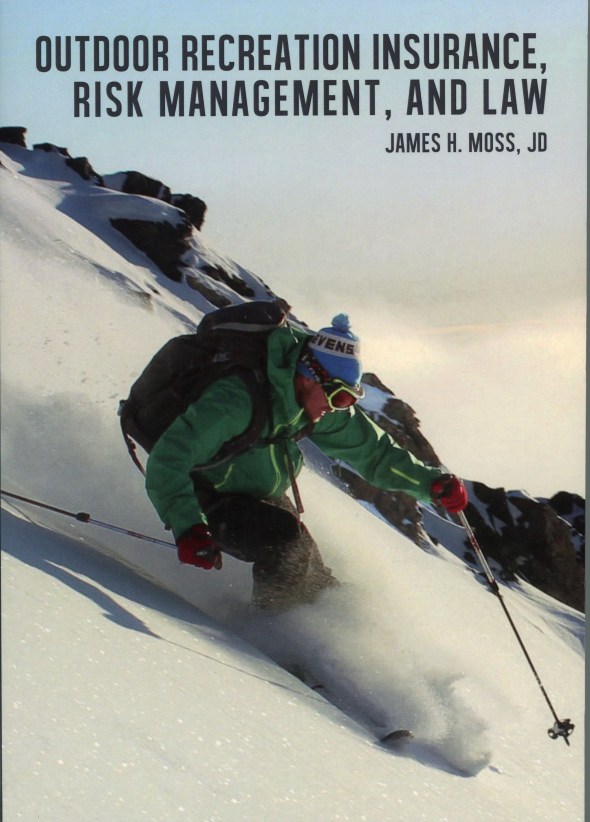
Posted: May 18, 2021 Filed under: Activity / Sport / Recreation, Adventure Travel, Assumption of the Risk, Avalanche, Camping, Challenge or Ropes Course, Climbing, Climbing Wall, Contract, Cycling, Equine Activities (Horses, Donkeys, Mules) & Animals, First Aid, Health Club, Indoor Recreation Center, Insurance, Jurisdiction and Venue (Forum Selection), Medical, Minors, Youth, Children, Mountain Biking, Mountaineering, Paddlesports, Playground, Racing, Racing, Release (pre-injury contract not to sue), Risk Management, Rivers and Waterways, Rock Climbing, Scuba Diving, Sea Kayaking, Search and Rescue (SAR), Ski Area, Skier v. Skier, Skiing / Snow Boarding, Skydiving, Paragliding, Hang gliding, Snow Tubing, Sports, Summer Camp, Swimming, Triathlon, Whitewater Rafting, Youth Camps, Zip Line | Tags: #ORLawTextbook, #ORRiskManagment, #OutdoorRecreationRiskManagementInsurance&Law, #OutdoorRecreationTextbook, @SagamorePub, Accidents, Angry Guest, Dealing with Claims, General Liability Insurance, Guide, http://www.rec-law.us/ORLawTextbook, Injured Guest, Insurance policy, James H. Moss J.D., Jim Moss, Liability insurance, OR Textbook, Outdoor Recreation Insurance, Outdoor Recreation Law, Outdoor Recreation Risk Management, Outfitter, RecreationLaw, Risk Management, risk management plan, Textbook, Understanding, Understanding Insurance, Understanding Risk Management, Upset Guest Leave a comment These and many other questions are answered in my book Outdoor Recreation Risk Management, Insurance and Law.
Releases, (or as some people incorrectly call them waivers) are a legal agreement that in advance of any possible injury identifies who will pay for what. Releases can and to stop lawsuits.
This book will explain releases and other defenses you can use to put yourself in a position to stop lawsuits and claims.
This book can help you understand why people sue and how you can and should deal with injured, angry or upset guests of your business.
This book is designed to help you rest easy about what you need to do and  how to do it. More importantly, this book will make sure you keep your business afloat and moving forward.
You did not get into the outdoor recreation business to worry or spend nights staying awake. Get prepared and learn how and why so you can sleep and quit worrying.

Table of Contents
Chapter 1 Outdoor Recreation Risk Management, Law, and Insurance: An Overview
Chapter 2 U.S. Legal System and Legal Research
Chapter 3 Risk 25
Chapter 4 Risk, Accidents, and Litigation: Why People Sue
Chapter 5 Law 57
Chapter 6 Statutes that Affect Outdoor Recreation
Chapter 7 Pre-injury Contracts to Prevent Litigation: Releases
Chapter 8 Defenses to Claims
Chapter 9 Minors
Chapter 10 Skiing and Ski Areas
Chapter 11 Other Commercial Recreational Activities
Chapter 12 Water Sports, Paddlesports, and water-based activities
Chapter 13 Rental Programs
Chapter 14 Insurance
$130.00 plus shipping

Artwork by Don Long donaldoelong@earthlink.net
What went wrong and how to beat the lawsuit when a guide sues to recover fees, he paid to climb mountain Everest after the trip was cancelled? Several things.
Posted: October 16, 2020 Filed under: Climbing, Contract, Mountaineering, Release (pre-injury contract not to sue) | Tags: Cancellation, Cowboy Up, Everest, Garrett Madison, Lawsuit, Mt. Everest, Refund, Release, Zac Bookman 2 CommentsThe client was not properly educated pre-trip, and the paperwork did not cover the right issues and/or say the right things.
All over the news, this past ten days is a story about a lawsuit by a Mt. Everest commercial client who is suing his guide service for a refund when the trip was canceled. After arriving in base camp, the trip was canceled because the Khumbu Icefall had a 15 story serac over hanging the route. The outfitter and the other clients decided to bail because of the risk.
I’m even quoted in one article in Outside Magazine.
A Tech CEO Suing His Guide Could Change Everest Travel
CEO Sues Climbing Guide – Could Set a Terrible Precedent for the Travel Industry
It is not the first time that I’ve heard or been involved in these types’ lawsuits. I knew of one from 20+ years ago where the threatened lawsuit was over a refund because the client did not summit Mt. Everest. I never heard what the outcome was.
One of my clients was threatened with a similar lawsuit. The client wanted his money back because he did not summit. I responded to the client’s demand letter listing every Everest summiteers I knew who would testify about the chances of submitting. I never heard anything else.
These refund attempts happen on mountains all over the world.
Usually these start with a guide service needing clients to stay alive or making a profit or not investigating the client thoroughly. When a climbing guide is broke, they have a tendency to say anything to get money in the door or take anyone. Worse are the ones that can right a check without hesitation or who come with a “climbing resume” but only with guide services.
Climbing with a guide is awesome, but the guide makes all the decisions, no matter what the agreement says and how the issue is phrased and the client never engages his brain or understands how decisions are made when climbing a mountain.
Everyone once in a while it is the client who is trying to save face with his friends and neighbors because he did not summit. Getting his money back proves it was not his fault, that he did not summit.
The next step in the process is education. Clients need to learn two things from the start.
- Their chances of summiting are slim or low based on the mountain.
- The money they pay to summit is spent way before the client ever sets foot in the country where he is climbing.
No matter the mountain your chances of summiting are based on a lot of factors.
- The mountain
-
The guide service
- What the guide service does to get you off the mountain before you can summit
- What the guide service does to get you off the mountain before you can summit
The mountain is obvious, how many days in what conditions and can you survive.
At the same time, there are unscrupulous guide services.
Guide services have been playing games with clients for decades. One game that used to be played on Denali was running the client up the mountain before the client could acclimatize and getting the client sick. This was obvious when you looked at the schedule. There was never enough time between the next load of clients landing on the glacier to acclimatize and summit before the guide had another group to lead.
A different game is still being played on Kilimanjaro. No one tells clients that the hike through the jungle to the base camp is going to leave them and their gear soaking wet. I’ve heard of trips were every single client spent the first two nights shivering in wet sleeping bags before giving up and heading home. No one says to use a waterproof stuff sack or a garbage bag to protect your gear, so thousands each year get to the base of the mountain and turn around.
I’ve not heard of Everest guide services playing any of these games. I do know that your chances of summiting and living are higher based on the amount of money you pay. The past ten years, most of the fatalities have come from guide services that are locally run and very inexpensive compared to everyone else.
I also have only heard great things from the defendant in this case, Garret Madison.
The money paid is gone before you arrive.
Think about the food you will be eating on Mt. Everest. It is purchased in the US, packed for transportation to Katmandu, repacked for shipping to basecamp and repacked for carrying up the mountain. The cost of shipping and packing far outweighs the cost of the food. All of this is done before a US client leaves the US.
Airline tickets, hotel rooms and transportation inside Nepal are paid for in advance. Local guides are hired and paid for, or they find someone different to work for. Competition on Mt. Everest is stiff, so there are plenty of job opportunities for all aspects of getting to basecamp and who you will be climbing with.
Gear is always brought back to the US, cleaned, checked, replaced and then shipped back to Nepal, or used on other mountains in between seasons.
Most of the money you pay to climb a mountain is spent before you leave the US. There are no refunds for food shipped to basecamp, there are no refunds if you can’t summit. I would guess if you wanted some of your money back you can take thirty days of dehydrated food back home with you……. Most is given to the locals and the Sherpa who live on it.
The best way to stop any lawsuit is education and paperwork.
The agreement between the guide and the client must have the following.
- The guide is in command, makes mistakes but is in control. Decisions made by the guide are final yet you are in control of your life. You can ignore them at your own risk.
- You can’t sue and if you do, you will owe me money for breach of the covenants that go with this contract.
- If you do sue, you have to sue me in my little home town a long way from where you live.
- You must purchase travel insurance to protect your investment because I’m not going to.
The guide from the articles might have screwed up. To get the client off their back, he might have said something about a refund. The guide also did not do a good job of explaining with the other clients who were leaving what was going on and why. The plaintiff client was left out of the conversation.
However, climbing Everest is not a guaranty, and no guide will ever bet on who will summit and who will not because the odds are stacked and change constantly.
Worse, it is obvious that this plaintiff thinks his luck is pretty good or the amount of money he paid is too much to lose, e way he puts little value on his life.
Guide says to go home, too dangerous! my response is get out of my way!
Do Something
If you want to climb big mountains and intend to hire a guide to do so.
- Get in shape
- Learn how to climb and climb well. If you can’t run up your local mountains without fear or concern, don’t leave them.
- Go climb big mountains with and without guides. Learn how to make decisions and why on when to climb, where to camp, what to do and when to go home.
- Expect to spend a lot of money, go cheap you might never go home.
- Communicate. Make sure all the promises your guide makes are in writing.
- Cowboy up if you can’t get to the top, you probably ignored steps 1-4.
- Your money is gone and will not be coming back.
If you are a guide service.
- Have enough guts to withstand angry clients because you can’t keep them all happy.
- Get good contracts and releases. Get agreements written by an attorney who knows what a mountain is, what making decisions means and has made those decisions and most importantly knows what goes into the agreement and why!
- Understand that marketing makes promises that risk management has to pay for is true. You tell a client, he or she will summit, you better have a way to get their butt to the top, or you will be in court.
- Make sure your insurance covers advertising, and you have a comprehensive policy to cover those lawsuits that arise more than the negligence lawsuits do.
- Tell everyone you cannot guaranty they can get out of basecamp, even get to basecamp, let alone summit.
- Get good contracts and releases!
What do you think? Leave a comment.
Copyright 2020 Recreation Law (720) 334 8529
If you like this let your friends know or post it on FB, Twitter or LinkedIn


Author: Outdoor Recreation Insurance, Risk Management and Law
Facebook Page: Outdoor Recreation & Adventure Travel Law
Email: Rec-law@recreation-law.com
Google+: +Recreation
Twitter: RecreationLaw
Facebook: Rec.Law.Now
Facebook Page: Outdoor Recreation & Adventure Travel Law
Blog:
www.recreation-law.com
Mobile Site: http://m.recreation-law.com
By Recreation Law Rec-law@recreation-law.com James H. Moss
#AdventureTourism, #AdventureTravelLaw, #AdventureTravelLawyer, #AttorneyatLaw, #Backpacking, #BicyclingLaw, #Camps, #ChallengeCourse, #ChallengeCourseLaw, #ChallengeCourseLawyer, #CyclingLaw, #FitnessLaw, #FitnessLawyer, #Hiking, #HumanPowered, #HumanPoweredRecreation, #IceClimbing, #JamesHMoss, #JimMoss, #Law, #Mountaineering, #Negligence, #OutdoorLaw, #OutdoorRecreationLaw, #OutsideLaw, #OutsideLawyer, #RecLaw, #Rec-Law, #RecLawBlog, #Rec-LawBlog, #RecLawyer, #RecreationalLawyer, #RecreationLaw, #RecreationLawBlog, #RecreationLawcom, #Recreation-Lawcom, #Recreation-Law.com, #RiskManagement, #RockClimbing, #RockClimbingLawyer, #RopesCourse, #RopesCourseLawyer, #SkiAreas, #Skiing, #SkiLaw, #Snowboarding, #SummerCamp, #Tourism, #TravelLaw, #YouthCamps, #ZipLineLawyer,
Why would you create more than one Limited Liability Company for your business?
Posted: May 28, 2020 Filed under: Contract | Tags: Delaware, Delaware Corporation, Limited liability company, LLC. Leave a commentThere are dozens of reasons, read on.
There are dozens of reasons why you would create multiple limited liability companies for your business.
- A Limited Liability Company, (LLC), is easy and inexpensive to set up and operate.
- Each LLC protects the assets in it.
- Each LLC protects the assets of the other LLC’s
- Each LLC protects the assets of the parent LLC.
- Each LLC makes it harder to sue the parent and other LLC’s
- Like not having all of your eggs in one basket, separate LLC’s provide better protection for all of your assets.
- If you lose a lawsuit above your insurance limits, only the LLC that was sued is as risk not your other assets, locations or companies.
- Each LLC can be taxed a different way.
- You can take money out of each LLC a different way.
- Setting up different LLC’s for each state you may operate in provides more options for the LLC in that state.
- Setting up a different LLC for each state you operate in provides more tax advantages for the LLC in that state.
- Overall, you create more barriers to losing your business because of creditors.
And there are many more reasons beyond these twelve.
As an example let’s look at a small outfitter or climbing wall with the following assets:
- Two locations (leased)
- Equipment share by both operations
- Equipment at each operation
You would set up the LLC’s this way probably.

Each separate business operation or real estate address should have it’s own LLC. Any equipment that is used by both LLC’s can be in a separate LLC that is rented to the business LLC’s when needed. The equipment rental company can also be used to buy all equipment and products needed by the operations to get better deals. Any management, operations, etc., are done out of the Parent LLC that owns the other three LLCs. If either businesses gets sued, the assets of the other LLC, the joint Equipment and the management assets are protected from that lawsuit.
If you operate a business that is based on permits you may want a separate LLC for each permit you own.
If you owned land under your businesses, you would want those in separate LLC’s. You can lose the business and start the next day because you still own a lot of the equipment and the land.
There are some negative issues with this type of set up.
The relationship between each LLC and the other LLC’s must be in writing with a proper agreement and proper accounting. That means there needs to be a management contract between the parent company and the different LLCs. There needs to be a rental agreement between the equipment company and the operating LLCs.

If you are an outfitter with this set up, and you transport your guests in vehicles you would want to add a transportation LLC. Your greatest liability is in moving guests to the activity location. Always keep your liabilities separate from your assets.
In this situation, you would need a lease agreement between the Operations and the Real Estate LLCs.

If you start to grow to the point that this gets unwieldy, you can consolidate and combine assets.

Your situation and growth are going to be different and will vary on how well you, and your CPA can work together. Other than increased accounting costs, you will achieve significant protection from any possible lawsuit by using multiple LLCs with little additional work.
If you have a good CPA, you can also have the LLC’s taxed differently to provide different benefits or income to you. You can take money out of some LLC’s as income, some as rent, others as an independent contractor based on how you initially set them up and how they are recognized by the IRS.
One final idea is you may have assets that are so valuable and small that you do not want to keep them in any LLC that could get sued. An example would be a federal permit or concession contract. You could keep those in your own name or in a different LLC that does nothing but leases those permits to your LLC’s. That way, no matter what, you can start again because you have a valid permit.
The final issue might be if you decided to take your company public someday. Contrary to popular belief, incorporating in Delaware is NOT the place to set up your business. Incorporating in Delaware until you have decided to go public has many negatives.
- People think you are a bigger company, there fore they will sue for more money.
- The cost of incorporating in Delaware is several times more expensive than most other states.
- The yearly costs of maintain a corporation in Delaware is expensive.
- You have to hire a statutory agent in Delaware who adds to your cost.
- You have to follow Delaware law in running your company or corporation.
- Your LLC or Corporation will have to follow Delaware laws so you may have to hire an additional attorney.
What if you want to go public someday? Then at that time, create a Delaware corporation. Have that corporation become the owner of all the other LLCs you have created. Now you are a Delaware corporation ready to go public and have delayed the cost of creating a Delaware corporation until you can afford it.


Save your money when you are starting out, start your LLC in the state where you are going to operate so you understand the state laws your LLC will be operating under.
What do you think? Leave a comment.
Copyright 2020 Recreation Law (720) 334 8529
If you like this let your friends know or post it on FB, Twitter or LinkedIn


Author: Outdoor Recreation Insurance, Risk Management and Law
Facebook Page: Outdoor Recreation & Adventure Travel Law
Email: Rec-law@recreation-law.com
Google+: +Recreation
Twitter: RecreationLaw
Facebook: Rec.Law.Now
Facebook Page: Outdoor Recreation & Adventure Travel Law
Blog:
www.recreation-law.com
Mobile Site: http://m.recreation-law.com
By Recreation Law Rec-law@recreation-law.com James H. Moss
#AdventureTourism, #AdventureTravelLaw, #AdventureTravelLawyer, #AttorneyatLaw, #Backpacking, #BicyclingLaw, #Camps, #ChallengeCourse, #ChallengeCourseLaw, #ChallengeCourseLawyer, #CyclingLaw, #FitnessLaw, #FitnessLawyer, #Hiking, #HumanPowered, #HumanPoweredRecreation, #IceClimbing, #JamesHMoss, #JimMoss, #Law, #Mountaineering, #Negligence, #OutdoorLaw, #OutdoorRecreationLaw, #OutsideLaw, #OutsideLawyer, #RecLaw, #Rec-Law, #RecLawBlog, #Rec-LawBlog, #RecLawyer, #RecreationalLawyer, #RecreationLaw, #RecreationLawBlog, #RecreationLawcom, #Recreation-Lawcom, #Recreation-Law.com, #RiskManagement, #RockClimbing, #RockClimbingLawyer, #RopesCourse, #RopesCourseLawyer, #SkiAreas, #Skiing, #SkiLaw, #Snowboarding, #SummerCamp, #Tourism, #TravelLaw, #YouthCamps, #ZipLineLawyer,
New Book Aids Both CEOs and Students
Posted: August 1, 2019 Filed under: Adventure Travel, Assumption of the Risk, Camping, Climbing, Cycling, Equine Activities (Horses, Donkeys, Mules) & Animals, First Aid, Insurance, Medical, Mountain Biking, Mountaineering, Risk Management, Rock Climbing, Ski Area, Swimming, Zip Line Leave a comment“Outdoor Recreation Insurance, Risk Management, and Law” is a definitive guide to preventing and overcoming legal issues in the outdoor recreation industry

Outdoor Recreation Insurance, Risk Management, and Law
Denver based James H. Moss, JD, an attorney who specializes in the legal issues of outdoor recreation and adventure travel companies, guides, outfitters, and manufacturers, has written a comprehensive legal guidebook titled, “Outdoor Recreation Insurance, Risk Management, and Law”. Sagamore Publishing, a well-known Illinois-based educational publisher, distributes the book.
Mr. Moss, who applied his 30 years of experience with the legal, insurance, and risk management issues of the outdoor industry, wrote the book in order to fill a void.
“There was nothing out there that looked at case law and applied it to legal problems in outdoor recreation,” Moss explained. “The goal of this book is to provide sound advice based on past law and experience.”
The Reference book is sold via the Summit Magic Publishing, LLC.
While written as a college-level textbook, the guide also serves as a legal primer for executives, managers, and business owners in the field of outdoor recreation. It discusses how to tackle, prevent, and overcome legal issues in all areas of the industry.
The book is organized into 14 chapters that are easily accessed as standalone topics, or read through comprehensively. Specific topics include rental programs, statues that affect outdoor recreation, skiing and ski areas, and defenses to claims. Mr. Moss also incorporated listings of legal definitions, cases, and statutes, making the book easy for laypeople to understand.
PURCHASE
TABLE OF CONTENTS
Table of Cases
Introduction
Outdoor Recreation Law and Insurance: Overview
Risk
Risk
Perception versus Actual Risk
Risk v. Reward
Risk Evaluation
Risk Management Strategies
Humans & Risk
Risk = Accidents
Accidents may/may not lead to litigation
How Do You Deal with Risk?
How Does Acceptance of Risk Convert to Litigation?
Negative Feelings against the Business
Risk, Accidents & Litigation
No Real Acceptance of the Risk
No Money to Pay Injury Bills
No Health Insurance
Insurance Company Subrogation
Negative Feelings
Litigation
Dealing with Different People
Dealing with Victims
Develop a Friend & Eliminate a Lawsuit
Don’t Compound Minor Problems into Major Lawsuits
Emergency Medical Services
Additional Causes of Lawsuits in Outdoor Recreation
Employees
How Do You Handle A Victim?
Dealing with Different People
Dealing with Victims
Legal System in the United States
Courts
State Court System
Federal Court System
Other Court Systems
Laws
Statutes
Parties to a Lawsuit
Attorneys
Trials
Law
Torts
Negligence
Duty
Breach of the Duty
Injury
Proximate Causation
Damages
Determination of Duty Owed
Duty of an Outfitter
Duty of a Guide
Duty of Livery Owner
Duty of Rental Agent
Duty of Volunteer Youth Leader
In Loco Parentis
Intentional Torts
Gross Negligence
Willful & Wanton Negligence
Intentional Negligence
Negligence Per Se
Strict Liability
Attractive Nuisance
Results of Acts That Are More than Ordinary Negligence
Product Liability
Contracts
Breach of Contract
Breach of Warranty
Express Warranty
Implied Warranty
Warranty of Fitness for a Particular Purpose
Warranty of Merchantability
Warranty of Statute
Detrimental Reliance
Unjust Enrichment
Liquor Liability
Food Service Liability
Damages
Compensatory Damages
Special Damages
Punitive Damages
Statutory Defenses
Skier Safety Acts
Whitewater Guides & Outfitters
Equine Liability Acts
Legal Defenses
Assumption of Risk
Express Assumption of Risk
Implied Assumption of Risk
Primary Assumption of Risk
Secondary Assumption of Risk
Contributory Negligence
Assumption of Risk & Minors
Inherent Dangers
Assumption of Risk Documents.
Assumption of Risk as a Defense.
Statutory Assumption of Risk
Express Assumption of Risk
Contributory Negligence
Joint and Several Liability
Release, Waivers & Contracts Not to Sue
Why do you need them
Exculpatory Agreements
Releases
Waivers
Covenants Not to sue
Who should be covered
What should be included
Negligence Clause
Jurisdiction & Venue Clause
Assumption of Risk
Other Clauses
Indemnification
Hold Harmless Agreement
Liquidated Damages
Previous Experience
Misc
Photography release
Video Disclaimer
Drug and/or Alcohol clause
Medical Transportation & Release
HIPAA
Problem Areas
What the Courts do not want to see
Statute of Limitations
Minors
Adults
Defenses Myths
Agreements to Participate
Parental Consent Agreements
Informed Consent Agreements
Certification
Accreditation
Standards, Guidelines & Protocols
License
Specific Occupational Risks
Personal Liability of Instructors, Teachers & Educators
College & University Issues
Animal Operations, Packers
Equine Activities
Canoe Livery Operations
Tube rentals
Downhill Skiing
Ski Rental Programs
Indoor Climbing Walls
Instructional Programs
Mountaineering
Retail Rental Programs
Rock Climbing
Tubing Hills
Whitewater Rafting
Risk Management Plan
Introduction for Risk Management Plans
What Is A Risk Management Plan?
What should be in a Risk Management Plan
Risk Management Plan Template
Ideas on Developing a Risk Management Plan
Preparing your Business for Unknown Disasters
Building Fire & Evacuation
Dealing with an Emergency
Insurance
Theory of Insurance
Insurance Companies
Deductibles
Self-Insured Retention
Personal v. Commercial Policies
Types of Policies
Automobile
Comprehension
Collision
Bodily Injury
Property Damage
Uninsured Motorist
Personal Injury Protection
Non-Owned Automobile
Hired Car
Fire Policy
Coverage
Liability
Named Peril v. All Risk
Commercial Policies
Underwriting
Exclusions
Special Endorsements
Rescue Reimbursement
Policy Procedures
Coverage’s
Agents
Brokers
General Agents
Captive Agents
Types of Policies
Claims Made
Occurrence
Claims
Federal and State Government Insurance Requirements
Bibliography
Index
The 427-page volume is sold via Summit Magic Publishing, LLC.
What is a Risk Management Plan and What do You Need in Yours?
Posted: July 25, 2019 Filed under: Activity / Sport / Recreation, Adventure Travel, Assumption of the Risk, Avalanche, Camping, Climbing, Cycling, Equine Activities (Horses, Donkeys, Mules) & Animals, First Aid, Health Club, Indoor Recreation Center, Medical, Minors, Youth, Children, Mountain Biking, Mountaineering, Playground, Racing, Racing, Risk Management, Rock Climbing, Scuba Diving, Search and Rescue (SAR), Ski Area, Skier v. Skier, Sports, Summer Camp, Swimming, Triathlon, Youth Camps, Zip Line Leave a commentEveryone has told you, that you need a risk management plan. A plan to follow if you have

Outdoor Recreation Insurance, Risk Management, and Law
a crisis. You‘ve seen several and they look burdensome and difficult to write. Need help writing a risk management plan? Need to know what should be in your risk management plan? Need Help?
This book can help you understand and write your plan. This book is designed to help you rest easy about what you need to do and how to do it. More importantly, this book will make sure your plan is a workable plan, not one that will create liability for you.

Table of Contents
Chapter 1 Outdoor Recreation Risk Management, Law, and Insurance: An Overview
Chapter 2 U.S. Legal System and Legal Research
Chapter 3 Risk 25
Chapter 4 Risk, Accidents, and Litigation: Why People Sue
Chapter 5 Law 57
Chapter 6 Statutes that Affect Outdoor Recreation
Chapter 7 PreInjury Contracts to Prevent Litigation: Releases
Chapter 8 Defenses to Claims
Chapter 9 Minors
Chapter 10 Skiing and Ski Areas
Chapter 11 Other Commercial Recreational Activities
Chapter 12 Water Sports, Paddlesports, and water-based activities
Chapter 13 Rental Programs
Chapter 14 Insurance
$130.00 plus shipping

Can’t Sleep? Guest was injured, and you don’t know what to do? This book can answer those questions for you.
Posted: July 23, 2019 Filed under: Adventure Travel, Assumption of the Risk, Avalanche, Camping, Climbing, Climbing Wall, Contract, Criminal Liability, Cycling, Equine Activities (Horses, Donkeys, Mules) & Animals, First Aid, Health Club, How, Indoor Recreation Center, Insurance, Jurisdiction and Venue (Forum Selection), Medical, Minors, Youth, Children, Mountain Biking, Mountaineering, Paddlesports, Playground, Racing, Racing, Release (pre-injury contract not to sue), Risk Management, Rivers and Waterways, Rock Climbing, Scuba Diving, Sea Kayaking, Search and Rescue (SAR), Ski Area, Skier v. Skier, Skiing / Snow Boarding, Skydiving, Paragliding, Hang gliding, Snow Tubing, Sports, Summer Camp, Swimming, Triathlon, Whitewater Rafting, Youth Camps, Zip Line | Tags: #ORLawTextbook, #ORRiskManagment, #OutdoorRecreationRiskManagementInsurance&Law, #OutdoorRecreationTextbook, @SagamorePub, Accidents, Angry Guest, Dealing with Claims, General Liability Insurance, Guide, http://www.rec-law.us/ORLawTextbook, Injured Guest, Insurance policy, James H. Moss J.D., Jim Moss, Liability insurance, OR Textbook, Outdoor Recreation Insurance, Outdoor Recreation Law, Outdoor Recreation Risk Management, Outfitter, RecreationLaw, Risk Management, risk management plan, Textbook, Understanding, Understanding Insurance, Understanding Risk Management, Upset Guest Leave a comment An injured guest is everyone’s business owner’s nightmare. What happened, how do you make sure it does not happen again, what can you do to help the guest, can you help the guests are just some of the questions that might be keeping you up at night.
This book can help you understand why people sue and how you can and should deal with injured, angry or upset guests of your business.
This book is designed to help you rest easy about what you need to do and how to do it. More importantly, this book will make sure you keep your business afloat and moving forward.
You did not get into the outdoor recreation business to worry or spend nights staying awake. Get prepared and learn how and why so you can sleep and quit worrying.

Table of Contents
Chapter 1 Outdoor Recreation Risk Management, Law, and Insurance: An Overview
Chapter 2 U.S. Legal System and Legal Research
Chapter 3 Risk 25
Chapter 4 Risk, Accidents, and Litigation: Why People Sue
Chapter 5 Law 57
Chapter 6 Statutes that Affect Outdoor Recreation
Chapter 7 Pre-injury Contracts to Prevent Litigation: Releases
Chapter 8 Defenses to Claims
Chapter 9 Minors
Chapter 10 Skiing and Ski Areas
Chapter 11 Other Commercial Recreational Activities
Chapter 12 Water Sports, Paddlesports, and water-based activities
Chapter 13 Rental Programs
Chapter 14 Insurance
$130.00 plus shipping

Need a Handy Reference Guide to Understand your Insurance Policy?
Posted: July 18, 2019 Filed under: Adventure Travel, Assumption of the Risk, Avalanche, Climbing, Cycling, Equine Activities (Horses, Donkeys, Mules) & Animals, Health Club, Indoor Recreation Center, Insurance, Minors, Youth, Children, Mountain Biking, Mountaineering, Racing, Risk Management, Rock Climbing, Scuba Diving, Ski Area, Skier v. Skier, Sports, Summer Camp, Swimming, Youth Camps, Zip Line Leave a commentThis book should be on every outfitter and guide’s desk. It will answer your questions, help you sleep at night, help you answer your guests’ questions and allow you to run your business with less worry.

Table of Contents
Chapter 1 Outdoor Recreation Risk Management, Law, and Insurance: An Overview
Chapter 2 U.S. Legal System and Legal Research
Chapter 3 Risk 25
Chapter 4 Risk, Accidents, and Litigation: Why People Sue
Chapter 5 Law 57
Chapter 6 Statutes that Affect Outdoor Recreation
Chapter 7 PreInjury Contracts to Prevent Litigation: Releases
Chapter 8 Defenses to Claims
Chapter 9 Minors
Chapter 10 Skiing and Ski Areas
Chapter 11 Other Commercial Recreational Activities
Chapter 12 Water Sports, Paddlesports, and water-based activities
Chapter 13 Rental Programs
Chapter 14 Insurance
$99.00 plus shipping

You can collect for damaged gear you rented to customers if your agreements are correct. This snowmobile outfitter recovered $27,000 for $220.11 in damages.
Posted: May 13, 2019 Filed under: Colorado 1 CommentIt helps to get that much money if the customer is a jerk and tries to get out of what they owe you. It makes the final judgment even better when one of the plaintiffs is an attorney.
Citation: Hightower-Henne v. Gelman, 2012 U.S. Dist. LEXIS 4514, 2012 WL 95208
State: Colorado; United States District Court for the District of Colorado
Plaintiff: Tracy L. Hightower-Henne, and Thomas Henne
Defendant: Leonard M. Gelman
Plaintiff Claims: Violation of the Fair Debt Collections Act
Defendant Defenses: They did not violate the act
Holding: For the Defendant
Year: 2012
Summary
The plaintiff’s in this case rented snowmobiles and brought one back damaged. The release they signed to rent the snowmobiles stated if they damaged the snowmobiles they would have to pay for the damage and any lost time the snowmobiles could not be rented (like a car rental agreement).
The plaintiffs damaged a snowmobile and agreed to pay for the damages. The Snowmobile outfitter agreed not to charge them for the lost rental income.
When the plaintiff’s got home, they denied the claim on their credit card bill. The Snowmobile outfitter sued them for the $220.11 in damages and received a judgment of $27,000.
The plaintiff then sued the attorney representing the snowmobile outfitter for violation of the federal Fair Debt Collection’s act, which is the subject of this lawsuit. The plaintiff lost that lawsuit also.
This case shows how agreements in advance to pay for damages from rented equipment are viable and can be upheld if used.
Facts
Although this is described as a debt collection case, it is a case where an outfitter can recover for the damages done to the equipment that he rented to the plaintiffs. The facts are from this case, which took them from an underlying County Court decision in Summit County Colorado.
Mrs. Hightower-Henne, a Nebraska attorney, rented two snowmobiles from Colorado Backcountry Rentals (“CBR”) for herself and her husband, signing the rental agreement for the two machines and declining the offered insurance to cover loss or damage to the machines while in their possession. While at the CBR’s office, the Hennes were shown a video depicting proper operation of snowmobiles in general and were also verbally advised on snowmobile use by an employee of CBR. Plaintiffs, a short while thereafter, met another employee of CBR, Mr. Weber, at Vail Pass and were given possession of the snowmobiles after an opportunity to inspect the machines. Plaintiffs utilized their entire allotted time on the snowmobiles and brought them back to Mr. Weber as planned. Mr. Weber immediately noticed that the snowmobile ridden by Mr. Henne was missing its air box cover and faring, described as a large blue shield on the front of the snowmobile, entirely visible to any driver. At the he returned the snowmobile, Mr. Henne told Mr. Weber that the parts had fallen off approximately two hours into the ride and that he had tried to carry the faring back, but, as he was unable to do so, he left the part on the trail.3 Mr. Henne signed a form acknowledging the missing part(s) and produced his driver’s license and a credit card with full intent that charges to fix the snowmobile would be levied against that card. Mr. Henne signed a blank credit card slip, which the parties all understood would be filled-in once the damage could be definitively ascertained.4 Although CBR, pursuant to the rental agreement signed by Mrs. Hightower-Henne, was entitled to charge the Hennes for loss of rentals for the snowmobile while it was being repaired, CBR waived that fee and charged Mr. Henne a total of only $220.11.
…one of the rented snowmobiles suffered damage while in the possession of Mr. Henne. Although agreeing to pay for the damage initially, Mr. Henne later disputed the charges levied by CBR against his credit card, resulting in a collection lawsuit brought by CBR against Mr. and Mrs. Henne in Summit County Court. This court takes the underlying facts from the Judgment Order of Hon. Wayne Patton in the Summit County Case as Judge Patton presided over a trial and therefore had the best opportunity to assess the witnesses, including their credibility and analyze the exhibits. The defendant in this case, Leonard M. Gelman, was the attorney for CBR in the Summit County case.
This story changed at trial in the Summit County case, where Mr. Henne reported that the parts fell off the machine about 5-10 minutes into the ride. Mr. Henne also testified that he did not know he was missing a part – he claimed a group of strangers told him that his snowmobile was missing a part and he thereafter retraced his route to try to find the piece but could not find it. Judge Patton found that “Mr. Henne’s testimony does not make sense to the court.” The court found that the evidence indicated the parts came off during the ride and that since the clips that held the part on were broken and the “intake silencer” was cracked, Judge Patton indicated, “The court does not believe that the fairing just fell off.”
Mr. Henne’s proffered credit card was for a different account that Mrs. Hightower-Henne had used to rent the snowmobiles.
CBR’s notation on the Estimated Damages form states, “Will not charge customer for the 2 days loss rents as good will.”
At trial in the Summit County case, Mr. and Mrs. Henne maintained that Mr. Henne’s sig-nature on the damage estimate and the credit card slip were forgeries. The court found that Mr. Weber, CBR’s employee who witnessed Mr. Henne sign the documents, was a credible witness and found Mr. Henne’s claim that he had not signed the documents was not credible. The court also found that there was no incentive whatsoever for anyone to have forged Mr. Henne’s signature on anything since “[CBR] already had Ms. Hightower-Henne’s credit card information and authorization so even if Mr. Henne had refused to sign the disputed documents it had recourse without having to resort to subterfuge.”
After deciding in favor of CBR on the liability of Mr. and Mrs. Henne for the damage to the snowmobile in the total amount of $653.60, Judge Patton considered the issue of attorney’s fees and costs incurred in that proceeding. Finding that the original rental documents signed by Mrs. Hightower-Henne contained a prevailing party award of attorney fees pro-vision, the court awarded CBR $25,052.50 in attorney’s fees against Mrs. Hightower-Henne plus $1,737.92 in costs.6 The court stated that even though the attorney fee award was substantial considering the amount of the original debt, the time expended by CBR’s counsel was greatly exacerbated by Mrs. Hightower-Henne’s “motions and threats” and that it was the Hennes who “created the need for [considerable] hours by their actions in filing baseless criminal complaints, filing motions to continue the trial and by seeking to have phone testimony of several witnesses who had no knowledge of what took place while Defendant’s (sic) had possession of the snowmobiles.”
As a result of groundless criminal claims, baseless counterclaims, perjured testimony and over-zealous defense, instead of owing $220.11 for the snowmobile’s missing part, after the dust settled on the Summit County case, the Hennes became responsible for a judgment in excess of $27,000.00.
Analysis: making sense of the law based on these facts.
The facts set forth in the underlying damage recovery case, are the important part. In this case, the attorney for the snowmobile outfitter was found not to have violated the federal Fair Debt Collections Act.
In awarding judgment to the defendant in this case, the judge also awarded him costs.
Defendant Leonard M. Gelman’s Motion for Summary Judgment is GRANTED and this case is dismissed with prejudice. Defendant may have his cost by filing a bill of costs pursuant to D.C.COLO.LCivR 54.1 and the Clerk of Court shall enter final judgment in favor of Defendant Gelman in accordance with this Order.
Adding insult to injury. Sometimes it be better to quit while you are behind.
 Jim Moss |
Jim Moss is an attorney specializing in the legal issues of the outdoor recreation community. He represents guides, guide services, outfitters both as businesses and individuals and the products they use for their business. He has defended Mt. Everest guide services, summer camps, climbing rope manufacturers, avalanche beacon manufacturers, and many more manufacturers and outdoor industries. Contact Jim at Jim@Rec-Law.us |
Jim is the author or co-author of six books about the legal issues in the outdoor recreation world; the latest is Outdoor Recreation Insurance, Risk Management

Outdoor Recreation Insurance, Risk Management, and Law
To see Jim’s complete bio go here and to see his CV you can find it here. To find out the purpose of this website go here.
G-YQ06K3L262
What do you think? Leave a comment.
If you like this let your friends know or post it on FB, Twitter or LinkedIn
 |
 |
 Threads |
 X (formerly known as Twitter) logo |
 Stimulus |
 Blue Sky |
Author: Outdoor Recreation Insurance, Risk Management and Law
Facebook Page: Outdoor Recreation & Adventure Travel Law
Email: Jim@Rec-Law.US
By Recreation Law Rec-law@recreation-law.com James H. Moss
@2024 Summit Magic Publishing, LLC
#AdventureTourism, #AdventureTravelLaw, #AdventureTravelLawyer, #AttorneyatLaw, #Backpacking, #BicyclingLaw, #Camps, #ChallengeCourse, #ChallengeCourseLaw, #ChallengeCourseLawyer, #CyclingLaw, #FitnessLaw, #FitnessLawyer, #Hiking, #HumanPowered, #HumanPoweredRecreation, #IceClimbing, #JamesHMoss, #JimMoss, #Law, #Mountaineering, #Negligence, #OutdoorLaw, #OutdoorRecreationLaw, #OutsideLaw, #OutsideLawyer, #RecLaw, #Rec-Law, #RecLawBlog, #Rec-LawBlog, #RecLawyer, #RecreationalLawyer, #RecreationLaw, #RecreationLawBlog, #RecreationLawcom, #Recreation-Lawcom, #Recreation-Law.com, #RiskManagement, #RockClimbing, #RockClimbingLawyer, #RopesCourse, #RopesCourseLawyer, #SkiAreas, #Skiing, #SkiLaw, #Snowboarding, #SummerCamp, #Tourism, #TravelLaw, #YouthCamps, #ZipLineLawyer, #RecreationLaw, #OutdoorLaw, #OutdoorRecreationLaw, #SkiLaw,
Hightower-Henne v. Gelman, 2012 U.S. Dist. LEXIS 4514
Posted: May 1, 2019 Filed under: Colorado Leave a commentTo Read an Analysis of this decision see: You can collect for damaged gear you rented to customers if your agreements are correct. This snowmobile outfitter recovered $27,000 for $220.11 in damages.
Hightower-Henne v. Gelman, 2012 U.S. Dist. LEXIS 4514
Tracy L. Hightower-Henne, and Thomas Henne, Plaintiffs, v. Leonard M. Gelman, Defendant.
Civil Action No. 11-cv-01114-KMT-BNB
UNITED STATES DISTRICT COURT FOR THE DISTRICT OF COLORADO
2012 U.S. Dist. LEXIS 4514
January 12, 2012, Decided
January 12, 2012, Filed
CORE TERMS: collection, collector, snowmobile, summary judgment, discovery, credit card, rental, Mountain Law Group, demand letters, email, entity, law firm, preface, missing, nonmoving party, principal purpose, regularity, regularly, disputed, opposing, genuine, rental agreement, signature, machine, ride, admissible, engaging, owed, practice of law, attorney’s fees
COUNSEL: [*1] For Tracy L. Hightower-Henne, Thomas J. Henne, Plaintiffs: Daniel Teodoru, Erin Colleen Hunter, West Brown Huntley & Hunter, P.C., Breckenridge, CO.
For Leonard M. Gelman, Defendant: Rusty David Miller, Thomas Neville Alfrey, Treece Alfrey Musat, P.C., Denver, CO.
JUDGES: Kathleen M. Tafoya, United States Magistrate Judge.
OPINION BY: Kathleen M. Tafoya
OPINION
ORDER
This matter is before the court on Defendant Leonard M. Gelman’s Motion for Summary Judgment [Doc. No. 17] (“Mot.”) filed August 12, 2011. Plaintiffs, Tracy Hightower-Henne and Thomas Henne (collectively “the Hennes”), responded on September 14, 2011 [Doc. No. 23] (“Resp.”) and the defendant filed a Reply on October 3, 2011 [Doc. No. 25]. Also considered is Plaintiffs’ “Motion to File Sur-Reply” [Doc. No. 26], which is denied.1
1 Neither the Federal Rules of Civil Procedure nor the Local Rules of Practice in the District of Colorado provide for the filing of a surreply. Additionally, the court’s review of the proposed surreply reveals it is nothing more than an attempted unauthorized additional bite at the proverbial apple and adds nothing of merit to the summary judgment analysis.
Background
On February 8, 2010, Nebraska residents Tracy L. Hightower-Henne [*2] and her husband Thomas Henne joined a small group of friends and family for a snowmobile ride in Vail, Colorado. Mrs. Hightower-Henne, a Nebraska attorney, rented two snowmobiles from Colorado Backcountry Rentals (“CBR”) for herself and her husband, signing the rental agreement for the two machines and declining the offered insurance to cover loss or damage to the machines while in their possession. (Mot., Ex. H, Judgment Order of County Court Judge Wayne Patton, April 21, 2011, hereinafter “Judgment Order” at 1.)2 While at the CBR’s office, the Hennes were shown a video depicting proper operation of snowmobiles in general and were also verbally advised on snowmobile use by an employee of CBR. (Id.) Plaintiffs, a short while thereafter, met another employee of CBR, Mr. Weber, at Vail Pass and were given possession of the snowmobiles after an opportunity to inspect the machines. (Id. at 2.) Plaintiffs utilized their entire allotted time on the snowmobiles and brought them back to Mr. Weber as planned. Mr. Weber immediately noticed that the snowmobile ridden by Mr. Henne was missing its air box cover and faring, described as a large blue shield on the front of the snowmobile, entirely [*3] visible to any driver. (Id. at 3.) At the he returned the snowmobile, Mr. Henne told Mr. Weber that the parts had fallen off approximately two hours into the ride and that he had tried to carry the faring back, but, as he was unable to do so, he left the part on the trail.3 (Id. at 2.) Mr. Henne signed a form acknowledging the missing part(s) and produced his driver’s license and a credit card with full intent that charges to fix the snowmobile would be levied against that card. Mr. Henne signed a blank credit card slip, which the parties all understood would be filled-in once the damage could be definitively ascertained.4 (Id.) Although CBR, pursuant to the rental agreement signed by Mrs. Hightower-Henne, was entitled to charge the Hennes for loss of rentals for the snowmobile while it was being repaired, CBR waived that fee5 and charged Mr. Henne oa total of only $220.11. (Mot., Ex. B.)
2 As will be discussed in more detail herein, one of the rented snowmobiles suffered damage while in the possession of Mr. Henne. Although agreeing to pay for the damage initially, Mr. Henne later disputed the charges levied by CBR against his credit card, resulting in a collection lawsuit brought by [*4] CBR against Mr. and Mrs. Henne in Summit County Court, Case Number 10 C 255 ). (See Mot., Ex. G; hereinafter, the “Summit County case.”) This court takes the underlying facts from the Judgment Order of Hon. Wayne Patton in the Summit County Case as Judge Patton presided over a trial and therefore had the best opportunity to assess the witnesses, including their credibility and analyze the exhibits. The defendant in this case, Leonard M. Gelman, was the attorney for CBR in the Summit County case.
3 This story changed at trial in the Summit County case, where Mr. Henne reported that the parts fell off the machine about 5-10 minutes into the ride. Mr. Henne also testified that he did not know he was missing a part – he claimed a group of strangers told him that his snowmobile was missing a part and he thereafter retraced his route to try to find the piece but could not find it. Judge Patton found that “Mr. Henne’s testimony does not make sense to the court.” (Judgment Order at 3.) The court found that the evidence indicated the parts came off during the ride and that since the clips that held the part on were broken and the “intake silencer” was cracked, Judge Patton indicated, “The court [*5] does not believe that the fairing just fell off.” (Id.)
4 Mr. Henne’s proffered credit card was for a different account that Mrs. Hightower-Henne had used to rent the snowmobiles.
5 CBR’s notation on the Estimated Damages form states, “Will not charge customer for the 2 days loss rents as good will.” (Mot., Ex. B.)
Upon their return to Nebraska, however, Mr. and Mrs. Henne apparently decided they did not want to pay for the damage to the snowmobile, even with the waiver of the rental loss, and contested the charge to Mr. Henne’s credit card resulting in a reversal of the charge by the credit card issuer. Further, the Hennes leveled criminal forgery accusations against CBR’s employee with the Frisco, Colorado Police Department (id. at 4), alleging that the acknowledgment of damage form and the credit card slip were not signed by Mr. Henne. The police department investigated, but no charges were filed.
Mr. Henne’s ultimate cancellation of his former acquiescence to payment caused CBR to contact their corporate lawyer, Defendant Gelman, and ask that he attempt to obtain payment from the Hennes, authorizing a law suit if initial requests for payment failed. Obviously, CBR was no longer willing [*6] to waive the fee for loss of rental which was part of the contract Mrs. Hightower-Henne signed. (Id. at 2.)
At trial in the Summit County case, Mr. and Mrs. Henne maintained that Mr. Henne’s signature on the damage estimate and the credit card slip were forgeries. (Id. at 4.) The court found that Mr. Weber, CBR’s employee who witnessed Mr. Henne sign the documents, was a credible witness and found Mr. Henne’s claim that he had not signed the documents was not credible. (Id.) The court also found that there was no incentive whatsoever for anyone to have forged Mr. Henne’s signature on anything since “[CBR] already had Ms. Hightower-Henne’s credit card information and authorization so even if Mr. Henne had refused to sign the disputed documents it had recourse without having to resort to subterfuge.” (Id.)
After deciding in favor of CBR on the liability of Mr. and Mrs. Henne for the damage to the snowmobile in the total amount of $653.60, Judge Patton considered the issue of attorney’s fees and costs incurred in that proceeding. Finding that the original rental documents signed by Mrs. Hightower-Henne contained a prevailing party award of attorney fees provision, the court awarded CBR [*7] $25,052.50 in attorney’s fees against Mrs. Hightower-Henne plus $1,737.92 in costs.6 The court stated that even though the attorney fee award was substantial considering the amount of the original debt, the time expended by CBR’s counsel was greatly exacerbated by Mrs. Hightower-Henne’s “motions and threats” and that it was the Hennes who “created the need for [considerable] hours by their actions in filing baseless criminal complaints, filing motions to continue the trial and by seeking to have phone testimony of several witnesses who had no knowledge of what took place while Defendant’s (sic) had possession of the snowmobiles.” (Mot., Ex. I, June 22, 2011 Order of Hon. Wayne Patton, hereinafter “Atty. Fee Order” at 3.) The court also found that “although this was a case akin to a small claims case, Mrs. Hightower-Henne defended the case as if it were complex litigation.”7 (Id. at 1.) Judge Patton stated, with respect to the counterclaim filed by the Hennes, that “[a]lthough Mrs. Hightower-Henne did not pursue that claim at trial it shows the lengths she was willing to go to avoid payment of what was a fairly small claim.” (Id. at 1.)
6 Costs were awarded against both Mr. and Mrs. Henne [*8] jointly and severally.
7 In December 2010, the Hennes hired outside counsel to defend them in the county court action. (Id. at 4.)
As a result of groundless criminal claims, baseless counterclaims, perjured testimony and over-zealous defense, instead of owing $220.11 for the snowmobile’s missing part, after the dust settled on the Summit County case, the Hennes became responsible for a judgment in excess of $27,000.00.
In a prodigiously perfect example of throwing good money after bad, the Hennes now continue to prosecute this federal action against the lawyer representing CBR in the Summit County case, alleging violations of the federal Fair Debt Collection Practices Act (“FDCPA”).8 Unfortunately, even though the issue was raised at some point in the county court case, (see id. at 3, “Mrs. Hightower-Henne also made allegations that Plaintiff was violating fair debt collection laws”), these particular allegations were not resolved by the county court. Therefore, this court is now compelled to reluctantly follow the Hennes down this white rabbit’s hole to resolve the federal case.
8 This case was originally filed against CBR’s lawyer by the Hennes in Summit County on March 31, 2011, suspiciously [*9] a mere one week before commencing trial on the underlying case before Judge Patton. Defendant Gelman removed the case to federal court post-trial on April 27, 2011, one week subsequent to Judge Patton’s ruling against the Hennes. Between April 27, 2011 and August 12, 2011, the Hennes could have revisited the wisdom of continuing with this case had they been so inclined. However, the Hennes have not sought to even amend their Complaint in this matter, even though the findings call into question many of the arguments embodied in the federal complaint. (See, e.g., Compl. ¶ 26.)
Analysis
A. Legal Standard
Summary judgment is appropriate if “the movant shows that there is no genuine dispute as to any material fact and the movant is entitled to judgment as a matter of law.” Fed. R. Civ. P. 56(a). The moving party bears the initial burden of showing an absence of evidence to support the nonmoving party’s case. Celotex Corp. v. Catrett, 477 U.S. 317, 325, 106 S. Ct. 2548, 91 L. Ed. 2d 265 (1986). “Once the moving party meets this burden, the burden shifts to the nonmoving party to demonstrate a genuine issue for trial on a material matter.” Concrete Works, Inc. v. City & County of Denver, 36 F.3d 1513, 1518 (10th Cir. 1994) (citing [*10] Celotex, 477 U.S. at 325). The nonmoving party may not rest solely on the allegations in the pleadings, but must instead designate “specific facts showing that there is a genuine issue for trial.” Celotex, 477 U.S. at 324; see also Fed. R. Civ. P. 56(c). A disputed fact is “material” if “under the substantive law it is essential to the proper disposition of the claim.” Adler v. Wal-Mart Stores, Inc., 144 F.3d 664, 670 (10th Cir.1998) (citing Anderson v. Liberty Lobby, Inc., 477 U.S. 242, 248, 106 S. Ct. 2505, 91 L. Ed. 2d 202 (1986)). A dispute is “genuine” if the evidence is such that it might lead a reasonable jury to return a verdict for the nonmoving party. Thomas v. Metropolitan Life Ins. Co., 631 F.3d 1153, 1160 (10th Cir. 2011) (citing Anderson, 477 U.S. at 248).
When ruling on a motion for summary judgment, a court may consider only admissible evidence. See Johnson v. Weld County, Colo., 594 F.3d 1202, 1209-10 (10th Cir. 2010). The factual record and reasonable inferences therefrom are viewed in the light most favorable to the party opposing summary judgment. Concrete Works, 36 F.3d at 1517. At the summary judgment stage of litigation, a plaintiff’s version of the facts must find support in the record. Thomson v. Salt Lake Cnty., 584 F.3d 1304, 1312 (10th Cir. 2009). [*11] “When opposing parties tell two different stories, one of which is blatantly contradicted by the record, so that no reasonable jury could believe it, a court should not adopt that version of the facts for purposes of ruling on a motion for summary judgment.” Scott v. Harris, 550 U.S. 372, 380, 127 S. Ct. 1769, 167 L. Ed. 2d 686 (2007); Thomson, 584 F.3d at 1312.
B. Request for Additional Discovery
As an initial matter, Plaintiffs request the court grant them further discovery in order to fully explore the matters raised by Defendant Gelman’s affidavit, attached to the Motion. [Doc. No. 17-1, hereinafter “Gelman Affidavit.”]
The party opposing summary judgment and who requests additional discovery must specify by affidavit the reasons why it cannot present facts essential to its opposition to a motion for summary judgment by demonstrating (1) the probable facts are not available, (2) why those facts cannot be presented currently, (3) what steps have been taken to obtain these facts, and (4) how additional time will enable the party to obtain those facts and rebut the motion for summary judgment. Valley Forge Ins. Co. v. Healthcare Mgmt. Partners, Ltd., 616 F.3d 1086, 1096 (10th Cir. 2010)(internal quotations omitted); Been v. O.K. Indust., Inc., 495 F.3d 1217, 1235 (10th Cir. 2007)(The [*12] protection under Rule 56(d) “arises only if the nonmoving party files an affidavit explaining why he or she cannot present facts to oppose the motion.”)
As noted above, the instant motion and the Gelman Affidavit were filed on August 12, 2011. The discovery cut-off date in this case was not until October 3, 2011. (Scheduling Order, [Doc. No. 10] at 6.) Therefore, written discovery could have been timely served any time prior to August 31, 2011. When Defendant filed his motion and the affidavit, Plaintiffs still had nineteen days to compose and serve interrogatories and requests for production of documents in order to obtain substantiation – or lack thereof – of the matters contained in the Gelman Affidavit. Additionally, Plaintiffs had 49 days remaining within which to notice and schedule the deposition of Mr. Gelman, or any other person. Apparently, Plaintiffs did not avail themselves of these opportunities, or, for that matter, any other attempt to obtain discovery during the entirety of the discovery period. There is no reason for the court to now accredit Plaintiffs’ professed need for discovery at this late date when they did not undertake any discovery within the appropriate time [*13] frame even though the issues were then squarely before them. The request for further discovery is denied.
C. Defendant Gelman’s Status as Debt Collector
The court has been presented with the following: the testimony through affidavit of Leonard M. Gelman; the testimony through affidavit of Tracy Hightower (Resp., Ex. 3 [Doc. No. 23-3] “Hightower Affidavit”); the Judgment Order and the Atty. Fee Order of Judge Wayne Patton referenced infra; the Complaint filed in the Summit County case – case number 10 C 255 (Mot., Ex. G); a letter from Lee Gelman to Thomas Henne dated April 1, 2010 (Mot., Ex. D; Resp., Ex. 1, “Demand Letter”); a letter to Lee Gelman from Tracy L. Hightower-Henne dated April 5, 2010 (Mot., Ex. E); an email exchange between Lee Gelman and Tracy Hightower dated April 13, 2010 (Resp., Ex. 4); an undated internet home page of Mountain Law Group (Mot., Ex. F); a document purporting to be a “Colorado Court Database” listing seven cases involving as plaintiff either Summit Interests Inc., Back Country Rentals, or Colorado Backcountry Rentals for the time period March 25, 2009 through November 18, 2010 (Resp., Ex. 7); three letters signed by “Lee Gelman, Esq.” drafted on letterhead [*14] of a law firm named Dunn Keyes Gelman & Pummell with origination dates of March 10, 2008, March 19, 2009 and December 19, 2008 (Resp., Ex. 8); and, the snowmobile rental agreements and other documents relevant to the Summit County case (Mot., Exs. A – C).
The FDCPA regulates the practices of “debt collectors.” See 15 U.S.C. § 1692(e). If a person or entity is not a debt collector, the Act does not provide any cause of action against them. Plaintiffs’ Complaint alleges only violations of the FDCPA (See Compl. [Doc. No. 2]) by Defendant Gelman; therefore, if Defendant is not a debt collector, Plaintiffs’ action must fail.
The FDCPA contains both a definition of “debt collector” and language describing certain categories of persons and entities excluded from the definition.9 Thus, an alleged debt collector may escape liability either by failing to qualify as a “debt collector” under the initial definitional language, or by falling within one of the exclusions. The plaintiff in an FDCPA claim bears the burden of proving the defendant’s debt collector status. See Zimmerman v. The CIT Group, Inc., Case No. 08-cv-00246-ZLW-KMT, 2008 U.S. Dist. LEXIS 108473, 2008 WL 5786438, at *9 (D. Colo. October 6, 2008) (citing Goldstein v. Hutton, Ingram, Yuzek, Gainen, Carroll & Bertolotti, 374 F.3d 56, 60 (2d. Cir.2004).
9 None [*15] of these enumerated exceptions are alleged to be applicable in this case.
The Act defines “debt collector” as:
[A]ny person who uses any instrumentality of interstate commerce or the mails in any business the principal purpose of which is the collection of any debts, or who regularly collects or attempts to collect, directly or indirectly, debts owed or due or asserted to be owed or due another.
15 U.S.C. § 1692a(6). See Allen v. Nelnet, Inc., Case No. 06-cv-00586-REB-PAC, 2007 WL 2786432, at *8-9 (D. Colo. Sept. 24, 2007). The Supreme Court has made it clear that the FDCPA applies to attorneys “regularly” engaging in debt collection activity, including such activity in the nature of litigation. Heintz v. Jenkins, 514 U.S. 291, 299, 115 S. Ct. 1489, 131 L. Ed. 2d 395 (1995). The FDCPA establishes two alternative predicates for “debt collector” status – engaging in such activity as the “principal purpose” of an entity’s business and/or “regularly” engaging in such collection activity. 15 U.S.C. § 1692a(6). It is clear from the evidence that debt collection is not Defendant Gelman’s or his law firm’s principal purpose, nor is debt collection the principal purpose of non-defendant CBR. Goldstein, 374 F.3d at 60-61. Therefore [*16] the court must examine the issue from the regularity perspective. The Goldstein court directed
Most important in the analysis is the assessment of facts closely relating to ordinary concepts of regularity, including (1) the absolute number of debt collection communications issued, and/or collection-related litigation matters pursued, over the relevant period(s), (2) the frequency of such communications and/or litigation activity, including whether any patterns of such activity are discernable, (3) whether the entity has personnel specifically assigned to work on debt collection activity, (4) whether the entity has systems or contractors in place to facilitate such activity, and (5) whether the activity is undertaken in connection with ongoing client relationships with entities that have retained the lawyer or firm to assist in the collection of outstanding consumer debt obligations. Facts relating to the role debt collection work plays in the practice as a whole should also be considered to the extent they bear on the question of regularity of debt collection activity . . . . Whether the law practice seeks debt collection business by marketing itself as having debt collection expertise [*17] may also be an indicator of the regularity of collection as a part of the practice.
Id. at 62-63.
1. Defendant Gelman’s Practice of Law at Mountain Law Group
The testimony of Mr. Gelman provided through his affidavit is considered by the court to be unrefuted since Plaintiffs failed to avail themselves of any discovery which might have provided grounds for contest.
After recounting his background as an environmental lawyer for the Department of Justice, Mr. Gelman describes his practice of law with the Mountain Law Group as an attorney and through the Colorado Office of Dispute Resolution as a mediator. (Gelman Aff. ¶¶ 1, 3.) Mr. Gelman also acts as the manager of his wife’s medical practice. (Id. ¶ 5.) Because of his responsibilities as a mediator and an administrator, Mr. Gelman only spends approximately 25% of his working time engaged in the practice of law through Mountain Law Group. (Id. ¶ 8.) If one considers a normal business day to be nine hours, Mr. Gelman then spends approximately 2.25 hours a day practicing law at the Mountain Law Group. Of that time at the law firm, Mr. Gelman devotes approximately 30% to “Business/Contracts,” the only area of his practice which generates any [*18] debt collection activity. (Id. ¶¶ 8, 22.) Extrapolating, then, Mr. Gelman spends approximately .67 of an hour, or approximately 45 minutes, out of each day pursuing business matters of all kinds for his clients.
One of Mr. Gelman’s business clients is CBR to which he provides legal assistance “with all of CBR’s corporate needs . . . [including] a) contract drafting and consultation on rental agreements, waivers, and other forms; and b) representation concerning regulatory and enforcement matters between the U.S. Forest Service and CBR.” (Id. ¶ 19.) Of all the clients of the Mountain Law Group’s seven lawyers, CBR is the only one who generates any debt collection work at all. (Id. ¶¶ 7, 22, 23.) Additionally, of the seven lawyers, Mr. Gelman, through his client CBR, is the only lawyer to have ever worked on, in any capacity, any debt collection matter.10 (Id.)
10 As noted in the Hightower Affidavit, it is not disputed that, as part of CBR’s employment of Mr. Gelman as their corporate attorney, they requested that he attempt to collect the Henne’s debt.. (Id. ¶ 2.)
Over a forty (40) month period, Mr. Gelman states that he sent only 18 demand letters on behalf of CBR to renters of snowmobiles [*19] who did not pay for damages they caused to CBR’s equipment. (Id. ¶ 20.) This averages out to one demand letter every 2.5 months.11
11 Of course, this does not mean that the demand letters are actually sent on such a regular basis.
In connection with Mr. Gelman’s practice of law with the Mountain Law Group, the court reviewed what is purportedly the law firm’s internet home page. (Mot., Ex. F.) This submission contains no date or retrieval or publication. Therefore, the court can give it little weight. However, as part of the analysis, the court notes that at the time of the internet display – whenever that was – the Mountain Law Group’s home page did not include any advertisement suggesting they provided debt collection services or as had any expertise in the collection of debt.
Mr. Gelman otherwise states that the Mountain Law Group neither owns nor uses any specialized computer software designed to facilitate debt collection activity. (Gelman Aff. ¶ 12.) Further, his unrefuted testimony is that the firm employs no paralegal or other staff to assist in debt collection for the firm. (Id. ¶ 5.)
Plaintiffs, however, assert that Mr. Gelman regularly and frequently pursues debt collection matters [*20] on behalf of CBR, pointing the court’s attention to a document entitled “Colorado Court Database” (“CCD”). The CCD may indicate that CBR or Summit Interests, Inc.12 was involved in seven13 case filings in 2009 and 2010. (Resp., Ex. 7.) None of the cases contained on the CCD indicate whether or not Defendant Gelman represented the named entity, nor do any of the cases identify the other parties. The CCD is in the form of a table with columnar headings, “Name,” “Case,” “Filed,” “Status,” “Party” and “County.” Under the column “Party,” six of the cases indicate “Money” and one indicates “Breach of Contract”; both of these terms are undefined. The court does not begin to understand how “Breach of Contract” for instance, can be a “party ” to a lawsuit. The court is completely unable to ascertain the relevance of this document or what bearing it has on whether or not Mr. Gelman is a debt collector since it does not reference Mr. Gelman or debt collection. The CCD, unintelligible as it stands, is therefore inadmissible and will not be considered for any purpose in the summary judgment proceeding. See Johnson v. Weld County, Colo., 594 F.3d at 1209-10.
12 In the April 1, 2010 demand letter from [*21] Mr. Gelman to Mr. Henne, Mr. Gelman professes to represent “Summit Interests, Inc., d/b/a/ Colorado Backcountry Rentals.” (Resp, [Doc. No. 23-1].)
13 The documents references more than ten items, but several have the same case number.
2. Mr. Gelman’s Debt Collection Methodology
This case involves essentially two communications from Mr. Gelman: the April 1, 2010 letter to Mr. Henne and the April 13, 2010 email from Mr. Gelman to Mrs. Hightower-Henne following her letter professing to represent Mr. Henne. (Compl. ¶¶ 21-23, 25, re: Demand Letterl and id. ¶ 24, re: April 13, 2010 email.)
a. Debt Collector Preface
In the April 1, 2010 letter, Mr. Gelman represented that “[t]his firm14 is a debt collector” and in the April 13, 2010 email, under his signature block, was the notation, “This is from a debt collector . . .” The court notes that the warning on the bottom of the April 13, 2010 email does not appear to be part of the normal signature block of Mr. Gelman, because it does not appear on the short transmission at the beginning of the email string wherein Mr. Gelman advised “Tracy,” that he just left her a voice mail as well. (Resp. at Doc. No. 23-4.) This email warning, therefore, appears [*22] to have been specifically typed in for inclusion in the lengthy portion of the email.
14 The letterhead on the communication is “Mountain Law Group.” Mountain Law Group is not a defendant in this action.
Mr. Gelman states he has mediated a large number of debt collection disputes and is therefore “relatively familiar with the collection industry.” (Gelman Aff. ¶ 11.) While the court considers the language used by Mr. Gelman – commonly referred to as a “mini-Miranda” or the “debt collector preface” – as “some” evidence to be considered in the debt collector determination, it is not particularly persuasive standing alone. First, setting forth such a debt collector preface does not create any kind of equitable estoppel. Equitable estoppel requires a showing of a misleading representation on which the opposing party justifiably relied which would result in material harm if the actor is later permitted to assert a claim inconsistent with the prior representation. Plaintiffs have offered no evidence to support a claim that they detrimentally relied upon the debt collector preface. See In re Pullen, 451 B.R. 206, 210 (Bkrtcy. N. D. Ga. 2011).
When attempting to collect a debt, the court applauds [*23] a practice whereby the sender recognizes itself as a debt collector in a mini-Miranda warning regardless of any legal requirement and considers such an advisement prudent and in the spirit of the FDCPA. This course of action would be expected of an attorney such as Mr. Gelman who frequently is in a position to mediate debt collection disputes. However, calling oneself a rose, does not necessarily arouse the same olfactory response as would a true rose.
b. Use of Form Letters
Plaintiffs argue that Mr. Gelman communicates as a debt collector through the use of form letters. For this proposition, they attach Exhibit 8, three letters apparently authored by Mr. Gelman when he was associated with the law firm of Dunn Keyes Gelman & Pummell, LLC. Each of the three letters appears to be what is commonly known as a demand letter – an attempt to collect money from persons who allegedly owed CBR as a result of damage done to a snowmobile. Each letter begins with a one-line salutation introducing the lawyer as representing Colorado Backcountry Rentals, Inc. Thereafter, each letter proceeds for several paragraphs to outline specific and unique facts concerning the alleged debtor’s obligation for damages [*24] to CBR. (Id.) Each letter then contains a paragraph, in bold typeface, stating that the debtor can submit a sum certain in settlement of the matter in bold typeface. Each of the three letters contains a summary paragraph at the end which states the letter is a settlement offer and that court proceedings may be instituted if payment is not made. This general format is consistent with the April 1, 2010 demand letter sent to Mr. Henne. Two of the letters in Exhibit 8 contain the debt collector preface at both the beginning and end of the letter; one of the letters contains the legend only at the beginning, similar to the format of the April 1, 2010 demand letter sent to Mr. Henne by Mr. Gelman.
The court finds that these letters are not “form” collection letters such as those that would be utilized by a business engaged primarily in the business of debt collection. Although there is some boilerplate language common to all, each letter is personally authored and the main body of the text is a unique recitation of the facts and circumstances peculiar to that case. These three letters, viewed against the April 1, 2010 letter Mr. Gelman sent to Mr. Henne, are similar only in the boilerplate [*25] language at the beginning and end of the letter and do not persuade the court that they are form letters indicating that Mr. Gelman is in the regular business of collecting debts.
c. Pattern of Litigation Activity
Mrs. Hightower-Henne states, without any evidentiary foundation, that Defendant has filed “several suits for collections for CBR” which indicate “a pattern of escalating fees for nominal claims.” (Hightower Affidavit ¶ 4.) She does not further describe or attach any of the cases to which she refers, although one might assume they may be among those cases sketchily mentioned in rejected Exhibit 7 to the Plaintiffs’ Response. Mrs. Hightower-Henne blithely asserts that she has spoken to several persons who were “parties in these suits” but does not state what significance anything they may have told her was, or for that matter, what they even said. (Id.) Although the court will recognize this testimony as admissible, it is wholly unpersuasive as to the issue to which it is apparently directed.
d. Summary
Considering the undisputed testimony of Mr. Gelman and Mrs. Hightower-Henne together with the admissible documentary evidence submitted by the parties, this court finds that there [*26] are no material facts in dispute relevant to the determination of whether Mr. Gelman is a debt collector as defined in the FDCPA. For all the reasons set forth above, the court finds that Mr. Gelman is not a debt collector pursuant to the FDCPA and therefore, summary judgment in his favor is appropriate.
Given that the determination that Mr. Gelman is not a debt collector is dispositive of the case, the court declines to address further Mrs. Hightower-Henne’s standing to sue or whether any of the actions undertaken by Mr. Gelman would have violated the FDCPA had he been found to be a debt collector under the Act.
Wherefore, it is ORDERED
1. Defendant Leonard M. Gelman’s Motion for Summary Judgment [Doc. No. 17] is GRANTED and this case is dismissed with prejudice. Defendant may have his cost by filing a bill of costs pursuant to D.C.COLO.LCivR 54.1 and the Clerk of Court shall enter final judgment in favor of Defendant Gelman in accordance with this Order.
2. Plaintiffs’ “Motion to File Sur-Reply,” [Doc. No. 26] is DENIED.
3. The Final Pretrial Conference set for January 19, 2012 at 10:45 a.m. is VACATED
Dated this 12th day of January, 2012.
BY THE COURT:
/s/ Kathleen M Tafoya
Kathleen M Tafoya
United [*27] States Magistrate Judge
G-YQ06K3L262
Do Releases Work? Should I be using a Release in my Business? Will my customers be upset if I make them sign a release?
Posted: April 30, 2019 Filed under: Activity / Sport / Recreation, Adventure Travel, Assumption of the Risk, Avalanche, Camping, Challenge or Ropes Course, Climbing, Climbing Wall, Contract, Cycling, Equine Activities (Horses, Donkeys, Mules) & Animals, First Aid, Health Club, Indoor Recreation Center, Insurance, Jurisdiction and Venue (Forum Selection), Medical, Minors, Youth, Children, Mountain Biking, Mountaineering, Paddlesports, Playground, Racing, Racing, Release (pre-injury contract not to sue), Risk Management, Rivers and Waterways, Rock Climbing, Scuba Diving, Sea Kayaking, Search and Rescue (SAR), Ski Area, Skier v. Skier, Skiing / Snow Boarding, Skydiving, Paragliding, Hang gliding, Snow Tubing, Sports, Summer Camp, Swimming, Triathlon, Whitewater Rafting, Youth Camps, Zip Line | Tags: #ORLawTextbook, #ORRiskManagment, #OutdoorRecreationRiskManagementInsurance&Law, #OutdoorRecreationTextbook, @SagamorePub, Accidents, Angry Guest, Dealing with Claims, General Liability Insurance, Guide, http://www.rec-law.us/ORLawTextbook, Injured Guest, Insurance policy, James H. Moss J.D., Jim Moss, Liability insurance, OR Textbook, Outdoor Recreation Insurance, Outdoor Recreation Law, Outdoor Recreation Risk Management, Outfitter, RecreationLaw, Risk Management, risk management plan, Textbook, Understanding, Understanding Insurance, Understanding Risk Management, Upset Guest Leave a commentThese and many other questions are answered in my book Outdoor Recreation Risk Management, Insurance and Law.
Releases, (or as some people incorrectly call them waivers) are a legal agreement that in advance of any possible injury identifies who will pay for what. Releases can and to stop lawsuits.
This book will explain releases and other defenses you can use to put yourself in a position to stop lawsuits and claims.
This book can help you understand why people sue and how you can and should deal with injured, angry or upset guests of your business.
This book is designed to help you rest easy about what you need to do and how to do it. More importantly, this book will make sure you keep your business afloat and moving forward.
You did not get into the outdoor recreation business to worry or spend nights staying awake. Get prepared and learn how and why so you can sleep and quit worrying.
Table of Contents
Chapter 1 Outdoor Recreation Risk Management, Law, and Insurance: An Overview
Chapter 2 U.S. Legal System and Legal Research
Chapter 3 Risk 25
Chapter 4 Risk, Accidents, and Litigation: Why People Sue
Chapter 5 Law 57
Chapter 6 Statutes that Affect Outdoor Recreation
Chapter 7 Pre-injury Contracts to Prevent Litigation: Releases
Chapter 8 Defenses to Claims
Chapter 9 Minors
Chapter 10 Skiing and Ski Areas
Chapter 11 Other Commercial Recreational Activities
Chapter 12 Water Sports, Paddlesports, and water-based activities
Chapter 13 Rental Programs
Chapter 14 Insurance
$99.00 plus shipping
Artwork by Don Long donaldoelong@earthlink.net
Can’t Sleep? Guest was injured, and you don’t know what to do? This book can answer those questions for you.
Posted: April 16, 2019 Filed under: Adventure Travel, Assumption of the Risk, Avalanche, Camping, Climbing, Climbing Wall, Contract, Criminal Liability, Cycling, Equine Activities (Horses, Donkeys, Mules) & Animals, First Aid, Health Club, How, Indoor Recreation Center, Insurance, Jurisdiction and Venue (Forum Selection), Medical, Minors, Youth, Children, Mountain Biking, Mountaineering, Paddlesports, Playground, Racing, Racing, Release (pre-injury contract not to sue), Risk Management, Rivers and Waterways, Rock Climbing, Scuba Diving, Sea Kayaking, Search and Rescue (SAR), Ski Area, Skier v. Skier, Skiing / Snow Boarding, Skydiving, Paragliding, Hang gliding, Snow Tubing, Sports, Summer Camp, Swimming, Triathlon, Whitewater Rafting, Youth Camps, Zip Line | Tags: #ORLawTextbook, #ORRiskManagment, #OutdoorRecreationRiskManagementInsurance&Law, #OutdoorRecreationTextbook, @SagamorePub, Accidents, Angry Guest, Dealing with Claims, General Liability Insurance, Guide, http://www.rec-law.us/ORLawTextbook, Injured Guest, Insurance policy, James H. Moss J.D., Jim Moss, Liability insurance, OR Textbook, Outdoor Recreation Insurance, Outdoor Recreation Law, Outdoor Recreation Risk Management, Outfitter, RecreationLaw, Risk Management, risk management plan, Textbook, Understanding, Understanding Insurance, Understanding Risk Management, Upset Guest Leave a commentAn injured guest is everyone’s business owner’s nightmare. What happened, how do you make sure it does not happen again, what can you do to help the guest, can you help the guests are just some of the questions that might be keeping you up at night.
This book can help you understand why people sue and how you can and should deal with injured, angry or upset guests of your business.
This book is designed to help you rest easy about what you need to do and how to do it. More importantly, this book will make sure you keep your business afloat and moving forward.
You did not get into the outdoor recreation business to worry or spend nights staying awake. Get prepared and learn how and why so you can sleep and quit worrying.
Table of Contents
Chapter 1 Outdoor Recreation Risk Management, Law, and Insurance: An Overview
Chapter 2 U.S. Legal System and Legal Research
Chapter 3 Risk 25
Chapter 4 Risk, Accidents, and Litigation: Why People Sue
Chapter 5 Law 57
Chapter 6 Statutes that Affect Outdoor Recreation
Chapter 7 Pre-injury Contracts to Prevent Litigation: Releases
Chapter 8 Defenses to Claims
Chapter 9 Minors
Chapter 10 Skiing and Ski Areas
Chapter 11 Other Commercial Recreational Activities
Chapter 12 Water Sports, Paddlesports, and water-based activities
Chapter 13 Rental Programs
Chapter 14 Insurance
$130.00 plus shipping
New Jersey does not allow a parent to sign away a minor’s right to sue so a binding arbitration agreement is a good idea, if it is written correctly.
Posted: April 15, 2019 Filed under: Contract, Indoor Recreation Center, New Jersey | Tags: Arbitration, bind, Binding Arbitration, defendants', Minor, New Jersey, parent, Right to Sue, Skyzone, Trampoline, Trampoline facility, Trampoline Park, waiving Leave a commentThe arbitration agreement in this case did not state how long the agreement was valid for, so the court held it was only valid for the day it was signed.
Citation: Weed v. Sky NJ, LLC., 2018 N.J. Super. Unpub. LEXIS 410, 2018 WL 1004206
State: New Jersey: Superior Court of New Jersey, Appellate Division
Plaintiff: Lorianne Weed and Scott Trefero as parents and natural guardians of A.M., a minor,
Defendant: Sky NJ, LLC a/k/a and/or d/b/a Skyzone Moorestown and/or a/k/a and/or d/b/a Skyzone and David R. Agger
Plaintiff Claims: Contract failed to compel arbitration
Defendant Defenses: Arbitration
Holding: For the Plaintiff
Year: 2018
Summary
When a parent cannot sign a release for a minor, because the states don’t enforce them, one option may be a binding arbitration agreement. Arbitration usually does not allow massive damages, is cheaper and quicker than going to trial.
However, your arbitration agreement, like a release, must be written in a way to make sure it is effective. This one was not, and the plaintiff can proceed to trial.
Facts
Plaintiff visited the trampoline facility in July 2016. Entrance to the park is conditioned on all participants signing a “Conditional Access Agreement, Pre-Injury Waiver of Liability, and Agreement to Indemnity, Waiver of Trial, and Agreement to Arbitrate” (the Agreement). Weed executed the agreement on behalf of her son in July 2016.
Plaintiff returned to the facility with a friend in November 2016, and was injured while using the trampolines during a “Glow” event, which plaintiff submits used different and less lighting than was present at his earlier visit. Plaintiff entered the facility in November with an agreement signed by his friend’s mother on behalf of both her daughter and A.M.[2] In an affidavit submitted by Weed in opposition to the motion, she stated that she was unaware that her son was going to the facility at the time of the November visit.
After Weed filed suit on behalf of her son, defendants moved to compel arbitration pursuant to the agreement. Defendants argued that the agreements contained “straightforward, clear, and unequivocal” language that a participant was waiving their right to present claims before a jury in exchange for conditional access to the facility. They asserted that the first agreement signed by Weed remained in effect at the time of plaintiff’s subsequent visit in November as there was no indication that it was only valid for the one day of entry in July. Finally, defendants contended that any dispute as to a term of the agreement should be resolved in arbitration.
Plaintiff opposed the motion, asserting that nothing in the first agreement alerted Weed that it would remain in effect for either a certain or an indefinite period of time. To the contrary, defendants’ policy of requiring a new agreement to be signed each time a participant entered the park belied its argument that a prior agreement remained valid for a period of time.
On May 19, 2017, Judge Joseph L. Marczyk conducted oral argument and denied the motion in an oral decision issued the same day. The judge determined that the first agreement did not apply to the November visit because it did not contain any language that it would remain valid and applicable to all future visits. Therefore, there was no notice to the signor of the agreement that it would be in effect beyond that specific day of entry, and no “meeting of the minds” that the waiver and agreement to arbitrate pertained to all claims for any future injury.
As for the second agreement, the judge found that there was no precedent to support defendants’ contention that an unrelated person could bind plaintiff to an arbitration clause. This appeal followed.
Analysis: making sense of the law based on these facts.
In a state where there are no defenses except assumption of the risk for claims by minor’s arbitration can be a good way to speed up the process and limit damages. Each state has laws that encourage arbitration and, in most cases, create limits on what an arbitration panel (the people hearing the case) can award in damages. In man states, arbitration judges cannot award punitive damages.
You need to check your state laws on what if any benefits arbitration provides.
However, if you can use a release, the release is the best way to go because it cuts off all damages. Many times, in arbitration damages are awarded, they are just less.
To determine which states do not allow a parent to sign away a minor’s right to sue see States that allow a parent to sign away a minor’s right to sue.
The best way of dealing with minor claims is the defense of assumption of the risk. However, this takes more time on the front end in making sure the minor participants understand the risk before embarking on the activity.
There were two issues before the appellate court: Whether the first agreement signed by the mother of the injured plaintiff extended beyond the day it was signed. The second issue was whether a second agreement signed by a friend, not a parent, legal guardian or someone acting under a power of attorney had any legal validity.
The first agreement was silent as to how long it was valid. There was no termination date, (which is a good thing) and nothing to indicate the agreement was good for a day or a lifetime. Because the contract was blank as to when the agreement was valid, the court ruled against the creator of the contract.
There is no evidence in the record before us to support defendants’ argument as the agreements are silent as to any period of validity. Defendants drafted these agreements and required a signature from all participants waiving certain claims and requiring submission to arbitration prior to permitting access to the facility. Any ambiguity in the contract must be construed against defendants.
When a contract is written any issues are held against the writer of the agreement. Here because the contract had no end date or did not say it was good forever, there was a gap in the agreement that was held against the defendant as the writer of the agreement.
So, the court ruled the agreement signed by the mother was only valid on the day it was signed and was not valid the second time when the minor came in and was injured.
The second argument made by the defendant was the friend who signed for the minor on the second visit signed an agreement that should be enforced and compel arbitration.
The court laughed that one out the door.
We further find that defendants’ argument regarding the November agreement lacks merit. The signor of that agreement was neither a parent, a legal guardian, nor the holder of a power of attorney needed to bind the minor plaintiff to the arbitration agreement. Defendants’ reliance on Hojnowski v. Vans Skate Park, is misplaced. While the Court found that a parent had the authority to waive their own child’s rights under an arbitration agreement in Hojnowski, there is no suggestion that such authority would extend to a non-legal guardian. Not only would such a holding bind the minor to an arbitration agreement, it would also serve to bind the minor’s parents, waiving their rights to bring a claim on behalf of their child. We decline to so hold.
So Now What?
New Jersey law is quite clear. A parent cannot sign away a minor’s right to sue, Hojnowski v. Vans Skate Park. Consequently, arbitration was probably the way to go. In this case, one little slip up made the arbitration agreement worthless.
The one flaw in using an arbitration agreement is you could use a release to stop the claims for a parent. So, you should write a release that stops the claims of the parents/legal guardians and compels arbitration of the minor’s claims. Those get tricky.
And as far as another adult signing for a minor who is not their child, that is always a problem. A parent can sign for a minor, to some extent, and a spouse can sign for another spouse in certain situations. An officer of a corporation or a manager of a limited liability company can sign for the corporation or company. The trustee can sign for a trust, and any partner can sign for a partnership. But only you can sign for you.
The issue that outdoor businesses see all day long is a volunteer youth leader take groups of kids to parks, amusement rides and climbing walls, etc. Neighbors take the neighborhood kids to the zoo, and friends grab their kids’ friends to take on vacation. Unless the adult has a power of attorney saying they have the right to enter agreements on behalf of the minor child, their signature only has value if they are a celebrity or sports personality.
What do you think? Leave a comment.
Copyright 2019 Recreation Law (720) 334 8529
If you like this let your friends know or post it on FB, Twitter or LinkedIn


Author: Outdoor Recreation Insurance, Risk Management and Law
Facebook Page: Outdoor Recreation & Adventure Travel Law
Email: Jim@Rec-Law.US
By Recreation Law Rec-law@recreation-law.com James H. Moss
#AdventureTourism, #AdventureTravelLaw, #AdventureTravelLawyer, #AttorneyatLaw, #Backpacking, #BicyclingLaw, #Camps, #ChallengeCourse, #ChallengeCourseLaw, #ChallengeCourseLawyer, #CyclingLaw, #FitnessLaw, #FitnessLawyer, #Hiking, #HumanPowered, #HumanPoweredRecreation, #IceClimbing, #JamesHMoss, #JimMoss, #Law, #Mountaineering, #Negligence, #OutdoorLaw, #OutdoorRecreationLaw, #OutsideLaw, #OutsideLawyer, #RecLaw, #Rec-Law, #RecLawBlog, #Rec-LawBlog, #RecLawyer, #RecreationalLawyer, #RecreationLaw, #RecreationLawBlog, #RecreationLawcom, #Recreation-Lawcom, #Recreation-Law.com, #RiskManagement, #RockClimbing, #RockClimbingLawyer, #RopesCourse, #RopesCourseLawyer, #SkiAreas, #Skiing, #SkiLaw, #Snowboarding, #SummerCamp, #Tourism, #TravelLaw, #YouthCamps, #ZipLineLawyer, #RecreationLaw, #OutdoorLaw, #OutdoorRecreationLaw, #SkiLaw,
What is a Risk Management Plan and What do You Need in Yours?
Posted: April 11, 2019 Filed under: Activity / Sport / Recreation, Adventure Travel, Assumption of the Risk, Avalanche, Camping, Climbing, Cycling, Equine Activities (Horses, Donkeys, Mules) & Animals, First Aid, Health Club, Indoor Recreation Center, Medical, Minors, Youth, Children, Mountain Biking, Playground, Racing, Racing, Rock Climbing, Scuba Diving, Search and Rescue (SAR), Ski Area, Skier v. Skier, Sports, Summer Camp, Swimming, Triathlon, Youth Camps, Zip Line Leave a commentEveryone has told you, you need a risk management plan. A plan to follow if you have  a crisis. You‘ve seen several and they look burdensome and difficult to write. Need help writing a risk management plan? Need to know what should be in your risk management plan? Need Help?
This book can help you understand and write your plan. This book is designed to help you rest easy about what you need to do and how to do it. More importantly, this book will make sure you plan is a workable plan, not one that will create liability for you.
Table of Contents
Chapter 1 Outdoor Recreation Risk Management, Law, and Insurance: An Overview
Chapter 2 U.S. Legal System and Legal Research
Chapter 3 Risk 25
Chapter 4 Risk, Accidents, and Litigation: Why People Sue
Chapter 5 Law 57
Chapter 6 Statutes that Affect Outdoor Recreation
Chapter 7 PreInjury Contracts to Prevent Litigation: Releases
Chapter 8 Defenses to Claims
Chapter 9 Minors
Chapter 10 Skiing and Ski Areas
Chapter 11 Other Commercial Recreational Activities
Chapter 12 Water Sports, Paddlesports, and water-based activities
Chapter 13 Rental Programs
Chapter 14 Insurance
$99.00 plus shipping
Weed v. Sky NJ, LLC., 2018 N.J. Super. Unpub. LEXIS 410, 2018 WL 1004206
Posted: April 2, 2019 Filed under: Contract, Indoor Recreation Center, Legal Case, Minors, Youth, Children, New Jersey | Tags: Arbitration, bind, Binding Arbitration, defendants', Minor, New Jersey, parent, Right to Sue, Skyzone, Trampoline, Trampoline facility, Trampoline Park, waiving Leave a commentWeed v. Sky NJ, LLC., 2018 N.J. Super. Unpub. LEXIS 410, 2018 WL 1004206
Lorianne Weed and Scott Trefero as parents and natural guardians of A.M., a minor, Plaintiffs-Respondents, v. Sky NJ, LLC a/k/a and/or d/b/a Skyzone Moorestown and/or a/k/a and/or d/b/a Skyzone and David R. Agger, Defendants-Appellants.
No. A-4589-16T1
Superior Court of New Jersey, Appellate Division
February 22, 2018
NOT FOR PUBLICATION WITHOUT THE APPROVAL OF THE APPELLATE DIVISION
Argued January 18, 2018
On appeal from Superior Court of New Jersey, Law Division, Atlantic County, Docket No. L-2790-16.
Marco P. DiFlorio argued the cause for appellants (Salmon, Ricchezza, Singer & Turchi LLP, attorneys; Joseph A. Ricchezza and Marco P. DiFlorio, on the briefs).
Iddo Harel argued the cause for respondents (Ross Feller Casey, LLP, attorneys; Joel J. Feller and Iddo Harel, on the brief).
Before Judges Currier and Geiger.
PER CURIAM
Defendants Sky NJ, LLC a/k/a/ Sky Zone Moorestown and David Agger (defendants) appeal from the May 19, 2017 order denying their motion to compel arbitration in this personal injury suit brought by plaintiffs after A.M.[1] suffered severe injuries while jumping on a trampoline at defendants’ facility. After a review of the presented arguments in light of the record before us and applicable principles of law, we affirm.
Plaintiff visited the trampoline facility in July 2016. Entrance to the park is conditioned on all participants signing a “Conditional Access Agreement, Pre-Injury Waiver of Liability, and Agreement to Indemnity, Waiver of Trial, and Agreement to Arbitrate” (the Agreement). Weed executed the agreement on behalf of her son in July 2016.
Plaintiff returned to the facility with a friend in November 2016, and was injured while using the trampolines during a “Glow” event, which plaintiff submits used different and less lighting than was present at his earlier visit. Plaintiff entered the facility in November with an agreement signed by his friend’s mother on behalf of both her daughter and A.M.[2] In an affidavit submitted by Weed in opposition to the motion, she stated that she was unaware that her son was going to the facility at the time of the November visit.
Both agreements required the submission of all claims to binding arbitration and contained the following pertinent language:
I understand that this Agreement waives certain rights that I have in exchange for permission to gain access to the [l]ocation. I agree and acknowledge that the rights I am waiving in exchange for permission to gain access to the [l]ocation include but may not be limited to the following:
a. the right to sue [defendants] in a court of law;
b. the right to a trial by judge or jury;
c. the right to claim money from [defendants] for accidents causing injury within the scope of the risk assumed by myself;
d. the right to claim money from [defendants] for accidents causing injury unless [defendants] committed acts of gross negligence or willful and wanton misconduct; and
e. the right to file a claim against [defendants] if I wait more than one year from . . . the date of this Agreement.
Waiver of Trial, and Agreement to Arbitrate
IF I AM INJURED AND WANT TO MAKE A CLAIM AND/OR IF THERE ARE ANY DISPUTES REGARDING THIS AGREEMENT, I HEREBY WAIVE ANY RIGHT I HAVE TO A TRIAL IN A COURT OF LAW BEFORE A JUDGE AND JURY. I AGREE THAT SUCH DISPUTE SHALL BE BROUGHT WITHIN ONE YEAR OF THE DATE OF THIS AGREEMENT AND WILL BE DETERMINED BY BINDING ARBITRATION BEFORE ONE ARBITRATOR TO BE ADMINISTERED BY JAMS[3] PURSUANT TO ITS COMPREHENSIVE ARBITRATIONRULES AND PROCEDURES.I further agree that the arbitration will take place solely in the state of New Jersey and that the substantive law of New Jersey shall apply. I acknowledge that if I want to make a claim against [defendants], I must file a demand before JAMS. … To the extent that any claim I have against [defendants] has not been released or waived by this Agreement, I acknowledge that I have agreed that my sole remedy is to arbitrat[e] such claim, and that such claim may only be brought against [defendants] in accordance with the above Waiver of Trial and Agreement to Arbitrate.
After Weed filed suit on behalf of her son, defendants moved to compel arbitration pursuant to the agreement. Defendants argued that the agreements contained “straightforward, clear, and unequivocal” language that a participant was waiving their right to present claims before a jury in exchange for conditional access to the facility. They asserted that the first agreement signed by Weed remained in effect at the time of plaintiff’s subsequent visit in November as there was no indication that it was only valid for the one day of entry in July. Finally, defendants contended that any dispute as to a term of the agreement should be resolved in arbitration.
Plaintiff opposed the motion, asserting that nothing in the first agreement alerted Weed that it would remain in effect for either a certain or an indefinite period of time. To the contrary, defendants’ policy of requiring a new agreement to be signed each time a participant entered the park belied its argument that a prior agreement remained valid for a period of time.
On May 19, 2017, Judge Joseph L. Marczyk conducted oral argument and denied the motion in an oral decision issued the same day. The judge determined that the first agreement did not apply to the November visit because it did not contain any language that it would remain valid and applicable to all future visits. Therefore, there was no notice to the signor of the agreement that it would be in effect beyond that specific day of entry, and no “meeting of the minds” that the waiver and agreement to arbitrate pertained to all claims for any future injury.
As for the second agreement, the judge found that there was no precedent to support defendants’ contention that an unrelated person could bind plaintiff to an arbitration clause. This appeal followed.
“[O]rders compelling or denying arbitration are deemed final and appealable as of right as of the date entered.” GMAC v. Pittella, 205 N.J. 572, 587 (2011). We review the judge’s decision to compel arbitration de novo. Frumer v. Nat’1 Home Ins. Co., 420 N.J.Super. 7, 13 (App. Div. 2011). The question of whether an arbitration clause is enforceable is an issue of law, which we also review de novo. Atalese v. U.S. Legal Servs. Group, L.P., 219 N.J. 430, 445-46 (2014). We owe no deference to the trial court’s “interpretation of the law and the legal consequences that flow from established facts.” Manalapan Realty v. Twp. Comm., 140 N.J. 366, 378 (1995).
Defendants argue that the trial court erred when it determined that the first arbitration agreement signed by Weed four months before plaintiff’s injury was no longer binding on the parties at the time of plaintiff’s injury. We disagree.
While we are mindful that arbitration is a favored means of dispute resolution in New Jersey, the threshold issue before us is whether Weed’s signature on the July agreement would be binding on plaintiff for all subsequent visits. We apply well-established contract principles, and ascertain the parties’ intent from a consideration of all of the surrounding circumstances. James Talcott, Inc. v. H. Corenzwit & Co., 76 N.J. 305, 312 (1978). “An agreement must be construed in the context of the circumstances under which it was entered into and it must be accorded a rational meaning in keeping with the express general purpose.” Tessmar v. Grosner, 23 N.J. 193, 201 (1957).
It is undisputed that neither agreement contains any reference to a term of validity. The parties submitted conflicting affidavits in support of their respective positions. Weed stated there was nothing in the agreement she signed to apprise a participant that the agreement was in effect for longer than the day of entry. Defendants contend that plaintiff did not need a second agreement signed for the November visit as the initial agreement remained in effect.
There is no evidence in the record before us to support defendants’ argument as the agreements are silent as to any period of validity. Defendants drafted these agreements and required a signature from all participants waiving certain claims and requiring submission to arbitration prior to permitting access to the facility. Any ambiguity in the contract must be construed against defendants. See Moscowitz v. Middlesex Borough Bldq. & Luan Ass’n, 14 N.J.Super. 515, 522 (App. Div. 1951) (holding that where a contract is ambiguous, it will be construed against the drafting party). We are satisfied that Judge Marczyk’s ruling declining enforcement of the July agreement was supported by the credible evidence in the record.
We further find that defendants’ argument regarding the November agreement lacks merit. The signor of that agreement was neither a parent, a legal guardian, nor the holder of a power of attorney needed to bind the minor plaintiff to the arbitration agreement. Defendants’ reliance on Hojnowski v. Vans Skate Park, 187 N.J. 323, 346 (2006) is misplaced. While the Court found that a parent had the authority to waive their own child’s rights under an arbitration agreement in Hojnowski, there is no suggestion that such authority would extend to a non-legal guardian. Not only would such a holding bind the minor to an arbitration agreement, it would also serve to bind the minor’s parents, waiving their rights to bring a claim on behalf of their child. We decline to so hold. See Moore v. Woman to Woman Obstetrics & Gynecology, LLC, 416 N.J.Super. 30, 45 (App. Div. 2010) (holding there is no legal theory that would permit one spouse to bind another to an agreement waiving the right to trial without securing consent to the agreement).
As we have concluded the threshold issue that neither the July nor the November agreement is enforceable as to the minor plaintiff, we do not reach the issue of whether the arbitration provision contained within the agreement accords with our legal standards and case law. Judge Marczyk’s denial of defendants’ motion to compel arbitration was supported by the evidence in the record.
Affirmed.
Notes:
[1] Lorianne Weed is A.M.’s mother. Because A.M. is a minor, we use initials in respect of his privacy and we refer to him hereafter as plaintiff.
[2] The agreement required the adult to “certify that [she was] the parent or legal guardian of the child(ren) listed [on the agreement] or that [she had] been granted power of attorney to sign [the] Agreement on behalf of the parent or legal guardian of the child(ren) listed.” There were no proofs presented that the adult met any of these requirements.
[3] JAMS is an organization that provides alternative dispute resolution services, including mediation and arbitration.
Need a Handy Reference Guide to Understand your Insurance Policy?
Posted: April 2, 2019 Filed under: Adventure Travel, Assumption of the Risk, Avalanche, Climbing, Cycling, Equine Activities (Horses, Donkeys, Mules) & Animals, Health Club, Indoor Recreation Center, Minors, Youth, Children, Mountain Biking, Racing, Rock Climbing, Scuba Diving, Ski Area, Skier v. Skier, Sports, Summer Camp, Swimming, Youth Camps, Zip Line Leave a commentThis book should be on every outfitter and guide’s desk. It will answer your questions, help you sleep at night, help you answer your guests’ questions and allow you to run your business with less worry.
Table of Contents
Chapter 1 Outdoor Recreation Risk Management, Law, and Insurance: An Overview
Chapter 2 U.S. Legal System and Legal Research
Chapter 3 Risk 25
Chapter 4 Risk, Accidents, and Litigation: Why People Sue
Chapter 5 Law 57
Chapter 6 Statutes that Affect Outdoor Recreation
Chapter 7 PreInjury Contracts to Prevent Litigation: Releases
Chapter 8 Defenses to Claims
Chapter 9 Minors
Chapter 10 Skiing and Ski Areas
Chapter 11 Other Commercial Recreational Activities
Chapter 12 Water Sports, Paddlesports, and water-based activities
Chapter 13 Rental Programs
Chapter 14 Insurance
$99.00 plus shipping
Are you complying with the current FTC rules when you ask someone to tag you on a social network?
Posted: March 18, 2019 Filed under: Contract, Criminal Liability | Tags: Contests, endorsement, Federal Trade Commission, FTC, FTC Endorsement Guidelines, FTC Guidelines, Hashtag, Influencer, Sweepstakes Leave a commentAnyone who is paid, related through business or family or receives a gift from the company when they are tagging on social media must indicate that in their post with #ad or #sponsored.
New Federal Trade Commission rules now require business that have a relationship with an influencer to require the influencer to also identify the relationship as one that is sponsored. The FTC uses the term Endorser rather than influencer.
The new regulations are based on the truth in advertising regulations which can be found at: Guides Concerning the Use of Endorsements and Testimonials in Advertising
The FTC has determined that social media now falls within the purviews of the truth in advertising act and the FTC. The FTC has also already levied its first fines against two YouTube stars for their actions. See Three FTC actions of interest to influencers.
Because tagging on social media is now considered deceptive advertising, the FTC can levy civil fines for violations of its rules.
Definitions
Affecting the Consumer Judgement: Whether or not you believe the disclosure will affect the judgement of the influence or whether the influencer believes it will affect his or her judgment still requires disclosure.
Affiliate Program: is a program where the author receives a commission or payment from the retailer or brand for linking to their site
Aspirational Endorsements: Writing about a product or brand that you would like to get.
Deceptive Practice: An act or practice is deceptive if it misleads “a significant minority” of consumers
Endorsement: endorsement means any advertising message (including verbal statements, demonstrations, or depictions of the name, signature, likeness or other identifying personal characteristics of an individual or the name or seal of an organization) that consumers are likely to believe reflects the opinions, beliefs, findings, or experiences of a party other than the sponsoring advertiser, even if the views expressed by that party are identical to those of the sponsoring advertiser.
A Testimonial is the same as an endorsement
Tagging a product, brand or company name in a post is an endorsement
Endorser: The party whose opinions, beliefs, findings, or experience the message appears to reflect will be called the endorser and may be an individual, group, or institution.
An influencer is an endorser
 Expert: is an individual, group, or institution possessing, as a result of experience, study, or training, knowledge of a particular subject, which knowledge is superior to what ordinary individuals generally acquire.
Influencer: Endorser
Like Buttons: are not disclosures. You must write or post a video or photograph of the product to classify it as an endorsement to qualify as a disclosure.
Material Connection: a connection that might affect the weight or credibility that consumers give the endorsement – like a business or family relationship, a payment, or the gift of a free product. That connection should be clearly and conspicuously disclosed unless it’s already clear from the context of the communication.
Negative Endorsements: still require disclosure
Payment: something of value of any value, a gift, money, the product itself, free stays or entrances at amusements, hotels, etc. that you mention in a post. The payment may have not actual value, if the influencer receives any type of benefit from the brand.
Payments or contributions to charity by a brand based on posts are subject to the rules.
Product:
includes any product, service, company or industry.
Relationship: Relationships require disclosure if there is a family connection or a business connection. Both connections require fuller disclosures.
Repeated Endorsements: Every time an influencer writes about a product or brand in a positive way requires a disclosure. Disclosing once and then writing about the product later requires an additional disclosure.
Tagging: Tagging falls under the disclosure rules. If you tag a product of a brand that provided you with a payment, you must disclose.
Visibility: The disclosure should catch users’ attention and be placed where they aren’t likely to miss it.
Generally, Endorsements must:
- must be truthful and not misleading.
- If there’s a connection between an endorser and the marketer of the product that would affect how people evaluate the endorsement, disclose it clearly and conspicuously.
- If the advertiser doesn’t have proof that an endorser’s experience represents what consumers will achieve by using the product, clearly and conspicuously disclose the generally expected results in those circumstances.
The test is whether or not knowing the endorsement or mention would influence the person reading post. Consequently, everything promoted by a brand is an endorsement because the purpose is to influence consumers.
The legal responsibility to make sure influencers understand the rules falls upon the brand. And influencers must disclose that relationship to the public.
The FTC has come up with the following rules:
- Disclosures must be clear. They cannot be unambiguous. It must be clear that the social media post is being purchased, even if that purchase is a gift
-
Disclosures must be clear and conspicuous. Clear and conspicuous means
- close to the claims to which they relate
- in a font that is easy to read;
- in a shade that stands out against the background;
- for video ads, on the screen long enough to be noticed, read, and understood;
- for audio disclosures, read at a cadence that is easy for consumers to follow and in words consumers will understand.
- close to the claims to which they relate
 Hashtags can be used to make this disclosure. So far, the only hashtags are #Sponsored or #ad. There may be an opportunity to use the hashtag #Partner if it includes the name of the brand such as #PartnerManufacturer or #Manufacturer_Partner where Manufacturer is replaced with the Manufacturer or Brand name.
- The disclosure must be visible and not hard to miss. Hashtags cannot be hidden in the middle of a group of hashtags and the cannot be added to the end of another hashtag. The disclosure must be easily spotted by the consumer.
- Disclosures on Instagram must be above the more button in the first three lines of text.
- #XYZ_Ambassador may be sufficient where the XYZ is the name of the brand
Examples of what the FTC thinks is a proper disclosure include:
- Company X gave me [name of product], and I think it’s great
- The products I’m going to use in this video were given to me by their manufacturers.
- Paid, unless you are an employee or co-owner
What does not work according to the FTC
- Single disclosures on a homepage that some of the products have been given to you is not sufficient.
- Video disclosures must be in the video. It is not sufficient to post the disclosure in the description.
- Hyperlinks are not sufficient. The disclosure must be with the product endorsement
- “#client” “#advisor” and “#consultant are not sufficient to be a disclosure
- “#ambassador” or “#[BRAND]_Ambassador are insufficient to be a disclosure
- hidden or buried in footnotes
- in blocks of text people are not likely to read
- in hyperlinks
- Not hard to find,
- Not tough to understand
- Not fleeting
- Not buried in unrelated details
- Not if other elements in the ad or message obscure or distract from the disclosures, they don’t meet the “clear and conspicuous” standard.
Rules for Endorsers or Influencers
- You can’t talk about your experience with a product if you haven’t tried it.
- If you were paid to try a product and you thought it was terrible, you can’t say it’s terrific
- You can’t make claims about a product that would require proof the advertiser doesn’t have
- Any claims you make must have a reasonable basis for making those claims.
What about contests or Sweepstakes
They too fall within the frame work and require disclosure. Use of the words “contest” or “sweepstakes in a hashtag are sufficient.
The FTC places the liability for monitoring social media on the company or brands who have a duty to train and monitor their networks.
These rules apply to affiliate programs with retailers or manufacturers.
If you are an employee of a company making posts on social media about the company products you must include your employment in the post. If the actions or posts of the employee, even likes or shares could be viewed as an advertisement for the company than a disclosure must be made. The hashtag #Employee is not good enough, the hashtag #XYZBrand_Employee is.
References
Influencers, are your #materialconnection #disclosures #clearandconspicuous?
Guides Concerning the Use of Endorsements and Testimonials in Advertising
Three FTC actions of interest to influencers
The FTC Endorsement Guides: What People are Asking
Answering your questions about endorsements
What do you think? Leave a comment.
Copyright 2018 Recreation Law (720) 334 8529
If you like this let your friends know or post it on FB, Twitter or LinkedIn


Author: Outdoor Recreation Insurance, Risk Management and Law
Facebook Page: Outdoor Recreation & Adventure Travel Law
Email: Rec-law@recreation-law.com
Google+: +Recreation
Twitter: RecreationLaw
Facebook: Rec.Law.Now
Facebook Page: Outdoor Recreation & Adventure Travel Law
Blog:
www.recreation-law.com
Mobile Site: http://m.recreation-law.com
By Recreation Law Rec-law@recreation-law.com James H. Moss
#AdventureTourism, #AdventureTravelLaw, #AdventureTravelLawyer, #AttorneyatLaw, #Backpacking, #BicyclingLaw, #Camps, #ChallengeCourse, #ChallengeCourseLaw, #ChallengeCourseLawyer, #CyclingLaw, #FitnessLaw, #FitnessLawyer, #Hiking, #HumanPowered, #HumanPoweredRecreation, #IceClimbing, #JamesHMoss, #JimMoss, #Law, #Mountaineering, #Negligence, #OutdoorLaw, #OutdoorRecreationLaw, #OutsideLaw, #OutsideLawyer, #RecLaw, #Rec-Law, #RecLawBlog, #Rec-LawBlog, #RecLawyer, #RecreationalLawyer, #RecreationLaw, #RecreationLawBlog, #RecreationLawcom, #Recreation-Lawcom, #Recreation-Law.com, #RiskManagement, #RockClimbing, #RockClimbingLawyer, #RopesCourse, #RopesCourseLawyer, #SkiAreas, #Skiing, #SkiLaw, #Snowboarding, #SummerCamp, #Tourism, #TravelLaw, #YouthCamps, #ZipLineLawyer,
Chavarria, v. Intergro, Inc., et al., 2018 U.S. Dist. LEXIS 117631
Posted: January 21, 2019 Filed under: Contract, Florida, Legal Case, Paddlesports, Rivers and Waterways | Tags: amend, applicability, atrocious, Breach of Contract, breached, Choice of Law, contractual, definite, distress, Duty of care, emotional, emotional distress, foreign law, gear, immaterial, impertinent', infliction, intolerable, law governs, Notice, outrageous, outrageous conduct, owed, protective, purportedly, Rafting, reasonable notice, scandalous, surgery, waived Leave a commentTo Read an Analysis of this decision see
Whitewater rafting case where one of the claims is the employer should have provided eye protection during the rafting trip.
Chavarria, v. Intergro, Inc., et al., 2018 U.S. Dist. LEXIS 117631
Carmen Elena Monteilh Chavarria, Plaintiff, v. Intergro, Inc., et al., Defendants.
CASE NO. 8:17-cv-2229-T-23AEP
UNITED STATES DISTRICT COURT FOR THE MIDDLE DISTRICT OF FLORIDA, TAMPA DIVISION
2018 U.S. Dist. LEXIS 117631
July 16, 2018, Decided
July 16, 2018, Filed
COUNSEL: [*1] For Carmen Elena Monteilh Chavarria, Plaintiff: Carlos A. Leyva, LEAD ATTORNEY, Digital Business Law Group, P.A., Palm Harbor, FL; Linda Susan McAleer, LEAD ATTORNEY, PRO HAC VICE, Law Offices of Linda S. McAleer, San Diego, CA.
For Intergro, Inc., Timothy Dolan, Felix Renta, Defendants: Catherine M. DiPaolo, Richard M. Hanchett, LEAD ATTORNEYS, Trenam, Kemker, Scharf, Barkin, Frye, O’Neill & Mullis, Tampa, FL.
JUDGES: STEVEN D. MERRYDAY, UNITED STATES DISTRICT JUDGE.
OPINION BY: STEVEN D. MERRYDAY
OPINION
ORDER
On September 25, 2017, the plaintiff sued (Doc. 1) the defendants for negligence, for intentional infliction of emotional distress, and for breach of contract. Asserting the same claims, the plaintiff amended (Doc. 15) her complaint on October 25, 2017. On November 8, 2017, the defendants moved (Doc. 19) to dismiss the amended complaint,1 and on April 28, 2018, the plaintiff moved (Doc. 39) — for the first time — for an order determining that Honduran law governs the claims in this action.2
1 “Defendants’ motion to dismiss amended complaint, alternative motion to strike certain allegations and the affidavit of attorney Carlos A. Leyva, and alternative notice of objection to testimony of Carlos A. Leyva.” (Doc. 19)
2 Also, the plaintiff moves “for partial summary judgment as to liability only, pursuant to [the] breach of contract claim.” (Doc. 43 at 1)
By failing to timely assert the claim, a party waives the application of foreign law. Daewoo Motor Am., Inc. v. Gen. Motors Corp., 459 F.3d 1249, 1257 (11th Cir. 2006); Lott v. Levitt, 556 F.3d 564, 568 (7th Cir. 2009) (holding that the plaintiff “explicitly submitted to Illinois [not Virginia] law and relied solely on it, and having done so, the district [*2] court was right to apply it to the dispute. . . . The principle of waiver is designed to prohibit this very type of gamesmanship — [the plaintiff] is not entitled to get a free peek at how his dispute will shake out under Illinois law and, when things don’t go his way, ask for a mulligan under the laws of a different jurisdiction.”); Vukadinovich v. McCarthy, 59 F.3d 58, 62 (7th Cir. 1995) (holding that choice of law is “normally waivable”); Anderson v. McAllister Towing and Transp. Co., 17 F. Supp. 2d 1280, 1286 n.6 (S.D. Ala. 1998) (Volmer, J.) (holding that the defendant waived the right to have Saudi Arabian law applied to a contractual dispute because the defendant failed to give reasonable notice of its intent to assert that foreign law applied). “The failure to give proper notice of the applicability of foreign law does not warrant dismissal . . . . It is more likely that a failure to give reasonable notice will result in a waiver of the applicability of foreign law to the case.” Moore’s Federal Practice, Vol. 9, § 44.1.03[3] (3d ed. 2016).
In both the complaint and the amended complaint, the plaintiff asserts emphatically (and highlights in bold) that each claim is brought under Florida common law. The plaintiff’s response to the motion to dismiss is based entirely on Florida law. Seven months elapsed between the day the plaintiff sued [*3] and the day the plaintiff moved for “choice of law.” Because the plaintiff failed to give timely notice of the claimed applicability of foreign law, she has waived her right to assert that Honduran law governs her claims.
BACKGROUND
Contracting with Intergro in October 2014, the plaintiff, a Honduran national, agreed to provide accounting services at Intergro’s “Shared Services Center” in Honduras. (Doc. 15 at 4) The plaintiff reported to Felix Renta, CFO of the group of companies owned by Timothy Dolan. (Doc. 15 at 4) The plaintiff alleges that both Intergro and Seproma3 “conducted” in Honduras a joint training session for employees. The activities included a white-water rafting event in which the employees were purportedly “supplied with a life jacket and a helmet, but with no other protective equipment, including no eye protection gear.” (Doc. 15 at 5)
3 Seproma, a subsidiary of Intergro, is not a party to this action.
After the rafting event, the plaintiff noticed a burning sensation in her right eye. Later she required eye surgery to remove a small stone. After the surgery, the plaintiff began experiencing “significant” difficulty with her vision. (Doc. 15 at 6) Following a diagnosis of “post traumatic cataract disorder,” the plaintiff required two [*4] further surgeries. In June 2016, a doctor diagnosed her with a 75% loss of vision in the injured eye. (Doc. 15 at 6)
DISCUSSION
Negligence
To state a claim for negligence, a plaintiff must allege that the defendant owed the plaintiff a duty of care, that the defendant breached that duty, and that the breach caused the plaintiff damage. Lewis v. City of St. Petersburg, 260 F.3d 1260, 1262 (11th Cir. 2001). The plaintiff alleges that Integro owed her a duty “not to select” the rafting event in which she was injured and a duty to provide effective personal protective gear instead of “solely allowing the operator of the rafting event to make the decision as to what protective equipment to provide.” (Doc. 15 at 8) The defendants argue (1) that the plaintiff fails to allege sufficiently that the defendants knew that the rafting event posed an unreasonable risk of harm and (2) that, even if the plaintiff had alleged a duty of care owed by Intergro to the plaintiff, she fails to allege any individual duty owed by Dolan or Renta.
The plaintiff alleges that the defendants, who purportedly authorized, sponsored, and paid for the work event, owed her a duty of care; that the defendants breached that duty by failing to ensure that employees were adequately protected; [*5] that the breach caused her injury; and that she has suffered actual damages as a result of the defendants’ negligence. The plaintiff states a claim for negligence.
Intentional infliction of emotional distress
To state a claim for intentional infliction of emotional distress, a plaintiff must allege that the defendant intentionally or recklessly committed outrageous conduct and that the conduct caused severe emotional distress. Stewart v. Walker, 5 So. 3d 746, 749 (Fla. 4th DCA 2009) The standard for outrageous conduct is distinctly high. Metropolitan Life Ins. Co. v. McCarson, 467 So. 2d 277, 278 (Fla. 1985) (“Liability has been found only where the conduct has been so outrageous in character, and so extreme in degree, as to go beyond all possible bounds of decency, and to be regarded as atrocious, and utterly intolerable in a civilized community.”). Whether a person’s alleged conduct is sufficiently outrageous or intolerable is a matter of law. De La Campa v. Grifols America, Inc., 819 So. 2d 940 (Fla. 3d DCA 2002).
The plaintiff alleges (1) that the “[d]efendants understood that their collective refusal to compensate Plaintiff for work related injurious activities, including lost wages and medical care, would cause emotional anxiety and distress to a single working mother of three children[]” (Doc. 15 at 7) and (2) that the defendants’ “intentional refusal to pay Plaintiff’s lost [*6] wages, medical expenses, and other benefits as required by Honduran law . . . caused Plaintiff emotional distress” (Doc. 15 at 9). The plaintiff fails to allege a single instance of “outrageous,” “extreme,” and “atrocious” conduct. Count II is dismissed for failing to state a claim.
Breach of contract
The plaintiff sues for breach of contract “pursuant to non-payment of employment termination benefits.” (Doc. 15 at 1) To state a claim for breach of contract, a plaintiff must allege the existence of a contract, a material breach of the contract, and damages resulting from the breach. Vega v. T-Mobile USA, Inc., 564 F.3d 1256, 1272 (11th Cir. 2009).
Intergro
The amended complaint fails to identify an unfulfilled contractual obligation. Instead, the plaintiff claims entitlement to payment of benefits under Honduran law but fails to identify the law or the benefits to which she is entitled. Construed as a motion for a more definite statement of Count III, the motion (Doc. 19) is granted. In amending Count III to provide a more definite statement of the claim against Intergro for breach of contract, the plaintiff must clarify the allegation that “Intergro breached the Contract by failing to pay Plaintiff the benefits that were due under same pursuant to [*7] Honduran law.” (Doc. 15 at 10) Ambiguity exists as to whether Honduran law or the contract governs the obligation to pay, whether Honduran law or the contract governs the amount of the required payment, or to whether and to what extent Honduran law and the contract otherwise control the obligation to pay and the amount of the payment. The amended complaint must clarify the plaintiff’s claim in this respect, among others.
Dolan and Renta
The plaintiff fails to state a claim against either Dolan or Renta. In Count III, the plaintiff alleges that the plaintiff’s “employment with Intergro was controlled by a binding contract” and that Intergro breached the contract “by failing to pay Plaintiff the benefits that were due under same pursuant to Honduran law.” (Doc. 15 at 9-10) But in the prayer for relief, the plaintiff (who purportedly contracted only with Intergro) prays for judgment against all defendants “for the full amount of contractual benefits due under Honduran law.” (Doc. 15 at 10) The complaint lacks an allegation that Dolan and Renta are parties to the contract. Count III fails to state a claim against Dolan and Renta.
Motion to strike
The defendant moves (Doc. 19) under Rule 12(f), Federal Rules of Civil Procedure, to strike [*8] the allegations in paragraphs 7, 8, 14, 31, 32, 35, and 37 of the amended complaint and moves to strike the affidavit of Carlos A. Leyva (Doc. 15-1). Under Rule 12(f), “[t]he court may strike from a pleading an insufficient defense or any redundant, immaterial, impertinent, or scandalous matter.” “A motion to strike is a drastic remedy” and “will usually be denied unless the allegations have no possible relation to the controversy and may cause prejudice to one of the parties.” Augustus v. Board of Public Instruction of Escambia County, Fla., 306 F.2d 862, 868 (5th Cir. 1962). “An allegation is ‘impertinent’ or ‘immaterial’ when it is neither responsive nor relevant to the issues involved in the action. . . . ‘Scandalous’ generally refers to any allegation that unnecessarily reflects on the moral character of an individual or states anything in repulsive language that detracts from the dignity of the court.” Moore’s Federal Practice, Vol. 2, s 12.37[3] (3d ed. 2016). The defendant fails to identify and describe why the allegations are immaterial, irrelevant, and scandalous, and the plaintiff argues plausibly that the allegations are “related” to the controversy, are material, and are pertinent.
The defendant argues that Carlos Leyva’s affidavit contains allegations that have “no relation to [*9] this controversy and cause prejudice to Defendants because they are inadmissible hearsay.” (Doc. 19 at 12) The plaintiff responds that the “[d]efendants . . . conflate what is required for summary judgment with what is required in the pleadings. . . . The evidentiary burden that Defendants assume . . . does not exist at this stage in the proceedings.” (Doc. 21 at 16) For the reasons stated by the plaintiff, the defendants’ motion to strike Carlos Leyva’s affidavit is denied.
CONCLUSION
The defendant’s motion (Doc. 19) to dismiss is GRANTED IN PART. Count II is DISMISSED. Count III is DISMISSED against Dolan and Renta. Construed as a motion for a more definite statement of Count III, the motion (Doc. 19) is GRANTED. The plaintiff must amend Count III to provide a more definite statement of the claim against Intergro for breach of contract.
The defendant’s “alternative motion [Doc. 19] to strike certain allegations and to strike the affidavit of attorney Carlos A. Leyva” is DENIED. The plaintiff’s motion (Doc. 39) for “choice of law” is DENIED. The plaintiff’s motion (Doc. 43) for partial summary judgment on Count III is DENIED.
No later than JULY 27, 2018, the plaintiff must amend the complaint [*10] to comply with this order4 The plaintiff must add no new claim.
4 That is, the plaintiff must (1) remove the claims for intentional infliction of emotional distress and (2) remove the claims against Dolan and Renta for breach of contract. Also, the plaintiff must amend Count III to provide a more definite statement of the claim against Integro for breach of contract.
ORDERED in Tampa, Florida, on July 16, 2018.
/s/ Steven D. Merryday
STEVEN D. MERRYDAY
UNITED STATES DISTRICT JUDGE
G-YQ06K3L262
http://www.recreation-law.com
Did You Know the US Bureau of Reclamation is into Recreation and has a Newsletter
Posted: July 31, 2018 Filed under: Contract | Tags: Brackish Groundwater National Desalination Research Facility, Bureau of Reclamation, Carl Hayden Visitor Center at Glen Canyon Dam, Flaming Gorge Dam Visitor Center, Grand Coulee Dam Visitor Center, Newsletter, Reclamation's Biweekly Newsletter, Recreation, US Bureau of Reclamation 1 CommentThe Brackish Groundwater National Desalination Research Facility is a focal point for developing technologies for the desalination of brackish and impaired groundwater found in the inland states. The facility, funded by the Bureau of Reclamation’s Research and Development Office, Desalination and Water Purification Research Program, opened in 2007 and is designed to conduct research on cost-effective advancements on: brackish ground water desalination, small-scale rural water systems, renewable energy integration, concentrate management, and produced water treatment.
|


Prize Competition
As western U.S. water demand grows and water supplies become scarcer, wastewater reuse is becoming an increasingly important water management strategy. Wastewater is a drought-resistant and reliable water source that is readily available in urban centers for beneficial reuse. Bureau of Reclamation and Xylem, Inc, in collaboration with the Water Research Foundation and the Environmental Protection Agency are seeking the development of rapid, more accurate pathogen detection technologies that can facilitate public and regulatory acceptance of direct potable reuse. Ideas are being sought through a prize competition in which crowdsourcing is used to find and award the best ideas. |

 |
Virus-free. www.avast.com |
Need a Handy Reference Guide to Understand your Insurance Policy?
Posted: May 28, 2018 Filed under: Adventure Travel, Assumption of the Risk, Avalanche, Challenge or Ropes Course, Climbing, Contract, Cycling, Equine Activities (Horses, Donkeys, Mules) & Animals, Health Club, Indoor Recreation Center, Insurance, Jurisdiction and Venue (Forum Selection), Minors, Youth, Children, Mountain Biking, Mountaineering, Paddlesports, Racing, Release (pre-injury contract not to sue), Risk Management, Rivers and Waterways, Rock Climbing, Scuba Diving, Sea Kayaking, Ski Area, Skier v. Skier, Skiing / Snow Boarding, Skydiving, Paragliding, Hang gliding, Snow Tubing, Sports, Summer Camp, Swimming, Whitewater Rafting, Youth Camps, Zip Line | Tags: #ORLawTextbook, #ORRiskManagment, #OutdoorRecreationRiskManagementInsurance&Law, #OutdoorRecreationTextbook, @SagamorePub, and Law, General Liability Insurance, Guide, http://www.rec-law.us/ORLawTextbook, Insurance policy, James H. Moss J.D., Jim Moss, Liability insurance, Outdoor Recreation Insurance, Outdoor Recreation Law, Outdoor Recreation Risk Management, Outfitter, Risk Management Leave a commentThis book should be on every outfitter and guide’s desk. It will answer your questions, help you sleep at night, help you answer your guests’ questions and allow you to run your business with less worry.
Table of Contents
Chapter 1 Outdoor Recreation Risk Management, Law, and Insurance: An Overview
Chapter 2 U.S. Legal System and Legal Research
Chapter 3 Risk 25
Chapter 4 Risk, Accidents, and Litigation: Why People Sue
Chapter 5 Law 57
Chapter 6 Statutes that Affect Outdoor Recreation
Chapter 7 PreInjury Contracts to Prevent Litigation: Releases
Chapter 8 Defenses to Claims
Chapter 9 Minors
Chapter 10 Skiing and Ski Areas
Chapter 11 Other Commercial Recreational Activities
Chapter 12 Water Sports, Paddlesports, and water-based activities
Chapter 13 Rental Programs
Chapter 14 Insurance
$99.00 plus shipping
Can’t Sleep? Guest was injured, and you don’t know what to do? This book can answer those questions for you.
Posted: May 14, 2018 Filed under: Assumption of the Risk, Contract, Insurance, Jurisdiction and Venue (Forum Selection), Release (pre-injury contract not to sue), Risk Management | Tags: #ORLawTextbook, #ORRiskManagment, #OutdoorRecreationRiskManagementInsurance&Law, #OutdoorRecreationTextbook, @SagamorePub, Accidents, Angry Guest, Dealing with Claims, General Liability Insurance, Guide, http://www.rec-law.us/ORLawTextbook, Injured Guest, Insurance policy, James H. Moss J.D., Jim Moss, Liability insurance, OR Textbook, Outdoor Recreation Insurance, Outdoor Recreation Law, Outdoor Recreation Risk Management, Outfitter, RecreationLaw, Risk Management, risk management plan, Textbook, Understanding, Understanding Insurance, Understanding Risk Management, Upset Guest Leave a commentAn injured guest is everyone’s business owner’s nightmare. What happened, how do you make sure it does not happen again, what can you do to help the guest, can you help the guests are just some of the questions that might be keeping you up at night.
This book can help you understand why people sue and how you can and should deal with injured, angry or upset guests of your business.
This book is designed to help you rest easy about what you need to do and how to do it. More importantly, this book will make sure you keep your business afloat and moving forward.
You did not get into the outdoor recreation business to worry or spend nights staying awake. Get prepared and learn how and why so you can sleep and quit worrying.
Table of Contents
Chapter 1 Outdoor Recreation Risk Management, Law, and Insurance: An Overview
Chapter 2 U.S. Legal System and Legal Research
Chapter 3 Risk 25
Chapter 4 Risk, Accidents, and Litigation: Why People Sue
Chapter 5 Law 57
Chapter 6 Statutes that Affect Outdoor Recreation
Chapter 7 Pre-injury Contracts to Prevent Litigation: Releases
Chapter 8 Defenses to Claims
Chapter 9 Minors
Chapter 10 Skiing and Ski Areas
Chapter 11 Other Commercial Recreational Activities
Chapter 12 Water Sports, Paddlesports, and water-based activities
Chapter 13 Rental Programs
Chapter 14 Insurance
$130.00 plus shipping
Additional Insured Certificates: they are just a piece of paper, unless they are part of a contract or there is an insurable interest
Posted: November 30, 2016 Filed under: Contract, Insurance | Tags: Additional Insured, Certificate of Insurance, Insurable Interest, Insurance Company Leave a commentThere seems to be a hue and cry about collecting additional insured certificates. Unless you need TP or want to wall paper an office wall, they are worthless unless the insurance company/business issuing the certificate recognizes an insurance defined insurable interest, in advance, or you have a contract that identifies an insurable interest and recognizes the need for the certificate.
The latest catch word after this fall’s conferences runs seems to be collect additional insured certificates from everyone. Although this sound’s good and an easy way to solve a problem, legally, it is just another way to kill trees. If nothing else, it will keep you in litigation for another decade between your insurance company and the one issuing the certificate fighting over whether it is valid.
Most Additional Insured Certificates of Zero value to you from an insurance standpoint.
The basis for issuing a certificate listing someone else as an additional insured, or covered by a particular policy is there must be an insurable interest.
Indemnity – Insurable Interest
Insurable interest arose out of defining indemnity. You agree to indemnify another party of their loss. The simplest way to look at this is your relationship with you and your automobile insurance policy. If you have a loss to your car, your insurance policy will indemnify you for that loss. Insurance companies have taken that one step further these days by taking over the loss and doing all the legwork, including paying the repair facility directly.
When those indemnification agreements were larger than the money on hand or the value of the business issuing the indemnification, other ways were developed to “come up with the money” to cover the indemnification. Eventually, insurance played a role in indemnifying a third party for the losses they might incur, even though the insurance policy is issued in the name of the insured.
Think about you, a certificate of insurance is issued to the insured, which was underwritten and covers someone else who was not. Don’t you think there is more to this than just issuing a piece of paper?
Issuing Policy must cover risks of the claims identified in the certificate or the agreement.
By the very nature of the definition, simplified above, you can see there are several issues present. The insurance policy is only going to cover the third party for risks that are insured. That means if the policy issued to you says it will only cover A, B and C as risks, then a claim of Z by the third party will not be covered. No matter what the certificate of insurance says, it only covers the risks insured by the original policy for the original insured.
So even before we get to whether the certificate is valid, you must make sure the policy issuing the certificate lists the claims that the certificate is expected to cover.
You have to look at the certificate itself and see if it covers anything, let alone what you need.
Legally recognizable insurable interest
The next issue is insurance policies only cover if there is a legally recognizable interest in the possible loss. That is called an “insurable interest.”
An insurable interest means the person buying the policy has a legally recognized loss that the policy will cover. The best examples are in the negative. I cannot buy an insurance policy on my neighbor’s house. I don’t own the house; the house does not secure a debt the neighbor owes me. I have nothing invested in the neighbor’s house; therefore, I have no insurable interest in the neighbor’s house.
Another example would be life insurance. I do not have an insurable interest that would be recognized to buy a life insurance policy on my neighbor. My neighbor’s death would not cause me a loss.
Normally, life insurance policies are only issued to relatives of the insured. The exception is if you could prove an economic loss to you because someone died. So business partners can buy life insurance policies on each other because if one partner died, the other would have to hire someone to do that partners work, and you might have to buy the surviving family members of the deceased interest in the business.
Example; my neighbor and I contractually agreed upon the death of one of us to take care of the other’s property. I would then suffer a loss if my neighbor died so I might be able to purchase a life insurance policy on my neighbor. I would have to prove the contract existed and that a real value existed for the loss I might incur. I would have to prove by contract that I have an insurable interest in my neighbor.
I’m using examples in property insurance, life and health insurance and liability insurance to get these points across. An insurable interest is different in the different types of polices, health, life, property or liability, but not enough to worry about for this discussion.
Insurable interest
Insurable interests arise “naturally” in the law. When a building is purchased the bank making the loan to finance the purchase has an insurable interest. If the property is destroyed, then the banks’ chances of receiving the rest of the loan are diminished, therefore, there is an insurable interest in the bank to insure against loss. Either the bank can buy a policy covering the property or the bank can require as part of the loan that the owner/borrower insure the property for the value of the property listing the bank as an additional insured.
Landlords have a similar insurable interest. They are listed as additional insured’s under their tenant’s policy. If the property is destroyed by actions of the tenant, the landlord will lose the property or at least the rental income. Therefore, they have an insurable interest recognized by the insurance company issuing the tenant’s policy.
Another example is a ski area operating on US Forest Service land. The US Forest Service is the landowner or landlord, and the ski area is the tenant. If the ski area destroys the property, the US Forest Service suffers a loss. So the US Forest Service is listed under the ski area’s policy as an additional insured, and the Forest Service is reimbursed for the loss of value to their land.
This particular insurable interest covers two issues for the US Forest Service. It covers any loss to the property the Forest Service may have, and it protects them from lawsuits if they are joined in a suit with the ski area. The ski area, as the permittee (or tenant) was responsible for the property at the time of the injury to the guest skiing. The US Forest Service did not make the snow, groom or run the lifts; however, as the landlord or owner of the property, the Forest Service maybe sued. As such, the US Forest Service has an insurable interest covered by the ski area for a possible lawsuit.
General or Special Liability Policies and Insurable Interest
Liability interests work the same way. If a skier hits a tree in the ski area and suffers injury, the skier can sue the ski area or the US Forest Service. The ski area is the tenant who received value for the skier being on the land, and the US Forest Service owns the tree. Both can be sued. The agreement between the Forest Service and the ski area then says the ski area must protect the Forest Service from any lawsuit due to the ski area’s occupation or control of the land. By contract and law, the Forest Service has an insurable interest that will be recognized by the ski area’s insurance company.
The owner of the land where a rafting company takes their passenger’s and boats out of the water has an insurable interest. If someone falls down getting out of the boat, both may be sued. Was it the rafting companies fault for where they put the boat or the landowner’s for how the takeout was created? Since the landowner has limited control over the takeout while being used by the rafting company, he should be covered as an additional insured because he has an insurable interest. The chance of a lost due to the acts of someone he contracts with creating liability for him.
What about a restaurant that provides lunches to the rafting company? Who should receive the certificate of additional insured from whom? The rafting company could be sued because the lunch made a customer ill. The rafting company should receive a certificate of insurance from the lunch provider. At the same time, the illness may have been caused by the way the lunch was stored or prepared, so therefore the lunch provider should be an additional insured on the Rafting company’s policy.
It is these situations where both insurance companies can struggle during litigation or a contract properly written in advance might save one or both company’s time and money.
What if the rafting company stops and has their customers walk up the bank and have lunch in a restaurant at the side of the river? If the lunches are part of the trip and the restaurant is the only option, maybe the rafting company should receive a certificate of insurance from the restaurant. However, if the customer is free to pick any meal, they want from one of the several restaurants, probably not. That would be like a restaurant on the side of an interstate asking for certificates of insurance from all trucking companies.
Would the possible insurable interest change if the rafting company received a commission from the restaurant? Yes, the insurable interest would be more compelling because there is a clear financial benefit flowing between the parties. What if the restaurant provided free lunches to the raft guides?
Unless the insurance company recognizes, either by industry or insurance practice that an insurable interest exists or that one is created by contract, that is covered under the policy, having a piece of paper with additional insured on it with you name means nothing. You must prove an insurable interest to prove legal coverage.
(And that is not even getting into the disclaimers listed on many certificates.)
Where are certificates of insurance valid by practice in the outdoor recreation industry? Between:
· Retailers and Manufacturers
· Landlords and Tenants
· Federal Land Managers and Concession or Permit Holders
· Contractors and the Hiring Company
Every other situation you should check with your attorney or get a contract that identifies the insurable interest and requires a certificate of insurance is issued with coverage for the issue. Even better, require that the contract be given to the insuring insurance company and the necessary language into the contract be incorporated into the certificate of insurance. Otherwise, you may spend more time and money litigating with the certificate issues covers the issue that was litigated.
Issuing additional insured certificates without thinking the process through is also a risk. First insurance companies look at how many and who you issue certificates too. If they see large number or risks or big risks, they can and do increase your premium to cover the additional risks. So make sure you understand why and the value of issuing a certificate of insurance from your policy also.
Every year when prior to your policy coming up for renewal, you should look through your list of parties you issue certificates of insurance to and see if they still need to be issued. Once you list someone the list is never reduced or culled except by you. I’ve seen insurance policies with over a hundred business listed as insurable interests. When we got done, we only had twenty certificates to issue. Many of the old certificates were issued to companies the client was no longer doing business with or with business who had gone out of business.
This does affect your premium so be aware!
Do Something
Without an insurable interest, a certificate of insurance is worthless and probably is going to be costly. Any insurance company paying a claim is going to look for anyone else to share in that claim. Consequently, they will pull the insured into the claim knowing it may not be valid, but willing to fight that issue out in later years. You requesting your insurance company to issue certificates could pull you into litigation both the original and the later certificate validity litigation for years, for something you had no legal interest in.
Just issuing the certificate or receiving one is not enough. You must identify when and how it is valid. That requires a contract. That contract must say more than you will issue a certificate of insurance. It must identify what the certificate is insuring and why. It must identify an insurable interest.
Insurance companies are not going to issue a check just because they issued a certificate. Make sure everyone understands how, when and why, and you’ll make that process quicker, easier and without litigation.
Think about all the work you had to go through to purchase the policy in the first place. Do you believe your insurance company is going to issue another policy just because you said so? Not unless the insurance company believes the chances of paying a claim under the certificate is very very slim.
What do you think? Leave a comment.
If you like this let your friends know or post it on FB, Twitter or LinkedIn
Author: Outdoor Recreation Insurance, Risk Management and Law
Copyright 2016 Recreation Law (720) Edit Law
Email: Rec-law@recreation-law.com
Google+: +Recreation
Twitter: RecreationLaw
Facebook: Rec.Law.Now
Facebook Page: Outdoor Recreation & Adventure Travel Law
Blog: www.recreation-law.com
Mobile Site: http://m.recreation-law.com
By Recreation Law Rec-law@recreation-law.com James H. Moss
#AdventureTourism, #AdventureTravelLaw, #AdventureTravelLawyer, #AttorneyatLaw, #Backpacking, #BicyclingLaw, #Camps, #ChallengeCourse, #ChallengeCourseLaw, #ChallengeCourseLawyer, #CyclingLaw, #FitnessLaw, #FitnessLawyer, #Hiking, #HumanPowered, #HumanPoweredRecreation, #IceClimbing, #JamesHMoss, #JimMoss, #Law, #Mountaineering, #Negligence, #OutdoorLaw, #OutdoorRecreationLaw, #OutsideLaw, #OutsideLawyer, #RecLaw, #Rec-Law, #RecLawBlog, #Rec-LawBlog, #RecLawyer, #RecreationalLawyer, #RecreationLaw, #RecreationLawBlog, #RecreationLawcom, #Recreation-Lawcom, #Recreation-Law.com, #RiskManagement, #RockClimbing, #RockClimbingLawyer, #RopesCourse, #RopesCourseLawyer, #SkiAreas, #Skiing, #SkiLaw, #Snowboarding, #SummerCamp, #Tourism, #TravelLaw, #YouthCamps, #ZipLineLawyer, Certificate of Insurance, Additional Insured, Insurance Company, Insurable Interest,
Jiminy Peak Mountain Report, LLC, v. Wiegand Sports, LLC, 2016 U.S. Dist. LEXIS 34209
Posted: April 23, 2016 Filed under: Contract, Insurance, Legal Case, Massachusetts | Tags: amount in controversy, asserting, bodily injury, Certificate of Insurance, Coaster, contractual, cross-claims, cross-motions, declaratory, disclosures, disputed, duty to defend, fully performed, Indemnification, Insurance policy, insured, insurer, Jimmy Peak, judgment ordering, liability claims, Liability insurance, Navigator, negligence claim, owe, own expense, Premium, principal place of business, publicly, separately, seriously injured, state law, threshold amount, traded, wholly-owned subsidiary, Wiegand Leave a commentTo Read an Analysis of this decision see: Indemnification between businesses requires a contract outlining the type of indemnification and a certificate of insurance from one party to the other so the insurance company knows it is on the hook.
Jiminy Peak Mountain Report, LLC, v. Wiegand Sports, LLC, 2016 U.S. Dist. LEXIS 34209
Jiminy Peak Mountain Report, LLC, Plaintiff, v. Wiegand Sports, LLC, and, Navigators Specialty Insurance, CO., Defendants.
Civil Action No. 14-40115-MGM
UNITED STATES DISTRICT COURT FOR THE DISTRICT OF MASSACHUSETTS
2016 U.S. Dist. LEXIS 34209
March 16, 2016, Decided
March 16, 2016, Filed
COUNSEL: [*1] For Jiminy Peak Mountain Resort, LLC, Plaintiff: Jennifer C. Sheehan, Matthew D. Sweet, Richard J. Shea, Hamel, Marcin, Dunn, Reardon & Shea, P.C., Boston, MA.
For Navigators Specialty Insurance Company, Defendant: David A. Grossbaum, LEAD ATTORNEY, Matthew R. Watson, Hinshaw & Culbertson LLP, Boston, MA.
JUDGES: MARK G. MASTROIANNI, United States District Judge.
OPINION BY: MARK G. MASTROIANNI
OPINION
MEMORANDUM AND ORDER ON CROSS-MOTIONS FOR JUDGMENT ON THE PLEADINGS
(Dkt. Nos. 40 & 42)
MASTROIANNI, U.S.D.J.
I. Introduction
Plaintiff, Jiminy Peak Mountain Resort, LLC (“Jiminy”) operates a ski area in Hancock, Massachusetts. In 2005 it entered into a contract with Defendant, Wiegand Sports, LLC (“Wiegand”), to purchase a Wiegand, Alpine Coaster (the “Coaster”). The Coaster opened to the public in 2006. In August of 2012, two minors were seriously injured while riding the Coaster. The parents of the minors subsequently filed two lawsuits (together, the “Underlying Action”), each asserting claims against Jiminy and Wiegand. Jiminy subsequently filed this suit against Wiegand and Defendant, Navigators Specialty Insurance, Co. (“Navigators”), Wiegand’s insurer at the time the minors were injured, seeking a declaratory judgment [*2] ordering Wiegand and Navigators to pay the defense costs incurred by Jiminy in the Underlying Action. Before the court are cross-motions for judgment on the pleadings from Jiminy and Navigators. Jiminy and Wiegand have stipulated to the dismissal of their cross-claims, agreeing to litigate those claims in the Underlying Action, rather than in this lawsuit.
II. Jurisdiction
In this action, Jiminy seeks an order requiring Navigators to pay Jiminy’s past and future defense costs in the Underlying Action based on the terms of the contract between Jiminy and Wiegand and the insurance policy Navigators issued to Wiegand. The relief is requested pursuant to state law. Federal courts have jurisdiction over suits brought pursuant to state law where there is complete diversity of citizenship between the adversaries and the amount in controversy exceeds a threshold amount of $75,000. 28 U.S.C. § 1332; Arbaugh v. Y&H Corp., 546 U.S. 500, 513, 126 S. Ct. 1235, 163 L. Ed. 2d 1097 (2006). Based on the content of the complaint and the corporate disclosures filed by the parties (Dkt. Nos. 20, 21, 55), the court finds that (1) Jiminy is a Massachusetts limited liability company, owned by two other Massachusetts limited liability companies, which in turn are owned by members who reside in Massachusetts [*3] and (2) Navigators is incorporated in Delaware, has its principal place of business in Connecticut, and is a wholly-owned subsidiary of the publicly traded Navigators Group, Inc., less than ten percent (10%) of which is owned by any other single publicly traded corporation.1 Plaintiff asserts the amount in controversy exceeds the statutory threshold amount. In the absence of any challenge from Defendant, the court finds it has jurisdiction in this case pursuant to 28 U.S.C. § 1332.
1 Though Jiminy is no longer pursuing its claim against Wiegand, the court notes that Wiegand, as a wholly-owned subsidiary of a German entity with its principal place of business in Salt Lake City, Utah, is also diverse with respect to Jiminy. (Compl. ¶ 7, Dkt. No. 1, Corp. Disclosure, ¶ 1, Dkt. No. 19.)
III. Standard of Review
“‘A motion for judgment on the pleadings [under Rule 12(c)] is treated much like a Rule 12(b)(6) motion to dismiss,’ with the court viewing ‘the facts contained in the pleadings in the light most favorable to the nonmovant and draw[ing] all reasonable inferences therefrom.'” In re Loestrin 24 Fe Antitrust Litig., No. 14-2071, 2016 U.S. App. LEXIS 3049, 2016 WL 698077, at *8 (1st Cir. Feb. 22, 2016) (quoting Pérez-Acevedo v. Rivero-Cubano, 520 F.3d 26, 29 (1st Cir. 2008)). Where, as here, the court is presented with cross-motions for judgment on the pleadings, the court’s role is [*4] “to determine whether either of the parties deserves judgment as a matter of law on facts that are not disputed.” Curran v. Cousins, 509 F.3d 36, 44 (1st Cir. 2007) (internal citations omitted)). As in the case of a motion under Rule 12(b)(6), the court is permitted to consider documents central to the plaintiff’s claims where the authenticity of the documents is not disputed and the complaint adequately references the documents. Id. (citing Watterson v. Page, 987 F.2d 1, 3 (1st Cir. 1993)).
IV. Background
In December of 2005, Jiminy and Wiegand entered into a “Consulting, Purchase, Delivery, Assembly and Inspection Contract” (the “Contract”). (Compl. ¶ 9, Dkt. No. 1.) Pursuant to this contract, Jiminy agreed to purchase the Coaster and Wiegand agreed to deliver, assemble, and inspect it. (Id.) Section 8 of the Contract, titled “Rights and Obligations of [Jiminy]” included in its final subsection, 8(j), language stating that Wiegand would purchase product liability insurance for the Coaster, but that Jiminy was required to pay a portion of the premium, the amount of which would be determined based on the purchase price of the Coaster, and Jiminy would then be listed as an additional insured. (Compl. Ex. A, Contract, § 8(j), Dkt. No. 1-1.) (Id.) The Contract did not set forth the term during which Wiegand’s product [*5] liability insurance policy would apply, but did provide that Jiminy would have the option to continue as an additional insured during subsequent periods, provided it continued to pay the “same premium ratio.” Id. The same section also provided that Jiminy would separately maintain a personal injury insurance policy “at its own expense at all times so long as [it] operates [the Coaster].” (Id.) The Complaint does not assert that Jiminy continued to pay premiums to remain an additional insured under Wiegand’s product liability insurance policy.
Separately at Section 12, titled “Indemnification,” the Contract provided that:
in the event of a product liability suit against [Wiegand], [Wiegand] “shall, at its own expense, defend any suit or proceeding brought against [Jiminy] and shall fully protect and indemnify [Jiminy] against any and all losses, liability, cost, recovery, or other expense in or resulting from such . . . suit (provided, however, [Jiminy] has fully performed all ongoing maintenance obligations).
(Id. at § 12(A)(1).)
The following paragraph then provided that Jiminy would
protect, indemnify, defend and hold [Wiegand] harmless from and against any and all losses of [Wiegand] arising out of or sustained, [*6] in each case, directly or indirectly, from . . . any default by [Jiminy] . . . including without limitation, from defective/bad maintenance and/or operation of the Alpine Coaster caused by [Jiminy’s] gross negligence or willful misconduct.
(Id. at § 12(A)(2).)
Under Section 18, the Contract is to be interpreted in accordance with Massachusetts law.
(Id. at § 18.)
The Coaster was installed and became operational in 2006. In August of 2012, two minors were seriously injured while riding the Coaster. At the time of the accident, Wiegand had a general commercial liability insurance policy with Navigators (“Policy”). (Policy, Ex. C, Dkt. No. 1-3.) The Policy Period ran from March 1, 2012 through March 1, 2013. Id. Pursuant to Section I(1)(a), the Policy provided that Navigators would “pay those sums that [Wiegand] becomes legally obligated to pay as damages because of ‘bodily injury’ . . . to which [the Policy] applies.” (Id. at Section I(1)(a).) The obligation established under Section I(1)(a) is further defined in Section I(2)(b) as excluding certain types of damages, including those assumed in a contract, unless assumed in an “insured contract.” (Id. at Section I(2)(b).) In the case of an “insured contract,” “reasonable [*7] attorney fees and necessary litigation expenses incurred by or for a party other than an insured [was] deemed to be damages because of ‘bodily injury’ . . . , provided . . . that the party’s defense [had] also been assumed in the same ‘insured contract'” and the damages arise in a suit to which the Policy applied. (Id.) An “insured contract” is defined in the Policy as including “[t]hat part of any other contract or agreement pertaining to [Wiegand’s] business . . . under which [Wiegand] assume[d] the tort liability of another party to pay for ‘bodily injury’ . . . to a third person or organization.” (Id. at Section V(9)(f)). “Tort liabililty” is, in turn, defined as “a liability that would be imposed by law in the absence of any contract or agreement.” (Id.)
The parents of the minors injured on the Coaster in August of 2012 subsequently filed the Underlying Action against Jiminy and Wiegand.2 (Compl., Ex. B, Compls. in Underlying Action, Dkt. No. 1-2.) The six-count complaints3 both include a negligence claim against Jiminy (Count I), a negligence claim against Wiegand (Count II), products liability claims against Wiegand (Counts III and IV), breach of implied warranty of merchantability claim against [*8] Wiegand (Count V), and a loss of consortium claim against Wiegand and Jiminy (Count VI). (Id.) After the Underlying Action was filed, Jiminy filed this action against Wiegand and Navigators, seeking a declaratory judgment ordering Wiegand and Navigators to pay the defense costs incurred by Jiminy in connection with the Underlying Action. (Compl., Dkt. No. 1.) As mentioned above, Jiminy and Wiegand agreed to the dismissal of Jiminy’s claim seeking declaratory judgment from Wiegand in this action and instead are litigating the issues in the Underlying Action.
2 These suits were initially filed in the Eastern District of New York, but have since been transferred to this court where they are proceeding as a consolidated case – 13-cv-30108-MGM. The claims brought on behalf of the minors have already been settled. The only remaining claims in those cases are the cross-claims between Jiminy and Wiegand.
3 In both complaints, the claims are actually labeled 1-5 and 7.
V. Discussion
Both Jiminy and Navigators have moved for judgment on the pleadings. Navigators argues that as an insurer it owes a duty to defend its insured, Wiegand, but it does not owe a direct duty to defend Jiminy because Jiminy [*9] is not an additional insured under the Policy.4 Further, the duty Navigators has under the Policy to pay defense costs to a non-insured party pursuant to a contractual liability of its insured only requires it to make payments to the insured, and only when the insured has actually requested payment. In this case, Navigators asserts that even if Wiegand is found to owe Jiminy its defense costs, it will be up to Wiegand to determine whether it wishes to pay the amount or to make a claim to Navigators. Since Navigators owes no duty directly to Jiminy and it would be up to Wiegand to determine whether to make a claim in the event judgment is entered against it with respect to Jiminy’s defense costs, Navigators argues judgment on the pleadings should enter in its favor.
4 In its filings and at oral argument, Jiminy was clear that it was not claiming to be an additional insured under the Policy.
For its part, Jiminy begins its argument with the Contract, asserting first that the language in the Contract at § 12(A)(1) clearly establishes that Wiegand has a duty to pay Jiminy’s defense costs regardless of any potential factual disputes between Jiminy and Wiegand, provided (1) the defense costs are incurred [*10] in litigation in which there is a product liability claim against Wiegand and (2) Jiminy is also a defendant named in the action.5 As the Underlying Action includes product liability claims against Wiegand, as well as other claims against Jiminy, Jiminy asserts the two requirements are met. Jiminy then turns to the Policy, arguing that the Contract is an “insured contract” for purposes of the Policy. Finally, Jiminy argues that since the Policy provides coverage for liability assumed by Wiegand in an “insured contract,” Navigator, as an insurer, is required under Massachusetts law, to pay for Jiminy’s defense, without regard to the resolution of the dispute between Wiegand and Jiminy.
5 Initially, in its memorandum in support of its motion for judgment on the pleadings, Jiminy argued that it would also be necessary to establish that there were no disputes as to whether Jiminy had “fully performed all ongoing maintenance obligations.” (Compl., Ex. B, Contract §12(A)(1).) Subsequently, in its opposition to Navigators’ motion for judgment on the pleadings, Jiminy instead argued that the requirement regarding maintenance obligations applied only to indemnification claims.
Navigators has not contested, [*11] at least relative to the purpose of the motions currently before the court, that the Contract between Jiminy and Wiegand is an “insured contract” for purposes of the Policy. Also, Navigators does not dispute or that the Underlying Action is the type of litigation covered under the Policy. The court begins its analysis by considering whether Massachusetts law allows Jiminy to compel payment from Navigators based on Navigators’ obligations to its insured, Wiegand. Massachusetts law imposes on insurers a “broad duty to defend its insured against any claims that create a potential for indemnity.” Doe v. Liberty Mut. Ins. Co., 423 Mass. 366, 667 N.E.2d 1149, 1151 (Mass. 1996). This duty is broad and attaches whenever the claims in the complaint match up with the language in the policy. See Liberty Mut. Ins. Co. v. SCA Services, Inc., 412 Mass. 330, 588 N.E.2d 1346, 1347 (Mass. 1992). However, the cases cited by the parties all involve cases in which the court discussed the duty in the context of the insured.
Jiminy has not cited any cases in which a court imposed on an insurer a duty to defend a third-party beneficiary of a policy. Instead, Jiminy argues the language of the Policy providing coverage for defense costs of a third-party pursuant to an “insured contract” shows the parties’ intention that Navigators would pay such costs and, therefore, such language [*12] should be construed to impose upon Navigators a duty to make payment directly to Jiminy. The court disagrees. As demonstrated by the provisions in the Policy that allow for the designation of an additional insured, Navigators and Wiegand knew how to extend Navigators’ duties as an insurer to other parties. Damages, including defense costs, associated with “insured contracts” were handled differently, indicating that Navigators and Wiegand did not, in fact, intend that in a case like this one Navigators would have any direct obligations to Jiminy based on the Contract. The Contract also included provisions regarding both additional insureds and “insured contracts,” suggesting that Jiminy, like Navigators and Wiegand, understood that Wiegand’s promise to pay Jiminy’s defense costs would not grant Jiminy the status of an “additional insured” with respect to Navigators.
In the absence of a contractual relationship between Navigators and Jiminy, the court finds no legal basis for ordering Navigators to pay Jiminy’s defense costs directly. Any obligation upon Navigators to pay such costs will arise only after an insured, in this case Wiegand, makes a claim for payment and then its only obligation [*13] will be to Wiegand. Judgment on the pleadings in favor of Navigators is, therefore, appropriate.
VI. Conclusion
For the Foregoing reasons, Plaintiff’s Motion for Judgment on the Pleadings is hereby DENIED and Defendant’s Motion for Judgment on the Pleadings is hereby ALLOWED.
It is So Ordered.
/s/ Mark G. Mastroianni
MARK G. MASTROIANNI
United States District Judge
G-YQ06K3L262
Do you have contracts with all of your athletes? Manufacturers who provide more than swag to athletes may be sued without a written agreement.
Posted: September 7, 2015 Filed under: Contract, Cycling, Massachusetts, Mountain Biking | Tags: Athlete, BMX, Competitor, Cycling team, Cyclists, Defamation, Diamondback, Misrepresentation, Negligent Misrepresentation, Nicholi Rogatkin, Raleigh, Raleigh America, Raleigh America Inc., Sponsored Athlete, Sponsorship Leave a commentIn this case the manufacturer one because the damages were not able to be proven, however, this is just the tip of the iceberg on what could happen. What if the rider was injured, and you were their largest contributor to their income?
Rogatkin v. Raleigh America Inc., 69 F. Supp. 3d 294; 2014 U.S. Dist. LEXIS 164154
State: Massachusetts, UNITED STATES DISTRICT COURT FOR THE DISTRICT OF MAS-SACHUSETTS
Plaintiff: Nicholi Rogatkin, Minor by His Father and Next Friend, Vladmir Rogatkin
Defendant: Raleigh America Inc./Diamondback BMX, and John Does 1-8
Plaintiff Claims: : unauthorized use of name and portrait or picture in violation of Mass. Gen. Laws ch. 214 § 3A (Count I); unfair and/or deceptive business practices in violation of Mass. Gen. Laws ch. 93A, §§ 2 & 11 (Count II); defamation (Count III); negligent misrepresentation (Count IV); unjust enrichment (Count V); promissory estoppel (Count VI); and intentional misrepresentation (Count VII).
Defendant Defenses: No evidence and No damages
Holding: for the defendant
Year: 2014
The plaintiff was a very talented BMX rider starting at a very early age. The defendant started sponsoring him at age 11 in 2007. That sponsorship continued for five years until 2012 when the plaintiff moved on to another sponsorship. During that time, the sponsorship started as a bike and other equipment and grew to a monthly income and travel expenses. During that time the plaintiff wore the defendant’s logos and sent photographs and videos to the defendant to be used on their website.
The plaintiff one year flew out to the defendants, at the defendant’s expense to be photographed for the defendant’s catalog. The defendant started asking for in 2010 and was told that he had a great career ahead of him.
Prior to receiving income, the plaintiff and defendant did not have any contract between them. Once the defendant started receiving a monthly income the plaintiff signed a Team Rider Sponsorship Agreement. The agreement was signed by the plaintiff’s father on behalf of the plaintiff. The agreement provided the plaintiff with a monthly payment, and the defendant got unlimited promotional use of the plaintiff’s name and likeness.
At no time, was the plaintiff restricted from receiving sponsorship from other manufacturers. Eventually, the plaintiff was picked up by other manufacturers, including other bike manufacturers. Eventually, he went to one of the manufacturers as a high-paid rider and left the defendant. Soon thereafter the plaintiff, by and through his father, sued the defendant. The claims total seven counts.
unauthorized use of name and portrait or picture in violation of Mass. Gen. Laws ch. 214 § 3A (Count I);
unfair and/or deceptive business practices in violation of Mass. Gen. Laws ch. 93A, §§ 2 & 11 (Count II);
defamation (Count III);
negligent misrepresentation (Count IV);
unjust enrichment (Count V);
promissory estoppel (Count VI);
and intentional misrepresentation (Count VII).
Basically, the plaintiff sued to get more money believing that he was not compensated enough by the defendant for his work prior to leaving. He did not win any of these arguments. The judge granted the defendants motion for summary judgment.
Analysis: making sense of the law based on these facts.
The decisions starts with an analysis of the defamation claim. To prove defamation on Massachusetts law the plaintiff must prove:
…the defendant was at fault for the publication of a false statement regarding the plaintiff, capable of damaging the plaintiff’s reputation in the community, which either caused economic loss or is actionable without proof of economic loss.
The plaintiff based his claims on the theory that the defendant did not change the photos on its website fast enough to match the growth of the plaintiff and his riding larger bikes. For a year or so after he had advanced from a 16” (wheel size) bike to 18” then 20” bikes he was pictured on the website riding 16” bikes.
Although Rogatkin admits that the accused material was accurate and non-defamatory when published, he contends that as he grew in age and skill, his static portrayal by Raleigh took on a defamatory undertone.
Because the information was valid at the time it was posted, and the plaintiff’s date of birth was on the site, the court found no major issue with not changing photographs as quickly as the plaintiff wanted. The court even had fun with this argument.
Although Raleigh did not update Rogatkin’s biography with the march of time (the court knows of no duty the law imposes to do as much), it published Rogatkin’s accurate date of birth on the same page — a reasonable assurance that the public would never confuse Rogatkin with, say, Peter Pan or Benjamin Button.
More importantly the plaintiff could not offer any evidence showing that by failing to change the photographs, he had suffered an injury.
A false statement is defamatory if it “would tend to hold the plaintiff up to scorn, hatred, ridicule or contempt, in the minds of any considerable and respectable segment in the community
The court then had fun and brought in Shirley Temple in its analysis of the negative publicity claimed by the plaintiff.
The publication of Rogatkin’s age (12) and characterizing him as a “kid” in a biography is no more susceptible to a defamatory meaning than biographical references to Ambassador Shirley Temple as a child actor or as “America’s Little Darling.
A biography, like a photograph, is a faithful snapshot of a person taken at a particular time in his or her life.
The court also looked at the argument made by the plaintiff as one of not suffering injury from not showing him riding larger bikes, but of failing to post more images of him on larger bikes, which could not be actionable.
Rogatkin alleges that Raleigh’s continued publication of images of him as a 16-inch bike rider led to ridicule and scorn because he was not shown riding a larger bike. This is not an objection to the publications, but to the lack of publication of photos showing Rogatkin riding larger bikes. Rogatkin has not identified any support for the novel proposition that the absence of publication may form the basis of a defamation claim.
The court then looked at the first count, unauthorized use of the name and image of the plaintiff.
The statute at issue allows a private right of action when an image had been used for commercial advertising without the consent of the person. The defendant argued that the emails between them showed consent to use the images. The court agreed.
…Rogatkin does not disagree that he condoned Raleigh’s use of his name and images for purposes of advertising at the time of publication, or that he attended the various photo shoots (such as the one in Seattle in 2008) with any expectation other than that his name and image would be used by Raleigh to promote sales of its bikes.
The court also brought up the fact the emails from the plaintiff complained they were not posting enough photographs of him on the defendant’s website. Again, the plaintiff could not show any damages from the posting of his images. Just because Raleigh made money from using his injuries is not damages for injury upon the plaintiff. “Because Rogatkin has adduced no material evidence of damages attributable to the use of his name and image, Raleigh is entitled to summary judgment on Count I.”
Next the court took on claims IV, VI and VII, Intentional/Negligent Misrepresentation, and Promissory Estoppel.
Under Massachusetts’s law to win a claim of misrepresentation, the plaintiff had to show false statement that induced him to do something.
To sustain a claim of misrepresentation, a plaintiff must show a false statement of material fact made to induce the plaintiff to act, together with reliance on the false statement by the plaintiff to the plaintiff’s detriment. . . . The speaker need not know ‘that the statement is false if the truth is reasonably susceptible of actual knowledge, or otherwise expressed, if, through a modicum of diligence, accurate facts are available to the speaker.’
However, even if the defendant had made a false representation, the plaintiff had to prove he was worse off based on the false representation.
…a plaintiff must allege that (1) a promisor makes a promise which he should reasonably expect to induce action or forbearance of a definite and substantial character on the part of the promisee, (2) the promise does induce such action or forbearance, and (3) injustice can be avoided only by enforcement of the promise.
The plaintiff could have rejected the sponsorship from the defendant, and the plaintiff was free to contract with other manufacturers for sponsorship.
On top of that, the plaintiff could not prove a promissory estoppel claim because he could not prove any terms or elements to create a legal claim.
Under Massachusetts law, “as with a claim for breach of contract, [i]n order to establish the existence of an enforceable promise under promissory estoppel, the plaintiff must show that the defendants’ promise included enough essential terms so that a contract including them would be capable of being enforced.”
Count V, unjust enrichment was reviewed by the court next.
The plaintiff claimed that the defendant unfairly profited from his work and photographs by paying him minimally. To prove an unjust enrichment claim the plaintiff must show:
(1) a benefit conferred upon the defendant by the plaintiff;
(2) an appreciation or knowledge of the benefit by the defendant; and
(3) the acceptance or retention of the benefit by the defendant under circumstances which make such acceptance or retention inequitable.
Damages from an unjust enrichment claim are the disgorgement of the property unjustly appropriated.
Because unjust enrichment is a theory of equitable recovery, and not a separate cause of action, a court may not order restitution as a form of damages; it may only require a party to disgorge property that has been wrongfully appropriated from the rightful possession of the other party.
First because the relationship between the parties was voluntary there were no fraud or “unjust” actions by the defendant. On top of that, the plaintiff benefited from the relationship just as the defendants did.
He also benefited materially from the relationship in terms of equipment, gear, and travel expenses. If Rogatkin found the terms of his association with Raleigh unsatisfactory, he was free to renegotiate, or leave to pursue other opportunities (both of which he eventually did). Because Raleigh did not unfairly retain any benefit conferred by Rogatkin,….
Here again, the plaintiff could show no damages nor could he even show injury in this case.
The court looked at Count II then, Unfair and/or Deceptive Business Practices under Chapter 93A, a Massachusetts statute.
Here again, the plaintiff did not successfully argue this claim because he could not prove that the defendant was unethical, unscrupulous and a fraud.
Rogatkin has not shown that Raleigh’s actions fell within “the penumbra of some common-law, statutory, or other established concept of unfairness . . . or [was] immoral, unethical, oppressive or unscrupulous . . . [or] cause[d] substantial injury to consumers (or competitors or other businessmen).
These arguments were all based in fraud or contract. In all cases, the damages cannot be what the defendant got from third parties but what it cost the plaintiff in dealing with the defendant. Here the plaintiff could not show any damages that qualified, in fact, the court found the plaintiff had benefited from the relationship and at worse was a bad negotiator.
So Now What?
Once you put someone’s image on your website or your give something, specifically to someone based upon their relationship with your product you better have that relationship in writing.
Once you hand product to someone to sue in an effort to promote your product and create a long-term relationship with that person that is not defined by other facts, such as product testers, writers, reviewers, etc., you might look at immortalizing that relationship in writing.
Most states have laws concerning the unauthorized use of someone’s likeness without their permission. That is an easy reason to see why you should have an agreement.
The facts here are another reason. A written contract outlining the relationship from the beginning would have eliminated this lawsuit.
However, this can get worse.
The IRS wants to know what your relationship is. Without an agreement, the IRS is free to determine that relationship on its own with little help. (Although a contract is not persuasive, it helps when dealing with the IRS.) If the sponsored athlete is only sponsored by you and uses your equipment and does not pay taxes, the IRS can look to you for failing to pay withholding for the “employee.” The IRS wants it money and will work hard to get it from anyone who can write a check easily.
Another group that wants money is the athlete’s health insurance carrier or the unpaid hospital and doctors if the athlete does not have any insurance. The health insurance carrier through its subrogation clause can look to anyone it believes is legally responsible for the damages it paid out for the injured athlete’s medical bills. The insurer may see the action as the same way the IRS does; the injured athlete was an employee and should have been covered under your worker’s compensation insurance. A successful lawsuit on this issue will not only cost you money in paying the health insurance company, but double more for penalties to your worker’s comp carrier for not listing the athlete.
The health insurance carrier could also come after you if it believes the bike or another product was defective. Again, a contract with the athlete would eliminate both arguments.
Unpaid medical bills can also trigger claims based on either an employee theory or on the legal theory that you were legally responsible for encouraging the athlete.
It is easy to get these contracts written. You need to specify general issues like medical coverage, health insurance, taxes and the legal definition of the parties and that relationship. More importantly you need to define what you are going to do and all limits to that relationship so that no matter who or what, they cannot exceed the limits placed in the agreement.
You want to get your product out there, and you want to help up-and-coming athletes. However, taking the time to establish legally the relationship will make everyone’s life easier from the start.
Who knows, fifty years from now, that signature on an athlete’s first contract might have value in itself.
What do you think? Leave a comment.
 If you like this let your friends know or post it on FB, Twitter or LinkedIn
Author: Outdoor Recreation Insurance, Risk Management and Law
Copyright 2015 Recreation Law (720) Edit Law
Email: Rec-law@recreation-law.com
Google+: +Recreation
Twitter: RecreationLaw
Facebook: Rec.Law.Now
Facebook Page: Outdoor Recreation & Adventure Travel Law
Blog: www.recreation-law.com
Mobile Site: http://m.recreation-law.com
By Recreation Law Rec-law@recreation-law.com James H. Moss
#AdventureTourism, #AdventureTravelLaw, #AdventureTravelLawyer, #AttorneyatLaw, #Backpacking, #BicyclingLaw, #Camps, #ChallengeCourse, #ChallengeCourseLaw, #ChallengeCourseLawyer, #CyclingLaw, #FitnessLaw, #FitnessLawyer, #Hiking, #HumanPowered, #HumanPoweredRecreation, #IceClimbing, #JamesHMoss, #JimMoss, #Law, #Mountaineering, #Negligence, #OutdoorLaw, #OutdoorRecreationLaw, #OutsideLaw, #OutsideLawyer, #RecLaw, #Rec-Law, #RecLawBlog, #Rec-LawBlog, #RecLawyer, #RecreationalLawyer, #RecreationLaw, #RecreationLawBlog, #RecreationLawcom, #Recreation-Lawcom, #Recreation-Law.com, #RiskManagement, #RockClimbing, #RockClimbingLawyer, #RopesCourse, #RopesCourseLawyer, #SkiAreas, #Skiing, #SkiLaw, #Snowboarding, #SummerCamp, #Tourism, #TravelLaw, #YouthCamps, #ZipLineLawyer, BMX, Diamondback, Raleigh, Athlete, Sponsored Athlete, Cyclists, Competitor, Raleigh America Inc., Raleigh America, Nicholi Rogatkin, Cycling Team, Sponsorship, Defamation, Misrepresentation, Negligent Misrepresentation
Forman v. Brown, d/b/a Brown’s Royal Gorge Rafting, 944 P.2d 559; 1996 Colo. App. LEXIS 343
Posted: February 7, 2015 Filed under: Colorado Leave a commentForman v. Brown, d/b/a Brown’s Royal Gorge Rafting, 944 P.2d 559; 1996 Colo. App. LEXIS 343
Sue Forman, Plaintiff-Appellant, v. Mark N. Brown, d/b/a Brown’s Royal Gorge Rafting, Brown’s Fort and Greg Scott, Defendants-Appellees.
No. 95CA1380
COURT OF APPEALS OF COLORADO, DIVISION B
944 P.2d 559; 1996 Colo. App. LEXIS 343
November 29, 1996, Decided
SUBSEQUENT HISTORY: [**1] Released for Publication October 23, 1997.
Rehearing Denied February 6, 1997.
PRIOR HISTORY: Appeal from the District Court of Fremont County. Honorable John Anderson, Judge. No. 93CV123.
DISPOSITION: JUDGMENT AFFIRMED
COUNSEL: Gregory J. Hock, Colorado Springs, Colorado, for Plaintiff-Appellant.
Hall & Evans, L.L.C., Alan Epstein, Denver, Colorado, for Defendants-Appellees.
JUDGES: Opinion by JUDGE NEY. Pierce *, J. concurs. Tursi *, J. concurs in part and dissents in part.
* Sitting by assignment of the Chief Justice under provisions of the Colo. Const. art. VI, Sec. 5(3), and § 24-51-1105, C.R.S. (1996 Cum. Supp.).
OPINION BY: NEY
OPINION
[*560] Opinion by JUDGE NEY
Plaintiff, Sue Forman, appeals from a summary judgment entered in favor of defendants, Mark N. Brown d/b/a Brown’s Royal Gorge Rafting and Brown’s Fort, and Greg Scott. We affirm.
Plaintiff participated in a rafting trip conducted by defendants. During the trip, defendant Scott, the river guide, pulled the raft off the river for a rest break and suggested [*561] that the participants take a swim in the river. Scott led some of the participants, including plaintiff, to a large boulder near the river and instructed them on the proper method [**2] to enter the water. Plaintiff injured her ankle when she jumped into the river.
Plaintiff brought this action alleging negligence, willful and wanton conduct, and breach of contract. Defendants moved for partial summary judgment on the grounds that the exculpatory agreement executed by plaintiff before the trip absolved them from liability for negligence as a matter of law. The trial court granted defendant’s motion for partial summary judgment, and later granted defendants’ motion for summary judgment on plaintiff’s remaining claims. This appeal followed.
I.
Plaintiff argues that summary judgment was improper because a genuine issue of fact existed as to whether she was mentally competent when she signed the exculpatory agreement. We disagree.
[HN1] Summary judgment is proper when the pleadings, affidavits, depositions, and admissions show that there is no genuine issue as to any material fact and that the moving party is entitled to judgment as a matter of law. C.R.C.P. 56; Civil Service Commission v. Pinder, 812 P.2d 645 (Colo. 1991).
The moving party has the burden to show that there is no issue of material fact. Once the moving party has met its initial burden, the burden then [**3] shifts to the nonmoving party to establish that there is a triable issue of material fact. Mancuso v. United Bank, 818 P.2d 732 (Colo. 1991).
In determining whether summary judgment is proper, the nonmoving party must receive the benefit of all favorable inferences that may reasonably be drawn from the undisputed facts. Mancuso v. United Bank, supra. Summary judgment is proper if reasonable persons could not reach differing conclusions. Morlan v. Durland Trust Co., 127 Colo. 5, 252 P.2d 98 (1952).
In their motion for summary judgment, defendants attached the exculpatory agreement, which was signed by plaintiff, entitled “Agreement to Participate (Acknowledgment of Risks),” and an agreement entitled “On River Prohibitions,” also signed by plaintiff, which listed rules that rafting participants were required to follow while on the rafts. Defendants also included plaintiff’s admissions that she signed the exculpatory agreements and that she was advised concerning the hazards involved in the raft trip. With this evidence, defendants established both the scope of the exculpatory agreement and the fact that plaintiff signed the agreement, and thus the burden shifted to plaintiff to establish [**4] triable issues of fact. Mancuso v. United Bank, supra.
Plaintiff admitted in her response to the summary judgment motion that she had signed the exculpatory agreement and she attached to her response an affidavit in which she stated:
I believe I am an intelligent woman and I
understand the (prohibition.) My failure to read the Agreement to Participate was related to my mental condition.
. . . .
Although I was not incompetent when I signed the on-river prohibitions and the Agreement to Participate, I do feel I lacked competency in the skills of independent decision-making and that I had mental impairment on relying on what Mr. Scott had advised.
Plaintiff also averred that she had been in therapy for several years before the incident, and included extensive documentation of the diagnosis and in-patient treatment of her emotional and mental condition that she underwent six months after the rafting incident. However, plaintiff’s complaint did not state any allegations of her impaired mental capacity.
Plaintiff filed a supplementary response to the summary judgment motion which included an affidavit from the therapist who had been treating her for several years prior to the rafting [**5] incident wherein the therapist stated that, at the time of the rafting trip, plaintiff was suffering from a mental impairment, “including a mental and/or emotional disability related to psychiatric problems, her [*562] inability to handle stress, emotional illness and severe psychiatric difficulties and serious emotional disturbances which prevented her from fully assessing the consequences of risks or prohibited conduct related to jumping into the river.” The therapist further opined that plaintiff had a tendency “to be quite vulnerable following the direction of someone she was trusting as well as to following the actions of those with whom she desired to be a part.”
Plaintiff also supplemented her response with an affidavit from a therapist who began treating her a year after the rafting incident in which the therapist averred that, at the time of the rafting incident, plaintiff’s need to be liked and accepted was likely to have caused her to suspend her own judgment in deference to others.
The trial court held that, even under the most favorable interpretation of the evidence, plaintiff did not show that she was incompetent to enter into a binding contract. Relying on plaintiff’s [**6] specific assertion that she was not incompetent when she signed the exculpatory agreements, the court found that plaintiff’s assertions of mental impairment, such as her need to belong to a group and her need to trust and follow the river guide, did not at all relate to her execution of a binding contract.
We agree with the trial court and find that the relevant evidence established, as a matter of law, that plaintiff was not, under principles of competency applicable to contracts in general, incompetent at the time she signed the exculpatory agreement.
[HN2] Every person is presumed by the law to be sane and competent for the purpose of entering into a contract. Hanks v. McNeil Coal Corp., 114 Colo. 578, 168 P.2d 256 (1946). A party can be insane for some purposes and still have the capacity to contract. Davis v. Colorado Kenworth Corp., 156 Colo. 98, 396 P.2d 958 (1964).
A person is incompetent to contract when the subject matter of the contract is so connected with an insane delusion as to render the afflicted party incapable of understanding the nature and effect of the agreement or of acting rationally in the transaction. Hanks v. McNeil Coal Corp., supra. Therefore, under this [**7] rule, it follows that emotional distress or severe mental depression generally is insufficient to negate the capacity to contract. See Drewry v. Drewry, 8 Va. App. 460, 383 S.E.2d 12 (Va. App. 1989)(severe mental depression did not render party to separation agreement legally incompetent where there was no evidence that party did not understand the nature and consequences of her acts).
Moreover, a contract may not be voided when, as here, the alleged incompetence arose after the execution of the contract. Competency to contract is determined by a party’s mental state at the time of execution of the agreement. See Hanks v. McNeil Coal Corp., supra.
[HN3] Where a party has failed to present sufficient evidence to make out a triable issue of material fact, the moving party is entitled to summary judgment. See Continental Air Lines Inc. v. Keenan, 731 P.2d 708 (Colo. 1987).
Plaintiff admitted that she was not incompetent at the time she signed the exculpatory agreement, that she was “an intelligent woman,” and that she understood the “prohibition.” Additionally, none of plaintiff’s evidence of her psychological diagnosis and treatment showed that, at the time she signed the exculpatory agreements, she was [**8] suffering under an insane delusion that prevented her from understanding the nature and effect of the agreements or of acting rationally in the transaction.
Nor do we agree with plaintiff’s claim that her impaired mental capacity caused her to fail to read the Agreement to Participate. As noted above, plaintiff admitted that she was not incompetent when she signed the exculpatory agreements; therefore, her failure to read the Agreement to Participate precludes her from arguing that she is not bound by it. See Rasmussen v. Freehling, 159 Colo. 414, 412 P.2d 217 (1966)(in the absence of fraud, one who signs a contract without reading it is barred from claiming she is not bound by what she has signed); Cordillera Corp. v. Heard, 41 Colo. App. 537, 592 P.2d 12 (1978), aff’d, 200 Colo. 72, 612 [*563] P.2d 92 (1980)(party signing an agreement is presumed to know its contents).
We conclude, therefore, that plaintiff failed to establish a triable issue of fact concerning her capacity to execute a contract at the time she signed the exculpatory agreement.
II.
Plaintiff also argues that the exculpatory agreement was invalid and ambiguous as to whether it applied to the activity in which she was [**9] injured. We disagree.
[HN4] The determination of the sufficiency and validity of an exculpatory agreement is a matter of law for the court to determine. Jones v. Dressel, 623 P.2d 370 (Colo. 1981).
The validity of an exculpatory agreement must be determined by the following four criteria: (1) the existence of a duty to the public; (2) the nature of the service performed; (3) whether the contract was fairly entered into; and (4) whether the intention of the parties is expressed in clear and unambiguous language. Jones v. Dressel, supra.
Only the fourth factor is at issue here, and as to this factor, the supreme court has held that in order for an exculpatory agreement to shield a party from liability, the intent of the parties to extinguish liability must be clearly and unambiguously expressed. Heil Valley Ranch, Inc. v. Simkin, 784 P.2d 781 (Colo. 1989).
The Agreement to Participate provided in relevant part:
I am aware that the activities I am participating in, under the arrangements of Brown’s Fort family recreation center; its agents, employees, and associates, involves certain inherent risks. I recognize that white water rafting, . . . and other activities, scheduled or unscheduled [**10] have an element of risk which combined with the forces of nature, acts of commission, or omission, by participants or others, can lead to injury or death.
I also state and acknowledge that the hazards include, but are not limited to the loss of control, collisions with rocks, trees and other man made or natural objects, whether they are obvious or not obvious, flips, immersions in water, hypothermia, and falls from vessels, vehicles, animals, or on land.
I understand that any route or activity, chosen as a part of our outdoor adventure may not be the safest, but has been chosen for its interest and challenge. . . . I . . . understand and agree that any bodily injury, death or loss of personal property, and expenses thereof, as a result of my . . . participation in any scheduled or unscheduled activities, are my responsibility. I hereby acknowledge that I and my family . . . have voluntarily applied to participate in these activities. I do hereby agree that I and my family . . . are in good health with no physical defects that might be injurious to me and that I and my family are able to handle the hazards of traffic, weather conditions, exposure to animals, walking, riding, and all [**11] and any similar conditions associated with the activities we have contracted for.
. . . .
I and my family . . . agree to follow the instructions and commands of the guides, wranglers, and others in charge at Brown’s Fort recreation center with conducting activities in which I and my family are engaged.
Further, and in consideration of, and as part payment for the right to participate in such trips or other activities . . . I have and do hereby assume all the above risks and will hold Brown’s Fort . . . its agents, employees, and associates harmless from any and all liability, action, causes of action, debts, claims, and demands of any kind or nature whatsoever which I now have or which may arise out of, or in connection with, my trip or participation in any other activities.
The terms of this contract shall serve as a release and assumption of risk for my heirs, executors and administers and for all members of my family, including any minors accompanying me. . . .
I have carefully read this contract and fully understand its contents. I am aware [*564] that I am releasing certain legal rights that
I otherwise may have and I enter into this contract in behalf of myself and my family [**12] of my own free will.
Plaintiff was engaged in an apparently unscheduled activity that had an element of risk which, combined with the forces of nature and acts of others, resulted in an injury. The language of the Agreement to Participate specifically addressed a risk, collision with boulders, that adequately described the circumstances of plaintiff’s injury, and by executing the Agreement to Participate, plaintiff was specifically made aware of and agreed to assume this risk. See Heil Valley Ranch, Inc. v. Simkin, 784 P.2d 781 (broad language in a release interpreted to cover all negligence claims); Barker v. Colorado Region–Sports Car Club of America, Inc., 35 Colo. App. 73, 532 P.2d 372 (1974) (in absence of duty to public, exculpatory agreements are valid when fairly made and may be enforced to preclude recovery for injury sustained by patrons of recreational facilities).
Therefore, we agree with the trial court that the Agreement to Participate unambiguously released defendants from liability for injuries occurring during associated scheduled or unscheduled activities such as the swimming activity here at issue.
III.
Plaintiff’s final contention is that the trial court erred in [**13] dismissing her claim of willful and wanton conduct against defendant Scott. We disagree.
[HN5] An exculpatory agreement does not bar an action based upon injuries sustained by a defendant’s willful and wanton conduct. Barker v. Colorado Region-Sports Car Club of America, Inc., supra. Willful and wanton conduct is purposeful conduct committed recklessly that exhibits an intent consciously to disregard the safety of others. Such conduct extends beyond mere unreasonableness. Terror Mining Co. v. Roter, 866 P.2d 929 (Colo. 1994) (applying definition of willful and wanton conduct to parental immunity doctrine); see also § 13-21-102(1)(b), C.R.S. (1987 Repl. Vol. 6A)(for purposes of exemplary damages, willful and wanton conduct means conduct purposefully committed which the actor must have realized as dangerous and which was done heedlessly and recklessly, without regard to the consequences, or of the rights and safety of others, particularly the plaintiff).
[HN6] Although the issue of whether a defendant’s conduct is purposeful or reckless is ordinarily a question of fact, Wolther v. Schaarschmidt, 738 P.2d 25 (Colo. App. 1986), if the record is devoid of sufficient evidence to raise a factual [**14] issue, then the question may be resolved by the court as a matter of law. See Continental Air Lines, Inc. v. Keenan, supra.
Plaintiff’s complaint alleged only that defendant Scott “beached the raft with Plaintiff and other guests, subsequently inviting, encouraging and directing Plaintiff and other guests to jump into the river and take a swim, directing them to a point of jumping that Scott represented as being safe for entry.” Plaintiff also gave a statement in which she said that, prior to the swim, defendant Scott reinforced the possibility of being hurt while jumping into the river but that he instructed the group on the proper manner of entry to avoid injury, and talked and stood close to the participants while they jumped.
Additionally, plaintiff stated in one of her affidavits:
Scott was with all of us monitoring the entry into the river. He gave brief instructions that we should try to jump with our feet up and keep our feet downstream and paddle to the shore. Although the possibility of being hurt existed, this clearly related to after we went downstream and tried to negotiate the river current and swim to the side of the river. I did not believe there were any safety [**15] problems in entering the water at the place he designated, nor could I see any submerged rocks.
. . . .
A couple jumped in before me and everything worked out fine. Their experience was consistent with what Scott had stated that if we followed his direction we would not get hurt.
. . . .
[*565] I feel that Scott was negligent in his suggesting the jumping and his preparing us and instructing us for that exercise.
Plaintiff’s evidence is insufficient to establish a factual question as to whether defendant Scott acted in a willful and wanton manner. Plaintiff’s statements that Scott instructed the participants on the proper manner to enter the water to avoid injury indicates that Scott did not consciously and willfully disregard the safety of the participants. Furthermore, plaintiff does not allege, nor does the record indicate, that Scott recklessly forced the participants to jump in the river or otherwise intentionally disregarded the participants’ safety. Rather, plaintiff states in her affidavit that Scott acted negligently. Negligence is not the same as willful or wanton conduct. Pettingell v. Moede, 129 Colo. 484, 271 P.2d 1038 (1954).
Therefore, the court properly entered summary [**16] judgment in defendant Scott’s favor. See Mancuso v. United Bank, supra.
The judgment is affirmed.
JUDGE PIERCE concurs.
JUDGE TURSI concurs in part and dissents in part.
CONCUR BY: TURSI (In Part)
DISSENT BY: TURSI (In Part)
DISSENT
JUDGE TURSI concurring in part and dissenting in part.
I concur in Parts I and III of the majority opinion and dissent as to Part II.
This matter is before us on summary judgment. The majority adequately sets forth the rules governing review of summary judgments. However, as to Part II, it misapplies them.
In Part II, the majority concludes that the documents which defendant had plaintiff execute were unambiguous. I disagree.
Plaintiff was presented with two documents by the defendants and was required to execute them simultaneously. These are the Agreement to Participate, quoted at length in the majority opinion, and the On River Prohibitions, which although mentioned, are not quoted.
It is axiomatic that if simultaneously executed agreements between the same parties and relating to the same subject matter are contained in more than one instrument, the documents must be construed together. Bledsoe v. Hill, 747 P.2d 10 (Colo. App. 1987).
The On River Prohibitions [**17] contained a prohibition that stated: “No diving or jumping into the river. (There are rocks under the surface of the river).”
By affidavit and by a statement appended to defendant’s motion for summary judgment, facts were presented that the guide had instructed plaintiff to “jump in” the river. In plaintiff’s affidavit (referred to by the majority), plaintiff further stated that the guide “indicated that we should jump into the water at that point.”
Plaintiff correctly argues that she was confronted with the requirement that she follow the instruction of the guide as required by the Agreement to Participate, but that this conflicted with a specific provision of the On River Prohibitions. The patently conflicting provision was, at a minimum, ambiguous and placed plaintiff in a situation that gave rise to a genuine issue of material fact. See Heil Valley Ranch, Inc. v. Simkin, 784 P.2d 781; Jones v. Dressel, 623 P.2d 370.
Clearly, the provision in the Agreement to Participate stating that participants “agree to follow the instruction . . . of the guides” creates a conflict when a participant is instructed by the guide to violate the specific prohibition against jumping into the river. Under [**18] these circumstances, an ambiguity arises which creates a genuine issue of material fact and thus, renders the entry of summary judgment reversible error.
Finally, after giving the entire agreement a fair reading, I am unable to comprehend how the majority can conclude that a prohibited activity is a foreseeable “unscheduled” [*566] activity. See Heil Valley Ranch, Inc. v. Simkin, 784 P.2d 781.
Therefore, in view of the ambiguity that arose under the documents based upon the material facts herein, I would reverse and remand to the trial court to proceed on the issues addressed in Part II of the majority opinion.