
Hightower-Henne v. Gelman, 2012 U.S. Dist. LEXIS 4514
Posted: May 1, 2019 Filed under: Colorado, Contract, Legal Case, Release (pre-injury contract not to sue) | Tags: admissible, attorneys' fees, collection, collector, credit card, demand letters, discovery, disputed, Email, engaging, entity, genuine, law firm, machine, missing, Mountain Law Group, nonmoving party, opposing, owed, practice of law, preface, principal purpose, regularity, regularly, Rental, rental agree-ment, ride, signature, Snowmobile, Summary judgment Leave a commentTo Read an Analysis of this decision see: You can collect for damaged gear you rented to customers if your agreements are correct. This snowmobile outfitter recovered $27,000 for $220.11 in damages.
Hightower-Henne v. Gelman, 2012 U.S. Dist. LEXIS 4514
Tracy L. Hightower-Henne, and Thomas Henne, Plaintiffs, v. Leonard M. Gelman, Defendant.
Civil Action No. 11-cv-01114-KMT-BNB
UNITED STATES DISTRICT COURT FOR THE DISTRICT OF COLORADO
2012 U.S. Dist. LEXIS 4514
January 12, 2012, Decided
January 12, 2012, Filed
CORE TERMS: collection, collector, snowmobile, summary judgment, discovery, credit card, rental, Mountain Law Group, demand letters, email, entity, law firm, preface, missing, nonmoving party, principal purpose, regularity, regularly, disputed, opposing, genuine, rental agreement, signature, machine, ride, admissible, engaging, owed, practice of law, attorney’s fees
COUNSEL: [*1] For Tracy L. Hightower-Henne, Thomas J. Henne, Plaintiffs: Daniel Teodoru, Erin Colleen Hunter, West Brown Huntley & Hunter, P.C., Breckenridge, CO.
For Leonard M. Gelman, Defendant: Rusty David Miller, Thomas Neville Alfrey, Treece Alfrey Musat, P.C., Denver, CO.
JUDGES: Kathleen M. Tafoya, United States Magistrate Judge.
OPINION BY: Kathleen M. Tafoya
OPINION
ORDER
This matter is before the court on Defendant Leonard M. Gelman’s Motion for Summary Judgment [Doc. No. 17] (“Mot.”) filed August 12, 2011. Plaintiffs, Tracy Hightower-Henne and Thomas Henne (collectively “the Hennes”), responded on September 14, 2011 [Doc. No. 23] (“Resp.”) and the defendant filed a Reply on October 3, 2011 [Doc. No. 25]. Also considered is Plaintiffs’ “Motion to File Sur-Reply” [Doc. No. 26], which is denied.1
1 Neither the Federal Rules of Civil Procedure nor the Local Rules of Practice in the District of Colorado provide for the filing of a surreply. Additionally, the court’s review of the proposed surreply reveals it is nothing more than an attempted unauthorized additional bite at the proverbial apple and adds nothing of merit to the summary judgment analysis.
Background
On February 8, 2010, Nebraska residents Tracy L. Hightower-Henne [*2] and her husband Thomas Henne joined a small group of friends and family for a snowmobile ride in Vail, Colorado. Mrs. Hightower-Henne, a Nebraska attorney, rented two snowmobiles from Colorado Backcountry Rentals (“CBR”) for herself and her husband, signing the rental agreement for the two machines and declining the offered insurance to cover loss or damage to the machines while in their possession. (Mot., Ex. H, Judgment Order of County Court Judge Wayne Patton, April 21, 2011, hereinafter “Judgment Order” at 1.)2 While at the CBR’s office, the Hennes were shown a video depicting proper operation of snowmobiles in general and were also verbally advised on snowmobile use by an employee of CBR. (Id.) Plaintiffs, a short while thereafter, met another employee of CBR, Mr. Weber, at Vail Pass and were given possession of the snowmobiles after an opportunity to inspect the machines. (Id. at 2.) Plaintiffs utilized their entire allotted time on the snowmobiles and brought them back to Mr. Weber as planned. Mr. Weber immediately noticed that the snowmobile ridden by Mr. Henne was missing its air box cover and faring, described as a large blue shield on the front of the snowmobile, entirely [*3] visible to any driver. (Id. at 3.) At the he returned the snowmobile, Mr. Henne told Mr. Weber that the parts had fallen off approximately two hours into the ride and that he had tried to carry the faring back, but, as he was unable to do so, he left the part on the trail.3 (Id. at 2.) Mr. Henne signed a form acknowledging the missing part(s) and produced his driver’s license and a credit card with full intent that charges to fix the snowmobile would be levied against that card. Mr. Henne signed a blank credit card slip, which the parties all understood would be filled-in once the damage could be definitively ascertained.4 (Id.) Although CBR, pursuant to the rental agreement signed by Mrs. Hightower-Henne, was entitled to charge the Hennes for loss of rentals for the snowmobile while it was being repaired, CBR waived that fee5 and charged Mr. Henne oa total of only $220.11. (Mot., Ex. B.)
2 As will be discussed in more detail herein, one of the rented snowmobiles suffered damage while in the possession of Mr. Henne. Although agreeing to pay for the damage initially, Mr. Henne later disputed the charges levied by CBR against his credit card, resulting in a collection lawsuit brought by [*4] CBR against Mr. and Mrs. Henne in Summit County Court, Case Number 10 C 255 ). (See Mot., Ex. G; hereinafter, the “Summit County case.”) This court takes the underlying facts from the Judgment Order of Hon. Wayne Patton in the Summit County Case as Judge Patton presided over a trial and therefore had the best opportunity to assess the witnesses, including their credibility and analyze the exhibits. The defendant in this case, Leonard M. Gelman, was the attorney for CBR in the Summit County case.
3 This story changed at trial in the Summit County case, where Mr. Henne reported that the parts fell off the machine about 5-10 minutes into the ride. Mr. Henne also testified that he did not know he was missing a part – he claimed a group of strangers told him that his snowmobile was missing a part and he thereafter retraced his route to try to find the piece but could not find it. Judge Patton found that “Mr. Henne’s testimony does not make sense to the court.” (Judgment Order at 3.) The court found that the evidence indicated the parts came off during the ride and that since the clips that held the part on were broken and the “intake silencer” was cracked, Judge Patton indicated, “The court [*5] does not believe that the fairing just fell off.” (Id.)
4 Mr. Henne’s proffered credit card was for a different account that Mrs. Hightower-Henne had used to rent the snowmobiles.
5 CBR’s notation on the Estimated Damages form states, “Will not charge customer for the 2 days loss rents as good will.” (Mot., Ex. B.)
Upon their return to Nebraska, however, Mr. and Mrs. Henne apparently decided they did not want to pay for the damage to the snowmobile, even with the waiver of the rental loss, and contested the charge to Mr. Henne’s credit card resulting in a reversal of the charge by the credit card issuer. Further, the Hennes leveled criminal forgery accusations against CBR’s employee with the Frisco, Colorado Police Department (id. at 4), alleging that the acknowledgment of damage form and the credit card slip were not signed by Mr. Henne. The police department investigated, but no charges were filed.
Mr. Henne’s ultimate cancellation of his former acquiescence to payment caused CBR to contact their corporate lawyer, Defendant Gelman, and ask that he attempt to obtain payment from the Hennes, authorizing a law suit if initial requests for payment failed. Obviously, CBR was no longer willing [*6] to waive the fee for loss of rental which was part of the contract Mrs. Hightower-Henne signed. (Id. at 2.)
At trial in the Summit County case, Mr. and Mrs. Henne maintained that Mr. Henne’s signature on the damage estimate and the credit card slip were forgeries. (Id. at 4.) The court found that Mr. Weber, CBR’s employee who witnessed Mr. Henne sign the documents, was a credible witness and found Mr. Henne’s claim that he had not signed the documents was not credible. (Id.) The court also found that there was no incentive whatsoever for anyone to have forged Mr. Henne’s signature on anything since “[CBR] already had Ms. Hightower-Henne’s credit card information and authorization so even if Mr. Henne had refused to sign the disputed documents it had recourse without having to resort to subterfuge.” (Id.)
After deciding in favor of CBR on the liability of Mr. and Mrs. Henne for the damage to the snowmobile in the total amount of $653.60, Judge Patton considered the issue of attorney’s fees and costs incurred in that proceeding. Finding that the original rental documents signed by Mrs. Hightower-Henne contained a prevailing party award of attorney fees provision, the court awarded CBR [*7] $25,052.50 in attorney’s fees against Mrs. Hightower-Henne plus $1,737.92 in costs.6 The court stated that even though the attorney fee award was substantial considering the amount of the original debt, the time expended by CBR’s counsel was greatly exacerbated by Mrs. Hightower-Henne’s “motions and threats” and that it was the Hennes who “created the need for [considerable] hours by their actions in filing baseless criminal complaints, filing motions to continue the trial and by seeking to have phone testimony of several witnesses who had no knowledge of what took place while Defendant’s (sic) had possession of the snowmobiles.” (Mot., Ex. I, June 22, 2011 Order of Hon. Wayne Patton, hereinafter “Atty. Fee Order” at 3.) The court also found that “although this was a case akin to a small claims case, Mrs. Hightower-Henne defended the case as if it were complex litigation.”7 (Id. at 1.) Judge Patton stated, with respect to the counterclaim filed by the Hennes, that “[a]lthough Mrs. Hightower-Henne did not pursue that claim at trial it shows the lengths she was willing to go to avoid payment of what was a fairly small claim.” (Id. at 1.)
6 Costs were awarded against both Mr. and Mrs. Henne [*8] jointly and severally.
7 In December 2010, the Hennes hired outside counsel to defend them in the county court action. (Id. at 4.)
As a result of groundless criminal claims, baseless counterclaims, perjured testimony and over-zealous defense, instead of owing $220.11 for the snowmobile’s missing part, after the dust settled on the Summit County case, the Hennes became responsible for a judgment in excess of $27,000.00.
In a prodigiously perfect example of throwing good money after bad, the Hennes now continue to prosecute this federal action against the lawyer representing CBR in the Summit County case, alleging violations of the federal Fair Debt Collection Practices Act (“FDCPA”).8 Unfortunately, even though the issue was raised at some point in the county court case, (see id. at 3, “Mrs. Hightower-Henne also made allegations that Plaintiff was violating fair debt collection laws”), these particular allegations were not resolved by the county court. Therefore, this court is now compelled to reluctantly follow the Hennes down this white rabbit’s hole to resolve the federal case.
8 This case was originally filed against CBR’s lawyer by the Hennes in Summit County on March 31, 2011, suspiciously [*9] a mere one week before commencing trial on the underlying case before Judge Patton. Defendant Gelman removed the case to federal court post-trial on April 27, 2011, one week subsequent to Judge Patton’s ruling against the Hennes. Between April 27, 2011 and August 12, 2011, the Hennes could have revisited the wisdom of continuing with this case had they been so inclined. However, the Hennes have not sought to even amend their Complaint in this matter, even though the findings call into question many of the arguments embodied in the federal complaint. (See, e.g., Compl. ¶ 26.)
Analysis
A. Legal Standard
Summary judgment is appropriate if “the movant shows that there is no genuine dispute as to any material fact and the movant is entitled to judgment as a matter of law.” Fed. R. Civ. P. 56(a). The moving party bears the initial burden of showing an absence of evidence to support the nonmoving party’s case. Celotex Corp. v. Catrett, 477 U.S. 317, 325, 106 S. Ct. 2548, 91 L. Ed. 2d 265 (1986). “Once the moving party meets this burden, the burden shifts to the nonmoving party to demonstrate a genuine issue for trial on a material matter.” Concrete Works, Inc. v. City & County of Denver, 36 F.3d 1513, 1518 (10th Cir. 1994) (citing [*10] Celotex, 477 U.S. at 325). The nonmoving party may not rest solely on the allegations in the pleadings, but must instead designate “specific facts showing that there is a genuine issue for trial.” Celotex, 477 U.S. at 324; see also Fed. R. Civ. P. 56(c). A disputed fact is “material” if “under the substantive law it is essential to the proper disposition of the claim.” Adler v. Wal-Mart Stores, Inc., 144 F.3d 664, 670 (10th Cir.1998) (citing Anderson v. Liberty Lobby, Inc., 477 U.S. 242, 248, 106 S. Ct. 2505, 91 L. Ed. 2d 202 (1986)). A dispute is “genuine” if the evidence is such that it might lead a reasonable jury to return a verdict for the nonmoving party. Thomas v. Metropolitan Life Ins. Co., 631 F.3d 1153, 1160 (10th Cir. 2011) (citing Anderson, 477 U.S. at 248).
When ruling on a motion for summary judgment, a court may consider only admissible evidence. See Johnson v. Weld County, Colo., 594 F.3d 1202, 1209-10 (10th Cir. 2010). The factual record and reasonable inferences therefrom are viewed in the light most favorable to the party opposing summary judgment. Concrete Works, 36 F.3d at 1517. At the summary judgment stage of litigation, a plaintiff’s version of the facts must find support in the record. Thomson v. Salt Lake Cnty., 584 F.3d 1304, 1312 (10th Cir. 2009). [*11] “When opposing parties tell two different stories, one of which is blatantly contradicted by the record, so that no reasonable jury could believe it, a court should not adopt that version of the facts for purposes of ruling on a motion for summary judgment.” Scott v. Harris, 550 U.S. 372, 380, 127 S. Ct. 1769, 167 L. Ed. 2d 686 (2007); Thomson, 584 F.3d at 1312.
B. Request for Additional Discovery
As an initial matter, Plaintiffs request the court grant them further discovery in order to fully explore the matters raised by Defendant Gelman’s affidavit, attached to the Motion. [Doc. No. 17-1, hereinafter “Gelman Affidavit.”]
The party opposing summary judgment and who requests additional discovery must specify by affidavit the reasons why it cannot present facts essential to its opposition to a motion for summary judgment by demonstrating (1) the probable facts are not available, (2) why those facts cannot be presented currently, (3) what steps have been taken to obtain these facts, and (4) how additional time will enable the party to obtain those facts and rebut the motion for summary judgment. Valley Forge Ins. Co. v. Healthcare Mgmt. Partners, Ltd., 616 F.3d 1086, 1096 (10th Cir. 2010)(internal quotations omitted); Been v. O.K. Indust., Inc., 495 F.3d 1217, 1235 (10th Cir. 2007)(The [*12] protection under Rule 56(d) “arises only if the nonmoving party files an affidavit explaining why he or she cannot present facts to oppose the motion.”)
As noted above, the instant motion and the Gelman Affidavit were filed on August 12, 2011. The discovery cut-off date in this case was not until October 3, 2011. (Scheduling Order, [Doc. No. 10] at 6.) Therefore, written discovery could have been timely served any time prior to August 31, 2011. When Defendant filed his motion and the affidavit, Plaintiffs still had nineteen days to compose and serve interrogatories and requests for production of documents in order to obtain substantiation – or lack thereof – of the matters contained in the Gelman Affidavit. Additionally, Plaintiffs had 49 days remaining within which to notice and schedule the deposition of Mr. Gelman, or any other person. Apparently, Plaintiffs did not avail themselves of these opportunities, or, for that matter, any other attempt to obtain discovery during the entirety of the discovery period. There is no reason for the court to now accredit Plaintiffs’ professed need for discovery at this late date when they did not undertake any discovery within the appropriate time [*13] frame even though the issues were then squarely before them. The request for further discovery is denied.
C. Defendant Gelman’s Status as Debt Collector
The court has been presented with the following: the testimony through affidavit of Leonard M. Gelman; the testimony through affidavit of Tracy Hightower (Resp., Ex. 3 [Doc. No. 23-3] “Hightower Affidavit”); the Judgment Order and the Atty. Fee Order of Judge Wayne Patton referenced infra; the Complaint filed in the Summit County case – case number 10 C 255 (Mot., Ex. G); a letter from Lee Gelman to Thomas Henne dated April 1, 2010 (Mot., Ex. D; Resp., Ex. 1, “Demand Letter”); a letter to Lee Gelman from Tracy L. Hightower-Henne dated April 5, 2010 (Mot., Ex. E); an email exchange between Lee Gelman and Tracy Hightower dated April 13, 2010 (Resp., Ex. 4); an undated internet home page of Mountain Law Group (Mot., Ex. F); a document purporting to be a “Colorado Court Database” listing seven cases involving as plaintiff either Summit Interests Inc., Back Country Rentals, or Colorado Backcountry Rentals for the time period March 25, 2009 through November 18, 2010 (Resp., Ex. 7); three letters signed by “Lee Gelman, Esq.” drafted on letterhead [*14] of a law firm named Dunn Keyes Gelman & Pummell with origination dates of March 10, 2008, March 19, 2009 and December 19, 2008 (Resp., Ex. 8); and, the snowmobile rental agreements and other documents relevant to the Summit County case (Mot., Exs. A – C).
The FDCPA regulates the practices of “debt collectors.” See 15 U.S.C. § 1692(e). If a person or entity is not a debt collector, the Act does not provide any cause of action against them. Plaintiffs’ Complaint alleges only violations of the FDCPA (See Compl. [Doc. No. 2]) by Defendant Gelman; therefore, if Defendant is not a debt collector, Plaintiffs’ action must fail.
The FDCPA contains both a definition of “debt collector” and language describing certain categories of persons and entities excluded from the definition.9 Thus, an alleged debt collector may escape liability either by failing to qualify as a “debt collector” under the initial definitional language, or by falling within one of the exclusions. The plaintiff in an FDCPA claim bears the burden of proving the defendant’s debt collector status. See Zimmerman v. The CIT Group, Inc., Case No. 08-cv-00246-ZLW-KMT, 2008 U.S. Dist. LEXIS 108473, 2008 WL 5786438, at *9 (D. Colo. October 6, 2008) (citing Goldstein v. Hutton, Ingram, Yuzek, Gainen, Carroll & Bertolotti, 374 F.3d 56, 60 (2d. Cir.2004).
9 None [*15] of these enumerated exceptions are alleged to be applicable in this case.
The Act defines “debt collector” as:
[A]ny person who uses any instrumentality of interstate commerce or the mails in any business the principal purpose of which is the collection of any debts, or who regularly collects or attempts to collect, directly or indirectly, debts owed or due or asserted to be owed or due another.
15 U.S.C. § 1692a(6). See Allen v. Nelnet, Inc., Case No. 06-cv-00586-REB-PAC, 2007 WL 2786432, at *8-9 (D. Colo. Sept. 24, 2007). The Supreme Court has made it clear that the FDCPA applies to attorneys “regularly” engaging in debt collection activity, including such activity in the nature of litigation. Heintz v. Jenkins, 514 U.S. 291, 299, 115 S. Ct. 1489, 131 L. Ed. 2d 395 (1995). The FDCPA establishes two alternative predicates for “debt collector” status – engaging in such activity as the “principal purpose” of an entity’s business and/or “regularly” engaging in such collection activity. 15 U.S.C. § 1692a(6). It is clear from the evidence that debt collection is not Defendant Gelman’s or his law firm’s principal purpose, nor is debt collection the principal purpose of non-defendant CBR. Goldstein, 374 F.3d at 60-61. Therefore [*16] the court must examine the issue from the regularity perspective. The Goldstein court directed
Most important in the analysis is the assessment of facts closely relating to ordinary concepts of regularity, including (1) the absolute number of debt collection communications issued, and/or collection-related litigation matters pursued, over the relevant period(s), (2) the frequency of such communications and/or litigation activity, including whether any patterns of such activity are discernable, (3) whether the entity has personnel specifically assigned to work on debt collection activity, (4) whether the entity has systems or contractors in place to facilitate such activity, and (5) whether the activity is undertaken in connection with ongoing client relationships with entities that have retained the lawyer or firm to assist in the collection of outstanding consumer debt obligations. Facts relating to the role debt collection work plays in the practice as a whole should also be considered to the extent they bear on the question of regularity of debt collection activity . . . . Whether the law practice seeks debt collection business by marketing itself as having debt collection expertise [*17] may also be an indicator of the regularity of collection as a part of the practice.
Id. at 62-63.
1. Defendant Gelman’s Practice of Law at Mountain Law Group
The testimony of Mr. Gelman provided through his affidavit is considered by the court to be unrefuted since Plaintiffs failed to avail themselves of any discovery which might have provided grounds for contest.
After recounting his background as an environmental lawyer for the Department of Justice, Mr. Gelman describes his practice of law with the Mountain Law Group as an attorney and through the Colorado Office of Dispute Resolution as a mediator. (Gelman Aff. ¶¶ 1, 3.) Mr. Gelman also acts as the manager of his wife’s medical practice. (Id. ¶ 5.) Because of his responsibilities as a mediator and an administrator, Mr. Gelman only spends approximately 25% of his working time engaged in the practice of law through Mountain Law Group. (Id. ¶ 8.) If one considers a normal business day to be nine hours, Mr. Gelman then spends approximately 2.25 hours a day practicing law at the Mountain Law Group. Of that time at the law firm, Mr. Gelman devotes approximately 30% to “Business/Contracts,” the only area of his practice which generates any [*18] debt collection activity. (Id. ¶¶ 8, 22.) Extrapolating, then, Mr. Gelman spends approximately .67 of an hour, or approximately 45 minutes, out of each day pursuing business matters of all kinds for his clients.
One of Mr. Gelman’s business clients is CBR to which he provides legal assistance “with all of CBR’s corporate needs . . . [including] a) contract drafting and consultation on rental agreements, waivers, and other forms; and b) representation concerning regulatory and enforcement matters between the U.S. Forest Service and CBR.” (Id. ¶ 19.) Of all the clients of the Mountain Law Group’s seven lawyers, CBR is the only one who generates any debt collection work at all. (Id. ¶¶ 7, 22, 23.) Additionally, of the seven lawyers, Mr. Gelman, through his client CBR, is the only lawyer to have ever worked on, in any capacity, any debt collection matter.10 (Id.)
10 As noted in the Hightower Affidavit, it is not disputed that, as part of CBR’s employment of Mr. Gelman as their corporate attorney, they requested that he attempt to collect the Henne’s debt.. (Id. ¶ 2.)
Over a forty (40) month period, Mr. Gelman states that he sent only 18 demand letters on behalf of CBR to renters of snowmobiles [*19] who did not pay for damages they caused to CBR’s equipment. (Id. ¶ 20.) This averages out to one demand letter every 2.5 months.11
11 Of course, this does not mean that the demand letters are actually sent on such a regular basis.
In connection with Mr. Gelman’s practice of law with the Mountain Law Group, the court reviewed what is purportedly the law firm’s internet home page. (Mot., Ex. F.) This submission contains no date or retrieval or publication. Therefore, the court can give it little weight. However, as part of the analysis, the court notes that at the time of the internet display – whenever that was – the Mountain Law Group’s home page did not include any advertisement suggesting they provided debt collection services or as had any expertise in the collection of debt.
Mr. Gelman otherwise states that the Mountain Law Group neither owns nor uses any specialized computer software designed to facilitate debt collection activity. (Gelman Aff. ¶ 12.) Further, his unrefuted testimony is that the firm employs no paralegal or other staff to assist in debt collection for the firm. (Id. ¶ 5.)
Plaintiffs, however, assert that Mr. Gelman regularly and frequently pursues debt collection matters [*20] on behalf of CBR, pointing the court’s attention to a document entitled “Colorado Court Database” (“CCD”). The CCD may indicate that CBR or Summit Interests, Inc.12 was involved in seven13 case filings in 2009 and 2010. (Resp., Ex. 7.) None of the cases contained on the CCD indicate whether or not Defendant Gelman represented the named entity, nor do any of the cases identify the other parties. The CCD is in the form of a table with columnar headings, “Name,” “Case,” “Filed,” “Status,” “Party” and “County.” Under the column “Party,” six of the cases indicate “Money” and one indicates “Breach of Contract”; both of these terms are undefined. The court does not begin to understand how “Breach of Contract” for instance, can be a “party ” to a lawsuit. The court is completely unable to ascertain the relevance of this document or what bearing it has on whether or not Mr. Gelman is a debt collector since it does not reference Mr. Gelman or debt collection. The CCD, unintelligible as it stands, is therefore inadmissible and will not be considered for any purpose in the summary judgment proceeding. See Johnson v. Weld County, Colo., 594 F.3d at 1209-10.
12 In the April 1, 2010 demand letter from [*21] Mr. Gelman to Mr. Henne, Mr. Gelman professes to represent “Summit Interests, Inc., d/b/a/ Colorado Backcountry Rentals.” (Resp, [Doc. No. 23-1].)
13 The documents references more than ten items, but several have the same case number.
2. Mr. Gelman’s Debt Collection Methodology
This case involves essentially two communications from Mr. Gelman: the April 1, 2010 letter to Mr. Henne and the April 13, 2010 email from Mr. Gelman to Mrs. Hightower-Henne following her letter professing to represent Mr. Henne. (Compl. ¶¶ 21-23, 25, re: Demand Letterl and id. ¶ 24, re: April 13, 2010 email.)
a. Debt Collector Preface
In the April 1, 2010 letter, Mr. Gelman represented that “[t]his firm14 is a debt collector” and in the April 13, 2010 email, under his signature block, was the notation, “This is from a debt collector . . .” The court notes that the warning on the bottom of the April 13, 2010 email does not appear to be part of the normal signature block of Mr. Gelman, because it does not appear on the short transmission at the beginning of the email string wherein Mr. Gelman advised “Tracy,” that he just left her a voice mail as well. (Resp. at Doc. No. 23-4.) This email warning, therefore, appears [*22] to have been specifically typed in for inclusion in the lengthy portion of the email.
14 The letterhead on the communication is “Mountain Law Group.” Mountain Law Group is not a defendant in this action.
Mr. Gelman states he has mediated a large number of debt collection disputes and is therefore “relatively familiar with the collection industry.” (Gelman Aff. ¶ 11.) While the court considers the language used by Mr. Gelman – commonly referred to as a “mini-Miranda” or the “debt collector preface” – as “some” evidence to be considered in the debt collector determination, it is not particularly persuasive standing alone. First, setting forth such a debt collector preface does not create any kind of equitable estoppel. Equitable estoppel requires a showing of a misleading representation on which the opposing party justifiably relied which would result in material harm if the actor is later permitted to assert a claim inconsistent with the prior representation. Plaintiffs have offered no evidence to support a claim that they detrimentally relied upon the debt collector preface. See In re Pullen, 451 B.R. 206, 210 (Bkrtcy. N. D. Ga. 2011).
When attempting to collect a debt, the court applauds [*23] a practice whereby the sender recognizes itself as a debt collector in a mini-Miranda warning regardless of any legal requirement and considers such an advisement prudent and in the spirit of the FDCPA. This course of action would be expected of an attorney such as Mr. Gelman who frequently is in a position to mediate debt collection disputes. However, calling oneself a rose, does not necessarily arouse the same olfactory response as would a true rose.
b. Use of Form Letters
Plaintiffs argue that Mr. Gelman communicates as a debt collector through the use of form letters. For this proposition, they attach Exhibit 8, three letters apparently authored by Mr. Gelman when he was associated with the law firm of Dunn Keyes Gelman & Pummell, LLC. Each of the three letters appears to be what is commonly known as a demand letter – an attempt to collect money from persons who allegedly owed CBR as a result of damage done to a snowmobile. Each letter begins with a one-line salutation introducing the lawyer as representing Colorado Backcountry Rentals, Inc. Thereafter, each letter proceeds for several paragraphs to outline specific and unique facts concerning the alleged debtor’s obligation for damages [*24] to CBR. (Id.) Each letter then contains a paragraph, in bold typeface, stating that the debtor can submit a sum certain in settlement of the matter in bold typeface. Each of the three letters contains a summary paragraph at the end which states the letter is a settlement offer and that court proceedings may be instituted if payment is not made. This general format is consistent with the April 1, 2010 demand letter sent to Mr. Henne. Two of the letters in Exhibit 8 contain the debt collector preface at both the beginning and end of the letter; one of the letters contains the legend only at the beginning, similar to the format of the April 1, 2010 demand letter sent to Mr. Henne by Mr. Gelman.
The court finds that these letters are not “form” collection letters such as those that would be utilized by a business engaged primarily in the business of debt collection. Although there is some boilerplate language common to all, each letter is personally authored and the main body of the text is a unique recitation of the facts and circumstances peculiar to that case. These three letters, viewed against the April 1, 2010 letter Mr. Gelman sent to Mr. Henne, are similar only in the boilerplate [*25] language at the beginning and end of the letter and do not persuade the court that they are form letters indicating that Mr. Gelman is in the regular business of collecting debts.
c. Pattern of Litigation Activity
Mrs. Hightower-Henne states, without any evidentiary foundation, that Defendant has filed “several suits for collections for CBR” which indicate “a pattern of escalating fees for nominal claims.” (Hightower Affidavit ¶ 4.) She does not further describe or attach any of the cases to which she refers, although one might assume they may be among those cases sketchily mentioned in rejected Exhibit 7 to the Plaintiffs’ Response. Mrs. Hightower-Henne blithely asserts that she has spoken to several persons who were “parties in these suits” but does not state what significance anything they may have told her was, or for that matter, what they even said. (Id.) Although the court will recognize this testimony as admissible, it is wholly unpersuasive as to the issue to which it is apparently directed.
d. Summary
Considering the undisputed testimony of Mr. Gelman and Mrs. Hightower-Henne together with the admissible documentary evidence submitted by the parties, this court finds that there [*26] are no material facts in dispute relevant to the determination of whether Mr. Gelman is a debt collector as defined in the FDCPA. For all the reasons set forth above, the court finds that Mr. Gelman is not a debt collector pursuant to the FDCPA and therefore, summary judgment in his favor is appropriate.
Given that the determination that Mr. Gelman is not a debt collector is dispositive of the case, the court declines to address further Mrs. Hightower-Henne’s standing to sue or whether any of the actions undertaken by Mr. Gelman would have violated the FDCPA had he been found to be a debt collector under the Act.
Wherefore, it is ORDERED
1. Defendant Leonard M. Gelman’s Motion for Summary Judgment [Doc. No. 17] is GRANTED and this case is dismissed with prejudice. Defendant may have his cost by filing a bill of costs pursuant to D.C.COLO.LCivR 54.1 and the Clerk of Court shall enter final judgment in favor of Defendant Gelman in accordance with this Order.
2. Plaintiffs’ “Motion to File Sur-Reply,” [Doc. No. 26] is DENIED.
3. The Final Pretrial Conference set for January 19, 2012 at 10:45 a.m. is VACATED
Dated this 12th day of January, 2012.
BY THE COURT:
/s/ Kathleen M Tafoya
Kathleen M Tafoya
United [*27] States Magistrate Judge
G-YQ06K3L262
Do Releases Work? Should I be using a Release in my Business? Will my customers be upset if I make them sign a release?
Posted: April 30, 2019 Filed under: Activity / Sport / Recreation, Adventure Travel, Assumption of the Risk, Avalanche, Camping, Challenge or Ropes Course, Climbing, Climbing Wall, Contract, Cycling, Equine Activities (Horses, Donkeys, Mules) & Animals, First Aid, Health Club, Indoor Recreation Center, Insurance, Jurisdiction and Venue (Forum Selection), Medical, Minors, Youth, Children, Mountain Biking, Mountaineering, Paddlesports, Playground, Racing, Racing, Release (pre-injury contract not to sue), Risk Management, Rivers and Waterways, Rock Climbing, Scuba Diving, Sea Kayaking, Search and Rescue (SAR), Ski Area, Skier v. Skier, Skiing / Snow Boarding, Skydiving, Paragliding, Hang gliding, Snow Tubing, Sports, Summer Camp, Swimming, Triathlon, Whitewater Rafting, Youth Camps, Zip Line | Tags: #ORLawTextbook, #ORRiskManagment, #OutdoorRecreationRiskManagementInsurance&Law, #OutdoorRecreationTextbook, @SagamorePub, Accidents, Angry Guest, Dealing with Claims, General Liability Insurance, Guide, http://www.rec-law.us/ORLawTextbook, Injured Guest, Insurance policy, James H. Moss J.D., Jim Moss, Liability insurance, OR Textbook, Outdoor Recreation Insurance, Outdoor Recreation Law, Outdoor Recreation Risk Management, Outfitter, RecreationLaw, Risk Management, risk management plan, Textbook, Understanding, Understanding Insurance, Understanding Risk Management, Upset Guest Leave a comment These and many other questions are answered in my book Outdoor Recreation Risk Management, Insurance and Law.
Releases, (or as some people incorrectly call them waivers) are a legal agreement that in advance of any possible injury identifies who will pay for what. Releases can and to stop lawsuits.
This book will explain releases and other defenses you can use to put yourself in a position to stop lawsuits and claims.
This book can help you understand why people sue and how you can and should deal with injured, angry or upset guests of your business.
This book is designed to help you rest easy about what you need to do and  how to do it. More importantly, this book will make sure you keep your business afloat and moving forward.
You did not get into the outdoor recreation business to worry or spend nights staying awake. Get prepared and learn how and why so you can sleep and quit worrying.

Table of Contents
Chapter 1 Outdoor Recreation Risk Management, Law, and Insurance: An Overview
Chapter 2 U.S. Legal System and Legal Research
Chapter 3 Risk 25
Chapter 4 Risk, Accidents, and Litigation: Why People Sue
Chapter 5 Law 57
Chapter 6 Statutes that Affect Outdoor Recreation
Chapter 7 Pre-injury Contracts to Prevent Litigation: Releases
Chapter 8 Defenses to Claims
Chapter 9 Minors
Chapter 10 Skiing and Ski Areas
Chapter 11 Other Commercial Recreational Activities
Chapter 12 Water Sports, Paddlesports, and water-based activities
Chapter 13 Rental Programs
Chapter 14 Insurance
$99.00 plus shipping

Artwork by Don Long donaldoelong@earthlink.net
Indoor trampoline park company held liable for its actions in creating safety rules for its sub-groups creating liability for itself from the sub-group’s customers.
Posted: April 29, 2019 Filed under: Arizona, Indoor Recreation Center | Tags: Contractor, duty, employee handbook, Flip, Handbook, Indoor Trampoline Park, Legal Duty, Safety Rules, Somersault, Trampoline, Trampoline facility, Trampoline Park Leave a commentThe parent company knew the employee handbook, which contained safety rules, which was given to the companies operating trampoline parks would be used to keep the customers of the parks safe. When the employee handbook was badly written, the parent company was liable to the injured plaintiff.
We have seen this before in Bad luck or about time, however, you look at this decision, you will change the way you work in the Outdoor Recreation Industry. A second case will create greater concern and liability for the actions of “safety” experts in the outdoor recreation industry.
Citation: Haines v. Get Air Tucson Incorporated, et al., 2018 U.S. Dist. LEXIS 180500, 2018 WL 5118640
State: Arizona, United States District Court, D. Arizona
Plaintiff: Blake Haines
Defendant: Get Air Tucson Incorporated, et al
Plaintiff Claims: Negligence and Gross Negligence
Defendant Defenses:
Holding: for the Plaintiff on the negligence claim and for the defendants on the Gross Negligence claim
Year: 2018
Summary
A prior company of some sort created safety rules in an employee handbook which were poorly written. The prior or parent company gave these rules to the trampoline parks to use. A plaintiff argued, successfully, that the parent company was liable to him because the rules were poorly written, and the court agreed.
Third-party contractors are increasingly brought into lawsuits because of their actions. The contractors are hired to decrease the risk to the customers, and the courts are holding when they fail, they are liable for their actions.
Facts
These facts on how the injury occurred, and the relationship between the parties came from a different decision in this case.
On September 8, 2013 Haines was at the Get Air Tucson indoor trampoline park and performed a move where he flipped multiple times off of a platform and into a foam pit. Haines “suffered catastrophic injuries from the maneuver, including fractured cervical vertebrae resulting in paralysis.” Following this incident, Haines filed suit in Pima County Superior Court on September 5, 2014 against the following defendants: Get Air Tucson, Inc.; Get Air Tucson Trampolines, LLC; Get Air Management, Inc.; Get Air, LLC; Trampoline Parks, LLC; Patti Goodell; Jacob Goodell; Kiersten Goodell; Scott Goodell; Alan McEwan Jr.; Val Iverson, individually and as owner or operator of Trampoline Parks, LLC; Jane and/or John Does #s 1-20; ABC Corporations 1-10; XYZ Partnerships 1-10; and ABC Limited Liability Corporations (LLCs) 1-10. Haines alleged claims for negligence, negligent design, negligence in safety standards, negligent supervision, negligent hiring and training of personnel, piercing the corporate veil, and punitive damages. Id.
There are three parties to this lawsuit. The plaintiff who was injured at the Defendant Get Air Tucson’s facility, Get Air Tucson and GALLC. GALLC was a former trampoline park that is no longer in business but seemingly a parent company?
GALLC created an employee handbook to be used by its clients (trampoline parks or franchisors). The plaintiff claims he was injured because of the “allegedly deficient safety rules contained in the Employee Handbook.” The handbook does not clearly define what a somersault is. The plaintiff was injured when he did a flip.
As previously found by this Court, Plaintiff has presented evidence that GALLC developed a generic employee handbook (“EH”) for use in other Get Air trampoline parks as part of its support for the expansion of the Get Air business enterprise, and that the EH was used by Get Air Tucson.
The case had been referred to a magistrate who created an order dismissing the gross negligence claims but keeping the negligence claims. That magistrate’s order was then reviewed, which is the decision this article is based on.
Judge Markovich recommended that Defendant’s Motion for Summary Judgment be granted with respect to Plaintiff’s punitive-damages claim. Judge Markovich rejected Defendant’s other arguments. He found that, as a result of “the special business-customer relationship that was created when GALLC performed an undertaking to develop the EH [employee handbook] as part of its support work for the Get Air entities, ” GALLC owed Plaintiff a duty to exercise reasonable care in developing the safety rules in the EH. Judge Markovich found that summary judgment on the issue of a breach of the standard of care is precluded because there is a material factual dispute concerning whether the rule prohibiting somersaults in the EH was sufficient to prohibit the flip maneuver attempted by Plaintiff.
Analysis: making sense of the law based on these facts.
The defendant GALLC argued it had no duty to the plaintiff.
In its Motion for Summary Judgment, Defendant argues (1) it owed no duty to Plaintiff, (2) even if it owed a duty, it was not negligent because the EH prohibited the maneuver that led to Plaintiff’s injuries, (3) it no longer has any potential legal liability because the employee involved in the creation of the EH was dismissed with prejudice; (4) Plaintiff cannot prove causation, and (5) Plaintiff’s claim for punitive damages is factually unsupported.
The court then reviewed how a duty was created and what the courts looked for in making that decision.
To establish a defendant’s liability for a negligence claim, a plaintiff must prove: (1) a duty requiring the defendant to conform to a certain standard of care; (2) breach of that standard; (3) a causal connection between the breach and the resulting injury; and (4) actual damages.
Whether or not a duty exists is a legal question to be determined by a court of law. A duty can arise if a special relationship exists between the parties or because of an “undertaking” of the defendant.
Although there is evidence that the various Get Air enterprises were operated as a closely linked network, the Court does not find that Plaintiff and GALLC had a traditional business-customer relationship.
So, the relationship alone between the plaintiff and GALLC was not enough to create a duty. However, the court did find a relationship because of GALLC’s attempt to create safety rules in the employee handbook for its customers.
However, even though there was no direct business-customer relationship, Plaintiff and GALLC, nevertheless, had a special relationship based on GALLC undertaking to create safety rules for other Get Air trampoline parks, which GALLC included in a generic EH developed as part of its support work for the Get Air entities. Imposition of a duty based on this special relationship is supported by Arizona’s case law as well as sections 323 and 324A of the Restatement (Second) of Torts.
The Restatement (Second) of Torts states:
One who undertakes, gratuitously or for consideration, to render services to another which he should recognize as necessary for the protection of a third person or his things, is subject to liability to the third person for physical harm resulting from his failure to exercise reasonable care to protect his undertaking, if
(a) his failure to exercise reasonable care increases the risk of such harm, or
(b) he has undertaken to perform a duty owed by the other to the third person, or
(c) the harm is suffered because of reliance of the other or the third person upon the undertaking.
Restatement (Second) of Torts § 324A (1965).
The court found that GALLC undertook to render services, the creation of the employee handbook, which contained safety rules, which were necessary to protect the customers of Get Air Tucson. Plaintiff alleged in its complaint that GALLC failed to exercise reasonable care for the creation of the safety rules, thus creating liability.
GALLC, failing to exercise reasonable care in developing the safety rules increased the harm to Get Air Tucson’s’ customers, like the plaintiff.
Additionally, the failure to perform a duty, the development of reasonable safety rules, which Get Air Tucson owed to its customers, created liability.
The Court agrees with Judge Markovich that GALLC owed Plaintiff a duty to exercise reasonable care in the development of the safety rules contained in the generic EH supplied to Get Air Tucson.
The court also found that there was a genuine issue of material fact because GALLC allegedly breached its duty to exercise reasonable care in the creation of the safety rules when the definition of a somersault which was used in the rules, and the definition was not clear. The issue was, did the actions of the plaintiff flipping constitute a somersault?
On top of that, when the manual or rules are not clear or are ignored, this creates greater liability on the companies involved.
Even if the maneuver attempted by Plaintiff falls within a technical definition of the term “somersault, “as Defendant argues, Plaintiff has identified evidence showing that Get Air employees did not consider flips to be encompassed by the EH’s safety rule prohibiting somersaults.
The court found GALLC was liable not because of its relationships between the parties, but because its actions constituted an independent undertaking that created a duty.
However, as Judge Markovich found, Plaintiff is not asserting vicarious liability; rather, Plaintiff alleges that GALLC is independently negligent for undertaking to create a generic EH for use in other Get Air parks, including Get Air Tucson, and including allegedly deficient safety rules in that EH. The dismissal with prejudice of Val Iverson does not preclude Plaintiff from asserting a claim against GALLC for its own independent negligence, even if establishing the independent negligence of GALLC may require proof of Val Iverson’s negligence.
So Now What?
Safety is always scary. How much do you write? If you don’t write enough, you don’t cover everything, and you could be found liable. If you write too much you don’t cover everything, and you are still found liable because either you did not cover the issue at hand, or you did not follow the rules you created.
You can’t follow the rules if the rules are too much to remember. You can’t handle an incident with a notebook in one hand trying to figure out what to do next.
Worse, you are a third party, and you inspect or write safety issues, and you are now liable to the customers of your customer who you were trying to protect. In Bad luck or about time, however, you look at this decision, you will change the way you work in the Outdoor Recreation Industry the defendant did an inspection of the property. The injured plaintiff argued the inspection was insufficient, and the defendant owed her a duty.
In this case the rules where insufficient, badly written, and seemingly not enforced, creating a duty to the injured plaintiff.
If you are an inspector or a rule writer, a third-party contractor hired to teach, inspect or write you had better to it correctly and completely. On top of that you better have a great liability insurance policy and contract with your client to protect you.
If you are a third-party contractor, expect to see more claims like this in the future.
 Jim Moss |
Jim Moss is an attorney specializing in the legal issues of the outdoor recreation community. He represents guides, guide services, outfitters both as businesses and individuals and the products they use for their business. He has defended Mt. Everest guide services, summer camps, climbing rope manufacturers; avalanche beacon manufactures and many more manufacturers and outdoor industries. Contact Jim at Jim@Rec-Law.us |
Jim is the author or co-author of six books about the legal issues in the outdoor recreation world; the latest is Outdoor Recreation Insurance, Risk Management and Law.
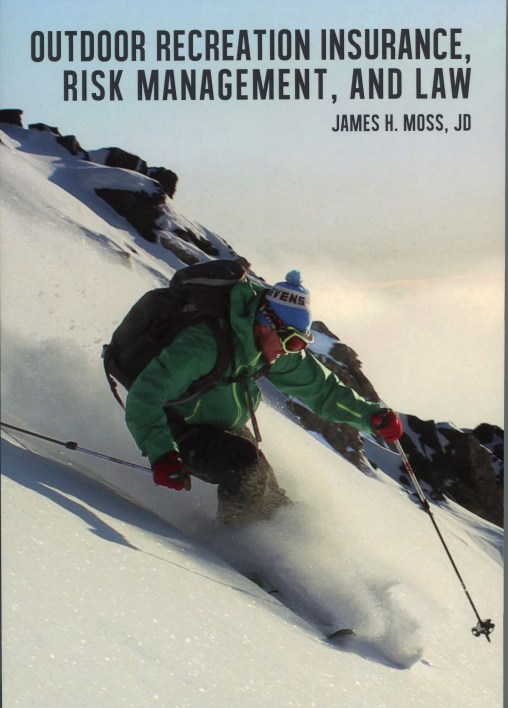
Outdoor Recreation Insurance, Risk Management, and Law
To see Jim’s complete bio go here and to see his CV you can find it here. To find out the purpose of this website go here.
G-YQ06K3L262
What do you think? Leave a comment.
If you like this let your friends know or post it on FB, Twitter or LinkedIn
 Blue Sky |
 Threads |
 |
 |
 Stimulus |
 Recreation Law logo |
Author: Outdoor Recreation Insurance, Risk Management and Law
Facebook Page: Outdoor Recreation & Adventure Travel Law
Email: Jim@Rec-Law.US
By Recreation Law Rec-law@recreation-law.com James H. Moss
@2023 Summit Magic Publishing, LLC
#AdventureTourism, #AdventureTravelLaw, #AdventureTravelLawyer, #AttorneyatLaw, #Backpacking, #BicyclingLaw, #Camps, #ChallengeCourse, #ChallengeCourseLaw, #ChallengeCourseLawyer, #CyclingLaw, #FitnessLaw, #FitnessLawyer, #Hiking, #HumanPowered, #HumanPoweredRecreation, #IceClimbing, #JamesHMoss, #JimMoss, #Law, #Mountaineering, #Negligence, #OutdoorLaw, #OutdoorRecreationLaw, #OutsideLaw, #OutsideLawyer, #RecLaw, #Rec-Law, #RecLawBlog, #Rec-LawBlog, #RecLawyer, #RecreationalLawyer, #RecreationLaw, #RecreationLawBlog, #RecreationLawcom, #Recreation-Lawcom, #Recreation-Law.com, #RiskManagement, #RockClimbing, #RockClimbingLawyer, #RopesCourse, #RopesCourseLawyer, #SkiAreas, #Skiing, #SkiLaw, #Snowboarding, #SummerCamp, #Tourism, #TravelLaw, #YouthCamps, #ZipLineLawyer, #RecreationLaw, #OutdoorLaw, #OutdoorRecreationLaw, #SkiLaw,
Lynam v. Blue Diamond LLC, 2016 Del. Super. LEXIS 495
Posted: April 25, 2019 Filed under: Cycling, Delaware, Legal Case, Minors, Youth, Children, Mountain Biking, Release (pre-injury contract not to sue) | Tags: clear and unequivocal, Cycling, Delaware, Dirt Bike, Minor, Motion for Judgment on the Pleadings, Motorcross, Motorcross Track, Negligence, Public Policy, Reckless Conduct, recklessness, Release, Unambigous, Unconscionable, Unequivocal, Waiver Leave a commentLynam v. Blue Diamond LLC, 2016 Del. Super. LEXIS 495
Thomas A Lynam, III and Antoinette M. Lynam, as Parents and Natural Guardians of Thomas A. Lynam, IV, a minor,
v.
Blue Diamond LLC and Parkway Gravel Inc. and Houghton’s Amusement Park, LLC
C.A. No. N14C-11-121 RRC
Superior Court of Delaware, New Castle
October 4, 2016
Submitted: July 6, 2016
On Defendants Blue Diamond LLC’s and Parkway Gravel, Inc.’s Motion for Judgment on the Pleadings.
Tabatha L. Castro, Esquire The Castro Firm, Inc. Attorney for Plaintiffs
Leonard G. Villari, Esquire Villari, Lentz & Lynam, LLC Attorney Pro Hac Vice for Plaintiffs
Marc S. Casarino, Esquire Dana Spring Monzo, Esquire Nicholas Wynn, Esquire White and Williams, LLP Attorneys for Defendants Blue Diamond LLC and Parkway Gravel, Inc.
Dear Counsel:
I. INTRODUCTION
Pending before this Court is Defendants Blue Diamond LLC’s and Parkway Gravel, Inc.’s (“Defendants”)[1] Motion for Judgment on the Pleadings. In their complaint, Plaintiffs allege that minor Thomas Lynam, IV (“Tommy”) was riding his motocross bicycle on Defendants’ motocross track. After riding off a jump, Tommy landed, lost control of his motocross bicycle, and collided with a metal shipping container near the track. Tommy apparently sustained serious injuries. Plaintiffs’ complaint raises one count of “negligence” as a theory for liability.[2]Although not listed as a separate count in their complaint, Plaintiffs allude in their general “negligence” claim to a theory of reckless conduct by Defendants in connection with the operation of the motocross track.
In their motion, Defendants assert that their alleged behavior was, as a matter of fact and law, neither negligent nor reckless. Alternatively, Defendants raise an affirmative defense that they are released from any liability for negligent or reckless conduct due to a release agreement (the “Release”) signed by the Plaintiffs. Additionally, Defendants raise the doctrine of assumption of the risk as a separate affirmative defense as a bar to recovery.
Plaintiffs agree that they released Defendants from liability for Defendants’ own “negligence.” However, Plaintiffs contend that Defendants’ conduct amounted to recklessness, and that Plaintiffs never released Defendants from liability for their allegedly reckless conduct. In response to Defendants’ claim that Plaintiffs assumed the risk of injury, Plaintiffs contend that the risk of a collision with a metal shipping container was not contemplated at either the signing of the Release or when Tommy began using the facilities.
This Court concludes that the Release was not specifically tailored so as to release Defendants from liability for their allegedly reckless conduct. The Court also finds that the factual record is insufficiently developed to make a legal determination of whether Defendants’ conduct as a matter of law amounted to recklessness. Finally, the Court concludes that it is premature at this juncture to consider Defendant’s affirmative defense. Accordingly, the Court denies Defendants’ Motion for Judgment on the Pleadings.
II.FACTUAL AND PROCEDURAL HISTORY
On January 6, 2013, Tommy, then thirteen years old, was riding a motocross bicycle at Blue Diamond Motocross near New Castle. Plaintiffs allege that the track was advertised as being composed of “safe jumps.”[3] While riding, Tommy rode off a jump, made a hard landing, and was unable to stop in time before colliding with a large metal shipping container.
Prior to granting Tommy admission to the Blue Diamond facilities to ride his motocross bicycle, Blue Diamond required Tommy’s father to sign a release agreement. The Release, entitled “Parental Consent, Release and Waiver of Liability, Assumption of Risk and Indemnity Agreement, ” stated that Plaintiffs understood the “risks and dangers of serious bodily injury” posed by motocross and relieved Defendants from liability for their own negligence.[4] The Release also released Defendants from liability for injuries suffered by Plaintiffs through their own negligence.[5]
In their complaint, Plaintiffs allege that Defendants negligently allowed the container to remain on the premises at an unsafe distance from the motocross track.[6] While Plaintiffs do not specifically allege recklessness as a separate claim for recovery, but rather include it in a single count of “Negligence, ” Plaintiffs’ complaint references reckless conduct as another potential theory of recovery.[7]Plaintiffs, however, now agree that their claims of negligence are barred by the Release.[8] But Plaintiffs assert that the Release did not specifically address or contemplate potential claims against Defendants for “reckless” behavior.[9]
III. ANALYSIS
A. Standard of Review
Under Superior Court Civil Rule 12(c), a party may move for judgment on the pleadings after the pleadings are closed.[10] The standard of review in the context of a motion for judgment on the pleadings requires a court to “accept all the complaint’s well-pleaded facts as true and construe all reasonable inferences in favor of the non-moving party.”[11] “The motion will be granted when no material issues of fact exist, and the moving party is entitled to judgment as a matter of law.”[12] “The standard for a motion for judgment on the pleadings is almost identical to the standard for a motion to dismiss.”[13]
B. The Parties Agree that the Release Bars Plaintiffs’ Recovery Against Defendants for Any Negligence
Defendants contend that the executed Release bars recovery for negligence. At oral argument on this motion, Plaintiffs agreed (Plaintiffs’ filings were not explicit on this point) that the Release bars recovery for injuries resulting from Defendants’ allegedly negligent conduct.[14] Although Plaintiffs are residents of Pennsylvania, the parties agree that Delaware law applies to the present motion, as Defendants are Delaware businesses and the incident giving rise to the case at bar occurred in Delaware.
Under Delaware law, parties may enter into an agreement that relieves a business owner of liability for injuries to business invitees that result from the owner’s negligent conduct.[15] However, the release must be unambiguous, not unconscionable, and not against public policy. [16] Further, the release must be “‘crystal clear and unequivocal’ to insulate a party from liability for possible future negligence.”[17]
In Ketler v. PFPA, LLC, the Delaware Supreme Court recently determined the validity of a release waiving liability for negligence.[18] The release in Ketler provided:
‘I understand and voluntarily accept this risk and agree that [the defendant] . . . will not be liable for any injury, including, without limitation, personal, bodily, or mental injury . . . resulting from the negligence of [the defendant] or anyone on [the defendant’s] behalf whether related to exercise or not. Accordingly, I do hereby forever release and discharge [the defendant] from any and all claims, demands, injuries, damages, actions, or causes of action.'[19]
The Delaware Supreme Court held that the release was sufficiently clear and unequivocal, and that it expressly released the defendant from any and all causes of actions relating to the defendant’s own negligence.[20] Defendants rely heavily on this case, asserting that it applies to claims of reckless conduct.[21]
The Release that Plaintiffs executed in this case is also sufficiently “clear and unequivocal.” The Release provides:
3. I consent to the Minor’s participation in the Event(s) and/or entry into restricted areas and HEREBY ACCEPT AND ASSUME ALL SUCH RISKS, KNOWN AND UNKNOWN, AND ASSUME ALL RESPONSIBILITY FOR THE LOSSES, COSTS, AND/OR DAMAGES FOLLOWING SUCH INJURY, DISABILITY, PARALYSIS OR DEATH, EVEN IF CAUSED, IN WHOLE OR IN PART, BY THE NEGLIGENCE OF THE “RELEASEES” NAMED BELOW.
4. I HEREBY RELEASE, DISCHARGE AND COVENANT NOT TO SUE the . . . track owners, [and] owners and lessees of premises used to conduct the Event(s) . . . all for the purposes herein referred to as “Releasees, ” FROM ALL LIABILITY TO ME, THE MINOR, [and] my and the minor’s personal representatives . . . FOR ANY AND ALL CLAIMS, DEMANDS, LOSSES, OR DAMAGES ON ACCOUNT OF INJRY, including, but not limited to, death or damage to property, CAUSED . . . BY THE NEGLIGENCE OF THE “RELEASEES” OR OTHERWISE.[22]
Similar to the language at issue in Ketler, the Release expressly states that the signor assumes responsibility for injuries caused by Defendants’ own negligent conduct. The release also expressly states that the Defendants are released from any and all causes of action that may arise from Defendants’ negligent conduct. Accordingly, this Court agrees with the parties that the Release validly exculpates Defendants from liability for their own negligence.
Defendants also rely on Lafate v. New Castle County[23] and Devecchio v. Delaware Enduro Riders, Inc.[24] to support their position that the Release waives claims of reckless conduct. Both Lafate and Devecchio concern agreements that released the tortfeasors from liability for their own negligent conduct. Both cases also discussed whether the language of the releases was sufficiently tailored to release the tortfeasor’s negligent conduct. In Lafate, this Court refused to grant the defendant’s motion for summary judgment on grounds that the release did not clearly and unambiguously release the tortfeasor from claims that it was negligent.[25] In Devecchio, this Court granted the defendant’s motion for summary judgment because the plaintiff signed a valid covenant not to sue for injury resulting from the plaintiffs own negligence.[26]
Defendants’ reliance on these cases in light of Plaintiffs’ potential claim of reckless conduct is inapposite. Because the parties have agreed that Defendants are insulated from claims of negligence, the question of whether the release clearly and unambiguously insulates the defendants from liability for their own negligent conduct is moot. Neither the holding in Lafate nor in Devecchio relate to allegations of reckless conduct. Accordingly, because Plaintiffs now assert that Defendant’s conduct was reckless, Lafate and Devecchio are distinguishable from the case at bar.
Finally, the Court considers whether, for purposes of this motion, recklessness is subsumed in negligence, and is therefore barred as a form of negligence. Prosser and Keeton on Torts is particularly informative, providing that “such [exculpatory] agreements [that expressly exempt defendants from liability for their negligent conduct] generally are not construed to cover the more extreme forms of negligence, described as willful, wanton, reckless or gross, and to any conduct which constitutes an intentional tort.”[27] Adopting Prosser and Keeton’s interpretation, this Court finds that although the Release does insulate Defendants from liability for negligent conduct, it does not bar claims of “more extreme forms of negligence, ” such as “reckless” conduct.[28]
C. A Motion for Judgment on the Pleadings is Inappropriate at this Juncture in Light of any Undeveloped Claims of Reckless Conduct
Although Tommy’s father’s execution of the Release precludes recovery from Defendants on a theory of “negligence, ” Plaintiffs assert that the Defendants’ conduct was “reckless.” Plaintiffs did not explicitly allege in a separate count of the complaint that Defendant’s conduct was reckless, but Plaintiffs did make it apparent in the complaint that it was an intended theory of liability.[29] In their briefing and at oral argument, Plaintiffs suggested that Defendants, among other things, had been aware of previous collisions with the shipping container, and that their ignorance of these prior incidents amounts to reckless behavior.[30]Accordingly, the Court must determine whether the Release bars Plaintiffs from asserting claims resulting from injuries caused by Defendants’ reckless conduct.
Courts in Delaware have a strong preference for resolving cases on their merits, or at least allowing discovery to proceed such that additional evidence in support of the parties’ contentions can be developed.[31] While this preference is not outcome-determinative, the preference for resolving cases on the merits is a strong factor in determining whether to grant or deny a dispositive motion.
Plaintiffs, at oral argument and in their response to the motion, argue that they are entitled to recovery based on Defendants’ allegedly reckless conduct. The parties agree that this theory is separate from the one count of “negligence” listed in the complaint.[32] The operative language of the Release does not explicitly enumerate or contemplate recklessness as a theory of recovery barred by the Release. Under Delaware law, as provided in Ketler, a release must be “clear and unambiguous” in order to effectively release the business owner from liability.[33]
This Court finds that the language of the release is not “clear and unambiguous” with respect to Defendants’ liability for their own allegedly reckless conduct. In Ketler, the release at issue specifically used the word “negligence, ” and stated that Defendants “will not be liable for any injury, including, without limitation, personal, bodily, or mental injury . . . resulting from the negligence of [the defendants].” The Delaware Supreme Court held that this language satisfied the “clear and unequivocal” standard and upheld the language of the agreement.
Turning to the Release that Plaintiffs executed, this Court finds that the Release is silent as to claims of recklessness. The Release does not mention “reckless” conduct, and instead only expressly refers to injury caused by Defendants’ “negligence.” In the absence of such language, the Release does not clearly and unambiguously exculpate Defendants from liability for their own reckless conduct. Accordingly, the Release does not operate to bar Plaintiffs’ claim of recklessness.[34]
This Court holds that the Release does not bar claims of reckless conduct. This Court expresses no opinion at this juncture as to whether Plaintiffs ultimately can establish claims against for recklessness. Accordingly, the Court denies Defendants’ Motion for Judgment on the Pleadings, and will grant Plaintiffs leave to conduct further discovery with the option of potentially amending the complaint in support of their contention that Defendants’ conduct was “reckless.”[35]
D. The Court does Not Reach Defendant’s Argument under the Doctrine of Assumption of the Risk
Finally, Defendants’ contend that Plaintiffs assumed the risk of injury from Defendants’ alleged reckless conduct. However, the record has not been sufficiently developed to determine whether Defendants’ conduct was reckless or whether Plaintiffs assumed the risk of injury from Defendants’ allegedly reckless conduct.[36] Accordingly, the Court does not reach this contention at this stage of the litigation.
IV. CONCLUSION
Defendant’s Motion for Judgment on the Pleadings is DENIED. The Court has enclosed an Order establishing a Scheduling Conference in this case.
Very truly yours,
Richard R. Cooch Resident Judge
Notes:
[1] Defendant Houghton’s Amusement Park, LLC did not make an appearance in this case and had a default judgment taken against it on June 21, 2016.
[2]Compl. ¶¶ 79-87.
[3]Compl. ¶ 48.
[4]Defs.’ Mot. for J. on the Pleadings, Ex. A.
[5]Defs.’ Mot. for J. on the Pleadings, Ex. A. Tommy also signed an agreement, titled “Minor’s Assumption of the Risk Acknowledgment, ” that Defendants reference in their motion as another reason they are not liable for Plaintiffs’ injuries. However, it appears from the motion and subsequent filings that the release signed by Tommy is only mentioned in passing, and is not relied upon by Defendants. The release signed by Tommy’s father is the determinative release in the case at bar.
[6]Compl. ¶¶ 79-87.
[7]Compl. ¶¶ 49, 51, 77, 87. Specifically, the Complaint alleges that “Defendants’ failure to exercise reasonable care as alleged above comprised outrageous conduct under the circumstances, manifesting a wanton and reckless disregard of the rights of the Plaintiffs.” Compl. ¶ 87. The Complaint also alleges that Tommy’s injuries were caused by the “reckless indifference” of Defendants. Compl. ¶¶ 51, 77. Moreover, the Complaint alleges that the track was “reckless[ly] design[ed].” Compl. ¶ 49.
[8]At oral argument, Plaintiffs’ counsel answered in the affirmative when the Court asked “Am I understanding Plaintiffs’ position correctly when I read the papers to say that Plaintiffs are not alleging ordinary negligence, but rather recklessness?” Lynam et al. v. Blue Diamond LLC Motocross et al, C.A. No. N14C-11-121 RRC, at 6 (Del. Super. July 6, 2016) (TRANSCRIPT) [hereinafter Oral Arg. Tr.].
[9] Defs.’ Mot. for J. on the Pleadings, Ex. A.
[10] A judgment on the pleadings is based only upon a review of Plaintiffs’ complaint and Defendants’ answer. However, under Rule 12(c), “If, on a motion for judgment on the pleadings, matters outside the pleadings are presented to and not excluded by the Court, the motion shall be treated as one for summary judgment.” Super. Ct. Civ. R. 12(c). In the case at bar, Defendants introduced the two executed releases as exhibits to their motion. However, the releases were not a part of the pleadings. Nevertheless, the parties agree that this motion should be treated as a motion for judgment on the pleadings.
[11] Silver Lake Office Plaza, LLC v. Lanard & Axilbund, Inc., 2014 WL 595378, at *6 (Del. Super. Jan. 17, 2014) (quoting Blanco v. AMVAC Chem. Corp., 2012 WL 3194412, at *6 (Del. Super. Aug. 8, 2012)).
[12] Id. (quoting Velocity Exp., Inc. v. Office Depot, Inc., 2009 WL 406807, at *3 (Del. Super. Feb. 4, 2009).
[13] Id. (internal quotation marks omitted).
[14] See Oral Arg. Tr. at 6.
[15] Ketler v. PFPA, LLC, 132 A.3d 746 (Del. 2016) (upholding “hold harmless” agreements and releases that relieve a proprietor from liability for its own negligent activities).
[16] Id. at 747-48.
[17] Riverbend Cmty., LLC v. Green Stone Eng’g, LLC, 55 A.3d 330, 336 (Del. 2012) (internal quotation marks omitted) (quoting State v. Interstate Amiesite Corp., 297 A.2d 41, 44 (Del. 1972)).
[18] Ketler, 132 A.3d at 747.
[19] Id.
[20] Id.
[21] Oral Arg. Tr. at 14-16.
[22] Defs.’ Mot. for J. on the Pleadings, Ex. A (emphasis added).
[23] 1999 WL 1241074 (Del. Super. Oct. 22, 1999).
[24] 2004 Del. Super. LEXIS 444 (Del. Super. Nov. 30, 2004).
[25] The plaintiff in Lafate was injured by a metal bar used to divide a basketball court. This Court found that while the agreement did “speak[] of ‘any and all injuries which may be suffered by [players] during [their] participation, ‘” the absence of the word “negligence” insufficiently insulated the defendants from liability for their own negligent conduct. Lafate, 1999 WL 1241074, at *4.
[26] In Devecchio, the defendant owned a motorcycle race track that required riders to sign agreements releasing the defendant from liability for injuries resulting from both the riders and the defendant’s negligence. The release pertaining to the defendant’s negligence expressly used the word “negligence.” This Court found that the release using the word “negligence” was sufficiently clear and unambiguous, and therefore insulated the defendant from liability for its own negligent conduct. Devecchio v. Enduro Riders, Inc., 2004 Del. Super. LEXIS 444 (Del. Super. Nov. 30, 2004).
[27] W. Page Keeton, et al., Prosser and Keeton on Torts, § 68 at 483-84 (5th ed. 1984)). Delaware courts often rely on Prosser and Keeton on Torts in reaching their conclusions. See, e.g., Culver v. Bennett, 588 A.2d 1094, 1097 (Del. 1991); Lafate v. New Castle County, 1999 WL 1241074 (Del. Super. Oct. 22, 1999); Brzoska v. Olson, 668 A.2d 1355, 1360 (Del. 1995).
[28] Additionally, the Delaware Civil Pattern Jury Instructions for negligence and recklessness are substantially different. The Delaware Civil Pattern Jury Instruction for negligence provides:
This case involves claims of negligence. Negligence is the lack of ordinary care; that is, the absence of the kind of care a reasonably prudent and careful person would exercise in similar circumstances. That standard is your guide. If a person’s conduct in a given circumstance doesn’t measure up to the conduct of an ordinarily prudent and careful person, then that person was negligent. On the other hand, if the person’s conduct does measure up to the conduct of a reasonably prudent and careful person, the person wasn’t negligent.
Del. Super. P.J.I. Civ. § 5.1 (2003), http://courts.delaware.gov/forms/download.aspx?id=85928. On the other hand, the Delaware Civil Pattern Jury Instruction for reckless conduct states:
Reckless conduct reflects a knowing disregard of a substantial and unjustifiable risk. It amounts to an “I don’t care” attitude. Recklessness occurs when a person, with no intent to cause harm, performs an act so unreasonable and so dangerous that he or she knows, or should know, that harm will probably result.
Del. Super. P.J.I. Civ. § 5.9 (2003), http://courts.delaware.gov/forms/download.aspx?id=85928. It is apparent from a comparison of the two different jury instructions that negligence conduct requires a departure from the ordinary standard of care exhibited by the reasonably prudent person, an objective standard. However, in contrast, it appears from the pattern jury instructions that reckless conduct requires a subjective “I don’t care” attitude that evidences an even greater departure from the ordinary standard of care, amounting to an unreasonable conscious disregard of a known risk.
[29] Compl. ¶¶ 49, 51, 77, 87. For example, Plaintiffs allege that “The reckless design of the track, which was intentionally constructed next to the pre-existing intermodal container, requires riders to land from a jump and immediately decelerate in order to execute a 90° right turn.” Compl. ¶ 49. Moreover, Plaintiffs allege that Tommy’s injuries were “a direct and proximate result of the negligence, carelessness and reckless indifference of Defendants.” Compl. ¶ 77.
[30] Pl.’s Suppl. Resp. in Opp’n to the Mot. for J. on the Pleadings, at 2.
[31] Keener v. Isken, 58 A.3d 407, 409 (Del. 2013); see also Wallace v. Wood, 2007 WL 3331530 (Del. Ch. Oct. 31, 2007); DeSantis v. Chilkotowsky, 2004 WL 2914314, at *2 (Del. Super. Nov. 18, 2004), Sup. Ct. Civ. R. 56.
[32] Plaintiffs did not plead any explicit claim of recklessness. See, e.g., J.L. v. Barnes, 33 A.3d 902, 916 n.77 (De. 2011) (treating recklessness and gross negligence as interchangeable and noting, “In order for a plaintiff to plead gross negligence with the requisite particularity, the plaintiff must articulate ‘facts that suggest a wide disparity between the process [] used . . . and that which would have been rational.'” J.L. states that a complaint pleading ten pages of facts to support a claim of gross negligence or recklessness was sufficient to meet the pleading standard). Defendants argue that Plaintiffs have not properly pleaded reckless conduct under Superior Court Civil Rule 9(b). However, the Court need not reach that issue since it will give Plaintiffs the opportunity to amend their complaint.
[33] Ketler, 132 A.3d at 747.
[34] Because the Court finds that Defendants’ release does not explicitly bar claims of “reckless” conduct, this Court does not reach the question of whether such a release is potentially permissible under Delaware law. However, this Court notes that other jurisdictions have differing perspectives on whether exculpatory agreements barring claims for recklessness, gross negligence, willful acts, or strict liability are enforceable. See Randy J. Sutton, Annotation, Validity, Construction, and Effect of Agreement Exempting Operator of Amusement Facility from Liability for Personal Injury or Death of Patron, 54 A.L.R.5th 513 (1997). For example, in Barker v. Colo. Region-Sports Car Club of Am., the Colorado Court of Appeals held that exculpatory agreements can release a party only for simple negligence, and not from willful and wanton negligence. 532 P.2d 372, 377 (Colo.App. 1974). Similarly, in Wheelock v. Sport Kites, Inc., the United States District Court for the District of Hawaii held that a release was invalid with respect to claims of gross negligence and strict liability. 839 F.Supp. 730, 736 (D. Haw. 1993). The above annotation suggests that a common reason to not enforce such an agreement is because they are void against the state’s public policy.
Alternatively, other jurisdictions have upheld agreements that exculpate business owners for reckless conduct or strict liability. For example, in Murphy v. N. Am. River Runners, Inc., the West Virginia Supreme Court discussed the matter, stating:
Generally, in the absence of an applicable safety statute, a plaintiff who expressly and, under the circumstances, clearly agrees to accept a risk of harm arising from the defendant’s negligent or reckless conduct may not recover for such harm, unless the agreement is contrary to public policy. When such an express agreement is freely and fairly made, between two parties who are in equal bargaining position, and there is no public interest with which the agreement interferes, it will generally be upheld.
412 S.E.2d 504, 508-09 (W.Va. 1991).
[35]Delaware Courts have previously allowed such an amendment to be made. As this Court held in Guy v. Phillips, a party may amend a complaint following additional discovery when the amended count arises out of the same factual basis for the original complaint. 1997 WL 524124 (Del. Super. July 2, 1997).
[36] In support of this defense, the Court notes that Defendants rely solely on Deuley v. DynCorp Int’l, Inc., 2010 WL 704895 (Del. Super. Feb. 26, 2010). However, Deuley is distinguishable from the case at bar. In Deuley, surviving relatives of decedents killed by an improvised explosive device (“IED”) in Afghanistan filed a wrongful death action. As part of the employment agreement, the decedents signed an agreement that provided employees expressly assumed the risk of injury or death. In reaching its conclusion that the decedents assumed the risk of death, the Court found that “when [the decedents] signed the releases, even a poorly informed American had to have appreciated that working in Afghanistan involved the general risk of insurgent or terrorist attacking by an IED.” Deuley, 2010 WL 704895, at *4. “The complaint offers no reason to find that any plaintiff here was probably unaware of the general risk of being injured or killed by a bomb.” Id. In the case at bar, drawing inferences in the light most favorable to the Plaintiffs, it is unlikely that Plaintiffs were aware of the risk posed by the shipping container, since they allege that they were unable to inspect the track prior to Tommy using it. Accordingly, Defendants’ reliance on Deuley is inapposite since it could be determined that a collision with the metal shipping container was not contemplated by the Plaintiffs when they signed the Release.
Haines v. Get Air Tucson Incorporated, et al., 2018 U.S. Dist. LEXIS 180500, 2018 WL 5118640
Posted: April 25, 2019 Filed under: Arizona, Indoor Recreation Center, Legal Case | Tags: activities, alleges, argues, contends, Contractor, district court, drafted, edition, employee handbook, Employees, exercise of jurisdiction, foam, franchisee, Franchiser, generic, Handbook, jurisdictional, Manual, Motion to Dismiss, nonresident, parties, Personal jurisdiction, purposefully, recommendation, remember, removal, revised, safety rule, Third Party, training, Trampoline Leave a commentTo Read an Analysis of this decision see: Indoor trampoline park company held liable for its actions in creating safety rules for its sub-groups creating liability for itself from the sub-group’s customers.
Haines v. Get Air Tucson Incorporated, et al., 2018 U.S. Dist. LEXIS 180500, 2018 WL 5118640
Blake Haines, Plaintiff,
v.
Get Air Tucson Incorporated, et al., Defendants.
No. CV-15-00002-TUC-RM (EJM)
United States District Court, D. Arizona
October 19, 2018
ORDER
Honorable Rosemary Marquez United States District Judge.
Pending before the Court is Defendant Get Air, LLC’s (“Defendant” or “GALLC”) Motion for Summary Judgment. (Doc. 238.) On August 2, 2018, Magistrate Judge Eric J. Markovich issued a Report and Recommendation (Doc. 266), recommending that the Motion for Summary Judgment be granted as to Plaintiff’s punitive damages claim but otherwise denied. Defendant filed an Objection (Doc. 269), to which Plaintiff responded (Doc. 273).
I. Standard of Review
A district judge “may accept, reject, or modify, in whole or in part, the findings or recommendations” made by a magistrate judge. 28 U.S.C. § 636(b)(1). The district judge must “make a de novo determination of those portions” of the magistrate judge’s “report or specified proposed findings or recommendations to which objection is made.” Id. The advisory committee’s notes to Rule 72(b) of the Federal Rules of Civil Procedure state that, “[w]hen no timely objection is filed, the court need only satisfy itself that there is no clear error on the face of the record in order to accept the recommendation” of a magistrate judge. Fed.R.Civ.P. 72(b) advisory committee’s note to 1983 addition. See also Johnson v. Zema Sys. Corp., 170 F.3d 734, 739 (7th Cir. 1999) (“If no objection or only partial objection is made, the district court judge reviews those unobjected portions for clear error.”); Prior v. Ryan, CV 10-225-TUC-RCC, 2012 WL 1344286, at *1 (D. Ariz. Apr. 18, 2012) (reviewing for clear error unobjected-to portions of Report and Recommendation).
II. GALLC’s Objection to Judge Markovich’s Report and Recommendation
As previously found by this Court, Plaintiff has presented evidence that GALLC developed a generic employee handbook (“EH”) for use in other Get Air trampoline parks as part of its support for the expansion of the Get Air business enterprise, and that the EH was used by Get Air Tucson. (See Doc. 158 at 12-14; Doc. 172 at 5.)[1] Plaintiff claims that his injuries were caused by allegedly deficient safety rules contained in the EH. (See Doc. 84 at 6, 10, 12-13.) In its Motion for Summary Judgment, Defendant argues (1) it owed no duty to Plaintiff, (2) even if it owed a duty, it was not negligent because the EH prohibited the maneuver that led to Plaintiff’s injuries, (3) it no longer has any potential legal liability because the employee involved in the creation of the EH was dismissed with prejudice; (4) Plaintiff cannot prove causation, and (5) Plaintiff’s claim for punitive damages is factually unsupported. (Doc. 238 at 1-2.)
Judge Markovich recommended that Defendant’s Motion for Summary Judgment be granted with respect to Plaintiff’s punitive-damages claim. (Doc. 266 at 17.) Judge Markovich rejected Defendant’s other arguments. He found that, as a result of “the special business-customer relationship that was created when GALLC performed an undertaking to develop the EH as part of its support work for the Get Air entities, ” GALLC owed Plaintiff a duty to exercise reasonable care in developing the safety rules in the EH. (Id. at 10.) Judge Markovich found that summary judgment on the issue of breach of the standard of care is precluded because there is a material factual dispute concerning whether the rule prohibiting somersaults in the EH was sufficient to prohibit the flip maneuver attempted by Plaintiff. (Id. at 7-8.) Judge Markovich also found that the dismissal of Val Iverson does not preclude Plaintiff from pursuing this action against GALLC, because a stipulated dismissal with prejudice no longer operates as an adjudication on the merits under Arizona law, and because Plaintiff’s claims are based on GALLC’s own negligence and piercing the corporate veil rather than on vicarious liability. (Id. at 16.) Finally, Judge Markovich found that Defendant’s causal-connection argument is “belied by other evidence previously considered by the Court.” (Id. at 16-17.)
Defendant argues that Judge Markovich erred in finding that GALLC owed Plaintiff a duty, in finding a material factual dispute with respect to the issue of breach of the standard of care, and in finding that GALLC can be held liable despite the dismissal of Val Iverson. (Doc. 269 at 1-10.) GALLC’s Objection to the Report and Recommendation does not address Judge Markovich’s finding on causation. The parties do not object to Judge Markovich’s finding that Plaintiff’s punitive-damages claim is factually unsupported.
III. Discussion
As no specific objections have been made to Judge Markovich’s recommendations regarding Plaintiff’s punitive-damages claim and Defendant’s causation argument, the Court has reviewed those portions of the Report and Recommendation for clear error, and has found none. Accordingly, the Court will accept and adopt Judge Markovich’s recommendation to grant Defendant’s Motion for Summary Judgment with respect to Plaintiff’s punitive damages claim and to deny the Motion for Summary Judgment to the extent it argues a lack of evidence of causation.
A. Existence of Duty
“To establish a defendant’s liability for a negligence claim, a plaintiff must prove: (1) a duty requiring the defendant to conform to a certain standard of care; (2) breach of that standard; (3) a causal connection between the breach and the resulting injury; and (4) actual damages.” Quiroz v. Alcoa Inc., 416 P.3d 824, 827-28 (Ariz. 2018). The existence of a duty is determined by the Court as a matter of law. See Id. at 828. A duty may “arise from a special relationship between the parties, ” including a special relationship finding its basis in “undertakings.” Stanley v. McCarver, 92 P.3d 849, 851 (Ariz. 2004); see also Quiroz, 416 P.3d at 829.
Although there is evidence that the various Get Air enterprises were operated as a closely linked network, the Court does not find that Plaintiff and GALLC had a traditional business-customer relationship. However, even though there was no direct business-customer relationship, Plaintiff and GALLC nevertheless had a special relationship based on GALLC undertaking to create safety rules for other Get Air trampoline parks, which GALLC included in a generic EH developed as part of its support work for the Get Air entities. Imposition of a duty based on this special relationship is supported by Arizona case law as well as sections 323 and 324A of the Restatement (Second) of Torts.
In McCarver, the Arizona Supreme Court imposed a duty of reasonable care on a radiologist contracted by the plaintiff’s employer to interpret an x-ray of the plaintiff’s chest, despite the lack of a traditional doctor-patient relationship. 92 P.3d at 853. In imposing a duty, the Court analyzed “whether the doctor was in a unique position to prevent harm, the burden of preventing harm, whether the plaintiff relied upon the doctor’s diagnosis or interpretation, the closeness of the connection between the defendant’s conduct and the injury suffered, the degree of certainty that the plaintiff has suffered or will suffer harm, the skill or special reputation of the actors, and public policy.” Id. Though the facts at issue in McCarver differ from those at issue in the present case, the factors supporting imposition of a duty in McCarver also support imposition of a duty here. By including safety rules in a generic EH developed for use in other Get Air parks, GALLC placed itself in a unique position to prevent harm to customers of those other Get Air parks. Get Air Tucson customers such as Plaintiff relied upon the safety rules developed by GALLC and enforced by Get Air Tucson. Plaintiff alleges that his injuries were caused by deficiencies in those safety rules. GALLC’s experience in the field of trampoline-park operations gave it special skill and a special reputation with respect to the creation of safety rules for other Get Air parks. Deficient safety rules increase the risk of harm to trampoline park customers, and the burden of developing sufficient safety rules is minimal.
The Court in McCarver also found that imposition of a duty in that case comported with Restatement (Second) of Torts § 324A. See McCarver, 92 P.3d at 853-54. Defendant argues in its Objection that Restatement (Second) of Torts § 324A “can appear to be the basis of the holding” in McCarver “but it is not.” (Doc. 269 at 3.) The import of Defendant’s argument is unclear. Whether it forms the basis of the holding in McCarver or not, Restatement (Second) of Torts § 324A has been adopted by Arizona courts. See Tollenaar v. Chino Valley Sch. Dist., 945 P.2d 1310, 1312 (Ariz. App. 1997). Section 324A provides:
One who undertakes, gratuitously or for consideration, to render services to another which he should recognize as necessary for the protection of a third person or his things, is subject to liability to the third person for physical harm resulting from his failure to exercise reasonable care to protect his undertaking, if
(a) his failure to exercise reasonable care increases the risk of such harm, or
(b) he has undertaken to perform a duty owed by the other to the third person, or
(c) the harm is suffered because of reliance of the other or the third person upon the undertaking.
Restatement (Second) of Torts § 324A (1965).
Restatement (Second) of Torts § 324A supports the existence of a duty in this case.[2] GALLC undertook to render services to Get Air Tucson (e.g., development of an EH containing safety rules) which were necessary for the protection of Get Air Tucson’s customers. Plaintiff alleges that GALLC failed to exercise reasonable care in the development of the EH’s safety rules; if so, the failure increased the risk of harm to Get Air Tucson’s customers. See Restatement (2d) of Torts § 324A(a) (1965). Furthermore, GALLC undertook to perform a duty-development of reasonable safety rules-which Get Air Tucson owed to its customers. See Id. at § 324A(b). Plaintiff alleges he was injured as a result of his reliance upon the safety rules developed by GALLC and enforced by Get Air Tucson. See Id. at § 324A(c).
Restatement (Second) of Torts § 323 has also been adopted by Arizona courts, see Tollenaar, 945 P.2d at 1312, and it also supports the existence of a duty here. Section 323 provides:
One who undertakes, gratuitously or for consideration, to render services to another which he should recognize as necessary for the protection of the other’s person or things, is subject to liability to the other for physical harm resulting from his failure to exercise reasonable care to perform his undertaking, if
(a) his failure to exercise such care, increases the risk of such harm, or
(b) the harm is suffered because of the other’s reliance upon the undertaking.
Restatement (2d) of Torts § 323 (1965). GALLC’s creation of safety rules was a service rendered not only to Get Air parks but to the customers of those parks, including Get Air Tucson customers.
The Court agrees with Judge Markovich that GALLC owed Plaintiff a duty to exercise reasonable care in the development of the safety rules contained in the generic EH supplied to Get Air Tucson.
B. Breach
The Court also agrees with Judge Markovich that there is a genuine issue of material fact precluding summary judgment on the issue of whether GALLC breached its duty to exercise reasonable care in the creation of the EH’s safety rules. Specifically, there is a factual dispute regarding the definition of “somersault, ” as used in the EH’s safety rules and, therefore, a dispute regarding whether the flip maneuver attempted by Plaintiff was prohibited by the safety rules. The evidence identified by Plaintiff and Defendant indicates that there may be differing technical and layperson definitions of the term “somersault.” Even if the maneuver attempted by Plaintiff falls within a technical definition of the term “somersault, ” as Defendant argues, Plaintiff has identified evidence showing that Get Air employees did not consider flips to be encompassed by the EH’s safety rule prohibiting somersaults. (See Doc. 246 at 4-5; Doc. 246-1.) Accordingly, there is evidence from which a reasonable jury could find that the EH’s safety rules were defective for not clearly prohibiting the flip maneuver that led to Plaintiff’s injuries.
C. Liability of GALLC
Defendant argues that the only act of negligence alleged by Plaintiff is GALLC’s creation of allegedly defective safety rules, that Val Iverson was solely responsible for the creation of those safety rules, and that GALLC cannot be held vicariously liable for the conduct of Val Iverson because he has been dismissed with prejudice. However, as Judge Markovich found, Plaintiff is not asserting vicarious liability; rather, Plaintiff alleges that GALLC is independently negligent for undertaking to create a generic EH for use in other Get Air parks, including Get Air Tucson, and including allegedly deficient safety rules in that EH. The dismissal with prejudice of Val Iverson does not preclude Plaintiff from asserting a claim against GALLC for its own independent negligence, even if establishing the independent negligence of GALLC may require proof of Val Iverson’s negligence. See Kopp v. Physician Grp. of Ariz., Inc., 421 P.3d 149, 150 (Ariz. 2018).
IT IS ORDERED that Defendant’s Objection (Doc. 269) is overruled, and Judge Markovich’s Report and Recommendation (Doc. 266) is accepted and adopted as set forth above.
IT IS FURTHER ORDERED that Defendant’s Motion for Summary Judgment (Doc. 238) is granted as to Plaintiffs punitive damages claim only and is otherwise denied.
—–
Notes:
[1] Record citations refer to the page numbers generated by the Court’s electronic filing system.
[2] Defendant argues that § 324A is no longer a permissible basis of duty in Arizona because it is based on foreseeability. (Doc. 269 at 8.) Defendant cites no authority in support of the proposition that Arizona courts no longer follow § 324A. (See Doc. 247 at 1-4; Doc. 269 at 8.) Arizona courts have rejected the concept of duty based on the creation of an unreasonable risk of harm to “a foreseeable plaintiff, ” meaning a plaintiff “who is within the orbit or zone of danger created by a defendant’s conduct.” Quiroz, 416 P.3d at 828 (internal quotation marks omitted). Here, however, GALLC owed a duty to Get Air customers based on the special relationship created as a result of GALLC undertaking to develop safety rules for the protection of those customers. The duty arises from the special relationship rather than “zone of danger” foreseeability. See Id. at 829 (given the elimination of foreseeability from the duty framework, “the duty analysis” under Arizona law is limited to “common law special relationships or relationships created by public policy”).
—–
Can’t Sleep? Guest was injured, and you don’t know what to do? This book can answer those questions for you.
Posted: April 16, 2019 Filed under: Adventure Travel, Assumption of the Risk, Avalanche, Camping, Climbing, Climbing Wall, Contract, Criminal Liability, Cycling, Equine Activities (Horses, Donkeys, Mules) & Animals, First Aid, Health Club, How, Indoor Recreation Center, Insurance, Jurisdiction and Venue (Forum Selection), Medical, Minors, Youth, Children, Mountain Biking, Mountaineering, Paddlesports, Playground, Racing, Racing, Release (pre-injury contract not to sue), Risk Management, Rivers and Waterways, Rock Climbing, Scuba Diving, Sea Kayaking, Search and Rescue (SAR), Ski Area, Skier v. Skier, Skiing / Snow Boarding, Skydiving, Paragliding, Hang gliding, Snow Tubing, Sports, Summer Camp, Swimming, Triathlon, Whitewater Rafting, Youth Camps, Zip Line | Tags: #ORLawTextbook, #ORRiskManagment, #OutdoorRecreationRiskManagementInsurance&Law, #OutdoorRecreationTextbook, @SagamorePub, Accidents, Angry Guest, Dealing with Claims, General Liability Insurance, Guide, http://www.rec-law.us/ORLawTextbook, Injured Guest, Insurance policy, James H. Moss J.D., Jim Moss, Liability insurance, OR Textbook, Outdoor Recreation Insurance, Outdoor Recreation Law, Outdoor Recreation Risk Management, Outfitter, RecreationLaw, Risk Management, risk management plan, Textbook, Understanding, Understanding Insurance, Understanding Risk Management, Upset Guest Leave a comment An injured guest is everyone’s business owner’s nightmare. What happened, how do you make sure it does not happen again, what can you do to help the guest, can you help the guests are just some of the questions that might be keeping you up at night.
This book can help you understand why people sue and how you can and should deal with injured, angry or upset guests of your business.
This book is designed to help you rest easy about what you need to do and how to do it. More importantly, this book will make sure you keep your business afloat and moving forward.
You did not get into the outdoor recreation business to worry or spend nights staying awake. Get prepared and learn how and why so you can sleep and quit worrying.

Table of Contents
Chapter 1 Outdoor Recreation Risk Management, Law, and Insurance: An Overview
Chapter 2 U.S. Legal System and Legal Research
Chapter 3 Risk 25
Chapter 4 Risk, Accidents, and Litigation: Why People Sue
Chapter 5 Law 57
Chapter 6 Statutes that Affect Outdoor Recreation
Chapter 7 Pre-injury Contracts to Prevent Litigation: Releases
Chapter 8 Defenses to Claims
Chapter 9 Minors
Chapter 10 Skiing and Ski Areas
Chapter 11 Other Commercial Recreational Activities
Chapter 12 Water Sports, Paddlesports, and water-based activities
Chapter 13 Rental Programs
Chapter 14 Insurance
$130.00 plus shipping

New Jersey does not allow a parent to sign away a minor’s right to sue so a binding arbitration agreement is a good idea, if it is written correctly.
Posted: April 15, 2019 Filed under: Contract, Indoor Recreation Center, New Jersey | Tags: Arbitration, bind, Binding Arbitration, defendants', Minor, New Jersey, parent, Right to Sue, Skyzone, Trampoline, Trampoline facility, Trampoline Park, waiving Leave a commentThe arbitration agreement in this case did not state how long the agreement was valid for, so the court held it was only valid for the day it was signed.
Citation: Weed v. Sky NJ, LLC., 2018 N.J. Super. Unpub. LEXIS 410, 2018 WL 1004206
State: New Jersey: Superior Court of New Jersey, Appellate Division
Plaintiff: Lorianne Weed and Scott Trefero as parents and natural guardians of A.M., a minor,
Defendant: Sky NJ, LLC a/k/a and/or d/b/a Skyzone Moorestown and/or a/k/a and/or d/b/a Skyzone and David R. Agger
Plaintiff Claims: Contract failed to compel arbitration
Defendant Defenses: Arbitration
Holding: For the Plaintiff
Year: 2018
Summary
When a parent cannot sign a release for a minor, because the states don’t enforce them, one option may be a binding arbitration agreement. Arbitration usually does not allow massive damages, is cheaper and quicker than going to trial.
However, your arbitration agreement, like a release, must be written in a way to make sure it is effective. This one was not, and the plaintiff can proceed to trial.
Facts
Plaintiff visited the trampoline facility in July 2016. Entrance to the park is conditioned on all participants signing a “Conditional Access Agreement, Pre-Injury Waiver of Liability, and Agreement to Indemnity, Waiver of Trial, and Agreement to Arbitrate” (the Agreement). Weed executed the agreement on behalf of her son in July 2016.
Plaintiff returned to the facility with a friend in November 2016, and was injured while using the trampolines during a “Glow” event, which plaintiff submits used different and less lighting than was present at his earlier visit. Plaintiff entered the facility in November with an agreement signed by his friend’s mother on behalf of both her daughter and A.M.[2] In an affidavit submitted by Weed in opposition to the motion, she stated that she was unaware that her son was going to the facility at the time of the November visit.
After Weed filed suit on behalf of her son, defendants moved to compel arbitration pursuant to the agreement. Defendants argued that the agreements contained “straightforward, clear, and unequivocal” language that a participant was waiving their right to present claims before a jury in exchange for conditional access to the facility. They asserted that the first agreement signed by Weed remained in effect at the time of plaintiff’s subsequent visit in November as there was no indication that it was only valid for the one day of entry in July. Finally, defendants contended that any dispute as to a term of the agreement should be resolved in arbitration.
Plaintiff opposed the motion, asserting that nothing in the first agreement alerted Weed that it would remain in effect for either a certain or an indefinite period of time. To the contrary, defendants’ policy of requiring a new agreement to be signed each time a participant entered the park belied its argument that a prior agreement remained valid for a period of time.
On May 19, 2017, Judge Joseph L. Marczyk conducted oral argument and denied the motion in an oral decision issued the same day. The judge determined that the first agreement did not apply to the November visit because it did not contain any language that it would remain valid and applicable to all future visits. Therefore, there was no notice to the signor of the agreement that it would be in effect beyond that specific day of entry, and no “meeting of the minds” that the waiver and agreement to arbitrate pertained to all claims for any future injury.
As for the second agreement, the judge found that there was no precedent to support defendants’ contention that an unrelated person could bind plaintiff to an arbitration clause. This appeal followed.
Analysis: making sense of the law based on these facts.
In a state where there are no defenses except assumption of the risk for claims by minor’s arbitration can be a good way to speed up the process and limit damages. Each state has laws that encourage arbitration and, in most cases, create limits on what an arbitration panel (the people hearing the case) can award in damages. In man states, arbitration judges cannot award punitive damages.
You need to check your state laws on what if any benefits arbitration provides.
However, if you can use a release, the release is the best way to go because it cuts off all damages. Many times, in arbitration damages are awarded, they are just less.
To determine which states do not allow a parent to sign away a minor’s right to sue see States that allow a parent to sign away a minor’s right to sue.
The best way of dealing with minor claims is the defense of assumption of the risk. However, this takes more time on the front end in making sure the minor participants understand the risk before embarking on the activity.
There were two issues before the appellate court: Whether the first agreement signed by the mother of the injured plaintiff extended beyond the day it was signed. The second issue was whether a second agreement signed by a friend, not a parent, legal guardian or someone acting under a power of attorney had any legal validity.
The first agreement was silent as to how long it was valid. There was no termination date, (which is a good thing) and nothing to indicate the agreement was good for a day or a lifetime. Because the contract was blank as to when the agreement was valid, the court ruled against the creator of the contract.
There is no evidence in the record before us to support defendants’ argument as the agreements are silent as to any period of validity. Defendants drafted these agreements and required a signature from all participants waiving certain claims and requiring submission to arbitration prior to permitting access to the facility. Any ambiguity in the contract must be construed against defendants.
When a contract is written any issues are held against the writer of the agreement. Here because the contract had no end date or did not say it was good forever, there was a gap in the agreement that was held against the defendant as the writer of the agreement.
So, the court ruled the agreement signed by the mother was only valid on the day it was signed and was not valid the second time when the minor came in and was injured.
The second argument made by the defendant was the friend who signed for the minor on the second visit signed an agreement that should be enforced and compel arbitration.
The court laughed that one out the door.
We further find that defendants’ argument regarding the November agreement lacks merit. The signor of that agreement was neither a parent, a legal guardian, nor the holder of a power of attorney needed to bind the minor plaintiff to the arbitration agreement. Defendants’ reliance on Hojnowski v. Vans Skate Park, is misplaced. While the Court found that a parent had the authority to waive their own child’s rights under an arbitration agreement in Hojnowski, there is no suggestion that such authority would extend to a non-legal guardian. Not only would such a holding bind the minor to an arbitration agreement, it would also serve to bind the minor’s parents, waiving their rights to bring a claim on behalf of their child. We decline to so hold.
So Now What?
New Jersey law is quite clear. A parent cannot sign away a minor’s right to sue, Hojnowski v. Vans Skate Park. Consequently, arbitration was probably the way to go. In this case, one little slip up made the arbitration agreement worthless.
The one flaw in using an arbitration agreement is you could use a release to stop the claims for a parent. So, you should write a release that stops the claims of the parents/legal guardians and compels arbitration of the minor’s claims. Those get tricky.
And as far as another adult signing for a minor who is not their child, that is always a problem. A parent can sign for a minor, to some extent, and a spouse can sign for another spouse in certain situations. An officer of a corporation or a manager of a limited liability company can sign for the corporation or company. The trustee can sign for a trust, and any partner can sign for a partnership. But only you can sign for you.
The issue that outdoor businesses see all day long is a volunteer youth leader take groups of kids to parks, amusement rides and climbing walls, etc. Neighbors take the neighborhood kids to the zoo, and friends grab their kids’ friends to take on vacation. Unless the adult has a power of attorney saying they have the right to enter agreements on behalf of the minor child, their signature only has value if they are a celebrity or sports personality.
What do you think? Leave a comment.
Copyright 2019 Recreation Law (720) 334 8529
If you like this let your friends know or post it on FB, Twitter or LinkedIn


Author: Outdoor Recreation Insurance, Risk Management and Law
Facebook Page: Outdoor Recreation & Adventure Travel Law
Email: Jim@Rec-Law.US
By Recreation Law Rec-law@recreation-law.com James H. Moss
#AdventureTourism, #AdventureTravelLaw, #AdventureTravelLawyer, #AttorneyatLaw, #Backpacking, #BicyclingLaw, #Camps, #ChallengeCourse, #ChallengeCourseLaw, #ChallengeCourseLawyer, #CyclingLaw, #FitnessLaw, #FitnessLawyer, #Hiking, #HumanPowered, #HumanPoweredRecreation, #IceClimbing, #JamesHMoss, #JimMoss, #Law, #Mountaineering, #Negligence, #OutdoorLaw, #OutdoorRecreationLaw, #OutsideLaw, #OutsideLawyer, #RecLaw, #Rec-Law, #RecLawBlog, #Rec-LawBlog, #RecLawyer, #RecreationalLawyer, #RecreationLaw, #RecreationLawBlog, #RecreationLawcom, #Recreation-Lawcom, #Recreation-Law.com, #RiskManagement, #RockClimbing, #RockClimbingLawyer, #RopesCourse, #RopesCourseLawyer, #SkiAreas, #Skiing, #SkiLaw, #Snowboarding, #SummerCamp, #Tourism, #TravelLaw, #YouthCamps, #ZipLineLawyer, #RecreationLaw, #OutdoorLaw, #OutdoorRecreationLaw, #SkiLaw,
What is a Risk Management Plan and What do You Need in Yours?
Posted: April 11, 2019 Filed under: Activity / Sport / Recreation, Adventure Travel, Assumption of the Risk, Avalanche, Camping, Challenge or Ropes Course, Climbing, Climbing Wall, Contract, Cycling, Equine Activities (Horses, Donkeys, Mules) & Animals, First Aid, Health Club, Indoor Recreation Center, Jurisdiction and Venue (Forum Selection), Legal Case, Medical, Minors, Youth, Children, Mountain Biking, Mountaineering, Paddlesports, Playground, Racing, Racing, Release (pre-injury contract not to sue), Risk Management, Rivers and Waterways, Rock Climbing, Scuba Diving, Sea Kayaking, Search and Rescue (SAR), Ski Area, Skier v. Skier, Skiing / Snow Boarding, Skydiving, Paragliding, Hang gliding, Snow Tubing, Sports, Summer Camp, Swimming, Triathlon, Whitewater Rafting, Youth Camps, Zip Line | Tags: #ORLawTextbook, #ORRiskManagment, #OutdoorRecreationRiskManagementInsurance&Law, #OutdoorRecreationTextbook, @SagamorePub, Adventure travel, and Law, assumption of the risk, camping, Case Analysis, Challenge or Ropes Course, Climbing, Climbing Wall, Contract, Cycling, Donkeys, Equine Activities (Horses, first aid, General Liability Insurance, Good Samaritan Statutes, Guide, Hang gliding, http://www.rec-law.us/ORLawTextbook, Insurance, Insurance policy, James H. Moss, James H. Moss J.D., Jim Moss, Jurisdiction and Venue (Forum Selection), Legal Case, Liability insurance, Medical, Mountain biking, Mountaineering, Mules) & Animals, Negligence, OR Textbook, Outdoor Recreation Insurance, Outdoor Recreation Law, Outdoor Recreation Risk Management, Outfitter, Paddlesports, Paragliding, Recreational Use Statute, Release (pre-injury contract not to sue), Risk Management, risk management plan, Rivers and Waterways, Rock climbing, Sea Kayaking, ski area, Ski Area Statutes, Skiing / Snow Boarding, Skydiving, swimming, Textbook, Understanding, Understanding Insurance, Understanding Risk Management, Whitewater Rafting, zip line Leave a commentEveryone has told you, you need a risk management plan. A plan to follow if you have  a crisis. You‘ve seen several and they look burdensome and difficult to write. Need help writing a risk management plan? Need to know what should be in your risk management plan? Need Help?
This book can help you understand and write your plan. This book is designed to help you rest easy about what you need to do and how to do it. More importantly, this book will make sure you plan is a workable plan, not one that will create liability for you.

Table of Contents
Chapter 1 Outdoor Recreation Risk Management, Law, and Insurance: An Overview
Chapter 2 U.S. Legal System and Legal Research
Chapter 3 Risk 25
Chapter 4 Risk, Accidents, and Litigation: Why People Sue
Chapter 5 Law 57
Chapter 6 Statutes that Affect Outdoor Recreation
Chapter 7 PreInjury Contracts to Prevent Litigation: Releases
Chapter 8 Defenses to Claims
Chapter 9 Minors
Chapter 10 Skiing and Ski Areas
Chapter 11 Other Commercial Recreational Activities
Chapter 12 Water Sports, Paddlesports, and water-based activities
Chapter 13 Rental Programs
Chapter 14 Insurance
$99.00 plus shipping

Texas appellate court allows a release to stop a gross negligence claim.
Posted: April 8, 2019 Filed under: Indoor Recreation Center, Release (pre-injury contract not to sue), Texas | Tags: argues, Assumption of risk, bystander, Cause of action, consortium, conspicuousness, cross-motion, entities, fair notice, Gross negligence, lettering, matter of law, negligence rule, partial summary judgment, pet, pre-injury, Public Policy, Summary judgment, summary judgment motion, Trampoline, Trial court, waive Leave a commentIf you have a clause in your release that says, “except gross negligence” or something like that get rid of it. Why teach the plaintiff’s how to beat you, besides, you may win, which is what happened in this case.
Citation: Quiroz v. Jumpstreet8, Inc., et. al., 2018 Tex. App. LEXIS 5107
State: Texas: Court of Appeals of Texas, Fifth District, Dallas
Plaintiff: Graciela Quiroz, individually, A/N/F of XXXX (“JOHN DOE 1”) and XXXX (“JOHN DOE 2”), Minors, and Robert Sullivan, Individually
Defendant: Jumpstreet8, Inc., Jumpstreet, Inc. and Jumpstreet Construction, Inc.
Plaintiff Claims: Negligence and Gross Negligence
Defendant Defenses: Release
Holding: For the Defendant
Year: 2018
Summary
Plaintiff injured her back attempting to do a back flip on a trampoline at the defendant’s facility rendering her a paraplegic. She sued for her injuries claiming negligence and gross negligence. The court found the release stopped the plaintiff’s claims for negligence and gross negligence.
Facts
On November 29, 2014, Quiroz and her sixteen-year-old son went to Jumpstreet. Prior to using the facility, Quiroz was given a pre-injury release form that was titled “Jumpstreet, LLC Release and Parent/Guardian Waiver of Liability and Assumption of Risk.” The Release recited the following statements under the title: “PLEASE READ THIS DOCUMENT CAREFULLY. BY SIGNING IT, YOU ARE GIVING UP LEGAL RIGHTS.” After signing the Release, Quiroz and her son jumped on a trampoline. When Quiroz attempted to do a flip, she injured her neck. Quiroz is now paralyzed from the waist down. Quiroz brought suit, individually, against Jumpstreet for negligence and gross negligence and as next friend of two minor children for their loss of parental consortium and their bystander claims for mental anguish. Robert Sullivan (Quiroz’s spouse) joined the suit for loss of consortium and as next friend of a third minor child for loss of parental consortium and a bystander claim for mental anguish.
Jumpstreet filed a “Traditional Motion for Summary Judgment” alleging summary judgment was proper because Quiroz had signed a Release. In the motion, Jumpstreet stated that because Quiroz alleged negligence and gross negligence claims against Jumpstreet arising from her utilizing a Jumpstreet facility, the Release signed by Quiroz expressly released any negligence and gross negligence claims. Jumpstreet asserted the Release was valid and enforceable because it specifically named the party to be released, it met the fair notice requirements of conspicuousness and the express negligence rule, and it met the contractual elements of mutual intent and valid consideration.
Quiroz filed a response to Jumpstreet’s motion for summary judgment and a cross-motion for partial summary judgment that alleged summary judgment for Jumpstreet was improper because there was an issue of material fact regarding the Release. Quiroz alleged she was entitled to a partial summary judgment because the Release was “void, voidable and unenforceable” because the named entity did not exist at the time of her injury, the Release was ambiguous, a parent could not waive claims of minors, and the Release could not waive gross negligence claims because it would be against public policy to do so. The trial court granted Jumpstreet’s traditional motion for summary judgment and denied Quiroz’s cross-motion for partial summary judgment. Quiroz timely filed this appeal.
The trial court granted the defendant’s motion for summary judgment based on the release and denied the plaintiff’s cross motion for summary judgment. The plaintiff appealed.
Analysis: making sense of the law based on these facts.
The issue for the appellate court was whether or not the motion for summary judgment granted for the defendant, and the cross motion for the plaintiff that was denied were done so correctly. Should a release bar a claim for negligence and gross negligence under Texas law.
Release law in Texas appears to be quite specific.
The Release signed by Quiroz was a prospective release of future claims, including claims based on Jumpstreet’s own negligence. A release is an absolute bar to the released matter and extinguishes a claim or cause of action.
To win Jumpstreet only had to show the fair notice requirement of the law was met.
Jumpstreet had to show that the Release’s language met the fair notice requirement of conspicuousness and the express negligence rule. See id. “Conspicuous” means the terms must be presented in a manner that a reasonable person against whom it is to operate ought to have notice.
The fair notice requirement under Texas law requires the release language to be clear, unambiguous and within the four corners of the contract.
The express negligence rule is not an affirmative defense, but it is a rule of contract interpretation. This rule states that if a party intends to be released from its own future negligence, it must express that intent in clear, unambiguous terms within the four corners of the contract.
The issue the court focused on was the claim the plaintiff originally made that the defendant identified in the release was not the defendant who owned and operated the facility where she was injured. The original defendant was an LLC and had been dissolved, and a new LLC had taken its’ place. The release was not updated to show these changes.
In many states, this would have been a fatal flaw for the defendant.
The court found the defendants were owned and run by the same brothers and were the same for the purposes of this lawsuit. The new LLC replaced the old LLC and was covered by the release.
The court then looked at the release and pointed out the reasons why the release was going to be supported.
As noted above, the waiver and release language is in capital lettering immediately above the signature line where Quiroz printed her name, date of birth, age, address, and telephone number. Further, on page one in the assumption of risk paragraphs, the person signing the Release acknowledges the “potentially hazardous activity,” and the Release lists possible injuries, including “but not limited to” sprains, heart attack, and even death. Although paralysis is not specifically named as an injury, it is certainly less than death and thus would be included within the “but not limited to” language. Furthermore, the release of liability paragraph above Quiroz’s signature expressly lists the types of claims and causes of action she is waiving, including “negligence claims, gross negligence claims, personal injury claims, and mental anguish claims.
The plaintiff then argued the release was void because a release under Texas law cannot waive the claims of a minor when signed by a parent. The court agreed. However, since the child was not the injured plaintiff, it did not matter.
The court did look at the issue of whether or not a parent could sign away a minor’s right to sue. The court held the minor could still sue; however, a release signed by the parent would bar all the derivative claims based on the claims of the minor child. That means all claims by the parents, loss of consortium, etc., would be barred by the release. Only the claims of the minor child would survive.
The court then looked at whether a release could stop a claim for gross negligence. The court found that the decision had not been reviewed by the Texas Supreme Court and there was a mix of decisions in Texas regarding that issue.
The Texas courts that have allowed a release to top a gross negligence claim have held there is no difference between negligence and gross negligence under Texas law. The court went on to read the release and found the release in question had language that prevented claims for negligence and gross negligence. Therefore, the gross negligence claim was waived.
The Release met both the fair notice requirement for conspicuousness and the express negligence rule. It was, thus, enforceable. As a result, Jumpstreet met its burden of establishing it was entitled to summary judgment as a matter of law.
The release said it stopped claims for Gross Negligence and the Court agreed.
The defendant one because they had a well-written release that was easy to see and understand and said you can’t sue the defendant for negligence or gross negligence.
So Now What?
This is a first. A release was used to stop a gross negligence claim that was not based on a failure of the plaintiff to allege facts that were gross negligence. The release said it was effective against claims for negligence and gross negligence, and the court agreed.
Unless your state has specific statements were putting gross negligence in a release may void your release, or your supreme Court has specifically said a release cannot protect against gross negligence claims, you may want to add that phrase to your release.
No matter what, GET RID of clauses in your release that state the release is valid against all claims EXCEPT gross negligence. It is just stupid to put that in a release unless you have a legal system that requires it.
Putting that information into your release just tells the plaintiff and/or their attorney how to beat you. Don’t help the person trying to sue you!
Second, you never know; it may work. It did in this case in Texas.
What do you think? Leave a comment.
Copyright 2019 Recreation Law (720) 334 8529
If you like this let your friends know or post it on FB, Twitter or LinkedIn


Author: Outdoor Recreation Insurance, Risk Management and Law
Facebook Page: Outdoor Recreation & Adventure Travel Law
Email: Jim@Rec-Law.US
Word Count: 166
By Recreation Law Rec-law@recreation-law.com James H. Moss
#AdventureTourism, #AdventureTravelLaw, #AdventureTravelLawyer, #AttorneyatLaw, #Backpacking, #BicyclingLaw, #Camps, #ChallengeCourse, #ChallengeCourseLaw, #ChallengeCourseLawyer, #CyclingLaw, #FitnessLaw, #FitnessLawyer, #Hiking, #HumanPowered, #HumanPoweredRecreation, #IceClimbing, #JamesHMoss, #JimMoss, #Law, #Mountaineering, #Negligence, #OutdoorLaw, #OutdoorRecreationLaw, #OutsideLaw, #OutsideLawyer, #RecLaw, #Rec-Law, #RecLawBlog, #Rec-LawBlog, #RecLawyer, #RecreationalLawyer, #RecreationLaw, #RecreationLawBlog, #RecreationLawcom, #Recreation-Lawcom, #Recreation-Law.com, #RiskManagement, #RockClimbing, #RockClimbingLawyer, #RopesCourse, #RopesCourseLawyer, #SkiAreas, #Skiing, #SkiLaw, #Snowboarding, #SummerCamp, #Tourism, #TravelLaw, #YouthCamps, #ZipLineLawyer, #RecreationLaw, #OutdoorLaw, #OutdoorRecreationLaw, #SkiLaw,
gross negligence, entities, public policy, waive, summary judgment motion, summary judgment, partial summary judgment, trial court, cause of action, matter of law, fair notice, pet, negligence rule, conspicuousness, cross-motion, consortium, pre-injury, assumption of risk, trampoline, bystander, lettering, argues
Weed v. Sky NJ, LLC., 2018 N.J. Super. Unpub. LEXIS 410, 2018 WL 1004206
Posted: April 2, 2019 Filed under: Contract, Indoor Recreation Center, Legal Case, Minors, Youth, Children, New Jersey | Tags: Arbitration, bind, Binding Arbitration, defendants', Minor, New Jersey, parent, Right to Sue, Skyzone, Trampoline, Trampoline facility, Trampoline Park, waiving Leave a commentWeed v. Sky NJ, LLC., 2018 N.J. Super. Unpub. LEXIS 410, 2018 WL 1004206
Lorianne Weed and Scott Trefero as parents and natural guardians of A.M., a minor, Plaintiffs-Respondents, v. Sky NJ, LLC a/k/a and/or d/b/a Skyzone Moorestown and/or a/k/a and/or d/b/a Skyzone and David R. Agger, Defendants-Appellants.
No. A-4589-16T1
Superior Court of New Jersey, Appellate Division
February 22, 2018
NOT FOR PUBLICATION WITHOUT THE APPROVAL OF THE APPELLATE DIVISION
Argued January 18, 2018
On appeal from Superior Court of New Jersey, Law Division, Atlantic County, Docket No. L-2790-16.
Marco P. DiFlorio argued the cause for appellants (Salmon, Ricchezza, Singer & Turchi LLP, attorneys; Joseph A. Ricchezza and Marco P. DiFlorio, on the briefs).
Iddo Harel argued the cause for respondents (Ross Feller Casey, LLP, attorneys; Joel J. Feller and Iddo Harel, on the brief).
Before Judges Currier and Geiger.
PER CURIAM
Defendants Sky NJ, LLC a/k/a/ Sky Zone Moorestown and David Agger (defendants) appeal from the May 19, 2017 order denying their motion to compel arbitration in this personal injury suit brought by plaintiffs after A.M.[1] suffered severe injuries while jumping on a trampoline at defendants’ facility. After a review of the presented arguments in light of the record before us and applicable principles of law, we affirm.
Plaintiff visited the trampoline facility in July 2016. Entrance to the park is conditioned on all participants signing a “Conditional Access Agreement, Pre-Injury Waiver of Liability, and Agreement to Indemnity, Waiver of Trial, and Agreement to Arbitrate” (the Agreement). Weed executed the agreement on behalf of her son in July 2016.
Plaintiff returned to the facility with a friend in November 2016, and was injured while using the trampolines during a “Glow” event, which plaintiff submits used different and less lighting than was present at his earlier visit. Plaintiff entered the facility in November with an agreement signed by his friend’s mother on behalf of both her daughter and A.M.[2] In an affidavit submitted by Weed in opposition to the motion, she stated that she was unaware that her son was going to the facility at the time of the November visit.
Both agreements required the submission of all claims to binding arbitration and contained the following pertinent language:
I understand that this Agreement waives certain rights that I have in exchange for permission to gain access to the [l]ocation. I agree and acknowledge that the rights I am waiving in exchange for permission to gain access to the [l]ocation include but may not be limited to the following:
a. the right to sue [defendants] in a court of law;
b. the right to a trial by judge or jury;
c. the right to claim money from [defendants] for accidents causing injury within the scope of the risk assumed by myself;
d. the right to claim money from [defendants] for accidents causing injury unless [defendants] committed acts of gross negligence or willful and wanton misconduct; and
e. the right to file a claim against [defendants] if I wait more than one year from . . . the date of this Agreement.
Waiver of Trial, and Agreement to Arbitrate
IF I AM INJURED AND WANT TO MAKE A CLAIM AND/OR IF THERE ARE ANY DISPUTES REGARDING THIS AGREEMENT, I HEREBY WAIVE ANY RIGHT I HAVE TO A TRIAL IN A COURT OF LAW BEFORE A JUDGE AND JURY. I AGREE THAT SUCH DISPUTE SHALL BE BROUGHT WITHIN ONE YEAR OF THE DATE OF THIS AGREEMENT AND WILL BE DETERMINED BY BINDING ARBITRATION BEFORE ONE ARBITRATOR TO BE ADMINISTERED BY JAMS[3] PURSUANT TO ITS COMPREHENSIVE ARBITRATIONRULES AND PROCEDURES.I further agree that the arbitration will take place solely in the state of New Jersey and that the substantive law of New Jersey shall apply. I acknowledge that if I want to make a claim against [defendants], I must file a demand before JAMS. … To the extent that any claim I have against [defendants] has not been released or waived by this Agreement, I acknowledge that I have agreed that my sole remedy is to arbitrat[e] such claim, and that such claim may only be brought against [defendants] in accordance with the above Waiver of Trial and Agreement to Arbitrate.
After Weed filed suit on behalf of her son, defendants moved to compel arbitration pursuant to the agreement. Defendants argued that the agreements contained “straightforward, clear, and unequivocal” language that a participant was waiving their right to present claims before a jury in exchange for conditional access to the facility. They asserted that the first agreement signed by Weed remained in effect at the time of plaintiff’s subsequent visit in November as there was no indication that it was only valid for the one day of entry in July. Finally, defendants contended that any dispute as to a term of the agreement should be resolved in arbitration.
Plaintiff opposed the motion, asserting that nothing in the first agreement alerted Weed that it would remain in effect for either a certain or an indefinite period of time. To the contrary, defendants’ policy of requiring a new agreement to be signed each time a participant entered the park belied its argument that a prior agreement remained valid for a period of time.
On May 19, 2017, Judge Joseph L. Marczyk conducted oral argument and denied the motion in an oral decision issued the same day. The judge determined that the first agreement did not apply to the November visit because it did not contain any language that it would remain valid and applicable to all future visits. Therefore, there was no notice to the signor of the agreement that it would be in effect beyond that specific day of entry, and no “meeting of the minds” that the waiver and agreement to arbitrate pertained to all claims for any future injury.
As for the second agreement, the judge found that there was no precedent to support defendants’ contention that an unrelated person could bind plaintiff to an arbitration clause. This appeal followed.
“[O]rders compelling or denying arbitration are deemed final and appealable as of right as of the date entered.” GMAC v. Pittella, 205 N.J. 572, 587 (2011). We review the judge’s decision to compel arbitration de novo. Frumer v. Nat’1 Home Ins. Co., 420 N.J.Super. 7, 13 (App. Div. 2011). The question of whether an arbitration clause is enforceable is an issue of law, which we also review de novo. Atalese v. U.S. Legal Servs. Group, L.P., 219 N.J. 430, 445-46 (2014). We owe no deference to the trial court’s “interpretation of the law and the legal consequences that flow from established facts.” Manalapan Realty v. Twp. Comm., 140 N.J. 366, 378 (1995).
Defendants argue that the trial court erred when it determined that the first arbitration agreement signed by Weed four months before plaintiff’s injury was no longer binding on the parties at the time of plaintiff’s injury. We disagree.
While we are mindful that arbitration is a favored means of dispute resolution in New Jersey, the threshold issue before us is whether Weed’s signature on the July agreement would be binding on plaintiff for all subsequent visits. We apply well-established contract principles, and ascertain the parties’ intent from a consideration of all of the surrounding circumstances. James Talcott, Inc. v. H. Corenzwit & Co., 76 N.J. 305, 312 (1978). “An agreement must be construed in the context of the circumstances under which it was entered into and it must be accorded a rational meaning in keeping with the express general purpose.” Tessmar v. Grosner, 23 N.J. 193, 201 (1957).
It is undisputed that neither agreement contains any reference to a term of validity. The parties submitted conflicting affidavits in support of their respective positions. Weed stated there was nothing in the agreement she signed to apprise a participant that the agreement was in effect for longer than the day of entry. Defendants contend that plaintiff did not need a second agreement signed for the November visit as the initial agreement remained in effect.
There is no evidence in the record before us to support defendants’ argument as the agreements are silent as to any period of validity. Defendants drafted these agreements and required a signature from all participants waiving certain claims and requiring submission to arbitration prior to permitting access to the facility. Any ambiguity in the contract must be construed against defendants. See Moscowitz v. Middlesex Borough Bldq. & Luan Ass’n, 14 N.J.Super. 515, 522 (App. Div. 1951) (holding that where a contract is ambiguous, it will be construed against the drafting party). We are satisfied that Judge Marczyk’s ruling declining enforcement of the July agreement was supported by the credible evidence in the record.
We further find that defendants’ argument regarding the November agreement lacks merit. The signor of that agreement was neither a parent, a legal guardian, nor the holder of a power of attorney needed to bind the minor plaintiff to the arbitration agreement. Defendants’ reliance on Hojnowski v. Vans Skate Park, 187 N.J. 323, 346 (2006) is misplaced. While the Court found that a parent had the authority to waive their own child’s rights under an arbitration agreement in Hojnowski, there is no suggestion that such authority would extend to a non-legal guardian. Not only would such a holding bind the minor to an arbitration agreement, it would also serve to bind the minor’s parents, waiving their rights to bring a claim on behalf of their child. We decline to so hold. See Moore v. Woman to Woman Obstetrics & Gynecology, LLC, 416 N.J.Super. 30, 45 (App. Div. 2010) (holding there is no legal theory that would permit one spouse to bind another to an agreement waiving the right to trial without securing consent to the agreement).
As we have concluded the threshold issue that neither the July nor the November agreement is enforceable as to the minor plaintiff, we do not reach the issue of whether the arbitration provision contained within the agreement accords with our legal standards and case law. Judge Marczyk’s denial of defendants’ motion to compel arbitration was supported by the evidence in the record.
Affirmed.
Notes:
[1] Lorianne Weed is A.M.’s mother. Because A.M. is a minor, we use initials in respect of his privacy and we refer to him hereafter as plaintiff.
[2] The agreement required the adult to “certify that [she was] the parent or legal guardian of the child(ren) listed [on the agreement] or that [she had] been granted power of attorney to sign [the] Agreement on behalf of the parent or legal guardian of the child(ren) listed.” There were no proofs presented that the adult met any of these requirements.
[3] JAMS is an organization that provides alternative dispute resolution services, including mediation and arbitration.
Need a Handy Reference Guide to Understand your Insurance Policy?
Posted: April 2, 2019 Filed under: Adventure Travel, Assumption of the Risk, Avalanche, Challenge or Ropes Course, Climbing, Contract, Cycling, Equine Activities (Horses, Donkeys, Mules) & Animals, Health Club, Indoor Recreation Center, Insurance, Jurisdiction and Venue (Forum Selection), Minors, Youth, Children, Mountain Biking, Mountaineering, Paddlesports, Racing, Release (pre-injury contract not to sue), Risk Management, Rivers and Waterways, Rock Climbing, Scuba Diving, Sea Kayaking, Ski Area, Skier v. Skier, Skiing / Snow Boarding, Skydiving, Paragliding, Hang gliding, Snow Tubing, Sports, Summer Camp, Swimming, Whitewater Rafting, Youth Camps, Zip Line | Tags: #ORLawTextbook, #ORRiskManagment, #OutdoorRecreationRiskManagementInsurance&Law, #OutdoorRecreationTextbook, @SagamorePub, Adventure travel, and Law, assumption of the risk, camping, Case Analysis, Challenge or Ropes Course, Climbing, Climbing Wall, Contract, Cycling, Donkeys, Equine Activities (Horses, first aid, General Liability Insurance, Good Samaritan Statutes, Guide, Hang gliding, http://www.rec-law.us/ORLawTextbook, Insurance, Insurance policy, James H. Moss, James H. Moss J.D., Jim Moss, Jurisdiction and Venue (Forum Selection), Legal Case, Liability insurance, Medical, Mountain biking, Mountaineering, Mules) & Animals, Negligence, Outdoor Recreation Insurance, Outdoor Recreation Law, Outdoor Recreation Risk Management, Outfitter, Paddlesports, Paragliding, Recreational Use Statute, Release (pre-injury contract not to sue), Risk Management, Rivers and Waterways, Rock climbing, Sea Kayaking, ski area, Ski Area Statutes, Skiing / Snow Boarding, Skydiving, swimming, Whitewater Rafting, zip line Leave a commentThis book should be on every outfitter and guide’s desk. It will answer your questions, help you sleep at night, help you answer your guests’ questions and allow you to run your business with less worry.

Table of Contents
Chapter 1 Outdoor Recreation Risk Management, Law, and Insurance: An Overview
Chapter 2 U.S. Legal System and Legal Research
Chapter 3 Risk 25
Chapter 4 Risk, Accidents, and Litigation: Why People Sue
Chapter 5 Law 57
Chapter 6 Statutes that Affect Outdoor Recreation
Chapter 7 PreInjury Contracts to Prevent Litigation: Releases
Chapter 8 Defenses to Claims
Chapter 9 Minors
Chapter 10 Skiing and Ski Areas
Chapter 11 Other Commercial Recreational Activities
Chapter 12 Water Sports, Paddlesports, and water-based activities
Chapter 13 Rental Programs
Chapter 14 Insurance
$99.00 plus shipping

Assumption of the Risk is a defense to negligence and gross negligence claims in this case against a college offering for credit tour abroad study.
Posted: April 1, 2019 Filed under: Assumption of the Risk, Georgia, Swimming | Tags: #AdventureTourism, #JamesHMoss, #Rec-Law, #RecLaw, assumption of the risk, beach, Coasta Rica, Coercion, College, College Course, Course, Current, Drowned, drowning, duty, For Credit, Gross negligence, Inc., Inherent Risk, JimMoss, Knowledge, Law, Legal Duty, Lifeguard, Negligence, Ocean, Oglethorpe University, OutdoorLaw, OutdoorRecreationLaw, Pacific Ocean, Playa Ventanas, Professor, RecreationLaw, Rip Tide, Student, Study Abroad, Summary judgment, Swimmer, Swimmers, swimming Leave a commentStudent died swimming in the Pacific Ocean and his parents sued the college for his death. College was dismissed because student was an adult and assumed the risk that killed him.
Downes et al. v. Oglethorpe University, Inc., 342 Ga.App. 250 (Ga.App. 2017)
State: Georgia, Court of Appeals of Georgia
Plaintiff: Elvis Downes and Myrna Lintner (parents of the deceased)
Defendant: Oglethorpe University, Inc.
Plaintiff Claims: Negligence and Gross Negligence
Defendant Defenses: Assumption of the Risk
Holding: for the Defendant
Year: 2017
Summary
There are some risks that the courts say you understand and accept the risks because we know of them. Examples are cliffs and water. Here, the family of a student who died on a study abroad trip while swimming in the ocean could not sue because the student assumed the risks of swimming.
What is interesting is the assumption of the risk defense was used to defeat a claim of negligence and Gross Negligence.
Facts
During the 2010-2011 academic year, Oglethorpe offered to their students a 12-day study-abroad trip to Costa Rica. The students were charged a fee for the trip to pay for expenses such as airfare, lodging, and food. The students were also required to pay the ” per credit tuition rate” and were to receive four credits toward their degree for academic work associated with the trip. Oglethorpe retained Horizontes, a Costa Rican tour operator, to coordinate the trip and to provide transportation and an English-speaking guide.
Dr. Jeffrey Collins was then the director of Oglethorpe’s study-abroad program. According to Collins, Oglethorpe tried to follow ” best practices,” which is ” defined as those protocols, procedures that as best and as far as possible ensure[ ] the safety of students.” He acknowledged that students would swim on the trips. Collins was not aware of any potential dangers in Costa Rica and did no investigation to ascertain if there were potential dangers in Costa Rica.
During pre-trip meetings with Downes and the five other students who had registered for the program, Dr. Roark Donnelly and Dr. Cassandra Copeland, the two professors who accompanied the students on the trip, asked the students if everyone was a good swimmer, and the students agreed that they were. The group also discussed swimming in the ocean, including ” that there are going to be currents.” One of the professors told the students that, during a previous study-abroad trip to another location, a student had recognized that he was a weak swimmer and was required to wear a life jacket during all water activities. After hearing this, the students continued to express that they were good swimmers. Before leaving on the trip, the students were required to sign a release agreement which included an exculpatory clause pertaining to Oglethorpe.
The students and professors flew to Costa Rica on December 28, 2010. During the course of the trip, on the afternoon of January 4, 2011, the group arrived at a hotel on the Pacific coast. The six students, two professors, the guide, and the driver got into their bus and drove to a nearby beach, Playa Ventanas, which had been recommended by the hotel. Upon their arrival, there were other people on the beach and in the water. There were no warning signs posted on the beach, nor any lifeguards or safety equipment present.
The students swam in the ocean, staying mostly together, and eventually ventured out into deeper water. After about 20 minutes, Dr. Donnelly yelled for the students to move closer to shore. Shortly thereafter, student Robert Cairns, a former lifeguard, heard a female student screaming. Cairns swam toward the screams, and the student informed him that Downes needed help. Cairns realized that ” some kind of current … had pulled us out.” Cairns swam to within ten feet of Downes and told him to get on his back and try to float. Downes could not get on his back, and Cairns kept telling him he had to try. After some time, Downes was struck by a wave, went under the water, and disappeared from Cairns’s view. Downes’s body was recovered from the ocean three days later.
Analysis: making sense of the law based on these facts.
The deceased student signed a release in this case, however the trial court and the appellate court made their decisions based on assumption of the risk.
Under Georgia law, assumption of the risk is a complete bra to a recovery.
The affirmative defense of assumption of the risk bars a plaintiff from recovering on a negligence claim if it is established that he[,] without coercion of circumstances, chooses a course of action with full knowledge of its danger and while exercising a free choice as to whether to engage in the act or not.
Absent a showing by the plaintiff of coercion or a lack of free choice assumption of the risk prevents the plaintiff from recovery any damages for negligence from the defendant.
To prove the deceased assumed the risk the college must show:
A defendant asserting an assumption of the risk defense must establish that the plaintiff (i) had knowledge of the danger; (ii) understood and appreciated the risks associated with such danger; and (iii) voluntarily exposed himself to those risks.
The plaintiff does not have to know and understand every aspect and facet of the risk. The knowledge can be that there are inherent risks in an activity even if the specifics of those risks are not known.
The knowledge requirement does not refer to a comprehension of general, non-specific risks. Rather, the knowledge that a plaintiff who assumes the risk must subjectively possess is that of the specific, particular risk of harm associated with the activity or condition that proximately causes injury.
Assumption of the risk is usually a jury decision because the jury must weigh whether or not the plaintiff truly understood the risks. However, if the risk is such that there is undisputed evidence that it exists and the plaintiff knew or should have known about it, the court can act.
As a general rule, whether a party assumed the risk of his injury is an issue for the jury that should not be decided by summary judgment unless the defense is conclusively established by plain, palpable and undisputed evidence.
Drowning is a known and understood risk under Georgia law of being in the water.
It is well established under Georgia law that ” [t]he danger of drowning in water is a palpable and manifest peril, the knowledge of which is chargeable to [persons] in the absence of a showing of want of ordinary capacity.
Because the deceased student was a competent adult, meaning over the age of 18 and not mentally informed or hampered, the risk was known to him. “As Downes was a competent adult, he was necessarily aware of the risk of drowning when he voluntarily entered the Pacific Ocean.”
The plaintiff’s argued the college created the risk because they did not investigate the beach, have an emergency preparedness plan, ensure the professors had adequate training and did not supply safety equipment. However, the court did not buy this because there was nothing in the record to show the College created or agreed to these steps to create an additional duty on the colleges part.
Assuming that Oglethorpe, having undertaken a study-abroad program, was under a duty to act with reasonable care, and that there is evidence of record that Oglethorpe failed to do so, assumption of risk is nevertheless a defense to negligence.
The college was under not statutory or common law duty to provide any of the issues the plaintiff argued. Nor did the college create a duty by becoming an insurer of the students.
Appellants do not show, however, that Oglethorpe was under a statutory or common law duty to provide safety equipment to its students during an excursion to the beach, or that the ocean is analogous to a nonresidential swimming pool. Nor can we conclude that Oglethorpe became an insurer for the safety of its students by undertaking a study-abroad program, or that it was responsible for the peril encountered by Downes in that it transported him to the beach.
Even then the assumption of the risk defense would apply because assuming the risk relieves the defendant of any negligence.
Even if a defendant is negligent, a determination that a plaintiff assumed the risk or failed to exercise ordinary care for [his] own safety bars recovery for the resulting injury suffered by the plaintiff, unless the injury was wilfully and wantonly inflicted.
The defendant was not liable because the student, as an adult would have appreciated the risks of drowning in the Pacific Ocean.
Because he was a competent adult, Downes would have appreciated the specific risk of drowning posed by entering a body of water so inherently dangerous as the Pacific Ocean. As Downes voluntarily did so, Oglethorpe established that he assumed that risk. Although Downes’s death was undeniably tragic, we are constrained to conclude that the trial court correctly granted Oglethorpe’s motion for summary judgment.
So Now What?
There are two important points in this decision.
First, although not discussed, the court allowed assumption of the risk to stop a claim for gross negligence. Normally, like assumption of the risk, whether or not a defendant was grossly negligent requires a review by the jury to determine if the facts alleged meet the definition of gross negligence in the state.
Second is the issue that the less you do the less liability you create. In the pre-trip briefing with the students the risks of swimming in the ocean were discussed. The students all stated they were strong swimmers and nothing more was done.
If the college had made them take a swim test, further questioned their swimming skills by requiring more information or making sure a professor who was a lifeguard was on the trip, the college would have created an additional duty owed to the students.
What do you think? Leave a comment.
 James H. “Jim” Moss |
Jim Moss is an attorney specializing in the legal issues of the outdoor recreation community. He represents guides, guide services, and outfitters both as businesses and individuals and the products they use for their business. He has defended Mt. Everest guide services, summer camps, climbing rope manufacturers; avalanche beacon manufacturers, and many more manufacturers and outdoor industries. Contact Jim at Jim@Rec-Law.us |
Jim is the author or co-author of eight books about legal issues in the outdoor recreation world; the latest is Outdoor Recreation Insurance, Risk Management,
Outdoor Recreation Insurance, Risk Management, and Law
To see Jim’s complete bio go here and to see his CV you can find it here. To find out the purpose of this website go here.
If you are interested in having me write your release, download the form and return it to me.
Connect
If you like this let your friends know or post it on FB, Twitter, or LinkedIn
 X, Formerly Twitter |
 Threads |
 Facebook Logo |
 Recreation Law |
By Recreation Law Rec-law@recreation-law.com James H. Moss
@2023 Summit Magic Publishing, LLC
G-YQ06K3L262
#AdventureTourism, #AdventureTravelLaw, #AdventureTravelLawyer, #AttorneyatLaw, #Backpacking, #BicyclingLaw, #Camps, #ChallengeCourse, #ChallengeCourseLaw, #ChallengeCourseLawyer, #CyclingLaw, #FitnessLaw, #FitnessLawyer, #Hiking, #HumanPowered, #HumanPoweredRecreation, #IceClimbing, #JamesHMoss, #JimMoss, #Law, #Mountaineering, #Negligence, #OutdoorLaw, #OutdoorRecreationLaw, #OutsideLaw, #OutsideLawyer, #RecLaw, #Rec-Law, #RecLawBlog, #Rec-LawBlog, #RecLawyer, #RecreationalLawyer, #RecreationLaw, #RecreationLawBlog, #RecreationLawcom, #Recreation-Lawcom, #Recreation-Law.com, #RiskManagement, #RockClimbing, #RockClimbingLawyer, #RopesCourse, #RopesCourseLawyer, #SkiAreas, #Skiing, #SkiLaw, #Snowboarding, #SummerCamp, #Tourism, #TravelLaw, #YouthCamps, #ZipLineLawyer, #RecreationLaw, #OutdoorLaw, #OutdoorRecreationLaw, #SkiLaw,
College, For Credit, Course, College Course, Study Abroad, Coasta Rica, Pacific Ocean, Swimmer, Lifeguard, Assumption of the Risk, Duty, Negligence, Gross Negligence, Summary Judgment, Professor, Student, Playa Ventanas, Oglethorpe University, Inc., Oglethorpe University, Swimmers, Swimming, Rip Tide, Current, Ocean, Drowned, Drowning, Inherent Risk, Beach, Legal Duty, Coercion, Knowledge, Duty, AdventureTourism, JamesHMoss, JimMoss, Law, OutdoorLaw, OutdoorRecreationLaw, RecLaw, Rec-Law, RecreationLaw
Quiroz v. Jumpstreet8, Inc., et. al., 2018 Tex. App. LEXIS 5107
Posted: March 31, 2019 Filed under: Indoor Recreation Center, Legal Case, Release (pre-injury contract not to sue), Texas | Tags: argues, Assumption of risk, bystander, Cause of action, consortium, conspicuousness, cross-motion, entities, fair notice, Gross negligence, lettering, matter of law, negligence rule, partial summary judgment, pet, pre-injury, Public Policy, Summary judgment, summary judgment motion, Trampoline, Trial court, waive Leave a commentQuiroz v. Jumpstreet8, Inc., et. al., 2018 Tex. App. LEXIS 5107
Graciela Quiroz, individually, A/N/F OF XXXX (“JOHN DOE 1”) AND XXXX (“JOHN DOE 2”), Minors, and Robert Sullivan, Individually, A/N/F OF XXXX (“JOHN DOE 3”), Appellants v. Jumpstreet8, Inc., Jumpstreet, Inc. and Jumpstreet Construction, Inc., Appellees
No. 05-17-00948-CV
Court of Appeals of Texas, Fifth District, Dallas
July 9, 2018
On Appeal from the 298th Judicial District Court Dallas County, Texas Trial Court Cause No. 15-02671
Before Myers, Boatright, and O’Neill Justices. [1]
MEMORANDUM OPINION
MICHAEL J. O’NEILL JUSTICE, ASSIGNED
Appellant Graciela Quiroz brought a negligence suit against appellees Jumpstreet8, Inc., Jumpstreet, Inc., and Jumpstreet Construction, Inc. (collectively Jumpstreet) for injuries she sustained while jumping on a trampoline at a Jumpstreet facility. Jumpstreet moved for summary judgment based upon a pre-injury release signed by Quiroz. Quiroz responded and filed a cross-motion for partial summary judgment. The trial court granted Jumpstreet’s motion for summary judgment, denied Quiroz’s cross-motion for partial summary judgment, and dismissed all of Quiroz’s claims. In one issue, Quiroz contends the trial court erred in granting Jumpstreet’s motion for summary judgment and denying her motion for partial summary judgment. We affirm the trial court’s order.
Background
On November 29, 2014, Quiroz and her sixteen-year-old son went to Jumpstreet. Prior to using the facility, Quiroz was given a pre-injury release form that was titled “Jumpstreet, LLC Release and Parent/Guardian Waiver of Liability and Assumption of Risk.” The Release recited the following statements under the title: “PLEASE READ THIS DOCUMENT CAREFULLY. BY SIGNING IT, YOU ARE GIVING UP LEGAL RIGHTS.” After signing the Release, Quiroz and her son jumped on a trampoline. When Quiroz attempted to do a flip, she injured her neck. Quiroz is now paralyzed from the waist down. Quiroz brought suit, individually, against Jumpstreet for negligence and gross negligence and as next friend of two minor children for their loss of parental consortium and their bystander claims for mental anguish. Robert Sullivan (Quiroz’s spouse) joined the suit for loss of consortium and as next friend of a third minor child for loss of parental consortium and a bystander claim for mental anguish.
Jumpstreet filed a “Traditional Motion for Summary Judgment” alleging summary judgment was proper because Quiroz had signed a Release. In the motion, Jumpstreet stated that because Quiroz alleged negligence and gross negligence claims against Jumpstreet arising from her utilizing a Jumpstreet facility, the Release signed by Quiroz expressly released any negligence and gross negligence claims. Jumpstreet asserted the Release was valid and enforceable because it specifically named the party to be released, it met the fair notice requirements of conspicuousness and the express negligence rule, and it met the contractual elements of mutual intent and valid consideration.
Quiroz filed a response to Jumpstreet’s motion for summary judgment and a cross-motion for partial summary judgment that alleged summary judgment for Jumpstreet was improper because there was an issue of material fact regarding the Release. Quiroz alleged she was entitled to a partial summary judgment because the Release was “void, voidable and unenforceable” because the named entity did not exist at the time of her injury, the Release was ambiguous, a parent could not waive claims of minors, and the Release could not waive gross negligence claims because it would be against public policy to do so. The trial court granted Jumpstreet’s traditional motion for summary judgment and denied Quiroz’s cross-motion for partial summary judgment. Quiroz timely filed this appeal.
Issue Presented
In her sole issue on appeal, Quiroz contends the trial court erred by granting Jumpstreet’s motion for summary judgment and denying her cross-motion for partial summary judgment. Quiroz asserts that as a matter of law, no contract existed between her and Jumpstreet, LLC, the entity named in the Release. Quiroz argues there was no “meeting of the minds on the contract’s essential terms” between her and Jumpstreet, LLC because Jumpstreet, LLC had been dissolved in June 2011 and did not exist at the time of her injury in November 2014. Quiroz contends that because a nonexistent entity cannot form or enter into a contract, the Release is void and unenforceable as a matter of law.
Quiroz further contends the Release did not meet the “fair notice requirement” because none of the Jumpstreet defendants are named in the Release; only the nonexistent entity “Jumpstreet, LLC” is specifically named in the Release. Quiroz argues the Release also never specifically identified or released a claim for an injury due to paralysis. Further, Quiroz asserts that as a matter of law, a parent cannot waive a minor’s claims, and a Release cannot waive any claims for gross negligence because that is against public policy.
Jumpstreet responds that the trial court properly granted summary judgment in their favor because Quiroz signed a valid, enforceable Release before using its facility. The Release satisfied both the fair notice requirement and the express negligence rule as to both negligence and gross negligence claims. Jumpstreet also argues the Release meets the general requirements of a valid contract because it shows a “meeting of the minds” and valid consideration. Jumpstreet further responds that because the consortium and bystander claims are derivative claims, they are barred as a matter of law.
Applicable Law
We review a trial court’s summary judgment order de novo. Travelers Ins. Co. v. Joachim, 315 S.W.3d 860, 862 (Tex. 2010). A party moving for summary judgment has the burden of showing that no genuine issue of material fact existed and that it was entitled to judgment as a matter of law. City of Dallas v. Dallas Morning News, LP, 281 S.W.3d 708, 712 (Tex. App.- Dallas 2009, no pet.); see also Tex. R. Civ. P. 166A(c). When reviewing a summary judgment, we take as true all evidence favorable to the nonmovant, and we indulge every reasonable inference and resolve any doubts in the nonmovant’s favor. Valence Operating Co. v. Dorsett, 164 S.W.3d 656, 661 (Tex. 2005). When both sides move for summary judgment, however, each party bears the burden of establishing it is entitled to judgment as a matter of law. City of Garland v. Dallas Morning News, 22 S.W.3d 351, 356 (Tex. 2000). When the trial court grants one motion and denies the other, we review the summary judgment evidence presented by both parties and determine all the questions presented. S. Crushed Concrete, LLC v. City of Houston, 398 S.W.3d 676, 678 (Tex. 2013).
The Release signed by Quiroz was a prospective release of future claims, including claims based on Jumpstreet’s own negligence. A release is an absolute bar to the released matter and extinguishes a claim or cause of action. Dresser Indus., Inc. v. Page Petroleum, Inc., 853 S.W.2d 505, 509 (Tex. 1993). Jumpstreet had to show that the Release’s language met the fair notice requirement of conspicuousness and the express negligence rule. See id. “Conspicuous” means the terms must be presented in a manner that a reasonable person against whom it is to operate ought to have notice. Quintana v. CrossFit Dallas, L.L.C., 347 S.W.3d 445, 450 (Tex. App.- Dallas 2011, no pet, ).
The express negligence rule is not an affirmative defense, but it is a rule of contract interpretation. See Fisk Elec. Co. v. Constructors & Assocs., Inc., 888 S.W.2d 813, 814 (Tex. 1994). This rule states that if a party intends to be released from its own future negligence, it must express that intent in clear, unambiguous terms within the four corners of the contract. Atl. Richfield Co. v. Petroleum Pers., Inc., 768 S.W.2d 724, 726 (Tex. 1989); Quintana, 347 S.W.3d at 450.
Discussion
Parties have the right to contract as they see fit as long as their agreement does not violate the law or public policy. In re Prudential Ins. Co. of Am., 148 S.W.3d 124, 129 & n.11 (Tex. 2004). Texas law recognizes and protects a broad freedom of contract. Fairfield Ins. Co. v. Stephens Martin Paving, LP, 246 S.W.3d 653, 671 (Tex. 2008). Under Texas law, a release is a contract and is subject to avoidance just like any other contract. Williams v. Glash, 789 S.W.2d 261, 264 (Tex. 1990). When construing a contract, the court’s primary concern is to give effect to the written expression of the parties’ intent. Forbau v. Aetna Life Ins. Co., 876 S.W.2d 132, 133 (Tex. 1994). Public policy dictates that courts are not to interfere lightly with this freedom of contract. See, e.g., Gym-N-I Playgrounds, Inc. v. Snider, 220 S.W.3d 905, 912 (Tex. 2007) (commercial lease expressly waiving warranties); In re Prudential, 148 S.W.3d at 129 & n.11 (contractual jury waiver); BMG Direct Mktg., Inc. v. Peake, 178 S.W.3d 763, 767 (Tex. 2005) (liquidated damages clause); Mo., Kan. & Tex. Ry. Co. of Tex. v. Carter, 68 S.W. 159, 164 (Tex. 1902) (contract waiving responsibility for fires caused by railroad engines).
A tortfeasor can claim the protection of a release only if the release refers to him by name or with such descriptive particularity that his identity or his connection with the tortious event is not in doubt. Duncan v. Cessna Aircraft Co., 665 S.W.2d 414, 420 (Tex. 1984); see also Frazer v. Tex. Farm Bureau Mut. Ins. Co., 4 S.W.3d 819, 823-24 (Tex. App.-Houston [1st Dist.] 1999, no pet.) (with use of “and its affiliated companies,” release sufficiently identified Texas Farm Bureau Underwriters such that its identity is not in doubt.). Here, the Release clearly and unambiguously stated it applied to all Jumpstreet entities that are engaged in the trampoline business. Although the Release specifically named “Jumpstreet, LLC,” it also stated the Release equally applied to “its parent, subsidiaries, affiliates, other related entities, successors, owners, members, directors, officers, shareholders, agents, employees, servants, assigns, investors, legal representatives and all individuals and entities involved in the operation of Jumpstreet.”
The record shows the entity named “Jumpstreet, LLC” was dissolved in June, 2011. The record also contains a deposition transcript from Martin L. Brooks who testified he and Tim Crawford were cousins and the sole owners of all the Jumpstreet entities, all the Jumpstreet entities were engaged in the trampoline business, and the entity named “Jumpstreet, Inc.” was the parent company. The record shows that in her original petition, Quiroz named seventeen different Jumpstreet entities, including “Jumpstreet, Inc.,” the parent company. In her “fourth amended petition” that was in effect at the time of the summary judgment hearing, however, she named only three of the Jumpstreet entities, including the parent company. The Jumpstreet appellees in this case are all engaged in the trampoline business and described with such particularity that their identity was never in doubt. Duncan, 665 S.W.2d at 420; Frazer, 4 S.W.3d at 823-24.
Although the Release in this case contains two pages, it conspicuously contains several paragraphs with bolded headings and capitalized font. On page one, an “assumption of risk” section is separate from a “release of liability” section. The Release warns prospective patrons to “please read this document carefully” and “by signing it, you are giving up legal rights.” This warning appears directly under the title of the Release and is written in all capital letters. On page two, the Release has an “assumption of the risk” paragraph in all capital letters and surrounded by a box, calling specific attention to it. On both pages, there are several references to the risks and dangers of participating in Jumpstreet services throughout the Release. The “waiver and release” language is repeated a final time, in capital lettering, immediately above the signature line where Quiroz printed her name, date of birth, age, address, and telephone number. See Quintana, 347 S.W.3d at 452 (concluding a two-page contract titled “Health Assessment Waiver and Goals Work Sheet” that included word “release” in larger and bold print near top of second page and initialed by party was “sufficiently conspicuous to provide fair notice”).
The Release also does not run afoul of the express negligence rule. As noted above, the waiver and release language is in capital lettering immediately above the signature line where Quiroz printed her name, date of birth, age, address, and telephone number. See Quintana, 347 S.W.3d at 452. Further, on page one in the assumption of risk paragraphs, the person signing the Release acknowledges the “potentially hazardous activity,” and the Release lists possible injuries including “but not limited to” sprains, heart attack, and even death. Although paralysis is not specifically named as an injury, it is certainly less than death and thus would be included within the “but not limited to” language. Also, the release of liability paragraph above Quiroz’s signature expressly lists the types of claims and causes of action she is waiving, including “negligence claims, gross negligence claims, personal injury claims, and mental anguish claims.” Id.
Quiroz next argues that a parent cannot waive a minor child’s claims. Quiroz asserts Munoz v. II Jaz Inc., 863 S.W.2d 207 (Tex. App.-Houston [14th Dist.] 1993), is the leading Texas case. In Munoz, the parents sued an amusement park for damages after their child was injured on a ride. The trial court granted the park’s motion for summary judgment based upon a pre-injury release signed by the parents. The appellate court reversed, holding that the Family Code did not give parents the power to waive a child’s cause of action for personal injuries. Munoz is distinguishable from Quiroz’s claims in that Quiroz sustained the injury and not her children. Moreover, the cause of action for loss of parental consortium, like the cause of action for loss of spousal consortium, is a derivative cause of action. As such, the defenses that bar all or part of the injured parent’s recovery have the same effect on the child’s recovery. Reagan v. Vaughn, 804 S.W.2d 463, 468 (Tex. 1990), on reh’g in part (Mar. 6, 1991). And although bystander claims are considered independent and not derivative, it is also true that the bystander plaintiff cannot recover unless the injured person can recover. Estate of Barrera v. Rosamond Vill. Ltd. P’ship, 983 S.W.2d 795, 799- 800 (Tex. App.-Houston [14th Dist.] 1998, no pet.).
Quiroz lastly argues a pre-injury release cannot apply to gross negligence claims because that is against public policy. Generally, a contract provision “exempting a party from tort liability for harm caused intentionally or recklessly is unenforceable on grounds of public policy. Restatement (Second) of Contracts § 195(1 (1981). Quiroz cites our case in Van Voris v. Team Chop Shop, 402 S.W.3d 915 (Tex. App.-Dallas 2013, no pet.), for this proposition. There is disagreement among the courts of appeals as to whether a party may validly release claims for gross negligence. The Texas Supreme Court has not ruled on whether a pre-injury release as to gross negligence is against public policy when there is no assertion that intentional, deliberate, or reckless acts cause injury.[2] Some appellate courts have held that negligence and gross negligence are not separable claims and that therefore a release of liability for negligence also releases a party from liability for gross negligence. See Tesoro Petroleum Corp. v. Nabors Drilling U.S., 106 S.W.3d 118, 127 (Tex. App.-Houston [1st Dist.] 2002, pet. denied); Newman v. Tropical Visions, Inc., 891 S.W.2d 713, 722 (Tex. App.-San Antonio 1994, writ denied).
In contrast, we recently held that a plaintiff’s execution of a contract specifically releasing a defendant from liability for negligence did not release the defendant from liability for gross negligence. Van Voris, 402 S.W.3d at 926. We reasoned that the public policy requiring an express release from negligence also requires an express release from gross negligence. See id. We specifically pointed out that “our conclusion is limited to the context presented by this case.” See id. Other courts have held that pre-accident waivers of gross negligence are invalid as against public policy. See Sydlik v. REEIII, Inc., 195 S.W.3d 329, 336 (Tex. App.-Houston [14th Dist.] 2006, no pet.); Smith v. Golden Triangle Raceway, 708 S.W.2d 574, 576 (Tex. App.-Beaumont 1986, no writ).
Van Voris is distinguishable from the case here in that Quiroz’s Release specifically stated that both negligence and gross negligence claims were waived. The assumption of risk paragraph that lists the specific types of claims/causes of actions that were included in the Release was encased in a box, had all capital lettering, and appeared above the signature line. As noted above, Quiroz received fair notice regarding the claims being waived. See Quintana, 347 S.W.3d at 450.
Conclusion
The Release met both the fair notice requirement for conspicuousness and the express negligence rule. It was, thus, enforceable. See Quintana, 347 S.W.3d at 452. As a result, Jumpstreet met its burden of establishing it was entitled to summary judgment as a matter of law. See City of Garland, 22 S.W.3d at 356. We conclude the trial court properly granted Jumpstreet’s motion for summary judgment. See Travelers Ins. Co., 315 S.W.3d at 862.
We affirm the trial court’s order granting Jumpstreet’s motion for summary judgment and denying Quiroz’s cross-motion for partial summary judgment.
On Appeal from the 298th Judicial District Court, Dallas County, Texas Trial Court Cause No. 15-02671. Opinion delivered by Justice O’Neill. Justices Myers and Boatright participating.
In accordance with this Court’s opinion of this date, the judgment of the trial court is AFFIRMED.
It is ORDERED that appellees Jumpstreet8, Inc., Jumpstreet, Inc. and Jumpstreet Construction, Inc. recover their costs of this appeal from appellants Graciela Quiroz and Robert Sullivan.
—–
Notes:
[1] The Hon. Michael J. O’Neill, Justice, Assigned
[2] We note that Quiroz cited Zachry Construction Corp. v. Port of Houston Authority Of Harris County., 449 S.W.3d 98 (Tex. 2014), in her “First Supplemental Brief,” for the proposition that “a pre-injury release of future liability for gross negligence is void as against public policy.” In Zachry, the Texas Supreme Court had to decide, in a breach of contract case, whether a no-damages-for-delay provision shielded the owner from liability for deliberately and wrongfully interfering with the contractor’s work. In Zachry, the Texas Supreme Court held the no-damages-for-delay provision at issue was unenforceable as against public policy. Zachry, however, is distinguishable because that case concerned how a no-delay-for-damages provision could be enforced if the Port’s intentional misconduct caused the delay. Here, Quiroz has not asserted that Jumpstreet’s alleged negligence was intentional, deliberate, or reckless.
gross negligence, entities, public policy, waive, summary judgment motion, summary judgment, partial summary judgment, trial court, cause of action, matter of law, fair notice, pet, negligence rule, conspicuousness, cross-motion, consortium, pre-injury, assumption of risk, trampoline, bystander, lettering, argues
Montana § 27-1-753. Limitation on liability in sport or recreational opportunity
Posted: March 27, 2019 Filed under: Montana 1 CommentMontana Statutes
Title 27. CIVIL LIABILITY, REMEDIES, AND LIMITATIONS
Chapter 1. AVAILABILITY OF REMEDIES – LIABILITY
Part 7. Liability
§ 28-2-702. Contracts that violate policy of law – exemption from responsibility – exception 1
§ 27-1-753. Limitation on liability in sport or recreational opportunity 1
§ 27-1-754. Recreational activity – applicability exceptions 2
§ 28-2-702. Contracts that violate policy of law – exemption from responsibility – exception
Except as provided in 27-1-753, all contracts that have for their object, directly or indirectly, to exempt anyone from responsibility for the person’s own fraud, for willful injury to the person or property of another, or for violation of law, whether willful or negligent, are against the policy of the law.
Cite as § 28-2-702, MCA
History. Amended by Laws 2015, Ch. 410, Sec. 2, eff. 5/5/2015.
En. Sec. 2241, Civ. C. 1895; re-en. Sec. 5052, Rev. C. 1907; re-en. Sec. 7554, R.C.M. 1921; Cal. Civ. C. Sec. 1668; Field Civ. C. Sec. 828; re-en. Sec. 7554, R.C.M. 1935; R.C.M. 1947, 13-802; amd. Sec. 780, Ch. 56, L. 2009.
§ 27-1-753. Limitation on liability in sport or recreational opportunity
(1) A person who participates in any sport or recreational opportunity assumes the inherent risks in that sport or recreational opportunity, whether those risks are known or unknown, and is legally responsible for all injury or death to the person and for all damage to the person’s property that result from the inherent risks in that sport or recreational opportunity.
(2) A provider is not required to eliminate, alter, or control the inherent risks within the particular sport or recreational opportunity that is provided.
(3)(a) Sections 27-1-751 through 27-1-754 do not preclude an action based on the negligence of the provider if the injury, death, or damage is not the result of an inherent risk of the sport or recreational opportunity.
(b) This section does not prohibit a written waiver or release entered into prior to engaging in a sport or recreational opportunity for damages or injuries resulting from conduct that constitutes ordinary negligence or for risks that are inherent in the sport or recreational opportunity.
(c) Any waiver or release for a sport or recreational opportunity must:
(i) state known inherent risks of the sport or recreational opportunity; and
(ii) contain the following statement in bold typeface: By signing this document you may be waiving your legal right to a jury trial to hold the provider legally responsible for any injuries or damages resulting from risks inherent in the sport or recreational opportunity or for any injuries or damages you may suffer due to the provider’s ordinary negligence that are the result of the provider’s failure to exercise reasonable care.
(d) Any waiver or release for a sport or recreational opportunity may still be challenged on any legal grounds.
(e) Any waiver or release for a sport or recreational opportunity executed in compliance with this section is not prohibited by or subject to the provisions of 28-2-702.
(4) Sections 27-1-751 through 27-1-754 do not apply to a cause of action based on the design, manufacture, provision, or maintenance of sports or recreational equipment or products or safety equipment used incidental to or required by the sport or recreational activity.
Cite as § 27-1-753, MCA
History. Amended by Laws 2015, Ch. 410, Sec. 1, eff. 5/5/2015.
En. Sec. 3, Ch. 331, L. 2009.
§ 27-1-754. Recreational activity – applicability exceptions
Sections 27-1-751 through 27-1-753 do not apply to duties, responsibilities, liability, or immunity related to:
(1) recreational use of waters or land, as provided in 23-2-321;
(2) snowmobiling, as provided in 23-2-653 and 23-2-654;
(3) skiing, as provided in Title 23, chapter 2, part 7;
(4) off-highway vehicle operation, as provided in 23-2-822;
(5) instruction in firearms and hunter safety or hunter education, as provided in 27-1-721;
(6) equine activity, as provided in 27-1-727;
(7) sponsored rodeo and similar events, as provided in 27-1-733;
(8) amusement rides, as provided in 27-1-743 and 27-1-744;
(9) recreational use of land, as provided in 23-2-907, 70-16-302, 77-1-805, 87-1-265, and 87-1-286;
(10) wildcrafting, as provided in 76-10-106; and
(11) placement of a sign or marker warning of a hazard in water legally accessible to the public, as provided in 87-1-287.
Cite as § 27-1-754, MCA
History. Amended by Laws 2019, Ch. 63, Sec. 1, eff. 3/19/2019.
En. Sec. 4, Ch. 331, L. 2009.
States that do not Support the Use of a Release.
Posted: March 27, 2019 Filed under: Release (pre-injury contract not to sue) | Tags: Release, Validity Leave a commentThese states do not allow a recreational business or program to use a release to stop litigation. Assumption of the risk is your best defense in these states.
| State |
Citation |
Issues/Article |
| Releases are Void | ||
| Louisiana | C.C. Art. 2004 (2005) | Any clause is null that, in advance, excludes or limits the liability of one party for intentional or gross fault that causes damage to the other party. Any clause is null that, in advance, excludes or limits the liability of one party for causing physical injury to the other party. |
| Montana | MCA § 27-1-701
A new statute has been passed, § 27-1-753. Limitation on liability in sport or recreational opportunity. However it has not been tested in court and is very weak. |
Liability for negligence as well as willful acts. Except as otherwise provided by law, everyone is responsible not only for the results of his willful acts but also for an injury occasioned to another by his want of ordinary care or skill in the management of his property or person except so far as the latter has willfully or by want of ordinary care brought the injury upon himself. |
| Virginia | Johnson’s Adm’x v. Richmond and Danville R.R. Co., 86 Va. 975, 11 S.E. 829 (1890) | Except for Equine Activities Chapter 62. Equine Activity Liability § 3.2-6202. Liability limited; liability actions prohibited |
| Oregon | Bagley v. Mt. Bachelor, Inc., dba Mt. Bachelor Ski and Summer Resort, 2014 Ore. LEXIS 994 | Oregon Supreme Court finds release signed at ski area is void as a violation of public policy. |
| Use of a Release is Restricted | ||
| Arizona | Phelps v. Firebird Raceway, Inc., 2005 Ariz. LEXIS 53 | |
| New Mexico | Berlangieri v. Running Elk Corporation, 132 N.M. 332;2002 NMCA 60;48 P.3d 70;2002 N.M. App. 39;41 N.M. St. B. Bull. 25 |
State created Equine Liability Statute so no need for release |
| West Virginia | Kyriazis v. University of West Virginia; 192 W. Va. 60; 450 S.E.2d 649; 1994 W. Va. LEXIS 161 |
|
| Use of Releases is Probably Void | ||
| Connecticut | Hanks v. Powder Ridge Restaurant Corp., 276 Conn. 314, 885 A.2d 734 (2005) and Reardon v. Windswept Farm, LLC, Et Al., 280 Conn. 153; 905 A.2d 1156; 2006 Conn. LEXIS 330 |
|
| Mississippi | Turnbough v. Ladner, 754 So. 2d 467; 1999 Miss. LEXIS 375 | Mississippi Supreme Court makes it almost impossible to write a release that is enforceable because the court does not give direction as to what it wants. |
| Wisconsin | Atkins v. Swimwest Family Fitness Center, 2005 WI 4; 2005 Wisc. LEXIS 2 | Wisconsin decision has left the status of release law in Wisconsin in jeopardy |
| Wisconsin | Roberts v. T.H.E. Insurance Company, et al., 2016 WI 20; 2016 Wisc. LEXIS 121 | Wisconsin Supreme Court voids another release because it violates public policy. Public Policy as defined in Wisconsin requires the ability to bargain before signing the release. |
| Vermont | Dalury v. S-K-I, Ltd, 164 Vt 329; 670 A.2d 795; 1995 Vt. Lexis 127 | |
| Specific uses of Releases are Void | ||
| Alaska | Sec. 05.45.120(a). Use of liability releases | A ski area operator may not require a skier to sign an agreement releasing the ski area operator from liability in exchange for the right to ride a ski area tramway and ski in the ski area. A release that violates this subsection is void and may not be enforced. |
| Hawaii | King v. CJM Country Stables, 315 F. Supp. 2d 1061, 2004 U.S. Dist. LEXIS 7511 (D. Haw. 2004) | Found that Hawaii statute § 663-1.54. Recreational activity liability prevented the use of a release |
| New York | General Obligation Law § 5-326. Agreements exempting pools, gymnasiums, places of public amusement or recreation and similar establishments from liability for negligence void and unenforceable | Every covenant, agreement or understanding in or in connection with, or collateral to, any contract, membership application, ticket of admission or similar writing, entered into between the owner or operator of any pool, gymnasium, place of amusement or recreation, or similar establishment and the user of such facilities, pursuant to which such owner or operator receives a fee or other compensation for the use of such facilities, which exempts the said owner or operator from liability for damages caused by or resulting from the negligence of the owner, operator or person in charge of such establishment, or their agents, servants or employees, shall be deemed to be void as against public policy and wholly unenforceable. |
What do you think? Leave a comment.
Copyright 2019 Recreation Law (720) Edit Law, Recreation.Law@Gmail.com
Twitter: RecreationLaw
Facebook: Rec.Law.Now
Facebook Page: Outdoor Recreation & Adventure Travel Law
#AdventureTourism, #AdventureTravelLaw, #AdventureTravelLawyer, #AttorneyatLaw, #Backpacking, #BicyclingLaw, #Camps, #ChallengeCourse, #ChallengeCourseLaw, #ChallengeCourseLawyer, #CyclingLaw, #FitnessLaw, #FitnessLawyer, #Hiking, #HumanPowered, #HumanPoweredRecreation, #IceClimbing, #JamesHMoss, #JimMoss, #Law, #Mountaineering, #Negligence, #OutdoorLaw, #OutdoorRecreationLaw, #OutsideLaw, #OutsideLawyer, #RecLaw, #Rec-Law, #RecLawBlog, #Rec-LawBlog, #RecLawyer, #RecreationalLawyer, #RecreationLaw, #RecreationLawBlog, #RecreationLawcom, #Recreation-Lawcom, #Recreation-Law.com, #RiskManagement, #RockClimbing, #RockClimbingLawyer, #RopesCourse, #RopesCourseLawyer, #SkiAreas, #Skiing, #SkiLaw, #Snowboarding, #SummerCamp, #Tourism, #TravelLaw, #YouthCamps, #ZipLineLawyer, #Montana, #Louisiana, #Virginia, #New York, #Hawaii, #Alaska, New York, Hawaii, Oregon, Louisiana, Montana, Virginia, New Mexico, Arizona, Alaska, Vermont, Wisconsin, Connecticut, , #Vermont, #Wisconsin, #Connecticut, #New Mexico, #Arizona, #West Virginia, Oregon
Minnesota Supreme Court allows skier v. skier lawsuits in MN. Colliding with a tree is an inherent risk but colliding with a person is not?
Posted: March 25, 2019 Filed under: Assumption of the Risk, Minnesota, Skier v. Skier, Skiing / Snow Boarding | Tags: appreciated, assume a risk, ball, Baseball, Collisions, Court of Appeals, district court, doctrine, Downhill, flying, Hazard, Hockey, injuries, instructor, Law, participants, patron's, Primary Assumption of Risk, recreational, rider's, secondary assumption, Skating, skier collision, skier v. skier, skier's, skiing, Snowboarder v. Skier, snowboarding, Snowmobiling, Spectator, Sport, Summary judgment, trick Leave a commentNSSA website that describes skiing as safe if done under control contributes to the reasoning that skiers should be able to sue other skiers in a sport.
Soderberg, v. Anderson, 906 N.W.2d 889, 2018 Minn. App. LEXIS 47 (Minn. Ct. App., Jan. 16, 2018)
State: Minnesota; Supreme Court of Minnesota
Plaintiff: Julie A. Soderberg
Defendant: Lucas Anderson
Plaintiff Claims: Negligence
Defendant Defenses: Primary Assumption of the Risk
Holding: For the Plaintiff
Year: 2019
Summary
Primary Assumption of the Risk does not apply to collisions between skiers on the slopes in Minnesota. Any collision between two people using a ski area will now result in lawsuits.
The Minnesota Supreme Court believed that skiing, and snowboarding were not inherently dangerous because they could be done with common sense and awareness to reduce the risk, as quoted from the NSAA website.
Facts
On the morning of January 3, 2016, appellant Lucas Anderson, age 35, went snowboarding at Spirit Mountain near Duluth. Spirit Mountain welcomes both skiers and snowboarders to enjoy runs marked “easiest,” “more difficult,” and “difficult.” Anderson considered himself to be an expert snowboarder. He began skiing in elementary school and took up snowboarding when he was 15.
When Anderson snowboarded at Spirit Mountain, he typically warmed up by going down less challenging runs. That morning, Anderson went down part of a “more difficult” run called Scissor Bill, which merges with an “easiest” run called Four Pipe. As he left Scissor Bill and entered Four Pipe, Anderson slowed down, looked up for other skiers and snowboarders coming down the hill, and proceeded downhill.
Anderson then increased his speed, used a hillock as a jump, and performed an aerial trick called a backside 180. To perform the trick, Anderson-riding his snowboard “regular”-went airborne, turned 180 degrees clockwise, and prepared to land “goofy.” Halfway through the trick, Anderson’s back was fully facing downhill. He could not see what was below him.
Respondent Julie Soderberg was below him. A ski instructor employed by Spirit Mountain, she was giving a lesson to a six-year-old child in an area of Four Pipe marked “slow skiing area.” At the moment when Anderson launched his aerial trick, Soderberg’s student was in the center of the run. Soderberg was approximately 10 to 15 feet downhill from, and to the left of, her student. She was looking over her right shoulder at her student.
As Anderson came down from his aerial maneuver, he landed on Soderberg, hitting her behind her left shoulder. Soderberg lost consciousness upon impact. She sustained serious injuries.
Soderberg sued Anderson for negligence. Anderson moved for summary judgment, arguing that, based on undisputed facts and the doctrine of implied primary assumption of risk, he owed Soderberg no duty of care and was entitled to judgment as a matter of law.
Analysis: making sense of the law based on these facts.
The court first looked at Assumption of the risk and the differences between Primary Assumption of the Risk and Secondary Assumption of the Risk.
Secondary assumption of risk is an affirmative defense that may be invoked when the plaintiff has unreasonably and voluntarily chosen to encounter a known and appreciated danger created by the defendant’s negligence. Secondary assumption of risk is “an aspect of contributory negligence,” and is part of the calculation of comparative fault. Id.
By contrast, primary assumption of risk is not a defense and applies only in limited circumstances. Unlike secondary assumption, primary assumption of risk “completely bars a plaintiff’s claim because it negates the defendant’s duty of care to the plaintiff.” Therefore, primary assumption of risk precludes liability for negligence, and is not part of the calculation of comparative fault. Primary assumption of risk “arises ‘only where parties have voluntarily entered a relationship in which plaintiff assumes well-known, incidental risks.'”
The court found the ski instructor did not assume the risk of being hit. “Here, the parties agree that Soderberg did not expressly assume the risk of being hit by Anderson. So, the issue is whether she assumed the risk by implication.”
This first step in the analysis, that the ski instructor did not assume the risk of being hit, which the defense agreed to, sealed the fate of the decision. I think now days; most people consider the risk of a collision to be possible on the slopes.
So, the court then went through the history of primary assumption of the risk in Minnesota and how it was applied in baseball, skating and other sports. It then related why it has not applied primary assumption of the risk to snowmobiling.
Recreational snowmobiling, though, is a different matter. We have consistently declined to apply the doctrine to bar claims arising out of collisions between snowmobilers. In Olson v. Hansen, 216 N.W.2d 124 we observed that, although snowmobiles can tip or roll, such a hazard “is one that can be successfully avoided. A snowmobile, carefully operated, is no more hazardous than an automobile, train, or taxi.” Id. at 128. Similarly, we “refused to relieve [a] defendant of the duty to operate his snowmobile reasonably and analyzed the defendant’s conduct under the doctrine of secondary assumption of risk.” In 2012, we reaffirmed that snowmobiling is not an inherently dangerous sporting activity.
The court found that although skiers do collide with each other, it is not so frequent that it is considered an inherent risk of the sport.
First, although there is no question that skiers can and do collide with one another, the record does not substantiate that injurious collisions between skiers are so frequent and damaging that they must be considered inherent in the sport. As the National Ski Areas Association has recognized through its seven-point Responsibility Code (adopted by Spirit Mountain), skiing and snowboarding contain “elements of risk,” but “common sense and personal awareness can help reduce” them. This recognition counsels against a flat no-duty rule that would benefit those who ski negligently. As the Connecticut Supreme Court has explained, “If skiers act in accordance with the rules and general practices of the sport, at reasonable speeds, and with a proper lookout for others on the slopes, the vast majority of contact between participants will be eliminated. The same may not be said of soccer, football, basketball and hockey . . . .”
The National Ski Area Association, (NSAA) has this statement on their website:
Common Sense, it’s one of the most important things to keep in mind and practice when on the slopes. The National Ski Areas Association (NSAA) believes education, helmet use, respect and common sense are very important when cruising down the mountain. NSAA developed Your Responsibility Code to help skiers and boarders be aware that there are elements of risk in snowsports that common sense and personal awareness can help reduce.
The National Ski Patrol, which probably has a better understanding of the risks of skiing does not have that statement on its website. The good news is both the NSAA, and the NSP now at least have the same code on their websites. That was not true in the past.
The court then stated it just did not want to extend primary assumption of the risk to another activity.
Second, even though today we do not overrule our precedent regarding flying sports objects and slippery rinks, we are loathe to extend the doctrine of implied primary assumption to yet another activity. “The doctrine of assumption of risk is not favored, and should be limited rather than extended.”
Finally, the court stated that it did not believe this decision would lead to fewer Minnesotans skiing. It will, but not by much. However, what it will do will be to increase litigation amount skiers and boarders. And if you are looking at going to a state to ski, knowing you can be sued if you hit someone else on the slopes might have you ski in another state.
Minnesota now joins Colorado in having billboards you can see leaving the ski areas asking if you have been hurt while skiing.
So Now What?
The court used an interesting analysis coupled with language from the NSAA website to determine that skiing was like snowmobiling and totally controllable, therefore, it was not a sport where you assume the risk of your injuries.
This is a minority opinion. Something this court did not even consider in its opinion. Most states you assume the risk of a collision. This decision was clearly written to increase the litigation in the state.
What do you think? Leave a comment.
Copyright 2019 Recreation Law (720) 334 8529
If you like this let your friends know or post it on FB, Twitter or LinkedIn


Author: Outdoor Recreation Insurance, Risk Management and Law
Facebook Page: Outdoor Recreation & Adventure Travel Law
Email: Jim@Rec-Law.US
By Recreation Law Rec-law@recreation-law.com James H. Moss
#AdventureTourism, #AdventureTravelLaw, #AdventureTravelLawyer, #AttorneyatLaw, #Backpacking, #BicyclingLaw, #Camps, #ChallengeCourse, #ChallengeCourseLaw, #ChallengeCourseLawyer, #CyclingLaw, #FitnessLaw, #FitnessLawyer, #Hiking, #HumanPowered, #HumanPoweredRecreation, #IceClimbing, #JamesHMoss, #JimMoss, #Law, #Mountaineering, #Negligence, #OutdoorLaw, #OutdoorRecreationLaw, #OutsideLaw, #OutsideLawyer, #RecLaw, #Rec-Law, #RecLawBlog, #Rec-LawBlog, #RecLawyer, #RecreationalLawyer, #RecreationLaw, #RecreationLawBlog, #RecreationLawcom, #Recreation-Lawcom, #Recreation-Law.com, #RiskManagement, #RockClimbing, #RockClimbingLawyer, #RopesCourse, #RopesCourseLawyer, #SkiAreas, #Skiing, #SkiLaw, #Snowboarding, #SummerCamp, #Tourism, #TravelLaw, #YouthCamps, #ZipLineLawyer, #RecreationLaw, #OutdoorLaw, #OutdoorRecreationLaw, #SkiLaw,
doctrine, primary assumption of risk, skiing, snowboarding, sport, skiers, court of appeals, recreational, snowmobiling, ball, collisions, downhill, summary judgment, patrons, rider’s, skating, secondary assumption, district court, assume a risk, law, participants, instructor, spectator, flying, hazard, hockey, trick, appreciated, Baseball, injuries
Are you complying with the current FTC rules when you ask someone to tag you on a social network?
Posted: March 18, 2019 Filed under: Uncategorized | Tags: Contests, endorsement, Federal Trade Commission, FTC, FTC Endorsement Guidelines, FTC Guidelines, Hashtag, Influencer, Sweepstakes Leave a commentAnyone who is paid, related through business or family or receives a gift from the company when they are tagging on social media must indicate that in their post with #ad or #sponsored.
New Federal Trade Commission rules now require business that have a relationship with an influencer to require the influencer to also identify the relationship as one that is sponsored. The FTC uses the term Endorser rather than influencer.
The new regulations are based on the truth in advertising regulations which can be found at: Guides Concerning the Use of Endorsements and Testimonials in Advertising
The FTC has determined that social media now falls within the purviews of the truth in advertising act and the FTC. The FTC has also already levied its first fines against two YouTube stars for their actions. See Three FTC actions of interest to influencers.
Because tagging on social media is now considered deceptive advertising, the FTC can levy civil fines for violations of its rules.
Definitions
Affecting the Consumer Judgement: Whether or not you believe the disclosure will affect the judgement of the influence or whether the influencer believes it will affect his or her judgment still requires disclosure.
Affiliate Program: is a program where the author receives a commission or payment from the retailer or brand for linking to their site
Aspirational Endorsements: Writing about a product or brand that you would like to get.
Deceptive Practice: An act or practice is deceptive if it misleads “a significant minority” of consumers
Endorsement: endorsement means any advertising message (including verbal statements, demonstrations, or depictions of the name, signature, likeness or other identifying personal characteristics of an individual or the name or seal of an organization) that consumers are likely to believe reflects the opinions, beliefs, findings, or experiences of a party other than the sponsoring advertiser, even if the views expressed by that party are identical to those of the sponsoring advertiser.
A Testimonial is the same as an endorsement
Tagging a product, brand or company name in a post is an endorsement
Endorser: The party whose opinions, beliefs, findings, or experience the message appears to reflect will be called the endorser and may be an individual, group, or institution.
An influencer is an endorser
 Expert: is an individual, group, or institution possessing, as a result of experience, study, or training, knowledge of a particular subject, which knowledge is superior to what ordinary individuals generally acquire.
Influencer: Endorser
Like Buttons: are not disclosures. You must write or post a video or photograph of the product to classify it as an endorsement to qualify as a disclosure.
Material Connection: a connection that might affect the weight or credibility that consumers give the endorsement – like a business or family relationship, a payment, or the gift of a free product. That connection should be clearly and conspicuously disclosed unless it’s already clear from the context of the communication.
Negative Endorsements: still require disclosure
Payment: something of value of any value, a gift, money, the product itself, free stays or entrances at amusements, hotels, etc. that you mention in a post. The payment may have not actual value, if the influencer receives any type of benefit from the brand.
Payments or contributions to charity by a brand based on posts are subject to the rules.
Product:
includes any product, service, company or industry.
Relationship: Relationships require disclosure if there is a family connection or a business connection. Both connections require fuller disclosures.
Repeated Endorsements: Every time an influencer writes about a product or brand in a positive way requires a disclosure. Disclosing once and then writing about the product later requires an additional disclosure.
Tagging: Tagging falls under the disclosure rules. If you tag a product of a brand that provided you with a payment, you must disclose.
Visibility: The disclosure should catch users’ attention and be placed where they aren’t likely to miss it.
Generally, Endorsements must:
- must be truthful and not misleading.
- If there’s a connection between an endorser and the marketer of the product that would affect how people evaluate the endorsement, disclose it clearly and conspicuously.
- If the advertiser doesn’t have proof that an endorser’s experience represents what consumers will achieve by using the product, clearly and conspicuously disclose the generally expected results in those circumstances.
The test is whether or not knowing the endorsement or mention would influence the person reading post. Consequently, everything promoted by a brand is an endorsement because the purpose is to influence consumers.
The legal responsibility to make sure influencers understand the rules falls upon the brand. And influencers must disclose that relationship to the public.
The FTC has come up with the following rules:
- Disclosures must be clear. They cannot be unambiguous. It must be clear that the social media post is being purchased, even if that purchase is a gift
-
Disclosures must be clear and conspicuous. Clear and conspicuous means
- close to the claims to which they relate
- in a font that is easy to read;
- in a shade that stands out against the background;
- for video ads, on the screen long enough to be noticed, read, and understood;
- for audio disclosures, read at a cadence that is easy for consumers to follow and in words consumers will understand.
- close to the claims to which they relate
 Hashtags can be used to make this disclosure. So far, the only hashtags are #Sponsored or #ad. There may be an opportunity to use the hashtag #Partner if it includes the name of the brand such as #PartnerManufacturer or #Manufacturer_Partner where Manufacturer is replaced with the Manufacturer or Brand name.
- The disclosure must be visible and not hard to miss. Hashtags cannot be hidden in the middle of a group of hashtags and the cannot be added to the end of another hashtag. The disclosure must be easily spotted by the consumer.
- Disclosures on Instagram must be above the more button in the first three lines of text.
- #XYZ_Ambassador may be sufficient where the XYZ is the name of the brand
Examples of what the FTC thinks is a proper disclosure include:
- Company X gave me [name of product], and I think it’s great
- The products I’m going to use in this video were given to me by their manufacturers.
- Paid, unless you are an employee or co-owner
What does not work according to the FTC
- Single disclosures on a homepage that some of the products have been given to you is not sufficient.
- Video disclosures must be in the video. It is not sufficient to post the disclosure in the description.
- Hyperlinks are not sufficient. The disclosure must be with the product endorsement
- “#client” “#advisor” and “#consultant are not sufficient to be a disclosure
- “#ambassador” or “#[BRAND]_Ambassador are insufficient to be a disclosure
- hidden or buried in footnotes
- in blocks of text people are not likely to read
- in hyperlinks
- Not hard to find,
- Not tough to understand
- Not fleeting
- Not buried in unrelated details
- Not if other elements in the ad or message obscure or distract from the disclosures, they don’t meet the “clear and conspicuous” standard.
Rules for Endorsers or Influencers
- You can’t talk about your experience with a product if you haven’t tried it.
- If you were paid to try a product and you thought it was terrible, you can’t say it’s terrific
- You can’t make claims about a product that would require proof the advertiser doesn’t have
- Any claims you make must have a reasonable basis for making those claims.
What about contests or Sweepstakes
They too fall within the frame work and require disclosure. Use of the words “contest” or “sweepstakes in a hashtag are sufficient.
The FTC places the liability for monitoring social media on the company or brands who have a duty to train and monitor their networks.
These rules apply to affiliate programs with retailers or manufacturers.
If you are an employee of a company making posts on social media about the company products you must include your employment in the post. If the actions or posts of the employee, even likes or shares could be viewed as an advertisement for the company than a disclosure must be made. The hashtag #Employee is not good enough, the hashtag #XYZBrand_Employee is.
References
Influencers, are your #materialconnection #disclosures #clearandconspicuous?
Guides Concerning the Use of Endorsements and Testimonials in Advertising
Three FTC actions of interest to influencers
The FTC Endorsement Guides: What People are Asking
Answering your questions about endorsements
What do you think? Leave a comment.
Copyright 2018 Recreation Law (720) 334 8529
If you like this let your friends know or post it on FB, Twitter or LinkedIn


Author: Outdoor Recreation Insurance, Risk Management and Law
Facebook Page: Outdoor Recreation & Adventure Travel Law
Email: Rec-law@recreation-law.com
Google+: +Recreation
Twitter: RecreationLaw
Facebook: Rec.Law.Now
Facebook Page: Outdoor Recreation & Adventure Travel Law
Blog:
www.recreation-law.com
Mobile Site: http://m.recreation-law.com
By Recreation Law Rec-law@recreation-law.com James H. Moss
#AdventureTourism, #AdventureTravelLaw, #AdventureTravelLawyer, #AttorneyatLaw, #Backpacking, #BicyclingLaw, #Camps, #ChallengeCourse, #ChallengeCourseLaw, #ChallengeCourseLawyer, #CyclingLaw, #FitnessLaw, #FitnessLawyer, #Hiking, #HumanPowered, #HumanPoweredRecreation, #IceClimbing, #JamesHMoss, #JimMoss, #Law, #Mountaineering, #Negligence, #OutdoorLaw, #OutdoorRecreationLaw, #OutsideLaw, #OutsideLawyer, #RecLaw, #Rec-Law, #RecLawBlog, #Rec-LawBlog, #RecLawyer, #RecreationalLawyer, #RecreationLaw, #RecreationLawBlog, #RecreationLawcom, #Recreation-Lawcom, #Recreation-Law.com, #RiskManagement, #RockClimbing, #RockClimbingLawyer, #RopesCourse, #RopesCourseLawyer, #SkiAreas, #Skiing, #SkiLaw, #Snowboarding, #SummerCamp, #Tourism, #TravelLaw, #YouthCamps, #ZipLineLawyer,
Downes et al. v. Oglethorpe University, Inc., 342 Ga.App. 250 (Ga.App. 2017)
Posted: March 12, 2019 Filed under: Assumption of the Risk, Georgia, Legal Case, Swimming | Tags: #AdventureTourism, #JamesHMoss, #Rec-Law, #RecLaw, assumption of the risk, beach, Coasta Rica, Coercion, College, College Course, Course, Current, Drowned, drowning, duty, For Credit, Gross negligence, Inc., Inherent Risk, JimMoss, Knowledge, Law, Legal Duty, Lifeguard, Negligence, Ocean, Oglethorpe University, OutdoorLaw, OutdoorRecreationLaw, Pacific Ocean, Playa Ventanas, Professor, RecreationLaw, Rip Tide, Student, Study Abroad, Summary judgment, Swimmer, Swimmers, swimming Leave a commentDownes et al. v. Oglethorpe University, Inc., 342 Ga.App. 250 (Ga.App. 2017)
342 Ga.App. 250 (Ga.App. 2017)
802 S.E.2d 437
Downes et al. v. Oglethorpe University, Inc
A17A0246
Court of Appeals of Georgia
June 30, 2017
Assumption of the risk. DeKalb State Court. Before Judge Polk, pro hac vice.
Katherine L. McArthur, Caleb F. Walker, for appellants.
Swift, Currie, McGhee & Hiers, David M. Atkinson, for appellee.
OPINION
[802 S.E.2d 438]
Ellington, Presiding Judge.
Erik Downes, then a 20-year-old college student, drowned in the Pacific Ocean on January 4, 2011, while he was in Costa Rica attending a study-abroad program organized by Oglethorpe University, Inc. Elvis Downes and Myrna Lintner (the ” Appellants” ), as Downes’s parents and next of kin, and in their capacity as administrators of Downes’s estate, brought this wrongful death action alleging that Oglethorpe’s negligence and gross negligence were the proximate cause of Downes’s drowning. The trial court granted Oglethorpe’s motion for summary judgment, and the Appellants appeal. We affirm because, as a matter of law, Downes assumed [802 S.E.2d 439] the risk of drowning when he chose to swim in the Pacific Ocean.
Under OCGA § 9-11-56 (c), [s]ummary judgment is warranted if the pleadings, depositions, answers to interrogatories, and admissions on file, together with the affidavits, if any, show that there is no genuine issue as to any material fact and that the moving party is entitled to a judgment as a matter of law. We review the grant or denial of a motion for summary judgment de novo, and we view the evidence, and the reasonable inferences drawn therefrom, in a light most favorable to the nonmovant. (Citations and punctuation omitted.) Assaf v. Cincinnati Ins. Co., 327 Ga.App. 475, 475-476 (759 S.E.2d 557) (2014). See also Johnson v. Omondi, 294 Ga. 74, 75-76 (751 S.E.2d 288) (2013) (accord).
So viewed, the evidence shows the following. During the 2010-2011 academic year, Oglethorpe offered to their students a 12-day study-abroad trip to Costa Rica. The students were charged a fee for the trip to pay for expenses such as airfare, lodging, and food. The students were also required to pay the ” per credit tuition rate” and were to receive four credits toward their degree for academic work associated with the trip. Oglethorpe retained Horizontes, a Costa Rican tour operator, to coordinate the trip and to provide transportation and an English-speaking guide.
Dr. Jeffrey Collins was then the director of Oglethorpe’s study-abroad program. According to Collins, Oglethorpe tried to follow ” best practices,” which is ” defined as those protocols, procedures that as best and as far as possible ensure[ ] the safety of students.” He acknowledged that students would swim on the trips. Collins was not aware of any potential dangers in Costa Rica and did no investigation to ascertain if there were potential dangers in Costa Rica.
During pre-trip meetings with Downes and the five other students who had registered for the program, Dr. Roark Donnelly and Dr. Cassandra Copeland, the two professors who accompanied the students on the trip, asked the students if everyone was a good swimmer, and the students agreed that they were. The group also discussed swimming in the ocean, including ” that there are going to be currents.” One of the professors told the students that, during a previous study-abroad trip to another location, a student had recognized that he was a weak swimmer and was required to wear a life jacket during all water activities. After hearing this, the students continued to express that they were good swimmers. Before leaving on the trip, the students were required to sign a release agreement which included an exculpatory clause pertaining to Oglethorpe.
The students and professors flew to Costa Rica on December 28, 2010. During the course of the trip, on the afternoon of January 4, 2011, the group arrived at a hotel on the Pacific coast. The six students, two professors, the guide, and the driver got into their bus and drove to a nearby beach, Playa Ventanas, which had been recommended by the hotel. Upon their arrival, there were other people on the beach and in the water. There were no warning signs posted on the beach, nor any lifeguards or safety equipment present.
The students swam in the ocean, staying mostly together, and eventually ventured out into deeper water. After about 20 minutes, Dr. Donnelly yelled for the students to move closer to shore. Shortly thereafter, student Robert Cairns, a former lifeguard, heard a female student screaming. Cairns swam toward the screams, and the student informed him that Downes needed help. Cairns realized that ” some kind of current … had pulled us out.” Cairns swam to within ten feet of Downes and told him to get on his back and try to float. Downes could not get on his back, and Cairns kept telling him he had to try. After some time, Downes was struck by a wave, went under the water, and disappeared from Cairns’s view. Downes’s body was recovered from the ocean three days later.
The Appellants filed this wrongful death action claiming that Downes’s death was the proximate result of Oglethorpe’s negligence and gross negligence. Evidence adduced during discovery included the testimony of Dr. John Fletemeyer, the Appellants’ expert in [802 S.E.2d 440] coastal sciences, that Downes had been caught in a ” rip current” [1] when he became distressed and ultimately drowned. Dr. Fletemeyer opined that some beaches on the western coast of Costa Rica are particularly dangerous ” mainly [because of] the lack of lifeguards,” but also because of physical conditions such as ” high wave energy force” and ” pocket beaches,” and that Playa Ventanas was a pocket beach.[2] He also testified that, in the context of the ocean, ” every beach you go to is extremely dangerous.” Other testimony showed that a continuing problem with drownings on beaches along the Pacific coast of Costa Rica was well publicized in Costa Rica, and that the United States Consular Authority in Costa Rica had ” published statistics about the danger of swimming on Costa Rica’s beaches and identified specifically the west coast beaches as being the most dangerous.” [3]
Following discovery, Oglethorpe moved for summary judgment and argued that (i) Oglethorpe owed no legal duty to Downes; (ii) the Appellants’ negligence claims are barred by Downes’s written waiver of liability and there is a lack of evidence that Oglethorpe was grossly negligent; and (iii) Downes assumed the risk of swimming in the ocean. The trial court granted Oglethorpe’s motion for summary judgment.
1. The Appellants contend that Oglethorpe was not entitled to summary judgment on the ground that Downes, as a matter of law, assumed the risk of drowning when he swam in the ocean.[4]
The affirmative defense of assumption of the risk bars a plaintiff from recovering on a negligence claim if it is established that he[,] without coercion of circumstances, chooses a course of action with full knowledge of its danger and while exercising a free choice as to whether to engage in the act or not. (Citation and punctuation omitted.) Vaughn v. Pleasent, 266 Ga. 862, 864 (1) (471 S.E.2d 866) (1996).
A defendant asserting an assumption of the risk defense must establish that the plaintiff (i) had knowledge of the danger; (ii) understood and appreciated the risks associated with such danger; and (iii) voluntarily exposed himself to those risks. The knowledge requirement does not refer to a comprehension of general, non-specific risks. Rather, the knowledge that a plaintiff who assumes the risk must subjectively possess is that of the specific, particular risk of harm associated with the activity or condition that proximately causes injury.
(Citation and punctuation omitted.) Gilreath v. Smith, 340 Ga.App. 265, 268 (1) (797 S.E.2d 177) (2017). ” As a general rule, whether a party assumed the risk of his injury is an issue for the jury that should not be decided by summary judgment unless the defense is conclusively established by plain, palpable and undisputed evidence.” (Citation and punctuation omitted.) Findley v. Griffin, 292 Ga.App. 807, 809 (2) (666 S.E.2d 79) (2008).
[342 Ga.App. 254] It is well established under Georgia law that ” [t]he danger of drowning in water is a palpable and manifest peril, the knowledge of which is chargeable to [persons] in the absence of a showing of want of ordinary capacity.” Bourn v. Herring, 225 Ga. 67, 69 (2) (166 S.E.2d 89) (1969). See, e.g., White v.
[802 S.E.2d 441]Ga. Power Co., 265 Ga.App. 664, 666 (1) (595 S.E.2d 353) (2004) (the ” [p]erils of deep water are instinctively known” ). The record does not show that Downes was aware of the presence of rip currents in the waters off the beach; however, ” [i]t is the body of water per se that presents an obvious risk of drowning, not its attendant conditions such as a strong unseen current or a deep unknown hole.” Id. at 667 (1). As Downes was a competent adult, he was necessarily aware of the risk of drowning when he voluntarily entered the Pacific Ocean.
The Appellants contend that Oglethorpe had a duty to exercise ordinary care in the planning and implementing of its study-abroad program to avoid exposing the students to a risk of drowning. Because Oglethorpe owed this duty, they contend, the fact that Downes entered the water voluntarily does not establish as a matter of law that he assumed the risk of drowning. Rather, they contend, Oglethorpe created the dangerous situation by taking Downes to the beach without investigating its dangers, adopting an emergency preparedness plan, ensuring the professors in charge had adequate training and procedures for supervising swimming students, and supplying safety equipment.
Assuming that Oglethorpe, having undertaken a study-abroad program, was under a duty to act with reasonable care, and that there is evidence of record that Oglethorpe failed to do so, assumption of risk is nevertheless a defense to negligence. ” Even if a defendant is negligent, a determination that a plaintiff assumed the risk or failed to exercise ordinary care for [his] own safety bars recovery for the resulting injury suffered by the plaintiff, unless the injury was wilfully and wantonly inflicted.” (Citation omitted.) City of Winder v. Girone, 265 Ga. 723, 724 (2) (462 S.E.2d 704) (1995). In Rice v. Oaks Investors II, 292 Ga.App. 692, 693-694 (1) (666 S.E.2d 63) (2008), the defendant was entitled to a directed verdict where, notwithstanding evidence that the defendants were negligent per se in failing to properly enclose the pool in which the ten-year-old decedent drowned, the child’s own negligence was the sole proximate cause of her death because the risk of swimming in the pool was obvious as a matter of law. Similarly, notwithstanding whether a defendant breached a duty to care for or supervise a decedent, the decedent’s assumption of the risk of injury may bar recovery. See Sayed v. Azizullah, 238 Ga.App. 642, 643-644 (519 S.E.2d 732) (1999) (finding no need to reach the issue [342 Ga.App. 255] of whether a duty was owed by the defendant to care for the 17-year-old decedent because the decedent was charged with appreciating the risk of swimming in the lake as a matter of law, and he voluntarily assumed that risk); Riley v. Brasunas, 210 Ga.App. 865, 868 (2) (438 S.E.2d 113) (1993) (any failure of the defendant to exercise the duty of an ordinary responsible guardian in watching over the seven-year-old child, who was injured using a trampoline, could not be the proximate cause of the child’s injuries where the child knowingly exposed himself to the obvious danger). See also Bourn v. Herring, 225 Ga. at 69-70 (2) (as the decedent, who was over 14 years old, was chargeable with diligence for his own safety against palpable and manifest peril, plaintiff could not recover against defendants for failure to exercise ordinary care in supervising the decedent in and around the lake in which he drowned).
As Appellants show, a decedent’s decision to enter a body of water with awareness of the physical circumstances is not necessarily determinative of whether the decedent assumed the risk of drowning. For example, the breach of a duty to provide statutorily required safety equipment may be ” inextricable from the proximate cause of the damage.” (Citation and punctuation omitted.) Holbrook v. Exec. Conference Center, 219 Ga.App. 104, 107 (2) (464 S.E.2d 398) (1995) (finding that a jury could determine that the absence of statutorily mandated safety equipment was the proximate cause of the decedent’s drowning in the defendant’s pool). See Alexander v. Harnick, 142 Ga.App. 816, 817 (2) (237 S.E.2d 221) (1977) (where the decedent drowned after she jumped from the defendant’s houseboat into the water in an attempt to rescue her dog, and the defendant did not have any throwable life preservers on board, nor readily accessible life vests, as required by law, ” a jury would not be precluded [802 S.E.2d 442] from finding that the absence of the safety equipment was the proximate cause of the decedent’s death merely because she entered the water voluntarily” ). And in premises liability actions, the general rule is ” that owners or operators of nonresidential swimming facilities owe an affirmative duty to exercise ordinary and reasonable care for the safety and protection of invitees swimming in the pool.” Walker v. Daniels, 200 Ga.App. 150, 155 (1) (407 S.E.2d 70) (1991).
Appellants do not show, however, that Oglethorpe was under a statutory or common law duty to provide safety equipment to its students during an excursion to the beach, or that the ocean is analogous to a nonresidential swimming pool. Nor can we conclude that Oglethorpe became an insurer for the safety of its students by undertaking a study-abroad program, or that it was responsible for the peril encountered by Downes in that it transported him to the beach. Compare Alexander v. Harnick, 142 Ga.App. at 817 (3) (an issue of fact remained as to whether, by taking decedent onto the water without the statutorily required safety equipment, defendant helped to create her peril). Because he was a competent adult, Downes would have appreciated the specific risk of drowning posed by entering a body of water so inherently dangerous as the Pacific Ocean. As Downes voluntarily did so, Oglethorpe established that he assumed that risk. Although Downes’s death was undeniably tragic, we are constrained to conclude that the trial court correctly granted Oglethorpe’s motion for summary judgment.
2. The Appellants’ other claims of error are moot.
Judgment affirmed.
Andrews and Rickman, JJ., concur.
Notes:
[1]The evidence showed that ” [a] rip current is a strong outflow or stream of water usually beginning at the beach, moving perpendicular to the beach, beginning with the neck and then terminating at some point beyond the surf line[.]”
[2]Fletemeyer’s testimony is not explicit as to why pocket beaches are dangerous to swimmers, although, in the context of the line of questioning, his testimony implies that the physical characteristics of pocket beaches are associated with the formation of rip currents.
[3]The evidence did not show that Playa Ventanas, in particular, had an unusually high number of drownings.
[4]The Appellants also contend that the trial court erred in granting Oglethorpe’s motion for summary judgment (1) because Oglethorpe owed a duty to exercise ordinary care for the safety of its students in the planning and implementation of its study-abroad program, and material issues of fact remain regarding Oglethorpe’s negligence, (2) the exculpatory clause in the release agreement signed by Downes is not enforceable, and (3) gross negligence cannot be waived by an exculpatory clause, and material issues of fact remain as to whether Oglethorpe was grossly negligent.
States that allow a parent to sign away a minor’s right to sue.
Posted: March 12, 2019 Filed under: Minors, Youth, Children, Release (pre-injury contract not to sue) | Tags: #AZ, #FL, #OH, #Zivich, AK, Alaska, Arizona, Atkins, Bismark Park District, CA, California, Cascade Mountain, City Of Coral Gables, City of Newton, CO, Colorado, Equine, Equine Safety Act, Florida, Global Travel Marketing, Gonzalez, Hohe, MA, Massachusetts, McPhail, Mentor Soccer Club, Minnesota, Minnesota Baseball Instructional School, Minor, minors, MN, Moore, NC, ND, New York, North Carolina, North Dakota, Ohio, Osborn, Parent Signature, Right to Sue, San Diego, San Diego Unified School District, Sharon, Shea, Swimwest Family Fitness Center, UT, Utah, WI, Wisconsin Leave a commentIf your state is not listed here, you should assume a parent cannot waive a minor’s right to sue in your state.
What do you think? Leave a comment.
Copyright 2019 Recreation Law (720) Edit Law, Recreation.Law@Gmail.com
Twitter: RecreationLaw
Facebook: Rec.Law.Now
Facebook Page: Outdoor Recreation & Adventure Travel Law
Blog:
www.recreation-law.com
#AdventureTourism, #AdventureTravelLaw, #AdventureTravelLawyer, #AttorneyatLaw, #Backpacking, #BicyclingLaw, #Camps, #ChallengeCourse, #ChallengeCourseLaw, #ChallengeCourseLawyer, #CyclingLaw, #FitnessLaw, #FitnessLawyer, #Hiking, #HumanPowered, #HumanPoweredRecreation, #IceClimbing, #JamesHMoss, #JimMoss, #Law, #Mountaineering, #Negligence, #OutdoorLaw, #OutdoorRecreationLaw, #OutsideLaw, #OutsideLawyer, #RecLaw, #Rec-Law, #RecLawBlog, #Rec-LawBlog, #RecLawyer, #RecreationalLawyer, #RecreationLaw, #RecreationLawBlog, #RecreationLawcom, #Recreation-Lawcom, #Recreation-Law.com, #RiskManagement, #RockClimbing, #RockClimbingLawyer, #RopesCourse, #RopesCourseLawyer, #SkiAreas, #Skiing, #SkiLaw, #Snowboarding, #SummerCamp, #Tourism, #TravelLaw, #YouthCamps, #ZipLineLawyer, minor, release, Parent Signature, NC, North Carolina, Alaska, AK, AZ, Arizona, CO, Colorado, Florida, FL, CA, California, MA, Massachusetts, Minnesota, MN, ND, North Dakota, OH, Ohio, WI, Wisconsin, Hohe, San Diego, San Diego Unified School District, Global Travel Marketing, Shea, Gonzalez, City Of Coral Gables, Sharon, City of Newton, Moore, Minnesota Baseball Instructional School, McPhail, Bismark Park District, Zivich, Mentor Soccer Club, Osborn, Cascade Mountain, Atkins, Swimwest Family Fitness Center, Minor, Minors, Right to Sue, Utah, UT, Equine, Equine Safety Act, North Carolina, New York,
Paperwork, the death of trees and in this case the only defense the defendant had at this stage of the trial because the paperwork was not taken care of properly.
Posted: March 11, 2019 Filed under: Jurisdiction and Venue (Forum Selection), Minors, Youth, Children, Pennsylvania, Summer Camp | Tags: 1.I.L., applies, conspicuous, enforceability, factors, Forum selection clause, improper venue, Inc., Independent Lake Camp, invalid, legible, Motion to Dismiss, Notice, parties, print, terms, Venue Leave a commentThe youth camp failed to keep a good copy of the registration paperwork. What was presented to the court as a forum selection clause was illegible so the court held it was not valid.
State: Pennsylvania, United States District Court, Eastern District of Pennsylvania
Plaintiff: Ben Epps, et al.
Defendant: 1.I.L., INC., d/b/a Independent Lake Camp
Plaintiff Claims: Negligence
Defendant Defenses: Motion to Dismiss because of improper venue
Holding: For the Plaintiff
Year: 2007
Summary
Lawsuits are not games; they are not invitations to parties, there is a lot of money riding on the outcome in most cases. Documents needed for the case must be given to the attorneys defending the case in the condition in which they are maintained. In this case, a document was faxed to the defense attorneys and in such a bad way the court could not read the document. Since the court could not read the document, the court assumed the original was the same, and therefore, the document was not valid.
At the same time, if you are collecting and keeping documents that may end up in court, you need to create a system that preserves these documents in perfect condition so if they do get to court the judge can read them.
Finally, you must get the documents from the people you need a signature from in a condition the court will accept.
Facts
Plaintiffs allege that on June 24, 2005, their son, Axel, fell from a bike and was seriously injured while attending Defendant’s Independent Lake Camp located in Orson, Wayne County, Pennsylvania. Plaintiffs allege that Axel’s accident was caused by Defendant’s negligence while Defendant was acting in loco parentis. Specifically, Plaintiffs allege that Defendant: 1) failed to provide proper supervision and safeguards; 2) gave Axel a bike, helmet, and other equipment without properly training him to use them; 3) allowed Axel to use a bike track, which was inappropriate for his age and experience; and 4) failed to obtain parental consent for its actions.
Plaintiffs further allege that Axel suffered serious and permanent physical injuries, including permanent cognitive and psychological damage, several fractures, lacerations resulting in scarring, cervical and lumbar sprain, and a shock to his nervous system. Plaintiffs also claim that Axel’s injuries include severe financial losses in the form of future costs of treatment and therapy, loss of earnings, and loss of earning capacity.
Defendant brought its motion to dismiss for improper venue alleging that the Registration Agreement, which Plaintiffs had to sign for Axel to attend camp, contained a forum selection clause. Defendant attached a blank, unsigned version of the Independent Lake Camp Registration 2005 (“Registration Agreement”) to its motion to dismiss. Defendant alleges that under the Registration Agreement, the proper forum would be a court in Wayne County, which is located in the Middle District of Pennsylvania.
In Plaintiffs’ response to Defendant’s motion to dismiss, Plaintiffs argued that the blank Registration Agreement was unsigned and thus that Defendant failed to show that Plaintiffs had agreed to the terms in the document, including the forum selection clause. Plaintiffs averred by affidavit that they did not agree and would not have agreed to such a forum selection clause.
Defendant then provided a signed copy of the Registration Agreement, in which the information requested had been filled in and which was signed by Plaintiff Ben Epps. Defendant submitted an affidavit by Daniel Gould, the president of Defendant and Director of Independent Lake Camp. Mr. Gould avers that, after an exhaustive and diligent search, Defendant could only locate a photocopy of the signed Registration Agreement and was unable to locate the original. He avers that the original agreement is presumed lost and/or destroyed through no bad faith or improper act on the part of Defendant. The photocopy of the agreement provided to the court also appears to be a faxed copy, as evident from a fax header across the top margin.
In the copy of the signed Registration Agreement submitted by Defendant, the small print containing the terms of the agreement is blurry and barely legible. As Defendant concedes, the right-side margin, toward the bottom, is cut off, truncating the forum selection clause.
Analysis: making sense of the law based on these facts.
The defendants filed a motion to dismiss because the plaintiffs had filed the case in the wrong court according to the agreement, the registration form signed by the parents of the injured youth. The forum selection clause as defined by the courts or agreement to hold the trial at a specific court, allegedly stated the trial was to be held in Wayne County Court, Pennsylvania. The plaintiffs filed the case in the federal district our in Pennsylvania. The defendants filed a motion to dismiss from federal court and force the case to the state court.
The jurisdiction in the case was going to be Pennsylvania law no matter what; however, the trial would not be held in the back yard of the defendant, which is normally a good thing for the defendant.
When in the federal district court system, if a forum selection clause is upheld the case is simply transferred to the proper court. However, in this case because the selection clause stated a state court the case could not be transferred. The case would be dismissed at the federal court. The case could be refiled in the state court at that time if the statute of limitations had not run.
However, here, the document that was presented to the court that was the alleged agreement by the parents to only sue in state court was not legible.
The court agrees that the small print of the forum selection clause in the photocopied and faxed signed Registration Agreement is blurry and illegible, and does not provide reasonable notice of its terms. The court cannot assume that Mr. Epps signed a clear version of the agreement that became blurry and illegible upon subsequently being photocopied and faxed, because such evidence is not before the court. There is no evidence that Plaintiff Ben Epps signed any version of the Registration Agreement other than the document provided to the court.
Further, even if the forum selection clause were legible, it’s essential term, that any cause of action be brought in Wayne County, Pennsylvania, is cut off so as to be incomprehensible. Even if legible, the term “V– County Pennsylvania” in the forum selection clause gives no reasonable notice of the location of any agreed-upon forum.
The court concludes that the forum selection clause is inconspicuous and does not give notice of its terms to a reasonable person in violation of strong Pennsylvania public policy. The forum selection clause therefore is unreasonable, invalid, and unenforceable. Because the court finds that the forum selection clause is unreasonable and invalid, it does not address the private and public factors as transfer considerations under § 1404(a).
The agreement was a copy that had been faxed, was illegible and could not be read by the court.
Since the court could not read the document, the legal wording was incomplete and the entire document had sections missing the court could not find there was an agreement. The motion to change venue was dismissed.
So Now What?
I would guess the camp had received the faxed copy from the parents. There would be no need to fax the documents around the camp. The camp probably had sent the documents to the parents for their signature, and they had faxed them back. This was mistake one, because the camp accepted a badly faxed copy of the document.
- When you receive an email, fax, or original where you cannot make out what is going on, signature seems off, the document is unreadable, you must get a good copy. Tell the signor to do it again and make the copy legible.
- Set up a system to check documents when they come in.
- Set the system up with enough time so that is time to correct problems. Don’t place yourself in a position where you are balancing the money coming in versus proper paperwork you need.
Second, the camp seemed to not locate the original fax, but only had a copy of the faxed document.
- Develop a system to store and maintain the documents. Now day’s scanners are so efficient all the documents can be scanned and maintained in seconds. The original paper documents can be preserved and kept for the statue of limitations for the state, and a good electronic copy is also available.
Don’t allow a kid or adult to come to camp, attend the program, participate in the activity unless you have all the paperwork you need, signed and in a good legible condition. Then and only then cash the check and open the gates.
What do you think? Leave a comment.
 James H. “Jim” Moss |
Jim Moss is an attorney specializing in the legal issues of the outdoor recreation community. He represents guides, guide services, and outfitters both as businesses and individuals and the products they use for their business. He has defended Mt. Everest guide services, summer camps, climbing rope manufacturers; avalanche beacon manufacturers, and many more manufacturers and outdoor industries. Contact Jim at Jim@Rec-Law.us |
Jim is the author or co-author of eight books about legal issues in the outdoor recreation world; the latest is Outdoor Recreation Insurance, Risk Management,
Outdoor Recreation Insurance, Risk Management, and Law
To see Jim’s complete bio go here and to see his CV you can find it here. To find out the purpose of this website go here.
If you are interested in having me write your release, download the form and return it to me.
Connect
If you like this let your friends know or post it on FB, Twitter, or LinkedIn
 Threads |
Facebook Logo |
X, Formerly Twitter |
Recreation Law |
By Recreation Law Rec-law@recreation-law.com James H. Moss
@2019-2023 Summit Magic Publishing, LLC
G-YQ06K3L262
#AdventureTourism, #AdventureTravelLaw, #AdventureTravelLawyer, #AttorneyatLaw, #Backpacking, #BicyclingLaw, #Camps, #ChallengeCourse, #ChallengeCourseLaw, #ChallengeCourseLawyer, #CyclingLaw, #FitnessLaw, #FitnessLawyer, #Hiking, #HumanPowered, #HumanPoweredRecreation, #IceClimbing, #JamesHMoss, #JimMoss, #Law, #Mountaineering, #Negligence, #OutdoorLaw, #OutdoorRecreationLaw, #OutsideLaw, #OutsideLawyer, #RecLaw, #Rec-Law, #RecLawBlog, #Rec-LawBlog, #RecLawyer, #RecreationalLawyer, #RecreationLaw, #RecreationLawBlog, #RecreationLawcom, #Recreation-Lawcom, #Recreation-Law.com, #RiskManagement, #RockClimbing, #RockClimbingLawyer, #RopesCourse, #RopesCourseLawyer, #SkiAreas, #Skiing, #SkiLaw, #Snowboarding, #SummerCamp, #Tourism, #TravelLaw, #YouthCamps, #ZipLineLawyer, #RecreationLaw, #OutdoorLaw, #OutdoorRecreationLaw, #SkiLaw,
forum selection clause, venue, parties, improper venue, enforceability, terms, legible, notice, motion to dismiss, conspicuous, applies, factors, invalid, print, 1.I.L., INC., Independent Lake Camp, forum selection clause,
Epps, et al., v. 1.I.L., INC., d/b/a Independent Lake Camp, 2007 U.S. Dist. LEXIS 93335, 2007 WL 4463588
Posted: March 10, 2019 Filed under: Jurisdiction and Venue (Forum Selection), Legal Case, Minors, Youth, Children, Pennsylvania, Summer Camp | Tags: 1.I.L., applies, conspicuous, enforceability, factors, Forum selection clause, improper venue, Inc., Independent Lake Camp, invalid, legible, Motion to Dismiss, Notice, parties, print, terms, Venue Leave a commentTo Read an Analysis of this decision see
Paperwork, the death of trees and in this case the only defense the defendant had at this stage of the trial because the paperwork was not taken care of properly.
Epps, et al., v. 1.I.L., INC., d/b/a Independent Lake Camp, 2007 U.S. Dist. LEXIS 93335, 2007 WL 4463588
Ben Epps, et al., Plaintiffs, v. 1.I.L., INC., d/b/a Independent Lake Camp, Defendant.
Civil Action No. 07-02314
United States District Court, Eastern District of Pennsylvania
December 19, 2007
ORDER
MEMORANDUM
James T. Giles J.
I. Introduction
Before the court is Defendant 1.I.L., Inc.’s Motion to Dismiss for Improper Venue pursuant to Federal Rule of Civil Procedure 12(b)(3). Plaintiffs, Bens Epps and Amy Monroe, as parents and natural guardians of Axel Epps and in their own right, bring suit based in diversity jurisdiction, 28 U.S.C. § 1332, against Defendant 1.I.L. Inc. for personal injuries allegedly sustained by their son, Axel, while attending Defendant’s camp.
The primary issue raised by Defendant’s motion and determined by the court is whether the forum selection clause in the Registration Agreement at issue is valid and enforceable. The court finds that the forum selection clause contained in the signed Registration Agreement is not enforceable because it does not provide reasonable notice of its terms. The court concludes that Plaintiffs have brought suit in a proper venue and denies Defendant’s motion to dismiss for the reasons that follow.
II. Factual Background
Plaintiffs allege that on June 24, 2005, their son, Axel, fell from a bike and was seriously injured while attending Defendant’s Independant Lake Camp located in Orson, Wayne County, Pennsylvania. (Pls.’ Compl. ¶ 6.) Plaintiffs allege that Axel’s accident was caused by Defendant’s negligence while Defendant was acting in loco parentis. (Pls.’ Compl. ¶ 7.) Specifically, Plaintiffs allege that Defendant: 1) failed to provide proper supervision and safeguards; 2) gave Axel a bike, helmet, and other equipment without properly training him to use them; 3) allowed Axel to use a bike track, which was inappropriate for his age and experience; and 4) failed to obtain parental consent for its actions. (Pls.’ Compl. ¶ 8.)
Plaintiffs further allege that Axel suffered serious and permanent physical injuries, including permanent cognitive and psychological damage, several fractures, lacerations resulting in scarring, cervical and lumbar sprain, and a shock to his nervous system. (Pls.’ Compl. ¶ 9.) Plaintiffs also claim that Axel’s injuries include severe financial losses in the form of future costs of treatment and therapy, loss of earnings, and loss of earning capacity.
Plaintiffs, citizens of New York, brought suit in the Eastern District of Pennsylvania because Defendant is a citizen of Pennsylvania with offices in both Montgomery County and Wayne County. (Pls.’ Compl. ¶ 1-4; Pls.’ Br. in Supp. of Ans. to Mot. of Def. to Dismiss for Improper Venue (“Pls.’ Supp. Ans.”) 1; Def.’s Br. in Supp. of Mot. to Dismiss for Improper Venue (“Def.’s Supp.”) 1, 5.) Plaintiffs demand damages in excess of $150,000 for each of the two counts in the complaint as well as interest and costs of the suit.
III. Procedural History
Plaintiffs filed their Complaint on June 7, 2007. Defendant brought its motion to dismiss for improper venue alleging that the Registration Agreement, which Plaintiffs had to sign for Axel to attend camp, contained a forum selection clause. (Def.’s Mot. to Dismiss 2.) Defendant attached a blank, unsigned version of the Independent Lake Camp Registration 2005 (“Registration Agreement”) to its motion to dismiss. (Def.’s Mot. to Dismiss, Ex. A.) Defendant alleges that under the Registration Agreement, the proper forum would be a court in Wayne County, which is located in the Middle District of Pennsylvania. (Def.’s Mot. to Dismiss, Ex. A.) The blank Registration Agreement, in which the print is small but clear and legible, provides in part:
It is agreed that any dispute or cause of action arising between the parties, whether out of this agreement or other wise [sic], can only be brought in a court of competent jurisdiction located in Wayne County Pennsylvania [sic] and shall be construed in accordance with the laws of Pennsylvania.
(Def.’s Mot. to Dismiss, Ex. A.)
In Plaintiffs’ response to Defendant’s motion to dismiss, Plaintiffs argued that the blank Registration Agreement was unsigned and thus that Defendant failed to show that Plaintiffs had agreed to the terms in the document, including the forum selection clause. Plaintiffs averred by affidavit that they did not agree and would not have agreed to such a forum selection clause. (Pls.’ Supp. Ans. 2, Ex. B ¶¶ 2-3 (Ben Epps Aff.), Ex. C ¶¶ 2-3 (Amy Monroe Aff.).)
Defendant then provided a signed copy of the Registration Agreement, in which the information requested had been filled in and which was signed by Plaintiff Ben Epps. Defendant submitted an affidavit by Daniel Gould, the president of Defendant and Director of Independent Lake Camp. Mr. Gould avers that, after an exhaustive and diligent search, Defendant could only locate a photocopy of the signed Registration Agreement and was unable to locate the original. (Gould Aff. ¶¶ 5, 7-10.) He avers that the original agreement is presumed lost and/or destroyed through no bad faith or improper act on the part of Defendant. (Gould Aff. ¶ 10.) The photocopy of the agreement provided to the court also appears to be a faxed copy, as evident from a fax header across the top margin. (Gould Aff. Ex. A (Signed Registration Agreement).)
In the copy of the signed Registration Agreement submitted by Defendant, the small print containing the terms of the agreement is blurry and barely legible. As Defendant concedes, the right-side margin, toward the bottom, is cut off, truncating the forum selection clause. (Gould Aff. ¶ 6, Ex. A.) Consequently, if the print were clearly legible, when compared with the clear, blank version of the agreement, the forum selection clause would read:
It is agree [sic] any dispute or cause of action arising between the parties, whether out of this agreement or other wise [sic], can only be brought in a court of competent jurisdiction located in V [or three-quarters of a W] County Pennsylvania [sic] and shall be construed in accordance with the laws of Pennsylvania.
(Gould Aff. Ex. A.) Thus, if legible, most or all of the letters in the word “Wayne,” as in “Wayne County Pennsylvania,” are missing. (Gould Aff. ¶ 6, Ex. A.)
In Plaintiffs’ reply to Defendant’s affidavit, Plaintiffs do not dispute that Plaintiff Ben Epps’ signature appears on the copy of the Registration Agreement. Nor do Plaintiffs argue that the entire agreement itself is invalid. (Compare Pls.’ Supp. Ans. 2-3 (arguing, before Defendant’s production of a signed agreement, that the Registration Agreement was not enforceable because there was no objective manifestation of the parties’ intention to be contractually bound), with Pls.’ Reply to Def.’s Aff. 1 (arguing, after Defendant’s production of a signed Registration Agreement, that there was no meeting of the minds as to the forum selection clause because the wording of the clause was truncated and indiscernible).) Thus, the issue determined by the court is the enforceability of the forum selection clause.
III. Discussion
Federal law applies in the determination of the effect given to a forum selection clause in diversity cases. Jumara v. State Farm Ins. Co., 55 F.3d 873, 877 (3d Cir. 1995) (quoting Jones v. Weibrecht, 901 F.2d 17, 19 (2d Cir. 1990)). To evaluate the enforceability of the forum selection clause here, the court determines if the standard for dismissal or transfer is proper.[1] See id. at 877-78. If the standard for transfer applies, the court then determines if the forum selection clause is reasonable. See id. at 880 (citing M/S Bremen v. Zapata Off-Shore Co., 407 U.S. 1, 12-13 (1972)).
A. Dismissal or Transfer under 28 U.S.C. § 1404(a) or 1406.
Although dismissal is a “permissible means of enforcing a forum selection clause that allows suit to be filed in another federal forum,” the Third Circuit cautions that “as a general matter, it makes better sense, when venue is proper but the parties have agreed upon a not- unreasonable forum selection clause that points to another federal venue, to transfer rather than dismiss.” Salovaara v. Jackson Nat’l Life Ins. Co., 246 F.3d 289, 298-99 (3d Cir. 2001); see Stewart Org., Inc. v. Ricoh Corp., 487 U.S. 22, 28-29, 32 (1988) (holding that a federal court sitting in diversity jurisdiction should treat a request to enforce a forum selection clause in a contract as a motion to transfer venue under applicable federal law, 28 U.S.C. § 1404(a)); 15 Charles Alan Wright, Arthur R. Miller & Edward H. Cooper, Federal Practice and Procedure § 3803.1 (2d ed. 1986 & Supp. 2006).
Transfer, however, is not available when a forum selection clause specifies a non-federal forum. Salovaara, 246 F.3d at 298. The forum selection clause in the Registration Agreement, if valid and untruncated, would provide that “any dispute . . . can only be brought in a court of competent jurisdiction located in Wayne County Pennsylvania” and does not limit jurisdiction to state court. The provision’s plain language is construed to permit the action in any court of the county, including the federal court in the federal judicial district encompassing Wayne County, Pennsylvania, regardless of whether the federal court is physically located in the county. See Jumara, 55 F.3d at 881 (construing an arbitration provision requiring the action to transpire within a particular county to mean that the action would be permitted in any court, state or federal, with jurisdiction encompassing that county). Transfer is an available remedy because the forum selection clause, if valid and untruncated, includes a federal forum. See id. at 881-83 (applying the § 1404(a) analysis for transfer where a forum selection clause permitted any state or federal forum within a particular county).
Because transfer is the appropriate remedy, the court must then consider whether 28 U.S.C. § 1404(a) or § 1406 applies. “Section 1404(a) provides for the transfer of a case where both the original venue and the requested venue are proper. Section 1406, on the other hand, applies where the original venue is improper and provides for either transfer or dismissal of the case.” Id. at 878. Whether venue is proper in this district is governed by the federal venue statute, 28 U.S.C. § 1391. Id.
Without considering the forum selection clause, venue is proper in the Eastern District of Pennsylvania. Neither party disputes that Defendant is subject to personal jurisdiction in this district because Defendant transacts business here. See 28 U.S.C. § 1391(c); Jumara, 55 F.3d at 878-79; Stewart, 487 U.S. at 29 n.8 (“The parties do not dispute that the District Court properly denied the motion to dismiss the case for improper venue under 28 U.S.C. § 1406(a) because respondent apparently does business [there].”); see also (Pls.’ Supp. Ans. 1; Def.’s Supp. 3). This court therefore concludes that the appropriate analysis is whether the case should be transferred under § 1404(a). See Salovaara, 246 F.3d at 298-99.
B. Transfer under 1404(a) Is Improper Because the Forum Selection Clause Is Unreasonable and Unenforceable.
Section 1404(a) controls the inquiry of whether to give effect to a forum selection clause and to transfer a case.[2] Stewart, 487 U.S. at 29, 32. Before considering the factors under Section 1404(a), the court first examines the validity or reasonableness of the forum selection clause through application of the test in M/S Bremen v. Zapata Off-Shore Co., 407 U.S. 1, 12-13 (1972). “Where the forum selection clause is valid, which requires that there have been no ‘fraud, influence, or overweening bargaining power,’ the plaintiffs bear the burden of demonstrating why they should not be bound by their contractual choice of forum.” Jumara, 55 F.3d at 879-80 (quoting Bremen, 407 U.S. at 12-13).
A forum selection clause is unreasonable and invalid if the objecting party demonstrates that (1) the forum selection clause is the result of fraud or overreaching, (2) its enforcement would violate a strong public policy of the forum, or (3) its enforcement would result in litigation so seriously inconvenient and unreasonable that it would deprive a litigant of his or her day in court. Bremen, 407 U.S. at 15-17; In re Diaz Contracting, Inc., 817 F.2d 1047, 1051-52 (3d Cir. 1987).
To dispose of this issue, the court need only address whether the enforcement of the forum selection clause violates a strong public policy of the forum. Under Pennsylvania law, a clause in a contract must be conspicuous, so as to provide notice of its terms to a reasonable person. See, e.g., 13 Pa.C.S. § 2316 (requiring that limitation of warranties terms be conspicuous); 13 Pa.C.S. § 1201 (defining “conspicuous”); Beck-Hummel v. Ski Shawnee, Inc., 2006 Pa. Super 159, P23-24 & n.12-13 (Pa. Super. Ct. 2006) (relying on the requirement for conspicuous terms in the sale of goods context in a case involving the sale of services, and finding that disclaimer language on a ski ticket was not sufficiently conspicuous to put a purchaser on notice of its contents). Plaintiffs argue that the forum selection clause contained in the signed Registration Agreement is invalid because the wording of the clause is “truncated and indiscernible.” (Pls.’ Reply 1.)
The court agrees that the small print of the forum selection clause in the photocopied and faxed signed Registration Agreement is blurry and illegible, and does not provide reasonable notice of its terms. The court cannot assume that Mr. Epps signed a clear version of the agreement that became blurry and illegible upon subsequently being photocopied and faxed, because such evidence is not before the court. There is no evidence that Plaintiff Ben Epps signed any version of the Registration Agreement other than the document provided to the court.
Further, even if the forum selection clause were legible, its essential term, that any cause of action be brought in Wayne County, Pennsylvania, is cut off so as to be incomprehensible. Even if legible, the term “V– County Pennsylvania” in the forum selection clause gives no reasonable notice of the location of any agreed-upon forum.
The court concludes that the forum selection clause is inconspicuous and does not give notice of its terms to a reasonable person in violation of strong Pennsylvania public policy. The forum selection clause therefore is unreasonable, invalid, and unenforceable. Because the court finds that the forum selection clause is unreasonable and invalid, it does not address the private and public factors as transfer considerations under § 1404(a).
V. Conclusion
For the foregoing reasons, Defendant’s Motion to Dismiss for Improper Venue is denied. An appropriate order follows.
ORDER
AND NOW, this 19th day of December, 2007, upon consideration of Defendant 1.I.L., Inc.’s Motion to Dismiss for Improper Venue (Doc. No. 4), Plaintiffs’ Response in opposition thereto, Defendant’s Affidavit of Daniel Gould and Exhibits (Doc. Nos. 8 & 9), and Plaintiffs’ Reply, it is hereby ORDERED that said motion is DENIED for the reasons set forth in the attached memorandum.
Notes:
[1] Prior to Defendant’s production of a signed Registration Agreement, Plaintiffs argued that the forum selection clause should not be enforced because it did not meet the standard of reasonable communicativeness, as set forth in Marek v. Marpan Two, Inc., 817 F.2d 242, 245 (3d Cir. 1987), due to the agreement’s small print. Marek applies primarily in cases involving maritime law. See, e.g., Gibbs v. Carnival Cruise Lines, 314 F.3d 125, 130 (3d Cir. 2002); Hodes v. S. N.C. Achille Lauro ed Altri-Gestione, 858 F.2d 905, 906, 909-12 (3d Cir. 1988). As discussed below, the court follows more recent Third Circuit precedent on the enforceability of forum selection clauses.
[2] Section 1404(a) provides that “a district court may transfer any civil action to any other district or division where it might have been brought” for “the convenience of parties and witnesses” and “in the interest of justice.” 28 U.S.C. § 1404(a); see Stewart, 487 U.S. at 29. Courts must adjudicate motions to transfer based on an “individualized, case-by-case consideration of convenience and fairness,” weighing a number of factors. Id. (quoting Van Dusen v. Barrack, 376 U.S. 612, 622 (1964)). A court’s review is not limited to the three enumerated factors in § 1404(a) – convenience of the parties, convenience of witnesses, or interests of justice – and courts may consider various private and public interests. Jumara, 55 F.3d at 879-80.
The parties’ agreement as to the proper forum, although not dispositive, receives “substantial consideration” in the weighing of relevant factors. Id. at 880; see Stewart, 487 U.S. at 29-30 (“The presence of a forum selection clause . . . will be a significant factor that figures centrally in the district court’s calculus. . . . The flexible and individualized analysis Congress prescribed in § 1404(a) thus encompasses consideration of the parties’ private expression of their venue preferences.”). The deference generally given to a plaintiff’s choice of forum is “inappropriate where the plaintiff has already freely chosen an appropriate venue.” Jumara, 55 F.3d at 880.
G-YQ06K3L262
http://www.recreation-law.com
New Regulations have been issued by the CO Department of Labor & Employment for Amusement Rides and Devices
Posted: March 7, 2019 Filed under: Colorado | Tags: #ClimbingWalls, #ExerciseEquipment, #FitnessDevices, #PaddleBoats, #PlaygroundEquipment, #RopesCourses, #TrampolineParks, Climbers, Climbing Walls, Exercise Equipment, Fitness Devices, Paddle Boats, playground equipment, Ropes Courses, Trampoline Parks Leave a commentThat means Trampoline Parks, Ropes Courses, Climbing Walls, Playground Equipment, Climbers, Fitness Devices, Exercise Equipment, Paddle Boats, any amusement ride operated at a private event and the list goes on.
The Amended Regulations can be found here: https://content.govdelivery.com/attachments/CODOPS/2019/03/06/file_attachments/1168134/AmusementRegulationsRedline2019.pdf
DEPARTMENT OF LABOR AND EMPLOYMENT
Division of Oil and Public Safety
AMUSEMENT RIDES AND DEVICES REGULATIONS
7 CCR 1101-12
ARTICLE 1 GENERAL PROVISIONS
Section 1-1 Basis and Purpose
This regulation is promulgated to establish reasonable standards for the construction, inspection, operation, repair and maintenance of amusement rides and devices located in Colorado in the interest and safety of the general public, to establish financial standards for the operation of amusement rides and devices in a public setting and to provide for a registration process for amusement rides and devices.
Section 1-2 Statutory Authority
The amendments to these regulations are created pursuant to C.R.S. § 8-20-1001 through 8-20-1004 of the Colorado Revised Statutes (C.R.S.). All prior rules for amusement rides and devices are hereby repealed.
Section 1-3 Effective Date
This regulation shall be effective June 15, 2019 July 30, 2015. The operators of previously unregistered amusement rides and devices shall have up to three months from the effective date of these regulations to comply with Section 2-3-1 (A) (6).
Section 1-4 Scope
These rules and regulations shall apply to the construction, inspection, operation, repair and maintenance of amusement rides and devices located in Colorado by any individual, corporation, company, firm, partnership, association, or state or local government agency.
These rules and regulations shall not apply to:
(A) Coin operated model horse and model rocket rides, mechanical horse or bull rides, and other coin activated or self-operated devices.
(B) Non-mechanized playground equipment including but not limited to swings, seesaws, stationary spring mounted animal features, rider propelled merry-go-rounds, climbers, slides, swinging gates and physical fitness devices.
(C) Live animal rides or live animal shows.
(D) Climbing walls used for sport and fitness training, located in educational facilities, schools, gymnasiums, sport and public entity recreational facilities, or other facilities solely devoted to sport and recreational activities, training and instruction.
(E) Institutional trampolines used solely for sport and fitness training, located in educational facilities, schools, gymnasiums, sport and public entity recreational facilities or other facilities solely devoted to sport and recreational activities, training and instruction. All training must be conducted by a certified gymnastics or trampoline coach. The facility and coach must carry certifications from a nationally recognized gymnastics or trampoline governing association.
(F) Race-karts owned and operated by individuals who compete against each other, or rental race-karts available for rent at competitive sport race-kart tracks solely used for sanctioned racing where drivers have attended and passed a practical driver safety training test to establish their competency, or hold an applicable valid competition license certification from a recognized motor sport sanctioning body.
(G) Skating rides, arcades, laser paintball games, bowling alleys, miniature golf courses, inflatable devices, ball crawls, exercise equipment, jet skis, paddle boats, air boats, hot air balloons whether tethered or untethered, batting cages, games and side shows.
(H) Any amusement ride or device operated at a private event that is not open to the general public and not subject to a separate admission charge or any amusement ride or device owned and operated by a non-profit organization who meets all the requirements in Sections 2-1 and 2-2 of these regulations and operates their rides less than 8 days in any calendar year.
(I) Any amusement ride or device operator who notifies the Division in writing that his or her ride or device is inspected and licensed certified or issued a permit by one of the following agencies where said agency inspects and issues a license or permit for the ride or device shall be exempt from the requirements of this subsection these regulations, provided that the ride or device requirements of said agency meets or exceeds the requirements of standards adopted in this regulation.
(1) Any municipality or local government within the state of Colorado
(2) Another state agency within the state of Colorado
(3) Any federal government agency
(J) Any local government that has received a temporary or permanent waiver from the Division pursuant to Executive Order D 2011-005. To obtain a waiver the affected local government must demonstrate that the requirements in these regulations conflict with other statutes or regulations (including those of local governments) or are unduly burdensome. A cost benefit analysis or other supporting documentation should be included with the waiver request.
(K) Water slides less than 18 feet in elevation change from point of dispatch to the end of the slide.
Section 1-5 Codes and Standards
(A) The following codes of the American Society for Testing and Materials (ASTM) F24 Committee on Amusement Rides and Devices, National Fire Protection Association (NFPA) and the Association for Challenge Course Technology (ACCT) are incorporated by reference.
(BA) All amusement rides and devices shall comply with the following these standards, including, but not limited to the following unless specifically exempted in these regulations. If there is no applicable standard for an amusement ride or device, operators shall comply with the manufacturer’s recommendations. When adopted standards and manufacturer recommendations differ, the more stringent requirement shall apply. Devices must comply with adopted standards that were effective at the time of manufacture, as applicable.
(1) ASTM International, 100 Barr Harbor Drive, West Conshohocken, PA 19428-2959
(ia) Standard Terminology Relating to Amusement Rides and Devices: F747-06-15
(iib) Standard Practice for Ownership and, Operation, Maintenance and Inspection of Amusement Rides and Devices Designation: F 770-1418
(iii) Standard Practice for Design and Manufacture of Patron Directed, Artificial Climbing Walls, Dry Slide, Coin Operated and Purposeful Water Immersion Amusement Rides and Devices and Air Supported Structures Designation: F 1159-11
(c) Standard Practice for Design and Manufacturing of Amusement Rides and Devices that are Outside the Purview of Other F24 Design Standards: F1159-16
(ivd) Standard Practice for Quality, Manufacture, and Construction of Amusement Rides and Devices Designation: F1193-1418
(e) Standard Test Method for Composite Foam Hardness-Durometer Hardness: F1957-17
(vf) Standard Practice for Design, Manufacture, and Operation of Concession Go-Karts and Facilities Designation: F2007-12
(vig) Standard Practice for Measuring the Dynamic Characteristics of Amusement Rides and Devices Designation: F 2137-1316
(viih) Standard Practice for Design of Amusement Rides and Devices Designation: F 2291-1418
(viii) Standard Practice for Design, Manufacture, Installation and Testing of Climbing Nets and Netting/Mesh used in Amusement Rides, Devices, Play Areas and Attractions: F2375-0917
(ixj) Standard Practice for Classification, Design, Manufacture, Construction, and Operation of Water Slide Systems Designation: F 2376-1317a
(xk) Standard Practice for Special Requirements for Bumper Boats Designation: F 2460-11
(xil) Standard Practice for Special Requirements for Aerial Adventure Courses Designation: F 2959-1418
(xiim) Standard Practice for Permanent Amusement Railway Ride Tracks and Related Devices: F2960-1416
(xiiin) Standard Practice for Design, Manufacture, Installation, Operation, Maintenance, Inspection and Major Modification of Trampoline Courts: F2970-1517
(xivo) Standard Practice Guide for Auditing Amusement Rides and Devices: F2974-1318
(p) Standard Practice for Operations of Amusement Railway Rides, Devices, and Facilities: F3054-18
(q) Standard Practice for Classification, Design, Manufacturing, Construction, Maintenance, and Operation of Stationary Wave Systems: F3133-16
(r) Standard Practice for Patron Transportation Conveyors Used with a Water-Related Amusement Ride or Device: F3158-16
(s) Standard Practice for Characterization of Fire Properties of Materials Specified for Vehicles Associated with Amusement Rides and Devices: F3214-18
(2) National Fire Protection Association (NFPA), One Battery march Park, Quincy, MA 02169-7471
(ia) National Electrical Code 2014 Designation: NFPA 70
(3) Association for Challenge Course Technology (ACCT), PO Box 4719797, Deerfield Boulder, IL CO 6001580308
(ia) Challenge Course and Canopy/Zip Line Tour Standards, ANSI/ACCT 03-2016Eighth Edition
(CB) Interested parties may inspect the referenced incorporated materials by contacting the Program Manager, Amusement Rides and Devices, 633 17th Street, Suite 500, Denver, CO 80202.
(DC) This rule does not include later amendments to or editions of the incorporated material.
(D) A device is not required to meet the current edition of the specific standard if it has a service proven design according to the ASTM F2291-18 and this design is approved by the Division.
(E) The Division may grant the use of alternate methods and procedures on a case-specific basis for requirements of the adopted codes or standards listed in this section.
(1) The Division shall require justification of the alternative method or procedure.
(2) The alternate methods and procedures request shall be submitted on a form provided by the Division.
(3) A submitted alternate methods and procedures request shall not relieve an operator from complying with the applicable standards adopted in these regulations unless the Division expressly approves the request.
(4) The Division may deny any request at its discretion.
(F) If the existing amusement ride or device has had a major modification since the last periodic or annual inspection, the post-modification inspection of that ride or device shall be conducted in compliance with ASTM F 2974-18 Section 9 or ANSI/ACCT 03-2016 Chapter 1 Section B for Challenge courses and canopy/zip line tours.
(G) All amusement rides and devices must conform to the current requirements of “Standard Practice for Ownership and Operation of Amusement Rides and Devices” Designation F770-18 or ANSI/ACCT 03-2016 Chapter 2 (as applicable by ride type), regardless of date of manufacture or installation.
(H) Amusement rides and devices of site-specific or prototype construction shall be constructed, maintained and repaired as certified by a Professional Engineer. These certifications must be available for review by the Division.
(I) Bungee Jumping
(1) A system review (structures, cords, harnesses, attachment components, etc.) that includes evaluation and inspection by a Colorado registered Professional Engineer, with his/her certification/stamp that the system design is adequate for the intended application, shall be provided to the Public Safety Section Division.
(2) Where the facility incorporates a crane structure for hoisting customers and/or staff members, the mechanism must conform to national standards. These standards include both the Occupational Safety and Health Administration Standards (OSHA) – 1926.1501 – July 1, 2011, excluding the subsequent addenda incorporated by the code forward, and the American Society of Mechanical Engineers (ASME) B30.5 – 2014. Documentation of this conformity shall be provided to the Division.
(3) Where the facility incorporates a hot air balloon for elevation purposes, copies of the current, valid Standard Airworthiness Certificate and Special Airworthiness Certificate issued by the Federal Aviation Administration (FAA), and records showing that all maintenance and alterations have been performed in accordance with Parts 21, 43, and 91 of the Federal Aviation Regulations excluding the subsequent addenda, shall be provided to the Division.
Section 1-6 Definitions
The following words when used in these rules and regulations shall mean:
AERIAL ADVENTURE COURSE: A patron participatory facility or facilities consisting of one or more elevated walkways, platforms, zip lines, nets, ropes, or other elements that require the use of fall hazard Personal Safety Equipment (PSE). Typically noted as ropes courses, free fall devices and zip lines in the regulation.
AIMS: Amusement Industry Manufacturers and Suppliers International
AMUSEMENT RIDE OR DEVICE: Any mechanized device or combination of devices which carry or convey persons along, around or over a fixed or restricted course for the purpose of giving its passengers amusement, pleasure, thrills, excitement or the opportunity to experience the natural environment.
Amusement rides and devices include but are not limited to, an aggregation of amusement rides and devices in an amusement setting such as amusement parks, carnivals, fairs and festivals. Amusement rides and devices also include but are not limited to, bungee jumping, bungee trampolines, trampolines, climbing walls in amusement settings, concession go-karts, bumper boats devices, gravity-propelled rides and devices, water slides, trackless trains, simulators, stationary wave systems, and traditional amusement rides.
AMUSEMENT RIDE, CLASS A: An amusement ride designed primarily for use by children 12 years of age or younger, typically referred to as a “kiddie ride.”
AMUSEMENT RIDE, CLASS B: Any amusement ride not defined as a Class A amusement ride.
BRAKE, EMERGENCY: A brake located on a zip line that is engaged upon failure of the primary brake, with no input from the zip line participant, in order to prevent serious injury or death resulting from primary brake failure.
BRAKE SYSTEM: An arrangement of primary and emergency brakes that are designed to function together.
BUMPER BOATSDEVICES: Boats Devices that are used to bump into each other intentionally as directed by drivers as a form of entertainment.
BUNGEE TRAMPOLINES: A type of trampoline where the patron is assisted by a harness attached to bungee cords.
CERTIFICATE OF INSPECTION: The documentation of the annual amusement ride inspection conducted by an qualified Third-Party inspector. Certificates of Inspection are valid for 12 months from the date of inspection.
CIRSA: Colorado Intergovernmental Risk Sharing Agency
CLIMBING WALL: An artificially constructed wall with holds for hands and feet used for climbing. Regulated climbing walls include climbing walls located in amusement settings and fixed or portable climbing walls for use by the general public as amusement devices and not for sport or fitness training.
CONCESSION GO-KARTS: A single vehicle which is powered without connection to a common energy source, which is driver– controlled with respect to acceleration, speed, braking and steering, which operates within the containment system of a defined track, which simulates competitive motor sports, and which is used by the general public. Concession go-karts typically operate at speeds of up to 25 miles per hour.
DIVISION: The Director of the Division of Oil and Public Safety of the Department of Labor and Employment, or any designees thereof which may include certain employees of the Division of Oil and Public Safety or other persons.
FREE FALL DEVICE: A component of an aerial adventure course used to control a patron’s intentional decent from an elevated structure and engineered to allow the patron to experience a rapid initial descent while ensuring a comfortable and controlled landing.
IATP: International Association of Trampoline Parks
INFORMATION PLATE: A manufacturer-issued information plate, printed in English, which is permanently affixed to a ride or device in a visible location, and is designed to remain legible for the expected life of a ride or device. The plate shall include, but not be restricted to, the following applicable items:
Ride Serial Number – A manufacturer-issued unique identifying number or code affixed to the ride in a permanent fashion.
Ride Name and Manufacturer – A manufacturer-issued unique identifying ride name, including the name of the manufacturer by city, state, and country.
Ride Model Number – A manufacturer-issued unique identifying number or code assigned to each manufactured type of ride having the same structural design or components.
Date of Manufacture – The date (month and year) determined by the manufacturer that the given ride or device met his required construction specifications.
Ride Speed – Maximum and minimum revolutions per minute, feet per second, or miles per hour, as applicable.
Direction of Travel – When the proper direction of travel is essential to the design operation of the ride, the manufacturer shall designate the direction of travel, including reference point for this designation.
Passenger Capacity by Weight – Maximum total passenger weight per passenger position.
Passenger Capacity by Number – Maximum total number of adult or child passengers per passenger position and per ride.
INJURY: Means an injury that results in death or requires immediate medical treatment administered by a physician or by registered professional personnel under the standing orders of a physician. Medical treatment does not include first aid treatment or one-time treatment and subsequent observation of minor scratches, cuts, burns, splinters, or other minor injuries that do not ordinarily require medical care even though treatment is provided by a physician or by registered professional personnel.
INJURY, REPORTABLE: Any injury (as defined) caused by a malfunction or failure of an amusement ride or device, or any injury (as defined) caused by a ride operator or patron error.
INSPECTION: A procedure to be conducted by an third-party inspector or Division employee to determine whether an amusement ride or device is being constructed, assembled, maintained, tested, operated, and inspected in accordance with the standards adopted by these regulations and the manufacturer’s recommendations, as applicable, and that determines the current operational safety of the ride or device. All inspections shall be documented by a written inspection report to be filed with the operator.
INSPECTOR: A third party qualified by training, such as attainment of Level II certification from the National Association of Amusement Ride Safety Officials (NAARSO), attainment of Level II certification from the Amusement Industry Manufacturers and Suppliers International (AIMS), attainment of a Qualified Inspector certification from the Association for Challenge Course Technology (ACCT), Pennsylvania Department of Agriculture – General Qualified Inspector status or other similar qualification from another nationally recognized organization; or education, such as registration as a Professional Engineer; or experience evaluated and approved in advance, A third-party certified by the Division, to conduct inspections of amusement rides or devices in accordance with the standards adopted by these regulations and the manufacturer’s recommendations and criteria.
MAJOR MODIFICATION: Any change in either the structural or operational characteristics of the ride or device which will alter its performance from that specified in the manufacturer’s design criteria.
NAARSO: National Association of Amusement Ride Safety Officials.
OPERATOR: A person or the agent of a person, corporation or company. An individual, corporation, or company or agent thereof who owns, controls or has the duty to control the operation of an amusement ride or device.
PERMIT YEAR: The time during which an operator is registered that begins on the registration effective date and ends 12 months from the effective date. These dates appear on the signed permit that an operator receives once the registration application has been approved.
QUALIFIED PERSON: An individual who, by possession of a recognized degree, certificate, or professional standing; or who, by possession of extensive knowledge, training, and/or experience in the subject field; has successfully demonstrated ability in design, analysis, evaluation, installation, inspection, specification, testing, or training in the subject work, project, or product, in accordance with the standards adopted by these regulations.
RACE-KARTS: A go-kart designed for competitive sport racing use in either sanctioned racing on tracks or other areas of competition, or in a racing school facility, and not to be used by the general public in an amusement facility. Race-kart drivers must wear approved safety equipment, consisting of a minimum of a Snell or DOT approved helmet and closed-toed shoes. Race-karts regularly reach maximum speeds in excess of 25 miles per hour.
REGISTRATION: The filing of a properly completed application with the Division and approval of the application by the Division.
REPORTABLE INJURY: Any injury (as defined) caused by a malfunction or failure of an amusement ride or device, or any injury (as defined) caused by a ride operator or patron error which impairs the function of an amusement ride or device.
RIDE OPERATOR: The person that has control of the amusement ride or device at all times or is supervising a patron-directed device when it is being operated for the public’s use. This person must be trained in accordance with the standards adopted by these regulations and in accordance with an operator training program or specifications provided by the amusement ride or device designer, engineer or manufacturer.
SERVICE PROVEN: As defined in ASTM F2291-18, “an amusement ride, device, or major modification to an amusement ride or device of which units(s) have been in service to the public for a minimum of five years and unit(s) that have been in service have done so without any significant design related failures or significant design related safety issues that have not been mitigated.”
SIMULATOR: Any amusement ride that is a self-contained unit that uses a motion picture simulation, along with a mechanical movement which requires the use of manufacturer-provided restraints, to simulate activities that provide amusement or excitement for the patron.
SUBSIDIARY RELATIONSHIP: An independent company that is controlled by another company, usually referred to as the parent or holding company.
TRACKLESS TRAIN: An articulated vehicle used for the transport of passengers, comprising of a driving vehicle pulling one or more carriages connected by drawbar couplings. Also known as barrel trains.
TRAMPOLINE, INSTITUTIONAL: A trampoline intended for use in a commercial or institutional facility.
TRAMPOLINE COURT OR TC: A defined area comprising one or more institutional trampolines or a series of institutional trampolines.
TRAMPOLINE COURT FOAM PIT OR TC FOAM PIT: A combination style dismount pit designed with a rebound device, covered with loose impact absorbing blocks.
WATER SLIDES: Rides intended for use by riders in bathing attire where the action of the ride involves possible and purposeful immersion of the rider’s body either in whole or in part in water, and uses circulating water to mobilize or lubricate the rider’s transportation along a purpose built path.
ZIP LINE: A concession, commercial amusement device where participants attached to a pulley traverse by gravity from one point to another by use of a cable or rope line suspended between support structures.
ZIP LINE TOUR OR ZIP LINE COURSE: A guided aerial exploration or transit of a landscape by means of a series of zip lines and platforms generally supported by man-made structures.
ARTICLE 2 GENERAL REQUIREMENTS
Amusement rides and devices may not open to the public within the State of Colorado unless the operator has registered with the Division, received a permit from the Division and has satisfied and is continuing to satisfy the requirements as provided herein.
Section 2-1 Financial Standards
(A) Any person who operates an amusement ride must have currently in force an insurance policy written by an insurance company authorized to do business in this state or by a surplus lines insurer, in an amount of not less than $100,000 per occurrence with a $300,000 annual aggregate for Class A amusement rides and devices and an amount of not less than $1 million per occurrence for Class B amusement rides and devices insuring the owner or operator against liability for injury to persons arising out of the use of the amusement ride.
(B) For governmental entities, insurance or self-insurance in accordance with § 24-10-115 C.R.S. of The Governmental Immunity Act, or participation in a public entity self-insurance pool pursuant to § 24-10-115.5 C.R.S. of The Governmental Immunity Act shall be deemed to meet the financial standards of this section.
Section 2-2 Technical Standards Access to Records and Devices
Amusement rides shall be constructed, maintained, operated and repaired subject to the following standards:
2-2-1 General
(A) Amusement rides or devices or any part thereof shall be constructed, maintained, operated and repaired in accordance with the standards adopted by these regulations and the manufacturer’s recommendations, as applicable, in order to provide for an operation free from recognized safety hazards.
(B) Amusement rides and devices shall be constructed, maintained, operated and repaired in accordance with all otherwise applicable federal, state and local safety, fire, health or building codes or standards.
(C) Amusement rides and devices of site-specific or prototype construction shall be constructed, maintained and repaired as certified by a Professional Engineer. These certifications must be available for review by the Division.
2-2-2 Bungee Jumping
(A) A system review (structures, cords, harnesses, attachment components, etc.) that includes evaluation and inspection by a Colorado registered Professional Engineer, with his/her certification/stamp that the system design is adequate for the intended application, shall be provided to the Public Safety Section.
(B) All elements of the ASTM – Standards on Amusement Rides and Devices (2014 Edition), excluding the subsequent addenda incorporated by the code forward, are to be conformed to as a minimum standard. Documentation of this conformity shall be provided to the Division.
(C) Where the facility incorporates a crane structure for hoisting customers and/or staff members, the mechanism must conform to national standards. These standards include both the Occupational Safety and Health Administration Standards (OSHA) – 1926.1501 – July 1, 2011, excluding the subsequent addenda incorporated by the code forward, and the American Society of Mechanical Engineers (ASME) B30.5 – 2011. Documentation of this conformity shall be provided to the Division.
(D) Where the facility incorporates a hot air balloon for elevation purposes, copies of the current, valid Standard Airworthiness Certificate and Special Airworthiness Certificate issued by the Federal Aviation Administration (FAA), and records showing that all maintenance and alterations have been performed in accordance with Parts 21, 43, and 91 of the Federal Aviation Regulations excluding the subsequent addenda, shall be provided to the Division.
2-2-1 Access
(A) Division representative may enter during normal business hours, without advance notice, the premises where amusement rides and devices are located, including places of storage or use, for the purpose of device inspections and/or examining any records or documents required under these regulations.
2-2-2 Records Requirements
(A) Every amusement ride or device operator shall maintain detailed records relating to the construction, repair and maintenance of its operation, including safety, inspection, maintenance records and ride operator training activities.
(B) Records shall be made available to the Division at reasonable times, including during an inspection upon the Division’s request.
(C) Records of daily inspections must be available for inspection at the location where the ride or device is operated.
(D) All records must be maintained for a period of three years, unless otherwise specified in this regulation.
Section 2-3 Registration
No person shall open to the public and operate any amusement ride or device on property owned or leased by such person until the operator of the amusement ride or device has first registered and obtained a permit for operation from the Division.
2-3-1 Application Submission and Processing
(A) The Amusement Rides and Devices application shall be submitted annually on the form prescribed by the Division and shall include the following registration requirements.
(1) The name and address of the operator.
(2) The trade name of the manufacturer, and the serial number of all rides and devices.
(3) A report of any injury occurring in any state that meets the definition of a reportable injury as defined in this regulation.
(4) A list of the dates and locations of operation of the amusement rides or devices within the state for the upcoming permit year, including the dates at each location. This list may be
updated throughout the permit year, provided that notification is received by the Division prior to operation.
(5) The name of all liability insurance carriers and the insurance policy numbers.
(6) An original amusement ride Certificate of Inspection for each amusement ride or device showing the name, serial number, manufacturer of the ride, the inspector’s name, the owner/operator name and other information as required by 2-4 of these rules.
(7) Any other information reasonably related to the standards set forth in Article 2.
(8) A certificate of liability insurance for the registration period in an amount of not less than $100,000 per occurrence with a $300,000 annual aggregate for Class A amusement rides and devices and an amount of not less than $1 million per occurrence for Class B amusement rides and devices insuring the owner or operator against liability for injury to persons arising out of the use of the amusement ride or device. For governmental entities, insurance or self-insurance in accordance with § 24-10-115 C.R.S. of The Governmental Immunity Act, or participation in a public entity self-insurance pool pursuant to § 24-10-115.5 C.R.S. of The Governmental Immunity Act shall be deemed to meet the financial standards of this section.
(B) Upon receipt of an application, the Division shall review the application, and upon determining that the provisions of these rules have been met, shall approve the application, register the amusement rides or devices and issue a permit to operate.
(C) The submittal of a registration application does not guarantee the registration of any amusement ride or device. The owner/operator must obtain a permit from the Division prior to opening any ride or device to the public.
| 2-3-2 Application Fees Table 2-3-2 | Annual Registration Fees | ||
| Fee Category | Registration Fee Per Amusement Ride or Device Operator | + (and) |
Registration Fee Per Amusement Ride or Device |
| Fee Amount | $500 | + (and) |
$130 |
2-3-3 Incomplete Applications
(A) Upon receipt of an incomplete application or an application requiring additional information, the applicant will be notified of the deficiency or additional requirements.
(B) If the deficiency is not corrected or if the Division does not receive the additional information within 180 days following the date of notification, the application shall be considered abandoned and the Division shall not retain the application.
2-3-4 Aerial Adventure Courses
(A) Each aerial adventure course is generally considered to be one ride or device based on the information plate.
(B) If an information plate is not provided, and the owner/operator registers multiple aerial adventure courses as one device, the following will apply:
(1) All aerial adventure courses registered as one device shall be inspected and listed on the Certificate of Inspection as one device by the Third-Party inspector.
(2) When any one aerial adventure course registered in the device is shut down or inoperative, all other aerial adventure courses included in the device must also be shut down.
(C) It is the responsibility of the aerial adventure course owner/operator to correctly register each device being operated.
2-3-5 Trampoline Courts
(A) Each trampoline court is generally considered to be one ride or device based on the information plate.
2-3-6 Zip Lines
(A) Each zip line is generally considered to be one ride or device based on the information plate.
(B) If an information plate is not provided and the owner/operator registers multiple zip lines as one device, the following will apply:
(1) All zip lines registered as one device shall be inspected and listed on the Certificate of Inspection as one device by the Third-Party inspector.
(2) When any one zip line registered in the device is shut down or inoperative, all other zip lines included in the device must also be shut down.
(C) It is the responsibility of the zip line owner/operator to correctly register each device being operated.
Section 2-4 Inspections
2-4-1 Annual Inspections
(A) An annual inspection by an Third-Party inspector must be conducted on each amusement ride or device.
(1) Each amusement ride or device must have a current Certificate of Inspection prior to opening to the public.
(12) The inspection shall be conducted with the amusement ride or device in an operable state prior to opening to the public and include an evaluation of the ride or device for a minimum of one complete operating cycle, where applicable.
(23) The inspection shall also include a review of the operator’s daily inspection records, inspection and maintenance program records and training records in accordance with the standards adopted by these regulations and the manufacturer’s recommendations, as applicable.
(B) Any amusement ride or device open to the public in the state of Colorado must have a valid Certificate of Inspection on file with the Division.
(1) Each item number on the Certificate of Inspection is considered to represent one ride or device.
(2) The ride owner/operator shall be responsible for submitting a completed and signed Certificate of Inspection to the Division for all rides or devices being opened to the public.
(3) A grace period of 30 days immediately following the expiration date of a Certificate of Inspection shall exist and that Certificate of Inspection shall continue to be valid during that time period.
(4) An inspection report for each amusement ride or device shall be made available to the Division at reasonable times, including during an inspection, upon the Division’s request.
(C) The inspection certificate shall not be submitted to the Division until all discrepancies have been resolved and all necessary repair(s) or replacement(s) required in accordance with the standards of Section 2-2 have been made.
(1) Resolution of discrepancies, repairs and replacements may be documented in writing by the owner/operator and delivered to the inspector.
(2) The inspector may corroborate such letter by review thereof, subsequent re-inspection, receipt of additional documentation or by other means which the inspector deems appropriate.
(3) Corroborated discrepancies, repairs and replacements shall not require further inspection and such resolution shall be deemed to be in accordance with the standards of Section 2-2.
(D) No person shall open to the public an amusement ride or device that has been inspected by an qualified inspector or by the Division according to Section 2-2 of these regulations and found to be unsafe unless:
(1) All necessary repairs and modifications to the ride have been completed and certified as completed by an qualified inspector and
(2) A valid Certificate of Inspection is on file with the Division.
2-4-2 Daily Inspections
(A) In addition to the annual inspection required under this section, the owner/operator who operates an amusement ride or device must perform and record daily inspections of each amusement ride or device.
(B) Records of the daily inspections must be available for inspection at the location where the amusement ride or device is operated, and the records must be maintained with the amusement ride or device for a period of three years.
(C) The daily inspection records must include an inspection of equipment identified for daily inspection in accordance with the applicable codes and the manufacturer’s recommendations.
2-4-3 New Installation and Major Modification Inspections
(A) New ride installations and following major modifications of existing rides, a signed certificate of inspection shall be submitted to the Division before the ride is opened to the public.
(B) The operator shall make available to the Division a written statement, completed by a qualified person or agent thereof, stating that the ride meets the applicable design requirements set forth in Section 1-5 of these regulations. The qualified person or agent thereof shall identify under which standards the ride was evaluated.
(C) Additionally, the operator shall make available to the Division for any new installation or structural change, the following:
(1) An as built document.
(2) A copy of the certificate of occupancy issued by the local building authority, if the local building authority has such a requirement. This requirement may be fulfilled within 90 days following the issuance of the Registration Permit from the Division.
(D) For sub-sections (B) and (C) these documents shall be maintained for the life of the ride or device.
Section 2-5 Ride Operations
2-5-1 General
(A) All operator personnel shall be trained in accordance with these regulations, adopted codes and standards, and any applicable recommendations provided by the amusement ride or device manufacturer.
(AB) Amusement ride and device owners/operators are required to operate each ride or device in accordance with these regulations, adopted codes and any applicable all manufacturers’ recommendations as applicable.
(BC) Consideration shall be given to environmental factors, including humidity, precipitation, temperature and wind effects on patron safety, where applicable.
(CD) Operators shall have a reasonable written plan in place for the management of emergencies, including, but not limited to the following, where applicable:
(1) Prevention strategies;
(2) Emergency preparedness;
(3) Administrative response to emergencies;
(4) Field response to medical emergencies;
(5) Field response to incidents/accidents and fatalities;
(6) Technical rescues;
(7) Activating the emergency medical system;
(8) Evacuations; and
(9) Addressing severe weather.
2-5-2 Zip Lines Aerial Adventure Courses
(A) Operators of aerial adventure courses shall follow the general requirements listed below:
(1) Verify any connection between the patron and the device are properly made.
(2) Document these requirements in the operator’s manual.
(AB) Additionally, For zip line operations, the operator shall:
(1) Have a full understanding of and proficiency in the setup, operation and ongoing monitoring requirements of the braking system in effect when operating zip lines.
(2) Ensure that the departure of patrons from dispatch zones is performed in a controlled manner and only when the zip line is clear of other persons.
(3) Ensure that the deceleration and arrest of patrons arriving at landing zones is performed in a controlled manner.
(4) Ensure that padding used as a protective element in the landing area is not used as a brake component.
(C) Additionally, for free fall device operations, the operator shall:
(1) Utilize a secondary attachment approved by the manufacturer.
ARTICLE 3 RECORDS
Section 3-1 Records Requirements
(A) Every amusement ride or device operator shall maintain detailed records relating to the construction, repair and maintenance of its operation, including safety, inspection, maintenance records and ride operator training activities.
(B) Records shall be made available to the Division at reasonable times, including during an inspection upon the Division’s request.
(C) Records of daily inspections must be available for inspection at the location where the ride or device is operated.
(D) All records must be maintained for a period of three years.
ARTICLE 3 INSPECTOR CERTIFICATION
Section 3-1 General Requirements
(A) This section describes the requirements for the annual Inspector Certification.
(B) The Division may request documentation in addition to that described in the following sections to verify the accuracy of information provided with a Certification application.
(C) The inspector shall not be affiliated by employment or by a subsidiary relationship to the owner/operator or the manufacturer of the amusement ride or device.
(D) To qualify as a professional engineer, applicants must provide a professional engineering license and proof of at least 12 months of experience working in the amusement industry.
Section 3–2 Certification Types
(A) The Division may certify an applicant if the applicant has satisfied Certification requirements listed in Sections 3-1 through 3-3. The Inspector Certification will indicate the type of rides and devices for which the Certification is allowed to inspect per these regulations. The types of rides and devices inspection endorsements are as follows.
(1) Type 1: Traditional Amusement Rides and Devices, that are typically found at carnivals and amusement parks which would include but not be limited to roller coasters, Ferris wheels and bumper cars, and that are not of the types listed in (A)(2) through (3) of this section.
(2) Type 2: Aerial Adventure Courses (Free Fall Devices, Ropes Courses and Zip Lines).
(3) Type 3: Indoor Trampoline Parks.
(4) Type 4: Water Slides.
(5) Type 5: Special devices. Any specialty devices not listed above (i.e., trackless trains).
(B) A person applying for an Inspector Certification shall submit to the Division a completed Inspector Certification application using the form that is provided on the Division’s website.
Section 3-3 Certification Qualifications
(A) Qualifications for licensing are as follows:
(1) Type 1 Inspector Certification qualification shall consist of certification through one of the following:
(a) NAARSO Level 2; or
(b) AIMS Maintenance or Inspector Level 2; or
(c) The Pennsylvania Department of Agriculture – General Qualified Inspector; or
(d) Qualify as a professional engineer per Section 3-1 (D); or
(e) Another nationally recognized organization approved by the Division; or
(f) Experience evaluated and approved by the Division
(2) Type 2 Inspector Certification qualification shall consist of certification through one of the following:
(a) NAARSO Level 2; or
(b) AIMS Maintenance or Inspector Level 2; or
(c) ACCT Level 2 Professional Inspector; or
(d) Qualify as a professional engineer per Section 3-1 (D); or
(e) Another nationally recognized organization approved by the Division; or
(f) Experience evaluated and approved by the Division
(3) Type 3 Inspector Certification qualification shall consist of certification through one of the following:
(a) NAARSO Level 2; or
(b) AIMS Maintenance or Inspector Level 2; or
(c) IATP Service Technician Level 2; or
(d) Qualify as a professional engineer per Section 3-1 (D); or
(e) Another nationally recognized organization approved by the Division; or
(f) Experience evaluated and approved by the Division
(4) Type 4 Inspector Certification qualification shall consist of certification through one of the following:
(a) Those listed in Section 4-2 (A)(1) (Type 1); or
(b) CIRSA certification
(c) AIMS Aquatics Operations Level I
(5) Type 5 Inspector Certification qualification shall consist of certification that complies with (A)(1) of this section.
(B) The Division reserves the right to review an applicant or inspector’s experience and certification status at any time to ensure that the applicant or inspector:
(1) Demonstrates sufficient general knowledge of amusement rides to effectively inspect, evaluate, and identify issues with rides that could or will have an impact on public safety;
(2) Is fully versed in and able to apply Colorado-specific rules and regulations, and
(3) Is able to communicate that information to the amusement ride owners/operators for whom the inspection is being carried out.
Section 3-4 Inspector Certification and Renewal
(A) Inspector Certifications will expire annually on April 15.
(B) The Inspector Certification issued by the Division shall be valid for up to one year. The Division may issue or renew an Inspector Certification, provided the applicant submits the following:
(1) A completed inspector certification application form.
(2) Documentation that the applicant is currently certified as listed in Section 3-2 (A) of this section.
Section 3-5 Revocation, Suspension, or Denial of Inspector Certification
(A) A certification may be denied, suspended, or revoked by the Division because of, but not limited to the following:
(1) Failure to show sufficient proof of required credentials or experience with amusement ride or device inspections;
(2) Non-compliance with an order issued by the Division within the time specified in such order;
(3) Failure to comply with these regulations;
(4) Giving false information or a misrepresentation to the Division in order to obtain or maintain a certification;
(5) Making a false affidavit or statement under oath to the Division in an application or report; or
(6) Other factors which, at the discretion of the Division, indicate an unfitness to hold an inspector certification in compliance with these regulations.
(B) The Division shall deny, suspend, or revoke an inspector certification according to the process described in Article 6 of these regulations.
(C) Upon notice of the revocation or suspension of any permit, the former inspector shall immediately surrender to the Division the certification and all copies thereof.
(D) Any person whose certification has been denied or suspended under Section 3-5 may apply to the Division for a hearing in order to seek relief.
(1) The hearing shall be conducted by the Division or an Administrative Law Judge with the Division of Administrative Hearings on behalf of the Division in accordance with the procedures of 24-4-105 C.R.S.
(2) The Division may grant the relief requested in the hearing if the Division determines that the circumstances regarding the denial, suspension, or revocation, and the applicant’s record and reputation are such that the granting of such relief is not contrary to public safety.
(E) Any person aggrieved by a decision or order of the Division may seek judicial review pursuant to the provisions of 24-4-106 C.R.S.
(F) The period of denial, suspension, or revocation shall be within the sound discretion of the Division.
(G) Any person who has been denied a certification may not reapply to the Division for a certification within one year of the decision, unless exception is made by the Division and the applicant establishes a substantial change in circumstances to indicate fitness to hold an inspector certification in accordance with the requirements of these regulations.
(H) In case of revocation or suspension of an inspector certification, the Division shall notify all certifying associations that have issued said inspector any certifications used for the approval by the Division of such revocation or suspension.
ARTICLE 4 INJURY REPORTING
Section 4-1 Reportable Injury
(A) State of Colorado regulations require that amusement ride and device operators notify the Division of any reportable injury.
(B) A reportable injury is any injury (as defined) caused by a malfunction or failure of an amusement ride or device, or any injury (as defined) caused by an operator or patron error which impairs the function of an amusement ride or device.
(C) A reportable injury as defined must be reported to the Division by:
(1) Calling calling 303-514-3281 or 303-809-9354 within 24 hours of the time that the ride operator or operator becomes aware of the injury; and
(2) Submitting an injury report to the Division within 72 hours of the time that the ride operator or operator becomes aware of the injury
(D) Complete injury reports should be emailed to cdle_amusements@state.co.us or faxed to 303-318-8488.Injury reports shall be maintained and made available to the Division for investigation. Copies must be submitted upon request from the Division.
Section 4-2 Reportable Injury Scene Preservation
If a reportable injury occurs, the equipment or conditions that caused the accident shall be preserved for the purpose of an investigation by the Division unless an investigation is deemed unnecessary by the Division.
ARTICLE 5 PATRON RESPONSIBILITY
Patrons are required to follow any written or verbal instructions that are given to them regarding the use of amusement rides and devices.
ARTICLE 6 ENFORCEMENT
Section 6-1 Enforcement Program
The Division provides these regulations to assist operators and inspectors with safe and proper operation of amusement rides and devices. The Division may inspect the premises and operation of the amusement ride or device to insure that the financial and safety standards in this regulation have been met. When an amusement ride or device is found to be out of compliance with these regulations, the Division will pursue enforcement actions against the operator or inspector who is in violation of these regulations and/or statutes (8-20 C.R.S.).
The enforcement process will include requiring the operator or inspector to make repairs and/or upgrades, perform system tests, provide records and complete other actions to bring the amusement ride or device back into compliance. During and following the enforcement process, the Division will continue to assist the operator or inspector to remain in compliance. The enforcement process may include monetary penalties of up to one thousand dollars ($1,000) per violation per day according to statute (CRS §8-20-104 C.R.S.) if the enforcement obligations are not implemented according to the required schedule.
6-1-1 Notice of Violation
(A) A notice of violation (NOV) may be issued to an operator or inspector when an amusement ride or device is found to be out of compliance with these regulations and/or statutes (C.R.S. §8-20) or the inspector has failed to comply with these regulations and/or statutes. The notice of violation may include fines and/or an order to cease and desist operation of the specific amusement ride or device until all violations are satisfactorily corrected.
A notice of violation (NOV) may be issued to an inspector when the inspector has failed to comply with these regulations and/or statutes. The notice of violation may include fines and/or a suspension of the inspector’s certification.
(B) Within ten working days after an NOV has been issued, the person issued the NOV may file a written request with the Division for an informal conference regarding the NOV. Upon receipt of the request, the Division shall provide the alleged violator with notice of the date, time and place of the informal conference. During the conference, the alleged violator and Division personnel may present information and arguments regarding the allegations and requirements of the NOV. If the person issued the NOV does not request an informal conference within this time frame, all provisions of the NOV shall become final and not subject to further discussion. If the NOV is not resolved within the prescribed time frame, the Division may then seek judicial enforcement of the NOV, or an enforcement order may be issued.
(C) Within 20 days after the informal conference, the Division shall uphold, modify, or strike the allegations within the NOV in the form of a settlement agreement or an enforcement order.
(D) If the alleged violator fails to timely request an informal conference, the terms of the NOV become a binding enforcement order not subject to further review.
6-1-2 Enforcement Order
(A) An enforcement order may be issued when the violations included within an NOV are not resolved within the prescribed time frame or when the schedule set forth in a settlement agreement is not met. The enforcement order may include increased fines of up to one thousand dollars ($1,000) per violation for each day of violation. In addition, the enforcement order may include shut-down of the amusement ride or device.
(B) Within ten working days after an enforcement order has been issued, the operator may file a written request with the Executive Director for an informal conference regarding the enforcement order. If the operator does not request an informal conference within this time frame, all provisions of the enforcement order shall become final and not subject to further discussion. If the enforcement order is not resolved within the prescribed time frame, the Division may then seek judicial enforcement of the enforcement order. An enforcement order may include increased fines of up to one thousand dollars ($1,000) per violation for each day of violation. In addition, the enforcement order may include shut-down of the amusement ride or device and/or suspension or revocation of the permit or inspector certification.
(C) An alleged violator may appeal the enforcement order to the Division for a hearing under 24-4-105 C.R.S. The Division shall then issue a final decision which is subject to judicial review under 24-4-106 C.R.S.
6-1-3 Informal Conference
(A) Upon receipt of the request, the Division shall provide the operator with notice of the date, time and place of the informal conference. The Division shall preside at the informal conference, during which the operator and Division personnel may present information and arguments regarding the allegations and requirements of the NOV or the enforcement order.
(B) Within twenty days after the informal conference, the Division shall issue a settlement agreement in which the violations from the NOV and/or enforcement order will be upheld, modified or stricken. The settlement agreement will include a schedule of required activity for resolution of the violations. If the terms and/or schedule in the settlement agreement are not satisfied, an enforcement order will be issued, re-issued or the Division may seek judicial enforcement.
6-1-3 Procedure on Revocation, Suspension, or Denial of Inspector Certification
(A) In any case where the Division denies a permit or the permittee is subject to suspension or revocation for a violation of Section 3-3 of these regulations, the Division shall notify the applicant or permittee in writing by first-class mail of the grounds for denial for the violation. The notice shall state that the applicant or permittee may request a hearing in accordance with 24-4-104 and 24-4-105 C.R.S.
(B) Upon notice of the revocation or suspension of any permit, the former permittee shall immediately surrender to the Division the permit and all copies thereof. In addition, the former permittee must surrender control of all explosive material in his/her possession to the Division or the law enforcement agency designated by the Division, or in the presence of the Division or the law enforcement agency designated by the Division surrender control of all explosive material in his/her possession to a valid Type II permittee until a final determination on the charges is made.
(C) The period of denial, suspension, or revocation shall be within the sound discretion of the Division.
(D) The Division may summarily suspend a permit if the Division has objective and reasonable grounds to believe that the public health, safety, or welfare requires emergency action. In such case, the Division shall notify the permittee in writing by first-class mail of the grounds for summary suspension and shall state that the permittee may request a hearing in accordance with 24-4-105 C.R.S.
Do Something
You have two options:
- Roll over and take it.
- Get Involved. If you don’t speak up the regulatory bodies will win and that means you are out of business.
What do you think? Leave a comment.
Copyright 2018 Recreation Law (720) 334 8529
If you like this let your friends know or post it on FB, Twitter or LinkedIn
Author: Outdoor Recreation Insurance, Risk Management and Law
Facebook Page: Outdoor Recreation & Adventure Travel Law
Email: Rec-law@recreation-law.com
Google+: +Recreation
Twitter: RecreationLaw
Facebook: Rec.Law.Now
Facebook Page: Outdoor Recreation & Adventure Travel Law
Blog:
www.recreation-law.com
Mobile Site: http://m.recreation-law.com
By Recreation Law Rec-law@recreation-law.com James H. Moss
#AdventureTourism, #AdventureTravelLaw, #AdventureTravelLawyer, #AttorneyatLaw, #Backpacking, #BicyclingLaw, #Camps, #ChallengeCourse, #ChallengeCourseLaw, #ChallengeCourseLawyer, #CyclingLaw, #FitnessLaw, #FitnessLawyer, #Hiking, #HumanPowered, #HumanPoweredRecreation, #IceClimbing, #JamesHMoss, #JimMoss, #Law, #Mountaineering, #Negligence, #OutdoorLaw, #OutdoorRecreationLaw, #OutsideLaw, #OutsideLawyer, #RecLaw, #Rec-Law, #RecLawBlog, #Rec-LawBlog, #RecLawyer, #RecreationalLawyer, #RecreationLaw, #RecreationLawBlog, #RecreationLawcom, #Recreation-Lawcom, #Recreation-Law.com, #RiskManagement, #RockClimbing, #RockClimbingLawyer, #RopesCourse, #RopesCourseLawyer, #SkiAreas, #Skiing, #SkiLaw, #Snowboarding, #SummerCamp, #Tourism, #TravelLaw, #YouthCamps, #ZipLineLawyer, Trampoline Parks, Ropes Courses, Climbing Walls, Playground Equipment, Climbers, Fitness Devices, Exercise Equipment, Paddle Boats, #TrampolineParks, #RopesCourses, #ClimbingWalls, #PlaygroundEquipment, #Climbers, #FitnessDevices, #ExerciseEquipment, #PaddleBoats
Decision supporting PA ski area when skier skied off the trail supported by the US Court of Appeals for the Third Circuit
Posted: March 4, 2019 Filed under: Pennsylvania, Ski Area, Skiing / Snow Boarding | Tags: downhill skiing, Federal Court of Appeals, inherent, Inherent Risk, Jurisdiction, Liberty Mountain Resort, Negligence, No Duty, No Duty Rule, Pennsylvania Skier's Responsibility Act, PSRA, ski area, Ski Liberty, Ski Liberty Operating Corp, skiing, sport of downhill skiing, Third Circuit Court of Appeals Leave a commentThe Federal District Court case, Vu v. Ski Liberty Operating Corp., et. al., 2018 U.S. Dist. LEXIS 49013 and reviewed in Under Pennsylvania law, a collision with other skiers or boarders is an inherent risk of skiing. Skiing off the trail because of the collision is also an inherent risk of skiing was upheld
Citation: Vu v. Ski Liberty Operating Corp., (the decision is so new, not id numbers have been assigned to it yet.
State: Pennsylvania
Plaintiff: Quan Vu and his spouse May Siew
Defendant: Ski Liberty Operating Corp., doing business as Liberty Mountain Resort; Snow Time, Inc.
Plaintiff Claims: negligent for, among other things, failing to keep the slope free from unsafe conditions, warn Vu of the dangerous condition, and erect a fence or boundary marker to prevent skiers from skiing over the edge and into the large rocks below and alleged loss of consortium
Defendant Defenses: No duty under the Pennsylvania Skier’s Responsibility Act (PSRA)
Holding: For the Defendant upholding the lower court decision
Year: 2019
Summary
A lower Federal District Court held that a skier assumed the risk when he skied off the trail and over a 3′-4′ embankment. The skier appealed and the Third Circuit Court of Appeals upheld the lower court holding the Pennsylvania Skier Responsibility Act created no duty on the part of the ski area.
Facts
On the evening of January 23, 2015, Vu was skiing down a trail at the Liberty Mountain Resort in Pennsylvania. At some point, Vu encountered a snowboarder, who “either cut [him] off or got awfully close” to him. To avoid colliding with the snowboarder, Vu “had a knee-jerk reaction to veer,” which led him toward the edge of the trail. Id. Vu skied over the edge, left the slope, and landed among a pile of rocks. He suffered multiple serious injuries, which he alleges were caused by his skiing over an unmarked, “artificial three to four-foot cliff at the slope’s edge” that was created by “the Defendants’ snowmaking and snow grooming practices.”
Vu’s daughter, who was skiing with him, testified that she did not see Vu ski off of the slope, but she did find him laying off of the trail. She stated that to get to her father, she had to exercise caution due to the height difference between the artificial snow and the natural terrain. She also testified that she had no “difficulty that evening discerning the edge of the trail.”
Dawson Disotelle was also present on the slope and witnessed the incident. He testified that he was snowboarding behind Vu and Vu’s daughter, and he saw that Vu’s “skis went to the left and his body went with [them] and he just went straight off the run.” Thereafter, Disotelle attempted to render assistance to Vu, which required Disotelle to “hop[] down” to where Vu was laying. According to Disotelle, the elevation change from the slope to where Vu landed was “[t]hree or four feet maybe,” and “it wasn’t a challenge to get down there.” Like Vu’s daughter, Disotelle testified that he was able to “easily” distinguish the skiable trail from off trail.
Analysis: making sense of the law based on these facts.
The appellate court simply looked at the Pennsylvania Skiers Responsibility Act (PSRA) and found the ski area had no duty to the Plaintiff Vu.
The PSRA establishes a “no-duty” rule for skiing injuries, relieving ski resorts of the “duty to protect skiers from risks that are ‘common, frequent, and expected,’ and thus ‘inherent’ to the sport.” The no-duty rule applies in this context when: (1) the plaintiff was “engaged in the sport of downhill skiing at the time of her injury”; and (2) the risk of the injury at issue “is one of the ‘inherent risks’ of downhill skiing.” When both prongs are met, summary judgment is warranted in favor of the ski resort “because, as a matter of law, [the plaintiff] cannot recover for her injuries.”
The court did have to look at case law and commented on the fact the Pennsylvania act did not identify risks that were inherent in skiing like most other skier safety acts did. “The PSRA “is unusual in its brevity and failure to give any definition of an ‘inherent’ risk of skiing….”
The court identified several cases that held that “…snow and ice, elevation, contour, speed and weather conditions, and falling from a ski lift…” where inherent to skiing.
Nor does the PRSA require proof that a skier assumed the risk, only that the injury “arose from a “general risk” inherent to the sport….” Consequently, the court found the risk of skiing off the edge of the trail over a three to four feet drop was inherent to skiing.
Not only does this risk appear to fall under the umbrella of elevation or contour (or both), which have been identified by Pennsylvania courts as inherent risks, but also other courts have recognized the more general risk of skiing off a trail as inherent to downhill skiing,
The court then added as support for its finding that what the Plaintiff Vu encountered was an inherent risk but that Vu had been skiing for twenty years and was skiing black diamond runs or the most difficult slopes.
So Now What?
The Pennsylvania Skiers Responsibility Act is the weakest of most of the ski area statutes because it does not define what the inherent risks of skiing are. However, the courts in Pennsylvania have done a fairly good job of determining, based on case law and statutes from other states what are the inherent risks of skiing.
However, because the inherent risks are not defined, the plaintiffs are going to continue to test the issues because there is a chance they can win.
What do you think? Leave a comment.
Copyright 2018 Recreation Law (720) 334 8529
If you like this let your friends know or post it on FB, Twitter or LinkedIn


Author: Outdoor Recreation Insurance, Risk Management and Law
Facebook Page: Outdoor Recreation & Adventure Travel Law
Email: Jim@Rec-Law.US
By Recreation Law Rec-law@recreation-law.com James H. Moss
#AdventureTourism, #AdventureTravelLaw, #AdventureTravelLawyer, #AttorneyatLaw, #Backpacking, #BicyclingLaw, #Camps, #ChallengeCourse, #ChallengeCourseLaw, #ChallengeCourseLawyer, #CyclingLaw, #FitnessLaw, #FitnessLawyer, #Hiking, #HumanPowered, #HumanPoweredRecreation, #IceClimbing, #JamesHMoss, #JimMoss, #Law, #Mountaineering, #Negligence, #OutdoorLaw, #OutdoorRecreationLaw, #OutsideLaw, #OutsideLawyer, #RecLaw, #Rec-Law, #RecLawBlog, #Rec-LawBlog, #RecLawyer, #RecreationalLawyer, #RecreationLaw, #RecreationLawBlog, #RecreationLawcom, #Recreation-Lawcom, #Recreation-Law.com, #RiskManagement, #RockClimbing, #RockClimbingLawyer, #RopesCourse, #RopesCourseLawyer, #SkiAreas, #Skiing, #SkiLaw, #Snowboarding, #SummerCamp, #Tourism, #TravelLaw, #YouthCamps, #ZipLineLawyer, #RecreationLaw, #OutdoorLaw, #OutdoorRecreationLaw, #SkiLaw,
The one group of people who never sign a release and to whom you have no defenses are spectators. Here a spectator was injured during a bicycle race.
Posted: February 25, 2019 Filed under: Cycling, New York, Racing | Tags: Bicycle Race, Cycling, deposition, duty to plaintiff, injuries, Insurance, organizer, participants, Recreation, sanctioned, Signs, Spectator, Spectators, sponsor, Summary judgment, supervise, USA Cycling, USA Cycling Inc. Leave a commentIn this case, the plaintiff attempted to bring in USA Cycling, Inc. Spectators are always at risk, and defendants have little they can do to keep from getting sued except fencing in most cases.
Levine v USA Cycling, Inc., 2018 N.Y. Misc. LEXIS 6063; 2018 NY Slip Op 33177(U)
State: New York: Supreme Court of New York, Kings County
Plaintiff: Steven Levine
Defendant: USA Cycling, Inc. & Kissena Cycling Club
Plaintiff Claims:
Defendant Defenses: Sponsor, now in control of event
Holding: For the defendants
Year: 2018
Summary
Plaintiff Cyclists riding inside the race course was injured when a racer struck him. The plaintiff sued the club that put on the event and USA Cycling, Inc. that sanctioned the event. USA Cycling moved for summary judgment arguing it owed no duty to the plaintiff because it had no control over and did not do anything other than sanction the race.
Facts
In the underlying matter, the plaintiff seeks to recover for personal injuries allegedly sustained while cycling in Prospect Park, Brooklyn, New York on June 14, 2014. At the same time the plaintiff was cycling as a recreational activity, a cycling event was taking place in the same area of Prospect Park. The plaintiff was cycling the same route as those participating in the event when he collided with another cyclist who was a participant in the bike race.
As a result of injuries sustained by the plaintiff, which included a fractured and displaced clavicle that required surgical intervention….
Analysis: making sense of the law based on these facts.
The defendant USA Cycling was brought into the case to possibly add money to the pot that might be available to the defendant. USA Cycling argued that because they did not own, control or have anything to do with the race other than to sponsor the race for a fee, they could not be held liable for anything that happened.
The court distilled the plaintiff’s claims and the defendant’s defenses into a single argument:
At issue in this matter, is whether defendant USA Cycling owed a duty to the plaintiff and by virtue thereof is liable to the plaintiff for the injuries sustained during the bike tour.
USA Cycling argued the following:
… USA Cycling did not coordinate the Prospect Park event; did not control or employ any of the people organizing or managing or working the race; did not select the location of the race nor supervise the race. They did not have any employees or representatives at the race. In addition, they are not the parent company of Kissena Cycling Club nor is Kissena Cycling Club a subsidiary of USA Cycling.
Mr. Sowl testified at his deposition that while USA Cycling sanctions events in the United States they do not run cycling events. Mr. Sowl stated that while there are benefits to a third party such as Kissena Cycling Club for having an event sanctioned by USA Cycling which includes that a cyclist participating in the event can use the results for upgrading their national results and rankings and the third-party event organizers can independently obtain liability insurance for their event through USA Cycling, he nevertheless maintained that they have no involvement in the operation of the race or the design of the course.
It USA Cycling did not owe the defendant a duty, then there was no negligence. The court defined negligence under New York law as:
To establish a prima facie case of negligence, a plaintiff must demonstrate (a) a duty owed by the defendant to the plaintiff, (2) a breach thereof, and (3) injury proximately resulting therefrom. In the absence of a duty, there is no breach and without a breach there is no liability
So, the issue is, did USA Cycling’s involvement in the race rise to the level that it owed a duty to the plaintiff.
The plaintiff argued the involvement was much more than just providing insurance for the race.
They [USA Cycling] collect some fees to compensate for sanctioning the event and provide insurance for the event.
The plaintiff maintains that the defendant did more than just sanction the race as they issued safety guidelines, rule books, post event forms, permits, an event checklist and insurance information to the Kissena Cycling Club, and even received a copy of the incident report.
The court found the actions of USA Cycling did not rise to the level to create a duty to the plaintiff.
USA Cycling is the national governing body for cycling in the United States. They oversee the discipline of road, mountain bike, Cyc-cross, BMS and track cycling. Mr. Sowl testified that except for a few national championships, they do not actually run events. While they sanction events, the events are generally owned and operated by a third party (such as the Kissena Cycling Club). In sanctioning the race at Prospect Park, USA Cycling recognized the event as an official event and the results when considering national rankings. However, while they sanction events they do not sponsor them. The chief referee at the event is an independent contractor who works for the event organizer and not USA Cycling. Mr. Sowl further testified that USA Cycling does not share in any portion of the fees that are generated by the local events.
The court found USA Cycling had no control over the race. This lack of control could not create a duty to the plaintiff.
This Court finds that the plaintiff has not established a prima facie case that the defendant USA Cycling had a duty to the plaintiff, and not having a duty was not negligent, and thus, not liable to the plaintiff. This Court finds that USA Cycling was not responsible for the layout and design of the race course, and all of the safety precautions that were in place on the day of the race were supervised by the employees and volunteers of Kissena Cycling Club. USA Cycling had no involvement in the positioning of the plaintiff, who was a recreational cyclist, and the riders in the race. The fact that USA Cycling sanctioned the race, provided safety guidelines on its website and assisted the local race organizers in obtaining insurance does not result in a finding that they are liable for an incident that occurred in a local race that is fully operated and managed by a local racing club.
So Now What?
Spectators are necessary to any event. They “pay” for the event by either just being there so advertisers can sell to them or paying to enter the facility. Although the facts in this case are slightly different, other cyclists riding, the issues are still the same. Spectators are not a group of people that the event sponsors, owners; officials can create protection from litigation.
If a spectator gets hurt, there is little available to stop their claims.
Here the news was that USA Cycling had so little involvement in the race, they were able to successfully argue they owed no duty to the plaintiff. This argument is similar in all states; however, the definition of duty in each state and the type of involvement could make this difficult in some jurisdictions.
What do you think? Leave a comment.
Copyright 2018 Recreation Law (720) 334 8529
If you like this let your friends know or post it on FB, Twitter or LinkedIn


Author: Outdoor Recreation Insurance, Risk Management and Law
Facebook Page: Outdoor Recreation & Adventure Travel Law
Email: Jim@Rec-Law.US
By Recreation Law Rec-law@recreation-law.com James H. Moss
#AdventureTourism, #AdventureTravelLaw, #AdventureTravelLawyer, #AttorneyatLaw, #Backpacking, #BicyclingLaw, #Camps, #ChallengeCourse, #ChallengeCourseLaw, #ChallengeCourseLawyer, #CyclingLaw, #FitnessLaw, #FitnessLawyer, #Hiking, #HumanPowered, #HumanPoweredRecreation, #IceClimbing, #JamesHMoss, #JimMoss, #Law, #Mountaineering, #Negligence, #OutdoorLaw, #OutdoorRecreationLaw, #OutsideLaw, #OutsideLawyer, #RecLaw, #Rec-Law, #RecLawBlog, #Rec-LawBlog, #RecLawyer, #RecreationalLawyer, #RecreationLaw, #RecreationLawBlog, #RecreationLawcom, #Recreation-Lawcom, #Recreation-Law.com, #RiskManagement, #RockClimbing, #RockClimbingLawyer, #RopesCourse, #RopesCourseLawyer, #SkiAreas, #Skiing, #SkiLaw, #Snowboarding, #SummerCamp, #Tourism, #TravelLaw, #YouthCamps, #ZipLineLawyer, #RecreationLaw, #OutdoorLaw, #OutdoorRecreationLaw, #SkiLaw,
Cycling, sanctioned, organizer, summary judgment, deposition, duty to plaintiff, participants, recreation, supervise, injuries, signs,


 Recreation Law