Posted: May 18, 2021 | Author: Recreation Law | Filed under: Activity / Sport / Recreation, Adventure Travel, Assumption of the Risk, Avalanche, Camping, Challenge or Ropes Course, Climbing, Climbing Wall, Contract, Cycling, Equine Activities (Horses, Donkeys, Mules) & Animals, First Aid, Health Club, Indoor Recreation Center, Insurance, Jurisdiction and Venue (Forum Selection), Medical, Minors, Youth, Children, Mountain Biking, Mountaineering, Paddlesports, Playground, Racing, Racing, Release (pre-injury contract not to sue), Risk Management, Rivers and Waterways, Rock Climbing, Scuba Diving, Sea Kayaking, Search and Rescue (SAR), Ski Area, Skier v. Skier, Skiing / Snow Boarding, Skydiving, Paragliding, Hang gliding, Snow Tubing, Sports, Summer Camp, Swimming, Triathlon, Whitewater Rafting, Youth Camps, Zip Line | Tags: #ORLawTextbook, #ORRiskManagment, #OutdoorRecreationRiskManagementInsurance&Law, #OutdoorRecreationTextbook, @SagamorePub, Accidents, Angry Guest, Dealing with Claims, General Liability Insurance, Guide, http://www.rec-law.us/ORLawTextbook, Injured Guest, Insurance policy, James H. Moss J.D., Jim Moss, Liability insurance, OR Textbook, Outdoor Recreation Insurance, Outdoor Recreation Law, Outdoor Recreation Risk Management, Outfitter, RecreationLaw, Risk Management, risk management plan, Textbook, Understanding, Understanding Insurance, Understanding Risk Management, Upset Guest |
 These and many other questions are answered in my book Outdoor Recreation Risk Management, Insurance and Law.
Releases, (or as some people incorrectly call them waivers) are a legal agreement that in advance of any possible injury identifies who will pay for what. Releases can and to stop lawsuits.
This book will explain releases and other defenses you can use to put yourself in a position to stop lawsuits and claims.
This book can help you understand why people sue and how you can and should deal with injured, angry or upset guests of your business.
This book is designed to help you rest easy about what you need to do and  how to do it. More importantly, this book will make sure you keep your business afloat and moving forward.
You did not get into the outdoor recreation business to worry or spend nights staying awake. Get prepared and learn how and why so you can sleep and quit worrying.

Table of Contents
Chapter 1 Outdoor Recreation Risk Management, Law, and Insurance: An Overview
Chapter 2 U.S. Legal System and Legal Research
Chapter 3 Risk 25
Chapter 4 Risk, Accidents, and Litigation: Why People Sue
Chapter 5 Law 57
Chapter 6 Statutes that Affect Outdoor Recreation
Chapter 7 Pre-injury Contracts to Prevent Litigation: Releases
Chapter 8 Defenses to Claims
Chapter 9 Minors
Chapter 10 Skiing and Ski Areas
Chapter 11 Other Commercial Recreational Activities
Chapter 12 Water Sports, Paddlesports, and water-based activities
Chapter 13 Rental Programs
Chapter 14 Insurance
$130.00 plus shipping

Artwork by Don Long donaldoelong@earthlink.net
Posted: March 8, 2021 | Author: Recreation Law | Filed under: Assumption of the Risk | Tags: assumption of the risk, Crocodiles, Risk Management, Survivor, Television |
Survivor films and shows contestants being given warnings about crocodiles in Guatemala.
The article Find Out How ‘Survivor’ Production Prepared for a Wrongful Death Lawsuit reveals that during the filming of Survivor Guatemala, the contestants were cavalier about the native crocodiles. Fearing for the safety of the contestants and the resulting outcry if a contestant was eaten survivor gathered the contestants together and filmed them being warned about the crocodiles.
The only non-contestant ever seen on the show is the producer and host Jeff Probst. However, for this segment, they brought in and filmed a crocodile expert who explained to the contestants the danger’s crocodiles posed.
For more on the issue or Survivor Guatemala see:
Find Out How ‘Survivor’ Production Prepared For a Wrongful Death Lawsuit
Survivor Quarantine Questionnaire: Brooke Struck on surviving crocodile attacks in Guatemala
“Previously on Survivor” – Season 11 – Survivor: Guatemala — The Maya Empire
Do Something
Quite Interesting to see how real life intersects with entertainment and how it is handled.
What do you think? Leave a comment.
Copyright 2021 Recreation Law (720) 334 8529
If you like this let your friends know or post it on FB, Twitter or LinkedIn


If you are interested in having me write your release, fill out this Information Form and Contract and send it to me.
Author: Outdoor Recreation Insurance, Risk Management and Law
Facebook Page: Outdoor Recreation & Adventure Travel Law
Email: Rec-law@recreation-law.com
Google+: +Recreation
Twitter: RecreationLaw
Facebook: Rec.Law.Now
Facebook Page: Outdoor Recreation & Adventure Travel Law
Blog:
www.recreation-law.com
Mobile Site: http://m.recreation-law.com
By Recreation Law Rec-law@recreation-law.com James H. Moss
#AdventureTourism, #AdventureTravelLaw, #AdventureTravelLawyer, #AttorneyatLaw, #Backpacking, #BicyclingLaw, #Camps, #ChallengeCourse, #ChallengeCourseLaw, #ChallengeCourseLawyer, #CyclingLaw, #FitnessLaw, #FitnessLawyer, #Hiking, #HumanPowered, #HumanPoweredRecreation, #IceClimbing, #JamesHMoss, #JimMoss, #Law, #Mountaineering, #Negligence, #OutdoorLaw, #OutdoorRecreationLaw, #OutsideLaw, #OutsideLawyer, #RecLaw, #Rec-Law, #RecLawBlog, #Rec-LawBlog, #RecLawyer, #RecreationalLawyer, #RecreationLaw, #RecreationLawBlog, #RecreationLawcom, #Recreation-Lawcom, #Recreation-Law.com, #RiskManagement, #RockClimbing, #RockClimbingLawyer, #RopesCourse, #RopesCourseLawyer, #SkiAreas, #Skiing, #SkiLaw, #Snowboarding, #SummerCamp, #Tourism, #TravelLaw, #YouthCamps, #ZipLineLawyer,
Posted: May 7, 2020 | Author: Recreation Law | Filed under: Activity / Sport / Recreation, Risk Management | Tags: Emergency, Emergency Action Plans, Emergency Plans, Outdoor Recreation Risk Management, Outdoor Risk Management, Risk Management, risk management plan, Risk Management Plans |
Everyone tells you, you must have a Risk Management Plan. One of the first things a plaintiff is going to look at in a lawsuit is a Risk Management plan. So we have a document that is a two-edged sword to help and possibly hurt your business. What do you do?
Risk management plans or Emergency Action Plans, Emergency Response Plans, or many others such as names, are put together as procedures to follow when you have a problem. People expect you to have a Risk Management plan and people expect you to follow your Risk Management plan. Failing to follow your Risk Management plan can create liability for your business.
The first problem is, during an emergency, you don’t have time to run get the book and see what to do next.
A Risk Management Plan must:
- Work
- Be Understood
- Not come back to haunt you.
 Your front line employees will not know or remember a complicated Risk Management plan. They need to either be able to reference or respond with very few steps. Your front-line employees are also going to be the face of your Risk Management plan because they will be the ones to discover the problem and start to implement the plan.
Risk Management plans developed and understood by management are job security, not litigation prevention programs.
A Risk Management plan is not a management-level plan. It is a plan for the people who will be using it. Those employees making the phone calls, dealing with the problems and helping the victims are the people who must know and be able to execute the plan.
The next major issue I find with Risk Management plans is, the plan is written to cover every possible scenario. If you start today when you sell your business or retire you still won’t be done writing down everything that can go wrong with your business. Once you get that type of plan done, the emergency will be over or your business will no longer exist by the time you find the solution or response in your plan.
Write a plan that works so you can enjoy your work, not an anchor that drags you down each day.
As soon as you start writing your Risk Management plan you need to start editing and updating your plan.
As an example: You write a plan based on employees who have been with you for a while, you trust and can respond to about everything the correct way. A couple of years later, you have new employees who have no idea what to do. Your Risk Management plan has to be written to work with both types of employees.
State and Federal regulations are going to change; your insurance is going to change, and you are going to change. Consequently, your Risk Management plan must be flexible enough to work, without being re-written, to deal with changes, If not you’ll never leave your office, you’ll just be constantly dealing with changes to the plan, let alone ever dealing with an emergency.
When has “Business as Usual” actually been true in your business?
- The biggest failure of a Risk Management plan is they are too complicated and consequently, only the person who wrote the plan can follow it. Your plan must work for your employees; Not your risk manager, your lawyer or your insurance and never just for your industry.
- Write your plan to be used, not to be a way to use your imagination about what could possibly go wrong.
- You cannot write a plan that covers every scenario. If you could it would occupy one entire wall of your office in three Ring Binders.
And even then you plan will not cover everything. So why waste the time, energy and money in trying to write a plan that covers everything. You can’t. Inevitably, it is not going to cover the problem that you are having. It just seems to work that way.
I’ve yet to see a Risk Management plan that was written to cover the emergency that actually occurred.
You need a plan that:
- Can be remembered and executed by all your employees.
- Each employee’s part of the plan can be easily carried with them for reference.
- The employee has access to and the information necessary to communicate the need for the plan and their responsibilities under the plan.
- The plan works for every incident possible.
Consequently:
Your Risk Management plan must be written by your company, which means every person in the company, understood by every person and executable by everyone. Anything more is just going to be ignored when EMS, USFS or any other responding agency comes on the scene but used against you in court.
I love Risk Management plans written by management. They train employees in the plan, with the employees wondering if the people writing the plan have ever seen the work they do. Risk management plans need to be dirty because the people who have to follow the plans should be writing them, and they don’t have an office to keep the plan clean.
Risk Management Plans only work if the people executing the Plan Know How to Work.
Quit writing and re-writing your plan and start training your employees on what to do if something does not go as planned.
Score 1 Point for Each Correct Answer
- You have a Risk Management Plan.
- Employees know there is a Risk Management Plan.
- The Employees know the Risk Management Plan.
- Employees know their position & responsibility in the Risk Management Plan.
- Employees know the responsibilities of the person above and below them in the Risk Management Plan.
- The Employees carry their responsibilities in the Risk Management Plan with them.
- The Employees carry with them all information they need to communicate if there is a problem to the necessary people in the Risk Management Plan.
- The Risk Management Plan has been updated in the past 12 months.
- The Employees have been trained in the Risk Management Plan in the past 12 months.
- A mock disaster has been held using the Risk Management Plan.
- You have identified a team to deal with the human issues of an incident after the incident is under control.
- Senior Managers have gone through the same training and drills as the employees.
- You have not had to use the Risk Management Plan.
Grading your plan!
0-1 Point: Lock the doors and go home now.
2-5 Points: Prepare to lose a lawsuit
6-9 Points Good, but you can do better.
10-12 Points Not bad! Impressive
13 Points Excellent
Your score is important; however, it may not be the biggest issue you face you’re your Risk Management plan. The biggest problem facing outdoor recreation and adventure travel businesses is not the issue of having a plan. It is creating a plan that is workable, able to be used by employees and one that will NOT haunt you later.
Risk Management is education, not paperwork!
What do you think? Leave a comment.
Copyright 2018 Recreation Law (720) 334 8529
If you like this let your friends know or post it on FB, Twitter or LinkedIn


If you are interested in having me write your release, fill out this Information Form and Contract and send it to me.
Author: Outdoor Recreation Insurance, Risk Management and Law
To Purchase Go Here:
Facebook Page: Outdoor Recreation & Adventure Travel Law
Email: Rec-law@recreation-law.com
Google+: +Recreation
Twitter: RecreationLaw
Facebook: Rec.Law.Now
Facebook Page: Outdoor Recreation & Adventure Travel Law
Blog: www.recreation-law.com
Mobile Site: http://m.recreation-law.com
By Recreation Law Rec-law@recreation-law.com James H. Moss
#AdventureTourism, #AdventureTravelLaw, #AdventureTravelLawyer, #AttorneyatLaw, #Backpacking, #BicyclingLaw, #Camps, #ChallengeCourse, #ChallengeCourseLaw, #ChallengeCourseLawyer, #CyclingLaw, #FitnessLaw, #FitnessLawyer, #Hiking, #HumanPowered, #HumanPoweredRecreation, #IceClimbing, #JamesHMoss, #JimMoss, #Law, #Mountaineering, #Negligence, #OutdoorLaw, #OutdoorRecreationLaw, #OutsideLaw, #OutsideLawyer, #RecLaw, #Rec-Law, #RecLawBlog, #Rec-LawBlog, #RecLawyer, #RecreationalLawyer, #RecreationLaw, #RecreationLawBlog, #RecreationLawcom, #Recreation-Lawcom, #Recreation-Law.com, #RiskManagement, #RockClimbing, #RockClimbingLawyer, #RopesCourse, #RopesCourseLawyer, #SkiAreas, #Skiing, #SkiLaw, #Snowboarding, #SummerCamp, #Tourism, #TravelLaw, #YouthCamps, #ZipLineLawyer,
Posted: August 1, 2019 | Author: Recreation Law | Filed under: Adventure Travel, Assumption of the Risk, Camping, Challenge or Ropes Course, Climbing, Climbing Wall, Contract, Cycling, Equine Activities (Horses, Donkeys, Mules) & Animals, First Aid, Insurance, Jurisdiction and Venue (Forum Selection), Legal Case, Medical, Mountain Biking, Mountaineering, Paddlesports, Release (pre-injury contract not to sue), Risk Management, Rivers and Waterways, Rock Climbing, Sea Kayaking, Ski Area, Skiing / Snow Boarding, Skydiving, Paragliding, Hang gliding, Swimming, Whitewater Rafting, Zip Line | Tags: Adventure travel, and Law, assumption of the risk, camping, Case Analysis, Challenge or Ropes Course, Climbing, Climbing Wall, Contract, Cycling, Desk Reference, Donkeys, Equine Activities (Horses, first aid, Good Samaritan Statutes, Hang gliding, Insurance, James H. Moss, Jurisdiction and Venue (Forum Selection), Law, Legal Case, Medical, Mountain biking, Mountaineering, Mules) & Animals, Negligence, Outdoor Industry, Outdoor recreation, Outdoor Recreation Insurance, Outdoor Recreation Risk Management, Paddlesports, Paragliding, Recreational Use Statute, Reference Book, Release (pre-injury contract not to sue), Reward, Risk, Risk Management, Rivers and Waterways, Rock climbing, Sea Kayaking, ski area, Ski Area Statutes, Skiing / Snow Boarding, Skydiving, swimming, Textbook, Whitewater Rafting, zip line |
“Outdoor Recreation Insurance, Risk Management, and Law” is a definitive guide to preventing and overcoming legal issues in the outdoor recreation industry
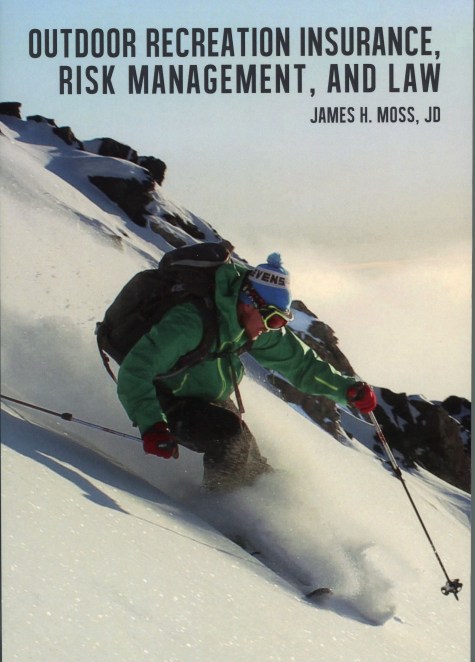
Outdoor Recreation Insurance, Risk Management, and Law
Denver based James H. Moss, JD, an attorney who specializes in the legal issues of outdoor recreation and adventure travel companies, guides, outfitters, and manufacturers, has written a comprehensive legal guidebook titled, “Outdoor Recreation Insurance, Risk Management, and Law”. Sagamore Publishing, a well-known Illinois-based educational publisher, distributes the book.
Mr. Moss, who applied his 30 years of experience with the legal, insurance, and risk management issues of the outdoor industry, wrote the book in order to fill a void.
“There was nothing out there that looked at case law and applied it to legal problems in outdoor recreation,” Moss explained. “The goal of this book is to provide sound advice based on past law and experience.”
While written as a college-level textbook, the guide also serves as a legal primer for executives, managers, and business owners in the field of outdoor recreation. It discusses how to tackle, prevent, and overcome legal issues in all areas of the industry.
The book is organized into 14 chapters that are easily accessed as standalone topics, or read through comprehensively. Specific topics include rental programs, statues that affect outdoor recreation, skiing and ski areas, and defenses to claims. Mr. Moss also incorporated listings of legal definitions, cases, and statutes, making the book easy for laypeople to understand.
TABLE OF CONTENTS
Table of Cases
Introduction
Outdoor Recreation Law and Insurance: Overview
Risk
Risk
Perception versus Actual Risk
Risk v. Reward
Risk Evaluation
Risk Management Strategies
Humans & Risk
Risk = Accidents
Accidents may/may not lead to litigation
How Do You Deal with Risk?
How Does Acceptance of Risk Convert to Litigation?
Negative Feelings against the Business
Risk, Accidents & Litigation
No Real Acceptance of the Risk
No Money to Pay Injury Bills
No Health Insurance
Insurance Company Subrogation
Negative Feelings
Litigation
Dealing with Different People
Dealing with Victims
Develop a Friend & Eliminate a Lawsuit
Don’t Compound Minor Problems into Major Lawsuits
Emergency Medical Services
Additional Causes of Lawsuits in Outdoor Recreation
Employees
How Do You Handle A Victim?
Dealing with Different People
Dealing with Victims
Legal System in the United States
Courts
State Court System
Federal Court System
Other Court Systems
Laws
Statutes
Parties to a Lawsuit
Attorneys
Trials
Law
Torts
Negligence
Duty
Breach of the Duty
Injury
Proximate Causation
Damages
Determination of Duty Owed
Duty of an Outfitter
Duty of a Guide
Duty of Livery Owner
Duty of Rental Agent
Duty of Volunteer Youth Leader
In Loco Parentis
Intentional Torts
Gross Negligence
Willful & Wanton Negligence
Intentional Negligence
Negligence Per Se
Strict Liability
Attractive Nuisance
Results of Acts That Are More than Ordinary Negligence
Product Liability
Contracts
Breach of Contract
Breach of Warranty
Express Warranty
Implied Warranty
Warranty of Fitness for a Particular Purpose
Warranty of Merchantability
Warranty of Statute
Detrimental Reliance
Unjust Enrichment
Liquor Liability
Food Service Liability
Damages
Compensatory Damages
Special Damages
Punitive Damages
Statutory Defenses
Skier Safety Acts
Whitewater Guides & Outfitters
Equine Liability Acts
Legal Defenses
Assumption of Risk
Express Assumption of Risk
Implied Assumption of Risk
Primary Assumption of Risk
Secondary Assumption of Risk
Contributory Negligence
Assumption of Risk & Minors
Inherent Dangers
Assumption of Risk Documents.
Assumption of Risk as a Defense.
Statutory Assumption of Risk
Express Assumption of Risk
Contributory Negligence
Joint and Several Liability
Why do you need them
Exculpatory Agreements
Waivers
Covenants Not to sue
Who should be covered
What should be included
Negligence Clause
Jurisdiction & Venue Clause
Assumption of Risk
Other Clauses
Indemnification
Hold Harmless Agreement
Liquidated Damages
Previous Experience
Misc
Photography release
Video Disclaimer
Drug and/or Alcohol clause
Medical Transportation & Release
HIPAA
Problem Areas
What the Courts do not want to see
Statute of Limitations
Minors
Adults
Defenses Myths
Agreements to Participate
Parental Consent Agreements
Informed Consent Agreements
Certification
Accreditation
Standards, Guidelines & Protocols
License
Specific Occupational Risks
Personal Liability of Instructors, Teachers & Educators
College & University Issues
Animal Operations, Packers
Equine Activities
Canoe Livery Operations
Tube rentals
Downhill Skiing
Ski Rental Programs
Indoor Climbing Walls
Instructional Programs
Mountaineering
Retail Rental Programs
Rock Climbing
Tubing Hills
Whitewater Rafting
Risk Management Plan
Introduction for Risk Management Plans
What Is A Risk Management Plan?
What should be in a Risk Management Plan
Risk Management Plan Template
Ideas on Developing a Risk Management Plan
Preparing your Business for Unknown Disasters
Building Fire & Evacuation
Dealing with an Emergency
Insurance
Theory of Insurance
Insurance Companies
Deductibles
Self-Insured Retention
Personal v. Commercial Policies
Types of Policies
Automobile
Comprehension
Collision
Bodily Injury
Property Damage
Uninsured Motorist
Personal Injury Protection
Non-Owned Automobile
Hired Car
Fire Policy
Coverage
Liability
Named Peril v. All Risk
Commercial Policies
Underwriting
Exclusions
Special Endorsements
Rescue Reimbursement
Policy Procedures
Coverage’s
Agents
Brokers
General Agents
Captive Agents
Types of Policies
Claims Made
Occurrence
Claims
Federal and State Government Insurance Requirements
Bibliography
Index
Posted: July 25, 2019 | Author: Recreation Law | Filed under: Activity / Sport / Recreation, Adventure Travel, Assumption of the Risk, Avalanche, Camping, Challenge or Ropes Course, Climbing, Climbing Wall, Contract, Cycling, Equine Activities (Horses, Donkeys, Mules) & Animals, First Aid, Health Club, Indoor Recreation Center, Jurisdiction and Venue (Forum Selection), Legal Case, Medical, Minors, Youth, Children, Mountain Biking, Mountaineering, Paddlesports, Playground, Racing, Racing, Release (pre-injury contract not to sue), Risk Management, Rivers and Waterways, Rock Climbing, Scuba Diving, Sea Kayaking, Search and Rescue (SAR), Ski Area, Skier v. Skier, Skiing / Snow Boarding, Skydiving, Paragliding, Hang gliding, Snow Tubing, Sports, Summer Camp, Swimming, Triathlon, Whitewater Rafting, Youth Camps, Zip Line | Tags: #ORLawTextbook, #ORRiskManagment, #OutdoorRecreationRiskManagementInsurance&Law, #OutdoorRecreationTextbook, @SagamorePub, Adventure travel, and Law, assumption of the risk, camping, Case Analysis, Challenge or Ropes Course, Climbing, Climbing Wall, Contract, Cycling, Donkeys, Equine Activities (Horses, first aid, General Liability Insurance, Good Samaritan Statutes, Guide, Hang gliding, http://www.rec-law.us/ORLawTextbook, Insurance, Insurance policy, James H. Moss, James H. Moss J.D., Jim Moss, Jurisdiction and Venue (Forum Selection), Legal Case, Liability insurance, Medical, Mountain biking, Mountaineering, Mules) & Animals, Negligence, OR Textbook, Outdoor Recreation Insurance, Outdoor Recreation Law, Outdoor Recreation Risk Management, Outfitter, Paddlesports, Paragliding, Recreational Use Statute, Release (pre-injury contract not to sue), Risk Management, risk management plan, Rivers and Waterways, Rock climbing, Sea Kayaking, ski area, Ski Area Statutes, Skiing / Snow Boarding, Skydiving, swimming, Textbook, Understanding, Understanding Insurance, Understanding Risk Management, Whitewater Rafting, zip line |
Everyone has told you, that you need a risk management plan. A plan to follow if you have
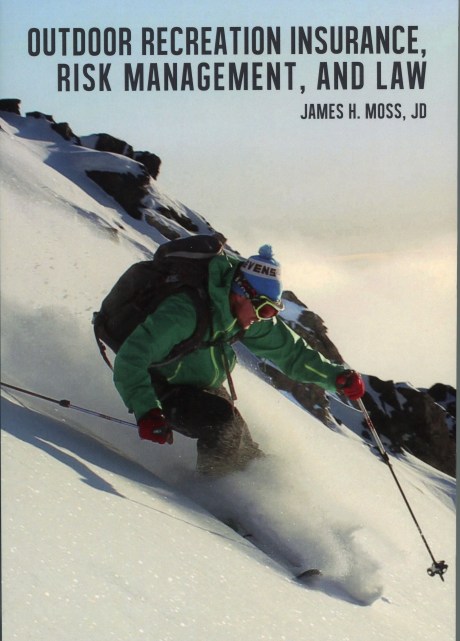
Outdoor Recreation Insurance, Risk Management, and Law
a crisis. You‘ve seen several and they look burdensome and difficult to write. Need help writing a risk management plan? Need to know what should be in your risk management plan? Need Help?
This book can help you understand and write your plan. This book is designed to help you rest easy about what you need to do and how to do it. More importantly, this book will make sure your plan is a workable plan, not one that will create liability for you.

Table of Contents
Chapter 1 Outdoor Recreation Risk Management, Law, and Insurance: An Overview
Chapter 2 U.S. Legal System and Legal Research
Chapter 3 Risk 25
Chapter 4 Risk, Accidents, and Litigation: Why People Sue
Chapter 5 Law 57
Chapter 6 Statutes that Affect Outdoor Recreation
Chapter 7 PreInjury Contracts to Prevent Litigation: Releases
Chapter 8 Defenses to Claims
Chapter 9 Minors
Chapter 10 Skiing and Ski Areas
Chapter 11 Other Commercial Recreational Activities
Chapter 12 Water Sports, Paddlesports, and water-based activities
Chapter 13 Rental Programs
Chapter 14 Insurance
$130.00 plus shipping

Posted: July 23, 2019 | Author: Recreation Law | Filed under: Adventure Travel, Assumption of the Risk, Avalanche, Camping, Climbing, Climbing Wall, Contract, Criminal Liability, Cycling, Equine Activities (Horses, Donkeys, Mules) & Animals, First Aid, Health Club, How, Indoor Recreation Center, Insurance, Jurisdiction and Venue (Forum Selection), Medical, Minors, Youth, Children, Mountain Biking, Mountaineering, Paddlesports, Playground, Racing, Racing, Release (pre-injury contract not to sue), Risk Management, Rivers and Waterways, Rock Climbing, Scuba Diving, Sea Kayaking, Search and Rescue (SAR), Ski Area, Skier v. Skier, Skiing / Snow Boarding, Skydiving, Paragliding, Hang gliding, Snow Tubing, Sports, Summer Camp, Swimming, Triathlon, Whitewater Rafting, Youth Camps, Zip Line | Tags: #ORLawTextbook, #ORRiskManagment, #OutdoorRecreationRiskManagementInsurance&Law, #OutdoorRecreationTextbook, @SagamorePub, Accidents, Angry Guest, Dealing with Claims, General Liability Insurance, Guide, http://www.rec-law.us/ORLawTextbook, Injured Guest, Insurance policy, James H. Moss J.D., Jim Moss, Liability insurance, OR Textbook, Outdoor Recreation Insurance, Outdoor Recreation Law, Outdoor Recreation Risk Management, Outfitter, RecreationLaw, Risk Management, risk management plan, Textbook, Understanding, Understanding Insurance, Understanding Risk Management, Upset Guest |
 An injured guest is everyone’s business owner’s nightmare. What happened, how do you make sure it does not happen again, what can you do to help the guest, can you help the guests are just some of the questions that might be keeping you up at night.
This book can help you understand why people sue and how you can and should deal with injured, angry or upset guests of your business.
This book is designed to help you rest easy about what you need to do and how to do it. More importantly, this book will make sure you keep your business afloat and moving forward.
You did not get into the outdoor recreation business to worry or spend nights staying awake. Get prepared and learn how and why so you can sleep and quit worrying.

Table of Contents
Chapter 1 Outdoor Recreation Risk Management, Law, and Insurance: An Overview
Chapter 2 U.S. Legal System and Legal Research
Chapter 3 Risk 25
Chapter 4 Risk, Accidents, and Litigation: Why People Sue
Chapter 5 Law 57
Chapter 6 Statutes that Affect Outdoor Recreation
Chapter 7 Pre-injury Contracts to Prevent Litigation: Releases
Chapter 8 Defenses to Claims
Chapter 9 Minors
Chapter 10 Skiing and Ski Areas
Chapter 11 Other Commercial Recreational Activities
Chapter 12 Water Sports, Paddlesports, and water-based activities
Chapter 13 Rental Programs
Chapter 14 Insurance
$130.00 plus shipping

Posted: July 18, 2019 | Author: Recreation Law | Filed under: Adventure Travel, Assumption of the Risk, Avalanche, Challenge or Ropes Course, Climbing, Contract, Cycling, Equine Activities (Horses, Donkeys, Mules) & Animals, Health Club, Indoor Recreation Center, Insurance, Jurisdiction and Venue (Forum Selection), Minors, Youth, Children, Mountain Biking, Mountaineering, Paddlesports, Racing, Release (pre-injury contract not to sue), Risk Management, Rivers and Waterways, Rock Climbing, Scuba Diving, Sea Kayaking, Ski Area, Skier v. Skier, Skiing / Snow Boarding, Skydiving, Paragliding, Hang gliding, Snow Tubing, Sports, Summer Camp, Swimming, Whitewater Rafting, Youth Camps, Zip Line | Tags: #ORLawTextbook, #ORRiskManagment, #OutdoorRecreationRiskManagementInsurance&Law, #OutdoorRecreationTextbook, @SagamorePub, Adventure travel, and Law, assumption of the risk, camping, Case Analysis, Challenge or Ropes Course, Climbing, Climbing Wall, Contract, Cycling, Donkeys, Equine Activities (Horses, first aid, General Liability Insurance, Good Samaritan Statutes, Guide, Hang gliding, http://www.rec-law.us/ORLawTextbook, Insurance, Insurance policy, James H. Moss, James H. Moss J.D., Jim Moss, Jurisdiction and Venue (Forum Selection), Legal Case, Liability insurance, Medical, Mountain biking, Mountaineering, Mules) & Animals, Negligence, Outdoor Recreation Insurance, Outdoor Recreation Law, Outdoor Recreation Risk Management, Outfitter, Paddlesports, Paragliding, Recreational Use Statute, Release (pre-injury contract not to sue), Risk Management, Rivers and Waterways, Rock climbing, Sea Kayaking, ski area, Ski Area Statutes, Skiing / Snow Boarding, Skydiving, swimming, Whitewater Rafting, zip line |
This book should be on every outfitter and guide’s desk. It will answer your questions, help you sleep at night, help you answer your guests’ questions and allow you to run your business with less worry.

Table of Contents
Chapter 1 Outdoor Recreation Risk Management, Law, and Insurance: An Overview
Chapter 2 U.S. Legal System and Legal Research
Chapter 3 Risk 25
Chapter 4 Risk, Accidents, and Litigation: Why People Sue
Chapter 5 Law 57
Chapter 6 Statutes that Affect Outdoor Recreation
Chapter 7 PreInjury Contracts to Prevent Litigation: Releases
Chapter 8 Defenses to Claims
Chapter 9 Minors
Chapter 10 Skiing and Ski Areas
Chapter 11 Other Commercial Recreational Activities
Chapter 12 Water Sports, Paddlesports, and water-based activities
Chapter 13 Rental Programs
Chapter 14 Insurance
$99.00 plus shipping

Posted: April 30, 2019 | Author: Recreation Law | Filed under: Activity / Sport / Recreation, Adventure Travel, Assumption of the Risk, Avalanche, Camping, Challenge or Ropes Course, Climbing, Climbing Wall, Contract, Cycling, Equine Activities (Horses, Donkeys, Mules) & Animals, First Aid, Health Club, Indoor Recreation Center, Insurance, Jurisdiction and Venue (Forum Selection), Medical, Minors, Youth, Children, Mountain Biking, Mountaineering, Paddlesports, Playground, Racing, Racing, Release (pre-injury contract not to sue), Risk Management, Rivers and Waterways, Rock Climbing, Scuba Diving, Sea Kayaking, Search and Rescue (SAR), Ski Area, Skier v. Skier, Skiing / Snow Boarding, Skydiving, Paragliding, Hang gliding, Snow Tubing, Sports, Summer Camp, Swimming, Triathlon, Whitewater Rafting, Youth Camps, Zip Line | Tags: #ORLawTextbook, #ORRiskManagment, #OutdoorRecreationRiskManagementInsurance&Law, #OutdoorRecreationTextbook, @SagamorePub, Accidents, Angry Guest, Dealing with Claims, General Liability Insurance, Guide, http://www.rec-law.us/ORLawTextbook, Injured Guest, Insurance policy, James H. Moss J.D., Jim Moss, Liability insurance, OR Textbook, Outdoor Recreation Insurance, Outdoor Recreation Law, Outdoor Recreation Risk Management, Outfitter, RecreationLaw, Risk Management, risk management plan, Textbook, Understanding, Understanding Insurance, Understanding Risk Management, Upset Guest |
These and many other questions are answered in my book Outdoor Recreation Risk Management, Insurance and Law.
Releases, (or as some people incorrectly call them waivers) are a legal agreement that in advance of any possible injury identifies who will pay for what. Releases can and to stop lawsuits.
This book will explain releases and other defenses you can use to put yourself in a position to stop lawsuits and claims.
This book can help you understand why people sue and how you can and should deal with injured, angry or upset guests of your business.
This book is designed to help you rest easy about what you need to do and how to do it. More importantly, this book will make sure you keep your business afloat and moving forward.
You did not get into the outdoor recreation business to worry or spend nights staying awake. Get prepared and learn how and why so you can sleep and quit worrying.
Table of Contents
Chapter 1 Outdoor Recreation Risk Management, Law, and Insurance: An Overview
Chapter 2 U.S. Legal System and Legal Research
Chapter 3 Risk 25
Chapter 4 Risk, Accidents, and Litigation: Why People Sue
Chapter 5 Law 57
Chapter 6 Statutes that Affect Outdoor Recreation
Chapter 7 Pre-injury Contracts to Prevent Litigation: Releases
Chapter 8 Defenses to Claims
Chapter 9 Minors
Chapter 10 Skiing and Ski Areas
Chapter 11 Other Commercial Recreational Activities
Chapter 12 Water Sports, Paddlesports, and water-based activities
Chapter 13 Rental Programs
Chapter 14 Insurance
$99.00 plus shipping
Artwork by Don Long donaldoelong@earthlink.net
Posted: April 16, 2019 | Author: Recreation Law | Filed under: Adventure Travel, Assumption of the Risk, Avalanche, Camping, Climbing, Climbing Wall, Contract, Criminal Liability, Cycling, Equine Activities (Horses, Donkeys, Mules) & Animals, First Aid, Health Club, How, Indoor Recreation Center, Insurance, Jurisdiction and Venue (Forum Selection), Medical, Minors, Youth, Children, Mountain Biking, Mountaineering, Paddlesports, Playground, Racing, Racing, Release (pre-injury contract not to sue), Risk Management, Rivers and Waterways, Rock Climbing, Scuba Diving, Sea Kayaking, Search and Rescue (SAR), Ski Area, Skier v. Skier, Skiing / Snow Boarding, Skydiving, Paragliding, Hang gliding, Snow Tubing, Sports, Summer Camp, Swimming, Triathlon, Whitewater Rafting, Youth Camps, Zip Line | Tags: #ORLawTextbook, #ORRiskManagment, #OutdoorRecreationRiskManagementInsurance&Law, #OutdoorRecreationTextbook, @SagamorePub, Accidents, Angry Guest, Dealing with Claims, General Liability Insurance, Guide, http://www.rec-law.us/ORLawTextbook, Injured Guest, Insurance policy, James H. Moss J.D., Jim Moss, Liability insurance, OR Textbook, Outdoor Recreation Insurance, Outdoor Recreation Law, Outdoor Recreation Risk Management, Outfitter, RecreationLaw, Risk Management, risk management plan, Textbook, Understanding, Understanding Insurance, Understanding Risk Management, Upset Guest |
An injured guest is everyone’s business owner’s nightmare. What happened, how do you make sure it does not happen again, what can you do to help the guest, can you help the guests are just some of the questions that might be keeping you up at night.
This book can help you understand why people sue and how you can and should deal with injured, angry or upset guests of your business.
This book is designed to help you rest easy about what you need to do and how to do it. More importantly, this book will make sure you keep your business afloat and moving forward.
You did not get into the outdoor recreation business to worry or spend nights staying awake. Get prepared and learn how and why so you can sleep and quit worrying.
Table of Contents
Chapter 1 Outdoor Recreation Risk Management, Law, and Insurance: An Overview
Chapter 2 U.S. Legal System and Legal Research
Chapter 3 Risk 25
Chapter 4 Risk, Accidents, and Litigation: Why People Sue
Chapter 5 Law 57
Chapter 6 Statutes that Affect Outdoor Recreation
Chapter 7 Pre-injury Contracts to Prevent Litigation: Releases
Chapter 8 Defenses to Claims
Chapter 9 Minors
Chapter 10 Skiing and Ski Areas
Chapter 11 Other Commercial Recreational Activities
Chapter 12 Water Sports, Paddlesports, and water-based activities
Chapter 13 Rental Programs
Chapter 14 Insurance
$130.00 plus shipping
Posted: April 11, 2019 | Author: Recreation Law | Filed under: Activity / Sport / Recreation, Adventure Travel, Assumption of the Risk, Avalanche, Camping, Challenge or Ropes Course, Climbing, Climbing Wall, Contract, Cycling, Equine Activities (Horses, Donkeys, Mules) & Animals, First Aid, Health Club, Indoor Recreation Center, Jurisdiction and Venue (Forum Selection), Legal Case, Medical, Minors, Youth, Children, Mountain Biking, Mountaineering, Paddlesports, Playground, Racing, Racing, Release (pre-injury contract not to sue), Risk Management, Rivers and Waterways, Rock Climbing, Scuba Diving, Sea Kayaking, Search and Rescue (SAR), Ski Area, Skier v. Skier, Skiing / Snow Boarding, Skydiving, Paragliding, Hang gliding, Snow Tubing, Sports, Summer Camp, Swimming, Triathlon, Whitewater Rafting, Youth Camps, Zip Line | Tags: #ORLawTextbook, #ORRiskManagment, #OutdoorRecreationRiskManagementInsurance&Law, #OutdoorRecreationTextbook, @SagamorePub, Adventure travel, and Law, assumption of the risk, camping, Case Analysis, Challenge or Ropes Course, Climbing, Climbing Wall, Contract, Cycling, Donkeys, Equine Activities (Horses, first aid, General Liability Insurance, Good Samaritan Statutes, Guide, Hang gliding, http://www.rec-law.us/ORLawTextbook, Insurance, Insurance policy, James H. Moss, James H. Moss J.D., Jim Moss, Jurisdiction and Venue (Forum Selection), Legal Case, Liability insurance, Medical, Mountain biking, Mountaineering, Mules) & Animals, Negligence, OR Textbook, Outdoor Recreation Insurance, Outdoor Recreation Law, Outdoor Recreation Risk Management, Outfitter, Paddlesports, Paragliding, Recreational Use Statute, Release (pre-injury contract not to sue), Risk Management, risk management plan, Rivers and Waterways, Rock climbing, Sea Kayaking, ski area, Ski Area Statutes, Skiing / Snow Boarding, Skydiving, swimming, Textbook, Understanding, Understanding Insurance, Understanding Risk Management, Whitewater Rafting, zip line |
Everyone has told you, you need a risk management plan. A plan to follow if you have  a crisis. You‘ve seen several and they look burdensome and difficult to write. Need help writing a risk management plan? Need to know what should be in your risk management plan? Need Help?
This book can help you understand and write your plan. This book is designed to help you rest easy about what you need to do and how to do it. More importantly, this book will make sure you plan is a workable plan, not one that will create liability for you.
Table of Contents
Chapter 1 Outdoor Recreation Risk Management, Law, and Insurance: An Overview
Chapter 2 U.S. Legal System and Legal Research
Chapter 3 Risk 25
Chapter 4 Risk, Accidents, and Litigation: Why People Sue
Chapter 5 Law 57
Chapter 6 Statutes that Affect Outdoor Recreation
Chapter 7 PreInjury Contracts to Prevent Litigation: Releases
Chapter 8 Defenses to Claims
Chapter 9 Minors
Chapter 10 Skiing and Ski Areas
Chapter 11 Other Commercial Recreational Activities
Chapter 12 Water Sports, Paddlesports, and water-based activities
Chapter 13 Rental Programs
Chapter 14 Insurance
$99.00 plus shipping
Posted: April 2, 2019 | Author: Recreation Law | Filed under: Adventure Travel, Assumption of the Risk, Avalanche, Challenge or Ropes Course, Climbing, Contract, Cycling, Equine Activities (Horses, Donkeys, Mules) & Animals, Health Club, Indoor Recreation Center, Insurance, Jurisdiction and Venue (Forum Selection), Minors, Youth, Children, Mountain Biking, Mountaineering, Paddlesports, Racing, Release (pre-injury contract not to sue), Risk Management, Rivers and Waterways, Rock Climbing, Scuba Diving, Sea Kayaking, Ski Area, Skier v. Skier, Skiing / Snow Boarding, Skydiving, Paragliding, Hang gliding, Snow Tubing, Sports, Summer Camp, Swimming, Whitewater Rafting, Youth Camps, Zip Line | Tags: #ORLawTextbook, #ORRiskManagment, #OutdoorRecreationRiskManagementInsurance&Law, #OutdoorRecreationTextbook, @SagamorePub, Adventure travel, and Law, assumption of the risk, camping, Case Analysis, Challenge or Ropes Course, Climbing, Climbing Wall, Contract, Cycling, Donkeys, Equine Activities (Horses, first aid, General Liability Insurance, Good Samaritan Statutes, Guide, Hang gliding, http://www.rec-law.us/ORLawTextbook, Insurance, Insurance policy, James H. Moss, James H. Moss J.D., Jim Moss, Jurisdiction and Venue (Forum Selection), Legal Case, Liability insurance, Medical, Mountain biking, Mountaineering, Mules) & Animals, Negligence, Outdoor Recreation Insurance, Outdoor Recreation Law, Outdoor Recreation Risk Management, Outfitter, Paddlesports, Paragliding, Recreational Use Statute, Release (pre-injury contract not to sue), Risk Management, Rivers and Waterways, Rock climbing, Sea Kayaking, ski area, Ski Area Statutes, Skiing / Snow Boarding, Skydiving, swimming, Whitewater Rafting, zip line |
This book should be on every outfitter and guide’s desk. It will answer your questions, help you sleep at night, help you answer your guests’ questions and allow you to run your business with less worry.
Table of Contents
Chapter 1 Outdoor Recreation Risk Management, Law, and Insurance: An Overview
Chapter 2 U.S. Legal System and Legal Research
Chapter 3 Risk 25
Chapter 4 Risk, Accidents, and Litigation: Why People Sue
Chapter 5 Law 57
Chapter 6 Statutes that Affect Outdoor Recreation
Chapter 7 PreInjury Contracts to Prevent Litigation: Releases
Chapter 8 Defenses to Claims
Chapter 9 Minors
Chapter 10 Skiing and Ski Areas
Chapter 11 Other Commercial Recreational Activities
Chapter 12 Water Sports, Paddlesports, and water-based activities
Chapter 13 Rental Programs
Chapter 14 Insurance
$99.00 plus shipping
Posted: May 28, 2018 | Author: Recreation Law | Filed under: Adventure Travel, Assumption of the Risk, Avalanche, Challenge or Ropes Course, Climbing, Contract, Cycling, Equine Activities (Horses, Donkeys, Mules) & Animals, Health Club, Indoor Recreation Center, Insurance, Jurisdiction and Venue (Forum Selection), Minors, Youth, Children, Mountain Biking, Mountaineering, Paddlesports, Racing, Release (pre-injury contract not to sue), Risk Management, Rivers and Waterways, Rock Climbing, Scuba Diving, Sea Kayaking, Ski Area, Skier v. Skier, Skiing / Snow Boarding, Skydiving, Paragliding, Hang gliding, Snow Tubing, Sports, Summer Camp, Swimming, Whitewater Rafting, Youth Camps, Zip Line | Tags: #ORLawTextbook, #ORRiskManagment, #OutdoorRecreationRiskManagementInsurance&Law, #OutdoorRecreationTextbook, @SagamorePub, and Law, General Liability Insurance, Guide, http://www.rec-law.us/ORLawTextbook, Insurance policy, James H. Moss J.D., Jim Moss, Liability insurance, Outdoor Recreation Insurance, Outdoor Recreation Law, Outdoor Recreation Risk Management, Outfitter, Risk Management |
This book should be on every outfitter and guide’s desk. It will answer your questions, help you sleep at night, help you answer your guests’ questions and allow you to run your business with less worry.
Table of Contents
Chapter 1 Outdoor Recreation Risk Management, Law, and Insurance: An Overview
Chapter 2 U.S. Legal System and Legal Research
Chapter 3 Risk 25
Chapter 4 Risk, Accidents, and Litigation: Why People Sue
Chapter 5 Law 57
Chapter 6 Statutes that Affect Outdoor Recreation
Chapter 7 PreInjury Contracts to Prevent Litigation: Releases
Chapter 8 Defenses to Claims
Chapter 9 Minors
Chapter 10 Skiing and Ski Areas
Chapter 11 Other Commercial Recreational Activities
Chapter 12 Water Sports, Paddlesports, and water-based activities
Chapter 13 Rental Programs
Chapter 14 Insurance
$99.00 plus shipping
Posted: May 23, 2018 | Author: Recreation Law | Filed under: Assumption of the Risk, Release (pre-injury contract not to sue), Risk Management | Tags: #ORLawTextbook, #ORRiskManagment, #OutdoorRecreationRiskManagementInsurance&Law, #OutdoorRecreationTextbook, @SagamorePub, and Law, General Liability Insurance, Guide, http://www.rec-law.us/ORLawTextbook, Insurance policy, James H. Moss J.D., Jim Moss, Liability insurance, OR Textbook, Outdoor Recreation Insurance, Outdoor Recreation Law, Outdoor Recreation Risk Management, Outfitter, Risk Management, risk management plan, Textbook, Understanding, Understanding Insurance, Understanding Risk Management |
Everyone has told you, you need a risk management plan. A plan to follow if you have a crisis. You‘ve seen several and they look burdensome and difficult to write. Need help writing a risk management plan? Need to know what should be in your risk management plan? Need Help?
This book can help you understand and write your plan. This book is designed to help you rest easy about what you need to do and how to do it. More importantly, this book will make sure you plan is a workable plan, not one that will create liability for you.
Table of Contents
Chapter 1 Outdoor Recreation Risk Management, Law, and Insurance: An Overview
Chapter 2 U.S. Legal System and Legal Research
Chapter 3 Risk 25
Chapter 4 Risk, Accidents, and Litigation: Why People Sue
Chapter 5 Law 57
Chapter 6 Statutes that Affect Outdoor Recreation
Chapter 7 PreInjury Contracts to Prevent Litigation: Releases
Chapter 8 Defenses to Claims
Chapter 9 Minors
Chapter 10 Skiing and Ski Areas
Chapter 11 Other Commercial Recreational Activities
Chapter 12 Water Sports, Paddlesports, and water-based activities
Chapter 13 Rental Programs
Chapter 14 Insurance
$99.00 plus shipping
Posted: May 23, 2018 | Author: Recreation Law | Filed under: Activity / Sport / Recreation, Risk Management | Tags: Outdoor Recreation Risk Management, Risk Management, risk management plan, Risk Management Plans |
Score 1 Point for Each Correct Answer
- You have a Risk-Management Plan.
- Employees know there is a Risk-Management Plan.
- The Employees know the Risk-Management Plan.
- Employees know their position & responsibility in the Risk-Management Plan.
- Employees know the responsibilities of the person above and below them in the Risk-Management Plan.
- The Employees carry their responsibilities in the Risk-Management Plan with them.
- The Employees carry with them all information they need to communicate if there is a problem to the necessary people in the Risk-Management Plan.
- The Risk-Management Plan has been updated in the past 12 months.
- The Employees have been trained in the Risk-Management Plan in the past 12 months.
- A mock disaster has been held using the Risk-Management Plan.
- You have identified a team to deal with the human issues of an incident after the incident is under control.
- Senior Managers have gone through the same training and drills as the employees.
- You have not had to use the Risk-Management Plan
Grading your plan!
0-1 Point: Lock the doors and go home now.
2-5 Points: Prepare to lose a lawsuit
6-9 Points Good, but you can do better
10-12 Points Not bad
13 Points Excellent
Your score is important; however, it may not be the biggest issue you face you’re your risk-management plan. The biggest problem facing outdoor recreation and adventure travel businesses is not the issue of having a plan. It is creating a plan that is workable, able to be used by employees and one that will NOT haunt you later. A Risk-Management Plan must:
- Works
- be understood
- Not come back to haunt you
Your front line employees will not know or remember a complicated risk management plan. They need to either be able to reference or respond with very few steps. Your front-line employees are also going to be the face of your risk-management plan because they will be the ones to discover the problem and start to implement the plan.
Risk Management plans developed and understood by management are job security, not litigation prevention programs.
A risk-management plan is not a management-level plan. It is a plan for the people who will be using it. Those employees making the phone calls, dealing with the problems and helping the victims are the people who must know and be able to execute the plan.
The next major issue I find with risk management plans is the plan is written to cover every possible scenario.
The biggest failure of a risk-management plan is they are too complicated and consequently, only the person who wrote the plan can follow it. Your plan must work for your employees; Not your risk manager, your lawyer or your insurance and never just for your industry.
Write your plan to be used, not to be a way to use your imagination about what could possibly go wrong.
You cannot write a plan that covers every scenario. If you could it would occupy one entire wall of your office in three Ring Binders. Once written, the plan would be in a constant state of revision, by an entire team of people.
And even then you plan would not cover everything. So why waste the time, energy and money in trying to write a plan that covers everything. Inevitably, it is not going to cover the problem that you are having. It just seems to work that way.
You need a plan that:
- Can be remembered and executed by all your employees.
- Each employee’s part of the plan can be easily carried with them for reference.
- The employee has access to and the information necessary to communicate the need for the plan and their responsibilities under the plan.
- The plain works for every incident possible.
Consequently:
- Your plan for the front-line employees should fit on a 3X5 card on one side’
- The other side of the plan has phone numbers of the people that employee is supposed to contact to activate the plan (or radio channels).
- The only person who may have more of a plan than on a 3X5 card is going to be the person at the top to work on follow up
- Basically an employee’s plan is going to be stop the bleeding, stabilize, call 911, and call the supervisor.
- Your plan must be something that can be executed without referring to anything within 30 seconds.
Your risk-management plan must be written by your company, which means every person in the company, understood by every person and executable by everyone. Anything more is just going to be ignored when EMS, USFS or any other responding agency comes on the scene.
Risk Management Plans only work if the people executing the Plan Know How to Work.
Quit writing and re-writing your plan and start training your employees on what to do if something does not go as planned.
Risk Management is education, not paperwork!
What do you think? Leave a comment.
Copyright 2018 Recreation Law (720) 334 8529
If you like this let your friends know or post it on FB, Twitter or LinkedIn


If you are interested in having me write your release, fill out this Information Form and Contract and send it to me.
Author: Outdoor Recreation Insurance, Risk Management and Law
To Purchase Go Here:
Facebook Page: Outdoor Recreation & Adventure Travel Law
Email: Rec-law@recreation-law.com
Google+: +Recreation
Twitter: RecreationLaw
Facebook: Rec.Law.Now
Facebook Page: Outdoor Recreation & Adventure Travel Law
Blog:
www.recreation-law.com
Mobile Site: http://m.recreation-law.com
By Recreation Law Rec-law@recreation-law.com James H. Moss
#AdventureTourism, #AdventureTravelLaw, #AdventureTravelLawyer, #AttorneyatLaw, #Backpacking, #BicyclingLaw, #Camps, #ChallengeCourse, #ChallengeCourseLaw, #ChallengeCourseLawyer, #CyclingLaw, #FitnessLaw, #FitnessLawyer, #Hiking, #HumanPowered, #HumanPoweredRecreation, #IceClimbing, #JamesHMoss, #JimMoss, #Law, #Mountaineering, #Negligence, #OutdoorLaw, #OutdoorRecreationLaw, #OutsideLaw, #OutsideLawyer, #RecLaw, #Rec-Law, #RecLawBlog, #Rec-LawBlog, #RecLawyer, #RecreationalLawyer, #RecreationLaw, #RecreationLawBlog, #RecreationLawcom, #Recreation-Lawcom, #Recreation-Law.com, #RiskManagement, #RockClimbing, #RockClimbingLawyer, #RopesCourse, #RopesCourseLawyer, #SkiAreas, #Skiing, #SkiLaw, #Snowboarding, #SummerCamp, #Tourism, #TravelLaw, #YouthCamps, #ZipLineLawyer,
Posted: May 14, 2018 | Author: Recreation Law | Filed under: Assumption of the Risk, Contract, Insurance, Jurisdiction and Venue (Forum Selection), Release (pre-injury contract not to sue), Risk Management | Tags: #ORLawTextbook, #ORRiskManagment, #OutdoorRecreationRiskManagementInsurance&Law, #OutdoorRecreationTextbook, @SagamorePub, Accidents, Angry Guest, Dealing with Claims, General Liability Insurance, Guide, http://www.rec-law.us/ORLawTextbook, Injured Guest, Insurance policy, James H. Moss J.D., Jim Moss, Liability insurance, OR Textbook, Outdoor Recreation Insurance, Outdoor Recreation Law, Outdoor Recreation Risk Management, Outfitter, RecreationLaw, Risk Management, risk management plan, Textbook, Understanding, Understanding Insurance, Understanding Risk Management, Upset Guest |
An injured guest is everyone’s business owner’s nightmare. What happened, how do you make sure it does not happen again, what can you do to help the guest, can you help the guests are just some of the questions that might be keeping you up at night.
This book can help you understand why people sue and how you can and should deal with injured, angry or upset guests of your business.
This book is designed to help you rest easy about what you need to do and how to do it. More importantly, this book will make sure you keep your business afloat and moving forward.
You did not get into the outdoor recreation business to worry or spend nights staying awake. Get prepared and learn how and why so you can sleep and quit worrying.
Table of Contents
Chapter 1 Outdoor Recreation Risk Management, Law, and Insurance: An Overview
Chapter 2 U.S. Legal System and Legal Research
Chapter 3 Risk 25
Chapter 4 Risk, Accidents, and Litigation: Why People Sue
Chapter 5 Law 57
Chapter 6 Statutes that Affect Outdoor Recreation
Chapter 7 Pre-injury Contracts to Prevent Litigation: Releases
Chapter 8 Defenses to Claims
Chapter 9 Minors
Chapter 10 Skiing and Ski Areas
Chapter 11 Other Commercial Recreational Activities
Chapter 12 Water Sports, Paddlesports, and water-based activities
Chapter 13 Rental Programs
Chapter 14 Insurance
$130.00 plus shipping
Posted: May 9, 2018 | Author: Recreation Law | Filed under: Release (pre-injury contract not to sue) | Tags: #ORLawTextbook, #ORRiskManagment, #OutdoorRecreationRiskManagementInsurance&Law, #OutdoorRecreationTextbook, @SagamorePub, Accidents, Angry Guest, Dealing with Claims, General Liability Insurance, Guide, http://www.rec-law.us/ORLawTextbook, Injured Guest, Insurance policy, James H. Moss J.D., Jim Moss, Liability insurance, OR Textbook, Outdoor Recreation Insurance, Outdoor Recreation Law, Outdoor Recreation Risk Management, Outfitter, RecreationLaw, Risk Management, risk management plan, Textbook, Understanding, Understanding Insurance, Understanding Risk Management, Upset Guest |
These and many other questions are answered in my book Outdoor Recreation Risk Management, Insurance and Law.
Releases, (or as some people incorrectly call them waivers) are a legal agreement that in advance of any possible injury identifies who will pay for what. Releases can and to stop lawsuits.
This book will explain releases and other defenses you can use to put yourself in a position to stop lawsuits and claims.
This book can help you understand why people sue and how you can and should deal with injured, angry or upset guests of your business.
This book is designed to help you rest easy about what you need to do and how to do it. More importantly, this book will make sure you keep your business afloat and moving forward.
You did not get into the outdoor recreation business to worry or spend nights staying awake. Get prepared and learn how and why so you can sleep and quit worrying.
Table of Contents
Chapter 1 Outdoor Recreation Risk Management, Law, and Insurance: An Overview
Chapter 2 U.S. Legal System and Legal Research
Chapter 3 Risk 25
Chapter 4 Risk, Accidents, and Litigation: Why People Sue
Chapter 5 Law 57
Chapter 6 Statutes that Affect Outdoor Recreation
Chapter 7 Pre-injury Contracts to Prevent Litigation: Releases
Chapter 8 Defenses to Claims
Chapter 9 Minors
Chapter 10 Skiing and Ski Areas
Chapter 11 Other Commercial Recreational Activities
Chapter 12 Water Sports, Paddlesports, and water-based activities
Chapter 13 Rental Programs
Chapter 14 Insurance
$99.00 plus shipping
Artwork by Don Long donaldoelong@earthlink.net
Posted: April 27, 2018 | Author: Recreation Law | Filed under: Adventure Travel, Pennsylvania | Tags: Outing Club, Penn State, Risk Management |
If you have not been watching the news, you might not know that the Penn State Outing clubs have been restricted to Campus. They are not allowed to go outdoors. 100 Years of Helping students, relax, learn, grow, explore and graduate have been eliminated by a group of old scared board members, their attorneys and risk managers. You can read more about the issues here.
Read the article and then contact Penn State and let them know how stupid and antiquated this thinking is!
In this age of football concussions this entire argument is stupid!
Twitter: @Penn_State
President’s Office
The Pennsylvania State University
201 Old Main
University Park, PA 16802
EMAIL: president@psu.edu
TELEPHONE: 814-865-7611
FAX: 814-863-8583
Department of News and Media Relations
The Pennsylvania State University
312 Old Main
University Park, PA 16802
TELEPHONE: 814-865-7517
FAX: 814-863-3428
Risk Management Office
The Pennsylvania State University
227 West Beaver Avenue
Suite 103 Rider Building
State College, PA 16801
Phone: (814) 865-6307
RISK MANAGEMENT STAFF
Name
|
Title
|
Email
|
Phone
|
Cristene Boob
|
Contract Coordinator
|
|
865-0512
|
Julie Farris
|
Senior Contract Coordinator
|
|
865-2072
|
Kim Hannon
|
Insurance Support Assistant
|
|
863-5545
|
Gary Langsdale
|
University Risk Officer
|
|
865-6308
|
Clay Mattson
|
Outreach Contract Coordinator
|
|
867-5451
|
Lorrie Neiburg
|
Health Care Operations Risk Mgr.
|
|
717-531-0003
ext. 283639
|
Richel Perretti
|
Contract Manager
|
|
863-5538
|
Amy Shilling
|
Contracts Support Assistant
|
|
867-4906
|
David Snowe
|
Assistant Director
|
|
863-4241
|
Jared Wise
|
Claims Supervisor
|
|
863-5539
|
Posted: February 12, 2017 | Author: Recreation Law | Filed under: Assumption of the Risk, Avalanche, Challenge or Ropes Course, Climbing, Climbing Wall, Cycling, Medical, Minors, Youth, Children, Mountain Biking, Mountaineering, Paddlesports, Racing, Risk Management, Rock Climbing, Scuba Diving, Search and Rescue (SAR), Ski Area, Skier v. Skier, Skiing / Snow Boarding, Sports, Swimming, Whitewater Rafting, Zip Line | Tags: assumption of the risk, Certificate of Insurance, Insurance & Law, Montreat College, Outdoor Recreation Risk Management, releases, Risk Management, Risk Management Plans, Seminar, Virtuosos Series |
2 packed Days with information you can put to use immediately. Information compiled from 30 years in court and 45 years in the field.
Whatever type of Program you have, you’ll find information and answers to your risk management, insurance and legal questions.
 You’ll also receive a copy of my new book Outdoor Recreation Insurance, Risk Management, and Law
Get these Questions Answered
What has changed in the law Concerning Releases? What states still allow releases and which ones do not. What changes have been made in how releases are written? How can you make sure your release is not as affected by these changes?
Everyone is excited about Certificates of Insurance. Why this excitement is not valid and why most of them don’t work. What must you do to make a certificate of insurance work for your program?
What is an assumption of risk document and why are they important. How can your website be used to prove assumption of the risk.
How should you write a risk management plan that does not end up being used against you in court?
How do you handle an accident so it does not become a claim or a lawsuit.
Put February 24 & 25th on your Calendar Now.
Course Curriculum
1. Assumption of the Risk
1.1. Still a valid defense in all states
1.2. Defense for claims by minors in all states
1.3. Proof of your guests assuming the risk is the tough part.
1.3.1. Paperwork proves what they know
1.3.1.1. Applications
1.3.1.2. Releases
1.3.1.3. Brochures
1.3.2. The best education is from your website
1.3.2.1. Words
1.3.2.2. Pictures
1.3.2.3. Videos
2. Releases
2.1. Where they work
2.1.1. Where they work for kids
2.2. Why they work
2.2.1. Contract
2.2.2. Exculpatory Clause
2.2.3. Necessary Language
2.2.4. What kills Releases
2.2.4.1. Jurisdiction & Venue
2.2.4.2. Assumption of the Risk
2.2.4.3. Negligence Per Se
2.2.4.4.
3. Risk Management Plans
3.1. Why yours won’t work
3.2. Why they come back and prove your negligence in court
3.2.1. Or at least make you look incompetent
3.3. What is needed in a risk management plan
3.3.1. How do you structure and create a plan
3.3.2. Top down writing or bottom up.
3.3.2.1. Goal is what the front line employee knows and can do
4. Dealing with an Incident
4.1. Why people sue
4.2. What you can do to control this
4.2.1. Integration of pre-trip education
4.2.2. Post Incident help
4.2.3. Post Incident communication
You can decided how your program is going to run!

Put the date on your calendar now: February 24 and 25th 2017 at Montreat College, Montreat, NC 28757
$399 for both days and the book!
For more information contact Jim Moss rec.law@recreation.law.com
To register contact John Rogers , Montreat College Team and Leadership Center Director, jrogers@montreat.edu (828) 669- 8012 ext. 2761
Posted: August 25, 2016 | Author: Recreation Law | Filed under: Uncategorized | Tags: #CMC, Colorado Mountain College, Risk Management, SAO, Ski Area Operations, Ski Risk Management |
|
|
|
|
Registration
Whether you’ve been procrastinating or have been too busy to register, we won’t hold it against you. There is still a little time to register for Fall classes. The semester begins Monday, August 29th! Check out class schedules and register today. |
|
|
| P.S. This is going to sound like an infomercial, but all CMC students enrolled in credit courses now have access to Lynda.com for free (a $34.99/month value)! Login to Basecamp and look under MY CMC APPS for the link. There are e-learning videos covering Adobe, Office, Business Leadership, Education, IT & Programming, CAD, Photography, Design…and the list goes on, and on, and on… |
|
|
|
|
|
| Colorado Mountain College 802 Grand Ave Glenwood Springs, CO 81601 USA |
|
|
|
|
|
|

Posted: August 27, 2015 | Author: Recreation Law | Filed under: Uncategorized | Tags: #CMC, Colorado Mountain College, Leadville, Risk Management, SAO, Ski Area Operations |
Hurry and sign up you’ll get 45 hours of me for the price of 3.
Colorado Mountain College Ski Area Operations Risk Management
Oh you can feel sorry for the 19 & 20 year students will be suffering with me for 45 hours this fall.
Fridays: Leadville, Colorado
9:00 AM to 2:00 PM (plus a lunch break)
This also means for the next ten (10) Fridays I’ll be unavailable by phone or email for most of the day. Call or email and I’ll get back to you during a break.
What do you think? Leave a comment.
If you like this let your friends know or post it on FB, Twitter or LinkedIn
Copyright 2015 Recreation Law (720) Edit Law
Email: Rec-law@recreation-law.com
Google+: +Recreation
Twitter: RecreationLaw
Facebook: Rec.Law.Now
Facebook Page: Outdoor Recreation & Adventure Travel Law
Blog: www.recreation-law.com
Mobile Site: http://m.recreation-law.com
By Recreation Law Rec-law@recreation-law.com James H. Moss
#AdventureTourism, #AdventureTravelLaw, #AdventureTravelLawyer, #AttorneyatLaw, #Backpacking, #BicyclingLaw, #Camps, #ChallengeCourse, #ChallengeCourseLaw, #ChallengeCourseLawyer, #CyclingLaw, #FitnessLaw, #FitnessLawyer, #Hiking, #HumanPowered, #HumanPoweredRecreation, #IceClimbing, #JamesHMoss, #JimMoss, #Law, #Mountaineering, #Negligence, #OutdoorLaw, #OutdoorRecreationLaw, #OutsideLaw, #OutsideLawyer, #RecLaw, #Rec-Law, #RecLawBlog, #Rec-LawBlog, #RecLawyer, #RecreationalLawyer, #RecreationLaw, #RecreationLawBlog, #RecreationLawcom, #Recreation-Lawcom, #Recreation-Law.com, #RiskManagement, #RockClimbing, #RockClimbingLawyer, #RopesCourse, #RopesCourseLawyer, #SkiAreas, #Skiing, #SkiLaw, #Snowboarding, #SummerCamp, #Tourism, #TravelLaw, #YouthCamps, #ZipLineLawyer, CMC, Colorado Mountain College, Ski Area Operations, Risk Management, SAO, Leadville,
Posted: January 8, 2014 | Author: Recreation Law | Filed under: First Aid | Tags: Education and Training, Emergency medical technician, EMT, first aid, First Aid Training, Guides, Marketing, Occupational Health & Safety, Outfitters, Risk Management, Standard of Care, Standards, training |

Damned if you do, Damned if you don’t really means you need to think
harder. Don’t make a rule or requirement; create a solution, solve the problem. Incentivize your employees to get training, advanced first aid training, and you avoid the legal problems and create a better work environment. Make a rule live and die by it. Provide training, incentive’s hire right and you don’t need the rule.
An article was posted recently about how outfitters and guides are damned if they do and damned if they don’t. The issue was whether the outfitter should require their employee/guides to have first aid training. Legally, the answer was a mixed bag; whatever decision you the outfitter made would both increase and decrease your risk. The article was 100% correct………legally.
However, that is not the end of the discussion (it was the end of the article). There are several ways you could have guides who have first aid training without making a rule.
1. The easiest way is to hire guides with first aid training. It does not have to be a requirement; it is just something you look for in an employee.
2. You could provide incentives to your employees to go get first aid training. You could provide paid study time, study help or even pay for successfully passing a first aid training course. All are relatively cheap, provide a great benefit to both the guide and the employee, provide your guests with first aid trained guides and not put your neck in a noose.
3. You can pay guides more who are first aid trained. Simply, the more training you have the more money you can make. Basic first aid provider with an eight-hour card is paid less than an EMT.
4. You can make first aid training a requirement for promotions or pay raises. If you say that your chances of getting a pay raise or a promotion is greater with first aid training do you think your employees will go get trained?
5. You can do the training yourself. One ski area I worked at became an EMT instructional organization and twice a week provided free EMT classes to its employees. By the end of the ski season, the number of EMT’s doubled on the ski patrol.
You can take a Red Cross Instructor course and the required first aid courses and quite soon become a Red Cross first aid instructor.
Teaching your guide’s first aid is the best first aid training your guests could ever hope for. Your guides will be trained in the problems your business sees. They will be trained with the equipment you carry and use. (I can’t tell you how many times I’ve come across a problem and dug through someone else’s first-aid kit hoping they had a particular item.)

English: First aid training dummies. (Photo credit: Wikipedia)
Your guides trained by you in the real problems they may face with the equipment they will be
using.
Here are five simple solutions to the problem. All solve the problem without creating a damned if you do, damned if you don’t situation. More importantly you have created an incentive in your employees without making rules, to help your employees and your business get better!
Do Something
Remember Marketing makes promises that Risk Management has to pay for? Man times outfitters advertise the first aid training of their guides; that is Marketing. What if you have made the promise that your guides do have first aid training? What if they don’t?
An example of how that could occur?
You advertise that each trip will have at least one EMT on the trip. The trip has four guides; one EMT and three basic first aiders. Halfway through the trip the EMT is evacuated. The trip can go on with three guides. However, what is going to have if someone is injured after the EMT has left the trip?
Have you not broken one of your own marketing rules? Have you not breached the standard of care you advertised to your guests?
You can always answer your quest’s questions. “Yes, we try to have an EMT on every trip, and all of our guides have first aid training.” Answering a question is not something on your website or brochure that will come back to haunt you.
Solve the problem; don’t legally put yourself in a box to become a target.
What do you think? Leave a comment.
If you like this let your friends know or post it on FB, Twitter or LinkedIn
Copyright 2013 Recreation Law (720) Edit Law
Email: Rec-law@recreation-law.com
Google+: +Recreation
Twitter: RecreationLaw
Facebook: Rec.Law.Now
Facebook Page: Outdoor Recreation & Adventure Travel Law
Blog:www.recreation-law.com
Mobile Site: http://m.recreation-law.com
By Recreation Law Rec-law@recreation-law.com James H. Moss #Authorrank
<rel=”author” link=” https://plus.google.com/u/0/b/112453188060350225356/” />
#RecreationLaw, #Recreation-Law.com, #OutdoorLaw, #OutdoorRecreationLaw, #AdventureTravelLaw, #law, #TravelLaw, #JimMoss, #JamesHMoss, #Tourism, #AdventureTourism, #Rec-Law, #RiskManagement, #CyclingLaw, #BicyclingLaw, #FitnessLaw, #Recreation-Law.com, #Backpacking, #Hiking, #Mountaineering, #IceClimbing, #RockClimbing, #RopesCourse, #ChallengeCourse, #SummerCamp, #Camps, #YouthCamps, #Skiing, #Ski Areas, #Negligence, #Snowboarding, #RecreationLaw, #@RecreationLaw, #Cycling.Law, #SkiLaw, #Outside.Law, #Recreation.Law, #RecreationLaw.com, #OutdoorLaw, #RecreationLaw, #OutdoorRecreationLaw, #AdventureTravelLaw, #Law, #TravelLaw, #JimMoss, #JamesHMoss, #AttorneyatLaw, #Tourism, #AdventureTourism, #RecLaw, #RecLawBlog, #RecreationLawBlog, #RiskManagement, #HumanPowered, #HumanPoweredRecreation,# CyclingLaw, #BicyclingLaw, #FitnessLaw, #RecreationLaw.com, #Backpacking, #Hiking, #Mountaineering, #IceClimbing, #RockClimbing, #RopesCourse, #ChallengeCourse, #SummerCamp, #Camps, #YouthCamps, #Skiing, #Ski Areas, #Negligence, #Snowboarding, sport and recreation laws, ski law, cycling law, Colorado law, law for recreation and sport managers, bicycling and the law, cycling and the law, ski helmet law, skiers code, skiing accidents, Recreation Lawyer, Ski Lawyer, Paddlesports Lawyer, Cycling Lawyer, Recreational Lawyer, Fitness Lawyer, Rec Lawyer, Challenge Course Lawyer, Ropes Course Lawyer, Zip Line Lawyer, Rock Climbing Lawyer, Adventure Travel Lawyer, Outside Lawyer, Recreation Lawyer, Ski Lawyer, Paddlesports Lawyer, Cycling Lawyer, #RecreationalLawyer, #FitnessLawyer, #RecLawyer, #ChallengeCourseLawyer, #RopesCourseLawyer, #ZipLineLawyer, #RockClimbingLawyer, #AdventureTravelLawyer, #OutsideLawyer, Good Samaritan, Samaritan, First Aid, Marketing, First Aid, First Aid Training, Training, Guides, Outfitters, Standards, Standard of Care,
WordPress Tags: solution,Sometimes,requirement,Incentivize,employees,environment,Make,Provide,incentive,article,employee,decision,discussion,guests,neck,noose,money,Basic,provider,hour,card,promotions,promotion,area,Cross,Instructor,equipment,item,Here,solutions,situation,Remember,Risk,Management,example,Halfway,brochure,Solve,Leave,Twitter,LinkedIn,Recreation,Edit,Email,Google,RecreationLaw,Facebook,Page,Outdoor,Adventure,Travel,Blog,Mobile,Site,James,Moss,Authorrank,author,OutdoorLaw,OutdoorRecreationLaw,AdventureTravelLaw,TravelLaw,JimMoss,JamesHMoss,Tourism,AdventureTourism,RiskManagement,CyclingLaw,BicyclingLaw,FitnessLaw,RopesCourse,ChallengeCourse,SummerCamp,Camps,YouthCamps,Areas,Negligence,SkiLaw,Outside,AttorneyatLaw,RecLaw,RecLawBlog,RecreationLawBlog,HumanPoweredRecreation,Colorado,managers,helmet,accidents,Lawyer,Paddlesports,Recreational,Challenge,Course,Ropes,Line,Rock,RecreationalLawyer,FitnessLawyer,RecLawyer,ChallengeCourseLawyer,RopesCourseLawyer,ZipLineLawyer,RockClimbingLawyer,AdventureTravelLawyer,OutsideLawyer,Samaritan,Guides,Outfitters,Standards,Standard,Care,outfitter,three

Posted: October 16, 2013 | Author: Recreation Law | Filed under: Colorado, Ski Area | Tags: Customer service, Guest Services, Loveland Ski Area, Risk Management, skiing |
Loveland Ski Area 2013
PowerPoint Presentation given to the Loveland Ski Area Management Team in preparation for the 2013-2014 ski season.
Risk Management is Customer Service
What do you think? Leave a comment.
If you like this let your friends know or post it on FB, Twitter or LinkedIn
Copyright 2013 Recreation Law (720) Edit Law
Email: Rec-law@recreation-law.com
Google+: +Recreation
Twitter: RecreationLaw
Facebook: Rec.Law.Now
Facebook Page: Outdoor Recreation & Adventure Travel Law
Blog:www.recreation-law.com
Mobile Site: http://m.recreation-law.com
By Recreation Law Rec-law@recreation-law.com James H. Moss #Authorrank
<rel=”author” link=” https://plus.google.com/u/0/b/112453188060350225356/” />
#RecreationLaw, #@RecreationLaw, #Cycling.Law #Fitness.Law, #Ski.Law, #Outside.Law, #Recreation.Law, #Recreation-Law.com, #Outdoor Law, #Recreation Law, #Outdoor Recreation Law, #Adventure Travel Law, #law, #Travel Law, #Jim Moss, #James H. Moss, #Attorney at Law, #Tourism, #Adventure Tourism, #Rec-Law, #Rec-Law Blog, #Recreation Law, #Recreation Law Blog, #Risk Management, #Human Powered, #Human Powered Recreation,# Cycling Law, #Bicycling Law, #Fitness Law, #Recreation-Law.com, #Backpacking, #Hiking, #Mountaineering, #Ice Climbing, #Rock Climbing, #Ropes Course, #Challenge Course, #Summer Camp, #Camps, #Youth Camps, #Skiing, #Ski Areas, #Negligence, #Snowboarding, #RecreationLaw, #@RecreationLaw, #Cycling.Law #Fitness.Law, #SkiLaw, #Outside.Law, #Recreation.Law, #RecreationLaw.com, #OutdoorLaw, #RecreationLaw, #OutdoorRecreationLaw, #AdventureTravelLaw, #Law, #TravelLaw, #JimMoss, #JamesHMoss, #AttorneyatLaw, #Tourism, #AdventureTourism, #RecLaw, #RecLawBlog, #RecreationLawBlog, #RiskManagement, #HumanPowered, #HumanPoweredRecreation,# CyclingLaw, #BicyclingLaw, #FitnessLaw, #RecreationLaw.com, #Backpacking, #Hiking, #Mountaineering, #IceClimbing, #RockClimbing, #RopesCourse, #ChallengeCourse, #SummerCamp, #Camps, #YouthCamps, #Skiing, #Ski Areas, #Negligence, #Snowboarding, sport and recreation laws, ski law, cycling law, Colorado law, law for recreation and sport managers, bicycling and the law, cycling and the law, ski helmet law, skiers code, skiing accidents, Recreation Lawyer, Ski Lawyer, Paddlesports Lawyer, Cycling Lawyer, Recreational Lawyer, Fitness Lawyer, Rec Lawyer, Challenge Course Lawyer, Ropes Course Lawyer, Zip Line Lawyer, Rock Climbing Lawyer, Adventure Travel Lawyer, Outside Lawyer, Recreation Lawyer, Ski Lawyer, Paddlesports Lawyer, Cycling Lawyer, #RecreationalLawyer, #FitnessLawyer, #RecLawyer, #ChallengeCourseLawyer, #RopesCourseLawyer, #ZipLineLawyer, #RockClimbingLawyer, #AdventureTravelLawyer, #OutsideLawyer, Good Samaritan, Samaritan, First Aid, EMS, Emergency Medical Systems, Loveland Ski Area, Skiing, Customer Service, Guest Services, Risk Management,
WordPress Tags: Risk,Management,Customer,Service,Loveland,Area,PowerPoint,Presentation,Team,preparation,Leave,Twitter,LinkedIn,Recreation,Edit,Email,Google,RecreationLaw,Facebook,Page,Outdoor,Adventure,Travel,Blog,Mobile,Site,James,Moss,Authorrank,author,Outside,Attorney,Tourism,Human,Rock,Ropes,Course,Challenge,Summer,Camp,Camps,Youth,Areas,Negligence,SkiLaw,OutdoorLaw,OutdoorRecreationLaw,AdventureTravelLaw,TravelLaw,JimMoss,JamesHMoss,AttorneyatLaw,AdventureTourism,RecLaw,RecLawBlog,RecreationLawBlog,RiskManagement,HumanPoweredRecreation,CyclingLaw,BicyclingLaw,FitnessLaw,RopesCourse,ChallengeCourse,SummerCamp,YouthCamps,Colorado,managers,helmet,accidents,Lawyer,Paddlesports,Recreational,Line,RecreationalLawyer,FitnessLawyer,RecLawyer,ChallengeCourseLawyer,RopesCourseLawyer,ZipLineLawyer,RockClimbingLawyer,AdventureTravelLawyer,OutsideLawyer,Samaritan,Emergency,Medical,Systems,Guest,Services
Posted: July 10, 2013 | Author: Recreation Law | Filed under: Uncategorized | Tags: Business Services, Customer Management, Customer service, Dealing with Disasters., Disasters, founder, Problems, Public relations, Risk Management, Robin Chase, why people sue, Zipcar |
Dealing with a problem or a possible lawsuit is good customer service. Just keep it as customer service.
This article describes a major problem that Zipcar founder Robin Chase discovered and how she dealt with it.

Zipcar (Photo credit: Wikipedia)
Basically, she found out that she had screwed up her pricing and had to increase her prices by 25%. She was panicked that she would lose this new company because her customers would leave. She sent out an email carefully explaining that she had screwed up, apologized and waited.
The next day she went to work not knowing if she would have any customers.
When I opened the door to the office, one of the employees flashed me the thumbs-up. We had 21 replies. Nineteen of them said, “You know, we thought it was way too cheap. We love the service–don’t worry about it.” Two people wrote angry letters. I called both, apologized, and explained that the company could not survive at those prices. Neither one quit. One even went on to become one of our biggest champions and did a lot of PR for us.
Think about it, a phone call took a mad customer and turned them into a champion for your business.
Zipcar is a success, now owned by Avis and so is Robin Chase!
This same issue works for injured people at your recreation program. Nothing changes when a guest is injured that they are now plaintiffs. If they have not changed, then why should we change or change how we deal with them.
1. Immediately deal with the problem.
2. Immediately solve the problem if you can.
3. If you can’t solve the problem, solve all the little irritating issues that you can.
4. Be honest
5. Don’ run away, don’t hide, don’t pass on the problem.
Deal with it!
See Robin Chase: How I Survived a Huge Screw-up
More ideas on dealing with disasters
10 Signs of Great Risk Management http://rec-law.us/sUzpHT
7 Mistakes Made by People who are called Defendant http://rec-law.us/stli09
Crisis Response http://rec-law.us/ul6Nrl
Reasons Why People Sue http://rec-law.us/uZ5RKR
Ten Commandments of Dealing with People in a Crisis http://rec-law.us/KoI8Xo
What do you think? Leave a comment.
If you like this let your friends know or post it on FaceBook, Twitter or LinkedIn
Copyright 2013 Recreation Law (720) Edit Law
Email: Rec-law@recreation-law.com
Google+: +Recreation
Twitter: RecreationLaw
Facebook: Rec.Law.Now
Facebook Page: Outdoor Recreation & Adventure Travel Law
Blog: www.recreation-law.com
Mobile Site: http://m.recreation-law.com
By Recreation Law Rec-law@recreation-law.com James H. Moss Jim Moss
#RecreationLaw, #@RecreationLaw, #Cycling.Law #Fitness.Law, #Ski.Law, #Outside.Law, #Recreation.Law, #Recreation-Law.com, #Outdoor Law, #Recreation Law, #Outdoor Recreation Law, #Adventure Travel Law, #law, #Travel Law, #Jim Moss, #James H. Moss, #Attorney at Law, #Tourism, #Adventure Tourism, #Rec-Law, #Rec-Law Blog, #Recreation Law, #Recreation Law Blog, #Risk Management, #Human Powered, #Human Powered Recreation,# Cycling Law, #Bicycling Law, #Fitness Law, #Recreation-Law.com, #Backpacking, #Hiking, #Mountaineering, #Ice Climbing, #Rock Climbing, #Ropes Course, #Challenge Course, #Summer Camp, #Camps, #Youth Camps, #Skiing, #Ski Areas, #Negligence, #Snowboarding, #RecreationLaw, #@RecreationLaw, #Cycling.Law #Fitness.Law, #SkiLaw, #Outside.Law, #Recreation.Law, #RecreationLaw.com, #OutdoorLaw, #RecreationLaw, #OutdoorRecreationLaw, #AdventureTravelLaw, #Law, #TravelLaw, #JimMoss, #JamesHMoss, #AttorneyatLaw, #Tourism, #AdventureTourism, #RecLaw, #RecLawBlog, #RecreationLawBlog, #RiskManagement, #HumanPowered, #HumanPoweredRecreation,# CyclingLaw, #BicyclingLaw, #FitnessLaw, #RecreationLaw.com, #Backpacking, #Hiking, #Mountaineering, #IceClimbing, #RockClimbing, #RopesCourse, #ChallengeCourse, #SummerCamp, #Camps, #YouthCamps, #Skiing, #Ski Areas, #Negligence, #Snowboarding, sport and recreation laws, ski law, cycling law, Colorado law, law for recreation and sport managers, bicycling and the law, cycling and the law, ski helmet law, skiers code, skiing accidents, Recreation Lawyer, Ski Lawyer, Paddlesports Lawyer, Cycling Lawyer, Recreational Lawyer, Fitness Lawyer, Rec Lawyer, Challenge Course Lawyer, Ropes Course Lawyer, Zip Line Lawyer, Rock Climbing Lawyer, Adventure Travel Lawyer, Outside Lawyer, Recreation Lawyer, Ski Lawyer, Paddlesports Lawyer, Cycling Lawyer, #RecreationalLawyer, #FitnessLawyer, #RecLawyer, #ChallengeCourseLawyer, #RopesCourseLawyer, #ZipLineLawyer, #RockClimbingLawyer, #AdventureTravelLawyer, #OutsideLawyer, Zipcar, founder, Robin Chase, Why People Sue, Problems, Disasters, Dealing with Disasters.
WordPress Tags: Keep,customers,plaintiffs,teams,lawsuit,customer,Just,article,Zipcar,Robin,Chase,door,office,employees,Neither,Think,Avis,recreation,guest,Deal,Huge,Screw,disasters,Signs,Great,Risk,Management,Mistakes,Made,People,Defendant,Crisis,Response,Reasons,Commandments,Leave,FaceBook,Twitter,LinkedIn,Edit,Email,Google,RecreationLaw,Page,Outdoor,Adventure,Travel,Blog,Mobile,Site,James,Moss,Outside,Attorney,Tourism,Human,Rock,Ropes,Course,Challenge,Summer,Camp,Camps,Youth,Areas,Negligence,SkiLaw,OutdoorLaw,OutdoorRecreationLaw,AdventureTravelLaw,TravelLaw,JimMoss,JamesHMoss,AttorneyatLaw,AdventureTourism,RecLaw,RecLawBlog,RecreationLawBlog,RiskManagement,HumanPoweredRecreation,CyclingLaw,BicyclingLaw,FitnessLaw,RopesCourse,ChallengeCourse,SummerCamp,YouthCamps,Colorado,managers,helmet,accidents,Lawyer,Paddlesports,Recreational,Line,RecreationalLawyer,FitnessLawyer,RecLawyer,ChallengeCourseLawyer,RopesCourseLawyer,ZipLineLawyer,RockClimbingLawyer,AdventureTravelLawyer,OutsideLawyer,Problems
Posted: June 7, 2013 | Author: Recreation Law | Filed under: Uncategorized | Tags: Cycling, Defendant, Jim Moss, Risk Management, Rock climbing, Summary judgment |
Update on what is happening outside with a legal and risk management slant
Legal
Minors and Releases
PowerPoint presentation I gave on the legal issues of minor’s and releases. Where can a parent sign away a minor’s right to sue and where that will not work.
See http://rec-law.us/ZORtCW
Good News ASI was dismissed from the lawsuit
Bad news, the post-accident investigation proved the college was negligent according to the court.
This is a follow-up to the article, I wrote Bad luck or about time, however, you look at this decision, you will change the way you work in the Outdoor Recreation Industry. The original article was about a motion to dismiss which the defendant safety audit company lost.
This article is the result of a motion for summary judgment filed on behalf of the defendant auditor which the court granted.
See http://rec-law.us/131HKWH
Paddlesports
Chart if you don’t know.
Infographic: How to pick the perfect campsite on a paddling trip. Of course you missed dinner and got attached by bugs by the time you followed this. Memorize it and enjoy the trip.
See http://rec-law.us/18CDJxY
Cycling
Cycling v. Smoking
Cyclists don’t get sick, smokers cost employers $5.8 K a year $3K in lost time and $2K in health care costs.
See http://rec-law.us/11l0sHn
Infographic title is The complete guide to interval training. Graphic helps you choose which types of training and why.
See http://rec-law.us/ZOQq6f
Bike share programs work
Does bike share programs work. This infographic would seem to indicate it does. Although no city has the breath of Paris, it is amazing how successful the program is in many US cities.
See http://rec-law.us/16GCgqW
Bike commuting is growing in the US
Infographic of where bike commuting is growing. Portland of course is through the roof, 443%, San Fran at 258% is impressive. There are a lot of places with large growth that the whole concept would seem to be foreign. Looking good.
See http://rec-law.us/11AN80h
Whose city is it?
Video of a man who is determined to stop bike theft in NYC. How, he buys and installs his own bike rack on the sidewalk. This is awesome. He dresses up, puts out cones and everyone ignores him because he looks like a city worker.
But he got caught and had to remove it. This is the stupid part. A perfectly good bike rack has to be removed because it probably is not on some city bureaucrat’s planning map.
See http://rec-law.us/19t3Ia7
Cycling saves money
Study out of the #UK shows that people who commute to work by bike have half the sick days. Cyclists have 2.4 sick days per year compared to the national average of 4.5 sick days.
See http://rec-law.us/11EI4rT
Bike shop owners are old white males
Bike shop owners are white males
NBDA (National Bicycle Dealers Association) report shows that “89% of bike shop owners are men, 96% are white, 66% are baby boomers (age 48 to 67) and 26% Gen X (age 26-47).”
See http://rec-law.us/131chny
Cycling is Growing
However growth is in the women and minorities community! “League of American Bicyclists and the Sierra Club also reports that people of color are playing a key role in shifting transportation demand toward safer, more equitable and more accessible bicycling in their communities.”
See http://rec-law.us/16vPmHn
Mountaineering
New National Alpine Club being formed in Kazakh
New Alpine club is being formed, the Kazakh Alpine Club. In most European countries alpine clubs hold a lot of power, some are supported by their governments.
See http://rec-law.us/11GVCZM
Environment
Beautiful surf shots….if you can ignore the ocean pollution.
See http://rec-law.us/11hSygR
Golf Courses going Green
Golf courses are recognizing they are green oasis and working to be better at protecting our world. They are saving money doing it also.
See http://rec-law.us/13jqqOr
Google Street View finds the Galapagos
#Google street view finds the Galapagos Islands. The Galapagos are extremely fragile and over run. Will this help or hurt?
See http://rec-law.us/11pkPpV
Private effort to create massive park
Money raising is on-going to create the largest park in the US. The 500,000 acre American Prairie Reserve has raised 20% of the funding and received several gifts of land. The plan is to put a large segment of the US prairie back to what it was.
See http://rec-law.us/11mVv3I
This a very interesting article on many fronts
The main story is a woman fell hiking in the Pyrenees mountains of France. She fell over 1000’. When rescuers found her body it had been devoured by vultures, Bones, clothes and shoes were the only thing left.
Why is just as interesting. Because of mad cow disease, all dead livestock must be incinerated. Vultures are finding it difficult to feed with no livestock carcasses.
Another result is the vultures are attacking animals now and farmers are saying they should be killed for threatening livestock. As well as the vultures are spreading their range across Europe and being found in areas they did not formerly habitat.
See http://rec-law.us/18Gxycl
What do you think? Leave a comment.
If you like this let your friends know or post it on FB, Twitter or LinkedIn
Copyright 2013 Recreation Law (720) Edit Law
Email: Rec-law@recreation-law.com
Google+: +Recreation
Twitter: RecreationLaw
Facebook: Rec.Law.Now
Facebook Page: Outdoor Recreation & Adventure Travel Law
Blog:www.recreation-law.com
Mobile Site: http://m.recreation-law.com
By Recreation Law Rec-law@recreation-law.com James H. Moss #Authorrank
<rel=”author” link=” https://plus.google.com/u/0/b/112453188060350225356/” />
#RecreationLaw, #@RecreationLaw, #Cycling.Law #Fitness.Law, #Ski.Law, #Outside.Law, #Recreation.Law, #Recreation-Law.com, #Outdoor Law, #Recreation Law, #Outdoor Recreation Law, #Adventure Travel Law, #law, #Travel Law, #Jim Moss, #James H. Moss, #Attorney at Law, #Tourism, #Adventure Tourism, #Rec-Law, #Rec-Law Blog, #Recreation Law, #Recreation Law Blog, #Risk Management, #Human Powered, #Human Powered Recreation,# Cycling Law, #Bicycling Law, #Fitness Law, #Recreation-Law.com, #Backpacking, #Hiking, #Mountaineering, #Ice Climbing, #Rock Climbing, #Ropes Course, #Challenge Course, #Summer Camp, #Camps, #Youth Camps, #Skiing, #Ski Areas, #Negligence, #Snowboarding, #RecreationLaw, #@RecreationLaw, #Cycling.Law #Fitness.Law, #SkiLaw, #Outside.Law, #Recreation.Law, #RecreationLaw.com, #OutdoorLaw, #RecreationLaw, #OutdoorRecreationLaw, #AdventureTravelLaw, #Law, #TravelLaw, #JimMoss, #JamesHMoss, #AttorneyatLaw, #Tourism, #AdventureTourism, #RecLaw, #RecLawBlog, #RecreationLawBlog, #RiskManagement, #HumanPowered, #HumanPoweredRecreation,# CyclingLaw, #BicyclingLaw, #FitnessLaw, #RecreationLaw.com, #Backpacking, #Hiking, #Mountaineering, #IceClimbing, #RockClimbing, #RopesCourse, #ChallengeCourse, #SummerCamp, #Camps, #YouthCamps, #Skiing, #Ski Areas, #Negligence, #Snowboarding, sport and recreation laws, ski law, cycling law, Colorado law, law for recreation and sport managers, bicycling and the law, cycling and the law, ski helmet law, skiers code, skiing accidents, Recreation Lawyer, Ski Lawyer, Paddlesports Lawyer, Cycling Lawyer, Recreational Lawyer, Fitness Lawyer, Rec Lawyer, Challenge Course Lawyer, Ropes Course Lawyer, Zip Line Lawyer, Rock Climbing Lawyer, Adventure Travel Lawyer, Outside Lawyer, Recreation Lawyer, Ski Lawyer, Paddlesports Lawyer, Cycling Lawyer, #RecreationalLawyer, #FitnessLawyer, #RecLawyer, #ChallengeCourseLawyer, #RopesCourseLawyer, #ZipLineLawyer, #RockClimbingLawyer, #AdventureTravelLawyer, #OutsideLawyer, News, Update,
WordPress Tags: News,Week,June,Update,management,Legal,Minors,Releases,PowerPoint,presentation,Where,ZORtCW,lawsuit,accident,investigation,college,article,luck,decision,Outdoor,Recreation,Industry,defendant,judgment,auditor,Paddlesports,Chart,Infographic,campsite,dinner,Memorize,Cyclists,smokers,cost,employers,health,interval,Graphic,Bike,Does,Although,breath,Paris,cities,Portland,roof,Fran,growth,concept,Whose,Video,theft,sidewalk,cones,worker,bureaucrat,money,Study,owners,males,NBDA,National,Bicycle,Dealers,Association,women,minorities,League,American,Bicyclists,Sierra,Club,role,transportation,Alpine,Kazakh,European,governments,Environment,Beautiful,surf,pollution,Golf,Courses,oasis,Google,Street,View,Galapagos,Islands,Private,effort,park,Prairie,Reserve,segment,woman,Pyrenees,mountains,France,rescuers,vultures,Bones,disease,livestock,carcasses,Another,farmers,Europe,areas,habitat,Leave,Twitter,LinkedIn,Edit,Email,RecreationLaw,Facebook,Page,Adventure,Travel,Blog,Mobile,Site,James,Moss,Authorrank,author,Outside,Attorney,Tourism,Risk,Human,Rock,Ropes,Course,Challenge,Summer,Camp,Camps,Youth,Negligence,SkiLaw,OutdoorLaw,OutdoorRecreationLaw,AdventureTravelLaw,TravelLaw,JimMoss,JamesHMoss,AttorneyatLaw,AdventureTourism,RecLaw,RecLawBlog,RecreationLawBlog,RiskManagement,HumanPoweredRecreation,CyclingLaw,BicyclingLaw,FitnessLaw,RopesCourse,ChallengeCourse,SummerCamp,YouthCamps,Colorado,managers,helmet,accidents,Lawyer,Recreational,Line,RecreationalLawyer,FitnessLawyer,RecLawyer,ChallengeCourseLawyer,RopesCourseLawyer,ZipLineLawyer,RockClimbingLawyer,AdventureTravelLawyer,OutsideLawyer
Posted: June 3, 2013 | Author: Recreation Law | Filed under: Climbing Wall, Legal Case, Release (pre-injury contract not to sue), Washington | Tags: Climbing Wall, Fall, Gary Foster, Risk Management, Ropes, Stephanie Foster, Susan Foster, THOMAS O. RICE, Washington, Whitman College, William S Finger |
To Read an Analysis of this decision see
Foster, et al., v. Alex Kosseff, et al., 2013 U.S. Dist. LEXIS 40566 (E.D. Wash. 2013)
Stephanie Foster, et al., Plaintiffs, v. Alex Kosseff, et al., Defendants.
NO: 11-CV-5069-TOR
UNITED STATES DISTRICT COURT FOR THE EASTERN DISTRICT OF WASHINGTON
2013 U.S. Dist. LEXIS 40566
March 22, 2013, Decided
March 22, 2013, Filed
PRIOR HISTORY: Foster v. Kosseff, 2013 U.S. Dist. LEXIS 5380 (E.D. Wash., Jan. 14, 2013)
COUNSEL: [*1] For Stephanie Foster, Gary Foster, Susan Foster, Plaintiffs: Allen M Ressler, LEAD ATTORNEY, Ressler and Tesh PLLC, Seattle, WA; William S Finger, LEAD ATTORNEY, Frank & Finger PC, Evergreen, CO.
For Alex Kosseff, Adventure Safety International LLC, Defendants: Heather C Yakely, LEAD ATTORNEY, Evans Craven & Lackie PS – SPO, Spokane, WA.
JUDGES: THOMAS O. RICE, United States District Judge.
OPINION BY: THOMAS O. RICE
OPINION
ORDER GRANTING DEFENDANT ALEX KOSSEFF’S AND DEFENDANT ADVENTURE SAFETY INTERNATIONAL’S MOTION FOR SUMMARY JUDGMENT
BEFORE THE COURT is a motion for summary judgment filed by Defendants Alex Kosseff and Adventure Safety International (ECF No. 80). This matter was heard with oral argument on March 22, 2013. William S. Finger appeared on behalf of the Plaintiffs. Heather C. Yakely appeared on behalf of Defendants Alex Kosseff and Adventure Safety International. The Court has reviewed the briefing and the record and files herein, and is fully informed.
BACKGROUND
Defendants Alex Kosseff (“Kosseff”) and Adventure Safety International LLC (“ASI”) have moved for summary judgment on Plaintiffs’ negligence claims. Defendants assert that these claims fail as a matter of law because neither Kosseff nor ASI [*2] owed Plaintiff Stephanie Foster (“Ms. Foster”) a duty of care to identify the dangerous condition which caused her to fall from the Whitman College climbing wall on April 28, 2008.
FACTS
Ms. Foster enrolled as a freshman at Whitman College in the fall of 2007. During the 2007-2008 academic year, Plaintiff enrolled in several rock climbing classes offered through the Whitman College Outdoor Program (“Outdoor Program”). She also accepted a paid position as a student climbing instructor for the Outdoor Program. As a result of this coursework and employment, Plaintiff participated in several climbing sessions on a sport climbing wall located on the Whitman College campus.
On April 28, 2008, Ms. Foster was summoned to the climbing wall by her supervisor, Brien Sheedy (“Sheedy”) to assist in removing several climbing ropes that were hanging from the top of the wall. At Sheedy’s direction, Ms. Foster ascended the wall, climbed atop a platform adjacent to the wall, and removed all but one of the ropes. Having completed her task, Ms. Foster lowered herself back onto the climbing wall with the intention of rappelling down the wall using the remaining rope. Shortly after beginning her descent, however, [*3] the remaining rope became unhooked from two “Super Shut” anchors located near the top of the wall. The release of the rope caused Ms. Foster to free fall approximately 35 feet to the ground, resulting in serious permanent injury to her spine.
In April of 2007, one year prior to Ms. Foster’s fall, Whitman College hired ASI to perform a “risk management audit” of the Outdoor Program. The purpose and scope of this audit are central to the outcome of this case. Unfortunately, the terms of the agreement between Whitman College and ASI were never reduced to writing. In any event, it is undisputed that the audit was conducted by Defendant Alex Kosseff (“Kosseff”) over the course of four days on the Whitman College campus. It is further undisputed that Whitman College paid $3,000 for the audit.
During the course of the audit, Kosseff met with several students and administrators who were involved with the Outdoor Program. He also observed several regularly-scheduled activities, including an open climbing wall session, a pool session offered to students in a kayaking class, a climbing wall session offered to students in a rock climbing class, a training session for an upcoming climbing competition, [*4] and a debriefing session for a glacier mountaineering course. ECF No. 153-5 at 7.
After completing his site visit, Kosseff prepared and submitted a written report of his findings and recommendations to Whitman College. The authenticity of this document, which bears the title, “Draft Risk Management Audit,” (hereafter “audit report”) is undisputed. 1 The audit report contains several passages which are relevant to the issues raised in the instant motion. One such passage, under the heading “Audit Process Introduction” reads as follows:
The ASI Risk Management Audit program is a voluntary program aimed at improving risk management practices in outdoor education and recreation. This program has been designed by ASI and the audit process is handled by one of our experienced staff members. We recognize that each program is unique and that one standardized risk management plan will not work for every organization. With this in mind, the ASI Risk Management audit process does not prescribe specific approaches, but rather aims to assess that different aspects [of] risk management are being addressed.
ASI’s audit program is designed as an accessible step for organizations that want to reduce the [*5] risk of an accident taking place. It gives organizational management, clients/students, and others confidence that prudent steps are being taken to manage hazards. If an accident does occur, participation in this voluntary program can protect the organization’s reputation and serve, if necessary, as part of a legal defense. ASI’s audit program focuses exclusively on risk management and safety concerns and does not address educational, marketing, business and financial management, or other issues.
ECF No. 153-5 at 5.
1 ASI apparently contemplated issuing a final draft after Whitman College had reviewed and implemented its recommendations, but no final draft was ever issued. ECF No. 84-1 at Tr. 35-36.
In another passage, under the heading “Audit Program Disclaimer,” the audit report states:
The nature of Adventure Safety International Risk Management Audit is to gain a general understanding of the risk management practices at the time of the review. This is done primarily through review of the self assessment responses supplied by the management of the program being accredited. This is supplemented with onsite observation and interviews, which occur during a brief site visit.
The major aim [*6] of this voluntary audit is to benchmark the program against the risk management guidelines that ASI believes will promote good risk management practice. The benchmarks have been established, at three levels, in many (but not all) areas of risk management planning. The intent is to identify and share good practice amongst outdoor programs and over time to raise the level of risk management practice.
The audit cannot provide any guarantee that future operations will be free of safety incidents. Rather the audit documents that at the time of the review risk management practices met or exceeded risk management guidelines established by ASI and based on current industry practices.
ECF No. 153-5 at 6.
Finally, the audit report documents ASI’s substantive findings and recommendations across 27 different program evaluation criteria. These criteria vary widely, ranging from training and oversight of activity leaders to safety of passenger vans and drivers. Included among these criteria are ratings for “Equipment” and “Facilities.” ECF No. 153-5 at 30, 35. The audit report assigns the Outdoor Program the highest rating in both categories, noting that the quality of the program’s equipment was “exceptional,” [*7] and that those responsible for the program routinely inspect facilities for potential safety hazards. ECF No. 153-5 at 30, 35.
Shortly after Ms. Foster’s fall on April 28, 2008, Whitman College hired ASI to investigate the cause of the accident. ASI assigned Kosseff to conduct the investigation. Kosseff ultimately concluded that the accident occurred as a result of Plaintiff climbing above the Super Shut anchors and subsequently descending below them. According to Kosseff, the Super Shut anchors were not designed to accommodate a person climbing above them; rather, the anchors were designed for use only at “dead end” locations on a sport climbing wall. Kosseff further noted that the manufacturer of the anchors had issued warnings against climbing above them, noting that the risk of a climbing rope becoming disengaged from an anchor in this situation was about “50/50.” Thus, Kosseff concluded that both Whitman College and Ms. Foster were negligent in using the Super Shut anchors for a purpose for which they were not designed.
In the instant lawsuit, Plaintiffs assign fault to Kosseff for failing to identify the risks posed by the Super Shut anchors during the ASI’s risk management audit. [*8] Had Kosseff identified these risks and reported them to Whitman College, Plaintiffs assert, the problem could have been corrected before Ms. Foster was injured. For the reasons discussed below, the Court finds that ASI’s duty of care arising from the risk management audit did not extend to identifying the risk posed by improper use of the Super Shut anchors.
DISCUSSION
The Court may grant summary judgment in favor of a moving party who demonstrates “that there is no genuine dispute as to any material fact and that the movant is entitled to judgment as a matter of law.” Fed. R. Civ. P. 56(a). The party moving for summary judgment bears the initial burden of showing the absence of any genuine issues of material fact. Celotex Corp. v. Catrett, 477 U.S. 317, 323, 106 S. Ct. 2548, 91 L. Ed. 2d 265 (1986). The burden then shifts to the non-moving party to identify specific genuine issues of material fact which must be decided by a jury. See Anderson v. Liberty Lobby, Inc., 477 U.S. 242, 256, 106 S.Ct. 2505, 91 L.Ed.2d 202 (1986). “The mere existence of a scintilla of evidence in support of the plaintiff’s position will be insufficient; there must be evidence on which the jury could reasonably find for the plaintiff.” Id. at 252.
For [*9] purposes of summary judgment, a fact is “material” if it might affect the outcome of the suit under the governing law. Id. at 248. A dispute as to any such fact is “genuine” only where the evidence is such that a reasonable jury could find in favor of the non-moving party. Id. In ruling on a summary judgment motion, a court must construe the facts, as well as all rational inferences therefrom, in the light most favorable to the non-moving party. Scott v. Harris, 550 U.S. 372, 378, 127 S. Ct. 1769, 167 L. Ed. 2d 686 (2007). Finally, the court may only consider evidence that would be admissible at trial. Orr v. Bank of America, NT & SA, 285 F.3d 764 (9th Cir. 2002).
A. Plaintiff Was an Intended Beneficiary of the Risk Management Audit
In its prior order denying Defendants’ motion to dismiss, the Court remarked that, in its view, the viability of Plaintiffs’ negligence claim hinged on their ability to establish that Ms. Foster was an intended third-party beneficiary of the contract between ASI and Whitman College. ECF No. 72 at 10 (citing Burg v. Shannon & Wilson, Inc., 110 Wash. App. 798, 807-08, 43 P.3d 526 (2002)). Specifically, the Court commented that, in order to avoid summary dismissal of this claim, Plaintiff would need to establish, [*10] as a threshold matter, that “ASI agreed to undertake the risk management audit for the benefit of the college’s employees and students rather than for the benefit of the college itself.” ECF No. 72 at 10.
Having reviewed the record on summary judgment, the Court finds that Plaintiffs have established a triable question of fact on this issue. First, the Draft Risk Management Audit indicates that ASI’s audit program is designed to “give[] organizational management, clients/students, and others confidence that prudent steps are being taken to manage hazards.” ECF No. 153-5 at 5 (emphasis added). Second, the Director of the Outdoor Program, Brien Sheedy, testified during his deposition that the risk management audit was designed to minimize risks to “all users” of the Outdoor Program, including students and employees. ECF No. 153-10 at 34-35. Third, Whitman College’s chief financial officer, Peter Harvey, testified that the college typically takes an “across the board” approach to risk management by attempting to mitigate risks to students, employees and faculty. ECF No. 153-8 at 25. Finally, Whitman College’s president, George Bridges, testified that he would expect any risk management [*11] audit commissioned by the college “to protect the school and the employees and the students.” ECF No. 153-9 at 44. A rational jury could find from this evidence that Ms. Foster, as an employee and student of Whitman College, was an intended beneficiary of the contract for the risk management audit.
B. The Danger Posed by Misuse of the Super Shut Anchors Was Beyond the Scope of ASI’s Risk Management Audit
There are four elements to a common law negligence claim in Washington: duty, breach, causation and damages. Michaels v. CH2M Hill, Inc., 171 Wn.2d 587, 605, 257 P.3d 532 (2011). As to the first element, a duty of care is defined as “an obligation, to which the law will give recognition and effect, to conform to a particular standard of conduct toward another.” Affiliated FM Ins. Co. v. LTK Consulting Servs., Inc., 170 Wash.2d 442, 449, 243 P.3d 521 (2010) (internal quotation and citation omitted). Whether a duty of care exists is a matter of law to be decided by the court rather than by a jury. Osborn v. Mason Cnty., 157 Wash.2d 18, 23, 134 P.3d 197 (2006). This is a “threshold question” which involves three separate inquiries: “Does an obligation exist? What is the measure of care required? To whom and with respect to what [*12] risks is the obligation owed?” Affiliated FM Ins. Co., 170 Wash.2d at 449. In deciding whether the law imposes a duty of care, a court must balance “considerations of logic, common sense, justice, policy, and precedent.” Id. at 450 (internal quotations and citations omitted).
Here, Defendants contend that they did not owe Ms. Foster a duty of care to discover the danger posed by misuse of the Super Shut anchors. The Court agrees. In Washington, a private party who inspects another’s premises for safety hazards may be liable to third parties for injuries caused by the inspecting party’s negligence. See Sheridan v. Aetna Cas. & Surety Co., 3 Wash.2d 423, 439-40, 100 P.2d 1024 (1940); (liability insurer which inspected cargo elevator for safety hazards liable to third party who was injured as a result of insurer’s failure to discover dangerous condition); Nielson v. Wolfkill Corp., 47 Wash. App. 352, 359-60, 734 P.2d 961 (1987) (injured worker’s cause of action for negligent safety inspection performed by Department of Labor and Industries inspector barred by Washington Industrial Insurance Act); see also Restatement (Second) of Torts § 324A(b) (1965) (“One who undertakes, gratuitously or for consideration, to render [*13] services to another which he should recognize as necessary for the protection of a third person or his things, is subject to liability to the third person for physical harm resulting from his failure to exercise reasonable care to protect his undertaking, if he has undertaken to perform a duty owed by the other to the third person.”).
Nevertheless, the act of inspecting another’s premises for safety hazards does not transform the inspecting party into a de facto insurer against any and all risks. Although the Court has not located any cases directly on-point in the State of Washington, courts in other jurisdictions have held that an inspecting party is only liable for undiscovered hazards which he or she undertook to discover in the first place. See, e.g., Procter & Gamble Co. v. Staples, 551 So.2d 949, 955-56 (Ala. 1989) (“In defining the nature of the duty undertaken by a voluntary [safety] inspection, two aspects must be considered–the physical scope of the undertaking and the degree of scrutiny and action mandated by conditions observed or reasonably observable.”) (quotation and citation omitted); Winslett v. Twin City Fire Ins. Co., 141 Ga. App. 143, 232 S.E.2d 638, 639 (Ga. App. 1977) (no liability [*14] to third party for failing to discover dangerous condition on construction crane where “evidence was uncontradicted that no detailed inspections of machinery or equipment were contemplated or made”); Lavazzi v. McDonald’s Corp., 239 Ill. App. 3d 403, 606 N.E.2d 845, 849-50, 179 Ill. Dec. 1013 (Ill. App. 1992) (inspectors hired by restaurant to perform food safety inspections at supplier’s plant not liable for negligent inspection where inspectors “did not specifically focus any attention . . . on the piece of equipment involved in the injury”). In other words, the weight of authority from other jurisdictions counsels that an inspecting party’s liability for negligent inspection must be circumscribed by the scope of the inspection actually performed.
The Court concludes that “considerations of logic, common sense, justice, policy, and precedent” support adoption of this rule. See Affiliated FM Ins. Co., 170 Wash.2d at 450. Contrary to Plaintiffs’ assertions, an inspecting party’s duty of care is not synonymous with the foreseeability of a particular injury occurring. As Defendants correctly note, this argument improperly collapses the duty of care and causation elements of a negligence claim. In Washington, a negligence plaintiff [*15] must make a “threshold showing” that the defendant owed her a duty of care before proceeding to the issues of whether the defendant breached its duty and whether the breach was a foreseeable cause of the plaintiff’s injury. See Munich v. Skagit Emergency Commc’ns Ctr., 175 Wn.2d 871, 877, 288 P.3d 328 (2012). While foreseeability can sometimes inform the scope of a duty owed, it cannot create the duty of care in the first instance. Michaels, 171 Wn.2d at 608. Indeed, equating duty with foreseeability in the context of a safety inspection would lead to a perverse result: an inspector would be legally obligated to report each and every manner in which a person might conceivably be injured–regardless of how obvious, inherent or attenuated the danger might be. This result would effectively transform safety inspectors into de facto insurers against all risks. As a matter of logic and public policy, the better approach is to define an inspector’s duty of care according to the types of hazards that were actually targeted by his or her inspection.
Applying this rule to the instant case, the Court finds that the hazard which caused Ms. Foster’s fall–misuse of the Super Shut anchors–was simply beyond [*16] the scope of the risk management audit that ASI performed. As a threshold matter, Plaintiffs have failed to establish that ASI undertook to inspect any individual pieces of equipment maintained by the Outdoor Program. In his deposition, Kosseff testified unequivocally that the Outdoor Program’s equipment was beyond the scope of ASI’s audit:
There were hundreds and hundreds of pieces of equipment within this program. Each of those pieces of equipment, especially the climbing [equipment], have specific ways in which they’re used. There — I was not looking at how this equipment would be utilized in this situation. I was looking at how the college conducted their systems for managing risk.
ECF No. 84-1 at Tr. 94. Similarly, Brien Sheedy states in his declaration that he “understood and expected that the [audit] would not review specific equipment utilized in the Outdoor Program, for example the Fixe Super Shut anchors, as that type of inspection was not envisioned by the audit process based upon the information [he] learned from [Kosseff]” prior to hiring ASI. ECF No. 82 at ¶ 6. Although this testimony is somewhat self-serving, Plaintiffs have not rebutted it.
Moreover, even assuming for [*17] the sake of argument that ASI was charged with inspecting individual pieces of equipment, it could not reasonably have been expected to identify hazards stemming from potential misuse of the equipment. As Defendants correctly note, the Super Shut anchors which Ms. Foster was using at the time of the accident did not truly “fail.” Rather, the anchors did something that they were designed to do–i.e., release a climbing rope–when Ms. Foster used them for an unsupported application.
To whatever extent Kosseff understood the danger of the Super Shuts releasing a rope in this scenario, he was not obligated to address it with Whitman College. ASI did not contract with Whitman College to address dangers caused by misuse of the Outdoor Program’s equipment. While there is no written contract evidencing the scope of work that ASI agreed to perform, the audit report prepared by Kosseff is highly informative. Having reviewed the audit report in its entirety, the Court finds that the purpose of the risk management audit was to improve Whitman College’s safety practices rather than to identify and catalog specific safety hazards. Indeed, there is no evidence that ASI agreed to perform a detailed “safety [*18] inspection” of specific outdoor equipment, buildings, vehicles, etc. Nor is there any evidence that Kosseff actually undertook to perform an inspection at that minute level of detail.
In the final analysis, there is simply no evidence that ASI agreed or undertook to examine the virtually countless ways in which the Outdoor Program’s climbing equipment could have been dangerously misused. Accordingly, Plaintiffs have not met their burden of establishing that ASI owed Ms. Foster a duty of care to discover and report the danger posed by misuse of the Super Shut anchors. In the absence of a duty of care, Plaintiffs cannot prevail on their negligence claim. Defendants’ motion for summary judgment is granted.
ACCORDINGLY, IT IS HEREBY ORDERED:
1. The motion for summary judgment filed by Defendants Alex Kosseff and Adventure Safety International (ECF No. 80) is GRANTED. Plaintiffs’ claims against these Defendants are DISMISSED with prejudice.
2. Plaintiffs’ claim against Defendant Fixe Industry, which has never been served in this action, is DISMISSED without prejudice.
3. All pending motions are DENIED as moot.
The District Court Executive is hereby directed to enter this Order and a judgment [*19] accordingly, provide copies to counsel, and CLOSE the file.
DATED March 22, 2013.
/s/ Thomas O. Rice
THOMAS O. RICE
United States District Judge
G-YQ06K3L262


 Recreation Law