
Job! Montana Conservation Associate
Posted: October 16, 2012 Filed under: Uncategorized | Tags: Bozeman, Bozeman Montana, Conservation and Endangered Species, Environment, Gallatin Range, Montana, United States Leave a commentBelow you will see a great employment opportunity. Please share this announcement with all interested parties.
Montana Conservation Associate
Bozeman MT
Greater Yellowstone Coalition (GYC) seeks a Montana Conservation Associate in Bozeman, MT to join our team. This position will work collaboratively with local residents, agency staff, and conservation organizations to build community-based campaigns that protect the wild lands and iconic wildlife of Southwest Montana. S/he represents GYC in the media and to the public, and works to develop and implement GYC’s programs for protecting the Gallatin Range, grizzly bears and wolves. Required experience includes public land and/or wildlife conservation, organizing grassroots citizen action and the ability to work well with people who hold a broad range of opinions. This is a full-time position reporting to GYC’s Montana Director. Excellent compensation package.
View the complete job description and application instructions at greateryellowstone.org. Application due 11-02-12. No phone calls please. EOE


Free Denver B-Cycle rental on Sunday for the USA ProChallenge
Posted: August 25, 2012 Filed under: Cycling | Tags: B-Cycle, Bicycle Racing, Bike Rental, Colorado, Cycling, Denver, Sports, United States, USA Pro Cycling Challenge Leave a comment
|

 |


USA ProChallenge stage 2: Exciting and Exhausting
Posted: August 22, 2012 Filed under: Cycling | Tags: Colorado, Crested Butte, Crested Butte Colorado, Gunnison, Montrose, Tejay Van Garderen, United States, USA Pro Challenge Leave a commentTwo things stood out in the USA ProChallenge stage 2. Exhausted riders. So tired that just feet after the finish line they were holding on to the fences. Too tired to get off their bikes.

The second thing was Tejay Van Garderen (USA) of BMC Racing who had his first professional win.

Of Course there are always locals…….
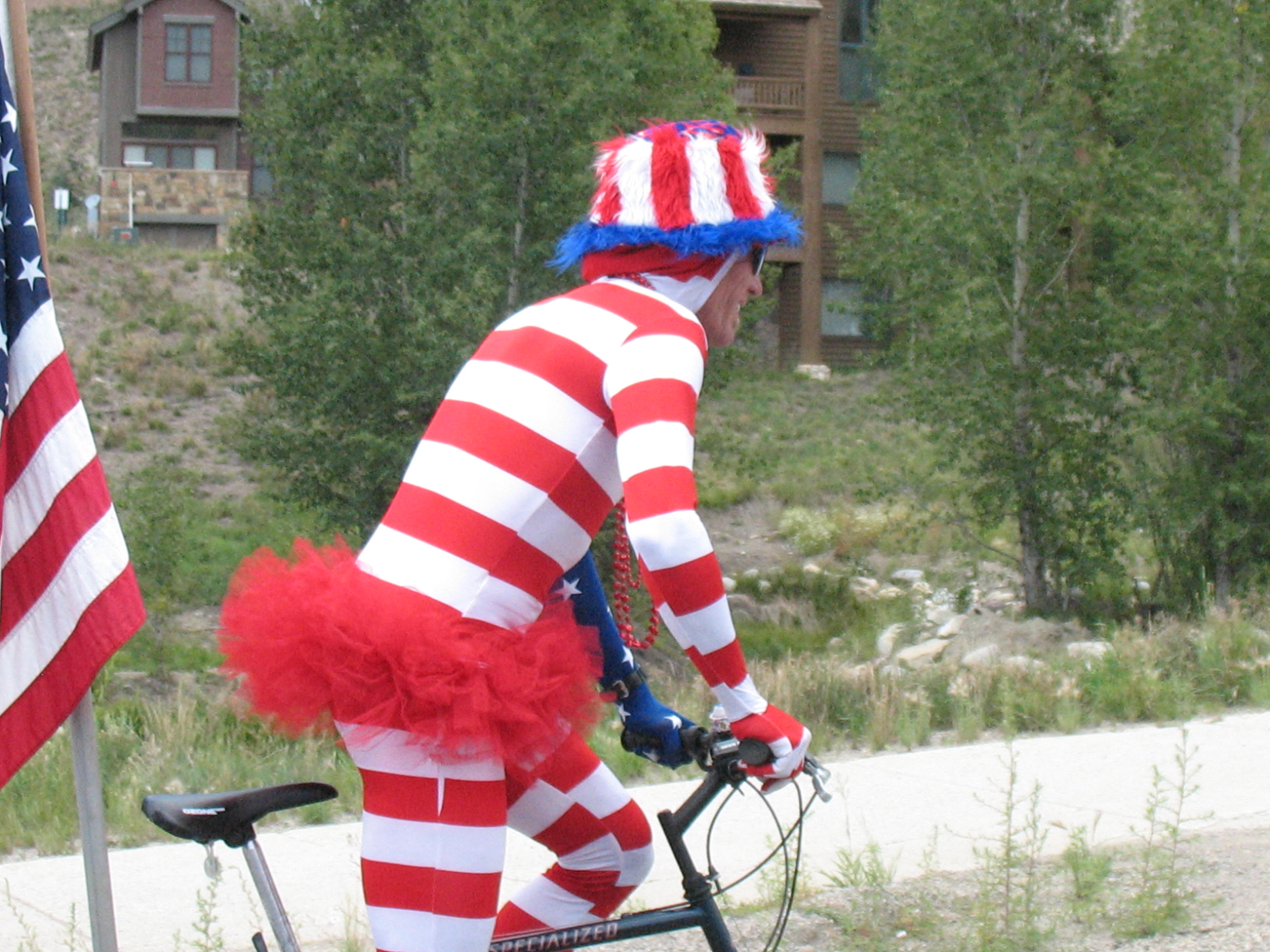
After every race the bikes are examined top to bottom front to back. Everything is cleaned, checked, lubed and put back together.

Can you say Truck Insurance?

I’m always curious what people think when something like this comes to town. Do the people who are working to make it happen think it is worth the effort.
At the 2011 ProChallenge I asked the Colorado State Highway Patrol motorcycle riders if they were having a good time. To a person they got big grins on their faces and said yes.
Today as I was driving up to Mt. Crested Butte I rolled down my window and asked a Gunnison law enforcement officer if it was worth the effort. I got the immediately politically correct yes. Then a second later there was a big smile and the officer looked at me and said yes nodding his head.
Many in a city like Montrose or Gunnison will look at the cost, the disruption and try to determine if there was “value” in bringing the 2012 ProChallenge to their town. I think in both cases, if you come close to breaking even, even in these tough times, putting a grin on a cops face, watching people cheering madly for every rider as they toil up the hills, seeing people just having a blast makes it very worthwhile!
Good job Mt. Crested Butte, Montrose, Gunnison and every community that helped bring this to Colorado today. I look forward to tomorrow.
2012 International Snow Science Workshop
Posted: August 9, 2012 Filed under: Avalanche | Tags: Alaska, American Avalanche Association, Anchorage Alaska, avalanche, Matthew Sturm, Mount McKinley, National Park Service, Northern Hemisphere, Snow Science, United States Leave a comment
|


USA Cycling announces 100K Challenge athlete incentive program
Posted: August 2, 2012 Filed under: Cycling | Tags: 2012 Summer Olympics, Bronze Medal, Colorado Springs, Gold Medal, London, London Olympic Games, Olympic Games, Olympis, Silver Medal, United States, United States Olympic Committee, USA Cycling Leave a comment
|
||||||||


Human Dimensions Conference
Posted: July 27, 2012 Filed under: Uncategorized | Tags: Biodiversity, Colorado, Colorado State University, Fish, Grizzly bear, Missoula Montana, United States, Wildlife management Leave a commentPathways to Success Conference & Training: Integrating Human Dimensions into Fisheries and Wildlife Management
Early Registration Deadline – August 6th
On or Before August 6, 2012 – $335 US
After August 6, 2012 – $435 US
Beaver Run Resort
September 24-27, 2012
Visit our website at www.hdfwconference.org to learn more.
Keynote speaker: Gary Machlis, Chief Science Advisor, NPS
Conference Themes:
Biodiversity and Coupled Social-Ecological Systems
Fish and Wildlife Governance
The Changing Nature of Wildlife Conservation
Enduring Issues in HDFW
Improving HDFW Science
Increasing HDFW Capacity
Working with the Public
Implications of Global Change
Human Wildlife Conflict
Wildlife in an Ecosystem Services Paradigm
Discourses about Wildlife
Demographics and Fish and Wildlife Policy
Mike Manfredo
Conference Co-Chair, Pathways to Success Integrating Human Dimension into Fish and Wildlife Management
Human Dimensions of Natural Resources Department
Jerry Vaske
Conference Co-Chair, Pathways to Success Integrating Human Dimension into Fish and Wildlife Management
Human Dimensions of Natural Resources Department
Colorado State University

Dan Decker
Conference Co-Chair, Pathways to Success Integrating Human Dimension into Fish and Wildlife Management
Professor, Natural Resources
Director, Human Dimensions Research Unit
Esther Duke
Coordinator, Pathways to Success: Integrating Human Dimension into Fish and Wildlife Management Conference
Human Dimensions of Natural Resources Department
Colorado State University
New York Decision explains the doctrine of Primary Assumption of the Risk for cycling.
Posted: July 23, 2012 Filed under: Assumption of the Risk, Cycling, New York | Tags: Bike Club, Cycling, Cycling Club, Mountain biking, New York, Organizations, Pace Line, Paceline, Sport, United States 2 CommentsCotty v Town of Southampton, et al., 2009 NY Slip Op 4020; 64 A.D.3d 251; 880 N.Y.S.2d 656; 2009 N.Y. App. Div. LEXIS 3919
Basically, in New York, for injuries from the path or roadway, you assume the risk of mountain biking, and you probably did not assume the risk of road biking.
The plaintiff was a member of a bicycle club and was on a club ride. The ride was a 72-mile ride, and she was part of the pace line. A pace line is a group of cyclists riding single file. When the lead cyclist starts to tire or slow that cyclist pulls out of the line and drifts to the rear, and the 2nd cyclist takes over the front spot. A pace line allows the cyclists to go faster easily because each is taking a turn at the front doing 100% of the work, and the cyclists in the back a re conserving energy.
The cyclist in front of the plaintiff went down in a construction area when he was unable to negotiate the lip between paving areas. The plaintiff tried to avoid the downed cyclists sliding into the roadway into a car.
The defendants were the construction company working on the road, the city that owned the road, other government entities, and the cyclists who went down in front of the plaintiff.
The city defendant filed this motion for summary judgment arguing the plaintiff could not sue because of the doctrine of primary assumption of the risk. In New York, Primary Assumption of the Risk prevents suits in sporting or athletic events from “conduct or conditions that are inherent in the sport or activity.”
The trial court denied the motion, and this appeal followed. The appellate court looked at the issue as to whether the plaintiff was engaging in an activity that subjected her to the doctrine. That is, was the plaintiff when riding a bike in this manner engaging in a sporting event or athletic activity.
Appellate Court Analysis
The court did a thorough review of the issues in this case as they applied to the doctrine of primary assumption of the risk. The court defined the doctrine as:

English: An animation of a group of cyclists riding in a chain gang or pace line. (Photo credit: Wikipedia)
…a person who voluntarily participates in a sporting activity generally consents, by his or her participation, to those injury-causing events, conditions, and risks which are inherent in the activity…. Risks inherent in a sporting activity are those which are known, apparent, natural, or reasonably foreseeable consequences of the participation.
The effect of a plaintiff consenting to the risk (even if the plaintiff is not voluntarily or knowingly consenting) is to relieve the defendant of the duty of care that would otherwise exist in the sport or activity.
Accordingly, when a plaintiff assumes the risk of participating in a sporting event, “the defendant is relieved of legal duty to the plaintiff; and being under no duty, he cannot be charged with negligence
The reason for the doctrine is to create free and vigorous participation in athletic activities. If the doctrine did not exist with regard to sporting events, players would not fully participate, not play hard for fear of legal liability for doing so. However, the doctrine does not apply to conduct on the part of a defendant who increases the risk of harm to the plaintiff.
The doctrine not only applies to the other players in the sport or activity; it has been applied to the playing surface, the field. “If the playing surface is as safe as it appears to be, and the condition in question is not concealed such that it unreasonably increases risk assumed by the players, the doctrine applies.”
The court then looked at the facts of the case to see if the plaintiff fell into the purview of the doctrine of assumption of the risk. The court first looked at what the doctrine did not apply to with regard to municipalities.
The doctrine is not designed to relieve a municipality of its duty to maintain its roadways in a safe condition [“the doctrine of assumption of risk does not exculpate a landowner from liability for ordinary negligence in maintaining a premises”]), and such a result does not become justifiable merely because the roadway in question happens to be in use by a person operating a bicycle, as opposed to some other means of transportation….
The court reviewed mountain biking cases first and found in three situations that other courts had applied the doctrine to issues with the trail. Mountain bikers striking an exposed tree root, riding into holes in the trail, or hitting potholes or ruts in the path were all found to be subject to the doctrine and barred suit by the plaintiff.
The court looked at road biking on streets and found the courts had held in those situations that the doctrine did not apply.
…plaintiffs, who were injured while riding their bicycles on paved pathways in public parks, “cannot be said as a matter of law to have assumed risk of being injured as a result of a defective condition on a paved pathway merely because [they] participated in the activity of bicycling
Consequently, this court could not say that the plaintiff’s activities at the time of her injuries were such that the doctrine of assumption of the risk would bar her suit.
…primary assumption of risk did not apply to a plaintiff who was injured when his bicycle struck a raised concrete mound on a public roadway, even though the plaintiff, like the plaintiff in the instant case, was “an avid bicyclist” and was participating in “a noncompetitive, recreational bicycle ride with about eight or nine other riders
…riding a bicycle on a paved public roadway normally does not constitute a sporting activity for purposes of applying the primary assumption of risk doctrine. By contrast, mountain biking, and other forms of off-road bicycle riding, can more readily be classified as sporting activity. Indeed, the irregular surface of an unimproved dirt bike path is “presumably the very challenge that attracts dirt bike riders as opposed to riding on a paved surface
One interesting point the court made was differentiating between the doctrine of primary assumption of the risk and comparative negligence which had incorporated a simple assumption of the risk into it. The defendant had argued that the plaintiff assumed the risk of riding too closely behind the defendant who fell in front of her. The court held that was a comparative negligence issue for the jury, not an example of a primary assumption of the risk.
Primary assumption of the risk is the play of the game, the sport, or the surface. If the plaintiff’s injuries arise from how the plaintiff played the game then that is an issue of contributory negligence.
So Now What?

English: Tour de Romandie 2009 – 3rd stage – team time trial Français : Tour de Romandie 2009 – 3e étape – contre-la-montre par équipes (Photo credit: Wikipedia)
Whether or not a government entity would be liable for an injury on the roadway is going to be specific by state. New York has a reputation of allowing suits
against municipalities for such things. As such most other states probably would not. However, that requires a state-by-state review which you should have conducted if needed in your state.
What comes from this lawsuit that you can do if you operate a cycling club or run a ride (such as a retailer) is to have all riders sign a release that protects the club and other riders. The defendant in this case who fell in front of the plaintiff was sued for falling down on a bicycle. That seems absurd to me.
If you run a club, event, or ride, make sure that an injured party cannot come back and sue you or other riders for something that is a part of cycling. If you do not believe that cyclists fall, watch the first 10 days of the 2012 Tour de France!
What do you think? Leave a comment.
 James H. “Jim” Moss |
Jim Moss is an attorney specializing in the legal issues of the outdoor recreation community. He represents guides, guide services, and outfitters both as businesses and individuals and the products they use for their business. He has defended Mt. Everest guide services, summer camps, climbing rope manufacturers; avalanche beacon manufacturers, and many more manufacturers and outdoor industries. Contact Jim at Jim@Rec-Law.us |
Jim is the author or co-author of eight books about legal issues in the outdoor recreation world; the latest is Outdoor Recreation Insurance, Risk Management,
Outdoor Recreation Insurance, Risk Management, and Law
To see Jim’s complete bio go here and to see his CV you can find it here. To find out the purpose of this website go here.
If you are interested in having me write your release, download the form and return it to me.
Connect
If you like this let your friends know or post it on FB, Twitter, or LinkedIn
Facebook Page: Outdoor Recreation & Adventure Travel Law
LinkedIn https://www.linkedin.com/in/recreationlaw/
Threads https://www.threads.net/@recreation_law
X https://twitter.com/RecreationLaw
Email: Jim@Rec-Law.US
By Recreation Law Rec-law@recreation-law.com James H. Moss
@2012-2023 Summit Magic Publishing, LLC
G-YQ06K3L262
#RecreationLaw, #@RecreationLaw, #Cycling.Law #Fitness.Law, #Ski.Law, #Outside.Law, #Recreation.Law, #Recreation-Law.com, #Outdoor Law, #Recreation Law, #Outdoor Recreation Law, #Adventure Travel Law, #law, #Travel Law, #Jim Moss, #James H. Moss, #Attorney at Law, #Tourism, #Adventure Tourism, #Rec-Law, #Rec-Law Blog, #Recreation Law, #Recreation Law Blog, #Risk Management, #Human Powered, #Human Powered Recreation,# Cycling Law, #Bicycling Law, #Fitness Law, #Recreation-Law.com, #Backpacking, #Hiking, #Mountaineering, #Ice Climbing, #Rock Climbing, #Ropes Course, #Challenge Course, #Summer Camp, #Camps, #Youth Camps, #Skiing, #Ski Areas, #Negligence, #Snowboarding, #RecreationLaw, #@RecreationLaw, #Cycling.Law #Fitness.Law, #SkiLaw, #Outside.Law, #Recreation.Law, #RecreationLaw.com, #OutdoorLaw, #RecreationLaw, #OutdoorRecreationLaw, #AdventureTravelLaw, #Law, #TravelLaw, #JimMoss, #JamesHMoss, #AttorneyatLaw, #Tourism, #AdventureTourism, #RecLaw, #RecLawBlog, #RecreationLawBlog, #RiskManagement, #HumanPowered, #HumanPoweredRecreation,# CyclingLaw, #BicyclingLaw, #FitnessLaw, #RecreationLaw.com, #Backpacking, #Hiking, #Mountaineering, #IceClimbing, #RockClimbing, #RopesCourse, #ChallengeCourse, #SummerCamp, #Camps, #YouthCamps, #Skiing, #Ski Areas, #Negligence, #Snowboarding, sport and recreation laws, ski law, cycling law, Colorado law, law for recreation and sport managers, bicycling and the law, cycling and the law, ski helmet law, skiers code, skiing accidents, Recreation Lawyer, Ski Lawyer, Paddlesports Lawyer, Cycling Lawyer, Recreational Lawyer, Fitness Lawyer, Rec Lawyer, Challenge Course Lawyer, Ropes Course Lawyer, Zip Line Lawyer, Rock Climbing Lawyer, Adventure Travel Lawyer, Outside Lawyer, Recreation Lawyer, Ski Lawyer, Paddlesports Lawyer, Cycling Lawyer, #RecreationalLawyer, #FitnessLawyer, #RecLawyer, #ChallengeCourseLawyer, #RopesCourseLawyer, #ZipLineLawyer, #RockClimbingLawyer, #AdventureTravelLawyer, #OutsideLawyer, #NY, New York, Cycling,
WordPress Tags: York,Decision,doctrine,Primary,Assumption,Risk,Town,Southampton,Slip,LEXIS,injuries,path,roadway,mountain,road,plaintiff,member,bicycle,energy,construction,area,areas,defendants,government,entities,defendant,judgment,events,bike,manner,event,Appellate,Court,Analysis,person,participation,injury,Risks,consequences,negligence,players,municipalities,roadways,landowner,premises,transportation,situations,bikers,tree,potholes,ruts,streets,plaintiffs,bicycles,pathways,parks,pathway,mound,riders,purposes,dirt,jury,example,Whether,reputation,lawsuit,retailer,Tour,France,Leave,Twitter,LinkedIn,Recreation,Edit,RecreationLaw,Facebook,Page,Outdoor,Adventure,Travel,Blog,Mobile,Site,Outside,Moss,James,Attorney,Tourism,Management,Human,Rock,Ropes,Course,Challenge,Summer,Camp,Camps,Youth,SkiLaw,OutdoorLaw,OutdoorRecreationLaw,AdventureTravelLaw,TravelLaw,JimMoss,JamesHMoss,AttorneyatLaw,AdventureTourism,RecLaw,RecLawBlog,RecreationLawBlog,RiskManagement,HumanPoweredRecreation,CyclingLaw,BicyclingLaw,FitnessLaw,RopesCourse,ChallengeCourse,SummerCamp,YouthCamps,Colorado,managers,helmet,accidents,Lawyer,Paddlesports,Recreational,Line,RecreationalLawyer,FitnessLawyer,RecLawyer,ChallengeCourseLawyer,RopesCourseLawyer,ZipLineLawyer,RockClimbingLawyer,AdventureTravelLawyer,OutsideLawyer,cyclists
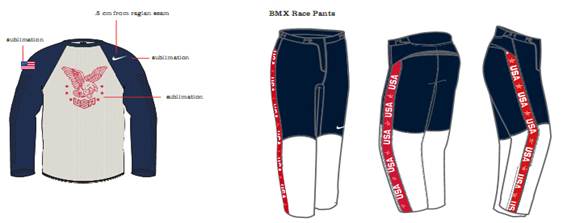
Olympic Cycling Kits (clothes) Unveiled: They Look Good
Posted: July 19, 2012 Filed under: Cycling | Tags: Bicycle motocross, BMX, Bob Haro, Cycling, Olympic, Olympic Games, Olympics, United States, USA Cycling 1 Comment |
||||
 |
|
|||

Michigan Ski Safety Act
Posted: June 25, 2012 Filed under: Michigan | Tags: Colorado, Michigan Compiled Laws, Michigan Ski Safety Act, MSSA, Piste, Ski, Ski Resort, Sports, United States, winter sports Leave a commentMichigan Ski Safety Act
CHAPTER 408 LABOR
SKI AREA SAFETY ACT
MCL § 408.321
Preceding § 408.321
An act to provide for the inspection, licensing, and regulation of ski areas and ski lifts; to provide for the safety of skiers, spectators, and the public using ski areas; to provide for certain presumptions relative to liability for an injury or damage sustained by skiers; to prescribe the duties of skiers and ski area operators; to create a ski area safety board; to provide for the disposition of revenues; to provide for liability for damages which result from a violation of this act; to provide civil fines for certain violations of this act; and to provide criminal penalties for certain violations of this act. (Amended by Pub Acts 1981, No. 86, imd eff July 2, 1981; 1995, No. 120, imd eff June 30, 1995.)
MCL § 408.321
§ 408.321. Short title.
Sec. 1. This act shall be known and may be cited as the “ski area safety act of 1962”.
MCL § 408.322
§ 408.322. Definitions.
Sec. 2. As used in this act:
(a) “Board” means the ski area safety board.
(b) “Commissioner” means the director of commerce or an authorized representative of the director.
(c) “Department” means the state department of commerce.
(d) “Operator” means a person who owns or controls, or who has operational responsibility for, a ski area or ski lift. An operator includes this state or a political subdivision of this state.
(e) “Passenger” means a person, skier or nonskier, who boards, disembarks from, or is transported by a ski lift, regardless of whether the ski lift is being used during the skiing season or nonskiing season, and includes a person waiting for or moving away from the loading or unloading point of ski lift.
(f) “Ski area” means an area used for skiing and served by 1 or more ski lifts.
(g) “Skier” means a person wearing skis or utilizing a device that attaches to at least 1 foot or the lower torso for the purpose of sliding on a slope. The device slides on the snow or other surface of a slope and is capable of being maneuvered and controlled by the person using the device. Skier includes a person not wearing skis or a skiing device while the person is in a ski area for the purpose of skiing.
(h) “Ski lift” means a device for transporting persons uphill on skis, or in cars on tracks, or suspended in the air by the use of cables, chains, belts, or ropes, and usually supported by trestles or towers with 1 or more spans. Ski lift includes a rope tow.
MCL § 408.323
§ 408.323. Safety board; members.
Sec. 3. A ski area safety board consisting of 7 members is created within the office of the commissioner. The board consists of 3 ski area managers, 1 from the Upper Peninsula and 2 from the Lower Peninsula; 1 engineer with skiing experience; 1 member of the central United States ski association, a nonprofit corporation; 1 person with skiing experience from the Upper Peninsula representing the general public; and 1 with skiing experience from the Lower Peninsula representing the general public. The commissioner and an officer of the Michigan tourist council are ex officio members of the board without vote.
MCL § 408.324
§ 408.324. Safety board members; appointment; term; filling of vacancies.
Sec. 4. Members of the board shall be appointed by the governor with the advice and consent of the senate for terms of 4 years and until their successors are appointed and qualified. Vacancies in the board shall be filled for the unexpired term.
MCL § 408.325
§ 408.325. Officers; quorum; meetings; compensation and expenses; compliance with Open Meetings Act.
Sec. 5. (1) The business which the board may perform shall be conducted at a public meeting of the board held in compliance with Act No. 267 of the Public Acts of 1976, being sections 15.261 to 15.275 of the Michigan Compiled Laws. Public notice of the time, date, and place of the meeting shall be given in the manner required by Act No. 267 of the Public Acts of 1976. The board shall elect a chairperson and other officers it considers necessary to perform its duties between meetings. A majority of the 7 voting members shall constitute a quorum. The board shall meet not less than once yearly on the call of the chairperson or by written request of not less than 3 members.
(2) The per diem compensation of the members of the board, other than the commissioner, and the schedule for reimbursement of expenses shall be established annually by the legislature.
MCL § 408.326
§ 408.326. Rules; fee schedules.
Sec. 6. (1) The board shall promulgate rules for the safe construction, installation, repair, use, operation, maintenance, and inspection of all ski areas and ski lifts as the board finds necessary for protection of the general public while using ski areas and ski lifts. The rules shall be reasonable and based upon generally accepted engineering standards, formulas, and practices.
(2) The board, with the advice of the commissioner, shall propose legislation to establish the fee schedule for permits, inspections, and plan review activities. The fees shall reflect the actual costs and expenses of the department for issuing permits and conducting inspections and plan reviews.
MCL § 408.326a
§ 408.326a. Duties of ski area operators.
Sec. 6a. Each ski area operator shall, with respect to operation of a ski area, do all of the following:
(a) Equip each snow-grooming vehicle and any other authorized vehicle, except a snowmobile, with a flashing or rotating yellow light conspicuously located on the vehicle, and operate the flashing or rotating yellow light while the vehicle is moving on, or in the vicinity of, a ski run. A snowmobile operated in a ski area shall be operated with at least 1 operating white light located on the front of the snowmobile.
(b) Mark with a visible sign or other warning device the location of any hydrant or similar fixture or equipment used in snow-making operations located on a ski run, as prescribed by rules promulgated under section 20(3).
(c) Mark the top of or entrance to each ski run, slope, and trail to be used by skiers for the purpose of skiing, with an appropriate symbol indicating the relative degree of difficulty of the run, slope, or trail, using a symbols code prescribed by rules promulgated under section 20(3).
(d) Mark the top of or entrance to each ski run, slope, and trail which is closed to skiing, with an appropriate symbol indicating that the run, slope, or trail is closed, as prescribed by rules promulgated under section 20(3).
(e) Maintain 1 or more trail boards at prominent locations in each ski area displaying that area’s network of ski runs, slopes, and trails and the relative degree of difficulty of each ski run, slope, and trail, using the symbols code required under subdivision (c) and containing a key to that code, and indicating which runs, slopes, and trails are open or closed to skiing.
(f) Place or cause to be placed, if snow-grooming or snowmaking operations are being performed on a ski run, slope, or trail while the run, slope, or trail is open to the public, a conspicuous notice at or near the top of or entrance to the run, slope, or trail indicating that those operations are being performed.
(g) Post the duties of skiers and passengers as prescribed in sections 21 and 22 and the duties, obligations, and liabilities of operators as prescribed in this section in and around the ski area in conspicuous places open to the public.
(h) Maintain the stability and legibility of all required signs, symbols, and posted notices.
MCL § 408.327
§ 408.327. Promulgation of rules.
Sec. 7. The rules shall be promulgated pursuant to Act No. 306 of the Public Acts of 1969, as amended, being sections 24.201 to 24.315 of the Michigan Compiled Laws.
MCL § 408.328
§ 408.328. Administration and enforcement of act.
Sec. 8. The commissioner, subject to the limitations herein contained and the rules and regulations of the board, shall administer and enforce the provisions of this act.
MCL § 408.329
§ 408.329. Ski lifts, permits required; inspections, original and annual.
Sec. 9. No person shall operate a ski lift without a permit issued by the commissioner. On or before October 1 of each year an operator shall apply for a permit to the commissioner on a form furnished by the commissioner and containing such information as the board may require. All ski lifts shall be inspected before they are originally put into operation for the public’s use and thereafter at least once every 12 months, unless permitted to operate on a temporary permit.
MCL § 408.330
§ 408.330. Temporary permits.
Sec. 10. The commissioner may issue a temporary permit for 30 calendar days to an operator, who has previously been operating in this state on a regular or annual basis, to continue operation. An inspection of his ski lifts shall be made within 30 days from the issuance of the permit. A ski lift inspected and covered by a permit in the preceding year may operate on a temporary basis until further inspected.
MCL § 408.331
§ 408.331. Permit; issuance; expiration.
Sec. 11. If upon inspection a ski lift is found to comply with the rules and regulations of the board, the commissioner shall issue a permit to operate. A permit shall expire on September 30 of the following year.
MCL § 408.332
§ 408.332. Ski lifts; construction, moving, alteration; plans and specifications, filing, approval; permit for work; exclusions.
Sec. 12. Before a new ski lift is erected, or before a presently existing ski lift is moved to a different location, or whenever any additions or alterations are made which change the structure, mechanism, classification or capacity of any ski lift, the operator shall file with the department detailed, duplicate plans and specifications of such work. The plans and specifications shall be prepared by a qualified tramway firm or by an engineer, licensed in this state as a professional engineer, in accordance with Act No. 240 of the Public Acts of 1937, as amended, being sections 338.551 to 338.576 of the Compiled Laws of 1948. Upon approval of plans and specifications, the department shall issue a permit for such work. All rope tows shall be excluded from this section.
MCL § 408.333
§ 408.333. Temporary cessation of operations; resumption.
Sec. 13. The commissioner or board may order, in writing, a temporary cessation of operation of a ski lift if it has been determined after inspection to be hazardous or unsafe. Operation shall not resume until such conditions are corrected to the satisfaction of the commissioner or board.
MCL § 408.334
§ 408.334. Preexisting structures.
Sec. 14. This act shall not be construed to prevent the use of any existing installation, upon inspection found to be in a safe condition and to conform with the rules and regulations of the board.
MCL § 408.335
§ 408.335. Noncomplying operators; modification of rules.
Sec. 15. If there are practical difficulties or unnecessary hardships for an operator to comply with the rules and regulations under this act, the commissioner, with the approval of the board, may modify the application of such rules or regulations to such a situation, if the spirit of the provisions shall be observed and the public safety is secured. Any operator may make a written request to the board stating his grounds and applying for such modification. Any authorization by the commissioner and the board shall be in writing and shall describe the conditions under which the modification is permitted. A record of all modifications shall be kept in the department and open to the public.
MCL § 408.336
§ 408.336. Fees; authorized inspectors; receipts.
Sec. 16. (a) An application for a permit shall be accompanied by fees of:
$25.00 for an annual permit; or
$2.00 for each rope tow,
$5.00 for each T bar, J bar or platter pull,
$15.00 for each chair lift or skimobile, and
$30.00 for each aerial tramway,if greater than the $25.00 annual permit fee.
(b) Inspection fees shall be as follows:
$8.00 for each rope tow,
$20.00 for each T bar, J bar or platter pull,
$60.00 for each chair lift or skimobile,
$120.00 for each aerial tramway, and
$50.00 for reinspections or special inspections at an operator’s request. Any operator may employ any person, partnership or corporation, approved by the commissioner and board, to make the inspections. Inspections made by any person, partnership, or corporation, that may be employed by an operator, shall be on forms furnished or approved by the department. Inspection fees shall be waived when the annual permit application is accompanied by such an inspection report.
(c) Fees for review and approval of plans prior to construction shall be $200.00 for a chair lift, T bar, J bar, platter pull or tramway.Fees for review and approval of plans for modification and alteration of an existing lift shall be $50.00.
(d) Fees shall be paid to the department, which shall give receipts therefor.
MCL § 408.337
§ 408.337. Chief inspector; other employees.
Sec. 17. The department, with the advice and consent of the board, shall employ or retain a person qualified in engineering and training who shall be designated chief inspector. The chief inspector and such additional inspectors and other employees as may be necessary to properly administer this act may be hired on a temporary basis or borrowed from other state departments, or the department may contract with persons, partnerships or corporations for such inspection services on an independent basis.
MCL § 408.338
§ 408.338. Disposition of fees; payment of expenses.
Sec. 18. All fees for permits or inspections, or any other income received under this act, shall be paid into the general fund. All salaries and other moneys expended under this act shall be paid by the state treasurer from a fund appropriated by the legislature.
MCL § 408.339
§ 408.339. Notices; publication.
Sec. 19. (1) In addition to the notice prescribed in section 5(1) notice of a public hearing held under this act shall be published not less than once and not less than 10 days before the hearing, in newspapers of general circulation prescribed by the commissioner.
MCL § 408.340
§ 408.340. Violations; violations of Open Meetings Act, penalties; implementation; maximum penalties.
Sec. 20. (1) Except for sections 21 to 24, and except as provided in subsection (2), a person who violates this act, or a rule or order promulgated or issued pursuant to this act, or a person who interferes with, impedes, or obstructs the commissioner, an authorized representative of the commissioner, or a board member in the performance of duties prescribed by this act, is guilty of a misdemeanor. Each day a violation or other act continues shall be considered a separate offense.
(2) A member of the board who intentionally violates section 5(1) shall be subject to the penalties prescribed in Act No. 267 of the Public Acts of 1976, as amended.
(3) Not more than 270 days after the effective date of this subsection, the board shall, pursuant to section 7, promulgate rules consistent with this act to implement this act, except for subsection (2) and sections 21, 22, 23, and 24, not to exceed $50.00 for each violation.
MCL § 408.341
§ 408.341. Conduct of skier; prohibited acts.
Sec. 21. (1) A skier shall conduct himself or herself within the limits of his or her individual ability and shall not act or ski in a manner that may contribute to his or her injury or to the injury of any other person. A skier shall be the sole judge of his or her ability to negotiate a track, trail, or slope.
(2) While in a ski area, a skier or passenger shall not do any of the following:
(a) Board a ski lift which has been designated as closed.
(b) Wilfully board or embark upon, or disembark from, a ski lift, except at an area designated for those purposes.
(c) Intentionally drop, throw, or expel an object from a ski lift while riding on the lift.
(d) Do any act which interferes with the running or operation of a ski lift, such as, but not limited to: swinging or bouncing on an aerial lift, attempting to contact supporting towers, machinery, guides, or guards while riding on a ski lift; or skiing out of the designated ski track on a surface lift or tow.
(e) Use a ski lift, unless the skier or passenger has the ability to use the lift safely without instruction on use of the lift by a ski area owner, manager, operator, or employee, or unless the skier or passenger requests and receives instruction before entering the boarding area of the ski lift.
(f) Use a ski lift or ski without properly engaging and using ski restraining devices, brakes, or restraining straps.
MCL § 408.342
§ 408.342. Duties of skier; acceptance of inherent dangers.
Sec. 22. (1) While in a ski area, each skier shall do all of the following:
(a) Maintain reasonable control of his or her speed and course at all times.
(b) Stay clear of snow-grooming vehicles and equipment in the ski area.
(c) Heed all posted signs and warnings.
(d) Ski only in ski areas which are marked as open for skiing on the trail board described in section 6a(e).
(2) Each person who participates in the sport of skiing accepts the dangers that inhere in that sport insofar as the dangers are obvious and necessary. Those dangers include, but are not limited to, injuries which can result from variations in terrain; surface or subsurface snow or ice conditions; bare spots; rocks, trees, and other forms of natural growth or debris; collisions with ski lift towers and their components, with other skiers, or with properly marked or plainly visible snow-making or snow-grooming equipment.
MCL § 408.343
§ 408.343. Accident causing injury to another person, notification; identification; penalty for wilful failure to give identification or notification; accident causing injury to skier, notification of hazardous condition.
Sec. 23. (1) A skier involved in an accident causing an injury to another person shall to the extent that he or she is reasonably able to do so immediately notify the ski patrol or the operator, or law enforcement or emergency personnel, and shall clearly identify himself or herself. A skier who wilfully fails to give identification after involvement in a skiing accident with another person, or a skier who is reasonably able to do so who fails to notify the proper authorities or to obtain assistance when the skier knows that another person involved in the accident is in need of medical or other assistance, is guilty of a misdemeanor, punishable by imprisonment for not more than 30 days, or a fine of not more than $100.00, or both.
(2) A skier involved in an accident causing an injury to himself or herself, but not to another person, shall immediately notify the ski patrol or the operator, or law enforcement or emergency personnel, if the accident created a known hazardous condition in the area where the accident occurred.
MCL § 408.344
§ 408.344. Violations of act, liability for resulting damage.
Sec. 24. A skier or passenger who violates this act, or an operator who violates this act shall be liable for that portion of the loss or damage resulting from that violation.
Colorado Sees Skier Visits Recede for 2011/12 Season
Posted: June 14, 2012 Filed under: Colorado, Skiing / Snow Boarding | Tags: Adventure travel, Colorado, Resort, Rocky Mountain, Ski, Ski Resort, ski season, Snow, United States Leave a commentFOR IMMEDIATE RELEASE
http://www.coloradoski.com/media/press-releases

(Photo credit: Wikipedia)
Colorado Sees Skier Visits Recede for 2011/12 Season
Bright Spots in Colorado Ski Country USA amid Lackluster Winter
Boulder, Colo. – June 6, 2012 – Colorado Ski Country USA (CSCUSA) announced today at its 49th Annual Meeting, that its 22 member resorts hosted an estimated 6.16 million skier visits during the 2011-12 ski season. This represents a decrease of 11.4 percent, or approximately 790,000 skier visits, compared to last season, which was the fourth best season on record. Compared to the five year average, CSCUSA member resort skier visits are down 11.9 percent. The overall snow related decline interrupted the recovery resorts had been building since 2008/09.
In an indication of the extreme weather impacting Colorado resorts this season, Colorado’s western slope experienced its third driest and seventh warmest winter in records going back to 1895. Precipitation on the Western Slope this winter was 43 percent below average, and down every month of the winter. In Colorado overall, March 2012 was the driest in more than 100 years, and we experienced the second warmest March on record. President and CEO of Colorado Ski Country USA Melanie Mills noted, “Fortunately, seasons such as the one just ended have proved to be historically rare and the ski industry has exhibited a remarkable ability to bounce back after poor snow years in the past.”
Mills continued, “Much of the ski industry in the US was confronted with weather challenges last year, but several of our resorts bucked the national trend and showed signs of resilience during what was clearly an uninspiring winter.”
The diversity of ski resorts in Colorado saw some areas post increases and even records in visitation. Colorado Ski Country resorts also saw strength in both domestic and international destination visitors which helped soften the economic impacts to resort operators and resort communities of the overall decline in visitation.
Colorado is favorably positioned for rare dry spells given that resorts are at higher elevations where the air is dryer and colder, therefore allowing the snow to maintain consistency. Aided by colder temperatures favorable for snowmaking, resort snowmakers and slope groomers were able to maintain a quality snow surface throughout most of the season.
Momentum going into the season was strong after seeing an uptick in visitation last year, and economic conditions generally improved during the season. Abundant amounts of snow came in the fall, allowing some resorts to open earlier than planned, but the uncharacteristic precipitation deficit brought that momentum to a standstill. Snow came in the middle of the season and several resorts broke single day snowfall totals, but perception of an underperforming winter was already set in skiers’ minds. “We’ve had dry years in the past, and we’ll have dry years again,” Mills explained. “Not every year can be a record breaking year, and with nary a snowflake in what is normally our snowiest month in Colorado, season visitation numbers are disappointing, but not unexpected.”
CSCUSA resorts upheld their dedication to providing guests with a quality product and superior service which sets Colorado apart from other ski destinations, and keeps the state’s appeal as the premiere place for winter travelers. “Our resorts have so much to offer visitors that in some cases the world class skiing is just one of a menu of activities. And for many people, the season was more about being outside and spending time with friends and family taking in the beautiful outdoors and wonderful amenities of our resorts.”
With certain assumptions in place, statewide skier visits for Colorado are estimated at 11,010,584 million. This estimation shows Colorado being down 9.8 percent, or approximately 1,195,000 visits, compared to last season. On a national level, skier visits overall are down 15.7 percent with the Rocky Mountainregion seeing a decrease of 7.2 percent.

Skier carving a turn off piste (Photo credit: Wikipedia)
Skier visits are the metric used to track participation in skiing and snowboarding. A skier visit represents a person participating in the sport of skiing or snowboarding for any part of one day at a mountain resort.
These numbers are preliminary results and subject to final adjustments by CSCUSA members. The decision to release individual numbers is up to each individual resort.
Do you really want to sell helmets this way? Does this article promote the industry?
Posted: June 6, 2012 Filed under: Cycling | Tags: CPSC, Cycling, Cycling Helmet, helmet, Helmets, Retail, U.S. Consumer Product Safety Commission, United States Leave a commentOr does this article just create liability issues?
I recently read an article in a trade magazine about selling cycling helmets. As usual, it caught my attention, but for different reasons. This article was directed at retailers as an educational tool on how to sell helmets. However, the article was at best misleading and would probably get the retailer in trouble in the future. Besides, it created a sales program focused on the negative side of cycling rather than the benefits.
Here are the quotes that I found amusing, actually laughable if they were not so wrong.
As a bike storeowner,thisrgivessyouvbothoanbincredibleropportunityr–uandya–powerfuloresponsibilityi–itotupsell yourlbikeucustomerssandeconvinceothemctotpurchaseuachelmet andmperhapspsavepa life.a life.
It’s your responsibility to inform your customers of the invaluable protection a helmet provides, the importance of wearing a safe helmet that fits well, as well as the dangers and statistics of cycling-related head injuries.
According to the Insurance Institute for Highway Safety (IIHS), 91% of bicyclists killed in 2009 weren’t wearing helmets. The IIHS has estimated that wearing a helmet can reduce head injuries by 85%.
In the United States the Consumer Product Safety Commission (CPSC) regulates helmet law.
…-keep a helmet in shambles from a crash on display and include a testimony about the life it saved…
[emphasize added]
Seriously? This was written let alone allowed into print?
However, it was the hocus pocus of a graph in the article that caught my eye.
|
Bicyclist deaths by helmet se, 1994-2009 |
|||||
|
|
No Helmet Use |
Helmet Use |
Total |
||
|
Year |
Num |
% |
Num |
% |
Num |
|
1994 |
776 |
97 |
19 |
2 |
796 |
|
1995 |
783 |
95 |
34 |
4 |
828 |
And so on through 2009.
The title implies the deaths occurred because cyclists did not wear a helmet. If you take two unrelated numbers and compare them, you can accomplish anything. For proof of this do a web search for “moon landings,” “Kennedy assignation,” and “World trade center,” for an interesting journey through made-up statistics to prove this point. Here they point out who died without a helmet compared to who died wearing a helmet and imply that everyone who died without a helmet died of a head injury.
Absolute fabrication of statistics to scare people!
Helmets prevent head injuries; helmets don’t save lives. If you are involved in an accident severe enough that a head injury will kill you, other parts of your body will be injured severely enough to kill you.
So let’s tackle these misstatements in the article.
As a bike storeowner, this gives you both an incredible opportunity – and a powerful responsibility – to upsell your bike customers and convince them to purchase a helmet and perhaps save a life.
As a retailer you have NO legal responsibility to your customers as far as educating them. You DO have a legal responsibility to educate them correctly if you do educate them. Whether or not you have a moral or ethical responsibility is something you must deal with and a risk you must accept. That risk evaluation also includes losing money by not selling accessories like helmets. However, it is shameful for this article to try to place a burden on a retailer for not selling a helmet.
Helmets do not save lives; helmets may prevent head injuries.
It’s your responsibility to inform your customers of the invaluable protection a helmet provides, the importance of wearing a safe helmet that fits well, as well as the dangers and statistics of cycling-related head injuries.
What is a “safe helmet?”
If you are going to use statistics to prove your point, then you better understand what you are saying. You cannot take two “stats” and compare them to prove a point when the numbers are derived from different sources or different factors. (A perfect example of this is the chart that went with the article).
According to the Insurance Institute for Highway Safety (IIHS), 91% of bicyclists killed in 2009 weren’t wearing helmets. The IIHS has estimated that wearing a helmet can reduce head injuries by 85%.
Just because a large percentage of people died who were not wearing a helmet does not mean you can then say those people died of a head injury. That is like saying 97% of the people in the US who eat ice cream do not get cancer. Only three percent of the population gets cancer anyway. However, that statistic is 100% correct and 100% meaningless, just like the statistics in the article. (However, you can use this statistic to eat more ice cream if you want.)
In the United States, the Consumer Product Safety Commission (CPSC) regulates helmet law.
This is the second time I’ve seen this in the past couple of months. NO! The CPSC is tasked with eliminating dangerous products. If a helmet is not doing what you say it is supposed to do AND there is the possibility of injury, then the CPSC can become involved. There are no federal helmet laws. The CPSC is a federal agency. There are some state helmet laws and some federal regulations concerning helmets. Those regulations are all based on a product meeting the tests of either a testing organization (ASTM, ANSI, etc.) or private non-profit organizations that test helmets (Snell).
…-keep a helmet in shambles from a crash on display and include a testimony about the life it saved…
These numbers also lead one to believe the people died because the cyclist was wrong and not wearing a helmet. However, that is not true either. Cyclists die when vehicles hit them. If the speed of impact is greater than 30 to 40 mph, the cyclists have almost a zero chance of surviving the impact. (See Zone 30 and Pedestrian and Bicyclist Intersection Safety Indices.) Distracted drivers, drivers not paying attention, drivers who don’t care kill cyclist with or without a helmet. See Sharing the Road With Bicycles for more examples.
Do Something
Why is this important? Because consumers do trust and believe retailers as the article points out. If you provide consumers with information which they rely upon in making a purchase which is incorrect and results in an injury you are liable. The manufacturer is going to walk away from this lawsuit without paying a dime. This is a lawsuit the retailer alone must fight.
The retailer made a misstatement that the consumer relied upon to the consumer’s detriment.
This helmet will save your life. The cyclists die of a head injury, and the retailer is writing a check.
You have to educate the consumer; however, when you do that you need to know what is correct. You cannot give the consumer incorrect information. You need to tell the consumer helmets prevent head injuries. No one knows, and there is zero proof that helmets save lives. In fact, the opposite is true. Looking at injury and fatality reports, helmets do nothing to save lives.
What is bad about this article is the fact the article was written by a helmet manufacture and published by an industry magazine. The magazine failed its readers because it published an article without checking the facts in the article. The manufacture that wrote the article is selling helmets based on made-up statistics and facts to promote fear.
Cheap journalism is bad journalism.
On top of that are we helping cycling? If you are trying to sell a helmet to someone based on fear, are we helping the sport? Or are we telling parents that cycling is too dangerous for their kid? Is that how you want to sell cycling; this is a dangerous sport, so spend another $100 with me?
Studies show that using fear or laws to scare people into using helmet’s results in less people cycling. See Cyclists Without Helmets Deserve to Die, Doctors Argue Against Mandatory Bike Helmet Laws or Liberty or death; don’t tread on me.
What do you think? Leave a comment.
If you like this let your friends know or post it on FB, Twitter or LinkedIn
Copyright 2012 Recreation Law (720) Edit Law
Twitter: RecreationLaw
Facebook: Rec.Law.Now
Facebook Page: Outdoor Recreation & Adventure Travel Law
Mobile Site: http://m.recreation-law.com
#RecreationLaw, #@RecreationLaw, #Cycling.Law #Fitness.Law, #Ski.Law, #Outside.Law, #Recreation.Law, #Recreation-Law.com, #Outdoor Law, #Recreation Law, #Outdoor Recreation Law, #Adventure Travel Law, #law, #Travel Law, #Jim Moss, #James H. Moss, #Attorney at Law, #Tourism, #Adventure Tourism, #Rec-Law, #Rec-Law Blog, #Recreation Law, #Recreation Law Blog, #Risk Management, #Human Powered, #Human Powered Recreation,# Cycling Law, #Bicycling Law, #Fitness Law, #Recreation-Law.com, #Backpacking, #Hiking, #Mountaineering, #Ice Climbing, #Rock Climbing, #Ropes Course, #Challenge Course, #Summer Camp, #Camps, #Youth Camps, #Skiing, #Ski Areas, #Negligence, #Snowboarding, #RecreationLaw, #@RecreationLaw, #Cycling.Law #Fitness.Law, #SkiLaw, #Outside.Law, #Recreation.Law, #RecreationLaw.com, #OutdoorLaw, #RecreationLaw, #OutdoorRecreationLaw, #AdventureTravelLaw, #Law, #TravelLaw, #JimMoss, #JamesHMoss, #AttorneyatLaw, #Tourism, #AdventureTourism, #RecLaw, #RecLawBlog, #RecreationLawBlog, #RiskManagement, #HumanPowered, #HumanPoweredRecreation,# CyclingLaw, #BicyclingLaw, #FitnessLaw, #RecreationLaw.com, #Backpacking, #Hiking, #Mountaineering, #IceClimbing, #RockClimbing, #RopesCourse, #ChallengeCourse, #SummerCamp, #Camps, #YouthCamps, #Skiing, #Ski Areas, #Negligence, #Snowboarding, sport and recreation laws, ski law, cycling law, Colorado law, law for recreation and sport managers, bicycling and the law, cycling and the law, ski helmet law, skiers code, skiing accidents, Recreation Lawyer, Ski Lawyer, Paddlesports Lawyer, Cycling Lawyer, Recreational Lawyer, Fitness Lawyer, Rec Lawyer, Challenge Course Lawyer, Ropes Course Lawyer, Zip Line Lawyer, Rock Climbing Lawyer, Adventure Travel Lawyer, Outside Lawyer, Recreation Lawyer, Ski Lawyer, Paddlesports Lawyer, Cycling Lawyer, #RecreationalLawyer, #FitnessLawyer, #RecLawyer, #ChallengeCourseLawyer, #RopesCourseLawyer, #ZipLineLawyer, #RockClimbingLawyer, #AdventureTravelLawyer, #OutsideLawyer, #helmet, Bicycle Dealer, #CPSC, #ASTM, #ANSI, #Snell,
WordPress Tags: helmets,Does,article,industry,magazine,attention,retailers,tool,retailer,Besides,sales,Here,bike,life,customers,protection,helmet,importance,dangers,statistics,injuries,Insurance,Institute,Highway,IIHS,States,Consumer,Product,Commission,CPSC,testimony,graph,Bicyclist,deaths,Total,landings,Kennedy,assignation,World,injury,Absolute,fabrication,accident,Whether,evaluation,money,factors,example,Just,percentage,cancer,population,statistic,products,laws,agency,ASTM,ANSI,Snell,Cyclists,vehicles,impact,zero,Pedestrian,Intersection,Indices,drivers,Road,Bicycles,examples,consumers,information,manufacturer,lawsuit,detriment,fact,readers,Cheap,journalism,parents,Studies,Deserve,Doctors,Argue,Against,Mandatory,death,Leave,Twitter,LinkedIn,Recreation,Edit,RecreationLaw,Facebook,Page,Outdoor,Adventure,Travel,Blog,Mobile,Site,Outside,Moss,James,Attorney,Tourism,Risk,Management,Human,Rock,Ropes,Course,Challenge,Summer,Camp,Camps,Youth,Areas,Negligence,SkiLaw,OutdoorLaw,OutdoorRecreationLaw,AdventureTravelLaw,TravelLaw,JimMoss,JamesHMoss,AttorneyatLaw,AdventureTourism,RecLaw,RecLawBlog,RecreationLawBlog,RiskManagement,HumanPoweredRecreation,CyclingLaw,BicyclingLaw,FitnessLaw,RopesCourse,ChallengeCourse,SummerCamp,YouthCamps,Colorado,managers,accidents,Lawyer,Paddlesports,Recreational,Line,RecreationalLawyer,FitnessLawyer,RecLawyer,ChallengeCourseLawyer,RopesCourseLawyer,ZipLineLawyer,RockClimbingLawyer,AdventureTravelLawyer,OutsideLawyer,Bicycle,Dealer,storeowner,bicyclists,weren,cyclist,upon
Connecticut court works hard to void a release for a cycling event
Posted: April 9, 2012 Filed under: Connecticut, Cycling | Tags: Connecticut, Cycling, Cycling Event, Fund Raiser, Habitat Bicycle Challenge, Habitat for Humanity, HBC, SAG Wagon, United States Leave a commentLewis v. Habitat for Humanity of Greater New Haven, Inc., 2012 Conn. Super. LEXIS 146
Based on this decision you cannot right a release that will prevent a lawsuit for any fund raising or any other event in Connecticut.
This case is scary if you run fund-raising events or any event in Connecticut. Connecticut is quickly eliminating a release as a defense to claims.
In this case, Habitat for Humanity created a cross country bicycle race to raise money. Participants raised money for their ride and then rode across the US over a nine-week period. The event was called the Habitat Bicycle Challenge.
After a participant signed up and “was qualified” to participate, the defendants provided a SAG van and trailer for the event.
The court then listed the rest of the facts it found relevant. You can tell from the restatement of the facts where the court was going with this decision. These statements are fairly leading:
Despite having a history of injuries and deaths during prior HBC events, the defendant made the decision to organize, promote and sanction another HBC event in 2007.
At all relevant times, the defendant was in control of said event and was responsible for taking the necessary precautions to provide for the safety needs of the bicycle riders participating in the HBC. The defendant was responsible for selecting “trip leaders” with sufficient skill, maturity, knowledge and training to appropriately and safely coordinate the HBC. The defendant was also responsible for properly evaluating prospective participants for the HBC event and for making sure that all participants had a sufficient skill level to safely participate in the HBC event.
….he complied with the application and training requirements to participate in the event, including signing all the paper work presented by the defendant without any opportunity to negotiate or modify any of the terms.
The defendant had not made any provision for signage along the route or any other means of warning or advising the public, including drivers on the highway, of the presence of the cyclists.
The defendant did not coordinate efforts with local or state public-safety officials to implement any safety precautions for the bicycle riders. The HBC scheduled the cyclists to ride fifty to seventy miles per day with only one day of rest out of thirty-five days of travel.
[Emphasize added]
Either the court pulled specific negative facts from the briefs in this case or the defendants had created a situation where they took this responsibility in writing.
The plaintiff was injured when he was acting as a sweep rider for the day in Kansas. The SAG van had taken someone to the hospital so there was no van behind the riders. The plaintiff “realized” that his sweep partner was no longer with him. He crossed the highway and started riding eastbound. He was struck by a vehicle traveling eastbound.
What is striking is how traveling the write way on a road is subject to liability for an organization in Connecticut.
Summary of the case
The plaintiff argued that it was foreseeable that he would be hit by a car. More than 700 people die each year in the US when they are struck by cars. The plaintiff also argued that the defendant did nothing to minimize the risks to the riders. The plaintiff argued the defendant was negligent in.
organizing the event with knowledge that there had been two fatalities and other injuries in the past; failing to restrict the size or scope of the event to maximize safety; failing to properly supervise and train the participants; failing to properly gauge the skill level of the participants; failing to supervise and train the trip leaders; failing to limit days when dangerous weather conditions existed; failing to provide proper ongoing oversight and safety policy enforcement by experienced individuals during the event; failing to coordinate [*5] with public safety officials; failing to clearly post warnings and other signs about the event, in advance of and during the event, to alert the public of the presence of the cyclists; failing to require the cyclists to stay together to increase visibility; allowing financial and public relations aspects to outweigh prudent safety concerns and; choosing to conduct three separate trips when there were inadequate resources.
The defendant claimed that the plaintiff was comparative negligent (similar to assumption of the risk) and his claims were barred because he signed a release. The defendant then filed a motion for summary judgment based on the release.
Supposedly, under Connecticut law the language in a release must specifically provide that the defendant will be exculpated for his own negligence. A Connecticut release must also be clear and consistent with public policy.
First, the court looked at the clarity issue. A release under Connecticut law must “plainly and precisely that the limitation of liability extends to negligence or other fault of the party attempting to shed his ordinary responsibility….” This means the terms used must be unambiguous and understandable. The provisions in the release must be clear and coherent. The issue then is whether “an ordinary person of reasonable intelligence would understand that, by signing the agreement, he or she was releasing the defendants from liability for their future negligence.”
The court then found that the language releasing the party from liability must be conspicuous. Conspicuous means:
(A) A heading in capitals equal to or greater in size than the surrounding text, or in contrasting type, font or color to the surrounding text of the same or lesser size; and (B) Language in the body of a record or display in larger type than the surrounding text, or in contrasting type, font or color to the surrounding text of the same size, or set off from surrounding text of the same size by symbols or other marks that call attention to the language.”
However, the court capped off all of these requirements by finding that the term “ordinary negligence” was confusing to people.
The language in the release, releasing liability was:
I agree, for myself, my heirs, executors and administrators, to not sue and to release, indemnify and hold harmless Habitat for Humanity of Greater New Haven, its affiliates, officers, directors, volunteers and employees and all sponsoring businesses and organizations and their agents and employees, from any and all liability, [*16] claims, demands and causes of action whatsoever, arising out of my participation in the Challenge and related activities–whether it results from the negligence of any of the above or from any other cause. I agree not to make a claim against or sue Habitat for Humanity or other sponsors or affiliated organizations for injuries or damages related to bicycling and/or other activities during the Challenge.”
The court found this language was not clear and thus could not relieve the defendant of liability. The court stated:
The language waiving the plaintiffs’ right to sue the defendants for the defendants negligence is not conspicuous, as no effort has been made to set the word negligence off from the rest of the text. Furthermore, the particular paragraph in which the provision appears is not set off by headings or any other marker from the remainder of the two-page agreement. The court concludes that a reasonable individual [*17] reading such an agreement would not be sufficiently informed that he or she is waiving the right to sue the defendant for its own negligent conduct.
However, the court then should be flagged for piling on. It found the release violated public policy. In Connecticut, the release would violate public policy because it would unfairly shift the loss to the wrong party, and it would eliminate an incentive to prevent future harm.
The court then found that because the defendant was a charity, its work was important and thus subject to the public policy exclusion. All other courts have found public policy to be the delivery of necessary services such as utilities or public transportation. (For six pages it evaluated this issue.)
The plaintiff hired an expert who testified that the trip would cause physical and mental fatigue. As such, the event should be organized to allow the cyclists to make as “few decisions as possible, including whether they should have a break or drink water.” [Emphasize added]
So Now What?
If you are based in Connecticut, there is not much you can do. The short list of options would be…….move.
This court did point out an issue that has been occurring more often of late. Courts want the release or negligence language emphasized for the reader. This can be done by either by a heading, larger type or bolding the print; you may want to review your release, (or have one professionally written) that makes this apparent to all readers.
What do you think? Leave a comment.
If you like this let your friends know or post it on FB, Twitter or LinkedIn
Copyright 2012 Recreation Law (720) Edit Law
Twitter: RecreationLaw
Facebook: Rec.Law.Now
Facebook Page: Outdoor Recreation & Adventure Travel Law
Mobile Site: http://m.recreation-law.com
#RecreationLaw, #@RecreationLaw, #Cycling.Law #Fitness.Law, #Ski.Law, #Outside.Law, #Recreation.Law, #Recreation-Law.com, #Outdoor Law, #Recreation Law, #Outdoor Recreation Law, #Adventure Travel Law, #law, #Travel Law, #Jim Moss, #James H. Moss, #Attorney at Law, #Tourism, #Adventure Tourism, #Rec-Law, #Rec-Law Blog, #Recreation Law, #Recreation Law Blog, #Risk Management, #Human Powered, #Human Powered Recreation,# Cycling Law, #Bicycling Law, #Fitness Law, #Recreation-Law.com, #Backpacking, #Hiking, #Mountaineering, #Ice Climbing, #Rock Climbing, #Ropes Course, #Challenge Course, #Summer Camp, #Camps, #Youth Camps, #Skiing, #Ski Areas, #Negligence, #Snowboarding, #RecreationLaw, #@RecreationLaw, #Cycling.Law #Fitness.Law, #SkiLaw, #Outside.Law, #Recreation.Law, #RecreationLaw.com, #OutdoorLaw, #RecreationLaw, #OutdoorRecreationLaw, #AdventureTravelLaw, #Law, #TravelLaw, #JimMoss, #JamesHMoss, #AttorneyatLaw, #Tourism, #AdventureTourism, #RecLaw, #RecLawBlog, #RecreationLawBlog, #RiskManagement, #HumanPowered, #HumanPoweredRecreation,# CyclingLaw, #BicyclingLaw, #FitnessLaw, #RecreationLaw.com, #Backpacking, #Hiking, #Mountaineering, #IceClimbing, #RockClimbing, #RopesCourse, #ChallengeCourse, #SummerCamp, #Camps, #YouthCamps, #Skiing, #Ski Areas, #Negligence, #Snowboarding, sport and recreation laws, ski law, cycling law, Colorado law, law for recreation and sport managers, bicycling and the law, cycling and the law, ski helmet law, skiers code, skiing accidents, #Connecticut, #CN, Habitat for Humanity, #Charity, #HBC, fund raiser,
WordPress Tags: Connecticut,event,Lewis,Habitat,Greater,Haven,Conn,Super,LEXIS,decision,lawsuit,events,bicycle,money,Participants,Challenge,participant,defendants,trailer,restatement,statements,Despite,history,injuries,deaths,defendant,precautions,riders,leaders,skill,knowledge,requirements,paper,provision,drivers,highway,presence,efforts,officials,Emphasize,Either,situation,plaintiff,rider,Kansas,hospital,vehicle,road,Summary,cars,size,scope,policy,enforcement,individuals,warnings,relations,aspects,resources,assumption,judgment,negligence,limitation,person,intelligence,agreement,Conspicuous,capitals,text,Language,symbols,attention,heirs,executors,administrators,officers,directors,employees,agents,action,participation,plaintiffs,effort,paragraph,headings,marker,remainder,incentive,exclusion,utilities,transportation,fatigue,decisions,options,Courts,reader,readers,Leave,Twitter,LinkedIn,Recreation,Edit,RecreationLaw,Facebook,Page,Outdoor,Adventure,Travel,Blog,Mobile,Site,Outside,Moss,James,Attorney,Tourism,Risk,Management,Human,Rock,Ropes,Course,Summer,Camp,Camps,Youth,Areas,SkiLaw,OutdoorLaw,OutdoorRecreationLaw,AdventureTravelLaw,TravelLaw,JimMoss,JamesHMoss,AttorneyatLaw,AdventureTourism,RecLaw,RecLawBlog,RecreationLawBlog,RiskManagement,HumanPoweredRecreation,CyclingLaw,BicyclingLaw,FitnessLaw,RopesCourse,ChallengeCourse,SummerCamp,YouthCamps,Colorado,managers,helmet,accidents,cyclists,eastbound,whether
LaFond v. Salomon North America, Inc. et al., 2011 Mass. Super. LEXIS 344
Posted: March 25, 2012 Filed under: Legal Case, Massachusetts, Skiing / Snow Boarding | Tags: Jurisdiction, Massachusetts, Personal jurisdiction, Salomon, Salomon SAS, Ski binding, skiing, United States, Venue Leave a commentGary LaFond v. Salomon North America, Inc. et al.1
1 Amer Sports Winter & Outdoor Company, and Salomon S.A.
Opinion No.: 118812, Docket Number: SUCV2008-01383
SUPERIOR COURT OF MASSACHUSETTS, AT SUFFOLK
2011 Mass. Super. LEXIS 344
December 19, 2011, Decided
December 20, 2011, File
JUDGES: [*1] Elizabeth M. Fahey, Justice of the Superior Court.
OPINION BY: Elizabeth M. Fahey
OPINION
MEMORANDUM OF DECISION AND ORDER ON DEFENDANT SALOMON S.A.’S MOTION TO DISMISS FOR LACK OF PERSONAL JURISDICTION
The plaintiff, Gary LaFond (“LaFond”), was injured when one of his ski bindings broke while he was skiing in Utah. LaFond brought this action against Salomon North America, Inc., Amer Sports Winter & Outdoor Company (“ASWO”), and Salomon S.A., asserting claims of negligence, breach of implied warranty of merchantability, and violation of G.L.c. 93A. The action is now before the court on Salomon, SA’s motion to dismiss for lack of personal jurisdiction. For the following reasons, the motion is DENIED.
BACKGROUND
The following relevant jurisdictional facts are taken from the materials before the court. LaFond is a resident of Massachusetts. Salomon S.A. is a French corporation with its principal place of business in Annecy, France.2 According to the declaration of the senior legal counsel for Salomon S.A.’s European legal department, Laurence Grollier (“Grollier”), Salomon S.A. does not maintain an office, employees, agents, or real property in Massachusetts. It distributes its Salomon-branded products in the [*2] United States through a single entity, ASWO, which submits orders to Salomon S.A. in France. Salomon S.A. then ships the products to AWSO in Ogden, Utah, but it has no further involvement or control over the resale and distribution of the shipped products. Salomon S.A. has not entered into any contracts to perform services in Massachusetts.
– – – – – – – – – – – – – – Footnotes – – – – – – – – – – – – – – –
2 The corporation states that LaFond has mistakenly referred to it as Salomon S.A., whereas its title should be Salomon S.A.S. Given that the corporation has been entered into the court’s docket as Salomon S.A., the court will use that title.
– – – – – – – – – – – – End Footnotes- – – – – – – – – – – – – –
Salomon S.A. has not visited Massachusetts to market, promote, or solicit sales of its products, including the binding that allegedly caused LaFond’s injury. Salomon S.A. does maintain a website, http://www.salomon.com (“Website”), which is accessible (presumably all the time) in Massachusetts. The Website includes information on Salomon products, but U.S. consumers may not purchase such products directly through the Website. If a consumer wishes to purchase a Salomon product, however, the Website includes a search function whereby said consumer can locate area retail stores that sell Salomon-branded products. Counsel [*3] for LaFond avers in an affidavit that she conducted such a search on the website and located fifty-six Massachusetts retailers that sell Salomon products.
In June 2004, LaFond accessed the Website and researched different Salomon alpine ski bindings. Based in part on the information the Website provided, LaFond decided to buy Salomon 912Ti alpine ski bindings. Knowing that Bob Smith’s Wilderness House (“Wilderness House”) sold Salomon products at its Boston location, he visited that store to buy the Salomon 912Ti bindings, doing so in June 2004.
LaFond alleges that he was skiing in Alta, Utah on January 20, 2007, when the heel plate of his left ski binding broke, causing him to fall and injure himself seriously. Upon returning to Massachusetts, LaFond brought the defective binding back to Wilderness House, reported his January 20, 2007 accident to the store, and requested that the defective binding be replaced with a new Salomon binding. The materials before the court indicate that a new binding was shipped to Wilderness House, but it is not clear who shipped the binding.
DISCUSSION
HN1Go to this Headnote in the case.In order for a Massachusetts court to exercise personal jurisdiction over a non-resident defendant, the [*4] defendant’s conduct must fall within the limits of the Massachusetts long-arm statute, G.L.c. 223A, §3(a)-(h). See Good Hope Indus., Inc. v. Ryder Scott Co., 378 Mass. 1, 5-6, 389 N.E.2d 76 (1979). In addition, the exercise of personal jurisdiction must comply with the due process requirements of the U.S. Constitution. See id. at 5-6. These two parts often converge into a single inquiry, because G.L.c. 223A “functions as ‘an assertion of jurisdiction over the person to the limits allowed by the Constitution of the United States.'” Id. at 6, quoting “Automatic” Sprinkler Corp. of Am. v. Seneca Foods Corp., 361 Mass. 441, 443, 280 N.E.2d 423 (1972).
HN2Go to this Headnote in the case.When confronted with a motion to dismiss under Mass.R.Civ.P. 12(b)(2), the plaintiff bears the burden of establishing facts sufficient to show that the Massachusetts’ court has personal jurisdiction over the defendant. See Droukas v. Divers Training Academy, Inc., 375 Mass. 149, 151, 376 N.E.2d 548 (1978). The court views the jurisdictional facts in the light most favorable to the plaintiff. See Cepeda v. Kass, 62 Mass.App.Ct. 732, 738, 819 N.E.2d 979 (2004). Nevertheless, the court does not have to “credit conclusory allegations or draw farfetched inferences.” Workgroup Tech. Corp. v. MGM Grand Hotel, LLC, 246 F.Sup.2d 102, 108 (D.Mass. 2003) [*5] (citations omitted).
I. Long-Arm Statute
LaFond argues that this court may exercise personal jurisdiction over Salomon S.A. based on three provisions of the long-arm statute, G.L.c. 223A, §3(a), (b), and (f). Because this court finds that jurisdiction is appropriate under G.L.c. 223A, §3(a), it will not address the other provisions.
A. G.L.c. 223A, §3(a
HN3Go to this Headnote in the case.”A court may exercise personal jurisdiction over a person, who acts directly or by an agent, as to a cause of action in law or equity arising from the person’s (a) transacting any business in this commonwealth . . .” G.L.c. 223A, §3(a). The “transacting any business” language is construed broadly. See Tatro v. Manor Care, Inc., 416 Mass. 763, 767, 625 N.E.2d 549 (1994). “Although an isolated (and minor) transaction with a Massachusetts resident may be insufficient, generally the purposeful and successful solicitation of business from residents of the Commonwealth, by a defendant or its agent, will suffice to satisfy this requirement.” Id.
This court concludes that Salomon S.A. has engaged in such purposeful and successful solicitation of business from Massachusetts residents via the Website.3 The Website is not merely a passive instrument that only presents [*6] information about Salomon products. See McBee v. Delica Co., 417 F.3d 107, 124 (1st Cir. 2005) (“[T]he mere existence of a website that is visible in a forum and that gives information about a company and its products is not enough, by itself, to subject a defendant to personal jurisdiction in that forum”); Zippo Mfg. Co. v. Zippo Dot Com, Inc., 952 F.Sup. 1119, 1124 (W.D.Pa. 1997) (“A passive Web site that does little more than make information available to those who are interested in it is not grounds for the exercise of personal jurisdiction”). Rather, it explicitly solicits business from Massachusetts residents by directing them to Massachusetts’ retailers that sell Salomon products.
– – – – – – – – – – – – – – Footnotes – – – – – – – – – – – – – – –
3 It appears that the question of whether a website may confer specific personal jurisdiction over a defendant pursuant to G.L.c. 223A, §3(a) is one of first impression in Massachusetts state courts. The parties did not cite, and this court could not find any Supreme Judicial Court or Appeals Court case addressing the question. This court considered reporting to the Appeals Court the correctness of its decision regarding personal jurisdiction over Salomon S.A., but, after thoroughly examining the relevant [*7] facts and law, ultimately decided not to do so
– – – – – – – – – – – – End Footnotes- – – – – – – – – – – – – –
By thus soliciting business, Salomon S.A. purposefully targets Massachusetts’ residents through the Website. Compare Comer v. Comer, 295 F. Supp. 2d 201, 209-10 (D.Mass. 2003) (no personal jurisdiction over defendant pursuant to G.L.c. 223A, §3(a) where “website is ‘passive’—i.e., it only posts information for those who are interested and, admittedly, makes no mention of any ties to Massachusetts”); Berry v. Cook, 2011 WL 5841768 at *4 (Mass.Super. 2011) [29 Mass. L. Rptr. 97] (advertisement of vacation home through website does not confer personal jurisdiction pursuant to G.L.c. 223A, §3(a) where no evidence that website specifically targeted Massachusetts residents). Cf. Roberts v. Legendary Marine Sales, 447 Mass. 860, 864-65, 857 N.E.2d 1089 (2006) (no personal jurisdiction over defendant pursuant to G.L.c. 223A, §3(d) where website only provided information and did not solicit business in Massachusetts). Accordingly, Salomon S.A. transacts business in Massachusetts.
Further, LaFond’s claims against Salomon S.A. arise out of this business where he stated in an affidavit that he purchased the binding at issue in part based on research he conducted on the [*8] Website. See Tatro, 416 Mass. at 771 (construing §3(a)’s “arising from” language as broadly as “transacting business” language, and holding that “a claim arises from a defendant’s transaction of business in the forum State if the claim was made possible by, or lies in the wake of, the transaction of business in the forum State” (citation omitted)).
The literal requirements of the long-arm statute have therefore been satisfied.
II. Due Process
HN4Go to this Headnote in the case.In addition to fulfilling the statutory requirement of G.L.c. 223A, §3, an assertion of personal jurisdiction over the defendant must also comply with the due process requirements of the United States Constitution. See Good Hope Indus., Inc., 378 Mass. at 5-6. Due process requires that the non-resident defendant have “some minimum contact with the Commonwealth which resulted from an affirmative, intentional act of the defendant, such that it is fair and reasonable to require the defendant to come into the State to defend the action.” Id. at 7. In determining whether the exercise of specific jurisdiction comports with due process, the court must first examine whether “the defendant purposely avails itself of the privilege of conducting activities [*9] in the forum State, thus invoking the benefits and protections of its laws.” Hanson v. Denckla, 357 U.S. 235, 253, 78 S. Ct. 1228, 2 L. Ed. 2d 1283 (1958). The lawsuit must also arise from or relate to the defendant’s specific conduct in the forum state. Burger King Corp. v. Rudzewicz, 471 U.S. 462, 472-73, 105 S. Ct. 2174, 85 L. Ed. 2d 528 (1985). Finally, the court may not exercise personal jurisdiction over the defendant under circumstances “that would offend ‘traditional notions of fair play and substantial justice.'” Asahi Metal Indus. Co. v. Superior Court, 480 U.S. 102, 113, 107 S. Ct. 1026, 94 L. Ed. 2d 92 (1987), quoting International Shoe Co. v. Washington, 326 U.S. 310, 316, 66 S. Ct. 154, 90 L. Ed. 95 (1945).
A. Purposeful Availment
As discussed above, via the website, Salomon specifically targets Massachusetts’ residents and solicits their business. The evidence before this court also indicates that Salomon S.A. fulfills orders it receives from ASWO, the sole distributor of Salomon products in the United States, which then distributes those products to retailers in various states, including Massachusetts. Salomon S.A. lists fifty-six Massachusetts retailers on the Website, and it has clearly not instructed ASWO to refrain from distributing Salomon products to Massachusetts. As such, viewing the facts [*10] in the light most favorable to LaFond, Salomon S.A. purposefully avails itself of the benefits of doing business in Massachusetts by placing its products in the stream of commerce with the intention of reaching consumers, including consumers in Massachusetts.
As the United States District Court in Massachusetts has stated, HN5Go to this Headnote in the case.the purposeful availment “requirement goes beyond simple ‘foreseeability’ to ensure that only those defendants that willingly and purposefully avail themselves of the benefits of a state will be brought to court there.” Hasbro, Inc. v. Clue Computing, Inc., 994 F.Sup. 34, 44-45 (D.Mass. 1997) (personal jurisdiction over defendant complied with due process where it directed its advertising website to all states, doing nothing to avoid Massachusetts); see also Gather, Inc. v. Gatheroo, LLC, 443 F.Sup.2d 108, 117-18 (D.Mass. 2006) (distinguishing case where defendant prohibited sales in forum state and noting that “[n]o such limitation is found in Gatheroo’s [web]site”). Compare Accutest Corp. v. Accu Test Sys., Inc., 532 F.Sup. 416, 420 (D.Mass. 1982) (no personal jurisdiction where, “by instructing its underwriters not to sell stock in Massachusetts, defendant seems [*11] to have purposefully sought to avoid activity in this forum”). Salomon S.A.’s contacts with Massachusetts comply with this requirement.
B. Relatedness
This court has already concluded that LaFond’s claims against Salomon S.A. arise from the latter’s contacts with Massachusetts, so this due process requirement is fulfilled. See Back Bay Farm, LLC v. Collucio, 230 F.Sup.2d 176, 186 (D.Mass. 2002) (“Here, as the court has already determined, Plaintiff’s claim arises from Defendant’s Massachusetts activity. The relatedness element has thus been met”).
C. Fair Play and Substantial Justice
HN6Go to this Headnote in the case.In determining whether its exercise of personal jurisdiction over a defendant constitutes fair play and substantial justice, a court examines the following factors: “(1) the burden on the defendant in appearing; (2) the interest of the forum state in adjudicating the dispute; (3) the interest of the plaintiff in obtaining convenient and effective relief: (4) the interest of the judicial system in obtaining the most effective resolution of the controversy; and (5) the interests common to all sovereigns in promoting substantive social policies.” Back Bay Farm, LLC, 230 F.Sup.2d at 187.
HN7Go to this Headnote in the case.As for the first factor, [*12] it “is only meaningful where a party can demonstrate some kind of special or unusual burden.” Hasbro, Inc., 994 F.Sup. at 45, quoting Pritzker v. Yari, 42 F.3d 53, 64 (1st Cir. 1994). While Salomon S.A. claims that because it is a French company with no office or personnel located in Massachusetts, having to defend itself in Massachusetts would put it at a severe disadvantage, it does not differentiate itself from any other alien corporation with no presence in the forum state.4 As such, Salomon S.A. has not shown any special or unusual burden, and the first factor holds no significance.
– – – – – – – – – – – – – – Footnotes – – – – – – – – – – – – – – –
4 Additionally, the case Salomon S.A. cites to support its assertion that its status as a French company with no Massachusetts presence provides a basis to deny personal jurisdiction is not a personal jurisdiction case. Rather, the case, The Bremen v. Zapata Off-Shore Co., 407 U.S. 1, 92 S. Ct. 1907, 32 L. Ed. 2d 513 (1972), deals with a forum selection clause in a contract between the parties.
– – – – – – – – – – – – End Footnotes- – – – – – – – – – – – – –
The court finds that the next four factors weigh in favor of this court asserting personal jurisdiction over Salomon S.A. First, Massachusetts clearly has an interest in adjudicating the claims of one of its residents injured by a product sold [*13] in Massachusetts and provided by a company that specifically solicits Massachusetts business. Second, as the United States District Court in Massachusetts has recognized, “[t]he average consumer who is injured by a defective product generally lacks the resources necessary to enable him to prosecute his claim effectively against the manufacturer who is situated in a distant jurisdiction.” Mark v. Obear & Sons, Inc., 313 F.Sup. 373, 376 (D.Mass. 1970). This is especially true here where Salomon S.A. is located in a distant foreign country. Third, because witnesses, medical records, documents, and other evidence in this case are likely scattered among Utah (where LaFond’s accident occurred), Massachusetts (where LaFond resides and where the binding was sold), and France (presumably where Salomon S.A. designed and manufactured the binding), Massachusetts is as effective a forum location as Utah or France. Similarly, while Massachusetts and France both have an interest in promoting substantive social policies, Massachusetts’ interest is stronger here given the facts of this case.
Finally, this court notes that failing to assert personal jurisdiction over Salomon S.A. in this case would in [*14] fact not comply with traditional notions of fair play and substantial justice. This court declines to permit “a manufacturer such as [Salomon S.A.] whose plant is a great distance from the State where it causes its products to be marketed . . . as a practical matter [to] insulate itself against suits by injured consumers by the simple expedient of [providing] its products through an independent distributor.” Mark, 313 F.Sup. at 376.
ORDER
Based on the foregoing, it is hereby ORDERED that Salomon S.A.’s motion to dismiss for lack of personal jurisdiction is DENIED.
Elizabeth M. Fahey
Justice of the Superior Court
Dated: December 19, 2011
Great Eastern Trail Association (GET)
Posted: March 23, 2012 Filed under: Camping | Tags: Appalachian Mountain, AppalachianTrail, Backpacker, Finger Lakes Trail, Great Eastern Trail, Potomac Appalachian Trail Club, United States, Woolrich Leave a commentWoolrich Champions the Completion of America’s Next Great Long Distance Hiking Trail
WOOLRICH, Pa., March 15, 2012 — Woolrich, the Original Outdoor Clothing Company®, is working with the Great Eastern Trail Association(GET), its trail affiliates, and industry partners to maintain and complete the braided walking trail that connects some of the most challenging and beautiful hiking trails stretching from Alabama to New York.

Image via Wikipedia
 The 1,800 mile long GET is currently about seventy-five percent complete. The trail has several gaps where new trails need to be blazed to link the existing trails. Woolrich maintains a portion of the GET that runs through the middle of its hometown via the Mid State Trail.
“As hikers, too often we take for granted the trails we travel and don’t think about what it takes to maintain or build them,” said Brent Hollowell, Woolrich VP of Marketing. “Trails don’t blaze themselves, and we hope that we can help local clubs mobilize volunteers and make the Great Eastern Trail a reality.”
Late last fall Woolrich brought together leadership from the Great Eastern Trail Association, the Keystone Trail Association (KTA), Backpacker Magazine, and other GET associated clubs for a summit in Woolrich, PA. The attendees devised a strategic plan to help with trail maintenance and promote awareness of the trail.
“Woolrich has stepped up as a leader in helping us realize the completion of the trail,” said Tom Johnson, President of Great Eastern Trail Association. “We appreciate the additional visibility their efforts have brought to the GET and we are sure the positive attention will lead to more volunteers assisting with the actual maintenance work and development of the trail system.”
 Along with providing volunteer gift bags, including a trail work t-shirt, Woolrich hiking socks, and more, Woolrich is supporting its local trail organization, the Keystone Trail Association as the official sponsor of its Trail Care Days.
To further increase awareness of the trail Woolrich is collaborating with its long time partner Backpacker Magazine. Woolrich has developed a series of advertorials focusing on the GET that began appearing in the publication in February.
Backpacker is integrating content related to the Great Eastern Trail into the presentations of its popular national mobile tour, the Get Out More Tour, which stops at retail stores, events and festivals to educate consumers about the skills and equipment needed to enjoy the outdoors while inspiring healthy, active lifestyles.
The Great Eastern Trail was inspired by Benton MacKaye’s original vision for the Appalachian Trail as a network of braided trails running the length of the Appalachian Mountains. In 2000, Lloyd MacAskill of Potomac Appalachian Trail Club published an article in the Appalachian Trailway News calling attention to the existing trails to the west of the AT and saying, “Don’t look now, but parts are already in place.”
To learn more about the trail, participating trail clubs, donate or volunteer for a trail maintenance day visit www.greateasterntrail.net.
About Woolrich
Woolrich Inc., the Original Outdoor Clothing Company, is an authentic American brand that embraces an outdoor lifestyle. Trusted since 1830 by generations of loyal customers, Woolrich continues its tradition of providing quality products for today’s outdoor enthusiast. A brand recognized worldwide, Woolrich product offerings include functional, comfortable and durable men’s and women’s sportswear and outerwear using innovative fabrications for the ultimate in performance capabilities, well-designed home and outdoor living products, and licensed accessory products. In 2010, Woolrich celebrated its 180th Anniversary. It is the original and longest continuously-operating outdoor apparel manufacturer and woolen mill in the United States. Find out more at www.woolrich.com.
About Great Eastern Trail
The Great Eastern Trail (GET) provides a premier hiking experience on a series of existing trails that are being linked to each other into a long-distance footpath in the Appalachian Mountains stretching from Alabama to the Finger Lakes Trail in New York. The trail system is a project of the Great Eastern Trail Association, a non-profit 501(c)(3) organization, which works with the American Hiking Society, sponsors and local trail partners, to create America’s newest long distance trail for hikers. Learn more or donate to the Great Eastern Trail Association at www.greateasterntrail.net.
###
Michael Collin
Account Director • 207.619.4253 207.619.4253
Pale Morning Media • Public relations for the outdoor world
Box 7316 • Portland, ME 04112
81 W Commercial St, Suite 201 • Portland, ME 04101
Herbst v. L.B.O. Holding, Inc., 2011 DNH 72; 783 F. Supp. 2d 262; 2011 U.S. Dist. LEXIS 46977; 85 Fed. R. Evid. Serv. (Callaghan) 285
Posted: March 12, 2012 Filed under: Legal Case, New Hampshire, Release (pre-injury contract not to sue) | Tags: Alpine Slide, Attitash, Attitash Ski Area, Federal Supplement, Motion in Limine, New Hampshire, United States, United States district court Leave a commentHerbst v. L.B.O. Holding, Inc., 2011 DNH 72; 783 F. Supp. 2d 262; 2011 U.S. Dist. LEXIS 46977; 85 Fed. R. Evid. Serv. (Callaghan) 285
Edward Herbst v. L.B.O. Holding, Inc., d/b/a Attitash Bear Peak Resort
Civil No. 09-cv-233-JL
UNITED STATES DISTRICT COURT FOR THE DISTRICT OF NEW HAMPSHIRE
2011 DNH 72; 783 F. Supp. 2d 262; 2011 U.S. Dist. LEXIS 46977; 85 Fed. R. Evid. Serv. (Callaghan) 285
May 2, 2011, Decided
May 2, 2011, Filed
COUNSEL: [**1] For Edward Herbst, Dina Herbst, Plaintiffs: R. Peter Taylor, McNeill Taylor & Gallo PA, Dover, NH.
For L.B.O. Holding, Inc., Defendant: Thomas B.S. Quarles, Jr., Devine Millimet & Branch PA (Manchester), Manchester, NH.
JUDGES: Joseph N. Laplante, United States District Judge.
OPINION BY: Joseph N. Laplante
OPINION
[*264] MEMORANDUM ORDER
This case arises from injuries, including a broken ankle, that plaintiff Edward Herbst suffered after falling off an alpine slide at Attitash Bear Peak Resort, a ski area in Bartlett, New Hampshire that offers the slide as a summer recreational activity. Herbst brought suit against the resort’s owner, L.B.O. Holding, Inc. (“Attitash”), asserting claims for strict products liability and negligence. Specifically, he alleges that the slide is unreasonably dangerous to its riders, that Attitash was negligent in operating it, and that Attitash failed to adequately instruct and warn Herbst on its proper use. Attitash denies those allegations and asserts that Herbst’s [*265] own negligence caused the accident. This court has subject-matter jurisdiction under 28 U.S.C. § 1332(a)(1) (diversity).
Both parties have moved in limine to admit or exclude various types of evidence at the upcoming jury trial, currently [**2] scheduled for May 2011. See L.R. 16.2(b)(3). Specifically, Attitash has moved to admit evidence of Herbst’s prior conviction for mail fraud, to exclude evidence of the face amount of Herbst’s medical bills, and to preclude Herbst’s expert witness from testifying about the adequacy of the slide’s warnings. Herbst, in turn, has moved to admit evidence of prior and subsequent accidents on Attitash’s alpine slide. Following oral argument, this court rules on the limine motions as set forth below.
I.Attitash’s motion to admit prior conviction1
1 Document no. 19.
Attitash has moved to admit evidence that Herbst was convicted of felony mail fraud, see 18 U.S.C. § 1341, in a New York federal court on July 30, 1999, when he was 46 years old. See United States v. Herbst, No. 98-cr-771-001 (S.D.N.Y. July 27, 1999). Specifically, Herbst pled guilty to using the mails in connection with bribing an employee of the New York City Department of Finance to reduce or eliminate his overdue property taxes and interest. He served a three-month prison sentence, ending on or before January 1, 2000, and then remained on supervised release for a period of three years.
As a general rule, [HN1] “evidence that any witness [**3] has been convicted of a crime shall be admitted” for impeachment purposes “if it readily can be determined that establishing the elements of the crime required proof or admission of an act of dishonesty or false statement by the witness.” Fed. R. Evid. 609(a)(2). Herbst concedes that his mail fraud conviction involved dishonesty or false statement and therefore falls within that rule. See, e.g., United States v. Orlando-Figueroa, 229 F.3d 33, 46 (1st Cir. 2000).
But evidence of such a conviction “is not admissible if a period of more than ten years has elapsed since the date of the conviction or of the release of the witness from the confinement imposed for that conviction, whichever is later, unless the court determines, in the interests of justice, that the probative value of the conviction supported by specific facts and circumstances substantially outweighs its prejudicial effect.” Fed. R. Evid. 609(b).2
2 Rule 609(b) also requires “sufficient advance written notice to provide the adverse party with a fair opportunity to contest the use” of the prior conviction, which Herbst concedes he has received.
More than ten years have passed since Herbst was released from the confinement imposed [**4] for his mail fraud conviction. Attitash argues that Herbst is to blame for that fact, because he waited nearly three years after his 2006 accident to bring this action, and then requested a trial continuance in 2010. But Attitash has not shown that Herbst acted improperly in either regard, or that he “manipulated either the calendar or the scheduling process in order to postpone the trial and allow the clock to run on [his] conviction.”3 United States v. Nguyen, 542 F.3d 275, 280 (1st Cir. 2008) (rejecting a similar argument that “had [the] trial started a few months earlier–as did the trial of [certain] codefendants–the ten-year window would have [*266] remained open”). So there is no reason not to apply Rule 609(b) here. Id. at 281.
3 Indeed, personal injury actions are routinely brought near the end of the limitations period, so as to allow the nature of the injury to become fully understood.
[HN2] “Given the tenor of Rule 609(b), common sense suggests that felony convictions more than ten years old should be admitted only sparingly and in especially compelling circumstances,” based on a “particularized showing” that their probative value substantially outweighs their prejudicial effect. Id. at 278 [**5] (citing 4 Jack B. Weinstein & Margaret A. Berger, Weinstein’s Federal Evidence § 609.06[1] (2d ed. 2007)). Factors to consider in making that determination “may include (i) the impeachment value of the particular convictions, (ii) their immediacy or remoteness . . .; (iii) the degree of potential prejudice that they portend; (iv) the importance of the defendant’s testimony; and (v) the salience of the credibility issue in the circumstances of the particular case.” United States v. Brito, 427 F.3d 53, 64 (1st Cir. 2005).
Here, Herbst’s mail fraud conviction has a direct bearing on his credibility and veracity, and thus a high degree of impeachment value. He demonstrated a willingness to defraud others to improve his own financial situation. Because Herbst is the primary, and in some respects only, witness to his accident and the ride(s) leading up to it (which allegedly affected his state of mind, making him feel the need to slide faster), and because Attitash contends that Herbst himself was at fault for the accident, his testimony is likely to be of great importance at trial, and his credibility is likely to be a particularly salient issue for the jury.
“Of course, [HN3] the mere fact that [**6] [a witness’s] credibility is in issue . . . cannot, by itself, justify admission of evidence of convictions over ten years old,” because that “would make the ten year limit in Rule 609(b) meaningless.” United States v. Brown, 603 F.2d 1022, 1028 (1st Cir. 1979). But the case for admitting evidence of Herbst’s mail fraud conviction is especially compelling here, given the fraudulent nature of his crime, the likely importance of his testimony and credibility with regard to events that only he (and, in some respects, his daughter) witnessed, and that his conviction, which occurred when he was 46 years old, is barely older than ten years.4
4 In fact, as noted supra, had this action been filed earlier, or trial not been continued, impeachment would have been permitted under Rule 609(a).
While the admission of a prior felony conviction always carries some risk of prejudice, that risk is much lower here than it would be, for example, in a criminal case brought against Herbst. See, e.g., Orlando-Figueroa, 229 F.3d at 46 (noting that “Rule 609 is primarily concerned with potential unfairness to a [criminal] defendant when his prior convictions are offered” and concluding that, even under the particular [**7] circumstances of that criminal case, the court could have admitted evidence of a witness’s mail fraud conviction under Rule 609(b), over the defendant’s objection).
The risk of prejudice is further reduced because Herbst suffered objectively verifiable injuries in the accident (including a broken ankle) and is not the only person who has done so in recent years. See Part IV, infra. Given that evidence, the jury is unlikely to regard the accident itself, or Herbst’s decision to bring this lawsuit, as fraudulent, or to reject his claims merely because he has a criminal history. Rather, it is likely to consider Herbst’s conviction for the limited, and proper, purpose of determining whether to believe his specific testimony regarding his conduct on the slide, the reasons for it (including his state of mind), and the pain and suffering it caused him.
[*267] Having considered the specific facts and circumstances of this case, the court concludes that the probative value of Herbst’s mail fraud conviction substantially outweighs its prejudicial effect, and that it is in the interests of justice to admit it into evidence. Attitash’s motion to admit that evidence is therefore granted. To further reduce [**8] any risk of prejudice, Herbst may request a limiting instruction to the jury, both when the evidence is admitted and in the final jury charge. See, e.g., United States v. Tracy, 36 F.3d 187, 194 (1st Cir. 1994).
II.Attitash’s motion to exclude medical bills5
5 Document no. 20.
Attitash has moved to preclude Herbst from introducing evidence of the face amounts of his medical bills, arguing that the reasonable value of medical services is the amount actually paid for them (here, by Medicaid), not the higher amount billed. [HN4] This court has repeatedly refused, however, “‘to exclude evidence of the billed cost of medical services’ in favor of ‘the amounts actually paid’ in satisfaction of those costs by the plaintiff’s health insurers.” Reed v. Nat’l Council of Boy Scouts of Am., Inc., 706 F. Supp. 2d 180, 190 (D.N.H. 2010) (quoting Aumand v. Dartmouth Hitchcock Med. Ctr., 611 F. Supp. 2d 78, 91 (D.N.H. 2009)); see also Bartlett v. Mut. Pharm. Co., 2010 U.S. Dist. LEXIS 142906, 2010 WL 3156555, at * 2; Williamson v. Odyssey House, Inc., 2000 DNH 238, 2000 WL 1745101, at *1 (DiClerico, D.J.).
As explained more fully in those decisions, Medicaid write-offs fall within the scope of New Hampshire’s collateral source [**9] rule, which “provides that ‘if a plaintiff is compensated in whole or part for his damages by some source independent of the tort-feasor, he is still permitted to make full recovery against the tort-feasor.'” Reed, 706 F. Supp. 2d at 190 (quoting Moulton v. Groveton Papers Co., 114 N.H. 505, 509, 323 A.2d 906 (1974)). Accordingly, this court has not only permitted plaintiffs to present evidence of the amounts billed, but has prohibited defendants from presenting evidence of the amounts actually paid, deeming such evidence unfairly prejudicial. See, e.g., Bartlett, 2010 U.S. Dist. LEXIS 142906, 2010 WL 3156555, at *2 (citing Fed. R. Evid. 403).
Attitash notes that a number of New Hampshire Superior Court judges have reached the opposite conclusion. But this court considered much, if not all, of that case law in Reed, which noted that there is Superior Court precedent in both directions and announced that “unless and until this state’s version of the collateral source rule is changed by the New Hampshire legislature or New Hampshire Supreme Court, this court will continue to apply it to billed amounts ‘written off’ by a plaintiff’s providers, in accordance with existing law here and in the vast majority of other jurisdictions.” [**10] 706 F. Supp. 2d at 190, 194.6
6 This is not to say, however, that the court finds the contrary Superior Court decisions wholly unpersuasive, at least as a policy matter, particularly in the context of private health insurance (as opposed to Medicaid or other public health insurance). But it is this state’s legislature–or, with respect to common-law rules, its Supreme Court–which decides such matters, not this court.
Attitash’s motion in limine is therefore denied. It is important to note, however, that Attitash may still challenge whether the billed amounts reflect the reasonable value of Herbst’s medical services, provided it does not use evidence of the Medicaid write-offs to do so, and otherwise complies with the rules of evidence. See [*268] Bartlett, 2010 U.S. Dist. LEXIS 142906, 2010 WL 3156555, at *2 (citing Reed, 706 F. Supp. 2d at 194).
III.Attitash’s motion to exclude expert testimony on warnings7
7 Document no. 34. The court discussed this issue with the parties at oral argument (before Attitash’s motion had been filed) and then gave both parties an opportunity to brief it before trial.
Attitash has also moved to preclude Herbst’s expert witness, engineer John Mroszczyk, from testifying that the slide’s warnings were [**11] inadequate, arguing that no such opinion was disclosed in his expert report. See [HN5] Fed. R. Civ. P. 26(a)(2)(B) (expert “report must contain . . . a complete statement of all opinions the witness will express and the basis and reasons for them“) and 37(c)(1) (where “a party fails to provide information . . . as required by Rule 26(a),” it “is not allowed to use that information . . . at a trial, unless the failure was substantially justified or is harmless“). The only warning-related opinion expressly set forth in Mroszczyk’s report was that the slide had “a number of instruction and warning signs at the slide loading area” (photos of which he attached to the report), but “no speed limit signs posted along the slide.”
Herbst concedes “that it would certainly have been preferable to ensure that Mroszczyk clearly expressed his opinion” about the warnings in his expert report, see document no. 33, at 4, but nevertheless argues that it is a reasonable inference from the report that he considers the warnings inadequate, and that he should therefore be allowed to offer that opinion at trial. See, e.g., Metavante Corp. v. Emigrant Sav. Bank, 619 F.3d 748, 762 (7th Cir. 2010) (expert report need [**12] not “replicate every word that the expert might say on the stand,” as long as it sufficiently “convey[s] the substance of the expert’s opinion . . . so that the opponent will be ready to rebut, to cross-examine, and to offer a competing expert, if necessary”) (quotation omitted).
Herbst has submitted an affidavit from Mroszczyk clarifying that he “do[es] not believe that any warning in a sign regarding the particular problems” that Herbst encountered on the alpine slide “would be adequate to make this ride safe,” i.e., he “do[es] not believe that this condition in the slide could be made safe by warnings.” Document no. 33-1, at 2. This court agrees that such an opinion can be reasonably inferred from his report, which, after noting the existing signs and the lack of speed limits, states that riders have no ability to gauge their speed anyway and that, even “at a reasonable speed,” they could still “leave the track.” The strong implication is that no warning would be adequate.
The problem with that opinion, at least for Herbst, is that it means that Attitash’s alleged failure to warn did not cause his accident and injuries, because, according to Mroszczyk, no warning would have been adequate [**13] to protect Herbst from the particular problems he encountered. See, e.g., Trull v. Volkswagen of Am., Inc., 145 N.H. 259, 264, 761 A.2d 477 (2000) (“failure to warn must be [a] proximate cause of plaintiff’s injuries”); LeBlanc v. Am. Honda Motor Co., 141 N.H. 579, 586, 688 A.2d 556 (1997) (“[t]he issue in [a] failure to warn claim . . . is whether the danger . . . was or could have been made reasonable by the issuance of adequate warnings”). In other words, the opinion supports Herbst’s unreasonable dangerousness theory, but at the expense of his failure-to-warn theory.
Nevertheless, if Herbst wishes to offer Mroszczyk’s opinion at trial that the slide’s warnings were inadequate because no warning regarding the particular problems [*269] that Herbst encountered would have made the ride safe, this court will allow him to do so. While not expressly disclosed in Mroszczyk’s report, that opinion can be reasonably inferred from the substance of the report, and Attitash has received sufficient notice to “be ready to rebut [it], to cross-examine, and to offer a competing expert, if necessary.” Metavante, 619 F.3d at 762. Attitash’s motion to exclude such testimony is denied.8
8 Mroszczyk should be careful, however, not to venture [**14] beyond the limited opinion set forth above, or to suggest (contrary to that opinion) that some other warning by Attitash would have been adequate to prevent Herbst’s accident.
IV.Herbst’s motion to admit evidence of other accidents9
9 Document no. 15.
Herbst, in turn, has moved to admit evidence of various other accidents on Attitash’s alpine slide, including 21 that occurred between 2004 and 2006 (either prior to or just after his accident), and also one that his expert witness, Mroszczyk, happened to observe in 2010 while conducting a site visit for purposes of inspecting the slide and preparing his expert report in this case.10 Attitash objects that those accidents were not substantially similar to Herbst’s accident and that, in any event, evidence of other accidents–particularly the one Mroszczyk witnessed in 2010–would be unfairly prejudicial, would confuse the jury, and would unduly delay the trial. See Fed. R. Evid. 403.
10 Herbst initially sought to admit evidence of even more accidents, including some involving collisions between two riders. At oral argument and in his subsequent briefing, however, he narrowed his request to those accidents that he considers most similar to his [**15] own.
[HN6] “Evidence of prior accidents is admissible . . . only if the proponent of the evidence shows that the accidents occurred under circumstances substantially similar to those at issue in the case at bar.” Moulton v. Rival Co., 116 F.3d 22, 26-27 (1st Cir. 1997) (quoting McKinnon v. Skil Corp., 638 F.2d 270, 277 (1st Cir. 1981)). Both parties agree that the same requirement applies to subsequent accidents, as other courts have held. See, e.g., Reddin v. Robinson Prop. Group, LP, 239 F.3d 756, 760 (5th Cir. 2001). “At bottom, the ‘substantially similar’ requirement is a more particularized approach to the requirement that evidence be probative.” Trull v. Volkswagen of Am., Inc., 187 F.3d 88, 98 n.9 (1st Cir. 1999).
“‘Substantial similarity’ is a function of the theory of the case.” Moulton, 116 F.3d at 27. Here, Herbst’s theory (supported by expert testimony) is that Attitash’s alpine slide causes riders to move side-to-side within the slide and sometimes to lose control, particularly through curves; and that if a rider reaches the end of a curve embankment in that state, there is a risk of falling off the slide, as allegedly happened in his accident. According to Herbst’s expert, many [**16] curves in the slide pose that risk. In light of that theory, this court construes “substantially similar” to mean, for purposes of this case, that the rider in the other accident must have lost control around a curve and fallen off the slide.
A.2004-2006 accidents
Herbst has made evidentiary proffers regarding each of the accidents at issue. For the 21 accidents occurring between 2004 and 2006, he has submitted accident reports (6 from the New Hampshire Department of Safety and 15 from Attitash itself). The reports, however, provide very little detail. Most of them [*270] indicate that the rider fell off the slide, but not how or where it happened. Mroszczyk believes that each accident “probably” involved loss of control and ejection around a curve, because riders ordinarily would not fall off the slide on a straightaway. But at least two of the accidents were described as occurring on a straightaway, and some had other causes (e.g., a squirrel in the track). So that assumption seems flawed.
This court has closely reviewed each of the accident reports and finds that Herbst has met his burden of showing substantial similarity only as to four accidents:
· the accident on July 12, 2005 (where the [**17] rider “came through [the] dip, came to next set of banks, came out of track”);
· the accident on July 23, 2005 (where the “sled came off track” near a bank);
· the accident on August 3, 2005 (where the rider “hit the curve, jumped the track”); and
· the accident on July 16, 2006 (where the rider “came from a right turn into a left turn and his cart flew off”).
All of the other accidents involved materially different circumstances, or at least were not sufficiently described for this court to deem them substantially similar. See, e.g., Downey v. Bob’s Disc. Furniture Holdings, Inc., 633 F.3d 1, 9 (1st Cir. 2011) (affirming the exclusion of such evidence where plaintiffs proffered only a “bare bones” printout containing a “cryptic description” of prior incidents, with “no details,” and “conducted no investigation into the underlying facts”).11
11 Herbst argues that Attitash admitted, in an interrogatory, that all 15 of the accident reports it produced involved “accidents similar to the plaintiff’s: where an operator left the track and was injured.” But, [HN7] for purposes of discovery, “a flexible treatment of relevance is required and the making of discovery . . . is not a concession or determination [**18] of relevance for purposes of trial,” or admissibility. Fed. R. Civ. P. 26(b)(1), advisory committee notes (1970). Attitash’s interrogatory answer was not an admission of substantial similarity within the meaning of Moulton.
Attitash argues that evidence of even the substantially similar accidents should be excluded as unfairly prejudicial, confusing to the jury, and likely to unduly delay the trial. See Fed. R. Evid. 403. But this court sees little to no risk in any of those respects. Because the accident reports provide so little detail, and appear to be the only available evidence of what happened, the use of such evidence will necessarily be limited in scope. Its main purpose is simply to show that riders occasionally lose control and fall off the track around a curve, as Herbst did, and that Attitash had notice of that risk. That is a proper and probative purpose, which outweighs any of the countervailing concerns listed in Rule 403.
This court therefore grants Herbst’s request to admit evidence of the four accidents noted above, but denies his request to admit evidence of the other accidents between 2004 and 2006. If Herbst believes that this court has overlooked any accident(s) [**19] with circumstances comparably similar to those four accidents, or has additional evidence of substantial similarity beyond that proffered to date, he may raise that issue and/or make a further evidentiary proffer at trial, outside the presence of the jury.
B.2010 accident
For the accident in 2010, Herbst has submitted an affidavit from Mroszczyk explaining what he observed. According to Mroszczyk, that accident, like Herbst’s, involved a rider’s loss of control, side-to-side movement within the slide, and then [*271] ejection from the slide around a curve (albeit a different curve, more than 100 feet down the slide from where Herbst fell). Mroszczyk claims that sequence of events “is precisely what I believe occurred to Mr. Herbst.” Based on that proffer, this court finds that Herbst has sufficiently shown that the 2010 accident was substantially similar to his own, clearing that hurdle for admissibility.12
12 Attitash argues that the 2010 accident resulted from the rider going airborne over a slide feature called “the dip” (not from being ejected around a curve), but that strikes the court as implausible, given the considerable distance between the dip and the place where the rider landed. Attitash [**20] has not proffered any evidence to support that version of events. In any event, if Attitash wishes to challenge Mroszczyk’s testimony regarding how that accident happened, it may do so at trial. An adjuster from Attitash’s insurance company also witnessed the accident and could be called as a witness.
Attitash argues that evidence of the 2010 accident should nevertheless be excluded as unfairly prejudicial, confusing to the jury, and likely to unduly delay the trial. See Fed. R. Evid. 403. It is true that such evidence may pose some risk of prejudice and juror confusion, since the accident happened, incidentally, on the day when Herbst’s expert was inspecting the slide, which might suggest to the jury that accidents happen on the alpine slide with greater frequency than they actually do. Attitash, though, has the ability to present evidence of how often accidents actually happen.13 The jury should not have any trouble understanding or accepting that the timing was just a coincidence.
13 The standard for defendants to introduce evidence of prior accidents is more lenient than for plaintiffs. See Trull, 187 F.3d at 98 n.9.
Conversely, evidence of the 2010 accident has very high probative [**21] value. Mroszczyk’s direct observation of an accident substantially similar to the one that Herbst suffered has the ability to inform, and even corroborate, his expert opinions about what happened to Herbst, and the reason(s) for it. That firsthand experience could make his testimony much more persuasive and helpful to the jury, whereas preventing him from discussing the accident could leave the jury with an incomplete, and potentially inaccurate, understanding of the basis for and reliability of his opinions.
On balance, this court concludes that the probative value of the 2010 accident outweighs the risk of prejudice and juror confusion, and therefore grants Herbst’s motion to admit evidence of that accident. As to Attitash’s argument that such evidence will cause undue delay, this court doubts that will happen, but will keep that concern in mind during trial and will be open to any proposals that Attitash may have (short of outright exclusion) for reasonably limiting the amount of such evidence, and the manner in which it is presented, so as to avoid undue delay and reduce the risk of prejudice.
V.Conclusion
For the reasons set forth above, Attitash’s motion to admit evidence of Herbst’s [**22] prior conviction14 is GRANTED, Attitash’s motion to exclude evidence of Herbst’s medical bills15 is DENIED, Attitash’s motion to preclude Mroszczyk from testifying about the slide’s warnings16 is DENIED, and Herbst’s motion to admit evidence of [*272] prior and subsequent accidents17 is GRANTED in part and DENIED in part.
14 Document no. 19.
15 Document no. 20.
16 Document no. 34.
17 Document no. 15.
SO ORDERED.
/s/ Joseph N. Laplante
Joseph N. Laplante
United States District Judge
Dated: May 2, 2011
This case is a summer camp lawsuit and the decision looks at venue and jurisdiction; however the complaint alleges medical malpractice against a camp!
Posted: February 13, 2012 Filed under: Jurisdiction and Venue (Forum Selection), New York, Pennsylvania, Summer Camp | Tags: American Camp Association, Camp, Lawsuit, Medical Malpractice, New York, parent, Physician, summer camp, United States Leave a commentI really wish I could find out how this case resolved
This case covers a fact pattern that probably occurs weekly during the summer. The camper started suffering some illness. The camper was treated at camp by the camp physician and camp nurse then sent to a local hospital.
The parents sued the camp, camp physician, camp nurse and the treating physicians at the hospital for medical malpractice. The specific claim against the camp and its nurse and physician was a failure to “…timely recognize and properly care for and treat Jordan’s condition.”
In order to enroll the child in the camp, the parents were required to sign a camp contract. The contract covered many different details but was never identified by the court as a release.
The mother sued the camp in New York for the alleged injuries to her son.
So?
The second paragraph of the camp contract gave the camp permission to treat the child for any medical surgical or dental issues.
If it is necessary to obtain off-camp medical/surgical/dental services for the camper, such as expenses shall be paid by the parent except the portion supplied by the camp medical staff. Authority is granted without limitation to the camp/assigns in all medical matters to hospitalize/treat/order injections/anesthesia/surgery for the camper. The parent is responsible for all pre-existing medical conditions, out of camp medical/surgical/hospital/pharmaceutical/allergy expenses and for providing adequate quantities of necessary medications and allergy serums to camp in pharmacy containers with doctor’s instructions. The parent(s) or legal guardian(s) hereby states that the camper is in good, normal health and has no abnormal physical, emotional, or mental handicaps”.
(For other articles looking at the medical issues of camps and outdoor activities see Texas makes it easier to write a release because the law is clear, North Carolina may allow a parent to sign away a minor’s right to sue for injuries when the minor is engaged in non-profit activities sponsored by schools, volunteers, or community organizations, ACA Standards are used by Expert for the Plaintiff in a lawsuit against a Camp, Adult volunteer responsibility ends when the minor is delivered back to his parents.)
The basis of the legal arguments on appeal were the jurisdiction and venue of the lawsuit. (For more articles on venue and jurisdiction see Four releases signed and all of them thrown out because they lacked one simple sentence!, A Recent Colorado Supreme Court Decision lowers the requirements to be brought into the state to defend a lawsuit., Jurisdiction in Massachusetts allows a plaintiff to bring in Salomon France to the local court., The legal relationship created between manufactures and US consumers.). The camp was located in Pennsylvania and the jurisdiction and venue clause required any suit to be in Pennsylvania.
The venue of any dispute that may arise out of this agreement or otherwise between the parties to which the camp or its agents is a party shall be either the local District Justice Court or the Court of Common Pleas, Wayne County, Pennsylvania”
The camp operated out of an office in Pennsylvania in the summer where the camp was located, but it had an office in New York during the winter. When the child was ill, he was taken to a hospital which was located in New York.
The camp, camp nurse and camp physician filed motions to dismiss the complaint based on the jurisdiction and venue clause in the contract. The hospital and other physicians being sued also filed motions to dismiss based on the jurisdiction and venue clause in the contract. The contract stated, “the forum selection clause applies to “any dispute that may arise out of this agreement or otherwise between the parties to which the camp or its agents is a party”
To void a jurisdiction and/or venue clause the party opposing it must prove that the clause is:
…unreasonable, unjust, in contravention of public policy, invalid due to fraud or overreaching, or it is shown that a trial in the selected forum would be so gravely difficult that the challenging party would, for all practical purposes, be deprived of its day in court.
Without proof of such an issue, then jurisdiction and venue clause are valid and enforceable and will not be set aside. The plaintiff did not prove to the court any of the necessary elements to have the clause set aside.
Thus, the contract allowed the court to dismiss the camp, camp nurse and camp physician’s as defendant and force the plaintiff to re-file the lawsuit in the Wayne County Pennsylvania court. “Accordingly, since the forum selection clause addresses jurisdiction and contains mandatory venue language, the clause fixing venue is enforceable…”
Third Parties – non camp employees
The physicians and hospital argued the language in the contact and the relationship between themselves and the camp then extended the jurisdiction and venue of the contact to them. As such they should be sued in the Common Pleas court of Wayne County Pennsylvania. However, the court found the parties to the original contract, the camp and the parents did not foresee the contract extending that far to third parties.
To reach to third parties in such a case the contract must.
…there are three sets of circumstances under which a non-party may invoke a forum selection clause: First, it is well settled that an entity or individual that is a third-party beneficiary of the agreement may enforce a forum selection clause found within the agreement. Second, parties to a ‘global transaction’ who are not signatories to a specific agreement within that transaction may nonetheless benefit from a forum selection clause contained in such agreement if the agreements are executed at the same time, by the same parties or for the same purpose. Third, a nonparty that is ‘closely related’ to one of the signatories can enforce a forum selection clause. The relationship between the nonparty and the signatory in such cases must be sufficiently close so that enforcement of the clause is foreseeable by virtue of the relationship between them.
Because the parties to the original contract did not contemplate in their formation of the contract, that hospital and physicians would be part of the agreement, the court could not extend the agreement to them in the suit.
So Now What?
This is a good discussion and points out the importance of having a forum selection clause in your documents and especially your release.
The scary and still unanswered part of the decision is the claims of medical malpractice can still be raised against the camp in Pennsylvania.
Make sure you contact your insurance agent and verify that you would be covered if a medical-malpractice claim is brought against you in a case like this. If you have or employee physicians, nurses or other licensed health care providers, you will need to have specific medical-malpractice coverage to cover them if you are sued. However, coverage for a non-entity such as a camp is rarely written into a policy.
What do you think? Leave a comment.
If you like this let your friends know or post it on FB, Twitter or LinkedIn
Copyright 2012 Recreation Law (720) Edit Law
Twitter: RecreationLaw
Facebook: Rec.Law.Now
Facebook Page: Outdoor Recreation & Adventure Travel Law
Mobile Site: http://m.recreation-law.com
#RecreationLaw, #@RecreationLaw, #Cycling.Law #Fitness.Law, #Ski.Law, #Outside.Law, #Recreation.Law, #Recreation-Law.com, #Outdoor Law, #Recreation Law, #Outdoor Recreation Law, #Adventure Travel Law, #law, #Travel Law, #Jim Moss, #James H. Moss, #Attorney at Law, #Tourism, #Adventure Tourism, #Rec-Law, #Rec-Law Blog, #Recreation Law, #Recreation Law Blog, #Risk Management, #Human Powered, #Human Powered Recreation,# Cycling Law, #Bicycling Law, #Fitness Law, #Recreation-Law.com, #Backpacking, #Hiking, #Mountaineering, #Ice Climbing, #Rock Climbing, #Ropes Course, #Challenge Course, #Summer Camp, #Camps, #Youth Camps, #Skiing, #Ski Areas, #Negligence, #Snowboarding, #RecreationLaw, #@RecreationLaw, #Cycling.Law #Fitness.Law, #SkiLaw, #Outside.Law, #Recreation.Law, #RecreationLaw.com, #OutdoorLaw, #RecreationLaw, #OutdoorRecreationLaw, #AdventureTravelLaw, #Law, #TravelLaw, #JimMoss, #JamesHMoss, #AttorneyatLaw, #Tourism, #AdventureTourism, #RecLaw, #RecLawBlog, #RecreationLawBlog, #RiskManagement, #HumanPowered, #HumanPoweredRecreation,# CyclingLaw, #BicyclingLaw, #FitnessLaw, #RecreationLaw.com, #Backpacking, #Hiking, #Mountaineering, #IceClimbing, #RockClimbing, #RopesCourse, #ChallengeCourse, #SummerCamp, #Camps, #YouthCamps, #Skiing, #Ski Areas, #Negligence, #Snowboarding, sport and recreation laws, ski law, cycling law, Colorado law, law for recreation and sport managers, bicycling and the law, cycling and the law, ski helmet law, skiers code, skiing accidents, camp, summer camp, medical, first aid, medical malpractice, camp nurse, camp physician, camp doctor, jurisdiction, venue, Pennsylvania, New York, PA, NY,
WordPress Tags: lawsuit,decision,venue,jurisdiction,complaint,malpractice,Bernstein,Wysoki,LEXIS,Slip,fact,camper,physician,hospital,parents,physicians,failure,Jordan,York,injuries,paragraph,permission,limitation,injections,surgery,allergy,quantities,medications,pharmacy,instructions,guardian,health,Texas,North,Carolina,Standards,Expert,Plaintiff,Camp,Adult,basis,arguments,Four,Recent,Colorado,Supreme,Court,requirements,Massachusetts,Salomon,France,relationship,consumers,Pennsylvania,clause,agreement,agents,District,Justice,Common,Pleas,Wayne,office,winter,forum,selection,contravention,policy,fraud,purposes,Thus,defendant,Third,Parties,employees,beneficiary,Second,transaction,signatories,agreements,purpose,signatory,enforcement,virtue,formation,discussion,importance,Make,insurance,agent,employee,providers,coverage,Leave,Twitter,LinkedIn,Recreation,Edit,RecreationLaw,Facebook,Page,Outdoor,Adventure,Travel,Blog,Mobile,Site,Outside,Moss,James,Attorney,Tourism,Risk,Management,Human,Rock,Ropes,Course,Challenge,Summer,Camps,Youth,Areas,Negligence,SkiLaw,OutdoorLaw,OutdoorRecreationLaw,AdventureTravelLaw,TravelLaw,JimMoss,JamesHMoss,AttorneyatLaw,AdventureTourism,RecLaw,RecLawBlog,RecreationLawBlog,RiskManagement,HumanPoweredRecreation,CyclingLaw,BicyclingLaw,FitnessLaw,RopesCourse,ChallengeCourse,SummerCamp,YouthCamps,managers,helmet,accidents,dental,enforceable
Long Term Experimental & Management Plan Draft EIS for Glen Canyon Dam
Posted: January 26, 2012 Filed under: Uncategorized | Tags: Colorado, Colorado River, Glen Canyon Dam, Grand Canyon National Park, National Park Service, National Park Service Organic Act, United States Leave a comment
Image via Wikipedia
Grand Canyon River Guides, Inc.
Scoping comments on the development of a
Long Term Experimental & Management Plan Draft EIS for Glen Canyon Dam
Submitted January 17, 2012
1 Introduction
Grand Canyon River Guides, Inc. (GCRG) was founded in 1988 to provide a collective voice to protect Grand Canyon and the Colorado River experience. Our non-profit 501(c)(3) educational and environmental organization is made up of over 1,600 river guides and fellow travelers who care deeply about Grand Canyon and the Colorado River. Most of our officers and board members are (or have been) professional river guides in Grand Canyon. The same is true of our 800+ guide members. Having spent much of our lives immersed in the Grand Canyon river experience, our collective perspectives are uniquely well informed.
The Grand Canyon experience has a remarkable effect on our lives and the lives of those we share the canyon with, and inspires us to preserve its legacy for future generations. Our mission is to:
Protect the Grand Canyon
Provide the best possible river experience
Set the highest standards for the guiding profession
Celebrate the unique spirit of the river community
Since its inception, GCRG has been heavily involved with dam management issues beginning with the initial Glen Canyon Dam EIS process in the early 1990s. Our members played an instrumental role in the passage of the Grand Canyon Protection Act of 1992 – “As Arizona Senator John McCain said in Flagstaff a short time before the signing, a lot of the credit goes to the guides who realized that things were not right and kept the issue alive.” (Boatman’s Quarterly Review, Volume 5 #4, Fall 1992). Our subsequent involvement as the recreational river running stakeholder within the Glen Canyon Dam Adaptive Management Program (GCDAMP) has provided GCRG representatives with an opportunity to unify and direct the concerns of the river community on scientific and policy issues affecting operations of Glen Canyon Dam.
We are therefore very appreciative of the opportunity to provide scoping comments for the development of an Environmental Impact Statement (EIS) for the Long Term Experimental and Management Plan (LTEMP). We realize what an incredibly complex and challenging process this will be, but we are encouraged that the Bureau of Reclamation and the National Park Service will work together as cooperating agencies in charge of this endeavor. And we expect that you will conduct thorough and respectful consultation with the eleven affiliated tribes of the Grand Canyon as well.
Our members understand that a river expedition through Grand Canyon is a highly sought after and deeply treasured outdoor experience. As river guides, we have direct contact with the 20,000 people who seek out this world class recreational river running experience each year. We understand that without proper protection, we could lose one of the most valued, irreplaceable areas, not only of the United States, but of the world. Taking a broader view, the National Park System is part of our national heritage, and it is our profound responsibility to protect and preserve it on behalf of all Americans, including future generations.
Consequently, as river stewards, Grand Canyon River Guides would like to share our vision for dam management and the experimentation efforts on the Colorado River which should serve as context for the development of the LTEMP and LTEMP alternatives. The elements of our vision are as follows:

Image via Wikipedia
- A long term, scientifically-grounded, and sustainable “ecosystem management” approach for the river corridor that carefully preserves park resources and values in accordance with the National Park Service Organic Act, the Endangered Species Act, the Grand Canyon Protection Act, the 2006 NPS Management Policies, the Redwoods Amendment, and other federal legislation.
- Re-establishing the range of natural variability for all ecosystem patterns and processes in keeping with the conservation mandate from the 2006 NPS Management Policies which requires that “The Service will reestablish natural functions and processes in parks unless otherwise directed by Congress.” (NPS Management Policies, Section 4.1.5). This is also in keeping with one of the nine principles of the GCDAMP: “Dam operations and management actions will be tried that attempt to return ecosystem patterns and processes to their range of natural variability. When this is not appropriate, experiments will be conducted to test other approaches.” (Strategic Plan, Glen Canyon Dam Adaptive Management Program, August 17, 2001)
- Protection of the fragile and non-renewable cultural resources and Traditional Cultural Properties along the river corridor in accordance with the National Historic Preservation Act of 1966 and related laws.
- A renewed commitment to respect and incorporate values and traditional cultural knowledge from the eleven affiliated tribes of the Grand Canyon. Those spiritual and cultural connections, concerns, and objectives must be woven into the LTEMP and incorporated more effectively and holistically into the GCDAMP.
- A river corridor ecosystem that matches the natural conditions as closely as possible, including a biotic community dominated in most instances by native species.
- A river corridor landscape that matches natural “pre-dam” conditions as closely as possible, including extensive beaches and abundant driftwood.
- Numerous campable sandbars distributed throughout the canyon within a scour zone between the 8,000 – 35,000 cfs levels, built and maintained by Habitat Maintenance Flows and Beach Habitat Building Flows (BHBF) timed to maximize/optimize sediment distribution throughout the river corridor, and conducted under sediment-enriched conditions.
- River flows that continue to be within a range that ensures navigability and boating safety (8,000 cfs minimum).
- Preservation and enhancement of a full range of recreational opportunities along the river corridor including the opportunity to experience the wilderness character of the canyon. Wilderness experiences and benefits available in the canyon include solitude, connection to nature, personal contemplation, joy, excitement, the natural sounds and quiet of the desert and river, and extended time periods in a unique environment outside the trappings of civilization.
- Stewardship worthy of Grand Canyon so it can be passed from generation to generation, unimpaired.
(Excerpted and/or adapted from “A Narrative of Desired Future Resource Conditions for the Colorado River Ecosystem in Grand Canyon” by Andre Potochnik and Matt Kaplinski as published in BQR Volume 14 #1, Spring 2001, and other internal GCRG documents and discussions).
2 Comments on the Purpose and Need

Image via Wikipedia
The Notice of Intent to prepare an EIS and conduct scoping on the adoption of a Long Term Experimental and Management Plan indicates that the Purpose and Need for Action is as follows:
               “The purpose of the proposed action is to fully evaluate dam operations and identify management actions and experimental options that will provide a framework for adaptively managing Glen Canyon Dam over the next 15 to 20 years consistent with the GCPA and other provisions of applicable Federal law. The proposed action will help determine specific alternatives that could be implemented to meet the GCPA's requirements and to minimize—consistent with law—adverse impacts on the downstream natural, recreational, and cultural resources in the two park units, including resources of importance to American Indian Tribes.
               The need for the proposed action stems from the need to utilize scientific information developed over the past 15 years to better inform Departmental decisions on dam operations and other management and experimental actions so that the Secretary may continue to meet statutory responsibilities for protecting downstream resources for future generations, conserving ESA listed species, and protecting Native American interests, while meeting water delivery obligations and for the generation of hydroelectric power.” (Federal Register, Volume 76, Number 129, July 6, 2011)
 A) GCRG feels this Purpose Statement does not do justice to the situation at hand.  Congress passed the Grand Canyon Protection Act (GCPA) of 1992 to give guidance to the initial Glen Canyon Dam EIS, to establish and implement long term monitoring programs and research activities, and to determine if the revised dam operations were achieving the resource protection objectives of the 1995 Final EIS and the 1996 Record of Decision.  The GCPA states:
“The Secretary shall operate Glen Canyon Dam… in such a manner as to protect, mitigate adverse impacts to, and improve the values for which Grand Canyon National Park and Glen Canyon National Recreation Area were established, including, but not limited to natural and cultural resources and visitor use.” (GCPA, Section 1802)
The GCPA directive to “…protect, mitigate adverse impacts to, and improve the values…” has been watered down to “…minimize—consistent with law—adverse impacts…” This should be changed. The Grand Canyon should be protected and improved to the full intent of the GCPA.
B) The reference to hydropower should be dropped from the need statement. Water storage and water delivery obligations are the primary purposes of Glen Canyon Dam, whereas hydropower is an ancillary benefit. The construction of Glen Canyon Dam was authorized by the Colorado River Storage Project Act of 1956 (Public Law 84-485). The underlying project purposes are outlined in Section 1 of the Act (43 United States Code [U.S.C.] ‘ 620) which authorized the Secretary of the Interior to “construct, operate, and maintain” Glen Canyon Dam:
. . . for the purposes, among others, of regulating the flow of the Colorado River, storing water for beneficial consumptive use, making it possible for the States of the Upper Basin to utilize, consistently with the provisions of the Colorado River Compact, the apportionments made to and among them in the Colorado River Compact and the Upper Colorado River Basin Compact, respectively, providing for the reclamation of arid and semiarid land, for the control of floods, and for the generation of hydroelectric power, as an incident of the foregoing purposes . . ..
(emphasis, ours)
For many years Glen Canyon Dam was operated with hydropower revenue as the main operational consideration, to the great detriment of the river corridor ecosystem. The chief considerations for the LTEMP should be protection and recovery of that ecosystem.
Therefore, we recommend that the EIS team consider changing the Purpose and Need for Action Statement as follows:
- Change the language of the Purpose statement to accurately reflect the language and intent of the Grand Canyon Protection Act.
- Drop the reference to hydropower.
3 Comments on the Process

Image via Wikipedia
Define and ensure a substantial role for the Grand Canyon Monitoring and Research Center (GCMRC) within the LTEMP EIS process.
- GCMRC’s involvement is critical to draw on the body of knowledge that has been gained as the science arm of the Glen Canyon Dam Adaptive Management Program.
- GCMRC’s involvement is also necessary for the development and evaluation of scientifically credible, well-defined alternatives to best meet program and ecosystem goals.
It’s clear that the LTEMP team at Argonne Labs are knowledgeable and experienced, and we are sure they will do as conscientious and high-quality a job as is required for a place as unique and important as the Grand Canyon. However, on the whole they themselves have little to no direct experience with and knowledge of the canyon and the river. No scientific background, no matter how extensive and thorough, can impart a complete understanding of such a complex place. Because of this we suggest:
- Argonne Labs should work in close consultation with Grand Canyon Monitoring and Research Center (GCMRC). They know their research well, and they also understand the context supporting their research.
- Core members of the Argonne team should invest the time to go on a river trip through the Grand Canyon and get to know the place first hand.
- The Argonne team should communicate with and ask questions of stakeholders during the NEPA process.
The LTEMP should reflect the societal shift to a desire for river restoration and ongoing protection. Previous studies have examined operational restrictions to Glen Canyon Dam in terms of environmental constraints to hydropower. The dam operations and the subsequent result of the LTEMP EIS must not be viewed in terms of environmental constraints but instead, environmental responsibilities. We therefore urge that the new LTEMP to reflect a shift in focus and language that corresponds with a statement made by Bureau of Reclamation Commissioner, Mike Connor:
“It is certainly my goal over the next decade that Bureau of Reclamation becomes as well known for its expertise in river restoration as it is for building dams, maintaining dams, and building and taking care of other water supply infrastructure.” (http://www.usbr.gov/river/video.html)
The National Environmental Policy Act (NEPA), the Grand Canyon Protection Act (GCPA), and the Endangered Species Act (ESA) together represent a distinct societal shift from the dam-building “man over nature” mentality to an improved understanding of, and deep desire for the protection of, the natural, cultural and visitor use values of our public lands. The LTEMP should be one more step down the path of preserving, protecting and improving those values for future generations to enjoy.
Look to other dam managed rivers, examine their challenges and successes in restoring natural patterns and processes while a dam is still in place and utilize that expertise to inform and strengthen the LTEMP process. Existing knowledge and research should inform the decision on whether to build a Temperature Control Device (TCD) on Glen Canyon Dam. For example, it might be useful to compare native fish recruitment and survival in the upper basin due to the affects of the Flaming Gorge TCD with what could be expected in Grand Canyon. Or utilize the TCD at Flaming Gorge to carry out temperature variation experiments on native fish populations in the upper basin. These results could be used for extrapolation of TCD effects in Grand Canyon. The question that must be answered is… “whether the potential benefits to the endangered fish of operating a TCD and warming the water outweigh the potential adverse effects from potential increases in nonnative predators, parasites and diseases, or other unintended, systemic interactions in the downstream environment.” (Biological Assessment on the Operation of Glen Canyon Dam, 2007)
Ensure that the eleven affiliated tribes who live in and around the Grand Canyon and the Colorado River have a substantive role in LTEMP development which continues throughout the LTEMP process, and the life of the plan. The LTEMP must find a way to successfully incorporate tribal values and knowledge into policy development and decision making – a distinct challenge for the Adaptive Management Program to date.
- Towards that end, science must not be the only lens through which we view the Colorado River ecosystem (CRE), its resources, and associated values. Respectful and thorough tribal consultation must occur at each stage and those cultural and spiritual connections must be woven into the LTEMP and incorporated more effectively into the Glen Canyon Dam Adaptive Management Program.
The LTEMP should consider more than just the last 15 years of science:
- Review the scientific evidence from Phase 1 of the Glen Canyon Environmental Studies (GCES) that served as the basis for the Record of Decision of the initial Glen Canyon Dam EIS. Utilizing that information in light of what we know now, could be beneficial.
- Examine pre-dam conditions to provide some much needed perspective for developing future management directions for the Colorado River. We specifically recommend reviewing: “Observations of Environmental Change in Grand Canyon, Arizona,” (Webb, Melis and Valdez, 2002, http://wwwpaztcn.wr.usgs.gov/webb_pdf/WRIR4080.pdf ). The report incorporates historical diaries, interviews with pre-dam river runners, repeat photography, and historical data and observations.
The LTEMP should be considered in the light of outside processes, such as equalization flows, that cause severe adverse impacts to the downstream resources in Grand Canyon. In December of 2007, responding to the worst eight years of drought in a century of record keeping, the Secretary of the Interior adopted the Colorado River Interim Guidelines for Lower Basin Shortages and the Coordinated Operations of Lake Powell and Lake Mead. The specific focus of these guidelines was to address water availability in the Lower Basin and the operations of Lakes Powell and Mead during drought and low reservoir conditions. As we shifted to the Equalization Tier in 2011, between January 1 and August 1, the amount of sediment transported in all of Grand Canyon (from Lees Ferry to Diamond Creek), equalled 2.1 to 3.7 million metric tons, with the specific breakdown by reach as follows:
Reach Sediment Exported between Jan 1 – Aug 1, 2011

Image via Wikipedia
0 to 30 mile 1.4 to 1.6 million metric tons
30 mile to 60 mile .2 to .5 million metric tons
61 mile to 87 mile .5 to 1 million metric tons
87 mile to 225 mile 0 to 0.6 million metric tons
(GCMRC unpublished data presented at the August 24-25, 2011 AMWG meeting).
The magnitude of sediment erosion caused by the equalization flows is sobering, and efforts to rebuild that sediment (which is a foundational element for the health of many Colorado River resources) may have been set back years. Clearly higher flow volumes have a direct and profound effect on sand transport, which is also corroborated in the modeling simulations of sand transport for hypothetical annual release volumes as published in USGS Open File Report 2010-1133, Evaluation of Water Year 2011 Glen Canyon Dam Flow Release Scenarios on Downstream Sand Storage along the Colorado River in Arizona (Wright and Grams, 2010).
GCRG therefore considers it essential that the LTEMP process should take a proactive stance to managing for the possibility of future equalization needs that will help achieve LTEMP and GCDAMP goals rather than the current reactive mode that clearly thwarts those goals and makes them all the more difficult to achieve.
Desired Future Conditions (DFCs) developed within the GCDAMP with DOI input and approval should be utilized in analyzing the impacts of LTEMP alternatives and applied as a benchmark for defining identified objectives that are scientifically measurable and attainable through dam operations during the life of the Plan. The goal should be to “ensure that park resources and values are passed on to future generations in as good as, or better than, the conditions that exist today.” (Section 1.4.7.1, NPS Management Policies, 2006). Related considerations include:
- The Core Monitoring Program under development by the Grand Canyon Monitoring & Research Center will help track progress towards those desired outcomes.
- The DFCs must not be static, but rather they must be continually refined as new knowledge is gained, unacceptable impacts are discerned, and subject to a determination of whether the specific DFCs are achievable.
Since the Record of Decision for the initial Glen Canyon Dam EIS created the Glen Canyon Dam Adpative Managment Program, the LTEMP EIS should be able to address and improve its structure and functionality in order to meet GCDAMP mission and goals. Simply put, we would like to see a much more balanced GCDAMP stakeholder group that has the ability and willingness to act adaptively on what is learned.
4 Comments on Alternatives
GCRG wishes to provide two kinds of comments about proposed alternatives here – elements that should be applied to all flow regime alternatives that are considered within this Draft EIS, and our suggestions for possible alternatives that should be considered for inclusion.
4.1 Elements common to all alternatives
First and foremost, it is paramount that all alternatives fully meet the intent of the 1992 Grand Canyon Protection Act. The act specifically states, ´The Secretary shall operate Glen Canyon Dam…in such a manner as to protect, mitigate adverse impacts to, and improve the values for which Grand Canyon National Park and Glen Canyon National Recreation Area were established, including, but not limited to natural and cultural resources and visitor use,” (GCPA, Section 1802).
The selected alternative should improve the quality of recreational resources for users of the Colorado River, and ensure their protection for generations to come. This is in line with Goal 9 of the Glen Canyon Dam Adaptive Management Program and the specific Management Objectives tied to that Goal (MO 9.1: quality of recreational opportunities; MO 9.2: visitor safety; MO 9.3: beaches and campsites; MO 9.4: the wilderness experience; and MO 9.5: maintaining the visitor experience affected by GCDAMP activities). More importantly, this is the right thing to do, in keeping with the fundamental purpose of all parks to provide for the enjoyment and preservation of park resources and values, including visitor use.
All alternatives must include the continuation of a robust program of scientific research and experimentation. Our understanding of the system has greatly improved in the last fifteen years, but even so there is much left to learn. Some ideas that were once almost axiomatic are now less clearly true. The system is complex, and to manage it well, for the long term, we need to continue to learn about it.
Beach Habitat Building Flows (BHBFs) should be a well-defined, key component of all alternatives. The BHBF is the only known mechanism to test whether sand can be sustained in the river ecosystem on a multi-year time scale and a “critical tool” according to GCMRC. (Melis, 2011, ed., USGS Circular 1366, Page 141)
- The High Flow Experimental Protocol Environmental Assessment should be finalized and incorporated into the design of all LTEMP alternatives.
- A science plan for the Rapid Response model should be developed. The plan should be included if it can be successfully integrated without confounding the results of regular HFE events.
- Recommendations from Grand Canyon Monitoring & Research Center for optimizing the results of future High Flow Experiments should be incorporated, specifically that the “…design of controlled floods for optimal sandbar deposition in the Colorado River in Grand Canyon National Park should not be based only on threshold levels of sand enrichment, but also on reach-averaged bed-sand median grain size.” (Topping, Grams, and others, 2010, Page 101)
- Variability should be introduced into the system by changing the level and timing of the High Flow Experiments (not just 42,000 to 45,000 cfs, or early spring every time). Flood events are a natural occurrence of free-flowing rivers and controlled floods were introduced in Grand Canyon in order to mimic those highly variable pre-dam flood events. Experimental BHBFs could be undertaken during the historic hydrograph peak, the monsoon season, and winter flood events (Chapter 5, Figure 6, USGS Circular 1366)
- Consider testing experimental high flows above 45,000 cfs when hydrologic conditions allow. According to GCMRC, “Testing of peak flows greater than 45,000 ft3/s is scientifically justified, but is constrained by current low reservoir levels such that the spillways at Glen Canyon Dam are inaccessible. Higher peak flows could be considered in the future if reservoir levels permit.” (Melis, 2011, ed., USGS Circular 1366, Page 139) Before Glen Canyon Dam was completed, the annual spring snowmelt floods ranged between about 35,000 and 120,000 cfs, and averaged around 55,000 cfs with peak flows of 120,000 cfs reoccurring about once every size years (Topping and others, 2003).
For all alternatives, flows between BHBFs should be designed to maximize sediment retention. In the report synthesizing the results of the three High Flow Experiments conducted to date, GCMRC notes that, “For sandbars, the intervening dam operations are important because they determine the rate of post-HFE sandbar erosion, the rate of export of sand from the system flowing tributary-derived sand inputs, and thus the amount of sand available for building sandbars during a given HFE.” (Melis, 2011, ed.,USGS Circular 1366, Page 143).
- Address the preservation of sand deposits by designing post-High Flow Experiment hydrographs that optimize ecosystem goals (i.e. sediment retention) to the greatest extent possible.
- Intervening dam operations must be carefully considered in the context of an ecosystem approach and the respective tradeoffs they may elicit.
All alternatives must be based on an adaptive ecosystem management approach. This is a dynamic and complex system. Our learning and adapting/building on what we know must continue indefinitely. According to the USGS, “The most effective strategy for future releases from Glen Canyon Dam is one that provides flexibility and adaptability – flexibility that would allow the best scientific information to be used in decisionmaking, and adaptability would allow ongoing learning to be readily incorporated in the process.” (“Effects of Three High-Flow Experiments on the Colorado River Ecosystem Downstream from Glen Canyon Dam, Arizona,” Circular 1366, Page 143)
For all alternatives, experiments need to be:

Image via Wikipedia
- well planned and scientifically credible,
- of sufficient length to elicit measurable responses,
- coupled with long term monitoring to ascertain the impacts to the various resources, and,
- followed by a timely synthesis of that information to GCDAMP program stakeholders.
All alternatives should include an increased experimental and managerial focus on cultural resources along the river corridor. Archaeological site conditions will continue to deteriorate at unknown rates due to impacts from erosion and visitor use. Impacts that the NPS views as being directly related to dam operations include: bank slumpage and gullying/arroyo cutting in locations where drainage systems are actively entrenching to achieve grade with the present-day “highest discharge” terrace levels formed under dam-controlled flows. (SCORE Report, Page 182). Additionally, any reduction in beach size and distribution exacerbates crowding and congestion along the river corridor, which in turn can lead to impacts to the high terraces where archaeological sites are often located.
All alternatives should include a thorough and rigorous socio-economics study. Flows from Glen Canyon Dam run through a very complex system. For managers to make wise decisions now and protect the river corridor for generations to come, they need a clear understanding not just of the mechanics and interrelationships of system components, but also the value of those components. For example, the estimated cost of analyzing, permitting, building and operating a sediment replacement system should be used to determine the value of the sediment removed by MLFF flows (or other LTEMP alternative flows), and as a comparison to values obtained from use of the power plant for peaking flows.
Additionally, a lack of a strong socio-economic study has been a major weakness of the Glen Canyon Dam Adaptive Management Program. In their comments for the 1996 ROD, the GSA specifically mentioned that socio-economic understanding of the system was weak, and little has been done to correct that weakness in fifteen years since.
When developing and choosing alternatives, the focus should be on benefiting, protecting and preserving all of the downstream resources (such as camping beaches, cultural sites, etc) and their associated values. The LTEMP should go beyond a focus on mass sediment balance and fish.
- River users care about all that makes Grand Canyon unique, including cultural resources, tribal perspectives and the rich cultural heritage of the Colorado River.
- Reaching a certain metric for mass sediment balance is not sufficient – The LTEMP needs to focus on whether the sediment adequately benefits, protects, and improves the individual resources along the Colorado River. A positive mass sediment balance is not very meaningful if that sediment is not where it is most needed.
- The Endangered Species Act specifies that it is not just the fish that require protection, but also their habitat.
Examine potential alternatives and develop science plans in a broader context, and use that information to improve the quality of scientific and management perspectives. In his introductory memo to the Technical Work Group, the new chief of GCMRC pointed out that an “expansion in research perspective would provide GCMRC and the GCDAMP the opportunity to place the issues of Colorado River science and management in Grand Canyon in a larger perspective and thereby increase the quality of science support provided to the GCDAMP.” (memo from Jack Schmidt to the TWG, dated 10/18/2011) He specifically pointed to studies in Cataract Canyon, upstream from Lake Powell on the Colorado River mainstem. Additionally, the GCMRC Chief noted that the majority of research has been conducted on the mainstem between Glen Canyon Dam and Lake Mead, and that it had been “more than a decade since any ecosystem process level studies have been conducted on humpback chub populations in the Little Colorado River. Nevertheless, the key to understanding trends in native fish populations might lie in understanding the tributaries better.” There is much to be learned in other areas that would deepen our understanding of the resources that we are charged with protecting.
No alternative should lock the Glen Canyon Dam Adaptive Management Program into a single flow regime for the next 15 to 20 years. Flow regime experiments should be run long enough to be thoroughly tested and evaluated, and then adjustments should be made based on the new understanding of the system. The time frame for flow regime experiments should be determined by the needs of science.
All alterntatives should be developed in a way that reflects not only “Law of the River” release requirements but also proactively manages for outside processes such as the equalization criteria. An experimental plan that reflects the de facto management requirements of Glen Canyon Dam will be more likely to succeed than one that is developed without considering the bigger picture.
4.2 Suggested Alternatives
Include a Seasonally Adjusted Steady Flows alternative. The original Glen Canyon Dam EIS included a SASF alternative, and it was included again in the matrix of alternatives for the short-lived 2007 Long-Term Experimental Plan EIS effort. At the close of the Glen Canyon Dam EIS, Grand Canyon River Guides did not support the preferred alternative (MLFF) as we were unconvinced that it would best conserve terrestrial riparian habitat in the canyon, especially in regards to crucial sediment needs. We did support a rigorous test of the SASF alternative to determine whether releases that closely mimic pre-dam flows would better restore the endangered species and severely eroded beaches. To date, the four-month duration Low Summer Steady Flow (LSSF) experiment in 2000 “is the longest planned hydrograph that departed from MLFF operations since the Record of Decision in 1996” (Ralston, 2011). Although the intent of the LSSF was to “mimic predam river discharge patterns by including a high, steady discharge in the spring and a low, steady discharge in the summer,” the duration was insufficient to determine its effects on the ecosystem. Further testing of this concept is necessary to assess system response and to test the RPA of the U.S. Fish and Wildlife Service.
Include a Year-round Steady Flow alternative. This is the “best case scenario” presented in the article “Is there Enough Sand? Evaluating the Fate of Grand Canyon Sandbars” (Wright and others, 2008). It is based on the conclusion that the “optimal intervening dam operation for rebuilding and maintaining sandbars is year-round steady flows, which would export the least amount of sand compared to other potential dam operations.” (USGS Circular 1366, page 143)
Include a “Stewardship Alternative” where the flow regime is designed to best serve the ecological, cultural and recreational resources of the Grand Canyon with no consideration given to the sales of hydropower. This alternative would be in best alignment with the Grand Canyon Protection Act, which makes no mention of hydropower beyond calling for a report on “economically and technically feasible methods of replacing any power generation that is lost through adoption of long-term operational criteria for Glen Canyon Dam,” and the original purpose for the construction of Glen Canyon Dam, in which power generation was seen as an incidental benefit as referenced previously in our comments. At this time it is not clear that changes in dam operations alone will be sufficient to protect and improve the river corridor in the Grand Canyon. However, for the next 15 to 20 years, we should take our very best shot at doing that.
5 Environmental Impacts that should be taken into consideration

Image via Wikipedia
As alternatives are considered, please note that while a positive sediment mass balance for the river corridor in Grand Canyon is necessary to rebuild sandbars, restore campable areas and improve the recreation experience, it is not necessarily a sufficient measure of success. We need enough sand, but we also need it in the right places.
Climate Change: The effects of climate change must be taken into account and prepared for in the LTEMP and during the life of the plan. The Colorado River watershed is likely to become warmer and drier in coming years, which will have a wide range of effects. It is noteworthy that the water managers who developed the agreement that serves as the cornerstone for the “Law of the River” most likely had water surpluses rather than water deficits in mind. In fact, “The period from 1905 to 1922, which was used to estimate water production allocated under the Colorado River Compact, had the highest long-term annual flow volume in the 20th century, averaging 16.1 million acre feet at Lees Ferry.” (SCORE Report, Circular 1282, Page 59). In stark contrast, “By using either actual annual annual flow data or annual flow records adjusted for consumptive uses in the upper basin, it was found that runoff from 2000 through 2004 was the lowest in the period of record (99-110 years).” (SCORE Report, Circular 1282, Page 66)
Tamarisk Leaf Beetle: The tamarisk beetle has recently entered the Grand Canyon, an occurrence that will elicit a watershed-scale change for the river corridor ecosystem in the Grand Canyon. The NPS is currently poised to proactively and comprehensively prepare for the future through their new Watershed Stewardship Program. We’ll need to learn what the tamarisk leaf beetle will mean for dam releases and future adaptive management efforts. Every effort should be made to coordinate with Grand Canyon National Park towards this end.
6 Mitigation
Several concepts should be taken into consideration, studied for an understanding of their risks, rewards and costs, and potentially acted upon during the lifetime of the LTEMP. These should be considered for all alternatives.
- Sediment Augmentation.
- A Temperature Control Device.
- Beach/campsite work. Flow regimes with lower variation tend to remove less sediment from the system, but they also encourage plant growth in the riparian zone. Some beaches lose more campable area to vegetation encroachment than to sediment erosion. Whatever the cause, loss of camping space on beaches directly affects the recreational experience.
- Reintroduction of extirpated native species. Native species of plants and animals are part of the values for which Grand Canyon National Park was initially created. Reintroduction should be part of a mitigation strategy.
7 Conclusion

Image via Wikipedia
Grand Canyon River Guides and its members would like to thank you for the opportunity to provide scoping comment for the development of a Draft Environmental Impact Statement for the Long Term Experimental and Management Plan for Glen Canyon Dam. We also understand and appreciate the hard, thoughtful work you’ll do in producing a new plan, in keeping with the directive outlined in the Senate committee report regarding the 1978 Redwood Amendment, which stated clearly,
“The Secretary has an absolute duty, which is not to be compromised, to fulfill the mandate of the
1916 Act to take whatever actions and seek whatever relief as will safeguard the units of the national park system.” (emphasis, ours) (NPS Management Policies, Section 1.4.2, Page 10)
The Grand Canyon is utterly unique —one of the seven natural wonders of the world, a World Heritage Site, and one of the last, best, wild places that belong to us, the American people. Grand Canyon offers life-changing experiences to those who venture into its depths and down its mighty river, and it even means a great deal to many people who may never have the opportunity to visit it themselves. It is our profound honor and responsibility to carefully protect Grand Canyon and pass it on to future generations in the best, most pristine condition we possibly can.
Please contact us if you have questions.
Respectfully,
Grand Canyon River Guides, Inc.
Lynn Hamilton Executive Director
Sam Jansen Adaptive Management Work Group representative
Jerry Cox Technical Work Group representative
Nikki Cooley President
Latimer Smith Vice President
Kim Fawcett Director
Robert Jenkins Director
Ariel Neill Director
Roger Patterson Director
Greg Woodall Director
Kelly Wagner Director
8 References

Image via Wikipedia
Boatman’s Quarterly Review, Volume 5 #4, Fall 1992
Bureau of Reclamation, 1995, Operation of Glen Canyon Dam Final Environmental Impact Statement.
Bureau of Reclamation, video of Commissioner Mike Connor: http://www.usbr.gov/river/video.html
Colorado River Storage Project Act of 1956 (Public Law 84-485)
Federal Register, Volume 76, Number 129, July 6, 2011
Gloss, S.P., Lovich, J.E., and Melis, T.S., eds, 2005, The State of the Colorado River Ecosystem in Grand Canyon: A report of the Grand Canyon Monitoring and Research Center, 1991-2004:U.S. Geological Survey Circular 1282
Glen Canyon Dam Adaptive Management Program, Adaptive Management Work Group (AMWG) meeting minutes, August 24-25, 2011meeting, Phoenix, AZ
Glen Canyon Dam Adaptive Management Program, Strategic Plan, August 17, 2001
Grand Canyon Protection Act of 1992, Title XVIII, Section 1802, Public Law 102-575
Melis, T.S, ed, 2011, Effects of Three High-Flow Experiments on the Colorado River Ecosystem Downstream from Glen Canyon Dam, Arizona: U.S. Geological Survey Circular 1366
Potochnik, A. and Kaplinski, M., A Narrative of Desired Future Resource Conditions for the Colorado River Ecosystem in Grand Canyon, as published in the Boatman’s Quarterly Review, Volume 14 #1, Spring 2001.
Ralston, B.E., 2011, Summary report of responses of key resources to the 2000 Low Steady Summer Flow Experiment, along the Colorado River downstream from Glen Canyon Dam, Arizona: U.S. Geological Survey Open File Report 2011-1220
Schmidt, J.C., memo to the Technical Work Group, 10/18/2011
Topping, D.J., Rubin, D.M, Grams, P.E., Griffiths, R.E., Sabol, T.A., Voichick, N., Tusso, R.B.,Vanaman, K.M., and McDonald, R.R., 2010, Sediment Transport During Three Controlled-Flood Experiments on the Colorado River Downstream from Glen Canyon Dam, with Implications for Eddy-Sandbar Deposition in Grand Canyon National Park, Open File Report 2010-1128
Topping, D.J., Schmidt, J.C., and Vierra, L.E., Jr., 2003, Computation and analysis of the instantaneous-discharge record for the Colorado River at Lees Ferry, Arizona—May 8, 1921, through September 30, 2000: U.S. Geological Survey Professional Paper 1677, 118 p. (Also available at http://pubs.usgs.gov/pp/pp1677/.)
U.S. Department of Interior, 1996, Record of Decision, Operation of Glen Canyon Dam: Washington, D.C., Office of the Secretary of the Interior.
U.S. Department of the Interior, 2007, Bureau of Reclamation, Upper Colorado Region, Biological Assessment on the Operation of Glen Canyon Dam and Proposed Experimental Flows for the Colorado River below Glen Canyon Dam During the Years 2008-2012.
U.S. Department of the Interior, National Park Service Management Policies, 2006
Walters, C.J., 1986. Adaptive Management of Renewable Resources. McMillan, NewYork, NY, USA.
Webb R.H., Melis, T.S., Valdez, R.A., 2002, Observations of Environmental Change in Grand Canyon, Arizona, U.S. Geological Survey, Water Resources Investigations Report 02-4080, prepared in cooperation with Grand Canyon Monitoring and Research Center, http://wwwpaztcn.wr.usgs.gov/webb_pdf/WRIR4080.pdf
Wegner, D.L., Adaptive Management and Glen Canyon Dam, Glen Canyon Environmental Studies, February 4, 1994
Wright, S.A., Schmidt, J.C., Melis, T.S., Topping, D.J, and Rubin, D.M., 2008, Is there enough sand? Evaluating the fate of Grand Canyon Sandbars: Geological Society of America Today, V18, N8
Wright, S.A., and Grams, P.E., 2010, Evaluation of Water Year 2011 Glen Canyon Dam Flow Release Scenarios on Downstream Sand Storage along the Colorado River in Arizona, U.S. Geological Survey, Open File Report 2010-1133
What do you think? Leave a comment.
If you like this let your friends know or post it on FB, Twitter or LinkedIn
Copyright 2012 Recreation Law (720) Edit Law
Twitter: RecreationLaw
Facebook: Rec.Law.Now
Facebook Page: Outdoor Recreation & Adventure Travel Law
Blog: www.recreation-law.com
Mobile Site: http://m.recreation-law.com
#RecreationLaw, #@RecreationLaw, #Cycling.Law #Fitness.Law, #Ski.Law, #Outside.Law, #Recreation.Law, #Recreation-Law.com, #Outdoor Law, #Recreation Law, #Outdoor Recreation Law, #Adventure Travel Law, #law, #Travel Law, #Jim Moss, #James H. Moss, #Attorney at Law, #Tourism, #Adventure Tourism, #Rec-Law, #Rec-Law Blog, #Recreation Law, #Recreation Law Blog, #Risk Management, #Human Powered, #Human Powered Recreation,# Cycling Law, #Bicycling Law, #Fitness Law, #Recreation-Law.com, #Backpacking, #Hiking, #Mountaineering, #Ice Climbing, #Rock Climbing, #Ropes Course, #Challenge Course, #Summer Camp, #Camps, #Youth Camps, #Skiing, #Ski Areas, #Negligence, #Snowboarding, #RecreationLaw, #@RecreationLaw, #Cycling.Law #Fitness.Law, #SkiLaw, #Outside.Law, #Recreation.Law, #RecreationLaw.com, #OutdoorLaw, #RecreationLaw, #OutdoorRecreationLaw, #AdventureTravelLaw, #Law, #TravelLaw, #JimMoss, #JamesHMoss, #AttorneyatLaw, #Tourism, #AdventureTourism, #RecLaw, #RecLawBlog, #RecreationLawBlog, #RiskManagement, #HumanPowered, #HumanPoweredRecreation,# CyclingLaw, #BicyclingLaw, #FitnessLaw, #RecreationLaw.com, #Backpacking, #Hiking, #Mountaineering, #IceClimbing, #RockClimbing, #RopesCourse, #ChallengeCourse, #SummerCamp, #Camps, #YouthCamps, #Skiing, #Ski Areas, #Negligence, #Snowboarding, sport and recreation laws, ski law, cycling law, Colorado law, law for recreation and sport managers, bicycling and the law, cycling and the law, ski helmet law, skiers code, skiing accidents,
Skier claims resort liable for boundary rope, in place to prevent collisions, which she collided with…..
Posted: January 23, 2012 Filed under: New Mexico, Ski Area | Tags: New Mexico, Ski Patrol, Ski Safety Act, Summary judgment, Taos Ski Valley, Taos Ski Valley New Mexico, United States, United States Forest Service 1 CommentKidd v. Taos Ski Valley, Inc., 88 F.3d 848; 1996 U.S. App. LEXIS 16060; 34 Fed. R. Serv. 3d (Callaghan) 1440
Black and Yellow line (bumblebee) held up with bamboo poles with orange fluorescent flagging is hard to see
The plaintiff in this case suffered a broken back, ribs, hip and pelvis after hitting a rope used to direct traffic at Taos Ski Valley, Inc (referred to as TSV by the court). The plaintiff was an experienced skier, and the rope had been in place for twelve years.
The plaintiff sued for:
…failing to properly mark, warn and/or correct a dangerous hazard created by the suspension of the rope between two poles; TSV had acted with wanton or gross negligence in maintaining the unmarked rope and she was, accordingly, entitled to punitive damages; TSV breached it contractual obligations under a special use permit with the United States under which she was a third party beneficiary; and TSV’s installation of the rope created an inherently dangerous condition, thereby imposing the duty of highest care on TSV….
Taos moved to dismiss three of the claims with a motion based on a failure to state a claim. That is a motion that argues based on the allegations of the plaintiff’s complaint, there is no legal liability on the part of the defendants. The plaintiff has failed to state a legal claim that the defendant can be held liable for. Two of those claims were dismissed.
The ski area then filed a motion for summary judgment, which dismissed the remaining claims of the plaintiff based on the New Mexico Ski Safety Act, N.M. Stat. Ann. §§ 24-15-1, et seq.
So?
The plaintiff appealed the dismissal of her case. The first basis of her appeal was based on the NM Ski Safety Act. The act provides that:
…every ski area operator shall have the following duties with respect to the operation of a skiing area: . . . to warn of or correct particular hazards or dangers known to the operator where feasible to do so….
She argued that the installation of the rope created a hazard which the ski area did not warn her about.
The court agreed with the ski area and held that even if the rope was a hazard, it was not feasible to correct the hazard and thus, under the statute, not a hazard the ski area needed to warn the plaintiff about.
The plaintiff then argued the ski area breached its duty because it did not mark its trails with the appropriate signage.
Section 24-15-7(C) provides:
Every ski operator shall have the following duties with respect to the operation of a skiing area:
* * *
to mark conspicuously the top or entrance to each slope, trail or area with the appropriate symbol for its relative degree of difficulty; and those slopes, trails or areas marked at the top or entrance with the appropriate symbols as established or approved by the national ski area association . . . .
The plaintiff’s expert witness opined that three ropes would be better and easier to see. However, the court found the expert’s opinion to be speculation and not persuasive. (Personally, three ropes create a real barrier. Think skiing into a fence rather than one line.)
The plaintiff’s next argument procedural in nature. Normally, I leave procedural issues out of this reviews, however this one might be good to know. The plaintiff wanted to depose the resort’s Chief Groomer and the Assistant head of the Ski Patrol. The resort filed a motion for a protective order which prevented the plaintiff from deposing these employees.
The appellate court held that since one of the senior employees of the resort was the responsible person, to who both subordinate employees ultimately reported, there was no need to depose the two employees. The Ski Area General Manager testified that he had the ultimate responsibility for marking the resort, which was enough for the court to prevent additional discovery.
The final issue not covered by the New Mexico Ski Safety Act is the plaintiff’s claim that based on the Special Use Permit issued by the US Forest Service to the ski area, she was a third party beneficiary, and permit/contract was breached.
This argument was rejected because the language of the New Mexico Ski Safety Act language indicated that the provisions within the act were to be the only remedy available to injured skiers.
The language of the statute indicates that the legislature intended the Act as the sole remedy for skiers. The Act states that ‘unless a ski operator is in violation of the Ski Safety Act, with respect to the skiing area . . ., and the violation is a proximate cause of the injury complained of, no action shall lie against such ski area, operator by any skier [or his representative].
As the sole remedy, the arguments of the plaintiff did not give rise to a claim.
So Now What?
This is a classic “damned if you do and damned if you don’t” situation for a defendant. If you don’t put up the rope, skiers are going to collide, causing injuries. If you do put up the rope, a skier may hit the rope. This is the balance test that a business must do in the US. To quote a sixties TV show turned into a 1980’s movie “In any case, were I to invoke logic, logic clearly dictates that the needs of the many outweigh the needs of the few.”
What do you think? Leave a comment.
If you like this let your friends know or post it on FB, Twitter or LinkedIn
Copyright 2012 Recreation Law (720) Edit Law
Twitter: RecreationLaw
Facebook: Rec.Law.Now
Facebook Page: Outdoor Recreation & Adventure Travel Law
Mobile Site: http://m.recreation-law.com
#RecreationLaw, #@RecreationLaw, #Cycling.Law #Fitness.Law, #Ski.Law, #Outside.Law, #Recreation.Law, #Recreation-Law.com, #Outdoor Law, #Recreation Law, #Outdoor Recreation Law, #Adventure Travel Law, #law, #Travel Law, #Jim Moss, #James H. Moss, #Attorney at Law, #Tourism, #Adventure Tourism, #Rec-Law, #Rec-Law Blog, #Recreation Law, #Recreation Law Blog, #Risk Management, #Human Powered, #Human Powered Recreation,# Cycling Law, #Bicycling Law, #Fitness Law, #Recreation-Law.com, #Backpacking, #Hiking, #Mountaineering, #Ice Climbing, #Rock Climbing, #Ropes Course, #Challenge Course, #Summer Camp, #Camps, #Youth Camps, #Skiing, #Ski Areas, #Negligence, #Snowboarding, #RecreationLaw, #@RecreationLaw, #Cycling.Law #Fitness.Law, #SkiLaw, #Outside.Law, #Recreation.Law, #RecreationLaw.com, #OutdoorLaw, #RecreationLaw, #OutdoorRecreationLaw, #AdventureTravelLaw, #Law, #TravelLaw, #JimMoss, #JamesHMoss, #AttorneyatLaw, #Tourism, #AdventureTourism, #RecLaw, #RecLawBlog, #RecreationLawBlog, #RiskManagement, #HumanPowered, #HumanPoweredRecreation,# CyclingLaw, #BicyclingLaw, #FitnessLaw, #RecreationLaw.com, #Backpacking, #Hiking, #Mountaineering, #IceClimbing, #RockClimbing, #RopesCourse, #ChallengeCourse, #SummerCamp, #Camps, #YouthCamps, #Skiing, #Ski Areas, #Negligence, #Snowboarding, sport and recreation laws, ski law, cycling law, Colorado law, law for recreation and sport managers, bicycling and the law, cycling and the law, ski helmet law, skiers code, skiing accidents, #Taos, Taos Ski Valley, Skiing, #NM, New Mexico, #NSAA, National Ski Area Association,
WordPress Tags: Skier,resort,boundary,collisions,Kidd,Taos,Valley,LEXIS,Serv,Callaghan,Black,bamboo,plaintiff,suspension,negligence,obligations,States,beneficiary,installation,failure,allegations,complaint,defendants,defendant,area,judgment,Mexico,Stat,dismissal,basis,operator,duties,dangers,statute,Section,symbol,degree,areas,symbols,association,opinion,speculation,barrier,Think,argument,Chief,Groomer,Assistant,Patrol,employees,person,General,Manager,discovery,Special,Permit,Forest,Service,legislature,violation,injury,action,arguments,situation,injuries,movie,logic,Leave,Twitter,LinkedIn,Recreation,Edit,RecreationLaw,Facebook,Page,Outdoor,Adventure,Travel,Blog,Mobile,Site,Outside,Moss,James,Attorney,Tourism,Risk,Management,Human,Rock,Ropes,Course,Challenge,Summer,Camp,Camps,Youth,SkiLaw,OutdoorLaw,OutdoorRecreationLaw,AdventureTravelLaw,TravelLaw,JimMoss,JamesHMoss,AttorneyatLaw,AdventureTourism,RecLaw,RecLawBlog,RecreationLawBlog,RiskManagement,HumanPoweredRecreation,CyclingLaw,BicyclingLaw,FitnessLaw,RopesCourse,ChallengeCourse,SummerCamp,YouthCamps,Colorado,managers,helmet,accidents,NSAA,National,third,three,skiers
Kidd v. Taos Ski Valley, Inc., 88 F.3d 848; 1996 U.S. App. LEXIS 16060; 34 Fed. R. Serv. 3d (Callaghan) 1440
Posted: January 23, 2012 Filed under: Legal Case, Ski Area | Tags: Memorandum Opinion, New Mexico, Taos Ski Valley, Taos Ski Valley New Mexico, United States Leave a commentKidd v. Taos Ski Valley, Inc., 88 F.3d 848; 1996 U.S. App. LEXIS 16060; 34 Fed. R. Serv. 3d (Callaghan) 1440
Becky J. Kidd, Plaintiff-Appellant, v. Taos Ski Valley, Inc., Defendant-Appellee.
No. 95-2066
UNITED STATES COURT OF APPEALS FOR THE TENTH CIRCUIT
88 F.3d 848; 1996 U.S. App. LEXIS 16060; 34 Fed. R. Serv. 3d (Callaghan) 1440
July 5, 1996, Filed
PRIOR HISTORY: [**1] APPEAL FROM THE UNITED STATES DISTRICT COURT FOR THE DISTRICT OF NEW MEXICO. (CIV-93-327-JC).
DISPOSITION: AFFIRMED.
COUNSEL: Grant Marylander (Jim Leventhal and Natalie Brown, of Leventhal & Bogue, Denver, Colorado, and Marion J. Craig, III, Roswell, New Mexico, with him on the briefs) of Leventhal & Bogue, Denver, Colorado, for Plaintiff-Appellant.
Joe L. McClaugherty (Jere K. Smith with him on the brief), Santa Fe, New Mexico, for Defendant-Appellee.
JUDGES: Before BRORBY, BARRETT, and LIVELY, * Circuit Judges.
* The Honorable Pierce Lively, Senior Judge, United States Court of Appeals for the Sixth Circuit, sitting by designation.
OPINION BY: BARRETT
OPINION
[*850] BARRETT, Senior Circuit Judge.
Becky J. Kidd (Kidd) appeals from a memorandum opinion and order granting Taos Ski Valley, Inc. (TSV) summary judgment and dismissing her complaint with prejudice.
Kidd suffered a broken back, ribs, hip, and pelvis in a skiing accident at TSV. “Her injuries were possibly received when she crossed a diversionary rope located on an area permanently marked as a slow skiing area by a huge orange banner.” (Appellant’s Appendix, Vol. II, Memorandum Opinion, Undisputed Facts, at 445). “The black and [**2] yellow rope, held up by bamboo poles and marked with strips of orange fluorescent flagging, was intended to close off a portion of the mountain to prevent collisions between skiers returning to the base from different sides of the mountain.” Id. “Plaintiff, an experienced TSV skier, never saw the rope closure.” Id. at 445-46.
Kidd filed a complaint in which she alleged, inter alia, that: TSV, in installing the diversionary rope, had breached its obligations under New Mexico’s Ski Safety Act, N.M. Stat. Ann. §§ 24-15-1, et seq. (the Act), by failing to properly mark, warn and/or correct a dangerous hazard created by the suspension of the rope between two poles (Count I); TSV had acted with wanton or gross negligence in maintaining the unmarked rope and she was, accordingly, entitled to punitive damages (Count II); TSV breached it contractual obligations under a special use permit with the United States under which she was a third party beneficiary (Count III); and TSV’s installation of the rope created an inherently dangerous condition, thereby imposing the duty of highest care on TSV (Count IV).
TSV moved to dismiss Counts II, III, and IV for failure to state a claim [**3] upon which [*851] relief could be granted. The district court denied TSV’s motion to dismiss Kidd’s Count II punitive damage claim, concluding that although the Act was silent on the availability of punitive damages, general New Mexico law principles allowed for the recovery of punitive damages in limited circumstances, including conduct committed with a wanton disregard of a plaintiff’s rights. The district court did, however, grant TSV’s motion to dismiss Counts III and IV, Kidd’s third party beneficiary and inherently dangerous condition claims.
In dismissing Count III, the district court concluded that the “language of the statute indicates that the legislature intended the Act as the sole remedy for skiers” and that New Mexico case law “provides persuasive authority indicating that the state courts would reject Plaintiff’s theory of liability based on a third party beneficiary cause of action.” (Appellant’s Appendix, Vol. I at 73-74). In dismissing Count IV, the district court concluded that the inherently dangerous activity doctrine “is inconsistent with the Act because it would permit the imposition of additional duties on ski operators” and that the “Act was intended to limit the [**4] duties which can be imposed upon ski area operators [and] therefore forecloses the application of the” doctrine. Id. at 75-76. Kidd’s subsequent motion for reconsideration of the dismissal of Count III was denied.
Thereafter, TSV moved for summary judgment on Kidd’s remaining claims and Kidd moved for partial summary judgment on the issue of TSV’s negligence. Following briefing, the district court entered a memorandum opinion and order granting TSV summary judgment and dismissing Kidd’s complaint with prejudice. In so doing, the district court found that: although TSV offered convincing evidence that Kidd breached her duty to ski safely, Kidd’s testimony that she was not skiing out of control created a genuine issue of material fact making summary judgment improper, (Appellant’s Appendix, Vol. II at 447); Kidd failed to produce competent evidence from which a reasonable juror could conclude that the rope closure was not in accordance with industry usage and National Ski Area Association (NSAA) standards, id. at 449; and, no reasonable juror could conclude that the closure itself created a hazard under the Act requiring TSV to warn skiers of its presence. Id. at 451.
[**5] On appeal, Kidd contends that the district court erred when it granted TSV’s motion for summary judgment, barred her from obtaining critical discovery, and dismissed her third party beneficiary claim.
I.
Kidd contends that the district court erred when it granted summary judgment in favor of TSV. Kidd argues that summary judgment was erroneous because she presented substantial evidence that TSV breached its duties under §§ 24-15-7(I) and (C) of the Act.
[HN1] We review a district court’s grant or denial of summary judgment de novo, applying the same legal standard used by the district court. Lancaster v. Air Line Pilots Ass’n Int’l., 76 F.3d 1509, 1516 (10th Cir. 1996). Summary judgment is appropriate if there is no genuine issue as to any material fact and the moving party is entitled to judgment as a matter of law. Hagelin for President Comm. of Kan. v. Graves, 25 F.3d 956, 959 (10th Cir. 1994), cert. denied, U.S. , 115 S. Ct. 934, 130 L. Ed. 2d 880 (1995). When applying this standard, we examine the factual record and reasonable inferences therefrom in the light most favorable to the non-moving/opposing party. Wolf v. Prudential Ins. Co. of Am., 50 F.3d 793, 796 (10th Cir. 1995). [**6]
a.
Kidd asserts that summary judgment was inappropriate because there was substantial evidence that TSV breached its duty under § 24-15-7(I) of the Act. This section provides that ” [HN2] every ski area operator shall have the following duties with respect to the operation of a skiing area: . . . to warn of or correct particular hazards or dangers known to the operator where feasible to do so.” Kidd argues that TSV breached this duty when it installed the single strand diversionary rope and blocked off an otherwise skiable [*852] area without giving the skier sufficient warning. The district court rejected these arguments, concluding that:
The evidence submitted by the parties in this case demonstrates as a matter of law that the TSV rope closure, by virtue of its location and purpose, cannot qualify as a hazard under the Act. The rope is located in a well-marked slow skiing zone near the base of the mountain. The closure serves to prevent, not cause, collisions between skiers returning to the base area. Moreover, the undisputed evidence shows that the rope has been in place since 1978, and [over one] million skiers have managed to ski past it without injury.
(Appellant’s Appendix, [**7] Vol. II at 447).
Kidd maintains that this conclusion was erroneous and that summary judgment improper when, as here: TSV’s expert acknowledged that a rope between two poles on a ski slope could be a hazard if a skier did not have time to react to the rope or could not see it. (Appellant’s Appendix, Vol. II at 333); the evidence was undisputed that Kidd, an experienced TSV skier did not see the rope, id. at 445-46; Kidd presented the testimony of another skier who stated that the “rope was not reasonably visible” and that “in skiing down the slope to Becky J. Kidd I did not see the rope,” id. at 309; and photographs taken immediately after the accident demonstrated the rope’s lack of visibility against the white background.
TSV responds that summary judgment was proper based on the undisputed evidence that the area of Kidd’s accident had been marked off and closed to skiing for at least twelve years without incident and its expert’s testimony that the rope did not create a hazardous situation and that the rope complied with the Act. TSV also maintains that a ski area operator’s duty to warn of or correct particular hazards or dangers under § 24-15-7(I) is limited to those [**8] hazards or dangers which are known to the operator and that Kidd failed to present any evidence that TSV knew that the rope closure was a hazard.
[HN3] Although the determination of “whether a duty [under the Act] has been breached is a question of fact,” Lopez v. Ski Apache Resort, 114 N.M. 202, 836 P.2d 648, 655 (N.M. Ct. App.), cert. denied, 113 N.M. 815, 833 P.2d 1181 (1992), the determination of “whether a duty exists is generally a question of law for the court to determine.” Id. As a matter of law, the duty imposed on ski area operators by § 24-15-7(I) “is limited to situations where the particular hazard is both known to the ski area operator and warning of or correcting the particular hazard is feasible.” Id. at 656 (emphasis original).
Applying Lopez, we hold that the district court did not err in granting TSV summary judgment on Kidd’s § 24-15-7(I) claim. Kidd failed to present any probative evidence that the diversionary rope in question was a “particular hazard . . . known to” TSV. On the contrary, the undisputed evidence was that the rope had been in place since 1978 and over one million skiers had managed to ski past it without injury. Therefore, TSV was entitled [**9] to judgment on this claim as a matter of law.
b.
Kidd reasons that she presented substantial evidence that TSV breached its duty under § 24-15-7(C) of the act making summary judgment on this claim improper.
[HN4] Section 24-15-7(C) provides:
Every ski operator shall have the following duties with respect to the operation of a skiing area:
* * *
to mark conspicuously the top or entrance to each slope, trail or area with the appropriate symbol for its relative degree of difficulty; and those slopes, trails or areas marked at the top or entrance with the appropriate symbols as established or approved by the national ski area association . . . .
(Emphasis added).
Kidd asserts that she presented evidence which created a triable issue on whether TSV breached its duty under § 24-15-7(C) to comply with NSAA standards when it installed a single strand diversionary rope rather than multiple ropes or other barriers. Kidd [*853] argues that the evidence included the fact that although the NSAA had no written standards for marking closures, industry practice dictated the proper use of ropes for closures; TSV’s expert on NSAA standards stated that rope closures should be [**10] as visible as possible, that multiple ropes create a more effective barrier than single ropes, and that unless there are indications to the contrary, three rope barriers should be used rather than a single rope (Appellant’s Appendix, Vol. II at 335, 340 and 343); and there was nothing to prevent TSV from using multiple ropes. Kidd maintains that this evidence created a triable issue on whether TSV complied with NSAA standards making summary judgment on this claim improper.
TSV responds that: the only issue is whether the rope closure at issue complied with NSAA standards; Kidd is attempting to divert the inquiry away from whether TSV complied with NSAA standards by focusing on what TSV could have done rather than on what it did; and its expert testimony established, without exception, that the rope closure complied with NSAA standards.
We agree with the district court’s findings that Kidd produced “only speculation, not expert testimony . . . in attempting to rebut Defendant’s submitted compliance with the Act” and that “the record [is] absent of competent evidence that the closure fell outside industry norms established by NSAA standards.” (Appellant’s Appendix, Vol. II at 450). [**11] Kidd failed to meet her burden as a nonmoving party of producing specific facts “by any of the kinds of evidentiary materials listed in Rule 56(c), except the mere pleadings themselves” to avoid TSV’s properly supported summary judgment motion. Celotex Corp. v. Catrett, 477 U.S. 317, 324, 91 L. Ed. 2d 265, 106 S. Ct. 2548 (1986). Her conclusory allegations are not sufficient to defeat TSV’s motion. Milton v. Scrivner, Inc., 53 F.3d 1118, 1125 (10th Cir. 1995).
II.
Kidd contends that the district court erred when it barred her from obtaining critical discovery relevant to issues raised in the summary judgment proceedings. Kidd maintains that the district court abused its discretion when it prevented her from deposing TSV employees and from designating a visual acuity expert.
a.
Kidd states that the district court abused its discretion when it prevented her from deposing TSV employees concerning the hazardous nature of the rope. [HN5] Under Fed. R.Civ. P. 26(c), the district court may limit or bar discovery. The decision of a district court to enter a protective order under Rule 26(c) is reviewed for an abuse of discretion. Boughton v. Cotter Corp., 65 F.3d 823, 828 (10th Cir. 1995). Under this standard, “we [**12] will not disturb a trial court’s decision absent ‘a definite and firm conviction that the lower court made a clear error of judgment or exceeded the bounds of permissible choice in the circumstances.'” Thomas v. International Business Machs., 48 F.3d 478, 482 (10th Cir. 1995)(citations omitted).
Senior TSV employees testified that patrol members had been trained concerning the use of markings and compliance with both TSV and the Act’s standards. They also testified that patrol members were instructed to insure that markings were visible. When Kidd attempted to depose ski patrol members on their training and whether the rope in question was appropriately marked, TSV filed a motion for a protective order.
Following a hearing, the magistrate judge entered a discovery order granting TSV’s motion “to the extent Defendant seeks to bar the deposition of the Chief Groomer and the Assistant Head of the Ski Patrol at this time, based upon the court’s finding that subordinate employees should not be deposed to the extent the same information may be obtained from supervisors.” (Appellant’s Appendix, Vol. I at 109).
Kidd objected to the magistrate’s order. Thereafter, the district court [**13] entered a memorandum opinion overruling Kidd’s objections, finding, inter alia:
Plaintiff next objects to Magistrate Judge Svet’s limitation of questioning as to certain non-supervisory employees. The court has reviewed the deposition testimony provided by both the Plaintiff and Defendant [*854] and fails to identify the inconsistencies claimed by the Plaintiff. In fact, Plaintiff’s assertions misstate the evidence. The clear import of all of the depositions is that the supervisory [personnel] are ultimately responsible for the marking of the trails, and that the non-supervisory patrol members have little if any discretion in deciding how trails and hazards are to be marked.
(Appellant’s Appendix at 442B-42C).
We agree. Michael Blake, TSV’s General Manager, testified that he had the “ultimate responsibility” for properly marking TSV. (Appellant’s Appendix, Vol. II at 285). Under these circumstances, we hold that the district court did not abuse its discretion in overruling Kidd’s objections to the magistrate judge’s order.
b.
Kidd declares that the district court abused its discretion when it prevented her from designating a visual acuity expert. The decision to allow [**14] the testimony of an expert not described or listed in the pretrial order rests with the sound discretion of the district court and will not be disturbed absent an abuse of discretion. F.D.I.C. v. Oldenburg, 34 F.3d 1529, 1556 (10th Cir. 1994).
In the initial pre-trial report, Kidd agreed to identify her liability expert witnesses by September 15, 1993. Kidd did not identify any liability expert witnesses by that date. However, Kidd retained additional counsel on January 15, 1994. On January 21, 1994, Kidd’s additional counsel filed a motion to add Freeman Hall, a visual acuity specialist and engineer, as an expert witness. The magistrate judge denied Kidd’s motion.
Following a review of Kidd’s objections to the magistrate judge’s order, the district court entered a memorandum opinion overruling Kidd’s objections, stating:
Plaintiff . . . objects to the Magistrate Judge’s refusal to permit the endorsement of an expert witness . . . . Plaintiff had sought to add an additional expert witness over four months after the deadline for designating experts had passed. Plaintiff has provided no reason for her delay, and the court can find no reason other than the recent addition [**15] of new counsel for the Plaintiff. The court therefore finds that Magistrate Judge Svet’s order denying the addition of the expert . . . is not clearly erroneous or contrary to law.
(Appellant’s Appendix at 442B).
Kidd asserts that the district court abused its discretion when it prevented her from designating a visual acuity expert who would have testified that the rope in question was not visible when, as here: the trial date had not been set; TSV would not have been prejudiced; she had been diligent, with the exception of designating the expert, in conducting her discovery; she did not appreciate the need for a visual acuity expert until she retained additional counsel; and a visual acuity expert was a critical expert who would explain to the jury what factors affected the rope’s visibility and why it could not be seen by skiers.
We hold that the district court did not abuse its discretion in refusing to allow Kidd to designate a visual acuity expert. Kidd’s request to designate an expert was made more than four months after the time period for designating such experts had lapsed. Moreover, Kidd provided no reason for her delay, save to allege that she was not aware of [**16] the need for such an expert until after she had retained additional counsel and that the expert would explain why the rope could not be seen by skiers. Neither of these assertions are sufficient to support Kidd’s claim that the district court abused its discretion, particularly in that it was undisputed that Kidd, “an experienced TSV skier, never saw the rope closure.” (Appellant’s Appendix, Vol. II, Memorandum Opinion, Undisputed Facts, at 445).
III.
Kidd contends that the district court erred when it dismissed her third party beneficiary claim. [HN6] We review de novo the district court’s dismissal for failure to state a claim. Seymour v. Thornton, 79 F.3d 980, 984 (10th Cir. 1996).
In Count III, Kidd alleged, inter allia:
[*855] Under the terms of the Permit between the United States and the Defendant, Defendant is to conduct the operations of the ski area, with full recognition of the need of public safety, 1 and is to regularly inspect the ski area and correct any hazardous conditions.
1 Section “24. Safety” of the Special Use Permit between TSV and the Forest Service provided in part:
The permittee [TSV] shall conduct the operations authorized by this permit with full recognition of the need for public safety. In furtherance of this requirement, the permittee shall prepare a safety plan designed to provide adequate safety to the users of the permitted area and facilities. The plan shall have written approval of the Forest Supervisor prior to the operation of the facilities for public-use purposes. The plan shall include, but shall not be limited to, avalanche prevention and control; amount and kind of rescue equipment; conditioning of trails; and frequency of permittee inspection of area, equipment, machinery, and uphill facilities.
(Appellant’s Appendix, Vol. I at 37).
[**17] The Defendant’s maintaining and permitting the use of an unmarked Rope in the middle of the ski area constituted a breach of this lease term.
The United States . . . in granting the Defendant a right to use [its] property, required that the operation be conducted with full recognition for the need of public safety. The people of the United States, including the Plaintiff, are third-party beneficiaries of the provisions the Lease Agreement between the United States and the Defendant. The Defendant’s operation of the ski area, in violation of the needs for “Public Safety”, constitute a breach of the Agreement. Plaintiff, was a third-party beneficiary of this Lease Contract, had the right to expect the contract to be performed and therefore should be allowed to recover her damages caused by Defendant’s breach.
(Appellant’s Appendix at 5). (Emphasis added).
In dismissing Count III, the district court concluded:
The question before the court is whether the Act provides the exclusive remedy available to the Plaintiff.
* * *
The language of the statute indicates that the legislature intended the Act as the sole remedy for skiers. The Act states that ‘unless a ski operator [**18] is in violation of the Ski Safety Act, with respect to the skiing area . . ., and the violation is a proximate cause of the injury complained of, no action shall lie against such ski area, operator by any skier [or his representative].” . . . [HN7] Under New Mexico law when the meaning of a statute is plain, it must be given effect, and there is no room for construction . . . . Here, the language of the Act is clear and unambiguous, stating that no action shall lie against a ski area operator unless the operator violates the Act and that violation is the proximate cause of the skier’s injury.
The precise question of whether a ski operator is liable to a plaintiff as a third party beneficiary has not been addressed by any appellate court in New Mexico. In Wood v. Angel Fire Ski Corp., 108 N.M. 453, 455, 774 P.2d 447 (Ct.App. 1989), the New Mexico Court of Appeals held that the Act ‘limited in part the tort liability of ski operators.’ Later, in Lopez v. Ski Apache Resort, 114 N.M. 202, 836 P.2d 648 (Ct.App. 1992), the plaintiff sued for tort damages resulting from personal injury. Again, the Court of Appeals held that the ‘provisions of the Act were intended by the legislature to exclusively control each [**19] of plaintiff’s claims herein.’
From the above cases, it is clear that [HN8] the Act is the sole remedy for an action based in tort. In regards to a contract claim, however, the above cases provide only dicta. Yet, these opinions provide persuasive authority indicating that the state courts would reject the Plaintiff’s theory of liability based on a third party beneficiary cause of action. Since the clear language of the Act must be given its plain effect, this Court concludes that a state court hearing this issue would reject the third party beneficiary theory contained in Count III.
(Appellant’s Appendix, Vol. I at 73-74).
We agree with the district court that New Mexico case law provides “persuasive authority [*856] indicating that the state courts would reject Kidd’s theory of liability based on a third party beneficiary cause of action.”
AFFIRMED.
Skier/Boarder Fatalities 2011-2012 Ski Season
Posted: January 11, 2012 Filed under: Ski Area, Skiing / Snow Boarding | Tags: Fatalities, Ski Resort, skiing, Sports, Terrain park, United States, winter sports Leave a commentThis list is not guaranteed to be accurate. The information is found from web searches and news dispatches. If you have a source for information on any fatality please leave a comment.
If this information is incorrect or incomplete please let me know. Thanks.
|
# |
Date |
Resort |
Run |
Run Difficulty |
Age |
Skier Ability |
Ski/ Tele /Boarder |
Cause of Death |
Helmet |
Reference |
|
1 |
11/18 |
Vail |
Gitalong Road |
Beginner |
62 |
Skier |
Yes |
|||
|
2 |
11/18 |
Breckenridge |
Northstar |
Intermediate |
19 |
Expert |
Boarder |
suffered massive internal injuries |
Yes |
|
|
3 |
11/27 |
Mountain High ski resort |
Chisolm trail |
Beginner |
23 |
Beginner |
Boarder |
internal injuries |
Yes |
|
|
4 |
12/18 |
Sugar Bowl |
Chair Lift |
|
7 |
Expert |
Skier |
fell off chair lift |
|
|
| 5 | 1/4 | Ski Ward | Chair Lift | 19 | Expert | Skier | fell of chair lift | http://rec-law.us/y3sOtx |
What do you think? Leave a comment.
If you like this let your friends know or post it on FB, Twitter or Linked In
Copyright 2012 Recreation Law (720) Edit Law
Twitter: RecreationLaw
Facebook: Rec.Law.Now
Facebook Page: Outdoor Recreation & Adventure Travel Law
#RecreationLaw, #@RecreationLaw, #Cycling.Law #Fitness.Law, #Ski.Law, #Outside.Law, #Recreation.Law, #Recreation-Law.com, #Outdoor Law, #Recreation Law, #Outdoor Recreation Law, #Adventure Travel Law, #law, #Travel Law, #Jim Moss, #James H. Moss, #Attorney at Law, #Tourism, #Adventure Tourism, #Rec-Law, #Rec-Law Blog, #Recreation Law, #Recreation Law Blog, #Risk Management, #Human Powered, #Human Powered Recreation,# Cycling Law, #Bicycling Law, #Fitness Law, #Recreation-Law.com, #Backpacking, #Hiking, #Mountaineering, #Ice Climbing, #Rock Climbing, #Ropes Course, #Challenge Course, #Summer Camp, #Camps, #Youth Camps, #Skiing, # Sugar BowlWordPress Tags: Skier,Boarder,Fatalities,Season,information,news,Thanks,Date,Resort,Tele,Cause,Death,Helmet,Reference,Vail,Gitalong,Road,Beginner,Brecken,Northstar,Intermediate,Expert,injuries,Mountain,High,Chisolm,Ward,Leave,Twitter,Linkedin,Recreation,Edit,RecreationLaw,Facebook,Page,Outdoor,Adventure,Travel,Blog,Outside,Moss,James,Attorney,Tourism,Risk,Management,Human,Rock,Ropes,Course,Challenge,Summer,Camp,Camps,Youth,Areas,Negligence,SkiLaw,OutdoorLaw,OutdoorRecreationLaw,AdventureTravelLaw,TravelLaw,JimMoss,JamesHMoss,AttorneyatLaw,AdventureTourism,RecLaw,RecLawBlog,RecreationLawBlog,RiskManagement,HumanPoweredRecreation,CyclingLaw,BicyclingLaw,FitnessLaw,RopesCourse,ChallengeCourse,SummerCamp,YouthCamps,Colorado,managers,accidents,Breckenridge
New Holiday in Colorado and I am taking it off!!
Posted: January 3, 2012 Filed under: Colorado, Cycling | Tags: Breckenridge Colorado, Colorado, Crested Butte, Denver, Facebook, Govenor, Hickenlooper, Holiday, John Hickenlooper, Twitter, United States Leave a comment
Image via Wikipedia
Governor Hickenlooper make the third week of August 2012 Colorado Cycling Holiday!
Way to Go Governor!!
Colorado Cycling holiday will coincide with the USA Pro Cycling Challenge.
The Governor stated the USA Pro Challenge “was an event that shined an international spotlight on Colorado. Any expectations we had for success were surpassed ten-fold. We want race week each August to be known as Colorado Cycling Holiday to attract visitors from all over the world and to celebrate Colorado, good health and cycling.”
The race had more than 1 million fans and producing $83.5 million of economic activity in the inaugural year for Colorado.
The host cities for the 2012 USA Pro Challenge include:
· Monday, Aug. 20: Stage 1, Durango – Telluride
· Tuesday, Aug. 21: Stage 2, Montrose – Crested Butte/Mt. Crested Butte
· Wednesday, Aug. 22: Stage 3, Gunnison – Aspen
· Thursday, Aug. 23: Stage 4, Aspen – Beaver Creek/Vail Valley
· Friday, Aug. 24: Stage 5, Breckenridge – Colorado Springs
· Saturday, Aug. 25: Stage 6, Golden – Boulder
· Sunday, Aug. 26: Stage 7/ITT, Denver
I can’t wait to start the celebration!
What do you think? Leave a comment.
Copyright 2011 Recreation Law (720) Edit Law
Twitter: RecreationLaw
Facebook: Rec.Law.Now
Facebook Page: Outdoor Recreation & Adventure Travel Law
Mobile Site: http://m.recreation-law.com
#RecreationLaw, #@RecreationLaw, #Cycling.Law #Fitness.Law, #Ski.Law, #Outside.Law, #Recreation.Law, #Recreation-Law.com, #Outdoor Law, #Recreation Law, #Outdoor Recreation Law, #Adventure Travel Law, #law, #Travel Law, #Jim Moss, #James H. Moss, #Attorney at Law, #Tourism, #Adventure Tourism, #Rec-Law, #Rec-Law Blog, #Recreation Law, #Recreation Law Blog, #Risk Management, #Human Powered, #Human Powere
d Recreation,# Cycling Law, #Bicycling Law, #Fitness Law, #Recreation-Law.com, #Backpacking, #Hiking, #Mountaineering, #Ice Climbing, #Rock Climbing, #Ropes Course, #Challenge Course, #Summer Camp, #Camps, #Youth Camps, #Skiing, #Ski Areas, #Negligence, #Snowboarding, #RecreationLaw, #@RecreationLaw, #Cycling.Law #Fitness.Law, #SkiLaw, #Outside.Law, #Recreation.Law, #RecreationLaw.com, #OutdoorLaw, #RecreationLaw, #OutdoorRecreationLaw, #AdventureTravelLaw, #Law, #TravelLaw, #JimMoss, #JamesHMoss, #AttorneyatLaw, #Tourism, #AdventureTourism, #RecLaw, #RecLawBlog, #RecreationLawBlog, #RiskManagement, #HumanPowered, #HumanPoweredRecreation,# CyclingLaw, #BicyclingLaw, #FitnessLaw, #RecreationLaw.com, #Backpacking, #Hiking, #Mountaineering, #IceClimbing, #RockClimbing, #RopesCourse, #ChallengeCourse, #SummerCamp, #Camps, #YouthCamps, #Skiing, #Ski Areas, #Negligence, #Snowboarding, #cycling, #cyclerace, #cycleracing, #bikerace, #bikeracing, #Hickenlooper, #USAProChallenge, #Colorado, #ColoradoCyclingHoliday,
WordPress Tags: Colorado,Governor,Hickenlooper,August,Challenge,event,expectations,visitors,health,million,cities,Stage,Durango,Telluride,Montrose,Butte,Gunnison,Aspen,Beaver,Creek,Vail,Valley,Breckenridge,Springs,Golden,Boulder,Denver,celebration,Leave,Recreation,Edit,Twitter,RecreationLaw,Facebook,Page,Outdoor,Adventure,Travel,Blog,Mobile,Site,Outside,Moss,James,Attorney,Tourism,Risk,Management,Human,Rock,Ropes,Course,Summer,Camp,Camps,Youth,Areas,Negligence,SkiLaw,OutdoorLaw,OutdoorRecreationLaw,AdventureTravelLaw,TravelLaw,JimMoss,JamesHMoss,AttorneyatLaw,AdventureTourism,RecLaw,RecLawBlog,RecreationLawBlog,RiskManagement,HumanPoweredRecreation,CyclingLaw,BicyclingLaw,FitnessLaw,RopesCourse,ChallengeCourse,SummerCamp,YouthCamps,USAProChallenge,week
Pathways to Success Conference & Training: Integrating Human Dimensions into Fish and Wildlife Management Call for Abstracts – 2012 Human Dimensions Conference
Posted: December 16, 2011 Filed under: Uncategorized | Tags: Colorado, Colorado State University, Microsoft PowerPoint, Natural Environment Research Council, PowerPoint, United States, United States Fish and Wildlife Service, Wildlife management Leave a commentYou are invited to submit an Abstract or an Organized Session Proposal for
Pathways to Success Conference & Training:
Integrating Human Dimensions into Fish and Wildlife Management
Beaver Run Resort
September 24-27, 2012
Visit our website at www.hdfwconference.org to learn more.
Proposal Deadline: May 1, 2012
Biodiversity and Coupled Social-Ecological Systems
Fish and Wildlife Governance
The Changing Nature of Wildlife Conservation
Enduring Issues in HDFW
Improving HDFW Science
Increasing HDFW Capacity
Working with the Public
Implications of Global Change
Human Wildlife Conflict
Wildlife in an Ecosystem Services Paradigm
Discourses about Wildlife
Demographics and Fish and Wildlife Policy
Opportunities for Participation
Attendees are encouraged to submit Symposia proposals (for organized sessions) and/or Key Finding abstracts (for oral presentations). Proposals for presentations and symposia should focus on the overall Conference Themes. Please adhere to the guidelines when preparing your submission.
I. Key Findings Presentations are intended to provide a synopsis of important findings from your work and should focus on key findings and conclusions. Managerial case studies are welcome. Key Findings Presentations will be limited to a 15-minute presentation per person with additional time for questions from the audience. Time limits will be strictly enforced. We strongly recommend no more than 20 PowerPoint slides per presentation. Presenters are encouraged to bring more in-depth papers to pass out at the conference as a follow-up to their presentation. Abstracts from the Key Findings Presentations will be published on the conference CD. All oral presentations are limited to Microsoft PowerPoint only; no other formats will be accepted.
II. Symposia offer the opportunities for attendees to organize a series of presentations related to any of the conference themes. Oral symposia will be comprised of 4-6 paper presentations with a suggested time limit of 15 minutes per speaker. Roundtable, panel discussions and other formats are also welcome. Speakers are scheduled according to the organizer’s preferences. Symposia are scheduled to run concurrently with other conference sessions.
To find Abstract Submission Guidelines click on the “Guidelines” tab on the menu.
Mike Manfredo
Conference Co-Chair, Pathways to Success Integrating Human Dimension into Fish and Wildlife Management
Human Dimensions of Natural Resources Department
Jerry Vaske
Conference Co-Chair, Pathways to Success Integrating Human Dimension into Fish and Wildlife Management
Human Dimensions of Natural Resources Department
Colorado State University
Dan Decker
Conference Co-Chair, Pathways to Success Integrating Human Dimension into Fish and Wildlife Management
Professor, Natural Resources
Director, Human Dimensions Research Unit
Esther Duke
Coordinator, Pathways to Success: Integrating Human Dimension into Fish and Wildlife Management Conference
Human Dimensions of Natural Resources Department
Colorado State University
Wright et al. v. Mt. Mansfield Lift, Inc., et al. 96 F. Supp. 786; 1951 U.S. Dist. LEXIS 2524
Posted: October 24, 2011 Filed under: Legal Case, Ski Area, Vermont | Tags: Federal Supplement, Mansfield, Mount Mansfield, ski area, skiing, Skiing / Snow Boarding, United States, Vermont, Wright Leave a commentWright et al. v. Mt. Mansfield Lift, Inc., et al. 96 F. Supp. 786; 1951 U.S. Dist. LEXIS 2524
Civ. A. No. 1101
United States District Court for the District of Vermont
96 F. Supp. 786; 1951 U.S. Dist. LEXIS 2524
April 16, 1951
Counsel: [**1]
Justin G. Cavanaugh and William H. Cooney, Springfield, Mass., for plaintiffs Florine Wright and Robert B. Wright, Jr.
McNamara & Larrow, Burlington, Vt., Frank G. Sterritte, New York City, for defendants Mt. Mansfield Lift, Inc. and Mt. Mansfield Hotel, Inc.
Clifton G. Parker, Morrisville, Vt., for defendant Stowe-Mansfield Ass’n, Inc.
OPINION BY:
GIBSON
OPINION:
This is an action for damages resulting from a skiing accident brought by Florine and Robert B. Wright, Jr., husband and wife, of Springfield, Mass., against the Mt. Mansfield Lift, Inc., Mt. Mansfield Association, Inc. The case was heard on its merits at the February term, 1951, U.S. District Court, District of Vermont. At the conclusion of the plaintiff’s case, each of the three defendants filed a motion for a directed verdict. The motion, in each instance, is hereby granted.
The plaintiff, Mrs. Florine Wright, in her complaint, alleged that on January 23, 1949, she was skiing at the Mt. Mansfield ski area in Stowe, Vermont; that she had paid the required fee to one of the defendants, Mt. Mansfield Lift, Inc., hereinafter called Lift; had been transported to the top of Mt. Mansfield by this chair lift and [**2] having reached the top, started to ski down a marked trail; that on her way down the mountain, at a certain point on a ski trail, she ran against or collided with a snow-covered stump of a tree and thereby caused a serious fracture of her left leg.
The evidence viewed in the light most favorable to the plaintiff revealed the following situation. Stowe, Vermont, has become one of the largest winter sports areas of the eastern United States. The area of [*788] Mt. Mansfield is a snow bowl. In fact, the slogan of the area is ‘There is always snow in Stowe, you know’. Lift, Inc. was a Vermont corporation which owned or controlled land running up Mt. Mansfield on which it had erected a modern chair lift for skiers, the lift itself being better than a mile long.
In January, 1949, those who desired to ski down the trails of Mt. Mansfield in this area purchased a ticket at the bottom of the mountain where the lift commenced, the ticket costing 75 cents for a single ride up the mountain. After purchasing the ticket, the prospective skier stood in line and as the skier’s turn came, sat in the ski chair, generally with skis on. The skier was then hoisted better than 2,000 feet above the [**3] elevation of the bottom of the ski lift and deposited at the top of the ski lift at the top of Mt. Mansfield.
At the top of the ski lift, there was what is known as the Octogon House, made of stone, in which was served refreshments and also in which was a blackboard or chart on which were listed the particular trails which were open for skiing.
There were also located in this general area at the top of the lift signs pointing to the starting points of various trails down the mountain, each trail bearing a different name, such as Nosedive, Skimeister, Toll Road, etc. Most of these trails started on land that was owned or controlled by Lift, Inc. As these trails wended their way down Mt. Mansfield, they twisted their way, on occasion, onto lands owned or controlled by others. Defendant Mt. Mansfield Hotel, Inc., hereinafter called Hotel, Inc., at the time of the accident, owned and operated a hotel which at that time cared for approximately 20 guests. Most of these guests were ski enthusiasts. The Skimeister trail, as it came down Mt. Mansfield, came onto land of the Hotel, Inc. The Skimeister trail had been in operation for many years before this accident with the full knowledge and [**4] approval of Hotel, Inc. The trails were areas cleared down the rough mountain side of Mt. Mansfield by cutting trees, by bulldozing and by other methods. The trails are of varying width, some of trails being much more crooked than others.
The maintenance of the trails in the summertime consisted of mowing and cutting the brush and trees and of widening existing trails. Various residents, interested innkeepers in and about Stowe, men from the Forestry Department of the State of Vermont and workers provided by Lift, Inc., Hotel, Inc., and other organizations interested in skiing, did the summer maintenance work on these trails.
Generally speaking, there were three classes of trails on Mt. Mansfield which those who used the ski lift might choose. There was one class of trails known as expert trails. To maneuver these trails required a high degree of skiing ability. The second class of trails were known as the intermediate trails. These trails were less hazardous and less difficult than the expert trails, but one to negotiate them safely needed to be a fairly good skier. The third class of trails were known as the novice trails. These trails were for those who had skied but little. [**5]
During the winter of 1948-1949, the policing of the trails was done by an association known as the Mt. Mansfield Ski Patrol. This ski patrol consisted of five or six good skiers who were paid by the Mt. Mansfield Ski Club. This club, in turn, raised its funds by contributions from individuals, corporations, innkeepers and the like. Its total budget for the winter season of 1948-1949 was in the vicinity of $ 3,000. Of this, about $ 1,000 was contributed by the Hotel, Inc. and another substantial sum by the Lift, Inc.
The duties of this Ski Patrol were many. It was the Patrol’s duty each day to inspect each trail to determine which trails were suitable for skiing and which were not. Having done this, the patrol would see to it that the blackboard in the Octagon House which listed the trails open for skiing would properly list those that were open for skiing on this particular day. The patrol would also see to it that such trails as were adjudged by it as unsafe for skiing were closed off by chain or rope and that warning signs were put up at the start of the trail and at other places warning that this particular trail was not open.
In addition, members of the patrol skied down the [**6] trails [*789] and kept their eyes open for any unsafe conditions that appeared on open trails. If there were any, patrol members took steps to put up proper warning flags or proper safeguards or notified officials of the lift that there was a dangerous spot at a certain place on a certain trail so that steps would be taken immediately either to erect proper warning notices or to close off the trail.
The main purpose of the members of the ski patrol was to be available in case of any injury to any skier. Ski patrol members were trained in first aid and had equipment staged at various places on Mt. Mansfield for the purpose of removing injured skiers safely and expeditiously to the bottom of the mountain and if necessary to a hospital.
On January 23, 1949, Mr. and Mrs. Wright, accompanied by Mr. Abrams, went from Fayston, Vermont, where the Wrights were both working at this time, to Stowe, Vermont, for skiing purposes. Mr. Wright was an expert skier, having been certified as such, and was engaged as a ski instructor at the Mad River Valley ski project. Mrs. Wright had been skiing for 2-3 years and had taken lessons from her husband and others. She was not what is known as an expert [**7] skier, but was in what is generally termed as the intermediate ski class. Mr. Abrams was not as good a skier as Mr. and Mrs. Wright, but was generally able to negotiate intermediate trails.
On the day in question, this party arrived at the foot of Mt. Mansfield around noon. Mrs. Wright and Mr. Abrams purchased a ticket for 75 cents apiece to ride to the top of Mt. Mansfield on the ski lift. Mr. Wright being a professional was not required to buy a ticket. This was a courtesy extended by the lift to professional skiers. In due time, the party arrived at the top of Mt. Mansfield via the lift. Mr. Wright checked to see what trails were open and the group then went to the start of the Toll Road trail. The Toll Road trail down Mt. Mansfield is a gravelled road used by automobiles during the summertime. It is about four miles in length and one who goes down the Toll Road all the way, comes out at a point about two miles from the bottom of the lift and to get back to the lift, has to either walk or go by taxi. This Toll Road is classified as a novice trail. The party skied down the Toll Road until they came to a cut-off from the Toll Road, known as the 5th Avenue Cut-off. The party then [**8] turned onto this cut-off and skied down the cut-off until they arrived at the Skimeister trail. They then swung down the Skimeister trail until they came to the head of an open slope known as the T-bar slope, thence down that slope to the foot of the mountain. In coming down the mountain, Mr. Wright would lead the way, followed by Mrs. Wright and then followed in turn by Mr. Abrams. They would ski a distance of 200-300 feet, more or less, then stop and visit and then after resting a little, Mr. Wright would start off again followed in due time by Mrs. Wright and Mr. Abrams. Mr. Wright would ski as far as he thought wise on a given lap, stop and Mrs. Wright would come up behind him, stop, and Mr. Abrams the same. The first trip down these trails on Mr. Mansfield was uneventful. The party then got back onto the lift, again Mrs. Wright and Mr. Abrams purchasing tickets for 75 cents and were conveyed to the top of Mr. Mansfield once more.
The three of them started once again down the identical route they had taken on the first descent; down the Toll Raod to the 5th Avenue Cut-off, down the 5th Avenue Cut-off to the Skimeister trail, down the Skimeister trail to the top of the T-bar and [**9] the open slopes. The 5th Avenue Cut-off is just what the name implies, a cut-off from the Toll Road trail to another trail. It was an easy trail, a novice trail. The Skimeister trail, on the other hand, was an intermediate trail. The second trip down the mountain by this party was uneventful until the party came onto the Skimeister trail. There, a couple of hundred feet from where the Skimeister trail ran into the open slope and the T-bar lift, the party stopped for a rest and visit. Then Mr. Wright, as was the procedure on this particular day, skied down about 120 [*790] feet or so to within sight of the head of the T-bar lift, and also within sight of the hut called the Christienda hut, which is located near the top of the T-bar lift. He stopped and turned around and watched his wife come along. As Mrs. Wright began to approach him, she went into what is known as a snow-plow. This is a procedure used by skiers for stopping. It consists of turning the toes in to about an angle of 30 degrees each and putting more pressure on the inside runner of each ski. As she was snow-plowing to a stop, she suddenly fell and began to cry out in pain for help. Mr. Abrams, in the meantime, was [**10] standing at the spot they had last stopped. He then skied to the spot where Mrs. Wright had fallen.
Mr. Wright rushed up from a spot 15-20 feet away. Shortly a member of the ski patrol arrived with a toboggan. Mrs. Wright was in pain and was loaded onto the toboggan, tied onto the toboggan and thus taken down to the foot of the mountain and thence by automobile to the Morrisville Hospital.
The trail at the point of the accident was of good width and was more or less level land. It wasn’t hazardous or steep in any way at this spot. No stump showed above the snow. There was a smooth snow surface. Indeed the Skimeister trail had ample snow. The witness Abrams testified that at the point of the plaintiff’s fall, he got down and brushed the snow aside with his hand. He then found a stump 4-5 inches high from the ground- definitely a cut tree- no jagged edges. From the evidence one could infer that it was this obstacle that caused Mrs. Wright to fall and break her left leg.
From this recitation of the facts, as viewed in the light most favorable to the plaintiffs, it is apparent that there is no evidence of any nature that connects the defendant, Stowe-mansfield Association, Inc., with [**11] this case. Stowe-Mansfield Association, Inc. neither owned or controlled any of the land on which this accident happened. It was merely a promotional enterprise for the Stowe-Mansfield area. Indeed, the plaintiffs make no claim, that as the evidence stands, there is liability upon Stowe-Mansfield Association, Inc.
Therefore, a directed verdict on this defendant’s part is granted.
The situation is different, however, in regard to the Lift Company and the Hotel Company.
In the eyes of the law, the plaintiffs were invitees of the Lift and Hotel Companies. Whenever one makes such use of another’s premises as the owner intends he shall, or such as he is reasonably justified in understanding that the owner intended, this is an implied invitation to enter onto the land of anther. Wool v. Larner, 112 Vt. 431, 436, 26 A.2d 89.
The Lift Company invited the plaintiffs to the top of the lift. It maintained on its premises a record as to which trails were open and had signs on its property for the purpose of leading the plaintiffs to their choice of trail, in this case the Toll Road Trail. Once on the trail and heading down onto the Skimeister Trail, part of which was on land of the Hotel Company. [**12] This trail the Hotel Company had sanctioned for years. Indeed, the reason for each of the trails mentioned being open was to financially benefit both the Lift Company and the Hotel Company.
The duty owed the plaintiffs, invitees, by each of these two defendants was to advise them of any dangers which reasonable prudence would have foreseen and corrected. Slattery v. Marra Bros., 2 Cir., 186 F.2d 134, 136.
Skiing is a sport; a sport that entices thousands of people; a sport that requires an ability on the part of the skier to handle himself or herself under various circumstances of grade, boundary, mid-trail obstructions, corners and varied conditions of the snow. Secondly, it requires good judgment on the part of the skier and recognition of the existing circumstances and conditions. Only the skier knows his own ability to cope with a certain piece of trail. Snow, ranging from powder to ice, can be of infinite kinds. Breakable crust may be encountered where soft snow is expected. Roots and rocks may be hidden [*791] under a thin cover. A single thin stubble of cut brush can trip a skier in the middle of a turn. Sticky snow may follow a fast running surface without warning.
[**13] Skiing conditions may change quickly. What was, a short time before, a perfect surface with a soft cover on all bumps may fairly rapidly become filled with ruts, worn spots and other manner of skier created hazards.
The doctrine of volenti non fit injuria applies. One who takes part in such a sport accepts the dangers that inhere in it so far as they are obvious and necessary. Thus one who goes ice skating on a rink assumes the ordinary risks of the sport which includes inequalities of surface. Oberheim v. Pennsylvania Sports and Enterprises. 358 Pa. 62, 55 A.2d 766, 769; Shields v. Van-Kelton Amusement Corp., 228 N.Y. 396, 127 N.E. 261; McCullough v. Omaha Coliseum Corp., 144 Neb. 92, 12 N.W.2d 639, 643. One who goes to a swimming beach as an invitee accepts the dangers that inhere in it so far as they are obvious and necessary. McGraw v. District of Columbia, 3 App.D.C. 405, 25 L.R.A. 691, 692-693. A passenger who rides on a scenic railway and falls off, through no unusual action of the railway, may not recover. The passenger has placed himself in a position of obvious danger for the purpose of receiving the sensation caused by the sudden and violent motion of the car. He assumed [**14] the risk. Lumsden v. L. A. Thompson Scenic Railway Company, 130 App.Div. 209, 114 N.Y.S. 421, 423.
One who had participated in bobsledding and had followed that sport for some years assumes the risk attendant upon participation of that sport. The bobsled enthusiast knew that bobsled racing was a dangerous sport and could not recover for such injuries received. Clark v. State, 195 Misc. 581, 89 N.Y.S.2d 132, 139.
In this skiing case, there is no evidence of any dangers existing which reasonable prudence on the parts of the defendants would have foreseen and corrected. It isn’t as though a tractor was parked on a ski trail around a corner or bend without warning to skiers coming down. It isn’t as though on a trail that was open work was in progress of which the skier was unwarned. It isn‘t as though a telephone wire had fallen across the ski trail of which the defendant knew or ought to have known and the plaintiff did not know.
The trail at the point of the accident was smooth and covered with snow. There were no unexpected obstructions showing. The plaintiff, in hitting the snow-covered stump as she claims to have hit, was merely accepting a danger that inheres in the sport of skiing. [**15] To hold that the terrain of a ski trail down a mighty mountain, with fluctuation in weather and snow conditions that constantly change its appearance and slipperiness, should be kept level and smooth, free from holes or depressions, equally safe for the adult or the child, would be to demand the impossible. It cannot be that there is any duty imposed on the owner and operator of a ski slope that charges it with the knowledge of these mutations of nature and requires it to warn the public against such. Chief Justice Cardozo in the case of Murphy v. Steeplechase Amusement Co., Inc., 250 N.Y. 479, 166 N.E. 173, 174, discusses the law, which I hold to be applicable to ski accident cases and I quote:
‘Volenti non fit injuria. One who takes part in such a sport accepts the dangers that inhere in it so far as they are obvious and necessary, just as a fencer accepts the risk of a thrust by his antagonist or a spectator at a ball game the chance of contract with the ball. * * * The antics of the clown are not the paces of the cloistered cleric. The rough and boisterous joke, the horseplay of the crowd, evokes its own guffaws, but they are not the pleasures of tranquillity. The plaintiff was [**16] not seeking a retreat for meditation.
Visitors were tumbling about the belt to the merriment of onlookers when he made his choice to join them. He took the chance of a like fate, with whatever damage to his body might ensue from such a fall. The timorous may stay at home.
‘A different case would be here if the dangers inherent in the sport were obscure or unobserved. * * * Nothing happened to the plaintiff except what common [*792] experience tells us may happen at any time as the consequence of a sudden fall. Many a skater or a horseman can rehearse a tale of equal woe.’
The verdict is therefore directed for each defendant.
Maine follows the majority and does not allow a parent to sign away a minor’s right to sue.
Posted: August 15, 2011 Filed under: Minors, Youth, Children, Release (pre-injury contract not to sue) | Tags: Adventure travel, American Ski Company, Children, JimMoss, MAINE, Minor, Outdoor recreation, Parental Responsibility, Parental Rights, Rock climbing, Ski Resort, United States Leave a commentRice, Et Als, vs. American Skiing Company, Et Als, 2000 Me. Super. LEXIS 90
However the court held out the possibility that a
properly written indemnification clause may
be upheld.
In Rice et all the plaintiff was a nine year old boy skiing at Sunday River Ski Area. Sunday River Skiway Corporation was owned by the now defunct

Image via Wikipedia
American Ski Company at the time. The mother of the plaintiff signed the plaintiff up for an all-day ski lesson. While doing so she signed a “Acknowledgement &; Acceptance of Risks & Liability Release” (Ski Enrollment Form)” The form stated the risks and released the defendant of liability for negligence. The form also contained an indemnification provisions which stated the parents would indemnify the ski area for any losses of the minor.
During the afternoon instruction the plaintiff fell. The class stopped and waited for him to catch up. The plaintiff lost control and skied into the tree suffering injuries. The plaintiff sued for negligent supervision. The defendants claimed the defenses of the Maine Skiers’ and Tramway Passengers’ Responsibilities Act, 32 M.R.S.A. § 15217 (Supp. 1999) and the release signed by the mother.
The court quickly found the Maine Ski Act did not stop the lawsuit. The Maine Ski Act allows a suit for “does not prevent the maintenance of an action against the ski area operator for the negligent operation of the ski area”. The court found that negligent supervision “clearly” falls within the Maine Ski Acts “negligent operation” exclusion.
The court then looked at the release and struck the normal cords discussing releases. The court looks with disfavor on releases, releases must be strictly construed, and they must spell out with greatest particularity the intention of the parties.
After reviewing Zivich v. Mentor Soccer Club, Inc., 82 Ohio St. 3d 367, 696 N.E.2d 201 (Ohio 1998), the court held that Zivich only applied to non-profit organizations and in one-half of a sentence dismissed the issue that a parent is constitutionally allowed to sign a release for a child. The court then looked at prior law in Maine and held that a parent could not sign away a minor’s right to sue in Maine.
The court then looked at the mother’s claim for lost wages. The mother’s claim is derivative of the son’s claims. That means that if the son’s claim does not prevail then the mother’s claim does not stand. Because there were no defenses to the son’s claim then the mother’s claim could go forward.
Whether a parent can recover for their own losses when a child is negligently injured varies from state to state.
The final defense reviewed by the court was the indemnification language in the release. Maine, like all other states disfavors indemnification clauses against a defendant’s own negligence. The court found that this clause was not sufficient to state a defense under Maine law. However the court did not deny indemnifications claims absolutely. A release or indemnification agreement written with the guidelines of the court may be upheld.
So? Summary of the case
Maine fell in with the majority of the states holding that a parent could not sign away a minor’s right to sue. Nothing knew there. However there were several other defenses that were not raised or maybe were raised at later times.
The mother enrolled the plaintiff in a level III class. That required the plaintiff to have experience and be able to “form a wedge, to be able to stop and start and to get up on their own if they fall and they can put their skis on by themselves and that they have experience riding the chairlift.” A minor can assume the risk of injury. Whether or not a nine year minor can I do not know. The specific age were a minor can assume a risk varies by state and by age. However, the plaintiff did have experience skiing and as such might have assumed the risk.
Another outside claim might be that the mother was a fault for signing here son up for a class that was beyond his abilities. Maybe the minor should have been enrolled in a Level 1 or 2 class. However, this claim would be subject to the claim that the instructor should have moved the child if the child was in the wrong class by lunch. This argument may hold if the accident occurred in the morning before the ski instructor had the opportunity to review the student.
The court also brought up and pointed out that the father had not signed any of the documentation. Not a legal point, but an interesting one in this case.

Image via Wikipedia
So Now What?
1. Get the best most well written release you can that specifically stops lawsuits by parents.
2. Educate the minor in advance, and probably the parents so you might have an assumption of the risk defense.
3. Be very wary with kids. If it appears that the minor cannot ski with the rest of the class, either move the minor to another class or move the class to a slope the minor can handle.
What do you think? Leave a comment.
Copyright 2011 Recreation Law (720) Edit Law, Recreation.Law@Gmail.com
Twitter: RecreationLaw
Facebook: Rec.Law.Now
Facebook Page: Outdoor Recreation & Adventure Travel Law
Blog: www.recreation-law.com
Keywords: #recreationlaw, #@recreationlaw, #cycling.law #fitness.law, #ski.law, #outside.law, #recreation.law, #recreation-law.com, #outdoor law, #recreation law, #outdoor recreation law, #adventure travel law, #law, #travel law, #Jim Moss, #James H. Moss, #attorney at law, #tourism, #adventure tourism, #rec-law, #rec-law blog, #recreation law, #recreation law blog, #risk management, #Human Powered, #human powered recreation,# cycling law, #bicycling law, #fitness law, #recreation-law.com, #backpacking, #hiking, #Mountaineering, #ice climbing, #rock climbing, #ropes course, #challenge course, #summer camp, #camps, #youth camps, #skiing, #ski areas, #negligence, #Sunday River, #ski area, #ski school, #skiway,
Technorati Tags: Maine,Rice,American,Company,Super,LEXIS,clause,plaintiff,River,Area,Skiway,Corporation,lesson,Acknowledgement,Acceptance,Risks,Release,Enrollment,Form,defendant,negligence,parents,instruction,tree,injuries,supervision,defendants,Skiers,Tramway,Passengers,Responsibilities,Supp,lawsuit,maintenance,action,operator,Acts,exclusion,cords,intention,Zivich,Mentor,Soccer,Club,Ohio,Whether,clauses,agreement,guidelines,Summary,injury,Another,abilities,Maybe,Level,instructor,argument,accident,student,documentation,Motivational,lawsuits,Educate,assumption,Leave,Recreation,Edit,Gmail,Twitter,RecreationLaw,Facebook,Page,Outdoor,Adventure,Travel,Blog,Keywords,Moss,James,attorney,tourism,management,Human,youth,areas,indemnification,nine
Windows Live Tags: Maine,Rice,American,Company,Super,LEXIS,clause,plaintiff,River,Area,Skiway,Corporation,lesson,Acknowledgement,Acceptance,Risks,Release,Enrollment,Form,defendant,negligence,parents,instruction,tree,injuries,supervision,defendants,Skiers,Tramway,Passengers,Responsibilities,Supp,lawsuit,maintenance,action,operator,Acts,exclusion,cords,intention,Zivich,Mentor,Soccer,Club,Ohio,Whether,clauses,agreement,guidelines,Summary,injury,Another,abilities,Maybe,Level,instructor,argument,accident,student,documentation,Motivational,lawsuits,Educate,assumption,Leave,Recreation,Edit,Gmail,Twitter,RecreationLaw,Facebook,Page,Outdoor,Adventure,Travel,Blog,Keywords,Moss,James,attorney,tourism,management,Human,youth,areas,indemnification,nine
WordPress Tags: Maine,Rice,American,Company,Super,LEXIS,clause,plaintiff,River,Area,Skiway,Corporation,lesson,Acknowledgement,Acceptance,Risks,Release,Enrollment,Form,defendant,negligence,parents,instruction,tree,injuries,supervision,defendants,Skiers,Tramway,Passengers,Responsibilities,Supp,lawsuit,maintenance,action,operator,Acts,exclusion,cords,intention,Zivich,Mentor,Soccer,Club,Ohio,Whether,clauses,agreement,guidelines,Summary,injury,Another,abilities,Maybe,Level,instructor,argument,accident,student,documentation,Motivational,lawsuits,Educate,assumption,Leave,Recreation,Edit,Gmail,Twitter,RecreationLaw,Facebook,Page,Outdoor,Adventure,Travel,Blog,Keywords,Moss,James,attorney,tourism,management,Human,youth,areas,indemnification,nine
Releases are legal documents and need to be written by an attorney that understands the law and the risks of your program/business/activity and your guests/members/clientele.
Posted: February 28, 2011 Filed under: Minors, Youth, Children, Release (pre-injury contract not to sue) | Tags: Child, Church Group, Colorado, Colorado Supreme Court, Information, Insurance, Law, Minor, Parental Responsibility, Parental Rights, Plaintiff, Supreme Court, United States, Youth Group Leave a commentWycoff v. Grace Community Church of the Assemblies of God, 2010 Colo. App. LEXIS 1832
The case is a little confusing to read because there was another case that was appealed by the same parties whom this case refers to. Additionally, the act of the trial court in reducing the damages is confusing. However, this case is a very clear example of how a badly written release is going to cost the church and its insurance company millions.
A church group had taken kids to a camp for a “Winterama 2005.” The church had rented the camp for the weekend. The plaintiff was 17 and not a member of the church. Her parents had paid a reduced fee for her to attend the activity. As part of that registration her mother signed a “Registration and information” form. One of the activities was pulling them behind an ATV on an inner tube on a frozen lake.
There was a large boulder embedded in the lake. On the second loop, the plaintiff’s inner tube hit the boulder breaking her back.
The plaintiff’s mother had signed the “Registration and Information” form. On the form was the following sentence.
I will not hold Grace Community Church or its participants responsible for any liability, which may result from participation.
The case went to trial, and the jury returned a $4M verdict in favor of the plaintiff. The defendant and plaintiff appealed after the judge reduced the damages to the limits of the insurance policy of the church, $2M plus interest.
The appellate court first looked at Colorado case law on releases and the legislative history of § 13-22-107(3), C.R.S. 2010. That statute, C.R.S. § 13-22-107(3), was enacted to allow a parent to sign away a minor’s right to sue. The statute, and the decision in Jones v. Dressel, 623 P.2d 370, 376 (Colo. 1981), has a requirement that the parental decision must be “informed” and with the intent to release the [defendant] from liability. Jones v. Dressel was the first Supreme Court review of releases in the state of Colorado as they applied to recreational activities.
The court looked at the language in the “Registration and Information” form to see if it informed the parents of the activities and risks their child would be undertaking. The court looked at the language and found:
There is no information in Grace’s one-page registration form describing the event activities, nothing describing the associated risks. Stating that the children would participate in “Winterama 2005 and all activities associated with it” does not indicate what the activities would involve and certainly does not suggest they would include ATV-towed inner-tube excursions around a frozen lake.
The court also looked at prior decisions concerning releases and found that “in every Colorado Supreme Court case upholding an exculpatory clause. The clause contained some reference to waiving personal injury claims based on the activity being engaged in.”
The court concluded that:
Grace’s [the defendant’s] form made no reference to the relevant activity or to waiving personal injury claims. The operative sentence (the third one in a paragraph) states only that plaintiff will not hold Grace “responsible for any liability which may result from participation.” Surrounding sentences address other issues: the first gives permission to attend; the second consents to medical treatment; and the fourth agrees to pick up disobedient children.
… nowhere does the form provide parents with information allowing them to assess the degree of risk and the extent of possible injuries from any activity. The form is legally insufficient to release plaintiff’s personal injury claims.
The court then looked at the second major issue that has been surfacing in many outdoor recreation cases of late. The plaintiff sued claiming a violation of the duties owed by the landowner, a premises liability claim. That means that the landowner owed a duty to the plaintiff to warn or eliminate dangers, which the landowner failed to do.
The defendant argued that it was not the landowner; it had just leased the land for the weekend. However, the court found this argument lacking. The premise’s liability statute § 13-21-115(1), C.R.S. 2010, defines landowner to include someone leasing the property.
This places two very important burdens on anyone leasing land or using land.
- They must know and identify the risks of the land before bringing their clients/guests/members on the land.
- The release must include premise liability language.
The second one is relatively easy to do; however, the effectiveness is going to be difficult. The first places a tremendous burden on anyone going to a camp, park or other place they do not own for the day, weekend or week.
- Your insurance policy must provide coverage for this type of claim.
- You need to inspect the land in advance, do a due diligence to make sure you know of any risks or dangers on the land.
- You must inform your guests/members/clients of those risks.
The final issue that might be of some importance to readers is the court reviewed the legal concept of charitable immunity. At one time, charities could not be sued because they “did good” for mankind. That has evolved over time so that in most states charitable immunity no longer exists. At present, and with this court decision, the assets of the charity held may not be levied by a judgment. What that means is after someone receives a judgment against a charity, the plaintiff with the judgment then attempts to collect against the assets of the charity. Some of the assets may not be recovered by the judgment creditor because they are part of the charitable trust.
What does that mean? If you are a charity, buy insurance.
Of note in this case is the plaintiffs are the injured girl and her insurance company: The opinion states “Plaintiff and her insurer, intervenor American Medical Security Life Insurance Company (insurer).” Although set forth in the decision, her insurance company is probably suing under its right in the subrogation clause. A subrogation clause in an insurance policy says your insurance policy has the right to sue under your name or its own name against anyone who caused your damages that the insurance company reimbursed.
So?
As I have said numerous times, your release must be written by an attorney that understands two things.
- Release law
- The activities you are going to engage in.
- The risks those activities present to your guests/members/clients.
- Any statutes that affect your activity and/or your guests/members/clients.
Any release should include a good review of the risks of the activities and a description of the activities so adults and parents can read and understand those risks. Any minor who can read and understand the risks should also sign the release as proof the child assumed the risk. Assumption of the risk works to win cases against minors when the release is thrown out or in those cases where a release cannot be used against a minor.
Find a good attorney that knows and understands your activities, those risks and the laws needed to write a release to protect you.
What do you think? Leave a comment.
Copyright 2010 Recreation Law (720) Edit Law, Recreation.Law@Gmail.com
Twitter: RecreationLaw
Facebook: Rec.Law.Now
Facebook Page: Outdoor Recreation & Adventure Travel Law
Blog: www.recreation-law.com


 Recreation Law