
Sauter v. Perfect North Slopes, et. al., 2014 U.S. Dist. LEXIS 468
Posted: February 10, 2014 Filed under: Indiana, Legal Case, Release (pre-injury contract not to sue), Ski Area, Snow Tubing | Tags: Inc., Indiana, Inner Tube, James Stephen Sauter, Magic Carpet, Medical Authorization, minors, Perfect North Slope, Perfect North Slopes, Piper Sauter, ski area, Sliding, Snow Tubing, Tubing Leave a commentSauter v. Perfect North Slopes, et. al., 2014 U.S. Dist. LEXIS 468
James Stephen Sauter and Piper Sauter, Individually and as the Natural Guardians of M.S., a minor, Plaintiffs, v. Perfect North Slopes, Inc., Andrew Broaddus, Stephanie Daniel, Christopher Daniel, Jenny Warr, and Anthony Warr, Defendants.
Case No. 4:12-cv-00027-TWP-WGH
UNITED STATES DISTRICT COURT FOR THE SOUTHERN DISTRICT OF INDIANA, NEW ALBANY DIVISION
2014 U.S. Dist. LEXIS 468
January 3, 2014, Decided
January 3, 2014, Filed
PRIOR HISTORY: Sauter v. Perfect North Slopes, Inc., 2012 U.S. Dist. LEXIS 95882 (S.D. Ind., July 11, 2012)
CORE TERMS: snow, slope, tube, tubing, lane, summary judgment, patrons, ambiguity, skiing, signor, duty of care, snowboarding, tuber, ski, affirmatively, ambiguous, signing, safely, trail, authorization, extrinsic, collision, skier, sport, seal, language used, patent, release form, ride, top
COUNSEL: [*1] For JAMES STEPHEN SAUTER, Individually and as Natural Guardian of M.S., a Minor, PIPER SAUTER, Individually and as Natural Guardians of M.S., a Minor, Plaintiffs: Louise M Roselle, Paul M. De Marco, MARKOVITS, STOCK & DEMARCO, LLC, Cincinnati, OH; Wilmer E. Goering, II, ALCORN GOERING & SAGE, LLP, Madison, IN.
For PERFECT NORTH SLOPES, INC., Defendant: Michael C. Peek, CHRISTOPHER & TAYLOR, Indianapolis, IN.
JUDGES: Hon. Tanya Walton Pratt, United States District Judge.
OPINION BY: Tanya Walton Pratt
OPINION
ENTRY ON SUMMARY JUDGMENT
Following a tragic accident which occurred at Defendant Perfect North Slopes, Inc. (“Perfect North Slopes”) on January 30, 2011, Plaintiffs James Stephen Sauter (“Mr. Sauter”) and Piper Sauter (“Mrs. Sauter”) (collectively, “the Sauters”) filed this negligence action. Perfect North Slopes is a ski resort which among other activities, offers snow tubing, a recreational activity that involves sitting on an inner tube and sliding down a hill. The Sauters were at Perfect North Slopes with their three children, T.S. age 8, J.S., and M.S. age 10 (collectively, “the Sauter children”), on January 30, 2011, for a Boy Scouts event. While snow tubing, the Sauter children veered into Defendants’, [*2] Andrew Broaddus, Stephanie Daniel,1 Christopher Daniel, Jenny Warr, and Anthony Warr (collectively, “Snow Tube Defendants”), snow tube lane, after which the Snow Tube Defendants collided into the Sauter children. As a result of the collision, M.S. suffered a brain injury.
1 The Court notes that the Complaint and CM/ECF caption use this spelling for Stephanie Daniel’s name. However, Snow Tube Defendants’ briefing uses the spelling, “Stephany Daniel.” If “Stephanie” is incorrect, the parties are ordered to file a motion to correct the error.
The Sauters filed suit against both Perfect North Slopes and the Snow Tube Defendants for negligence. Before the Court are the Defendants’ separate Motions for Summary Judgment. The issue of Perfect North Slopes’ alleged negligence has not been briefed, and the sole issue before the Court regarding Perfect North Slopes is the validity and applicability of the release form signed by Mrs. Sauter. For the reasons set forth below, Perfect North Slopes’ Motion for Summary Judgment (Dkt. 75) is DENIED and the Snow Tube Defendants’ Motion for Summary Judgment (Dkt. 85) is GRANTED.
I. BACKGROUND
A. Snow Tubing and Perfect North Slopes
Perfect North Slopes is a [*3] ski resort located in Lawrenceburg, Indiana. It has terrain parks, ski slopes, and a snow tubing hill. Snow tubing involves sitting or lying inside a round inner tube and riding at a quick speed down a snow-covered slope. To reach the top of the snow tubing hill, patrons at Perfect North Slopes ride a moving walkway called the “magic carpet” up to the top of the hill. The snow tube hill is divided into multiple lanes separated by packed snow barriers approximately one foot high. On January 30, 2011, there were nine express lanes, nine regular lanes, and four super lanes on the snow tubing hill. Express lanes were longer than regular lanes and the super lanes were wider than regular lanes. The snow tubing hill flattens into a gravel lot called the “run-out” area, which is approximately 180 feet long. Snow tubers can average between 20 and 40 miles per hour down the hill.
Perfect North Slopes employees are located at the top of the snow tubing hill to direct the flow of patrons down the hill. The employees specifically determine when it is safe for patrons to proceed down the hill and they assist the patrons’ start by pushing or pulling the tubes into the designated lane. Perfect North [*4] Slopes also has employees located at the bottom of the hill to assist patrons exiting the snow tube area.
On January 30, 2011, Perfect North Slopes had rules and regulations governing use of the snow tubing hill. The rules and regulations were posted throughout the park, as well as broadcast on a loud speaker system. Only one rider was allowed per tube. Linking — allowing a number of tubers going at one time in one lane — was allowed as conditions warranted. Linking was to be single file and “[w]hen linking, tubers must hold on to each other’s short tube handles the entire time.” Dkt. 85-23 at 2. Perfect North Slopes’ website FAQs stated that, “[o]n the main hill, as many as three tubes can ‘link’ together.” Dkt. 129-10 at 2. Perfect North Slopes also recommended that parents supervise their children at all times.
B. The Releases
Before participating in snow tubing, all patrons were required to sign a release form prepared by Perfect North Slopes. On January 30, 2011, Perfect North Slopes provided the Snow Tube Defendants with a release titled “Skiing/Snowboarding/Tubing Waiver”. Mrs. Sauter was provided a release titled “Snow Tubing Release of Liability”. The [*5] two forms differed in language.
The Skiing/Snowboarding/Tubing Waiver included the following language in its “YOUR RESPONSIBILITY CODE”:
A. Always stay in control, and be able to stop or avoid other people or objects.
B. People ahead of you have the right of way. It is your responsibility to avoid them.
C. You must not stop where you will obstruct a trail, or are not visible from above.
D. Whenever starting downhill or merging into a trail, look uphill and yield to others.
E. Always use devices to help prevent runaway equipment.
F. Observe all posted signs and warnings. Keep off closed trails and out of closed areas.
G. Prior to using any lift, you must have knowledge and ability to load and unload safely.
This is a partial list. Be safety conscious.
Dkt. 85-21 at 1. This waiver also states that, “as a skier/snowboarder/slider, I have responsibilities to myself and others to ski/ride/tube safely and in control.” Dkt. 85-21 at 1. Each of the five Snow Tube Defendants signed this release.
Conversely, the Snow Tubing Release of Liability form did not have a personal responsibility code. It included language releasing Perfect North Slopes of liability for claims of personal injury, death and/or property [*6] damage. Dkt. 85-20 at 1 (under seal). It acknowledged acceptance of risk of snow tubing as a hazardous activity and risk of injury. It specifically stated, “I authorize Perfect North Slopes Ski Patrol to administer treatment in the event of an injury to myself or to the minor for whom I am signing.” Dkt. 85-20 at 1 (under seal). It further stated:
I, the undersigned, acknowledge that I have read this agreement and release of liability and I understand its contents and in the event that I am signing on behalf of any minors, that I have full authority to do so, realizing its binding effect on them as well as myself. I understand that my signature below expressly waives any rights I may have to sue Perfect North Slopes, Inc. for injuries and damages.
Dkt. 85-20 at 1 (under seal). Mrs. Sauter filled in the names of her three children and signed and dated this release.
C. The Collision
After Mrs. Sauter signed the release, Mr. Sauter took their three children to the “magic carpet,” where he escorted the children in line and then left. The Sauter children and Snow Tube Defendants each made their way to the top of the snow tubing hill. The Sauter children went to Express Lane 7 and the Snow Tube [*7] Defendants went to Express Lane 8. The Sauter children linked their tubes and were pushed down the lane by Perfect North Slopes employee Kelsi Carlson (“Ms. Carlson”). Unfortunately, at some point during their ride, the Sauter children veered out of their lane into Express Lane 8 and came to a stop before the end of the lane 8. Two of the Sauter children got out of their tubes and were pulling the third child in his or her tube toward the “magic carpet”. The Snow Tube Defendants had linked their five tubes and were pushed down lane 8 by Ms. Carlson. Stephanie Daniel went down the hill backwards in her tube and could not see where the tube was going. The Snow Tube Defendants collided with the Sauter children in Express Lane 8, approximately 25 feet short of the end of the snow tube slope. The Snow Tube Defendants’ tubes continued down Express Lane 8 after the collision and came to a stop in the gravel run-out area. Both Stephanie Daniel and Christopher Daniel suffered minor injuries from the collision. M.S. was knocked unconscious by the collision and was seriously injured.
II. LEGAL STANDARD
Federal Rule of Civil Procedure 56 provides that summary judgment is appropriate if “the pleadings, [*8] depositions, answers to interrogatories, and admissions on file, together with the affidavits, if any, show that there is no genuine issue as to any material fact and that the moving party is entitled to a judgment as a matter of law.” Hemsworth v. Quotesmith.Com, Inc., 476 F.3d 487, 489-90 (7th Cir. 2007). In ruling on a motion for summary judgment, the court reviews “the record in the light most favorable to the nonmoving party and draw[s] all reasonable inferences in that party’s favor.” Zerante v. DeLuca, 555 F.3d 582, 584 (7th Cir. 2009) (citation omitted). However, “[a] party who bears the burden of proof on a particular issue may not rest on its pleadings, but must affirmatively demonstrate, by specific factual allegations, that there is a genuine issue of material fact that requires trial.” Hemsworth, 476 F.3d at 490 (citation omitted). “In much the same way that a court is not required to scour the record in search of evidence to defeat a motion for summary judgment, nor is it permitted to conduct a paper trial on the merits of a claim.” Ritchie v. Glidden Co., 242 F.3d 713, 723 (7th Cir. 2001) (citation and internal quotations omitted). Finally, “neither the mere existence [*9] of some alleged factual dispute between the parties nor the existence of some metaphysical doubt as to the material facts is sufficient to defeat a motion for summary judgment.” Chiaramonte v. Fashion Bed Grp., Inc., 129 F.3d 391, 395 (7th Cir. 1997) (citations and internal quotations omitted).
III. DISCUSSION
As previously discussed, the Sauters’ Complaint alleges both Perfect North Slopes and the Snow Tube Defendants were negligent. Perfect North Slopes filed a motion for summary judgment based on the Snow Tubing Release of Liability and the Snow Tube Defendants move for summary judgment on the bases that they acted reasonably at all times and owed no duty to the Sauter Children. The motion’s are addressed in turn.
A. Snow Tube Defendants’ Motion for Summary Judgment
The Court must first address whether the Snow Tube Defendants owed a duty of care to M.S., because in the absence of duty a claim of negligence necessarily fails. See Kroger Co. v. Plonski, 930 N.E.2d 1, 6 (Ind. 2010). The Snow Tube Defendants contend they had no duty of care toward the Sauter children, and thus should be dismissed from the suit. The Sauters contend that the duty was assumed upon signing the Skiing/Snowboarding/Tubing [*10] Waiver. Specifically, the Sauters rely on the waiver’s clauses that signors agree to “[a]lways stay in control, and be able to stop or avoid other people or objects,” and “[tube] safely and in control.” Dkt. 85-21 at 1.
In Indiana, “[i]f a contract affirmatively evinces an intent to assume a duty of care, actionable negligence may be predicated upon the contractual duty.” Merrill v. Knauf Fiber Glass GmbH, 771 N.E.2d 1258, 1268 (Ind. Ct. App. 2002). To make this determination, “it is the court’s duty to ascertain the intent of the parties at the time the contract was executed as disclosed by the language used to express their rights and duties.” Walker v. Martin, 887 N.E.2d 125, 135 (Ind. Ct. App. 2008). “Generally, only parties to a contract or those in privity with the parties have rights under a contract.” OEC-Diasonics, Inc. v. Major, 674 N.E.2d 1312, 1314-15 (Ind. 1996). The Indiana Supreme Court has stated that:
One not a party to an agreement may nonetheless enforce it by demonstrating that the parties intended to protect him under the agreement by the imposition of a duty in his favor. To be enforceable, it must clearly appear that it was the purpose or a purpose of the contract [*11] to impose an obligation on one of the contracting parties in favor of the third party. It is not enough that performance of the contract would be of benefit to the third party. It must appear that it was the intention of one of the parties to require performance of some part of it in favor of such third party and for his benefit, and that the other party to the agreement intended to assume the obligation thus imposed.
Id. at 1315 (quoting Kirtley v. McClelland, 562 N.E.2d 27, 37 (Ind. Ct. App. 1990)).
The Snow Tube Defendants argue that the Skiing/Snowboarding/Tubing Waiver does not affirmatively create a duty of care of the signor of the waiver to other patrons at Perfect North Slopes. The Court agrees. The waiver included the following general language:
A. Always stay in control, and be able to stop or avoid other people or objects.
B. People ahead of you have the right of way. It is your responsibility to avoid them.
C. You must not stop where you will obstruct a trail, or are not visible from above.
D. Whenever starting downhill or merging into a trail, look uphill and yield to others.
E. Always use devices to help prevent runaway equipment.
F. Observe all posted signs and warnings. Keep [*12] off closed trails and out of closed areas.
G. Prior to using any lift, you must have knowledge and ability to load and unload safely.
This is a partial list. Be safety conscious.
Dkt. 85-21 at 1. This list of responsibilities appears at the beginning of the waiver and by signing the waiver, a signor attests that he or she is “familiar with and will adhere to” the responsibilities. The waiver also states: “as a skier/snowboarder/slider, I have responsibilities to myself and others to ski/ride/tube safely and in control.” Dkt. 85-21 at 1. This statement appears within the first full paragraph of the waiver, in which the signor also acknowledges the risks of the snow sports offered at Perfect North Slopes, Perfect North Slopes’ lack of duty to warn of dangers, and that participating in snow sports is voluntary with knowledge of the aforesaid risks.
The Court is not persuaded by the Sauters’ argument that the recitation of these responsibilities, even with the acknowledgment of the signor to adhere to them, represents an affirmative assumption of a duty of care. First, the “Your Responsibility Code” includes basic safety instructions and concludes with the words, “This is a partial list. Be [*13] safety conscious.” This implies not that the list imposes affirmative duties that are actionable if ignored, but that it is a general guideline. Second, the statement that the signor will tube safely and in control is included as one of many acknowledgments in a paragraph that ends with the statement, “I . . . hereby expressly agree to accept and assume all such risks of [in]jury or death associated with the sport of snow skiing/boarding/tubing.” Dkt. 85-2 at 1. This affirmative assumption of the risks does not mention the responsibilities listed within the same paragraph. Instead, the language regarding the responsibilities includes the words “recognize,” “familiar,” and “agree.” However, it does not affirmatively state the signor “assumes” those responsibilities.
Especially considering that the Sauters are third parties to the contract between the Snow Tube Defendants and Perfect North Slopes, there is no evidence that “it was the intention of one of the parties to require performance of some part of it in favor of such third party and for his benefit, and that the other party to the agreement intended to assume the obligation thus imposed.” OEC-Diasonics, Inc., 674 N.E.2d at 1315. [*14] While performance of the responsibilities listed certainly would benefit third parties like the Sauters and M.S., there is no evidence of clear intent as required.
Further, to the extent the contract language is ambiguous regarding the assumption of a duty of care, the extrinsic evidence of record supports the Snow Tube Defendants’ position. The Director of Snow Sports Operations at Perfect North Slopes, Mike Mettler (“Mr. Mettler”), explained during his deposition that the “Your Responsibility Code” section of the Skiing/Snowboarding/Tubing Waiver was derived from the “Skier’s Responsibility Code” developed by the National Ski Areas Association as a standard code for all skiers and snowboarders. Dkt. 85-7 at 5, 111:14-20. Mr. Mettler testified that there are not standard rules for snow tubing, the “Your Responsibility Code” did not apply to snow tubing, and that snow tubing is inherently distinct from skiing or snowboarding, particularly because a snow tuber lacks the ability to steer and control the tube. Dkt. 85-7 at 5, 111:22-25; Dkt. 85-8 at 51-53, 214:22-216:21; Dkt. 85-8 at 51, 214:6-21. Perhaps also telling, the Snow Tubing Release of Liability signed by Mrs. Sauter did not [*15] include a “Your Responsibility Code” section or any similar language. Mr. Mettler testified that Perfect North Slopes was transitioning from the Skiing/Snowboarding/Tubing Waiver to the Snow Tubing Release of Liability for snow tubers and that it was by chance that the Snow Tube Defendants and Sauters signed different release forms. He further stated that there were no distinction between the forms in terms of responsibilities while snow tubing. Dkt. 85-8 at 50, 213:7-17.
Mr. Mettler’s explanations support the conclusion that the Snow Tube Defendants did not assume a specific duty of care to other patrons. First, Perfect North Slopes did not expect or intend for snow tubers to have the exact abilities and safety responsibilities as skiers and snow boarders given the differences between the sport activities. Second, Perfect North Slopes was phasing out use of the Skiing/Snowboarding/Tubing Waiver for snow tubing, and the new form, the Snow Tubing Release of Liability, did not include any mention of responsibilities to stop and give right of way to other patrons. It is illogical that Perfect North Slopes would intend for some snow tubers to affirmatively assume a duty of care to other [*16] patrons, while other snow tubers did not. The random nature of who signed which form is evidence that Perfect North Slopes considered the two forms to contain the same obligations and releases.
Accordingly, the Court finds that the Sauters have not established as a matter of law that the Snow Tube Defendants affirmatively assumed a duty of care to the Sauter children. Nor have the Sauters established a common law duty existed. Therefore, the Snow Tube Defendants’ motion is GRANTED and they will be dismissed from the suit.
B. Perfect North Slopes’ Motion for Summary Judgment
At first glance, Perfect North Slopes’ motion is seemingly straightforward, as it contends that the Sauters released all claims for liability when Mrs. Sauter signed the Snow Tubing Release of Liability form on behalf of her children. The Sauters respond with two arguments in the alternative. First, they ask the Court to invalidate the release on public policy grounds, an issue on which the Indiana Supreme Court has not spoken. Second, the Sauters contend the language of the release does not contain a waiver of claims on behalf of minors. Because the Court finds that the release is ambiguous and thus does not bar the [*17] Sauters’ claim against Perfect North Slopes, the Court will not speculate on the public policy issue raised by the Sauters.
The Sauters contend that the Snow Tubing Release of Liability does not waive a minor’s possible negligence claims against Perfect North Slopes. The Indiana standard of review for contract interpretation is as follows:
“Construction of the terms of a written contract is a pure question of law for the court, reviewed de novo.” Harrison v. Thomas, 761 N.E.2d 816, 818 (Ind. 2002). If an instrument’s language is unambiguous, the parties’ intent is determined from the four corners of the instrument. City of Indianapolis v. Kahlo, 938 N.E.2d 734, 744 (Ind. Ct. App. 2010), trans. denied. If a contract is ambiguous or uncertain, its meaning is determined by extrinsic evidence and its construction is a matter for the fact-finder. Kahlo, 938 N.E.2d at 744. An ambiguity exists where a provision is susceptible to more than one interpretation and reasonable persons would differ as to its meaning. Gregg v. Cooper, 812 N.E.2d 210, 215 (Ind. Ct. App. 2004). But the fact that the parties disagree over the meaning of the contract does not, in and of itself, establish an ambiguity. [*18] Everett Cash Mut. Ins. Co. v. Taylor, 926 N.E.2d 1008, 1013 (Ind. 2010) (citation omitted).
When interpreting a written contract, the court should attempt to determine the parties’ intent at the time the contract was made, which is ascertained by the language used to express their rights and duties. Kahlo, 938 N.E.2d at 744. A court should construe the language of a contract so as not to render any words, phrases, or terms ineffective or meaningless. Hammerstone v. Ind. Ins. Co., 986 N.E.2d 841, 846 (Ind. Ct. App. 2013).
Claire’s Boutiques, Inc. v. Brownsburg Station Partners LLC, 997 N.E.2d 1093, 1097 (Ind. Ct. App. 2013). Furthermore, an ambiguity may be patent or latent:
A patent ambiguity is apparent on the face of the instrument and arises from an inconsistency or inherent uncertainty of language used so that it either conveys no definite meaning or a confused meaning. Extrinsic evidence is not admissible to explain or remove a patent ambiguity. Conversely, a latent ambiguity does not emerge until one attempts to implement the words as directed in the instrument. Extrinsic evidence is admissible to explain a latent ambiguity.
Weinreb v. Fannie Mae, 993 N.E.2d 223, 232 (Ind. Ct. App. 2013) [*19] (internal citations omitted). If an ambiguity arises by reason of the language used, construction of the ambiguous contract is a question of law for the court. Farmers Elevator Co. of Oakville, Inc. v. Hamilton, 926 N.E.2d 68, 80 (Ind. Ct. App. 2010).
The Sauters present the release form as a dual-purpose document; a medical authorization on one hand, and a release of liability on the other. They argue that nowhere does the release explicitly release the claims of minors, and the only reference to minors is in regard to medical authorization. The Court agrees that at best, the release is ambiguous regarding whether a minor’s claims against Perfect North Slopes are waived.
Specifically, the release is written from the viewpoint of an adult signor. Each paragraph and sentence references that the signor understands, accepts, or agrees to the release’s terms. However, in the fourth paragraph, the release changes structure and states, “I authorize Perfect North Slopes Ski Patrol to administer treatment in the event of an injury to myself or to the minor for whom I am signing.” Dkt. 85-20 at 1 (under seal). In the seventh and final paragraph the release also states, “I, the undersigned, acknowledge [*20] that I have read this agreement and release of liability and I understand its contents and in the event that I am signing on behalf of any minors, that I have full authority to do so, realizing its binding effect on them as well as myself.” Dkt. 85-20 at 1 (under seal). Perfect North Slopes argues this final statement applies to the entirety of the agreement, while the Sauters argue it applies only to the medical authorization.
Contract interpretation requires “the contract to be read as a whole, and the language construed so as not to render any words, phrases, or terms ineffective or meaningless.” Stewart v. TT Commercial One, LLC, 911 N.E.2d 51, 56 (Ind. Ct. App. 2009). Here, the release inserts a specific reference to minors only regarding medical authorization. It does not reference minors regarding acceptance of risk, awareness that tubing is a hazardous activity, or releasing Perfect North Slopes from damage resulting from negligence, or any other clause. This disparity creates a susceptibility of more than one interpretation of the release’s provisions. However, if Perfect North Slopes’ interpretation that the final statement applies to the entire release was accepted, the specific [*21] reference to minors regarding medical authorization would be rendered redundant or unnecessary. Rather, it is reasonable to interpret the release as referencing minors when the release specifically applies to them, which is reiterated at the conclusion of the release. Thus, the Court finds the contract ambiguous. The ambiguity is a patent one, as it is inherent in the language of the document. In this circumstance, extrinsic evidence is not admissible or necessary to the Court’s determination. The release does not include a clear, unambiguous waiver of M.S.’s claims against Perfect North Slopes for its alleged negligence. Therefore, Perfect North Slopes’ motion is DENIED.
IV. CONCLUSION
For the reasons set forth above, the Snow Tube Defendants’ Motion for Summary Judgment (Dkt. 85) is GRANTED. The Sauters’ claims against the Snow Tube Defendants are DISMISSED with prejudice. Perfect North Slopes’ Motion for Summary Judgment (Dkt. 75) is DENIED. The Sauters’ negligence claim may proceed. No final judgment will issue for the Snow Tube Defendants until the remaining claims against Perfect North Slopes are resolved.
SO ORDERED.
Date: 01/03/2014
/s/ Tanya Walton Pratt
Hon. Tanya Walton Pratt, [*22] Judge
United States District Court
Southern District of Indiana
WordPress Tags: Sauter,Perfect,North,Slopes,Dist,LEXIS,James,Stephen,Piper,Natural,Guardians,Plaintiffs,Andrew,Broaddus,Stephanie,Daniel,Christopher,Jenny,Warr,Anthony,Defendants,Case,STATES,DISTRICT,COURT,SOUTHERN,INDIANA,ALBANY,DIVISION,January,PRIOR,HISTORY,TERMS,tube,lane,judgment,patrons,tuber,authorization,collision,COUNSEL,Guardian,Minor,Louise,Roselle,Paul,Marco,MARKOVITS,STOCK,DEMARCO,Cincinnati,Wilmer,ALCORN,SAGE,Madison,Defendant,Michael,Peek,TAYLOR,Indianapolis,JUDGES,Tanya,Walton,Pratt,Judge,OPINION,ENTRY,SUMMARY,accident,Sauters,negligence,action,resort,hill,Scouts,event,brain,injury,Complaint,caption,Stephany,error,Motions,Motion,BACKGROUND,Lawrenceburg,terrain,parks,walkway,carpet,lanes,barriers,foot,area,feet,tubers,hour,employees,tubes,park,speaker,system,rider,FAQs,parents,Releases,Waiver,Release,CODE,People,equipment,Observe,warnings,Keep,areas,knowledge,death,acceptance,Patrol,treatment,agreement,minors,signature,injuries,employee,Kelsi,Carlson,Both,LEGAL,STANDARD,Federal,Rule,Civil,Procedure,admissions,affidavits,fact,Hemsworth,Quotesmith,inferences,Zerante,DeLuca,citation,allegations,paper,Ritchie,Glidden,quotations,existence,Chiaramonte,Fashion,citations,DISCUSSION,Children,absence,Kroger,Plonski,clauses,Merrill,Knauf,Fiber,Glass,GmbH,determination,duties,Walker,Martin,Diasonics,Major,Supreme,imposition,purpose,obligation,performance,intention,Kirtley,McClelland,statement,paragraph,dangers,argument,recitation,assumption,instructions,guideline,Second,jury,Instead,Further,extent,Director,Sports,Operations,Mike,Mettler,Skier,National,Association,distinction,explanations,conclusion,abilities,boarders,differences,obligations,arguments,policy,interpretation,Construction,Harrison,Thomas,instrument,Kahlo,finder,provision,Gregg,Cooper,Everett,Cash,Claire,Boutiques,Brownsburg,Station,Partners,inconsistency,Extrinsic,Weinreb,Fannie,Farmers,Elevator,Oakville,Hamilton,reference,viewpoint,references,fourth,Contract,Stewart,Commercial,Here,clause,Rather,Thus,circumstance,Date,signor,three,nine,four,snowboarder,slider,five,whom,behalf,third,pleadings,whether,upon,skiers

Environmental Education will be funded in 2014 by Congress!
Posted: February 7, 2014 Filed under: Youth Camps, Zip Line | Tags: Barack Obama, CAEE, Colorado Association of Environmental Educators, Environmental Education, Fiscal year, National Environmental Education Act, National Oceanic and Atmospheric Administration, NOAA, United States Congress Leave a comment
|


 Congress has once again continued funding in FY 2014 for the key federal environmental education programs. This is despite the fact that the Administration eliminated these programs from the
Interesting Idea and maybe better than a balloon. Besides it serves a long term purpose after balloons deflate: Goggle Graffiti
Posted: February 6, 2014 Filed under: Skiing / Snow Boarding | Tags: Goggle Graffiti, Goggles, google, Graffiti, ID, Identification, kid ID, Ski School, Snow, Snow ID Leave a commenthttp://www.gogglegraffiti.com/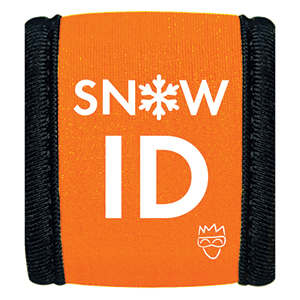
Small brightly-colored goggle strap wrap from Goggle Graffiti allows you to spot your child easily, and it contains emergency information.
Goggle Graffiti has a neat idea. They’ve created interesting little wraps for goggle straps. They have cute sayings, etc.. However, the neat one from my perspective is the Snow ID.
It is bright orange and comes with a sharpie. You open it up, and you can write important contact information on the inside. Your kid gets lost you can help people find your child by telling them about the bright orange wrap on their goggle strap.
If your child is found, they can unwrap the strap off the goggles and contact information on the inside.
If you are running a ski school, this is a great benefit you can add to the lesson. Although 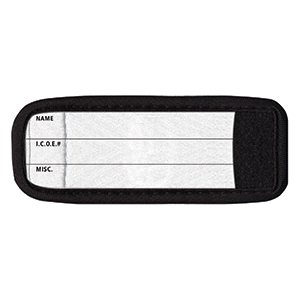 it may make identifying your students after a class more difficult because everyone is now from the wearing one, you can sell the idea to parents. While your child is with us, you know your contact info is with your child. After the lesson is over, you keep the Snow Id.
Besides balloons deflate.
What do you think? Leave a comment.
If you like this let your friends know or post it on FB, Twitter or LinkedIn
Copyright 2013 Recreation Law (720) Edit Law
Email: Rec-law@recreation-law.com
Google+: +Recreation
Twitter: RecreationLaw
Facebook: Rec.Law.Now
Facebook Page: Outdoor Recreation & Adventure Travel Law
Mobile Site: http://m.recreation-law.com
By Recreation Law Rec-law@recreation-law.com James H. Moss #Authorrank
<rel=”author” link=” https://plus.google.com/u/0/b/112453188060350225356/” />
#RecreationLaw, #Recreation-Law.com, #OutdoorLaw, #OutdoorRecreationLaw, #AdventureTravelLaw, #law, #TravelLaw, #JimMoss, #JamesHMoss, #Tourism, #AdventureTourism, #Rec-Law, #RiskManagement, #CyclingLaw, #BicyclingLaw, #FitnessLaw, #Recreation-Law.com, #Backpacking, #Hiking, #Mountaineering, #IceClimbing, #RockClimbing, #RopesCourse, #ChallengeCourse, #SummerCamp, #Camps, #YouthCamps, #Skiing, #Ski Areas, #Negligence, #Snowboarding, #RecreationLaw, #@RecreationLaw, #Cycling.Law, #SkiLaw, #Outside.Law, #Recreation.Law, #RecreationLaw.com, #OutdoorLaw, #RecreationLaw, #OutdoorRecreationLaw, #AdventureTravelLaw, #Law, #TravelLaw, #JimMoss, #JamesHMoss, #AttorneyatLaw, #Tourism, #AdventureTourism, #RecLaw, #RecLawBlog, #RecreationLawBlog, #RiskManagement, #HumanPowered, #HumanPoweredRecreation,# CyclingLaw, #BicyclingLaw, #FitnessLaw, #RecreationLaw.com, #Backpacking, #Hiking, #Mountaineering, #IceClimbing, #RockClimbing, #RopesCourse, #ChallengeCourse, #SummerCamp, #Camps, #YouthCamps, #Skiing, #Ski Areas, #Negligence, #Snowboarding, sport and recreation laws, ski law, cycling law, Colorado law, law for recreation and sport managers, bicycling and the law, cycling and the law, ski helmet law, skiers code, skiing accidents, Recreation Lawyer, Ski Lawyer, Paddlesports Lawyer, Cycling Lawyer, Recreational Lawyer, Fitness Lawyer, Rec Lawyer, Challenge Course Lawyer, Ropes Course Lawyer, Zip Line Lawyer, Rock Climbing Lawyer, Adventure Travel Lawyer, Outside Lawyer, Recreation Lawyer, Ski Lawyer, Paddlesports Lawyer, Cycling Lawyer, #RecreationalLawyer, #FitnessLawyer, #RecLawyer, #ChallengeCourseLawyer, #RopesCourseLawyer, #ZipLineLawyer, #RockClimbingLawyer, #AdventureTravelLawyer, #OutsideLawyer, Good Samaritan, Samaritan, First Aid, Goggle Graffiti, Snow ID, ski school, kid ID, ID, Identification,
WordPress Tags: Idea,Besides,purpose,Goggle,Graffiti,Small,information,sayings,perspective,lesson,Although,students,parents,info,Leave,Twitter,LinkedIn,Recreation,Edit,Email,Google,RecreationLaw,Facebook,Page,Outdoor,Adventure,Travel,Blog,Mobile,Site,James,Moss,Authorrank,author,OutdoorLaw,OutdoorRecreationLaw,AdventureTravelLaw,TravelLaw,JimMoss,JamesHMoss,Tourism,AdventureTourism,RiskManagement,CyclingLaw,BicyclingLaw,FitnessLaw,RopesCourse,ChallengeCourse,SummerCamp,Camps,YouthCamps,Areas,Negligence,SkiLaw,Outside,AttorneyatLaw,RecLaw,RecLawBlog,RecreationLawBlog,HumanPoweredRecreation,Colorado,managers,helmet,accidents,Lawyer,Paddlesports,Recreational,Challenge,Course,Ropes,Line,Rock,RecreationalLawyer,FitnessLawyer,RecLawyer,ChallengeCourseLawyer,RopesCourseLawyer,ZipLineLawyer,RockClimbingLawyer,AdventureTravelLawyer,OutsideLawyer,Samaritan,Identification
Canadian judge holds “ski buddy” not liable for death of skier. Buddies assigned by guide in Helicopter on way out does not create a contract
Posted: February 3, 2014 Filed under: Skiing / Snow Boarding | Tags: BC, British Columbia, Canada, Duty of care, Heli Ski, Revelstoke, Ski, Ski Buddy, Ski Resort, Tree Well, Wiegele Helicopter Skiing 5 CommentsThe court found there was no contract between ski buddies, and the defendant skier met his duties to the deceased skier. A tree well is a risk of skiing, and no other skier could have done more than alert the guides when a skier was missing.
The deceased died in a tree well on a helicopter ski trip in Canada. His widow sued his ski buddy for his death claiming he was a“… contractually obligated to stay close to her husband, keep him in sight, and assist or alert guides and other skiers if he observed his buddy in need of assistance.”
The entire concept of a ski buddy is fraught with spatial issues. Rarely do people ski side by side. If you are skiing side by side, both skiers can only occasionally glance downhill. Here, the facts and allegations of the plaintiff argue that the defendant should have skied behind the deceased to keep an eye on him. Would that have not placed the deceased in the same liability position with the defendant?
How do you ski through deep powder and trees and keep an eye on someone’s 100% of the time. Even if you do, how do two people do this for each other? It is physically impossible.
The next issue is normally one guide skis in front of the group and the second guide skis at the rear. No matter what, the time it would take to notify any guide either by waiting and hoping the second guide finds you or by skiing to the bottom guide, which did occur, is lengthy. The heli-ski operator told skiers to stop and yell if they got into trouble?
The most telling part of this article is the deceased was a successful personal injury attorney.
You can find the judge’s ruling dismissing the case here. The facts of the case as set out in the judge’s ruling led to the idea that there was no requirement to ski with a buddy at the time of the fatality. The buddy requirement ended when the group exited from the forest into a logged area. Everyone descended together at that point, and generally, no one tracks anyone else.
This is a Canadian legal decision and the decision, although well written was confusing because Canadian law is different from US law. My analysis may be incorrect in all aspects of the court’s decision. As an example, here is the court’s definition of standard of care in negligence.
Conduct is negligent if it creates an objectively unreasonable risk of harm. To avoid liability, a person must exercise the standard of care that would be expected of an ordinary, reasonable and prudent person in the same circumstances.
Rarely, in US law, is the phrase unreasonable risk of harm used to define negligence.
The court’s statement of the facts also shows a surprisingly quick search and location of the deceased. It took only 4 minutes, based on the radio log between when the search started and when the deceased was found.
The plaintiff argued that the defendant ski buddy owed a duty of care to the deceased by voluntarily taking on the responsibility to look out for the deceased. In order for a claim to be made under Canadian law, the person agreeing to accept the volunteer liability must have some control over the risks. Here the defendant had no control over the risks. Nor was there any evidence that the acceptance of the voluntary role of ski buddy was relied upon by the deceased.
The relationship created between ski buddies did not create a relationship where the volunteer assumed the responsibility over the deceased. Instead, the relationship between the parties was defined by the guides who created the relationship. That meant they ski buddies were to keep each other in visual and vocal contact in the forest and as outlined in a video everyone watched before skiing. The issue of the location of the responsibility, the forest was important. The parties had exited the forest into a logged area where it was generally understood the ski buddy relationship ended.
The ski buddies never spoke to each other so there was no understanding of their roles so no greater requirements were created between the ski buddies. The term ski buddy, as defined by the judge did not create a duty; in fact, the court found a ski buddy is to respect the autonomy of the other ski buddy. Meaning a ski buddy relationship does not mean you give up your skiing to watch the other, you still should enjoy your runs.
Besides the judge’s decision that the timeframe between when the deceased was discovered to not be with the group and when the guides were notified of the fact to not be negligent, the sole issue was contract.
The judge’s conclusions were as followed.
If there was a duty of care between the plaintiff and defendant as a ski buddy, then the defendant met it with his actions.
There was no contract between the parties. There was no contract or contract intention. Even if there was a contract, it ended once the parties exited the forest into the logged area where the accident occurred.
So?
The decision is not as definitive as one would have liked. The decision can also be appealed. However, it is still a great decision for skiers.
The saddest part is the heli-ski guide service created liability, which resulted in this lawsuit against one of its clients. By writing its release so that it not only protected the heli-ski operations but everyone else this would have been avoided.
Here are the articles I based this article on: ‘Ski buddy’ not liable for heli-ski death, court rules and Judge rules “ski buddy” not liable for death. The article describing the suit before the judge’s ruling is ‘Ski buddy’ sued in heli-ski death
What do you think? Leave a comment.
If you like this let your friends know or post it on FB, Twitter or LinkedIn
Copyright 2013 Recreation Law (720) Edit Law
Email: Rec-law@recreation-law.com
Google+: +Recreation
Twitter: RecreationLaw
Facebook: Rec.Law.Now
Facebook Page: Outdoor Recreation & Adventure Travel Law
Mobile Site: http://m.recreation-law.com
By Recreation Law Rec-law@recreation-law.com James H. Moss #Authorrank
<rel=”author” link=” https://plus.google.com/u/0/b/112453188060350225356/” />
#RecreationLaw, #Recreation-Law.com, #OutdoorLaw, #OutdoorRecreationLaw, #AdventureTravelLaw, #law, #TravelLaw, #JimMoss, #JamesHMoss, #Tourism, #AdventureTourism, #Rec-Law, #RiskManagement, #CyclingLaw, #BicyclingLaw, #FitnessLaw, #Recreation-Law.com, #Backpacking, #Hiking, #Mountaineering, #IceClimbing, #RockClimbing, #RopesCourse, #ChallengeCourse, #SummerCamp, #Camps, #YouthCamps, #Skiing, #Ski Areas, #Negligence, #Snowboarding, #RecreationLaw, #@RecreationLaw, #Cycling.Law, #SkiLaw, #Outside.Law, #Recreation.Law, #RecreationLaw.com, #OutdoorLaw, #RecreationLaw, #OutdoorRecreationLaw, #AdventureTravelLaw, #Law, #TravelLaw, #JimMoss, #JamesHMoss, #AttorneyatLaw, #Tourism, #AdventureTourism, #RecLaw, #RecLawBlog, #RecreationLawBlog, #RiskManagement, #HumanPowered, #HumanPoweredRecreation,# CyclingLaw, #BicyclingLaw, #FitnessLaw, #RecreationLaw.com, #Backpacking, #Hiking, #Mountaineering, #IceClimbing, #RockClimbing, #RopesCourse, #ChallengeCourse, #SummerCamp, #Camps, #YouthCamps, #Skiing, #Ski Areas, #Negligence, #Snowboarding, sport and recreation laws, ski law, cycling law, Colorado law, law for recreation and sport managers, bicycling and the law, cycling and the law, ski helmet law, skiers code, skiing accidents, Recreation Lawyer, Ski Lawyer, Paddlesports Lawyer, Cycling Lawyer, Recreational Lawyer, Fitness Lawyer, Rec Lawyer, Challenge Course Lawyer, Ropes Course Lawyer, Zip Line Lawyer, Rock Climbing Lawyer, Adventure Travel Lawyer, Outside Lawyer, Recreation Lawyer, Ski Lawyer, Paddlesports Lawyer, Cycling Lawyer, #RecreationalLawyer, #FitnessLawyer, #RecLawyer, #ChallengeCourseLawyer, #RopesCourseLawyer, #ZipLineLawyer, #RockClimbingLawyer, #AdventureTravelLawyer, #OutsideLawyer, Good Samaritan, Samaritan, First Aid, Wiegele Helicopter Skiing, Canada, Heli-Ski, Tree Well, Ski Buddy, Revelstoke, BC,
WordPress Tags: Canadian,buddy,death,Buddies,Heli,defendant,duties,tree,helicopter,Canada,husband,assistance,concept,Here,allegations,plaintiff,trees,operator,article,injury,attorney,requirement,area,decision,analysis,aspects,example,definition,negligence,Conduct,person,statement,location,radio,acceptance,role,relationship,Instead,roles,requirements,fact,autonomy,Besides,conclusions,intention,accident,lawsuit,clients,Judge,Leave,Twitter,LinkedIn,Recreation,Edit,Email,Google,RecreationLaw,Facebook,Page,Outdoor,Adventure,Travel,Blog,Mobile,Site,James,Moss,Authorrank,author,OutdoorLaw,OutdoorRecreationLaw,AdventureTravelLaw,TravelLaw,JimMoss,JamesHMoss,Tourism,AdventureTourism,RiskManagement,CyclingLaw,BicyclingLaw,FitnessLaw,RopesCourse,ChallengeCourse,SummerCamp,Camps,YouthCamps,Areas,SkiLaw,Outside,AttorneyatLaw,RecLaw,RecLawBlog,RecreationLawBlog,HumanPoweredRecreation,Colorado,managers,helmet,accidents,Lawyer,Paddlesports,Recreational,Challenge,Course,Ropes,Line,Rock,RecreationalLawyer,FitnessLawyer,RecLawyer,ChallengeCourseLawyer,RopesCourseLawyer,ZipLineLawyer,RockClimbingLawyer,AdventureTravelLawyer,OutsideLawyer,Samaritan,Wiegele,skier,skiers,skis
River Management Society 2014 Conference: Managing Rivers in Changing Climes: Training Future River Professionals
Posted: February 1, 2014 Filed under: Rivers and Waterways | Tags: ASFPM, Association of Flooplain Managers, CLE, FERC, Floodplain Management, River Management Society, RMS Leave a comment
The Conference includes several opportunities for great training, April 14-18, 2014, Denver, Colorado
Registration is open. Visit the registration site for details, prices and more
Join us at the 12th biennial River Management Society week of training for agency managers, planners, watershed and watertrails practitioners, where you can update skills, planning tools and best practices to your desk or field-based job. This is an invaluable networking opportunity for those who study, teach and practice river skills and policy for agencies, non-profit organizations and private industry. PLUS: This year we offer a standalone Continuing Legal Education workshop, a one day seminar approved by the Association of Floodplain Managers, and a multi-day workshop taught by the Federal Energy Regulatory Commission (FERC) regarding FERC Form 80
Posters are still being accepted: you are cordially invited to submit an abstract here. See below for poster submission information.
Scholarships are available to members (for a year or more) in good standing. Apply here!
Click here for more information
Training Packages
One Day Trainings (Stand alone)
Legal Continuing legal education conference* presented by CLE International
Floodplain Management Seminar approved by the Association of State Floodplain Managers (ASFPM)**
Full RMS Event: April 15-17, 2014
Full RMS Event plus FERC Form 80 Training***: April 15-18, 2014
FERC Form 80 Training, standalone: April 16-18, 2014
*CLE International is pleased to offer a one-day stand-alone educational conference. Join us on Monday, April 14 for a full day of in-depth analysis of legal issues that are most important to professionals tasked with protecting and managing our nation’s rivers. Attendees will receive up to seven hours of continuing education credits while learning from leading experts. Tuition discounts available for RMS members, government and 501(c)(3) employees, and groups of two or more from the same organization. For program, pricing and registration, visit http://www.cle.com/RMS beginning January 3, 2014.
** This one day standalone training will feature five courses approved by the Association of Flooplain Managers (ASFPM) and approved for ten (10) CECs. Register for this standalone course on the RMS event site, to open by December 18, 2013.
*** This workshop entitled Getting the Most out of the Form 80: Tips for Quantifying Recreation Use & Gathering Better Data will be taught by Federal Energy Regulatory Commission staff and can be attended as a stand-alone workshop or as part of the full RMS training event. Registration for this workshop is on the RMS training event site, to open by December 18, 2013.

What do you think? Leave a comment.
If you like this let your friends know or post it on FB, Twitter or LinkedIn
Copyright 2013 Recreation Law (720) Edit Law
Email: Rec-law@recreation-law.com
Google+: +Recreation
Twitter: RecreationLaw
Facebook: Rec.Law.Now
Facebook Page: Outdoor Recreation & Adventure Travel Law
Mobile Site: http://m.recreation-law.com
By Recreation Law Rec-law@recreation-law.com James H. Moss #Authorrank
<rel=”author” link=” https://plus.google.com/u/0/b/112453188060350225356/” />
#RecreationLaw, #Recreation-Law.com, #OutdoorLaw, #OutdoorRecreationLaw, #AdventureTravelLaw, #law, #TravelLaw, #JimMoss, #JamesHMoss, #Tourism, #AdventureTourism, #Rec-Law, #RiskManagement, #CyclingLaw, #BicyclingLaw, #FitnessLaw, #Recreation-Law.com, #Backpacking, #Hiking, #Mountaineering, #IceClimbing, #RockClimbing, #RopesCourse, #ChallengeCourse, #SummerCamp, #Camps, #YouthCamps, #Skiing, #Ski Areas, #Negligence, #Snowboarding, #RecreationLaw, #@RecreationLaw, #Cycling.Law, #SkiLaw, #Outside.Law, #Recreation.Law, #RecreationLaw.com, #OutdoorLaw, #RecreationLaw, #OutdoorRecreationLaw, #AdventureTravelLaw, #Law, #TravelLaw, #JimMoss, #JamesHMoss, #AttorneyatLaw, #Tourism, #AdventureTourism, #RecLaw, #RecLawBlog, #RecreationLawBlog, #RiskManagement, #HumanPowered, #HumanPoweredRecreation,# CyclingLaw, #BicyclingLaw, #FitnessLaw, #RecreationLaw.com, #Backpacking, #Hiking, #Mountaineering, #IceClimbing, #RockClimbing, #RopesCourse, #ChallengeCourse, #SummerCamp, #Camps, #YouthCamps, #Skiing, #Ski Areas, #Negligence, #Snowboarding, sport and recreation laws, ski law, cycling law, Colorado law, law for recreation and sport managers, bicycling and the law, cycling and the law, ski helmet law, skiers code, skiing accidents, Recreation Lawyer, Ski Lawyer, Paddlesports Lawyer, Cycling Lawyer, Recreational Lawyer, Fitness Lawyer, Rec Lawyer, Challenge Course Lawyer, Ropes Course Lawyer, Zip Line Lawyer, Rock Climbing Lawyer, Adventure Travel Lawyer, Outside Lawyer, Recreation Lawyer, Ski Lawyer, Paddlesports Lawyer, Cycling Lawyer, #RecreationalLawyer, #FitnessLawyer, #RecLawyer, #ChallengeCourseLawyer, #RopesCourseLawyer, #ZipLineLawyer, #RockClimbingLawyer, #AdventureTravelLawyer, #OutsideLawyer, Good Samaritan, Samaritan, First Aid, RMS, River Management Society, CLE, FERC, Floodplain Management, Association of Flooplain Managers, ASFPM,
WordPress Tags: River,Management,Conference,Rivers,Climes,Future,Professionals,opportunities,April,Denver,Colorado,Registration,Visit,Join,agency,managers,planners,practitioners,skills,tools,desk,policy,agencies,industry,PLUS,Legal,Education,workshop,seminar,Association,Floodplain,Federal,Energy,Regulatory,Commission,FERC,Form,Posters,poster,submission,information,Scholarships,Click,Packages,Trainings,Stand,International,State,ASFPM,Full,Event,depth,analysis,nation,Attendees,hours,experts,Tuition,government,employees,January,Flooplain,CECs,Register,December,Most,Tips,Recreation,Better,Data,Leave,Twitter,LinkedIn,Edit,Email,Google,RecreationLaw,Facebook,Page,Outdoor,Adventure,Travel,Blog,Mobile,Site,James,Moss,Authorrank,author,OutdoorLaw,OutdoorRecreationLaw,AdventureTravelLaw,TravelLaw,JimMoss,JamesHMoss,Tourism,AdventureTourism,RiskManagement,CyclingLaw,BicyclingLaw,FitnessLaw,RopesCourse,ChallengeCourse,SummerCamp,Camps,YouthCamps,Areas,Negligence,SkiLaw,Outside,AttorneyatLaw,RecLaw,RecLawBlog,RecreationLawBlog,HumanPoweredRecreation,helmet,accidents,Lawyer,Paddlesports,Recreational,Challenge,Course,Ropes,Line,Rock,RecreationalLawyer,FitnessLawyer,RecLawyer,ChallengeCourseLawyer,RopesCourseLawyer,ZipLineLawyer,RockClimbingLawyer,AdventureTravelLawyer,OutsideLawyer,Samaritan
American Alpine Club Annual Dinner is in Denver: It will be fantastic. See you there
Posted: January 31, 2014 Filed under: Uncategorized | Tags: "sans-serif";color:white'>, "sans-serif";color:white'>Yvon Chouinard, #AAC, <span style='font-size:11.0pt;font-family:"Calibri", <span style='font-size:11.5pt;font-family:"Helvetica", American Alpine Club, Annual Dinner Leave a comment
|
||||||
|

Wow, very amazing and generous. Primal (Denver Bicycle Clothing Company Gave Back More Than One Million Dollars in 2013
Posted: January 31, 2014 Filed under: Cycling | Tags: Bike MS, Clothing, Cycling, Denver, League of American Bicyclists, Primal, Primal Gives Back program, Sea Otter Classic, Trips for Kids Leave a comment
|


Want to work on the river? Enjoy rowing boats and helping the environment? There is a job for you!
Posted: January 30, 2014 Filed under: Rivers and Waterways | Tags: Boatman, Colorado, Colorado Endangered Fish Recovery project, Employment, Fish, Job, Small Craft Operator, United States Fish and Wildlife Service, US Fish & Wildlife Service, Whitewater Rafting Leave a commentColorado Endangered Fish Recovery project

English: Patch showing the logo of the U.S. Fish and Wildlife Service on an USFWS employee’s uniform. (Photo credit: Wikipedia)
It is hard work with long days when on the river. It is for the Colorado Endangered Fish Recovery project and you will see some awesome canyons and learn a lot about the endangered fish. The heart of the program is a shocking operation to check on the progress of the fish. So you have to row the heavy boats down the edge of the river unlike normal river running. So if you know of someone forward this to them. If selected you have to get what is called a DUNS number and go through a complicated process to get paid as the government has changed the way it pays these salaries, but I did it, so with a little patience anyone else can do it.
Small Craft Operator (boatmen) jobs for FWS
Below is a link to the FWS boat operator announcement. We are looking at hiring these positions in Vernal and Grand Junction. The announcement will be open for about 10 days from today. Please forward to anyone you think might be interested.
Thanks,
M. Tildon Jones, U.S. Fish & Wildlife Service, Vernal, UT
435.789.0351 x14
tildon_jones@fws.gov
R6-14-1025704-D
https://www.usajobs.gov/GetJob/ViewDetails/358861200
What do you think? Leave a comment.

Image of a Humpback Chub taken by the United States Fish and Wildlife Service (Photo credit: Wikipedia)
If you like this let your friends know or post it on FB, Twitter or LinkedIn
Copyright 2013 Recreation Law (720) Edit Law
Email: Rec-law@recreation-law.com
Google+: +Recreation
Twitter: RecreationLaw
Facebook: Rec.Law.Now
Facebook Page: Outdoor Recreation & Adventure Travel Law
Mobile Site: http://m.recreation-law.com
By Recreation Law Rec-law@recreation-law.com James H. Moss #Authorrank
<rel=”author” link=” https://plus.google.com/u/0/b/112453188060350225356/” />
#RecreationLaw, #Recreation-Law.com, #OutdoorLaw, #OutdoorRecreationLaw, #AdventureTravelLaw, #law, #TravelLaw, #JimMoss, #JamesHMoss, #Tourism, #AdventureTourism, #Rec-Law, #RiskManagement, #CyclingLaw, #BicyclingLaw, #FitnessLaw, #Recreation-Law.com, #Backpacking, #Hiking, #Mountaineering, #IceClimbing, #RockClimbing, #RopesCourse, #ChallengeCourse, #SummerCamp, #Camps, #YouthCamps, #Skiing, #Ski Areas, #Negligence, #Snowboarding, #RecreationLaw, #@RecreationLaw, #Cycling.Law, #SkiLaw, #Outside.Law, #Recreation.Law, #RecreationLaw.com, #OutdoorLaw, #RecreationLaw, #OutdoorRecreationLaw, #AdventureTravelLaw, #Law, #TravelLaw, #JimMoss, #JamesHMoss, #AttorneyatLaw, #Tourism, #AdventureTourism, #RecLaw, #RecLawBlog, #RecreationLawBlog, #RiskManagement, #HumanPowered, #HumanPoweredRecreation,# CyclingLaw, #BicyclingLaw, #FitnessLaw, #RecreationLaw.com, #Backpacking, #Hiking, #Mountaineering, #IceClimbing, #RockClimbing, #RopesCourse, #ChallengeCourse, #SummerCamp, #Camps, #YouthCamps, #Skiing, #Ski Areas, #Negligence, #Snowboarding, sport and recreation laws, ski law, cycling law, Colorado law, law for recreation and sport managers, bicycling and the law, cycling and the law, ski helmet law, skiers code, skiing accidents, Recreation Lawyer, Ski Lawyer, Paddlesports Lawyer, Cycling Lawyer, Recreational Lawyer, Fitness Lawyer, Rec Lawyer, Challenge Course Lawyer, Ropes Course Lawyer, Zip Line Lawyer, Rock Climbing Lawyer, Adventure Travel Lawyer, Outside Lawyer, Recreation Lawyer, Ski Lawyer, Paddlesports Lawyer, Cycling Lawyer, #RecreationalLawyer, #FitnessLawyer, #RecLawyer, #ChallengeCourseLawyer, #RopesCourseLawyer, #ZipLineLawyer, #RockClimbingLawyer, #AdventureTravelLawyer, #OutsideLawyer, Good Samaritan, Samaritan, First Aid, Whitewater Rafting, Colorado Endangered Fish Recovery project, Boatman, Employment, Job, Small Craft Operator, US Fish & Wildlife Service,
WordPress Tags: Want,river,Enjoy,boats,environment,Colorado,Fish,Recovery,canyons,DUNS,government,salaries,patience,Small,Craft,Operator,jobs,boat,announcement,Vernal,Grand,Junction,Thanks,Tildon,Jones,Wildlife,Service,GetJob,ViewDetails,Leave,Twitter,LinkedIn,Recreation,Edit,Email,Google,RecreationLaw,Facebook,Page,Outdoor,Adventure,Travel,Blog,Mobile,Site,James,Moss,Authorrank,author,OutdoorLaw,OutdoorRecreationLaw,AdventureTravelLaw,TravelLaw,JimMoss,JamesHMoss,Tourism,AdventureTourism,RiskManagement,CyclingLaw,BicyclingLaw,FitnessLaw,RopesCourse,ChallengeCourse,SummerCamp,Camps,YouthCamps,Areas,Negligence,SkiLaw,Outside,AttorneyatLaw,RecLaw,RecLawBlog,RecreationLawBlog,HumanPoweredRecreation,managers,helmet,accidents,Lawyer,Paddlesports,Recreational,Challenge,Course,Ropes,Line,Rock,RecreationalLawyer,FitnessLawyer,RecLawyer,ChallengeCourseLawyer,RopesCourseLawyer,ZipLineLawyer,RockClimbingLawyer,AdventureTravelLawyer,OutsideLawyer,Samaritan,Whitewater,Boatman,Employment
Tunkl v. The Regents of the University of California, 60 Cal. 2d 92; 383 P.2d 441; 32 Cal. Rptr. 33; 1963 Cal. LEXIS 226; 6 A.L.R.3d 693
Posted: January 30, 2014 Filed under: California, Legal Case, Release (pre-injury contract not to sue) | Tags: Los Angeles, Los Angeles County Superior Court, Public Policy, Regent of the University of California, Regents of California, Release, Supreme Court of California, Tunkl, University of California, University of California Los Angeles Leave a commentTunkl v. The Regents of the University of California, 60 Cal. 2d 92; 383 P.2d 441; 32 Cal. Rptr. 33; 1963 Cal. LEXIS 226; 6 A.L.R.3d 693
OLGA TUNKL, as Executrix, etc., Plaintiff and Appellant, v. THE REGENTS OF THE UNIVERSITY OF CALIFORNIA, Defendant and Respondent
L. A. No. 26984
60 Cal. 2d 92; 383 P.2d 441; 32 Cal. Rptr. 33; 1963 Cal. LEXIS 226; 6 A.L.R.3d 693
July 9, 1963
PRIOR HISTORY:
APPEAL from a judgment of the Superior Court of Los Angeles County. Jerold E. Weil, Judge.
Action for personal injuries alleged to have resulted from the negligence of physicians employed by a nonprofit charitable research hospital.
DISPOSITION:
Reversed. Judgment for defendant reversed.
HEADNOTES: CALIFORNIA OFFICIAL REPORTS HEADNOTES
(1) Release–Validity–Agreements Affecting Public Interest. –An attempted exculpatory release provision is invalid as affecting a public interest if it involves a transaction that exhibits some or all of the following characteristics: it concerns a business of a type generally thought suitable for public regulation; the party seeking exculpation is engaged in performing a service of great importance to the public, which is often a matter of practical necessity for some members of the public; the party holds himself out as willing to perform such service for any member of the public who seeks it, or at least for any member coming within certain established standards; as a result of the essential nature of the service, in the economic setting of the transaction, the party invoking exculpation possesses a decisive advantage of bargaining strength against any member of the public who seeks his services; in exercising a superior bargaining power the party confronts the public with a standardized adhesion contract of exculpation, and makes no provision whereby a purchaser may pay additional reasonable fees and obtain protection against negligence; and, as a result of the transaction, the person or property of the purchaser is placed under the control of the seller, subject to the risk of carelessness by the seller or his agents.
(2) Id.–Validity: Hospitals–Liability–Release. –A release from liability for future negligence imposed on a prospective patient as a condition for admission to a charitable research hospital falls within the category of agreements affecting the public interest and the exculpatory provisions included within it are invalid under Civ. Code, § 1668, providing that contracts having for their object, either directly or indirectly, the exemption of anyone from responsibility for his own fraud, or wilful injury to the person or property of another, or violation of law, are against the policy of the law.
(3) Id.–Validity: Hospitals–Liability–Release. –A release from liability for future negligence imposed on a prospective patient as a condition for admission to a charitable research hospital falls within the category of agreements affecting the public interest whether the prospective patient pays or does not pay for the treatment received in the hospital; there is no distinction in the hospital’s duty of care between a paying and a nonpaying patient.
(4) Id.–Validity: Hospitals–Liability–Release. –A charitable research hospital cannot obtain exemption, by means of an exculpatory release agreement imposed on a prospective patient as a condition for admission, from liability for the future negligence of its employees, as distinguished from exemption as to its “own” negligence.
JUDGES:
In Bank. Tobriner, J. Gibson, C. J., Traynor, J., Schauer, J., McComb, J., Peters, J., and Peek, J., concurred.
OPINIONBY:
TOBRINER
OPINION:
[*94][**441][***33] This case concerns the validity of a release from liability for future negligence imposed as a condition for admission to a charitable research hospital. For the reasons we hereinafter specify, we have concluded that an agreement between a hospital [**442][***34] and an entering patient affects the public interest and that, in consequence, the exculpatory provision included within it must be invalid under Civil Code section 1668.
Hugo Tunkl brought this action to recover damages for personal injuries alleged to have resulted from the negligence of two physicians in the employ of the University of California Los Angeles Medical Center, a hospital operated and maintained by the Regents of the University of California as a nonprofit charitable institution. Mr. Tunkl died after suit was brought, and his surviving wife, as executrix, was substituted as plaintiff.
The University of California at Los Angeles Medical Center admitted Tunkl as a patient on June 11, 1956. The Regents maintain the hospital for the primary purpose of aiding and developing a program of research and education in the field of medicine; patients are selected and admitted if the study and treatment of their condition would tend to achieve these purposes. Upon his entry to the hospital, Tunkl signed a document setting forth certain “Conditions of Admission.” The crucial condition number six reads as follows: “Release: The hospital is a nonprofit, charitable institution. In consideration of the hospital and allied services to be rendered and the rates charged therefor, the patient or his legal representative agrees to and hereby releases The Regents of the University of California, and the hospital from any and all liability for the negligent or wrongful acts or omissions of its employees, if the hospital has used due care in selecting its employees.”
Plaintiff stipulated that the hospital had selected its employees with due care. The trial court ordered that the issue of the validity of the exculpatory clause be first submitted to the jury and that, if the jury found that the provision did not bind plaintiff, a second jury try the issue of alleged malpractice. When, on the preliminary issue, the jury returned a verdict sustaining the validity of the executed release, the [*95] court entered judgment in favor of the Regents. n1 Plaintiff appeals from the judgment.
– – – – – – – – – – – – – – Footnotes – – – – – – – – – – – – – – –
n1 Plaintiff at the time of signing the release was in great pain, under sedation, and probably unable to read. At trial plaintiff contended that the release was invalid, asserting that a release does not bind the releasor if at the time of its execution he suffered from so weak a mental condition that he was unable to comprehend the effect of his act ( Perkins v. Sunset Tel. & Tel. Co. (1909) 155 Cal. 712 [103 P. 190]; Raynale v. Yellow Cab Co. (1931) 115 Cal.App. 90 [300 P. 991]; 42 Cal.Jur.2d, Release § 20). The jury, however, found against plaintiff on this issue. Since the verdict of the jury established that plaintiff either knew or should have known the significance of the release, this appeal raises the sole question of whether the release can stand as a matter of law.
– – – – – – – – – – – – End Footnotes- – – – – – – – – – – – – –
We shall first set out the basis for our prime ruling that the exculpatory provision of the hospital’s contract fell under the proscription of Civil Code section 1668; we then dispose of two answering arguments of defendant.
We begin with the dictate of the relevant Civil Code section 1668. The section states: “All contracts which have for their object, directly or indirectly, to exempt anyone from responsibility for his own fraud, or willful injury to the person or property of another, or violation of law, whether willful or negligent, are against the policy of the law.”
The course of section 1668, however, has been a troubled one. Although, as we shall explain, the decisions uniformly uphold its prohibitory impact in one circumstance, the courts’ interpretations of it have been diverse. Some of the cases have applied the statute strictly, invalidating any contract for exemption from liability for negligence. The court in England v. Lyon Fireproof Storage Co. (1928) 94 Cal.App. 562 [271 P. 532], categorically states, “The court correctly instructed the jury that: ‘The defendant cannot limit its liability against its own negligence by contract, and any contract to that effect would be void.'” (P. 575.) (To [**443][***35] the same effect: Union Constr. Co. v. Western Union Tel. Co. (1912) 163 Cal. 298, 314-315 [125 P. 242].) n2 The recent case of Mills v. Ruppert (1959) 167 Cal.App.2d 58, 62-63 [333 P.2d 818], however, apparently limits “[Negligent] . . . violation of law” exclusively to statutory law. n3 Other cases hold that [*96] the statute prohibits the exculpation of gross negligence only; n4 still another case states that the section forbids exemption from active as contrasted with passive negligence. n5
– – – – – – – – – – – – – – Footnotes – – – – – – – – – – – – – – –
n2 Accord, Hiroshima v. Bank of Italy (1926) 78 Cal.App. 362, 377-378 [248 P. 947]; cf. Estate of Garcelon (1894) 104 Cal. 570, 589 [38 P. 414, 43 Am.St.Rep. 134, 32 L.R.A. 595].
n3 To the same effect: Werner v. Knoll (1948) 89 Cal.App.2d 474 [201 P.2d 45]; 15 Cal.L.Rev. 46 (1926). This interpretation was criticized in Barkett v. Brucato (1953) 122 Cal.App.2d 264, 277 [264 P.2d 978], and 1 Witkin, Summary of California Law 228 (7th ed. 1960). The latter states: “Apart from the debatable interpretation of ‘violation of law’ as limited strictly to violation of statutes, the explanation appears to make an unsatisfactory distinction between (1) valid exemptions from liability for injury or death resulting from types of ordinary or gross negligence not expressed in statutes, and (2) invalid exemptions where the negligence consists of violation of one of the many hundreds of statutory provisions setting forth standards of care.”
n4 See Butt v. Bertola (1952) 110 Cal.App.2d 128 [242 P.2d 32]; Ryan Mercantile Co. v. Great Northern Ry. Co. (D. C. Mont. 1960) 186 F.Supp. 660, 667-668. See also Smith, Contractual Controls of Damages in Commercial Transactions, 12 Hastings L.J. 122, 142 (1960), suggesting that section 1668 permits exculpatory clauses for all but intentional wrongs, an interpretation which would render the term “negligent . . . violation of law” totally ineffective.
n5 Barkett v. Brucato (1953) 122 Cal.App.2d 264, 277 [264 P.2d 978].
– – – – – – – – – – – – End Footnotes- – – – – – – – – – – – – –
In one respect, as we have said, the decisions are uniform. The cases have consistently held that the exculpatory provision may stand only if it does not involve “the public interest.” n6 Interestingly enough, this theory found its first expression in a decision which did not expressly refer to section 1668. In Stephens v. Southern Pac. Co. (1895) 109 Cal. 86 [41 P. 783, 50 Am. St. Rep. 17, 29 L.R.A. 751], a railroad company had leased land, which adjoined its depot, to a lessee who had constructed a warehouse upon it. The lessee covenanted that the railroad company would not be responsible for damage from fire “caused from any . . . means.” (P. 87.) This exemption, under the court ruling, applied to the lessee’s damage resulting from the railroad company’s carelessly burning dry grass and rubbish. Declaring the contract not “violative of sound public policy” (p. 89), the court pointed out “. . . As far as this transaction was concerned, the parties when contracting stood upon common ground, and dealt with each other as A and B might deal with each other with reference to any private business undertaking. . . .” (P. 88.) The court concluded “that the interests [*97] of the public in the contract are more sentimental than real” (p. 95; italics added) and that the exculpatory provision was therefore enforceable.
– – – – – – – – – – – – – – Footnotes – – – – – – – – – – – – – – –
n6 The view that the exculpatory contract is valid only if the public interest is not involved represents the majority holding in the United States. Only New Hampshire, in definite opposition to “public interest” test, categorically refuses to enforce exculpatory provisions. The cases are collected in an extensive annotation in 175 A.L.R. 8 (1948). In addition to the California cases cited in the text and note 7 infra, the public interest doctrine is recognized in dictum in Sproul v. Cuddy (1955) 131 Cal.App.2d 85, 95 [280 P.2d 158]; Basin Oil Co. v. Baash-Ross Tool Co. (1954) 125 Cal.App.2d 578, 594 [271 P.2d 122]; Hubbard v. Matson Navigation Co. (1939) 34 Cal.App.2d 475, 477 [93 P.2d 846]. Each of these cases involved exculpatory clauses which were construed by the court as not applicable to the conduct of the defendant in question.
– – – – – – – – – – – – End Footnotes- – – – – – – – – – – – – –
In applying this approach and in manifesting their reaction as to the effect of the exemptive clause upon the public interest, some later courts enforced, and others invalidated [**444][***36] such provisions under section 1668. Thus in Nichols v. Hitchcock Motor Co. (1937) 22 Cal.App.2d 151, 159 [70 P.2d 654], the court enforced an exculpatory clause on the ground that “the public neither had nor could have any interest whatsoever in the subject-matter of the contract, considered either as a whole or as to the incidental covenant in question. The agreement between the parties concerned ‘their private affairs’ only.” n7
– – – – – – – – – – – – – – Footnotes – – – – – – – – – – – – – – –
n7 See also Hischemoeller v. National Ice etc. Storage Co. (1956) 46 Cal.2d 318, 328 [294 P.2d 433] (contract upheld as an “ordinary business transaction between businessmen”); Mills v. Ruppert (1959) 167 Cal.App.2d 58, 62 [333 P.2d 818] (lease held not a matter of public interest); Inglis v. Garland (1936) 19 Cal.App.2d Supp. 767, 773 [64 P.2d 501] (same); cf. Northwestern M.F. Assn. v. Pacific etc. Co. (1921) 187 Cal. 38, 41 [200 P. 934] (exculpatory clause in bailment upheld because of special business situation).
– – – – – – – – – – – – End Footnotes- – – – – – – – – – – – – –
In Barkett v. Brucato (1953) 122 Cal.App.2d 264, 276 [264 P.2d 978], which involved a waiver clause in a private lease, Justice Peters summarizes the previous decisions in this language: “These cases hold that the matter is simply one of interpreting a contract; that both parties are free to contract; that the relationship of landlord and tenant does not affect the public interest; that such a provision affects only the private affairs of the parties. . . .” (Italics added.)
On the other hand, courts struck down exculpatory clauses as contrary to public policy in the case of a contract to transmit a telegraph message ( Union Constr. Co. v. Western Union Tel. Co. (1912) 163 Cal. 298 [125 P. 242]) and in the instance of a contract of bailment ( England v. Lyon Fireproof Storage Co. (1928) 94 Cal.App. 562 [271 P. 532]). In Hiroshima v. Bank of Italy (1926) 78 Cal.App. 362 [248 P. 947], the court invalidated an exemption provision in the form used by a payee in directing a bank to stop payment on a check. The court relied in part upon the fact that “the banking public, as well as the particular individual who may be concerned in the giving of any stop-notice, is interested in seeing that the bank is held accountable for the ordinary and regular performance of its duties and, also, in seeing that direction [*98] in relation to the disposition of funds deposited in [the] bank are not heedlessly, negligently, and carelessly disobeyed and money paid out, contrary to directions given.” (P. 377.) The opinion in Hiroshima was approved and followed in Grisinger v. Golden State Bank (1928) 92 Cal.App. 443 [268 P. 425]. n8
– – – – – – – – – – – – – – Footnotes – – – – – – – – – – – – – – –
n8 Exculpatory clauses were regarded as invalid, although without reference to the public interest doctrine, in Franklin v. Southern Pac. Co. (1928) 203 Cal. 680, 686 [265 P. 936, 59 A.L.R. 118] (common carrier); Dieterle v. Bekin (1904) 143 Cal. 683, 688 [77 P. 664] (bailment); George v. Bekins Van & Storage Co. (1949) 33 Cal.2d 834, 846 [205 P.2d 1037] (bailment, clause upheld as one for declaration of value and not complete exculpation); Hall-Scott Motor Car Co. v. Universal Ins. Co. (9th Cir. 1941) 122 F.2d 531, 533-534 (California law, clause upheld on ground that transaction not a bailment).
– – – – – – – – – – – – End Footnotes- – – – – – – – – – – – – –
If, then, the exculpatory clause which affects the public interest cannot stand, we must ascertain those factors or characteristics which constitute the public interest. The social forces that have led to such characterization are volatile and dynamic. No definition of the concept of public interest can be contained within the four corners of a formula. The concept, always the subject of great debate, has ranged over the whole course of the common law; rather than attempt to prescribe its nature, we can only designate the situations in which it has been applied. We can determine whether the instant contract does or does not manifest the characteristics which have been held to stamp a contract as one affected with a public interest.
(1)In placing particular contracts within or without the category of those affected with a public interest, the courts have revealed a rough outline of that type of transaction in which exculpatory provisions will [**445] [***37] be held invalid. Thus the attempted but invalid exemption involves a transaction which exhibits some or all of the following characteristics. It concerns a business of a type generally thought suitable for public regulation. n9 The party seeking exculpation is engaged [*99] in performing a service of great importance to the public, n10 which is often a matter of practical necessity for some members of the public. n11 The party holds himself out as willing to perform this service for any member of the public who seeks it, or at least for any member coming within certain established standards. n12 As a result of the essential nature [**446][***38] of the [*100] service, in the economic setting of the transaction, the party invoking exculpation possesses a decisive advantage of bargaining strength against any member of the public who seeks his services. n13 In exercising a superior bargaining power the party confronts the public with a standardized adhesion contract of exculpation, n14 and makes no provision whereby a purchaser may pay additional reasonable fees and obtain protection [*101] against negligence. n15 Finally, as a result of the transaction, the person or property of the purchaser is placed under the control of the seller, n16 subject to the risk of carelessness by the seller or his agents.
– – – – – – – – – – – – – – Footnotes – – – – – – – – – – – – – – –
n9 “Though the standard followed does not always clearly appear, a distinction seems to be made between those contracts which modify the responsibilities normally attaching to a relationship which has been regarded in other connections as a fit subject for special regulatory treatment and those which affect a relationship not generally subjected to particularized control.” (11 So.Cal.L.Rev. 296, 297 (1938); see also Note (1948) 175 A.L.R. 8, 38-41.)
In Munn v. Illinois (1877) 94 U.S. 113 [24 L.Ed. 77], the Supreme Court appropriated the common law concept of a business affected with a public interest to serve as the test of the constitutionality of state price fixing laws, a role it retained until Nebbia v. New York (1934) 291 U.S. 502 [54 S.Ct. 505, 78 L.Ed. 940, 89 A.L.R. 1469], and Olsen v. Nebraska (1941) 313 U.S. 236 [61 S.Ct. 862, 85 L.Ed. 1305, 133 A.L.R. 1500]. For discussion of the constitutional use and application of the “public interest” concept, see generally Hall, Concept of Public Business (1940); Hamilton, Affectation with a Public Interest (1930) 39 Yale L.J. 1089.
n10 See New York C. Railroad Co. v. Lockwood (1873) 84 U.S. (17 Wall.) 357, 378-382 [21 L.Ed. 627]; Millers Mut. Fire Ins. Assn. v. Parker (1951) 234 N.C. 20 [65 S.E.2d 341]; Hiroshima v. Bank of Italy (1926) 78 Cal.App. 362, 377 [248 P. 947]; cf. Lombard v. Louisiana (1963) 373 U.S. 267 [83 S.Ct. 1122, 10 L.Ed.2d 338] [Douglas J., concurring] (holding that restaurants cannot discriminate on racial grounds, and noting that “places of public accommodation such as retail stores, restaurants, and the like render a ‘service which has become a public interest’ . . . in the manner of the innkeepers and common carriers of old.”); Charles Wolff Packing Co. v. Court of Industrial Relations (1923) 262 U.S. 522 [43 S.Ct. 630, 67 L.Ed. 1103] (“public interest” as test of constitutionality of price fixing); German Alliance Ins. Co. v. Lewis (1914) 233 U.S. 389 [34 S.Ct. 612, 58 L.Ed. 1011, L.R.A. 1915C 789] (same); Hamilton, Affectation with a Public Interest (1930) 39 Yale L.J. 1089 (same); Arterburn, The Origin and First Test of Public Callings (1927), 75 U.Pa.L.Rev. 411, 428 ( “public interest” as one test of whether business has duty to serve all comers). But see Simmons v. Columbus Venetian Stevens Buildings, Inc. (1958) 20 Ill.App.2d 1, 25-32 [155 N.E.2d 372, 384-387] (apartment leases, in which exculpatory clauses are generally permitted, are in aggregate as important to society as contracts with common carriers).
n11 See Bisso v. Inland Waterways Corp. (1955) 349 U.S. 85, 91 [75 S.Ct. 629, 99 L.Ed. 911] New York C. Railroad Co. v. Lockwood, supra; Fairfax Gas & Supply Co. v. Hadary (4th Cir. 1945) 151 F.2d 939; Millers Mut. Fire Ins. Assn. v. Parker (1951) 234 N.C. 20 [65 S.E.2d 341]; Irish & Swartz Stores v. First Nat. Bank of Eugene (1960) 220 Ore. 362, 375 [349 P.2d 814, 821]; 15 U.Pitt.L.Rev. 493, 499-500 (1954); Note (1948) 175 A.L.R. 8, 16-17; cf. Charles Wolff Packing Co. v. Court of Industrial Relations (1923) 262 U.S. 522 [43 S.Ct. 630, 67 L.Ed. 1103] (constitutional law); Munn v. Illinois (1877) 94 U.S. 113 [24 L.Ed. 77] (same); Hall, Concept of Public Business, p. 94 (1940) (same).
n12 See Burdick, The Origin of the Peculiar Duties of Public Service Companies (1911), 11 Colum.L.Rev. 514, 616, 743; Lombard v. Louisiana, supra, fn. 10. There is a close historical relationship between the duty of common carriers, public warehousemen, innkeepers, etc. to give reasonable service to all persons who apply, and the refusal of courts to permit such businesses to obtain exemption from liability for negligence. See generally Arterburn, supra, fn. 10. This relationship has led occasional courts and writers to assert that exculpatory contracts are invalid only if the seller has a duty of public service. 28 Brooklyn L.Rev. 357, 359 (1962); see Ciofalo v. Vic Tanney Gyms, Inc. (1961) 10 N.Y.2d 294, 220 N.Y.S.2d 962 [177 N.E.2d 925]. A seller under a duty to serve is generally denied exemption from liability for negligence; (however, the converse is not necessarily true) 44 Cal.L.Rev. 120 (1956); cf. Charles Wolff Packing Co. v. Court of Industrial Relations (1923) 262 U.S. 522, 538 [43 S.Ct. 630, 67 L.Ed. 1103, 1109] (absence of duty to serve public does not necessarily exclude business from class of those constitutionally subject to state price regulation under test of Munn v. Illinois); German Alliance Ins. Co. v. Lewis (1914) 233 U.S. 389, 407 [34 S.Ct. 612, 58 L.Ed. 1011, 1020, L.R.A. 1915C 1189] (same). A number of cases have denied enforcement to exculpatory provisions although the seller had no duty to serve. See, e.g., Bisso v. Inland Waterways Corp. (1955) 349 U.S. 85 [75 S.Ct. 629, 99 L.Ed. 911]; Millers Mut. Fire Ins. Assn. v. Parker (1951) 234 N.C. 20 [65 S.E.2d 341]; cases on exculpatory provisions in employment contracts collected in 35 Am.Jur., Master & Servant, § 136.
n13 Prosser, Torts (2d ed. 1955) p. 306: “The courts have refused to uphold such agreements . . . where one party is at such obvious disadvantage in bargaining power that the effect of the contract is to put him at the mercy of the other’s negligence.” Note (1948) 175 A.L.R. 8, 18: “Validity is almost universally denied to contracts exempting from liability for its negligence the party which occupies a superior bargaining position.” Accord: Bisso v. Inland Waterways Corp. (1955) 349 U.S. 85, 91 [75 S.Ct. 629, 99 L.Ed. 911, 918]; Hiroshima v. Bank of Italy (1926) 78 Cal.App. 362, 377 [248 P. 947]; Ciofalo v. Vic Tanney Gyms, Inc. (1961) 13 App.Div.2d 702 [214 N.Y.S.2d 99] (Kleinfeld, J. dissenting); 6 Williston, Contracts (rev. ed. 1938) § 1751C; Note, The Significance of Comparative Bargaining Power in the Law of Exculpation (1937) 37 Colum.L.Rev. 248; 20 Corn. L.Q. 352 (1935); 8 U.Fla.L.Rev. 109, 120-121 (1955); 15 U.Pitt.L.Rev. 493 (1954); 19 So.Cal.L.Rev. 441 (1946); see New York C. Railroad Co. v. Lockwood (1873) 84 U.S. (17 Wall.) 357, 378-382 [21 L.Ed. 627]; Fairfax Gas & Supply Co. v. Hadary (4th Cir. 1945) 151 F.2d 939; Northwestern M.F. Assn. v. Pacific etc. Co. (1921) 187 Cal. 38, 43-44 [200 P. 934]; Inglis v. Garland (1936) 19 Cal.App.2d Supp. 767, 773 [64 P.2d 501]; Jackson v. First Nat. Bank of Lake Forest (1953) 415 Ill. 453, 462-463 [114 N.E.2d 721, 726]; Simmons v. Columbus Venetian Stevens Buildings, Inc. (1958) 20 Ill.App.2d 1, 26-32 [155 N.E.2d 372, 384-387]; Hall v. Sinclair Refining Co. (1955) 242 N.C. 707 [89 S.E.2d 396]; Millers Mut. Fire Ins. Assn. v. Parker (1951) 234 N.C. 20 [65 S.E.2d 341]; Irish & Swartz Stores v. First Nat. Bank of Eugene (1960) 220 Ore. 362, 375 [349 P.2d 814, 821]; 44 Cal.L.Rev. 120 (1956); 4 Mo.L.Rev. 55 (1939).
n14 See Simmons v. Columbus Venetian Stevens Buildings, Inc. (1958) 20 Ill.App.2d 1, 30-33 [155 N.E.2d 372, 386-387]; Irish & Swartz Stores v. First Nat. Bank of Eugene (1960) 220 Ore. 362, 376 [349 P.2d 814, 821]; Note (1948) 175 A.L.R. 8, 15-16, 112.
n15 See 6A Corbin, Contracts (1962) § 1472 at p. 595; Note (1948) 175 A.L.R. 8, 17-18.
n16 See Franklin v. Southern Pac. Co. (1928) 203 Cal. 680, 689-690 [265 P. 936, 59 A.L.R. 118]; Stephens v. Southern Pac. Co. (1895) 109 Cal. 86, 90-91 [41 P. 783, 50 Am.St.Rep. 17, 29 L.R.A. 751]; Irish & Swartz Stores v. First Nat. Bank of Eugene (1960) 220 Ore. 362, 377 [349 P.2d 814, 822]; 44 Cal.L.Rev. 120, 128 (1956); 20 Corn.L.Q. 352, 358 (1935).
– – – – – – – – – – – – End Footnotes- – – – – – – – – – – – – –
While obviously no public policy opposes private, voluntary transactions in which one party, for a consideration, agrees to shoulder a risk which the law would otherwise have placed upon the other party, the above circumstances pose a different situation. In this situation the releasing party does not really acquiesce voluntarily in the contractual shifting of the risk, nor can we be reasonably certain that he receives an adequate consideration for the transfer. Since the service is one which each [**447][***39] member of the public, presently or potentially, may find essential to him, he faces, despite his economic inability to do so, the prospect of a compulsory assumption of the risk of another’s negligence. The public policy of this state has been, in substance, to posit the risk of negligence upon the actor; in instances in which this policy has been abandoned, it has generally been to allow or require that the risk shift to another party better or equally able to bear it, not to shift the risk to the weak bargainer.
(2)In the light of the decisions, we think that the hospital-patient contract clearly falls within the category of agreements affecting the public interest. To meet that test, the agreement need only fulfill some of the characteristics above outlined; here, the relationship fulfills all of them. Thus the contract of exculpation involves an institution suitable for, and a subject of, public regulation. (See Health & Saf. Code, §§ 1400- 1421, 32000- 32508.) n17 That the services of the hospital to those members of the public who are in special need of the particular skill of its staff and facilities constitute a practical and crucial necessity is hardly open to question.
– – – – – – – – – – – – – – Footnotes – – – – – – – – – – – – – – –
n17 “[Providing] hospital facilities to those legally entitled thereto is a proper exercise of the police power of the county . . . as it tends to promote the public health and general welfare of the citizens of the county.” ( Goodall v. Brite (1936) 11 Cal.App.2d 540, 548 [54 P.2d 510]; see Jardine v. City of Pasadena (1926) 199 Cal. 64 [248 P. 225, 48 A.L.R. 509].)
– – – – – – – – – – – – End Footnotes- – – – – – – – – – – – – –
[*102] The hospital, likewise, holds itself out as willing to perform its services for those members of the public who qualify for its research and training facilities. While it is true that the hospital is selective as to the patients it will accept, such selectivity does not negate its public aspect or the public interest in it. The hospital is selective only in the sense that it accepts from the public at large certain types of cases which qualify for the research and training in which it specializes. But the hospital does hold itself out to the public as an institution which performs such services for those members of the public who can qualify for them. n18
– – – – – – – – – – – – – – Footnotes – – – – – – – – – – – – – – –
n18 See Wilmington General Hospital v. Manlove (1961) 53 Del. 338 [174 A.2d 135]; holding that a private hospital which holds itself out as rendering emergency service cannot refuse to admit a patient in an emergency, and comment on the above case in 14 Stan.L.Rev. 910 (1962).
– – – – – – – – – – – – End Footnotes- – – – – – – – – – – – – –
In insisting that the patient accept the provision of waiver in the contract, the hospital certainly exercises a decisive advantage in bargaining. The would-be patient is in no position to reject the proffered agreement, to bargain with the hospital, or in lieu of agreement to find another hospital. The admission room of a hospital contains no bargaining table where, as in a private business transaction, the parties can debate the terms of their contract. As a result, we cannot but conclude that the instant agreement manifested the characteristics of the so-called adhesion contract. Finally, when the patient signed the contract, he completely placed himself in the control of the hospital; he subjected himself to the risk of its carelessness.
In brief, the patient here sought the services which the hospital offered to a selective portion of the public; the patient, as the price of admission and as a result of his inferior bargaining position, accepted a clause in a contract of adhesion waiving the hospital’s negligence; the patient thereby subjected himself to control of the hospital and the possible infliction of the negligence which he had thus been compelled to waive. The hospital, under such circumstances, occupied a status different than a mere private party; its contract with the patient affected the public interest. We see no cogent current reason for according to the patron of the inn a greater protection than the patient of the hospital; we cannot hold the innkeeper’s performance affords a greater public service than that of the hospital.
[**448][***40] We turn to a consideration of the two arguments urged by [*103] defendant to save the exemptive clause. Defendant first contends that while the public interest may possibly invalidate the exculpatory provision as to the paying patient, it certainly cannot do so as to the charitable one. Defendant secondly argues that even if the hospital cannot obtain exemption as to its “own” negligence it should be in a position to do so as to that of its employees. We have found neither proposition persuasive.
(3)As to the first, we see no distinction in the hospital’s duty of due care between the paying and nonpaying patient. (But see Rest., Contracts, § 575(1)(b).) The duty, emanating not merely from contract but also tort, imports no discrimination based upon economic status. (See Malloy v. Fong (1951) 37 Cal.2d 356, 366 [232 P.2d 241]; Rest., Torts, §§ 323-324.) Rejecting a proposed differentiation between paying and nonpaying patients, we refused in Malloy to retain charitable immunity for charitable patients. Quoting Rutledge, J. in President & Directors of Georgetown College v. Hughes (1942) 130 F.2d 810, 827, we said: “Retention [of charitable immunity] for the nonpaying patient is the least defensible and most unfortunate of the distinction’s refinements. He, least of all, is able to bear the burden. More than all others, he has no choice. . . . He should be the first to have reparation, not last and least among those who receive it.” (P. 365.) To immunize the hospital from negligence as to the charitable patient because he does not pay would be as abhorrent to medical ethics as it is to legal principle.
(4)Defendant’s second attempted distinction, the differentiation between its own and vicarious liability, strikes a similar discordant note. In form defendant is a corporation. In everything it does, including the selection of its employees, it necessarily acts through agents. A legion of decisions involving contracts between common carriers and their customers, public utilities and their customers, bailees and bailors, and the like, have drawn no distinction between the corporation’s “own” liability and vicarious liability resulting from negligence of agents. We see no reason to initiate so far-reaching a distinction now. If, as defendant argues, a right of action against the negligent agent is in fact a sufficient remedy, then defendant by paying a judgment against it may be subrogated to the right of the patient against the negligent agent, and thus may exercise that remedy.
[*104] In substance defendant here asks us to modify our decision in Malloy , which removed the charitable immunity; defendant urges that otherwise the funds of the research hospital may be deflected from the real objective of the extension of medical knowledge to the payment of claims for alleged negligence. Since a research hospital necessarily entails surgery and treatment in which fixed standards of care may not yet be evolved, defendant says the hospital should in this situation be excused from such care. But the answer lies in the fact that possible plaintiffs must prove negligence; the standards of care will themselves reflect the research nature of the treatment; the hospital will not become an insurer or guarantor of the patient’s recovery. To exempt the hospital completely from any standard of due care is to grant it immunity by the side-door method of a contractual clause exacted of the patient. We cannot reconcile that technique with the teaching of Malloy.
We must note, finally, that the integrated and specialized society of today, structured upon mutual dependency, cannot rigidly narrow the concept of the public interest. From the observance of simple standards of due care in the driving of a car to the performance of the high standards of hospital practice, the individual citizen must be completely dependent upon the responsibility of others. The fabric of this pattern is so closely woven that the snarling of a single thread affects the whole. We cannot lightly accept a sought immunity from careless failure to provide the hospital service upon which many must depend. Even if the [**449][***41] hospital’s doors are open only to those in a specialized category, the hospital cannot claim isolated immunity in the interdependent community of our time. It, too, is part of the social fabric, and prearranged exculpation from its negligence must partly rend the pattern and necessarily affect the public interest.
The judgment is reversed.
WordPress Tags: Tunkl,Regents,California,Rptr,LEXIS,OLGA,Executrix,Plaintiff,Appellant,Defendant,Respondent,Supreme,Court,PRIOR,HISTORY,APPEAL,judgment,Superior,Angeles,Jerold,Weil,Judge,Action,injuries,negligence,physicians,hospital,DISPOSITION,HEADNOTES,OFFICIAL,REPORTS,Release,Agreements,Public,Interest,provision,transaction,characteristics,regulation,exculpation,importance,member,advantage,strength,adhesion,purchaser,protection,person,seller,agents,Hospitals,admission,category,Code,exemption,fraud,injury,violation,policy,treatment,distinction,agreement,employees,JUDGES,Bank,Tobriner,Gibson,Traynor,Schauer,McComb,Peters,Peek,OPINIONBY,OPINION,consequence,Civil,Hugo,Medical,Center,institution,wife,June,purpose,education,medicine,purposes,Upon,Conditions,omissions,clause,jury,malpractice,verdict,Footnotes,sedation,execution,Perkins,Sunset,Raynale,significance,basis,proscription,arguments,Although,decisions,impact,circumstance,interpretations,Some,statute,England,Lyon,Fireproof,Storage,Union,Constr,Western,Mills,Ruppert,Negligent,Accord,Hiroshima,Estate,Garcelon,Werner,Knoll,interpretation,Barkett,Brucato,Witkin,Summary,Apart,statutes,explanation,exemptions,death,Butt,Bertola,Ryan,Mercantile,Great,Northern,Mont,Supp,Smith,Contractual,Controls,Damages,Commercial,Transactions,Hastings,clauses,theory,decision,Stephens,Southern,depot,lessee,warehouse,reference,States,Hampshire,opposition,annotation,addition,text,doctrine,dictum,Sproul,Cuddy,Basin,Baash,Ross,Tool,Hubbard,Matson,Navigation,reaction,Thus,Nichols,Hitchcock,Motor,covenant,affairs,Hischemoeller,National,businessmen,Inglis,Garland,Northwestern,Assn,Pacific,situation,waiver,Justice,relationship,landlord,tenant,Italics,message,instance,payee,payment,fact,performance,duties,direction,relation,money,Grisinger,Golden,State,Exculpatory,Franklin,carrier,Dieterle,Bekin,George,Bekins,declaration,Hall,Scott,Universal,factors,characterization,definition,concept,formula,situations,Though,Note,Munn,Illinois,laws,role,Nebbia,York,Olsen,Nebraska,discussion,Hamilton,Affectation,Yale,Railroad,Lockwood,Wall,Millers,Fire,Parker,Lombard,Louisiana,Douglas,restaurants,accommodation,manner,innkeepers,carriers,Charles,Wolff,Industrial,Relations,German,Alliance,Lewis,Arterburn,Origin,Test,Callings,Simmons,Columbus,Venetian,Stevens,Buildings,apartment,Bisso,Inland,Waterways,Corp,Fairfax,Hadary,Irish,Swartz,Stores,Eugene,Pitt,Burdick,Peculiar,Service,Companies,Colum,refusal,writers,Brooklyn,Ciofalo,Tanney,Gyms,absence,enforcement,employment,Master,Servant,Prosser,Torts,disadvantage,mercy,Kleinfeld,Williston,Contracts,Comparative,Power,Corn,Jackson,Lake,Forest,Sinclair,Corbin,assumption,substance,actor,instances,Health,skill,facilities,welfare,citizens,Goodall,Brite,Jardine,Pasadena,aspect,Wilmington,General,Manlove,Stan,room,status,patron,innkeeper,proposition,Rest,tort,discrimination,Malloy,Fong,differentiation,Rutledge,President,Directors,Georgetown,College,Hughes,Retention,refinements,reparation,ethics,principle,corporation,selection,legion,customers,utilities,agent,extension,knowledge,surgery,plaintiffs,insurer,guarantor,recovery,door,method,technique,dependency,From,observance,citizen,fabric,failure,doors,himself,whereby,whether,patients,exemptive,neither,supra
2013-2014 In bound ski/board fatalities
Posted: January 29, 2014 Filed under: Ski Area, Skiing / Snow Boarding | Tags: Aspen, Crystal Mountain Resort, fatality, Heavenly Resort, Killington, Mount Charleston, Resort, Ski Apache, ski area, Ski Bluewood, Ski Resort, Skier, skiing, Snowboarder, Sport, Stratton Mountain Resort, Telluride, Whitefish Mountain Resort, Winter Park, Winter sport Leave a commentIt is depressing to start working on this every year. I hope it at some point in time can provide answers rather than news.
This list is not guaranteed to be accurate. The information is found from web searches and news dispatches. Those references are part of the chart. If you have a source for information on any fatality please leave a comment or contact me. Thank you.
If this information is incorrect or incomplete please let me know. This is up to date as of January 13, 2014. Thanks.
Skiing and Snowboarding are still safer than being in your kitchen or bathroom. This information is not to scare you away from skiing but to help you understand the risks.
Are non-skiing/boarding fatalities that occurred inbounds on the slopes
Fatality while sledding at the Resort is in Green
2013 – 2014 Ski Season Fatalities
|
# |
Date |
State |
Resort |
Where |
Trail Difficulty |
How |
Cause |
Ski/ Board |
Age |
Sex |
Home town |
Helmet |
Reference |
|
|
|
1 |
12/11 |
CO |
Telluride |
Pick’N Gad |
|
Left the ski run, struck a tree and suffered fatal injuries |
|
|
60 |
M |
Norwood, CO |
No |
|
||
|
2 |
12/12 |
VT |
Killington |
Great Northern Trail |
|
Found |
|
|
21 |
F |
PA |
No |
|
|
|
|
3 |
12/16 |
WA |
Crystal Mountain Resort |
Tinkerbell |
Beginner |
Lost control and veered off the trail |
Blunt Force Trauma |
|
|
F |
|
Yes |
|
|
|
|
4 |
1/1/14 |
WV |
|
|
|
skiing into a tree |
|
|
|
M |
Opp, AL |
|
|
|
|
|
5 |
12/21 |
CA |
Heavenly Resort |
|
|
colliding with a snowboarder and being knocked into a tree |
|
|
56 |
F |
NV |
No |
|
||
|
6 |
12/19 |
CO |
Winter Park |
Butch’s Breezeway |
Beginner |
|
blunt force injury to the head |
|
19 |
M |
|
Yes |
|
|
|
|
7 |
1/11 |
CO |
Aspen |
Bellisimo |
Inter |
hitting a tree |
|
Ski |
56 |
M |
CO |
Yes |
|
||
|
8 |
1/11 |
MT |
Whitefish Mountain Resort |
Gray Wolf and Bigho |
|
Found in a tree well |
|
Ski |
54 |
M |
CA |
|
|
|
|
|
9 |
1/11 |
VT |
Stratton Mountain Resort |
Lower Tamarac |
|
Sledding |
|
Sledding |
45 |
M |
NJ |
No |
|
||
|
10 |
1/14 |
NV |
Mount Charleston |
|
Terrain Park |
Fall in terrain park |
blunt-force trauma |
Boarder |
20 |
M |
NV |
No |
|
||
|
11 |
1/17 |
VT |
Kilington |
Mouse Trap Trail |
|
striking a tree |
|
Boarder |
23 |
M |
NY |
|
|
||
|
12 |
1/25 |
NM |
Ski Apache |
|
Inter |
struck a tree |
|
Skier |
23 |
F |
TX |
|
|
||
|
13 |
1/25 |
WA |
Ski Bluewood |
Country Road run |
Beginner |
Found at top of trail |
|
Skier |
14 |
M |
WA |
No |
http://rec-law.us/1b4oewr |
|
Our condolences go to the families of the deceased. Our thoughts extend to the families and staff at the areas who have to deal with these tragedies.
What do you think? Leave a comment.
If you like this let your friends know or post it on FB, Twitter or LinkedIn
Copyright 2013 Recreation Law (720) Edit Law
Twitter: RecreationLaw
Facebook: Rec.Law.Now
Facebook Page: Outdoor Recreation & Adventure Travel Law
Mobile Site: http://m.recreation-law.com
#RecreationLaw, #@RecreationLaw, #Cycling.Law #Fitness.Law, #Ski.Law, #Outside.Law, #Recreation.Law, #Recreation-Law.com, #Outdoor Law, #Recreation Law, #Outdoor Recreation Law, #Adventure Travel Law, #law, #Travel Law, #Jim Moss, #James H. Moss, #Attorney at Law, #Tourism, #Adventure Tourism, #Rec-Law, #Rec-Law Blog, #Recreation Law, #Recreation Law Blog, #Risk Management, #Human Powered, #Human Powered Recreation,# Cycling Law, #Bicycling Law, #Fitness Law, #Recreation-Law.com, #Backpacking, #Hiking, #Mountaineering, #Ice Climbing, #Rock Climbing, #Ropes Course, #Challenge Course, #Summer Camp, #Camps, #Youth Camps, #Skiing, #Ski Areas, #Negligence, #Snowboarding, #RecreationLaw, #@RecreationLaw, #Cycling.Law #Fitness.Law, #SkiLaw, #Outside.Law, #Recreation.Law, #RecreationLaw.com, #OutdoorLaw, #RecreationLaw, #OutdoorRecreationLaw, #AdventureTravelLaw, #Law, #TravelLaw, #JimMoss, #JamesHMoss, #AttorneyatLaw, #Tourism, #AdventureTourism, #RecLaw, #RecLawBlog, #RecreationLawBlog, #RiskManagement, #HumanPowered, #HumanPoweredRecreation,# CyclingLaw, #BicyclingLaw, #FitnessLaw, #RecreationLaw.com, #Backpacking, #Hiking, #Mountaineering, #IceClimbing, #RockClimbing, #RopesCourse, #ChallengeCourse, #SummerCamp, #Camps, #YouthCamps, #Skiing, #Ski Areas, #Negligence, #Snowboarding, sport and recreation laws, ski law, cycling law, Colorado law, law for recreation and sport managers, bicycling and the law, cycling and the law, ski helmet law, skiers code, skiing accidents, Recreation Lawyer, Ski Lawyer, Paddlesports Lawyer, Cycling Lawyer, Recreational Lawyer, Fitness Lawyer, Rec Lawyer, Challenge Course Lawyer, Ropes Course Lawyer, Zip Line Lawyer, Rock Climbing Lawyer, Adventure Travel Lawyer, Outside Lawyer, Recreation Lawyer, Ski Lawyer, Paddlesports Lawyer, Cycling Lawyer, #RecreationalLawyer, #FitnessLawyer, #RecLawyer, #ChallengeCourseLawyer, #RopesCourseLawyer, #ZipLineLawyer, #RockClimbingLawyer, #AdventureTravelLawyer, #OutsideLawyer, Skier, Snowboarder, Ski Area, Fatality, Telluride, Killington, Crystal Mountain Resort, Heavenly Resort, Winter Park, Aspen, Whitefish Mountain Resort, Stratton Mountain Resort, Mount Charleston, Killington, Ski Apache, Ski Bluewood,
WordPress Tags: news,information,references,Thank,January,Thanks,kitchen,bathroom,Resort,Season,Fatalities,Date,State,Where,Trail,Cause,Board,Home,Helmet,Reference,Telluride,Pick,Left,tree,injuries,Norwood,Killington,Great,Northern,Found,Crystal,Mountain,Tinkerbell,Beginner,Lost,Blunt,Force,Trauma,Winter,Park,Butch,Breezeway,injury,Aspen,Bellisimo,Inter,Whitefish,Gray,Wolf,Bigho,Stratton,Lower,Tamarac,Mount,Charleston,Terrain,Fall,Boarder,Kilington,Mouse,Trap,Apache,Skier,Bluewood,Country,Road,condolences,families,areas,tragedies,Leave,Twitter,LinkedIn,Recreation,Edit,RecreationLaw,Facebook,Page,Outdoor,Adventure,Travel,Blog,Mobile,Site,Outside,Moss,James,Attorney,Tourism,Risk,Management,Human,Rock,Ropes,Course,Challenge,Summer,Camp,Camps,Youth,Negligence,SkiLaw,OutdoorLaw,OutdoorRecreationLaw,AdventureTravelLaw,TravelLaw,JimMoss,JamesHMoss,AttorneyatLaw,AdventureTourism,RecLaw,RecLawBlog,RecreationLawBlog,RiskManagement,HumanPoweredRecreation,CyclingLaw,BicyclingLaw,FitnessLaw,RopesCourse,ChallengeCourse,SummerCamp,YouthCamps,Colorado,managers,accidents,Lawyer,Paddlesports,Recreational,Line,RecreationalLawyer,FitnessLawyer,RecLawyer,ChallengeCourseLawyer,RopesCourseLawyer,ZipLineLawyer,RockClimbingLawyer,AdventureTravelLawyer,OutsideLawyer,Snowboarder,Area
Vail ideas on staying safe on the slope
Posted: January 28, 2014 Filed under: Youth Camps, Zip Line | Tags: Mountain, Ski, Ski Resort, Sports, winter sports, x, y, z Leave a comment
|
|||||||||||||||||||||||


New Mexico interpretation of the New Mexico Ski Safety Act for injuries a beginner received leaving a ski lesson
Posted: January 27, 2014 Filed under: Assumption of the Risk, New Mexico, Ski Area, Skiing / Snow Boarding | Tags: American Home Assurance Corporation, Assumption of risk, George Philippi, Inc., James Booth, Lawrence Gottschau, New Mexico, New Mexico Ski Safety Act, Olive Bolander, Sipapu, Sipapu Recreation Development Corporation, ski area, ski lesson, Ski Resort, skiing, United States district court 1 CommentI’m not sure why everyone needs to test skier safety acts. Here, the plaintiff admitted he could not ski, left the ski lesson and skied down the hill injuring him. So he sues the ski area?
Philippi v. Sipapu, Inc., 961 F.2d 1492; 1992 U.S. App. LEXIS 6973
Plaintiff: George Philippi
Defendants: Sipapu, Inc., a New Mexico corporation; Sipapu Recreation Development Corporation, a New Mexico corporation; and their employees, Lawrence Gottschau, James Booth, and Olive Bolander; and American Home Assurance Corporation
Plaintiff Claims: negligence and violation of the New Mexico Ski Safety Act
Defendant Defenses: New Mexico Ski Safety Act and statutory assumption of the risk
Holding: for the defendants
This is a pretty simply case. The plaintiff is a body builder. He took a ski lesson from the defendants and was not good at skiing. He was unable to master turning or other maneuvers and fell repeatedly during the lesson. The plaintiff told his instructors to stop the lesson because he was frustrated and tired. Allegedly following the instructor’s suggestions he skied down the hill into a funnel where he fell and was injured his right leg and knee.
The plaintiff sued in Federal District Court, and his claims were dismissed based on a motion for summary judgment. He appealed to the Tenth Circuit Court of Appeals. New Mexico is part of the Tenth Circuit, one of the appellate courts in the federal system based in Colorado. Consequently, this court is familiar with skiing.
Summary of the case
The plaintiff argued two issues on his appeal. First, the lower court misconstrued and misapplied the doctrine of primary assumption of the risk as set forth in the New Mexico Ski Safety Act. His second argument was the act incorporates comparative negligence principles, and thus the act cannot act as a complete bar to his recovery.
The court looked at the first claim and held the New Mexico Ski Safety Act imposes no duty on part of the ski area to protect the plaintiff, a novice skier, from the “inherent perils and obstacles posed by the terrain of a narrow, steep and ungroomed ski slope.”
The New Mexico Ski Safety Act states that a skier “accepts as a matter of law the dangers inherent in that sport insofar as they are obvious and necessary.” The skier assumes the risk of skiing and the legal responsibility of any injury to person or property from skiing. The act then lists the risks the skier assumes, as most acts do.
§ 24-15-10. Duties of the skiers
B. A person who takes part in the sport of skiing accepts as a matter of law the dangers inherent in that sport, insofar as they are obvious and necessary. Each skier expressly assumes the risk of and legal responsibility for any injury to person or property, which results from participation in the sport of skiing, in the skiing area, including any injury caused by the following: variations in terrain; surface or subsurface snow or ice conditions; bare spots; rocks, trees or other forms of forest growth or debris; lift towers and components thereof, pole lines and snow-making equipment which are plainly visible or are plainly marked in accordance with the provisions of Section 24-15-7 NMSA 1978; except for any injuries to persons or property resulting from any breach of duty imposed upon ski area operators under the provisions of Sections 24-15-7 and 24-15-8 NMSA 1978. Therefore, each skier shall have the sole individual responsibility for knowing the range of his own ability to negotiate any slope or trail, and it shall be the duty of each skier to ski within the limits of the skier’s own ability, to maintain reasonable control of speed and course at all times while skiing, to heed all posted warnings, to ski only on a skiing area designated by the ski area operator and to refrain from acting in a manner, which may cause or contribute to the injury of anyone.
The plaintiff argued the risks he encountered were not obvious to him because he was a novice skier.
Philippi’s complaint alleges that the defendants were aware of Philippi’s difficulties in mastering even the simplest skiing maneuvers, the defendants knew of “particular hazards or dangers,” and they knew or should have known that Philippi was likely to injure himself if “allowed to continue” down the slope.
The plaintiff argued the ski area had a duty to warn him of obstacles in the lower portion of the slope. The plaintiff argued the obstacles were not plainly visible to him as a novice skier and created hazards to him and the skiing public. The Act imposes an affirmative duty on ski areas to warn or “correct particular hazards or dangers known to the operator where feasible to do so.”
However, the court found that allegations alone are not enough to proceed with his argument. “The party resisting [summary judgment] may not rest on the bare allegations or denials of his pleadings. Rather he must produce some evidence showing a genuine issue for trial.”
However, allegations alone are not enough to sustain an argument and a motion for summary judgment. The plaintiff must have more. Here the court said he needed to identify particular hazards or dangers which the defendant knew about and failed to warn the plaintiff about.
The second issue was the statute incorporated the comparative negligence statute of New Mexico and therefore, could not act as a complete bar to the plaintiff. If you remember comparative negligence, it states that the defense of assumption of the risk is gone. Instead of a plaintiff assuming the risk and his claims being barred, the jury determines how much of the plaintiff’s acts caused his injuries and assigns a percentage of fault to the plaintiff and the defendant. If the defendant’s degree of fault is greater than the plaintiff’s that percentage of fault is applied to the total damages, and the plaintiff takes that percentage of the money as a judgment.
By arguing comparative negligence applies here; the plaintiff is arguing that his case must, by law be heard by a jury to apply the percentage of fault. However, the court found that the statute did not require the use of comparative negligence because the statute protected the ski area from liability. The plaintiff could still assume the risk of his injuries and thus be barred from suing.
So Now What?
The plaintiff argued that the ski area “ski instructor’s manual” failed to point out the need to warn students of dangers and alert them to safety issues. It is interesting to use a ski area manual to try an argument from the lack of a point to train in the ski area manuals.
This argument in the case is what caught my attention. In many cases, we write manuals to help instruct employees to work and keep our guests safe. Here, that information in the manual might have changed the outcome of this case.
If the point had been in the manual, then would the ski area been liable if they had not pointed out the “hazards” on the slope to the plaintiff?
However, you need to think about that issue. How big would a manual need to be to instruct your employees to point out the hazards of the sport or the slope? What about the hazards of any outdoor recreation program or business. Would you have to identify every root crossing a trail or all the branches that may hang low for your taller guests?
The New Mexico Ski Safety Act is well-written and specifically lists the risk a skier assumes. It does not require a balancing test, only one answer. Did the injury the plaintiff receives occur because of the risks the plaintiff assumed stated in the act? In this case, he did. Nor did the statute require the ski area to do any more than identify or correct those risks that could not be seen by a skier of average ability and skill.
For more on comparative negligence see You have to be prepared way before trial, and you have to win at trial, because judges are given wide discretion in controlling your chances on appeal and Sometimes you want too much, sometimes you are greedy: WI plaintiff’s lawyers are killing their income source.
What do you think? Leave a comment.
If you like this let your friends know or post it on FaceBook, Twitter or LinkedIn
Copyright 2013 Recreation Law (720) Edit Law
Email: Rec-law@recreation-law.com
Google+: +Recreation
Twitter: RecreationLaw
Facebook: Rec.Law.Now
Facebook Page: Outdoor Recreation & Adventure Travel Law
Blog: www.recreation-law.com
Mobile Site: http://m.recreation-law.com
By Recreation Law Rec-law@recreation-law.com James H. Moss #Authorrank
<rel=”author” link=” https://plus.google.com/u/0/b/112453188060350225356/” />
#AdventureTourism, #AdventureTravelLaw, #AdventureTravelLawyer, #AttorneyatLaw, #Backpacking, #BicyclingLaw, #Camps, #ChallengeCourse, #ChallengeCourseLaw, #ChallengeCourseLawyer, #CyclingLaw, #FitnessLaw, #FitnessLawyer, #Hiking, #HumanPowered, #HumanPoweredRecreation, #IceClimbing, #JamesHMoss, #JimMoss, #Law, #Mountaineering, #Negligence, #OutdoorLaw, #OutdoorRecreationLaw, #OutsideLaw, #OutsideLawyer, #RecLaw, #Rec-Law, #RecLawBlog, #Rec-LawBlog, #RecLawyer, #RecreationalLawyer, #RecreationLaw, #RecreationLawBlog, #RecreationLawcom, #Recreation-Lawcom, #Recreation-Law.com, #RiskManagement, #RockClimbing, #RockClimbingLawyer, #RopesCourse, #RopesCourseLawyer, #SkiAreas, #Skiing, #SkiLaw, #Snowboarding, #SummerCamp, #Tourism, #TravelLaw, #YouthCamps, #ZipLineLawyer, George Philippi, Sipapu, Inc, Sipapu Recreation Development Corporation, Lawrence Gottschau, James Booth, Olive Bolander, American Home Assurance Corporation, New Mexico, New Mexico Ski Safety Act, Skiing, Ski Area, Ski Lesson, Assumption of Risk,
WordPress Tags: Mexico,interpretation,injuries,beginner,lesson,Here,plaintiff,hill,area,Philippi,Sipapu,LEXIS,George,Defendants,corporation,Recreation,Development,employees,Lawrence,Gottschau,James,Booth,Olive,Bolander,American,Home,Assurance,Claims,negligence,violation,Defendant,Defenses,assumption,builder,instructors,instructor,suggestions,knee,Federal,District,Court,judgment,Tenth,Circuit,Appeals,system,Colorado,Summary,doctrine,argument,recovery,novice,perils,obstacles,terrain,dangers,injury,person,Duties,participation,variations,trees,growth,debris,components,equipment,accordance,Section,NMSA,operators,Sections,warnings,operator,manner,complaint,areas,allegations,denials,Rather,statute,Instead,jury,percentage,degree,money,students,manuals,attention,guests,information,outcome,skill,discretion,Sometimes,lawyers,income,Leave,FaceBook,Twitter,LinkedIn,Edit,Email,Google,RecreationLaw,Page,Outdoor,Adventure,Travel,Blog,Mobile,Site,Moss,Authorrank,author,AdventureTourism,AdventureTravelLaw,AdventureTravelLawyer,AttorneyatLaw,BicyclingLaw,Camps,ChallengeCourse,ChallengeCourseLaw,ChallengeCourseLawyer,CyclingLaw,FitnessLaw,FitnessLawyer,HumanPoweredRecreation,JamesHMoss,JimMoss,OutdoorLaw,OutdoorRecreationLaw,OutsideLaw,OutsideLawyer,RecLaw,RecLawBlog,LawBlog,RecLawyer,RecreationalLawyer,RecreationLawBlog,RecreationLawcom,Lawcom,RiskManagement,RockClimbingLawyer,RopesCourse,RopesCourseLawyer,SkiAreas,SkiLaw,SummerCamp,Tourism,TravelLaw,YouthCamps,ZipLineLawyer,Risk,skier,insofar
Philippi v. Sipapu, Inc., 961 F.2d 1492; 1992 U.S. App. LEXIS 6973
Posted: January 27, 2014 Filed under: Assumption of the Risk, Legal Case, New Mexico, Skiing / Snow Boarding | Tags: American Home Assurance Corporation, Assumption of risk, George Philippi, Inc., James Booth, Lawrence Gottschau, New Mexico, New Mexico Ski Safety Act, Olive Bolander, Sipapu, Sipapu Recreation Development Corporation, ski area, ski lesson, skiing, Summary judgment Leave a commentPhilippi v. Sipapu, Inc., 961 F.2d 1492; 1992 U.S. App. LEXIS 6973
George Philippi, Plaintiff-Appellant, v. Sipapu, Inc., a New Mexico corporation; Sipapu Recreation Development Corporation, a New Mexico corporation; and their employees, Lawrence Gottschau, James Booth, and Olive Bolander; and American Home Assurance Corporation, a New York corporation, Defendants-Appellees.
No. 91-2253
UNITED STATES COURT OF APPEALS FOR THE TENTH CIRCUIT
961 F.2d 1492; 1992 U.S. App. LEXIS 6973
April 17, 1992, Filed
PRIOR HISTORY: [**1] APPEAL FROM THE UNITED STATES DISTRICT COURT FOR THE DISTRICT OF NEW MEXICO. (D.C. No. CIV-90-1178-JC). D.C. Judge JOHN E. CONWAY
DISPOSITION: DENIED. AFFIRMED
COUNSEL: Submitted on the briefs.
Patrick A. Casey and David C. Ruyle, Patrick A. Casey, P.A., Santa Fe, New Mexico, for the Plaintiff-Appellant.
Joe L. McClaugherty and Cameron Peters, McClaugherty, Silver & Downs, P.C., Santa Fe, New Mexico, for the Defendants-Appellees.
JUDGES: Before MOORE, TACHA, and BRORBY, Circuit Judges.
OPINION BY: TACHA
OPINION
[*1493] TACHA, Circuit Judge.
Plaintiff, George Philippi, appeals a district court order granting summary judgment to the defendants. 1 Philippi argues that the district court erred in granting the defendants summary judgment on Philippi’s negligence action. Philippi also argues that two unresolved issues of New Mexico law may be determinative in this case and urges this court to certify these issues to the Supreme Court of the State of New Mexico. We exercise jurisdiction under 28 U.S.C. 1291 and affirm.
1 After examining the briefs and appellate record, this panel has determined unanimously that oral argument would not materially assist the determination of this appeal. See Fed. R. App. P. 34(a); 10th Cir. R. 34.1.9. The case is therefore ordered submitted without oral argument.
[**2] In January of 1984, Philippi suffered a physical injury during the course of a skiing lesson at Sipapu Ski Area in New Mexico. Philippi, a body builder, injured his right leg and knee while attempting to negotiate the “Lower Bambi” run at Sipapu. Philippi brought this action against the defendants claiming, among other things, that the defendants acted negligently in violation of the New Mexico Ski Safety Act, N.M. Stat. Ann. 24-15-1 to 24-15-14 (hereinafter referred to as “the Act” or “the Ski Safety Act”).
In their motion for summary judgment, the defendants argued that they were entitled to judgment as a matter of law because the Ski Safety Act is Philippi’s only remedy and because Philippi’s claim is barred by his statutory assumption of the risks of skiing and his own breaches of duty under the Act. As an alternative basis for summary judgment, the defendants argued that they did not breach any of their duties under the Act. Without stating the basis of its ruling, the district court found that the motion for summary judgment was “well taken and should be granted.”
Philippi raises two claims on appeal. First, he argues that the district court misconstrued and misapplied the doctrine [**3] of primary and secondary assumption of the risk, as embodied in the Ski Safety Act. Second, Philippi argues that even if his conduct constitutes secondary assumption of the risk, the Act embodies comparative negligence principles, and his conduct, therefore, cannot totally bar his recovery under the Act. Philippi urges us to certify both of these issues to the New Mexico Supreme Court.
Although the basis of the district court’s ruling is not evident, [HN1] “we may affirm the granting of summary judgment if any proper ground exists to support the district court’s ruling.” McKibben v. Chubb, 840 F.2d 1525, 1528 (10th Cir. 1988). We find it unnecessary to reach the merits of Philippi’s arguments on appeal because both arguments presuppose that, but for the district court’s alleged errors in applying the doctrines of assumption of the risk and comparative negligence, the district court would have concluded that the defendants owed a duty to Philippi. Viewing the facts alleged in the complaint and in opposition [*1494] to the summary judgment motion in the light most favorable to Philippi, we hold as a matter of law that the defendants owed no duty to protect Philippi from the harm [**4] he allegedly sustained. Because Philippi cannot demonstrate a duty owed by the defendants, we find certification of the issues on appeal inappropriate, as these issues are not determinative of this action.
This case requires us to determine whether the Ski Safety Act imposes a duty on a ski area operator to warn, or in some way protect, a novice skier from the inherent perils and obstacles posed by the terrain of a narrow, steep and ungroomed ski slope. Philippi’s injury occurred during a skiing lesson. According to the amended complaint, Philippi fell repeatedly during the lesson and, despite the ski instructors’ demonstrations and instructions, he was unable to master turning and other skiing maneuvers. Philippi allegedly informed the instructors that he wanted to stop the lesson because he was frustrated and tired. The instructors encouraged Philippi to continue skiing to the end of the run because the remaining terrain was “relatively easy,” and there was “no place to stop or stand.” The complaint alleges that “following the instructions of one of the individual Defendants, Plaintiff entered onto a narrow, steep, ungroomed slope which required numerous turns to navigate. Plaintiff [**5] could not see obstacles on this slope until he was upon them and too late to avoid them. During this portion of the instruction Plaintiff fell and severely injured his right leg and knee. . . .”
[HN2] Under section 24-15-10(B) of the Ski Safety Act, a skier “accepts as a matter of law the dangers inherent in that sport insofar as they are obvious and necessary.” The Act goes on to state that a skier expressly assumes the risk of and legal responsibility for any injury to person or property which results from participation in the sport of skiing, in the skiing areas, including any injury caused by . . . variations in terrain; surface or subsurface snow or ice conditions; bare spots, rocks, trees or other forms of forest growth or debris . . . .
[HN3] The Act specifically excludes from the scope of a skier’s assumption of risk “any injuries . . . resulting from any breach of duty imposed upon ski area operators under the provisions of Sections 24-15-7 and 24-15-8 [of the Act].” Id.
Philippi maintains that even though he assumed the obvious and necessary risks associated with skiing, including any injury caused by variations in terrain, the risks he encountered were not “obvious and necessary” [**6] to him as a novice skier. The Act imposes an affirmative duty on ski area operators “to warn of or correct particular hazards or dangers known to the operator where feasible to do so.” Id. 24-15-7(I). Philippi’s complaint alleges that the defendants were aware of Philippi’s difficulties in mastering even the simplest skiing maneuvers, the defendants knew of “particular hazards or dangers,” and they knew or should have known that Philippi was likely to injure himself if “allowed to continue” down the slope. Thus, Philippi alleges that under section 24-15-7(I) of the Act, the defendants had a duty to warn him of the obstacles of the lower portion of the ski slope — obstacles “which were not plainly visible and which created an immediate hazard to [Philippi] and the skiing public.”
In response to the defendants’ argument in support of summary judgment that the defendants owed no duty to Philippi, Philippi bore the burden of making a showing sufficient to establish the existence of the defendants’ duty. See High Plains Natural Gas v. Warren Petroleum Co., 875 F.2d 284, 290-91 (10th Cir. 1989). [HN4] “The party resisting [summary judgment] may not rest on the bare allegations [**7] or denials of his pleadings. Rather he must produce some evidence showing a genuine issue for trial.” Lowell Staats Mining Co. v. Philadelphia Elec. Co., 878 F.2d 1271, 1274 (10th Cir. 1989).
Philippi claims that the deposition testimony and affidavits, along with facts alleged in his complaint, demonstrate a genuine issue of material fact concerning the defendants’ violation of section 24-15-7(I) of the Act. Philippi points out that, despite the instructors’ awareness of Philippi’s inability [*1495] to master even the simplest skiing maneuvers, the instructors “failed to help” and “failed to warn” Philippi of the risks of the lower portion of the Bambi trail. Further, Philippi made some showing that the defendants were aware that novice skiers had “problems” on the portion of the trail on which Philippi’s injury occurred. In addition, Philippi points to the failure of the Sipapu ski instructor’s manual to advise the instructors of the need to warn students of dangers and alert them to safety considerations. Philippi argues that reasonable minds could differ on whether these circumstances give rise to a duty on behalf of the defendants and, therefore, that the issue should [**8] be left to the finder of fact.
[HN5] Under New Mexico law, however, the question of whether a defendant owes a duty to a particular plaintiff is a question of law to be determined by the court. Calkins v. Cox Estates, 110 N.M. 59, 792 P.2d 36, 39 (N.M. 1990); Schear v. Board of County Comm’rs, 101 N.M. 671, 687 P.2d 728, 729 (N.M. 1984). Under section 24-15-7(I) of the Ski Safety Act, the defendants only have the duty to warn of or correct “particular hazards or dangers.” Philippi cannot rest on the bare allegation in his amended complaint that the defendants were aware of and failed to warn of “particular hazards or dangers.” Nothing in Philippi’s amended complaint, deposition or affidavits identifies any “particular hazard or danger” known to the defendants. Philippi merely asserts that his injury was caused by the defendants’ failure to warn him individually of the general conditions of the terrain on the lower portion of the beginner slope. Allegations of “thin and bare” terrain on a “narrow, steep and ungroomed” slope do not amount to a particular hazard of which the defendants had a duty to warn Philippi. Likewise, allegations of the defendants’ knowledge of injuries [**9] to novice skiers on that same portion of the slope do not amount to a particular hazard of which the defendants had a duty to warn Philippi.
The purpose of the Ski Safety Act is to define “those areas of responsibility and affirmative acts for which ski area operators shall be liable for loss, damage or injury and those risks which the skier expressly assumes and for which there can be no recovery.” N.M. Stat. Ann. 24-15-2. Philippi assumed the risk for variations in terrain, id. 24-15-10, and Philippi had the duty to ski within the limits of his own ability. Id. Section 24-15-13 of the Act clearly states that a skier cannot recover for injuries or damages resulting from the skier’s own violation of his duties, as set forth in section 24-15-10. In our view, the Act allocates to the skier the risks for the type of injury Philippi alleges. In light of the language and purpose of the New Mexico Ski Safety Act, we conclude as a matter of law that [HN6] the scope of the duty imposed on ski operators in section 24-15-7(I) of the Act is not broad enough to encompass the duty to provide a general warning to a novice skier that, because of the skier’s limited abilities, portions of a beginner [**10] slope may be dangerous.
The motion to certify questions of state law is DENIED and the order of the district court is AFFIRMED.
WordPress Tags: Philippi,Sipapu,LEXIS,George,Plaintiff,Appellant,Mexico,corporation,Recreation,Development,employees,Lawrence,Gottschau,James,Booth,Olive,Bolander,American,Home,Assurance,York,Defendants,Appellees,STATES,COURT,APPEALS,TENTH,CIRCUIT,April,PRIOR,HISTORY,APPEAL,FROM,DISTRICT,Judge,JOHN,CONWAY,DISPOSITION,COUNSEL,Patrick,Casey,David,Ruyle,Santa,Cameron,Peters,Silver,Downs,JUDGES,TACHA,BRORBY,OPINION,judgment,negligence,action,Supreme,State,jurisdiction,panel,argument,determination,January,injury,lesson,Area,builder,knee,Lower,Bambi,violation,Stat,assumption,basis,duties,doctrine,Second,recovery,Although,McKibben,Chubb,arguments,errors,doctrines,complaint,opposition,certification,operator,novice,perils,obstacles,terrain,instructors,instructions,instruction,Under,dangers,person,participation,areas,variations,trees,growth,debris,scope,injuries,operators,Sections,Thus,response,existence,High,Plains,Natural,Warren,Petroleum,allegations,denials,Rather,Lowell,Staats,Philadelphia,Elec,testimony,affidavits,fact,Further,addition,failure,instructor,students,finder,defendant,Calkins,Estates,Schear,Board,Comm,allegation,danger,beginner,Likewise,knowledge,purpose,Section,abilities,whether,skier,upon,skiers
Colorado Alliance for Environmental Education is looking for sponsors for its Teaching Outside the Box Conference.
Posted: January 24, 2014 Filed under: Uncategorized | Tags: CAEE, Colorado, Colorado Association of Environmental Educators, education, Environment, Environmental Education, Environmental Educators, Teaching Outside the Box, training Leave a commentThe Conference is packed with great sessions on a variety of top ics and from a variety of talented presenters. Megan Wilhite (CPW) and Lisa Eadens will be presenting about the Careers in Natural Resources Initiative along with several other presentations highlighting ways to engage youth, promote inclusiveness, and build a successful career path.
The Colorado Alliance for Environmental Education would like to announce an opportunity to attend, exhibit or sponsor at our upcoming Teaching Outside the Box Conference and Awards for Excellence in Environmental Education-March 20th-22nd.
Below is more information on the conference as well as a reminder to sign up for the Careers in Natural Resources Summit on February 18.
Teaching Outside the Box (TOTB) Conference & Awards for Excellence in Environmental Education Celebration
Conference Dates: Thursday, March 20- Saturday, March 22, 2014
Awards Banquet Date: Friday, March 21, 2014, 6:00-9:00pm
Location: University of Denver
Join the Colorado Alliance for Environmental Education for the opportunity to connect, share, learn and

English: Environmental Education in Pemba, Tanzania (Photo credit: Wikipedia)
celebrate the great work and accomplishments of the environmental education community!
Teaching Outside the Box Conference: Participants can enjoy one or two days of sessions, roundtable discussions, networking opportunities, and inspiring keynotes. Click here for general information on the conference as well as specific information on the following conference components. Register by February 24 for discounted early bird rates!
Conference Sessions Online: The conference offers a variety of interesting session topics for both formal and non-formal educators and administrators/managers. Click here for the full session listings.
Exhibitors-Register by February 7: If you are interested in showcasing your organization, program, and/or products/services as a conference exhibitor, please register by February 7. There are a limited number of exhibitor spaces and are accepted on a first come, first serve basis. Click here for more information.
Sponsorship & Booklet Ads-Request By February 13: If you are interested in sponsorship opportunities at the conference and/or awards banquet through in-kind donations, monetary sponsorship or advertisement in the event booklet, click here for more information.
Awards for Excellence in Environmental Education Banquet: Each year individuals and organizations from around the state of Colorado are recognized and honored for their hard work and dedication in the field of environmental education. Come network and celebrate Friday night of the conference at the awards banquet. Click here for more information on this event and the 2013 award recipients.
What do you think? Leave a comment.
If you like this let your friends know or post it on FB, Twitter or LinkedIn
Copyright 2013 Recreation Law (720) Edit Law
Email: Rec-law@recreation-law.com
Google+: +Recreation
Twitter: RecreationLaw
Facebook: Rec.Law.Now
Facebook Page: Outdoor Recreation & Adventure Travel Law
Mobile Site: http://m.recreation-law.com
By Recreation Law Rec-law@recreation-law.com James H. Moss #Authorrank
<rel=”author” link=” https://plus.google.com/u/0/b/112453188060350225356/” />
#RecreationLaw, #Recreation-Law.com, #OutdoorLaw, #OutdoorRecreationLaw, #AdventureTravelLaw, #law, #TravelLaw, #JimMoss, #JamesHMoss, #Tourism, #AdventureTourism, #Rec-Law, #RiskManagement, #CyclingLaw, #BicyclingLaw, #FitnessLaw, #Recreation-Law.com, #Backpacking, #Hiking, #Mountaineering, #IceClimbing, #RockClimbing, #RopesCourse, #ChallengeCourse, #SummerCamp, #Camps, #YouthCamps, #Skiing, #Ski Areas, #Negligence, #Snowboarding, #RecreationLaw, #@RecreationLaw, #Cycling.Law, #SkiLaw, #Outside.Law, #Recreation.Law, #RecreationLaw.com, #OutdoorLaw, #RecreationLaw, #OutdoorRecreationLaw, #AdventureTravelLaw, #Law, #TravelLaw, #JimMoss, #JamesHMoss, #AttorneyatLaw, #Tourism, #AdventureTourism, #RecLaw, #RecLawBlog, #RecreationLawBlog, #RiskManagement, #HumanPowered, #HumanPoweredRecreation,# CyclingLaw, #BicyclingLaw, #FitnessLaw, #RecreationLaw.com, #Backpacking, #Hiking, #Mountaineering, #IceClimbing, #RockClimbing, #RopesCourse, #ChallengeCourse, #SummerCamp, #Camps, #YouthCamps, #Skiing, #Ski Areas, #Negligence, #Snowboarding, sport and recreation laws, ski law, cycling law, Colorado law, law for recreation and sport managers, bicycling and the law, cycling and the law, ski helmet law, skiers code, skiing accidents, Recreation Lawyer, Ski Lawyer, Paddlesports Lawyer, Cycling Lawyer, Recreational Lawyer, Fitness Lawyer, Rec Lawyer, Challenge Course Lawyer, Ropes Course Lawyer, Zip Line Lawyer, Rock Climbing Lawyer, Adventure Travel Lawyer, Outside Lawyer, Recreation Lawyer, Ski Lawyer, Paddlesports Lawyer, Cycling Lawyer, #RecreationalLawyer, #FitnessLawyer, #RecLawyer, #ChallengeCourseLawyer, #RopesCourseLawyer, #ZipLineLawyer, #RockClimbingLawyer, #AdventureTravelLawyer, #OutsideLawyer, Good Samaritan, Samaritan, First Aid, CAEE, Teaching Outside the Box, Environmental Education, Environmental Educators, Training, Colorado Association of Environmental Educators,
WordPress Tags: Colorado,Alliance,Environmental,Education,Outside,Conference,sessions,topics,presenters,Megan,Wilhite,Lisa,Eadens,Careers,Natural,Resources,Initiative,presentations,youth,path,Awards,Excellence,March,information,reminder,Summit,February,TOTB,Celebration,Dates,Banquet,Date,Location,Denver,Join,Participants,roundtable,discussions,opportunities,keynotes,Click,components,Register,bird,Online,session,educators,administrators,managers,listings,Exhibitors,products,basis,Sponsorship,Booklet,Request,donations,advertisement,event,individuals,dedication,Come,recipients,Leave,Twitter,LinkedIn,Recreation,Edit,Email,Google,RecreationLaw,Facebook,Page,Outdoor,Adventure,Travel,Blog,Mobile,Site,James,Moss,Authorrank,author,OutdoorLaw,OutdoorRecreationLaw,AdventureTravelLaw,TravelLaw,JimMoss,JamesHMoss,Tourism,AdventureTourism,RiskManagement,CyclingLaw,BicyclingLaw,FitnessLaw,RopesCourse,ChallengeCourse,SummerCamp,Camps,YouthCamps,Areas,Negligence,SkiLaw,AttorneyatLaw,RecLaw,RecLawBlog,RecreationLawBlog,HumanPoweredRecreation,helmet,accidents,Lawyer,Paddlesports,Recreational,Challenge,Course,Ropes,Line,Rock,RecreationalLawyer,FitnessLawyer,RecLawyer,ChallengeCourseLawyer,RopesCourseLawyer,ZipLineLawyer,RockClimbingLawyer,AdventureTravelLawyer,OutsideLawyer,Samaritan,CAEE,Association,exhibitor

The Wilderness Medical Society has issued new practice guidelines for Treatment of Exercise-Associated Hyponatremia and Spine Immobilization in the Austere Environment
Posted: January 23, 2014 Filed under: First Aid, Medical | Tags: Exercise-Associated Hyponatremia, first aid, Good Samaritan, Medical guideline, Medical Protocols, Medicine, Practice Guidelines, Recreation, Samaritan, SAR, Spine Immobilization, Spine Immobilization in the Austere Environment, Treatment, Wilderness Medical Society, Wilderness Medicine, WMS Leave a comment
The Wilderness Medical Society has issued new practice guidelines for Treatment of Exercise-Associated Hyponatremia and Spine Immobilization in the Austere Environment
If you have medical protocols (and why would you?) they just  changed. If you run wilderness programs, a new guideline that you will be judged against has been created.
The Wilderness Medicine Society is the organization for writing guidelines for outdoor recreation and SAR community, besides being a great organization for meeting the experts in the field of wilderness medicine. If you are involved in the outdoors you should be a member! Join today.
The Wilderness Medicine Society is the First Aid Organization
The new guidelines have been developed over years of research by experts in the field. These experts include both the SAR personnel who find people and the physicians who treat the injured victims once they arrive at a hospital.
Join today and find out what these new guidelines are and how to implement them in your program.
More Recreation Law Legal Articles:
10 First Aid Myths http://rec-law.us/ySaAwO
Another Way to Teach CPR http://rec-law.us/xEEaRo
CPR is not fool proof http://rec-law.us/w4PrpE
Everyone should write first aid protocols…. Or you could just buy a first aid book!http://rec-law.us/wguXEW
First Aid has its Limits. By law! http://rec-law.us/xS1IEk
Letter to the Editor: Wilderness and Environmental Medicine http://rec-law.us/AjxzNj
Not a final decision, but I believe an indication of where the law of AED’s is heading however the basis for  the decision is nuts! http://rec-law.us/yKC5te
Seriously, you have to send a memo about this, the issue is not what they are doing, it is who you are allowing to instruct. http://rec-law.us/Ap1bRu
Stopping a rescue when someone is willing to perform may create liabilityhttp://rec-law.us/xuMtOt
What do you think? Leave a comment.
If you like this let your friends know or post it on FB, Twitter or LinkedIn
Copyright 2013 Recreation Law (720) Edit Law
Email: Rec-law@recreation-law.com
Google+: +Recreation
Twitter: RecreationLaw
Facebook: Rec.Law.Now
Facebook Page: Outdoor Recreation & Adventure Travel Law
Mobile Site: http://m.recreation-law.com
By Recreation Law Rec-law@recreation-law.com James H. Moss #Authorrank
<rel=”author” link=” https://plus.google.com/u/0/b/112453188060350225356/” />
#RecreationLaw, #Recreation-Law.com, #OutdoorLaw, #OutdoorRecreationLaw, #AdventureTravelLaw, #law, #TravelLaw, #JimMoss, #JamesHMoss, #Tourism, #AdventureTourism, #Rec-Law, #RiskManagement, #CyclingLaw, #BicyclingLaw, #FitnessLaw, #Recreation-Law.com, #Backpacking, #Hiking, #Mountaineering, #IceClimbing, #RockClimbing, #RopesCourse, #ChallengeCourse, #SummerCamp, #Camps, #YouthCamps, #Skiing, #Ski Areas, #Negligence, #Snowboarding, #RecreationLaw, #@RecreationLaw, #Cycling.Law, #SkiLaw, #Outside.Law, #Recreation.Law, #RecreationLaw.com, #OutdoorLaw, #RecreationLaw, #OutdoorRecreationLaw, #AdventureTravelLaw, #Law, #TravelLaw, #JimMoss, #JamesHMoss, #AttorneyatLaw, #Tourism, #AdventureTourism, #RecLaw, #RecLawBlog, #RecreationLawBlog, #RiskManagement, #HumanPowered, #HumanPoweredRecreation,# CyclingLaw, #BicyclingLaw, #FitnessLaw, #RecreationLaw.com, #Backpacking, #Hiking, #Mountaineering, #IceClimbing, #RockClimbing, #RopesCourse, #ChallengeCourse, #SummerCamp, #Camps, #YouthCamps, #Skiing, #Ski Areas, #Negligence, #Snowboarding, sport and recreation laws, ski law, cycling law, Colorado law, law for recreation and sport managers, bicycling and the law, cycling and the law, ski helmet law, skiers code, skiing accidents, Recreation Lawyer, Ski Lawyer, Paddlesports Lawyer, Cycling Lawyer, Recreational Lawyer, Fitness Lawyer, Rec Lawyer, Challenge Course Lawyer, Ropes Course Lawyer, Zip Line Lawyer, Rock Climbing Lawyer, Adventure Travel Lawyer, Outside Lawyer, Recreation Lawyer, Ski Lawyer, Paddlesports Lawyer, Cycling Lawyer, #RecreationalLawyer, #FitnessLawyer, #RecLawyer, #ChallengeCourseLawyer, #RopesCourseLawyer, #ZipLineLawyer, #RockClimbingLawyer, #AdventureTravelLawyer, #OutsideLawyer, Good Samaritan, Samaritan, First Aid, WMS, Wilderness Medical Society, Practice Guidelines, Medical Protocols, First Aid, SAR, Treatment, Exercise-Associated Hyponatremia, Spine Immobilization in the Austere Environment, Spine Immobilization,
WordPress Tags: Medical,guidelines,Treatment,Exercise,Hyponatremia,Spine,Immobilization,Austere,Environment,protocols,guideline,Medicine,recreation,experts,member,Join,Organization,personnel,physicians,victims,hospital,Legal,Articles,Myths,Another,Teach,Limits,Letter,Editor,Environmental,AjxzNj,decision,indication,basis,memo,Leave,Twitter,LinkedIn,Edit,Email,Google,RecreationLaw,Facebook,Page,Outdoor,Adventure,Travel,Blog,Mobile,Site,James,Moss,Authorrank,author,OutdoorLaw,OutdoorRecreationLaw,AdventureTravelLaw,TravelLaw,JimMoss,JamesHMoss,Tourism,AdventureTourism,RiskManagement,CyclingLaw,BicyclingLaw,FitnessLaw,RopesCourse,ChallengeCourse,SummerCamp,Camps,YouthCamps,Areas,Negligence,SkiLaw,Outside,AttorneyatLaw,RecLaw,RecLawBlog,RecreationLawBlog,HumanPoweredRecreation,Colorado,managers,helmet,accidents,Lawyer,Paddlesports,Recreational,Challenge,Course,Ropes,Line,Rock,RecreationalLawyer,FitnessLawyer,RecLawyer,ChallengeCourseLawyer,RopesCourseLawyer,ZipLineLawyer,RockClimbingLawyer,AdventureTravelLawyer,OutsideLawyer,Samaritan,Practice
Are we using safety as an excuse not to spend time with people? Is here, “wear your helmet” taking the place of let me show you how to ride a bike?
Posted: January 22, 2014 Filed under: Uncategorized | Tags: #Safety, education, first aid, helmet, Outdoor recreation, Protective Gear, Recreation, Safe Gear Leave a commentIs our focus on safety an excuse allowing us to ignore safety? Safety is not in a helmet, padding or rules. Safety is knowing what to do, how to do something and what not to do. Education is safety.

jeremy swanson aspen 66
It takes time to teach a kid how to ride a bike. It takes a long time to learn how to rock climb and place
protection. It takes a lifetime; sometimes short, to be a successful mountaineer.
A lot of climbers are taking shortcuts, it is easier to buy experience rather than gain it. However that is at least experience, time, someone to critique, lend support and at the right moment scream “don’t do that!”
You can’t buy a helmet and a safe bicycle and expect a child to not be injured.
You can’t rent a helmet and skis and expect your child to be safe on the slopes.
You can’t point to the summit and say, the top is up there.
Successful recreation takes time, not from the participants but from the parents, friends, mentors, teachers and instructors. It takes one on one learning what you need to teach to your student.
As educators and guides in the outdoor recreation arena, we need to point out the difference between the safety provided by gear and the safety of experience.
As outdoor recreation manufacturer’s we need to point out that the gear we are selling will help after all else has failed. Protection is not a replacement for skills, education and experience.
As parents, friends and people on the planet, we need to explain that outdoor recreation safety can’t be based on a credit card but is based on time. Get out there with a friend, relative or young ones and spend the time not just money.
What do you think? Leave a comment.
If you like this let your friends know or post it on FB, Twitter or LinkedIn
Copyright 2013 Recreation Law (720) Edit Law
Email: Rec-law@recreation-law.com
Google+: +Recreation
Twitter: RecreationLaw
Facebook: Rec.Law.Now
Facebook Page: Outdoor Recreation & Adventure Travel Law
Mobile Site: http://m.recreation-law.com
By Recreation Law Rec-law@recreation-law.com James H. Moss #Authorrank
<rel=”author” link=” https://plus.google.com/u/0/b/112453188060350225356/” />
#RecreationLaw, #Recreation-Law.com, #OutdoorLaw, #OutdoorRecreationLaw, #AdventureTravelLaw, #law, #TravelLaw, #JimMoss, #JamesHMoss, #Tourism, #AdventureTourism, #Rec-Law, #RiskManagement, #CyclingLaw, #BicyclingLaw, #FitnessLaw, #Recreation-Law.com, #Backpacking, #Hiking, #Mountaineering, #IceClimbing, #RockClimbing, #RopesCourse, #ChallengeCourse, #SummerCamp, #Camps, #YouthCamps, #Skiing, #Ski Areas, #Negligence, #Snowboarding, #RecreationLaw, #@RecreationLaw, #Cycling.Law, #SkiLaw, #Outside.Law, #Recreation.Law, #RecreationLaw.com, #OutdoorLaw, #RecreationLaw, #OutdoorRecreationLaw, #AdventureTravelLaw, #Law, #TravelLaw, #JimMoss, #JamesHMoss, #AttorneyatLaw, #Tourism, #AdventureTourism, #RecLaw, #RecLawBlog, #RecreationLawBlog, #RiskManagement, #HumanPowered, #HumanPoweredRecreation,# CyclingLaw, #BicyclingLaw, #FitnessLaw, #RecreationLaw.com, #Backpacking, #Hiking, #Mountaineering, #IceClimbing, #RockClimbing, #RopesCourse, #ChallengeCourse, #SummerCamp, #Camps, #YouthCamps, #Skiing, #Ski Areas, #Negligence, #Snowboarding, sport and recreation laws, ski law, cycling law, Colorado law, law for recreation and sport managers, bicycling and the law, cycling and the law, ski helmet law, skiers code, skiing accidents, Recreation Lawyer, Ski Lawyer, Paddlesports Lawyer, Cycling Lawyer, Recreational Lawyer, Fitness Lawyer, Rec Lawyer, Challenge Course Lawyer, Ropes Course Lawyer, Zip Line Lawyer, Rock Climbing Lawyer, Adventure Travel Lawyer, Outside Lawyer, Recreation Lawyer, Ski Lawyer, Paddlesports Lawyer, Cycling Lawyer, #RecreationalLawyer, #FitnessLawyer, #RecLawyer, #ChallengeCourseLawyer, #RopesCourseLawyer, #ZipLineLawyer, #RockClimbingLawyer, #AdventureTravelLawyer, #OutsideLawyer, Good Samaritan, Samaritan, First Aid, Safety, Safe Gear, Protective Gear,
WordPress Tags: helmet,bike,Education,protection,lifetime,mountaineer,climbers,moment,bicycle,summit,Successful,recreation,participants,parents,mentors,teachers,instructors,student,educators,arena,difference,gear,manufacturer,skills,planet,card,friend,money,Leave,Twitter,LinkedIn,Edit,Email,Google,RecreationLaw,Facebook,Page,Outdoor,Adventure,Travel,Blog,Mobile,Site,James,Moss,Authorrank,author,OutdoorLaw,OutdoorRecreationLaw,AdventureTravelLaw,TravelLaw,JimMoss,JamesHMoss,Tourism,AdventureTourism,RiskManagement,CyclingLaw,BicyclingLaw,FitnessLaw,RopesCourse,ChallengeCourse,SummerCamp,Camps,YouthCamps,Areas,Negligence,SkiLaw,Outside,AttorneyatLaw,RecLaw,RecLawBlog,RecreationLawBlog,HumanPoweredRecreation,Colorado,managers,accidents,Lawyer,Paddlesports,Recreational,Challenge,Course,Ropes,Line,Rock,RecreationalLawyer,FitnessLawyer,RecLawyer,ChallengeCourseLawyer,RopesCourseLawyer,ZipLineLawyer,RockClimbingLawyer,AdventureTravelLawyer,OutsideLawyer,Samaritan,Safe,Protective
American Alpine Club Journal is Looking for your Stories
Posted: January 21, 2014 Filed under: Youth Camps, Zip Line | Tags: #AAC, AAC Journal, American Alpine Journal, Big wall climbing, Climb, Climbing, First ascent, Mountain Climbing, Mountaineering, Recreation, Rock climbing Leave a comment
|
|||||
|


Saris sponsoring National Bicycling Poster Contest
Posted: January 21, 2014 Filed under: Cycling | Tags: Bicycling, Cycling, Poster Contest, SARIS Leave a comment In 2010 we designed a poster contest to engage our youth on the numerous benefits of the bicycle. Over the past 3 years we have reached over 20,000 fifth graders through our contest. First place state winners receive a bike, light and helmet. One national winner will go to the 2015 National Bike Summit in Washington D.C.
To Enter:
1. Visit here to see if your state is participating.
3. Send poster in by March 7 to your coordinator.
What do you think? Leave a comment.
If you like this let your friends know or post it on FB, Twitter or LinkedIn
Copyright 2013 Recreation Law (720) Edit Law
Email: Rec-law@recreation-law.com
Google+: +Recreation
Twitter: RecreationLaw
Facebook: Rec.Law.Now
Facebook Page: Outdoor Recreation & Adventure Travel Law
Mobile Site: http://m.recreation-law.com
By Recreation Law Rec-law@recreation-law.com James H. Moss #Authorrank
<rel=”author” link=” https://plus.google.com/u/0/b/112453188060350225356/” />
#RecreationLaw, #Recreation-Law.com, #OutdoorLaw, #OutdoorRecreationLaw, #AdventureTravelLaw, #law, #TravelLaw, #JimMoss, #JamesHMoss, #Tourism, #AdventureTourism, #Rec-Law, #RiskManagement, #CyclingLaw, #BicyclingLaw, #FitnessLaw, #Recreation-Law.com, #Backpacking, #Hiking, #Mountaineering, #IceClimbing, #RockClimbing, #RopesCourse, #ChallengeCourse, #SummerCamp, #Camps, #YouthCamps, #Skiing, #Ski Areas, #Negligence, #Snowboarding, #RecreationLaw, #@RecreationLaw, #Cycling.Law, #SkiLaw, #Outside.Law, #Recreation.Law, #RecreationLaw.com, #OutdoorLaw, #RecreationLaw, #OutdoorRecreationLaw, #AdventureTravelLaw, #Law, #TravelLaw, #JimMoss, #JamesHMoss, #AttorneyatLaw, #Tourism, #AdventureTourism, #RecLaw, #RecLawBlog, #RecreationLawBlog, #RiskManagement, #HumanPowered, #HumanPoweredRecreation,# CyclingLaw, #BicyclingLaw, #FitnessLaw, #RecreationLaw.com, #Backpacking, #Hiking, #Mountaineering, #IceClimbing, #RockClimbing, #RopesCourse, #ChallengeCourse, #SummerCamp, #Camps, #YouthCamps, #Skiing, #Ski Areas, #Negligence, #Snowboarding, sport and recreation laws, ski law, cycling law, Colorado law, law for recreation and sport managers, bicycling and the law, cycling and the law, ski helmet law, skiers code, skiing accidents, Recreation Lawyer, Ski Lawyer, Paddlesports Lawyer, Cycling Lawyer, Recreational Lawyer, Fitness Lawyer, Rec Lawyer, Challenge Course Lawyer, Ropes Course Lawyer, Zip Line Lawyer, Rock Climbing Lawyer, Adventure Travel Lawyer, Outside Lawyer, Recreation Lawyer, Ski Lawyer, Paddlesports Lawyer, Cycling Lawyer, #RecreationalLawyer, #FitnessLawyer, #RecLawyer, #ChallengeCourseLawyer, #RopesCourseLawyer, #ZipLineLawyer, #RockClimbingLawyer, #AdventureTravelLawyer, #OutsideLawyer, Good Samaritan, Samaritan, First Aid, SARIS, National Bicycling Poster Contest, Cycling, Biking, Bicycling,
WordPress Tags: Saris,National,Poster,Contest,youth,bicycle,Over,winners,bike,helmet,winner,Summit,Washington,Enter,Visit,Send,March,coordinator,Leave,Twitter,LinkedIn,Recreation,Edit,Email,Google,RecreationLaw,Facebook,Page,Outdoor,Adventure,Travel,Blog,Mobile,Site,James,Moss,Authorrank,author,OutdoorLaw,OutdoorRecreationLaw,AdventureTravelLaw,TravelLaw,JimMoss,JamesHMoss,Tourism,AdventureTourism,RiskManagement,CyclingLaw,BicyclingLaw,FitnessLaw,RopesCourse,ChallengeCourse,SummerCamp,Camps,YouthCamps,Areas,Negligence,SkiLaw,Outside,AttorneyatLaw,RecLaw,RecLawBlog,RecreationLawBlog,HumanPoweredRecreation,Colorado,managers,accidents,Lawyer,Paddlesports,Recreational,Challenge,Course,Ropes,Line,Rock,RecreationalLawyer,FitnessLawyer,RecLawyer,ChallengeCourseLawyer,RopesCourseLawyer,ZipLineLawyer,RockClimbingLawyer,AdventureTravelLawyer,OutsideLawyer,Samaritan
Plaintiff tries to hold ski area liable for exceeding the state ski statute, however the court sees the flaws in the argument.
Posted: January 20, 2014 Filed under: Assumption of the Risk, New Hampshire, Ski Area, Skiing / Snow Boarding | Tags: Defendant, Eileen Gwyn, Estate of Howard Gwyn, increased risk of harm, Loon Mountain Corporation, Loon Mountain Ski Area, Margaret Do, Negligence, New Hampshire, ski area, Ski Resort, Ski Safety Act, skiing, Summary judgment, voluntarily assumed duty negligently performed 1 CommentThe New Hampshire Ski Area Safety Act only requires a ski area to post as a sign to close a run. The plaintiff tried to claim that a rope closing the run created greater liability rather more protection for skiers and boarders. A voluntarily assumed duty negligently performed is something always created in many outdoor recreation programs or businesses. However, it is not the change that is the legal issue. It is whether or not you increase the risk of harm to your guests that is controlling.
Gwyn v. Loon Mountain Corporation, 350 F.3d 212; 2003 U.S. App. LEXIS 23995
Plaintiff: Eileen Gwyn, on her own behalf, and as Executrix of the Estate of Howard Gwyn, and Margaret Do
Defendant: Loon Mountain Corporation, d/b/a Loon Mountain Ski Area
Plaintiff Claims: violation of the New Hampshire Skiers, Ski Area and Passenger Tramway Safety Act
Defendant Defenses: New Hampshire Skiers, Ski Area and Passenger Tramway Safety Act
Holding: for the defendant’s ski area
In this case, two people died and one person was injured on an icy ski slope. The first victim standing above the closed trail slipped and slid under the rope 900 feet to his death. The next two victims took off their skis and tried to hike down to the first victim. Both eventually fell sliding down the slope.
The survivors and the estates sued claiming violation of the New Hampshire Skiers, Ski Area and Passenger Tramway Safety Act and common law negligence claims. The lower court dismissed all but two of the claims on the defendant’s motion to dismiss. Those two claims were eventually dismissed after discovery had occurred, and the defendant filed a motion for summary judgment.
The plaintiff’s appealed the dismissal.
Summary of the case
The trail the plaintiffs fell down had been closed because it was icy. The New Hampshire Skiers, Ski Area and Passenger Tramway Safety Act required that a notice be placed on signs at the base of the lift, on trail-boards, and a sign posted at designated access points.
The plaintiff argued that the trail had to be closed not only at the main access point to the trail but all possible access points to the closed trail from another trail. The court looked at a trail map of the area and realized that the signage alone to mark a trail closed would be enormous.
The second argument was the most disturbing. The statute did not require that a rope be used to close a trail. Only a sign was needed to close a trail. By placing the rope across the trail the rope “could lure a skier closer to the icy entrance than one would go otherwise.” The plaintiff then argued that by a duty, voluntarily assumed but negligently performed was not protected by the ski statute.
There are situations where a voluntary act increases the risk of harm to someone creating negligence.
…but the common law rule sometimes permits a claim for negligent performance of a voluntary act where the negligence “increases the risk” of harm, or harm is caused by the victim’s “reliance upon the undertaking” to provide help or care.
The district court rejected this argument.
[The] complaint is devoid of allegations suggesting that defendant’s failure to exercise reasonable care to perform the identified undertakings created the icy area where the falls took place, exacerbated an already dangerous situation, caused Howard Gwyn and Do to enter an area they would not have entered absent the undertakings, or caused Howard Gwyn and Do to suffer worse injuries than they would have suffered absent the undertakings.
Because the first person to fall slipped on an ice patch, which was an inherent risk assumed by the skier under the statute, the plaintiff could not argue the risk was increased. The risk was there, and the rope did not change or increase the risk.
The only duty Loon voluntarily undertook–placing a rope across the trail–put the plaintiffs in no worse a position than they would have been without the rope. One can think of circumstances where a badly placed rope would cause or contribute to an accident but this simply is not such a case.
The next two plaintiffs obviously assumed the risk and by taking off their skis, probably increased the risks themselves.
The remaining claims of the plaintiff were dealt with quickly. The first was the New Hampshire Skiers, Ski Area and Passenger Tramway Safety Act violated the New Hampshire Constitution. However, the New Hampshire Supreme Court had already ruled it did not. The final two were procedural in nature. Whether the question on appeal had been certified and whether the plaintiff’s request to amend their complaint had been improperly denied.
So Now What?
Cases like this scare outdoor recreation programs into not doing the next thing to make a program better because of fear of creating more problems. Do not allow the threat of a lawsuit to make your program better or safer.
Do make your changes or upgrades such that the changes do not place your guests in a place of increased risk or such that you have placed your guests in a position where they may be confused.
Any risk can be assumed by your guests, clients, or skiers. You need to make sure that any changes in your program, operation or business result in a change in the information and education your clients receive about the risk.
Here the risk had not changed to the plaintiff so that the change, the actions above those required by the statute, did not increase the risk to the plaintiffs. The icy spot was there whether or not the rope was placed closing the trail or where the rope was placed.
Do the right thing and continue with an education of your guests to make sure they know what you are doing and why and what those risks are.
 James H. “Jim” Moss |
Jim Moss is an attorney specializing in the legal issues of the outdoor recreation community. He represents guides, guide services, outfitters both as businesses and individuals and the products they use for their business. He has defended Mt. Everest guide services, summer camps, climbing rope manufacturers; avalanche beacon manufactures and many more manufacturers and outdoor industries. Contact Jim at Jim@Rec-Law.us |
Jim is the author or co-author of six books about the legal issues in the outdoor recreation world; the latest is Outdoor Recreation Insurance, Risk Management and Law.
Outdoor Recreation Insurance, Risk Management, and Law
To see Jim’s complete bio go here and to see his CV you can find it here. To find out the purpose of this website go here.
G-YQ06K3L262
What do you think? Leave a comment.
If you like this let your friends know or post it on FB, Twitter or LinkedIn
 |
 |
 |
 Threads |
 Stimulus |
 Blue Sky |
Author: Outdoor Recreation Insurance, Risk Management and Law
Facebook Page: Outdoor Recreation & Adventure Travel Law
Email: Jim@Rec-Law.US
By Recreation Law Rec-law@recreation-law.com James H. Moss
<rel=”author” link=” https://plus.google.com/u/0/b/112453188060350225356/” />
#AdventureTourism, #AdventureTravelLaw, #AdventureTravelLawyer, #AttorneyatLaw, #Backpacking, #BicyclingLaw, #Camps, #ChallengeCourse, #ChallengeCourseLaw, #ChallengeCourseLawyer, #CyclingLaw, #FitnessLaw, #FitnessLawyer, #Hiking, #HumanPowered, #HumanPoweredRecreation, #IceClimbing, #JamesHMoss, #JimMoss, #Law, #Mountaineering, #Negligence, #OutdoorLaw, #OutdoorRecreationLaw, #OutsideLaw, #OutsideLawyer, #RecLaw, #Rec-Law, #RecLawBlog, #Rec-LawBlog, #RecLawyer, #RecreationalLawyer, #RecreationLaw, #RecreationLawBlog, #RecreationLawcom, #Recreation-Lawcom, #Recreation-Law.com, #RiskManagement, #RockClimbing, #RockClimbingLawyer, #RopesCourse, #RopesCourseLawyer, #SkiAreas, #Skiing, #SkiLaw, #Snowboarding, #SummerCamp, #Tourism, #TravelLaw, #YouthCamps, #ZipLineLawyer, Eileen Gwyn, Estate of Howard Gwyn, Margaret Do, Loon Mountain Corporation, Loon Mountain Ski Area, New Hampshire, Ski Area, Ski Safety Act, voluntarily assumed duty negligently performed, increased risk of harm,
WordPress Tags: Plaintiff,area,statute,flaws,argument,Hampshire,protection,boarders,recreation,guests,Gwyn,Loon,Mountain,Corporation,LEXIS,Executrix,Estate,Howard,Margaret,Defendant,Claims,violation,Skiers,Passenger,Tramway,Defenses,person,victim,feet,death,victims,Both,survivors,estates,negligence,discovery,judgment,dismissal,Summary,situations,performance,reliance,district,complaint,allegations,failure,undertakings,situation,injuries,plaintiffs,accident,Constitution,Supreme,Court,Whether,Cases,threat,lawsuit,clients,information,education,Here,Leave,FaceBook,Twitter,LinkedIn,Edit,Email,Google,RecreationLaw,Page,Outdoor,Adventure,Travel,Blog,Mobile,Site,James,Moss,Authorrank,author,AdventureTourism,AdventureTravelLaw,AdventureTravelLawyer,AttorneyatLaw,BicyclingLaw,Camps,ChallengeCourse,ChallengeCourseLaw,ChallengeCourseLawyer,CyclingLaw,FitnessLaw,FitnessLawyer,HumanPoweredRecreation,JamesHMoss,JimMoss,OutdoorLaw,OutdoorRecreationLaw,OutsideLaw,OutsideLawyer,RecLaw,RecLawBlog,LawBlog,RecLawyer,RecreationalLawyer,RecreationLawBlog,RecreationLawcom,Lawcom,RiskManagement,RockClimbingLawyer,RopesCourse,RopesCourseLawyer,SkiAreas,SkiLaw,SummerCamp,Tourism,TravelLaw,YouthCamps,ZipLineLawyer,skis,skier
Gwyn v. Loon Mountain Corporation, 350 F.3d 212; 2003 U.S. App. LEXIS 23995
Posted: January 20, 2014 Filed under: Assumption of the Risk, Legal Case, New Hampshire, Ski Area, Skiing / Snow Boarding | Tags: Eileen Gwyn, Estate of Howard Gwyn, increased risk of harm, Loon Mountain, Loon Mountain Corporation, Loon Mountain Ski Area, Margaret Do, New Hampshire, ski area, Ski Safety Act, voluntarily assumed duty negligently performed Leave a commentTo Read an Analysis of this decision see: Plaintiff tries to hold ski area liable for exceeding the state ski statute, however, the court sees the flaws in the argument.
Gwyn v. Loon Mountain Corporation, 350 F.3d 212; 2003 U.S. App. LEXIS 23995
Eileen Gwyn, on her own behalf, and as Executrix of the Estate of Howard Gwyn, and Margaret Do, Plaintiffs, Appellants, v. Loon Mountain Corporation, d/b/a Loon Mountain Ski Area, Defendant, Appellee.
No. 03-1047
UNITED STATES COURT OF APPEALS FOR THE FIRST CIRCUIT
350 F.3d 212; 2003 U.S. App. LEXIS 23995
November 25, 2003, Decided
SUBSEQUENT HISTORY: As Amended December 2, 3003.
PRIOR HISTORY: [**1] APPEAL FROM THE UNITED STATES DISTRICT COURT FOR THE DISTRICT OF NEW HAMPSHIRE. Hon. Paul J. Barbadoro, U.S. District Judge.
Gwyn v. Loon Mt. Corp., 2002 U.S. Dist. LEXIS 9092 (D.N.H., 2002)
Gwyn v. Loon Mt. Corp., 2002 U.S. Dist. LEXIS 24625 (D.N.H., 2002)
DISPOSITION: Affirmed.
COUNSEL: Kevin M. Leach with whom Nixon, Raiche, Manning, Casinghino & Leach, P.C. was on brief for appellants.
Thomas Quarles, Jr. with whom Margaret O’Brien, Matthew R. Johnson and Devine, Millimet & Branch, P.A. were on brief for appellee.
JUDGES: Before Boudin, Chief Judge, Siler, * Senior Circuit Judge, and Lynch, Circuit Judge.
* Of the Sixth Circuit, sitting by designation.
OPINION BY: BOUDIN
OPINION
[*214] BOUDIN, Chief Judge. In this tragic case, two individuals were killed and a third badly injured in a skiing accident in New Hampshire. The details are set forth in two very able opinions by the district court. Thus, we confine ourselves to an abbreviated description focused on the two primary issues raised on this appeal: one is an important question of statutory construction and the other a narrower issue turning upon the pleadings.
Howard and Eileen Gwyn, their daughter Margaret Do, and Margaret’s fiance Mark Goss went on a ski vacation in Lincoln, New Hampshire. On January 25, 1999, they spent the morning together skiing down [**2] easy trails at Loon Mountain Ski Area (“Loon”). Shortly before lunch, Howard, Margaret, and Mark–all very experienced skiers–left Eileen and rode the chairlift up to the Summit Lodge to ski down some more difficult trails. Unbeknownst to them, Loon had closed one of the trails (named “Triple Trouble”) the night before because of icy conditions, a closure noted on the trail board at the bottom of the mountain.
[*215] From the summit, it was possible to ski directly down a trail named Big Dipper from which, part way down, Triple Trouble branched off to the skier’s right. Or, from the summit, one could head right on a trail called Haulback, then take a left fork onto Cant Dog, and enter Big Dipper just above the point where Triple Trouble branched off to the right. At this branching off point from Big Dipper to Triple Trouble, Loon had posted a sign warning that Triple Trouble was closed. It had also placed a rope across the entrance to Triple Trouble.
From the summit, Howard led the group to the right down Haulback and then took a left turn onto Cant Dog. At the intersection of Cant Dog and Big Dipper–right above the closed Triple Trouble trail–Howard slipped on ice, slid under the rope [**3] blocking off Triple Trouble, and tumbled nine hundred feet down the icy slope. He suffered severe injuries resulting in his death a few days later. Margaret Do and Mark Goss saw Howard Gwyn fall, removed their skis, and attempted to walk down the closed trail to rescue him. Both fell, sliding hundreds of feet down Triple Trouble trail. Goss died. Margaret Do suffered severe injuries and frostbite but was rescued several hours later. In this diversity suit, Margaret Do and Eileen Gwyn (as executrix of Howard Gwyn’s estate and on her own behalf) sued Loon for breach of multiple common law and statutory duties. The district court granted Loon’s motion to dismiss the majority of claims under New Hampshire’s “Skiers, Ski Area, and Passenger Tramway Safety Act,” N.H. Rev. Stat. Ann § 225-A:23 (2002) (“ski statute”). Two claims survived the motion to dismiss, but after discovery the district court granted summary judgment to Loon on both counts. Plaintiffs appealed, focusing attention on one statutory claim and one claim of common law negligence.
At the crux of this appeal is New Hampshire’s ski statute, N.H. Rev. Stat. Ann § 225-A. In this [**4] statute several duties are placed on ski operators–maintaining trail boards, marking the difficulty of various slopes, making trail maps available to all skiers–and operators can be sued for violations of these statutory duties. § 225-A:23; Nutbrown v. Mt. Cranmore, Inc., 140 N.H. 675, 671 A.2d 548, 553 (N.H. 1996). At the same time, the statute places the risk of injury from dangers inherent in the sport of skiing on the skiers themselves, and bars all actions against ski operators for injuries caused by these dangers. 1 § 225-A:24; Nutbrown, 671 A.2d at 553. New Hampshire case law is slowly filling in the gaps but uncertainties remain.
1 [HN1] The statute provides that “each person who participates in the sport of skiing accepts as a matter of law[] the dangers inherent in the sport, and to that extent may not maintain an action against the operator for any injuries which result from such inherent risks, dangers, or hazards.” § 225-A:24; see also Nutbrown, 671 A.2d at 553 (“By participating in the sport of skiing, a skier assumes this inherent risk and may not recover against a ski area operator for resulting injuries.”).
[**5] Here, most of the counts and theories pressed by plaintiffs at the start are no longer in issue, but two major claims remain open on this appeal. The first is that Loon did not comply with a statutory duty relating to marking closed trails. Under the ski statute, operators are not required to close a trail because of hazardous conditions, but if they do close a trail they must mark “the beginning of, and designated access points to” the closed trail with a sign, § 225-A:23 (III)(b), and note the closure on a permanent trail board at the base of the mountain, § 225-A:23 (II)(a). Here, it is undisputed that Loon properly [*216] noted the closure on the trail board and properly marked “the beginning” of Triple Trouble at the point that it branched off Big Dipper.
Nevertheless, the plaintiffs say that a closed sign for Triple Trouble was also required by the statute at the uphill juncture where Cant Dog forked off Haulback–a point where a sign pointed the way to Big Dipper and Triple Trouble. This, they say, was itself an “access point” to Triple Trouble. Their causation theory is less clear: the implication is that such an early warning of a closed trail further downhill might have made [**6] Howard Gwyn decide to lead the group straight down Haulback instead of taking Cant Dog so they could avoid the entire region around the closed trail.
The district court ruled as a matter of law that “access points” as used in the New Hampshire statute referred to points of direct entry onto a trail, and did not include points above the start of the closed trail. Thus, the start of Cant Dog might conceivably be treated as an access point to Big Dipper since the former merged into the latter; once on Cant Dog, entry onto Big Dipper was inevitable. By contrast, nothing compelled one who took the fork to Big Dipper necessarily to take the fork from Big Dipper onto Triple Trouble.
We agree readily with the district court’s reading of the statute. True, as a matter of dictionary definition a remote fork to an intermediate trail that can lead eventually to the closed trail could be described as a way to “access” the later trail; but on this theory the summit itself would be an access point to every connected trail on the mountain below. Indeed, on plaintiffs’ reading, warning signs might have to be posted at a variety of different points wherever existing trail signs indicated that [**7] the closed trail could be reached somewhere downhill. Conceivably, plaintiffs’ position could also require ski operators to construct such directional signs even if they did not already exist in order to mark every downhill closure.
It would not be literally impossible to comply with such requirements–apparently some ski slopes do so mark their closed trails, at least where existing signs mention the trails–but it could involve fairly complex compliance measures. In fact, the Loon trail map indicates that from some trails one could reach nearly 30 different trails below–some of them through open intermediate trails branching off into other open forks. The simplicity of the statute’s requirements argues against an interpretation requiring ski operators to mark every one of those possibilities, and this interpretation is unnecessary to carry out what we perceive to be the rationale of the warning requirement.
In our view, the statute aims to give the skier warning of a trail closure at any point where the skier might otherwise commit himself to traverse the closed trail. This is a complete scheme of protection giving the skier both a comprehensive overview of all closures on the [**8] base trailboard, and specific notice of each closure at any point on the mountain where the skier has a last chance to avoid the closed trail.
This reading may leave some open issues, but it forecloses plaintiffs’ central claim in this case. Here, the plaintiffs argue that a sign should have been placed at the Haulback-Cant Dog junction, since Cant Dog led onto Big Dipper which in turn led onto Triple Trouble. But a skier does not commit himself to taking Triple Trouble merely by turning left onto Cant Dog. Big Dipper was an open trail which a skier could continue down without branching off onto Triple Trouble, so no warning sign as to Triple Trouble was required by [*217] the statute at the Haulback- Cant Dog fork, even though one could have been voluntarily provided.
The second claim on appeal is that the district court should not have rejected an alternative theory of the plaintiffs having nothing to do with notice. The plaintiffs said that the defendant had placed the rope across Triple Trouble somewhat below the entrance itself and that the placement was negligent because it could lure a skier closer to the icy entrance than one would go otherwise. Admittedly, there was no duty to [**9] use any closing rope at all (the statute made the signs sufficient) but the plaintiffs argue that a voluntarily assumed duty negligently performed is not immunized by the statute.
There are obvious risks in penalizing efforts to provide help or care beyond an existing duty, but the common law rule sometimes permits a claim for negligent performance of a voluntary act where the negligence “increases the risk” of harm, or harm is caused by the victim’s “reliance upon the undertaking” to provide help or care. Restatement (Second) of Torts § 323 (1965); see also Prosser & Keaton on Torts 378-82 (5th ed. 1984). The New Hampshire Supreme Court has not decided how far this doctrine may apply in the face of the state statute providing protection to ski operators. See Rayeski v. Gunstock Area/Gunstock Area Comm’n, 146 N.H. 495, 776 A.2d 1265, 1269 (N.H. 2001).
The district court did not attempt to answer this question. It rested its rejection of such a claim in this case on the fact that the plaintiffs had not articulated any plausible causal connection between the placement of the rope and Howard Gwyn’s fall. As the district court [**10] said:
[The] complaint is devoid of allegations suggesting that defendant’s failure to exercise reasonable care to perform the identified undertakings created the icy area where the falls took place, exacerbated an already dangerous situation, caused Howard Gwyn and Do to enter an area they would not have entered absent the undertakings, or caused Howard Gwyn and Do to suffer worse injuries than they would have suffered absent the undertakings.
We have read the plaintiffs’ appellate briefs with care and no persuasive answer to this summary appears.
The problem for the plaintiffs is that Howard Gwyn evidently slipped on an ice patch on Big Dipper, and [HN2] an icy and dangerous open slope is an inherent risk of skiing that the plaintiffs assumed as a matter of law. N.H. Rev. Stat. Ann § 225-A:24(I); Nutbrown, 671 A.2d at 553-54 (citing Fetzner v. Jiminy Peak, The Mountain Resort, 1995 Mass. App. Div. 55, 1995 Mass. App. Div. LEXIS 30, No. 94WAD16, 1995 WL 263916, at *2 (Mass. Dist. Ct. May 1, 1995) (slipping on ice is an inherent risk of skiing)). The only duty Loon voluntarily undertook–placing a rope across the trail–put the plaintiffs in no worse a position than [**11] they would have been without the rope. One can think of circumstances where a badly placed rope would cause or contribute to an accident but this simply is not such a case.
Three remaining claims can be dealt with more swiftly. First, plaintiffs say that as read by the district court (and now by this court), the New Hampshire statute violates two provisions of the New Hampshire Constitution: the right to a remedy and the equal protection of the laws. N.H. Const. part I, arts. 2, 12, 14. The claim is that the district court’s interpretation deprives the plaintiffs of their constitutionally guaranteed rights without giving them a sufficient quid pro quo of a prior warning of the danger. This argument may be forfeited since not raised [*218] below. Brigham v. Sun Life of Canada, 317 F.3d 72, 85 (1st Cir. 2003).
In any event the New Hampshire Supreme Court has already concluded that the obligations that the ski statute places on ski operators provide a sufficient quid pro quo for the statutory restriction on skiers’ legal remedies. Nutbrown, 671 A.2d at 552. While the “access points” issue was not considered in Nutbrown, this slight wrinkle would [**12] not be likely to alter the New Hampshire Supreme Court’s assessment. No further argument based on New Hampshire constitutional law is sufficiently developed to merit consideration. See Mass. Sch. of Law at Andover, Inc. v. Am. Bar Ass’n, 142 F.3d 26, 43 (1st Cir. 1998).
Second, plaintiffs say that the statutory reading of the access points language and the voluntary assumption issue present open questions of New Hampshire law that should be certified to the state court. No such request was made in the district court, which is ordinarily conclusive save in rare circumstances such as public policy concerns, e.g., Pyle v. S. Hadley Sch. Comm., 55 F.3d 20, 22 (1st Cir. 1995). In any event, the access points issue is too straightforward to deserve certification and the voluntary assumption claim has been resolved not on the basis of statutory preemption but simply on the pleadings and facts of this case.
Third, plaintiffs say that the district court erred by denying them the chance to amend their complaint for the second time (one earlier amendment had been made) two months after the deadline set by the district court’s scheduling order. The motion [**13] to amend was denied by the district court for failure to make any effort to satisfy the good cause requirement for amendments after the scheduling order deadline, Fed. R. Civ. P. 16(b)(1), and also the disregard of Local Rule 15.1’s further requirements (e.g., attaching all relevant documents and explaining why the change had not been made before). D.N.H. R. 15.1.
On appeal, the plaintiffs say only that the district court erred by applying federal standards for amending pleadings instead of the supposedly more liberal amendment rules applicable in New Hampshire state courts. [HN3] But if anything comprises “procedural” rules exempt from the Erie doctrine, Erie R.R. Co. v. Tompkins, 304 U.S. 64, 82 L. Ed. 1188, 58 S. Ct. 817 (1938), it is the standards for such routine issues as the granting or denial of extensions of time, leave to amend, and similar housekeeping concerns. [HN4] The outcome determinative test relied upon by plaintiffs has been limited, see Hanna v. Plumer, 380 U.S. 460, 471, 14 L. Ed. 2d 8, 85 S. Ct. 1136 (1965), and has no application to a clearly procedural matter governed by explicit federal procedural rules.
[**14] This is a sad case but, despite the ingenuity and energy of plaintiffs’ counsel, it is not a close one, given the limitations imposed by state policy. It was handled with care and competence by the district court, and we might have said less but for a desire to make clear that plaintiffs’ arguments have been considered with respect.
Affirmed.
WordPress Tags: Gwyn,Loon,Mountain,Corporation,LEXIS,Executrix,Estate,Howard,Margaret,Plaintiffs,Appellants,Area,Defendant,Appellee,STATES,COURT,APPEALS,CIRCUIT,November,SUBSEQUENT,HISTORY,December,PRIOR,APPEAL,FROM,DISTRICT,HAMPSHIRE,Paul,Barbadoro,Judge,Corp,Dist,DISPOSITION,COUNSEL,Kevin,Leach,Nixon,Raiche,Casinghino,Thomas,Quarles,Brien,Matthew,Johnson,Devine,Millimet,Branch,JUDGES,Boudin,Chief,Siler,Senior,Lynch,Sixth,designation,OPINION,individuals,accident,opinions,Thus,description,construction,daughter,Mark,Goss,vacation,Lincoln,January,Summit,Lodge,Unbeknownst,Triple,Trouble,closure,Dipper,Haulback,Cant,intersection,feet,injuries,death,Both,hours,duties,Skiers,Passenger,Tramway,Stat,statute,discovery,judgment,attention,negligence,crux,operators,violations,Nutbrown,injury,dangers,uncertainties,person,extent,action,operator,Here,theories,Under,juncture,causation,theory,implication,region,True,dictionary,definition,requirements,compliance,fact,interpretation,possibilities,rationale,requirement,protection,overview,closures,junction,placement,efforts,performance,victim,reliance,Restatement,Second,Torts,Prosser,Keaton,Supreme,doctrine,Rayeski,Gunstock,Comm,rejection,connection,complaint,allegations,failure,undertakings,situation,Fetzner,Jiminy,Peak,Resort,Mass,Three,Constitution,laws,Const,arts,danger,argument,Brigham,Life,Canada,event,obligations,restriction,Andover,assumption,policy,Pyle,Hadley,certification,basis,preemption,Third,amendment,deadline,effort,amendments,Local,Rule,Erie,Tompkins,denial,extensions,outcome,Hanna,Plumer,energy,limitations,competence,arguments,behalf,whom,upon,pleadings,skier,himself,quid
American Alpine Club library contains one of the Top Ten Collections in Library collections in Colorado
Posted: January 16, 2014 Filed under: Colorado | Tags: American Alpine Club, American Alpine Club Library, American Mountaineering Center, Colorado, Colorado Railroad Museum, Denver Museum of Nature & Science, Henry Hall Library Leave a commentYou can listen to Colorado Public Radio Colorado Matters talk about the collection today, Thursday, January 16, 2014 at 10:30 AM here, go to the bottom of the page and click on News, turn your speakers on.
The AAC library is a special place for climbers, mountaineers and Coloradans. It should be on any visitors to do list if you are heading to this great state.
Colorado’s Top 10 Significant Artifacts selected by public vote Denver, Colorado,
Winners of the 2013 Colorado’s Top 10 Significant Artifacts campaign was announced today.
Colorado Connecting to Collections sponsors the Top 10 Significant Artifacts campaign “to honor and recognize Colorado’s cultural heritage organizations that care and preserve documents, films, diaries, books and other artifacts.
Each item tells a story and collectively, represent the diverse history of Colorado.” The general public voted on the Top 10 and a committee of well-‐known historians, museum directors, archivists and librarians selected 17 additional artifacts as campaign Honoree’s.
To view all finalists, honorees and the stories behind each, go to http://collectioncare.auraria.edu and click Read More at the bottom of the home page.
COLORADO’S 2013 TOP 10 SIGNIFICANT ARTIFACTS ARE
1. Albert Ellingwood’s journal and scrapbook: American Alpine Club Library, American Mountaineering Center, Golden
2. Denver & Rio Grande Western 346 steam locomotive: Colorado Railroad Museum, Golden
3. Kit Carson’s will: Pueblo City-‐County Library District
4. Yucca woven sandal from Franktown Cave: University of Denver Museum of Anthropology
5. 1860 Archbishop Lamy / Joseph Machebeuf documents: Archdiocese of Denver, Archives
6. Colorado’s last know grizzly bear, the Wiseman Grizzly: Denver Museum of Nature & Science
7. Ute boy’s cradleboard: Ute Pass Historical Society, Woodland Park
8. Film depicting discovery of 1st projectile point in mammoth ribs in Colorado: Denver Museum of Nature and Science
9. Ute Indian Leader Ouray’s pipe and pipe bag: History Colorado, Denver
10. Colorado River Compact Agreement: Water Resources Archive, Colorado State University, Fort Collins
11. The Colorado Connecting to Collections initiative is made possible by a grant from the U.S. Institute of Museum and Library Services (IMLS).
The grant operates under the direction of the Center for Colorado & the West at Auraria Library and is a collaborative partnership with the Colorado Wyoming Association of Museums (CWAM), the Society of Rocky Mountain Archivists (SRMA), the Colorado State Library (CSL) and History Colorado.
Too understand a little more why the Albert Ellingwood’s Journals are so important go to: Albert Ellingwood’s Journal and Scrapbook.
What do you think? Leave a comment.
If you like this let your friends know or post it on FB, Twitter or LinkedIn
Copyright 2013 Recreation Law (720) Edit Law
Email: Rec-law@recreation-law.com
Google+: +Recreation
Twitter: RecreationLaw
Facebook: Rec.Law.Now
Facebook Page: Outdoor Recreation & Adventure Travel Law
Mobile Site: http://m.recreation-law.com
By Recreation Law Rec-law@recreation-law.com James H. Moss #Authorrank
<rel=”author” link=” https://plus.google.com/u/0/b/112453188060350225356/” />
#RecreationLaw, #Recreation-Law.com, #OutdoorLaw, #OutdoorRecreationLaw, #AdventureTravelLaw, #law, #TravelLaw, #JimMoss, #JamesHMoss, #Tourism, #AdventureTourism, #Rec-Law, #RiskManagement, #CyclingLaw, #BicyclingLaw, #FitnessLaw, #Recreation-Law.com, #Backpacking, #Hiking, #Mountaineering, #IceClimbing, #RockClimbing, #RopesCourse, #ChallengeCourse, #SummerCamp, #Camps, #YouthCamps, #Skiing, #Ski Areas, #Negligence, #Snowboarding, #RecreationLaw, #@RecreationLaw, #Cycling.Law, #SkiLaw, #Outside.Law, #Recreation.Law, #RecreationLaw.com, #OutdoorLaw, #RecreationLaw, #OutdoorRecreationLaw, #AdventureTravelLaw, #Law, #TravelLaw, #JimMoss, #JamesHMoss, #AttorneyatLaw, #Tourism, #AdventureTourism, #RecLaw, #RecLawBlog, #RecreationLawBlog, #RiskManagement, #HumanPowered, #HumanPoweredRecreation,# CyclingLaw, #BicyclingLaw, #FitnessLaw, #RecreationLaw.com, #Backpacking, #Hiking, #Mountaineering, #IceClimbing, #RockClimbing, #RopesCourse, #ChallengeCourse, #SummerCamp, #Camps, #YouthCamps, #Skiing, #Ski Areas, #Negligence, #Snowboarding, sport and recreation laws, ski law, cycling law, Colorado law, law for recreation and sport managers, bicycling and the law, cycling and the law, ski helmet law, skiers code, skiing accidents, Recreation Lawyer, Ski Lawyer, Paddlesports Lawyer, Cycling Lawyer, Recreational Lawyer, Fitness Lawyer, Rec Lawyer, Challenge Course Lawyer, Ropes Course Lawyer, Zip Line Lawyer, Rock Climbing Lawyer, Adventure Travel Lawyer, Outside Lawyer, Recreation Lawyer, Ski Lawyer, Paddlesports Lawyer, Cycling Lawyer, #RecreationalLawyer, #FitnessLawyer, #RecLawyer, #ChallengeCourseLawyer, #RopesCourseLawyer, #ZipLineLawyer, #RockClimbingLawyer, #AdventureTravelLawyer, #OutsideLawyer, Good Samaritan, Samaritan, First Aid, American Alpine Club, Henry Hall Library, American Alpine Club Library, Colorado, American Mountaineering Center,
WordPress Tags: American,Alpine,Club,library,Collections,Colorado,climbers,mountaineers,Coloradoans,visitors,Significant,Artifacts,Denver,Winners,heritage,diaries,item,history,committee,museum,directors,Honoree,finalists,Read,Albert,Ellingwood,journal,scrapbook,Center,Golden,Grande,Western,steam,locomotive,Railroad,Carson,Pueblo,District,Yucca,Franktown,Cave,Anthropology,Archbishop,Lamy,Joseph,Machebeuf,Archdiocese,Wiseman,Nature,Science,Pass,Historical,Woodland,Park,Film,discovery,projectile,Indian,Leader,Ouray,River,Compact,Agreement,Water,Resources,Archive,State,Fort,Collins,initiative,Institute,Services,IMLS,direction,West,Auraria,partnership,Association,Museums,CWAM,Rocky,Mountain,Archivists,SRMA,Leave,Twitter,LinkedIn,Recreation,Edit,Email,Google,RecreationLaw,Facebook,Page,Outdoor,Adventure,Travel,Blog,Mobile,Site,James,Moss,Authorrank,author,OutdoorLaw,OutdoorRecreationLaw,AdventureTravelLaw,TravelLaw,JimMoss,JamesHMoss,Tourism,AdventureTourism,RiskManagement,CyclingLaw,BicyclingLaw,FitnessLaw,RopesCourse,ChallengeCourse,SummerCamp,Camps,YouthCamps,Areas,Negligence,SkiLaw,Outside,AttorneyatLaw,RecLaw,RecLawBlog,RecreationLawBlog,HumanPoweredRecreation,managers,helmet,accidents,Lawyer,Paddlesports,Recreational,Challenge,Course,Ropes,Line,Rock,RecreationalLawyer,FitnessLawyer,RecLawyer,ChallengeCourseLawyer,RopesCourseLawyer,ZipLineLawyer,RockClimbingLawyer,AdventureTravelLawyer,OutsideLawyer,Samaritan,Henry,Hall
2013-2014 In bound ski/board fatalities
Posted: January 15, 2014 Filed under: Ski Area, Skier v. Skier, Skiing / Snow Boarding | Tags: RecreationLaw, Ski Resort, skiing, Snowboard Leave a commentIt is depressing to start working on this every year. I hope it at some point in time can provide answers rather than news.
This list is not guaranteed to be accurate. The information is found from web searches and news dispatches. Those references are part of the chart. If you have a source for information on any fatality please leave a comment or contact me. Thank you.
If this information is incorrect or incomplete please let me know. This is up to date as of January 13, 2014. Thanks.
Skiing and Snowboarding are still safer than being in your kitchen or bathroom. This information is not to scare you away from skiing but to help you understand the risks.
2013 – 2014 Ski Season Fatalities
|
# |
Date |
State |
Resort |
Where |
How |
Cause |
Ski/ Board |
Age |
Sex |
Home town |
Helmet |
Reference |
|
|
|
1 |
12/11 | CO | Telluride | Pick’N Gad | Left the ski run, struck a tree and suffered fatal injuries | 60 | M | Norwood, CO | No | http://rec-law.us/190al75 | http://rec-law.us/1fchteM | |||
|
2 |
12/12 | VT | Killington | Great Northern Trail | Found | 21 | F | PA | No | http://rec-law.us/1csgWCg | ||||
|
3 |
12/16 | WA | Crystal Mountain Resort | Tinkerbell | Lost control and veered off the trail | Blunt Force Trauma | F | Yes | http://rec-law.us/Jc4MX3 | |||||
| 4 | 1/1/14 | WV | skiing into a tree | M | Opp, AL | http://rec-law.us/1a6nAkQ | ||||||||
| 5 | 12/21 | CA | Heavenly Resort | colliding with a snowboarder and being knocked into a tree | 56 | F | NV | No | http://rec-law.us/JRiP4c | http://rec-law.us/1a7REMW | ||||
| 6 | 12/19 | CO | Winter Park | Butch’s Breezeway | blunt force injury to the head | 19 | M | Yes | http://rec-law.us/1f3ekSy | |||||
| 7 | 1/11 | CO | Aspen | Bellisimo | hitting a tree | Ski | 56 | M | CO | Yes | http://rec-law.us/1hNbHoz | http://rec-law.us/JTr7sY | ||
| 8 | 1/11 | MT | Whitefish Mountain Resort | Gray Wolf and Bigho | Found in a tree well | Ski | 54 | M | CA | http://rec-law.us/1kx1deP |
Our condolences go to the families of the deceased. Our thoughts extend to the families and staff at the areas who have to deal with these tragedies.
What do you think? Leave a comment.
If you like this let your friends know or post it on FB, Twitter or LinkedIn
Copyright 2013 Recreation Law (720) Edit Law
Twitter: RecreationLaw
Facebook: Rec.Law.Now
Facebook Page: Outdoor Recreation & Adventure Travel Law
Blog: www.recreation-law.com
Mobile Site: http://m.recreation-law.com
#RecreationLaw, #@RecreationLaw, #Cycling.Law #Fitness.Law, #Ski.Law, #Outside.Law, #Recreation.Law, #Recreation-Law.com, #Outdoor Law, #Recreation Law, #Outdoor Recreation Law, #Adventure Travel Law, #law, #Travel Law, #Jim Moss, #James H. Moss, #Attorney at Law, #Tourism, #Adventure Tourism, #Rec-Law, #Rec-Law Blog, #Recreation Law, #Recreation Law Blog, #Risk Management, #Human Powered, #Human Powered Recreation,# Cycling Law, #Bicycling Law, #Fitness Law, #Recreation-Law.com, #Backpacking, #Hiking, #Mountaineering, #Ice Climbing, #Rock Climbing, #Ropes Course, #Challenge Course, #Summer Camp, #Camps, #Youth Camps, #Skiing, #Ski Areas, #Negligence, #Snowboarding, #RecreationLaw, #@RecreationLaw, #Cycling.Law #Fitness.Law, #SkiLaw, #Outside.Law, #Recreation.Law, #RecreationLaw.com, #OutdoorLaw, #RecreationLaw, #OutdoorRecreationLaw, #AdventureTravelLaw, #Law, #TravelLaw, #JimMoss, #JamesHMoss, #AttorneyatLaw, #Tourism, #AdventureTourism, #RecLaw, #RecLawBlog, #RecreationLawBlog, #RiskManagement, #HumanPowered, #HumanPoweredRecreation,# CyclingLaw, #BicyclingLaw, #FitnessLaw, #RecreationLaw.com, #Backpacking, #Hiking, #Mountaineering, #IceClimbing, #RockClimbing, #RopesCourse, #ChallengeCourse, #SummerCamp, #Camps, #YouthCamps, #Skiing, #Ski Areas, #Negligence, #Snowboarding, sport and recreation laws, ski law, cycling law, Colorado law, law for recreation and sport managers, bicycling and the law, cycling and the law, ski helmet law, skiers code, skiing accidents, Recreation Lawyer, Ski Lawyer, Paddlesports Lawyer, Cycling Lawyer, Recreational Lawyer, Fitness Lawyer, Rec Lawyer, Challenge Course Lawyer, Ropes Course Lawyer, Zip Line Lawyer, Rock Climbing Lawyer, Adventure Travel Lawyer, Outside Lawyer, Recreation Lawyer, Ski Lawyer, Paddlesports Lawyer, Cycling Lawyer, #RecreationalLawyer, #FitnessLawyer, #RecLawyer, #ChallengeCourseLawyer, #RopesCourseLawyer, #ZipLineLawyer, #RockClimbingLawyer, #AdventureTravelLawyer, #OutsideLawyer, Skier, Snowboarder, Ski Area, Fatality,
2014 UIAA Ice Climbing World Cup set to begin
Posted: January 14, 2014 Filed under: Youth Camps, Zip Line | Tags: Climb, Ice climbing, International Olympic Committee, Mountaineering, North Face, UIAA, Union Internationale des Associations d'Alpinisme Leave a comment
|


Ice climbing (Photo credit: Wikipedia)
2013 in review
Posted: January 9, 2014 Filed under: Uncategorized Leave a commentThe WordPress.com stats helper monkeys prepared a 2013 annual report for this blog.

Here’s an excerpt:
The concert hall at the Sydney Opera House holds 2,700 people. This blog was viewed about 47,000 times in 2013. If it were a concert at Sydney Opera House, it would take about 17 sold-out performances for that many people to see it.
Click here to see the complete report.
Thanks to all of you for our support.
Every legal problem does not have to have a legal solution. Sometimes you can just think!
Posted: January 8, 2014 Filed under: First Aid | Tags: Education and Training, Emergency medical technician, EMT, first aid, First Aid Training, Guides, Marketing, Occupational Health & Safety, Outfitters, Risk Management, Standard of Care, Standards, training 1 Comment
Damned if you do, Damned if you don’t really means you need to think
harder. Don’t make a rule or requirement; create a solution, solve the problem. Incentivize your employees to get training, advanced first aid training, and you avoid the legal problems and create a better work environment. Make a rule live and die by it. Provide training, incentive’s hire right and you don’t need the rule.
An article was posted recently about how outfitters and guides are damned if they do and damned if they don’t. The issue was whether the outfitter should require their employee/guides to have first aid training. Legally, the answer was a mixed bag; whatever decision you the outfitter made would both increase and decrease your risk. The article was 100% correct………legally.
However, that is not the end of the discussion (it was the end of the article). There are several ways you could have guides who have first aid training without making a rule.
1. The easiest way is to hire guides with first aid training. It does not have to be a requirement; it is just something you look for in an employee.
2. You could provide incentives to your employees to go get first aid training. You could provide paid study time, study help or even pay for successfully passing a first aid training course. All are relatively cheap, provide a great benefit to both the guide and the employee, provide your guests with first aid trained guides and not put your neck in a noose.
3. You can pay guides more who are first aid trained. Simply, the more training you have the more money you can make. Basic first aid provider with an eight-hour card is paid less than an EMT.
4. You can make first aid training a requirement for promotions or pay raises. If you say that your chances of getting a pay raise or a promotion is greater with first aid training do you think your employees will go get trained?
5. You can do the training yourself. One ski area I worked at became an EMT instructional organization and twice a week provided free EMT classes to its employees. By the end of the ski season, the number of EMT’s doubled on the ski patrol.
You can take a Red Cross Instructor course and the required first aid courses and quite soon become a Red Cross first aid instructor.
Teaching your guide’s first aid is the best first aid training your guests could ever hope for. Your guides will be trained in the problems your business sees. They will be trained with the equipment you carry and use. (I can’t tell you how many times I’ve come across a problem and dug through someone else’s first-aid kit hoping they had a particular item.)

English: First aid training dummies. (Photo credit: Wikipedia)
Your guides trained by you in the real problems they may face with the equipment they will be
using.
Here are five simple solutions to the problem. All solve the problem without creating a damned if you do, damned if you don’t situation. More importantly you have created an incentive in your employees without making rules, to help your employees and your business get better!
Do Something
Remember Marketing makes promises that Risk Management has to pay for? Man times outfitters advertise the first aid training of their guides; that is Marketing. What if you have made the promise that your guides do have first aid training? What if they don’t?
An example of how that could occur?
You advertise that each trip will have at least one EMT on the trip. The trip has four guides; one EMT and three basic first aiders. Halfway through the trip the EMT is evacuated. The trip can go on with three guides. However, what is going to have if someone is injured after the EMT has left the trip?
Have you not broken one of your own marketing rules? Have you not breached the standard of care you advertised to your guests?
You can always answer your quest’s questions. “Yes, we try to have an EMT on every trip, and all of our guides have first aid training.” Answering a question is not something on your website or brochure that will come back to haunt you.
Solve the problem; don’t legally put yourself in a box to become a target.
What do you think? Leave a comment.
If you like this let your friends know or post it on FB, Twitter or LinkedIn
Copyright 2013 Recreation Law (720) Edit Law
Email: Rec-law@recreation-law.com
Google+: +Recreation
Twitter: RecreationLaw
Facebook: Rec.Law.Now
Facebook Page: Outdoor Recreation & Adventure Travel Law
Mobile Site: http://m.recreation-law.com
By Recreation Law Rec-law@recreation-law.com James H. Moss #Authorrank
<rel=”author” link=” https://plus.google.com/u/0/b/112453188060350225356/” />
#RecreationLaw, #Recreation-Law.com, #OutdoorLaw, #OutdoorRecreationLaw, #AdventureTravelLaw, #law, #TravelLaw, #JimMoss, #JamesHMoss, #Tourism, #AdventureTourism, #Rec-Law, #RiskManagement, #CyclingLaw, #BicyclingLaw, #FitnessLaw, #Recreation-Law.com, #Backpacking, #Hiking, #Mountaineering, #IceClimbing, #RockClimbing, #RopesCourse, #ChallengeCourse, #SummerCamp, #Camps, #YouthCamps, #Skiing, #Ski Areas, #Negligence, #Snowboarding, #RecreationLaw, #@RecreationLaw, #Cycling.Law, #SkiLaw, #Outside.Law, #Recreation.Law, #RecreationLaw.com, #OutdoorLaw, #RecreationLaw, #OutdoorRecreationLaw, #AdventureTravelLaw, #Law, #TravelLaw, #JimMoss, #JamesHMoss, #AttorneyatLaw, #Tourism, #AdventureTourism, #RecLaw, #RecLawBlog, #RecreationLawBlog, #RiskManagement, #HumanPowered, #HumanPoweredRecreation,# CyclingLaw, #BicyclingLaw, #FitnessLaw, #RecreationLaw.com, #Backpacking, #Hiking, #Mountaineering, #IceClimbing, #RockClimbing, #RopesCourse, #ChallengeCourse, #SummerCamp, #Camps, #YouthCamps, #Skiing, #Ski Areas, #Negligence, #Snowboarding, sport and recreation laws, ski law, cycling law, Colorado law, law for recreation and sport managers, bicycling and the law, cycling and the law, ski helmet law, skiers code, skiing accidents, Recreation Lawyer, Ski Lawyer, Paddlesports Lawyer, Cycling Lawyer, Recreational Lawyer, Fitness Lawyer, Rec Lawyer, Challenge Course Lawyer, Ropes Course Lawyer, Zip Line Lawyer, Rock Climbing Lawyer, Adventure Travel Lawyer, Outside Lawyer, Recreation Lawyer, Ski Lawyer, Paddlesports Lawyer, Cycling Lawyer, #RecreationalLawyer, #FitnessLawyer, #RecLawyer, #ChallengeCourseLawyer, #RopesCourseLawyer, #ZipLineLawyer, #RockClimbingLawyer, #AdventureTravelLawyer, #OutsideLawyer, Good Samaritan, Samaritan, First Aid, Marketing, First Aid, First Aid Training, Training, Guides, Outfitters, Standards, Standard of Care,
WordPress Tags: solution,Sometimes,requirement,Incentivize,employees,environment,Make,Provide,incentive,article,employee,decision,discussion,guests,neck,noose,money,Basic,provider,hour,card,promotions,promotion,area,Cross,Instructor,equipment,item,Here,solutions,situation,Remember,Risk,Management,example,Halfway,brochure,Solve,Leave,Twitter,LinkedIn,Recreation,Edit,Email,Google,RecreationLaw,Facebook,Page,Outdoor,Adventure,Travel,Blog,Mobile,Site,James,Moss,Authorrank,author,OutdoorLaw,OutdoorRecreationLaw,AdventureTravelLaw,TravelLaw,JimMoss,JamesHMoss,Tourism,AdventureTourism,RiskManagement,CyclingLaw,BicyclingLaw,FitnessLaw,RopesCourse,ChallengeCourse,SummerCamp,Camps,YouthCamps,Areas,Negligence,SkiLaw,Outside,AttorneyatLaw,RecLaw,RecLawBlog,RecreationLawBlog,HumanPoweredRecreation,Colorado,managers,helmet,accidents,Lawyer,Paddlesports,Recreational,Challenge,Course,Ropes,Line,Rock,RecreationalLawyer,FitnessLawyer,RecLawyer,ChallengeCourseLawyer,RopesCourseLawyer,ZipLineLawyer,RockClimbingLawyer,AdventureTravelLawyer,OutsideLawyer,Samaritan,Guides,Outfitters,Standards,Standard,Care,outfitter,three


 Recreation Law