
Architects, Engineers and Recreation, we need the first two, to be successful in the second
Posted: May 9, 2012 Filed under: Uncategorized | Tags: Adventure travel, challenge course, Climbing Wall, Contractor, Insurance, Law, license, permit, Rock climbing, Ropes course, zip line Leave a commentNo, not to tear down the wilderness, I’m talking about what we build.
In the recreation industry, we build a lot of things that our customers use: Ropes courses, zip lines, climbing walls, raft frames, etc. I see a lot of these being built by owners or by contractors who are not the correctly licensed people for the jobs. If you have clients interacting with something, you built; you better have an engineer/architect approve the plans and the construction. You also may need to have the plans approved the structure approved by the appropriate city, county, or state licensing authority.
Additionally, you may be violating city, county or state laws if the work is not approved in advance by an architect or engineer and or built by a “licensed” person/contractor.
This is hard to write because the laws are usually local in nature, so there is no uniform way to look at the issues. In the general, I’ll use the term state to mean any government entity, city, county, municipal, tax district, state or federal agency.
It does not matter what letters or made-up name is behind a person’s name when they tell you they can build your wall/course/building. Each state law requires the person who approves it be licensed by the state to plan and make sure the works is done correctly. The actual builder can be anyone in most cases, although this varies by state law. But somewhere in the process a city, county or state requires the plans be created or approved by a licensed engineer or architect.
You may also have to make sure that the city; county or state code is met and approved as well as fire code.
Why pay the extra money? Because if something goes wrong, only that license can prove you are not intentional injuring people. Here is why.
· The architect or engineer is going to be local; you can find him to have him or her testify on your behalf. You won’t be calling a number that is not being answered in another state.
· The license is going to give you the first defense, rather than a liability.
· If the licensed person did screw up, they have insurance to cover you rather than a general liability policy which has holes the insurance company can use to exit the lawsuit with its money in its pocket.
· There is probably a law or regulation that requires it. If you violate this law and do not have the plans or construction approved by the appropriate people you are negligent per se. As such, you may not have a defense to the claim, including the release you use.
· The licensed local person is going to know the laws and regulations you must meet. You should not have a government inspector show up later and close you down.
It might be a problem if you are first climbing wall/gym/ropes course the licensing bureau has ever seen. You may need to bring photographs, videos and other examples to show what you are doing.
You may also have to do the same if you are hiring a licensed contractor to explain to them what you are trying to accomplish.
Either way, in the long run, it is the only legal way to go.
It is better than jail time, by the way. Yes, if you have not correctly licensed your structure, you could be facing zoning issues and violation of other laws, which could result in fines. In this example, the owner of this tree house ended up in court. See Golden takes aim at elaborate treehouseor Fight over Golden tree house set to go to court.
What do you think? Leave a comment.
Copyright 2010 Recreation Law (720) Edit Law, Recreation.Law@Gmail.com
Twitter: RecreationLaw
Facebook: Rec.Law.Now
Facebook Page: Outdoor Recreation & Adventure Travel Law
Blog: http://www.recreation-law.com
#recreationlaw, #@recreationlaw, #cycling.law #fitness.law, #ski.law, #outside.law, #recreation.law, #recreation-law.com, #outdoor law, #recreation law, #outdoor recreation law, #adventure travel law, #law, #travel law, #Jim Moss, #James H. Moss, #attorney at law, #tourism, #adventure tourism, #rec-law, #rec-law blog, #recreation law, #recreation law blog, #risk management, #Human Powered, #human powered recreation,# cycling law, #bicycling law, #fitness law, #recreation-law.com, #backpacking, #hiking, #Mountaineering, #ice climbing, #rock climbing, #ropes course, #challenge course, #summer camp, #camps, #youth camps, #skiing, #ski areas, #negligence, #licensed, #contractor, #ropescourse, ropes course, #challengecourse, challenge course, climbing wall, #treehouse,
WordPress Tags: Architects,Engineers,Recreation,industry,customers,Ropes,owners,contractors,jobs,clients,architect,construction,laws,person,contractor,government,district,agency,builder,money,Here,insurance,policy,lawsuit,regulation,inspector,bureau,examples,Either,violation,example,owner,tree,Golden,Leave,Edit,Gmail,Twitter,RecreationLaw,Facebook,Page,Outdoor,Adventure,Travel,Blog,Keywords,Moss,James,attorney,tourism,management,Human,youth,areas,negligence,treehouse

Apologizing, we need to do more, understand it and accept more for what it is
Posted: May 8, 2012 Filed under: Uncategorized | Tags: Jim Moss Leave a commentThis should be our national mantra.

It is part of being a human being, or at least should be.
Facebook can be helpful…..sometimes
What do you think? Leave a comment.
If you like this let your friends know or post it on FB, Twitter or LinkedIn
Copyright 2012 Recreation Law (720) Edit Law
Twitter: RecreationLaw
Facebook: Rec.Law.Now
Facebook Page: Outdoor Recreation & Adventure Travel Law
Mobile Site: http://m.recreation-law.com
#RecreationLaw, #@RecreationLaw, #Cycling.Law #Fitness.Law, #Ski.Law, #Outside.Law, #Recreation.Law, #Recreation-Law.com, #Outdoor Law, #Recreation Law, #Outdoor Recreation Law, #Adventure Travel Law, #law, #Travel Law, #Jim Moss, #James H. Moss, #Attorney at Law, #Tourism, #Adventure Tourism, #Rec-Law, #Rec-Law Blog, #Recreation Law, #Recreation Law Blog, #Risk Management, #Human Powered, #Human Powered Recreation,# Cycling Law, #Bicycling Law, #Fitness Law, #Recreation-Law.com, #Backpacking, #Hiking, #Mountaineering, #Ice Climbing, #Rock Climbing, #Ropes Course, #Challenge Course, #Summer Camp, #Camps, #Youth Camps, #Skiing, #Ski Areas, #Negligence, #Snowboarding, #RecreationLaw, #@RecreationLaw, #Cycling.Law #Fitness.Law, #SkiLaw, #Outside.Law, #Recreation.Law, #RecreationLaw.com, #OutdoorLaw, #RecreationLaw, #OutdoorRecreationLaw, #AdventureTravelLaw, #Law, #TravelLaw, #JimMoss, #JamesHMoss, #AttorneyatLaw, #Tourism, #AdventureTourism, #RecLaw, #RecLawBlog, #RecreationLawBlog, #RiskManagement, #HumanPowered, #HumanPoweredRecreation,# CyclingLaw, #BicyclingLaw, #FitnessLaw, #RecreationLaw.com, #Backpacking, #Hiking, #Mountaineering, #IceClimbing, #RockClimbing, #RopesCourse, #ChallengeCourse, #SummerCamp, #Camps, #YouthCamps, #Skiing, #Ski Areas, #Negligence, #Snowboarding, sport and recreation laws, ski law, cycling law, Colorado law, law for recreation and sport managers, bicycling and the law, cycling and the law, ski helmet law, skiers code, skiing accidents, apologize, apologies,
WordPress Tags: mantra,Facebook,Leave,Twitter,LinkedIn,Recreation,Edit,RecreationLaw,Page,Outdoor,Adventure,Travel,Blog,Mobile,Site,Outside,Moss,James,Attorney,Tourism,Risk,Management,Human,Rock,Ropes,Course,Challenge,Summer,Camp,Camps,Youth,Areas,Negligence,SkiLaw,OutdoorLaw,OutdoorRecreationLaw,AdventureTravelLaw,TravelLaw,JimMoss,JamesHMoss,AttorneyatLaw,AdventureTourism,RecLaw,RecLawBlog,RecreationLawBlog,RiskManagement,HumanPoweredRecreation,CyclingLaw,BicyclingLaw,FitnessLaw,RopesCourse,ChallengeCourse,SummerCamp,YouthCamps,Colorado,managers,helmet,accidents,apologies

Life is the purpose, not a house, not a car, not plaques on your wall, LIFE
Posted: April 30, 2012 Filed under: Uncategorized | Tags: Life, Outdoor recreation, Social Networking Leave a commentThe only thing that is important is your friends. You will need a few to walk you the last distance to your grave
This article Top five regrets of the dying is from a nurse who deals with people who die. She has collected these five regrets of people are see the end of their life coming.
Before you read the article think about this. The article is equally important on what is not listed.
People who are seeing their life end do not talk about their accomplishments, how much money they made, where they’ve been or what they have done.
It’s not what you have done; it’s what you skip to go what you are doing that is so critical and the major loss in your life.
1. I wish I’d had the courage to live a life true to myself, not the life others expected of me.
2. I wish I hadn’t worked so hard.
3. I wish I’d had the courage to express my feelings.
4. I wish I had stayed in touch with my friends.
5. I wish that I had let myself be happier.
Read the article, it may help.
Remember, Life is a sexually transmitted disease that is always fatal.
Do Something: Live your life.
What do you think? Leave a comment.
If you like this let your friends know or post it on FB, Twitter or LinkedIn
Copyright 2012 Recreation Law (720) Edit Law
Twitter: RecreationLaw
Facebook: Rec.Law.Now
Facebook Page: Outdoor Recreation & Adventure Travel Law
Mobile Site: http://m.recreation-law.com
#RecreationLaw, #@RecreationLaw, #Cycling.Law #Fitness.Law, #Ski.Law, #Outside.Law, #Recreation.Law, #Recreation-Law.com, #Outdoor Law, #Recreation Law, #Outdoor Recreation Law, #Adventure Travel Law, #law, #Travel Law, #Jim Moss, #James H. Moss, #Attorney at Law, #Tourism, #Adventure Tourism, #Rec-Law, #Rec-Law Blog, #Recreation Law, #Recreation Law Blog, #Risk Management, #Human Powered, #Human Powered Recreation,# Cycling Law, #Bicycling Law, #Fitness Law, #Recreation-Law.com, #Backpacking, #Hiking, #Mountaineering, #Ice Climbing, #Rock Climbing, #Ropes Course, #Challenge Course, #Summer Camp, #Camps, #Youth Camps, #Skiing, #Ski Areas, #Negligence, #Snowboarding, #RecreationLaw, #@RecreationLaw, #Cycling.Law #Fitness.Law, #SkiLaw, #Outside.Law, #Recreation.Law, #RecreationLaw.com, #OutdoorLaw, #RecreationLaw, #OutdoorRecreationLaw, #AdventureTravelLaw, #Law, #TravelLaw, #JimMoss, #JamesHMoss, #AttorneyatLaw, #Tourism, #AdventureTourism, #RecLaw, #RecLawBlog, #RecreationLawBlog, #RiskManagement, #HumanPowered, #HumanPoweredRecreation,# CyclingLaw, #BicyclingLaw, #FitnessLaw, #RecreationLaw.com, #Backpacking, #Hiking, #Mountaineering, #IceClimbing, #RockClimbing, #RopesCourse, #ChallengeCourse, #SummerCamp, #Camps, #YouthCamps, #Skiing, #Ski Areas, #Negligence, #Snowboarding, sport and recreation laws, ski law, cycling law, Colorado law, law for recreation and sport managers, bicycling and the law, cycling and the law, ski helmet law, skiers code, skiing accidents, dying, life, living, friends,
WordPress Tags: Life,purpose,plaques,article,People,money,courage,Read,Remember,disease,Live,Leave,Twitter,LinkedIn,Recreation,Edit,RecreationLaw,Facebook,Page,Outdoor,Adventure,Travel,Blog,Mobile,Site,Outside,Moss,James,Attorney,Tourism,Risk,Management,Human,Rock,Ropes,Course,Challenge,Summer,Camp,Camps,Youth,Areas,Negligence,SkiLaw,OutdoorLaw,OutdoorRecreationLaw,AdventureTravelLaw,TravelLaw,JimMoss,JamesHMoss,AttorneyatLaw,AdventureTourism,RecLaw,RecLawBlog,RecreationLawBlog,RiskManagement,HumanPoweredRecreation,CyclingLaw,BicyclingLaw,FitnessLaw,RopesCourse,ChallengeCourse,SummerCamp,YouthCamps,Colorado,managers,helmet,accidents,five
The Nature Conservancy’s Colorado River Program is hiring a Director of Conservation
Posted: April 27, 2012 Filed under: Uncategorized | Tags: Colorado River Basin, Environment, San Juan River, The Nature Conservancy Leave a commentThe Nature Conservancy’s Colorado River Program is hiring a Director of Conservation. Please see the description below and attachment and please help us spread the word!! The ideal candidate is a person who can build strong partnerships, has policy, strategy and external relations skills, and understands and can communicate about conservation and freshwater science-related matters. We will accept applications through May 10th.
The job number is #39983, posted on April 16.
POSITION SUMMARY
The Colorado River Program is responsible for setting and implementing basin-wide strategies that include: 1) integrated water management; 2) sustainable funding for river conservation; and 3) native river species and ecosystem conservation, and 4) creating awareness about the issues facing the Colorado River. The Program is also responsible for coordinating and working synergistically with priority river conservation sites throughout six basin states and Mexico.
This position will:
• Lead and coordinate the Conservancy’s participation in the Upper Basin and San Juan endangered fish recovery programs.
• Support Conservancy staff working on the Multi-Species Conservation Program for the lower Colorado River main stem and related tributaries.
• Provide strategic support to improve river conservation efforts at 15 priority sites in the Colorado River Basin.
• Act as a liaison to Conservancy freshwater networks and staff outside the Basin.
• Be actively involved in all other aspects of the Program, including integrated water management, flow science, working with agriculture, fundraising, program development, communications and outreach, sustainable funding for river conservation, creating awareness about issues facing the Colorado River, and working synergistically with priority river conservation sites.
• Interact frequently with donors, foundation staff, NGO partners, agency partners, and Conservancy staff throughout the Basin.
Taylor E. C. Hawes
Colorado River Program Director
thawes@tnc.org
(303) 444-2950 (Main Phone)
(303) 541-0322 (Phone)
(303) 775-6859 (Mobile)
www.nature.org
The Nature Conservancy
North American Region, Western Division
2424 Spruce Street
Boulder, CO 80302
What do you think? Leave a comment.
If you like this let your friends know or post it on FB, Twitter or LinkedIn
Copyright 2012 Recreation Law (720) Edit Law
Twitter: RecreationLaw
Facebook: Rec.Law.Now
Facebook Page: Outdoor Recreation & Adventure Travel Law
Mobile Site: http://m.recreation-law.com
#RecreationLaw, #@RecreationLaw, #Cycling.Law #Fitness.Law, #Ski.Law, #Outside.Law, #Recreation.Law, #Recreation-Law.com, #Outdoor Law, #Recreation Law, #Outdoor Recreation Law, #Adventure Travel Law, #law, #Travel Law, #Jim Moss, #James H. Moss, #Attorney at Law, #Tourism, #Adventure Tourism, #Rec-Law, #Rec-Law Blog, #Recreation Law, #Recreation Law Blog, #Risk Management, #Human Powered, #Human Powered Recreation,# Cycling Law, #Bicycling Law, #Fitness Law, #Recreation-Law.com, #Backpacking, #Hiking, #Mountaineering, #Ice Climbing, #Rock Climbing, #Ropes Course, #Challenge Course, #Summer Camp, #Camps, #Youth Camps, #Skiing, #Ski Areas, #Negligence, #Snowboarding, #RecreationLaw, #@RecreationLaw, #Cycling.Law #Fitness.Law, #SkiLaw, #Outside.Law, #Recreation.Law, #RecreationLaw.com, #OutdoorLaw, #RecreationLaw, #OutdoorRecreationLaw, #AdventureTravelLaw, #Law, #TravelLaw, #JimMoss, #JamesHMoss, #AttorneyatLaw, #Tourism, #AdventureTourism, #RecLaw, #RecLawBlog, #RecreationLawBlog, #RiskManagement, #HumanPowered, #HumanPoweredRecreation,# CyclingLaw, #BicyclingLaw, #FitnessLaw, #RecreationLaw.com, #Backpacking, #Hiking, #Mountaineering, #IceClimbing, #RockClimbing, #RopesCourse, #ChallengeCourse, #SummerCamp, #Camps, #YouthCamps, #Skiing, #Ski Areas, #Negligence, #Snowboarding, sport and recreation laws, ski law, cycling law, Colorado law, law for recreation and sport managers, bicycling and the law, cycling and the law, ski helmet law, skiers code, skiing accidents, Colorado River, San Juan River, The Nature Conservancy,
WordPress Tags: Nature,Conservancy,Colorado,River,Program,Director,Conservation,description,attachment,candidate,person,partnerships,policy,strategy,relations,skills,science,Click,April,POSITION,SUMMARY,basin,strategies,management,species,ecosystem,Mexico,Lead,participation,Upper,Juan,recovery,Support,Multi,tributaries,Provide,efforts,liaison,aspects,agriculture,development,Interact,donors,foundation,agency,Taylor,Hawes,Main,Mobile,North,American,Region,Western,Division,Spruce,Street,Boulder,Leave,Twitter,LinkedIn,Recreation,Edit,RecreationLaw,Facebook,Page,Outdoor,Adventure,Travel,Blog,Site,Outside,Moss,James,Attorney,Tourism,Risk,Human,Rock,Ropes,Course,Challenge,Summer,Camp,Camps,Youth,Areas,Negligence,SkiLaw,OutdoorLaw,OutdoorRecreationLaw,AdventureTravelLaw,TravelLaw,JimMoss,JamesHMoss,AttorneyatLaw,AdventureTourism,RecLaw,RecLawBlog,RecreationLawBlog,RiskManagement,HumanPoweredRecreation,CyclingLaw,BicyclingLaw,FitnessLaw,RopesCourse,ChallengeCourse,SummerCamp,YouthCamps,managers,helmet,accidents
Wilderness Medical Society Trailblazer, April 2012
Posted: April 24, 2012 Filed under: Uncategorized | Tags: #Trailblazer, health, Medical Specialties, Medicine, Wilderness Medical Society, Wilderness Medicine, WMS Leave a comment
|

 July 13-17, 2012
 Expedition & Wilderness Medicine (EWM) is delighted to launch the International World Extreme MedicineConference and EXPO series. This inaugural event, April 15th and 18th 2012, will be held at One Wimpole Street, central London, home of the Royal Society of Medicine. Here’s
  The Global Emergency Medicine Program at New York-Presbyterian Hospital / Weill Cornell Medical College Department of Emergency Medicine is pleased to announce the next Global Health Emergencies Course, aimed at healthcare providers involved in international work. The course will provide participants with the tools and knowledge necessary to engage in high-impact interventions in a variety of global health crises. This state-of-the-art, 2-week course bringing together over 25 experts in public health, policy and programming to engage participant healthcare providers in an exploration of the most critical challengers in global health today: the Global Fund Diseases – Malaria, TB, HIV; trauma; chronic diseases; pandemics; and complex humanitarian emergencies.
  An iconic Antarctic Medical Conference exploring one of the world’s most amazing regions!
 February 2-9, 2013
 February 14-21, 2013
 July 11-17, 2013
 October 30-November 5, 2013Environmental Change & Human Health
Bicycle guide job in the Grand Canyon
Posted: April 21, 2012 Filed under: Uncategorized | Tags: Arizona, Cardiopulmonary resuscitation, Colorado River, Grand Canyon National Park, Hopi people, South Rim Leave a commentBright Angel Bicycles LLC, (a guide owned business) is looking for help in our guiding dept. We have developed the first bicycle rental and tour services located at the South Rim and operate several tours per day. The tours operate seasonally March –November weather permitting. The tours run in two directions, the most popular is the Hermit Rd tour followed by the new edition to the park trail system Yaki Point tour!
The Hermit Rd tour starts with a shuttle ride from the Mather Point Visitors Center (M.P.V.C) to Hopi Pt., from there it is 5.5 miles and 90% downhill to Hermits Rest. Total time is 3 hours including shuttle ride. Tours depart at 10am and 3pm.
The Yaki Tour starts at the MPVC and rides along the newly constructed greenway trail to (you guessed it) Yaki Pt.! The ride has a 150 ft. elevation gain on the way to Yaki and boasts total mileage of 5 miles round trip. Total time is 2.5 hours including shuttle ride. Tours depart at 10am and 3pm.Piece of cake for a Grand Canyon River Guide, right? You can even bring your old juice container that has been converted into a water bottle if you like!!
If you are looking for work in the shoulder seasons we operate a café year round!! Check our website for current job postings.

Photo of the Yavapai Observation Station in Grand Canyon National Park South Rim. Photo by Ross Statham, October 2004 NOTE: This image actually depicts the Desert View Watchtower, as was pointed out on File talk:Yavapai Observation Station.jpg at 04:10, 13 January 2007 UTC by Nebular110 (talk • contribs) . (Photo credit: Wikipedia)
Requirements:
• Current Community First Aid or greater (WFR)
• Current CPR card
• Two years guiding experience including well rounded interpretation of geology, biology, archaeology and recent human history
• Must be comfortable speaking to groups/ Must be able to ride a bicycle
• Must be 18 years old
Details:
• $40/tour + tip
• $65/tour if you only guide one per day
• Housing available on a limited basis with minimal rental fee
• Some limited carpooling will be available
Send resumes to BABrentals@gmail.com Phone: 928-814-8704 Website: www.bikegrandcanyon.com
Bright Angel Bicycle Rentals & Tour Service
Grand Canyon Visitor Center, Grand Canyon National Park South Rim
Phone: 928-814-8704
http://www.bikegrandcanyon.com

What do you think? Leave a comment.
If you like this let your friends know or post it on FB, Twitter or LinkedIn
Copyright 2012 Recreation Law (720) Edit Law
Twitter: RecreationLaw
Facebook: Rec.Law.Now
Facebook Page: Outdoor Recreation & Adventure Travel Law
Mobile Site: http://m.recreation-law.com
#RecreationLaw, #@RecreationLaw, #Cycling.Law #Fitness.Law, #Ski.Law, #Outside.Law, #Recreation.Law, #Recreation-Law.com, #Outdoor Law, #Recreation Law, #Outdoor Recreation Law, #Adventure Travel Law, #law, #Travel Law, #Jim Moss, #James H. Moss, #Attorney at Law, #Tourism, #Adventure Tourism, #Rec-Law, #Rec-Law Blog, #Recreation Law, #Recreation Law Blog, #Risk Management, #Human Powered, #Human Powered Recreation,# Cycling Law, #Bicycling Law, #Fitness Law, #Recreation-Law.com, #Backpacking, #Hiking, #Mountaineering, #Ice Climbing, #Rock Climbing, #Ropes Course, #Challenge Course, #Summer Camp, #Camps, #Youth Camps, #Skiing, #Ski Areas, #Negligence, #Snowboarding, #RecreationLaw, #@RecreationLaw, #Cycling.Law #Fitness.Law, #SkiLaw, #Outside.Law, #Recreation.Law, #RecreationLaw.com, #OutdoorLaw, #RecreationLaw, #OutdoorRecreationLaw, #AdventureTravelLaw, #Law, #TravelLaw, #JimMoss, #JamesHMoss, #AttorneyatLaw, #Tourism, #AdventureTourism, #RecLaw, #RecLawBlog, #RecreationLawBlog, #RiskManagement, #HumanPowered, #HumanPoweredRecreation,# CyclingLaw, #BicyclingLaw, #FitnessLaw, #RecreationLaw.com, #Backpacking, #Hiking, #Mountaineering, #IceClimbing, #RockClimbing, #RopesCourse, #ChallengeCourse, #SummerCamp, #Camps, #YouthCamps, #Skiing, #Ski Areas, #Negligence, #Snowboarding, sport and recreation laws, ski law, cycling law, Colorado law, law for recreation and sport managers, bicycling and the law, cycling and the law, ski helmet law, skiers code, skiing accidents, Grand Canyon, #cycling, #tours, Bike tours, South Rim
WordPress Tags: Bicycle,Grand,Canyon,Angel,Bicycles,rental,South,March,November,Hermit,edition,park,system,Yaki,Point,Mather,Visitors,Center,Hopi,Hermits,Rest,Total,hours,Tours,Tour,MPVC,elevation,mileage,Piece,River,Guide,juice,bottle,café,Check,postings,Requirements,Current,card,interpretation,biology,history,Details,basis,Some,Send,BABrentals,Website,Rentals,Service,Visitor,National,Leave,Twitter,LinkedIn,Recreation,Edit,RecreationLaw,Facebook,Page,Outdoor,Adventure,Travel,Blog,Mobile,Site,Outside,Moss,James,Attorney,Tourism,Risk,Management,Human,Rock,Ropes,Course,Challenge,Summer,Camp,Camps,Youth,Areas,Negligence,SkiLaw,OutdoorLaw,OutdoorRecreationLaw,AdventureTravelLaw,TravelLaw,JimMoss,JamesHMoss,AttorneyatLaw,AdventureTourism,RecLaw,RecLawBlog,RecreationLawBlog,RiskManagement,HumanPoweredRecreation,CyclingLaw,BicyclingLaw,FitnessLaw,RopesCourse,ChallengeCourse,SummerCamp,YouthCamps,Colorado,managers,helmet,accidents,Bike,bikegrandcanyon
ISO 2012 Poster Competition
Posted: April 6, 2012 Filed under: Uncategorized | Tags: #Contest, #ISO, International Standards Organization, PR Newswire, World Standards Day Leave a commentTake part in the World Standards Day 2012 poster competition! – ISO media release
A competition open to all has been launched to design a poster for World Standards Day (14 October) on the theme, “Less waste, better results – Standards increase efficiency”.
The designer(s) of the best poster will win 1 500 Swiss francs, with the three runners-up receiving 500 Swiss francs each.
You have received this e-mail alert because you are an opt-in subscriber to PR Newswire MEDIAtlas and because your database profile suggests you might be interested in the topic of this ISO media release.
If you use this media release as the basis for an article on your Web site you are welcome to include a link to the ISO Web site www.iso.org
Related information
ISO on Facebook – WSD poster 2012
ISO on Twitter – WSD poster 2012
WSC – World Standards Cooperation Web site
International Electrotechnical Commission (IEC)
ITU – International Telecommunication Union
Mile High Youth Corps is Hiring
Posted: April 3, 2012 Filed under: Uncategorized | Tags: Colorado Springs, Denver, Mile High Youth Corps, YouthBuild Leave a comment
Youth Job Opportunities! Mile High Youth Corps is currently hiring. Please see below for more information about our YouthBuild and Summer Land Conservation positions. Is this email not displaying correctly?
View it in your browser.
Dear Referral Partner,
I am emailing you to inform you that Mile High Youth Corps is embarking on a new season of recruitment. Our Summer Land Conservation program and our YouthBuild program have begun reviewing eligible candidates. Since we have worked with you or your organization in the past, we wanted to extend the opportunity to help us inform qualified individuals about youth opportunities. Remember, applicants must be between 18-24 years of age to be considered for employment. All youth positions are paid and hold the opportunity to earn an Education Award (or scholarship). Please help to spread the word about these current openings and get youth closer to forming a foundation for their future. See below for details concerning these positions.
Sincerest regards,
Derek Berardi
Community Relations Coordinator
Mile High Youth Corps
720-407-7281 x333

SUMMER LAND CONSERVATION
MHYC’s Summer Land Conservation program gives young people the chance to spend their summer participating in a variety of land management projects. Sustainable trail building, invasive species removal and habitat restoration are just a few of the types of work our crews perform in state and local parks throughout the Front Range. We are now hiring for both our Denver and Colorado Springs locations. Positions begin May 16, 2012 and will last through August 10, 2012. There is also an option to participate in an extended 6-month term. Corpsmembers will earn a stipend (paid bi-weekly) and will earn an Education Award upon successful completion of their term. To be eligible, applicants must be between 18-24 years of age and must have a G.E.D. or high school Diploma (or be enrolled in a program to receive them). For more information regarding these positions, please visit: http://milehighyouthcorps.org/green-jobs/current-corpsmember-positions-available
If you have any interest in helping to spread the word about MHYC’s youth opportunities by posting one of our flyers on your community board, please click here.
To Apply:
Online: www.milehighyouthcorps.org (application under “Apply Now” in the top-right corner of our home page)
In person:
To apply in Denver, visit our headquarters at 1801 Federal Blvd., Denver, CO 80204.
To apply in Colorado Springs, visit 1506 N. Hancock Ave., Colorado Springs, CO 80903.
Mail:
Denver office – Attn. Christy Gallese, 1801 Federal Blvd., Denver, CO 80204
Colorado Springs office – Attn. Ryan Shuck, 1506 N. Hancock Ave., Colorado Springs, CO 80903
Fax: 720-407-7286
Questions about youth employment? Please call 720-407-7281 x325 or email youthjobs

YOUTHBUILD
The YouthBuild program at MHYC offers young people the opportunity to work in the green construction industry while finishing out their G.E.D. or high school diploma. Spending half of their time in the classroom and half of their time on the job site, individuals will gain a number of life, work, educational and leadership skills during this 9-month program. Corpsmembers will earn a stipend (paid bi-weekly) and will earn an AmeriCorps Education Award upon successful completion of their term. The YouthBuild program will begin August 13, 2012, however, this is a highly competitive program so interested applicants should apply soon! To be eligible, candidates must be between 18-24 years of age and must not currently have a G.E.D. or high school diploma. In addition, applicants must have a desire to make changes in themselves and their community. To see the full process for applying to YouthBuild please click here.
Also, in 2012 Mile High Youth Corps is participating in a funder-mandated national evaluation that is taking a look at MHYC’s YouthBuild program and more than 70 other programs like it across the country. The study is known as the YouthBuild Evaluation and is sponsored by the U.S. Department of Labor, a primary funder of our program. To learn more about the study and how this will affect final program enrollment, please click here.
If you have any interest in helping to spread the word about MHYC’s youth opportunities by posting one of our flyers on your community board, please click here.
To Apply:
Online: www.milehighyouthcorps.org (application under“Apply Now” in the top-right corner of our home page. For position, enter “YouthBuild”)
In person: Visit our headquarters at 1801 Federal Blvd., Denver, CO 80204.
Mail: Attn. Derek Berardi, 6740 E. Colfax Ave., Denver, CO 80220
Fax: 720-407-7286
Questions about youth employment? Please call 720-407-7281 x325 or email youthjobs
forward to a friend Copyright © 2012 Mile High Youth Corps, All rights reserved.
You are receiving this email because you opted-in to learn about youth job opportunities with Mile High Youth Corps.
Our mailing address is:Mile High Youth Corps1801 Federal BlvdDenver, CO 80204
unsubscribe from this list | update subscription preferences

Comment on Senator Udall & Senator Bennet’s wilderness proposals for Colorado
Posted: March 30, 2012 Filed under: Uncategorized | Tags: Arkansas River, Bennet, Brown’s Canyon, Buena Vista, Colorado, Maroon Bells, Proposal, Rafting, Salida, Salida Colorado, Senate, Senator, Udall, Wilderness Leave a comment |
|||||||||||||||||||
|
|||||||||||||||||||

Dear Fellow Coloradan,
If you close your eyes and think the word “Colorado,” what comes to mind? For me it’s towering white-capped mountains and the burning sensation in your lungs when climbing that final 100 yards to the top of a 14,000-foot mountain. For others, it might be finding the perfect spot to catch cutthroat trout or making the first tracks on a powder day. I would hazard a guess that the first thought for many of you involved the immense natural beauty of our state and the quality of life it provides. But preserving our natural lands is about more than just protecting our quality of life – it’s about protecting our livelihood. Wilderness is one of Colorado’s great economic engines. Activities such as hiking, skiing, paddling and fishing contribute more than $10 billion annually to our economy, supporting some 100,000 Colorado jobs and generating $500 million in state tax revenue. Wilderness ensures that skiers and hikers have beautiful vistas, anglers have clean streams in which to fish, and hunters have healthy big-game herds. These resources attract visitors from all over the nation and world. That’s why I’m proud to launch a collaborative, community-driven process – in partnership with Senator Bennet and affected members of the House of Representatives – that I hope will ultimately allow Colorado to create legislation for wilderness and national monument designations in two areas – the Central Mountains and Browns Canyon on the Arkansas River. My goal is to build on work that has been done previously by other members of the Colorado delegation and develop a plan that a majority of the community agrees will support their interests and their local economies. I am proud to use my leadership position on the Environment and Natural Resources Committee to take this work to the next level. In order to facilitate the conversation with these communities, I’ve developed draft maps of possible wilderness boundaries, which will give us a firm base to compare notes and ideas. With our population expected to double by 2050, we need to be proactive so that future generations can experience the beauty, clean water and air, and wildlife that we have today. I’m committed to ensuring that Coloradans have a wide variety of options to access public lands for recreation, including places to bike, ski and snowmobile – as well as backcountry trails and wide-open pristine lands that will be preserved for generations. I’m proud of my successful past work to designate wilderness at James Peak and in Rocky Mountain National Park, as well as the proposed San Juan Mountains Wilderness. I look forward to this process and encourage all Coloradans to join in the conversation. Warm regards,
|
|||||||||||||||||||
 |
|||||||||||||||||||
To unsubscribe from Mark’s Newsletter Updates, please click here or |
|||||||||||||||||||


Best of Outdoor Retailer and SIA
Posted: March 21, 2012 Filed under: Uncategorized | Tags: helmet, Kali, MIPS architecture, Recco, Ski, Ski Resort, Sports Leave a commentThe best is always the people. However I found some interesting products
12 days, 8 days of exhibit hall, 3 days of on-snow demos and another tradeshow season comes to an end.
Here’s a quick rundown of what I saw that I liked.
Slide On for ski boots: This product makes putting your ski boot on a breeze. From the maker of the Booster Power Strap. If you ski and you aren’t using the Booster Power Strap, try and get off the bunny slope and give them a try.
Nargear: Not a lot of bells and whistles, just make to take your gear and keep it in one bag, no matter how far you throw it.
Snow Angel: No I don’t wear women’s clothing, but this stuff is beautiful. Feels good too. You are on your own for finding out how technical it is.
MIPS: If you need a helmet for any sport that is not a DOT helmet, get one with MIPS inside. It may make the difference
Kali Helmets: Don’t like MIPS, Kali is coming up with some new ideas in helmet technology that will change the way helmets perform.
Protect Helmets: nothing new as far as the helmet goes, but they have the Recco chip in the helmet.
Bern Hard Hat: I’ve told you a thousand times A new idea that makes sense in helmets: the Bern Hard Hat
Ski Retriever: Skiing Powder all the time and don’t like leashes, try technology to not lose a ski.
Fox 40: Fox had mouth guards at the ski show. See A helmet manufacture understands the issues
UClear: I’ve not tested it but if the ear phones eliminate the wind noise and the microphone eliminates all noise, these will be great for people who move
Loki: Did you ever have a coat that you grabbed when you weren’t sure, but when in doubt you always grabbed it. Loki makes coats, sweatshirts and accessories, all that serve multi purposes.
Orthahell Sandals: Ever put something on your feet and have your feet put a smile on your face. In a sandal even.
Suunto: Supposedly they have a new watch that works, by that I mean won’t break in 60 days. We’ll see. Heck, the PR team is beautiful……
Timex: Hard to read, harder to understand how it works, but as John Cameron Sayze used to say, it takes a lickin’ and keeps on tickin’
Eton: A product that made me go wow. Solar powered stereo that you can Bluetooth from your phone or MP3. No need to add songs to another device. Don’t know if it can take the outdoor beating, but works great indoors.
Replay: video camera a little larger than a roll of quarters, but not much larger
Hyalite Equipment: New name, old company solid great gear, bags, pads and bike gear
The Dry Guy: If you don’t own something from the Dry Guy, you are skiing with wet gloves and boots. The latest is a heater & dryer for boots, the Turbo Dryer that can work off your car. Warm boots when you put them on to ski after driving to the resort. Wonderful.
I have a lot more stuff to let you know about, but some I want to make sure the marketing matches reality.
What do you think? Leave a comment.
If you like this let your friends know or post it on FB, Twitter or LinkedIn
Copyright 2012 Recreation Law (720) Edit Law
Twitter: RecreationLaw
Facebook: Rec.Law.Now
Facebook Page: Outdoor Recreation & Adventure Travel Law
Mobile Site: http://m.recreation-law.com
#RecreationLaw, #@RecreationLaw, #Cycling.Law #Fitness.Law, #Ski.Law, #Outside.Law, #Recreation.Law, #Recreation-Law.com, #Outdoor Law, #Recreation Law, #Outdoor Recreation Law, #Adventure Travel Law, #law, #Travel Law, #Jim Moss, #James H. Moss, #Attorney at Law, #Tourism, #Adventure Tourism, #Rec-Law, #Rec-Law Blog, #Recreation Law, #Recreation Law Blog, #Risk Management, #Human Powered, #Human Powered Recreation,# Cycling Law, #Bicycling Law, #Fitness Law, #Recreation-Law.com, #Backpacking, #Hiking, #Mountaineering, #Ice Climbing, #Rock Climbing, #Ropes Course, #Challenge Course, #Summer Camp, #Camps, #Youth Camps, #Skiing, #Ski Areas, #Negligence, #Snowboarding, #RecreationLaw, #@RecreationLaw, #Cycling.Law #Fitness.Law, #SkiLaw, #Outside.Law, #Recreation.Law, #RecreationLaw.com, #OutdoorLaw, #RecreationLaw, #OutdoorRecreationLaw, #AdventureTravelLaw, #Law, #TravelLaw, #JimMoss, #JamesHMoss, #AttorneyatLaw, #Tourism, #AdventureTourism, #RecLaw, #RecLawBlog, #RecreationLawBlog, #RiskManagement, #HumanPowered, #HumanPoweredRecreation,# CyclingLaw, #BicyclingLaw, #FitnessLaw, #RecreationLaw.com, #Backpacking, #Hiking, #Mountaineering, #IceClimbing, #RockClimbing, #RopesCourse, #ChallengeCourse, #SummerCamp, #Camps, #YouthCamps, #Skiing, #Ski Areas, #Negligence, #Snowboarding, sport and recreation laws, ski law, cycling law, Colorado law, law for recreation and sport managers, bicycling and the law, cycling and the law, ski helmet law, skiers code, skiing accidents, SIA, OR, Winter, Ski, Ski Show, Outdoor Retailer
WordPress Tags: Best,Outdoor,Retailer,products,hall,demos,Here,Slide,product,breeze,From,maker,Booster,Power,Strap,bunny,Nargear,gear,Angel,women,Feels,MIPS,helmet,difference,Kali,Helmets,technology,Protect,Recco,Bern,Hard,Powder,leashes,UClear,noise,Loki,purposes,Orthahell,Sandals,feet,Suunto,Heck,team,Timex,John,Cameron,Sayze,Eton,Solar,Bluetooth,songs,device,Replay,Hyalite,Equipment,bike,heater,Turbo,Dryer,Warm,resort,Wonderful,Leave,Twitter,LinkedIn,Recreation,Edit,RecreationLaw,Facebook,Page,Adventure,Travel,Blog,Mobile,Site,Outside,Moss,James,Attorney,Tourism,Risk,Management,Human,Rock,Ropes,Course,Challenge,Summer,Camp,Camps,Youth,Areas,Negligence,SkiLaw,OutdoorLaw,OutdoorRecreationLaw,AdventureTravelLaw,TravelLaw,JimMoss,JamesHMoss,AttorneyatLaw,AdventureTourism,RecLaw,RecLawBlog,RecreationLawBlog,RiskManagement,HumanPoweredRecreation,CyclingLaw,BicyclingLaw,FitnessLaw,RopesCourse,ChallengeCourse,SummerCamp,YouthCamps,Colorado,managers,accidents,Winter
Human Dimensions Conference Call for abstracts
Posted: March 16, 2012 Filed under: Uncategorized | Tags: Biodiversity, Breckenridge, Breckenridge Colorado, Colorado, Colorado State University, Conference, Cornell University, Ecosystem services, Fish, Fish and Wildlife, Human Dimensions, Wildlife management Leave a comment
Image via Wikipedia
Don’t Forget to Submit and Abstract
Abstract and Organized Session Proposal Deadline: May 1, 2012
Pathways to Success Conference & Training:
Integrating Human Dimensions into Fisheries and Wildlife Management
Beaver Run Resort
September 24-27, 2012
Visit our website at www.hdfwconference.org to learn more.
Keynote speaker: Gary Machlis, Chief Science Advisor, NPS
Conference Themes:
Biodiversity and Coupled Social-Ecological Systems
Fish and Wildlife Governance
The Changing Nature of Wildlife Conservation
Enduring Issues in HDFW
Improving HDFW Science
Increasing HDFW Capacity
Working with the Public
Implications of Global Change
Human Wildlife Conflict
Wildlife in an Ecosystem Services Paradigm
Discourses about Wildlife
Demographics and Fish and Wildlife Policy
Mike Manfredo
Conference Co-Chair, Pathways to Success Integrating Human Dimension into Fish and Wildlife Management
Human Dimensions of Natural Resources Department

Image via Wikipedia
Jerry Vaske
Conference Co-Chair, Pathways to Success Integrating Human Dimension into Fish and Wildlife Management
Human Dimensions of Natural Resources Department
Colorado State University
Dan Decker
Conference Co-Chair, Pathways to Success Integrating Human Dimension into Fish and Wildlife Management
Professor, Natural Resources
Director, Human Dimensions Research Unit
Esther Duke
Coordinator, Pathways to Success: Integrating Human Dimension into Fish and Wildlife Management Conference
Human Dimensions of Natural Resources Department
Colorado State University
Payouts in Outdoor Recreation
Posted: March 14, 2012 Filed under: Uncategorized | Tags: Boating, Claim, Colorado, Jury Award, Paddling, Payouts, Rafting, Recreation, Settlement, Tours and Outfitters, Whitewater Rafting Leave a comment(Except Skiing Incidents)
The information here has been collected from various sources. The accuracy is not guaranteed.
|
Year |
Payout |
Defendant |
Claim |
Source |
|
|
|
$750,000 |
Remlinger Farms |
Climbing wall |
http://www.schifferman.com/CM/Custom/Settlements-Verdicts.asp |
|
|
2003 |
$250,000 |
Mountain Streams Outfitters |
Drowned whitewater rafting |
|
|
|
2004 |
$936,000 |
Greenfield Community College |
Foot Entrapment at College Summer Camp |
||
|
2008 |
$400,000 |
Sutter County California School District |
Improperly tied into the course |
||
|
2008 |
$5,000,000 |
Camp Ozark |
Youth Camp |
Large Jury Award in death of 9 year old Camper |
|
|
2009 |
$500,000 |
Ohio University |
Failure to supervise and protect from a fire |
||
|
2009 |
$13,000000 |
Cathedral Oaks Athletic Club Summer Camp |
Drowning |
Death we have commented on allegedly has a $14 million verdict |
|
|
2009 |
$4,700000 |
Alpine Towers International |
Improper equipment and failure to train |
$4.7 million dollar verdict in climbing wall case against Alpine Towers in South Carolina Court |
|
|
2009 |
$2,300000 |
Boomers |
Fall from Climbing Wall |
Another multimillion dollar jury verdict in outdoor recreation |
|
|
2009 |
$2,360000 |
Kicked by horse |
|||
|
2010 |
$4,750,000 |
Idlewild Baptist Church |
Ski Collision |
$5 Million because a church took a kid skiing and allowed him to……..ski |
|
|
|
$34,946,000 |
||||
|
|
|
|
|||
Totals by Defendants
|
Summer Camps |
$18.0 M |
|
Ropes/Challenge Courses |
$5.10 M |
|
Youth Church Programs |
$4.75 M |
|
Climbing Walls |
$2.95 M |
|
Outdoor Programs |
$2.61 M |
|
College & Universities |
$1.50 M |
|
$34.91 |
Posted March 7, 2012
What do you think? Leave a comment.
If you like this let your friends know or post it on FB, Twitter or LinkedIn
Copyright 2012 Recreation Law (720) Edit Law
Twitter: RecreationLaw
Facebook: Rec.Law.Now
Facebook Page: Outdoor Recreation & Adventure Travel Law
Mobile Site: http://m.recreation-law.com
#RecreationLaw, #@RecreationLaw, #Cycling.Law #Fitness.Law, #Ski.Law, #Outside.Law, #Recreation.Law, #Recreation-Law.com, #Outdoor Law, #Recreation Law, #Outdoor Recreation Law, #Adventure Travel Law, #law, #Travel Law, #Jim Moss, #James H. Moss, #Attorney at Law, #Tourism, #Adventure Tourism, #Rec-Law, #Rec-Law Blog, #Recreation Law, #Recreation Law Blog, #Risk Management, #Human Powered, #Human Powered Recreation,# Cycling Law, #Bicycling Law, #Fitness Law, #Recreation-Law.com, #Backpacking, #Hiking, #Mountaineering, #Ice Climbing, #Rock Climbing, #Ropes Course, #Challenge Course, #Summer Camp, #Camps, #Youth Camps, #Skiing, #Ski Areas, #Negligence, #Snowboarding, #RecreationLaw, #@RecreationLaw, #Cycling.Law #Fitness.Law, #SkiLaw, #Outside.Law, #Recreation.Law, #RecreationLaw.com, #OutdoorLaw, #RecreationLaw, #OutdoorRecreationLaw, #AdventureTravelLaw, #Law, #TravelLaw, #JimMoss, #JamesHMoss, #AttorneyatLaw, #Tourism, #AdventureTourism, #RecLaw, #RecLawBlog, #RecreationLawBlog, #RiskManagement, #HumanPowered, #HumanPoweredRecreation,# CyclingLaw, #BicyclingLaw, #FitnessLaw, #RecreationLaw.com, #Backpacking, #Hiking, #Mountaineering, #IceClimbing, #RockClimbing, #RopesCourse, #ChallengeCourse, #SummerCamp, #Camps, #YouthCamps, #Skiing, #Ski Areas, #Negligence, #Snowboarding, sport and recreation laws, ski law, cycling law, Colorado law, law for recreation and sport managers, bicycling and the law, cycling and the law, ski helmet law, skiers code, skiing accidents, #Payouts, #settlement, #Claim, Jury Award, #Jury,
WordPress Tags: Payouts,Outdoor,Recreation,Except,Incidents,information,accuracy,Payout,Defendant,Claim,Source,Remlinger,Farms,Custom,Settlements,Verdicts,Mountain,Streams,Outfitters,whitewater,Greenfield,College,Foot,Entrapment,Summer,Camp,Sutter,California,School,District,settlement,Ozark,Youth,Large,Jury,Award,death,Camper,Ohio,Failure,lawsuit,student,Cathedral,Oaks,Athletic,Club,million,verdict,Alpine,Towers,International,Improper,equipment,dollar,South,Carolina,Court,Boomers,Fall,Wall,Another,Work,Ride,horse,Kick,Face,Idlewild,Baptist,Church,Collision,Totals,Defendants,Camps,Ropes,Challenge,Courses,Programs,Walls,Universities,March,Leave,Twitter,LinkedIn,Edit,RecreationLaw,Facebook,Page,Adventure,Travel,Blog,Mobile,Site,Outside,Moss,James,Attorney,Tourism,Risk,Management,Human,Rock,Course,Areas,Negligence,SkiLaw,OutdoorLaw,OutdoorRecreationLaw,AdventureTravelLaw,TravelLaw,JimMoss,JamesHMoss,AttorneyatLaw,AdventureTourism,RecLaw,RecLawBlog,RecreationLawBlog,RiskManagement,HumanPoweredRecreation,CyclingLaw,BicyclingLaw,FitnessLaw,RopesCourse,ChallengeCourse,SummerCamp,YouthCamps,Colorado,managers,helmet,accidents
SmartWool and Its Smart Strategy: OIA CU Leeds Lecture, March 15
Posted: March 9, 2012 Filed under: Uncategorized | Tags: #CU, #MBA, #OIA, Boulder, Boulder Colorado, Colorado, Folsom Field, Leeds Business Schook, Mark Satkiewicz, Outdoor Industry Assocition, Smartwool, Thursday, University of Colorado, University of Colorado at Boulder Leave a comment |
||||
|
||||
|
||||
| Outdoor Industry Association | 4909 Pearl East Circle | Suite 300 | Boulder, CO 80301 | Privacy Policy ph: 303.444.3353 | fax: 303.444.3284 | Feedback |
||||
|
||||
| You are receiving this email in connection with your company’s interest in Outdoor Industry Association. If you prefer not to receive any emails from Outdoor Industry Association, click here to unsubscribe. Please note, that if you unsubscribe, you will no longer receive important communications from OIA, including upcoming educational events and seminars. | ||||


 Mark Satkiewicz


 |

Grand Canyon Raft Company Summer Job
Posted: March 9, 2012 Filed under: Uncategorized | Tags: Arizona, Arizona Raft Adventures, Colorado River, Employment, Flagstaff Arizona, Grand Canyon, Grand Canyon National Park, NationalParkService, Raft, Whitewater Rafting Leave a comment
Image via Wikipedia
Arizona Raft Adventures & Grand Canyon Discovery
Warehouse Personnel Job summary
Overview:
AzRA/Discoevry is a licensed concessioner for the Grand Canyon National Park. We offer 6 to 16 day rafting tours through Grand Canyon National Park on the Colorado River. We are looking for part/full time warehouse employees to help with pre and post trip logistics. The positions will be up to forty hours a week and run from April to October, 2012.
General Responsibilities:
Maintain a safe and clean warehouse/work area
Be able to work well with others
Be in sound physical condition (able to lift 70 pounds)
Maintenance and repair of river equipment
Assist guide crew in safely loading and unloading trucks
Pre packing equipment for outgoing river trips
Licenses and skills:
Must have a drivers license
Willing to obtain a forklift operator certificate
It is AzRA/Discovery’s to provide equal employment opportunity to all individuals based on job related qualifications. AzRA/Discovery complies with all federal, state, and local non-discrimination laws in all aspects of employment including recruiting, hiring, promotion, development, transfer, and disciplinary action.
DRUG-FREE WORK ENVIRONMENT AND SUBSTANCE ABUSE
AzRA/Discovery has always followed and will continue to follow all State, Federal, and National Park Service rules and regulations concerning a drug-free work environment (pre-employment and random drug testing).
HOW TO APPLY
Send a resume to fred and jed by March 19th. Include with the resume a phone number and your availability. This is no way a river position or away to become a guide.
Thank you,
Fred Thevenin
Arizona Raft Adventures & Grand Canyon Discovery
4050 E Huntington Dr. Flagstaff, AZ 86004
928-526-8200, 800-786-7238
www.azraft.com, AzRA on Facebook, AzRA YouTube Channel
Call to Action continues: Grand Canyon Overflights and stop blocking the NPS process
Posted: March 7, 2012 Filed under: Uncategorized | Tags: Colorado, Colorado River, EIS, Grand Canyon National Park, NationalParkService Leave a commentPlease continue to call into Senators Reid and McCain’s offices to ask them to save the natural quiet at the Grand Canyon and stop blocking the NPS process. This bad amendment to the transportation bill (S. 1813) needs to be withdrawn so that the EIS on overflights can move forward.
Senator McCain:
DC Phone number: 202-224-2235
Contact form: http://mccain.senate.gov/public/index.cfm?FuseAction=Contact.ContactForm
Senator Reid:
DC Phone number: 202-224-3542
Contact form: http://www.reid.senate.gov/contact/index.cfm
Be a canyon advocate and contact them TODAY!
See the Grand Canyon River Guides Response Below for ideas:
Grand Canyon River Guides Association
PO Box 1934
Flagstaff, AZ 86002
(928) 773-1075 phone
(928) 773-8523 fax
www.gcrg.org March 1, 2012
Dear Senator,
Grand Canyon River Guides is a non-profit educational and environmental organization dedicated to protecting and preserving Grand Canyon and the Colorado River experience for future generations to enjoy. On behalf of our 1,600+ members, we would like to express our deep concern over the proposed amendment No. 1669 to the Senate transportation bill, S. 1813. Our specific concerns center on two factors:
1) Changing the language of Section 3 of Public Law 100-91 (the National Park Overflights Act of 1987), from “aircraft” to “commercial air tour” essentially renders not only park research invalid, but also the Draft EIS itself, which was based on the mandates of the Overflights Act as currently written.
2) By providing an incentive such as increasing flight allocations for operators who convert to quiet aircraft technology (which is not really quiet, just less noisy), the amendment would actually increase air tour numbers, thereby exacerbating the noise problem rather than solving it. Converting to quiet technology should be considered as the cost of doing business in Grand Canyon, and a strict requirement integral to operating responsibly in one of the natural wonders of the world.
Many of our members spend a good portion of their lives in the depths of Grand Canyon and we have been deeply privileged to experience, appreciate, and contemplate natural quiet on an intimate level. Having that experience, and knowing how much that precious resource is at risk of disappearing altogether, prompts us to defend natural quiet’s continued existence as a defining characteristic of Grand Canyon.
We urge you not to disenfranchise the American public – people who care deeply about all of Grand Canyon’s resources including natural quiet. Nearly 30,000 people commented on the Draft Environmental Impact Statement (EIS) on Special Flight Rules in the Vicinity of Grand Canyon National Park. It is of note that the majority of those comments were in support of restoring natural quiet to this icon park. The National Park Service is poised to release a Final EIS this spring which will address the impact of aircraft noise on park resources and the visitor experience.
Let’s not derail an important public process that has been so very long in coming on this contentious issue. Natural quiet is a prime value which has essentially vanished in the heart of Grand Canyon, necessitating definitive action for its restoration. We must move forward on this issue, and the proposed amendment makes that impossible.
Sincerely,

Image via Wikipedia
The Officers and Board of Directors
Grand Canyon River Guides, Inc.
WordPress Tags: Call,Action,Senators,Reid,McCain,offices,Grand,Canyon,amendment,transportation,Senator,Contact,senate,index,FuseAction,ContactForm,River,Guides,Response,Association,Flagstaff,March,Dear,Colorado,generations,factors,Section,Public,National,Park,Overflights,aircraft,Draft,incentive,allocations,operators,technology,noise,cost,requirement,Many,resource,existence,American,resources,Environmental,Impact,Statement,Special,Rules,icon,Service,Final,visitor,Natural,restoration,Officers,Board,Directors,gcrg
Pathways to Success Conference & Training: Integrating Human Dimensions into Fish and Wildlife Management
Posted: March 2, 2012 Filed under: Uncategorized | Tags: Biodiversity, Breckenridge, Colorado, Colorado State University, Conference, Cornell University, Ecosystem services, Fish & Wildlife, Fish and Wildlife, NPS, United States Fish and Wildlife Service, Wildlife management Leave a commentRegister Today
Pathways to Success Conference & Training:

Fish Head Pinyon Pine (Photo credit: James Marvin Phelps)
Integrating Human Dimensions into Fish and Wildlife Management
Breckenridge, Colorado
Beaver Run Resort
September 24-27, 2012
Visit our website at www.hdfwconference.org to learn more.
Keynote speaker: Gary Machlis, Chief Science Advisor, NPS
Abstract and Proposal Deadline: May 1, 2012
Conference Themes:
Biodiversity and Coupled Social-Ecological Systems
Fish and Wildlife Governance
The Changing Nature of Wildlife Conservation
Enduring Issues in HDFW
Improving HDFW Science
Increasing HDFW Capacity
Working with the Public
Implications of Global Change
Human Wildlife Conflict
Wildlife in an Ecosystem Services Paradigm
Discourses about Wildlife
Demographics and Fish and Wildlife Policy
Mike Manfredo
Conference Co-Chair, Pathways to Success Integrating Human Dimension into Fish and Wildlife Management
Human Dimensions of Natural Resources Department
Jerry Vaske
Conference Co-Chair, Pathways to Success Integrating Human Dimension into Fish and Wildlife Management
Human Dimensions of Natural Resources Department
Colorado State University

Image via Wikipedia
Dan Decker
Conference Co-Chair, Pathways to Success Integrating Human Dimension into Fish and Wildlife Management
Professor, Natural Resources
Director, Human Dimensions Research Unit
Esther Duke
Coordinator, Pathways to Success: Integrating Human Dimension into Fish and Wildlife Management Conference
Human Dimensions of Natural Resources Department
Colorado State University
Esther Duke
Coordinator of Special Projects and Programs
Human Dimensions of Natural Resources
Colorado State University
970.491.2197
Esther.Duke
ROGUE RIVERKEEPER RAFT STOLEN
Posted: March 2, 2012 Filed under: Uncategorized | Tags: Kevlar, Raft, Rogue, Rogue River, Rogue River Keepers, Water quality, Waterkeeper Alliance, Whitewater, Whitewater Rafting Leave a commentThe non-profit asks community to keep eyes peeled
Ashland, OR—On February 21, boating equipment used by a local non-profit organization committed to protecting and restoring  water quality in the Rogue Basin was stolen from a storage location in south Ashland.
Rogue Riverkeeper is a non-profit organization with the mission to protect and restore water quality and fish populations in the Rogue Basin and adjacent coastal watersheds. The raft has been used to do river cleanups, take water quality measurements and for on-the-water research and education throughout the Rogue Basin.
We hope that people can keep a watch out for our boat, which is distinctive in size with unmistakable Rogue Riverkeeper logos fused to the raft,” said Lesley Adams, Program Director for Rogue Riverkeeper. “We hope to recover our stolen boat, trailer and other equipment so that we can continue to use it to promote clean water and healthy fish runs on the Rogue.”
The storage building was broken into and the following items were stolen: An approximately 12’ long blue, yellow and black NRS raft with a removable oar frame and fishing seats along with a pair of wooden Sawyer oars with edge guarding Kevlar. The boat has one-foot diameter Rogue Riverkeeper logos on the front quarters. The trailer is black with a flat textured surface, and the raft should be secured to it by a line and winch at the front, and straps tied to the tall metal tail light posts in the rear. Four vests, two pumps, an inflatable kayak and paddle, and a blue NRS vista whitewater PFD size sm/med were all in the boat.
“While extremely disappointed by this theft, we are deeply grateful for the support we have already received from the community. Fishermen, kayakers and raft guides are helping spread the word and we are hopeful that our property will be recovered so that we can get back on the water this year and work for clean water in the Rogue,” said Adams.
Rogue Riverkeeper is a member of the Waterkeeper Alliance [3], which is an alliance of nearly 200 organizations on six continents working for clean water. One of the reasons the Waterkeeper Alliance is so effective is that it requires that all programs have a watercraft with which to patrol their local waterbodies to monitor activities and changing conditions that impact water quality. The stolen boat and trailer were donated to Rogue Riverkeeper. The value of the stolen items is estimated to be around $6,500.
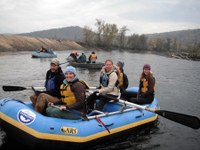 Attached is a photo of the boat with distinctive Rogue Riverkeeper logos fused onto the raft. Caption: Rogue Riverkeeper filled their boat for a river clean-up of the old reservoir area after Gold Ray dam was removed in 2010.
Lesley Adams, Program Director
ROGUE RIVERKEEPER
PO Box 102
Ashland, Oregon 97520
WordPress Tags: ROGUE,RIVERKEEPER,RAFT,STOLEN,Ashland,February,equipment,Basin,storage,location,mission,populations,watersheds,river,cleanups,measurements,education,boat,size,logos,Lesley,Adams,Program,Director,trailer,items,Sawyer,oars,Kevlar,foot,diameter,Four,vista,whitewater,theft,Fishermen,member,Waterkeeper,Alliance,continents,impact,Caption,reservoir,area,Gold,Oregon
Journal of Park and Recreation Administration (JPRA) Call for Papers: Managing Protected Areas: Global Perspectives
Posted: March 2, 2012 Filed under: Uncategorized | Tags: Biodiversity, Call for Papers, Conference, Conservation, Conservation and Endangered Species, Environment, Journal, JPRA, Marine protected area, Protected area, Yellowstone National Park Leave a comment
|


Image via Wikipedia

Image via Wikipedia

Image via Wikipedia
Outdoor Retailer Winter 2012 best advertising campaign – possibly ever!
Posted: March 1, 2012 Filed under: Uncategorized | Tags: Insert, Marketing, OR, Orthotic, Sole, Winter Market Leave a commentAlso the one that provided a lot of entertainment or fear in the men’s restrooms!
Sole inserts (or orthotics) had the best marketing campaign at winter OR.

Seriously, these were everywhere. In stalls, above urinals, next to the sinks these were everywhere. If you did not know about Sole when you left OR, you either spent less than an hour there or had the biggest bladder in the world.
Now if you weren’t just scared straight by the first bumper sticker, you were at least reassured by this one.

Thanks Sole for providing us something to talk about in the restrooms at Winter OR.
What do you think? Leave a comment.
If you like this let your friends know or post it on FB, Twitter or LinkedIn
Copyright 2012 Recreation Law (720) Edit Law
Twitter: RecreationLaw
Facebook: Rec.Law.Now
Facebook Page: Outdoor Recreation & Adventure Travel Law
Mobile Site: http://m.recreation-law.com
#RecreationLaw, #@RecreationLaw, #Cycling.Law #Fitness.Law, #Ski.Law, #Outside.Law, #Recreation.Law, #Recreation-Law.com, #Outdoor Law, #Recreation Law, #Outdoor Recreation Law, #Adventure Travel Law, #law, #Travel Law, #Jim Moss, #James H. Moss, #Attorney at Law, #Tourism, #Adventure Tourism, #Rec-Law, #Rec-Law Blog, #Recreation Law, #Recreation Law Blog, #Risk Management, #Human Powered, #Human Powered Recreation,# Cycling Law, #Bicycling Law, #Fitness Law, #Recreation-Law.com, #Backpacking, #Hiking, #Mountaineering, #Ice Climbing, #Rock Climbing, #Ropes Course, #Challenge Course, #Summer Camp, #Camps, #Youth Camps, #Skiing, #Ski Areas, #Negligence, #Snowboarding, #RecreationLaw, #@RecreationLaw, #Cycling.Law #Fitness.Law, #SkiLaw, #Outside.Law, #Recreation.Law, #RecreationLaw.com, #OutdoorLaw, #RecreationLaw, #OutdoorRecreationLaw, #AdventureTravelLaw, #Law, #TravelLaw, #JimMoss, #JamesHMoss, #AttorneyatLaw, #Tourism, #AdventureTourism, #RecLaw, #RecLawBlog, #RecreationLawBlog, #RiskManagement, #HumanPowered, #HumanPoweredRecreation,# CyclingLaw, #BicyclingLaw, #FitnessLaw, #RecreationLaw.com, #Backpacking, #Hiking, #Mountaineering, #IceClimbing, #RockClimbing, #RopesCourse, #ChallengeCourse, #SummerCamp, #Camps, #YouthCamps, #Skiing, #Ski Areas, #Negligence, #Snowboarding, sport and recreation laws, ski law, cycling law, Colorado law, law for recreation and sport managers, bicycling and the law, cycling and the law, ski helmet law, skiers code, skiing accidents, #Sole, #inserts, #orthotic
WordPress Tags: Outdoor,Retailer,Winter,Also,restrooms,Sole,hour,sticker,Thanks,Leave,Twitter,LinkedIn,Recreation,Edit,RecreationLaw,Facebook,Page,Adventure,Travel,Blog,Mobile,Site,Outside,Moss,James,Attorney,Tourism,Risk,Management,Human,Rock,Ropes,Course,Challenge,Summer,Camp,Camps,Youth,Areas,Negligence,SkiLaw,OutdoorLaw,OutdoorRecreationLaw,AdventureTravelLaw,TravelLaw,JimMoss,JamesHMoss,AttorneyatLaw,AdventureTourism,RecLaw,RecLawBlog,RecreationLawBlog,RiskManagement,HumanPoweredRecreation,CyclingLaw,BicyclingLaw,FitnessLaw,RopesCourse,ChallengeCourse,SummerCamp,YouthCamps,Colorado,managers,helmet,accidents
Need Office Space: in a beautiful building with other recreation providers
Posted: February 25, 2012 Filed under: Uncategorized | Tags: #AAC, #CMC, American Alpine Club, American Mountaineering Center, Climbing, Colorado Mountain Club, Office Space Leave a commentTim and Jim,
It was great to meet both of you this morning at the CORRP meeting. Here is the information about the office space for rent in the American Mountaineering Center:
High quality office space is currently available for rent at the American Mountaineering Center in downtown Golden, Colorado. Join building owners Colorado Mountain Club and the American Alpine Club in the unique, historic building that boasts a 40-foot indoor climbing wall, 3,000 square feet of conference space, free parking, a 350-seat auditorium, and modern renovations. Attached is more information about the building.
Spaces available – 2,400 square foot office space

Image via Wikipedia
2,500 square foot office space
3,500 square foot office space
350 square foot office
*Option to add spaces together or divide up to smaller space
Please contact Katie Blackett, CEO of the Colorado Mountain Club, (katieblackett or 303-996-2742) for more information. Any ideas on potential tenants would be most appreciated! Please be in touch directly with Katie Blackett.
Warm regards,
Sarah
|


Banff Mountain Film Festival World Tour-March 1 and 2, 2012 Traveling from remote landscapes and cultures to up close and personal with adrenaline-packed action sports, the 2012 World Tour is an exhilarating and provocative exploration of the mountain world. Proceeds benefit the Colorado Mountain Club. Get tickets at .
AMCLeasingBrochure_Feb2012.pdf
New American Alpine Club Library Book Club starting in Vermont
Posted: February 19, 2012 Filed under: Uncategorized | Tags: #AAC, AAC Library, American Alpine Club, American Alpine Club Library, Book Club, Books, Libraries, Library, Library and Information Science, Literature, Mountaineering, read Leave a commentOur focus is to discuss mountaineering literature, new and old, covering the world’s mountains.
Before our first meeting! – Please email me a list of three books you’d like to suggest we read. I’ll collate these suggestions and bring them to the meeting.
First meeting – Wednesday, February 22nd, 7pm, at the Carpenter Carse Library, 69 Ballards Corner, Hinesburg, VT 05461
(Some folks have indicated they may not be able to make this meeting but are still interested in future meetings.)
Agenda/Goals (this first meeting will be organizational in nature, all you need to read is this email!)
Introductions
Who we are
How we became interested in mountain books
What we’ve enjoyed reading
Where we find our books
Do you consider yourself a collector or casual reader?
Etc.
Decide on what to read, perhaps select first three titles
Decide on frequency of meetings (monthly?)
Select next date options (will need to confirm with Library)
(Please send me other thoughts you may have for our agenda. Thanks!)
Library rules – Non-alcoholic drinks are okay.
We should remove our own trash. (Leave no trace!)
The library has just installed a new carpet so they’d like to keep it as clean as possible.
I plan to arrive about 6:45pm to set up tables and chairs.
Feel free to forward this announcement to anyone you think may be interested. I look forward to seeing as many of you there as possible!
Cheers, Greg
I’ll be Speaking at the 2012 Association of Independent Camps Conference in Atlanta
Posted: February 10, 2012 Filed under: Uncategorized | Tags: AIC, Association of Independent Camps, Atlanta, summer camp, Youth Leave a comment
|
||||||||
|


SPRE Young Professional Network Award Applications Due
Posted: February 9, 2012 Filed under: Uncategorized | Tags: #Award, #SPRE, Awards, Professional association, Society of Park and Recretaion Educators, Young Professional Network Award Leave a commentPlease spread the word – Applications due March 23, 2012!
An important part of membership in a professional organization is to recognize outstanding members and organizations who have contributed to the field. The Young Professional Network Awards program highlights the efforts of those who go above and beyond to make a difference in the community. Nominate one of your fellow network members for a prestigious Young Professional Network Award. Nominees must be members of our network and can be recognized for their contributions and achievements in the following categories:
*Rising Professional (advances to consideration for Robert Crawford Award)
*Outstanding Graduate Student
*Outstanding Undergraduate Student
*Outstanding Student Club/Organization
In addition, the Network can award a Distinguished Professional who may not be a member of our Network. The minimum requirement for this award is 15 years of experience so if you know of a qualified candidate, then nominate them and let’s recognize their important contribution. The Distinguished Professional Award will advance to the National Awards Committee for NRPA Distinguished Professional consideration.
All applications for the Young Professional Network Awards aredue by Friday, March 23, 2012! Submit your application through the following link:
http://www.nrpa.org/Membership/Awards/Network-Awards/
Long Term Experimental & Management Plan Draft EIS for Glen Canyon Dam
Posted: January 26, 2012 Filed under: Uncategorized | Tags: Colorado, Colorado River, Glen Canyon Dam, Grand Canyon National Park, National Park Service, National Park Service Organic Act, United States Leave a comment
Image via Wikipedia
Grand Canyon River Guides, Inc.
Scoping comments on the development of a
Long Term Experimental & Management Plan Draft EIS for Glen Canyon Dam
Submitted January 17, 2012
1 Introduction
Grand Canyon River Guides, Inc. (GCRG) was founded in 1988 to provide a collective voice to protect Grand Canyon and the Colorado River experience. Our non-profit 501(c)(3) educational and environmental organization is made up of over 1,600 river guides and fellow travelers who care deeply about Grand Canyon and the Colorado River. Most of our officers and board members are (or have been) professional river guides in Grand Canyon. The same is true of our 800+ guide members. Having spent much of our lives immersed in the Grand Canyon river experience, our collective perspectives are uniquely well informed.
The Grand Canyon experience has a remarkable effect on our lives and the lives of those we share the canyon with, and inspires us to preserve its legacy for future generations. Our mission is to:
Protect the Grand Canyon
Provide the best possible river experience
Set the highest standards for the guiding profession
Celebrate the unique spirit of the river community
Since its inception, GCRG has been heavily involved with dam management issues beginning with the initial Glen Canyon Dam EIS process in the early 1990s. Our members played an instrumental role in the passage of the Grand Canyon Protection Act of 1992 – “As Arizona Senator John McCain said in Flagstaff a short time before the signing, a lot of the credit goes to the guides who realized that things were not right and kept the issue alive.” (Boatman’s Quarterly Review, Volume 5 #4, Fall 1992). Our subsequent involvement as the recreational river running stakeholder within the Glen Canyon Dam Adaptive Management Program (GCDAMP) has provided GCRG representatives with an opportunity to unify and direct the concerns of the river community on scientific and policy issues affecting operations of Glen Canyon Dam.
We are therefore very appreciative of the opportunity to provide scoping comments for the development of an Environmental Impact Statement (EIS) for the Long Term Experimental and Management Plan (LTEMP). We realize what an incredibly complex and challenging process this will be, but we are encouraged that the Bureau of Reclamation and the National Park Service will work together as cooperating agencies in charge of this endeavor. And we expect that you will conduct thorough and respectful consultation with the eleven affiliated tribes of the Grand Canyon as well.
Our members understand that a river expedition through Grand Canyon is a highly sought after and deeply treasured outdoor experience. As river guides, we have direct contact with the 20,000 people who seek out this world class recreational river running experience each year. We understand that without proper protection, we could lose one of the most valued, irreplaceable areas, not only of the United States, but of the world. Taking a broader view, the National Park System is part of our national heritage, and it is our profound responsibility to protect and preserve it on behalf of all Americans, including future generations.
Consequently, as river stewards, Grand Canyon River Guides would like to share our vision for dam management and the experimentation efforts on the Colorado River which should serve as context for the development of the LTEMP and LTEMP alternatives. The elements of our vision are as follows:

Image via Wikipedia
- A long term, scientifically-grounded, and sustainable “ecosystem management” approach for the river corridor that carefully preserves park resources and values in accordance with the National Park Service Organic Act, the Endangered Species Act, the Grand Canyon Protection Act, the 2006 NPS Management Policies, the Redwoods Amendment, and other federal legislation.
- Re-establishing the range of natural variability for all ecosystem patterns and processes in keeping with the conservation mandate from the 2006 NPS Management Policies which requires that “The Service will reestablish natural functions and processes in parks unless otherwise directed by Congress.” (NPS Management Policies, Section 4.1.5). This is also in keeping with one of the nine principles of the GCDAMP: “Dam operations and management actions will be tried that attempt to return ecosystem patterns and processes to their range of natural variability. When this is not appropriate, experiments will be conducted to test other approaches.” (Strategic Plan, Glen Canyon Dam Adaptive Management Program, August 17, 2001)
- Protection of the fragile and non-renewable cultural resources and Traditional Cultural Properties along the river corridor in accordance with the National Historic Preservation Act of 1966 and related laws.
- A renewed commitment to respect and incorporate values and traditional cultural knowledge from the eleven affiliated tribes of the Grand Canyon. Those spiritual and cultural connections, concerns, and objectives must be woven into the LTEMP and incorporated more effectively and holistically into the GCDAMP.
- A river corridor ecosystem that matches the natural conditions as closely as possible, including a biotic community dominated in most instances by native species.
- A river corridor landscape that matches natural “pre-dam” conditions as closely as possible, including extensive beaches and abundant driftwood.
- Numerous campable sandbars distributed throughout the canyon within a scour zone between the 8,000 – 35,000 cfs levels, built and maintained by Habitat Maintenance Flows and Beach Habitat Building Flows (BHBF) timed to maximize/optimize sediment distribution throughout the river corridor, and conducted under sediment-enriched conditions.
- River flows that continue to be within a range that ensures navigability and boating safety (8,000 cfs minimum).
- Preservation and enhancement of a full range of recreational opportunities along the river corridor including the opportunity to experience the wilderness character of the canyon. Wilderness experiences and benefits available in the canyon include solitude, connection to nature, personal contemplation, joy, excitement, the natural sounds and quiet of the desert and river, and extended time periods in a unique environment outside the trappings of civilization.
- Stewardship worthy of Grand Canyon so it can be passed from generation to generation, unimpaired.
(Excerpted and/or adapted from “A Narrative of Desired Future Resource Conditions for the Colorado River Ecosystem in Grand Canyon” by Andre Potochnik and Matt Kaplinski as published in BQR Volume 14 #1, Spring 2001, and other internal GCRG documents and discussions).
2 Comments on the Purpose and Need

Image via Wikipedia
The Notice of Intent to prepare an EIS and conduct scoping on the adoption of a Long Term Experimental and Management Plan indicates that the Purpose and Need for Action is as follows:
               “The purpose of the proposed action is to fully evaluate dam operations and identify management actions and experimental options that will provide a framework for adaptively managing Glen Canyon Dam over the next 15 to 20 years consistent with the GCPA and other provisions of applicable Federal law. The proposed action will help determine specific alternatives that could be implemented to meet the GCPA's requirements and to minimize—consistent with law—adverse impacts on the downstream natural, recreational, and cultural resources in the two park units, including resources of importance to American Indian Tribes.
               The need for the proposed action stems from the need to utilize scientific information developed over the past 15 years to better inform Departmental decisions on dam operations and other management and experimental actions so that the Secretary may continue to meet statutory responsibilities for protecting downstream resources for future generations, conserving ESA listed species, and protecting Native American interests, while meeting water delivery obligations and for the generation of hydroelectric power.” (Federal Register, Volume 76, Number 129, July 6, 2011)
 A) GCRG feels this Purpose Statement does not do justice to the situation at hand.  Congress passed the Grand Canyon Protection Act (GCPA) of 1992 to give guidance to the initial Glen Canyon Dam EIS, to establish and implement long term monitoring programs and research activities, and to determine if the revised dam operations were achieving the resource protection objectives of the 1995 Final EIS and the 1996 Record of Decision.  The GCPA states:
“The Secretary shall operate Glen Canyon Dam… in such a manner as to protect, mitigate adverse impacts to, and improve the values for which Grand Canyon National Park and Glen Canyon National Recreation Area were established, including, but not limited to natural and cultural resources and visitor use.” (GCPA, Section 1802)
The GCPA directive to “…protect, mitigate adverse impacts to, and improve the values…” has been watered down to “…minimize—consistent with law—adverse impacts…” This should be changed. The Grand Canyon should be protected and improved to the full intent of the GCPA.
B) The reference to hydropower should be dropped from the need statement. Water storage and water delivery obligations are the primary purposes of Glen Canyon Dam, whereas hydropower is an ancillary benefit. The construction of Glen Canyon Dam was authorized by the Colorado River Storage Project Act of 1956 (Public Law 84-485). The underlying project purposes are outlined in Section 1 of the Act (43 United States Code [U.S.C.] ‘ 620) which authorized the Secretary of the Interior to “construct, operate, and maintain” Glen Canyon Dam:
. . . for the purposes, among others, of regulating the flow of the Colorado River, storing water for beneficial consumptive use, making it possible for the States of the Upper Basin to utilize, consistently with the provisions of the Colorado River Compact, the apportionments made to and among them in the Colorado River Compact and the Upper Colorado River Basin Compact, respectively, providing for the reclamation of arid and semiarid land, for the control of floods, and for the generation of hydroelectric power, as an incident of the foregoing purposes . . ..
(emphasis, ours)
For many years Glen Canyon Dam was operated with hydropower revenue as the main operational consideration, to the great detriment of the river corridor ecosystem. The chief considerations for the LTEMP should be protection and recovery of that ecosystem.
Therefore, we recommend that the EIS team consider changing the Purpose and Need for Action Statement as follows:
- Change the language of the Purpose statement to accurately reflect the language and intent of the Grand Canyon Protection Act.
- Drop the reference to hydropower.
3 Comments on the Process

Image via Wikipedia
Define and ensure a substantial role for the Grand Canyon Monitoring and Research Center (GCMRC) within the LTEMP EIS process.
- GCMRC’s involvement is critical to draw on the body of knowledge that has been gained as the science arm of the Glen Canyon Dam Adaptive Management Program.
- GCMRC’s involvement is also necessary for the development and evaluation of scientifically credible, well-defined alternatives to best meet program and ecosystem goals.
It’s clear that the LTEMP team at Argonne Labs are knowledgeable and experienced, and we are sure they will do as conscientious and high-quality a job as is required for a place as unique and important as the Grand Canyon. However, on the whole they themselves have little to no direct experience with and knowledge of the canyon and the river. No scientific background, no matter how extensive and thorough, can impart a complete understanding of such a complex place. Because of this we suggest:
- Argonne Labs should work in close consultation with Grand Canyon Monitoring and Research Center (GCMRC). They know their research well, and they also understand the context supporting their research.
- Core members of the Argonne team should invest the time to go on a river trip through the Grand Canyon and get to know the place first hand.
- The Argonne team should communicate with and ask questions of stakeholders during the NEPA process.
The LTEMP should reflect the societal shift to a desire for river restoration and ongoing protection. Previous studies have examined operational restrictions to Glen Canyon Dam in terms of environmental constraints to hydropower. The dam operations and the subsequent result of the LTEMP EIS must not be viewed in terms of environmental constraints but instead, environmental responsibilities. We therefore urge that the new LTEMP to reflect a shift in focus and language that corresponds with a statement made by Bureau of Reclamation Commissioner, Mike Connor:
“It is certainly my goal over the next decade that Bureau of Reclamation becomes as well known for its expertise in river restoration as it is for building dams, maintaining dams, and building and taking care of other water supply infrastructure.” (http://www.usbr.gov/river/video.html)
The National Environmental Policy Act (NEPA), the Grand Canyon Protection Act (GCPA), and the Endangered Species Act (ESA) together represent a distinct societal shift from the dam-building “man over nature” mentality to an improved understanding of, and deep desire for the protection of, the natural, cultural and visitor use values of our public lands. The LTEMP should be one more step down the path of preserving, protecting and improving those values for future generations to enjoy.
Look to other dam managed rivers, examine their challenges and successes in restoring natural patterns and processes while a dam is still in place and utilize that expertise to inform and strengthen the LTEMP process. Existing knowledge and research should inform the decision on whether to build a Temperature Control Device (TCD) on Glen Canyon Dam. For example, it might be useful to compare native fish recruitment and survival in the upper basin due to the affects of the Flaming Gorge TCD with what could be expected in Grand Canyon. Or utilize the TCD at Flaming Gorge to carry out temperature variation experiments on native fish populations in the upper basin. These results could be used for extrapolation of TCD effects in Grand Canyon. The question that must be answered is… “whether the potential benefits to the endangered fish of operating a TCD and warming the water outweigh the potential adverse effects from potential increases in nonnative predators, parasites and diseases, or other unintended, systemic interactions in the downstream environment.” (Biological Assessment on the Operation of Glen Canyon Dam, 2007)
Ensure that the eleven affiliated tribes who live in and around the Grand Canyon and the Colorado River have a substantive role in LTEMP development which continues throughout the LTEMP process, and the life of the plan. The LTEMP must find a way to successfully incorporate tribal values and knowledge into policy development and decision making – a distinct challenge for the Adaptive Management Program to date.
- Towards that end, science must not be the only lens through which we view the Colorado River ecosystem (CRE), its resources, and associated values. Respectful and thorough tribal consultation must occur at each stage and those cultural and spiritual connections must be woven into the LTEMP and incorporated more effectively into the Glen Canyon Dam Adaptive Management Program.
The LTEMP should consider more than just the last 15 years of science:
- Review the scientific evidence from Phase 1 of the Glen Canyon Environmental Studies (GCES) that served as the basis for the Record of Decision of the initial Glen Canyon Dam EIS. Utilizing that information in light of what we know now, could be beneficial.
- Examine pre-dam conditions to provide some much needed perspective for developing future management directions for the Colorado River. We specifically recommend reviewing: “Observations of Environmental Change in Grand Canyon, Arizona,” (Webb, Melis and Valdez, 2002, http://wwwpaztcn.wr.usgs.gov/webb_pdf/WRIR4080.pdf ). The report incorporates historical diaries, interviews with pre-dam river runners, repeat photography, and historical data and observations.
The LTEMP should be considered in the light of outside processes, such as equalization flows, that cause severe adverse impacts to the downstream resources in Grand Canyon. In December of 2007, responding to the worst eight years of drought in a century of record keeping, the Secretary of the Interior adopted the Colorado River Interim Guidelines for Lower Basin Shortages and the Coordinated Operations of Lake Powell and Lake Mead. The specific focus of these guidelines was to address water availability in the Lower Basin and the operations of Lakes Powell and Mead during drought and low reservoir conditions. As we shifted to the Equalization Tier in 2011, between January 1 and August 1, the amount of sediment transported in all of Grand Canyon (from Lees Ferry to Diamond Creek), equalled 2.1 to 3.7 million metric tons, with the specific breakdown by reach as follows:
Reach Sediment Exported between Jan 1 – Aug 1, 2011

Image via Wikipedia
0 to 30 mile 1.4 to 1.6 million metric tons
30 mile to 60 mile .2 to .5 million metric tons
61 mile to 87 mile .5 to 1 million metric tons
87 mile to 225 mile 0 to 0.6 million metric tons
(GCMRC unpublished data presented at the August 24-25, 2011 AMWG meeting).
The magnitude of sediment erosion caused by the equalization flows is sobering, and efforts to rebuild that sediment (which is a foundational element for the health of many Colorado River resources) may have been set back years. Clearly higher flow volumes have a direct and profound effect on sand transport, which is also corroborated in the modeling simulations of sand transport for hypothetical annual release volumes as published in USGS Open File Report 2010-1133, Evaluation of Water Year 2011 Glen Canyon Dam Flow Release Scenarios on Downstream Sand Storage along the Colorado River in Arizona (Wright and Grams, 2010).
GCRG therefore considers it essential that the LTEMP process should take a proactive stance to managing for the possibility of future equalization needs that will help achieve LTEMP and GCDAMP goals rather than the current reactive mode that clearly thwarts those goals and makes them all the more difficult to achieve.
Desired Future Conditions (DFCs) developed within the GCDAMP with DOI input and approval should be utilized in analyzing the impacts of LTEMP alternatives and applied as a benchmark for defining identified objectives that are scientifically measurable and attainable through dam operations during the life of the Plan. The goal should be to “ensure that park resources and values are passed on to future generations in as good as, or better than, the conditions that exist today.” (Section 1.4.7.1, NPS Management Policies, 2006). Related considerations include:
- The Core Monitoring Program under development by the Grand Canyon Monitoring & Research Center will help track progress towards those desired outcomes.
- The DFCs must not be static, but rather they must be continually refined as new knowledge is gained, unacceptable impacts are discerned, and subject to a determination of whether the specific DFCs are achievable.
Since the Record of Decision for the initial Glen Canyon Dam EIS created the Glen Canyon Dam Adpative Managment Program, the LTEMP EIS should be able to address and improve its structure and functionality in order to meet GCDAMP mission and goals. Simply put, we would like to see a much more balanced GCDAMP stakeholder group that has the ability and willingness to act adaptively on what is learned.
4 Comments on Alternatives
GCRG wishes to provide two kinds of comments about proposed alternatives here – elements that should be applied to all flow regime alternatives that are considered within this Draft EIS, and our suggestions for possible alternatives that should be considered for inclusion.
4.1 Elements common to all alternatives
First and foremost, it is paramount that all alternatives fully meet the intent of the 1992 Grand Canyon Protection Act. The act specifically states, ´The Secretary shall operate Glen Canyon Dam…in such a manner as to protect, mitigate adverse impacts to, and improve the values for which Grand Canyon National Park and Glen Canyon National Recreation Area were established, including, but not limited to natural and cultural resources and visitor use,” (GCPA, Section 1802).
The selected alternative should improve the quality of recreational resources for users of the Colorado River, and ensure their protection for generations to come. This is in line with Goal 9 of the Glen Canyon Dam Adaptive Management Program and the specific Management Objectives tied to that Goal (MO 9.1: quality of recreational opportunities; MO 9.2: visitor safety; MO 9.3: beaches and campsites; MO 9.4: the wilderness experience; and MO 9.5: maintaining the visitor experience affected by GCDAMP activities). More importantly, this is the right thing to do, in keeping with the fundamental purpose of all parks to provide for the enjoyment and preservation of park resources and values, including visitor use.
All alternatives must include the continuation of a robust program of scientific research and experimentation. Our understanding of the system has greatly improved in the last fifteen years, but even so there is much left to learn. Some ideas that were once almost axiomatic are now less clearly true. The system is complex, and to manage it well, for the long term, we need to continue to learn about it.
Beach Habitat Building Flows (BHBFs) should be a well-defined, key component of all alternatives. The BHBF is the only known mechanism to test whether sand can be sustained in the river ecosystem on a multi-year time scale and a “critical tool” according to GCMRC. (Melis, 2011, ed., USGS Circular 1366, Page 141)
- The High Flow Experimental Protocol Environmental Assessment should be finalized and incorporated into the design of all LTEMP alternatives.
- A science plan for the Rapid Response model should be developed. The plan should be included if it can be successfully integrated without confounding the results of regular HFE events.
- Recommendations from Grand Canyon Monitoring & Research Center for optimizing the results of future High Flow Experiments should be incorporated, specifically that the “…design of controlled floods for optimal sandbar deposition in the Colorado River in Grand Canyon National Park should not be based only on threshold levels of sand enrichment, but also on reach-averaged bed-sand median grain size.” (Topping, Grams, and others, 2010, Page 101)
- Variability should be introduced into the system by changing the level and timing of the High Flow Experiments (not just 42,000 to 45,000 cfs, or early spring every time). Flood events are a natural occurrence of free-flowing rivers and controlled floods were introduced in Grand Canyon in order to mimic those highly variable pre-dam flood events. Experimental BHBFs could be undertaken during the historic hydrograph peak, the monsoon season, and winter flood events (Chapter 5, Figure 6, USGS Circular 1366)
- Consider testing experimental high flows above 45,000 cfs when hydrologic conditions allow. According to GCMRC, “Testing of peak flows greater than 45,000 ft3/s is scientifically justified, but is constrained by current low reservoir levels such that the spillways at Glen Canyon Dam are inaccessible. Higher peak flows could be considered in the future if reservoir levels permit.” (Melis, 2011, ed., USGS Circular 1366, Page 139) Before Glen Canyon Dam was completed, the annual spring snowmelt floods ranged between about 35,000 and 120,000 cfs, and averaged around 55,000 cfs with peak flows of 120,000 cfs reoccurring about once every size years (Topping and others, 2003).
For all alternatives, flows between BHBFs should be designed to maximize sediment retention. In the report synthesizing the results of the three High Flow Experiments conducted to date, GCMRC notes that, “For sandbars, the intervening dam operations are important because they determine the rate of post-HFE sandbar erosion, the rate of export of sand from the system flowing tributary-derived sand inputs, and thus the amount of sand available for building sandbars during a given HFE.” (Melis, 2011, ed.,USGS Circular 1366, Page 143).
- Address the preservation of sand deposits by designing post-High Flow Experiment hydrographs that optimize ecosystem goals (i.e. sediment retention) to the greatest extent possible.
- Intervening dam operations must be carefully considered in the context of an ecosystem approach and the respective tradeoffs they may elicit.
All alternatives must be based on an adaptive ecosystem management approach. This is a dynamic and complex system. Our learning and adapting/building on what we know must continue indefinitely. According to the USGS, “The most effective strategy for future releases from Glen Canyon Dam is one that provides flexibility and adaptability – flexibility that would allow the best scientific information to be used in decisionmaking, and adaptability would allow ongoing learning to be readily incorporated in the process.” (“Effects of Three High-Flow Experiments on the Colorado River Ecosystem Downstream from Glen Canyon Dam, Arizona,” Circular 1366, Page 143)
For all alternatives, experiments need to be:

Image via Wikipedia
- well planned and scientifically credible,
- of sufficient length to elicit measurable responses,
- coupled with long term monitoring to ascertain the impacts to the various resources, and,
- followed by a timely synthesis of that information to GCDAMP program stakeholders.
All alternatives should include an increased experimental and managerial focus on cultural resources along the river corridor. Archaeological site conditions will continue to deteriorate at unknown rates due to impacts from erosion and visitor use. Impacts that the NPS views as being directly related to dam operations include: bank slumpage and gullying/arroyo cutting in locations where drainage systems are actively entrenching to achieve grade with the present-day “highest discharge” terrace levels formed under dam-controlled flows. (SCORE Report, Page 182). Additionally, any reduction in beach size and distribution exacerbates crowding and congestion along the river corridor, which in turn can lead to impacts to the high terraces where archaeological sites are often located.
All alternatives should include a thorough and rigorous socio-economics study. Flows from Glen Canyon Dam run through a very complex system. For managers to make wise decisions now and protect the river corridor for generations to come, they need a clear understanding not just of the mechanics and interrelationships of system components, but also the value of those components. For example, the estimated cost of analyzing, permitting, building and operating a sediment replacement system should be used to determine the value of the sediment removed by MLFF flows (or other LTEMP alternative flows), and as a comparison to values obtained from use of the power plant for peaking flows.
Additionally, a lack of a strong socio-economic study has been a major weakness of the Glen Canyon Dam Adaptive Management Program. In their comments for the 1996 ROD, the GSA specifically mentioned that socio-economic understanding of the system was weak, and little has been done to correct that weakness in fifteen years since.
When developing and choosing alternatives, the focus should be on benefiting, protecting and preserving all of the downstream resources (such as camping beaches, cultural sites, etc) and their associated values. The LTEMP should go beyond a focus on mass sediment balance and fish.
- River users care about all that makes Grand Canyon unique, including cultural resources, tribal perspectives and the rich cultural heritage of the Colorado River.
- Reaching a certain metric for mass sediment balance is not sufficient – The LTEMP needs to focus on whether the sediment adequately benefits, protects, and improves the individual resources along the Colorado River. A positive mass sediment balance is not very meaningful if that sediment is not where it is most needed.
- The Endangered Species Act specifies that it is not just the fish that require protection, but also their habitat.
Examine potential alternatives and develop science plans in a broader context, and use that information to improve the quality of scientific and management perspectives. In his introductory memo to the Technical Work Group, the new chief of GCMRC pointed out that an “expansion in research perspective would provide GCMRC and the GCDAMP the opportunity to place the issues of Colorado River science and management in Grand Canyon in a larger perspective and thereby increase the quality of science support provided to the GCDAMP.” (memo from Jack Schmidt to the TWG, dated 10/18/2011) He specifically pointed to studies in Cataract Canyon, upstream from Lake Powell on the Colorado River mainstem. Additionally, the GCMRC Chief noted that the majority of research has been conducted on the mainstem between Glen Canyon Dam and Lake Mead, and that it had been “more than a decade since any ecosystem process level studies have been conducted on humpback chub populations in the Little Colorado River. Nevertheless, the key to understanding trends in native fish populations might lie in understanding the tributaries better.” There is much to be learned in other areas that would deepen our understanding of the resources that we are charged with protecting.
No alternative should lock the Glen Canyon Dam Adaptive Management Program into a single flow regime for the next 15 to 20 years. Flow regime experiments should be run long enough to be thoroughly tested and evaluated, and then adjustments should be made based on the new understanding of the system. The time frame for flow regime experiments should be determined by the needs of science.
All alterntatives should be developed in a way that reflects not only “Law of the River” release requirements but also proactively manages for outside processes such as the equalization criteria. An experimental plan that reflects the de facto management requirements of Glen Canyon Dam will be more likely to succeed than one that is developed without considering the bigger picture.
4.2 Suggested Alternatives
Include a Seasonally Adjusted Steady Flows alternative. The original Glen Canyon Dam EIS included a SASF alternative, and it was included again in the matrix of alternatives for the short-lived 2007 Long-Term Experimental Plan EIS effort. At the close of the Glen Canyon Dam EIS, Grand Canyon River Guides did not support the preferred alternative (MLFF) as we were unconvinced that it would best conserve terrestrial riparian habitat in the canyon, especially in regards to crucial sediment needs. We did support a rigorous test of the SASF alternative to determine whether releases that closely mimic pre-dam flows would better restore the endangered species and severely eroded beaches. To date, the four-month duration Low Summer Steady Flow (LSSF) experiment in 2000 “is the longest planned hydrograph that departed from MLFF operations since the Record of Decision in 1996” (Ralston, 2011). Although the intent of the LSSF was to “mimic predam river discharge patterns by including a high, steady discharge in the spring and a low, steady discharge in the summer,” the duration was insufficient to determine its effects on the ecosystem. Further testing of this concept is necessary to assess system response and to test the RPA of the U.S. Fish and Wildlife Service.
Include a Year-round Steady Flow alternative. This is the “best case scenario” presented in the article “Is there Enough Sand? Evaluating the Fate of Grand Canyon Sandbars” (Wright and others, 2008). It is based on the conclusion that the “optimal intervening dam operation for rebuilding and maintaining sandbars is year-round steady flows, which would export the least amount of sand compared to other potential dam operations.” (USGS Circular 1366, page 143)
Include a “Stewardship Alternative” where the flow regime is designed to best serve the ecological, cultural and recreational resources of the Grand Canyon with no consideration given to the sales of hydropower. This alternative would be in best alignment with the Grand Canyon Protection Act, which makes no mention of hydropower beyond calling for a report on “economically and technically feasible methods of replacing any power generation that is lost through adoption of long-term operational criteria for Glen Canyon Dam,” and the original purpose for the construction of Glen Canyon Dam, in which power generation was seen as an incidental benefit as referenced previously in our comments. At this time it is not clear that changes in dam operations alone will be sufficient to protect and improve the river corridor in the Grand Canyon. However, for the next 15 to 20 years, we should take our very best shot at doing that.
5 Environmental Impacts that should be taken into consideration

Image via Wikipedia
As alternatives are considered, please note that while a positive sediment mass balance for the river corridor in Grand Canyon is necessary to rebuild sandbars, restore campable areas and improve the recreation experience, it is not necessarily a sufficient measure of success. We need enough sand, but we also need it in the right places.
Climate Change: The effects of climate change must be taken into account and prepared for in the LTEMP and during the life of the plan. The Colorado River watershed is likely to become warmer and drier in coming years, which will have a wide range of effects. It is noteworthy that the water managers who developed the agreement that serves as the cornerstone for the “Law of the River” most likely had water surpluses rather than water deficits in mind. In fact, “The period from 1905 to 1922, which was used to estimate water production allocated under the Colorado River Compact, had the highest long-term annual flow volume in the 20th century, averaging 16.1 million acre feet at Lees Ferry.” (SCORE Report, Circular 1282, Page 59). In stark contrast, “By using either actual annual annual flow data or annual flow records adjusted for consumptive uses in the upper basin, it was found that runoff from 2000 through 2004 was the lowest in the period of record (99-110 years).” (SCORE Report, Circular 1282, Page 66)
Tamarisk Leaf Beetle: The tamarisk beetle has recently entered the Grand Canyon, an occurrence that will elicit a watershed-scale change for the river corridor ecosystem in the Grand Canyon. The NPS is currently poised to proactively and comprehensively prepare for the future through their new Watershed Stewardship Program. We’ll need to learn what the tamarisk leaf beetle will mean for dam releases and future adaptive management efforts. Every effort should be made to coordinate with Grand Canyon National Park towards this end.
6 Mitigation
Several concepts should be taken into consideration, studied for an understanding of their risks, rewards and costs, and potentially acted upon during the lifetime of the LTEMP. These should be considered for all alternatives.
- Sediment Augmentation.
- A Temperature Control Device.
- Beach/campsite work. Flow regimes with lower variation tend to remove less sediment from the system, but they also encourage plant growth in the riparian zone. Some beaches lose more campable area to vegetation encroachment than to sediment erosion. Whatever the cause, loss of camping space on beaches directly affects the recreational experience.
- Reintroduction of extirpated native species. Native species of plants and animals are part of the values for which Grand Canyon National Park was initially created. Reintroduction should be part of a mitigation strategy.
7 Conclusion

Image via Wikipedia
Grand Canyon River Guides and its members would like to thank you for the opportunity to provide scoping comment for the development of a Draft Environmental Impact Statement for the Long Term Experimental and Management Plan for Glen Canyon Dam. We also understand and appreciate the hard, thoughtful work you’ll do in producing a new plan, in keeping with the directive outlined in the Senate committee report regarding the 1978 Redwood Amendment, which stated clearly,
“The Secretary has an absolute duty, which is not to be compromised, to fulfill the mandate of the
1916 Act to take whatever actions and seek whatever relief as will safeguard the units of the national park system.” (emphasis, ours) (NPS Management Policies, Section 1.4.2, Page 10)
The Grand Canyon is utterly unique —one of the seven natural wonders of the world, a World Heritage Site, and one of the last, best, wild places that belong to us, the American people. Grand Canyon offers life-changing experiences to those who venture into its depths and down its mighty river, and it even means a great deal to many people who may never have the opportunity to visit it themselves. It is our profound honor and responsibility to carefully protect Grand Canyon and pass it on to future generations in the best, most pristine condition we possibly can.
Please contact us if you have questions.
Respectfully,
Grand Canyon River Guides, Inc.
Lynn Hamilton Executive Director
Sam Jansen Adaptive Management Work Group representative
Jerry Cox Technical Work Group representative
Nikki Cooley President
Latimer Smith Vice President
Kim Fawcett Director
Robert Jenkins Director
Ariel Neill Director
Roger Patterson Director
Greg Woodall Director
Kelly Wagner Director
8 References

Image via Wikipedia
Boatman’s Quarterly Review, Volume 5 #4, Fall 1992
Bureau of Reclamation, 1995, Operation of Glen Canyon Dam Final Environmental Impact Statement.
Bureau of Reclamation, video of Commissioner Mike Connor: http://www.usbr.gov/river/video.html
Colorado River Storage Project Act of 1956 (Public Law 84-485)
Federal Register, Volume 76, Number 129, July 6, 2011
Gloss, S.P., Lovich, J.E., and Melis, T.S., eds, 2005, The State of the Colorado River Ecosystem in Grand Canyon: A report of the Grand Canyon Monitoring and Research Center, 1991-2004:U.S. Geological Survey Circular 1282
Glen Canyon Dam Adaptive Management Program, Adaptive Management Work Group (AMWG) meeting minutes, August 24-25, 2011meeting, Phoenix, AZ
Glen Canyon Dam Adaptive Management Program, Strategic Plan, August 17, 2001
Grand Canyon Protection Act of 1992, Title XVIII, Section 1802, Public Law 102-575
Melis, T.S, ed, 2011, Effects of Three High-Flow Experiments on the Colorado River Ecosystem Downstream from Glen Canyon Dam, Arizona: U.S. Geological Survey Circular 1366
Potochnik, A. and Kaplinski, M., A Narrative of Desired Future Resource Conditions for the Colorado River Ecosystem in Grand Canyon, as published in the Boatman’s Quarterly Review, Volume 14 #1, Spring 2001.
Ralston, B.E., 2011, Summary report of responses of key resources to the 2000 Low Steady Summer Flow Experiment, along the Colorado River downstream from Glen Canyon Dam, Arizona: U.S. Geological Survey Open File Report 2011-1220
Schmidt, J.C., memo to the Technical Work Group, 10/18/2011
Topping, D.J., Rubin, D.M, Grams, P.E., Griffiths, R.E., Sabol, T.A., Voichick, N., Tusso, R.B.,Vanaman, K.M., and McDonald, R.R., 2010, Sediment Transport During Three Controlled-Flood Experiments on the Colorado River Downstream from Glen Canyon Dam, with Implications for Eddy-Sandbar Deposition in Grand Canyon National Park, Open File Report 2010-1128
Topping, D.J., Schmidt, J.C., and Vierra, L.E., Jr., 2003, Computation and analysis of the instantaneous-discharge record for the Colorado River at Lees Ferry, Arizona—May 8, 1921, through September 30, 2000: U.S. Geological Survey Professional Paper 1677, 118 p. (Also available at http://pubs.usgs.gov/pp/pp1677/.)
U.S. Department of Interior, 1996, Record of Decision, Operation of Glen Canyon Dam: Washington, D.C., Office of the Secretary of the Interior.
U.S. Department of the Interior, 2007, Bureau of Reclamation, Upper Colorado Region, Biological Assessment on the Operation of Glen Canyon Dam and Proposed Experimental Flows for the Colorado River below Glen Canyon Dam During the Years 2008-2012.
U.S. Department of the Interior, National Park Service Management Policies, 2006
Walters, C.J., 1986. Adaptive Management of Renewable Resources. McMillan, NewYork, NY, USA.
Webb R.H., Melis, T.S., Valdez, R.A., 2002, Observations of Environmental Change in Grand Canyon, Arizona, U.S. Geological Survey, Water Resources Investigations Report 02-4080, prepared in cooperation with Grand Canyon Monitoring and Research Center, http://wwwpaztcn.wr.usgs.gov/webb_pdf/WRIR4080.pdf
Wegner, D.L., Adaptive Management and Glen Canyon Dam, Glen Canyon Environmental Studies, February 4, 1994
Wright, S.A., Schmidt, J.C., Melis, T.S., Topping, D.J, and Rubin, D.M., 2008, Is there enough sand? Evaluating the fate of Grand Canyon Sandbars: Geological Society of America Today, V18, N8
Wright, S.A., and Grams, P.E., 2010, Evaluation of Water Year 2011 Glen Canyon Dam Flow Release Scenarios on Downstream Sand Storage along the Colorado River in Arizona, U.S. Geological Survey, Open File Report 2010-1133
What do you think? Leave a comment.
If you like this let your friends know or post it on FB, Twitter or LinkedIn
Copyright 2012 Recreation Law (720) Edit Law
Twitter: RecreationLaw
Facebook: Rec.Law.Now
Facebook Page: Outdoor Recreation & Adventure Travel Law
Blog: www.recreation-law.com
Mobile Site: http://m.recreation-law.com
#RecreationLaw, #@RecreationLaw, #Cycling.Law #Fitness.Law, #Ski.Law, #Outside.Law, #Recreation.Law, #Recreation-Law.com, #Outdoor Law, #Recreation Law, #Outdoor Recreation Law, #Adventure Travel Law, #law, #Travel Law, #Jim Moss, #James H. Moss, #Attorney at Law, #Tourism, #Adventure Tourism, #Rec-Law, #Rec-Law Blog, #Recreation Law, #Recreation Law Blog, #Risk Management, #Human Powered, #Human Powered Recreation,# Cycling Law, #Bicycling Law, #Fitness Law, #Recreation-Law.com, #Backpacking, #Hiking, #Mountaineering, #Ice Climbing, #Rock Climbing, #Ropes Course, #Challenge Course, #Summer Camp, #Camps, #Youth Camps, #Skiing, #Ski Areas, #Negligence, #Snowboarding, #RecreationLaw, #@RecreationLaw, #Cycling.Law #Fitness.Law, #SkiLaw, #Outside.Law, #Recreation.Law, #RecreationLaw.com, #OutdoorLaw, #RecreationLaw, #OutdoorRecreationLaw, #AdventureTravelLaw, #Law, #TravelLaw, #JimMoss, #JamesHMoss, #AttorneyatLaw, #Tourism, #AdventureTourism, #RecLaw, #RecLawBlog, #RecreationLawBlog, #RiskManagement, #HumanPowered, #HumanPoweredRecreation,# CyclingLaw, #BicyclingLaw, #FitnessLaw, #RecreationLaw.com, #Backpacking, #Hiking, #Mountaineering, #IceClimbing, #RockClimbing, #RopesCourse, #ChallengeCourse, #SummerCamp, #Camps, #YouthCamps, #Skiing, #Ski Areas, #Negligence, #Snowboarding, sport and recreation laws, ski law, cycling law, Colorado law, law for recreation and sport managers, bicycling and the law, cycling and the law, ski helmet law, skiers code, skiing accidents,
GRAND CANYON RIVER GUIDES
Posted: January 26, 2012 Filed under: Uncategorized | Tags: Arizona, Colorado River, Glen Canyon Dam, Glen Canyon National Recreation Area, Grand Canyon Monitoring & Research Center, Grand Canyon National Park, Grand Canyon National Park, LTEMP Leave a commentGRAND CANYON RIVER GUIDES

TALKING POINTS FOR THE DEVELOPMENT OF THE
LONG TERM EXPERIMENTAL AND MANAGEMENT PLAN
FOUNDATIONAL ELEMENTS:
- Define and ensure a substantial role for the Grand Canyon Monitoring and Research Center (GCMRC) within the LTEMP EIS process.
- GCMRC’s involvement is critical to draw on the body of knowledge that has been gained as the science arm of the Glen Canyon Dam Adaptive Management Program.
- GCMRC’s involvement is also necessary for the development and evaluation of scientifically credible, well-defined alternatives to best meet program and ecosystem goals.
- It is paramount that all LTEMP alternatives fully meet the intent of the 1992 Grand Canyon Protection Act, which specifically states, ´The Secretary shall operate Glen Canyon Dam…in such a manner as to protect, mitigate adverse impacts to, and improve the values for which Grand Canyon National Park and Glen Canyon National Recreation Area were established, including, but not limited to natural and cultural resources and visitor use.”
- Change the Purpose and Need for Action Statement for the LTEMP as follows:
- Change the language of the Purpose statement to accurately reflect the language and intent of the Grand Canyon Protection Act.
- Drop the reference to hydropower which is an ancillary benefit of the dam.
- Desired Future Conditions (DFCs) developed within the GCDAMP with DOI input and approval should be utilized in analyzing the impacts of LTEMP alternatives and applied as a benchmark for defining identified objectives that are scientifically measurable and attainable through dam operations during the life of the Plan. Related considerations include:
o The Core Monitoring Program under development by the Grand Canyon Monitoring & Research Center will help track progress towards those desired outcomes.
o The DFCs must not be static, but rather they must be continually refined as new knowledge is gained, unacceptable impacts are discerned, and subject to a determination of whether the specific DFCs are achievable.
- The LTEMP must be based on an adaptive ecosystem management approach.
- This is a dynamic and complex system. Our learning and adapting/building on what we know must continue indefinitely.
- Clearly define agency responsibilities, improve communication, create mechanisms for productive information sharing, and eliminate project redundancies between Grand Canyon National Park and the Grand Canyon Monitoring & Research Center.
- Ensure that the 11 affiliated tribes who live in and around the Grand Canyon and the Colorado River have a substantive role in LTEMP development which continues throughout the LTEMP process, and the life of the plan. The LTEMP must find a way to successfully incorporate tribal values and knowledge into decision making – a distinct failure of the Adaptive Management Program to date.
- Towards that end, science must not be the only lens through which we view the Colorado River ecosystem (CRE), its resources, and associated values. Respectful and thorough tribal consultation must occur at each stage and those cultural and spiritual connections must be woven into the LTEMP and incorporated more effectively into the Glen Canyon Dam Adaptive Management Program. The tribes view all canyon resources as culturally significant.
- Funding for monitoring and management of cultural resource should be restored. In order to comply with the Grand Canyon Protection Act, federal laws, statutes and executive orders, the importance of protecting and preserving these fragile, non-renewable resources and Traditional Cultural Properties for the benefit of future generations must not be minimized.
- Look to other dam managed rivers, examine their challenges and successes in restoring natural patterns and processes while a dam is still in place and utilize that expertise to inform and strengthen the LTEMP process.
- Improve the structure and functionality of the Glen Canyon Dam Adaptive Management Program in order to meet GCDAMP mission and goals. Simply put, we would like to see a much more balanced GCDAMP stakeholder group that has the ability and willingness to act adaptively on what is learned.
RESOURCE ISSUES:
- Maintain or improve the quality of recreational resource for users of the Colorado River, for generations to come.
- Consider carrying capacity and campability — design flows and flow experiments that will ensure sufficient number, size and distribution of camping beaches to accommodate the level of use delineated by the Colorado River Management Plan and minimize crowding and congestion.
- Focus on benefiting, protecting and preserving all of the downstream resources (such as camping beaches, cultural sites, etc…) and their associated values– the LTEMP should go beyond a focus on mass sediment balance and fish.
- River users care about ALL that makes Grand Canyon unique, including cultural resources, tribal perspectives and the rich cultural heritage of the Colorado River.
- Reaching a certain metric for mass sediment balance is not sufficient – The LTEMP needs to focus on whether the sediment adequately protects and preserves the individual resources along the Colorado River.
- The Endangered Species Act specifies that it is not just the fish that require protection, but also their habitat.
- Examine the role of time and climate change in the system.
- Can we build up a Humpback chub population (above survival levels) during drought low flow warm water years sufficient to mitigate impacts from years with high snow levels in the Rockies and high release/cold water flows from Glen Canyon Dam?
 FLOW SUGGESTIONS:
- Beach Habitat Building Flows should be a well-defined, key component of LTEMP alternatives.
- Finalize the High Flow Experimental Protocol Environmental Assessment and incorporate it into the design of all LTEMP alternatives.
- Design intervening flows (flows immediately after, and between high flow experiments) that maximize sediment retention.
- Address the preservation of sand deposits by designing post-High Flow Experiment hydrographs that optimize ecosystem goals (i.e. sediment retention) to the greatest extent possible.
- Include an LTEMP alternative to test steady flows.
- Consider an alternative that includes a seasonally adjusted steady flow alternative that includes sediment triggered Beach Habitat Building Flows, and based on the closest approximation of the pre-dam hydrograph.
- We need a scientifically credible, well-designed steady flow experiment of sufficient longevity to produce a biological signal (more than two months in the fall) that is followed by a full synthesis of impacts to biological, physical, social, economic and cultural resources.
- Consider a minimum flow of no less than 8,000 cfs to ensure navigability and safety for all boaters.
- Test the “best case scenario” presented in the article, “Is there enough sand? Evaluating the fate of Grand Canyon sandbars” as proposed by USGS scientists
- Design an alternative based on the best chance of viability for rebuilding and maintaining sandbars.
Do Something
File your own comments!
What do you think? Leave a comment.
If you like this let your friends know or post it on FB, Twitter or LinkedIn
Copyright 2012 Recreation Law (720) Edit Law
Twitter: RecreationLaw
Facebook: Rec.Law.Now
Facebook Page: Outdoor Recreation & Adventure Travel Law
Mobile Site: http://m.recreation-law.com
#RecreationLaw, #@RecreationLaw, #Cycling.Law #Fitness.Law, #Ski.Law, #Outside.Law, #Recreation.Law, #Recreation-Law.com, #Outdoor Law, #Recreation Law, #Outdoor Recreation Law, #Adventure Travel Law, #law, #Travel Law, #Jim Moss, #James H. Moss, #Attorney at Law, #Tourism, #Adventure Tourism, #Rec-Law, #Rec-Law Blog, #Recreation Law, #Recreation Law Blog, #Risk Management, #Human Powered, #Human Powered Recreation,# Cycling Law, #Bicycling Law, #Fitness Law, #Recreation-Law.com, #Backpacking, #Hiking, #Mountaineering, #Ice Climbing, #Rock Climbing, #Ropes Course, #Challenge Course, #Summer Camp, #Camps, #Youth Camps, #Skiing, #Ski Areas, #Negligence, #Snowboarding, #RecreationLaw, #@RecreationLaw, #Cycling.Law #Fitness.Law, #SkiLaw, #Outside.Law, #Recreation.Law, #RecreationLaw.com, #OutdoorLaw, #RecreationLaw, #OutdoorRecreationLaw, #AdventureTravelLaw, #Law, #TravelLaw, #JimMoss, #JamesHMoss, #AttorneyatLaw, #Tourism, #AdventureTourism, #RecLaw, #RecLawBlog, #RecreationLawBlog, #RiskManagement, #HumanPowered, #HumanPoweredRecreation,# CyclingLaw, #BicyclingLaw, #FitnessLaw, #RecreationLaw.com, #Backpacking, #Hiking, #Mountaineering, #IceClimbing, #RockClimbing, #RopesCourse, #ChallengeCourse, #SummerCamp, #Camps, #YouthCamps, #Skiing, #Ski Areas, #Negligence, #Snowboarding, sport and recreation laws, ski law, cycling law, Colorado law, law for recreation and sport managers, bicycling and the law, cycling and the law, ski helmet law, skiers code, skiing accidents, Grand Canyon, Grand Canyon River Guides, Grand Canyon River Guides Association, #GCRGA, LTEMP, LONG TERM EXPERIMENTAL AND MANAGEMENT PLAN
WordPress Tags: GRAND,CANYON,RIVER,GUIDES,POINTS,DEVELOPMENT,LONG,TERM,EXPERIMENTAL,MANAGEMENT,PLAN,FOUNDATIONAL,ELEMENTS,Define,role,Research,Center,GCMRC,LTEMP,involvement,knowledge,science,Glen,Adaptive,Program,evaluation,ecosystem,goals,Protection,Secretary,manner,impacts,National,Park,Recreation,Area,resources,visitor,Change,Purpose,Action,Statement,Drop,reference,Future,Conditions,DFCs,GCDAMP,approval,benchmark,life,outcomes,determination,system,agency,communication,mechanisms,information,redundancies,Ensure,tribes,Colorado,decision,failure,Towards,Respectful,consultation,resource,laws,statutes,importance,Traditional,Cultural,Properties,generations,Look,rivers,successes,expertise,Improve,mission,stakeholder,ISSUES,Maintain,users,Consider,size,distribution,beaches,congestion,Focus,sediment,heritage,Species,habitat,Examine,climate,Humpback,population,survival,drought,Rockies,SUGGESTIONS,Beach,Flows,component,Finalize,High,Protocol,Environmental,Assessment,Design,retention,preservation,Experiment,extent,Include,approximation,synthesis,boaters,Test,scenario,article,fate,sandbars,USGS,scientists,File,Leave,Twitter,LinkedIn,Edit,RecreationLaw,Facebook,Page,Outdoor,Adventure,Travel,Blog,Mobile,Site,Outside,Moss,James,Attorney,Tourism,Risk,Human,Rock,Ropes,Course,Challenge,Summer,Camp,Camps,Youth,Areas,Negligence,SkiLaw,OutdoorLaw,OutdoorRecreationLaw,AdventureTravelLaw,TravelLaw,JimMoss,JamesHMoss,AttorneyatLaw,AdventureTourism,RecLaw,RecLawBlog,RecreationLawBlog,RiskManagement,HumanPoweredRecreation,CyclingLaw,BicyclingLaw,FitnessLaw,RopesCourse,ChallengeCourse,SummerCamp,YouthCamps,managers,helmet,accidents,Association,GCRGA,whether


 Recreation Law