
Ski Area Management Terrain Park Contest is Open
Posted: August 30, 2012 Filed under: Skiing / Snow Boarding | Tags: Ski, ski area, Ski Area Management, Ski Resort, Terrain park Leave a comment
|


Your dreams have been answered cyclists: WD-40 BIKE Launches to the Cycling Industry
Posted: August 28, 2012 Filed under: Cycling | Tags: WD-40 Leave a commentWD-40 BIKE Launches to the Cycling Industry
Comprehensive line of bicycle care products developed for cyclists and mechanics.
08.28.2012 – (San Diego, Calif.) WD-40 Company is pleased to announce the launch of WD-40 BIKE, a subsidiary business unit focused exclusively on cycling-specific maintenance products. WD-40 BIKE will offer an initial product range including wet and dry chain lubricants, a heavy-duty degreaser, a foaming bike wash and a frame protectant.
Developed over a span of 12 months via collaboration between WD-40 scientists, professional bike mechanics and independent bicycle retailers, the WD-40 BIKE line was designed for maintenance-minded and discriminating cycling enthusiasts. The line will be featured in bicycle retailers across the United States.
" The WD-40 brand is definitely no stranger to bicycling," offers Mike Irwin, Managing Partner of WD-40 BIKE Company. "The original WD-40 Multi-Use Product has been a mainstay in the toolboxes of bike mechanics for decades. The new WD-40 BIKE line blends our considerable experience with the demands of today’s bike technology to present a comprehensive high-performance maintenance package."
WD-40 BIKE will make its public debut at the Interbike and Outdoor Demo tradeshows, both held in Las Vegas, NV from September 17-21, 2012. Orders will be accepted at that time and begin shipping to US bicycle retailers in November 2012.
USA ProChallenge Cycling Race Photographs
Posted: August 25, 2012 Filed under: Cycling | Tags: Colorado, Cycling, USA Pro Challenge Leave a commentStage 2 Photos:
http://rec-law.us/NtNVu0
Stage 3 Photos
http://rec-law.us/P0THU5
Stage 4 Photos
http://rec-law.us/T1LrWr
Stage 5
http://rec-law.us/Nosws7
Stage 6
http://rec-law.us/QDVdvO
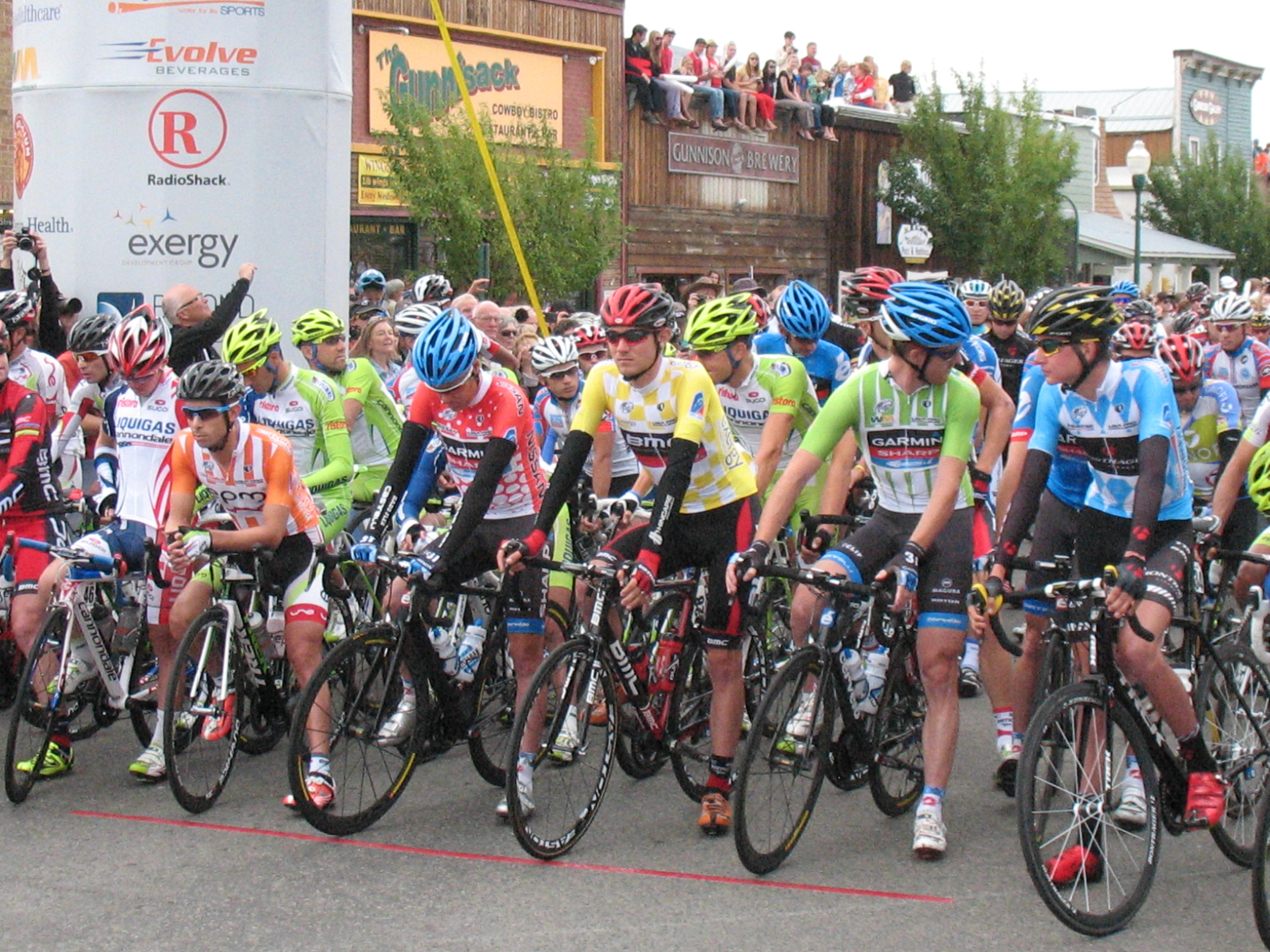
Free Denver B-Cycle rental on Sunday for the USA ProChallenge
Posted: August 25, 2012 Filed under: Cycling | Tags: B-Cycle, Bicycle Racing, Bike Rental, Colorado, Cycling, Denver, Sports, United States, USA Pro Cycling Challenge Leave a comment
|

 |


USA ProChallenge Cycling Race Photographs
Posted: August 24, 2012 Filed under: Cycling | Tags: Christian Vande Velde, Colorado, Independence Pass, Levi Leipheimer, Tom Danielson, USA Pro Challenge Leave a commentStage 2 Photos:
http://www.facebook.com/media/set/?set=a.488996181113566.119986.100000095662813&type=1&l=1d738f38c1
Stage 3 Photos
http://www.facebook.com/media/set/?set=a.488983937781457.119983.100000095662813&type=1&l=66cbfec513
Stage 4 Photos
http://www.facebook.com/media/set/?set=a.489459991067185.120174.100000095662813&type=1&l=35e28b2391

Denver Final Ride of the USA ProChallenge needs Volunteers. It is a great experience! Sign up today
Posted: August 24, 2012 Filed under: Cycling | Tags: Colorado, Cycling, Denver, Sport, USA, USA Pro Cycling Challenge, USA ProChallenge, Volunteer, Volunteering Leave a commentHave you been watching the USA Pro Cycling Challenge? It is amazing and it is right here in Colorado! BikeDenver will be at the Finish in Denver and we would love to have you join us. We are seeking volunteers from 2pm – 5pm to help with our Bike Parking. It is a great way to be part of the USA Pro Cycling Challenge on its final day in Colorado!

If you do not have a BikeDenver t-shirt one will be provided to you to wear while volunteering on Sunday.
For more information on Stage 7 of the USA Pro Cycling Challenge click here
To sign up to volunteer click here
Please do not hesitate to contact us if you have any questions.


USA ProChallenge Cycling Race Photographs
Posted: August 23, 2012 Filed under: Cycling Leave a commentStage 2 Photos:
http://www.facebook.com/media/set/?set=a.488996181113566.119986.100000095662813&type=1&l=1d738f38c1
Stage 3 Photos
http://www.facebook.com/media/set/?set=a.488983937781457.119983.100000095662813&type=1&l=66cbfec513
USA ProChallenge stage 2: Exciting and Exhausting
Posted: August 22, 2012 Filed under: Cycling | Tags: Colorado, Crested Butte, Crested Butte Colorado, Gunnison, Montrose, Tejay Van Garderen, United States, USA Pro Challenge Leave a commentTwo things stood out in the USA ProChallenge stage 2. Exhausted riders. So tired that just feet after the finish line they were holding on to the fences. Too tired to get off their bikes.
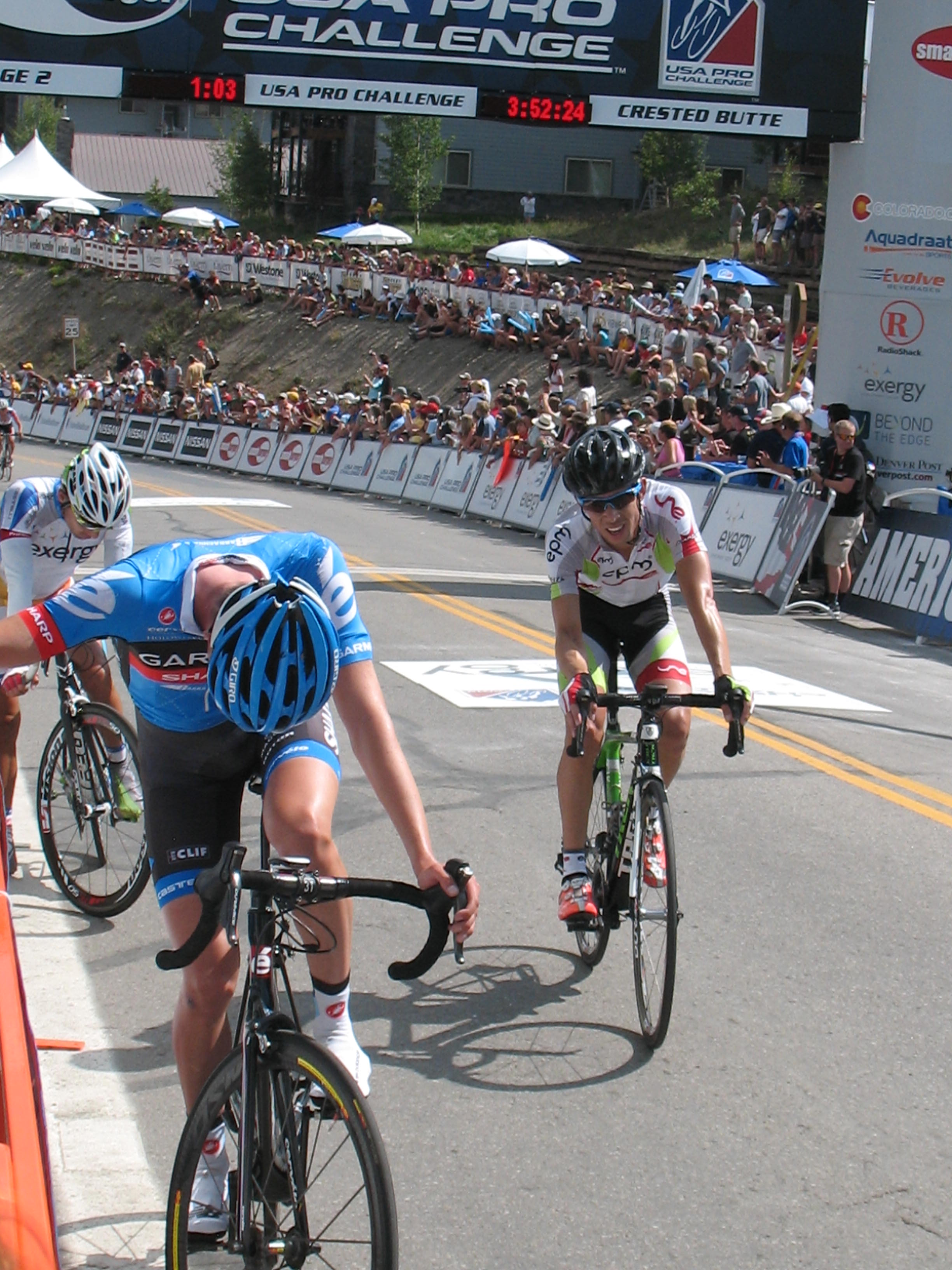
The second thing was Tejay Van Garderen (USA) of BMC Racing who had his first professional win.

Of Course there are always locals…….
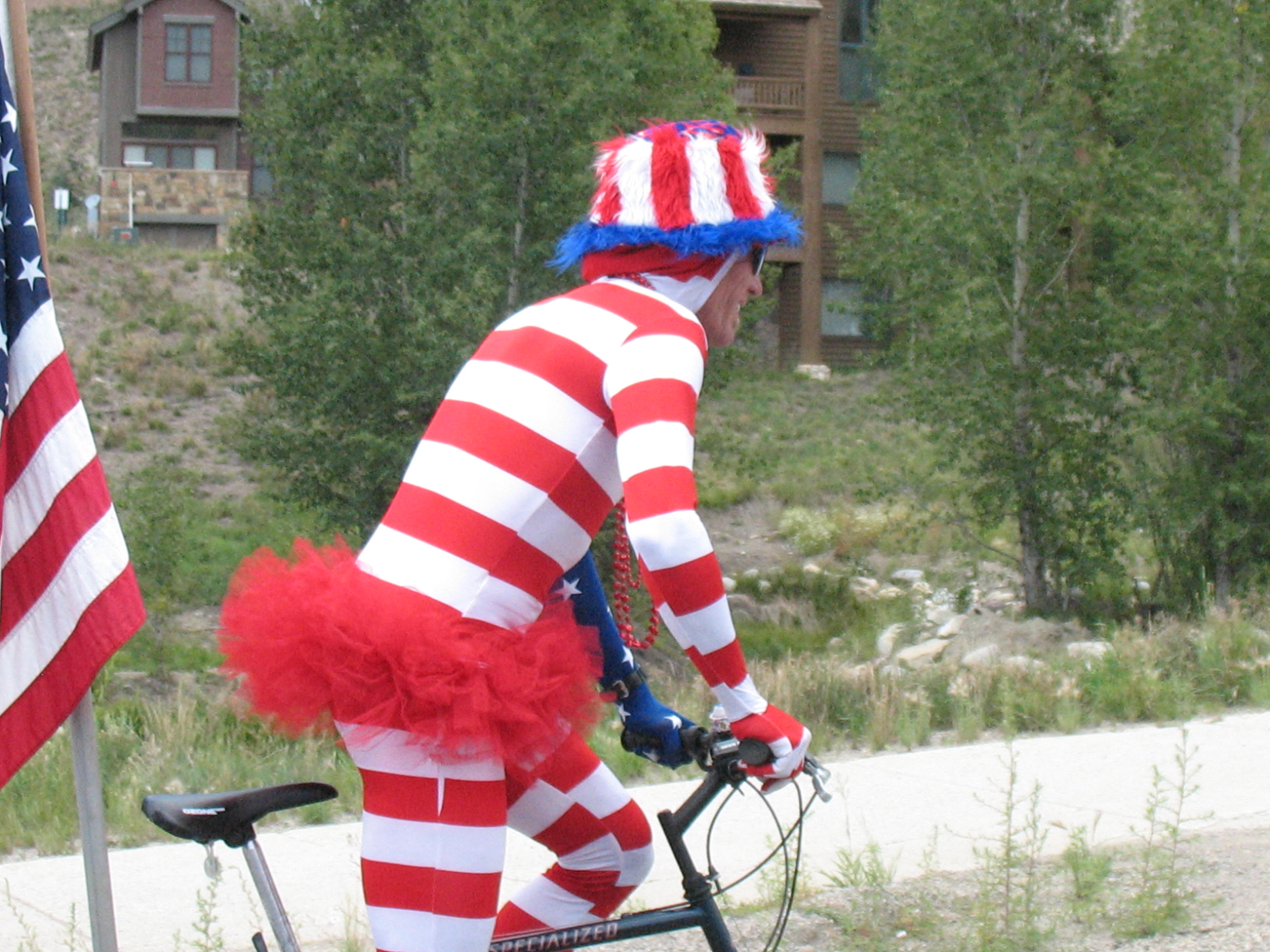
After every race the bikes are examined top to bottom front to back. Everything is cleaned, checked, lubed and put back together.

Can you say Truck Insurance?

I’m always curious what people think when something like this comes to town. Do the people who are working to make it happen think it is worth the effort.
At the 2011 ProChallenge I asked the Colorado State Highway Patrol motorcycle riders if they were having a good time. To a person they got big grins on their faces and said yes.
Today as I was driving up to Mt. Crested Butte I rolled down my window and asked a Gunnison law enforcement officer if it was worth the effort. I got the immediately politically correct yes. Then a second later there was a big smile and the officer looked at me and said yes nodding his head.
Many in a city like Montrose or Gunnison will look at the cost, the disruption and try to determine if there was “value” in bringing the 2012 ProChallenge to their town. I think in both cases, if you come close to breaking even, even in these tough times, putting a grin on a cops face, watching people cheering madly for every rider as they toil up the hills, seeing people just having a blast makes it very worthwhile!
Good job Mt. Crested Butte, Montrose, Gunnison and every community that helped bring this to Colorado today. I look forward to tomorrow.
Colorado Ski Country Gem card is now on sale. Best skiing deal in Colorado
Posted: August 16, 2012 Filed under: Skiing / Snow Boarding | Tags: Arapahoe Basin, CO, Colorado, Colorado Gems Card, Colorado Ski Country, Eldora Mountain Resort, Gem Card, Loveland Ski Area, Ski Cooper, Ski Country Leave a comment
2012/13 Colorado Ski Country USA Gems Card Helps Skiers Save More Money,
Ski More Powder
Now On Sale, 2012/13 Season Gems Card Features New Flash Deals
From left to right: Loveland_Dustin Schaefer, 2012/13 Colorado Gems Card, Arapahoe Basin, Monarch Mountain
Colorado Ski Country USA (CSCUSA) today announced that 2012/13 Colorado Gems Cards will feature a new Flash Deal component and are now available for purchase.
The Colorado Gems Card is a discount card for use at the Colorado Gem resorts. It offers deals and discounts that appeal to skiers and riders of all ages and abilities. In addition to the resorts upgraded season-long deals, there is a new component to this year’s Gems Card: Flash Deals. Flash Deals are special promotions and ways to save that are unique to each Gem resort and will be announced last minute throughout the season. CSCUSA will announce Flash Deals in the Gems newsletter, on social media, and on the Gems website www.ColoradoSki.com/gems. Only Colorado Gems Card holders will be able to take advantage of Flash Deals.
For many Gem resort skiers and riders, purchasing the Colorado Gems Card is part of their pre-season ritual as they gather the tools they need to get the most powder for their purchase. The 2012/13 Gems Card can save card holders hundreds of dollars in discounts and deals that can be enjoyed throughout the season. “The Gems Card unlocks a mountain of savings and has become a vital tool for savvy skiers and riders looking to get the most out of their ski season,” explains Melanie Mills, president and CEO of Colorado Ski Country USA. “And with this year’s added Flash Deals the potential for savings increases, allowing card holders to get even more value out of visiting their favorite Gems resorts this season.”
Purchasing the Gems Card before the ski season begins allows buyers to take full advantage of the card’s savings throughout the winter. Skiers and riders will get their money’s worth after using the card just one time. Multiple uses that take advantage of deals at the Gems resorts, plus utilizing the Flash Deals offered, could mean savings of thousands of dollars in one ski season. “Our Colorado season is typically one of the first to begin in North America, with a couple of our Gems resorts competing to be the first to open,” said Mills. “And because of the elevations of our ski areas, some of our Gems resorts are the last in the country to close, meaning that Gems Card holders have plenty of time to take advantage of one of the nation’s longest ski seasons.”

The $10 Gems Card puts Colorado’s world-renowned skiing within reach for skiers and riders from Colorado and elsewhere around the nation. Some of the discounts Gems Card holders can take advantage of in the 2012/13 season include:
· A free lift ticket at Monarch Mountain
· Two-for-one lift tickets at three different ski areas
· Savings on lift tickets at all eight Gems ski areas
The Colorado Gems program is presented by Icelantic Boards. Gems resorts are: Arapahoe Basin, Eldora Mountain Resort, Loveland Ski Area, Monarch Mountain, Powderhorn Resort, Ski Cooper, Ski Granby Ranch, and Sunlight Mountain Resort.
To purchase a Gems Card, visit www.ShopColoradoSki.com. Cards are available now and will be available throughout the upcoming ski season until they are sold out. They can also be purchased beginning in October at all Colorado Credit Union locations, a proud corporate partner of Colorado Ski Country USA.
Helmets: why cycling, skiing, skateboarding helmets don’t work
Posted: August 15, 2012 Filed under: Cycling, Skiing / Snow Boarding | Tags: Bicycle helmet, Bike Helmet, biking, CPSC, Cycling, Cycling Helmet, helmet, Helmets, skiing, UIAA 3 CommentsThanks to Brad Waldron at Kali Protectives for giving me the visual to explain this.
A helmet needs to absorb energy to work. The more energy a helmet absorbs the more protection a helmet provides. If you look at the inside of your helmet

what is there to absorb energy?
A helmet does not work by being a hard surface to protect your head from head injuries. Hard surfaces protect your head from pointed objects. Think Knights of the Round Table and spears and arrows. If you are riding a bike or skiing and someone is shooting arrows at you, you need a hard helmet.
Hitting the ground is different. Your brain bounces around inside your skill causing damage; a concussion. You need something to absorb the impact and soften the blow or extend the time the impact (force) is being applied to your head, which softens the blow. Helmets as they are currently used, do not do that.
Think about the issue this way. If you drop a weight on an egg, say 11 pounds from 4 feet the egg is going to smash. If you put a book on top of the egg and drop the 11-pound weight the egg is still going to smash. The amount of energy transmitted to the egg maybe reduced by the book; however, the energy reduction is not enough to protect the egg.
A Bicycle or ski helmet is the same way. There is some energy absorption, but not enough to protect your brain.
If you want to know why I picked 11 pounds from 4 feet that is the test for helmets. Watch Video of cycling helmet testing. No one is testing the force on the head, if the helmet absorbs any of the force, or if the impact broke your neck.
On top of that, always remember the helmet is tested with the impact landing in the center top of the helmet. When you fall to make sure you drive your head into the ground hitting the helmet in the center on top of your head to receive the maximum protection.
See for yourself. This is the UIAA (European) Test for Helmets.

This test is for climbing and some European ski helmets. In the US, a bike helmet and ski helmets are not tested for lateral force, slippage or chin strap strength.
There are some organizations that test the helmets to greater extremes such as Consumer Reports, but all they are doing is testing the helmet. They are not looking at whether the helmet protects your head. See Consumer Reports Bike Helmet Testing.
We are not testing whether a helmet looks good after an impact. We are testing whether the helmet protects your head from an impact and the drop test does not test that sufficiently, if at all.
If you want to test this yourself, figure a way to stick an egg under a helmet and drop a weight on the helmet. The egg is still going to crack or break.
Yes, your head is not an egg. It is just easier to see the results with an egg. The helmet did not decrease the pressure enough to protect the egg. The injury still occurred. If you could take the time to measure the breaking strength of an egg and then start below that number and drop weights on the helmet you would see a difference eventually which would be the amount of protections the helmet provides. However, that number would be small and probably no different from what a plastic bowl would do.
If you really want to test this, go buy two eggs. Drop one from 15 feet and see what happens to the egg. Tape the other one in your helmet and drop it from the same height. The egg will crack (and make a real mess in your helmet).
Want more laughs about this? Watch this video where a cardboard helmet does a better job of protecting your head, by absorbing more force, than a bicycle helmet. See Kranium helmet Crash Test
Yes, your head is not an egg. Yes, a helmet will protect you from minor hits. Yes, a helmet is probably better than not using a helmet, unless the process stops you from riding a bike or skiing. The health benefits of activity out weight the risk of a head injury.
If that is the case, then why not wear a helmet when you drive, shower or work in the kitchen. All three have a far greater risk of head injuries then cycling.
However, we have not looked at whether using helmets deters activities. See TEDxCopenhagen – Mikael Colville-Andersen – Why We Shouldn’t Bike with a Helmet. I love the fact the in the video Mr. Colville-Andersen lets you know that the helmet tests were designed for pedestrians wearing helmets. Also he points out that helmet laws do not reduce head injuries. They reduce the total number of people riding bikes, which results in a reduction of head injuries.
Nor have we looked at the issue of the advertised protection versus the real protection afforded by a helmet.
Finally, we have not looked at whether wearing a helmet makes you react in a way to protect other parts of your body rather than your head. If you fall you natural protect your head. Your arms go out to keep your head form hitting the ground and then your cradle your head from being hit or hitting the ground. This accounts for tons of videos and statements when people hold up their battered helmet and say my helmet saved my life.
However, a helmet will not save your life. If you want to be cool and have a helmet that might protect your head watch this video: Hövding krocktest
But without bike and ski helmets where would we mount our video cameras?
References:

Gourley, Jim, Bicycle Times August 1, 2011, Pull Your Head Out of Your…Helmet
Kim Gorgens: Protecting the brain against concussion
A.J. Jacobs: How healthy living nearly killed me
TEDxCopenhagen – Mikael Colville-Andersen – Why We Shouldn’t Bike with a Helmet
Other Articles on Helmets:
A father of a deceased skier pushing for a helmet law in New Jersey.
A helmet manufacture understands the issues(Uvex, Mouthguards)
A new idea that makes sense in helmets: the Bern Hard Hat
Does being safe make us stupid? Studies say yes.
Great article on why helmet laws are stupid
Great editorial questioning why we need laws to “protect” us from ourselves.
Helmet death ignited by misconception and famous personalities
Helmets do not increase risk of a neck injury when skiing
I could not make my son wear a helmet so I’m going to make you wear one
Mixed emotions, but a lot of I told you so.
OSHA Officially recommending helmets for ski area employees
Other Voice on the Helmet Debate
Recent UK poll shows that 10% of cyclists would quite biking if there was a compulsory helmet law.
Skiing/Boarding Helmets and what is the correct message
Survey of UK physicians shows them against mandatory bicycle helmet laws.
What do you think? Leave a comment.
If you like this let your friends know or post it on FB, Twitter or LinkedIn
Copyright 2012 Recreation Law (720) Edit Law
Twitter: RecreationLaw
Facebook: Rec.Law.Now
Facebook Page: Outdoor Recreation & Adventure Travel Law
Mobile Site: http://m.recreation-law.com
#RecreationLaw, #@RecreationLaw, #Cycling.Law #Fitness.Law, #Ski.Law, #Outside.Law, #Recreation.Law, #Recreation-Law.com, #Outdoor Law, #Recreation Law, #Outdoor Recreation Law, #Adventure Travel Law, #law, #Travel Law, #Jim Moss, #James H. Moss, #Attorney at Law, #Tourism, #Adventure Tourism, #Rec-Law, #Rec-Law Blog, #Recreation Law, #Recreation Law Blog, #Risk Management, #Human Powered, #Human Powered Recreation,# Cycling Law, #Bicycling Law, #Fitness Law, #Recreation-Law.com, #Backpacking, #Hiking, #Mountaineering, #Ice Climbing, #Rock Climbing, #Ropes Course, #Challenge Course, #Summer Camp, #Camps, #Youth Camps, #Skiing, #Ski Areas, #Negligence, #Snowboarding, #RecreationLaw, #@RecreationLaw, #Cycling.Law #Fitness.Law, #SkiLaw, #Outside.Law, #Recreation.Law, #RecreationLaw.com, #OutdoorLaw, #RecreationLaw, #OutdoorRecreationLaw, #AdventureTravelLaw, #Law, #TravelLaw, #JimMoss, #JamesHMoss, #AttorneyatLaw, #Tourism, #AdventureTourism, #RecLaw, #RecLawBlog, #RecreationLawBlog, #RiskManagement, #HumanPowered, #HumanPoweredRecreation,# CyclingLaw, #BicyclingLaw, #FitnessLaw, #RecreationLaw.com, #Backpacking, #Hiking, #Mountaineering, #IceClimbing, #RockClimbing, #RopesCourse, #ChallengeCourse, #SummerCamp, #Camps, #YouthCamps, #Skiing, #Ski Areas, #Negligence, #Snowboarding, sport and recreation laws, ski law, cycling law, Colorado law, law for recreation and sport managers, bicycling and the law, cycling and the law, ski helmet law, skiers code, skiing accidents, Recreation Lawyer, Ski Lawyer, Paddlesports Lawyer, Cycling Lawyer, Recreational Lawyer, Fitness Lawyer, Rec Lawyer, Challenge Course Lawyer, Ropes Course Lawyer, Zip Line Lawyer, Rock Climbing Lawyer, Adventure Travel Lawyer, Outside Lawyer, Recreation Lawyer, Ski Lawyer, Paddlesports Lawyer, Cycling Lawyer, #RecreationalLawyer, #FitnessLawyer, #RecLawyer, #ChallengeCourseLawyer, #RopesCourseLawyer, #ZipLineLawyer, #RockClimbingLawyer, #AdventureTravelLawyer, #OutsideLawyer, Helmet, Helmets, Testing, UIAA, CPSC, Bicycle, Ski,
WordPress Tags: Helmets,Thanks,Brad,Waldron,Kali,helmet,energy,protection,injuries,Hard,Think,Knights,Round,Table,arrows,bike,brain,skill,impact,feet,reduction,Bicycle,absorption,Watch,Video,neck,UIAA,European,Test,chin,strength,extremes,Consumer,Reports,injury,weights,difference,protections,Drop,Tape,Want,Kranium,Crash,health,kitchen,TEDxCopenhagen,Mikael,Colville,Andersen,Shouldn,fact,pedestrians,Also,laws,bikes,statements,life,References,Gourley,Times,August,Pull,Head,Gorgens,Jacobs,Articles,Jersey,Uvex,Mouthguards,Bern,California,boarders,governor,signature,Does,Studies,Great,article,death,misconception,personalities,legislator,emotions,information,hour,National,Goods,Association,Areas,OSHA,area,employees,Voice,Debate,Recent,message,Survey,physicians,Leave,Twitter,LinkedIn,Recreation,Edit,RecreationLaw,Facebook,Page,Outdoor,Adventure,Travel,Blog,Mobile,Site,Outside,Moss,James,Attorney,Tourism,Risk,Management,Human,Rock,Ropes,Course,Challenge,Summer,Camp,Camps,Youth,Negligence,SkiLaw,OutdoorLaw,OutdoorRecreationLaw,AdventureTravelLaw,TravelLaw,JimMoss,JamesHMoss,AttorneyatLaw,AdventureTourism,RecLaw,RecLawBlog,RecreationLawBlog,RiskManagement,HumanPoweredRecreation,CyclingLaw,BicyclingLaw,FitnessLaw,RopesCourse,ChallengeCourse,SummerCamp,YouthCamps,Colorado,managers,accidents,Lawyer,Paddlesports,Recreational,Line,RecreationalLawyer,FitnessLawyer,RecLawyer,ChallengeCourseLawyer,RopesCourseLawyer,ZipLineLawyer,RockClimbingLawyer,AdventureTravelLawyer,OutsideLawyer,CPSC,concussion,whether,skiers
Delaware decision upholds a release signed by a parent against a minor’s claims
Posted: August 13, 2012 Filed under: Delaware, Health Club, Playground | Tags: Adventure travel, DE, Delaware, Delaware Supreme Court, Hockessin Delaware, Minor, New Castle County Delaware, Release Leave a commentHong v. Hockessin Athletic Club, 2012 Del. Super. LEXIS 340
One more state recognizes the need to allow people to decide to waive a claim to allow their children to participate.
In this case, the mother of the injured child filed a claim after the child was hurt on playground equipment at a health club. The child was three years old when he fell and broke his arm.
The release was contained in the Membership Application and Agreement. Both parents signed the agreement and listed their three children on the agreement as members of the club.
The plaintiffs sued for negligence, which was not clearly defined in the case or as set forth by the court in the complaint.
Summary of the case
Delaware requires that the language in a release be crystal clear and unequivocal. The parties to the release must contemplate a release when they make the agreement. The crystal clear and unequivocal language is met if the contract provisions include language “specifically referring to the negligence of the protected party.” The court in reviewing the release stated:
Here, Hong signed a comprehensive waiver of liability and release in connection with her Membership Agreement that expressly stated that she (and all others on her membership) assumed the risk of “any injury or damage incurred while engaging in any physical exercise or activity or use of any club facility on the premises,” including the use of “any equipment in the facility” and participation “in any activity, class, program, instruction, or any event sponsored by HAC.”
HAC is the acronym for the defendant health club, Hockessin Athletic Club.
The plaintiff argued that the release only applied to activities “sponsored” by HAC such as classes, not just injuries from being there.
The court then looked at the complaint on its whole and found the complaint failed to allege any claim of negligence with specificity. Consequently, the court found the complaint also was to be dismissed because the complaint failed to state a claim.
So Now What?
Maybe this will place Delaware in the category of a state where a parent can sign away a minor’s right to sue. However, this is a decision of the trial court, and this case can still be appealed to the Delaware Supreme Court. If this case is not appealed, it may be the start.
So for the time being, you cannot rely on this case, and you probably can only rely on it if it is not appealed for the County of New Castle Delaware.
This case also points out the importance of making sure your release is written correctly. Here the court stated that a release must include the word negligence of the defendant or person to be protected.
 James H. “Jim” Moss |
Jim Moss is an attorney specializing in the legal issues of the outdoor recreation community. He represents guides, guide services, outfitters both as businesses and individuals and the products they use for their business. He has defended Mt. Everest guide services, summer camps, climbing rope manufacturers, avalanche beacon manufacturers, and many more manufacturers and outdoor industries. Contact Jim at Jim@Rec-Law.us |
Jim is the author or co-author of six books about the legal issues in the outdoor recreation world; the latest is Outdoor Recreation Insurance, Risk Management
Outdoor Recreation Insurance, Risk Management, and Law
To see Jim’s complete bio go here and to see his CV you can find it here. To find out the purpose of this website go here.
G-YQ06K3L262
What do you think? Leave a comment.
If you like this let your friends know or post it on FB, Twitter or LinkedIn
 |
 |
 Threads |
 X (formerly known as Twitter) logo |
 Blue Sky |
 Stimulus |
Author: Outdoor Recreation Insurance, Risk Management and Law
Facebook Page: Outdoor Recreation & Adventure Travel Law
Email: Jim@Rec-Law.US
By Recreation Law Rec-law@recreation-law.com James H. Moss
@2024 Summit Magic Publishing, LLC
#RecreationLaw, #@RecreationLaw, #Cycling.Law #Fitness.Law, #Ski.Law, #Outside.Law, #Recreation.Law, #Recreation-Law.com, #Outdoor Law, #Recreation Law, #Outdoor Recreation Law, #Adventure Travel Law, #law, #Travel Law, #Jim Moss, #James H. Moss, #Attorney at Law, #Tourism, #Adventure Tourism, #Rec-Law, #Rec-Law Blog, #Recreation Law, #Recreation Law Blog, #Risk Management, #Human Powered, #Human Powered Recreation,# Cycling Law, #Bicycling Law, #Fitness Law, #Recreation-Law.com, #Backpacking, #Hiking, #Mountaineering, #Ice Climbing, #Rock Climbing, #Ropes Course, #Challenge Course, #Summer Camp, #Camps, #Youth Camps, #Skiing, #Ski Areas, #Negligence, #Snowboarding, #RecreationLaw, #@RecreationLaw, #Cycling.Law #Fitness.Law, #SkiLaw, #Outside.Law, #Recreation.Law, #RecreationLaw.com, #OutdoorLaw, #RecreationLaw, #OutdoorRecreationLaw, #AdventureTravelLaw, #Law, #TravelLaw, #JimMoss, #JamesHMoss, #AttorneyatLaw, #Tourism, #AdventureTourism, #RecLaw, #RecLawBlog, #RecreationLawBlog, #RiskManagement, #HumanPowered, #HumanPoweredRecreation,# CyclingLaw, #BicyclingLaw, #FitnessLaw, #RecreationLaw.com, #Backpacking, #Hiking, #Mountaineering, #IceClimbing, #RockClimbing, #RopesCourse, #ChallengeCourse, #SummerCamp, #Camps, #YouthCamps, #Skiing, #Ski Areas, #Negligence, #Snowboarding, sport and recreation laws, ski law, cycling law, Colorado law, law for recreation and sport managers, bicycling and the law, cycling and the law, ski helmet law, skiers code, skiing accidents, Recreation Lawyer, Ski Lawyer, Paddlesports Lawyer, Cycling Lawyer, Recreational Lawyer, Fitness Lawyer, Rec Lawyer, Challenge Course Lawyer, Ropes Course Lawyer, Zip Line Lawyer, Rock Climbing Lawyer, Adventure Travel Lawyer, Outside Lawyer, Recreation Lawyer, Ski Lawyer, Paddlesports Lawyer, Cycling Lawyer, #RecreationalLawyer, #FitnessLawyer, #RecLawyer, #ChallengeCourseLawyer, #RopesCourseLawyer, #ZipLineLawyer, #RockClimbingLawyer, #AdventureTravelLawyer, #OutsideLawyer, Health Club, Hockessin Athletic Club, Eastern Athletic Clubs, LLC, minor, Delaware, DE, release, parent
WordPress Tags: Delaware,decision,Hong,Hockessin,Athletic,Club,Super,LEXIS,playground,equipment,health,Membership,Application,Agreement,Both,parents,plaintiffs,negligence,complaint,Summary,crystal,Here,waiver,connection,injury,premises,participation,instruction,event,acronym,defendant,plaintiff,injuries,Maybe,category,Supreme,Court,Castle,importance,person,Leave,Twitter,LinkedIn,Recreation,Edit,RecreationLaw,Facebook,Page,Outdoor,Adventure,Travel,Blog,Mobile,Site,Outside,Moss,James,Attorney,Tourism,Risk,Management,Human,Rock,Ropes,Course,Challenge,Summer,Camp,Camps,Youth,Areas,SkiLaw,OutdoorLaw,OutdoorRecreationLaw,AdventureTravelLaw,TravelLaw,JimMoss,JamesHMoss,AttorneyatLaw,AdventureTourism,RecLaw,RecLawBlog,RecreationLawBlog,RiskManagement,HumanPoweredRecreation,CyclingLaw,BicyclingLaw,FitnessLaw,RopesCourse,ChallengeCourse,SummerCamp,YouthCamps,Colorado,managers,helmet,accidents,Lawyer,Paddlesports,Recreational,Line,RecreationalLawyer,FitnessLawyer,RecLawyer,ChallengeCourseLawyer,RopesCourseLawyer,ZipLineLawyer,RockClimbingLawyer,AdventureTravelLawyer,OutsideLawyer,Eastern,Clubs,three
2012 International Snow Science Workshop
Posted: August 9, 2012 Filed under: Avalanche | Tags: Alaska, American Avalanche Association, Anchorage Alaska, avalanche, Matthew Sturm, Mount McKinley, National Park Service, Northern Hemisphere, Snow Science, United States Leave a comment
|


USA Cycling announces 100K Challenge athlete incentive program
Posted: August 2, 2012 Filed under: Cycling | Tags: 2012 Summer Olympics, Bronze Medal, Colorado Springs, Gold Medal, London, London Olympic Games, Olympic Games, Olympis, Silver Medal, United States, United States Olympic Committee, USA Cycling Leave a comment
|
||||||||


Denver Bike Sharing Reaches 100,000 Trip Mark! For 2012
Posted: July 26, 2012 Filed under: Cycling | Tags: Cycling, Denver, Denver B-cycle, Denver Bike Share Leave a comment
|


New Colorado State Patrol video on Colorado’s 3 Foot Passing Law. AWESOME!!! So why can’t you find it?
Posted: July 25, 2012 Filed under: Colorado, Cycling | Tags: 3' to Pass, Colorado, Colorado State Patrol, CSP, Cycling, Law, Law enforcement agency Leave a commentThis should be part of every driver’s education class and every grade-school class too.
This video was created by the Colorado State Patrol. It is clean quick and extremely well done. It explains Colorado’s 3 feet to pass law. The law requires  motorists to pass a cyclist if there are at least 3’ between the vehicle and the cyclists. If not the vehicle must slow down.
The bad news, you can’t find it on the Colorado State Patrol website. In fact, you can’t find it anywhere except here. By right clicking on the post, I found it on YouTube here. But what a nightmare.
Anyway, back to the good job CSP did!
Colorado’s 3’ passing law called C.R.S. 42-4-1002 can be found here.
What happens?
There are several different options available to a cyclist or motorists if they see a violation of the 3’ to pass law or any other law. The first is to notify the CSP. *277 (*CSP) on your cell phone connects you to the CSP dispatch. You can file a complaint with them by phone. This information is from the CSP website.
Remember, a complaint, unless a felony or injury without a license plate won’t get a response. (This is real life, not TV.)
It takes three complaints about the same license plate number before the CSP is going to respond. So in some (not all) cases it may appear that CSP or any other law enforcement agency is not doing anything.
An accident requires the law enforcement agency to respond.
Colorado also allows you to make a citizen’s arrest. I would use this power only when you have other witnesses or evidence of the crime. Here is the statute: C.R.S. 16-3-201. Arrest by a private person
A person who is not a peace officer may arrest another person when any crime has been or is being committed by the arrested person in the presence of the person making the arrest.
Furthermore, make sure you know the law that you are using to make the arrest.
What do you think? Leave a comment.
If you like this let your friends know or post it on FB, Twitter or LinkedIn.
Copyright 2012 Recreation Law (720) Edit Law
Twitter: RecreationLaw
Facebook: Rec.Law.Now
Facebook Page: Outdoor Recreation & Adventure Travel Law
Mobile Site: http://m.recreation-law.com
#RecreationLaw, #@RecreationLaw, #Cycling.Law #Fitness.Law, #Ski.Law, #Outside.Law, #Recreation.Law, #Recreation-Law.com, #Outdoor Law, #Recreation Law, #Outdoor Recreation Law, #Adventure Travel Law, #law, #Travel Law, #Jim Moss, #James H. Moss, #Attorney at Law, #Tourism, #Adventure Tourism, #Rec-Law, #Rec-Law Blog, #Recreation Law, #Recreation Law Blog, #Risk Management, #Human Powered, #Human Powered Recreation,# Cycling Law, #Bicycling Law, #Fitness Law, #Recreation-Law.com, #Backpacking, #Hiking, #Mountaineering, #Ice Climbing, #Rock Climbing, #Ropes Course, #Challenge Course, #Summer Camp, #Camps, #Youth Camps, #Skiing, #Ski Areas, #Negligence, #Snowboarding, #RecreationLaw, #@RecreationLaw, #Cycling.Law #Fitness.Law, #SkiLaw, #Outside.Law, #Recreation.Law, #RecreationLaw.com, #OutdoorLaw, #RecreationLaw, #OutdoorRecreationLaw, #AdventureTravelLaw, #Law, #TravelLaw, #JimMoss, #JamesHMoss, #AttorneyatLaw, #Tourism, #AdventureTourism, #RecLaw, #RecLawBlog, #RecreationLawBlog, #RiskManagement, #HumanPowered, #HumanPoweredRecreation,# CyclingLaw, #BicyclingLaw, #FitnessLaw, #RecreationLaw.com, #Backpacking, #Hiking, #Mountaineering, #IceClimbing, #RockClimbing, #RopesCourse, #ChallengeCourse, #SummerCamp, #Camps, #YouthCamps, #Skiing, #Ski Areas, #Negligence, #Snowboarding, sport and recreation laws, ski law, cycling law, Colorado law, law for recreation and sport managers, bicycling and the law, cycling and the law, ski helmet law, skiers code, skiing accidents, Recreation Lawyer, Ski Lawyer, Paddlesports Lawyer, Cycling Lawyer, Recreational Lawyer, Fitness Lawyer, Rec Lawyer, Challenge Course Lawyer, Ropes Course Lawyer, Zip Line Lawyer, Rock Climbing Lawyer, Adventure Travel Lawyer, Outside Lawyer, Recreation Lawyer, Ski Lawyer, Paddlesports Lawyer, Cycling Lawyer, #RecreationalLawyer, #FitnessLawyer, #RecLawyer, #ChallengeCourseLawyer, #RopesCourseLawyer, #ZipLineLawyer, #RockClimbingLawyer, #AdventureTravelLawyer, #OutsideLawyer, #Colorado, #Cycling, State Patrol #CSP,
WordPress Tags: Colorado,State,Patrol,Foot,AWESOME,driver,education,feet,motorists,vehicle,news,fact,YouTube,Anyway,options,violation,cell,complaint,information,Remember,felony,injury,response,life,complaints,enforcement,agency,accident,citizen,crime,Here,statute,Arrest,person,peace,officer,presence,Leave,Twitter,LinkedIn,Recreation,Edit,RecreationLaw,Facebook,Page,Outdoor,Adventure,Travel,Blog,Mobile,Site,Outside,Moss,James,Attorney,Tourism,Risk,Management,Human,Rock,Ropes,Course,Challenge,Summer,Camp,Camps,Youth,Areas,Negligence,SkiLaw,OutdoorLaw,OutdoorRecreationLaw,AdventureTravelLaw,TravelLaw,JimMoss,JamesHMoss,AttorneyatLaw,AdventureTourism,RecLaw,RecLawBlog,RecreationLawBlog,RiskManagement,HumanPoweredRecreation,CyclingLaw,BicyclingLaw,FitnessLaw,RopesCourse,ChallengeCourse,SummerCamp,YouthCamps,managers,helmet,accidents,Lawyer,Paddlesports,Recreational,Line,RecreationalLawyer,FitnessLawyer,RecLawyer,ChallengeCourseLawyer,RopesCourseLawyer,ZipLineLawyer,RockClimbingLawyer,AdventureTravelLawyer,OutsideLawyer,cyclist,website
New York Decision explains the doctrine of Primary Assumption of the Risk for cycling.
Posted: July 23, 2012 Filed under: Assumption of the Risk, Cycling, New York | Tags: Bike Club, Cycling, Cycling Club, Mountain biking, New York, Organizations, Pace Line, Paceline, Sport, United States 2 CommentsCotty v Town of Southampton, et al., 2009 NY Slip Op 4020; 64 A.D.3d 251; 880 N.Y.S.2d 656; 2009 N.Y. App. Div. LEXIS 3919
Basically, in New York, for injuries from the path or roadway, you assume the risk of mountain biking, and you probably did not assume the risk of road biking.
The plaintiff was a member of a bicycle club and was on a club ride. The ride was a 72-mile ride, and she was part of the pace line. A pace line is a group of cyclists riding single file. When the lead cyclist starts to tire or slow that cyclist pulls out of the line and drifts to the rear, and the 2nd cyclist takes over the front spot. A pace line allows the cyclists to go faster easily because each is taking a turn at the front doing 100% of the work, and the cyclists in the back a re conserving energy.
The cyclist in front of the plaintiff went down in a construction area when he was unable to negotiate the lip between paving areas. The plaintiff tried to avoid the downed cyclists sliding into the roadway into a car.
The defendants were the construction company working on the road, the city that owned the road, other government entities, and the cyclists who went down in front of the plaintiff.
The city defendant filed this motion for summary judgment arguing the plaintiff could not sue because of the doctrine of primary assumption of the risk. In New York, Primary Assumption of the Risk prevents suits in sporting or athletic events from “conduct or conditions that are inherent in the sport or activity.”
The trial court denied the motion, and this appeal followed. The appellate court looked at the issue as to whether the plaintiff was engaging in an activity that subjected her to the doctrine. That is, was the plaintiff when riding a bike in this manner engaging in a sporting event or athletic activity.
Appellate Court Analysis
The court did a thorough review of the issues in this case as they applied to the doctrine of primary assumption of the risk. The court defined the doctrine as:

English: An animation of a group of cyclists riding in a chain gang or pace line. (Photo credit: Wikipedia)
…a person who voluntarily participates in a sporting activity generally consents, by his or her participation, to those injury-causing events, conditions, and risks which are inherent in the activity…. Risks inherent in a sporting activity are those which are known, apparent, natural, or reasonably foreseeable consequences of the participation.
The effect of a plaintiff consenting to the risk (even if the plaintiff is not voluntarily or knowingly consenting) is to relieve the defendant of the duty of care that would otherwise exist in the sport or activity.
Accordingly, when a plaintiff assumes the risk of participating in a sporting event, “the defendant is relieved of legal duty to the plaintiff; and being under no duty, he cannot be charged with negligence
The reason for the doctrine is to create free and vigorous participation in athletic activities. If the doctrine did not exist with regard to sporting events, players would not fully participate, not play hard for fear of legal liability for doing so. However, the doctrine does not apply to conduct on the part of a defendant who increases the risk of harm to the plaintiff.
The doctrine not only applies to the other players in the sport or activity; it has been applied to the playing surface, the field. “If the playing surface is as safe as it appears to be, and the condition in question is not concealed such that it unreasonably increases risk assumed by the players, the doctrine applies.”
The court then looked at the facts of the case to see if the plaintiff fell into the purview of the doctrine of assumption of the risk. The court first looked at what the doctrine did not apply to with regard to municipalities.
The doctrine is not designed to relieve a municipality of its duty to maintain its roadways in a safe condition [“the doctrine of assumption of risk does not exculpate a landowner from liability for ordinary negligence in maintaining a premises”]), and such a result does not become justifiable merely because the roadway in question happens to be in use by a person operating a bicycle, as opposed to some other means of transportation….
The court reviewed mountain biking cases first and found in three situations that other courts had applied the doctrine to issues with the trail. Mountain bikers striking an exposed tree root, riding into holes in the trail, or hitting potholes or ruts in the path were all found to be subject to the doctrine and barred suit by the plaintiff.
The court looked at road biking on streets and found the courts had held in those situations that the doctrine did not apply.
…plaintiffs, who were injured while riding their bicycles on paved pathways in public parks, “cannot be said as a matter of law to have assumed risk of being injured as a result of a defective condition on a paved pathway merely because [they] participated in the activity of bicycling
Consequently, this court could not say that the plaintiff’s activities at the time of her injuries were such that the doctrine of assumption of the risk would bar her suit.
…primary assumption of risk did not apply to a plaintiff who was injured when his bicycle struck a raised concrete mound on a public roadway, even though the plaintiff, like the plaintiff in the instant case, was “an avid bicyclist” and was participating in “a noncompetitive, recreational bicycle ride with about eight or nine other riders
…riding a bicycle on a paved public roadway normally does not constitute a sporting activity for purposes of applying the primary assumption of risk doctrine. By contrast, mountain biking, and other forms of off-road bicycle riding, can more readily be classified as sporting activity. Indeed, the irregular surface of an unimproved dirt bike path is “presumably the very challenge that attracts dirt bike riders as opposed to riding on a paved surface
One interesting point the court made was differentiating between the doctrine of primary assumption of the risk and comparative negligence which had incorporated a simple assumption of the risk into it. The defendant had argued that the plaintiff assumed the risk of riding too closely behind the defendant who fell in front of her. The court held that was a comparative negligence issue for the jury, not an example of a primary assumption of the risk.
Primary assumption of the risk is the play of the game, the sport, or the surface. If the plaintiff’s injuries arise from how the plaintiff played the game then that is an issue of contributory negligence.
So Now What?

English: Tour de Romandie 2009 – 3rd stage – team time trial Français : Tour de Romandie 2009 – 3e étape – contre-la-montre par équipes (Photo credit: Wikipedia)
Whether or not a government entity would be liable for an injury on the roadway is going to be specific by state. New York has a reputation of allowing suits
against municipalities for such things. As such most other states probably would not. However, that requires a state-by-state review which you should have conducted if needed in your state.
What comes from this lawsuit that you can do if you operate a cycling club or run a ride (such as a retailer) is to have all riders sign a release that protects the club and other riders. The defendant in this case who fell in front of the plaintiff was sued for falling down on a bicycle. That seems absurd to me.
If you run a club, event, or ride, make sure that an injured party cannot come back and sue you or other riders for something that is a part of cycling. If you do not believe that cyclists fall, watch the first 10 days of the 2012 Tour de France!
What do you think? Leave a comment.
|
James H. “Jim” Moss |
Jim Moss is an attorney specializing in the legal issues of the outdoor recreation community. He represents guides, guide services, and outfitters both as businesses and individuals and the products they use for their business. He has defended Mt. Everest guide services, summer camps, climbing rope manufacturers; avalanche beacon manufacturers, and many more manufacturers and outdoor industries. Contact Jim at Jim@Rec-Law.us |
Jim is the author or co-author of eight books about legal issues in the outdoor recreation world; the latest is Outdoor Recreation Insurance, Risk Management,
Outdoor Recreation Insurance, Risk Management, and Law
To see Jim’s complete bio go here and to see his CV you can find it here. To find out the purpose of this website go here.
If you are interested in having me write your release, download the form and return it to me.
Connect
If you like this let your friends know or post it on FB, Twitter, or LinkedIn
Facebook Page: Outdoor Recreation & Adventure Travel Law
LinkedIn https://www.linkedin.com/in/recreationlaw/
Threads https://www.threads.net/@recreation_law
X https://twitter.com/RecreationLaw
Email: Jim@Rec-Law.US
By Recreation Law Rec-law@recreation-law.com James H. Moss
@2012-2023 Summit Magic Publishing, LLC
G-YQ06K3L262
#RecreationLaw, #@RecreationLaw, #Cycling.Law #Fitness.Law, #Ski.Law, #Outside.Law, #Recreation.Law, #Recreation-Law.com, #Outdoor Law, #Recreation Law, #Outdoor Recreation Law, #Adventure Travel Law, #law, #Travel Law, #Jim Moss, #James H. Moss, #Attorney at Law, #Tourism, #Adventure Tourism, #Rec-Law, #Rec-Law Blog, #Recreation Law, #Recreation Law Blog, #Risk Management, #Human Powered, #Human Powered Recreation,# Cycling Law, #Bicycling Law, #Fitness Law, #Recreation-Law.com, #Backpacking, #Hiking, #Mountaineering, #Ice Climbing, #Rock Climbing, #Ropes Course, #Challenge Course, #Summer Camp, #Camps, #Youth Camps, #Skiing, #Ski Areas, #Negligence, #Snowboarding, #RecreationLaw, #@RecreationLaw, #Cycling.Law #Fitness.Law, #SkiLaw, #Outside.Law, #Recreation.Law, #RecreationLaw.com, #OutdoorLaw, #RecreationLaw, #OutdoorRecreationLaw, #AdventureTravelLaw, #Law, #TravelLaw, #JimMoss, #JamesHMoss, #AttorneyatLaw, #Tourism, #AdventureTourism, #RecLaw, #RecLawBlog, #RecreationLawBlog, #RiskManagement, #HumanPowered, #HumanPoweredRecreation,# CyclingLaw, #BicyclingLaw, #FitnessLaw, #RecreationLaw.com, #Backpacking, #Hiking, #Mountaineering, #IceClimbing, #RockClimbing, #RopesCourse, #ChallengeCourse, #SummerCamp, #Camps, #YouthCamps, #Skiing, #Ski Areas, #Negligence, #Snowboarding, sport and recreation laws, ski law, cycling law, Colorado law, law for recreation and sport managers, bicycling and the law, cycling and the law, ski helmet law, skiers code, skiing accidents, Recreation Lawyer, Ski Lawyer, Paddlesports Lawyer, Cycling Lawyer, Recreational Lawyer, Fitness Lawyer, Rec Lawyer, Challenge Course Lawyer, Ropes Course Lawyer, Zip Line Lawyer, Rock Climbing Lawyer, Adventure Travel Lawyer, Outside Lawyer, Recreation Lawyer, Ski Lawyer, Paddlesports Lawyer, Cycling Lawyer, #RecreationalLawyer, #FitnessLawyer, #RecLawyer, #ChallengeCourseLawyer, #RopesCourseLawyer, #ZipLineLawyer, #RockClimbingLawyer, #AdventureTravelLawyer, #OutsideLawyer, #NY, New York, Cycling,
WordPress Tags: York,Decision,doctrine,Primary,Assumption,Risk,Town,Southampton,Slip,LEXIS,injuries,path,roadway,mountain,road,plaintiff,member,bicycle,energy,construction,area,areas,defendants,government,entities,defendant,judgment,events,bike,manner,event,Appellate,Court,Analysis,person,participation,injury,Risks,consequences,negligence,players,municipalities,roadways,landowner,premises,transportation,situations,bikers,tree,potholes,ruts,streets,plaintiffs,bicycles,pathways,parks,pathway,mound,riders,purposes,dirt,jury,example,Whether,reputation,lawsuit,retailer,Tour,France,Leave,Twitter,LinkedIn,Recreation,Edit,RecreationLaw,Facebook,Page,Outdoor,Adventure,Travel,Blog,Mobile,Site,Outside,Moss,James,Attorney,Tourism,Management,Human,Rock,Ropes,Course,Challenge,Summer,Camp,Camps,Youth,SkiLaw,OutdoorLaw,OutdoorRecreationLaw,AdventureTravelLaw,TravelLaw,JimMoss,JamesHMoss,AttorneyatLaw,AdventureTourism,RecLaw,RecLawBlog,RecreationLawBlog,RiskManagement,HumanPoweredRecreation,CyclingLaw,BicyclingLaw,FitnessLaw,RopesCourse,ChallengeCourse,SummerCamp,YouthCamps,Colorado,managers,helmet,accidents,Lawyer,Paddlesports,Recreational,Line,RecreationalLawyer,FitnessLawyer,RecLawyer,ChallengeCourseLawyer,RopesCourseLawyer,ZipLineLawyer,RockClimbingLawyer,AdventureTravelLawyer,OutsideLawyer,cyclists
Cotty v Town of Southampton, et al., 2009 NY Slip Op 4020; 64 A.D.3d 251; 880 N.Y.S.2d 656; 2009 N.Y. App. Div. LEXIS 3919
Posted: July 23, 2012 Filed under: Assumption of the Risk, Cycling, Legal Case, New York | Tags: Bike Club, Cycling, Cycling Club, New York, New York Supreme Court, New York Supreme Court Appellate Division, Pace Line, Summary judgment, Supreme Court Leave a commentTo Read an Analysis of this decision see
New York Decision explains the doctrine of Primary Assumption of the Risk for cycling.
Cotty v Town of Southampton, et al., 2009 NY Slip Op 4020; 64 A.D.3d 251; 880 N.Y.S.2d 656; 2009 N.Y. App. Div. LEXIS 3919
[*1] Karen Cotty, plaintiff-respondent, v Town of Southampton, et al., defendants-appellants-respondents, Suffolk County Water Authority, defendant-appellant- respondent/fourth-party plaintiff-respondent, Elmore Associates Construction Corp., defendant third-party plaintiff, et al., defendant; Peter Deutch, third-party defendant/fourth-party defendant-appellant, et al., fourth-party defendant. (Index No. 20312/03)
2007-08536
SUPREME COURT OF NEW YORK, APPELLATE DIVISION, SECOND DEPARTMENT
2009 NY Slip Op 4020; 64 A.D.3d 251; 880 N.Y.S.2d 656; 2009 N.Y. App. Div. LEXIS 3919
May 19, 2009, Decided
NOTICE:
THE LEXIS PAGINATION OF THIS DOCUMENT IS SUBJECT TO CHANGE PENDING RELEASE OF THE FINAL PUBLISHED VERSION. THIS OPINION IS UNCORRECTED AND SUBJECT TO REVISION BEFORE PUBLICATION IN THE OFFICIAL REPORTS.
COUNSEL: Thomas C. Sledjeski, PLLC (Anita Nissan Yehuda, P.C., Roslyn Heights, N.Y., of counsel), for defendant-appellant-respondent Town of Southampton.
Shayne, Dachs, Corker, Sauer & Dachs, LLP, Mineola, N.Y. (Norman H. Dachs and Jonathan A. Dachs of counsel), for defendant-appellant-respondent/fourth-party plaintiff-respondent Suffolk County Water Authority and defendant-appellant-respondent CAC Contracting Corp (one brief filed).
Loccisano & Larkin, Hauppauge, N.Y. (Robert X. Larkin of counsel), for third-party [*2] defendant/fourth-party defendant-appellant Peter Deutch.
Rosenberg & Gluck, LLP, Holtsville, N.Y. (Andrew Bokar of counsel), for plaintiff-respondent.
JUDGES: PETER B. SKELOS, J.P., MARK C. DILLON, FRED T. SANTUCCI, RUTH C. BALKIN, JJ. DILLON, SANTUCCI and BALKIN, JJ., concur.
OPINION BY: SKELOS
OPINION
[**252] [***658] APPEAL by the defendant Town of Southampton, in an action to recover damages for personal injuries, as limited by its brief, from so much of an order of the Supreme Court (Robert W. Doyle, J.), dated August 6, 2007, and entered in Suffolk County, as denied its motion for summary judgment dismissing the complaint and all cross claims insofar as asserted against it; SEPARATE APPEAL by the defendants Suffolk County Water Authority and CAC Contracting Corp., as limited by their brief, from so much of the same order as denied their motion for summary judgment dismissing the complaint and all cross claims insofar as asserted against them; and SEPARATE APPEAL by the fourth-party defendant Peter Deutch, as limited by his brief, from so much of the same order as denied that branch of his separate cross motion which was for summary judgment dismissing the fourth-party complaint and all related cross claims insofar as asserted against him. Justice Dillon has been substituted for former Justice Lifson (see 22 NYCRR 670.1[c]).
OPINION & ORDER
SKELOS, J.P. [HN1] When a person voluntarily participates in certain sporting events or athletic activities, an action to recover damages for injuries resulting from conduct or conditions that are inherent in the sport or activity is barred by the doctrine of primary assumption of risk. In this case, where the plaintiff was injured while riding a bicycle on a paved public roadway, we confront the threshold question of whether the plaintiff was engaged in an activity that subjected her to the doctrine of primary assumption of risk.
Beginning on July 24, 2002, pursuant to a contract with the defendant Suffolk County Water Authority (hereinafter SCWA), the defendant CAC Contracting Corp. replaced the asphalt in a trench that had been dug along the edge of Deerfield Road in Southampton for the purpose of installing a conduit for a water [**253] main. Two layers of asphalt were to be laid to fill the trench and bring it level with the preexisting roadway, but at the time of the subject accident, only one layer of asphalt had been laid, leaving a “lip” approximately one inch deep, parallel to the length of the road, where the preexisting roadway and the newly paved section met. At the site of the accident, the lip was not marked by any barricades or traffic cones.
On July 27, 2002, the plaintiff, a member of a bicycle club which engaged in long-distance rides, was the last bicyclist in one of several groups of eight riders cycling on Deerfield Road during a 72-mile ride. The plaintiff testified at a deposition that the road “was not perfectly smooth,” and contained potholes. She had previously ridden on the subject road approximately 20 to 30 times, as recently as two to four weeks before the accident, and was aware of construction activity on various portions of the road. The road had no shoulder, and the plaintiff was riding approximately one to two feet from the edge of the road, and approximately 1 to 11/2 wheel lengths behind the fourth-party defendant, Peter Deutch, at a maximum speed of 17 to 18 miles per hour. The bicyclists in the front of the line began a “hopping” maneuver with their bicycles to avoid the “lip” in the road. Deutch unsuccessfully attempted the hopping maneuver, and fell in the plaintiff’s path. Seeking to avoid Deutch, the plaintiff swerved and slid into the road where she collided with an oncoming car, sustaining injuries.
The plaintiff commenced this personal injury action against, among others, the Town of Southampton, the SCWA, and CAC Contracting Corp. (hereinafter collectively the defendants), and the SCWA impleaded Deutch. The defendants moved for summary judgment dismissing the complaint and all cross claims insofar as asserted against each of them, and Deutch cross-moved for summary judgment dismissing the fourth-party complaint and all related cross claims insofar as asserted against him. The defendants and Deutch (hereinafter collectively the appellants) contended, inter alia, that the plaintiff had assumed the risks commonly associated [***659] with bicycle riding. The Supreme Court denied the appellants’ motions.
[HN2] Under the doctrine of primary assumption of risk, a person who voluntarily participates in a sporting activity generally consents, by his or her participation, to those injury-causing events, conditions, and risks which are inherent in the activity (see Morgan v State of New York, 90 NY2d 471, 484, 685 N.E.2d 202, 662 N.Y.S.2d 421; Turcotte v Fell, 68 NY2d 432, 439, 502 N.E.2d 964, 510 N.Y.S.2d 49). Risks inherent in a sporting [**254] activity are those which are known, apparent, natural, or reasonably foreseeable consequences of the participation (see Morgan v State of New York, 90 NY2d at 484; Turcotte v Fell, 68 NY2d at 439). Because determining the existence and scope of a duty of care requires “an examination of plaintiff’s reasonable expectations of the care owed him by others” (Turcotte v Fell, 68 NY2d at 437), the [*3] plaintiff’s consent does not merely furnish the defendant with a defense; it eliminates the duty of care that would otherwise exist. Accordingly, when a plaintiff assumes the risk of participating in a sporting event, “the defendant is relieved of legal duty to the plaintiff; and being under no duty, he cannot be charged with negligence” (id. at 438, quoting Prosser and Keeton, Torts § 68, at 480-481 [5th ed]).
The policy underlying the doctrine of primary assumption of risk is “to facilitate free and vigorous participation in athletic activities” (Benitez v New York City Bd. of Educ., 73 NY2d 650, 657, 541 N.E.2d 29, 543 N.Y.S.2d 29). Without the doctrine, athletes may be reluctant to play aggressively, for fear of being sued by an opposing player. [HN3] As long as the defendant’s conduct does not unreasonably increase the risks assumed by the plaintiff, the defendant will be shielded by the doctrine of primary assumption of risk (see Morgan v State of New York, 90 NY2d at 485; Benitez v New York City Bd. of Educ., 73 NY2d at 658; Muniz v Warwick School Dist., 293 AD2d 724, 743 N.Y.S.2d 113).
[HN4] The doctrine also has been extended to the condition of the playing surface. If an athlete is injured as a result of a defect in, or feature of, the field, court, track, or course upon which the sport is being played, the owner of the premises will be protected by the doctrine of primary assumption of risk as long as risk presented by the condition is inherent in the sport (see Trevett v City of Little Falls, 6 NY3d 884, 849 N.E.2d 961, 816 N.Y.S.2d 738; Sykes v County of Erie, 94 NY2d 912, 728 N.E.2d 973, 707 N.Y.S.2d 374; Ribaudo v La Salle Inst., 45 AD3d 556, 846 N.Y.S.2d 209). If the playing surface is as safe as it appears to be, and the condition in question is not concealed such that it unreasonably increases risk assumed by the players, the doctrine applies (see Fintzi v New Jersey YMHA-YWHA Camps, 97 NY2d 669, 765 N.E.2d 288, 739 N.Y.S.2d 85; Turcotte v Fell, 68 NY2d at 439; Rosenbaum v Bayis Ne’Emon, Inc., 32 AD3d 534, 820 N.Y.S.2d 326; Joseph v New York Racing Assn., 28 AD3d 105, 108, 809 N.Y.S.2d 526).
The Court of Appeals has had no occasion to expound upon the threshold question of what type of activity qualifies as participation in a sporting event for purposes of applying the doctrine of primary assumption of risk. In Turcotte v Fell, for [**255] example, the Court had little difficulty in concluding that the doctrine applied to the plaintiff, a professional jockey riding in [***660] a horse race at a track owned and operated by the New York Racing Association. Here, had the plaintiff been a professional athlete involved in a bicycle race on a track or a closed course, the doctrine of primary assumption of risk clearly would apply (cf. Morgan v State of New York, 90 NY2d at 486; Joseph v New York Racing Assn., 28 AD3d at 108-109). This case, however, presents different circumstances.
[HN5] In determining whether a bicycle rider has subjected himself or herself to the doctrine of primary assumption of risk, we must consider whether the rider is engaged in a sporting activity, such that his or her consent to the dangers inherent in the activity may reasonably be inferred. In our view, it is not sufficient for a defendant to show that the plaintiff was engaged in some form of leisure activity at the time of the accident. If such a showing were sufficient, the doctrine of primary assumption of risk could be applied to individuals who, for example, are out for a sightseeing drive in an automobile or on a motorcycle, or are jogging, walking, or inline roller skating for exercise, and would absolve municipalities, landowners, drivers, and other potential defendants of all liability for negligently creating risks that might be considered inherent in such leisure activities. Such a broad application of the doctrine of primary assumption of risk would be completely disconnected from the rationale for its existence. The doctrine is not designed to relieve a municipality of its duty to maintain its roadways in a safe condition (see Sykes v County of Erie, 94 NY2d at 913 [“the doctrine of assumption of risk does not exculpate a landowner from liability for ordinary negligence in maintaining a premises”]), and such a result does not become justifiable merely because the roadway in question happens to be in use by a person operating a bicycle, as opposed to some other means of transportation (see Caraballo v City of Yonkers, 54 AD3d 796, 796-797, 865 N.Y.S.2d 229 [“the infant plaintiff cannot be said, as a matter of law, to have assumed risk of being injured by a defective condition of a pothole on a public street, merely because he was participating in the activity [*4] of recreational noncompetitive bicycling, and using the bicycle as a means of transportation”] [citations omitted]).
In prior decisions involving injuries sustained by bicycle riders, this Court has concluded that the doctrine of primary assumption of risk applies in some situations, but not in others. For example, in Calise v City of New York (239 AD2d 378, [**256] 657 N.Y.S.2d 430), the plaintiff was thrown from a mountain bike, which he was riding on an unpaved dirt and rock path in a park, when the bike struck an exposed tree root. This Court held that the plaintiff’s action was barred by the doctrine of primary assumption of risk, reasoning that “[a]n exposed tree root is a reasonably foreseeable hazard of the sport of biking on unpaved trails, and one that would be readily observable” (id. at 379; see Rivera v Glen Oaks Vil. Owners, Inc., 41 AD3d 817, 820-821, 839 N.Y.S.2d 183 [doctrine of primary assumption of risk applied to plaintiff who was injured when his bicycle struck a hole in a dirt trail located in a wooded area]; Restaino v Yonkers Bd. of Educ., 13 AD3d 432, 785 N.Y.S.2d 711 [doctrine of primary assumption of risk applied to plaintiff whose bicycle struck “a pothole or rut in the closed parking lot/driveway area of a public school”]; Goldberg v Town of Hempstead, 289 AD2d 198, 733 N.Y.S.2d 691 [doctrine of primary assumption of risk applied to plaintiff who was injured when her bicycle struck a hole in the [***661] ground as she rode on a dirt base path of a baseball field]).
By contrast, in both Vestal v County of Suffolk (7 AD3d 613, 776 N.Y.S.2d 491) and Moore v City of New York (29 AD3d 751, 816 N.Y.S.2d 131), this Court held that the plaintiffs, who were injured while riding their bicycles on paved pathways in public parks, ” cannot be said as a matter of law to have assumed risk of being injured as a result of a defective condition on a paved pathway merely because [they] participated in the activity of bicycling’” (Moore v City of New York, 29 AD3d at 752, quoting Vestal v County of Suffolk, 7 AD3d at 614-615; see Caraballo v City of Yonkers, 54 AD3d at 796-797; Berfas v Town of Oyster Bay, 286 AD2d 466, 729 N.Y.S.2d 530 [defendant failed to establish, as a matter of law, that action by plaintiff, who was thrown from his bicycle when he hit a rut in a paved road, was barred by primary assumption of risk doctrine]). Significantly, this Court reached the same conclusion in Phillips v County of Nassau (50 AD3d 755, 856 N.Y.S.2d 172), holding that the doctrine of primary assumption of risk did not apply to a plaintiff who was injured when his bicycle struck a raised concrete mound on a public roadway, even though the plaintiff, like the plaintiff in the instant case, was “an avid bicyclist” and was participating in “a noncompetitive, recreational bicycle ride with about eight or nine other riders” (id. at 756).
These decisions recognize that [HN6] riding a bicycle on a paved public roadway normally does not constitute a sporting activity for purposes of applying the primary assumption of risk doctrine. By contrast, mountain biking, and other forms of off-road [**257] bicycle riding, can more readily be classified as sporting activity. Indeed, the irregular surface of an unimproved dirt-bike path is “presumably the very challenge that attracts dirt-bike riders as opposed to riding on a paved surface” (Schiavone v Brinewood Rod & Gun Club, Inc., 283 AD2d 234, 237, 726 N.Y.S.2d 615).
Of course, the distinction between using a bicycle to engage in a sporting activity and using a bicycle for some other purpose will sometimes be elusive. It is important to draw that line, however, because “[e]xtensive and unrestricted application of the doctrine of primary assumption of risk to tort cases generally represents a throwback to the former doctrine of contributory negligence, wherein a plaintiff’s own negligence barred recovery from the defendant'” (Trupia v Lake George Cent. School Dist., 62 A.D.3d 67, 875 N.Y.S.2d 298, 2009 NY Slip Op 01571, [3d Dept 2009], quoting Pelzer v Transel El. & Elec. Inc., 41 AD3d 379, 381, 839 N.Y.S.2d 84). That tendency is illustrated by the appellants’ briefs in this case, which repeatedly emphasize that the plaintiff was riding too closely behind Deutch. That argument is misplaced, since the issue of whether the plaintiff was following too closely, or otherwise acted negligently, is a matter of [HN7] comparative fault, which must be determined by the factfinder at trial and not as a matter of law at the summary judgment stage (see CPLR 1411; Roach v Szatko, 244 AD2d 470, 471, 664 N.Y.S.2d 101; Cohen v [*5] Heritage Motor Tours, 205 AD2d 105, 618 N.Y.S.2d 387).
In sum, [HN8] it cannot be said, as a matter of law, that merely by choosing to operate a bicycle on a paved public roadway, or by engaging in some other form of leisure activity or exercise such as walking, jogging, or roller skating on a paved public roadway, a plaintiff consents to the negligent maintenance of such roadways by a municipality or a contractor. Adopting such a rule could have the arbitrary effect [***662] of eliminating all duties owed to participants in such leisure or exercise activities, not only by defendants responsible for road maintenance, but by operators of motor vehicles and other potential tortfeasors, as long as the danger created by the defendant can be deemed inherent in such activities. We decline to construe the doctrine of primary assumption of risk so expansively.
For the foregoing reasons, the appellants failed to make a prima facie showing that the primary assumption of risk doctrine is applicable to the activity in which the plaintiff was engaged at the time of her accident. Thus, the Supreme Court properly denied the defendants’ motions for summary judgment dismissing the complaint and all cross claims insofar as asserted [**258] against them and Deutch’s cross motion for summary judgment dismissing the fourth-party complaint and all related cross claims insofar as asserted against him as barred by the doctrine of primary assumption of risk.
Moreover, the defendants failed to establish as a matter of law that the unbarricaded lip created by the road construction was not a “unique and . . . dangerous condition over and above the usual dangers that are inherent” (Owen v. R.J.S. Safety Equipment, Inc.., 79 N.Y.2d 967, 970, 591 N.E.2d 1184, 582 N.Y.S.2d 998) in the activity of bicycle riding on a paved roadway (see Vestal v County of Suffolk, 7 AD3d 613, 614, 776 N.Y.S.2d 491 [plaintiff did not assume risk of being injured while riding bicycle on defective paved pathway where there were “no signs, chains, or barriers” present “to indicate that it was not suitable for bicycling“]; see also Phillips v County of Nassau, 50 AD3d 755, 856 N.Y.S.2d 172; Berfas v Town of Oyster Bay, 286 AD2d 466, 729 N.Y.S.2d 530).
The appellants’ remaining contentions are without merit.
Accordingly, we affirm the order insofar as appealed from.
DILLON, SANTUCCI and BALKIN, JJ., concur.
ORDERED that the order is affirmed insofar as appealed from, with one bill of costs payable by the appellants appearing separately and filing separate briefs.
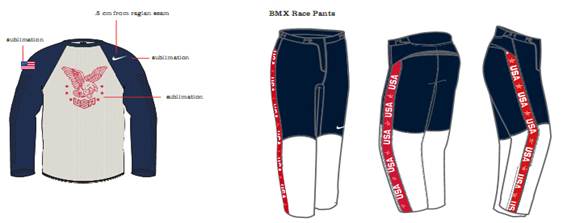
Olympic Cycling Kits (clothes) Unveiled: They Look Good
Posted: July 19, 2012 Filed under: Cycling | Tags: Bicycle motocross, BMX, Bob Haro, Cycling, Olympic, Olympic Games, Olympics, United States, USA Cycling 1 Comment |
||||
 |
|
|||

When we try and prevent accidents are creating them?
Posted: July 18, 2012 Filed under: Cycling, Risk Management | Tags: #Safety, Cycling, England, Pedestrian, Risk Homeostasis, Roads and Highways, Segregated cycle facilities, Signs, Traffic, Traffic collision Leave a commentSome traffic studies show eliminating signs, curbs, and road lines actually substantially decreases accidents
This Wired article discusses ways to decrease traffic accidents as well as pedestrian and bike interaction. The basis of the article is when we tell people how to

drive, we allow them to drive to that limit. When we force drivers to pay attention, they slow down and pay attention.
Examples in the article include a roundabout with 20,000 vehicles plus pedestrians and cyclists going through the intersection each day with no signs. There is also no honking no screeching brakes and no yelling. By eliminating signs, crosswalks and lanes the drivers are forced to pay attention and watch for each other.
The drivers slow to gauge the intentions of crossing bicyclists and walkers. Negotiations over right-of-way are made through fleeting eye contact. Remarkably, traffic moves smoothly around the circle with hardly a brake screeching, horn honking, or obscene gesture.
A town in Denmark eliminated the signs and signals at an intersection and dropped fatalities at the intersection from three to zero. In England, center lanes were removed from roadways and accidents decreased by 35%.
When you tell drivers how to drive, they then ignore pedestrians, cyclists and other drivers. If you force them to pay attention because no one is telling them what to do (or not to pay attention), there are fewer accidents.
Are we putting people at risk by trying to keep them safe?
By telling someone what to do, how to do it, and what speed to do it at, are we taking away from them the “desire” to watch out for others. If you don’t have to watch for people, because we tell you, you don’t have to, do you quit watching?
These studies tend to indicate that.
A study that is frequently cited when discussing Risk Homeostasis is accident rates before and after putting antilock brakes on cabs. Once the brakes were installed the cabbies drove faster and shortened their stopping distance.
If we don’t have to think about safety do we ignore it?
Is the corollary true? Are we creating expectations of safety where none exist? Do crossing walks and curbs create a feeling of safety in pedestrians? Do bike lanes make cyclists feel safe? Do bike lanes make drivers believe that cyclists are safer? A study in England showed that cyclists in bike lanes were crowded more by cars. Another study showed that when cyclists wore helmets, cars and trucks gave the cyclists less room when passing.
Does this discussion extend to all parts of life?

Danger signs, fencing, no trespassing signs are needed to protect us from our own stupidity?
I always love signs that are obviously pointing out dangers to young children…..who can’t read.
Is litigation to make the world safer doing just the opposite?
For other studies on the issue of getting stupider see: Does being safe make us stupid? Studies say yes.
To read the article see: Roads Gone Wild
What do you think? Leave a comment.
If you like this let your friends know or post it on FB, Twitter or LinkedIn
Copyright 2012 Recreation Law (720) Edit Law
Twitter: RecreationLaw
Facebook: Rec.Law.Now
Facebook Page: Outdoor Recreation & Adventure Travel Law
Mobile Site: http://m.recreation-law.com
#RecreationLaw, #@RecreationLaw, #Cycling.Law #Fitness.Law, #Ski.Law, #Outside.Law, #Recreation.Law, #Recreation-Law.com, #Outdoor Law, #Recreation Law, #Outdoor Recreation Law, #Adventure Travel Law, #law, #Travel Law, #Jim Moss, #James H. Moss, #Attorney at Law, #Tourism, #Adventure Tourism, #Rec-Law, #Rec-Law Blog, #Recreation Law, #Recreation Law Blog, #Risk Management, #Human Powered, #Human Powered Recreation,# Cycling Law, #Bicycling Law, #Fitness Law, #Recreation-Law.com, #Backpacking, #Hiking, #Mountaineering, #Ice Climbing, #Rock Climbing, #Ropes Course, #Challenge Course, #Summer Camp, #Camps, #Youth Camps, #Skiing, #Ski Areas, #Negligence, #Snowboarding, #RecreationLaw, #@RecreationLaw, #Cycling.Law #Fitness.Law, #SkiLaw, #Outside.Law, #Recreation.Law, #RecreationLaw.com, #OutdoorLaw, #RecreationLaw, #OutdoorRecreationLaw, #AdventureTravelLaw, #Law, #TravelLaw, #JimMoss, #JamesHMoss, #AttorneyatLaw, #Tourism, #AdventureTourism, #RecLaw, #RecLawBlog, #RecreationLawBlog, #RiskManagement, #HumanPowered, #HumanPoweredRecreation,# CyclingLaw, #BicyclingLaw, #FitnessLaw, #RecreationLaw.com, #Backpacking, #Hiking, #Mountaineering, #IceClimbing, #RockClimbing, #RopesCourse, #ChallengeCourse, #SummerCamp, #Camps, #YouthCamps, #Skiing, #Ski Areas, #Negligence, #Snowboarding, sport and recreation laws, ski law, cycling law, Colorado law, law for recreation and sport managers, bicycling and the law, cycling and the law, ski helmet law, skiers code, skiing accidents, Recreation Lawyer, Ski Lawyer, Paddlesports Lawyer, Cycling Lawyer, Recreational Lawyer, Fitness Lawyer, Rec Lawyer, Challenge Course Lawyer, Ropes Course Lawyer, Zip Line Lawyer, Rock Climbing Lawyer, Adventure Travel Lawyer, Outside Lawyer, Recreation Lawyer, Ski Lawyer, Paddlesports Lawyer, Cycling Lawyer, #RecreationalLawyer, #FitnessLawyer, #RecLawyer, #ChallengeCourseLawyer, #RopesCourseLawyer, #ZipLineLawyer, #RockClimbingLawyer, #AdventureTravelLawyer, #OutsideLawyer, Risk Homeostasis,
WordPress Tags: accidents,Some,road,article,bike,interaction,basis,drivers,attention,Examples,vehicles,pedestrians,intersection,lanes,intentions,walkers,Negotiations,horn,Denmark,zero,England,roadways,Risk,Homeostasis,accident,cabs,Once,corollary,expectations,cars,Another,helmets,trucks,room,Does,discussion,life,Danger,dangers,litigation,Studies,Roads,Wild,Leave,Twitter,LinkedIn,Recreation,Edit,RecreationLaw,Facebook,Page,Outdoor,Adventure,Travel,Blog,Mobile,Site,Outside,Moss,James,Attorney,Tourism,Management,Human,Rock,Ropes,Course,Challenge,Summer,Camp,Camps,Youth,Areas,Negligence,SkiLaw,OutdoorLaw,OutdoorRecreationLaw,AdventureTravelLaw,TravelLaw,JimMoss,JamesHMoss,AttorneyatLaw,AdventureTourism,RecLaw,RecLawBlog,RecreationLawBlog,RiskManagement,HumanPoweredRecreation,CyclingLaw,BicyclingLaw,FitnessLaw,RopesCourse,ChallengeCourse,SummerCamp,YouthCamps,Colorado,managers,helmet,Lawyer,Paddlesports,Recreational,Line,RecreationalLawyer,FitnessLawyer,RecLawyer,ChallengeCourseLawyer,RopesCourseLawyer,ZipLineLawyer,RockClimbingLawyer,AdventureTravelLawyer,OutsideLawyer,cyclists
Camp not liable for soccer injury because camp adequately supervised the game
Posted: July 16, 2012 Filed under: New York, Sports, Summer Camp | Tags: #Soccer, Defendant, Forseeable, Harris, Infant, New York, NY, Standard of Care, Summary judgment, Summer Camp, Supervision Leave a commentHarris v Five Point Mission–Camp Olmstedt, 73 A.D.3d 1127; 901 N.Y.S.2d 678; 2010 N.Y. App. Div. LEXIS 4526; 2010 NY Slip Op 4547
Both defendants and plaintiffs need to understand the standard of care, and the limit of liability the defendant will be held accountable to.
In this case from New York, a 13-year-old called an infant by the court, sued a summer camp for an injury to his leg. While attempting to kick the ball, he and another camper collided and the other camper fell on the plaintiff’s leg. The plaintiff sued the camp for the injury. The defendant filed a motion for summary judgment, which was denied. The defendant appealed the motion and the appellate court overturned the lower court and dismissed the case.
An infant from a legal perspective is not a baby. An infant is anyone under the age of 18, not an adult.

The sole issue was the standard of care, and the level of supervision the camp owed to the plaintiff. The court held the standard of care a camp or school owed was not an insurer of the safety of the camper but only liable for foreseeable injuries. Even then those foreseeable injuries must be caused by an absence of adequate supervision.
Schools or camps are not insurers of the safety of their students or campers, as they “cannot reasonably be expected to continuously supervise and control all of their movements and activities” Rather, schools and camps owe a duty to supervise their charges and will only be held liable for foreseeable injuries proximately caused by the absence of adequate supervision.
The lack of adequate supervision must relate to the injury. A failure to supervise, which created the foreseeable injury must be the cause of the accident. Additionally, that accident must be one that can be supervised. If the accident occurs in such a manner that supervision cannot intervene, then there can be no liability.
Moreover, even if an issue of fact exists as to negligent supervision, liability does not lie absent a showing that such negligence proximately caused the injuries sustained “Where an accident occurs in so short a span of time that even the most intense supervision could not have prevented it, any lack of supervision is not the proximate cause of the injury and summary judgment in favor of the … defendant is warranted”
There was also an issue that the expert witness did not discuss all the issues necessary to prove the camp was liable for the injury. The expert report stated the camp should have provided shin guards, and that shin guards were required. However, the expert did not state that the type of game being played by the plaintiff, an informal summer camp game was held to the same rules as high school games.
So
The plaintiff’s complaint did not seem to contemplate the level of supervision required from a camp. Like schools, camps are not required to keep kids safe. They are required to do the following.
· Keep kids safe from foreseeable risks
· Adequately supervise kids.
The first is the hardest. Kids can get hurt any and always. Consequently, foreseeable is very hard. However, the easiest way to see foreseeable and for the plaintiff to prove foreseeable is if the accident had occurred previously at your camp or any camp. If you keep track of injuries and accidents, you better do something about each and every one of the reports. A report is proof of the foreseeability of a risk.
That is a great reason to attend your trade association meeting or conference. You can learn from other members of your industry or your insurance carrier about the accidents they have had. If you have a similar program, you have been given a gift, and you have identified foreseeable before a plaintiff has.
|
James H. “Jim” Moss |
Jim Moss is an attorney specializing in the legal issues of the outdoor recreation community. He represents guides, guide services, outfitters both as businesses and individuals and the products they use for their business. He has defended Mt. Everest guide services, summer camps, climbing rope manufacturers, avalanche beacon manufactures and many more manufacturers and outdoor industries. Contact Jim at Jim@Rec-Law.us |
Jim is the author or co-author of six books about the legal issues in the outdoor recreation world; the latest is Outdoor Recreation Insurance, Risk Management
Outdoor Recreation Insurance, Risk Management, and Law
To see Jim’s complete bio go here and to see his CV you can find it here. To find out the purpose of this website go here.
G-YQ06K3L262
What do you think? Leave a comment.
If you like this let your friends know or post it on FB, Twitter or LinkedIn
|
|
|
Threads |
X (formerly known as Twitter) logo |
Stimulus |
Blue Sky |
Author: Outdoor Recreation Insurance, Risk Management and Law
Facebook Page: Outdoor Recreation & Adventure Travel Law
Email: Jim@Rec-Law.US
By Recreation Law Rec-law@recreation-law.com James H. Moss
@2024 Summit Magic Publishing, LLC
#RecreationLaw, #@RecreationLaw, #Cycling.Law #Fitness.Law, #Ski.Law, #Outside.Law, #Recreation.Law, #Recreation-Law.com, #Outdoor Law, #Recreation Law, #Outdoor Recreation Law, #Adventure Travel Law, #law, #Travel Law, #Jim Moss, #James H. Moss, #Attorney at Law, #Tourism, #Adventure Tourism, #Rec-Law, #Rec-Law Blog, #Recreation Law, #Recreation Law Blog, #Risk Management, #Human Powered, #Human Powered Recreation,# Cycling Law, #Bicycling Law, #Fitness Law, #Recreation-Law.com, #Backpacking, #Hiking, #Mountaineering, #Ice Climbing, #Rock Climbing, #Ropes Course, #Challenge Course, #Summer Camp, #Camps, #Youth Camps, #Skiing, #Ski Areas, #Negligence, #Snowboarding, #RecreationLaw, #@RecreationLaw, #Cycling.Law #Fitness.Law, #SkiLaw, #Outside.Law, #Recreation.Law, #RecreationLaw.com, #OutdoorLaw, #RecreationLaw, #OutdoorRecreationLaw, #AdventureTravelLaw, #Law, #TravelLaw, #JimMoss, #JamesHMoss, #AttorneyatLaw, #Tourism, #AdventureTourism, #RecLaw, #RecLawBlog, #RecreationLawBlog, #RiskManagement, #HumanPowered, #HumanPoweredRecreation,# CyclingLaw, #BicyclingLaw, #FitnessLaw, #RecreationLaw.com, #Backpacking, #Hiking, #Mountaineering, #IceClimbing, #RockClimbing, #RopesCourse, #ChallengeCourse, #SummerCamp, #Camps, #YouthCamps, #Skiing, #Ski Areas, #Negligence, #Snowboarding, sport and recreation laws, ski law, cycling law, Colorado law, law for recreation and sport managers, bicycling and the law, cycling and the law, ski helmet law, skiers code, skiing accidents, Recreation Lawyer, Ski Lawyer, Paddlesports Lawyer, Cycling Lawyer, Recreational Lawyer, Fitness Lawyer, Rec Lawyer, Challenge Course Lawyer, Ropes Course Lawyer, Zip Line Lawyer, Rock Climbing Lawyer, Adventure Travel Lawyer, Outside Lawyer, Recreation Lawyer, Ski Lawyer, Paddlesports Lawyer, Cycling Lawyer, #RecreationalLawyer, #FitnessLawyer, #RecLawyer, #ChallengeCourseLawyer, #RopesCourseLawyer, #ZipLineLawyer, #RockClimbingLawyer, #AdventureTravelLawyer, #OutsideLawyer, #Harris, Five Point Mission, Camp Olmstedt, foreseeable, New York NY, Summer Camp, Soccer, Shin Guards, #infant,
WordPress Tags: Camp,injury,Harris,Five,Point,Mission,Olmstedt,LEXIS,Slip,Both,defendants,plaintiff,defendant,York,infant,ball,camper,judgment,perspective,supervision,insurer,injuries,absence,Schools,insurers,students,campers,Rather,failure,accident,manner,Moreover,fact,negligence,Where,complaint,Keep,Kids,accidents,association,conference,industry,insurance,carrier,gift,Leave,Twitter,LinkedIn,Recreation,Edit,RecreationLaw,Facebook,Page,Outdoor,Adventure,Travel,Blog,Mobile,Site,Outside,Moss,James,Attorney,Tourism,Risk,Management,Human,Rock,Ropes,Course,Challenge,Summer,Camps,Youth,Areas,SkiLaw,OutdoorLaw,OutdoorRecreationLaw,AdventureTravelLaw,TravelLaw,JimMoss,JamesHMoss,AttorneyatLaw,AdventureTourism,RecLaw,RecLawBlog,RecreationLawBlog,RiskManagement,HumanPoweredRecreation,CyclingLaw,BicyclingLaw,FitnessLaw,RopesCourse,ChallengeCourse,SummerCamp,YouthCamps,Colorado,managers,helmet,Lawyer,Paddlesports,Recreational,Line,RecreationalLawyer,FitnessLawyer,RecLawyer,ChallengeCourseLawyer,RopesCourseLawyer,ZipLineLawyer,RockClimbingLawyer,AdventureTravelLawyer,OutsideLawyer,Soccer,Shin,Guards
Harris v Five Point Mission–Camp Olmstedt, 73 A.D.3d 1127; 901 N.Y.S.2d 678; 2010 N.Y. App. Div. LEXIS 4526; 2010 NY Slip Op 4547
Posted: July 16, 2012 Filed under: Legal Case, New York, Sports, Summer Camp | Tags: #Soccer, New York, Summer Camp Leave a commentTo Read an Analysis of this decision see: Camp not liable for soccer injury because camp adequately supervised the game
Harris v Five Point Mission–Camp Olmstedt, 73 A.D.3d 1127; 901 N.Y.S.2d 678; 2010 N.Y. App. Div. LEXIS 4526; 2010 NY Slip Op 4547
Nikki Harris, Respondent, v Five Point Mission–Camp Olmstedt, Appellant. (Index No. 38156/07)
2009-08327
SUPREME COURT OF NEW YORK, APPELLATE DIVISION, SECOND DEPARTMENT
73 A.D.3d 1127; 901 N.Y.S.2d 678; 2010 N.Y. App. Div. LEXIS 4526; 2010 NY Slip Op 4547
May 25, 2010, Decided
SUBSEQUENT HISTORY: As Amended June 21, 2010.
HEADNOTES
Negligence–What Constitutes.–Defendant was not liable for injuries sustained by infant while playing soccer at sleepaway summer camp operated by defendant; defendant established that it did not negligently supervise infant during soccer game in which he was injured and that it did not negligently maintain soccer field where accident occurred.
COUNSEL: [***1] Molod Spitz & DeSantis, P.C., New York, N.Y. (Salvatore J. DeSantis and Marcy Sonneborn of counsel), for appellant.
Kenneth J. Ready, Mineola, N.Y. (Steven T. Lane of counsel), for respondent.
JUDGES: REINALDO E. RIVERA, J.P., ANITA R. FLORIO, DANIEL D. ANGIOLILLO, PLUMMER E. LOTT, JJ. RIVERA, J.P., FLORIO, ANGIOLILLO and LOTT, JJ., concur.
OPINION
[*1127] [**679] In an action to recover damages for personal injuries, etc., the defendant appeals from an order of the Supreme Court, Kings County (Schack, J.), dated July 17, 2009, which denied its motion for summary judgment dismissing the complaint.
Ordered that the order is reversed, on the law, with costs, and the defendant’s motion for summary judgment dismissing the complaint is granted.
On the morning of July 29, 2006, the then 13 1/2-year-old infant, Devante Harris (hereinafter Devante), allegedly was injured while playing soccer at the sleepaway summer camp operated by the defendant, Five Point Mission–Camp Olmstedt. According to Devante’s deposition testimony, the accident happened over a 15-second period of time. After Devante fell while attempting to kick a soccer ball, another camper, attempting to kick the same ball, made contact with Devante’s [***2] leg and then fell on Devante’s leg. At the time of the accident, there were two counselors supervising the soccer game, while acting as opposing goalies, one of whom was only 12 feet away from Devante when the accident occurred. Furthermore, during the hour before the accident occurred, neither Devante nor anyone else [*1128] fell during the game. According to the deposition testimony of the camp director, Nolan Walker, the camp hired a private landscaping company to maintain the field. Additionally, in the two weeks leading up to the date of the accident, he did not observe any defects in the field.
[HN1] Schools or camps are not insurers of the safety of their students or campers, as they “cannot reasonably be expected to continuously supervise and control all of their movements and activities” (Cohn v Board of Educ. of Three Vil. Cent. School. Dist., 70 AD3d 622, 623, 892 NYS2d 882 [2010]; see Mirand v City of New York, 84 NY2d 44, 49, 637 NE2d 263, 614 NYS2d 372 [1994]). Rather, schools and camps owe a duty to supervise their charges and will only be held liable for foreseeable injuries proximately caused by the absence of adequate supervision (see Mirand v City of New York, 84 NY2d at 49; Doe v Department of Educ. of City of New York, 54 AD3d 352, 353, 862 NYS2d 598 [2008]; [***3] Paca v City of New York, 51 AD3d 991, 992, 858 NYS2d 772 [2008]). Moreover, even if an issue of fact exists as to negligent supervision, liability does not lie absent a showing that such negligence proximately caused the injuries sustained (see Odekirk v Bellmore-Merrick Cent. School Dist., 70 AD3d 910, 895 NYS2d 184 [2010]; Siegell v Herricks Union Free School Dist., 7 AD3d 607, 777 NYS2d 148 [2004]). “Where an accident occurs in so short a span of time that even the most intense supervision could not have prevented it, any lack of supervision is not the proximate cause of the injury and summary judgment in favor of the … defendant[] is warranted” (Convey v City of Rye School Dist., 271 AD2d 154, 160, 710 NYS2d 641 [2000]; see Odekirk v Bellmore-Merrick Cent. School Dist., 70 AD3d 910, 895 NYS2d 184 [2010]; Paca v City of New York, 51 AD3d at 993; Capotosto v Roman Catholic Diocese of Rockville Ctr., 2 AD3d 384, 385-386, 767 NYS2d 857 [2003]).
The defendant made a prima facie showing of its entitlement to judgment as a matter of law. It established, by way of Devante’s deposition testimony, that it did not negligently supervise him during the soccer game in which he was injured (see Mirand v City of New York, 84 NY2d at 49; Calcagno v John F. Kennedy Intermediate School, 61 AD3d 911, 912, 877 NYS2d [**680] 455 [2009]). It also established [***4] that it did not negligently maintain the soccer field where the accident occurred (see Lopez v Freeport Union Free School Dist., 288 AD2d 355, 356, 734 NYS2d 97 [2001]).
In response, the plaintiff failed to show the existence of a triable issue of fact. Devante’s affidavit submitted in opposition to the motion merely raised a feigned issue of fact designed to avoid the consequences of his earlier deposition testimony, and thus was insufficient to defeat the defendant’s motion for summary judgment dismissing the complaint (see Denicola v [*1129] Costello, 44 AD3d 990, 844 NYS2d 438 [2007]). The affidavit of Devante’s mother, the plaintiff, Nikki Harris, also was insufficient to defeat the defendant’s motion, as she did not have personal knowledge of the facts underlying the claim and relied upon inadmissible hearsay in her averments (see New S. Ins. Co. v Dobbins, 71 AD3d 652, 894 NYS2d 912 [2010]).
The plaintiff’s expert’s affidavit also was insufficient to raise a triable issue of fact as to whether the defendant’s failure to provide Devante with shin guards constituted negligence. The affidavit improperly relies on the version of the events set forth in Devante’s affidavit in opposition to the motion and not upon his deposition testimony. Furthermore, in [***5] concluding that the defendant summer camp was negligent in failing to provide Devante with shin guards during the soccer game, the expert failed to allege that sleepaway summer camps generally provide shin guards to campers during informal soccer games like the one at issue (see Diaz v New York Downtown Hosp., 99 NY2d 542, 545, 784 NE2d 68, 754 NYS2d 195 [2002]; Walker v Commack School Dist., 31 AD3d 752, 820 NYS2d 287 [2006]). Nor does he allege, based upon his personal knowledge or experience, that the rules of college, high school, or youth soccer leagues, which he contends require the use of shin guards, have been implemented by or are the generally accepted practice in informal summer camp soccer games such as the one in which Devante was injured (see Diaz v New York Downtown Hosp., 99 NY2d at 545; Walker v Commack School Dist., 31 AD3d 752, 820 NYS2d 287 [2006]).
Accordingly, the defendant’s motion for summary judgment dismissing the complaint should have been granted (see generally Alvarez v Prospect Hosp., 68 NY2d 320, 324-325, 501 NE2d 572, 508 NYS2d 923 [1986]). Rivera, J.P., Florio, Angiolillo and Lott, JJ., concur.
G-YQ06K3L262
WA Zip line lawsuit dismissed because the plaintiff admitted he should have understood the risk
Posted: July 9, 2012 Filed under: Washington, Zip Line | Tags: Negligence per se, Ropes course, zip line, Zip-line Leave a commentOldja v. Warm Beach Christian Camps and Conference Center, 793 F. Supp. 2d 1208; 2011 U.S. Dist. LEXIS 67966
Outcome of the lawsuit would be very different today because zip lines must be licensed in WA.
The defendant won this case not based on defenses they had but because the plaintiff did not plead a case that was supported by the law. Like having to prove the four components of negligence, when arguing a statute, you must meet the definitions in the statute. The statute must be written to protect or incorporate the claims you are pleading.
The plaintiff was at a camp and conference center when he, and his wife decided to ride the zip line. The plaintiff watched his wife ride the zip line then he rode the line. Between the time, he was cleared to ride the zip line and when he shoved off, he wrapped his fingers around one of the ropes. When he placed his weight on the rope it severely injured his fingers.
The plaintiff sued the camp under several theories of negligence, product liability, and negligence per se. The defendant filed a motion for summary judgment which the court upheld. The basis of the motion was the allegations of the plaintiff failed to meet the statute or the definition of the claim. The product liability claim was waived by the plaintiff and dismissed by the court without argument.
So
The first issue the court reviewed was the duty of care (negligence claim) owed by the defendant to the plaintiff. The plaintiff argued that the care owed was to keep the premises reasonably safe for the use by the business invitees. That is the duty of a land owner to a business invitee. The defendant argued that the duty was a duty to disclose.
Under that theory, the duty to disclose, the defendant is liable if the defendant:
a) knows or has reason to know that the chattel is or is likely to be dangerous for the use for which it is supplied, and
b) has no reason to believe that those for whose use the chattel is supplied will realize its dangerous condition, and
c) fails to exercise reasonable care to inform them of its dangerous condition or of the facts which make it likely to be dangerous.
Amount of care owed to the business invitee is very different based on what duty of care is applied to the case. Here, because the accident occurred in the air on a zip line and not on the ground, a different duty was owed.
The plaintiff argued this section did not apply because the accident occurred on the land. The court disagreed and held the zip line was chattel, moveable, and not part of the land, so therefore the duties of the defendant were not as high as if the accident had occurred on the land. The court agreed and found the zip line was a chattel and as such a lesser degree of care was owed to the plaintiff. The plaintiff could not prove their claim, and the claim was dismissed.
The court also looked at the deposition testimony of the plaintiff were he admitted that if he had thought about it, he would have known of the risk of wrapping his fingers around the rope.
Q. Did you know that if you wrapped the rope around your fingers and then you put weight on the rope, that that would tighten and cinch around your fingers?
A. The thought did not cross my mind.
Q. Okay. You didn’t think about that correct?
A. Correct.
Q. But if you had thought about it, you would have been able to figure that out, correct?
A. If someone asked me?
Q. Yes.
A. Yes.
There is no duty to disclose if the plaintiff knew or should have known of the risk.
The next argument was the zip line must have been licensed, and because it was not, the injury was a negligence per se claim. Negligence per se is a violation of a state statute or a regulation created to protect people. A negligence per se claim does not allow many defenses and usually voids a release. Negligence per se claims are nasty.
The argument was the zip line was supposed to be licensed, and because it was not licensed the statute was violated. The injury then was a result of the failure to license the zip line. In this case, zip lines did not have to be licensed until several years after the accident so therefore there could not be any negligence per se. The regulation was not violated because there was not regulation at the time of the accident.
If the zip line had been required to be licensed and was not, then there would not have been a lawsuit, only the process of writing a check. Being held liable under a claim of negligence per se does not provide a defendant with much if any defenses.
The final argument made by the plaintiff was the standard of care owed should be that of a common carrier (negligence claim). A common carrier owes the highest degree of care to the public. The plaintiff pointed to cases in California that held that amusement rides were held to the standard of a common carrier.
Here the court looked at the Washington statute and the California statute defining a common carrier. The court found the Washington statute was very narrow in its definitions, and the definitions did not include a zip line. A zip line did not qualify as a common carrier.
The court upheld the defendant’s motion for summary judgment and dismissed the claims.
So Now What?

This case has several interpretations of state statutes that made the decision of the court easy. Both the statute defining what activities needed to be licensed as amusement rides and the state common carrier statutes were very narrowly written, and a zip line did not, at the time of the accident, fall into either definition.
The next issue is the plaintiff admitted understanding, if he thought about it, that his hand would be injured based on what he did. As such, the plaintiff provided the defense of assumption of the risk, which was not used in this case because the claims were statutory in nature.
When you run an outdoor recreation business, you need to consult an attorney to make sure that you are not violating any statute of the state. Not just the obvious ones.
What do you think? Leave a comment.
If you like this let your friends know or post it on FB, Twitter or LinkedIn
Copyright 2012 Recreation Law (720) Edit Law
Twitter: RecreationLaw
Facebook: Rec.Law.Now
Facebook Page: Outdoor Recreation & Adventure Travel Law
Mobile Site: http://m.recreation-law.com
#RecreationLaw, #@RecreationLaw, #Cycling.Law #Fitness.Law, #Ski.Law, #Outside.Law, #Recreation.Law, #Recreation-Law.com, #Outdoor Law, #Recreation Law, #Outdoor Recreation Law, #Adventure Travel Law, #law, #Travel Law, #Jim Moss, #James H. Moss, #Attorney at Law, #Tourism, #Adventure Tourism, #Rec-Law, #Rec-Law Blog, #Recreation Law, #Recreation Law Blog, #Risk Management, #Human Powered, #Human Powered Recreation,# Cycling Law, #Bicycling Law, #Fitness Law, #Recreation-Law.com, #Backpacking, #Hiking, #Mountaineering, #Ice Climbing, #Rock Climbing, #Ropes Course, #Challenge Course, #Summer Camp, #Camps, #Youth Camps, #Skiing, #Ski Areas, #Negligence, #Snowboarding, #RecreationLaw, #@RecreationLaw, #Cycling.Law #Fitness.Law, #SkiLaw, #Outside.Law, #Recreation.Law, #RecreationLaw.com, #OutdoorLaw, #RecreationLaw, #OutdoorRecreationLaw, #AdventureTravelLaw, #Law, #TravelLaw, #JimMoss, #JamesHMoss, #AttorneyatLaw, #Tourism, #AdventureTourism, #RecLaw, #RecLawBlog, #RecreationLawBlog, #RiskManagement, #HumanPowered, #HumanPoweredRecreation,# CyclingLaw, #BicyclingLaw, #FitnessLaw, #RecreationLaw.com, #Backpacking, #Hiking, #Mountaineering, #IceClimbing, #RockClimbing, #RopesCourse, #ChallengeCourse, #SummerCamp, #Camps, #YouthCamps, #Skiing, #Ski Areas, #Negligence, #Snowboarding, sport and recreation laws, ski law, cycling law, Colorado law, law for recreation and sport managers, bicycling and the law, cycling and the law, ski helmet law, skiers code, skiing accidents, Recreation Lawyer, Ski Lawyer, Paddlesports Lawyer, Cycling Lawyer, Recreational Lawyer, Fitness Lawyer, Rec Lawyer, Challenge Course Lawyer, Ropes Course Lawyer, Zip Line Lawyer, Rock Climbing Lawyer, Adventure Travel Lawyer, Outside Lawyer, Recreation Lawyer, Ski Lawyer, Paddlesports Lawyer, Cycling Lawyer, #RecreationalLawyer, #FitnessLawyer, #RecLawyer, #ChallengeCourseLawyer, #RopesCourseLawyer, #ZipLineLawyer, #RockClimbingLawyer, #AdventureTravelLawyer, #OutsideLawyer, Washington, Zip Line, Negligence per se, Negligence, Warm Beach Christian Camps and Conference Center, common carrier,
WordPress Tags: lawsuit,plaintiff,Oldja,Warm,Beach,Christian,Camps,Conference,Center,Supp,Dist,LEXIS,Outcome,defendant,components,negligence,statute,definitions,wife,theories,product,judgment,basis,allegations,definition,argument,premises,owner,Under,theory,Here,accident,duties,degree,testimony,Okay,Correct,injury,violation,regulation,failure,carrier,California,amusement,Washington,interpretations,statutes,decision,Both,assumption,recreation,attorney,Leave,Twitter,LinkedIn,Edit,RecreationLaw,Facebook,Page,Outdoor,Adventure,Travel,Blog,Mobile,Site,Outside,Moss,James,Tourism,Risk,Management,Human,Rock,Ropes,Course,Challenge,Summer,Camp,Youth,Areas,SkiLaw,OutdoorLaw,OutdoorRecreationLaw,AdventureTravelLaw,TravelLaw,JimMoss,JamesHMoss,AttorneyatLaw,AdventureTourism,RecLaw,RecLawBlog,RecreationLawBlog,RiskManagement,HumanPoweredRecreation,CyclingLaw,BicyclingLaw,FitnessLaw,RopesCourse,ChallengeCourse,SummerCamp,YouthCamps,Colorado,managers,helmet,accidents,Lawyer,Paddlesports,Recreational,Line,RecreationalLawyer,FitnessLawyer,RecLawyer,ChallengeCourseLawyer,RopesCourseLawyer,ZipLineLawyer,RockClimbingLawyer,AdventureTravelLawyer,OutsideLawyer,invitee,chattel
Oldja v. Warm Beach Christian Camps And Conference Center, 793 F. Supp. 2d 1208; 2011 U.S. Dist. LEXIS 67966
Posted: July 9, 2012 Filed under: Legal Case, Washington, Zip Line | Tags: Common Carrier, Conference Center, Federal Supplement, Negligence per se, Plaintiff, SEATTLE, summer camp, zip line Leave a commentOldja v. Warm Beach Christian Camps And Conference Center, 793 F. Supp. 2d 1208; 2011 U.S. Dist. LEXIS 67966
Ted Oldja, Plaintiff, v. Warm Beach Christian Camps And Conference Center, Defendant.
CASE NO. C09-0122-JCC
UNITED STATES DISTRICT COURT FOR THE WESTERN DISTRICT OF WASHINGTON
793 F. Supp. 2d 1208; 2011 U.S. Dist. LEXIS 67966
June 24, 2011, Decided
June 24, 2011, Filed
COUNSEL: [**1] For Ted Oldja, Plaintiff: Kenneth R Friedman, LEAD ATTORNEY, FRIEDMAN RUBIN, BREMERTON, WA; Michael N White, FRIEDMAN RUBIN, (BREMERTON), BREMERTON, WA.
For Warm Beach Christian Camps and Conference Center, Defendant: David R Goodnight, Vanessa Soriano Power, STOEL RIVES (WA), SEATTLE, WA; Francis S Floyd, Nicholas L Jenkins, FLOYD PFLUEGER & RINGER PS, SEATTLE, WA.
JUDGES: John C. Coughenour, UNITED STATES DISTRICT JUDGE.
OPINION BY: John C. Coughenour
OPINION
[*1209] ORDER
This matter comes before the Court on Defendant’s motion for summary judgment (Dkt. No. 49), Plaintiff’s response (Dkt. No. 53), and Defendant’s reply. (Dkt. No. 59.) Having thoroughly considered the parties’ briefing and the relevant record, the Court finds oral argument unnecessary and hereby GRANTS the motion for the reasons explained herein.
I. BACKGROUND
In the summer of 2007, Ted Oldja attended a camp at Warm Beach Christian Camp (“Warm Beach”) in Stanwood, Washington. Mr. and Mrs. Oldja decided to ride on the zip line operated by Warm Beach. The zip line carried riders in a harness suspended from a cable by two ropes: a white rope, which acts as the primary connection between the harness and the cable, and bears the load of the rider’s weight; and [**2] a black rope, which acts as a secondary connection between the harness and the cable, and can be used as a safety line to slow the rider down.
Before a user rides the zip line, it is the job of the launch facilitator to follow a safety procedure. First, the facilitator tells the rider that they can hold on to either the white and black ropes during the ride, or just the white rope. The facilitator instructs riders not to hold only the black secondary line, because it will slow them down or stop them completely. The facilitator then double-checks the harness configuration, pulley attachments, safety helmet, and carabiners. The launch facilitator calls “zip clear” to the landing facilitator to communicate that the rider is ready, and the landing facilitator responds “zip clear” to communicate that the path is clear for the rider.
After watching his wife on the ride, it was Mr. Oldja’s turn. The launch facilitator, Paul Matthewson, testified that he followed the proper safety procedures. (Dkt. No. 49 Ex. 2 at 51- 53.) Matthewson testified that he did not see Oldja wrap his fingers in the white primary rope, and that Oldja’s fingers were not wrapped in the rope when Matthewson cleared him [**3] to go. (Id. at 60.) Some time after Matthewson called “zip clear,” Mr. Oldja, a mechanical engineer, wrapped his fingers in the white primary rope, and stepped off the platform. The load-bearing rope tightened [*1210] around his hand and crushed his fingers. Mr. Oldja was rushed to a hospital and has had several surgeries on his hand. Plaintiff filed suit against Warm Beach for negligence, product liability, and negligence per se under a variety of theories. Defendant now moves for summary judgment dismissal of all three of these claims. Plaintiff does not oppose summary judgment on the product liability claim.
II. APPLICABLE LAW
[HN1] Federal Rule of Civil Procedure 56(c) mandates that a motion for summary judgment be granted when “the pleadings, the discovery and disclosure materials on file, and any affidavits show that there is no genuine issue as to any material fact and that the movant is entitled to judgment as a matter of law.” Fed. R. Civ. P. 56(c). There exists a genuine issue as to a particular fact–and hence that fact “can be resolved only by a finder of fact” at trial–when “[it] may reasonably be resolved in favor of either party”; conversely, there exists no genuine issue when reasonable [**4] minds could not differ as to the import of the evidence. Anderson v. Liberty Lobby, Inc., 477 U.S. 242, 250-52, 106 S. Ct. 2505, 91 L. Ed. 2d 202 (1986). Whether a particular fact is material, in turn, is determined by the substantive law of the case: “Only disputes over facts that might affect the outcome of the suit under the governing law will properly preclude the entry of summary judgment. Factual disputes that are irrelevant or unnecessary will not be counted.” Id. at 248. Summary judgment, then, demands an inquiry into “whether the evidence presents a sufficient disagreement to require submission to a jury or whether it is so one-sided that one party must prevail as a matter of law”; if applying the relevant law to those facts about which no two reasonable factfinders could disagree dictates that the moving party must prevail, then a motion for summary judgment must be granted. Id. at 250-52.
III. DISCUSSION
A. Duty of Ordinary Care
Plaintiff argues that it is well established that every business has a duty to use ordinary care in keeping its premises reasonably safe for use by business invitees. (Dkt. No. 53 at 10.) Defendant argues that Section 388 of the Second Restatement of Torts should govern the analysis. [**5] The Court addresses Section 388 below, but Section 388 governs only the duty to disclose and does not govern the duty of ordinary care. Defendant has not shown an absence of a genuine issue of material fact with respect to its alleged breach of the duty of ordinary care. Accordingly, summary judgment dismissal of this claim is denied.
B. Duty to Disclose
[HN2] With reference to a duty to disclose, The Supreme Court of Washington has adopted Section 388 of the Second Restatement of Torts, which states that the supplier is liable if he:
a) knows or has reason to know that the chattel is or is likely to be dangerous for the use for which it is supplied, and
b) has no reason to believe that those for whose use the chattel is supplied will realize its dangerous condition, and
c) fails to exercise reasonable care to inform them of its dangerous condition or of the facts which make it likely to be dangerous.
Fleming v. Stoddard Wendle Motor Co., 70 Wn.2d 465, 423 P.2d 926, 928 (Wash. 1967).
Plaintiff argues that he is choosing not to pursue his claims under Section 388. Rather, Plaintiff argues that the Court [*1211] should consider Section 343A, which creates a duty to protect invitees from known or obvious dangers when the [**6] landowner should anticipate the harm despite such knowledge and obviousness.
Plaintiff is misguided. [HN3] He may choose the claims he brings, but he cannot choose the standard the Court will apply to those claims. Section 343 governs liability for an activity or condition on the land. Section 388 governs liability for use of a chattel. “Chattel” means movable or transferable property. Black’s Law Dictionary (9th ed. 2009). Defendant argues that the zip line is movable property, and Plaintiff does not challenge this characterization. The Court agrees. Plaintiff’s injury was caused by equipment on the land, not the land itself. Accordingly, Section 388 governs Plaintiff’s claims. Lunt v. Mt. Spokane Skiing Corp., 62 Wn. App. 353, 814 P.2d 1189, 1192 (Wash. Ct. App. 1991) (where injury arises from equipment not land, Section 388 not Section 343 governs).
[HN4] Each of the three criteria in Section 388 must be satisfied. The Court will begin with consideration of the second criterion. To prevail on this element at the summary judgment phase, Plaintiff must show some evidence that Defendant had no reason to believe that riders of the zip line would realize the dangerous condition. This is a dense piece of legal language, [**7] so an illustration is helpful.
In Fleming v. Stoddard Wendle Motor Co., 70 Wn.2d 465, 423 P.2d 926 (Wash. 1967), a man disabled a safety feature on a truck that was designed to prevent the motor from starting if the car was in gear. He sold the truck to a mechanic and did not disclose that the safety feature had been disabled. When the purchaser started the truck, it lurched forward, striking and injuring the plaintiff. The Supreme Court of Washington noted that the man who had sold the car had no reason to believe that any future operator of the car would know that the safety feature had been disabled. Id. at 928. Because the seller had no reason to believe the defect would be discovered, he had a duty to warn of that defect. The defect was latent and no amount of common sense or automotive knowledge could inform a driver about that particular hazard. Dismissal of the seller was reversed.
In contrast, Mele v. Turner, 106 Wn.2d 73, 720 P.2d 787 (Wash. 1986) concerns a case where a young man borrowed a lawn mower from his neighbors, inserted his hand into the mower housing to clean out some wet grass, and injured four fingers. The young man admitted in an affidavit: “I obviously realized that one should not put [**8] his hand under the machine where the blade runs . . . .” Id. at 790. The Court held that because the dangerous condition was obvious and known, defendants had no legal duty to warn. Id. There was nothing latent about the defect, and common sense would inform the user of the hazard.
The present case is much closer to Mele than Fleming. Plaintiff’s injury was the natural result of wrapping a rope around one’s hand and then suspending one’s body from that rope. This was not a latent or hidden condition that only Defendant could know. Common sense of a capable adult is sufficient to inform a rider of this danger. Plaintiff admitted as much in his deposition:
Q. Did you know that if you wrapped the rope around your fingers and then you put weight on the rope, that that would tighten and cinch around your fingers?
A. The thought did not cross my mind.
Q. Okay. You didn’t think about that correct?
A. Correct.
Q. But if you had thought about it, you would have been able to figure that out, correct?
[*1212] A. If someone asked me?
Q. Yes.
A. Yes.
(Dkt. No. 50 at Ex. A 196:14-197:1.) Given Plaintiff’s admission that he would have realized the danger if he had thought about it, Plaintiff cannot credibly argue [**9] that Defendant had no reason to believe that he would realize the danger.
The only evidence Plaintiff offers on this point is the testimony of Dr. Richard Gill, a Human Factors Engineering consultant. Dr. Gill was disclosed as a rebuttal expert, and testified that the scope of his work was to provide rebuttal testimony to the three defense experts. (Dkt. No. 60 at Ex. 1, Ex 2 16:8-9.) Dr. Gill’s expert report provides a series of conclusions about the behavior of zip line riders that does not rebut any of the testimony of Defendant’s experts. Rather, this type of testimony should have been disclosed in the initial expert discovery responses and is therefore untimely. Accordingly, Dr. Gill’s testimony regarding the behavioral tendencies of zip line or challenge course participants is STRICKEN. Plaintiff has failed to demonstrate a genuine issue of material fact with respect to Defendant’s liability under Section 388.
C. Liability for violation of state regulations
Plaintiff’s next argument is that Defendant was negligent pursuant to RCW 5.40.050 for violation of a state statute. [HN5] WAC 296-403A-190 states that amusement rides must be inspected by certified inspectors. RCW 67.42.010 and [**10] WAC 296-403A-100(2) provide the definition of amusement rides, but do not mention zip lines. Plaintiff argues that these definitions do include zip lines, and relies on a series of communications with the State of Washington Department of Labor and Industries (“L&I”) in 2009 and 2010 in support of this contention. (Dkt. No. 50 at Ex. 11.)
The Court interprets these communications very differently from Plaintiff. It is clear from these emails that the decision to include zip lines in the definition of “amusement ride” under WAC 296-403A-100(2) was not made until late 2009 or early 2010, more than two years after Plaintiff injured his hand on Defendant’s zip line. (Dkt. No. 50 at Ex. 11.) Plaintiff does not address this chronology in his briefing. It is misleading in the extreme for Plaintiff to characterize Defendant’s zip line as “unlicensed” when the licensing body had not yet decided that a license was required. Plaintiff has failed to show a genuine issue of material fact with respect to Defendant’s failure to comply with licensing requirements.
D. Common Carrier Liability
Plaintiff’s third argument is that Defendant is subject to common carrier liability. [HN6] Under Washington law, the duty [**11] of a common carrier to safeguard passengers from injury requires the carrier to exercise the highest degree of care consistent with the practical operation of its business or its type of transportation. Benjamin v. Seattle, 74 Wn.2d 832, 447 P.2d 172 (1968). Plaintiff acknowledges that there is no Washington caselaw addressing the issue of whether a zip line qualifies as a “common carrier,” but argues that this Court should expand the definition to include zip lines and similar amusement rides. In support of this argument, Plaintiff mentions a series of California decisions holding that a higher standard of care applies to amusement rides. Gomez v. Superior Court, 35 Cal. 4th 1125, 29 Cal. Rptr. 3d 352, 113 P.3d 41, 47 (Cal. 2005) (holding that the same high standard of care applied to carriers of passengers should also apply to operators of roller [*1213] coasters); Neubauer v. Disneyland, 875 F. Supp. 672, 673 (C.D. Cal. 1995) (holding that under California’s broad common carrier statute, a Disneyland amusement ride may be a common carrier).
This argument stumbles into the yawning gap between the Washington and California common-carrier statutes. [HN7] California’s common carrier statute is broad: Every one who offers to the public to carry persons, [**12] property, or messages, excepting only telegraphic messages, is a common carrier of whatever he thus offers to carry. Cal Civ Code § 2168. Washington’s common carrier statute is narrow and exhaustive:
“Common carrier” includes all railroads, railroad companies, street railroads, street railroad companies, commercial ferries, motor freight carriers, auto transportation companies, charter party carriers and excursion service carriers, private nonprofit transportation providers, solid waste collection companies, household goods carriers, hazardous liquid pipeline companies, and every corporation, company, association, joint stock association, partnership, and person, their lessees, trustees, or receivers appointed by any court whatsoever, and every city or town, owning, operating, managing, or controlling any such agency for public use in the conveyance of persons or property for hire within this state.
RCW 81.04.010(11). Plaintiff offers no argument or evidence for the proposition that this definition includes a zip line. Again, Plaintiff has failed to show a genuine issue of material fact with respect to Defendant’s liability as an alleged common carrier.
IV. CONCLUSION
Defendant’s motion [**13] for Summary Judgment (Dkt. No. 49) is GRANTED in part and DENIED in part. Plaintiff’s claims for breach of the duty of ordinary care survive summary judgment. Plaintiff’s claims for breach of the duty to disclose, claims relating to the violation of the WAC, and claims relating to common carrier liability are DISMISSED.
DATED this 24th day of June 2011.
/s/ John C. Coughenour
John C. Coughenour
UNITED STATES DISTRICT JUDGE
League of American Bicyclists ranks the states for their federal dollars spent on bicycle projects
Posted: July 5, 2012 Filed under: Cycling | Tags: biking, Cycling, Funding, League of American Bicyclists Leave a commentColorado ranks number 2 for bicycle transportation enhancements
Since with the transportation bill coming out of congress these numbers are now just figments of our imagination we should at least relieve the good old days.
Here is the top five states in each category from the article.

See Which States Invest the Most Federal Dollars on Bike/Ped Projects? The table can be downloaded here! It will download or open as an Excel spreadsheet.
What do you think? Leave a comment.
If you like this let your friends know or post it on FB, Twitter or LinkedIn
Copyright 2012 Recreation Law (720) Edit Law
Twitter: RecreationLaw
Twylah Twitter Feeds: http://rec-law.us/N7IJik
Facebook: Rec.Law.Now
Facebook Page: Outdoor Recreation & Adventure Travel Law
Mobile Site: http://m.recreation-law.com
#RecreationLaw, #@RecreationLaw, #Cycling.Law #Fitness.Law, #Ski.Law, #Outside.Law, #Recreation.Law, #Recreation-Law.com, #Outdoor Law, #Recreation Law, #Outdoor Recreation Law, #Adventure Travel Law, #law, #Travel Law, #Jim Moss, #James H. Moss, #Attorney at Law, #Tourism, #Adventure Tourism, #Rec-Law, #Rec-Law Blog, #Recreation Law, #Recreation Law Blog, #Risk Management, #Human Powered, #Human Powered Recreation,# Cycling Law, #Bicycling Law, #Fitness Law, #Recreation-Law.com, #Backpacking, #Hiking, #Mountaineering, #Ice Climbing, #Rock Climbing, #Ropes Course, #Challenge Course, #Summer Camp, #Camps, #Youth Camps, #Skiing, #Ski Areas, #Negligence, #Snowboarding, #RecreationLaw, #@RecreationLaw, #Cycling.Law #Fitness.Law, #SkiLaw, #Outside.Law, #Recreation.Law, #RecreationLaw.com, #OutdoorLaw, #RecreationLaw, #OutdoorRecreationLaw, #AdventureTravelLaw, #Law, #TravelLaw, #JimMoss, #JamesHMoss, #AttorneyatLaw, #Tourism, #AdventureTourism, #RecLaw, #RecLawBlog, #RecreationLawBlog, #RiskManagement, #HumanPowered, #HumanPoweredRecreation,# CyclingLaw, #BicyclingLaw, #FitnessLaw, #RecreationLaw.com, #Backpacking, #Hiking, #Mountaineering, #IceClimbing, #RockClimbing, #RopesCourse, #ChallengeCourse, #SummerCamp, #Camps, #YouthCamps, #Skiing, #Ski Areas, #Negligence, #Snowboarding, sport and recreation laws, ski law, cycling law, Colorado law, law for recreation and sport managers, bicycling and the law, cycling and the law, ski helmet law, skiers code, skiing accidents, Recreation Lawyer, Ski Lawyer, Paddlesports Lawyer, Cycling Lawyer, Recreational Lawyer, Fitness Lawyer, Rec Lawyer, Challenge Course Lawyer, Ropes Course Lawyer, Zip Line Lawyer, Rock Climbing Lawyer, Adventure Travel Lawyer, Outside Lawyer, Recreation Lawyer, Ski Lawyer, Paddlesports Lawyer, Cycling Lawyer, #RecreationalLawyer, #FitnessLawyer, #RecLawyer, #ChallengeCourseLawyer, #RopesCourseLawyer, #ZipLineLawyer, #RockClimbingLawyer, #AdventureTravelLawyer, #OutsideLawyer, League of American Bicyclists, Federal Funding, Bicycle Projects,
WordPress Tags: League,American,Bicyclists,dollars,bicycle,Colorado,transportation,enhancements,figments,imagination,Here,category,article,States,Invest,Most,Federal,Bike,Projects,Excel,spreadsheet,Leave,Twitter,LinkedIn,Recreation,Edit,RecreationLaw,Twylah,Feeds,Facebook,Page,Outdoor,Adventure,Travel,Blog,Mobile,Site,Outside,Moss,James,Attorney,Tourism,Risk,Management,Human,Rock,Ropes,Course,Challenge,Summer,Camp,Camps,Youth,Areas,Negligence,SkiLaw,OutdoorLaw,OutdoorRecreationLaw,AdventureTravelLaw,TravelLaw,JimMoss,JamesHMoss,AttorneyatLaw,AdventureTourism,RecLaw,RecLawBlog,RecreationLawBlog,RiskManagement,HumanPoweredRecreation,CyclingLaw,BicyclingLaw,FitnessLaw,RopesCourse,ChallengeCourse,SummerCamp,YouthCamps,managers,helmet,accidents,Lawyer,Paddlesports,Recreational,Line,RecreationalLawyer,FitnessLawyer,RecLawyer,ChallengeCourseLawyer,RopesCourseLawyer,ZipLineLawyer,RockClimbingLawyer,AdventureTravelLawyer,OutsideLawyer
Congressional end run on Grand Canyon National Park overflights – need your help!
Posted: July 4, 2012 Filed under: Youth Camps, Zip Line | Tags: Grand Canyon, National park, Overflights 1 CommentCalling all Grand Canyon National Park Advocates:
Don’t know if you saw the AZ Republic front page headline the other day, but Congress (mainly Senators McCain and Kyl and Congressman Gosar in the House of Representatives) has basically torpedoed the Overflights EIS by sneaking in an amendment to the enormous transportation bill that just passed. The amendment basically locks in the status quo and may negate any improvements the park would make in the yet-to-be-released Final EIS and Record of Decision. You can read the article here:
Also, please see the attached fact sheet about this current situation. We’re asking for park advocates like you to write letters to the editors to their local newspapers expressing your thoughts (disbelief, displeasure, outrage, all of the above…) about this end run by Congress, the enormous waste of taxpayer dollars, and the disenfranchisement of all of us who weighed in on the draft EIS in order to restore natural quiet in our icon park. Why should noisy commercial air tours be allowed to damage the Grand Canyon’s natural quiet?
To make things easy, here are a few links to the “letter to the editor” forms for newspapers that may be in your area:
Arizona Daily Sun: http://azdailysun.com/html_c0113bdc-e0b2-11e0-b7b2-001cc4c002e0.html
Arizona Republic: http://www.azcentral.com/arizonarepublic/opinions/sendaletter.html
Prescott Daily Courier: http://www.prescottaz.com/Formlayout.asp?formcall=userform&form=1
Las Vegas Sun: http://www.lasvegassun.com/contact/letters/
Salt Lake City Tribune: http://www.sltrib.com/pages/help/ (scroll down for instructions)
If you don’t see your newspaper listed here, it is easy just to Google it. GCRG has members in all fifty states, so lets’ do a media blitz!
And if you’d also like to decry this Congressional sneak attack and “end run” around the EIS process direct to your Congressional representatives, you can do so at: http://www.contactingthecongress.org/
This was a complete surprise to the NPS and indeed to many other Congressional representatives who are environmental friends as well. It remains to be seen how the NPS will respond and what the fate of the EIS will be. But we’re not ready to give up….
Thanks for your help and please forward as you see fit.
Grand Canyon River Guides
Overflights Fact Sheet 07 03 2012 – final-1.pdf


 Recreation Law